

Автор: Taylor Cr.
Теги: warfare france medieval history knights chivalry ideals of knighthood hundred years war code of chivalry nobility feudalism french history knightly virtues
ISBN: 978-1-107-04221-6



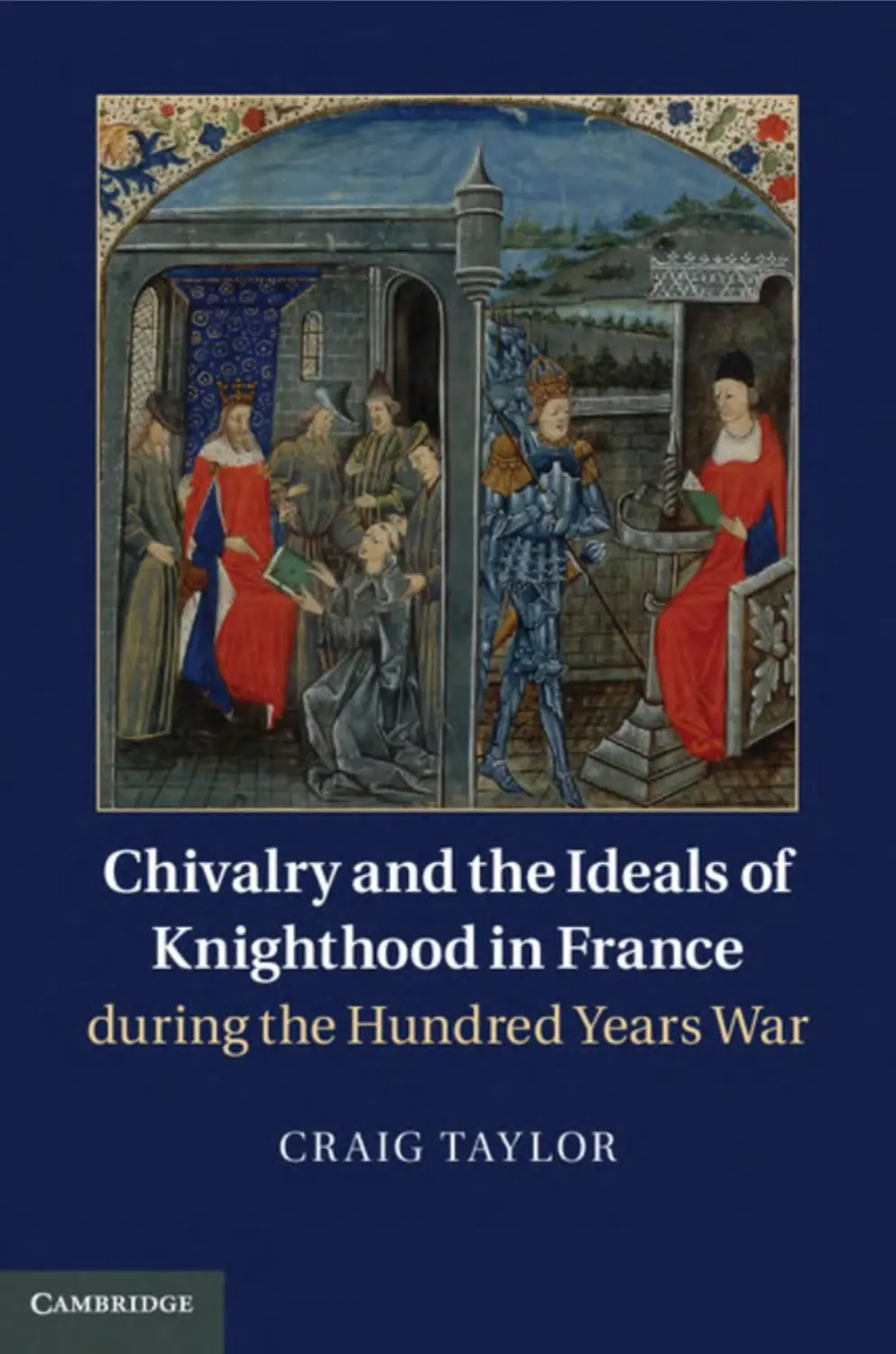
                    Chivalry and the Ideals of Knighthood in
France during the Hundred Years War

Craig Taylor’s book examines the wide-ranging French debates on the
martial ideals of chivalry and knighthood during the period of the
Hundred Years War (1337–1453). Faced by stunning military disasters
and the collapse of public order, writers and intellectuals carefully
scrutinized the martial qualities expected of knights and soldiers. They
questioned when knights and men-at-arms could legitimately resort to
violence, the true nature of courage, the importance of mercy and the
role of books and scholarly learning in the very practical world of
military men. Contributors to these discussions included some of the
most famous French medieval writers, led by Jean Froissart, Geoffroi de
Charny, Philippe de Mézières, Honorat Bovet, Christine de Pizan,
Alain Chartier and Antoine de La Sale. This interdisciplinary study sets
their discussions in context, challenging modern, romantic assumptions
about chivalry and investigating the historical reality of debates about
knighthood and warfare in late medieval France.
c r a i g t a y l o r is a Senior Lecturer in the Department of History at
the University of York. A fellow of both the Société de l’histoire de
France and the Royal Historical Society, his publications include Debating the Hundred Years War (2007) and Joan of Arc: La Pucelle (2006).

Chivalry and the Ideals of
Knighthood in France during
the Hundred Years War
Craig Taylor
University of York

University Printing House, Cambridge CB2 8BS, United Kingdom
Published in the United States of America by Cambridge University Press, New York
Cambridge University Press is part of the University of Cambridge.
It furthers the University's mission by disseminating knowledge in the pursuit of
education, learning and research at the highest international levels of excellence.
www.cambridge.org
Information on this title: www.cambridge.org/9781107042216
© Craig Taylor 2013
This publication is in copyright. Subject to statutory exception
and to the provisions of relevant collective licensing agreements,
no reproduction of any part may take place without the written
permission of Cambridge University Press.
First published 2013
Printed in the United Kingdom by CPI Group Ltd, Croydon CR0 4YY
A catalogue record for this publication is available from the British Library
Library of Congress Cataloguing in Publication data
Taylor, Craig, DPhil.
Chivalry and the ideals of knighthood in France during the Hundred Years War /
Craig Taylor.
pages cm
Includes bibliographical references and index.
ISBN 978-1-107-04221-6 (Hardback)
1. Chivalry–Philosophy. 2. Chivalry–France–History–to 1500. 3. Chivalry in
literature–History–to 1500. 4. Knights and knighthood–France–History–
to 1500. 5. Knights and knighthood in literature–History–to 1500.
6. Hundred Years’ War, 1339–1453. 7. War and society–France–History–
to 1500. I. Title.
CR4519.T38 2013
3940 .70944–dc23 2013008748
ISBN 978-1-107-04221-6 Hardback
Cambridge University Press has no responsibility for the persistence or accuracy of
URLs for external or third-party internet websites referred to in this publication,
and does not guarantee that any content on such websites is, or will remain,
accurate or appropriate.

À celle que j’aime

Contents

Preface
Abbreviations

page ix
xv

Introduction

1

1

Texts and contexts

19

2

Honour

54

3

Prowess and loyalty

91

4

Courage

132

5

Mercy (part I): soldiers

177

6

Mercy (part II): civilians and non-combatants

208

7

Wisdom and prudence

231

Conclusion

276

Bibliography
Index

279
334

vii

Preface

This book is a study of French debates on the ideals of chivalry and
knighthood during the period of the Hundred Years War (1337–1453).
In the context of a succession of stunning military disasters and the
widespread collapse of public order, the martial norms, values and
qualities expected of knights and soldiers came under intense scrutiny
and discussion. The ideals of knighthood were presented as the most
important solution to the devastating problems afflicting France and the
French people. This was certainly not a new response, but it is also true
that these ideals and norms were subject to much greater debate than
modern audiences often imagine, conditioned by the romantic way in
which the word ‘chivalry’ is used in modern English. There were some
medieval writers who upheld the ideal of the young knight, adventuring
and questing for the love of his lady, and always fighting in an honourable
and noble fashion. From the earliest days of what historians define as
the age of chivalry, however, writers such as Chrétien de Troyes, Bernard
de Clairvaux and John of Salisbury had offered complex and often quite
different opinions about how knights ought to behave, both towards one
another and towards those who were not members of their elite society.
Their views were shaped by the genres in which they were writing, the
audiences that they were addressing and the deeper goals that they
sought to achieve. Moreover, long before the advent of the Renaissance
and humanism, medieval intellectuals were inspired by classical authors
from Aristotle to Cicero to ask difficult questions about the moral obligations and the ideal behaviour of not just the aristocracy but all
members of society. Most important of all, changing military and social
contexts inevitably affected the reflections and commentary of medieval
intellectuals. In late medieval France the views of authors were shaped by
military disaster, as royal armies suffered one defeat after another and
public order collapsed in the face of English invasions, civil war and the
militarization of the countryside.
As a result, French writers asked crucial questions about when men-atarms should resort to violence, the true distinction between courage,
ix

x

Preface

cowardice and rashness, the relative merits of mercy or anger, and the
importance and value of prudence, experience and even the reading of
books themselves. Many of their answers, emphasizing notions of prudence, discipline and responsibility to the commonweal, and in particularly using the Romans as models, echoed ideas that were being
expressed in Italy during the same period, and foreshadowed the debates
that have previously been associated with humanist writings in the late
fifteenth and sixteenth centuries. This must call into question simplistic
attempts to divide the age of chivalry from that of the Renaissance, at
least in terms of intellectual and cultural responses to warfare.
Many of the individual writers discussed in this book have received a
great deal of attention in recent years, most notably Jean Froissart,
Guillaume de Machaut and Christine de Pizan. Yet, since Raymond
Kilgour published The Decline of Chivalry as Shown in the French Literature
of the Late Middle Ages (Cambridge, MA, 1937), there has been no largescale survey in English of the full range of texts and genres in which
martial culture and knighthood were discussed in France during this
period. His important book remains of great interest, though it does
suffer from a number of flaws, not least his unwillingness to recognize
that medieval writers had always complained about the failure of the
aristocracy to live up to the ideals of knighthood, and his wish to imagine
that those ideals were relatively simple to define. In contrast, I wish to
explore the complexity of debates about the different qualities praised by
French writers, and also to link these intellectual and literary discussions
in an interdisciplinary manner to the historical context in which the
writers lived. Rather than proceed by means of individual case studies
of authors, I offer a thematic approach built around the central pillars of
the key martial qualities that were celebrated within chivalric culture,
namely honour, prowess and loyalty, courage, mercy and wisdom. My
hope is that this will more clearly expose the debates of the period, and
allow greater attention to be paid to the relationship between the diverse
genres of writing, from romance, chronicle and biography to more
overtly didactic works.
This book is, first and foremost, an interdisciplinary study of intellectual culture, ranging across different genres that are rarely put into
dialogue with another, and that are often treated as the separate fiefdoms
of history, political thought and literature. In exploring the ideals of
knighthood, my study also contributes to modern scholarship on masculinity – or, at least, its cultural norms, which must then be measured and
understood in relationship to social practice and behaviour. Finally, this
book engages with the complex questions raised recently by military
historians regarding the relationship between culture and war. In this

Preface

xi

context, I must emphasis two crucial points. Above all, my aim is not to
argue that culture was a more important engine than, for example,
technology in driving military history. Indeed, more careful thought is
needed about the impact, or sometimes the lack of impact, of technological change upon cultural representations of knighthood in the Middle
Ages. Second, debates about the impact of chivalric culture on warfare
have effectively been scuppered by naïve and simplistic views about what
the ideals of knighthood actually were in the Middle Ages. Searching for
evidence that medieval soldiers were either inspired by love or treated
warfare as some kind of a game and extension of the tournament list is a
fruitless task that has naturally led many military historians to denounce
chivalry as an irrelevance. Indeed, it is striking how many important
recent books on the political and military history of the late Middle Ages
do not even cite the term ‘chivalry’ in their index. It is my hope that this
book will offer an opportunity for military historians to reconsider what
was actually being said about the ideals of knighthood in late medieval
culture, thereby enabling a more careful consideration of the impact and
importance of such debates. Furthermore, to turn the question posed by
the debate on cultures of war on its head, it is equally important to think
about the impact of military, social and political contexts upon high
culture and intellectual debate during the Middle Ages. Too often,
chivalry is studied in a vacuum, with the evidence derived solely from
the literature of the age, without consideration of the reality that existed
around it. In this book, my concern is not only to position late medieval
French writers in the longer chain of intellectual debate about martial
culture, but also to understand their debates within the changing historical context of the time.
It is important that I acknowledge the limitations of my study. It has
taken me a very long time to understand how the extraordinary range of
subjects and themes covered by our modern use of the term ‘chivalry’
actually fitted together in the medieval world. For this book, I have had to
focus on one specific strand of that subject. This is a study of the martial
values associated with knighthood and aristocracy, so I inevitably have a
limited opportunity to discuss more courtly ideals, or to explore carefully
the practical and ideal relationships between chivalric men and women.
These will be more prominent themes in my next book, a detailed case
study of the writings of Christine de Pizan.
My original aim for this project was to offer a comparative study of
both French and English texts, but Maurice Keen wisely dissuaded me
from my youthful overenthusiasm and ambition. I will therefore have to
explore the full range of English and French debates about not just
knighthood but also warfare and national identity in a future project.

xii

Preface

Here, I have largely confined my discussion to writers and texts produced
in France up to and sometimes just beyond the end of the Hundred
Years War. In selecting these dates, I am very conscious that I could be
seen as suggesting that the wars with the English were the defining
influence upon French culture; in truth, I would be extremely anxious
at any analysis that ignored the importance of private and civil wars
within France, as well as the impact of mercenaries and garrisons upon
public order. Indeed, I have not been ruthless in enforcing the year 1453
as a boundary line, given the remarkable interest offered by the works by
Antoine de La Sale and Jean de Bueil, for example. I have focused upon
writers and works associated with the Valois crown and the court, so that
experts in Burgundian intellectual and aristocratic culture may justifiably
feel short-changed. In terms of historical context, I have drawn upon
English as well as French examples because of their involvement in the
wars in France, but perhaps paid too little attention to the changing
martial culture in Burgundy and other regions, such as Brittany. Finally,
I have made very modest comments on the surviving evidence for the use
and influence of these texts, only too aware of the work that would be
required to collect together comprehensive data on manuscript circulation and annotation.
For reasons of space, I have had to keep quotations to a minimum.
I have consistently used and cited the best available editions of the
primary sources in their original languages (or at least in the languages
in which they were available to late medieval French readers), rather than
in modern English translations. To provide a detailed introduction to
each of these works would have transformed this book into an encyclopaedia, so I would instead recommend invaluable reference tools such as
the Dictionnaire des lettres françaises: le moyen âge, ed. G. Hasenohr and
M. Zink (Paris, 1992), La librairie des ducs de Bourgogne: manuscrits
conservés à la Bibliothèque royale de Belgique, ed. B. Bousmanne,
F. Johan, T. Van Hemelryck and C. Van Hoorebeeck (8 vols., Turnhout,
2000–) and Translations médiévales: cinq siècles de traductions en français au
moyen âge (XIe–XVe siècles): étude et répertoire, ed. C. Galderisi (2 vols.,
Turnhout, 2011). In a few cases, the best editions of the sources exist in
unpublished doctoral dissertations, including Christine de Pizan’s Le
livre des fais d’armes et de chevalerie and Honorat Bovet’s Arbre des batailles
(which will be published soon by the Société de l’histoire de France,
edited by Hélène Biu). In these cases, I have also provided references to
chapters, so that readers can navigate through editions that may appear in
the future.
I owe a great debt to a number of people for their help with this project.
My studies of late medieval European history were initially shaped and

Preface

xiii

influenced by James Campbell and other tutors, led by Jean Dunbabin,
John Maddicott and Maurice Keen. I was extremely lucky to have been
supervised for my DPhil by Peter S. Lewis, who shared with me his
passion for late medieval French intellectual culture, and inspired me
with his quiet dignity and confidence. During a year as an exchange
fellow at the University of Rochester, I had the pleasure of working with
Richard W. Kaeuper and Alan Lupack. Indeed, I can make what must be
a unique claim to have studied with the two most important voices in the
recent historiography of chivalry, Maurice Keen and Richard
W. Kaeuper.
I was appointed to a lectureship at York before I had completed my
DPhil, so, instead of enjoying the time afforded by a research fellowship,
my work was shaped at a very early stage by extensive conversations and
collaborations with a number of colleagues at the Centre for Medieval
Studies and in the Department of History, including Alan Forrest,
Alastair Minnis, Felicity Riddy, Gabriella Corona, Guy Halsall, Gwilym
Dodd, Heather Blurton, Helen Fulton, Jeanne Nuechterlein, Jeremy
Goldberg, Jocelyn Wogan-Browne, Judith Buchanan, Katherine Wilson,
Linne Mooney, Mark Ormrod, Mark Roodhouse, Nick Havely, Nicola
McDonald, Peter Biller, Peter Rycraft, Richard Bessel, Sarah Rees Jones,
Sethina Watson, Stuart Carroll and Tom Pickles. I also owe a very great
debt to countless undergraduate and graduate students, including
Carolyn Donohue, Catherine Nall, Chris Linsley, Debs Thorpe, Emily
Hutchison, Erika Graham, Justin Sturgeon, Kristin Bourassa, Laura
Barks, Lauren Bowers and Rachael Whitbread.
Over the years I have presented my ideas at conferences and research
seminars across Europe and North America. To thank everyone who has
helped me in those contexts would be impossible, but I must acknowledge in particular the following scholars for their help and guidance:
Adrian Armstrong, Andrew Taylor, Anne Curry, Anne D. Hedeman,
R. Barton Palmer, Biörn Gunnar Tjällén, Catherine Batt, Chris Fletcher,
Claude Gauvard, Cliff Rogers, Daisy Delogu, Emma Cayley, Françoise
Autrand, Frédérique Lachaud, Godfried Croenen, Graeme Small,
Helen Swift, Jean-Philippe Genet, James Hankins, Joanna Bellis, Joël
Blanchard, John Gillingham, John Watts, Justine Firnhaber-Baker,
Karen Fresco,Kathleen Daly, Kelly DeVries, Laura Ashe, Malcolm Vale,
Matt Strickland, Michael C. E. Jones, Michael Hanly, Michael Leslie,
Michelle Szkilnik, Nick Perkins, Nicole Pons, Norman Housley, Peggy
Brown, Peter Ainsworth, Philippe Contamine, Rebecca Dixon, Rémy
Ambühl, Rory Cox, Ros Brown-Grant, Steve Muhlberger, Steve Rigby,
Susan Dudash, Susan Foran and Sverre Bagge.

xiv

Preface

Finally, I owe a great debt of gratitude to the anonymous readers and
to the staff at Cambridge University Press. When I completed the first
draft of this book, in September 2011, my editor was Liz Friend-Smith.
During her maternity leave, I was helped initially by Maartje Scheltens
and then Michael Watson, who has shepherded the book through to
production.

Abbreviations

AASF
ANTS
BL
BNF
Bovet, L’arbre des
batailles

CFMA
CHFMA
CRAL
DNB
EETS
Froissart (Amiens)

Froissart (Rome)

Froissart (SHF)

GLML
ITRL
MRTS

Annales Academiae Scientiarum Fennicae
Anglo-Norman Text Society
British Library
Bibliothèque national de France
Bovet, Honorat, L’arbre des batailles, in Biu,
H., ‘L’arbre des batailles d’Honorat Bovet:
étude de l’oeuvre et édition critique des textes
français et occitan’ (PhD dissertation, 3 vols.,
Université Paris IV Sorbonne, 2004), vol. II
Les classiques français du moyen âge
Les classiques de l’histoire de France du
moyen âge
Centre de recherches et d’applications
linguistiques
Oxford Dictionary of National Biography, online
edition (Oxford, 2008)
Early English Text Society
Froissart, Jean, Chroniques, livre I: Le manuscrit
d’Amiens: Bibliothèque municipale no. 486, ed.
G. T. Diller (TLF 407, 415, 424, 429 and
499, 5 vols., Geneva, 1991–8)
Froissart, Jean, Chroniques: dernière rédaction du
premier livre: édition du manuscrit de Rome Reg.
lat. 869, ed. G. T. Diller (TLF 194, Geneva,
1972)
Froissart, Jean, Chroniques de Jean Froissart,
ed. S. Luce, G. Raynaud, L. Mirot and
A. Mirot (SHF, 15 vols., Paris, 1869–1975)
Garland Library of Medieval Literature,
series A
I Tatti Renaissance Library
Medieval and Renaissance Texts and Studies
xv

xvi

List of Abbreviations

OMT
PL
Pizan, Fais d’armes et
de chevalerie

Pizan, Corps du policie
PRF
RS
SATF
SHF
TLF
TNA
Translations
médiévales

Oxford Medieval Texts
Patrologiae cursus completus Latina, ed. J.-P.
Migne (217 vols., Paris, 1844–55)
Pizan, Christine de, Le livre des fais d’armes et
de chevalerie, in Laennec, C. M., ‘Christine
“Antygrafe”: authorship and self in prose
works of Christine de Pizan with an edition of
BN fr. ms 603 Le livre des fais d’armes et de
chevalerie’ (PhD dissertation, 2 vols., Yale
University, 1988), vol. II
Pizan, Christine de, Le livre du corps de policie,
ed. A. J. Kennedy (Paris, 1998)
Publications Romanes et Françaises
Rolls Series
Sociéte des anciens textes français
Société de l’histoire de France
Textes littéraires françaises
The National Archives (UK)
Translations médiévales: cinq siècles de traductions
en français au moyen âge (XIe–XVe siècles):
étude et répertoire, ed. C. Galderisi (2 vols.,
Turnhout, 2011)

Introduction

Military ethics is a very important subject in the modern world, especially
in the light of outrages that continue to be committed by soldiers in wars
across the globe. A recent project brought together experts on education
in the military, to discuss the values emphasized and taught within
different armed forces across the world. Their discussions demonstrated
the universality of core principles such as honour, courage, loyalty and
discipline, which have resonated throughout warrior cultures across
history. What they also revealed, though, was tremendous variations in
the precise list of military values prescribed by each specific armed force,
the relative importance assigned to these qualities and – most important
of all – the interpretation of them in practice.1
Debates about military ethics and values at the start of the twenty-first
century raise important questions about the stability of the norms and
codes for warriors in past societies. Perhaps the most famous and influential martial ethos is that associated with the chivalric elite of western
Europe between the twelfth and fifteenth centuries. Like many other
warrior societies, chivalric culture celebrated qualities such as honour,
prowess, loyalty, courage, mercy and wisdom, alongside more ‘civilizing’
values associated with life at court. Simple lists of the ideals proclaimed
by writers in chivalric society do not do justice, however, to the complexity of debate on the ethics and ideal behaviour of knights recorded in
sources such as romances, chronicles and more overtly didactic texts.
Indeed, medieval writers were far from consistent in their presentation of
the various qualities associated with knighthood, or their relative importance for knights, not just as warriors but also as courtiers.2 Such
1

2

See P. Robinson, N. de Lee and D. Carrick (eds.), Ethics Education in the Military
(Abingdon, 2008), together with the companion volume, D. Carrick, J. Connelly and
P. Robinson (eds.), Ethics Education for Irregular Warfare (Farnham, 2009), as well as the
Journal of Military Ethics.
This book focuses upon the martial values and ideals of knighthood. For sustained
discussions of the more courtly aspects of aristocratic identity, see, for example,
J. Lemaire, Les visions de la vie de cour dans la littérature française de la fin du moyen âge

1

2

Introduction

complexities have often been brushed aside by modern commentators,
either because of an undue focus upon one or two particular medieval
texts or, more worryingly, because of the anachronistic association of the
word ‘chivalry’ with an extremely romantic notion of soldiers inspired by
love, or behaving in the most noble and honourable fashion in warfare.
Recovering the full range of medieval debates about warrior values
during the age of chivalry is tremendously important for military history,
in which recent attempts to explore the relationship between culture and
war in the late Middle Ages have been somewhat undermined by naïve
and simplistic assumptions about the values that were championed
within chivalric culture.3 At the same time, analysis of the changing
and shifting norms of knightly behaviour in warfare, and in the wider
contexts of violence and male competition, is an important element of
the study of medieval masculinity and gender.4 Above all, though, analysing the range of debates about knightly behaviour in the Middle Ages
is of essential importance for cultural and intellectual history, especially
given that so much serious scholarship has focused upon the study of
medieval ideas of kingship, the state and national identity, for example,
but there has been too little sustained analysis of the ideologies of
knighthood and warfare.5
To trace the full complexity of medieval debates about warrior values
across the complete chronological and geographical range of the age of
chivalry would be an extraordinary challenge. Instead, this book focuses
upon what was undoubtedly the golden age of writing about knighthood
and warfare in late medieval France.6 There were few aristocratic libraries in the fourteenth or fifteenth centuries that did not include copies of
chansons de geste and romances recounting the deeds of great heroes of

3

4
5

6

(Paris, 1994), and R. Brown-Grant, French Romance of the Later Middle Ages: Gender,
Morality and Desire (Oxford, 2008).
See, for example, J. A. Lynn, ‘Chivalry and chevauchée: the ideal, the real, and the perfect
in medieval European warfare’, in Battle: A History of Combat and Culture from Ancient
Greece to Modern America (Cambridge, MA, 2003), 73–109.
This is not to deny the overriding importance of studying the social realities that existed
behind cultural norms of masculinity.
See J. Krynen, Idéal du prince et pouvoir royal en France à la fin du moyen âge (1380–1440):
étude de la littérature politique du temps (Paris, 1981), and L’empire du roi: idées et croyances
politiques en France, XIIIe–XVe siècles (Paris, 1993), together with J. H. Burns (ed.), The
Cambridge History of Medieval Political Thought 350–1450 (Cambridge, 1988).
Important reference tools for the study of sources include G. Hasenohr and M. Zink
(eds.), Dictionnaire des lettres françaises: le moyen âge (Paris, 1992), D. Sinnreich-Levi and
I. S. Laurie (eds.), Literature of the French and Occitan Middle Ages: Eleventh to Fifteenth
Centuries (Farmington Hills, MI, 1999), and B. Bousmanne, F. Johan, T. Van Hemelryck
and C. Van Hoorebeeck (eds.), La librairie des ducs de Bourgogne: manuscrits conservés à la
Bibliothèque royale de Belgique (8 vols., Turnhout, 2000–).

Introduction

3

chivalric culture, from King Arthur to Alexander the Great, the Greek
and Trojan warriors who fought at the siege of Troy, Charlemagne and
his companions such as Roland, Oliver and Ogier le Danois, and
crusaders such as Godfrey de Bouillon.7 During the late Middle Ages
French writers were reworking these famous tales, both in verse and in
prose, and addressing more courtly aspects of knighthood in other
poetic genres.8 There was also an expanding interest in narratives of
more contemporary French knights, increasingly written in prose rather
than verse. Chroniclers such as Jean de Joinville, Jean Le Bel, Jean
Froissart, Enguerrand de Monstrelet and Jean de Wavrin led the way,
but there were also heraldic narratives by writers such as Gilles Le
Bouvier and Jean Le Fèvre, and biographies by authors such as
Guillaume de Machaut, Jean Cabaret d’Orville, Guillaume Gruel,
Perceval de Cagny and Antoine de La Sale.9 At the same time, a
flourishing market for original, didactic works addressed to kings,
princes and noblemen included a significant number of texts that discussed knighthood and warfare, written by authors such as Geoffroi de
Charny, Philippe de Mézières, Honorat Bovet, Christine de Pizan,
Alain Chartier, Antoine de La Sale and Jean de Bueil.10 Although a
few of the new works that touched upon these questions were written in
Latin, the vast majority were composed in the vernacular. Indeed, the
late Capetian and Valois monarchs sponsored an extraordinary programme of translations of classical works, which gave royal and aristocratic audiences access to many books providing guidance and
commentary on warfare by authors such as Aristotle, Titus Livy,
Vegetius and Valerius Maximus, as well as more recent writings by
John of Salisbury and Giles of Rome.11
The overall subject of these works, in modern parlance, was chivalry.
For the writers themselves, the term ‘chivalry’ was most commonly used
as a collective noun for the order or class of knights that by the late

7
8

9

10
11

See pages 10–11 below.
See D. Poirion (ed.), La littérature française aux XIVe et XVe siècles, vol. I, Partie historique
(Heidelberg, 1988), together with M. Zink, ‘Le roman de transition (XIVe–XVe siècle)’,
in D. Poirion (ed.), Précis de littérature française du moyen âge (Paris, 1983), 293–305;
Brown-Grant, French Romance; M. R. Warren, ‘Prose romance’, in W. Burgwinkle,
N. Hammond and E. Wilson (eds.), The Cambridge History of French Literature
(Cambridge, 2011), 153–63.
See D. B. Tyson, ‘French vernacular history writers and their patrons in the fourteenth
century’, Medievalia et Humanistica, new series, 14 (1986), 103–24, and E. Gaucher, La
biographie chevaleresque: typologie d’un genre (XIIIe–XVe siècle) (Paris, 1994).
P. Contamine, ‘Les traités de guerre, de chasse, de blason et de chevalerie’, in Poirion,
La littérature française, 346–67.
Translations médiévales, ed. C. Galderisi.

4

Introduction

Middle Ages was effectively synonymous with the aristocracy.12 For
modern audiences, the most famous chivalric manual is the so-called
Livre de chevalerie, written by Geoffroi de Charny around 1350. This
title is actually an invention of modern editors, however, and the term
‘chevalerie’ appears in the work on only a handful of occasions, when
it refers to the order of chivalry – that is to say, the knights and menat-arms to whom Charny addressed his advice.13 When medieval
writers did use the term ‘chevalerie’ in a wider sense, it was to refer to
a knight’s technical skill as a warrior and horseman, and to his deeds of
arms.14 More rarely, late medieval French writers used the term ‘chivalry’ to refer to the deeds of arms performed by such individuals, most
commonly in warfare.
Yet, in modern English, chivalry has developed a much broader and
more confusing meaning. For many historians it encompasses the full
scope of aristocratic culture during the high and late Middle Ages,
including not just the literature but all aspects of both court and martial
life and lifestyle, including tournaments, feasts and knightly orders,
heraldry and knighting ceremonies.15 From such a perspective, chivalry
is not merely the literary representation of knighthood but also the social
practices and rituals of knights at court, the military activities of medieval
knights and men-at-arms, and the values and ethos that informed and
framed these practices. In other words, chivalry constituted the norms,
values, practices and rituals of medieval aristocratic society from the high
Middle Ages onwards. Other scholars focus on a more narrow definition
of chivalry, as the values, ethos and ideals of knighthood, either as
practised by the knights themselves or as described by the writers of the
12

13

14

15

For the complex definition of aristocracy and the knightly class in late medieval France,
see P. Contamine, ‘Points de vue sur la chevalerie en France à la fin du moyen âge’,
Francia, 4 (1976), 255–85, La noblesse au royaume de France de Philippe Le Bel à Louis XII:
essai de synthèse (Paris, 1997), M.-T. Caron, Noblesse et pouvoir royal en France:
XIIIe–XVIe siècle (Paris, 1994), and G. Prosser, ‘The later medieval French noblesse’,
in D. Potter (ed.), France in the Later Middle Ages (Oxford, 2003), 182–209.
The Book of Chivalry of Geoffroi de Charny: Text, Context, and Translation, ed. R. W.
Kaeuper and E. Kennedy (Philadelphia, 1996), 162–6, 170. In the fifteenth-century
inventories of the library of the dukes of Burgundy, the work was referred to as ‘le livre de
Charny. . .escript en prose’ and ‘le livre nomé l’Ordre de Chevalerie’: Bousmanne et al.,
La librairie des ducs de Bourgogne, II, 233.
G. S. Burgess, ‘The term “chevalerie” in twelfth-century old French’, in P. R. Monks
and D. D. R. Owen (eds.), Medieval Codicology, Iconography, Literature and Translation:
Studies for Keith Val Sinclair (Leiden, 1994), 343–58; L. Paterson, ‘Knights and the
concept of knighthood in the twelfth-century Occitan epic’, in W. H. Jackson (ed.),
Knighthood in Medieval Literature (Woodbridge, 1981), 24. Also see R. W. Kaeuper,
Chivalry and Violence in Medieval Europe (Oxford, 1999), 4, and ‘Chivalry: fantasy and
fear’, in C. Sullivan and B. White (eds.), Writing and Fantasy (London, 1999), 63.
M. H. Keen, Chivalry (New Haven, CT, 1984).

Introduction

5

age.16 Chivalry in the latter sense is often associated primarily with the
courtly romances, which offered a very heroic and idealized vision of
knightly values and behaviour. 17
This has given rise to a final way in which the term ‘chivalry’ is defined
and used: as an eternal ideal of elegant and civilized masculinity, reflecting a modern, nostalgic fantasy of a world of medieval knights who
treated war as a noble game and constantly sought to impress and to
romance ladies with their elevated and courtly manners. Gillingham has
defined chivalry as
a code in which a key element was the attempt to limit the brutality of conflict by
treating prisoners, at any rate when they were men of ‘gentle’ birth, in a relatively
humane fashion. I suggest that the compassionate treatment of defeated highstatus enemies is a defining characteristic of chivalry.18

Indeed, chivalry has even been elevated to an analytical concept by many
military historians, who use it in the study of contexts far removed from the
chronological, geographical and social boundaries of the knightly world as it
has been traditionally defined. Thus a recent comparative study has reported
that ‘[a]ncient China, for instance, had a code of chivalry’, citing ‘stories of
Chinese commanders refusing to attack an enemy when he was disadvantaged crossing a river’.19 This notion of chivalry has informed recent debates
about military law and ethics amongst contemporary armed forces.20
To a certain degree, the range of ways in which scholars use the term
do not matter, as long as they are clear and self-conscious about the
definition that they are employing. In this book, I prefer to use the term
‘chivalry’ as a proper noun, to refer to the people who formed the
knightly or aristocratic class, rather than to chivalric culture in its
broadest sense or to the ideals, norms or ethos of knighthood. Most
16

17

18

19
20

See, for example, R. W. Kaeuper, ‘The societal role of chivalry in romance: northwestern
Europe’, in R. L. Krueger (ed.), The Cambridge Companion to Medieval Romance
(Cambridge, 2000), 99.
See, for example, D. Pearsall, Arthurian Romance: A Short Introduction (Oxford, 2003),
21; also see R. W. Hanning, The Individual in Twelfth-Century Romance (New Haven,
CT, 1977), 105–38.
J. Gillingham, ‘1066 and the introduction of chivalry into England’, in G. Garnett and
J. Hudson (eds.), Laws and Government in Medieval England and Normandy (Cambridge,
1996), 32.
P. Robinson, Military Honour and the Conduct of War: From Ancient Greece to Iraq
(Abingdon, 2006), 1.
R. Moelker and G. Kümmel, ‘Chivalry and codes of conduct: can the virtue of chivalry
epitomize guidelines for interpersonal conduct?’, Journal of Military Ethics, 6 (2007),
292–302; A. Moseley, ‘The ethical warrior: a classical liberal approach’, in Robinson, de
Lee and Carrick, Ethics Education in the Military, 179; D. Whetham, Just Wars and Moral
Victories: Surprise, Deception and the Normative Framework of European War in the Later
Middle Ages (Leiden, 2009), 2.

6

Introduction

importantly of all, I resist using the term ‘chivalry’ as a theoretical term in
the way that some military historians have employed it recently. As
Kaeuper has ably demonstrated, to define chivalry in terms of the more
romantic and civilized messages that were supposedly offered by chivalric
literature would be to ignore the overwhelming presence of contradictory
themes in exactly the same texts, especially the powerful encouragement
of violence and aggression.21 Indeed, the crucial point is that medieval
commentators were far less certain and definite about the ideal values
and behaviour of knights than modern audiences might imagine.
The writers of late medieval France, like their predecessors and their
contemporaries in other regions such as England, Italy and Spain,
offered complex reflections upon chivalry, both in its wider sense as
aristocratic culture and in the narrower sense of the values and ethos of
the chivalric class. Indeed, there was a great deal of debate in the Middle
Ages about how a knight or man-at-arms should behave. Keen has said:
‘From a very early stage we find the romantic authors habitually associating together certain qualities which they clearly regarded as the classic
virtues of good knighthood: prouesse, loyauté, largesse (generosity), courtoisie, and fraunchise (the free and frank bearing that is visible testimony to
the combination of good birth with virtue).’22 Yet the precise list of
qualities required of the ideal knight could vary from writer to writer,
as the standard martial qualities such as prowess, loyalty and courage
were moderated by reference to other virtues and values, such as mercy,
but also mesure (moderation), magnanimity, prudence and discipline,
while intellectuals also debated the relationship between the martial
values and more courtly qualities such as courtesy and love.
Moreover, while each of the values associated with knighthood may
seem self-evident at first glance, their precise meaning was subject to
constant debate and analysis by medieval authors.23 As Kaeuper has
argued, we must be ‘cautious about asserting what “ideal chivalry” inevitably had to say about warfare, women, piety, or a host of other topics.
Textbook lists of ideal qualities – largesse, courtliness, prowess, service to
ladies and the like – are not so much wrong as inadequate.’24 It is
essential to resist the modern temptation to simplify the chivalric ethos
into a simple, coherent code and brush over the complexity and even
21
23

24

22
Kaeuper, Chivalry and Violence.
Keen, Chivalry, 2.
As Busby has commented, in Le roman des eles by Raoul de Hodenc and L’ordene de
chevalerie, ed. K. Busby (Amsterdam, 1983), v: ‘Such concepts as courtesy or
knighthood are not static, and whilst central ideas do remain fundamental, accents and
stresses develop and shift.’
R. W. Kaeuper and M. Bohna, ‘War and chivalry’, in P. Brown (ed.), A Companion to
Late Medieval English Literature and Culture (Oxford, 2007), 274.

Introduction

7

contradictions of an ideal, which were constantly highlighted and
explored by medieval writers and commentators.25 This has been mostly
clearly explored in the case of courtoisie, and in particular for the ideals of
love and the fin d’amors.26 Not only were medieval writers keen to define
precisely how a knight should behave at court, they were also concerned
about the potential harm that decadence and indulgence might cause, in
both earthly and spiritual terms. Writers therefore explored the nature of
knightly honour, questioning not just its role in justifying violence but
also the difficult relationship between such earthly and mundane concerns, and the Christian emphasis upon eternal salvation (Chapter 2).
Intellectuals and writers also asked very careful questions about the
martial values and behaviour of the knight or man-at-arms, emphasizing
in particular the importance of moderation. First and foremost, they
explored the limits of prowess and aristocratic violence, debating the
circumstances under which knights could resort to violence, and the
legal and moral status of different kinds of warfare, from crusading and
royal wars to feuds and private warfare (Chapter 3). Writers also debated
the true meaning of courage, stressing the shame of cowardice but also
warning of the dangers of bravado, rashness and overconfidence, which
were particularly associated with youthful impetuosity and a lack of
prudence and experience (Chapter 4). Indeed, mercy and prudence were
both emphasized as important moderators of knightly behaviour. On the
one hand, the association of the ideal of knighthood with mercy, which
has so powerfully affected modern notions of chivalry, was an important
counter to the concept of vengeance and righteous anger, which was
equally embedded in chivalric culture in the Middle Ages (Chapters 5
and 6). Similarly, prudence and wisdom were important moderators of
knightly behaviour, and in turn raised questions about the ways in which
knights and men-at-arms should acquire such experience, and the role of
books and writers alike in that process (Chapter 7).
There were many reasons why the writers of late medieval France, like
their predecessors, carefully debated and explored the values and ideals
of knighthood. First and foremost, there were fundamental tensions
within these models that were never fully resolved: between the humility
and piety of a true Christian and the vainglorious importance of honour
25
26

One famous attempt to do precisely the opposite are the ten commandments of chivalry
identified by L. Gautier, La chevalerie (3rd edn., Paris, 1884), 31–100.
See, for example, C. S. Jaeger, The Origins of Courtliness: Civilizing Trends and the
Formation of the Courtly Ideals, 939–1210 (Philadelphia, 1985), Lemaire, Les visions de
la vie de cour, S. Gaunt, Love and Death in Medieval French and Occitan Courtly Literature:
Martyrs to Love (Oxford, 2006), J. A. Schultz, Courtly Love, the Love of Courtliness, and the
History of Sexuality (Chicago, 2006), and Brown-Grant, French Romance.

8

Introduction

and reputation in chivalric culture, for example; between the powerfully
masculine model of warrior aggression and the more restrained,
civilized – even effeminate – notion of the courtier; and between expectations of male behaviour as youths and as adults.27 Moreover, normative
models of masculinity such as the knightly ethos may appear to offer solid
and stable images of manhood, but it would be extraordinary to imagine
a static and simple model of masculine behaviour that remained unchallenged for hundreds of years, immune to changing social contexts.28
Textbooks usually define the age of chivalry as running from at least
the twelfth to the fifteenth centuries – a period in which the practical
function of knights in military, political and social terms was subject to
important changes and pressures, and the precise identity of the aristocratic class itself was in constant flux, as old families died out and new
men rose to replace them. Given such circumstances, it was surely
inevitable that the ideal of knighthood would change and also be subject
to debate, even if core values such as honour, prowess, loyalty and
courage remained constant.
Indeed, of fundamental importance is the fact that chivalric texts were
not simple mirrors to the world around them but sought to be an active
social force, shaping attitudes and advancing ideals for what the aristocracy ought to become, rather than simply celebrating and commemorating an existing social reality.29 As the classical scholar Mary Beard has
noted, ‘[I]t is warrior states that produce the most sophisticated critique
of the militaristic values they uphold.’30 During the age of chivalry, the
most overt criticisms were voiced by clerics and intellectuals who
27

28

29

30

F. Joukovsky-Micha, ‘La notion de “vaine gloire” de Simund de Freine à Martin Le
Franc’, Romania, 89 (1968), 1–30, 210–39; A. Putter, ‘Arthurian literature and the
rhetoric of “effeminacy”’, in F. Wolfzettel (ed.), Arthurian Romance and Gender.
(Amsterdam, 1995), 34–49; D. Barthélemy, ‘Modern mythologies of medieval
chivalry’, in P. Linehan and J. L. Nelson (eds.), The Medieval World (London, 2002),
215; R. M. Karras, From Boys to Men: Formations of Masculinity in Medieval Europe
(Philadelphia, 2002).
‘Male experience and the meanings of maleness. . .were complex and culturally variable,
which meant they might be historically variable as well’: D. G. Neal, The Masculine Self in
Late Medieval England (Chicago, 2008), 4; also see C. Fletcher, Richard II: Manhood,
Youth, and Politics, 1377–99 (Oxford, 2008), 45: moralists tried to impose meaning upon
‘the various constellations of ideas which formed around manhood, ideas which might be
interpreted in quite different ways by those with different agenda [sic]’.
On the ability of medieval texts to ‘mirror and generate social realities’, see G. M.
Spiegel, ‘History, historicism, and the social logic of the text in the Middle Ages’,
Speculum, 65 (1990), 59–86.
M. Beard, The Roman Triumph (Cambridge, MA, 2007), 4. Also see W. I. Miller,
Humiliation and Other Essays on Honor, Social Discomfort, and Violence (Ithaca, NY,
1993), 14: ‘No culture is so purely consistent that competing views are not available
within it. . . [A]ll cultures are riddled with internal contradictions and competing claims.’

Introduction

9

preached or complained about the behaviour of knights, from Pierre de
Blois, Bernard de Clairvaux, John of Salisbury, Etienne de Fougères and
Thomas Aquinas to late medieval intellectuals such as Philippe de
Mézières, Honorat Bovet, Eustache Deschamps, Jean Gerson, Christine
de Pizan, Alain Chartier and Jean Juvénal des Ursins. In their sermons,
letters and didactic treatises, they carefully examined the values and
actions of contemporary knights, in debates that were framed by classical
authorities ranging from Aristotle and Cicero to Vegetius. Their concerns were also evident in narrative genres such as romances, chronicles
and chivalric biographies.31
These narratives usually glamorized and revelled in the glories and
pageantry of knighthood, offering colourful images of the richness and
splendour of life at court, along with highly exaggerated and dramatic
accounts of heroic action, rather than providing straightforward depictions of social and military reality.32 Such hyperbolic representations of
warfare are an important reminder that the authors’ goal was less to offer
a realistic portrayal of the psychology and values of contemporary warriors than to follow the demands of the genre and impress their audiences
with their particular recounting of tales that were often extremely well
known.33 The authors of chivalric narratives were not objective witnesses
to the changing world around them but were offering a programme of
courtly education, infused by moral philosophy.34 In the Middle Ages
storytelling and history were understood to serve a didactic function,
instructing and guiding audiences towards moral and religious truths.35
Facts and the accurate representation of reality were far less important
than the moral and spiritual lessons that such narratives could provide.
As Kaeuper has recently stressed, ‘We must read these texts both
31
32
33

34

35

R. L. Krueger, The Cambridge Companion to Medieval Romance (Cambridge, 2000); also
see M. Zink, ‘Le roman’, in Poirion, La littérature française, 197–218.
R. W. Kaeuper, ‘Literature as essential evidence for understanding chivalry’, Journal of
Medieval Military History, 5 (2007), 5.
Hanning has argued that ‘generic conventions. . .complicate any attempt to equate the
textual representation of a mounted warrior class or caste with the actualities of its
existence’: R. W. Hanning, ‘The criticism of chivalric epic and romance’, in
H. Chickering and T. H. Seiler, (eds.), The Study of Chivalry: Resources and Approaches
(Kalamazoo, MI, 1988), 93.
See C. S. Jaeger, The Origins of Courtliness, and ‘Book-burning at Don Quixote’s:
thoughts on the educating force of courtly romance’, in K. Busby and C. Kleinhenz
(eds.), Courtly Arts and the Art of Courtliness (Cambridge, 2006), 3–28, together with
R. W. Kaeuper, ‘Chivalry and the “civilizing process”’, in R. W. Kaeuper (ed.), Violence
in Medieval Society, (Woodbridge, 2000), 21–35.
Jaeger questions ‘whether anyone in the Middle Ages would have distinguished the
didactic from the aesthetic. The author of fictional literature counts as bonorum morum
instructor’: Jaeger, ‘Book-burning at Don Quixote’s’, 12, note.

10

Introduction

prescriptively and descriptively, as statements of what an author wants
chivalry to be no less than what he or she recognizes it is.’36 Simply put,
the idealized and romanticized image of the knight in chivalric narratives
provided both ‘a cultural fantasy and a cultural education’.37
In the Cent ballades, Christine de Pizan called upon the knights of her
day to look to the example of great heroes and worthies (‘preux’) of the
past, from Old Testament warriors such as Judas Maccabeus, Joshua and
David to Alexander the Great, Hector and Julius Caesar, and Arthur,
Charlemagne and Godfrey de Bouillon.38 These great heroes provided a
powerful platform from which to comment on contemporary behaviour.
Authors constantly looked backwards to the famous worthies of the past
as role models for the present. Indeed, the fact that the Greeks, the
Romans and the knights of King Arthur had all ultimately failed encouraged reflection on the seeds of disaster and the lessons that this might
offer for medieval audiences. These heroes, confronted with difficult
choices, usually failed to attain the highest standards of the knightly ideal
or ultimately suffered a dramatic fall from grace as fortune’s wheel turned
against them, all of which encouraged reflection and debate about the
personal deficiencies that had led to such disasters. Thus Gilbert has
noted: ‘In twelfth-century French verse romances, the Arthurian setting
provides a place emphatically not the real, present world, in which to test
principles of fundamental relevance to that world: principles moral,
psychological, social and political.’39 The early tales tended to interrogate and experiment with ethical models in a playful manner, whereas the
appearance of the Grail romances in the thirteenth century marked an
increasingly serious examination of such questions, using the Grail quest
to scrutinize the dangers of vainglory and earthly concerns with reputation and honour. Then later medieval versions offered deeper examinations of the collapse of the Round Table and the questions that this
raised regarding the relationship between individual achievement and the
common good.40 Other narratives explored possible reasons for the fall
36
37
38
39
40

Kaeuper, ‘Literature as essential evidence’, 3.
R. Morse, ‘Historical fiction in fifteenth-century Burgundy’, Modern Language Review,
75 (1980), 53.
Les oeuvres poétiques de Christine de Pisan, ed. M. Roy (SATF, 3 vols., Paris, 1886–96), I,
92–3.
J. Gilbert, ‘Arthurian ethics’, in E. Archibald and A. Putter (eds.), The Cambridge
Companion to the Arthurian Legend (Cambridge, 2009), 157.
Brown-Grant, French Romance; L. Ashe, ‘The hero and his realm in medieval English
romance’, in N. Cartlidge (ed.), Boundaries in Medieval Romance (Cambridge, 2008),
139; E. Archibald, ‘Questioning Arthurian ideals’, in Archibald and Putter, The
Cambridge Companion to the Arthurian Legend, 139, 145–7; Gilbert, ‘Arthurian ethics’,
154–62.

Introduction

11

of Troy, for example, highlighting tensions between loyalty and treachery, rashness and prudence or love and conflict.41
More usually, though, the past served as a benchmark against which to
measure the failings of the present. Just as the modern romantic idea of
chivalry often represents a nostalgic yearning for an idealized past, medieval writers invoked the idea of a past golden age to critique contemporary failings and to inspire new generations of aristocrats. Contemporary
knights and men-at-arms were repeatedly chastised for failing to live up
to the standards of either their immediate parents, whose prudence and
experience contrasted with the rash folly of the young, or a more distant
golden age, in which their ancestors had truly embodied the imagined
ideals of knighthood. Contemporary knights could not measure up to the
legendary standards of great heroes such as Charlemagne and King
Arthur, Joshua, David and Judas Maccabeus, or the Romans, the
Greeks under Alexander and the great heroes who had fought at the
siege of Troy.
Not all heroes were alike, of course. Medieval writers were keen to
emphasize the example offered by those men who had served the wider
community, whether it be the crusaders, and in particular the Templars,
whose service to God and the Church was celebrated by Bernard de
Clairvaux, or the Romans, whose commitment to the defence of the
community as a whole was highlighted by writers such as John of
Salisbury.42 Thus Philippe de Mézières, writing for King Charles VI of
France, expressed deep concern about the value of traditional chivalric
stories of Alexander the Great, Arthur or even Godfrey de Bouillon and
Charlemagne that might encourage the hubris and vainglory of French
knights. Instead, he preferred the examples of valour in service to God from
the Old Testament books such as Judges, Kings and Maccabees, as well as
Roman histories such as those of Titus Livy and Valerius Maximus.43
As Keen has noted, ‘Disquiet about the degree to which contemporary
chivalry fell short of ideal standards, the contrast between the degeneracy
of modern knighthood and its antique vigor came to be repeated so often
as to suggest that it became a topos.’44 Of course, in late medieval
41
42

43
44

M. Andrew, ‘The fall of Troy in Sir Gawain and the Green Knight and Troilus and
Criseyde’, in P. Boitani (ed.), The European Tragedy of Troilus (Oxford, 1989), 93.
See Bernard de Clairvaux, Liber ad milites Templi de laude novae militiae, in S. Bernardi
Opera, ed. J. Leclercq, C. H. Talbot and H. M. Rochais (8 vols., Rome, 1957–77), III,
205–39, and John of Salisbury, Policratici, sive de nugis curialium et vestigiis philosophorum,
libri 8, ed. C. C. J. Webb (2 vols., Oxford, 1909).
Philippe de Mézières, Le songe du vieil pelerin, ed. G. W. Coopland (2 vols., Cambridge,
1969), II, 221, 379–80, 383.
M. H. Keen, ‘Huizinga, Kilgour and the decline of chivalry’, Medievalia et Humanistica,
new series, 8 (1977), 6–7.

12

Introduction

France, there was an overwhelming and almost unprecedented need to
debate the values and behaviour of the martial elite, and in particular to
explore ways in which individualistic martial qualities such as prowess
and courage might be channelled and controlled through dialogue with
other qualities, such as discipline, mercy and prudence.45 During the
fourteenth and fifteenth centuries royal armies suffered one defeat after
another, raising powerful questions about the moral fibre of the military
classes and the abilities of their leaders. At the same time, public order
collapsed in the face of numerous civil wars and the militarization of the
countryside, ravaged by bands of unemployed soldiers and the merciless
behaviour of garrisons of English and French troops alike. In such difficult circumstances, writers engaged in extensive debates about the very
nature of knighthood.

Texts and audiences
The most difficult challenge facing historians of chivalry is to assess the
impact of texts upon their aristocratic audiences. Given that chivalric
authors were not offering simple mirrors to the values and ideals of
knights and men-at-arms, it would be dangerous to assume that romances, chronicles, biographies or didactic works provide clear insight into
the attitudes, values and beliefs of their lay audiences.46 There is no
doubt that the two were intimately related, just as the surviving texts of
medieval sermons and lives of saints provide a window into the religious
beliefs of the laity. They are not synonymous, however, despite the
commonplace modern, romantic assumption that chivalric romances in
particular were direct reflections of the values and practices of the medieval aristocracy.
One way to investigate the relationship between medieval writers and
their audiences would be to explore the manuscript dissemination of
the texts, looking very carefully at the ownership of these works by
aristocrats, and in particular direct evidence of their usage by readers,
as demonstrated by annotations to the text.47 Unfortunately, a
45
46

47

See Chapter 1.
M. Bull, ‘The French aristocracy and the future, c.1000–c.1200’, in J. A. Burrow and
I. P. Wei (eds.), Medieval Futures: Attitudes to the Future in the Middle Ages (Woodbridge,
2000), 85: ‘Few historians would now subscribe to the once common view that examples
of vernacular literature – verse epics, lais and romances – invariably offer up a clearer
picture of aristocratic culture. . . [T]he language in which a text was written is in itself no
indicator of its proximity to the minds of the lay elites.’
See, for example, C. T. Allmand, The De Re Militari of Vegetius: The Reception,
Transmission and Legacy of a Roman Text in the Middle Ages (Cambridge, 2011),
together with C. Nall, ‘The production and reception of military texts in the aftermath
of the Hundred Years War’ (PhD dissertation, University of York, 2004), and C. Nall,

Introduction

13

comprehensive and systematic review of such evidence for late medieval
France would go far beyond the scope of this current book. Even so,
some observations can be made. The circulation and ownership of books
on knighthood and warfare certainly reached unprecedented heights
amongst the aristocracy of France during the late Middle Ages.48 There
was a dramatic increase not just in the number of texts that were being
written or translated but in the sheer numbers of manuscripts circulating,
even before the advent of printing. To take just one important example,
there are around 350 surviving medieval manuscripts of Vegetius’
Epitoma rei militaris, a work that was written between AD 383 and 450
and translated from Latin into various vernaculars during the late medieval period. Nearly 80 per cent of these copies date from the fourteenth
and fifteenth centuries.49 Between 1386 and 1389 a Provençal canon
lawyer and prior, Honorat Bovet, composed the Arbre des batailles, a
complex treatise on just war theory and the laws, that survives in
eighty-three manuscripts containing the original French text, and a
further thirteen manuscripts of the translations into Catalan, Castilian,
Occitan and Scottish.50 Shortly afterwards Christine de Pizan was the
author of a wide range of works dealing with knighthood and warfare,
including the Epistre Othea (1399–1400) and Le livre des fais d’armes et de
chevalerie (1410), which survive in forty-seven and twenty-five manuscripts, respectively.51 There are at least 144 manuscripts containing just
the poetical, French writings of Alain Chartier originally written between
1410 and 1428.52 These are remarkable numbers, which testify to a
blossoming audience for a wide range of texts.

48

49
50

51

52

Reading and War in Fifteenth-Century England: From Lydgate to Malory (Cambridge,
2012).
See C. Bozzolo and E. Ornato, ‘Les lectures des Français aux XIVe et XVe siècles: une
approche quantitative’, in L. Rossi (ed.), Ensi firent li ancessor: mélanges de philologie
médiévale offerts à Marc-René Jung (2 vols., Alessandria, 1996), I, 713–62, and Lectures
françaises de la fin du moyen âge: petite anthologie commentée de succès littéraires, ed. F. Duval
(Geneva, 2007). Also see C. D. Taylor, ‘The treatise cycle of the Shrewsbury book, BL
MS. Royal 15 E. vi’, in K. Fresco and A. D. Hedeman (eds.), Collections in Context: The
Organization of Knowledge and Community in Europe (14th–17th Centuries) (Columbus,
OH, 2011), 134–50.
See Allmand, The De Re Militari of Vegetius, 354–66, and pages 272–3 below.
H. Biu, ‘L’arbre des batailles d’Honorat Bovet: étude de l’oeuvre et édition critique des
textes français et occitan’ (PhD dissertation, 3 vols., Université Paris IV Sorbonne,
2004), I, 213–349.
See A. J. Kennedy, Christine de Pizan: A Bibliographical Guide (London, 1984), 80–1,
100–1, together with K. Fresco, ‘Christine de Pizan’s Livre des fais d’armes et de chevalerie
and the coherence of BL MS Royal 15 E vi’, in Fresco and Hedeman, Collections in
Context, 173–7, and G. Ouy, C. Reno and I. Villela-Petit, Album Christine de Pizan
(Turnhout, 2012).
See The Poetical Works of Alain Chartier, ed. J. C. Laidlaw (Cambridge, 1974), 43–144,
and Les œuvres latines d’Alain Chartier, ed. P. Bourgain-Hemeryck (Paris, 1977), 85–101.

14

Introduction

Furthermore, it is also important to underline the evidence for ownership of chansons de geste, romances, chronicles and vernacular, didactic
treatises by princes and aristocrats, including countless military commanders.53 For example, copies of Vegetius’ Epitoma rei militaris, or at
least works that drew heavily upon his ideas, were owned or read by the
French kings as well as the dukes of Berry, Bourbon, Burgundy, Orléans
and Savoy, and Arthur de Richemont, Philippe de Mézières, Antoine de
La Sale and Robert de Balsac.54 Bovet’s Arbre des batailles was originally
presented to King Charles VI and copies were subsequently owned by
the dukes of Berry, Bourbon and Burgundy, and men such as Arthur de
Richemont, Guichard Dauphin, Jean de Montaigu, Philippe de Croy and
Louis de Bruges.55 The works of Christine de Pizan and Alain Chartier
were owned by a similar range of aristocrats.
Of course, the mere fact that books were possessed by princes or
knights is not automatic evidence either that these men read those works
or that they accepted every argument that they contained. Indeed, the
very concept of reading itself raises problems, given that the late Middle
Ages constituted a liminal period during which silent reading was only
just beginning to become commonplace amongst laymen. Even a single
manuscript could reach a very wide audience if the contents were read
out loud, as was still likely to be the case for chivalric narratives in
particular.56 Jean Froissart proudly described how he would rise at
midnight to read passages from his new romance, Melyador, to Gaston
Phébus, count of Foix.57 Similarly, Guillaume de Machaut reported that
his patron, Jean de Luxembourg, liked to hear clerks reading about
the Trojan wars, and the biographer of Louis II de Bourbon claimed
that the good duke always ate his meals in silence, listening to readings
from the histories of great men.58 In this context, it is interesting to note
53

54
55
56

57
58

See, for example, G. Ouy, La librairie des frères captifs: les manuscrits de Charles d’Orléans et
Jean d’Angoulême (Turnhout, 2007), and M.-E. Gautier (ed.), Splendeur de l’enluminure:
le roi René et les livres (Angers, 2009), together with J.-L. Deuffic (ed.), Livres et
bibliothèques au moyen âge (XIVe-XVe siècles): le livre médiéval, I (Saint-Denis, 2003),
and H. Wijsman, Luxury Bound: Illustrated Manuscript Production and Noble and Princely
Book Ownership in the Burgundian Netherlands (1400–1550) (Turnhout, 2010).
See Contamine, ‘Les traités de guerre’, 346–67, and Allmand, The De Re Militari of
Vegetius, 63–80. Also see pages 272–3 below.
Biu, ‘L’arbre des batailles d’Honorat Bovet’, I, 221–4.
J. Coleman, Public Reading and the Reading Public in Late Medieval England and France
(Cambridge, 1996); P. Saengar, Space between Words: The Origins of Silent Reading
(Stanford, CA, 1997); C. F. Briggs, ‘Literacy, reading and writing in the medieval
West’, Journal of Medieval History, 26 (2000), 397–420.
Froissart (SHF), XII, 76.
Guillaume de Machaut, The Judgement of the King of Bohemia (Le jugement du roy de
Behaingne), ed. and trans. R. B. Palmer (GLML 9, New York, 1984), 64; Jean Cabaret

Introduction

15

that Geoffroi de Charny’s Livre de chevalerie survives in just two medieval
manuscripts.59 This might suggest that the work had limited impact in
the late Middle Ages, but there is a very strong possibility that it was used
by the Company of the Star, significantly expanding its impact, and
perhaps discussed and debated by the members alongside the questions
that Charny also posed on jousts, tournaments and warfare.60
Princes and noblemen certainly acquired libraries for a variety of
reasons, not least of which were the increasing prestige and status of
being a bibliophile. What is particularly striking about late medieval
France, however, is the extent to which military veterans were themselves
writing about their own personal experiences, from Jean de Joinville and
Geoffroi de Charny to Oton de Grandson, Philippe de Mézières,
Eustache Deschamps, Charles d’Orléans, René d’Anjou, Antoine de La
Sale and Jean de Bueil. Other writers were not involved directly in
military actions, but were extremely close to the centres of power and
government.61 For example, Christine de Pizan was commissioned to
write great works such as Le livre du corps de policie (1406–7), Le livre des
fais d’armes et de chevalerie (1410) and Le livre de la paix (1412) for the
Dauphin, and Jean Gerson presented his views on knighthood in
sermons preached in front of King Charles VI and other princes of the
blood.62 Alain Chartier entered royal service in around 1417 and was a
loyal servant to Charles VII.63
An alternative way of investigating the influence of these texts upon
their audiences is to look at the actions and behaviour of the knights and
men-at-arms.64 This is harder than it might first appear. First, it is almost
impossible to unpack the motivations of an individual in a particular
situation and thereby demonstrate that an action was the direct result
of the ideas and values presented in specific texts. As Kaeuper has asked,
‘How could we know in how many instances knights refrained from
burning a church or pillaging an opponent’s peasantry out of a fear and

59
60
61
62

63
64

d’Orville, La chronique du bon duc Loys de Bourbon, ed. A. M. Chazaud (SHF, Paris,
1876), 272–3.
The entire oeuvre of Charny survives in ten manuscripts including modern
transcriptions: La librairie des ducs de Bourgogne, II, 187–8, 233–7.
The fact that the Company failed shortly afterwards would then explain its limited
impact after this particular moment in time. See page 35 below.
See Chapter 1.
Christine de Pizan, Corps du policie, Fais d’armes et de chevalerie and The Book of Peace, ed.
and trans. K. Green, C. J. Mews and J. Pinder (Philadelphia, 2008); Jean Gerson,
Oeuvres complètes, ed. P. Glorieux (10 vols., Paris and Tournai, 1960–73), VII, ii,
1100–23, 1137–85.
J. C. Laidlaw, ‘Alain Chartier and the arts of crisis management’, in C. T. Allmand (ed.),
War, Government and Power in Late Medieval France (Liverpool, 2000), 37–53.
Bull, ‘The French aristocracy and the future’, 85.

16

Introduction

love of God inculcated by clerical instruction on ideal chivalry?’65 More
fundamental, though, is the very question of what we are looking for as
evidence that these chivalric texts were influential. Traditionally,
attempts to explore the impact of chivalric literature upon practice have
been driven by the modern romantic vision of chivalry as the celebration
of civilized warriors who treated war as a game, preferring to behave
magnanimously and honourably towards vulnerable opponents rather
than to secure victory at any cost. As a result, the debate about the
influence of chivalric writings has focused upon the extent to which
medieval warriors behaved in an irrational manner, sacrificing their
obvious self-interest in favour of more noble ideals, for example by
bravely risking their lives in battle or treating their enemies with mercy
and respect. Of course, there is very little evidence that the medieval
aristocracy ever scaled the heights imagined by such modern romantic
visions and nostalgia. Knights and men-at-arms who treated the enemy
with mercy and fairness, or waged war as if it were a game, were the
exception rather than the rule. Painter has famously declared that he
could find no moment during the age of chivalry ‘when knights refrained
from rapine and casual manslaughter, protected the church and its
clergy, and respected the rights of helpless non-combatants in war’.66
This has in turn led many historians to react with cynicism towards
concepts of chivalry and chivalric ideals.67 For example, Bachrach has
denounced the ‘romantic bent which gives focus to chivalry as having
some deep meaning for the study of medieval history, which it does not,
and is far more consistent with the colorful fiction of Sir Walter Scott
than the gritty realities that are inherent in the execution of military
operations’.68
In reality, chivalric texts offered subtle and complex discussions of
knightly values, simultaneously championing values that were
undoubtedly influential and popular amongst their audience, such as
honour, prowess, loyalty and courage, but also posing important questions about the tensions inherent in knighthood and these ideas,
encouraging moral debates about the differences between virtues and
65
66
67

68

Kaeuper, Chivalry and Violence, 84.
S. Painter, French Chivalry: Chivalric Ideas and Practices in Medieval France (Baltimore,
1940), 92.
Of course, many military historians who debate the impact of culture upon warfare focus
upon a very old-fashioned notion of ‘high’ culture (literature, art) rather than culture as
the broad range of meanings and interactions that make up social life, that represent the
human-made part of one’s environment and that shape the values, beliefs and thoughts
of the members of any society.
B. S. Bachrach, ‘Some observations on administration and logistics of the siege of
Nicaea’, War in History, 12 (2005), 250.

Introduction

17

vices, and providing practical arguments for the importance of less
glamorous qualities such as prudence, discipline and moderation.
Moreover, behaving in a chivalric or knightly manner was not the
simple black and white proposition that modern audiences often seem
to imagine. In the Livre de chevalerie, Geoffroi de Charny did
not dismiss individuals who could manage to live up to only some of
the ideals that he was championing. After all, few chivalric heroes
were truly perfect. Charny’s message was that one should always strive
to be better, without ever realistically hoping to achieve perfection.
This was consistent with the message of romances, which consistently
questioned and challenged the notion that any one individual could
embody chivalric perfection, not only because of the fallibility of
humans but also because of the inherent tensions within the
various ideals of knighthood. As Kennedy has noted, the heroes of
chivalry were constantly failing, and this in turn offered ‘a questioning
or testing of established conventions of romance’.69 Such tales
could not imagine any one individual who embodied knightly
perfection but, rather, invited ‘the reader to consider sympathetically
human imperfection and [a] tendency to fail for very understandable reasons. The superman hero is not always credible or
sympathetic.’70
Ultimately, measuring the precise impact of individual texts and
writers upon specific individuals may not be possible for the historian,
given the nature of the surviving evidence. On the other hand, taking a
wider perspective on the late medieval French writers and texts as a
whole, for example, there is a powerful and obvious connection
between the dominant vision of knighthood that they were articulating
and important, practical changes in martial culture. Just as Valois
writers championed notions of discipline, service, prudence and military science, the monarchy was implementing dramatic military
reforms that were transforming martial culture in France. As the
crown instituted these reforms to reassert control, the writers echoed
and supported these efforts by calling for increased chivalric discipline
and restraint, emphasizing a Roman model of chivalry in which soldiers
served the commonweal and in which the sovereign and his lawyers
had ultimate say over the rules of warfare. The irony is that early
modern historians often draw a very sharp line between chivalry and

69
70

E. Kennedy, ‘Failure in Arthurian romance’, Medium Aevum, 50 (1991), 30.
Archibald, ‘Questioning Arthurian ideals’, 149–50. Also see Gilbert, ‘Arthurian ethics’,
156: ‘Arthurian ideals remain unrealisable and irreconcilable even for Arthurian heroes.’

18

Introduction

humanism, contrasting the emphasis upon individual glory and courtly
love with Roman ideals of public service and discipline. Yet writers in
service to the Valois monarchy, from Honorat Bovet and Philippe de
Mézières to Jean Gerson, Christine de Pizan and Jean de Bueil, were
equally aware of the lessons that the Romans could offer to the
French. The advent of printing merely confirmed the success of such
ideas.

1

Texts and contexts

From the very beginning of the age of chivalry, writers did not merely
celebrate knighthood but challenged the aristocracy to live up to the
different visions of the ideal behaviour and values advocated in their
texts. In late medieval France, such efforts took on an added significance
in the context of endemic warfare and violence, which raised fundamental questions about knightly behaviour, military service and leadership.
Valois armies suffered one defeat after another at the hands of their
enemies, most notably the English. France was being racked by internal
divisions, feuding and repeated civil conflicts, and the countryside was
constantly terrorized by the brutal behaviour of garrisons and rampaging
bands of unemployed soldiers.
It was against this background that an unprecedented number of
writers addressed the questions raised by warfare, violence and knighthood. In some cases, their aim was simply to celebrate deeds of arms and
to rally their audiences through stories of past successes. More often,
they gave voice to powerful criticisms of the aristocracy, attempting to
redirect the martial energies that threatened to overwhelm society. They
condemned the decadence of courtly life – a constant theme in medieval
clerical concerns about the aristocracy. Yet Valois writers also gave
consistent voice to another theme that had appeared in earlier writing:
the importance of discipline and service to the commonweal, echoing
older intellectual traditions and, in particular, Roman models. In addition, Valois writers posed more subtle questions about the role of kings
and military leaders, challenging the idea of leading from the front that
was such a commonplace in chansons de geste, romances and other chivalric narratives, and instead emphasizing the importance of prudence and
wisdom based not just upon experience but book learning as well. In this,
the written sources both mirrored and defended the profound military
changes enacted in Valois France, culminating in Charles VII’s Compagnies d’Ordonnance that were so instrumental in the eventual defeat and
expulsion of the English between 1449 and 1453.
19

20

Texts and contexts

Crises affecting France
In 1389 Honorat Bovet (d. c.1405) completed the second draft of his
great treatise on the laws of war, the Arbre des batailles. In the prologue,
he explained that he had chosen the image of a tree of battles (see figure)
as a means of representing the different levels of suffering brought about
by conflict and violence. At the top level were the battles fought in the
names of the two rival popes during the Great Schism. Underneath these
were the wars between Christian kings and princes, and then finally, at
the bottom level, came the anguish caused by conflict between peoples
and communities in lesser, private wars and feuds.1
Bovet’s powerful image in the Arbre des batailles graphically captured
the constant presence of warfare and violence in late medieval France.
Alongside wider economic pressures associated with famine, the Black
Death and the recession of the fifteenth century, as well as the problems
in the international Church that culminated in the papal schism from
1378 to 1418, the French endured a series of dramatic military disasters,
civil wars and an endemic crisis of violence and public order.2 In 1302
the royal army was defeated by the Flemings at the battle of Courtrai –
a portent of worse to come at the hands of the English at battles such as
Crécy (1346), Poitiers (1356), Agincourt (1415) and Verneuil (1424).
Further afield, the great successes of French royal crusaders in the
twelfth and thirteenth centuries became a distant memory, as the limited
enterprises of the fourteenth century were led by princes of the blood
rather than the kings of France, and the crusaders endured humbling
defeats such as at Alexandria in 1365 and Nicopolis in 1396.3 Meanwhile, war had a dramatic impact upon the people of France. Marauding
English armies deliberately targeted civilians in an effort to damage the
infrastructure that supported the Valois monarchy, and also perhaps to
force the French kings to take to the battlefields in defence of their
people.4 Even when the strategy of the English shifted towards conquest
in the fifteenth century, their garrisons represented a serious burden on
1
2

3

4

Bovet, L’arbre des batailles, 599–600.
P. Charbonnier, ‘Society and the economy: the crisis and its aftermath’, in D. Potter
(ed.), France in the Later Middle Ages (Oxford, 2004), 117–29; R. Blumenfeld-Kosinski,
Poets, Saints, and Visionaries of the Great Schism, 1378–1417 (University Park, PA, 2006).
N. Housley, The Later Crusades: From Lyons to Alcazar 1274–1580 (Oxford, 1992);
J. Paviot, Les Ducs de Bourgogne, la croisade et l’Orient (fin XIVe siècle–XVe siècle) (Paris,
2003).
See C. J. Rogers, ‘Edward III and the dialectics of strategy, 1327–1360’ Transactions of the
Royal Historical Society, 6th series, 4 (1994), 83–102, and ‘The Vegetian “science of
warfare” in the Middle Ages’, Journal of Medieval Military History, 1 (2002), 1–19,
together with pages 208–10 below.

Crises affecting France

21

Frontispiece of Honorat Bovet’s Arbre des batailles.
Chantilly, Musée Condé MS 346, fol. 10v / Musée Condé, Chantilly,
France / Giraudon / Bridgeman Art Library.

22

Texts and contexts

the wider population, despite the efforts of their commanders to restrain
the worst abuses.5 In 1439 the bishop of Beauvais, Jean Juvénal des
Ursins, declared that to narrate the impact of warfare upon the French
people after the English invasions of 1415 and 1417 would have required
a book as long as the Bible.6
It was not just invading foreign armies that posed a threat to the people
of France, though; internal divisions led to more violence and damage
than any invasion from across the Channel.7 The Breton war of
succession that followed the death of Jean III de Montfort in 1341
destabilized the north-west until the defeat of Charles de Blois at the
battle of Auray in 1364, paving the way for Jean V de Montfort to take
control of the duchy.8 In the Languedoc, the counts of Foix were
constantly in dispute with the rival count of Armagnac, leading, for
example, to the battle of Launac on 5 December 1362, when Gaston
III, count of Foix, defeated Jean I, count of Armagnac.9 In the fifteenth
century, tensions between the Armagnacs and the Burgundians erupted
into civil war following the assassination of Louis I, duke of Orléans, in
1407 by agents commissioned by Jean sans Peur, duke of Burgundy.
Without this civil war, Henry V could not have hoped for the military
successes that he enjoyed with the Agincourt campaign and the subsequent conquest of Normandy.10 Then, on 10 September 1419, the
Dauphin Charles assassinated the Burgundian duke, ensuring that his
heir, Philippe III le Bon, would throw his full support behind Henry V,
paving the way for the Treaty of Troyes in 1420.11 Emotions certainly ran
high on both sides, as demonstrated by the statement in 1417 by Jean de
Montreuil, a former secretary of the duke of Orléans, that he would
5
6
7

8

9
10
11

See pages 217–20 below.
Les écrits politiques de Jean Juvénal des Ursins, ed. P. S. Lewis (SHF, 3 vols., Paris, 1978–93),
I, 307.
These civil wars created opportunities for logistical and strategic support for the English.
M. C. E. Jones, Ducal Brittany, 1364–1399: Relations with England and France during the
Reign of Duke John IV (Oxford, 1970); M. G. A. Vale, English Gascony, 1399–1453:
A Study of War, Government and Politics during the Later Stages of the Hundred Years War
(Oxford, 1970); C. T. Allmand, Lancastrian Normandy 1415–1450 (Oxford, 1983).
M. C. E. Jones, ‘The Breton civil war’, in J. J. N. Palmer (ed.), Froissart: Historian
(Woodbridge, 1981), 64–81; M. C. E. Jones, Between France and England: Politics, Power
and Society in Late Medieval Brittany (Aldershot, 2003).
P. Tucoo-Chala, Gaston Fébus: Prince des Pyrénées (1331–1391) (Anglet, 1993).
A. Curry, Agincourt: A New History (Stroud, 2005); R. A. Newhall, The English Conquest
of Normandy, 1416–1424: A Study in Fifteenth-Century Warfare (New Haven, CT, 1924).
P. Bonenfant, Du meurtre de Montereau au traité de Troyes (Brussels, 1958), reprinted in
P. Bonenfant, Philippe le Bon: sa politique, son action (Brussels, 1996), 105–336; R. C.
Famiglietti, Royal Intrigue: Crisis at the Court of Charles VI, 1392–1420 (New York, 1982);
B. Guenée, Un meurtre, une société: l’assassinat du duc d’Orléans, 23 novembre 1407 (Paris,
1992).

Crises affecting France

23

rather dine with the devil than with his own father if he had invited a
Burgundian to eat with them.12 During her trial at Rouen in 1431, Joan
of Arc recalled her childhood in Domrémy, where the children would
fight running battles with their rivals from the neighbouring village of
Maxey because they were loyal Burgundians; Joan declared that she
would willingly have allowed the one Burgundian from her village to be
executed.13 Even the extraordinary military successes of Charles VII
between 1449 and 1453, expelling the English from all of France except
for Calais, could not put an end to the internal tensions. In 1440 Charles
I, duke of Bourbon, had led the revolt known as the Praguerie, supported
by Georges de La Trémoïlle and the dukes of Brittany and Alençon, as
well as the Dauphin Louis. Twenty-four years later Louis, as king, was
faced by a similar uprising, the Guerre de la bien publique, led by the heir to
the duchy of Burgundy, Charles le Téméraire, count of Charolais, and
Louis’ own brother Charles de Valois, duke of Berry.14
On top of all these problems, civilians also faced abuse at the hands of
the garrisons in the strongholds that littered the countryside, irrespective
of their nominal allegiance and loyalty. At the start of the Hundred Years
War there may have been as many as 4,000 French soldiers on the Gascon
frontier.15 In the eight years following the battle of Poitiers there were 855
fortresses in northern and central France, manned by over 10,000 soldiers.16 These men frequently abused their right to requisition goods, the
droit de prise, either paying less than the market value or offering valueless
notes and tallies rather than real money.17 Moreover, soldiers often took
advantage of the need to prevent supplies falling into enemy hands, by
stealing moveable property from peasants who ignored orders to
move into the shelter of royal garrisons.18 Those protected by the walls
of a town or castle were expected to contribute to its defence, either
financially or in person: at Saint-Mard, the inhabitants complained in
October 1367 that they were being forced to stand watch upon the castle
12
13
14

15
16

17
18

Jean de Montreuil, Opera, ed. N. Grévy-Pons, E. Ornato and G. Ouy (4 vols., Turin and
Paris, 1963–86), I, 347.
Procès de condamnation de Jeanne d’Arc, ed. P. Tisset and Y. Lanhers (SHF, 3 vols., Paris,
1960–71), I, 57–68.
G. du Fresne de Beaucourt, Histoire de Charles VII (6 vols., Paris, 1881–91); M. G. A.
Vale, Charles VII (Berkeley, CA, 1974); S. H. Cuttler, The Law of Treason and Treason
Trials in Later Medieval France (Cambridge, 1981), 195–212.
P. Contamine, War in the Middle Ages (Oxford, 1984), 221.
S. Luce, Histoire de Bertrand du Guesclin et de son époque: la jeunesse de Bertrand, 1320–1364
(Paris, 1876), 459–509; N. Wright, Knights and Peasants: The Hundred Years War in the
French Countryside (Woodbridge, 1998), 4.
See, for example, La Guerre de Cent Ans vue à travers les registres du Parlement, 1337–1369,
ed. P.-C. Timbal (Paris, 1961), 90–6.
Wright, Knights and Peasants, 41.

24

Texts and contexts

of Passavant even though they never used it as a refuge.19 In times of
emergency, the government frequently allowed garrisons to collect the
taxes that paid their wages directly from peasants and townsmen.20 Thus,
in the aftermath of Poitiers, the captain of Estampes was licensed to take
the victuals necessary for his men-at-arms, and in 1363 Bertrand du
Guesclin was authorized to draw upon local parishes to support his position as captain of Brée.21 As Wright argues, ‘Conventional, “peace-time”
lordships had evolved over centuries of bargaining and conflict and were
regulated by a host of individual charters of liberties; but these military
lordships of the Hundred Years War were not regulated by custom in the
same way.’22
Alongside the ‘official’ garrisons, unemployed soldiers known as
routiers and écorcheurs ravaged the countryside.23 The majority of troops
in service to either the French or the English crown were employed on
short-term contracts, indentures and lettres de retenue, and therefore lost
their source of income at the end of a military campaign. If they wanted
to carry on earning money through their military skills, they needed
either to find another paymaster or to go into business for themselves,
often with the most superficial of legal justifications and titles to make
war. For example, those journeying between Paris and Compiègne in the
1350s were forced to pay 100,000 francs to the routier garrison at Creil
under John Fotheringay, who claimed to be fighting for the king of
Navarre.24 The problem became particularly intense in the 1360s, when
the Treaty of Brétigny had, theoretically, put an end to the legal justification for soldiers to fight on behalf of the French and English kings.
Large numbers of men continued to roam France, in bands that were
known by a range of grand titles, such as ‘les gens de la Grant Compaigne’ and ‘compagnies d’aventure’.25 Thus Seguin de Badefol
described himself as ‘capitaine d’Anse pour le roy de Navarre’, and held
La Charité-sur-Loire in the name of Charles de Navarre for more than a
19
20
21

22
23

24
25

La Guerre de Cent Ans vue à travers les registres du Parlement, 153–4.
Wright, Knights and Peasants, 39.
R. Cazelles, ‘La Jacquerie: fut-elle un mouvement paysan?’, Comptes rendus des séances de
l’Académie des Inscriptions et Belles-Lettres, 122 (1978), 664; Luce, Histoire de Bertrand du
Guesclin, 582.
Wright, Knights and Peasants, 44.
A. Tuetey, Les écorcheurs sous Charles VII (2 vols., Montbéliard, 1874); P. Contamine,
‘Les compagnies d’aventure en France pendant la Guerre de Cent Ans’, Mélanges de
l’École française de Rome, moyen âge, temps modernes, 87 (1975), 365–96; K. Fowler,
Medieval Mercenaries, vol. I, The Great Companies (Oxford, 2001).
H. Denifle, La Guerre de Cent Ans et la désolation des églises, monastères et hôpitaux en
France (2 vols., Paris, 1897–9), I, 219.
Denifle, La Guerre de Cent Ans, I, 209; Contamine, ‘Les compagnies d’aventure en
France’, 366–7, 369–71.

Crises affecting France

25

year. In 1364 the marshal, Arnoul d’Audrehem, reported to Charles VI
that the Companies in Languedoc had declared that they were fighting
for Navarre.26
These Companies ‘were the bane of the countryside and of the
defenceless people who lived there. They were an affront to order, and
especially to the royal authority, which feebly did its rather limited best to
rid France of this affliction which seemed to be at its most dangerous
during the periods of truce which punctuated the long war.’27 There was
no obvious way to solve the problem. To drive them out of the country
would have been expensive and dangerous, though many did go voluntarily to Spain, for example, to take part in the Castilian civil war between
1366 and 1369. Moreover, such men were always needed in the event
that war resumed, as indeed happened between the French and English
crowns in 1369. Even then, however, there were very few opportunities
for permanent employment by the French crown, with perhaps just 6,000
men in the royal army during the 1370s and 1380s, or following the
reforms that Charles VII implemented during the 1440s, and perhaps
half this number for most of the reign of Charles VI.28 As a result, the
Companies continued to plague France. In 1390 the Estates of Languedoc was forced to pay 250,000 francs to routier captains such as Chopin
de Badefol, Guillaume de Caupène, Mérigot Marchès and Ramonnet de
Sor, for them to leave their strongholds.29
During the reign of King Charles VII, from 1422 to 1461, the problem
of discipline and control over troops again reached a crisis level.30 The
army was fragmented into many clans, each under a prince or a great
lord, and there were increasing numbers of foreign troops serving in the
French army.31 Facing great financial difficulties, the king could not
26

27
28

29
30

31

G. Guigue, Récits de la Guerre de Cent Ans: les tard-venues en Lyonnais, Forez et Beaujolais,
1356–1369 (Lyon, 1886), 107–8; E. Molinier, ‘Étude sur la vie d’Arnoul d’Audrehem,
maréchal de France, 1302–1370’, Mémoires présentés par divers savants à l’Académie des
Inscriptions et Belles-Lettres de l’Institut de France, 2nd series, 6 (1883), 159.
C. T. Allmand, ‘War and the non-combatant’, in K. Fowler (ed.), The Hundred Years
War (London, 1971), 171.
P. Contamine, Guerre, état et société à la fin du moyen âge: études sur les armées des rois de
France, 1337–1494 (Paris, 1972), 210; K. Fowler, The Age of Plantagenet and Valois: The
Struggle for Supremacy 1328–1498 (London, 1967), 134, 137.
J. Monicat, Les grandes compagnies en Vélay, 1358–92 (2nd edn., Paris, 1928), 83–4.
P. Contamine, ‘La Guerre de Cent Ans: le XVe siècle: du “roi de Bourges” au “très
victorieux roi de France”’, in A. Corvisier (ed.), Histoire militaire de la France, vol. I, Des
origines à 1715 (Paris, 1992), 188–95.
Contamine, Guerre, état et société, 261, 272; B. G. H. Ditcham, ‘“Mutton guzzlers and
wine bags”: foreign soldiers and native reactions in fifteenth-century France’, in C. T.
Allmand (ed.), Power, Culture and Religion in France c. 1350–c. 1550 (Woodbridge,
1989), 1–13.

26

Texts and contexts

offer regular pay, and wages were reduced to the lowest level. The result
was a second great phase of mercenary bands, known as the écorcheurs,
who provided ready recruits for private wars and lived off the land by
pillaging or by the system of appâtis when there was no one to pay their
wages.32 For example, the Spanish mercenary Rodrigo de Villandrando
served as a captain in the royal army, but also fought for La Trémoïlle,
the Bourbons and even the Pope, and ravaged villages and towns without
any regard for their allegiance, all without ever losing his reputation and
titles.33 The chronicler Pierre Cochon condemned the routiers who
targeted the people of Normandy around 1429, describing them as
thieves who were in service to the devil.34 In his entry for the year
1440, the Bourgeois of Paris denounced as thieves those soldiers who
would demand ransoms for babies, lock men in bins and rape their wives
on top of them.35

Reactions of the writers
The impact of warfare and martial violence in late medieval France was
well attested by contemporary chroniclers. Authors of Latin, monastic
narratives such as the chronicle attributed to the Carmelite friar Jean de
Venette, or that of the monk of Saint-Denis, Michael Pintouin
(d. 1421),36 tended to offer a less sympathetic view of French knighthood
than the vernacular, chivalric chronicles of Jean Le Bel (d. 1370), Jean
Froissart (d. c.1404), Enguerrand de Monstrelet (d. 1453), Jean de
Wavrin (d. c.1472–5) and Georges Chastellain (d. 1475),37 as well as
heralds such as Gilles Le Bouvier, the Berry Herald (d. 1455), and Jean
32
33
34
35
36

37

Tuetey, Les écorcheurs sous Charles VII.
J. Quicherat, Rodrigue de Villandrando: l’un des combattants pour l’indépendence française au
quinzième siècle (Paris, 1879).
Chronique normande de Pierre Cochon, notaire apostolique à Rouen, ed. C. de Robillard de
Beaurepaire (Rouen, 1870), 302–3.
Journal d’un bourgeois de Paris, 1405 à 1449, publié d’après les manuscrits de Rome et de
Paris, ed. A. Tuetey (Paris, 1881), 355–6.
See Chronique latine de Guillaume de Nangis de 1113 à 1300 avec les continuations de cette
chronique de 1300 à 1368, ed. H. Géraud (SHF, 2 vols., Paris, 1843), II, 179–378, along
with E. Le Maresquier, ‘La chronique dite de Jean de Venette, édition critique’, in
École nationale des chartes, Positions des thèses (1969), 83–5, and Chronique du
Religieux de Saint-Denis contenant le règne de Charles VI, de 1380 à 1422, ed.
L. Bellaguet (6 vols., Paris, 1839–52).
Chronique de Jean le Bel, ed. J. Viard and E. Déprez (SHF, 2 vols., Paris, 1904); Froissart
(SHF); La chronique d’Enguerran de Monstrelet en deux livres avec pièces justicatives
(1400–44), ed. L. Douët-d’Arcq (SHF, 6 vols., Paris, 1857–62); Recueil des croniques et
anchiennes istories de la Grant Bretaigne, a present nommé Engleterre par Jehan de Waurin,
seigneur du Forestel, ed. W. Hardy and E. L. C. P. Hardy (RS, 5 vols., London, 1864–91);
Œuvres de Georges Chastellain, ed. K. de Lettenhove (8 vols., Brussels, 1863–8).

Reactions of the writers

27

Le Fèvre de Saint-Rémy, Toison d’Or (d. c.1468).38 During this period
there was also a blossoming of chivalric biographies written in French,
the majority of which celebrated the martial achievements and the glory
of French princes and knights, who were presented as worthy of a place
in the pantheon of chivalric heroes.39 Many are far less well known today
than the Vie de Saint Louis (1309), written by Jean de Joinville
(d. 1317).40 In the fourteenth century these biographies were generally
written in verse, in order to elevate their subjects to the status of the
great heroes of epic tales.41 For example, Guillaume de Machaut celebrated the life of King Peter I of Cyprus in La prise d’Alexandrie (c.1369–
71), while an obscure clerk named Cuvelier composed La chanson de
Bertrand du Guesclin in the mid-1380s – a work that was rewritten in prose
in 1387 for Jean d’Estouteville, captain of Vernon.42 In the fifteenth
century most of the leading military commanders of the reigns of
Charles VI and Charles VII were the subject of prose biographies, from
the anonymous life of Jean II Le Meingre, dit Boucicaut, written in 1409
long before his death in 1421, to the accounts of Louis II, duke of
Bourbon (d. 1410), Arthur de Richemont, duke of Brittany (d. 1458),
and Jean II, duke of Alençon (d. 1476), composed by Jean Cabaret
d’Orville (d. 1420?), Guillaume Gruel (d. 1474/82) and Perceval de
Cagny (d. c.1438), respectively.43
In addition to chronicles and biographies, there were other genres of
writing that reflected the impact of warfare. Many authors composed
works of consolation for those directly affected by difficult political and
military circumstances. For example, Guillaume de Machaut (d. 1377)
38

39
40
41
42

43

See Les chroniques du roi Charles VII par Gilles le Bouvier dit le Héraut Berry, ed.
H. C. Courteault and L. Celier (SHF, Paris, 1979), and Chronique de Jean Le Fèvre,
seigneur de Saint-Remy, ed. F. Morand (SHF, 2 vols., Paris, 1866–81). Also see
M. Stanesco, ‘Le héraut d’armes et la tradition littéraire chevaleresque’, Romania, 106
(1985), 233–53.
See Tyson, ‘French vernacular history writers and their patrons’, and Gaucher, La
biographie chevaleresque.
Histoire de Saint Louis par Jean sire de Joinville, suivie du Credo et de la lettre à Louis X, ed.
N. de Wailly (SHF, Paris, 1868).
D. B. Tyson, ‘Authors, patrons and soldiers: some thoughts on four Old French
soldiers’ lives’, Nottingham Medieval Studies, 42 (1998), 111–12.
Guillaume de Machaut, La prise d’Alexandrie (The Taking of Alexandria), ed. and trans.
R. B. Palmer (New York, 2002); La chanson de Bertrand du Guesclin de Cuvelier, ed. J.-C.
Faucon (3 vols., Toulouse, 1990–3).
Le livre des fais du bon messire Jehan Le Maingre, dit Bouciquaut, Mareschal de France et
gouverneur de Jennes, ed. D. Lalande (TLF 331, Geneva, 1985); Cabaret d’Orville, La
chronique du bon duc Loys de Bourbon; Guillaume Gruel, Chronique d’Arthur de Richemont,
connétable de France, duc de Bretagne (1393–1458), ed. A. Le Vavasseur (SHF, Paris,
1890); Perceval de Cagny, Chronique des ducs d’Alençon, ed. H. Moranvillé (SHF, Paris,
1902).

28

Texts and contexts

wrote Le confort d’ami (1357) for Charles II, king of Navarre, after he was
arrested by the French king Jean II, and both Machaut and Froissart
wrote poems to console Jean, duke of Berry, when he was sent to
England in 1361 as a hostage for his father, Jean II.44 In the Epistre de
la prison de vie humaine (1418), Christine de Pizan (d. 1429) consoled
those women who had suffered terrible losses at the battle of Agincourt,
such as Marie de Berry.45 Contemporary events also formed a backdrop
for other narratives. For example, Antoine de La Sale’s Jehan de Saintré
(1456) was set in the time of King Jean II of France and claimed to tell
the story of a real historical figure, the seneschal of Anjou and Maine
from 1354 until his death in 1368, who was one of the knights taken
prisoner at the battle of Poitiers in 1356.46 In Le livre du dit de Poissy
(c.1400), Christine explored the question of whether a squire who had
been rejected by his lady was more sad than a lady whose lover was
captured at the battle of Nicopolis in 1396.47 Alain Chartier (d. c.1430)
composed Le livre des quatre dames (1416), in which the narrator encountered four women grieving for their lovers who had endured very different fates during the battle of Agincourt the previous year. Their
complaints about the cowards and deserters who had handed victory to
the English carefully linked the treachery of such knights in warfare to
their falsity and deceit as lovers.48 Moreover, writers such as Christine de
Pizan and Alain Chartier reflected directly on the cruel hand of fortune,
and debated the challenge of maintaining one’s faith in the face of dire
circumstances, drawing heavily upon authorities such as Boethius and
Boccaccio.49
Many French writers were themselves caught up directly in the warfare
and violence. For example, Geoffroi de Charny died on the battlefield at
44

45

46
47

48
49

See Guillaume de Machaut, Le confort d’ami (Comfort for a Friend), ed. and trans. R. B.
Palmer (GLML 67, New York, 1992), and The Fountain of Love (La fonteinne amoureuse)
and Two Other Love Vision Poems, ed. and trans. R. B. Palmer (GLML 54, New York,
1993), together with Froissart’s Le dit dou bleu chevalier, in Jean Froissart, Dits et débats,
avec en appendice quelques poèmes de Guillaume de Machaut, ed. A. Fourrier (TLF 274,
Geneva, 1979), 155–70.
Christine de Pizan, The Epistle of the Prison of Human Life, with An Epistle to the Queen of
France and Lament on the Evils of the Civil War, ed. and trans. J. A. Wisman (GLML 21,
New York, 1984), 28–30.
Antoine de La Sale, Jehan de Saintré, ed. J. Misrahi and C. Knudsen (TLF 117, 3rd edn.,
Geneva, 1978).
The Love Debate Poems of Christine de Pizan: Le livre du debat de deux amans, Le livre des
trois jugemens, Le livre du dit de Poissy, ed. B. K. Altmann (Gainesville, FL, 1998),
203–74.
The Poetical Works of Alain Chartier, 280, (in general) 196–304.
See, for example, Christine de Pizan, Le livre de la mutacion de fortune, ed. S. Solente
(SATF, 4 vols., Paris, 1959–66), Le livre de l’advision Cristine, and Alain Chartier, Traité
de l’espérance, ed. F. Rouy (Paris, 1989).

Reactions of the writers

29

Poitiers in 1356, having been given the signal honour of carrying the
oriflamme for his king, Jean II.50 Honorat Bovet (d. c.1405) was prior of
Selonnet in the diocese of Embrun in Provence, which he described as a
‘pays de guerre’ because of the conflict that raged between Raymond
Roger de Beaufort, viscount of Turenne, and the duke of Anjou from
1388 to 1399.51 Charles d’Orléans (d. 1465) was taken prisoner at the
battle of Agincourt and held prisoner in England until 1440.52 In 1418
the Burgundians seized Paris, and Armagnac supporters such as Gontier
Col and Jean de Montreuil were murdered, while others, such as Jean
Gerson (d. 1429), Christine de Pizan and Alain Chartier, were forced
into exile.
It should therefore not be a surprise that so many French writers
reflected upon the range of problems and engaged in wider debates about
reform triggered by crises such as the military defeats inflicted by the
English and the collapse into civil war during the final years of the mad
King Charles VI.53 On the one hand, there was a long tradition of
intellectuals offering moral and practical advice and counsel to princes,
dating back to John of Salisbury, Vincent de Beauvais and Giles of Rome.
The most common form for such advice was the mirror for princes,
which offered wide-ranging guidance on the moral and practical responsibilities of rulers, including military matters.54 Intellectuals and writers
also composed other didactic works, however, such as sermons, letters
and informal position papers. These texts offered commentary, advice
and even protest about the problems affecting France, addressing not
merely military matters but also other problems, such as the Great
Schism and other political and social questions. This attempt by intellectuals to play a role in such important public debates may reflect in part
the limited institutional mechanisms for dialogue between the king
and his subjects in France. 55 Many of the authors cast themselves as

50

51

52
53
54
55

P. Contamine, ‘Geoffroy de Charny (début de XIVe siècle–1356), “le plus prudhomme
et le plus vaillant de tous les autres”’, in G. Duby (ed.), Histoire et société: mélanges Georges
Duby, vol. II, Le tenancier, le fidèle et le citoyen (Aix-en-Provence, 1992), 113–14.
Honorat Bovet, Medieval Muslims, Christians and Jews in Dialogue: The Apparicion
Maistre Jehan de Meun of Honorat Bovet, ed. M. Hanly (MRTS 283, Tempe, AZ,
2005), 148.
W. Askins, ‘The brothers Orléans and their keepers’, in M.-J. Arn (ed.), Charles
d’Orléans in England, 1415–1440 (Woodbridge, 2000), 27–45.
See R. Cazelles, Société politique, noblesse et couronne sous Jean le Bon et Charles V (Paris,
1982), and Famiglietti, Royal Intrigue.
Krynen, Idéal du prince et pouvoir royal en France.
C. T. Allmand, ‘Some writers and the theme of war in the fourteenth and fifteenth
centuries’, in H.-H. Kortüm (ed.), Krieg im Mittelalter (Berlin, 2001), 178.

30

Texts and contexts

truth-tellers on behalf of society as a whole, as well as advisors and
counsellors to the crown. Through their ‘littérature engagée’, they spoke
out about the causes of what Christine de Pizan described as ‘les maux de
la France’.56
Of course, it would be naïve to imagine that these writers were independent thinkers, freely speaking out about the problems in France. In
reality, most were closely affiliated with the monarchy, or at least the
great princes of the blood, and so their public complaints were carefully
controlled and orientated towards the interests of the crown.57 Indeed,
the Valois monarchy had carefully cultivated intellectual champions. At
the height of the Avignon papacy, in 1367, a spokesman for Charles V,
Anseau Choquart, had been humiliated during a debate at the papal
curia at Avignon.58 His opponent, Petrarch, had belittled Choquart for
his clumsy and archaic Latin, and argued that it was useless to look for
orators and poets outside Italy.59 Petrarch’s remarks became a major
source of annoyance for French scholars, rhetorically at least, and provoked
them to seek to defend their cultural heritage.60 Moreover, Petrarch’s defeat
of Choquart clearly demonstrated to King Charles V the need for scholars
and good rhetoricians.61 The king therefore strongly encouraged two
related think tanks, namely the College of Navarre, of which Nicole
Oresme, translator of Aristotle, had been grand maître, and the royal chancery, whose notaries and secretaries provided the Valois monarchy
with a consistent supply of scholars throughout the fifteenth century.62
56

57

58
59
60

61

62

J.-C. Mühlethaler, ‘Le poète et le prophète: littérature et politique au XVe siècle’, Le
moyen français, 13 (1983), 37–57, and ‘Une génération d’écrivains “embarqués”: le règne
de Charles VI ou la naissance de l’engagement littéraire en France’, in J. Kaempfer,
S. Florey and J. Meizoz (eds.), Formes de l’engagement littéraire (XVe–XXIe siècle)
(Lausanne, 2006), 15–32; J. Blanchard, ‘L’entrée du poète dans le champ politique’,
Annales: Histoire, Sciences Sociales, 41 (1986), 43–61.
Many of the leading Valois writers, including Jean de Montreuil, Jean Juvénal des Ursins
and Guillaume Cousinot II, were the authors of manuals for royal diplomats and
administrators, setting out the legal arguments in the war with the English, including
the fraudulent Salic law: C. D. Taylor, ‘War, propaganda and diplomacy in fifteenthcentury France and England’, in Allmand, War, Government and Power in Late Medieval
France, 70–91.
R. Delachenal, Histoire de Charles V (5 vols., Paris, 1909–31), III, 515–27.
See Francesco Petrarca, Le “Senili” secondo l’edizione Basilea 1581, ed. M. Guglielminetti
(Savigliano, 2006), 175 (IX, 1, spring 1368), and also see 139–55 (VII, 1, June 1366).
E. Beltran, ‘L’humanisme français au temps de Charles VII et Louis XI’, in C. Bozzolo
and E. Ornato (eds.), Préludes à la renaissance: aspects de la vie intellectuelle en France au
XVe siècle (Paris, 1992), 125.
Petrarch also attended the French court in 1360 as an ambassador for Galeazzo Visconti,
and impressed Charles V, then Dauphin. Delachenal, Histoire de Charles V, II, 270–2;
also see IV, 511–27.
G. Ouy, ‘Le College de Navarre, berceau de l’humanisme français’, in Actes du 95e
Congrès national des sociétés savantes (2 vols., Reims, 1970), I, 275–99; N. Gorochov, Le

Reactions of the writers

31

For example, Jean de Montreuil was a royal notary and secretary under
King Charles VI, as was Alain Chartier, who entered royal service in
around 1417 and became a loyal servant to Charles VII.63 Meanwhile,
other important French writers were also affiliated to the court of the
king or his dukes. For example, Honorat Bovet was in the service of
Louis I, duke of Anjou, and his son Louis II, and Philippe de Mézières
(d. 1405) had joined the court of King Charles V in 1373, where he may
have served in some capacity as a tutor and advisor to the Dauphin, the
future Charles VI.64 Christine de Pizan was the daughter of an astrologer
at the court of Charles V, and received commissions from both the duke
of Orléans and the duke of Burgundy.65
Chronologically, the first important French writer to reflect upon these
themes during the Hundred Years War was Geoffroi de Charny, who
wrote a manual known to modern audiences as the Livre de chevalerie
(c.1350), as well as a closely related work in verse, the Livre Charny, and a
set of questions on tournaments and warfare.66 These writings were
heavily implicated in the reform programme of King Jean II, who had
come to the throne in 1350 after a series of English victories at Caen,
Crécy and Calais between 1346 and 1347, and after leading nobles such
as Robert d’Artois, Godfrey de Harcourt and Charles de Navarre had
already thrown their support behind Edward III.67 It was against this
background that Jean II issued ordinances for the reform of the royal
council and the army, and also announced the formation of a chivalric
order, the Company of the Star.68 Charny’s questions on tournaments
and warfare were certainly written for debate by the members of the

63
64

65

66

67
68

collège de Navarre et sa fondation (1305) au début du XVe siècle (1418): histoire de
l’institution, de sa vie intellectuelle et de son recrutement (Paris, 1997).
Laidlaw, ‘Alain Chartier and the arts of crisis management’.
M. Hanly, ‘Literature and dissent in the court of Charles VI: the careers of the “courtierpoets” Philippe de Mézières and Honorat Bovet’, in N. van Deusen (ed.), Tradition and
Ecstasy: The Agony of the Fourteenth Century (Ottawa, 1997), 273–90.
R. Blumenfeld-Kosinski, ‘Christine de Pizan and the political life in late medieval
France’, in B. K. Altmann and D. L. McGrady (eds.), Christine de Pizan: A Casebook
(New York, 2003), 9–24.
See The Book of Chivalry of Geoffroi de Charny and M. A. Taylor, ‘A critical edition of
Geoffroy de Charny’s Livre Charny and the Demandes pour la joute, les tournois et la guerre’
(PhD dissertation, University of North Carolina, 1977), together with Contamine,
‘Geoffroy de Charny (début de XIVe siècle–1356)’.
Cazelles, Société politique, noblesse et couronne.
Construire l’armée française: textes fondateurs de l’armée française, vol. I, De la France des
premiers Valois à la fin du règne de François Ier, ed. V. Bessey (Turnhout, 2007), 63–7; also
see Cazelles, Société politique, noblesse et couronne, 127–45, and D’A. J. D. Boulton, The
Knights of the Crown: The Monarchical Orders in Later Medieval Europe, 1325–1520
(Woodbridge, 1987), 167–210.

32

Texts and contexts

Company, and it seems very likely that his chivalric manuals were prepared for the same audience.
Between 1386 and 1389 Honorat Bovet completed the Arbre de
batailles for Charles VI. This offered a wide-ranging discussion of the
laws of warfare based upon the Tractatus de bello, de represaliis, et de duello,
written by Giovanni da Legnano in 1360.69 Bovet also wrote another
important treatise, the Apparicion Maistre Jehan de Meun, completed in
1398, which included a lengthy discussion of the failures of contemporary French knighthood. Copies were given to Duke Louis d’Orléans, his
wife Valentine, Jean de Montaigu and Philippe III le Bon, duke of
Burgundy.70 Between 1386 and 1389 Philippe de Mézières composed
Le songe du vieil pelerin for King Charles VI, a wide-ranging didactic work
offering detailed military advice that echoed his plans for a new crusading
order, La chevallerie de la Passion de Jhesu Christ. Then, at the end of his
life, Mézières composed two important letters, the first calling upon the
English king, Richard II, to support peace with France to facilitate a
crusade, and the second, in 1397, to make sense of the disastrous failure
of the Nicopolis crusade the previous year.71
Eustache Deschamps (d. c.1406/7) studied law at the University of
Orléans but was never credited with a degree, and instead served as a
messenger and then as a huissier d’armes (royal sergeant-at-arms) to
Charles V and to his son, Charles VI. As a self-appointed court poet,
he wrote extensively about chivalry and warfare, influenced in part by his
experience of serving in the wars in Flanders.72 Christine de Pizan
explored chivalry and warfare from a wide range of perspectives in a
series of treatises. After her earlier writing of ballads and the allegorical
dimensions of chivalric virtues in her educational text the Epistre Othea
(1400), she presented King Charles V as an exemplar of kingship and of
chivalric behaviour in the biography Le livre des fais et bonnes meurs du sage
Roy Charles V (1404), and then commented at length on kingship,
69
70
71

72

Bovet, L’arbre des batailles, and Giovanni da Legnano, Tractatus de bello, de represaliis et de
duello, ed. T. E. Holland (Oxford, 1917).
Bovet, Medieval Muslims, Christians and Jews in Dialogue.
Mézières, Le songe du vieil pelerin; A. H. Hamdy, ‘Philippe de Mézières and the New
Order of the Passion (part II): the sources’, Bulletin of the Faculty of the Arts of Alexandria
University, 18 (1964), 1–105; M. J. A. Brown, ‘Philippe de Mézières’ Order of the
Passion: an annotated edition’ (PhD dissertation, University of Nebraska, 1971);
Philippe de Mézières, Letter to King Richard II: A Plea Made in 1395 for Peace between
England and France, ed. G. W. Coopland (Liverpool, 1975); Une epistre lamentable et
consolatoire adressée en 1397 à Philippe le Hardi, duc de Bourgogne, sur la défaite de Nicopolis
(1396), ed. P. Contamine and J. Paviot (SHF, Paris, 2008).
Oeuvres complètes de Eustache Deschamps publiées d’après le manuscrit de la Bibliothèque
nationale, ed. A. H. E. Queux de Saint-Hilaire and G. Raynaud (SATF, 11 vols., Paris,
1878–1903).

Reactions of the writers

33

chivalry and warfare in a series of didactic treatises: Le livre du corps de
policie (1407), Le livre des fais d’armes et de chevalerie (1410) and Le livre de
la paix (1412).73 The didactic works in particular belonged to a wider
tradition of mirrors for princes, including the great translations prepared
for King Charles V, as well as other treatises such as the Arbre de batailles.
During the fifteenth century a number of royal officials offered
extremely important contributions to these debates. Around 1419 the
anonymous pamphlet Débats et appointements combined a highly practical
set of suggestions for military reform, almost certainly written by a
soldier, with an extremely partial account of the legal debates over the
French royal succession, perhaps by a different author.74 Jean de Montreuil wrote two major treatises on the war with the English, A toute la
chevalerie (1409–13) and the Traité contre les Anglais (1413–16).75 An
even more prominent notary and secretary was Alain Chartier, whose
wide-ranging discussions of chivalry and warfare included Le breviaire des
nobles (post-1415), the Livre des quatre dames (1416), the Quadrilogue
invectif (1422), Le debat du herault, du vassault et de villain (pre-1422),
Ad detestacionem belli gallici (1423), De vita curiali (1425–8), the Dialogus
familiaris amici et sodalis (1427) and Le livre de l’espérance (1428).76 Jean
Juvénal des Ursins (d. 1473) served as an avocat du roi, and was successively bishop of Beauvais and then Laon, and archbishop of Reims. He
wrote a series of important treatises, including Audite celi (1435), Loquar
in tribulacione (1439) and Tres crestien, tres hault, tres puissant roy (1446).77
Meanwhile, the court of Charles VII’s brother-in-law René brought
together a number of artists and writers, including Antoine de La Sale
(d. c.1460/1), author of the famous romance Jehan de Saintré. Antoine
was the illegitimate son of a mercenary captain named Bernard de La
Sale, who had fought variously for the English, Bertrand du Guesclin and
Louis I, duke of Anjou. Antoine de La Sale enjoyed a long career as a
soldier and a diplomat in the service of René and his father, Louis II, and
also wrote La salade (1442–4), a long didactic treatise for René’s son
Jean, duke of Calabria, that included extensive discussions of warfare and
73

74
75
76
77

Christine de Pisan [Pizan], Le livre des fais et bonnes meurs du sage roy Charles V, ed.
S. Solente (SHF, 2 vols., Paris, 1936–40); Corps du policie; Fais d’armes et de chevalerie;
The Book of Peace. My next monograph will offer a study of Christine de Pizan’s writings
on warfare and chivalry.
L’honneur de la couronne de France: quatre libelles contre les Anglais (vers 1418–vers 1429),
ed. N. Pons (SHF, Paris, 1990), 17–79.
Montreuil, Opera, II. A toute la chevalerie was a French version of his Latin treatise Regali
ex progenie, written in 1408.
Alain Chartier, Le quadrilogue invectif, ed. E. Droz (2nd edn., Paris, 1950); The Poetical
Works of Alain Chartier; Les œuvres latines d’Alain Chartier .
Les écrits politiques de Jean Juvénal des Ursins.

34

Texts and contexts

chivalry. When Antoine was dismissed by René, in 1448, he joined
the court of Louis de Luxembourg, count of St Pol, under whose
patronage he wrote another didactic treatise, La sale (1451), and a
treatise on tournaments, the Traité des anciens tournois et faictz d’armes
(4 January 1459).78
Finally, the most important French soldier to commit his experiences
to writing before the advent of printing was Jean de Bueil (d. 1477).
A veteran of the wars of King Charles VII, Bueil had served with Jean II,
duke of Alençon, and Étienne de Vignolles before being appointed
admiral of France in 1450. He served as royal lieutenant on the Gascon
frontier and was commander of the army that defeated John Talbot and
the English at Castillon in 1453. When he fell out of favour with
King Louis XI, Bueil used this enforced retirement to pen Le jouvencel
(1461–8), a remarkable fusion of didactic work and allegorical military
romance or roman à clef, to which Guillaume Tringant added a commentary between 1477 and 1483.79

Moral reform and discipline
The most common reaction from writers to the disasters affecting France
during the period of the Hundred Years War was a very traditional appeal
for moral reform, aimed not only at the aristocracy but often at the whole
of society. Throughout the Middle Ages, clerical writers and preachers
had consistently complained about the moral weakness, pride and vainglory of the aristocracy and the corruption of courtly life. In the twelfth
century Bernard de Clairvaux had contrasted the decadence and effeminacy of courtiers with the discipline of true knights, such as the members
of the Order of the Temple, and John of Salisbury had compared the
perils of the court to the infamous fountain of Salmacis, which robbed
men of their masculinity and transformed them into women.80 When
moralists complained about the corrupting and weakening effect of the
court, they were highlighting a fundamental tension that existed at the
very heart of chivalric culture, between the ideals of the courtier and of
78

79
80

Oeuvres complètes d’Antoine de La Sale, ed. F. Desonay (2 vols., Liège, 1935–41); La Sale,
Jehan de Saintré, and Le réconfort de Madame de Fresne, édité d’après les manuscrits 10748 et
II 7827 de la Bibliothèque royale de Bruxelles, ed. I. Hill (Exeter, 1979); S. Lefèvre, Antoine
de La Sale: la fabrique de l’oeuvre et de l’écrivain, suivi de l’édition critique du Traité des
anciens et nouveaux tournois (Geneva, 2006), 299–324.
Le jouvencel par Jean de Bueil, suivi du commentaire de Guillaume Tringant, ed. L. Lecestre
(SHF, 2 vols., Paris, 1887–9).
See Bernard de Clairvaux, Liber ad milites Templi de laude novae militiae, 216, and John of
Salisbury, Policratici, I, 329–30.

Moral reform and discipline

35

the warrior. Chivalric literature was always ‘divided over the question of
what male heroism consists of. Does it have its roots in physical or sexual
aggression, or in the mastery of appearances, of words, and sentiments. . .
[the] “effeminate”?’81 As a result, it was natural to look towards the
corrupting effect of court as an explanation for the failure of knights as
warriors.82
It is no surprise, then, that this was a persistent concern throughout the
period of the Hundred Years War. For example, the Grandes chroniques de
France presented the French defeat at Crécy in 1346 as a divine
punishment inflicted upon the French nobility for their pride, greed
and immorality, manifested in their interest in indecent clothing and
fashion.83 In the letter of foundation for the Company of the Star, issued
on 6 November 1351, King Jean II characterized his new chivalric order
as an effort to inspire French knights to abandon idleness and vanity, and
thereby recover the renown of the knights of old.84 These were central
themes in Charny’s Livre de chevalerie, a work that addressed precisely the
concerns that Jean II had raised regarding the failings of contemporary
French knighthood and the need for a return to the customs and ideals of
the past. For example, Charny inveighed against the dangers posed by
sloth and decadence, warning of the dangers posed by soft beds, good
food and wine.85 It was ironic, then, that an English force seized the
castle at Guînes while the Neapolitan captain, Giacomo Bozzuto, was
enjoying the festivities at Saint-Ouen during his initiation into the new
Company of the Star.86
In practice, the Company of the Star was a failure. The original plan
was for 500 members, but only around 100 individuals attended the first
and only meeting, on 6 January 1352. At the battle of Mauron, on 14
August, many of the members died, and afterwards increasing tensions
amongst the aristocracy, particularly between Jean II’s favourite, Charles
d’Espagne, and Charles de Navarre may have made it impossible for Jean
II to try to elect new members, before the defeat at Poitiers in 1356 put a
final end to the project.87 Nevertheless, concerns about the decadence
and softness of French knighthood remained a commonplace throughout

81
82
83
84
85
86
87

Putter, ‘Arthurian literature and the rhetoric of “effeminacy”’, 35.
Keen, ‘Huizinga, Kilgour and the decline of chivalry’, 6–7.
Les grandes chroniques de France, ed. J. Viard (SHF, 10 vols., Paris, 1920–53), IX, 285.
Boulton, The Knights of the Crown, 178–9, 184–5, (in general) 167–210.
The Book of Chivalry of Geoffroi de Charny, 122–4.
Philippe de Mézières referred to this in 1389, when attacking lavish feasts: Mézières, Le
songe du vieil pelerin, II, 318.
See Chronique de Jean le Bel, II, 206–7, and Boulton, The Knights of the Crown, 181–4,
190–3.

36

Texts and contexts

the Hundred Years War, as French armies suffered one defeat after
another. After Poitiers, François de Monte-Belluna composed his
Tragicum argumentum de miserabili statu regni Francie (1357).88 Like
Monte-Belluna’s work, the chronicle attributed to Jean de Venette
offered a scathing condemnation of the moral degeneracy of the French
aristocracy. The author repeatedly attacked the value placed upon fashion by knights and squires, including the wearing of beards, hoods and
girdles encrusted with precious stones and silver, and hats bearing the
plumes of birds, and their unseemly interest in gambling and games.
Such self-indulgence provided an ugly and hypocritical picture when the
aristocracy were stealing taxes from the ordinary people of France.89
More importantly, this provided a clear explanation for military disasters,
and also the uprising of peasants in the Jacquerie. The chronicle was
framed by the prophecies of Jean de Roquetaillarde, who had predicted
that the haughtiness and luxury of the French aristocracy would be
punished, and this clearly came to pass with the defeat at Poitiers.90
Thirty years later Honorat Bovet contrasted the behaviour of contemporary soldiers with ancient times, when knights had been able to endure
all manner of hardships because they were used to eating beans, bacon
and coarse meats, and had slept outside in the open, drinking clear water
rather than wine.91 Similarly, Eustache Deschamps repeatedly attacked
the nobility, and society in general, for greed and for a general malaise. In
a ballad composed before an expedition to Scotland in 1385, Deschamps
suggested that this was an opportunity for men who dressed as extravagantly as brides and were able to talk with ease about great deeds of arms
finally to put such ideas into practice and to win real honour. He
therefore called upon them to recover the lost honour of France, and to
worry more about bravery than their fine clothes.92 Similarly, in La fiction
du Lyon, he criticized the delicate lifestyles of the French knights, though,
when remembering the hard times that he had personally endured while
on military campaign in Flanders, he was rather more forgiving about the
88

89
90
91
92

See A. Vernet, ‘La Tragicum argumentum de miserabili statu regni Francie de François de
Monte-Belluna’, Annuaire-bulletin de la Société de l’Histoire de France, Années 1962–1963
(1963), 103–63, and ‘Documents nouveaux sur François de Monte-Belluna’, Annuairebulletin de la Société de l’Histoire de France, Année 1969 (1969), 73–108. Also see
F. Autrand, ‘La déconfiture: la bataille de Poitiers (1356) à travers quelques textes
français des XIVe et XVe siècles’, in P. Contamine, C. Giry-Deloison and M. H.
Keen (eds.), Guerre et société en France, en Angleterre et en Bourgogne XIVe–XVe siècle
(Lille, 1991), 93–121.
Chronique latine de Guillaume de Nangis, II, 184–5, 237–8.
Chronique latine de Guillaume de Nangis, II, 234–7.
Bovet, L’arbre des batailles, 871 [ch. 199].
Oeuvres complètes de Eustache Deschamps, I, 156–7.

Moral reform and discipline

37

good food and wine offered by his homeland.93 In his Lay de vaillance, he
criticized the youth of his day for preferring to sleep late in the morning,
eating too much fine food and worrying so much about their hair, clothes
and jewellery. In contrast, ‘anciens chevaliers’ worked hard to develop
their skills, learning from older knights and testing themselves on long
journeys.94
The defeat of the crusade at Nicopolis in 1396 gave an added edge to
such criticisms.95 Honorat Bovet even presented a Saracen as an expert
witness, to explain the failures of French knighthood, contrasting the
austerity of his people with the decadence and indulgence of the Christian soldiers.96 For many writers, such as Michel Pintouin, the author of
the Chronique de Saint-Denis, the only viable explanation for the disaster
at Nicopolis was arrogance, indiscipline and licentiousness on the part
of the French men-at-arms.97 Pintouin reported a sermon that an
Augustinian monk, Jacques Legrand, had delivered in front of the queen
on Ascension Day in 1405, denouncing the moral weakness of all French
society. Legrand claimed that Venus ruled at the court, decrying the
debauchery that corrupted the morals of all, but in particular made the
knights and squires effeminate, stopping them from taking part in military expeditions and making them fear being disfigured by injuries.98
In the aftermath of the disaster at Agincourt, Alain Chartier launched a
scathing attack upon the French soldiers who had caused the defeat,
voiced by ladies whose lovers had participated in the battle. One of these
women contrasted the bravery of her lover, who had died in the battle,
with the disloyal and weak cowards who had abandoned the royal family
and falsely left them to their fate. She denounced these traitors who
boasted and drank wine, were skilled in games and slept in soft beds,
but knew how to avoid the heat of battle.99 Another lady in the poem was
the lover of one of these cowards, whose flight had caused the deaths or
capture of thousands of nobles. She described their decadence as a form
of treason.100 Meanwhile, Pierre Cochon argued that the defeat at
93
94
95
96
97

98
99
100

Oeuvres complètes de Eustache Deschamps, VIII, 247–338, V, 58–9.
Oeuvres complètes de Eustache Deschamps, II, 214–26.
E. Gaucher, ‘Deux regards sur une défaite: Nicopolis (d’après la Chronique de Saint-Denis
et le Livre des faits de Boucicaut)’, Cahiers de recherches médiévales, 1 (1996), 93–104.
Bovet, Medieval Muslims, Christians and Jews in Dialogue, 88–96. Also see Mézières, Une
epistre lamentable.
See Chronique du Religieux de Saint-Denis, II, 484–6, 496–8, 504, 510, and the more
defensive views of Le livre des fais du bon messire Jehan Le Maingre, 103–4. Also see
Gaucher, ‘Deux regards sur une défaite’.
Chronique du Religieux de Saint-Denis, III, 269.
The Poetical Works of Alain Chartier, 224–6.
The Poetical Works of Alain Chartier, 275, 281.

38

Texts and contexts

Agincourt was due to the pride of the French, who had believed that the
might of their nobles would be enough to secure victory.101 In the
aftermath of Henry V’s conquest of Normandy, Michel Pintouin gave
voice to the city of Rouen, which condemned the knights of France for
failing to protect them, claiming that the soldiers lacked courage and had
gloried too much in looting, gambling and boasting, as a result of which
they had become a laughing stock.102 In Le jouvencel, Jean de Bueil took
up the theme, as he described the journey of his hero from the hard but
honourable world of a soldier to the more dangerous and corrupting
world at court, inveighing against chevaliers de chambre and the softness of
contemporary knighthood.103
The complaints of these writers regarding the decadence and softness
of French knighthood during the late Middle Ages have resonated with
modern scholars, especially as the terrible military disasters of the period
took place against a backdrop of a courtly society in which clothing, ritual
and games were becoming increasingly elaborate and self-indulgent.104
Just four years after the disaster at Nicopolis, King Charles VI founded a
Cour amoureuse, with 600 members and a ‘prince’, Pierre de Hauteville.
According to its very formal charter, issued on 6 January 1400, the court
was to hold regular festivities at which poems would be presented,
commending knightly service to women and honouring and praising
ladies; status within the institution was supposedly to depend upon the
nobility of one’s heart and lifestyle, rather than ancestry, power, wealth or
one’s reputation for bravery.105 Two years later Boucicaut established
the order of the Escu vert a la dame blanche (the White Lady with the
Green Shield), a chivalric order dedicated to the defence of the
honour of women.106 Elaborate courtly events remained commonplace
throughout the fifteenth century, as demonstrated by a pair of matching
manuscripts owned by the wives of Charles d’Orléans and Jean
d’Angoulême. Each volume contained courtly poems, and both were
personally signed by a large circle of friends, including René d’Anjou
101
102
103
104

105
106

Chronique normande de Pierre Cochon, 274.
Chronique du Religieux de Saint-Denis, VI, 307.
Le jouvencel par Jean de Bueil, II, 114.
For example, Kilgour has denounced the increasing aristocratic interest ‘in the pleasure
of castle and court life [rather] than in military duties’: R. L. Kilgour, The Decline of
Chivalry as Shown in the French Literature of the Late Middle Ages (Cambridge, MA,
1937), 17.
C. Bozzolo and H. Loyau (eds.), La Cour amoureuse dite de Charles VI (3 vols, in 2, Paris,
1982–92), I, 35–45.
D. Lalande, Jean II Le Meingre, dit Boucicaut (1366–1421): étude d’une biographie
héroïque (Geneva, 1988), 93–4; also see Le livre des fais du bon messire Jehan Le
Maingre, 164–71.

Moral reform and discipline

39

and Antoine de La Sale – guests at a great evening of poetry reading that
took place in the middle of the fifteenth century.107
In practical terms, though, the real danger for French society in the
late Middle Ages was not the decadence and softness of the knightly class
but their violence and brutality. Even Jean Froissart, the great chronicler
of chivalry, raised questions about knightly violence, especially when it
was directed towards civilians, such as in his accounts of the sieges of
Calais (1347) and Limoges (1370).108 Indeed, in the later books of his
Chroniques and his revisions to earlier materials, Froissart increasingly
explored the distance between the high ideals of knighthood and the
brutal reality of contemporary warfare and politics.109 He was not content merely to describe the reality of knightly behaviour but, rather,
sought to advocate a higher standard, articulated and justified through
the idealistic and romantic models that he was narrating. His Chroniques
offered a complicated mixture of celebration of prowess, bravery and
adventure, along with thought-provoking discussion of the consequences
of violence and the victims of war.
Meanwhile, the same commentators who raised concerns about the
decadence and softness of the aristocracy also inveighed against the
brutality of soldiers. For example, the chronicle attributed to Jean de
Venette repeatedly complained about the behaviour of violent freebooters and brigands who plagued the highways of France, and protested
about the failure of the aristocracy to protect the people from not just the
English but also the marauding soldiers, robbers and thieves, who picked
upon defenceless travellers and peasants.110 In Le songe du vergier (1378),
probably written by Jean Le Fèvre, abbot of Saint Vaast, the clerk said
that it was the duty of soldiers to guard and defend the whole country,
denouncing French knights who were doing the opposite.111 Eustache
Deschamps decried those soldiers who were supposed to defend France
against her enemies but instead robbed and pillaged. These men called
themselves men-at-arms, but acted like enemies in stealing and driving
the peasants from their lands.112 He warned the soldiers that they were
107
108
109
110
111

112

Alain Chartier, The Quarrel of the Belle Dame Sans Mercy, ed. and trans. J. E. McRae
(London, 2004), 28–32.
See page 198 below.
P. F. Ainsworth, Jean Froissart and the Fabric of History: Truth, Myth and Fiction in the
Chroniques (Oxford, 1990), 261–4, 268, 305.
Chronique latine de Guillaume de Nangis, II, 245–6.
See Le songe du vergier: édité d’après le manuscrit Royal 19 C IV de la British Library, ed.
M. Schnerb-Lièvre (2 vols., Paris, 1982), I, 15, and also see P. Chaplais, ‘Jean Le
Fèvre, abbot of Saint-Vaast, and the Songe du vergier’, in C. Richmond and I. Harvey
(eds.), Recognitions: Essays Presented to Edmund Fryde (Aberystwyth, 1996), 203–28.
Oeuvres complètes de Eustache Deschamps, I, 159–60; also see I, 309–10.

40

Texts and contexts

damning themselves and observed that, in ancient times, brave men had
behaved completely differently.113 Philippe de Mézières gave voice to the
complaints of the poor labourers who paid taxes but did not receive
protection, especially from French men-at-arms and pillagers. War made
them serfs, subject to taxes, pillage and servitude, and oppressed not just
by the English but by their own lords.114 During the reign of King
Charles VI, Jean Gerson preached similar themes in his famous sermons
to the royal court.115 For example, in his sermon Vivat rex, delivered on
7 November 1405, Gerson described the soldiers as preying upon the
people like wolves upon lambs, and concluded that France was more
ravaged by the king’s knights than by the enemy. He imagined a poor and
starving family made destitute by taxes, and then confronted by pillagers
who demanded ransom.116 In 1439 Jean Juvénal des Ursins addressed a
letter, Loquar in tribulacione, to King Charles VII, again giving voice to
the suffering of the French people, especially in his diocese of Beauvais,
at the hands of both English and French soldiers. He warned that royal
soldiers were acting like tyrants and thereby alienating their own
people.117
Commentators were often careful to describe the soldiers who were
committing such acts of violence as robbers, pillagers, soldiers, routiers
and écorcheurs, implying that true knights would not behave in such a
fashion. In other words, the writers were attempting to draw a rhetorical
distinction between the honourable and chivalrous knight, who served
the community and the king, and the routier, who fought for his own
interests and committed acts of illicit violence. Thus, in Le songe du vieil
pelerin, Philippe de Mézières argued that men-at-arms who fought for the
king against his enemies were true knights, whereas low-born routiers,
such as the Breton Geoffroy Tête-Noire, were not knights at all and were
even more cruel than Saracens. Knights should fight for the Church, for
their lord and for the people, and defend those who were oppressed as
well as the common good of the kingdom of France. Violence for other
ends was contrary to the law and discipline of true knighthood.118
The challenge, of course, was to define the precise nature of the law
and discipline of true knighthood. Philippe de Mézières was far from
clear on this question, though he did list fifteen rules that combined
113
114
115
116
117
118

Oeuvres complètes de Eustache Deschamps, II, 179, (in general) 171–82.
Mézières, Le songe du vieil pelerin, I, 455–6.
Gerson, Oeuvres complètes, VII, ii, 1100–23, 1137–85.
Gerson, Oeuvres complètes, VII, ii, 1170–1.
Les écrits politiques de Jean Juvénal des Ursins, I, 307–12.
See Mézières, Le songe du vieil pelerin, I, 530–2, II, 387, and Letter to King Richard II,
126; also see pages 217–27 below.

Moral reform and discipline

41

practical advice for a military commander waging war with issues of
military discipline in the modern sense of that term.119 A more legalistic
approach to the ‘discipline de chevalerie’ was voiced by Honorat Bovet in
the Arbre des batailles, a treatise that tried to define a clear legal framework
for knightly violence. Modern commentators on the history of the laws of
war often regard the Arbre des batailles as a straightforward window into
late medieval thinking on the matter.120 Yet Bovet was not simply
describing the accepted rules governing warfare, but actively challenging
those bad customs that had developed over time. In support of this
reformist goal, he both used the rhetorical distinction between true
knighthood and mere robbery and pillage, and also invoked the notion
of older rules governing the behaviour of knights and soldiers, citing, for
example, the ordinance of true knights and the ancient custom of noble
warriors who had upheld justice, the widow, the orphan and the poor.121
Whereas Philippe de Mézières was vague about the origins of knighthood, citing the importance of teachings on this subject by the Assyrians,
Jews, Romans and Greeks, Bovet focused upon the Romans.122 Echoing
a commonplace idea, Bovet claimed that the knightly class had originated
in Roman times when 1,000 men, the ‘milites’, had been selected to
protect the common good. This enabled him to connect the ancient
customs of knighthood with Roman law, as he argued that the military
offices of the constables and marshals followed in the footsteps of the
Roman magistri militum.123
The idea of the ‘discipline de chevalerie’ was a commonplace for the
French commentators during this period, often alluding to the notion of
rules and laws controlling and limiting the violence of knights, albeit with
less precision than Bovet. For example, in his appeal to Charles VII in
1439, Loquar in tribulacione, Jean Juvénal des Ursins complained about
the fact that royal troops were not obeying their commander and the
military ordinances, and hence did not enjoy the ‘discipline de chevalerie’.124 Jean de Bueil argued that obedience by soldiers was necessary
for a country to flourish, and therefore called upon true soldiers to recognize that it was in their own interest to obey the ordinances of war.125

119
120
121
122
123
124
125

Mézières, Le songe du vieil pelerin, I, 509–20.
See, for example, S. C. Neff, War and the Law of Nations: A General History (Cambridge,
2005), 69–71.
Bovet, L’arbre des batailles, 835 [ch. 169].
Mézières, Le songe du vieil pelerin, I, 524–5.
Bovet, L’arbre des batailles, 752–3 [ch. 76], drawing upon Legnano, Tractatus de bello,
18, which had cited Digest, 49.16 (‘De re militari’).
Les écrits politiques de Jean Juvénal des Ursins, I, 408–9.
Le jouvencel par Jean de Bueil, II, 155–7.

42

Texts and contexts

Thomas Basin said that an army without order or discipline was not just
useless but the source of all brigandage, crime and wickedness.126
Of course, the ‘discipline de chevalerie’ could also refer to the personal self-control required to overcome decadence and the temptations
of courtly life.127 In other words, chivalric discipline offered a rhetorical
solution to the twin problems of decadence and brutality. Thus, in
Vivat rex, Jean Gerson presented Roman discipline and training as a
solution to the problems affecting the ‘estat de chevalerie’. On the one
hand, the Romans had proved the value of living frugally and moderating the consumption of wine and food. Individuals such as Marius,
Augustus, Cato and Fabricius were sober in their diet and their dress,
while Metellus dismissed the servants from the army that fought against
Jugurtha, forcing the soldiers to cook their own meals and carry their
own equipment. This self-discipline maintained combat effectiveness
and allowed the swift movement that was so central to military success,
as Caesar and Du Guesclin had demonstrated. Yet Gerson emphasized
that discipline also meant obedience to the prince and to the captain in
the army.128 Similarly, Christine de Pizan reported Valerius Maximus’
comments that Roman children were taken from their mothers as soon
as they could endure hardship, and made to exercise and learn to wear
armour. She noted that they were not fed dainty foods nor given fancy
clothing like the aristocrats of her day, and slept on hard beds, woke
early and endured all the discomforts of a soldier’s life.129 She also
emphasized, though, that the Roman love of discipline also meant
obedience to the rules and ordinances, all of which served as the
foundation of the Roman victories and success.130 In the Enseignements
paternels (c.1440), Hugues de Lannoy (d. 1456) recommended the
model of the Romans, who exemplified the discipline of knighthood,
offering illustrations and examples drawn from antiquity; he argued that
honour was unattainable without virtue, and chivalry without
discipline.131
126
127

128
129
130
131

Thomas Basin, Histoire de Charles VII, ed. and trans. C. Samaran (CHFMA, 2 vols.,
Paris, 1933–44), II, 25.
The same is true of the concept of disciplina in Roman martial culture. See S. E. Phang,
Roman Military Service: Ideologies of Discipline in the Late Republic and Early Principate
(Cambridge, 2008).
Gerson, Oeuvres complètes, VII, ii, 1137–85; also see 1100–37 (Veniat pax).
Pizan, Corps du policie, 58–9 [II, ch. 2].
Pizan, Corps du policie, 62–3 [II, ch. 5].
See Oeuvres de Ghillebert de Lannoy: voyageur, diplomate et moraliste, ed. C. Potvin
(Louvain, 1878), 456–7, and also see B. Sterchi, ‘Hugues de Lannoy, auteur de
l’Enseignement de vraie noblesse, de l’Instruction d’un jeune prince et des Enseignements
paternels’, Le moyen âge, 110 (2004), 79–117.

Moral reform and discipline

43

The central importance of the Romans as a model for knightly discipline, training, loyalty and service had been a long-standing theme in the
Middle Ages. They were championed, for example, by John of Salisbury,
who had called for a revival of Roman discipline and training, designed to
increase military readiness but also to reinforce an ethic of public service,
channelling noble aggression away from banditry and towards the
defence of the Church and the public sphere.132 The use of Roman
models by French writers also echoed Italian commentators such as
Giovanni da Legnano, Leonardo Bruni and Niccolò Machiavelli, who
were themselves responding to very similar problems to those affecting
France.133 Moreover, this reflection upon Roman ideas and models was
amplified by the increasing influence of humanist scholarship in late
medieval France.134 Petrarch himself had championed the application
of lessons from Roman military history to the problems affecting France.
In 1361 he had written to Pierre Bersuire, prior of the abbey of Saint-Eloi
in Paris, arguing that Roman military virtues offered the key to French
victory over the English.135
Classical writings were the foundation for the reforms advocated by
Gerson and other Valois writers such as Christine de Pizan, Antoine de
La Sale and their peers. Perhaps the most famous classical treatise
expressing such Roman ideas was the Epitoma rei militaris, written by
Flavius Vegetius Renatus between AD 383 and 450.136 These notions
were also reflected in a wide range of classical texts, however, which were
increasingly accessible in vernacular translations by the late Middle Ages.
For example, the stories of great Roman military successes had been
recounted in French in two works from the early thirteenth century, the
Histoire ancienne jusqu’à César and Li fait des Romains, which drew upon
the writings of Caesar, Suetonius and Lucan.137 In addition, Bersuire
himself had translated the Livre de Tytus Livius de hystoire roumaine
(1354–6), adding notes and commentary as well as a glossary of eighty

132
133
134

135

136
137

John of Salisbury, Policratici, II, 21–4, 34–7 [VI, chs. 8–9, 13].
See pages 276–7 below.
C. D. Taylor, ‘The ambivalent influence of Italian letters and the rediscovery of the
classics in late medieval France’, in D. Rundle (ed.), Humanism in Fifteenth-Century
Europe (Oxford, 2012), 203–36.
Francesco Petrarca, Letters on Familiar Matters: rerum familiarum libri XVII–XXIV,
trans. A. S. Bernardo (Baltimore, 1985), 240–1 (XXII, 13); C. Samaran and
J. Monfrin, ‘Pierre Bersuire: prieur de Saint-Eloi de Paris (1290?–1362)’, Histoire
littéraire de la France, 39 (1962), 297–9.
See Allmand, The De Re Militari of Vegetius, 251–348, and also see Chapter 7.
Histoire ancienne jusqu’à César (Estoires Rogier), ed. M. de Visser-van Terwisga (2 vols.,
Orléans, 1995–9); Li fet des romains, compilé ensemble de Saluste et de Suetone et de Lucan,
ed. L.-F. Flutre and K. Sneyders de Vogel (2 vols., Paris, 1937–8).

44

Texts and contexts

terms, using manuscripts and information supplied by Petrarch and
scholars at Avignon.138 Between 1375 and 1379 Simon de Hesdin translated the first four books of Valerius Maximus as the Faits et dits dignes de
mémoire, heavily influenced by the Latin commentaries written between
1327 and 1342 by Dionigi di Borgo San Sepolcro, a friend of Petrarch
and teacher of Boccaccio. This translation was then completed by
Nicolas de Gonesse around 1400–1, adding a gloss.139 It is not surprising, then, that, when Jean Gerson recommended a list of twenty-two
books for the Dauphin, he included not only Vegetius and Giles of
Rome’s De regimine principum but also Valerius Maximus, Titus Livy,
Suetonius and Frontinus.140
Of course, the Roman models also underlined the importance of
loyalty, obedience and service to the common good. These were especially significant themes in the context of the civil divisions and conflicts
that plagued France in the late Middle Ages. Indeed, writers consistently
championed a rhetoric of national unity and loyalty to the unambiguous
authority of the Valois monarchy.141 In the middle of the fourteenth
century François de Monte-Belluna argued in the Tragicum argumentum
de miserabili statu regni Francie that the divisions within the royal house
were at the root of the wars that divided France.142 Mounting tensions
between the Armagnacs and Burgundians led Christine de Pizan in 1405
and 1410 to address letters to Charles VI’s queen, Isabeau of Bavaria,
and to Jean, duke of Berry, calling upon them to bring an end to the civil
war that threatened the ruin of cities and the destruction of towns, castles
and fortresses.143 The second letter was written on 23 August 1410,
months after the dukes of Berry, Brittany, Orléans and the counts of
138

139
140

141

142
143

See Samaran and Monfrin, ‘Pierre Bersuire’, 358–414, and G. Billanovich, ‘Petrarch
and the textual tradition of Livy’, Journal of the Warburg and Courtauld Institutes, 14
(1951), 137–208, together with Translations médiévales, II, 250–3.
Translations médiévales, II, 253–5.
J. Verger, ‘Ad prefulgidum sapiencie culmen prolem regis inclitam provehere: l’initiation des
dauphins de France à la sagesse politique selon Jean Gerson’, in D. Boutet and
J. Verger (eds.), Penser le pouvoir au moyen âge (VIIIe–XVe siècle): études d’histoire et de
littérature offertes à Françoise Autrand (Paris, 2000), 427–40.
N. Pons, ‘Ennemi extérieur et ennemi intérieur: la double lutte des défenseurs du futur
Charles VII’, Memini, 3 (1999), 91–125; C. Bozzolo, ‘Familles éclatées, amis dispersés:
échos des guerres civiles dans les écrits de Christine de Pizan et de ses contemporains’,
in A. Kennedy (ed.), Contexts and Continuities: Proceedings of the IVth International
Colloquium on Christine de Pizan (Glasgow, 21–27 July 2000), Published in Honour of
Liliane Dulac (3 vols., Glasgow, 2002), I, 115–28; Mühlethaler, ‘Une génération
d’écrivains “embarqués”’, 15–32.
Vernet, ‘La Tragicum argumentum, 123.
Pizan, The Epistle of the Prison of Human Life, 86. Also see R. Blumenfeld-Kosinski,
‘Enemies within/enemies without: threats to the body politic in Christine de Pizan’,
Medievalia et Humanistica, new series, 26 (1999), 1–15.

Moral reform and discipline

45

Alençon, Armagnac and Clermont had signed an alliance in Gien, and
taken to the field against the Burgundian Duke Jean sans Peur and his
allies. Paraphrasing Lucan, Christine denounced those noble knights and
squires who used to defend the crown and the common good, but were
turning upon one another, father against son and brother against
brother.144
Christine de Pizan was not the only voice to deplore the collapse into
civil war.145 For example, Jean Gerson preached a sermon entitled Veniat
pax on 4 November 1408, asking the dauphin to forgo any attempt to
avenge the murder of Louis d’Orléans.146 Calls for unity under Valois
leadership became even stronger after the alliance between the English
and the Burgundians, and the Treaty of Troyes in 1420. Supporters of
the dauphin, the future King Charles VII, employed the rhetoric of unity
and loyalty as propaganda to rally Frenchmen behind their cause.147 At
this time of profound division within France, writers increasingly championed the importance of love for the kingdom and patriotism.148 For
example, in the poem Desolatio regni Francie (1420), Robert Blondel
sought to rally support for the dauphin on the eve of the Treaty of
Troyes. Lamenting the murder of the duke of Orléans in 1407, the Paris
uprising of 1418 and the English conquest of northern France, Blondel
called for a return to the virtues of the past. He spoke eloquently about
his love for his country and compared it to a fire that could not be
extinguished from his heart.149 Similarly, Alain Chartier raised these
themes in a series of works, most notably in Le quadrilogue invectif
(1422), in which he spoke of his ‘amour naturel’ for France and offered
144
145

146

147

148

149

See Pizan, The Epistle of the Prison of Human Life, 86–7, and Bozzolo, ‘Familles éclatées,
amis dispersés’, 123–4.
In 1407 Nicolas de Clamanges completed an oratio entitled Ad gallicanos principes
dissuasio belli civilis, in which he warned of ‘bellum domesticum, bellum intestinum,
bellum familiare, bellum consanguineum’. Paris, BNF MS latin 4909, fos. 22v–24v.
Of course, Gerson was also the most public opponent of Jean Petit’s attempt to defend
this murder as ‘tyrannicide’. Gerson, Oeuvres complètes, VII, ii, 1005–30, X, 171–9.
Moreover, he denounced the massacres perpetrated by the Burgundians in Paris in May
and June 1418 as treason. G. Ouy, ‘Gerson et la guerre civile à Paris: la Deploratio super
civitatem’, Archives d’histoire doctrinale et littéraire du moyen âge, 71 (2004), 255–86.
Pons, ‘Ennemi extérieur et ennemi intérieur’, 91–125, and ‘Intellectual patterns and
affective responses in defence of the Dauphin Charles, 1419–1422’, in Allmand, War,
Government and Power in Late Medieval France, 60–4; Bozzolo, ‘Familles éclatées, amis
dispersés’, 115–28.
J. Cerquiglini-Toulet, The Color of Melancholy: The Uses of Books in the Fourteenth
Century (Baltimore, 1997), 99, 154. Also see D. Delogu, Allegorical Bodies: Power and
Gender in Late Medieval France (Toronto, forthcoming).
N. Pons and M. Goullet, ‘Robert Blondel, Desolatio regni Francie: un poème politique
de soutien au futur Charles VII en 1420’, Archives d’histoire doctrinale et littéraire du
moyen âge, 68 (2001), 340.

46

Texts and contexts

a plea for unity against the English not only between political factions but
also across classes.150 In this work, France herself declared that all her
people had a natural duty to protect their native land and the ‘commun
salut’, just as animals defended their own lairs.151 In Le ditié de Jehanne
d’Arc (1429), Christine de Pizan cited the arrival of the Pucelle as
evidence for God’s support for both France and Charles VII, and therefore not only put pressure on the king to live up to his responsibilities,
but also called upon all Frenchmen to rally behind his leadership, including those Parisians and other rebels who had previously refused to
support him.152

Leadership
Lurking behind such debates about the failings of the late medieval
French aristocracy was a much more sensitive and acute problem of
leadership. Repeated English military successes on the battlefields of
France challenged the status and authority of the Valois monarchs.153
The capture of King Jean II at the battle of Poitiers in 1356 created
the political instability that formed the backdrop not only for the Jacquerie but also for the political machinations of Charles de Navarre and
Étienne Marcel.154 Similarly, the madness of Charles VI from 1392
onwards triggered intense political in-fighting between the princes
of the blood that escalated into the intense civil war between the
Armagnacs and Burgundians, and denied France a military leader to
match Henry V.155
Faced by such profound challenges, Valois writers were inevitably
forced to reassess the role of monarchs as leaders in times of
war. Traditionally, chivalric culture had emphasized the role of kings
as warriors leading from the front, as embodied in France by

150

151
152
153

154
155

Chartier, Le quadrilogue invectif. Also see Laidlaw, ‘Alain Chartier and the arts of crisis
management’, 39, 50, and R. Blumenfeld-Kosinski, ‘Alain Chartier and the crisis in
France: courtly and clerical responses’, in C. Huber and H. Lähnemann (eds.), Courtly
Literature and Clerical Culture (Tübingen, 2002), 214.
Chartier, Le quadrilogue invectif, 11–12, 64. France had also complained in Chronique du
Religieux de Saint-Denis, VI, 168–70.
Christine de Pizan, Le ditié de Jehanne d’Arc, ed. and trans. A. J. Kennedy and K. Varty
(Oxford, 1977).
J. Hoareau-Dodinau, ‘Les fondements des préférences dynastiques au XIVe siècle
d’aprés quelques lettres de rémission’, in La ‘France anglaise’ au moyen âge: actes du
111e Congrès national des sociétés savantes, Poitiers, 1986 (Paris, 1988), 113–21.
Cazelles, Société politique, noblesse et couronne.
Famiglietti, Royal Intrigue; Guenée, Un meurtre, une société.

Leadership

47

Charlemagne, Philippe Augustus and St Louis.156 Both Jean Le Bel and
Jean Froissart had criticized Philippe VI for his reluctance to fight against
Edward III, and praised Jean II for his bravery even in a losing cause at
Poitiers.157 At the baptism in 1372 of Charles V’s second son, Louis, the
future duke of Orléans, Bertrand du Guesclin placed the baby’s hand
upon the hilt of his sword as constable, and called upon God to give the
boy a good heart, so that he might become as worthy and good a knight as
any king of France who had ever carried a sword.158 Meanwhile, Edward
III and Henry V had played a key role in the English successes on the
battlefield, and, in turn, their personal military success had underpinned
their power and authority as monarchs. Indeed, the French were only too
aware of the power of Edward III’s legacy. In Le songe du vieil pelerin,
Philippe de Mézières presented King Richard II as a young man
surrounded by black boars, the pro-war aristocrats inspired by the successes of his grandfather.159
As the disastrous consequences of the capture of Jean II became
increasingly clear, however, Valois writers questioned more and more
the wisdom of a king risking life and limb on a battlefield.160 Jean de
Montreuil applauded Philippe VI for having wisely fled the battlefield of
Crécy, and criticized Jean II for failing to do the same at Poitiers.161
Christine de Pizan acknowledged that the presence of the king could give
heart to an army, citing the precedents set by Alexander the Great,
Clovis, Charlemagne and even Charles VI,162 yet she argued nonetheless
that the ruler should avoid battle except against rebellious subjects, lest
he be captured, dishonouring him, his blood and his subjects, and also
causing great harm to his country. Charles V therefore deserved praise
for reconquering lands without moving from his throne.163 As an

156

157
158
159
160

161
162

163

G. M. Spiegel, ‘Les débuts français de l’historiographie royale: quelques aspects
inattendus’, in F. Autrand, C. Gauvard and J.-M. Moeglin (eds.), Saint-Denis et la
royauté: études offertes à Bernard Guenée (Paris, 1999), 395–404.
See pages 142–3 and 180–1 below.
Delachenal, Histoire de Charles V, IV, 451–2.
Mézières, Le songe du vieil pelerin, I, 395.
Such concerns were not completely new. In 1306 Pierre Dubois had advised both King
Philip VI and his eldest son not to take personal roles in the crusade that Dubois
advocated, warning that the risks and danger were too great. Pierre Dubois, De
recuperatione terre sancte: traité de politique générale, ed. C.-V. Langlois (Paris, 1891),
111–4.
Montreuil, Opera, I, 327.
Charles VI had taken part in the battle of Roosebeke on 27 November 1382, against the
Flemish rebels led by Philip van Artevelde. Pizan, Fais d’armes et de chevalerie, 33 [I, ch. 6],
and also see Le livre des fais et bonnes meurs du sage roy Charles V, I, 163–4.
Pisan, Le livre des fais et bonnes meurs du sage roy Charles V, I, 131–2, 242–44, and Fais
d’armes et de chevalerie, 33–5 [I, ch. 6].

48

Texts and contexts

abridgement of the chronicle of Monstrelet famously remarked, it was
better to lose a battle than a king, because losing a king could lead to the
loss of the kingdom.164 Any other commander could be ransomed or
avenged by the king if he were captured. According to such thinking,
Charles VII did well to abandon his original plan to lead the French army
that fought the English at Verneuil in 1424, even if this did hand an
advantage to the rival commander, Bedford.165
Instead of emphasizing battlefield leadership by the king, Valois writers
increasingly stressed the deeper importance of strategy and planning,
using prudence, wisdom and learning to map out the path to victory in
warfare. This accorded naturally with the wider context of royal and ducal
patronage for intellectual writings. Capetian and Valois kings, as well as
leading princes of the blood such as the dukes of Orléans, Burgundy and
Berry, were all strong patrons of an intellectual culture that increasingly
featured vernacular writings, including didactic treatises on kingship,
government and society.166 Many of these were works on the subject of
warfare and knighthood. For example, Vegetius’ Epitoma rei militaris had
been translated into French in 1284 by Jean de Meun, the first of four
major translations produced in late medieval France.167 The Epitoma rei
militaris had also been an important source for the discussion of warfare in
most of the famous mirrors for princes, including the Policraticus (1159),
written by John of Salisbury and translated for King Charles V by Denis
Foulechat in 1372, as well as Giles of Rome’s De regimine principum
(c.1280), which was rendered into French by Henri de Gauchi in 1282.168

164

165
166

167

168

Paris, BNF MS français 5365, fol. 50v: ‘[C]ar mieulx vault perdre bataille que roy, car
pour perdre roy se pert royaume.’ Froissart dramatized this issue in the form of a debate
within the royal council of Charles VI over whether the king should personally lead an
expedition to Germany, in Froissart (SHF), XIII, 12–6.
M. K. Jones, ‘The battle of Verneuil (17 August 1424): towards a history of courage’,
War in History, 9 (2002), 400.
L. Delisle, Recherches sur la librairie de Charles V, roi de France, 1337–1380 (2 vols.,
Paris, 1907); G. Doutrepont, La littérature française à la cour des ducs de Bourgogne (Paris,
1909); J. Chapelot and E. Lalou (eds.), Vincennes aux origines de l’état moderne (Paris,
1996); G. Ouy, La librairie des frères captives: les manuscrits de Charles d’Orléans et Jean
d’Angoulême (Turnhout, 2007).
See Jean de Meun, ‘Li abregemenz noble honme Vegesce Flave René des establissemenz
apartenanz a chevalerie, traduction par Jean de Meun de Flavii Vegeti Renati Viri
Illustris Epitoma Institutorum Rei Militaris’, ed. L. Löfstedt (AASF, series B 200,
Helsinki, 1977), and Allmand, The De Re Militari of Vegetius, 152–68, together with
pages 249–50 below.
Denis Foulechat, ‘Tyrans, princes et prêtres: Jean de Salisbury, Policratique IV et VII’,
ed. C. Brucker (Le moyen français 21, Montreal, 1987), Le Policratique de Jean de
Salisbury (1372): livres I–III, ed. C. Brucker (PRF 209, Geneva, 1994), Le Policratique
de Jean de Salisbury (1372): livre V, ed. C. Brucker (PRF 242, Geneva, 2006); Henri de
Gauchi, Li livres du governement des rois: A XIIIth Century French Version of Egidio

Leadership

49

Works such as the De regimine principum also provided indirect access
to Aristotelian ideas on key ethical and hence knightly values, such as
honour, courage and mercy, which were made more accessible when
Nicole Oresme (d. 1382) translated Aristotle’s Nicomachean Ethics into
French in 1374.169 There were also other military manuals, such as a
translation of a brief treatise on the art of war written in 1326 in Greek
and then Latin by Theodore Paleologus, second son of the emperor of
Constantinople and marquis of Montferrat. The translation by Jean de
Vignay was dedicated in 1335 to King Philippe VI as a guide for a
planned crusade.170 A more influential work was the Strategemata of
Frontinus, written after AD 84, which Vegetius himself had used as a
source for the Epitoma rei militaris, and which was also used by Simon de
Hesdin and Nicolas de Gonesse when they translated Valerius Maximus’
Facta et dicta memorabilia into French. Between 1422 and 1425 Jean de
Rouvroy (d. 1461) prepared a fuller translation of Frontinus for King
Charles VII.171 In 1378 Jean Le Fèvre (d. 1390), abbot of Saint Vaast,
completed Le songe du vergier, a translation of the Somnium viridarii, a
vast discussion of the powers of Church and state written by Évrart de
Trémaugon (d. 1386) for King Charles V just two years earlier. These
two encyclopaedic works provided important discussions of the canon
and civil law debates framing the wars with the English, as well as just war
theory, duelling, heraldry, nobility and mercenaries.172
The patronage of works of political and military science, along with
a wide range of other genres and disciplines, served to underline a very
clear image of the king as a prudent, wise and well-counselled ruler. In
1358 Pierre Bersuire praised Jean II as a prince who possessed great
cleverness (‘engin’), and thus offered him a translation of Livy’s history of Rome, which provided information on the way in which the
Romans had built their empire.173 Such notions were particularly
useful for Jean’s heir, Charles V, who could not take personal control

169

170
171
172
173

Colonna’s Treatise De regimine principum, Now First Published from the Kerr MS, ed. S. P.
Molenaer (London, 1899).
Nicole Oresme, Le livre de ethiques d’Aristote: Published from the Text of MS 2902,
Bibliothèque royale de Belgique, with a Critical Introduction and Notes, ed. A. D. Menut
(New York, 1940), and also see A. D. Menut, ‘Maistre Nicole Oresme: Le Livre de
Politiques d’Aristote, published from the text of the Avranches Manuscript 223’,
Transactions of the American Philosophical Society, new series, 60 (1970), 1–392.
Jean de Vignay, Les enseignements de Théodore Paléologue, ed. C. Knowles (Modern
Humanities Research Association Texts and Dissertations 19, London, 1983).
See pages 250–1 below, and also see Translations médiévales, II, 196, 254–5.
See Somnium viridarii, ed. M. Schnerb-Lièvre (2 vols., Paris, 1993–5), and Le songe du
vergier; also see footnote 111 above.
Samaran and Monfrin, ‘Pierre Bersuire’, 359–60; also see Translations médiévales, II,
250–2.

50

Texts and contexts

of military matters lest he be captured by the enemy like his father.174
In 1404 Christine de Pizan completed Le livre des fais et bonnes meurs
du sage Roy Charles V, a biography of the late king commissioned by
Jean sans Peur, duke of Burgundy, ostensibly as a model of kingship
for the Dauphin, Louis de Guyenne. The book argued that, even
though Charles V had never been directly tested on a battlefield, he
was nevertheless both a military leader and a model of knighthood
(‘chevalerie’) because of his prudence and courage.175 This prudence
came from his own innate wisdom, but also from the advice and
counsel of learned scholars and his reading of great books. Indeed,
she praised his patronage of a range of important books, including
Vegetius, Valerius Maximus, Titus Livy and John of Salisbury. 176
Christine also praised the king’s choice of Bertrand du Guesclin as
constable, echoing the advice of both Vegetius and Giles of Rome to
appoint those who were expert in warfare, experienced but also willing
to listen to counsel, and fiercely dedicated to the service of the
common good.177 Eustache Deschamps had repeatedly praised Du
Guesclin as the supreme man of war, wise and successful in his
undertakings for the king.178 Similarly, Jean Juvénal des Ursins
remembered Charles V as a king who had had a reputation for understanding, prudence and courage, but had also depended upon reliable
captains such as Bertrand du Guesclin, Olivier de Clisson and Louis
de Sancerre.179
The reassessment of the military and chivalric leadership of the king
also raised important questions about military leadership by the aristocracy. If monarchs needed to be prudent and counselled by experts, so too
did captains. Christine de Pizan drew upon Vegetius to argue that
military commanders had a duty to be wise and well advised in their
duties (‘saiges et avisez en leur office’).180 Such wisdom did not need to
be acquired through book learning. Christine emphasized that military
leaders ought to have been chosen for their experience, gained through
the continual exercise of arms, because, as Vegetius had argued,
174
175
176
177
178
179
180

See pages 246–7 below.
Pisan, Le livre des fais et bonnes meurs du sage roy Charles V, I, 132–3, 243 [II, chs. 10, 39].
Pisan, Le livre des fais et bonnes meurs du sage roy Charles V, II, 42–9, 50–2 [III, chs.
12–13, 15].
Pisan, Le livre des fais et bonnes meurs du sage roy Charles V, I, 184–7; also see Pizan, Fais
d’armes et de chevalerie, 36–9 [I, ch. 7].
See, for example, Oeuvres complètes de Eustache Deschamps, II, 27–8 (item 206), 69–70
(item 239), 324–35 (item 312), X, xxxv–xxxvii, lxxvi–lxxvii, lxxix
Les écrits politiques de Jean Juvénal des Ursins, II, 226–8.
Pizan, Corps du policie, 70 [II, ch. 9]; also see Flavius Vegetius Renatus, Epitoma rei
militaris, ed. M. D. Reeve (Oxford, 2004), 85–7 [II, ch. 9].

Conclusion

51

experience was more important than age as an indication of skill in
warfare.181 This in turn raised questions about the wisdom of automatically giving the highest positions of military command to those of highest
status, rather than greatest experience or skill. After all, at disastrous
battles such as Crécy, the most senior positions had been held by the king
and princes of the blood.182 In Le debat du herault, du vassault et de villain
(pre-1422), Alain Chartier highlighted the importance of wisdom and
experience for captains, and also warned that these were not the automatic prerogative of those of high birth.183 Meanwhile, the flourishing
genre of chivalric biographies served to emphasize the importance of the
acquisition of practical skills and experience, in order to develop the
ability to serve as a military commander and also as a lord with wider
political responsibilities.184
Such delicate and careful comments both echoed and justified subtle
changes within the French royal army. Improvements in military fortunes
had depended most heavily upon the appointment of highly skilled
commanders such as Du Guesclin, Boucicaut, Richemont, La Hire
and Brézé, individuals who owed their position more to their practical
skill and experience than their ancestry. In 1445 Charles VII’s military
ordinances appointed captains who were commissioned to select the best
troops from the companies and to supervise the disbandment of the
remainder. This put an end to the notion of nobles in charge of regional
troops, and established the idea of paid officers of the crown. As Solon
has noted, ‘For the commanders the responsibilities were particularly
great. Experience in the lower echelons of the profession gave the future
commanders their best preparation.’185

Conclusion
Modern military historians attribute the French military difficulties in the
Hundred Years War to a range of practical factors, from tactical changes
that gave dismounted men-at-arms and infantry the upper hand against
cavalry charges to structural, financial and logistical advances that
181
182
183
184
185

See Pizan, Fais d’armes et de chevalerie, 36–7 [I, ch. 7]; also see Vegetius, Epitoma rei
militaris, 57 [II, ch. 23].
C. Schnerb, ‘Vassals, allies and mercenaries: the French army before and after 1346’, in
A. Ayton and P. Preston (eds.), The Battle of Crécy, 1346 (Woodbridge, 2005), 269–70.
The Poetical Works of Alain Chartier, 430–1.
The best example is the career of Le jouvencel, which paralleled that of the author: Le
jouvencel par Jean de Bueil.
P. D Solon, ‘Popular responses to standing military forces in fifteenth-century France’,
Studies in the Renaissance, 19 (1972), 93.

52

Texts and contexts

enabled the English to match the French for over a century. During the
fourteenth and fifteenth centuries, however, commentators did not have
this level of understanding of the crises, and instead viewed these disasters in moral terms, accusing the aristocracy of becoming soft and decadent. Their solutions most often focused upon the reaffirmation of
idealized knightly values. Echoing the constant themes of estate literature, preachers and writers argued that the French nobility had become
vaingloriously preoccupied with the maintenance of outward show and
their lavish style of living, at the expense of true chivalric discipline.
Rather than offering a modern analysis of the structural problems that
underpinned these crises, medieval writers tended to advocate traditional
notions of moral and personal reform. Indeed, for many, the only viable
solution lay in the adoption of Roman values of discipline, loyalty and
service to the crown and to the public weal.
Nevertheless, such commentaries were not entirely divorced from the
practical reality of martial culture in late medieval France. Ideas of discipline and service, and in particular Roman models of chivalry in which
soldiers served the commonweal and in which the sovereign and his
lawyers had ultimate say over the rules of warfare, both reflected and also
helped to justify important military reforms enacted by the crown throughout the fourteenth and fifteenth centuries.186 Throughout the course of
the Hundred Years War, Valois rulers repeatedly attempted to impose
stronger military structures and greater discipline. For example, on 30
April 1351 King Jean II issued a military ordinance setting out a clearer
organizational structure for the army, regular musters and specific rules
against desertion, as part of a wide programme of reform that also
included the establishment of the Company of the Star.187 Following the
resumption of war in 1369, the new military strategy against the English
was carried out by a French army of Grandes Compagnies, given official
sanction by Charles V in an ordinance issued on 13 January 1374.
Whereas previous French armies had been characterized by feudal service,
collected for a limited time under the traditional banners and pennons, the
new force was a professional army, more or less permanent, grouped into
companies and placed under the command of the constable – Bertrand du
Guesclin from 1370 to 1380.188 Unfortunately, the permanent army
developed by Charles V did not survive the financial crisis of the first years
186

187
188

Contamine, Guerre, état et société; ‘La Guerre de Cent Ans: le XIVe siècle: la France au
rythme de la guerre’, in Corvisier, Histoire militaire de la France, I, 125–52; ‘La Guerre
de Cent Ans: le XVe siècle’, 171–208.
See Construire l’armée française, I, 63–7, and pages 31–2 above.
See Contamine, ‘La Guerre de Cent Ans: le XIVe siècle’, 145, and Construire l’armée
française, I, 75–9.

Conclusion

53

of Charles VI’s reign, and as a result the army of Charles VII after 1422 was
very different from that of his grandfather Charles V, or even his father.
Knights were no longer the majority of the cavalry forces.189 Many
captains of the companies were from the lesser nobility, often bastards,
and the unwillingness of many French nobles to join the royal army required
the use of volunteers, including foreigners from Italy, Spain and especially
Scotland.190 This provided the context for the profoundly important
military reforms that Charles VII introduced between 1439 and 1445,
creating the Compagnies d’Ordonnance, a standing army that, for a short
time at least, re-established France as one of the foremost military powers
in western Europe.191
These complex military reforms were both echoed in and justified by
contemporary writings on knighthood in warfare, and in particular the
stress that the Valois authors placed on discipline, prudence, leadership
and military science. Of course, the creation of the Compagnies d’Ordonnance and the defeat of the English in 1453 did not put an end either to
debates about knighthood and warfare or indeed the problems of military
discipline in France. Many writers defended the Companies as an effective means with which to enforce the royal monopoly over all military
force, and certainly a better option than the disorder that would occur if
the king were unable to control the soldiery.192 Their numbers increased
under Louis XI, though, so that by the time of his death – in 1483 – there
were 3,992 lances in forty-three companies, comprising almost 16,000
combatants. This placed a significant and increasingly unpopular tax
burden on the people of France, if not the nobles, who were exempted.
There was therefore a great outcry against both the unlawful activities of
the soldiers who formed the Companies and the permanent taxation and
requirement to provide food and lodging to support them, all of which
was increasingly regarded as a form of tyranny and the most tangible
representation of the Valois monarchy.193
189
190
191

192
193

Contamine, Guerre, état et société, 272.
See Contamine, Guerre, état et société, 255–61, and ‘La Guerre de Cent Ans: le XVe
siècle’, 193.
See Construire l’armée française, I, 88–105, Contamine, Guerre, état et société, and
‘Structures militaires de la France et de l’Angleterre au milieu du XVe siècle’, in
R. Schneider (ed.), Das spätmittelalterliche königtum in europäischen Vergleich
(Sigmaringen, 1987), 319–34, together with P. D. Solon, ‘Valois military
administration on the Norman frontier, 1445–1461: a study in medieval reform’,
Speculum, 51 (1976), 91–111.
See, for example, Chronique de Mathieu d’Escouchy, ed. G. du Fresne de Beaucourt
(3 vols., Paris, 1863–4), I, 58–60.
P. S. Lewis, ‘Jean Juvenal des Ursins and the common literary attitude towards tyranny
in fifteenth century France’, Medium Aevum, 34 (1965), 114–16; Solon, ‘Popular
responses to standing military forces’.

2

Honour

Honour, fame and glory were presented as the most valuable prizes to be
won by those who lived up to the ideals of knighthood.1 Chivalric culture
constantly emphasized the importance of impressing other people, from
their peers to future generations who would read about them in chronicles and other records.2 Inevitably, however, there were complex
debates about precisely how knights should earn respect. In the modern
world the term ‘honour’ is often used as a synonym for virtue, as we
imagine the truly honourable individual to be selfless and outstandingly
moral. In the Middle Ages chivalric writers certainly tried to link honour
to ethical behaviour, and increasingly to service to the crown and to the
commonweal. Nevertheless, the rules of the game of honour are also
defined by social groups themselves, influenced but not necessarily
driven by the ideas of intellectuals and high culture. Moreover, the
attempt by medieval churchmen to identify honour with virtue and
service also reflected a fundamental tension within knightly culture
between the ideals of Christianity, on the one hand, and a society and
community that placed so much stock in the earthly value of reputation.
Finally, there can be no doubt that chivalric honour was fundamentally
bound up with physical violence, as knights and men-at-arms were
encouraged to win respect through demonstrations of prowess and courage, and also to defend themselves against shame and humiliation.
1

2

Historians of chivalry have often cited the ideas of the anthropologist Julian Pitt-Rivers,
including ‘Honour’, in D. L. Sills (ed.), International Encyclopedia of the Social Sciences,
vol. VI (New York, 1968), 503–11; also see J. G. Peristiany and J. Pitt-Rivers,
‘Introduction’, in J. G. Peristiany and J. Pitt-Rivers (eds.), Honor and Grace in
Anthropology (Cambridge, 1992), 1–17. It is important to note that there are severe
criticisms of his theoretical framework, as summarized by C. Stewart, ‘Honor and
shame’, in N. J. Smelser and P. B. Baltes (eds.), International Encyclopedia of the Social
and Behavioral Sciences, vol. X (Oxford, 2001), 6904–7.
This is not to imply that questions of honour and shame, and concern over reputation,
were the exclusive province or concern of the aristocracy. See, for example, T. Fenster
and D. L. Smail (eds.), Fama: The Politics of Talk and Reputation in Medieval Europe
(Ithaca, NY, 2003).

54

Chivalric honour

55

It would be dangerous, though, to dismiss honour as an entirely negative
force within chivalric culture. Knightly reputations also depended upon
more socially constructive qualities such as largesse and, in particular,
the keeping of oaths and promises, all of which formed the bonds that
held chivalric society together.
Chivalric honour
The reputations, status and public standing of aristocrats in the high and
late Middle Ages depended above all upon wealth and ancestry.3
Yet there were also powerful expectations about the way in which they
would behave – namely the social norms or ideals that individuals were
expected to follow if they wished to be honoured and respected by their
peers, but also to avoid shame, humiliation and the loss of face. As Keen
has stated:
The key note of this aristocratic value system was honour. Honourable living, in
war and at court, in danger and at dalliance, was the theme around which the
authors of the romantic literature of the twelfth and thirteenth centuries had
woven their didactic fictions; and those fictions. . .nurtured what we call
chivalry and courtliness into a framework embracing virtually every facet of
noble existence.4

That honour was so central to the chivalric world should come as no
surprise, given its central importance in all warrior cultures, and indeed
perhaps all societies.5 This is not to say, of course, that medieval knights
were honourable in the way that that term is used in modern English,
when it is often presented as a synonym for virtue and moral worth.6 In
an ideal world, the most moral individuals would always be the most
honoured and respected. In reality, judgements about reputation are not
always made according to strict ethical standards, and many actions and
qualities may be honoured even though they are not strictly moral or
even legal. Honour is based upon social norms, which are the informal
3

4

5
6

See S. H. Rigby, ‘Approaches to pre-industrial social structure’, in J. Denton (ed.), Orders
and Hierarchies in Late Medieval and Renaissance Europe (Basingstoke, 1999), 6–25,
and English Society in the Later Middle Ages: Class, Status and Gender (Basingstoke,
1995), 181–205.
M. H. Keen, ‘Chivalry and the aristocracy’, in M. C. E. Jones (ed.), The New Cambridge
Medieval History, vol. VI, c.1300–c.1415 (Cambridge, 2000), 219–20. Also see Kaeuper,
Chivalry and Violence, 3.
M. G. A. Vale, War and Chivalry: Warfare and Aristocratic Culture in England, France and
Burgundy (London, 1981), 1.
See, for example, A. Welsh, What is Honor? A Question of Moral Imperatives (New Haven,
CT, 2008), and K. A. Appiah, The Honor Code: How Moral Revolutions Happen (New
York, 2010).

56

Honour

rules that develop organically amongst social groups, and may be shaped
by general principles such as laws or the Ten Commandments, but are
not necessarily the same thing as legal and moral norms.7
Moreover, honour may be a universal concern in human societies, but
this does not mean that different groups always regard the same actions
or behaviour as either honourable or shameful.8 While it may be true that
all warrior societies have cared about honour, medieval chivalric notions
of honour were not quite the same, for example, as those for Japan during
the contemporary Edo period, despite the assumptions made by early
twentieth-century commentators on ‘bushido’, such as Inazo Nitobe.9
Honour is not so much a universal concept as a ‘conceptual field’, within
which specific social groups determine which actions and behaviour are
worthy of respect, and how public esteem will be communicated and
expressed.10 The values of any social group, and often the identity of the
social group itself, are far from constant and rarely defined with any
clarity. Honour and shame are determined in practice by unwritten rules
and criteria on how to function and to win respect in society, a habitus
that everyone within the group understands and absorbs through observation of the clues offered by what other people say and do.11 Indeed,
there is always an inherent ambiguity in honour and shame, given the
wide range of behaviour, conduct and moral judgement that they can
encompass, which poses a challenge for outsiders, particularly historians,
seeking to understand and recover such ideas.12 Ikegami’s remarks about
Japanese Samurai culture seem appropriate here:
The fact that the samurai’s honor culture cannot be reduced to a neatly codified
formula does not mean that no social code existed. The living form of any honor
culture always remains an indeterminate position between formula and
formlessness. In part, it was socially determined; in part, socially defined. More
7

8

9
10
11

12

S. Bagge, ‘Honour, passions and rationality: political behaviour in a traditional society’,
in F. Englestad and R. Kalleberg (eds.), Social Time and Social Change: Perspectives on
Sociology and History (Oslo, 1999), 122–3.
Miller, Humiliation and Other Essays, 51: social norms are inevitably ‘so affected not only
by different values across cultures, but also by the spin individuals in each culture are
willing to give it, that universals, if such there be, end up being too unspecified and
unnuanced to be very interesting’.
Inazo Nitobe, Bushidō: The Soul of Japan: An Exposition of Japanese Thought
(Philadelphia, 1899).
Peristiany and Pitt-Rivers, ‘Introduction’, 4.
See E. Goffman, The Presentation of Self in Everyday Life (Garden City, NY, 1959), and
Interaction Ritual: Essays in Face to Face Behavior (Chicago, 1967); P. Bourdieu, Outline
of a Theory of Practice, trans. R. Nice (Cambridge, 1977 [1972]), and The Logic of
Practice, trans. R. Nice (Cambridge, 1990 [1980]).
B. Wyatt-Brown, The Shaping of Southern Culture: Honor, Grace, and War, 1760s to 1890s
(Chapel Hill, NC, 2001), 296.

Chivalric honour

57

specifically, though there was always a tacit social agreement on the definition of
samurai honor, it could be reinterpreted by a particular individual’s will, physical
strength, and strategies in the game of honor.13

In chivalric society, the group granting honour and respect, and therefore determining what was honourable or shameful, consisted of a knight’s
peers. A chivalric life was lived in front of those men with whom one
competed for honour and status, and from whom one sought rewards
and other marks of respect. This audience was a shifting, complex
network of individuals, most immediately those men who shaped one’s
career. On the one hand, a knight would value the opinions and marks of
respect offered by older men of superior rank, who provided him with the
opportunities to continue to build his name. Geoffroi de Charny began
his career under the constable of France, Raoul I de Brienne, count of
Eu, and subsequently served Charles de Blois, Humbert II, dauphin de
Viennois, and the duke of Normandy, the future King Jean II.14 Marshal
Boucicaut earned the love and respect of the duke of Bourbon,15 while
Jean de Bueil began his career under the guidance of four older knights,
including Étienne de Vignolles.16 In addition, the opinions of a knight’s
equals would be paramount, particularly those loyal companions and
supporters with whom relationships were marked by the exchange of
gifts and oaths of loyalty.17
Chivalric rituals provided a stage upon which to measure and to flaunt
one’s worth. Geoffroi de Charny observed that feasts were opportunities
to display and to assess one’s reputation in front of an audience of
peers.18 In practice, of course, seating arrangements were usually determined by the social hierarchy of the gathering.19 During the great feast or
Eretisch held by the Teutonic knights during the Reisen, however, up to
twelve places of honour at the high table were given to those men from
foreign countries who had achieved the most notable deeds of arms,
while the best warriors also received badges bearing the motto ‘Honneur
vainc tout!’.20 Similarly, the royal letters of election to the Company of
the Star indicated that the three most worthy princes, three bannerets
13
14
15
16
18
19

20

E. Ikegami, The Taming of the Samurai: Honorific Individualism and the Making of Modern
Japan (Cambridge, MA, 1995), 8 (emphasis in original).
Contamine, ‘Geoffroy de Charny (début de XIVe siècle–1356).
Lalande, Jean II Le Meingre, dit Boucicaut; also see Le livre des fais du bon messire Jehan Le
Maingre.
17
Le jouvencel par Jean de Bueil, I, x–xxix, II, 271.
See pages 74–86 below.
The Book of Chivalry of Geoffroi de Charny, 120–2.
S. Wells, ‘Manners maketh man: living, dining and becoming a man in the later Middle
Ages’, in N. F. McDonald and W. M. Ormrod (eds.), Rites of Passage: Cultures of
Transition in the Fourteenth Century (Woodbridge, 2004), 67–81.
Cabaret d’Orville, La chronique du bon duc Loys de Bourbon, 65–6.

58

Honour

and three bachelors present would be elected to sit on the ‘Table
d’onnour’ during the annual banquet, in order to create a group of Nine
Worthies.21
The famous motto of the Order of the Garter was ‘Shame on him who
thinks ill of it’ (‘Honi soit qui mal y pense’). It is possible that this
originally referred to Edward III’s claim to the French throne, while
more romantic stories have associated the motto with a courtly context,
ranging from the embarrassment of a lady dropping a garter to the king’s
supposed rape of the countess of Salisbury. Whatever the truth, the
motto serves as a measure of the importance of shame in chivalric
society.22 Indeed, knightly orders and fraternities often had shaming
rituals for those who failed to live up to the high standards of the group.
For example, members of the Cour amoureuse of Charles VI were to be
expelled from the select society if they were judged to be the enemies of
honour and of love (‘d’onneur et d’amours’); their shields would be
defaced in the register of the court.23
Tournaments were the most obvious events for individuals to display
their abilities in front of their peers, winning renown, prizes and perhaps
an opportunity to advance their careers. These events also highlighted
the role of women as audiences and judges of the worth of knights. In
René d’Anjou’s famous description of an ideal tournament, written
around 1460, the ladies and damsels were invited to view a display of
crests and banners before the start of the competition – an opportunity
not only to identify the participants but also to ask for redress against any
man who had insulted them. Two of the most beautiful ladies were then
asked to select a worthy knight to act on their behalf in the tournament,
and they would step in to protect any knight or squire who was being
beaten too severely. Finally, René prescribed how the ladies would
distribute prizes to the most deserving knights at the end of the tournament.24 This account reflected the importance placed upon aristocratic
women as an audience for knightly honour in chivalric culture.25
Geoffroi de Charny suggested that some men would be inspired by ladies
to win honour through deeds of arms, and one of the questions that he
21
22

23
24
25

See Chronique des quatre premiers Valois (1327–1393), ed. S. Luce (SHF, Paris, 1862),
23–4, and Boulton, The Knights of the Crown, 199–201.
See W. M. Ormrod, ‘For Arthur and St George: Edward III, Windsor Castle and the
Order of the Garter’, in N. Saul (ed.), St. George’s Chapel Windsor in the Fourteenth
Century (Woodbridge, 2005), 3–34, and W. M. Ormrod, Edward III (New Haven, CT,
2011), 299–308. Also see S. Trigg, ‘“Shamed be. . .”: historicizing shame in medieval
and early modern courtly ritual’, Exemplaria, 19 (2007), 67–89.
Bozzolo and Loyau, La Cour amoureuse dite de Charles VI, I, 38–9.
René d’Anjou, Traité de la forme et devis d’un tournoi, ed. E. Pognon (Paris, 1946).
Karras, From Boys to Men, 20–66.

Chivalric honour

59

posed to the Company of the Star asked if two equal groups of knights
were to meet on a battlefield, one inspired by ladies and the other not,
which would be more motivated.26 Of course, writers did examine the
relationship between honour and love. For example, in Le chevalier de la
charrete (c.1177), Chrétien de Troyes famously recounted how Lancelot
had endured devastating shame by riding in a cart, accepting this disgrace in order to find out information about the abducted Guinevere.
This raised the question of whether it was more honourable to serve
one’s lover or to worry about the scorn and reproach of fellow knights.27
Moreover, Charny did not regard love as any better a motivation for
knights than a desire for financial gain. Having praised those who carried
out deeds of arms in order to win the love of a lady, he still uttered his
familiar refrain, ‘Qui miex fait, miex vault’, demonstrating that this was
not the supreme motivation for performing deeds of arms.28
By the late Middle Ages the great chivalric events were increasingly
controlled by kings and princes. Above all, this reflected the sheer
extravagance and expense of such occasions, such as the series of tournaments and pas d’armes held by René d’Anjou in Nancy, Saumur
and Tarrascon in the 1440s or the great Feast of the Pheasant held at
Lille on 17 February 1454 by Philippe III le Bon, duke of Burgundy.29
René and Philippe were also the founders of chivalric orders, the Orders
of the Croissant and of the Golden Fleece. These offered another way in
which the great princes could identify themselves as the effective controllers and arbitrators of chivalric honour.30 Knightly orders had effectively
replaced the crusading orders – a simple example of the mounting
influence of kings and princes within chivalric culture.31 Even
without these grand institutions, though, secular rulers had always
26
27
28
29

30

31

See The Book of Chivalry of Geoffroi de Charny, 94, and Taylor, ‘A critical edition of
Geoffroy de Charny’s Livre Charny and the Demandes’, 135–6.
Les romans de Chrétien de Troyes édites d’après la copie de Guiot (Bibl. nat. fr. 794), vol. III,
Le chevalier de la charrete, ed. M. Roques (CFMA 86, Paris, 1970), 11–13.
The Book of Chivalry of Geoffroi de Charny, 94.
C. de Mérindol, Les fêtes de chevalerie à la cour du roi René: emblématique, art et histoire (les
joutes de Nancy, le Pas de Saumur et le Pas de Tarascon) (Paris, 1993); ‘Les joutes de
Nancy, le Pas de Saumur et le Pas de Tarascon, fêtes de chevalerie à la cour du roi René
(1445–1449)’, in Fêtes et cérémonies aux XIVe–XVIe siècles (Neuchâtel, 1994), 187–202;
M.-T. Caron and D. Clauzel (eds.), La banquet du faisan, 1454: l’Occident face au défi de
l’Empire ottoman (Arras, 1997).
Boulton, The Knights of the Crown; P. Cockshaw and C. Van den Bergen-Pantens (eds.),
L’ordre de la Toison d’or de Philippe le Bon à Philippe le Beau (1430–1505): idéal ou reflet
d’une société? (Brussels, 1996); C. de Mérindol, ‘L’ordre du Croissant: mises au point et
perspectives’, in N. Coulet and J.-M. Matz (eds.), La noblesse dans les territoires Angevins à
la fin du moyen âge (Rome, 2000), 499–509.
See Boulton, The Knights of the Crown, and the comments in Keen, ‘Chivalry and the
aristocracy’, 209–11.

60

Honour

been the most important sources of honours and titles, offices and gifts,
all of which enhanced the reputation, prestige and status of the recipients. More importantly, their legal authority provided the most effective
means of shaming individuals, taking away not only their wealth and
possessions but also their honour.
There were certainly powerful incentives for kings and princes to
encourage chivalric culture, given that they were themselves players in
the game of honour. The reputation of rulers mattered not merely in the
eyes of other monarchs but also in front of their own subjects, particularly
the supporters who made up their immediate retinue. As Keen has
argued, ‘If the prince wished to win the hearts and minds of nobles, it
was in his interest to project himself as the one who had taken the heroes
of romance as his exemplar, and to present his court as the temple of
honour and himself as its fount.’32 Reigning monarchs could not go off
on Arthurian quests as their knights did, but such adventures were far
from the only models available, given the prominence of great commanders and leaders such as Alexander the Great, Charlemagne and Julius
Caesar in chivalric culture.33 Moreover, the stories of chivalric culture
often placed great emphasis upon themes of unity, loyalty and service,
either to the crown or the commonweal.34 The earliest Arthurian romances were written for leading nobles rather than the French monarchy, and
this may explain in part why Arthur was not initially represented as a
powerful or successful king.35 Yet rulers were quick to recognize the
potential represented by the stories of the Round Table as celebrations
of aristocratic service to the crown and, more importantly, as warnings of
the importance of unity and the consequences of internal disagreements.36 Such themes were even more powerful in other tales, especially
the histories of the Romans.
In short, kings and princes did exercise considerable power, as a major
fount not only of patronage and justice but also of honour and respect.37

32

33
34
35
36
37

See Keen, ‘Chivalry and the aristocracy’, 220, and ‘Chivalry and English kingship in the
later Middle Ages’, in C. Given-Wilson, A. Kettle and L. Scales (eds.), War, Government
and Aristocracy in the British Isles, c.1150–1500: Essays in Honour of Michael Prestwich
(Woodbridge, 2008), 250–66.
L. Ashe, ‘William Marshal, Lancelot, and Arthur: chivalry and kingship’, Anglo-Norman
Studies, 30 (2008), 19–40.
For the wider context of kingship and chivalric culture, see Kaeuper, Chivalry and
Violence, 91–127.
Archibald, ‘Questioning Arthurian ideals’, 139.
Pearsall, Arthurian Romance, 24.
The term ‘honour’ itself was originally applied to the grants by sovereigns of land or
privileges to collect tax, generally in return for military service: Pitt-Rivers, ‘Honour’,
504–5.

The role of texts

61

Nevertheless, it is important to stress that rulers never exercised a complete monopoly on the bestowal of honour and the sanctioning of reputation. Honour and respect depended upon the audience of peers, and
that judgement could not be completely usurped by kings and princes,
especially when their grant of honours was subject to political factors and
was therefore not simply a measure of genuine reputation and worth. As
Mervyn James has famously argued, ‘Honour could not be imposed by a
mere exercise of royal authority; it involved admission to a group which
was self-selective and self-authenticating.’38

The role of texts
Chivalric writings and texts played an important but complicated role in
allocating and confirming honour, as well as defining the very rules of
this game. The ultimate prize was fame and glory that would be remembered and celebrated long after death.39 Charny called upon his audience
to follow his advice because this would make them loved, esteemed,
honoured, recognized and remembered by their friends, by their enemies
and even long after their death by people who had never met them.40 He
argued that the man who won true honour would have less fear of death,
knowing that his worth and reputation would always survive. Thus
Charny called upon all knights and men-at-arms to aspire to a place in
the pantheon of chivalry, in which only one individual had ever come
close to perfection: Judas Maccabeus.41
To achieve a reputation that would endure after one’s death required
the assistance of others to immortalize one’s achievements. Tombs
provided a powerful memorial to the reputations of great knights, especially those men, such as Louis de Sancerre, who were buried at SaintDenis alongside the Capetian and Valois kings of France.42 Being
honoured by one’s enemies was also a great mark of respect, as witnessed
after the battle of Crécy, when Edward III had the most important
princes and knights buried in the church of Maintenay and treated the
body of Jean de Luxembourg, king of Bohemia, with special respect
38
39

40
41
42

M. James, English Politics and the Concept of Honour, 1485–1642 (Cambridge, 1978), 22.
On fame, see P. Boitani, Chaucer and the Imaginary World of Fame (Cambridge, 1984),
the collected articles in Médiévales, 24 (1993), and B. Guenée, Du Guesclin et Froissart: la
fabrication de la renommée (Paris, 2008).
The Book of Chivalry of Geoffroi de Charny, 116, 194.
The Book of Chivalry of Geoffroi de Charny, 154–66.
V. Jouet, ‘Louis de Sancerre, ses dernières volontés et le Religieux de Saint-Denis’, in
F. Autrand, C. Gauvard and J.-M. Moeglin (eds.), Saint-Denis et la royauté: études offertes
à Bernard Guenée (Paris, 1999), 197–212.

62

Honour

and honour.43 Froissart noted the French lament following the death
of Sir John Chandos, and the mass that King Charles VI held at the
Sainte-Chapelle for the Black Prince.44
The most effective means to be remembered was through the written
word, however. In his Miroir de mariage, Eustache Deschamps argued
that having a family was a reasonable and intelligent way to create a
legacy, but he emphasized that, in the end, renown (‘renomée’) was so
transitory that writing was the most important way to be remembered.
A knight would have acted in vain if his actions were not written down.45
Chronicles, biographies and heraldic accounts served as witnesses and
testimony to the honour, fame and glory of prominent knights.46 The
biographers of King Peter I of Cyprus and Bertrand du Guesclin claimed
that these two men merited a place amongst the pantheon of Nine
Worthies.47 Moreover, these authors presented their subjects as glorious
and epic figures by offering their biographies in traditional verse, at a
time when chivalric narratives were increasingly being written in prose.48
The Livre des fais du bon messire Jehan Le Maingre was written in 1409,
perhaps at the behest of Boucicaut himself, though the author claimed
that it was his friends who had commissioned the work and that the
marshal had refused to take part, demonstrating Boucicaut’s lack of
vanity and vaingloriousness.49 The Chandos Herald offered a highly
selective verse biography of the Black Prince’s life, which concluded with
a note of the epitaph from his tomb at Canterbury Cathedral and a list of
his leading servants, allowing them to share in the glory while also
emphasizing the prince’s success as a leader of men.50
Of course, chivalric writers usually took care to demonstrate that the
reputation of a worthy individual was confirmed by the judgement of his
43

44
45
46

47
48
49

50

See Froissart (SHF), III, 191, and La Vie du Prince Noir by Chandos Herald: Edited from
the Manuscript in the University of London Library, ed. D. B. Tyson (Tübingen, 1975),
58–9.
Froissart (SHF), VII, 207.
Oeuvres complètes de Eustache Deschamps, IX, 9–10, 260.
L. J. Walters, ‘Constructing reputations: fama and memory in Christine de Pizan’s
Charles V and L’advision Christine’, in Fenster and Smail, Fama, 118–42; also see
T. Fenster, ‘La fama, la femme et la Dame de la Tour: Christine de Pizan et la
médisance’, in E. Hicks (ed.), Au champ des escriptures: IIIe colloque international sur
Christine de Pizan (Paris, 2000), 461–77.
See Machaut, La prise d’Alexandrie, 40–4, 340, 414, and La chanson de Bertrand du
Guesclin, I, 216, III, 257–9.
Tyson, ‘Authors, patrons and soldiers’, 111; also see La chanson de Bertrand du Guesclin,
III, 66–7.
These friends did not want their names recorded, supposedly to demonstrate that the
work was not a piece of flattery: Le livre des fais du bon messire Jehan Le Maingre, 10–11,
448.
La Vie du Prince Noir by Chandos Herald, 164–6.

The role of texts

63

peers, and thus not merely the view of the author alone.51 For example,
Guillaume de Machaut championed King Peter I of Cyprus in La prise
d’Alexandrie, written shortly after his death in 1369. Machaut was careful
to provide concrete evidence of Peter’s international fame, describing not
only the respect paid to him by other Christian princes and kings during
his tour to rally support for his crusade but also the fact that the Saracens
compared him to Julius Caesar and were so afraid of him that they were
willing to agree a treaty.52 Most important of all, though, were the loyalty
and admiration owed to him by his own nobles and knights from Cyprus,
who served to reflect glory upon Peter.53
Despite the feigned humility of those chivalric writers who presented
themselves as merely recording the judgement of the knightly community, chroniclers, and particularly biographers, were undoubtedly publicists for their subjects. They deliberately constructed their narratives to
highlight honourable deeds of arms, actions and qualities, and, more
importantly, to shape their audience’s reactions to more ambiguous
matters that could be construed in an honourable or shameful light –
such as military defeats, tactical withdrawals from battle, or violence
meted out towards enemies or prisoners.54 Furthermore, they often
presented their narratives as inspiration for younger knights and squires.
In the prologue to the Chroniques, Jean Froissart famously offered his
account of the deeds of arms to young men, encouraging them to aspire
to emulate such accomplishments and thereby to win honour and
fame.55 In the late 1450s the anonymous Débat des hérauts de France et
d’Angleterre declared that the reports of heralds ought to be proclaimed
and published in order to incite princes and knights to undertake great
exploits in pursuit of lasting fame and renown.56
Shame was an even more powerful weapon with which to shape
aristocratic values and behaviour. Chivalric writers constantly warned
their aristocratic audiences to be on their guard against embarrassment,

51
52
53
54
55

56

S. K. Gertz, Visual Power and Fame in René d’Anjou, Geoffrey Chaucer and the Black Prince
(New York, 2010), 16–7.
Machaut, La prise d’Alexandrie, 78, 94–6, 202, 222–6.
Machaut, La prise d’Alexandrie, 112–14, 134–40. Of course, Machaut also had to recount
the treacherous murder of the king by some of his leading noblemen: 396–414.
For detailed discussions of examples, see Chapters 4, 5 and 7.
Froissart (SHF), I, i, 2–3. Also see J. Huizinga, The Autumn of the Middle Ages, trans.
R. J. Payton and U. Mammitzsch (Chicago, 1996 [1919]), 75: ‘Froissart is one of the
earliest to recommend bravery, without any religious or direct ethical motivation, for the
sake of fame and honor and – being the enfant terrible that he is – for the sake of one’s
career.’
Le débat des hérauts d’armes de France et d’Angleterre, suivi de The Debate between the Heralds of
England and France by John Coke, ed. L. Pannier and P. Meyer (SATF, Paris, 1887), 1.

64

Honour

shame and public humiliation.57 For example, in Lancelot do Lac, the
Lady of the Lake advised the young Lancelot that a knight was not to do
anything that could be regarded as dishonourable but, rather, should fear
shame more than death (‘plus diter honteusse chose que mort sossfrir’).58 In a ballad describing the ideal qualities and values of a member
of the order of knighthood, Eustache Deschamps declared that such a
knight should keep to the path of honour so that he could not be charged
with any blame.59 Hugues de Lannoy advised his son always to consider
whether he was doing or saying anything that would bring shame on him
or his lineage, warning him that he should fear cowardice more than the
honour of death in battle.60
In short, chivalric texts were not merely reflections of the game of
honour being played by knights and men-at-arms but were active contributors, shaping judgements, encouraging particular kinds of behaviour
and even debating the rules themselves. Such efforts were most clearly
visible in the more didactic and polemical works. For example, in the
Livre de chevalerie, Geoffroi de Charny’s central contention was that every
member of the order of chivalry should constantly strive to improve his
reputation as a true man of worth, a ‘preudome’.61 Charny’s book
therefore offered a guide to the qualities and achievements needed to
build and to maintain a reputation as such a man of worth. In the
introduction, he outlined his plan to describe the various ‘estas’ or
stations of men-at-arms, past and present, all of which were ‘honorables’,
but some more than others. By demonstrating the most worthy models
and examples, his book inscribed the path to the highest honour – a
journey framed by his motto, ‘Qui plus fait, miex vault’: the man who
does more is of greater worth.62

Virtue and vainglory
To be chivalrous required an audience, and that audience existed first
and foremost upon earth, among one’s fellow men. Great emphasis was
placed in chivalric culture upon ensuring that others were aware of a
knight’s accomplishments. It was not enough to behave well; one had to
57
58
59
60
61
62

Y. Robreau, L’honneur et la honte: leur expression dans les romans en prose du Lancelot–Graal
(XIIe–XIIIe siècles) (Geneva, 1981).
Lancelot do Lac: The Non-Cyclic Old French Prose Romance, ed. E. Kennedy (2 vols.,
Oxford, 1980), I, 142–3.
Oeuvres complètes de Eustache Deschamps, VI, 105–6.
Oeuvres de Ghillebert de Lannoy, 460; also see 456–7.
See, for example, The Book of Chivalry of Geoffroi de Charny, 134, 146.
The Book of Chivalry of Geoffroi de Charny, 84–6.

Virtue and vainglory

65

be seen to be doing so. For example, in the thirteenth-century
prose romance Merlin, Arthur and his court accepted Merlin’s
recommendation that knights recount under oath what had happened
during their quests.63 According to Jean Le Bel, members of the Company of the Star were also to recount their adventures, good and bad, in
order to be recorded and used to determine who was the most valorous.64 In his Livre de chevalerie, Geoffroi de Charny warned knights and
men-at-arms against merely performing deeds of arms for glory rather
than to do right, but still maintained that all who demonstrated their
prowess and bravery deserved praise and honour.65
Nonetheless, the importance of honour, reputation and glory before an
audience of one’s peers did not sit easily alongside a framework of
Christian ethics and the notion that humans were answerable to God,
to the Church and to their own conscience. Charity, humility and selflessness with an eye towards an eternal reward in heaven were difficult to
align with a love of honour, reputation and respect anchored in one’s
earthly relationship and standing. Clerics were therefore very conscious
of the fact that honour was not, properly speaking, a Christian virtue, and
deeply concerned about the way in which competition for respect and
reputation could lead to vices such as envy, pride and vaingloriousness.
Indeed, they naturally questioned the appropriateness of behaviour
motivated solely by the desire to impress others – that is to say, vainglory
and pride.66 Thus the Church’s opposition to the early tournaments
arose, in part, because these competitions were seen as encouragement
to pride and self-glorification, which were sinful.67 In Arthurian stories
such as the Vulgate Cycle and the prose Lancelot do Lac, the adulterous
relationship between Guinevere and Lancelot was the trigger for the fall
of the Round Table. The deeper cause, though, was the fact that Arthur’s
knights were not worthy of the Grail, because of their attachment to the
secular world of honour and glory rather than to the true values of
Christianity.68 Chroniclers were also quick to blame military defeats on
63
64

65
66
67

68

Robert de Boron, Roman en prose du XIIIe siècle, publié avec la mise en prose du poème de
Merlin de Robert de Boron, ed. G. Paris and J. Ulrich (SATF, 2 vols., Paris, 1886), II, 97–8.
Chronique de Jean le Bel, II, 204–6; also see Froissart (SHF), IV, 127, together with La
queste del Saint Graal: roman du XIIIe siècle, ed. A. Pauphilet (CFMA 33, Paris, 1923),
279–80, and Lancelot do Lac, I, 298, 406, 571.
The Book of Chivalry of Geoffroi de Charny, 92, 106, 124, 176–8.
F. Joukovsky-Micha, ‘La notion de “vaine gloire”’.
D. Carlson, ‘Religious writers and church councils on chivalry’, in H. Chickering and
T. H. Seiler (eds.), The Study of Chivalry: Resources and Approaches (Kalamazoo, MI,
1988), 141–71.
See The Vulgate Version of the Arthurian Romances, Edited from Manuscripts in the British
Museum, ed. H. O. Sommer (8 vols., Washington, DC, 1908–16), and Lancelot do Lac.

66

Honour

pride and vanity, attributing, for example, the disaster at Crécy in 1346
not just to the arrogance and ill-discipline of the French knights under
King Philippe VI but also to their deeper collapse into decadence, as they
worried more about fashion than military effectiveness.69 In his letter to
Richard II, Philippe de Mézières warned of the dangers of vainglory,
arrogance, presumption and greed, which were inevitable threats for any
great lord occupying a seat of honour.70
Nevertheless, theologians did not dismiss the importance and value of
honour but, rather, sought to control it by emphasizing the importance of
moderation and balance, and arguing that honour should be the reward
for genuine accomplishments – virtue and service to the common good.
St Thomas Aquinas had defined honour and recognition from others as
the proper reward for virtue, both because the virtuous man served the
common good and because honour encouraged men to do more.71
Aquinas drew heavily upon Aristotle’s notion of magnanimity, defined
as the proper estimation of one’s one worth in relation to the honour that
one received from others.72 Echoing this, Aquinas accepted that the
human desire for glory, for praise and for honour was natural, but
warned that it often originated in pride and ambition and that it could
cause vice. In his discussion of vainglory, he argued that it was wrong to
forget that the one true glory was that of God.73 It would be vainglorious
to esteem worldly honour too highly, to seek more honour than one’s
deeds merited or to desire honour for deeds that were not genuinely
virtuous.74
These themes were repeatedly invoked in the writings of Christine de
Pizan. The Epistre Othea laid out a programme of virtuous education for
Hector, so that his renown (‘bonne renommée’) might take flight like
Pegasus, the winged horse of Perseus. In her analysis of this particular
image, Christine argued that the most important goal was to enter into
the company of the saints in paradise, and that one should seek renown
not out of vainglorious motives but, rather, for the pleasure of God.75
69
70
71
72
73
74

75

F. Autrand, ‘The battle of Crécy: a hard blow for the monarchy of France’, in Ayton and
Preston, The Battle of Crécy, 273–86; also see page 35 above.
Mézières, Letter to King Richard II, 125.
Thomas Aquinas, Summa Theologiae (60 vols., London, 1964–75), XXXVIII, 10–14
[2a2ae. 63, article 3].
Aristotle, Nicomachean Ethics, trans. J. A. K. Thomson (rev. edn., London, 2004), 93–9
[IV, ch. 3].
Aquinas, Summa Theologiae, XLII, 142–58 [2a2ae. 132].
On the other hand, he argued that an excessive indifference to the receipt of honour
would also be wrong: Aquinas, Summa Theologiae, XLII, 98–112, 134–48, 156 [2a2ae.
129, articles 1–4; 2a2ae. 131, articles 102; 2a2ae.132, article 4].
Christine de Pizan, L’épistre Othea, ed. G. Parussa (TLF 517, Geneva, 1999), 209–11.

Virtue and vainglory

67

In Le livre du corps de policie, she cited both Aristotle and Cicero in
support of her central contention, that virtue was the only way to achieve
honour and that praise or worldly glory was sufficient reward for virtuous
deeds and excellence.76 Indeed, it could be good and even noble to
desire glory in this world (‘gloire mondaine’), if this was to be won
through living morally and virtuously.77 She had already argued in Le
livre des fais et bonnes meurs du sage Roy Charles V that the remarkable
worldly renown (‘renommée’) of King Charles V was the result of his
virtue.78
Attempts to define honour in terms of virtue and service to the
common good rather than individual pride and vainglory were most
visible in accounts of the origins of knighthood. In Lancelot do Lac, the
Lady of the Lake told Lancelot that knighthood was created to protect
and defend the weak.79 Similarly, Ramon Llull argued that the people
were originally divided into groups of 1,000, and one outstanding individual was elected from each to protect the people; each champion was
given a horse, the most noble animal to serve man, and was therefore
called a ‘chevalier’.80 Honorat Bovet took up this notion in the Arbre des
batailles, declaring that the knightly class had originated in Roman times
when 1,000 men, the ‘milites’, had been selected to protect the common
good.81 In her biography of Charles V, Christine de Pizan also suggested
that it would be valuable to reintroduce the original way in which
members of the order of chivalry were chosen at its foundation by
Romulus, who had taken the best of each 1,000 men-at-arms and called
them ‘milites’.82
The increasing stress placed upon Roman history and models by late
medieval Valois writers also provided an important context for redirecting and channelling notions of honour. The most obvious example of this
was the repeated emphasis upon the triumph as a proper model for the
community to acknowledge the worthy, publicly binding the successful
soldier or general to the community as a whole.83 For example, Nicole
Oresme glossed Aristotle’s notion of political and civil courage, motivated by a desire to serve the common good, by citing the Roman practice
of rewarding such actions by granting triumphs and making statues of
76
77
78
80
81
82
83

Pizan, Corps du policie, 2 [I, ch. 2], 54–5 [I, ch. 33].
Pizan, Corps du policie, 83 [II, ch. 17].
79
Pisan, Le livre des fais et bonnes meurs du sage roy Charles V.
Lancelot do Lac, I, 142–3.
Ramon Llull, Livre de l’ordre de chevalerie, ed. V. Minervini (Bari, 1972), 87–8.
Bovet, L’arbre des batailles, 626–7 [chs. 13–14].
Pisan, Le livre des fais et bonnes meurs du sage roy Charles V, I, 116. Also see Les oeuvres
poétiques de Christine de Pisan, 2–3.
Beard, The Roman Triumph.

68

Honour

those who had won great victories.84 Alain Chartier called upon the
French to emulate the Romans, who had awarded statutes, arcs and
triumphs to those who had used their virtue to increase Roman domination and the common good.85 Christine de Pizan denounced the fact
that great warriors in France were treated as if they were not worth an
apple, unlike ancient Rome, where warriors were celebrated for great
victories.86 In Le livre du corps de policie, she explained in more detail the
way in which heroes such as Fabricius, Scipio Africanus and other great
generals were honoured publicly by their soldiers, the senate and the
people in triumphs, drawing heavily upon Valerius Maximus and also
citing Titus Livy.87 Indeed, accounts of Roman triumphs were readily
available, with descriptions in the vernacular in Pierre Bersuire’s
translation of Titus Livy, and Laurent de Premierfait’s translation of
Boccaccio’s De casibus illustrium virorum (1409), as well as Jean Lebègue’s
translation of Leonardo Bruni’s account of the Punic wars.88 It is perhaps
not surprising, then, that the Bourgeois of Paris remarked that the duke of
Bedford received more honour than was ever given at a Roman triumph
when he entered into Paris after his victory at Verneuil in 1424.89
Of course, an emphasis upon honour as a reward for virtue also raised
extremely difficult questions about the nature of nobility itself, at a time
when there were already powerful economic and social pressures upon
the aristocracy. Chivalric writers had traditionally linked nobility with
virtue, primarily to justify the power and status of the aristocracy, but also
as a subtle means to encourage a stronger association between honour
and virtue.90 The notion that nobles deserved their pre-eminent position
in society because virtue was the foundation of true nobility was a
recurring theme for chivalric writers. Indeed, the common term ‘franchise’, which was repeatedly included in discussions of chivalric virtues
and qualities, stood for this imprecise concept of good birth and virtuous
behaviour. For example, Lancelot had proved that he merited his social
status not simply because of his ancestry but also by virtue of his behaviour and his deeds.91 Indeed, in Lancelot do Lac, the famous knight
84
86
87
88

89
90
91

85
Oresme, Le livre de ethiques d’Aristote, 210–11.
Chartier, Le quadrilogue invectif, 17.
Les oeuvres poétiques de Christine de Pisan, I, 2–3.
Pizan, Corps du policie, 19–20, 48–50, 68 [I, chs. 12, 29, II, ch. 8].
A. D. Hedeman, ‘Making the past present: visual translation in Jean Lebègue’s ‘twin’
manuscripts of Sallust’, in G. Croenen and P. Ainsworth (eds.), Patrons, Authors and
Workshops: Books and Book Production in Paris around 1400 (Leuven, 2006), 173–96.
Journal d’un bourgeois de Paris, 2001.
See Keen, Chivalry, 143–61, and the essays and articles in Nobles, Knights and Men-atArms in the Middle Ages (London, 1996), 187–222.
The Vulgate Version of the Arthurian Romances, III, 89, discussed by E. Kennedy, ‘Social
and political ideas in the French Prose Lancelot’, Medium Aevum, 26 (1957), 102–4.

Virtue and vainglory

69

contrasted the physical qualities, such as the agility or beauty that one
inherited, with virtues such as courtesy, wisdom, loyalty and bravery,
which came from the heart and could be demonstrated.92
Yet were members of the aristocracy automatically virtuous and worthy
and therefore entitled to claim honour simply by right of inheritance?
Although Christine de Pizan rarely questioned the status of the aristocracy, she did view honour as a matter of fundamental importance for all
members of society, male or female, rich or poor.93 More abrupt was Jean
de Meun in his continuation of the Roman de la Rose, when he argued that
no individuals could claim honour and praise simply because they had
inherited nobility from others, if they did not match the merit and prowess
of their ancestors.94 In the Songe du vergier, Jean Le Fèvre argued that
nobility could be inherited, but that it could also be assigned by the prince.
He echoed sources such as Bartolo da Sassoferrato’s commentary on the
title De dignitatibus (Codex 12.1.1) in arguing that children did not necessarily live up to the standards of their parents. For example, Cain and
Abel, and the three sons of Noah, Ham, Shem and Japheth, all demonstrated that children of the same parents were not necessarily equally
virtuous, while David rose from being a shepherd to become king.95
Others mounted more stout defences of old-fashioned ideas of nobility.
For example, Giles of Rome agreed that virtue, rather than blood and
ancestry, was the basis for true honour and nobility, but he argued that the
descendants of those who were worthy and virtuous would want to live up
to the standards set by their ancestors. Moreover, he suggested that nobles
were subject to greater public scrutiny at court and as leaders of society,
creating pressure upon them to be virtuous.96 Similarly, in his translation
of Aristotle’s Politics, Nicole Oresme carefully adapted and glossed his
source in order to defend the claims made for nobility. For example,
whereas Aristotle had praised the virtue of the free man, which qualified
him to rule, Oresme rendered the term ‘free man’ or ‘citizen’ as ‘noble’,
and argued that the inheritance of such moral characteristics was the
original cause from which first sprang noble lines and gentility.97
92
93

94
95

96
97

Lancelot do Lac, I, 141–2.
Pizan, Corps du policie, 2 [I, ch. 2]. She did ask nobles to consider their right to such
status if they failed to live up to the standards set by their parents and ancestors, for
example in Corps du policie, 75 [II, ch. 13].
Guillaume de Lorris and Jean de Meun, Le roman de la rose, ed. A. Strubel (Paris, 1992),
974–80 (lines 18734–18894).
See Le songe du vergier , I, 294–304; also see Somnium viridarii, I, 140–3, and
M. Schnerb-Lièvre and G. Giordanengo, ‘Le Songe du vergier et le Traité des dignités de
Bartole, source des chapitres sur la noblesse’, Romania, 110 (1989), 181–232.
See Gauchi, Li livres du governement des rois, 135–8, and also see 379–81.
Menut, ‘Maistre Nicole Oresme: Le Livre de Politiques d’Aristote’, 56–7.

70

Honour

The notion that virtue is the touchstone of honour is often associated
by modern scholars with the Renaissance. This was certainly an important theme developed by humanist writers. For example, in 1429
Buonaccorso da Montemagno wrote the Declamatio de vera nobilitate,
recounting a debate before the Roman senate between Publius Cornelius
Scipion and Gayus Flaminius. Scipion claimed the right to marry Lucretia,
daughter of the senator Fulgentius Felix, because of his illustrious
lineage and wealth, while Flaminius rested his case on his education, his
virtue and his proven readiness to serve the state. Flaminius’ claim reflected
the notion that true worth lay in virtue and the nobility of soul, taught
by the studia humanitatis.98 In 1449 Jean Miélot translated Buonaccorso’s
text as La controverse de noblesse, supposedly at the command of Philippe III
le Bon, duke of Burgundy, and the theme that true worth and nobility
were based upon virtue was also echoed in other works such as
Miélot’s Le debat de honneur entre trois chevalereux princes, a translation
of a work by Giovanni Aurispa.99 It is important to note, however, that
Burgundy was not the first court culture to heed the Italian, humanist
debates about virtue. For example, René d’Anjou was the recipient of
another Italian treatise on nobility, the Tractatus aureus de nobilitate by
Giovanni Ludovico de Vivaldi.100 More importantly, French writers
from Jean de Meun to Nicole Oresme, Philippe de Mézières and Christine
de Pizan had been exploring these delicate and difficult questions, as
part of a long-standing debate about the relationship between honour,
virtue and nobility.

Violence and competition
Despite the best efforts of chivalric writers to link honour and virtue, there
is no doubt that knightly audiences valued and respected prowess and
violence above all other behaviour and qualities.101 On the one hand, this
98
99

100

101

Knowledge, Goodness, and Power: The Debate over Nobility among Quattrocento Italian
Humanists, ed. and trans. A. Rabil (Ann Arbor, MI, 1991), 24–52.
Qui sa vertu anoblist: The Concepts of ‘Noblesse’ and ‘Chose publicque’ in Burgundian Political
Thought, ed. A. Vanderjagt (Groningen, 1981); also see C. C. Willard, ‘The concept of
true nobility at the Burgundian court’, Studies in the Renaissance, 14 (1967), 33–48, and
Vale, War and Chivalry, 14–32. The text was also translated into English by John Tiptoft;
see R. J. Mitchell, John Tiptoft (1427–1470) (London, 1938), 215–41, and also see
D. Wakelin, Humanism, Reading and English Literature 1430–1530 (Oxford, 2007), 160–90.
G. Giordanengo, ‘Un traité de la noblesse dédié au roi René: le Tractatus aureus de
nobilitate de Giovanni Ludovico de Vivaldi’, Bibliothéque de l’École des Chartes, 165
(2007), 415–52.
This raises important and complicated questions regarding the gendering of honour
and shame in chivalric culture, which go beyond the scope of this book.

Violence and competition

71

was a world in which the elite status of aristocracy was justified by military
service, and physical victory over other knights was constantly invoked as
the most important way for individuals to prove their worth. Chivalric
narratives and treatises emphasized the importance of a youthful career
spent building a reputation for prowess and courage in tournaments and on
the battlefield, thereby earning a place in the service of a great lord who
would continue to provide opportunities for further honour and glory.
Eventually the knight would advance to such social standing that he could
in turn support younger knights, and thereby continue to earn respect not
only from these supporters but from the wider community as well.102 Many
famous knights built their reputation and social standing through their skill
at arms, such as Geoffroi de Charny, the grandson of Jean de Joinville,
friend and chronicler of King Louis IX, and Bertrand du Guesclin, the son
of a minor Breton nobleman.103 Their ancestry gave them access to these
chivalric circles and the opportunity to develop their reputations and build
their careers through their military success as soldiers, which in turn
allowed them to acquire further wealth and status.
Yet chivalric culture did not just encourage young men actively to seek
honour, fame and glory through violence. The importance of honour and
reputation may have also encouraged a more defensive, prickly concern
to safeguard and to protect their public standing. Knights expected to be
treated with respect, and therefore they would defend their reputations
against any stains upon their honour, real or imaginary.104 The fear of
shame and humiliation offers one of the most powerful motives for an
individual to risk life or limb. Pitt-Rivers has argued that honour gives the
individual compelling justification for violent actions to defend his status:
‘The ultimate vindication of honour lies in physical violence.’105
Even more strongly, Miller has remarked that ‘shame provided the very
opportunity for doing those things that made one a person of honor.
Nothing is more honorable than reclaiming one’s honor, than paying
back affronts, humiliations, and shames.’106 To fail to respond to
such shame and humiliation, in the world of chivalry, like so many
other warrior societies, was regarded as a failure of manhood.107
102
103

104
105
106
107

See pages 91–8 below.
See Contamine, ‘Geoffroy de Charny (début de XIVe siècle–1356)’, 107–21, and
Letters, Orders and Musters of Bertrand du Guesclin, 1357–1380, ed. M. C. E. Jones
(Woodbridge, 2004), xv–xxxii.
M. H. Keen, The Laws of War in the Later Middle Ages (London, 1965), 150.
J. Pitt-Rivers, ‘Honour and social status’, in J. G. Peristiany (ed.), Honour and Shame:
The Values of Mediterranean Society (London, 1965), 29.
Miller, Humiliation and Other Essays, 120.
Miller, Humiliation and Other Essays, 168; Putter, ‘Arthurian literature and the rhetoric
of “effeminacy”’, 48–9: Karras, From Boys to Men, 60.

72

Honour

Forgiveness could be interpreted as weakness or even effeminate behaviour by a man. Thus Jaeger has argued that attempts by clerics to
encourage restraint on the part of the warrior class were opposed by the
fact that ‘“maidenly modesty” meant cowardice, a sense of shame was an
excuse not to fight, and politeness was a form of lying. Warrior ways were
their traditions, and restraint meant effeminization and sapping the
strength of their manly customs.’108
Honour would be at stake in all kinds of conflict, though the purest
example might be cases stemming from slander and defamation. During
the canonization trial of Charles de Blois in 1371, one knight reported
that, the previous year, a Gascon named Bourt de Caumont had insulted
the honour of Bretons, but was killed in a duel in front of an audience of
over 400 people.109 In late medieval France, the violent defence of one’s
reputation in the face of verbal attacks was regarded as a perfectly legally
acceptable justification.110 The evidence of lettres de rémission clearly
demonstrates that insults and inflammatory words were considered reasonable excuses for a physical response. It did not necessarily matter
whether there was an actual audience for such provocations, or indeed
whether the slurs were already widely held views within the community,
though publicity would necessarily heighten the sense of damage represented by an affront.111
Of course, it is also necessary to recognize the difference between
manly bluster and the reality of violence. Marcus Bull has observed:
‘The trappings of warfare and the language of conflict were central
components of aristocratic identity, but fighting itself, especially that
between members of the arms-bearing elite, was something done as little
as possible; these men tended to talk a good fight rather more often than
they exposed themselves to the unpredictable hazards of real warfare.’112
It was no easy thing to risk life and limb in the Middle Ages, especially
given the brutality and face-to-face violence of medieval combat. There is
a reason why warrior cultures need to celebrate violence, prowess and
108
109
110

111
112

C. S. Jaeger, ‘Courtliness and social change’, in T. N. Bisson (ed.), Cultures of Power:
Lordship, Status and Process in Twelfth-Century Europe (Philadelphia, 1995), 299–300.
Monuments du procès de canonisation du bienheureux Charles de Blois, duc de Bretagne,
1320–1364, ed. A. de Serent (Saint-Brieuc, 1921), 247–8.
P. D. Johnson, ‘Fighting words and wounded honor in late-fourteenth-century
France’, in S. Hayes-Healy (ed.), Medieval Paradigms: Essays in Honor of Jeremy
DuQuesnay Adams, vol. I (Basingstoke, 2005), 147. Also see F. R. P. Akehurst,
‘Good name, reputation and notoriety in French customary law’, in Fenster and
Smail, Fama, 86–7.
C. Gauvard, “De grace especial”: crime, état et société en France à la fin du moyen âge
(2 vols., Paris, 1991), II, 734, (in general) 703–52.
Bull, ‘The French aristocracy and the future’, 86.

Violence and competition

73

revenge, in order to persuade people to act contrary to their obvious selfinterest.113 Maintaining a condition of aggressiveness is not an easy
thing, and so, even if chivalric culture encouraged standing up for one’s
honour, this is not to say that people in practice did not find ways to
avoid living up to such ideals through subtle strategies.114
Moreover, there is a danger that discussions of medieval honour,
shame and violence have become contaminated by the rather different
circumstances that emerged after the end of the Middle Ages. Early
modern historians have stressed the importance of courtesy, civility and
politeness within aristocratic society. Furthermore, they debate the
extent to which codes of etiquette and polite behaviour either served to
damp down the inherent fractiousness of a martial aristocracy or, instead,
amplified the dangers posed by violent competition within a society that
was so concerned about proper behaviour that the opportunities for
insult were dramatically increased, leading to personal violence and
duelling.115
Courtesy and courtliness were also important in the world of medieval
chivalry.116 Writers frequently emphasized that manners and good
behaviour served as a protection against shame and humiliation; the
court was a dangerous place, in part, because the danger of embarrassment and public humiliation were so strong. Conduct books warned that
men would lose social standing if they behaved without courtesy or
demonstrated that they were not gentle and well governed.117 Thus
Geoffroi de Charny emphasized that, for military men, the priority at
court was to avoid shame and damage to their reputation and standing.
He viewed good conduct as a necessary defence against reproach and
shame, warning that those with the highest reputations would be subject
to the most scrutiny.118 In other words, honourable lords and men-atarms faced a situation of eternal vigilance against shame, fearing that in
one moment they might lose all that they had acquired over long years.
113

114
115

116
117
118

W. I. Miller, ‘Clint Eastwood and equity: popular culture’s theory of revenge’, in
A. Sarat and T. R. Kearns (eds.), Law in the Domains of Culture (Ann Arbor, MI, 1998),
165: ‘Honor cultures assumed risk averse man as the given. They thus developed
elaborate means of goading, shaming, and humiliating to get people to do their
dangerous duty’.
Miller, Humiliation and Other Essays, 209.
F. Billaçois, The Duel: Its Rise and Fall in Early Modern France (New Haven, CT, 1990);
M. Peltonen, The Duel in Early Modern England: Civility, Politeness and Honour
(Cambridge, 2003); S. Carroll, Blood and Violence in Early Modern France (Oxford,
2006); Miller, Humiliation and Other Essays, 29–30.
See Jaeger, The Origins of Courtliness, and Lemaire, Les visions de la vie de cour.
A. Dronzek, ‘Gendered theories of education in fifteenth-century conduct books’, in
K. Ashley and R. L. A. Clark (eds.), Medieval Conduct (Minneapolis, 2001), 150–1.
The Book of Chivalry of Geoffroi de Charny, 108.

74

Honour

Nevertheless, chivalric writers tended to be less concerned by the practical danger posed by challenges to one’s honour by rivals at court than
by immorality and decadence caused by the weakening and degrading
effects of courtly life. Charny’s warnings mostly concerned the dishonour
that might ensue from indulging in too much food and wine, gambling
and taking part in inappropriate sports.119 In Le curial, Alain Chartier
focused upon the danger that those attending court would be forced to
abandon morality in a world of courtiers who placed excessive value on
reputation, and respected the wrong qualities.120
Towards the end of the Middle Ages there were writers who viewed
these matters in a more practical and strategic fashion. Jean de Lannoy,
for example, advised his son of the power of words to destroy an individual, warning that a courtier was what people thought of him, so that, if he
had a bad reputation, then he could not exert any influence and effectively did not exist.121 Indeed, Lannoy compared words to arrows that
could not be taken back.122 Yet Lannoy did not suggest that his son
should take up arms himself to restore his honour in the face of such
insults. Indeed, the importance of duelling as a means to restore honour
in the face of embarrassment, humiliation or insult emerged in the
sixteenth and seventeenth centuries. Medieval duels were largely confined to the tournament lists or to trials by battle – a judicial procedure
used to prove facts and claims rather than merely to rebalance lost
honour. These trials by battle were not uncommon, but they were very
different from the duels that became prevalent in the sixteenth and
seventeenth centuries, which were heavily influenced by Italian ideas of
etiquette and masculinity.123

Reciprocity and trustworthiness
Too great an emphasis upon prickly honour risks overemphasizing the
degree to which honour is a socially destabilizing force. Medieval society
could not have functioned if the aristocracy lived in a permanent state of
119
120
121

122
123

The Book of Chivalry of Geoffroi de Charny, 110–16.
Les œuvres latines d’Alain Chartier, 345–76.
He also warned his son that his behaviour reflected upon their family name, and that he
carried the burden of the reputation of their lineage. See B. de Lannoy and G. Dansaert,
Jean de Lannoy le bâtisseur 1410–1492 (Brussels, 1937), 119–210, and B. Sterchi,
‘The importance of reputation in the theory and practice of Burgundian chivalry: Jean
de Lannoy, the Croÿs, and the Order of the Golden Fleece’, in D’A. J. D. Boulton and
J. R. Veenstra (eds.), The Ideology of Burgundy: The Promotion of National Consciousness,
1364–1565 (Leiden, 2006), 100–4.
Lannoy and Dansaert, Jean de Lannoy, 128.
Billaçois, The Duel, and Carroll, Blood and Violence.

Reciprocity and trustworthiness

75

competition with one another, constantly fighting to improve their own
standing at the expense of their peers. Honour did not merely encourage
violence; it was also the very foundation stone of more socially cooperative values such as trust and reciprocity. Nobles and peasants alike
depended upon networks of family and friends, and constantly interacted
with local communities and with their social superiors and inferiors. All
these relationships were different, but they depended upon cooperative
qualities such as trust, reciprocity, friendship and love, all of which
defined individuals’ honour and reputation every bit as much as their
abilities with the lance. Martial prowess was not the only important factor
in reputation and standing within a community, which must have also
been affected by more socially positive qualities, led by trustworthiness
and generosity. One of the most important ways in which an aristocrat
could prove his reliability was to stand alongside his fellows and risk his
life in their shared cause. Yet social standing and relationships also
depended upon largesse and trust.
The emphasis upon liberality in chivalric culture was not a celebration
of selfless, philanthropic gestures. Rather, gift-giving was an expression
of a social relationship that marked out both parties as honourable
men.124 Exchanges of gifts between equals served as a mark of friendship
and love, while demonstrating that both men were trustworthy because
of their willingness to meet their obligations and to reciprocate appropriately.125 Between men of different status, gift-giving was a means for the
social superior to mark out the recipient as worthy of friendship, goodwill
and favour, and in return to receive loyalty, fidelity and gratitude, while
also building a reputation as a man of means and generosity, and thus a
worthy lord.126 There was, therefore, a powerful logic behind the celebration of generosity in chivalric texts. Chrétien de Troyes declared in
Cligès that largesse was the queen and lady who brightened all virtues,
and more than any other gift made a man worthy and brought him
fame.127 Geoffroi de Charny emphasized that money was merely a means
124

125

126
127

See M. Mauss, The Gift: Forms and Functions of Exchange in Archaic Societies, trans.
I. Cunnison (New York, 1967 [1950]), K. Sykes, Arguing with Anthropology: An
Introduction to Critical Theories of the Gift (London, 2005), and W. I. Miller, ‘Is a gift
forever?’, Representations, 100 (2007), 13–22. Also see A. Cowell, The Medieval Warrior
Aristocracy: Gifts, Violence, Performance and the Sacred (Woodbridge, 2007).
R. Hyatte, The Arts of Friendship: The Idealization of Friendship in Medieval and
Renaissance Literature (Leiden, 1994); M. J. Ailes, ‘The medieval male couple and the
language of homosociality’, in D. Hadley (ed.), Masculinity in Medieval Europe
(London, 1999), 214–37.
Miller, Humiliation and Other Essays, 18.
Les romans de Chrétien de Troyes, vol. II, Cligès, ed. A. Micha (CFMA 84, Paris, 1970),
6–7.

76

Honour

to an end for knights and men-at-arms. He advised wealthy lords to be
generous, using their money to inspire and to fund younger men to
achieve great deeds of arms, while those building a career needed to
recognize that the goal was to win honour, rather than mere profit and
wealth.128 In Lancelot do Lac, a wise man encouraged Arthur to remember the importance of largesse, warning that that no one was ever destroyed by generosity, but many had been destroyed by avarice.129
The importance of reciprocity and trust for knightly reputations was
most apparent in the keeping of oaths and promises. A man’s standing
and reputation within a community, whether a member of the chivalrous
classes or not, depended upon his honesty and credibility. This was not
merely a moral and ethical imperative, but essential for forming and
sustaining a complex structure of bonds, promises and obligations when
other, more formal mechanisms of safeguarding such agreements had
limited power. As a result, the clearest measure of a man’s honour was
whether he kept his public promises and oaths, and thereby demonstrated his trustworthiness and credibility.130 Worthy intentions were
noble but less measurable than actions, which provided the most convincing evidence of an individual’s character.131 Giving one’s word by a
promise or an oath was ‘performative speech’, in which saying something
equalled doing it.132 Failing to keep a promise or an oath would not only
incur shame but also cast doubt on one’s wider integrity and credibility.
As Eustache Deschamps declared, to say one thing but do another
revealed that one’s mouth and heart were not in agreement.133 The
consequences of failing to keep one’s word were most obvious in a legal
context, in which a man of ‘ill-repute’ or a convicted perjurer was viewed
as having permanently damaged his status in front of the court.134

128
129

130

131
132

133
134

The Book of Chivalry of Geoffroi de Charny, 98, 106–8, 128–30.
Lancelot do Lac, I, 288–9. Of course, gift-giving could also become competitive and
antagonistic, and an unwanted or extravagant gift could impose an unwanted obligation
or debt upon another person. Miller, Humiliation and Other Essays, 17–18, 43, and
Cowell, The Medieval Warrior Aristocracy, 9–10, 19.
In Middle English, the term ‘trouthe’ stood for the quality of one’s word, and its
standing, and was a direct measure of one’s ‘worship’. R. F. Green, Literature and
Law in Ricardian England: A Crisis of Truth (Philadelphia, 1999), 9.
P. C. Maddern, ‘Honour among the Pastons: gender and integrity in fifteenth-century
English provincial society’, Journal of Medieval History, 14 (1998), 358–9.
J. L. Austin, How to Do Things with Words (Cambridge, MA, 1975), 6, and James,
English Politics and the Concept of Honour, 7–8, 15, 28. I owe a debt to the unpublished
dissertation of my student Lauren Bowers for shaping my ideas on this subject: ‘Oaths
of loyalty during the War of the Roses’ (MA dissertation, University of York, 2007).
Oeuvres complètes de Eustache Deschamps, I, 197; also see II, 62–3, where he declared that
lying should not please a noble heart.
R. Bartlett, Trial by Fire and Water (Oxford, 1986), 30.

Reciprocity and trustworthiness

77

In French customary law, individuals who had destroyed their reputation
by dishonesty were subjected to public shaming rituals, such as that
described by Chrétien de Troyes when he explained that convicted
criminals were paraded on a cart, demonstrating to everyone that they
had lost their honour and could not give evidence in court.135 At Agen,
witnesses who had given false testimony were paraded through the town
with a skewer through their tongue.136
The importance of maintaining one’s honour by keeping oaths existed
at every level of aristocratic society, from royal courts to the more
mundane world of provincial society. Oaths could be made between
equals, or between lords and vassals as part of the enactment of claims
of deference, allegiance and authority. To be trustworthy and faithful
to an oath sworn to a social and political superior was the hallmark of
loyalty.137 Kings gave coronation oaths and in return received oaths of
fealty and homage. For example, the English made careful use of oaths
to support the Treaty of Troyes, by which King Charles VI had disinherited his own son and adopted Henry V and his heirs. When Henry and
then Charles died in quick succession, the duke of Bedford demanded on
19 November 1422 that Parlement, the University and the merchants of
Paris all swear oaths of loyalty to Henry VI as king of France.138 In 1435,
when Philippe III le Bon, duke of Burgundy, was considering whether to
renounce his loyalty to Henry VI and join Charles VII, the duke commissioned a number of position papers by his closest counsellors in order to
debate whether he might take this action without damage to his
honour.139
The most overtly chivalric oaths were performed between knights.
Brothers-in-arms swore oaths to each other to establish a martial, financial and legal bond between them.140 As part of the negotiations with the
Armagnac party for mutual support against the Burgundians, Thomas,
duke of Clarence, swore in November 1412 to serve, aid, counsel,

135
136
137
138

139

140

See Akehurst, ‘Good name, reputation and notoriety’, 79–80, and Les romans de
Chrétien de Troyes, vol. III, Le chevalier de la charrete, 11.
Akehurst, ‘Good name, reputation and notoriety’, 81.
Keen, The Laws of War, 186.
Letters and Papers Illustrative of the Wars of the English in France during the Reign of
Henry VI, ed. J. Stevenson (RS, 2 vols., London, 1861–4), I, lxxvii–lxxx. Also see
N. Offenstadt, Faire la paix au moyen âge: discours et gestes de paix pendant la Guerre de
Cents Ans (Paris, 2007), 278–85.
See F. Schneider, Der Europäische friedenskongress von Arras (1435) und die friedenspolitik
papst Eugens IV und des Basler konzils (Griess, 1919), 185–208, and J. Dickinson, The
Congress of Arras, 1435: A Study in Medieval Diplomacy (Oxford, 1955), 241–4.
M. H. Keen, ‘Brotherhood in arms’, History, 47 (1962), 1–17; E. A. R. Brown, ‘Ritual
brotherhood in western medieval Europe’, Traditio, 52 (1997), 357–81.

78

Honour

comfort and protect the honour and well-being of Charles d’Orléans. He
guaranteed this promise by all the oaths that he could make as a man of
worth (‘preudom’).141 Recruits to chivalric orders such as the Order of
the Garter were required to swear to observe statutes, and any subsequent breach was regarded as treason and led to expulsion.142 Most
famously, individual knights took oaths before setting out on military
expeditions. For example, Les voeux du héron recounted the tale of the
feast at which Edward III and his courtiers made spectacular oaths before
the invasion of France.143 Over a century later Duke Philippe III le Bon
of Burgundy held another magnificent feast at Lille, on 17 February
1454, ostensibly in support of action to assist Constantinople after its
capture by the Turks the previous year. The feast was preceded by a
joust, and then, at the end, a giant dressed as a Saracen led a weeping
damsel (representing the Church) on an elephant, followed by a pheasant
carried by the King of Arms and two knights of the Golden Fleece. All
this ritual concluded with the making of extravagant vows, with individuals knights promising not to wear any armour, not to sleep in a bed or
not to sit down to eat until they had performed certain deeds on crusade.
Despite the extravagance of the event, there was clearly serious intent on
the part of the Burgundians, and the duke did genuinely wish to go on
crusade, raising taxes and encouraging more men to sign up at further
meetings.144
Such grand gestures were meat and drink to chivalric chroniclers. For
example, Jean de Joinville recounted the story of Geoffrey de Rançon,
who swore in 1242 not to cut his hair until he had had his vengeance on
Hugues X de Lusignan, count of La Marche. When Louis IX had
captured and humiliated the count, Geoffrey regarded the oath as fulfilled, and so he cut his hair in front of the king.145 Froissart said that
James Audley asked to be in the vanguard at Poitiers in 1356 because he

141

142

143
144

145

See Choix de pièces inédits relatives au règne de Charles VI, ed. L. Douët-d’Arcq (SHF,
2 vols., Paris, 1863–4), I, 359, and Keen, ‘Brotherhood in arms’, 3–6, together with J. D.
Milner, ‘The English enterprise in France, 1412–1413’, in D. J. Clayton, R. G. Davies
and P. McNiven (eds.), Trade, Devotion and Governance (Stroud, 1994), 80–101.
L. Jefferson, ‘Statutes and records: the statutes of the order’, in P. J. Begent and
H. Chesshyre (eds.), The Most Noble Order of the Garter: 650 Years (London, 1999), 56;
H. Collins, The Order of the Garter 1348–1461: Chivalry and Politics in Late Medieval
England (Oxford, 2000), 176–8.
The Vows of the Heron (Les voeux du héron): A Middle French Vowing Poem, ed. J. L.
Grigsby and N. J. Lacy (GLML 86, New York, 1992).
See Chronique de Mathieu d’Escouchy, II, 116–237, and Mémoires d’Olivier de La Marche,
maître d’hôtel et capitaine des gardes de Charles Le Téméraire, ed. H. Beaune and
J. d’Arbaumont (SHF, 4 vols., Paris, 1883–8), II, 340–94.
Histoire de Saint Louis par Jean sire de Joinville, 46.

Reciprocity and trustworthiness

79

had sworn an oath to be among the first attackers.146 Froissart also
reported that John Waltham, a squire of Henry Percy, died at the battle
of Otterburn in 1388 because he would not surrender, having sworn an
oath at a recent feast that he would prove himself in battle, and neither
surrender nor run away.147 In the Chanson de Bertrand du Guesclin,
Cuvelier claimed that Henry of Lancaster wished to withdraw from the
siege of Rennes in 1356–7, but was constrained by his oath that he would
not give up until his flag was hanging from the battlements. Du Guesclin
therefore allowed Lancaster to enter the town on his own in order to
place his flag on the battlements, making careful effort to ensure that the
people of Rennes appeared to be well supplied with food lest the Englishman realize how vulnerable they actually were.148
Chivalric writers constantly celebrated the importance of keeping
one’s word. Ramon Llull said that true knights would not swear false
oaths.149 In Le livre du corps de policie, Christine de Pizan identified being
truthful and keeping one’s oath as one of the most important qualities in
a knight, and denounced the ignoble vices of dishonesty and the inability
to keep a promise.150 In chivalric romances, the importance of not
breaking an oath was a constant theme, and fuelled the dramatic tension
when promises and vows to ladies came into direct tension with the
requirements of loyal service, as seen in the story of Lancelot and
Guinevere, or Tristan’s relationship with Isolde, wife of King Mark.151
Indeed, the oath taken by the knights of the Round Table in the Vulgate
Cycle of Arthurian romances was so central that loyalty usually meant
obedience to this specific vow.152
Breaking one’s word and the inability to keep a promise or an oath
were usually associated with youthful or even feminine inconstancy,
changeability and weakness.153 In his book on tournaments, René
d’Anjou reported that those guilty of lying and breaking their promises,
especially in a matter of honour, were to be removed from their horses,
146
148
149

150
151

152
153

147
Froissart (SHF), V, 33–4.
Froissart (SHF), XV, 153–4.
La chanson de Bertrand du Guesclin, I, 42–4.
Llull, Livre de l’ordre de chevalerie, 121, and also see 148. For Charny’s similar
comments, see Taylor, ‘A critical edition of Geoffroy de Charny’s Livre Charny and
the Demandes’, 18–24.
Pizan, Corps du policie, 62, 74–7 [II, chs. 5, 13].
D. Brewer, ‘The compulsions of honour’, in A. E. C. Canitz and G. R. Wieland (eds.),
From Arabye to Engelond: Medieval Studies in Honour of Mahmoud Manzalaoui on His
75th Birthday (Ottawa, 1999), 88–9, and ‘The paradoxes of honour in Malory’, in
A. Lupack(ed.), New Directions in Arthurian Studies (Cambridge, 2002), 40.
Keen, The Laws of War, 186.
See Secretum secretorum: Nine English Versions, vol. I, Text, ed. M. A. Manzalaoui (EETS
os 276, Oxford, 1977), 43, 140, 221, and Four English Political Tracts of the Later Middle
Ages, ed. J.-P. Genet (Camden Society, 4th series 18, London, 1977), 202.

80

Honour

physically assaulted and then publicly shamed by being set on their
saddles on top of the list barrier.154 Breaking an oath was commonly
regarded as treason, whether it had been made to a sovereign or not,
because it was a betrayal of knighthood itself. Thus members of the
Order of the Garter were charged with treason if they broke their initial
oaths to obey the statutes, and companions found guilty of such charges
were expelled from the ranks.155
To say that keeping one’s word was central to chivalric honour, and
that this was a way of developing trust and social stability, is not to argue
that such systems were always stable. After all, the importance of a
reputation for honouring one’s word meant that one of the most
common ways of amplifying an insult was to charge the individual with
deceit or lying.156 Perhaps the worst accusation that could be levelled
against a knight was that he was false and did not keep his word.157 More
importantly, chivalric writers placed this great stress upon keeping one’s
word precisely because verbal promises were an unstable guarantee of
agreements and contracts. The benefits of behaving in a trustworthy
manner, and the shame of deceit and falsehood, were important incentives towards honourable behaviour, but, as Strickland has noted, the
coercive force of these notions was limited: ‘Honour was ultimately a
personal issue, with acceptance or rejection of convention being
governed by the conscience and self-esteem of the individual.’158 In the
Arbre des batailles, Honorat Bovet complained that, in his day, men-atarms had no shame or embarrassment (‘vergoigne ne honte’) about lying
and breaking their word, and that treason had been rebranded as clever
trickery and subterfuge (‘cauthele et subtilesses’).159
The sanction of shame was not enough to prevent individuals from
breaking their word in the real world of politics and warfare. Even the
great oaths that were performed as part of truces and attempts to bring a
temporary or permanent end to violence and warfare were vulnerable.160
On 2 July 1419 the Dauphin Charles and Jean sans Peur, duke of
Burgundy, met at the bridge by Pouilly-le-Fort near Melun and agreed
a treaty of friendship. When they met again, on 10 September at

154
155
156
157
158
159
160

Paris, BNF MS français 2695, fos. 70v–72v, and see footnote 24 above.
Collins, The Order of the Garter, 176–8.
Johnson, ‘Fighting words and wounded honor’, 145; also see Maddern, ‘Honour
among the Pastons’, 358–9.
Brewer, ‘The paradoxes of honour in Malory’, 46.
M. Strickland, War and Chivalry: The Conduct and Perception of War in England and
Normandy, 1066–1217 (Cambridge, 1996), 124–5.
Bovet, L’arbre des batailles, 837 [ch. 172].
Offenstadt, Faire la paix au moyen âge, 257–74.

Reciprocity and trustworthiness

81

Montereau, the duke and Archambaud, lord of Navailles, were both
murdered, despite powerful and solemn oaths that the Dauphin had
taken to guarantee their safety. Following this infamous event, Charles
was accused not only of murder but also of perjury, and on 3 January
1421 he was found guilty of lèse-majesté by a lit de justice, removed from
the French royal succession and banished.161 When the duke of Bedford
issued a challenge to Charles on 7 August 1429, he condemned him for
the murder of the duke of Burgundy ten years previously, declaring it an
action that was ‘contre loy et honneur de chevallerie’.162
Keeping one’s word was most difficult, but also most important, when
dealing with enemies. In a state of war, trust is inevitably in short supply,
even though it is also much more important as a mechanism to reduce
barbarity and brutality.163 In such circumstances, honour, reputation
and the trustworthiness of the enemy take on an even greater importance.
In the worst case, a reputation for faithlessness and deceit may undermine any possibility of negotiation for peace.
Modern theorists debate whether cooperative and altruistic behaviour
is inherent in human nature, or learned behaviour, as individuals who are
egotistically focused upon their own selfish interests develop strategies of
cooperation because of the opportunities to share mutual benefits.
A crucial question within this context is why individuals would willingly
keep promises made to strangers, as opposed to members of one’s
normal community. At first glance, there is much less reason to worry
about telling the truth, keeping one’s word or obeying other social norms
or customs in front of those with whom one has no long-standing
relationship.164 Part of the explanation for overcoming such logic may
be culture, as social and moral norms encourage cooperative behaviour
and sanction individuals who breach such codes. Norms of fairness
encourage people to ‘sacrifice what is in their rational short-term
interest’ – although these norms of fairness will be context- and
culture-specific.165
161

162
163

164

165

Pope Martin V ultimately decided not to condemn the dauphin for perjury. Beaucourt,
Histoire de Charles VII, I, 89–216, 328–9; Vale, Charles VII, 27–32; Guenée, Un meurtre,
une société, 265–81.
Waurin, Recueil des croniques et anchiennes istories, III, 322.
This conundrum has attracted a great deal of attention among economists and
sociologists. See, for example, P. T. Leeson, ‘The laws of lawlessness’, Journal of
Legal Studies, 38 (2009), 471–503.
This is a concern for sociologists and economists focused upon rational explanations for
social cooperation and game theory. See, for example, R. Hardin, Morality within the
Limits of Reason (Chicago, 1988), 31–74, and ‘Norms and games’, 845–6.
S. Banerjee, N. E. Bowie and C. Pavone, ‘An ethical analysis of the trust relationship’,
in R. Bachmann and A. Zaheer (eds.), Handbook of Trust Research (Cheltenham,

82

Honour

Such models offer extremely interesting ways of thinking about the
behaviour of knights and men-at-arms in the age of chivalry. They were
able to conceive of trusting one another in part because of their shared
chivalric culture, and its emphasis upon honour and in particular the
keeping of oaths. It is not necessary to imagine medieval warriors as
extremely ‘honourable’ men, in the sense in which moralists use that
term – as individuals of the highest virtue, ethics and nobility. Rather,
chivalric culture celebrated the honour of keeping one’s word and being
trustworthy for eminently practical reasons. Take, for example, the
ransoming of prisoners. By and large, this was motivated less by romantic
notions of chivalry and mercy than more prosaic financial gain. Captors
agreed to spare their prisoners in return for ransoms, ‘debts of honour
which were honoured by the prisoner as much out of fear of being
reputed a liar and a cheat as from any misgivings about his eventual
prosecution through the courts’.166 When a man was taken prisoner, he
gave a verbal contract that was guaranteed by an oath, the breach of
which was both shameful and treasonous. To fail to honour such promises was shameful and regarded as treason against knighthood itself. The
Frenchman Marshal Arnoul d’Audrehem was captured at the battle of
Nájera in 1367, fighting alongside Bertrand du Guesclin for Enrique da
Trastámara. Audrehem had been captured eleven years earlier at the
battle of Poitiers, when he had promised that he would fight only in
the company of the king of France or princes of the blood. Therefore the
Black Prince charged Audrehem with treason.167
In cases in which a prisoner did default on his ransom, a captor could
seek to recover the money from those who had stood as pledges or
sureties for the ransom, take reprisals on the lands and goods of the
prisoner (or his pledges) or attempt to pursue the matter in court, as
demonstrated in the cases recorded in the registers of the Parlement
of Paris.168 It was also common, however, to proceed by dishonour

166
167
168

2006), 309, 315–16. One sociologist has even gone so far as to identify a society that can
adopt norms of trust as an ‘aristocracy’, which is to say not ‘a society bound together by
a militaristic code of honour and propped up by a toiling mass in bondage. . . [but] a
society which turns on a code, in which the quality of persons is measured by the extent
to which they observe this code, in which there can, that is, be said to be “persons of
quality” – a society, in the familiar phrase, or “virtue and honour”’: G. Hawthorn,
‘Three ironies in trust’, in D. Gambetta (ed.), Trust: Making and Breaking Cooperative
Relations (Oxford, 1988), 114. Also see C. Bicchieri, ‘Norms of cooperation’, Ethics,
100 (1990), 861.
See Wright, Knights and Peasants, 75–6, and pages 188–92 below.
See Molinier, ‘Étude sur la vie d’Arnoul d’Audrehem, 181, 318–28, and page 201
below.
La guerre de Cent Ans vue à travers les registres du Parlement.

Reciprocity and trustworthiness

83

(‘deshonnoirement’), attempting to shame the prisoner into meeting his
obligations by publicly displaying either his arms reversed or a painting of
the man hanging by his heels.169 Indeed, in the written enactment of a
ransom agreement, a prisoner would usually declare himself a perjurer
and a traitor to his faith if he failed to meet his obligations, and agreed
that his captor might take any action to humiliate him such as displaying
his arms reversed.170 When Monsard d’Aisne failed to pay a ransom to
Étienne de Vignolles, the French captain rode on campaign with the
reversed arms of Aisne’s pledge, Robert de Commercy, hanging behind
his horse.171 The power of such accusations was ably demonstrated by
the fate of the captain of Montcountour, who had displayed Bertrand du
Guesclin’s arms upside down, accusing him of breaking his parole when
he had been held by William Felton in 1363. Du Guesclin stormed the
castle, took down the shield and hung the captain in its place.172 Indeed,
this procedure of dishonour was often regarded as an act of war, and
hence required the permission of the sovereign or of his constable.173
Again, it is necessary to emphasize that this was an unstable situation,
open to abuse and misbehaviour, not least because of the limited sanctions that could be brought to bear upon those who did not keep their
word in times of war. For some individuals, the short-term advantage of
defaulting on a promised ransom outweighed any long-term damage to
their reputation. Meanwhile, the potential shame of breaking one’s oath
as a prisoner led to some very careful discussions of when one might
honourably escape from a captor. This was a problem that Geoffroi de
Charny addressed repeatedly in his Demandes pour la joute, les tournois et la
guerre, for example, asking whether a prisoner would be reproached for
escaping after he had given his word to his captor and whether he was
freed from his obligation if he were beaten and mistreated, or simply
rescued by a third party.174 Honorat Bovet argued that a knight could not
break his oath except when his captor treated him with extraordinary
harshness, refused to accept a reasonable ransom or was killing other
prisoners.175 On the other hand, if the prisoner was simply held in a
guarded tower, this did not justify escape: if the captor provided food,
169

170
172
173
174
175

Keen notes that dishonouring an individual in this manner was also a penalty for treason
against a sovereign, demonstrating that ‘breach of faith was seen as the equivalent of this
crime, and that a prisoner’s master stood in the same kind of relation to him as his lord
did’: Keen, The Laws of War, 173–4.
171
Keen, The Laws of War, 55, 167–8.
Keen, The Laws of War, 173.
Cabaret d’Orville, La chronique du bon duc Loys de Bourbon, 89.
Keen, The Laws of War, 173.
Taylor, ‘A critical edition of Geoffroy de Charny’s Livre Charny and the Demandes’,
120–5.
Bovet, L’arbre des batailles, 792–3 [ch. 122].

84

Honour

drink and a bed, and was willing to treat for due and reasonable ransom,
and the prisoner was in no danger of death or serious illness, then the
captive was not to break his oath by trying to escape.176 Similarly,
Christine de Pizan agreed that a prisoner might have a natural right to
try to escape, but this was voided if he had given his word, unless he was
being mistreated or forced to pay an unreasonable ransom.177
The reluctance of some men-at-arms to treat their oaths lightly was
demonstrated by their punctiliousness in securing their honourable
release by their captors.178 In November 1388 the duke of Guelders led
a contingent to Prussia to fight against the Lithuanians. There, he was
captured by a squire named Conrad, and then subsequently rescued
from prison by the Teutonic knights. The duke insisted that he was
bound by his oath to his captor, though, and so would have voluntarily
returned to captivity if his men had not brokered his release, on the
condition that he and descendants swore to forgo revenge for the
matter.179 In 1420 the lord of Barbazan was captured by the English
and held in Château Gaillard. When he was freed by French troops eight
years later, he reportedly asked the English captain to discharge him from
his oath so that he would be released from his obligations.180 That
prisoners took their oaths seriously is also demonstrated by the fact that
so many men who were released to arrange their ransoms kept their
word. King Jean II famously returned to captivity in London on
14 January 1364, after one of the hostages for his ransom, Louis d’Anjou,
had violated his parole.181
Chivalric writers certainly celebrated the bravery and honour of those
who kept their words at great personal expense. For example, Christine
de Pizan recounted the story of the Roman Marcus Atilius Regulus
(consul in 267 and 256 BC), who was a Carthaginian prisoner, released
to present his case before the senate. He advised against exchanging
prisoners with Carthage, but then returned to his death at the hand of
his captors because he was obliged to keep his word.182 In 1457 Antoine
de La Sale completed Le réconfort de Madame de Fresne, for Katherine de
Neufville, wife of Jacques de Fresne, who was grieving over the death of
her firstborn son. La Sale recounted the fictional story of the lord of
Chastel, who was commander of Brest when it was besieged by the
176
177
178
180
181
182

Bovet, L’arbre des batailles, 793–4 [ch. 123].
Pizan, Fais d’armes et de chevalerie, 235–7 [III, ch. 23].
179
Keen, The Laws of War, 167.
Froissart (SHF), XV, 214–5.
The First English Life of Henry the Fifth Written in 1513 by an Anonymous Author
Commonly Known as the Translator of Livius, ed. C. L. Kingsford (Oxford, 1911), 171.
Ormrod, Edward III, 423.
Pizan, Corps du policie, 76–7 [II, ch. 13]; also see page 267 below.

Reciprocity and trustworthiness

85

English, led by the Black Prince. Chastel agreed to surrender the fortress
if no help arrived within four days and handed over his own son as a
hostage for this pledge. When reinforcements did not arrive and it looked
as if he would be forced to surrender the town, he and his wife agreed
that he should sacrifice his own son rather than betray his original oath to
protect and hold Brest.183 The story may have been inspired by the true
events of 1373, when Bertrand du Guesclin had laid siege to Brest and
reached an agreement with the garrison for their surrender, but Sir John
Neville and the English soldiers had reneged on the deal, abandoning
their six hostages, who were held as prisoners for four more years.184
This story illustrated the potential dilemma for captains defending
against a siege, obliged by oath to protect their strongholds, but also
aware of the profound dangers of resisting and fighting to the last against
an attacking force.185 As Keen has argued, ‘Nothing short of the threat of
personal dishonour and a traitor’s death was likely to ensure that forts
were properly defended.’186 Simply to surrender a town without a siege
was regarded as treason against the law of arms, and, since a point of
honour was at stake, not only the king but any knight or soldier could
charge a man with treason.187 Raoul II de Brienne, count of Eu, was
reportedly executed by Jean II in 1350 for agreeing to surrender Guînes
to the English.188 In 1418 Henry V sentenced Nicolas de Gennes, a
French knight, to death, for surrendering the town of Cherbourg to the
English in return for money, and thereby betraying his lord, King Charles
VI. Because Nicolas had broken his word, he had committed treason
against the very rules of honour, and therefore Henry felt empowered to
act.189 It was possible to surrender honourably only if there was no longer
a chance of holding on to the castle or town, and the captain had
exhausted all possible means of defence. Because the English had failed
to break the siege of Meaux in 1439, its captain, William Chamberlain,
was acquitted of treason for surrendering.190 Thus defenders would
accept a truce for a set period, at the end of which the stronghold would
surrender if no relieving force had arrived.191 This created the kind of
dilemma that La Sale dramatized in Le réconfort de Madame de Fresne, in
183
184
185
187
188
189
190

La Sale, Le réconfort de Madame de Fresne.
See Froissart (SHF), VIII, 140–6, and also see Letters, Orders and Musters of Bertrand du
Guesclin, xxviii, and document 574.
186
See pages 192–4 below.
Keen, The Laws of War, 126.
Keen, The Laws of War, 124.
See Cazelles, Société politique, noblesse et couronne, 247–52, together with Mézières, Le
songe du vieil pelerin, II, 318.
See Waurin, Recueil des croniques et anchiennes istories, II, 244; see also La chronique
d’Enguerran de Monstrelet, III, 242–3, together with 46–7.
191
Keen, The Laws of War, 125.
Keen, The Laws of War, 128–9.

86

Honour

which the captain had to weigh the obligation of his oath to protect the
stronghold against the pledge that he had given in the truce. In 1424
Étienne de Vignolles declared that, if he failed to meet the terms of his
treaty of surrender with the Burgundians attacking Vitry-en-Perthois, he
would be dishonoured and a traitor who had abandoned God’s law while
the town was still supplied.192
In short, knights and men-at-arms were able at least to imagine
trusting one another even in extreme conditions in warfare because of
their shared chivalric culture and the importance of honour. Their reputation itself served as the guarantee or pledge for contracts and agreements: ‘The fear of dishonour (in the formal sense of public reprobation)
was the most effective sanction of the law of arms.’193 To understand
this, it is not necessary to imagine knights and men-at-arms as extremely
honourable men, in the sense in which moralists use the term – that is, as
individuals of the highest virtue, ethics and nobility. After all, such
agreements were valid only with other people who were also men of
honour; non-aristocrats were excluded from the conversation because
they were not noble, and also because there was no obvious advantage to
extending the protection of the law of arms to ordinary people.194 Of
course, such fragile systems were a poor substitute for proper legal
enforcement. Chivalric ethics, concern for reputation and even enlightened self-interest were not enough to ensure complicity with the law of
arms; both were far too unstable to force all men-at-arms to comply with
the rules. Indeed, by the late Middle Ages, the sheer number of cases
brought before law courts demonstrates the fragility of the system.
Conclusion
Honour remains an elusive and difficult concept for scholars across a
range of theoretical disciplines, which in turn creates great difficulties for
historians seeking to investigate its function in past societies. Two particular assumptions by modern audiences affect the study of honour in
chivalric society. On the one hand, there has been a long-standing
tradition of associating and identifying honour with virtue, while, from
almost the opposite direction, there has come an emphasis upon the
masculine, competitive and violent aspects of honour. It is certainly true
that chivalric writers, the majority of whom were clerics, did attempt to
link honour to virtue, emphasizing magnanimity rather than vainglory
and pride. At the same time, chivalric texts played a central role in
192
194

193
Keen, The Laws of War, 130.
Keen, The Laws of War, 20.
Gillingham, ‘1066 and the introduction of chivalry into England’, 51.

Conclusion

87

encouraging male competition and violence in pursuit of honour, fame
and glory, if not quite the precise notion of prickly honour that became so
commonplace in the early modern period. The crucial point is that
chivalric commentators were involved in the honour culture of aristocratic society in extremely complex ways, not merely reflecting the rules
and ways of thought that dominated their knightly audiences, but also
attempting to shape and redirect honour, particularly through notions of
service to the crown and to the community.
One of the most important debates among modern scholars is the
relationship between honour and reputation as external judgements
made by the community, and the internal, emotional reactions of individuals to such social facts. There are very few people who are so selfsufficient that they do not care at all about the judgement of their peers.
Theorists of honour therefore argue that reputation has a direct impact
on an individual’s sense of self-worth.195 Indeed, in modern English
usage, the term ‘honour’ is used for both the public reputation of an
individual and the internal feelings that this induces, such as self-esteem,
pride and integrity. In other words, honour can be used to describe both
the external assessment of an individual by the community – that is to
say, the external ‘social fact’ of that person’s reputation – and the individual’s emotions and feelings either in response to this evaluation or
when employing the values and standards of the community to judge his
own worth.196 As the anthropologist Pitt-Rivers famously stated,
‘Honour is the value of a person in his own eyes, but also in the eyes of
his society. It is his estimation of his own worth, his claim to pride, but it
is also the acknowledgement of that claim, his excellence recognised by
society, his right to pride.’197 More simply, Schopenhauer argued:
‘Honor is, on its objective side, other people’s opinion of what we are
worth; on its subjective side, it is the respect we pay to this opinion.’198

195
196

197

198

Miller, Humiliation and Other Essays, 116.
For the influence of this debate upon medievalists, see, for example, Brewer, ‘The
compulsions of honour’, and ‘Chivalry’, in P. Brown (ed.), A Companion to Chaucer
(Oxford, 2000), 59: ‘Honour relies both on the claim to social reputation and on the
corresponding sense of inner worth.’
Pitt-Rivers, ‘Honour and social status’, 22 (emphasis in original). Also see Pitt-Rivers,
‘Honour’, 503: honour is ‘a sentiment, a manifestation of this sentiment in conduct,
and the evaluation of this conduct by others, that is to say, reputation. It is both internal
to the individual and external to him – a matter of his feelings, his behaviour, and the
treatment that he receives. . . [H]onour is simultaneously all of these, for both its
psychological and social functions relate to the fact that it stands as a mediator
between individual aspirations and the judgement of society.’
A. Schopenhauer, The Essays of Arthur Schopenhauer, vol. VII, The Wisdom of Life, trans.
T. Bailey (University Park, PA, 2005 [1890]), 53.

88

Honour

In practice, of course, it is extremely difficult to reconstruct the emotions of historical figures, especially for the Middle Ages, when sources
so rarely explored the psychological and emotional consequences of
honour and shame. Were individuals always affected emotionally by the
judgements of their peers, or could they feel protected from socially
accepted notions of what was honourable or shameful? In Le livre du
Chevalier de La Tour Landry pour l’enseignement de ses filles (1371–2), the
knight warned his daughters that there were many situations in which a
woman could ruin her reputation simply by the suggestion of impropriety, such as spending time alone with a man who was not her husband.199
Faced by such public shame, a woman would certainly face a terrible
ordeal, but would she have genuinely felt that she had done anything
wrong beyond exercising insufficient caution? Slander could cause terrible damage to one’s reputation without the need for the individual to
believe the lies that were being spread. Indeed, it is certainly possible to
imagine an individual who would not care about rumours circulating
amongst a group whose opinion was of no importance. In 1406 Le songe
véritable reported hearsay (‘commune renommee’) about King Charles
VI and the court, supposedly emanating from the ordinary people; in
fact, it was a cover to allow criticism of Louis, duke of Orléans, Queen
Isabeau of Bavaria and other key figures. Nevertheless, it is hard to
imagine that the self-esteem of either Louis or Isabeau was troubled by
scurrilous rumours circulating amongst the common people or their
political enemies.200
The crucial issue is that it is not necessary for individuals to feel
ashamed in order for them to care about the practical, external consequences. A man might well take violent action to defend his honour for
entirely rational and strategic reasons, not because of any great threat to
his sense of self-esteem but because a reputation for anger and aggression
would force others to bend to his interests, whereas a reputation for
weakness and cowardice would make future attacks more likely.201
Moreover, honour does provide a powerful justification for actions
carried out for less noble reasons. An act of unprovoked aggression to

199
200
201

See Dronzek, ‘Gendered theories of education‘, 147–9, and R. Barnhouse, The Book of
the Knight of the Tower: Manners for Young Medieval Women (Basingstoke, 2006), 142–8.
H. Moranville, ‘Le songe veritable: pamphlet politique d’un Parisien du XVe siècle’,
Mémoires de la Société de l’Histoire de Paris et de l’Île-de-France, 17 (1890), 217–438.
Of course, as Elster has pointed out, it makes no sense to imagine that, ‘while nobody
cares about their own honor, everybody believes that others care about theirs’: J. Elster,
‘Norms of revenge’, Ethics, 100 (1990), 880. He also argues that ‘faking adherence to
the norm [of revenge] cannot be a rational strategy unless some people genuinely
adhere to it’: 875.

Conclusion

89

seize land or money might be condemned as unjust, but defending
oneself or one’s honour would probably command more support,
whether from peers or legal authorities.202 As a result, historians of
violence are increasingly interested in the ways in which the language
and rhetoric of honour is used tactically to justify action done for completely different reasons. As Cohen has argued, ‘[H]onor is often best
understood [as] a rhetorical process, one of several ploys for credit in a
sceptical, dangerous world.’203 Similarly, Taylor has explored the ways in
which early modern Spaniards employed phrases, gestures and actions to
signal to audiences that their confrontations were honourable responses,
thereby shifting attention away from the original humiliation and, in the
process, ensuring that they were seen as honourable men.204 In such a
circumstance, there is an important difference between the way that
individuals might present themselves as feeling shame or humiliation
and their genuine emotional state.205 As Miller has said,
Much of the expression of emotion is mediated by the knowledge that it is
presented to a public. Emotions (or at least their display) form an important
part of the work of legitimizing and justifying our actions. The more obviously
public the performance, the more the performance tends to take on a quasiformalized style, to have a ritualized aspect.206

It would therefore be unwise to take the rhetoric of honourable violence
in chivalric culture too much at face value. The point is most obvious with
regard to international conflicts and wars. According to Jean Froissart,
Charles VI decided to attack Guelders in 1388 after the duke had
insulted him by calling him Charles of Valois, and Enguerrand de Coucy
had warned the king of the dangers of allowing such insults to pass
without response.207 Did Charles VI take this decision for entirely strategic and Machiavellian reasons, or was he even in some small way
genuinely affected by the insult? Similarly, did Edward III go to war with
202

203
204
205
206
207

See, for example, J. Black-Michaud, Cohesive Force: Feud in the Mediterranean and the
Middle East (New York, 1975), 143, and W. I. Miller, Bloodtaking and Peacemaking:
Feud, Law and Society in Saga Iceland (Chicago, 1990), 179–220. Patterson is more
judgemental about this, in arguing that chivalry and honour justified actions and
avoided self-examination of motives: ‘The term ‘honor’ became its own verbal
system, a shorthand for motives that would not bear further inspection’: L. Patterson,
Chaucer and the Subject of History (London, 1991), 174.
T. V. Cohen, ‘Three forms of jeopardy: honor, pain, and truth-telling in a sixteenthcentury courtroom’, Sixteenth-Century Journal, 29 (1998), 987.
S. K. Taylor, Honor and Violence in Golden Age Spain (New Haven, CT, 2008), 7, 21,
151–2, 155. Also see Miller, Humiliation and Other Essays, 227 note 34.
P. R. Hyams, Rancor and Reconciliation in Medieval England (Ithaca, NY, 2003), 34–68.
Miller, Humiliation and Other Essays, 108.
Froissart (SHF), XIV, 228–31, and also XIII, 252–4.

90

Honour

Philippe VI of France because of the stain on his honour, and not
merely for the practical gains to be won? Did his opponent choose to
meet him on the battlefield at Crécy in 1346 because he genuinely
feared the shame that he would incur for failing to accept the challenge, or because he recognized the practical consequences of showing
cowardice in front of the assembled aristocrats in the French host?208

208

A. Ayton, ‘The battle of Crécy: context and significance’, in Ayton and Preston, The
Battle of Crécy, 1346, 6.

3

Prowess and loyalty

Prowess was the defining quality of the ideal knight in chivalric culture. Young men were constantly bombarded with the message that
the ability to perform deeds of arms and to defeat an opponent in a
violent contest was the hallmark of manhood and the most important
means to win honour, glory and the more tangible rewards for a
knightly life. Lurking behind this constant glorification of prowess
and violence were deeper questions for chivalric culture. Firstly, the
way in which violence was portrayed in chivalric narratives was far
from realistic, which has sometimes confused modern audiences into
thinking that chivalric warriors regarded warfare as a game and a mere
extension of the tournament lists. Secondly, chivalric writers also
debated the moral and legal limits of such violence, attempting to
establish an effective boundary between chivalric prowess and actions
that were either illegal or immoral. This was a very complex problem,
as the right of the individual knight to seek out glory, to defend his
honour or to protect others was weighed against the higher obligations
of loyalty and service to the Church, to his lord or to the commonweal.
That late medieval French chivalric writers were far from successful
in their attempt to control the conversation, or at least the actions of
their aristocratic audiences, must tell us less about the influence of
texts than the extremely difficult circumstances in which they were
writing.
Prowess and deeds of arms
There is a modern, romantic tendency to identify chivalry with qualities
such as courtesy, mercy and magnanimity. This has inevitably fuelled a
deep sense of disillusionment at the fact that a society that celebrated
these higher, moral qualities failed in any meaningful sense to channel
or to control medieval aristocratic violence. Yet prowess was the real
cornerstone of chivalric culture, in particular the strength and skill
to knock an opponent from his horse, and to wound or kill him in a
91

92

Prowess and loyalty

violent, physical contest.1 Chansons de geste, romances and other chivalric
narratives offered endless tales of deeds of arms performed on quests, at
tournaments or during the course of military campaigns, battles or
sieges. Moreover, these stories repeatedly emphasized the rewards for
knightly violence, including the respect of one’s peers, enhanced social
status and the love of desirable women.2 In short, the heroes of chivalric
literature were violent men whose ability with weapons or skilful command of armies was the foundation of their earthly power and of their
eternal fame and glory.
Prowess and courage were the foremost criteria for honour, glory and
fame. In the twelfth century Bertran de Born said that no man could be
respected until he had both given and received blows.3 In Des quatre tens
d’aage d’ome, written around 1265, Philippe de Novare called upon
young men to display prowess and courage in order to win honour and
wealth while they could, rather than risk shame and sorrow by wasting
their youthful vigour.4 Jean Froissart echoed this sentiment in the prologue to his Chroniques, declaring that, just as firewood could not burn
without flames, so a gentleman could not achieve perfect honour and
worldly renown without prowess. Thus Froissart advised all those who
wished to advance themselves to secure a reputation for prowess, so that
they might be counted amongst those who were worthy (‘preus’).5 Even a
monastic chronicler such as the Religieux de Saint-Denis, Michel Pintouin, acknowledged the importance for a worthy knight of winning a
reputation for prowess and courage.6 In short, chivalric society was no
different from any other warrior culture, in that honour, reputation and
heroism were built above all upon success in violent struggle and competition. An obsession with prowess meant that aristocratic youths were
encouraged to win their spurs first and foremost through violence.7
Deeds of arms could be performed in war, but also in jousts and other
combats where there was, in theory at least, no genuine intent to harm or
kill an opponent. Such encounters could take place in a wide variety of
1
2
3
4
5
6
7

Kaeuper, Chivalry and Violence; also see ‘Chivalry and the “civilizing process”’, 21–35.
Kaeuper, Chivalry and Violence, 2, 129–60.
The Poems of the Troubadour Bertran de Born, ed. W. D. Paden Jr., T. A. Sankovitch and
P. H. Stäblein (Berkeley, CA, 1986), 341.
Les quatre âges de l’homme: traité moral de Philippe de Navarre, ed. M. de Fréville (SATF,
Paris, 1888), 38–9.
Froissart (SHF), I, i, 2–3.
See, for example, Chronique du Religieux de Saint-Denis, I, 288, 450, III, 368, IV, 336, V,
226, discussed by Guenée, Du Guesclin et Froissart, 42.
The phrase ‘obsession with prowess’ comes from Kaeuper, Chivalry and Violence, 149.
Kaeuper goes on to argue that ‘fierce physical competitiveness [was] so characteristic of
what anthropologists have called honour cultures’: 150.

Prowess and deeds of arms

93

contexts, of which the most famous were the tournaments, which provided an important opportunity for individuals to develop their skills in a
protected environment, while performing feats of arms that would win
the praise of their peers and secure them more favourable patronage.8
The importance of these events as the venues for the performance of such
feats of arms owed much to the drama of chivalric literature. In stories
such as the Arthurian romances, jousts and tournaments had provided
the perfect context within which to merge the themes of martial adventure and courtly love, because of the presence of ladies as an audience for
feats of arms. These literary representations increasingly influenced real
tournaments, which became more elaborate and stylized, and thus disengaged from the specific skills and practices of the medieval battlefield.9
By the late Middle Ages tournaments increasingly involved blunted
weapons and more protective equipment, not to mention completely
different heraldic emblems, which also emphasized the distinction
between the lists and the real field of battle. The increasing use of rules
and safety measures made the relationship between tournaments and
warfare less clear-cut in the later Middle Ages.10 In his gloss to Le livre
de ethiques d’Aristote, Nicole Oresme attacked the practice of tournaments, arguing that they were the refuge of men who feared death, citing
a proverb: ‘Good in tournaments, coward in war’ (‘De bon tournëeur,
couart guerrier’).11 The growing use of rules and the echoes of literature
have caused many modern historians to question the value of jousts and
tournaments as training for warfare: Hewitt has noted, for example, that
Edward III discouraged the holding of tournaments, while his rival Jean
II encouraged them, implying that the English took war more seriously.12
Nonetheless, late medieval French writers from Geoffroi de Charny to
Eustache Deschamps and Christine de Pizan continued to champion
8

9

10
11
12

Keen, Chivalry, 83–101, 200–18; P. Contamine, ‘Les tournois en France à la fin du
moyen âge’, in J. Fleckstein (ed.), Das ritterliche turnier im mittelalter (Göttingen, 1985),
425–49; R. Barber and J. Barker, Tournaments: Jousts, Chivalry and Pageants in the Middle
Ages (Woodbridge, 1989); D. Crouch, Tournament (London, 2005); S. Muhlberger,
Deeds of Arms: Formal Combats in the Late Fourteenth Century (Highland Village, TX,
2005).
A. Lindner, ‘L’influence du roman chevaleresque français sur le pas d’armes’, in J.-M.
Cauchies (ed.), Les sources littéraires et leurs publics dans l’espace bourguignon (XIVe–XVIe
siècles) (Turnhout, 1991), 67–78.
See Vale, War and Chivalry, 63–99; also see J. Barker, The Tournament in England, 1100–
1400 (Woodbridge, 1986), 17–44.
Oresme, Le livre de ethiques d’Aristote, 205.
See H. J. Hewitt, The Black Prince’s Expedition of 1355–1357 (Manchester, 1958), 12,
and, for a more careful view of Edward III’s involvement with tournaments, see J. Vale,
Edward III and Chivalry: Chivalric Society and Its Context, 1270–1350 (Woodbridge,
1982), 57–75.

94

Prowess and loyalty

jousts and tournaments, as an important opportunity for men-at-arms to
acquire experience and skill for war.13 Moreover, writers such as René
d’Anjou and Antoine de La Sale composed treatises on tournaments,
praising their value as training for the aristocracy.14 Deeds of arms, even
at tournaments, continued to represent the purest form of male competition: a triumph of one man over another by skill and force of arms,
fuelled by courage and strength of heart. They were valued, first and
foremost, because of the skill, bravery and endurance required to win
victory. In a joust, the knight or man-at-arms had to demonstrate his
horsemanship by successfully controlling his mount in order to position
himself to strike the opponent, delivering a powerful and accurate blow
and remaining on his own horse after a collision at great speed and while
being struck himself. In May 1390 three French champions, Boucicaut,
Reginald de Roye and Jean de Sempy, faced thirty-nine English challengers in four days of jousts at Saint-Inglevert, running 137 lances or
individual jousts without being unhorsed – a truly remarkable physical
feat.15 Even knowing that the opponent would play by the rules and was
not seeking to kill you, a joust required a great deal of courage and
bravery, in terms of keeping one’s nerve and not flinching in front of an
audience of peers.16 Even a critic of duelling such as Honorat Bovet
recognized that those taking part in such contests bravely risked their
souls, and also their honour and their bodies.17 Indeed, there were many
casualties in medieval jousts, such as when Nicholas Clifford fought
Jean Boucinel in the spring of 1381 and killed him by striking him in the
throat – an action that the referee, the new constable of France, Olivier de
Clisson, regarded as purely accidental.18
When chroniclers and authors of chivalric biographies recounted the
‘gestes’ or ‘faits d’armes’ of their subjects, they usually made little distinction between the different contexts in which an individual had proved
his mettle. The heroes of such narratives often built upon the experience
13
14
15

16

17

The Book of Chivalry of Geoffroi de Charny, 84–6; Oeuvres complètes de Eustache Deschamps,
I, 223–4; Pizan, The Book of Peace, 275–6.
See René d’Anjou, Traité de la forme et devis d’un tournoi, and Lefèvre, Antoine de La Sale:
la fabrique de l’oeuvre et de l’écrivain, 299–324.
Jean Froissart, Chroniques, ed. J. M. B. C. Kervyn de Lettenhove (26 vols., Brussels,
1867–77), XIV, 55–8, 106–51; Chronique du Religieux de Saint-Denis, I, 672–82; Le livre
des fais du bon messire Jehan Le Maingre, 65–74; E. Gaucher, ‘Les joutes de SaintInglevert: perception et écriture d’un événement historique pendant la Guerre de Cent
Ans’, Le moyen âge, 102 (1996), 229–43.
King Duarte of Portugal, The Royal Book of Jousting, Horsemanship and Knightly Combat:
A Translation into English of King Dom Duarte’s 1438 Treatise Livro da ensinança de bem
cavalgar toda sela (The Art of Riding on Every Saddle), trans. A. F. Preto and L. Preto
(Highland Village, TX, 2005), 42–53.
18
Bovet, L’arbre des batailles, 851 [ch. 183].
Froissart (SHF), X, 47–50.

Prowess and deeds of arms

95

of success in tournaments to perform dramatic feats of arms on the
battlefield, building their reputation as knights and lords.19 For example,
the life and career of Marshal Boucicaut (1366–1421) was celebrated in
Le livre des fais du bon messire Jehan Le Maingre, dit Bouciquaut (c.1406–9),
a chivalric biography that demonstrated that the eponymous hero loved
warfare in the same way that a beautiful woman loved feasting and a bird
of prey hunting.20 The biographer celebrated not just Boucicaut’s great
successes as a crusader but also the deeds of arms that he performed at
Saint-Inglevert in 1390.21
Nevertheless, the battlefield was certainly seen as the ultimate test of
prowess and courage. In the Livre de chevalerie, Geoffroi de Charny
offered a detailed examination of the means by which men-at-arms might
achieve the highest honour and reputation. The path to such a goal was a
career in arms, developing one’s skill and public standing though
jousting, tourneying and waging war, all of which merited praise and
esteem because they required both tremendous physical ability and
courage in the face of the personal risk involved. He recognized the value
of jousts and tournaments as opportunities to perform deeds of arms that
would win renown for the skill and agility required for victory, as well as
the endurance of physical hardship and danger. Even so, he cautioned his
audience to remember his dictum that the man who does more is of
greater worth – ‘Qui plus fait, miex vault’ – and therefore urged them to
go to war, when both the risks and the opportunities were so much
greater.22 In essence, Charny offered a path through which the young
man-at-arms wishing to build a reputation might progress, developing
his skills and knowledge while testing himself against increasing levels of
competition.23 The same point was made visually by the early fifteenthcentury Order of the Dragon, which established a very precise hierarchy
of devices to signify martial achievements, based upon precious stones
set into their badge: a dragon.24

19
20
21
22

23
24

Gaucher, La biographie chevaleresque.
Le livre des fais du bon messire Jehan Le Maingre, 44. Also see Lalande, Jean II Le Meingre,
dit Boucicaut.
See footnote 15 above.
The Book of Chivalry of Geoffroi de Charny, 84–92. Note also that the Company of the Star
focused upon deeds of arms performed in battle, rather than jousts or tournaments:
Boulton, The Knights of the Crown, 200–1.
The Book of Chivalry of Geoffroi de Charny, 98–102.
P. S. Lewis, ‘Une devise de chevalerie inconnue, crée par un comte de Foix?’, in Essays in
Later Medieval French History (London, 1985), 28–36, and ‘Le dragon de Mauvezin et
Jean I, comte de Foix (1412–36)’, in Essays in Later Medieval French History, 37–40. Also
see M. G. A. Vale, ‘A fourteenth-century order of chivalry: the “Tiercelet”’, English
Historical Review, 82 (1967), 340–1.

96

Prowess and loyalty

The chronicler Jean Le Bel observed that the English had been held in
little regard when Edward III had inherited the throne in 1327, but that
by the time he was writing, on the eve of the battle of Poitiers in 1356,
they had learned so much about fighting that they were renowned as the
finest and most skilled of all combatants.25 Chivalric chroniclers and
biographers relished the success and bravery of young squires and
knights in battle. For example, Froissart recounted how James Audley
wished to distinguish himself at Poitiers so much that he asked for the
honour of fighting on the front line, where he fought bravely but was
mortally wounded.26 At the age of twelve, the young Jean II Le Meingre,
dit Boucicaut, served as a page under Louis de Bourbon on an expedition
to confiscate fortresses in Normandy from Charles de Navarre.
Boucicaut proved his worth by helping to defend the Île-de-France
against Buckingham’s chevauchée two years later, in 1380, and the
following year served under Louis de Sancerre in Guyenne.27
Chastellain claimed that Philippe III le Bon, duke of Burgundy, fought
with the heart of a lion, tiger or dragon at his first battle at Mons-enVimeu in 1421.28 Jean de Bueil commented in Le jouvencel that the true
measure of a man’s worth was to fight in the open, without the protection
of any fortifications or natural defences such as hedges or ditches, where
there could be no running away. In such circumstances, one truly demonstrated heart and courage.29 Le jouvencel carefully recounted Bueil’s
own extraordinary military career, during which he had risen from a
squire in service on the Maine frontier under the viscount of Narbonne
and then Étienne de Vignolles, eventually to become admiral of France
in 1450 and commander of the army that defeated the English at
Castillon three years later.30 Jacques de Lalaing built a formidable reputation as a jouster after winning his spurs before King Charles VII and
René d’Anjou in a tournament at Nancy in 1445, as well as at the
ritualized emprise and pas d’armes, which he himself had organized. Yet
he had also won renown for his deeds of arms during a raid on the city of
Luxembourg in 1443, and he achieved heroic status and fame when he
fought in the Ghentish wars of the duke of Burgundy, and was killed in
1453 by a stray cannonball outside the town of Poeke.31

25
27
28
30
31

26
Chronique de Jean le Bel, I, 155–6.
Froissart (SHF), V, 33–4, 36–7, 46–7.
See Le livre des fais du bon messire Jehan Le Maingre, 21–6, and Lalande, Jean II Le
Meingre, dit Boucicaut, 10–13.
29
Œuvres de Georges Chastellain, I, 261.
Le jouvencel par Jean de Bueil, II, 113.
Le jouvencel par Jean de Bueil, I, x–cclxxxvii.
See E. Springer, ‘Les fais de messire Jacques de Lalaing de Jean Lefèvre de Saint-Rémy’
(PhD dissertation, Université Paris III Sorbonne nouvelle, 1982), together with

Prowess and deeds of arms

97

Of course, battles were relatively rare in medieval warfare, which was
dominated by raiding and sieges. As a result, many knights looked for
any opportunity to display their prowess in feats of arms during military
campaigns. During the siege of Rouen in 1346, for example, Sir Thomas
Holland and another English man-at-arms launched themselves without
support at the defenders, killing two men before returning safely to
their own side, in an attack that a bourgeois of Valenciennes described
as an ‘emprise oultrageuse’.32 Mounted knights and men-at-arms
often served as scouts or as outriders, protecting foragers and lines of
communication – activities that did occasionally give the chance for
small-scale encounters with enemy knights. For example, on 20 November
1355 an English scouting party led by Bartholomew Burghersh, James
Audley and John Chandos captured more than thirty French knights near
Toulouse.33 Most remarkably, knights arranged encounters with the
enemy during times of truce or an impromptu break in the fighting.
These events, often referred to as jousts of war, tended to be represented
by chroniclers as highly stylized games, in which opponents were evenly
matched and courtesy and magnanimity transformed a brutal competition into something more noble. For example, on the eve of the battle of
Crécy in 1346, Sir Thomas Colville crossed the river Somme to accept
the challenge offered by a French knight to joust, at the end of which
both men parted as friends.34 The most famous example occurred in
Brittany on 26 March 1351, when thirty French knights under Jean de
Beaumanoir fought against an equal number of English knights in a
prearranged combat.35 William Bamborough, son of the captain who
had led the English against Beaumanoir, fought in single combat five
years later against Bertrand du Guesclin during the siege of Rennes.36
Indeed ‘combat as bailles’, or combats in front of the barriers, were
common during long sieges, when men-at-arms took the opportunity

32
33

34
35

36

E. Gaucher, ‘Le Livre des fais de Jacques de Lalain: texte et image’, Le moyen âge, 95
(1989), 503–18, and La biographie chevaleresque.
Récits d’un bourgeois de Valenciennes (XIVe siècle), ed. K. de Lettenhove (Louvain, 1877),
220.
Geoffrey Le Baker, Chronicon Galfridi le Baker de Swynebroke, ed. E. M. Thompson
(Oxford, 1889), 136–7, and Robert Avesbury, De gestis mirabilibus regis Edwardi tertii, ed.
E. M. Thompson (RS, London, 1889), 435–6.
Anonimalle Chronicle, 1333 to 1381, ed. V. H. Galbraith (Manchester, 1927), 22, 160.
See H. R. Brush, ‘La bataille de trente Anglois et de trente Bretons, I’, Modern Philology,
9 (1912), 511–44, ‘La bataille de trente Anglois et de trente Bretons, II’, Modern
Philology, 10 (1912), 82–136, and Chronique de Jean le Bel, II, 194–6, together with
M. C. E. Jones, ‘Breton soldiers from the Battle of the Thirty (26 March 1351) to Nicopolis
(25 September 1396)’, in A. R. Bell and A. Curry (eds.), The Soldier Experience in the
Fourteenth Century (Woodbridge, 2011), 157–74.
Froissart (SHF), V, 86; also see La chanson de Bertrand du Guesclin, I, 42–8.

98

Prowess and loyalty

to win honour and even spoils, and to prove their skills during military
actions in which cavalrymen were of limited practical importance.37 Jean
Froissart tells the story of John Asneton, a Scottish knight serving with
Sir Robert Knolles, who jumped the barriers at Noyon in 1370, and
challenged Jean de Roye, Lancelot de Lorris and ten (or twelve) others to
an hour’s combat with lances in front of the people of the town.38 Lorris
was killed nine years later in personal combat against Sir John Copeland
during a skirmish near Cherbourg. Froissart lamented the untimely
death of such a young, handsome and amorous knight who had jousted
in honour of his lady.39
Representations of violence
The importance of deeds of arms in chivalric society was demonstrated
by the great care and attention given to both acknowledging and creating
records of such accomplishments. There were prizes to be won, not only
at tournaments but also in war. Edward III presented his prisoner,
Eustache de Ribemont, with a chaplet adorned with pearls after their
skirmish before Calais in late 1349.40 Less romantic were the surcoats
taken from the bodies of French nobles killed at the battle of Crécy in
1346, displayed as trophies in the pavilion of Edward III.41 According to
Jean Le Bel, members of the Company of the Star were required to
recount their adventures before their peers; clerks were to record these
adventures, not only so that they would be remembered but also to
provide the information for the annual election of three princes, three
bannerets and three bachelors.42 This echoed the reporting of deeds of
arms in literary sources, such as the stories of the court of King Arthur.43
Meanwhile, chroniclers composed accounts of chivalric deeds, many
still written in verse because this was said to make them more splendid
and glorious, and also aided oral performance.44 For example, Cuvelier
37
38

39
41
42
43
44

C. J. Rogers, Soldiers’ Lives through History: The Middle Ages (Westport, CT, 2007), 131.
Froissart later added the story of an unidentified English knight on the same expedition
in 1370, who fulfilled his oath to jump the barriers at Paris, whereupon he was
sarcastically received by the French defenders and brutally killed at the hands of a
butcher. Froissart (SHF), VII, 236–7, 246–8, discussed by P. F. Ainsworth, ‘Asneton,
Chandos et “X”: Jean Froissart et l’éclosion des mythes’, in J.-C. Aubailly (ed.), Et c’est
la fin pour quoy sommes ensemble: hommage à Jean Dufournet, vol. I, Littérature, histoire et
langue du moyen âge (Paris, 1993), 60–8.
40
Froissart (SHF), IX, 138–40.
Froissart (SHF), IV, 79–81.
Récits d’un bourgeois de Valenciennes, 234–5.
See Chronique de Jean le Bel, II, 204–6, and also see Froissart (SHF), IV, 127.
Lancelot do Lac, I, 298, 406, 571; La morte le roi Artu: roman du XIIIe siècle, ed. J. Frappier
(TLF, Geneva, 1954), 1–2; La queste del Saint Graal, 279–80.
Tyson, ‘Authors, patrons and soldiers’, 111.

Representations of violence

99

said that he had written his biography of Bertrand du Guesclin in verse
because he wished to place his subject within the epic tradition, granting
him a lasting and eternal life.45 By the late Middle Ages heralds were
increasingly serving as witnesses to great deeds of arms performed in
tournaments and battles, as well as deaths in action. It was a natural
progression to become historians and biographers of great knights, as
seen in the case of the Chandos Herald, Gilles Le Bouvier (the Berry
Herald) and the Burgundian Jean Le Fèvre de Saint Rémy.46 Chroniclers
and biographers also emphasized their own role as the recorders of the
great deeds of arms and acts of prowess of the knightly classes. For
example, in the prologue to his French chronicle, the historiographer of
France, Jean Chartier, said that he wished to preserve for ever the actions
and deeds (‘gestes et faiz’) of King Charles VII, his enemies and their
knights (‘chevalleries’).47
Yet the resulting narratives often lacked realism in their portrayals of
knightly prowess in warfare. Chivalric writers were somewhat slow to
acknowledge the profoundly important military changes that were revolutionizing warfare and the battlefield in the fourteenth and fifteenth
centuries, such as the increasing use of archery, artillery or other missile
weapons – or, indeed, the fundamental truth that medieval warfare rarely
involved the great, heroic battles of chivalric legend.48 More importantly,
the violence described in chivalric romances, chronicles and biographies
was highly stylized, designed to underline the heroic accomplishments
of individual protagonists rather than to convey accurately the complex
events and actions of the army as a whole. As Kaeuper has observed,
such ‘sources show us single great men turning the tide of battle by
their prowess, cutting paths through their enemies, who fall back in
stunned fear’.49
Representing the brutal, terrible and chaotic reality of warfare in words
is exceptionally difficult. Very few medieval writers had first-hand
45

46

47
48

49

See La chanson de Bertrand du Guesclin, III, 66–7, and R. Levine, ‘Myth and anti-myth in
Cuvelier’s La vie vaillante de Bertrand du Guesclin’, Viator, 16 (1985), 260. Also see, for
example, Machaut, La prise d’Alexandrie, 29–33.
See M. H. Keen, ‘Chivalry, heralds and history’, in R. H. C. Davis and J. M. WallaceHadrill (eds.), The Writing of History in the Middle Ages: Essays Presented to R. W. Southern
(Oxford, 1981), 393–414, together with the special issue of Revue du Nord, 88 (2006),
and K. Stevenson (ed.), The Herald in Late Medieval Europe (Woodbridge, 2009).
Jean Chartier, Chronique de Charles VII, roi de France, ed. V. de Viriville (3 vols., Paris,
1858), I, 27.
For an overview, see C. J. Rogers, ‘The military revolutions of the Hundred Years War’,
Journal of Military History, 57 (1993), 241–78, together with the important comments of
Vale, War and Chivalry.
Kaeuper, Chivalry and Violence, 139.

100

Prowess and loyalty

experience of battle. A rare exception was Jean de Wavrin, but even he
admitted that he did not fully understand what had happened during the
battle of Verneuil in 1424, for the very simple reason that he had been so
occupied trying to defend himself.50 An anonymous cleric who witnessed
the battle of Agincourt was less reflective about the practical disadvantages of observing the encounter from the extremely limited vantage
point of the rear of the English army.51 More importantly, even if such
witnesses had fully grasped the complexity of the battle swirling around
them, putting into words the brutality of the violence and the emotions
that it inspired was far beyond the ability and training of most medieval
writers. Even modern authors of military memoirs struggle to articulate
the trauma and horrors of war, either because of the difficulty of describing the reality that they have witnessed or because of their fear of giving
voice to the emotions – both negative and positive – occasioned by such
events.52
In the prologue to his play Henry V, Shakespeare solved these problems by calling upon his audience to use their imaginations to flesh
out the limited representation of war that he could offer them on the
stage.53 This would have been straightforward for those knights and
men-at-arms who were reading or listening to chivalric narratives, and
whose expertise would perhaps have required writers to be as realistic
and plausible as possible in their portrayal of warfare. In the age of
chivalry, soldiers were far from the only audience for chivalric texts,
though. Aristocratic households included young boys who were preparing themselves for war, and also true non-combatants who rarely experienced the brutality and horror of the battlefield. Authors of chivalric
narratives often claimed that they were not just keeping a record of what
had happened but also teaching and instructing the young men going off
to war.54 Yet these youths did not need to know just how terrible and
dangerous a battlefield might be for them any more than the widows
and daughters of military veterans.55 Indeed, there is plentiful evidence
50
51
52

53
54
55

Waurin, Recueil des croniques et anchiennes istories, III, 114.
Gesta Henrici Quinti, ed. J. S. Roskell and F. Taylor (Oxford, 1975), 84.
See, for example, the discussions in K. McLoughlin (ed.), The Cambridge Companion to
War Writing (Cambridge, 2009), together with K. McLoughlin, Authoring War: The
Literary Representation of War from the Iliad to Iraq (Cambridge, 2011). Also see
J. Bourke, An Intimate History of Killing (London, 1999), 16–26, 64–7.
K. McLoughlin, ‘War and words’, in McLoughlin, The Cambridge Companion to War
Writing, 15.
McLoughlin, ‘War and words’, 19.
A. Taylor, ‘Chivalric conversation and the denial of male fear’, in J. Murray (ed.),
Conflicted Identities and Multiple Masculinities: Men in the Medieval West (New York,
1999), 169–88.

Representations of violence

101

that chivalric narratives were owned, commissioned and read by
women.56 When John Talbot gave a wedding gift to Margaret of
Anjou, daughter of René, in 1445, he saw nothing wrong with offering
her a manuscript that collected together the prose Roman d’Alexandre,
romances recounting the stories of Charlemagne and his retainers, Guy
of Warwick and Le chevalier au cygne, as well as chronicles and didactic
treatises.57
A more subtle problem is presented by the fact that writers of war have
inevitably tended to focus upon the experience of individuals, as a
window through which to view the complexity of battle and warfare.
From Homer onwards, epic narratives have concentrated upon the ‘duels
of particular, named warriors, to which the remainder of the fighting acts
as a backdrop. The struggles of these characters plot the trajectory of
their armies’ fortunes while keeping the triumphs and the disasters of
individual people firmly in focus.’58 This is certainly true for the chivalric
focus upon knightly deeds of arms in chansons de geste, chronicles and
biographies, which tended to represent warfare in a highly contrived
manner, foregrounding the stories and experiences of individual heroes
and villains as providing a better anchor for the audience than broader
descriptions of faceless groups of soldiers in action. Inevitably, this focus
upon individual encounters on the battlefield both obfuscated the real
nature of violence in warfare and encouraged comparison with the deeds
of arms performed in the stylized combat of jousts and tournaments.
Indeed, the ready familiarity of medieval audiences with the world of the
tournament, especially as the focus shifted from the free-for-all of the
mêlée to the more controlled combat of the joust, may have made such a
representational model even more effective. Kaeuper has described the
typical violence described in texts such as Lancelot, the central romance
in the anonymous Vulgate or Lancelot/Grail cycle of prose romances
written in the early thirteenth century: ‘Nearly all of these fights involve a
first stage of combat on horseback with lances, often with one or both
men unhorsed and wounded, followed (if both survive) by lengthy
combat with swords on foot, one man finally being hacked into
56

57
58

R. L. Krueger, Women Readers and the Ideology of Gender in Old French Verse Romance
(Cambridge, 1993); J. R. Goodman, ‘“That wommen holde in ful greet reverence”:
mothers and daughters reading chivalric romances’, in L. Smith and J. H. M. Taylor
(eds.), Women, the Book and the Worldly (Cambridge, 1995), 25–30; S. D. Michalove,
‘Women as book collectors and disseminators of culture in late medieval England and
Burgundy’, in D. L. Biggs, S. D. Michalove and A. C. Reeves (eds.), Reputation and
Representation in Fifteenth-Century Europe (Leiden, 2004), 57–79.
BL MS Royal 15 E vi, discussed by Fresco and Hedeman, Collections in Context, 99–188.
L. V. Pitcher, ‘Classical war literature’, in McLoughlin, The Cambridge Companion to
War Writing, 73–4.

102

Prowess and loyalty

submission.’59 Such representations of individual acts of prowess
reflected the world of the joust and the tournament far more than the
reality of medieval battlefields or sieges.60 Chroniclers such as Le Bel and
Froissart bridged the two, however, not just by their emphasis upon
individual acts of prowess in warfare but also by celebrating particularly
romantic stories about individuals knights and men-at-arms. For
example, they reported that, during the siege of Hennebont in Brittany
in the summer of 1342, Walter Mauny led a sortie against a siege engine
of the attacking force loyal to Charles de Blois, and then turned to face
the men-at-arms pursuing him, swearing that he would never again
receive an embrace from his lover if he failed to unhorse one of his
attackers.61 Similarly, Froissart recounted the exploits of Eustache
d’Aubrichecourt in Brie and Champagne in 1359, inspired by the love letters
and the gifts of Isabel of Jülich, niece of Edward III’s queen Philippa.62
In short, the way in which chivalric narratives represented prowess and
violence tended to focus upon and thereby to magnify the deeds of arms
of individuals, while playing down the full level of the brutality and chaos
on the battlefield. These texts provided the essential means through
which those without experience of warfare could imagine both the battlefield and the values that supposedly underpinned the warrior’s actions –
encouraging the future warrior, providing the civilian with a framework
within which to interpret the actions of those who did fight and justifying
the glory and fame of those old soldiers whose exploits were reconfigured
in a more socially acceptable form. By the late Middle Ages the tournament and the narratives of war offered by chivalric writers both tended to
gloss over the real horror of martial violence, or at least to redirect
responsibility for brutality towards those who were not part of the chivalric elite.63 In one sense, then, the dramatic representation of warrior
values and warfare itself served to enable aristocratic society to comprehend violence and the horrors of war, re-establishing some kind of moral
control over it. As Huizinga has argued, medieval writers used the ideal
of knighthood to help them to comprehend the complexity of the world,
in effect adopting it as a comforting lie that enabled them to ignore the
painful imperfection of reality.64
59
60

61
62
64

Kaeuper, ‘Chivalry and the “civilizing process”’, 23.
Kaeuper, Chivalry and Violence, 174–5: ‘The staple of all combat in all chivalric
literature, of course, is the encounter of two mounted knights. . . Many thousands of
these combats appear in works that were listened to or read for centuries.’
Froissart (SHF), II, 151–3, inspired by Chronique de Jean le Bel, I, 317–8.
63
Froissart (SHF), V, 158–60.
See pages 221–7 below.
Huizinga, The Autumn of the Middle Ages, 72. Kilgour viewed chivalric games as an
escape from the ‘grim horror of war’: Kilgour, The Decline of Chivalry, 66, and also see 8.

Representations of violence

103

The impression created by the combination of chivalric narratives and
the style of tournaments that had come to dominate by the late Middle
Ages was of a military culture that focused upon the individual, celebrating actions motivated more by honour or emotion than rational, strategic
military logic. The sheer power of medieval, stylized accounts of knightly
violence in warfare, combined with the romantic image of the tournament, has underpinned the modern assumption that chivalric warriors
treated warfare as a game, ‘a combination of a kind of sport and profitable recreation’.65 Indeed, Huizinga famously presented medieval warfare as an extension of the duels and tournaments that knights fought,
regulated by the principles of fair play and respect for one’s opponent. He
compared the ideal chivalric contest with the Greek agon, an athletic
contest in which victory was less important than the competition itself,
and in which victory over an unworthy opponent was less valuable than
honourable defeat at the hands of a worthy opponent. Huizinga’s thesis
was that chivalric culture celebrated the mutual admiration of agonism
rather than the disdain and brutality of antagonism. Knights saw one
another as equals, and so, when they fought, either at a tournament or in
a battle, they either had to follow the rules or lose honour. Only when
they were faced by enemies of the faith or by the lower classes – that is to
say, individuals who did not merit respect as opponents – would war
degenerate into barbarity.66 As Allmand has put it, ‘War, having its own
rules, became a kind of game, a chivalric game for those trained in the
ways of chivalry, a dirty and underhand one for those disreputable
elements who. . .existed in the armies of the time.’67
This playlike element of medieval warfare is said to have extended to
the types of strategies and tactics that were regarded as acceptable in
chivalric conflict. Huizinga declared: ‘Several forms of combat at once
suggest themselves as being non-agonistic: the surprise, the ambush, the
raid, the punitive expedition and wholesale extermination cannot be
described as agonistic forms of warfare, though they may be subservient
to an agonistic war.’68 This assumption that chivalric soldiers frowned
65
66
67

68

M. Bennett, ‘Military masculinity in England and northern France c.1050–c.1225’, in D.
M. Hadley (ed.), Masculinity in Medieval Europe (Harlow, 1999), 77.
J. Huizinga, Homo Ludens: A Study of the Play Element in Culture, trans. R. F. C. Hull
(London, 1949[1938]), 89.
Allmand, ‘War and the non-combatant’, 168. Bennett has commented on ‘the
dichotomy between the two ways of conducting a war: chivalry – noble and elevating:
and soldiering – a grubby trade’: M. Bennett, ‘Why chivalry? Military “professionalism”
in the twelfth century: the origins and expressions of a socio-military ethos’, in D. J. B.
Trim (ed.), The Chivalric Ethos and the Development of Military Professionalism (Leiden,
2003), 41.
Huizinga, Homo Ludens, 90.

104

Prowess and loyalty

upon ambushes and stratagems has become a commonplace, and hence
encouraged the notion that ‘strategy and tactics were of little importance;
and the most important thing in war was not to win but to gain honour by
adhering to the rules’.69 As a result, chivalry is seen as ‘empty-headed
bravery and foolish courtesy to the enemy, completely undermining the
necessary cunning of the art of war’.70
There is a danger, however, of confusing the representation of war,
particularly by chivalric writers, with the reality, in which most medieval
commanders clearly did not treat war as a game nor shun practical,
realistic strategies that served best to secure victory. English armies of
the Hundred Years War won by fighting on foot and as a collective,
disciplined force, while the late fourteenth-century military recovery of
the French under Bertrand du Guesclin was founded upon the wellestablished medieval military strategy of avoiding set-piece battles –
hardly the ‘chivalrous’ way to wage war. Medieval warfare was not a
game like the tournaments of the late Middle Ages, in which participants
followed chivalrous rules and great care was taken to ensure that the
combatants were evenly matched.71 When artillery began to emerge as a
useful weapon in warfare, there is little evidence to suggest that commanders shunned it because it was not chivalric.72 At Agincourt in 1415,
the French did not hold back from the battle because they heavily
outnumbered their beleaguered opponents but, rather, attacked precisely
because their enemy was so weak and vulnerable.73 It would be wrong to
assume that the medieval world operated in a fundamentally different
way from the modern one, in which norms are manipulated and in which
individuals and groups are pragmatic and make tactical and strategic
decisions about whether to follow society’s rules for morally correct
behaviour. In the words of Bagge, ‘Politics and warfare aim at winning;
the winner is praised, honour is linked to success, strategy and tactics are
not absent, and the warriors are not too particular about rules of chivalric
behaviour.’74
Few medieval knights and men-at-arms were merely gentleman amateurs playing at war. True, medieval soldiering was not properly a
69
70
71
72

73

74

Bagge, ‘Honour, passions and rationality’, 109–29.
M. Bennett, ‘The knight unmasked’, Military History Quarterly, 7 (1995), 16.
See pages 236–43.
Vale, War and Chivalry, 129–46; K. DeVries, ‘The impact of gunpowder weaponry on
siege warfare in the Hundred Years War’, in I. A. Corfis and M. Wolfe (eds.), The
Medieval City under Siege (Woodbridge, 1995), 227–44.
See Curry, Agincourt: A New History, 193–224, and C. J. Rogers, ‘The battle of
Agincourt’, in L. J. A. Villalon and D. J. Kagay (eds.), The Hundred Years War (Part
II): Different Vistas (Leiden, 2008), 37–132.
Bagge, ‘Honour, passions and rationality’, 116.

Representations of violence

105

profession in the way that it would become from perhaps the seventeenth
century onwards, when the development of permanent armies led to the
establishment of military institutions and cultures with their own corporate identity, hierarchy and mechanisms to train new recruits.75 Medieval
armies were generally assembled for specific campaigns and therefore
tended to lack the cohesion and sharpness of modern armies.76 Yet
soldiering was a profession for medieval knights. As Kaeuper has noted,
‘Unlike modern soldiers, who may be conscripted from peacetime occupations for temporary service in military or naval forces, knights were
professional warriors who defined their status and place in the world by
their right to bear and use arms.’77 Michael Howard has distinguished
between modern soldiers, who receive ‘regular employment, regular
wages and career prospects’, and the medieval ‘members of a warrior
caste fighting from a concept of honour or feudal obligation’.78 Even so,
it would be too easy to overplay the contrast. Certainly, many medieval
knights and men-at-arms inherited their social pre-eminence and standing, but the fact that they supposedly held lands in return for military
service meant that their standing depended in theory at least upon their
effectiveness as warriors.79 Moreover, many needed to fight in order to
make money, moving around in pursuit of employment or finding alternative means to sustain their activities when no opportunities were
available in service to great princes. Indeed, the threat posed by the sheer
number of soldiers trying to make a living in late medieval France was a
central influence behind the creation of the permanent Compagnies d’Ordonnance serving the Valois monarchy – the seed from which modern
standing armies developed.80
Furthermore, medieval knights and men-at-arms were also professional in the sense that they dedicated themselves to the development
of the skills necessary for war. They spent years training to master
horsemanship and other skills, investing not only time but also a great
deal of money in the purchase of equipment. There was no permanent
75

76
77
78
79

80

This is very much the type of model described by P. H. Wilson, ‘Defining military
culture’, Journal of Military History, 72 (2008), 11–41; also see D. J. B. Trim (ed.), The
Chivalric Ethos and the Development of Military Professionalism (Leiden, 2003).
Contamine, Guerre, état et société.
Kaeuper, ‘Literature as essential evidence for understanding chivalry’, 11.
See M. Howard, War in European History (Oxford, 1976), 54, and also see D. J. B. Trim,
‘Introduction’, in Trim, The Chivalric Ethos, 4.
P. Contamine, ‘The French nobility and the war’, in Fowler, The Hundred Years War,
135–62: J. B. Henneman, ‘The military class and the French monarchy in the late middle
ages’, American Historical Review, 83 (1978), 946–65.
See Wright, Knights and Peasants, 51, and Hewitt, The Black Prince’s Expedition, 98,
together with the detailed discussion by Contamine, War in the Middle Ages, 119–72.

106

Prowess and loyalty

institutional structure to implement this training, or indeed any clear
definition of precisely what a young squire needed to learn in order to
move forward in his career, as would be found with modern professions.
Moreover, the commanders of medieval armies often received their positions because of their social standing. Nevertheless, lessons and advice
were delivered through informal apprenticeships to experienced warriors
rather than schools or defined curricula, and success depended upon
experience, preparation and mastering the skills needed to lead soldiers.81
In summary, medieval chivalric narratives testify to the central
importance of prowess and violence in aristocratic society. Knights and
men-at-arms were encouraged to demonstrate their skill, bravery and
endurance in physical contests, both in the relatively peaceful setting of
jousts and tournaments and in war. Nonetheless, the way in which deeds
of arms were represented in such texts owed a great deal to the demands
of genre, and so inevitably they tended to emphasize the heroism of
individuals but also to offer a somewhat muted depiction of the brutal
reality of battle. This in turn has led to an assumption that warfare was
treated like a game by gentleman amateurs during the age of chivalry – a
notion that has very little connection with the reality of the late Middle
Ages. It may be more useful to understand the muted way in which
knightly violence was represented as a consequence of genre and the
difficulties of representing warfare in a truthful manner, especially to an
audience that included many who had no experience of battle. At the
same time, representing warfare and violence in a controlled manner
served a deeper purpose: supporting a moral and legal framework within
which violence could be identified as either chivalric or illicit.

Defining chivalric violence
The central importance of prowess and violence in chivalric culture
inevitably raised the question of when knights should take up arms.
Few people in the Middle Ages denied either the legality or the reality
of warfare and violence. As Keen has noted, ‘Peace was not regarded in
the middle ages as the natural condition of states.’82 This reflected the
fact that warfare was a constant presence in western Europe following the
collapse of the Roman Empire, and that the Church constantly needed
protection against the infidel and heretics.83 Theologians accepted that
81
83

82
See pages 239–43.
Keen, The Laws of War, 23.
T. Renna, ‘The idea of peace in the West, 500–1150’, Journal of Medieval History, 6
(1980), 143–67; K. Haines, ‘Attitudes and impediments to pacificism in medieval
Europe’, Journal of Medieval History, 7 (1981), 369–88.

Defining chivalric violence

107

warfare and violence were not only a fact of life but even ordained by God
as a means to punish sinners.84 St Augustine, for example, had argued
that the ultimate aim of warfare was to achieve peace, but original sin
meant that this could never last in the earthly city and would be attained
only in the spiritual context of salvation. He viewed war as a natural
condition because of the eternal battle between good and evil, and
argued that it even served as a means for God to punish and to cleanse
sin from society.85 This assumption that God was responsible for all
things, including warfare, largely triumphed over pacifist arguments
during the Middle Ages.
Debates about divine sanction for warfare echoed through French
writings of the late Middle Ages. Honorat Bovet argued in the Arbre des
batailles that warfare was justified by natural law, scripture and canon law
and that its purpose was to defeat evil and to secure peace. He declared
that battle first existed in heaven, but that Lucifer’s war had spilled over
onto earth.86 More fundamentally, Bovet argued that war itself had been
ordained by God in order to bring justice, to achieve peace and to force
those who had done wrong to admit their error.87 Nevertheless, Bovet
did condemn the evil things that were done in war, such as rape or the
burning of churches, even though these examples did not prove that war
itself was unnatural. Rather, these misdeeds were the result of false usage
(‘maux usaiges’) and of war being wrongly conducted.88 In Le songe du
vieil pelerin, Philippe de Mézières warned that defeat in war should be
understood as divine judgement, and that the English were being used by
God to punish the Scots and the French alike.89 In his plea in 1395 to
King Richard II to join with Charles VI on a crusade, however, Mézières
argued that the English might have won victories by divine decree and
permission, but that the devil had enjoyed a greater victory through the
84

85

86
87
88

89

J. Barnes, ‘The just war’, in N. Kretzmann, A. J. P. Kenny and J. Pinborg (eds.), The
Cambridge History of Later Medieval Philosophy (Cambridge, 1982), 771–84. For the late
medieval French context, see T. Van Hemelryck, ‘“Il n’est tresor au monde que de
paix”: d’Eustache Deschamps à Pierre Gringore: les marques pacifiques de la littérature
française médiévale’ (PhD dissertation, 2 vols., Université catholique de Louvain, 2000).
See F. H. Russell, The Just War in the Middle Ages(Cambridge, 1975), 16–39, and ‘Love
and hate in medieval warfare: the contribution of Saint Augustine’, Nottingham Medieval
Studies, 31 (1987), 108–24.
Bovet, L’arbre des batailles, 600–1 [ch. 2].
Bovet, L’arbre des batailles, 742–3 [ch. 68].
Bovet, L’arbre des batailles, 743 [ch. 68]. Of course, others found it less easy to be certain
about God’s guiding hand behind the violence that plagued society. In the Lay de guerre,
written shortly after 1424, Pierre de Nesson described war as the work of Lucifer, an
impersonal force of nature, uncontrollable and unstoppable: Pierre de Nesson et ses œuvres,
ed. E. Piaget and E. Droz (Paris, 1925), 47–8.
Mézières, Le songe du vieil pelerin, I, 299–302, 397–8.

108

Prowess and loyalty

souls doomed to damnation in these wars. Moreover, he declared that
the true honour and victory in war was to obtain peace, citing the maxim
that we make war in order to have peace.90 In Le jouvencel, Jean de Bueil
argued that Cain and Abel had brought an end to peace in the world,
sowing the seeds of discord. When his hero became captain of Crathor,
though, he gave a speech declaring that God loved those who went to war
against sinners and those who had done wrong, but warned that to fight
without a just cause would be to serve the devil.91
Chivalric writers also recognized that a world without violence was a
world in which a knight could not prove his manliness and worth, or,
more practically, make a living.92 Chivalric narratives often invoked the
corrupting effects of a peaceful life at court, where decadence and indolence destroyed the knight’s ability as a warrior – the peril that the
Jouvencel faced when his successful military career brought him to the
court.93 In the story, the chancellor declared that men-at-arms were
forbidden from relaxing (‘à gens d’armes est deffendu le repos’), and
that such soldiers should delight in being given a just and legal war to
fight.94 This echoed a long-standing debate within chivalric culture. For
example, Bertran de Born had denounced rest and relaxation as the
enemies of martial ability, and warned that a youth who did not feed
on war would soon become fat and detestable.95 In the Geoffrey of
Monmouth tradition, Sir Cador famously complained about the corrupting effects of peace, even if others at the court were more positive about
its value.96 Geoffroi de Charny warned of the dangers of sloth and greed
as vices that would distract a man-at-arms from his quest for honour and
leave him unprepared for the tests and hardships of war.97 Jean Froissart
reported a speech by Thomas, duke of Gloucester, in 1397 in which he
complained that Richard II preferred to eat, drink and sleep rather than
make war upon the French, even though the people of England desired
war and could not live without it.98

90
91
92
93

94
95
96

97
98

Mézières, Letter to King Richard II, 113, 136.
Le jouvencel par Jean de Bueil, I, 13, II, 21–3.
Kaeuper, Chivalry and Violence, 162–3.
See Le jouvencel par Jean de Bueil, I, 41–56, II, 184–6, together with M. Szkilnik,
‘Déplaisir de la cour et joie du champ de bataille dans Le jouvencel de Jean de Bueil’,
Le moyen français, 62 (2008), 117–32.
Le jouvencel par Jean de Bueil, II, 156.
The Poems of the Troubadour Bertran de Born, 357–9.
A. Lynch, ‘“Peace is good after war”: the narrative seasons of English Arthurian
tradition’, in C. Saunders, F. Le Saux and N. Thomas (eds.), Writing War: Medieval
Literary Responses to Warfare (Cambridge, 2004), 127–46.
The Book of Chivalry of Geoffroi de Charny, 110–16.
Froissart, Chroniques, XVI, 2–3.

Defining chivalric violence

109

In short, there were powerful arguments in support of warfare in the
Middle Ages. Yet, while chivalric culture condoned, celebrated, valorized and encouraged certain types of violence, giving ethical meaning and
value to them, other actions were characterized as dishonourable or
illegal.99 There were a range of possible reasons for either approving or
disapproving of an act of violence in chivalric culture. At the simplest
level, skill and courage, the comparative status of the perpetrator and the
victim, and the motives, purpose and goal that inspired the violence were
important factors. For example, only knights and aristocrats could be
chivalrous, and therefore commoners were very rarely credited with
performing deeds of arms, even when fighting in battle. The Carmelite
chronicle attributed to Jean de Venette was no supporter of the French
aristocracy and therefore offered a very unusual celebration of valour of
Guillaume L’Aloue, who led the peasant defence of a farmhouse in
Longueil belonging to the monastery of Saint-Corneille against the English garrison of Creil in 1359.100 Philippe de Commynes also celebrated
the son of a physician from Paris named Jean Cadet who made his name
at the battle of Montlhéry in 1465 by protecting the count of
Charolais.101 By and large, though, chivalric narrators drew a clear line
between the actions of men-at-arms and the common soldiers – the
‘soillars’, ‘valets’, ‘pillars’ and ‘brigands’ who did most of the dirty work
of warfare and whose violence was markedly unchivalric.102 For example,
Jean Froissart distinguished between the chivalric deeds of aristocratic
warriors, which was the subject of his Chroniques, and the brutal behaviour of ordinary soldiers, such as the English archers who wandered
around battlefields slitting the throats of injured men-at-arms and were
responsible for the terrorization of towns that succumbed to sieges. His
account of the siege of Caen in 1346 offered an ironic juxtaposition of the
barbaric behaviour of English soldiers rampaging through the city and
the noble behaviour of Sir Thomas Holland, who carefully protected
some French knights from the barbarity of his own men.103

99
100

101
102
103

Kaeuper, ‘Chivalry and the “civilizing process”’, 33.
In reality, Guillaume may have served under Bertrand du Guesclin, and his ‘army’ may
have included some experienced common soldiers. See Chronique latine de Guillaume de
Nangis, II, 288–93, and S. Luce, La France pendant la Guerre de Cent Ans: épisodes
historiques et vie privée aux XIVe et XVe siècles (Paris, 1890), 61–82.
Philippe de Commynes, Mémoires, ed. J. Blanchard (TLF 585, 2 vols., Geneva, 2007),
I, 28–9.
See N. Wright, Knights and Peasants, 9–10, and ‘“Pillagers” and “brigands” in the
Hundred Years War’, Journal of Medieval History, 9 (1983), 15–24.
Jean Le Bel and Froissart were also deeply uncomplimentary about the citizens of
Caen, who supposedly ran away as soon as they were faced by the advancing English

110

Prowess and loyalty

Underpinning this characterization of non-aristocratic warriors was a
concern about the growing importance of infantry on the battlefield,
echoing wider social pressures on the aristocracy. Crossbows and longbows represented a threat to the mounted warrior, not just because of
their effectiveness against all soldiers but also because of the opportunities that they offered to the lower classes to achieve a new level of military
prominence.104 It is little wonder, then, that chivalric commentators
were keen to underline the social exclusivity of the prowess and specific
skills required of the knightly classes. In 1455 two burgesses of
Valenciennes, Jacotin Plouvier and Mahuot Coquel, fought a duel in
front of the duke of Burgundy; they were armed with clubs, smeared with
grease and carried their shields upside down, so that no one might
mistake this for a duel between noblemen.105
Of course, there was also a great fear amongst the ruling elite of the
potential of an armed and trained peasantry. Gangs of armed peasants
were referred to pejoratively as brigands in France from the middle of
the fourteenth century, and usually received short shrift from commentators.106 Many modern historians have praised the patriotic resistance
by such brigands to the English occupation of Normandy in the
fifteenth century, but Thomas Basin, who came from the Pays de
Caux, said that the royal troops were suspicious of the rebels and worried
about the threat that they would pose if the English were driven out.107
The anonymous cleric known as the Bourgeois of Paris reported that, in
1418, the commons of Paris were besieging the castle at Montlhéry,
held by Armagnac forces. Certain Burgundian noblemen with the
Parisian force negotiated with the garrison, however, and were given
money to lift the siege. The cleric reported that the real reason why
these nobles had helped their enemies was that they were scared that the
Parisians could utterly defeat the Armagnacs within two months, and
thereby put an end to their war – something that the gentlemen did not

104

105
106
107

army – a claim challenged by other chroniclers. See Chronique de Jean le Bel, II, 81–3,
and Froissart (SHF), III, xxxvii, 141–4, 158–60.
See A. T. Hatto, ‘Archery and chivalry: a noble prejudice’, Modern Language Review, 35
(1940), 47, (in general) 40–54, and J. Bradbury, The Medieval Archer (Woodbridge,
1985), 3. Also see L. Crombie, ‘From war to peace: archery and crossbow guilds in
Flanders c.1300–1500’ (PhD dissertation, University of Glasgow, 2010).
Œuvres de Georges Chastellain, III, 38–49; Mémoires d’Olivier de La Marche, II, 402–7;
Chronique de Mathieu d’Escouchy, II, 297–305.
Wright, Knights and Peasants, 89.
Basin, Histoire de Charles VII, I, 224–7. Also see A. Baume, ‘Text and interpretation:
Thomas Basin and the revolt in the Pays de Caux (1435)’, in L. Carruthers and
A. Papahagi (eds.), Paroles et silences dans la littérature anglaise au moyen âge (Paris, 2003),
193–209.

Defining chivalric violence

111

want because they loved war, in contrast to the commons, who wished
to put an end to the fighting.108
The clearest statement of the distinction between the chivalric violence
of the aristocracy and popular violence was provided by the commentary
on the Jacquerie, a widespread popular uprising that broke out in Île-deFrance in late May 1358. In their accounts of this uprising, Jean Le Bel
and Jean Froissart offered a polemical attack upon the treacherous and
inhuman violence of the rebels. Their actions were not chivalric, not just
because they themselves were committing treason by attacking their
social betters but also because of the animalistic, brutal way that they
treated their enemies, even women and children. In their base violence,
they clearly represented the very antithesis of the aristocratic and chivalric elite of both France and England, who set aside their temporary
differences to suppress this horror.109 In book three of the Chroniques,
Froissart interviewed Bascot de Mauléon, who recalled that he had been
travelling with the Captal de Buch when they came upon the duchess of
Normandy, the duchess of Orléans and other ladies surrounded by the
Jacques. After rescuing the ladies, the men-at-arms supposedly killed
6,000 of the rebels.110 The Jacquerie was presented as such a serious
threat because the rebels were in breach of their social responsibilities
and obligations as subjects of the lords whom they were attacking. In
other words, they were guilty of a specific kind of violence that could
never be presented as chivalric: treasonous violence. Indeed, Froissart
consistently denounced those who rebelled against their lords, such as
the Flemings who rose up against their count, Louis de Mâle, only to be
brutally suppressed by a French expeditionary force in 1382. The chronicler presented this defeat at Roosebeke as revenge upon the Flemings for
their triumph over Robert, count of Artois, and a French army at
Courtrai in 1302, eighty years beforehand, as well as a victory for aristocracy itself against these commoners who had perpetrated atrocities and
rebellion against their lords.111
At the opposite end of the spectrum, certain kinds of aristocratic
violence were not just condoned but championed within chivalric culture. Theologians and chivalric writers alike praised the use of aristocratic violence in order to defend the Church against its enemies, and in
108
109

110
111

Journal d’un bourgeois de Paris, 111–2.
See Chronique de Jean le Bel, II, 255–86, and Froissart (SHF), V, 99–106, together with
M.-T. de Medeiros, Jacques et chroniqueurs: une étude comparée de récits contemporains
relatant la Jacquerie de 1358 (Paris, 1979), 25–67.
Froissart (SHF), XII, 96–7.
Froissart (SHF), XI, 51–7; also see Le livre des fais du bon messire Jehan Le Maingre,
36–40.

112

Prowess and loyalty

particular the crusades.112 In the early twelfth century Bernard de
Clairvaux had identified the Templars as the worthiest of all knights,
motivated solely by a pure desire to defend Christianity and to fight for
God.113 Such themes were common in crusading sermons, and were
echoed and reinforced by the tales of great heroes such as Judas
Maccabeus, Charlemagne and Godfrey de Bouillon, all of whom had
fought against enemies of God.114 Geoffroi de Charny identified Maccabeus as the perfect knight, a man who was worthy and brave, handsome
but without pride; he died while armed in God’s cause and so received
from God earthly honour and eternal salvation, numbered among the
saints.115 Philippe de Mézières argued that the stories of Judas
Maccabeus and Godfrey de Bouillon would provide true inspiration for
knights, demonstrating not only the importance of trust and faith in God
but also the importance of avenging the wrongs done to God in the Holy
Land.116 Indeed, in 1378 King Charles V hosted the Emperor Charles IV
in Paris, and during the festivities they watched a dramatization of the
capture of Jerusalem in 1099 by Godfrey de Bouillon.117
During the fourteenth and fifteenth centuries numerous French
writers continued to champion crusading as the highest form of knightly
prowess, primarily to rally support during a period when the Holy Land
and Jerusalem remained in Muslim hands and the Turks became an
increasing threat to Christendom.118 The most prominent voice was that
of Philippe de Mézières, who had had a vision of Christ while attending
Mass in the Church of the Holy Sepulchre in Jerusalem in 1347, inspiring his lifelong mission to preach the reconquest of the Holy Land. To
that end he not only visited courts across Europe but also composed a
sequence of treatises designed to rally support, including a sequence of

112

113
114
115
116
117

118

See H. E. J. Cowdrey, ‘Christianity and the morality of warfare during the first century
of crusading’, in M. Bull and N. Housley (eds.), The Experience of Crusading, vol. I,
Western Approaches (Cambridge, 2003), 175–92, and Housley, The Later Crusades.
Bernard de Clairvaux, Liber ad milites Templi de laude novae militiae, III, 205–39.
Crusade Propaganda and Ideology: Model Sermons for Preaching of the Cross, ed. C. T.
Maier (Cambridge, 2000).
The Book of Chivalry of Geoffroi de Charny, 162.
Mézières, Le songe du vieil pelerin, II, 222–3, 379–80.
See F. Autrand, ‘Mémoire et cérémonial: la visite de l’empereur Charles IV à Paris en
1378 d’après les Grandes chroniques de France et Christine de Pizan’, in L. Dulac and
B. Ribémont (eds.), Une femme de lettre au moyen âge: études autour de Christine de Pizan
(Orléans, 1995), 91–103, and L. J. Walters, ‘Performing the nation: the play performed
at the great feast in Christine de Pizan’s biography of Charles V’, in E. Doss-Quinby,
R. L. Krueger and E. J. Burns (eds.), Cultural Performances in Medieval France: Essays in
Honour of Nancy Freeman Regalado (Woodbridge, 2007), 219–32.
See, for example, J. Magee, ‘Crusading at the court of Charles VI, 1388–1396’, French
History, 12 (1998), 367–83, and Paviot, Les Ducs de Bourgogne.

Defining chivalric violence

113

writings on his proposed military order, the Order of the Knighthood of
the Passion, and even a letter to King Richard II in 1395, pleading with
him to secure peace with his French rival, so that they might join together
in a war against the true enemies of the Church.119
In practice, of course, French and English monarchs rarely participated
in crusades following the fall of Acre in 1291, in large part because
responsibilities at home took priority. Nonetheless, they and their apologists repeatedly emphasized their commitment to an ideal that their ancestors had championed and embodied. When Philippe VI took a crusading
vow before Pope Benedict XII in 1336, Jean Froissart compared the
French king to Godfrey de Bouillon, and also said that the idea of such a
crusade was very popular for those who wished to spend their time in arms
but had no other opportunities at that time.120 Jean II decided to take the
vow in 1363, shortly before his death. According to Froissart, Jean II was
inspired by the pleas of King Peter I of Cyprus, the fact that his father,
Philippe VI, had taken such a vow, and the opportunity that crusading
offered as a means to export from France the Free Companies that were
pillaging and robbing his subjects.121 In contrast, Edward III and his sons
refused Peter I of Cyprus’ attempt to win their support for a crusade when
he visited London in November 1363, although the English king had
made a stronger commitment to crusading when he had been younger.122
Various chroniclers reported that, on his deathbed, King Henry V said that
he would have been keen to go on crusade if only he had lived long enough
to secure peace with France first.123
In the absence of royal leadership, countless French and English
princes of the blood and lesser aristocrats did demonstrate powerful
commitment to the crusading cause, usually during lulls in the wars
between their two kings. In October 1357 Gaston III Phébus, count of
119

120
121
122

123

A. Molinier, ‘Description de deux manuscrits contenant la règle de la Militia Passionis
Jhesu Christi de Philippe de Mézières’, Archives de l’Orient Latin, 1 (1881), 335–64;
A. H. Hamdy, ‘Philippe de Mézières and the New Order of the Passion’, Bulletin of the
Faculty of the Arts of Alexandria University, 17 (1963), 45–54; Hamdy, ‘Philippe de
Mézières and the New Order of the Passion (part II)’, 1–105; Mézières, Letter to King
Richard II.
Froissart (SHF), II, 114–8; also see C. Tyerman, ‘Philip VI and the recovery of the Holy
Land’, English Historical Review, 100 (1985), 25–52.
Froissart (SHF), VI, 83; also see Machaut, La prise d’Alexandrie, 68–104.
See Froissart (SHF), VI, 90–1, and Ormrod, Edward III, 452–3. In 1340 Edward III
had issued a manifesto justifying his war against King Philip VI of France, expressing his
desire to achieve peace as an essential prerequisite for his real goal: to join other
Christian kings in making war on their real enemies, and securing the Holy Land.
Avesbury, De gestis mirabilibus, 309–10.
See, for example, La chronique d’Enguerran de Monstrelet, IV, 112, and Œuvres de Georges
Chastellain, I, 334.

114

Prowess and loyalty

Foix, went on crusade to Prussia accompanied by his cousin, Jean de
Grailly, Captal de Buch.124 Following a three-year truce agreed with the
English at Leulinghen in June 1389, Louis II, duke of Bourbon, led a
crusade that briefly captured the Maghribian port of Mahdia.125 King
Charles VI refused to give Boucicaut permission to join this crusade, but
shortly afterwards the marshal did return to Prussia for the Reisen,
supported financially by Charles’ brother, the duke of Touraine, albeit
with a short delay as Charles temporarily required his services in Italy.126
Meanwhile, between August 1390 and March 1391, Henry Bolingbroke,
the future King Henry IV of England, also joined the Teutonic knights in
the Reisen in Prussia.127 Philippe de Mézières’ Order of the Knighthood
of the Passion attracted over eighty prominent nobles and clerics, from
France and England in particular, to join or pledge their support, including the dukes of Orléans, Berry and Bourbon, Marshal Boucicaut, Constable Philippe d’Artois, count of Eu, Admiral Jean de Vienne and
Bishop Pierre d’Ailly.128 Philippe de Mézières’ dreams were not fulfilled,
however, and when a major crusade was finally mounted it was led by
Jean de Nevers, eldest son of the Burgundian Duke Philippe III le Bon,
and a cluster of French magnates including Boucicaut. King Sigismund
joined them with Hungarian troops, and, despite initial successes along
the Danube valley, on 25 September 1396 they were defeated at Nicopolis
by the Ottomans under Sultan Bayezid I. The anonymous biographer of
Marshal Boucicaut argued that the Christian soldiers who were killed in
this disaster were martyrs, ‘sains en paradis’.129 Although crusading
continued in the fifteenth century, nurtured in particular by the Burgundian court, French involvement never reached these heights again.130
Chansons de geste, romances, chronicles, biographies and manuals
consistently represented knightly prowess itself as a means to win the
approval of God, building upon and adapting the message of crusading
124
125

126
127
128
129
130

P. Tucoo-Chala, Gaston Fébus et la vicomte de Béarn, 1343–1391 (Bordeaux, 1959),
74–9.
Cabaret d’Orville, La chronique du bon duc Loys de Bourbon, 220–57; L. Mirot, ‘Une
expédition française en Tunisie au XIVe siècle: le siège de Mahdia (1390)’, Revue des
questions historiques, 97 (1931), 357–406.
Le livre des fais du bon messire Jehan Le Maingre, 74–7.
Expeditions to Prussia and the Holy Land Made by Henry Earl of Derby, ed. L. T. Smith
(London, 1884).
M. Hanly, ‘Courtiers and poets: an international system of literary exchange in late
fourteenth-century Italy, France and England’, Viator, 28 (1997), 311–13.
Le livre des fais du bon messire Jehan Le Maingre, 114–15. Also see Mézières, Une epistre
lamentable et consolatoire.
J. Paviot, Les Ducs de Bourgogne, together with ‘Burgundy and the crusade’, in
N. Housley (ed.), Crusading in the Fifteenth Century: Message and Impact (Basingstoke,
2004), 70–80.

Defining chivalric violence

115

sermons and propaganda that presented the Christian knight, serving
and fighting for God, as a worthy and even saintly figure. Crusaders
risked death and suffering in a Christ-like manner, potentially martyring
themselves in battle for God and the Church.131 Such themes were
powerfully articulated by Geoffroi de Charny in his Livre de chevalerie,
and were no doubt close to the heart of a man who had taken part in the
crusade of Humbert II, dauphin de Viennois, in 1345.132 Charny did not
explicitly refer to crusading, though, and indeed blurred the boundary
between divine sanction for warfare on behalf of the Church and almost
any form of warfare, using the idea of knightly suffering to argue that God
sanctioned and approved of a much wider range of chivalric violence. He
described the dangers of travelling to foreign lands, requiring bravery
that was not found in most people, and graphically described the hunger
and lack of sleep endured on campaign, the pain of wounds received in
battles, and the risk of disdain from comrades if one failed to fight well,
not to mention the humiliation of failing to please one’s lady.133 He even
argued that knighthood itself was an order just like that of the priesthood,
but that clerics were spared the physical dangers of the battlefield and the
risks that this posed to one’s soul.134 The same idea was presented by
Jean de Bueil in Le jouvencel when he argued that poor men-at-arms faced
danger, poverty and discomfort, sustained by the pleasure of seeing and
learning new things every day, winning honour and praise, but also by
taking comfort in God. They knew that they would save their souls
through fighting for God and justice, just as well as if they lived a
contemplative life, sustained by a diet of roots.135
In short, the clerical propaganda in support of the crusade was often
adapted to justify a much wider range of violence by knights and men-atarms. Moreover, the language of crusading and religious warfare was
increasingly adopted in support of national wars, such as the conflict
between the kings of France and England.136 For example, supporters of

131

132
133
134
135
136

S. Kangas, ‘Deus vult: violence and suffering as a means of salvation during the First
Crusade’, in T. Lehtonen and K. V. Jensen (eds.), Medieval History Writing and
Crusading Ideology (Helsinki, 2005), 163–74; also see K. A. Smith, ‘Saints in shining
armor: martial asceticism and masculine models of sanctity, ca. 1050–1250’, Speculum,
83 (2008), 572–602, together with R. W. Kaeuper, Holy Warriors: The Religious Ideology
of Chivalry (Philadelphia, 2009).
The Book of Chivalry of Geoffroi de Charny, 164.
See Taylor, ‘A critical edition of Geoffroy de Charny’s Livre Charny and the Demandes’,
6–7, and The Book of Chivalry of Geoffroi de Charny, 90–2.
The Book of Chivalry of Geoffroi de Charny, 174–6, 180–90.
Le jouvencel par Jean de Bueil, II, 20–1.
N. Housley, ‘Pro deo et patria mori: sanctified patriotism in Europe, 1400–1600’, in
P. Contamine (ed.), War and Competition between States (Oxford, 2000), 221–48.

116

Prowess and loyalty

the Valois monarchy increasingly invoked the notion of the Israelites as a
chosen people of God, to rally support for kings such as Charles VI and
Charles VII.137 For example, in May 1429 Jacques Gélu, archbishop of
Embrun and royal emissary to the Council of Constance, wrote to King
Charles VII, praising Joan of Arc as a sign that God had finally taken pity
on the French, whom he described as the people of Israel.138 Shortly
afterwards Christine de Pizan, in Le ditié de Jehanne d’Arc, argued that the
Pucelle had led the French out of evil just as Moses had rescued
the Israelites.139 Indeed, Joan herself had emphasized God’s support
for the French against their enemies, famously declaring in her first letter
to the English, on 22 March 1429, that she had been sent by God to
reclaim the blood royal and, if necessary, to drive the Englishmen out of
France.140 Joan did at least pay homage to the notion of crusading when
she advised the duke of Burgundy to make war upon the Saracens rather
than in the holy kingdom of France, and threatened to take up her sword
against the Hussites as enemies of the Church. These were very modest
footnotes to her primary focus on a war waged against the English and
the opponents of King Charles VII, however, and do not undermine her
importance as the foremost example of the increasing tendency to shift
the focus from crusading towards divinely sanctioned warfare on behalf
of the kingdom and the king.141
Of course, even without the increasing rhetoric of divine support for
national wars, service in the army of the king had always offered a rich
opportunity for knights and men-at-arms to perform chivalric violence.
On the one hand, the royal host represented the most important of all
possible audiences for deeds of arms, not just because of the presence of
the king, or at least his marshals and constables, but also because it
brought together the leading members of the aristocracy. In 1385
Richard II gathered the last English feudal host in medieval history,
and the simple act of convening such a prestigious gathering triggered a
series of disputes about heraldry that had to be resolved in the court of
137

138
139
140
141

J. R. Strayer, ‘France: the Holy Land, the chosen people and the Most Christian King’,
in Medieval Statecraft and the Perspective of History: Essays by Joseph R. Strayer
(Princeton, NJ, 1971), 300–14.
Mémoires et consultations en faveur de Jeanne d’Arc, par les juges du procès de réhabilitation,
ed. P. L. d’Arc (Paris, 1889), 576.
Pizan, Le ditié de Jehanne d’Arc, 32.
Procès de condamnation de Jeanne d’Arc, I, 221–2.
Procès de condamnation et de réhabilitation de Jeanne d’Arc dite la Pucelle, ed. J.-E.-J.
Quicherat (SHF, 5 vols., Paris, 1841–9), V, 126–7, 156–9. For a more optimistic
view of Joan’s view of the crusades, see K. DeVries, ‘Joan of Arc’s call to crusade’, in
A. W. Astell and B. Wheeler (eds.), Joan of Arc and Spirituality (Basingstoke, 2003),
111–26.

Defining chivalric violence

117

chivalry.142 At the same time, fighting within the royal host also offered
the best opportunity for honourable service to the king.143 Like their
predecessors, late medieval French writers championed loyalty and service to the king and the community, often underlining the point by
reference to the example of the Romans and drawing upon the authority
of classical writers such as Vegetius and Valerius Maximus, as well as the
Aristotelian tradition of emphasizing service to the commonweal. For
example, Honorat Bovet repeatedly expressed the legal and moral duty of
a knight to serve and to obey his king above all others, citing the sovereign authority of the monarch, and also the responsibility of men-at-arms
to defend the kingdom as a whole.144 Christine de Pizan famously
compared knights and men-at-arms to watchdogs entrusted with the
protection of the sheep and the shepherd against wolves, and to the arms
within the body politic, serving and protecting the head and the rest of
the body.145 In the Breviaire des nobles, Alain Chartier declared that
loyalty for true noblemen required service to their king and the defence
of his subjects.146 This responsibility was underlined in Le quadrilogue
invectif, as the Clergé identified ‘obeissance’ as one of the three key
qualities needed to protect France and the common good: rather than
emulate the Israelites, who were willing to support their attacker, Antiochus, the aristocracy needed to follow the example of the loyal Judas
Maccabeus.147 In Le jouvencel, Jean de Bueil declared that it was the duty
of a man-at-arms to serve the king and the commonweal, and he
denounced violence performed solely for selfish honour and vainglory,
which was worth nothing.148 Echoing the ideas of Christine de Pizan, he
described the knights as the hands and arms of the ‘corps mistique’, and
his young hero was praised by the king and his court for having sacrificed
so much in his service to the commonweal.149 Enguerrand de Monstrelet
presented his account of wars and deeds of arms as encouragement to
brave men to serve loyally their prince and sovereign lord, standing up for

142

143

144
145
146
147
148
149

A. Ayton, ‘Knights, esquires and military service: the evidence of armorial cases before
the Court of Chivalry’, in A. Ayton and J. L. Price (eds.), The Medieval Military
Revolution: State, Society and Military Change in Medieval and Early Modern Europe
(London, 1995), 81–104.
K. Kim, ‘Être fidèle au roi: XIIe–XIVe siècle’, Revue historique, 293 (1996), 225–50;
also see R. Horrox, ‘Service’, in R. Horrox (ed.), Fifteenth-Century Attitudes: Perceptions
of Society in Late Medieval England (Cambridge, 1994), 61–78.
See, for example, Bovet, L’arbre des batailles, 751–2, 760 [chs. 75, 84].
See Pizan, Corps du policie, 13–5 [I, ch. 9], and pages 226–7 below.
The Poetical Works of Alain Chartier, 397.
Chartier, Le quadrilogue invectif, 48.
Le jouvencel par Jean de Bueil, II, 100; also see I, 56.
Le jouvencel par Jean de Bueil, II, 79, 154.

118

Prowess and loyalty

his rights and defending him in his quarrels.150 The Rosier des guerres
declared that men-at-arms were required to fight for their kingdom, and
that the defence of the common good was their estate and vocation.151
The importance of prowess performed in service to the king and the
kingdom was underlined by the rhetorical contrast between true knighthood and the unchivalric robber, brigand or mercenary, who knew
nothing of such loyalty and was instead motivated solely by personal
financial gain. Echoing Aristotle and Giovanni da Legnano, Honorat
Bovet accepted that a warrior might be brave because of his greedy desire
to win riches and profit, but he clearly regarded this as an inferior
motivation. Indeed, he attacked selfish motives, denouncing men-atarms who joined the French army just for the chance to pillage and to
rob.152 In Le songe du vieil pelerin, Philippe de Mézières famously
imagined three types of mounted warriors: firstly, nobles, who would
respond only to a personal summons from the king; secondly, knights
and squires, who constantly served in the wars against the enemies of the
king, whether he was there or not; and, thirdly, freebooters and routiers,
upstarts and parvenus who might look like knights but who were really
low-born people, worse than Saracens.153
Of course, the line between true knight and mercenary was profoundly
unclear in practice, when routiers moved in and out of royal service. This
is seen most clearly in the case of Bertrand du Guesclin. From at least
seven years before his death, in 1380, Du Guesclin was being compared
with the Nine Worthies of chivalric legend by Eustache Deschamps.154
The eulogizing reached its apogee in La chanson de Bertrand du Guesclin,
written in the mid-1380s by an anonymous clerk from Picardy named
Cuvelier, who was close to the court of Charles VI.155 The careful
airbrushing of history by these apologists could not mask the fact, however, that Du Guesclin was no knight errant but, rather, had risen to his
high station thanks in large part to his successes as a highly effective
mercenary. He led the Valois army to victory over the Anglo-Navarrese
forces under Jean de Grailly, Captal de Buch, at his first proper battle, at
Cocherel, on 16 May 1364. Du Guesclin then returned to the service of
150
151
152

153
154
155

La chronique d’Enguerran de Monstrelet, IV, 128.
Le rosier des guerres: enseignements de Louis XI roy de France pour le dauphin son fils,
transcription du manuscrit, ed. M. Diamant-Berger (Paris, 1930), ch.4.
Bovet, L’arbre des batailles, 740, 771 [chs. 65, 101], drawing upon Legnano, Tractatus de
bello, 250–1, 108–9, 119, and Aristotle, Nicomachean Ethics, 70–3 [III, ch. 8]. Also see
Pizan, Corps du policie, 64–8 [II, chs. 7–8].
Mézières, Le songe du vieil pelerin, I, 530–1.
Oeuvres complètes de Eustache Deschamps, II, 27–30, 69–70, 324–35, III, 100–2, IV, 111,
X, xxxv–xxxvii, lxxvi–lxxvii, lxxix.
See, for example, La chanson de Bertrand du Guesclin, I, 216, and also III, 257–9.

Defining chivalric violence

119

Charles de Blois, however, apparently without royal permission, and was
taken prisoner by Sir John Chandos during Jean de Montfort’s victory at
the battle of Auray on 29 September 1364.156 In 1365 Du Guesclin led
his company into the Spanish peninsula, where he briefly served King
Pedro IV in tandem with his brother-in-arms, the Englishman Sir Hugh
Calveley, before the Black Prince arrived in Castile and took him prisoner at the battle of Nájera on 3 April 1367.157 Du Guesclin then
returned to Spain on the orders of Charles V, in July 1368, helping
Enrique da Trastámara to defeat Pedro the Cruel at the battle of
Montiel in March 1369, before being recalled to France in spring 1370
to be appointed constable on 2 October. Many contemporaries believed
that he had allowed Jean IV de Montfort to return to the duchy of
Brittany in April 1379, torn between his loyalties as a Breton and as
constable of France under King Charles V, who had found the duke
guilty of treason. Indeed, Cuvelier may have ignored Du Guesclin’s
involvement in Normandy and Brittany in 1378 and 1379 because of
this stain on the constable’s reputation.158
The rhetorical contrast between a mercenary, who will fight anyone for
loot and pay, and the chivalric knight and gentleman, loyally fighting in
the service of his lord, has shaped the modern idea of the age of chivalry
as a time when amateur warriors fought because of honour and feudal
loyalty, before the advent of professional soldiers who fought ‘not
because of a social obligation, or duty, to fight, but for money’.159 In
practice, the line between amateurs and professionals was far from clear
in the Middle Ages. By the time of the Hundred Years War, most
soldiers received pay from the French and English crowns for their
service. The real problem was that such wages were often insufficient
to support the soldiers and would dry up when campaigns came to an
end. Such men did not deny their loyalty and allegiance to their kings,
but could not afford to live on the intermittent income provided by wages
for service in royal wars or garrisons.160 Companies of soldiers continued
to operate during lulls in the royal wars, such as after the Treaty of
156
157

158

159

160

Letters, Orders and Musters of Bertrand du Guesclin, xxiv–xxv, 34.
See K. Fowler, ‘Deux entrepreneurs militaires au XIVe siècle: Bertrand du Guesclin
et Sir Hugh Calveley’, in M. Balard (ed.), Le combattant au moyen âge (Paris, 1995),
243–56, and Fowler, Medieval Mercenaries, vol. I, The Great Companies, 118–54.
See B.-A. Pocquet du Haut-Jussé, ‘La dernière phase de la vie de Du Guesclin; l’affaire
de Bretagne’, Bibliothèque de l’École des chartes, 125 (1967), 142–89, and La chanson de
Bertrand du Guesclin, II, 146–7, 151, III, 221–4.
See Trim, ‘Introduction’, 4, and Bennett, ‘Why chivalry?’, 41–4. Also see C. Hanley,
War and Combat, 1150–1270: The Evidence from Old French Literature (Cambridge,
2003), 28.
Wright, Knights and Peasants, 51.

120

Prowess and loyalty

Brétigny, because they were a business enterprise, with men-at-arms
following a captain who would feed, arm and even discipline the men,
who would share in the profits that they acquired. They supported
themselves by hiring themselves out to local magnates who were involved
in private wars, or simply held local populations to ransom.161
These men-at-arms were certainly expert at justifying their violence.
During the wars in fourteenth- and fifteenth-century France, soldiers
continued to fight during truces by simply changing their banners and
adopting the colours of one of the other warring factions, such as the
Navarrese, the Bretons or the counts of Foix and Armagnac during their
private war in the 1360s. An English routier named John Verney even
declared in 1365 that he was in service to Giannino di Guccio, an Italian
merchant who claimed to be the lost son and heir of the French king,
Louis X.162 At the beginning of the fifteenth century French soldiers who
had broken a truce that had been agreed by Richard II and Charles VI in
1396 claimed to have been serving the king of Scotland.163 In late 1417
Breton routiers who had been terrorizing Saint-Denis took advantage of
the civil war by alternately wearing the cross of St Andrew, used by the
Burgundians, and the white upright cross of Armagnac.164 In 1431
Burgundian soldiers assaulted Belfort during a truce with King Charles
VII but they were wearing the cross of St George, so that the duke could
claim that they were acting for the English rather than him.165 In 1449,
just before Charles VII abandoned the truce with the English and
invaded Normandy, French soldiers attacked the English strongholds
of Pont de l’Arche, Conches and Gerberoy under the banner of Brittany,
whose duke was already at war with the English following an attack upon
Fougères.166
There are two points to be made regarding the cavalier way in which
soldiers seized upon legal authorization for their actions. On a positive
note, it does demonstrate their practical concern to demonstrate the
legality of their actions, in the face of harsh punishment for brigandage
or because soldiers were legally entitled to take booty and other spoils
161
162
163
164

165
166

Fowler, Medieval Mercenaries, vol. I, The Great Companies.
Keen, The Laws of War, 85; also see T. di Carpegna Falconieri, The Man Who Believed
He Was King of France: A True Medieval Tale (Chicago, 2008).
Keen, The Laws of War, 114.
Chronique du Religieux de Saint-Denis, VI, 154–6. Earlier Pintouin had reported
Burgundian claims that, because King Charles VI was on their side, troops raised
against them by Orléans and Armagnac qualified as ‘Compagnies’: IV, 538–40.
Keen, The Laws of War, 113.
Oeuvres de Robert Blondel, historien Normande du XVe siecle, ed. A. Héron (2 vols.,
Rouen, 1891–3), II, 30–4, and Les chroniques du roi Charles VII par Gilles le Bouvier,
291–6.

Defining chivalric violence

121

only during open war. In the 1360s the Englishman William Bulmer was
executed because he was nothing but a pillager and had no right to make
war.167 Similarly, the routier Mérigot Marchès during his trial at the
Châtelet in Paris in 1391 failed to prove that he had always acted with
the legal authority of the English, and he was therefore executed.
Marchès argued that the land held in fee by his father had passed into
the possession of John of Gaunt and Edward III by the terms of the
Treaty of Brétigny (1360), and that therefore his looting and pillaging
had been carried out in service to his new masters.168 Froissart offered a
more persuasive explanation, but also a warning to others, when he
attributed to Marchès a speech extolling the pleasure, money and glory
that he had won by robbing abbots and merchants, supported lovingly by
the peasants of the Auvergne and Limousin, terrifying the countryside
and enjoying memorable victories at Carlat, Caluset and the castle of
Merquel.169
On a more negative note, there is a strong sense that, for many of these
men-at-arms, the cause and authority for war mattered far less than the
simple excuse that it offered to fight and to earn profit. When discussing
the way that various Gascons switched allegiances between Charles
V and Edward III in the late 1360s, Froissart drily commented that this
inconstancy was typical of the Gascons, though they usually preferred the
English to the French because their warfare was more worthy (‘belle’).170
As Wright has argued, ‘Their own “Englishness” and “Frenchness” was
the justification rather than the reason for the murder and mayhem in
which they were all engaged.’171 In a sense, this reflected the fact that
royal or national war was still something of a construct in the late Middle
Ages, poorly distinguished from a private war, quarrel or feud fought
between one aristocrat and another. Until the end of the Hundred Years
War there were no permanent English or French armies that served only
their sovereigns. Instead, royal or national war formed intermittent interludes in careers that were a patchwork of military activity, from the
occasional crusade to the feuding and private warfare that was far more
common.172 Moreover, the reasons why Plantagenet and Valois monarchs made war upon one another were not profoundly different from the
motivations of rival claimants to more local wars within France, such as
the civil war in Brittany or the feuding between the counts of Foix and

167
168
169
171

Keen, The Laws of War, 100n.
Registre criminel du Châtelet de Paris du 6 septembre 1389 au 18 mai 1392, ed. H. Duplès
Agier (2 vols., Paris, 1861–4), II, 188–9, (in general) 177–213.
170
Froissart, Chroniques, XIV, 164–5.
Froissart (SHF), XII, 206.
172
Wright, Knights and Peasants, 3.
Keen, The Laws of War, 116.

122

Prowess and loyalty

Armagnac. Jean Le Bel was less interested in the legal claim of Edward
III to the French throne than the fact that he was more worthy than his
rival, King Philippe VI; Edward always listened to good counsel, loved
and honoured his men, defended his lands against his enemies, bravely
risked his life alongside his men and was generous to them.173 Indeed,
chivalric commentators repeatedly emphasized the honour to be won in
war just as much as the legal cause at stake. In Guillaume de Machaut’s
biography of King Peter I of Cyprus, the hero encouraged his men as they
prepared to attack Alexandria by saying not only that this would pave the
way for the reconquest of the Holy Land but also that it offered the
chance for them to win such glory as had never been offered to any of
them before. Later, Peter lamented the fact that their honour had died
with their defeat.174
Of course, intellectuals, especially those in service to the French
crown, tried very hard to stress the distinction between wars fought in
the service of crown and state and private wars, tournaments and duelling. Theologians and lawyers had long argued that warfare had to be
authorized by a proper authority, whether it be the emperor, pope or
king, and was therefore fundamentally distinct from private, potentially
criminal violence carried out by the aristocracy. Only a legal sovereign
had the right to declare a true war in which enemies could be taken
prisoner and property seized.175 This influential doctrine was widespread
amongst intellectuals in the late Middle Ages. For example, Honorat
Bovet declared in the Arbre des batailles that a prince alone had the
authority to declare war, because no man should bear arms without the
licence of a prince, and because only a prince could do justice upon
someone who had done wrong. Bovet also admitted, though, that, in
practice, even simple knights wished to have the right to make war and to
take the law into their own hands against those who had wronged
them.176 Similarly, Christine de Pizan declared that only a sovereign in
charge of a temporal jurisdiction and without a legal superior could
undertake a war or a battle.177 Since at least the middle of the thirteenth
century French lawyers had argued that their king was just such a
sovereign, heir to the power and authority of the Roman emperor, as
encapsulated in the legal maxim that the king was emperor in his own
kingdom.178 Thus, in 1363, the lawyers of Charles V argued that the king
173
175
177
178

174
Chronique de Jean le Bel, II, 65–6.
Machaut, La prise d’Alexandrie, 152, 190.
176
Keen, The Laws of War, 68–71.
Bovet, L’arbre des batailles, 748 [ch. 71].
Pizan, Fais d’armes et de chevalerie, 25–6 [I, ch. 3].
A. Bossuat, ‘The maxim “the king is emperor in his kingdom”: its uses in the fifteenth
century before the Parlement of Paris’, in P. S. Lewis (ed.), The Recovery of France in the
Fifteenth Century (London, 1971), 185–95; Krynen, L’empire du roi, 384–414.

Defining chivalric violence

123

had ultimate control over the defences of the city of Reims because of his
public authority, and hence overruled the claims of the archbishop to
make decisions.179
Such claims were not uncontroversial even in late medieval France.
Powerful regional noblemen were providing justice and law within their
own territories, and there was a strong tradition behind the notion that
every baron was sovereign within his own barony, as Philippe de Beaumanoir famously said in the Coutumes de Beauvaisis, the systematic treatise on
customary law that he composed in 1283.180 Claims that the French king
held a monopoly upon the prowess or loyalty of the knightly classes were
equally fragile. For example, Beaumanoir declared that gentlemen could
wage war according to their customs, and that, while fighting such wars,
actions that would normally be civil crimes were permissible because of the
right to private warfare.181 This provided a legal sanction and justification
for individuals such as the count of St Pol, who targeted the friends, family,
allies, counsellors, supporters and comforters of his avowed enemy, Bofremont, in the late fourteenth century.182 In the middle of the thirteenth
century King Louis IX had attempted to restricts the rights of the nobility
to engage in private wars, tournaments and single combats. He introduced
the ‘quarantaine le roi’, a forty-day truce in private wars to allow members
of the family of those engaged in hostilities to separate themselves from the
feud, banned trial by battle in civil and criminal cases, limited tournaments
and even attempted to prohibit private war.183 These efforts constituted
one major factor in the resistance to royal authority mounted by the
provincial leagues across France in 1314.184
Beyond legal debates about the status of private warfare, the long-term
chaos and collapse of public order in the fourteenth and fifteenth centuries was fuelled by, and in turn allowed French knights and aristocrats to
pursue, private feuds and wars against one another. In his outline of the
preliminary actions before a great crusade, Mézières asked for the Estates
General to appoint men in each baillage to put an end to private wars and
to settle drawn-out lawsuits.185 Such conflicts continued to be common,
179
180
181
182
183
184
185

Keen, The Laws of War, 79.
The Coutumes de Beauvaisis of Philippe de Beaumanoir, trans. F. R. P. Akehurst
(Philadelphia, 1992), 368–9.
The Coutumes de Beauvaisis of Philippe de Beaumanoir, 612, (in general) 610–18.
Wright, Knights and Peasants, 32.
J. Firnhaber-Baker, ‘From God’s peace to the king’s order: late medieval limitations on
non-royal warfare’, Essays in Medieval Studies, 23 (2006), 19–30.
A. Artonne, Le mouvement de 1314 et les chartes provinciales de 1315 (Paris, 1912).
He also called for an end to the custom in Picardy that, if one nobleman was at war with
another, so were all his family up to twelve degrees: Mézières, Le songe du vieil pelerin, II,
416–8, 433.

124

Prowess and loyalty

however. For example, on the night of 13 June 1392, Pierre de Craon
and his men attacked Olivier de Clisson in the streets of Paris, and left
him for dead. King Charles VI blamed the attempted assassination on
Jean IV de Montfort, duke of Brittany, who had provided Craon with
money in return for his castle of Sablé. It would appear, though, that the
central motivation for this brutal assault was Craon’s belief that Clisson
had caused him to be banished from the royal court for offending Louis,
duke of Orléans.186 On 9 March 1449 Guillaume de Flavy was murdered
by his wife, Blanche d’Overbreuc, and her lover, Pierre de Louvain,
assisted by two accomplices. Flavy was avenged fifteen years later when
his brothers killed Louvain on 15 June 1464, after they had failed to
secure royal justice both for Blanche’s crime of adultery and for the
murder of Guillaume, captain of Compiègne.187 Moreover, despite the
claim by lawyers that the taking and ransoming of prisoners could occur
only in a proper, just war, the fortunes of important French noblemen
were repeatedly determined by battles such as Launac in 1362, when
Gaston III, count of Foix, captured Jean d’Armagnac, the count of
Comminges, Arnaud-Amanieu d’Albret, his brothers and cousins, and
dozens of lesser lords and captains; or at Bulgnéville in Lorraine in 1431,
when René d’Anjou was captured by his rival for the duchy of Lorraine,
Antoine, count of Vaudemont.188
Kaeuper has powerfully argued that ‘[t]he lay elite cherished as a
defining privilege this right to violence in any matter touching their
prickly sense of honour’.189 Honorat Bovet certainly complained about
the foolish reasons that led to violence between knights, such as disagreements about which country had the best wine, women or soldiers, or who
was the better fighter, dancer or lover.190 Froissart told the story of Sir
Peter Courtenay, whose planned combat with Guy de La Trémoïlle in
186

187

188

189
190

J. B. Henneman, ‘Reassessing the career of Olivier de Clisson, constable of France’, in
B. S. Bachrach and D. Nicholas (eds.), Law, Custom and the Social Fabrication in
Medieval Europe: Essays in Honor of Bryce Lyon (Kalamazoo, MI, 1990), 226, and J. B.
Henneman, Olivier de Clisson and Political Society under Charles V and Charles VI
(Philadelphia, 1996), 152–6.
C. Gauvard, ‘Entre justice et vengeance: le meurtre de Guillaume de Flavy et l’honneur
des nobles dans le royaume de France au milieu du XVe siècle’, in J. Paviot and
J. Verger (eds.), Guerre, pouvoir et noblesse au moyen âge: mélanges en l’honneur de Philippe
Contamine (Paris, 2000), 291–311.
See P. Tucoo-Chala, Gaston Fébus: un grand prince d’Occident au XIVe siècle (Pau, 1976),
38–42; B. Schnerb, Bulgnéville (1431): l’état bourguignon prend pied en Lorraine (Paris,
1993), 93–113, and M. L. Kekewich, The Good King: René of Anjou and FifteenthCentury Europe (Basingstoke, 2008), 27–32.
Kaeuper, Chivalry and Violence, 8.
He made these comments in the context of his discussion of the rules governing trial by
battle, in Bovet, L’arbre des batailles, 863 [ch. 197].

Defining chivalric violence

125

Paris was prevented by Charles VI in 1388. After the aborted encounter,
Courtenay was given safe conduct to travel back to Calais under the
escort of the lord of Clary. During the journey Courtenay complained in
front of the countess of St Pol that Charles VI had stopped the joust after
just one lance, prompting Clary to demand the opportunity to defend the
honour of the knights of France. In the ensuing joust Clary wounded
Courtenay, and was therefore rebuked by the French royal council for
breaching the terms of the safe conduct.191 In La chanson de Bertrand du
Guesclin, the narrator described how Du Guesclin attended a parley with
the English during the siege of Rennes during the winter of 1357–8, and
was challenged to single combat by a kinsman of the captain of GrandFougeray Castle, who had died at Du Guesclin’s hands earlier in the
story.192 In Le jouvencel, Jean de Bueil warned that a young knight
should consider his honour and his duty to God, and therefore take up
arms only in a just quarrel, supporting his sovereign or his kinsman in
their just case.193
Yet it would be dangerous to overemphasize the stereotype of knights
constantly taking up arms to defend themselves against insults to their
prickly sense of honour. This is a notion that fits more easily in the early
modern culture of duelling, in which aristocrats were encouraged to be
alert to insults and injuries that would constitute a challenge to their
honour. In the late Middle Ages there were certainly examples of individuals who took up arms to protect their reputation, but such duels
usually took place within the framework of the trial by battle, a legal
mechanism to secure redress for grievances.194 These trials were normally restricted to members of the aristocracy, and could take place only
when the honour of at least one party was at stake but there was insufficient evidence for a legal judgement in an ordinary manner.195 Furthermore, most judicial duels were fought over extremely serious matters,
rather than simple rudeness. For example, in 1352 Henry of Lancaster
challenged Duke Otto of Brunswick to a duel before the French king
Jean II, accusing Otto of planning to kidnap the Englishman.196 On 24
November 1363 Sir William Felton accused Bertrand du Guesclin of
191
193
194

195
196

192
Froissart, Chroniques, XIV, 43–55.
La chanson de Bertrand du Guesclin, I, 43, 46–8.
Le jouvencel par Jean de Bueil, I, 118.
See H. Morel, ‘La fin du duel judiciaire en France et la naissance du point d’honneur’,
Revue historique du droit français et étranger, 4th series, 42 (1964), 574–639, and M. G. A.
Vale, ‘Aristocratic violence: trial by battle in the later middle ages’, in Kaeuper, Violence
in Medieval Society, 158–81.
Keen, The Laws of War, 41.
Henry Knighton, Knighton’s Chronicle, 1337–1396, ed. and trans. G. H. Martin (OMT,
Oxford, 1995), 112–8: K. Fowler, The King’s Lieutenant: Henry of Grosmont, First Duke
of Lancaster, 1310–1361 (London, 1969), 106–10.

126

Prowess and loyalty

breaking his word to serve as a hostage for the truce between Jean de
Montfort and Charles de Blois, and challenged him to a duel because the
Frenchman had accused him of breaking his faith as a prisoner.197
Perhaps the most famous example of trial by battle in late medieval
France was that fought between Jean de Carrouges and Jacques Le Gris
before King Charles VI on 29 December 1386, at the end of a very long
legal dispute between the two men regarding the accusation that Le Gris
had raped Carrouges’ wife Marguerite.198 In this case, honour was
clearly at stake for all parties, as both men fought to prove that they
had been telling the truth, and Carrouges to defend his shamed wife. Of
course, this example also demonstrates the powerful differences between
these medieval trials by combat and early modern duels of honour. Their
fight took place only after extensive attempts to secure a legal resolution
to their dispute, precisely because the courts and judges were unable to
determine the truth in a situation that ultimately came down to the word
of one person against another.199 Moreover, buried beneath the rhetoric
of honour was a more practical dispute between Carrouges and Le Gris
regarding their interests in Normandy under their shared lord, the count
of Alençon. This case is an important reminder of the fact that, during
the age of chivalry, aristocrats did usually have some alternatives to
physical violence when prosecuting disputes with rivals and enemies:
violence and the rhetoric of honour were weapons that could be deployed
in order to achieve their ends, alongside more mundane, legal negotiations.200 Certainly, other men did not feel the same need to resort to
violence. For example, Sir John Fastolf faced extraordinary provocation
in challenges to his reputation by John Lord Talbot and Thomas Overton, particularly with regard to their claims that he had acted with
cowardice at the battle of Patay in 1429. At no point, though, did this
dispute move outside the courtrooms of the Parlement of Paris and the
Order of the Garter, or turn to violence.201

197
198

199
200
201

Letters, Orders and Musters of Bertrand du Guesclin, 12–13, also see Morel, ‘La fin du duel
judiciaire’, 615–18.
See Froissart (SHF), XIII, 102–7, and Chronique du Religieux de Saint-Denis, I, 462–6,
together with B. Guenée, ‘Comment le Religieux de Saint-Denis a-t-il écrit l’histoire?
L’exemple du duel de Jean de Carrouges et Jacques le Gris (1386)’, in M. Ornato and
N. Pons (eds.), Pratiques de la culture écrite en France au XVe siècle (Louvain, 1995),
331–43.
For duelling in post-medieval period, see Carroll, Blood and Violence.
For parallel remarks about the use of the rhetoric of honour, see Taylor, Honor and
Violence in Golden Age Spain, 17–64.
H. Collins, ‘Sir John Fastolf, John Lord Talbot and the dispute over Patay: ambition
and chivalry in the fifteenth century’, in D. Dunn (ed.), War and Society in Medieval and
Early Modern Britain (Liverpool, 2000), 114–40. Also see pages 147–8 below.

Defining chivalric violence

127

Chivalric writers often complained about trials by battle, primarily for
religious reasons. For example, Philippe de Mézières called upon the
king to forbid all trials by combat because they were offensive to God,
trying to force him to make a public judgement on matters that were
secret and unknown to mortal men, but also because they did not
necessarily reveal the truth. He recalled his own experience presiding
over a trial by battle between two knights at Pontorson in September
1354, when the man who was actually in the right was killed by his
opponent. Moreover, he attacked the use of professional champions in
Hainault and Liège who fought for money rather than truth, and would
certainly go to hell.202 Similar arguments were voiced by the Somnium
viridarii and its translation, Le songe du vergier, which stressed that neither
a desire for glory nor anger were legitimate motives for taking part in such
a trial by combat.203 Honorat Bovet accepted that royal custom and
temporal lordship might allow such events to take place, recognizing that
knights and their lords often preferred to decide matters by arms and
combats, because of their training and because they would not easily stop
a situation after a challenge.204 He cited the example of a duel between a
Gascon, Amanieu de Pommiers, and a Frenchman named Foulques
d’Archiac, which Jean II had permitted to take place in 1363 despite
the opposition of Pope Urban V.205 Yet Bovet offered carefully prescribed rules for such events and emphasized the role of lawyers in
advising and regulating such activities.206
Underpinning such debates about trials for battles was a fundamental
tension within chivalric culture regarding the validity of such private
violence. On the one hand, there was a long-standing notion that the
knight or man-at-arms had the right – or indeed obligation – to defend
himself, his honour, his family, his friends and his immediate lord against
any injury, but there was also an increasingly powerful view championed
by Church and state that violence and coercive force should be the
monopoly of kings and rulers.207 Was it legitimate for individuals to take
up arms to prove themselves in competition against one another? Did
violence need to be carried out on the orders of a proper authority,
whether it be a father, lord or king? Disagreement and debate about
these questions resulted in a nebulous distinction between chivalric and
202
203
204
205
206
207

Mézières, Le songe du vieil pelerin, II, 278–81.
See Somnium viridarii, I, 126–30, and Le songe du vergier, I, 348–54; also see Bovet,
L’arbre des batailles, 732–4, 844–5 [chs. 59–60, 178].
Bovet, L’arbre des batailles, 861–4 [ch. 197].
Bovet, L’arbre des batailles, 734 [ch. 60].
Bovet, L’arbre des batailles, 861–4 [ch. 197].
W. C. Brown, Violence in Medieval Europe (Harlow, 2011), 12.

128

Prowess and loyalty

unchivalric violence that was constantly under scrutiny and debate by
aristocrats and commentators alike, within various contemporary genres,
but also in the different contexts within which the medieval aristocracy
performed violence, from the tournament lists to the battlefield.
This same tension is revealed by chivalric notions of treason. Treachery and disloyalty were the antithesis of true knighthood: as the Lancelot
do Lac declared, a knight who was treasonous and disloyal (‘traïtres et
desloiaus’) had renounced knighthood (‘chevalerie’).208 Nonetheless,
treason could be defined in a very precise legal sense as betraying and
seeking to harm the king, but also more generally and simply as breaking
one’s oath or promise.209 Thus, in 1367, the Black Prince charged the
Frenchman Arnoul d’Audrehem with treason because he was serving in
arms with Enrique da Trastámara and Bertrand du Guesclin despite his
promise given on his honour as a knight that, on being ransomed after
Poitiers, he would fight only in the company of the king of France or the
princes of the fleur-de-lys.210 Rather than risk breaking his oath as a
member of the Order of the Garter, Enguerrand de Coucy renounced the
Garter in 1377 when he joined the French side.211 When Henry V
captured Rouen in January 1419, he was merciful to Guy Le Bouteiller,
the garrison and the citizens who were willing to swear oaths of loyalty to
him, but he executed Nicolas de Gennes as a traitor because he had sold
Cherbourg to the English just five months earlier and then failed to
depart before his safe conduct had expired.212 The murder of the duke
of Burgundy, Jean sans Peur, at the bridge at Montereau in September
1419 inspired great anger, in part, because of the oaths that the two
parties had taken before the parley. One of the murderers, Guillaume de
Lara, viscount of Narbonne, was killed during the battle of Verneuil in
1424, but afterwards his body was hung, drawn and quartered like a
traitor by the duke of Bedford.213 After the duke of Burgundy had
abandoned the Dauphin Charles and supported the Treaty of Troyes,
the translator of Blondel’s Desolatio regni Francie, Robinet, described
Philippe III le Bon as a greater traitor than Ganelon, the infamous villain
of the Chanson de Roland.214 Indeed, even mercenaries and routiers

208
210
211
212
213
214

209
Lancelot do Lac, I, 222.
Cuttler, The Law of Treason and Treason Trials.
E. Molinier, Étude sur la vie d’Arnoul d’Audrehem, 181; Keen, The Laws of War, 50–3.
M. H. Keen, ‘Coucy, Enguerrand (VII) de, earl of Bedford (c.1340–1397)’, DNB
[www.oxforddnb.com/view/article/53074, accessed 4 May 2011].
See Waurin, Recueil des croniques et anchiennes istories, II, 244, and La chronique
d’Enguerran de Monstrelet, III, 242–3, 308.
See Waurin, Recueil des croniques et anchiennes istories, III, 117, and Journal d’un bourgeois
de Paris, 198–9.
Oeuvres de Robert Blondel, I, 103–4; also see 85, 100, 116.

Conclusion

129

usually avoided fighting against their own lords. Arnaud de Cervole,
known as the Archpriest of Velines, was a notorious routier who even laid
siege to Avignon and forced Pope Innocent VI to pay him a ransom. Yet
Arnaud refused to fight against the Navarrese at the battle of Cocherel in
1364, because they were led by his lord, the Captal de Buch.215 Two
years later the Black Prince arrived in Castile to aid Pedro the Cruel
against his illegitimate half-brother Enrique da Trastámara. Trastámara
had seized the throne the previous year with the support of Bertrand du
Guesclin and an army made up of both French and English soldiers.
With the Black Prince’s arrival, most of the English and Gascon routiers
returned to his service.216
Yet aristocratic tenants did, of course, have a right to resist their lords
according to feudal, customary law. The loyalty required by a feudal oath
was conditional, and, if the king did not keep up his end of the bargain,
the nobleman was entitled by customary law to issue a formal defiance.
As Keen has noted, a nobleman or knight ‘was not normally regarded as
entitled to wage war if his liege lord was a principal on the other side,
unless it was his own cause and he had formally defied him’.217 To
counter and erode this right, French royal lawyers increasingly turned
to Roman ideas of treason and the concept of lèse-majesté, to describe as
illegal any crime against the majesty of the king and the crown, including
regicide, attempted assassination, war against the king, consorting
with the enemy, breaches of loyalty, crimes disregarding the king’s
sovereignty, and treason by word. It was by these standards, for example,
that Jean, duke of Alençon, was twice condemned to death for lèse-majesté
in 1458 and 1476, having taken part in the Praguerie of 1440, accepted
membership in the Order of the Golden Fleece and conspired with
the English.218

Conclusion
Prowess was the heart of chivalric culture, the constant theme running
through literature, art, rituals and games. This is not to say that the
description of knightly violence in chivalric narratives was completely
accurate. Modern audiences have often been too quick to accept the
215
216
217
218

A. Cherest, L’archiprêtre: épisodes de la Guerre de Cent Ans au XIVe siècle (Paris, 1879),
246–50.
Fowler, Medieval Mercenaries, vol. I, The Great Companies, 191–9.
Keen, The Laws of War, 87.
See S. H. Cuttler, The Law of Treason and Treason Trials, 195–212, and ‘A report to Sir
John Fastolf on the trial of Jean, duke of Alençon’, English Historical Review, 96 (1981),
808–17.

130

Prowess and loyalty

representation, without properly considering the gap between the violence described in narratives and the reality that underpinned them. This
must be understood as a complex phenomenon, reflecting the demands
of genre, the difficulties of describing the brutal realities of warfare and
knightly combat, and the simple fact that many medieval authors had not
personally experienced the violence that they were recounting. At the
same time, chivalric descriptions of warfare and violence served a deeper
purpose, as a contribution to a complex debate about the boundaries
between licit and illicit violence. There is no doubt that chivalric culture
regarded crusading as the epitome of worthy violence, and denounced in
equally strong terms almost any fighting by the lower orders against their
social superiors. Between the two lay a much greyer area, as writers and
intellectuals reflected on the importance of national wars and the far
more controversial issues of private warfare, feuding and duelling. These
clearly had deep roots in aristocratic culture, but were increasingly
challenged by Church and state, as French kings took other, more
practical measures to reinforce their claim to a monopoly on warfare
and violence.
The tensions and debates inherent within chivalric culture make it
extremely difficult to offer a simple answer to the question of whether
chivalry – especially when defined narrowly as the textual representations
of knighthood, rather than in the wider sense of culture as laws, rituals,
social practices and values – encouraged or controlled the violence
that was so commonplace in late medieval France. Chivalric literature
glorified violence but also attempted to prescribe moral and legal limits
to it. Many modern scholars have preferred to focus upon the civilizing
messages, especially the emphasis upon just war and moral behaviour,
pronounced either directly through sermons or more subtly through
the moral lessons offered by chivalric tales. Yet the central importance
of violence and prowess at the very heart of chivalric culture must raise
difficult questions about the role of such literature in taming aristocratic
violence. Kaeuper has argued that chivalric writers may have wished
to establish controls and limits on the brutal behaviour of their aristocratic audiences, but violence was too central to knightly culture to be
tamed: ‘Belief in the right kind of violence carried out vigorously
by the right people is a cornerstone of this [chivalric] literature. Yet
aggression and the disruptive potentiality of violence is a serious issue
for these writers no less than for the historians.’219 Because prowess
and violence were so engrained in chivalric culture, attempts to control
219

Kaeuper, Chivalry and Violence, 22; also see Kaeuper and Bohna, ‘War and chivalry’,
284.

Conclusion

131

such energies through notions of just war theory or a sovereign’s monopoly
on violence were inevitably compromised.
Kaeuper has argued that ‘[w]hen lords at all levels, and townsmen as
well, sallied forth in arms to settle their own grievances, a long tradition
of private rights buttressed by the ethos of chivalry ran headlong against a
developing theory of public authority vested in kingship for the common
weal’.220 Of course, in late medieval France, writers were increasingly
trying to define the ethos and ideals of knighthood in terms of loyalty,
service to crown and commonweal, and discipline. These were not new
notions, of course, having been invoked by commentators on chivalry
since the twelfth century and beyond, echoing the importance in particular of Roman models derived from authors such as Vegetius, but also
central ideas in the work of Aristotle. In other words, chivalric culture did
not offer a simplistic vision of knightly violence but constantly debated
the difficult question of when aristocrats could legally and morally resort
to arms to settle their disputes, echoing the complexity of the historical
reality.
It seems more sensible to recognize that texts were not simply inspirations for knightly violence or the solutions to the problems that it
caused. Moreover, it is important to remember that there were more
obvious, practical reasons why violence was so commonplace than the
evil influence of high culture. In late medieval France, an almost permanent state of warfare with the kings of England, and a series of regional
civil wars, contributed to the collapse of public order in a society constantly abused not just by mercenaries but also by troops employed by the
crown. Even without the uniquely bellicose context of France under the
Valois monarchy, uncertainties and disputes within the inheritance
system, the lack of a state monopoly on violence and the importance of
alternative mechanisms such as feuding all contributed to the likelihood
of violence.

220

R. W. Kaeuper, War, Justice and Public Order: England and France in the Later Middle
Ages (Oxford, 1988), 226.

4

Courage

Chivalric culture constantly praised courage and asserted that the
shame of cowardice should be feared more than death itself. Nevertheless, representations of bravery were more complex and sophisticated
than a superficial reading of heroic tales might suggest.1 Echoing
Aristotle, medieval theologians emphasized that rashness and overconfidence could be just as dangerous as fear and cowardice, and also
reflected very carefully upon the best ways to inspire soldiers, and
ordinary people, to be brave. These twin debates echoed throughout
chivalric culture, and became increasingly important in late medieval
France, in the face of military disasters in which soldiers conspicuously
failed to withstand the emotional challenges presented by warfare and
battle.2

Debating courage
Bravery was celebrated in chivalric society, just as in all warrior cultures.
In the Middle Ages the greatest heroes had proved their courage on the
battlefield. The Frankish knight Roland had called upon his men to fight
bravely so that no one could sing a shameful song about them, according
to the Chanson de Roland’s account of the battle of Roncesvalles on
15 August 778.3 According to the story, Roland sacrificed his own life
and that of his men in order to secure victory over the Saracens, and after
1

2

3

For important introductions to the history of courage in the Middle Ages, see Contamine,
War in the Middle Ages, 250–9; J. F. Verbruggen, The Art of Warfare in Western Europe
during the Middle Ages: From the Eighth Century to 1340 (2nd edn, Woodbridge, 1997),
27–60, Taylor, ‘Chivalric conversation and the denial of male fear’, and Jones, ‘The battle
of Verneuil’, 375–411. Also see W. I. Miller, The Mystery of Courage (Cambridge, MA,
2000).
It is important to emphasize that battles were a relatively rare occurrence in late medieval
warfare, even if the commentators tended to focus upon these events, and that sieges were
the most important contexts within which bravery and cowardice were displayed.
The Song of Roland: An Analytical Edition and Commentary, ed. G. Brualt (2 vols.,
University Park, PA, 1978), II, 64.

132

Debating courage

133

his death he was carried to heaven by St Gabriel.4 In 1066 William
the Conqueror’s jongleur, Taillefer, famously sang about Roland in
order to rally the Normans before the battle of Hastings, and the Frank
became an archetype for courage throughout the age of chivalry.5 For
example, in Les voeux du héron, a French poem probably written around
1346, Jean de Hainault accused his fellow knights of believing that they
were the equal of Roland and his companion Oliver.6 Shortly afterwards
La chanson de Bertrand du Guesclin (c.1380) reported that the constable
of France had earned more honour than any knight since the time
of Roland and repeatedly compared Du Guesclin with his illustrious
predecessor.7
It was not just heroes of old who were celebrated for their bravery. Jean
de Luxembourg, king of Bohemia, enjoyed a heroic death while fighting
for Philippe VI at the battle of Crécy on 26 August 1346. According to
Froissart, King Jean was blind and had to call upon his men to lead him
forward into the fray so that he might strike a blow with his sword. They
tied their horses to his and led their lord into the battle, where they all
met their death. Afterwards their bodies were found alongside one
another, with their horses still bound together.8 In his account of these
heroic deeds, Froissart paid no attention to the emotions of the king and
his loyal knights, and did not ask whether they had had to triumph over
fear as they rode to their deaths. Nor did he mention the fact that Jean de
Luxembourg had been forced to retreat from the battle of Vottem against
the Liègois on 19 July 1346 – a shameful action that might have inspired
his heroic self-sacrifice at Crécy as a means to redeem his honour.9
Nevertheless, Froissart did underline the moral of the story, that bravery
was a supremely noble quality, and that true knights should prefer death
to the shame of cowardice and flight.10 His praise of the heroic actions of
Jean de Luxembourg and his retainers was subtly juxtaposed with the
news that the king’s son Charles had left the battlefield when he saw that
4
5

6
7
8
9

10

The Song of Roland, II, 146.
See A. Taylor, ‘Was there a Song of Roland?’, Speculum, 76 (2001), 28–9, and, for the
wider reception, K. Pratt (ed.), Roland and Charlemagne in Europe: Essays on the Reception
and Transformation of a Legend (London, 1996), and M. J. Burland, Strange Words:
Retelling and Reception in the Medieval Roland Textual Tradition (Notre Dame, IN, 2007).
See The Vows of the Heron, 52, and pages 155–6 below.
La chanson de Bertrand du Guesclin, I, 6, 77, 189, 201, 468.
See Chronique de Jean le Bel, II, 108, and Froissart (SHF), III, 178–9, Froissart (Rome),
730–1, and Froissart (Amiens), 19.
See C. Gaier, ‘La bataille de Vottem: 19 juillet 1346’, in Armes et combats dans l’univers
medieval, vol. I (Brussels, 1995), 27–37, and K. DeVries, Infantry Warfare in the Early
Fourteenth Century (Woodbridge, 1996), 150–4; also see Ayton, ‘The battle of Crécy:
context and significance’, 25n.
Froissart (SHF), III, 178–9.

134

Courage

the tide was turning.11 In La prison amoureuse (c.1372–3), Froissart
explored the story of the sacrifice of the king of Bohemia and his knights
in more detail, underlining its importance as evidence of the loyalty and
dedication of the king’s retainers, demonstrating that worthy men should
love and serve their lords, and thereby win true honour.12
The same point was underlined, for example, in French accounts of
the battle of Nájera, on 3 April 1367. Froissart reported that the soldiers
of Enrique de Trastámara were too ashamed to flee when their king
was fighting so bravely, but once he had abandoned the field they too
could retreat without reproach.13 La chanson de Bertrand du Guesclin
reported that, before the battle, Bertrand du Guesclin had advised
Enrique de Trastámara to wait and to allow famine to weaken the army
of the Black Prince. His advice was ignored, and the count of Denia even
accused Du Guesclin of cowardice. As a result, the Frenchman deliberately took a prominent position in the battle in order to demonstrate that
he was no coward, but when they were defeated Du Guesclin was taken
prisoner.14
The message that men-at-arms who failed in their responsibilities to
their captains and lords on the battlefield were cowards resounded in
chivalric culture. Honorat Bovet declared that a knight ought to keep his
faith and oath (‘sa foy et son sacrement’) to his lord, defending him and
his honour.15 As Ramon Llull said, knights who abandoned their lords in
battle because their courage gave way to fear were not members of the
order of chivalry.16 The French term ‘couard’ derived from the Old
French word ‘coart’, which in turn referred to the tail of an animal,
suggesting the act of turning one’s back on the enemy and running
away.17 In La fonteinne amoureuse, Guillaume de Machaut said that a
knight who was cowardly was no more use than a clerk who wanted to be
brave in battle, because each was acting against what was right.18
11

12
13
14
15

16
17

18

Froissart (SHF), III, 179. Guillaume de Machaut referred to those who had betrayed
Jean II as cowards (‘couarts’) – presumably a reference to the battle of Poitiers – in La
prise d’Alexandrie, 68.
Jean Froissart, La prison amoureuse, ed. and trans. L. de Looze (New York, 1994), 4–6.
Froissart (SHF), VII, 44.
La chanson de Bertrand du Guesclin, I, 245–6; La Vie du Prince Noir by Chandos Herald,
129–30; Froissart (SHF), VII, 25–7, 30, 43.
His source, Legnano, had argued that a man could even break an oath not to flee if the
danger was beyond his strength and there was no hope of survival: Bovet, L’arbre des
batailles, 741 [ch. 66], and Legnano, Tractatus de bello, 109 [ch. 28].
Llull, Livre de l’ordre de chevalerie, 108.
It may also have suggested the submissive posture of putting one’s tail between one’s
legs: A. Lynch, ‘Beyond shame: chivalric cowardice and Arthurian narrative’, Arthurian
Literature, 23 (2006), 2.
Machaut, The Fountain of Love, 96.

Debating courage

135

Chroniclers such as Froissart were certainly scornful of those who fled
from a battlefield. He reported that French reinforcements who arrived
the day after the battle of Crécy in 1346 fled in the face of the English
army and were massacred in the open or under hedges and bushes.19
Earlier he had told the story of Wauflars de La Crois, who shamefully
abandoned Sir William Balliol and their men in 1340, fleeing into a
marsh, where he was discovered by his enemies; they killed him, refusing
to ransom such a coward.20 Such accounts were commonplace. For
example, the anonymous Bourgeois of Paris reported that, in 1439,
English troops had boldly relieved Avranches, forcing the larger French
army to lift their siege, with great dishonour.21 The Chronique d’Arthur de
Richemont carefully defended the actions of Richemont as commander of
this French force, reporting that the constable had wished to hold firm
but was persuaded to retreat because so many of his soldiers had broken
ranks ‘sans ordennance’.22 Georges Chastellain recounted how the
Burgundian Duke Charles le Téméraire publicly shamed Bishop Louis
de Bourbon and the lord of Boussu for their cowardice in abandoning the
town of Huy to the army of Liège in September 1467. Boussu came in
for particular scorn, because he had been charged with the defence by
Duke Charles le Téméraire, but had abandoned his responsibility at the
encouragement of the bishop.23
Courage and cowardice were complicated issues, though, subject to
very careful scrutiny by medieval intellectuals. Fortitude, or strength, was
one of the cardinal virtues, regarded as essential not merely for soldiers
risking their life in war but for all members of Christian society. It was
strength (fortitudo, translated into French as ‘force’ or ‘fortitude’) that
enabled Christians to resist challenges to their faith and to accomplish
what reason and justice demanded.24 Thus Honorat Bovet described
fortitude (‘fortelesse’) as the strength of soul and the will to withstand
any tribulation or temptation.25 Surveying the cardinal virtues, Christine
de Pizan argued that fortitude (‘force’) enabled the individual to withstand pain by means of virtuous thoughts.26

19
20
22
23
24
25
26

Froissart (SHF), III, 188–9. Froissart had graphically described the brutality of the
soldiers serving Edward III, who offered no mercy to their enemies: III, 181, 187.
21
Froissart (SHF), II, 60–2.
Journal d’un bourgeois de Paris, 350–1.
Gruel, Chronique d’Arthur de Richemont, 156–7.
Œuvres de Georges Chastellain, V, 332–4.
Thomas Aquinas, Summa Theologiae, vol. XLII, Courage (2a2ae. 123–40), ed. and trans.
A. Ross and P. G. Walsh (London, 1965), 4–6, 12–14 [2a2ae. 123, articles 1, 3].
See Bovet, L’arbre des batailles, 737–8, 754–6 [chs.62–3, 78–9]; also see Bovet’s source,
Legnano, Tractatus de bello, 97–101 [chs. 21–3].
Pizan, Corps du policie, 2 [I, ch. 2].

136

Courage

Medieval views of courage were dominated by the careful and nuanced
analysis offered by Aristotle (384–327 BC).27 Aristotle’s discussion of
courage (andreia) were extremely influential on medieval theologians
such as St Thomas Aquinas and his student Giles of Rome, author of
the De regimine principum, translated into French as Li livres du governement des rois by Henri de Gauchi.28 Aristotelian ideas also framed the
discussion of fortitude (‘force’ or ‘forteresse’) in Honorat Bovet’s Arbre
des batailles, through the intermediary of the Tractatus de bello, de represaliis et de duello of Giovanni da Legnano.29 In addition, the first Latin
translations of the Nicomachean Ethics appeared in the thirteenth century,
and Brunetto Latini offered the first French translation in book two of his
Li livres dou Tresor (1260–5), before Nicole Oresme presented King
Charles V of France with a French translation and gloss entitled Le livre
de ethiques d’Aristote (1374).30
Aristotle had raised two fundamental issues that shaped medieval
debates about courage and fortitude. First and foremost, he rejected
the simplistic assumption that bravery and cowardice were direct opposites. Rather, he believed that true courage (andreia) was the mean
between the twin extremes of fear (deilia, or timor in Latin) and overconfidence (thrasutēs, or audacia in Latin). In other words, the brave man
conquered the fear that might lead to cowardice, but also the opposite
passion of overconfidence that would drive one towards rash and foolish
choices.31 He accepted that to triumph over fear would be more difficult,
because this is a far more powerful emotion than overconfidence; therefore, Aristotle did not view courage as an exact midpoint between the two
extremes of cowardice and rashness, and he also regarded foolhardiness
as less of a vice than cowardice.32
This notion that courage represented the rational and prudent balance
between fear and overconfidence was extremely influential amongst
medieval theologians and intellectuals. For example, Aquinas described
fortitudo as the firmness of mind to accomplish virtue in general, but
27

28

29
30
31
32

This is not to deny the importance of other classical writers, such as Cicero and
Macrobius, both of whom were cited extensively, for example, by Aquinas in Summa
Theologiae, XLII.
See Thomas Aquinas, Commentary on Aristotle’s Nicomachean Ethics, trans. C. I. Litzinger
(Notre Dame, IN, 1993), Summa Theologiae, XLII, and Gauchi, Li livres du governement
des rois.
Bovet, L’arbre des batailles; Legnano, Tractatus de bello.
See Translations médiévales, II, 61–4, together with Brunetto Latini, Li livres dou Tresor,
ed. F. J. Carmody (Berkeley, CA, 1938–48), and Oresme, Le livre de ethiques d’Aristote.
See Aristotle, Nicomachean Ethics, 66–9 [III, chs. 6–7], together with T. Nisters, Aristotle
on Courage (Frankfurt, 2000).
Aristotle, Nicomachean Ethics, 74–5 [III, ch. 9].

Debating courage

137

more specifically the virtue to face up to every danger without being
diverted either by fear or rashness.33 Nicole Oresme defined a man as
brave (‘fort’ or ‘hardi’) if he was able to overcome those things that he
feared but also avoided the danger of being too brave or foolhardy (‘fol
hardy’).34 This notion was graphically demonstrated in an illumination
in a manuscript of Le livre de ethiques d’Aristote. ‘Fortitude’ was depicted
as a brave (‘preuz’) mounted knight, with a similar figure, described as
‘trop hardi’, to his left, representing ‘oultre cuidance’. To his right was a
third knight, described as ‘couart’, representing ‘couardie’, who was
riding in the opposite direction.35 According to Oresme, foolhardy men
(‘les fols hardis’) were impetuous and eager, but when danger actually
arrived they fell apart, because they lacked the habit of virtue guided by
reason.36 Similarly, Honorat Bovet argued that fortitude prevented one
from being overwhelmed not just by the cowardly desire to flee from a
dangerous situation but also by the rash temptation to charge headlong
into the enemy.37
The second question that Aristotle raised concerned the inspiration for
courage. He carefully examined seven factors that might lead a man to
act, or at least appear to act, bravely: anger, ignorance of danger, selfconfidence, experience, the desire for recognition, the fear of punishment and the desire to do the right thing, which he described as the best
motivation of all.38 The reason for rehearsing these different wellsprings
for bravery was less an interest in providing practical advice about warfare than using this model to explore the theoretical basis for true fortitude. For Aristotle, the military context was of interest, because it was
there that courage was most clearly demonstrated, in the face of the
greatest danger.39 His real concern was to argue that true courage was
the rational ability to overcome the passions of fear and overconfidence,
and to emphasize that the individual should never place his personal
desires ahead of the common good. Anger might encourage a soldier to
33
34
35

36
37
38
39

See, for example, Aquinas, Summa Theologiae, XLII, 12, 78, 116 [2a2ae. 123, article 3,
126, article 2, 129, article 5].
Oresme, Le livre de ethiques d’Aristote, 203, 208, 217 [III, chs. 14, 15, 21].
The Hague, Rijksmuseum Meermanno-Westreenianum MS 10 D I, fol. 37r, discussed
by C. R. Sherman, Imaging Aristotle: Verbal and Visual Representation in FourteenthCentury France (Berkeley, CA, 1995), 76, 78–80.
Oresme, Le livre de ethiques d’Aristote, 209 [III, ch. 16].
Bovet, L’arbre des batailles, 754–6 [chs. 78–9]; also see Legnano, Tractatus de bello,
97–101 [chs. 21–3].
See Aristotle, Nicomachean Ethics, 66–7, 70–3 [III, chs. 6, 8], and also Aquinas, Summa
Theologiae, XLII, 6, 88 [2a2ae. 123, article 1, 128, article 1].
Aristotle, Nicomachean Ethics, 67 [III, ch. 6]. Oresme was very critical of the tournament,
citing a French proverb that a good tournamenter would be a cowardly warrior (‘de bon
tournëeur, couart guerrier’): Oresme, Le livre de ethiques d’Aristote, 205 [III, ch. 14].

138

Courage

perform a great feat of arms, but this could not be described as a rational
action. True courage could be demonstrated only when the goal was
noble, because the nature of any given thing was determined by its end.
Thus he famously declared that the man who feared or felt confident for
the right reason, in the right way and at the right time was courageous.40
For late medieval French writers who drew upon Aristotle, this
emphasis upon courage performed for the right reason served their wider
ends of channelling knightly violence into the service of the community,
and in particular the Valois monarchy. For example, Nicole Oresme
asserted that the man who was brave or worthy (‘fort ou preux’) was
one who could overcome fear according to reason and for the sake of
good, which is the end of virtue.41 Furthermore, he glossed Aristotle’s
statement that courage required the endurance of pain and risking one’s
life for a proper goal, by underlining the notion that to die for the
common good (‘le bien publique’) was the greatest of all possible
motives, while to fail to act in such a manner would be a sin and would
destroy one’s happiness.42 Similarly, he altered Aristotle’s text in order to
emphasize the importance of fighting for the common good, arguing that
the best contexts in which the courageous and worthy man faces peril are
those in which he risks death in battle for the common good.43 In short,
Oresme stressed that the truly brave man would put himself at risk for the
common good, rather than on account of personal honour and shame,
fear of punishment, experience and training, spirit and eagerness, optimism and ignorance, all of which were not worthy inspirations for
courage.44 Similarly, Honorat Bovet argued that true fortitude depended
upon a proper motivation. A knight who was fighting in a just war and
defending a just cause had no fear of the danger to life and limb, and was
displaying true fortitude.45 Those motivated by honour, anger or other
influences might appear to be bold (‘bien hardy’) on the battlefield, but
the virtue of courage was found only in those who were fighting for
reason and justice.46 Similarly, Christine de Pizan called upon noblemen
to be courageous on the battlefield, emphasizing their duty to sacrifice
their blood or life for the sake of the prince, the country and the ‘chose
40
41

42
43
44
45
46

Aristotle, Nicomachean Ethics, 68 [III, ch. 7].
Oresme, Le livre de ethiques d’Aristote, 207–8 [III, ch. 15]. Aquinas had also emphasized
that acts of courage and bravery that were not performed for the sake of achieving some
good were not true examples of fortitude: Aquinas, Summa Theologiae, XLII, 38–9, 64–5
[2a2ae. 123, article 10, 125, article 2].
Oresme, Le livre de ethiques d’Aristote, 218 [III, ch. 21].
Oresme, Le livre de ethiques d’Aristote, 205 [III, ch. 14].
Oresme, Le livre de ethiques d’Aristote, 210–6 [III, chs. 17–20].
Bovet, L’arbre des batailles, 738 [ch. 63].
Bovet, L’arbre des batailles, 739–40 [ch. 65].

Courage, cowardice and rashness

139

publique’, but also the penalty of death and dishonour for fleeing from
the battlefield out of fear.47
Despite the wider philosophical purposes framing these late medieval
discussions of courage, their analysis of the range of factors influencing
bravery still represents a far more sophisticated understanding of courage
and morale than was implicitly offered by more narrative sources such as
the Chroniques of Jean Froissart or chivalric romances. Indeed, they could
even offer useful advice for commanders, especially when the more
theoretical ideas of Aristotle were combined with the practical approach
adopted by the Epitoma rei militaris written by Flavius Vegetius Renatus
between AD 383 and 450. Vegetius had presented courage as an issue of
real practical importance, because of his central premise that bravery
and morale were more important than numbers in determining the
outcomes of battles.48 His advice on the science of arms (doctrina
armorum) included very careful reflection on training and discipline as
a means to instil and to maintain courage, the importance of the commander in rallying and encouraging troops, and the need for military
leaders to be coldly rational about the decisions about when to fight and
when to flee.49
In short, influenced heavily by Greek and Roman traditions, late
medieval French chivalric writers asked two very powerful and important
questions about courage. Firstly, they explored the danger that an
unsophisticated or emotional notion of either bravery or cowardice might
encourage foolhardiness or rashness, and undermine a careful and
rational assessment of the dangers of the battlefield. Secondly, they
debated the ways in which courage might be instilled not just in knights
and men-at-arms but also in other soldiers who were not members of the
aristocratic, chivalric class.

Courage, cowardice and rashness
Chivalric writers constantly emphasized that courage required the selfcontrol not merely to master fear but also to push aside the overconfidence that could drive soldiers to rush headlong into foolish situations.
The notion that true bravery represented a careful, thoughtful balance
47
48

49

Pizan, Corps du policie, 62 [II, ch. 5]; also see 64–8 [II, chs. 7–8].
See Vegetius, Epitoma rei militaris, 117 [III, ch. 26]; also see pages 247–50 below. For
Roman notions of ‘virtus’, see M. McDonnell, Roman Manliness: Virtus and the Roman
Republic (Cambridge, 2006), and W. V. Harris, ‘Reading in the narrative literature of
Roman courage’, in S. Dillon and K. E. Welch (eds.), Representations of War in Ancient
Rome (Cambridge, 2006), 300–17.
See pages 166–72 below.

140

Courage

between cowardice and foolhardiness was echoed in and supported by
the ‘frequent praise of mesure, restraint, balance, and reason in all forms
of chivalric literature’.50 Moreover, the point was underlined in didactic
literature and treatises. For example, Ramon Llull praised the importance of courage for members of the order of knighthood, but warned that
this needed to be tempered and moderated by wisdom and discretion.51
Geoffroi de Charny advised knights and men-at-arms in the Livre de
chevalerie of the dangers of despair and cowardice (‘couardise’) but also
of overconfidence and trusting too much in daring, which could cause a
man to lose his life foolishly.52 Similarly, Christine de Pizan advised
knights in her Livre de corps du policie that courage ought to be based
upon reason, temperance and moderation. The truly brave warrior
would limit his actions to the possible, avoiding foolhardiness, which
was not honourable.53 She repeated the argument in Le livre des fais
d’armes et de chevalerie, declaring that foolhardy courage was not worthy
of praise.54 Honorat Bovet argued that the man who possessed true
fortitude would know how to attack, to defend or even to retreat wisely,
honestly and fittingly (‘saigement et honestament et deuement’).55
Of course, in practice, the line between courage and rashness was
extremely subjective and difficult to define, and overenthusiastic knights
who committed acts of even suicidal bravery continued to be celebrated,
as seen in the examples of both Roland and Jean de Luxembourg.56
Following the death of King Robert I of Scotland in 1329, Sir James
Douglas undertook to carry his heart to Holy Sepulchre. While en route,
Douglas joined Alfonso XI, king of Castile, in the battle of Turon against
the Moors on 25 August 1330. Froissart described how Douglas deliberately withdrew to one side so that he could be more clearly seen, and
then raced ahead into the battle, where he and his men were surrounded
and killed. Froissart did not condemn Douglas for the rashness of his
action but, instead, blamed the Castilians for failing to support him in the
attack.57 Similarly, both the Chandos Herald and Jean Froissart recorded
how Thomas and William Felton were surrounded by the Castilians
during the Nájera campaign in 1367. William charged directly into
the enemy line, where he was killed, whereas his brother and the other
50
51
52
53
54
55
56

Kaeuper, Chivalry and Violence in Medieval Europe, 145.
Llull, Livre de l’ordre de chevalerie, 110.
The Book of Chivalry of Geoffroi de Charny, 128.
Pizan, Corps du policie, 65 [II, ch. 7].
Pizan, Fais d’armes et de chevalerie, 21 [I, ch. 1]. Pizan made this comment in referring to
her own temerity to write a book on a subject for which she appeared unqualified.
Bovet, L’arbre des batailles, 755 [ch. 78].
57
See pages 132–4 above.
Froissart (SHF), I, ii, 81–2.

Courage, cowardice and rashness

141

men-at-arms preferred to surrender. Froissart made little of the incident,
though the Chandos Herald did describe William as having acted without proper advice and counsel.58 The chivalric biography of Jean II Le
Meingre praised the fact that he and the French contingent on the
Nicopolis crusade in 1396 had raced ahead of the army in order to seize
Rahowa first.59 During the crusade of 1390, Boucicaut’s younger brother
Geoffroy had challenged the Saracens to single combat at Mahdia in
Tunisia and moved forward independently of his commander, Louis de
Bourbon. According to the biography of Bourbon, Geoffroy was rebuked
only very mildly for his actions.60
Nevertheless, it is obviously true that soldiers who were more intent on
proving their own bravery than following orders and serving the collective cause represented a danger to the army as a whole. Success in
medieval battle depended upon discipline, teamwork and the ability to
function as a unit.61 Thus Honorat Bovet argued that any knight who led
an attack against the order of the constable or marshal of the army
deserved punishment, whether he was successful or not.62 Olivier de
La Marche recounted how two Burgundian lords disobeyed orders
during the battle of Gavre in 1453, and, even though their actions helped
to secure victory, La Marche underlined the fact that they had done
wrong in disobeying the command of the head of the army and his
lieutenants, and described how these men had to acknowledge publicly
their crime and plead for a pardon from the duke of Burgundy.63
Medieval chroniclers frequently blamed military disasters on the rashness and overconfidence of knights, to underline the dangers of youthful
exuberance, but also sometimes to excuse the failings of their commanders. For example, Jean Le Bel and Froissart attributed the defeat at Crécy
to the foolhardiness of the French knights, who had abandoned all order
and discipline in their rush to win honour and glory.64 The same accusation was made by Michel Pintouin in his analysis of the defeat at
Agincourt in 1415, when he argued that the French knights had been
so confident of victory and so overcome by ardour and passion that they
58
59
60
61

62
63
64

Froissart, (SHF), VII, 23 and La Vie du Prince Noir by Chandos Herald, 123–4.
Le livre des fais du bon messire Jehan Le Maingre, 94–5.
Cabaret d’Orville, La chronique du bon duc Loys de Bourbon, 242–4.
B. S. Bachrach, ‘Caballus et caballarius in medieval warfare’, in H. Chickering and T. H.
Seiler (eds.), The Study of Chivalry: Resources and Approaches (Kalamazoo, MI, 1988),
197.
See Bovet, L’arbre des batailles, 741–2 [ch. 67], and also Pizan, Corps du policie, 62–4
[II, chs. 5–6].
Mémoires d’Olivier de La Marche, II, 320.
See Chronique de Jean le Bel, II, 102, and Froissart (SHF), III, 172–5; also see the
Chronique des quatre premiers Valois, 16.

142

Courage

had ignored the advice and counsel of more experienced men.65 The
Burgundian chronicler Jean Le Fèvre described French men-at-arms
flooding onto the battlefield of Agincourt as if they were entering a
tournament, and reported that Antoine, duke of Brabant, was so impatient to join the fray after arriving late that he raced ahead of his company,
used a banner as a surcoat and then was quickly killed by the English
archers.66
The fine distinctions between courage, cowardice and rashness were
even more significant for military commanders. Decisions about whether
to engage the enemy or to refuse to fight were inevitably subject to
scrutiny, both by posterity and, more immediately, by the army itself.
As Vegetius had warned, retreating before a battle would suggest that a
commander was fearful and cowardly, and could also encourage the
enemy.67 French crusaders had famously insulted King Richard I in
songs after he had led them within sight of Jerusalem in 1192 but then
retreated.68 Similarly, Jean Le Bel dramatized the early years of the
Hundred Years War as a struggle between the brave King Edward III,
a worthy warrior in the Arthurian tradition, and the cautious and even
cowardly King Philippe VI.69 Some French nobles wore fox-fur caps to
mock their monarch’s behaviour in avoiding battle in 1339.70 Such
pressure may have contributed to Philippe’s decision to accept battle at
Crécy in 1346, driven by the need to act bravely in front of his own
troops. After all, when the king commanded an army in person, the royal
host was led by such an important group of aristocrats that any hint of
weakness or cowardice could even have serious political consequences.71
Another example occurred in 1355, as the Black Prince’s army
threatened Toulouse in late October.72 According to Froissart, Jean I,
65
66
67

68
69

70
71
72

Chronique du Religieux de Saint-Denis, V, 558–64. Pintouin had already argued that the
defeat at Nicopolis was due to indiscipline: II, 482–4, 496, 510.
Chronique de Jean Le Févre, I, 249–59.
Vegetius, Epitoma rei militaris, 109 [III, ch. 22]; also see Pizan, Fais d’armes et de
chevalerie, 74–5 [I, ch. 19], who described retreat in such circumstances as
dishonourable (‘mal honnourables’).
Ambroise. The History of the Holy War: Ambroise’s Estoire de la guerre sainte, ed. M. Ailes
and M. Barber (2 vols., Woodbridge, 2003), I, 11.
D. B. Tyson, ‘Jean le Bel: portrait of a chronicler’, Journal of Medieval History, 12 (1986),
321–2. Le Bel suggested that Philippe VI did not believe that his men would betray him,
and warned that no prince who distrusted his own men would ever undertake fine deeds:
Chronique de Jean le Bel, II, 87.
C. J. Rogers, ‘A continuation of the Manuel d’histoire de Philippe VI for the years
1328–39’, English Historical Review, 114 (1999), 1266.
Ayton, ‘The battle of Crécy: context and significance’, 22–3.
See Hewitt, The Black Prince’s Expedition, 55–7, and P. D. Solon, ‘Tholosanna fides:
Toulouse as a military actor in late medieval France’, in L. J. A. Villalon and D. J. Kagay
(eds.), The Hundred Years War: A Wider Focus (Leiden, 2005), 263–5.

Courage, cowardice and rashness

143

count of Armagnac, refused to give battle, because he was convinced that
they would be defeated by the more experienced enemy. The people of
Toulouse were so angry at the count, however, that they attacked his men
within the city.73 The following month a French prisoner revealed that
Jean de Clermont, marshal of France, had reproached Armagnac for
shamefully failing to bring the Black Prince to battle.74
In short, military commanders had to weigh very carefully the potential
shame of turning down a challenge to battle, not merely for the potential
stain on their reputation but also for the practical impact that it might
have upon the morale and confidence of the soldiers under their command. Indeed, knowing the value of making an enemy look cowardly,
kings and commanders often challenged the enemy to battle under
unfavourable circumstances, or even to single combat.75 On 14 August
1346 Philippe VI challenged Edward III to battle at one of two arranged
locations, but on this occasion it was the English king who refused to
allow his opponent to choose the conditions of such a confrontation.76
The following year Philippe VI challenged Edward III to abandon his
camp outside Calais and meet the French on open ground, which the
English king again declined.77
Ultimately, it was the result of a battle that determined whether a
commander had acted courageously or rashly. The eventual outcome
of the battle of Crécy could have been used as proof that Philippe VI’s
earlier caution regarding battle with Edward III had perhaps been wise,
though Jean Le Bel and Jean Froissart preferred to place the blame on illdisciplined French troops.78 Italian chroniclers attacked the rashness of
Jean III, count of Armagnac, for rushing into battle with a Milanese army
on 24 July 1391 at Alessandria in Lombardy, only to be heavily defeated.
This foolishness stood in stark contrast to the cunning of Sir John
Hawkwood, who had successfully evaded the same enemy forces shortly
beforehand.79 Henry V’s decision to launch a chevauchée through the
73
74
75

76

77
78
79

Froissart (SHF), IV, 163, 173–4.
See Chronicon Galfridi le Baker de Swynebroke, 137–8, and Hewitt, The Black Prince’s
Expedition, 67.
M. Strickland, ‘Provoking or avoiding battle? Challenge, duel and single combat in
warfare of the high middle ages’, in M. Strickland (ed.), Armies, Chivalry and Warfare
in Medieval Britain and France: Proceedings of the 1995 Harlaxton Symposium (Stamford,
1998), 317–43.
See C. J. Rogers, War Cruel and Sharp: English Strategy under Edward III, 1327–1360
(Woodbridge, 2000), 256–7, and A. Ayton, ‘The Crécy campaign’, in Ayton and
Preston, The Battle of Crécy, 1346, 37, 51.
Froissart (SHF), IV, 49–51; Ayton, ‘The battle of Crécy: context and significance’, 20.
See footnote 64 above.
W. P. Caferro, John Hawkwood: An English Mercenary in Fourteenth-Century Italy
(Baltimore, 2006), 303–5.

144

Courage

French countryside after the capture of Harfleur on 22 September 1415
might well have been regarded as an act of rashness, but for the fact that a
month later he defeated a much larger French force at Agincourt.80 Of
course, such judgements would often depend upon the perspective and
the affiliation of the chronicler. English writers were certainly circumspect about the defeat of Henry’s brother Clarence at the battle of Baugé
on 22 March 1421, whereas French chroniclers were more willing to
argue that he had been rash for joining battle with a larger FrancoScottish force, before the columns of his English and Welsh archers
had arrived.81
In the aftermath of the early defeats during the Hundred Years War,
French writers were increasingly willing to defend a more cautious
approach to warfare, echoing the fundamental shift in French strategy.
For example, Froissart described a French council of war in September
1373, at which Charles V, his brothers and the leading commanders
such as Bertrand du Guesclin and Olivier de Clisson debated strategy
against the English invaders, led by John of Gaunt. They recognized
that many nobles and townsmen were concerned about the shame of
refusing to accept the English challenges to fight, but the council
supported Bertrand du Guesclin’s core principle that they would fight
only if they held an advantage.82 This echoed Vegetius’ advice that
battles were always an unpredictable proposition, and that the effects of
defeat were so immense that only the foolish would risk such a roll of
the dice if they were uncertain of victory. Indeed, his dictum that
mistakes on the battlefield could not easily be corrected was often
repeated by Valois writers.83 In Alain Chartier’s Le quadrilogue invectif
(1422), a knight defended his class against the charge that they had
failed in their responsibility to protect France. One of his arguments
was that the people had pressured them into fighting the English too
quickly, without time for proper planning and manoeuvring. This had
led to the recklessness and rashness that had brought such disaster at
Agincourt. It would have been much better to have recognized the
value and honour of a commander who had the wisdom to retreat
and to keep his army intact, rather than to lose it through the vain
attempt to win a reputation for courage. When fortune was turning
80
81
82
83

Curry, Agincourt: A New History, 133–69; C. J. Rogers, ‘Henry V’s military strategy in
1415’, in Villalon and Kagay, The Hundred Years War: A Wider Focus, 399–428.
J. D. Milner, ‘The battle of Baugé, March 1421: impact and memory’, History, 91
(2006), 484–507.
Froissart (SHF), VIII, 160–3.
See, for example, Pisan, Le livre des fais et bonnes meurs du sage roy Charles V, II, 9, and Les
écrits politiques de Jean Juvénal des Ursins, II, 236.

Courage, cowardice and rashness

145

against the French, it was necessary to snatch victory from the enemy
through cautious prudence, learning from the example of the Roman
Fabius Maximus, whose delaying strategy had famously defeated
Hannibal and who saved Municius Rufus when he had rashly accepted
the Carthaginian challenge to fight at Geronium.84
The potential danger of joining battle, especially under disadvantageous conditions, helps to explain why there were so many examples of
armies lining up against one another, and sometimes even unfurling
banners, without either side taking the initiative. In these cases, the battle
was effectively lost, or ‘manquée’, in contemporary terminology. For
example, in 1339 the English and French had agreed the date and site
of a battle, Buironfosse, but this did not take place.85 Froissart described
how Sir Robert Knolles’ army faced a local force from Auvergne and
Limousin in 1359, with both sides simply squaring off against each other
until nightfall, when they withdrew.86 In August 1369 John of Gaunt
encountered a French army led by Philippe II le Hardi, duke of
Burgundy, at Tournhem. The two armies set up in defensive positions,
but, with neither side willing to take the offensive, there was a stalemate
until Burgundy withdrew, leaving the English force free to pillage in the
Pays de Caux.87 In 1424 Bedford and the French had agreed to fight
outside Ivry on 15 August, but, when the French withdrew, Bedford was
willing to take them on at Verneuil, a site that was less favourable for him.88
The most famous example came at Montépilloy in August 1429, when all
the encouragement of Joan of Arc, and the momentum created by recent
victories at Orléans, Beaugency and Patay, could not persuade either the
French or the English commanders to join battle in a tactically disadvantageous position.89
Simply put, great caution is required in accepting Léon Gautier’s
blanket claim that the refusal to retreat from an enemy was one of the
‘ten commandments’ of chivalry.90 Geoffroi de Charny repeatedly
encouraged the members of the Company of the Star to discuss precisely
this issue, suggesting that it was open to more debate than Gautier
recognized. Charny posed seven questions concerning flight from a battle
or a challenge, four of them directly asking whether a knight could either
84
86
87
88
89
90

85
Chartier, Le quadrilogue invectif, 35–6.
Rogers, War Cruel and Sharp, 171–2.
Froissart (SHF), V, 186–9; Froissart (Amiens), III, 198–201.
Froissart (SHF), VII, 166–7, 183–5, 374–5, 385–6. Also see Cabaret d’Orville, La
chronique du bon duc Loys de Bourbon, 73, and Chronique des quatre premiers Valois, 205.
Jones, ‘The battle of Verneuil’, 377–8.
Waurin, Recueil des croniques et anchiennes istories, III, 325–9; Cagny, Chronique des ducs
d’Alençon, 161–4.
Gautier, La chevalerie, 66–70.

146

Courage

leave the battlefield or surrender with honour.91 There were certainly
circumstances in which withdrawal in the face of a superior army or
disadvantageous conditions would be logical. As Verbruggen argues,
‘Men knew from experience that a lost battle did not necessarily mean
a lost war, which would have been the case if they had all let themselves
be killed; the absolute concept of honour had to be reconciled with the
interests of society and of human safety.’92 Indeed, the ability to make a
tactical withdrawal was regarded as a very useful and important piece of
expertise. Charny declared in the Livre de chevalerie that young men-atarms should learn a range of practical skills, including how and when to
make an honourable and safe withdrawal.93 Moreover, Vegetius certainly
did not regard retreat as shameful or dishonourable, arguing that a
disciplined withdrawal could offer opportunities to ambush the enemy.
He provided careful advice on just this topic, for example suggesting
ways to use deception against both the enemy and his own soldiers in
order to avoid undermining their confidence. Christine de Pizan carefully repeated this guidance in Le livre des fais d’armes et de chevalerie.94
The problem, of course, was the subjective nature of the decision on
whether it was appropriate to stand and fight or to withdraw. These were
matters of fine judgement, especially when cowardice carried a far greater
stigma than rashness. The dilemma was highlighted in the Gesta Henrici
Quinti, in which the anonymous author reported on a debate between the
English soldiers about whether the Valois army would attack them during
the Agincourt campaign. Some argued that the enemy had to avoid open
battle because of internal divisions, while others rightly predicted that the
French would have no choice but to attack if they wished to avoid the
stain of dishonour and the opprobrium of cowardice.95 On 16 July 1465
Louis XI withdrew from the battle of Montlhéry, against the league of Le
Bien Publique. While some Burgundian chroniclers such as Chastellain
rebuked the king for this cowardice, Philippe de Commynes praised
Louis for his bravery and presented the decision to retreat as a sound
military judgement, given the fear that defeat would have inflamed the
rebellion.96 On 14 March 1471 the Burgundian forces led by Jean de
Neuchâtel, lord of Montagu, withdrew from battle against the French at
Buxy. The day afterwards Neuchâtel said that he had retreated because it
91
92
93
94
95

Taylor, ‘A critical edition of Geoffroy de Charny’s Livre Charny and the Demandes’, 92,
103–4, 131, 138.
Verbruggen, The Art of Warfare in Western Europe, 57.
The Book of Chivalry of Geoffroi de Charny, 102.
Vegetius, Epitoma rei militaris, 109–12 [III, ch. 22]; also see Pizan, Fais d’armes et de
chevalerie, 74–7 [I, ch. 19].
96
Gesta Henrici Quinti, 62–4.
Commynes, Mémoires, I, 27–32.

Courage, cowardice and rashness

147

was becoming dark, and he was subsequently excused for this action by
his fellow members of the Order of the Golden Fleece, because the duke
of Burgundy’s banner had not been unfurled and so he had not blemished the honour of either the order or the duke.97
Perhaps the most interesting case study is that of Sir John Fastolf, who
spent most of his life defending himself against the slur that he had acted
in a cowardly manner at the battle of Patay in June 1429.98 The English
had suffered a devastating defeat in that encounter, and the unmounted
rearguard led by Lord Talbot and Lord Scales were captured. Fastolf had
escaped, however, with the remnants of the army. Jean de Wavrin
defended Fastolf’s retreat at Patay in 1429, reporting that the commander had not acted out of fear of death or capture but was persuaded
to withdraw by his captains.99 Wavrin had served under Fastolf’s
command in this engagement, and clearly had a stake in defending
him, unlike Jean de Bueil, whose subsequent account in Le jouvencel also
praised Fastolf for saving his company.100 Nevertheless, Fastolf’s
enemies used the incident against him. Shortly after the battle Talbot
charged Fastolf with cowardice, and the latter was briefly suspended
from the Order of the Garter, starting a long-term feud between the
two men.101 In 1433 Thomas Overton denounced Fastolf as a ‘chevalier
fuitif’ during a lawsuit before the Parlement of Paris, in which Overton
was defending himself against charges of theft from his former master. In
response, Fastolf declared that the accusation of cowardice was the
greatest charge that one could levy against a knight, and roundly
defended himself as ‘saige, vaillant et preux’. He claimed that he had
exercised tactical good sense, and this argument carried the day in court,
though his reputation never fully recovered.102 Indeed, it would appear
that Fastolf was haunted by the incident, judging by the Boke of Noblesse,
written by Fastolf’s secretary, William Worcester, between 1451 and
1475. Firstly, this treatise emphasized the fact that the members of
the Order of the Garter, such as Fastolf, were valiant knights, chosen
for ‘for gret prowesse and here manlynesse in armes’.103 Then, in 1475,
97
98
99
100
101
102
103

R. Vaughan, Charles the Bold: The Last Valois Duke of Burgundy (London, 1973), 70–1;
Keen, The Laws of War, 108.
Collins, ‘Sir John Fastolf, John Lord Talbot and the dispute over Patay’, 114–40.
Waurin, Recueil des croniques et anchiennes istories, III, 302–4. Also see La chronique
d’Enguerran de Monstrelet, IV, 328–32.
Le jouvencel par Jean de Bueil, II, 279–80.
Collins, ‘Sir John Fastolf, John Lord Talbot and the dispute over Patay’, 119–20, 126.
English Suits before the Parlement of Paris, 1420–1436, ed. C. T. Allmand and C. A. J.
Armstrong (Camden Society, 4th series 26, London 1982), 244–5, 263–4.
William Worcester, The Boke of Noblesse, Addressed to King Edward the Fourth on His
Invasion of France in 1475, ed. J. G. Nichols (London, 1860), 46.

148

Courage

Worcester added a marginal note to the Boke of Noblesse, reporting that
his master, Sir John Fastolf, had advised young knights and nobles to
heed the example of the ‘manly’ man, who relied upon caution and good
sense, rather than the ‘ardy’ man, who was courageous but far too rash,
foolhardy and ‘bethout dicrecion of good avysement’, with his men
paying the price.104

Inspiring courage
In addition to debating the difficult line between courage, cowardice and
rashness, chivalric writers also reflected on the ways in which soldiers could
be inspired to bravery. After all, military campaigns could be long and
extremely uncomfortable, posing a severe challenge to the morale of soldiers. Recalling an expedition to Scotland in 1327, Jean Le Bel painted a
vivid picture of the difficulties endured by his fellow soldiers – or, at least,
the common men, who lacked the comforts enjoyed by their aristocratic
leaders.105 Eustache Deschamps painted an equally terrible picture of life
on campaign during his service in Flanders, from which he learned the
lesson that men-at-arms were full of bravery when their stomachs were full,
but that such confidence could quickly fall victim to hunger or rain.106 For
Geoffroi de Charny, the suffering of men-at-arms on campaigns, especially
a long way from home, was inherently pleasing to God, because it echoed
the suffering of Christ himself – a notion whose roots lay in the calls to arms
of Pope Urban II and others preachers before the First Crusade.107
The real test of manhood came in sieges or pitched battles, which were
far less common. It is hard to imagine that knights would have reacted
any differently from other humans when faced by the imminent danger of
injury or death in battle.108 Few would have relished the prospect of the
violence to come, nor the wait for the action, as the armies formed up and
last-minute negotiations took place.109 During battle itself, the mettle of
104
105

106
107

108
109

Worcester, The Boke of Noblesse, 64–5.
Chronique de Jean le Bel, I, 57–73; J. Devaux, ‘L’alimentation en temps de guerre:
l’apport des sources littéraires’, in J.-P. Soisson and C. Thiry (eds.), La vie matérielle
au moyen âge: l’apport des sources littéraires, normatives et de la pratique (Louvain-la-Neuve,
1997), 98–9.
Oeuvres complètes de Eustache Deschamps, II, 232; also see V, 58–9, 62–3.
See The Book of Chivalry of Geoffroi de Charny, 90–2, 108–10, 174–6, together with his
description of the perils of adventure abroad in Taylor, ‘A critical edition of Geoffroy de
Charny’s Livre Charny’, 6–7, 24–34. Also see Kangas, ‘Deus vult’, 163–74.
Verbruggen, The Art of Warfare in Western Europe, 38.
J. Gillingham, ‘Richard I and the science of war in the middle ages’, in J. Gillingham
and J. C. Holt (eds.), War and Government in the Middle Ages: Essays in Honour of J. O.
Prestwich (Woodbridge, 1984), 86.

Inspiring courage

149

the soldiers would have been tested in different ways, with perhaps the
greatest challenge facing those men who had to hold firm in the face of a
great cavalry charge. As Morillo has noted, ‘Against a solid infantry
formation, a cavalry charge was a psychological weapon, not a physical
one. Its success had to depend on frightening at least some of the
footsoldiers into breaking ranks or fleeing. Otherwise, cavalry horses
would balk in the face of an obstacle they could neither jump over nor
go around – the solid wall of footsoldiers.’110 Medieval writers were well
aware of this. Echoing Aristotle, intellectuals such as Giles of Rome,
Nicole Oresme and Honorat Bovet all argued that it required more
bravery to fight in a defensive position than to throw oneself directly at
the enemy.111 Reporting on the preliminaries to the battle of Aljubarrota
in 1385, Froissart argued that those who sought battle were naturally
more courageous than those trying to defend.112
It is often argued that warfare has become significantly more
frightening in the modern age because of new and more deadly
weapons, which have increased the chances of unexpected and even
instantaneous death. Keegan has even suggested that violence was so
commonplace in medieval society that soldiers would have been less
afraid of the dangers posed by battle than their modern counterparts.113 Yet it would be wrong to underestimate the level of fear and
psychological trauma occasioned by medieval battle, reflecting the
sheer violence and brutality of hand-to-hand combat using bladed
weapons. Chroniclers at times gave voice to such horrors. For example,
Jean Le Bel offered a graphic description of the effect of arrows on
cavalry.114 Similarly, Jean Froissart’s description of the death of
Sir John Chandos on 2 January 1370, during an encounter at the
bridge of Lussac, is almost ‘cinématographique’, according to Ainsworth, graphically describing the moment when Chandos stumbled
and was struck with a lance in the face.115 Moreover, the battlefield
was possibly becoming more dangerous towards the end of the Middle
110

111
112
113
114
115

S. Morillo, ‘The “age of cavalry” revisited’, in D. J. Kagay and L. J. A. Villalon (eds.),
The Circle of War in the Middle Ages: Essays on Medieval Military and Naval History
(Woodbridge, 1999), 50.
Gauchi, Li livres du governement des rois, 62–5, 120; Bovet, L’arbre des batailles, 738–9
[ch. 64]; Oresme, Le livre de ethiques d’Aristote, 206, 217 [III, chs. 14, 21].
Froissart (SHF), XII, 143.
J. Keegan, The Face of Battle: A Study of Agincourt, Waterloo and the Somme (London,
1976), 115–16.
Chronique de Jean le Bel, II, 102–3; also see C. J. Rogers, ‘The efficacy of the English
longbow: a reply to Kelly DeVries’, War in History, 5 (1998), 233–42.
Froissart (SHF), VII, 202–3, discussed by Ainsworth, ‘Asneton, Chandos et “X”’,
56–60.

150

Courage

Ages, because of the additional threat posed by crossbows, longbows
and artillery, all of which were designed to kill an enemy at a distance
without discrimination towards social rank or status.116 During the
siege of Jargeau, in 1429, the duke of Alençon barely escaped being
struck by a cannonball, reportedly saved by Joan of Arc, who had
miraculously warned him to move from that particular spot just
moments beforehand.117 Others were less fortunate. Thomas Montagu,
earl of Salisbury, died a week after he had been struck by shrapnel
from a stone cannonball on 27 October 1428 while organizing the
siege of Orléans.118 Similarly, the great Burgundian knight Jacques
de Lalaing was killed by a cannon shot during the siege of Poeke on
3 July 1453.119
The possibility of being taken prisoner, along with the protection
afforded by armour, did mean that knights and men-at-arms faced a
significantly reduced risk in battle compared with soldiers from the lower
classes.120 Medieval chroniclers repeatedly celebrated the protection
offered by armour, and archaeological evidence would support the claim
that it offered reasonably effective security on the battlefield, especially
when married with close formations that gave the individual additional
cover.121 Indeed, Honorat Bovet even warned knights about the false
bravado that could be created by putting faith in such equipment.122
Nonetheless, armour did not make soldiers invulnerable. The knights
and men-at-arms were the main target in battle, not least because of their
function as leaders of the medieval army, organizing and binding
together the troops. At Crécy in 1346, ‘[t]he killing or disabling of so
many of them tore the “hubs” out of the “aristocratic” network that held
the French army together, and without its centres of command and
control, Philippe VI’s host fell apart’.123 Moreover, in many medieval
battles one side would break ranks, and this was when individuals were
116
117
118
119
120
121

122
123

Vale, War and Chivalry, 129–38.
Procès en nullité de la condamnation de Jeanne d’Arc, ed. P. Duparc (SHF, 5 vols., Paris
1977–89), I, 380–8.
M. Warner, ‘Chivalry in action: Thomas Montagu and the war in France, 1417–1428’,
Nottingham Medieval Studies, 42 (1998), 146.
Œuvres de Georges Chastellain, II, 360–4.
See Rogers, Soldiers’ Lives through History, 216, and, for ransoming, see Chapter 5.
Verbruggen, The Art of Warfare in Western Europe, 63; Hanley, War and Combat, 1150–
1270, 126–8; Rogers, Soldiers’ Lives through History, 216; R. Jones, Bloodied Banners:
Martial Display on the Medieval Battlefield (Woodbridge, 2010), 85–129.
Bovet, L’arbre des batailles, 739–40 [ch. 65].
Ayton, ‘The battle of Crécy: context and significance’, 24, and also see A. Ayton,
‘Armies and military communities in fourteenth-century England’, in P. R. Coss and
C. Tyerman (eds.), Soldiers, Nobles and Gentlemen: Essays in Honour of Maurice Keen
(Woodbridge, 2009), 215–39.

Inspiring courage

151

most vulnerable and most liable to be killed.124 Jean Froissart warned
that fleeing from the battlefield was more dangerous because one might
be killed by the pursuit, whereas those who surrendered on the battlefield
would be taken captive and treated well.125 Of course, capture by the
enemy did not offer a certain path to survival, as demonstrated by the fate
of many French prisoners at the battles of Nicopolis and Agincourt.
Moreover, falling into enemies’ hands might lead to disaster in a different
way, as ransoms could place a crippling financial burden upon individuals and their families.126
Quantifying the dangers of medieval warfare is extremely difficult.127
Contamine has suggested that, in a late medieval battle, ‘the defeated
generally lost between 20 and 50 per cent of their numbers in relation to
their total forces’.128 At the battle of Courtrai, in 1302, the defeated
French may have lost seventy-five great lords and over 1,000 knights,
representing perhaps 40 per cent of their entire cavalry force.129 Of
course, it is often hard to be precise even about the size of armies that
took part in battles.130 Moreover, our best sources for numbers of
casualties are usually chroniclers, who were rarely witnesses to the battles
in question and were also liable to use artistic license in support of their
wider dramatic and didactic purposes. Suggesting that one side had
endured a disproportionate number of losses was a clear way of magnifying a victory or of suggesting that one side had fled from the battle, and
thus providing a moral warning against cowardice and the dangers of
running away.131 It is therefore often difficult to determine whether such

124
125

126
127

128
129

130

131

S. Morillo, ‘Expecting cowardice: medieval battle tactics reconsidered’, Journal of
Medieval Military History, 4 (2006), 70–1; Rogers, Soldiers’ Lives through History, 92.
Froissart (SHF), VI, 166. Vegetius had advised that a commander should always allow
the enemy a path to escape, lest they be forced to fight to the death: Vegetius, Epitoma
rei militaris, 108–9 [III, ch. 21].
See Chapter 5.
For comparative discussions, see G. Raudzens, ‘In search of better quantification for
war history: numerical superiority and casualty rates in early modern Europe’, War and
Society, 15 (1997), 1–30, and N. Morpeth, Thucydides’ War: Accounting for the Faces of
Battle (Hildesheim, 2006).
Contamine, War in the Middle Ages, 257–8.
Contamine, War in the Middle Ages, 258; C. J. Rogers, ‘The age of the Hundred Years
War’, in M. H. Keen (ed.), Medieval Warfare: A History (Oxford, 1999), 141; C. GivenWilson and F. Bériac, ‘Edward III’s prisoners of war: the battle of Poitiers and its
context’, English Historical Review, 468 (2001), 804.
See, for example, the debates in Schnerb, ‘Vassals, allies and mercenaries’, 268–9,
Curry, Agincourt: A New History, 181–8, 274–9, and Rogers, ‘The battle of
Agincourt’, 39–40, 42–5, 56–63.
Froissart reported just such a huge disparity in casualty rates at the battle of Otterburn
in 1388, but was quick to point out that ‘[l]à n’avoit couardise point de lieu’: Froissart
(SHF), XV, 142.

152

Courage

huge disparities in casualty numbers were a narrative device, a warning to
others of the dangers of panic on a battlefield or accurate evidence.132
Chroniclers claimed that the victorious English lost as few as forty men at
the battle of Crécy in 1346, but estimated the French casualties to have
numbered between 2,000 and 4,000 men. The real figure may have been
as high as 8,000, including a remarkable number of great noblemen.133
Following the battle of Poitiers ten years later, a newsletter from the
Black Prince to Reginald, bishop of Worcester, dated 20 October 1356
reported that the French had suffered 2,445 casualties, and that nearly
2,000 men had been taken prisoner, including the French king, Jean II.
This information may have been based on heralds’ lists, and hence
perhaps offers the most accurate surviving information.134 English
heralds reported that the French army suffered 7,262 casualties at the
battle of Verneuil on 17 August 1424, while the Scottish contingent was
virtually wiped out, with all commanders of rank killed.135
In short, medieval warfare must have been frightening and highly
dangerous, even for knights. This therefore raises important questions
about the ways in which soldiers were inspired to be brave and courageous. Writers certainly claimed that stories of knightly adventure and
deeds of arms played a crucial part in this process. For example, Jean
Froissart declared that his Chroniques would encourage young bachelor
knights to do well, inspired by the memory of the brave actions of their
predecessors.136 Within the pages of his chronicle, there were certainly
many inspirational role models for young squires, including Edward of
Woodstock, the Black Prince, who successfully earned his spurs at the
battle at Crécy in front of his father, Edward III.137 Similarly, Guillame
de Machaut composed La prise d’Alexandrie (c.1369–71) not merely as a
biography and memorial for King Peter I of Cyprus, who was presented
as a descendant of the Nine Worthies, but also as encouragement for
further crusading enterprises.138 Even more confident in the power of
such stories was Jean de Montreuil, who offered his treatise A toute la
chevalerie (c.1409–13) as a celebration of the prowess, courage and –
most importantly – military successes of past Frenchmen such as
132
133

134

135
137

Rogers, Soldiers’ Lives through History, 229–30, note 12.
See Chronique de Jean le Bel, II, 108–9, and Froissart (Amiens), III, 26, together with
Rogers, War Cruel and Sharp, 270 note, Given-Wilson and Bériac, ‘Edward III’s
prisoners of war’, 804–5, and A. Ayton and P. Preston (eds.), The Battle of Crécy,
1346 (Woodbridge, 2005), 19–20, 28, 190–1.
See Given-Wilson and Bériac, ‘Edward III’s prisoners of war’, 803, 805–7, together
with F. Bériac-Lainé and C. Given-Wilson, Les prisonniers de la bataille de Poitiers (Paris,
2002).
136
Jones, ‘The battle of Verneuil’, 400, 405–7.
Froissart (SHF), I, i, 3.
138
Froissart (SHF), III, 182–3.
Machaut, La prise d’Alexandrie.

Inspiring courage

153

Charles Martel, Roland and Oliver, Charlemagne and Godfrey de
Bouillon, and especially those who had defeated the English, such as
William the Conqueror, King Philippe II and St Louis. The purpose of
this exercise was to rally and encourage his contemporaries as they prepared
for the next phase of the war with the English. Montreuil declared that he
was writing to protect the ‘honneur’ of the ‘chevalerie de France’ and of
the realm, and to encourage readers to take to heart the prowess and
bravery of their worthy predecessors.139 At the end of Philippe de Mézières’
Le songe du vieil pelerin (1389), Queen Sapience debated potential role
models for King Charles VI, recommending amongst others ‘la
force de Hector’ and ‘la hardiesse d’Alixandre’.140 Mézières himself
preferred more Christian examples of courage from Judges, Kings and
Maccabees, valuing brave and worthy knights such as Judas Maccabeus,
who were not driven by arrogance and hope for empty glory but, rather,
served God in battle.141 He also praised ‘tres vaillant et tres preux
Charlemagne’, arguing that this emperor ‘passa en vaillance, en vertu,
et en bon gouvernement’ all subsequent rulers.142 There is no doubt
that Mézières believed in the power of heroic stories. He condemned the
French knights, who imagined that their defeat of the Flemings elevated
them to the company of great heroes such as Arthur, Godfrey de
Bouillon and Charlemagne.143 He also accused the English of becoming drunk on pride, inspired by the victories of Gawain and Lancelot to
attribute their successes to their valour and prowess when God was
merely using them to punish the sins of the kingdoms of France and
Scotland.144
Late medieval writers were well aware of the long-standing use of
heroic tales as motivation and inspiration for warriors.145 Before and
after battles, jongleurs and bards had traditionally recounted myths and
stories of great warriors.146 In the Livre des fais d’armes et de chevalerie
(1410), Christine de Pizan reported that, in ancient times, children had
been taught courage by means of the good doctrine of honourable words
139
141
142
143

144
145
146

140
Montreuil, Opera, II, 91.
Mézières, Le songe du vieil pelerin, II, 471–3.
Mézières, Le songe du vieil pelerin, II, 221, 379–80, 383.
Mézières, Le songe du vieil pelerin, II, 222; also see Mézières, Letter to King Richard II,
144.
He also warned against the stories of the valorous Arthur and Lancelot because these
were books of lies (‘livres des bourdes’): Mézières, Le songe du vieil pelerin, I, 525, II,
221–2.
Mézières, Le songe du vieil pelerin, I, 397.
Harris, ‘Reading in the narrative literature of Roman courage’, 305–6.
A. Taylor, ‘Songs of praise and blame and the repertoire of the Gestour’, in F. G.
Andersen, T. Pettitt and R. Schröder (eds.), The Entertainer in Medieval and Traditional
culture: A Symposium (Odense, 1997), 47–72.

154

Courage

(‘la bonne doctrine des parolles honnourables’).147 This in turn explains
the emphasis that she placed on classical stories of courage, such as the
accounts that Valerius Maximus had offered in his influential Facta et
dicta memorabilia of three warriors who had bravely served Julius Caesar:
Marcus Cesius lost an eye in battle but continued to fight, and only died
after his shield had been pierced 120 times; Atilius lost his right hand in
battle but simply switched his sword to his left; Scaevola was trapped on
an island with his enemies but fought incredibly until he escaped.148
Citing Ovid, Christine argued that the gods favour the bold, enabling a
small but courageous man to defeat a more powerful adversary: for
example, Alexander was able to defeat the bigger and stronger King
Porus of India.149 Her most famous example was that of Horatius
Cocles, who held the bridge against the Etruscans but escaped with the
aid of fortune.150 Similarly, she recounted the story of Paulus Crassus,
who demonstrated extraordinary courage when he attacked his captors in
order to make them kill him, thereby avoiding the shame of a life of
slavery as a prisoner.151
For Christine, the ideal military commander was a man who would be
able not just to talk to his soldiers about military matters and deeds of
arms but also to recount tales of the courage of worthy men.152 The most
obvious example of this was the speeches that they would give before
battle. At Agincourt, French chroniclers reported, Henry V encouraged
his men’s resolve by recounting previous English military successes such
as Crécy and Poitiers.153 Soldiers on campaign would also amuse one
another not only by recounting legendary stories but also by boasting
about their own tales of prowess and courage. As Rogers observes, such
‘[g]roup bragging sessions could help build cohesion and trust, for such
public affirmations of bravery made subsequent shameful behaviour
more painful and hence rarer’.154 In the Chroniques, Froissart often relied
upon tales told by military veterans, most notably the remarkable Gascon
squire Bascot de Mauléon.155 Another Frenchman who clearly enjoyed
telling a tale was Jean d’Aulon, one of the witnesses at the Nullification
147
148
149
151
152
153
154
155

Pizan, Fais d’armes et de chevalerie, 46 [I, ch. 10].
Pizan, Corps du policie, 66–7 [II, ch. 8]; also see 22–3 [I, ch. 13].
150
Pizan, Corps du policie, 65 [II, ch. 7].
Pizan, Corps du policie, 67 [II, ch. 8].
Pizan, Corps du policie, 67–8 [II, ch. 8].
Pizan, Fais d’armes et de chevalerie, 39 [I, ch. 7].
Waurin, Recueil des croniques et anchiennes istories, II, 203; Chronique de Jean Le Févre, I,
246; Chronique du Religieux de Saint-Denis, V, 556–7.
Rogers, Soldiers’ Lives through History, 69–70.
See Froissart (SHF), XII, 95–116, and Voyage en Béarn, ed. A. H. Diverres
(Manchester, 1953), 87–111, together with G. Pépin, ‘Towards a rehabilitation of
Froissart’s credibility: the non-fictitious Bascot de Mauléon’, in A. R. Bell and

Inspiring courage

155

Trial for Joan of Arc. Interviewed independently by two local notaries at
Lyons on 28 May 1456, Aulon testified regarding his military service
with the Pucelle twenty-five years earlier. Halfway through the interview
he launched into a lengthy story of his own exploits at the siege of
Orléans, firstly alongside a Spaniard named Arphonse de Partada at the
storming of the bastille of Saint-Jean-le-Blanc, and then the following
day carrying the Pucelle’s standard in the company of a retainer of the
lord of Villars known as Le Basque.156
Nonetheless, there were also more sophisticated analyses of the ways in
which soldiers could be encouraged to true martial bravery. First and
foremost, many medieval writers recognized that heroic tales might
simply instil a false sense of bravado which would quickly evaporate as
soon as a warrior faced real danger in battle. Pierre de Blois had famously
drawn attention to those knights who painted great battle scenes on their
shields but then ran away from battle to protect themselves and their
works of art.157 John of Salisbury also criticized those who boasted before
and after battle, comparing themselves to Achilles and other heroes of the
Trojan War, but carefully hid themselves away during real combat.
He claimed that such men recast their cowardice into dazzling tales of
their glory that were to be passed on by their descendants.158 This theme
was dramatized in Les voeux du héron, an anonymous work written
around 1346, almost certainly as a criticism of Edward III and the
English aristocracy after the brutal campaign that they had waged in
the Cambrésis in 1339. The villain of the piece, Robert d’Artois, count
of Beaumont-le-Roger, carefully manipulated the English king and his
closest companions into taking up arms against King Philippe VI,
shaming them into making extravagant and often chilling oaths to
commit acts of great brutality in France. At the climax of the event, Jean
de Hainault, count of Beaumont, denounced the boasting by his fellow
knights:
I am astonished by so much talk.
Boasts that are not accomplished mean nothing.
When we are in taverns, drinking strong wines,
And being watched by ladies
With firm breasts in tight bodices
And with bright eyes that sparkle with smiling beauty,
Nature makes us desire

156
157
158

A. Curry (eds.), The Soldier Experience in the Fourteenth Century (Woodbridge, 2011),
175–90.
Procès en nullité de la condamnation de Jeanne d’Arc, I, 473–88.
Peter of Blois, Epistola XCIV Ad I. Archidiaconum, in PL, CCVII, 296.
John of Salisbury, Policratici, II, 11–13 [VI, ch. 3].

156

Courage
To do battle – only to want mercy later on.
Thus we conquer Yaumont and Agoulant,
And others defend Oliver and Roland.
But when we are in the field on our swift horses,
Our shields hanging from our necks, our lances lowered,
And the terrible cold is chilling us,
And all our limbs fail us entirely,
And our enemies are approaching us,
Then we would rather be hidden in a cellar so deep
That no one could ever find us.
I would not give one besant for such boasting!159

Through these words of Hainault, the author of Les voeux du héron drew
stark attention to the difference between the bravado of knights in the safe
context of the court and the reality of warfare and the battlefield. This
underlined the fundamental distinction between inspiring an individual to
sign up for war, maintaining his morale during a long, arduous campaign
and then enabling him to overcome his fear at a battle or siege, and even
motivating him to kill the enemy, especially in hand-to-hand combat.
Of course, in Les voeux du héron, Edward III and his knights were
driven to make their extravagant boasts not merely by the power of
chivalric tales but, more directly, by peer pressure. Robert d’Artois had
carefully stage-managed a great feast, with alcohol flowing liberally and
young ladies present, to magnify the pressure of the situation. Moreover,
Artois chose a heron as the centrepiece of the event because of its power
as a symbol of cowardice. Everything was directed towards shaming
Edward and his knights into action, forcing them to make extravagant
oaths to go to war in order to avoid letting themselves down in front of
each other and the women present.
Chivalric culture constantly emphasized the power of shame as a
means to prevent cowardice and to encourage acts of bravery. Vegetius
had argued that, if soldiers had a proper sense of morals and were of
decent stock, then a sense of shame (‘verecundia’) would prevent them
from turning tail to run.160 Honorat Bovet declared that the first reason
why some knights were brave (‘ardis’) was a desire for vainglory, honour
and commendation because they knew that the bold were honoured and
that cowards were shamed.161 Chivalric literature and manuals constantly emphasized that a young knight should be more afraid of
159

160
161

See The Vows of the Heron, 52–3, together with A. Coville, ‘Poèmes historiques de
l’avènement de Philippe VI de Valois au traité de Calais (1328–1360)’, Histoire littéraire
de la France, 38 (1949), 268–82.
Vegetius, Epitoma rei militaris, 11–2 [I, ch. 7].
Bovet, L’arbre des batailles, 739–40 [ch. 65]; also see Pizan, Corps du policie, 64–8
[II, chs. 7–8].

Inspiring courage

157

cowardice than of death. In the Livre de chevalerie, Geoffroi de Charny
advised young men-at-arms that the root of cowardice was the fear of
dying, but that they should be more afraid of shame (‘honte’) than
death. Only those who loved comfort and wealth were scared of dying,
whereas real men of worth were unafraid of either suffering or of
death.162 In the Lay de vaillance, Eustache Deschamps praised the
Romans because they never ran away or retreated but, rather, preferred
to die at their posts, thereby winning true renown.163 Similarly, Jean de
Bueil argued in Le jouvencel that the virtue of courage (‘force’) was
found in those who preferred to die in combat rather than to flee to
their dishonour.164 In the Enseignements paternels, written in the 1430s
by Hugues de Lannoy, the narrator warned his son that it was better to
die honourably than to be shamed by cowardice, and therefore urged
his son to accept death in battle rather than come back in shame.165
Lannoy cited Valerius Maximus, Livy, Lucan, Orosius, Sallust and
Justin as authors who had provided examples of men who faced death
both for the sake of the public weal and to preserve their own reputations. He also recounted the story of Louis Robessart, who had died on
27 November 1430 when he and his fellow Burgundians had encountered a Valois force including Frenchmen and Scots near Amiens.
Robessart had preferred to face death rather than take shelter in a castle,
though he did order his men to withdraw when the battle was lost.166
Instrumental in his decision may well have been his obligations as a
member of the Order of the Garter, especially so soon after Sir John
Fastolf had left his fellow members of the order, John Lord Talbot and
Thomas Lord Scales, to be captured at the battle of Patay on 18 June
1429.167 Moreover, Louis de Chalon, prince of Orange, and Jean de
Neuchâtel, lord of Montagu, had been expelled from the Order of the
Golden Fleece after abandoning the field at Anthon on 11 June 1430.168
162
163
164
165
166

167
168

The Book of Chivalry of Geoffroi de Charny, 126–8, 132. Also see, for example, Llull,
Livre de l’ordre de chevalerie, 132–3, and footnote 282 below.
Oeuvres complètes de Eustache Deschamps, II, 219; also see II, 233, where he condemned those
men-at-arms who run away after the slightest wound.
Le jouvencel par Jean de Bueil, I, 51.
Oeuvres de Ghillebert de Lannoy, 460; also see 456–7, together with Sterchi, ‘Hugues de
Lannoy’, 79–117.
See Chronique de Jean Le Fèvre, II, 194–5, and Œuvres de Georges Chastellain, II, 133–5.
Also see D. A. L. Morgan, ‘From a death to a view: Louis Robessart, Johan Huizinga
and the political significance of chivalry’, in S. Anglo (ed.), Chivalry and the Renaissance
(Woodbridge, 1990), 93–5.
Morgan, ‘From a death to a view’, 97; for Fastolf, see pages 147–8 above.
This occurred just five months after the foundation of the order, and, as a result, Jean
Le Fèvre did not even mention Neuchâtel’s name amongst the first members. See
Chronique de Jean Le Fèvre, II, 172–3, and Keen, The Laws of War, 108. This

158

Courage

Chivalric texts emphasized that the shame of cowardice was particularly powerful in front of women. This theme was central to Chrétien
de Troyes’ first great romance, Érec et Énide, in which the Arthurian
knight was shamed into going on a quest by his wife Énide, who was
upset at rumours at court that he had allowed his love for her to
distract him from his knightly responsibilities.169 La chanson de Bertrand
du Guesclin echoed this motif, when the poet blamed the decision
to fight at Auray in 1364 on the intervention of Jeanne de Penthièvre,
who had challenged her husband’s Charles de Blois’ manhood just as
he was about to make peace with Jean de Montfort.170 In Le livre des
quatre dames, written in 1416 by Alain Chartier, four ladies grieved at
the fate of their lovers in a recent battle, undoubtedly the great disaster
at Agincourt the previous year.171 One lady whose lover had died
denounced all those disloyal, weak, cowardly and treacherous men
who had abandoned their fellow knights and the royal family.172 Her
companion was overcome with shame at the fact that her lover was one
of these knights who had run away, and so she too denounced all those
men who had fled from the battlefield and thereby caused the death or
capture of their peers, to the shame of both themselves and their
lineages.173 Her grief in the face of her lover’s behaviour served as
ample commentary on the thousands of soldiers who had broken
ranks, saving their own lives at the expense of their fellow Frenchmen.
Indeed, Chartier made a direct link between their cowardice on the
battlefield and their faithlessness in love, arguing that one kind of
treason led to another.174
Romantic chivalric literature had constantly presented ladies as an
important audience for knightly conduct, not only judging but also
inspiring men to accomplish great acts of prowess, loyalty and courage.
In the courtly romances that emerged from the end of the eleventh
century, young knights were frequently driven by their love for ladies of

169
170
171
172
173
174

humiliation may have influenced Chalon’s decision to join Charles VII in 1432:
R. Vaughan, Philip the Good: The Apogee of Burgundy (London, 1970), 62, 66. Also
see page 162 below.
Les romans de Chrétien de Troyes, vol. I, Érec et Enide, ed. A. Micha (CFMA 80, Paris,
1968).
La chanson de Bertrand du Guesclin, I, 127–8. The less partisan Chronique des quatre
premiers Valois, 159–60, attributed the decision to fight to Du Guesclin.
The Poetical Works of Alain Chartier, 196–304.
The Poetical Works of Alain Chartier, 224–6.
The Poetical Works of Alain Chartier, 275, 281–4.
The Poetical Works of Alain Chartier, 275, 280; also see my forthcoming article ‘Alain
Chartier and chivalry’, in D. Delogu, E. Cayley and J. E. McRae (eds.), A Companion to
Alain Chartier (Leiden, forthcoming).

Inspiring courage

159

high status to prove their worth through acts of valour.175 Influenced by
such literature, and in particular the Prose Lancelot, Geoffroi de Charny
praised the roles of women and of love as inspiration for chivalric
bravery.176 He imagined a great feast at which the lovers of worthy
men-at-arms naturally rejoiced when their men were honoured and
respected by all, while the shame of those miserable wretches who had
refused to fight caused great grief for their ladies.177 Indeed, Charny
defined the principal role of ladies within chivalric society as inspiring
men, and then honouring and loving those who had achieved great deeds
of arms in order to win their affections. In return, the men were to love,
protect and serve those ladies who encouraged such great achievements.
A man-at-arms was to aspire to good manners, behaviour and personal
bearing and to seek great honour and recognition, because if his relationship were to become public knowledge his lady would be honoured for
having inspired him to such achievements.178
This romantic notion that women could encourage men to acts of
bravery became a standard motif in tournaments and jousts, and was
celebrated by many chivalric chroniclers in their descriptions of great
feats of arms. For example, during a siege in the winter of 1380, a local
squire named Gauvain Micaille challenged any English man-at-arms to
joust with him for the love of their ladies. Froissart was delighted to
report that Micaille fought with an Englishman named Joachim Cator
and afterwards was treated courteously by the English commander,
Thomas of Woodstock, earl of Buckingham, who gave Micaille 100
francs and had his wounds treated.179 Later, Froissart reported on the
great jousts held at Saint-Inglevert in May 1390, when three Frenchmen
accepted the challenge of knights of all countries. Froissart reported that
the inspiration for this event had come while the three French knights
were enjoying the hospitality of some ladies of Montpellier.180
Nonetheless, despite the continued celebration of such notions in
chivalric culture, there was also a growing awareness that the notion that
women would inspire knightly courage was very much a romantic illusion. In Le livre du debat de deux amans, for example, Christine de Pizan
175
176
177
178

179

Kaeuper, Chivalry and Violence in Medieval Europe, 219–25; Karras, From Boys to Men,
20–66.
The Book of Chivalry of Geoffroi de Charny, 94, 164.
The Book of Chivalry of Geoffroi de Charny, 120–2. Also see Taylor, ‘A critical edition of
Geoffroy de Charny’s Livre Charny and the Demandes’, 7.
Charny also urged his audience to protect the honour of ladies by not boasting about
their relationships, arguing that there was more perfect joy in being a secret lover than
making an affair a matter of public record and thereby dishonouring the lady: The Book
of Chivalry of Geoffroi de Charny, 118.
180
Froissart (SHF), IX, 272–4, 277–9.
Froissart, Chroniques, XIV, 55–8, 106–51.

160

Courage

argued that the idea of love as an inspiration for the bravery of knights
was a literary fantasy that might have existed in the past but was no longer
true in her day.181 Moreover, chivalric culture emphasized the importance of other figures in inspiring knights and men-at-arms. In Le livre des
quatre dames, one of the ladies denounced the cowards who had tarnished
their lineages by failing to live up to the good deeds of their ancestors and
thereby forfeiting the honour that their fathers had held dear.182
Similarly, Michel Pintouin denounced those Frenchmen who had been
taking pride and glory in their noble ancestry but had incurred shame at
Agincourt by abandoning the path of their forefathers.183 The battle
orations recorded in medieval chronicles repeatedly called upon soldiers
entering battle to recall the memory of their ancestors and ensure that
they upheld their honour and glory.184 In short, men-at-arms were
obliged to honour and to live up to the examples of their own illustrious
ancestors, and to consider their own fame and glory in the future.
In practice, the most immediate and important audiences for the
honour of courage and the shame of cowardice were undoubtedly their
fellow soldiers, especially on campaign, when there were so few aristocratic women present. The medieval warrior performed in front of his
fellow brothers-in-arms, and his honour and reputation depended first
and foremost upon their opinion of his performance on the field of
battle.185 In Le jouvencel, Jean de Bueil famously described his young
hero as a man inspired to bravery and deeds of arms by his companions.
Recalling his own experiences in the capture of Louviers in 1439, Bueil
declared that, when the Jouvencel was riding into battle, he took heart
from the presence all around him of such good men.186 Earlier in the
text, the Jouvencel had dined with his fellow soldiers in Crathor
(Orléans), where he had made an even more powerful statement about
the career of a man-at-arms. Arguing that God loved all those who risked
their bodies for a good cause and to do justice unto those who were
sinful, the captain had famously declared:
It is a joyous thing, is war. . . You love your comrade so in war. When you see that
your quarrel is just and your blood is fighting well, tears come to your eyes.
181
182
183
184

185
186

The Love Debate Poems of Christine de Pizan, 107–8.
The Poetical Works of Alain Chartier, 226–8.
Chronique du Religieux de Saint-Denis, V, 564–5.
See J. R. E. Bliese, ‘Rhetoric and morale: a study of battle orations from the central
middle ages’, Journal of Medieval History, 15 (1989), 214, and ‘When knightly courage
may fail: battle orations in medieval Europe’, The Historian, 53 (1991), 493.
Bennett, ‘Military masculinity in England and northern France’, 82–4; Verbruggen,
The Art of Warfare in Western Europe, 54–5.
Le jouvencel par Jean de Bueil, II, 86.

Inspiring courage

161

A great sweet feeling of loyalty and of pity fills your heart on seeing your friend so
valiantly exposing his body to execute and accomplish the command of our
creator. And then you prepare to go and die or live with him, and for love not
to abandon him. And out of that there arises such a delectation, that he who has
not tasted it is not fit to say what a delight it is. Do you think that a man who does
that fears death? Not at all: for he feels so strengthened, he is so elated, that he
does not know where he is. Truly he is afraid of nothing.187

As Huizinga remarked, this was a remarkable piece of testimony on the
psychology of courage in medieval warfare, emphasizing the importance
of fidelity and self-sacrifice for one’s brother-in-arms.188
The Jouvencel’s famous and oft-quoted speech echoed earlier comments, such as an ode to war by the late twelfth-century lord and
troubadour Bertran de Born, who had spoken of the pleasure that he felt
in seeing an army arrayed, led by a courageous lord, with the soldiers
earning respect by giving and receiving blows.189 The relationship
between chivalric men-at-arms was usually represented as a powerful
love, stronger even than family ties.190 Chivalric chronicles and biographies celebrated the bond between brothers-in-arms. For example, the
biographer of Boucicaut stressed the mutual respect and affection
between the marshal and Louis de Bourbon, invoking a common proverb
that each man loves his equal (‘Chacun aime son semblable’).191 Similarly, Jacques de Lalaing forged a powerful bond with the duke of Cleves,
his patron and companion, as well as the herald Toison d’Or, Jean Le
Fèvre de Saint-Rémy, whose enormous grief upon the death of Lalaing
was recounted by Chastellain.192 Some modern commentators have even
suggested that chivalric writers eroticized death alongside one’s brothersin-arms as the ultimate union. At the very least, the bond was one that
demanded vengeance for a lost brother, especially if he had fallen in a
heroic manner.193
The bond between chivalric brothers was constantly performed and
reinforced within chivalric culture, at great feasts and events, and by
187
188
189
190
191
192
193

Le jouvencel par Jean de Bueil, II, 20–1, translated in Huizinga, The Autumn of the Middle
Ages, 81–2.
Huizinga, The Autumn of the Middle Ages, 81–2.
The Poems of the Troubadour Bertran de Born, 338–43.
R. E. Zeikowitz, Homoeroticism and Chivalry: Discourses of Male Same-Sex Desire in the
Fourteenth Century (New York, 2003), 27–43.
Le livre des fais du bon messire Jehan Le Maingre, 43.
Œuvres de Georges Chastellain, II, 363.
See B. Holsinger, ‘The color of salvation: desire, death and the Second Crusade in
Bernard of Clairvaux’s Sermon on the Song of songs’, in D. Townsend and A. Taylor
(eds.), The Tongue of the Fathers: Gender and Ideology in Twelfth-Century Latin
(Philadelphia, 1998), 156–86, and A. J. Frantzen, Bloody Good: Chivalry, Sacrifice,
and the Great War (Chicago, 2004), 11–118.

162

Courage

grand oaths, as described in Les voeux du héron. Chivalric brothersin-arms often swore oaths to one another, promising mutual support
and also encouraging one another to perform acts of great bravery.194
The most notable context for this was provided by the knightly
orders.195 Although these were not solely, or even principally, military
organizations, they did provide a perfect context within which to
encourage members to pursue honour on the battlefield, and, more
importantly, to fear the shame of cowardice. Sir William Oldhall owed
his election to the Order of the Garter in 1429 to his sterling history of
military service, but particularly to his leadership of a small company
that had broken out of a French ambush, killing fourteen of their
opponents and capturing a further nine.196 No one could be admitted
to the Company of the Star without the approval of the king or the
majority of companions present. Moreover, members were asked to
recount their adventures, good and bad, in front of their peers, and,
echoing the example set in chivalric romances such as Lancelot do Lac,
these deeds of arms were recorded and used to determine who was the
most valorous and the most worthy.197 In their letter of election to the
Company of the Star, new members were told that cowards would be
suspended, and Jean Le Bel claimed that they even took oaths never to
retreat from the battlefield. This reputedly led to the deaths of eightynine members at the battle of Mauron in Brittany on 14 August
1352.198 The Burgundian Order of the Golden Fleece also punished
members who incurred the shame of cowardice by withdrawing from
battle after they had unfurled their banners or pennons.199
Even for those who were not subject to the formal obligations
imposed by election to a chivalric order, the dubbing ceremony
reinforced an individual’s obligations in front of his fellow knights.200
Chivalric manuals repeatedly emphasized the duties and responsibilities of those who had been dubbed, and had hence entered, the order

194
195
196
197
198

199
200

See Keen, Chivalry, 212–16, and pages 77–9 above.
Boulton, The Knights of the Crown; also see Trigg, ‘“Shamed be. . .”’, 67–89.
J. S. Roskell, ‘Sir William Oldhall, speaker in the parliament of 1450–1451’, Nottingham
Medieval Studies, 5 (1961), 94.
Chronique de Jean le Bel, II, 204–6; also see Froissart (SHF), IV, 127, together with La
queste del Saint Graal, 279–80, and Lancelot do Lac, I, 298, 406, 571.
Chronique de Jean le Bel, II, 206–7, discussed by Boulton, The Knights of the Crown, 182,
196. For the casualties at the battle, see Given-Wilson and Bériac, ‘Edward III’s
prisoners of war’, 807.
Keen, The Laws of War, 108; Vale, War and Chivalry, 33–43. Also see page 157
above.
J. Flori, ‘Pour une histoire de la chevalerie: l’adoubement dans les romans de Chrétien
de Troyes’, Romania, 100 (1979), 21–53.

Inspiring courage

163

of knighthood.201 In practice, of course, many squires were knighted
at the start of military campaigns, which would undoubtedly have
served to bolster their confidence while also underlining their responsibilities in the battles to come. For example, Edward III knighted his
son Edward and other noblemen immediately upon landing at La
Hougue on 12 July 1346, and then did the same for a further fifty
men on the eve of the battle of Crécy.202
Military experts currently debate the importance of peer pressure in
instilling courage under fire. Drawing upon research into the Wehrmacht
in World War II, for example, researchers have stressed the importance
of bonds between brothers-in-arms, arguing that, when such ties had
been forged, soldiers became more afraid of losing face in front of their
peers than of risking their lives. Thus the ability to withstand fear was
increased by the bonds that an individual formed with his comrades and
commanders, responding to the affection and esteem that they offered
him by developing a sense of responsibility towards the group that could
trump his instinct for self-preservation.203 As Taylor has stated, the
theory is that ‘soldiers are afraid not just of battle itself, of being killed
or mutilated, but of failing to pass the test, of letting others down or
disgracing themselves’.204
For those who discuss the importance of this phenomenon in modern
armies, the crucial issue is the continuity of the membership of small
units, and hence the strength of the bonds that emerge between the
soldiers. In this context, it is important to recognize the nature of late
medieval armies. Most knights and men-at-arms had grown up and
developed their skills within a small group, eating together, sleeping
together and training together, learning to trust and depend on one
another within the context of service to their lord.205 At jousts and
tournaments, such men formed teams, and these types of units were
echoed and reflected in the creation of small knightly orders such as
the Order of the Garter or the Company of the Star. Similar ties and
bonds may have developed amongst less illustrious groups, such as the
201

202
203

204
205

The discussion of the knighting ceremony in The Book of Chivalry of Geoffroi de Charny,
166–70, drew heavily upon the early thirteenth-century Ordene de chevalerie, in Le roman
des eles by Raoul de Hodenc and L’ordene de chevalerie, 73–146.
Ayton, ‘The battle of Crécy: context and significance’, 4–5.
See S. L. A. Marshall, Men against Fire: The Problem of Battle Command in Future War
(New York, 1947), and E. A. Shils and M. Janowitz, ‘Cohesion and disintegration in
the Wehrmacht in World War II’, Public Opinion Quarterly, 12 (1948), 280–315,
together with more recent work, such as L. Wong, ‘Combat motivation in today’s
soldiers’, Armed Forces and Society, 32 (2006), 659–63.
Taylor, ‘Chivalric conversation and the denial of male fear’, 174.
Bennett, ‘Military masculinity in England and northern France’, 74.

164

Courage

mercenary companies that were so stigmatized by late medieval chroniclers. These groups benefited from extensive experience of fighting alongside one another, and a sense of corporate responsibility resulting from
the shared business activities of earning money through service and
sharing ransoms.206
Before the great reforms implemented by Charles VII, French royal
armies were loose confederations of smaller units that owed far greater
loyalty to one another and to their immediate commanders than to the
army as a whole.207 Men-at-arms were gathered together under the
banners of the principal knights, usually their lords. In the French host
assembled at Bouvines in 1340, the count of Alençon’s retinue
numbered seventy-three men-at-arms, and there were also twenty-three
units of between fourteen and sixty men-at-arms each led by a banneret,
as well as another 120 retinues of between one and nineteen men each
led by independent knights and esquires.208 These retinues formed a
social network bound by ties of family, retinue, tenure or region. As
Rogers has noted, the ‘medieval styles of fighting, in close order and
among relatives, hearth companions, and lifelong friends, inherently
strengthened the motivational powers of glory and shame’.209 Because
they often combined kinsmen, vassals and friends, they enjoyed an
‘organic solidarity’ and a ‘“small-group cohesion” that in modern armies
might have to be artificially constructed’.210
Of course, the strength of the ties within smaller units could also affect
the cohesion of the army as a whole.211 For example, the presence of
Englishmen, Welshmen and Gascons alongside one another in the Black
Prince’s expeditionary force of 1355 may well have created problems of
communication.212 Furthermore, there was a fundamental division

206
207

208

209
210
211

212

Fowler, Medieval Mercenaries, vol. I, The Great Companies.
Contamine, Guerre, état et société, 168–70. Solon has argued that, with the creation of
the Compagnies d’Ordonnance, ‘[c]ommands could be broken up and re-organized under
other captains in the exigencies of combat. Neither could the captain rely on the loyalty
of his men. A new spirit prevailed. A soldier was beginning to bestow his loyalty as much
on his prince as on his commander and colleagues.’ Solon, ‘Popular responses to
standing military forces’, 92.
Contamine, Guerre, état et société, 81. The 1351 reform ordinance required smaller
retinues to be combined into units of twenty-five to thirty men under a knight
bachelor: Construire l’armée française, I, 65–6.
Rogers, Soldiers’ Lives through History, 171.
Rogers, Soldiers’ Lives through History, 73, 163–4; also see Ayton, ‘The battle of Crécy:
context and significance’, 22.
The vanguard would usually be controlled by the marshals and constables, and include
the bulk of foreigners and men-at-arms who were not part of the retinues of magnates:
Rogers, Soldiers’ Lives through History, 74.
Hewitt, The Black Prince’s Expedition, 21–2.

Inspiring courage

165

between the men-at-arms and the infantry because of class – a division
that was embedded within chivalric culture itself.213 As Hewitt has
noted, ‘the conversion of a heterogeneous mass of men into an efficient,
military instrument. . .posed problems that were moral as well as organizational’.214 Before the battle of Baugé, in 1421, the French had challenged the duke of Clarence to fight with just men-at-arms, rather than
wait for the arrival of his archers, and thus sought to ‘exploit the social
divisions of their opponents’.215
In this context, it is important to note that representations of courage
and cowardice in chivalric literature were almost entirely focused upon
the aristocratic, military elite, rather than on the rank and file who
formed the majority of most medieval armies. Writers emphasized the
superior qualities of military leaders and men-at-arms, and consistently
presented courage itself as an aristocratic trait.216 In Alain Chartier’s
Livre des quatre dames, one of the widows declared that the cowards
who had fled from the battlefield at Agincourt had forfeited their noble
status and were only fit to work as swineherds.217 Few writers were
interested in exploring the mundane reality of the ordinary soldiers.
A rare exception was the Carmelite chronicler, usually assumed to be
Jean de Venette, who catalogued the failings of the French aristocracy
during the reign of Jean II and contrasted them with the brave defence of
Longueil against the English by Guillaume L’Aloue and a band of
peasant soldiers.218
In modern armies, the most effective means of overcoming a soldier’s
fear of death and natural flight response are training and drills, which both
suppress emotional responses and amplify unity and collective loyalty.219
As Morillo has noted, ‘[S]imple training and experience. . .impart multiple benefits including letting soldiers calculate more rationally the
actual danger they face, teaching them more effective responses to those
dangers other than flight, and perhaps above all bonding them into

213

214
216
217
218
219

Ayton has highlighted the increasing success in the fourteenth century of armies
‘built around foot soldiers, with little or no involvement for aristocratic warriors,
and bound together by a solidarity founded upon common purpose and high
morale’: A. Ayton, ‘Arms, armour, and horses’, in Keen, Medieval Warfare:
A History, 202.
215
Hewitt, The Black Prince’s Expedition, 98.
Jones, ‘The battle of Verneuil’, 399.
Contamine, War in the Middle Ages, 253.
The Poetical Works of Alain Chartier, 225–7.
The chronicle attributed to Jean de Venette, in Chronique latine de Guillaume de Nangis,
II, 288–91.
W. H. McNeill, Keeping Together in Time: Dance and Drill in Human History
(Cambridge, MA, 1995).

166

Courage

groups whose mutual experience causes them to value their companions’
lives as highly as their own.’220
Medieval writers were well aware of the value of training, thanks in
large part to classical authorities. For example, the twelfth-century
English chronicler Roger of Howden famously borrowed from Seneca
to extol the benefits of military training for the sons of Henry II, arguing
that the experience of violence and the strength gained by practice
constituted essential preparation for battle.221 In the Nicomachean Ethics,
Aristotle had emphasized the importance of military experience and
training as one source for the morale and courage of warriors.222 Accordingly, the French translator of the Nicomachean Ethics, Nicole Oresme,
declared in the gloss to his discussion of ‘fortitude militaire’ that this was
the product of long training at deeds of arms.223 Nevertheless, he
repeated Aristotle’s concerns that confidence built upon industry and
expertise in the art of war might evaporate in the face of real danger and a
superior enemy. In such circumstances, their fear of death would overcome them, unlike those who were fighting solely for the defence of their
community.224 Oresme therefore argued that this ‘fortitude militaire’
resembled true courage in its science, bravery and strength (‘science,
hardiesce et puissance’), but it was ultimately inferior because of its cause
and objective.225
In this discussion of ‘fortitude militaire’, Oresme alluded to the most
important classical source on military training, the Epitoma rei militaris.
Vegetius had famously argued that training and an understanding of the
science of war would increase the courage of soldiers.226 He did not
believe that many men were born naturally brave, and so he emphasized
the role of hard work and training in inducing this quality.227 While
an untrained soldier would fear battle, a well-trained one looked forward
to it.228 Troops needed to be mentally prepared because, in an emergency,
things that happened suddenly were terrifying but things that were

220
221
222
223
224
225
226
227
228

Morillo, ‘Expecting cowardice’, 67. On the importance of trust between troops, see
Morillo, ‘The “age of cavalry” revisited’, 52.
Roger of Howden, Chronica magistri Rogeri de Hovedene, ed. W. Stubbs (RS, 4 vols.,
1868–71), II, 166.
Aristotle, Nicomachean Ethics, 71–2 [III, ch. 8].
Oresme, Le livre de ethiques d’Aristote, 212 [III, ch. 18].
Oresme, Le livre de ethiques d’Aristote, 212–13 [III, ch. 18].
Oresme, Le livre de ethiques d’Aristote, 216 [III, ch. 20]
Vegetius, Epitoma rei militaris, 6 [I, ch. 1].
Vegetius, Epitoma rei militaris, 118 [III, ch. 26]. For his discussion of fear, see 86, 93–4,
101–2, 108–9, 115–16 [III, chs. 9, 12, 18, 21, 25].
Vegetius, Epitoma rei militaris, 9 and 59 [I, ch. 4, II, ch. 23].

Inspiring courage

167

foreseen did not usually cause panic.229 The Epitoma rei militaris therefore provided careful information on the rituals of initiation into the
army, the oaths of allegiance and the training regimes that aimed to
develop stamina and proficiency with weapons and formations, instil a
habit of obedience to orders and build morale and unity. Christine de
Pizan drew heavily upon Vegetius in the Livre des fais d’armes et de
chevalerie. She repeated his advice that a young man (‘jouvencel’) who
was well versed in the art and science of warfare (l’art et science d’armes’)
would have no fear of fighting against an adversary, and would, instead,
find it a true pleasure and delight.230 She also advised a commander to
look into his men’s faces before battle, to see if they were afraid; it was
natural that inexperienced troops would feel fear, but, if the veterans
were also displaying signs of nervousness, she advised the commander to
delay combat.231 He was also advised to put young, inexperienced foreigners under loyal captains and place them where they could not run
away, in case they put the outcome of the battle at risk.232
In practice, of course, collective military drill and training were effectively impossible for medieval armies, because of the way in which they
were assembled at short notice. In the Middle Ages, men-at-arms certainly benefited from the opportunities presented by tournaments and
chivalric games to sharpen particular skills.233 In their early stages,
tournaments represented one of the most realistic forms of military
training, almost indistinguishable from real warfare, because of the real
threat of physical violence and danger.234 The value of tournaments as
training had changed dramatically by the late Middle Ages, however,
particularly as they came to focus upon individual combat, and as participants were increasingly protected by better armour, bated weapons
and rules that combined to make the experience increasingly different
from real war.235 Moreover, the social exclusivity of tournaments meant
that they did not offer training for the non-aristocratic soldiers, who were
encouraged to develop their individual skills in less formal contexts.236
229
230
231

232
233
234
235
236

Vegetius, Epitoma rei militaris, 76 [III, ch. 6].
Pizan, Fais d’armes et de chevalerie, 47 [I, ch. 10].
Note that Pizan inverted the advice offered by Vegetius, who had warned the commander
not to be overconfident if his inexperienced troops were raring to go: Pizan, Fais d’armes et
de chevalerie, 85 [I, ch. 22], and Vegetius, Epitoma rei militaris, 93–4 [III, ch. 12].
Pizan, Fais d’armes et de chevalerie, 85 [I, ch. 22].
As a child, Boucicaut would reputedly stage mock battles with his companions, riding as
if they were men-at-arms: Le livre des fais du bon messire Jehan Le Maingre, 17.
Crouch, Tournament, 89–103.
See Vale, War and Chivalry, 63–87, and Contamine, ‘Les tournois en France à la fin du
moyen âge’, 425–49.
See, for example, Bradbury, The Medieval Archer, and Crombie, ‘From war to peace’.

168

Courage

The obstacles to coordinated training for armies represented one of the
greatest challenges for medieval commanders, given that successful
tactics depended upon marshalling soldiers in coherent formations. Jean
de Bueil wrote that infantry should be lined up in such a tight array that
an apple could not be thrown between them, and said that it was the job
of captains to call upon them to close up during an engagement.237 The
most effective solution to this problem was either to use experienced
troops or, at least, to place such men alongside novices. Ayton notes that
the Crécy army of 1346 mixed contracted companies of men-at-arms and
archers with arrayed companies of foot soldiers who were likely to have
been less willing and experienced.238 Indeed, the most important role for
veterans was carrying the banners that were so important for the coordination and morale of the army in the midst of the sheer noise and confusion of the battlefield.239 Echoing Vegetius, Christine de Pizan reported
that, in ancient times, banners had been used to organize the soldiers and
the army, and that these had been carried by the most valiant and
dependable knights. This practice continued to her day, when the banner
was used to organize and direct the host.240 During the battle of
Verneuil, in 1424, Jean lord of Saâne, a minor knight from the pays de
Caux, inspired the English forces by recovering the standard when it
was lost in the mêlée, and thereby saved the day.241 Normally, only
experienced men such as Geoffroi de Charny, who carried the French
royal banner at the battle of Poitiers in 1356, could be relied upon not to
drop them in order to defend themselves during battle.
Chivalric writers were also well aware of the value of punishment as a
means to force soldiers to follow orders and to instil the kind of discipline
that could prevent cowardice and desertion in action.242 In Roman
armies, physical injury and public shaming were often combined in a
237

238
239

240
241

242

Le jouvencel par Jean de Bueil, II, 246. Also see Verbruggen, The Art of Warfare in Western
Europe, 73–7, and J. France, Western Warfare in the Age of the Crusades, 1000–1300
(London, 1998), 161.
Ayton, ‘The Crécy campaign’, 68–9.
See E. Armstrong, ‘The heraldry of Agincourt: heraldic insights into the battle of
Agincourt’, in A. Curry (ed.), Agincourt, 1415 (Stroud, 2000), 123–32, and Jones,
Bloodied Banners, 33–55.
See Pizan, Fais d’armes et de chevalerie, 64–5, 87–8 [I, chs. 15, 23], and Vegetius,
Epitoma rei militaris, 47 [II, ch. 13].
See Les cronicques de Normendie (1223–1453) réimprimées pour la première fois d’après
l’édition rarissime de Guillaume Le Talleur (mai 1487), ed. A. Hellot (Rouen, 1881), 73,
and also Jones, ‘The battle of Verneuil’, 398–9.
Harris notes that the important distinction between courage and action enforced by
discipline has traditionally not mattered to military historians viewing matters from the
perspective of the commander who simply wants his orders to be obeyed: Harris,
‘Reading in the narrative literature of Roman courage’, 301–2.

Inspiring courage

169

brutalizing spectacle, as soldiers were punished by the withholding of
pay, floggings, beatings with cudgels and the decimation of units that had
deserted.243 For medieval commentators, Roman law provided the most
direct window into the rules that had guided these ancient armies. For
example, Digest 49.16.3 reflected Roman law as it stood by the early third
century AD, calling for capital punishment for those who had failed to
obey an order in wartime, had taken flight during battle or had otherwise
malingered out of fear of the enemy.244 Giovanni da Legnano and
Honorat Bovet cited this authority, including the list of crimes for which
soldiers could be punished with death, including both acts of cowardice
and of false courage, such as breaking formation in order to prove their
courage and to win honour and glory in single combat with the enemy.245
On the other hand, Nicole Oresme echoed Aristotle in raising concerns
that punishment was not an appropriate way to motivate soldiers, by
driving them to act out of fear of their commanders. Oresme argued that
true courage came not from such necessity but, rather, from contemplation of the common good.246
There is no doubt that the punishments for cowardice could be severe,
especially for ordinary soldiers. In 1444 Charles VII led an army against the
city of Metz, in support of his brother-in-law, René d’Anjou. During one of
the battles, François de Clermont, lord of Dammartin, hanged one of his
men who had shown cowardice.247 Medieval commanders were not usually
in a strong enough position to enforce Roman standards of military discipline upon their armies, however. In the late Middle Ages such matters were
formally controlled by two marshals, under the constable, though the
captains of retinues also played an important role.248 By and large, the
primary concern of regulations was the maintenance of harmony within
the army. For example, at the siege of Luxembourg in 1443, one of the
archers in the bodyguard of Philippe III le Bon, known as the little Scotsman
(‘le petit Escocois’), was executed for striking a knight and thereby

243
244
245
246
247
248

See A. D. Lee, ‘Morale and the Roman experience of battle’, in A. B. Lloyd (ed.), Battle
in Antiquity (London, 1996), 203–4, and also Phang, Roman Military Service, 111–200.
See Digest 49.16.3.13, 15, 16, 19, and Digest, 16.6.3.5.
Legnano, Tractatus de bello, 110–1, and Bovet, L’arbre des batailles, 753–4 [ch. 77].
Oresme, Le livre de ethiques d’Aristote, 211–12 [III, ch. 17].
Cronique Martiniane: édition critique d’une interpolation pour le règne de Charles VII restituée
à Jean Le Clerc, ed. P. Champion (Paris, 1907), 56.
See Contamine, Guerre, état et société, 198–202, and Bovet, L’arbre des batailles, 752–3
[ch. 76]. Captains in the Compagnies d’Ordonnance were to read the rules to their men
every week, and, in Le jouvencel, Jean de Bueil reported that ordinances were proclaimed
before battle. See P. D. Solon, ‘Charles VII and the “compagnies d’ordonnance,”
1445–1461: a study in medieval reform’ (PhD dissertation, Brown University, 1970),
58–9, and Le jouvencel par Jean de Bueil, II, 194.

170

Courage

breaching the ordinance against fighting.249 French military ordinances
also attempted to prevent soldiers from withdrawing from the battlefield.
For example, Jean II’s ordinance of April 1351 required men-at-arms to
take an oath not to leave a company without the permission of the captain.250 The English military ordinances issued in 1385 stressed the importance of keeping ranks in the battle to which a company was assigned, even
more so than French and Scottish equivalents.251 The orders issued before
the battle of Cravant in July 1423 also stressed discipline in combat.252
Chivalric writers usually suggested that the most important influence upon the bravery and morale of soldiers was the quality of their
leader. Vegetius and his followers repeatedly emphasized the power of
a commander to encourage his soldiers before battle.253 Chroniclers
dramatized this through the stirring speeches that princes and commanders delivered before great battles. For example, before the battle
of Crécy in 1346, Edward III delivered an oration to his troops,
holding the white baton in his hand and accompanied by the two
marshals, and Henry V was widely reported to have spoken inspirationally before the battle of Agincourt in 1415.254 Such orations usually appealed to soldiers to fight for honour, revenge or their just
cause, to take heart from the tactical advantages that they enjoyed
and the weaknesses of the enemy, to believe in God’s support and to
fear the shame of cowardice or defeat more than death.255 As Miller
has stated, ‘Exhortation speeches try to counter fear and reluctance
with other passions: revenge, perhaps, anger, confidence, bloodlust,
and often, in extremis, desperation.’256
249

250
251

252
253
254

255

256

La chronique d’Enguerran de Monstrelet, VI, 92–3. Also see A. Curry, ‘Disciplinary
ordinances for English and Franco-Scottish armies in 1385: an international code?’,
Journal of Medieval History, 37 (2011), 284–5.
Construire l’armée française, I, 65.
M. H. Keen, ‘Richard II’s ordinance of war of 1385’, in R. E. Archer and S. Walker
(eds.), Rulers and Ruled in Late Medieval England: Essays Presented to Gerald Harriss
(London, 1995), 47–8; also see Curry, ‘Disciplinary ordinances’, 269–94.
B. Schnerb, ‘La bataille rangée dans la tactique des armées bourguignonnes au début
du quinzième siècle: essai de synthèse’, Annales de Bourgogne, 71 (1989), 24–5.
See Vegetius, Epitoma rei militaris, 86, 93, 102 [III, chs. 9, 12, 18], and Pizan, Fais
d’armes et de chevalerie, 83–4 [I, ch. 21].
See Chronique de Jean le Bel, II, 106 (and also, for example, I, 65), together with
Froissart (SHF), III, 170, and Froissart (Rome), 719. For the speech of Henry V at
Agincourt in 1415, see Waurin, Recueil des croniques et anchiennes istories, II, 203–4,
together with A. Curry, ‘The battle speeches of Henry V’, Reading Medieval Studies, 34
(2008), 77–97.
Such themes have been carefully analysed in a series of articles by J. R. E. Bliese,
including ‘Rhetoric and morale’, 201–26, and ‘When knightly courage may fail’,
489–504. Also see the comments by Rogers, Soldiers’ Lives through History, 167–9.
W. I. Miller, ‘Weak legs: misbehavior before the enemy’, Representations, 70 (2000), 42.

Inspiring courage

171

At first glance, these reports of speeches seem to provide ‘a psychological profile of the structure of morale and courage for the medieval
man at arms’.257 Yet some caution is necessary regarding medieval
accounts of battle orations. First and foremost, the chroniclers were
rarely present in person when such speeches were given, and their
versions of such orations were not verbatim reports of what was said
but, rather, formulaic and genre-driven. In other words, their accounts
must have owed more to convention and to classical sources than the
rhetorical ability of the commanders in question.258 Bliese has argued
that this may not matter, because chroniclers needed to present a plausible version of a battle speech to their audiences.259 Yet many medieval
chronicles were written in Latin for clerical audiences, and even the more
military and chivalric chronicles often sacrificed authenticity and realism
in their effort to present a dramatic and compelling account of warfare.260 It is certainly possible that medieval commanders were in turn
inspired by the accounts given by chroniclers when it was their turn to
give speeches on the battlefield, or even followed the advice offered by
Vegetius or later writers such as Christine de Pizan, who told commanders to follow the example of Scipio, Julius Caesar and Pompey when
giving such speeches.261 Christine also advised a commander to speak to
the captains rather than to the entire army, however, recognizing the
difficult practicalities of the situation. This may suggest that the ordinary
solders would not have heard a true, inspiring oration in the way that
chroniclers often imagined.262
Moreover, we must be cautious in accepting that such orations provide
a true account of the real motivations for soldiers in battle. Battle
speeches recorded in chronicles usually placed great stock on their
common and just cause, the obligation upon the soldiers to fight because
of their oaths and their wages, and the opportunities to win honour and
257
258

259

260

261
262

See Bliese, ‘When knightly courage may fail’, 492, (in general) 489–504, as well as
‘Rhetoric and morale’, 201–26.
See M. H. Hansen, ‘The battle exhortation in ancient historiography: fact or fiction?’,
Historia, 42 (1993), 161–80, and Harris, ‘Reading in the narrative literature of Roman
courage’, 303, 306.
Bliese denies that medieval orations were influenced directly by the classics, although he
does accept that one medieval author might copy such a speech from another writer:
Bliese, ‘Rhetoric and morale’, 203, and ‘When knightly courage may fail’, 491.
It is instructive to consider the wide differences between the accounts of Henry V’s
speech at Agincourt as reported in chronicles, highlighting the fact that such reports
were powerfully influenced by the attitudes and agendas of the chroniclers: Curry, ‘The
battle speeches of Henry V’, 77–97.
See Vegetius, Epitoma rei militaris, 86, 93 [III, chs. 9, 12], and Pizan, Fais d’armes et de
chevalerie, 83–4 [I, ch. 21].
Pizan, Fais d’armes et de chevalerie, 83–4 [I, ch. 21].

172

Courage

profit.263 How far such ideals equated to the practical reality is extremely
difficult to assess. Indeed, the real problem with reports of medieval
battle orations is that they served as an easy indicator within the chronicle
of the role of the commander in inspiring or maintaining morale, at the
expense of less glamorous factors that may have played a much greater
role in encouraging or demoralizing ordinary soldiers. Such accounts
served as a shorthand explanation for military success, underlining the
importance of leadership and command as the key factors, and thus
honouring and glorifying the prince or commander.264
Chroniclers consistently emphasized the inspirational and motivational
power of the leader of the army, and contrasted this with the devastating
effects of a cowardly commander.265 It is true that, in contrast to most
modern armies, a medieval commander was almost always on the battlefield with his troops, thereby enabling them to have a direct influence on
the soldiers around him, setting them an example and urging them on.
Yet there is a danger in accepting the emphasis placed upon the inspirational power of the commander within chivalric writings. Late medieval
French chivalric texts were framing their representations of courage and
morale within the demands of two important themes. First and foremost,
narrative writers were acting as judges, or at least advocates, for the way in
which posterity would view the behaviour of individuals in war, and in
particular the commanders, who enjoyed most attention because of their
elevated status and their powerful voice as patrons and audiences for the
vernacular literature of chivalry. Secondly, Valois writers such as Honorat
Bovet and Christine de Pizan were building upon earlier traditions,
dating back to classical writers such as Aristotle and Vegetius, in emphasizing the responsibility of knights and men-at-arms to fight in service to
the king, the commonweal and the community.

Conclusion
There was more debate about courage on the part of late medieval
French writers than is often recognized. Shaped by a long-standing
tradition of moral philosophy, the complex and even subjective line
263

264
265

Vegetius had emphasized the value of the oaths of military service (‘sacramenta’) taken
by Roman soldiers, promising to follow the emperor’s commands, never to desert and
never to refuse death for the Roman state: Vegetius, Epitoma rei militaris, 38–9 [II, ch. 5],
echoed by Pizan, Fais d’armes et de chevalerie, 54 [I, ch. 12].
Harris, ‘Reading in the narrative literature of Roman courage’, 310–11.
J. Devaux, ‘L’image du chef de guerre dans les sources littéraires’, in Images et
représentations princières et nobiliaires dans les Pays-Bas bourguignons et quelques régions
voisines (XIVe–XVIe siècles) (Turnhout, 1997), 115–29.

Conclusion

173

between courage, cowardice and rashness was explored both in theory
and in practice, as writers passed judgement on the behaviour of soldiers
and commanders in war. At the same time, intellectuals reflected on the
way in which soldiers could be encouraged, not just by heroic tales of
adventure but also by more practical forces, such as peer pressure,
training, discipline and leadership.
Nevertheless, it is true that chivalric romances, chronicles and other
stories of knights told by chivalric writers rarely offered insight into the
complex psychology of courage and the emotions of panic, fear or
trauma in battle. Chivalric courage and cowardice were usually represented externally, in terms of behaviour, rather than internally and
psychologically.266 Courage became largely a description of deeds
rather than a triumph over fear or a ‘special set of motives or a trait of
character’.267 As a medieval French maxim declared, ‘Do what must be
done, come what may.’268 Few writers of such tales discussed the fear
or stress that warfare might bring, and hence the notion that courage
represented a personal triumph over fear. Chivalric narratives usually
depicted an idealized model of heroic, virtuous courage, no doubt in
part because the writers generally had limited experience of warfare, but
also because they were influenced by their own ‘agendas and inhibitions’ when writing about martial activities.269 In particular, their
accounts of warfare were shaped by genre, literary stylings and cultural
expectations.
The same is true of narratives of war produced by other warrior
societies. For example, Harris concludes his study of Roman
representations of courage by reporting that ‘we have not found any
vivid recreation of the world of the soldier in the ranks. . . None of
this should cause great surprise, since we are more or less familiar with
the conventions of ancient narrative; and also with the conventionality
of the great majority of what passes for military narrative in the
modern world.’270 It is only in recent times that first-hand military
memoirs, letters and diaries have exposed the deeper emotions occasioned by warfare, submerged underneath the conventions of heroic
266

267
268
269

270

See Y. N. Harari, ‘Martial illusions: war and disillusionment in twentieth-century and
Renaissance military memoirs’, Journal of Military History, 69 (2005), 70, and
Renaissance Military Memoirs: War, History, and Identity, 1450–1600 (Woodbridge,
2004), 133–48, 152–5.
Miller, The Mystery of Courage, 6.
‘Fais ce que dois, advienne que pourra’, in Machaut, Le confort d’ami, 170.
Taylor, ‘Chivalric conversation and the denial of male fear’, 169–88. The phrase
‘agendas and inhibitions’ is borrowed from Harris, ‘Reading in the narrative literature
of Roman courage’, 316.
Harris, ‘Reading in the narrative literature of Roman courage’, 316.

174

Courage

narrative.271 The authors of these modern records may not have been
completely objective witnesses, their memories distorted or reshaped
for consumption by a wider audience; moreover, as writers, they were
liable to take a more intellectual approach to the experience of war
than their former comrades-in-arms.272 Nevertheless, such sources,
when read with appropriate care, offer insight into the experience of
soldiers dealing with the challenges of warfare, from the terror of the
battlefield to the deep emotional burden of ending the life of another
human being.273
If there was such a significant gap between the heroic representations
of courage and the reality of battlefield psychology, this raises extremely
important questions about chivalric culture. Did the bravado of these
cultural representations of courage and cowardice have a direct and
genuine impact upon the emotions of medieval soldiers? When chivalric
narratives valued actions over emotions, presented a polarized dichotomy between courage and cowardice and paid little attention to complex
psychology and emotions of war, did this actually limit the emotional
landscape for soldiers? After all, historians of emotions have emphasized
the importance of social and cultural conditioning. Cognitive psychology
holds that emotions are the response to stimuli that combine not only
physiological reactions but also cognitive evaluations, appraisals and
perceptions. Although emotions are universal, the way in which they
are triggered, experienced and displayed may be affected by cultural
norms and individual personality. Public emotions such as courage and
cowardice will be particularly susceptible to social and cultural norms. As
a result, emotions and the display of emotions are not human constants
but, rather, are formed and shaped by society, community and culture,
and therefore vary according to place and time.274
Many historians are optimistic about the effectiveness of chivalric
narratives as a means to persuade soldiers to risk death or injury in battle
in preference to incurring the shame of cowardice.275 For example, Jones
271
272
273
274

275

See Harari, ‘Martial illusions’, 51, 65, and Renaissance Military Memoirs, 94–8, together
with Bourke, An Intimate History of Killing, 16–26, 64–7.
Miller, The Mystery of Courage, 39.
See Bourke, An Intimate History of Killing, and Miller, The Mystery of Courage.
See B. H. Rosenwein, ‘Worrying about emotions in history’, American Historical Review,
107 (2002), 821–45, and Emotional Communities in the Early Middle Ages (Ithaca, NY,
2006), together with Hyams, Rancor and Reconciliation in Medieval England, 34–68. Also
see P. N. Stearns, ‘Emotions, history of’, and K. R. Scherer, ‘Emotions, psychological
structure of’, in N. J. Smelser and P. B. Baltes (eds.), International Encyclopedia of the
Social and Behavioral Sciences (Oxford, 2001), 4466–71, 4472–7.
S. Isaac, ‘Cowardice and fear management: the 1173–74 conflict as a case study’,
Journal of Medieval Military History, 4 (2006), 51.

Conclusion

175

has argued that ‘[t]hese tales did not serve as a diversion from war, or an
idealization of it. Rather they formed an exemplar, a scale of values, that
was as important in practice as in the imagination of the reader.’276
Indeed, from a wider perspective, many military historians have recently
re-emphasized the importance and influence of culture upon soldiers,
shaping their expectations of and behaviour in battle.277
Nonetheless, the complex discussions of courage and cowardice
offered by a range of writers, influenced heavily by Aristotelian ideas
and the extremely practical advice of Vegetius, suggest a more nuanced
understanding of these questions than the narratives alone would indicate. Intellectuals were only too aware of the important distinction
between chivalric tales (that is to say, ‘high’ culture in our terminology)
and the wider context of peer pressure, training, discipline and leadership
as forces to encourage and inspire a soldier to overcome his fear. Courage
and cowardice were not emphasized merely within the stories that
knights and men-at-arms enjoyed in the Middle Ages but also in the
rituals, military codes and communities within which they went to war,
giving honour and shame a tangibility that went far beyond an individual’s desire to emulate the heroes of old.
Moreover, fear was hardly ignored within chivalric culture. Chivalric
writers engaged with this subject, usually within chansons de geste and
romances that dealt with more distant events and contexts.278 Even
military veterans could be direct about the fear occasioned by the battlefield, though.279 For example, Jean de Wavrin said that, at Verneuil in
1424, there was no man brave enough not to have feared death during
the fiercest battle that he had ever seen.280 Geoffroi de Charny graphically described the horror of the battlefield in the Livre Charny, calling
upon his audience to imagine the enemy advancing towards them with
their lances lowered and their swords ready, while arrows and crossbow
bolts rained down, and the bodies of friends lay upon the ground all
around. Faced by such horrors, Charny suggested, a man-at-arms would
draw strength from the greater fear of dishonouring himself by running
276

277

278
279
280

M. K. Jones, ‘The relief of Avranches (1439): an English feat of arms at the end of the
Hundred Years War’, in N. Rogers (ed.), England in the Fifteenth Century (Stamford,
1992), 42.
This approach is particularly associated with the work of John Keegan and Victor Davis
Hanson, and for debates about this in regard to the medieval period see, for example,
R. Abels, ‘Cultural representation and the practice of war in the Middle Ages’, Journal
of Medieval Military History, 6 (2008), 1–31, and Lynn, ‘Chivalry and chevauchée’.
Lynch, ‘Beyond shame’, 1–17.
Kaeuper, Chivalry and Violence in Medieval Europe, 165.
He reported that ‘nestoit homme tant feust hardy ou asseure quy ne doubtast la mort’:
Waurin, Recueil des croniques et anchiennes istories, III, 112, (in general) 107–18.

176

Courage

away, and also because he could imagine himself to be on the verge of
martyrdom.281 Returning to the same theme in his Livre de chevalerie,
Charny urged men-at-arms not to think of defeat, flight or the risk of
capture when advancing into battle but, instead, to focus on what they
would do to the enemy.282 Less well known is the advice that King
Duarte of Portugal offered on the fear that might beset a jouster, as he
bore down on his opponent in the lists. He graphically described the
emotions that affected the jouster, whose fear might commonly cause
him to close his eyes during combat.283

281
282
283

Taylor, ‘A critical edition of Geoffroy de Charny’s Livre Charny and the Demandes’,
18–19.
The Book of Chivalry of Geoffroi de Charny, 194.
King Duarte of Portugal, The Royal Book of Jousting, Horsemanship and Knightly Combat,
45, 51–2.

5

Mercy (part I): soldiers

The French historian Michelet suggested that the Hundred Years War
was a conflict fought between gentlemen. He argued that the worst that
happened to those who were defeated was to be taken prisoner, when
they were feasted and treated most courteously.1 He made these comments in the context of his account of the battle of Poitiers in 1356,
at which the English had captured some 2,000 prisoners, including
the French king, Jean II, who subsequently spent years in captivity in
England – just as his great-grandsons Charles d’Orléans and Jean, count
of Angoulême, would do later after the battle of Agincourt.2
Yet Michelet was surely overstating the extent of civility in warfare
during the late Middle Ages. It is true that the Hundred Years War was
not a guerre mortelle (‘bellum mortale’ in Latin), waged like that of the
Romans, who had refused to show mercy to the defeated and therefore
felt free either to kill or to enslave them. The French and the English both
took prisoners, and so the conflict might more appropriately be termed a
guerre guerriable – that is to say, a war fought under the feudal droit de
guerre.3 The number of prisoners taken at Poitiers was exceptional,
however, and brutality towards other soldiers and especially towards
civilians and non-combatants was far more common than romantic
assumptions about chivalry would suggest.4 Indeed, the modern use of
the term ‘chivalry’ as a synonym for mercy in warfare fails to recognize
the extent to which this was debated in chivalric culture. Mercy and
magnanimity were opposed by notions of vengeance, justice and

1
2

3
4

J. Michelet, L’histoire de France (17 vols., Paris, 1833–67), III, 373.
See Bériac-Lainé and Given-Wilson, Les prisonniers de la bataille de Poitiers, 133–64, and
Ormrod, Edward III, 385–413, together with Arn, Charles d’Orléans in England, and
R. Ambühl, ‘Le sort des prisonniers d’Azincourt (1415)’, Revue du Nord, 89 (2007),
755–88.
Keen, The Laws of War, 104–6.
Contemporary chroniclers estimated the number of French prisoners taken at Agincourt
in 1415 as anything between 700 and 2,200: Ambühl, ‘Le sort des prisonniers
d’Azincourt’, 756.

177

178

Mercy (part I): soldiers

righteous anger, which could – and did – serve to justify actions and
brutality that are shocking to the modern sensibility. Moreover, the
taking of prisoners in war was not the product of the civilizing influence
of knightly romances but, rather, the result of eminently practical considerations. The enticement of ransoms and the value of hostages were
weighed against other arguments against mercy, not least of which was
the logistical challenge of capturing and holding enemy soldiers. Textual
discussions of the exercise of mercy in warfare must be read against this
complex reality, not merely as mirrors to the behaviour of knights and
men-at-arms but as active attempts to champion reform and the stabilization of practices that were developing and evolving.
An even more problematic subject was the treatment of noncombatants (discussed in Chapter 6). Contrary to the romantic ideal of
the knight as a protector of women, children and the weak, medieval
armies often targeted non-combatants during campaigns, while soldiers
and garrisons abused the wider population during truces and breaks in
the rhythm of warfare. It was against this background that late medieval
French writers turned to the rhetoric and moral exhortation that has so
captured the modern imagination and that has become synonymous
with chivalry.

Mercy and vengeance
Chivalry has become identified with mercy in the modern imagination. It
is this, more than the universal martial values of prowess, courage or
loyalty, that is most commonly regarded as the defining, unique essence
of chivalry. Children’s books imagine that knights were uniquely noble
and civilized warriors, who treated war as a game in which they courteously offered mercy to their defeated or humbled opponents. Indeed,
modern military historians now commonly use the term ‘chivalry’ to refer
to the conduct of war in a noble and magnanimous manner, irrespective
of whether this was during the period traditionally ascribed to knights
and chivalry.5
The association of knighthood with mercy and magnanimity was certainly a prominent and even distinctive theme in chivalric literature and
culture, from Chrétien de Troyes onwards.6 Pearsall has argued that ‘this
voluntary rejection of what might more profitably serve the self and its
5
6

See pages 4–5 above.
M. Strickland, ‘Killing or clemency? Ransom, chivalry and changing attitudes to defeated
opponents in Britain and northern France, 7–12th centuries’, in H.-H. Kortüm (ed.),
Krieg im Mittelalter (Berlin, 2001), 115.

Mercy and vengeance

179

appetite for survival is a specifically medieval contribution to the ideal of
the hero, one which King Alfred would not have understood, and quite
different from the cool, laconic nonchalance of the Icelandic sagaheroes’.7 The heroes of chivalric tales frequently dismounted to fight
unarmed opponents, would not gang up on a single opponent and
sometimes even refused to take on another knight when he was tired or
disarmed.8 In the final romance of the Vulgate Cycle, Le Mort le Roi Artu,
Lancelot was forced to fight in single combat against an angry Gawain
and even knocked King Arthur from his saddle. This presented Lancelot
with the opportunity to end the war, but he refused to kill Arthur and
even helped him to climb back onto his horse.9
Mercy was a prominent theme in Antoine de La Sale’s famous
romance Jehan de Saintré, completed in 1456. In this story, a lady at
the court of King Jean II, identified only as the Dame des Belles Cousines,
provided the young squire Jean de Saintré with careful tuition in
how to become a worthy knight. One of her lessons emphasized the
importance of biblical injunctions towards pity and mercy, as she advised
him to abandon vengeance and cruel wrath after defeating his enemies in
battle. Saintré clearly took this advice to heart, not only treating one
opponent in a tournament as a brother rather than a blood enemy, but
even living up to her advice when he fought the shameful abbot at the
very climax of the tale.10
As the Dame des Belles Cousines suggested, biblical models and
injunctions were lurking behind the chivalric representations of mercy
and magnanimity. Christ himself had forgiven the Roman centurion
Longinus, whose lance had pierced his side, as was noted at the end of
the expanded version of Raoul de Cambrai when Bernier pardoned his
enemy Guerri the Red.11 In the Epistre Othea (c.1399–1400), Christine
de Pizan presented a programme of education for a young man who was
commencing his training for knighthood. She explained that he should
emulate the ‘misericorde et compassion’ of the good knight Jesus Christ,
citing Matthew, 5:7: ‘Blessed are the merciful, for they shall obtain
mercy.’12 In the Epistre de la prison de vie humaine, written shortly after
the battle of Agincourt, Christine praised the virtue of patience as she
consoled women who had suffered losses, and in particular Marie de
Berry, whose son and husband, Charles d’Artois, count of Eu, and Jean

7
8
9
11
12

Pearsall, Arthurian Romance, 101.
Brewer, ‘The paradoxes of honour in Malory’, 37–9.
10
La morte le roi Artu, 139–45.
La Sale, Jehan de Saintré, 42–3, 124–33, 297–8.
Raoul de Cambrai, ed. and trans. S. Kay (Oxford, 1992), 490.
Pizan, L’épistre Othea, 212–13.

180

Mercy (part I): soldiers

de Bourbon, had been captured. Christine counselled these women to
love their enemies, emulating the example of Christ towards Judas
Iscariot. The key was not to give oneself up to anger, vengeance and
impatience but, rather, to trust in justice and the law.13 Indeed, in Le livre
du corps de policie (c.1406–7), Christine had warned that anger and wrath
could easily degenerate into hatred and ultimately into cruelty, the worst
quality in a prince. Drawing upon Valerius Maximus and Aristotle, she
explained that achieving vengeance might bring an end to anger, but that
hatred could not be satisfied and, instead, would continue to grow.14
Such themes were familiar to all Christians, and were enshrined in the
Lord’s prayer. Theologians and preachers constantly warned of the
dangers of the deadly sin of anger and wrath, and thereby championed
the value of mercy, peace and self-restraint.15 Sermons and didactic
literature emphasized charitable restraint, mercy and piety as bulwarks
against sinful violence, stressing the importance of mercy as a true
foundation of a good reputation.16 The importance of charity, fellowship
and social discipline was also underlined by rituals such as the prohibition of violence within the physical space of the church and the restriction of the benefits of the Eucharist to those who were charitable and
humble rather than angry and violent.17 Even more direct were the
lovedays and other public rituals of reconciliation and peace, performed,
for example, between supporters of the Armagnacs and the Burgundians
during the civil war that raged during the reign of King Charles VI.18
Of course, it was one thing to grant mercy, and another to receive it.
To run away from battle might be cowardly and shameful, but to surrender and be taken prisoner could also be seen as shameful and even
emasculating. Many chroniclers contrasted the bravery of Jean II and
the other French knights captured at the battle of Poitiers in 1356 with
the cowardice of those others who had simply fled the field, though there
13
14
15

16
17

18

Pizan, The Epistle of the Prison of Human Life, 28–30.
Pizan, Corps du policie, 52–3 [I, ch. 31].
R. Miner, Thomas Aquinas on the Passions: A Study of Summa Theologiae 1a2ae 22–48
(Cambridge, 2009), 268–86; Hyams, Rancor and Reconciliation in Medieval England, 50–4;
Vengeance in Medieval Europe: A Reader, ed. D. L. Smail and K. L. Gibson (Toronto,
2009), 363–74.
D. E. Thiery, Polluting the Sacred: Violence, Faith and the ‘Civilizing’ of Parishioners in Late
Medieval England (Leiden, 2009), 91–100.
J. Bossy, ‘Blood and baptism: kinship, community and Christianity in western Europe
from the fourteenth to the seventeenth centuries’, Studies in Church History, 19 (1973),
129–43, and ‘The mass as a social institution 1200–1700’, Past and Present, 100 (1983),
29–61; Thiery, Polluting the Sacred, 29–90, 111–52.
N. Offenstadt, ‘The rituals of peace during the civil war in France, 1409–19: politics and
the public sphere’, in T. Thornton (ed.), Social Attitudes and Political Structures in the
Fifteenth Century (Stroud, 2000), 88–100; Offenstadt, Faire la paix au moyen âge.

Mercy and vengeance

181

were also sources such as the Complainte sur la bataille de Poitiers that
rebuked even the French prisoners for giving up so easily.19 Jean Froissart
described the enormous respect paid to King Jean II after he had
been taken prisoner, when the Black Prince personally served the French
king at dinner, in tribute both to his royal status and to his great deeds of
arms, in what had been, in reality, one of the worst military defeats in
French medieval history.20 This story served to enhance the status of the
Black Prince as a modest man and a flower of chivalry, but was also
carefully designed to minimize any shame that the French king might
have incurred through his defeat and capture.21 Keen has argued that
‘[i]n the open field of battle there was no stigma attached to surrender’,
and it is certainly true that as prominent a figure as Bertrand du Guesclin
could be captured four times without grave consequences for his chivalric reputation.22 When Geoffroi de Charny posed a series of Demandes to
the members of the elite Company of the Star, however, he repeatedly
asked them to debate whether a knight could surrender with honour.23 In
chivalric literature, knights frequently surrendered and thereby secured
an honourable defeat rather than death, but ‘the truly heroic prefer to die
without ever yielding, without ever once having said “the loath word” of
surrender’.24
Indeed, it is important not to underestimate the potential shame and
humiliation of surrender.25 Kaeuper has noted that chivalric romances
frequently presented a defeated knight as being humiliated by his captor,
forced to beg on his knees for his life, exposing his bare neck to his
enemy, with this shame serving to balance in some measure against the
original matter that had brought them to blows.26 When garrisons
19

20

21
22
23

24
25

26

See C. de Beaurepaire, ‘Complainte sur la bataille de Poitiers’, Bibliothèque de l’École des
chartes, 12 (1850), 257–63, together with Coville, ‘Poèmes historiques de l’avènement de
Philippe VI’, 315–24. Also see Autrand, ‘La déconfiture’, 93–121, and Bériac-Lainé and
Given-Wilson, Les prisonniers de la bataille de Poitiers, 219–29.
Froissart (SHF), V, 63–4. The English chronicler Geoffrey le Baker reported that the
prince did not dine with King Jean because he was attending to Sir James Audley, who had
been mortally wounded in the battle: Chronicon Galfridi le Baker de Swynebroke, 153–4.
Froissart (SHF), V, 32–64.
Keen, The Laws of War, 124. For the career of Bertrand du Guesclin, see Letters, Orders
and Musters of Bertrand du Guesclin, xxii–xxxii.
He also asked them to discuss the impact of either flight or surrender upon the morale of
the enemy: Taylor, ‘A critical edition of Geoffroy de Charny’s Livre Charny and the
Demandes’, 92, 103–4, 109, 131, 137–8.
Kaeuper, Chivalry and Violence in Medieval Europe, 154.
Évrart de Trémaugon and Jean Le Fèvre argued that prisoners were serfs, and so when a
noble was captured he effectively lost his aristocratic status. See Somnium viridarii, I,
153, and Le songe du vergier, I, 302–3.
R. W. Kaeuper, ‘Vengeance and mercy in chivalric mentalité’, in T. B. Lambert and
D. Rollason (eds.), Peace and Protection in the Middle Ages (Durham, 2009), 176–9.

182

Mercy (part I): soldiers

surrendered, they were often publicly shamed and humiliated
because of their refusal to submit to the authority of the king
or prince leading the siege.27 For example, at Calais in 1347,
Edward III demanded that the garrison march out bareheaded with
reversed swords in their hands, and the burgesses follow them
with halters about their necks. This was a sign that Edward had taken
the town by force of arms unconditionally, and that the men were at
his mercy, even though it had not been stormed.28 English chroniclers reported that, at Harfleur in 1415, Henry V had Raoul de
Gaucourt, the captain of the town, come out along with other
defenders, wearing ropes around their necks, and that the king then
kept them waiting before receiving their surrender.29 In 1423
Thomas Montagu allowed the garrison of Montaguillon to leave only
on condition that they left behind their weapons, that their heads
were bare, in sign of humility, and that they carried a white staff in
their hands.30 Shortly afterwards, Montagu paraded through Paris
soldiers from the garrison of Orsay who had plagued the region
around the city. They were led bareheaded and with halters round
their necks and swords held to their breasts before the regent,
Bedford, who pardoned them when his wife Anne of Burgundy
interceded.31 In 1424 Bedford took Compiègne, but allowed the
Armagnac garrison to leave unharmed. They then seized the castle
of Gaillon in Normandy, so, when this was retaken by the English,
the Frenchmen were executed.32
On the other hand, surrendering to a brave and noble warrior might
mitigate any potential shame. Froissart described an attack upon Calais
at the end of December 1349, during which Edward III fought an epic
duel with Eustache de Ribemont, finally forcing the Frenchman to
surrender. Edward had fought incognito under the banner of Sir Walter
Mauny, and therefore surprised the French knight when he awarded him
a chaplet adorned with pearls, and released him without demanding a
27

28
29

30
31
32

Surrendering during a siege was complicated by the potential dishonour and treason of
breaking oaths, given either to one’s own side to defend the stronghold or to the enemy
in an agreement relating to surrender. See Keen, The Laws of War, 119–33, and also
pages 84–6 above.
Knighton’s Chronicle, I, 84.
See The Chronicle of Adam Usk, 1377–1421, ed. and trans. C. Given-Wilson (OMT,
Oxford, 1997), 254, and Chronicles of London, ed. C. L. Kingsford (Oxford, 1905), 118–19.
Also see Gesta Henrici Quinti, 52.
Waurin, Recueil des croniques et anchiennes istories, III, 32–3.
Waurin, Recueil des croniques et anchiennes istories, III, 34–5.
See La chronique d’Enguerran de Monstrelet, IV, 176–8, 186, and L. Carolus-Barré,
‘Compiègne et la guerre, 1414–1430’, in La ‘France anglaise’ au moyen âge, 385–6.

Mercy and vengeance

183

ransom.33 During the siege of Verteuil in 1385, Louis de Bourbon fought
incognito against the captain, Regnault de Montferrand, who was so
impressed when he discovered the identity of his opponent that he
surrendered the town on the condition that Louis personally knighted
him.34 In May 1429 the earl of Suffolk was captured on the bridge at
Jargeau, but, according to chroniclers, he was so reluctant to be taken by
a mere squire that he knighted Guillaume Regnault before formally
surrendering.35
From a wider perspective, the emphasis upon mercy in medieval
Christianity was important precisely because vengeance was a constant
presence both within aristocratic society and chivalric culture.36 Gauvard
has suggested that perhaps four out of five murders in late medieval
France were motivated by a desire for brutal revenge.37 Vengeance was
a commonplace theme in chivalric narratives such as the chansons de geste,
Raoul de Cambrai or the story of Achilles at the siege of Troy. Although
Froissart had celebrated the magnanimity and mercy of the Black Prince
towards King Jean II after Poitiers, he also graphically described the same
Englishman’s angry desire to avenge the treason committed by the
bishop of Limoges, culminating in the brutal siege of that town in
1370.38 Froissart also told the story of the efforts of Hugues de
Châtillon, lord of Dampierre, to take revenge upon the seneschal of
Pontieu, Nicolas de Louvain, who had ambushed Hugues near
Abbeville in 1369 and then refused to ransom him.39 Ramon Llull
advised knights to take vengeance upon the enemies of true chivalry,
and in his Livre de chevalerie Geoffroi de Charny called upon men-atarms to be cruel avengers against their enemies.40 He himself demonstrated how seriously he took this invocation with his vendetta against the
mercenary Aimery de Pavia, who had betrayed a plot to capture Calais in
33
34
35
36

37
38
40

Froissart (SHF), IV, 79–84. Edward III’s reaction to Ribemont contrasted sharply with
his view of Geoffroi de Charny’s role in the same incident. See page 268 below.
Cabaret d’Orville, Jean. La chronique du bon duc Loys de Bourbon, 151–2.
Les chroniques du roi Charles VII par Gilles le Bouvier, 137–8.
For example, see W. I. Miller, ‘In defense of revenge’, in B. A. Hanawalt and D. Wallace
(eds.), Medieval Crime and Social Control (Minneapolis, 1999), 70–89, H. Kaminsky,
‘The noble feud in the later Middle Ages’, Past and Present, 179 (2002), 56–83, Hyams,
Rancor and Reconciliation in Medieval England, D. Barthélemy, F. Bougard and R. Le Jan
(eds.), La vengeance 400–1200 (Rome, 2006), Vengeance in Medieval Europe: A Reader,
Kaeuper, ‘Vengeance and mercy in chivalric mentalité’, 168–80, and S. Throop and
P. R. Hyams (eds.), Vengeance in the Middle Ages: Emotion, Religion and Feud (Aldershot,
2010).
Gauvard, “De grace especial”, II, 755–6, 758.
39
Froissart (SHF), VII, 243–5, 249–53.
Froissart (SHF), VII, 111–13, 193–5.
See Llull, Livre de l’ordre de chevalerie, 107, and The Book of Chivalry of Geoffroi de Charny,
128.

184

Mercy (part I): soldiers

late 1349. Even though he was bound by a truce, Charny snatched
Aimery during a night-time raid in July 1351 and then had him
executed.41
Vengeance had powerful cultural, intellectual and theological roots in
the Middle Ages. On the one hand, the notion of revenge as a form of
justice was enshrined in the law of talion’s call for an eye for an eye,42 as
well as in both Roman law and the customary practices that emerged
during the Middle Ages.43 Moreover, medieval Christianity sanctioned
vengeance and retribution, particularly when carried out by God or by
his representatives on earth.44 The Old Testament was full of tales of a
vengeful God who punished sinners and restored order, such as his
threat to punish the children and descendants of those who broke the
commandment not to worship false idols in Exodus 20:5–6.45 Judas
Maccabeus was one of the most prominent heroes within chivalric culture, celebrated in part because the Old Testament story of his vengeance
against King Antiochus of Egypt for the defilement of Jerusalem paralleled the events of the early crusades.46 While the New Testament largely
championed peace over anger and hatred, there were still pivotal injunctions that served to justify all vengeance and violence, such as Romans
12:19 – ‘Vengeance is mine, I will repay, says the Lord’ – and Romans
13:4, which declared public authorities to be the servants of God
and agents of his wrath to punish wrongdoers.47 According to the
New Testament, Christ will punish sinners at the Last Judgement,
and in romances he was often depicted as questing for the souls of
men. Moreover, popular texts such as La Vengeance de Nostre-Seigneur
recounted God’s vengeance upon the Jews for the death of Christ,
through the hand of the Roman Emperor Vespasian, who destroyed
41
42
43

44

45
46

47

See Froissart (SHF), IV, 70–81, 98–9, and La Vie du Prince Noir by Chandos Herald, 60,
together with the discussion in The Book of Chivalry of Geoffroi de Charny, 10–14.
W. I. Miller, Eye for an Eye (Cambridge, 2006).
Of course, in late medieval France, for example, the customary right to private warfare
was slowly challenged by royal ordinance. See The Coutumes de Beauvaisis of Philippe de
Beaumanoir, 610–26, and Firnhaber-Baker, ‘From God’s peace to the king’s
order, 19–30.
See H. Avalos, Fighting Words: The Origins of Religious Violence (Amherst, NY, 2005),
and P. Buc, ‘La vengeance de Dieu: de l’exégèse patristique à la réforme ecclésiastique et
à la Première Croisade’, in Barthélemy, Bougard and Le Jan, La vengeance 400–1200,
451–86, together with R. Girard, La violence et le sacré (Paris, 1972); also see W. M.
Swartley (ed.), Violence Renounced: René Girard, Biblical Studies and Peacemaking
(Telford, PA, 2000).
Vengeance in Medieval Europe: A Reader, 3–25.
See Buc, ‘La vengeance de Dieu’, 468–73, and N. Morton, ‘The defence of the
Holy Land and the memory of the Maccabees’, Journal of Medieval History, 36 (2010),
275–93.
Vengeance in Medieval Europe: A Reader, 27–8.

Mercy and vengeance

185

Jerusalem and enslaved the Jewish people.48 In short, medieval Christian
culture emphasized the importance of vengeance as punishment for
sin, and, as Huizinga gravely observed, sin was all too often ‘whatever
their enemy did’.49
The crusades were represented, in part, as an enactment of God’s
divine anger against those who had rejected Christianity and injured both
Christ and the Church.50 Discussing the actions of the Franks who took
part in the First Crusade, Rubenstein says that they
were fighting a holy war, whose rules of combat were inherently different from
normal warfare. . . [They] were not seekers after God’s justice but were the
embodiment of God’s will – the wrathful God described in the Apocalypse
and portrayed above church doors throughout Europe. They were the new
Chosen People, engaged in combat against an undifferentiated, unbelieving
adversary. . .in a series of battles fought on an appropriately prophetic, Old
Testament scale.51

This perception that the crusaders were an instrument of divine vengeance may lie at the root of famous atrocities such as the massacres in
Jerusalem in July 1099, which were accepted as either ‘a glorious
cleansing of pagan contamination or else as a strategic necessity to hold
the city against immediate counterattack’, and the infamous cannibalism
perpetrated around the siege of Ma’arra in 1098, which was subsequently
explained away as the actions of an ‘ill-defined army of the poor’.52
Certainly, the evident justice of the crusading enterprise encouraged
extreme barbarity towards the enemies of God, regarded as unworthy
of mercy because of their inherent inferiority and their enmity towards
Christianity. Of course, reports of the violent abuses unleashed in the
crusades caused theologians to pay much stricter attention to the notion
of ius in bello, as well as to the importance of conversion rather than
48

49
50

51

52

See The Oldest Version of the Twelfth-Century Poem La Venjance Nostre Seigneur, ed.
L. A. T. Gryting (Ann Arbor, MI, 1952), and La Vengeance de Nostre-Seigneur: The
Old and Middle French Prose Versions, ed. A. E. Ford (2 vols., Toronto, 1984–93),
together with S. K. Wright, The Vengeance of Our Lord: Medieval Dramatizations of the
Destruction of Jerusalem (Toronto, 1989).
Huizinga, The Autumn of the Middle Ages, 20.
See S. Throop, Crusading as an Act of Vengeance, 1095–1216 (Abingdon, 2011), together
with ‘Vengeance and the crusades’, Crusades, 5 (2006), 21–38, and ‘Zeal, anger and
vengeance: the emotional rhetoric of crusading’, in Throop and Hyams, Vengeance in the
Middle Ages, 177–201. Also see Buc, ‘La vengeance de Dieu’, 451–86.
J. Rubenstein, ‘Cannibals and crusaders’, French Historical Studies, 31 (2008), 551; also
see Rubenstein, Armies of Heaven: The First Crusade and the Quest for the Apocalypse (New
York, 2011).
Rubenstein, ‘Cannibals and crusaders’, 525–52; also see B. Z. Kedar, ‘The Jerusalem
massacres of July 1099 in the Western historiography of the Crusades’, Crusades, 3
(2004), 15–75.

186

Mercy (part I): soldiers

extermination.53 Moreover, the Muslim enemy were often represented in
a complex manner in chivalric literature, for example through the topos
of the noble Saracen, usually but not necessarily prefacing their conversion to Christianity.54 Even ransoming was possible between Christian
and Muslim forces, though this was far from a stable system. St Louis
was taken prisoner during his failed crusade of 1250 and subsequently
ransomed, but Joinville reported that his queen, Marguerite, asked her
guard to cut off her head rather than allow her to fall into the hands of the
Saracens.55 The biographer of Boucicaut did not feel the need to
explain or to justify the decision to massacre Muslim prisoners during
the Nicopolis campaign in 1396 and three years later, near to
Constantinople.56 The actions of Boucicaut and the crusaders in 1396
may have influenced the subsequent, infamous treatment by the Turks
of their prisoners from the battle at Nicopolis, when just 300 out of
6,000 Christian soldiers were ransomed, after the majority had been
executed.57
Christian kings and lords could also claim to be enacting divine justice
and anger when they dispensed violent retribution against rebels and
traitors who opposed their will, all in the interests of re-establishing
God’s peace. Deuteronomy 20 famously advocated violence against those
who resisted their rightful lord.58 As divine agents, such princes ‘might
grow righteously angry when evil threatened their positions or the areas
under protection’, and those that rejected their authority ‘would come to
be seen as sinful, as deserving recipients of zealous rage’.59 Such notions

53
54

55

56
57
58
59

See Cowdrey, ‘Christianity and the morality of warfare’, 175–92, and C. Tyerman, The
Debate on the Crusades, 1099–2010 (Manchester, 2011), 22–5.
M. J. Ailes, ‘Chivalry and conversion: the chivalrous Saracen in the Old French epics
Fierabras and Otinel’, Al-Masaq, 9 (1996), 1–21; M. A. Jubb, ‘Enemies in the Holy War,
but brothers in chivalry: the crusaders’ view of their Saracen opponents’, in H. van Dijk
and W. Noomen (eds.), Aspects de l’épopée romane: mentalités, idéologies, intertextualités
(Groningen, 1995), 251–9, and ‘The crusaders’ perceptions of their opponents’, in
H. J. Nicholson (ed.), Palgrave Advances in the Crusades (Basingstoke, 2005), 225–44;
H. Möhring, ‘The Christian concept of the Muslim enemy during the crusades’, in
H.-H. Kortüm (ed.), Transcultural Wars from the Middle Ages to the 21st Century (Berlin,
2006), 185–93.
Histoire de Saint Louis par Jean sire de Joinville, 107–10, 119–21; also see Y. Friedman,
‘Captivity and ransom: the experience of women’, in S. B. Edgington and S. Lambert
(eds.), Gendering the Crusades (Cardiff, 2001), 128, 133–5.
Le livre des fais du bon messire Jehan Le Maingre, 98, 146.
See J. Richard, ‘Les prisonniers de Nicopolis’, Annales de Bourgogne, 68 (1996), 75–83,
and B. Schnerb, Jean sans Peur: le prince meurtrier (Paris, 2005), 91–4.
See page 193 below.
R. E. Barton, ‘“Zealous anger” and the renegotiation of aristocratic relationships in
eleventh- and twelfth-century France’, in B. H. Rosenwein (ed.), Anger’s Past: The Social
Uses of an Emotion in the Middle Ages (Ithaca, NY, 1998), 159.

Mercy and vengeance

187

were resonant during the Anglo-French wars of the late Middle Ages,
both because English kings had paid liege homage to Capetian and
Valois monarchs for the duchy of Aquitaine and because the rivals for
the French throne frequently characterized each other as rebels and
traitors.60 From the perspective of French kings such as Philippe VI
and Jean II, the English chevauchées were direct challenges to their royal
authority and clear acts of rebellion by a vassal, Edward III, who had paid
homage for his lands in France. Therefore these French kings went into
battle against the English bearing the oriflamme, described by one
English chronicler as the scarlet standard that was the token of death,
as an indicator that they would offer no mercy and take no prisoners.61
The French also displayed the oriflamme in their brutal wars against the
Flemish rebels.62 On the other side, the Annales Gandenses reported that,
before the battle of Courtrai in 1302, the leaders of the Flemish army
ordered that anyone who tried to take a Frenchman prisoner should be
put to death by their fellow soldiers.63 The English were ruthless towards
the Scottish soldiers who fought with the French at the battle of Verneuil
on 17 August 1424. These troops were effectively wiped out, presumably
because the duke of Bedford regarded their commander, Archibald, earl
of Douglas, as a rebel and a traitor, having broken his oath of fealty to
Henry V. One of the few to escape was Eustace Hart, who was pardoned
for his involvement in the ‘rebel’ action led by Douglas after he swore
allegiance to Henry VI and the Treaty of Troyes.64
In short, it would be wrong to imagine chivalric culture as constantly
and simplistically advocating mercy and magnanimity towards the enemy.
These themes existed in tandem with powerful notions of justice, vengeance and righteous anger, which were invoked throughout the Middle
Ages to justify and to explain some of the most barbaric and brutal
behaviour. Contrary to modern, romantic ideas of the chivalric Middle
Ages, princes, knights and men-at-arms did behave in extremely unpleasant ways, and could cite legal and cultural norms to defend their actions.
60

61

62
63
64

See, for example, P. Chaplais, Essays in Medieval Diplomacy and Administration (London,
1981), and C. D. Taylor, ‘“La querelle Anglaise”: diplomatic and legal debate during the
Hundred Years War, with an edition of the polemical treatise Pour ce que plusieurs (1464)’
(DPhil dissertation, University of Oxford, 1998).
Knighton’s Chronicle, II, 142; also see Chronicon Galfridi le Baker de Swynebroke, 82–3,
together with P. Contamine, L’oriflamme de Saint-Denis aux XIVe et XVe siècles (Nancy,
1975).
Froissart (SHF), XI, 51–4.
Annales Gandensis: Annals of Ghent, ed. and trans. H. Johnstone (OMT, Oxford, 1951), 31.
See Actes de la chancellerie d’Henri VI concernant la Normandie sous la domination anglaise
(1422–1435): extraits des registres du Trésor des chartes aux Archives Nationales, ed. P. Le
Cacheux (2 vols., Rouen, 1907–8), II, 143–5, together with Jones, ‘The battle of
Verneuil’, 405–7.

188

Mercy (part I): soldiers

The treatment of combatants
The taking of prisoners in high and late medieval warfare is often
assumed to be an extension of the courtliness and politeness cultivated
at the court and described in chivalric literature.65 In reality, the most
powerful argument for mercy on a medieval battlefield was financial.
Prisoner-taking was an extremely profitable business during the age of
chivalry, both for soldiers and for the captains and commanders above
them. In modern, regulated armies, soldiers are paid by the state and
denied the right either to steal from civilian populations or to take
prisoners for ransom. In contrast, medieval armies fully expected to
share in the spoils of war.66 Before the battle of Auray, in 1364, some
English men-at-supposedly arms advised Sir John Chandos to reject the
last-minute peace overtures by Charles de Blois because they were poor
and needed the chance to make their fortune.67 Hugues de Lannoy
advised his son in the Enseignements paternels that one of the paths to
success was to capture a prisoner of wealth and standing.68
The financial rewards and risks for knights and men-at-arms were both
amply demonstrated by the example of Bascot de Mauléon.69 According
to Froissart, Bascot fought under the Captal de Buch at Poitiers in 1356,
when he captured a knight and two squires, thereby securing 3,000 francs
in ransoms.70 Just eight years later Bascot was fighting for the Navarrese
at the battle of Cocherel, and was captured by Bernard de Terride, to
whom Bascot promised a ransom of 1,000 francs in return for a safe
conduct to return home, from where he sent the money to his captor
straight away.71 Meanwhile, Gaston III Phébus, count of Foix, defeated
and captured his nemesis, Jean d’Armagnac, at the battle of Launac on
65
66

67
68

69
70

71

Robinson, Military Honour and the Conduct of War, 62.
Keen, The Laws of War, 156–85; P. Contamine, ‘The growth of state control. Practices
of war, 1300–1800: ransom and booty’, in P. Contamine (ed.), War and Competition
between States (Oxford, 2000), 163–93. Also see R. Ambühl, Prisoners of War in the
Hundred Years War: Ransom Culture in the Late Middle Ages (Cambridge, 2013).
Froissart (SHF), VI, 159.
Oeuvres de Ghillebert de Lannoy, 471. Of course, the potential profits from ransoms had to
be weighed against the risk of capture, leading to soldiers forming partnerships to share
both profits and cost of a ransom: see K. B. McFarlane, ‘A business partnership in war
and administration 1421–1445’, in England in the Fifteenth Century: Collected Essays
(London, 1981), 151–74, and M. K. Jones, ‘Ransom brokerage in the fifteenth
century’, in P. Contamine, C. Giry-Deloison and M. H. Keen (eds.), Guerre et société
en France, en Angleterre et en Bourgogne XIVe–XVe siècle (Lille, 1991), 221–35.
Pépin, ‘Towards a rehabilitation of Froissart’s credibility’, 175–90.
Froissart (SHF), XII, 96–7. Note that this claim was not confirmed in the most extensive
research on the prisoners of Poitiers: Bériac-Lainé and Given-Wilson, Les prisonniers de la
bataille de Poitiers.
Froissart (SHF), XII, 100–1.

The treatment of combatants

189

5 December 1362. Armagnac paid a ransom of 300,000 florins, his
supporter Arnaud-Amanieu d’Albret paid 100,000 florins, and in total
Gaston may have received 600,000 florins. With just one victory, Gaston
became one of the richest lords of Gascony and Languedoc.72 Jean de
Chalon was held prisoner for over ten years after the battle of Auray
in 1364 and was eventually ransomed for 60,000 gold francs.73 The
Burgundian nobleman Guillaume lord of Châteauvillain was captured
at Marigny in 1430 and ransomed for 20,000 saluts d’or – 20 kilograms of
gold coin for each of the four captors.74
Captains and commanders shared in ransoms and therefore had an
incentive to allow their soldiers to take prisoners. Captives could also be
valuable hostages for wider goals, however. Prisoner-taking became
increasingly common during the eleventh and twelfth centuries not only
because ransoms provided important additional sources of revenue to
finance warfare, but also because important prisoners represented potential bargaining chips that could be exchanged for strongholds such as
fortified towns and castles, which were increasingly difficult to secure by
force alone.75 The value of high-status prisoners was constantly demonstrated throughout the late Middle Ages. Edward III’s military successes
were capped by the capture and ransom of King Jean II of France and
King David II of Scotland, which fundamentally shaped his diplomatic
negotiations with those countries.76 In 1431 René, duke of Anjou, was
captured at the battle of Bulgnéville by Martin Frinard, who sold him to
Philippe III le Bon, duke of Burgundy, for 10,000 livres.77 René was
ultimately ransomed by Philippe, in February 1437, for 400,000 écus as
well as the cession of his lands in Flanders, Cassel and Bois-de-Nieppe.
He was forced to marry his eldest son, Jean, duke of Calabria, to Marie
de Bourbon, daughter of the duke of Bourbon and niece of the duke of
Burgundy, with two-thirds of her dowry of 150,000 écus serving to pay
towards the ransom. They also agreed that René’s nine-year-old
72
73
74
75

76
77

Tucoo-Chala, Gaston Fébus: un grand prince d’Occident, 38–42.
Jean de Chalon is incorrectly identified as Louis by Wright, Knights and Peasants, 70–1.
A. Bossuat, ‘Les prisonniers de guerre au XVe siècle: la rançon de Guillaume, seigneur
de Chateauvillain’, Annales de Bourgogne, 23 (1951), 7–35.
J. Gillingham, ‘Conquering the barbarians: war and chivalry in twelfth-century Britain’,
Haskins Society Journal, 4 (1992), 67–84; ‘Thegns and knights in eleventh-century
England: who was then the gentleman?’, Transactions of the Royal Historical Society, 6th
series, 5 (1995), 129–53; ‘1066 and the introduction of chivalry into England’, 31–55;
‘Killing and mutilating political enemies in the British Isles from the late twelfth to the
early fourteenth centuries: a comparative study’, in B. Smith (ed.), Britain and Ireland,
900–1300: Insular Responses to Medieval European Change (Cambridge, 1999), 114–34;
Strickland, War and Chivalry.
Ormrod, Edward III, 385–413.
Schnerb, Bulgnéville (1431), 93–113.

190

Mercy (part I): soldiers

daughter Yolande de Bar would marry Frederick, son of the count of
Vaudémont; the wedding took place in 1445.78 In 1449 Charles VII
secured the castle of Gisors from its captain, Richard Merbury, in
return for releasing his two sons, John and Hamon, without ransom.79
In addition, prisoners could also offer useful information about enemy
forces. During the Crécy campaign in 1346, a French prisoner revealed
to Edward III the ford over the Somme at Blanquetaque in return for
a reward.80 On 26 November 1355 the Black Prince’s men captured a
French prisoner, who revealed that there was tension between the leaders
of the French army, Jean de Clermont, marshal of France, and Jean
d’Armagnac.81
The value of prisoners helps to explain why the French and the English
crowns both usually reserved for themselves the most important prisoners.82 Edward III’s indentures often said that ‘great’ prisoners should be
handed over to the crown, with some specifying that the king should have
control of captives whose ransoms were worth over 4,000 crowns
(£666).83 In his capacity as Lancastrian ‘governor’ of France, the duke
of Bedford took control of one of Sir John Fastolf ’s prisoners, Guillaume
Remon, in 1424 and threatened to execute him if the garrison of Compiègne did not surrender the town. When they complied with his
demands, Bedford released Remon, forcing Fastolf to spend eight years
pursuing financial compensation from the duke.84 Six years later Joan of
Arc was captured by a servant of Jean de Luxembourg at Compiègne,
and the English successfully negotiated control of her from the
Burgundians.85 Indeed, in France, Honorat Bovet and Christine de
Pizan both emphasized that all prisoners – and, indeed, all booty –
ultimately belonged to the sovereign.86 Moreover, Christine cited the
78
79
80

81
82
83

84

85
86

Kekewich, The Good King, 27–32.
Chartier, Chronique de Charles VII, II, 135–7, and Les chroniques du roi Charles VII par
Gilles le Bouvier, 310–11.
Froissart (SHF), III, 157–8. Froissart also reported that in 1327, during the Scottish
invasion of England, the English captured one of the enemy knights and forced him to
reveal their plans: Froissart (SHF), I, i, 69.
Chronicon Galfridi le Baker de Swynebroke, 137–8.
Keen, The Laws of War, 145, 148, 175–6.
The indenture between Edward III and Black Prince, dated 10 July 1355, only reserved
the head of an enemy army for the king. Register of Edward, the Black Prince, Preserved in
the Public Record Office, ed. M. C. B. Dawes (4 vols., London, 1930–3), IV, 143–5.
B. J. H. Rowe, ‘A contemporary account of the Hundred Years War from 1415 to 1429’,
English Historical Review, 41 (1926), 512; Carolus-Barré, ‘Compiègne et la guerre’, 385–6;
C. A. J. Armstrong, ‘Sir John Fastolf and the law of arms’, in C. T. Allmand (ed.),
War, Literature and Politics in the Late Middle Ages (Liverpool, 1976), 47–9.
Procès de condamnation de Jeanne d’Arc, III, 3–14.
See Bovet, L’arbre des batailles, 757 [ch. 81], and Pizan, Fais d’armes et de chevalerie, 220
[III, ch. 17].

The treatment of combatants

191

custom in France, dating perhaps from the reign of Charles V, that the
king could buy a prisoner from any subject for 10,000 francs, regardless
of their actual worth at ransom.87 In practice, there were many cases in
France when the king secured prisoners for less money. For example, in
around 1436–8, Arthur de Richemont paid 200 écus for an English
partisan, Milles de Saux, who had been captured at Beaumont.88 In
1451 Charles VII compensated Jacques de Clermont with 1,500 écus
for the Englishmen who had been freed in order to secure control of
Gisors in 1449.89
There were also powerful arguments for ensuring that certain prisoners did not go free. Le jouvencel reported a debate between soldiers over
the rules governing ransoming, in which it was clearly stated that no
man-at-arms could release any prisoner who their captain or the prince
would not want to be freed, especially those who represented a threat to
the common good, such as traitors or spies.90 Enemy captains and
commanders were particularly important figures, and logic might suggest
that it would be better to hold on to such men, or even kill them, rather
than allow them to return to the field.91 The Chronique des quatre premiers
Valois reported on the slaughter of 300 English prisoners by Norman and
Navarrese forces in 1366, arguing that, if this had happened in the past,
the war could have ended sooner.92 Similarly, in 1355, Edward Balliol
asked Edward III to issue orders that Scottish prisoners captured at the
battle of Neville’s Cross were not to be released because the practice of
ransoming had extended the war.93 The following year Edward III
bought the rights to the prisoners taken at Poitiers, in part because the
removal of the king and many of his leading noblemen weakened France
militarily and also politically, and thereby increased pressure for a peace
treaty.94 After being captured at the battle of Nájera in 1367, Bertrand du
Guesclin supposedly claimed that the Black Prince was too afraid to
release him, effectively shaming the Englishman into ransoming him,
albeit for a very high price.95 In the fifteenth century Charles d’Orléans
was such an important hostage for the English that he was not released
87
88
89
90
91
92
93
94
95

See Pizan, Fais d’armes et de chevalerie, 215–17 [III, ch. 15], and Contamine, ‘The growth
of state control’, 169.
Gruel, Chronique d’Arthur de Richemont, 255.
See Contamine, ‘The growth of state control’, 169, and footnote 79 above.
Le jouvencel par Jean de Bueil, II, 214–15; also see II, 10.
Strickland, ‘Killing or clemency?’, 96, 104–5.
Chronique des quatre premiers Valois, 169–70.
Given-Wilson and Bériac, ‘Edward III’s prisoners of war’, 827; Bériac-Lainé and GivenWilson, Les prisonniers de la bataille de Poitiers, 312–18.
Given-Wilson and Bériac, ‘Edward III’s prisoners of war’, 830.
Froissart (SHF), VII, 62–4; also see La chanson de Bertrand du Guesclin, I, 282–4.

192

Mercy (part I): soldiers

until 1440, twenty-five years after his capture at the battle of Agincourt.96
For different reasons, Henry VI expressly warned Bishop Cauchon that,
if the Rouen trial failed to convict Joan of Arc on charges of heresy, she
would not be released.97 John Talbot was released in 1433, four years
after his capture at Patay, only in exchange for an important French
commander, Poton de Xaintrailles, and a hefty ransom.98
Gillingham has underlined the risks that aristocratic captives faced
during the late Middle Ages, when so many were refused mercy, ostensibly as a punishment for treason or rebellion.99 The most prominent
examples of such brutality occurred in the context of civil warfare. For
example, Enrique da Trastámara captured Pedro the Cruel, his rival
claimant for the throne of Castile, at the battle of Montiel in March
1369. Pedro was assassinated shortly afterwards, and English and Spanish
sources claimed that Bertrand du Guesclin had taken an active role in
this, though French sources denied that he had had any involvement.100
In France, tensions mounted between Armagnacs and Burgundians
following the murder of the duke of Orléans in 1407. Jean sans Peur’s
military campaigns were brutal, while the chronicler Jean Le Fèvre de St
Rémy was angry that the Armagnacs carried the oriflamme ‘as if against
the Saracens’ when they invaded Artois in 1414, though they did not
unfurl it.101 There was very little mercy for those responsible for the
murder of Jean sans Peur at Montereau in September 1419. In the
summer of 1420 Arnaud Guilhelm, lord of Barbazan, was captured
during the siege of Melun after personally fighting with Henry V in a
mine under the walls, and would certainly have been executed for his part
in the treasonous murder of Jean sans Peur but for the fact that he was a
brother-in-arms to the king.102 The viscount of Narbonne was less
fortunate, being quartered and hung even after he had been found dead
on the battlefield of Verneuil in 1424.103
Acts of brutality were most likely to occur in the context of a siege. The
threat of merciless treatment was the best means to bring defenders to
terms, and a reputation for barbarity was a powerful weapon with which
to demoralize opponents. Commanders therefore gave defenders every
96
97
98
99
100
101

102
103

Askins, ‘The brothers Orléans and their keepers’, 27–45.
Procès de condamnation de Jeanne d’Arc, I, 14–15.
A. J. Pollard, John Talbot and the War in France, 1427–1453 (London, 1983), 113–14.
Gillingham, ‘Killing and mutilating political enemies’, 130–4.
La chanson de Bertrand du Guesclin, III, 209–20.
See K. DeVries, ‘John the Fearless’ way of war’, in Biggs, Michalove and Reeves,
Reputation and Representation in Fifteenth-Century Europe, 39–55, and Chronique de Jean
Le Fèvre, I, 170.
Keen, The Laws of War, 48–9.
Waurin, Recueil des croniques et anchiennes istories, III, 117.

The treatment of combatants

193

opportunity to surrender, often mustering in the open before major
assaults in order to put psychological pressure on the garrison.104 It
was important to impress upon the defenders the dire consequences of
continuing to fight, and in the particular the very real threat that the
attacking army would sack the town. In 1385 the marshal of Louis de
Bourbon threatened to hang the defenders of the town of Montlieu, in
order to frighten them into surrendering.105 At the start of the siege of
Harfleur, in 1415, Henry V reportedly cited the authority of Deuteronomy
20, which demanded that attackers should offer peace to defenders who
were willing to surrender, but declared that, if the city refused, then all
males should be put to the sword, and the women, children and all
property would become spoils of war, to be shared amongst the attacking
soldiers.106 Two years later the brutal sack of Caen demonstrated just
how ruthless and dangerous the English king would be, and therefore
served as a powerful warning to subsequent defenders to surrender.107
For the same reason, leaving civilians to starve in front of the city walls
put additional psychological pressure on the garrison to end the siege.108
In 1420 Henry V even sent prisoners captured in the town of Montereau
to negotiate on his behalf with the remaining defenders inside the castle.
When the garrison refused to surrender, Henry carried out his threat to
execute the prisoners.109
At the same time, there was also honour at stake during a siege. Once a
commander had begun a siege, he had publicly declared his intention to
secure victory, and any effort by the defenders to stop him was a potential
threat to shame and embarrass him.110 In his questions for the Company
of the Star, Geoffroi de Charny asked whether it was a greater dishonour
for a man to fail to win a town to which he had laid claim or to decline a
challenge to battle in the field.111 While Louis, duke of Bourbon, was
besieging the fort of Verteuil in 1385, he was summoned to join Charles V,
and therefore faced the dishonour of having to break the siege.
104

105
106
107
109
110
111

See, for example, Henry V’s siege of Meaux that began on 6 October 1421, during the
course of which the English and French troops exchanged threats and insults. The
defenders even placed a donkey on their wall and made it bray, in mockery of Henry.
Waurin, Recueil des croniques et anchiennes istories, II, 386, 393–4, 401–4. Also see
B. Bove, ‘Deconstructing the chronicles: rumours and extreme violence during the siege
of Meaux (1421–1422)’, French History, 24 (2010), 501–23.
Cabaret d’Orville, La chronique du bon duc Loys de Bourbon, 142–4.
Gesta Henrici Quinti, 34–6, and also see 48 and 154, together with Chronique du Religieux
de Saint-Denis, V, 526–30, and La chronique d’Enguerran de Monstrelet, III, 78–81.
108
Chronique du Religieux de Saint-Denis, VI, 102–8.
See pages 211–12 below.
Waurin, Recueil des croniques et anchiennes istories, II, 320–2.
Keen, The Laws of War, 131.
Taylor, ‘A critical edition of Geoffroy de Charny’s Livre Charny and the Demandes’,
103–4.

194

Mercy (part I): soldiers

Fortunately, the captain, Regnault de Montferrand, surrendered when
he discovered that he was fighting hand to hand with Louis in one of the
mines that the attackers had dug.112 When Philippe III le Bon withdrew
from Calais in 1436, he was at pains to stress that he had not officially
started a siege.113 The question of honour was even more pronounced
when the defenders were viewed as rebels against a legitimate authority,
so that the law of treason justified harsh action towards them. When the
Black Prince laid siege to Carcassonne in November 1355, the townsmen
initially tried to defend the town, but were forced to retreat into the
castle. When they then offered 250,000 écus d’or to the prince not to
burn the town, he refused to treat with them because they were rebels.114
A few days later the Black Prince’s army seized the town, and then
burned the city of Narbonne, taking prominent citizens hostage,
ransoming some and killing others.115 The following year the count of
Périgord and his brother, a cardinal, asked for papal help in persuading
the Black Prince to leave the town of Périgueux untouched. The prince
refused to be bought off, though, because of his duty to punish all those
who were rebelling against his father.116 In 1358 the Dauphin Charles
promised to allow recruits to his army to plunder Paris because of its
rebellion.117 Henry V’s brutal behaviour at Rouen over the winter of
1418 must be explained in part by their obstinacy and refusal to surrender to him.118 Henry V also took revenge on the French gunners, who
had narrowly missed killing him when they blew up his tent during the
siege of Louviers in 1418, sparing one of the men only at the prompting
of Cardinal Orsini.119 It is less clear why Joan of Arc refused to accept the
surrender of the Fortress of Saint-Loup at Orléans in May 1429, and
instead executed the soldiers within after it had been captured.120
There were also powerful practical reasons for a medieval commander
not to allow his soldiers to take prisoners during a military encounter.
When success in battle depended upon organization and discipline,
individual soldiers could not be allowed to place their personal financial
gain ahead of the interests of the army as a whole. Stopping to take
prisoners could represent a serious threat to military effectiveness,
112
113
114
115
116
118
119

120

Cabaret d’Orville, La chronique du bon duc Loys de Bourbon, 147–51.
Keen, The Laws of War, 132.
See Froissart (SHF), IV, 165–7, and Chronicon Galfridi le Baker de Swynebroke, 132–3.
SeeFroissart (SHF), IV, 170–3, and Chronicon Galfridi le Baker de Swynebroke, 133–4.
117
Avesbury, De gestis mirabilibus, 456–7.
Chronique des quatre premiers Valois, 80.
See page 211 below.
See J. Taylor, ‘The chronicle of John Strecche for the reign of Henry V’, Bulletin of the
John Rylands Library, 16 (1932), 162, and H. Wylie and W. T. Waugh, The Reign of
Henry the Fifth (3 vols., Cambridge, 1914–29), III, 113.
Cagny, Chronique des ducs d’Alençon, 144.

The treatment of combatants

195

especially if the front line were to be weakened as men conducted
prisoners away from the centre of fighting. In the Livre de chevalerie,
Charny denounced soldiers who focused too much upon the opportunities to secure prisoners and booty, and in the process risked their
honour, their lives and the outcome of the battle.121 The English chronicler Geoffrey Le Baker claimed that, before the battle of Crécy, French
noblemen had been choosing which Englishmen should be their prisoners, forcing King Philippe VI to ban the taking of captives.122 Froissart
reported that, during the course of that battle, the English were not
allowed to quit the ranks in order to take prisoners, and so they were
forced to leave a French knight trapped under his horse until his page was
able to reach him.123 The Burgundian battle plan of 17 September 1417
explicitly refused to allow anyone to take any enemy prisoner until the
battle was over, with disobedience to be punished by death.124 Similarly,
the regulations issued by the marshals of the Anglo-Burgundian army
that fought at Cravant on 31 July 1423 explicitly prohibited the taking of
prisoners, again on pain of death.125 In 1449 the Anglo-Gascon
force sent to relieve Guiche from the siege of Gaston IV, count of Foix,
was supposedly ordered not to take prisoners until the battle had
been won.126
The sheer chaos, brutality and emotion of the battlefield inevitably
made it very difficult to take prisoners. Offering mercy to the enemy may
well have been somewhat easier in a medieval battle than in modern
warfare, but notions of restraint and self-control could easily be washed
away in the face of the confusion and terror of a closely fought battle,
when the aggression and fury of the successful side would be profoundly
difficult to control.127 In the Middle Ages the taking of prisoners during a
military encounter devolved entirely upon individual soldiers, who made
private agreements with their captives. To complete the contract, the
captor had to take the prisoner’s right gauntlet and then shake his hand,
with the gauntlet serving as a token of his right thereafter.128 Then it was
the captor’s responsibility to protect the prisoner and shepherd him from
danger; if he simply abandoned him on the field, he lost his right to any
121
122
124
125
126
127
128

The Book of Chivalry of Geoffroi de Charny, 98.
123
Chronicon Galfridi le Baker de Swynebroke, 81–2.
Froissart (SHF), III, 180–1.
Schnerb, ‘La bataille rangée dans la tactique des armées bourguignonnes’, 25.
La chronique d’Enguerran de Monstrelet, IV, 160.
Guillaume Leseur, Histoire de Gaston IV, comte de Foix, par Guillaume Leseur: chronique
française inédite du XVe siècle, ed. H. Courteault (SHF, 2 vols., Paris, 1893), I, 77–9.
See Strickland, War and Chivalry, 166, and ‘Chivalry at Agincourt’, in Curry, Agincourt,
1415, 121.
Keen, The Laws of War, 165–6; also see Le jouvencel par Jean de Bueil, I, 221–5.

196

Mercy (part I): soldiers

ransom.129 In the confusion of a battle, though, this might not be an easy
task. The battle of Poitiers was unusual in part because Jean II’s forces
were surrounded and therefore had no choice but to surrender, no doubt
influenced by the knowledge of the massacre that had taken place at
Crécy ten years earlier.130 Nevertheless, surrendering remained problematic: the count of Dammartin was first taken prisoner by John Trailly,
an esquire of the Black Prince’s household, but abandoned into various
hands until he fell to a servant of Sir John Blankmouster, who took him to
his master and the earl of Salisbury.131 One of Henry V’s chaplains
reported that, at Agincourt in 1415, the English did not have time to
accept the surrender of soldiers in the French vanguard, and therefore
killed them without regard to their status. Only after the attack had been
broken were the English soldiers free to take prisoners, but, when the
French rearguard launched a new assault, Henry famously gave the order
for many of these captives to be executed.132

Praising mercy
In short, commanders and their soldiers both faced difficult questions
when deciding whether to take prisoners, balancing the potential rewards
against both practical and emotional arguments in favour of ruthlessness
and even revenge.133 This had important consequences for writers dealing with the treatment of aristocratic enemies in war. The ambiguities
surrounding these questions enhanced the drama and perhaps also
offered points for debate by the audiences. At the same time, narrators
might wish to push their audiences towards a particular judgement on an
individual’s behaviour, or indeed make wider didactic points designed
to influence future behaviour. For example, some late medieval French
writers emphasized the social ties that bound together members of
the aristocratic classes from different countries, thereby presenting
129
130
131

132
133

Keen, The Laws of War, 166, 175; also see Le jouvencel par Jean de Bueil, II, 93–5.
Given-Wilson and Bériac, ‘Edward III’s prisoners of war’, 828.
Both Salisbury and the Black Prince laid claimed to this prisoner, but Salisbury won.
See Register of Edward, the Black Prince, IV, 339, and Bériac-Lainé and Given-Wilson,
Les prisonniers de la bataille de Poitiers, 46. 180–2.
Gesta Henrici Quinti, 90–2. See page 204 below.
For the notion of a ‘captor’s dilemma’ in twentieth-century warfare, identifying
additional issues, such as the value that prisoners offered by performing labour
services, see N. Ferguson, ‘Prisoner taking and prisoner killing in an age of total war:
towards a political economy of military defeat’, War in History, 11 (2004), 155,
(in general) 148–92, together with B. Dollery and C. R. Parsons, ‘Prisoner taking and
prisoner killing: a comment on Ferguson’s political economy approach’, War in History,
14 (2007), 499–512.

Praising mercy

197

knighthood as an international brotherhood that transcended the specific
squabbles that had brought them temporarily to blows. Jean Le Bel and
Jean Froissart famously attributed the savage brutality of the sack of Caen
in 1346 to the English archers rather than their knights. The chroniclers
made this contrast clear thanks to the story of Sir Thomas Holland saving
Raoul de Brienne, count of Eu, and Jean de Melun, count of Tancarville,
from the clutches of the barbaric common soldiers, after recognizing
these French noblemen from their service together in Prussia and
Grenada.134 This theme was often repeated by chroniclers, such as the
Chronique de la Pucelle’s report that, after the capture of Jargeau on
12 June 1429, ordinary soldiers in the French army murdered many of
the English prisoners, so that the high-ranking captives led by William de
La Pole, earl of Suffolk, had to be escorted to Orléans for their own
safety.135
Writers often emphasized the danger that treating an enemy in a
barbaric fashion would provoke reciprocal violence and destroy any
chance of trust.136 Froissart told the story of how the duke of Anjou
decapitated four hostages in late 1373, in order to force the English
garrison holding Derval in Brittany to keep an agreement to surrender.
In retaliation, Robert Knolles beheaded four French prisoners and threw
their bodies into the ditch outside the castle.137 The Histoire de Charles
VI, attributed to Jean Juvénal des Ursins, recounted the atrocities committed by Tanguy du Chastel and Guillaume, lord of Barbazan, who
would hang their prisoners rather than ransom them, and so the two men
were not offered mercy when they were finally captured.138 Thomas
Walsingham reported that, at the siege of Caen in 1417, English attacks
became more fierce after the defenders had burned alive the wounded Sir
Edward Sprenghose.139 According to Wavrin, a small force of around
fifty or sixty Frenchmen took shelter in the castle of Rougemont shortly
after the capture of Dreux in 1421, and they were all killed by Henry V in
134
135

136
137
138
139

See Chronique de Jean le Bel, II, 81–3, and Froissart (SHF), III, 143–4. Holland received
a very generous ransom for these prisoners: Rogers, War Cruel and Sharp, 294.
Guillaume Cousinot, Chronique de la Pucelle ou Chronique de Cousinot, suivie de la
chronique Normand de P Cochon, relatives aux régnes de Charles VI et de Charles VII, ed.
A. Vallet de Viriville (Paris, 1859), 299, 302. Also see, for example, La chronique
d’Enguerran de Monstrelet, IV, 430–2, VI, 259–60.
It is this fear of reciprocal countermeasures that underpins most rules of war: Moelker
and Kümmel, ‘Chivalry and codes of conduct’, 295.
Froissart (SHF), VIII, 142, 158–60.
Choix de chroniques et mémoires relatifs à l’histoire de France avecs notices biographiques, ed.
J. A. C. Buchon (Paris, 1875), 546.
Thomas Walsingham, The Saint Albans Chronicle: The Chronica Maiora of Thomas
Walsingham, ed. J. Taylor, W. Childs and L. Watkiss (OMT, 2 vols., Oxford, 2003–11),
II, 718.

198

Mercy (part I): soldiers

retaliation for the death of just one Englishman during the siege.140 In
November 1429 the English garrison at Alençon captured soldiers from
the retinue of Regnault Guillem, brother of La Hire. When the English
captain, William Oldhall, began to execute the French soldiers, their
captain, Guillem, threatened to hang his own prisoners, though even this
did not dissuade Oldhall.141
The clearest exposition of the matter was provided by Le Bel and
Froissart in their famous accounts of the siege of Calais in 1347. In
Froissart’s story, Edward III was filled with righteous anger at the citizens
of Calais for rebelling against him. Sir Walter Mauny pleaded for the people
of Calais, pointing out that the French had served with honour, but also
warning that Edward’s plan to kill the defenders risked setting a very bad
precedent for any English soldiers garrisoning strongholds in the future,
who would be only too aware that the French would be looking for
revenge.142 When six burgesses volunteered to sacrifice themselves, Mauny
continued to call for mercy, warning of the potential damage to Edward’s
reputation. Only the arrival of Edward’s queen, Philippa, finally put an
end to his anger.143 Froissart returned to these themes in his description
of the personal feud between the Black Prince and the Bishop of Limoges,
which culminated in the prince’s siege of Limoges in 1370, when he
unleashed his troops upon the city in a brutal and merciless sacking.144
Some authors also raised concerns that an enemy would fight more
fiercely knowing that their only alternative was death. French chroniclers
reported that the English had fought so hard at Agincourt because they
were so afraid of the brutal consequences of defeat. For example, Jean de
Wavrin famously said that Henry V had inflamed his troops by claiming
that the French would cut off three fingers from the bow hand of any
archer who was captured.145 Inspired in part by Vegetius’ Epitoma rei
140
141

142
143

144

145

Waurin, Recueil des croniques et anchiennes istories, II, 385.
The story is recounted in the Livre des miracles de Sainte-Catherine-de-Fierbois, 1375–
1470, ed. Y. Chauvin (Poitiers, 1976), 63–5, because one of the French soldiers, Pierre
du Fons, miraculously survived four attempts to hang him and was released.
Froissart (SHF), IV, 53–7, which was based upon the account in the Chronique de Jean le
Bel, II, 160–4.
Froissart (SHF), IV, 57–65. The true story of what happened at Calais was quite
different from Froissart’s account. See Rogers, War Cruel and Sharp, 273–85, and
J.-M. Moeglin, Les bourgeois de Calais: essai sur un mythe historique (Paris, 2002), 21–100,
together with P. Strohm, Hochon’s Arrow: The Social Imagination of Fourteenth-Century
Texts (Princeton, NJ, 1992), 95–119.
Froissart (SHF), VII, 243–5, 249–53. Again, there is debate about the extent to which
Froissart exaggerated the story, as argued by A. Leroux, Le sac de la cité de Limoges et son
relèvement, 1370–1464 (Limoges, 1906).
Waurin, Recueil des croniques et anchiennes istories, II, 204. Also see Chronique du Religieux
de Saint-Denis, V, 562–3, and La chronique d’Enguerran de Monstrelet, III, 105;

Praising mercy

199

militaris, Christine de Pizan argued in the Livre des fais d’armes et de
chevalerie that a commander should always allow an escape route for an
enemy army, so that they did not feel that they had to fight for their lives.
She also advised that enemies be treated with honour and respect,
avoiding undue severity towards prisoners that might make the enemy
feel that they had to fight to the death, therefore making victory more
difficult to obtain.146 Similarly, a commander ought to be reasonable
when negotiating before a battle, setting out his cause and rights, but
being willing to compromise if it was reasonable and honourable. Even if
the enemy was weaker or more peaceful, the commander should not
refuse to come to an agreement out of pride, because refusing just offers
would incur punishment from God.147
In Le livre du corps de policie Christine took a different tack, by presenting copious evidence that the great successes of the Romans had been
built, in part, upon their exercise of mercy, liberality and humanity. For
example, drawing upon a long passage in Valerius Maximus, Christine
reported that the Romans had returned 1,747 Carthaginian nobles without demanding ransoms.148 She also cited numerous examples of great
commanders acting with respect, honour and mercy towards their
defeated enemies, from Lucius Emilius Paulus, who treated the captive
King Perses as a brother, to Hannibal, who always sought to bury with
honours any princes and knights who he defeated in battle. She took care
to note that Valerius Maximus had reported that this earned Hannibal
more fame and praise than his victories.149 Yet she was also insistent that
there was a practical benefit to acting with mercy. According to Valerius
Maximus, the Romans were conquerors because they were not proud of
their good fortune at all. They gained more by sparing the vanquished
than by their conquests.150
Most important of all, chivalric commentators attempted to define and
to sharpen the legal framework for the behaviour of knights and men-atarms in warfare. During the Middle Ages there was no international law
code like the modern Geneva Convention, governing the behaviour of
soldiers and armies towards one another, recognised and universally
enforced by kings and princes. The rules that did exist were primarily
customs and usages that had evolved over time, particularly regarding the
taking and ransoming of prisoners, and the distribution of the spoils of
146
147
148
149
150

Pizan, Fais d’armes et de chevalerie, 73–4, 98 [I, chs. 18, 27], and also see 38 [I, ch. 7],
together with Vegetius, Epitoma rei militaris, 108–9 [III, ch. 21].
Pizan, Fais d’armes et de chevalerie, 79–80 [I, ch. 20].
Pizan, Corps du policie, 23–4 [I, ch. 14].
Pizan, Corps du policie, 26, 30–1 [I, chs. 15, 17].
Pizan, Corps du policie, 31 [I, ch. 18]; also see 24 [I, ch. 14].

200

Mercy (part I): soldiers

war, which in turn shaped the military ordinances issued for particular
campaigns.151 These customs and traditions were invoked by Jean
Froissart when he recounted how three French knights surrendered to
John of Gaunt and the earl of Cambridge during the siege of Limoges in
1370, asking to be treated according to the ‘droit d’armes’, the law of
arms.152 Similarly, one manuscript of the Chroniques denounced the mistreatment of the knight who had killed Sir John Chandos earlier in 1370
and was then allowed to die of his wounds contrary to the ‘droit d’armes’,
which required that all prisoners should be treated in the same way.153
A window into the nature of the law of arms in the late Middle Ages
was offered by Geoffroi de Charny when he explored the rights and
duties of knights in his Demandes pour la joute, les tournois et la guerre.154
The majority of these 134 questions asked how a particular issue should
be judged according to the law of arms. Charny’s questions primarily
demonstrate that the law of arms did not apply exclusively to military
matters, and that no sharp distinction was made between the legal status
of the battlefield and the wider context for knighthood in jousts, tournaments and other activities.155 Moreover, implicit in these questions was
the notion that the law of arms was determined by the soldiers themselves.156 Charny’s questions were addressed to the members of the
Company of the Star, asking them to discuss their experiences and
understanding of the rules governing their activities as knights and
men-at-arms, without any suggestion that lawyers should shape the
conversation.
Disputes under the law of arms were brought in the first place before
the king and his lieutenants in war, his constables and marshals, or royal
lieutenants acting as civil and military governors of provinces.157 Outside
151

152
153
154
155

156
157

See N. Wright, ‘The Tree of Battles of Honoré Bouvet and the laws of war’, in Allmand,
War, Literature and Politics in the Late Middle Ages, 21, and Knights and Peasants, 42,
together with the general sudies offered by Keen, The Laws of War, Contamine, Guerre,
état et société, 184–204, and Construire l’armée française, I. Also see A. Curry, ‘The
military ordinances of Henry V: texts and contexts’, in Given-Wilson, Kettle and
Scales, War, Government and Aristocracy in the British Isles, 214–49.
Froissart (SHF), VII, 251–2.
Froissart (SHF), VII, 396. Also see the references to ‘ius militari’ in Chronicon Galfridi le
Baker de Swynebroke, 86, 96, 154.
Taylor, ‘A critical edition of Geoffroy de Charny’s Livre Charny and the Demandes’,
77–138.
Keen argues that the law of arms did not just concern activity on the battlefield, and was
therefore not just a martial or military law but, in fact, a ‘law of chivalry’: Keen, The
Laws of War, 19, 23, 63.
Wright, ‘The Tree of Battles’, 20.
Keen, The Laws of War, 30–3. Also see Contamine, Guerre, état et société, 198–202, and
B. Schnerb, “L’honneur de la Maréchaussée”: maréchalat et maréchaux en Bourgogne des
origines à la fin du XVe siècle (Turnhout, 2000), 155–75.

Praising mercy

201

military campaigns, cases could be heard by the constable’s court in
England, known as the Court of Chivalry, and by the French Parlement,
in which lawyers acted in conjunction with experienced knights: ‘[O]nly
soldiers could adequately judge their conduct as members of the profession of arms.’158 In theory, though, breaches of the law of arms could be
tried by any court, irrespective of the allegiances of the individual,
because they were breaches of the universal rules of honour and the law
of arms and of knighthood – the ‘discipline de chevalerie’.159
The way in which the law of arms was evolving through custom and
precedent became increasingly apparent in the late Middle Ages. In
1356, for example, Arnoul d’Audrehem was taken prisoner at Poitiers
and agreed by the terms of his ransom never to fight again except in the
company of his king or the princes of the blood. When Audrehem was
recaptured at the battle of Nájera in 1367, the Black Prince charged him
with treason for breaking his original promise. The prince assembled a
court of twelve knights drawn from the host who found Audrehem not
guilty of the charge, which would otherwise have led to his death. This in
turn set a precedent that was cited in the Parlement of Paris in 1390.160
Another example occurred in 1418, when Henry V sentenced the
Frenchman Nicolas de Gennes to death for treason in selling Cherbourg
to Humphrey, duke of Gloucester. This was cited as a precedent by
the duke of Norfolk in 1453, when he charged his rival, the duke of
Somerset, with having committed treason by surrendering Caen and
other Norman towns to the French in 1450 without a formal siege.161
Of course, customs and rules could differ from one place to another,
particularly when the king or military commander implemented specific
disciplinary ordinances to control the conduct of his soldiers.162 Jean de
Bueil highlighted the problem in Le jouvencel, when he told the story of a
man-at-arms who broke the local rule that no one could hold a prisoner
within the city of Crathor without the permission of the captain. The
moral of the story, according to Bueil, was that men-at-arms should
know both the law of arms and the specific ordinances in force within
their army.163 Similarly, in 1417, the Parlement of Paris debated the

158
159
160
161
162
163

See Keen, The Laws of War, 56, and ‘The jurisdiction and origins of the constable’s
court’, in Gillingham and Holt, War and Government in the Middle Ages, 159–69.
Keen, The Laws of War, 53.
See Molinier, ‘Étude sur la vie d’Arnoul d’Audrehem’, 181, 318–28, together with
Keen, The Laws of War, 33–4, 50–3.
See Waurin, Recueil des croniques et anchiennes istories, II, 244, and La chronique
d’Enguerran de Monstrelet, III, 242–3, together with Keen, The Laws of War, 46–7.
Curry, ‘Disciplinary ordinances for English and Franco-Scottish armies’, 269–94.
Le jouvencel par Jean de Bueil, II, 8–14.

202

Mercy (part I): soldiers

ownership of an English prisoner captured by Scottish soldiers serving
King Charles VI in Paris. The Scotsmen cited the general rule of the law
of arms that a prisoner belonged to his captor, claiming that, as foreign
soldiers, they were not subject to the French custom that prisoners taken
within an enclosed town belonged to the king because they were assumed
to be spies.164
The complex nature of the law of arms provides a context within which
to understand the increasing efforts of lawyers to codify the rules
governing warfare during the late Middle Ages, and in particular the
series of treatises that are the most familiar windows for modern audiences into the laws governing the behaviour of soldiers in war: Giovanni
da Legnano’s Tractatus de bello, de represaliis et de duello (1360), Honorat
Bovet’s Arbre des batailles (1386–9), Christine de Pizan’s Le livre des fais
d’armes et de chevalerie (1410) and Nicholas Upton’s De studio militari
(1446).165 Their pronouncements were not straightforward expositions
of the law of arms that governed the behaviour of the knights and men-atarms. Rather, as the writers themselves stressed, they were attempting to
codify existing customs, and at the same time to test the validity of the
practices that had developed amongst the soldiers.166 Driving this process was the assumption, as Dame Opinion claimed in Christine de
Pizan’s Advision Cristine, that the evils committed in war were not natural
but the result of bad practices that had become customary.167 The
intellectuals were therefore measuring the traditional, customary ‘law of
arms’ against higher authorities such as Roman and canon law, as well as
the natural law of reason itself. This explains the different balance
between the questions that Charny posed and those of Honorat Bovet
in the Arbre des batailles, for example, with the Provençal lawyer far more
concerned to debate the rules governing the impact of warfare upon
civilians and non-combatants than to focus upon how knights and
men-at-arms should share the spoils of war.168
164

165

166

167
168

The royal lawyer also argued that prisoners taken by soldiers paid by the king belonged
to the king: Keen, The Laws of War, 18, and Contamine, ‘The growth of state control’,
170.
Legnano, Tractatus de bello; Bovet, L’arbre des batailles; Pizan, Fais d’armes et de
chevalerie; C. G. Walker, ‘An edition, with introduction and commentary, of John
Blount’s English translation of Nicholas Upton’s De studio militari (Bodleian Library,
Eng. Misc. d. 227)’ (DPhil dissertation, University of Oxford, 1998).
See Keen, The Laws of War, 14–21, and Wright, ‘The Tree of Battles’, 30. Also see
Bossuat, ‘Les prisonniers de guerre au XVe siècle: la rançon de Guillaume’, 23–4, and
La Guerre de Cent Ans vue à travers les registres du Parlement, 269.
Pizan, Le livre de l’advision Cristine, 85. Also see Bovet, L’arbre des batailles, 742–3 [ch. 68],
and Pizan, Fais d’armes et de chevalerie, 24 [I, ch. 2].
He explored the question of the spoils of war in just one section: Bovet, L’arbre des
batailles, 779–80 [ch. 110]; also see Wright, ‘The Tree of Battles’, 23.

Praising mercy

203

There were clear differences of opinion between the lawyers and the
soldiers.169 For example, Bovet argued that the practices of marque and
reprisals, by which individuals would seek recompense for injuries done
to them by an enemy army or subjects, were not permitted by written
law. Nevertheless, he had to accept that these practices had been used by
princes for a long time and therefore had the authority of custom.170
Similarly, Bovet asserted that divine, canon and civil law all prohibited
trial by battle (‘gaige de bataille’), but accepted that it still happened and
therefore referred to the customs and usages (‘coustumes et usaiges du
monde’) governing such actions. Thus he reported that, in the spring of
1363, a duel had taken place before Jean II at Villeneuve-les-Avignon.
Pope Urban V had done his best to ban this because canon law forbade
such actions, but the French king rejected this attempt to interfere and
upheld royal customs regarding trial by custom, which had been standardized in 1306 by an ordinance of Philippe IV.171
In the case of the taking and ransoming of prisoners, the law of arms
remained somewhat fluid and unstable, and practice was often defined
by the specific agreements made between captors and captives in the
contract of surrender, which in turn opened them up to consideration by
normal courts of law.172 The legal theorists and other writers debated
questions such as the way in which prisoners were treated after their
capture. For example, they emphasized the important distinction
between acts that were committed during the heat of battle and violence
inflicted upon prisoners after they had formally surrendered and therefore been accepted into the protection of their captor. Honorat Bovet and
Christine de Pizan acknowledged that, in ancient times, captors had been
able execute their prisoners at will, and also argued that, in their day,
those taken in battle could be killed. Once a man had been taken
prisoner, however, canon law required that he be treated with pity and
mercy, and both writers emphasized that the only possible justification
for killing an enemy away from the battlefield was that he might escape
and thereby prolong or escalate the war.173 It was precisely this distinction that made the killing of the Christian prisoners following the battle of
Nicopolis in 1396 so shocking.174 On the other hand, there was far less
169
171
172
173
174

170
Wright, ‘The Tree of Battles’, 22.
Bovet, L’arbre des batailles, 813–14 [ch. 146].
Bovet, L’arbre des batailles, 732–4, 844–8 [chs. 59–60, 178–9]. Also see Pizan, Fais
d’armes et de chevalerie, 257–63, 264–9 [IV, chs. 6–7, 9].
See Keen, The Laws of War, 156–85, and Ambühl, Prisoners of War in the Hundred Years
War.
Bovet, L’arbre des batailles, 756–7, 783 [chs. 80, 113]; Pizan, Corps du policie, 27, 77
[I, ch. 15, II, ch. 13], Fais d’armes et de chevalerie, 219–21 [III, ch. 17].
See footnote 57 above.

204

Mercy (part I): soldiers

concern amongst contemporaries, even on the French side, about the
fact that Henry V ordered the execution of French prisoners during the
course of the battle of Agincourt.175 Indeed, there was a precedent for
this in the battle of Aljubarrota, on 14 August 1385. Froissart described
how the Portuguese and English forces defeated the vanguard of the
Franco-Castilian army, but were then faced by a second great wave.
Realizing the danger that their prisoners might break free during the
attack, the king of Portugal gave the order to kill them all. Froissart
described this as a great pity, but accepted that it was better to slay than
to be slain (‘il vault mieulx occhirre que estre occhis’), and that there could
be no trust in one’s enemy (‘nul ne doit avoir fiance en son ennemi’).176
Honorat Bovet accepted that prisoners could be locked up and even
held in chains, but argued that imprisonment in unhealthy and dangerous conditions would normally free a prisoner from the obligation of his
oath of surrender, and torture to induce prisoners to pay ransoms was
also unacceptable.177 In practice, many captors did resort to torture and
brutality in order to extract payment from their prisoners. For example,
Jean Le Gastelier testified before the Châtelet in Paris in 1391 that he had
beaten prisoners in order to make them agree to the largest ransoms
possible, on the orders of his captain, Robert Chesnel.178 Henriet Gentian
testified in 1440 that he had been placed into a dungeon at Romenay
with eighteen serpents and other reptiles by his captor, François de La
Palu, who then wrote to the duke of Bourbon threatening to pull out
Gentian’s teeth if he did not receive a ransom of 6,000 crowns. When the
money did not arrive, Gentian’s teeth were indeed knocked out by a
hammer, boiling water was poured onto him and he was hung up by his
thumbs.179 Less brutal, but no less deadly, was the situation of Sir John
Bourchier, who agreed to pay an exorbitant ransom in 1374 because he
was so worried that his illness might prove fatal.180 Baudet L’Allemant
escaped captivity at La Villaines, near Le Mans, in 1421 after his captor
had threatened to kill him because he could not pay the ransom of 300
gold crowns.181
175
176
177

178
179
180
181

See Chronique du Religieux de Saint-Denis, V, 564, La chronique d’Enguerran de Monstrelet,
III, 108, and Chronique de Jean Le Févre, I, 258–9, together with footnote 132 above.
Froissart (SHF), XII, 161–2; also see J. G. Monteiro, ‘The battle of Aljubarrota (1385):
a reassessment’, Journal of Medieval Military History, 7 (2009), 75–103.
Bovet, L’arbre des batailles, 792–4 [chs. 122–3]. Also see Pizan, Fais d’armes et de
chevalerie, 235–40 [III, chs. 23–4], La guerre de Cent Ans vue à travers les registres du
Parlement, 322–9, and Le jouvencel par Jean de Bueil, II, 153.
Registre criminel du Châtelet de Paris, II, 92–100.
Keen, The Laws of War, 180; Wright, Knights and Peasants, 64–5
Jones, ‘Ransom brokerage in the fifteenth century’, 223.
Livre des miracles de Sainte-Catherine-de-Fierbois, 41–2.

Praising mercy

205

The importance of treating prisoners properly was a major theme in
Jean Froissart’s chronicle.182 He condemned the Englishmen who left
the slayer of Sir John Chandos, Jacques de Saint-Martin, to die of his
wounds.183 He also praised examples of proper behaviour, such as the
courtesy of the Black Prince towards the defeated Jean II after Poitiers,
and commented during his account of the battle of Otterburn in 1388
that the English and Scots treated prisoners well without pressing too
hard for money, behaving chivalrously – unlike the Germans, who did
not obey the laws of arms.184 Indeed, he claimed that the Germans had
no mercy on Christian gentlemen who fall into their hands as prisoners,
instead extorting ransoms to the full of their estates and even beyond,
holding their prisoners in chains, irons and close prison like thieves and
murderers.185
The appropriate value of ransoms was also a controversial subject,
reflecting the fact that arrangements were usually made on a case-bycase basis, with the terms defined by the written contract for surrender.186 According to La chanson de Bertrand du Guesclin, the constable
reacted to the Black Prince’s decision to demand a huge ransom from
him in 1367 by declaring that there was not a spinster in France who
would fail to contribute.187 Contamine has suggested that the normal
ceiling for ransoms was five or six times a man’s annual income, but there
was no fixed scale of fees, and many men-at-arms were promoted far
above their social status, which could lead to confusion about the real
level of an individual’s income and his ability to pay.188 Certainly,
ransoms were rarely reasonable for the prisoner: demands for excessive
fees, for example, destroyed the inheritances of the Rodemack and
Châteauvillain families.189 Antoine de Bourgogne, duke of Brabant,

182
183
184
185
186
187

188

189

C. T. Allmand, ‘Historians reconsidered: Froissart’, History Today, 16 (1966), 843.
See page 200 above, together with Froissart (SHF), VII, 206–7, and Froissart,
Chroniques, VII, 459.
See page 183 above and Froissart (SHF), XV, 152.
Froissart (Amiens), III, 122. Also see Froissart (SHF), XIII, 13–14.
See Keen, The Laws of War, 156–85, and Ambühl, Prisoners of War in the Hundred Years
War.
La chanson de Bertrand du Guesclin, I, 287–8; also see Froissart (SHF), VII, 62–4, and
Delachenal, Histoire de Charles V, III, 451–61. Many ransoms were not paid in full,
particularly those imposed on the most important prisoners: Given-Wilson and Bériac,
‘Edward III’s prisoners of war’, 829–30.
See, for example, Froissart’s description of the ransoming of Jean de Grailly, Captal de
Buch, after his capture at Soubise in September 1372: Froissart (SHF), VIII, 85. Also
see Contamine, ‘The growth of state control’, 166, and Jones, ‘Ransom brokerage in the
fifteenth century’, 223.
A. Bossuat, ‘Les prisonniers de guerre au XVe siècle: la rançon de Jean, seigneur de
Rodemack’, Annales de l’Est, 5th series, 3 (1951), 145–62, and ‘Les prisonniers de

206

Mercy (part I): soldiers

was probably killed alongside other French prisoners during the course
of the battle of Agincourt because he had been trying to conceal his
identity, presumably to avoid paying too high a ransom.190 To assist with
the payment of ransoms, a prisoner theoretically acquired special rights,
designed to protect the financial interest of his captor. He was regarded
as a non-combatant and was usually granted safe conduct, though this
did not apply if the individual took up arms again, with or without the
permission of his master. Furthermore, his lands technically became
immune from war, in order to fund the ransom; thus the siege of Orléans
in 1429 was technically illegal, because the duke, Charles, was a prisoner
in England.191
Unsurprisingly, writers were keen to make the case for a reasonable
approach to ransom demands. Geoffroi de Charny broached these questions repeatedly in his Demandes, asking, for example, whether a captor
could charge whatever he liked for a ransom, out of malice and anger at
the prisoner.192 Bovet suggested that ransoms should not be set at a level
beyond the resources of his patrimony, and, echoed by Christine,
attacked those tyrants who mercilessly imposed excessive charges.193
Moreover, he argued that a prisoner could licitly seek to escape if the
captor refused to accept due and reasonable ransom, and also declared
that a prisoner was not obliged to return to his captor after failing to
secure a ransom if he feared that he might then be killed.194
Conclusion
Late medieval writers, led by Jean Froissart and Honorat Bovet, have
been instrumental in shaping modern, romantic perceptions of the late
Middle Ages as an era of mercy and nobility in warfare. They and their
fellow French writers certainly made every effort to depict a martial
culture built upon respect for other knights and men-at-arms, carefully

190
191

192
193
194

guerre au XVe siècle: la rançon de Guillaume’, 7–35. Also see the examples offered
from the English side by Jones, ‘Ransom brokerage in the fifteenth century’, 221–35.
S. Boffa, ‘Antoine de Bourgogne et le contingent brabançon à la bataille d’Azincourt,
1415’, Revue belge de philologie et d’histoire, 72 (1994), 275–8.
See Cousinot, Chronique de la Pucelle, 256–8, together with Keen, The Laws of War, 160–1,
and M. K. Jones, ‘“Gardez mon corps, sauvez ma terre”. Immunity from war and the
lands of a captive knight: the siege of Orléans (1428–1429) revisited’, in Arn, Charles
d’Orléans in England, 9–26.
Taylor, ‘A critical edition of Geoffroy de Charny’s Livre Charny and the Demandes’,
100; also see 122–3, 126–30.
See Bovet, L’arbre des batailles, 784–5 [ch. 114], and Pizan, Fais d’armes et de chevalerie,
219–21 [III, ch. 17].
Bovet, L’arbre des batailles, 792–3, 799–800 [chs. 122, 127]; also see Pizan, Fais d’armes
et de chevalerie, 235–7 [III, ch. 23].

Conclusion

207

and safely regulated to ensure that those who were defeated could expect
mercy and reasonable behaviour. Yet their rhetoric often conflicted with
the reality of warfare, and therefore provides the most important example
of the complex truth that chivalric writings were not simply mirrors to the
world around them, but often actively attempted to shape attitudes and
to encourage better behaviour.
Moreover, as Jean Régnier warned, it is crucial to recognize that those
without financial resources could not buy mercy, which was really the
province of the chivalric elite.195 The vast majority of soldiers below the
rank of knight or man-at-arms, from pages and varlets to archers,
gunners, pillars and pavesiers, had little prospect of mercy on a medieval
battlefield.196 None of these men could afford to ransom themselves, and
hence were not protected by the law of arms.197 The ancient practice of
enslaving enemies had disappeared, and so ordinary prisoners had little
value, and – worse – represented a significant logistical burden.198
Indeed, animosity between men-at-arms and the lower classes, particularly the English archers and the Flemish artisans who were playing an
increasingly important role in battles during this period, may have
exacerbated the risk of bloodshed and brutality.199 The disdain for
non-aristocratic warriors was most visibly demonstrated on the battlefield of Crécy in 1346, when the French men-at-arms brutally rode down
the Genoese crossbowmen in their own service, in order to attack the
English. The chronicle attributed to Jean de Venette claimed that the
crossbowmen were unable to shoot because the strings of their weapons
had become wet in the rain, leading the French knights to accuse them of
treachery.200

195
196

197
198

199
200

See, for example, Jean Régnier, Les fortunes et adversitez de Jean Regnier, ed. E. Droz
(SATF, Paris, 1923), 13, and Chronique du Religieux de Saint-Denis, VI, 284.
There may have been some sense that it was unchivalric to kill pages and other noncombatants on the battlefield. For example, the duke of Bedford freed Antoine de
Chabannes, a French page captured at Verneuil in 1424, without demanding a ransom.
Contamine, Guerre, état et société, 414n.
Gillingham, ‘1066 and the introduction of chivalry into England’, 51. Also see
Friedman, ‘Captivity and ransom: the experience of women’, 124.
J. Gillingham, ‘Christian warriors and the enslavement of fellow Christians’, in
M. Aurell and C. Girbea (eds.), Chevalerie et christianisme aux XIIe et XIIIe siècles
(Rennes, 2011), 237–56.
See Contamine, War in the Middle Ages, 256–8, 289, and C. J. Rogers, ‘The age of the
Hundred Years War’, in Keen, Medieval Warfare: A History, 144, 172–3.
Chronique latine de Guillaume de Nangis, II, 201–2; also see Froissart (SHF), III, 175–7.

6

Mercy (part II): civilians and non-combatants

Most of the violence committed against non-combatants during the wars
fought in France in the late Middle Ages was perpetrated not by men-atarms and members of the chivalric classes but, rather, by common
soldiers such as archers and crossbowmen, varlets and pillagers.1
Ravaging was hard work and therefore fell mostly to ordinary troops,
while mounted warriors were better deployed as scouts and protectors of
the army.2 The limitations of medieval military technology meant that
killing had to take place face to face, and was therefore physically and
psychologically challenging.3 There was no shortage of brutal thugs
serving in medieval armies to take on such tasks. Froissart warned that
there were bad men and evildoers with little conscience in any host, such
as the one that Edward III led against Caen in 1346, when anything
between 2 and 12 per cent of the soldiers were convicted criminals, many
of them murderers.4 Similarly, Robert Knolles secured royal pardons for
fifty-five named criminals to join his expedition in 1370, including fortythree murderers.5
Nevertheless, the simple fact that the pillaging, burning and raping
were carried out largely by ordinary soldiers cannot excuse the knights
and noblemen who either ordered such actions or employed the brutality
of their soldiers as a weapon.6 Ravaging and the targeting of civilians
were carried out under the direct orders of the chivalric leaders.7 From
the very beginning of the Hundred Years War, in 1337, the English
1
2
3

4
5

6

See Wright, ‘“Pillagers” and “brigands”’, 15–24, and Knights and Peasants, 62–79.
Rogers, Soldiers’ Lives through History, 90; also see Kaeuper, Chivalry and Violence, 3.
D. J. Hay, ‘“Collateral damage?” Civilian casualties in the early ideologies of chivalry and
crusade’, in N. Christie and M. Yazigi (eds.), Noble Ideals and Bloody Realities: Warfare in
the Middle Ages (Leiden, 2006), 4.
See Froissart (SHF), III, 146–7, and H. J. Hewitt, The Organization of War under Edward
III (Manchester, 1966), 28–30.
Calendar of Patent Rolls Preserved in the PRO, Edward III A.D. 1327–1377 (16 vols., 1891–
1916), XIV, 392–454; also see J. Sherborne, ‘Indentured retinues and English
expeditions to France, 1369–1380’, English Historical Review, 79 (1964), 723–5.
7
Kaeuper, Chivalry and Violence, 3.
Wright, Knights and Peasants, 25.

208

Mercy (part II): civilians and non-combatants

209

launched a series of brutal raids that deliberately targeted non-combatants.
In 1339 Edward III led a chevauchée into the Cambrésis, cutting a devastating swathe that at times stretched as wide as twelve miles.8 Before the
arrival of the English, the constable of France had ordered villagers with
cattle and other foodstuff to bring them into the fortresses, and those who
did not became fair game for robbery even by their own side.9 Afterwards
Edward III wrote to the archbishop of Canterbury reporting on the success
of the military campaign, without showing any sign of remorse for the
impact upon non-combatants.10 During the 1346 Crécy campaign,
English troops ravaged in a swathe up to fifteen or even twenty miles
around the line of march.11 In 1355 Edward of Woodstock, the Black
Prince, led around 5,000 men south from Bordeaux into the lands of the
count of Armagnac, an expedition described by one historian as an
invasion by pillaging brigands rather than a regulated military campaign.12 In a newsletter that he sent to England, the Black Prince certainly
made no apologies for this raid through Languedoc, and the destruction
and burning of towns around Toulouse.13 Non-combatants were also
deliberately targeted by French armies, for example in Flanders and in
Aquitaine under Jean de Claremont, marshal of France, in 1354.14
There were clear reasons for such strategies.15 The proliferation of
castles and fortified strongholds during the high and late Middle Ages
meant that invading armies could either mount long, expensive wars of
attrition to besiege these fortified places or, instead, engage in short-term
raids through enemy countryside. These chevauchées combined foraging
to support the army, pillaging to enrich them and ravaging to devastate
and weaken the enemy’s resources, targeting in particular his landed
wealth – crops, livestock and peasantry.16 As Vegetius had declared in
8

9
10
11
12
13
14
15
16

The effects were described in the chronicle attributed to Jean de Venette, in Chronique
latine de Guillaume de Nangis, II, 163–5. Also see C. J. Rogers, ‘By fire and sword: bellum
hostile and “civilians” in the Hundred Years’ War’, in M. Grimsley and C. J. Rogers
(eds.), Civilians in the Path of War (Lincoln, NE, 2002), 40–4, together with Rogers, War
Cruel and Sharp, 157–73.
Rogers, ‘A continuation of the Manuel d’histoire’, 1265.
Avesbury, De gestis mirabilibus, 304–6.
See Rogers, ‘By fire and sword’, 38, together with War Cruel and Sharp, 238–72, and
Ayton, ‘The Crécy campaign’, 35–107.
Denifle, La Guerre de Cent Ans et la désolation des églises, I, 86; also see Hewitt, The Black
Prince’s Expedition, and Rogers, War Cruel and Sharp, 286–324.
Avesbury, De gestis mirabilibus, 434–7.
For Flanders, see, for example, Froissart (SHF), I, ii, 193–4, and (Amiens), I, 305–6; for
Aquitaine, see Chronicon Galfridi le Baker de Swynebroke, 125–6.
See pages 236–9 below.
See Rogers, Soldiers’ Lives through History, 85–90, and Gillingham, ‘Richard I and the
science of war’, 83–5, together with Strickland, War and Chivalry, 259.

210

Mercy (part II): civilians and non-combatants

the Epitoma rei militaris, the overriding importance of food supplies
meant that commanders had a responsibility to ensure the provisions
for their own soldiers, but could also use famine as a very powerful
weapon with which to destroy the enemy.17 According to Froissart,
French soldiers warned Juan I, king of Castile, in 1386 that the invading
English army under John of Gaunt would target churches that had been
fortified as refuges for the people and their property, precisely because
these strongholds offered the resources that they needed to sustain their
campaign.18
At the same time, such raids were intended to intimidate the enemy
population, creating fear and insecurity and thereby undermining the
authority of the king and the aristocracy, who were failing in their duty
to protect their people.19 Indeed, such raids may well have been
intended to draw out the enemy’s military forces from defensive strongholds, by creating a diversion that would force them to split their army
or change their plans, or even by forcing them into a decisive encounter
on the battlefield. Rogers, for example, has argued that Edward III and
the Black Prince engaged in their famous chevauchées in order to force
their Valois adversaries into battle, confident in the capabilities of their
English armies and recognizing the huge advantages that victory would
offer.20 In short, ‘[r]avaging was a strategic device, intended to intimidate the local population and provoke those in political and military
authority. It was also good for the army’s morale and its collective sense
of purpose.’21
Of course, there were limits to the value of such strategies. Hewitt
noted that ‘the practices of pillage and destruction are detrimental to the
morale of any army, for they imply that the military commander is
indifferent to the lot of the civilian population. Further, ordained
destruction sanctions the most purposeless violence. . . It is but a step
to the abandonment of all restraint in dealing with the local population.’22 Commanders certainly needed to be extremely careful about
allowing their soldiers to ravage the countryside of allies. Edward III
issued a military ordinance on 13 July 1346, the day after his expedition
had landed at La Hougue, appointing the constable and marshal to
enforce discipline, and also forbidding the burning of towns and manors,
17
19
20

21

18
Vegetius, Epitoma rei militaris, 68–70 [III, ch. 3].
Froissart (SHF), XII, 321–2.
C. T. Allmand, ‘War and the non-combatant in the middle ages’, in M. H. Keen (ed.),
Medieval Warfare: A History (Oxford, 1999), 260–2.
See Rogers, ‘Edward III and the dialectics of strategy’, 83–102, together with ‘Henry V’s
military strategy in 1415’, 399–428. Also see M. Prestwich, Armies and Warfare in the
Middle Ages: The English Experience (New Haven, CT, 1996), 198–204.
22
Ayton, ‘The Crécy campaign’, 65.
Hewitt, The Black Prince’s Expedition, 47.

Mercy (part II): civilians and non-combatants

211

the sacking of churches and the harming of women or children.23 Far
from being an attempt to maintain discipline in order to win the hearts
and minds of the Normans in general, Ayton suggests that this was
designed to ensure that any devastation was done at the discretion of
the king, particularly when the army would be crossing lands that
belonged to his Norman allies, and that it was as disciplined as possible
in case of counter-attack or ambush.24 During the chevauchée of 1355,
the Black Prince carefully avoided damage to the lands of Gaston III
Phébus, in order to ensure that the count of Foix remained neutral while
the English were weakening the position of his great local rival, Jean I,
count of Armagnac.25 Yet even the Black Prince did not have complete
and effective control over this army, which included Gascons with longstanding grievances against the count of Armagnac; the town of Seissan
was set on fire on 23 October 1355, contrary to the orders of the
Black Prince.26 In the fifteenth century Henry V issued special ordinances that included protections for women, children and churchmen,
reflecting his intention to seize the duchy of Normandy and other lands
in northern France, and therefore the importance of ensuring local
support.27
The most brutal moments of medieval warfare occurred during sieges.
While such enterprises were under way, the civilians caught up in the
action were at very great risk. Froissart reported that Edward III allowed
non-combatants to leave Calais during the siege that ended in 1347, but
other chroniclers claimed that Edward left the poor people expelled from
the city to die of hunger, trapped between the defenders and the
besiegers.28 This was certainly the case during Henry V’s siege of Rouen
in the winter of 1418, while, within the town, there was terrible starvation
as food supplies ran short.29 Worse horrors occurred when an attacking
army broke into a fortified town or castle, and enjoyed free rein over the
lives and fate of the defeated, so that almost any atrocity might be legal.
23
24
25
26
27
28
29

This was reported in the Acta bellicosa, in J. Moisant, Le Prince Noir en Aquitaine, 1355–6,
1362–70 (Paris, 1894), 160.
Ayton, ‘The Crécy campaign’, 62–7. Also see Rogers, War Cruel and Sharp, 238–43.
See Chronicon Galfridi le Baker de Swynebroke, 128, 135, 138, together with Hewitt, The
Black Prince’s Expedition, 45–6, 64.
See Chronicon Galfridi le Baker de Swynebroke, 130, and Hewitt, The Black Prince’s
Expedition, 74–5.
Curry, ‘The military ordinances of Henry V’, 214–49.
Froissart (SHF), IV, 2–3; Knighton’s Chronicle, 78–80; Chronique latine de Guillaume de
Nangis, II, 207.
See John Page’s poem on the siege of Rouen in The Historical Collections of a Citizen of
London in the Fifteenth Century, ed. J. Gairdner (Camden Society, new series 17, London,
1876), 1–46, La chronique d’Enguerran de Monstrelet, III, 299, and Waurin, Recueil des
croniques et anchiennes istories, II, 253, 257.

212

Mercy (part II): civilians and non-combatants

In theory, churches and churchmen were technically secure, but they
were not always spared. Women could be raped and men killed out of
hand, whether they were part of the defending garrison or noncombatants. In 1346 Edward III’s army plundered Caen just as they
had recently stripped Barfleur, Cherbourg, Valognes and Saint-Lô.30
Froissart reported that, after the defeat of the Flemings at the battle of
Roosebeke on 27 November 1382, the French pillaged and destroyed the
city of Courtrai.31 At Caen in 1417, some 2,000 people were killed in the
market, and no mercy was shown except to women, children and priests,
though the castle was able to surrender on terms.32 The town of Sézanne
in Champagne refused to surrender to the English, and it was therefore
sacked, and the majority of the inhabitants massacred, in June 1424.33
Soldiers expected to secure supplies and booty to supplement their
pay, especially at the end of a dangerous siege, when commanders faced a
very difficult task restraining them in the event that fortifications were
taken by force of arms. At Fronsac in 1451, the defenders had peacefully
surrendered to the French, but two pages shouted ‘St Denis!’ and
‘St George!’ from the city walls while the commanders were at dinner,
triggering looting and almost leading to a massacre.34 Nevertheless, it
may have been rare for the sack of a captured city truly to spin out of
control, because such a whirlwind of violence would inevitably have
encouraged fiercer resistance by the defenders, and looters would not
have wished to incite such a desperate last stand.35

Commentary on the treatment of civilians in war
Chivalric writers rarely questioned the targeting of peasants and urban
artisans during the course of military campaigns. Few expressed the level
of enthusiasm for such violence of the twelfth-century poet and warrior
Bertran de Born, who relished the fact that, during a campaign, peasants
and merchants would not be safe on the roads, and gleefully imagined
the fire and the blood that would ensue.36 Just as evocative is Henry V’s
30
32
33
34
35

36

31
Froissart (SHF), III, 133–47.
Froissart (SHF), XI, 70.
Chronique du Religieux de Saint-Denis, VI, 102–8; The Brut, or the Chronicles of England,
ed. F. W. D. Brie (2 vols., EETS, original series 131, 136, London, 1906–8), II, 383–4.
Waurin, Recueil des croniques et anchiennes istories, III, 97–8.
Keen, The Laws of War, 112.
Rogers argues that, if inhabitants had genuinely been forced to fight for their lives, then
one might expect to find much higher casualty rates amongst attackers during the final
stage of a siege: Rogers, Soldiers’ Lives through History, 143. Also see M. C. E. Jones,
‘War and fourteenth-century France’, in A. Curry and M. Hughes (eds.), Arms, Armies
and Fortifications in the Hundred Years War (Woodbridge, 1994), 117.
The Poems of the Troubadour Bertran de Born, 399; also see 359, 455.

Commentary on the treatment of civilians in war

213

supposed declaration that war without fire was as worthless as sausages
without mustard. This remark was supposedly uttered in response to
complaints from the people of Meaux during the siege that lasted from
October 1421 to May 1422, though the French chronicler who reported
it could not have been present at the meeting.37
In general, chivalric narratives rarely offered direct criticism of the
targeting of civilians in war. Gillingham has demonstrated that the biographer of William Marshal regarded chevauchées as entirely normal
aspects of warfare, designed to win plunder and to put economic pressure on the enemy.38 In his biography of the Black Prince, the Chandos
Herald reported without anxiety the fact that, during the Crécy campaign, the English army had made many a widowed lady and orphan.39
This nonchalance about strategic decisions to harry non-combatants
reflected in part the self-confidence of an aristocratic elite that believed
automatically in its inherent superiority and right to use violence against
people of lower status. Certainly, the ruling classes were terrified of the
potential for popular violence that bubbled to the surface in uprisings
such as the Jacquerie and the Tuchinerie, and the actions of peasant
brigands that plagued Normandy during the English occupation.40
Nonetheless, echoing earlier intellectual traditions, Valois writers were
desperate to establish some limits to the behaviour of soldiers on campaign. Philippe de Mézières declared that troops should not be allowed
to touch churches, women or small children, and that merchants bringing food to the army were also to be protected.41 Christine de Pizan
offered a stark plea for mercy at the end of sieges, warning that soldiers
who inflicted massacres on the cities that they captured were breaking
natural and divine law, and warning of the consequences for their eternal
souls. Their mercilessness contrasted starkly with the tears that the
Roman Marcus Marcellus had shed for his enemies after he had captured
the city of Syracuse.42 In a similar vein, René d’Anjou was lectured by

37
38

39
40

41

Choix de chroniques et mémoires, 565.
J. Gillingham, ‘War and chivalry in the History of William the Marshal’, in P. R. Coss and
S. D. Lloyd (eds.), Thirteenth Century England, vol. II, Proceedings of the Newcastle upon
Tyne Conference, 1987 (Woodbridge, 1988), 12.
La Vie du Prince Noir by Chandos Herald, 55.
Froissart’s account of the Jacquerie highlighted the atrocities committed by the peasants:
Froissart (SHF), V, 103–6. Also see Wright, Knights and Peasants, 18–23, together with
V. Challet, ‘Tuchins and Brigands de Bois: peasant communities and self-defence
movements in Normandy during the Hundred Years War’, in L. Clark (ed.), The
Fifteenth Century, vol. IX, English and Continental Perspectives (Woodbridge, 2010),
85–99.
42
Mézières, Le songe du vieil pelerin, I, 517.
Pizan, Corps du policie, 26–7 [I, ch. 15].

214

Mercy (part II): civilians and non-combatants

St Bernardino de Siena on the need to restrain the excesses of his soldiers
during his 1438 Neapolitan campaign against Alfonso V of Aragon.43
The crucial problem was that, in a bellum hostile such as that fought
between the crowns of France and England, soldiers were entitled to take
prisoners and to profit from the spoils of war – that is to say, any
moveable property belonging to the subjects of the enemy.44 As a result,
ravaging and pillaging during military campaigns were neither unlawful
nor dishonourable.45 Honorat Bovet admitted the principle that all those
who supported the war effort and gave their king aid and countenance
were legitimate targets. If good, humble and innocent people were to
suffer during the course of such a war, then they were like the good plants
that are accidentally removed when a gardener pulls up weeds, or the
good humours that are affected alongside bad ones by strong medicine.46
Indeed, lawyers such as Bovet even recognized a law of marque, which
allowed the recovery of property stolen by a foreigner not just from the
original thief but from any of his fellow subjects or citizens, even if they
were innocent of the specific crime.47
For these lawyers, the crucial issue was that anyone lending support to
the war effort was a valid target, and it was upon this principle that they
took their stand. In a tradition dating back to the Truce of God and to
Gratian’s Decretum, theologians and canon lawyers had argued that certain categories of people were immune from acts of war, including
priests, students, pilgrims, women and children, and peasants working
the land.48 Thus Bovet argued that these people were immune from war
and should not be attacked during the course of pillaging, taken prisoner
or subject to the law of marque. He emphasized that it was forbidden to
attack ambassadors, clerks and pilgrims who did not participate or support war actively; the latter were covered by the highest and most binding
safe conduct of all, the safeguard of the Holy Father of Rome, and
breaking this was a mortal sin punishable by excommunication.49
Visiting students, and their servants, fathers, brothers or cousins coming
to visit them, were not to be made prisoners or subject to marque unless
43
45
46
47

48
49

44
Kekewich, The Good King, 59.
Keen, The Laws of War, 106–8.
Strickland, War and Chivalry, 289; J. Bradbury, The Medieval Siege (Woodbridge, 1992),
320; D. Green, The Battle of Poitiers 1356 (Stroud, 2002), 14.
Bovet, L’arbre des batailles, 743–4, 786 [chs. 68, 115]; also see Pizan, Fais d’armes et de
chevalerie, 223 [III, ch. 18].
See Bovet, L’arbre des batailles, 813–14 [ch. 146], and also Mézières, Le songe du vieil
pelerin, II, 421–2, and Pizan, Fais d’armes et de chevalerie, 205–8 [III, ch. 11], together
with Keen, The Laws of War, 218–38.
Allmand, ‘War and the non-combatant’, 253–8. Also see The Coutumes de Beauvaisis of
Philippe de Beaumanoir, 617–18.
Bovet, L’arbre des batailles, 830–4 [chs. 163–6].

Commentary on the treatment of civilians in war

215

the king had expressly forbidden the people from entering his enemies’
country or they were spies.50 In addition, the insane, the old, the very
young and women were not to be taken prisoner or subjected to marque,
because they did not aim to harm others and no one could prove their
bravery by attacking such people.51 The blind, deaf and dumb who
fought with the enemy merited mercy and were to be freed, though their
goods could be confiscated, and, if they were advising the enemy, they
could be ransomed too.52
In short, Bovet argued that only those who actively supported the war
were legitimate targets.53 This logic enabled Bovet to go further, and to
argue that protection and immunity should also be extended to peasants
whose labour supported all men but who had no direct concern with
war.54 He therefore attacked those tyrants who mercilessly imposed
excessive ransom fees upon the poor people working the fields, and
denounced those who pillaged and robbed poor labourers.55 Christine
de Pizan also drew heavily on Bovet’s arguments, arguing that the
common people should be exempt because they wanted only peace, did
not bear arms and passed no judgement on the justice of war, and also
because there was no honour in harming them.56
Nevertheless, as even Bovet confessed, the problem was that these
legalistic distinctions did not reflect the reality of warfare at that time.
As he acknowledged, the actions of soldiers demonstrated that they did
not agree with many of his proposals, such as the arguments that ransoms
should not be demanded from the common people, that the father of an
English student at the University of Paris should be allowed to visit
his son or that a walled town or fortress might not be lawfully
captured during a truce.57 It is no surprise, then, that Bovet dedicated
twenty chapters to his controversial and polemical vision of immunities,
and just four to the less problematic discussion of ransoms and the
treatment of prisoners. Honorat Bovet and Christine de Pizan were
championing rules that originated in papal decretals and canon law
that in theory bound all Christians, but in practice had real teeth only
if kings and princes supported them and imposed such rules upon

50
51
52
53
54
55
56
57

Bovet, L’arbre des batailles, 820–2 [chs. 152–7].
Bovet, L’arbre des batailles, 824–9 [chs. 158–61].
Bovet, L’arbre des batailles, 829 [ch. 165]. Christine de Pizan largely replicated these
arguments in her Fais d’armes et de chevalerie, 224–34 [III, chs. 19–22].
See Bovet, L’arbre des batailles, 785–6 [ch. 115]; also see 826–8 [ch. 160].
Bovet, L’arbre des batailles, 833–5 [chs. 167–9].
Bovet, L’arbre des batailles, 784, 834–5 [chs. 114, 169].
Pizan, Fais d’armes et de chevalerie, 222–3 [III, ch. 18].
Bovet, L’arbre des batailles, 784, 823, 836 [chs. 114, 155, 170].

216

Mercy (part II): civilians and non-combatants

their troops.58 It is clear, though, that military commanders took the view
that any able-bodied man who could potentially fight – or, more importantly, finance the war by his taxes – was a valid target.59 As Allmand has
noted, even if one accepted the theory that ‘the person of the noncombatant should be respected unless he offered armed resistance, his
property (the basis of a community’s wealth which could be used to
advantage in time of war) constituted a legitimate target’.60 Indeed, even
the wealth of clerics and monks could be seen as a target in war, given the
financial contribution that members of the Church in France made
through taxation following the great debates of the reign of King
Philippe IV.61 In 1346 the abbey of Saint-Lucein, near Beauvais, was
destroyed by English soldiers, even though this was contrary to the orders
of Edward III, who hanged the perpetrators.62 The chronicle attributed
to Jean de Venette reported that the English attacked clerics and nuns in
1357, that every monastery around Paris was attacked by freebooters in
1358 and that even his own side destroyed monasteries at Noyon and
Orléans.63 At around the same time, the curé of Comblisy was forced to
become chaplain to a Navarrese garrison because he could not afford the
ransom that they demanded.64 Hugh de Montgeron, prior of Brailet in
the diocese of Sens, left moving testimony of his experiences at the hands
of the English garrison from Chantecocq in October 1358.65 An eyewitness in 1373 testified that he had seen more than 100 chalices used as
drinking bowls at supper by the English knight John Harleston and his
companions.66 Honorat Bovet himself was forced to flee from the priory
of Selonnet because of the wars of Raymond Roger de Beaufort of
Turenne.67
Faced by such a brutal reality, chivalric narrators sometimes took a
more subtle approach to the problem. For example, Froissart clearly
58
59

60
61
62
63
64
65
66
67

See Bovet, L’arbre des batailles, 835 [ch. 169]; also see Le songe du vergier, I, 22, where the
knight questions the importance and authority of the decretals.
P. Contamine, ‘Rançons et butins dans la Normandie anglaise (1424–1444)’, in Actes du
101e Congrès national des sociétés savantes, Lille 1976 (Paris, 1978), 243–4; Allmand, ‘War
and the non-combatant’, 261–2.
Allmand, ‘War and the non-combatant’, 261–2.
J. B. Henneman, Royal Taxation in Fourteenth Century France: The Development of War
Financing, 1322–1356 (Princeton, NJ, 1971).
Froissart (SHF), III, 151–2, and (Amiens), II, 389.
Chronique latine de Guillaume de Nangis, II, 217, 257, 279.
Wright, Knights and Peasants, 65.
J. Quicherat, J. ‘Récit des tribulations d’un religieux du diocèse de Sens pendant
l’invasion Anglaise en 1358’, Bibliothèque de l’École des chartes, 18 (1857), 357–60.
E. de Fréville, ‘Les Grands Compagnies au quatorzième siècle, part II, guerres de
France: aperçus généraux’, Bibliothèque de l’École des chartes, 5 (1844), 246.
Bovet, Medieval Muslims, Christians and Jews in Dialogue, 148.

The treatment of civilians outside military campaigns

217

aimed to teach a lesson by the story of an English squire serving under Sir
Peter Audley in 1359. This soldier stole the chalice from a church at
Ronay during High Mass. As he was leaving the church, he witnessed his
horse strangling itself, and was so taken aback that he promised never to
rob or violate a church again – though Froissart admitted that he did not
know whether this promise was kept.68

The treatment of civilians outside military campaigns
Even if soldiers were acting legally in ravaging and pillaging during
military campaigns, they were not justified in targeting non-combatants
after the campaigns had ended. Theologians and canon lawyers were
extremely clear that booty and other spoils could be taken only during
the course of properly authorized and sanctioned wars. As Keen has
said, ‘[F]rom the moment the war ended the same actions which
had won them renown and profit in its course would stamp them
traitors and outlaws.’69 Thus, when the Black Prince furled his banners
on 28 November 1355 at the end of his great chevauchée, his troops were
required to purchase the food that they had previously been stealing and
were also prohibited from burning houses. They were therefore forced to
pay compensation for a dwelling that was set alight at Mezin.70
Yet it was also much more difficult to control troops outside military
campaigns, when disciplinary ordinances and the chain of command
within the host offered greater possibilities for regulating the behaviour
of soldiers.71 Indeed, the most significant threat to non-combatants
in France during the late Middle Ages came from the garrisons that
were supposedly there to protect them. In the Combat des trente
Bretons, Jean de Beaumanoir challenged Richard Bamborough to
their famous duel in 1351 because the English captain had attacked
French labourers whose work supported the aristocracy.72 In practice,
68

69
70

71

72

Froissart (SHF), V, 175–6. This echoes many of the miracle stories, which offered some
kind of response for the wider population to the ravages committed by soldiers. See
M. E. Goodich, Violence and Miracle in the Fourteenth Century: Private Grief and Public
Salvation (Chicago, 1995), 121–46.
See Keen, The Laws of War, 83, and also see Allmand, ‘War and the non-combatant’,
259.
Hewitt, The Black Prince’s Expedition, 68. Military ordinances often emphasized the
captain’s liability for unauthorized pillaging: Keen, The Laws of War, 150, and
Construire l’armée française, I, 94.
Wright, Knights and Peasants, 35. Under Edward III, English garrisons in Brittany were
forbidden from pillaging and requisitioning goods from those loyal to their side, but this
was not enforced: Froissart, Chroniques, XVIII, 339–43.
Brush, ‘La bataille de trente Anglois et de trente Bretons, II’, 39.

218

Mercy (part II): civilians and non-combatants

whether men-at-arms or other soldiers were ostensibly loyal to the Valois
monarchy or claimed to hold their strongholds in the names of rivals such
as the kings of England or Navarre, they consistently abused the local
civilian populations. Free from the demands of a campaign, soldiers had
more time to track down those who could normally flee or at least seek
temporary protection from a passing army.73 Individuals and communities were forced to pay ransoms, known as appâtis or raencons du pays –
little more than protection money to buy off the threat posed by the
soldiers. Wright has argued that these levies against non-combatants were
the dominant form of ransoms during the Hundred Years War.74
The problems were particularly acute in frontier zones, where authority and allegiances were constantly in question. The squire Jean Dorenge
served as a captain on the Breton border, where he robbed, raped and
took prisoners within the territory that he was assigned to protect, only to
receive a pardon in 1363 in light of his service to Bertrand du Guesclin.75
Further south, the jurats of Bergerac prepared a list of atrocities committed by the men-at-arms in local garrisons against the people of Bergerac
between 20 February 1379 and 15 June 1382, in the hope that the
criminals would eventually be punished. They reported that 168 noncombatants had been taken prisoner and forced to pay ransoms, and
sixteen had been tortured. The average ransom was about five or six gold
francs, paid either in coin or in goods.76 Between 1420 and 1444 English
garrisons in twenty-six strongholds in northern France were extremely
brutal towards peasant non-combatants, though they never took a cleric
prisoner, and rarely seized women.77 In 1440 the bishop of Beauvais,
Jean Juvénal des Ursins, complained that it was not just Englishmen
but also French soldiers who kidnapped, raped, tortured and killed
local citizens.78
Appâtis were often seen as a kind of tax that garrisons levied upon their
own people to finance their role as defenders, supplementing or replacing
their official wages.79 Writers such as Philippe de Mézières complained
about the impact of corrupt officials, whose abuses deprived knights and
73
74

75
76

77
78
79

Rogers, ‘By fire and sword’, 48.
See N. Wright, ‘Ransoms of non-combatants during the Hundred Years War’, Journal
of Medieval History, 17 (1991), 323–51, together with Keen, The Laws of War, 137–8,
251–3.
Luce, Histoire de Bertrand du Guesclin, 582–3.
E. Labroue, Le livre de vie: les seigneurs et les capitaines de Périgord Blanc au XIVe siècle
(Bordeaux, 1891), 10–11, 37, 405–24. Also see Wright, ‘Ransoms of non-combatants’,
326–7, and Knights and Peasants, 37, 71, 75.
Contamine, ‘Rançons et butins’, 257.
See Les écrits politiques de Jean Juvénal des Ursins, I, 308–10, and also see 56–7, 308–10.
Keen, The Laws of War, 138.

The treatment of civilians outside military campaigns

219

squires of the resources that they needed to defend the country, and also
called for major reform of the tax system.80 In Alain Chartier’s Quadrilogue invectif, the Chevalier denounced those common people who
complained about their own hardship without recognizing the great
sacrifices that the knights were making to protect France, arguing that
the people should be more ready to pay taxes.81 Such a mindset might
easily justify the financial abuse of the peasantry, as the captain of
Crathor in Le jouvencel indicated when he declared that, if the king could
not provide them with provisions or pay their wages, the soldiers ought to
take what they needed from their enemies, and from their own side as
well.82 As Wright has noted, the ‘effective maintenance of a strong
garrison in a state of military preparedness, and the effective prosecution
of a war, necessitated the brutal exploitation of non-combatants’.83
A dangerous precedent was set when the government allowed garrisons
to collect taxes directly from peasants and townsmen in times of emergency. For example, following the capture of Jean II at Poitiers, the captain
of Estampes was licensed to take the victuals necessary for his men-atarms, and in 1363 Bertrand du Guesclin was authorized to draw upon
local parishes to support his position as captain of Brée.84 At the same
time, the crown presented the cost of maintaining fortifications as the
responsibility of the captains, with royal officials threatening to confiscate
or even destroy those that were not up to scratch. The costs of such work
would be a problem for those already affected by falling rents, damage by
war and even ransoms. In 1364 first the royal bailli of Mâcon and then the
count of Armagnac, as royal lieutenant, confiscated the castle of Robert de
Bicher, who seized it back and then began to attack merchants travelling to
Marcigny-les-Nonnains, presumably to finance repairs to the castle.85
In the fifteenth century Henry V and then his brother Bedford took
some care to maintain discipline on the part of the garrisons that occupied Normandy and other territories in the north of France. From 1418
onwards civilians were encouraged to bring complaints against soldiers
to the vicomtes, and disciplinary ordinances set careful limits on the
ability of garrisons to take provisions from the locals.86 Jean Juvénal des
80
81
82
84
85
86

Mézières, Le songe du vieil pelerin, I, 458, II, 385–400. Also see, for example, L’honneur de
la couronne de France, 77–8.
Chartier, Le quadrilogue invectif, 28–30, 32–3, 39–40.
83
Le jouvencel par Jean de Bueil, I, 95–6.
Wright, Knights and Peasants, 29.
See Wright, Knights and Peasants, 39–40, together with Cazelles, ‘La Jacquerie: fut-elle
un mouvement paysan?’, 664, and Luce, Histoire de Bertrand du Guesclin, 582.
Wright, Knights and Peasants, 55.
See B. J. H. Rowe, ‘Discipline in the Norman garrisons under Bedford, 1422–35’,
English Historical Review, 46 (1931), 194–208, and A. Curry, ‘Les “gens vivans sur le
païs” pendant l’occupation anglaise de la Normandie (1417–1450)’, in P. Contamine

220

Mercy (part II): civilians and non-combatants

Ursins recognized that the English were more disciplined than the
French.87 Nevertheless, the soldiers continued to raid enemy territory,
and there were savage reprisals against those accused of being brigands or
Armagnac sympathisers.88 Moreover, as English finances deteriorated,
so did the discipline of the troops in France.89
A further threat was posed by the persistence of private warfare.90 Royal
lawyers might well argue that arson, pillaging and the taking of prisoners
and booty were not allowed in ‘guerre couverte’ (private war). Yet French
noblemen certainly persisted in such practices, echoing the customary
rules. For example, the thirteenth-century Coutumes de Beauvaisis of Philippe de Beaumanoir argued that the ‘droit de guerre’ did in fact allow a
range of actions, including the taking of prisoners.91 In January 1375
Gilles de Verlette and his son admitted their acts of war along the eastern
border of France against opponents such as Pierre de Bar, lord of Pierrefont.92 Around the same time, the count of St Pol targeted the friends,
family, allies, counsellors, supporters and comforters of his avowed
enemy, Bofremont.93 During his trial before the Parlement of Paris in
1395 for his private war against the count of Armagnac, Geraud de Pardiac
was reported to have burned down seventy-three houses, stolen animals
and taken thirty-one prisoners, even castrating one of them.94 In practice,
the only real difference between such raids and the great chevauchées led by
Edward III and the Black Prince was scale.95
The impact of such private wars on civilians was a constant theme in
chivalric narratives. For example, in the Chanson d’Aspremont, the duke

87
88

89

90
91
92
94
95

and O. Guyotjeannin (eds.), La guerre, la violence et les gens au moyen âge, vol. I, Guerre et
violence: actes du 119e Congrès national des sociétés savantes, Amiens, 1994 (Paris, 1996),
209–21.
Les écrits politiques de Jean Juvénal des Ursins, I, 402–3.
B. J. H. Rowe, ‘John duke of Bedford and the Norman “brigands”’, English Historical
Review, 47 (1932), 583–600; M. G. A. Vale, ‘Sir John Fastolf’s “report” of 1435: a new
interpretation reconsidered’, Nottingham Medieval Studies, 17 (1973), 78–84;
Contamine, ‘Rançons et butins’, 241–70; M. R. Evans, ‘Brigandage and resistance in
Lancastrian Normandy: a study of the remission evidence’, Reading Medieval Studies, 18
(1992), 103–34.
A. Curry, ‘The first English standing army? Military organisation in Lancastrian
Normandy, 1420–1450’, in C. D. Ross (ed.), Patronage, Pedigree and Power in Later
Medieval England (Gloucester, 1979), 208.
See pages 123–4 above.
See The Coutumes de Beauvaisis of Philippe de Beaumanoir, 610–8, together with Keen,
The Laws of War, 104, and also 64–5, 70–1, 79, 106.
93
Wright, Knights and Peasants, 68–9.
Wright, Knights and Peasants, 32.
Documents relatifs à la chute de la maison d’Armagnac-Fezensaguet et à la mort du comte de
Pardiac, ed. P. Durrieu (Paris, 1883), 10–33; Wright, Knights and Peasants, 32–3.
See M. G. A. Vale, ‘The Gascon nobility and the Anglo-French war 1294–8’, in
Gillingham and Holt, War and Government in the Middle Ages, 141, and Wright,
Knights and Peasants, 68.

The treatment of civilians outside military campaigns

221

of Burgundy declared to his knights that he was perfectly willing to
respond in kind if his neighbour burned his lands or seized his castles.96
Similarly, the twelfth-century Girart de Roussillon, rendered into prose in
the fifteenth century by both Jean Wauquelin and David Aubert,
graphically represented the price to be paid for the rebellion of Girart
against Charlemagne. The king complained that Girart had killed or
wounded 100,000 of his men and that he had ravaged and devastated
his realm. In response, however, Charlemagne’s men burned 10,000
churches, according to the bishop of Saint-Sauveur, and the Pope
warned them all that God was angry for this destruction and the injuries
that they had inflicted upon ordinary people.97
The weakness of formal legal controls on violence committed by
soldiers and mercenaries outside the formal military campaigns, as well
as by French soldiers towards their own civilians, inevitably meant that
writers were forced to turn to moral arguments on behalf of the victims.
In a pastourelle written soon after the battle of Poitiers, a shepherd and
his son complained about the actions of routiers from Bolougne who had
stolen their sheep. The father denounced such men as robbers who
would be too cowardly to joust or to fight on the battlefield, but were
marvellously brave when pillaging and robbing defenceless peasants. The
narrator concluded that such mercenaries and thugs should be thrown
into the fire as soon as they began to cry ‘St George!’.98 Eustache
Deschamps gave voice to peasants affected by French and English troops
alike, who prevented them from earning a living.99 He repeatedly
attacked such men as pillagers and robbers, and argued that a true
man-at-arms would be satisfied with booty won in battle, because one
could lose all honour through such greed.100 In his ‘xv reigles de la
discipline de chevalerie’, Philippe de Mézières emphasized that soldiers
were not allowed to pillage their own lands.101 He complained sorrowfully on behalf of those poor people of France who were killed or
ransomed not just by enemies but even by their own knights. He
96
97

98

99
100
101

The Song of Aspremont (La chanson d’Aspremont), ed. and trans. M. A. Newth (GLML
61, New York, 1989), lines 5012–17.
Girart de Roussillon: chanson de geste traduite pour la première fois, ed. and trans. P. Meyer
(Paris, 1884), 298–9; also see A. Coville, ‘Le Roman de Girart de Roussillon’, Histoire
littéraire de la France, 38 (1949), 404–30.
W. W. Kibler and J. I. Wimsatt, ‘The development of the Pastourelle in the fourteenth
century: an edition of fifteen poems with an analysis’, Mediaeval Studies, 45 (1983),
54–8; also see J. I. Wimsatt, ‘Froissart, Chaucer and the Pastourelles of the
Pennsylvania manuscript’, Studies in the Age of Chaucer, Proceedings, 1 (1984), 74–5.
See, for example, Oeuvres complètes de Eustache Deschamps, III, 93–5.
Oeuvres complètes de Eustache Deschamps, III, 82.
Mézières, Le songe du vieil pelerin, I, 516–17.

222

Mercy (part II): civilians and non-combatants

compared the soldiers who did this to leeches who were never satisfied
and always returned again and again for more blood.102 In Honorat
Bovet’s Apparicion Maistre Jehan de Meun, it was a Saracen who criticized
the French soldiers for abusing their own people, declaring that such
men did more damage to the countryside than the enemy.103 In Vivat
rex, Jean Gerson famously complained that unpaid soldiers were preying
upon the ordinary people, and that French soldiers were more dangerous
than the English.104 Christine de Pizan denounced the behaviour of
those soldiers who were responsible for the protection of the people
but, instead, robbed them with greater cruelty than their nominal
enemies, and declared that soldiers could not pillage in a friendly
country.105
Central to such rhetoric was a powerful distinction between the honourable and worthy knight, who would never target the weak and innocent, and the mercenary or routier, who preyed upon the people. Bovet
provided the clearest statement of the dichotomy between the true knight
and the robber when he played his last card in his effort to persuade his
aristocratic audience to leave peasants and non-combatants in peace. He
denounced the actions of soldiers who targeted the poor people and their
animals, refusing to dignify this with the title of war but describing it,
rather, as mere pillaging. He claimed that the ordinance of worthy
knighthood and the ancient customs of noble warriors required soldiers
to uphold justice, widows, children, orphans and the poor, but that,
instead, the opposite was happening as these men set fires, robbed and
destroyed churches and imprisoned priests. He concluded that, because
of all of this, ‘the knights do not have not the praise or the glory of the
good knights of olden days, and their deeds should not lead them to a
good end’.106
This rhetorical contrast between the true knight and the robber or
mercenary was a standard theme in chivalric culture, and one that had
been voiced by clerics for centuries. For example, in 1095 Pope Urban
II’s famous sermon that launched the First Crusade had called upon
those knights who had been murderers, robbers and mercenaries to serve
the Church and thereby become true soldiers of Christ.107 Both Bernard
de Clairvaux’s Liber ad milites Templi de laude novae militiae and the Rule
of the Templars contrasted their true knighthood with the perverted
102
103
104
105
106
107

Mézières, Le songe du vieil pelerin, I, 528, II, 379, 407.
Bovet, Medieval Muslims, Christians and Jews, 108.
Gerson, Oeuvres complètes, VII, ii, 1138, 1170–1.
Pizan, Corps du policie, 14 [I, ch. 9], and Fais d’armes et de chevalerie, 196 [III, ch. 7].
Bovet, L’arbre des batailles, 835 [ch. 169].
J. Riley-Smith, The First Crusade and the Idea of Crusading (London, 1986), 13–30.

The treatment of civilians outside military campaigns

223

earthly form that practised robbery and murder, rather than defending
the poor, widows, orphans and the Church.108 Given what was
happening in late medieval France, it is hardly surprising that French
writers constantly utilized the contrast between true knights and robbers,
mercenaries and pillars, the socially inferior agents employed by nobleman and knights to do their dirty work.109 In Le songe du vergier, the
knight attacked the Pope’s use of mercenaries to recover Rome, because
no Christian ought to make war by means of such men as formed the
Companies – that is to say pillagers and robbers (‘pyllars et robeurs’),
who destroyed the lands of the Church as well as its enemies.110 In Le
songe du vieil pelerin, Philippe de Mézières contrasted the truly worthy and
chivalrous nobles, knights and squires, who fought against the enemies of
the king, with the freebooters and routiers, who were upstarts and parvenus who might look like knights but were really low-born people, more
cruel than Saracens. The rules of true Christian knighthood (‘vraye
chevalerie crestienne’) offered protection to those who were oppressed
and unable to defend themselves.111 In Alain Chartier’s Quadrilogue
invectif, La Peuple complained about the brigandage and violence committed by the soldiers, not against the enemies of France but against her
own people, destroying their miserable lives.112 Christine de Pizan
warned that, if an army was motivated by greed for pillage rather than a
rightful cause or for the honour of knighthood and for glory, then they
should be called ‘pillars et robeurs’ rather than men-at-arms.113 She even
suggested that soldiers who failed to protect the poor and simple folk
were acting like Saracens rather than Christians.114
Of course, the distinction between a chivalrous knight and a freebooter
was extremely hard to sustain in reality, especially when the routiers
moved in and out of royal service so easily. Men such as Bertrand du
Guesclin, Robert Knolles, Hugh Calveley, Poton de Xantrailles, Antoine
de Chabannes, La Hire, Ambroise de Loré and Rodrigo de Villandrando
had all enjoyed enterprising careers both as freebooters and within the
armies of English and French kings.115 Froissart offered a long account
of the deeds of Mérigot Marchès, who had crusaded with the count of

108
109
110
111
113
114
115

Bernard de Clairvaux, Liber ad milites Templi de laude novae militiae, III, 205–39.
Wright, ‘“Pillagers” and “brigands”’, 19.
Le songe du vergier, I, 335–6 and also I, 14–15.
112
Mézières, Le songe du vieil pelerin, I, 530–2.
Chartier, Le quadrilogue invectif, 21.
Pizan, Fais d’armes et de chevalerie, 57 [I, ch. 14].
Pizan, Fais d’armes et de chevalerie, 223 [III, ch. 18]. Also see Mézières, Le songe du vieil
pelerin, I, 528.
Contamine, ‘Les compagnies d’aventure en France’, 365–96; Fowler, Medieval
mercenaries, vol. I, The Great Companies; Tuetey, Les écorcheurs sous Charles VII.

224

Mercy (part II): civilians and non-combatants

Armagnac in 1390, but was also one of the most notorious captains of the
Free Companies, guilty of terrible crimes in the Rouergue.116 Froissart
was also enthralled by Bascot de Mauléon, who had constantly engaged
in acts of war, no matter what the moral or legal justification for such
actions, simply by ensuring that he had a banner under which to fight.117
Moreover, the targeting of civilians was part of a much wider problem,
namely the abuse of lordship and power by the aristocracy. Peasants were
vulnerable at the hands of soldiers who could use the excuse of warfare to
ignore local customs and obligations of lordship. The chronicle attributed to Jean de Venette complained that French lords and princes
delighted in the heavy burdens imposed upon the peasantry by taxation
and the danger posed by robbers.118 The most obvious example of this
was the breach of the local customs of Beauvaisis and Saint-Leud’Essérent by French soldiers that triggered the Jacquerie in 1358.119
The problem was most acute when land and castles were captured, and
soldiers could therefore ignore the traditional obligations of lordship and
any customary agreements with the peasantry. France was full of what
Wright has termed ‘borrowed lordships’: castles and strongholds seized
by routiers and écorcheurs as bases.120
Accordingly, French writers also emphasized the essential connection
between chivalry, lordship and the traditional obligations of the aristocracy to protect the rest of society. Invoking the authority of Vegetius, the
clerk in Le songe du vergier argued that soldiers had a duty to protect and
to defend the public sphere (‘la chose publique’) but were actively doing
the opposite, abusing and pillaging the poor.121 Philippe de Mézières
denounced the nobles for their failure to love both the Church and the
people, and to inspire, comfort, unify, guard and preserve them. The
rebellions of the common people were caused by the fact that they were
robbed first by tax collectors and then by men-at-arms and pillagers, who
took what was left but failed to protect them.122
This notion that the aristocracy was obliged to protect the people was
engrained in the mythology of knighthood, especially the stories that
were told of its origins. In Lancelot do Lac, the Lady of the Lake told

116
117
118
119

120
122

Froissart (SHF), XIV, 159–212; also see Ainsworth, Jean Froissart and the Fabric of
History, 125–49.
See Froissart (SHF), XII, 95–116, and Voyage en Béarn, 87–111.
Chronique latine de Guillaume de Nangis, II, 325.
Chronique latine de Guillaume de Nangis, II, 261–7. Also see D. M. Bessen, ‘The
Jacquerie: class war or co-opted rebellion?’, Journal of Medieval History, 11 (1985),
43–59, and Wright, Knights and Peasants, 84–5.
121
Wright, Knights and Peasants, 45–61.
Le songe du vergier, I, 14–15.
Mézières, Le songe du vieil pelerin, I, 454–6, 526–7.

The treatment of civilians outside military campaigns

225

Lancelot that knighthood was created to protect and defend the weak.123
Similarly, Ramon Llull argued that the people were divided into thousands, alluding to the Latin term for ‘soldiers’ – ‘milites’. From each
thousand, one outstanding man was elected to protect the people, and
he was given a horse, the most noble animal to serve man, and was
therefore called a ‘chevalier’.124 Honorat Bovet took up this notion in
the Arbre des batailles, declaring that Romulus had taken counsel from
100 men, whom he called senators, and elected 1,000 horsemen to guard
the country, calling them knights, or ‘milites’ in Latin, because of their
number.125 Bovet also cited Roman law as an authority on the duties and
obligations of knighthood. For example, he distinguished between
knights and other jobs within society by citing the law that said that any
knight who tilled the soil, tended vines, kept beasts or worked as a
shepherd, a matchmaker or a lawyer would lose the status and privileges
that he enjoyed as a knight.126 It was this Roman model that Bovet was
invoking, presumably, when he argued that the warriors of his day did
not live up to the ancient tradition of noble warriors who upheld justice,
the widow, the orphan and the poor.127 Similarly, in her biography of
Charles V, Christine de Pizan suggested that it would be valuable to
reintroduce the original way, in which members of the order of chivalry
were chosen at its foundation by Romulus, who had taken the best of
each thousand men-at-arms and called them ‘milites’, meaning the best
of a thousand.128
Christine de Pizan also employed two powerful metaphors to emphasize the heavy obligations upon knighthood. Firstly, she compared the
kingdom of France to a body.129 According to this metaphor, the knights
and nobles were the strong arms, defending the law of the prince and the
polity, and, in particular, the hands, pushing aside all harmful and useless
things. The image stressed their responsibility to defend both the prince
123
125
126
127
128
129

124
Lancelot do Lac, I, 142–3.
Llull, Livre de l’ordre de chevalerie, 87–8.
Bovet, L’arbre des batailles, 626–7 [chs. 13–14].
Bovet, L’arbre des batailles, 626–7 [chs. 13–14]; see also 751–2 [ch. 75], referring to
Digest, 49.16 (‘De re militari’).
See footnote 106 above.
Pisan, Le livre des fais et bonnes meurs du sage roy Charles V, I, 116. Also see Les oeuvres
poétiques de Christine de Pisan, I, 2–3.
Pizan, Corps du policie, 1–2 [I, ch. 1]; also see Le chemin de long estude: traduction,
présentation et notes: édition critique du ms. Harley 4431, ed. A. Tarnowski (Paris, 1998),
412–14, and The Book of Peace, 265–6. The image of the body politic was rooted in John
of Salisbury’s Policraticus, though Pizan followed him in claiming that the real source
was Plutarch’s letter to the emperor Trajan. C. Brucker, ‘La pensée morale et politique
de Plutarque dans un Miroir des princes latin du XIIe siècle et sa réception en moyen
français (1372)’, in M. C. Timelli and C. Galderisi (eds.), ‘Pour acquerir honneur et pris’:
mélanges de moyen français offerts à Giuseppe Di Stefano (Montreal, 2004), 87–99.

226

Mercy (part II): civilians and non-combatants

and the public good.130 Civil war was an illness that was physically
harming France. Thus Christine called upon the queen to act as
‘la medecine et souverain remede’ for the injuries of the kingdom,
especially the hatred and division between those of noble blood, who
were therefore failing in their duty to defend the realm.131 A second
powerful metaphor used by Christine de Pizan compared the French
men-at-arms to watchdogs serving the king as the shepherd of the people.
Their responsibility as watchdogs was to protect the people of France,
and not to prey upon them.132 This image may have ultimately derived
from the book of Isaiah, in which the Lord complained that his watchmen were asleep, like dogs neglecting their duty to guard his house, and
perhaps also the book of John, which warned that a hired hand had less
incentive to protect the sheep than their shepherd, who would be willing
to lay down his life for them.133 In the final continuation to the chronicle
of Guillaume de Nangis, commonly attributed to Jean de Venette, the
Carmelite author had offered a sermon to illustrate the dangers afflicting
France in 1369. He warned of the watchdog who abandoned his responsibility to protect the sheep and, instead, collaborated with the wolf to
prey upon the flock.134
Pastourelle poems also invoked the same notion, for example when
some old shepherds were informed that a wolf had been put to guard
sheep, and compared this unprecedented news with the remarkable
events that they had personally witnessed – all designed to serve as a
warning to a prince to avoid the injustice of putting a wolf to guard the
sheep.135 In his report on 1421, the Bourgeois of Paris described three
abusive officials as wolves who had preyed upon the people of Paris
during that year, taking both the sheep and its fleece.136 The countryside
was rife with wolves at that time, and on 14 December 1421 wolf hunters
were officially appointed in Normandy.137 The idea of dogs may have
also brought to mind the Tuchins, a name that probably originated in the

130
131
132

133
135

136
137

Pizan, Corps du policie, 1–2, 48 [I, chs. 1, 29].
Pizan, The Epistle of the Prison of Human Life, 70, 72, 78–80.
Pizan, Corps du policie, 13–15 [I, ch. 9]. The image of the king as a shepherd was a
commonplace, and appeared, for example, in Pizan, Le chemin de long estude, 414, and
Fais d’armes et de chevalerie, 25 [I, ch. 3], as well as in Gerson, Oeuvres complètes, VII, ii,
1138, 1160.
134
Isaiah, 56: 10; John 10: 11–14.
Chronique latine de Guillaume de Nangis, II, 328.
Kibler and Wimsatt, ‘The development of the Pastourelle‘, 50–4. Another pastourelle
recounted a conversation between a shepherd and his son about the damage caused by
routiers from Boulogne, complaining that their own countrymen would do worse than
wolves: 54–8.
Journal d’un bourgeois de Paris, 159–62; also see 232–3.
Rowe, ‘John duke of Bedford and the Norman “brigands”’, 595.

Conclusion

227

words ‘tue-chien’ (‘kill dog’), perhaps because they were so poor that
they had to eat these animals. They had attacked clergymen, travellers
and noblemen in the Languedoc in the 1380s, in part as revenge for years
of fierce oppression.138
The metaphor of the watchdog emphasized the responsibility of
princes and noblemen to control the soldiers under them. The obligations of command were also addressed more subtly, in the chivalric
biographies of figures such as Boucicaut and Jean de Bueil, in which
the heroes rose from carefree youth and knight errants to positions of
lordship and command with wider concerns. It was upon such figures in
particular that chivalric writers focused, stressing the social obligations
and responsibilities of rulership. For example, the old captain of Crathor
advised Bueil that to seek compensation for unpaid wages from the
merchants and labourers of the surrounding region would be to destroy
him and to impoverish the region that supported him.139

Conclusion
The efforts of medieval theologians, priests and chivalric writers to
advocate a vision of knighthood that was disciplined and socially responsible lies at the root of modern views of chivalry as a code of conduct that
celebrated mercy and restraint. Indeed, the same notions of honour and
chivalry are invoked today by commentators as solutions to abuses committed by soldiers. For example, Ignatieff has argued that the concept of
honour offers ‘a slender hope [and] may be all that there is to separate
war from savagery’.140 Similarly, French has warned that ‘[w]hen there is
no battlefield, and warriors fight murderers, they may be tempted to
become the mirror image of the evil they hoped to destroy. Their only
protection is their code of honor.’141
Yet there were powerful tensions within the medieval ideals of knighthood, reflecting not just the competing demands of mercy and vengeance
but also the emphasis upon class solidarity within medieval aristocratic
culture, which helped to encourage brutality towards social inferiors.
138
139
140
141

V. Challet, ‘Mundere et auferre malas erbas: la révolte des Tuchins en Languedoc
(1381–1384)’ (PhD dissertation, Université Paris I, 2002).
Le jouvencel par Jean de Bueil, I, 95–6.
M. Ignatieff, The Warrior’s Honour: Ethnic War and the Modern Consciousness (London,
1998), 157.
S. French, The Code of the Warrior: Exploring Warrior Values Past and Present (Lanham,
MD, 2003), 241. Also see P. Olsthoorn, ‘Honor as a motive for making sacrifices’,
Journal of Military Ethics, 4 (2005), 183–97, and ‘Honor and the military’, International
Journal of Applied Philosophy, 20 (2006), 159–72.

228

Mercy (part II): civilians and non-combatants

Chivalric honour was principally concerned with the way that knights
and men-at-arms treated one another, and not their behaviour towards
non-combatants who were outside their social class. Medieval knights
and men-at-arms consistently treated their social inferiors with disdain,
and non-combatants received little protection from the law of arms. As
Strickland has observed, strategies and tactics that targeted the enemy’s
countryside, and hence non-combatants, ‘were a commonplace in almost
all wars’.142 It comes as no surprise, then, that the rhetoric of social
responsibility found little favour in practice amongst French soldiers,
who cared little for the suffering of non-combatants.143
Even if chivalric writings had offered a straightforward idealization of
mercy and magnanimity, it would be unrealistic to expect knights and
men-at-arms to have lived up to such lofty standards. How effective
could chivalric tales be as a way to instil moral principles into soldiers
going into war? Even today there is a complex debate about whether
soldiers should be taught general moral principles, or just the purpose,
methods and values of their own profession. Educational experts do not
believe that even the most up-to-date training can produce men and
women capable of autonomous ethical behaviour, and so argue that the
goal should be to provide them with a sense of their own professional
identity and functional guidelines for their conduct, rather than to
attempt to change their character.144
Moreover, as Valois writers repeatedly emphasized, the rhetoric of
knighthood alone was insufficient to prevent abuses when soldiers were
not paid properly. The lack of systematic payment in fourteenth- and
fifteenth-century France lay at the heart of so many military and social
problem.145 On 24 December 1425 the routier Perrinet Gressart
instructed François de Surienne, known as l’Aragonais, to tell the marshal of Burgundy that, if his town and garrison of La Charité-sur-Loire
were included in a truce with the Valois party, then the marshal would
need to find some means for them to earn a living, or else they would
have to make war to make up for their lost wages.146 Commentators were
only too aware that the problems could not be resolved so long as soldiers
received irregular pay, and armies generally had to live off the land.
Philippe de Mézières protested that French commanders were becoming
rich on the money that they received from the king, while allowing the

142
144
145
146

143
Strickland, ‘Chivalry at Agincourt’, 120.
Wright, Knights and Peasants, 79.
Robinson, de Lee and Carrick, Ethics Education in the Military.
Allmand, ‘War and the non-combatant’, 170.
A. Bossuat, Perrinet Gressart et François de Surienne, agents de l’Angleterre (Paris, 1936),
64–6.

Conclusion

229

men-at-arms to return from war with no money.147 He warned Charles
VI that he could not expect obedience from soldiers who were not well
paid, and called for specific pay scales to be instituted, just for men on
active service.148 In a sermon in 1392, Jean Gerson argued that money
raised by taxes should not be wasted on luxuries and gifts but used to pay
the wages of men-at-arms, who would then not need to attack the
poor.149 In 1405 Gerson complained that the nobles should not be living
in luxury but, rather, should follow the frugal example of great rulers
such as Caesar and Charlemagne. He also demanded that they pay their
soldiers well in order to avoid pillaging; it was the king’s duty to control
such violence.150 Around three years later Nicolas de Clamanges wrote
to Gerson, claiming that any man could gather around him a group
aiming to win fortune, but as a result they were not fighting against the
enemies of France but, instead, its own citizens and inhabitants. The fact
that soldiers were not paid was the root of all evils in France.151 Christine
de Pizan repeatedly argued that, if soldiers were paid properly, they could
be prevented from stealing, and emphasized the responsibility of the
commander to pay his men so that they would not need to resort to
pillaging in friendly territory.152 On the other hand, Alain Chartier gave
voice to the peasantry in Le debat du herault, du vassault et de villain, who
complained that the money wasted on soldiers’ wages could have bought
England outright and put an end to the war.153
Ultimately, the best and most effective bulwark against misbehaviour
by soldiers is military discipline. In the Middle Ages, military commanders had limited power to restrain their soldiers and force them to behave
in controlled manner towards civilians. In the ‘belles ordonnances’ of
Charles V (13 January 1374), captains were accorded disciplinary power
over the men in their companies, and held responsible for their misdeeds.154 These controls were far from effective, though, and soon
collapsed. Even the great military reforms that introduced the Compagnies d’Ordonnance under Charles VII in 1445 did not establish true
military discipline.155 An anonymous popular ballad described the
147
148
149
150
151
152
153
155

Mézières, Le songe du vieil pelerin, I, 520–1, II, 401.
Mézières, Le songe du vieil pelerin, II, 383, 385–92, 402–4.
Gerson, Oeuvres complètes, VII, ii, 440.
Gerson, Oeuvres complètes, VII, ii, 1169, 1172.
Gerson, Oeuvres complètes, II, 121–2.
Pizan, Corps du policie, 13–5 [I, ch. 9]; Fais d’armes et de chevalerie, 54 [I, ch. 12]; The
Book of Peace, 218–20.
154
The Poetical Works of Alain Chartier, 433.
Construire l’armée française, I, 75–9.
See Construire l’armée française, I, 102–5, and Contamine, Guerre, état et société, and
‘Structures militaires de la France et de l’Angleterre’, 319–34, together with Solon,
‘Valois military administration on the Norman frontier’, 91–111.

230

Mercy (part II): civilians and non-combatants

men-at-arms who formed the Companies as ‘[m]eschans, coquins,
larrons, pillars’.156 There was certainly nothing to match the control that
would be introduced with modern, permanent standing armies, with
their institutional structures and internal systems of discipline.157

156
157

Solon, ‘Popular responses to standing military forces’, 87.
D. Potter, Renaissance France at War: Armies, Culture and Society, c.1480–1560
(Woodbridge, 2008), 197–9, 248–54.

7

Wisdom and prudence

The importance of the physical aspects of knighthood should not mask
the fact that chivalric culture also praised wisdom. Knights may not have
had much time for philosophy or more intellectual pursuits, but there
was a place for prudence. This was a more practical kind of wisdom,
combining the moral virtue to determine the right course of action with a
much more practical notion of foreseeing and avoiding problems. It was
based, first and foremost, upon experience, and therefore distinguished
the brash and naïve youth from the more sage veteran. Moreover, it
accorded with the practical reality of medieval martial culture, in which
strategy and tactics were extremely important. The crucial question was
whether writers and intellectuals had anything to offer real soldiers when
it came to such practical knowledge, learned above all through experience and advice from older military veterans. Chivalric authors certainly
claimed a role for themselves, particularly as the recorders and transmitters of military wisdom, if not as authorities in their own right. Drawing
heavily upon works such as Vegetius’ Epitoma rei militaris, writers presented advice on warfare to their aristocratic audiences, designed to give
practical guidance but also serving more didactic goals, such as emphasizing royal authority and championing limits to the kinds of behaviour
allowed in warfare. Whether these texts played a direct and specific role
in the strategy and tactics of the period is difficult to prove, but there is
no question of the dramatic success of such books simply in terms of
manuscript dissemination. Furthermore, the fact that so many veterans
themselves took up their pens would suggest that the idea of a science of
warfare did indeed take root in late medieval France, during a period of
major military reform.
Defining prudence
In 1352 Geoffroi de Charny challenged the Company of the Star to
debate various aspects of chivalric life. One of his questions simply
asked whether the Company preferred intelligence or prowess (‘sen ou
231

232

Wisdom and prudence

prouuesce’).1 Unfortunately, there is no record of how the knights and
men-at-arms responded to this prompt, but there is no doubt that
chivalric culture placed a great premium on physical prowess. The pantheon of heroes was full of aggressive warriors who had led from the
front. Achilles and Hector were the stars of the Trojan Wars, rather than
the wise and cunning Ulysses, whose name meant ‘plente de sen’
according to the early fourteenth-century verse commentary provided
in the Ovide moralisé.2 Roland earned everlasting fame for his final stand
at the battle of Roncesvalles on 15 August 778, when he bravely faced
death after ignoring the sensible advice of his wise companion Oliver.3
The famous relationship between these two Frankish warriors was paralleled by that of Jean de Saintré and his best friend, Jean I Le Meingre,
known as Boucicaut, in Antoine de La Sale’s Jehan de Saintré (1456). Le
Meingre was described as a wise and courteous squire, more prudent
than his friend Saintré, who was his superior in terms of physical prowess. As a result, the heralds supposedly had a saying that Boucicaut was
the man for diplomatic negotiations, and Saintré was more useful in a
military encounter. Of the two, though, it was Saintré who was the star of
this romance.4
Nevertheless, it would be wrong to view chivalric culture as entirely
skewed towards prowess and courage, at the expense of intelligence and
wisdom. Although it is hard to imagine that many knights and squires
would have had great respect for the abstract and theoretical wisdom of
philosophy, theology and science, there was another important kind of
wisdom: prudence, which guided an individual towards the appropriate
choice in any situation. Shaped by the moral philosophy of Aristotle in
particular, prudence was regarded as the mother of all virtues and the
foundation stone of ethics.5 As Christine de Pizan stated, prudence
prevented virtues such as generosity from sliding into vice, such as
prodigality.6 Yet prudence could also be interpreted as ‘worldly wisdom’:
the ability to foresee and to avoid traps and pitfalls, echoing an
1
2
3
4
5

6

Taylor, ‘A critical edition of Geoffroy de Charny’s Livre Charny and the Demandes’,
137.
Ovide moralisé, poème du commencement du quatorzième siècle publié d’après tous les manuscrits
connus, ed. C. de Boer (5 vols., Amsterdam, 1915–36), IV, 388–96.
The Song of Roland, II, 68–70.
La Sale, Jehan de Saintré, 142–3; also see D. Lalande, ‘Le couple Saintré-Boucicaut dans
le roman de Jehan de Saintré’, Romania, 111 (1990), 481–94.
Aristotle, Nicomachean Ethics, 144–66; also see Oresme, Le livre de ethiques d’Aristote,
330–62. Aristotle’s arguments had been taken up, for example, by Aquinas, Summa
Theologiae, XXXVI, 4–52 [2a2ae. 47, articles 1–16].
Pizan, The Epistle of the Prison of Human Life, 34. Also see Le livre des fais et bonnes meurs du
sage roy Charles V, I, 22, and The Book of Peace, 67–70, 208–10.

Defining prudence

233

older Latin and vernacular tradition that had presented prudence as an
eminently practical and useful kind of intelligence.7 Ramon Llull presented prudence as a cardinal virtue that enabled man to distinguish
good from evil, but he also emphasized its utility in granting man the
foresight to know what would happen in the future, and thereby
avoid not only spiritual but also physical harm.8 Its practical utility was
highlighted in 1439, when Charles VII ordered that his new Compagnies
d’Ordonnance should be led by prudent and wise men (‘preudes et
sages gens’).9
Prudence was associated above all with age and experience. Aristotle
had accepted that young people might be able to master the principles of
a science or the practical skills of an ‘art’, but he did not believe that they
could have the prudence to apply this knowledge in a practical situation
because it was only over time that this ability would develop.10 The
importance of experience was also underlined by Cicero, who had argued
that prudence involved three elements, memory (‘memoria’), understanding (‘intelligentia’) and foresight (‘providentia’); humans use their
understanding to interpret their memory of the past in order to draw up a
plan for the future.11 Without the crucial element of experience, it would
be impossible to develop the foresight to anticipate and to avoid dangers.
As a result, chivalric culture constantly contrasted youthful rashness and
inexperience with the wisdom and prudence of older, more experienced
knights. Indeed, Charny’s question to the Company of the Star was a trap
for naïve and overeager youths, who would reveal their lack of prudence
by arguing for prowess over intelligence. Gaston Phébus, count of Foix,
admitted to such youthful rashness in the Livre des oraisons, a collection of
thirty-seven prayers written after the death of his only legitimate son in
August 1380. In the second Latin prayer, Gaston recounted his youthful
faults, which he was able to correct with the aid of God. He admitted
that, as a child, everyone had regarded him as worthless, and so he had
prayed for the wisdom and judgement (‘sensum et discretionem’) to
7

8
10
11

A. Murray, Reason and Society in the Middle Ages (Oxford, 1978), 132–7; also see J. A.
Burrow, ‘The third eye of prudence’, in J. A. Burrow and I. P. Wei Medieval Futures:
Attitudes to the Future in the Middle Ages (Woodbridge, 2000), 37–48, and M. Richarz,
‘Prudence and wisdom in Christine de Pizan’s Livre des fais et bonnes meurs du sage roy
Charles V’, in K. Green and C. J. Mews (eds.), Healing the Body Politic: The Political
Thought of Christine de Pizan (Turnhout, 2005), 99–116.
9
Llull, Livre de l’ordre de chevalerie, 158–9.
Construire l’armée française, I, 91.
Oresme, Le livre de ethiques d’Aristote, 346–7.
Marcus Tullius Cicero, De inventione, De Optimo Genere Oratorum, Topica, ed. H. M.
Hubbell (Cambridge, MA, 1949), 326 [II, ch. 53]. This was cited, for example, by Pisan,
Le livre des fais et bonnes meurs du sage roy Charles V, II, 21. Also see E. L. Wheeler,
Stratagem and the Vocabulary of Military Trickery (Leiden, 1988), 72–3.

234

Wisdom and prudence

govern his land. These gifts were granted to him, but he was still looked
down upon because he was worthless in arms (‘nil valet in armis’). He
therefore prayed a second time for honour on the battlefield, and thereafter he was so successful that his name became known among the
Saracens, the Jews, and the Christians of Spain, France, England,
Germany and Lombardy.12
Of course, the fact that prudence occupied such an ambiguous position between moral wisdom and practical, worldly wisdom opened up
very difficult questions about the appropriate line between legitimate
cleverness and outright deceit and dishonesty. In the Livre de chevalerie,
Geoffroi de Charny refused to accept as truly wise those men who
employed cunning schemes (‘subtilz engin’) and great subtleties (‘les
grans subtillitez’) that did not serve a true and loyal end.13 For Charny,
real wisdom was the ability to distinguish between good and evil, and
reason demanded that one behave loyally and honestly, protecting the
rights of others. In short, he argued, wisdom (‘sens’) was good only it if
was always put to good use.14 The true man of worth would be wise
(‘saiges’), whereas a man who used his intelligence (‘sens’) for evil was
unworthy.15
Charny’s analysis was built upon firm Aristotelian foundations.
Aristotle had stressed the distinction between prudence and the simple,
pragmatic cleverness needed to achieve one’s aim without worrying
about whether it was good or bad. After all, as Aquinas noted, even a
thief could draw upon his experience and expertise to work out the most
prudent means to carry out a crime.16 Nicole Oresme translated
Aristotle’s notion of an amoral idea of mere cleverness as ‘demotique’,
admitting that there was no equivalent to the original Greek word in
French, though he did describe it, like Charny, as ‘engin et subtilité’.17
The Old French term ‘engin’ was frequently used in courtly literature to
stand for intellectual rather than heroic abilities, such as wit, shrewdness,
manipulation and deceit.18 It was an ambiguous term, which could refer
to positive qualities such as intelligence, cleverness and ingenuity, but
also to more negative and dishonourable ideas such as manipulation,
12
13
14
15
16
17
18

Gaston Phébus, Livre des oraisons: les prières d’un chasseur, ed. G. Tilander (Karlshamn,
1975), 36.
The Book of Chivalry of Geoffroi de Charny, 148–50.
The Book of Chivalry of Geoffroi de Charny, 150.
The Book of Chivalry of Geoffroi de Charny,154.
Aquinas, Summa Theologiae, XXXVI, 40–2 [2a2ae. 47, article 13].
Oresme, Le livre de ethiques d’Aristote, 357.
The Latin ancestor of ‘engin’ was ‘ingenium’: see Hanning, The Individual in TwelfthCentury Romance, 106–7, and Fresco, ‘Christine de Pizan’s Livre des fais d’armes et de
chevalerie’, 161–2.

Defining prudence

235

deceit, fraud and trickery. For example, in chivalric romances such as
Cligès, knights employed the word ‘engin’ when they disguised themselves before a martial encounter in order to establish their identity
through their physical abilities rather than their names.19 In the Roman
d’Enéas, for example, the trickster Paris successfully judged the dispute
over the golden apple, albeit with the ultimate result that his city of Troy
fell to the Greeks. Similarly, Dido had founded the city of Carthage
through another famous trick: making an agreement to buy as much land
as could be enclosed by a bull’s hide, and then cutting that hide into
strips in order to encircle a vast area.20 In short, ‘engin’ was a complex
term, because of its moral ambiguity and because it offered an alternative
means through which those who lacked the physical strength to secure
their ends, including women, might achieve their objectives. Trickery
and ruses were often used in fabliaux for comic effect, and in romances
could also raise questions about the relationship between military and
court cultures (and, indeed, between masculinity and femininity), as
protagonists adopted disguises and preferred trickery and deceit to the
normal ideal of armed combat.21
Inevitably, the problematic nature of practical prudence and ‘engin’
was most obvious and important in the context of warfare. There was a
long-standing Roman tradition, channelled in particular through the
writings of Vegetius, Frontinus and Valerius Maximus, that emphasized
the value of trickery and deception in warfare. These classical authorities
recognized the value of cunning stratagems and passed no real moral
judgement on such tactics and strategies.22 Moreover, the practical
reality of warfare during the Middle Ages meant that commanders
needed to exploit every advantage to secure victory over their enemy.
Honour did not automatically rule out the use of ruses, trickery or
stratagems of warfare – that is to say, ‘cautelles d’armes’, a term derived
from the Latin ‘cautus’, meaning prudent.23 Nevertheless, the use of
19

20

21

22
23

Hanning, The Individual in Twelfth-Century Romance, 115–16. This literary theme was
often recreated in real life: see Vale, Edward III and Chivalry, 37, and Froissart (SHF),
IV, 79–81.
See Hanning, The Individual in Twelfth-Century Romance, 107–8; also see J.-J. Vincensini,
‘De la fondation de Carthage à celle de Lusignan: engin de femmes vs prouesse des
hommes’, Senefiance, 42 (1998), 581–600.
N. Regalado Freeman, ‘Renart and Tristan: two tricksters’, L’esprit créateur, 16 (1976),
30–8; A. Williams, Tricksters and Pranksters: Roguery in French and German Literature of
the Middle Ages and Renaissance (Amsterdam, 2000); I. Machta, Poétique de la ruse dans les
récits tristaniens français du XIIe siècle (Paris, 2010); G. Tanase, Jeux de masques, jeux de
ruses dans la littérature française médiévale (XIIe–XVe siècles) (Paris, 2010).
Wheeler, Stratagem, 21.
Fresco, ‘Christine de Pizan’s Livre des fais d’armes et de chevalerie’, 162 note.

236

Wisdom and prudence

such strategies and tactics of deception had to be managed so as not to
appear to be motivated by cowardice. In addition, the blurring of moral
and practical notions of prudence raised difficult questions about the
boundary between acceptable and unacceptable trickery. It is therefore
no surprise that so many medieval authors explored this question in an
extremely practical manner, carefully dissecting case studies in order
both to offer practical advice and to examine the real line between
acceptable and unacceptable trickery, and hence to explore the complex
ambiguities contained in the term ‘engin’.
In short, chivalric culture did not celebrate prowess and courage to the
exclusion of wisdom and intelligence. Young men might place too great
an emphasis upon their physical abilities, but with age and experience
would come the essential quality of prudence. Of course, this raised a
second and larger question. What role could clerics and intellectuals play
in the teaching of practical prudence, especially regarding warfare? Were
aristocrats ready or willing to learn such practical skills, and to develop
strategic and tactical wisdom through reading books, rather than the
more obvious tutorship of practical experience and the advice and counsel of older warriors? In the late Middle Ages, writers were increasingly
claiming a role as tutors to the knightly class, not just of the moral values
and courtliness but also of much more practical military wisdom and
prudence. Would men-at-arms be willing to heed such advice from
clerics? After all, Matthew Paris had reported a manifesto against the
clergy in 1247 that claimed that France had been won by the sweat of its
warriors and not by either the learned written law (‘jus scriptum’) or the
arrogance of clerks.24 Moreover, it is useful to recall the events of 14 July
1404, when pages of Charles de Savoisy famously tried to ride through a
procession of scholars and teachers from the University of Paris,
parading down the Rue Saint-Jacques to the church of Sainte-Catherine.
The incident scandalized contemporary chroniclers, and was a clear
symbol of the tense relationship between clerics and noblemen.25
The art of warfare
Prudence was essential for all knights, but, above all, for those in leadership roles. Thomas Aquinas emphasized the importance of prudence for
kings and political leaders, and for heads of households, but also for
those with military commands, who protected the community from
24
25

Matthew Paris, Matthæi Parisiensis monachi Sancti Albani, Chronica Majora, ed. H. R.
Luard (RS, 7 vols., London, 1872–84), IV, 593.
L. Tournier, ‘L’université de Paris et Charles de Savoisy: une affaire d’honneur et
d’état’, Bulletin de la Société de l’Histoire de Paris et de l’Ile-de-France, 122 (1995), 71–88.

The art of warfare

237

hostile attacks.26 Around 1453 Noël de Fribois provided a very careful
exposition of prudence, largely translated from Aquinas, at the end of his
Abregé des croniques de France.27 He declared that Aquinas’ military prudence (‘prudentia militaris’, translated as ‘prudence militaire’) was the
right reason to act to repel the attacks of enemies and to organize the
protection of all. Fribois also argued that courage might drive the actions
of knights, but it was prudence that directed and controlled them,
particularly through the person of the commander.28
There is no doubt that such comments reflected the genuine importance of strategical and tactical thinking in medieval martial culture,
contrary to the myth that the Middle Ages were a time when notions of
honour prevented proper reflection on the science of war.29 Medieval
commanders are rarely ranked amongst the great generals of history, yet
there were certainly many individuals deserving of consideration. In the
late medieval period, for example, Edward III’s strategic approach to the
wars in France was demonstrated by his famous campaign in Normandy
in 1346 that culminated in the battle of Crécy, an attack that was carefully
coordinated with independent raids in Brittany and Flanders that were
designed to split the defending French forces.30 Nine years later the Black
Prince led a raid into the Languedoc that was again coordinated with raids
in Normandy led by Lancaster and into the north-east of France by
Edward III. The prince’s target was the territory of Jean I, count of
Armagnac, the Valois lieutenant in Languedoc, and the raid sent a clear
message, not least to the Gascon lords whom Armagnac had been
oppressing.31 From the French perspective, the greatest success of the
Hundred Years War came with the recovery of Normandy between 1449
and 1450, using a coordinated, three-pronged assault. While King
Charles VII and the count of Dunois drove north, capturing Verneuil,
Mantes, Vernan and Argentan, the counts of Eu and St Pol led a second
army from the east while François I, duke of Brittany, and his uncle,
Arthur de Richemont, constable of France, invaded from the west.32
26
27
28
29

30

31
32

Aquinas, Summa Theologiae, XXXVI, 14–16 [2a2ae. 47, article 4].
Noël de Fribois, Abregé des croniques de France, ed. K. Daly (SHF, Paris, 2006), 202–9.
Fribois, Abregé des croniques, 209.
See Contamine, War in the Middle Ages, 208–37, and Verbruggen, The Art of Warfare in
Western Europe, 276–349, together with the historiographical discussion of Whetham,
Just Wars and Moral Victories, 7–12.
See Ayton, ‘The Crécy campaign’, 52–3, (in general) 35–107, along with Y. N. Harari,
‘Inter-frontal cooperation in the fourteenth century and Edward III’s 1346 campaign’,
War in History, 6 (1999), 379–5. Also see Rogers, War Cruel and Sharp.
Hewitt, The Black Prince’s Expedition, 14–77.
E. Cosneau, Le connétable de Richemont (Arthur de Bretagne), 1393–1458 (Paris, 1886),
391–423.

238

Wisdom and prudence

The large-scale chevauchées mounted by the English during the course
of the Hundred Years War were not mindless rampages through the
French countryside. These raids carefully targeted the economic
resources of the French crown and served as a deliberate challenge to
the authority of the ruling elite.33 Furthermore, Rogers has convincingly
argued that the chevauchées were deliberate attempts to draw the enemy
from their safeholds onto the battlefield.34 Amongst the direct insults
that may have served to compel Philippe VI to join battle with Edward III
in 1346 was the burning of the royal palaces at Montjoye and Poissy,
described by the Grandes chroniques as the ‘plus grant deshonneur au
royaume de France’, and also ‘traïson evident’ on the part of the nobility,
who had failed to protect them.35 In 1355 the Black Prince’s expedition
drove straight at Toulouse and then waited there on 26 and 27 October
1355, challenging Jean I, count of Armagnac, to battle. In this case, the
count refused to fight, and as a result he was publicly humiliated.36
According to Froissart, Armagnac had urged citizens not to give battle
because of the risk of a devastating defeat at the hands of the more
experienced enemy, but the people of Toulouse were so angry at the
count that they attacked his men within the city.37 A month later, on
26 November 1355, the Black Prince’s men captured a French prisoner,
who revealed that Jean de Clermont, marshal of France, had reproached
Armagnac for shamefully failing to bring the prince to battle earlier in the
campaign.38
One important reason why medieval commanders have been so commonly underestimated is that surviving sources rarely allow us to reconstruct either the extent of their understanding of military strategy or the
processes through which they developed plans for warfare. For example,
Froissart described a French council of war in September 1373 at which
Charles V, his brothers and the leading commanders, such as Bertrand
du Guesclin and Olivier de Clisson, debated strategy against the English
invaders, led by John of Gaunt. Yet his account was actually an imaginative summary of what actually happened in that important meeting,
designed as much to explain the changing strategy to Froissart’s readers

33
34
35
36

37
38

See pages 207–10 above.
See Rogers, ‘Edward III and the dialectics of strategy’, 83–102, and War Cruel and
Sharp.
Viard, Les grandes chroniques de France, IX, 276.
See Hewitt, The Black Prince’s Expedition, 55–7, 69–70, 75–7, and Rogers, War Cruel and
Sharp, 308–10, together with Solon, ‘Tholosanna fides: Toulouse as a military actor’,
263–5.
Froissart (SHF), IV, 161–3, 173–4.
Chronicon Galfridi le Baker de Swynebroke, 137–8.

The art of warfare

239

as to report accurately on what was said.39 Indeed, although ample
administrative and financial records survive to illuminate the logistics
of warfare, far fewer records survive from councils of war that might
reveal debates about strategy, tactics and the wider factors that were
taken into consideration when determining any plan of action. Most
surviving medieval accounts of war were written by outsiders, normally
clerical chroniclers, who had no direct involvement in the planning of
campaigns. Given the importance of secrecy when mounting a campaign,
it was inevitable that these commentators would have little access to real
information, and were therefore more likely to offer dramatic imaginations of the way in which strategy was determined.40 A very good
example is Jean Froissart’s insistence that it was King Philippe VI who
forced the battle at Crécy in 1346, whereas historians now argue that it
was actually Edward III, who was trying to draw the French onto the
battlefield.41 Ultimately, modern interpretation and reconstruction of
medieval strategy depends largely upon the circumstantial evidence of
what actually happened, because of the absence of contemporary sources
that accurately recount the process through which military commanders
made their decisions.
There can be no question that commanders were alive to the complexities of the art of warfare, but the simple fact is that the fruits of their
expertise and experience were rarely recorded or studied in written form
by military practitioners.42 The medieval military life was one that was
lived, rather than studied in books or taught in schools: ‘La guerre se faict
a l’ueil.’43 Martial knowledge and understanding were acquired first and
foremost through practical training and experience. Warriors grew up ‘in
the male world of sweat, weapons, stables, horses and hounds’.44 From
at least the Carolingian period, young men had been trained for the life of
a cavalryman in the households and courts of princes and great warriors,
developing their physical strength and the skills of riding and fighting.45
In Perceval, Chrétien de Troyes famously described the training of the
eponymous hero of the romance, who learned how to control both his
horse and the lance during the charge, as well as the defensive use of the
39
41
42
43

44

45

40
Froissart (SHF), VIII, 161–3.
Ayton, ‘The Crécy campaign’, 42–3, 47.
See Froissart (SHF), III, 137, 150, 156, 165, and footnote 34 above.
Contamine, War in the Middle Ages, 215.
P. Contamine, ‘The war literature of the late middle ages: the treatises of Robert de
Balsac and Béraud de Stuart, lord of Aubigny’, in Allmand, War, Literature and Politics in
the Late Middle Ages, 121.
S. Shahar, Childhood in the Middle Ages (London, 1990), 210–11. Also see Bennett,
‘Military masculinity in England and northern France’, 73–6, and Llull, Livre de l’ordre
de chevalerie, 92–6.
Verbruggen, The Art of Warfare in Western Europe, 27–8.

240

Wisdom and prudence

shield and the art of swordsmanship.46 In La chanson de Bertrand du
Guesclin, the young hero declared that he could neither read nor write,
and that he had been more inclined to beat his teachers than to sit still for
lessons. When his aunt tried to stop him setting out to take part in a
tournament, Du Guesclin announced that fighting was the way to learn
to be a knight, just as school was the appropriate training for a young
cleric.47
Skills in leadership, strategy and tactics were acquired principally
through practical experience and the guidance of older and more experienced warriors. In the Livre de chevalerie, Geoffroi de Charny portrayed a
military culture in which individuals developed and sharpened their skills
through action and practice. He encouraged young warriors to engage in
warfare in as many different contexts as possible, in order to build up
their own experience, while carefully learning from those who had proved
themselves in all forms of armed combat. In short, these matters were
learned through practical experience, apprenticeship and conversation
with experts.48
Charny juxtaposed the energetic and brave young men, keen to prove
their worth, with older knights, who might have lost the physical capability to win honour on the battlefield but, instead, had an obligation to lead
and to pass on their advice and experience – the role that Charny himself
was adopting as an author.49 Indeed, chivalric culture constantly warned
the young about the dangers posed by their lack of experience and
prudence. Christine de Pizan declared that the old and wise were usually
more virtuous and able to offer better advice, emphasizing that these
qualities were more useful than the physical strength of the young.50 In
her most successful work, the Epistre Othea (1399–1400), Christine
presented a programme of education for a young squire, voiced by the
goddess Othea and glossed by Christine herself to underline the moral
and spiritual force of the advice. In the prologue and its gloss, Christine
explained that Othea represented prudence and wisdom (‘sagece’), and
that she was the mother and conductress of all virtues.51 The fact that the
recipient of this advice was Hector, one of the Nine Worthies, only
underlined how important prudence was for knights. Indeed, Hector’s
city of Troy had been destroyed because of a lack of precisely this wisdom
and foresight. Christine claimed that the disaster could have been
46
47
48
49
50

Les romans de Chrétien de Troyes, vol. V, Le conte du Graal (Perceval), ed. F. Lecoy (2 vols.,
Paris, 1975), I, 48–51.
La chanson de Bertrand du Guesclin, 41, 46.
The Book of Chivalry of Geoffroi de Charny, 92, 100–6.
The Book of Chivalry of Geoffroi de Charny, 150–2, 170.
51
Pizan, Corps de policie, 34–5 [I, ch. 20]
Pizan, L’épistre Othea, 197–200.

The art of warfare

241

prevented if only there had been the good judgement and prudence to
listen to useful advice. Both the brothers of Hector, Helenus and
Troilus, had offered counsel to Paris and Priam, but, whereas the sound
judgement of Helenus was ignored, Troilus’ bad advice – which went
against the prophecies – was accepted, leading to the destruction of
Troy.52 Similarly, in Jean Froissart’s La prison amoureuse (c.1372–3),
one of the correspondents, Rose, recounted a dream in which he was
counselled by Honour, Prowess, Initiative, Youth, Loyalty, Desire and
Audacity before entering battle. Yet he ignored the advice of Prudence,
who counselled him to consult her mother, Moderation, and so Prudence shifted sides and supported his enemies, who won the victory.
This was undoubtedly an allusion to the fate of Froissart’s patron,
Wenceslas I, duke of Luxembourg (d. 1383), who had been taken
prisoner at the battle of Baesweiler on 22 August 1371 and held for
almost a year.53
Chivalric narratives underlined the importance and value of expert
counsel and advice in warfare. Froissart’s account of the English campaign in 1346 that culminated in the battle of Crécy placed great
emphasis upon the practical advice offered by Godfrey de Harcourt,
firstly counselling Edward III to land in Normandy rather than Gascony,
and then encouraging the English to exercise some restraint at Caen.54
Later, Froissart reported that the count of Armagnac allowed Mérigot
Marchès to join his crusade in 1390 because the routier was an expert in
siege warfare and an able advisor on all aspects of warfare.55 Froissart
often presented mentors who advised and guided younger captains, such
as Sir John Chandos, first with the Black Prince at Poitiers in 1356 and
then with Jean de Montfort at Auray in 1364.56 This reflected military
practice, as seen in 1396, when Philippe II le Hardi set up a council of
five chief military advisors for his son Jean de Nevers as leader of the
Burgundian contingent on the Nicopolis crusade, including the Admiral
Jean de Vienne and the marshal of Burgundy, Guy de La Trémoïlle.57
The Burgundian chronicler Georges Chastellain praised Philippe III le
Bon, duke of Burgundy, for accepting prudent counsel to give up the
siege of Saint-Riquier in order to meet Armagnac troops in the successful
52
53
54
55
56
57

Pizan, L’épistre Othea, 308–9, 312–13, 324–6.
Froissart, La prison amoureuse, 138–74.
See Froissart (SHF), III, 131–2, 145–6, together with Ayton, ‘The Crécy campaign’, 45–7.
Froissart (SHF), XIV, 162; also see Ainsworth, Jean Froissart and the Fabric of History,
125–49.
Froissart (SHF), V, 46–7, VI, 155–7; also see Froissart (Amiens), III, 111, 338–9.
See Lalande, Jean II Le Meingre, dit Boucicaut, 59, and B. Schnerb, ‘Le contingent
franco-bourguignon à la croisade de Nicopolis’, Annales de Bourgogne, 68 (1996), 62–3.

242

Wisdom and prudence

encounter at Mons-en-Vimeu on 30 August 1421.58 Jean Juvénal des
Ursins noted that Alexander the Great was counselled by experienced
military veterans, all aged over sixty, because commanders in battle
should be guided by reason and good advice.59
The failure to accept counsel and advice from experts was frequently
presented as an explanation for military defeat. Froissart’s account of the
disaster at Crécy, drawing heavily upon Jean Le Bel, provides a good
example. Froissart reported that Philippe VI had been so angry with the
English that he would not delay the attack, despite careful advice from
the knight Henri Le Moine de Bale, who had scouted the enemy position
and said that the French should wait, rest and plan the battle formation,
considering the enemy’s position. In addition, the French knights were
rash, wanting to outdo one another and to win glory, and therefore
abandoned all order and discipline, unlike the English.60 Froissart also
reported that, at Poitiers, Eustache de Ribemont advised fighting on foot
and using just 300 cavalry to break the English archers’ formation – a
plan that was quickly forgotten, as the cardinal of Périgord became
involved in negotiations to prevent the battle.61 According to his biography, Bertrand du Guesclin advised Enrique da Trastámara before the
battle of Nájera in April 1367 to allow hunger to weaken the enemy army
before attacking them. This advice was ignored, and so Du Guesclin
found himself fighting in the front line, a first-hand witness to the Black
Prince’s great victory.62 The Chronique de la Pucelle charged young
French aristocrats and the Scottish troops led by the earl of Douglas
with pushing for battle at Verneuil in 1424, describing them as hasty
youths who rashly called for battle against the advice of the wise counsel
of the elder figures on the council.63
Successful military leaders also learned from their mistakes and from
their enemies, observing and reflecting on the lessons of past military
campaigns. The modern biographers of military commanders such as
Edward III and Jean sans Peur, duke of Burgundy, stress the ways in which
these individuals reflected on their early experiences, adapting their strategy
and tactics in light of such lessons and borrowing from their enemies.64

58
59
60

61
63
64

Œuvres de Georges Chastellain, I, 252.
Les écrits politiques de Jean Juvénal des Ursins, II, 236.
See Chronique de Jean le Bel, II, 101–2, and Froissart (SHF), III, 172–5. Also see J. Viard,
‘Henri le Moine de Bâle à la bataille de Crécy’, Bibliothèque de l’École des chartes, 67
(1906), 489–96.
62
Froissart (SHF), V, 21–3.
La chanson de Bertrand du Guesclin, I, 245–6.
Cousinot, Chronique de la Pucelle ou Chronique de Cousinot, 223–4.
Rogers, ‘Edward III and the dialectics of strategy’, 85–8, and War Cruel and Sharp;
DeVries, ‘John the Fearless’ way of war’, 39–55.

The value of books

243

After the disaster at Crécy in 1346, the French changed their tactics in
battle and largely fought on foot, with cavalry charges directed at the
flanks or the rear of the enemy formations at Poitiers, Roosebeke and
Agincourt.65 In 1436 Arthur de Richemont took members of his retinue
to the battlefield of Agincourt in order to discuss the tactics and deployments in their original terrain. Richemont had been captured at the
battle, and his personal reaction to the disaster undoubtedly shaped
the account given by his biographer, Guillaume Gruel, who reported
that the battlefield had been too narrow for the French, that the Lombard
and Gascon cavalrymen had failed to attack the English flanks as had
been agreed and that the English archers had broken up the French
formations.66 In 1440 Jean Juvénal des Ursins presented the English as
an example to the French, observing that the enemy were united and
obedient towards their captains, made effective use of both their cavalry
and their infantry and were skilful in all ways of waging war. The lesson
that Juvénal des Ursins drew from this was the need for French soldiers
to acquire similar skills and qualities through training and practice,
conveniently justifying the significant military reforms that King Charles
VII had begun to introduce the previous year.67
The value of books
The very practical nature of medieval martial culture raises difficult
questions about the role of intellectuals and of books in teaching princes
or captains about military science. In Le livre du corps de policie, Christine
argued that an experienced and worthy knight should tutor a prince in
the honour and valour of knighthood (‘honneur et vaillance de chevalerie’), telling him stories about the great deeds of brave knights, but
also instructing him in practical skills such as how to fight and what
armour to use.68 Indeed, she declared that one ought to believe each
expert in his own art, and so the prince should consult lawyers regarding
legal matters but knights and soldiers regarding warfare.69 This was a
commonplace notion. For example, in Le confort d’ami (1357),
Guillaume de Machaut advised Charles II, king of Navarre, not to make
a clerk his advisor in war (‘consaus d’armes’), because the job of such
men was to pray for souls, to sing Masses or to study. Rather, a ruler
65

66
67
68

M. Bennett, ‘The development of battle tactics in the Hundred Years War’, in Curry and
Hughes, Arms, Armies and Fortifications in the Hundred Years War (Woodbridge, 1994),
1–20.
Gruel, Chronique d’Arthur de Richemont, 17–18, 126.
Les écrits politiques de Jean Juvénal des Ursins, I, 401–3; also see II, 237–9.
69
Pizan, Corps du policie, 5–6 [I, ch. 3].
Pizan, Corps du policie, 37 [I, ch. 22].

244

Wisdom and prudence

should take counsel from those who actually did the things about which
they offered advice.70 Similarly, Eustache Deschamps argued that it
would be folly to seek advice on military matters from clerks who had no
experience of such matters. It would be far more sensible to heed the
advice of men-at-arms, who actually knew about the ‘science’ of warfare.71
Nevertheless, medieval writers and intellectuals consistently asserted
the value of their learning and books for warriors. John of Salisbury had
famously emphasized the importance of learning for courtiers and
knights in Policraticus.72 Roger Bacon in the 1260s upheld the value of
learned culture for warriors in his proposal for the defence of Christendom against Islam.73 The parallel and mutual importance of clerical
learning and knighthood quickly became a common topos for writers.
In the prologue to Cligès, Chrétien de Troyes famously praised France as
the heir to both the knighthood and the learning that had previously
made the Greeks and the Romans pre-eminent.74 Guillaume de Nangis
and Philippe de Vitry imagined the fleur-de-lys as representing the three
values of ‘sapientia’, ‘militia’ and ‘fides’.75 Thus the biographer of
Boucicaut declared that knighthood (‘chevalerie’) and learning
(‘science’) were established by God as the twin pillars that supported
the order of divine and human laws. Without both these pillars, men
would fall back into chaos, and therefore people should praise learning
and read books, without which no one could know anything that they had
not seen with their own eyes, particularly regarding the great heroes who
had lived in the past. This provided a natural introduction and justification for the biography of Boucicaut, who was presented as a role model
because of his virtue, habits, gentility, prowess, courage and deeds of
arms.76 Jean Gerson also declared that knighthood could not last long
without true learning, and therefore celebrated the calibre of French
writers capable of praising those brave warriors who, alongside France’s
wise men, had contributed to its glory.77 In short, writers asserted the
70
72
73
74

75

76
77

71
Machaut, Le confort d’ami, 161.
Oeuvres complètes de Eustache Deschamps, II, 310.
John of Salisbury, Policratici; also see J. Flori, ‘La chevalerie selon Jean de Salisbury
(nature, fonction, idéologie)’, Revue d’histoire ecclésiastique, 77 (1982), 35–77.
Opus Majus of Roger Bacon, ed. J. H. Bridges (3 vols., Oxford, 1902), I, 1, II, 217.
See Les romans de Chrétien de Troyes, II, Cligès, 1–2, together with L. C. Reis, ‘The
paratext to Chrétien de Troyes’ Cligès: a reappraisal of the question of authorship and
readership in the prologue’, French Studies, 65 (2011), 1–16.
See Chronique latine de Guillaume de Nangis, I, 181–3, and A. Piaget, ‘Le chapel des fleurs
de lis par Philippe de Vitri’, Romania, 27 (1898), 72. Also see Pisan, Le livre des fais et
bonnes meurs du sage roy Charles V, I, 115–16, II, 179–80.
Le livre des fais du bon messire Jehan Le Maingre, 6–10.
See G. Ouy, ‘Le brouillon inachevé d’un traité de Gerson contre Jean de Monzon’,
Romania, 83 (1962), 472, along with Taylor, ‘The ambivalent influence of Italian
letters’, 215–17.

The value of books

245

value of books as sources for the stories of great heroes and their deeds of
arms, as inspirational models for the future. Froissart famously declared in
the prologue to the Chroniques that his work would encourage young knights
to do well and to aspire to the perfection of honour, emphasizing that only
writing offered a secure means to preserve this crucial knowledge.78
Yet books were presented as more than just inspiration for young men
to perform great feats of arms, because they could also play an active role
in the teaching of prudence if they recorded the experience accumulated
by others. In Antoine de La Sale’s Jehan de Saintré, the Dame des Belles
Cousines advised her young charge to read books for pleasure and to
instruct his mind, but also to provide him with the knowledge and
wisdom with which to counsel his lord.79 In terms of military matters,
books, particularly chronicles, were presented as sources of advice on
strategy and tactics – in other words, the science or art of warfare.80 In
the preface to his translation of Livy’s history of Rome, completed
around 1358, Pierre Bersuire declared that forward-thinking (‘clervoiant’) princes would wish to learn from the martial wisdom (‘senz
d’armes’) by which ancient princes had conquered, built and defended
empires and kingdoms, and especially from the Romans, who had been
so successful because of their constancy, wisdom and deeds of arms. He
therefore recommended his translation of Livy, a writer who had more
wisdom and cleverness (‘engin’) than Bersuire, just as King Jean II
possessed the most noble cleverness of any prince.81 Similarly, Jean
Gerson emphasized the value of reading chronicles and histories in order
to learn about war and strategy, just as the great heroes of the past had
done. In his sermon Vivat rex, delivered on 7 November 1405, Gerson
argued that a clever stratagem could be more useful than an armed host
in defeating an enemy, and hence it was important to read in order to
learn such tricks.82 Late in the fifteenth century, Philippe de Commynes
argued that one of the best ways for a man to become wise (‘saiges’) was
to read ancient histories in order to learn how to conduct his affairs,
following the example of his predecessors. His central argument was that
histories offered access to a range of human experiences that could not be
acquired in twenty consecutive lifetimes.83
The crucial point made by these intellectuals was that experience
could be absorbed second-hand through books, which recorded the
78
79
80
81
82

Froissart (SHF), I, ii, 3; also see Ainsworth, Jean Froissart and the Fabric of History, 7–8.
La Sale, Jehan de Saintré, 76–7; also see Oeuvres complètes d’Antoine de La Sale, II, 5–6.
Contamine, War in the Middle Ages, 214.
Samaran and Monfrin, ‘Pierre Bersuire’, 359–60; also see Translations médiévales, II,
250–2.
83
Gerson, Oeuvres complètes, VII, ii, 1168.
Commynes, Mémoires, I, 120–3.

246

Wisdom and prudence

practical wisdom of others and thereby provided a platform for the
learner to absorb and to build upon the knowledge of experts. Ramon
Llull had called for the establishment of schools to teach the knowledge
and science of knighthood to young knights. He had argued that knights
could not rely on transmitting knowledge from father to son like an
apprentice and taking part in tournaments and battles. Knights should
also study the ‘science’ of chivalry through books in schools, paralleling
the work of clerks, who studied ‘science et doctrine’ in order to know and
to love God and his works, and to give doctrine to the laity.84
For Valois writers, Charles V was the archetype of a wise and prudent
king.85 Noël de Fribois’ discussion of prudence was introduced by his
declaration that King Charles V of France was known as ‘le Saige’ for his
wisdom and prudence (‘sapience et prudence’).86 Instrumental in establishing Charles’ reputation was a biography written by Christine de
Pizan, who praised the king for a number of qualities, including his
prudence.87 This was seen in all aspects of his rule, including his achievement of significant military victories through acting wisely and prudently
(‘sagement et prudement’), thereby demonstrating that ‘chevalerie’ did
not involve the thoughtless use of arms but, rather, was about intelligent,
reasoned leadership in defence of the realm.88 Christine argued that
Charles’ prudence came from his natural wisdom, as well as his willingness to accept the advice of experienced counsellors, including scholars
from the University of Paris.89 Moreover, he was himself very well read,
having commissioned translations of a host of important works by
Aristotle, Vegetius, Valerius Maximus, Titus Livy, John of Salisbury
and many other great scholars, whose books offered lessons and knowledge (‘enseignemens et sciences’).90 Indeed, Christine upheld the value
of books on military matters by wise and acknowledged authors for those
who were not already expert in the field. Because it was impossible for
anyone to learn any science or art without a knowledge of its basics,
84
85

86
87

88
89
90

Llull, Livre de l’ordre de chevalerie, 92–6.
C. R. Sherman, The Portraits of Charles V of France, 1338–1380 (New York, 1969), and
‘Representations of Charles V as a wise ruler’, Medievalia et humanistica, new series, 2
(1971), 83–96; J. Quillet, Charles V le roi lettré: essai sur la pensée politique d’un règne (Paris,
1984).
Fribois, Abregé des croniques, 200.
Pisan, Le livre des fais et bonnes meurs du sage roy Charles V, I, 11; also see Richarz,
‘Prudence and wisdom’, 99–116, and S. J. Dudash, ‘Prudence et chevalerie dans le Livre
des fais et bonnes meurs du sage roy Charles V’, Cahiers de recherches médiévales et humanistes,
16 (2008), 225–38.
Pisan, Le livre des fais et bonnes meurs du sage roy Charles V, I, 132–3.
Pisan, Le livre des fais et bonnes meurs du sage roy Charles V, II, 46–9, 50–2.
Pisan, Le livre des fais et bonnes meurs du sage roy Charles V, II, 42–6. Also see Le songe du
vergier, I, 222.

The value of books

247

written science (‘la science escripre’) would provide a foundation for
those wishing to develop a practical mastery of military matters. Indeed,
it was impossible for any man to carry all that he needed to know in his
head, so written records by ancient authors could be useful supplements
even for those who were already experts. Thus she described herself as
supplying bricks from which a sound mastery of military matters could
be built.91
For Christine, of course, her authority to speak on matters of chivalry
and warfare was potentially undermined not just by her lack of direct
experience but also by her gender.92 To combat any possible prejudices,
she frequently invoked the precedent and authority of another female
who had provided teaching on military matters, the goddess Minerva,
who had initiated the art of forging armour and also gave directions for
tactics in battle.93 In the Epistre Othea, Christine emphasized Minerva’s
role as an armourer and the mother of Hector, but also said that Minerva
was synonymous with Pallas Athena, goddess of wisdom, underlining the
need to combine knighthood with ‘sagece’.94 Nonetheless, Christine also
justified her discussion of the laws and the science of warfare and chivalry
in Le livre des fais d’armes et de chevalerie by presenting herself as building
upon the expertise of others, using her facility with language to communicate the ideas of these real authorities in a comprehensible manner.95
She described herself as cutting branches from the limbs of Honorat
Bovet’s Arbre des batailles, and argued that, in general, she was merely
borrowing fruit from other trees in order to disseminate them.96
The most important of Christine’s authorities was the Epitoma rei
militaris, also recommended by Monstrelet as a source of advice on the
bravery and prudence of knighthood (‘vaillance et prudence de chevalerie’).97 The Epitoma rei militaris was written by Flavius Vegetius Renatus
between 383 and 450 AD.98 Vegetius was not a military man but, rather,
a well-read administrator serving in the Western Roman Empire. He
drew heavily upon earlier Latin literature on warfare in order to present
91
92
93

94
96
97
98

Pisan, Le livre des fais et bonnes meurs du sage roy Charles V, I, 189–92.
E. L. Wheeler, ‘Christine de Pizan’s Livre des fais d’armes et de chevalerie: gender and the
prefaces’, Nottingham Medieval Studies, 46 (2002), 119–61.
She also compared herself to an embroiderer, merely putting together materials prepared
by others: Pisan, Le livre des fais et bonnes meurs du sage roy Charles V, I, 5–6, 191–2, and
Fais d’armes et de chevalerie, 22–3 [I, ch. 1]. In Le livre de l’advision Cristine, 110, she
reported that Nature had told her to use the tools of learning to hammer out upon an
anvil the material that she would be given.
95
Pizan, L’épistre Othea, 221–4.
Pizan, Fais d’armes et de chevalerie, 21–2 [I, ch. 1].
Pizan, Fais d’armes et de chevalerie, 184–5 [III, ch. 1].
La chronique d’Enguerran de Monstrelet, IV, 125. Also see page 252 below.
Vegetius, Epitoma rei militaris.

248

Wisdom and prudence

an idealized, nostalgic and reformist vision for the Roman army in the
western provinces in the late fourth or early fifth century.99 Vegetius
claimed to be recovering knowledge of the science of arms (doctrina
armorum), which had been lost during long years of peace, by recording
the experience of experts such as Cato the Censor, Cornelius Celsus,
Frontinus and Tarruntenus Paternus, and the constitutions of Augustus,
Trajan and Hadrian. Citing the maxim ‘Brave deeds belong to a single
age, but what is written for the benefit of the state is eternal’, which he
attributed to Cato the Censor, Vegetius offered a compilation of material
drawn from the histories and books of these writers.100 The result was
certainly more original than Vegetius implied when he acknowledged his
debt to earlier writers and ideas, yet this notion of the writer as the keeper
and transmitter of military science was a very powerful idea. Translating
Vegetius around 1320, Jean de Vignay argued that the ancients had
originally developed the practice of recording their knowledge and
understanding (‘le science et le sens’) because the human memory is
unreliable, and so they wished to aid future generations. Vignay therefore
declared that the advice of the ancients was invaluable for those wishing
to be wise and to learn arms.101 Indeed, one of the manuscripts of
Vignay’s translation concluded by declaring that the teaching offered by
Vegetius was useful because sense and skill with arms were more valuable
in securing victory in battle than the courage and weight of numbers of
uneducated men.102
There is no doubting the impact of the Epitoma rei militaris upon late
medieval intellectual and chivalric culture. The treatise was used consistently by writers of didactic works. For example, John of Salisbury
discussed the position and role of the army in society in his Policraticus,
completed in 1159, drawing heavily upon Vegetius to emphasize the
need for a ruler to be able to fight, underlining the importance of
knighthood as the order whose task was to protect society and calling
upon the prince to discipline the soldiers fighting under his command in
defence of the patria.103 Giles of Rome used Vegetius heavily in his De
regimine principum, written for the future King Philippe IV between 1275
and 1277. Giles discussed the military role and responsibilities of princes
in the third and final section of book III, citing Vegetius directly nineteen
times, though by and large he preferred to express the ideas in his own
99
100
101
102
103

Allmand, The De Re Militari of Vegetius, 1–2.
Vegetius, Epitoma rei militaris, 12–13 [I, ch. 8], 37–8 [II, ch. 3].
Li livres Flave Vegece de la chose de chevalerie par Jean de Vignay, ed. L. Löfstedt (AASF
214, Helsinki, 1982), 37.
Li livres Flave Vegece de la chose de chevalerie par Jean de Vignay, 122.
Allmand, The De Re Militari, 84–91.

The value of books

249

words.104 Philippe de Vitry, secretary to Philippe IV, argued in Le chapel
des fleurs de lis that the study of Vegetius would lead to the invincibility of
knights, and included a translation of the Regulae belli generales (from
Epitoma rei militaris, book III, chapter 26) in his poem.105 In the middle
of the fourteenth century the anonymous author of L’estat et le gouvernement comme les princes et seigneurs se doivent gouverner advised princes to
read both Vegetius and Giles of Rome.106 At the beginning of the
fifteenth century Jean Gerson listed twenty-two volumes that he believed
were essential for the library of a young prince, including ‘Vegecius de re
militari, translatus’.107 Christine de Pizan was the most prominent Valois
author of treatises on chivalry and warfare to make extensive use of
Vegetius, as, for example, in the first book of Le livre des fais d’armes et
de chevalerie, completed in 1410.108
At the same time, a programme of translation made Vegetius’ work
accessible to a much wider audience.109 By 1271 the Epitoma rei militaris
had been translated into Anglo-Norman at the English court for the
future King Edward I.110 In 1284 Jean de Meun completed a more
successful translation for Jean I de Brienne, count of Eu.111 By 1291
Jean Priorat of Besançon had produced a verse interpretation of Meun’s
translation for Jean de Chalon-Arlay, uncle of the count of Burgundy: Li
abrejance de l’ordre de chevalerie.112 Around thirty years later another
famous translator, Jean de Vignay, prepared a new, more literal prose
translation, arguing that this was necessary because Latin was not
104

105

106
107
108
109
110
111

112

Giles of Rome, Aegidii Columnae Romani, De regimine principum, libri III, ed.
H. Samaritanius (Rome, 1607; repr. Aalen, 1967); also see C. F. Briggs, Giles of Rome’s
De Regimine Principum: Reading and Writing Politics at Court and University, c. 1275–c.
1525 (Cambridge, 1999), and Allmand, The De Re Militari of Vegetius, 105–12.
See Piaget, ‘Le chapel des fleurs de lis’, 83–5, and Le livre de l’art de chevalerie de Vegece:
traduction anonyme de 1380, ed. L. Löfstedt, O. Merisalo, E. Suomela-Härmä,
R. Salminen and L. Juhani Eerikäinen (AASF 236, Helsinki, 1989), 157–60. Also see
Translations médiévales, II, 258–9.
Four English Political Tracts, 209.
Gerson, Oeuvres complètes, II, 212–13.
See Allmand, The De Re Militari of Vegetius, 121–7, and Pizan, Fais d’armes et de
chevalerie.
Allmand, The De Re Militari of Vegetius, 148–96, 362–6; also see Translations médiévales,
II, 256–60.
See Allmand, The De Re Militari of Vegetius, 152–3, 362, and Translations médiévales, II,
256–7.
This survives in over twenty manuscripts. See Meun, ‘Li abregemenz noble honme Vegesce
Flave René’, Allmand, The De Re Militari of Vegetius, 153–9, 362, and Translations
médiévales, II, 257.
This survives in just one manuscript. See Jean Priorat, Li abrejance de l’ordre de
chevalerie, mise en vers de la traduction de Végèce de Jean de Meun par Jean Priorat de
Besançon, ed. U. Robert (SATF, Paris, 1897), Allmand, The De Re Militari of Vegetius,
160–2, 362, and Translations médiévales, II, 257.

250

Wisdom and prudence

commonly understood by knights; a further, anonymous, translation was
completed in 1380.113 Meanwhile, Latin treatises that relied heavily
upon Vegetius were also translated into the vernacular, providing
another path through which his ideas reached lay readers. For example,
Giles of Rome’s treatise was translated into French by Henri de Gauchi
in 1282, a work that survives in thirty manuscripts.114 Nearly a century
later, in 1372, John of Salisbury’s Policraticus was translated into French
for King Charles V by Denis Foulechat.115
Meanwhile, a second classical treatise on warfare became increasingly
influential during the fourteenth century: the Strategemata, written by
Frontinus before AD 104.116 The author, Frontinus, had served in the
Roman army in Germany and been governor of Britain from around AD
76 to 78. He wrote the Strategemata after AD 84 as a collection of
examples to support and illustrate the arguments offered in another book
that he had written, a treatise on military science (which does not
survive).117 The Strategemata collected together nearly 600 historical
case studies involving famous figures such as Alexander, Hannibal and
Caesar, drawn from a range of Latin and Greek sources including the
writings of Sallust, Titus Livy and Julius Caesar. Vegetius had used the
Strategemata as a source for the Epitoma rei militaris, and its collection of
stories provided a natural companion piece to Vegetius’ work, serving as
exempla to illustrate the principles outlined in that great treatise. In effect,
the Epitoma rei militaris was the replacement for Frontinus’ lost companion treatise to the Strategemata.118

113

114
115
116

117
118

See Li livres Flave Vegece de la chose de chevalerie par Jean de Vignay, 38, and Le livre de
l’art de chevalerie de Vegece: traduction anonyme de 1380. There are ten manuscripts
containing Vignay’s translation and two copies of the anonymous 1380 translation.
Also see Allmand, The De Re Militari of Vegetius, 162–8, 363, and Translations
médiévales, II, 258.
Gauchi, Li livres du governement des rois.
The translation survives in three manuscripts. Translations médiévales, II, 619–20.
Sextus Julius Frontinus, Iuli Frontini strategemata, ed. R. I. Ireland (Bibliotheca
scriptorum Graecorum et Romanorum Teubneriana, Leipzig, 1990). There were, of
course, other works that provided advice on military matters, such as the Rosier des
guerres, an anonymous work commissioned by Louis XI around 1481 or 1482, and
Xenophon’s biography of the Persian king Cyrus the Great, the Cyropaedia, translated
in 1470 by Vasco da Lucena for Charles, duke of Burgundy. See Le rosier des guerres and
Vasque de Lucène et la Cyropédie à la cour de Bourgogne (1470): le traité de Xénophon mis en
français d’après la version latine du Pogge: étude, édition des livres 1 et 5, ed. D. GalletGuerne (Travaux d’humanisme et Renaissance 140, Geneva, 1974). Also see pages
253–5 below.
Iuli Frontini strategemata, 1, discussed by Wheeler, Stratagem, 19–20.
See Vegetius, Epitoma rei militaris, 13, 37–8 [I, ch. 8, II, ch. 3], and C. T. Allmand,
‘A Roman text on war: the Strategemata of Frontinus in the middle ages’, in Coss and
Tyerman, Soldiers, Nobles and Gentlemen, 154–5.

The value of books

251

Frontinus’ treatise was well known in the Middle Ages, used, for
example, as a source of stories by John of Salisbury in his discussion of
military matters in the Policraticus.119 Frontinus became even more influential in France towards the end of the fourteenth century, however, after
Simon de Hesdin and Nicolas de Gonesse translated Valerius Maximus’
Facta et dicta memorabilia into French, extending a list of stratagems by
adding forty-nine examples drawn from the four books of Frontinus.120
This material was then used by both Christine de Pizan and Antoine de
La Sale, largely recopying the text of Simon de Hesdin’s translation.121
Then, between 1422 and 1425, Jean de Rouvroy (d. 1461) prepared a
full translation of Frontinus for King Charles VII, with additional passages from the Bible, Justin, Orosius, Titus Livy and Caesar.122
Perhaps the most accessible materials were the distillations of both
Vegetius’ and Frontinus’ advice into simple rules and aphorisms. In the
twenty-sixth chapter of the third book of the Epitoma rei militaris,
Vegetius had offered a list of Regulae belli generales.123 Philippe de Vitry
translated these rules in his poem Le chapel des trois fleurs de lis, written to
promote the crusade that King Philippe VI planned for 1335, and
announced on 25 July 1332.124 Later, an anonymous author prepared
an interlineal translation offering the rules both in the original Latin and
in French, and, in five manuscripts, translated extracts from Vegetius’
Regulae belli generales were included alongside Jean de Rouvroy’s
translation of Frontinus’ Strategemata.125 Finally, an anonymous translator and compiler prepared Les soubtilités de Frontin, a collection of
examples from the Strategemata that most accorded with the Epitoma rei
militaris of Vegetius.126

119

120
121

122

123
124
125

126

See J. Martin, ‘John of Salisbury’s manuscripts of Frontinus and of Gellius’, Journal of
the Warburg and Courtauld Institutes, 40 (1977), 1–26, and Allmand, ‘A Roman text on
war’, 162–3.
Translations médiévales, II, 254–5.
Christine de Pizan used Paris, BNF MS fr. 282, for her Livre du corps de policie and Livre
des faits d’armes. Also see Oeuvres complètes d’Antoine de La Sale, I, 23–62, together with
M. Lecourt, ‘Une source d’Antoine de La Sale: Simon de Hesdin’, Romania, 76 (1955),
39–83, 183–211.
See R. Bossuat, ‘Jean de Rovroy, traducteur des Stratagèmes de Frontin’, Bibliothèque
d’humanisme et renaissance, 22 (1960), 273–86, 469–89, and Translations médiévales, II,
195–6.
S. Anglo, ‘Vegetius’ De re militari: the triumph of mediocrity’, Antiquaries Journal, 82
(2002), 248.
See footnote 105 above.
See L. Löfstedt, ‘Lez regles do governement dez baitelles’, Neuphilologische Mitteilungen, 78
(1977), 292–9, and ‘Aucuns notables extraitz du livre de Vegece’, Neuphilologische
Mitteilungen, 83 (1982), 297–312, together with Translations médiévales, II, 259–60.
Translations médiévales, II, 196.

252

Wisdom and prudence

It is important to stress that late medieval writers were more than
willing to adapt and to expand upon their classical sources, blending
the wisdom offered by such texts with more recent practical experience in
the laws and science of warfare. In other words, the Epitoma rei militaris
was not treated as a permanent, unchanging model of military wisdom
but, rather, used as the starting point for an ongoing debate about
warfare and chivalry. Monstrelet acknowledged the extraordinary success
of the Romans, and acknowledged the book written by ‘un trèsrenommé
philosophe nommé Végèce, qu’il feist de la vaillance et prudence de
chevalerie’. He argued that war had changed a great deal since that time,
though, with the development of new instruments and subtleties, which
therefore justified his own chronicle both as a record of more recent
achievements and as a source of information on the new practices.
Monstrelet therefore asserted the value of modern additions to the books
of ‘sciences composés par les saiges anciens’ by ‘clercs sages et éloquens,
philosophes et poëtes’.127
Giles of Rome added a chapter on siege engines to the material that he
drew from Vegetius, though this was ignored by the French translators of
his De regimine principum.128 Jean de Meun’s translation of the Epitoma rei
militaris was augmented by references to the history of Greece and Rome,
more recent events such as the battle of Bouvines or the defeat of
Conradin, and the happenings ‘de nostre tens et de nostre souvenance’.129 Christine de Pizan supplemented the advice provided by
ancient authorities such as Vegetius with contemporary treatises such
as that of Honorat Bovet, and also with information drawn directly from
military experts. Thus she argued that things had changed from the time
of Vegetius, when more troops fought on horseback than foot, and so she
preferred to discuss contemporary battle order, citing recent practice at
the battles of Roosebeke (1382) and Othée (September 1408).130 With
regard to sieges, she famously relied on the guidance of unidentified,
wise knights for advice on the equipment needed for a siege – advice that
was subsequently taken up by Jean de Bueil in Le jouvencel.131
127
128

129
130
131

La chronique d’Enguerran de Monstrelet, IV, 125–9, and also see I, 306–7.
The chapter did appear in the fifteenth-century translation for the count of Laval, in
Paris, Bibliothèque de l’Arsenal MS 5062, fos. 219v–220r, as well as Pierre Des Gros’
Jardin des nobles, in Paris, BNF MS 193, fol. 276r.
Meun, Li abregemenz noble honme Vegesce Flave René, 10–13.
Pizan, Fais d’armes et de chevalerie, 88–9 [I, ch. 23].
Pizan, Fais d’armes et de chevalerie, 148–62 [II, chs. 20–33]; also see B. S. Hall, ‘So notable
ordynaunce: Christine de Pizan, firearms and siegecraft in a time of transition’, in C. De
Backer (ed.), Culturhistorische caleidescoop: aangebodenaan aan Prof. Dr. Willy
L. Braekman (Ghent, 1992), 219–40, together with M. Szkilnik, ‘The art of compiling
in Jean de Bueil’s Jouvencel (1461–1468)’, Fifteenth-Century Studies, 36 (2011), 169–80.

The value of books

253

At the same time, experienced soldiers also began to commit their
expertise in the art of warfare to writing. Eustache Deschamps drew on
his own experience of war in Flanders in 1386 and 1387 to make
modest comments about the importance of strategy and advance planning. In a ballad on the qualities of a good captain, Deschamps urged
such a man to establish complete control and not allow any division that
might undermine the company, ensuring that justice prevailed and
controlling the pursuit of profits in war.132 In the Lay de plour,
Deschamps advised anyone who wished to wage war to stop the enemy
at the frontier rather than allow them to rampage through the countryside, destroying the morale and courage of the troops charged with
defending the kingdom.133 Deschamps also warned men-at-arms against
elementary mistakes or recklessness, such as breaking their formation
or forgetting to establish a vanguard, assign scouts or even appoint a
night watch.134
A more significant example was Philippe de Mézières, an experienced military commander, who advised anyone aspiring to military
leadership to read Vegetius’ book ‘De la chose chevalereuse’.135 He
also provided his own advice on military matters, though, namely the
‘XV reigles de la discipline de chevalerie’, together with a further five
key pieces of advice for the war with the English, and thirty more
points regarding crusading, melding Vegetius’ and his own experience.136 This practical approach was also echoed in Mézières’ pamphlets for the Order of the Knighthood of the Passion of Jesus Christ,
which offered not just spiritual meditations on the necessity of crusade
but also extremely detailed discussions of the organization, logistics
and rules of the order. In the Sustance de la Chevalerie de la Passion de
Jhesu Crist en françois (1389–94), he presented a detailed description of
the structure, arms, schools and rules and regulations for the order,
and then in the final draft, De la Chevalerie de la Passion de Jhesu Christ

132

133
134
135

136

Oeuvres complètes de Eustache Deschamps, III, 81–3. Also see T. Lassabatère, ‘Théorie et
éthique de la guerre dans l’oeuvre d’Eustace Deschamps’, in Contamine and
Guyotjeannin, La guerre, la violence et les gens au moyen âge, vol. I, Guerre et violence,
35–48, and La cité des hommes: Eustache Deschamps, expression poetique et vision politique
(Paris, 2011), 314–45.
Oeuvres complètes de Eustache Deschamps, II, 309.
Oeuvres complètes de Eustache Deschamps, II, 213.
Mézières, Le songe du vieil pelerin, I, 520, and also see II, 380–1, where he recommends a
number of books, including Valerius Maximus, Vegetius and the ‘livre du
gouvernement des princes’, presumably a French translation of Giles of Rome’s De
regimine principum.
Mézières, Le songe du vieil pelerin, I, 508–20, II, 379–81, 431–40.

254

Wisdom and prudence

(1396), Mézières added further discussion of the members of his
militia and the vessels and other resources that they would need.137
Antoine de La Sale was an experienced man-at-arms, the son of a
mercenary captain, Bernard de La Sale, known as Chicot (d. 1391).
Antoine took part in Louis II d’Anjou’s second expedition into Italy
and the crusade led by João I of Portugal against the Moors in 1415,
before preparing a didactic treatise, La salade (1442–4), for Jean II, duke
of Calabria and of Lorraine, son of René d’Anjou. This work included a
long discussion of ‘fallasses ou tromperies’ used principally in warfare,
drawn primarily from Valerius Maximus, together with a series of chapters discussing the appropriate choices for captains, commanders of war
and other leaders within the army, how squires should become knights,
and a series of pieces of advice for commanders entering battles and
wars, partially inspired by Vegetius.138 After La Sale had left René’s
service, in 1448, he entered the service of Louis de Luxembourg, and
wrote a further didactic treatise, La sale (1451), and his most famous
work, the romance Jehan de Saintré (1456). This narrative offered little
practical advice on warfare, but the Dame des Belles Cousines did advise
her young lover that a true gentleman and lover was not disposed to the
study of the sciences of theology or law but only the noble and illustrious
science and profession of arms (‘science et mestier des armes’).139
The best example, though, was Le jouvencel, in which Jean de Bueil
presented a sophisticated analysis of the science of warfare, drawing upon
his extensive practical experience and knowledge, packaged within the
form of a romance or chivalric biography. Bueil warned that, just as
monarchs must have professionals for law, so they must have professionals for war, because the conduct of war required guile and subtlety, and
needed to be governed by art and by science (‘par art et par science’),
which individuals gradually mastered step by step.140 Following a successful raid, the Jouvencel described himself and his men as clerks in the
science of war, having acquired their knowledge and experience through
great pain, effort and danger.141 Similarly, Étienne de Vignolles, also
known as La Hire, had become ‘ung bon docteur en ceste science’ of war
after years of experience.142 Indeed, Bueil’s secretary, Tringant, declared
that, after the French defeat at Verneuil in 1424, the English had been
137

138
139
141
142

See Hamdy, ‘Philippe de Mézières and the New Order of the Passion’, 45–54, and
‘Philippe de Mézières and the New Order of the Passion (part II)’, 1–105; also see
Molinier, ‘Description de deux manuscrits’, 335–64.
Oeuvres complètes d’Antoine de La Sale, I, 23–62, 233–45. Also see footnote 121 above.
140
La Sale, Jehan de Saintré, 29–30.
Le jouvencel par Jean de Bueil, I, 15.
Le jouvencel par Jean de Bueil, I, 149–50, and also see 101.
Le jouvencel par Jean de Bueil, II, 246.

Reading Vegetius

255

defeated by the good sense of King Charles VII and by the bravery of
men such as La Hire, as they had waited for the next generation of young
men, such as the Jouvencel, to become wise (‘saiges’) and strong enough
to serve.143 Nevertheless, in Le jouvencel, personal experience was not
enough for the hero, who still needed to hear the advice offered by the
lord of Chamblay. This counsel was a fusion of advice from Vegetius and
earlier sources such as Christine’s Le livre des fais d’armes et de chevalerie,
combined with Jean de Bueil’s own practical experience. He discussed
military tactics and also argued that training, preparation, reconnaissance
and even spying were necessary for success, arguing that it was necessary
to renew military thinking (‘sciences’) in every age, in response to
changes to warfare.144 Thus Bueil also offered his own extensive experience, advising that an army fighting on foot should form its battle lines
early, and warning of the various dangers of walking foot troops into
battle and of changing an army’s formation in front of the enemy.145 He
also presented examples of military ruses, such as the raid on Escallon in
which soldiers were hidden close to the city, while others lured the
defenders out to be trapped between the two forces.146

Reading Vegetius
Military historians continue to debate the practical impact in the Middle
Ages of works such as Vegetius’ great treatise. There is certainly no doubt
that the Epitoma rei militaris remained the foremost authority on the art of
warfare.147 Goffart has famously pronounced Vegetius to be ‘the
philosopher-schoolmaster of Western chivalry’ and described his treatise
as ‘the bible of warfare throughout the middle ages – the soldier’s
equivalent of the Rule of St Benedict’.148 More recently, Richardot has
claimed that Vegetius’ fortune in the military art was comparable to that
of St Augustine in philosophy and theology.149
The appeal of Vegetius for medieval clerics and intellectuals was clear.
On the one hand, the Epitoma rei militaris offered a strong emphasis upon
143
144
145
146
147

148
149

Le jouvencel par Jean de Bueil, II, 273.
Le jouvencel par Jean de Bueil, I, 17, 33–4, II, 31–66; also see Szkilnik, ‘The art of
compiling’, 169–71.
See Le jouvencel par Jean de Bueil, II, 62–5, together with I, 15, 153, 189.
Le jouvencel par Jean de Bueil, I, 114–17, 130–6.
Contamine, War in the Middle Ages, 210; J. A. Wisman, ‘L’Epitoma rei militaris de
Végèce et sa fortune au moyen âge’, Le moyen âge, 85 (1979), 13–31; P. Richardot,
Végèce et la culture militaire au moyen âge (Ve–XVe siècles) (Paris, 1998); Allmand, The De
Re Militari of Vegetius.
W. Goffart, ‘The date and purpose of Vegetius’ De re militari’, Traditio, 33 (1977), 65.
Richardot, Végèce et la culture militaire, 5.

256

Wisdom and prudence

discipline and self-control, which had always spoken to the monastic
contexts in which the manuscripts were so often preserved.150 Allmand
has noted that most copies of the Latin text were owned by clerks and
mendicants interested in the ‘episodes emphasising such moral virtues as
courage, honesty and perseverance, which could be turned to good
purpose in their sermons’.151 At the same time, Vegetius offered medieval intellectuals the credibility to claim authority in the science of
warfare – an area in which they had no practical expertise or knowledge.152 Moreover, Vegetius provided a framework within which to
comment on and even to criticize contemporary practice. The Epitoma
rei militaris was originally written at a time of Roman decline, for which
Vegetius advocated improvements in recruitment and training, as well as
a renewed attention to the wisdom of the past as recorded in books. As
Anglo has observed, the Epitoma rei militari
was significant precisely because it was an appeal for a renewal of old values (age
usually unspecified); because it was a diatribe against the use of mercenaries;
because it was a eulogy of conscripted, national armies; because it was an
encomium of constant, rigorous, systematic military training; and, above all,
because it offered the hope that, if only you did the right things, you could
form an army just like that of the all-conquering Romans.153

In short, Vegetius appeared to offer a ‘remedy for alleged military failures
in recruitment and training, army organization and strategy, and arms
and equipment’.154
The problem is determining whether the clerical and intellectual fascination with Vegetius was actually shared by lay audiences. Murray has
said, ‘To show that philosophers saw the mind as the key to successful
warfare, then, is no problem. It was natural for them to think so. Where
problems start is in showing that practical men of war thought the
same.’155 While it is certainly true that clerics and intellectuals valued
150

151
152

153
154
155

N. Orme, From Childhood to Chivalry: The Education of the English Kings and Aristocracy,
1066–1530 (London, 1984), 182–91; also see Allmand, The De Re Militari of Vegetius,
14, 64.
Allmand, ‘A Roman text on war’, 161.
Lusignan compares the example of Vegetius with that of Vitruvius, invoked by medieval
intellectuals in order to claim expertise in building: S. Lusignan, Parler vulgairement: les
intellectuels et la langue française aux XIIIe et XIVe siècles (Montreal, 1987), 89–90.
See also G. H. Allard, ‘Les arts mécaniques aux yeux de l’idéologie médiévale’, in
G. H. Allard and S. Lusignan (eds.), Les arts mécaniques au moyen âge (Montreal, 1982),
13–31.
Anglo, ‘Vegetius’ De re militari’, 247–67, emphasis in original.
Flavius Vegetius Renatus, Vegetius: Epitome of Military Science, trans. N. P. Milner (2nd
edn, Liverpool, 1996), xvi.
Murray, Reason and Society in the Middle Ages, 125.

Reading Vegetius

257

Vegetius as the foremost authority on warfare, it is far less easy to prove
that soldiers accepted the practical value of the Roman author’s advice,
and hence that the medieval art of warfare was influenced by this, and by
related written sources.
It would certainly be attractive simply to accept the importance of
treatises such as that of Vegetius, in order to demonstrate that medieval
commanders were not the incompetent amateurs often imagined in
modern romantic ideas of chivalry. The Epitoma rei militaris and the
Strategemata offered careful reflection upon leadership and military strategy, and if these books were popular during the Middle Ages then, by
extension, modern dismissal of medieval military leadership must be illinformed.156 Yet it is no easy task to assess the direct impact of these
military treatises upon military commanders and practitioners. There
were no military schools teaching Vegetius and related texts in the way
that modern institutions engage with their textbooks. The Epitoma rei
militaris would have made a poor field manual, given both the organization of the material in the book and the sheer cost of manuscripts.157
There are only fragments of information regarding the direct use by
military men of Vegetius or other related texts, such as Giles of Rome’s
De regimine principum. For example, King Alfonso X of Castile (d. 1284)
famously incorporated translated sections of Vegetius’ work into his Siete
partidas, although there is no evidence of his practical use of the Epitoma
rei militaris in a military situation.158 Charles le Téméraire, duke of
Burgundy, may have drawn upon Vegetius for his military ordinances
issued in 1473.159 More importantly, Jean Molinet claimed that, during
the siege of Neuss at the end of 1474, Charles was persuaded by a
Castilian knight to follow Vegetius’ suggestion for a moveable tower with
which to assault the walls – until it got stuck in the mud.160
Of course, no one could imagine that the Epitoma rei militaris was
completely relevant for medieval soldiers. Large parts of Vegetius’ work
were useless to the medieval knight, such as the extremely technical
information in books II and IV on the structure of the Roman army,
sieges and naval warfare, most of which was out of date and irrelevant by
the Middle Ages. The treatise also discussed the use of infantry rather
156
157
158
159
160

See Contamine, War in the Middle Ages, 210–12, and H. J. Nicholson, Medieval
Warfare: Theory and Practice of War in Europe, 300–1500 (Basingstoke, 2004), 13.
Of course, copies actively used in war would be less likely to have survived. Murray,
Reason and Society in the Middle Ages, 129.
Allmand, The De Re Militari of Vegetius, 96–104.
Allmand, The De Re Militari of Vegetius, 132–7.
Chroniques de Jean de Molinet, ed. G. Doutrepoint and G. Jodogne (Académie royale de
Belgique, 3 vols., Brussels, 1937), I, 44–5, 83.

258

Wisdom and prudence

than cavalry, which was so influential on the medieval battlefield, at least
until the important changes that began in the fourteenth and fifteenth
centuries.161
Awkwardly, Vegetius had advocated the selection and promotion of
troops on the basis of their physical and moral qualities and their
performance, which potentially challenged the natural leadership of
the army by the aristocratic cavalry, and forced many translators and
adaptors delicately to reshape Vegetius’ advice. For example, Jean de
Meun translated Vegetius’ term ‘miles’ as ‘chevalier’, ignoring the complexities of the identity of the soldiers dealt with in the Roman text.162
Similarly, Jean Priorat presented the ‘miles’ of Vegetius as a ‘bon
chevalier d’elite’ and described such men as bold, daring and courageous.163 Of course, for some reformers, Vegetius’ ideas on this subject
chimed with the changing military circumstances, which encouraged
reflection on the importance of practical skills and abilities in the selection of soldiers and leaders. For example, Philippe de Mézières
suggested that high social status should not be the criterion for an
appointment as a local commander, because experience was more
important and because such officers should be more concerned with
their men than their private estates and interests.164 Christine de Pizan
praised Du Guesclin’s careful policy in the selection of soldiers, preferring those who were accustomed to hard labour, such as butchers,
because they showed no qualms at the sight of blood.165 In Le quadrilogue invectif, Alain Chartier argued that military commanders should
not be automatically chosen from those of noble descent but, rather,
should be selected by the king for their understanding and courage, just
as the Romans had chosen their leaders from men toiling in the fields.166
In 1452 Jean Juvénal des Ursins echoed Vegetius when he made the case
161
162

163
164
165
166

Lusignan, Parler vulgairement, 89–90; but also see DeVries, Infantry Warfare in the Early
Fourteenth Century, and Morillo, ‘The “age of cavalry” revisited’, 45–58.
Meun, Li abregemenz noble honme Vegesce, 8. Moreover, Meun consistently employed a
chivalric vocabulary to translate Vegetian terms such as ‘active’ (‘strenuus’), so that
soldiers were described as ‘brave’ (‘preux’), ‘courageous’ (‘vaillans’) and ‘good’
(‘bons’): 70, 75, 98. Also see R. G. B. Mongeau, ‘“Li chevaliers”: Jean de Meun’s
translation of Epitoma rei militaris’, in Proceedings of the Sixth Patristic, Medieval and
Renaissance Conference (Villanova, PA, 1981), 89–99, and Allmand, The De Re Militari of
Vegetius, 157–9.
See Priorat, Li abrejance de l’ordre de chevalerie, 24, and Allmand, The De Re Militari of
Vegetius, 160–1.
Mézières, Le songe du vieil pelerin, II, 394–5.
Pisan, Le livre des fais et bonnes meurs du sage roy Charles V, I, 188–9.
See Chartier, Le quadrilogue invectif, 58, echoing the story of Cincinnatus, as recounted
in the French translation of Valerius Maximus, Memorable Doings and Sayings, ed. and
trans. D. R. Shackleton Bailey (2 vols., Cambridge, MA, 2000), I, 390.

Reading Vegetius

259

for care in selecting captains and officers for the Compagnies d’Ordonnance,
rather than simply relying on those who were high-born.167
The discussions of training, military discipline, strategy and tactics in
books I and III of the Epitoma rei militaris may have been more relevant
for medieval audiences. In particular, Vegetius had argued that one
should commit oneself to battle only as a last resort, and instead focus
one’s efforts on targeting the enemy’s supplies. This advice resonated
with the medieval reluctance to commit oneself to open battle, out of fear
of the unpredictable outcomes of such encounters when armies were so
small and difficult to replace.168 Writers such as Christine de Pizan and
Jean Juvénal des Ursins echoed Vegetius’ concern that mistakes on the
battlefield could not be corrected.169 The safest military strategy in the
Middle Ages was to shelter defensively within the strong walls of castles
and towns, leaving the enemy with no means to achieve a decisive
military victory except by investing huge amounts of time and resources
into besieging such strongholds. An invading army had few options other
than to raid and to pillage if defending forces refused to accept their
challenge and instead relied upon the protection offered by fortifications
and strongholds. The limitations imposed by recruitment and financing
meant that such invasions were usually short term. War therefore degenerated into a confusing mixture of raiding, sieges and ambushes, with
very few battles that would allow a medieval general to demonstrate his
expertise, or to impress the military historians of the nineteenth and early
twentieth centuries.170 Bertrand du Guesclin was an exponent of just
such a military strategy, transforming French military fortunes in the
1370s by harassing, raiding and besieging English strongholds. Recognizing the dangers of open battle against the English, Du Guesclin mounted
an unglamorous but remarkable campaign during the 1370s of small-scale
sieges against strongholds and fortresses in Brittany, those loyal to the
Navarrese in Normandy, as well as English garrisons in regions such
as Poitou, the Limousin, Saintonge, Périgord and Guyenne.171 In the
167
168
169
170

171

Les écrits politiques de Jean Juvénal des Ursins, II, 236–40.
Gillingham, ‘Richard I and the science of war’, 82.
See Pisan, Le livre des fais et bonnes meurs du sage roy Charles V, II, 9 and Les écrits
politiques de Jean Juvénal des Ursins, II, 236.
Contamine, War in the Middle Ages, 208–37; Verbruggen, The Art of Warfare in Western
Europe, 276–350; Gillingham, ‘Richard I and the science of war’, 78–91; J. W. Honig,
‘Warfare in the Middle Ages’, in A. V. Hartmann and B. Heuser (eds.), War, Peace and
World Orders in European History (London, 2001), 113–26; Rogers, ‘The Vegetian
“science of warfare”’, 1–19.
See Letters, Orders and Musters of Bertrand du Guesclin, xxvii–xxxii, and M. C. E. Jones,
‘Bertrand du Guesclin, the truce of Bruges and campaigns in Périgord (1376)’, in Coss
and Tyerman, Soldiers, Nobles and Gentlemen, 183–97.

260

Wisdom and prudence

aftermath of the great defeat at Agincourt, which marked a deliberate
abandonment of Du Guesclin’s strategy and tactics, it was no surprise
that Alain Chartier invoked the example of the Roman Fabius Maximus,
who had harassed and ultimately defeated the invading army of Hannibal
without challenging him to a direct battle.172
In recent years the term ‘Vegetian’ has even emerged as a marker for
sensible, conservative military strategies in the Middle Ages.173 The
problem is determining whether medieval military commanders who
adopted such approaches were genuinely influenced by Vegetius, or were
simply using common sense to arrive at the same logical conclusions as
the Roman author. Many military historians have denied that medieval
commanders were drawing directly upon the ‘platitudes’ of Vegetius.174
As Morillo has observed,
It is precisely the common sense parts of Vegetius – [such as] the general
strategies in Book III – that could most easily be worked out independently
(indeed, the optimal course of action was virtually dictated by logistical
considerations in many cases). The parts of Vegetius that clearly were not used
in the middle ages (on mass conscription and training of infantry, above all – that
is, almost all of Book I) were the parts that are not as immediately obvious or so
closely confined by logistical considerations.175

Of more practical use, perhaps, would have been the advice on ruses
and stratagems with which to deceive and to overcome an enemy.176 In
the Greek and Roman traditions, there was generally a lack of selfconsciousness about outwitting an enemy.177 The respect given to stratagems was demonstrated by the effort made by Frontinus to collect
together examples and case studies of the clever deeds of military commanders who had demonstrated planning (‘consilium’) and foresight
(‘providentia’).178 Frontinus’ examples of the craftiness and deceit used
to demoralize the enemy or to rally one’s own troops were subsequently
taken up by both Vegetius and Valerius Maximus, and in turn used by
late medieval French writers such as Philippe de Mézières, Christine de
172
173

174
175
176
177

Chartier, Le quadrilogue invectif, 35–6.
See the articles in the Journal of Medieval History, volume 1 (2002). Allmand notes that
‘classical historians may justifiably ask medievalists what Vegetius would have
understood by the term “Vegetian strategy” when used by military historians of
today’: Allmand, The De Re Militari of Vegetius, 252.
See R. C. Smail, Crusading Warfare, 1097–1193 (2nd edn, Cambridge, 1995), 15 note,
and Prestwich, Armies and Warfare in the Middle Ages, 186–7.
S. Morillo, Warfare under the Anglo-Norman Kings, 1066–1135 (Woodbridge, 1994),
118 note.
See Whetham, Just Wars and Moral Victories, together with my review of this book in
English Historical Review, volume 126 (2011), 918–19.
178
Wheeler, Stratagem, 21.
Wheeler, Stratagem, 1–3, 17–21.

Reading Vegetius

261

Pizan and Antoine de La Sale.179 At the same time, chroniclers provided
countless examples of trickery used by contemporary soldiers, not only
highlighting the historical reality that ruses were a central part of
medieval warfare but also potentially providing additional guidance for
soldiers. For example, Froissart revelled in stories of trickery in sieges,
most notably provided by the testimony of the shameless Gascon
mercenary Bascot de Mauléon.180 Similarly, works such as the biography
of Bertrand du Guesclin presented a wealth of anecdotes about the
French constable’s intelligent and fresh approach to warfare.181
Following the Agincourt campaign of 1415, English strategy also shifted
towards warfare dominated by sieges and the seizure of land and
territory, rather than dramatic raids and exciting battles. As a result,
chroniclers such as Jean de Wavrin offered many stories of military
trickery. Indeed, Wavrin lavishly praised his old commander, Thomas
Montagu, as the most expert, subtle and fortunate of all the captains who
had been talked about for 200 years.182
These sources were full of striking stories of surprise and deception.
For example, Christine de Pizan drew upon Valerius Maximus to
describe how Hannibal had won the battle of Cannae in 216 BC. Firstly,
he had ensured that the sun and the wind were at his back; then he had
some of his men flee from the battle, drawing Roman troops into an
ambush; and, finally, he had commanded that some of his men surrender, and then take up weapons hidden behind Roman lines before the
battle.183 Such tales were matched by examples of ruses used by more
contemporary warriors. For example, Froissart recounted how, on 21
October 1345, Henry of Lancaster enjoyed the greatest achievement of
his military career by defeating a larger French army camped outside
Auberoche in Périgord. To ensure that surprise was on their side,
Lancaster banned his men from foraging around Auberoche, and then
launched the attack as the French were enjoying their evening meal.184
Monstrelet recounted how Henry V sent the earl of Huntingdon to attack
Pontoise at the end of July 1419, on the day after the truce with the
Burgundians had elapsed, assaulting the walls under cover of darkness.185
Most common were stories in which attackers used disguise in order to
deceive their enemies. For example, in La chanson de Bertrand du
179
180
181
182
183
185

Wheeler, Stratagem, 14–17, 50–92.
Froissart (SHF), XII, 95–116, and Voyage en Béarn, 87–111.
Levine, ‘Myth and anti-myth’, 270.
Waurin, Recueil des croniques et anchiennes istories, III, 247–8.
184
Pizan, Corps du policie, 130–1 [II, ch. 13].
Froissart (SHF), III, 66–9.
La chronique d’Enguerran de Monstrelet, III, 322–4. Also see Journal d’un bourgeois de
Paris, 139–40.

262

Wisdom and prudence

Guesclin, Du Guesclin captured the castle of Grand-Fougeray in Brittany
in 1350 through trickery, sending in a small contingent of his men
dressed as woodcutters, who blocked the gate open with the firewood
that they were carrying.186 Froissart described the curious story of how
Sir Galahaut de Ribemont and his men deceived the German knight
Reginald de Boullant, in service to Henry of Lancaster, hiding their true
identity until they had been able to surprise their enemy.187 To escape
the clutches of the French after the defeat at Baugé on 22 March 1421,
Thomas Montagu, earl of Salisbury, led the archers through woodland
and gathered doors, which were loaded onto wagons to create a makeshift bridge across the Loire, and sent men disguised as French soldiers
to trick the town of Le Mans into opening its gates to them.188 John
Talbot captured Pontoise, on 13 February 1437, after a small group of
his men had entered the gates disguised as peasants, and the main part of
his force had crossed the frozen river Oise and scaled the walls from an
unexpected direction.189
It may well be that such tales had useful practical lessons to impart to
commanders, especially in France at a time when the English were
enjoying consistent military success that, in turn, forced a careful
reassessment of strategy and tactics. Writers such as Christine de Pizan
and Jean Juvénal des Ursins certainly emphasized the advice of Vegetius
regarding the value of surprise attacks and ambushes, and the need to
damage the morale and unity of the enemy.190 Such tales of military
trickery were also inherently exciting and interesting, however, echoing
literary motifs.191 More importantly, they served to underline the central
importance of prudence and caution in warfare, and the need to recognize traps and to take suitable precautions.192 Vegetius had warned
commanders to be on the watch for all manner of surprises, in sieges
and in other kinds of warfare.193 He famously declared that even those
with experience and knowledge might still be defeated because of the
vagaries of fortune, but that those who fall into a deceitful trap could
blame only themselves – an axiom repeated by Christine de Pizan.194 She
186
188
189
190

191
193
194

187
La chanson de Bertrand du Guesclin, I, 23–8.
Froissart (SHF), V, 202–8.
Warner, ‘Chivalry in action’, 154.
See Chartier, Chronique de Charles VII, I, 233–5, and Journal d’un bourgeois de Paris,
329–30.
Pizan, Fais d’armes et de chevalerie, 62, 72, 74–7 [I, chs. 15, 18–19, 29], drawing upon
Vegetius, Epitoma rei militaris, 84–91, 93–4, 109–12 [III, chs. 9, 10, 12, 22]. Also see Les
écrits politiques de Jean Juvénal des Ursins, II, 255–6.
192
See pages 234–5 above.
Wheeler, Stratagem, 72–3.
Vegetius, Epitoma rei militaris, 142–4 [IV, chs. 27–8].
Vegetius, Epitoma rei militaris, 110–1 [III, ch. 22]; Pizan, Fais d’armes et de chevalerie, 63
[I, ch. 15].

Reading Vegetius

263

argued that examples of crafty deeds (‘cautilleux fais’), or ‘stratagemes’,
as Valerius Maximus called them, served not just as models for future
action but also as a warning and lesson about the dangers posed by the
trickery of the enemy.195 She advised her audience to assess whether their
adversaries were accustomed to employ trickery and subterfuge, and
warned her audience to be wary of those who used trickery, flattery and
deceit.196
Vegetius’ emphasis upon the importance of caution, solid information
and intelligence, and the maintenance of morale amongst troops, was
just as relevant in the Middle Ages as at any other period in military
history.197 Gilles Le Bouvier reported that the French defenders of Le
Mans failed to fortify the town after they had captured it on 25 May
1428, or to put anyone on watch, allowing the English under Talbot to
surprise them while they were asleep in their beds just three days later.198
Henry V’s ordinances of war required captains to maintain a twentyfour-hour watch not only for the army but also within their own
lodgings.199 Bedford’s ordinances were equally clear on the importance
of maintaining a good watch, and Wavrin reports that the duke was well
aware of the importance of this precaution against being caught by
surprise.200 Moreover, medieval commanders were certainly alive to
the importance of both protecting and gathering information. In 1346
Edward III took careful efforts to prevent information about his plans
slipping out before the expedition to Normandy, and this enabled the
English to surprise the French and to seize Caen so easily.201 Similarly, in
1415 Henry V took great efforts to prevent information slipping out
regarding his plans for the Agincourt campaign.202
Vegetius, while warning commanders to keep their own plans secret
and to change passwords regularly, had also emphasized the importance
of gathering information using scouts and spies.203 All this advice was
carefully repeated by Christine de Pizan,204 while Philippe de Mézières
advised one commander to spend a third of his total expenditure on
spies, and later emphasized their particular importance during wartime,
195
197
198
199
200
201
202

203
204

196
Pizan, Corps du policie, 83 [II, ch. 18].
Pizan, Corps du policie, 85 [II, ch. 19].
Rogers, Soldiers’ Lives through History, 128–9.
Les chroniques du roi Charles VII par Gilles Le Bouvier, 127–8.
Curry, ‘The military ordinances of Henry V’, 241, 245, 248–9.
Waurin, Recueil des croniques et anchiennes istories, III, 66–8, 118–19.
Ayton, ‘The Crécy campaign’, 35–60.
See J. R. Alban and C. T. Allmand, ‘Spies and spying in the fourteenth century’, in
Allmand, War, Literature and Politics in the Late Middle Ages, 78, and Curry, Agincourt:
A New History, 52–75.
Vegetius, Epitoma rei militaris, 72–9, 116–19 [III, chs. 5, 6, 26].
Pizan, Fais d’armes et de chevalerie, 62, 64, 66–7 [I, chs. 15–16].

264

Wisdom and prudence

offering specific advice on where to find such individuals.205 Mézières
was equally concerned, though, about the risk posed by enemy spies, and
therefore advocated strategies to deceive the enemy and to spread disinformation.206 For example, although he advocated frequent musters to
avoid fraud, he recommended that these be staggered in order to prevent
the enemy learning the precise number of troops.207 Indeed, he even
warned a commander to beware of agents of his own king within the
army, reporting on his behaviour.208
Again, medieval commanders did not need to read these words of
advice to be aware of the need to obtain information about the enemy,
conditions in the field, and the geography and terrain.209 In the absence
of proper maps, English planning for the campaign in France of 1356
depended heavily upon the letters and reports that the Black Prince had
sent to England in December 1355, reporting on his raid into Languedoc
earlier that year.210 Even more important was the advice of merchants or
clerics who had already visited an area, or indeed from locals whose
loyalty might be bought. Henry V probably selected the landing spot on
the mouth of the Seine in August 1415 with the advice of fishermen and
merchants, including the individual from nearby Harfleur spotted
visiting the house of Richard Courtenay, bishop of Norwich, by the
spy Jean Fusoris.211 On campaign, scouts or outriders were used to
acquire information in the course of their primary activities of
foraging and pillaging. Froissart called such men ‘coureurs’ or runners,
even though they were mounted.212 They travelled in reasonably large
groups, but were vulnerable to capture by the enemy, to whom they
might reveal important information, as happened when a German
scout in service to Edward III was captured by the French on
23 October 1339.213
In addition, commanders clearly made use of spies to gather intelligence, without any genuine concern whether such practices were
205
206
207
208
209
210
211

212

213

Mézières, Le songe du vieil pelerin, I, 511–12, II, 383–4, 404–5.
Mézières, Le songe du vieil pelerin, I, 511–12, II, 383–4.
Mézières, Le songe du vieil pelerin, I, 513–14, II, 382.
Mézières, Le songe du vieil pelerin, I, 519.
Hewitt, The Black Prince’s Expedition, 13. Machaut had emphasized the importance of
spies in Le confort d’ami, 172–4.
Hewitt, The Black Prince’s Expedition, 78–81.
L. Mirot, ‘Le procès de Maître Jean Fusoris, chanoine de Notre-Dame de Paris (1415–
1416); episode des négotiations franco-anglaises durant la guerre de Cent Ans’,
Mémoires de la Société de l’histoire de Paris et de l’Ile de France, 27 (1900), 251.
See Rogers, Soldiers’ Lives through History, 84, and C. T. Allmand, ‘Intelligence in the
Hundred Years War’, in K. Nelson and D. J. C. McKercher (eds.), Go Spy the Land:
Military Intelligence in History (Westpoint, CT, 1992), 35.
Avesbury, De gestis mirabilibus regis Edwardi tertii, 305–6.

Reading Vegetius

265

dishonourable or unchivalrous.214 Froissart claimed that, during the
siege of Auberoche in 1345, the French captured a man carrying letters
asking for relief by the English forces at Bordeaux and flung him back
into the castle using a siege engine, with the letters tied around his
neck.215 In 1356 Olivier de Royaument and four squires were sent to
spy on the Black Prince’s army.216 Four years later a Hainaulter named
Mary de Maubuge petitioned for the release of her husband after he had
been arrested as a spy in England.217 On 6 October 1403 Boucicaut
captured a Venetian captain carrying letters that might have revealed
information about the Venetians’ fleet on the eve of a battle against
Boucicaut’s Genoese, but the marshal refused to open them.218 During
the siege of Rouen, in 1437, the English sent men into the enemy camp
in disguise every night, in order to listen out for information – a common
practice.219 Heralds were supposedly bound not to spy on the enemy,
and in theory were liable to punishment by their own masters for dishonourably and treasonably breaking their trust if they gathered military
intelligence about the enemy and used it to their disadvantage. Nevertheless, the frequency with which fifteenth-century heralds complained
about their colleagues breaking these rules suggests that this principle
was regularly ignored.220
Indeed, it is essential to recognize that military ruses and trickery were
not just of interest to intellectuals, because they potentially offered practical advice to soldiers. Such stories also raised the fundamentally
important question of where, precisely, the boundary lay between acceptable and unacceptable deceit in warfare. Canon lawyers and theologians
certainly accepted that trickery and deceit were necessary tools in war,
even between Christians. They cited the Old Testament story of Joshua,
who had followed up the defeat of Jericho by launching an attack upon
the city of Ai, which was easily defeated by the inhabitants. Therefore
Joshua attacked again, feigned a retreat and thereby drew the defenders

214

215
217
218
219

Mirot, ‘Le procès de Maître Jean Fusoris’, 137–287; F. Quick, ‘Jean de Saint-Amand,
chanoine de Cambrai, chapelain du pape: faussaire, traître et espion (13??–1368)’, in
Études d’histoire dediées à la mémoire de Henri Pirenne (Brussels, 1937), 265–89; Alban
and Allmand, ‘Spies and spying’, 73–101; J. O. Prestwich, ‘Military intelligence under
the Norman and Angevin kings’, in Garnett and Hudson, Laws and Government, 1–30;
I. Arthurson, ‘Espionage and intelligence from the Wars of the Roses to the
Reformation’, Nottingham Medieval Studies, 35 (1991), 134–54; Allmand,
‘Intelligence in the Hundred Years War’, 31–47.
216
Froissart (SHF), III, 62–3.
Delachenal, Histoire de Charles V, I, 200 note.
TNA, SC 8/60/2994. My thanks to Mark Ormrod for this reference.
Le livre des fais du bon messire Jehan Le Maingre, 258–9, 283.
220
Letters and Papers, II, 286–8.
Alban and Allmand, ‘Spies and spying’, 76–7.

266

Wisdom and prudence

into a devastating ambush.221 Thus Honorat Bovet declared that it was
acceptable to set an ambush, to force the enemy onto disadvantageous
territory or to ensure that they had the sun in their eyes. After all, a king
had to do all that he could to beat the enemy, and then trust in God to do
what was not in his own power.222 Christine de Pizan echoed Bovet,
arguing that noble knights needed to be wise and crafty against their
enemies in all deeds of arms, and that the wise captain (‘saige capitaine’)
might use any good and just deceptions (‘cautelles’).223
Nonetheless, these Christian writers were also keen to establish the
boundary between legitimate cleverness by a commander and dishonourable behaviour – an eternal and fundamental question in military ethics.
The most common distinction made was that between actions designed
to take advantage of plain recklessness by another army and its commander and genuinely perfidious actions, in which the enemy were
caught off-guard by betraying their reasonable expectations and confidence, and in particular by breaking one’s word.224 Aquinas accepted the
use of an ambush or taking measures to conceal information from the
enemy in order to deceive them, but distinguished this from the much
more severe form of deceit when an individual lied or broke a promise,
which was always unlawful.225 As Strickland has noted, ‘Low cunning
was not itself dishonourable; what brought shame was perjury of an oath
promising to abstain from such acts.’226 Unacceptable behaviour might
therefore include the breaking of an agreement setting out the terms of a
battle or engagement, such as the stipulations of the journée, an agreement by both sides to give battle under very specific terms and conditions, principally to ensure a level playing field, as in a judicial duel.227
These kinds of actions were not only morally wrong but, from a purely
rational perspective, were also self-harming, undermining the ability of
enemies to trust one another and hence threatening war at its basest level.
The Greeks and Romans had consistently prohibited perjury against
any treaty or oath, especially when such oaths were sworn to the gods,
and hence perjury represented an act of sacrilege. For example, in De
officiis, Cicero argued that stratagems and deception were legitimate as
221

222
223
224
225
226

Joshua 8:2, cited, for example, in Decretum Gratiani, C. 23 q. 2, c. 2, Aquinas, Summa
Theologiae, XXXV, 90 [2a2ae. 40, article 3]; Legnano, Tractatus de bello, 125–6 [ch. 62];
Bovet, L’arbre des batailles, 787 [ch. 116]; Pizan, Fais d’armes et de chevalerie, 201–2 [III,
ch. 13].
Bovet, L’arbre des batailles, 787 [ch. 116]; Legnano, Tractatus de bello, 125–6.
Pizan, Corps du policie, 62, 71 [II, chs. 5, 9].
This is the line drawn in the Geneva Convention, as described by J. M. Mattox, ‘The
moral limits of military deception’, Journal of Military Ethics, 1 (2002), 8.
Aquinas, Summa Theologiae, XXXV, 88–90 [2a2ae. 40, article 3].
227
Strickland, War and Chivalry, 128.
Keen, The Laws of War, 129–30.

Reading Vegetius

267

long as no agreements sealed by an oath were broken. Thus he praised
Marcus Atilius Regulus (consul in 267 and 256 BC) for keeping his
promise to return to his Carthaginian captors after they had allowed
him to go to Rome to negotiate for an exchange of captives. In contrast,
ten Romans who were released by the Carthaginian general Hannibal
(d. c.182 BC) for the same purpose failed to keep their oaths and were
disgraced. Finally, Gaius Fabricius Luscinus (consul in 282 and 278 BC)
and the senate returned to Pyrrhus of Epirus and Macedon (d. 272 BC) a
deserter who had offered to poison his old king.228 Cicero’s argument –
and, indeed, his examples – were repeated regularly by French authors.
For instance, Philippe de Mézières declared that a commander must
never break a promise either to his troops or to the enemy, citing the
example of Marcus Atilius Regulus.229 Honorat Bovet upheld this fundamental distinction between acceptable and unacceptable trickery in
warfare. He argued that it was dishonourable, and indeed treasonous, to
break one’s word by attacking an enemy protected by an invitation to
parley, a knight who was travelling under a safe conduct, or an enemy
town included in a truce.230 Christine de Pizan argued that one of the
most important conditions of ‘nobles chevalereux’ was to be truthful and
to uphold fealty and oaths.231 She argued that, if the pagan ancients had
preferred to die rather than break their law or lie, how much more shame
(‘honte’) there was when a Christian would lie and perjure himself for an
unimportant thing.232 The commander of the army had to be truthful
even towards his enemies if he wished to win honour and praise, and she
cited the example of King Pyrrhus, who was praised for treating his Roman
enemies with respect and honour, for example burying his fallen foes.233
Similarly, citing Valerius Maximus, she reported that Fabricius had
refused to reward the treachery (‘traïson’) of the physician of King
Pyrrhus, who had offered to poison his master.234 Again drawing upon
Valerius Maximus, Christine reported the story of Marcus Atilius Regulus
and the fate of the Carthaginians who sued for peace with Rome after
Hannibal’s defeat, but found that the Romans would not trust them.235
228

229
230
231
233
234
235

Marcus Tullius Cicero, De officiis, ed. W. Miller (Cambridge, MA, 1913), 44–6, 370–96.
Although this text was highly influential throughout the Middle Ages, it was not
translated into French until around 1461–8: Translations médiévales, II, 168–9.
Mézières, Le songe du vieil pelerin, I, 510–11. He also warned that commanders should
ensure that they do nothing against loyalty and honourable war: II, 406.
Bovet, L’arbre des batailles, 786–7, 795–6 [chs. 116, 124].
232
Pizan, Corps du policie, 62 [II, ch. 5].
Pizan, Corps du policie, 75 [II, ch. 13].
Pizan, Fais d’armes et de chevalerie, 38 [I, ch. 7]; also see Christine de Pizan, Le livre de la
mutacion de fortune, ed. S. Solente (SATF, 4 vols., Paris, 1959–66), III, 201–8.
See Pizan, Corps du policie, 21 [I, ch. 12], and Fais d’armes et de chevalerie, 81–2 [I, ch. 20].
Pizan, Corps du policie, 76–7 [II, ch. 13].

268

Wisdom and prudence

Such stories carried a clear warning for contemporary soldiers, who,
according to Honorat Bovet, were willing to break their word without any
shame (‘vergoigne ne honte’) because they regarded treason (‘traïson’) as
mere trickery and subtlety (‘cauthele et soubtilesse’).236 At the same
time, the distinction between legitimate ruses and dishonourable deceit
was also invaluable for chroniclers recounting contemporary events, who
could highlight examples of unacceptable trickery and deceit to sway the
emotions of their audience, or to make didactic points. For example,
Froissart told the story of how Guillaume de Graville took Evreux in
1357 through ‘sa soutilleté et sa hardie emprise’. Having struck up a
friendly conversation with the chastellain, Graville persuaded the man to
open the gate in order to play a game of chess. Despite promising that no
harm would come to the chastellain, Graville killed him as soon as the
gate was open, and when the inhabitants realized what had happened
they cried out against the treachery.237 Froissart also reported on the
efforts of Geoffroi de Charny to seize Calais at the end of December 1349
by bribing the Lombard captain, Aimery de Pavia, to let a French force
inside the walls. The plan was discovered by King Edward III, who
ambushed and captured Charny with the assistance of Aimery. After
taking Charny prisoner, the English king rebuked him for his attempt
to take Calais so cheaply, though the Frenchman was at least treated as
an honourable prisoner. In contrast, Charny later took his revenge on
Aimery de Pavia, hunting him down, capturing him and executing him
for his treason in breaking his word.238
Froissart also reported that, in April 1364, the marshal of France, Jean I
Le Meingre, known as Boucicaut, captured Mantes, the administrative
base for the Navarrese party in Normandy. Arriving at the gates of the
town, Boucicaut asked for protection, claiming that he and his men had
been defeated at the neighbouring town of Rolleboise. The defenders of
Mantes were scared that Boucicaut would want to punish them for their
loyalty to Navarre, but he promised that his only mission was to deal with
Rolleboise and that he would take no action against Mantes. As soon as he
entered, though, he seized the gates in order to allow Bertrand du Guesclin and his men to emerge from hiding and take the town, robbing,
pillaging, taking prisoners and killing as they liked.239 Finally, Froissart
recounted how, on 25 May 1384, Arnould de Gavre, the Flemish lord of

236
238
239

237
Bovet, L’arbre des batailles, 837 [ch. 172].
Froissart (SHF), V, 87–93.
See Froissart (SHF), IV, 70–81, 98–9, together with the discussion in The Book of
Chivalry of Geoffroi de Charny,10–14.
Froissart (SHF), VI, 102–4; also see the different account in La chanson de Bertrand du
Guesclin, I, 82–7, II, 41.

The science of war

269

Escornay, captured the strategic town of Oudenarde in Flanders from the
Ghentish commander Francis Ackerman by sending in armed men,
hidden inside wagons. When these soldiers began to attack, Froissart
reported, the guards cried out ‘Trahi! Trahi!’, just as the people of Evreux
had done in 1357. Afterwards the city of Ghent appealed to their lord,
Philippe II le Hardi, duke of Burgundy, demanding that Arnould return
the town because the enterprise had been an infringement of a truce. In
response, Arnould claimed that Ghent had not respected the truce in
capturing Oudenarde in the first place, so he was under no obligation to
do so either.240
In summary, late medieval French writers clearly did not merely
regard works such as the Epitoma rei militaris as practical guides to
warfare, but also carefully shaped and adapted the material in order to
underline and reinforce their own agendas. In the case of ruses and
trickery, for example, classical authors such as Vegetius and Frontinus
offered advice that could have been useful for the French as their strategy
and tactics changed in response to English military successes. Late
medieval writers were also interested in stratagems, however, because
they raised questions about the boundaries between legitimate and
unacceptable behaviour in war, and, at a deeper level, illustrated the
potential tensions that existed between the moral and practical dimensions of prudence.
The science of war
Of course, even if these late medieval French texts were not used directly
as military manuals in specific engagements and wars, they did highlight
an important shift in martial culture and thinking about warfare. Discussions of strategy, tactics, military ruses and trickery emphasized the
importance of strong, prudent leadership, providing a counterbalance
to medieval theology, which held that military success or failure
depended solely upon the judgement of God.241 The book of Maccabees
declared, for example, that victory in war did not depend upon the size of
an army, because strength came from Heaven.242 Thus French defeats at
the hands of the English were regularly explained as divine punishments
for the sins of the aristocracy and the French people at large. For
240
241

242

See Froissart (SHF), XI, 179–82, and R. Vaughan, Philip the Bold: The Formation of the
Burgundian State (London, 1962), 34.
H. A. Oberman and J. A. Weisheipl, ‘The Sermo epinicius ascribed to Thomas
Bradwardine (1346)’, Archives d’histoire doctrinale et littéraire du moyen âge, 25 (1958),
295–329.
Maccabees 3:18–19, cited, for example, by Pizan, The Book of Peace, 288.

270

Wisdom and prudence

instance, Philippe de Mézières declared in Le songe du vieil pelerin that
God was using the English to punish the sins of both the French and the
Scots, but would not allow them to capture either the kingdom of France
or Scotland, as seen by the fact that they held almost nothing in France at
the time that he was writing, in 1389.243 Mézières advised Charles VI
that he should avoid joining battle at the will of his enemy, remembering
that the doctors of the Church and Judas Maccabeus had said that
victories come from on high, and no one could know if they were worthy
of the love of God.244 Indeed, God’s judgement was manifested through
fortune, a capricious force whose motivations were largely hidden from
man. Froissart had highlighted the role of fortune in the French defeats at
Crécy and Poitiers, when a massive numerical superiority had had no
impact on the result of the battle.245 Philippe de Villette, abbot of SaintDenis, preached in front of King Charles VI in 1414, upholding the
justice of the war against the rebellious duke of Aquitaine, Henry V,
but also warning that God sometimes gave victory to the good, sometimes to the wicked.246
Yet neither medieval commentators nor practical military men ignored
the practical forces that might shape victory or defeat. On the one hand,
clerics argued that men should not force God to make decisions, and
instead should do everything in their power to secure victory. As Bovet
declared, a king had to do all that he could to beat the enemy, and then
trust in God to do what was not in his own power.247 Thus, in the
anonymous poem Débats et appointements, France herself expressed deep
anxiety about fortune, which had had such a devastating impact on
peoples and kingdoms in the past. In response, Verité advised France
to maintain faith in God, but also to take practical action, for example by
introducing military reforms.248 At the same time, despite his very
Roman fear of fortune as a fickle and immoral goddess, Vegetius
offered a powerful emphasis upon the skill and experience of commanders, and thereby defended the importance of leadership and human
agency in warfare.249 The most important quality stressed by Vegetius
was prudence, gathering information and looking ahead to avoid the
243
244
245
246
247
248
249

Mézières, Le songe du vieil pelerin, I, 397–8.
Mézières, Le songe du vieil pelerin, I, 382.
See, for example, Froissart (SHF), V, 40–1.
C. J. Liebman, ‘Une sermon de Philippe de Vilette, abbé de Saint-Denis, pour la levée
de l’Oriflamme (1414)’, Romania, 68 (1944), 444–70.
Bovet, L’arbre des batailles, 786–7 [ch. 116].
L’honneur de la couronne de France, 68–79.
His argument that battle should be only a last resort was based upon his concern that
success or defeat were more likely to be caused by fortune than by the bravery of one’s
own soldiers: Vegetius, Epitoma rei militaris, 110–11, 117 [III, chs. 22, 26].

The science of war

271

danger posed by the plans and traps offered by the enemy, while also
anticipating the needs of one’s own soldiers.250 Much of the third book of
the Epitoma rei militaris concerned the qualities of a good commander,
arguing that victory could best be achieved by a thoughtful and rational
leader.
In France, military disasters such as Poitiers had underlined the danger
of a king leading the army, and so it was important that Vegetius also
provided advice on the selection of a commander to whom authority might
be delegated. In Le livre des fais et bonnes meurs du sage Roy Charles V,
Christine de Pizan praised the king’s choice of Bertrand du Guesclin as
constable, framing this decision within Giles of Rome’s discussion of the
choice of military commanders, ultimately drawn from Vegetius.251 In
1452 Jean Juvénal des Ursins also praised Charles V as a king who had a
reputation for his understanding, prudence and courage, and for his use of
reliable captains such as Bertrand du Guesclin, Olivier de Clisson and
Louis de Sancerre.252
Most importantly of all, Vegetius and his fellow Roman writers
spoke of a body of knowledge and experience of warfare, a doctrina
armorum or ‘science des armes’ in French, recorded in writing and
preserved for future generations.253 Frontinus claimed to be the first
author to attempt to codify the rules of the science of warfare in the
lost treatise that preceded his Strategemata.254 Vegetius in turn
described a body of knowledge, summarized in careful principles and
rules that, together, formed a military science. 255 Translators of these
treatises regularly declared that they were offering studies of the
‘science des armes et de chevalerie’.256 For example, in the early
1420s Jean de Rouvroy announced in his prologue to a translation of
Frontinus’ Strategemata that his aim was to reveal the ‘science de
250

251
252
253

254
255
256

See, for example, the emphasis that Vegetius placed upon ensuring that the army would
be well supplied with food: Vegetius, Epitoma rei militaris, 68–70 [III, ch. 3]; also see
[III, ch. 6]
Pisan, Le livre des fais et bonnes meurs du sage roy Charles V, I, 184–7; also see Pizan, Fais
d’armes et de chevalerie, 36–9 [I, ch. 7].
Les écrits politiques de Jean Juvénal des Ursins, II, 226–8.
Jean de Meun said that the Romans were invincible because of ‘la hantance des armes et
par la science de bien ordener leur herbeges et par l’usage de chevalerie’: Meun, Li
abregemenz noble honme Vegesce, 70.
Frontinus, Iuli Frontini strategemata, 1.
See Vegetius, Epitoma rei militaris, 6, 46, 59, 74, 109, 116–20 (II, 1, II, 12, 24, III, 6, 22,
26), together with Allmand, The De Re Militari of Vegetius, 255–6.
The incipits to the extracts from Vegetius presented in manuscripts of Jean de Rouvroy’s
translation of Frontinus’ Strategemata explained that they served to teach princes and
gentlemen ‘la science des armes et de chevalerie’: Löfstedt, ‘Aucuns notables extraitz du
livre de Vegece’, 299.

272

Wisdom and prudence

chevalerie’.257 In the process, these translators presented themselves as
commentators on more than the moral framework of knighthood,
justifying the role of texts alongside practical experience in the teaching of the laws and science of warfare – that is to say, the art or the
science of knighthood.258
Finally, it is important to recognize that the manuscript evidence
would suggest that military treatises did indeed make a significant impact
upon lay culture in late medieval France. Around 350 manuscripts of
Vegetius’ Epitoma rei militaris survive from the Middle Ages in both the
original Latin and the various vernacular translations, of which nearly
80 per cent date from the fourteenth and fifteenth centuries.259 More
than 120 manuscripts of the Strategemata of Frontinus survive, and of
these more than two-thirds were copied in the fifteenth century alone.260
Moreover, whereas earlier Latin manuscripts were most likely to have
been held in clerical hands, the majority of these late medieval manuscripts were owned by leading princes, aristocrats and military men. Few
leading French princes and military commanders did not own a copy of a
work influenced by Vegetius or Frontinus. King Charles V owned at least
ten copies of French translations of Vegetius. The dukes of Berry,
Bourbon, Burgundy, Orléans and Savoy all possessed manuscripts, and
the work was clearly owned or read by a range of active military men
including Arthur de Richemont, Philippe de Mézières, Antoine de La
Sale and Robert de Balsac, as well as English commanders such as
Bedford, Gloucester, Talbot and Roos.261 Copies of Frontinus in the
original Latin and in translation were owned in the fifteenth century by
Louis de Bourbon, admiral of France, Philippe de Commynes, Anthoine
Grand bâtard of Burgundy and Jacques d’Armagnac, duke of
Nemours.262 Before his death at Agincourt in 1415, Guichard Dauphin,
master of the crossbowmen of France and grandson of Louis de
Sancerre, owned a remarkable library that included the Enseignemens of
Theodore Paleologus, Honorat Bovet’s Arbre des batailles, Geoffroi de
Charny’s Demandes pour la joute, les tournois et la guerre and books on
tournaments and armorial bearings, as well as copies of Titus Livy and

257
258
259
260
261
262

Paris, BNF MS français 1233 fol. 2a. Also see Paris, BNF MS français 24257 fol 4b:
‘Comme je me soye donné a monstrer la science de chevalerie.’
Contamine, ‘Les traités de guerre’, 346–67.
Allmand, The De Re Militari of Vegetius, 354–66.
Allmand, ‘A Roman text on war’, 156, 161.
See Contamine, ‘Les traités de guerre’, 346–67, and Allmand, The De Re Militari of
Vegetius, 63–80.
Bossuat, ‘Jean de Rovroy’, 273–86, 469–86; Allmand, ‘A Roman text on war’, 153–86;
Translations médiévales, II, 195–6.

Conclusion

273

the lives of Alexander and Caesar.263 The Burgundian Philippe de Croy,
count of Chimay, owned a French translation of Vegetius, Honorat
Bovet’s Arbre des batailles, Christine de Pizan’s Le livre des fais d’armes et
de chevalerie and a book on duelling.264 In the late fifteenth century a
bookseller in Tours offered a collection of books in French that included
translations of Vegetius and Ramon Llull, Honorat Bovet’s Arbre des
batailles, Jean de Bueil’s Le jouvencel, Le rosier des guerres and a printed
copy of Vegetius’ L’art de chevalerie.265
Conclusion
Modern commentators often characterize the chivalric ethos as a celebration of individual, reckless deeds of arms and a gentlemanly approach
to warfare, contrasting this with a more practical, rational approach to
warfare, in particular to military strategy and tactics. For example,
Kilgour claimed that ‘Charles [V] did more to discredit chivalry than
any French king before Louis XI. His clever planning combined with Du
Guesclin’s frequently unchivalric stratagems brought French arms a
short period of victory.’266 Similarly, Tucoo-Chala contrasted idealistic
individuals such as Jean II, who respected the code of honour and
repudiated all strategic manoeuvres, with more realistic individuals such
as Edward III, who would use any tactics, and even lie, in order to secure
victory.267 Contrary to such stereotypes of medieval chivalric culture,
however, military strategy and tactics were consistently regarded as
important, and there were few commanders who treated war as if it were
a game sprung to life from the pages of an Arthurian romance. Moreover,
chivalric culture placed great stress upon age, experience and prudence,
in contrast to the youth, inexperience and rashness that would have led to
precisely the kind of behaviour that is characterized by modern commentators as chivalric.
More controversial was the role that books and writers might play in
the acquisition of the practical wisdom or prudence to achieve success in
warfare. Intellectuals laid claim to a fundamental role in martial culture
263
264

265
266
267

A. Leroux de Lincy, ‘Inventaire des livres composant la bibliothèque des seigneurs de
Jaligny, 6 juin 1413’, Bulletin du bibliophile (1843), 518–27.
J. Devaux, ‘Un seigneur lettré à la cour de Bourgogne: Philippe de Croy, comte de
Chimay’, in A. Tourneux (ed.), Liber amicorum Raphael de Smedt, vol. IV, Litterarum
Historia (Louvain, 2001), 20; also see M. Debae, La bibliothèque de Marguerite
d’Autriche: essai de reconstitution d’après l’inventaire de 1523–1524 (Louvain, 1995), 285.
Paris, BNF MS français 2912, fos. 78r-82r, cited by Allmand, The De Re Militari of
Vegetius, 73 note.
Kilgour, The Decline of Chivalry, 139–40, and also see 51.
Tucoo-Chala, Gaston Fébus: un grand prince d’Occident, 35.

274

Wisdom and prudence

on the grounds that their books captured and preserved the experience of
practical military men, and therefore offered easy access to the kind of
advice and counsel that would otherwise have to be acquired in person,
and would almost certainly be lost over time. The value of such written
records may have been magnified in late medieval France by the fact that
so many knights and men-at-arms were dying in warfare, thereby depriving the next generation of their experience. Either way, written accounts
of military science increasingly found a place in the libraries of French
princes and men-at-arms during the fourteenth and fifteenth centuries,
foreshadowing the enormous changes that came with the advent of
printing and that are traditionally seen as the starting point for modern
military science.
The openness to such materials in late medieval France must be
understood against the backdrop of significant military defeats and hence
the need for practical reforms. On the one hand, the expanding interest
in military treatises during the fourteenth and fifteenth centuries
reflected a wider emphasis upon intellectual guidance and the importance
of counsel and advice. Didactic treatises claimed to equip the king
and princes with the necessary skills to defend the people and the community. At the same time, Vegetius and related texts helped to authorize
and justify fundamental changes that were taking place in martial culture.
The late Middle Ages witnessed a dramatic reorganization of the royal
army, with a new emphasis on training, discipline and loyalty to the crown
– all themes that had been powerfully championed by Vegetius and that
had enabled the Romans to dominate the world.268 More importantly,
Vegetius stressed the role of the army as an instrument of the ruler, thereby
emphasizing not just the king’s claim to a monopoly over the right to
make war and upon martial force but also the central importance of
loyalty and obedience by the soldiers in service to their ruler and to
the ‘re publica’ or ‘patria’.269 A central theme in Vegetius was that military
deeds should not be performed for personal honour and glory but,
rather, in service to the community and the common good. He had
laid particular emphasis upon the importance of loyalty by the soldiers
towards their ruler, embodied in the oath of obedience taken by
Roman troops – a notion that was highlighted by many medieval translators and adaptors.270 John of Salisbury had described the ‘milites’
268
269
270

Vegetius, Epitoma rei militaris, 5–6 [I, ch. 1].
These themes had been highlighted as far back as the twelfth century by John of
Salisbury: Allmand, The De Re Militari of Vegetius, 84–91.
Vegetius, Epitoma rei militaris, 38–9 [II, ch. 5]; also see John of Salisbury, Policratici, II,
20–1 [VI, ch. 7], Pizan, Fais d’armes et de chevalerie, 54 [I, ch. 12], and Les écrits politiques
de Jean Juvénal des Ursins, I, 410–11.

Conclusion

275

as the ‘armed hand’ that defended the body politic or ‘patria’.271 Thus the
Epitoma rei militaris was a powerful authority to support efforts by the
Valois monarchy to stake a claim to a monopoly on military force.
The demand in late medieval France not only for translations of
Vegetius but also for a wider corpus of didactic treatises on ‘l’art de
chevalerie’ was an indication of the fundamental reorientation of military
and chivalric culture under the Valois monarchy, driven both by the
intellectual milieu and by the extraordinary challenges that France faced.
The military classes were open not just to significant practical reforms
but also to new forms of advice, as part of the gradual development of a
‘caste consciousness distinguishing between military professionals and
civilians’.272 Ironically, the fashion for this science of warfare quickly
spread across the Channel in the 1440s, as English military defeat
encouraged professional soldiers such as Sir John Fastolf and John
Talbot, earl of Shrewsbury, to emulate the martial culture that they had
witnessed in France.273

271
272
273

John of Salisbury, Policratici, II, 2 [VI, ch. 1].
Solon, ‘Popular responses to standing military forces’, 91.
C. D. Taylor, ‘The treatise cycle of the Shrewsbury book’, 134–50, and ‘English
writings on chivalry and warfare during the Hundred Years War’, in Coss and
Tyerman, Soldiers, Nobles and Gentlemen, 64–84.

Conclusion

Knighthood and warfare were perhaps the most prominent themes in late
medieval French writing, reflecting the difficult times in which writers
were living. Reacting to the very real threats facing the crown and the
people of France, intellectuals and military veterans alike took up their
pens to debate, in one genre or another, the very values that framed and
shaped the behaviour of knights and men-at-arms. They championed
very traditional chivalric values such as prowess, courage and loyalty, but
carefully debated the meaning of each of these ideals, situating them
alongside other qualities that were presented as being equally important,
such as discipline and prudence. In the only major modern survey in the
English language of these texts, Kilgour has characterized the medieval
authors as critics of a ruling elite that had become decadent and weak,
abandoning the chivalric ideals of military glory and service to the
Church in favour of greed for money, power and women.1 It is certainly
true that few French writers offered unquestioning praise for the aristocratic world around them, and that the majority were keen to find
solutions to the profound problems represented by repeated military
defeats, the collapse of public order and, for some, failing moral standards. To that end, many advocated values and ideals of knightly behaviour that had been voiced by commentators on aristocracy since at least
the twelfth century. Most supported the Valois monarchy as the only
effective solution to the crises afflicting the kingdom, and, as the crown
instituted important military and legal reforms to reassert control, writers
echoed and supported these efforts by calling for increased chivalric
discipline and control, emphasizing discipline and, in particular, Roman
ideals of loyalty and service to the common weal and the sovereign.
Valois France was not the only place where such debates were
happening in the late Middle Ages. For example, in Italy during the
Trecento and Quattrocento, very similar problems of endemic warfare

1

Kilgour, The Decline of Chivalry, 4.

276

Conclusion

277

and disorder also encouraged writers and intellectuals to examine the
ideals of knighthood. For example, in De militia (1420), Leonardo Bruni
championed ‘civic knighthood’, which placed emphasis first and foremost upon the importance of defending the city state in time of war.
Paradoxically, Hankins has contrasted Bruni’s notion of civic knighthood
with ‘the French chivalric model of knighthood – knights errant saving
damsels in distress, smiting the paynim, and attempting to seduce their
lord’s wife’, and suggested that this new vision of knighthood was
founded upon the ideas of Cicero, Seneca, Livy, Sallust and Aristotle,
which provided an ‘alternative to the culture of chivalry and courtly love
coming from high medieval France’.2 It is therefore profoundly ironic
that contemporary French writers were espousing extremely similar
themes, also drawing upon classical writers from Aristotle to Valerius
Maximus and Vegetius, not to mention Italian authors such as Giovanni
da Legnano and Francesco Petrarch. The continued importance of
humanist learning during the late fifteenth century only increased the
influence of such ideas, as seen at the court of Burgundy under the Valois
dukes.3
In contrast, debates about knighthood in England during the course of
the Hundred Years War were slightly different, at least until the middle
of the fifteenth century.4 For example, there was virtually no English
tradition of manuals and treatises on warfare and knighthood until
Nicholas Upton completed his De studio militaris around 1447, and
William Worcester composed the Boke of Noblesse around 1451.5
Similarly, English translations of important works such as Vegetius’
Epitoma rei militaris were not as widely disseminated as in France, and
there was very little attempt to develop the original text, nor any serious
effort to incorporate more contemporary experience and wisdom.6 There
were also relatively few chivalric chronicles written in England during
the course of the Hundred Years War, beyond the work of the two
2

3
4
5
6

See J. Hankins, ‘Humanism in the vernacular: the case of Leonardo Bruni’, in C. S.
Celenza and K. Gouwens (eds.), Humanism and Creativity in the Renaissance: Essays in
Honor of Ronald G. Witt (Leiden, 2006), 18–19, 21; also see C. C. Bayley, Warfare and
Society in Renaissance Florence: The ‘De militia’ of Leonardo Bruni (Toronto, 1961), and The
Humanism of Leonardo Bruni: Selected Texts, trans. G. Griffiths, J. Hankins and
D. Thompson (Binghamton, NY, 1987), 127–45.
Willard, ‘The concept of true nobility at the Burgundian court’, 33–48; Vale, War and
Chivalry; Qui sa vertu anoblist.
I have offered some preliminary thoughts about this contrast in Taylor, ‘English writings
on chivalry and warfare during the Hundred Years War’, 64–84.
See Walker, ‘An edition, with introduction and commentary, of John Blount’s English
translation of Nicholas Upton’s De Studio Militari’, and Worcester, The Boke of Noblesse.
See Wakelin, Humanism, Reading and English Literature, 62–92, and Allmand, The De Re
Militari of Vegetius, 185–93.

278

Conclusion

Hainaulters, Jean Froissart and the Chandos Herald.7 There are, obviously, complex explanations for these differences, but it must be important to consider the highly contrasting experiences of war between one
country, France, that was ravaged by marauding soldiers and endured
repeated military disasters and another that exported a great deal of the
organized, military violence to France, Scotland and other locations. It
certainly may not be a coincidence that, at the time that English military
fortunes in France collapsed under Henry VI, French treatises on knighthood and warfare were increasingly being imported into England, and
English authors began to write more self-consciously about these
themes.8
This in turn suggests a number of important conclusions regarding the
study of chivalry and chivalric culture. The traditional notion of a monolithic, unchanging medieval vision of the chivalric ethos is a serious
obstacle to a proper analysis of the relationship between textual discussions of knighthood and warfare, and the historical context. While it is
true that chivalric culture did, to some degree, represent an international
brotherhood, particularly by the late Middle Ages, there were also
important differences between the situations in France, Germany,
England, Scotland, Castile and their like. At the very least, simplistic
ideas of the contrast between ‘chivalry’ and either Germanic warrior
codes at the beginning or humanism at the end of the imagined age of
chivalry posit too radical and seismic a shift in cultural visions of martial
culture. It is therefore essential that writings on knighthood and warfare
be considered carefully within their chronological and regional context,
not just as a response to the traditional concept of a monolithic, unchanging vision of the chivalric ethos, but also to understand more carefully
the specific relationship between text and context, and between literature
and wider culture. This in turn might offer a solution to the obvious
problem that historians of political and military history have with chivalry, a term that is increasingly disappearing from recent studies of kings,
princes and the wars of the high and late Middle Ages.

7
8

D. Hay, ‘History and historians in France and England during the fifteenth century’,
Bulletin of the Institute of Historical Research, 35 (1962), 116.
Consider, for example, the manuscript compilation that John Talbot gave to Margaret of
Anjou as a wedding gift in 1445, as discussed by Taylor, ‘The treatise cycle of the
Shrewsbury book’, 134–50

Bibliography

Printed sources
Actes de la chancellerie d’Henri VI concernant la Normandie sous la domination
anglaise (1422–1435): extraits des registres du Trésor des chartes aux Archives
Nationales, ed. P. Le Cacheux (2 vols., Rouen, 1907–8).
Ambroise, The History of the Holy War: Ambroise’s Estoire de la guerre sainte, ed. M.
Ailes and M. Barber (2 vols., Woodbridge, 2003).
Anjou, René d’. The Book of the Love-Smitten Heart, ed. and trans. S. V. Gibbs
and K. Karczewska (London, 2001).
Le mortifiement de vaine plaisance de Reneé d’Anjou: étude du texte et des manuscrits
à peintures, ed. F. Lyna (Brussels, 1926).
Traité de la forme et devis d’un tournoi, ed. E. Pognon (Paris, 1946).
Annales Gandensis: Annals of Ghent, ed. and trans. H. Johnstone (OMT, Oxford,
1951).
Anonimalle Cronicle, 1333 to 1381, ed. V. H. Galbraith (Manchester, 1927).
Aquinas, Thomas. Commentary on Aristotle’s Nicomachean Ethics, trans. C. I.
Litzinger (Notre Dame, IN, 1993).
Summa Theologiae (60 vols., London, 1964–75).
Aristotle. Nicomachean Ethics, trans. J. A. K. Thomson (rev. edn., London, 2004).
Arras, Jean d’. Mélusine ou la noble histoire de Lusignan, roman du XIVe siècle:
nouvelle édition critique d’après le manuscrit de la bibliothèque de l’Arsenal, ed.
and trans. J.-J. Vincensini (Paris, 2003).
Avesbury, Robert. De gestis mirabilibus regis Edwardi tertii, ed. E. M. Thompson
(RS, London, 1889).
Bacon, Roger. Opus Majus of Roger Bacon, ed. J. H. Bridges (3 vols., Oxford,
1902).
Basin, Thomas. Histoire de Charles VII, ed. and trans. C. Samaran (CHFMA,
2 vols., Paris, 1933–44).
Beaumanoir, Philippe de. The Coutumes de Beauvaisis of Philippe de Beaumanoir,
trans. F. R. P. Akehurst (Philadelphia, 1992).
Blondel, Robert. Desolatio regni Francie, in Pons, N., and Goullet, M., ‘Robert
Blondel, Desolatio regni Francie: un poème politique de soutien au futur
Charles VII en 1420’, Archives d’histoire doctrinale et littéraire du moyen âge,
68 (2001), 297–374.
Oeuvres de Robert Blondel, historien Normande du XVe siecle, ed. A. Héron
(2 vols., Rouen, 1891–3).
279

280

Bibliography

Bonet [Bovet], Honoré [Honorat]. L’arbre des batailles d’Honoré Bonet, ed. E. Nys
(Brussels, 1883).
The Tree of Battles, trans. G. W. Coopland (Cambridge, MA, 1949).
Born, Bertran de. The Poems of the Troubadour Bertran de Born, ed. W. D. Paden
Jr., T. A. Sankovitch and P. H. Stäblein (Berkeley, CA, 1986).
Boron, Robert de. Roman en prose du XIIIe siècle, publié avec la mise en prose du
poème de Merlin de Robert de Boron, ed. G. Paris and J. Ulrich (SATF, 2 vols.,
Paris, 1886).
Bovet, Honorat, L’arbre des batailles, in Biu, H., ‘L’arbre des batailles d’Honorat
Bovet: étude de l’oeuvre et édition critique des textes français et occitan’
(PhD dissertation, 3 vols., Université Paris IV Sorbonne, 2004).
Medieval Muslims, Christians and Jews in Dialogue: The Apparicion Maistre Jehan
de Meun of Honorat Bovet, ed. M. Hanly (MRTS 283, Tempe, AZ, 2005).
Bueil, Jean de. Le jouvencel par Jean de Bueil, suivi du commentaire de Guillaume
Tringant, ed. L. Lecestre (SHF, 2 vols., Paris, 1887–9).
Cabaret d’Orville, Jean. La chronique du bon duc Loys de Bourbon, ed.
A. M. Chazaud (SHF, Paris, 1876).
Cagny, Perceval de. Chronique des ducs d’Alençon, ed. H. Moranvillé (SHF, Paris,
1902).
Calendar of Patent Rolls Preserved in the PRO, Edward III A.D. 1327–1377(16 vols.,
1891–1916).
Chandos Herald. La Vie du Prince Noir by Chandos Herald: Edited from the
Manuscript in the University of London Library, ed. D. B. Tyson (Tübingen,
1975).
Charny, Geoffroi de. Demandes pour la joute, les tournois et la guerre, in Taylor,
M. A., ‘A critical edition of Geoffroy de Charny’s Livre Charny and the
Demandes pour la joute, les tournois et la guerre’ (PhD dissertation, University
of North Carolina, 1977), 77–138.
Livre Charny, in Taylor, M. A., ‘A critical edition of Geoffroy de Charny’s
Livre Charny and the Demandes pour la joute, les tournois et la guerre’ (PhD
dissertation, University of North Carolina, 1977), 1–76.
The Book of Chivalry of Geoffroi de Charny: Text, Context, and Translation, ed.
R. W. Kaeuper and E. Kennedy (Philadelphia, 1996).
Chartier, Alain. Le quadrilogue invectif, ed. E. Droz (2nd edn., Paris, 1950).
Les œuvres latines d’Alain Chartier, ed. P. Bourgain-Hemeryck (Paris, 1977).
The Poetical Works of Alain Chartier, ed. J. C. Laidlaw (Cambridge, 1974).
The Quarrel of the Belle Dame Sans Mercy, ed. and trans. J. E. McRae (London,
2004).
Traité de l’espérance, ed. F. Rouy (Paris, 1989).
Chartier, Jean. Chronique de Charles VII, roi de France, ed. V. de Viriville (3 vols.,
Paris, 1858).
Chartularium universitatis Parisiensis, ed. H. Denifle and E. Châtelain (4 vols.,
Paris, 1889–97).
Chastellain, Georges. Œuvres de Georges Chastellain, ed. K. de Lettenhove
(8 vols., Brussels, 1863–8).
Choix de chroniques et mémoires relatifs à l’histoire de France avecs notices
biographiques, ed. J. A. C. Buchon (Paris, 1875).

Bibliography

281

Choix de pièces inédits relatives au règne de Charles VI, ed. L. Douët-d’Arcq (SHF,
2 vols., Paris, 1863–4).
Chrétien de Troyes in prose: the Burgundian Erec and Cligès, ed. J. T. Grimbert and
C. J. Chase (Cambridge, 2011).
Chronicles of London, ed. C. L. Kingsford (Oxford, 1905).
Chronique des quatre premiers Valois (1327–1393), ed. S. Luce (SHF, Paris, 1862).
Chronique du Religieux de Saint-Denis contenant le règne de Charles VI, de 1380 à
1422, ed. L. Bellaguet (6 vols., Paris, 1839–52).
Cicero, Marcus Tullius. De inventione, De Optimo Genere Oratorum, Topica, ed.
H. M. Hubbell (Cambridge, MA, 1949).
De officiis, ed. W. Miller (Cambridge, MA, 1913).
Clairvaux, Bernard de. Liber ad milites Templi de laude novae militiae, in S.
Bernardi Opera, ed. J. Leclercq, C. H. Talbot and H. M. Rochais (8 vols.,
Rome, 1957–77), vol. III, 205–39.
Clanvowe, Sir John. The works of Sir John Clanvowe, ed. V. J. Scattergood
(Cambridge, 1975).
Cochon, Pierre. Chronique normande de Pierre Cochon, notaire apostolique à Rouen,
ed. C. de Robillard de Beaurepaire (Rouen, 1870).
Commynes, Philippe de. Mémoires, ed. J. Blanchard (TLF 585, 2 vols., Geneva,
2007).
Complainte sur la bataille de Poitiers, in Beaurepaire, C. de Robillard de,
‘Complainte sur la bataille de Poitiers’, Bibliothèque de l’École des chartes, 12
(1850), 257–63.
Condé, Jean de. Dits et contes de Baudouin de Condé et de son fils Jean de Condé, ed.
A. Scheler (3 vols., Brussels, 1866–7).
Construire l’armée française: textes fondateurs de l’armée française, vol. I, De la France
des premiers Valois à la fin du règne de François Ier, ed. V. Bessey (Turnhout,
2007).
Coudrette. Le Roman de Mélusine ou Histoire de Lusignan, ed. E. Roach (Paris,
1982).
Cousinot, Guillaume. Chronique de la Pucelle ou Chronique de Cousinot, suivie de la
chronique Normand de P Cochon, relatives aux régnes de Charles VI et de Charles
VII, ed. A. Vallet de Viriville (Paris, 1859).
Cronique Martiniane: édition critique d’une interpolation pour le règne de Charles VII
restituée à Jean Le Clerc, ed. P. Champion (Paris, 1907).
Crusade Propaganda and Ideology: Model Sermons for Preaching of the Cross, ed.
C. T. Maier (Cambridge, 2000).
Deschamps, Eustache. Oeuvres complètes de Eustache Deschamps publiées d’après le
manuscrit de la Bibliothèque nationale, ed. A. H. E. Queux de Saint-Hilaire
and G. Raynaud (SATF, 11 vols., Paris, 1878–1903).
Documents relatifs à la chute de la maison d’Armagnac-Fezensaguet et à la mort du
comte de Pardiac, ed. P. Durrieu (Paris, 1883).
Duarte, King of Portugal. The Royal Book of Jousting, Horsemanship and
Knightly Combat: A Translation into English of King Dom Duarte’s 1438
Treatise Livro da ensinança de bem cavalgar toda sela (The Art of Riding
on Every Saddle), trans. A. F. Preto and L. Preto (Highland Village,
TX, 2005).

282

Bibliography

Dubois, Pierre. De recuperatione terre sancte: traité de politique générale, ed.
C.-V. Langlois (Paris, 1891).
English Suits before the Parlement of Paris, 1420–1436, ed. C. T. Allmand and
C. A. J. Armstrong (Camden Society, 4th series 26, London, 1982).
Escouchy, Mathieu d’. Chronique de Mathieu d’Escouchy, ed. G. du Fresne de
Beaucourt (3 vols., Paris, 1863–4).
Eulogium (historiarum sive temporis): chronicon ab orbe condito usque ad annum
domini M.CCC.LXVI., a monacho quodam Malmesburiensi exaratum, ed. F. S.
Haydon (RS, 3 vols., London, 1858–63).
Expeditions to Prussia and the Holy Land Made by Henry Earl of Derby, ed. L. T.
Smith (London, 1884).
Foulechat, Denis. Le Policraticus de Jean de Salisbury, traduit par Denis Foulechat
1372, manuscrit no 24287 de la B. N. livre IV, ed. C. Brucker (Travaux de
CRAL 3, Nancy, 1985).
Le Policratique de Jean de Salisbury (1372): livres I–III, ed. C. Brucker (PRF
209, Geneva, 1994).
Le Policratique de Jean de Salisbury (1372): livre V, ed. C. Brucker (PRF 242,
Geneva, 2006).
‘Tyrans, princes et prêtres: Jean de Salisbury, Policratique IV et VII’, ed.
C. Brucker (Le moyen français 21, Montreal, 1987).
Four English Political Tracts of the Later Middle Ages, ed. J.-P. Genet (Camden
Society, 4th series 18, London, 1977).
Fribois, Noël de. Abregé des croniques de France, ed. K. Daly (SHF, Paris, 2006).
Froissart, Jean. Chroniques, ed. J. M. B. C. Kervyn de Lettenhove (26 vols.,
Brussels, 1867–77).
Chroniques de Jean Froissart, ed. S. Luce, G. Raynaud, L. Mirot and A. Mirot
(SHF, 15 vols., Paris, 1869–1975).
Chroniques: dernière rédaction du premier livre, édition du manuscrit de Rome Reg.
lat. 869, ed. G. T. Diller (TLF 194, Geneva, 1972).
Chroniques, livre I: Le manuscrit d’Amiens, Bibliothèque municipale no 486, ed.
G. T. Diller (TLF 407, 415, 424, 429 and 499, 5 vols., Geneva, 1991–98).
Dits et débats, avec en appendice quelques poèmes de Guillaume de Machaut, ed.
A. Fourrier (TLF 274, Geneva, 1979).
La prison amoureuse, ed. and trans. L. de Looze (New York, 1994).
Melyador: roman en vers de la fin du XIVe siècle, ed. N. Bragantini-Maillard
(TLF 616, 2 vols., Geneva, 2011).
Voyage en Béarn, ed. A. H. Diverres (Manchester, 1953).
Frontinus, Sextus Julius. Iuli Frontini strategemata, ed. R. I. Ireland (Bibliotheca
scriptorum Graecorum et Romanorum Teubneriana, Leipzig, 1990).
The Stratagems and The Aqueducts of Rome, ed. M. B. McElwain, trans.
C. E. Bennett and C. Herschel (London, 1925).
Gauchi, Henri de. Li livres du governement des rois: A XIIIth Century French Version
of Egidio Colonna’s treatise De regimine principum, Now First Published from the
Kerr MS, ed. S. P. Molenaer (London, 1899).
Gerson, Jean. Oeuvres complètes, ed. P. Glorieux (10 vols., Paris and Tournai,
1960–73).
Gesta Henrici Quinti, ed. J. S. Roskell and F. Taylor (Oxford, 1975).

Bibliography

283

Girart de Roussillon: chanson de geste traduite pour la première fois, ed. and trans.
P. Meyer (Paris, 1884).
Gray, Sir Thomas. Scalacronica (1272–1363), ed. and trans. A. King
(Woodbridge, 2005).
Gruel, Guillaume. Chronique d’Arthur de Richemont, connétable de France, duc de
Bretagne (1393–1458), ed. A. Le Vavasseur (SHF, Paris, 1890).
Histoire ancienne jusqu’à César (Estoires Rogier), ed. M. de Visser-van Terwisga
(2 vols., Orléans, 1995–9).
History of William Marshal, ed. A. J. Holden, S. Gregory and D. Crouch (ANTS,
3 vols., London, 2002–6).
Hoccleve, Thomas. Thomas Hoccleve’s Complaint and Dialogue, ed. J. A. Burrow
(EETS, original series 313, Oxford, 1999).
Hodenc, Raoul de. Le roman des eles by Raoul de Hodenc and L’ordene de chevalerie,
ed. K. Busby (Amsterdam, 1983).
Howden, Roger of. Chronica magistri Rogeri de Hovedene, ed. W. Stubbs (RS,
4 vols., 1868–71).
Joinville, Jean de. Histoire de Saint Louis par Jean sire de Joinville, suivie du Credo et
de la lettre à Louis X, ed. N. de Wailly (SHF, Paris, 1868).
Journal d’un bourgeois de Paris, 1405 à 1449, publié d’après les manuscrits de Rome et
de Paris, ed. A. Tuetey (Paris, 1881).
Juvénal des Ursins, Jean. Les écrits politiques de Jean Juvénal des Ursins, ed.
P. S. Lewis (SHF, 3 vols., Paris, 1978–93).
Knighton, Henry. Knighton’s Chronicle, 1337–1396, ed. and trans. G. H. Martin
(OMT, Oxford, 1995).
Knowledge, Goodness, and Power: The Debate over Nobility among Quattrocento
Italian Humanists, ed. and trans. A. Rabil (Ann Arbor, MI, 1991).
L’honneur de la couronne de France: quatre libelles contre les Anglais (vers 1418–vers
1429), ed. N. Pons (SHF, Paris, 1990).
L’ordonnance Cabochienne (26–27 mai 1413), ed. A. Coville (Paris, 1891).
La Brocquière, Bertrandon de. Le voyage d’Outremer de Bertrandon de la Broquière,
premièr écuyer tranchant et conseiller de Philippe le Bon, duc de Bourgogne, ed.
C. Schéfer (Paris, 1892).
La chanson de Bertrand du Guesclin de Cuvelier, ed. J.-C. Faucon (3 vols.,
Toulouse, 1990–3).
La Guerre de Cent Ans vue à travers les registres du Parlement, 1337–1369, ed. P.-C.
Timbal (Paris, 1961).
La Marche, Olivier de. Le chevalier deliberé (The Resolute Knight), ed. and trans.
C. W. Carroll and L. H. Wilson (Tempe, AZ, 1999).
Mémoires d’Olivier de La Marche, maître d’hôtel et capitaine des gardes de Charles Le
Téméraire, ed. H. Beaune and J. d’Arbaumont (SHF, 4 vols., Paris, 1883–8).
La morte le roi Artu: roman du XIIIe siècle, ed. J. Frappier (TLF, Geneva, 1954).
La queste del Saint Graal: roman du XIIIe siècle, ed. A. Pauphilet (CFMA 33, Paris,
1923).
La Sale, Antoine de. Jehan de Saintré, ed. J. Misrahi and C. Knudsen (TLF 117,
3rd edn., Geneva, 1978).
Le réconfort de Madame de Fresne, édité d’après les manuscrits 10748 et II 7827 de la
Bibliothèque royale de Bruxelles, ed. I. Hill (Exeter, 1979).

284

Bibliography

Oeuvres complètes d’Antoine de La Sale, ed. F. Desonay (2 vols., Liège, 1935–41).
La Vengeance de Nostre-Seigneur: The Old and Middle French Prose Versions, ed.
A. E. Ford (2 vols., Toronto, 1984–93).
Lancelot do Lac: The Non-Cyclic Old French Prose Romance, ed. E. Kennedy
(2 vols., Oxford, 1980).
Lannoy, Ghillebert [Guillebert] de. Oeuvres de Ghillebert de Lannoy: voyageur,
diplomate et moraliste, ed. C. Potvin (Louvain, 1878).
Latini, Brunetto. Li livres dou Tresor, ed. F. J. Carmody (Berkeley, CA, 1938–48).
Le Baker, Geoffrey. Chronicon Galfridi le Baker de Swynebroke, ed.
E. M. Thompson (Oxford, 1889).
Le Bel, Jean. Chronique de Jean le Bel, ed. J. Viard and E. Déprez (SHF, 2 vols.,
Paris, 1904).
Le Bouvier, Gilles. Les chroniques du roi Charles VII par Gilles le Bouvier dit le
Héraut Berry, ed. H. C. Courteault and L. Celier (SHF, Paris, 1979).
Le débat des hérauts d’armes de France et d’Angleterre, suivi de The Debate between the
Heralds of England and France by John Coke, ed. L. Pannier and P. Meyer
(SATF, Paris, 1887).
Le Fèvre, Jean. Chronique de Jean Le Fèvre, seigneur de Saint-Remy, ed. F. Morand
(SHF, 2 vols., Paris, 1866–81).
Le respit de la mort par Jean Le Fevre, ed. G. Hasenohr-Esnos (SATF, Paris,
1969).
Le livre de l’art de chevalerie de Vegece: traduction anonyme de 1380, ed. L. Löfstedt,
O. Merisalo, E. Suomela-Härmä, R. Salminen and L. Juhani Eerikäinen
(AASF 236, Helsinki, 1989).
Le livre des fais du bon messire Jehan Le Maingre, dit Bouciquaut, Mareschal de France
et gouverneur de Jennes, ed. D. Lalande (TLF 331, Geneva, 1985).
Le roman de Thebes, publiées d’après tous les manuscrits, ed. L. Constans (SATF,
2 vols., Paris, 1890).
Le rosier des guerres: enseignements de Louis XI roy de France pour le dauphin son fils,
transcription du manuscrit, ed. M. Diamant-Berger (Paris, 1930).
Le songe du vergier: édité d’après le manuscrit Royal 19 C IV de la British Library, ed.
M. Schnerb-Lièvre (2 vols., Paris, 1982).
Lectures françaises de la fin du moyen âge: petite anthologie commentée de succès
littéraires, ed. F. Duval (Geneva, 2007).
Legnano, Giovanni da. Tractatus de bello, de represaliis et de duello, ed.
T. E. Holland (Oxford, 1917).
Les cronicques de Normendie (1223–1453) réimprimées pour la première fois d’après
l’édition rarissime de Guillaume Le Talleur (mai 1487), ed. A. Hellot (Rouen,
1881).
Les grandes chroniques de France, ed. J. Viard (SHF, 10 vols., Paris, 1920–53).
Les voeux du faison, noblesse en fête, esprit de croisade: le manuscrit français 11594 de la
Bibliothèque nationale de France, ed. M.-T. Caron (Turnhout, 2003).
Leseur, Guillaume. Histoire de Gaston IV, comte de Foix, par Guillaume Leseur:
chronique française inédite du XVe siècle, ed. H. Courteault (SHF, 2 vols.,
Paris, 1893).
Letters and Papers Illustrative of the Wars of the English in France during the Reign of
Henry VI, ed. J. Stevenson (RS, 2 vols., London, 1861–4).

Bibliography

285

Letters, Orders and Musters of Bertrand du Guesclin, 1357–1380, ed. M. C. E. Jones
(Woodbridge, 2004).
Lez regles do governement dez baitelles, in Löfstedt, L., ‘Lez regles do governement dez
baitelles’, Neuphilologische Mitteilungen, 78 (1977), 292–9.
Li fet des romains, compilé ensemble de Saluste et de Suetone et de Lucan, ed. L.-F.
Flutre and K. Sneyders de Vogel (2 vols., Paris, 1937–8).
Life and Campaigns of the Black Prince, ed. R. Barber (2nd edn., Woodbridge,
1997).
Livre des miracles de Sainte-Catherine-de-Fierbois, 1375–1470, ed. Y. Chauvin
(Poitiers, 1976).
Llull, Ramon. Livre de l’ordre de chevalerie, ed. V. Minervini (Bari, 1972).
Lopes, Fernào. The English in Portugal, 1367–87: Extracts from the Chronicles of
Dom Fernando and Dom João, ed. and trans. D. W. Lomax and R. J. Oakley
(London, 1988).
Lorris, Guillaume de, and Meun, Jean de. Le roman de la rose, ed. A. Strubel
(Paris, 1992).
Lull [Llull], Ramon. The Book of the Ordre of Chyvalry, Translated and Printed by
William Caxton from a French version of Ramón Lull’s ‘Le libre del orde de
cauayleria’, together with Adam Loutfut’s Scottish Transcript (Harleian ms.
6149), ed. A. T. P. Byles (EETS, original series 168, London, 1926).
Machaut, Guillaume de. La prise d’Alexandrie (The Taking of Alexandria), ed. and
trans. R. B. Palmer (New York, 2002).
Le confort d’ami (Comfort for a Friend ), ed. and trans. R. B. Palmer (GLML 67,
New York, 1992).
Le livre dou voir dit ¼ The Book of the True Poem, ed. D. Leech-Williamson,
trans. R. B. Palmer (GLML 106, New York, 1998).
The Fountain of Love (La fonteinne amoureuse) and Two Other Love Vision Poems,
ed. and trans. R. B. Palmer (GLML 54, New York, 1993).
The Judgement of the King of Bohemia (Le jugement du roy de Behaingne), ed. and
trans. R. B. Palmer (GLML 9, New York, 1984).
Maximus, Valerius. Memorable Doings and Sayings, ed. and trans.
D. R. Shackleton Bailey (2 vols., Cambridge, MA, 2000).
Mémoires et consultations en faveur de Jeanne d’Arc, par les juges du procès de
réhabilitation, ed. P. L. d’Arc (Paris, 1889).
Memorials of Henry the Fifth, King of England, ed. C. A. Cole (Rolls Series,
London, 1858).
Meun, Jean de. ‘Li abregemenz noble honme Vegesce Flave René des establissemenz
apartenanz a chevalerie, traduction par Jean de Meun de Flavii Vegeti Renati Viri
Illustris Epitoma Institutorum Rei Militaris’, ed. L. Löfstedt (AASF, series
B 200, Helsinki, 1977).
Mézières, Philippe de. Le songe du vieil pelerin, ed. G. W. Coopland (2 vols.,
Cambridge, 1969).
Letter to King Richard II: A Plea Made in 1395 for Peace between England and
France, ed. G. W. Coopland (Liverpool, 1975).
Une epistre lamentable et consolatoire adressée en 1397 à Philippe le Hardi, duc de
Bourgogne, sur la défaite de Nicopolis (1396), ed. P. Contamine and J. Paviot
(SHF, Paris, 2008).

286

Bibliography

Molinet, Jean. Chroniques de Jean de Molinet, ed. G. Doutrepoint and G. Jodogne
(Académie royale de Belgique, 3 vols., Brussels, 1937).
Monstrelet, Enguerran[d] de. La chronique d’Enguerran de Monstrelet en deux livres
avec pièces justicatives (1400–44), ed. L. Douët-d’Arcq (SHF, 6 vols., Paris,
1857–62).
Montreuil, Jean de. Opera, ed. N. Grévy-Pons, E. Ornato and G. Ouy (4 vols.,
Turin and Paris, 1963–86).
Monuments du procès de canonisation du bienheureux Charles de Blois, duc de
Bretagne, 1320–1364, ed. A. de Serent (Saint-Brieuc, 1921).
Moranville, H. ‘Le songe veritable: pamphlet politique d’un Parisien du XVe
siècle’, Mémoires de la Société de l’Histoire de Paris et de l’Île-de-France, 17
(1890), 217–438.
Nangis, Guillaume de. Chronique latine de Guillaume de Nangis de 1113 à 1300
avec les continuations de cette chronique de 1300 à 1368, ed. H. Géraud (SHF,
2 vols., Paris, 1843).
Navarre [Novare], Philippe de. Les quatre âges de l’homme: traité moral de Philippe
de Navarre, ed. M. de Fréville (SATF, Paris, 1888).
Nesson, Pierre de. Pierre de Nesson et ses œuvres, ed. E. Piaget and E. Droz (Paris, 1925).
Oresme, Nicole. Le livre de ethiques d’Aristote: Published from the Text of MS 2902,
Bibliothèque royale de Belgique, with a Critical Introduction and Notes, ed.
A. D. Menut (New York, 1940).
Le livre de politiques d’Aristote, in Menut, A. D. ‘Maistre Nicole Oresme: Le
Livre de Politiques d’Aristote, published from the text of the Avranches
Manuscript 223’, Transactions of the American Philosophical Society, new
series, 60 (1970), 1–392.
Ovide moralisé, poème du commencement du quatorzième siècle publié d’après tous les
manuscrits connus, ed. C. de Boer (5 vols., Amsterdam, 1915–36).
Paris et Vienne, in Kaltenbacher, R., ‘Der altfranzösischer Roman Paris et Vienne’,
Romanische Forschungen, 15 (1904), 391–629.
Paris, Matthew. Matthæi Parisiensis monachi Sancti Albani, Cronica Majora, ed.
H. R. Luard (RS, 7 vols., London, 1872–84).
Petrarca, Francesco. Invectives, ed. and trans. D. Marsh (ITRL 9, Cambridge,
MA, 2004).
Le ‘Senili’ secondo l’edizione Basilea 1581, ed. M. Guglielminetti (Savigliano,
2006).
Letters on Familiar Matters: rerum familiarum libri XVII–XXIV, trans.
A. S. Bernardo (Baltimore, 1985).
Phébus, Gaston. Livre des oraisons: les prières d’un chasseur, ed. G. Tilander
(Cynegetica 19, Karlshamn, 1975).
Pisan [Pizan], Christine de. Le livre des fais et bonnes meurs du sage roy Charles V,
ed. S. Solente (SHF, 2 vols., Paris, 1936–40).
Les oeuvres poétiques de Christine de Pisan, ed. M. Roy (SATF, 3 vols., Paris,
1886–96).
Pizan, Christine de. Cent ballades d’amant et de dame, ed. J. Cerquiglini-Toulet
(Paris, 1982).
Le chemin de long estude: traduction, présentation et notes: édition critique du ms.
Harley 4431, ed. A. Tarnowski (Paris, 1998).

Bibliography

287

Le ditié de Jehanne d’Arc, ed. and trans. A. J. Kennedy and K. Varty (Oxford,
1977).
L’épistre Othea, ed. G. Parussa (TLF 517, Geneva, 1999).
Le livre de l’advision Cristine, ed. C. Reno and L. Dulac (Paris, 2001).
Le livre de la mutacion de fortune, ed. S. Solente (SATF, 4 vols., Paris, 1959–66).
Le livre des fais d’armes et de chevalerie, in Laennec, C. M., ‘Christine
“Antygrafe”: authorship and self in prose works of Christine de Pizan with an
edition of BN fr. ms 603 Le livre des fais d’armes et de chevalerie’ (PhD
dissertation, 2 vols., Yale University, 1988).
Le livre du corps de policie, ed. A. J. Kennedy (Paris, 1998).
The Book of Deeds of Arms and of Chivalry, trans. S. Willard (Philadelphia, 1999).
The Book of Peace, ed. and trans. K. Green, C. J. Mews and J. Pinder
(Philadelphia, 2008).
The Epistle of the Prison of Human Life, with An Epistle to the Queen of France and
Lament on the Evils of the Civil War, ed. and trans. J. A. Wisman (GLML 21,
New York, 1984).
The Love Debate Poems of Christine de Pizan: Le livre du debat de deux amans, Le
livre des trois jugemens, Le livre du dit de Poissy, ed. B. K. Altmann (Gainesville,
FL, 1998).
Priorat, Jean. Li abrejance de l’ordre de chevalerie, mise en vers de la traduction de
Végèce de Jean de Meun par Jean Priorat de Besançon, ed. U. Robert (SATF,
Paris, 1897).
Proceedings and Ordinances of the Privy Council, ed. H. Nicolas (7 vols., London,
1834–7).
Procès de condamnation de Jeanne d’Arc, ed. P. Tisset and Y. Lanhers (SHF,
3 vols., Paris, 1960–71).
Procès de condamnation et de réhabilitation de Jeanne d’Arc dite la Pucelle, ed. J.-E.-J.
Quicherat (SHF, 5 vols., Paris, 1841–9).
Procès en nullité de la condamnation de Jeanne d’Arc, ed. P. Duparc (SHF, 5 vols.,
Paris 1977–89).
Qui sa vertu anoblist: The Concepts of ‘Noblesse’ and ‘Chose publicque’ in Burgundian
Political Thought, ed. A. Vanderjagt (Groningen, 1981).
Raoul de Cambrai, ed. and trans. S. Kay (Oxford, 1992).
Récits d’un bourgeois de Valenciennes (XIVe siècle), ed. K. de Lettenhove (Louvain,
1877).
Register of Edward, the Black Prince, Preserved in the Public Record Office, ed.
M. C. B. Dawes (4 vols., London, 1930–3).
Registre criminel du Châtelet de Paris du 6 septembre 1389 au 18 mai 1392, ed.
H. Duplès Agier (2 vols., Paris, 1861–4).
Régnier, Jean. Les fortunes et adversitez de Jean Regnier, ed. E. Droz (SATF, Paris,
1923).
Rome, Giles of. Aegidii Columnae Romani, De regimine principum, libri III, ed.
H. Samaritanius (Rome, 1607; repr. Aalen, 1967).
Salisbury, John of. Policratici, sive de nugis curialium et vestigiis philosophorum, libri
8, ed. C. C. J. Webb (2 vols., Oxford, 1909).
Secretum secretorum: Nine English Versions, vol. I, Text, ed. M. A. Manzalaoui
(EETS os 276, Oxford, 1977).

288

Bibliography

Somnium viridarii, ed. M. Schnerb-Lièvre (2 vols., Paris, 1993–5).
Taylor, J. ‘The chronicle of John Strecche for the reign of Henry V’, Bulletin of the
John Rylands Library, 16 (1932), 137–87.
The Brut, or the Chronicles of England, ed. F. W. D. Brie (2 vols., EETS, original
series 131, 136, London, 1906–8).
The First English Life of Henry the Fifth Written in 1513 by an Anonymous Author
Commonly Known as the Translator of Livius, ed. C. L. Kingsford (Oxford, 1911).
The Historical Collections of a Citizen of London in the Fifteenth Century, ed.
J. Gairdner (Camden Society, new series, 17, London, 1876).
The Humanism of Leonardo Bruni: Selected Texts, trans. G. Griffiths, J. Hankins
and D. Thompson (Binghamton, NY, 1987).
The Oldest Version of the Twelfth-Century Poem La Venjance Nostre Seigneur, ed.
L. A. T. Gryting (Ann Arbor, MI, 1952).
The Rule of the Templars: The French Text of the Rule of the Order of the Knights
Templar, trans. J. M. Upton-Ward (Wodbridge, 1992).
The Song of Aspremont (La chanson d’Aspremont), ed. and trans. M. A. Newth
(GLML 61, New York, 1989).
The Song of Girart of Vienne by Bertrand de Bar-Sur-Aube, ed. and trans.
M. A. Newth (MRTS 196, Tempe, AZ, 1999).
The Song of Roland: An Analytical Edition and Commentary, ed. G. Brualt (2 vols.,
University Park, PA, 1978).
The Vows of the Heron (Les voeux du héron): A Middle French Vowing Poem, ed. J. L.
Grigsby and N. J. Lacy (GLML 86, New York, 1992).
The Vulgate Version of the Arthurian Romances, Edited from Manuscripts in the British
Museum, ed. H. O. Sommer (8 vols., Washington, DC, 1908–16).
Troyes, Chrétien de. Les romans de Chrétien de Troyes édites d’après la copie de Guiot
(Bibl. nat. fr. 794), ed. A. Micha, M. Roques and F. Lecoy (CFMA 80, 84,
86, 89, 100, 6 vols., Paris, 1968–75).
Usk, Adam. The Chronicle of Adam Usk, 1377–1421, ed. and trans. C. GivenWilson (OMT, Oxford, 1997).
Vasque de Lucène et la Cyropédie à la cour de Bourgogne (1470): le traité de Xénophon
mis en français d’après la version latine du Pogge: étude, édition des livres 1 et 5,
ed. D. Gallet-Guerne (Travaux d’humanisme et Renaissance 140, Geneva,
1974).
Vegetius Renatus, Flavius. Epitoma rei militaris, ed. M. D. Reeve (Oxford, 2004).
Vegetius: Epitome of Military Science, trans. N. P. Milner (2nd edn, Liverpool,
1996).
Venette, Jean de. The Chronicle Attributed to Jean de Venette, in Chronique latine de
Guillaume de Nangis de 1113 à 1300 avec les continuations de cette chronique de
1300 à 1368, ed. H. Géraud (SHF, 2 vols., Paris, 1843).
The Chronicle of Jean de Venette, trans. J. Birdsall, ed. R. A. Newhall (New York,
1953).
Vengeance in Medieval Europe: A Reader, ed. D. L. Smail and K. L. Gibson
(Toronto, 2009).
Vernet, A. ‘Documents nouveaux sur François de Monte-Belluna’,
Annuaire-bulletin de la Société de l’histoire de France, Année 1969 (1969),
73–108.

Bibliography

289

‘La Tragicum argumentum de miserabili statu regni Francie de François de
Monte-Belluna’, Annuaire-bulletin de la Société de l’histoire de France, Années
1962–1963 (1963), 103–63.
Vignay, Jean de. Les enseignements de Théodore Paléologue, ed. C. Knowles (Modern
Humanities Research Association Texts and Dissertations 19, London, 1983).
Li livres Flave Vegece de la chose de chevalerie par Jean de Vignay, ed. L. Löfstedt
(AASF 214, Helsinki, 1982).
Vitry, Philippe de. Le chapel des trois fleurs de lis, in Piaget, A., ‘Le chapel des fleurs
de lis par Philippe de Vitri’, Romania, 27 (1898), 55–92.
Walsingham, Thomas. The Saint Albans Chronicle: The Chronica Maiora of Thomas
Walsingham, ed. J. Taylor, W. Childs and L. Watkiss (OMT, 2 vols., Oxford,
2003–11).
Warkworth, John. A Chronicle of the First Thirteen Years of the Reign of King Edward
IV by John Warkworth, D. D., Master of St Peter’s College, Cambridge, ed.
J. O. Halliwell (Camden Society, London, 1839).
Waurin [Wavrin], Jean de. Recueil des croniques et anchiennes istories de la Grant
Bretaigne, a present nommé Engleterre par Jehan de Waurin, seigneur du Forestel,
ed. W. Hardy and E. L. C. P. Hardy (RS, 5 vols., London, 1864–91).
Worcester, William. The Boke of Noblesse, Addressed to King Edward the Fourth on
His Invasion of France in 1475, ed. J. G. Nichols (London, 1860).

Secondary literature
Abels, R. ‘“Cowardice” and duty in Anglo-Saxon England’, Journal of Medieval
Military History, 4 (2006), 29–49.
‘Cultural representation and the practice of war in the Middle Ages’, Journal of
Medieval Military History, 6 (2008), 1–31.
Adams, J. de Q. ‘Modern views of medieval chivalry, 1884–1984’, in Chickering,
H., and Seiler, T. H. (eds.), The Study of Chivalry: Resources and Approaches
(Kalamazoo, MI, 1988), 41–89.
Ailes, M. J. ‘Chivalry and conversion: the chivalrous Saracen in the Old French
epics Fierabras and Otinel’, Al-Masaq, 9 (1996), 1–21.
‘The medieval male couple and the language of homosociality’, in Hadley, D.
(ed.), Masculinity in Medieval Europe (London, 1999), 214–37.
Ainsworth, P. F. ‘Asneton, Chandos et “X”: Jean Froissart et l’éclosion des
mythes’, in Aubailly, J.-C. (ed.), Et c’est la fin pour quoy sommes ensemble:
hommage à Jean Dufournet, vol. I, Littérature, histoire et langue du moyen âge
(Paris, 1993), 55–73.
‘Ceci n’est pas un conte: the story of Mérigot Marchès in the fourth book of
Froissart’s Chroniques’, Fifteenth-Century Studies, 16 (1990), 1–22.
‘Configuring transcience: patterns of transmission and transmissibility in the
Chroniques (1395–1995)’, in Maddox, D., and Sturm-Maddox, S. (eds.),
Froissart across the Genres (Gainesville, FL, 1998), 15–39.
‘Contemporary and “eyewitness” history’, in Deliyannis, D. M. (ed.),
Historiography in the Middle Ages (Leiden, 2003), 249–76.
‘Froissart and his second book’, in Allmand, C. T. (ed.), War, Government and
Power in Late Medieval France (Liverpool, 2000), 21–36.

290

Bibliography

‘Froissart the writer and Walter Scott: chivalry and its inheritance in the
Chroniques and old mortality’, in Wakely, R., and Bennett, P. E. (eds.),
France and Germany in Scotland: Studies in Language and Culture (Edinburgh,
1996), 65–80.
Jean Froissart and the Fabric of History: Truth, Myth and Fiction in the Chroniques
(Oxford, 1990).
Akehurst, F. R. P. ‘Good name, reputation and notoriety in French customary
law’, in Fenster, T., and Smail, D. L. (eds.), Fama: The Politics of Talk and
Reputation in Medieval Europe (Ithaca, NY, 2003), 75–94.
Alban, J. R., and Allmand, C. T. ‘Spies and spying in the fourteenth century’, in
Allmand, C. T. (ed.), War, Literature and Politics in the Late Middle Ages
(Liverpool, 1976), 73–101.
Allard, G. H. ‘Les arts mécaniques aux yeux de l’idéologie médiévale’, in Allard,
G. H., and Lusignan, S. (eds.), Les arts mécaniques au moyen âge (Montreal,
1982), 13–31.
Allmand, C. T. ‘A Roman text on war: the Strategemata of Frontinus in the
middle ages’, in Coss, P. R., and Tyerman, C. (eds.), Soldiers, Nobles and
Gentlemen: Essays in Honour of Maurice Keen (Woodbridge, 2009), 153–68.
‘Changing views of the soldier in late medieval France’, in Contamine, P.,
Giry-Deloison, C., and Keen, M. H. (eds.), Guerre et société en France, en
Angleterre et en Bourgogne XIVe–XVe siècle (Lille, 1991), 171–88.
‘Did the De re militari of Vegetius influence the military ordinances of Charles
the Bold?’, in Cauchies, J.-M., Small, G., and Brown, A. D. (eds.), Le héros
bourguignon: histoire et épopée (Turnhout, 2001), 135–43.
Henry V (London, 1992).
‘Historians reconsidered: Froissart’, History Today, 16 (1966), 841–8.
‘Intelligence in the Hundred Years War’, in Nelson, K., and McKercher,
D. J. C. (eds.), Go Spy the Land: Military Intelligence in History (Westpoint, CT,
1992), 31–47.
Lancastrian Normandy 1415–1450 (Oxford, 1983).
‘L’artillerie de l’armée anglaise et son organisation à l’époque de Jeanne
d’Arc’, in Jeanne d’Arc: une époque, un rayonnement: Colloque d’histoire
médiévale, Orléans, Octobre 1979 (Paris, 1982), 73–83.
‘New weapons, new tactics, 1300–1500’, in Parker, G. (ed.), The Cambridge
Illustrated History of Warfare: The Triumph of the West (Cambridge, 1995), 92–105.
‘Some writers and the theme of war in the fourteenth and fifteenth centuries’,
in Kortüm, H.-H. (ed.), Krieg im Mittelalter (Berlin, 2001), 167–80.
The De Re Militari of Vegetius: The Reception, Transmission and Legacy of a
Roman Text in the Middle Ages (Cambridge, 2011).
‘War and the non-combatant’, in Fowler, K. (ed.), The Hundred Years War
(London, 1971), 163–83.
‘War and the non-combatant in the middle ages’, in Keen, M. H. (ed.),
Medieval Warfare: A History (Oxford, 1999), 253–72.
Ambühl, R. ‘Le sort des prisonniers d’Azincourt (1415)’, Revue du Nord, 89
(2007), 755–88.
Prisoners of War in the Hundred Years War: Ransom Culture in the Late Middle
Ages (Cambridge, 2013).

Bibliography

291

Andrew, M., ‘The fall of Troy in Sir Gawain and the Green Knight and Troilus and
Criseyde’, in Boitani, P. (ed.), The European Tragedy of Troilus (Oxford,
1989), 75–93.
Anglo, S. ‘How to win at tournaments: the technique of chivalric combat’,
Antiquaries Journal, 68 (1988), 248–64.
The Martial Arts of Renaissance Europe (New Haven, CT, 2000).
‘Vegetius’ De re militari: the triumph of mediocrity’, Antiquaries Journal, 82
(2002), 247–67.
Appiah, K. A. The Honor Code: How Moral Revolutions Happen (New York, 2011).
Archibald, E. ‘Questioning Arthurian ideals’, in Archibald, E., and Putter, A.
(eds.), The Cambridge Companion to the Arthurian Legend (Cambridge, 2009),
139–53.
Armstrong, C. A. J. ‘Sir John Fastolf and the law of arms’, in Allmand, C. T.
(ed.), War, Literature and Politics in the Late Middle Ages (Liverpool, 1976),
46–56.
Armstrong, E. ‘The heraldry of Agincourt: heraldic insights into the battle of
Agincourt’, in Curry, A. (ed.), Agincourt, 1415 (Stroud, 2000), 123–32.
Arn, M.-J. (ed.). Charles d’Orléans in England, 1415–1440 (Woodbridge, 2000).
Arthurson, I. ‘Espionage and intelligence from the Wars of the Roses to the
Reformation’, Nottingham Medieval Studies, 35 (1991), 134–54.
Artonne, A. Le mouvement de 1314 et les chartes provinciales de 1315 (Paris, 1912).
Asbridge, T. The First Crusade (Oxford, 2004).
Ashe, L. ‘The hero and his realm in medieval English romance’, in Cartlidge, N.
(ed.), Boundaries in Medieval Romance (Cambridge, 2008), 129–47.
‘William Marshal, Lancelot, and Arthur: chivalry and kingship’, AngloNorman Studies, 30 (2008), 19–40.
Askins, W. ‘The brothers Orléans and their keepers’, in Arn, M.-J. (ed.), Charles
d’Orléans in England, 1415–1440 (Woodbridge, 2000), 27–45.
Atiya, A. S. The Crusade of Nicopolis (London, 1934).
Austin, J. L. How to Do Things with Words (Cambridge, MA, 1975).
Autrand, F. ‘La culture d’un roi: livres et amis de Charles V’, Perspectives
médiévales, 21 (1995), 99–106.
‘La déconfiture: la bataille de Poitiers (1356) à travers quelques textes français
des XIVe et XVe siècles’, in Contamine, P., Giry-Deloison, C., and Keen,
M. H. (eds.), Guerre et société en France, en Angleterre et en Bourgogne XIVe–
XVe siècle (Lille, 1991), 93–121.
‘Mémoire et cérémonial: la visite de l’empereur Charles IV à Paris en 1378
d’après les Grandes chroniques de France et Christine de Pizan’, in Dulac,
L., and Ribémont, B. (eds.), Une femme de lettre au moyen âge: études autour de
Christine de Pizan (Orleans, 1995), 91–103.
‘Progrès de l’état moderne ou construction de l’état de droit? Les ordonnances
de réforme du royaume de France XIVe–XVe siècles’, in Baumgartner, E.,
and Harf-Lancner, L. (eds.), Progrès, réaction, décadence dans l’occident
médiéval (Geneva, 2003), 65–77.
‘The battle of Crécy: a hard blow for the monarchy of France’, in Ayton, A.,
and Preston, P. (eds.), The Battle of Crécy, 1346 (Woodbridge, 2005),
273–86.

292

Bibliography

Auvray-Assayas, C. ‘Le cosmos et l’éthique du prince: une relecture du De
clementia de Sénèque et du Songe de Scipion de Cicero’, in Lachaud, F., and
Scordia, L. (eds.), Le prince au miroir de la littérature politique de l’Antiquité aux
Lumières (Rouen, 2007), 19–30.
Avalos, H. Fighting Words: The Origins of Religious Violence (Amherst, NY, 2005).
Avril, F., and Lafaurie, J. (eds.). La librairie de Charles V (Paris, 1968).
Ayton, A. ‘Armies and military communities in fourteenth-century England’, in
Coss, P. R., and Tyerman, C. (eds.), Soldiers, Nobles and Gentlemen: Essays in
Honour of Maurice Keen (Woodbridge, 2009), 215–39.
‘Arms, armour, and horses’, in Keen, M. H. (ed.), Medieval Warfare: A History
(Oxford, 1999), 186–208.
‘Crécy and the chroniclers’, in Ayton, A., and Preston, P. (eds.), The Battle of
Crécy, 1346 (Woodbridge, 2005), 287–350.
‘English armies in the fourteenth century’, in Curry, A., and Hughes, M.
(eds.), Arms, Armies and Fortifications in the Hundred Years War
(Woodbridge, 1994), 21–38.
‘Knights, esquires and military service: the evidence of armorial cases before
the Court of Chivalry’, in Ayton, A., and Price, J. L. (eds.), The Medieval
Military Revolution: State, Society and Military Change in Medieval and Early
Modern Europe (London, 1995), 81–104.
‘The battle of Crécy: context and significance’, in Ayton, A., and Preston, P.
(eds.), The Battle of Crécy, 1346 (Woodbridge, 2005), 1–34.
‘The Crécy campaign’, in Ayton, A., and Preston, P. (eds.), The Battle of Crécy,
1346 (Woodbridge, 2005), 35–107.
Ayton, A., and Preston, P. (eds.). The Battle of Crécy, 1346 (Woodbridge, 2005).
Bachrach, B. S. ‘Caballus et caballarius in medieval warfare’, in Chickering, H.,
and Seiler, T. H. (eds.), The Study of Chivalry: Resources and Approaches
(Kalamazoo, MI, 1988), 173–211.
‘Some observations on administration and logistics of the siege of Nicaea’,
War in History, 12 (2005), 249–77.
Bachrach, D. S. ‘Military planning in thirteenth-century England’, Nottingham
Medieval Studies, 49 (2005), 42–63.
Badel, P.-Y. Le Roman de la rose au XIVe siècle: étude de la réception de l’œuvre
(Geneva, 1980).
Bagge, S. ‘Honour, passions and rationality: political behaviour in a traditional
society’, in Englestad, F., and Kalleberg, R. (eds.), Social Time and Social
Change: Perspectives on Sociology and History (Oslo, 1999), 109–29.
Banerjee, S., Bowie, N. E., and Pavone, C. ‘An ethical analysis of the trust
relationship’, in Bachmann, R., and Zaheer, A. (eds.), Handbook of Trust
Research (Cheltenham, 2006), 303–17.
Barber, R., and Barker, J. Tournaments: Jousts, Chivalry and Pageants in the Middle
Ages (Woodbridge, 1989).
Barker, J. The Tournament in England, 1100–1400 (Woodbridge, 1986).
Barnes, J. ‘The just war’, in Kretzmann, N., Kenny, A. J. P., and Pinborg, J. (eds.),
The Cambridge History of Later Medieval Philosophy (Cambridge, 1982), 771–84.
Barnhouse, R. The Book of the Knight of the Tower: Manners for Young Medieval
Women (Basingstoke, 2006).

Bibliography

293

Barnie, J. War in Medieval Society: Social Values and the Hundred Years War,
1337–99 (London, 1974).
Barthélemy, D. La chevalerie: de la Germanie antique à la France du XIIe siècle
(Paris, 2007).
‘Modern mythologies of medieval chivalry’, in Linehan, P., and Nelson, J. L.
(eds.), The Medieval World (London, 2002), 214–28.
Barthélemy, D., Bougard, F., and Le Jan, R. (eds.), La vengeance 400–1200
(Rome, 2006).
Bartlett, R. Trial by Fire and Water (Oxford, 1986).
Barton, C. A. Roman Honor: The Fire in the Bones (Berkeley, CA, 2001).
Barton, R. E. ‘“Zealous anger” and the renegotiation of aristocratic relationships in
eleventh- and twelfth-century France’, in Rosenwein, B. H. (ed.), Anger’s Past:
The Social Uses of an Emotion in the Middle Ages (Ithaca, NY, 1998), 153–70.
Bartov, O. ‘The conduct of war: soldiers and the barbarization of warfare’,
Journal of Modern History, 64 supplement (1992), S32–S45.
Baume, A. ‘Text and interpretation: Thomas Basin and the revolt in the Pays de
Caux (1435)’, in Carruthers, L., and Papahagi, A. (eds.), Paroles et silences
dans la littérature anglaise au moyen âge (Paris, 2003), 193–209.
Bayley, C. C. Warfare and Society in Renaissance Florence: The ‘De militia’ of
Leonardo Bruni (Toronto, 1961).
Beard, M. The Roman Triumph (Cambridge, MA, 2007).
Beaucourt, G. du Fresne de. Histoire de Charles VII (6 vols., Paris, 1881–91).
Bell, S. G. ‘Medieval women book owners: arbiters of lay piety and ambassadors
of culture’, Signs, 7 (1982), 741–68.
Beltran, E. ‘L’humanisme français au temps de Charles VII et Louis XI’, in
Bozzolo, C., and Ornato, E. (eds.), Préludes à la renaissance: aspects de la vie
intellectuelle en France au XVe siècle (Paris, 1992), 123–62.
Benedict, R. The Chrysanthemum and the Sword: Patterns of Japanese Culture
(London, 1947).
Bennett, M. ‘Legality and legitimacy in war and its conduct, 1350–1650’, in
Tallett, F., and Trim, D. J. B. (eds.), European Warfare, 1350–1750
(Cambridge, 2010), 264–77.
‘Military masculinity in England and northern France c.1050–c.1225’, in
Hadley, D. M. (ed.), Masculinity in Medieval Europe (Harlow, 1999), 71–88.
‘The development of battle tactics in the Hundred Years War’, in Curry, A.,
and Hughes, M. (eds.), Arms, Armies and Fortifications in the Hundred Years
War (Woodbridge, 1994), 1–20.
‘The knight unmasked’, Military History Quarterly, 7 (1995), 9–19.
‘Why chivalry? Military “professionalism” in the twelfth century: the origins
and expressions of a socio-military ethos’, in Trim, D. J. B. (ed.), The
Chivalric Ethos and the Development of Military Professionalism (Leiden, 2003),
41–64.
Bennett, P. E. ‘Female readers in Froissart: implied, fictive and other’, in Smith, L.,
and Taylor, J. H. M. (eds.), Women, the Book and the Worldly
(Cambridge, 1995), 13–23.
Benson, C. D. ‘The lost honor of Sir Gawain’, in Foley, J. M. (ed.), De Gustibus:
Essays for Alain Renoir (New York, 1992), 30–9.

294

Bibliography

Bériac-Lainé, F. ‘Les prisonniers en Europe occidentale (XIVe et XVe siècles):
massacre, échange ou rançon’, in Caucanas, S., Cazals, R., and Payen, P.
(eds.), Les prisonniers de guerre dans l’histoire: contacts entre peuples et cultures
(Toulouse, 2003), 107–23.
Bériac-Lainé, F., and Given-Wilson, C. Les prisonniers de la bataille de Poitiers
(Paris, 2002).
Bérier, F. ‘La traduction en français’, in Poirion, D. (ed.), La littérature française
aux XIVe et XVe siècles, vol.I, Partie historique (Heidelberg, 1988), 219–65.
Bessen, D. M. ‘The Jacquerie: class war or co-opted rebellion?’, Journal of
Medieval History, 11 (1985), 43–59.
‘Wishing upon a star: King John, the Order of the Star, and politics’, Essays in
Medieval Studies, 3 (1986), 193–206.
Bicchieri, C. ‘Norms of cooperation’, Ethics, 100 (1990), 838–61.
‘The fragility of fairness: an experimental investigation on the conditional
status of pro-social norms’, Philosophical Issues, 18 (2008), 229–48.
The Grammar of Society (Cambridge, 2006).
Bicchieri, C., Duffy, J. and Tolle, G. ‘Trust among strangers’, Philosophy of
Science, 71:3 (2004), 286–319.
Billaçois, F. The Duel: Its Rise and Fall in Early Modern France (New Haven, CT,
1990).
Billanovich, G. ‘Petrarch and the textual tradition of Livy’, Journal of the Warburg
and Courtauld Institutes, 14 (1951), 137–208.
Biller, P. P. A. B. ‘Medieval Waldensian abhorrence of killing pre-c.1400’, in
Shiels, W. J. (ed.), The Church and War (Oxford, 1983), 129–46.
Binmore, K. ‘The origins of fair play’, Proceedings of the British Academy, 151
(2007), 159–93.
Playing for Real: A Text on Game Theory (Oxford, 2007).
Black-Michaud, J. Cohesive Force: Feud in the Mediterranean and the Middle East
(New York, 1975).
Blanchard, J. ‘Écrire la guerre au XVe siècle’, Le moyen français, 24 (1990), 7–21.
‘L’entrée du poète dans le champ politique’, Annales: Histoire, Sciences Sociales,
41 (1986), 43–61.
‘Vox poetica, vox politica: l’entrée du poète dans le champ politique au XVe
siècle’, in Cigada, S. (ed.), Études littéraires sur le XVe siècle: actes du Ve
colloque international sur le moyen français (Milan, 1986), 39–51.
‘Vox poetica, vox politica: the poet’s entry into the political arena in the fifteenth
century’, in Blumenfeld-Kosinski, R., and Brownlee, K. (eds.), Selected
Writings of Christine de Pizan (New York, 1997), 362–71.
Blanchard, J., and Mühlethaler, J.-C. Écriture et pouvoir à l’aube des temps modernes
(Paris, 2002).
Bliese, J. R. E. ‘Courage and honor, cowardice and shame: a motive appeal in
battle orations in the Song of Roland and in chronicles of the central middle
ages’, Olifant, 20 (1995), 191–212.
‘Rhetoric and morale: a study of battle orations from the central middle ages’,
Journal of Medieval History, 15 (1989), 201–26.
‘The motives of the First Crusaders: a social psychological analysis’, Journal of
Psychohistory, 17 (1990), 393–411.

Bibliography

295

‘When knightly courage may fail: battle orations in medieval Europe’, The
Historian, 53 (1991), 489–504.
Blumenfeld-Kosinski, R. ‘Alain Chartier and the crisis in France: courtly and
clerical responses’, in Huber, C., and Lähnemann, H. (eds.), Courtly
Literature and Clerical Culture (Tübingen, 2002), 211–20.
‘Christine de Pizan and the political life in late medieval France’, in Altmann,
B. K., and McGrady, D. L. (eds.), Christine de Pizan: A Casebook (New
York, 2003), 9–24.
‘Enemies within/enemies without: threats to the body politic in Christine de
Pizan’, Medievalia et Humanistica, new series, 26 (1999), 1–15.
Poets, Saints, and Visionaries of the Great Schism, 1378–1417 (University Park,
PA, 2006).
‘Two responses to Agincourt: Alain Chartier’s Livre des quatre dames and
Christine de Pizan’s Epistre de la prison de vie humaine’, in Kennedy, A. (ed.),
Contexts and Continuities: Proceedings of the IVth International Colloquium on
Christine de Pizan (Glasgow, 21–27 July 2000), Published in Honour of Liliane
Dulac (3 vols., Glasgow, 2002), I, 75–85.
Boffa, S. ‘Antoine de Bourgogne et le contingent brabançon à la
bataille d’Azincourt, 1415’, Revue belge de philologie et d’histoire, 72 (1994),
255–85.
Boitani, P. Chaucer and the Imaginary World of Fame (Cambridge, 1984).
Bonadonna, R. R. ‘Doing military ethics with war literature’, Journal of Military
Ethics, 7 (2008), 231–42.
Bonenfant, P. Du meurtre de Montereau au traité de Troyes (Brussels, 1958).
Philippe le Bon: sa politique, son action (Brussels, 1996).
Bossuat, A. ‘Les prisonniers de guerre au XVe siècle: la rançon de Guillaume,
seigneur de Chateauvillain’, Annales de Bourgogne, 23 (1951), 7–35.
‘Les prisonniers de guerre au XVe siècle: la rançon de Jean, seigneur de
Rodemack’, Annales de l’Est, 5th series, 3 (1951), 145–62.
Perrinet Gressart et François de Surienne, agents de l’Angleterre (Paris, 1936).
‘The maxim “the king is emperor in his kingdom”: its uses in the fifteenth
century before the Parlement of Paris’, in Lewis, P. S. (ed.), The Recovery of
France in the Fifteenth Century (London, 1971), 185–95.
Bossuat, R. ‘Jean de Rovroy, traducteur des Stratagèmes de Frontin’, Bibliothèque
d’humanisme et renaissance, 22 (1960), 273–86, 469–86.
Bossy, J. ‘Blood and baptism: kinship, community and Christianity in western
Europe from the fourteenth to the seventeenth centuries’, Studies in Church
History, 19 (1973), 129–43.
‘The mass as a social institution 1200–1700’, Past and Present, 100 (1983),
29–61.
Bouchet, F. ‘Un petit traictié bon à tout faire: réflexions sur la mouvance
générique à la fin du moyen âge’, Cahiers de recherches médiévales et
humanistes, 18 (2009), 201–15.
Boudet, J.-P. ‘Le modèle du roi sage aux XIIIe et XIVe siècle: Salomon,
Alphonse X et Charles V’, Revue historique, 310 (2008), 545–66.
Boulton, D’A. J. D. ‘Classic knighthood as noble dignity: the knighting of counts
and king’s sons in England, 1066–1272’, in Church, S., and Harvey, R.

296

Bibliography

(eds.), Medieval Knighthood V: Papers from the Sixth Strawberry Hill
Conference, 1994 (Woodbridge, 1995), 41–100.
The Knights of the Crown: The Monarchical Orders in Later Medieval Europe,
1325–1520 (Woodbridge, 1987).
Bourdieu, P. Outline of a Theory of Practice, trans. R. Nice (Cambridge, 1977 [1972]).
The Logic of Practice, trans. R. Nice (Cambridge, 1990 [1980]).
Bourke, J. An Intimate History of Killing (London, 1999).
Fear: A Cultural History (London, 2005).
Bousmanne, B., Johan, F., Van Hemelryck, T., and Van Hoorebeeck, C.(eds.)
La librairie des ducs de Bourgogne: manuscrits conservés à la Bibliothèque royale de
Belgique (8 vols., Turnhout, 2000–).
Boutaric, E. ‘Notices et extraits de documents inédits relatifs à l’histoire de
France sous Philippe le Bel’, Notices et extraits des manuscrits de la Bibliothèque
nationale et autres bibliothèques, 20 (1867), 112–19.
Boutet, D., and Strubel, A. Littérature, politique et société dans la France du moyen
âge (Paris, 1979).
Bove, B. ‘Deconstructing the chronicles: rumours and extreme violence during
the siege of Meaux (1421–1422)’, French History, 24 (2010), 501–23.
Bozzolo, C. ‘Familles éclatées, amis dispersés: échos des guerres civiles dans les
écrits de Christine de Pizan et de ses contemporains’, in Kennedy, A. (ed.),
Contexts and Continuities: Proceedings of the IVth International Colloquium on
Christine de Pizan (Glasgow, 21–27 July 2000), Published in Honour of Liliane
Dulac (3 vols., Glasgow, 2002), I, 115–28.
Bozzolo, C., and Loyau, H. (eds.). La Cour amoureuse dite de Charles VI (3 vols.,
in 2, Paris, 1982–92).
Bozzolo, C., and Ornato, E. ‘Les lectures des Français aux XIVe et XVe siècles:
une approche quantitative’, in Rossi, L. (ed.), Ensi firent li ancessor: mélanges
de philologie médiévale offerts à Marc-René Jung (2 vols., Alessandria, 1996), I,
713–62.
Bozzolo, C., Loyau, H. and Ornato, M. ‘Hommes de culture et hommes de
pouvoir parisiens à la Cour amoureuse’, in Ornato, M., and Pons, N. (eds.),
Pratiques de la culture écrite en France au XVe siècle (Louvain, 1995), 245–78.
Bradbury, J. The Medieval Archer (Woodbridge, 1985).
The Medieval Siege (Woodbridge, 1992).
Brewer, D. ‘The compulsions of honour’, in Canitz, A. E. C., and Wieland, G. R.
(eds.), From Arabye to Engelond: Medieval Studies in Honour of Mahmoud
Manzalaoui on His 75th Birthday (Ottawa, 1999), 75–92.
‘Chivalry’, in Brown, P. (ed.), A Companion to Chaucer (Oxford, 2000), 58–74.
‘The paradoxes of honour in Malory’, in Lupack, A. (ed.), New Directions in
Arthurian Studies (Cambridge, 2002), 33–47.
Briggs, C. F. Giles of Rome’s De Regimine Principum: Reading and Writing Politics at
Court and University, c.1275–c.1525 (Cambridge, 1999).
‘Literacy, reading and writing in the medieval West’, Journal of Medieval
History, 26 (2000), 397–420.
Brill, R. ‘The English preparations before the Treaty of Arras: a new
interpretation of Sir John Fastolf’s “report”, September 1435’, Studies in
Medieval and Renaissance History, 7 (1970), 213–47.

Bibliography

297

Brown, E. A. R. ‘Ritual brotherhood in western medieval Europe’, Traditio, 52
(1997), 357–81.
Brown, M. The Black Douglases: War and Lordship in Late Medieval Scotland,
1300–1455 (East Linton, 1998).
Brown, W. C. Violence in Medieval Europe (Harlow, 2011).
Brown-Grant, R. French Romance of the Later Middle Ages: Gender, Morality and
Desire (Oxford, 2008).
‘Narrative style in Burgundian chronicles of the later middle ages’, Viator, 42
(2011), 233–82.
Browning, C. R. Ordinary Men: Reserve Police Battalion 101 and the Final Solution
in Poland (New York, 1992).
Brucker, C. ‘La pensée morale et politique de Plutarque dans un Miroir des
princes latin du XIIe siècle et sa réception en moyen français (1372)’, in
Timelli, M. C., and Galderisi, C. (eds.), ‘Pour acquerir honneur et pris’:
mélanges de moyen français offerts à Giuseppe Di Stefano (Montreal, 2004),
87–99.
Bruckner, M. T. ‘The shape of romance in medieval France’, in Krueger, R. L.
(ed.), The Cambridge Companion to Medieval Romance (Cambridge, 2000),
13–28.
Brun, R. ‘Annales Avignonaises de 1382 à 1410: extraites des Archives de
Datini’, Mémoires de l’Institut historique de Provence, 12 (1935), 17–142, 13
(1936), 58–105, 14 (1937), 5–57, 15 (1938), 21–52, 154–92.
Brush, H. R. ‘La bataille de trente Anglois et de trente Bretons, I’, Modern
Philology, 9 (1912), 511–44.
‘La bataille de trente Anglois et de trente Bretons, II’, Modern Philology, 10
(1912), 82–136.
Buc, P. ‘La vengeance de Dieu: de l’exégèse patristique à la réforme
ecclésiastique et à la Première Croisade’, in Barthélemy, D., Bougard, F.,
and Le Jan, R. (eds.), La vengeance 400–1200 (Rome, 2006), 451–86.
Bull, M. ‘The French aristocracy and the future, c.1000–c.1200’, in Burrow,
J. A., and Wei, I. P. (eds.), Medieval Futures: Attitudes to the Future in the
Middle Ages (Woodbridge, 2000), 83–100.
Bumke, J. Courtly Culture: Literature and Society in the High Middle Ages (Berkeley,
CA, 1991).
Burgess, G. S. ‘The term “chevalerie” in twelfth-century old French’, in Monks,
P. R., and Owen, D. D. R (eds.), Medieval Codicology, Iconography, Literature
and Translation: Studies for Keith Val Sinclair (Leiden, 1994), 343–58.
Burgwinkle, W., Hammond, N., and Wilson, E. (eds.). The Cambridge History of
French Literature (Cambridge, 2011).
Burland, M. J. Strange Words: Retelling and Reception in the Medieval Roland
Textual Tradition (Notre Dame, IN, 2007).
Burne, A. H. The Crécy War: A Military History of the Hundred Years War from
1337 to the Peace of Brétigny, 1360 (London, 1955).
Burns, J. H. (ed.). The Cambridge History of Medieval Political Thought 350–1450
(Cambridge, 1988).
Burrow, J. A. ‘Honour and shame in Sir Gawain and the Green Knight’, in Essays
on Medieval Literature (Oxford, 1984), 117–31.

298

Bibliography

‘The third eye of prudence’, in Burrow, J. A., and Wei, I. P. (eds.), Medieval
Futures: Attitudes to the Future in the Middle Ages (Woodbridge, 2000), 37–48.
Caferro, W. P. John Hawkwood: An English Mercenary in Fourteenth-Century Italy
(Baltimore, 2006).
‘John Hawkwood: Florentine hero and faithful Englishman’, in Villalon, L.
J. A., and Kagay, D. J. (eds.), The Hundred Years War (Part II): Different
Vistas (Leiden, 2008), 295–327.
‘“The fox and the lion”: the White Company and the Hundred Years War in
Italy’, in Villalon, L. J. A., and Kagay, D. J. (eds.), The Hundred Years War:
A Wider Focus (Leiden, 2005), 179–209.
Campbell, J. K. Honour, Family and Patronage: A Study of Institutions and Moral
Values in a Greek Mountain Community (Oxford, 1964).
Carlson, D. ‘Religious writers and church councils on chivalry’, in Chickering,
H., and Seiler, T. H. (eds), The Study of Chivalry: Resources and Approaches
(Kalamazoo, MI, 1988), 141–71.
Carolus-Barré, L. ‘Compiègne et la guerre, 1414–1430’, in La ‘France anglaise’
au moyen âge: actes du IIIe Congrès national des sociétés savantes, Poitiers, 1986
(Paris, 1988), 383–92.
Caron, M.-T. Noblesse et pouvoir royal en France: XIIIe–XVIe siècle
(Paris, 1994).
Caron, M.-T., and Clauzel, D. (eds.). La banquet du faisan, 1454: l’Occident face
au défi de l’Empire ottoman (Arras, 1997).
Carpegna Falconieri, T. di. The Man Who Believed He Was King of France: A True
Medieval Tale (Chicago, 2008).
Carrick, D., Connelly, J., and Robinson, P. (eds.). Ethics Education for Irregular
Warfare (Farnham, 2009).
Carroll, S. Blood and Violence in Early Modern France (Oxford, 2006).
Cassidy-Welch, M. ‘Grief and memory after the battle of Agincourt’, in Villalon,
L. J. A., and Kagay, D. J. (eds.), The Hundred Years War (Part II): Different
Vistas (Leiden, 2008), 133–50.
Cazelles, R. ‘La Jacquerie: fut-elle un mouvement paysan?’, Comptes rendus des
séances de l’Académie des Inscriptions et Belles-Lettres, 122 (1978), 654–66.
‘La réglementation royale de la guerre privée de Saint Louis à Charles V et la
précarité des ordonnances’, Revue historique de droit français et étranger, 4th
series, 38 (1960), 530–48.
Société politique, noblesse et couronne sous Jean le Bon et Charles V (Paris, 1982).
‘Une exigence de l’opinion depuis Saint Louis: la reformation du royaume’,
Annuaire-bulletin de la Société de l’histoire de France, 469 (1962), 91–9.
Cecchetti, D. Il primo umanesimo francese (Turin, 1987).
Cerquiglini-Toulet, J. The Color of Melancholy: The Uses of Books in the Fourteenth
Century (Baltimore, 1997).
Challet, V. ‘Tuchins and Brigands de Bois: peasant communities and selfdefence movements in Normandy during the Hundred Years War’, in Clark, L.
(ed.), The Fifteenth Century, vol. IX, English and Continental Perspectives
(Woodbridge, 2010), 85–99.
Chanson, M. ‘Un procès criminelle sous Charles VI: Amerigot Marchez au
Châtelet de Paris’, Revue d’Auvergne, 5 (1888), 83–99.

Bibliography

299

Chapelot, J., and Lalou, E. (eds.). Vincennes aux origines de l’état moderne (Paris,
1996).
Chaplais, P. Essays in Medieval Diplomacy and Administration (London, 1981).
‘Jean Le Fèvre, abbot of Saint-Vaast, and the Songe du vergier’, in Richmond,
C., and Harvey, I. (eds.), Recognitions: Essays Presented to Edmund Fryde
(Aberystwyth, 1996), 203–28.
Charbonnier, P. ‘Society and the economy: the crisis and its aftermath’, in Potter,
D. (ed.), France in the Later Middle Ages (Oxford, 2004), 117–29.
Chavarot, M.-C. ‘La pratique des lettres de marque d’après les Arrêts du
Parlement (XIIIe–début XVe siècle)’, Bibliothèque de l’École des chartes, 149
(1991), 51–89.
Chênerie, M.-L. Le chevalier errant dans les romans arthuriens en vers des XIIe et
XIIIe siècles (Geneva, 1986).
Cherest, A. L’archiprêtre: épisodes de la Guerre de Cent Ans au XIVe siècle (Paris,
1879).
Chrissanthos, S. ‘Aeneas in Iraq: comparing the Roman and modern battle
experience’, in Cosmopoulos, M. B. (ed.), Experiencing War: Trauma and
Society in Ancient Greece and Today (Chicago, 2007), 225–57.
Clements, J. ‘Wielding the weapons of war’, in Villalon, L. J. A., and Kagay, D. J.
(eds.), The Hundred Years War: A Wider Focus (Leiden, 2005), 447–75.
Cockshaw, P., and Van den Bergen-Pantens, C. (eds.). L’ordre de la Toison d’or de
Philippe le Bon à Philippe le Beau (1430–1505): idéal ou reflet d’une société?
(Brussels, 1996).
Cohen, M. ‘“Manners” make the man: politeness, chivalry, and the construction
of masculinity, 1750–1830’, Journal of British Studies, 44 (2005), 312–29.
Cohen, T. V. ‘Three forms of jeopardy: honor, pain, and truth-telling in a
sixteenth-century courtroom’, Sixteenth-Century Journal, 29 (1998), 975–98.
Coleman, J. Public Reading and the Reading Public in Late Medieval England and
France (Cambridge, 1996).
Collins, H. ‘Sir John Fastolf, John Lord Talbot and the dispute over Patay:
ambition and chivalry in the fifteenth century’, in Dunn, D. (ed.), War and
Society in Medieval and Early Modern Britain (Liverpool, 2000), 114–40.
The Order of the Garter 1348–1461: Chivalry and Politics in Late Medieval
England (Oxford, 2000).
Contamine, P. ‘Batailles, bannières, compagnies: aspects de l’organisation
militaire française pendant la première partie de la Guerre de Cent Ans’,
Actes du Colloque International de Cocherel, 16, 17, et 18 mai 1964, Les cahiers
vernonnais, 4 (1966), 19–32.
‘Geoffroy de Charny (début de XIVe siècle–1356), “le plus prudhomme et le
plus vaillant de tous les autres”’, in G. Duby (ed.), Histoire et société: mélanges
Georges Duby, vol. II, Le tenancier, le fidèle et le citoyen (Aix-en-Provence,
1992), 107–21.
Guerre, état et société à la fin du moyen âge: études sur les armées des rois de France,
1337–1494 (Paris, 1972).
‘L’art de la guerre selon Philippe de Clèves (1456–1528): innovation ou
tradition?’, in Bijdragen en mededelingen betreffende de geschiedenis der
Nederlanden, 95 (1980) 363–76.

300

Bibliography

‘La Guerre de Cent Ans: le XIVe siècle: la France au rythme de la guerre’, in
Corvisier, A. (ed.), Histoire militaire de la France, vol. I, Des origines à 1715
(Paris, 1992), 125–52.
‘La Guerre de Cent Ans: le XVe siècle: du “roi de Bourges” au “très victorieux
roi de France”’, in Corvisier, A. (ed.), Histoire militaire de la France, vol. I,
Des origines à 1715 (Paris, 1992), 171–208.
La noblesse au royaume de France de Philippe Le Bel à Louis XII: essai de synthèse
(Paris, 1997).
‘Les compagnies d’aventure en France pendant la Guerre de Cent Ans’,
Mélanges de l’École française de Rome, moyen âge, temps modernes, 87 (1975),
365–96.
‘Les tournois en France à la fin du moyen âge’, in Fleckstein, J. (ed.), Das
ritterliche turnier im mittelalter (Göttingen, 1985), 425–49.
‘Les traités de guerre, de chasse, de blason et de chevalerie’, in Poirion, D.
(ed.), La littérature française aux XIVe et XVe siécles, vol. I, Partie historique
(Heidelberg, 1988), 346–67.
L’oriflamme de Saint-Denis aux XIVe et XVe siècles (Nancy, 1975).
‘Points de vue sur la chevalerie en France à la fin du moyen âge’, Francia, 4
(1976), 255–85.
‘Rançons et butins dans la Normandie anglaise (1424–1444)’, in La guerre et la
paix: frontières et violences au moyen âge: actes du 101e Congrès national des
sociétés savantes, Lille, 1976 (Paris, 1978), 241–70.
‘Structures militaires de la France et de l’Angleterre au milieu du XVe siècle’,
in Schneider, R. (ed.), Das spätmittelalterliche königtum in europäischen
Vergleich (Sigmaringen, 1987), 319–34.
‘The French nobility and the war’, in Fowler, K. (ed.), The Hundred Years War
(London, 1971), 135–62.
‘The growth of state control. Practices of war, 1300–1800: ransom and booty’,
in Contamine, P. (ed.), War and Competition between States (Oxford, 2000),
163–93.
‘The war literature of the late middle ages: the treatises of Robert de Balsac
and Béraud de Stuart, lord of Aubigny’, in Allmand, C. T. (ed.), War,
Literature and Politics in the Late Middle Ages (Liverpool, 1976), 102–21.
War in the Middle Ages (Oxford, 1984).
Cook, T. ‘The politics of surrender: Canadian soldiers and the killing of prisoners
in the Great War’, Journal of Military History, 70 (2006), 637–66.
Cosneau, E. Le connétable de Richemont (Arthur de Bretagne), 1393–1458 (Paris, 1886).
Coville, A. La vie intellectuelle dans les domaines d’Anjou-Provence de 1380 à 1435
(Paris, 1941).
‘Le Roman de Girart de Roussillon’, Histoire littéraire de la France, 38 (1949), 404–30.
‘Poèmes historiques de l’avènement de Philippe VI de Valois au traité de
Calais (1328–1360)’, Histoire littéraire de la France, 38 (1949), 259–333.
Cowdrey, H. E. J. ‘Christianity and the morality of warfare during the first
century of crusading’, in Bull, M., and Housley, N. (eds.), The Experience of
Crusading, vol. I, Western Approaches (Cambridge, 2003), 175–92.
Cowell, A. The Medieval Warrior Aristocracy: Gifts, Violence, Performance and the
Sacred (Woodbridge, 2007).

Bibliography

301

Crouch, D. ‘Chivalry and courtliness: colliding constructs’, in Coss, P. R., and
Tyerman, C. (eds.), Soldiers, Nobles and Gentlemen: Essays in Honour of
Maurice Keen (Woodbridge, 2009), 32–48.
The Birth of Nobility: Constructing Aristocracy in England and France, 900–1300
(Harlow, 2005).
The English Aristocracy, 1070–1272 (New Haven, CT, 2011).
Tournament (London, 2005).
Curry, A. Agincourt: A New History (Stroud, 2005).
‘Bourgeois et soldats dans la ville de Mantes pendant l’occupation anglaise de
1419 à 1449’, in Paviot, J., and Verger, J. (eds.), Guerre, pouvoir et noblesse au
moyen âge: mélanges en l’honneur de Philippe Contamine (Paris, 2000), 175–84.
‘Disciplinary ordinances for English and Franco-Scottish armies in 1385: an
international code?’, Journal of Medieval History, 37 (2011), 269–94.
‘English armies in the fifteenth century’, in Curry, A., and Hughes, M. (eds.),
Arms, Armies and Fortifications in the Hundred Years War (Woodbridge,
1994), 39–68.
‘Harfleur et les Anglais, 1415–1422’, in Bouet, P., and Gazeau, V. (eds.), La
Normandie et l’Angleterre au moyen âge (Turnhout, 2003), 249–63.
‘Isolated or integrated? The English soldier in Lancastrian Normandy’, in
Rees Jones, S., Marks, R., and Minnis, A. J. (eds.), Courts and regions in
medieval Europe (Woodbridge, 2000), 191–210.
‘L’éffet de la libération sur l’armée anglaise: les problèmes de l’organisation
militaire en Normandie, de 1429 à 1435’, in Jeanne d’Arc: une époque, un
rayonnement: Colloque d’histoire médiévale, Orléans, Octobre, 1979 (Paris,
1982), 95–106.
‘Les “gens vivans sur le païs” pendant l’occupation anglaise de la Normandie
(1417–1450)’, in Contamine, P., and Guyotjeannin, O. (eds.), La guerre, la
violence et les gens au moyen âge, vol. I, Guerre et violence: actes du 119e Congrès
national des sociétés savantes, Amiens, 1994 (Paris, 1996), 209–21.
‘The battle speeches of Henry V’, Reading Medieval Studies, 34 (2008), 77–97.
‘The first English standing army? Military organisation in Lancastrian
Normandy, 1420–1450’, in Ross, C. D. (ed.), Patronage, Pedigree and Power
in Later Medieval England (Gloucester, 1979), 193–214.
‘The military ordinances of Henry V: texts and contexts’, in Given-Wilson, C.,
Kettle, A., and Scales, L. (eds.), War, Government and Aristocracy in the
British Isles, c.1150–1500: Essays in Honour of Michael Prestwich
(Woodbridge, 2008), 214–49.
‘The organisation of field armies in Lancastrian Normandy’, in Strickland, M.
(ed.), Armies, Chivalry and Warfare in Medieval Britain and France (Stamford,
1998), 207–33.
Cuttler, S. H. ‘A report to Sir John Fastolf on the trial of Jean, duke of Alençon’,
English Historical Review, 96 (1981). 808–17.
The Law of Treason and Treason Trials in Later Medieval France (Cambridge,
1981).
Debae, M. La bibliothèque de Marguerite d’Autriche: essai de reconstitution d’après
l’inventaire de 1523–1524 (Louvain, 1995).
Delachenal, R. Histoire de Charles V (5 vols., Paris, 1909–31).

302

Bibliography

Delisle, L. Recherches sur la librairie de Charles V, roi de France, 1337–1380 (2 vols.,
Paris, 1907).
Delogu, D. Allegorical Bodies: Power and Gender in Late Medieval France (Toronto,
forthcoming).
‘Le Livre des quatre dames d’Alain Chartier: complaintes amoureuses, critiques
sociales’, Le moyen français, 48 (2001), 7–21.
Theorizing the Ideal Sovereign: The Rise of the French Vernacular Royal Biography
(Toronto, 2008).
Delumeau, J. La peur en Occident, XIVe–XVIIIe siècles: une cité assiégée (Paris,
1978).
Sin and Fear: The Emergence of a Western Guilt Culture, 13th–18th Centuries
(New York, 1990).
DeMarco, P. A. ‘An Arthur for the Ricardian age: crown, nobility, and the
Alliterative Morte Arthure’, Speculum, 80 (2005), 464–93.
‘Inscribing the body with meaning: chivalric culture and the norms of violence
in The vows of the heron’, in Baker, D. N. (ed.), Inscribing the Hundred Years
War in French and English Cultures (Albany, NY, 2000), 27–53.
Dembowski, P. F. ‘Chivalry, ideal and real, in the narrative poetry of Jean
Froissart’, Medievalia et humanistica, new series, 14 (1986), 1–15.
Demurger, A. ‘Les ordres militaires et la croisade au début du XIVe siècle:
quelques remarques sur les traités de croisade de Jacques de Molay et de
Foulques de Villaret’, in Balard, M., Kedar, B. Z., and Riley-Smith, J. (eds.),
Dei gesta per Francos: études sur les croisades dédiées à Jean Richard (Aldershot,
2001), 117–28.
Denifle, H. La Guerre de Cent Ans et la désolation des églises, monastères et hôpitaux
en France (2 vols., Paris, 1897–9).
Deslauriers, M. ‘Aristotle on Andreia, divine and sub-human virtues’, in Rosen,
R. M., and Sluiter, I. (eds.), Andreia: Studies in Manliness and Courage in
Classical Antiquity (Leiden, 2003), 187–211.
Deuffic, J.-L. (ed.). Livres et bibliothèques au moyen âge (XIVe–XVe siècles) (SaintDenis, 2003).
Devaux, J. ‘From the court of Hainault to the crown of England: the example of
Jean Froissart’, in Allmand, C. T. (ed.), War, Government and Power in Late
Medieval France (Liverpool, 2000), 1–20.
‘L’alimentation en temps de guerre: l’apport des sources littéraires’, in Soisson,
J.-P., and Thiry, C. (eds.), La vie matérielle au moyen âge: l’apport des sources
littéraires, normatives et de la pratique (Louvain-la-Neuve, 1997), 91–108.
‘L’identité bourguignonne et l’écriture de l’histoire’, Le moyen âge, 112
(2006), 467–76.
‘L’image du chef de guerre dans les sources littéraires’, in Images et
représentations princières et nobiliaires dans les Pays-Bas bourguignons et quelques
régions voisines (XIVe–XVIe siècles) (Turnhout, 1997), 115–29.
‘Littérature et politique sous les premiers Valois’, Le moyen âge, 116 (2010),
533–43.
‘Un seigneur lettré à la cour de Bourgogne: Philippe de Croy, comte de
Chimay’, in Tourneux, A. (ed.), Liber amicorum Raphael de Smedt, vol. IV,
Litterarum Historia (Louvain, 2001), 13–33.

Bibliography

303

DeVries, K. ‘God and defeat in medieval warfare: some preliminary thoughts’, in
Kagay, D. J., and Villalon, L. J. A. (eds.), The Circle of War in the Middle Ages:
Essays on Medieval Military and Naval History (Woodbridge, 1999), 87–97.
‘Hunger, Flemish participation and the flight of Philip VI: contemporary
accounts of the siege of Calais, 1346–47’, Studies in Medieval and Renaissance
History, 12 (1991), 131–81.
Infantry Warfare in the Early Fourteenth Century (Woodbridge, 1996).
‘Joan of Arc’s call to crusade’, in Astell, A. W., and Wheeler, B. (eds.), Joan of
Arc and Spirituality (Basingstoke, 2003), 111–26.
‘John the Fearless’ way of war’, in Biggs, D. L., Michalove, S. D., and Reeves,
A. C. (eds.), Reputation and Representation in Fifteenth-Century Europe
(Leiden, 2004), 39–55.
‘The effect of killing the Christian prisoners at the battle of Nicopolis’, in
Kagay, D. J., and Villalon, L. J. A. (eds.), Crusaders, Condottieri, and
Cannon: Medieval Warfare in Societies around the Mediterranean (Leiden,
2003), 157–72.
‘The impact of gunpowder weaponry on siege warfare in the Hundred Years
War’, in Corfis, I. A., and Wolfe, M. (eds.), The Medieval City under Siege
(Woodbridge, 1995), 227–44.
‘The use of gunpowder weaponry by and against Joan of Arc during the
Hundred Years War’, War and Society, 14 (1996), 1–15.
Dickie, J. Cosa Nostra: A History of the Sicilian Mafia (London, 2004).
Dickinson, J. The Congress of Arras, 1435: A Study in Medieval Diplomacy (Oxford,
1955).
Diller, G. T. Attitudes chevaleresques et réalités politiques chez Froissart (Geneva, 1984).
‘Froissart’s 1389 travel to Béarn: a voyage narration to the center of the
Chroniques’, in Maddox, D., and Sturm-Maddox, S. (eds.), Froissart across
the Genres (Gainesville, FL, 1998), 50–60.
Ditcham, B. G. H. ‘“Mutton guzzlers and wine bags”: foreign soldiers and native
reactions in fifteenth-century France’, in Allmand, C. T. (ed.), Power,
Culture and Religion in France c. 1350–c. 1550 (Woodbridge, 1989), 1–13.
Dollery, B., and Parsons, C. R. ‘Prisoner taking and prisoner killing: a comment on
Ferguson’s political economy approach’, War in History, 14 (2007), 499–512.
Doutrepont, G. La littérature française à la cour des ducs de Bourgogne (Paris, 1909).
Les mises en prose des épopées et des romans chevaleresques du XIVe au XVIe siècle
(Brussels, 1939).
Dressler, R. A. Of Armor and Men in Medieval England: The Chivalric Rhetoric of
Three English Knights’ Effigies (Aldershot, 2004).
Dronzek, A. ‘Gendered theories of education in fifteenth-century conduct
books’, in Ashley, K., and Clark, R. L. A. (eds.), Medieval Conduct
(Minneapolis, 2001), 135–59.
Dubuis, R. ‘L’indifférence du genre narratif aux problèmes politiques du XVe
siècle’, in Simone, F. (ed.), Culture et politique en France à l’époque de
l’humanisme et de la Renaissance (Turin, 1974), 213–27.
Dudash, S. J. ‘Prudence et chevalerie dans le Livre des fais et bonnes meurs du
sage roy Charles V ’, Cahiers de recherches médiévales et humanistes, 16 (2008),
225–38.

304

Bibliography

Dulac, L. ‘Authority in the prose treatises of Christine de Pizan: the writer’s
discourse and the prince’s word’, in Brabant, M. (ed.), Politics, Gender
and Genre: The Political Thought of Christine de Pizan (Boulder, CO, 1992),
129–40.
Dulac, L., and Reno, C. ‘L’humanisme vers 1400, essai d’exploration à partir
d’un cas marginal: Christine de Pizan, traductrice de Thomas d’Aquin’, in
Ornato, M., and Pons, N. (eds.), Pratiques de la culture écrite en France au XVe
siècle (Louvain, 1995), 160–78.
Edbury, P. W. ‘The crusading policy of King Peter I of Cyprus, 1359–1369’, in
Holt, P. M. (ed.), The Eastern Mediterranean Lands in the Period of the
Crusades (Warminster, 1977), 90–105.
Elster, J. ‘Coleman on social norms’, Revue française de sociologie, 44 (2003),
297–304.
‘Norms’, in Hedström, P., and Bearman, P. (eds.), The Oxford Handbook of
Analytical Sociology (Oxford, 2009), 195–217.
‘Norms of revenge’, Ethics, 100 (1990), 862–85.
Evans, M. R. ‘Brigandage and resistance in Lancastrian Normandy: a study of
the remission evidence’, Reading Medieval Studies, 18 (1992), 103–34.
Famiglietti, R. C. Royal Intrigue: Crisis at the Court of Charles VI, 1392–1420 (New
York, 1982).
Faucon, J.-C. ‘Un curieux duel judiciaire rapporté par Cuvelier’, Romania, 100
(1979), 382–97.
Fenster, T. ‘La fama, la femme et la Dame de la Tour: Christine de Pizan et la
médisance’, in Hicks, E. (ed.), Au champ des escriptures: IIIe colloque
international sur Christine de Pizan (Paris, 2000), 461–77.
‘Ways of knowing in the Songe veritable and Christine de Pizan’s Livre de
l’Advision Cristine’, in Dixon, R., and Sinclair, F. E. (eds.), Poetry, Knowledge
and Community in Late Medieval France (Woodbridge, 2008), 202–14.
Fenster, T., and Smail, D. L. (eds.). Fama: The Politics of Talk and Reputation in
Medieval Europe (Ithaca, NY, 2003).
Fenster, T., and Smail, D. L. ‘Introduction’, in Fenster, T., and Smail, D. L.
(eds.), Fama: The Politics of Talk and Reputation in Medieval Europe (Ithaca,
NY, 2003), 1–11.
Ferguson, N. ‘Prisoner taking and prisoner killing in an age of total war: towards
a political economy of military defeat’, War in History, 11 (2004), 148–92.
Firnhaber-Baker, J. ‘From God’s peace to the king’s order: late medieval
limitations on non-royal warfare’, Essays in Medieval Studies, 23 (2006), 19–30.
Fletcher, C. ‘La chevalerie selon Jean de Salisbury (nature, fonction, idéologie)’,
Revue d’histoire ecclésiastique, 77 (1982), 35–77.
Richard II: Manhood, Youth, and Politics, 1377–99 (Oxford, 2008).
Flori, J. L’essor de la chevalerie, XIe–XIIe siècles (Geneva, 1986).
‘Pour une histoire de la chevalerie: l’adoubement dans les romans de Chrétien
de Troyes’, Romania, 100 (1979), 21–53.
Foehr-Janssens, Y., and Métry, E. (eds.). La fortune: thèmes, représentations,
discours (Geneva, 2003).
Forey, A. ‘The military orders in the crusading proposals of the late thirteenth
and early fourteenth centuries’, Traditio, 36 (1980), 317–45.

Bibliography

305

Forhan, K. L. ‘Reflecting heroes: Christine de Pizan and the mirror tradition’, in
Zimmermann, M., and De Rentiis, D. (eds.), The City of Scholars: New
Approaches to Christine de Pizan (Berlin, 1994), 189–96.
Fowler, K. ‘Deux entrepreneurs militaires au XIVe siècle: Bertrand du Guesclin
et Sir Hugh Calveley’, in Balard, M. (ed.), Le combattant au moyen âge (Paris,
1995), 243–56.
‘Froissart, chronicler of chivalry’, History Today, 36 (1986), 50–5.
Medieval Mercenaries, vol. I, The Great Companies (Oxford, 2001).
The Age of Plantagenet and Valois: The Struggle for Supremacy 1328–1498
(London, 1967).
The King’s Lieutenant: Henry of Grosmont, First Duke of Lancaster, 1310–1361
(London, 1969).
France, J. ‘Crusading warfare’, in Nicholson, H. J. (ed.), Palgrave Advances in the
Crusades (Basingstoke, 2005), 58–80.
‘Thinking about Crusader strategy’, in Christie, N., and Yazigi, M. (eds.),
Noble Ideals and Bloody Realities: Warfare in the Middle Ages (Leiden, 2006),
75–96.
Western Warfare in the Age of the Crusades, 1000–1300 (London, 1998).
Frantzen, A. J. Bloody Good: Chivalry, Sacrifice, and the Great War (Chicago,
2004).
French, S. The Code of the Warrior: Exploring Warrior Values Past and Present
(Lanham, MD, 2003).
Fresco, K. ‘Christine de Pizan’s Livre des fais d’armes et de chevalerie and the
coherence of BL MS Royal 15 E vi’, in Fresco, K., and Hedeman, A. D.
(eds.), Collections in Context: The Organization of Knowledge and Community in
Europe (14th–17th Centuries) (Columbus, OH, 2011), 151–77.
Fresco, K., and Hedeman, A. D. (eds.). Collections in Context: The Organization of
Knowledge and Community in Europe (14th–17th Centuries) (Columbus, OH,
2011).
Fréville, E. de. ‘Les Grands Compagnies au quatorzième siècle, part II, guerres
de France: aperçus généraux’, Bibliothèque de l’École des chartes, 5 (1844),
232–53.
Friedman, Y. ‘Captivity and ransom: the experience of women’, in Edgington,
S. B., and Lambert, S. (eds.), Gendering the Crusades (Cardiff, 2001), 121–39.
Frijda, N. ‘The Lex Talionis: on vengeance’, in Goozen, S. M., van de Poll,
N. E., and Sergeant, J. A. (eds.), Emotions: Essays on Emotion Theory
(Hillsdale, NJ, 1994), 263–90.
Gaier, C. ‘La bataille de Vottem: 19 juillet 1346’, in Armes et combats dans
l’univers médiéval, vol. I (Brussels, 1995), 27–37.
Galderisi, C.(ed.). Translations médiévales: cinq siècles de traductions en français au
moyen âge (XIe–XVe siècles): étude et répertoire (2 vols., Turnhout, 2011).
Gaucher, E. ‘Deux regards sur une défaite: Nicopolis (d’après la Chronique de
Saint-Denis et le Livre des faits de Boucicaut)’, Cahiers de recherches médiévales,
1 (1996), 93–104.
La biographie chevaleresque: typologie d’un genre (XIIIe–XVe siècle) (Paris, 1994).
‘Le Livre des fais de Jacques de Lalain: texte et image’, Le moyen âge, 95 (1989),
503–18.

306

Bibliography

‘Les joutes de Saint-Inglevert: perception et écriture d’un événement historique
pendant la Guerre de Cent Ans’, Le moyen âge, 102 (1996), 229–43.
Gaunt, S. Gender and Genre in Medieval French Literature (Cambridge, 1995).
Love and Death in Medieval French and Occitan Courtly Literature: Martyrs to
Love (Oxford, 2006).
‘Romance and other genres’, in Krueger, R. L. (ed.), The Cambridge
Companion to Medieval Romance (Cambridge, 2000), 45–59.
Gaunt, S., and Kay, S. (eds.). The Cambridge Companion to Medieval French
Literature (Cambridge, 2008).
Gautier, L. La chevalerie (3rd edn., Paris, 1884).
Gautier, M.-E. (ed.). Splendeur de l’enluminure: le roi René et les livres (Angers,
2009).
Gauvard, C. “De grace especial”: crime, état et société en France à la fin du moyen âge
(2 vols., Paris, 1991).
‘Christine de Pizan et ses contemporains: l’engagement politique des écrivains
dans le royaume de France aux XIVe et XVe siècles’, in Dulac, L., and
Ribémont, B. (eds.), Une femme de lettres au moyen âge: études autour de
Christine de Pizan (Orléans, 1995), 105–28.
‘Entre justice et vengeance: le meurtre de Guillaume de Flavy et l’honneur des
nobles dans le royaume de France au milieu du XVe siècle’, in Paviot, J., and
Verger, J. (eds.), Guerre, pouvoir et noblesse au moyen âge: mélanges en l’honneur
de Philippe Contamine (Paris, 2000), 291–311.
‘Ordonnance de réforme et pouvoir législatif en France au XIVe siècle (1303–
1413)’, in Gouron, A., and Rigaudière, A. (eds.), Renaissance du pouvoir
législatif et genèse de l’état (Montpellier, 1988), 89–98.
Germani, I. ‘Hatred and honour in the military culture of the French
Revolution’, in Kassimeris, G. (ed.), Warrior’s Dishonour: Barbarity, Morality
and Torture in Modern Warfare (Aldershot, 2006), 41–57.
Gertz, S. K. Visual Power and Fame in René d’Anjou, Geoffrey Chaucer and the
Black Prince (New York, 2010).
Gilbert, J. ‘Arthurian ethics’, in Archibald, E., and Putter, A. (eds.), The
Cambridge Companion to the Arthurian Legend (Cambridge, 2009), 154–70.
Gilli, P. ‘L’humanisme français au temps du Concile de Constance’, in Marcotte,
D. (ed.), Humanisme et culture géographique a l’époque du Concile de Constance:
autour de Guillaume Fillastre: actes du Colloque de l’Université de Reims, 18–19
novembre 1999 (Turnhout, 2002), 41–62.
Gillingham, J. ‘1066 and the introduction of chivalry into England’, in Garnett, G.,
and Hudson, J. (eds.), Laws and Government in Medieval England and
Normandy (Cambridge, 1996), 31–55.
‘Christian warriors and the enslavement of fellow Christians’, in Aurell, M.,
and Girbea, C. (eds.), Chevalerie et christianisme aux XIIe et XIIIe siècles
(Rennes, 2011), 237–56.
‘Conquering the barbarians: war and chivalry in twelfth-century Britain’,
Haskins Society Journal, 4 (1992), 67–84.
‘From civilitas to civility: codes of manners in medieval and early modern
England’, Transactions of the Royal Historical Society, 6th series, 12 (2002),
267–89.

Bibliography

307

‘Killing and mutilating political enemies in the British Isles from the late
twelfth to the early fourteenth centuries: a comparative study’, in Smith, B.
(ed.), Britain and Ireland, 900–1300: Insular Responses to Medieval European
Change (Cambridge, 1999), 114–34.
‘Richard I and the science of war in the middle ages’, in Gillingham, J., and
Holt, J. C. (eds.), War and Government in the Middle Ages: Essays in Honour of
J. O. Prestwich (Woodbridge, 1984), 78–91.
‘Thegns and knights in eleventh-century England: who was then the
gentleman?’, Transactions of the Royal Historical Society, 6th series, 5 (1995),
129–53.
‘Up with orthodoxy! In defence of Vegetian warfare’, Journal of Medieval
Military History, 2 (2004), 149–58.
‘War and chivalry in the History of William the Marshal’, in Coss, P. R., and
Lloyd, S. D. (eds.), Thirteenth Century England, vol. II, Proceedings of the
Newcastle upon Tyne Conference, 1987 (Woodbridge, 1988), 1–13.
Gilmore, D. D. Manhood in the Making: Cultural Concepts of Masculinity (New
Haven, CT, 1990).
Giordanengo, G. ‘Un traité de la noblesse dédié au roi René: le Tractatus aureus
de nobilitate de Giovanni Ludovico de Vivaldi’, Bibliothéque de l’École des
Chartes, 165 (2007), 415–52.
Girard, R. La violence et le sacré (Paris, 1972).
Gist, M. A. Love and War in the Middle English Romances (Philadelphia, 1947).
Given-Wilson, C., and Bériac, F. ‘Edward III’s prisoners of war: the battle of
Poitiers and its context’, English Historical Review, 468 (2001), 802–33.
Given-Wilson, C. and Bériac-Lainé, F. Les prisonniers de la bataille de Poitiers
(Paris, 2002).
Goffart, W. ‘The date and purpose of Vegetius’ De re militari’, Traditio, 33
(1977), 65–100.
Goffman, E. Interaction Ritual: Essays in Face to Face Behavior (Chicago, 1967).
The Presentation of Self in Everyday Life (Garden City, NY, 1959).
Goodich, M. E. Violence and Miracle in the Fourteenth Century: Private Grief and
Public Salvation (Chicago, 1995).
Goodman, J. R. ‘“That wommen holde in ful greet reverence”: mothers and
daughters reading chivalric romances’, in Smith, L., and Taylor, J. H. M.
(eds.), Women, the Book and the Worldly (Cambridge, 1995), 25–30.
Gorochov, N. Le collège de Navarre et sa fondation (1305) au début du XVe siècle
(1418): histoire de l’institution, de sa vie intellectuelle et de son recrutement (Paris,
1997).
Green, D. The Battle of Poitiers 1356 (Stroud, 2002).
Green, R. F. Literature and Law in Ricardian England: A Crisis of Truth
(Philadelphia, 1999).
Grossman, D. On Killing: The Psychological Cost of Learning to Kill in War and
Society (Boston, 1995).
Guenée, B. ‘Comment le Religieux de Saint-Denis a-t-il écrit l’histoire?
L’exemple du duel de Jean de Carrouges et Jacques le Gris (1386)’, in
Ornato, M., and Pons, N. (eds.), Pratiques de la culture écrite en France au XVe
siècle (Louvain, 1995), 331–43.

308

Bibliography

Du Guesclin et Froissart: la fabrication de la renommée (Paris, 2008).
‘Les campagnes de lettres qui ont suivi le meurtre de Jean sans Peur, duc de
Bourgogne (Septembre 1419-Février 1420)’, Annuaire-bulletin de la Société de
l’histoire de France, (1993), 45–65.
Un meurtre, une société: l’assassinat du duc d’Orléans, 23 novembre 1407 (Paris,
1992).
Un roi et son historien: vingt études sur le règne de Charles VI et la Chronique du
Religieux de Saint-Denis (Paris, 1999).
Guigue, G. Récits de la Guerre de Cent Ans: les tard-venues en Lyonnais, Forez et
Beaujolais, 1356–1369 (Lyon, 1886).
Haines, K. ‘Attitudes and impediments to pacificism in medieval Europe’,
Journal of Medieval History, 7 (1981), 369–88.
Hall, B. S. ‘So notable ordynaunce: Christine de Pizan, firearms and siegecraft in
a time of transition’, in De Backer, C. (ed.), Culturhistorische caleidescoop:
aangeboden aan Prof. Dr. Willy L. Braekman (Ghent, 1992), 219–40.
Hamdy, A. H. ‘Philippe de Mézières and the New Order of the Passion’, Bulletin
of the Faculty of the Arts of Alexandria University, 17 (1963), 45–54.
‘Philippe de Mézières and the New Order of the Passion (part II): the sources’,
Bulletin of the Faculty of the Arts of Alexandria University, 18 (1964), 1–105.
Hankins, J. ‘Humanism in the vernacular: the case of Leonardo Bruni’, in
Celenza, C. S., and Gouwens, K. (eds.), Humanism and Creativity in the
Renaissance: Essays in Honor of Ronald G. Witt (Leiden, 2006), 11–29.
Hanley, C. War and Combat, 1150–1270: The Evidence from Old French Literature
(Cambridge, 2003).
Hanly, M. ‘Courtiers and poets: an international system of literary exchange in late
fourteenth-century Italy, France and England’, Viator, 28 (1997), 305–32.
‘Literature and dissent in the court of Charles VI: the careers of the “courtierpoets” Philippe de Mézières and Honorat Bovet’, in van Deusen, N. (ed.),
Tradition and Ecstasy: The Agony of the Fourteenth Century (Ottawa, 1997),
273–90.
Hanning, R. W. ‘The criticism of chivalric epic and romance’, in Chickering, H.,
and Seiler, T. H. (eds.), The Study of Chivalry: Resources and Approaches
(Kalamazoo, MI, 1988), 91–113.
The Individual in Twelfth-Century Romance (New Haven, CT, 1977).
Hansen, M. H. ‘The battle exhortation in ancient historiography: fact or fiction?’,
Historia, 42 (1993), 161–80.
Harari, Y. N. ‘Inter-frontal cooperation in the fourteenth century and Edward
III’s 1346 campaign’, War in History, 6 (1999), 379–95.
‘Martial illusions: war and disillusionment in twentieth-century and
Renaissance military memoirs’, Journal of Military History, 69 (2005), 43–72.
Renaissance Military Memoirs: War, History, and Identity, 1450–1600
(Woodbridge, 2004).
Hardin, R. Morality within the Limits of Reason (Chicago, 1988).
‘Norms and games’, Philosophy of Science, 75 (2008), 843–9.
Harris, W. V. ‘Reading in the narrative literature of Roman courage’, in Dillon, S.,
and Welch, K. E. (eds.), Representations of War in Ancient Rome
(Cambridge, 2006), 300–17.

Bibliography

309

Harvey, K., and Shepard, A. ‘What have historians done with masculinity?
Reflections on five centuries of British history, circa 1500–1950’, Journal of
British Studies, 44 (2005), 274–380.
Hasenohr, G., and Zink, M. (eds.) Dictionnaire des lettres françaises: le moyen âge
(Paris, 1992).
Hassell, J. W., Jr. Middle French Proverbs, Sentences and Proverbial Phrases (Toronto,
1982).
Hatto, A. T. ‘Archery and chivalry: a noble prejudice’, Modern Language Review,
35 (1940), 40–54.
Hawthorn, G. ‘Three ironies in trust’, in Gambetta, D. (ed.), Trust: Making and
Breaking Cooperative Relations (Oxford, 1988), 111–26.
Hay, D. ‘History and historians in France and England during the fifteenth
century’, Bulletin of the Institute of Historical Research, 35 (1962), 111–27.
‘The division of spoils of war in fourteenth-century England’, Transactions of
the Royal Historical Society, 5th series, 4 (1954), 91–109.
Hay, D. J. ‘“Collateral damage?” Civilian casualties in the early ideologies of
chivalry and crusade’, in Christie, N., and Yazigi, M. (eds.), Noble Ideals and
Bloody Realities: Warfare in the Middle Ages (Leiden, 2006), 3–25.
Hedeman, A. D. ‘Making the past present: visual translation in Jean Lebègue’s
“twin” manuscripts of Sallust’, in Croenen, G., and Ainsworth, P. F. (eds.),
Patrons, Authors and Workshops: Books and Book Production in Paris around
1400 (Leuven, 2006), 173–96.
Henneman, J. B. Olivier de Clisson and Political Society under Charles V and Charles
VI (Philadelphia, 1996).
‘Reassessing the career of Olivier de Clisson, constable of France’, in
Bachrach, B. S., and Nicholas, D. (eds.), Law, Custom and the Social
Fabrication in Medieval Europe: Essays in Honor of Bryce Lyon (Kalamazoo,
MI, 1990), 211–33.
Royal Taxation in Fourteenth-Century France: The Captivity and Ransom of John
II, 1356–1370 (Philadelphia, 1976).
Royal Taxation in Fourteenth Century France: The Development of War Financing,
1322–1356 (Princeton, NJ, 1971).
‘The military class and the French monarchy in the late middle ages’, American
Historical Review, 83 (1978), 946–65.
Heuser, B. The Evolution of Strategy: Thinking War from Antiquity to the Present
(Cambridge, 2010).
Hewitt, H. J. The Black Prince’s Expedition of 1355–1357 (Manchester, 1958).
The Organization of War under Edward III (Manchester, 1966).
Hindman, S. L. Christine de Pizan’s Epistre Othéa: Painting and Politics at the
Court of Charles VI (Toronto, 1986).
Hoareau-Dodinau, J. ‘Les fondements des préférences dynastiques au
XIVe siècle d’aprés quelques lettres de rémission’, in La ‘France anglaise’ au
moyen âge: actes du 111e Congrès national des sociétés savantes, Poitiers, 1986
(Paris, 1988), 113–21.
Holsinger, B. ‘The color of salvation: desire, death and the Second Crusade in
Bernard of Clairvaux’s Sermon on the Song of songs’, in Townsend, D., and

310

Bibliography

Taylor, A. (eds.), The Tongue of the Fathers: Gender and Ideology in TwelfthCentury Latin (Philadelphia, 1998), 156–86.
Honig, J. W. ‘Warfare in the Middle Ages’, in Hartmann, A. V., and Heuser, B.
(eds.), War, Peace and World Orders in European History (London, 2001),
113–26.
Horrox, R. ‘Service’, in Horrox, R. (ed.), Fifteenth-Century Attitudes: Perceptions of
Society in Late Medieval England (Cambridge, 1994), 61–78.
Housley, N. ‘France, England and the “national crusade”, 1302–1386’, in
Jondorf, G., and Dumville, D. (eds.), France and the British Isles in the Middle
Ages and the Renaissance (Woodbridge, 1991), 183–98.
‘One man and his wars: the depiction of warfare by Marshal Boucicaut’s
biographer’, Journal of Medieval History, 29 (2003), 27–40.
‘Pro deo et patria mori: sanctified patriotism in Europe, 1400–1600’, in
Contamine, P. (ed.), War and Competition between States (Oxford, 2000),
221–48.
The Later Crusades: From Lyons to Alcazar 1274–1580 (Oxford, 1992).
Howard, M. War in European History (Oxford, 1976).
Huizinga, J. Homo Ludens: A Study of the Play Element in Culture, trans.
R. F. C. Hull (London, 1949 [1938]).
The Autumn of the Middle Ages, trans. R. J. Payton and U. Mammitzsch
(Chicago, 1996 [1919]).
The Waning of the Middle Ages, trans. F. Hopman (London, 1924 [1919]).
Hult, D. F. ‘The Roman de la Rose, Christine de Pizan and the querelle des femmes’,
in Dinshaw, C., and Wallace, D. (eds.), The Cambridge Companion to
Medieval Women’s Writing (Cambridge, 2003), 184–94.
Huot, S. Postcolonial Fictions in the ‘Roman de Perceforest’: Cultural Identities and
Hybridities (Woodbridge, 2007).
Hyams, P. R. Rancor and Reconciliation in Medieval England (Ithaca, NY, 2003).
‘Was there really such a thing as feud in the high middle ages?’, in Throop, S.,
and Hyams, P. R. (eds.), Vengeance in the Middle Ages: Emotion, Religion and
Feud (Aldershot, 2010), 151–75.
Hyatte, R. The Arts of Friendship: The Idealization of Friendship in Medieval and
Renaissance Literature (Leiden, 1994).
Ignatieff, M. The Warrior’s Honour: Ethnic War and the Modern Consciousness
(London, 1998).
Ikegami, E. The Taming of the Samurai: Honorific Individualism and the Making of
Modern Japan (Cambridge, MA, 1995).
Iorga, N. Philippe de Mézières (1327–1405) et le croisade au XIVe siècle (Paris,
1896).
Isaac, S. ‘Cowardice and fear management: the 1173–74 conflict as a case study’,
Journal of Medieval Military History, 4 (2006), 50–64.
Jackson, R. ‘The discursive construction of torture in the war on terrorism:
narratives of danger and evil’, in Kassimeris, G. (ed.), Warrior’s Dishonour:
Barbarity, Morality and Torture in Modern Warfare (Aldershot, 2006), 141–68.
Jaeger, C. S. ‘Book-burning at Don Quixote’s: thoughts on the educating force of
courtly romance’, in Busby, K., and Kleinhenz, C. (eds.), Courtly Arts and
the Art of Courtliness (Cambridge, 2006), 3–28.

Bibliography

311

‘Courtliness and social change’, in Bisson, T. N. (ed.), Cultures of Power:
Lordship, Status and Process in Twelfth-Century Europe (Philadelphia, 1995),
287–309.
Ennobling Love: In Search of a Lost Sensibility (Philadelphia, 1999).
The Origins of Courtliness: Civilizing Trends and the Formation of the Courtly
Ideals, 939–1210 (Philadelphia, 1985).
James, M. English Politics and the Concept of Honour, 1485–1642 (Cambridge,
1978).
Jefferson, L. ‘Statutes and records: the statutes of the order’, in Begent, P. J., and
Chesshyre, H. (eds.), The Most Noble Order of the Garter: 650 Years (London,
1999), 52–89.
Johnson, J. T. Ideology, Reason and the Limitation of War: Religious and Secular
Concepts, 1200–1740 (Princeton, NJ, 1975).
Johnson, P. D. ‘Fighting words and wounded honor in late-fourteenth-century
France’, in Hayes-Healy, S. (ed.), Medieval Paradigms: Essays in Honor of
Jeremy DuQuesnay Adams, vol. I (Basingstoke, 2005), 139–52.
Jones, M. C. E. ‘Bertrand du Guesclin, the truce of Bruges and campaigns in
Périgord (1376)’, in Coss, P. R., and Tyerman, C. (eds.), Soldiers, Nobles and
Gentlemen: Essays in Honour of Maurice Keen (Woodbridge, 2009), 183–97.
Between France and England: Politics, Power and Society in Late Medieval
Brittany (Aldershot, 2003).
‘Breton soldiers from the Battle of the Thirty (26 March 1351) to Nicopolis
(25 September 1396)’, in Bell, A. R., and Curry, A. (eds.), The Soldier
Experience in the Fourteenth Century (Woodbridge, 2011), 157–74.
Ducal Brittany, 1364–1399: Relations with England and France during the Reign
of Duke John IV (Oxford, 1970).
‘“Gardez mon corps, sauvez ma terre”. Immunity from war and the lands of a
captive knight: the siege of Orléans (1428–1429) revisited’, in Arn, M.-J.
(ed.), Charles d’Orléans in England, 1415–1440 (Cambridge, 2000), 9–26.
‘The Breton civil war’, in Palmer, J. J. N. (ed.), Froissart: Historian
(Woodbridge, 1981), 64–81.
‘War and fourteenth-century France’, in Curry, A., and Hughes, M. (eds.),
Arms, Armies and Fortifications in the Hundred Years War (Woodbridge,
1994), 103–20.
Jones, M. K. ‘Ransom brokerage in the fifteenth century’, in Contamine, P.,
Giry-Deloison, C., and Keen, M. H. (eds.), Guerre et société en France, en
Angleterre et en Bourgogne XIVe–XVe siècle (Lille, 1991), 221–35.
‘The battle of Verneuil (17 August 1424): towards a history of courage’, War
in History, 9 (2002), 375–411.
‘The relief of Avranches (1439): an English feat of arms at the end of the
Hundred Years War’, in Rogers, N. (ed.), England in the Fifteenth Century
(Stamford, 1992), 42–55.
Jones, R. Bloodied Banners: Martial Display on the Medieval Battlefield
(Woodbridge, 2010).
Jouet, V. ‘Louis de Sancerre, ses dernières volontés et le Religieux de SaintDenis’, in Autrand, F., Gauvard, C., and Moeglin, J.-M. (eds.), Saint-Denis
et la royauté: études offertes à Bernard Guenée (Paris, 1999), 197–212.

312

Bibliography

Joukovsky-Micha, F. ‘La notion de “vaine gloire” de Simund de Freine à Martin
Le Franc’, Romania, 89 (1968), 1–30, 210–39.
Jourdan, J.-P. ‘Le langage amoureux dans le combat de chevalerie à la fin du
moyen âge (France, Bourgogne, Anjou)’, Le moyen âge, 99 (1993), 83–106.
Jubb, M. A. ‘Enemies in the Holy War, but brothers in chivalry: the crusaders’
view of their Saracen opponents’, in van Dijk, H., and Noomen, W. (eds.),
Aspects de l’épopée romane: mentalités, idéologies, intertextualités (Groningen,
1995), 251–9.
‘The crusaders’ perceptions of their opponents’, in Nicholson, H. J. (ed.),
Palgrave Advances in the Crusades (Basingstoke, 2005), 225–44.
Kaeuper, R. W. ‘Chivalry and the “civilizing process”’, in Kaeuper, R. W. (ed.),
Violence in Medieval Society (Woodbridge, 2000), 21–35.
Chivalry and Violence in Medieval Europe (Oxford, 1999).
‘Chivalry: fantasy and fear’, in Sullivan, C., and White, B. (eds.), Writing and
Fantasy (London, 1999), 62–73.
Holy Warriors: The Religious Ideology of Chivalry (Philadelphia, 2009).
‘Literature as essential evidence for understanding chivalry’, Journal of
Medieval Military History, 5 (2007), 1–15.
‘The societal role of chivalry in romance: northwestern Europe’, in Krueger,
R. L. (ed.), The Cambridge Companion to Medieval Romance (Cambridge,
2000), 97–114.
‘Vengeance and mercy in chivalric mentalité’, in Lambert, T. B., and
Rollason, D. (eds.), Peace and Protection in the Middle Ages (Durham, 2009),
168–80.
War, Justice and Public Order: England and France in the Later Middle Ages
(Oxford, 1988).
‘William Marshal, Lancelot, and the issue of chivalric identity’, Essays in
Medieval Studies, 22 (2005), 1–19.
Kaeuper, R. W., and Bohna, M. ‘War and chivalry’, in Brown, P. (ed.),
A Companion to Late Medieval English Literature and Culture (Oxford, 2007),
273–91.
Kaminsky, H. ‘The noble feud in the later Middle Ages’, Past and Present, 179
(2002), 56–83
Kangas, S. ‘Deus vult: violence and suffering as a means of salvation during the
First Crusade’, in Lehtonen, T., and Jensen, K. V. (eds.), Medieval History
Writing and Crusading Ideology (Helsinki, 2005), 163–74.
Karras, R. M. From Boys to Men: Formations of Masculinity in Medieval Europe
(Philadelphia, 2002).
‘Young knights under the feminine gaze’, in Eisenbichler, K. (ed.), The
Premodern Teenager: Youth in Society, 1150–1650 (Toronto, 2002), 189–205.
Kassimeris, G. ‘The warrior’s dishonour’, in Kassimeris, G. (ed.), Warrior’s
Dishonour: Barbarity, Morality and Torture in Modern Warfare (Aldershot,
2006), 1–16.
Kaufman, W. ‘What is the scope of civilian immunity in wartime?’, Journal of
Military Ethics, 2 (2003), 186–94.
Kedar, B. Z. ‘The Jerusalem massacres of July 1099 in the Western
historiography of the Crusades’, Crusades, 3 (2004), 15–75.

Bibliography

313

Keegan, J. The Face of Battle: A Study of Agincourt, Waterloo and the Somme
(London, 1976).
Keen, M. H. ‘Brotherhood in arms’, History, 47 (1962), 1–17.
Chivalry (New Haven, CT, 1984).
‘Chivalry and English kingship in the later Middle Ages’, in Given-Wilson, C.,
Kettle, A., and Scales, L. (eds.), War, Government and Aristocracy in the
British Isles, c.1150–1500: Essays in Honour of Michael Prestwich
(Woodbridge, 2008), 250–66.
‘Chivalry and the aristocracy’, in Jones, M. C. E. (ed.), The New Cambridge
Medieval History, vol. VI, c.1300–c.1415 (Cambridge, 2000), 209–21.
‘Chivalry, heralds and history’, in Davis, R. H. C., and Wallace-Hadrill, J. M.
(eds.), The Writing of History in the Middle Ages: Essays Presented to R. W.
Southern (Oxford, 1981), 393–414.
‘Huizinga, Kilgour and the decline of chivalry’, Medievalia et Humanistica, new
series, 8 (1977), 1–20.
Nobles, Knights and Men-at-Arms in the Middle Ages (London, 1996), 187–222.
‘Richard II’s ordinance of war of 1385’, in Archer, R. E., and Walker, S.
(eds.), Rulers and Ruled in Late Medieval England: Essays Presented to Gerald
Harriss (London, 1995), 34–48.
‘The changing scene: guns, gunpowder and permanent armies’, in Keen,
M. H. (ed.), Medieval Warfare: A History (Oxford, 1999), 273–91.
‘The jurisdiction and origins of the constable’s court’, in Gillingham, J., and
Holt, J. C. (eds.), War and Government in the Middle Ages: Essays in Honour of
J. O. Prestwich (Woodbridge, 1984), 159–69.
The Laws of War in the Later Middle Ages (London, 1965).
‘War, peace and chivalry’, in McGuire, B. P. (ed.), War and Peace in the Middle
Ages (Copenhagen, 1987), 97–110.
Kekewich, M. L. The Good King: René of Anjou and Fifteenth-Century Europe
(Basingstoke, 2008).
Kelly, S. The New Solomon: Robert of Naples (1309–1343) and Fourteenth-Century
Kingship (Leiden, 2003).
Kennedy, A. J. Christine de Pizan: A Bibliographical Guide (London, 1984).
Christine de Pizan: A Bibliographical Guide, Supplement 1 (Woodbridge, 1994).
Christine de Pizan: A Bibliographical Guide, Supplement 2 (Woodbridge,
2004).
Kennedy, E. ‘Failure in Arthurian romance’, Medium Aevum, 50 (1991), 16–32.
‘Social and political ideas in the French Prose Lancelot’, Medium Aevum, 26
(1957), 90–106.
‘The knight as reader of Arthurian romance’, in Schichtman, M. B., and
Carley, J. P. (eds.), Culture and the King: The Social Implications of the
Arthurian Legend (Albany, NY, 1995), 70–90.
‘Theory and practice: the portrayal of chivalry in the Prose Lancelot, Geoffroy
de Charny and Froissart’, in Maddox, D., and Sturm-Maddox, S. (eds.),
Froissart across the Genres (Gainesville, FL, 1998), 179–94.
Kibler, W. W., and Wimsatt, J. I. ‘The development of the Pastourelle in the
fourteenth century: an edition of fifteen poems with an analysis’, Mediaeval
Studies, 45 (1983), 22–78.

314

Bibliography

Kilborne, B. ‘The disappearing who: Kierkegaard, shame, and the self’, in
Adamson, J., and Clark, H. (eds.), Scenes of Shame: Psychoanalysis, Shame,
and Writing (Albany, NY, 1999), 33–51.
Kilgour, R. L. The Decline of Chivalry as Shown in the French Literature of the Late
Middle Ages (Cambridge, MA, 1937).
Kim, K. ‘Être fidèle au roi: XIIe–XIVe siècle’, Revue historique, 293 (1996),
225–50.
King, A. ‘“According to the custom used in French and Scottish wars”: prisoners
and casualties on the Scottish Marches in the fourteenth century’, Journal of
Medieval History, 28 (2002), 263–90.
Krueger, R. L. (ed.). The Cambridge Companion to Medieval Romance,
(Cambridge, 2000),
Women Readers and the Ideology of Gender in Old French Verse Romance
(Cambridge, 1993).
Krynen, J. Idéal du prince et pouvoir royal en France à la fin du moyen âge (1380–
1440): étude de la littérature politique du temps (Paris, 1981).
L’empire du roi: idées et croyances politiques en France, XIIIe–XVe siècles (Paris,
1993).
Labroue, E. Le livre de vie: les seigneurs et les capitaines de Périgord Blanc au XIVe
siècle (Bordeaux, 1891).
Lacey, H. ‘Protection and immunity in later medieval England’, in Lambert,
T. B., and Rollason, D. (eds.), Peace and Protection in the Middle Ages
(Durham, 2009), 78–96.
The Royal Pardon: Access to Mercy in Fourteenth-Century England (Woodbridge,
2009).
Lachaud, F., and Scordia, L. (eds.). Le prince au miroir de la littérature politique de
l’Antiquité aux Lumières (Rouen, 2007).
Lacy, N. J. ‘The evolution and legacy of French prose romance’, in Krueger,
R. L. (ed.), The Cambridge Companion to Medieval Romance (Cambridge,
2000), 167–82.
Laidlaw, J. C. ‘Alain Chartier and the arts of crisis management’, in Allmand,
C. T. (ed.), War, Government and Power in Late Medieval France (Liverpool,
2000), 37–53.
Lalande, D. Jean II Le Meingre, dit Boucicaut (1366–1421): étude d’une biographie
héroïque (Geneva, 1988).
‘Le couple Saintré-Boucicaut dans le roman de Jehan de Saintré’, Romania,
111 (1990). 481–94.
Lannoy, B. de, and Dansaert, G. Jean de Lannoy le bâtisseur 1410–1492 (Brussels,
1937).
Lassabatère, T. La cité des hommes: Eustache Deschamps, expression poetique et vision
politique (Paris, 2011).
‘Théorie et éthique de la guerre dans l’oeuvre d’Eustace Deschamps’, in
Contamine, P., and Guyotjeannin, O. (eds.), La guerre, la violence et les gens
au moyen âge, vol. I, Guerre et violence: actes du 119e Congrès national des
sociétés savantes, Amiens, 1994 (Paris, 1996), 35–48.
Lawrence, D. R. The Complete Soldier: Military Books and Military Culture in Early
Stuart England, 1603–1645 (Leiden, 2009).

Bibliography

315

Le Brusque, G. ‘Chronicling the Hundred Years War in Burgundy and France
in the fifteenth-century’, in Saunders, C., Le Saux, F., and Thomas, N.
(eds.), Writing War: Medieval Literary Responses to Warfare (Cambridge
2004), 77–92.
Le Maresquier, E. ‘La chronique dite de Jean de Venette, édition critique’, in École
nationale des chartes, Positions des thèses (1969), 83–5.
Le Patourel, J. Feudal Empires: Norman and Plantagenet (London, 1984).
Lecourt, M. ‘Une source d’Antoine de La Sale: Simon de Hesdin’, Romania, 76
(1955), 39–83, 183–211.
Lee, A. D. ‘Morale and the Roman experience of battle’, in Lloyd, A. B. (ed.),
Battle in Antiquity (London, 1996), 199–217.
Leeson, P. T. The Invisible Hook: The Hidden Economics of Pirates (Princeton, NJ,
2009).
‘The laws of lawlessness’, Journal of Legal Studies, 38 (2009), 471–503.
Lefèvre, S. Antoine de La Sale: la fabrique de l’oeuvre et de l’écrivain, suivi de l’édition
critique du Traité des anciens et nouveaux tournois (Geneva, 2006).
‘Humanisme, pré-humanisme et humanistes: un singulier pluriel’, Perspectives
médiévales, 30 (2005), 303–18.
Legge, M. D. ‘The Lord Edward’s Vegetius’, Scriptorium, 7 (1953), 262–5.
Lemaire, J. Les visions de la vie de cour dans la littérature française de la fin du moyen
âge (Paris, 1994).
Lemaître, J.-L. ‘Les miracles de saint Martial accomplis lors de l’Ostention de
1388’, Bulletin de la Société archéologique et historique du Limousin, 102 (1975),
67–139.
Lendon, J. E. Soldiers and Ghosts: A History of Battle in Classical Antiquity (New
Haven, CT, 2005).
Leroux, A. Le sac de la cité de Limoges et son relèvement, 1370–1464 (Limoges, 1906).
Leroux de Lincy, A. ‘Inventaire des livres composant la bibliothèque des
seigneurs de Jaligny, 6 juin 1413’, Bulletin du bibliophile (1843), 518–27.
Levine, R. ‘Myth and anti-myth in Cuvelier’s La vie vaillante de Bertrand du
Guesclin’, Viator, 16 (1985), 259–75.
Lewis, P. S. ‘Jean Juvenal des Ursins and the common literary attitude towards
tyranny in fifteenth century France’, Medium Aevum, 34 (1965), 103–21.
‘Le dragon de Mauzevin et Jean I, comte de Foix (1412–36)’, in Essays in Later
Medieval French History (London, 1985), 37–40.
‘Une devise de chevalerie inconnue, crée par un comte de Foix?’, in Essays in
Later Medieval French History (London, 1985), 28–36.
‘War propaganda and historiography in fifteenth-century France and England’,
Transactions of the Royal Historical Society, 5th series, 15 (1965), 1–21.
Leyerle, J. ‘Conclusion: the major themes of chivalric literature’, in Benson,
L. D., and Leyerle, J. (eds.), Chivalric Literature: Essays on Relations between
Literature and Life in the Later Middle Ages (Kalamazoo, MI, 1980), 131–46.
Liebman, C. J. ‘Une sermon de Philippe de Vilette, abbé de Saint-Denis, pour la
levée de l’Oriflamme (1414)’, Romania, 68 (1944), 444–70.
Lindner, A. ‘L’influence du roman chevaleresque français sur le pas d’armes’, in
Cauchies, J.-M. (ed.), Les sources littéraires et leurs publics dans l’espace
bourguignon (XIVe–XVIe siècles) (Turnhout, 1991), 67–78.

316

Bibliography

Löfstedt, L. ‘Aucuns notables extraitz du livre de Vegece’, Neuphilologische
Mitteilungen, 83 (1982), 297–312.
‘Lez regles do governement dez baitelles’, Neuphilologische Mitteilungen, 78 (1977),
292–9.
Lohr, C. H. ‘The medieval interpretation of Aristotle’, in Kretzmann, N., Kenny,
A. J. P., and Pinborg, J. (eds.), The Cambridge History of Later Medieval
Philosophy (Cambridge, 1982), 80–98.
Long, G. ‘Barbarity as strategy’, in Kassimeris, G. (ed.), Warrior’s Dishonour:
Barbarity, Morality and Torture in Modern Warfare (Aldershot, 2006),
113–26.
Lowe, B. Imagining Peace: A History of Early English Pacifist Ideas, 1340–1560
(University Park, PA, 1997).
Lucas, R. H. ‘Mediaeval French translations of the Latin classics to 1500’,
Speculum, 45 (1970), 225–53.
Luce, S. Histoire de Bertrand du Guesclin et de son époque: la jeunesse de Bertrand,
1320–1364 (Paris, 1876).
La France pendant la Guerre de Cent Ans: épisodes historiques et vie privée aux
XIVe et XVe siècles (Paris, 1890).
Lusignan, S. La langue des rois au moyen âge: le français en France et en Angleterre
(Paris, 2004).
‘La logique de la translatio studii et les traductions françaises de textes savants
au XIVe siècle’, in Contamine, G. (ed.), Traduction et traducteurs au moyen
âge (Paris, 1989), 303–15.
Parler vulgairement: les intellectuels et la langue française aux XIIIe et XIVe siècles
(Montreal, 1987).
Vérité garde le roy: la construction d’une identité universitaire en France (XIIIe–XVe
siècle) (Paris, 1999).
Lynch, A. ‘Beyond shame: chivalric cowardice and Arthurian narrative’,
Arthurian Literature, 23 (2006), 1–17.
‘“Manly cowardyse”: Thomas Hoccleve’s peace strategy’, Medium Aevum, 73
(2004), 306–23.
‘“Peace is good after war”: the narrative seasons of English Arthurian
tradition’, in Saunders, C., Le Saux, F., and Thomas, N. (eds.), Writing
War: Medieval Literary Responses to Warfare (Cambridge, 2004), 127–46.
Lynn, J. A. ‘Chivalry and chevauchée: the ideal, the real, and the perfect in
medieval European warfare’, in Battle: A History of Combat and Culture from
Ancient Greece to Modern America (Cambridge, MA, 2003), 73–109.
Machta, I. Poétique de la ruse dans les récits tristaniens français du XIIe siècle (Paris,
2010).
Maddern, P. C. ‘Honour among the Pastons: gender and integrity in fifteenthcentury English provincial society’, Journal of Medieval History, 14 (1998),
357–71.
Violence and Social Order: East Anglia, 1422–1442 (Oxford, 1992).
Magee, J. ‘Crusading at the court of Charles VI, 1388–1396’, French History, 12
(1998), 367–83.
Mansfield, H. C. ‘Shame: review of Kwame Anthony Appiah, The Honor Code:
How Moral Revolutions Happen’, Times Literary Supplement (11 March 2011).

Bibliography

317

Marchegay, P. ‘L’assaut de Pontoise (19 septembre 1441)’, Revue des sociétés
savantes, 4th series, 4 (1866), 470–3.
Margolis, N. ‘Culture vantée, culture inventée: Christine, Clamanges et le défi de
Pétrarque’, in Hicks, E. (ed.), Au champ des escriptures: IIIe colloque
international sur Christine de Pizan (Paris, 2000), 269–308.
Marshall, S. L. A. Men against Fire: The Problem of Battle Command in Future War
(New York, 1947).
Martin, J. ‘John of Salisbury’s manuscripts of Frontinus and of Gellius’, Journal of
the Warburg and Courtauld Institutes, 40 (1977), 1–26.
Mattox, J. M. ‘The moral limits of military deception’, Journal of Military Ethics, 1
(2002), 4–15.
Mauss, M. The Gift: Forms and Functions of Exchange in Archaic Societies, trans.
I. Cunnison (New York, 1967 [1950]).
McDonnell, M. Roman Manliness: Virtus and the Roman Republic (Cambridge,
2006).
McFarlane, K. B. ‘A business partnership in war and administration 1421–1445’,
in England in the Fifteenth Century: Collected Essays (London, 1981), 151–74.
McKisack, M. The Fourteenth Century, 1307–1399 (Oxford, 1959).
McLoughlin, K. Authoring War: The Literary Representation of War from the Iliad to
Iraq (Cambridge, 2011).
(ed.). The Cambridge Companion to War Writing (Cambridge, 2009).
‘War and words’, in McLoughlin, K. (ed.), The Cambridge Companion to War
Writing (Cambridge, 2009), 15–24.
McNeill, W. H. Keeping Together in Time: Dance and Drill in Human History
(Cambridge, MA, 1995).
Medeiros, M.-T. de. Jacques et chroniqueurs: une étude comparée de récits
contemporains relatant la Jacquerie de 1358 (Paris, 1979).
Mérindol, C. de. ‘Les décors monumentaux peints et armoriés: un témoignage
sur la société médiévale’, in Paviot, J., and Verger, J. (eds.), Guerre, pouvoir et
noblesse au moyen âge: mélanges en l’honneur de Philippe Contamine (Paris,
2000), 513–21.
Les fêtes de chevalerie à la cour du roi René: emblématique, art et histoire (les joutes de
Nancy, le Pas de Saumur et le Pas de Tarascon) (Paris, 1993).
‘Les joutes de Nancy, le Pas de Saumur et le Pas de Tarascon, fêtes de
chevalerie à la cour du roi René (1445–1449)’, in Fêtes et cérémonies aux
XIVe–XVIe siècles (Neuchâtel, 1994), 187–202.
‘L’ordre du Croissant: mises au point et perspectives’, in Coulet, N., and
Matz, J.-M. (eds.), La noblesse dans les territoires Angevins à la fin du moyen âge
(Rome, 2000), 499–509.
Mertes, K. ‘Aristocracy’, in Horrox, R. (ed.), Fifteenth-Century Attitudes:
Perceptions of Society in Late Medieval England (Cambridge, 1994), 42–60.
Meyer, P. ‘Les anciens traducteurs français de Végèce, en particulier Jean de
Vignai’, Romania, 25 (1896), 401–23.
Michalove, S. D. ‘Women as book collectors and disseminators of culture in late
medieval England and Burgundy’, in Biggs, D. L., Michalove, S. D., and
Reeves, A. C. (eds.), Reputation and Representation in Fifteenth-Century Europe
(Leiden, 2004), 57–79.

318

Bibliography

Michelet, J. L’histoire de France (17 vols., Paris, 1833–67).
Miller, W. I. Bloodtaking and Peacemaking: Feud, Law and Society in Saga Iceland
(Chicago, 1990).
‘Clint Eastwood and equity: popular culture’s theory of revenge’, in Sarat, A.,
and Kearns, T. R. (eds.), Law in the Domains of Culture (Ann Arbor, MI,
1998), 161–202.
‘Deceit in war and trade’, in Martin, C. (ed.), The Philosophy of Deception
(Oxford, 2009), 49–66.
Eye for an Eye (Cambridge, 2006).
Humiliation and Other Essays on Honor, Social Discomfort, and Violence (Ithaca,
NY, 1993).
‘In defense of revenge’, in Hanawalt, B. A., and Wallace, D. (eds.), Medieval
Crime and Social Control (Minneapolis, 1999), 70–89.
‘Is a gift forever?’, Representations, 100 (2007), 13–22.
The Mystery of Courage (Cambridge, MA, 2000).
‘Weak legs: misbehavior before the enemy’, Representations, 70 (2000), 27–48.
Milner, J. D. ‘The battle of Baugé, March 1421: impact and memory’, History, 91
(2006), 484–507.
‘The English enterprise in France, 1412–1413’, in Clayton, D. J., Davies,
R. G., and McNiven, P. (eds.), Trade, Devotion and Governance (Stroud,
1994), 80–101.
Miner, R. Thomas Aquinas on the Passions: A Study of Summa Theologiae 1a2ae 22–
48 (Cambridge, 2009).
‘Une expédition française en Tunisie au XIVe siècle: le siège de Mahdia
(1390)’, Revue des questions historiques, 97 (1931), 357–406.
Mirot, L. La politique française en Italie de 1380 à 1422: les preliminaires de l’alliance
florentine (Paris, 1934).
‘Le procès de Maître Jean Fusoris, chanoine de Notre-Dame de Paris (1415–
1416): episode des négotiations franco-anglaises durant la Guerre de Cent Ans’,
Mémoires de la Société de l’histoire de Paris et de l’Ile de France, 27 (1900), 137–287.
Misrahi, J., and Hendrickson, W. L. ‘Roland and Oliver: prowess and wisdom,
the ideal of the epic hero’, Romance Philology, 33 (1980), 357–72.
Mitchell, R. J. John Tiptoft (1427–1470) (London, 1938).
Moeglin, J.-M. Les bourgeois de Calais: essai sur un mythe historique (Paris, 2002).
Moelker, R., and Kümmel, G. ‘Chivalry and codes of conduct: can the virtue of
chivalry epitomize guidelines for interpersonal conduct?’, Journal of Military
Ethics, 6 (2007), 292–302.
Möhring, H. ‘The Christian concept of the Muslim enemy during the crusades’,
in Kortüm, H.-H. (ed.), Transcultural Wars from the Middle Ages to the 21st
Century (Berlin, 2006), 185–93.
Moisant, J. Le Prince Noir en Aquitaine, 1355–6, 1362–70 (Paris, 1894).
Molinier, A. ‘Description de deux manuscrits contenant la règle de la Militia
Passionis Jhesu Christi de Philippe de Mézières’, Archives de l’Orient Latin, 1
(1881), 335–64.
Molinier, E. ‘Étude sur la vie d’Arnoul d’Audrehem, maréchal de France, 1302–
1370’, Mémoires présentés par divers savants à l’Académie des Inscriptions et
Belles-Lettres de l’Institut de France, 2nd series, 6 (1883), 1–359.

Bibliography

319

Mongeau, R. G. B. ‘“Li chevaliers”: Jean de Meun’s translation of Epitoma rei
militaris’, in Proceedings of the Sixth Patristic, Medieval and Renaissance
Conference (Villanova, PA, 1981), 89–99.
Monicat, J. Les grandes compagnies en Vélay, 1358–92 (2nd edn., Paris, 1928).
Monteiro, J. G. ‘The battle of Aljubarrota (1385): a reassessment’, Journal of
Medieval Military History, 7 (2009), 75–103.
Moranville, H. ‘Extraits de journaux du trésor (1345–1419)’, Bibliothèque de
l’École des chartes, 49 (1888), 368–452.
Morel, H. ‘La fin du duel judiciaire en France et la naissance du point d’honneur’,
Revue historique du droit français et étranger, 4th series, 42 (1964), 574–639.
Morgan, D. A. L. ‘From a death to a view: Louis Robessart, Johan Huizinga and
the political significance of chivalry’, in Anglo, S. (ed.), Chivalry and the
Renaissance (Woodbridge, 1990), 93–106.
Morillo, S. ‘Battle seeking: the contexts and limits of Vegetian strategy’, Journal of
Medieval Military History, 1 (2002), 21–41.
‘Expecting cowardice: medieval battle tactics reconsidered’, Journal of
Medieval Military History, 4 (2006), 65–73.
‘The “age of cavalry” revisited’, in Kagay, D. J., and Villalon, L. J. A. (eds.),
The Circle of War in the Middle Ages: Essays on Medieval Military and Naval
History (Woodbridge, 1999), 45–58.
Warfare under the Anglo-Norman Kings, 1066–1135 (Woodbridge, 1994).
Morpeth, N. Thucydides’ War: Accounting for the Faces of Battle (Hildesheim,
2006).
Morse, R. ‘Historical fiction in fifteenth-century Burgundy’, Modern Language
Review, 75 (1980), 48–64.
Morton, N. ‘The defence of the Holy Land and the memory of the Maccabees’,
Journal of Medieval History, 36 (2010), 275–93.
Moseley, A. ‘The ethical warrior: a classical liberal approach’, in Robinson, P., de
Lee, N., and Carrick, D. (eds.), Ethics Education in the Military (Abingdon,
2008), 175–86.
Muhlberger, S. Deeds of Arms: Formal Combats in the Late Fourteenth Century
(Highland Village, TX, 2005).
Joust and Tournaments: Charny and the Rules for Chivalric Sport in FourteenthCentury France (Union City, CA, 2002).
Mühlethaler, J.-C. ‘Le poète et le prophète: littérature et politique au XVe siècle’,
Le moyen français, 13 (1983), 37–57.
‘Une génération d’écrivains “embarqués”: le règne de Charles VI ou la
naissance de l’engagement littéraire en France’, in Kaempfer, J., Florey, S.,
and Meizoz, J. (eds.), Formes de l’engagement littéraire (XVe–XXIe siècle)
(Lausanne, 2006), 15–32.
Murray, A. Reason and Society in the Middle Ages (Oxford, 1978).
Murray, W., and Grimsley, M. ‘On strategy’, in Murray, W., Knox, M., and
Bernstein, A. (eds.), The Making of Strategy: Rulers, States, and War
(Cambridge, 1994), 1–23.
Nachtwey, G. R. ‘Geoffroi de Charny’s Book of Chivalry and violence in The Man
of Law’s Tale and The Franklin’s Tale’, Essays in Medieval Studies, 20 (2003),
107–20.

320

Bibliography

Nall, C. Reading and War in Fifteenth-Century England: From Lydgate to Malory
(Cambridge, 2012).
Neal, D. G. The Masculine Self in Late Medieval England (Chicago, 2008).
Neff, S. C. War and the Law of Nations: A General History (Cambridge, 2005).
Newhall, R. A. The English Conquest of Normandy, 1416–1424: A Study in
Fifteenth-Century Warfare (New Haven, CT, 1924).
Nicholson, H. J. Medieval Warfare: Theory and Practice of War in Europe, 300–
1500 (Basingstoke, 2004).
Nisters, T. Aristotle on Courage (Frankfurt, 2000).
Nitobé, Inazo. Bushidō: The Soul of Japan: An Exposition of Japanese Thought
(Philadelphia, 1899).
Noble, P. ‘Military leadership in the Old French epic’, in Ailes, M., Bennett,
P. E., and Pratt, K. (eds.), Reading around the Epic: A Festschrift in Honour of
Professor Wolfgang van Emden (London, 1998), 171–91.
O’Brien, T. If I Die in a Combat Zone: Box Me Up and Ship Me Home (New York,
1973).
Oberman, H. A., and Weisheipl, J. A. ‘The Sermo epinicius ascribed to Thomas
Bradwardine (1346)’, Archives d’histoire doctrinale et littéraire du moyen âge, 25
(1958), 295–329.
Offenstadt, N. Faire la paix au moyen âge: discours et gestes de paix pendant la Guerre
de Cent Ans (Paris, 2007).
‘The rituals of peace during the civil war in France, 1409–19: politics and the
public sphere’, in Thornton, T. (ed.), Social Attitudes and Political Structures
in the Fifteenth Century (Stroud, 2000), 88–100.
Olsthoorn, P. ‘Honor and the military’, International Journal of Applied Philosophy,
20 (2006), 159–72.
‘Honor as a motive for making sacrifices’, Journal of Military Ethics, 4 (2005),
183–97.
Orme, N. From Childhood to Chivalry: The Education of the English Kings and
Aristocracy, 1066–1530 (London, 1984).
Ormrod, W. M. Edward III (New Haven, CT, 2011).
‘For Arthur and St George: Edward III, Windsor Castle and the Order of the
Garter’, in Saul, N. (ed.), St. George’s Chapel Windsor in the Fourteenth
Century (Woodbridge, 2005), 3–34.
‘The west European monarchies in the later Middle Ages’, in Bonney, R.
(ed.), Economic Systems and State Finance: The Origins of the Modern State in
Europe, 13th–18th Centuries (Oxford, 1995), 123–60.
Ouy, G. ‘Gerson et la guerre civile à Paris: la Deploratio super civitatem’, Archives
d’histoire doctrinale et littéraire du moyen âge, 71 (2004), 255–86.
‘Humanism and nationalism in France at the turn of the fifteenth century’, in
McGuire, B. P. (ed.), The Birth of Identities: Denmark and Europe in the
Middle Ages (Copenhagen, 1996), 107–25.
‘La dialectique des rapports intellectuels franco-italiens et l’humanisme en
France aux XIVe et XVe siècles’, in Rapporti culturali ed economici fra Italia e
Francia nel secoli dal XIV al XVI (Rome, 1978), 137–57.
La librairie des frères captifs: les manuscrits de Charles d’Orléans et Jean
d’Angoulême (Turnhout, 2007).

Bibliography

321

‘Le brouillon inachevé d’un traité de Gerson contre Jean de Monzon’,
Romania, 83 (1962), 433–92.
‘Le College de Navarre, berceau de l’humanisme français’, in Actes du
95e Congrès national des sociétés savantes (2 vols., Reims, 1970), vol. I,
275–99.
Ouy, G., Reno, C., and Villela-Petit, I. Album Christine de Pizan (Turnhout,
2012).
Owst, G. Literature and Pulpit in Medieval England (Cambridge, 1933).
Painter, S. French Chivalry: Chivalric Ideas and Practices in Medieval France
(Baltimore, 1940).
William Marshal: Knight-Errant, Baron, and Regent of England (Baltimore, MD,
1933).
Palmer, R. B. ‘Guillaume de Machaut’s La prise d’Alexandrie and the late
medieval chivalric ideal’, in Ridyard, S. J. (ed.), Chivalry, Knighthood, and
War in the Middle Ages (Sewanee, TN, 1999), 185–204.
Paterson, L. ‘Knights and the concept of knighthood in the twelfth-century
Occitan epic’, in Jackson, W. H. (ed.), Knighthood in Medieval Literature
(Woodbridge, 1981), 23–38.
Patterson, L. Chaucer and the Subject of History (London, 1991).
Negotiating the Past: The Historical Understanding of Medieval Literature
(Madison, WI, 1987).
Paviot, J. ‘Burgundy and the crusade’, in Housley, N. (ed.), Crusading in the
Fifteenth Century: Message and Impact (Basingstoke, 2004), 70–80.
Les Ducs de Bourgogne, la croisade et l’Orient (fin XIVe siècle–XVe siècle) (Paris,
2003).
Pears, D. ‘The anatomy of courage’, Social Research, 71 (2004), 1–12.
Pearsall, D. Arthurian Romance: A Short Introduction (Oxford, 2003).
Peltonen, M. The Duel in Early Modern England: Civility, Politeness and Honour
(Cambridge, 2003).
Pépin, G. ‘Towards a rehabilitation of Froissart’s credibility: the non-fictitious
Bascot de Mauléon’, in Bell, A. R., and Curry, A. (eds.), The Soldier
Experience in the Fourteenth Century (Woodbridge, 2011), 175–90.
Peristiany, J. G. ‘Introduction’, in Peristiany, J. G. (ed.), Honour and Shame: The
Values of Mediterranean Society (London, 1965), 9–18.
Peristiany, J. G., and Pitt-Rivers, J. ‘Introduction’, in Peristiany, J. G., and PittRivers, J. (eds.), Honor and Grace in Anthropology (Cambridge, 1992), 1–17.
Perroy, E. The Hundred Years War (London, 1951).
Phang, S. E. Roman Military Service: Ideologies of Discipline in the Late Republic and
Early Principate (Cambridge, 2008).
Phillpotts, C. J. ‘The French battle plan during the Agincourt campaign’, English
Historical Review, 99 (1984), 59–66.
Piaget, A. ‘Le chapel des fleurs de lis par Philippe de Vitri’, Romania, 27 (1898),
55–92.
Pitcher, L. V. ‘Classical war literature’, in McLoughlin, K. (ed.), The Cambridge
Companion to War Writing (Cambridge, 2009), 71–80.
Pitt-Rivers, J. ‘Honour’, in Sills, D. L. (ed.), International Encyclopedia of the
Social Sciences, vol. VI (New York, 1968), 503–11.

322

Bibliography

‘Honour and social status’, in Peristiany, J. G. (ed.), Honour and Shame: The
Values of Mediterranean Society (London, 1965), 21–77.
‘La maladie de l’honneur’, in Gautheron, M. (ed.), L’honneur: image de soi ou
don de soi un idéal equivoque (Paris, 1991), 20–36.
Pocquet du Haut-Jussé, B.-A. ‘La dernière phase de la vie de Du Guesclin:
l’affaire de Bretagne’, Bibliothèque de l’École des chartes, 125 (1967), 142–89.
Poirion, D. (ed.). La littérature française aux XIVe et XVe siècles, vol. I, Partie
historique (Heidelberg, 1988).
Pollard, A. J. John Talbot and the War in France, 1427–1453 (London, 1983).
Pons, N. ‘Ennemi extérieur et ennemi intérieur: la double lutte des défenseurs du
futur Charles VII’, Memini, 3 (1999), 91–125.
‘Intellectual patterns and affective responses in defence of the dauphin
Charles, 1419–1422’, in Allmand, C. T. (ed.), War, Government and Power
in Late Medieval France (Liverpool, 2000), 54–69.
Pons, N., and Goullet, M. ‘Robert Blondel, Desolatio regni Francie: un poème
politique de soutien au futur Charles VII en 1420’, Archives d’histoire
doctrinale et littéraire du moyen âge, 68 (2001), 297–374.
Potter, D. ‘Chivalry and professionalism in the French armies of the
Renaissance’, in Trim, D. J. B. (ed.), The Chivalric Ethos and the Development
of Military Professionalism (Leiden, 2003), 149–82.
Renaissance France at War: Armies, Culture and Society, c.1480–1560
(Woodbridge, 2008).
Pratt. K. (ed.). Roland and Charlemagne in Europe: Essays on the Reception and
Transformation of a Legend (London, 1996).
Prestwich, J. O. ‘Military intelligence under the Norman and Angevin kings’, in
Garnett, G., and Hudson, J. (eds.), Laws and Government in Medieval
England and Normandy (Cambridge, 1996), 1–30.
Prestwich, M. Armies and Warfare in the Middle Ages: The English Experience (New
Haven, CT, 1996).
‘Why did Englishmen fight in the Hundred Years War?’, Medieval History, 2
(1992), 58–65.
Prince, A. E. ‘The indenture system under Edward III’, in Edwards, J. G.,
Galbraith, V. H., and Jacob, E. F. (eds.), Historical Essays in Honour of James
Tait (Manchester, 1933), 283–97.
Prosser, G. ‘The later medieval French noblesse’, in Potter, D. (ed.), France in the
Later Middle Ages (Oxford, 2003), 182–209.
Putter, A. ‘Arthurian literature and the rhetoric of “effeminacy”’, in Wolfzettel,
F. (ed.), Arthurian Romance and Gender (Amsterdam, 1995), 34–49.
Quicherat, J. ‘Récit des tribulations d’un religieux du diocèse de Sens pendant
l’invasion Anglaise en 1358’, Bibliothèque de l’École des chartes, 18 (1857),
357–60.
Rodrigue de Villandrando: l’un des combattants pour l’indépendence française au
quinzième siècle (Paris, 1879).
Quick, F. ‘Jean de Saint-Amand, chanoine de Cambrai, chapelain du pape:
faussaire, traître et espion (13??–1368)’, in Études d’histoire dediées à la
mémoire de Henri Pirenne (Brussels, 1937), 265–89.
Quillet, J. Charles V le roi lettré: essai sur la pensée politique d’un règne (Paris, 1984).

Bibliography

323

D’une cité l’autre: problèmes de philosophie politique médiévale (Paris, 2001).
Raudzens, G. ‘In search of better quantification for war history: numerical
superiority and casualty rates in early modern Europe’, War and Society, 15
(1997), 1–30.
Raynaud, G. ‘Eustache Deschamps et Bertrand du Guesclin’, in Mélanges de
philologie romane: dédiés à Carl Wahlund à l’occasion du cinquantième
anniversaire de sa naissance (7 janvier 1896) (Mâcon, 1896), 368–76.
Regalado Freeman, N. ‘Renart and Tristan: two tricksters’, L’esprit créateur, 16
(1976), 30–8.
Reis, L. C. ‘The paratext to Chrétien de Troyes’ Cligès: a reappraisal of the
question of authorship and readership in the prologue’, French Studies, 65
(2011), 1–16.
Renna, T. ‘The idea of peace in the West, 500–1150’, Journal of Medieval History,
6 (1980), 143–67.
Richard, J. ‘Les prisonniers de Nicopolis’, Annales de Bourgogne, 68 (1996), 75–83.
Richardot, P. Végèce et la culture militaire au moyen âge (Ve–XVe siècles) (Paris,
1998).
Richarz, M. ‘Prudence and wisdom in Christine de Pizan’s Livre des fais et bonnes
meurs du sage roy Charles V’, in Green, K., and Mews, C. J. (eds.), Healing the
Body Politic: The Political Thought of Christine de Pizan (Turnhout, 2005),
99–116.
Rigby, S. H. ‘Approaches to pre-industrial social structure’, in Denton, J. (ed.),
Orders and Hierarchies in Late Medieval and Renaissance Europe (Basingstoke,
1999), 6–25.
English Society in the Later Middle Ages: Class, Status and Gender (Basingstoke,
1995).
Riley-Smith, J. The First Crusade and the Idea of Crusading (London, 1986).
Robinson, P. Military Honour and the Conduct of War: From Ancient Greece to Iraq
(Abingdon, 2006).
Robinson, P., de Lee, N., and Carrick, D. (eds.). Ethics Education in the Military
(Abingdon, 2008).
Robreau, Y. L’honneur et la honte: leur expression dans les romans en prose du
Lancelot–Graal (XIIe–XIIIe siècles) (Geneva, 1981).
Rogers, C. J. ‘A continuation of the Manuel d’histoire de Philippe VI for the years
1328–39’, English Historical Review, 114 (1999), 1256–66.
‘By fire and sword: bellum hostile and “civilians” in the Hundred Years’ War’,
in Grimsley, M., and Rogers, C. J. (eds.), Civilians in the Path of War
(Lincoln, NE, 2002), 33–78.
‘Edward III and the dialectics of strategy, 1327–1360’ Transactions of the Royal
Historical Society, 6th series, 4 (1994), 83–102.
‘England’s greatest general (Edward III)’, Military History Quarterly, 14
(2002), 34–45.
‘Henry V’s military strategy in 1415’, in Villalon, L. J. A., and Kagay, D. J.
(eds.), The Hundred Years War: A Wider Focus (Leiden, 2005), 399–428.
Soldiers’ Lives through History: The Middle Ages (Westport, CT, 2007).
‘Tactics and the face of battle’, in Tallett, F., and Trim, D. J. B. (eds.),
European Warfare, 1350–1750 (Cambridge, 2010), 203–35.

324

Bibliography

‘The age of the Hundred Years War’, in Keen, M. H. (ed.), Medieval Warfare:
A History (Oxford, 1999), 136–60.
‘The battle of Agincourt’, in Villalon, L. J. A., and Kagay, D. J. (eds.), The
Hundred Years War (Part II): Different Vistas (Leiden, 2008), 37–132.
‘The efficacy of the English longbow: a reply to Kelly DeVries’, War in History,
5 (1998), 233–42.
(ed.). The Military Revolution Debate: Readings on the Military Transformation of
Early Modern Europe (Boulder, CO, 1995).
‘The military revolutions of the Hundred Years War’, Journal of Military
History, 57 (1993), 241–78.
‘The Vegetian “science of warfare” in the Middle Ages’, Journal of Medieval
Military History, 1 (2002), 1–19.
War Cruel and Sharp: English Strategy under Edward III, 1327–1360
(Woodbridge, 2000).
Rosenwein, B. H. Emotional Communities in the Early Middle Ages (Ithaca, NY, 2006).
‘Worrying about emotions in history’, American Historical Review, 107 (2002),
821–45.
Roskell, J. S. ‘Sir William Oldhall, speaker in the parliament of 1450–1451’,
Nottingham Medieval Studies, 5 (1961), 87–112.
Rouse, M., and Rouse, R. ‘Context and reception: a crusading collection for
Charles IV of France’, in Busby, K., and Kleinhenz, C. (eds.), Courtly Arts
and the Art of Courtliness (Cambridge, 2006), 105–78.
Rowe, B. J. H. ‘A contemporary account of the Hundred Years War from 1415 to
1429’, English Historical Review, 41 (1926), 504–13.
‘Discipline in the Norman garrisons under Bedford, 1422–35’, English
Historical Review, 46 (1931). 194–208.
‘John duke of Bedford and the Norman “brigands”’, English Historical Review,
47 (1932), 583–600.
Rubenstein, J. Armies of Heaven: The First Crusade and the Quest for the Apocalypse
(New York, 2011).
‘Cannibals and crusaders’, French Historical Studies, 31 (2008), 525–52.
Russell, F. H. ‘Love and hate in medieval warfare: the contribution of Saint
Augustine’, Nottingham Medieval Studies, 31 (1987), 108–24.
The Just War in the Middle Ages (Cambridge, 1975).
Rychner, J. La littérature et les moeurs chevaleresques à la cour de Bourgogne
(Neuchâtel, 1950).
Saengar, P. Space between Words: The Origins of Silent Reading (Stanford, CA, 1997).
Samaran, C., and Monfrin, J. ‘Pierre Bersuire: prieur de Saint-Eloi de Paris
(1290?–1362)’, Histoire littéraire de la France, 39 (1962), 259–450.
Saul, N. For Honour and Fame: Chivalry in England, 1066–1500 (London, 2011).
Scanlon, L., and Simpson, J. (eds.). John Lydgate: Poetry, Culture, and Lancastrian
England (Notre Dame, IN, 2006).
Scherer, K. R. ‘Emotions, psychological structure of’, in Smelser, N. J., and
Baltes, P. B. (eds.), International Encyclopedia of the Social and Behavioral
Sciences, vol. VII (Oxford, 2001), 4472–7.
Schneider, F. Der Europäische friedenskongress von Arras (1435) und die
friedenspolitik papst Eugens IV und des Basler konzils (Griess, 1919).

Bibliography

325

Schnerb, B. Bulgnéville (1431): l’état bourguignon prend pied en Lorraine (Paris, 1993).
Jean sans Peur: le prince meurtrier (Paris, 2005).
‘La bataille rangée dans la tactique des armées bourguignonnes au début du
quinzième siècle: essai de synthèse’, Annales de Bourgogne, 71 (1989), 5–32.
‘La préparation des opérations militaires au début du XVe siècle: l’exemple
d’un document prévisionnel bourguignon’, in Contamine, P., GiryDeloison, C., and Keen, M. H. (eds.), Guerre et société en France, en Angleterre
et en Bourgogne XIVe–XVe siècle (Lille, 1991), 189–96.
‘Le contingent franco-bourguignon à la croisade de Nicopolis’, Annales de
Bourgogne, 68 (1996), 59–74.
L’état bourguignon, 1363–1477 (Villeneuve-d’Ascq, 1999).
“L’honneur de la Maréchaussée”: maréchalat et maréchaux en Bourgogne des
origines à la fin du XVe siècle (Turnhout, 2000).
‘Un thème de recherche: l’exercise de justice dans les armées des ducs de
Bourgogne (fin XIVe–fin XVe siècle)’, Publications du Centre européen d’études
burgondo-médianes, 30 (1990), 99–115.
Schnerb, C. ‘Vassals, allies and mercenaries: the French army before and after
1346’, in Ayton, A., and Preston, P. (eds.), The Battle of Crécy, 1346
(Woodbridge, 2005), 265–72.
Schnerb-Lièvre, M., and Giordanengo, G. ‘Le Songe du vergier et le Traité des
dignités de Bartole, source des chapitres sur la noblesse’, Romania, 110
(1989), 181–232.
Schopenhauer, A. The Essays of Arthur Schopenhauer, vol. VII, The Wisdom of Life,
trans. T. Bailey (University Park, PA, 2005 [1890]).
Schultz, J. A. Courtly Love, the Love of Courtliness, and the History of Sexuality
(Chicago, 2006).
Scott, A., and Kosso, C. ‘Introduction’, in Scott, A., and Kosso, C. (eds.), Fear
and Its Representations in the Middle Ages and Renaissance (Tempe, AZ, 2002),
xi–xxxvii.
Scott, J. W. ‘Gender: a useful category of historical analysis’, American Historical
Review, 91 (1986), 1053–75.
Senellart, M. Les arts de gouverner: du ‘regimen’ médiéval au concept de gouvernement
(Paris, 1995).
Setton, K. M. The Papacy and the Levant (1204–1571) (4 vols., Philadelphia,
1976–84).
Shahar, S. Childhood in the Middle Ages (London, 1990).
Shay, J. Achilles in Vietnam: Combat Trauma and the Undoing of Character (New
York, 1994).
Sherborne, J. ‘Indentured retinues and English expeditions to France, 1369–
1380’, English Historical Review, 79 (1964), 718–46.
Sherman, C. R. Imaging Aristotle: Verbal and Visual Representation in FourteenthCentury France (Berkeley, CA, 1995).
‘Representations of Charles V as a wise ruler’, Medievalia et Humanistica, new
series, 2 (1971), 83–96.
The Portraits of Charles V of France, 1338–1380 (New York, 1969).
Shils, E. A., and Janowitz, M. ‘Cohesion and disintegration in the Wehrmacht in
World War II’, Public Opinion Quarterly, 12 (1948), 280–315.

326

Bibliography

Showalter, D. E. ‘Caste, skill, and training: the evolution of cohesion in
European armies from the middle ages to the sixteenth century’, Journal of
Military History, 57 (1993), 407–30.
Shrader, C. R. ‘A handlist of extant manuscripts containing the De re militari of
Flavius Vegetius Renatus’, Scriptorium, 33 (1979), 280–305.
Sinnreich-Levi, D., and Laurie, I. S. (eds.). Literature of the French and Occitan
Middle Ages: Eleventh to Fifteenth Centuries (Farmington Hills, MI, 1999).
Slattery, M. ‘King Louis XI – chivalry’s villain or anti-hero: the contrasting
historiography of Chastellain and Commynes’, Fifteenth-Century Studies, 23
(1996), 49–74.
Smail, R. C. Crusading Warfare, 1097–1193 (2nd edn, Cambridge, 1995).
Smith, C. Crusading in the Age of Joinville (Aldershot, 2006).
Smith, K. A. ‘Saints in shining armor: martial asceticism and masculine models
of sanctity, ca. 1050–1250’, Speculum, 83 (2008), 572–602.
Solon, P. D. ‘Popular responses to standing military forces in fifteenth-century
France’, Studies in the Renaissance, 19 (1972), 78–111.
‘Tholosanna fides: Toulouse as a military actor in late medieval France’, in
Villalon, L. J. A., and Kagay, D. J. (eds.), The Hundred Years War: A Wider
Focus (Leiden, 2005), 263–95.
‘Valois military administration on the Norman frontier, 1445–1461: a study in
medieval reform’, Speculum, 51 (1976), 91–111.
Spiegel, G. M. ‘History, historicism, and the social logic of the text in the Middle
Ages’, Speculum, 65 (1990), 59–86.
‘Les débuts français de l’historiographie royale: quelques aspects inattendus’,
in Autrand, F., Gauvard, C., and Moeglin, J.-M. (eds.), Saint-Denis et la
royauté: études offertes à Bernard Guenée (Paris, 1999), 395–404.
Romancing the Past: The Rise of Vernacular Prose Historiography in ThirteenthCentury France (Berkeley, CA, 1993).
Stanesco, M. ‘Le héraut d’armes et la tradition littéraire chevaleresque’,
Romania, 106 (1985), 233–53.
Stearns, P. N. ‘Emotions, history of’, in Smelser, N. J., and Baltes, P. B. (eds.),
International Encyclopedia of the Social and Behavioral Sciences, vol. VII
(Oxford, 2001), 4466–71.
Sterchi, B. ‘Hugues de Lannoy, auteur de l’Enseignement de vraie noblesse, de
l’Instruction d’un jeune prince et des Enseignements paternels’, Le moyen âge, 110
(2004), 79–117.
‘The importance of reputation in the theory and practice of Burgundian
chivalry: Jean de Lannoy, the Croÿs, and the Order of the Golden Fleece’, in
Boulton, D’A. J. D., and Veenstra, J. R. (eds.), The Ideology of Burgundy: The
Promotion of National Consciousness, 1364–1565 (Leiden, 2006), 99–115.
Stevenson, K. (ed.).The Herald in Late Medieval Europe (Woodbridge, 2009).
Stewart, C. ‘Honor and shame’, in Smelser, N. J., and Baltes, P. B. (eds.),
International Encyclopedia of the Social and Behavioral Sciences, vol. X (Oxford,
2001), 6904–7.
Strayer, J. R. ‘France: the Holy Land, the chosen people and the Most Christian
King’, in Medieval Statecraft and the Perspective of History: Essays by Joseph
R. Strayer (Princeton, NJ, 1971), 300–14.

Bibliography

327

Strickland, M. ‘Chivalry at Agincourt’, in Curry, A. (ed.), Agincourt, 1415
(Stroud, 2000), 111–22.
‘Killing or clemency? Ransom, chivalry and changing attitudes to defeated
opponents in Britain and northern France, 7–12th centuries’, in Kortüm,
H.-H. (ed.), Krieg im Mittelalter (Berlin, 2001), 93–122.
‘Provoking or avoiding battle? Challenge, duel and single combat in warfare of
the high middle ages’, in Strickland, M. (ed.), Armies, Chivalry and Warfare
in Medieval Britain and France: Proceedings of the 1995 Harlaxton Symposium
(Stamford, 1998), 317–43.
War and Chivalry: The Conduct and Perception of War in England and Normandy,
1066–1217 (Cambridge, 1996).
Strohm, P. ‘Hoccleve, Lydgate and the Lancastrian court’, in Wallace, D. (ed.),
The Cambridge History of Medieval English Literature (Cambridge, 1999),
640–61.
Hochon’s Arrow: The Social Imagination of Fourteenth-Century Texts (Princeton,
NJ, 1992).
Sumption, J. The Hundred Years War (3 vols., London, 1991–2009).
Swartley, W. M. (ed.). Violence Renounced: René Girard, Biblical Studies and
Peacemaking (Telford, PA, 2000).
Sykes, K. Arguing with Anthropology: An Introduction to Critical Theories of the Gift
(London, 2005).
Synan, E. A. ‘St Thomas Aquinas and the profession of arms’, Medieval Studies,
50 (1988), 404–37.
Szkilnik, M. ‘Déplaisir de la cour et joie du champ de bataille dans le Jouvencel de
Jean de Bueil’, Le moyen français, 62 (2008), 117–32.
‘The art of compiling in Jean de Bueil’s Jouvencel (1461–1468)’, FifteenthCentury Studies, 36 (2011), 169–80.
Tanase, G. Jeux de masques, jeux de ruses dans la littérature française médiévale
(XIIe–XVe siècles) (Paris, 2010).
Taylor, A. ‘Chivalric conversation and the denial of male fear’, in Murray, J.
(ed.), Conflicted Identities and Multiple Masculinities: Men in the Medieval West
(New York, 1999), 169–88.
‘Songs of praise and blame and the repertoire of the Gestour’, in Andersen,
F. G., Pettitt, T., and Schröder, R. (eds.), The Entertainer in Medieval and
Traditional Culture: A Symposium (Odense, 1997), 47–72.
‘Was there a Song of Roland?’, Speculum, 76 (2001), 28–65.
Taylor, C. D. ‘Alain Chartier and chivalry’, in Delogu, D., Cayley, E., and
McRae, J. E. (eds.), A Companion to Alain Chartier (Leiden, forthcoming).
‘English writings on chivalry and warfare during the Hundred Years War’, in
Coss, P. R., and Tyerman, C. (eds.), Soldiers, Nobles and Gentlemen: Essays in
Honour of Maurice Keen (Woodbridge, 2009), 64–84.
‘Military courage and fear in the late medieval French chivalric imagination’,
Cahiers de recherches médiévales et humanistes, 24 (2012), 129–47.
‘The ambivalent influence of Italian letters and the rediscovery of the classics
in late medieval France’, in Rundle, D. (ed.), Humanism in Fifteenth-Century
Europe (Oxford, 2012), 203–36.

328

Bibliography

‘The Salic Law and the Valois succession to the French crown’, French History,
15 (2001), 358–77.
‘The treatise cycle of the Shrewsbury book, BL MS. Royal 15 E. vi’, in Fresco,
K., and Hedeman, A. D. (eds.), Collections in Context: The Organization of
Knowledge and Community in Europe (14th–17th Centuries) (Columbus, OH,
2011), 134–50.
‘War, propaganda and diplomacy in fifteenth-century France and England’, in
Allmand, C. T. (ed.), War, Government and Power in Late Medieval France
(Liverpool, 2000), 70–91.
Taylor, S. K. Honor and Violence in Golden Age Spain (New Haven, CT, 2008).
Teague, F. ‘Christine de Pizan’s Book of war’, in McLeod, G. K. (ed.), The
Reception of Christine de Pizan from the Fifteenth through the Nineteenth
Centuries: Visitors to the City (Lewiston, NY, 1991), 25–42.
Tentler, T. N. Sin and Confession on the Eve of the Reformation (Princeton, NJ, 1977).
Teroni, F., and Deonna, J. A. ‘Differentiating shame from guilt’, Consciousness
and Cognition, 17 (2009), 725–40.
Tesniere, M.-H. ‘La librairie modèle’, in Pleybert, F. (ed.), Paris et Charles V
(Paris, 2001), 225–33.
‘Les livres de Charles V’, in Chapelot, J., and Lalou, E. (eds.), Vincennes aux
origines de l’état moderne (Paris, 1996), 96–103.
Thiery, D. E. Polluting the Sacred: Violence, Faith and the ‘Civilizing’ of Parishioners
in Late Medieval England (Leiden, 2009).
Thiry, C. ‘La poésie de circonstance’, in Poirion, D. (ed.), La littérature française
aux XIVe et XVe siècles, vol. I, Partie historique (Heidelberg, 1988), 111–38.
Thomas, A. Jean Gerson et l’éducation des dauphins de France: étude critique suivie du
texte de deux de ses opuscules et de documents inédits sur Jean Majoris précepteur de
Louis XI (Paris, 1930).
Throop, S. Crusading as an Act of Vengeance, 1095–1216 (Abingdon, 2011).
‘Vengeance and the crusades’, Crusades, 5 (2006), 21–38.
‘Zeal, anger and vengeance: the emotional rhetoric of crusading’, in Throop, S.,
and Hyams, P. R. (eds.), Vengeance in the Middle Ages: Emotion, Religion
and Feud (Aldershot, 2010), 177–201.
Throop, S., and Hyams, P. R. (eds.). Vengeance in the Middle Ages: Emotion,
Religion and Feud (Aldershot, 2010).
Tosh, J. ‘What should historians do with masculinity? Reflections on 19thcentury Britain’, History Workshop Journal, 38 (1994), 179–202.
Tourneur-Aumont, J. M. La bataille de Poitiers (1356) et la construction de la
France (Paris, 1940).
Tournier, L. ‘L’université de Paris et Charles de Savoisy: une affaire d’honneur et
d’état’, Bulletin de la Société de l’Histoire de Paris et de l’Ile-de-France, 122
(1995), 71–88.
Trigg, S. ‘“Shamed be. . .”: historicizing shame in medieval and early modern
courtly ritual’, Exemplaria, 19 (2007), 67–89.
Trim, D. J. B. ‘Introduction’, in Trim, D. J. B. (ed.), The Chivalric Ethos and the
Development of Military Professionalism (Leiden, 2003), 1–38.
(ed.). The Chivalric Ethos and the Development of Military Professionalism
(Leiden, 2003).

Bibliography

329

Tritle, L. A. From Melos to My Lai: War and Survival (London, 2000).
Tuck, A. ‘Henry IV and chivalry’, in Dodd, G., and Biggs, D. (eds.), Henry IV:
The Establishment of the Regime, 1399–1406 (Woodbridge, 2003), 55–71.
Tucoo-Chala, P. Gaston Fébus et la vicomte de Béarn, 1343–1391 (Bordeaux,
1959).
Gaston Fébus: Prince des Pyrénées (1331–1391) (Anglet, 1993).
Gaston Fébus: un grand prince d’Occident au XIVe siècle (Pau, 1976).
Tuetey, A. Les écorcheurs sous Charles VII (2 vols., Montbéliard, 1874).
Tyerman, C. ‘Philip VI and the recovery of the Holy Land’, English Historical
Review, 100 (1985), 25–52.
The Debate on the Crusades, 1099–2010 (Manchester, 2011).
Tyson, D. B. ‘Authors, patrons and soldiers: some thoughts on four Old French
soldiers’ lives’, Nottingham Medieval Studies, 42 (1998), 105–20.
‘French vernacular history writers and their patrons in the fourteenth century’,
Medievalia et Humanistica, new series, 14 (1986), 103–24.
‘Jean le Bel: portrait of a chronicler’, Journal of Medieval History, 12 (1986),
315–32.
Vale, J. Edward III and Chivalry: Chivalric Society and Its Context, 1270–1350
(Woodbridge, 1982).
Vale, J., and Vale, M. G. A. ‘Knightly codes and piety’, in Saul, N. (ed.), Age of
Chivalry: Art and Society in Late Medieval England (London, 1992), 24–35.
Vale, M. G. A. ‘A fourteenth-century order of chivalry: the “Tiercelet”’, English
Historical Review, 82 (1967), 332–41.
‘Aristocratic violence: trial by battle in the later middle ages’, in Kaeuper,
R. W. (ed.), Violence in Medieval Society (Woodbridge, 2000), 159–81.
Charles VII (Berkeley, CA, 1974).
English Gascony, 1399–1453: A Study of War, Government and Politics during the
Later Stages of the Hundred Years War (Oxford, 1970).
‘Sir John Fastolf’s “report” of 1435: a new interpretation reconsidered’,
Nottingham Medieval Studies, 17 (1973), 78–84.
‘The Gascon nobility and the Anglo-French war 1294–8’, in Gillingham, J.,
and Holt, J. C. (eds.), War and Government in the Middle Ages: Essays in
Honour of J. O. Prestwich (Woodbridge, 1984), 134–46.
War and Chivalry: Warfare and Aristocratic Culture in England, France and
Burgundy (London, 1981).
Van Hemelryck, T. ‘La mutacion de paix: l’évolution des figures exemplaires
pacifiques dans la littérature française médiévale du XIVe siècle au début du
XVIe siècle’, in Claassens, G. H. M., and Verbeke, W. (eds.), Medieval
Manuscripts in Transition: Tradition and Creative Recycling (Leuven, 2006),
309–21
Vanderjagt, A. J. ‘Classical learning and the building of power at the fifteenthcentury Burgundian court’, in Drijvers, J. W., and MacDonald, A. A. (eds.),
Centres of Learning: Learning and Location in Pre-Modern Europe and the Near
East (Leiden, 1995), 267–77.
Vauchez, A. ‘Influences franciscaines et réseaux aristocratiques dans la val de
Loire: autour de la bienheureuse Jeanne-Marie de Maillé (1331–1414)’
Revue d’histoire de l’église de France, 70 (1984). 95–105.

330

Bibliography

Vaughan, R. Charles the Bold: The Last Valois Duke of Burgundy (London, 1973).
Philip the Bold: The Formation of the Burgundian State (London, 1962).
Philip the Good: The Apogee of Burgundy (London, 1970).
Verbruggen, J. F. The Art of Warfare in Western Europe during the Middle Ages:
From the Eighth Century to 1340 (2nd edn, Woodbridge, 1997).
Verger, J. ‘Ad prefulgidum sapiencie culmen prolem regis inclitam provehere:
l’initiation des dauphins de France à la sagesse politique selon Jean Gerson’,
in Boutet, D., and Verger, J. (eds.), Penser le pouvoir au moyen âge (VIIIe–
XVe siècle): études d’histoire et de littérature offertes à Françoise Autrand (Paris,
2000), 427–40.
Veydarier, R. ‘“Una guerra de layrons”: l’occupation de la Provence par les
compagnies de Raymond de Turenne (1393–1399)’, in Contamine, P., and
Guyotjeannin, O. (eds.), La guerre, la violence et les gens au moyen âge, vol. I,
Guerre et violence: actes du 119e Congrès national des sociétés savantes, Amiens,
1994 (Paris, 1996), 169–88.
Viard, J. ‘Henri le Moine de Bâle à la bataille de Crécy’, Bibliothèque de l’École des
chartes, 67 (1906), 489–96.
Vincensini, J.-J. ‘De la fondation de Carthage à celle de Lusignan: engin de
femmes vs prouesse des hommes’, Senefiance, 42 (1998), 581–600.
Wakelin, D. Humanism, Reading and English Literature 1430–1530 (Oxford, 2007).
‘The occasion, author, and readers of Knyghthode and bataille’, Medium
Aevum, 73 (2004), 260–72.
Walravens, C. J. H. Alain Chartier: études biographiques, suivies de pièces justicatives,
d’une description des éditions et d’une édition des ouvrages inédits (Amsterdam,
1971).
Walters, L. J. ‘Chivalry and the (en)gendered poetic self: Petrarchan models in
the Cent balades’, in Zimmermann, M., and De Rentiis, D. (eds.), The City of
Scholars: New Approaches to Christine de Pizan (Berlin, 1994), 43–66.
‘Constructing reputations: fama and memory in Christine de Pizan’s Charles V
and L’advision Christine’, in Fenster, T., and Smail, D. L. (eds.), Fama: The
Politics of Talk and Reputation in Medieval Europe (Ithaca, NY, 2003), 118–42.
‘Performing the nation: the play performed at the great feast in Christine de
Pizan’s biography of Charles V’, in Doss-Quinby, E., Krueger, R. L., and
Burns, E. J. (eds.), Cultural Performances in Medieval France: Essays in Honour
of Nancy Freeman Regalado (Woodbridge, 2007), 219–32.
Warner, M. ‘Chivalry in action: Thomas Montagu and the war in France, 1417–
1428’, Nottingham Medieval Studies, 42 (1998), 146–73.
Warren, M. R. ‘Prose romance’, in Burgwinkle, W., Hammond, N., and Wilson,
E. (eds.), The Cambridge History of French Literature (Cambridge, 2011),
153–63.
Wasserman, L. ‘Honor and shame in Sir Gawain and the Green Knight’, in
Benson, L. D., and Leyerle, J. (eds.), Chivalric Literature: Essays on Relations
between Literature and Life in the Later Middle Ages (Kalamazoo, MI, 1980),
77–90.
Weitz, M. A. ‘Shoot them all: chivalry, honour and the Confederate army officer
corps’, in Trim, D. J. B. (ed.), The Chivalric Ethos and the Development of
Military Professionalism (Leiden, 2003), 321–47.

Bibliography

331

Wells, S. ‘Manners maketh man: living, dining and becoming a man in the later
Middle Ages’, in McDonald, N. F., and Ormrod, W. M. (eds.), Rites of
Passage: Cultures of Transition in the Fourteenth Century (Woodbridge, 2004),
67–81.
Welsh, A. What is Honor? A Question of Moral Imperatives (New Haven, CT,
2008).
Wheeler, E. L. ‘Christine de Pizan’s Livre des fais d’armes et de chevalerie: gender
and the prefaces’, Nottingham Medieval Studies, 46 (2002), 119–61.
Stratagem and the Vocabulary of Military Trickery (Leiden, 1988).
Whetham, D. Just Wars and Moral Victories: Surprise, Deception and the Normative
Framework of European War in the Later Middle Ages (Leiden, 2009).
Wijsman, H. Luxury Bound: Illustrated Manuscript Production and Noble and
Princely Book Ownership in the Burgundian Netherlands (1400–1550)
(Turnhout, 2010).
Willard, C. C. ‘The concept of true nobility at the Burgundian court’, Studies in
the Renaissance, 14 (1967), 33–48.
Williams, A. Tricksters and Pranksters: Roguery in French and German Literature of
the Middle Ages and Renaissance (Amsterdam, 2000).
Wilson, P. H. ‘Defining military culture’, Journal of Military History, 72 (2008),
11–41.
Wimsatt, J. I. ‘Froissart, Chaucer and the Pastourelles of the Pennsylvania
manuscript’, Studies in the Age of Chaucer, Proceedings, 1 (1984), 69–79.
Wisman, J. A. ‘L’Epitoma rei militaris de Végèce et sa fortune au moyen âge’, Le
moyen âge, 85 (1979), 13–31.
Wong, L. ‘Combat motivation in today’s soldiers’, Armed Forces and Society, 32
(2006), 659–63.
Wright, N. Knights and Peasants: The Hundred Years War in the French Countryside
(Woodbridge, 1998).
‘“Pillagers” and “brigands” in the Hundred Years War’, Journal of Medieval
History, 9 (1983), 15–24.
‘Ransoms of non-combatants during the Hundred Years War’, Journal of
Medieval History, 17 (1991), 323–51.
‘The Tree of Battles of Honoré Bouvet and the laws of war’, in Allmand, C. T. (ed.),
War, Literature and Politics in the Late Middle Ages (Liverpool, 1976), 12–31.
Wright, S. K. The Vengeance of Our Lord: Medieval Dramatizations of the
Destruction of Jerusalem (Toronto, 1989).
Wyatt-Brown, B. The Shaping of Southern Culture: Honor, Grace, and War, 1760s
to 1890s (Chapel Hill, NC, 2001).
Wylie, H., and Waugh, W. T. The Reign of Henry the Fifth (3 vols., Cambridge,
1914–29).
Zeikowitz, R. E. Homoeroticism and Chivalry: Discourses of Male Same-Sex Desire in
the Fourteenth Century (New York, 2003).
Zink, M. Froissart et le temps (Paris, 1998).
‘Le roman’, in Poirion, D. (ed.), La littérature française aux XIVe et XVe siècles,
vol. I, Partie historique (Heidelberg, 1988), 197–218.
‘Le roman de transition (XIVe–XVe siècle)’, in Poirion, D. (ed.), Précis de
littérature française du moyen âge (Paris, 1983), 293–305.

332

Bibliography

Unpublished dissertations
Ambühl, R. ‘Prisoners of war in the Hundred Years War: the golden age of
private ransoms’ (PhD dissertation, University of St Andrews, 2009).
Biu, H. ‘L’arbre des batailles d’Honorat Bovet: étude de l’oeuvre et édition critique
des textes français et occitan’ (PhD dissertation, 3 vols., Université Paris IV
Sorbonne, 2004).
Bowers, L. ‘Oaths of loyalty during the War of the Roses’ (MA dissertation,
University of York, 2007).
Brown, M. J. A. ‘Philippe de Mézières’ Order of the Passion: an annotated
edition’ (PhD dissertation, University of Nebraska, 1971).
Challet, V. ‘Mundere et auferre malas erbas: la révolte des Tuchins en
Languedoc (1381–1384)’ (PhD dissertation, Université Paris I, 2002).
Chan Tsin, M. E. ‘Jean de Bueil: reactionary knight’ (PhD dissertation, Purdue
University, 2005).
Colwell, T. M. ‘Reading Mélusine: romance manuscripts and their audiences,
c.1380–c.1530’ (PhD dissertation, Australian National University, 2008).
Cox, R. ‘War and politics: John Wyclif in the context of fourteenth-century
political thought’ (DPhil dissertation, University of Oxford, 2010).
Crombie, L. ‘From war to peace: archery and crossbow guilds in Flanders
c.1300–1500’ (PhD dissertation, University of Glasgow, 2010).
Firnhaber-Baker, J. M. ‘Guerram publice et palam faciendo: local war and royal
authority in late medieval southern France’ (PhD dissertation, Harvard
University, 2007).
Heron, A. G. ‘Il fault faire guerre pour paix avoir: crusading propaganda at the
court of Duke Philippe le Bon of Burgundy, 1419–1467’ (PhD dissertation,
University of Cambridge, 1992).
Laennec, C. M. ‘Christine “Antygrafe”: authorship and self in prose works of
Christine de Pizan with an edition of BN fr. ms 603, Le Livre des fais d’armes
et de chevallerie’ (PhD dissertation, 2 vols., Yale University, 1988).
Nall, C. ‘The production and reception of military texts in the aftermath of the
Hundred Years War’ (PhD dissertation, University of York, 2004).
Skorge, K. M. ‘Ideals and values in Jean Froissart’s Chroniques’ (PhD
dissertation, University of Bergen, 2006).
Solon, P. D. ‘Charles VII and the “compagnies d’ordonnance,” 1445–1461: a
study in medieval reform’ (PhD dissertation, Brown University, 1970).
Springer, E. ‘Les fais de messire Jacques de Lalaing de Jean Lefèvre de Saint-Rémy’
(PhD dissertation, Université Paris III Sorbonne nouvelle, 1982).
Taylor, C. D. ‘“La querelle Anglaise”: diplomatic and legal debate during the
Hundred Years War, with an edition of the polemical treatise Pour ce que
plusieurs (1464)’ (DPhil dissertation, University of Oxford, 1998).
Taylor, M. A. ‘A critical edition of Geoffroy de Charny’s Livre Charny and the
Demandes pour la joute, les tournois et la guerre’ (PhD dissertation, University
of North Carolina, 1977).
Van Hemelryck, T. ‘“Il n’est tresor au monde que de paix”: d’Eustache
Deschamps à Pierre Gringore: les marques pacifiques de la littérature

Bibliography

333

française médiévale’ (PhD dissertation, 2 vols., Université catholique de
Louvain, 2000).
Walker, C. G. ‘An edition, with introduction and commentary, of John Blount’s
English translation of Nicholas Upton’s De Studio Militari (Bodleian Library,
Eng. Misc. d. 227)’ (DPhil dissertation, University of Oxford, 1998).

Index

Abbeville, 183
Abel, 69, 108
Achilles, 155, 183, 232
Ackerman, Francis, 269
Acre, 113
admiral of France. See Bourbon, Louis de;
Vienne, Jean de; Bueil, Jean de
Agen, 77
Agincourt, campaign and battle of, 20, 22,
28–9, 37–8, 100, 104, 141, 144, 146,
151, 154, 158, 160, 165, 170, 177,
179, 192, 196, 198, 204, 206, 243,
260–1, 263, 272
Agoulant, 156
Aisne, Monsard d’, 83
Albret, Arnaud-Amanieu, lord of, 124, 189
Alençon, 198
Alençon, count of
Charles II, 164
Jean I, 44
Pierre II, 126
Alençon, duke of
Jean II, 23, 27, 34, 129, 150, See Cagny,
Perceval de
Alessandria, battle of, 143
Alexander the Great, 3, 10–11, 47, 60,
153–4, 242, 250, 273
Alexandria, 20, 122, See Machaut,
Guillaume de, La prise d’Alexandrie
Alfonso V, king of Aragon, 214
Alfonso X, king of Castile, 257
Alfonso XI, king of Castile, 140
Aljubarrota, battle of, 149, 204
Amiens, 157
Andrew, St, 120
Andronicus II Palaeologus, emperor of
Constantinople, 49
Angoulême, count of
Jean d’Orléans, 38, 177
Anjou, dukes of
Louis I, 31, 33, 84, 197
Louis II, 29, 31, 33, 254

334

René I, 15, 33, 39, 58–9, 70, 79, 94, 96,
101, 124, 169, 189, 213, 254
Anjou, Margaret of, queen of England, 101
Annales Gandenses, 187
Anthon, battle of, 157
Antiochus, king of Egypt, 184
Aquinas, Thomas, St, 9, 66, 136, 234, 236,
266
Aquitaine, duchy of, 187, 209, 270,
See Gascony
Arc, Joan of, 23, 46, 116, 145, 150, 155,
190, 192, 194
Archiac, Foulques d’, 127
Argentan, 237
Aristotle, 3, 9, 30, 49, 66–7, 69, 117–18,
131–2, 136–8, 149, 166, 169, 172,
180, 232–4, 246, 277
Armagnac party, 22, 29, 44, 46, 77, 110,
180, 192
Armagnac, count of, 22, 120, 122
Bernard VII, 45, 220
Jean I, 22, 124, 143, 188, 190, 209, 211,
219, 237–8
Jean III, 143, 224, 241
Arthur, King, 3, 10–11, 60, 65, 76, 98, 153,
179
Artois, 192
Artois, count of
Robert II, 111
Artois, Robert III d’. See Beaumont-leRoger, count of, Robert III d’Artois
Asneton, John, 98
Atilius, 154
Auberoche, 261, 265
Aubert, David, 221
Aubrichecourt, Eustache d’, 102
Audley, James, 78, 96–7
Audley, Peter, 217
Audrehem, Arnoul d’, 25, 82, 128, 201
Augustine of Hippo, St, 107, 255
Augustus, Emperor, 42, 248
Aulon, Jean d’, 154

Index
Auray, battle of, 22, 119, 158, 188–9, 241
Aurispa, Giovanni, 70
Auvergne, 121, 145
Auxerre, count of
Jean de Chalon, 189
Avignon, 30, 44, 129
Avranches, 135
Bacon, Roger, 244
Badefol, Chopin de, 25
Badefol, Seguin de, 24
Baesweiler, battle of, 241
Balliol, Edward, 191
Balliol, William, 135
Balsac, Robert de, 14, 272
Bamborough, William, 97
Bar, Pierre de, lord of Pierrefont, 220
Bar, Yolande de, 190
Barbazan, lord of Arnaud Guilhelm, 84, 192
Guillaume, 197
Barfleur, 212
Basin, Thomas, bishop of Lisieux, 42, 110
Baugé, battle of, 144, 165
Bayezid I, Sultan, 114
Béarn, viscount of. See Foix, count of
Beaufort, Raymond Roger de. See Turenne,
viscount of, Raymond Roger de Beaufort
Beaugency, 145
Beaumanoir, Philippe de, 123, 220
Beaumont, 191
Beaumont-le-Roger, count of
Robert III d’Artois, 31, 155
Beauvais, 216, 218, 224
Beauvais, bishop of. See Ursins, Jean
Juvénal des; Cauchon, Pierre
Beauvais, Vincent de, 29
Bedford, duke of
John of Lancaster, 48, 68, 77, 81, 128,
145, 182, 187, 190, 219, 263, 272
Bedford, earl of
Enguerrand de Coucy, 89, 128
Belfort, 120
Benedict XII, Pope, 113
Bergerac, 218
Bernardino de Siena, St, 214
Berry, duke of
Charles, 23
Jean, 14, 28, 44, 48, 114, 272
Berry, Marie de, duchess of Bourbon, 28, 179
Bersuire, Pierre, 43, 49, 68, 245
Besançon, 249
Bible, 10, 69, 107
Deuteronomy, 186, 193
Exodus, 184
Isaiah, 226

335
John, 226
Joshua, 265
Judges, 11, 153
Kings, 11, 153
Maccabees, 11, 153, 269
Matthew, 179
Romans, 184
Bicher, Robert de, 219
Black Death, 20
Black Prince. See Woodstock, Edward of,
Prince of Wales
Blankmouster, John, 196
Blanquetaque, 190
Blois, Charles de. See Brittany, dukes of
Blois, Pierre de, 9, 155
Blondel, Robert, 45, 128
Boccaccio, Giovanni, 28, 44, 68
Boethius, 28
Bohemia, kings of. See Charles, count of
Luxembourg; Jean l’Aveugle, count of
Luxembourg
Bois-de-Nieppe, 189
Bordeaux, 209, 265
Borgo San Sepolcro, Dionigi di, 44
Born, Bertran de, 92, 108, 161, 212
Boucicaut, Geoffroy le Meingre dit, 141
Boucicaut, Jean I le Meingre dit, 232, 268
Boucicaut, Jean II le Meingre dit, 27, 38,
51, 57, 62, 94–6, 114, 141, 161, 186,
227, 244, 265
Boucinel, Jean, 94
Bouillon, Godfrey de, 3, 10–11, 112–13,
153
Bourbon, dukes of
Charles I, 23, 26, 189, 204
Jean I, 14, 45, 180, 272
Jean II, 14
Louis II, 14, 27, 57, 96, 114, 141, 161,
183, 193, See Cabaret d’Orville, Jean
Bourbon, Louis de, 272
Bourbon, Louis II, bishop of Liège, 135
Bourbon, Marie de, duchess of Lorraine, 189
Bourchier, John, 204
Boussu, lord of. See Hénin, Pierre de
Bouvines, 164
Bouvines, battle of, 252
Bovet, Honorat, 3, 9, 18, 29, 31, 172, 206,
216, 252
Apparicion Maistre Jehan de Meun, 32, 37,
222
Arbre des batailles, 13–14, 20, 32, 36, 41,
67, 80, 83, 94, 107, 117–18, 122, 124,
127, 134–5, 137–8, 140–1, 149–50,
156, 169, 190, 202–4, 206, 214–15,
222, 225, 247, 266–8, 270, 272

336

Index

Bozzuto, Giacomo, 35
Brabant, duke of
Antoine, 142, 206
Brailet, 216
Brée, 24, 219
Brest, 84
Brétigny, Treaty of, 24, 120–1
Brézé, Pierre de, 51
Brie, 102
Brittany and the Bretons, 22, 40, 71–2, 97,
102, 119–21, 197, 217–18, 237, 259,
262
Brittany, dukes of
Arthur de Richemont, 14, 27, 51, 135,
191, 237, 243, 272
Charles I de Blois, 22, 57, 72, 102, 119,
126, 158, 188
François I, 120, 237
Jean III de Montfort, 22
Jean IV de Montfort, 22, 119, 124, 126,
158, 241
Jean V, 23
Bruges, Louis de, lord of La Gruthuyse, 14
Bruni, Leonardo, 43, 68, 277
Brunswick, duke of
Otto, 125
Buckingham, earl of. See Gloucester, duke
of, Thomas of Woodstock
Bueil, Jean de, 3, 15, 18, 34, 38, 42, 57, 96,
108, 115, 117, 125, 147, 157, 160,
168, 191, 201, 227, 252, 254–5, 273
Buironfosse, 145
Bulgnéville, battle of, 124, 189
Bulmer, William, 121
Burghersh, Bartholomew, 97
Burgundian party, 22–3, 29, 44–6, 77–8,
86, 120, 157, 180, 190, 192, 261
Burgundy, Anne of, duchess of Bedford,
182
Burgundy, Anthoine, Grand bâtard of, 272
Burgundy, dukes of, 14, 31, 48, 221, 277
Charles le Téméraire, 23, 109, 135, 147,
257
Jean sans Peur, 22, 45, 50, 80, 114, 128,
192, 241–2
Philippe II le Hardi, 145, 241, 269
Philippe III le Bon, 22, 32, 59, 70, 77–8,
96, 110, 114, 116, 128, 141, 169, 189,
194, 242
Buxy, battle of, 146
Cabaret d’Orville, Jean, 3, 14, 27, 141, 183
Cadet, Jean, 109
Caen, 31, 109, 193, 197, 201, 208, 212,
241, 263

Caesar, Julius, 10, 42–3, 60, 63, 154, 171,
229, 250–1, 273
Cagny, Perceval de, 3, 27
Cain, 69, 108
Calabria, duke of
Jean II d’Anjou, 33, 189, 254
Calais, 23, 31, 39, 98, 125, 143, 182–3,
194, 198, 211, 268
Caluset, 121
Calveley, Hugh, 119, 223
Cambrésis, 155, 209
Cambridge, earl of
Edmund of Langley, duke of York, 200
Cannae, battle of, 261
Canterbury Cathedral, 62
Canterbury, archbishop of
John Stratford, 209
Captal de Buch. See Grailly, Jean de
Carcassonne, 194
Carlat, 121
Carrouges, Jean de, 126
Carthage, 84, 235
Cassel, 189
Castile, 25, 119, 129, 192, 204, 278
Castillon, battle of, 34, 96
Cato (Marcus Porcius, Cato the Censor),
42, 248
Cauchon, Pierre, bishop of Beauvais, 192
Caumont, Bourt de, 72
Caupène, Guillaume de, 25
Cervole, Arnaud de, 129
Cesius, Marcus, 154
Chabannes, Antoine de, 223
Chalon, Jean de. See Auxerre, count of
Chalon-Arlay, Jean de, 249
Chamberlain, William, 85
Champagne, 102, 212
Chandos Herald, 62, 99, 140, 213, 278
Chandos, Sir John, 62, 97, 119, 149, 188,
200, 205, 241
Chanson d’Aspremont, 220
Chanson de Bertrand du Guesclin, 27, 79, 99,
118, 125, 133–4, 158, 205, 240, 242,
261–2
Chanson de Roland. See Roland
Chantecocq, 216
Charlemagne, Emperor, 3, 10–11, 47, 60,
101, 112, 153, 221, 229
Charles IV, Holy Roman emperor, 112,
133
Charles V, king of France, 30–2, 47–50, 52,
67, 85, 112, 119, 121–2, 136, 144, 191,
193, 225, 229, 238, 246, 250, 271–3,
See Pizan, Christine de, Le livre des fais
et bonnes meurs du sage Roy Charles V

Index
Charles VI, king of France, 11, 14–15, 25,
27, 29, 31–2, 38, 40, 44, 46–7, 53, 58,
62, 77, 88–9, 107, 114, 116, 118, 120,
124–6, 153, 180, 202, 229, 270
as dauphin, 31, 194
Charles VII, king of France, 15, 19, 23, 25,
27, 31, 33–4, 40–1, 46, 48–9, 51, 53,
77, 96, 99, 116, 120, 164, 169, 190–1,
229, 233, 237, 243, 251, 255
as dauphin, 22, 45, 77, 80, 128
Charny, Geoffroi de, 3, 15, 29, 57, 71, 93,
168, 183, 268
Demandes pour la joute, les tournois et la
guerre, 15, 31, 59, 83, 139, 181, 193,
200, 202, 206, 232–3, 272
Livre Charny, 31, 175
Livre de chevalerie, 4, 15, 17, 31, 35, 57–9,
61, 64–5, 73–5, 95, 108, 112, 115, 140,
146, 148, 157, 159, 176, 183, 195,
234, 240
Charolais, count of. See Burgundy, duke of,
Charles le Téméraire
Chartier, Alain, 3, 9, 13, 15, 28–9, 31, 33,
45
Breviaire des nobles, 117
Le curial, 74
Le debat du herault, du vassault et de villain,
51, 229
Le livre des quatre dames, 28, 37, 158, 160,
165
Le quadrilogue invectif, 45, 68, 117, 144,
219, 223, 258, 260
Chartier, Jean, 99
Chastellain, Georges, 26, 96, 135, 146,
161, 241
Château Gaillard, 84
Châteauvillain, Guillaume de, 189, 205
Châtillon, Hugues de, lord of Dampierre,
183
Cherbourg, 85, 98, 128, 201, 212
Chesnel, Robert, 204
Chevalier au cygne, 101
chevauchée, 96, 143, 187, 209–11, 213, 217,
220, 238. See Agincourt, campaign and
battle of
chevauchées. See Crécy, campaign and battle
of; Poitiers, campaign and battle of
Chimay, count of
Philippe de Croy, 14, 273
Chivalry, Court of, 201
chivalry, definition of, 3–6
chivalry, origins of, 41, 67, 224–5
Choquart, Anseau, 30
Chronique de la Pucelle, 197, 242
Chronique des quatre premiers Valois, 191

337
Cicero, Marcus Tullius, 9, 67, 233, 266–7,
277
Clairvaux, Bernard de, 9, 11, 34, 112, 223
Clamanges, Nicolas de, 229
Claremont, Jean de, 209
Clarence, duke of
Thomas of Lancaster, 77, 144, 165
Clary, lord of, 125
Clermont, count of. See Jean I, duke of
Bourbon
Clermont, François de, lord of Dammartin,
169
Clermont, Jacques de, 191
Clermont, Jean de, 190, 238
Clifford, Nicholas, 94
Clisson, Olivier de, 50, 94, 124, 144, 238,
271
Clovis I, king of France, 47
Cocherel, battle of, 118, 129, 188
Cochon, Pierre, 26, 37
Col, Gontier, 29
Colville, Thomas, 97
Combat des trente Bretons, 97, 217
Comblisy, 216
Commercy, Robert de, 83
Comminges, count of
Pierre-Raimond II, 124
Commynes, Philippe de, 109, 146, 245,
272
Compagnies d’Ordonnance. See military
reforms
Companies. See freebooting soldiers
Compiègne, 24, 124, 182, 190
Complainte sur la bataille de Poitiers, 181
Conches, 120
Conradin, king of Jerusalem and Sicily, 252
constable of France. See Armagnac, count
of, Bernard VII; Brittany, duke of,
Arthur de Richemont; Eu, count of,
Raoul I de Brienne; Clisson, Olivier
de; du Guesclin, Bertrand; La Cerda,
Charles de; Sancerre, Louis de
Constantinople, 78, 186
Copeland, John, 98
Coquel, Mahuot, 110
Cornelius Celsus, 248
Coucy, Enguerrand de. See Bedford, earl of,
Enguerrand de Coucy
Council of Constance, 116
Cour amoureuse, 38, 58
Courtenay, Peter, 124
Courtrai, 212
Courtrai, battle of, 20, 111, 151, 187
Craon, Pierre de, 124
Crassus, Paulus, 154

338

Index

Crathor. See Bueil, Jean de
Crathor (Orléans), 108, 160, 201, 219, 227
Cravant, battle of, 170, 195
Crécy, campaign and battle of, 20, 31, 35,
47, 51, 61, 66, 90, 97–8, 133, 135,
141–3, 150, 152, 154, 163, 168, 170,
190, 195–6, 207, 209, 213, 237, 239,
241–3, 270
Creil, 24, 109
Croissant, Order of the, 59
Croy, Philippe de. See Chimay, count of
crusades, 11, 20, 32, 49, 111–16, 141–2,
148, 152, 184–6, 223, 251, 253–4,
See Machaut, Guillaume, La prise
d’Alexandrie; Mézières, Philippe de;
Nicopolis, crusade and battle of
Cuvelier. See Chanson de Bertrand du
Guesclin
Dammartin, count of
Charles de Trie, 196
Dauphin of France. See Charles VI, king of
France; Charles VII, king of France;
Louis XI, king of France
Louis, duke of Guyenne, 15, 44–5, 50
Dauphin, Guichard, 14, 272
David II, king of Scotland, 189
David, King, 10–11, 69
Débat des hérauts de France et d’Angleterre, 63
Débats et appointements, 33, 270
Denia, count of
Alfonso de Villena, 134
Derval, 197
Deschamps, Eustache, 9, 15, 32, 36, 40, 50,
62, 64, 76, 93, 118, 148, 157, 221,
244, 253
Dido, Queen, 235
Dole, Jean, 226
Domrémy, 23
Dorenge, Jean, 218
Douglas, earl of
Archibald, 187, 242
Douglas, James, 140
Dragon, Order of the, 95
Dreux, 197
du Chastel, Tanguy, 197
du Guesclin, Bertrand, 24, 33, 42, 47,
50–2, 62, 71, 79, 82–3, 85, 97, 99, 104,
118, 125, 128–9, 133–4, 144, 181,
191–2, 205, 218–19, 223, 238, 240,
242, 258–9, 261, 268, 271, 273,
See Chanson de Bertrand du Guesclin
Duarte I, king of Portugal, 176
Dunois, count of
Jean, 237

écorcheurs. See freebooting soldiers
Edward I, king of England, 249
Edward III, king of England, 23, 31,
47, 58, 61, 78, 89, 93, 96, 98, 102,
113, 121, 142–3, 152, 155–6, 163,
170, 182, 187, 189–91, 198,
209–10, 220, 237–8, 241–2, 263–4,
268, 273
Embrun, 29
Enrique II de Trastámara, king of Castile
and Léon, 82, 119, 128–9, 134, 192,
242
Escornay, 269
Escu vert a la dame blanche, Order of
the, 38
Espagne, Charles d’. See La Cerda,
Charles de
Estampes, 24
Estouteville, Jean d’, 27
Eu, count of
Charles d’Artois, 179, 237
Jean I de Brienne, 249
Philippe d’Artois, 114
Raoul I de Brienne, 57, 209
Raoul II de Brienne, 85, 197
Evreux, 269
Exeter, duke of
John Holland, 261
Fabius Maximus Verrucosus Cunctator,
Quintus, 145, 260
Fabricius (Gaius Fabricius Luscinus), 42,
68, 267
Fastolf, John, 126, 147, 157, 190, 275
Felton, Thomas, 140
Felton, William, 83, 125, 140
Flanders and the Flemings, 20, 32, 36,
111, 148, 153, 189, 209, 212, 237,
253, 269
Flanders, count of
Louis de Mâle, 111
Flavy, Guillaume de, 124
Foix, count of, 22
Gaston III Phébus, 14, 22, 113, 120, 122,
124, 188, 211, 233
Gaston IV, 195
Fotheringay, John, 24
Fougères, 120
Fougères, Etienne de, 9
Foulechat, Denis, 48, 250
freebooting soldiers, 12, 19, 24–6, 118–21,
129, 220–4, 228–9
Fresne, Jacques de, 84
Fribois, Noël de, 237, 246
Frinard, Martin, 189

Index
Froissart, Jean, 3, 26, 28, 206
Chroniques, 14, 39, 47, 62–3, 78, 89, 92,
96, 98, 102, 108–9, 111, 113, 121,
124, 134–5, 139–41, 143–5, 149,
151–2, 154, 159, 181–3, 188, 195,
197–8, 200, 204–5, 208, 210–12, 217,
224, 238–9, 241–2, 245, 261–2, 264–5,
268, 270, 278
La prison amoureuse, 134, 241
Melyador, 14
Fronsac, 212
Frontinus (Sextus Julius Frontinus), 44, 49,
235, 248, 250–1, 257, 260, 269, 271–2
Fusoris, Jean, 264
Gabriel, St, 133
Gaillon, 182
Ganelon, 128
Garter, Order of the, 58, 78, 80, 126, 128,
147, 157, 162–3
Gascony and the Gascons, 23, 34, 72, 96,
121, 127, 129, 154, 164, 189, 195,
211, 237, 241, 243, 259, 261
Gauchi, Henri de, 48, 136, 250
Gaucourt, Raoul de, 182
Gavre, Arnould de, lord of Escornay, 268
Gavre, battle of, 141
Gawain, 153, 179
Gélu, Jacques, archbishop of Embrun, 116
Gennes, Nicolas de, 85, 128, 201
Gentian, Henriet, 204
George, St, 120
Gerberoy, 120
Geronium, battle of, 145
Gerson, Jean, 9, 15, 18, 29, 40, 42, 44–5,
222, 229, 244–5, 249
Gesta Henrici Quinti, 100, 146, 196
Ghent, 269
Girart de Roussillon, 221
Gisors, 190–1
Gloucester, duke of
Humphrey of Lancaster, 201, 272
Thomas of Woodstock, 96, 108, 159
Golden Fleece, Order of the, 59, 78, 129,
147, 157, 162
Gonesse, Nicolas de, 44, 49, 251
Grailly, Jean de, 111, 114, 118, 129, 188
Grandes chroniques de France, 35, 238
Grand-Fougeray, 125, 262
Grandson, Oton de, 15
Gratian, 214
Graville, Guillaume de, 268
Greeks, 3, 10–11, 41, 139, 244, 260, 266,
See Troy, siege of
Gressart, Perrinet, 228

339
Gruel, Guillaume, 3, 27, 135, 243
Guccio, Giannino di, 120
Guelders, duchy of, 89
Guelders, duke of
William I, 84
Guerre de la bien publique, 23, 146
Guiche, 195
Guillem, Regnault, 198
Guînes, 35, 85
Guinevere, Queen, 59, 65, 79
Guy of Warwick, 101
Hadrian, Emperor, 248
Hainault, 127
Hainault, Jean de, lord of Beaumont, 133,
155–6
Hainault, Philippa of, queen of England,
102, 198
Hannibal, 145, 199, 250, 260–1, 267
Harcourt, Godfrey de, 31, 241
Harfleur, 144, 182, 193, 264
Harleston, John, 216
Hart, Eustace, 187
Hastings, battle of, 133
Hauteville, Pierre de, 38
Hawkwood, John, 143
Hector, 10, 66, 153, 232, 240, 247.
See Pizan, Christine de, Epistre Othea
Helenus of Troy, 241
Hénin, Pierre de, lord of Boussu, 135
Hennebont, 102
Henry II, king of England, 166
Henry IV, king of England, 114
Henry V, king of England, 22, 38, 46–7, 77,
85, 113, 128, 143, 154, 170, 182, 187,
192–4, 196–8, 201, 204, 211, 213,
219, 261, 263–4, 270
Henry VI, king of England, 77, 187, 192, 278
Hesdin, Simon de, 44, 49, 251
Histoire ancienne jusqu’à César, 43
Histoire de Charles VI, 197. See Ursins, Jean
Juvénal des
Holland, Thomas. See Kent, earl of
Homer, 101
Horatius Cocles, Publius, 154
Howden, Roger of, 166
Humbert II, dauphin of Viennois, 57
Huntingdon, earl of. See Exeter, duke of,
John Holland
Hussites, 116
Huy, 135
Innocent VI, Pope, 129
Isabeau of Bavaria, queen of France, 37, 44,
88, 226

340

Index

Iscariot, Judas, 180
Isolde, 79
Italy, 30, 53, 114, 254, 276
Ivry, 145
Jacquerie, 36, 46, 111, 213, 224
Japan, 56
Jargeau, siege of, 150, 183, 197
Jean II, king of France, 28–9, 31, 35, 46–7,
49, 52, 57, 84–5, 93, 113, 125, 127,
152, 165, 170, 177, 179–81, 183, 187,
189, 196, 203, 205, 219, 245, 273
Jerusalem, 112, 142, 184–5
Church of the Holy Sepulchre, 112, 140
João I, king of Portugal, 204, 254
Joinville, Jean de, 3, 15, 27, 71, 78, 186
Joshua, 10–11, 265
Juan I, king of Castile and Léon, 210
Jugurtha, king of Numidia, 42
Jülich, Isabel of, 102
Justin (Marcus Junianius Justinus), 157, 251
Kent, earl of
Thomas Holland, 97, 109, 197
Knighthood of the Passion, Order of the.
See Mézières, Philippe de
Knights Templar, 11, 34, 112, 222
Knolles, Robert, 98, 145, 197, 208, 223
L’Allemant, Baudet, 204
L’Aloue, Guillaume, 109, 165
L’Aragonais, François de Surienne, 228
La Cerda, Charles de, dit Charles
d’Espagne, 35
La Charité-sur-Loire, 24, 228
La Crois, Wauflar de, 135
La Hire, Étienne de Vignolles, dit, 34, 51,
57, 83, 86, 96, 198, 223, 254
La Hougue, 163, 210
La Marche, count of
Hugues X de Lusignan, 78
La Marche, Olivier de, 141
La Palu, François de, 204
La Sale, Antoine de, 3, 14–15, 28, 33, 39,
44, 85, 94, 179, 232, 245, 251, 254,
261, 272
Jehan de Saintré, 28, 179, 232, 245, 254
La salade, 33, 254
La sale, 34, 254
Le réconfort de Madame de Fresne, 84–5
Traité des anciens tournois et faictz d’armes,
34
La Sale, Bernard de, 33, 254
La Tour Landry, Geoffroi IV de, 88
La Trémoïlle, Georges de, 23

La Trémoïlle, Guy de, 26, 124, 241
La Villaines, 204
Lalaing, Jacques de, 96, 150, 161
Lancaster, duke of
Henry of Grosmont, 79, 125, 237, 261–2
John of Gaunt, duke of Lancaster and
Aquitaine, 121, 144–5, 200, 210, 238
Lancelot, 64–5, 68, 79, 153, 179, 225
Lancelot do Lac, 64–5, 67–8, 76, 128, 162,
224
Prose Lancelot, 101, 159
Languedoc, 22, 25, 189, 209, 226, 237, 264
Lannoy, Hugues de, 42, 64, 157, 188
Lannoy, Jean de, 74
Laon, bishop of. See Ursins, Jean Juvénal
des
Latini, Brunetto, 136
Launac, battle of, 22, 124, 188
Le Baker, Geoffrey, 195
Le Bel, Jean, 3–4, 26, 35, 47, 65, 96–8,
102, 109, 111, 122, 133, 141–3,
148–9, 152, 162, 170, 197–8, 242,
284, 300
Le Bouteiller, Guy, 128
Le Bouvier, Gilles, 3, 26, 99, 263
Le Fèvre, Jean, abbot of Saint Vaast.
See Songe du vergier
Le Fèvre, Jean, lord of Saint-Rémy, 3, 27,
99, 142, 161, 192
Le Gastelier, Jean, 204
Le Gris, Jacques, 126
Le Mans, 204, 263
Le Meingre, Jean I. See Boucicaut
Le Meingre, Jean II. See Boucicaut
Le Moine de Bale, Henri, 242
Le Mort le Roi Artu. See Vulgate Cycle
Lebègue, Jean, 68
Legnano, Giovanni da, 32, 43, 118, 136,
169, 202, 277
Legrand, Jacques, 37
lèse-majesté. See treason
Leulinghen, 114
Li fait des Romains, 43
Liège, 127, 135
Ligny, count of
Jean de Luxembourg, lord of Beaurevoir,
190
Limoges, 39, 198, 200
Limoges, bishop of
Jean de Murat de Cros, 183, 198
Limousin, 121, 145, 259
Livy (Titus Livius), 3, 11, 43, 49–50, 68,
157, 245–6, 250–1, 272, 277
Llull, Ramon, 67, 79, 134, 140, 183, 225,
233, 246, 273

Index
London, 84, 113
Longinus, 179
Longueil, 109, 165
Loré, Ambroise de, 223
Lorraine, 124
Lorraine, duke of. See Calabria, duke of,
Jean II d’Anjou
Lorris, Lancelot de, 98
Louis IX, king of France, 47, 71, 123, 153, 186
Louis X, king of France, 120
Louis XI, king of France, 34, 53, 146, 273
as Dauphin, 23
Louis, Saint. See Louis IX, king of France
Louvain, Nicolas de, 183
Louvain, Pierre de, 124
Louviers, 160, 194
Lucan, 43, 45
Lucan (Marcus Annaeus Lucanus), 157
Lussac, 149
Luxembourg, 96, 169
Luxembourg, count of
Charles. See Charles IV, Holy Roman
Emperor
Jean l’Aveugle, king of Bohemia, 14, 61,
133, 140
Luxembourg, duke of
Wenceslas I, 241
Luxembourg, Jean de. See Ligny, count of
Luxembourg, Louis de. See St. Pol, count
of, Louis de Luxembourg
Lyons, 155
Ma’arra, 185
Maccabeus, Judas, 10–11, 61, 112, 117,
153, 184, 270
Machaut, Guillaume de, 3, 14, 28
La fonteinne amoureuse, 134
La prise d’Alexandrie, 27, 63, 122, 152
Le confort d’ami, 28, 243
Machiavelli, Niccolò, 43
Mâcon, 219
Mahdia, 114, 141
Maintenay, 61
Mantes, 237, 268
Marcel, Étienne, 46
Marcellus, Marcus Claudius, 213
Marchès, Mérigot, 25, 121, 223, 241
Marcigny-les-Nonnains, 219
Marguerite de Provence, queen of France,
186
Marigny, battle of, 189
Marius (Gaius Marius), 42
Mark, King, 79
marshal of Burgundy. See La Trémoïlle,
Guy de; Toulongeon, Jean de

341
marshal of France. See Audrehem, Arnoul
d’; Boucicaut, Jean I le Meingre dit;
Boucicaut, Jean II le Meingre dit;
Clermont, Jean de
Marshal, William. See Pembroke, earl of
Maubuge, Mary de, 265
Mauléon, Bascot de, 111, 154, 188, 224,
261
Mauny, Walter, 102, 182, 198
Mauron, battle of, 35, 162
Maxey, 23
Meaux, 85, 213
Melun, 80, 192
Merbury, Richard, 190
mercenary companies. See freebooting
soldiers
Merlin, 65
Merquel, 121
Metellus Numidicus, 42
Metz, 169
Meun, Jean de, 48, 69–70, 249, 252, 258,
See Bovet, Honorat, Apparicion Maistre
Jehan de Meun
Mézières, Philippe de, 3, 9, 14–15, 18, 31,
70, 112, 260, 272
De la Chevallerie de la Passion, 253–4
Epistre au Roi Richart, 32, 66, 107, 113
Le songe du vieil pelerin, 11, 32, 40–1, 47,
107, 112, 118, 123, 127, 153, 213,
219, 221, 223–4, 229, 253, 258, 263,
267, 270
Order of the Knighthood of the Passion,
32, 113–14, 253
Sustance de la Chevalerie de la Passion, 253
Une epistre lamentable, 32
Mezin, 217
Micaille, Gauvain, 159
Michelet, Jules, 177
Miélot, Jean, 70
military reforms, 19, 229–30, 258–9
Compagnies d’Ordonnance, 19, 53, 105,
229, 233, 259
Minerva, 247
Minucius Rufus, Marcus, 145
Molinet, Jean, 257
Monmouth, Geoffrey of, 108
Mons-en-Vimeu, battle of, 96, 242
Monstrelet, Enguerrand de, 3, 26, 48, 117,
247, 252, 261
Montaguillon, 182
Montaigu, Jean de, 14, 32
Montcountour, 83
Monte-Belluna, François de, 36, 44
Montemagno, Buonaccorso da, 70
Montépilloy, 145

342

Index

Montereau, 81, 128, 192–3
Montferrand, Regnault de, 183, 194
Montferrat, marquis of
Theodore Paleologus, 49, 272
Montfort, Jean de. See Brittany, duke of
Montgeron, Hugh de, 216
Montiel, battle of, 119, 192
Montjoye, 238
Montlhéry, 110
Montlhéry, battle of, 109, 146
Montlieu, 193
Montpellier, 159
Montreuil, Jean de, 22, 29–30, 33, 48,
152
Morvilliers, Philippe de, 226
Moses, 116
Nájera, battle of, 82, 119, 134, 140, 191,
201, 242
Nancy, 59, 96
Nangis, Guillaume de, 226, 244
Narbonne, 194
Narbonne, viscount of
Guillaume de Lara, 96, 128, 192
Navailles, Archambaud Foix-Grailly, lord
of, 81
Navarre, College of. See Paris, University of
Navarre, king of, 218
Charles II, 24, 28, 31, 35, 46,
96, 243
Nemours, duke of
Jacques d’Armagnac, 272
Neuchâtel, Jean de, lord of Montagu, 146,
157
Neufville, Katherine de, 84
Neuss, 257
Neville, John, 85
Neville’s Cross, battle of, 191
Nicopolis, crusade and battle of, 20, 28, 32,
37–8, 114, 141, 151, 186, 203, 241,
See Mézières, Philippe de, Une epistre
lamentable
Nine Worthies, 10, 58, 62, 118, 152, 240,
See Alexander the Great; Arthur, King;
Bouillon, Godfrey de; Caesar, Julius;
Charlemagne; David; Hector; Joshua;
Maccabeus, Judas
Nitobe, Inazo, 56
Noah, 69
Norfolk, duke of
John Mowbray, 201
Normandy and the Normans, 22, 26, 38,
96, 110, 119–20, 126, 133, 182, 191,
201, 211, 213, 219, 226, 237, 241,
259, 263, 268

Norwich, bishop of
Richard Courtenay, 264
notaries and secretaries, 30, 33
Novare, Philippe de, 92
Noyon, 98, 216
Ogier le Danois, 3
Oldhall, William, 162, 198
Oliver, 3, 133, 153, 156, 232
Orange, prince of
Louis de Chalon-Arlay, 157
Oresme, Nicole, 30, 49, 67, 69–70, 93,
136–8, 149, 166, 169, 234
Orgremont, Pierre d’, 226
oriflamme, 29, 187, 192
Orléans, 145, 150, 155, 194, 197, 206, 216
Orléans, duke of, 14, 48, 272
Charles I, 15, 29, 38, 44, 78, 177, 191, 206
Louis I, 22, 32, 45, 47, 88, 114, 124, 192
Orléans, University of, 32
Orosius, Paulus, 157, 251
Orsay, 182
Orsini, Giordano, Cardinal, 194
Othée, battle of, 252
Otterburn, battle of, 79, 205
Oudenarde, 269
Overbreuc, Blanche d’, 124
Overton, Thomas, 126, 147
Ovid (Publius Ovidius Naso), 154
Ovide moralisé, 232
Paleologus, Theodore. See Montferrat,
marquis of
Pallas Athena. See Minerva
papacy, 214, 223
Avignon papacy, 30
Great Schism, 20, 29
Pardiac, Gerard de, 220
Paris, 24, 29–30, 43, 45–6, 68, 77, 109–10,
112, 121, 124–5, 182, 194, 202, 204,
216, 226
Châtelet, 121, 204
Paris of Troy, 241
Paris, Bourgeois de, 26, 68, 110, 135, 226
Paris, Matthew, 236
Paris, Parlement of, 77, 82, 126, 147, 201,
220
Paris, prince of Troy, 235
Paris, University of, 77, 215, 236, 246
Navarre, College of, 30
Partada, Arphonse de, 155
Passavant, 24
Patay, battle of, 126, 145, 147, 157, 192
Paulus Macedonicus, Lucius Emilius, 199
Pavia, Aimery de, 183, 268

Index
Pays de Caux, 110, 145, 168
Pedro I, king of Castile and Léon, 119, 129,
192
Pedro IV, king of Aragon, 119
Pembroke, earl of
William Marshal, 213
Penthièvre, Jeanne de, duchess of Brittany,
158
Percy, Henry, called Henry Hotspur, 79
Périgord, 259, 261
Périgord, cardinal of
Hélie de Talleyrand-Périgord, bishop of
Auxerre, 194, 242
Périgord, count of
Roger-Bernard, 194
Périgueux, 194
Perses, king of Macedon, 199
Peter I, king of Cyprus, 27, 62–3, 113, 122,
152
Petrarch (Petrarca), Francesco, 30, 43–4,
277
Pheasant, Feast of the, 59, 78
Philippe II, king of France, 47, 153
Philippe IV, king of France, 203, 216,
248
Philippe VI, king of France, 47, 49, 66, 90,
113, 122, 133, 142–3, 150, 155, 187,
195, 238–9, 242, 251
Pintouin, Michel, 26, 37–8, 92, 141, 160
Pizan, Christine de, 3, 9, 13, 15, 18, 28–31,
33, 44, 47, 50, 68–70, 93, 172, 203,
206, 215, 222, 226, 229, 232, 247,
249, 251, 259, 261–2, 267
Cent ballades, 10
Epistre a la reine, 44
Epistre de la prison de vie humaine, 28,
179
Epistre Othea, 13, 32, 66, 179, 240, 247
Lamentacion sur les maulx de la France, 45
Le ditié de Jehanne d’Arc, 46, 116
Le livre de la paix, 15, 33
Le livre de l’advision Cristine, 202
Le livre des fais d’armes, 13, 15, 33, 84,
122, 146, 153–4, 167–8, 170–1, 190,
199, 202, 215, 223, 247, 249, 252,
255, 262–3, 273
Le livre des fais et bonnes meurs du sage
Roy Charles V, 32, 50, 67, 225, 246,
258
Le livre du corps de policie, 15, 33, 42,
67–8, 79, 84, 117, 135, 138, 140, 180,
199, 213, 240, 243, 261, 266
Le livre du debat de deux amans, 159–60
Le livre du dit de Poissy, 28
Plouvier, Jacotin, 110

343
Poeke, 96, 150
Poissy, 28, 238
Poitiers, campaign and battle of, 20, 23,
28, 35, 46–7, 79, 82, 96, 128, 152,
154, 168, 177, 181, 183, 188, 191,
196, 201, 205, 219, 221, 241–3, 264,
270–1
Poitou, 259
Pommiers, Amanieu de, 127
Pompey (Gnaeus Pompeius Magnus), 171
Pont de l’Arche, 120
Pontoise, 261–2
Pontorson, 127
Porus, king of India, 154
Pouilly-le-Fort, 80
Praguerie, 23, 129
Premierfait, Laurent de, 68
Priam, king of Troy, 241
Priorat, Jean, 249, 258
Provence, 29
Prussia, 84, 114, 197
Punic wars, 68
Pyrrhus, king of Epirus and Macedon, 267
Rahowa, 141
Rançon, Geoffrey de, 78
Raoul de Cambrai, 179, 183
Regnault, Guillaume, 183
Régnier, Jean, 207
Regulus, Marcus Atilius, 84, 267
Reims, 123
Reims, archbishop of. See Ursins, Jean
Juvénal des
Religieux de Saint-Denis. See Pintouin,
Michel
Remon, Guillaume, 190
Rennes, 79, 97, 125
Ribemont, Eustache de, 98, 182, 242
Ribemont, Galahaut de, 262
Richard I, king of England, 142
Richard II, king of England, 32, 47, 66,
107–8, 113, 116, 120, See Mézières,
Philippe de, Epistre au roi Richart
Richemont, Arthur de. See Gruel,
Guillaume; Brittany, duke of
Robert I the Bruce, king of Scotland, 140
Robert II, king of Scotland, 120
Robessart, Louis, 157
Robinet, 128
Roland, 3, 132, 140, 153, 156, 232
Rolleboise, 268
Roman d’Alexandre, 101
Roman d’Enéas, 235
Roman de la Rose, 69
Roman law, 41, 169, 184, 225

344

Index

Romans, 10–11, 17–19, 41–5, 52, 60, 67–8,
70, 117, 122, 131, 139, 145, 157,
168–9, 173, 177, 179, 199, 213, 225,
235, 244–5, 248, 250, 252, 256–8,
266–8, 275. See Vegetius; chivalry,
origins of
Rome, 30, 68, 223, 267
Rome, Giles of, 3, 29, 44, 48, 50, 69, 136,
149, 248, 250, 257, 271
Romenay, 204
Romulus, 67, 225
Ronay, 217
Roncesvalles, battle of. See Roland
Roos, Richard, 272
Roosebeke, battle of, 111, 212, 243, 252
Roquetaillarde, Jean de, 36
Rosier des guerres, 118, 273
Rouen, 23, 38, 97, 128, 192, 194, 211, 265
Rouergue, 224
Rougemont, 197
routiers. See freebooting soldiers
Rouvroy, Jean de, 49, 251, 271
Royaument, Olivier de, 265
Roye, Reginald de, 94, 98
Saâne, Jean, lord of, 168
Sablé, 124
Saint-Denis, 120
Saint-Denis, abbey of, 61, 270
Sainte-Chapelle, 62
Saint-Eloi, abbey of, 43
Saint-Inglevert, 94–5, 159
Saint-Leu-d’Essérent, 224
Saint-Lô, 212
Saint-Lucein, abbey of, 216
Saint-Mard, 23
Saint-Martin, Jacques de, 205
Saintonge, 259
Saint-Ouen, 35
Saint-Riquier, 241
Salisbury, countess of, 58
Salisbury, earl of
Thomas Montagu, 150, 182, 261–2
William Montagu, 196
Salisbury, John of, 3, 9, 11, 29, 34, 43, 48,
50, 155, 244, 246, 248, 250–1, 275
Sallust (Gaius Sallustius Crispus), 157,
250, 277
Salmacis, 34
Sancerre, Louis de, 50, 61, 96, 271–2
Saracens, 37, 40, 63, 78, 116, 118, 132,
141, 186, 192, 222–3, 234
Sassoferrato, Bartolo da, 69
Saumur, 59
Saux, Milles de, 191

Savoisy, Charles de, 236
Savoy, duke of, 14, 272
Scaevola, Mucius, 154
Scales, Thomas, 7th baron Scales, 147, 157
Scipio Africanus, 68, 171
Scotland and the Scots, 36, 53, 98, 107,
144, 148, 152–3, 157, 169, 187, 191,
202, 205, 242, 270, 278
Seissan, 211
Selonnet, 29, 216
Sempy, Jean de, 94
Seneca (Lucius Annaeus Seneca), 166, 277
Sens, 216
Sézanne, 212
Shakespeare, William, 100
Shrewsbury, earl of
John Talbot, 34, 101, 126, 147, 157, 192,
262–3, 272, 275
Sigismund, king of Hungary and Holy
Roman Emperor, 114
Somerset, duke of
Henry Beaufort, 201
Somnium viridarii, 49, 127
Songe du vergier, 39, 49, 69, 127, 223–4
Songe véritable, 88
Sor, Ramonnet de, 25
Sprenghose, Edward, 197
St Louis. See Louis IX, king of France
St Pol, count of, 220
Louis de Luxembourg, 34, 237, 254
Star, Company of the, 15, 31, 35, 52, 57,
59, 65, 98, 145, 162–3, 181, 193, 200,
231, 233
Suetonius (Gaius Suetonius Tranquillus),
43
Suffolk, earl and duke of
William de La Pole, 183, 197
Syracuse, 213
Taillefer, 133
Talbot, John. See Shrewsbury, earl of
Tancarville, count of
Jean de Melun, 197
Tarrascon, 59
Tarruntenus Paternus, Publius, 248
Temple, Order of the. See Knights Templar
Terride, Bernard de, 188
Tête-Noire, Geoffroy, 40
Teutonic knights, 57, 84, 114
Thomas Montagu. See Salisbury, earl of
Toulongeon, Jean de, 228
Toulouse, 97, 142, 209, 238
Touraine, duke of
Louis (subsequently Louis I, duke of
Orléans), 114

Index
Tournhem, 145
Tours, 273
Trailly, John, 196
Trajan, Emperor, 248
treason, 37, 78, 80–2, 85–6, 111, 119,
128–9, 158, 183, 192, 194, 201, 265,
267–8
Trémaugon, Évrart de. See Somnium
viridarii
Tringant, Guillaume, 34, 254
Tristan, 79
Troilus of Troy, 241
Troy, siege of, 3, 11, 14, 155, 232, 235,
240–1
Troyes, Chrétien de, 59, 75, 77, 158, 178,
235, 239, 244
Troyes, Treaty of, 22, 45, 77, 128, 187
Truce of God, 214
Tuchinerie, 213, 226
Turenne, viscount of
Raymond Roger de Beaufort, 29, 216
Turon, battle of, 140
Ulysses, 232
Upton, Nicholas, 277
Urban II, Pope, 148, 222
Urban V, Pope, 127, 203
Ursins, Jean Juvénal des, 9, 22, 33, 40–1,
50, 197, 218, 220, 242–3, 258, 262,
271
Valenciennes, 97, 110
Valerius Maximus, 3, 11, 42, 44, 49–50, 68,
117, 154, 157, 180, 199, 235, 246,
251, 254, 260–1, 263, 267, 277
Valognes, 212
Vaudémont, count of
Antoine, 124
Frederick II, 190
Vegetius (Publius Flavius Vegetius
Renatus), 3, 9, 13–14, 43, 48, 50, 117,
131, 139, 142, 144, 146, 156, 166,
168, 170–2, 175, 198–9, 209, 224,
231, 235, 246–60, 262–3, 269–72,
274–5, 277
Venette, Jean de, 26, 36, 39, 109, 165, 207,
216, 224, 226

345
Vengeance de Nostre-Seigneur, 184
Verlette, Gilles de, 220
Vernan, 237
Verneuil, 237
Verneuil, battle of, 20, 48, 68, 100, 128,
145, 152, 168, 175, 187, 192, 242,
254
Verney, John, 120
Verteuil, 183, 193
Vespasian, Emperor, 184
Vienne, Jean de, 114, 241
Viennois. See Dauphin of France
Viennois, Dauphin of
Humbert II, 115
Vignay, Jean de, 49, 248–9
Vignolles, Étienne de. See La Hire
Villandrando, Rodrigo de, 26, 223
Villeneuve-les-Avignon, 203
Villette, Philippe de, abbot of Saint-Denis,
270
Visconti, Valentine, duchess of Orléans, 32
Vitry, Philippe de, 244, 249, 251
Vitry-en-Perthois, 86
Vivaldi, Giovanni Ludovico de, 70
Voeux du héron, 78, 133, 155–6, 161
Vottem, battle of, 133
Vulgate Cycle, 65, 79, 101, 179
Walsingham, Thomas, 197
Waltham, John, 79
Wauquelin, Jean, 221
Wavrin, Jean de, 3, 26, 100, 147, 175,
197–8, 261, 263
William I, king of England, 133, 153
Woodstock, Edward of, prince of Wales,
62, 82, 85, 119, 128–9, 134, 142, 152,
164, 181, 183, 190–1, 194, 196, 198,
201, 205, 209–11, 213, 217, 220,
237–8, 241–2, 264–5, See Chandos
Herald
Worcester, bishop of
Reginald Brian, 152
Worcester, William, 147, 277
Xaintrailles, Jean Poton de, 192, 223
Yaumont, 156