/














































































Текст
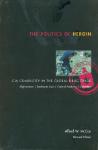
UNHOLY ALLIANCE
between
THE VATICAN, THE CIA,
and THE MAFIA
US $24, 00/ $25;50 a
OPERATION
This disturbing exposé describes a secret
FY brayavecenm(Olutxere Mura)a aatemmel (elie i World: War
Il by the CIA; the Sicilian and US mafias,
ex-Nazis, and theVatican to thwart the possibility of a Communist invasion of Europe.
Journalist Paul L. Williams presents. evidence suggesting the existence of “stay-behind” units in many European countries,
consisting of five thousand to fifteen thousand military Operatives. According ie) the
author’s research, the initial funding for
faaverremeau(eouullebebu pay(ecmere}pavem aueyonmaatemcrel (ene)
large stocks of SS morphine that had been
smuggled out of Germany and Italy and of
bogus British bank notes that had been produced in concentration camps by skilled
counterfeiters. As the Cold War alceorntebatere h
the units were used not only to ward off posye) (omebantzale
(eycoy ol arel remComa ah
celuan gavel uicv of
left-wing movements in South America and
-NATO-based countries by.terror attacks.
Williams argues that Operation Gladio
soon gave rise to the toppling of governments, i” aro)Ceraya}Cemrezearerese
(omgate covupat-la(ern ei
ele laameeleretetrestarclareltal scandals on a eaweyara|
scale,the creation of the mujahideen, an international narcotics network, and, most recent-"
ly, the ascendancy of Jorge Mario Bergoglia,
a Jesuit cleric with strong ties. to Operation
@oynre (ovaclameleiecaneniaaameym @/l-(elonta ON
na) as Pope Francis I.
Sure
to. be controversial,
Operation
Gladio connects the dots in.ways. the mainSlawersbon eae often ei,
/
INITIAL
DESCRIBE THIS Book IN ONE Worb...
If you’re interested in writing a
complete review, send us an email:
'
BRADLEY BEACH
LIBRARY
Me
sharlene@bradleybeachlibrary.org
OPERATION
GLADIO
ALSO BY PAUL L. WILLIAMS
The Vatican Exposed
Crescent Moon Rising
The Day ofIslam
The Al Qaeda Connection
Osama’s Revenge
OPERATION
GLADIO
The
UNHOLY
ALLIANCE
etween
THE VATICAN, THE CIA,
and THE MAFIA
PAUL L. WILLIAMS
@) Prometheus Books
59 John Glenn Drive
Amherst, New York
14228
Property of
Bradley Beach Public Library
Published 2015 by Prometheus Books
Operation Gladio: The Unholy Alliance between the Vatican, the CIA, and the Mafia.
Copyright © 2015 by Paul L. Williams. All rights reserved. No part of this publication may be reproduced, stored in a retrieval system, or transmitted in any form
or by any means, digital, electronic, mechanical, photocopying, recording, or otherwise, or conveyed via the Internet or a website without prior written permission
of the publisher, except in the case of brief quotations embodied in critical articles
and reviews.
Cover design by Grace M. Conti-Zilsberger
Cover image © Media Bakery
Prometheus Books recognizes the following registered trademarks, trademarks,
and service marks mentioned within the text: Alitalia™, Alpha Romeo®, Cadillac®,
Beretta”, Darvon®, Fiat 500°
Inquiries should be addressed to
Prometheus Books
59 John Glenn Drive
Amherst, New York 14228
VOICE: 716-691-0133
FAX: 716-691-0137
WWW.PROMETHEUSBOOKS.COM
19518717
16 15) “5e4 322
CIP Data pending
ISBN 978-1-61614-974-1 (hardcover) ISBN 978-1-61614-975-8 (ebook)
Printed in the United States of America
To David W. Morgan,
my great friend and a man without equal
Watch out for false prophets. They come to you in sheep’s
clothing, but inwardly they are ferocious wolves. By their frutts
you will recognize them. Do people pick grapes from thorn bushes,
or figs from thistles? Likewise every good tree bears good fruit, but
a bad tree bears bad fruit. A good tree cannot bear bad fruit, and a
bad tree cannot bear good fruit. Every tree that does not bear good
fruit is cut down and thrown into the fire. Thus, by their fruits
you will recognize them.
Not everyone who says to me, “Lord, Lord,” will enter the
kingdom of heaven, but only he who does the will of my Father
who is in heaven. Many will say to me on that day, “Lord, Lord,
did we not prophesy in your name, and in your name drive out
demons and perform many miracles? Then I will tell them plainly,
“I never knew you. Away from me, you evildoers!”
Matthew 7: 15-23
CONTENTS
Apologia
Acknowledgments
Leading Rogues
Chronology
List of Abbreviations
Chapter One: The Stay—Behind Units
Chapter Two: The Lucky Break: Negroes and Narcotics
Chapter Three: The Vatican Alliance
Chapter Four: The Drug Network
Chapter Five: The Secret Society
Chapter Six: The Rise of Michele Sindona
Chapter Seven: False Flag Terrorism
Chapter Eight: Gladio: South of the Border
Chapter Nine: Il Crack Sindona
Chapter Ten: High Times, New Crimes
Chapter Eleven: A Papal Problem
Chapter Twelve: The New Network
8
CONTENTS
Chapter Thirteen: The Shell Game
LZo
Chapter Fourteen: The Desperate Don
189
Chapter Fifteen: The Pope Must Die
196
Chapter Sixteen: The Shooting in St. Peter’s Square
206
Chapter Seventeen: A Raid and Redirection
216
Chapter Eighteen: Blackfriars Bridge
223
Chapter Nineteen: Killings and Kidnapping
252
Chapter Twenty: Works of God
243
Chapter Twenty-One: Death and Resurrection
256
Chapter Twenty-Two: Gladio Triumphant
266
Chapter Twenty-Three: Semper Eadem
281
Notes
291
Index
345
APOLOGIA
I... what you’re thinking.
The author of this book must be a Baptist.
It’s
acommon assumption.
Most Welsh people are Baptists and Williams is a Welsh name.
But names are deceptive.
I was born and raised a Roman Catholic. My parish was St. John the
Baptist Church in West Scranton, where I learned by rote the Baltimore
Catechism and sang “Panis Angelicus” with the choir. Iwrote “JMJ” (Jesus,
Mary, and Joseph) on the right hand corner of my composition papers,
went to confession every Saturday afternoon, and received Holy Communion at Sunday Mass. I participated in all the rites and rituals—the Forty
Hour Devotion to the Blessed Sacrament, the recitation of the litanies to
the saints, and the yearly novenas at St. Ann’s Basilica.
In those Tridentine days, the liturgy was in Latin, which gave the
Mass a sense of timelessness and the assurance that the teachings of Holy
Mother Church were semper eadem—“always the same”—binding the generations in one system of belief.
I had my throat blessed on the feast of St. Blaise and my forehead
anointed with ashes on the first day of Lent. I wore a St. Christopher’s
medal and a scapular. I fasted and abstained on the days appointed and
received all the sacraments, save Holy Orders and Extreme Unction.
As a graduate student at Drew University, my mentor was Fr. Gabriel
Coless, an Augustinian monk, who provided rigorous instruction in the
Patristics and Medieval Latin. After receiving my doctorate, I taught religion and the humanities at the University of Scranton, a Jesuit institution,
and served as the editor of the annual proceedings of the Fellowship of
Catholic Scholars. I also penned a number of articles on Vatican II and the
effects of aggiornamento for National Review, where I met William Buckley,
the celebrated CIA spook.
I encountered the wrath of Rome while writing Everything You Always
Wanted to Know about the Catholic Church for Doubleday. Doubleday, at that
time, was a publishing outlet for the Catholic Church through its imprint,
10
APOLOGIA
Image Books, and an imprimatur was considered a prerequisite for publication. My clerical overseers found no fault with my handling of the evo-
lution of doctrine and the matter of the pontiffs who later were decried as
heretics. The problem arose with the subject of the Church’s “temporalities.” Iwas told to expunge all references to the Vatican Bank, including the
donation of Mussolini, the Ambrosiano affair, and the P2 scandal. These
topics had garnered headlines throughout the world and to exclude them
from a book with a tell-all title would be an act of obsequiousness that
bordered on cowardice. I refused to make the suggested cuts and was supported in my decision by Patricia Kossman, my intrepid editor. In 1990, the
work was published by Doubleday without a nihil obstat—the declaration
that nothing about the work is contrary to the faith—despite the fact that
it contained no canonical errata.
In subsequent years, I probed deeper into the affairs of Vatican, Inc.,
during my tenure as the editor and publisher of the Metro, and as a consultant (CI-9) for the FBI. My findings, including the ties between the Vatican
and Gambino crime family, constituted the core of The Vatican Exposed:
Money, Murder and the Mafia, which was published by Prometheus in 2001.
For the past fourteen years, I have been engaged in combing all available government records regarding the Vatican, the CIA, and the Mafia.
The task has been grueling, since most of the files—even the files of Pope
Paul VI, Michele Sindona, Roberto Calvi, Archbishop Paul Marcinkus and
other individuals long dead—remain classified; any disclosure of their contents would represent a threat to “national security.” Fortunately, enough
information has come to light in recent years that readers can obtain a
complete account of the unholy alliance of Gladio.
Am I still a Catholic?
Suffice it to say, anyone who attempts to come to terms with the facts
presented in these pages will have his faith in Holy Mother Church compromised, if not shattered.
ACKNOWLEDGMENTS
: he 1,100+ footnotes in this book attest to my reliance on the work
of others, particularly such scholars as Alfred McCoy, Peter Dale
Scott, Martin A. Lee, Dale Yallop, and Sibel Edmonds, who have uncov-
ered material by unprecedented spade work that should be of interest to
all seekers of the truth. Iwould be remiss if Idid not mention the following
researchers and journalists who met with untimely deaths by probing into
the matter of Gladio: Gary Webb, Giorgio Ambrosoli, Carmine Pecorelli,
Emilio Alessandrini, Antonio Varisco, Boris Giuliano, Giuseppe Della Cha,
General Alberto Dalla Chiesa, and Ugur Mumcu. As always, I am indebted
to Jonathan Kurtz, Steven Mitchell, and the staff at Prometheus, my very
courageous publishing company. Finally, I must acknowledge my wife
Patricia, who has been my staunchest supporter throughout our fortythree glorious years of marriage, and Judith Schmitt and Judith Forte, who
continue to keep me in their prayers.
11
LEADING ROGUES
(in order of appearance)
Allen Dulles—Swiss director of the OSS who became the director of the
CIA in 1953
William “Wild Bill” Donovan—executive director
chairman of the World Commerce Corporation
of the OSS
and
Reinhard Gehlen—Nazi general who commanded the “werewolves,” the
first Gladio unit
James Jesus Angleton—commander of the secret counterintelligence unit
of the OSS
Junio Valerio Borghese—leader of Decima Mas and commander of the
Gladio units in Italy
Paul E. Helliwell—OSS official, director of Sea Supply, Inc., and the presi-
dent of the Castle & Trust Bank
Charles “Lucky” Luciano—American
Mafioso, agent of the ONI, and
kingpin of the international heroin trade
Monsignor Giovanni Montini (Pope Paul VI)—Vatican undersecretary
of state who introduced the OSS to the Sicilian Mafia
Don Calogero Vizzini (“Don Calo”)—Sicilian capo who took part in
Operation Husky and the creation of the heroin network
Vito Genovese—Lucky Luciano’s right-hand man in charge of heroin distribution throughout the United States
Eugenio Pacelli (Pius XII)—Roman pontiff who formed an alliance with
the CIA
Cardinal Francis Spellman—leader of the Sovereign Order of the Knights
of Malta and CIA operative
William Colby—Vatican insider, legal consul at Nugan Hand bank, and
future director of the CIA
Michele Sindona—nexus between the CIA, the mob, and the Vatican
Licio Gelli—grand-master of P2 and director of the “strategy of tension”
Alparslan Tiirkes—leader of Turkey’s National Action Party and its paramilitary youth group, the Grey Wolves.
Giulio Andreotti—prominent P2 member and Italy’s prime minister
Giuseppe Santovito—head of SISMI
13
14
LEADING ROGUES
David Kennedy—Sindona’s partner, chairman of Continental Illinois, and
secretary of the Treasury under Richard M. Nixon
Monsignor Paul Marcinkus—cleric from Cicero, Illinois, who became the
head of the IOR
Theodore Shackley—CIA operative who set up the heroin trade in Southeast
Asia and played a part in the attempted assassination of John Paul II
Roberto Calvi—head of Banco Ambrosiano who set up the Vatican shell
companies
Henry Kissinger—former US secretary of state and a master geopolitical
strategist
Fr. Felix Morlion—former OSS official, founder of the Pro Deo intelligence
agency in Rome
Michael Ledeen—US intelligence official who worked closely with P2 and
CSIS
Zbigniew Brzezinski—former National Security Advisor and master
geostrategist
Juan Per6n—thrice-elected president of Argentina with close ties to Licio
Gelli and P2
Fr. Jorge Mario Bergoglio (Pope Francis)—Jesuit Provincial-General in
Argentina, complicit in Operation Condor
David Rockefeller—founder of the Trilateral Commission and CEO of
Chase Manhattan Bank
Cardinal John Cody—archbishop of Chicago and CIA operative
Cardinal Karol Wojtyta (Pope John Paul Il)—archbishop of Krakow, who
came to preside over the greatest scandals within the Roman Church
since the time of the Borgias
Abdullah Catli—vice chairman of the Gray Wolves and assassin for the CIA
Mehmet Agca—assassin for the babas who made the attempted hit on
Pope John Paul II
Alexander de Marenches—leader of the Safari Club and director of the
French secret service
Francesco Pazienza—second in command at SISMI and a CIA operative
Claire Sterling—CIA spinmaster /journalist
Enrico De Pedis—leader of Banda della Magliana
Salvatore Inzerillo—godfather of the Gambino-Inzerillo-Spatola crime
family
Gulbuddin Hekmatyar—Afghan warlord, CIA operative
Fethullah Giilen—Muslim preacher dedicated to the formation of a New
Islamic World Order
CHRONOLOGY
June 1942—Pius XII creates the Vatican Bank; Lucky Luciano is recruited
by ONI
April 1943—Operation Husky
Feb. 1945—Fort Hunt Conference (formation of Gladio)
April 1945—Angleton and Borghese establish Italian stay-behind units
Oct. 1946—Luciano hosts Havana conference
Sept. 1947—CIA is established
Nov.
1947—Heroin
comes
to Harlem;
PCI makes
monumental
election
gains
Jan. 1948—Vatican receives $65 million in “black funds”
Jan. 1951—CIA develops drug trade with KMT
Fall 1953—Operation Mockingbird
Jan. 1955—Establishment of Catholic Gladio
Fall 1956—Gelli serves as CIA’s liaison to Italian military intelligence
Oct. 1957—Hotel des Palmes gathering; Sindona becomes mob financier;
Apalachin Conference
Nov. 1957—Creation of Fasco AG with CIA funds
Sept. 1958—Vito Genovese goes to jail
Jan. 1959—P2 lodges pop up on NATO bases
Feb. 1960—Gladio mounts first coup in Turkey
Jan. 1962—Helliwell forms Castle Bank and Trust
Oct. 1962—“Strategy of tension” gets underway with the murder of Enrico
Mattei
May 1963—Vatican is bugged
June 1963—Gelli knighted by Paul VI
Fall 1963—Piano Solo
Jan. 1964—Sindona joins P2
April 1968—Medellin
Conference;
Msgr. Paul Marcinkus
becomes
IOR
secretary
Spring 1968—Shackley meets Trafficante in Saigon
Jan. 1969—“ Years of lead” begin
May 1969—Sindona anointed “pope’s banker”
Fall 1969—Operation Condor
Dec. 1969—Piazza Fontana bombing
15
16
CHRONOLOGY
Jan. 1970—CIA establishes MIT in Turkey
Dec. 1970—Golpe Borghese
Jan. 1971—CIA funds Opus Dei; Vatican establishes first shell company
May 1971—Peteano attack
Fall 1972—BCCI set up in Karachi; Nixon approves Sicilian coup
July 1973—David Rockefeller forms Trilateral Commission
June 1974— Brescia bombing
Aug. 1974—Attack on the Italicus; collapse of Franklin National Bank
Sept. 1974—Collapse of BPF
April 1975—Fall of Saigon
May 1975—Church Committee
Fall 1975—Banzer Plan
March 1976—Dirty War begins in Argentina
Sept. 1976—Henry Kissinger forms the Safari Club
Oct. 1977—Conference at Hotel Vitosha
Winter 1977—CIA funds Hekmatyar and other “holy warriors” to culti-
vate Afghan poppy fields
Sept. 1978—Death of John Paul I
March 1979—Assassination of Carmine Pecorelli
July 1979—Assassinations of Giorgio Ambrosoli and Boris Giuliano
Dec. 1979—Soviet invasion of Afghanistan
Aug. 1980—Bologna bombing
Sept. 1980—Coup in Turkey
Fall 1980—Gelli and George H. W. Bush plan October Surprise; CIA forms
partnership with Honduran drug lords
March 1981—P2 exposed; Solidarity strike
May 1981—Attempted assassination of John Paul II
May 1981—Killing of Salvatore Inzerillo
Sept. 1981—Vatican issues “letter of patronage”
Fall 1981—Mena, Arkansas, becomes cocaine hub
Dec. 1981—Martial law in Poland
May 1982—General Alberto Dalla Chiesa is murdered
June 1982—Collapse of Banco Ambrosiano; Calvi hangs from Blackfriars
Bridge
Nov. 1982—Raid on Stibam
June 1983—Emanuela Orlandi kidnapping .
Nov. 1983—Henri Arsan dies in jail cell
March 1986—Sindona is poisoned in prison
Feb. 1987—Arrest warrant for Archbishop Marcinkus
CHRONOLOGY
April 1989—Kerry Commission
Nov. 1990—European Parliament condemns Gladio
May 1996—William Colby’s mysterious end
Nov. 1996—Susurluk incident
Sept. 1998—Giilen comes to Pennsylvania
Aug. 2001—Creation of AKP in Turkey
Oct. 2001—US-led invasion of Afghanistan
Nov. 2002—Andreotti receives guilty verdict
April 2012—IOR fails transparency test
March 2013—Bergoglio becomes Francis I
April 2014—Canonization of John Paul II
17.
wo
7
7
:
J Of
aye
7
:
a
Le
v,
1"
7
Py ie oun ye oh
a
His
is
v | '
LIST OF ABBREVIATIONS
AIUC—American International Underwriters Corp.—Insurance company
owned by C. V. Starr, which later became the company AIG
AKP—Adalet ve Kalkinma—Turkey’s Justice and Development Party
ANSA—Agenzia Nazionale Stampa Associata—Italy’s leading news wire
service
ASALA—Armenian Secret Army for the Liberation of Armenia
AV—Avanguardia Nazionale—National Vanguard—Italian right-wing
terror group
BCCI—Bank of Credit and Commerce International
BND—Bundesnachrichtendienst—Germany’s overseas intelligence agency
BNDD—Bureau of Narcotics and Dangerous Drugs—precursor of the DEA
BPF—Banca Privata Finanziaria—Bank of Private Finance—first bank
owned by Sindona
CAT—Civil Air Transport
CDP—Christian Democratic Party
CFR—Council on Foreign Relations
CIA—Central Intelligence Agency
CIC—Counter-Intelligence Corps—precursor to the CIA
CIG—Central Intelligence Group—another precursor to the CIA
CSIS—Center for Strategic and International Studies
CSS—Committee for State Security—Bulgarian secret service
DEA—US Drug Enforcement Agency
ENI—Ente
Nazionale
Idrocarburi—Italy’s
National Hydrocarbons
Authority
ESMA—Escuela Superior de Mecanica de la Armada—Argentina’s Navy
Petty Officers’ School of Mechanics; used as a detention center
FBI—Federal Bureau of Investigation
FBN—Federal Bureau of Narcotics
FN—Fronte Nazionale—National Front—Italian right-wing terror group
FOIA—Freedom of Information Act
IGS—Chilean Institute for General Studies—Opus Dei think tank.
IOR—Istituto per le Opere di Religione—Institute for the Works of Religion—The Vatican Bank
IRA—Irish Republican Army
ie)
20
LIST OF ABBREVIATIONS
ISI—Pakistan’s Inter-Services Intelligence
KGB—Komitet
gosudarstvennoy
bezopasnosti—Soviet
intelligence
service
KMT—Kuomintang—National Chinese Army
MAR—Movimento
d’Azione Rivoluzionaria—Revolutionary
Action
Movement—lItalian right-wing terror group
MIT—Milli
Istihbarat
Teskilati—Turkey’s
National
Intelligence
Organization
MPM—Movimiento Peronista Montonero—Argentine leftist urban guerrilla group
|
MSI—Movimento Sociale Italiano—Italy’s National Socialist Movement
NAR—Nuclei Armati Rivoluzionari—mArmed Revolutionary Nuclei—
right-wing terror group
NATO—North Atlantic Treaty Organization
NSC—National Security Council
ON—Ordine Nuovo—New Order
ONI—Office of Naval Intelligence
OSS—US Office of Strategic Services
P2—Propaganda Massonica Due—Licio Gelli’s Masonic lodge
PCI—Partito Comunista Italiano—Italian Communist Party
PKK—Partiya Karkerén Kurdistan—Kurdistan Workers’ Party
PLO—Palestine Liberation Organization
RICO—Racketeer Influenced and Corrupt Organizations Act
SCI—Secret Counterintelligence—a unit of the OSS.
SDECE—Service de Documentation Extérieure et de Contre-Espionnage—
France’s External Documentation and Counter-Espionage Service
SID—Servizio Informazioni Difesa—Information Defense Service—
Italian intelligence agency, later split into SISDE and SISMI
SIFAR—Servizio Informazioni Forze Armate—Italy’s Armed Forces Information Service
SISDE—Servizio per le Informazioni e la Sicurezza Democratica—Italy’s
domestic intelligence service
SISMI—Servizio per le Informazioni e la Sicurezza Militare—Italy’s Military Information and Security Service
SMOM—-Sovereign Military Order of Malta
SS—Schutzstaffel—”Protection Squadron” of the Third Reich
SSU—Strategic Services Unit—American intelligence agency existing
between the OSS and CIA
LIST OF ABBREVIATIONS
21
TD-BDJ—Technischer Dienst des Bundes Deutscher Jugend—Technical
Service Branch of the League of German Youth
TIR—TIransport Internationaux Routiers—International Road Transport
UBS—Union Bank of Switzerland
WCC—World Commerce Corporation—a CIA arms-for-drugs front
F
oT]
is
a
ae
FY.
-
7
a
gutet
‘
oS
etna
|
=
’
Tr
Gilinlal
j=
Sy
setota
WS
“eee
_
ani ViA
se.
7
Chapter One
THE STAY-BEHIND UNITS
The Association for Responsible Dissent estimates that by 1987,
six million people had died as a result of CIA covert operations.
Former State Department official William Blum correctly calls
this an “American Holocaust.” The CIA justifies these actions
as part of its war against communism. But most coups do not
involve a communist threat. Unlucky nations are targeted for a
wide variety of reasons: not only threats to American business
interests abroad, but also liberal or even moderate social reforms,
political instability, the unwillingness of a leader to carry out
Washington's dictates, and declarations of neutrality in the Cold
War. Indeed, nothing has infuriated CIA Directors quite like a
nation’s desire to stay out of the Cold War.
Steve Kangas, “A Timeline of CIA Atrocities,” 1994
| 'e’re fighting the wrong enemy.”
Allen Dulles, the Swiss director of the US Office of Strategic Services
(the OSS), came to this conclusion at the close of 1942, when the German
infantry remained mired in the mud and snow of the Russian steppes.
He had received word via Vatican messengers from Schutzstaffel (SS)
chief Heinrich Himmler and Walter Schellenberg, head of the Sichterheitsdienst (the SS foreign intelligence service), that the Nazi government
wished to establish a separate peace with the United States. Such reconciliation would enable the Third Reich to turn its undivided attention to
pulverizing the Soviets. When Dulles expressed his openness to discuss
the proposal, the German High Command sent Prince Max von Hohenlohe, a Prussian aristocrat and businessman,
to meet with him in Bern.!
Hohenlohe was surprised to learn that Dulles not only endorsed the Nazi
proposal, but also maintained that a strong Germany was necessary as a
bulwark against Bolshevism, the Leninist branch of the Communist Party
that had seized control of Russia in 1917.
ao
24
OPERATION GLADIO
SEEING RED
In a series of communiqués with William (“Wild Bill”) Donovan, the OSS
chief in Washington, Dulles expressed his eagerness to pursue the peace
negotiations, believing that the Soviets posed a far greater threat to the
United States and to the stability of the Western world than the Nazis.’ The
Soviets, Dulles maintained, committed acts of genocide that far surpassed
the pogroms of the Third Reich. They endorsed a godless ideology that
called for world revolution and the collapse of capitalism. They believed
that human history was governed by the process of dialectical materialism, the idea that any current economic order would always give rise
to its opposite, a process that would terminate in the creation of a “stateless state” —built on the common ownership of goods and property. Dulles
had problems with the Nazis—their goal of a thousand-year Reich and
their division of mankind into iibermenschen and untermenschen. But the
Nazis were Christians; they retained a Hegelian sense of history, which
explained the rise and fall of governments in terms of a spiritual process;
and they shared with Americans a common Western heritage. Even more
importantly, the Nazis believed in capitalism and the right of private property. They even had minted the word reprivatisierung (reprivatizing) for
their policy of restoring to their former owners the properties that had
been seized by the government, a policy that went against the leftist trends
that were spreading throughout Europe.
THE GREAT SEDUCER
Ascion of the Eastern Establishment in the United States, Dulles came from
a distinguished family of political dignitaries. John W. Foster, his maternal
grandfather, had served as secretary of state under Benjamin Harrison,
and Robert Lansing, his uncle by marriage, had been Woodrow Wilson’s
secretary of state. A tweedy, pipe-smoking corporate lawyer, Dulles, with
his snake-like charm and Machiavellian ambition, had been credited with
seducing over one hundred women, including Claire Booth Luce, the wife
of Henry Luce, founder of Time and Life; and Queen Frederika of Greece.‘
Dulles entered the diplomatic service in 1916 and was stationed in
Vienna and later Bern. From 1922 to 1926, he served as the chief of the Near
East Division of the US State Department. He left this post to join the Wall
Street law firm of Sullivan and Cromwell, where his brother John Foster
THE STAY-BEHIND UNITS
25
Dulles was a partner. Sullivan and Cromwell floated bonds for Krupp AG,
the German arms manufacturer, and managed the finances of IG Farben,
the German chemical conglomerate that manufactured Zyklon B, the gas
that would be used to murder millions of Jews.5
In addition to his law practice, Allen Dulles was elected in 1927 as the
first president of the Council on Foreign Relations (CFR), an organization
of high-ranking government officials, wealthy industrialists, and prominent bankers. The purpose of the CFR was to engineer a US foreign policy
of interventionism in order to “make the world safe for democracy.”° His
ties to this organization would have a profound effect on the undertakings
of Operation Gladio.
GEHLEN’S GUERRILLAS
Having established contact with Hitler’s High Command, Dulles con-—
ducted meetings in Bern with Nazi General Reinhard Gehlen, the head
of German
military intelligence. Gehlen was a stiff, unassuming
man
with sparse blond hair, a toothbrush mustache, and ears that stuck out of
his head like radar antennas. Knowing that the defeat of the Third Reich
was inevitable, he had concocted the idea of forming clandestine guerrilla squads composed of Hitler youth and die-hard fascist fanatics, as
“stay-behind units” These units, Gehlen informed Dulles, would serve as
a police force to ward off a postwar Soviet invasion.’ The Nazi general
referred to the members of his secret army as “werewolves” —individuals
who would function as ordinary citizens by day and Communist-killers
by night. Each werewolf unit, Gehlen said, had access to buried depots of
food, radio equipment, weapons, and explosives.*
Believing the Soviets planned a takeover of Germany and Western
Europe at the conclusion of the war, Dulles became
convinced
that the
OSS must reach out to these stay-behind armies in order to supply them
with tactical and strategic assistance. This task, he informed Donovan and
the OSS top brass in Washington, could be accomplished through Gehlen
and SS General Karl Wolff, another Nazi Dulles had become friends with.
26
OPERATION GLADIO
THE ARYAN IDEAL
Wolff conformed to the Aryan ideal: six feet tall, blond hair, blue eyes, and
a high forehead. He was commissioned as an SS-Sturmftihrer in February
1932. Five years later, he was third in command of the entire SS. His prin-
cipal assignment was the arrangement of transportation of Jews to con-
centration camps. Wolff excelled at this task to such a degree that he was
later charged with complicity in the murder of three hundred thousand
men, women, and children. In 1942, as a reward for his service, Wolff was
appointed by Hitler to serve as the SS adjutant to Mussolini and the Italian
government.’
Along with securing and fortifying the werewolves, Dulles busied
himself with arranging the separate peace with the Nazis that would
exclude the Soviet Union. This undertaking became known as Operation Sunrise. The separate peace should be signed without delay, Dulles
informed Donovan,
since it would allow the Wehrmacht (the combined
armed forces of Nazi Germany) to deploy three divisions from northern
Italy to the eastern front, where they could combat the Red Army.'° When
Stalin became aware that such negotiations were underway, he went bal-
listic, accusing his US allies of bad faith and betrayal. President Franklin D.
Roosevelt responded that such accusations were “vile misrepresentations”
of actuality."
THE FORT HUNT CONFERENCE
The worst fears of Allen Dulles for the postwar period began to materialize in February 1945, when the leaders of the Big Three—the United
States, Great Britain, and the Soviet Union—met at Yalta on the Black Sea
to redraw the map of Europe. The eastern border of Germany was moved
westward to the Oder and Neisse Rivers and parts of eastern Poland were
handed over to the Soviets. What remained of Germany was to be divided
into four zones of occupation, which would be administered by a council
of military generals, including the French.”
As soon as the ink dried on the Yalta agreement, Dulles transported
Gehlen and his top representatives to Fort Hunt, Virginia, where they were
wined and dined by Donovan and other US officials. An agreement was
reached. Gehlen would return to Germany under US protection to establish the Gehlen Organization, which would receive full funding from US
THE STAY-BEHIND UNITS
27
Army G-2 (intelligence unit) resources. The primary purpose of this organization would be the maintenance of the existing stay-behind armies and
the recruitment of new guerrilla soldiers from the ranks of Third Reich
veterans with staunch anti-Communist credentials.!? These soldiers would
no longer be known as werewolves. They were to be known as “gladiators,” and they would be commissioned to ward off Communist invaders
in the great theater of postwar Europe. The operation in which they were
engaged was to be known as Gladio, after the short swords Roman gladiators used to kill their opponents.
POETRY AND PARANOIA
Dulles was not the only OSS officials involved in establishing stay-behind
units. He was aided by James Jesus Angleton, one of the strangest spooks
to emerge from the shadow world of the US intelligence community. A
tall figure of spectral thinness, with owlish glasses, Angleton was a rabid
anti-Communist, an ardent Anglophile, and a devout Roman Catholic. He
bred orchids, wore a black homburg, and drank bourbon for breakfast. A
graduate of Yale, Angleton possessed a gift for poetry and had established
close friendships with Ezra Pound, E. E. Cummings, and T. S. Eliot. Fluent
in several languages, including German and Italian, he arrived in Rome
as the commander of the Secret Counterintelligence (SCI) unit of the OSS.
Few were more qualified for the position. Unfortunately, Angleton was not
only brilliant but also dangerously paranoid, seeing the world as a “wilderness of mirrors.” In these mirrors, he saw reflections of spies and coun-
terspies (many of whom he felt compelled to eliminate) and the unfolding
succession of conspiracy upon conspiracy—all of which required immediate and, at times, murderous resolution.'*
Angleton’s father, Hugh, also served the OSS. Before the war, Hugh
had been the president of the American Chamber of Commerce in Italy
and the owner of the Milan branch of the National Cash Register Company.
The elder Angleton, who was outspokenly pro-Hitler and pro-Mussolini,
had developed extensive contacts throughout Italy that were of great use
to his son. One such contact was Prince Junio Valerio Borghese, a member
of the Catholic Black Nobility, the Italian aristocrats who had remained
loyal to the Holy See after the rise of Garibaldi in the nineteenth century."
28
OPERATION GLADIO
BLACK XMAS
Borghese was the leader of Decima Flottiglia MAS (10" Light Flotilla),
also known as X MAS, an Italian naval commando unit. After Italy signed
an armistice with the Allies on September 8, 1943, Borghese and his com-
mandos opted to fight for the so-called “Solo Republic” that had been set
up by the Nazis in northern Italy. His unit was given the task of attacking
the Italian partisan bands that had sprouted up throughout Italy. The partisans were sponsored by the Italian Communist Party (Partito Comunista
Italiano, or PCI). And, thanks to X MAS, thousands were found hanging
from street lights and flag poles by the end of the war.'®
On April 13, 1945, Borghese met with General Wolff and Angleton at
a villa on Garda Lake, where they discussed the possibility of extending
their war efforts beyond any peace treaty with the Soviets, redeploying
X MAS under the covert direction of the OSS. Borghese was amenable to
the terms, especially since his cooperation would save him from an Italian
firing squad.”
THE SECRET GOVERNMENT
On May 15, 1945, when Borghese was arrested and charged with war
crimes, Angleton managed to secure his release into US Army custody.
The Black Prince was dressed in an American uniform and transported
from Milan to Rome. Angleton needed Borghese and the 10,267 fascists
who fought under his command to help establish the stay-behind units
that would ward off any Soviet aggression.'®
For a while, Angleton and other OSS officials, including Donovan,
toyed with the idea of making Borghese the new king of Italy. But soon
they came to their senses and realized that the X MAS commander would
be of greater use as the leader of a shadow government, with a secret army
that could manipulate Italian affairs throughout the coming decades."
To create this government, the US State Department issued a mandate by
which the “operational resources” of the Italian police, the Italian military
intelligence, and the Italian secret service were placed at the disposal of
Angleton and the SCI.”°
Under Borghese, the Gladio forces in Italy were divided into forty
main groups: ten specialized in sabotage; six each in espionage, propaganda, and escape tactics; and twelve in guerrilla activities. A special
THE STAY-BEHIND UNITS
29
training camp for members of the stay-behind units was set up in Sardinia,
off Italy’s western coast. The camp, thanks to the efforts of Gehlen and
Wolff, was soon swarming with new gladiators from Germany, France,
and Austria. By 1946, when the OSS morphed into the Central Intelligence
Group (the precursor of the CIA), hundreds of Gladio units were in place
throughout Western Europe.”!
THE MONEY
SUPPLY
But there was still
a covert operation
mandate from the
The $200 million
a problem that seemed insurmountable. Gladio was
and had not been initiated by an act of Congress or a
Pentagon. Few federal officials knew of its existence.
in original funding came from the Rockefeller and
Mellon foundations.” But a new and steady stream of revenue had to be
created almost overnight, or the world would not be safe for democracy.
The future of Gladio would come to reside within America’s ghettos.
Chapter Two
THE LUCKY BREAK:
NEGROES AND NARCOTICS
What cannot now be denied is that US intelligence agencies
arranged for the release from prison of the world’s preeminent
drug lord, allowed him to rebuild his narcotics empire, watched
the flow of drugs into the largely black ghettoes of New York and
Washington, DC, escalate and then lied about what they had
done. This founding saga of the relationship between American
spies and gangsters set patterns that would be replicated from
Laos and Burma to Marseilles and Panama.
Alexander Cockburn and Jeffrey St. Clair,
Whiteout: The CIA, Drugs, and the Press
Gs
Paul E. Helliwell had one hell of an idea.
It came to him in China, where he was serving as Chief of Special
Intelligence for the OSS.
Helliwell’s idea would result in a union between the US intelligence
community and organized crime that would result in conflicts, wars,
rebellions, financial upheavals, and an epidemic that would forever alter
the flow of world history.
Mainstream books about the CIA, like Tim Weiner’s Legacy of Ashes,
make no mention of Helliwell, his relationship with Lucky Luciano and
Meyer Lansky, his creation of the Castle Bank in the Bahamas, and his
grand experiment on the black community of Harlem. In the flood of CIA
documents released since 1992, one does not find Helliwell’s name in the
archival indices of the National Archive, the National Security Archive,
or the Federation of American Scientists. In the million declassified pages
stored and indexed on the website of the Mary Ferrell Foundation, Helliwell’s name appears only once—on a list of documents withheld from
inspection during the CIA’s 1974 search for records concerning Watergate.
30
THE LUCKY BREAK
31
This silence about the principal architect of the postwar CIA-drug connection exceeds all standards of eloquence.'
Within Kunming, a town within the South China province of Yunnan,
Helliwell observed that General Chaing Kai-shek’s, leader of the Kuomin-
tang (KMT—the Chinese National Army), sold opium to Chinese addicts
in order to raise funds for his army’s planned war against the Communist
forces of Mao Zedong.’ Since Helliwell’s task was to provide covert assistance to the KMT, what better help could he provide than steady shipments of opiates for the good general?
Helliwell presented this idea to his boss General William “Wild Bill”
Donovan. Donovan shared it with James Jesus Angleton, Allen Dulles (the
OSS Swiss Director), and William “Little Bill” Stephenson, master spy of
the British Security Coordination. Delighted with the concept, the officials
arranged to funnel money to Helliwell, who now “became the man who
controlled the pipe line of covert funds for secret operations throughout
Asia.”* The money for the opiates would eventually come from Nazi gold
that had been laundered and manipulated by Dulles and Stephenson
through the World Commerce Corporation, a financial firm established by
Wild Bill. But that was still in the future.
By the close of World War II, Helliwell and a number of fellow Army
intelligence officers—E. Howard Hunt, of Watergate fame; Lucien Conein,
a former member of the French Foreign Legion with strong ties to the Corsican Mafia; Tommy “the Cork” Corcoran, a lawyer serving the Strategic
Service Unit; and Lt. General Claire L. Chennault, the military advisor to
Chiang Kai-Shek and the founder of the Flying Tigers—had created the
Civil Air Transport (CAT) from surplus aircraft, including C-47 Dakotas
and C-46 Commandos.° The CAT fleet transported weapons to a contingency force of the KMT in Burma. The planes were then loaded with drugs
for their return trip to China.° The pilots who flew these bush-type aircraft
were a motley group of men, often serving as agents or go-betweens with
the Chinese National guerrillas and the opium buyers. Some were former
Nazis, others part of the band of expatriates that emerges in countries following any wat.’ Helliwell and his compatriots had created a model for
trafficking in drugs that would result in the formation of Air America—the
CIA fleet of planes that transported opiates and cocaine during and after
the Vietnam Conflict. Thanks to their efforts, Burma’s Shan Plateau would
grow froma relatively minor poppy-cultivating area into the largest opium
producing region of the world.°
S2
OPERATION GLADIO
GHETTO GOLD
Wild Bill had drafted plans to create a‘postwar central intelligence agency
and, knowing this, Helliwell came up with another brainstorm—a surefire
means of gaining covert funding for Gladio and other security operations.’
The new agency, he realized, could obtain cold cash by adopting the same
measures as General Chaing. It could supply heroin to the black community in America’s ghettos.
World War II had disrupted international shipping and imposed tight
waterfront security that made smuggling heroin into the United States
almost impossible. Heroin supplies were small and international crime
syndicates had fallen into disarray. But opiates were becoming the rage
of the jazz scene in Harlem, and the demand for heroin was increasing
day by day among black musicians in New York, where a hit could cost
as much as one hundred dollars. Helliwell, dealing with the drug lords of
Burma, was keenly aware of this fact.
The notion wasn’t out of line with OSS protocol. Helliwell and his
Army intelligence buddies in China were already involved with providing
shipments of opium to General Chaing, and with giving “three sticky
brown bars” to Burmese addicts who could offer information about the
military plans of Chairman Mao." If similar bars could be made available
to inner-city dealers at rock bottom rates, then the market could be cor-
nered and the demand made to increase in an exponential manner. Helliwell knew that a drug epidemic might arise. But, he reasoned, the problem
would remain confined to the lowest strata of society, with little impact on
white middle-class America.
Helliwell, the son of a prominent English cloth buyer, was a member
of the inner circle of the OSS (which became known as the Oh So Social
club), along with other wealthy American dignitaries, including Henry
Sturgis Morgan (son of J. P. Morgan Jr.), Nicholas Roosevelt, Paul Mellon
(son of Andrew Mellon), David K. E. Bruce (Andrew Mellon’s son-in-law),
and members
of the Vanderbilt, Carnegie, DuPont,
and Ryan families.
Angleton, as noted, was a Yale graduate and the son of Hugh Angleton,
a multimillionaire who owned the Italian franchise of the National Cash
Register Company. Dulles was a Princeton graduate and the senior
partner at the Wall Street firm of Sullivan and Cromwell, which represented the Rockefeller empire and other mammoth trusts, corporations,
and cartels. He was also a board member of the J. Henry Schroeder Bank,
with offices in Wall Street, London, Zurich, and Hamburg, and a principal
THE LUCKY BREAK
33
of the Bank of New York. Wild Bill Donovan was an Ivy League lawyer
and had married Ruth Ramsey, the heiress of one of the richest families
in America." Donovan justified the practice of recruiting the socially elite
for the OSS by saying, “You can hire a second-story man and make him a
better second-story man. But if you hire a lawyer or an investment banker
or a professor, you have something else besides.”'? And so, when Helliwell, who was not a second-story man, communicated his idea to the OSS
brass, he was assured of a captive audience.
Donovan, Angleton, and Dulles viewed Helliwell’s proposal as
answered prayer. Selling smack to the black jazz subculture would provide
US intelligence with a steady supply of revenue for Gladio throughout
the postwar era. The Truman Administration had set aside no funds for
covert, postwar operations in the federal budget. And cold cash, Donovan
knew, would become the key weapon of the new agency he remained hellbent on establishing as soon as he got back to Washington. It alone could
provide the means to purchase the services of foreign agents, foreign politicians, and foreign assassins without the approval of any elected official."
Donovan’s reasoning, bizarre as it might seem to modern readers, was
shared by most American political leaders—Republican and Democratic
alike—at the close of World War IL. Alfred W. McCoy explains:
Henry Luce, founder of the Time-Life empire, argued that America was
the rightful heir to Great Britain’s international primacy and heralded the
postwar era as ‘The American Century.’ To justify their ‘entanglement in
foreign adventures,’ American cold warriors embraced a militantly antiCommunist ideology. In their minds, the entire world was locked in a
Manichaean struggle between ‘godless communism’ and ‘the free world.’
The Soviet Union was determined to conquer the world, and its leader,
Joseph Stalin, was the new Hitler. European labor movements and Asian
nationalist struggles were pawns of ‘international Communism,’ and as
such had to be subverted or destroyed. There could be no compromise
with this monolithic evil: negotiations were ‘appeasement’ and neutralism was ‘immoral.’ In this desperate struggle to save ‘Western civilization,’ any ally was welcome and any means was justified."*
Since any ally was welcome and any means justifiable, Wild Bill
decided the implementation of Helliwell’s drug scheme would enable him
to make use of Charles “Lucky” Luciano and the Sicilian Mafia.
34
OPERATION GLADIO
THE COMMISSION
Charles “Lucky” Luciano, born in Sicily as Salvatore Lucania, emerged
as America’s leading Mafioso by creating “the Commission” with Meyer
Lansky, his long-time friend and accomplice, in 1931. The Commission
eventually governed organized criminal activity within the United States
by establishing territorial boundaries, settling internal disputes, and
ruling on in-house killings. Twelve Mafia bosses sat on the board of directors, with Luciano as the head.'®
During Prohibition, Luciano and Lansky gained control of the New
York docks and longshoremen’s union by means of muscle and blood in
order to supply speakeasies within Manhattan with scotch from Scotland,
rum from the Caribbean, and whiskey from Canada. When a bloody war
broke out between the families of Giuseppe “The Boss” Masseria and Salvatore Maranzano from 1927 to 1929, Luciano put an end to it by arranging
the elimination of both Mafia chiefs and laying down the law to survivors.
“I explained to ‘em that all the war horseshit was out,” he later explained.
“I told ‘em we was in a business that hadda keep movin’ without explosions every two minutes; knockin’ guys off just became they came from a
different part of Sicily; that kind of crap was givin’ us a bad name, and we
couldn’t operate until it stopped.”"°
HEROIN AND HOOKERS
At the end of prohibition, Lucky imported heroin from the Chinese warlords in Shanghai and Tientsin that had then been refined in laboratories
controlled by the Corsican Mafia. The product that reached the mean
streets and opium dens of Boston, New York, Philadelphia, Los Angeles,
and San Francisco was less than 3 percent pure, since it was heavily cut
with sugar or quinine.'” What's more, a surprising amount of the product
did not include any heroin at all.
Heroin
represented
a minute
part of the Commission’s
business.
Before World War II, America had less than twenty thousand heroin
addicts and less than one thousand kilos were produced annually
throughout the world.'* Use of the drug in America remained largely confined to Asian immigrants and black musicians, and most made men—the
term for fully initiated members of the Mafia—“shunned drug peddling”
as an “immoral” and “unmanly activity.”'’ “My tradition,” Mafioso Joe
THE LUCKY BREAK
35
Bonanno wrote in his memoirs, “outlaws narcotics. Men of Honor don’t
deal in narcotics.” Lucky was the exception to this code of honor. He established the heroin trade with Turkish and Chinese opium merchants, saving
a considerable amount of the “good stuff” for the women who worked his
brothels. The drugs served to strengthen their dependence upon his largesse and good will. Indeed, the combination of organized prostitution
and drug addiction became one of Lucky’s trademarks. By 1936, he controlled two hundred New York City brothels, employing twelve hundred
prostitutes. These establishments provided him with an estimated annual
income of $10 million.”°
LUCKY’S LOCKUP
On February 2, 1936, US Attorney Thomas E. Dewey launched a raid of
brothels in Manhattan and Brooklyn, which netted arrests of ten pimps
and one hundred prostitutes. Unable to come up with the cash for the stiff
bonds of $10,000 imposed by the presiding judge, several of the prostitutes
bartered with Dewey for their release by fingering Luciano as their ring
leader. On June 7, Lucky was convicted on sixty-two counts of compul-
sory prostitution and sentenced to thirty to fifty years of hard time at the
Clinton Correctional Facility in Upstate New York.’
Even within a prison so harsh it was known as “Little Siberia,” Lucky
managed to bribe prison officials with enough cash to gain not only a private
cell on the best block, but also a personal valet to press his dress slacks and
silk shirts and an experienced chef to prepare his meals. The warden also
permitted him to receive a steady stream of visitors, including Vito Geno-
vese, his under-boss, and Meyer Lansky, his long-time partner in crime.”
THE NORMANDIE
SCAM
In June 1942, Frank Costello, Albert Anastasia, and Tony Anastasio, three
of Luciano’s closest criminal cronies, came up with a plan to get their pal
out of prison. Knowing that the Department of the Navy was paranoid
about security at the New York waterfront and the possibility that Nazi
U-boats might sink American ships remaining in the harbor, they decided
to stage an incident that would require Lucky’s release from Little Siberia.
As Luciano later told his biographers:
36
OPERATION GLADIO
Costello got in touch with me right away. Albert had worked this idea out
with his brother, Tough Tony. Albert said that the guys from Navy Intelligence had been all over the docks talkin’ to em about security; they was
scared to death that all the stuff along the Hudson, the docks and boats
and the rest, was in very great danger. It took a guy like Albert to figure
out somethin’ really crazy; his idea was to give the Navy a real big hunk
of sabotage, somethin’ so big that it would scare the shit out of the whole
fuckin’ Navy.”
The SS Normandie, a French luxury liner, had been converted into a
transport ship for the Allied forces. When it was set ablaze at Pier 88 in
the New York harbor, the incident was blamed on Nazi spies. The Office
of Naval Intelligence (ONI) sought the help of waterfront union officials,
including Joe “Socks” Lanza and Tony Anastasio, to prevent further
“sabotage.” Lanza and Anastasio informed the officers that adequate
security could only be guaranteed by Luciano, who had ruled the
waterfront for many years with an iron hand. “Everybody in New York
was laughing at the way those naive Navy agents were going around the
docks. They went up to the men working in the area and talked out of
the corner of their mouths like they had seen in the movies, asking about
spies,” Meyer Lansky recalled.™*
Lt. Commander Charles Radcliffe Haffenden of the ONI paid a visit
to the Clinton Correctional Facility, where he offered Lucky the promise
of pardon and deportation to his native Sicily in exchange for his help
in securing the harbor and preventing strikes by the Manhattan longshoremen.” “As far as Haffenden was concerned, he didn’t know nothin’
that was goin’ on except that he was sittin’ there with his mouth open,
prayin’ I would say yes and help his whole department.” Luciano later
said.” Thus Operation Underworld got underway, with Lucky transforming from a mob thug to an agent of the ONI.
MONSIGNOR
MONTINI’S INFLUENCE
On April 15, 1943, the OSS was charged with implementing plans for the Allied
invasion of Sicily. The Joint Staff Planners for the US Joint Chiefs of Staff had
drafted a report titled Special Military Plan for Psychological Warfare in Sicily
that recommended the “Establishment of contact and communications with
the leaders of separatist nuclei, disaffected workers, and clandestine radical
groups, e.g., the Mafia, and giving them every possible aid.”””
THE LUCKY BREAK
a7
The report was approved by the Joint Chiefs of Staff in Washington
and the order to make the Mafia connection was dispatched to Donovan.
Earl Brennan, the OSS director in Italy, reached out to Monsignor Giovanni
Montini, the Vatican Undersecretary of State who would
VI, for help in locating opponents to the fascist regime in
gested that Brennan reach out to Calogero “Don Calo”
tutti capi—“boss of all bosses” —of the Vizzini/ Agostino
become Pope Paul
Sicily. Montini sug-
Vizzini, the capo di
crime family, who
had been imprisoned by Mussolini for his support of the Christian Democrats and his opposition to fascism. Brennan conveyed this information to
Donovan, who knew that no one involved in the OSS or ONI had closer ties to
the Vizzini clan than Lucky Luciano. Luciano had been born less than fifteen
miles from Villalba, where his Mafiosi relatives still worked for Don Calo.”8
THE RETURN OF THE MAFIA
At Donovan’s request, Commander Haffenden again appeared at Lucky’s
cell with a request for help. Luciano complied by drafting a communiqué
that was then airdropped near Don Calo’s farmhouse.” Two days later,
American tanks rolled into Villalba after driving fifty-five miles from the
beachhead of General Patton’s Seventh Army in Palermo. Don Calo and
his men climbed into the tanks and spent the next six days guiding the
division through western Sicily and organizing support among the local
populace for the advancing US troops.”
Thanks to the success of Operation Husky (the code name for the
Allied invasion of Sicily), Don Calo was appointed Mayor of Villalba.”
As soon as he assumed public office, Don Calo murdered the local police
chief, whom he found “too inquisitive.”** Other Mafiosi, at the insistence
of the OSS, assumed positions of political power. Giuseppe Genco Russo,
Don Calo’s second in command, became Mayor of Mussomeli, while other
members of the Vizzini/ Agostino crime family became chief governing
officials of other towns and villages in western Sicily.* The appointments
were
understandable.
Donovan
wanted
antifascists
in charge, and the
Mafiosi were most certainly antifascists, since many had spent the war
years in Mussolini’s jails.* Michele Pantaleone, who observed the Mafia
revival in his native village of Villalba, writes:
By the beginning of the Second World War, the Mafia was restricted to a
few isolated and scattered groups and could have been completely wiped
out if the social problems of the island had been dealt with . . . the Allied
38
OPERATION GLADIO
occupation and the subsequent slow restoration of democracy reinstated
the Mafia with its full powers, put it once more on the way to becoming
a political force, and returned to the Onorata Societa, the weapons which
Fascism had snatched from it.*
The return of the Men of Respect became a nightmare for ordinary
Sicilians. Shifting from rural to urban crime, the Mafia bosses led by Don
Calo graduated from the stiletto to the Beretta and the tommy gun. From
1944 to 1960, the bosses commissioned an average of three murders a
week. Scarcely a shred of their fabled knightly code of honor remained by
the end of Don Calo’s reign of terror.”
ENTER VITO GENOVESE
The ascendancy of the Mafia also became apparent with the appointment
of Vito Genovese, Luciano’s right hand man, as chief translator for the U
S Army headquarters in Naples. New York’s former lieutenant-governor
Charles Poletti, whom Lucky described as “one of our good friends,” was
also appointed as military governor in Italy.” Thanks to Poletti, Genovese’s men controlled the major Italian ports, and thereby most of the
black market
in American
and Sicilian goods such as flour, oil, sugar,
beans, salt, and cigarettes. Even Genovese’s lowest picciotto, the youngest
and most inexperienced men, made a bundle. “How did I accumulate my
fortune? I did the black market during and after the war,” Luciano Leggio,
a henchman for Genovese later explained to a jury in Palermo.*
Thanks
to the success
of the invasion, Lucky Luciano became
the
subject of massive media hype, which culminated in radio broadcaster
Walter Winchell proclaiming that the mobster should receive the Congressional Medal of Honor.”
MAKING
THE FIX
With the Mafia in control of the Italian ports, the time was ripe for the
implementation of Helliwell’s plan for the funding of the postwar intelligence agency—a plan which relied on Luciano’s network of narcotics distribution within the mean streets of inner-city America. Secretary of the
Navy James V. Forrestal, OSS officials Allen Dulles and Murray Gurfein,
and Lt. Commander Haffenden applied pressure on New York Governor
THE LUCKY BREAK
39
Thomas E. Dewey—who as a prosecutor had brought Lucky to justice—
to commute Luciano’s prison sentence and deport him to Italy.“ Dewey
complied even though the move was unprecedented; Luciano was a US
citizen and not subject to deportation. But few expressed outrage when
America’s number one criminal was placed aboard the Laura Kleene, a seventy-ton freighter, for safe passage to Naples."' Three years after the ship’s
departure, Forrestal, who kept a detailed record of his dealings concerning
Luciano, was thrown out the window of the sixteenth floor of the Bethesda
Naval Hospital, where he had been a patient.”
The Helliwell plan also required Vito Genovese’s return to the United
States for the creation of a system of heroin distribution to the nightclubs
of Harlem. This posed a problem, since Genovese was a fugitive wanted
for the murder
of Ferdinand
Boccia,
a fellow
mobster.
Measures
had
to be taken to ensure Vito’s freedom. On June 2, 1945, the day after his
arrival in New York harbor, Genovese was arraigned in court and pled
not guilty. One week later, Peter Lalempa, a key witness for the prosecution, took some medicine for his gall stones and was found dead in his
solitary cell, where he had been placed for protection. An autopsy later
revealed enough poison in his system “to kill eight horses.” On June 10,
Jerry Esposito, the second witness, was found shot to death beside a road
in Norwood, New Jersey. All charges against Genovese were dropped. Ina
memo
dated June 30, 1945, Brigadier General Carter W. Clarke wrote that
the records regarding Genovese from military intelligence were so “hot”
that they should be “filed and no action taken.”
HOMECOMING
AND HAVANA
In the summer of 1946, Luciano arrived in his hometown of Lercara Friddi
in Sicily, where he received a hero’s welcome. Hundreds of people lined
the streets waving small American flags. A four-piece band played “The
Stars and Stripes Forever” as the mayor, draped in a red sash, ushered the
American mobster out of a police car.“ “Half the people I met in Sicily was
in the Mafia,” Lucky later reflected, “and by half the people, I mean half
the cops, too. Because in Sicily, it goes like this: the Mafia is first, then your
own family, then your business, and then the Mafia again.”*
In October, at the request of US intelligence agents, Lucky traveled
to Cuba where he met with Frank Costello, Vito Genovese, Albert Anas-
tasia, and Meyer Lansky to discuss the Helliwell plan. Also in attendance
40
OPERATION GLADIO
were Mike Miranda, Joseph Magliocco, Joe Adonis, Tommy Lucchese, Joe
Profaci, Willie Moretti, the Fischetti brothers (heirs to Al Capone), and
Santo Trafficante—all important members of the American Mafia. The
conference was held at the Hotel Nacional, where Frank Sinatra made his
Havana singing debut in honor of Luciano.” Several of the Mafiosi voiced
their opposition to Lucky’s plan by maintaining that dealing in junk was
beneath them. But, at the end of the conference, all became convinced that
providing heroin to blacks was simply giving them what they wanted and
who cared what happened to “niggers.””
THE CREATION OF THE CIA
On September 20, 1945, President Harry S. Truman abolished the OSS and
placed its secret intelligence and counterespionage branches under the war
department as the Strategic Services Unit (SSU). Within months, the SSU
morphed into the National Intelligence Authority and the Central Intelligence Group (CIG), the precursor of the CIA. According to Richard Helms
in his memoirs, General Vandenberg, the director of CIG, recruited Allen
Dulles, who had returned to his law practice in New York, “to draft a proposal for the shape and organization of what would become the Central
Intelligence Agency” from the outline Wild Bill Donovan had created.**
The proposal met with Truman’s approval.
The Central Intelligence Agency (CIA) was created in 1947, under
the National Security Act, to carry out covert operations “against hostile
foreign states or groups or in support of friendly foreign states or groups
but which are so planned and conducted that any US government responsibility for them is not evident to unauthorized persons.” True to Wild Bill’s
vision, the new agency was exempt from disclosure of its “organization,
functions, officials, titles, salaries, or numbers of personnel employed.”
Even its solicitation and distribution of funds was to be concealed from
Congressional and Judicial scrutiny. As Tom Braden, a senior CIA oper-
ational official in the early 1950s, explained: “The Agency never had to
account for the money it spent except to the President if .. . [he] wanted to
know how much money it was spending . . . otherwise the funds were not
only unaccountable, they were unvouchered, so there was really no means
of checking them... . Since it [the CIA] was unaccountable, could hire as
many people as it wanted. .. . It could hire armies; it could buy banks.”
THE LUCKY BREAK
41
AN ELITE AGENCY
President Truman authorized Dulles to supervise the organization of the
new agency. In keeping with OSS protocol, Dulles recruited almost exclusively the nation’s elite: millionaire businessmen, Wall Street bankers and
lawyers, members of the national news media, and Ivy League scholars.
The new recruits included Desmond Fitzgerald, Tracy Barnes, and Tommy
“the Cork” Corcoran, three Harvard-trained Wall Street lawyers; Richard
Bissell, a Yale economics professor; William F. Buckley, Jr, a Yale grad-
uate and son of a prominent oil baron; Philip Graham, a Harvard graduate and future owner of the Washington Post; William Colby, a graduate
of Princeton and the Columbia
Law School; and Richard Mellon Scaife,
the principal heir to the Mellon banking, oil, and aluminum fortune. Rear
Admiral Roscoe H. Hillenkoetter of the ONI became the executive director
of the CIA and former OSS official and Wall Street lawyer Frank Wisner
was appointed head of covert operations. The first concern of the newly
created Central Intelligence Agency was funding (since it had received no
allocation in the federal budget), which would be solved with the implementation of the brilliant idea of Col. Paul E. Helliwell.*
THE HELLIWELL PLAN HITS HARLEM
During the summer of 1947, the terms of the working relationship between
the CIA and the Mafia were ironed out by Frank Wisner and Angleton.
Meyer Lansky and Helliwell would work in tandem to handle the financial aspect of the narcotics venture through General Development Corporation, a shell company in Miami.” Angleton would handle any legal
disputes between the mob and the CIA through New York lawyer Mario
Brod. The two hundred kilos of heroin for the test run would come from
Schiaparelli, one of Italy’s most respected pharmaceutical companies.
The product would be shipped by the Sicilian mob in crates of oranges.
Half the oranges in the crates would be made of wax and stuffed with one
hundred grams of pure heroin.® Additional heroin would be packed in
cans of sardines, wheels of caciocavallo cheese, and barrels of olive oil.*°
The drugs would arrive in Cuba, where the heroin would be cut in laboratories controlled by the Trafficante clan. The drugs would then be shipped
to New York for distribution in the jazz clubs of Harlem.
Operation X got underway at the close of the year and met with incred-
42
OPERATION GLADIO
ible success. The future of Gladio and other covert ventures was no longer
in jeopardy. Helliwell’s analysis had been correct. The jazz clubs were
the perfect spots to peddle heroin. Soon some of the country’s leading
black musicians—Billie Holiday, Theodore “Fats” Navarro, and Charlie
Parker—became hopeless junkies, some of whom would die by overdose.
Regarding this development, Harry Anslinger, then head of the Bureau of
Narcotics, said: “Jazz entertainers are neither fish nor fowl. They do not
get the million-dollar protection Hollywood and Broadway can afford for
their stars who have become addicted—and there are many more than will
ever be revealed. Perhaps this is because jazz, once considered a decadent
kind of music, has only token respectability. Jazz grew up next door to
crime, so to speak. Clubs of dubious reputation were, for a long time, the
only places where it could be heard.”*”
POLICE PROTECTION
Col. Albert Carone, a New York City policeman, served the new drug
network as “a bagman for the CIA,” paying law enforcement officials to
“look the other way” when drugs were being distributed in Harlem and
other black communities.’ A made man within the Genovese crime family,
Carone also collected money for drug payments and, later, for money to
be laundered by the Vatican from Mafia families in New York, New Jersey,
and Pennsylvania. In recognition of his service, the cop/bagman became a
Grand Knight of the Sovereign Military of Malta, which has been described
as “the military arm of the Holy See.”® Protection of the drug trade would
become reflected in the fact that not one major drug bust was conducted
by US officials from 1947 to 1967, despite the rise in heroin addicts from
20,000 to 150,000.”
The success of the drug venture heightened the CIA’s concern with
secrecy surrounding its ties to organized crime. At the insistence of Rear
Admiral Hillenkoetter, the archivists at the Office of Naval Intelligence
collected and burned all records concerning Lucky Luciano, including
the terms of his parole. ONI agents now insisted that Lucky provided
nothing to the war effort. Anyone attempting to unearth the history of
the heroin trade in America would be hard pressed to find facts. In 1954,
when William Herlands, the New York Commissioner of Investigations,
launched a probe into the matter, he was told that the ONI and the CIA
would consent to cooperate under three conditions: no classified informa-
THE LUCKY BREAK
43
tion would be turned over; ONI and CIA officials could monitor all inter-
views with former agents; and the final report could not be released to the
public.”
RED ALERT
The overriding concern of the new intelligence agency was the situation
in Italy, where the Italian Communist
Party (Partito Comunista Italiano,
or PCI) was poised to take control of the government. Between late 1943
and mid-1944, the PCI had doubled in size and, in the German-occupied
northern half of the country, an extremely radical Marxist movement was
gathering strength. In the winter of 1944, over five hundred thousand
workers in Turin, waving the red flag, shut down the factories for eight
days, despite brutal Gestapo repression. The Italian underground of Communist sympathizers grew to 150,000 armed men.”
Postwar Italy stood poised to become the first Communist country
in Western Europe. Hundreds of thousands of northerners had either
actively supported or actively fought for the partisan movement that had
finally forced the German army out of Italy. It was the partisans who had
captured Mussolini and who had hung him upside down with his mistress; it was the partisans who continued to assassinate Fascists after the
war ended; and it was the partisans who constituted the PCI. By 1946, the
division in the country had become acute, with the people in the north
wanting a Communist republic and the people in the south wanting a
Catholic monarchy.”
In Sicily, the rise of the PCI was even more disconcerting. Girolamo
Li Causi, the island’s leading Communist, stirred up the masses with his
demands for the redistribution of the land’s feudal holdings. His words,
“we plan no Soviet rule here,” did not reassure the Mafia and the propertied classes, and they revitalized the longings of the landless poor for
economic reform.” In 1947, support for the Left, never previously strong in
Sicily, skyrocketed out of nowhere. All of Italy was stunned by the provincial elections, which produced resounding victories for the Communists.
With national elections in Italy scheduled for 1948, US officials were
faced with the specter of a coalition coming to power under Palmiro Togli-
atti, leader of the PCI. Togliatti had spent the war in exile in the Soviet
Union.” The first numbered document of the newly created CIA was a top
secret report titled “The Position of the United States with Respect to Italy”
44
OPERATION GLADIO
(NSC 1/1). The report, which was issued on November 14, 1947, contained
the following quote from a cable sent by George Kennan, director of the
US State Department’s Policy Planning Staff: “As far as Europe is concerned, Italy is obviously the key point. If communists were to win elec-
tion there our whole position in the Mediterranean, and possibly Western
Europe as well, would probably be undermined.”
THE DIRTY MONEY
The heightened paranoia over the possibly of a PCI victory gave rise to the
creation of the Office of Policy Coordination within the CIA. This office
was authorized to engage in “paramilitary operations as well as political and economic warfare.”” The authorization for such covert action,
according to CIA director Frank Wisner, was included in a catch-all clause
to the National Security Act of 1947 which granted the CIA the right to
engage in “functions” related to “intelligence affecting the national security.” And nothing in 1947 seemed more of a threat to the peace and stability of America and the Western World than the threat of a Communist
takeover in Italy. In the eyes of Wisner, Dulles, Donovan, and Angleton,
the only individuals with the means to ward off this nightmare were
Lucky Luciano and Don Calo; and the new intelligence agency, thanks to
Helliwell, now had ample cash to pay them.
Of course, the money for the muscle could not be paid to Lucky and
the Don Calo clan directly. It had to be channeled through a financial firm
that would not be subjected to scrutiny by US treasury agents, Italian bank
examiners, or international fiscal monitors. Only one institution possessed
such immunity, and it was located in the heart of Vatican City.
Chapter Three
THE VATICAN ALLIANCE
The Institute for Works of Religion (IOR), commonly referred to as
the Vatican Bank, is a privately held financial institution located
inside Vatican City. Founded in 1942, the IOR’s role is to safeguard
and administer property intended for works of religion or charity.
The bank accepts deposits only from top Church officials and entities, according to Italian legal scholar Settimio Caridi. It is run by
a president but overseen by five cardinals who report directly to
the Vatican and the Vatican’s secretary of state. Because so little is
known about the bank’s daily operations and transactions, it has
often been called “the most secret bank in the world.”
Ari Jorish, Forbes, June 26, 2012
reated by Pope Pius XII and Bernardino Nogara on June 27, 1942,
the Istituto per le Opere di Religione OR), commonly known as the
Vatican Bank, is located within the Bastion of Nicholas V, a round tower
that had been constructed in 1452 to ward off the threat of a Saracen invasion. The bank remains a sovereign financial agency within a sovereign
state. It is an entity unto
itself, without
corporate
or ecclesiastical
ties
to any other agency of the Holy See. As such, it cannot be compelled to
redress wrongs—not even the most egregious violations of international
law. Nor can it be forced to release the source of any deposit. The bank
resides under the direct jurisdiction of the pope. He owns it; he controls it.’
Swiss guards are stationed to guard the entrance to the bank, and the her-
metically sealed bronze doors open only to select members of the Roman
Curia—the governing body of the entire Roman Catholic Church.’
Nogara, who became the first president of the IOR, initiated a process
of destroying all records of the bank’s transactions, including deposits and
investments, on a regular basis, so that its operations remain free and clear
of public and private scrutiny. Anyone seeking information regarding the
dealings of the bank, even its corporate organization, discovers little more
than empty file folders within the Vatican archives. The trails of paper flow
45
46
OPERATION GLADIO
among three separate and distinct boards of directors. One board consists of
high-ranking cardinals, the second of international bankers, and the third of
Vatican financial officials. But even these records cannot be subpoenaed for
inspection. They remain confidential documents of the sovereign state that
can only be examined only by special permission from the pope.°
Of course, the Holy See dutifully publishes financial reports on a
yearly basis. The reports, displaying gains and losses, appear to be exhaustive. They contain meticulous records of the incomes and expenditures
of every agency within the Holy See—except the IOR. The name of this
agency never appears on any balance sheet. From all published reports,
this ecclesiastical entity is nonexistent and the Roman Catholic Church
survives solely as a hand-to-mouth institution.*
Investigators following the paper trail inevitably come to a dead end.
All internal documents and external reports contain statements exempting
the Vatican Bank, or IOR, from any ruling or standard of protocol. They are
punctuated by such phrases as “always leaving intact the special character
of the IOR,” “not including the IOR,” or “with full respect for the juridical
status of the IOR.”®
Because of its clandestine workings, millions can be deposited into
the IOR on a continuous basis and channeled into numbered Swiss bank
accounts without the possibility of detection. It was the perfect place for
the CIA and the Sicilian Mafia to launder their ill-gotten gains of the narcotics trade and for the Roman Church to fund its political mission.® And,
according to Moneyval (the anti-money-laundering committee of the
Council of Europe), it remains one of the world’s leading laundries for
dirty cash under Pope Francis.’
CONTRIBUTIONS
FROM UNCLE SAM
In 1947, Pope Pius XII was more than willing to allow black money to flow
through his bank. The Truman Administration already had funneled more
than $350 million to the Holy See for economic relief and political payments.* The pope used these funds to reactivate the Christian Democratic
Party (CDP), which had been dismantled under the reign of Mussolini,
and to establish twenty thousand CDP cells throughout Italy.? The Holy
Father also obtained an additional $30 million from Truman’s aid package
to create Catholic Action, an organization to generate propaganda against
the Communists."
THE VATICAN ALLIANCE
47
American cardinal Francis Spellman was now called upon to spearhead the Vatican-sponsored campaign to encourage Italian Americans to
urge their relatives in the old country to vote against Togliatti and the other
Communists. “The fate of Italy depends upon the forthcoming election
and the conflict between Communism and Christianity, between slavery
and freedom,” Spellman wrote in a pamphlet that was distributed in Catholic parishes throughout the United States.”" The cardinal also arranged
to bombard Italy with radio messages from American celebrities such as
Frank Sinatra, Bing Crosby, and Gary Cooper, urging the people to rise
up in support of the Christian Democrats in order to check the growth of
Communism.”
WILD BILL’S KNIGHTHOOD
Pius XII soon realized he would need millions more in cash from Uncle
Sam, since 50 percent of the Italian people were now aligned with the PCI.
He was no stranger to US intelligence agents. At the close of the war, the
pope, along with Monsignor Giovanni Battista Montini, his Undersecretary of State, had worked with Dulles and the OSS to create the ratlines
used to help Nazis escape Europe, something he viewed as an essential
means to address the threat of Communism.’ Several prominent Nazis,
including Walter Rauff—who had led an extermination unit of the SS
across Italy—still remained sheltered within Vatican City, ready to join in
the struggle against the Red Menace."
In 1945, the pope had held private audiences with Wild Bill Donovan
to discuss the implementation of Gladio and had decorated him as a
crusader against Communism with the Grand Cross of the Order of St.
Sylvester, the oldest and most prestigious of papal knighthoods.’” Now,
the Holy Father remained determined to do all in his worldly power to
prevent the godless forces of Communism from taking control of Rome,
the holy and eternal city—including the spilling of blood.
CASH AND
In the months
CANDY
before the 1948 national election, the CIA dumped
$65
million of its black money into the Vatican Bank.'® Much of the cash was
hand delivered in large suitcases by members of Luciano’s syndicate,
48
OPERATION GLADIO
including clerics with affiliations to the Sicilian Mafia. The reception of this
money by the Holy See was held in strictest confidentiality. One reason for
the secrecy, as Cardinal Francis Spellman of New York later revealed, was
that “subversive groups in the United States would grasp this as a very
effective pretense for attacking the United States Government for having
released money to the Vatican, even though indirectly conveyed.”””
The heroin, which remained the source for the black money, continued to be supplied to the Sicilian mob by Schiaparelli, the Italian pharmaceutical giant. The drugs were received by a chain of businesses that
had been set up in Palermo by Luciano and Don Calo. These businesses
included a candy factory, which produced chocolates that were filled with
neither cherries nor cream but nuggets of 100 percent pure smack. Another
company was a fruit export enterprise, which was of integral importance,
since the drugs continued to be shipped to Cuba in crates of oranges, half
of which were made of wax and stuffed with pure heroin."
TRAFFICANTE AND THE TEAMSTERS
In Cuba, Santo Trafficante and his family continued to cut the heroin with
sugar before delivering it to distributors in New Orleans, Miami, and New
York.'? The CIA established protected drug routes into these ports by developing close ties to the Mafia-tainted International Longshoremen’s Association, which remained under the thumb of Rosario “Saro” Mogavero.”°
The movement of the product throughout the country was facilitated by
Jimmy Hoffa and other leaders of the International Brotherhood of Teamsters working with Mafia-owned trucking companies, including the Long
Island Garment Trucking Company, which was run by John Ormento.”!
This activity was not lost on Harry Anslinger, head of the Bureau of
Narcotics and Dangerous Drugs (BNDD), who noted the sharp rise in the
supply of heroin in African American neighborhoods and the subsequent
rise in addiction. Hearing from informants that the drugs were coming
from Luciano, he sent Charles Siragusa and other BNDD agents to Sicily,
where they were ordered to haunt the deported gangster’s every move.
It wasn’t long before the agents caught Luciano with a half-ton of heroin
being readied for shipment to Havana.” Siragusa pressed for an arrest. But
no action was taken by the Italian government or by the US State Department. Lucky’s work in Sicily, the BNDD was informed, remained a matter
of national security.”
THE VATICAN ALLIANCE
49
ITALIAN ELECTION TACTICS
In the closing months of 1947, hundreds of the Mafia’s made men began
to arrive in Italy from New York, Chicago, and Miami to aid Luciano and
Don Calo in addressing the Communist problem. The CIA’s black money
for mob muscle was paid out by the Vatican bank from ecclesiastical organizations, including Catholic Action.™ In this way, the Holy See forged
an alliance with the Sicilian Mafia, an alliance that would strengthen
throughout the next three decades.
The force of the Mafia was now unleashed upon the Italian electorate. Don Calo and an army of thugs, including Vito Genovese’s cousin
Giovanni Genovese, burned down eleven Communist branch offices and
made four assassination attempts on Communist leader Girolamo Li
Causi. The gang, under Frank Coppola—who had been imported from
Detroit by Angleton to work with Sicilian bandit Salvatore Giuliano—also
opened fire on a crowd of workers celebrating May Day in Portella della
Ginestra, killing eleven and wounding fifty-seven. The funds for the massacre were provided by Wild Bill Donovan through his World Commerce
Corporation.” One of Italy’s leading labor organizers, Placido Rizzotto,
was found dead at the bottom of a cliff—legs and arms chained and a
bullet through his brain. Throughout 1948, in Sicily alone, the CIA-backed
terror attacks resulted in the killing of on average five people a week.”°
THE VATICAN DEATH SQUAD
In addition to these undertakings, Monsignor Don Giuseppe Bicchierai, acting
upon papal authority, assembled a terror gang charged with the task of beating
up Communist candidates, smashing left-wing political gatherings, and intimidating voters. The money, guns, and jeeps for the Monsignor’s terror attacks
were furnished by the CIA from surplus World War II stockpiles.”
On Election Day, Don
Calo and his men
stuffed ballot boxes
and
bribed voters with gifts of freshly laundered drug money, while Pope Pius
remained within his chambers “hunched-up, almost physically overcome
by the weight of his present burden, the coming election.”** The mob’s
tactics worked, and the Christian Democrats triumphantly returned
to power. In his memoirs,
William Colby, who would
later become
the
director of the CIA , wrote that the Communists would have gained 60
percent of the vote without the Agency’s sabotage.”
50
OPERATION GLADIO
OTHER CATHOLIC BANKS
One year after the election, renewed fears of a Communist takeover of
Italy arose from Stalin’s creation of the Comecon (Council for Mutual
Economic Assistance), the economic union of the Soviet Union, Bulgaria,
Czechoslovakia,
Hungary,
Poland,
and Romania
to enforce
the Soviet
dominion of the lesser states of central Europe.” In the face of this development, the CIA opted to extend support for the CDP in Italy and staybehind units throughout Western Europe with billions in covert funding
that could only come from the expansion of the drug trade. The CIA funds
were deposited by members of Don Calo’s crime family in Catholic banks
throughout Italy, including Banco Ambrosiano. These banks, thanks to the
Lateran Treaty (which established Vatican City as a sovereign state), were
safe from scrutiny by the Bank of Italy and Italy’s treasury department. A
henchman for Giuseppe Genco Russo, Don Calo’s immediate successor
as capo, new observed, “He [Russo] is constantly in contact with priests,
priests go to his place, and he goes to the bank—which is always run by
priests—the bank director is a priest, the bank has always been the priests’
affair.”*
THE VATICAN DESK
In 1949, Pope Pius XII issued a solemn decree which excommunicated not
only the members of Holy Mother Church who joined or favored the Communist party, but also all Catholics who read, published, or disseminated
any printed material that upheld Communist ideology.” In an internal
memo, the CIA provided the following analysis of the pope’s action:
By this action, the two most powerful organizations for moving men to
act on behalf of a doctrine are brought into open and basic conflict. The
possible long-range ramifications of this conflict cannot be easily or comprehensively defined. The decree will be a very powerful factor in the
East-West struggle. In Eastern Europe, it implies a struggle to the bitter
end. ... In many other areas of the world, the decree will exert a powerful
and prolonged indirect pressure on both policy and action. Communist
governments and Communists generally will have to accept the issue
as now posed. Although the Communist governments would obviously
have preferred to carry on their anti-church campaign at their own pace,
the power of decision has now been taken from them. The conflict can
THE VATICAN ALLIANCE
51
be pressed on them with a speed and comprehensiveness that may well
affect the satisfactory development of other Communist policies. . .
Fearful that the decree might be insufficient to crush the “forces of
godlessness,” Pius XII continued to tighten his ties with the CIA into a
Gordian knot that no one could unravel. The CDP continued to receive
more than $20 million in annual aid from the CIA and, in return, the CIA
established a “Vatican desk” under Angleton.*
The Vatican desk reviewed all of the intelligence reports that were sent
to the Holy See from papal nuncios (diplomats) who were stationed behind
the Iron Curtain. During the early years of the Cold War, this became one
of the only means for the Agency to penetrate the Eastern Bloc.* Strate-
gies between the CIA and the Church were drafted to undermine left-wing
movements throughout Europe and South America. The affairs of politically suspect members of the Curia were monitored by moles. The actions
of progressive priests, particularly in Latin America, were thwarted by
strong arm techniques.”
THE KNIGHTS OF MALTA
Angleton swore his allegiance to Holy Mother Church and became a
knight of the Sovereign Military Order of Malta (SMOM), the legendary
ecclesiastical society dating back to the Crusades. Other spooks were also
knighted, including William Casey, William Colby, and John McCone, who
were all future CIA directors; General Vernon Walters, who would become
the deputy director of the CIA under George H. W. Bush; Albert Carone
(mentioned in the previous chapter); CIA special agent William F. Buckley,
who would become the owner and publisher of National Review; Frank
Shakespeare, the director of CIA media outlets Radio Free Europe and Radio
Liberty; NATO general and future secretary of state Alexander Haig; and
Wild Bill Donovan.” An SMOM knight of particular interest was General
Reinhard Gehlen, who had served as Hitler’s intelligence chief for the
eastern front during World War IL. In 1945, Gehlen had been asked by the
OSS to set up stay-behind units made up of fellow Nazis to spy on the
Soviet Union. The units, known as the Gehlen Organization, eventually
transformed into the Bundesnachrichtendienst or BND under Chancellor
Konrad Adenauer in 1956.
Much of the business between the CIA and the Vatican began to be
52
OPERATION GLADIO
conducted at the annual gatherings of the SMOM in Rome and New York.
Cardinal Francis Spellman presided over the proceedings and sanctioned
future strategies against the Communist forces in Europe in the name of the
pope.” Since the Vatican played such an essential part in Gladio, William
Colby, the CIA station chief in Rome, had microphones planted throughout
the papal apartments so the Agency could monitor the pope’s conversations
and those of his staff. This snooping would persist until 1984.”
The Vatican now became a principal depository not only for black
funds but also top secret documents, including CIA files relating to the
development of nuclear weapons. One of these documents, never declassified, surfaced in 2006 during the process of discovery in Alperin v. Vatican
Bank, a class action suit by Holocaust survivors who claimed the IOR was
the repository of gold that had been stolen from them by the Nazi Croatian
government."!
THE STUMBLING
BLOCK
The Helliwell plan had been implemented. The Mafia connection had
been made. The alliance with the Vatican had been forged. But there was
a problem. Schiaparelli could no longer meet the Agency’s increased
demand for heroin. The pharmaceutical giant was extended to the limit
by providing annual shipments of two hundred kilos to the makeshift
laboratories of Luciano and Don Calo.” The Sicilian syndicate and the
CIA would have to establish their own drug route in order to meet the
current needs and also to develop new markets throughout Europe and
the United States. The Sicilians would also have to secure proper facilities
and trained scientists to refine the raw product. The heroin that came from
the Schiaparelli laboratories was 100% pure and only requiring cutting
and packaging. Sources for opium had to be found; the raw product had
to be refined into purified No. four heroin; and new markets in the United
States had to be developed. Otherwise, the cold war could be lost.
Chapter Four
THE DRUG NETWORK
It [the CIA’s involvement in the trafficking of heroin] goes all the
way back to the predecessor organization OSS and its involvement with the Italian mafia, the Cosa Nostra in Sicily and
Southern Italy. Later on when they were fighting communists
in France and —that they got in tight with the Corsican brotherhood. The Corsican brotherhood, of course, were big dope dealers.
As things changed in the world the CIA got involved with the
Kuomintang types in Burma who were drug runners because
they were resisting the drift towards communism there. The same
thing happened in Southeast Asia, later in Latin America. Some
of the very people who are the best sources of information, who
are capable of accomplishing things and the like happen to be the
criminal element.
Victor Marchetti, The CIA and the Cult of Intelligence
; he process of producing heroin begins when the petals fall from the
poppies, exposing egg-shaped seed pods. The pods are sliced vertically to extract the opaque, milky sap that is opium in its crudest form.
After it darkens and thickens, the extracted sap is compacted into bricks of
opium gum and transported to laboratories, where it is mixed with lime in
huge vats of boiling water. The waste precipitate sinks to the bottom, while
the white morphine rises to the top. The morphine is skimmed from the
water, reheated with ammonia, filtered, and boiled again until it becomes
reduced to a brown paste. The paste is poured into molds and dried in the
sun. The finished product is reheated in vats and processed with acetic
anhydride in glass containers for six hours to form diacetylmorphine. The
solution is drained and sodium carbonate is added to make the heroin
solidify and sink. The heroin becomes further refined by filtering it from
the sodium carbonate solution through activated charcoal and purifying it
with alcohol. The product is then reheated to evaporate the alcohol.
Next comes the tricky part—the part that the Sicilians in their make-
Se)
54
OPERATION GLADIO
shift facilities were unable to master. The heroin is mixed with ether or
hydrochloric acid, a process that can produce a violent explosion if not
conducted with scientific precision. The end product is No. 4 heroin—a
fluffy white powder usually shipped in one hundred kilo packages.
CORSICAN CHEMISTRY
Unlike the Sicilian branch of the Mafia, the Corsican Mafia had gained mastery
of this process through years of working among Cambodian, Laotian, and
Vietnamese technicians in French Indochina. In 1949, the CIA and the Luciano
syndicate sorely needed the talents of the Corsicans for the creation of a new
narcotics network. But the labor unions in Marseilles, where the heroin laboratories were located, remained controlled by Communists, who refused to
load and unload ships coming from French Indochina, where the rebel army
of the Democratic Republic of Vietnam (a force that would morph into the
Viet Cong) was fighting for independence from the French Union. Ho Chi
Minh, the leader of the rebels, had helped found the French Communist Party
and was a popular hero in France among leftist workers, especially in Marseilles with its high number of Indochinese residents. !
On February 3, 1947, the Communist-Socialist labor coalition (Con-
federation Generale du Travail) convened a meeting of the Marseilles
dock workers that resulted in the publication of a manifesto demanding
all unions launch “the most effective means possible against the war in
Vietnam”—a strike. The plans to transform the French port city of Marseilles into the center of the heroin industry came to a screeching halt.
THE STRIKE BREAKERS
To break the strike, Lucky Luciano made contact with Antoine and Barthelemy Guerini, the leaders of the Corsican Mafia, who initiated a series
of attacks against the strikers and labor leaders. The attacks, funded by
the CIA, continued until 1950, when the Guerinis finally gained complete
control of the waterfront. CIA operative Thomas Braden later recalled how
he had dealt with the Marseilles situation:
On the desk in front of me as I write these lines is a creased and faded
yellow paper. It bears the inscription in pencil: ‘Received from Warren G.
Haskins, $15,000 (signed) Norris
A Grambo.’
THE DRUG NETWORK
55
I went in search of this paper on the day the newspapers disclosed the
‘scandal’ of the Central Intelligence Agency’s connections with American
students and labor leaders. It was a wistful search, and when it ended, I
found myself feeling sad.
For I was Warren G. Haskins. Norris A. Grambo was Irving Brown
of the American Federation of Labor. The $15,000 was from the vaults of
the CIA, and the yellow paper is the last momento I possess of a vast and
secret operation. ...
It was my idea to give $15,000 to Irving Brown. He needed it to pay
off his strong-arm squads in the Mediterranean ports, so that American
supplies could be unloaded against the opposition of Communist dock
workers.’
Thanks to the CIA’s assistance, Marseilles now became the new
center of the heroin industry. By 1951, only months after the Corsican and
Sicilian Mafias took control of the waterfront, the Guerinis recruited a host
of French chemists and opened their first opium refineries. The French
connection to the Sicilian clan of Don Calo and the American crime family
of Lucky Luciano had been established.
THE TURKISH ROUTE
Production was one problem; supply was another. The new heroin network
needed the services of a narcotics broker. The leading opium broker within
the Anatolian plains of Turkey was Sami El-Khoury, a slick Syrian opium
merchant, who had become the leading supplier of opium paste to the
Middle East. Lucky Luciano met with El-Khoury as soon as the strike
was settled and forged a business relationship that would immediately
beginning flowing millions of kilos of raw opium from Turkey into Beirut,
where it was manufactured into morphine base. El-Khoury secured the
route by paying off Lebanese police and customs agents with Luciano’s
cash. From Lebanon, the base was transported to the new laboratories in
Marseilles. From the French port, the heroin was shipped on freighters to
Cuba under CIA protection.”
Throughout his career, El-Khoury remained under the care and protection of the CIA. He was collared several times during major drug busts—
some involving more than six hundred pounds of heroin—but served
less than four months in prison.° In 1998, Dennis Dayle, former chief of
an elite DEA unit, confided that El-Khoury had been an employee of the
56
OPERATION GLADIO
Agency. “In my 30-year career in the Drug Enforcement Administration
and related agencies,” Dayle said, “the major targets of my investigations
almost invariably turned out to be working for the CIA.””
THE SOUTHEAST ASIAN ROUTE
As the opium began to flow from Turkey, the CIA worked with General
Chaing Kai-shek and his Kuomintang (KMT) army to create a supplemental drug route that would lead from Burma to Marseilles. By 1950,
thousands of General Chaing’s troops had been driven into the Shan States
of Burma by the Communist forces of Mao Zedong.* The troops were
mostly members of a Muslim minority, known as the Haw, who were born
and bred in southwestern Yunnan, an area dominated by the opium trade.”
With the hope that the reconstituted KMT, now known as the Ninety-Third
Division, still might mount an invasion of China to aid in the Korean conflict by creating a new front, the CIA provided for all the immediate needs of
the exiled army. It was an expensive undertaking that could only be offset
by cultivation of poppy fields within the mountainous regions of northern
Burma and northeastern Laos.
By 1951, the CIA began supplying arms and material to the KMT
troops engaged in opium cultivation. This venture—known as Operation
Paper—became the second example of the CIA conducting off-the-books
foreign policy with assets of which the American people and most elected
officials remained completely unaware. The decisions concerning this
policy were made within the Office of Policy Coordination by a very small
group of elite intelligence officials, whose parameters remained unde-
fined. The Office of Policy Coordination would grow into the so-called
“military-industrial complex,” which would rely on privatized military
and intelligence contractors,
international
bankers,
and even
Washing-
ton’s most highly organized lobbyists.
THE WORLD
COMMERCE
CORPORATION
To expedite the arms-for-drugs venture in the Far East, Wild Bill Donovan
resigned from the military to form the World Commerce Corporation
(WCC) with a small group of very wealthy friends, including Nelson
Rockefeller, Joseph C. Grew (nephew of J. P. Morgan), Alfred DuPont, and
THE DRUG NETWORK
ST
Charles Jocelyn Hambro of the Hambros Bank. The firm, which was registered in Panama, employed mob figure Sonny Fassoulis, an international
arms dealer, to provide “services” to General Chaing’s National Army.!°
The primary function of the WCC was to buy and sell surplus US weapons
and munitions to foreign underworld groups, including the KMT and the
Italian Mafias. In exchange for the arms, the KMT provided the opium
required to create the CIA as the US postwar intelligence agency."
The opium was flown from the mountains of Burma and Laos by Civil
Air Transport to Bangkok, where the planes were emptied and loaded with
weapons for the return flight to the poppy fields. In Bangkok, General
Phao Sriyanonda, director general of Thailand’s national police, employed
his officers to load the product on the freighters of a mysterious shipping
company called Sea Supply, Inc., a CIA front run by Paul Helliwell, who
now served at the Burmese consulate in Miami.” In 1954, British customs
in Singapore stated that Bangkok had become the major center for opium
trafficking in Southeast Asia.’ The drug trade became so lucrative that
Thailand abandoned the anti-opium campaign it had launched in 1948."
INTELLIGENCE SUBCULTURE
General Phao developed a close friendship with Donovan, who had
been appointed US ambassador to Thailand. Indeed, Wild Bill became so
enthralled with Phao that he nominated the Thai general for a Legion of
Merit award.'> Although he did not win the award, Phao, by 1953, had
received $35 million in aid from the CIA, including gifts of several naval
vessels and cargo planes used to transport drugs to Hong Kong, Singapore, and Marseilles.'° These were given with the expectation that the
KMT would launch guerrilla raids into China.
The WCC and Sea Supply, like Civil Air Transport (CAT), emerged
from a subculture within the intelligence community of extremely wealthy
and well-connected lawyers and businessmen who, at the time, were not
part of any official government agency.” This subculture would eventually
give rise to a network of banks (including the Bank of Credit and Commerce International) and proprietary businesses (including the American
International Group of C. V. Starr), which were
created to support and
conceal the flow of money from the heroin trade."*
Property of
Bradley Beach Public Library
58
OPERATION GLADIO
CARDINAL SPELLMAN’S ENDORSEMENT
By 1958, the opium trade in Southeast Asia became so brisk that a second
drug supply line was established by the CIA. This route ran from dirt airstrips within the Annamite Mountains of Laos to Saigon’s international
airport for transshipment to Europe and the United States. In addition
to CAT, the CIA contracted the services of small Corsican airplanes for
this transport.'!? The Saigon drop would have been impossible without
the cooperation of Ngo Dinh Diem, the president of South Vietnam, and
Diem’s brother Ngo Dinh Nhu, who served as his chief advisor. Diem, a
devout Roman Catholic, had been instructed by the pope to cooperate with
the strategies of the U S government to thwart the gains of Ho Chi Minh
and the North Vietnamese.”” The cooperation was deemed so important
by the Vatican that Cardinal Francis Spellman of New York formed a proDiem lobby in Washington. Through speeches and pamphlets, Spellman
presented the people of Vietnam as a terrified throng cowering before the
cruel and bloodthirsty Viet Minh—the Vietnamese independence coalition
led by Ho Chi Minh—to the God-fearing Diem for salvation. Such tactics
raised the ire of British writer Graham Greene, himself a devout Catholic,
who dispatched the following from Saigon to London’s Sunday Times:
It is Catholicism which has helped ruin the government of Mr. Diem, for
his genuine piety has been exploited by his American advisors until the
Church is in danger of sharing the unpopularity of the United States. An
unfortunate visit by Cardinal Spellman has been followed by those of
Cardinal Gillroy and the Archbishop of Canberra. Great sums are spent
on organizing demonstrations for the visitors, and an impression is given
that the Catholic Church is occidental and an ally of the United States in
the cold war. On rare occasions, when Mr. Diem has visited areas formerly
held by the Viet Minh, there has been a priest at his side, and usually an
American one.?!
The CIA provided millions in covert funding for Diem and his brother
to expand the scope of their intelligence work and the extent of their
political repression of the Vietnamese people.” The support continued even
after the corrupt Diem, whose government descended into chaos, was
driven from office by a CIA-supported military junta in 1963. Saigon was
now a city of strategic importance.
THE DRUG NETWORK
ey,
FALSE FLAGS AND MEDIA CONTROL
As the Western world became
increasingly inundated
with heroin, the
CIA, through spokesmen such as George White of the Federal Bureau
of Narcotics
(FBN), placed the blame on Chairman
Mao and the Peo-
ple’s Republic of China, who were accused of orchestrating the movement of between two hundred and four hundred tons of opium per year
from Yunnan to Bangkok. The Agency also presented General Phao, the
linchpin in the Asian drug connection, as America’s best hope in combating this drug menace. Such reports represented the first unfurling of a
CIA false flag.
Knowing the importance of issuing such false reports, the CIA, under
Allen Dulles, initiated Operation Mockingbird in 1953. This operation
involved recruiting leading journalists and editors to fabricate stories and
create smoke screens in order to cast the Agency’s agenda in a positive
light. Among the news executives taking part were William Paley of the
Columbia
Broadcasting System (CBS), Henry Luce of Time Inc., Arthur
Hays Sulzberger of the New York Times, Barry Bingham Sr. of the Louisville Courier-Journal, and James Copley of Copley Press. Entire news organizations eventually became part of Mockingbird, including the American
Broadcasting Company (ABC), the National Broadcasting Company (NBC),
the Associated
Press, United Press International,
papers, Scripps Howard,
Reuters, Hearst News-
Newsweek, the Mutual Broadcasting System, the
Miami Herald, the Saturday Evening Post, and the New York Herald Tribune.
With over four hundred journalists now involved, along with mainstream
news outlets, the Agency could operate without fear of exposure.”
THE CATHOLIC CONNECTION
To aid in the process of washing the billions from the heroin trade, the CIA
worked in tandem with Henry Manfredi, who established the FBN’s first
overseas operation in Rome in 1951. Manfredi had established close ties
to Monsignor Giovanni Battista Montini, then the Vatican undersecretary
of state and later Pope Paul VI.* Through Montini, the FBN arranged to
divert the flow of cash, at first through the Merrill Lynch Brokerage House
and, eventually, through a host of parochial banks in Italy, before it finally
arrived at the IOR.”°
The transactions were supervised by Massimo Spada, a senior official at
60
OPERATION GLADIO
the Vatican Bank. Spada, a Knight of Malta, chaired or served on the boards of
the astonishing array of companies owned by the Holy See, including Societa
Italiana per il Gas (Italy’s central source of natural gas), Riunione Adriatica
di Sicurta insurance company, Istituto Bancario Italiano, Credito Commerciale di Cremona, Banca Privata Finanziaria, Banca Cattolica del Veneto, and
Finsider (a conglomerate that owned the Italia shipping line, Alitalia airlines,
Alfa Romeo, and Italy’s telephone system), along with producing 90 percent
of Italy’s steel. 7” For assistance in managing the billions, Spada turned to tax
attorney Michele Sindona, a leading figure in the Sicilian Mafia.*
PRESENTING SINDONA
A peasant from Patti, Sicily, Sindona earned his degree in tax law from
the University of Messina in 1942. Following the Allied invasion, he abandoned his practice to become a leading figure in the black market, delivering lemons to the rural areas of central Sicily and trading them for wheat
and other commodities that were in short supply in Palermo and Messina.
This venture required the protection of the Mafia, which controlled the
produce industry and the border guards. Through the intervention of the
bishop of Patti, who had close ties to Vito Genovese, Sindona was able to
gain this protection. The bishop used his influence with the Sicilian dons
and US military officials to provide Sindona with fresh produce, forged
papers, and safe passage through the country.” Sindona used a portion of
his profits to purchase arms from the Allied Military Government, which
he then provided to Salvatore Giuliano and other members of the Movement for the Independence of Sicily.*°
By the end of the war, Sindona had become a respected member of the
Luciano/Don Calo crime family and one of the Sicilian Mafia’s leading
financial advisors. Between 1952 and 1955, he spent a considerable amount
of time in New York, acting as Luciano’s emissary to Vito Genovese.*! By
1955, he had also become a CIA operative, providing a steady flow of
black funds to leading Catholic dignitaries, including Giovanni Montini,
who had by now been appointed Archbishop of Milan.** Montini, in turn,
introduced the ambitious young lawyer to Massimo Spada. Sindona now
formed an integral part of the nexus between the CIA, the mob, and the
Vatican, and he would come to play a crucial part in a chain of events that
would result in the toppling of governments, wholesale slaughter, and
widespread financial devastation.
Chapter Five
THE SECRET SOCIETY
The faithful who enroll in Masonic associations are in a state of
grave sin and may not receive Holy Communion.
“Declaration on Masonic Associations,”
The Sacred Congregation of the Faith,
November 26, 1983.
: hroughout the 1950s, hundreds of Italian clerics and members of
the Church’s “black nobility” joined the Mafia in support of Operation Gladio. Paolo Taviani, one of the founders of the Christian Democratic
Party and the country’s new Minister of Defense, became one of the com-
manders of the 622 stay-behind units in Italy. Each unit consisted of twelve
to fifteen troops, all of which were trained by US and British forces at the
Capo Marargiu base on the northern tip of Sardinia. The units established
139 arms caches, mostly in northeast Italy near the Gorizia Gap, through
which any Soviet invasion was expected to come.!
By 1955, ecclesiastical units of the stay-behind operation—known as
Catholic Gladio—popped up in Friuli-Venezia Giulia, a region of Italy bordering the Communist bloc. Cardinal Giuseppe Siri and the Italian Episcopal Conference supervised its establishment.? The Catholic units were
led by Augustin Bea, rector of the Pontifical Biblical Institute; Agostino
Casaroli, his Privy Chamberlain; and Fiorenzo Angelini, Master of Pontif-
ical Ceremonies. These three clerics, who had been dispatched by the Holy
Father, were soon joined by Michele Giordano, a diocesan assistant of
Catholic Action.’ All four prelates eventually were elevated to the College
of Cardinals for their work in the clandestine undertaking. Leading lay
figures of the Catholic nobility also became prominent in Catholic Gladio,
including Giulio Andreotti, a cofounder of the Christian Democratic Party,
and Umberto Ortolani, the “secret Chamberlain of the Papal Household”
and member of the inner circle of the Knights of Malta.*
Thousands of priests and bishops were now trained not only for the
ideological war against Communism but also for actual combat in case the
61
62
OPERATION GLADIO
Cold War became hot. So many ethnic Slovenes with leftist leanings were
terrorized by the antics of Catholic Gladio troops that two-thirds of them
moved to more hospitable locations.° Throughout the 1950s, money for
the activities of Catholic Gladio was provided by the CIA, which annually
allocated $30 to $50 million to covert operations in Italy. These funds were
not only washed by the Vatican but also funneled by the pope to groups
and organizations that met with his approval.° Former CIA agent Victor
Marchetti later testified:
In the 1950s and the 1960s the CIA gave economic support to many activities promoted by the Catholic Church, from orphanages to missions. Millions of dollars each year were given to a great number of bishops and
monsignors. One of them was Cardinal Giovanni Battista Montini [who
became Pope Paul VI].’
BIRTH OF P2
To protect the clandestine nature of Catholic Gladio and the other staybehind units, meetings of the anti-Communist forces were conducted in
Masonic lodges . Eventually, several “stay-behind” units in Italy evolved
into covert Masonic organizations. One such unit became known as Propaganda Due, or P2.
The name P2 was derived from Propaganda Massonica, a lodge formed
in 1877 by members of the Piedmont nobility in Turin. This lodge was distinctly different than most, since many of its members were Mafiosi and
military officers, who were more concerned about political beliefs than
other Masons. Initiates who entered Propaganda Massonica were threat-
ened with “certain and violent death” if they revealed any of the society’s
secrets. The presence of the Mafia among the lodge members guaranteed
that this demand for omerta was not an idle threat.’ In 1924, Freemasonry
in Italy was outlawed by Mussolini as politically subversive and the Propaganda Massonica shut its doors and rolled up its ledgers.’
The revitalization of the lodge as Propaganda Due, or P2, met with the
full approval of Allen Dulles, the CIA director and a thirty-third degree
Mason, who realized that the split in the Italian Socialist Party, resulting in
the creation of the Italian Social Democratic Party, was “entirely provoked
by Freemasons in the United States and Italy” through orchestrated infiltration.” The anti-Communist animus within the Grand Orient of Italy (the
organization that governed the lodges) pulled Italian Freemasonry to the
THESECRELSOCIETY
63
right. In the 1950s the lodges were able to provide ex-fascists with democratic cover and also gave them contacts in the American Masons who were
ready to raise funds to address the Red Menace. Giordano Gamberini, the
Grand Master of Italian Masons and a CIA operative, became known as the
“traveling salesman of anti-Communism.”" Thanks in part to his efforts,
lodges popped up on NATO bases throughout the country, beginning with
the Benjamin Franklin, which was established on July 25, 1959"
THE BLIND EYE
Pius XII, by his silence, appeared to endorse the rise of Freemasonry in
postwar Italy. This tacit approval was stunning since the Roman Catholic
Church had condemned Freemasonry and banned its members from participating in Masonic rites, under threat of excommunication.'’ The dangerous errors of this fraternal organization had been set forth as follows:
God as described in Masonic works is an impersonal ‘Great Architect of
the Universe,’ not the personal God of the Patriarchs, the One True God
of Revelation, the Father, the Son, and Holy Spirit.
Masonic writings specifically deny that God has revealed Himself
and His truths to us, or that He ever established a Church.
In Masonry Jesus Christ is portrayed as merely a man, a great teacher,
on a par with Buddha or Mohammed and His Divinity is denied.
The Trinity is denied and compared to the ‘trinitiesi’ of pagan religions.
Christianity is considered a derivative of ancient pagan religions and
like all religions deliberately ladens itself with error. God is portrayed as a
deceiver who leads many men away from truth as not all are worthy of it.
All truth is relative according to Masonry, thereby rejecting objective,
absolute truth and therefore the dogmas of the Catholic faith.
Freemasonry is portrayed as the foundation of all religion and it is
built on Naturalism,
a system of belief that makes human
nature and
human reason supreme in all things.
At the various degrees when an oath is sworn, even the initial ones, it
is a blood oath swearing for example, ‘binding myself by no less penalty
than that of having my throat cut from ear to ear, my tongue torn out by
its roots, and buried in the sands of the sea.’
But such teachings suddenly paled in importance before the rise of Marxist
doctrine.
64
OPERATION GLADIO
MAFIA MASONS
Propaganda Due also became a magnet for the Mafia, since both the Mafia
and the Freemasons were secret societies that had been banned by the fascists. Cesare Mori, whom Mussolini placed in charge of eradicating the Mafia,
employed a means of interrogation, known as the cassetta. By this technique, a
suspect was tied to a wooden crate, whipped with a leather lash that had been
soaked in salt water, and shocked with a cattle prod while his genitals were
squeezed in a vice. Hundreds of Mafia leaders, or “reprobates” as Mori called
them, were tracked down and subjugated to this means of torture."®
At the close of World War II, prominent Men of Respect, including Salvatore Greco (“the Engineer”) and Antonio Cottone (leader of the Mafia of the
Gardens, which was responsible for the fruit markets and citrus growers),
became active in Masonic lodges.'® The soldiers in the service of such dons
closed ranks by submitting to Masonic initiation. By 1955, the Grand Orient
of Italy could boast of such Mafiosi Masons as Antonino (“Nino”) Salvo,
Pino Mandalari (master accountant for the Sicilian clans), and Giuseppe
“Pippo” Calderone.'? Over the next two decades, 2,411 members of the
Mafia took orders within Sicily’s 113 lodges. Concerning this development,
Sicilian mobster Leonardo Messina said: “Many uomini d’onore [men of
honor], in particular, those who succeed in becoming Mafia bosses, belong
to the Freemasonry . . . because it is in the Freemasonry that they can have
total relationships with the entrepreneurs and with institutions.”!®
By 1960, the ’Ndrangheta—a branch of the Mafia whose criminal
activities came to count for 3 percent of Italy’s GDP—had opened their
own Masonic lodge in the tiny Calabrian town of Roccella under Baron
Pasquale Placido, a local aristocrat.'? This lodge would eventually unite
with P2 in an attempt to overthrow the Italian government.””
CATHOLIC MASONS
By 1965, the membership roll of P2 contained the names of many ecclesiastical dignitaries, including:
Alberto Alblondi, Bishop of Livorno;
Msgr. Gottardi Alessandro, President of Fratelli Maristi;
Cardinal Augustin Bea, the Vatican Secretary of State;
Salvatore Baldassari, Bishop of Ravenna;
TLESECRETSOGIETY
Bishop Annibale Bugnini, Secretary to the Commission on Liturgical Reform;
Msgr. Agostino Cacciavillan (later a cardinal), Secretary of the
Nuncio to the Philippines and Spain;
Msgr. Umberto Cameli, Director of the Office of Ecclesiastical
Affairs in Italy;
Agostino Casaroli (later a cardinal), Undersecretary of the Sacred
Congregation for Extraordinary Ecclesiastical Affairs;
Bishop Fiorenzo Angelini, Vicar General of Roman Hospitals;
Fr. Carlo Graziani, Rector of the Vatican Minor Seminary;
Fr. Angelo Lanzoni, Chief of the Office of Vatican Secretary of State;
Virgilio Levi, Assistant Director of the Vatican newspaper
L’Osservatore Romano;
Cardinal Achille Liénart, Bishop of Lille and Grand
Master of
Masonic Lodges;
Bishop Pasquale Macchi, Pope Paul VI’s private secretary;
Msgr. Francesco Marchisano (later a cardinal), Prelate of Honor of
the Pope and Secretary for Seminaries and Universities;
Abbot Salvatore Marsili, head of the Order of St. Benedict of Finalpia;
Bishop Marcello Morgante (later a cardinal), spiritual head of
Ascoli Piceno in east Italy;
Bishop Virgilio Noé (later a cardinal), head of the Sacred Congregation of Divine Worship;
Vittore Palestra, legal counsel of the Sacred Rota of the Vatican
State;
Archbishop Michele Pellegrino (later a cardinal), spiritual head of
Turin;
Fr. Florenzo Romita, member of the Sacred Congregation of the
Clergy;
Fr. Pietro Santini, Vice-Official of the Vicar of Rome;
Msgr. Domenico Semproni, member of the Tribunal of the Vicarate
of the Vatican;
Bishop Dino Trabalzini, Bishop of Rieti and Auxiliary Bishop of
Southern Rome;
Fr. Vittorio Trocchi, Secretary for the Catholic Laity in the Consistory of the Vatican State Consultations;
Fr. Roberto Tucci (later a cardinal), Director General of Vatican
Radio; and
Cardinal Jean-Marie Villot, Secretary of State under Paul VI.”
65
66
OPERATION GLADIO
Over
the
next
decade,
scores
of
additional
Vatican
officials,
including cardinals, Roman Catholic hierarchs, and prominent bishops
and archbishops, would become members of Masonic lodges—many
with ties to P2.” It is difficult to believe that the supreme pontiffs (Pius
XI, John XXIII, Paul VI, John Paul I, John Paul II, and Benedict XVI)
were blissfully unaware that so many of the Church’s dignitaries were
practicing Freemasons. And it remains equally mind-boggling that the
pontiffs elevated these clerics to loftier positions upon learning of their
membership in P2 and other Masonic lodges.
As it transformed into one of the world’s richest and most powerful
institutions, the Roman Catholic Church shed many of its long-held doctrines for the sake of political expediency and financial gain, including
the condemnations of Freemasonry and usury. This transformation crystallized with the pope’s embrace of Licio Gelli—an avowed atheist and the
Grand Master of P2—who became a Knight of Malta, one of the favored
sons of Holy Mother Church.
GLADIO EXPOSED
By 1963, when
Licio Gelli became
a Freemason
and Giovanni
Battista
Montini became Paul VI, Gladio was no longer a clandestine operation.
Information about the project had surfaced almost as soon as the secret
armies were established. ImJune 1947, Edouard Depreux, France’s Socialist
Minister of Interior, announced to the press: “Toward the end of last year,
we uncovered the existence of a black resistance movement, composed of
resistance fighters of the far-right, Vichy collaborators, and monarchists.
They had devised a secret attack called ‘Plan Bleu’ which should have
gone into action either by the end of July or on August 6, 1947.” Depreux’s
remarks created a public outcry and the secret army was dismantled, only
to be reassembled within the year by Henri Alexis Ribiére, the head of
Service de Documentation Extérieure et de Contre-Espionnage (SDECE),
France’s military secret service.”
THE AUSTRIAN SPORTS CLUB
In 1947, Theodor Soucek and Dr. Hugo Réssner were arrested in Vienna
when the Austrian police discovered that they had recruited a secret army
THB SECRETSOCIETY
of former Nazi soldiers and
invasion and had amassed a
German rocket artillery. In
Réssner had concocted plans
67
right-wing partisans to prepare for a Soviet
cache of sophisticated weapons that included
court, prosecutors argued that Soucek and
to attack and kill members of the Communist
Party of Austria (Kommunistische Partei Osterreichs). Instead of refuting
this allegation, the two men presented themselves as defenders of the homeland and maintained that their efforts were funded by the newly created
CIA. The realization that a covert army, funded by a foreign government,
was operating on Austrian soil sent shockwaves throughout the country.
Soucek and Réssner were convicted of sedition and sentenced to death in
1949. However, after serving a short stint in prison, they were pardoned by
Austrian Chancellor Theodor K6rner without reason or explanation.”
By 1950, Franz
Olah,
a member
of the Austrian
Parliament,
had
regrouped the covert unit under the codename Osterreichischer Wander-,
Sport- und Geselligkeitsverein (Austrian Hiking, Sports, and Society club),
with funding from the CIA. “We bought cars under this name,” Olah later
said, “and installed communication centers in several regions of Austria.”
He added that the army of “a couple of thousand people” was trained in
the use of “weapons and plastic explosives.”*°
OTTO’S OUTBURST
The presence of Gladio in Germany came to light in 1952 when Hans
Otto, a former SS officer, walked
into a police station in Frankfurt and
announced that he ”.. . belonged to a political resistance group, the task of
which was to carry out sabotage activities and blow up bridges in case of a
Soviet invasion. .. .” He said that, although the initiative was made up of
former Nazis, new recruits were not expected to espouse neofascist beliefs
but only to manifest a deep-seated hatred of Communism. Otto added that
the unit, which bore the name Technischer Dienst des Bundes Deutscher
Jugend (TD-BDJ)—the Technical Service Branch of the League of German
Youth, had amassed a blacklist of hundreds of leftists “who were to be
assassinated in case of emergency.””°
Upon questioning, Otto told the Hessen authorities that the TD-BD]
received millions in funding from “an American citizen [named] Sterling
Garwood,”
whom, he identified, as “an agent of the CIA.”” He further
said that the unit had been organized by Nazi General Reinhard Gehlen,
who remained sheltered within Vatican City.
68
OPERATION GLADIO
Georg August Zinn, the Hessen prime minister, became so alarmed
by Otto’s testimony that he ordered the arrest of one hundred members of
the TD-BDJ and called for a full-scaleinvestigation of the resistance group.
Zinn’s request was denied by the Bundesgerichtshof, the country’s highest
court (located in Karlsruhe, in southwest Germany),
and all members
of the secret army were released without comment. Baffled by the high
court’s decision, the prime minister said, “The only legal explanation for
these releases can be that the people of Karlsruhe declared they acted upon
American direction.”*
SWEDEN’S SECRET ARMY
In 1953, additional information about Gladio surfaced in Sweden with the
arrest of Otto Hallberg, a notorious racist and former SS commander, on
charges of promoting terrorism. Hallberg openly admitted that he was
the leader of a covert army named “Sveaborg” that had been created by
US intelligence officers to ward off any Soviet plans for the annexation of
Scandinavia.
Relaxed and confident, the former Nazi commander
right-
fully predicted that any investigation into his unit and any police charges
raised against him would be squashed by higher authorities, since no
Swedish official wanted news to surface concerning the extent to which
the Swedish government remained under the direct sway of the CIA and
NATO.”
GLADIO’S FIRST COUP
In 1960, the Gladio operation turned strategic when the Turkish staybehind unit, known as Counter-Guerrilla, joined with the military to stage
a coup d’état against the government of Prime Minister Adnan Menderes.
Menderes, who was planning a visit to Moscow to secure economic aid,
was cast into prison, put on trial by a hastily assembled court, and executed on the island of Imrali.” After civilian rule was restored by a democratic election, Col. Alparslan Tiirkes, one of the leaders of the uprising,
formed the Nationalist Action Party and its paramilitary youth group, the
Grey Wolves, with CIA funds. The new party espoused a fanatical pan-
Turkish ideology that called for reclaiming large sections of the Soviet
Union under the flag of a reborn Turkish empire.*!
THE SECRELSOGIETY
69
THE PINK POPE
But Italy remained the center of attention for Gladio officials as the PCI
reemerged from its years of domination by the Christian Democrats to
make monumental gains among the populace. By the early 1960s, the
Italian Communist Party boasted a membership of 1,350,000, making it
once again the largest Communist party in the free world. Most alarming
for Gladio, the party began to receive annual support from the Soviet
Union that fluctuated in amount from $40 to $50 million.”
Yet the Vatican under Pope John XXIII, the successor to Pius XII, failed
to condemn this development. Instead, the new pope issued an encyclical,
Pacem in Terris—an official letter from the pope to the bishops, titled “Peace on
Earth’”—which represented an attempt at rapprochement between Catholicism and Communism. In addition, John came to develop a fondness for
Soviet leader Nikita Khrushchev, with whom he held a private audience.*
In May 1963, John McCone, director of the CIA and a Knight of Malta,
received a memorandum
from James Spain, of the agency’s Office of
National Estimates, on the ramifications of Pope John’s policies. There is
“no doubt,” wrote Spain in a fifteen-page memo, “that vigorous new cur-
rents are flowing in virtually every phase of the church’s thinking and
activities. ... [This has] resulted in a new approach toward Italian politics
which is permissive rather than positive.”™
When Spain visited the Vatican, posing as a visiting scholar on a
foreign affairs grant, he voiced his concerns about major gains made by
the Italian Left, including the PCI, in the 1963 election. Many members
of the Curia felt the Left’s success was attributable to Pope John’s con-
ciliatory attitude toward the Communists. This was the first election in
which the Christian Democrats were not officially endorsed by the Italian
Bishops Conference. John XXIII insisted upon maintaining a neutral stance
in order not to jeopardize his Soviet initiative.®
LEARNING A LESSON
As author Martin A. Lee wrote,
Director McCone now took a personal as well as professional interest in
the Vatican situation. Thomas Kalamasinas, the station chief in Rome,
was instructed to raise the priority of the Vatican spying operation.
But the CIA ran into a snag when it learned that some of its best con-
70
OPERATION GLADIO
tacts—for example, the conservative prelates who held key posts in the
Extraordinary Affairs Section of the Papal Secretariat, were shut out by
John XXIII’s tendency to circumvent.
his own bureaucracy when dealing
with the Kremlin. The pope evidently feared that his diplomatic efforts
might be sabotaged by some Machiavellian monsignor. For this reason,
he pursued his goal outside the normal channels of the Curia. A small
group of trusted collaborators served as couriers for the pope, who rarely
used the telephone to speak with anyone outside the Vatican for fear that
the line might be tapped.*°
When John XXIII died of stomach cancer on June 3, 1963, the CIA under
McCone became intent upon influencing the outcome of the conclave so
that another “pink pope” would not ascend to the throne of St. Peter. The
Agency’s favored candidate was Cardinal Giovanni Battista Montini, the
former Bishop of Milan, whose father had been the director of Catholic
Action and a member of the Italian Parliament.”
THE RIGGED PAPAL ELECTION
Montini was an ardent supporter of Catholic Gladio. He had served
the OSS during World War II in the so-called Vessel Operation and had
received millions in black funds from the CIA for his charitable work as
the Archbishop of Milan.** The relationship between Montini and the US
Intelligence community was so close that his ascendancy to the See of St.
Peter may have been rigged. Time correspondent Roland Flamini uncovered evidence that showed CIA officials were able to confirm the election of Montini in advance of a puff of white smoke emanating from the
chimney of the Sistine Chapel and expressed their pleasure that the conclave had proceeded according to plan.”
One of Montini’s first acts as Pope Paul VI was the appointment of
Gelli as Equitem Ordinis Sancti Silvestri Papae (a Knight in the Order of
St. Silvester), one of Catholicism’s highest awards. The knighting was
extraordinary since Gelli remained an avowed atheist who had never performed an act in the service of Holy Mother Church. Nevertheless, the cer-
emony was of profound significance to Gladio operatives, since it served
to confirm the close ties between the Vatican and P2, as well as the Holy
See’s reliance on Gelli and other CIA agents to maintain its privileged
place of power and independence within Italy.
THESECKETSOGIETY
A
THE RAT KING
The son of a Tuscan miller, Gelli was born in Pistoria on April 21, 1919. At
the age of seventeen, he enrolled as a volunteer in the 735 Black Shirts
Battalion and went to fight in Spain, where his brother Raffaele was killed
by Communist forces at Malaga in April, 1938. Upon his return to Italy, he
became the key liaison officer to the elite SS Division under Field Marshall
Hermann Goring. During the Allied occupation in 1943, he escaped incarceration by volunteering to serve with the Counter Intelligence Corps of
the Fifth Army.’ In this capacity, he worked in close contact with William
Colby, the OSS agent in France, and Allen Dulles, the OSS director, in
the establishment of the Office of Reserve Affairs. This shadowy agency,
located on Rome’s Via Sicilia, was manned by a secret force of the carabinieri (the Italian national police) under the command of Federico Umberto
D’Amato, a former member of Decima MAS. Its sole purpose was to exer-
cise control “over the most delicate activities of the state.””
Through Colby, a devout Roman Catholic, Gelli gained entry to the
Vatican, where he united with Fr. Krunoslavy Draganovié,
a Franciscan
monk and member of the Ustashi (a Croatian fascist group during World
War II) , to set up the ratlines by which war criminals, including members
of the Nazi High Command, could escape to South American and other
havens of refuge.** Many of the escapees were issued Vatican passports
and traveled to their new hiding places in clerical garb.* A memo from an
intelligence official working at the US State Department in 1947 explained
that “the Vatican justifies its participation by its desire to infiltrate not only
European countries, but Latin American countries as well, [dealing with]
people of all political beliefs as long as they are anti-Communists and pro-
Catholic Church.”*°
NEW NAZI HAVENS
The management of the ratline required Gelli to make frequent visits to
Argentina, the favored country of Nazi fugitives, where he became a confidant of President Juan Perén.*° By the early 1950s, the South American
country was swarming with Nazi criminals, including Adolf Eichmann,
the SS officer responsible for carrying out “the final solution to the Jewish
problem.” The situation caused US Ambassador Spruille Braden to say,
“There is no country in the world where the Nazis find themselves in such
72
OPERATION GLADIO
a strong position as Argentina.” Thanks in part to Gelli, over sixteen
hundred Nazi scientists and their dependents made their way to the United
States to inaugurate the space age. Many of these Nazis ended up working
as aircraft designers and engineers at the Glenn L. Martin Company (later
the Lockheed Martin Corporation) and Republic Aviation.*
The efforts of Gelli and Fr. Draganovié were supported by CounterIntelligence Corps (CIC) officials, who realized that many of the Nazi
scientists, doctors, intelligence officers, and engineers could be of critical importance in the battle against Communism. By 1947, the CIC was
shelling out $1,400 to Fr. Draganovié and Gelli for each war criminal who
was sent to their care.”
KLAUS BARBIE
One of the most notorious Nazis to come under the care of Gelli and Fr.
Draganovi¢ was Klaus Barbie. The so-called “Butcher of Lyons” was responsible for 4,342 murders and 7,591 deportations to death camps during his
two-year posting in the French city. After the war, US intelligence placed
him in a safe house in Augsburg, provided him with a sanitized identity,
and granted him a generous stipend of $1,700 a month. In 1983, the Justice
Department belatedly admitted that US intelligence officials had arranged
for Barbie’s escape to Bolivia (where he became known as Klaus Altmann
and opened a sawmill in La Paz), and that they had lied by denying to
French Nazi hunter Serge Klarsfeld that he was under their protection.”
Throughout his twenty-year stay in South America, Barbie proved
to be of crucial importance to the CIA by forging close ties to La Mafia
Cruzena (a drug cartel formed by Hugo Banzer Suarez, a man trained by
the US military at Fort Hunt and the Escuela de Golpes in Panama), and,
thereby, securing a new source of funding for mounting attacks against
leftist regimes.”
THE NAZI GOLD
The operation of the ratline brought Gelli in close contact with the future
Pope Paul VI. At the close of the war, Monsignor Montini had been placed
in charge of Caritas Italiana, a Vatican charity that provided “protection” for
German soldiers and Nazi sympathizers. The protection came to include the
THE SECRELSOCIETY
73
issuance of refugee travel documents (replete with new identities) to such
illustrious figures as Hans Hefelman, a principal figure in the Third Reich’s
euthanasia program, and Martin Bormann, Hitler’s personal secretary.”
In addition to the ratline, Gelli played a key role in the smuggling
of over $80 million in gold and silver bars from the Ustashi treasury in
Croatia to the Vatican Bank. Holy Mother Church was very pleased to
receive the deposit for “safe-keeping,” even though Gelli squirreled away
150 gold bars for himself.®
NEW VATICAN FRIENDS
Gelli, after making the gold deposit, became a frequent guest at dinner
parties hosted for Vatican dignitaries at the palatial home of Count
Umberto Ortolani, the former head of military intelligence in Italy and
Rome’s most powerful layman. At these affairs, he befriended Cardinal
Giacomo Lercaro, who became one of the four moderators of the Second
Vatican Council; Monsignor Agostino Casaroli, who would become the
Vatican’s
secretary
of state under
John Paul
II; Giulio Andreotti,
the
cofounder of the Catholic Democratic Party; Massimo Spada, the lay delegato of the IOR; and Michele Sindona, Spada’s financial assistant.* At
this time, Sindona, as previously noted, was the principal bagman for the
Sicilian Mafia and the CIA. His duties included not only depositing drug
money for the Genovese and other crime families in the IOR and parochial
banks throughout Italy, but also conveying satchels of cash to prominent
Catholic clerics, including Archbishop Montini.»
Through Sindona, Gelli strengthened his ties not only to the IOR but
also the Sicilian Mafia (including Luciano Leggio of the Vizzini family and
Salvatore Riina of the Corleonesi clan), the Camorra of Naples, and the
’Ndrangheta of Calabria. Gelli proved to be of inestimable value by introducing Italy’s leading Men of Respect to his old friends in South America,
including Klaus Barbie. The scenario was now set for the development of
the cocaine trade, an undertaking in which the CIA took a keen interest.
OPERATION DEMAGNETIZE
In 1956, Gelli returned from Argentina to his native Italy, where he opened a
mattress factory in Pistoria and became a director of Permindex, a CIA front
74
OPERATION GLADIO
organization that was set up in Basel. Permindex, managed by CIA operative Frank Wisner, represented a branch of Gladio that provided arms to
Imre Nagy and his rebel forces in Communist Hungary. New Orleans businessman Clay Shaw, who was arrested and questioned in connection with
the JFK assassination, was a member of the Permindex American board.”
In Italy, Gelli served as the CIA’s liaison to General Giovanni de
Lorenzo, who, upon the recommendation of US Ambassador Claire Booth
Luce, had become
the head of the Servizio Informazioni Forze Armate
(SIFAR), Italy’s armed forced information service. SIFAR was the clandes-
tine agency that coordinated the activities of Gladio units throughout the
country. With the appointment of General de Lorenzo came a directive
from William Harvey, chief of the CIA station in Rome, initiating Operation Demagnetize, and authorizing SIFAR to make use of all possible
tactics—political, psychological, and paramilitary—to diminish the power
of the Italian Communist Party. The directive represented an authorization
of the “strategy of tension,” which would get underway on October 27,
1962, with the assassination of Enrico Mattei, the founder of Italy’s largest
oil concern ENI (Ente Nazionale Idrocarburi).*” Such attacks, Gelli later
told BBC correspondent Allan Francovich, were conducted in accordance
with US Army Field Manual 30-31B, which outlined the new tactics to be
employed by the Gladio units.*
PIANO SOLO
On Election Day in April 1963, the CIA nightmare materialized. The Communists gained strength, amassing 25 percent of the vote, while all other
parties lost seats, and Prime Minister Aldo Moro of the Christian Demo-
cratic Party, in an effort to assuage the growing number of leftists in his
government, named Socialists to cabinet posts. But the Communists were
not pacified by Moro’s appointments. They too wanted key government
positions. In May 1963, the large union of construction workers, under
the influence of the PCI, held
alarmed and members
a demonstration in Rome. The CIA became
of Gladio, disguised as police, smashed the rally,
leaving more than two hundred demonstrators injured.”
SIFAR now sought a means to install a government of “public safety”
consisting of right-wing Christian Democrats, top political managers, and
high-ranking military officials. General de Lorenzo, together with twenty
other senior army officers, drafted the plan for a silent coup d’état in
THE'SECRET SOCIETY
75
close cooperation with CIA secret warfare expert Vernon Walters, William
Harvey, chief of the CIA station in Rome, and Colonel Renzo Rocca, director
of the Gladio units within the military secret service.” To implement the
coup, SIFAR recruited four thousand agents provocateurs to work with
Rocca and his Gladio army. The recruits came to include members of the
Mafia, Italian street gangs, and neofascist organizations such as Movimento Sociale Italiano (MSI)—Italian Social Movement; Ordine Nuovo
(ON)—New Order; and Avanguardia Nazionale (AV)—National Van-
guard. They were trained at a Gladio base near Capo Marargiu, which was
accessible only by helicopter. Upon completion of the training in terrorism
and sabotage, they were provided with weapons and explosives.”
Piano Solo was to have concluded with the assassination of Prime
Minister Aldo Moro and the installation of Christian Democrat Cesare
Merzagora as Italy’s new president. But the coup was called off at the final
moment when a compromise was reached between the socialists and right
wing Christian Democrats.”
MYSTERIOUS DEATHS
When news of the formation of a terrorist squad emerged in 1968, Colonel
Rocca was found dead within his office in Rome of a gunshot wound to
the head. His death was ruled a suicide despite the fact that Rocca’s hands
bore no trace that he had fired a weapon and the bloodstains indicated that
he must have been lying flat on the floor while pulling the trigger. Such
findings prompted General Carlo Ciglieri, the former head of the carabinieri, to commission an investigation into SIFAR.
On April 27, 1969, General Ciglieri was found dead on a dirt road
outside Padua—the victim of a mysterious car accident. General Giorgio
Manis, who was to provide evidence to the commission, dropped dead on
the streets of Rome on June 25, 1969. His assistant, Colonel Remo D’Ottario
shot himself in the heart a month later.”
THE THIRTY-THIRD DEGREE
The compromise with the socialists was a setback and pointed to the
necessity of creating a “state within the state’”—an organization that could
control the Italian government by money, murder, and mayhem. To accom-
76
OPERATION GLADIO
plish this objective, Gelli, at the bidding of Vernon Walters and other CIA
officials, underwent the initiation rite of Freemasonry and joined the Romagnosi lodge in 1963. Almost overnight, he rose to the thirty-third degree
of membership, which permitted him to serve as the leader of a lodge.
At the start of 1964, Gelli was appointed secretary of P2 under Giordano Gamberini, another CIA contractor; Vatican insider Count Ortolani
(mentioned above); and Giulio Andreotti (the leader of the Christian Dem-
ocratic Party who would become Italy’s Prime Minister). * By the end of
the year, Michele Sindona was inducted into the lodge in an elaborate ceremony held within a villa in Tuscany.
THE GRAND
MASTER
By 1970, Gelli had emerged as P2’s new Worshipful Master and became
known by the code name Filippo” The lodge now received massive infusions
of cash—estimated at $10 million per month—from the CIA’s black funds.
This money was used to purchase the weaponry and material necessary to
mount terrorist attacks throughout Italy, Greece, Turkey, and South America.
By 1969, Gelli’s lodge could boast of such members as Italy’s Armed
Forces Commander Giovanni Torrisi; Secret Service chiefs Giuseppe Santovito and Giulio Grassini; Orazio Giannini, the head of Italy’s financial
police; Italy’s Chief Surgeon Dr. Joseph Miceli Crimi; General Vito Miceli
of the SID; General
Raffaele Giudice
of the Financial
Guard; Supreme
Council Magistrate Ugo Zilletti; and Vatican banker Michele Sindona.
In addition, the membership list contained the names of leading cabinet
ministers, along with thirty generals, eight admirals, and numerous newspaper editors, television executives, and top business executives.”
Gelli took special pride in the induction of Carmelo Spagnuolo to his
secret society. Spagnuolo was the chief public defender in Milan and, later,
the president of the Italian Supreme Court. This ensured that P2, despite
its acts of terrorism, would have justice on its side.®
Within ten years of Gelli’s emergence as Worshipful Master, P2 had
branches
in Argentina,
Venezuela,
Nicaragua, West Germany,
members
Paraguay,
Bolivia,
France,
Portugal,
and England. Within the United States, its
and associates included
not only leading figures from the
Gambino, Genovese, and Lucchese crime families, but also such notable
political figures as General Alexander Haig, President Nixon’s Chief of
Staff, and Henry Kissinger, President Nixon’s Secretary of State.
THE SECRET SOCIETY
77
INSIDE THE LODGE
The lodge, as members
of Italy’s P2 Commission
later described, was a
pyramid with Gelli at the apex. But joined to the apex of this pyramid was
another, inverted, one, containing the people responsible for the overall
strategy. These people passed their orders down to the lower pyramid
through Gelli, whose sole function was to follow orders. Antonio Bellochio,
a P2 commissioner,
said in 1984, “It is a sad reflection on Italian
political life that a man of Gelli’s modest intellectual abilities, for all his
shrewdness and cunning, should have wielded such influence.””"
During the week, Gelli conducted court in rooms 127, 128, and 129 of
the Excelsior Hotel in Rome. The rooms were interconnected so that dignitaries, petitioners and lackeys could enter room 127, where sentries stood
guard. Once cleared, they could proceed to room 128, where Gelli, flanked
by P2 officials, sat behind a massive mahogany desk. Upon completion of
their business, they exited past more guards in room 129.7!
GATHERING
DIRT
In preparation of Piano Solo, the CIA conducted massive surveillance of
Italian political, religious, and business leaders in order to single out the
Communist sympathizers. Once the new military order was established,
these sympathizers were to be rounded up and shipped off to concentration camps on the island of Sardinia.” As a result of this surveillance,
Gelli and General de Lorenzo compiled files on more than 157,000 people
of prominence, including tapes and photographs that could be used for
blackmail or simple coercion.” Copies of these files, some of which were
as thick as dictionaries, were sent to the Vatican and to CIA headquarters
in Langley, Virginia.”
NUDE PHOTOS OF JOHN PAUL II
As the new leader of P2, Gelli continued to amass telling documents not
only on leftist officials but also members of his lodge. When a recruit joined
the order, he was obliged to demonstrate his loyalty by conveying to Gelli
documents that would compromise not only himself and his family but
also other possible candidates. When these potential candidates were con-
78
OPERATION GLADIO
fronted with the evidence of their misdeeds, they generally caved in and
submitted to the initiation rite without a word of protest. This proved to
be the case with Giorgio Mazzanti, the new president of ENI. Faced with
incriminating evidence showing he had accepted huge bribes and payoffs
from a pending Saudi oil deal, Mazzanti took the vow of secrecy, joined
the elite Masonic lodge, and handed over to Gelli even more compromising information.”
Eventually, Gelli’s files came to contain not only embarrassing material on nearly every prominent Italian government official, but also nude
photos of John Paul II next to a swimming pool. While displaying the
photos of the naked pontiff, the P2 Grand Master reportedly quipped: “If
it’s possible to take these photos of the pope, imagine how easy it is to
shoot him.””
Chapter Six
THE RISE OF MICHELE
SINDONA
So long as the bank invests those [drug] deposits in overnight
money and ts able to cover when the deposits are withdrawn, there
is no financial threat to the bank other than the peripheral one of
perhaps affecting the confidence that people have in it because of
known associations with criminals. ... The fact that a bank does
business with criminals, or is even owned by them, is of minor
importance to the overseers of the nation’s banks.
Paul Homan, deputy controller of the
Office of the Comptroller of the Currency
(quoted in Penny Lernoux’s In Banks We Trust)
I:1957, Michele Sindona attended a mob gathering at the Grand Hotel
des Palmes in Palermo with such criminal luminaries as Lucky Luciano,
Joseph (“Joe Bananas”) Bonanno, Carmine Galante, Frank Costello, Don
Giuseppe Genco Russo (the head boss of the Sicilian families), Salvatore
Ciaschiteddu (“Little Bird”) Greco, and the La Barbera brothers. The threeday event, which was held from October 3-5, resulted in the organization
of a Sicilian Commission that would oversee all aspects of the multibillion
dollar heroin trade. “The Sicilians,” according to FBN agent Martin F. Pera,
“gave the Americans an ultimatum at Palermo. They knew there were a
number of rebellious young hoods in America, so they told their bosses,
‘If you don’t deal with us, we’ll deal with them.’ Not having control over
narcotics would have put all their other rackets at risk, so the Americans
had no choice but to go along.”!
Little Bird Greco emerged from the conference as primus inter pares
(“first among equals”).?The elevation of Greco was prompted by his pivotal
role in the narcotics trade. He owned a fleet of ships that sailed under the
Honduran flag and, through Frank Coppola, moved heroin to Santo Trafficante Jr., in Cuba via food shipments.’ But no one benefited from the gath-
79
80
OPERATION GLADIO
ering more than Sindona, who gained complete control of the flow of cash
from the mean streets of America’s inner cities to the Vatican Bank.*
THE APALACHIN CONFERENCE
But the unification of the American mob, which had been brought about
by Luciano in 1931, was crumbling. In October 1957, Vito Genovese, still
serving as Lucky’s underboss, forged an alliance with Carlo Gambino for
the execution of Albert Anastasia, the head of the Mangano crime family.
Anastasia had ruffled the feathers of Meyer Lansky and Santo Trafficante Jr. by attempting to gain control of the lucrative flow of heroin from
Havana. One month after Anastasia’s murder, Genovese presided over the
Apalachin Conference, a follow-up American Mafia summit to the event
in Palermo, in which he anointed himself “boss of all bosses”
(capo de
tutti capi); appointed Carlo Gambino the new head of the Mangano clan;
and ruled that the mob should not be involved in trafficking in narcotics
outside of Harlem and other black neighborhoods.°® In the midst of the
conference, the Pennsylvania State Police staged a raid that resulted in the
arrest of Carlo Gambino, Paul Castellano (a Gambino caporegime—boss),
Joseph Bonanno, and Santo Trafficante Jr., the head of the South Florida
family and the pivotal mob figure in Cuba. Others in attendance were
Stefano Magaddino of Buffalo, Nick Civella of Kansas City, Sam Giancana
of Chicago, and representatives from families in Milwaukee, Dallas, Pitts-
burgh, Philadelphia, San Francisco, and Los Angeles.°
The Apalachin Conference was a milestone in the annals of organized
crime in America, wiping out previous myths and misunderstandings
about La Cosa Nostra, including the statements of J. Edgar Hoover that the
Mafia, in fact, did not exist. The raid that caused the breakup of the mob
meeting captured national headlines for weeks, infuriating the Mafiosi
and embarrassing US government officials. The public now knew for the
first time that an organized syndicate of mob families controlled the flow
of illicit drugs throughout the country.’
VITO’S COMEUPPANCE
Luciano, outraged by the presumption of his underboss and the outcome
of the conference, recruited Carlo Gambino to take part in a scheme to clip
THE RISE OF MICHELE SINDONA
81
the wings of Vito Genovese, the self-proclaimed capo of the American Commission. Gambino, at Lucky’s insistence, sought out Nelson Cantellops,
a small-time crook serving a stint in Sing Sing, and persuaded him by a
gift of $100,000 to offer testimony that he had witnessed Genovese making
massive drug buys. Cantellops complied. In 1958, Genovese and twentyfour members of his gang were collared for violating the new Narcotics
Control Act. At the trial, Cantellops testified that he not only had witnessed
the buys but had acted as a courier for Genovese by transporting heroin
from Harlem to black communities throughout the country. The jury was
reportedly rigged and, based almost entirely on the testimony of Cantellops,
Genovese and his soldiers were sentenced to fifteen years in prison.*
With Genovese tucked away in the Atlanta federal penitentiary, Santo
Trafficante Jr., upon the occasion of Luciano’s death in 1962, became by
default the head capo of the international heroin trade. At fifty-seven, he
was one of the most effective mob leaders. Avoiding the ostentatious lifestyle of Cadillacs and diamond rings that characterized many of the Mafiosi,
Trafficante cultivated the austerity of the old Sicilian dons and manifested
a self-effacing attitude that contributed to his considerable influence over
the Sicilian and American families. Despite his prestige among the Men
of Respect, his good sense prevented him from campaigning for a leading
position on the mob’s national and international commissions. He stayed,
for the most part, in the shadows, thereby becoming “the least known and
most underestimated leaders of organized crime.”°
MICHELE’S RISE
The fall of Vito Genovese propelled the rise of Michele Sindona. The
aspiring mob lawyer, with the blessing of his dons Giuseppe Genco Russo
(Don Calo’s successor) and Lucky Luciano, now developed close ties to
the Gambino crime family, which, by marriage, included the Inzerillo and
Spatola clans in Sicily. Aware of Sindona’s pivotal position with the CIA
and IOR, the Gambinos did not hesitate to take him under their protective
wing. “Don Michele,” they would say, “you are the greatest of all Sicilians.
Let us help you with your problems. Tell us whom you want killed. Tell us
who the bastards are.”'”
Several
money
and
weeks
CIA
after the conference
funds
to create
Fasco
in Palermo,
AG,
Sindona used mob
a Liechtenstein holding
company that became the cornerstone of his financial empire." Through
82
OPERATION GLADIO
Fasco, he purchased his first bank—the Banca Privata Finanziaria (BPF) in
Milan. Founded in 1930 by a Fascist ideologist, the BPF served as a conduit
for the illegal transfer of funds from Italy for a favored few.”
The BPF now served as a principal means of transferring drug money
from the IOR for the purpose of Gladio. William Harvey, the new CIAstation
chief in Rome, arranged for the financial firms of Sir Jocelyn Hambro, the
owner of the Hambros Bank, and David M. Kennedy, chairman of the Continental Illinois Bank in Chicago, to become minority shareholders, with
each firm purchasing 22 percent of the bank’s stock."
STRANGE BEDFELLOWS
Sir Jocelyn Hambro and Sindona, by all appearances, were strange bedfellows. The son and heir of one of England’s most prestigious merchant
banking families, Hambro spent his days hobnobbing with the world’s
elite. Surely, the peasant from Patti would have been a most unwelcome
guest at the Hambro family estate in Kidbrooke Park, Sussex, let alone at
the Jockey Club in Newmarket, which was one of Sir Jocelyn’s favorite
haunts. The mystery of the relationship was compounded by the fact that
Sindona was neither an established figure nor a member of the international banking community. Indeed, his major asset, at the time of their
meeting, was a newly created shell company.
The sole explanation for the bizarre partnership resides in the longstanding ties of Hambro to the intelligence community. He was one of the
founders of the OSS, and his presence on the board of the World Commerce Company (WCC) smacks of complicity in the heroin trade."
ANOTHER
ODD COUPLE
David M. Kennedy’s partnership with Sindona appears equally puzzling.
Raised on a ranch in Utah, Kennedy was a devout Mormon whose grandparents (John Kennedy and Peter Johnson) formed the Bank of Randolph.
In 1951, he became president of Continental Illinois after serving sixteen
years as the debt manager for the Federal Reserve.
Based in Chicago, Continental Illinois was the seventh-largest bank
in the country, with billions in assets, including shares in an Opus Dei
bank in Barcelona. In 1955, Kennedy became a “conspicuous friend” of the
THE RISE OF MICHELE SINDONA
83
conservative Catholic religious order.'> This friendship resulted in Kennedy’s bank becoming the main channel for the Vatican’s real estate and
corporate investments, an arrangement that brought him in close contact
to Prince Massimo Spada, the lay delegato of the IOR, and Michele Sindona,
Spada’s dutiful assistant. Through this connection, Kennedy emerged as
one of Gladio’s key agents, and Continental Illinois came to serve as a
major conduit for the flow of covert CIA funds into the newly created BPF.
In this way, the Sindona bank served as the principal means of launching
the 1967 coup d’état in Greece, a Gladio undertaking spearheaded by a
group of right-wing army officers.
THE GORILLA
Through Kennedy, Sindona developed a close friendship with Monsignor
Paul Marcinkus, an up-and-coming cleric from Cicero, Illinois, the home-
town of Al Capone. Known as “the Gorilla,” Marcinkus stood six feet four
inches in his stocking feet. He was a scratch golfer, a gifted street fighter,
and a lover of good bourbon, fine cigars, and young women. Marcinkus
had worked closely with Kennedy in overseeing the Vatican’s American
investments through Continental Illinois and became a director of the
bank’s branch in Nassau.
Within the effete and rarified environment of the Vatican, Marcinkus
was singled out to serve as Paul VI's protector. On one occasion, the Gorilla
picked up the tiny pope and carried him through an overly enthusiastic
crowd that threatened to trample him to death.'” On another, he saved the
Holy Father from an attack by a knife-wielding Bolivian artist by breaking
the would-be assailant’s arm."®
Sindona was instrumental in getting the Gorilla the position as head of
the Vatican Bank. This position made Marcinkus a bishop, a prelate d’onore,
and he was assigned as a special assistant to Cardinal Alberto di Jorio. The
eruff cleric from Cicero was now responsible for more than ten thousand
accounts belonging to religious orders and to private Catholic dignitaries,
including the Pope.'’ Sindona’s ties to the new bishop were tightened by
the fact that Marcinkus, in defiance of Canon 2335 (the papal ban on Freemasonry), was a fellow Mason who had submitted to initiation on July 2,
1963. The Gorilla’s Masonic code name was “Marpa.”””
84
OPERATION GLADIO
A NEW BANK
Sindona next acquired the Banca di Messina, which gave the Gambino,
Inzerillo, and Spatola crime clan unlimited access to a financial firm in
Sicily. The Sicilian financier went on to buy a third bank—the Banque de
Financement (Finabank)—in Geneva, which was largely owned by the
IOR and, like the BPF, used as a conduit to move money out of Italy.”’ After
Sindona’s purchase of majority interest, the Vatican retained a 29 percent
share based on its awareness of the benefits of owning a Swiss bank for
the transfer of laundered funds.” Hambro and Kennedy, on behalf of their
financial firms, gobbled up the remaining shares.
The peasant from Patti now emerged as one of the most influential
figures within international financial circles. Working with the important
Banque de Paris et des Pays-Bas, Sindona bought controlling interest in
Libby, McNeill
and Libby, Inc., the massive American
food processing
chain with over thirteen hundred workers in the Chicago area.”
THE CHICAGO CONNECTION
“Family Jewels,” a set of CIA reports recently released under the Freedom
of Information Act, shows that Sam Giancana, a Mafia capo from Chicago,
became one of the Agency’s underworld agents in the 1960s and one of the
pivotal figures in the money-laundering process.” Members of the Giancana family made deposits in Continental Illinois that were transferred to
Sindona’s banks and enterprises in Liechtenstein and Milan. More money
was transported by Giancana’s men to Washington, DC, where it was converted into bonds and forwarded to Finabank in Geneva. Still more money
was transported from Chicago to Mexico in suitcases carried by thugs
dressed as Catholic priests. The money was then sent to a string of shell
companies in Panama before arriving at the Vatican Bank. Throughout this
process, the CIA, with the cooperation of Harry “Hank” Anslinger of the
Federal Bureau of Narcotics (FBN), worked closely with Archbishop Mar-
cinkus.” According to Tullius “Tully” Acampora, a former CIA operative,
“Hank was so close to Marcinkus that he could get Anslinger’s friends an
audience with the Pope.””°
THE RISE OF MICHELE SINDONA
85
BANKING ON LOSSES
Sindona’s banking enterprise flourished as billions of dollars from the narcotics trade flowed from Sicily to Switzerland. At the same time, he was
learning one of the cardinal rules of theft: The best way to rob a bank is
to buy it. Much of the stolen money, however, did not end up in Sindona’s wallet or a safe within an Italian-American club in Brooklyn. Used to
mount Gladio’s strategy of tension—and other covert ventures that would
erupt in the coming decade—the $22 billion eventually lost by Sindona and
his compatriots in their banking ventures seemed to vanish into thin air.
Financial analysts, to this date, remain mystified by the missing money.”
Few have come to realize that the purpose of acquisition of banks by
CIA operatives, including Paul Helliwell, William Colby, Donald Beazley,
David Kennedy, and Sindona, was not to produce dividends for shareholders but rather to chalk up losses in a bewildering array of bogus ventures.”* Other bankers who shared Gladio’s vision of a New World Order
created through the dissolution of political ideologies hostile to American
capitalism were willing to have their institutions undergo financial hemorrhages for the cause. David Rockefeller, chairman of the Council on
Foreign Relations, appears to fall into this category as suggested by the
hundreds of millions of dollars in losses that came from Chase Manhattan’s investments in South America at the behest of the CIA.”” As Gladio
emerged into an international operation, the billions from the drug trade
proved insufficient to provide for the mounting expenses.
While Sindona was purchasing banks with funding from the Mafia,
the Vatican, and the CIA, Paul E. Helliwell and Meyer Lansky were setting
up Castle Bank & Trust in Miami and the Bahamas.” Unlike Sindona’s
banks, which were used to mount attacks in Italy, Turkey, and Western
Europe, Castle Bank & Trust became “the conduit for millions of dollars
earmarked by the CIA for the funding of clandestine operations directed
at countries in Latin America and the Far East.”
SPREAD OF THE PLAGUE
The appearance of these firms testifies not only to the expanding covert
activities of the CIA but also the enormous growth of the heroin industry.
In 1967, the Haight-Ashbury Medical Clinic in San Francisco opened a
special section for heroin addicts. Of the addicts served by the clinic, about
86
OPERATION GLADIO
25 percent (classed as “old-style junkies”) had first used heroin before
January 1964; about 20 percent (classed as “transitional junkies”) first used
heroin between then and January 1967; and the remaining 55 percent or so
were “new junkies,” who began to use heroin after January 1967.*! Heroin
was also the drug at the heart of the problem that President Nixon cited in
1969, when he laid out a ten-point plan for reducing illegal drug use—an
effort for which New York was the proving ground. “New York City alone
has records of some 40,000 heroin addicts, and the number rises between
7,000 and 9,000 a year,” Nixon wrote in his July 14, 1969, message to Con-
gress. “These official statistics are only the tip of an iceberg whose dimensions we can only surmise.”
INSIDE SINDONA‘’S BANK
Sindona was more than a CIA operative and Vatican financial advisor. He
was also a thief. In 1966, Carlo Bordoni, a financier with Mafia connections
and years of experience in making multimillion-dollar foreign exchange
deals, examined the activities at the BPF and was overwhelmed by his discoveries. Twelve years later, Bordoni related these discoveries to authori-
ties in Milan from a prison hospital in Caracas. In a sworn affidavit, he
wrote: “When I started to go to the BPF during the summer of 1966, I was
deeply affected by the chaos that reigned in the various sectors. It was a
tiny bank that was able to survive only thanks to the margins that emanated, duly masked, of course, from a myriad of ‘black operations’ which
BPE effected on behalf of Credito Italiano, Banca Commerciale
Italiana,
and other important national banks. These foreign currency black operations, a vast illegal export of capital, took place daily and large figures
were involved. The technique was really the most coarse and criminal
which can be imagined.”*
Bordoni found a vast number of overdrawn accounts without any real
guarantees and for amounts far in excess of the legal limit of a fifth of the
capital and reserves. He also found massive incidents of theft. The staff
at the BPF was transferring large amounts of money from the accounts
of depositors without their awareness. These sums were funneled into an
account held by the Vatican Bank. The Vatican Bank, in turn, transferred
the amounts, minus a 15 percent commission, to Sindona’s private account
at Finabank in Geneva, which was named
stood for Marco, NI for Nino.*
MANI
for his two sons: MA
THE RISE OF MICHELE SINDONA
87
If a client at the BPF complained that a check had bounced or that his
account should contain more than was listed, he was told to take his busi-
ness elsewhere. If he continued to complain, a manager would appear and
say, “It’s simply an accounting error that we shall rectify.” If he threatened
to contact the authorities, he would spend his last moments
“swimming
with the fishes.”
STANDARD
OPERATING PROCEDURE
For Bordoni, the activities at Banque de Financement in Geneva were equally
hair-raising. Mario Olivero, the general manager, and other bank managers
and IOR officials, spent all day playing the stock, commodity, and currency
markets. If they lost, the losses were transferred to the accounts of the clients.
If they won, they transferred the earnings to their personal accounts.*
The Vatican Bank, in addition to owning 29 percent of the bank, maintained several accounts at the Banque de Financement. Upon investigation,
Bordoni discovered that these accounts “reflected exclusively gigantic speculative operations that resulted in colossal losses.”* A shell company called
Liberfinco (Liberian Financial Company) had financed these losses, along
with the losses of other major speculative investors. In 1966, at the time of
Bordoni’s inspection, Liberfinco was displaying a loss of $30 million. In 1973,
when Swiss banking officials appeared on the scene, the losses of the shell
company had climbed to $45 million. When the Swiss informed Sindona, the
Vatican, Continental Illinois, and Hambros that they had forty-eight hours
to close Liberfinco or they would declare Banque de Financement bankrupt, Sindona closed Liberfinco only to set up Aran Investment of Panama,
another shell company, which displayed an instant deficit of $45 million.”
After uncovering such shenanigans in Sindona’s banks, Bordoni tried
to distance himself from his employer. Sindona responded by a tried
and true business technique of P2 and the Mafia: blackmail. Bordoni had
broken the law in his own foreign speculations. Sindona threatened not
only to report these transgressions to the bank of Italy, but also to use
his powerful friends to wreak financial destruction upon his colleague’s
family. “You will never be a real banker,” Sindona said, “because not only
are you unable to lie, you are also a man with principles.” Duly humbled,
Bordoni stayed and assisted Sindona in the formation and operation of a
massive international brokerage company called Moneyrex.** He had no
other choice. To report Sindona’s crimes would constitute an exercise in
88
OPERATION GLADIO
futility. Sindona was much more than a made man. He was wired to the
Italy’s most powerful business and political officials.”
THE MONEY KING
Created
in 1964, Moneyrex
established
relations with 850 client banks
throughout the world and conducted business in excess of $200 billion
a year.” Through this brokerage firm, Italy’s richest and most powerful
individuals could squirrel away enormous fortunes illegally and safely
in foreign banks. Sindona performed this service for a commission that
fluctuated between 15 to 20 percent. He also kept a private ledger that
incriminated his “confidential clients.”*' This list would serve as his lifesaver when his bloated corporate vessel sank.
In June 1967, Internal Revenue Service agents became aware that
Sindona was involved in the drug trafficking of the Gambino-InzerilloSpatola clan. The case came to center not on heroin but “the illicit movement of depressant, stimulant and hallucinogenic drugs between Italy, the
United States and possibly other European countries.” But the investigation, thanks to the CIA’s intervention, came to a dead end.
SINDONA AND SAIGON
Southeast Asia continued to remain of critical importance to the global
narcotics market. Sindona developed a friendship with Chaing Kai-shek
and members of the general’s family.*? On several occasions, he traveled
to Formosa to provide funds to Chaing and the remnants of the KMT,
who continued to cultivate the poppy fields of Laos and Thailand with
members of the Hmong people.
In 1967, CIA operatives Theodore Shackley and Thomas G. Clines were
assigned to establish heroin refineries with the aid of the Corsican Mafia
who permeated Saigon’s underworld.
In 1968, Shackley (known
as the
“Blond Ghost”) arranged for Santo Trafficante Jr. to visit Saigon and meet
with drug lord Vang Pao in the Continental Palace Hotel.“* The meeting
concerned Vang’s ability to provide the supply for the ever-increasing
demand. During his stay, Trafficante also met with prominent Corsican
gangsters to assure them of increased shipments to their laboratories in
Marseilles.”
THE RISE OF MICHELE SINDONA
89
When the old Bureau of Narcotics and Dangerous Drugs (BNDD)
launched Operation Eagle in 1968, it found itself arresting scores of CIA
employees—many of whom were working directly for Trafficante. But
although it arrested several of his deputies, the BNDD could not get the
Johnson or Nixon administrations to go after Trafficante directly.*°
By 1971, Congress was getting so many complaints about Gls returning
home addicted that the BNDD began to investigate. This investigation, too,
went nowhere. The CIA insisted on loaning some of its select special agents
to the BNDD as “investigators.” The agents turned out to be the same men
who had assisted in setting up the Laotians and Thais in the heroin business
in the first place.”
A PAPAL PROBLEM
1969 proved to be a banner year for Sindona. He stood as the most powerful financial figure in Italy. The “Gruppo Sindona” included six banks, the
international CIGA hotel chain, and five hundred other companies. He controlled the stock market in Milan, where 40 percent of the shares traded on
any given day were under his control. His ability to influence Italy’s financial condition was so profound that former Prime Minister Giulio Andreotti,
a former member of P2, proclaimed him “the savior of the lira.”
In the spring of that year, Sindona was summoned late at night to
the pope’s private study on the fourth floor of the Apostolic Palace. The
short, slender, and well-spoken Mafia don wore a meticulously tailored
navy blue suit, a white shirt with gold cuff links, and a gray silk tie. He
appeared fresh and confident. The pope was seated in one of his satin-covered chairs. His body was bent forward, and he appeared tired and ill. The
Holy Father did not offer his ring for Michele to kiss; instead they greeted
each other with the handshake of old friends.”
“There is a terrible problem,” Paul VI told Sindona. He was referring to
the collapse of the “first republic” and the long reign of the Christian Democratic Party. The new government had moved to discard the Lateran Treaty of
1929 and the tax-exempt status of Catholic holdings throughout the country.
The measure spelled financial destitution for the Church and an annual tax
bill in excess of $250 million. Even worse, the measure could prompt other
countries to follow suit, leaving the Holy Mother Church stripped naked of
her vast wealth. “No matter,” the pope said, “is of greater importance.”””
Sindona replied by proposing a strategy to move Vatican resources out
90
OPERATION GLADIO
of Italy into the United States and the tax-free Eurodollar market through
a network of offshore financial firms.*! This move would not only cloak
the Vatican’s holdings in omerti—a-quality the Holy See valued as much
as the Mafia—but it would also demonstrate to other countries that the
Roman Catholic Church was financially powerful and that any interference with the Vatican’s finances could produce dire consequences for
national economies.”
THE PAPAL COMMISSION
Upon hearing the proposal, Pope Paul handed Sindona an agreement he
already had prepared. The agreement was even more than the Mafiosi
could hope for or dare to suggest. It named Sindona Mercator Senesis
Romanam Curiam, “the leading banker of the Roman Curia,” and granted
him complete control over the Vatican’s foreign and domestic investment
policy.*® In accordance with the agreement, Sindona would work closely
with Bishop Marcinkus, who now became secretary of the IOR, and
Cardinal Sergio Guerri, governor of Vatican City. However, both clerics
remained merely his advisors. The agreement placed the Vatican’s billions
at Sindona’s disposal.
When the Mafia chieftain turned to the last page, he looked up at the
Holy Father and smiled. The pope already had signed and sealed the document. It was the highest display of trust anyone could hope to receive
from the Vicar of Christ.°* Such trust, of course, was not blind. It was based
on the pope’s awareness that Sindona remained in almost sole control of
the billions in black funds that were flowing into the Holy See.
THE VATICAN’S ASSETS
Before Sindona took control of its assets, the Vatican held major interests
in the Rothschild Bank in France, the Chase Manhattan Bank with its fifty-
seven branches in forty-four countries, the Credit Suisse in Zurich and also
in London, the Morgan Bank, the Bankers Trust, General Motors, General
Electric, Shell Oil, Gulf Oil, and Bethlehem Steel. Vatican officials sat on
the board of Finsider, which, with its capital of 195 million lire spread
through twenty-four companies, produced 90 percent of Italian steel. The
Holy See controlled two shipping lines and the Alfa Romeo car manu-
THE RISE OF MICHELE SINDONA
91
facturing company. What's more, controlling shares of the Italian luxury
hotels, including the Rome Hilton, were in the Vatican portfolio.®
But the Vatican’s central holding was Societa Generale Immobiliare,
a construction company that had produced a fortune in earnings for the
Holy See since it had been acquired in 1934. In 1969 Immobiliare shares
were selling for 350 lire. Sindona purchased 143 million shares from the
Vatican at double the market price—700 lire per share—with money that
had been illegally converted to his account from deposits at Banca Privata
Finanziaria.*° Sindona was willing to pay double the market value. The
money, after all, would be spent, in part, to bring about significant changes
in the political order.
In the same way, Sindona purchased the Vatican’s majority ownership of Condotte d’Acqua, Italy’s water company, and Ceramica Pozzi, a
chemical and porcelain company. To spare the pope any embarrassment,
he also bought Serono, the Vatican’s pharmaceutical company that produced contraceptive pills.”
SUB SILENTIO
These transactions were conducted with extreme secrecy in order to escape
the attention of Italy’s tax collectors. The shares of Immobiliare were transferred first to Paribas Transcontinental of Luxembourg, a subsidiary of the
Banque de Paris et des Pay-Bas, and next to Fasco AG in Liechtenstein.
Paribas Transcontinental was closely linked with Nadhmi Auchi, an Iraqi
businessman, who was later convicted of fraud in a $504 million corruption
scandal that centered on the French oil company Elf Aquitaine. Auchi,
like Sindona, possessed strong ties to the intelligence community and, for
many years, served as the “bagman” for Saddam Hussein. In recent years,
the Baghdad billionaire became a major contributor to the political campaign of Barack Obama.” Along with Auchi, David Rockefeller, another
financier and former US intelligence official, and members of Rockefeller’s
family, were shareholders in Paribas.”
Despite Sindona’s diversionary tactics, the press got word of the
sales of the Vatican companies and pressured the Holy See for a response.
Through a spokesman, Pope Paul said: “Our policy is to avoid maintaining
control of our companies as in the past. We want to improve investment
performance, balanced, of course, against what must be a fundamentally
conservative investment philosophy. It wouldn’t do for the Church to lose
92
OPERATION GLADIO
its principal in speculation.”*! When Sindona was asked about the sales, he
refused to comment, saying that he was obliged to maintain the confiden-
tiality of his client, Holy Mother Church.”
LIQUIDATION SALE
Sindona proceeded to liquidate the Church’s remaining holdings in Italian
companies to buyers, including Hambros Bank, Continental Illinois, and
the American conglomerate Gulf & Western. He invested much of the
Vatican’s revenue from these sales in American companies, such as Chase
Manhattan,
Standard
Oil, Westinghouse,
Colgate, Proctor and Gamble,
and Dan River. Several of these firms remained under the control of
David Rockefeller.®
The liquidation of the Vatican’s holdings, as engineered by Sindona,
produced a disastrous effect on the Italian economy. The shares of the
Italian companies in which the Holy See had invested plummeted to
record low levels. The lira dropped precipitously in value. Unemployment
rose. The cost of living increased. The savings of millions of families were
wiped out almost overnight.”
LIFE IMITATING ART
During this time, Sindona developed a close relationship with Charles
Bluhdorn of Gulf & Western. The two men engaged in trading worthless
stock back and forth at face value to create a false market. In 1972, the US
Securities and Exchange Commission demanded a halt to the ceaseless
exchange of securities between the two associates.
Also during this time Gulf & Western—through its motion picture
company, Paramount Pictures—was filming The Godfather, a glamorous
look at life in the Mafia. Immobiliare, the giant real estate and construc-
tion firm Sindona had purchased from the Vatican, owned Paramount
Studios in Hollywood, where the film was shot. Through arrangements
with Bluhdorn, profits from the Coppola epic flowed into Sindona’s banks
and holding companies, along with billions from the heroin trade.*’ Life
was imitating art.
THE RISE OF MICHELE SIMpDONA
93
THE WORLD WITHOUT LIMITS
The rise of Sindona, the father of the “financial Mafia,” was mai possible
by the combination of the following factors:
¢ The global economy had yet to emerge and there existed an amost
complete
lack
of central
control
over
“international
baring
activities.
... The ‘Agreement of Basel,’ which established a numb»y
of rules (such as last instance lender’s responsibility),”°* did no.
come into effect until May 1983.
¢ “In spite of some exceptions, bank-secrecy [remained] a basic rule.
Moreover, the .. . tendency to liberalize the service-supplies on the
one hand, and the increasing privatization of financial activity on
the other, . . . contribute[d] to a lack of clarity” regarding banking
transactions.
e “A complex of credit instruments and intermediaries (holding and
trust companies, atypical stocks, etc.) complicated” accounting
and made instances of money laundering particularly difficult to
control.
e “The presence of various tax havens allow[ed] the possibility of
tax-evasion|-facilitated] financial juggling and sheltered interpenetrations between licit and illicit activities.” Such havens were “not
mere byproducts of ‘financial conjuring;’ . . . they play[ed] a basic
role within the . . . financial world.”
e “The combination of [national] economic interests with [international] politico-military ones” was a new development. Gladio
thrived because few world leaders were aware of the scope of
the operation and the threat that it posed to sovereignty and
independence.
ANOTHER NEW FRIEND
In 1969, Sindona made another new friend—a mousey accountant with a
dark moustache and brooding black eyes. Roberto Calvi, a fellow member
of P2, served as the assistant manager of Banco Ambrosiano,
a wealthy,
parochial bank in Milan. Few banks were more prestigious. Established
in 1894, Banco Ambrosiano operated “to provide credit without offending
the ethical principles of Christian teaching,” an explicit rebuke to lay
94
OPERATION GLADIO
lending institutions. To ward off the interests of outsiders, the statutes of
the bank required shareholders to produce a voucher of their good character from their parish priest. In addition, no shareholder could own more
than 5 percent of the bank’s wealth.”
Sindona realized that the “priests’ bank” would be an ideal comple-
ment to his growing financial empire. Nothing he controlled could match
Ambrosiano for resources or its standing in Milan. Best of all it had no
dominant shareholder, so that those who ran it had an unfettered hand.
Sindona and his new friend quickly came up with a plan to gain control of
Ambrosiano through the creation of a series of shell companies in Panama,
the Bahamas, and Luxembourg. The scheme would require the participation of Archbishop Marcinkus, since the Catholic nature of the companies
would have to be verified. The Archbishop, of course, was most pleased
to cooperate and arranged for Calvi to be appointed as Ambrosiano’s new
direttore generale (general manager).”!
TIME FOR ACTION
1969 was also a banner year for Operation Gladio. The radical left was on
the rise throughout Italy and the Western World. The momentum was provided by the reaction against NATO’s involvement in Vietnam, the break-
down of traditional Catholic doctrine in the wake of Vatican II and the
implementation of aggiornamento (updating), and the rise of a countercul-
ture that viewed Che Guevara and Chairman Mao as folk heroes. In the
national election, Italy’s Communist Party (PCI) gained 27 percent of the
overall vote. To make matters worse, the country established regional elections, which enabled the Communists to gain control of Bologna, Florence,
Tuscany, Umbria, Liguria, the Marches, Piedmont, and Emilia-Romagna
and to form a coalition government with the Christian Democrats and the
Italian Socialists in Rome, Milan, and Turin.”
The time was right for the CIA to unleash the full force of Gladio
through a strategy of tension, which would cause the people of Italy to
view the Communists as a threat to their lives and well-being. Such a
strategy would serve as an antithesis to the prevailing Zeitgeist and the
means of inaugurating a New World Order.
Chapter Seven
FALSE FLAG TERRORISM
The official figures say that alone in the period between January 1,
1969 and December 31, 1987, there have been in Italy 14,591 acts
of violence with a political motivation. It is maybe worth remembering that these “acts” have left behind 491 dead and 1,181
injured and maimed — figures ofawar without parallel in any
other European country.
Giovanni Pellegrino, president of Italy’s
parliamentary commission investigating Gladio
(quoted in Daniele Ganser’s NATO’s Secret Armies)
| he strategy of tension gained increased impetus after US president Richard Nixon took office in 1969. Henry Kissinger, Nixon’s
National Security Advisor, issued orders to Licio Gelli through his deputy,
General Alexander Haig, for the implementation of terror attacks and coup
attempts. Kissinger was deeply concerned about the monumental gains
made by the Italian Communist Party in national and regional elections.
The financial spigots were opened without concern of leakage. In addition
to the millions being channeled to P2 by CIA officials, millions more were
funneled.to Sindona for the implementation of the strategy through US
ambassador Graham Martin. In 1970 alone, Sindona received more than
$10 million from the Ambassador.'
The first major attack occurred on December 12, 1969, when a bomb
exploded in the crowded lobby of the Banca Nazionale dell’ Agricoltura
in Milan’s Piazza Fontana. Seventeen people were killed and eighty-eight
injured. The victims, for the most part, were farmers who had deposited
their meager earnings in the bank. Within an hour, three bombs exploded
in Rome, one in a pedestrian underpass, which injured fourteen people,
and two on Victor Emmanuel’s monument, which houses Italy’s Unknown
Soldier.’
95
96
OPERATION GLADIO
ARRESTING ANACHISTS
The acts of terrorism were attributed to left-wing radicals, and eighty suspects were rounded up, including Giuseppe Pinelli, an anarchist railway
worker, In the course of the interrogation, Pinelli died, falling from the
fourth floor window of the police station. Despite serious discrepancies in
the official police account, an Italian court ruled that Pinelli’s fall had been
caused by a sudden loss of consciousness (malore).?
Pietro Valpreda, another anarchist, was also taken into custody for the
Piazza Fontana bombing, after a taxi driver identified him as a passenger
he had transported to Banca Nazionale that day. After his alibi was judged
insufficient, the anarchist was held for three years in preventive detention before being sentenced for the crime. Sixteen years later, Valpreda was
exonerated, after evidence established that the attack had been conducted
in accordance with Operation Gladio.*
DAMNING
EVIDENCE
But the Italian police investigators were neither completely corrupt nor
totally incompetent. Months after the Piazza Fontana bombing, Ordine
Nuovo (ON—the New Order), a neo-fascist organization founded by Pino
Rauti, came under suspicion. On March 3, 1972, Giovanni Ventura, Franco
Freda, and Rauti were arrested and charged with planning the terrorist
attack. The evidence against them was compelling. The composition of the
bombs used in Piazza Fontana was identical to the explosives that Ventura
hid in a friend’s home a few days after the incident. The bags in which the
bombs were concealed had been purchased a couple of days before the
attacks in a shop in Padua, Freda’s hometown.° Despite such findings, the
three men were acquitted.
During the trial, alarming claims were made. Ventura told the court that
he was an agent of the CIA. In support of the claim, he directed court offi-
cials to a safety deposit box he had opened at Banca Popolare in the names
of his mother and aunt. Within the box were confidential CIA files. One document, dated May 4, 1969, listed a number of detailed steps to be taken,
including “a possible wave of terror attacks to convince public opinion of
the dangers of maintaining the [government's] alliance with the left.’”°
When asked if he had been manipulated by the CIA or an outside intelligence agency, Franco Freda said: “The life of everyone is manipulated by
FALSE FLAG TERRORISM
97,
those with more power. In my case, I accept that I have been a puppet in
the hands of an idea, but not the hands of men in the secret services here
[in Italy] or abroad. That is to say that I have voluntarily fought my own
war, following the strategic design from my ideas. That is all.”
SWORN TESTIMONY
Thirty years after the Piazza Fontana massacre, during the trial of three
other ON
operatives, General Giandelio Maletti, former head of Italian
counterintelligence, said that the massacre had been carried out by the
Italian stay-behind army and right-wing terrorists on the orders of the
CIA. In his sworn testimony, Maletti told the court, “The CIA, following
the directives of its government, wanted to create an Italian nationalism
capable of holding what it saw as a slide to the left, and, for this purpose,
it may have made use of right-wing terrorism.”* He added, “Don’t forget
that Nixon was in charge and Nixon was a strange man, a very intelligent
politician, but a man of rather unorthodox initiatives.”
Similarly, Paolo Emilio Taviani, the Christian Democrat in Italy, told
investigators that the Italian military intelligence service was about to send
a senior officer from Rome to Milan to prevent the bombing, but decided
to send a different officer from Padua in order to put the blame on leftwing anarchists. In an August 2000 interview for I] Secolo XIX newspaper,
Taviani said: “It seems to me certain, however, that agents of the CIA were
among those who supplied the materials and who muddied the waters of
the investigation.””
THE AMERICAN
COMMANDER
In the course of the thirty-year investigation, Italian officials were able
to put into place the key planners of the Piazza Fontana bombing. Hung
Fendwich, a leading engineer for Selenia, oversaw the proliferation of
attacks and coup preparations. Selenia, with offices in Rome, specialized
in electronic security and defense. The company was owned by Finmeccanica, a conglomerate with a long history of ties to the CIA. Fendwich was
a typical éminence grise. He studied and refined plans, drew up analyses of
the political situation, and left the dirty work of execution to the ON and
other neo-fascists groups in service to the Agency."”
98
OPERATION GLADIO
The bombing was allegedly commandeered by Navy Captain David
Carrett, a CIA operative attached to the NATO command in Verona."
Carrett worked in tandem with Gladio commander Sergio Minetto and
Carlo Digilio, the CIA mole within Ordine Nuovo. Preparations for the
bombing had been made at an isolated house near Treviso.”
THE GOLPE BORGHESE
On December 7, 1970—the feast of the Immaculate Conception—the
Gladio unit launched the Golpe Borghese (the “Borghese Coup”), an
attempt to topple the Italian government.
Named after Junio Valerio Borghese, the Black Prince, the coup attempt involved hundreds of Gladiators
(including Gelli and Sindona), along with members of the Corpo Forestale
della Stato (Italy’s state forest police). The planners intended to kidnap
Italian President Giuseppe Saragat and to murder Angelo Vicari, the head
of the national police department. At the last minute, the plans were cancelled. News arrived that Saragat’s Christian Democratic government
knew of the plan and stood ready to declare martial law.’
Borghese had been busy during the Cold War. He continued to recruit
former members of Decima Mas and right-wing activists, including
Stefano Delle Chiaie, for Gladio, and helped to establish Fronte Nazionale (FN), an organization designed (in the words of Borghese) “to subvert
the institutions of the state by means of a coup.” He set up his military
headquarters for the coup in Rome at a shipyard owned by Remo Orlandini, one of the country’s leading industrialists. According to newspaper
accounts, Jesus James Angleton arrived at the shipyard before the coup
attempt and left as soon as the planned attack was cancelled."
BORGHESE’S FAREWELL
When Borghese died in Spain in 1974, Delle Chiaie said the Black Prince
had been poisoned because investigations into the 1970 coup had begun in
Italy and too many people wanted him dead.!°
Thirty years after the Golpe Borghese, French investigative journalist
René Monzat uncovered evidence that the military attaché at the U S
Embassy in Rome was intricately involved in the plot. Monzat also discovered that President Nixon had carefully monitored the preparations
FALSE FLAG TERRORISM
99
and remained constantly informed of the developments by CIA officials.
These findings were confirmed through a Freedom of Information request
from La Repubblica in December 2004.”
THE PETEANO ATTACK
On May 31, 1971, a car bomb exploded in a forest near the Italian village of
Peteano. The explosion gravely wounded one and killed three members of
the carabinieri, Italy’s paramilitary police force. The carabinieri had been
summoned to the site by an anonymous phone call. Inspecting an abandoned Fiat 500, one of the policemen opened the hood and triggered the
bomb. Two days later, another anonymous call implicated the Red Brigades, the far-left Communist group that had engaged in assassinations
and kidnappings. Two hundred Communists with an affiliation to the
group were rounded up and held in custody."®
THE ARMS DUMP
The case against the Brigades was eventually weakened by a discovery
made near Trieste by the carabinieri on February 24, 1972. The Italian offi-
cers stumbled upon an underground arms dump containing automatic
rifles, grenades, and Composition C-4, the most powerful plastic explosive in the world at that time.'* The officers initially thought that the cache
must belong to a criminal group such as the Camorra or the ’Ndrangheta if
it did not belong to the Brigades. But the C-4 baffled the investigators. The
Mafias and the Brigades relied on explosives made of gelignite; C-4 was
an explosive that was used almost exclusively by NATO and US forces.”
A week later, more arms were found in a nearby cave. This second
discovery prompted General Gerardo Serravalle, the commander of
Gladio and Italian military intelligence, to order the dismantling of all
the arms dumps in forests, meadows,
church basements , and cemeteries
throughout Italy. In addition to explosives, the dumps contained portable
arms, ammunition, hand grenades, knives and daggers, 60 mm
mortars,
several 57 mm recoilless rifles, sniper rifles, radio transmitters, binoculars,
and various tools.” The weapons were removed from the 137 burial sites
and transported by the secret service plane (Argo 16) to the Gladio base in
Sardinia. The aircraft exploded in flight on November 23, 1973, and may
100
OPERATION GLADIO
have been sabotaged by aggrieved Gladiators. This suspicion gained credence by the fact that Serravalle was supposed to have been a passenger
on the plane.” In 1990, Serravalle told the press that he had been shocked
to discover the extremist views of those in his command. “I found myself
an officer in the service of the Italian Republic at the head of an armed
band,” he said.”
THE CAGED BIRD SINGS
In 1984, after twelve years of intense investigation, Vincenzo Vinciguerra,
a leader of ON, was taken into custody and questioned about the Peteano
incident. After confessing in court that he had planted the car bomb, Vinciguerra said:
With the massacre of Peteano, and with all those that have followed, the
knowledge should by now be clear that there existed a real live structure, occult and hidden, with the capacity of giving a strategic direction
to the outrages; . . . [it] lies within the state itself. There exists in Italy a
secret force parallel to the armed forces, composed of civilians and mili-
tary men, in an anti-Soviet capacity that is, to organize a resistance on
Italian soil against a Russian army. . . . A secret organization, a superorganization with a network of communications, arms and explosives,
and men trained to use them. .. . A super-organization which, lacking a
Soviet military invasion which might not happen, took up the task, on
NATO’s behalf, of preventing a slip to the left in the political balance of
the country. This they did, with the assistance of the official secret services
and the political and military forces.”
Following his conviction and sentence to life in prison, Vinciguerra, in
an interview with the Guardian, said, “The terrorist line was followed by
camouflaged people, people belonging to the security apparatus, or those
linked to the state apparatus through rapport or collaboration. I say that
every single outrage that followed from 1969 fitted into a single, organized
matrix.
The Avanguardia
Nazionale,
like Ordine
Nuovo,
were
being
mobilized into the battle as part of an anti-communist strategy originating
not with organizations deviant from the institutions of power, but from
within the state itself, and specifically from within the ambit of the state’s
relations within the Atlantic Alliance.”*
FALSE FLAG TERRORISM
101
THE BRESCIA BLAST
Despite the setbacks, including the discovery of the arms dump, the
attacks continued. On May 28, 1974, a bomb exploded within a garbage
container that had been placed in the midst of Piazza della Loggia in
Brescia. The incident took place during a demonstration against the Movi-
mento d’Azione Rivoluzionaria (MAR), yet another neo-fascist group.
Three weeks before the bombing, Carlo Fumagalli, a CIA operative and
the founder of MAR, had been arrested for starting a fire at the Pirelli-Bicocca
tarpaulin depot. The damage was estimated at a thousand million lire at
the time and a thirty-year old worker lost his life in the blaze. Years later,
Gaetano Orlando,
a MAR
spokesman, admitted, “The MAR
group’s plan
was that the attack should be put down to the Red Brigades which were on
the rise at the time.””° Brescia, where the bombing took place, was the town
in which Fumagalli and the MAR had established their headquarters.
The Brescia blast killed eight people and wounded one hundred more.
The attack, it was later learned, had been led by Pino Rauti, the founder of
ON, who had been receiving regular paychecks from the US Embassy in
Rome.” An hour and a half after the bombing the local police chief ordered
firemen to hose down the square. This order caused, in the words of examining magistrate Domenico Vino, “the possible loss of vital evidence and
arous[ed] alarming questions as to the haste of the operation.”**
Following the attack, a series of anonymous callers to the police and
the press attempted to implicate Lotta Continua (“Continuous Struggle”),
a militant Communist organization, in the incident. Members of the group
were rounded up and placed in custody only to be acquitted due to lack
of evidence.”
TERROR ON A TRAIN
On August 4, 1974, another major terrorist incident occurred when a bomb
exploded on the Italicus Rome-Munich Express, as the train pulled out of
a tunnel near the village of San Benedetto Val di Sambro. Twelve people
were killed and 105 injured. This attack represented a reaction to the May
12 vote that abolished Italy’s arcane divorce laws. The outcome represented a sharp rebuke to the Vatican and the Christian Democratic Party.
Following the election, Gelli funneled black funds to Augusto Cauchi, who
had commandeered the bombing.*’ When the police traced the evidence to
102
OPERATION GLADIO
Cauchi, he fled, with Gelli’s assistance, to Argentina. Sixteen years after
the incident, Mario Tuti and Luciano Franci—two members of Cauchi’s
criminal clan—received life sentences for their part in the train attack.*!
THE MASTER PLAN
In 1976, Gelli and other P2 officials drafted documents outlining their plans
for the “Democratic Rebirth” of Italy. The plans called for the infiltration
and control of all state institutions, all opposition groups (including the
Italian Communist Party), the trade unions, the leading daily newspapers,
and the national television stations. The drafters of the plan believed that
this takeover could be accomplished by the expenditure of 40 billion lire
(approximately $250 million) in black funds. The overall objective was “the
establishment of a club where the best level of industry and financial sector
leaders, members of the liberal professions, public officials and magistrates,
as well as very few, selected politicians are represented ... men who would
constitute a real committee of trustees respecting those politicians who will
take on the honor of implementing the plan.”” The club would implement
a series of electoral, judicial, and constitutional reforms in order to make the
country more “governable.” National political life would be subordinated
to an oligarchy with no formal political accountability, represented by the
secret P2 lodge. Here, and not in state institutions, decisions would be made.
Gelli and his Masonic brothers could pull a string and everything would fall
into place. Once this system was established, Italy could be steered in the
direction determined by P2’s American controllers.
The plans, as outlined in the P2 documents “Memorandum sulla Situazione Italiana” (“Memorandum on the Italian Situation”) and “Piano di
Rinascita Democratica” (“Plan of Democratic Rebirth”), were found by the
Italian police at the Fiumicino airport in Rome. They had been concealed
within the false bottom of a suitcase belonging to Gelli’s daughter.® Also
in the suitcase was a top secret US military dossier entitled “Stability
Operations—Intelligence—Special Fields,” that had been published under
the authority of General William Westmoreland, the US Army’s chief of
staff. The dossier informed intelligence operatives of appropriate means
of response to Communist insurgencies.™
FALSE FLAG TERRORISM
THE MORO
On March
103
KIDNAPPING
16, 1978, Aldo Moro, Italy’s prime minister, was
kidnapped
while on his way to parliament for the opening of debate on the newly
formed government of national unity—a coalition of Communists, Socialists, and Christian Democrats. The incident occurred when a white Fiat
with diplomatic plates pulled in front of his black limousine, forcing the
driver to slam on the brakes. Two men from the Fiat and four other assassins who had been waiting on the sidewalk in Alitalia pilot uniforms,
opened fire on Moro’s bodyguards, killing all five of them.
Moro’s policy of working with and bringing the Communists into the
government was denounced both by the USSR and the United States. But
no one had been more outraged at the Italian prime minister’s attempt at
rapprochement than US secretary of state Henry Kissinger. In 1974, when
Moro paid a visit to the United States, Kissinger warned him: “You must
abandon your policy of bringing all the political forces in your country
into direct collaboration, or you will pay dearly for it.”* Kissinger’s threat
had such a profound effect upon Moro that the prime minister became
physically ill and contemplated retirement from government.”
The military secret service and acting prime minister Giulio Andreotti
immediately blamed the left-wing terrorist organization Red Brigades for
the kidnapping and proceeded to crack down on the left. Seventy-two
thousand roadblocks were erected and 37,000 houses were searched. More
than six million people were questioned in less than two months. While
Moro was held captive, his wife Eleonora spent the days in agony together
with her closest family and friends, even asking Pope Paul VI for help.”
THE CRISIS COMMITTEE
Steve Pieczenik, a former US State Department hostage negotiator and
international crisis manager, claimed that he played a “critical role” in
Moro’s fate. He had been sent to Italy on the day of the kidnapping by
Zbigniew Brzezinski, President Jimmy Carter’s national security advisor,
who viewed Moro’s project of accommodation with the Communists with
great disdain.** In Rome, Pieczenik worked with a crisis committee, headed
by Francesco Cossiga, Italy’s interior minister. Cossiga, who became
Italy’s prime minister in 1979 and president in 1985, had strong ties to
Gelli and Gladio.* Indeed, all of the officials who served on the crisis com-
104
OPERATION GLADIO
mittee were members of P2—including Admiral Giovanni Torrisi, head of
General Staff of the Defense; General Giuseppe Santovito, head of SISMI;
Walter Pelosi, head of CSIS (Center for Strategic and International Studies);
General Raffaele Giudice, head of the Guardia di Finanza; and General
Donato Lo Prete, chief of General Staff of the Guardia di Finanza.*® Giulio
Grassini, the head of the newly appointed Anti-Terrorism Inspectorate,
was also a member of the lodge. Throughout the investigation, Grassini
remained in constant contact not only with the committee but also Gelli.”
On May 9, 1978, the committee forged a memo, attributed to the Red
Brigades, stating that Moro was dead.” Pieczenik said that the memo,
which was leaked to the press, served a dual purpose: to prepare the Italian
public for the worst and to let the Red Brigades know that the state would
not negotiate for Moro and considered him already dead. “The decision
was made in the fourth week of the kidnapping, when Moro’s letters
became desperate and he was about to reveal state secrets,” Pieczenik later
testified. “It was an extremely difficult decision, but the one who made it
in the end was interior minister Francesco Cossiga, and, apparently, also
prime minister Giulio Andreotti.”* When pressed about the committee’s
action, Pieczenik added: “We had to sacrifice Aldo Moro to maintain the
stability of Italy.”™
A STONE IN THE MOUTH
In a cryptic article, appearing in a May 1978 issue of Osservatore Politico,
investigative journalist Carmine “Mino” Pecorelli drew a connection
between the death of Moro and Gladio. Moro’s body, he noted, had been
left in the trunk of a car parked next to an ancient Roman amphitheater
where runaway slaves and prisoners fought to the death in gladiatorial
combat. “Who knows what there was in the destiny of Moro that his death
should be discovered next to that wall?” Pecorelli wrote. “The blood of
yesterday and the blood of today.”
In another article, Pecorelli wrote that Moro’s kidnapping had been
carried out by a “lucid superpower” and was inspired by the “logic of
Yalta.” He described the crime as “one of the biggest political operations
carried out in recent decades in an industrialized country integrated into
the Western system.” In one of his last articles, published on January 16,
1979, Pecorelli had written, “We will talk about Steve R. Pieczenik, who
participated for three weeks in the interior ministry’s expert meetings,
FALSE FLAG TERRORISM
105
then returned to America before Moro was killed, and reported to Con-
gress that the measures taken by Cossiga on the Moro affair were the best
possible in the circumstances.””
Several months after making these claims, Pecorelli was gunned down
near his office on Via Orazio in Rome. The barrel of a gun had been shoved
down his throat and the trigger pulled twice. As a classic gesture of the
Mafia’s practice of sasso in bocca (stone in the mouth), police officers discovered a stone within Picorelli’s mouth as an announcement that the
journalist never again would divulge a secret.*
THE HYPERION LANGUAGE
SCHOOL
The fact that the Red Brigades had been infiltrated by the CIA and the
Italian secret services remains no longer contested. The purpose of the
strategy of tension was to encourage violence from the radical left in order
to convince the Italian people of the need to repress the rise of communism. The Brigades were a perfect foil. With unflinching radicalism, they
considered the Italian Communist
Party (PCI) too moderate and Moro’s
opening too compromising.
Thanks to the infiltration, which occurred in 1973, the Brigades began
to work closely with the Hyperion Language School in Paris, with most
brigadiers unaware that it had been founded by the CIA. Hyperion opened
an office in Italy shortly before the kidnapping and closed it a few months
later. An Italian police report singles out Hyperion as “the most important CIA office in Europe.”*” Founded by Corrado Simioni, a CIA operative who worked
with Radio Free Europe; Duccio Berio, an informant
to the P2-controlled Italian military intelligence; and Mario Moretti, the
CIA operative who was later convicted of killing Aldo Moro, the “school”
acted as an intermediary for meetings between Italian and foreign terrorist
groups, including the Palestine Liberation Organization (PLO), the Red
Army Faction of Germany, and Euskadi Ta Askatasuna (the Basque revolutionary army).
THE RED BRIGADE MYSTERY
In 1974, four years before the kidnapping, Red Brigade founders Renato
Curcio and Alberto Franceschini had been arrested in Rome. Franceschini
106
OPERATION GLADIO
immediately accused Mario Moretti of turning them in, stating that Moretti
and Giovanni Senzani, another leading Red Brigade member, were, in fact,
CIA spies.°! “From a military point.of view,” Franceschini told an Italian
parliamentary commission, “those of you who know the people who were
supposed to have carried out the [Moro] operation will be perfectly aware
that they were not capable of it.”
Franceschini’s testimony is supported by the several facts: (1) the
gunmen who mowed down Moro’s bodyguards were highly trained assassins with skills that far exceed those of known brigadiers; (2) the assassins
were obliged to wear Alitalia uniforms in order to identify each other; (3)
Moro had been held captive in an apartment complex owned by SISMI,
Italy’s military agency; and (4) the bullets that riddled Moro’s body were
treated with a special preserving paint that characterized the ammunition
found in the Gladio arms dumps.”
In 1981, Moretti was arrested, apparently by accident, and eventually
confessed to the kidnapping. He received six life sentences for the murder
but never cooperated with investigators. Cossiga, when he became president of Italy in 1985, pressed for a pardon. Moretti was paroled after fifteen
years and presently resides in Milan.* His early pardon by the Italian court
has never been explained.
VATICAN PIECES OF THE PUZZLE
Fr. Felix Morlion, a Belgian priest, was affiliated with the Hyperion Lan-
guage School and served to establish a branch of the “school” in Rome.™
During World War IL, he had worked closely with Wild Bill Donovan and
the Office of Strategic Services by creating Pro Deo a Catholic intelligence
agency. When the Nazis seized control of Western Europe, Donovan relo-
cated Morlion and his agency from Lisbon to New York.® In 1945, the priest
relocated to Rome, where he became the private emissary of Pope Pius XII
and four of the pope’s successors. Throughout the 1960s, he remained a
pivotal US intelligence agent, as witnessed by his key role in the Cuban
Missile Crisis.°° At JFK’s urging, the Dominican priest had attended a stra-
tegic meeting in Andover, Massachusetts, where he established a communication channel between Moscow and Washington, mediated by Pope
John XXIII, through whom messages were passed that brought an end to
the threat of a nuclear war. In 1966, Morlion established, with funding
from the CIA, the Pro Deo University which became Libera Universita
FALSE FLAG TERRORISM
107
Internazionale degli Studi Sociali (the International University of Social
Studies). As president of the new university, Morlion became a force in
the formation of the right-wing policies of the Italian government. He also
reportedly began recruiting of terrorists and assassins, including Moretti
and Mehmet Ali Agca (who attempted the hit on John Paul II).”
Questions about Morlion’s involvement in the Moro matter first arose
from the discovery of photos, taken by Pecorelli, of the prominent priest
in the company of leading Italian military intelligence officials at the time
of the kidnapping. Such questions became more pressing when the Rome
office of the Hyperion School, which Morlion helped to establish, opened
shortly before the Moro kidnapping, only to close the following autumn.*
Even more puzzling is the fact that the Pro Deo founder received prominent mention in the secret files of Licio Gelli (which were seized by the
Italian police in 1982).
Fr. Antonio
Mennini,
a Vatican
official, served
as the intermediary
between Moro and his family during the time of the captivity. How Fr.
Mennini came to serve in this capacity raises questions about the extent of
the Vatican’s involvement in the crime. Fr. Mennini, who claimed to have
heard Moro’s last confession, was the son of Luigi Mennini, who served
under the direct supervision of Archbishop Paul Marcinkus. Why would
the brigadiers—avowed atheists—employ the services of a priest? And why
would they seek the service of the son of a high ranking IOR official? Were
Luigi or Antonio somehow in league with the kidnappers? Fr. Mennini, following Moro’s death, rose through the ranks of Holy Mother Church and
presently serves as the papal nuncio to Great Britain. And the Vatican, to this
day, continues to shield Moro’s confessor from ever having to testify in state
hearings concerning the Prime Minister’s abduction and death.”
THE BOLOGNA BOMBING
Gladio’s role in the strategy of tension might have gone undetected save
for the massacre in Bologna. At 10:25 a.m. on August 2, 1980, a time bomb
within an unattended suitcase exploded in the crowded, air-conditioned
waiting room of the Central Station in Bologna, destroying most of the
main building. Eighty-four people were killed in the bombing and more
than two hundred wounded, making it the most savage attack to take
place on Italian soil since World War IL.”
Blame, of course, was placed on the Red Brigades and the radical left.
108
OPERATION GLADIO
But there was a problem that could not be resolved by the roundup of the
usual suspects. The bomb that had been used in Bologna was not an ordinary explosive. It was a sophisticated device made of TNT and Composition B—a device that had been developed for use by the US military. What’s
more, the bomb was very similar to the explosives which the Italian police
had found in the arms dump near Trieste. The planners had made a mistake—a mistake that was complicated by the presence of members of the
Nuclei Armati Rivoluzionari (NAR, “Armed Revolutionary Nuclei”) at the
train station. The NAR, like Ordine Nuovo, was a violent neofascist group,
and its leader Valerio Fioravanti, had been slightly injured by blast.”
A WEB OF DECEPTION
On August 26, the prosecutor of Bologna issued arrest warrants for twentysix NAR members, who were interrogated in Ferrara, Rome, Padua,
and Parma. All, thanks to the intervention of SISMI, were released from
custody.” Gelli and his fellow gladiators were now forced to lead investigators in the wrong direction by bringing forward believable suspects. The
web of deception was allegedly woven by Michael Ledeen, a US operative who worked closely with P2 controlled SISMI.™ Ledeen, at the time,
was serving at the Center for Strategic and International Studies (CSIS), a
think tank that had been established by the CIA. In 1981, Henry Kissinger
maintained an office at CSIS along with Zbigniew Brzezinski, who served
as national security advisor to President Jimmy Carter from 1977 to 1981.
The carefully constructed new report, which was leaked to the Italian
press by SISMI, placed the blame for the bombing
tional terrorists known as the European National
was Karl Heinz Hoffman.*® Hoffman’s group, the
had been trained for the attack in Lebanon by Salah
on a group of internaFascists, whose leader
phony report alleged,
Khalef (also known as
Abu lyad), a leader of the Palestine Liberation Organization. This report
seemed credible. Eight weeks after the Bologna bombing, on September
26, a member of Hoffman’s group had blown himself up at Oktoberfest
in Munich, killing 12 others and wounding 215. A week later in Paris, a
bomb planted by the group in front of a synagogue had killed 4 persons
and wounded 13.” This explanation might have held despite the fact that
it was denied by the PLO and could not be verified by prosecutor Aldo
Gentile, who made several trips to Lebanon.
FALSE FLAG TERRORISM
THE UNCOVERED
109
LIST
But too many mistakes had been made. Nagging questions remained
about the Composition 4, the mysterious arms dumps, and the collective
testimony of the suspects who had been taken into custody from 1969
to 1980—the so-called “years of lead” (Anni di Piombo—a reference to
the number of bullets that were fired during this decade). What’s more,
on March 7, 1981, a raid on Licio Gelli’s villa uncovered a list of 962 P2
members that included top Italian intelligence, military, media, and political officials in SISMI, along with several prominent Argentines. Some of
the more interesting names were as follows:
Silvio Berlusconi—businessman, future founder of the Forza Italia
political party, and future prime minister of Italy
Michele Sindona
Roberto Calvi
Umberto Ortolani
Franco Di Bella, director of Corriere della Sera, the leading Italian
daily newspaper
Angelo Rizzoli Jr., owner of Corriere della Sera
Bruno Tassan Din, general director of Corriere della Sera
General Vito Miceli, chief of the Italian Army Intelligence Service
from 1969 to 1974
Federico Umberto
D’ Amato, leader of an intelligence cell (Ufficio
affari riservati) in the Italian Minister of Interior
General Giuseppe Santovito, chief of the Italian Army Intelligence
Service from 1978 to 1981
Admiral Giovanni Torrisi, Chief of the General Staff of the Army
General Giulio Grassini, head of Italy’s central intelligence service
(SISDE) from 1977 to 1981
General Pietro Musumeci, deputy director of Italy’s Army Intelligence Service, SISMI
General Franco Picchiotti
General Giovan Battista Palumbo
General Raffaele Giudice, commander of the Guardia di Finanza
from1974 to 1978
General Orazio Giannini, commander
from 1980 to 1981
of the Guardia di Finanza
110
OPERATION GLADIO
Carmine Pecorelli, the journalist who was assassinated on March
AN ey)
Maurizio Costanzo, a leading television talk show host
Pietro Longo, secretary of the Italian Democratic Socialist Party
(PSDI)
Emilio Massera (Argentina), a member of the military junta led by
Jorge Rafael Videla in Buenos Aires from 1976 to 1978
José Lépez Rega (Argentina), Argentina’s Minister of Social
Welfare in Per6n’s government and founder of the Argentine
Anticommunist Alliance (“Triple A”)
Rati Alberto Lastiri, president of Argentina from July 13, 1973, to
October 12, 1973
Alberto Vignes, Argentina’s Minister of Foreign Affairs from 1973
to 1975
Carlos Alberto Corti, Argentina’s Naval Commander admiral
Stefano Delle Chiaie, Italian neofascist with ties to the military
junta in Argentina®
The publication of the names created a national furor that resulted in
the collapse of the government of Arnaldo Forlani, Italy’s prime minister
The Italian people were aghast to learn that their most powerful political,
military, and media leaders were members of the clandestine lodge. But
the discovery did not directly link the lodge with the Bologna bombing
or the other attacks that had taken place during the years of lead. That
link would be eventually found in the Rome airport within the suitcase
of Gelli’s daughter. The two documents outlining the master plan of the
Masonic group, coupled with the top secret US Army document, were
enough to convince Judge Felice Casson and his team of investigators that
P2 had been involved in the attacks and that the secret society was acting
as a proxy for the CIA.” What’s more, the investigators realized that the
secret
terror
under
would
society, acting under orders of US officials, had been initiating acts of
throughout the Western World, and most particularly in Argentina,
the watchful eye if not the blessing of Jorge Mario Bergoglio, who
ascend to the papal throne as Pope Francis I.
Chapter Eight
SOUTH
GLADIO:
OF THE BORDER
Operation Condor is the code name given for intelligence collection on leftists, communists and Marxists in the Southern Cone
Area. It was established between cooperating intelligence services
in South America in order to eliminate Marxist terrorist activities in member countries with Chile reportedly being the center of
operations. Other participating members include: Argentina, Paraguay, Uruguay and Bolivia. Members showing the most enthusiasm to date have been Argentina, Uruguay and Chile.
US Department of Defense Document, October 1, 1976
f=
1965 to 1981, scores
of additional
terrorist attacks by Gladio
units took place in countries throughout Europe. Several of the more
notable incidents are as follows:
1965 In Portugal the CIA established Aginter Press, a stay-behind
unit under the command of Captain Yves Guerin Serac. The unit
was trained in covert action techniques—including hands-on
bomb
terrorism,
clandestine
silent assassination,
communication,
and
subversion
infiltration
techniques,
and _ colonial
warfare. The unit was responsible for the murders of Humberto
Delgado, founder of the left-wing Portuguese National Liberation
Front on February 13, 1965; Eduardo Mondlane, leader of the
FRELIMO Independence Movement in the Portuguese colony
of Mozambique, on February 3, 1969; and Amilcar Cabral, the
Marxist spokesman for African Party Independence Movement
of Guinea and Cape Verde on January 20, 1973.' In 1967, Aginter
Press guerrilla leaders traveled to Italy at the instigation of the
CIA to train members of Avanguardia Nazionale in the use of
explosives for the 1969 Piazza Fontana bombing.’
nit
112
OPERATION GLADIO
1966 In France President Charles de Gaulle denounced the secret
warfare of the Pentagon and expelled the European headquarters of NATO. De Gaulle’s actions were triggered by a series of
attempts by the French Gladio unit to assassinate him.’
1967 In Greece the Hellenic Raiding Force (Lochos Oreinon Katadromon), which had been integrated into Gladio, overthrew the
Greek Defense Ministry, ousted the left-leaning Center Union
of George Papandreou, and set up a military dictatorship.
When the colonels who led the coup asked Gust Avrakotos,
the leading CIA operative in Greece, what to do with Papan-
dreou, he reportedly said: “Shoot the motherfucker because
he’s going to come back to haunt you.”* They ignored this
advice and under heavy pressure from American academics,
including John Kenneth Galbraith, agreed to release him. In
1974, Papandreou returned to Greece to form the Panhellenic
Socialist Movement.
1970 In Spain Stefano delle Chiaie and other terrorists from Italy’s
stay-behind army became “security consultants” for General
Francisco Franco’s secret police, conducting over a thousand
violent attacks and committing an estimated fifty murders.
Among their victims were members of the Euskadi Ta Askatasuna, who had been fighting for Basque independence.® After
Franco’s death in 1975, delle Chiaie moved to Chile, where he
set up “death squads” under CIA-installed dictator Augusto
Pinochet.
1977 In Spain the secret stay-behind army, with support of Italian
right-wing terrorists, carried out the Atocha massacre, attacking
a lawyer’s office where members of the Workers’ Commission
Trade Union and the then clandestine Communist party of
Spain had gathered. Five people were killed in the attack.°
1980 In Turkey the commander of the stay-behind army CounterGuerrilla, General Kenan Evren, and the Grey Wolves, Tur-
key’s Gladio unit, initiated yet another successful military
coup to seize control of the government.’ Like Italy, Turkey
remained of pivotal concern to Gladio during the Cold War. It
guarded one-third of NATO’s total borders with Warsaw Pact
countries and maintained the largest armed forces in Europe.
Knowing that a Communist takeover of Turkey would be
catastrophic, the Gladio forces, at the instigation of the CIA,
GLADIO
113
opened fire on a rally of a million trade union supporters in
Taskim Square. The massacre of 1977 resulted in the deaths
of thirty-eight demonstrators and the wounding of hundreds
more.
1981 In Germany a large stay-behind arsenal was discovered near
the German village of Uelzen in the Liineburger Heide. Rightwing extremists had used the arsenal in the previous year
to carry out the Munich Oktoberfest massacre in which 13
people were killed and 213 wounded.®
LATINS LEAN LEFT
But Latin America emerged as an area of such nagging concern that the
CIA, in tandem with the Vatican, launched Operation Condor as a Latin
American version of Gladio. Like Gladio, the new undertaking arose from
concern over the spread of Communism that would spell disaster for US
political and economic concerns and Catholic teaching. The word communist, by this time, was applied so liberally and so loosely to revolutionary
or radical regimes by US intelligence that any government risked being
so labeled if it advocated nationalization of private industry (particularly
foreign-owned corporations), radical land reform, autarkic trade policies,
acceptance of Soviet aid, or an anti-American foreign policy.’
THE GAME PLAN
The game plan of Operation Condor was developed, in part, in the 1950s
at the Brazilian Advanced
War College (Escola Superior de Guerra), a
carbon copy of the US National War College.'° The Advanced War College
was responsible for national security studies, development of military
strategy, and the impiementation of the plan for “nation building.” This
plan, adopted from the Pentagon and the US Army’s experience of reconstructing postwar Japan, stemmed from what Karl Haushofer called the
“science” of geopolitics.
Brazilian geopolitics, as developed by the War College, was based on
the premise of a permanent world war between the forces of Communism
and the West. Because by size and geographical position Brazil dominated
the South Atlantic, it had a duty to keep that part of the world (in the
114
OPERATION GLADIO
words of Woodrow Wilson) “safe for democracy and free enterprise.” A
corollary of this assertion was that Bolivia, Paraguay, and Uruguay should
become satellites of their much larger neighbor. That objective was eventually achieved by economic imperialism and “living frontiers”—that is,
by Brazilian colonists invading poorly protected border lands, such as the
Upper Parana River basin of Paraguay."
Students at the Advanced War College, including Humberto Castelo
Branco and Golbery do Couto e Silva, were taught by US military and
intelligence officials, including Lieutenant Colonel Vernon Walters, the
CIA’s chief coup engineer.” In 1964, the graduates of the college united
into a junta that overthrew the democratically elected left-wing government of Jodo Goulart. Following the coup, Castelo Branco emerged as
the new Brazilian president and Silva as the head of Brazil's first national
intelligence service.’
The coup could not have been accomplished without the outlay of
more than $20 million from the CIA, and the military officials who formed
the junta were duly grateful. To show their appreciation, the officials
accepted the entire package of US demands, including a generous new
profit remittance law and an investment guarantee treaty covering US
subsidiaries. Within two years of Goulart’s overthrow, thanks to these
concessions, foreign companies gained control of 50 percent of Brazilian
industry—often through the expediency of what the Brazilian Finance
Ministry called “constructive bankruptcy,” a combination of fiscal and
monetary measures that forced local firms to sell to foreign interests or go
broke. By 1971, fourteen of the country’s twenty-seven largest companies
were in foreign hands; of the remainder, eight were state-owned and only
five were private Brazilian firms."
PERON AND P2
When Condor was launched in 1969, Argentina—unlike Bolivia, Colombia,
Peru, and Uruguay—posed no real problem. The majority of the country
remained deeply conservative and devoutly Catholic. Juan Perén had
returned from exile to defeat President Héctor Cémbora in the general
election. This, for the Church and the CIA, was a happy development.
Cambora, during his short term, had restored diplomatic relations with
Cuba and had granted amnesty to all political prisoners. The country
had fallen into chaos as six hundred social conflicts, strikes, and factory
GLADIO
115
occupations erupted throughout the country. Per6n, to no one’s surprise,
received a whopping 62 percent of the vote and began his third term as
president on October 12, with Isabel, his wife, as vice president.
Licio Gelli was a guest of honor at the inauguration. Following the
ceremony, Perén knelt at the feet of the P2 Worshipful Master. Italy’s
prime minister Andreotti was also in attendance but failed to receive such
a gesture of obeisance from the Argentine president.’* The act was more
than symbolic. Gelli had mustered substantial support for Perén’s return
from the CIA and funneled over $70 million in black funds to Per6n’s Civic
Front of National Liberation. The day before his return to Buenos Aires,
Peron had knelt before Gelli in a secret ceremony to become a member of
the P2. The rite was performed within Perén’s villa in the Puerta de Hierro
district of Madrid.'® Following the ceremony, Perén boarded an Alitalia
plane that had been chartered by Gelli for his triumphant return to his
native land.’
In 1974, Perén issued a decree granting Gelli the Gran Cruz de la Orden
del Libertador, Argentina’s highest honor, and appointing him the honorary ambassador to Italy.'® By this time, a P2 lodge had been established
in Argentina. Among its charter members were Admiral Emilio Massera;
Raul Alberto Lastiri, former Argentine president; José Lopez Rega, Perén’s
minister of social welfare and the founder of the Argentine Anticommunist
Alliance (“Triple A”); Alberto Vignes, Perén’s minister of foreign affairs;
and naval commander Carlos Alberto Corti.”
THE COMMUNIST
UPRISING
But thirteen months after his return to office, Peron died after suffering a
series of massive heart attacks. He was succeeded by Isabel, who proved
to be incapable of coping with mounting resistance from the Guevarist
ERP (Ejercito Revolucionario del Pueblo—People’s Revolutionary Army)—
which continued in the tradition of Che Guevara, the Argentine Marxist
revolutionary who had been killed in 1967 by CIA-assisted forces in
Bolivia—and
the
Montoneros
(Movimiento
Peronista
Montonero,
or
MPM), a group of indigenous people who opposed the Spanish colonization of their land. Throughout 1974, the two left-wing groups launched
attacks on business and political leaders throughout the country, killing
executives from General Motors, Ford, and Chrysler, and raiding military
bases for weapons and explosives. By 1975, the guerrillas had conducted
116
OPERATION GLADIO
ambushes on the police and pitched battles against the army. An estimated
ten thousand Argentines were killed in the struggle.”
But along with the bloodshed came something from Argentina that
was infinitely more sinister in the eyes of the Vatican—an ideology that
threatened not only the fundamental purpose of US imperialism but also
the very core of Roman Catholic doctrine.
THE NEW HERESY
This ideology first reared its hoary head at a conference of Latin American bishops in Medellin, Colombia in 1968, when the bishops, instead of
upholding the latest encyclicals from Pope Paul VI, called upon the Vatican
in their official proclamation to “defend the rights of the oppressed” and
to uphold a “preferential option for the poor” in the struggle for social
justice. The bishops condemned the Holy See’s alignment with the powerful elite and denounced the oppression of the Latin American people
not only by strong-arm dictators but also by the United States and other
First World countries. The most pressing issue of the day, they declared,
was not economic development but political oppression. What’s more,
in an official proclamation known as the Medellin document, the clerics
declared that violence is sometimes necessary when directed against the
government and social institutions.”!
New York governor Nelson Rockefeller foresaw the danger of the new
theology. After his 1969 tour of Latin America on President Nixon’s behalf,
he warned the US business community of the anti-imperialist nature of
the Medellin document. The Rockefeller Report, which became the basis
of Nixon’s Latin American policy, spoke of the need for the emergence
of military regimes that would put an end to the movement and warned
the Nixon Administration that it had better keep an eye on the Catholic
Church south of the border, since it suddenly had become “vulnerable to
subversive penetration.””
PRIESTS IN REVOLT
The report proved prescient. Priests formed left-wing organizations in
seven countries, some doing so in open support of coups against democratic governments, as in Chile and Bolivia. In several dioceses ugly
GLADIO
117
clashes erupted between priests and bishops. Thirty diocesan priests in
Mexico demanded the resignation of Bishop Leonardo Viera Contreras,
and in Maracaibo, Venezuela, twenty-two pastors called on Archbishop
Domingo Roa Pérez to resign. Several hundred priests and laymen petitioned the Guatemalan Congress to expel Archbishop Mario Casariego,
cardinal of Guatemala City. In Argentina a group of priests from Cordoba
and Rosario demanded the dismissal of Bishop Victorio Bonamin, chief
military chaplain. Similarly, activist priests in Rio de Janeiro and Peru
insisted on their right to elect the local archbishop, while Chile’s left-wing
religious movement, Christians for Socialism, attacked Santiago’s Cardinal Raul Silva Henriquez.”
Pope Paul VI was at his wit’s end. After trying to appease the leftists
with a series of social justice encyclicals and pronouncements, he realized
that the only way he could reassert his papal authority was by force. Such
force, of course, could not be overt. It could only be unleashed by Catholic organizations, including Opus Dei and Catholic Action, working in
tandem with the Nixon Administration and the CIA.
CATHOLIC CONDOR
Operation Condor, a program intended to eradicate Communist groups
and movements throughout South America, got underway in the early
1970s, when Opus Dei elicited support from Chilean bishops for the overthrow of the democratically elected government of president Salvador
Allende. The Catholic group began to work closely with CIA-funded
organizations such as the Fatherland and Liberty, which subsequently
became the dreaded Chilean secret police. In 1971, the CIA began shelling
out millions to the Chilean Institute for General Studies (IGS), an Opus
Dei think tank, for the planning of the revolution. IGS members included
lawyers, free-market economists, and executives from influential publications, such as Hernan Cubillos, founder of Qué Pasa, an Opus Dei maga-
zine, and publisher of El Mercurio, the largest newspaper in Santiago (and
one that was subsidized by the CIA). After the coup, a number of IGS
technocrats became cabinet members and advisors to the ruling military
junta, and Cubillos came to serve as Chile’s new foreign minister.“ Immediately upon seizing control of the presidency, General Agusto Pinochet
rounded up thousands of alleged Communists in the national stadium for
execution.”
118
OPERATION GLADIO
“GOD WILL PARDON ME”
The full fathom of the Vatican’s involvement in Condor has never been
sounded. But every phase of the operation, including the purging of
the left-wing clerics, received the tacit approval of the pope. Leaders of
the military juntas, including General Pinochet, were devout Catholics.
Indeed, when Pinochet was taken into custody in England for the murder
of thousands of Chileans in 1998, he was mystified by the charges. His bafflement was justifiable. When Pinochet initiated his pogrom, Archbishop
Alfonso Lépez Trujillo, general secretary of the Latin American Episcopal
Conference, said, “The military junta came into existence as a response
to social and economic chaos. No society can admit a power vacuum.
Faced with tensions and disorders, an appeal to power is inevitable.””°
Following Pinochet's arrest, Vatican secretary of state Cardinal Angelo
Sodano, on behalf of the Holy Father, sent a letter to the British govern-
ment demanding the general’s release.”
When General Pinochet finally went on trial in 2005, a Chilean judge
asked him about his reign of terror, which had resulted in the murder of
over four thousand Chileans, the torture of over fifty thousand, and the
“disappearance” of hundreds of thousands. The general piously answered,
“I suffer for these losses, but God does the deeds; He will pardon me if I
exceeded in some, which I don’t think I did.”°
BOLIVIA GETS THE BIRD
In 1975, the Bolivian Interior Ministry—a publicly acknowledged subsidiary of the CL[A—drew up a master plan with the help of Vatican officials
for the elimination of liberation theology. Dubbed the “Banzer Plan” —after
Hugo Banzer Suarez, Bolivia’s right-wing dictator, who fancied himself
the “defender of Christian civilization,” the scheme was adopted by ten
Latin American governments.” Banzer had come to power in Bolivia as
the result of a three-day coup in August 1971 that left 110 people dead
and 600 wounded. The coup, as recently declassified US State Department
documents show, was funded by the CIA as part of Operation Condor.”
In order to mount
the master plan, Banzer
relied on Klaus Barbie,
who recruited a mercenary army of neofascist terrorists, including Stefano
delle Chiaie.*' To fund the army, Banzer ordered coca trees to be planted
throughout the country’s ailing cotton fields. Between 1974 and 1980, land
GLADIO
119
in coca production tripled.” The coca was exported to Columbian cartel
laboratories, including Barbie’s Transmaritania. A multibillion dollar
industry was born. The tremendous upsurge in coca supply from Bolivia
sharply drove down the price of cocaine, fueling a huge new market and
the rise of the Colombian cartels. The street price of cocaine in 1975 was
fifteen hundred dollars a gram. Within a decade, the price fell to two
hundred dollars per gram.* The CIA became an active participant in this
new drug network by creating a pipeline between the Colombian cartels
and the black neighborhoods of Compton and Los Angeles. The pipeline
was unearthed by Gary Webb, a reporter for San Jose Mercury News, in
1996. Webb’s findings resulted in an investigation by the US Senate, which
served to confirm his claims.**
THE “PERFECT CRIME”
Even prior to the enactment of the Banzer Plan, the Vatican played a key
role in the emergence of the cocaine trade by offering the drug cartels its
money-laundering service in exchange for stiff fees. To initiate this process,
the Holy See established a chain of shell companies in Panama and the
Bahamas that transferred deposits from the cartels to Banco Ambrosiano
and the Italian banks under Sindona’s control. From these private and
parochial banks, the money flowed to the IOR and from the IOR to financial firms in Switzerland, Luxembourg, and Liechtenstein. The first shell
company established by the Vatican for this purpose was the Cisalpine
Overseas Bank in the Bahamas.
Cisalpine had been set up by Sindona, Roberto Calvi, and Archbishop
Marcinkus through Banco Ambrosiano Holding, a Luxembourg company
under the Holy See’s control. By the time Operation Condor got underway,
Cisalpine was receiving regular deposits of millions in cash from Pablo
Escobar and other Latin American drug chieftains. Cisalpine functioned
solely as a laundry for black money. On any given day, throughout the
1970s, the shell company held $75 million in cash deposits. Cisalpine’s
immediate success caused Archbishop Marcinkus to proclaim that the
shell company represented a “perfect crime.”
Once the Banzer Plan got underway, Bolivian officials began compiling dossiers on church activists; censoring and shutting down progressive Catholic
media
outlets; planting Communist
literature
on church
premises; and arresting or expelling undesirable foreign priests and nuns.
120
OPERATION GLADIO
The CIA also funded anti-Marxist religious groups that engaged in a wide
range of covert operations, from bombing churches to overthrowing con-
stitutionally elected governments. The plan gave rise to a series of clerical
assassinations, culminating in the murder of Archbishop Oscar Arnulfo
Romero, a leading proponent of liberation theology.”
THE DIRTY WAR
But no Latin American country, not even Pinochet's Chile, could equal
the levels of violence that followed the military coup of March 24, 1976, in
Argentina. Indeed, the only regime to create a state of fear approximating
that of Argentina was Hitler’s Germany.” (There were other parallels to
Nazism, including a government-sponsored
hate campaign against the
country’s four hundred thousand Jews.) As many as thirty thousand political prisoners (including students, union organizers, journalists, and even
pregnant women) were killed or disappeared during the 1976-1983 “Dirty
War,” which was fully endorsed by the Ford, Carter, and Reagan administrations. Political killings took place on the average of seven a day in 1977.
Nor were Argentines the only victims. An estimated fourteen thousand ref-
ugees from other South American military regimes were told to leave the
country or face the possibility of arrest. Torture was automatic for anyone
arrested, according to a spokesman for the World Council of Churches.”
THE US ENDORSEMENT
Recently declassified National Security documents show that the CIA and
the US State Department remained primary sponsors of the military junta,
which was led by General Jorge Videla. On February 16, 1976, six weeks
before the coup, Robert Hill, the US ambassador to Argentina, reported to
Secretary of State Henry Kissinger that the plans for the coup were underway
and that a public relations campaign had been mounted that would cast the
new military regime in a positive light. Hill added that even though “some
executions would probably be necessary,” the leaders of the junta remained
determined “to minimize any resulting problems with the US”
On March 25, 1979, two days after the coup, William Rogers, assistant
secretary for Latin America, advised Kissinger that the military takeover
of Argentina would result in “a fair amount of repression, probably a good
GLADIO
121
deal of blood.” To this warning, Kissinger responded, “Yes, but that is in
our interest.”"!
On March 30, 1976, Ambassador Hill sent a seven-page assessment of
the new regime to Kissinger. In the report, Hill wrote, “This is probably the
best executed and most civilized coup in Argentine history.” One week later,
US Congress approved a request from the Ford Administration, written by
Kissinger, to provide $50 million in aid to the new military regime.”
THE JEWISH POGRAM
With such aid in hand, the junta launched not only its purge of left-wing
dissidents but also an attack on the Jewish community. Bookstores and
kiosks were flooded with cheap editions of works by Hitler and Goebbels;
Jewish schools, synagogues, newspapers, and businesses were bombed;
prominent Jewish citizens were kidnapped, blackmailed, and intimidated;
and a series of crude anti-Semitic programs were aired on Argentine television. In August 1976 unidentified thugs drove through Buenos Aires’s
Jewish quarter, Barrio Once, strafing shops and synagogues with machine
guns. The walls of the city of Mendoza in northwestern Argentina were
painted with swastikas and slogans such as “Be a patriot! Kill a Jew!” In
April 1976 the public was invited by two groups calling themselves the
Aryan Integral Nationalist Fatherland and the Pious Christian Crusade
to attend Masses in the Buenos Aires cathedral “for the eternal rest of our
blood brother in Christ, Adolf Hitler.”*”
CATHOLIC COMPLICITY
On the eve of the coup, General Jorge Videla and other plotters received
the blessing of the Archbishop of Paranda, Adolfo Tortolo. The day of the
takeover itself, the military leaders had a lengthy meeting with the leaders
of the bishop’s conference. As he emerged from that meeting, Archbishop
Tortolo said that although “the Church has its own specific mission, there
are circumstances in which it cannot refrain from participating even when
it is a matter of problems related to the specific order of the state.” He went
on to urge all Argentines to “cooperate in a positive way” with the new
government. After thousands had disappeared, the bishop said: “I have
no knowledge, I have no reliable proof, of human rights being violated in
122
OPERATION GLADIO
our country” and praised the military regime, saying that the armed forces
were simply “carrying out their duty.”
The vicar for the army, Bishop Victorio Bonamin, characterized the
campaign as a defense of “morality, human dignity, and ultimately a
struggle to defend God. ... Therefore, I pray for divine protection over this
‘Dirty War’ in which we are engaged.” He told a university audience in
December 1977 that the world was divided into “atheistic materialism and
Christian humanism.” Though he denied any knowledge of individual
cases, he said: “If I could speak with the government, I would tell it that
we must remain firm in the positions we’re taking: foreign accusations
about disappearances should be ignored.”*
PAPAL SANCTION
General Videla, who is currently serving a life sentence for his part in the
Dirty War, told reporters that he had conferred with Cardinal Ratil Francisco Primatesta, the leading Argentine cleric, about the regime’s policy
of eradicating left-wing activists. He further insisted that he maintained
ongoing conversations with Pio Laghi, the papal nuncio, and the leading
bishops from Argentina’s Episcopal Conference. These dignitaries, he
insisted, advised him of the manner in which the junta should deal with
all dissidents, including clerics who advocated liberation theology.”
The general’s claim is supported by Bishop Tortolo, who in 1976 said
that the clergy was advised of all actions made by the junta, particularly
in regard to troublesome priests and nuns.” Tortolo made this statement
when questioned about the disappearance of two Jesuit priests—Francisco
Jalics and Orlando Yorio—and six members of their parish. The disappeared priests were under the charge of Fr. Jorge Mario Bergoglio, the Provincial General of the Society of Jesus in Argentina. They were espousing
liberation theology among the slum dwelling poor of Buenos Aires.“8
THE TORTURE CHAMBER
Fr. Jalics and Fr. Yorio—the two Jesuit priests in Bergoglio’s charge, were
taken to the notorious Navy School of Mechanics (ESMA) in Buenos Aires.
ESMA was the most important of the military government's 340 detention
and torture centers. A trip to ESMA typically began with an introduction
GLADIO
123
to “Caroline,” an electric prodding rod with two prolonged wires. The visitors were stripped and tied to a steel bed frame. Electricity was applied
to the victims, who were periodically doused with water to increase the
effects. If the subject was a woman, the interrogators went for the breasts,
vagina, or anus. If a man, they applied the wires to the genitals, tongue,
or neck. Sometimes victims twitched so uncontrollably that they not only
lost control of their bowels but also shattered their own arms and legs.
Fr. Patrick Rice, an Irish priest who had worked in the slums and was
detained for several days at ESMA, recalled watching his flesh sizzle as the
electricity flowed through his body. What Fr. Rice most remembered was
the smell: “It was like bacon,” he said.*? Children were tortured in front of
their parents and parents in front of their children. One torturer estimates
that about sixty babies passed through the facility and that all but two
(whose heads had been smashed against the walls) were sold to suitable
Argentine couples.”
At ESMA, which also served as a disposal site for other naval camps,
corpses were initially buried under the sports field. After the field was
filled, the bodies were burned daily, at 5:30 in the afternoon, usually after
having been cut up with a circular saw. Eventually, the ESMA officials hit
upon the idea of aerial disposal at sea. The dead were dumped from airplanes hundreds of miles off the coast of Buenos Aires, along with torture
victims who had been drugged into a comatose state. One pilot testified
that prisoners fell like ants from the planes.”
Declassified documents show that Secretary of State Cyrus Vance continued to support the military junta in Argentina. One communiqué establishes that Vance was fully informed of the situation within ESMA but
opted to allow the horrors to persist.”
THE QUESTION OF BERGOGLIO
Fr. Jalics and Fr. Yorio—the two Jesuit priests—were released five months
after captivity. They were found half-naked in a field outside Buenos
Aires. Fr. Bergoglio later insisted that he had secured their release but no
documentation exists that he had intervened on behalf of the two priests
in his charge. Fr. Yorio, at the 1985 trial of the leaders of the junta, said that
Bergoglio had handed them over to the death squad: “I am sure that he
himself [Fr. Bergoglio] gave over the list with our names to the navy.”* He
further refuted the claim that Bergoglio had saved the lives of the priests,
124
OPERATION GLADIO
saying, “I do not have any reason to think he did anything for our release,
but much to the contrary.”
In addition, Fr. Yorio said that Bergoglio had expelled him from a
teaching position at a Jesuit school and had spread false rumors to the
Argentine high command, stating that Yorio was “a communist” and “a
subversive guerrilla, who was after women.”™
Fr. Jalics also refuted Bergoglio, saying, “From subsequent statements
by an official and 30 documents that I was able to access later, we were
able to prove, without any room for doubt, that this man [Bergoglio] did
not keep his promise [to protect the priests], but, on the contrary, he presented a false denunciation to the military.”® Fr. Jalics, who has retreated
to a monastery in Germany, said that he is now reconciled with the past
because “forgiveness is a central tenet of Christianity.”
Journalist Horacio Verbitsky recently uncovered a military document
from 1976 in the archives of Argentina’s Ministry of Foreign Affairs that
appears to provide proof that Fr. Bergoglio provided damning testimony
about the two priests in his charge to the junta. The document, bearing the
signature of Anselmo Orcoyen, who served as the director of the Catholic
Division on Ministry, appeared on the front page of Pagina/12, the Argentine daily newspaper, on March 17, 2013. It reads:
Father Francisco Jalics
Activity of Disseverment in the Congregation of Religious Sisters
(Conflicts of Obedience)
Detained
in the Navy
School
of Mechanics
24/5/76
XI/76
(6
months)— accused with Fr. Yorio of suspicious contact with guerrillas.
They lived in a small community which the Jesuit Superior dissolved
in February of 1976 but they refused to obey the order to leave the community on March 19. The two were let go. No bishop of Buenos Aires
would receive them.
This notification was received by Mr. Orcoyen and given to him by
Fr. Bergoglio, who signed the note with special recommendations not to
approve of their requests.
(signed) Orcoyen
The Vatican, at the time of this writing, continues to affirm Bergoglio’s
innocence in this matter, insisting that there has never been a “concrete or
credible accusation” against him.”
GLADIO
125
THE THEFT OF BABIES
But other criminal allegations have been directed against Bergoglio. The
Grandmothers of the Plaza of Mayo, a human rights group established to
locate children stolen during the Dirty War,” states that the Jesuit’s provincial general failed to assist a family of five, who were awaiting execution
by the death squad. One member of the family, Elena de la Cuadra, was a
pregnant young woman. The five had appealed to the Superior General of
the Society of Jesus at the Vatican. The Superior General turned the matter
over to Bergoglio, who remained the provincial general of the order in
Argentina. Bergoglio, in turn, sat on the case for several months, only
to pass it off to a local Catholic bishop. The bishop reportedly returned
to Bergoglio with a letter from the junta stating the four members of the
family had been killed but the young woman had been kept alive long
enough to deliver her baby.** No one in the junta apparently wanted to be
accused of abortion. The baby was given to a prominent family and could
not be returned to its maternal grandmother or any other blood relative.”
Fr. Bergoglio later claimed that he had no knowledge of stolen babies,
of which there were hundreds, if not thousands, until the collapse of the
regime. He said that he did what he could but had little influence “to save
people from the regime.”
“HE KNEW EVERYTHING”
“Bergoglio has a very cowardly attitude when it comes to something so
terrible as the theft of babies,” said Estela de la Cuadra, whose husband,
brother, brother-in-law and pregnant sister had been executed. “He doesn’t
face this reality, and it doesn’t bother him. The question is how to save his
name, save himself. But he can’t keep these allegations from reaching the
public. The people know how he is.”*!
Ms. de la Cuadra also expressed her outrage that Bergoglio, when serving
as the head of the Argentine Bishops’ Conference, refused to defrock Fr. Christian von Wernich, even after he had been jailed for life in 2007 for seven kill-
ings, forty-two abductions and thirty-four cases of torture, in which he told
victims, “God wants to know where your friends are.” Von Wernich had
served the dictatorship as chaplain of the Buenos Aires Provincial Police.
“I’ve testified in court that Bergoglio knew everything, that he wasn’t—
despite what he says—uninvolved,” Ms. de la Cuadra said.”
126
OPERATION GLADIO
CRIMINAL CHARGES
In 2005, Argentine human rights attorney Myriam Bregman filed a crim-
inal suit against Bergoglio, who had been elevated to the College of Cardinals, accusing him of complicity in the kidnapping and torture of Fr. Yorio
and Fr. Jalics, along with six members of their parish. Bergoglio refused to
respond to the subpoena to appear in court, invoking his immunity from
prosecution under Argentine law as a Vatican official.
“He finally accepted to see us in an office alongside Buenos Aires cathedral sitting underneath a tapestry of the Virgin Mary,” Ms. Bregman said.
“It was an intimidating experience. We were very uncomfortable intruding
in a religious building.” She added that Bergoglio did not provide any significant information on the two priests. “He seemed reticent, I left with a
bitter taste,” she said.®
Later, in an interview with Sergio Rubin, his official biographer, Bergoglio said that he regularly hid people on church property during the Dirty
War and once gave his identity papers to a fugitive with similar facial features so the man could escape across the border. But, Bergoglio added,
these acts were performed in secret since church leaders were called upon
to support the junta.
Responding to these comments, Ms. Bregman said that Bergoglio’s words condemn him and prove that he condoned the torture and
the killing. “The dictatorship could not have operated without this key
support,” she said.”
BERGOGLIO TRIUMPHANT
On March 13, 2013, Cardinal Jorge Mario Bergoglio ascended to the throne
of St. Peter as Pope Francis I. The nagging questions about his background
may never receive a satisfactory answer. Nor will concerns that the CIA
manipulated the election as it had in the past with Juan Per6n. Argentine journalists and scholars with insight into the Agency’s activities in
their country already have labeled Bergoglio “Washington’s Pope.” Certainly, the new pontiff upheld the interests of General Jorge Videla and
Admiral Emilio Massera during the Dirty War, and served to suppress all
manifestations of liberation theology. And, certainly, he can serve to influence policy (including the agenda of neoconservatives) throughout South
and Central America.
His installation, it has been noted, took place one
GLADIO
127
week following the death of Venezuelan president Hugo Chavez.” By the
end of 2013, Bergoglio emerged as the most popular cleric on planet earth,
earning an approval rating of 88 percent among American Catholics.”1 Few
appear to take heed that Francis is the first pope to be charged with crimes
against humanity
Chapter Nine
IL CRACK SINDONA
Considering the importance and all-consuming nature of the work
I was doing at the Agency; considering the missionary zeal, sense
of elitism and marvelous camaraderie among my colleagues there
... one can see how easy it would have been for me to drop out of
the world and immerse myself exclusively in the cloak and dagger
life. And some of my colleagues at the Agency did just that.
Socially as well as professionally they cliqued together, forming a
sealed fraternity. They ate at their own favorite restaurants; they
partied almost only among themselves; their families drifted to
each other, so their defenses did not always have to be up. In this
way they increasingly separated themselves from the ordinary
world and developed a rather skewed view of that world. Their
own dedicated double life became the proper norm, and they looked
down on the life of the rest of the citizenry. And out of this an
inbred, distorted, elitist view of intelligence that held it to be above
the normal processes of society, with its own rationale and justification, beyond the restraints of the Constitution, which applied to
everything and everyone else.
Former CIA Director William Colby, 1978
W:-
in the US chain of command was responsible for imple-
menting and directing Gladio, Condor, and the strategy of
tension? It’s hard to believe that these massive operations were orchestrated by a cadre of CIA agents, elite White House personnel, and select
Congressional officials within a planning room in Langley, Virginia. The
undertakings spanned decades and required an ongoing funding of fresh
billions from the drug trade and other illicit sources. Moreover, mounting
evidence shows that the Agency often acted without any input from the
executive or legislative branches of the government.
After 1948, Congress and the White House remained in the dark
about most developments within the Agency, including Gladio opera-
128
IL CRACK SINDONA
129
tions. During the 1950s, the Eisenhower administration directed the CIA to
undertake covert activities in Iran (1953), Guatemala (1954), and Indonesia
(1957). But even these missions were conducted without consultation with
any Congressional subcommittee on intelligence.! Congress was briefed in
advance of the 1961 Bay of Pigs invasion and several clandestine missions
in Southeast Asia during the Vietnam War. But no evidence has surfaced
that either Congress or the White House sanctioned the establishment of
Castle Bank and Trust, the Bank of Credit and Commercial International
(BCCI), or the Nugan Hand Bank—all of which were solely owned and
controlled by the CIA for money laundering purposes.”
In the wake of Watergate and revelations about the CIA’s involvement
in the toppling of the government of Salvador Allende in Chile, Congress
passed the Foreign Assistance (Hughes—Ryan) Act in 1974, which stipulated that the president must be personally informed of all covert operations and must endorse a “finding” that such operations are necessary for
“national security.”°
THE CHURCH COMMITTEE
Despite this legislation, the CIA continued to engage in subversive undertakings, including the shipment of arms to the rebels in Angola and to
the Kurds in northern Iraq. When news of such undertakings began to
surface, the Senate established the Church Committee in 1974 to probe
into the activities of the CIA. In its final report, the committee upheld the
following:
The overwhelming number of excesses continuing over a prolonged
period of time were due in large measure to the fact that the system of
checks and balances—created in our Constitution to limit abuse of Governmental power—was seldom applied to the intelligence community.
Guidance and regulation from outside the intelligence agencies—where
it has been imposed at all—has been vague. Presidents and other senior
Executive officials, particularly the Attorneys General, have virtually
abdicated their Constitutional responsibility to oversee and set standards
for intelligence activity. Senior government officials generally gave the
agencies broad, general mandates or pressed for immediate results on
pressing problems. In neither case did they provide guidance to prevent
excesses and their broad mandates and pressures themselves often
resulted in excessive or improper intelligence activity.
130
OPERATION GLADIO
Congress has often declined to exercise meaningful oversight, and
on occasion has passed laws or made statements which were taken by
intelligence agencies as supporting overly-broad investigations.
On the other hand, the record reveals instances when intelligence
agencies have concealed improper activities from their superiors in the
Executive branch and from the Congress, or have elected to disclose only
the less questionable aspects of their activities.
There has been, in short, a clear and sustained
failure by those
responsible to control the intelligence community and to ensure its
accountability. There has been an equally clear and sustained failure by
intelligence agencies to fully inform the proper authorities of their activi-
ties and to comply with directives from those authorities.’
BEYOND THE LAW
Ignoring the recommendations of the Church Committee and the stipulations of the Foreign Assistance Act, President Jimmy Carter, during the
Iranian hostage crisis, encouraged the CIA not to inform Congress of its
undertakings in Tehran.° The Agency needed no encouragement. From the
time of its creation, it had opted not to inform any elected official of the
full scale of its undertakings, including Gladio, let alone the source of its
funding.
Who, then, was directing the killings, the terror attacks, and the coup
d’états? Who was sanctioning the transactions with the mafias and the
drug cartels? Who was creating the secret armies, the neofascist societies,
and the bogus banks? The answer, in part, resides in the strange story of
Michele Sindona’s purchase of the Franklin National Bank in 1972.
Sindona purchased the controlling interest in the bank from Laurence
Tisch. One of the world’s richest men, Tisch was the acting chairman and
chief executive officer of CBS. He also owned a chain of movie theaters,
a cigarette manufacturing plant, a conglomerate of hotels, and a fleet of
oil tankers.° During World War II, Tisch served under William “Wild Bill”
Donovan at the Office of Strategic Services (OSS) and never severed his
ties to the intelligence community. He was a distinguished member of the
Council on Foreign Relations (CFR), a Washington “think tank.’””
IL CRACK SINDONA
131
THE THINK TANK
In 1961, the Christian Science Monitor described the CFR as “probably one
of the most influential, semipublic organizations in the field of foreign
policy.” It noted that the organization is “composed of 1,400 of the most
elite names in the world of government, labor, business, finance, communication, the foundations,
and the academies,”
and “has staffed almost
every key position of every administration since that of FDR.” Fourteen
years later, Rear Admiral Chester Ward,
a member of the CFR for sixteen
years, reported that a powerful clique within the organization sought “the
surrender of the sovereignty of the national independence of the United
States” to create a one world government.’
Few critics of the CFR were more vocal than Senator Barry M. Goldwater, who wrote in his memoirs:
“Their goal is to impose a benign
stability on the quarreling family of nations through merger and consolidation. They see the elimination of national boundaries, the suppression of
racial and ethnic loyalties as the most expeditious avenue to world peace.
Their rationale rests exclusively on materialism.”'? After noting that CFR
members control both political parties, Goldwater continued:
When we change presidents, it is understood to mean that the voters are
ordering a change in national policy. Since 1945 three different Republicans have occupied the White House for a period of sixteen years. Four
Democrats have held this most powerful post for seventeen years. With the
exception of the first seven years of the Eisenhower administration, there
has been no appreciable change in foreign or domestic policy direction... .
When a new President comes on board, there is a great turnover in personnel but no change in policy. Example: During the Nixon years Henry
Kissinger, CFR member and Nelson Rockefeller’s protégé, was in charge
of foreign policy. When Jimmy Carter was elected, Kissinger was replaced
by Zbigniew Brzezinski, CFR member and David Rockefeller’s protégé.”
SPOOK HAVEN
In 1972, when Sindona purchased controlling interest in Franklin National,
the CFR was a haven for spooks, spies, diplomats, military officials, and
White House dignitaries. Among its members were Allen Dulles, CIA
director from 1953 to 1961; William F. Buckley, CIA agent and publisher
of National Review; master CIA operatives Robert R. Bowie, Donald Gregg,
132
OPERATION GLADIO
and Deane R. Hinton; Katharine Graham, CIA advisor and the publisher of
The Washington Post; Edward Martin, former OSS deputy chief of staff and
US ambassador to Argentina from 1964 to 1968; Henry Sturgis Morgan,
OSS officer and co-founder of Morgan Stanley; Jacob D. Beam, CIA agent
and US ambassador to the USSR from 1969 to 1973; General Lyman Lemnitzer, Supreme Allied Commander
of NATO
from 1963 to 1969; Dean
Acheson, US secretary of state from 1949 to 1953; Henry Kissinger, US
national security advisor from 1969 to 1973; and David M. Kennedy, Sin-
dona’s business partner, who served as the US secretary of the Treasury
from 1969 to 1971. Other members of the prestigious “club,” at that time,
were Kingman Brewster Jr., president of Yale from 1963 to 1977; Arthur F.
Burns, chairman of the Federal Reserve from 1970 to 1978; Navy Admiral
William J. Crowe; Thomas S. Gates, US secretary of Defense from 1969
to 1961; J. Peter Grace, CEO of W. R. Grace and chairman of Radio Free
Europe; Henry A. Grunwald, managing editor of Time magazine; Irving
Kristol, founder of Encounter, a magazine funded by the CIA; William S.
Paley, chairman of CBS from 1946 to 1983; Robert McNamara, US secretary
of Defense from 1961 to 1968 and president of the World Bank from 1968
to 1981; Nelson Rockefeller, governor of New York from 1956 to 1973; and
David Rockefeller, CEO of Chase Manhattan Bank and founder of the Tri-
lateral Commission. The list even included the names of Lyndon Baines
Johnson, the thirty-sixth president of the United States, and Hubert H.
Humphrey, his vice president from 1965 to 1969."
THE PROBLEM BANK
Laurence Tisch had been widely hailed as one of most astute businessmen
in American history. Throughout his long career, he rarely made a financial blunder. But in 1972, he acquired, through his Loews Corporation, 21.6
percent of Franklin National, which was based in Franklin Square on Long
Island, New York. The acquisition was quaggy from the get-go. On March
6, 1972, federal bank examiners found the bank at the brink of insolvency,
with its classified and criticized loans at $211.1 million. This figure represented 11.6 percent of Franklin’s total loans and 91.2 percent of its capital.
Moreover, the purchase of the stock placed Tisch in a compromising position. Being the major shareholder and a member of the board of directors
of both the holding company and the bank, he had improper control of
Franklin’s assets and activities. This “rebuttable presumption” triggered a
IL CRACK SINDONA
133
Federal Reserve investigation that might have resulted in criminal charges
and a stiff prison sentence.’
As soon as the investigation got underway, Sindona appeared at
Franklin on July 20, 1972, with hat in hand, offering Tisch forty dollars
a share, eight dollars above the market value. Sindona was not a second-
class mobster but a world-renowned financier who would not buy a pig
in a poke. Yet at the time of the purchase Franklin was posting a loss of
$7.2 million and had been classified as a “problem bank” by the Office of
the Currency.'* Why did Sindona suddenly show up with the offer? Why
would Sindona take such a massive financial risk for an institution on the
verge of collapse? And why was he willing to pay so much more than the
bank shares were worth?
CONSPIRACY THEORY
Some writers have speculated that the deal may have been triggered by
the animosity between Arthur Roth, who served as the CEO of Franklin
National from 1946 to 1968, and David Rockefeller, the CEO of Chase
Manhattan Bank, and New York governor Nelson Rockefeller. Roth testi-
fied that he ran into trouble with the Rockefeller brothers when he sought
to establish a branch office of Franklin National in New York City. He said:
Starting in 1958, I came into direct personal conflict not only with David
but with his brother Nelson; and this went on over several years. It first
came into the open during hearings on the new omnibus banking bill
in Albany in February 1958. A good part of the legislature was present,
because we’d sent telegrams to each assemblyman and senator the night
before, saying that if he wanted to learn the answer to the bank controversy, to come to the legislative chamber the following day."
Arthur T. Roth compiled a huge dossier on the shady dealings of the Rockefellers and presented it to reporters when Governor Nelson Rockefeller
arrived in California to campaign for the Presidency. The wrath of the
Rockefellers, according to this scenario, knew no bounds and they set out
to concoct a plan—involving Tisch and Sindona—that would result in the
destruction of Franklin National.’
134
OPERATION GLADIO
THE SHADOW GAME
Sindona purchased the Long Island .bank through Fasco AG, his holding
company. He was represented by the New York law firm of Mudge Rose
Guthrie & Alexander, in which President Richard Nixon and Attorney
General John Mitchell had been partners. Sindona informed the Securities
and Exchange Commission that he had raised the $40 million for the deal by
selling his shares in La Centrale, Credito Varesino, Pacchetti, and Zitropo—
major industrial and financial concerns—to Roberto Calvi, chairman of
Banco Ambrosiano. Tisch got his money; the Securities and Exchange Commission seemed satisfied; and the Comptroller of the Currency asked no
questions. But nowhere can it be verified that Sindona received the $40
million from Calvi and Banco Ambrosiano and nowhere can investigators
find proof that Fasco transferred the money from any of its accounts.’
As soon as the purchase was made, David M. Kennedy, Sindona’s old
partner, took a place on the board of Fasco AG, and assumed responsibility
for voting the shares at the annual board meeting of Franklin National.’®
Kennedy, at that time, had left his position as President Nixon’s secretary
of the Treasury to become the US ambassador to NATO. One of the highest
ranking federal officials was a principal player in the new shadow game.
BAGGING THE BROADCASTER
When the deal was announced, Jack Begon, a journalist for ABC in Italy,
aired a report stating that concrete evidence had been established to show
that Michele Sindona was involved in the heroin trade with American and
Sicilian Mafia families.'° This report should have raised enough suspicions
for the US regulatory agencies to disallow the transaction. But the purchase was approved without questions from any regulator.
Several months after the broadcast, Begon was contacted by Angelo
Sorino, a Palermo police detective, who told him that he possessed documents concerning Sindona’s ties not only to the Mafia but also the CIA.
Begon arranged to meet Sorino on July 22, 1973. On the day of the meeting,
Begon was kidnapped from his office by two thugs. He appeared two
months later in a clinic in Rome. Exhausted and frightened, Begon told
the police that he had been forced to fly to the United States and had been
transported to several cities, including St. Louis, New Orleans, and Las
Vegas, where he was grilled about the source of his story. Begon said that
IL CRACK SINDONA
135
he had pledged never to seek further information about Sindona or to
“follow up the story in any way.” This was a pledge, the journalist said,
that he intended to keep.”
Thinking that Begon’s story was fishy, an Italian magistrate charged him
for simulating a crime and ordered a full-scale investigation. The authorities
ultimately gathered enough evidence to support Begon’s story. Unfortu-
nately, they were unable to question Angelo Sorino. The detective had been
shot to death, Mafia style, on a street in Palermo in January 1974.”!
UNLETTER UNANSWERED
The only questions came from Arthur Roth. In an open letter, dated July 18,
1972, which he sent to the regulatory agencies and national newspapers,
including the New
York Times, Roth, who remained
a minority Franklin
shareholder, wrote the following to Laurence Tisch:
The newspapers of July 13, 1972, reported Loews Corp. (of which you are
its Chief Executive Officer), sale of 1 million shares of stock of Franklin
New York Corporation for $40,000,000.00. The sale was to a company controlled by Michele Sindona of Milan, Italy.
Your sale of this stock . . . raises some serious questions for the stockholders and depositors of the Franklin National Bank.
1. Do you know enough about Michele Sindona to unconditionally recommend him as a person who will be good for the
“bank?
2. Will there be a full disclosure of his finances, his backers, and
detailed biographies?
3. Why would he pay $40.00 a share for stock that is currently
selling for $32.00, having run up from $28.00 per share apparently as a result of rumors of this sale?
4. What are his intentions regarding additional purchases and
what role will he play in the operation of the bank?”
Tisch never
responded
to the letter. Neither
did the regulatory
agencies. Arthur F. Burns, chairman of the Federal Reserve, opted to turn
a blind eye to the transaction, as did Peter G. Peterson, the secretary of
Commerce, and CIA directors Richard Helms and James Schlesinger. All
four men, along with Tisch and David Kennedy, were prominent members
of the Council on Foreign Relations.”
136
OPERATION GLADIO
THE TRILATERAL COMMISSION
If the situation was being manipulated by the CFR, the puppeteers most
probably were the elite group within the organization who formed the
Trilateral Commission in 1973. David Rockefeller became the chairman of
the new commission, which openly sought to create a new world order
controlled by multinational corporations and banks. During Operation
Condor, Rockefeller traveled throughout South America, telling the newly
installed dictators how to run their governments.” The effects of his visits
south of the border were crystallized in Chile, where in 1976 the military
regime under General Augusto Pinochet ignored international condemnation and the congressional cut-off of American aid (due to its terrorist
activities), thanks to $927 million in loans from Chase Manhattan, Citibank,
Morgan Guaranty Trust, and other US banks. The Trilateral Commission,
in effect, had made American bankers a higher authority than the elected
representatives of the American people.”
THE FINANCIAL NIGHTMARE
In keeping with Gladio’s game plan, Sindona’s purchase of Franklin
National created a financial nightmare. By April 1974, less than two years
after the acquisition, the bank was in a tailspin, announcing a net operating income of two cents a share for the first quarter, compared to the
previous year’s sixty-eight cents a share. But even this report had been
falsified. The reality was that Franklin had suffered a $40 million loss and
the bleeding still needed to be clamped.” By August, the Federal Reserve,
knowing that Franklin was on the brink of collapse, granted the ailing
institution unlimited access to federal funds.
One of the most bewildering questions in the sordid saga of Franklin
National remains the rationale behind the Federal Reserve's decision to
shell out hundreds of millions to the Sindona bank. Surely, the Fed officials
knew that the bank could not survive. Warning notices about Franklin’s
terminal condition had been issued by Morgan Guaranty Trust and a host
of other international financial institutions. But the money kept pouring
into Franklin until the Long Island bank finally collapsed on October 8,
1974. By that time, the Fed had shelled out $2 billion to Franklin without
any hope of recovery. It was the largest bank failure in American history at
that time and the first since the Great Depression.”
IL CRACK SINDONA
137
THE FALL GUYS
In 1975, Peter Shaddick, the former executive vice-chairman of the bank’s
international division, pled guilty to fraud. He was sentenced to three
years’ imprisonment and fined twenty thousand dollars.” Following their
1979 trial in the Federal District Court of New York, Paul Luftig, the bank’s
former president and chief administrative officer, and J. Michael Carter, a
former senior vice president, were convicted of falsifying financial records.
They ended up serving a year at the Allenwood Federal Prison Camp in
Pennsylvania.”
But no charges were raised against David M. Kennedy, who remained
the pivotal player in the plot. Kennedy’s complicity in the crime was not
only evidenced by his position as a director of Fasco AG, but also his voting
control over the controlling shares owned by Sindona. The scam probably
could not have been undertaken without his cooperation. Kennedy was
well-connected to Arthur F. Burns, the chairman of the Federal Reserve.
Both Kennedy and Burns were key appointees of the Nixon administra-
tion and both were prominent members of the CFR and the Trilateral Commission. Kennedy was also closely tied to James E. Smith, the Comptroller
of the Currency, who neglected to conduct the legally mandated inspections of Franklin after Sindona acquired it and approved Franklin’s overseas expansion even when the bank was in dire straits.” For many years,
Smith had served as Kennedy’s undersecretary of the Treasury.
BANCA PRIVATA
COLLAPSE
Throughout 1974, the crack within the Sindona overseas operations continued to widen into a cleft. Having raided the assets of Banca Privata
Finanziaria and Banca Unione, Italy’s national union bank, which he pur-
chased with the Vatican in 1970, Sindona merged the two firms into a new
financial institution called Banca Privata. The two large holes now became
a massive crater that even the most myopic bank examiner in Milan could
not ignore. By July 1974, Sindona’s new institution displayed a loss of
200 billion lire.*! Somehow, Sindona managed to convince the directors of
Banca di Roma to sink $200 million into Banca Privata.
The Sicilian obviously possessed a silver tongue because even a
second-rate accountant would have been aware that Sindona’s financial
empire was about to tumble. The ill-advised loan, no doubt, was due to
138
OPERATION GLADIO
his position in the Vatican and his powerful American associates. By September 1974, less than three months after its creation, Banca Privata went
into compulsory liquidation with losses over $300 million, causing Banca
di Roma to teeter on the brink of bankruptcy.” The loss to Holy Mother
Church, according to Swiss estimates, was in the range of $1 billion.** But
such estimates failed to take into account the massive amounts of drug
money flowing into the Vatican’s coffers from the drug trade. Nor did they
realize that the massive disappearance of funds was necessary to further
the strategy of tension and the cause of Gladio.
After the collapse of Banca Privata and Franklin National, the sound
of Sindona’s falling financial institutions reverberated throughout Europe.
In a matter of weeks, Bankhaus Wolff of Hamburg, Bankhaus Herstatt of
Cologne, and Amincor Bank of Zurich lay in financial ruins.* Untold bil-
lions fell through a massive crater that became known in the Italian press
as Il Crack Sindona.
THE MIDNIGHT
CALL
Shortly after the stroke of midnight on October 4, 1974, Licio Gelli made a
call to Sindona, who was staying at a chalet in Switzerland, to inform him
that the Italian government was preparing two warrants for his arrest: one
for a false 1971 balance sheet and the other for filing a fraudulent statement of bankruptcy. “Leave Switzerland before they notify Interpol,” Gelli
said. “Get out of there so that they can’t extradite you. If you don’t, our
enemies will torture you. They may even kill you. . . . Itis very dangerous,
Michele. Things have changed.”*
Things, indeed, had changed. Throughout Europe, prominent bankers
had lost a fortune, thanks to Sindona’s financial shenanigans, and were
now demanding the arrest of “the pope’s banker.” Sindona heeded Gelli’s
advice. He packed his bags and headed back to New York, where he could
remain under the protection of the Mafia and the CIA within his luxurious
suite in the discreetly elegant Hotel Pierre on Fifth Avenue.”
THE GOOD
LIFE
Life was good in the Big Apple. Sindona’s daughter, son-in-law, and two
granddaughters moved in with him. Every night they dined at the Café
IL CRACK SINDONA
139
Pierre on the ground floor of the Hotel Pierre, where chefs prepared special
dishes for the honored guest. Sindona became the financial consultant for
Johnny Gambino’s G & G (Gambino and Genovese) Concrete Company.” He
also became a lecturer in economics at many leading American universities.
At the University of Pennsylvania, Sindona waved the American
flag and spoke as a democratic idealist. He began his address by saying,
“The aim, perhaps, an ambitious one, of this brief talk is to contribute to
restoring the faith of the United States in its economic, financial, and mon-
etary sectors, and to remind it that the free world needs America.”*
At Columbia University, several days after he was sentenced in absentia
by a Milan court to three and a half years in prison for embezzlement,
Sindona upheld the importance of high morals and fiscal accountability by
saying, “When payments are made with the intent of evading the law in
order to obtain unfair benefits, a public reaction is clearly called for. Both
the corrupted and the corrupter should be punished.”*”
ST. PETER’S DENIAL
Sindona may have been an honored guest at Ivy League institutions and
private social clubs in Little Italy, but the bronze doors to the Holy See
were closed to him. As Italian investigators uncovered the Vatican's ties
to Banca Privata, Pope Paul VI became an object of scorn and derision.
Stories appeared in the press claiming the Holy Father had lost up to $1
billion because of his clandestine deals with Sindona. On the left of the
theological spectrum, the Jesuits attacked the pope for his interference in
Italian politics and “the placement of the Church’s future in the hands of
the devil.”* On the right, Tridentine conservatives, including French archbishop Marcel Lefebvre, demanded Paul VI’s abdication. The Traditionalist,
a Catholic weekly newspaper, after publishing a detailed account of the
Sindona affair in February 1975, called the pope “a traitor to the Church.”*!
Archbishop Marcinkus was forced to submit to the indignity of intensive questioning by Italian officials about his transactions with Sindona on
a personal basis and as a representative of the Vatican. The archbishop performed as expected. In April 1973 he had told US investigators: “Michele
and I are very good friends. We’ve known each other for many years.””
Two years later, when questioned by the Italian magazine L’Espresso, Mar-
cinkus said: “The truth is that I don’t know Sindona. How can I have lost
money because of him.”
140
OPERATION GLADIO
Sindona was shut off not only from Marcinkus and the Holy Father
but also from Roberto Calvi, the new direttore generale of Banco Ambrosiano in Milan, who refused to receive his telephone calls.’ What’s more,
Calvi and Marcinkus advanced Sindona’s scheme of raiding the assets
of the Milan bank by setting up a string of shell companies as unofficial
subsidiaries of the Roman Catholic Church in Panama and the Bahamas.
These companies began to receive massive loans from Banco Ambrosiano
in Milan and Banco Ambrosiano Holding in Luxembourg. Such invest-
ments seemed secure since the Church was the Rock against which “the
gates of hell could not prevail.” As an added insult to their former mentor,
Calvi and Marcinkus removed Sindona’s name as a director of Cisalpine,
the Nassau financial front, which now became known as Banco Ambro-
siano Overseas.“
THE PURPLE FUNK
Pope Paul VI fell into a purple funk. His behavior became erratic. He
spoke with his confidants about the possibility of resigning. Before he
would agree to set aside his tiara, the pope said that he would have to
make amends for the financial loss he had caused Holy Mother Church.
He wished to retain the right to name his successor, and he requested the
abolition of the four-hundred-year old decree that prohibited popes from
selling their sanctified positions as Vicars of Christ to the highest bidders
among the College of Cardinals.* This return to the time-honored practice
of simony would permit Paul VI to raise a fortune for the Church—the
fortune he had lost thanks to his dealings with Sindona and the Mafia.
The Holy Father complained of lack of sleep. He wandered through
the corridors of the papal apartments in the Apostolic Palace in the wee
small hours of the morning, often complaining to guards and attendants
of an ominous presence within the Holy See. “The smoke of Satan has
entered the Church,” he said. “It is all around the altar.”%
EXTRADITION HEARING
On September 7, 1976, the United States, acting on behalf of the Republic
of Italy, initiated an extradition proceeding against Sindona in the Dis-
trict Court for the Southern District of New York. Distinguished individ-
IL CRACK SINDONA
141
uals appeared in court to plead on Sindona’s behalf. Carmelo Spagnuolo,
president of the Supreme Court in Rome, swore that the charges against
Sindona were part of a Communist plot to undermine leading industrialists of Italy. He claimed that left-wing extremists within Italy’s judiciary
had concocted a plot and that Sindona—“a great protector of the working
class”—would be killed as soon as he arrived on Italian soil.” Few in the
court room were aware that Spagnuolo was a leading member of P2. It
was small wonder, therefore, that the testimony of the Italian judge was
supported by Licio Gelli, who in a signed affidavit to the court, said: “The
Communists’ hatred of Michele Sindona is due to the fact that he is an
anti-Communist and that he has always been favorable to the free enterprise system in a democratic Italy.”*
Although Judge Thomas P. Griesa held Sindona extraditable, the
Sicilian don prevailed with an appeal that claimed his case fell within the
ambit of Article VI(1) of the Treaty on Extradition between the United States
of America and Italy, 26 UST 493, TIAS 8052, which bars extradition “(w)
hen the person whose surrender is sought is being proceeded against or
had been tried and discharged or punished in the territory of the requested
party for the offense for which his extradition is requested.”*’ By the time
the appeal was granted, Sindona was facing similar charges of fraudulent
bankruptcy in the United States creating a situation in which extradition,
according to his lawyers, would place him in “double jeopardy.”
THERE WILL BE BLOOD
While Sindona remained free due to this bizarre interpretation of habeas
corpus, the Italian government continued to press for his arrest. This
pressure prompted the pope’s banker to initiate action against his adversaries, including Giorgio Ambrosoli, the Italian lawyer who served as the
liquidator of Banca Privata Italiana. In 1979, Ambrosoli began to provide
damning evidence about Sindona’s role in the collapse of Franklin Nation
to John Kenney, a prosecutor with the US Department of Justice. The evidence included transcripts that proved Sindona had pilfered funds from
his Italian banks to purchase the shares from Tisch. In addition, Ambrosoli
obtained checks and documents from Giorgio Giuliano, deputy superintendent of the Palermo police department, which showed that Sindona
was laundering heroin profits through the IOR and Amincor, his Swiss
bank, for the Gambino-Inzerillo-Spatola crime syndicate.” He also had
142
OPERATION GLADIO
secured information from Lt. Col. Antonio Varisco, who was investigating
P2, concerning Sindona’s close relationship with Licio Gelli.
On July 11, 1979, only hours after conferring with Kenney, Ambrosoli
was shot and killed in Rome after parking his car in front of his apartment.”
Two days later, Varisco and his chauffeur were killed by a hit man wielding
a sawed-off shot gun.* On July 21, Giorgio Giuliano was shot dead while
having a drink at the Lux Bar in Palermo.® His replacement at the Palermo
police department was Giuseppe Impallomeni, a member of P2.
THE SICILIAN COUP
While Mafia assassins eliminated the problem of his Italian adversaries,
Sindona continued to plan a coup that would mark the culmination of the
years of lead: the annexation of Sicily from mainland Italy. This plan, initially approved by the Nixon administration in 1972, called for an armed
invasion of the island by Gladio units and the installation of a right-wing
government. It was drafted in response to the anti-American policies of Ugo
La Malfa, minister of the Italian Treasury, and the steady rise of support for
the Italian Communist Party in the general elections. John McCaffery, the
Hambros representative in Italy and the chief of the European Resistance
Movement for Europe during World War II, teamed up with Sindona and
Graham Martin, the US ambassador to Italy, to become one of the principal
planners of the coup.™* The coup failed to take place during the Nixon
years, according to McCaffrey, because of “the lack of security” for the
Gladio units and “the emergence of the Watergate upheaval.”
But plans for the coup were revived after Aldo Moro, Italy’s Prime
Minister, announced his intent to create a new Italian coalition government
of Communists, Socialists, and Christian Democrats. The notion of such
a coalition prompted Sindona to meet with Dr. Joseph Miceli Crimi, the
chief surgeon for the Palermo Police Department, a prominent P2 member,
and a CIA operative, and Rear Admiral Max K. Morris, a prominent Naval
intelligence official. Admiral Morris advanced the notion of the coup
with Admiral Stansfield Turner, the CIA director, and preliminary plans
got underway. An American aircraft carrier was deployed off the coast of
Sicily with a ship full of soldiers ready to provide military assistance. The
ship allegedly was placed under the command of Count Edgardo Sogno,
a World War II resistance hero with a long record of involvement in Amer-
ican-backed coup attempts.”
IL CRACK SINDONA
143
THE ADMIRAL'’S LETTER
Sometime in June 1979, Michele Sindona, Johnny Gambino, and Rosario
Spatola met in a room at the Conca d’Oro Motel in Staten Island. Sindona
disclosed his plan to liberate Sicily from the mainland. He informed them
that Dr. Miceli Crimi had generals in the Italian army drawing up maps
of the military bases that must be taken over. “The US military has authorized me to do this,” he told them. “They will not participate in the coup,
but there will be a fleet off the coast of Sicily. After we have taken over,
they will enter the island to help restore order and protect us from Italy.”*”
For proof of US involvement, Sindona produced a letter from Admiral
Morris. “See? It is true,” he told the American mobsters. “We can do this.
But I need two hundred more men. More guns. If you help, I will grant all
Mafiosi amnesty for crimes committed before the coup.”** Rosario Spatola
kissed Sindona’s hand, a Sicilian gesture of respect. The plan was ingenious. The Gambino capos would cooperate. What greater catastrophe
could the combined
forces of Gladio, the Mafia, and the Vatican inflict
upon Italy for its concessions to communism than the breakaway of one of
its most important provinces as a separate state?
CLOSING TIME
But it was too late for Sindona to realize his dream of an independent
Sicily. In August 1976, Carlo Bordoni, his right-hand man, was arrested in
Caracas at the request of the US Justice Department for his role in the collapse of Franklin National. From his cell, Bordoni granted interviews to
Italian journalists in which he spoke of the machinations of the Sindona
syndicate, including the ties to the Vatican and the CIA.” In January 1977,
Mario Barone, whom Sindona appointed to head Banca Privata, spoke
of the “list of 500” that Sindona kept in a safety deposit box. This list,
according to Barone, contained the names of five hundred politicians,
industrialists, and Mafiosi involved in Operation Gladio and the smuggling of “hot money” out of Italy.
The walls were closing in on Sindona. The federal officials left Bordoni
in the filthy cell in Venezuela three years before extraditing him to the
United States in June 1979. By this time, Bordoni was willing to spill his
guts in court. The trial date for Sindona was set for September 10. But St.
Peter’s banker was not terribly worried. He believed he would be pro-
144
OPERATION GLADIO
tected by the US intelligence officials he had served so long and so well.
After all, his only crime was to make the world safe for democracy by
“opening the floodgates of black funds.”°° Few men could have done
more. On the morning of August 2, Sindona walked out of his luxurious
suite in the Hotel Pierre and disappeared.
Chapter Ten
HIGH TIMES,
NEW CRIMES
Most well-developed heroin networks very quickly move towards
a complementation of interests between the narcotics traffickers
and corrupt elements of the enforcement agencies responsible for
the suppression of the illicit drug trade.
Alfred McCoy, The Politics of Heroin, 2003
S indona’s dream of an independent Sicily was shared by the CIA not
only because of its strategic location for US military bases but also
because of the island’s pivotal importance to the narcotics industry. By
1970, the Mafia had established hundreds of laboratories within Sicily for
the refinement of heroin. One was an orange-roofed stucco villa on the
Via Messina Marina; another was a decrepit storefront near Brancaccio.'
The capos no longer needed the services of the Corsicans. They had established their own connections to the drug lords of Southeast Asia and had
obtained the services of talented French scientists.? To maintain their
monopoly on the trade, the Sicilian mob worked with the Nixon adminis-
tration in launching the so-called war on drugs. The war resulted in raids
by Interpol on Corsican laboratories throughout the French Riviera, eradicating the only source of competition.
Business was booming. By 1971, there were more than 500,000 heroin
addicts in the United States, producing a cash flow of $12 billion. On a government survey, 3,054,000 Americans admitted to using heroin at least once.
Down at the morgue, where people don’t lie, the numbers told a different
story: 41 percent of the drug-related deaths were now linked to heroin.°
Southeast Asia remained the main source of opium. From Laos alone,
over a ton of opium arrived every month in Saigon on C-47 military transport planes that had been provided by the CIA to Lt. General Vang Pao
of the Royal Lao Army.’ So much opium was flowing into Saigon that 30
percent of the American servicemen in Vietnam became heroin addicts.”
Some of this same heroin was smuggled into the United States in body bags
containing dead soldiers. When DEA agent Michae] Levine attempted to
145
146
OPERATION GLADIO
bust this operation, he was warned off by his superiors, since such action
could result in the exposure of the supply line from Long Tieng.°
Cash from the network continued to be deposited by the mob in parochial banks throughout Italy. From these financial firms, including Banco
Ambrosiano, the money flowed into the IOR (which continued to collect
its 15 percent processing fee) before the funds were transferred to privately held mob accounts in Switzerland, Liechtenstein, Luxembourg, and
the Bahamas. But this system was not equipped to handle the billions generated from the heroin trade throughout the world. And so a host of new
laundries were established by the CIA.
CASTLE BANK & TRUST
One of the first of these operations was Castle Bank & Trust, which was
established in the Cayman Islands by the ubiquitous Paul E. Helliwell in
1962. This bank, according to Penny Lernoux, author of In Banks We Trust,
“formed a bridge between the poppy fields of Thailand and organized
crime in the United States,” while Helliwell retained his dual role as “CIA
paymaster [from off-the-record accounts] and mobster’s counselor”’ Helliwell organized an entire Caribbean banking circuit and numerous Panamanian shell companies. He continued to operate Sea Supply and became
Thai consul in Miami, operating out of the American Bankers Insurance
building. Ever industrious, Helliwell also served as legal counsel to Meyer
Lansky’s protégé Santo Trafficante and as an adviser to Lyndon Johnson.
The Cayman Islands represented the ideal place for Helliwell’s offshore
banking company. A nation of 13,500 residents and 14,000 telex numbers
for banks, sometimes no more than tiny offices, the Caymans offered banks
a degree of secrecy that matched that of Switzerland, Luxembourg, and
Liechtenstein. Within a decade, Castle Bank was joined in the Caymans by a
branch of Nugan Hand Bank and the World Finance Corporation. All three
dealt with the CIA, the Vatican, and mob boss Santo Trafficante.
THE CIA CASINO
Initially, the funding for the Castle Bank came from the International Diversified Corporation, a CIA-controlled Panamanian holding company that
had been set up by CIA operative Wallace Groves. A convicted felon who
HIGH TIMES, NEW CRIMES
147
had served two years in prison for selling worthless stock, the Agency had
assigned Groves such tasks as organizing coups, funding political parties,
and cleaning dirty money.*
Money flowed into the Castle Bank not only from International Diversified but also from a host of underworld figures, including Moe Dalitz, the
racketeer who became known as “Mr. Las Vegas,” and Morris Kleinman,
and Samuel A. Tucker, who operated the gambling syndicate in Ohio and
the Desert Inn in Las Vegas.’
A SINISTER SISTER
Castle Bank & Trust was joined at the hip to Mercantile Bank and Trust,
another CIA operation that was set up in the Bahamas by Helliwell. Castle
owned a large block of stock in Mercantile, and vice versa, and both became
principal depositors in each other’s operation. In addition, the banks shared
most of the same directors.'° Money flowed back and forth in a bewildering
array of transactions that included International Diversified. Mercantile and
Castle interlocked with Underwriters Bank, Ltd., another firm that Helliwell
created in the Bahamas. The majority shareholder of this firm was the American insurance conglomerate American International Underwriters Corp.
(AIUC), which was established as part of the insurance empire headed
by former OSS agent C. V. Starr, and evolved into the giant multinational
AIG (American International Group). AIUC, according to Peter Dale Scott,
author of The American War Machine, “was an insurance conglomerate with
suspected ties to the CIA in Southeast Asia.”
In 1976, Mercantile was closed by the Bahamian Government after
investors discovered that the bank’s holdings were worthless. This came
as a surprise to the shareholders since Price Waterhouse, the prestigious
accounting firm, had certified a few months before the collapse that Mercantile possessed $25.1 billion in assets. Unfortunately, these assets were
alleged “loans” given to unidentified individuals. The money vanished
into the agency’s black hole."
THE BLACK HOLE
In 1977, the IRS launched an investigation into the affairs of the Castle
Bank that became known as Project Haven. Investigators obtained evi-
148
OPERATION GLADIO
dence that the source of much of the money deposited in the bank by
underworld figures was the heroin trade in Southeast Asia. Such evidence led to a grand jury investigation. But after the jury was assembled,
the investigation was called off. The CIA had issued a warning to the US
Justice Department that the pursuit of criminal proceedings against the
Castle Bank would endanger “national security.”'* The Washington Post
later uncovered an IRS memo stating that the case against Castle involved
“hundreds of millions of dollars.” The final figure might never be known,
because of the strict disclosure laws concerning Bahamian bank records.
A DEAD BANKER
On January 27, 1980, two Australian policemen, driving along the Great
Western Highway near the port of Sydney, came upon a 1977 Mercedes
Benz parked along the side of the road. Inside the car, slumped across
the front seat, was the body of a burly, middle-aged man. Searching his
pockets, the policemen found the business card of William Colby, former
director of the CIA. On the back of the card was Colby’s itinerary for his
trip to Hong Kong and Singapore. The dead man’s hand was wrapped
around the barrel of a new .30-caliber rifle. Next to the body was a Bible
with a meat-pie wrapper as a book mark. On the wrapper were scrawled
the names
of Colby and California Congressman Bob Wilson, then the
ranking Republican on the House Armed Services Committee.
The dead man was identified as Frank Nugan, co-owner of the Nugan
Hand Bank and one of the most prominent lawyers in Australia. His death
was ruled a suicide despite the fact that Nugan’s fingerprints were not on
the rifle, and only a contortionist could have shot himself in the head from
the position in which he was found in the vehicle."
When Nugan’s partner, Michael Hand, a former Green Beret who had
served in Vietnam, learned of the death, he rushed back to Sydney from a
business trip in London and began shredding enough of the bank’s documents to fill a small cottage. The next day, Hand held a meeting of Nugan
Hand Bank directors in which he warned them that they must follow
his instructions in destroying all records of transactions, otherwise they
would “finish up with concrete shoes” or find their wives being delivered
to them “in pieces.”"” By June 1980, Nugan Hand Ltd was in liquidation. It
owed about $50 million to creditors. Hand fled to the United States, never
to be seen or heard from again."
HIGH TIMES, NEW CRIMES
149
THE BLACK BANK
The Nugan Hand Bank had been established in 1973 by Nugan and Hand.
Shortly after setting up headquarters in Sydney, the bank blossomed into
twenty-two branches. One branch was set up in Chiang Mai, the heart of
Thailand’s opium industry, in the same suite as the United States Drug
Enforcement Administration
(DEA). The DEA receptionist answered
the
bank’s phone and took messages when the representatives were out.!°
Neil Evans, the former head of the Chiang Mai branch, told investigators
that he had seen millions pass through his office, claiming that the bank
operated solely “for the disbursement of funds, anywhere in the world, on
behalf of the CIA, and also for the taking of money on behalf of the CIA.””°
The money taken from the bank by the CIA was used to purchase
weapons from international arms dealer Edwin Wilson for guerrilla forces
in Indonesia, Thailand, Malaysia, Brazil, and the white Rhodesian govern-
ment of Ian Smith.” Wilson was a former CIA operative who was later
convicted of selling arms and explosives to the Libyan government of
Muammar Gaddafi.” Funds were also shelled out to undermine the liberal
government of Prime Minister Gough Whitlam, who had pulled Australian troops out of Vietnam and condemned the bombing of Hanoi. These
actions were orchestrated by Theodore Shackley, the CIA’s deputy director
of operations. After Whitlam was removed from office by John Kerr, Australia’s governor-general, in 1975, the black ops money flowed to Italy and
the IOR, for support of the Christian Democrats.”
The bank also imported heroin into Australia from the Golden Triangle.
This dirty work was done by Australian police officers in service to the
CIA, according to the Commonwealth-New South Wales Joint Task Force
on Drug Trafficking. In 1976, one such officer, Murray Riley, organized five
shipments of heroin into Australia, mostly in false-bottom suitcases. For
each shipment the branches of the Nugan Hand were used to transfer the
purchase money from Sydney to Hong Kong. Over one hundred pounds
of heroin was involved in each importation, and much of this was eventu-
ally shipped from Hong Kong to the United States. Riley was also involved
in two heroin importations in July and September 1977.
150
OPERATION GLADIO
THE SPOOK STAFF
The president of the Nugan Hand Bank was Admiral Earl Preston Yates,
who served as the deputy chief of staff at US Pacific Command during the
final stages of the American withdrawal from Vietnam. General Edwin
Fahey Black, the bank’s representative in Hawaii, commanded American
troops in Thailand during the Vietnam War, having previously served
with the National Security Council (NSC) and the Office of Strategic Services (OSS). Lieutenant-General Leroy Joseph Manor, who worked for the
bank in the Philippines, had been appointed chief of staff of the Pacific
Command,
while General Erle Cocke, a World War II veteran and former
brigadier-general of the Georgia National Guard, worked as a consultant
for the branch in Washington.”
The board of directors and administrative staff members of Nugan
Hand represented a who’s who of prominent CIA officials. A partial list is
as follows:
Dr. Guy Parker—an expert from the RAND
Corporation, a CIA
think tank, who served as a financial consultant;
Major General Richard Secord—director of the Defense Security
Assistance Agency, who worked closely with Ted Shackley in
smuggling heroin money out of Vietnam in large suitcases.
The money was stored in a bank account that was accessible
only to Secord, Shackley, and CIA agent Thomas G. Clines;
Walter McDonald—retired CIA deputy director and head of the
Annapolis branch;
Dale Holmgreen—former chairman of the CIA’s Civil Air Transport and manager of the Taiwan branch;
Theodore Shackley—former CIA deputy director for clandestine
operations;
Richard L. Armitage—special consultant to the Pentagon in Thai-
land who oversaw the transfer of heroin profits from Indonesia to Shackley’s account in Tehran, Iran;
Patry Loomis—former CIA advisor to the Provincial Reconnaissance Unit in Vietnam;
Robert “Red” Jansen—former CIA station chief in Bangkok, who
represented Nugan Hand in Thailand.”
HIGH TIMES, NEW CRIMES
THE MAN NOBODY
151
KNEW
William Colby served as legal consul. After organizing the Gladio unit
in Scandinavia,” he was dispatched by the Agency to Rome, where he
worked with the Vatican in thwarting the growth of the Italian Communist
Party.** His budget for black ops in Italy was $25 million a year. Colby was
the ultimate Vatican insider. He became keenly aware of the not-so-holy
ghosts within the Holy See. He once famously remarked that the global
intelligence services maintained by the Vatican left the CIA in the shade.”°
As the commander of the CIA station in Saigon, Colby ran intelligence
operations during the Vietnam War, including Operation Phoenix, a Stalinlike program that resulted in the assassination of an estimated forty thousand
South Vietnamese civilians who were suspected of collaborating with the Viet
Cong. From September 1973 to January 1976, he served as the director of the
CIA. He was removed from this position by President Ford after revelations
of domestic spying by the Agency captured national headlines. Four years
later, his business card was found in Frank Nugan’s pocket.”
No doubt Colby, who was deeply involved with Gladio, realized the
need to establish a new laundry for drug money in Australia. The world-
wide demand for heroin had surpassed the wildest dreams of Lucky
Luciano. New heroin laboratories had sprung up in Burma, Thailand, and
Laos to produce the paste that was shipped on to Hong Kong and Palermo
for further refinement. The annual income from the 40 percent tax, which
Shan United Army commander Khun Sa imposed on the ten to twenty
laboratories along the Thai-Burma border in northern Burma, amounted
to $200 million a year.”
A SPOOK’S SPOOK
Throughout his career, Colby remained loyal to the Vatican. Like so many
of his fellow spooks, he was a member of the Sovereign Military Order
of Malta (SMOM) and held clandestine meetings with fellow knight
Gelli.” Colby also had strong ties to the Mafia. After the shutdown of
Nugan Hand, he worked with members of the Giannini crime family to
set up Household International in Chicago, another CIA financial front.**
Household conducted ongoing business with the gangster-infiltrated First
National Bank of Cicero and the Vatican-controlled Continental Bank—
both of which are now defunct.*
152
OPERATION GLADIO
A spook’s spook, Colby met with a mysterious end. Late one stormy
night in May 1996, he stepped away from a half-eaten supper of clams
and white wine at his riverside home in Rock Point, Maryland, apparently gripped by a sudden desire to go fishing minus his usual life jacket.
Despite continuous
sweeps, it took a week for divers to find his body,
which remained a few feet from the empty skiff.
THE DRUG BUST
By 1978, the Nugan Hand Bank was doing billions in business, but all
good things must come to an end. Within a year, the operation came to a
screeching halt, due, in part, to the delayed repercussion from the fall of
Saigon on April 30, 1975. Once the major gateway to the world market for
Laotian heroin laboratories, Saigon now became a dead end for Southeast
Asia's drug traffic, thanks to the antidrug policies of the Viet Cong. Crude
opium still crossed the border from Laos to service the city’s declining
addict population, but choice No. 4 heroin was no longer available. The
syndicates that had produced the high-grade product moved to markets
in Europe and the United States.”
Other factors contributed to the bank’s cash-flow problems as well.
Between 1978 and 1980 the Golden Triangle was hit with two severe
droughts. The droughts were followed by two seasons of intense monsoon
rains, which reduced the region’s opium production to a record low. The
usual 600-ton opium harvests were cut to 160 tons in 1978 and 240 tons in
1979.” The natural catastrophes were accompanied by concerted efforts by
the Burmese and Thai governments to eradicate poppy production, necessitated by the fact that opium remained the main source of revenue for the
Shan guerrilla armies. From 1976 to 1979, the Burmese army destroyed
four major heroin laboratories near the Thai border, netting impressive
quantities of precursor chemicals.**
A TURNING POINT
A turning point had been reached. Southeast Asia could no longer remain
the main source of heroin revenue for Gladio. New poppy fields had to be
planted in countries that possessed the proper climate and terrain—cool
plateaus above five hundred feet. There, the plants would grow rapidly and
HIGH TIMES, NEW CRIMES
153
propagate easily, and the real work came with the harvesting. The poppy
heads had to be scraped as soon as the petals fell off, causing the plants
to ooze sticky sap that was squeezed into banana leaves.® Such intensive
work required not only a slave labor force but a strong-arm government
that could benefit from the production of narcotics. Before the outbreak of
the Vietnam War, Turkey was an important source of opium in Europe and
the United States. But in 1967 the Turkish government announced its plans
to abolish opium production. Within a matter of months, the number of
Turkish provinces producing poppies declined from twenty-one to four.
The total ban was imposed in 1972.*°
The elite CIA and US State Department officials in charge of Operation Gladio were at their wits’ end. The threat of communism had not
been eradicated. The world was still not safe for democracy. The need for
black operations was intensifying not only in Italy and South America but
also in the Middle East. With the setbacks in Southeast Asia, the source of
funding for the creation of the New World Order was in jeopardy.
In August 1978, when it seemed that matters couldn’t get any worse,
Pope Paul VI suffered a massive heart attack and died at Castel Gandolfo,
and his successor—Albino Luciani, who called himself John Paul I, issued
a call for reform.
Chapter Eleven
A PAPAL PROBLEM
I chose the same names as my beloved Predecessor John Paul I.
Indeed, as soon as he announced to the Sacred College on August
26, 1978 that he wished to be called John Paul I—such a double
name being unprecedented in the history of the Papacy—I saw in
it a clear presage of grace for the new pontificate. Since that pontificate lasted barely thirty-three days, it falls to me not only to
continue it but in a certain sense to take it up again at the same
starting point. This is confirmed by my choice of these two names.
Pope John Paul II, Redemptor Hominis, March 4, 1979
B efore his death, Pope
Cardinals by making
eling as possible. Knowing
he left instructions that all
Paul VI decided to put to task the College of
the process of electing his successor as gruthat previous conclaves had been bugged,’
cardinal-electors swear a solemn oath not to
divulge the results of the balloting to any outside source or to discuss
the results with other princes of the Church. Swiss Guards were placed
outside every entrance and beneath every window, just in case one of the
septuagenarian cardinals attempted to escape from a high tower.
Within the Sistine Chapel, where the conclave was held, the cardinals,
who were accustomed to living in regal splendor within luxurious apartments, were confined to single cells without any amenities. Before entering
the cells, the cardinals were searched by guards for bugging devices or other
means of communication, including pencils and notepads. “The cells have
no toilets and no running water,” Cardinal Giuseppe Siri complained to an
attendant. “It is impossible to live any longer under these conditions.’””
“THE STRANGE, LITTLE FELLOW”
At the start of the conclave, on August 25, 1978, the 111 cardinals were
marched in silence to the chapel. The presiding cardinal—the Camerlengo—
154
A PAPAL PROBLEM
155
took roll call and ordered the purpled prelates to kneel while beating their
breasts and chanting the Latin hymn, “Veni Creator Spiritus.” Many within
the sacred assembly were disgruntled to find that they were not treated
like princes of Holy Mother Church but prisoners in San Quentin.?
To make matters worse, the conclave took place in the midst of an
oppressive heat wave. The temperature in Rome soared above ninety-four
degrees. The situation within the chapel soon became unbearable, with
every door locked and barred and every window boarded and sealed.
Small wonder that the traditionalists and progressives came to an immediate compromise by electing Albino Luciani, a “strange, little fellow,” as
the new pope.‘ The appearance of the smiling new pontiff on the central
loggia of St. Peter’s Basilica caused noted journalist and Vatican insider
John Cornwell to gasp: “My God! That's Peter Sellers! They’ve made Peter
Sellers a pope.”
CARDINAL CODY
The conclave may not have been bugged, but it had been rigged. The CIA
was fearful that the cardinals might elect Cardinal Giovanni Benelli, the
Archbishop of Florence or Cardinal Aloisio Lorscheider, the leading Catholic
prelate in Brazil, as pope. Benelli, a moderate, had been so horrified by the
Sindona affair that he called for the removal of Archbishop Marcinkus as the
head of the Vatican Bank. Cardinal Lorscheider represented an even more
odious choice since he was an advocate of liberation theology. Soon after
Pope Paul suffered his first heart attack, the Agency arranged for Cardinal
John Cody, the Archbishop of Chicago, to travel to Poland for a meeting with
Cardinal Karol Wojtyta, the Archbishop of Krakow, who had attracted the
attention of the US intelligence community with his strong stance against
Communism and his openness to the strategy of Operation Gladio.°
Cody, by his own admission, was a CIA operative who had served the
Agency since the time of its establishment.’ The cardinal had even been
dispatched on mysterious missions to Saigon. In charge of the total assets
of the Roman Catholic Church in Chicago—in excess of $1 billion—Cody
worked closely with David Kennedy at Continental Illinois, which held the
deposits of the diocese. Through Kennedy, the Cardinal developed close
relationships with Michele Sindona and Archbishop Marcinkus. During
the 1970s, Cody diverted millions of dollars via Kennedy’s Chicago bank
to Marcinkus at the IOR. Marcinkus, in turn, would channel the money
156
OPERATION GLADIO
to cardinals in Poland, including Wojtyta.’ The reason for the transfers of
such large amounts of money was never adequately explained.
THE DARK HORSE
The only ecclesiastical purpose for Cody’s trip to Krakow was to cultivate
Wojtyta’s interest in a dark horse candidacy for the papacy. While Cody
remained in Poland, Cardinal John Krol of Philadelphia began to work the
phones in support of the little known Pole, who was not a member of the
Roman Curia. Krol was a formidable Church figure with high-powered
friends,
including
three former
American
Presidents—Johnson,
Nixon,
and Ford.’
The cultivation of a dark horse was necessitated by the fear that
Cardinal Sebastiano Baggio, the prefect of the Sacred Congregation for
Bishops, might fail to capture the needed votes for the holy office. Baggio,
a prominent member of P2, had served Operation Condor by purging the
Latin American Bishops’ Conference of all proponents of liberation theology.'° Moreover, he had openly pledged to conduct business as usual,
with Marcinkus and Calvi remaining in control of the IOR.”
Prior to the conclave, the cardinals with ties to P2 met at Villa Stritch
on the outskirts of Rome to plan alternative courses of action during the
conclave.’ One alternative was the selection of Albino Luciani as the next
pontiff. He was a simple man with a “nervous” smile and an ungainly
appearance, who, they agreed, was afraid of his own shadow.
BOGUS SECURITIES
The new pope called himself John Paul I and pledged to follow in the
footsteps of his two immediate predecessors. And few within the CIA and
the Sicilian Mafia fancied him a threat to the existing order of things. But
a series of articles appeared on the front pages of leading Italian newspapers and periodicals, including I] Mondo and La Stampa, which called
upon the new Holy Father to reform the Vatican Bank and to put an end to
the Church’s ties to “the most cynical financial dealers in the world, from
Sindona to the bosses of the Continental Illinois Bank in Chicago.”
Through Cardinal Benelli, who became his friend and counselor, John
Paul was aware of the Vatican’s involvement in a plot to sell $1 billion in
A PAPAL PROBLEM
157
counterfeit securities. The deal had been forged by Sindona, who made
arrangements for the preparation of the bogus securities with members of
the Gambino family in New York. To verify the Holy See’s involvement in
the scheme, Cardinal Eugene Tisserant, dean of the College of Cardinals,
had provided the Mafia with a letter bearing the official insignia of the Sacra
Congregazione Dei Religiosi.'* Phony bonds from companies such as American Telephone and Telegraph (AT&T), General Electric, Chrysler, and Pan
American World Airways were delivered in July 1971 to the IOR. In order
to ensure that the bonds would be accepted as genuine, Archbishop Marcinkus made trial deposits at the Handelsbanken in Zurich and at Banca di
Roma. The securities were examined and certified as authentic.'®
The problem arose when officials of both banks went with samples
of the bonds to examiners at the Bankers Association in New
York, who
found that the securities were counterfeit. Word went out to Interpol. The
Organized Crime and Racketeering Division of the US Department of
Justice sought an interview with Cardinal Tisserant, only to learn that the
Vatican official had died of natural causes. After questioning Marcinkus,
US officials sought an indictment for his arrest. But the Nixon administration called a halt to the probe, and the case against the Archbishop was
placed among the dead files of the FBI.'°
THE PRELIMINARY REPORT
One week after his election, John Paul received a preliminary report
on the internal workings of the Vatican Bank from Cardinal Villot, who
remained the Holy See’s secretary of state. The bank, which had been
formed to further “religious works,” was now serving a distinctly secular
purpose. Of the 11,000 accounts within its registry, fewer than 1,650 served
to further an ecclesiastical
cause.
The remaining
9,350 accounts
served
as “slush funds” for special friends of the Vatican, including Sindona,
Calvi, Gelli, Marcinkus, and leading Sicilian Mafiosi, including the made
men of the Corleone, Spatola, and Inzerillo families and members of the
Camorra of Naples and Milan. The Banda della Magliana gang serviced
the accounts of Giuseppe “Pippo” Calo, the Mafia’s head cashier, who
served as the boss of the Porta Nuova clan.!” Other accounts were held by
leading Italian politicians and businessmen in service to Operation Gladio;
and still others for the foreign embassies of Iran, Iraq, Indonesia, Argentina, Chile, Colombia, and other countries.'* The Santa Anna Gate within
158
OPERATION GLADIO
Vatican City opened to a busy thoroughfare as thugs with suitcases filled
with drug money marched past the Swiss Guards, up the stairs to the IOR.
Members of the Italian underworld, for the most part, remained traditionalists, who shied away from electronic bank transfers.”
FINANCIAL SHENANIGANS
On September 7, Cardinal Giovanni Benelli, the Archbishop of Florence, conveyed to the Holy Father even worse news. The Bank of Italy
was investigating the links between Roberto Calvi of Banco Ambrosiano
and the Vatican Bank, including Calvi’s purchase of Banca Cattolica del
Veneto from the JOR in 1972. This purchase had occurred when John Paul
was Archbishop of Venice. The sale had been made without his consultation, let alone that of any other patriarch or prelate. Everything about this
transaction was mysterious. Banca Cattolica del Veneto was one of Italy’s
wealthiest banks, with vast real estate holdings in northern Italy. Calvi, on
behalf of Banco Ambrosiano, purchased 50 percent of the shares for $46.5
million (around $2 billion in today’s money). But the shares never left the
Vatican. Instead the stock was reassigned to Zitropo, a company owned
by Sindona. Zitropo was then sold to Calvi and in 1978 the company
was acquired by the Vatican. All this time the shares of Banca Cattolica
del Veneto never left the Vatican safe.”” The investigators sent a preliminary report concerning these irregularities to Judge Emilio Alessandrini.
The final report, Cardinal Benelli told the pope, could result in criminal
charges not only against Calvi but also leading Vatican officials, including
Archbishop Marcinkus and his two close IOR associates Luigi Mennini
and Pellegrino De Stroebel.
Neither Cardinal Benelli nor the pope were aware that the troublesome matter of Judge Alessandrini was under control and that criminal
charges would not be filed against Calvi and his IOR cohorts. On January
29, 1979, five gunmen murdered the Italian magistrate, when his orange
Renault 5 stopped for a red light on Via Muratori in Rome. The action
accomplished its purpose. The investigation of Calvi and the Vatican officials came to an abrupt halt.”!
A PAPAL PROBLEM
159
MASONIC CABAL
The most appalling revelation came on Tuesday, September 12, when
John Paul sat down at his desk to discover the latest copy of L’Osservatore
Politico. This newsletter, published by Mino Pecorelli, contained a list of
121 leading Catholic clerics and laymen who were members of Masonic
lodges with alleged ties to Licio Gelli and P2.” If the list proved accurate,
the pope would have no recourse save to strip the cardinals, archbishops,
bishops, and monsignors of their titles and offices and to subject them to
the rite of excommunication in accordance with canon law. This action
would constitute a pogrom of the papabili—the individuals closest to the
Chair of St. Peter.” At the top of the list was the name of Cardinal Jean
Villot, the Vatican secretary of state. Villot’s Masonic name was “Jeanni”
and he had enrolled in a Zurich lodge (#041/3) on August 6, 1966.4
The pope sought to see if the information was accurate by making
contact with Italian officials through his close friends, Cardinal
Pericle
Felici and Monsignor Giovanni Benelli, whose names did not appear in
the newsletter. Since all secret societies in Italy must register the names of
their members
with the state, officials were able to locate Italian masons
of the Zurich lodge who confirmed that Cardinal Villot, indeed, had been
inducted into the Order of Freemasonry.”
Another name on the list was that of Villot’s assistant, Cardinal Sebas-
tiano Baggio, Masonic name “SEBA,” Lodge #85-1640, date of initiation:
August 14, 1967. Again, the pope and his associates made contact with the
authorities and received confirmation that Cardinal Baggio, indeed, was a
Mason in good standing. By the end of the day, John Paul had received verification of the membership of other leading Catholic dignitaries in Masonic
lodges, including Monsignor Agostino Casaroli, his foreign minister; Cardinal Ugo Poletti, the vicar of Rome; Monsignor Pasquale Macchi, who had
been Paul VI’s trusted secretary; and, last but not least, Archbishop Paul
Marcinkus, who controlled the vast wealth of Holy Mother Church.”
A MILQUETOAST AT HEART
John Paul, however, was neither a spiritual warrior nor a determined
reformer. Of all the popes of the twentieth century, he was, perhaps, the
most timorous. On one occasion, when a gust of wind blew a score of
documents from his hands to the roof of the Apostolic Palace, John Paul
160
OPERATION GLADIO
became so distraught that his attendants had to place him in bed, where he
remained with a rosary between his fingers until the papers were found.”
Nevertheless, reliable sources contend that the new pope was moved to
action as he learned more and more about the inner workings of Vatican,
Inc. According to author David Yallop, John Paul announced on September
28 his decision to remove Archbishop Marcinkus from the IOR, to transfer
Cardinal Baggio to the diocese of Florence, and to force Cardinal Villot into
retirement. This contention is supported by declassified documents from
the US Department of State and the CIA.*
The presumed papal simpleton, who ceaselessly spoke to his friends
and associates about his fondness for Pinocchio, seemed suddenly set
on becoming a real pope. It was 1978. The strategy of tension was still
in effect. Aldo Moro remained intent on forming a coalition government
with socialists and Communists. Liberation theology continued to spread
throughout Latin America, giving rise to left-wing guerrillas and left-wing
governments. The CIA had lost its connection to the drug lords of Southeast Asia and was engaged in a new search for opium to fund its black
operations. All matters—including the utilization of the offshore corporations set up by Sindona and Calvi—awaited final resolution. The timing
could not be worse for an upheaval within the IOR.
THE MACABRE
GRIMACE
The morning after John Paul made these alleged announcements, he was
found dead under conditions that continue to baffle investigators. At 4:30
a.m., Sister Vincenza, following her morning routine, knocked at the door
of the papal bedchambers and left a pot of coffee on a table in the hallway.
When she returned a half hour later, she found the tray untouched. After
knocking at the door and receiving no reply, she called out: “Buona serra,
Papa.” The room was still. Entering the room, she found the pope sitting
up in bed with his eyeglasses half off his nose. His fingers were clutched
around a file, and papers were strewn among the bed covers. As soon as
she approached him, Sister Vincenza reeled back in horror. The pope’s lips
were pulled back in a macabre grimace; his gums were exposed; and his
eyes appeared to have popped from their sockets.”’
The nun shrieked with alarm and pulled a bell to summon Fr. John
Magee, John Paul's secretary. As soon as Magee saw the pope’s condition, he telephoned Cardinal Villot, who occupied an apartment within
A PAPAL PROBLEM
161
the Lateran Palace. Villot, according to Vatican sources, uttered in French
the following cry of surprise: “Mon Dieu, c’est vrais tous ca?” (“My God, is
all that true?”). Then he asked Magee an extraordinary question: “Does
anybody else know the Holy Father is dead?” Magee replied on the phone
that no one knew except the Vatican nun. Villot then told Magee that
no one—not even Sister Vincenza—must be allowed to enter the pope’s
bedroom and that he, as the Vatican Camerlengo (“presiding Cardinal”)
would handle matters as soon as he arrived.”
VILLOT’S SATCHEL
Villot appeared in a matter of moments. To Magee’s amazement, the cardinal was shaved, well groomed, and in full ecclesiastical attire. It seemed as
though Villot was set to make a public appearance. The time was 5:00 a.m.”!
Before proceeding with the rite of extreme unction, Villot began
placing items from the pope’s bedroom in a satchel, including the vial of
low blood pressure medicine that John Paul kept on a bedside table, the
papers that were scattered on the bedcovers, and the pope’s appointment
book and last will. Finally, he removed John Paul’s glasses and slippers.
None of these things were ever seen again.”
A PHYSICIAN’S PRONOUNCEMENT
Villot telephoned Dr. Renato Buzzonetti, the Vatican physician, and
instructed Magee to make arrangements for the immediate transfer
of Sister Vincenza to the cloistered environment of her Motherhouse in
Venice. At this point in the story, the nun disappeared. No investigator—
not even John Cornwell, who became
the official Vatican snoop in this
case—was permitted to interview her. Cornwell was merely told that she
had died shortly after arriving at the Motherhouse.* The British journalist
accepted this explanation without question. Neither he nor any other
reporter who probed into John Paul’s death has been able to uncover the
proper name of Sister Vincenza, let alone a reason for her abrupt dismissal
from the Vatican.
Dr. Buzzonetti arrived at 5:45, examined the body, and announced to
Magee and Villot that the pope had suffered “a coronary occlusion,” that
he had died “between 10:30 and 11:00 the previous evening,” and that he
162
OPERATION GLADIO
had “suffered nothing.” But the Holy Father’s bulging eyes and horrific
grimace seemed to tell a different story.
BIZZARE POSTMORTEM
Shortly after the physician left, two
morticians—Ernesto
and Arnaldo
Signoracci—appeared out of nowhere. It was 6:00 a.m. Villot must have
summoned them as soon as he received the call from Father Magee—that
is, before 5:00 a.m., before he called Dr. Buzzonetti, and before he had even
seen the body.*° What’s more, the morticians had been transported to the
Vatican by an official car that presumably had to be dispatched before
Villot entered the papal bedchamber.** When Cornwell interviewed the
Signoracci brothers, they were unable to confirm the time of their arrival.
They only affirmed that it was early in the morning.”
Even though the bodies of the popes are traditionally not embalmed, the
two morticians, under instructions from Villot, began to inject embalming
fluid into John Paul’s body as soon as they arrived. This unorthodox means
of embalming without draining the corpse of blood would serve to prevent
any possibility of a complete autopsy and any accurate determination of
the cause of death.“ The morticians also manipulated the distorted jaw of
the pope, corrected his horrible grimace, and closed his eyes.*” When inter-
viewed by Cornwell, the brothers admitted that they had opened the dead
pope’s femoral arteries and injected an “anti-putrid” fluid before removing
the body from the Vatican. They could not remember either the room or the
place where they had performed this procedure.”
A FABRICATED STORY
While the pope’s body was being infused with the fluid, Villot instructed
Magee to relate to the world a fabricated story about the morning’s events.
Magee was to say that he, not Sister Vincenza, had found the pope’s body.
He was to make no mention of the papers that were strewn across the bed
or the items Villot tucked away in his satchel. What’s more, in order to
provide a proper ecclesiastical spin to the tale, Magee was to say that John
Paul had died with a copy of The Imitation of Christ, the great devotional
work by St. Thomas a Kempis, clutched in his hand.“!
At 6:30 a.m., Villot conveyed the news of the pope’s death to Cardinal
A PAPAL PROBLEM
163
Carlo Confalonieri, the eighty-six-year-old dean of the Sacred College;
Cardinal Agostino Casaroli, head of the Vatican Diplomatic Corps; and
Sergeant Hans Roggen of the Swiss Guards.” The news was beginning to
spread throughout the Vatican village. At 6:45 a.m., Sergeant Roggen came
upon Archbishop Marcinkus in a courtyard near the Vatican Bank. This was
most unusual. Marcinkus, who lived twenty minutes from the Vatican in
the Villa Stritch, was a late riser who never appeared at his office before 9:00
a.m. When the sergeant blurted out the news, Marcinkus stared at Roggen,
displayed no emotion, and made no comment. Later, when questioned by
Cornwell about his lack of reaction, Marcinkus offered this explanation: “I
thought he [Roggen] said, ‘Hey, I dreamed the Pope was dead.’”
At 7:27 a.m., nearly three hours after Sister Vincenza discovered the
pope’s body, Vatican Radio made the following announcement: “This
morning, September 29, 1978, about five-thirty, the private secretary of the
pope, contrary to custom not having found the Holy Father in the chapel of
his private apartment, looked for him in his room and found him dead in
bed with a light on, like one who was intent on reading. The physician, Dr.
Renato Buzzonetti, who hastened to the pope’s room, verified the death,
which took place presumably toward eleven o'clock yesterday evening,
as ‘sudden death’ that could be related to acute myocardial infarction.”“
THE STORY UNRAVELS
Despite Cardinal Villot’s care in fabricating the fiction, the story quickly
began to unravel upon inspection. The first problem came with The Imitation of Christ. John Paul’s copy could not be found within the papal apart-
ment. It remained among his belongings in Venice, where he had served
as patriarch. On October 2, the Vatican was forced to admit that the Holy
Father was not reading The Imitation of Christ at the time of his demise,
but rather was holding in his hands “certain sheets of paper containing
his personal writings such as homilies, speeches, reflections, and various
notes. On October 5, after continual badgering from the press, the Vatican
came clean and admitted that the papers the Holy Father was clutching
concerned his decision to make critical changes within the Roman Curia,
including the Vatican Bank.*
The second problem came with the work of the morticians. Italian
law dictated that no embalming should be undertaken until twenty-four
hours after death, without dispensation from a magistrate. For this reason,
164
OPERATION GLADIO
the immediate injection of “anti-putrid” fluid into the body of the pope
without draining the blood smacked of foul play.”
On October 1, Corriere della Sera, Milan’s daily newspaper, published
a front-page story titled, “Why Say No to an Autopsy?” The story called
for a complete disclosure of all facts relating to the pope’s death and concluded by saying:
The Church has nothing to fear, therefore, nothing to
trary, it would have much to gain. Now, to know what
is of a legitimate historical fact, it is part of our visible
not in any way affect the spiritual mystery of his death.
lose. On the conthe pope died of
history and does
The body that we
leave behind when we die can be understood with our poor instruments,
it is a leftover; the soul is already, or rather it has always been, dependent
on other laws which are not human and so remain inscrutable. Let us not
make out of a mystery a secret to guard for earthly reasons and let us recognize the smallness of our secrets. Let us not declare sacred what is not.”
NO CARDIOPATHIC SYMPTOMS
These demands intensified when John Paul’s personal physicians said that
the pope was in good health. “He had absolutely no cardiopathic characteristics,” Dr. Carlo Frizzerio said. “Besides, his low blood pressure should, in
theory, have made him safe from acute cardiovascular attacks. The only time
I needed to give him treatment was for the influenza attack.” This diagnosis
was verified by Dr. Antonio Da Ros, who examined the pope on Saturday,
September 23, and told the press: “Non sta bene ma benone” (“He is not well,
but very well”). The pope’s good physical condition was attributed to his
lifestyle. He exercised regularly, never smoked, drank alcohol only rarely, and
kept a healthy diet. At the time of his death, John Paul was 65.
Numerous
heart specialists throughout
the world, including Dr.
Christiaan Barnard of South Africa and Dr. Seamus Banim of London, took
to task Dr. Buzzonetti’s diagnosis of myocardial infarction without conducting an autopsy as “incredible” and “preposterous.” Such critiques
caused Villot to concoct another story. He told his fellow cardinals, who
pressed for an autopsy, that the real cause of John Paul’s death was not a
heart attack. The Holy Father, he assured them, had unwittingly taken a
fatal overdose of Effortil, his blood pressure medicine. If an autopsy was
conducted, Villot said, it would give rise to the belief that the pope had
committed suicide.”
A PAPAL PROBLEM
165
CANON LIES
When this explanation failed to quiet the clamor for an autopsy, Villot proclaimed that canon law expressly prohibited the body of a pope from being
subjected to postmortem surgery. This statement gave rise to yet another
problem. Canon law neither banned nor condoned papal autopsies but
failed to address the subject. What’s more, scholars quickly pointed out
that an autopsy had been performed on the body of Pius VII in 1830.”
Rumor quickly became rampant that John Paul had died of poisoning. Some speculated that a lethal dosage of digitalis had been added
to the Effortil, the liquid medicine for low blood pressure the pope kept
by his bedside. Such a mixture would induce vomiting—vomiting that
would account for the necessity of Villot’s removal of the pope’s glasses
and slippers. Brother Fabian, the Vatican pharmacist, used this theory to
provide a final explanation for the pope’s demise. John Paul, he said, was
taking Digoxin for a heart problem and could have swallowed a few pills
before taking a slug of Effortil—with tragic results. But this explanation
also proved to be bogus. John Paul had never received a prescription for
Digoxin. That drug had been used by Paul VI.™
“E UN POLACCO”
On Monday, October 16, 1978, the CIA’s plans came to fruition as its dark
horse candidate ascended to the papal throne as John Paul II. The news of
the selection of Karol Wojtyta’s election caught the teeming crowd gathered in St. Peter’s Square by surprise. The people expected the election of
some established member of the Vatican bureaucracy, such as the progressive Cardinal Benelli or the conservative Cardinal Siri. They were stunned
to hear the name of Wojtyta. Even members of the press turned to one
another to ask: “Who is Wojtyta?” His strange-sounding name led many
to believe that the new pope might be an African or Asian. Eventually, Fr.
Andrew Greeley of Chicago told them: “E un polacco” (“He is a Pole”).
It was one thing to elect a Pole—such as the famous anti-Communist
cardinal Stefan Wyszyfiski—but quite another to elect one about whom so
little was known. Who was Wojtyta? How had a junior cardinal come to
the throne in less than two days of balloting?
Not only was the election unexpected, but the new pope also looked
unusual as a Holy Father. He lacked the delicate—almost effete—features
166
OPERATION GLADIO
of Paul VI and Pius XII. His hulking physical frame and his nonintellectual
mannerisms seemed to some observers antithetical to the Roman grace
and refinement of many of his predecessors. This “lack of refinement”
came to the fore during his first public appearance. Wojtyta, as John Paul
IL, approached a group of American reporters and beseeched them with
the folded hands of a penitent to be “good” to him. A few minutes later, in
a further effort to ingratiate himself with the press, the new pope cupped
his hands like a megaphone and shouted his blessing to the milling crowd
like a cheerleader at a football game.”
THE UNKNOWN
WOJTYLA
Gradually, the public came to learn that Wojtyta, as a young man, had
sought not to become a priest but an actor. They further learned that
he had worked in a chemical factory under Nazi control during World
War II—although no one knew for certain if he had been the leader of
“an underground movement which assisted Jews” or a Nazi collaborator.”
Rumors persisted that he had developed romantic attachments to many
women and may have been married. The alleged marriage helped to
explain the so-called “great gap” in John Paul’s career—the five-year span
of time between 1939 and 1944.
But certain things about the new pope eventually came to light. Cardinal Villot and the “Masonic Cardinals” had engineered his campaign
with the help of American Cardinals Cody and Krol and celebrated his
election not with traditional Te Deums and official prayers but rather a gala
champagne party in which the new Holy Father filled the empty glasses of
the nearest cardinals and nuns, while warbling his favorite song, a Polish
number called “The Mountaineer.”
After the coronation, the Vatican, Inc. returned to business as usual.
Cardinal Villot remained secretary of state and Archbishop Marcinkus
returned to his position as the head of the IOR. The ties to Roberto Calvi,
Licio Gelli, and the CIA were renewed. And the time became ripe for a
deal with the Turks.
Chapter Twelve
THE NEW NETWORK
What ts important to the history of the world? The Taliban or the
collapse of the Soviet empire? Some stirred-up Muslims or the liberation of Central Europe and the end of the cold war?
Zbigniew Brzezinski, The Grand Chessboard, 1998
Wi
the fall of Saigon, the drought in Southeast Asia, and the
eradication of the poppy fields in Burma and Thailand, the CIA
set its sights on the Golden Crescent, where the highlands of Afghanistan, Pakistan, and Iran all converge, for a new source of drug revenue.
Since the seventeenth century, opium poppies were grown in this region
by local tribesmen, and the market remained regional. By the 1950s, very
little opium was being produced in Afghanistan and Pakistan, with about
twenty-five hundred acres in both countries under cultivation.' At the close
of the Vietnam War, the fertile growing fields of Afghanistan’s Helmand
Valley were covered with vineyards, wheat, and cotton.’
The major problem for the CIA was the Afghan government of Nur
Mohammad Taraki, who sought to eradicate poppy production in the
border regions of the country that remained occupied by radical Islamic
fundamentalists. This attempt at eradication sprang from Taraki’s desire
to unite all the Pashtun tribes under Kabul rule.2 The fundamentalists
spurned such efforts not only because of their desire to keep the cash
crops but also because they viewed the Taraki government as shirk (blasphemy). The modernist regime advocated female education and prohibited arranged marriages and the bride price. By 1975, the tension between
the government and the fundamentalists erupted into violence when
Pashtun tribesmen mounted a revolt in the Panjshir Valley north of Kabul.*
The tribesmen were led by Gulbuddin Hekmatyar, who became the new
darling of the CIA.
167
168
OPERATION GLADIO
THE MUSLIM MADMAN
Hekmatyar made his public debut in 1972 at the University of Kabul by
killing a leftist student. He fled to Pakistan, where he became an agent of
Inter-Services Intelligence (ISI) and the leader of Hezb-e-Islami, an orga-
nization dedicated to the formation of a “pure” Islamic state ruled by the
most intransigent interpretation of Sunni law.’ Hekmatyar urged his followers to throw acid in the faces of women not wearing a veil, kidnapped
rival Islamic chieftains, and, in 1977, began to build up an arsenal, cour-
tesy of the CIA.° The Agency also began to funnel millions to the ISI, which
became its surrogate on the Afghan border.’
The CIA believed that Hekmatyar, despite the fact that he was clearly
unhinged, would be of inestimable value not only in undermining the
Taraki government but also in gaining control of the poppy fields in the
Helmand Valley. Its faith was not misplaced. Throughout 1978, a year
before the Soviet invasion, Hekmatyar and his mujahideen (“holy warriors”) burned universities and girls’ schools throughout Afghanistan and
gained feudal control over many of the poppy farmers. The pro-Taraki
militants, aware of the destabilization plot, assassinated Adolph “Spike”
Dubs, the US ambassador to Kabul, on February 14, 1979.8
Thanks to Hekmatyar’s actions, heroin production rose
from
four
hundred tons in 1971 to twelve hundred tons in 1978. After the assassination of Dubs and after the millions had begun to flow to Hekmatyar’s guerrilla army, the production soared to eighteen hundred tons and a network
of laboratories was set up by the mujahideen along the Afghan-Pakistan
border.’ The morphine base was transported by caravans of trucks from the
Helmand Valley through northern Iran to the Anatolian plains of Turkey.
THE HOLY WAR
In the summer of 1979, six months before the Soviet invasion, the US State
Department issued a memorandum making clear its stake in the mujahideen: “The United States’ larger interest ... would be served by the demise
of the Taraki regime, despite whatever setbacks this might mean for future
social and economic reform in Afghanistan. ... The overthrow of the DRA
[Democratic Republic of Afghanistan] would show the rest of the world,
particularly the Third World, that the Soviet’s view of the socialist course
of history as being inevitable is not accurate.”
THE NEW NETWORK
169
In September 1979 Taraki was killed in a coup organized by Afghan
military officers. Hafizullah Amin was installed as the country’s new president. Amin had impeccable western credentials. He had been educated at
Columbia University and the University of Wisconsin. He had served as
the president of the Afghan Students Association, which had been funded
by the Asia Foundation, a CIA front." After the coup, he met regularly with
US Embassy officials, while the CIA continued to fund Hekmatyar’s rebels
in Pakistan. Fearing a fundamentalist, US-backed regime at its border, the
Soviets invaded Afghanistan on December 27, 1979."
The CIA got what it wanted. The holy war had begun. For the next
decade, black aid—amounting to more than $3 billion—would be poured
into Afghanistan to support the holy warriors, making it the most expensive covert operation in US history.'? Such vast expenditures demanded
an exponential increase in poppy production, which Hekmatyar and his
fellow jihadists were pleased to provide.
AFGHANISTAN
DELIGHT
The war in Afghanistan delighted state department officials, including
Secretary of State Zbigniew Brzezinski. Voicing the utopian vision of
what author Chalmers Johnson called the “military-industrial complex,”
Brzezinski wrote of the plans to control Eurasia, including Turkey, Afghanistan and Pakistan:
For America, the chief geopolitical prize is Eurasia. . . Now a non-Eurasian power is preeminent in Eurasia—and America’s global primacy is
directly dependent on how long and how effectively its preponderance
on the Eurasian continent is sustained. ...
To put it in a terminology that harkens back to the more brutal age of
ancient
prevent
to keep
coming
empires, the three great imperatives of imperial geostrategy are to
collusion and maintain security dependence among the vassals,
tributaries pliant and protected, and to keep the barbarians from
together."
Brzezinski and fellow members of his “over-world” (the elite group which
puppeteers events to bring about a “new world order”) realized that the
concept of democracy and freedom could never galvanize the scattered
tribes and peoples of Central Asia. The people could only be unified by
the cause of Allah since they were overwhelmingly Islamic. The holy war
170
OPERATION GLADIO
in Afghanistan, in the view of American geostrategists, offered many benefits, including the possible downfall of the Soviet Union and the possibility of gaining access and control over the vast natural gas and oil
resources of Eurasia. Months before the Soviet invasion in 1979, the CIA
launched Operation Cyclone, an attempt to destabilize the Soviet Union
by spreading militant Islam throughout the central Asian republics.”
Eventually, this operation would serve to create hundreds of Islamic terror
organizations, including al-Qaeda, al-Jihad, the Ulema Union of Afghanistan, the Salafi Group for Proselytism and Combat, the Islamic Movement
of Uzbekistan, Harkat ul-Ansar, Jamiat Ulema-e-Islam, Jamiat Ulema-e-
Pakistan, Lashkar e-Taiba, and the al-Jihad Group. It would also give rise
to terror attacks that would kill and maim millions of people throughout
the world and the dream of a New Islamic World Order, which would be
espoused by Fethullah Giilen and his disciples.
THE BCCI
In 1972, the Bank of Credit and Commerce International (BCCI) was set up
in Karachi by Agha Hasan Abedi, a financier who had deep connections
to Pakistan’s underworld, the Turkish babas (members of Turkey’s under-
world), and the oil-rich sheikhs of Abu Dhabi. It represented the ideal spot
for the CIA to set up a laundry within the Golden Crescent. Thanks to the
Agency, the BCCI was registered in Luxembourg and soon mushroomed
into a vast criminal enterprise with four hundred branches in seventyeight countries, including the First American Bank in Washington, DC, the
National Bank of Georgia, and the Independence Bank of Encino, California.’® Virtually free from scrutiny, it engaged not only in laundering the
heroin proceeds but also arms trafficking on a grand scale—including the
sale of French-made jet fighters to Chile and Chinese silkworm missiles to
Saudi Arabia. By 1985, it had become the seventh-largest financial institution in the world, handling the money for Iraqi dictator Saddam Hussein,
Panamanian strongman Manuel Noriega, Palestinian terrorist Abu Nidal,
al-Qaeda chieftain Osama bin Laden, Liberian president Samuel Doe, and
leading members of the Medellin Cartel.!”
Prominent spooks, including CIA director William
Casey, made
regular visits to the BCCI’s headquarters in Karachi, making the Pakistani
city the new haven for covert operations. The bank served the Agency
in a myriad of ways, by paying bribes, providing “young beauties from
THE NEW NETWORK
171
Lahore,” and funneling cash for assassins.'* The enormity of the bank’s
operations was evidenced by its transfer of $4 billion in covert aid to Iraq
from 1985 to 1989. For the Iraqi transfer, the BCCI made use of the Atlanta
branch of Banca Nazionale del Lavoro (BNL), an Italian bank with ties to
the IOR. Henry Kissinger sat on BNL’s international advisory board, along
with Brent Scowcroft, who became President George H. W. Bush's national
security advisor.
John R. Bath, an alleged CIA operative, became one of BCCI’s direc-
tors.'” While serving the Pakistani bank, Bath was the co-owner of Arbusto
Energy, a Texas oil company, with future president George W. Bush. Kamal
Adham,
a fellow BCCI official, served, according to the Kerry Commis-
sion, as “the principal liaison for the CIA in the entire Middle East from the
mid 1960's through 1979.””°
PHONY AUDITS
Although a cursory investigation would have uncovered the bank’s
engagement in issuing phony loans, making phantom deposits, and pub-
lishing false financial reports, Price Waterhouse, the prestigious London
accounting firm, published annual statements, giving BCCI its unqualified
approval.” The Kerry Commission later concluded that the Price Waterhouse accountants “failed to protect BCCI’s innocent depositors and creditors from the consequences of poor practices at the bank of which the auditors were aware for years.”
In 1991, the BCCI, like so many other CIA banks, went bust, leaving a
financial hole of $13 billion. Creditors subsequently brought action against
Price Waterhouse, claiming damages because of the firm’s accounting negligence in excess of $11 billion. The matter was eventually settled out of
court.” Ironically, in the wake of this settlement, the Vatican turned to
Price Waterhouse to certify its balance sheets—a choice that journalist
David Yallop characterized as “bizarre.”
THE CIA’S COMPLICITY
In its opening statement regarding the CIA’s relationship to BCCI, the
Kerry Commission maintained:
72
OPERATION GLADIO
The relationships involving BCCI, the CIA, and members of the United
States and foreign intelligence communities have been among the most
perplexing aspects of understanding the rise and fall of BCCI. The CIA’s
and BCCI’s mutual environments of secrecy have been one obvious
obstacle. For many months, the CIA resisted providing information to
the Subcommittee about its involvement with and knowledge of BCCI.
Moreover, key players who might explain these relationships are unavailable. Some, including former CIA director William Casey, and BCCI customers and Iranian arms dealers Ben Banerjee and Cyrus Hashemi, are
dead. Others, including most of BCCI’s key insiders, remain held incom-
municado in Abu Dhabi. While promising in public hearings to provide
full cooperation to the Subcommittee, to date the Abu Dhabi government
has refused to make any BCCI officers available for interview by the Subcommittee. Former BCCI chairman Agha Hasan Abedi remains severely
incapacitated due to a heart attack. Finally, some persons in a position to
know portions of the truth have denied having any memory of events in
which they participated and of documents which they reviewed.”
TURKEY’S “DEEP STATE”
Establishing Turkey as the pivotal center of the heroin route from the
Golden Crescent was a relatively easy task for US intelligence officials.
By 1970, the CIA had infiltrated the Turkish secret service MIT (Milli Istihbarat Teskilati— National Intelligence Organization). The full extent of this
infiltration was made known by Sabahattin Savasman, the vice director
of MIT, who testified, “The CIA has a group of at least 20 people who
work together with the MIT and within the MIT at the highest level.” He
said that the Agency trained all MIT personnel, provided all the necessary equipment (including a torture chamber), and paid all the bills. This
payment would have been substantial since at that time the MIT employed
“several hundreds of thousands” of agents, consultants, and technicians.”
Throughout the 1970s, the CIA also continued to train and support
all members of Counter-Guerrilla, the organization containing all Turkish
Gladio units, including the Grey Wolves. The recruits were trained at para-
military centers in Ankara, Bolu, Kayseri, Buca (near Izmir), Canakkale,
and Cyprus by members of US Special Forces, including the Green Berets.
The key training manual—FM-30-31—taught the secret soldiers how to
launch terror attacks and to place the blame on the Communists. The Grey
Wolves, as the militant arm of the pan-Turkism movement, embraced the
training wholeheartedly. They believed in the racial superiority of the
THE NEW NETWORK
173
Turks and the sacred task of restoring the Ottoman Empire—the latter
belief necessitating the elimination of the Kurds from the southeast region
of the country. By 1976, there were seventeen hundred Grey Wolves organizations within Turkey, with about two hundred thousand registered
members and well over a million sympathizers.”
WOLVES AND BABAS
Abuzer Ugurlu, Bekir Celenk, and Huseyn Cil were Grey Wolves and
leading babas (members of the Turkish underworld) with strong ties to the
MIT. Ugurlu, the hulking, shaven-headed, hard-eyed “boss of all bosses,”
kept a crew of professional killers at his beck and call, including Mehmet
Ali Agca, who later would shoot and nearly kill Pope John Paul II. By
1975, according to the US Drug Enforcement Administration (DEA), he
controlled a multibillion dollar contraband operation, partially financed
by the sale of narcotics.”
Bekir Celenk, unlike Ugurlu, had few rough edges. Smooth and
worldly, he was fond of sexy women, good cigars, and baccarat and served
as the front man for the contraband enterprise. By 1975, Celenk was the
owner of a fleet of ships registered in Panama and a chain of hotels.”
The mustachioed and sullen Huseyn Cil represented the brains of the
operation. A skilled accountant who spoke fluent Italian, he developed
business contacts in Naples and Milan, which came to include leading
members of the Camorra. These contacts granted him entry to Roberto
Calvi, the head of Banco Ambrosiano, and, in turn, to Archbishop Mar-
cinkus of the IOR.*°
At the close of 1975, Ugurlu, Celenk, and Cil sent Sami Duruoz
to
Sicily under orders to make a deal regarding the opium they were now
controlling from the Golden Crescent. The babas awaited their emissary’s
return in a small Yugoslav town near the Italian border. When Duruoz
showed up with the news that he had failed to come to terms with Salvatore Riina and Bernardo Provenzano of the Corleonesi clan, the babas
clubbed him to death, leaving his body in a Yugoslav hotel room.*' Within
a year, they sent Cevdet Cil, Huseyn Cil’s brother, as their new emissary to
the dons of the Sicilian Commission.” By this time, the situation in Southeast Asia was worsening for the drug trade and the two parties came to a
preliminary agreement.”
174
OPERATION GLADIO
GRAND
HOTEL
In 1977, meetings between the babas and the dons were held at the Hotel
Vitosha in Sofia, Bulgaria. The Turks were represented by Ugurlu, Celenk,
and the Cil brothers, and the Italians by Raffaele Cutolo, the capo of the
Camorra; Michele Zaza, the head of a Sicilian crime family and a Camorra
deputy; Luciano Leggio, Salvatore Riina, and Bernardo Provenzano of the
Corleonesi clan; and Nitto Santapaola and the Faraar brothers from Catania.
Most of the Italian Men of Respect at the meetings were members of P2 and
all were bound by a pact they made in Naples regarding the new drug deal.
The Hotel Vitosha was an ideal place for the crime clan gatherings. The
modern, thirty-story resort boasted a bowling alley, a sauna, an Olympicsized swimming pool, several bars and a panoramic restaurant, chic boutiques charging Paris prices, prostitutes “licensed for foreigners,” and
a gambling casino featuring blackjack and roulette. The tab for the gettogethers was paid by Kintex, an official arm of the Bulgarian government.*
DRUGS FOR ARMS
Kintex was formed in 1968 by top-ranking members of the Bulgarian Security Service. Its primary function was trafficking in illegal arms for right-
wing Turkish groups (including the Grey Wolves), the Palestine Liberation Organization in Lebanon, and the government of Israel.*° With the
opening of the drug route from the Golden Crescent, it became the first
outfit to offer morphine base as payment.” The firm was used extensively
by NATO and the CIA. In one typical Kintex deal, 459 rocket launchers
and 100,000 missiles were shipped in May 1977 from the Black Sea port of
Bourgas in a Kintex freighter under Cypriot colors. The vessel was skippered by a Greek captain. The provenance of the munitions appeared to be
a NATO naval base and the probable customer was Israel.**
Duane “Dewey” Clarridge served as the CIA station chief in Ankara at
the time of the meetings. He allegedly worked with the Grey Wolves and
Kintex and became a key figure in the arms for drugs business.*® He should
have been aware of the activities taking place at the Hotel Vitosha and the
alliance being forged between the babas and the dons, even though he
makes no mention of this development in his book A Spy for All Seasons.
After the new drug network was established, he became the station chief
in Rome, where he remained until the attempted hit on John Paul II.”
THE NEW NETWORK
In accordance
with the final agreement,
175
the capos agreed to pay
the babas for the morphine with shipments of arms, including Leopard
tanks, Cobra helicopters fully loaded with rockets and guns, and RPG-7
rocket launchers. The Turks could then sell the arms to insurgent groups
throughout Poland, Central Asia, Eastern Europe, the Middle East, and
Africa. These munitions were provided by the CIA from NATO arsenals
in Western Europe and from Horst Grillmayer, a German arms dealer
who worked for the Bundesnachrichtendienst (BND—Germany’s Secret
Service).*’ The arms trafficking would be managed by Kintex in Bulgaria.
DRUG HUB
The operation, at the start, was tightly run, with Milan as its hub. The heroin
base was smuggled into Italy by ethnic Albanians via the Balkan route,
which ran from Bulgaria through Kosovo and into Albania, Greece, and
Yugoslavia.” The route continued to Milan, where Salah Al Din Wakkas
and Kahim Nasser, intermediaries for the babas, had set up warehouses.
The product was picked up at these locations by Nunzio La Mattina and
Antonio Totolo in TIR (Transport Internationaux Routiers) trucks and conveyed to nearby ports for shipment to the Sicilian port of Catania. In Sicily
it passed into the hands of Giuseppe Calderone and Nitto Santapaola, who
trucked the morphine to laboratories owned by the Gaetano brothers and
operated by Gerlando Albertini and his team of Corsican chemists. Once
refined, the heroin was loaded on freighters and shipped to the United
States by Stibam International, a Milan-based shipping firm.”
Stibam was located at Via Oldofredi No. 2, a building owned by Banco
Ambrosiano. The firm was headed by sixty-seven-year-old Henri Arsan,
known as the “playboy Mafiosi.” Fond of gaudy clothes, gold chains, and
loose women,
the mysterious Arsan, whom various sources identified as
either Syrian or Armenian, wore many hats, including that of a CIA operative.* Another leading principal in Stibam was General Giuseppe Santovito, the head of Italy’s military intelligence agency and prominent P2
member. Santovito, who played a part in the Moro kidnapping, was later
responsible for expunging all traces of the Turkish Mafia’s presence in St.
Peter’s Square after the pope was shot.”
Almost overnight, Stibam became a multibillion dollar concern, providing drugs to the American Mafia and arms to a vast array of clients,
including AK-47 rifles for the Nicaraguan Contras and American mis-
176
OPERATION GLADIO
siles for the Khomeini regime in Iran. One of the most spectacular of the
Stibam undertakings involved its sale of thermonuclear weapons to an
Arab nation (believed to have been either Syria or Saudi Arabia.) This
operation involved Glauco Partel, described in the Italian press as being a
“missile expert” who worked for “the National Security Administration,”
and Eugene Bartholomeus, a US intelligence veteran who served the CIA
at the Nugan Hand Bank in Australia.”
ONE-STOP SNOOPING
For CIA officials and former spooks such as Ted Shackley, who worked
for private intelligence gathering agencies like Research Associates International, Milan became a one-stop shopping and snooping center. They
could visit Arsan and Celenk at Stibam to arrange for the shipment of
arms to the right-wing guerrilla army of the day, check on the latest shipment of heroin to the states, provide Celenk with the latest hit list, receive
notification of any problems concerning the Balkan route, and receive
the latest list of news from the Grey Wolves in Turkey. After exchanging
parting pleasantries, they could walk down the street for a meeting with
Calvi, Gelli, and Archbishop Marcinkus at Banco Ambrosiano, where they
could discuss the activities of the shell companies the Vatican had set up
in Panama, the needs of the Christian Democratic Party, the latest develop-
ments in the strategy of tension, and the concerns of the clerical couriers
who were carrying suitcases stuffed with cash to the IOR.
Few who gathered at such conferences were aware that the heady days
would soon come to an end. By the end of 1983, Calvi would be found
hanging from a bridge in London, Celenk and Gelli would be wanted
fugitives, Marcinkus would be a prisoner within Vatican City, and Arsan
would be found dead in a jail cell.
THE HEROIN BOOM
But in 1979 business was booming. As soon as the freighters were unloaded
on the docks of Miami and New York, the heroin was trucked to pizza
parlors owned by the Gambino crime family in New York, New Jersey,
and Pennsylvania. The parlors became the centers of heroin distribution
throughout much of the eastern half of the country. The cash from the
THE NEW NETWORK
77
drug sales, deposited in amounts less than $10,000, would flow from CIAcontrolled banks—including Continental Illinois, Castle Bank & Trust, and
Bank of Credit and Commerce International (BCCI)—to the IOR and the
Vatican's chain of parochial banks throughout Italy. Eventually, the money
laundering would come to involve many of the country’s most prestigious
financial firms, including Citibank, the Bank of New York, and the Bank
of Boston.
In 1979, the flood of heroin from Afghanistan inundated the United
States, capturing over 60 percent of the market. In New York City alone,
the mob sold two tons of smack, which registered a “dramatic increase in
purity.”* Heroin addiction in the states climbed back to 450,000. Within a
year, street sales increased by 22 percent and the addiction rate reached
500,000.
SPOILED KIDS
The sons and grandsons of the Mafia dons who had pioneered the heroin
industry lived in extravagant houses, dressed in Armani suits, attended
prestigious schools, and, strange to say, continued for the most part in the
criminal tradition of their fathers and forefathers. After Carlo Gambino
died of a heart attack in 1977, Paul Castellano, who had married Carlo’s
sister, became the head of the crime family. Thomas Costello, Carlo’s son,
became a capo in Manhattan, retaining the family’s stranglehold on the
trucking
and garment
industries.
John, Joseph, and Rosario
Gambino,
Carlo’s> cousins, became the capos of the Inzerillo-Gambino-Spatola
family.*' Paul Castellano’s grandson, Paul, assumed control of the fam-
ily’s interest in illegal garbage hauling,” while Frank Cali, a nephew to
the Gambino brothers, became a kingpin in the Gambino’s heroin trade.*
But members of this generation didn’t want to soil their hands with
the business of the streets—things like debt collection, prostitution, extortion, drug delivery to choice dealers and customers,
and murder
were
beneath them. For the most part, their opulent lifestyles gave rise to an
unnatural aversion to bloodletting. And it became increasingly easy to
find reliable Italian and Sicilian immigrants who were willing to pick up
the slack, especially within the inner cities.
178
OPERATION GLADIO
THE ALBANIAN MAFIA
The new drug network rectified this growing problem. The couriers who
brought the raw opium to Italy in trucks by the Balkan route were members
of the Albanian Mafia who did not flinch at committing random acts of
violence. Within Italy, they began to perform much of the dirty work for
the Camorra and the ’Ndrangheta along the coast of the Adriatic Sea.”
Eventually, the Italian Mafia no longer spoke of the Muslim Albanians as
foreigners but “cari amici” (“close friends”).°° Throughout the 1980s, the
Albanian thugs became the chief perpetuators of drug smuggling, counterfeiting, passport theft, forgery, trafficking in human body parts, sex
slavery, abduction, and murder. The influence of the criminal group grew
to such an extent that, in 1985, Cataldo Motta, Italy’s top prosecutor, said
that the Albanian Mafia posed a threat not only to the people of Italy but
to all of Western civilization.”
NEW GAMBINO
GOONS
The Albanians proved so useful that they were imported by the Gambinos to serve as their enforcers. Zef Mustafa became their chief “clipper”
(assassin). Mustafa’s capacity for violence was only equaled by his capacity
for liquor. He drank from morning to night, often consuming two or three
quarts of vodka a day.” His skills were matched by those of Abedin “Dino”
Kolbiba, who mastered the art of making bodies disappear. The ruthless
indifference of the Balkan newcomers to murder was evidenced by Simon
and Victor Deday, two Gambino assassins. They shot a waiter at the Scores
restaurant in New York City to express their displeasure at the quality of
the service. For good measure, they also shot the bouncer before he could
utter a word of protest.”
The arrival of the so-called “Muslim Mafia” in Italy and the United
States was an unexpected offshoot of the new network and the establishment of the Balkan route. By 2004, the FBI announced that the ethnic
Albanians had replaced La Cosa Nostra as the “leading crime outfit in the
United States.”
Chapter Thirteen
THE SHELL GAME
He was a perfectly normal person, without vices. He lived for
power. He was frighteningly introverted. He never looked you in
the eye when he spoke. It used to drive me mad. I wanted to hit
him over the head with a hammer.
Roberto Rosone on Roberto Calvi
(quoted in Philip Willan’s The Vatican at War, 2003)
[ began as a means of providing funding to Operation Gladio and its
strategy of tension, along with to Operation Condor and its support of
right-wing regimes in South and Central America. Pablo Escobar and other
leading drug lords were encouraged—often by priests and bishops and
by Roberto Calvi—to deposit their earnings in eight firms that had been
set up by the Vatican as money laundries.' Six of these firms—Astolfine
SA, United Trading Corporation, Erin SA, Bellatrix SA, Belrose SA, and
Starfield SA—were
in Panama,
a seventh—Manic
SA—in
Luxembourg,
and the eighth—Nordeurop Establishment—in Liechtenstein. By 1978,
when John Paul II ascended to the papal throne, the money coming in to
these firms from the Medellin Cartel alone was enormous, since Escobar,
at the height of his power, was smuggling fifteen tons of cocaine into the
United States every day.’
The eight laundries were simply storefronts, manned by secretaries
and street thugs. The money they received was wired or transported by
courier, often a cleric, to the central headquarters of Banco Ambrosiano in
Milan. From Milan, the money was re-routed to the IOR, which charged a
processing fee of 15 to 20 percent. From Vatican City, the funds were transferred to numbered bank accounts at Banca del Gottardo or Union Bank
of Switzerland. With the money flowing between tax-sheltered banks, the
Guardia di Finanza (Italy’s financial police) and other bank auditing agen-
cies were hard-pressed to obtain the names of the depositors, let alone
evidence of criminal malfeasance.
179
180
OPERATION GLADIO
AIR SCRANTON
The CIA was an active participant inthe arrangement since the Agency
was deeply involved with Escobar and the drug cartels. As soon as the
laundries were created, the CIA set up Air America North America, a fleet
of Seneca cargo planes that operated out of the Wilkes-Barre /Scranton
airport in Avoca, Pennsylvania. The planes made regular three thousand
mile runs to Colombia to pick up the bundles of cocaine that were distrib-
uted to dealers throughout the east coast.*
Frederick “Rik” Luytjes, the head of the outfit, and his fellow pilots
made up to $1.5 million per run. Luytjes, by his own admission, was a CIA
operative and the funds were used to sponsor black operations in South
and Central America.® A substantial amount of this cash was funneled into
the IOR’s offshore shells.°
LIMITLESS LOANS
In addition to the cash from the cartels, money poured into the eight shell
companies in the form of loans from Banco Ambrosiano in Milan. The
loans were
easy to obtain. Roberto
Calvi, who remained Ambrosiano’s
CEO, convinced the bank’s directors that the offshore firms were concerns
of the Vatican for the exportation of “parochial goods.”
Of all the directors of all the banks in all the world, the directors of
Banco Ambrosiano were the least likely to question the integrity of the
undertakings of Holy Mother Church. The bank had been established in
1896 by Giuseppe Tovini to provide financial service to Roman Catholic
institutions and families. Named
after St. Ambrose, the firm’s expressly
Catholic character was protected by a statute that required shareholders
and directors to submit a baptismal certificate and statement of good
conduct from their parish priest before they could vote.’ Ambrosiano’s
independence from secular interest was protected by a statute that barred
any individual from obtaining more than 5 percent of its shares. The
bank’s purpose was to serve “moral organizations, pious works, and religious bodies set up for charitable aims.”* Any objection that the directors
might have to the strange, new offshore companies were offset by the fact
that the loans were sent not to Liechtenstein or Luxembourg but directly
to the Vatican Bank.’
THE SHELL GAME
181
THE FIRST PURPOSE
Almost overnight, the eight phony firms became
multimillion dollar
businesses that had been established without capital expenditure. It was
a mind-boggling accomplishment. The Ponzi scam served a threefold
purpose. The first was to provide a new source of arms revenue for “gladiators” involved in the strategy of tension and right-wing regimes, even the
regimes at war with America’s closest allies. Bellatrix, for example, used
$200 million of its assets to purchase French-made Exocet AM-39 missiles
for Argentina’s military junta in its struggle with England over the Falkland Islands.'° Other offshore companies engaged in obtaining Libyan
arms supplies for the Argentine troops and for Nicaragua’s Anastasio
Somoza Debayle, whose regime was threatened by left-wing Sandinista
National Liberation Front." Since the Vatican owned the companies, Holy
Mother Church was becoming a principal source of murder and violence
throughout Italy and Latin America.
Licio Gelli was a pivotal figure in the plan. Along with fellow P2
members Umberto Ortolani (who had received the title Gentleman of His
Holiness from Pope Paul VI) and Bruno Tassan Din, the managing director
of the huge Rizzoli publishing firm, Gelli had created many of the offshore
corporations, including Bellatrix.'* He was also charged with overseeing
the distribution of arms in Italy and South America through P2, which had
established lodges in Argentina, Brazil, Uruguay, and Paraguay." Gelli was
the perfect man for the job. He retained dual citizenship in Italy and Argentina and was well-known and respected by the leading Latino strongmen,
including Argentina’s Jorge Videla, Chile’s Agostino Pinochet, Bolivia’s
Hugo Banzer Suarez, and Paraguay’s General Alfredo Stroessner."*
THE SECOND PURPOSE
The second purpose of the scam was for the Vatican Bank to obtain financial control of the wealthy Milan bank. The shell companies used a portion
of the loans to purchase Ambrosiano stock. Since the bank’s charter prohibited any institution or person gaining more than 5 percent of the shares,
the stock was purchased by a multitude of phony corporations that were
spin-offs of the eight phony firms. The United Trading Corporation, for
example, spawned a host of nominal subsidiaries, including Ulricor, La
Fidele,
Finproggram,
Ordeo,
Lantana,
Casadilla,
Marbella,
Imparfin,
182
OPERATION GLADIO
and Teclefin. By 1982, Ulricor ranked as the eighth-largest shareholder of
Ambrosiano stock with 1.2 percent."
To conceal the fraud, Calvi opened Ambrosiano Group Banco Comercial in Managua. Its official function was “conducting international
commercial transactions.” But its real function was to serve as a repository beyond the purview of the Guardia di Finanza, where all evidence
concerning the fraudulent and criminal devices used to acquire majority
interest in the Milan parent bank could be concealed.'® For this convenience, of course, there was a price to be paid. Calvi traveled with Gelli to
Nicaragua and dropped several million into Somoza’s pocket. The dictator
was so pleased that he not only pronounced his blessing upon the new
branch but also granted Calvi a Nicaraguan diplomatic passport, which he
retained for the rest of his life.’”
To increase the value of the shares, Calvi announced huge stock dividends and rights offerings, along with optimistic pronouncements about
the future of Banco Ambrosiano and its new Latin branches. The shares
began to split and split again. The shells used their increased stock holdings to borrow more money, with which they purchased more stock in
the name of more and more new spin-off firms. They never paid interest
on their borrowings. They simply added the accrued interest to their loan
balances and backed their obligation for collateral with more of their bank
stock.'* It worked like a charm. By the start of 1981, the Vatican had succeeded in gaining ownership of 16 percent of Ambrosiano’s shares."
THE POPE’S PURPOSE
The third purpose of the scam was to provide funding for Solidarity in
Poland. As soon as he was crowned with the tiara, John Paul II met in
private with Calvi to demand that an ample share of the money from
the Ponzi scheme be channeled to Lech Watesa , who had been “sent by
God, by Providence.”* Such payments met with the approval of Zbigniew Brzezinski, President Carter’s national security advisor, and General
Vernon Walters, the US ambassador-at-large.”! By 1981, over $100 million
in funds from the drug cartels and the illegal bank loans flowed into the
coffers of the struggling Polish labor movement, making the new pope a
great hero in his native country.” Few, including Walesa , opted to look the
gift horse in the mouth to discern that the true source of the manna from
heaven was the drug trade.
THE SHELL GAME
183
Early in 1982, Calvi discussed the pope’s involvement in laundering
money for Solidarity with Flavio Carboni, an emissary to Ambrosiano
from the CIA. In one of their secretly taped conversations, Calvi can be
heard saying:
Marcinkus must watch out for Casaroli, who is the head of the group
that opposes him. If Casaroli should meet one of those financiers in New
York who are working with Marcinkus, sending money to Solidarity,
the Vatican would collapse. Or even if Casaroli should find one of those
papers that I know of—goodbye Marcinkus, goodbye Wojtyla, goodbye
Solidarity. The last operation would be enough, the one for twenty million
dollars. I’ve also told [Prime Minister] Andreotti but it’s not clear which
side he is on. If things in Italy go a certain way, the Vatican will have to
rent a building in Washington, behind the Pentagon. A far cry from St.
Peter's.
PRIMARY EMPLOYMENT
In addition to the shell game, Calvi remained Sindona’s successor as the
principal banker for the heroin trade. Insight into Calvi’s position as the
mob’s consigliere (advisor) was provided on November 4, 1996, when Fran-
cesco Marino Mannoia, the leading pentito (collaborator working with the
authorities) from the Sicilian Mafia, testified in the Andreotti trial. He told
the court that
the American
by the Italian
continued to
Calvi became the key figure in laundering heroin revenue for
Mafia after the arrest warrant for Sindona had been issued
financial police in 1976. The heroin, according to Mannoia,
be sent to the Gambino family of Cherry Hill, New Jersey.
The Gambinos deposited large sums of their earnings in the banks controlled by Calvi for cleansing by the IOR. Eventually, the money was used
by the American mob to purchase hotels, land, and financial companies in
Florida and the island of Aruba.”
Gelli, Mannoia
said, remained the principal figure for the Sicilian
Mafia. This fact, he said, was evidenced by the case of Stefano Bontade,
who regularly oversaw the refinement of one thousand kilograms of heroin
that flowed into his laboratory from the Balkan route. Bontade’s share of
the profits for each shipment was $150 million.” This money, according to
Mannoia, was delivered to Gelli, who used a string of Sicilian banks and
Banco Ambrosiano to funnel the cash to the central laundry (that is, the
Vatican)
26
184
OPERATION GLADIO
The day after Mannoia spilled his guts, his mother, sister, aunt, and
two uncles were
noia’s testimony
mants, including
with Sicilian capo
murdered within their
concerning Calvi was
Antonio Giuffré, who
di tutti capi (boss of all
homes in Bagheria, Sicily.” Manconfirmed by other Mafia inforhad enjoyed a close relationship
bosses) Pippo Cald.*
STIBAM SIDEBAR
Thanks to the new heroin network, all of the profits of Stibam International were recycled through Banco Ambrosiano. Calvi also handled all of
the foreign currency exchanges for the company.” Stibam began to receive
strange guests, including Thomas Angioletti, an agent with the US Drug
Enforcement Administration
(DEA). It also entered into major business
transactions with a mysterious American named Garth Reynolds, who
maintained an office in London. Reynolds gained access to an incredible
array of weapons that he supplied to Stibam, including Cobra helicopters
fully loaded with rockets, antitank guns, incendiary rockets, and RPG-7
rocket launchers.* He was arrested in Los Angeles in 1980, and, like a true
spook, disappeared forever from the United States criminal justice system.”
AN UNTIMELY AUDIT
So much money pouring out of the country into mysterious offshore companies with weird sounding names didn’t go unnoticed. In June 1978,
a twelve-man team from the Bank of Italy launched a probe of Banco
Ambrosiano, only to discover that they had wandered into a bewildering
labyrinth of shady financial transactions. Calvi refused to provide the
team with requested information concerning the eight companies that had
received hundreds of millions in loans or about the branches of the bank
in Luxembourg, Nassau, and Managua. He claimed that such disclosures
would breach the banking regulations of other countries. Eventually, the
team asked for more investigators to unravel the puzzle. But even twenty
auditors pouring over the books day after day for six months could not
discern the true nature of the subsidiaries and shell companies, let alone
the ground plan of the financial scheme.”
On November 17, 1978, the examiners produced a five-hundred-page
report that was painfully abstruse. But the overall verdict that the bank
THE SHELL GAME
185
was “notat all satisfactory” in its operations sent shivers throughout Italy’s
financial community. The auditors added this recommendation: “There is
a clear need to cut back the network of subsidiaries which Ambrosiano has
created abroad. They [the bank officials] must also be forced to provide
more information and figures about their real assets, to avoid the risk that
a possible liquidity crisis on their part might also affect the Italian banks,
with all the unfavorable consequences that might entail.”
The report devoted more than twenty-five pages to the torturous
relationship between Banco Ambrosiano and the Vatican Bank. It stated:
“Independently of its position as stockholder, the IOR is bound by strong
interest connections to the Ambrosiano group, as is demonstrated by its
[the Vatican’s] constant presence in some
of Ambrosiano’s
most mean-
ingful and delicate operations.”™
A WARNING
TO THE POPE
When the news of the report was leaked to the public, shares of Ambrosiano fell 30 percent on the Milan exchange and a horde of panicked depositors descended on the once-staid bank to withdraw their savings.* The
findings garnered the attention of the financial police, who opted to take a
closer look at the books of Banco Ambrosiano and the dealings of Roberti
Calvi. The new investigation, headed by Judge Luca Mucci, prompted
Calvi to move the base of his international operations even deeper within
the heart of Latin America.
In 1980, he opened Banco Ambrosiano
de
America-del Sud in Buenos Aires.”
As soon as the new investigation got underway, Beniamino Andreatta,
Italy’s treasury minister, met with Cardinal Agostino Casaroli, the Vatican’s secretary of state, to urge the severance of all ties between the Holy
See and Calvi. Casaroli presented these concerns to the Holy Father. But
so much money was pouring into the IOR and Solidarity that John Paul II
opted to ignore the warning.”
SETBACKS
Matters beyond the control of Calvi, the CIA, and the Vatican also served
to undermine the shell game. Throughout 1979, interest rates throughout
the world soared to astronomical heights, making it more expensive for
186
OPERATION GLADIO
Banco Ambrosiano to obtain money for the loans. The Ambrosiano officials, prompted by the nagging concerns of board member Roberto Orson
and deputy chairman Roberto Rosone, began to demand definite proof
from Calvi that the Vatican maintained control over the eight ghost com-
panies. The situation worsened as the dollar rose sharply against the lira,
diminishing the worth of the lira-denominated bank shares.*
In July 1980, after the Guardia di Finanza uncovered evidence of “illegal
capital exportation, bank documentation forgery, and fraud,” Judge Mucci
ordered Calvi to surrender his passport and warned him that criminal
charges would be on the way.” The banker was not amused. He needed his
passport. He intended to meet with the oil-rich Arabs to secure a bailout.”
Thanks to the intervention of Gelli and leading members of P2 who
provided bribes to Ugo Zilletti and other members of the Superior Court
of the Magistrature,*! Calvi managed to recover his passport, just in time
to travel to Nassau, where he forged a link between Ambrosiano Overseas and Artoc, a leading financial institution of the Arab world. A temporary agreement between the two firms was signed in London. Calvi now
believed that his hope for salvation would come from the Muslim world.
His faith was misplaced. The millions never materialized.”
THE UNANSWERED
LETTER
On January 21, 1981, a group of Milanese shareholders in Banco Ambrosiano, fearing that the balloon would burst and their shares would be
worthless, wrote a long letter to John Paul IL, urging him to investigate
the unholy ties between Marcinkus, Calvi, Umberto Ortolani, Gelli, and
the huge flow of cash into the corporations under the “patronage” of the
Vatican. The letter, which was written in Polish so that the pope could
easily understand it, stated the following: “The IOR is not only a shareholder in Banco Ambrosiano, but also an associate and partner of Roberto
Calvi. It is revealed by a growing number of court cases that Calvi stands
today astride one of the main crossroads of the most degenerate Freemasonry (P2) and of Mafia circles, as a result of inheriting Sindona’s mantle.
This has been done once again with the involvement of people generously
nurtured and cared for by the Vatican, such as Ortolani, who move between
the Vatican and powerful groups in the international underworld.”
THE SHELL GAME
187
“APPALLING EFFRONTERY”
John Paul II neglected to give the shareholders the dignity of a response.
Instead, in a gesture of cold indifference to their pleas, the pope elevated
Marcinkus to the position of president of the Pontifical Commission for
the State of Vatican City. This position made “the Gorilla” the governor
of Vatican City, in addition to head of the IOR. The promotion was made
on September 28, 1981, the third anniversary of the death of John Paul I.
Regarding this “appalling effrontery,” author David Yallop wrote:
Through his Lithuanian origins, his continual espousal, in fiscal terms,
of Poland’s needs, and his close proximity to the pope because of his role
as personal bodyguard and overseer of all security on foreign trips, Marcinkus had discovered in the person of Karol Wojtyta the most powerful
protector a Vatican employee could have. Sindona, Calvi, and others like
them are, according to the Vatican, wicked men who have deceived naive,
trusting priests. Either Marcinkus has misled, lied to, and suppressed the
truth from Pope John Paul II since October 1978, or the present pope also
stands indicted.”
The elevation of Marcinkus was made despite the warnings from
Italy’s treasury minister, the Bank of Italy audit, the worsening financial
condition of the shell companies, and the circulation of the P2 list, which
showed that “the Gorilla” remained a Freemason in violation of canon
law. Why John Paul would make such a promotion at this stage in his
pontificate defies all rules of logic, let alone moral rectitude. One must
realize that the pope—not less than common laymen—was aware that
Marcinkus was a principal player in the $1 billion counterfeit securities
scam, the collapse of Banca Privata, P2 and the strategy of tension, the
Aldo Moro affair, and the mysterious death of his predecessor. The real
postmortem miracle of John Paul II remains the continual concealment of
his complicity in high crimes from the legion of men and women of good
faith who have proclaimed him a saint.
NO EXIT
In late January 1981, the Italian government, at the urging of the Bank
of Italy, established new regulations governing foreign interests held by
Italian banks. Tight restrictions were now in place for foreign holding
188
OPERATION GLADIO
companies of financial institutions that were not banks. Such companies
would only be allowed if their activities could be scrutinized by the Bank
of Italy and if they operated in countries with a proper system of transparency. No names were mentioned in the new regulations, but the references
to Ambrosiano couldn’t be clearer.”
Within the Vatican, the pope had responded to his plight with a
demand for increased aid to Solidarity. Within P2, Gelli’s reply was a
request for $80 million from the shell game to purchase more Exocet missiles for the Argentines. Within the US intelligence community, the CIA’s
answer was a call to Calvi for an increase in cash and munitions to combat
the Sandinistas in Nicaragua.*° The Ambrosiano banker stood on the brink
of personal and financial ruin. The game had persisted too long and the
stakes had become too high. The total debt for Ambrosiano hovered at
$1.75 billion.” It was a debt that no one, including the Vicar of Christ,
opted to acknowledge, let alone pay.
Chapter Fourteen
THE DESPERATE DON
It was understandable that this most energetic of popes [John
Paul II] had prevaricated about taking on the Curia. There were
so many aspects to the problem. Careerism and promotion were
all-important with every seminarian determined to become a
bishop. To move up the ladder required finding a protector, it also
required embracing “the five dont’s”: “Don’t think. Ifyou think,
don’t speak. Ifyou speak, don’t write. Ifyou think, and ifyou
speak, and if you write, don’t sign your name. If you think, and
ifyou speak, and ifyou write, and ifyou sign your name, don’t
be surprised.” Moving up the ladder with the help of a protector
also frequently required participating in an active homosexual
relationship. Estimates of practicing homosexuals in the Vatican
ranged from twenty to over fifty per cent. The village also housed
factions including sects of Opus Dei members, and Freemasons,
andfascists. The latter could be found particularly among priests,
bishops and cardinals from Latin America.
David Yallop, The Power and the Glory
A: soon as the noose began to tighten around Calvi’s neck, Michele
Sindona left his suite at the Hotel Pierre and walked to the Tudor
Hotel on the corner of Forty-Second Street and Second Avenue, where he
met Rosario Spatola. The two men drove to the Conca d’Oro Motel on Staten
Island, where Sindona donned a white wig, glued yellow chicken skin to
his nose, and changed into a garish yellow suit. He packed a shoulder bag,
containing files and a list of five hundred names of P2 members in prominent positions, and headed off to Kennedy Airport, where he boarded a
plane for Vienna with a passport bearing the name Joseph Bonamico. The
passport had been provided to him by Johnny and Rosario Gambino. The
date was August 2, 1979.
It was time for the don to get out of town. His fight to stay out of
prison had failed. He was on $3 million bail and was obliged to report
189
190
OPERATION GLADIO
daily to the US Marshal's office at 500 Pearl Street. His appeals for help
to David Kennedy, Richard Nixon, US ambassador John Volpe, and CIA
officials had gone unanswered.’ Sindona knew he had to return to Italy in
order to gather support for his forthcoming trial in Manhattan. But there
was a problem. He already had been sentenced to three and a half years
imprisonment in Italy and was wanted ona host of new charges, including
the murder of Giorgio Ambrosoli.? He had no option except to stage his
own kidnapping.
Upon arriving in Vienna, Sindona was met by several of his P2 brothers
and escorted to Palermo, where he came under the care of Joseph Miceli
Crimi, the mysterious American Italian plastic surgeon.* Johnny Gambino,
Rosario Spatola, and Vincenzo Spatola soon joined the former Vatican
banker in Sicily. For the duration of their stay, Johnny never left his don’s
side. Day after day, he would whisk Sindona away in a black Mercedes
for conversations lasting seven or eight hours and then take him to the
Charlestown in downtown Palermo for dinner.
THE RANSOM
NOTE
On August 9, 1979, the press got word that Sindona had been kidnapped by
the “Proletarian Committee for the Eversion (sic) of an Improved Justice.’”°
The ransom note followed with a demand of 30 billion lire for his release. If
the money was not provided, the kidnappers were set to release the list of
five hundred names and assorted papers they had removed from the don’s
shoulder bag. News of the list struck terror in the hearts of the Italian and
American political leaders, industrialists, and military officials who had
been engaged in heroin dealing, arms trafficking, money laundering, and
a host of other nefarious activities with the man “who had saved the lira.””
But the note was far more jarring to the CIA since the assorted papers
contained confidential memoranda outlining the celebrated Mafiosi’s long
association with the Agency.®
THE DON’S DELUSIONS
The don had become
delusional.
He believed
that this threat would
serve to restore him to his former position of power within the Vatican,
the CIA, and the Italian financial community. The prison sentence, he
THE DESPERATE DON
191
believed, would be quashed; all outstanding charges against him would
be dropped. His Italian holdings would be returned to him and US officials would come forth to say that he was a noble figure, who had spent
his career fighting the advancement of the godless forces of communism.”
Sindona also remained delusional in his belief that US military and
intelligence officials, including Rear Admiral Max K. Morris and CIA
Director Stansfield Turner, would come to his aid by telling the world that
he had been engaged in an effort to make Sicily the fifty-first state and that
all legal action against him by the US Department of Justice must come to
an immediate end.'°
THE MASTER CALLS
As soon as he learned of Sindona’s demands, Gelli summoned
Dr. Miceli
Crimi and Sindona to his villa in Arezzo, where he warned the fugitive
don of the dire consequences awaiting him if he broke his solemn vow
to P2 by revealing anything about his Masonic brothers or violated the
code of omerta that bound him to the Sicilian Men of Respect.'' He would
suffer an ignoble death, his image would be burned to ashes by his compatriots, and his family would not be spared from the wrath of his enemies.
Sindona must return to the United States and face trial. Gelli would gain
the intervention of the Holy Father on his behalf and testimony would be
provided that he had acted in accordance with the will of Holy Mother
Church and the forces of democracy.” Duly chastised, Sindona acquiesced
to the Worshipful Master’s directives.
SINDONA’S RETURN
It was just as well. The kidnapping ruse was rapidly unraveling. Vincenzo
Spatola, Rosario’s younger brother, was arrested in Rome on October 9,
when he delivered a letter to Rodolfo Guzzi, Sindona’s lawyer. The letter
contained a request from Sindona for a passport and “a large amount of
money.” After interrogating Vincenzo, the Roman police realized that the
celebrated don had not been kidnapped by the Proletarian Committee for
Eversion or any other fanciful chapter of the Red Brigades. Instead, Sindona
was safe and secure with the members of the Gambino crime family.'°
Sindona, however, had to save face. For this reason, on September 25,
192
OPERATION GLADIO
he allowed Dr. Miceli Crimi to shoot him in the left thigh on an examining
table within the physician’s office in Palermo. The wound
was treated,
and, on October 13, Sindona, again donning the wig and the chicken skin,
boarded an airplane and returned to New York." Upon arriving on Sunday
morning, he called Marvin Frankel, his US attorney, with the good news:
The Vatican was about to come to his rescue. He soon would be recognized
as a great champion in the war against the godless forces of communism.
What's more, the attempt at blackmail was a partial success. Calvi had
coughed up the 300 billion lire in black funds for his silence. The staged
kidnapping, resulting in the wound in his thigh, kept Sindona from an
immediate prison sentence for violating the terms of his bail."
PROMISE RENEGED
Back in the loving arms of his wife, children, and mistress, Sindona made preparations for his trial, which was set to begin on February 6, 1980, before Judge
Thomas Poole Griesa. The judge was very impressed that three holy men
from the Vatican—Archbishop Paul Marcinkus, Cardinal Giuseppe Caprio,
and Cardinal Sergio Guerri—would be testifying on Sindona’s behalf.'* As it
would be impossible under Vatican policy for such esteemed dignitaries to
appear personally in a New York courtroom, the judge decreed that their testimony should be taken in Rome at the US Embassy, where they also could be
questioned by Frankel and Assistant US Attorney John Kenney.’
One day before the taping was to take place, Cardinal Agostino Casaroli, who remained the secretary of state for the Holy See, intervened
to inform Sindona’s defense team and the federal prosecutors that the
Vatican officials would not be providing their statements. “They would
create a disruptive precedent,”
Casaroli said. “There has been so much
unfortunate publicity about these depositions. We are very unhappy about
the fact that the American government does not give diplomatic recognition to the Vatican.”"*
The Vatican had betrayed Sindona.
A NOTE FROM PHIL
On February 11, 1980, after learning that the Vatican had reneged on its
promises to Sindona, Phil Guarino, a former Roman Catholic priest and
THE DESPERATE DON
193
a director of the Republican National Committee, wrote the following in
a letter to Gelli: “Caro, carissimo Gelli, how I'd like to see you. Things
are getting worse for our friend. Even the Church has abandoned him.
Two weeks ago, everything looked good, when the cardinals said they
would testify in Michele’s favor. Then suddenly the Vatican secretary of
state, S. E. Casaroli, forbade S. E. Caprio and Guerri to testify for him.”
Guarino allegedly had strong ties to the Sicilian Mafia and the US intelligence community. He resided in Washington, DC, where he operated an
upscale restaurant.”
Gelli provided the following reply on April 8: “My experience tells
me that for certain classes of humanity it is a natural law to help the strongest and wound the weakest. Thus not even the Church could keep from
denying the man it once called ‘the one sent by God.’””!
SENTENCING
AND ATTEMPTED
SUICIDE
On March 27, 1980, Sindona was convicted of sixty-eight counts of fraud,
misappropriation of bank funds, and perjury. While awaiting sentencing,
he was incarcerated at the Metropolitan Correctional Center in Manhattan. On May 13, 1980, two days before he was to be sentenced, Sindona
attempted suicide by slitting his wrist, ingesting digitalis, and swallowing
an unknown quantity of Darvon and Librium (a painkiller and an antianxiety drug, respectively). He survived despite his refusal to cooperate with
the attending physicians. On June 13, the man who was known as “St.
Peter’s banker” was sentenced to twenty-five years in prison and fined
$207,000.”
GELLI TRIUMPHANT
While Sindona remained at the Metropolitan Correctional Center, Licio
Gelli made trips to Langley to meet with George H. W. Bush, the director
of the CIA; William Casey, the manager of the Reagan-Bush campaign,
who later became the CIA director; and CIA special agent Donald Gregg.
The Worshipful Master was involved in planning the October Surprise—a
covert effort to delay the release of the fifty-two American hostages held
in Iran by the Ayatollah Khomeini until after the election. The meeting
had been arranged by Bush, who had become an honorary member of P2
194
OPERATION GLADIO
in 1976.?? This strategy, which Bush called “the White Rose” in honor of
Gelli’s favorite flower, would serve to ensure Jimmy Carter’s defeat. The
Ayatollah was enticed to participate in the delayed release by shipments of
arms for use in his war against Iraq that were provided, courtesy of Gladio
and Gelli, by Stibam.”
Gelli’s efforts eventually resulted in a deal in which the Reagan
Administration sold weapons to the Ayatollah, including 2,004 TOW antitank missiles and 18 HAWK antiaircraft missiles with 240 HAWK spare
parts. The money from the sales went to aid the Contras—a right-wing
guerrilla army in Nicaragua—who were seeking to overthrow the leftwing government of the Sandinista Junta of National Reconstruction. The
Iran-Contra affair occurred in the midst of a US-imposed arms embargo
against Iran and the shipment of hundreds of millions of dollars in aid to
Iraq as a “good-will gesture.””°
In January 1981, Gelli became an honored guest at Reagan’s inauguration. After the celebration, his lodge received a gift of $10 million in
unvouchered CIA funds.” That night, as he swirled around the dance floor
at the inaugural ball, the P2 master had no idea that within a matter of
weeks he would become a wanted fugitive.
THE RAID AT AREZZO
Knowing that Sindona’s kidnapping was a hoax, the Sicilian police began
to question Dr. Joseph Miceli Crimi. They knew that Miceli Crimi had sheltered Sindona during his “captivity” and that the doctor made a four-hundred-mile trip to Arezzo in the midst of the ordeal. Miceli Crimi said that
he had made the trip to see a dentist. But his story quickly unraveled and
the truth about the summons from Gelli began to emerge. Miceli Crimi
was indicted for being a member of the Mafia and for participating in the
bogus kidnapping. As soon as he was placed on a stool, the good doctor
testified against Johnny Gambino, Rosario Spatola, Vincenzo Spatola, and
seventy-two other Mafiosi who were involved in the plot.”
On March 17, 1981, the police raided Gelli’s villa at Arezzo, where they
found the official membership list of P2, 426 incriminating files on leading
Italian figures, and top secret government reports. Within the office of
Gelli’s mattress company in nearby Castiglion Fibocchi, the Italian police
uncovered evidence showing that the P2 master had been the puppetmaster of the strategy of tension, which had resulted in 356 people killed
THE DESPERATE DON
195
and more than 1,000 wounded.”? Warrants were issued for Gelli’s arrest.
But the Worshipful Master was not to be found. He had fled to South
America.”
STASHED WITH CASH
At the end of April 1981, the Trapani Mafia, based on the west coast of
Sicily, had a problem. Their lawyer, Francesco Messina Denaro, was a
fugitive from justice. He had been safeguarding their monthly earnings
from the heroin trade, which amounted to $6 million. The money had to
be moved to an undetectable location before the police, who were seeking
Denaro, stumbled upon it. They knew the right location and the right
person to pick up the bag. The Trapanis flew to Rome, “to the office of
public notary Alfano,” where they handed a suitcase filled with the cash to
their trusted old friend Archbishop Paul Marcinkus.*' It was late at night
but the Vatican banker was pleased to make the deposit.
Conducting business as usual, Marcinkus did not appear concerned
over the fate of Sindona, the flight of Gelli, and the plight of Calvi. Nor
was he flustered by the arrests of Massimo Spada and Luigi Mennini, the
former and present lay delegatos of the IOR for their complicity in looting
the Banca Privata Finanziaria.* His composure in the face of the wors-
ening circumstances engulfing the Vatican Bank may have been due to his
awareness that a plan was in the works to deal with John Paul II, who had
become a primary cause of setbacks within Operation Gladio.
Chapter Fifteen
THE POPE MUST DIE
For more than a century ideological extremists at either end of the
political spectrum have seized upon well-publicized incidents . . .
to attack the Rockefeller family for the inordinate influence they
claim we wield over American political and economic institutions.
Some even believe we are part of a secret cabal working against the
best interests of the United States, characterizing my family and
me as “internationalists” and of conspiring with others around
the world to build a more integrated global political and economic
structure—one world, ifyou will. Ifthat’s the charge, I stand
guilty, and I am proud ofit.
David Rockefeller, Memoirs, 2002
B y the end of March 1981, events surrounding Gladio were spinning
out of control. The raid on Gelli’s villa had provided Italian police
officials with evidence of the covert operation, including statements of
payments, linking P2 to right-wing terrorist outfits and criminal organizations such as Ordine Nuovo (New Order), Movimento d’Azione Rivoluzionaria (Revolutionary Action Movement), and Banda della Magliana
(Band of the Magliana—referring to the neighborhood most members
were from). The confiscated files also provided insight into Gelli’s close
ties to the CIA and SISMI.
Adding to the treasure trove of information came proof that Sindona,
Calvi, and Marcinkus were members of the secret society; that Gelli had
been instrumental in setting up branches of Banco Ambrosiano in Latin
America; and that the Vatican’s shell companies had been used by P2 as
a means of providing arms to right-wing regimes and rebel armies. The
Italian police officials were now aware that US political leaders, including
the vice president, the secretary of state, and the US ambassador to Italy
were intricately involved in the inner workings of the lodge.
All of these discoveries were made possible by John Paul IIs failure
to provide assistance to Sindona—a failure that led to the fake kidnap-
196
THE POPE MUST DIE
197,
ping, the visit to Arezzo, and Sindona’s incarceration in a New York
prison, where he was beginning to break out in song. What's worse, the
jailed don issued a one hundred thousand dollar contract for the murder
of John Kenney, who now served as the chief prosecutor in his extradition
hearings.!
GROWING
CONCERNS
By refusing to shore up the losses incurred by the IOR’s shell companies, the pope had been remiss. The payments of the loans should have
been made through the Holy See from the seemingly bottomless reservoir of black funds, but John Paul II intransigently refused to acknowledge
such debts for fear that the common laity might come to learn that Holy
Mother Church was a very worldly institution. This refusal resulted in
a massive investigation by the Bank of Italy into the affairs of Calvi and
Banco Ambrosiano and the revelation that hundreds of millions of dollars
had been illegally exported out of Italy to the Vatican’s strange-sounding
companies. What, the investigators began to wonder, was the parochial
purpose of the offshore firms that had received over $1.5 billion in “loans”
from Ambrosiano? Surely, the companies, now gorged with cash, couldn’t
be engaged simply in selling rosary beads, scapulars, and garish backyard
statuary to impoverished Latinos.
The probe, thanks to John Paul II’s inaction, continued to gather steam
with each passing day. And, if the investigation was not halted, it would
lead to the office of Stibam International, which was located on Ambro-
siano property, and the discovery of the massive drugs-for-arms deal that
was underway to make the world safe for democracy.
THE RAID’S RESULTS
The raid at Arezzo produced another devastating result: the loss of power
for the Christian Democrats in Italy. Since 1947, the CIA had bolstered the
party with over $65 million in cash, making sure it would remain in control
of the Italian government.’ But the names of three leading members of
the cabinet of Prime Minister Arnaldo Forlani were on the P2 list, along
with the heads of Italy’s military intelligence, commanders of the Guardia
di Finanza, prominent journalists (including the editors and publishers of
198
OPERATION GLADIO
Corriere della Sera), powerful judicial officials, and leading military figures.
The government of Forlani, the geostrategists within the CIA realized,
could not weather the crisis and would collapse within the year, and the
Agency would lose control of the financial police who were in charge of
the Ambrosiano investigation.’ The military intelligence would no longer
be able to plant evidence against the Italian Communists; judges would
no longer issue the prescribed ruling; and journalists would no longer
provide the proper spin to the daily news.
The overseers of Gladio, at the bidding of the elite members of the
Trilateral Commission, had engineered the pope’s election and catered
to his every demand.‘ They had directed covert action against the proponents of Liberation Theology. They had bolstered the Christian Democratic Party so that it would remain the dominant governing force in Italy.
They had engaged in the arrest and execution of troublesome laymen and
priests, including Bishop Oscar Romero. And they had shelled out more
than $200 million in black funds to Solidarity.© Elizabeth Wasiutynski,
who ran the Solidarity office in Brussels, expressed wonder at the galactic
sums of money flowing through her tiny office every day.° John Paul II,
in his naivety, simply assumed that such support was his proper due as
the Vicar of Christ. Ingratitude, while grating, was permissible, but the
pope’s sudden decision to undermine the fundamental objective of Gladio
by seeking a rapprochement with the Soviets was intolerable.
SECRET NEGOTIATIONS
In January 1981, John Paul II met with Watesa and an eight-strong Soli-
darity delegation, who sought his presence among the union workers to
ward off any plans of Leonid Brezhnev for a Soviet invasion of Poland.
The pope said that he could not provide such personal intervention. He
could only provide spiritual solace to his fellow Poles during this time of
turmoil. Tadeusz Mazowiecki,
a member
of the delegation, recalled the
meeting:
The Pope was speaking about Solidarity directly to some of its founding
fathers but I felt he was also speaking beyond us to the wider world. He
said: ‘Solidarity is a movement that is not only fighting against something
but is also fighting for something.’ He made it clear that he saw Solidarity
as a movement for peaceful change.’
THE POPEMUST DIE
199
Neither Mazowiecki nor Watesa nor any other delegation member
realized that John Paul II was engaged in talks with the Kremlin to bring
about a political rapprochement between the Soviet leaders and the
union organizers.® The pope felt uniquely qualified to forge an accord. As
Archbishop of Krakow, he had dealt with Communist leaders on a pragmatic
basis. He realized that the godless Soviets and devout Catholics could live
together under the same roof. The vast majority of Poles espoused Marxist
doctrine during the week and trooped off to Mass on Sunday morning. The
pope understood this peculiar brand of Christian humanism.’ In December
1980,
Soviet
Central
Committee
chairman
Vadim
Zagladin
made
the
pilgrimage to Vatican City where he secretly met with the Holy Father to
come to an agreement over the labor problems in Poland."
But an accord between Solidarity and the Kremlin forged by the Holy
See would violate the claims and trust of the Reagan Administration, which
spoke of the “evil empire” in order to spend $2.2 trillion on new weapons,
including the Star Wars initiative, a fanciful technology supposed to vaporize
any Soviet missiles approaching the United States from outer space.!' What's
more, John Paul II’s unwanted efforts would undermine the CIA’s anticipated victory in the Cold War. The Soviets, after all, had stumbled into “their
own Vietnam,” and the Agency was very busy shipping to Afghanistan not
only missiles and weapons but also Tennessee mules uniquely capable of
carrying the munitions to the mujahideen in the mountains.
To make matters worse, the Holy Father was negotiating with the
Kremlin about other matters, including an agreement for nuclear disarma-
ment and recognition of the Palestine Liberation Organization.'* He had
entered a political arena, where his presence was neither warranted nor
welcomed.
THE SOLIDARITY CRISIS
On March 28, 1981, Solidarity mounted the largest strike in the history of
the Soviet Union in protest of the beating of four Polish workers by the
communist security service. Between twelve and fourteen million Poles
took part in the protest. A general strike to shut down all labor and commerce was set for March 30. The Soviets, in response, planned an invasion. The strikers, however, were not afraid. They believed a report from a
French diplomat that the pope would leave Vatican City to stand with his
people against the invaders."
200
OPERATION GLADIO
At the last moment, Walesa received a letter from John Paul II, who
condemned the union’s intransigence and asked for the strikers to return
to work. The effects of this communication were immediate. The general
strike was called off; Walesa toned down his inflammatory rhetoric; and
Solidarity became greatly weakened as a force in Polish affairs.'° A few
days after this decision was made, Walesa told interviewers:
The Pope wrote to us and the Primate, pleading for reason and reflection. Tomorrow we may achieve more, but we may not go to the brink. At
the same time I know what is good today may turn out tomorrow to be
bad. And the historians, when they come to judge may say: ‘But he was
crazy, the authorities were bluffing, they were weak, their bark was worse
than their bite, it would have been possible at long last to put the country
straight, they could have won and they flunked it.’ They can judge me
like that in 10 or 50 years. And we don’t yet know if I was right, or those
who took the other view. In my opinion, the risk was too great.!”
BAD TIMING
The pope’s timing could not have been worse for Gladio. In Belgium,
plans were being drawn for the Brabant Massacre, which would result in
the killing of eight people, including an entire family. The same unit was
training for an attack on a police station in the sleepy southern Belgian
town of Vielsalm, where they would steal weapons in order to plant them
among communist agitators.'* In Spain, the Gladio unit continued to hunt
down and assassinate the leading members of the Basque separatist movement.'? In France, the secret army was preparing to murder Marseilles
police inspector Jacques Massié and his entire family, since Massié had
launched an investigation into drug trafficking and Gladio.” In Germany,
the Gladio unit under Heinz Lembke had launched a major terror attack in
Munich. The weapons used in the attack came from a large arms dump in
the Liineburger Heide district.” In Italy, the gladiators had just completed
the Bologna bombing. But nowhere was Gladio at a more decisive stage
than in Turkey.
THE POPE MUST DIE
201
TERROR IN TURKEY
In 1980, General Kenan Evren, the commander of the Counter-Guerrillas,
a Gladio unit, had staged a coup that toppled the government of Biilent
Ecevit and the Democratic Left Party. Upon hearing the news, President
Jimmy Carter phoned Paul Henze, the CIA station chief in Ankara, and
said, with great relief, “Your people have made the coup!” Henze confirmed with enthusiasm, “Yes, our boys have done it.” The takeover did not
really come as a surprise to Carter. Before the coup, Zbigniew Brzezinski,
his national security advisor, had said: “For Turkey, a military government
would be the best solution.””
Upon assuming power, Evren dissolved Turkey’s parliament and
suspended legislation governing the civil liberties and human rights of
Turkish citizens, stating that such acts were needed to establish political
stability.” But the violence did not come to an end; it was transferred from
the streets to the prisons. Thousands were tortured while incarcerated.
Dozens were executed and scores remain missing.”
The coup was successful due to the intensive training the Gladio units,
including the youth division of Counter-Guerrilla, known as the Grey
Wolves, had received in sabotage, bombing, killing, torture, and rigging
elections. This training was conducted at paramilitary centers set up by the
CIA in Ankara, Bolu, Kayseri, Buca (near Izmir), Canakkale, and Cyprus.
Select officers were sent for advanced training at Fort Benning in Georgia
and at the Ensenada Naval Base, near the Mexican border.”°
WOLVES EAT DOGS
Throughout the 1970s, Counter-Guerrilla and the Grey Wolves were
responsible for ongoing terror attacks in Turkey that resulted in the deaths
of over five thousand students, teachers, trade union leaders, booksellers,
and politicians. At the time of the coup, there were seventeen hundred
organizations of Grey Wolves throughout Turkey. Total membership
reached two hundred thousand members and the movement had millions
of admirers.
Although Evren expressed fear of the Wolves, the CIA unleashed
them to fight the PKK—the Kurdistan Workers Party. Formed in 1978,
the PKK sought to establish a Marxist-Leninist state in a swath of land
encompassing
eastern
Turkey,
northern
Iraq,
northwestern
Iran,
and
202
OPERATION GLADIO
northeastern Syria, which they called Kurdistan—“land of the Kurds.”
The Wolves were also deployed against the Armenian Secret Army for the
Liberation of Armenia (ASALA), a group dedicated to putting an end to
NATO imperialism. Trained in the Beirut camps of the Palestine Liberation
Organization, the ASALA was responsible for the assassination of at least
thirty-six Turkish diplomats.” Both groups represented an obstruction to
Gladio’s creation of a new world order.
The key to gaining control of northern Eurasia, according to Brzezinski and other members of the Trilateral Commission, remained Turkey,
once the heart of the great Ottoman Empire. The central Asian republics—
Azerbaijan, Turkmenistan, Kyrgyzstan, Uzbekistan, and Kazakhstan— all
shared a common Turkish heritage and a common Islamic faith. Although
they remained part of the Soviet Union, the republics, in the eyes of geostrategists, could easily be united under a pan-Turkish banner.*
THE WOLVES HOWL
The pan-Turkish banner was unfurled by the Grey Wolves, who published
their statements of belief in Bozkurt, their official newsletter: “Who are we?
We are the Grey Wolves (Bozkurtcu). What is our ideology? The Turkism of
the Grey Wolf (Bozkurt). What is the creed of the Bozkurtcu? We believe that
the Turkish race and the Turkish nation are superior. What is the source of
this superiority? The Turkish blood. Are the Bozkurtcu Pan Turks? Yes. It is
the holy aim of the Bozkurt Turks to see that the Turkish nation grows to a
nation of 65 million. What justification do you have for this? The Bozkurtcu
have long declared their principles on this issue: You do not receive right,
you get it yourself. War? Yes, war, if necessary. War is a great holy principle of nature. We are the sons of warriors. The Bozkurtcu believe that war,
militarism, and heroism should receive the highest esteem and praise.””’
Believing this credo would unite central Asia, the Wolves became the
favored lap dogs of the bureaucrats at Langley and untold billions were
spent upon the pack.
Although the Turkish people in large numbers esteemed the Wolves,
they remained blissfully unaware of Gladio, let alone that the right-wing
youth group was a stay-behind unit. In 1978, Dogan Oz, a public prosecutor in Ankara, uncovered
the existence of such units and issued the
following report to President Ecevit:
THE; PORE MUST DIE
203
There is such an organization. It includes people from security forces,
such as the army and the secret service. During the first and second
National Front governments, in particular, they largely adopted the state
mechanisms to their own purposes. Their ultimate aim is to introduce a
fascist system in Turkey, with all the associated organs.”
Within days of issuing this warning, Oz was gunned down and killed
in front of his house. There were several witnesses, and Ibrahim Ciftci, a
leader of the Wolves, was arrested and sentenced to death. The Military
Supreme Court immediately overturned the verdict and Ciftci was
returned to his lair.*' A similar scenario took place several years later when
Haluk Kirci, a Wolf known as “Idi Amin,” was arrested for participating in
the murder of Oz. He too was tried, convicted, and sentenced to execution
seven times only to be “conditionally” released from Bursa Prison.”
REASONABLE EXPENSES
The CIA’s financial support for the Wolves was also necessitated by the
need to protect the Balkan route and the flow of heroin into the Anatolian
plains from Afghanistan and Iran—said to be worth $3 million an hour.*
They also safeguarded the smuggling of weapons into the country. The
scale of this smuggling may be discerned from the fact that the following
illegal arms were confiscated in Turkey between
1980 and 1984: 638,000
revolvers; 4,000 submachine guns; 48,000 rifles; 7,000 machine guns; 26
rocket launchers; and 1 mortar.*
The Wolves were so integral to the drugs-for-arms enterprise that it
became almost impossible to make a clear-cut distinction between this
Gladio unit, the Turkish Mafia, and Turkey’s National Intelligence Operation (MIT), a so-called unofficial arm of the CIA. All three organizations
were interlocked in Ergenekon, a clandestine ultranationalist movement
that operated as a shadow state.*
THE BASTARD
SON
Ergenekon was the bastard son of Gladio—the illegitimate offspring of
US intelligence and the babas—that would come to direct many of the
critical events in Turkey and central Asia into the twenty-first century. In
many ways, it represented the culmination of the dreams of Allen Dulles,
204
OPERATION GLADIO
William Donovan, Paul Helliwell, and James Jesus Angleton. Ergenekon
enabled street thugs, assassins, and drug lords to act with impunity. Even
if incarcerated, such criminals had little to fear. Ergenekon could arrange
their escape; it could create false identities; it could arrange the transfer of
large sums of cash. After its formation in 1978, Ergenekon, by controlling
the heroin trade from the Golden Triangle, became worth more than 20
percent of Turkey’s earned income.
NUTURING
CUBS
Throughout the 1970s, Henry P. Schardt, Duane (“Dewey) Clarridge, and
other CIA operatives in Turkey allegedly had nurtured several of Abuzer
Ugurlu’s Wolf cubs, including Abdullah Catli and Mehmet Ali Agca.”
Cath, who became the vice-chairman of the Wolves, performed scores of
high-profile assassinations, including the murder of seven left-wing activists in 1978. Working with the Agency, he became an agent provocateur in
the 1980 coup.*
Ageca began his criminal career as a drug smuggler on the Balkan
route. He rose to become one of Ugurlu’s trusted couriers, making regular
trips to deliver messages and payments to Henri Arsan at Stibam in Milan.
Eventually, he became one of the baba’s bodyguards and hit men, working
with Cath and Oral Celik.”
KILLING IPEKCI
On February 1, 1979, Agca took part in the murder of Abdi Ipekci, the
editor-in-chief of Milliyet, one of Turkey’s leading daily newspapers. When
taken into custody, Agca quickly confessed, saying, “Yes, I shot and killed
Ipekci. I was alone and I fired four or five times.” But there was a problem
with his testimony. A total of thirteen spent cartridges were found at the
scene of the crime.””
Ipekci was one of Turkey’s most distinguished journalists and his
assassination shocked the nation. Agca received a life sentence and was
incarcerated in an Istanbul prison. After serving six months, he “escaped”
wearing an army uniform. There was, in fact, no flight. He simply strolled
from the jail in August 1979, with Abdullah Cath as his escort.*! The babas
needed him to get back to work.
THE PORE MUST DIE
205
THE IDEAL CANDIDATE
Three days after his escape, Agca wrote a letter to Milliyet, which made it
clear that he was the perfect choice for a hit on the Holy Father. He wrote:
Fearing that Turkey is attempting to realize a new political, military, and
economic power with its Islamic brother countries in the Middle East
during this highly sensitive time, the western imperialists are sending
John Paul, who behind his religious mask is a commander of the cross,
with all speed to Turkey. If this senseless and poorly timed visit is not
cancelled, then I will not hesitate to shoot the Pope. This is the only reason
I escaped from prison. Revenge will be certainly taken for an attack on
Mecca by the United States and Israel.”
Agca was not only an experienced assassin, who already had spewed
his hatred of John Paul II, but also a radical Islamist and pan-Turkish
visionary, who longed for the return of the Ottoman Empire. Even better,
he suffered paranoid delusions, at times professing that he was Jesus
Christ]
THE GLADIO DIRECTIVE
Early in April 1981, Abuzer Ugurlu received word from Gladio: Kill the
pope and blame the Communists.
It was to be the ultimate false flag attack.
The message came with a payment of $1.7 million.*
The arrangements had been made by members of the Sovereign Military Order of Malta, P2, and the Safari Club, a covert organization that had
been established by Henry Kissinger.
The gunmen would be Catli and Agca.
Chapter Sixteen
THE SHOOTING IN
ST. PETER’S SQUARE
Needless to say, writing about such matters as the Ipekgi murder,
the Underworld and the conspiracy to assassinate the Pope has
inevitably made me a target for wide ranging attacks. These
serious threats from certain enemies and even enemies of enemies
within the same circles all in all gave me the impression that
at the very least I was getting near the truth. Investigating the
assassination conspiracy, I felt obliged to study the Ipekci murder
and the relationship between the banker Calvi and the Vatican.
This, in turn, led me to the scandal involving the P2 Mason's
Lodge and the connection between Calvi and the Italian Mafia. If I
hadn't investigated the connection between Agca and the Nationalists, the smugglers of the Underworld and their international
associates, the Vatican and the banker Calvi, Calvi and the P2
Mason’s Lodge and finally the P2 lodge and the Italian Mafia, I
would never have been able to get to the roots of the whole matter.
Ugur Mumcu, Papa, Mafya, Agca, 1984
Ke« as “the blond ghost” because of his aversion to cameras,
Theodore Shackley had been one of the CIA’s most infamous
agents. He had helped to set up the heroin trade in Southeast Asia during
the Vietnam War and had overseen Operation Phoenix, which involved
the killing of 40,000 noncombatant Vietnamese who were suspected of
collaborating with the Viet Cong.’ The blond ghost also served as a principal figure in Nugan Hand Bank, overseeing the deposit of billions in
black funds into the Australian laundry. From Australia, he went to South
America, where he took an active part in Operation Condor by organizing
death squads. In Chile, he teamed up with Stefano Delle Chiaie for the
murder of Salvador Allende.’
In 1976, Shackley became the CIA’s deputy director for operations,
206
THE SHOOTING IN ST. PETER’S SQUARE
207
a position which placed him in charge of covert operations throughout
the world.* He used this position to set up corporations and subsidiaries
throughout the world to conceal the Agency’s involvement in the drug
trade and its ties to Edwin Wilson and other notorious arms suppliers,
who were providing highly sophisticated weaponry to Muammar Gaddafi
in Libya and Saddam Hussein in Iraq. Many of these firms were set up in
Switzerland and came to include Lake Resources, Inc., the Stanford Tech-
nology Trading Group, Inc., and Compagnie de Services Fiduciaire. Others,
such as CSF Investments, Ltd., and the Udall Research Corporation, were
located in Central America. A few were established in the United States,
including the Orca Supply Company in Florida and Consultants Interna-
tional in Washington, DC. All were funded by heroin proceeds and a few,
including the US firms, were interlinked with the Vatican.’
After leaving the CIA in September 1979, Shackley formed Research
Associates International, which specialized in providing intelligence to
business. Such intelligence consisted of classified CIA files that the blond
ghost had removed from the Agency.
In 1980, Shackley’s talents were sought by the Reagan-Bush election
committee and he became a key operative in planning the October Sur-
prise, by which the hostages remained in Iran until after the election.°
THE SAFARI CLUB
Shackley was also a member of the Safari Club, an intelligence allegiance
that was forged by Henry Kissinger on September 1, 1976. Members
included the heads of the intelligence agencies of the United States,
France, Egypt, Iran, Morocco, and Saudi Arabia and a host of CIA agents
and former agents. The primary function of the club was the orchestration
of terrorists and proto-terrorists by proxy groups throughout the world—
from Renamo in Mozambique to Unita in Angola, and from the Contras in
Nicaragua to the mujahideen in Afghanistan and Central Asia.’
In 1981, Count Alexandre
de Marenches,
the chief executive of the
Service de Documentation Extérieure et de Contre-Espionnage (SDECE—
the French secret service), served as the leader of Safari. Marenches was
also a member of the SMOM, along with CIA director William Casey, Sec-
retary of State Alexander Haig, Treasury Secretary William Simon, US
ambassador to the Vatican William Wilson, Licio Gelli, Fr. Felix Morlion,
and General Santovito of SISMI.° Through the SMOM, Marenches became
208
OPERATION GLADIO
aware of John Paul II’s negotiations with the Kremlin and agreed that the
Polish upstart had to be removed from the Holy Office.’
SHACKLEY AND SANTOVITO
Shackley arrived in Rome on February 3, 1981, for a series of meetings
with General Santovito.'” The assassination, in keeping with the strategy
of tension, would be blamed on the Soviets. The plan would
involve a
multitude of CIA associates, including journalist Claire Sterling; Paul
Henze, the station chief in Ankara; Michael Ledeen, a consultant to the
US National Security Council; Fr. Felix Morlion of the right-wing Pro-Deo
movement; Francesco Pazienza,
a CIA informant and SISMI official who
helped engineer the Bologna bombing; and Frank Terpil, the agent who
had been assigned to work with the Grey Wolves.
Santovito soon emerged as the lead character in the assassination
plot. He would handle all aspects of the investigation. He would provide
cover for the co-conspirators. He would grant shelter to the assassins. As
the head of military intelligence and the commander of the Italian Gladio
units, he was uniquely qualified for the role. By the time of his meeting
with Shackley, the general was working closely with Stibam, ensuring
safety to the massive arms for drugs operation that had been set up by the
Sicilian Mafia, the Turkish babas, and the CIA.
The SISMI general was also implementing the strategy of tension by
launching terror attacks throughout Italy with P2 puppetmaster Licio
Gelli. He was diverting the financial police from probing too deeply into
the transactions of Banco Ambrosiano and the ongoing flow of millions
in cash to the Vatican shell companies. He was serving the CIA by commissioning underworld figures to conduct hits on troublesome politicians,
magistrates, pentiti (informers), and journalists. Stretched to the limits,
Santovito’s network of connections extended to Giuseppe “Pippo” Calo,
the Sicilian mob enforcer; Salvatore “Toto” Riina, the godfather of the CorPandico, the leader of the Camorra; and Franco
Giuseppucci, Maurizio Abbatino, and Alessandro d’Ortenzi, the founding
leonesi clan; Giovanni
fathers of Banda della Magliana.!' No man knew more about Gladio than
Santovito. No official was more valuable to the operation. And no individual was more at risk of exposure.
THE SHOOTING IN ST. PETER’S SQUARE
209
THE “BULGARIAN THESIS”
In Rome, Shackley and Santovito worked with Francesco Pazienza, the
second in command at SISMI, and Fr. Felix Morlion,
a Dominican friar and
former OSS spook, in developing the “Bulgarian thesis,” a bogus scenario
to place the blame of the murder of John Paul II on the Soviets. Morlion
had discovered the perfect patsy. Sergei Ivanov Antonov, a Bulgarian communist working in Rome for the Balkan Airlines, lived one floor above
Morlion in the same apartment building. Since Antonov constantly traveled back and forth from Bulgaria, he could be presented as an agent for
Bulgaria’s Committee
for State Security (CSS), who had been commis-
sioned by the KGB director Yuri Andropov to kill the Holy Father. The
contract, according to the script, would have been necessitated by the
pope’s support of Solidarity and his capacity to unite the Polish people in
opposition to Soviet rule.”
As soon as the investigation of the holy homicide got underway, a
team
of CIA
spin doctors,
including
Claire Sterling, Michael
Ledeen,
and Paul Henze, would circulate the “thesis” and manufacture connections between Antonov, the CSS, and the Kremlin. To make matters more
believable, Antonov, with his sinister Russian-sounding name, could be
depicted as an agent who also worked in tandem with East Germany’s
General Intelligence Administration (Hauptverwaltung Aufklarung). This
enhancement could be useful since a certain Antony Ivanov Antonov, a
Turkish cog in the drug smuggling ring, was alleged to have served as an
East German informant.’
Henze, who possessed a literary flair, served as the CIA station chief
in Ankara. For this reason, he could be counted upon to provide manufactured “inside information”
on Antonov. Ledeen, who acted as the CIA’s
contact with SISMI, had close ties to NBC and other major American news
outlets. Sterling remained the CIA’s leading agent of disinformation. In
1981, when the Bulgarian thesis was being developed, Sterling had published The Terror Network, which blamed the source of almost all acts of
international terrorism on the Soviet Union."
At the end of March 1981, Count Marenches passed a warning to the
Vatican security services about a planned attack by an “unspecified foreign
power” that was to take place in the immediate future. The count could
not provide details. The warning had come to him from his agents within
the Eastern Bloc. The security officials duly noted the warning, unaware
that de Marenches was merely building a platform that would support the
210
OPERATION GLADIO
Bulgarian thesis. When the message was conveyed to the Holy Father, he
merely dismissed it with the wave of his hand. He knew he had nothing to
fear from his new friends in the Kremlin.”
BND PROTECTION
After “escaping” from prison, Mehmet Ali Agca made his way to the Hotel
Vitosha in Sofia where he met with Bekir Celenk and other babas. He
returned to his old job as an “enforcer” of the Stibam pipeline that led from
the Balkans into Western Europe. During this time, he made several trips
to Palermo where he met with Pippo Calo and Toto Riina. He also traveled
to Milan for conferences with Henri Arsan. As he crisscrossed through the
Mediterranean region, he constantly changed his passport and assumed
new identities.’
In the months before the scheduled hit, Agca and Catli were safe and
secure in Munich. It was a perfect place of refuge. In 1981, West Germany
was home to fifty thousand Grey Wolves, who acted as storm troopers for the
Bundesnachrichtendienst (BND—Germany’s Federal Intelligence Service) to
address any protest or problem with the 1.5 million Turkish workers.'” The
BND was an outgrowth of Gladio. It had been set up by the CIA under former
Nazi General Reinhard Gehlen, who became a member of the Sovereign Military Order of Malta in 1956.'* The complicity of the BND in the assassination
attempt on John Paul II has been widely ignored by the US press, even
though Catli later testified to a judge in Rome that he had received three
million marks by the German secret service to perform the hit.”
Within Munich Agca and Gatli were joined by Oral Celik, a fellow Grey
Wolf who would take part in the attempted papacide. Celik had provided
backup to Agca in the Ipekci killing. Like Agca, he, too, served the babas by
providing protection for the TIR trucks along the Balkan route. In the winter
of 1981, Celik was the subject of a Red Bulletin from Turkey’s Interpol for a
string of murders, including the execution of a teacher in Malatya.”°
MEETING WITH MORLION
On April 18, Agca, Cath, and Celik traveled to Milan to meet with Bekir
Celenk at Stibam. They stayed at the Hotel Agosta, where Aca registered
under the name Faruk Ozgun.”! From Milan, the trio made their way to
THE SHOOTING IN ST. PETER’S SQUARE
Rome for
ment. On
with CIA
Browning
211
a visit with Morlion to learn the layout of the priest’s apartApril 23, the day John Paul II was holding a private audience
director William Casey, the Turks were provided with 9mm
Hi Power semiautomatic pistols with 13-round cartridge clips.
They had received training on the use of these weapons by CIA agent
Frank Terpil. The semiautomatics had been imported from East Germany
by Horst Grillmayer, an arms dealer and operative of the BND. The place
of origin was significant since the pistols, when found, would support the
Bulgarian thesis.”
THE ATTEMPTED HIT
On May 13, 1981, John Paul II appeared in the “papamobile,” an open-top
jeep, before an adoring crowd of five thousand. As he was being driven
around St. Peter’s Square, he stood upright to return a young girl he had
been holding to her mother. It was 5:19 in the afternoon. A series of shots
rang out, with bullets striking the Holy Father and two women from New
York. Chaos ensued and a small explosion went off in the corner of the
square. Agca fled, tossing his pistol under a truck, before he was collared
by the Vatican security chief.”
The pope was rushed to the Gemelli, the teaching hospital of the
Catholic University of the Sacred Heart in Rome. He had been struck by
four bullets—two remained lodged in his lower intestine; the others had
hit his left index finger and his right hand. He slipped in and out of consciousness; his blood pressure fell dramatically; his pulse was weak and
faltering. By the time he reached the operating room, John Paul II had lost
between five and six pints of blood.” “A moment or two later,” Dr. Francesco Crucitti later recalled, “it would have been too late.” One of the
bullets had passed within a few millimeters of the central aorta. If that had
been nicked, death would have been almost instantaneous. On exiting the
body, the same bullet came within a centimeter of shattering the pope’s
spine. He had survived by a miracle.”
THE CRIME SCENE
At the scene of the attempted assassination, a Dutch coach driver said that
the pope had been shot by Agca and two other gunmen. Other onlookers
212
OPERATION GLADIO
provided the same testimony. Some mentioned a diversionary explosion
that had gone off in a corner of the square.”
The arrest warrant, signed by Achille Gallucci, Rome’s prosecutor
general, stated that Agca had acted “in collaboration with other individ-
uals whose identity remains unknown.””* By the end of the day, Luciano
Infelisi, the magistrate who had been assigned to the investigation, concluded: “There are documented proofs that Mehmet Ali Agca did not act
alone.” The proof, in part, consisted of the variety of casings found in the
vicinity. Such evidence did not appear in court, neither did the investigating magistrate. Infelisi, who came to know too much, was quickly
removed from the case and assigned other duties.”
SPEEDY TRIAL
The trial lasted only three days. Agca rejected the jurisdiction of the Italian
court, claiming that the incident occurred in Vatican City, a sovereign
state. When his demand for a change in venue was rejected, Agca said,
“TI shall not answer questions. I do not acknowledge this court. The trial
has ended. Thank you.”* During the trial, Sister Letizia, a Franciscan nun
from Genoa, identified Agca as the would-be killer and stated her belief
that he acted alone. But the nun’s testimony was undermined by a photograph that had been taken by an American tourist. The photo showed a
man running away from the scene with a pistol in his hand. In light of this
evidence, the court ruled that there existed “no valid elements permitting
to confirm or exclude” the possibility of other gunmen.*!
Neither the prosecutor nor the defense attorney made note of the
sighting of two unlikely figures at the scene of the crime: former CIA
agents Theodore Shackley and Tom Clines. The presence of such prominent spooks in St. Peter’s Square at that particular time and at that particular hour remains unexplained.” In his biography of Shackley, titled
Blond Ghost, noted journalist David Corn does not mention Shackley being
at the crime scene, or his clandestine meetings with Count de Marenches
and General Santovito.*
THE SHOOTING IN ST. PETER’S SQUARE
UNEXPECTED
213
VISITORS
Agca was sentenced to life in prison with one year of solitary confinement. Despite this sentence, the prisoner soon received an ongoing stream
of surprising visitors, including Francesco Pazienza, General Santovito,
Fr. Morlion, members of the Camorra (including fellow prisoner Raffaelo
Cutolo), agents from the CIA, and Monsignor Marcello Morgante, who
represented Archbishop Marcinkus of the IOR.* The visits were choreo-
graphed by Pazienza to advance the Bulgarian thesis. During his daily
visits, Pazienza, with Cutolo at his side, showed Agca photographs of
Antonov and several Bulgarians they wished to implicate in the assas-
sination attempt. For hours, Agca poured over the photos, memorizing
distinctive characteristics and receiving information about the personal
habits and tics of the fall guys.*
By the fall of 1981, Agca was singing a new song to Italian prosecutors—
he had acted in service to the KGB; the assassination team had included an
accountant and a military attaché from the Bulgarian Embassy in Rome;
and the plans were drafted in the Rome apartment of Sergei Antonov.”
Antonov was arrested and subjected to daily and nightly interrogations by the Italian police. He proclaimed his innocence and denied any
ties to the KGB or the CSS. The grilling continued with injections of psychotropic drugs. Antonov, although disoriented, continued to insist that
he played no part in the assassination attempt. He was kept in prison for
three years. By the time of his release he was psychologically damaged
and physically disabled. For the rest of his life Antonov was unable to
carry on a conversation or to perform a simple task. On August 1, 2007, he
was found dead in a barren apartment in Sofia.”
THE STORY UNRAVELS
At the start of 1982, the disinformation campaign was in full swing. Claire
Sterling published articles on the KGB’s involvement in the attempt on
John Paul II’s life, and the articles appeared in Reader's Digest and other
national periodicals; Michael Ledeen issued a barrage of “insider” reports
for Il Giornale Nuovo; and Marvin Kalb presented special reports on the
Soviet connection to the sacrilege.* The theory soon became accepted
as fact by such influential media outlets as the New York Times.” Operation Mockingbird, once again, was living up to its name. By 1985, Claire
214
OPERATION GLADIO
Sterling’s The Time of the Assassins (Holt, Rinehart, and Winston) and Paul
Henze’s The Plot to Kill the Pope (Scribner’s) were published to widespread
critical praise. Few noted that the basis of these works was a strategic mendacity and that both authors were in the employ of the CIA.
But the story was unraveling almost as soon as it was being spun.
Agca had been able to describe every small mole and blemish of the Bulgarians he wished to implicate in the crime, but he remained unable to
estimate their height. This proved telling since two of the alleged co-conspirators who worked at the Bulgarian Embassy in Rome resembled Mutt
and Jeff from the comic strip. Their disparity in stature was almost comic.”
Another problem came from Agca’s description of Antonov’s apartment.
The distinctive
features he described,
including an ornate
room
divider between the living and dining areas, were not found in the Bulgarian’s living quarters. They were unique to the flat one floor below, which
was occupied by Fr. Morlion. Agca also mentioned meeting Antonov’s
wife and children during the planning sessions in April. But the Bulgarian’s family was not in Rome at that time. They had returned to Bulgaria.”!
A REPORTER’S DISCOVERIES
Despite these discrepancies, the Bulgarian thesis might have remained
credible save for the work of Ugur Mumcu, one of Turkey’s leading journalists. Digging into Agca’s background, he uncovered the fact that the
would-be assassin was a lackey for Bekir Celenk. He discovered that
Celenk was engaged in the smuggling of arms and drugs through his
fleet of cargo ships, which sailed under a Panamanian flag. Interviewing
workers and crew members of the Vasoula, he obtained testimony that the
ship had carried 495 rocket launchers and 10,000 missiles from the Bulgarian port of Burgos to Istanbul, where it was received by leading figures
from the Turkish underworld, including Abuzer Ugurlu.”
Mumcu, working with the Turkish police, established Agca’s ties to
the Grey Wolves and right-wing terrorists. He realized that the would-be
assassin had performed executions, including the murder of Ipekci, with
Abdullah Catli and Oral Celik. What’s more, he was able to identify Celik as
the gunman who was running from St. Peter’s Square with pistol in hand.
The Turkish journalist made more discoveries, including the ties of
Agca, the Grey Wolves, and the babas to Stibam International and the CIA.
He pinpointed Henri Arsan as a key figure in the massive smuggling oper-
THE SHOOTING IN Si. PETERS SQUARE
215
ation and the Hotel Vitosha as the center of mob gatherings. He also established that Sergei Ivanov Antonov was neither an agent nor double agent.
He was simply a dupe.“
Ugur Mumcu would pay for making these revelations. He was killed
when a car bomb exploded outside his home on January 24, 1993. No
arrests were made. When Mumcu launched his probe into the attack on
John Paul II, Paul Henze tried to convince him that the would-be assassins
were agents of the Soviet Union. The reporter refused to follow the information trail provided by the CIA station chief, opting instead to investigate the ties between Agca and the babas. Henze advised him to abandon
the probe, reportedly saying, “If you do not, you might find a nice surprise
Imistore./-
Chapter Seventeen
A RAID AND REDIRECTION
What we do has nothing to do with preserving a country’s integrity. It’s just business, and Third World countries see their
destiny as defeating borders and expanding. The more of this mentality we can provide, the greater our wealth. We train and we
arm: that’s our job. And in return we get a product far more valuable than money for a gun. We’re paid with product and we credit
top value for product [drugs]. Look, one gun and 3,000 rounds of
ammo is $1,200. A kilo of product [in Nicaragua] is about $1,000.
We credit the Contras $1,500 for every kilo. That's top dollar for
a kilo of cocaine. It’s equivalent to the American K-Mart special:
buy four, get one free. On our side we spend $1,200 for a kilo and
sell it for $12,000 to $15,000. Now that’s a profit incentive. It’s
just good business sense. Understand?
Michael Harari to Gene “Chip” Tatum,
CIA helicopter pilot, 1985.
S ix months before the attempted assassination of John Paul II, Italian
judge Carlo Palermo launched an investigation into the smuggling
of heroin within northern Italy. After arresting and interrogating local
drug king Herbert Hoberhofer and members of his gang, Palermo became
aware that the heroin was arriving in police cars that were provided by
Karah Mehmet Ali, an agent of the Turkish Mafia. The leading importer
of the smack was Karl Kofler, a key figure in a kidnapping ring. Palermo’s
team of detectives tailed Kofler to Sicily, where Kofler met with Gerlando
Albertini, a member of the Sicilian Mafia. Albertini operated a laboratory
that produced one hundred kilograms of choice brown No. 4 heroin a
week. He was in league with Stefano Bontade, who had helped to arrange
the fake kidnapping of Michele Sindona.!
In January 1981, Kofler was taken into custody and began to provide
details about the Balkan route, the babas, the Sicilian Men of Honor, and
Stibam International, which had become the hub of the drug trade. He said
216
A RAID AND REDIRECTION
217
that Huseyn Cil, one of the leading babas, was responsible for transporting
the heroin to the United States on ships owned by Bekir Celenk. He spoke
of the arms from the NATO bases that were being supplied in exchange for
the drugs. The weapons, Kofler testified, included tanks, helicopter gunships, aircraft, and three freighters.2? On March 7, 1981, Kofler was found
murdered in his cell within a prison in Trento. He had been placed in solitary confinement and was under twenty-four hour surveillance. Kofler’s
throat had been slit and his heart pierced by a very fine needle. No one was
ever charged with the crime.
THE RAID ON STIBAM
But the damage had been done. Palermo and his investigators now turned
their attention to Stibam and the day-to-day activities of Henri Arsan.
They began to receive reports from Ugur Mumcu that served to confirm
their suspicions. The Stibam pipeline flowed from Bulgaria to Sicily and it
remained protected by some very powerful individuals, including SISMI
and NATO officials.
By keeping Stibam under his watchful eye throughout 1981, Palermo
could verify that the seemingly innocuous shipping company had shipped
more than four thousand kilos of pure heroin to markets throughout
Europe and the United States. The net worth of these shipments was $400
billion.*
Making inquiries to the CIA, Palermo was told that Arsan should not
be taken into custody, since he worked undercover
ment Administration.’ The magistrate opted to
tion and ordered a raid on Stibam’s headquarters
23, 1982. The raid resulted in the arrest of Arsan
leading accomplices in arms trafficking:
for the US Drug Enforceignore this disinformain Milan on November
and two hundred of his
e Glauco Partel, the director of a research center in Rome and an agent
of the US National Security Agency, worked with P2 in providing
Exocet missiles to the Argentine government during the Falklands
War. Even more alarming was the finding that Partel was involved
in the sale of three atomic bombs to an unnamed Arab country.°
¢ Colonel Massimo Pugliese, a former SID official, negotiated the sale
of weapons to the Middle East with SISMI head Santovito. A prominent P2 member, the colonel worked with the CIA in developing
218
OPERATION GLADIO
and selling a secret superweapon called the “death ray.” Stibam
records showed that Pugliese kept in close contact with the Reagan
Administration through actor Rossano Brazzi.’
e Enzo Giovanelli, a key supplier of ammunition and goods to the US
base of La Maddalena in Sardinia, had sold aircraft, freighters, and
flight simulators, with the assistance of NATO officials, to Libya
and other Arab nations. He worked in partnership with two fellow
members of P2, Flavio Carboni and Francesco Pazienza.®
e Angelo De Feo, a black-market arms dealer had been involved in
the sale of Leopard tanks and a fleet of ships to Libya, along with
missiles to Mauritania. The missiles, he testified, were delivered on
CIA cargo planes that departed from the Ciampiro military base.
De Feo further said that all of Stibam’s trafficking in arms was controlled by SISMI.’
THE PIZZA CONNECTION
Palermo was just getting started with the probe. Leading Sicilian Mafiosi
were also collared, including Giuseppe Albertini (brother of Gerlando),
Mario Cappiello, and Edmondo Pagnoni. The three Men of Honor were
involved with the drug smuggling side of Stibam’s operations.'® With the
arrests, Palermo learned that Arsan had imported twenty kilos of mor-
phine base every month for processing by the Sicilians in their laboratories.'' The refined heroin, Palermo realized, was being shipped to Miami,
Baltimore, Philadelphia, New York, and other US ports of call, where it
was combined with other drug deliveries, to create the Gambino crime
family’s “Pizza Connection.” Palermo further discovered that a great deal
of the arms had been sent by Stibam to Skandaron, a small Syrian enclave
that was occupied by Turkey.”
JAILHOUSE DEATH
Based on the testimony of the suspects in custody, Palermo issued an
arrest warrant for General Santovito, the head of SISMI. Santovito was not
only the key figure in protecting the Stibam pipeline, but also a principal
player in the strategy of tension and the attempted murder of the pope. At
the direction of Licio Gelli and his CIA overlords, the SISMI general had
A RAID AND REDIRECTION
219
planted false leads in the Bologna bombing case and had washed away
vital evidence from St. Peter’s Square on the day of the shooting." Santovito appeared in court, posted bail, and fled to the United States. Coaxed
by the CIA to return and face charges, the general returned to Italy, no
doubt believing that no harm could befall him since he was a steadfast
military official who had devoted his life to the fight against Communism.
Santovito was placed in a holding cell, where he was found dead under
mysterious circumstances.'* He had dropped dead immediately before his
scheduled interrogation by Italian detectives. No autopsy was conducted.
In 1983, the same strange jailhouse fate befell Henri Arsan. The Stibam
executive was discovered on the floor of his cell in the prison of San Vittore.
His eyes were bulging from their sockets, his lips bright purple, and his
skin was an ashen shade of grey. No autopsy was conducted. His jailors
merely announced that he had died of a heart attack."
SCARE TACTICS
After the mysterious deaths of Arsan and Santovito, Palermo relocated
to Sicily in order to continue his probe into the relationship of the Sicilian
Mafia to the arms for drugs network. Shortly after opening his office
within the House of Justice in Trapani, a car loaded with TNT exploded
along the side of the highway through Pizzolungo. It was set to detonate
just as the judge passed by, traveling from his house in Bonagia to Trapani
in an armored Fiat 132. The explosion toppled the car, severely injuring
Palermo and several of his bodyguards. The blast also blew apart a Volkswagen Sirocco, killing Barbara Rizzo Asta, 30, and her twin sons. In the
wake of this incident, Palermo resigned from the judiciary."
Despite his retirement, Palermo continued to pore over the confiscated
documents from Stibam, looking for missing clues that might explain the
creation of the shipping company that specialized in arms and drugs and
the mysterious deaths of those who could provide telling details about its
operation. He noticed that the initials “tgs,” signifying a major figure in
the arms and drugs network, kept appearing again and again. Years later,
the judge finally realized that the reoccurring initials stood for Theodore
G. Shackley, the former deputy director of the CIA who had been in charge
of all covert operations.'”
220
OPERATION GLADIO
NEW UNDERTAKINGS
After the raid on Stibam, the CIA created new shipping companies to
perpetuate the drugs-for-arms trade. Allivane and Allivane International
were set up in Scotland and Israel by Terence Charles Byrne, an American arms dealer, at the request of CIA Director William Casey.'* One of
the first shipments from these firms was made to the Ayatollah Khomeini
in Iran as part of the October Surprise promise. The shipment contained
long-range artillery, as well as electronics that the mullah used in his war
against Iraq. Another shipment contained three large flasks of radioactive
cesium, which were sent to Denmark, and from there exported to Portugal
and onward, via Cyprus and Israel, to Iran.'? Within three years of the raid,
one hundred and twenty additional shipping operations had been set up
in coastal cities throughout Europe.”’
In addition to the refineries in Sicily, hundreds of “heroin kitchens”
were set up throughout Turkey, including Baskale, half an hour from the
border with Iraq.) New routes were opened throughout the Balkans,
along with hotels, restaurants, and brothels to accommodate
the smug-
glers. Rural hovels such as Lice, Van, and Gaziantep gave rise to smugglers’ nests and sudden prosperity.”
Heroin had become a $400 billion business, with two hundred million
users throughout the world.” The CIA’s share of this business was used to
finance the mujahideen in Afghanistan, the guerrilla forces in Angola, the
Contras in Nicaragua, the puppet regimes in South America, and the death
squads in El Salvador. Paul E. Helliwell’s brainstorm had produced an
intelligence agency with seemingly limitless funds for seemingly endless
operations.
DRUG BOOM
The Golden Triangle was now producing 80 percent of the world’s opium
supply. At the end of 1982, the DEA had evidence of over forty heroin syndicates and two hundred heroin laboratories operating in Pakistan.** The
CIA deposited a large share of its profits from these operations in the Shakarchi Trading Company in Lebanon, which served not only as a convenient laundry but also as a shipping firm that delivered 8.5 ton shipments
of choice brown product to the Gambino crime syndicate in New York.”°
In keeping with the policy of false flags, the sharp rise in heroin pro-
A RAID AND REDIRECTION
224
duction was blamed on the Soviet generals in Kabul. “The regime maintains an absolute indifference to any measures to control poppy,” Edwin
Meese, President Reagan’s attorney general, said during a visit to Islamabad. “We strongly believe that there is actually encouragement, at least
tactically, over growing poppy.”””
The increased flow of heroin impacted all regions of the world,
including Pakistan. Before the CIA program, there were fewer than tive
thousand heroin users in Pakistan. At the end of the Soviet-Afghanistan
war, there were 1.6 million heroin addicts.”8
ARKANSAS
NARCO-BANK
But the principal laundry for the new heroin network remained the BCCI,
which continued to retain its primary offices in London and Karachi.
James R. Bath, a CIA associate and the business partner of George W. Bush,
remained a primary director.” Bert Lance, an American businessman who
served as the director of the Office of Management and Budget under President Carter, emerged in 1981 as a key BCCI consultant, along with Arkansasbased power broker Jackson Stephens.” In accordance with the wishes of
William Casey, the CIA director under President Reagan, the BCCI stood
alone, financially independent, and free from congressional scrutiny.*!
Thanks to Lance and Stephens, Western Arkansas suddenly became
a hub of international drug smuggling. Cocaine was being smuggled into
the small.airport in Mena by CIA assets, including pilot Barry Seal. These
assets also transported to Mena huge bails of cash, which was laundered
by BCCI’s First American Bank. First American was a Washington, DC
financial institution that had been acquired for BCCI by former secretary
of defense Clark M. Clifford.” The cash came from the Gambino crime
family, which was shelling out $50 million for each shipment.”
BLOCKED BY NATIONAL SECURITY
The laundering at First American was conducted in conjunction with
Worthern Bank (a financial institution owned by Jackson Stephens) and
the Arkansas Development Finance Authority, a state agency that had
been set up by Governor Bill Clinton. Stephens had been a major donor
to Clinton’s 1982 gubernatorial campaign, and Worthern had provided the
222
OPERATION GLADIO
candidate with a $3.5 million line of credit.** The BCCI’s front in the DC
bank was Kamal Adham, who, according to the Kerry Committee report,
operated as “the CIA’s principal liaison for the entire Middle East from the
mid-1960’s through 1979.”°°
In his attempt to probe First American, CBS correspondent Bill Plante
complained there was “a trail of tens of millions of dollars in cocaine
profits [from Mena, Arkansas] and we don’t know where it leads. It is a
trail blocked by the National Security Council.”*”
HOLY SEE SECRETS
By 1985, BCCI had become an international $23 billion operation. Through
it, the CIA had shelled out more than $83 million to Licio Gelli for Operation Gladio and the October Surprise. From it, the Agency provided infusions of “discretionary cash” to the Vatican shell companies, including
Erin SA. Strange to say, some of this money ended up in the coffers of the
Irish Republican Army (IRA).*
Mysteries surrounding BCCI began to abound. Millions of dollars in
cash transfers arrived each day from the various branches of this notorious
bank, flowing into Manlon, a firm with offices in London, Bombay, and
Luxembourg about which scant information exists. Additional funds came
from Banco Ambrosiano and the Atlanta branch of Banca Nazionale del
Lavoro. Manlon’s corporate purpose, according to documents filed with
England’s Companies House, was “to act as confirming agents in the sale
of goods of all kinds.” The existing records of this shadowy organization
show that it was used to post large financial credits to the IOR and an
association of Catholic priests in Chicago, the hometown of Archbishop
Marcinkus.”
SPECIAL DELIVERY
Arthur Hartmann,
another director of BCCI, was an old hat in the spy
game, having worked for decades with British and Saudi intelligence.
Hartmann also served as the president of the Rothschild Bank of Zurich. In
June 1982, Hartmann’s bank in Zurich received a morning delivery from
BCCI—a suitcase stuffed with $21 million in cash. The money was to be
used for the murder of Roberto Calvi.
Chapter Eighteen
BLACKFRIARS BRIDGE
The priests will be the end of us. They believe in any case that if
someone dies their soul lives on, so it’s not such a bad thing.
Roberto Calvi to his daughter Anna, April 1982
(quoted in Rupert Cornwell’s God’s Banker)
' he decision to kill Calvi was not taken lightly. The CIA had tried
to resolve the Ambrosiano affair by providing Francesco Pazienza
as the banker’s new “international consultant.” The move displayed the
Agency’s determination to resolve the Ambrosiano imbroglio. Few individuals were of more vital importance to Gladio than Pazienza. And no
one was more wired to the operation’s power brokers.
A trained physician, Pazienza had abandoned his medical profession to serve Operation Gladio. He was dispatched to serve SISMI general
Santovito by former NATO commander and Secretary of State Alexander
Haig; and former secretary of state Henry Kissinger. A leading member
of P2, he met regularly with Licio Gelli and was later named as a co-con-
spirator in the Bologna bombing.' Since 1978, he had worked closely with
Henri Arsan at Stibam, arranging the sale of a fleet of warships to Saddam
Hussein in Iraq.” Pazienza was also a Man of Honor, with filial ties to Pippo
Cald and Salvatore Inzerillo and, by extension, to the Gambino family in
the United States.
Thanks to his friendship with Michael Ledeen, Pazienza became
deeply involved in US political affairs, including the implementation of
“Billygate,” a plot connecting President Carter’s brother with the Popular
Front for the Liberation of Palestine, a group that sought the destruction
of Israel.? President Reagan was duly impressed with Pazienza’s talents.
In the diplomatic interregnum created by Reagan’s removal of Richard
Gardner as the US Ambassador to Italy, Pazienza and Ledeen received the
federal fiat to handle relations between the US and Italian governments.’
In March 1981, Pazienza began to devise a plan to plug the gaping
$1.75 billion hole within Banco Ambrosiano that had been created by
223
224
OPERATION GLADIO
“loans” to the Vatican’s shell companies. Through his CIA contacts, he
arranged for two American
investors
(presumably
David
Rockefeller
and Robert Armao), three Saudi businessmen, and two banks to pay $1.2
billion for the nine shell companies that now held nearly 16 percent of
Ambrosiano’s stock.°
CALVI CAGED
Seven days after John Paul II was shot, Calvi was arrested for the illegal
transfer of funds out of the country and locked up in Lodi prison, twenty
minutes south of Milan. As soon as this happened, Calvi’s family contacted
Archbishop Marcinkus to seek his help in springing the banker from his
cell. Marcinkus responded to their pleas by saying, “If the IOR accepts any
responsibility, it will not only be the Vatican’s image that will suffer. You'll
lose as well, for our problems are your problems, too.”°
Prison was the worst experience of Calvi’s life. Painfully introverted,
he was obsessive in his behavior and fastidious in his personal care. His
cellmates passed their time playing cards and listening to rock and roll
on the radio. Calvi could neither sleep nor use the toilet in full view of
the others. A visitor found him “bloated” and “completely submissive,”
meekly obeying the taunting prison guards, and at the brink of physical
and mental exhaustion.’ On July 3, when questioned by Milanese magistrates, Calvi broke into tears. “I am just the lowest of the low,” he sobbed.
“I am just a dog who serves others.” The magistrates asked, “Then who
commands you? Who is the proprietary of the bank?” Collecting himself,
Calvi said, “I can’t tell you anymore.”®
On July 7, when the Italian government charged Sindona with the
murder of Giorgio Ambrosoli, Calvi swallowed a quantity of barbiturates
and slashed his wrist. Coming to consciousness in the prison infirmary,
he said that he had acted in a moment of “lucid depression.”? On July
29, Calvi was sentenced to four years imprisonment and a fine of sixteen
billion lire. His lawyer filed an appeal and he was freed on bail. Within a
week, he returned to his position as Ambrosiano’s chairman.”
BLACKFRIARS BRIDGE
225
A LETTER OF PATRONAGE
Calvi
was
becoming
increasingly
desperate.
The
shareholders
kept
insisting on some proof that the eight shell companies that had been established in Luxembourg, Liechtenstein, and Panama were properties of the
Holy See. By August 1, Calvi had no choice save to appear before Archbishop Marcinkus with hat in hand. The affair was about to explode unless
he could present some assurance to the Guardia di Finanza that the eight
companies, which had drained Banco Ambrosiano of all its cash reserves,
were, in fact, legitimate Vatican concerns. Marcinkus realized that some
action had to be taken to ward off financial disaster, and he came up with
a course of action that represented one of the greatest acts of fraud in ecclesiastical history. He issued a “letter of patronage” stating that the dummy
firms were legitimate financial organizations whose purposes and financial obligations were known, secured, and approved by Holy Mother
Church. The letter, dated September 1, 1981, was written on Vatican let-
terhead. It read as follows:
Gentlemen:
This is to confirm that we directly or indirectly control the following
entries:
Manic SA, Luxembourg
Astrolfine SA, Panama
Nordeurop Establishment, Liechtenstein
United Trading Corporation, Panama
Erin SA, Panama
Bellatrix SA, Panama
Belrose SA, Panama
Starfield SA Panama
We also confirm our awareness of their indebtedness toward yourselves
as of June 10, 1981, as per the attached statement of accounts."
The attached accounts showed “indebtedness” to the Lima branch
of Banco Ambrosiano alone for $907 million. The letter was signed by
Archbishop Marcinkus, along with his administrative assistants Luigi
Mennini and Pellegrino de Stroebel.” To compound the fraud, Calvi
presented Marcinkus with a letter of his own—this one stating that the
Vatican Bank “would entail no liabilities” or “suffer no future damage or
loss” from its involvement with the eight companies."
226
OPERATION GLADIO
PAPAL PIPEDREAM
For several months, the letter served to quiet the concerns of the Ambro-
siano shareholders, while Pazienza gained the necessary backing for his
plan. The bailout of $1.2 billion was in place, with the group agreeing to
accept the 16 percent of Ambrosiano stock held by the shell companies
as equity. The investors intended to purchase more shares at an inflated
rate from interested sellers in order to obtain a 20 percent holding.'* This
would grant them ownership of one of Italy’s most prestigious banks. The
matter seemed settled. Calvi uttered a sigh of relief.
No one expected John Paul II’s reaction. The pope opposed the plan,
according to Pazienza, for the sake of a “pipe-dream.” In a 1986 interview
with the news magazine L’Espresso, Pazienza explained: “The Ambrosiano
[in the pope’s eyes] was to represent the modern, secular arm of the church
in the world. The new temporal power was seen as the penetration and
control of financial and publishing activities [including the acquisition
of Corriere della Sera, Italy’s leading daily newspaper] to counterbalance
the secular and Marxist influences that were becoming ever more prepon-
derant in Italy.”"°
The pope’s belief that the Church could weather the crisis and take
ownership of Ambrosiano was reflected by optimistic statements from
Archbishop Marcinkus. In March 1982, as the storm clouds gathered
around the Holy See, the Archbishop, in an interview with the Italian
magazine
Panorama,
said, “Calvi merits our trust.
I have no reason
to
doubt. We have no intention of ceding the Banco Ambrosiano shares in
our possession.”'°
BOTCHED JOB
While Marcinkus was making this pronouncement of trust, Robert
Rosone, the general manager of Ambrosiano, was making a new demand
for Calvi’s dismissal as director and for a “call” on all loans that had
been made to the Vatican. Rosone was causing unnecessary agita (agitation) Pazienza responded to the demands of the troublesome chiacchierone
(“chatterbox”) by contacting Flavio Carboni, who was connected to Banda
della Magliana. Carboni issued the contract. On April 27, Rosone was shot
by an assailant with a pistol as he left his apartment for work. Several
Milanese police officers heard the shots and killed the gunman. The hit
BLACKFRIARS BRIDGE
227
had been entirely botched. Rosone managed to survive the attack and the
gunman turned out to be no ordinary Magliana street thug but Danilo
Abbruciati, the leader of the notorious gang.'”
Why would Abbruciati attempt to conduct such a hit by himself?
The Magliana boss had dozens of cugines (lackeys) at his beck and call.
He had amassed hundreds of millions from the gang’s involvement in
robbery, kidnapping, prostitution, gambling, and drug trafficking.'® Why
would a criminal of his stature accept a contract for the killing of a man
of no obvious significance? Such questions were raised by journalists
throughout Italy, and Banco Ambrosiano came under increased scrutiny.
On May 31, 1982, the Bank of Italy wrote to Calvi and his board of
directors in Milan, requesting a full accounting of the lending to the Vati-
can’s eight shell companies. The board, under increased pressure, voted
eleven to three to comply, despite Calvi’s protests.'°
A PAPAL PETITION
Knowing the shell game had been lost, Calvi turned to the Holy Father
with a last request for deliverance. In the letter dated June 5, 1982, he
wrote, “I have thought a lot, Holiness, and have concluded that you are
my last hope. .. . I have been offered help by many people
that J talk about my activities for the Church. Many would
from me whether I supplied arms and other equipment to
American regimes to help them fight our common enemies,
on condition
like to know
certain South
and whether
I supplied funds to Solidarity or arms and funds to other organizations of
Eastern countries. I will not reveal it. I will not submit to nor do I want to
blackmail; I have always chosen the path of coherence and loyalty.” He
added, “The Vatican has betrayed and abandoned me.””°
After documenting in writing the Holy See’s involvement in arming
guerrillas, engaging in bloody war, and misappropriating funds, Calvi
continued, “Summing up, I ask that all the money that I gave to the proj-
ects of serving the political and economic expansion of the Church, that the
thousands of millions of dollars that I gave to Solidarity with the express
will of the Vatican, and that the sums which I provided to organize the
financial centers and political power in five South American countries will
be returned to me. These sums would amount to $1.75 billion.” He concluded the letter by saying that he was “seeking serenity” and “to live in
peace.””!
228
OPERATION GLADIO
LAPSI LINGUAE
Writing such a letter to the Vatican at this point would not result in Calvi’s
living in peace and only produced increased concern that the banker was
becoming unhinged and might attempt to make disclosures that would
place the CIA’s major covert operation in certain jeopardy. This concern
became intensified as Calvi began to pack away documents in his black
leather briefcase and to confide in friends, including Prime Minister
Andreotti, about the IOR’s involvement in money laundering and wholesale fraud. “If things go a certain way,” he now told Flavio Carboni, his
new best friend, “the Vatican will have to rent a building in Washington
behind the Pentagon. A far cry from St. Peter’s!””
Calvi, when he was making these remarks, was not aware that he
was being taped. A few days before his departure from Milan, Calvi again
complained to Carboni about the Vatican’s refusal to pay its debts. “The
Vatican,” he said, “should honor its commitments by selling the wealth
controlled by the IOR. It is an enormous patrimony. I estimate it to be $10
billion. To help the Ambrosiano, the IOR could start to sell it [its patri-
mony] in chunks of a billion at a time.”
FINANCIAL DOOMSDAY
On Thursday, June 17 came the coup de grace. II Sole 24 Ore, Italy’s cautious and conservative financial newspaper, published the complete text
of the Bank of Italy’s letter to Calvi and the Ambrosiano directors. Ambrosiano stock went into a free fall that resulted in complete collapse. Rosone
and two other directors appeared before Luigi Mennini, deputy director
of the IOR, and Pellegrino De Stroebel, the IOR’s chief accountant, and
demanded payment on the loans that the Holy See had received for its
offshore holdings.“* They presented the two IOR officials with the letter
of patronage that they, along with Archbishop Marcinkus, had signed and
sealed. By any banking standard, they insisted, the letter represented a
statement of financial obligation. Marcinkus was contacted by telephone.
He was accompanying the pope on a trip to Switzerland. He responded
to the demands of the Ambrosiano directors by saying, “We just don’t
have that kind of money.” When warned that his response would be
reported to the Bank of Italy, the Archbishop said, “I know. I did all this to
help a friend and look where we are.””° Rosone later recalled his reaction,
BLACKFRIARS BRIDGE
229
“I became as angry as a buffalo. I told them [Mennini and De Stroebel]
this was a criminal conspiracy. They had committed fraud. The letter [of
patronage] was from the IOR and it was a guarantee. All that was missing
was the signature of Jesus Christ.”””
An emergency meeting was held on the fourth floor of Ambrosiano’s
headquarters. Panic reigned. Accusations were exchanged. Threats were
made. Lawyers were summoned. When a degree of order was restored,
Calvi, by unanimous
vote, was removed
from his position at the bank.
The board was dissolved and the bank was placed in the hands of a commissioner from the Bank of Italy.” A new warrant was issued for Calvi’s
arrest. But the cause of so much turmoil was nowhere to be found. The
previous week, Calvi had made his escape from Milan. He was now one of
the world’s most wanted fugitives.
The day after he vanished, Graziella Corrocher, the banker’s fiftyfive-year-old personal secretary, fell or was hurled from the fifth floor of
Ambrosiano. The body landed with a thump on the ramp leading to the
bank’s underground garage. No arrests were made and the cause of her
death remains undetermined.”
TELL-TALE DOCUMENTS
On June 11, while packing his bags, Calvi told his son Nino, “I shall reveal
things, which once known, will rock the Vatican. The pope will have to
resign.” He stuffed several documents in his black briefcase, which came
to light in 1987. One was a note concerning Gelli, which read, “He had con-
vinced me that all political and financial power really depended on him and
that no deal of any importance could go ahead without his consent.” The note
further stated that Calvi had never made a decision regarding the transfer of
funds to the shell companies or weapons for the Latin American dictators and
guerrilla armies without conferring with his Worshipful Master.”'
In a letter, Calvi said that the Vatican needed him to launch “an effec-
tive politico-religious penetration into secular society by securing control
over banking institutions. The enormous importance of what I have just
said induced me to incur debts in foreign currency in order to buy Banco
Ambrosiano shares in sufficient quantity to guarantee IOR control over the
institution.” Working for the Vatican, he added, meant providing financial
assistance to guerrilla units and strong-arm regimes. He wrote, “On more
than one occasion, I believed that my life was at risk as I rushed from
230
OPERATION GLADIO
one Latin American country to another, seeking to oppose the ferment of
anticlerical ideologies. I did my utmost in every sense even to the point
of concerning myself with the supply of warships and other war material to support those capable of contrasting the advance of well-organized
communist forces.” These efforts, he maintained, ensured that the Vatican
would have an authoritative presence in countries such as Argentina,
Colombia, Peru, Paraguay, and Nicaragua.”
Nearly four years after Calvi made his escape from Milan, Bishop Pavol
Hnilica of Czechoslovakia paid Flavio Carboni $6 million on behalf of the
Vatican for the contents of the black briefcase. On April 1, 1987, an Italian
television news program opened the briefcase before its viewing public
with great flourish. The contents had been depleted, but the remaining doc-
uments showed that Calvi had been pushed beyond the breaking point and
was ready to employ blackmail in order to obtain reparation for the Ambrosiano’s losses. Seven years after the program was aired, a Roman court convicted Carboni and Bishop Hnilica of being in receipt of stolen property.”
ESCAPE TO LONDON
Leaving Milan, Calvi made his way to the seaport city of Trieste, where
he boarded the Outrango, a launch that had been used by Stibam for drug
smuggling, and sailed to the small fishing village of Muggia in Yugoslavia.“ He was met by Carboni, who drove him to a safe house in Austria
where he received a passport that was genuine in all respects except the
name of its bearer. “Roberto Calvi” had been crudely but simply adjusted
to “Gian Roberto Calvini.”*
On June 14, he was flown to London on a plane that had been char-
tered by Hans Kunz, who had been a player in Stibam’s guns-for-drugs
operation.* The Austrian businessman had been involved in providing
Exocet missiles for use by the Argentine military junta in the Falklands
War. The order had been placed by Gelli. The funding had been provided
by Ambrosiano through a Vatican dummy corporation in Panama.”
THE BROTHEL AND THE BRIDGE
In London Calvi was placed in an eighth floor flat of a seedy apartment
building off King’s Row that served as a brothel for a louche clientele.
BLACKFRIARS BRIDGE
231
The hiding place had been secured for him by Carboni, who booked lodgings for himself at a luxurious London Hilton. Calvi, growing increasingly
morose and frightened, spent the next two days in a squalid bedroom
stretched out on a cot, staring at the television and making telephone calls.
He spoke several times with his daughter Anna in Zurich, telling her of
the danger she faced and imploring her to leave Europe for the United
States. “Something really important is happening,” he said, “and today or
tomorrow all hell is going to break loose.””
On June 17, the body of Roberto Calvi was found hanging from an
orange noose under Blackfriars Bridge in London, his feet dangling in the
muddy waters of the Thames. He was wearing a lightweight gray suit, an
expensive Patek Phillipe watch remained on his wrist, and $20,000 was
stuffed in his wallet. In his pockets were four pairs of eyeglasses and his
doctored Italian passport; five bricks had been stuffed in his trousers.“
MASONIC
SYMBOLISM
The site of Calvi’s demise immediately aroused suspicion. Members of
various Masonic lodges in Italy wear black robes and address each other
as “friar.” “Black friars’”—fratelli neri—is an Italian nickname for Freemasons. There is even a Blackfriars lodge, number 3,722 in the “List of
Lodges Masonic,” the official register of European masonry."' The fact that
masonry in the form of bricks was found on the body was deemed significant, as well as the fact that the Masonic oath stipulated that traitors
should be “roped down” in the proximity of the rising tide
Chapter Nineteen
KILLINGS AND KIDNAPPING
The main reason why De Pedis is buried in the Basilica of
Sant’ Apollinare, is that it was he who put an end to attacks by the
band (and not only) against the Vatican. These pressures by the
Banda were due to money on loan to the Vatican, through Calvi’s
Banco Ambrosiano and never returned. After the Orlandi fact,
even though all the money was not returned De Pedis, who was
building for himself
a future in the upper middle class, worked
through reference prelates, to stop the violence. Among the things
asked in return for this mediation, there was also the guarantee of
being buried (in a distant death) there in Sant’Apollinare.
—Antonio Mancini, bagman for the
Banda della Magliana, La Stampa, July 27, 2011
alvi’s death was first ruled a suicide by a coroner’s jury in London.
But the verdict was quickly quashed and a second jury declared
it was unable to decide between murder and suicide. The investigation
continued for many years. The Italian detectives remained convinced that
the banker must have been killed. At the time of his demise, Calvi was
sixty-two years old and overweight. He suffered from poor eyesight and
pronounced vertigo. To commit suicide, he would have had to overcome
impressive obstacles. As Peter Popham explained in the Guardian:
In the pitch darkness he would have had to spot the scaffolding under
the bridge, practically submerged in the high tide, stuff his trousers and
pockets with bricks, climb over a stone parapet and down a 12-foot-long
vertical ladder, then edge his way eight feet along the scaffolding. He
would then have had to gingerly lower himself to another scaffolding
pole before putting his neck in the noose and throwing himself off.'!
In 1998, Calvi’s body was finally exhumed and a coroner determined
that the man who had been known as “God’s banker,” indeed, had been
murdered.
232
KILLINGS AND KIDNAPPING
233
THE STRANGLER SPEAKS
In the wake of this decision, Francesco “Frank the Strangler” Di Carlo,
the heroin traffic manager for the Sicilian Mafia, testified that he had been
approached to kill Calvi by members of the Corleonesi crime family under
capo Giuseppe “Pippo” Calo, the “mob’s cashier.”* Interviewed in 2012,
the notorious supergrass (British slang for “informer”) said:
I was in Rome and received a phone call from a friend in Sicily telling
me that a certain high-ranking mafia member had just been killed. I will
never forget the date because of this: it was 16 June 1982—two days before
Calvi was murdered. The friend told me that Pippo Calo was trying to get
hold of me because he needed me to do something for him. In the hierarchy of Cosa Nostra, he was a general; I was a colonel, so he was a little
higher up, my superior.
While I finally spoke to Pippo, he told me not to worry, that the
problem had been taken care of. That’s a code we use in the Cosa Nostra.
We never talk about killing someone. We say they have been taken care
of.
Calvi was naming names. No one had any trust in him anymore. He
owed a lot of money. His friends had all distanced themselves. Everyone
wanted to get rid of him. He had been arrested and he had started to talk.
Then he had tried to kill himself by cutting his wrists. He was released,
but knew he could be rearrested at any time. He was weak, he was a
broken man.
I was not the one who hanged Calvi. One day I may write the full
story, but the real killers will never be brought to justice because they
are being protected by the Italian state, by members of the P2 Masonic
lodge. They have massive power. They are made up of a mixture of politicians, bank presidents, the military, top security and so on. This is a case
that they continue to open and close again and again but it will never be
resolved. The higher you go, the less evidence you will find.’
Di Carlo,
on
another
occasion,
said
that Vincenzo
Casilo
and
Sergio
Vaccari, two members of the Camorra with ties to P2, had received the
contract for Calvi’s murder from Calo and Licio Gelli.* Casilo and Vaccari
were killed by a car bomb shortly after their return to Milan. In case Casilo
had engaged in some pillow talk, his mistress—Giovanna
Matarazzo,
a
nightclub dancer—was murdered in her apartment by Camorra assassins.”
234
OPERATION GLADIO
THE KILLING CREW
The ordering of Calvi’s death by Cald and Gelli was verified by other highranking mob figures, including Francesco Marino Mannoia
Giuliano, who served Stefano Bontade.
and Luigi
The two Mafiosi testified that
Ernesto Diotallevi, a leader of Banda della Magliana, also took part in the
hit.° Diotallevi, like Danilo Abbruciati, worked closely with Flavio Carboni
in smuggling drugs and arranging assassinations. After the Calvi affair,
Diotallevi and Carboni continued to do business with the IOR by laundering drug money through the Camillian, a religious order dedicated to
serving the sick and dying.’
It was only to be expected that members of Banda della Magliana
would emerge from the shadows of Blackfriars Bridge. No murder by contract group had been more useful to P2 and the commanders of Operation
Gladio. The street gang from northern Rome came to the fore of organized
crime in Italy with the kidnapping and murder of Italy’s Prime Minister
Aldo Moro, who sought to form a coalition government with Italy’s Communist Party,’ and the murder of journalist Carmine Pecorelli, who published an article that made the connection between P2 and Moro’s fate.? By
1982, the Banda’s hit list had come to include:
Judge Emilio Alessandrini, the Milan magistrate who initiated
the probe into the activities of Calvi, the IOR, and Banco
Ambrosiano;
Giorgio Ambrosoli, who presented testimony to the financial
police concerning Michele Sindona’s financial dealings with
the Vatican and Gelli’s Masonic lodge;
Lt. Col. Antonio
Varisco, head of Rome’s
security service, who
was investigating the activities and membership of P2; and
Boris Giuliano, the Palermo police deputy superintendent, who
had spoken with Ambrosoli about Sindona’s laundering of
drug funds through the IOR."°
In addition to the killings, the Banda was responsible for detonating
a bomb at the home of Enrico Cuccia, managing director of Mediobanca,
who had witnessed Sindona’s threat to the life of Ambrosoli,
and for
the attempted hit on Roberto Rosone, the deputy chairman of Banco
Ambrosiano. After participating in the murder of Calvi, the gang tossed
Giuseppe Della Cha, an executive at Ambrosiano, to his death from the top
KILLINGS AND KIDNAPPING
235
floor of the Milan bank. Della Cha was preparing to provide documents to
Italian investigators that established the Vatican’s ownership of the United
Trading Corporation of Panama and the other dummy companies."
IRREPARABLE DAMAGE
But the killings could not repair the damage caused to Operation Gladio
by the Ambrosiano affairs and the obstinate Pole on the papal throne. After
the publication of the P2 list on March 17, 1981, Licio Gelli was forced to
flee the country. News of the generals, admirals, parliamentarians, Italian
cabinet members, industrialists, police officers, secret service officials, and
ecclesiastical dignitaries who belonged to P2 had been published before,
most notably by Mino Pecorelli in his newsletter Osservatore Politico. Many
mainstream reporters had dismissed such stories as scabrous examples of
yellow journalism. For this reason, the discovery of the P2 list at Gelli’s
villa jolted the Italian press into an awareness of the reality of the sinister
lodge and its intent to gain control of the government. The discoveries
by the carabinieri became headline news throughout Italy and central
Europe. The fears of the CIA came to full fruition. John Paul Il’s refusal
to shore up the losses of the Vatican’s shell companies had resulted in the
exposure of P2, the raid on Stibam, and the collapse of Arnaldo Forlani’s
Christian Democratic government.”
This exposure prompted General Alberto Dalla Chiesa of the carabinieri to come to the realization that the Red Brigades were a puppet organi-
zation of right-wing militants, that these militants were being manipulated
by P2, and that P2 fell under the command
of SISMI. He also uncovered
evidence that the funding for P2 and its strategy of tension was coming
from a heroin pipeline that had been established between Sicily and the
United States, along with a letter from Aldo Moro that mentioned the
presence of “NATO guerrilla activities” on Italian soil. When Dalla Chiesa
reported these findings to the prime minister, Andreotti went white in the
face. His worst fears were coming true. Operation Gladio was beginning
to unravel.”
On May 1, 1982, General Dalla Chiesa arrived in Palermo as the new
Prefect of Sicily. Two days later, he met with Ralph Jones, the US consul,
and informed him that the Gambino-Inzerillo-Spatola Mafia clan and
P2 were involved in a heroin-smuggling racket netting a yearly profit in
excess of $900 million.'t Word was passed to the Federal Bureau of Inves-
236
OPERATION GLADIO
tigation, and the extended Gambino crime family in New York and New
Jersey were put under constant surveillance. On September 3 the general
and his thirty-two-year-old wife were gunned down and killed on Via
Carini by a team of six assassins.”
ON SACRED GROUND
One month after Calvi’s death, commissioners from the Bank of Italy
appeared at the IOR to confront Archbishop Marcinkus about his part
in the collapse of Banco Ambrosiano. Most of the $1.75 billion remained
missing and Marcinkus had issued the letter of patronage, acknowledging
the Holy See’s ownership of the eight dummy corporations that consumed
the cash. In response to the commissioners’ questions, Marcinkus produced the counterletter, signed by Calvi, which stated that whatever happened to Banco Ambrosiano and the eight corporations mentioned in the
patronage letter, the Vatican “would suffer no future damage or loss.” The
Archbishop then showed the commissioners to the door, informing them
that neither the Bank of Italy nor the Guardia di Finanza possessed any
jurisdiction within the sanctified walls of Vatican City.’°
But the Italian government maintained pressure on the Holy See for
full disclosure of its involvement in the Ambrosiano affair. “The government,” said Italy’s treasury minister Beniamino Andreatta after meeting
with Marcinkus, “is waiting for a clear assumption of responsibility by
the IOR.””” While the waiting continued, the Italian press ran daily articles about the Vatican and its relationship with the Sicilian Mafia and P2.
Rome’s daily newspaper La Repubblica began to publish a cartoon strip
called “The Adventures of Paul Marcinkus.”
To quiet matters, Cardinal Agostino Casaroli, the Vatican’s secretary
of state, proposed the creation of a six-man commission to make an investigation into the Vatican’s involvement in the collapse of Banco Ambrosiano: three were to be named by the Vatican and three by the Italian
Ministry of the Treasury. The Italian government complied with the proposal. The results, as expected, were inconclusive. At the end of October
1982, the Vatican officials ruled that Holy Mother Church had no interest
in the dummy corporations and had not been involved in the plot to drain
the bank of its wealth, while the three treasury officials ruled otherwise.!®
KILLINGS AND KIDNAPPING
237
PROOF OF GUILT
Dissatisfied with the findings, Ambrosiano’s creditors continued to mount
pressure for a settlement, since most of the $1.75 billion had vanished
within a black hole created by the Vatican’s shell companies. The Italian
government was left with no option save to mount a criminal investigation
to determine whether the Holy See had been the culprit in a shell game
that had caused the financial ruin of thousands of families throughout
Italy. Documents were unearthed in the records of the Banca del Gottardo
in Switzerland
that the Vatican, indeed, had set up and controlled the
dummy corporations to plunder the assets of the Milan bank. One, dated
November 21, 1974, and signed by Vatican officials, was a request for the
Swiss bank to open accounts on behalf of its newly created company:
United Trading Corporation of Panama."
Other documents found within other banks revealed more acts of
fraud by the Holy See. One document showed that the IOR had received
two deposits from Banco Andino of Peru on October 16, 1979. The deposits
were
for $69 million each. When
the deposits matured
in 1982, Banco
Andino asked for its money back. But the Vatican Bank refused, saying
that the United Trading Corporation of Panama now owned the money
and the IOR had no control over it.”°
Still the Pope refused to acknowledge the Vatican’s ownership of the
companies, for fear such an admission would reveal that the Bride of Christ
was no longer pure and without blemish but had engaged in wanton acts
of covetousness and greed. The impasse would have to be addressed by
another decisive act.
GONE GIRL
On June 22, 1983, Emanuela Orlandi, the fifteen-year-old daughter of a
Vatican employee, disappeared without a trace while on her way to her
home in Vatican City from a music lesson at the Pontifical Institute of
Sacred Music, a building attached to the Basilica of Sant’ Apollinare in the
heart of Rome.” She was last seen entering a dark gray BMW with a welldressed man, whom witnesses said bore a striking resemblance to Enrico
“Renatino” De Pedis, the acting head of Banda della Magliana.” Investigators later discovered that the BMW belonged to Flavio Carboni.”
Two weeks later, the Orlandi family received a call from a man witha
heavy American accent, who said, “We have taken the citizen Emanuela
238
OPERATION GLADIO
Orlandi only because she belongs to the Vatican State. We are not a revolutionary or terror organization; we have never described ourselves as
such; we consider ourselves people interested only in liberating [would-be
papal assassin] Agca. The deadline is July 20.” He identified his organi-
zation as the Turkish Anti-Christian Liberation Front, a group unknown
to Turkish intelligence. The caller said that he would leave an important
message regarding the demands of his organization with the Vatican.
Several
days later, Ercole Orlandi,
to Monsignor Dino Monduzzi,
Emanuela’s
father, paid a visit
prefect of the Pontifical House, to see if
the message had arrived. The prelate at first said no—no one within the
Vatican had heard from the kidnappers. Thanks to persistent questioning
by Mario Meneguzzi, Emanuela’s uncle, Monsignor Monduzzi finally
admitted that there had been a call and a message. “But absolutely nothing
they said or wanted could be understood,” the prefect insisted.”
Between July 10 and July 19, the “American” made other calls, some
directing the press to locations where they found notes and taped messages from Emanuela. On July 20, the mysterious caller contacted ANSA,
Italy’s national news wire service, to say, “Today is the last message before
the deadline of the ultimatum expires.”
REQUESTS DENIED
Throughout the investigation, SISDE (Italy’s domestic intelligence service)
found the Vatican strangely uncooperative and unwilling to share their
conversations with “the American.” Vincenzo Parisi, the deputy head of
SISDE, came to believe that the Holy See had shrouded the Orlandi case by
a campaign of sophisticated disinformation. The messages and calls from
the representative of the Turkish organization, Parisi said, were episodes
of “playacting” to distract attention from the real heart of the matter.” In
his confidential report on the mysterious caller, Parisi wrote: “Foreigner,
very possible of Anglo-Saxon culture; high intellectual and cultural level;
familiar with the Latin tongue and, it follows, of Italian; member (or in
close contact) with the ecclesiastical world; serious, ironic, precise, and
orderly in composure, cold, calculating, full of himself, sure of his role and
strength, sexually amorphous; has lived a long period of time in Rome,
knows very well all the city zones that have something to do with his
activity; well informed about Italian judicial rules and above all the logis-
tical structure of the Vatican.”
KILLINGS AND KIDNAPPING
239
The SISDE official went on to write that it was “highly plausible” that
the kidnapping of Emanuela was committed by someone “inside the ecclesiastical hierarchy and order,” who was closely connected to organized
crime figures.” Parisi managed to provide this profile because of an intercept that the Italian police had placed on a phone line within the Vatican
after the caller demanded access to Secretary of State Casaroli. But Parisi
was unable to listen to the conversations between the “American” caller
and Cardinal Casaroli. The tapes, along with the intercept, mysteriously
vanished from the Holy See.*°
At Parisi’s insistence, the carabinieri tapped the telephone of Raul
Bonarelli, the second-highest-ranking officer within the Vatican’s Central
Office of Vigilance. In one taped conversation with other Vatican officials, Bonarelli said that he had sent boxes of documents on the Orlandi
case to the office of Cardinal Casaroli. Parisi and his fellow magistrates
sent requests to the Holy See asking permission to interview Casaroli,
members of his staff within the Secretariat, and members of the Office of
Vigilance about the content of the internal documents. All the requests
were denied.
EXTORTION ATTEMPT
At the end of July, ANSA reported, “In the Vatican, the prevailing opinion
is that the people responsible for the kidnapping belong to the world of
common crime and that the proposal for an exchange with Agca is just
an excuse
to extort considerable sums
of money
[from the Vatican] in
exchange for the girl to throw investigators off track.”*’ The money, Judge
Rosario Priori, a leading magistrate in the case, concluded, belonged to
members of Banda della Magliana, who had deposited it with Marcinkus
and Calvi only to be left with a kidnapped girl as means of obtaining
repayment. The judge estimated that the amount owed to the gang was in
excess of $200 million.*
TESTIMONY OF TRAMPS
Years later, Antonio Mancini (“Nino the Tramp”), a bagman for De Pedis,
said that his boss had arranged the kidnapping in order to recoup the millions it had lost in the collapse of Ambrosiano. “There was money that had
240
OPERATION GLADIO
gone missing,” Mancini told a reporter from La Stampa, “and the choice
was between dropping a cardinal by the roadside or striking someone
close to the pope. We chose the second option.”*4 Mancini added, “What
Judge Priori says about the Orlandi kidnapping is the absolute truth, what
puzzles me is the figure of $200 million. Knowing the amount of money
that flowed into the gang’s activity and especially the money made by the
‘Testaccio’ group [the division of the Banda under De Pedis], I think that
$200 million is an insufficient sum.”
Critical insight into the possible fate of Emanuela came from Sabrina
Minardi, the former lover of De Pedis and high-class call girl. Emanuela,
she testified, had been kidnapped by De Pedis, who held her at an apartment on the coastal town of Torvaianica, not far from Rome. Archbishop
Marcinkus, Ms. Minardi said, visited Emanuela several times while the
school girl remained in captivity. The victim, she continued, was eventually killed and chopped into pieces, and the remains were cast into a
cement mixer.”
In a 2010 interview with Gianluca Di Feo of L’Espresso, Ms. Minardi said
that she had ongoing sexual relations with Roberto Calvi and Archbishop
Marcinkus. She claimed that she had received a villa in Monte Carlo from
Calvi, while Marcinkus provided a Vatican position for one of her relatives.
Ms. Minardi added that she had provided Marcinkus with a steady stream
of prostitutes and had delivered to him large sums of cash from De Pedis in
a Louis Vuitton bag. “I left him the money,” she said, “but I kept the bag.”%”
As a result of Ms. Minardi’s testimony, Roman prosecutors arrested
three underworld associates of De Pedis for kidnapping and murder:
Sergio Virtu, Angelo Cassini, and Gianfranco Carboni.* She had identified
them as individuals who had assisted De Pedis in arranging the kidnapping and contacting the Vatican with the terms for her release.*?
THE PAY-OFF
Eventually, the investigating magistrates obtained evidence that the
Vatican had made the payoff to the Banda in a circuitous manner. In the
fall of 1983, L’Opera Francesco Saverio Oddasso,
a Roman Catholic society
dedicated to the works of St. Francis Xavier, sold a luxurious villa sur-
rounded by twenty-four thousand square meters of gardens on the outskirts of Rome to Enrico Nicoletti, the “treasurer” of the Banda, at the rock
bottom price of 1.2 billion lire ($860,000). Seven years later, the property
KILLINGS AND KIDNAPPING
241
was appraised at 27 billion lire. The sale had been engineered by Cardinal
Ugo Poletti, the Vicar of the Diocese of Rome and a member of P2.*° Nico-
letti transformed the villa into a nightclub called the House of Jazz, which
received substantial loans from the IOR.”
Thanks to the sale of the villa, Cardinal Poletti emerged as a leading
figure in the case of the missing girl. Poletti, at the time of the kidnapping,
had received a great deal of adverse publicity because of his membership
in P2 and his alliance with Licio Gelli. He had also received criticism for
his advancement of the cause of Opus Dei, a secretive Catholic sect that
had served to establish Gladio units throughout Europe.” As the Vicar of
Rome, he presided over the Basilica of Sant’Apollinare, where De Pedis
remained a member in good standing.* He stood in a unique position
to resolve the matter of Emanuela Orlandi and the Banda’s demand for
repayment of its drug money.
A SORDID SCENARIO
By 1983, when the villa was sold, most investigators, including Judge Parisi,
had come to the conclusion that the kidnapping case revolved around sex
and the problem of pedophilia that was mounting within the Holy See. If
the matter was simply financial, Archbishop Marcinkus would have provided the restitution. If the matter was political, the resolution would have
been made by Cardinal Casaroli, the Secretary of State. But the extortion
appeared to revolve around a considerably more sinister episode. Rumors
had been rampant about Archbishop Marcinkus’s taste for young girls and
for sex parties within his private apartments.
A scenario was gradually compiled that served to explain the kidnapping,
the Vatican’s
attempts
at obstruction,
and
Cardinal
Poletti’s
participation in the payoff. Emanuela, by this account, had been sexually
molested by Marcinkus. When the Banda received news of the incident,
they kidnapped the girl in order to blackmail the IOR head for the money
they had lost through Ambrosiano. Exposure of the statutory rape would
have been devastating in the wake of the Sindona episode, the P2 headlines, the collapse of the Vatican’s shell companies, and the strange death
of Roberto Calvi. Emanuela represented a $200 million baby. Marcinkus,
after personally verifying that the girl was in the Banda’s custody, worked
through P2 and Cardinal Poletti—not to secure Emanuela’s immediate
release but to ensure her perpetual silence.*
242
OPERATION GLADIO
BOXES OF BONES
On February 2, 1990, Enrico De Pedis was gunned down and killed on Via
del Pellegrino in Rome. He was buried in a diamond-studded tomb within
the Basilica of Sant’ Apollinare, a place reserved for popes and cardinals.”
Perhaps the gangster merited such hallowed interment. He had participated in the killing of Calvi, made peace between the Vatican and the mob
by accepting a real-estate deal as a cash settlement, and prevented a fifteen-year-old schoolgirl from creating a scandal that would have rocked
the foundation of Holy Mother Church. His place among the saints and
ecclesiastical dignitaries was sanctioned by Cardinal Poletti.”
In 2006, an anonymous
caller to Chi l’ha Visto (“Who
Has
Seen
Them?), an Italian current-events program, said, “Do you want to solve
the Emanuela Orlandi case? Then look inside the tomb of De Pedis.” On
May 14, 2010, Italian forensic examiners opened the tomb in response to
widespread public demand. They discovered that the body of De Pedis
remained “well preserved.” He remained dressed in a dark blue suit with
a black tie. Next to his coffin they also found nearly two hundred boxes of
bones, which appeared to date from pre-Napoleonic times. They remain
under examination.
Chapter Twenty
WORKS
OF GOD
Archbishop Marcinkus had a beautiful apartment in Rome, very
comfortable. And then he had lots of young female housekeepers,
very young, who needed to make frequent confessions.
Licio Gelli, interview with Philip Willan,
The Vatican at War, 2013
(): May 24, 1984, a “good will payment” of $250 million was made
by the Vatican to Ambrosiano creditors at the headquarters of
the European Trade Association in Geneva.! The money for the reparation came from a mysterious deposit made in the IOR by Secretary of
State Casaroli in the amount of $406 million.? The source of the cash was
Opus Dei (“Work of God”), a deeply conservative Catholic organization
that had amassed an estimated $3 billion in assets.’ In its efforts to prop
up the papacy after the damage wrought by the IOR, the organization
assumed the lira debt of parochial banks within the Ambrosiano group,
including Banca Cattolica del Veneto, Credito Varesino, and Ambrosiano
itself (which launched an ill-fated attempt to return from financial ashes as
Nuovo Banco Ambrosiano).'
In exchange for these benefactions, John Paul II granted the sect recognition as a “personal prelature.” This status ensured that the secret society
would answer only to the pope and the pope alone. No local bishop could
discipline or sanction it. Overnight, Opus Dei emerged as a global ecclesi-
astical movement without a specific diocese. No organization within the
history of the Roman Catholic Church, save the Society of Jesus, had been
granted such power.°
OPUS DEI
Founded in 1928 by Josemarfa Escriva, a Spanish priest and lawyer, Opus
Dei is a movement in which members adhere to “the Way,” a rigorous
243
244
OPERATION GLADIO
daily order prescribed by Escrivé that includes Mass, devotional readings, private prayer, and physical. mortification (self-flagellation with
whips and chains) to subdue the flesh. The “numeraries”—single lay
members—within the order make a “commitment of celibacy” and live
within “centers.” They maintain private sector employment and donate
their income to the movement—opting to live on a modest stipend. The
“supernumeraries” are married couples who maintain the Way together
within their private domiciles. The movement also includes “associates”—single people who cannot live in centers because of other obligations, such as caring for their elderly parents—and “cooperators”—single
or married individuals who contribute a lion’s share of their income to
Opus Dei but have not yet adopted the “divine vocation” of daily spiritual
regimentation.°
Despite Opus Dei’s espousal of an intransigent obedience to Catholic doctrine, the movement violates a cardinal tenet of canon law by
remaining a “secret society,” like Freemasonry. Opus Dei does not publish
its membership list and members, according to the movement's 1950 constitution, are forbidden to reveal their adherence to the movement without
the express permission of their superiors.’
FOUNT OF FASCISM
Much of what is known about the sect comes from John Roche, a professor
at Oxford University, who left the order and broke his pledge of secrecy. In
an essay titled “The Inner World of Opus Dei,” Roche writes, “Internally, it
is totalitarian and imbued with fascist ideas turned to religious purposes,
ideas which were surely drawn from the Spain of its early years. It is virtually occult in spirit, a law unto itself, totally self-centered, grudgingly
accepting Roman authority because it still considers Rome orthodox.”®
By 1984, when the reparation was made, Opus Dei had become a $3
billion enterprise, controlling six hundred newspapers, fifty-two radio and
television stations, twelve film companies, and thirty-eight news agen-
cies.” Prominent Americans who became affiliated with the movement
included CIA director William Casey, William Simon of Citicorp, Francis
X. Stankard of Chase Manhattan, and Sargent Shriver (a former Democratic candidate for vice president). David Kennedy of Continental Illinois,
albeit
a Mormon, became a conspicuous friend of the sect, since his bank
was a leading shareholder of an Opus Dei bank in Barcelona."
WORKS OF GOD
245
THE CIA FUNDING
Because Opus Dei was vehemently anticommunist, in 1971 the CIA began
to funnel millions into its coffers to thwart the growth of liberation the-
ology in Latin America. Much of this money ended up at the Chilean Institute for General Studies (IGS), an Opus Dei think tank. The members of
IGS included prominent lawyers, free-market economists, and executives
from influential publications. The leader of IGS was Hernan Cubillos,
founder of Qué Pasa, an Opus Dei magazine and publisher of El Mercurio,
the largest newspaper in Santiago and one that received CIA subsidies.
The coup against the democratically elected regime of Salvatore Allende
was planned within the corridors of the Chilean think tank. After the coup,
IGS technocrats became the new cabinet ministers, and Cubillos emerged
as a foreign minister.”
Throughout the 1980s, the CIA made use of Opus Dei’s milites Christi
(“soldiers of Christ”) as a primary force in Poland. The numeraries and
supernumeraries provided ongoing support for Solidarity, which, by some
accounts, reached nearly $1 billion by the end of the decade. Opus Dei
also organized courses, seminars, and conferences to indoctrinate Polish
teachers, scholars, and economists in the tenets of Western democracy and
the plans of a unified Europe (as envisioned by the Council on Foreign
Relations and the Trilateral Commission) in the wake of the imminent col-
lapse of the USSR.2 How much money the CIA provided to Opus Dei
remains a mystery. The CIA refuses to release any records regarding its
relationship to the secret sect, on the grounds that any disclosure would
undermine “national security.”
As plans got underway for Opus Dei to take control of the Vatican’s
finances in order to ward off a future debacle, the CIA was forced to bring
closure to other matters, including the case of Michele Sindona, the man
who knew too much.
PRESIDENTIAL PLEAS
In a letter of September 1, 1981, Sindona had petitioned President Reagan
for a presidential pardon. In the letter, the Mafiosi reminded Reagan that
he had served as a central figure in the “Western anti-communist struggle”
and had purchased the Rome Daily American on behalf of the CIA “to
prevent it from falling into the hands of the left.” The Mafia financier
246
OPERATION GLADIO
further informed the president that he had worked with Graham Martin,
the US ambassador to Italy, to create a media center that would produce an
ongoing flood of anticommunist propaganda. As a result of this effort, P2
gained control of Corriere della Sera, Italy’s leading daily newspaper, and
the entire Rizzoli publishing group.’ “I have only fought for democracy
and justice,” Sindona wrote, “and for this I have been persecuted.” He
ended the letter with the caustic phrase, “And this is what happens to a
friend of the United States!” and the closing, “Respectfully yours, Michele
Sindona.”'
David Kennedy, Nixon’s former secretary of the treasury and Sindona’s longtime friend, personally delivered the letter to the White House.
Eleven months later, Sindona, who had been transferred from a lockup
in Springfield, Missouri, to the federal prison in Otisville, New York,
received a reply from President Reagan’s lawyer, Fred F. Fielding. “Thank
you very much for your petition,” Fielding wrote. “I have taken the liberty
of forwarding your material to Mr. David Stephenson, Acting Pardon
Attorney.”'®
Sindona waited over a year for a response from Stephenson. When
no word came, he took pen in hand and dashed off a note to former president Richard Nixon. Sindona reminded Nixon of their many meetings and
of the financial help he had provided Nixon in the struggle against communism. “I now turn to you for assistance,” he wrote.'” Sindona received
no reply. He next asked Randolph Guthrie, Nixon’s former law partner,
to approach the former president on his behalf. Once again, his plea was
ignored. Nixon had told Gutherie that any assistance he offered Sindona
would only further damage his public image."
FOLLOWING THE TRAIL
In addition to twenty-five years in prison for his role in the collapse of
Franklin National, Sindona had been sentenced on April 20, 1981, to two
and a half years for bail jumping and perjury. Johnny Gambino, Rosario
Spatola, Vincenzo Spatola, and Dr. Joseph Miceli Crimi were named as
unindicted co-conspirators." In the course of the bail-jumping investigation, John Kenney and his team of federal prosecutors retraced the route of
the “kidnapping,” and discovered that Sindona had spent several weeks
at the villa of Rosario Spatola’s father-in-law in Torretta, not far from
Palermo. The Spatolas, the prosecutors came to realize, were one of the
WORKS OF GOD
247
four Mafia families forming a transatlantic colossus. The Cherry Hill Gam-
binos were another. This explained the participation of John and Rosario
Gambino in the staged abduction. The Inzerillos, the closest of all Sicilian
clans to Stefano Bontade, were the third. Bontade was a member of P2 and
his brother-in-law Giacomo Vitale (another Freemason) had arranged Sin-
dona’s travel. The fourth were the Di Maggios of Palermo and southern
New Jersey.”°
SINDONA’S FAMILIA
In Palermo, Kenney and company came to learn that Salvatore Inzerillo,
Sicily’s leading heroin smuggler, served as the capo di tutti capi of this
extended crime family—a position he assumed after Rosario Di Maggio
died of a heart attack. Inzerillo and his sister were married to Spatolas.
Salvatore’s Uncle Antonio, along with his cousin and namesake in New
Jersey, were married to Gambinos. His cousin Tommaso was a brotherin-law of John Gambino, who was married to a different Gambino. The
Sicilian clan inhabited the Passo di Rigano section of Palermo. The American clan lived in Cherry Hill, New Jersey.*! Describing the inner dimensions of the four families, Italian prosecutor Giusto Sciacchitano wrote:
These four families . . . form a single clan unlike anything in Italy or the
United States—the most potent Family in Cosa Nostra. John Gambino is
the converging point in the United States for all of the group’s activities in
Italy, and the final destination for its drug shipments. Salvatore Inzerillo
has emerged as the Gambino brothers’ principal interlocutor, the central
personage in Sicily, with myriad interests and heavy capital investments.
.. Rosario Spatola is just below them in the structure.”
Stefano Bontade was an integral member of the clan. Through his
ties with P2, the extended family gained the protection of Prime Minister
Giulio Andreotti and, in turn, the CIA.”
THE DRUG BUST
During his stay in Sicily, Kenney and his fellow prosecutors received word
of Salvatore Inzerillo’s latest heroin shipments to New York. They contacted agents of the Drug Enforcement Administration (DEA), who inter-
248
OPERATION GLADIO
cepted five kilos of heroin, packed in talcum powder, meant for John and
Rosario Gambino. The next shipment came from Sicily inside a truckload
of lemons, which were then driven to Milan, where the ninety-one pounds
of heroin were packed inside a cargo container filled with Italian pop
music albums and shipped off to the Gambino brothers in the Big Apple.”
When the second shipment reached the United States, the police
moved in on the Gambinos. In March 1980, John and Rosario were arrested
in their restaurant, Valentino’s, for alleged participation in an international
heroin-smuggling operation. They were acquitted of those charges—but
more than sixty members of the Sicilian Mafia were eventually convicted
in the case.”°
INZERILLO’S END
The bust produced profound repercussions in Sicily. A substantial amount
of the confiscated heroin belonged to the Corleonesi, the crime family of
Calogero Vizzini (“Don Calo”), which was now headed by Luciano Leggio
and Salvatore “Toto” Riina. The two capos demanded compensation for
their loss, but Salvatore Inzerillo refused to cough up a dime. As Men of
Respect, Leggio and Riina were bound to retaliate. Stefano Bontade was
gunned down on April 23, 1981, while stopped at a traffic light in his Alfa
Romeo. Salvatore Inzerillo was next. He was murdered on May 11 as he
was about to step into his bulletproof car, after leaving the house of his mistress. What followed was a bloodbath. During 1981 and 1982, more than
two hundred members of the Inzerillo extended family became victims of
the lupara bianca (“white shotgun”
—a killing done in such a way that the
body is never found), while the Corleonesi suffered no casualties.”
Thanks in part to the antics of Sindona, the clan had lost the protection
of the Italian government and the overlords of Gladio. By the end of 1982,
seventy-two Men of Respect with ties to Salvatore Inzerillo went on trial
in Palermo, and warrants were issued for over fifty more soldati (soldiers)
and business associates, including Sindona. To top it off, the multibillion
dollar Gambino-Inzerillo-Spatola holdings were seized by the state.””
WORKS OF GOD
249
LOSS OF FAMILY
Sindona had lost his family, and matters for the Mafia financier continued
to get worse. In addition to the charge of operating a $600 million-a-year
heroin business between Sicily and the United States, he was charged with
illegal possession of firearms, using a false passport, and violating currency regulations. To top it all off, he was also indicted for ordering the
execution of Giorgio Ambrosoli, the chief bank investigator who tried
to uncover the Vatican’s connection to the Mafia.2® On January 25, 1982,
Sindona was indicted in Palermo, Sicily, along with seventy-five members
of the Gambino,
Inzerillo, and Spatola crime
families. The indictment
sprang from his ill-fated faked kidnapping and the trail he had blazed for
investigators to follow—a trail that led from New York to Palermo.
In the fall of 1982, after the raid on Gelli’s villa and the collapse of
Banco Ambrosiano, Sindona finally broke and began to prattle from his
cell at Otisville. He told Jonathan Beaty, a reporter from Time, “Money was
given to political parties. But money was sometimes under the table. Calvi
feared his trips to South America because the Communists,
the Cubans,
knew that Calvi with Gelli were building rightist strength in South
America. That was our goal.” Sindona went on to talk not only about
the Vatican’s subversive attempts to gain control of Ambrosiano but also
about his involvement in P2 and the secret society’s support for right-wing
guerrilla units.”
TAKING THE BAIT
Alarms were sounded. The CIA dispatched Carlo Rocchi, one of its Italian
agents, to monitor Sindona’s behavior within the federal prison. Rocchi
gained the Mafia financier’s trust by presenting him with an affidavit from the
Department of Justice. The affidavit said that Rocchi was a “reliable person”
and that President Reagan was prepared to grant Sindona a “full pardon.””°
Sindona could not believe that such an affidavit from a “reliable”
government official would be bogus. He took the bait and refrained from
making further statements until September 24, 1984, when the US Justice
Department issued the order for his extradition to Milan. Upon hearing
the news, Sindona went ballistic. He said, “If I finally get there, if no one
does me in first—and I’ve already heard talk of giving me a poisoned cup
of coffee—I'll make my trial into a real circus. I’ll tell everything.”
250
OPERATION GLADIO
On September 25, Sindona was transported to the Rebibbia prison
in Rome, where he was placed in the maximum-security cell that had
been occupied by Mehmet Ali Agca. Five days later, he was moved to
the Casa Circondariale Femminile in Voghera, on the outskirts of Milan,
where he became the sole male inmate in a women’s prison.” Voghera, a
maximum-security facility, was trumpeted as a “supercarcere” or “superprison.” Barely four years old, it was the first fully electronic penitentiary
in Europe.”
SPILLING HIS GUTS
While awaiting trial, Sindona made contact with Nick Tosches, an American journalist who penned articles for the New York Times, Rolling Stone,
and the Village Voice. When the reporter arrived at Voghera, the caged don
began to spill his guts. He spoke of matters that never before had been
revealed to the press, including the US government's protection of the
drug trade and how they had allowed “dirty money to accumulate in the
hands of a few men.” Sindona maintained that US agencies, such as the
President’s Commission on Organized Crime, functioned not to find dirty
money but rather to “create it.” He added that such agencies often captured “intermediaries in the drug trade,” but never the real “crime lords,”
who had become “the world’s establishment.”™
Sindona spoke of Gelli, P2, and the fear of an Italian Communist dic-
tatorship that gave rise to the strategy of tension. He said that he sent
regular reports on developments within the Italian Communist Party to
US ambassador Martin and the White House.® And he talked about the
Vatican and the IOR’s involvement in laundering dirty money:
If you wish, you can go right now to Milan or to Rome with $1 million,
$10 million in cash, with me or some other Italian who knows his way
around. In a matter of minutes, we would find any number of persons or
organizations offering us their services to transfer the money abroad, in
nero, without risk. Ten minutes later, you would have confirmation that
your money has been credited to you, in the currency of your choice, in
Switzerland, Austria, or the Bahamas, minus a service fee. .. .
The pope’s bank, the IOR, had been involved in such services since
its founding. In general, the IOR catered to other banks, whose more privileged clients sought the added security and secrecy offered by Vatican
channels.
WORKS OF GOD
251
The IOR would open a running account with the Italian credit bank
that wanted to export lire in nero. The client of the Italian bank would
deposit the lire in cash in that account, and the IOR would credit to him
abroad, in the currency and the bank of his choice. In the process, the IOR
would deduct a commission that was slightly higher than the going rate.
The Banca d'Italia and the other authorities never interfered, as they
were convinced that the Holy See, if pressed, would respond that, being a
sovereign foreign government, it was not under obligation to furnish any
information to Italy.*°
But Sindona was not completely candid with Tosches. Still clinging
to the hope that the powerful political leaders he had served, including
Prime Minister Andreotti, would effect his release, he did not speak of his
pivotal roles in such enterprises as establishing the heroin trade between
the Sicilian and American Mafias, implementing the strategy of tension
with the millions of dollars he had received from Ambassador
Martin,
creating massive financial holes for the disappearance of billions in cash,
commissioning the killing of Giorgio Ambrosoli, and planning his own
bizarre kidnapping. He also neglected to mention his long-standing ties
with the CIA in a covert operation called Gladio. It was best, he thought,
not to play all his aces.
TRUSTING A MOLE
Weeks before his trial for fraudulent bankruptcy, Sindona began to receive
visits from P2 members who, no doubt, reminded him—once
again—of
his oath of secrecy to the lodge and of how the Masonic society was able to
arrange Gelli’s miraculous escape from the Champ-Dollon prison in Switzerland. Sindona became subdued and underwent a change of mind about
turning his trial into a “circus.”*”” When the trial began on December 12,
1984, the Mafia financier requested it proceed without his presence in the
courtroom. The strange request was granted.** On the Ides of March 1985,
he was sentenced to twelve years in prison. The prosecutor, Guido Viola,
calling Sindona “one of the most dangerous criminals in judicial history,”
had asked for fifteen years.”
Sindona’s trial for the murder of Ambrosoli began on June 4, 1985.
It would drag on for nine months, since the lead witness William Arico,
whom Sindona had hired to make the hit, had died during an alleged
“escape attempt” from a New York jail. In a letter to Rocchi dated Feb-
252
OPERATION GLADIO
ruary 5, 1986, Sindona wrote, “I want to talk about scandalous matters
that constitute grave moral and penal irregularities about which I have
remained silent until now to maintain the professional reserve to whom
I have always wished to be faithful.”*° Rocchi responded by writing, “Let
the great battle against you-know-who begin and let me have all the necessary documents. Take care not to forget anything, neither the national
aspects nor the USA ones.”*' Sindona, still unaware that Rocchi was a CIA
agent, surrendered all of his notes and documents. Rocchi patted the prisoner on the shoulder and gave him solemn assurance that his release was
imminent, despite the verdict in the murder trial. Sindona believed him.
“THE TORTELLINI IS GOOD”
When Tosches paid a visit to the prison on May 8, he saw immediately that
Sindona looked much better than he had in the fall. “His brown eyes were
bright,” the reporter noted, “and he had obviously gained some needed
weight.” He expressed no fear of the verdict and offered no lament of his
fate. Instead, he patted his stomach and said, “The tortellini is good in this
town.””
On March 18, 1986, Mercator Senesis Romanam
Curiam (“the leading
banker of the Roman Curia) was sentenced to spend the rest of his life
in prison.** He was sent back to the prison at Voghera. Three television
cameras were installed in Sindona’s solitary cell to monitor his every
move. A cadre of twelve guards, working in shifts of two, kept watch over
him night and day. His food was prepared in a special kitchen by chefs
under stringent supervision.“
“MI HANNA AVVELENATO!”
On March 20, Sindona rose from his cot to take breakfast. As always, his
plastic plate and pressed foam coffee cup were sealed. It was eight-thirty.
He carried the coffee cup with him through the door that led to the toilet.
Minutes later, the Mafia don emerged from the bathroom, his shirt covered
with vomit, his face convulsed with horror. “Mi hanno avvelenato,” he
screamed. “They have poisoned me!””*
These were his last words. Sindona was rushed to a nearby hospital,
where he was found to be in an irreversible coma. A lethal dosage of potas-
WORKS OF GOD
253
sium cyanide was detected in his blood. That afternoon a priest administered extreme unction. Forty-eight hours later, Michele Sindona—the man
known as “St. Peter’s banker”—was dead.”
His death was only to be expected. The Gladio agents possessed the
keys to every prison. They could manage the escape of Agca from a cell
in Turkey and Gelli from a jail in Switzerland. They could arrange the jailhouse deaths of Henri Arsan of Stibam and General Santovito of SISMI.
And they could poison the coffee of a celebrated Mafiosi who remained in
solitary confinement within a maximum-security prison.
ARCHBISHOP’S ARREST WARRANT
There were more matters for damage control. The goodwill payment
to Ambrosiano creditors from the coffers of Opus Dei did not close the
criminal probe of the massive bank collapse. On February 26, 1987, the
investigating magistrates concluded that the Vatican Bank had acted as an
umbrella for Roberto Calvi's illicit transactions, that it owned a substantial
share of Banco Ambrosiano as well as the dummy corporations, and that it
was responsible for the theft of $1.75 billion. Arrest warrants were issued
for the three top IOR officials: Archbishop Paul Marcinkus, Luigi Mennini,
and Pellegrino del Strobel.”
The arrests were not made. To protect its officials, the Vatican pointed
to Article 11 of the Lateran Treaty of 1929 that served to regulate matters
between the Holy See and Italy. The Article stipulated that there should be
no interference by the Italian government in “the central institutions of the
Catholic Church.” Italy’s highest court upheld this stipulation and ruled
that Marcinkus and his two associates could not be arrested and brought
to trial in Italy. The three Vatican bankers remained safe from extradition
within the sanctity of the Sovereign State of Vatican City.”
Marcinkus remained under papal protection until 1991, when he took
up residence in Sun City, Arizona. Italian authorities throughout the next
decade attempted to persuade US officials to return the Archbishop to Italy
so he could face a jury. But such efforts proved fruitless. The US Justice
Department made the strange ruling that Marcinkus possessed a Vatican
passport and could not be extradited to Italy even though his crimes took
place on Italian soil. No one in the CIA wanted the Gorilla to testify in
court about his ties to P2 and the Sicilian Mafia, nor about the transfer of
funds to Solidarity, the opponents of liberation theology, and the right-
254
OPERATION GLADIO
wing regimes in Latin America. And so, he stayed sheltered from justice
not within Vatican City but Sun City, Arizona, where he joined a prestigious country club, played daily rounds of golf, and smoked expensive
cigars.” He died of undisclosed causes on February 20, 2006.
THE GOLD BARS
In 1987 Licio Gelli turned himself over to Swiss authorities in South
America, claiming that he was at “the end of his tether” and suffering
from heart problems. He surrendered only after negotiating the terms
of his return to Italy. He would be charged only with financial offenses.
After serving less than two months behind bars, Gelli complained of deteriorating health and was released on parole. In 1992 he was sentenced to
eighteen years in prison for his involvement in the Ambrosiano affair. The
sentence was reduced to twelve years upon appeal.”
For the next six years Gelli remained under house arrest (detenzione
domiciliare) at his luxurious villa in Tuscany. In 1998, when the police came
to transport him to a public facility, Gelli disappeared again. In the villa,
police discovered 363 pounds of gold bars buried in patio flowerpots
among his geraniums and begonias. The grand master of P2 had stolen
the gold from the Yugoslavian government while operating the ratlines
for the Nazis.*!
THE NEW ORDER
In the reorganization of the Vatican finances under Opus Dei that got
underway in 1989, a new five-member supervisory board of “lay experts”
was set up at the IOR. Its president was Angelo Caloia, head of the Mediocredito Lombardo bank. The vice president was Philippe de Weck. The
other three were Dr. José Sanchez Asiain, former chairman of Banco Bilbao;
Thomas Pietzcker, a director of the Deutsche Bank; and Thomas Macioce,
an American businessman. The new managing director of the IOR was
Giovanni Bodio, also from Mediocredito Lombardo.
Caloia and Bodio were associated with Giuseppe Garofano,
the
onetime chairman of Montedison and president of Ferruzzi Finanziaria
S.p.A., Italy’s second-largest industrial firm. Garofano, an Opus Dei super-
numerary, served with Caloia on the Vatican’s Ethics and Finance Com-
WORKS OF GOD
255
mittee until 1993, when he was arrested in connection with a $94 million
political kickback scheme. Known as Clean Hands, the scheme involved
the kickback millions flowing through the “Saint Serafino Foundation,” an
account Garofano set up at the IOR. José Sanchez Asiain was a disciple of
Bishop Alvaro del Portillo, who served as the general president of Opus
Der:
Although Thomas Macioce may not have been a member of Opus
Dei, he shared its reactionary ideology. Macioce was a knight of the Sovereign Military Order of Malta, along with Secretary of State Haig, CIA
director Casey, Treasury secretary William Simon, Licio Gelli, former CIA
director John McCone, Prescott Bush Jr. (brother of George H. W. Bush),
President Reagan’s national security advisor William P. Clark, deputy CIA
director General Vernon A. Walters, and Count Alexandre de Marenches
(the founder of the Safari Club).
Thomas
Pietzcker was a last minute replacement for Hermann Abs,
the head of the Deutsche Bank and Pietzcker’s boss. Abs had been forced
to resign from the committee due to the outcry from the Simon Wiesenthal
Center in Los Angeles about his role as “Hitler’s banker” and a director
of IG Farben, which ran its own slave labor camp at Auschwitz. After the
war, Abs was placed in charge of allocating funds from the Marshall Plan
to German industry. This position made him a pivotal figure in the establishment of Gladio. Abs, like Macioce, was a knight of the SMOM.°*
The finances of Holy Mother Church were now in the hands of a secret
Catholic society that remained in the service of the CIA and a clandestine
group of global economists.
Chapter Twenty-One
DEATH AND RESURRECTION
The investigation could identify the people involved in Gladio
back to 1972. Some of them had died, but some were alive. I discovered everyone who was responsible for the Peteano massacre in
1972: three terrorists, a gendarmerie general, a colonel, a marshal,
intelligence and police chiefs and members of the judiciary. All of
them were found guilty and punished; however, the court did not
put the organization itself
on trial, although it agreed that Gladio
had been involved. In the end, only those who were involved in
the acts were punished, but not the organization. Moreover, we
could identify only 622 “gladiators.” But the real number is much
higher. The rest went into hiding.
Judge Felice Casson, member of the
Gladio Commission, Today’s Zaman, 2008
As long as the U.S. public remains ignorant of this dark chapter
in US foreign relations, the agencies responsible for it will face
little pressure to correct their ways. The end of the Cold War
brought wholesale changes in other nations, but it changed little
in Washington. In an tronic twist, confessed CIA mole Aldrich
Ames has raised the basic question of whether the U.S. needs
“tens of thousands of agents working around the world primarily
in and against friendly countries.” “The U.S.,” he adds, “still
awaits a real national debate on the means and ends—and costs—
of our national security policies.”
Arthur Rowse, “Gladio: The Secret U.S. War
to Subvert Italian Democracy,”
The Architecture of Modern Political Power, 1996
A
the time of Sindona’s strange death, the CIA’s main concern was
no longer left-wing political activity in Italy and Western Europe
but rather the situation in Afghanistan. The great jihad grew in scope and
256
DEATH AND RESURRECTION
257
strength, threatening to sap the USSR of its strength and resolve. The inhabitants of the five republics of the Soviet Union (Kazakhstan, Kyrgyzstan,
Tajikistan, Turkmenistan, and Uzbekistan), who shared a common Turkish
heritage and remained devoutly Islamic, were supportive of the mujahideen in their struggle against their Communist overlords. This support,
combined with the massive amount of Muslim recruits to the great jihad
from the Arab world, served to create a creeping sense of futility among
the Soviet troops. To drive the “evil empire” to the point of total collapse,
the CIA continued to infuse the holy war with munitions and money,
until the war in Afghanistan became the Agency’s most expensive covert
undertaking.’
By 1985, the Afghan rebels were receiving $250 million a year in dirty
money from the CIA to battle the 115,000 Soviet troops occupying the
country. This figure was double the number of Soviet troops who had been
deployed to Afghanistan in 1984. The annual payments to the Muslim
guerrillas reached nearly $1 billion by 1988. By this time, the CIA was also
shipping highly sophisticated weaponry, including Stinger missiles, to the
jihadists, whom they mistakenly viewed as “freedom fighters.”
MUSLIM MISSIONARIES
In an effort to supply recruits to the jihad, the CIA once again focused its
attention on America’s black community. This development was understandable.
The Agency realized that millions of African Americans, who
felt disenfranchised by the system, had converted to Islam, which they
saw as “the black man’s religion.” This movement, prompted by such
black leaders as Timothy Drew (“Noble Drew Ali”), Elijah Poole (“Elijah
Muhammad”), and Malcolm Little (“Malcolm X”), had given rise to hun-
dreds of mosques within America’s inner cities.’ By 1980, CIA began to
send hundreds of militant Muslim missionaries, all members of the radical
Tablighi Jamaat, into American mosques to call on young black men to
take up arms in the holy war to liberate their Muslim brothers.
Sheikh Mubarak Gilani, one of the first of these missionaries to arrive,
convinced scores of members of the Yasin Mosque in Brooklyn to head off
to guerrilla training camps in Pakistan with an offer of thousands in cash
and the promise of seventy houris in seventh heaven, if they were killed in
action. The cash came from the CIA’s coffers.*
258
OPERATION GLADIO
THE TRAINING CAMPS
Realizing it would be financially advantageous to train the new recruits on
American soil, Sheikh Gilani, with the help of the CIA, set up paramilitary
training camps in rural areas throughout the country, including Hancock,
New York; Red House, Virginia; Commerce,
lina; Dover, Tennessee;
Georgia; York, South Caro-
Buena Vista, Colorado; Macon,
Georgia; Squaw
Valley, California; Marion, Alabama; and Talihina, Oklahoma.°
By 1985, the international press began to report that an unspecified
number of African American Muslims—all related to the camps set up by
Gilani —had joined the ranks of the mujahideen in Afghanistan and that
several had been killed in action. When questioned, several of the jihadis
imported from America would testify that they were agents of the CIA.°
THE AL-QAEDA CELL
To provide more support for the mujahideen, the CIA used Abdullah
Azzam, Osama bin Laden’s mentor, to set up a cell of al-Qaeda within
Masjid al-Faroog on Atlantic Avenue in Brooklyn, New York. The cell,
known as the al-Kifah Refugee Center, acted as a front for the transference
of funds, weapons, and recruits to Afghanistan. Throughout the 1980s, this
militant organization received over $2 million a year and Masjid al-Farooq
became a very wealthy institution.’ During this time, Azzam spent a great
deal of time in Brooklyn. In a 1988 videotape, he can be seen and heard
telling a large crowd of African Americans that “blood and martyrdom are
the only way to create a Muslim society.”*
By 1992, al-Faroogq mosque had become a haven for Arabian veterans
from the great jihad in Afghanistan, who were granted special passports
to enter the United States by the CIA. A feud erupted between the older
African American
members
of the mosque and the Arab newcomers,
which resulted in the murder of Mustafa Shalabi, the fiery imam of the
mosque, on March 1, 1991. The crime has never been solved.’
NEW CIA AMIGOS
The soaring expenses for the covert war in Afghanistan, coupled with the
ongoing need of support for the guerrilla units in Latin America and the
DEATH AND RESURRECTION
259
secret armies in Western Europe caused the CIA to forge new alliances.
In 1980, the Agency deployed Dewey Clarridge, its top agent in Latin
America, to establish ties with Honduran drug lord Juan Matta Ballesteros, who operated the airline SETCO. SETCO agreed to transport nar-
cotics to gangs north of the border and arms to a warehouse in Honduras
that was operated by CIA operatives Oliver North and Richard Secord.”
The weapons were purchased by the Agency’s cut of the deal, which in
one transaction amounted to $14 million."! The CIA also made business
arrangements with other drug lords, including Miguel Angel Félix Gallardo, the “godfather of the Mexican drug business,” whose ranch became
a training ground for right-wing guerrilla armies,” and Miguel Nazar
Haro, the leader of the Guadalajara Cartel, Mexico’s most powerful narcotics network.
By 1990, more than 75 percent of all the cocaine entering the United
States came through Mexico. Mexico also became a leading source of
heroin, marijuana, and methamphetamines. The business was generating
$50 billion a year; the CIA had found a source of funding to augment its
ongoing heroin trade with the Turkish babas and the Sicilian Mafia. The
new alliance meant that the Agency could launch operations even more
ambitious than Gladio."
LAST GASP
In 1988, as the first half of the Soviet contingent began its withdrawal
from Afghanistan, Operation Gladio came to an end in Western Europe.
The official figures of the undertaking in Italy from the Gladio Commission showed that 14,591 acts of violence with “political motivation” had
occurred between January 1, 1969, and December 31, 1987. Through Gladio,
491 people had been killed and 1,181 injured or maimed. The figures were
without parallel in Italian history.'°
In 1988 the Italian Senate established the “Parliamentary Commission of the Italian Senate for the Investigation of Terrorism in Italy” under
Senator Libero Gualtieri. The investigation proved to be a daunting task:
Witnesses withheld testimony, documents were destroyed, and the com-
missioners were divided on how much to disclose to the public. The commission itself was made up of members
from the competing political
parties in Italy. With some from the Italian left and others from the Italian
right, they were split on what exactly the historical truth in Italy was, and
260
OPERATION GLADIO
they disagreed on how many of their sensitive findings should be presented to the public.’®
DOCUMENTS
DISCOVERED
But Judge Felice Casson, a member of the commission, finally uncovered
documents that revealed that a secret military strategy had been at work
during the years of lead. This strategy, involving an underground army,
had been drafted by government sources and implemented by a foreign
agency with an abundance of money. In July 1990, Casson obtained the
permission from Prime Minister Andreotti to access the archives of the
headquarters of SISMI within Palazzo Braschi in Rome.”
Within the archives, the judge found top-secret documents that spoke
of a covert operation named Gladio that had been created by US intelligence to engage in unorthodox warfare throughout Italy. Casson realized
at once that by unearthing this information he had placed himself in grave
danger, since every investigator who had stumbled upon Gladio had come
to a violent end. “From July until October 1990,” Casson later recalled,
“I was the only one who knew something [about Operation Gladio], this
could have been unfortunate for me.”"*
ANDREOTTI’S ADMISSION
On August 2, 1990, Prime Minister Andreotti was ordered to provide the
parliamentary commission with information regarding the “parallel and
occult structure” within SISMI that functioned “to condition the political
life of the country.” The next day, the seventy-one-year-old prime minister
appeared before the commission and assured the senators that he would
provide a written report on the secret structure within sixty days. “I will
present to the Commission a very precise report which I have asked the
Defense Department to prepare,” Andreotti said. “It is about the activities
based on NATO planning that have been started for the eventuality of an
attack and occupation of Italy or parts of Italy.” He added, “I will provide
the Commission with all the necessary documentation, be it on the problem
in general, [or] be it on the specific findings made by Judge Casson.”"”
On October 8, 1990, Andreotti presented a secret service report titled
“The So-Called Parallel SID—Operation Gladio” to the commission. After
DEATH AND RESURRECTION
261
examining it, chairman Gualtieri sent the report back to the prime minister, saying that the revelation of its contents would violate “a breach of
NATO security.” A censored report was delivered several days later and
made public.”
NEWS IS OUT
The censored report said that a secret army known as Gladio had been set
up on Italian soil by the CIA at the start of the Cold War. The army was
well armed with “portable arms, ammunition, explosives, hand grenades,
knives and daggers, 60 mm mortars, several 57 mm recoilless rifles, sniper
rifles, radio transmitters, binoculars and various tools.” Its arsenals were
concealed in 139 hiding places throughout the country, including forests,
meadows, cemeteries, and churches. Several cases of weapons, the report
noted, had gone missing.”!
The news of the covert operation captured headlines for weeks
throughout Italy and Western Europe, as magistrates, parliamentarians, academics, and journalists began to uncover more and more information about
stay-behind forces that had been funded by the CIA to thwart the spread
of Communism.
In different countries, investigators discovered, the armies
were known by different code names, including “Absalon” in Denmark,
“Aginter Press” in Portugal, “SDRA” in Belgium, “ROC” in Norway, and
“1T&O” in the Netherlands. In each country, investigators learned, leading
government officials—prime ministers, presidents, defense ministers, and
interior ministers—worked in close corroboration with the CIA to address
every incursion of Communism within their borders.”
But the most alarming finding for those who dug into the Gladio story
was that the secret armies had been used to mount terror attacks that
could be blamed on the Communists in order to discredit left-wing polit"ical parties at the voting polls. These attacks, the researchers learned, were
intended to create maximum fear. They ranged from bomb massacres in
trains and marketplaces to violent coups that toppled governments.”
NO COMMENT
As more and more revelations came to light, US and British officials
refused to confirm or deny what the press alleged to be “the best kept
262
OPERATION GLADIO
and most damaging political-military secret since World War II.” In Great
Britain, spokespersons at the Defense Department told the inquisitive
British press, “I’m afraid we can’t discuss security matters.” Finally, British
defense secretary Tom King tried to pass off the matter of the secret arms—
that had created widespread death and destruction throughout Europe—
with a joke. “I am not sure what particular hot potato you’re chasing after.
It sounds wonderfully exciting, but I’m afraid I’m quite ignorant about it.
I’m better informed about the Gulf.””°
Admiral
Stansfield Turner, director of the CIA from
1977 to 1981,
adamantly refused to answer questions about Gladio during a television
news interview in Italy in December 1990. When the news anchor insisted
that Turner should respond as a gesture of respect for the victims of the
numerous massacres in Italy, the former CIA director angrily shouted, “I
said, no questions about Gladio!” He ripped off his microphone and left
the set. The interview was over.”
OFFICIAL CONDEMNATION
On November 22, the European Parliament, the directly elected parliamentary institution of the European Union, passed the following resolution condemning Gladio, demanding a full investigation of its undertakings, and calling for its paramilitary units to be dismantled:
Joint resolution replacing B3-2021, 2058, 2068, 2078 and 2087/90
A.
B.
having regard to the revelation by several European governments
of the existence for 40 years of a clandestine parallel intelligence
and armed operations organization in several Member States of the
Community,
whereas for over 40 years this organization has escaped all democratic controls and has been run by the secret services of the states
concerned in collaboration with NATO,
C.
D.
E.
fearing the danger that such clandestine network may have interfered illegally in the internal political affairs of Member States or
may still do so,
whereas in certain Member States military secret services (or uncontrolled branches thereof) were involved in serious cases of terrorism
and crime as evidenced by, various judicial inquiries,
whereas these organizations operated and continue to operate completely outside the law since they are not subject to any parliamen-
DEATH AND RESURRECTION
tary control and frequently those holding the highest government
and constitutional posts are kept in the dark as to these matters,
whereas the various “Gladio” organizations have at their disposal independent arsenals and military resources which give them an unknown
strike potential, thereby jeopardizing the democratic structures of the
countries in which they are operating or have been operating,
greatly concerned at the existence of decision-making and operational bodies which are not subject to any form of democratic control
and are of a completely clandestine nature at a time when greater
Community cooperation in the field of security is a constant subject
of discussion,
1. Condemns the clandestine creation of manipulative and operational networks and Calls for a full investigation into the nature,
structure, aims and all other aspects of these clandestine organizations or any splinter groups, their use for illegal interference in the
internal political affairs of the countries concerned, the problem
of terrorism in Europe and the possible collusion of the secret services of Member States or third countries;
2. Protests vigorously at the assumption by certain US military personnel at SHAPE and in NATO of the right to encourage the establishment in Europe of a clandestine intelligence and operation
network;
3. Calls on the governments of the Member States to dismantle all
clandestine military and paramilitary networks;
4. Calls on the judiciaries of the countries in which the presence of
such military organizations has been ascertained to elucidate fully
their composition and modus operandi and to clarify any action
they may have taken to destabilize the democratic structure of the
Member States;
5. Requests all the Member States to take the necessary measures, if
necessary by establishing parliamentary committees of inquiry, to
draw up a complete list of organizations active in this field, and at
the same time to monitor their links with the respective state intelligence services and their links, if any, with terrorist action groups
and/or other illegal practices;
6. Calls on the Council of Ministers to provide full information on
the activities of these secret intelligence and operational services;
7. Calls on its competent committee to consider holding a hearing in
order to clarify the role and impact of the “Gladio” organization
and any similar bodies;
8. Instructs its President to forward this resolution to the Commission, the Council, the Secretary-General
of NATO,
the govern-
ments of the Member States and the United States Government.””
263
264
OPERATION GLADIO
The resolution was forwarded to NATO secretary-general Manfred
Worner and US president George H. W. Bush. Neither supported the
document nor offered an explanation of Gladio’s necessity.”
THE STONE WALL
On April 15, 1991, Malcolm Byrne, deputy director of the National Security
Archive Institute at George Washington University in Washington, filed a
Freedom of Information request (FOIA) with the CIA concerning Gladio.
Specifically, he asked for “all agency records related to the United States Government’s original decision(s), probably taken during the 1951-55 period, to
sponsor, support, or collaborate with any covert armies, networks, or other
units, established to resist a possible invasion of Western Europe by communist-dominated
countries, or to conduct guerrilla activities in Western
European countries should they become dominated by communist, leftist,
or Soviet-sponsored parties or regimes.” He added, “With reference to the
above, please include in your search any records relating to the activities
known as ‘Operation Gladio,’ particularly in France, Germany, or Italy.””
Byrne noted in his request that a release of the records “will contribute
significantly to public understanding of the United States foreign policy in
the post-World War II era, as well as the role of intelligence information,
analyses, and operations in United States policy-making at the time.” On
June 18, 1991, the Agency provided its standard response in a letter that
said, “The CIA can neither confirm nor deny the existence or non-existence
of records responsive to your request.”*’ When Byrne appealed this decision, the CIA claimed that information regarding Gladio remained protected “in the interest of national defense” and, therefore, was exempted
from the disclosures mandated by the FOIA.”!
Attempts by European officials to obtain information were equally futile.
In March 1995, the Italian Senate commission under Giovanni Pellegrino
asked the CIA for all records regarding the Red Brigades and the Aldo Moro
kidnapping. They, too, received the rote reply: “The CIA can neither confirm
nor deny the existence of documentation regarding your inquiry.””
At this writing, the Gladio files remain classified as confidential and
unavailable for inspection. The refusal to disclose any information about the
undertaking is in keeping with Operation Mockingbird. Katharine Graham,
publisher of the Washington Post and a Mockingbird operative, said, “There are
some things the general public does not need to know, and shouldn't. I believe
DEATH AND RESURRECTION
265
democracy flourishes when the government can take legitimate steps to keep
its secrets and when the press can decide whether to print what it knows.”
ANDREOTTI’S AGONY
After Andreotti broke his silence regarding Gladio, he was dragged in
front of two Italian courts for cooperating with Toto Riina and the Sicilian
Mafia in criminal activities and for issuing the orders for the assassination
of journalist Mino Pecorelli.™ In the midst of these trials, Pope John Paul II
took time in the Vatican to clasp Andreotti’s hands and to offer the beleaguered prime minister what appeared to be an “embrace.” Following this
incident, the Holy Father was challenged as he spoke from the pulpit of St.
Peter’s Cathedral by an irate student who was offended by the “endorsement.” It was the first time a Vicar of Christ had been challenged within
the confines of his own church in seven hundred years.*
Eventually, Andreotti was exonerated on both charges. But in 2002 an
appeals court in Perugia ruled that the former prime minister was guilty
of complicity in the murder and sentenced him to twenty-four years in
prison. Hearing the verdict, Silvio Berlusconi, the present prime minister,
called it an example of “justice gone mad.”* Berlusconi's outcry was, for
many, only to be expected. Like Andreotti, he had been an active member
of P2 during the years of lead.*”
The Vatican, too, expressed its contempt of the court’s decision. Car-
dinal Fiorenzo Angelini, upon learning the news, compared Andreotti to
Jesus Christ, another victim of an unjust verdict, and hoped for his “resurrection” from the Supreme Court. L’Osservatore Romano, the official Vatican
newspaper, expressed its “full solidarity” with Andreotti, saying that the
verdict “can only be rejected by good sense.” Cardinal Camillo Ruini, head
of the Italian Bishops Conference and a key advisor to the pope, took the
occasion of his yearly address to the bishops to express his “intact personal
esteem” for the disgraced political figure.*
Despite the statements of alarm over the fate of “the divine Julius” (the
epithet for Julius Caesar, which the Italian media applied to Andreotti)
the murder verdict was overturned by Italy’s Supreme Court in October
2003. Andreotti, who rubbed shoulders with Licio Gelli, Michele Sindona,
Roberto Calvi, and John Paul II, died on May 6, 2013, at the age of 94.”
Andreotti may have passed on to meet his Maker, but Gladio, despite
all reports to the contrary, was not dead. It had simply transmogrified.
Chapter Twenty-Two
GLADIO TRIUMPHANT
Without the Cold War excuse, our foreign policymakers had a real
hard time justifying our joint operations and terrorism schemes
in the resource rich ex-Soviet states with these same groups, so
they made sure they kept their policies unwritten and unspoken,
and considering their grip on the mainstream media, largely unreported. Now what would your response be ifI were to say on the
record, and, ifrequired, under oath: “Between 1996 and 2002, we,
the United States, planned, financed, and helped execute every
major terrorist incident by Chechen rebels (and the Mujahideen)
against Russia. Between 1996 and 2002, we, the United States,
planned, financed, and helped execute every single uprising
and terror related scheme in Xinjiang (aka East Turkistan and
Uyhurstan). Between 1996 and 2001, we, the United States,
planned and carried out at least two assassination schemes
against pro Russian officials in Azerbatjan.”
Sibel Edmonds, FBI Whistleblower,
“Friends—Enemies—Both?” Boiling Frogs Post, 2010
(): November
3, 1996, Gladio’s survival of the Cold War became
evident in Susurluk, a small town in northwestern Turkey, where
Abdullah Cath, the Gladio contract killer involved with the attempt to
assassinate Pope John Paul II, was killed in a car crash. Two other bodies
were discovered among the wreckage: Catli’s girlfriend, a model known
as Gonga Us, and Hiiseyin Kocadag, the deputy chief of the Istanbul police
force. Sedat Bucak, a member of parliament for the province of Urfa, survived the accident with a broken leg and a fractured skull.!
Investigators at the scene discovered that Catli possessed eight
national identity cards, each with a different alias. One card, bearing an
official stamp over Catli’s photo, identified him as Mehmet Ozkay, the
same alias Mehmet Ali Agca had used in his travels. They also found
that Cath held two diplomatic passports and a gun permit that had been
266
GLADIO TRIUMPHANT
267
approved by Mehmet Agar, Turkey’s interior minister. Weapons were also
found in the car, including a couple of pistols, several machine guns, and
a set of silencers. Adding to the mystery, the police uncovered evidence
that someone had tampered with the brakes of Catli’s black Mercedes 600.2
NASTY FINDINGS
The “Susurluk incident” struck Turkey with the same force as the Watergate scandal in Nixon’s America.
Catli’s identity cards and passports
offered proof that he was connected to the highest offices in the country.
And the dead body of Kocada§, one of Turkey’s top law enforcement officials, gave credence to the suspicion that Catli had remained protected
by the law, even when he was committing acts of unbridled terrorism,
including the Bahcelievler Massacre, on Turkish soil.
In the months that followed the crash in Susurluk, documents were
leaked, commissions were set up, and witnesses were located. Mare
Grossman, the US Ambassador to Turkey, who allegedly was assisting Cat
and the activities of the derin devlet (“the deep state”) within Turkey, was
mysteriously removed from the post as ambassador despite the fact that
he had almost two years left to serve in his position. Grossman had been
the handler for the Grey Wolves, the Gladio unit in which Catli had been
a member. He also met regularly with leading Turkish babas and Turkish
intelligence officials.‘ Shortly before his departure from the ambassadorial
post, Grossman had been served a secret warrant from the Susurluk Com-
mission, which sought his testimony concerning the CIA’s involvement
with illegal Turkish paramilitary operations in Central Asia and the Caucasus.° Other leading US dignitaries vanished from their posts in Ankara,
including Major Douglas Dickerson, who procured weapons from the
United States for various Central Asian and Middle Eastern governments.®
The Susurluk Commission, set up by Turkey’s Parliament in January
1997, discovered that the knot tying together the Turkish government and
organized crime had been tightened by the Turkish National Security
Council’s decision to marshal all of the country’s resources to combat the
Kurdistan Workers’ Party (PKK), a militant group that sought to create an
independent Marxist-Leninist state known as Kurdistan from a vast tract
of land encompassing eastern Turkey, northern Iraq, northwestern Iran,
and northeastern Syria. Turkey’s deputy prime minister Tansu Ciller had
directed the national police force, under Mehmet Agar, to launch a series
268
OPERATION GLADIO
of attacks against the PKK and to assassinate its leaders. To assist in the
assassinations, Ciller and other government officials had secured the services of Abdullah Cath, who was, at the time, safe and secure in Chicago
and in the employ of the CIA.’
But the Commission was only able to scratch the surface of the secret
government operating in Turkey. On December 7, 1997, Mesut Yilmaz,
the newly elected prime minister, said, “We can’t do better than to obtain
twenty to twenty-five percent of the truth. Civil servants failed to provide
us with evidence, or the documents are forged.”®
A MIRACLE AND A MISSION
After fleeing from St. Peter’s Square, Catli had been arrested for drug
smuggling in Switzerland and, in 1987, placed in a maximum security
prison. He didn’t remain long in the lockup. One night, he managed to
escape when the doors to his cell and his cellblock suddenly opened and
a NATO helicopter mysteriously appeared to whisk him away. In 1989, he
appeared in England, where—although one of the world’s most wanted
fugitives—he was granted a British passport.’
Catli’s strange story became stranger. In 1991, he arrived in Chicago,
married an American while assuming his Ozkay identity, and was granted
a green card. The US immigration officials seemed to be blissfully unaware
that he was
a prison escapee,
a convicted
murderer,
a known
terrorist
implicated in the attempted murder of the pope, and a notorious baba
who ran the world’s largest drugs-for-arms racket.!°
From Chicago, Catli was sent on US intelligence missions by the CIA to
the newly created republics in Central Asia that had been part of the Soviet
Union. Within these countries, he initiated acts of terrorism, including an
armed insurrection to topple the government of Heydar Aliyev in Azer-
baijan." Cath also made trips to the Chinese province of Xinjiang where
he helped the Uyghurs (the Turkish-speaking Muslims living in northwestern China) mount insurrectionary attacks that killed 162 people.’ For
his travels, Catli was issued a US passport under the name of Michael
Nicholsan."*
At Cath’s funeral, an event that attracted over five thousand Grey
Wolves, Meral Aydogan Catli, the wife of the deceased thug, said, “My
husband worked for the state. Twenty-two days after the coup on September 12, 1980, the military leaders sent him abroad for training. Then the
GLADIO TRIUMPHANT
269
state helped him escape from the Swiss prison.” Catli’s coffin, draped ina
Turkish flag, was lowered into the ground to the chanting of cries: “Allah
isereaks”
CIA’S FANTASYLAND
Catli’s acts of political agitation among the Uyghurs were designed to
further the CIA’s goal of transforming the Chinese province into a new
Islamic republic, which the Agency had named East Turkistan. Since
Xinjiang remained the primary source of oil and natural gas for much of
mainland China, the creation of East Turkistan would serve to deprive the
country of its vital natural resources, making China considerably less of an
economic and political threat to the United States and the Western world.
The Tarim Basin in the southern half of Xinjiang contained as much crude
oil as Saudi Arabia.'®
The new country was officially formed in Washington, DC, on September 14, 2004. Amidst the waving of American and Uyghur flags, Anwar
Yusuf Turani, the prime minister, spoke of the new country’s need of economic assistance and international recognition. Following the speech,
Turani returned to his home—not in Xinjiang but in Fairfax, Virginia.”
OTTOMAN
DREAMS
The US military-industrial complex’s struggle for world control now cen-
tered on this region of China and the “stan” countries throughout Central
Asia,
particularly
Kazakhstan,
Uzbekistan,
and
Tajikistan.'*
In
1998,
Zbigniew Brzezinski expressed the vital importance of the United States
gaining control of these countries, writing:
The world’s energy consumption is bound to vastly increase over the next
two or three decades. Estimates by the US Department of Energy antici-
pate that world demand will rise by more than 50 percent between 1993
and 2015, with the most significant increase in consumption occurring in
the Far East. The momentum of Asia’s economic development is already
generating massive pressures for the exploration and exploitation of new
sources of energy and the Central Asian region and the Caspian Sea basin
are known to contain reserves of natural gas and oil that dwarf those of
Kuwait, the Gulf of Mexico, or the North Sea.”
270
OPERATION GLADIO
The inhabitants
of these republics, including the mythical East
Turkistan, spoke the Turkish language, upheld the Turkish culture, and
shared the Turkish version of Islam. It didn’t take an Einstein to realize
that the vast area that stretched from the Anatolian plains to the Great
Wall of China could only be united by the Pan-Turkish movement. Such
a movement could not emanate from NATO headquarters, let alone
Langley, Virginia. The republics continued to share a strong anti-Western
animus, along with a deep suspicion of the United States that had been
fostered by decades of Soviet control. For the United States, control of that
region’s vast resources could only be obtained by employing Turkey as a
proxy. Sibel Edmonds, the FBI's former Turkish translator and a renowned
whistleblower explains:
You've got to look at the big picture. After the fall of the Soviet Union, the
super powers began to fight over control of Central Asia, particularly the
oil and gas wealth, as well as the strategic value of the region.
Given the history, and the distrust of the West, the US realized that
it couldn’t get direct control, and therefore would need to use a proxy
to gain control quickly and effectively. Turkey was the perfect proxy; a
NATO ally and a puppet regime. . .
This started more than a decade-long illegal, covert operation
in Central Asia by a small group in the US intent on furthering the oil
industry and the Military Industrial Complex, using Turkish operatives,
Saudi partners and Pakistani allies, furthering this objective in the name
of Islam.
This is why I have been saying repeatedly that these illegal covert
operations by the Turks and certain US persons dates back to 1996, and
involves terrorist activities, narcotics, weapons smuggling and money
laundering, converging around the same operations and involving the
same actors.
And I want to emphasize that this is “illegal” because most, if not
all, of the funding for these operations is not congressionally approved
funding, but it comes from illegal activities.”
PAN TURKISM
During the Cold War, a Pan-Turkish movement was unleashed by Col.
Alparslan Ttirkes, the Gladio commander in Turkey, who upheld a belief
in Turkish racial superiority. He envisioned the restoration of the Ottoman
Empire from the collapse of the Soviet Union, which kept the Turkish
GLADIO TRIUMPHANT
271
peoples of Central Asia in political and economic bondage. The Grey
Wolves, the “youth military unit” formed by Tiirkes, were named after the
legendary wolves that led the scattered Turkish tribes out of Asia to their
homeland in Anatolia. This task did not seem daunting. Thanks to Gladio,
the CIA had controlled Turkish affairs for decades. Cath, as a disciple of
Turkegs, was an extremely useful agent provocateur—an operative capable
by expanding both the drug trade and the strategy of tension within Xinjiang and Central Asia.
Throughout the 1990s, hundreds of Uyghurs were transported to
Afghanistan by the CIA for training in guerrilla warfare by the mujahideen. When they returned to Xinjiang, they formed the East Turkistan
Islamic Movement and came under Catli’s expert direction.2! Graham
Fuller, CIA superspy, offered this explanation for radicalizing the Chinese
Muslims:
The policy of guiding the evolution of Islam and of helping them
[Muslims] against our adversaries worked marvelously well in Afghani-
stan against the Red Army. The same doctrines can still be used to destabilize what remains of Russian power, and especially to counter the
Chinese influence in Central Asia.”
This policy of destabilization was devised by Bernard Lewis, an
Oxford University specialist on Islamic studies, who called for the creation
of an “Arc of Crisis” around the southern borders of the Soviet Union by
empowering Muslim radicals to rebel against their Communist overlords.”
KILL THE KURDS
The car crash at Susurluk was a setback to the plans to mount a strategy
of tension that would fuel the Pan-Turkish movement. The killing of
the Kurds, who had their own plans for Central Asia, was a key factor
in accomplishing this objective. The Kurds were a major stumbling block
to the unification of Central Asia. They were not Turks but Iranians (Persians). They had a different culture from Turks, spoke a different language
(Kurdish), and practiced a different form of Sunni Islam. This latter fact
was reflected in the Turkish saying, “Compared to the unbeliever, the Kurd
is a Muslim.”* The Kurds were oil-rich and their leaders were Marxists.
And they were violent. Clashes between the PKK and the Turkish government had resulted in the deaths of thirty-seven thousand people.” The
272
OPERATION GLADIO
problem with these different and difficult people had to be settled before
the strategy of tension could be fully implemented in the new republics. In
the weeks before Catli’s death, ninety-one leading Kurdish businessmen
were murdered, including Omer Liitfii Topal, the “king of the gambling
joints.” Topal was killed on July 28, 1996. Cathi’s fingerprints were found
on the Kalashnikov rifle that was discovered at the crime scene.”
Planning the attacks against the Kurds had brought together Cathi,
Turkey’s leading fugitive, and Hiiseyin Kocadag, Turkey’s leading police
official, in a remote area of the Anatolian plains. Catli’s death was unfortunate, mainly because of the adverse publicity it created for the MIT,
Turkey’s National Intelligence Organization, which remained bound to
the CIA.2” Marc Grossman, the leading US official in Turkey, had served
as a nexus that united Turkey’s criminal and law enforcement elements.
But Catli’s replacement was already in the wings in the form of a Muslim
preacher named Fethullah Giilen.
NEW LEAD ACTOR
Fethullah Giilen, who presently governs one of the world’s “most powerful
and best-connected” Muslim networks,* has been said to be the “strongest
and most effective Islamic fundamentalist in Turkey”—an individual who
“camouflages his methods with a democratic and moderate image.”” His
movement, which seeks to create a New Islamic World Order, has amassed
approximately ten million supporters—many of whom contribute between
5 percent and 20 percent of their income to his movement—and his tenta-
cles stretch from Central Asia to the United States. With an estimated $50
billion in assets,*' the reclusive Islamist reportedly controls over one thousand schools in 130 countries, along with political action groups, newspapers (including Zaman, Turkey’s leading daily), television and radio stations, universities, a massive conglomerate called Kaynak Holding, and
even a centralized bank.”
Gtilen was a student and follower of Sheikh Sa’id-i Kurdi (1878-1960),
also known as Sa’id-i Nursi, the founder of the Islamist Nur (light) movement. After Turkey’s war of independence, Kurdi demanded, in an address
to the new parliament, that the new republic be based on Islamic prin-
ciples.*» Giilen advanced these principles in his sermons and teachings.
In 1979, he issued this exhortation: “Muslims should become bombs
and explode, tear to pieces the heads of the infidels, even if it’s America
GLADIO TRIUMPHANT
273
opposing them.”™ During the 1980s, Giilen worked with the Grey Wolves
and the CIA in covert operations against the PKK and other Communist
groups. His primary contact with the Agency was Morton Abramowitz,
who later became the US ambassador to Turkey.*®
By 1990, Giilen had emerged as a key CIA asset and began to establish
over 350 mosques and madrassahs throughout Turkey and Central Asia,
paid for with black funds from the drug trade. His financial resources and
political influence continued to increase, until Giilen had become one of
the most powerful figures in Turkey: an imam with millions of followers
and seemingly limitless financial resources.* Few figures on the world’s
stage assumed a more important role in the unfolding saga that became
known as Gladio II.
Throughout the 1990s, the CIA sought to soften Giilen’s image.
The Muslim preacher was presented not as a militant Islamist but as a
humanitarian devoted to the Muslim ideal of Hizmet—altruistic service
for the common good. This image was furthered by a plethora of articles and books—allegedly penned by Gtilen—from a self-publishing
company. Photo ops were arranged so the imam could appear in public
with other religious dignitaries, including Greek Orthodox patriarch Bartholomeos and Israeli Sephardic head rabbi Eliyahu Bakshi-Doron. He
was also granted a private audience with Pope John Paul II, who was
blithely unaware of Gtilen’s tirades against the Holy See. In one of Giilen’s
sermons, the impassioned pasha had cried: “Till this day, Catholic missionaries and the Vatican have been behind all atrocities. The Vatican is the
hole of the snake, the hole of the viper.””
SAFE WITH UNCLE SAM
In 1998, Giilen fled to the Pocono Mountains of Pennsylvania in order to
avoid prosecution on charges that he was attempting to undermine Turkey’s secular government. He was described in the indictment as the
“strongest and most effective Islamic fundamentalist in Turkey,” a person
who “camouflages his methods with a democratic and moderate image”*
The Turkish court document further said that Gtilen had established a
network of schools as a front for a sinister plan. “Mr. Giilen was planning
to use the young people whom he brainwashed at his own schools to set
up his Islamic state,” the indictment maintained.”
One year later, Giilen was implicated by Uzbekistan authorities in the
274
OPERATION GLADIO
attempted assassination of Islam Karimoy, the president of Uzbekistan and
the head of the Uzbek Communist Party. The same authorities uncovered
Giilen’s CIA connections. The seventy teachers he had sent to his schools
in Uzbekistan held US diplomatic status and red and green diplomatic
passports and traveled under the aegis of a mysterious organization called
“US Friendship Bridge.”*° All of Giilen’s madrassahs in Uzbekistan were
closed and eight journalists, who had graduated from his schools, were
found guilty of engaging in seditious activities.”
After his arrival in Pennsylvania, FBI and Homeland Security officials
made numerous attempts to deport Gillen. But in 2008 a federal court ruled
that Giilen was a person of “extraordinary ability in the field of education”
who merited permanent residency status in the United States.” This ruling
struck many as odd, since Giilen lacked a high-school education, spoke
little or no English, and had never penned an article or book on the subject
of education. Odder still was the appearance of prominent US officials
in court, offering testimony on Giilen’s behalf. The dignitaries included
former CIA officials Graham Fuller and George Fidas, along with former
US ambassadors to Turkey Morton Abramowitz and Marc Grossman.*
A PRIVATE ARMY
At his mountain fortress in Saylorsburg, Gtilen remains guarded by a
small army of followers, who follow their hocaefendi’s (respected teach-
er’s) orders and refrain from marrying until age fifty, per his instructions.
The guards wear suits and ties rather than the traditional Turkish Islamic
attire of cloaks and turbans. Yet, when they are married, their spouses are
obliged to dress in the Islamic manner, as dictated by Giilen himself.
The Pocono property contains a massive chalet, surrounded by a recreational center, dormitories, a helicopter pad, and a firing range. Sen-
tries are stationed at a small hut at the main entranceway identifying the
property as the Golden Generation Worship and Retreat Center. Within
this sentry post are plasma television screens, projecting high-resolution
images from the security cameras throughout the twenty-eight-acre compound. Giilen purportedly lives on the third floor of the chalet but never
appears in public, not even when the national news shows up at his door.*®
Local residents have complained of the sounds of gunfire coming from
the Giilen property—including fully automatic weapons—and speak of a
low-flying helicopter that circles the area in search of intruders.*® The FBI
GLADIO TRIUMPHANT
275
has been called to the scene, but no action has been taken to curtail what
neighbors allege to be “paramilitary activity.”"” The compound reportedly
remains under CIA protection.
HIDDEN AGENDA
In his public statements, Giilen continues to espouse a liberal version of
Sunni/ Hanafi Islam, and the notion of Hizmet. He has condemned
ter-
rorism and called for interfaith dialogue. Prominent US officials have lav-
ished praise on the Turkish pasha, claiming that he is a leading voice of
moderation in the Islamic world. On September 25, 2008, former president
Bill Clinton greeted an audience of Gtilen’s disciples at the third-annual
Friendship Dinner of the Turkish Cultural Center (one of Giilen’s non-
profit organizations) by saying, “You’re contributing to the promotion of
the ideals of tolerance and interfaith dialogue inspired by Fethullah Giilen
and his transnational social movement.”
In private, Gtilen has said that “in order to reach the ideal Muslim
society every method and path is acceptable, [including] lying to people.””
In a sermon aired on Turkish television, he announced to his legion of fol-
lowers his plan to create a New Islamic World Order:
You must move in the arteries of the system without anyone noticing
your existence until you reach all the power centers . . . until the conditions are ripe, they [the followers] must continue like this. If they do
something prematurely, the world will crush our heads, and Muslims
will suffer everywhere, like in the tragedies in Algeria, like in 1982 [in]
Syria .. . like in the yearly disasters and tragedies in Egypt. The time
is not yet right. You must wait for the time when you are complete and
conditions are ripe, until we can shoulder the entire world and carry it .
... You must wait until such time as you have gotten all the state power,
until you have brought to your side all the power of the constitutional
institutions in Turkey. .. . Until that time, any step taken would be too
early—like breaking an egg without waiting the full forty days for it to
hatch. It would be like killing the chick inside. The work to be done is [in]
confronting the world. Now, I have expressed my feelings and thoughts
to you all—in confidence . . . trusting your loyalty and secrecy. | know
that when you leave here—[just] as you discard your empty juice boxes,
you must discard the thoughts and the feelings that I expressed here.”
He continued:
276
OPERATION GLADIO
When everything was closed and all doors were locked, our houses of
isik [light] assumed a mission greater than that of older times. In the
past, some of the duties of these houses were carried out by madrassahs
[Islamic schools], some by schools, some by tekkes [Islamist lodges]. . . .
These isik homes had to be the schools, had to be madrasahs, [had to be]
tekkes all at the same time. The permission did not come from the state, or
the state’s laws, or the people who govern us. The permission was given
by God ... who wanted His name learned and talked about, studied, and
discussed in those houses, as it used to be in the mosques.”
In another sermon, Giilen proclaimed:
Now it is a painful spring that we live in. A nation is being born again.
A nation of millions [is] being born—one that will live for long centuries,
God willing. . . . It is being born with its own culture, its own civilization.
If giving birth to one person is so painful, the birth of millions cannot be
pain-free. Naturally we will suffer pain. It won't be easy for a nation that
has accepted atheism, has accepted materialism, a nation accustomed to
running away from itself, to come back riding on its horse. It will not be
easy, but it is worth all our suffering and the sacrifices.
And in yet another sermon, he told his followers:
The philosophy of our service is that we open a house somewhere and,
with the patience of a spider, we lay our web to wait for people to get
caught in the web; and we teach those who do. We don’t lay the web to
eat or consume them but to show them the way to their resurrection, to
blow life into their dead bodies and souls, to give them a life.
Assessing such statements, Ariel Cohen, a Middle East analyst with
the Heritage Foundation, said, “It’s not just a religious movement; it’s
the Fethullah Gillen movement. They call themselves that. So it is, you
can.
say, a cult. It is a highly personalized movement.” Cohen, who spent
years tracking the Giilen movement, added, “This is clearly the world
according to the Koran, the world according to Islam, the world according
to Fethullah Giilen. But what he’s talking about is not the caliphate, is not
the sharia state he calls it the New World Islamic Order.”
GLADIO TRIUMPHANT
agbs
TURKEY TRANSFORMED
Upon his arrival in Pennsylvania, Giilen, with the aid of CIA advisors,
helped to create the Justice and Democratic Party (Adalet ve Kalkinma,
AKP), which now controls the Turkish government.® Abdullah Giil, Tur-
key’s first Islamist president, was a Giilen disciple, along with former
Prime Minister Recep Tayyip Erdogan and Yusuf Ziya Ozcan, the head
of Turkey’s Council of Higher Education.® Conflict between Prime Minister Erdogan and Giilen arose over Erdogan’s use of the Marmara Flotilla
to break-up the Gaza blockade in defiance of Giilen’s wishes. The situation between the two men worsened when Erdogan became Turkey’s new
president. In 2014, Erdogan issued a request for Giilen’s extradition from
the United States on the grounds that the controversial preacher was using
his influence to undermine Turkey’s police and state bureaucracy along
with the judiciary.
Under Giilen’s influence, Turkey has transformed from a secular state
into a nation with eighty-five thousand active mosques—one
for every
350 citizens, the highest number per capita in the world—ninety thousand
imams—more imams than teachers and physicians—and thousands of
state-run Islamic schools. ” In recent years, Turkey has also witnessed a
reign of terror, with the random arrests of AKP opponents , including a
dozen middle-aged liberal women who worked for the Society for Contemporary Life, an organization that provided educational services and
scholarships to poor teenage girls. Hundreds of others were taken into
custody during midnight raids, including army officers, renowned journalists, and artists. According to Newsweek, the arrests illustrate the power
of Giilen’s tarikat (Islamic order) which now controls the government.*
THE GULEN SCHOOLS
According to Bayram Balci, one of Giilen’s leading proponents and a
spokesman for the movement,
the Giilen schools have been established
throughout the world to expand “the Islamization of Turkish nationality and the Turkification of Islam” in order to bring about a universal
caliphate ruled by Islamic law.” Such a caliphate, Balci maintains, cannot
be created without the cultivation of an educated elite who will advance
Turkish and Islamic interests in their native countries. This task, he adds,
may be accomplished only by the adoption of stealthy techniques since
278
OPERATION GLADIO
the open promotion of religion is prohibited in the public schools of many
countries, including the United States. Such techniques, Balci contends,
mandates that the teachers and administrators of the Giilen schools indoctrinate students in the tenets of militant Islam by temsel (becoming role
models)
The
function
English
rather than teblig (open proselytism).”
schools throughout Central Asia contain CIA operatives who
under the guise of “American teachers, teaching English.” Since
is a mandatory subject, these madrassahs provide the Agency
with an even better cover than Fr. Morlion’s Pro Deo. Several countries,
including Russia and Uzbekistan, have outlawed the Gtilen schools and
cemaats (communities) within their borders, realizing that they serve
to advance the CIA master plan. Even the Netherlands, a nation that
embraces pluralism and tolerance, has opted to cut funding to the Giilen
schools because of their threat to the social order.”
Over 140 “Giilen-inspired” schools have been established throughout
the United States. They are staffed with Turkish administrators and Turkish
educators, who come to the United States with “H-1B” visas—visas reserved
for highly skilled foreign workers who fill a need in the US workforce.
In the schools, students are immersed in Turkish culture, customs, religion,
history, and language. They are taught that the Ottoman Empire represented
the golden age of global civilization and that the Armenian Holocaust never
occurred. The créme de la creme of the students are sent to Turkey each year
to compete for prizes in the Turkish Olympiad by singing Turkish songs
and reciting Turkish poetry. The event, which is sponsored by the Giilen
Movement, has been established to promote Turkish as a new international
language.® By the time of their high school graduation, the students of these
charter schools, which are fully funded by US taxpayers, will be groomed to
play a part in the advancement of the master plan called Gladio II.
HELLIWELL’S GHOST
The funding for the Guilen movement and Gladio II continued to flow from
the heroin trade. After the upheavals within the Sicilian Mafia, the CIA
and the babas established sophisticated laboratories in Turkey and various
republics within Central Asia for the refinement of morphine paste into
heroin. The narcotics continued to flow along the Balkan route to Sicily for
shipment to America. Other routes were established, including a main line
that ran from Bulgaria to Brussels, the location of NATO’s headquarters.“
GLADIO TRIUMPHANT
279
With the drug trade booming, new means were adopted for smuggling the dope into the United States. This development was evidenced
by the case of Yasar Oz, who worked for Abdullah Cath. During his many
trips between Turkey and the United States, Oz and a score of additional
Turkish mules smuggled hundreds of kilos of heroin past the security
guards at the New York airports. In 1997, he was arrested in New Jersey
during a drug bust. Oz managed to escape from the custody of FBI agents
and made his way to the JFK airport for a first-class flight to Turkey. Asked
why Oz hadn’t been arrested before boarding the plane, US State Department officials said that the drug smuggler possessed diplomatic immunity, along with special NATO clearance.”
To make the smuggling even easier, NATO cargo planes transported
heroin from Turkey to Brussels, where it was loaded on US military planes
and flown to the Andrews Air Force Base in Maryland.” From Andrews,
the drugs were delivered to distribution outlets in Chicago and Paterson,
New Jersey.”
TALIBAN TROUBLE
Heroin by the turn of the twenty-first century had become one of the
world’s most valuable resources—a resource that could generate over
$100,000 billion a year in revenue. Without the white powder, there would
be no black ops—no means of obtaining control of Eurasia—no way of
molding the global economy and political relations.
On January 27, 2000, a catastrophe occurred for covert activity when
Mullah Omar and the other leaders of the Taliban announced their plans
to ban poppy production within the Islamic Emirate of Afghanistan.® This
decision sent shock waves through the US intelligence community. From
1976 to 2000, the Afghan opium poppy harvest had grown nearly tenfold,
climbing from 250 to 2,000 tons during the covert war of the 1980s, and
then from 2,000 to 4,600 tons during the civil war of the 1990s. The coun-
try’s economy had transformed from a diverse agricultural system based
on herding, orchards, and sixty-two varieties of field crops into the world’s
first opium monocrop.”
Thanks to the Taliban prohibition, the opium poppy harvest fell from
4,600 tons in 1999 to 81 tons in 2001. The situation had to be addressed by
the military-industrial complex in a forceful way. With the outbreak of the
“war on terror” and the US-led invasion of Afghanistan in October 2001,
280
OPERATION GLADIO
the ban came to an immediate end. Within a year, the UN reported that
the poppy crop had rebounded to 3,400 tons.” By October 2013, thanks to
the US occupation, the opium harvest had climbed to an all-time high of
5,500 tons.”!
The days when heroin money could be laundered through a small
circle of banks, including the IOR, were long past. By 2014, $500 billion
to $1 trillion in proceeds from criminal activity and black ops were laun-
dered through the world’s leading banks—half of which were located
in the United States. Narcodollars became the lifeblood of the nation’s
economy.”
The US banks developed an incredibly complex system for transferring illicit funds into the country for investments in real estate, corporations, industries, and government bonds. The financial institutions that
participated in this process, according to Canadian commentator Asad
Ismi, included the Bank of Boston, Republic National Bank of New York,
Landmark First National Bank, the Great American Bank, People’s Liberty
Bank and Trust Company of Kentucky, Riggs National Bank of Washington, Citibank, and American Express International of Beverly Hills.”
Manufacturers Bank, Chase Manhattan, Chemical Bank, and Irving Trust
have admitted not reporting transfers of substantial amounts of money to
the US government as required by the Bank Secrecy Act of 1970, and the
Bank of America has been fined $4.75 million for refusing to provide documentation for transfers of more than $12 billion.”
In an attempt to address this problem, the US Congress has passed
several laws, including the Money Laundering Control Act of 1986, which
call for stiffer enforcement by public regulators. All of this legislation was
to no avail. The banks continued their laundering and the sum of dirty
money circulated throughout the country grew exponentially. No decisive
action by government officials was ever adopted, since the high profits of
the drug trade served as one of the main components of the US economy.
Indeed, Antonio Maria Costa, head of the UN Office on Drugs and Organized Crime, has argued that the United States was saved from total eco-
nomic collapse in 2008 by the billions which flowed through American
banks from the drug trade. These funds, Costa argues, represented the
“only liquid investment capital” available to financial institutions.”> And
so it came to pass that the land of the free and the home of the brave,
thanks to Operation Gladio, became a narcocapitalistic country.
Chapter Twenty-Three
SEMPER EADEM
What does it mean for a Catholic to be a professional journalist? A
journalist must have the courage to search for and tell the truth, even
when the truth 1s uncomfortable or not considered politically correct.
Pope John Paul II, speaking to a gathering
of Catholic journalists, December 2002
Pp
John Paul II never
ecclesiastical
censured,
official who
belonged
let alone excommunicated,
any
to P2, despite the canon
law
mandating immediate excommunication of anyone who joins a Masonic
lodge. Cardinal Agostino Casaroli remained the Vatican secretary of state
until his death in 1989, Cardinal Ugo Poletti held his position as president of the Preservation of the Faith and of the Liturgical Academy, and
Cardinal Leo Suenens stayed on as protector of the Church of St. Peter in
Chains (outside Rome). Other clerics who were members of Gelli’s lodge
were elevated in rank and dignity:
Cardinal Sebastiano Baggio rose from his position as President of
the Vatican City State to become Camerlengo (treasurer) of the
Holy See.
Bishop Fiorenzo Angelini left the diocese of Messene in Greece to
become a member of the College of Cardinals and the Presi-
dent of the Pontifical Council for the Pastoral Care of Health
Workers.
Bishop Cleto Bellucci climbed in rank from Coadjutor Bishop of
Ferme to Archbishop of Ferme.
Bishop Gaetano Bonicelli relinquished his position as the presiding cleric of Albano to become Archbishop of Siena-Colle
di Val d’Elsa-Montalcino.
Archbishop Giuseppe Ferraioli, who was a member of the Second
Congregation of Public Affairs, became a leading official of
the Vatican Secretariat of State.
281
282
OPERATION GLADIO
Fr. Pio Laghi, the papal nuncio to Argentina, received his red hat
to become a Cardinal and the head of the Congregation for
Catholic Education.
Fr. Giovanni Lajolo, a member of the Council of Public Affairs of
the Church, became a Cardinal and President of the Pontifical
Commission for Vatican City State.
Fr. Virgilio Levi was promoted from assistant director of the official Vatican newspaper to executive director of Vatican radio.
Fr. Pasquale Macchi, the private secretary to Paul VI, rose in rank
to become the Archbishop to the Roman Catholic Territorial
Prelature of Loreto.
Fr. Francesco Marchisano ascended
Honor of the Pope to become
the Permanent Commission for
Artistic Monuments of the Holy
from his post as Prelate of
a Cardinal and President of
the Care of the Historic and
See.
Fr. Dino Monduzzi, the regent of the Pontifical House, emerged
from the scandal to join the College of Cardinals as Prefect of
the Papal Household.
Fr. Virgilio Noé, the Undersecretary for the Congregation for
Divine Worship, was also elevated to the Cardinalate as President of the Fabric of St. Peter.
Fr. Pio Vito Pinto, an attaché to the Vatican Secretary of State,
became a Monsignor and Dean of the Apostolic Tribunal of
the Roman Rota (the highest appellate court of the Church).
Msgr. Mario Rizzi, prelate bishop of the Honor of the Holy Father,
ascended in dignity to serve as Archbishop of Bagnoregio and
apostolic nuncio to Bulgaria.
Fr. Pietro Rossano, rector of the Pontifical Lateran University,
became consecrated as the Auxiliary Bishop of Rome/
Fr. Roberto Tucci, director-general of Vatican radio, climbed the
ecclesiastical ladder to emerge as Cardinal-Priest of Sant’
Ignazio di Loyola a Campo Marzio.
Fr. Pietro Vergari, protocol officer of the Vatican Office Segnatura,
became
rector of the St. Apollinaire
Palace, the institution
from which Emanuela Orlandi had been kidnapped.
SEMPER EADEM
283
VATICAN, INC.
Throughout his long pontificate, John Paul II allowed the relationship
between the Sicilian Mafia and the Holy See to remain intact. His reign
resulted neither in the progressive reforms of John XXIII and Paul VI nor
a return to traditional Catholic worship and teachings. It rather resulted
in the stabilization of Vatican, Inc., as a financial and political institution.
The primary goal of this institution was not the quest and dissemination
of spiritual truths in an age of uncertainty, but the perpetuation of its own
corporate interests through intrigue, mendacity, theft, and, when the situation demanded, bloodshed.
CURSES AND BLESSINGS
During his visit to Sicily on November
6, 1994, John Paul II blessed the
memory of Fr. Giuseppe Puglisi, an ardent opponent of the Mafia, who
was gunned down and killed in front of his parish in Palermo. The pope
also condemned the organized crime families by saying, “Those who are
responsible for violence and arrogance stained by human blood will have to
answer before the justice of God. Today, there is a strong yearning in Sicily to
be redeemed and liberated, especially from the power of the Mafia.”!
But the pope’s words rang hollow in the midst of persistent illicit
financial transactions between the Sicilian crime families and the Vatican.
On October 3, 1999, three years after John Paul II pressed for the beatification of Father Puglisi, twenty-one members of the Sicilian Mafia were
arrested in Palermo for conducting an elaborate online banking scam
with the cooperation of the IOR. Antonio Orlando, the capo who master-
minded the operation, succeeded in siphoning off 264 billion lire (about
$115 million) from banks throughout Europe. The money was sent to the
Emilia-Romagna section of Italy in the northern region of Italy. From this
province, it was channeled into numbered accounts at the Vatican Bank.’
SPIRITUAL CLEANSING
Just before the arrests, Orlando and his crew had set in motion a plan to
net two trillion lire (around $1 billion) from the Bank of Sicily. Giuseppe
Lumia, head of Italy’s anti-Mafia commission, said that the scheme showed
284
OPERATION GLADIO
how dangerous the mob had become through using the Internet for illicit
purposes.® Despite the arrests and subsequent convictions, Italian investigators were prevented from probing into the IOR’s part in the criminal
operation because of the sovereign status of Vatican City.
As further proof that business had returned as usual at the Vatican
in the wake of the Ambrosiano scandal, London’s Daily Telegraph ran an
article on November 19, 2001, that identified the LOR—along with banks in
countries such as Mauritius, Macao, Nauru, and Luxembourg—as being
one of the leading places in the world for laundering underworld cash.*
A CORRUPT ORGANIZATION
During the final years of John Paul II’s reign, other scandals erupted—one
involving Martin Frankel and an attempt to bilk more than $1 billion in
secured assets from insurance companies throughout the United States.
After the Frankel affair came to light, the insurance commissioners of Mississippi, Tennessee,
Missouri,
Oklahoma,
and Arkansas
filed a federal
lawsuit against the Vatican in accordance with the Racketeer Influenced
and Corrupt Organizations (RICO) Act, claiming that the Holy See was
involved in a criminal conspiracy to steal the frozen assets of nine insurance companies. The lawsuit claimed damages in excess of $600 million.
Receiving word of the criminal charges, Pope John Paul II reassured the
members of the Roman Curia that the Vatican as a sovereign state was
immune from such litigation. “Ignore them,” he said. “It will pass.” Then
the Holy Father added, “We haven’t lost any money, have we?”®
And so it came to pass twenty years after the Ambrosiano affair that
the Roman Catholic Church was presented in US court as a criminal orga-
nization the RICO Act—the same Act that had been drafted to dismantle
the Italian Mafia in America. The alliance between organized crime, the
CIA, and the Vatican had set a course the Church could not alter. It was
a course that led from the Nazi ratlines and the formation of P2 to the
heroin addictions, counterfeit securities, the strategy of tension, the false
flag attacks that killed thousands, strings of gangland slayings, and the
financial destitution of thousands of families. And it was a course that also
led to moral and spiritual bankruptcy.
SEMPER EADEM
285
RELIGIOUS RUINS
By the time of John Paul II’s death on April 2, 2005, Roman Church membership in the United States was falling at the astonishing rate of four
hundred thousand a year, despite the influx of Catholics from Mexico and
Latin America. Thousands of once thriving and vibrant parishes had closed,
while thousands more lacked a resident priest. Four American-born Catholics were leaving the Church for every new convert.® In Spain, 81 percent of
the people identified themselves as Catholics, but two-thirds never went to
Mass. Despite the rulings of the Vatican,
that abortion was a fundamental right; 24
tice should be tolerated; and 50 percent
between the ages of fifteen and seventeen
40 percent of Spaniards believed
percent maintained that the pracof pregnancies occurring in girls
were terminated.’
By 1996, the moral decline in Italy, where Catholics number 95 percent
of the populace, became so dire that John Paul II called on volunteers to go
from door to door in an effort to persuade people to “return to Church.”
The effort was a complete failure.* By 2000, less than 25 percent of Italian
Catholics were making an appearance at Sunday Mass.
At the dawn of the twenty-first century, the magnificent churches and
cathedrals in France, many dating back to the eleventh century, were visited
almost solely by tourists, since fewer than 8 percent of the country’s Catholics
opted to sit through the liturgy even once a month.’ Of the few French people
who showed up for Mass, 28 percent were at least seventy-five years old, and
the overwhelming majority consisted of poorly educated, rural women."
“Britain,” according to Cardinal Cormac Murphy-O’Connor, the
head of the Catholic Church in England and Wales, “has become a pagan
country.”'' Vandalism, theft, drug dealing, arson, pagan rites, and “inappropriate behavior on the high altar” had become so commonplace
throughout the United Kingdom that churches were kept locked outside
of the hours for worship and were guarded by closed-circuit TV cameras.
The number of Catholics showing up to fulfill their Sunday obligation
declined from 2.63 million in 1963, when the Vatican Council was in full
session, to less than 1 million in 2000.2 Three years later, the disparity
between nominal and practicing Catholics stood at 83.4 to 18.9 percent.”
At the same time, only 12 percent of the Catholics in Scotland attended
Mass with any regularity. Cardinal Keith O’Brien, the country’s head
prelate, said, “There is a danger of Scotland declining into a bacchanalian
state where everyone is just concerned with their own pleasures or to sleep
with whomever they want.”™
286
OPERATION GLADIO
Throughout Europe, the Church had lost more than 1.5 million
members since the close of Vatican II. And every year the situation continued to worsen. When the crowds lined up for the traditional Novendiales
to view John Paul II’s remains, the outlook for the future of Catholics was
not even sunny in Mexico, where the number of worshippers in recent
years fell from 96 percent to 82 percent."
THE PLAGUE OF PEDOPHILIA
By the close of the first decade of the twenty-first century, US bishops had
received complaints that approximately six thousand priests—5.6 percent
of the country’s Catholic clerics—had sexually abused children. Over three
thousand civil and criminal lawsuits were pending, and 525 priests were
behind bars.'° The cost of this scandal exceeded $3 billion, forcing eight dioceses to seek bankruptcy protection.” Ten percent of the Roman Catholic
priests in America had been accused of pedophilia—a number so alarming
that legal activists have called upon federal and state attorneys to prosecute
such clerics under the guidelines of RICO, thereby, once again, treating the
Roman Catholic Church as a criminal and corrupt organization.”®
This problem of pedophilia, of course, was not confined to America. It
extended to Ireland, Canada, the United Kingdom, Latin America, Belgium,
France, Germany, and Australia, increasing the cost to $10 billion and cre-
ating financial havoc in dioceses and parishes throughout the world. And
this mounting problem had been addressed by continually rotating problematic and perverse priests between dioceses and by a conspiracy of silence
among the Curia. Not only had John Paul II condoned this practice but he
also went on to insist that the abusers were in fact the victims. Cardinal Josef
Ratzinger, John Paul II’s spokesman, said, “It has to do with the reflection
of our highly sexualized society. Priests are also affected by the general situ-
ation. They may be especially vulnerable, or susceptible, although the percentage of abuse cases is no higher than in other occupations.”
John Paul II’s refusal to demand the dismissal of priests from holy
office who had been found guilty of child molestation has been likened to
the silence of Pope Pius XII during the Nazi Holocaust.” One of the pope’s
greatest shames was giving sanctuary to Cardinal Bernard Francis Law, a
horrendous enabler of child abuse who resigned in disgrace from the archdiocese of Boston in 2002. Another unforgiveable act was the pope's stubborn and self-righteous defense of Marcial Maciel Degollado,
a Mexican
SEMPER EADEM
287
priest who serially abused adolescent seminarians, some as young as
twelve, and several of his own illegitimate children.”
A FORTRESS IMPREGNABLE
Largely because of the pedophilia scandal, by 2005 the Holy See had
begun to display deficits in excess of $12 million. However, the Roman
Curia remained blithely unconcerned about these mounting shortfalls.
They knew that the real worldly riches of the Church remained safe and
secure within the Apostolic Palace, which houses the Vatican Bank. Dioceses may be sued and fall into bankruptcy. Parochial schools, universities, and hospitals may be strapped with multimillion-dollar settlements.
But the accounts within the IOR remain out of the reach of altar boys who
were sexually molested by their parish priests. As a sovereign state, the
Holy See cannot be subjected to any ruling by any foreign court. It remains
an institution with over $50 billion in securities, gold reserves that exceed
those of some industrialized nations, real estate holdings that equal the
total area of many countries, and opulent palaces containing the world’s
greatest art treasures.” Such wealth will remain and grow even though the
contributions of the Catholic faithful have been cut back to a trickle.
HOLY HYPERBOLE
The true miracle of John Paul II is that he remained remarkably immune
from criticism and condemnation. As scandal gave way to scandal, the
world’s leading investigative reporters and news commentators refused
to take the pope to task, not even to question his judgment in allowing
money changers to remain in the holy temple. Nowhere was the lack of
critical analysis more apparent than in the biography of the Polish pope
by Carl Bernstein and Marco Politi. The very title of the work (His Holiness) betrayed the obsequiousness of the authors before their lofty subject.
Throughout the lengthy text, Bernstein and Politi never made reference
to Sindona, Calvi, or Gelli; they never pressed for information about the
Ambrosiano affair or the Sicilian connection, never made mention of Arch-
bishop Paul Marcinkus and the Vatican Bank, and never approached the
subject of Gladio and the funneling of black funds to Solidarity.
The hyperbole regarding John Paul II rose to near hysteria after his
288
OPERATION GLADIO
death. “A colossus,” some newspapers reported. “The greatest Pole,”
others said. One Italian newspaper depicted the pope as a solitary Atlas
holding the world on his shoulders. During the Novendiales, massive
crowds gathered in St. Peter’s Square to demand, Santo Subito! (“Sainthood now!”)?? Before the end of January 2006, the Vatican had received
over two million letters testifying to the virtuous life of the Polish pope.™
JOHN PAUL II’S SUCCESSOR
Since the Vatican Bank remained a magnet for notoriety, Cardinal Ratz-
inger, who ascended to the papal throne as Benedict XVI, pledged to
initiate a new era of compliance with international financial regulations
and complete transparency of all transactions. The first step toward this
“reform” took place on May 24, 2012, with the dismissal of Ettore Gotti
Tedeschi as the bank’s president. Tedeschi had become the target of a criminal investigation by Italian officials for his alleged role in laundering millions of euros from an unknown source to JPMorgan Chase in Frankfort
and Banca del Fucino in Italy.’ But the real cause of the firing, according
to informed sources, was neither Tedeschi’s ties to organized crime nor his
involvement in bank fraud but rather his release of papal documents—all
highly damaging to Ratzinger—to the Italian press.”°
The firing did not go as planned. Following his dismissal, Tedeschi
informed Italian investigators that he had compiled an exhaustive dossier
of compromising information about the Vatican that had never seen the
light of day because he feared for his life. The banker had given copies of
the documents to his closest companions and told them, “If I am killed,
the reason for my death is in here. I’ve seen things in the Vatican that
would frighten anyone.””” When the investigators seized the dossier, Pope
Benedict demanded that the documents be returned to the Holy See. They
complied, since all Italian judicial authorities are obliged to respect the
sovereign status of the Vatican.”
A LACK OF TRANSPARENCY
In another ill-advised attempt to suppress growing scandal, Pope Benedict
agreed to submit the records of the bank’s transactions to Moneyval, the
Council of Europe’s anti-money-laundering agency. The records, as expected,
SEMPER EADEM
289
were doctored and incomplete. Moneyval announced in July 2012 that the
bank had failed the transparency test in eight of sixteen key categories.”
Full disclosure would have raised embarrassing questions. Why had the
Church obtained controlling interest in companies that sharply conflicted
with its dogma, including Raffaele del Monte Tabor in Milan, a biochemical
center that specializes in stem cell research,” and Fabbrica d’Armi Pietro
Beretta, a munitions company that provided ongoing shipments of arms
to Gaddafi in Libya?*' And these questions would lead to more questions.
How had the Vatican Bank become the laundry for the Sicilian and Turkish
Mafias and the international trade in illegal narcotics? Why is Enrico De
Pedis, a prominent capo, buried in a cathedral with popes and cardinals?
Why had the Vatican Bank sold counterfeit securities and established shell
companies to bilk thousands of ill-informed investors? How had the bank
profited from the Croatian death camps and the Nazi ratlines? Why did it
engage in black operations with the CIA and subversive political activity on
a global scale? At last, Pope Benedict became aware that it was best to allow
matters to rest. He resigned from the holy office on February 28, 2013.
THE CONDOR’S EGG
By the time Jorge Mario Bergoglio transformed into Pope Francis on March
13, 2013, Islam had replaced Roman
Catholicism as the world’s leading
religion and the spiritual devastation caused by John Paul II had spread
to every corner of the globe, save for some regions of Africa. Throughout
Europe and the United States, parishes were boarded up, seminaries were
shut, convents were closed, and parochial schools were consolidated. In
the United States, the percentage of Catholics who attended Mass on a
regular basis fell from 47 percent in 1974 to 24 percent, while the number
of “strong” Catholics declined from 46 percent to 27 percent.” The plague
of pedophilia persisted and the Vatican Bank remained one of the world’s
leading laundries for dirty money.
It would have taken a spiritual Hercules to clean out the Augean stable
of Vatican,
Inc. But Francis, who
exuded
considerable
charm,
refused
to shoulder a shovel. The cardinals and archbishops who sheltered the
pedophile priests by moving them from diocese to diocese were neither
defrocked nor condemned. The Vatican Bank was not closed but rather
remained as a separate identity within the sovereign state.
On April 7, 2014, Pope Francis announced his decision to keep the
290
OPERATION GLADIO
IOR open for business despite the eruption of new money-laundering
scandals, involving Monsignor Nunzio Scarano, a senior accountant at the
IOR.® At the close of 2013, Moneyval uncovered 105 transactions within
the Vatican Bank that smacked of money laundering, a significant upturn
in apparent criminal activity from 2012, when only a half dozen suspicious
cases were found.
SANTO SUBITO
On April 28, Pope Francis presided over the canonization of John Paul
Il, thereby perpetuating the decades of hypocrisy that had made the
Roman Catholic Church one of the world’s most disgraced institutions. In
his homily, Francis said, “John Paul II cooperated with the Holy Spirit in
renewing and updating the church in keeping with her pristine features,
those features which the saints have given her throughout the centuries.”
John Paul II had cleared his own way to the Community of Saints by
streamlining the canonization process, reducing to five years the waiting
period after a person’s death before a pronouncement of sainthood can be
made. The Polish pope also abolished the position of a promotor fidei—in
popular language the “devil’s advocate.” The purpose of the promotor was
“to point out any flaws or weaknesses” in the evidence presented to establish a candidate’s sainthood and “to raise all kinds of objections.”* For this
reason, no Vatican official was permitted to question John Paul II’s accomplishments or to point out his failings.
THE DIVINE COMEDY
Dante’s Commedia begins with these words, which Michele Sindona could
recite from memory: Nel mezzo del cammin di nostra vita, mi ritrovai per una
selva oscura, ché la diritta via era smarrita (“In the middle of the journey of our
life, |came to myself in a dark wood where the straight way was lost”).*” In
the dark wood, where he found himself lost and confused, Dante became
aware of the presence of three terrifying beasts that represented the forces
of evil in the world. These forces became crystallized in the unholy trinity
of Gladio—Church, State, and the Mafia—a union of power, ambition, and
greed. Dante emerged from the dark wood to see the stars of paradise.
Who knows if such stars continue to shine?
NOTES
CHAPTER ONE: THE STAY-BEHIND UNITS
1. Martin A. Lee, The Beast Reawakens: Fascism’ Resurgence from Hitler’s Spy-
masters to Todays Neo Nazi Groups and Right Wing Extremists (New York: Routledge,
2011), p. 18-19.
2. Stephen Dorril, Inside the Secret World of Her Majesty’s Secret Intelligence
Service (New York: Touchstone, 2000), p. 168.
3. Lee, Beast Reawakens, p. 19.
4. Stephen Kinzer, “When a CIA Director Had Scores of Affairs,” New York
Times,
November
10, 2012,
http://www.nytimes.com/2012/11/10/opinion/
when-a-cia-director-had-scores-of-affairs.html?_r=0 (accessed May 19, 2014).
5. Adam
LeBor,
“Overt and Covert,”
New
York Times, November
8, 2013,
http:/ /www.nytimes.com /2013/11/10/books/ review /the-brothers-by-stephen
-kinzer.html (accessed May 19, 2014).
6. Peter Grose, Continuing the Inquiry: The Council on Foreign Relations from
1921 to 1996 (Washington, DC: Council on Foreign Relations Press, 2006), p. 7.
7. Charles Higham, American Swastika (New York: Doubleday, 1985), p. 198.
8. Lee, Beast Reawakens, p. 24.
9. John Simkin,
“Karl Wolff,” Spartacus Educational, September 30, 1997,
http: / /www.spartacus.schoolnet.co.uk/Karl_Wolff.htm (accessed May 19, 2014).
10. Heinz Hohne and Herman Zolling, The General Was a Spy: The Truth about
General Gehlen and His Spy Ring (New York: Coward, McCann, and Geoghegan,
1972), p. xxix-xxxv. See also, Stephen P. Halbrook, “Operation Sunrise: America’s
OSS, Swiss Intelligence, and the German Surrender 1954” (paper presented at Atti
del Convegno Internazionale, Locarno, Switzerland, March 2, 2005).
11. Lee, Beast Reawakens, p. 21.
12. Ibid., p. 28.
13. Hohne and Zolling, General Was a Spy, p. 107.
14. Ronald Kessler, “James Angleton’s Dangerous CIA Legacy,” NewsMax,
March 28, 2012, http:/ /www.newsmax.com/RonaldKessler /James-Angleton-CIA
-spies /2012/03/28/id/434109/ (accessed May 19, 2014).
15. Allen Douglas, “Italy’s Black Prince: Terror War against the Nation State,”
Executive Intelligence Review, February 4, 2005, http:/ /www.larouchepub.com/
other / 2005 /3205_italy_black_prince.html (accessed May 19, 2014).
16. “Operation
Gladio,”
British
Broadcasting
Corporation
(BBC),
Time-
291
292
NOTES
line series, June 10, 1992, http:// www.youtube.com /watch?v=AUvrPvV-KQo
(accessed May 19, 2014).
17. Jack Green and Alessandro Massignani, The Black Prince and the Sea Devils:
The Story of Valerio Borghese and the Elite Units of the Decima MAS (Cambridge, MA:
De Capo Press, 2004), p. 181.
18. Ibid., p. 174.
19. Douglas, “Italy’s Black Prince.”
20. Ibid.
21. “Operation Gladio,” BBC.
22. John Judge, “Good Americans,” in Selected Writings of John Judge, Citizens
Watch,
1983, http://www.ratical.org/ratville /JFK/JohnJudge
/GoodAmericans
-html (accessed May 19, 2014).
CHAPTER TWO: THE LUCKY BREAK:
NEGROES AND NARCOTICS
1. Peter Dale Scott, “Deep Events and the CIA’s Global Drug Connection,”
Global Research, September 8, 2008, http:/ /www.globalresearch.ca/deep-events
-and-the-cia-s-global-drug-connection/ 10095 (accessed May 20, 2014).
2. Ibid.
3. Sterling Seagrove, The Marcos Dynasty (New York: Harper and Row, 1988),
p. 361.
4. John Loftus and Mark Aarons, The Secret War against the Jews (New York:
St. Martin’s, 1994), p. 110-11.
5. Henrik Kruger, The Great Heroin Coup: Drugs, Intelligence and International
Finance (Boston: South End, 1980), p. 68.
6. Joseph Trento, Prelude to Terror: The Rogue CIA, the Legacy of America’s
Private Intelligence Network (New York: Carroll and Graf, 2005), p. 48.
7. Peter Dale Scott, American War Machine: Deep Politics, the CIA Global Drug
Connection, and the Road to Afghanistan (Washington, DC: Rowman and Littlefield,
2010), p. 58.
8. Alfred McCoy, Testimony before the Special Seminar focusing on allegations linking CIA secret operations and drug trafficking, convened February 13,
1997, by Rep. John Conyers, Dean of the Congressional Black Caucus. See, Alfred
McCoy, “CIA Involvement in Drug Trafficking,” The New Renaissance, 1997, www
.voxfux.com/ features /cia_drug_trafficking2.html.
9. Declassified OSS documents show that Donovan’s plans for the creation of
a Special Intelligence Service to gather intelligence from countries throughout the
world dates back to September 25, 1941. See “Memo Col. Donovan from Wallace
B. Stevens,” WN
#24299.
10. Penny Lernoux, In Banks We Trust (New York: Penguin Books, 1986), p. 79.
NOTES
293
11. Eustace Mullens, The World Order (New York: Modern History Project,
1983), p. 214.
12. Evan Thomas, The Very Best Men: Four Men Who Dared (New York: Touchstone, 1985), p. 9.
13. Tim Weiner, Legacy of Ashes: The History of the CIA (New York: Doubleday,
2007), p. 116.
14. Alfred W. McCoy, The Politics of Heroin in Southeast Asia (New York: Harper
and Row, 1972), p. 7.
15. Donald R. Cressey, Theft of aNation (New York: Harper and Row, 1969),
p. 46.
16. Martin A. Gosch and Richard Hammer, The Last Testament of Lucky Luciano
(Boston: Little Brown, 1974), p. 146.
17. Alfred McCoy, The Politics of Heroin: CIA Complicity in the Global Drug Trade
(Chicago: Lawrence Hill Books, 2003), p. 38.
18. Ibid., p. 42.
19. Joseph Bonanno, A Man of Honor: The Autobiography of Joseph Bonanno, with
Sergio Lalli (New York: Simon and Schuster, 1983), p. 270.
20. Ibid., p. 52. See also, Ellen Paulsen, The Case against Lucky Luciano: New
York’s Most Sensational Vice Trial (New York: Clinton Cook and Company, 2007), p.
98-104.
21. Staff report, “Luciania
[sic] Sentenced
to 30 to 50 Years, Court Warns
Ring,” New York Times, June 19, 1936.
22. Tim Newark, Lucky Luciano: The Real and the Fake Gangster (New York:
Thomas Dunne Books, 2010), p. 80-81.
23. Gosch and Hammer, Last Testament of Lucky Luciano, p. 260.
24. Tim Newark, “Pact with the Devil?” History Today 54, no. 4 (2007), http:/ /
wwwhistorytoday.com/tim-newark/ pact-devil (accessed May 20, 2014).
25. Gosch and Hammer, Last Testament of Lucky Luciano, p. 268.
26. Newark, “Pact with the Devil?”
27. Tim Newark, Mafia Allies: The True Story of America’s Secret Alliance with the
Mob in World War II (St. Paul: Zenith , 2007), p. 134-35.
28. Gay Talese, Honor Thy Father (New York: World Publishing, 1971), p. 271.
29. Claire Sterling, Octopus: How the Long Reach of the Sicilian Mafia Controls the
Global Narcotics Trade (New York: Simon and Schuster, 1990), p. 58.
30. McCoy, Politics of Heroin in Southeast Asia, p. 22.
31. Douglas Valentine, The Strength of the Wolf: The Secret History of America’s
War on Drugs (New York: Verso, 2006), p. 26.
32. Norman Lewis, The Honored Society (New York: G. P. Putnam’s Sons, 1966),
p. 107.
33. Valentine, Strength of the Wolf, p. 75.
34. Sterling, Octopus, p. 56.
35. Michele Pantaleone, The Mafia and Politics (New York: Coward-McCann,
1966), p. 52.
294
NOTES
36. Sterling, Octopus, p. 63.
37. Ibid.
38. Mario Francese, “Intervista a Luciano Leggio,” Giornale di Sicilia (Palermo),
May 25, 1986.
39. Selwyn Raab, Five Families: The Rise, Decline and Resurgence of America’s
Most Powerful Mafia Empires (New York: Thomas Dunne Books, 2005), p. 78-79.
40. Alexander Cockburn and Jeffrey St. Clair, Whiteout: The CIA, Drugs, and the
Press (New York: Verso, 1998), p. 130-32.
41. Staff Report, “Pardoned Luciano on His Way to Italy,” New York Times,
February 11, 1946.
42. David
Martin,
“Who
Killed James Forrestal?”
Willicut Report, May 28,
2003, http: / /www.dcdave.com/article5 /101104.htm, accessed May 20, 2014.
43. Alan Block, “European Drug Trafficking & Traffickers between the Wars:
The Policy of Suppression and Its Consequences,” Journal of Social History (Winter
1989): 151-60.
44. Valentine, Strength of the Wolf, p. 76.
45. Gosch and Hammer, Last Testament of Lucky Luciano, p. 292-93.
46. Jerry Serra, “Lucky Luciano Not So Lucky in Cuba,” Cuba on My Mind:
A Personal Look at Cuban History, July 24, 2005, cubaonmymind.blogspot.com/
2005 /07/lucky-luciano-not-so-lucky-in-cua.html.
47. Gosch and Hammer, Last Testament of Lucky Luciano, p. 314.
48. “US Department of State: Foreign Relations of the United States, 19451950,
Emergence
of the Intelligence
Establishment,”
state.gov,
United
States
Department of State, Document 292, Section 5.
49. Ibid.
50. Jamie
Cameron
Graham,
“The
Secret
History
of the CIA’s
Involve-
ment in the Narcotics Trade” (doctoral dissertation, School of Politics and Inter-
national Relations, University of Nottingham, 2009), https:/ /www.scribd.com/
doc/ 113413267 /CIA-and-the-Narcotics-Trade.
51. Peter Dale Scott, “Operation Paper: The United States and Drugs in Thailand and Burma,” Asia Pacific Journal 44, no. 2 (Nov. 2010), http://japanfocus.org/
-peter_dale-scott/3436 (accessed May 20, 2014).
52. Lernoux, In Banks We Trust, p. 82-84.
53. Scott, “Deep Events and the CIA’s Global Drug Connection.”
54. McCoy, Politics ofHeroin in Southeast Asia, p. 24. See also, Cockburn and St.
Clair, Whiteout, p. 130.
55. Sterling, Octopus, p. 100-1.
56. Ibid.
57. John Bevilaqua, “Harry Anslinger: Head of the Bureau of Narcotics since
1930,” Education Forum, December 4, 2009, http: / /educationforum.ipbhost.com/
index.php?showtopic=15084 (accessed May 20, 2014).
58. Graham, “Secret History of the CIA’s Involvement in the Narcotics Trade.”
59. Ibid.
NOTES
295
- 60. Cockburn and St. Clair, Whiteout, p. 141.
61. Ibid., p. 132-33.
62. McCoy, Politics of Heroin, 2003, p. 24.
63. Philip Willan, Puppetmasters: The Political Use of Terror in Italy (London:
Constable, 1991), p. 57.
64. Richard Cottrell, Gladio: NATO's Dagger at the Heart of Europe (Palm Desert,
CA: 2012), p. 114.
65. Ibid.
;
66. National Security Council document 1/1, obtained under Freedom of
Information Act. See also, Willan, Puppetmasters, p. 23.
67. Willan, Puppetmasters, p. 24.
CHAPTER THREE: THE VATICAN ALLIANCE
1. Thomas J. Reese, Inside the Vatican (Cambridge: Harvard University Press,
2002), pp. 18-22.
2. Eric Frattini, The Entity: Five Centuries of Secret Vatican Espionage, translated
by Dick Cluster (New York: St. Martin’s Press, 2004), p. 302.
3. Jonathan Levy, Esq., “The Vatican Bank,” in Everything You Know Is Wrong
(New York: The Disinformation Company, 2002), pp. 18-22.
4. Nicole Winfield, “Vatican Posts $19 Million Deficit, Worst in Years,” Huff-
ington Post, July 5, 2012, http:/ /www.huffingtonpost.com
/huff-wires /20120705 /
eu-vatican-finances /.
5. Malachi Martin, Rich Church, Poor Church (New York: G. P. Putnam’s Sons,
1984), pp. 76-77.
6. Ibid.
7. David Gibson, “Vatican Bank Needs More Transparency, Regulators Say,”
Huffington Post, July 18, 2012, http://www.huffingtonpost.com /2012/07/18/
vatican-bank-needs-more-transparency-regulators-say_n_1684198.html (accessed
May 20, 2014).
8. John Cooney, The American Pope: The Life and Times of Francis Cardinal
Spellman (New York: Times Books, 1984), p. 159.
9. John Cornwell, Hitler’s Pope: The Secret History of Pius XII (New York:
Viking, 1999), p. 329.
10. Cooney, American Pope, p. 157.
11. Ibid.
12 Nbid., p. 161.
13. Frederic Laurent, L’Orchestre Noir (Paris: Editions Stock, 1978), p. 29.
14. Alexander Cockburn and Jeffrey St. Clair, Whiteout: The CIA, Drugs, and the
Press (New York: Verso, 1998), p. 138.
15. Ibid.
296
NOTES
16. Eustace Mullins, “The CIA,” chapter 5 in The World Order: A Study in
the Hegemony of Parasitism, 1984, Modern History Project, http:/ /modernhistory
project.org /mhp?Article=WorldOrder&C=5.0 (accessed May 20, 2014). See also, R.
Joseph, America Betrayed (San Jose, California: University Press, 2003), p. 176.
17. Cardinal Spellman’s memo to General George Marshall, undated. See, _
Cooney, American Pope, p. 161.
18. Cockburn and St. Clair, Whiteout, p. 130.
19. Ibid., p. 131.
20. Douglas Valentine, The Strength of the Wolf: The Secret History of America’s
War on Drugs (New York: Verso, 2006), pp. 139-40.
21. Ibid., p. 75.
22. Ibid., p. 140.
23. Ibid.
24. Bradley Ayers, p. 82.
25. Peter Dale Scott, “Deep Events and the CIA’s Global Drug Connection,”
Global Research, September 8, 2008, http:/ /www.globalresearch.ca/deep-events
-and-the-cia-s-global-drug-connection/ 10095 (accessed May 20, 2014).
26. Cockburn and St. Clair, Whiteout, p. 137.
22albid pales,
28. Ibid., p. 137.
29) Ibid.; ps 138;
30. Federal Document,
“Appendix
B: The Council for Mutual
Economic
Assistance,” Washington, DC: The Library of Congress; Federal Research Division,
1987, http:/ /memory.loc.gov /frd/cs/germany_east/gx_appnb.html.
31. Pino Arlacchi, Mafia Business: The Mafia Ethic and the Spirit of Capitalism
(New York: Oxford University Press, 1988), p. 40.
32. Pius XII, “Excommunication of Communists,” Decree of the Holy Office,
July 1, 1949, http:/ /www.geocities.ws/caleb1x
/documents /communism.html.
33. CIA memo, in Cooney, American Pope, p. 167-68.
34. Ronald
Kessler, “James Angleton’s Dangerous
CIA Legacy,”
NewsMax,
March 28, 2012, http: / /www.newsmax.com/RonaldKessler /James-Angleton-CIA
-spies /2012/03/28/id/434109/ (accessed May 19, 2014).
35. Martin A. Lee, “Their Will Be Done,” Mother Jones, July /August 1983, http://
www.motherjones.com/politics / 1983 /07 /their-will-be-done (accessed May 20, 2014).
36. Ibid.
37. David Guyatt, “Holy Smoke
and Mirrors,” Nexus Magazine, August—
September 2000, http://www.bibliotecapleyades.net/vatican/esp_vatican16.htm
(accessed May 20, 2014).
38. Mary Ellen Reese, General Reinhard Gehlen: The CIA Connection
(Fairfax,
VA: George Mason University Press, 1990), p. 59-92.
39. Lee, “Their Will Be Done.”
40. Philip Willan, Puppetmasters: The Political Use of Terror in Italy (London:
Constable, 1991), p. 54.
NOTES
297
41. Greg Szymanski, “Vatican in Possession of Top Secret CIA Documents
about Nuclear Weapons, According to Discovery Made Recently in Northern California Federal Court involving Vatican Bank,” Arctic Beacon, April 25, 2006, http: / /
www.arcticbeacon.com / articles /25-Apr-2006.html.
42. Alfred W. McCoy, The Politics of Heroin: CIA Complicity in the Global Drug
Trade (Chicago: Lawrence Hill Books, 2003), p. 27.
CHAPTER FOUR: THE DRUG NETWORK
1. Alfred McCoy, The Politics ofHeroin: CLA Complicity in the Global Drug Trade
(Chicago: Lawrence Hill Books, 2003), p. 45.
2. Ibid.
3. Thomas W. Braden, “I’m Glad the C.LA. Is ‘Immoral,’” Saturday Evening
Post, May 20, 1967.
4. McCoy, The Politics of Heroin: CIA Complicity, p. 47.
5. Alexander Cockburn and Jeffrey St. Clair, Whiteout: The CIA, Drugs, and the
Press (New York: Verso, 1998), p. 116.
6. Ghassan Karam, “The Heroin French Connection,” Ya Libnan, November
12, 2012,
http://www.yalibnan.com/2012/11/12/the-heroin-french-connection
-turkey-syria-lebanon-marseille-ny / (accessed May 20, 2014).
7. Peter Dale Scott, “Deep Events and the Global Drug Connection,” Global
Research, September 8, 2008, http:/ / www.globalresearch.ca /deep-events-and-the
-cia-s-global-drug-connection/ 10095 (accessed May 20, 2014).
8. Francis W. Belanga, Drugs, the US, and Khun Sa (Bangkok, Thailand: Editions Duang Kamal, 1989), pp. 85-87.
9. Peter Dale Scott, American War Machine: Deep Politics, the CIA Global Drug
Connection, and the Road to Afghanistan (Washington, DC: Rowman
and Littlefield,
2010), p. 64.
10. Bradley Ayers, “The War That Never Was”
(New York: Bobbs Merrill,
1976), "p:78.
11. Peter Dale Scott, “Operation Paper: The United States and Drugs in Thailand and Burma,” The Asia Pacific Journal, 2008, http:/ /japanfocus.org /-peter
_dale-scott/3436 (accessed May 20, 2014); Sterling Seagrave and Peggy Seagrave,
Gold Warriors (London: Bowstring, 2008), p. 324.
12. Cockburn and St. Clair, Whiteout, p. 216.
13. McCoy, The Politics of Heroin: CIA Complicity, p. 183.
14. Ibid.
15. Cockburn and St. Clair, Whiteout, p. 226.
16. Belanga, Drugs, the U.S., and Khun Sa, p. 92. In his interview with David
Borsamian at the University of Wisconsin—Madison, Alfred McCoy states that Marseilles became a major destination point for freighters from the Golden Triangle
298
NOTES
with shipments of heroin during the 1950s. McCoy adds that the amount of drugs
that arrived in the French port from this area of Asia remains a matter of conjecture. See, http://www.lycaeum.org /drugwar/DARKALLIANCE/ciah2.html
(accessed May 20, 2014).
17. Scott, American War Machine, p. 48.
18. Ibid., pp. 50-54.
19. McCoy, The Politics of Heroin, p. 153.
20. John Cooney, The American Pope: The Life and Times of Francis Cardinal
Spellman (New York: Times Books, 1984), p. 242.
21. Ibid., p. 244.
22. Alfred W. McCoy, The Politics ofHeroin in Southeast Asia (New York: Harper
and Row, 1972), p. 160.
23. Douglas Valentine, The Strength of the Wolf: The Secret History of America’s
War on Drugs (New York: Verso, 2006), p. 153.
24. Carl Bernstein, “The CIA and the Media,” Rolling Stone, October 20, 1977.
25. Valentine. The Strength of the Wolf, p. 166.
26. Ibid.
27. “Massimo Spada,” Movers and Shakers of the Sovereign Military Order
of Malta,” August 31, 2008, http://moversandshakersofthesmom.blogspot.
com/2008/08/massimo-spada.html (accessed May 20, 2014).
28. Valentine, The Strength of the Wolf, p. 167.
29. Luigi DiFonzo, St. Peter’s Banker: Michele Sindona (New York: Franklin
Watts, 1983), p. 31.
30. “Michele Sindona,” Strano, 1989, http:/ /www.strano.net/stragi/stragi/
nomi/sindona.htm (accessed May 20, 2014).
31. Ibid.
32. Ibid.
CHAPTER FIVE: THE SECRET SOCIETY
1. William Scobie, “Stay Behind Units,” London Observer, November 11, 1990.
2. Natalino Zuanella, Gli anni bui della Slavia: attivita delle organizzazioni segrete
nel Friuli orientale (Cividale del Friuli: Societa Cooperativa Editrice Dom, 1996).
3. Ibid.
4. Robert Hutchinson, Their Kingdom Come: Inside the Secret World of Opus Dei
(New York: Thomas Dunne Books, 2006), pp. 208-9.
5. Ibid.
6. Editors, “The CIA in Western Europe,” Wake Up Magazine (UK), 2007,
http:/ / www.american-buddha.com /cia.westeurope.htm (accessed May 20, 2014).
7. David Yallop, In God’s Name: An Investigation into the Murder of Pope John
Paul I (New York: Bantam Books, 1984), p. 108.
NOTES
299
8. Luigi DiFonzo, St. Peter’s Banker: Michele Sindona (New York: Franklin
Watts, 1983), p. 68.
9. Alphonse Cerza, “The Truth Is Stranger than Fiction,” Masonic
Association, September 1967.
10. Penny Lernoux,
In Banks
We Trust (New
York: Penguin
Books,
Service
1986),
p- 201.
11. Philip Willan, Puppetmasters: The Political Use of Terror in Italy (London:
Constable, 1991), p. 32.
12) Wbid.;"p..30:
13. Congregation for the Doctrine of the Faith, “Declaration on Masonic
Associations,”
November
26, 1983, http:/ /www.vatican.va/roman_curia/
congregations /cfaith/documents/re_con_cfaith_doc_19831126_ declaration
-masonic_en.html (accessed May 20, 2014).
14. “Ten
Reasons
the Immaculata,
Catholics
Cannot
Be Masons,”
Consecration,
Militia
of
Liberty, Illinois, 2013, http://www.consecration.com/ default
.aspx?id=46 (accessed May 20, 2014).
15. Alexander Cockburn and Jeffrey St. Clair, Whiteout: The CIA, Drugs, and the
Press (New York: Verso, 1998), p. 116.
16. Peter T. Schneider and Jane C. Schneider, Reversible Destiny: Mafia, AntiMafia, and the Struggle for Palermo (Berkeley: The University of California Press,
2003), p. 76.
17. Ibid.
18. Donatella Della Porta and Alberto Vannucci,
Corrupt Exchanges: Actors,
Resources, and Mechanisms of Political Corruption (Chicago: Aldine Transaction,
1999), p. 168.
19. Patricia Clough, “Spirit of the Masons Lives on in the Murky Recesses of
Italian Life,” The Independent (UK), July 18, 1993.
20. Ibid.
21. P2 list, as found among the papers of Licio Gelli, Deep Politics Forum,
posted September 2008, https://deeppoliticsforum.com/forums/showthread
-php?1222-List-of-P2-Members (accessed May 20, 2014).
22. Ibid.
23. Roger Faligot and Pascal Krop, La Piscine: Les Services Secrets Francais:
1944-1984 (Paris: Editions du Seuil, 1985), p. 85.
24. Daniele Ganser, NATO's Secret Armies: Operation Gladio and Terrorism in
Western Europe (London: Frank Cass, 2005), pp. 86-89.
25, bid:
26. Daniele Ganser, “Terrorism in Western Europe: An Approach to NATO’s
Secret Stay-Behind Armies,” The Whitehead Journal of Diplomacy and International
Relations, Winter/Spring 1985.
27. Ibid.
28. William Blum, Killing Hope: U.S. Military and CIA Interventions since World
War II (Portland, ME: Common Courage Press, 1995), p. 61.
300
NOTES
29. Richard Cottrell, Gladio: NATO’s Dagger at the Heart of Europe (Palm Desert,
California: Progressive Press, 2012), p. 57.
30. Ibid.
31s Ibidy p. 112:
.
32. Carl Colby, dir., The Man Whom Nobody Knew: In Search of My Father, CIA
Spymaster William Colby, New York: Act 4 Entertainment, September 2011.
33. Edward Pentin, “Why Did Vatican II Ignore Communism?” Catholic World
Report, December
10, 2012, http:/ /www.catholicworldreport.com /Item/1798/
why_did_vatican_ii_ignore_communism.aspx#.UkyiQNKIEYE
(accessed
May
34. Martin A. Lee, “Their Will Be Done,” Mother Jones, July/August
1983,
20, 2014).
http:/ /www.motherjones.com/politics /1983 /07 /their-will-be-done (accessed May
20, 2014).
65: Ibid:
36. Ibid.
37. Andrea Lazzarini, Paolo VI (Rome: Casa Editrice Herder, 1978), pp. 20-21.
38. DiFonzo, St. Peter’s Banker, p. 35. See also, Cockburn and St. Clair, Whiteout,
p- 116.
39. Roland
Flamini, Pope, Premier, and President: The Cold War Summit
That
Never Was (New York: Macmillan, 1980), pp. 186-89.
40. “Letter Written by Fr. Luigi Villa to All Cardinals regarding Pope
Paul VL,” The Laitytude, November 21, 2012, http://mumbailaity.wordpress
.com/2012/11/21/letter-written-by-fr-luigi-villa-to-all-cardinals-regarding-pope
-paul-vi-and-who-was-appointed-to-uncover-freemasonry/ (accessed May 20,
2014).
41. Andrew Gavin Marshall, “Operation Gladio: CIA Network of ‘StayBehind’ Secret Armies,” Global Research, July 17, 2008, http:/ /www.globalresearch
.ca/ operation-gladio-cia-network-of-stay-behind-secret-armies / 9556 (accessed May
20, 2014).
42. Cottrell, Gladio, p. 219.
43. David Yallop, In God’s Name: An Investigation into the Murder of Pope John
Paul I (New York: Bantam Books, 1984), p. 113. See also Philip Willan, “Meeting
Licio,” Interview 1989, http://www.philipwillan.com/gelli.html (accessed May
20, 2014).
44, Lernoux, In Banks We Trust, p. 175.
45. Cockburn and St. Clair, Whiteout, p. 70.
46. Yallop, In God’s Name, p. 114.
47. Ibid., p. 246.
48. Memo, Colonel Harlan Holman
to Assistant Chief of Staff, G-2, August
29, 1957, in the Army Assistant Chief of Staff for Intelligence’s Post 1952 Paperclip
files, Washington National records Center, declassified.
49. Cockburn and St. Clair, Whiteout, p. 70.
50. Lernoux, In Banks We Trust, p. 175.
NOTES
301
51. Cockburn and St. Clair, Whiteout, p. 178.
52. John Judge, “Good Americans,” Selected Writings of John Judge, Citizens
Watch,
1983, http:/ /www.ratical.org/ratville /JFK /JohnJudge /GoodAmericans
-html (accessed May 19, 2014).
53. John Cornwell,
Viking, 1999), p. 265.
Hitler’s Pope: The Secret History of Pius XII (New York:
54. Yallop, In God’s Name, pp. 118-19.
55. DiFonzo, St. Peter’s Banker, p. 31.
56. Cottrell, Gladio, p. 141.
57. Arthur E. Rowse, “Gladio: The Secret U.S. War to Subvert Italian Democ-
racy,” The Architecture of Modern Political Power, February 23, 1993, http://www
-mega.nu:8080 /ampp/gladio.html (accessed May 20, 2014).
58. Andrew Dilks, “Boston, False Flags and the Strategy of Tension,” Disinformation, April 29, 2013, http:/ /disinfo.com/2013/04/boston-false-flags-and-the
-strategy-of-tension/ (accessed May 20, 2014).
59. Ganser, NATO’s Secret Armies, p. 70.
60. Ibid., p. 71.
61. Giuseppe De Lutiis, Storia Dei Servizi Segreti in Italia (Rome: Editori
Riunite, 1984), p. 73.
62. S.
Christie,
“Stefano
de
Chiaie,”
Anarchy/Refract,
1984,
http:/ /
digilander.libero.it/ freebintel/bgt.htm (accessed May 20, 2014).
63. Staff report, “Mio Padre Scrisse a Moro la Verita’ sul Piano Solo,” La
Repubblica, December 12, 1990, http:/ /ricerca.repubblica.it
/repubblica/archivio/
repubblica / 1990/12 /21/mio-padre-scrisse-moro-la-verita-sul.html (accessed May
20, 2014).
64. Willan, Puppetmasters, p. 67.
65. Ibid.
66. Yallop, In God’s Name, p. 115.
67. DiFonzo, St. Peter’s Banker, p. 73.
68. Ibid., p. 68.
69. Marshall, “Operation Gladio.”
70. Willan, Puppetmasters, p. 55.
71. Ibid., p. 158.
72. Ibid., p. 46.
73. Ibid., p. 48.
74. Ibid., p. 52. See also Pietro Calderoni, Servizi Seareti (Naples: Tullio Pironti,
1986), p. 14.
75. DiFonzo, St. Peter’s Banker, p. 117.
76. Gelli, quoted in Larry Gurwin, The Calvi Affair (London: Pan Books, 1984),
prolk
302
NOTES
CHAPTER SIX: THE RISE OF MICHELE SINDONA
1. Douglas Valentine, The Strength of the Wolf: The Secret History of America’s
War on Drugs (New York: Verso, 2006), p. 168.
2. Pino Arlacchi, Addio Cosa nostra: La vita di Tommaso Buscetta (Milan: Rizzoli,
1994), pp. 60-63.
3. Valentine, Strength of the Wolf, p. 168.
4. Luigi DiFonzo, St. Peter’s Banker: Michele Sindona (New York: Franklin
Watts, 1983), p. 86.
5. Valentine, Strength of the Wolf, pp. 241-42.
6. Matt Birkbeck, The Quiet Don: The Untold Story of Mafia Kingpin Russell
Bufalino (New York: Berkley Books, 2013), pp. 124-25.
7. Ibid., p. 126.
8. Charles Grutzner, “Ruled Family of 450. Genovese Dies in Prison at 71.
‘Boss of Bosses’ Here,” New York Times, February 16, 1969; Valentine, Strength of the
Wolf, pp. 182-83.
9. Alfred W. McCoy, The Politics of Heroin: CIA Complicity in the Global Drug
Trade (Chicago: Lawrence Hill Books, 2003), p. 74.
10. DiFonzo, St Peter’s Banker, p. 225.
11. Dean Henderson, Big Oil and Their Bankers in the Persian Gulf: Four
Horsemen, Eight Families, and Their Global Intelligence, Narcotics, and Terror Network
(New York: Bridger House Publishing, 2010), p. 284.
12. David Yallop, In God’s Name: An Investigation into the Murder of Pope John
Paul I (New York: Bantam Books, 1984), p. 108.
13. R. D. da Scritto, “La Storia Sono Loro: Michele Sindona e il Delitto Ambro-
soli,” Polis Blog, September
10, 2010, http://www.polisblog.it/post/8528/la
-storia-sono-loro-michele-sindona-e-il-delitto-ambrosoli
(accessed May 20, 2014);
Stefania Limiti, “L’Ultimo Incontro di Michele Sindona,”
Codo in Piedi, May 26,
2013, http:/ /www.cadoinpiedi.it /2013/05/26 /lultimo_incontro_di_michele_sindona
-html (accessed May 20, 2014).
14. Peter Dale Scott, “Operation Paper: The United States and Drugs in Thai-
land and Burma,” The Asia Pacific Journal, 2008, http: / /japanfocus.org /-peter_dale
-scott /3436 (accessed May 20, 2014). See also, Valentine, Strength of the Wolf, p. 260.
15. Martin A. Lee, “Their Will Be Done,” Mother Jones, July/August 1983,
http:/ /www.motherjones.com/politics /1983 /07 /their-will-be-done (accessed May
20, 2014).
16. DiFonzo, St. Peter’s Banker, p. 38; Yallop, In God’s Name, p. 109; Henderson,
Big Oil, p. 287.
17. DiFonzo, St. Peter’s Banker, p. 8.
18. Rupert Cornwell, God’s Banker: An Account of the Life and Death of Roberto
Calvi (London: Victor Gollancz, 1984), p. 52.
19. Piers Compton, Broken Cross (London: Neville Spearman, 1984), Pucke:
NOTES
303
20. Ibid.
21. Yallop, In God’s Name, p. 109. See also, David Golman, “ADL’s Sterling
Bank Sued in Italian Mafia Case,” EIR, February 10, 1982.
22. DiFonzo, St. Peter’s Banker, p. 37.
23. Penny Lernoux, In Banks We Trust (New York: Penguin Books, 1986), p. 180.
24. “Family Jewels,”
FOI Electronic
Reading
Room,
Central
Intelligence
Agency, National Security Archives (accessed December 2, 2013).
25. Sam Giancana and Chuck Giancana, Double Cross (New York: Skyhorse
Publishing, 2010), pp. 470-71.
26. Valentine, Strength of the Wolf, p. 167.
27. Mae Brassell, “Transcription of World Watchers International, Broadcast
#495,” May 31, 1981, http:/ /www.maebrussell.com/ Transcriptions /495.html (accessed May 20, 2014).
28. Lernoux, In Banks We Trust, pp. 63-99.
29. Peter Lattiman, “Willard C. Butcher, Former Chief of Chase Manhattan,
Dies at 85,” New York Times, August 27, 2012.
30. Lernoux, In Banks We Trust, pp. 84-88.
31. Edward M. Brecher, “The Consumer Union Report on Licit and Illicit
Drugs,” Consumer Reports, 1972, http:/ /www.druglibrary.org
/ schaffer /library /
studies /cu/cu20.html (accessed May 20, 2014).
32. Sean Gardiner, “Heroin: From the Civil War to the 70s, and Beyond,” City
Limits, July 5, 2009.
33. Yallop, In God’s Name, p. 111.
34. Ibid.
35. Kim Andersen, “Vatikanets Penge,” Tagryggen, October 7, 2004, http:/ /
www.tagryggen.dk /?tr=true&num=VmF0aWthbm VOcyBOZW5nZQ==
(accessed
May 20, 2014).
36. Ibid.
37. Yallop, In God’s Name, p. 112.
38. Ibid.
39. “Michele Sindona,” Strano, 1989, http:/ /www.strano.net/stragi/stragi/
nomi/sindona.htm (accessed May 20, 2014).
40. Claire Sterling, Octopus: How the Long Reach of the Sicilian Mafia Controls the
Global Narcotics Trade (New York: Simon and Schuster, 1990), p. 191.
41. Ibid.
42. Henrik Kruger, The Great Heroin Coup: Drugs, Intelligence and International
Finance (Boston: South End Press, 1980), p. 225.
43. Michele Sindona, “La Lettera a Reagan,” September 7, 1981, http:/ /ioso
info /2013/09/17/lettera-di-michele-sindona-a-reagan/ (accessed May 20, 2014).
44, McCoy, Politics of Heroin, pp. 250-51.
45. Ibid.
46. Joseph J. Trento, Prelude to Terror: The Rogue CIA, the Legacy of America’s
Private Intelligence Network (New York: Carroll and Graf, 2005), p. 44.
304
NOTES
47. Ibid., pp. 46-47.
48. Sterling, Octopus, p. 191.
49. DiFonzo, St. Peter’s Banker, p. 11.
50. Ibid.
51. Malachi Martin, Rich Church: Poor Church (New York: G. P. Putnam, 1984),
p. 62.
52. DiFonzo, St. Peter’s Banker, p. 11.
53. Martin, Rich Church, Poor Church, p. 62.
54. DiFonzo, St. Peter’s Banker, p. 11.
55. Piers Compton, Broken Cross (London: Neville Spearman, 1984), p. 212.
56. Yallop, In God’s Name, p. 125.
57. DiFonzo, St. Peter’s Banker, p. 124.
58. David Pallister and Rory McCarthy, “Corruption Hits Senior Politicos,”
Guardian, November 14, 2003, http://www.theguardian.com/ politics /2003/
nov/15/uk.economy (accessed May 20, 2014).
59. John A. Shaw, “From Baghdad to Chicago: Rezko and the Auchi Empire,”
Wikileaks,
October
10,
2008,
http://wikileaks.org/wiki/From_Bagdad_to
_Chicago:_Rezko_and_the_Auchi_empire (accessed May 20, 2014).
60. G. William Domhoff et al, “Probing the Rockefeller Fortune,” A Report
Prepared for Members of the U. S. Congress,” November 1974, http:/ /socrates
.berkeley.edu/~schwrtz/Rockefeller.html (accessed May 20, 2014).
61. DiFonzo, St. Peter’s Banker, p. 87.
62. Ibid.
63. Martin, Rich Church, Poor Church, p. 65.
64. Ibid.
65. Domhoff et al, “Probing the Rockefeller Fortune.”
66. Martin, Rich Church, Poor Church, p. 65.
67. Nick Tosches, Power on Earth: Michele Sindona’s Explosive Story (New York:
Arbor House, 1986), pp. 113-14.
68. Umberto
Santino,
“The
Financial
Mafia:
The Illegal Accumulation
of
Wealth and the Financial-Industrial Complex,” Centro Siciliano di Documentazione,
1984, http:/ /www.centroimpastato.it /otherlang/finmafiaen.php3 (accessed May
20, 2014).
69. Cornwell, God’s Banker, p. 28.
70. Ibid.
71. Ibid., pp. 48-49.
72. Palash Ghosh, “Green, White and Lots of Red: How Italy Got the West's
Biggest Communist
Party,” International
Business
Times, July 26, 2013, http: / /
www.ibtimes.com /green-white-lots-red-how-italy-got-wests-biggest-communist
-party-1360089 (accessed May 20, 2014).
NOTES
305
CHAPTER SEVEN: FALSE FLAG TERRORISM
1. Jack Greene and Alessandro Massignani, The Black Prince and the Sea Devils:
The Story of Valerio Borghese and the Elite Units of the Decima MAS (Cambridge, MA:
De Capo Press, 2004), pp. 222-23.
2. Philip Willan, Puppetmasters: The Political Use of Terror in Italy (London:
Constable, 1991), pp. 89-93.
3. Staff, “1969: Deadly Bomb Blasts in Italy,” BBC News, December 12, 2005,
http: / /news.bbc.co.uk/onthisday /hi/ dates / stories /december /12/newsid_3953
000 /3953999.stm (accessed May 20, 2014).
4. Giorgio Bocca, “Quella Sera in Piazza Fontana,” La Repubblica, December 11,
2009, http:/ /ricerca.repubblica.it /repubblica / archivio/repubblica/2009/12/11/
quella-sera-in-piazza-fontana.html (accessed May 21, 2014).
5. Paolo Biondani, “Piazza Fontana: ‘Colpevoli Erano Freda e Ventura,’” Cor-
riere della Sera, April 12, 2004, http:/ /archiviostorico.corriere.it /2004/aprile/14/
Piazza_Fontana_Colpevoli_erano_Freda_co_9_040414067.shtml (accessed May 26,
2014.)
6. Willan, Puppetmasters, p. 99.
7. Daniele Ganser, NATO's Secret Armies: Operation Gladio and Terrorism in
Western Europe (London: Frank Cass, 2005), p. 5.
8. Ibid., p.6.
9. Philip Willan, “Paolo Emilio Taviani” (obituary), Guardian, June 21, 2001.
10. Ola Tunander, “The Use of Terrorism to Construct World Order,” Paper
presented at the Fifth Pan-European International Relations congress,” Netherlands
Congress Center, The Hague, September 9-11, 2004, http:/ /humanbeingsfirst.files
.wordpress.com /2011/01 /cacheof-tunander-theuseofterrorismtoconstructworld
order.pdf (accessed May 21, 2014).
11. Ibid.
12. Luciano Lanza, “Secrets and Bombs: The Piazza Fontana Bombing and the
Strategy of Tension,” wordpress.com, January 16, 2012, http:/ /secretsandbombs
.wordpress.com/ tag/captain-david-carrett /(accessed May 21, 2014).
13. Maurizio Dianese and Gianfranco Bettin, La Strage: Piazza Fontana —Verita
e Memoria (Rome: Feltrinelli, 2002), pp. 165-69.
14. Allen Douglas, “Italy’s Black Prince: Terror War against the Nation State,”
Executive Intelligence Review, February 4, 2005, http:/ /www.larouchepub.com/
other /2005 /3205_italy_black_prince.html (accessed May 19, 2014).
15. Ibid.
16. Ibid.
17. Staff, “Il Gorpe Borghese: Storia di Un’Inchiesta,” La storia siamo noi, Rai
Educational, February 24, 2011.
18. Ganser, NATO’s Secret Armies, p. 3.
19. Willan, Puppetmasters, p. 162.
306
NOTES
20. Ibid.
21. Ganser, NATO's Secret Armies, p. 12.
22. Willan, Puppetmasters., p. 168. See also, Charles Richards, “Gladio Is Still
Opening Wounds,” Independent (UK), December 1, 1990, http:/ /www.cambridge
clarion.org / press_cuttings / gladio.parliamentary.committee_indep_1dec1990.
html.
23. Gianni Cipriani, L’Unita, November 21, 1990.
24. Ed Vulliamy, “Secret Agents, Freemasons, Fascists . . . and a Top-Level
Campaign of Political Destabilization,” Guardian, December 5, 1990, http: / /www
.cambridgeclarion.org /press_cuttings/ vinciguerra.p2.etc_graun_5dec1990.html
(accessed May 21, 2014).
25. Ibid.
26. Luciano
Lanza,
“The Piazza Fontana
Bombing
and the Strategy of
Tension,” Secrets and Bombs, January 7, 2012, https://secretsandbombs.wordpress
.com/tag/carlo-fumagalli/ (accessed May 21, 2014).
27. Philip Willan, “US ‘Supported Anti-Left Terror in Italy,” Guardian (Uk),
June 24, 2000, http://www.cambridgeclarion.org/press_cuttings/us.terrorism
_graun_24jun2000.html (accessed May 21, 2014).
28. Gianni Flamini, II Partito del Golpe, Volume 3, Book 2 (Ferrara: Italo Bovo-
lenta, 1983), p. 616.
29. Willan, Puppetmasters, p. 101.
30. Enzo
Mastroilli,
“Preso
in Argentina
Augusto
Cauchi
Terrorista
di
Destra,” Corriere della Serra, April 14, 1993, http:/ /archiviostorico.corriere.it /1993/
aprile /14/preso_Argentina_Augusto_Cauchi_terrorista_co_0_930414633.shtml
(accessed May 21, 2014).
31. Philip Willan, Puppetmasters, p. 104.
32. Licio Gelliand Propaganda-Two, “Memorandum sulla Situazione Italiana”
and “Piano di Rinascita Democratica,” 1975 and 1976, http:/ /www.911forum.org
.uk/ board /viewtopic.php?p=161890 (accessed May 21, 2014).
33. Paul Ginsborg, Italy and Its Discontents (London: Palgrave Macmillan,
2003), pp. 144-48.
34. Willan, Puppetmasters, p. 216.
35. Arthur E. Rowse, “Gladio: The Secret U.S. War to Subvert Italian Democracy,” Covert Action Quarterly, December 1994.
36. Ibid.
37. Ganser, NATO's Secret Armies, p. 80.
38. Ibid., p. 70.
39. Concita de Gregorio, “Le Confessioni di Cossiga, Io, Gelli e la Massoneria,” Le Repubblica, October 3,2003, http:/ /www.repubblica.it /2003 /i/
sezioni/ politica/gelli/cossiga/cossiga.html (accessed May 21, 2014).
40. Willan, Puppetmasters, p. 120.
41. Report of the Moro Commission, Rome: 1983, pos,
42. Ibid.
NOTES
307
43. Saviona Mane, “A Murder Still Fresh,” Haaretz:, May 9, 2008, http: / /
www.haaretz.com /hasen/spages/981929.html (accessed May 21, 2014).
44. Ibid.
45. Philip Willan,
“Moro’s
Ghost
Haunts
Political
Life,”
Guardian
(UK),
May 9, 2003, http://www.theguardian.com/world/2003/may /09/italy.world
dispatch/ print (accessed May 21, 2014).
46. Willan, Puppetmasters, pp. 215-20.
47. Ibid., p. 220.
48. Nick Tosches, Power on Earth: Michele Sindona’s Explosive Story (New York:
Arbor House, 1986), p. 195.
49. Andrew
Gavin
Marshall,
“The
‘Sacrifice’
of Aldo
Moro,”
Geopolitical
Monitor, July 17, 2008, http://www.globalresearch.ca/operation-gladio-cia
-network-of-stay-behind-secret-armies (accessed May 21, 2014).
50. Ibid.
51. Ibid.
52. Rita de Giovacchino,
Editore, 2005), p. 43.
Il Libro Nero della Prima
Repubblica
(Rome:
53. Sergio Flamigni, La Sflinge delle Brigate Rosse (Milan: KAOS
Fazi
Edizioni,
2004), pp. 286-90.
54. Staff, “Inquiry Prodeo,” La Peste (Rome), 1995, http:/ /web.mclink.it/
MJ4596/ pro%20deo.htm (accessed May 21, 2014).
55. Martin A. Lee, “Their Will Be Done,” Mother Jones, July/August 1983,
http:/ /www.motherjones.com/ politics / 1983/07 /their-will-be-done (accessed May
20, 2014).
56. Karim Schelkens, “Vatican Diplomacy after the Cuban Missile Crisis:
New Light on the Release of Josyf Slipyj,” Catholic Historical Review, October 2011,
https://muse.jhu.edu/login?auth=0&type=summary
&url=/ journals / catholic
_historical_review
/v097 /97.4.schelkens.pdf (accessed May 21, 2014).
57. Claudio Celani, “Strategy of Tension: The Case of Italy,” (four-part series)
Executive Intelligence Review, March 26, April 2, 9, 30, http:/ /www.larouchepub
.com/ other /2004/3117tension_italy.html (accessed May 21, 2014).
58. Willan, Puppetmasters, p. 240.
59. Ferdinando Imposimato, La Repubblica delli Stragi Impunite (Rome: Newton
Compton Editori, 2013), p. 339.
60. Giacomo Galeazii, “A Londra il Confessore di Moro,” La Stampa, December
18, 2010, http://www.lastampa.it/2010/12/18/blogs/oltretevere
/a-londra-il
-confessore-di-moro-xP VaJTaw95kcpnGoZ0CCA4N / pagina.html (accessed May 21,
2014).
61. Carlo Lucarelli, “Blu Notte la Strage di Bologna,” Rai Sat. Premium
(Italian news
broadcast),
October
2, 2007, http://www.youtube.com/watch?v
=-IpywmKG0ské&feature=related (accessed May 21, 2014).
62. Ibid.
63. Staff Report, “Stragi di Bologna, 30 Anni a Ciavardini, Cassazione Con-
308
NOTES
ferma
la Condanna
all’ex Nar,”
La Repubblica,
April
11, 2007,
http://www
tepubblica.it /2007 /04/sezioni/cronaca/strage-bologna-ciavardini/strage
-bologna-ciavardini /strage-bologna-ciavardini.html (accessed May 21, 2014).
64. Celani, “Strategy of Tension: The Case of Italy.”
65.
66.
67.
68.
Ibid.
Ibid.
Ibid.
P2 List, Report of the Parliamentary
Commission,
July 12, 1984, in
“Elenco Delgi L’scritti alla Loggia,” Archivo ‘900, February 2, 2006, http://www
.archivio900.it
/it/documenti/doc.aspx?id=42.
69. Ganser, NATO’s Secret Armies, pp. 3-4.
CHAPTER EIGHT: GLADIO: SOUTH OF THE BORDER
1. Richard Cottrell, Gladio: NATO's Dagger at the Heart of Europe (Palm Desert,
CA: Progressive Press, 2012), pp. 125-26.
2. Judge Guido Slavini, testimony before the Italian Parliamentary Commis-
sion of Investigation on Terrorism in Italy, 9" session, February 27, 1997.
3. Cottrell, Gladio, p. 145.
4. George Crille, Charlie Wilson’s War (New York: Grove Press, 2003), p. 52.
5. Daniele Ganser, NATO's
Secret Armies:
Operation Gladio and Terrorism
in
Western Europe (London: Frank Cass, 2005), p. 108.
6. Juan Arias, “Un Neofascita Italiano Disparo contra los Abogados de le Calle
de Atocha, Segun un Arrepentido,” El Pais, March 25, 1984, http:/ /elpais.com/
diario / 1984/03/25 /espana/449017212_850215.html( accessed May 21, 2014).
7. Omer Karasapan, “Turkey and U. S. Strategy in the Age of Glasnost,”
Middle East Report, Middle East Research and Information Project, September /
October 1989.
8. Larry Gerber, “Neo Nazi Group Suspected in Munich Oktoberfest
Bombing,” Lewiston Daily Sun, September 29, 1980, http:/ /news.google.com/
newspapers?id=9g YgAAAAIBAJ &sjid=t2QFAAAAIBAJ &pg=1421%2C5561612
(accessed May 21, 2014).
9. Penny Lernoux, Cry of the People: The Struggle for Human Rights in Latin
America and the Catholic Church in Conflict with the US (New York: Penguin Books,
1980), p. 51.
10. Peter Gribbin, “Brazil and the CIA,” Counterspy, April-May 1979, http:/ /
www.namebase.org /brazil.html (accessed May 21, 2014).
11. Ibid.
12. Ibid.
13. Lernoux, Cry of the People, p. 248.
14. Ibid.
NOTES
309
15. David Yallop, In God’s Name: An Investigation into the Murder of Pope John
Paul I (New York: Bantam Books, 1984), p. 132.
16. Staff, “Licio Gelli Cuenta Como Inicio a Peron en la Masoneria,” Perfil.com,
/2008 /08/31/noticia_001
August 31, 2008, http:/ /www.perfil.com/co
ntenidos 9
-html (accessed May 21, 2014).
17. Susana Viau and Eduardo Tagliaterro, “Carlos Bartffeld, Mason y
Amigo de Massera, Fue Embajador en Yugoslavia Cuando Se Vendieron Armas
a Croacia,” Pagina 12 (Buenos Aires), December 14, 1988, http://www.paginal2
.com.ar/1998/98-12/98-12-14/pag03.htm (accessed May 21, 2014).
18. Ibid.
19. P2 List, Report of the Parliamentary Commission, July 12, 1984, in
“Elenco Delgi L’scritti alla Loggia,” Archivo ‘900, February 2, 2006, http://www
.archivio900.it
/it /documenti/doc.aspx?id=42 (accessed May 21, 2014).
20. Thomas C. Wright, State Terrorism in Latin America: Chile, Argentina,
and International Human Rights (New York: Ronan and Littlefield, 2007), p. 158.
21. Arthur McGovern, Liberation Theology and Its Critics (Maryknoll: Orbis
Books, 1989), p. 9.
22. Theresa Keeley, “Nelson Rockefeller’s 1969 Mission to Latin America
and the Catholic Church,” doctoral dissertation, Department of History, North-
western University, 2011, http:/ /www.rockarch.org /publications / resrep /keeley
.pdf (accessed May 21, 2014).
23. Lernoux, Cry of the People, p. 51.
24. Martin A. Lee, “Their Will Be Done,” Mother Jones, July/August 1983, http: / /
www.motherjones.com/ politics /1983 /07/their-will-be-done (accessed May 20, 2014).
25. Ibid., p. 56.
26. David Yallop, The Power and the Glory: Inside the Dark Heart of John Paul II’s
Vatican (New York: Carroll and Graf, 2007), p. 174.
27. Ibid.
28 Ibid. p> 175:
29. Andrew Orta, Catechizing Culture: Missionaries, Aymara, and the “New Evan-
gelism ” (New York: Columbia University Press, 2004), p. 95.
30. Robert P. Baird, “The U. S. Paid Money to Support Hugo Banzer’s 1971
Coup,” Real News, May 30, 2010, http://hcvanalysis.wordpress.com /2010/05/30/
us-paid-money-to-support-hugo-banzers-1971-coup-in-bolivia/
(accessed May
21, 2014).
31. Jerry Meldon,
“Return of Bolivia’s Blood Stained Dictator,” The Consor-
tium, Winter 1997, http:/ /www.consortiumnews.com/archive/story40.html (accessed May 21, 2014).
32. Alexander Cockburn and Jeffrey St. Clair, Whiteout: The CIA, Drugs and the
Press (New York: Verso, 1998), p. 181.
33. Ibid.
34. Gary Webb, Dark Alliance: The CIA, the Contras, and the Crack Cocaine Explosion (New York: Seven Stories Press, 1999), pp. 1-21.
310
NOTES
35. “Declaration of David Guyatt on IOR,” court document, US District Court,
Northern District of California, December 5, 2008.
36. Lee, “Their Will Be Done.”
37. Lernoux, Cry of the People, p. 332.
38. Brett Wilkins, “Smoking Gun’ Memo Proves Pope Francis Collaborated
with Military Junta,” Global Research News, March 18, 2013, http:/ /www.global
research.ca/smoking-gun-memo-proves-pope-francis-collaborated-with-military
-junta/5327354 (accessed May 21, 2014).
39. Lernoux, Cry of the People, p. 333.
40. Report of Ambassador
Hill to Secretary
Kissinger,
February
16, 1976,
http:/ /www2.gwu.edu/~nsarchiv /NSAEBB /NSAEBB185/19760216%20Military
%20Take% 20Cognizance% 200f%20Human% 20Rights% 20Issue% 2000009 FF0. pdf
(accessed May 21, 2014).
41. National Security Council, Staff Meeting Transcripts, March 26, 1976,
Secretary of State Henry Kissinger, http://www2.gwu.edu/~nsarchiv/
NSAEBB / NSAEBB185/19760326%
20Secretary % 200f% 20Stet % 20Kissinger%20
Chariman%20apgesl%201-39%20-%
20full.pdf (accessed May 21, 2014).
42. US Ambassador
Robert C. Hill, Department of State Telegram, March 30,
1976, http:/ /www2.gwu.edu/~nsarchiv /NSAEBB /NSAEBB185/19760330%20Videlas
%20moderate% 20line%20prevails% 20% 2000009EF2.pdf (accessed May 21, 2014).
43. Lernoux, Cry of the People, p. 341.
44. Luis Granados, “Life Sentence for Gen. Videla,” Humanist, January 2011,
http://blog.thehumanist.org /2011 /01/life-sentence-for-gen-videla/ (accessed May
21, 2014).
45. Ibid.
46. Tom Hennigan, “Former Argentinian Dictator Says He Told Catholic
Church of Disappeared,” Irish Times, July 24, 2012.
47. Staff Report, “Prensa Argentina Vincula a Bergoglio con el Secuestro de
Dos Jesuitas Durante la Dictadura de Videla,” El Periodista, March 13, 2013, http:/ /
elperiodistaonline.cl/globales /2013/03/prensa-argentina-vincula-a-bergoglio
-con-el-secuestro-de-dos-jesuitas-en-1976/ (accessed May 21, 2014).
48. Ibid.
49. Jain Guest, Behind the Disappearances: Argentina’s Dirty War against Human
Rights and the United Nations (Philadelphia: The University of Pennsylvania Press,
2000), p. 41.
50. John Simpson and Jana Bennett, The Disappeared: The Chilling Story behind
Argentina's Dirty War (London: Sphere, 1986), p. 145-48.
51. Associated
Press,
“Argentina’s
Death
Flight
Trials
Begin,”
SFGate,
November 28, 2012, http://www.sfgate.com/world/article/Argentina-s-death
-flights-trials-begin-4075675.php (accessed May 21, 2014).
52. Declassified document from the Secretary of State to the US Embassy
in Argentina, August 8, 1977, http://www2.gwu.edu/~nsarchiv
/ NSAEBB /
NSAEBB85/770815%200000A869.pdf (accessed May 21, 2014).
NOTES
311
53. Wilkins, “Smoking Gun’ Memo.”
54. Ibid.
55. Ibid.
56. Horacio Verbitsky, “Cambio de Piel,” Pagina 12, March 17, 2013, http:/ /
www.paginal2.com.ar/
diario /elpais /1-215961-2013-03-17.html (accessed May
21, 2014).
57. Wilkins, “Smoking Gun’ Memo.”
58. Isabel Vincent, “Victims of Argentina’s ‘Dirty War’ of the Late 1970s
Blast Pope’s ‘Deadly’ Silence,” New York Post, March 17, 2013, http:/ /nypost
.com/ 2013/03/17 /victims-of-argentinas-dirty-war-of-the-late-1970s-blast-popes
-deadly-silence/ (accessed May 21, 2014).
59. Wilkins, “Smoking Gun’ Memo.”
60. Ibid.
61. Associated Press, “New Pope: Austere Jesuit Sometimes at Odds with
Liberal Argentina,” MSN
News, March 14, 2013, http:/ /news.msn.com/world/
new-pope-austere-jesuit-sometimes-at-odds-with-liberal-argentina (accessed May
21, 2014).
62. Jonathan Watts and Uki Goni, “New Pope’s Role during Argentina’s Military Era Disputed,” The Guardian (UK), March 14, 2013, http:/ /www.theguardian
.com/world/2013/mar/15/pope-francis-argentina-military-era
21, 2014).
63. Ibid.
64. Ibid.
65. Watts and Goni, “New Pope’s Role .”
(accessed
May
66. Sergio Rubin and Francesca Ambrogetti, Pope Francis: Conversations with
Jorge Bergoglio: His Life in His Own Words (New York: Putnam, 2013), pp. 197-218.
67. Associated Press, “Argentine Jorge Bergoglio Elected Pope, Chooses Name
Francis,” Inquirer News, March 14, 2013, http:/ /newsinfo.inquirer.net/373313/
argentinian-cardinal-is-new-pope (accessed May 21, 2014).
68. Sakura Saunders, “CIA in South America,” Geopolitical Monitor, October
24,2007,http:/ /www.geopoliticalmonitor.com /us-interventions-in-latin-american
-021/2007 (accessed October 27, 2014).
69. Michel Chossadovsky, “’Washington’s Pope?’ Who Is Pope Francis I? Cardinal Jorge Mario Bergoglio and Argentina’s ‘Dirty War,” Global Research, March
14,
2013, _ http:/ /www.globalresearch.ca/washingtons-pope-who-is-francis-i
-cardinal-jorge-mario-bergoglio-and-argentinas-dirty-war /5326675 (accessed May
21, 2014).
70. Ibid.
71. Alana Horowitz, “Pope’s Approval Rating Soars: CNN Poll,” Huffington
Post, December
24, 2013, http://www.huffingtonpost.com/2013/12/24/ popes
-approval-rating-poll_n_4497813.html (accessed May 21, 2014).
312
NOTES
CHAPTER NINE: IL CRACK SINDONA
1. L. Britt Snider, The Agency and the Hill: CIA’s Relationship with Congress,
1946-2004 (Washington, DC: Center for the Study of Intelligence, 2008), p. 261.
2. Alfred W. McCoy, The Politics of Heroin: CIA Complicity in the Global Drug
Trade (Chicago: Lawrence Hill Books, 2003), pp. 461-69.
3. Snider, Agency and the Hill, p. 274.
4. US Senate, “Final Report of the Select Committee to Study Government
Operations with Respect to Intelligence Activities,” April 26, 1976, http://www
thirdworldtraveler.com/FBI/Church_Committee_Report.html (accessed May 21,
2014).
5. Snider, Agency and the Hill, pp. 275-76.
6. Jonathan Kandell, “Laurence
H. Tisch, Investor Known
for Saving CBS
Inc. from Takeover, Dies at 80,” New York Times, November 16, 2007.
7. Ibid.
8. Barry M. Goldwater, With No Apologies: The Personal and Political Memoirs
of Senator Barry M. Goldwater (New York: William Morrow, 1979), p. 277.
9. Phyllis Schlafly and Chester Ward, Kissinger on the Couch (New York:
Arlington House, 1975), p. 151.
10. Ibid., p. 276.
11. Ibid., p. 276.
12. “Council
on
Foreign
Relations,”
NNDP,_
http://www.nndb.com/
org /505/000042379/ (accessed May 21, 2014).
13. Luigi DiFonzo, St. Peter’s Banker: Michele Sindona (New York: Franklin
Watts, 1983), pp. 138-39.
14. Penny Lernoux,
In Banks We Trust (New York: Penguin Books, 1986),
p. 183.
15. Walter S. Ross, People’s Banker: The Story of Arthur T. Roth and the Franklin
National Bank (New Canaan, CT: Keats Publishing, 1987), p. 267.
16. Patrick Scrivener,
Reformation.org,
2013,
“The
M-16-Rockefeller-Pentagon-Mafia
Connection,”
http:/ /www.reformation.org /rockefeller-pentagon-mafia
-html (accessed May 21, 2014).
17. DiFonzo, St. Peter’s Banker, p. 144.
18. Ibid.
19. Ibid., p. 147.
20. Ibid., p. 177.
21. Ibid., p. 178.
22. Ibid., pp. 148-49.
23. Council on Foreign Relations, Membership Roster, January 8, 2014, http://
www.cfr.org
/about /membership /roster.html (accessed May 21, 2014).
24. Lernoux, In Banks We Trust, pp. 241-42.
25. Ibid.
NOTES
313
26. David Yallop, In God’s Name: An Investigation into the Murder of Pope John
Paul I (New York: Bantam Books, 1984), p. 134.
27.0 Weids, pi 125:
28. United States v. Sindona, No. 247, Docket 80-1270, September 29, 1980,
http://openjurist.org
/636 /f2d/792/united-states-v-sindona
(accessed May 21,
2014).
29. DiFonzo, St. Peter’s Banker, p. 261.
30. Lernoux, In Banks We Trust, p. 185.
31. Yallop, In God’s Name, p. 137.
S2ealboidk
33. Malachi Martin, Rich Church, Poor Church (New York: G. P. Putnam’s Sons,
1984), p. 67.
34. Claire Sterling, Octopus: The Long Reach of the International Sicilian Mafia
(New York: Simon and Schuster, 1990), p. 192.
35. DiFonzo, St. Peter’s Banker, p. 215.
36. Ibid p-221.
S7 ibids pi193.
38. Yallop, In God’s Name, p. 147.
39. Ibid., p. 148.
40. DiFonzo, St. Peter’s Banker, p. 213.
41. Ibid.
42. Yallop, In God’s Name, p. 137.
43. Tosches, Power on Earth, pp. 170-71.
44. Paul Lewis, “God’s Banker: Italy’s Mysterious, Deepening Bank Scandal,”
New York Times, July 28, 1982.
45. DiFonzo, St. Peter’s Banker, p. 213.
46. Malachi Martin, The Decline and Fall of the Roman Church (New York: G. P.
Putnam’s Sons, 1981), p. 278.
47. DiFonzo, St. Peter’s Banker, p. 229.
48. Sterling, Octopus, p. 191.
49. Sindona v. Grant, US Court of Appeals, Second Circuit, January 8, 1980,
http:/ /www.uniset.ca/other/cs4/619F2d167.html (accessed May 21, 2014).
50. DiFonzo, “Justifiable Homicide,” New York Magazine, April 11, 1983.
51. Ibid.
52. Aldo Bernacchi, “Il Caso Sindona,” News per Miccia Corta, November
2006, http:/ /www.micciacorta.it/archivio/articolo.php?id_news=158
May 21, 2014).
53. Emanuele
Sindona
Giulano
e Omicidio
and Giorgio Bongiovanni,
De Mauro
Dietro
la Morte
1,
(accessed
“Traffico di Droga, Casa
di Giuliano?”
Antimafia,
May
20, 2008, http:/ /www.antimafiaduemila.com
/200805206346 /articoli-arretrati /
traffico-di-droga-caso-sindona-e-omicidio-de-mauro-dietro-la-morte-di-giuliano
-html (accessed May 21, 2014).
54. DiFonzo, St. Peter’s Banker, pp. 104-06.
314
NOTES
55. Ibid., p. 106.
56. Phillip Willan, The Vatican War: From Blackfriars to Buenos Aires (Bloom-
ington, IN: iUniverse LLC, 2003), Kindle edition.
57. DiFonzo, St. Peter’s Banker, pp. 239-40.
58. Ibid.
59. Ibid., pp. 230-31.
60. Staff report,
“Per
Sindona,
L’'Unico
Ladro
E’Bordoni,”
La Repubblica,
December 22, 1984, http:/ /ricerca.repubblica.it /repubblica/archivio /repubblica/
1984 /12/22/per-sindona-unico-ladro-bordoni.html (accessed May 21, 2014).
CHAPTER TEN: HIGH TIMES, NEW CRIMES
1. Ralph Blumenthal, Last Days of the Sicilians: At War with the Mafia (New
York: Crown, 2012), Kindle edition.
2. Ibid.
3. Robert Young Pelton, The World’s Most Dangerous Places (New York:
Harper Resource, 2003), p. 158.
4. Alexander Cockburn and Jeffrey St. Clair, Whiteout: The CIA, Drugs and the
Press (New York: Verso, 1998), p. 246.
5. Ibid., p. 249.
6. Ibid.
7. Penny Lernoux, In Banks We Trust (New York: Penguin Books, 1984), p. 79.
8. Ibid., p. 83. The CIA’s ties to Resorts International is evidenced by File
#591,722, a recently declassified agency document.
9. Ibid., p. 86.
10. Jonathan Kwitny, The Crime of Patriots: A True Story of Dope, Dirty Money,
and the CIA (New York: W. W. Norton and Company, 1987), pp. 162-63.
11. Peter Dale
Scott,
“Deep
Events
and
the CIA’s
Global
Drug
Connec-
tion,” Global Research, September 6, 2008, http:/ /www.globalresearch.ca/deep
-events-and-the-cia-s-global-drug-connection / 10095.
12. Lernoux, In Banks We Trust, p. 88.
13. Jim Drinkhall,
“CIA
Helped
Quash
Major Star-Studded
Tax Evasion
Case,” Washington Post, April 24, 1980.
14. Ibid.
15. Kwitny, Crimes of Patriots, pp. 19-22.
16. Lernoux, In Banks We Trust, p. 69.
17. John Simkin, “Bernie Houghton,” Spartacus Educational, June 2013, http:/ /
www.spartacus.schoolnet.co.uk/JFKhoughtonMB.htm (accessed May 21, 2014).
18. John Rainford, “How Australian Bank Financed the Heroin Trade,” Green
Left (Aus. Daily), December 7, 2013, https:/ /www.greenleft.org.au
/node /55553
(accessed May 21, 2014).
NOTES
e165
19. Kwitny, Crimes of Patriots, p. 207.
20. Lernoux, In Banks We Trust, p. 71.
21. Ibid., p. 72.
22. Ibid.
23. Ibid.
24. Michael Barker, “The CIA, Drugs, and an Australian Cop Killer,” Swans
Commentary (AUS), October 5, 2009, http://www.swans.com/ library /art15/
barker32.html (accessed May 21, 2014).
25. Rainford, “How Australian Bank Financed the Heroin Trade.”
26. Lernoux, In Banks We Trust, pp. 69-70.
27. David Pallister, “How MI6 and SAS Joined In,” Guardian (UK), December
5, 1990, http:/ /www.cambridgeclarion.org /press_cuttings/ gladio.mi6.sas_graun
_5dec1990.html (accessed May 21, 2014).
28. Maureen Orth, “Former CIA Director William Colby: The Man Nobody
Knew,”
Vanity
Fair, September
22, 2011,
http:/ /www.vanityfair.com/online/
daily /2011/09/ former-cia-director-william-colby--the-man-nobody-knew
(accessed May 21, 2014).
29. Richard Cottrell, Gladio: NATO's Dagger at the Heart of Europe (Palm Desert,
CA: Progressive Press, 2012), p. 16.
30. Kwitny, Crimes of Patriots, pp. 21-22.
31. Alfred W. McCoy, The Politics of Heroin: CIA Complicity in the Global Drug
Trade (Chicago: Lawrence Hill Books, 2003), p. 431.
32. Philip Willan, “Meeting Licio,” interview, 1989, http:/ /www.philipwillan
.com/gelli.html (accessed May 20, 2014).
33. Sherman H. Skolnick, “William Colby and CIA Dirty Tricks,” Radio Free
America, May 7, 1996, http:/ /www.beyondweird.com/ conspiracy /cn07-79.html
(accessed May 21, 2014).
34. Ibid.
35. Cottrell, Gladio, p. 36.
36. McCoy, Politics of Heroin, p. 261.
37. Alex Jones, “CIA Involvement in Drug Smuggling, Part 2,” Dark Poli-
tics, May 2009, http:/ /darkpolitics.wordpress.com /cia-involvement-in-drug
-smuggling-part-2/.
38. McCoy, Politics of Heroin, p. 429.
39. Pelton, World’s Most Dangerous Places, p. 158.
40. McCoy, Politics of Heroin, pp. 72-73.
CHAPTER ELEVEN: A PAPAL PROBLEM
1. John Cooney, The American Pope: The Life and Times of Francis Cardinal
Spellman (New York: Times Books, 1984), p. 281. See also the following declassi-
316
NOTES
fied documents: “Francis Cardinal Spellman,” FBI memo, June 6, 1963, declassified
February 5, 1980; “Francis Cardinal Spellman,” CIA confidential report, November
6, 1964, declassified July 8, 1976; and “Cardinal Francis Spellman,” Department of
Defense, top secret report, September 6, 1966, declassified September 7, 1978.
2. Gloria C. Molinari, “The Conclave: August 25'-26", 1978,” John Paul I;
The Smiling Pope, blog, September 13, 2012, http:/ /www.papaluciani.com/eng/
conclave.htm (accessed May 21, 2014).
os ibid:
4, John Cornwell, A Thief in the Night: The Mysterious Death of John Paul I (New
York: Simon and Schuster, 1989), p. 50.
52 Ibid:
6. Avro Manhattan,
Murder
in the Vatican (Springfield, MO:
Ozark Books,
1985); p: 113;
7. David Yallop, In God’s Name: An Investigation into the Murder of Pope John
Paul I (New York: Bantam Books, 1984), p. 189.
8. Ibid., p. 191.
9. David Yallop, The Power and the Glory: Inside the Dark Heart of John Paul I’s
Vatican (New York: Carroll and Graf, 2007), p. 21.
10. Ibid., p. 173.
“11. Yallop, In God’s Name, p. 64.
12. Manhattan, Murder in the Vatican, p. 110.
13. Ibid., p. 86.
14. Richard Hammer, The Vatican Connection (New York: Charter Books, 1982),
pp. 224-25.
15. Yallop, In God’s Name, p. 42.
16. Hammer,
Vatican Connection, pp. 300-302.
17. Yallop, Power and the Glory, p. 34.
18. Ibid., p. 154. See also, Tyler Durden, “Vatican Bank to Shut All Embassy
Accounts to Halt Money Laundering,” Zero Hedge News, September 20, 2013,
http:/ /www.zerohedge.com/ news /2013-09-30 / vatican-bank-shut-all-embassy
-accounts-halt-money-laundering (accessed May 21, 2014).
19. Yallop, Power and the Glory, p. 34.
20. Yallop, In God’s Name, pp. 143-45.
21. Concetto
Vecchio,
“Alessandrini
e Quella Carezza
del Presidente,”
La
Repubblica, April 28, 2011, http:/ / www.repubblica.it/ politica/2011 /04/28/news/
emilio_alessandrini-15477062/
(accessed May 21, 2014).
22. Yallop, In God’s Name, pp. 176-77.
23. Canon Law of 1917, which remained in effect at the time of John Paul I,
stipulated the following: “Those who join a Masonic sect or other societies of the
same sort, which plot against the Church or against legitimate civil authority, incur
ipso facto an excommunication simply reserved to the Holy See (c. 2335).”
24. Vance Ferrell, The Murder of John Paul I (Beersheba Springs, TN: Pilgrim
Books, 1999), p. 47.
NOTES
317
pte) . Yallop, In God’s Name, p. 177.
26 . Ibid.
27 . Cornwell, Thief in the Night, pp. 236-37.
28 . Department of State, confidential memo, issue date: December 11, 1978,
declassified August 17, 1998; CIA official use file, issue date: January 7, 1979,
declassified February 8, 1988.
. Manhattan, Murder in the Vatican, p. 155.
. Ibid.
. Ibid.
. Yallop, In God’s Name, p. 220.
. Cornwell, Thiefin the Night, p. 102.
. Dr. Buzzonetti’s pronouncements appeared in the official Vatican press
release of John Paul’s death.
Bos Yallop, In God’s Name, p. 222.
36. Ibid.
Ove Cornwell, Thief in the Night, p. 272.
38. Yallop, In God’s Name, p. 222.
oy). Ibid.
40. Cornwell, Thief in the Night, pp. 274-76.
41. Manhattan, Murder in the Vatican, p. 158.
42. Yallop, In God’s Name, p. 220.
43. Cornwell, Thief in the Night, p. 74.
44. News Alert, Radio Vaticana, September 29, 1978.
45, Yallop, In God's Name, pp. 236-37.
46. Ibid., p. 254. See also Lucien Gregoire, The Vatican Murders: The Life and
Death of John Paul I (Bloomington, IN: Author House, 2003), p. 24.
47 . Carlo Bo, “Perché Dire di No a Un’autopsia?” Corriere della Sera, October
1, 1978.
48. Yallop, In God’s Name, p. 248.
49. Ibid.
50. Yallop, In God’s Name, p. 244.
Sill. Manhattan, Murder in the Vatican, p. 171.
52. Yallop, In God's Name, p. 239.
Do:
54.
55.
56.
Cornwell, Thiefin the Night, pp. 312-13.
Yallop, Power and the Glory, p. 24.
Manhattan, Murder in the Vatican, p. 222.
Carl Bernstein and Marco Politi, His Holiness: John Paul I and the History of
Our Time (New York: Penguin Books, 1996), pp. 35-40.
7, . Yallop, Power and the Glory, p. 28.
58 . Manhattan, Murder in the Vatican, p. 216.
59 milbics
318
NOTES
CHAPTER TWELVE: THE NEW NETWORK
1. Alexander Cockburn and Jeffrey St. Clair, Whiteout: The CIA, Drugs and the
Press (New York: Verso, 1998), p. 261.
2. Ibid.
3. Alfred W. McCoy, The Politics of Heroin: CIA Complicity in the Global Drug
Trade (Chicago: Lawrence Hill Books, 2003), p. 476.
4. Ibid.
5. Robert Pelton, The World’s Most Dangerous Places (New York: Harper
Resource, 2003), p. 342.
6. Cockburn and St. Clair, Whiteout, p. 264.
7. McCoy, Politics of Heroin, p. 474.
8. Jeffrey Lord,
October
23,
2012,
“Jimmy
Carter’s
Dead
Ambassador,”
American
Spectator,
http://spectator.org /articles /34550/jimmy-carters-dead
-ambassador (accessed May 21, 2014).
Oe ibid:
10. US State Department memorandum
Clair’s Whiteout, pp. 262-63.
reproduced in Cockburn and St.
11. Ibid., p. 263.
12. Ibid.
13. Ibid., p. 259.
14. Zbigniew Brzezinski, The Grand Chessboard: American Primacy and Its Geostrategic Imperative (New York: Basic Books, 1997), pp. 20, 40.
15. Jagmohan Meher, America’s Afghanistan War: The Success That Failed (New
Dehli, India: Gyan Books, 2004), pp. 68-69.
16. Jonathan Beaty and S. C. Gwynne, “BCCI: The World’s Dirtiest Bank,” Biblioteca Pleyades, July 29, 1991, http:/ /www.bibliotecapleyades.net/sociopolitica /
sociopol_globalbanking118.htm (accessed May 21, 2014).
17. David Sirota and Jonathan Baskin, “Follow the Money: How John Kerry
Busted
the Terrorists’
Favorite
Bank,”
http:/ /www.washingtonmonthly.com/
May 21, 2014).
Washington
Monthly,
September
features /2004/0409.sirota.html
2004,
(accessed
18. Lucy Komisar, “The Case That Kerry Cracked,” Alter Net, October 21, 2004,
http:/ /www.alternet.org / story /20268/the_case_that_kerry_cracked
(accessed
May 21, 2014).
19. Jonathan Beaty and S.C. Gwynne, The Outlaw Bank: A Wild Ride into the
Heart of the BCCI (New York: Random House, 1993), p. 228.
20. Senator John Kerry and Senator Hank Brown, “The BCCI Affair: A Report
to the Committee on Foreign Relations,” US Senate, December 1992, http://www
fas.org
/irp/ congress /1992_rpt/beci/11intel.htm (accessed May 21, 2014).
21. Steve Lohr, “Auditing the Auditors—A Special Report: How BCCI’s
Accounts Won Stamp of Approval,” New York Times, September 6, 1991.
NOTES
319
22. Kerry and Brown, “BCCI Affair.”
23. David Yallop, The Power and the Glory: Inside the Dark Heart of John Paul II's
Vatican (New York: Carroll and Graf, 2007), p. 424.
24. Ibid.
25. Kerry and Brown, “BCCI Affair.”
26. Daniele Ganser, NATO's
Secret Armies: Operation Gladio and Terrorism in
Western Europe (London: Frank Cass, 2005), pp. 230-31.
of Ibid. pe239:
28. Claire Sterling, Octopus: The Long Reach of the International Sicilian Mafia
(New York: Simon
and Schuster,
1990), p. 160. See also, “The Grey Wolves,”
Organized Crime Syndicates, 2012, http://www.reocities.com/OrganizedCrime
Syndicates /GreyWolves.html (accessed May 21, 2014).
29. Vivian Freyre Zoakos, “Colossal East-West Arms and Drug Ring
Cracked,” EIR International, December 14, 1982, http:/ /www.larouchepub.com/
eiw/public/1982/eirv09n48-19821214 / eirv09n48-19821214 036-colossal_east
_west_arms_and_drug.pdf (accessed May 21, 2014).
30. L. Puparo, “Italy Late 70's,” Gangsters, Inc., March 5, 2010, http://z14
.invisionfree.com/GangstersInc/ar/t1410.htm.
31. L. Puparo, “Judge Carlo Palermo and the Turks,” Gangsters, Inc., November
25, 2009, http://z14.invisionfree.com/GangstersInc/ar/t1357.htm (accessed May
21, 2014).
32. Sterling, Octopus, pp. 158, 343.
33. Puparo, “Italy Late 70's.”
34. Sterling, Octopus, pp. 164-65.
35. Ibid., p. 159.
36. Richard Cottrell, Gladio: NATO's Dagger at the Heart of Europe (Palm Desert,
CA: Progressive Press, 2012), pp. 203-204.
37. Statement of John Lawn, head of the Drug Enforcement Administration,
to the US House of Representatives Foreign Affairs Committee, Task Force on
International Narcotics Control, June 8, 1984.
38. “West Europe Report: Case Study of Agca Activities,” Information Service
of the US Department of Commerce, internal document, April 23, 1983.
39. Douglas Valentine, The Strength of the Wolf: The Secret History of America’s
War on Drugs (New York: Verso, 2006), p. 140.
40. Martin A. Lee, “On the Trail of Turkey’s Terrorist Grey Wolves,” Con-
sortium
News,
1997,
http://www.consortiumnews.com /archive/story33.html
(accessed May 21, 2014).
41. David Emory, “Who Shot the Pope—Stibam,” segments 17-21, Radio Free
America, May 22, 1986, http:/ /emory.kfjc.org
/archive /afa /afa_20a.mp3.
42. Umberto Pascali, “KLA and Drugs: The ‘New Colombia of Europe’ Grows
in the Balkans,” Executive Intelligence Review (EIR), June 22, 2001.
43. Puparo, “Italy Late 70's.”
44. Cottrell, Gladio, p. 278.
320
NOTES
45. Ibid., p. 277.
46. Ibid., p. 270.
47. Emory, “Who Shot the Pope.”
48. Peter Dale Scott, “Opium and the CIA: Can the U.S. Triumph in the
Drug-Addicted War in Japan?” Global Research, April 5, 2010, http:/ /www.global
research.ca / opium-and-the-cia-can-the-us-triumph-in-the-drug-addicted-war-in
-afghanistan/ 18522 (accessed May 21, 2014).
49. McCoy, Politics of Heroin, p. 463.
50. Ibid., pp. 464-65.
51. Selwyn Raab, “2 Admit Importing Heroin for Mafia Crime Family,” New
York Times, January 7, 1994, http:/ /www.nytimes.com/1994/01/07/nyregion/2
-admit-importing-heroin-for-mafia-crime-family.
htm.
52. Dana Sauchelli, “Mob Boss’ Grandson Arrested for Illegal Waste,” New
York Post, December 20, 2013.
53. Jonathan Lamire, “Sicilian Mobsters May Become New York’s Latest Big
Italian Import,” New York Daily News, February 28, 2008, http:/ /www.nydaily
news.com/news/ crime/sicilian-mobsters-new-york-latest-big-italian-import
-article-1.311848 (accessed May 21, 2014).
54. Thomas
Garrett,
“Mafia
International?
Organized
Crime
in Central
and Eastern Europe,” New East, October 7, 2011, http:/ /thevieweast.wordpress
.com/ 2011/10/07 /mafia-international-organised-crime-in-central-and-eastern
-europe/ (accessed May 21, 2014).
55. Ibid.
56. Anthony M. DeStefano, “The Balkan Connection,” Wall Street Journal, Sep-
tember 9, 1985.
57. Jerry Capeci, “Zef’s Got Staying Power Too,” Gangland, September 4, 2003.
58. Gus Xhudo,
“Men
of Purpose: The Growth
of the Albanian
Criminal
Activity,” Ridgeway Center for International Security Studies, The University of
Pittsburgh, Spring 1996.
59. M. Bozinovich, “The New Islamic Mafia,” Serbianna, February 21, 2005,
http: //www.serbianna.com/
columns /mb/028.shtml (accessed May 21, 2014).
60. Terry Frieden, “FBI: Albanian Mobsters ‘New Mafia,’” CNN, August 19,
2004.
CHAPTER THIRTEEN: THE SHELL GAME
1. Nick Squires, “God’s Banker Linked
November
26, 2012,
to Pablo Escobar,”
italy /9703479 /Gods-banker-linked-to-Pablo-Escobar.html
2014).
2. Ibid.
Telegraph (UK),
http://www.telegraph.co.uk/news/worldnews/europe/
(accessed
May
21,
NOTES
321
3. David Yallop, In God’s Name: An Investigation into the Murder of Pope John
Paul I (New York: Bantam Books, 1984), p. 311.
4. Katherine Reinhard, “Authorities Had Their Eye on Cocaine Ring Suspect,” Morning Call, August 17, 1986, http:/ /articles.mcall.com/1986-08-17 /
news/2538181_1_air-america-drug-smuggling-federal-investigators (accessed
May 21, 2014).
5. Ron
January
Devlin,
28, 1990,
“Drug
Smuggler’s
Pocono
Estate
Seized,”
Morning
Call,
http:/ /articles.mcall.com/ 1990-01-28 /news /2732952_1_drug
-cartel-seized-federal-drug (accessed May 21, 2014).
6. For a full account of Rik Luytjes and his drug-smuggling operation, see
Berkeley Rice, Trafficking: The Boom and Bust of the Air America Cocaine Ring (New
York: Scribner’s, 1990).
7. Philip Willan, The Vatican at War: From Blackfriars Bridge to Buenos Aires
(Bloomington, IN: iUniverse LLC, 2003), chapter three, Kindle edition.
8. Ibid.
9. Malachi Martin, Rich Church, Poor Church (New York: G.P. Putnam’s Sons,
1984), pp. 68-69.
10. Paul Lewis, “Italy’s Mysterious, Deepening Bank Scandal,” New York
Times, July 28, 1982, http:/ /www.bibliotecapleyades.net/vatican/esp_vatican117
-htm (accessed May 21, 2014).
11. Penny Lernoux, In Banks We Trust (New York: Penguin Books, 1986), p. 206.
12. Yallop, In God’s Name, p. 287.
13. Lernoux, In Banks We Trust, p. 208.
14. Ibid.
15. Rupert Cornwell, God's Banker: An Account into the Life and Death of Roberto
Calvi (London: Victor Gollancz, 1984), pp. 69-71.
16. Yallop, In God’s Name, p. 280.
I7Mibid, p. 281.
18. Lernoux, In Banks We Trust, p. 196.
19. David Yallop, The Power and the Glory: Inside the Dark Heart of John Paul II’s
Vatican (New York: Carroll and Graf, 2007), p.118.
20. Eric Frattini, The Entity: Five Centuries of Secret Vatican Espionage (New
York: St. Martin’s Press, 2004), p. 324.
21. Ibid., p. 326.
22. Yallop, Power and the Glory, pp. 169-70.
23. ibid p-13s:
24. Willan, Vatican at War.
253 {bic}
26. Ibid.
27. Peggy Polk, “Informers Expose the Sicilian Mafia,” Chicago Tribune, February 6, 1994, http:/ /articles.chicagotribune.com/
1994-02-06 /news/ 9402060128
_1_gaspare-mutolo-sicilian-mafia-bosses (accessed May 21, 2014).
28. Willan, Vatican at War.
o22
NOTES
29. Martin A. Lee, “On the Trail of Turkey’s Terrorist Grey Wolves.” Consortium News, 1998, http:/ /www.consortiumnews.com /archive /story33.html.
30. Jonathan Marshall, “Italian Imbroglio,” Parapolitics, vol. 2, no. 1, 1983,
http://www.scribd.com /doc/ 63837545 /Parapolitics-USA-v-2-no-l (accessed May
21, 2014).
31s (bid,
32. Cornwell, God’s Banker, pp. 90-91.
30. Ibid 0.92.
34. Jose Manuel
Vidal, “The Strange Death
of a Pope,” 4, Comunidad
de
Ayala, September 14, 2003, http:/ /www.comayala.es/ Libros /ddc2i/ddc2e04.htm
(accessed May 21, 2014).
35. Lewis, “Italy’s Mysterious, Deepening Bank Scandal.”
36. Martin, Rich Church, Poor Church, p. 68.
37. Yallop, In God’s Name, p. 287.
38. Cornwell, God’s Banker, p. 121.
39. Vidal, “Strange Death of a Pope.”
40. Ibid., p. 127.
41. Willan, Vatican at War.
42. Cornwell, God’s Banker, pp. 127-28.
43. Yallop, In God’s Name, pp. 296-97.
44. Ibid., pp. 294-95.
45. Cornwell, God’s Banker, p. 129.
46. Yallop, In God’s Name, p. 312.
47. Cottrell, Gladio, p. 228.
CHAPTER FOURTEEN: THE DESPERATE DON
1. Luigi DiFonzo,
Watts, 1983), p. 243.
2. Penny
p. 188.
Lernoux,
St. Peter’s Banker: Michele Sindona
In Banks
(New York: Franklin
We Trust (New York: Penguin Books,
1986),
3. David Yallop, In God’s Name: An Investigation into the Murder of Pope John
Paul I (New York: Bantam Books, 1984), pp. 277, 281.
4. Philip Willan, The Vatican at War: From Blackfriars Bridge to Buenos Aires
(Bloomington, IN: iUniverse LLC, 2003), Kindle edition.
Deelbids
6. DiFonzo, St. Peter’s Banker, p. 246.
7. Yallop, In God’s Name, p. 134.
8. Martin A. Lee, “Banking for God, the Mafia and the CIA,” Mother Jones,
/politics /1983/07 /banking-god
/August 1983, http://www.motherjones.com
July
-the-mob-and-cia (accessed May 21, 2014).
9. Ibid... 282.
NOTES
323
10. Ibid.
11. Luigi DiFonzo, St. Peter’s Banker, p. 74.
12. Ibid.
13. Nick Tosches, Power on Earth: Michele Sindona’s Explosive Story (New York:
Arbor House, 1986), p. 199.
14. Ibid., p. 208.
15. David Yallop, In God’s Name, p. 283.
16. Nick Tosches, Power on Earth, p. 217.
17. Ibid.
18. David Yallop’s The Power and the Glory: Inside the Dark Heart of John Paul II’s
Vatican (New York: Carroll and Graf, 2007), p. 81.
19. Tosches, Power on Earth, p. 219.
20. Richard Drake, The Aldo Moro Murder Case (Cambridge: Harvard Univer-
sity Press, 1995 ), p. 106.
21. Tosches, Power on Earth, p. 219.
22. DiFonzo, St. Peter’s Banker, p. 258.
23. Barbara Honegger, October Surprise (New York: Tudor Communications,
1989), pp. 229-44. Ms. Honegger had served the Reagan Administration as a
researcher and policy analyst.
24. Leonardo Servadio and Mark Burdman, “Italian Probe Could Mean New
Woes for Lt. Col. Oliver North,” Civil Intelligence Association, May 1988, http://
ncoic.com/p2masons.htm (accessed May 21, 2014).
25. Honegger, October Surprise, pp. 229-44.
26. Peter Kornbluh and Malcolm Byrne, The Iran-Contra Scandal: The Declassi-
fied History (New York: New Press, 1993), p. 214.
27. Jonathan Marshall, Peter Dale Scott, and Jane Hunter, The Iran Contra Con-
nection: Secret Teams and Covert Operations in the Reagan Era, 1984, http://www
.whale.to/b/scott_b1.html (accessed May 21, 2014).
28. DiFonzo, St. Peter’s Banker, pp. 260-61.
29. Philip Willan, Puppetmasters: The Political Use of Terrorism in Italy (London:
Constable, 1991), p. 12.
30. Rupert Cornwell, God’s Banker: An Account of the Life and Death of Roberto
Calvi (London: Victor Gollancz Ltd., 1984), pp. 134-35.
31. David Yallop, The Power and the Glory: Inside the Dark Heart of John Paul II's
Vatican (New York: Carroll and Graf, 2007), p. 119.
32. Cornwell, God's Banker, p. 126.
CHAPTER FIFTEEN: THE POPE MUST DIE
1. David Yallop, The Power and the Glory: Inside the Dark Heart of John Paul II’s
Vatican (New York: Carroll and Graf, 2007), p. 67.
2. Penny Lernoux, In Banks We Trust (New York: Penguin Books, 1986), 187.
324
NOTES
3. Staff, “Italy in Crisis as Cabinet Resigns,” BBC, May 26, 1981, http: / /news
.bbc.co.uk/ onthisday
/hi/dates/ stories / may/26/newsid_4396000/4396893.stm
(accessed May 22, 2014).
4. Jack Blood, “Italian Supreme Court President Writes Book Linking Bilderberg to Operation Gladio and the CIA,” Deadline Live, April 12, 2013, http://
deadlinelive.info /2013/04/12/italian-supreme-court-president-writes-booklinking-bilderberg-to-operation-gladio-and-the-cia-2/ (accessed May 22, 2014).
5. Richard Cottrell, Gladio: NATO's Dagger at the Heart of Europe (Palm Desert,
CA: Progressive Press, 2012), p. 284.
6. Ibid.
7. Yallop, Power and the Glory, p. 106.
8. Cottrell, Gladio, p. 282.
9, Ibid.
10. Felix Corley, “Soviet Reaction to the Election of Pope John Paul II,” Religion, State and Society, Vol. 22, No. 1, 1994, http:/ /www.biblicalstudies.org.uk/
pdf/rss /22-1_037.pdf (accessed May 22, 2014).
11. Cottrell, Gladio, p. 283.
12. Robert
Young
Pelton,
The
World’s
Most
Dangerous
Places
(New
York:
Harper Resource, 2003), p. 347.
13. Dave Emory, “The Pope’s Shooting: Stibam,” For the Record #43, September
1996,
https:// archive.org/details /For_The_Record_43_The_Pope_Shooting
_Stibam, accessed May 22, 2014.
14. Timothy Gorton Ash, The Polish Revolution: Solidarity (New Haven, CT:
Yale University Press, 1999), pp. 165-166.
15. Yallop. The Power and the Glory, p. 106.
16. Ash, The Polish Revolution, p. 171.
17. Ibid., p. 172.
18. Daniele Ganser, NATO’s Secret Armies: Operation Gladio and Terrorism in
Western Europe (London: Frank Cass, 2005), p. 138.
19. Ibid., p. 122.
20. Ibid., p. 100.
21. Ibid., p. 132.
22. The Insider from Turkey, “The Court Case against Generals behind Turkey’s 1980 Coup,” Boiling Frogs, April 19, 2011, http://www.boilingfrogspost
.com/2011/04/19/the-court-case-against-generals-behind-turkey%E2%80%99s
-1980-coup/ (accessed May 22, 2014).
23. Abbas Guclu, “61 Anayasasi Turkiye’ye Buyut Geldi,” Milliyet (Istanbul),
September 25, 2003, http://www.milliyet.com.tr/
2007/09/26 /yazar/guclu.html
(accessed May 22, 2014).
24. Insider from Turkey, “Court Case against Generals.”
25. Ganser, NATO’s Secret Armies, p. 233.
26. Hussein Tahiri, The Structure of Kurdish Society and the Struggle
fora Kurdish
State (Costa Mesa, CA: Mazda Publications, 2007), pp. 232 ff.
NOTES
325
27. Pico lyer, “Long Memories,” Time, August 8, 1983.
28. Sibel Edmonds, “Court Documents Shed Light on CIA Illegal Operations in Central Asia Using Islam and Madrassas,” July 11, 2008, http:/ /letsibeled
mondsspeak.blogspot.com /2008/07 /court-documents-shed-light-on-cia.html
(accessed May 22, 2014).
29. Ganser, NATO's Secret Armies, pp. 228-29.
30. Frank Bovenkerk and Yucel Yesilgoz, The Turkish Mafia: A History of the
Heroin Godfathers (London: Milo Books, 2007), chapter 6, Kindle edition.
31. Ibid.
32. Human Rights Report, Human Rights Foundation of Turkey, 1998, http://
www.tihv.org.tr/1998-insan-haklari-raporu/ (accessed May 22, 2014).
33. Cottrell, Gladio, pp. 272-73.
34. Bovenkerk and Yesilgoz, Turkish Mafia.
35, Erkan Acar, “Ergenekon Has Links to Security and Judiciary Bodies,”
Today’s Zaman (Istanbul), September 6, 2008.
36. Cottrell, Gladio, p. 398.
37. Douglas Valentine, The Strength of the Pack: The People, Politics and Espionage Intrigue that Shaped the DEA (Springfield, OR: TrineDay, 2009), p. 140.
38. Ganser, NATO's Secret Armies, pp. 236-38.
39. Kendal Nezan, “Turkey’s Pivotal Role in the International Drug Trade,” Le
Monde Diplomatique (July 1998).
40. Bovenkerk and Yesilgoz, Turkish Mafia.
41. Cottrell, Gladio, pp. 288-90.
42. Bovenkerk and Yesilgoz, Turkish Mafia.
43. Yallop, Power and the Glory, p. 128.
44. Bovenkerk and Yesilgoz, Turkish Mafia.
—
CHAPTER SIXTEEN: THE SHOOTING IN
ST. PETER’S SQUARE
1. Alexander Cockburn and Jeffrey St. Clair, Whiteout: The CIA, Drugs and the
Press (New York: Verso, 1998), pp. 247-48. See also, Mizgin Yilmaz, “Armitage—
Part I: The Early Years and the Golden Triangle,” Boiling Frogs Post, November 11,
2009, http:/ /www.boilingfrogspost.com
/
2009/11/11 /armitage-part-i-the-earlyyears-the-golden-triangle /#more-729 (accessed May 22, 2014).
2. Richard Cottrell, Gladio: NATO's Dagger at the Heart of Europe (Palm Desert,
CA: Progressive Press, 2012), p. 291.
2012,
3. David Corn, “The Legacy of Theodore Shackley,” AlterNet, December 12,
http: //www.alternet.org/story / 14767 /the_legacy_of_theodore_shackley
(accessed May 22, 2014).
4. John Simkin, “Ted Shackley and the Secret Team,”
Education
Forum,
326
NOTES
December 10, 2005, http:/ /educationforum.ipbhost.com/index.php?show topic
=5597 (accessed May 22, 2014).
5. John Simkin, “Theodore (‘Ted’) Shackley,” Spartacus Educational,
December 2013, http://www.spartacus.schoolnet.co.uk /JFKshackley.htm (ac-
cessed May 22, 2014).
6. Robert Parry, “Bush and a CIA Power Play,” Consortium News, November
1996, http: //www.consortiumnews.com / archive /xfile7.html.
7. Mahmood Mamdani, Good Muslim, Bad Muslim: America, the Cold War and
the Roots of Terror (New York: Harmony, 2005), pp. 84-85.
8. Staff report, “Nazis, the Vatican and the CIA,” Covert Action Information
Bulletin, No. 25, Winter 1985.
9. Cottrell, Gladio, p. 267.
10. Dave Emory, “Who Shot the Pope? Part V: Western Intelligence Connections,” For the Record #21, May 29, 1986, https:/ / archive.org /details /AFA21
_Who_Shot_the_Pope_Part_V_Western_Intelligence_Connections (accessed May
22, 2014).
11. Cottrell, Gladio, p. 276.
12. Emory, “Who Shot the Pope?” See also, Matthew Brunwasser, “Sergei
Antonov, 59, Bulgarian Accused in Plot to Kill the Pope Is Dead,” New York Times,
August
3, 2007, http://www.nytimes.com/2007/08/03/ obituaries /03antonov
-html?_r=0 (accessed May 22, 2014).
13. Cottrell, Gladio, p. 275.
14. Wolfgang Actner, “Obituary:
Claire
Sterling,”
Independent
(UK), June
26, 1995, http:/ /www.independent.co.uk/news/ people/obituary-claire-sterling
-1588401.html (accessed May 22, 2014).
15. Cottrell, Gladio, p. 269.
16. Emory, “Who Shot the Pope?”
17. Ibid.
18. Heinz Hohne and Hermann Zolling, The General Was a Spy: The Truth about
General Gehlen and His Spy Ring (New York: Coward, McCann,
1972), pp. 38-42.
and Geoghegan,
19. Cottrell, Gladio, p. 290.
20. Hakan Aslandi, “Famous Terrorist Oral Celik in Turkey,” Hurriyet (Turkey’s leading daily newspaper), September 20, 1996, http://www.hurriyet
dailynews.com /default.aspx?pageid=438&n=famous-terrorist-oral-celik-in-turkey
-1996-09-20 (accessed May 22, 2014).
21. Frank Bovenkerk and Yucel Yesilgoz, The Turkish Mafia: A History of the
Heroin Godfathers (London: Milo Books, 2007), chapter 6, Kindle edition.
22 pid
23. Staff,
“Security Chief Was ‘Guardian Angel’ to Pope,” Wall Street
Journal, November 6, 2009, http://online.wsj.com/news/
articles /SB12574637
0679932197?mg=reno64-wsj&url=http%3A %2F%2Fonline.wsj.com%2Farticle%2F
SB125746370679932197.html (accessed May 22, 2014).
NOTES
S27
24. Henry Tanner, “Pope Is Shot in Car in Vatican Square; Surgeons Term
Condition ‘Guarded’; Turk, an Escaped Murderer Is Seized,” New York Times, May
14, 1981, https:/ /www.n/ytime
learning / general /onthisday
/big /0513.html
s.com
(accessed May 22, 2014).
25.
Vatican
26.
27.
28.
David Yallop, The Power and the Glory: Inside the Dark Heart of John Paul II's
(New York: Carroll and Graf, 2007), p. 123.
Ibid.
Bovenkerk and Yesilgoz, Turkish Mafia, chapter 6.
Cottrell, Gladio, p. 266.
29; Ibid.
30. Jesus Lopez Saez, El Dia de la Cuenta: Juan Pablo II, a Examen (Madrid:
Meral Ediciones—Comunidad de Ayala, 2005), http:/ /www.comayala.es
/index.
php/en/libros-es /el-dia-de-la-cuenta-ingles-texto (accessed May 22, 2014).
31. Henry Tanner, “Turk Says He Tried to Kill the Pope,” New York Times, July
21, 1981, http://www.nytimes.com/1981/07/21/world/turk-says-he-tried-to
-kill-the-pope.html (accessed May 22, 2014).
32. Cottrell, Gladio, p. 291. See also, Emory, “Who Shot the Pope?”
33. David Corn, Blond Ghost: Ted Shackley and the CIA’s Crusades (New York:
Simon and Schuster, 1994).
34. Saez, El Dia de la Cuenta.
Ooy Ibid.
36. Matthew
Brunwasser,
“Sergei Antonov,
59, Bulgarian Accused
in Plot
to Kill a Pope Is Dead,” New York Times, August 3, 2007, http:/ /www.nytimes
.com/ 2007/08/03 / obituaries /03antonov.html?_r=0 (accessed May 22, 2014).
37. Ibid.
38. Saez, El Dia de la Cuenta.
39. Cottrell, Gladio, p. 280.
40. Saez, El Dia de la Cuenta.
41. Ibid.
42. Ugur Mumcu, “West Europe Report, No. 2131: The Case Study of Agca’s
Activities,” Foreign Broadcast Information, April 22, 1983, http:/ /www.dtic.mil /
dtic/tr/ fulltext /u2/a333139.pdf (accessed May 22, 2014).
43. Ibid.
44. Ibid.
2008,
45. Otkay Eksi, “Mumcu Cinayet Aydinlanirken,” Hurriyet, December 27,
http:/ /hurarsiv.hurriyet.com.tr/goster /haber.aspx?id=-152724&yazarid=1
(accessed May 22, 2014).
CHAPTER SEVENTEEN: A RAID AND REDIRECTION
1. Alexander Stille, Excellent Cadavers: The Mafia and the Death of the First
Italian Republic (New York: Vintage, 1995), pp. 37-42.
328
NOTES
2. Luigi Cipriani,
Democrazia
Proletaria,
“Armi
March
e Droga
1985,
Nell’Inchiesta
http:/
de Giudice
Palermo,”
/www.fondazionecipriani.it /Scritti/
palermo.html (accessed May 22, 2014).
3. Ibid.
4. Ibid.
5. Richard Cottrell, Gladio: NATO's Dagger at the Heart of Europe (Palm Desert,
CA: Progressive Press, 2012), p. 278.
6. Franco Vernice, “La Caccia All’Oro di Bankitalia,” La Repubblica, November
11, 1984, http:/ /ricerca.repubblica.it
/repubblica /archivio /repubblica /1984/11/
29 /la-caccia-all-oro-di-bankitalia.htm] (accessed May 22, 2014).
7. Cipriani, “Armi e Droga Nell’Inchiesta de Giudice Palermo.”
8. Ibid.
9. Ibid.
10. Vivian Freyre Zoakos, “Colossal East-West Arms and Drug Ring Cracked,”
EIR News Service, December 14, 1982.
11. Roger Lewis, “Henry Arsan,” Prison Planet Intelligence, 1984, http:/ /ppia
wikia.com/wiki/Henri_Arsan (accessed May 22, 2014).
12. Ibid.
13. Antonella
Beccaria,
“Santovito:
Gli Anni
delle Stragi All’Ombra
Generali P-2,” Domani (Rome), January 3, 2010, http:/
Dei
/domani.arcoiris.tv /santo
vito-gli-anni-delle-stragi-all%E2%80%990mbra-dei-generali-p2/
(accessed
May
22, 2014).
14. Cottrell, Gladio, p. 277.
15. Franco Vernice, “Quelle Spie Dell’Est e Dell Ovest,” La Repubblica, August
22, 1985, http:/ /ricerca.repubblica.it
/repubblica/archivio /repubblica/ 1985/08 /
22 /quelle-spie-dell-est-dell-ovest.html (accessed May 22, 2014).
16. Stille, Excellent Cadavers, p. 204.
17. Saez, El Dia de la Cuenta: Juan Pablo IL, a Examen (Madrid: Meral Ediciones —
Comunidad de Ayala, 2005), http:/ /www.comayala.es/index.php/en/libros-es /
el-dia-de-la-cuenta-ingles-texto (accessed May 22, 2014).
18. Terence
of Justice,
Charles
March
18,
Byrne, Witness
1991,
Statement,
Form
991A,
Department
http://jancom.org /DocumentsPDF/Witness%20
Statement%20-%20ByrneSnr.pdf (accessed May 22, 2014).
19. Philip Willan, The Vatican at War: From Blackfriars Bridge to Buenos Aires
(Bloomington, IN: iUniverse LLC, 2003), Kindle edition.
20. Ibid.
21. Frank Bovenkerk and Yucel Yesilgoz, The Turkish Mafia: A History of the
Heroin Godfathers (London: Milo Books, 2007), Kindle edition.
22. Ibid.
23. Ibid.
24. John Stockwell,
“The Secret Wars of the CIA,” lecture, October
http:/ / www.informationclearinghouse.info /article4068.htm
2014).
(accessed
May
1987,
22,
NOTES
329
25. Cockburn and St. Clair, Whiteout, p. 265.
26. Ibid., p. 265.
27. Ibid., p. 265.
28. Ibid., p. 269.
29. Jonathan Beaty, “A Mysterious Mover of Money and Planes,” Time, June
24,
2001,
http://content.time.com/time/
magazine /article /0,9171,1101911028
-155760,00.html (accessed May 22, 2014).
30. John Kerry and Hank Brown, “BCCI in the United States: Initial Entry and
RGB and NBG Takeovers,” US Senate Subcommittee Report to the Committee on
Foreign Relations, 1992, http:/ /www.fas.org /irp/congress/1992_rpt/beci/03hist
.htm (accessed May 22, 2014).
31. David Livingston and Sahib Mustaqim Bleher, Surrendering Islam: The Subversion of Muslim Politics throughout History until the Present Day (Karachi, Pakistan:
Mustaqim Ltd., 2010), p. 121.
32. Ibid.
33. Willan, Vatican at War, Kindle edition.
34. Cockburn
and St. Clair, Whiteout, p. 320. See also, Andrew
W. Griffith,
“Jackson Stephens, BCCI and Drug Laundering,” Red Dirt Report, January 22,
2012, http: / /www.reddirtreport.com/red-dirt-grit /jackson-stephens-bcci-and-drug
-money-laundering.
35. Ibid.
36. Kerry and Brown, “BCCI in the United States.”
37. Livingston and Bleher’s Surrendering Islam, p. 125.
38. Willan, The Vatican at War, Kindle edition.
39. Ibid.
40. Michael Yockel, “Rothschild
Bank AG
Zurich Tied to Calvi Murder
and P-2 Masonic Lodge,” Hard Truth, March 7, 2001, http:/ /www.theforbidden
knowledge.com/hardtruth/calvi_murder.htm (accessed May 22, 2014).
CHAPTER EIGHTEEN: BLACKFRIARS BRIDGE
1. Mae Brussell, “Broadcast
#787,” World
Watchers
International, June 5,
1987, http:/ /www.maebrussell.com/Transcriptions
/787.html (accessed May 22,
2014).
2. Roberto Cocciomessere, “Weapons to Iraq: A State Bribe,” Radio Radicale It.,
October 30, 1987, http:/ /www.radioradicale.it /exagora/weapons-to-iraq-a-state
-bribe (accessed May 22, 2014).
3. Philip Willan, The Vatican at War: From Blackfriars Bridge to Buenos Aires
(Bloomington, IN: iUniverse LLC, 2003), Kindle edition.
4. Ibid.
5. Ibid.
330
NOTES
6. David Yallop, The Power and the Glory: Inside the Dark Heart of John Paul II’s
Vatican (New York: Carroll and Graf, 2007), p. 133.
7. Rupert Cornwell, God’s Banker: An Account of the Life and Death of Roberto
Calvi (London: Victor Gollancz, 1984), p.140.
8. Jesus Lopez Saez, El Dia de la Cuenta: Juan Pablo II, a Examen (Madrid:
Meral Ediciones—Comunidad de Ayala, 2005), http:/ /www.comayala.es /index
-php/en/libros-es/el-dia-de-la-cuenta-ingles-texto (accessed May 22, 2014).
9. Yallop, Power and the Glory, p. 134.
10. Ibid.
11. Cornwell, God’s Banker, p. 250.
12. Ibid.
13. Nick Tosches, Power on Earth: Michele Sindona’s Explosive Story (New York:
Arbor House, 1986), pp. 247-48.
14. Willan, Vatican at War, Kindle edition.
15. Ibid.
16. Yallop, Power and the Glory, p. 139.
17. Cornwell, God’s Banker, p. 175.
18. Paolo Biondani, “Condannati: Carboni e un Boss della Magliana. Sono I
Mandanti del Tentato Omicidio di Rosone,” Corriere della Sera, January 15, 1994,
http:/ /archiviostorico.corriere.it /1994/gennaio/15/condannati_Carboni_boss
_della_Magliana_co_0_940115795.shtml (accessed May 24, 2014).
19. Cornwell, God’s Banker, pp. 179-80.
20. Yallop, Power and the Glory, pp. 141-42.
21. Cottrell, Gladio: NATO’s Dagger at the Heart of Europe (Palm Desert, CA:
Progressive Press, 2012), p. 228.
22. Yallop, Power and the Glory, p. 138.
23. Ibid.
24. Willan, Vatican at War, Kindle edition.
25. Cornwell’s God's Banker, p. 189.
26. Ibid.
27. Willan, Vatican at War, Kindle edition.
28. Cornwell, God's Banker, p. 190.
29. Jennifer Parmelee, “Deaths of 2 Crooked Bankers Create a Mystery in Italy,”
Milwaukee Journal, May 18, 1986, http:/ /news.google.com/newspapers?nid=1499
&dat=19860518&id=M2MaAAAAIBAJ &sjid=bSoEAAAAIBAJ &pg=7046,1009303
(accessed May 24, 2014).
30. Avro Manhattan, Murder in the Vatican (Springfield, MO: Ozark Books,
1985) 9259)
31. Willan, Vatican at War.
32. Ibid.
33. Ibid.
34. Penny Lernoux, In Banks We Trust (New York: Penguin Books, 1986),
pe 192:
NOTES
331
35. Cornwell, God’s Banker, p. 183.
36. Lernoux, In Banks We Trust, p. 192.
37. Luigi Cipriani, “Armi e Droga Nell’Inchiesta
de Giudice
Palermo,”
Democrazia Proletaria, March 1985, http:/ /www.fondazionecipriani.it /Scritti/
palermo.html (accessed May 24, 2014).
38. Willan, Vatican at War.
39. Cornwell, God’s Banker, p. 196.
40. Ibid., p. 198.
41. Ibid., p. 199.
CHAPTER NINETEEN: KILLINGS AND KIDNAPPING
1. Richard Cottrell, Gladio: NATO's Dagger at the Heart of Europe (Palm Desert,
CA: Progressive Press, 2012), p. 233.
2. Nick Pisa, “Mafia Wanted Me to Kill Calvi, Says Jailed Gangster,” Tele-
graph (UK), December 11, 2005, http:/ /www.telegraph.co.uk/news/worldnews/
europe /italy / 1505250 /Mafia-wanted-me-to-kill-Calvi-says-jailed-gangster.html
(accessed May 24, 2014).
3. Tony Thompson, “Mafia Boss Breaks Silence over Roberto Calvi Killing,”
Guardian (UK), May 12, 2012, http://www.theguardian.com/uk/2012/may/12/
roberto-calvi-blackfriars-bridge-mafia (accessed May 24, 2014).
4. Pisa, “Mafia Wanted Me to Kill Calvi.”
5. Tom Behan, The Camorra (London: Routledge, 1996), p. 108.
6. Staff report, “Mafia Murdered Banker over ‘Bungled Deal,’” The Scotsman
(Edinburgh), January 11, 2006, http://www.scotsman.com/news/uk/mafia
-murdered-banker-over-bungled-deal-1-1106155 (accessed May 24, 2014).
7. Jules Gray, “The Banco Ambrosiano Affair: What Happened to Roberto
Calvi?” European CEO. March 20, 2014, ww.europeanceo.com/
finance /2014/03/
the-banco-ambrosiano-affair-what-happened-to-roberto-calvi/ (accessed May 24,
2014).
8. Joseph Ferrara, “Caso Moro e Banda della Magliana,” Storia, June 9, 2010,
http:/ /www.vuotoaperdere.org
/ dblog /articolo.asp?articolo=135 (accessed May
24, 2014).
9. Umberto
Zimari,
“I Misteri
della Banda
della Magliana,”
Associazione
Culturale L’'Indifferenziatio, August 19, 2012, http://www.lindifferenziato.com/
2012/08/19 /i-misteri-della-banda-della-magliana-parte-2/ (accessed May 24,
2014).
10. Carlo Cane, “I Segreti della Banda della Magliana,” RAI-TV, October 14,
2012,
http:/ /www.lastoriasiamonoi.rai.it/ puntate /italian-tabloid /843 / default
.aspx (accessed May 24, 2014).
11. Ibid.
332
NOTES
12. George Russell, “Italy:
1981,
A Grand
Master’s Conspiracy,”
Time, June 8,
http:/ /content.time.com/time/ magazine / article /0,9171,922552,00.html
(accessed May 24, 2014).
13. A. G. D. Maran, Mafia: Inside the Dark Heart (New York: Thomas Dunne
Books, 2010), Kindle edition.
14. Paul Hoffman, “Italy Gets Tough
with
the Mafia,”
New
York Times,
November 13, 1983, http:/ /www.nytimes.com/ 1983/11/13 /magazine /italy-gets
-tough-with-the-mafia.html (accessed May 24, 2014).
15. Maran, Mafia: Inside the Dark Heart.
16. Nick Tosches, Power on Earth: Michele Sindona’s Explosive Story (New York:
Arbor House, 1986), p. 246.
17. Ibid.
18. Malachi Martin, Rich Church, Poor Church (New York: G. P. Putnam’s Sons,
1984), p. 71.
19. David Yallop, In God’s Name: An Investigation into the Murder of Pope John
Paul I (New York: Bantam Books, 1984), p. 305.
20. Laura Colby, “Vatican Bank Played a Central Role in Fall of Banco Ambrosiano,” Wall Street Journal, April 27, 1987.
21. Yallop, Power and the Glory, p. 470.
22. Philip Willan, The Vatican at War: From Blackfriars Bridge to Buenos Aires
(Bloomington, IN: iUniverse LLC, 2003), Kindle edition.
23. Fabrizio
August
14,
Cacca,
2008,
“Sequestro
Orlandi,
Ecco
L’auto,”
Corriere
della
Sera,
http://www.corriere.it/cronache /08_agosto_14/sequestro
_orlandi_3ce7cffe-69ce-11dd-af27-00144f02aabc.shtml (accessed May 24, 2014).
24. Tobias Jones, “What Happened to the Missing 15-Year-Old Vatican Citizen
Emanuela Orlandi?” The Spectator (UK), June 22, 2013, http://www.spectator
.co.uk / spectator-life /spectator-life-life /8936841 /gone-girl/ (accessed May 24,
2014).
25. Willan, Vatican at War.
26. Jesus Lopez Saez, El Dia de la Cuenta: Juan Pablo II, a Examen (Madrid:
Meral Ediciones—Comunidad de Ayala, 2005), http:/ /www.comayala.es/ index
-_php/en/libros-es /el-dia-de-la-cuenta-ingles-texto (accessed May 22, 2014).
27. Willan, Vatican at War.
28. Saez, El Dia de la Cuenta.
29. Ibid.
30. Yallop, Power and the Glory, p. 470.
31. Ibid., p. 471.
32. Willan, Vatican at War.
33. Giacomo Galeazii, “L’ex della Magliana: ‘Si Siamo Stati Noi a Rapire la
Orlandi,’” La Stampa (Rome), July 24, 2011, http:/ /www.lastampa.it/2011 /07/24/
italia / cronache /1-ex-della-magliana-si-siamostati-noi-a-rapire-la-orlandi-nPsZflW
8etENQHZpweB60I/pagina.html (accessed May 24, 2014).
34. Galeazii, “L’ex della Magliana.”
NOTES
333
35. Ibid.
36. Willan, Vatican at War.
37. Gianluca Di Feo, “Sabrina Minardi Ricorda: Le Me Scopate con Roberto
Calvi e Monsignor Marcinkus,”
L’Espresso (Rome), September 24, 2010, http:/ /
www.dagospia.com /rubrica-3/ politica /sabrina-minardi-ricorda-le-mie-scopate
-con-roberto-calvi-e-monsignor-marcinkusla-compagna-del-18855.htm (accessed
May 24, 2014).
38. Staff Report, “Caso Orlandi: C’e un Indagato e L’ex Autista di Renato
De Pedis,” La Repubblica (Rome), March 10, 2010, http:/ /www.repubblica.it/
cronaca/2010/03/10/news/indagato_emanuela_orlandi-2586765/ (accessed May
24, 2014).
39. Staff
Report,
“Caso
Orlandi:
Inquirenti
in Vaticano
Qualcuno
sa
Verita,” Libero Quaridiano. It., August 2, 2012, http:/ /www.liberoquotidiano.
it/
news/972431 /Caso-Orlandi-inquirenti-in-Vaticano-qualcuno-sa-verita-.html
cessed May 24, 2014).
(ac-
40. Willan, Vatican at War.
41. Antonio Beccavia, “Nicoletti, Branchiere della Banda Magliana: ‘Due Papa
Mi Hanno Voluto Bene,’” Domani (Rome), March 5, 2010, http:/ /domani.arcoiris
.tv /nicoletti-banchiere-della-banda-della-magliana-%E2%80%9Cdue-papi-mi
-hanno-voluto-bene%E2%80%9D / (accessed May 24, 2014).
42. Staff, “The Process of the Canonization for Jose Marie Escriva,” Opus Dei,
March
2, 2006, http: //www.opusdei.us /en-us/
article /the-process-of-canonization
-for-josemaria-escriva, accessed May 24, 2014.
43. Austen Ivereign, “Secrets of the Tomb,” America, August 23, 2010.
44. Cottrell, Gladio, p. 268.
45. Ibid.
46. Nick Pisa, “Italians Find Mystery
Bones in Tomb
Linked to Vatican
Scandal.” Telegraph (UK), May 12, 2012, http://www.telegraph.co.uk/news/
worldnews/ europe / italy /9263996 / Italians-find-mystery-bones-in-tomb-linked
-to-Vatican-scandal.html (accessed May 24, 2014).
47. Ibid.
CHAPTER TWENTY: WORKS
OF GOD
1. Malachi Martin, Rich Church, Poor Church (New York: G. P. Putnam’s Sons,
1984), p. 75.
2. Betty Clermont, The Neo-Catholics: Implementing Christian Nationalism in
America (Atlanta: Clarity Press, 2009), p. 88.
Banlbids
4. Philip Willan, The Vatican at War: From Blackfriars Bridge to Buenos Aires
(Bloomington, IN: iUniverse LLC, 2003), Kindle edition.
334
NOTES
5. David Yallop, The Power and the Glory: Inside the Dark Heart of John Paul II's
Vatican (New York: Carroll and Graf, 2007), p. 447.
6. James Martin, S. J., “Opus Dei in America,” America, February 25, 1995,
http://americamagazine.org
/ opus-dei (accessed May 24, 2014).
7. Jordan Bonfante, “The Way of Opus Dei,” Time, April 16, 2006, http:/ /
content.time.com/ time /magazine /article /0,9171,1184078-3,00.html
(accessed May
24, 2014).
8. John Roche, “The Inner World of Opus Dei,” Opus Dei Awareness Network
(ODAN),
September
7, 1982, http://www.odan.org/tw_inner_world_of_opus
_dei.htm (accessed May 24, 2014).
9. Martin A. Lee, “Their Will Be Done,” Mother Jones, July /August 1983, http://
www.motherjones.com/ politics /1983/07 /their-will-be-done (accessed May 20, 2014).
10. Ibid.
Tis tid:
12. Robert Hutchinson, Their Kingdom Come: Inside the Secret World of Opus
Dei (New York: Macmillan, 2006), Chapter Seven, “The Polish Operation,” http:/ /
www.american-buddha.com/lit.kingdomcome.29.htm (accessed May 24, 2014).
13. Henry T. Cason v. Central Intelligence Agency, U.S. District Court, Southern
District of New York, May 30, 2011, http:/ /www.citizen.org
/documents /Cason
-v-CIA-memorandum-of-law.pdf (accessed May 24, 2014).
14. Paolo Biondani and Andrea Sceresini, “Mister President, My Name Is
Michele Sindona,” L’Espresso (Rome), March 9, 2012, http://www.dagospia.
com/rubrica-3/ politica / mister-president-my-name-is-michele-sindona-a-babbomorto-sbuca-una-lettera-inviata-36484.htm (accessed May 24, 2014).
15. Andrea
Sceresini,
“Berlusconi:
Obama
=
Sindona:
Reagan,”
G. Q.
Italia, May 26, 2011, http://www.ggitalia.it/ viral-news/articles/2011/5/silvio
-berlusconi-a-obama-come-michele-sindona-a-ronald-reagan-in-italia-giudici-di
-sinistra (accessed May 24, 2014).
16. Nick Tosches, Power on Earth: Michele Sindona’s Explosive Story (New York:
Arbor House, 1986), p. 254.
17. Ibid., p. 255.
18. Ibid.
19. Luigi DeFonzo,
Watts, 1983), p. 258.
St. Peter’s Banker: Michele Sindona
(New York: Franklin
20. Claire Sterling, Octopus: The Long Reach of the International Sicilian Mafia
(New York: Simon and Schuster, 1990), p. 200.
21. Ibid.
PPamloics
23. John Dickie, Cosa Nostra: A History of the Sicilian Mafia (London: Coronet,
2004), pp. 423-24.
24. Jim Barry, “Roger and Me,” City Paper (Philadelphia), September 6, 2001,
http:/ /archives.citypaper.net/
articles /090601 /news.underworld.shtml (accessed
May 24, 2014).
NOTES
335
2oelbice
26. Sterling, Octopus, pp. 209-210.
27. Ibid., p. 201.
28. DiFonzo, St. Peter’s Banker, p. 259.
29. Jonathan Beaty, “A Forcibly Retired Moneyman,”
Time, September 13,
1982, http:/ /content.time.com//time/subs
article /0,33009,951807-1,0
criber
0.html
(accessed May 24, 2014).
30. Willan, Vatican at War.
31. Yallop, Power and the Glory, p. 148.
32. Tosches, Power on Earth, p. 8.
33. Ibid., p. 15.
34. Ibid., p. 86.
35. Ibid., p. 165.
36. Ibid., pp. 125-26.
37. Yallop, Power and the Glory, p. 148.
38. Reuters, “Sindona’s Triallsin
Absentia,” New York Times, December 13, 1984,
http:/ /www.nytimes.com /1984/12/13/business/sindona-s-trial-is-in-absentia
-html (accessed May 24, 2014).
39. Tosches, Power on Earth, p. 8.
40. Willan, Vatican at War.
41. Ibid.
42. Tosches, Power on Earth, p. 15.
43. Roberto Suro, “Sindona Gets Life Term in Murder Case in Italy,” New York
Times, March 19, 1986, http:/ /www.nytimes.com /1986/03/19/business/sindona
-gets-life-term-in-murder-case-in-italy.html (accessed May 24, 2014).
44. Tosches, Power on Earth, p. 8.
45. Ibid., p. 277.
46, Ibid., pp. 277-78.
47. Wilton Wynn, Keeper of the Keys: John XXIII, Paul VI, and John Paul II—Three
Who Changed the Church (New York: Random House, 1988), p. 172.
48. Ibid.
49. Sherman Skolnick, “The Enron Black Magic—Part Four,” Skolnick Reports, January
27, 2002, http:/ /www.rense.com/general19/swind.htm (accessed May 24, 2014).
50. BBC News World Service, “Report on Calvi Autopsy Returns Spotlight to
Vatican Bank Scandal,” October 16, 1998.
51. Staff Report, “The Fascist’s Banker,” Albion Monitor, November
2, 1998,
http: / /www.hartford-hwp.com/ archives /62/269.html (accessed May 24, 2014).
52. Group Watch, “The Knights of Malta,” Vox News, November 1991, http://
www.voxfux.com/ features /knights_of_malta_facts.html (accessed May 24, 2014).
53. Adam Lebor, “Revealed: The Secret Report That Shows How the Nazis
Planned a Fourth Reich... in the EU,” Daily Mail (UK), May 9, 2009, http://www
.dailymail.co.uk/ news /article-1179902 /Revealed-The-secret-report-shows-Nazis
-planned-Fourth-Reich--EU.
html (accessed May 24, 2014).
336
NOTES
CHAPTER TWENTY-ONE: DEATH AND RESURRECTION
1. Alexander Cockburn and Jeffrey St. Clair, Whiteout: The CIA, Drugs and the
Press (New York: Verso, 19998), p. 273.
2. Robert Young Pelton, The World’s Most Dangerous Places, Sixth Edition
(New York: HarperCollins, 2003), pp. 327-28.
3. Karl Evanzz, The Messenger: The Rise and Fall of Elijah Muhammad (New
York: Vintage Books, 2001), p. 308.
4. Robert Dannin, Black Pilgrimage to Islam (New York: Oxford University
Press), pp. 75-77.
5. Gordon Gregory and Donna Williams, “Jamaat ul-Fuqra,” Special
Research Report, Regional Organized Crime Information Center, 2006.
6. “Afghanistan Update,” Daily Telegraph (UK), August 5, 1983; Los Angeles
Times, August 5, 1983.
7. Peter Lance, 100 Years of Revenge (New York: Regan Books, 2003), pp.
38-42.
8. Peter L Bergen, Holy War, Inc.: Inside the Secret World of Osama bin Laden
(New York: Simon and Shuster, 2002), p. 136.
9. Daniel Pipes, Militant Islam Reaches America (New York: W. W. Norton,
2003), p. 137.
10. Cockburn and St. Clair, Whiteout, pp. 279-82.
11. Ibid.
12. Peter Dale Scott and Jonathan Marshall, Cocaine Politics: Drugs, Armies and
the CIA (Oakland, CA: University of California Press, 1998), p. 4.
13. Peter Dale Scott, “Washington and the Politics of Drugs,” Variant, Summer
2000, http:/ /www.variant.org.uk/pdfs/issuel11/Variantl1.pdf (accessed May 24,
2014).
14. Cockburn and St. Clair, Whiteout, p. 360.
15. Daniele Ganser, NATO’s Secret Armies: Operation Gladio and Terrorism in
Western Europe (London: Routledge, 2005), p. 5.
16. Ibid., p. 6.
17. Ali Ihsan Aydin, “Gladio Prosecutor Casson: Parliamentary Commission, a Must,” Deep Politics, November 28, 2013, http:/ / www.conspiracyarchive
.com/2013/11/28/gladio-prosecutor-casson-parliamentary-commission-with
-special-powers-a-must/ (accessed May 24, 2014).
18. Ganser, NATO's Secret Armies, pp. 8-9.
do ibid p. 7
20. Philip Willan, Puppetmasters: The Political Use of Terrorism in Italy (Lincoln,
NE: Authors Choice Press, 2002), Kindle edition, Chapter Eight, “Operation
Gladio.”
21. Ibid.
22. Ganser, NATO's Secret Armies, p. 1.
NOTES
337
23: Ibid; p.2:
24. Ibid., p. 18.
25. Richard Norton Taylor and David Gow, “Secret Italian Unit Trained in
Britain,” Guardian (UK), November 17, 1990, http:/ /www.cambridgeclarion.org /
press_cuttings/gladio.terrorism.inquiry_graun_17nov1990.html (accessed May
24, 2014).
26. Ganser, NATO’s Secret Armies.
27. Parlamentum Europaeum, “Resolution on Gladio,” Strasbourg, France,
November
22,
1990,
http://en.wikisource.org/wiki/European_Parliament
_resolution_on_Gladio (accessed May 24, 2014).
28. Ganser, NATO's Secret Armies, p. 24.
29. Malcolm Byrne, “Freedom of Information Act (FOIA) Request to the
Central Intelligence Agency (CIA) by the National Security Archive,” March 15,
1991,
http:/ /www.siper.ch/ assets /uploads/ files/dossiers / Freedom%200f%20
Information%20Act%20(FOIA
)%20Request% 20to% 20the% 20Central%20
Intelligence% 20A gency %20(CIA)%20by %20the% 20National% 20Security%20
Archive.pdf (accessed May 24, 2014).
30. Ganser, NATO’s Secret Armies, p. 34.
31. Ibid.
32. Ibid.
33. Cockburn and St. Clair, Whiteout, p. 31.
34. Celestine
Bohlen,
“Andreotti
Is Back
in Court, This Time
on Murder
Charge,” New York Times, April 12, 1996, http:/ /www.nytimes.com/1996/04/12/
world /andreotti-is-back-in-court-this-time-on-murder-charge.htm (accessed May
24, 2014).
35. Jo Durden Smith, A Complete History of the Mafia (New York: Metro Books,
2003), p. 193.
36. Frank
Bruni,
“Andreotti’s
Sentence
Draws
Protests
about
‘Justice
Gone Mad,’” New York Times, November 11, 2002, http://www.nytimes.com /
2002 /11/19/ world /andreotti-s-sentence-draws-protests-about-justice-gone-mad
-html?ref=giulioandreotti (accessed May 24, 2014).
37. Paul Ginsborg, Silvio Berlusconi: Television, Power and Patrimony (London:
Verso, 2003), p. 31.
38. John L. Allen, Jr., All the Pope’s Men: The Inside Story of How the Vatican
Really Thinks (New York: Random House, 2007), p. 180.
39. John Tagliabue, “Giulio Andreotti, Premier of Italy 7 Times, Dies at 94,”
New York Times, May 7, 2013, http://www.nytimes.com/2013/05/07/world/
europe /giulio-andreotti-premier-of-italy-7-times-dies-at-94.html?_r=0 (accessed
May 24, 2014).
338
NOTES
CHAPTER TWENTY-TWO: GLADIO TRIUMPHANT
1. Richard Cottrell, Gladio: NATO's Dagger at the Heart of Europe (Palm Desert,
CA: Progressive Press, 2012), p. 16.
2. Ibid.
3. Ibid.
4, James Corbett, “Who Is Marc Grossman?”
The Corbett Report, October 1,
2013, http: //www.corbettreport.com/who-is-marc-grossman/ (accessed May 24,
2014).
5. Sibel Edmonds, “Digging Deeper in Years into Wikileaks’ Treasure Chest,”
Boiling Frogs Post, December 3, 2010, http://webcache.googleusercontent.com /
search?q=cacherhttp:/ /www.boilingfrogspost.com /2010/12/03/digging-deeper
-in-years-into-wikileaks%25E2%2580%2599-treasure-chest-part-i/ (accessed May
24, 2014).
6. Wayne Madsen, “The United States and Ergenekon ‘Deep State’ in
Turkey,” Washington Review of Turkish and Eurasian Affairs, September 2010.
7. Kemal Baki, “State Gangs Like a Garbage Dump Waiting to Explode,”
Hurriyet (Turkish Daily News), August 30, 1998, http:/ /arama.hurriyet.com.tr/
arsivnews.aspx?id=-509399 (accessed May 24, 2014).
8. Frank Bovenkerk and Yucil Yesilgoz, The Turkish Mafia: A History of the
Heroin Godfathers (London: Milo Books, 2007), ebook edition, Chapter Five, “The
Susurluk Incident.”
9. Sibel Edmonds,
“Sibel Edmonds
on Gladio B—Part
1” (video), Corbett
Report, February 19, 2013, http:/ /www.youtube.com /watch?v=AARtO88G5Ag
(accessed May 24, 2014).
10. Ibid.
LS ibid:
12. Eugene Rumer, Dmitri Trenin, and Huasheng Zhao, Central Asia: Views
from Washington, Moscow, and Beijing (Armonk, New York: M. E. Sharpe, 2007), pp.
141-43.
13. Sibel Edmonds,
“From Susurluk and Chicago to Ergenekon,”
Boiling
Frogs Post, September 26, 2009, http:/ /www.boilingfrogspost.com /2009/09/26 /
from-susurluk-and-chicago-to-ergenekon/ (accessed May 24, 2014).
14. Bovenkerk and Yesilgov, Turkish Mafia.
15. Ibid.
16. The Government in Exile of East Turkistan Republic, website, http:/ /east
turkistangovernmentinexile.us /resources.html, accessed May 24, 2014.
17. Christoph Germann, “The New Great Game Round Up: China’s Central
Asia Problem,” Boiling Frogs Post, May 30, 2013, http:/ /www.boilingfrogspost
.com /2013/05/30/the-new-great-game-round-up-chinas-central-asia-problem /,
accessed May 24, 2014.
18. Staff Report, “Central Asia: A Major Player in the Oil and Gas Energy
NOTES
Industry,”
World
Finance,
January
16, 2014,
http:/
339
/www.worldfinance.com/
markets /central-asia-a-major-player-in-the-oil-and-gas-energy-industry, accessed
May 24, 2014.
19. Zbigniew Brzezinski, The Grand Chessboard: American Primacy and Its Geostrategic Imperatives (New York: Basic Books, 1998), p. 125.
20. Luke Ryland, “Court Documents Shed Light on CIA Illegal Operations in Central Asia Using Islam and Madrassas,” Oped News, July 11, 2008,
http:/ /www.opednews.com
/articles /Court-Documents-Shed-Light-by-Luke
-Ryland-080711-771.html (accessed May 24, 2014).
21. Debbie Hamilton, “East Turkistan Is Not a Real Country, although It
Receives Millions in Foreign Aid from the United Nations and the United States,”
Right Truth, July 19, 2010, http:/ /righttruth.typepad.com/right_truth/2010/07/
east-turkistan-is-not-a-real-country-although-it-receives-millions-in-foreign-aid
-from-the-united-nations-and-the-united-sta.html (accessed May 24, 2014).
22. Sibel Edmonds, “Friends-Enemies-Both? Our Foreign Policy Riddle,”
Boiling Frogs Post, October 13, 2010, http://www.boilingfrogspost.com
/2010/
10/13/friends-enemies-both-our-foreign-policy-riddle/ (accessed May 24, 2014).
23. Andrew
Gavin
Marshall,
“Creating
an
‘Arc of Crisis’: The
Destabili-
zation of the Middle East and Central Asia,” Global Research, December 7, 2008,
http:/ /andrewgavinmarshall.com/2011/07/10/creating-an-arc-of-crisis-the
-destabilization-of-the-middle-east-and-central-asia/ (accessed May 24, 2014).
24. M. Van Bruinessen, “Religion in Kurdistan,” 2004, http://www.hum
.uu.nl/medewerkers /m.vanbruinessen/ publications /Bruinessen_Religion_in
_Kurdistan.pdf (accessed May 24, 2014).
25. Staff, “Kurdish Rebels Kill Turkey’s Troops,” BBC News, April 8, 2007,
http://news.bbe.co.uk/2/hi/europe/6537751.stm (accessed May 24, 2014).
26. Staff, “Turkish Press Scanner, Hurriyet (Turkish daily news), December 16,
1996,
_ http:/ /www.hurriyetdailynews.com/turkish-press-scanner.aspx?pageID
=438&n=turkish-press-scanner-1996-12-16 (accessed May 24, 2014).
27. Ganser, NATO’s Secret Armies, p. 230.
28. “Global Muslim Networks: How Far They Have Traveled,” The Economist, May 6, 2008, http:/ /www.economist.com /node/10808408 (accessed May 24,
2014).
29. Chris Morris, “Turkey Accuses Popular Islamist of Plot against State,”
The Guardian (UK), August 31, 2000, http:/ /www.guardian.co.uk/world/2000/
sep/01/1 (accessed May 24, 2014).
30. Edward Stourton, “What Is Islam’s Gulen Movement?,” http:/ /www.bbe
.co.uk / news /world-13503361 (accessed May 24, 2014).
31. “Fethullah Gulen v. Michael Chertoff, Secretary, U.S. Department of Homeland Security, et al.,” Case 207-cv-02148-SD, U.S. District Court for the Eastern Dis-
trict
of Pennsylvania,
http:/ /www.novatv.nl/
uploaded /FILES/Karin/IN%20
THE%20UNITED%20STATES%
2014).
20DISTRICT%20COURT.doc
(accessed
May
24,
340
NOTES
32. Ibid. See also, Suzy Hensen, “The Global Imam,” New Republic, November
10, 2010, http://www.tnr.com/article/ world /magazine /79062/global-turkey
-imam-fethullah-gulen?page=0,2 (accessed May 24, 2014).
33. Rachel Sharon-Krespin, “Fethullah Gulen’s Grand Ambition: Turkey’s
Islamist Danger,” Middle East Quarterly, Winter 2009, http://www.meforum
.org /2045 /fethullah-gulens-grand-ambition (accessed May 24, 2014).
34. Fethullah Gulen, “Fethullah Gulen ‘den Ibretlik Vaaz,” Haber 5, November
20, 1979, http:/ /www.haber5.com/video/fethullah-gulenden-ibretlik-vaaz
cessed May 24, 2014).
35. Sibel Edmonds,
“Additional Omitted Points in ClA-Gulen
(ac-
Coverage, A
Note from ‘The Insider,” Veterans Today, January 11, 2011, http:/ /www.veterans
today.com/2011/01/11/additional-omitted-points-in-cia-gulen-coverage-a-note
-from-%E2%80% 98the-insider% E2%80%99 / (accessed May 24, 2014).
36. Joseph Brenda, “The Neo-Ottoman Trap for Turkey,” Executive Intelligence
Review, September 10, 1999, http:/ /www.larouchepub.com/eiw/public/1999/
eirv26n36-19990910 /eirv26n36-19990910_045-the_neo_ottoman_trap_for_turkey
.pdf (accessed May 24, 2014).
37. Fethullah Giilen, “Ctyan Yuvasi Vatikan,” undated, http:/ /www.youtube
.com/ watch?v=SRAyGkE1q50# t=4m51s (accessed May 24, 2014).
38. Chris Morris, “Turkey Accuses Popular Islamist of Plot against State,”
The Guardian (UK), August 31, 2000, http:/ /www.guardian.co.uk/world/2000/
sep/01/1 (accessed May 24, 2014).
39. Ibid.
40. Brenda, “The Neo-Ottoman Trap for Turkey.”
41. Sibel Edmonds, “Turkish Intel Chief Exposes CIA Operations via Islamic
Groups in Central Asia,” Boiling Frogs Post, January 6, 2011, http://www
.boilingfrogspost.com /2011/01/06/turkish-intel-chief-exposes-cia-operations-via
-islamic-group-in-central-asia /#more-2809 (accessed May 24, 2014).
42. Ibid.
43. Sharon-Krespin, “Fethullah Gulen’s Grand Ambition.”
44. Ibid.
45. Ibid.
46. The author of this book has paid several visits to the Giilen compound at
1857 Mt. Eaton Road in Saylorsburg, PA, but was denied entrance into the com-
pound by Turkish sentries. He has conducted interviews with nearby residents,
who have complained of the gunfire and the surveillance helicopter.
47. See above note.
48. “Bill Clinton on Fethullah Gulen’s Contribution to the World,” Hizmet
Movement (the official website of the Giilen Movement), January 1, 2011, http:/ /
hizmetmovement.blogspot.com /2011 /01/bill-clinton-on-fethullah-gulens.html
(accessed May 24, 2014).
49. “Fethullah Gulen: Infiltrating the U.S. through Our Charter Schools,”
Act! for America, April 9, 2009, http:/ /www.actforamerica.or
/index.php /learn
g /
NOTES
341
email-archives / 1069-fethulla-gulen-infiltrating-us-through-our-charter-schools /
(accessed November 5, 2014).
50. Sermon aired on Turkish channel ATV (General Television Station), June
18, 1999. See also, Sharon-Krespin, “Fethullah Gulen’s Grand Ambition.”
51. Ibid.
52. Second Sermon aired on Turkish channel ATV, June 18, 1999.
53. Ibid.
54. Erick Stakelbeck, “The Gulen Movement:
A New
Islamic World Order,”
CBN, June 4, 2011, http: //www.cbn.com/cbnnews/world/2011/May
-Movement-The-New-Islamic-World-Order/
/The-Gulen
(accessed May 24, 2014).
55. Sharon-Krespin, “Fethullah Gulen’s Grand Ambition.”
56. Ibid.
57. Sharon-Krespin, “Fethullah Gulen’s Grand Ambition.”
58. Soner Cagaptay, “Behind Turkey’s Witch Hunt,” Newsweek, May 15, 2009,
http:/ /www.thedailybeast.com /newsweek/2009/05/15/behind-turkey-s-witch
-hunt.html (accessed May 24, 2014).
59. Sharon-Krespin, “Fethullah Gulen’s Grand Ambition.”
60. Ibid.
61. Sharon-Krespin, “Fethullah Gulen’s Grand Ambition.”
62. Stephanie Saul, “Charter Schools Tied to Turkey Grow in Texas,” New York
Times, June 6, 2011, http:/ /www.nytimes.com
/2011/ 06/07 /education/07charter
-html?pagewanted=all&_r=0 (accessed May 24, 2014).
63. “Turkish Olympiad Kicks Off with Glorious Opening at Dolmabahce
Palace,”
Fethullah
2011,
http: / /www.fethullah-gulen.net /news /turkish-olympiad-dolmabahce /
Gulen: A Life Dedicated
to Service (a Gulen
website), June 17,
(accessed May 24, 2014). See also, Mehmet Aslan, “The International Turkish Lan-
guage Olympiad: Educating for International Dialogue and Communication,”
Sociology and Anthropology, 2014, http:/ /www.hrpub.org/
download /20140525 /
SA1-19602237.pdf (accessed Nov. 6, 2014).
64. Robert Paulsen, “Synopsizing Sibel Edmonds: The Evolution of Gladio—
Part Four,” American Judas, March 28, 2013, http:/ /americanjudas.blogspot
.com/2013/03/synopsizing-sibel-edmonds-evolution-of_28.html (accessed May
24, 2014).
65. Ibid.
66. Sibel Edmonds,
“Sibel Edmonds
on Gladio B—Part 4” (video), Corbett
Report, February 22, 2013, http:/ /www.youtube.com /watch?v=>mOCYMU3zYH0
(accessed May 24, 2014).
67. Philip Giraldi, “Who's Afraid of Sibel Edmonds?” American Conservative,
November
1, 2009, http://www.theamericanconservative.com/articles /whos
-afraid-of-sibel-edmonds/ (accessed May 24, 2014).
68. Alfred W. McCoy, The Politics of Heroin: The CIA’s Complicity in the Global
Drug Trade (Chicago: Lawrence Hill Books, 2003), p. 505.
69. Ibid.
342
NOTES
70. Ibid., p. 518.
71. Staff, “Drug War?
U.S. Occupation
American
Leads to All-Time
Troops Are Protecting Afghan Opium;
High Heroin Production,”
Global Research,
December 22, 2013, http://www.globalresearch.ca/drug-war-american-troops
-are-protecting-afghan-opium-u-s-occupation-leads-to-all-time-high-heroin
-production/ 5358053 (accessed May 24, 2014).
72. Peter Dale Scott, America’s War Machine: Deep Politics, the CIA Global Drug
Connection, and the Road to Afghanistan (Lanham, Maryland: Rowman and Littlefield, 2010), electronic edition, “Obama and Afghanistan.”
73. Asad Ismi, “The Canadian Connection: Drugs, Money Laundering and
Canadian
Banks,”
Briarpatch,
July/August
1997,
http://www.asadismi.ws /
cancon.html (accessed May 24, 2014).
74. Ibid.
75. Rajeev Syal, “Drug Money Saved Banks in Global Crisis, Claims UN
Advisor,”
Guardian
(UK), December
12, 2009, http://www.theguardian.com/
global/2009 /dec/13/drug-money-banks-saved-un-chief-claims
(accessed
May
24, 2014).
CHAPTER TWENTY-THREE:
SEMPER EADEM
1. Alan Cowell, “As Pope Visits Sicily, Mafia Sends Gruesome Warning to
Priest,” New York Times, November 6, 1994.
2. Staff Report, “Vatican Bank Involved in Mafia’s On-Line Washing
Money,” Xinhua News Agency, October 3, 1999, http:/ /www.vaticanbankclaims
.com/xinhua.htm (accessed May 24, 2014).
3. Ibid.
4. Michael Becket, “Gangster’s Paradise across the Atlantic,” Daily Telegraph (London), November 19, 2001, http:/ /www.vaticanbankclaims.com/dt.htm
(accessed May 24, 2014).
5. David Yallop, The Power and the Glory: Inside the Dark Heart of John Paul II's
Vatican (New York: Carroll and Graf, 2007), pp. 438-39.
6. Staff, “Catholics in Crisis,” The Week, April 30, 2010, http: / /theweek.com/
article /index /202388/catholics-in-crisis (accessed May 24, 2014).
7. Ibid., p. 212.
8. Ibid., p. 214.
9. Staff, “Catholics in Crisis.”
10. Yallop, Power and the Glory, p. 210.
11. Jonathan Petrie and Daniel Johnson, “Britain Is a Pagan Society,’ Says
Cardinal,” The Telegraph (UK), January 20, 2003, http:/ /www.telegraph.co.uk/
news/uknews/ 1419421 /Britain-is-a-pagan-society-says-Cardinal.html (accessed
May 24, 2014).
NOTES
343
12. Yallop, Power and the Glory, p. 227.
13. Ibid., p. 228.
14. Peter Moore, “Scots Cardinal Uses Christmas for Gay Attack,” Bondings,
Spring 2004, http://www.newwaysministry.org /pastissues /Bondings-Vol24N3
.pd (accessed May 24, 2014).
15. Joan Grillo, “Protestants
on the Rise as Pope Visits Mexico,”
Reuters,
March 21, 2012, http:/ /www.reuters.com /article/ 2012/03/22 /us-mexico-pope
-idUSBRE82L06E20120322 (accessed May 24, 2014).
16. Michael D. Shaffer, “Sex Abuse Crisis Is a Watershed in the Roman Cath-
olic Church’s History in America,” Philadelphia Inquirer, June 25, 2012.
17. Annysa Johnson and Paul Gross, “Archdiocese of Milwaukee Files for
Bankruptcy Protection,” Milwaukee Journal Sentinel, January 4, 2011, http://www
jsonline.com/
features /religion /112878494.html (accessed May 24, 2014).
18. “Catholic Church Pays $655 Million in Abuse Cases,” Agence France-Presse,
March 8, 2008.
19. Yallop, Power and the Glory, p. 352.
20. Jason Berry, Lead Us Not into Temptation: Catholic Priests and Sexual Abuse of
Children (Chicago: University of Illinois Press, 2000), pp. vii-xii.
21. Maureen Sowd, “Pope Saint, Victims Asterisks,” Commentary, Scranton
Times-Tribune, April 24, 2014.
22. Richard Behar, “Washing Money in the Holy See,” Fortune, August 16,
1999,
http://archive.fortune.com / magazines / fortune /fortune_archive / 1999/
08/16 / 264285 /index.htm (accessed May 24, 2014).
23. Philip Willan, The Vatican at War: From Blackfriars Bridge to Buenos Aires
(Bloomington, IN: iUniverse LLC, 2003), Kindle edition.
24. Yallop. Power and the Glory, p. xii.
25. BBC, “Vatican Bank ‘Investigated over Money Laundering,’” BBC Europe,
September 21, 2010, http:/ /www.bbe.co.uk/news/world-europe-11380628
(ac-
cessed May 24, 2014).
26. “The Vatican’s Woes: God’s Bankers,” The Economist, July 7, 2012, http:/ /
www.economist.com /node /21558249 (accessed May 24, 2014).
27. Nick Squires, “Ex Head of Vatican Bank Has Archive on Senior Italian and
Church Figures,” Telegraph (UK), June 7, 2012, http:/ /www.telegraph.co.uk/news/
worldnews/europe/ vaticancityandholysee / 9316219 / Ex-head-of-Vatican-bank
-has-archive-on-senior-Italian-and-Church-figures.html (accessed May 24, 2014).
28. Juan Vicente Boo, “Vatican Protests the Seizure of Documents,” ABC
News (Spain), June 9, 2012, http://www.abc.es
/ 20120609 / sociedad / abci-vaticano
-protesta-duramente-incautacion-201206082200.html (accessed May 24, 2014).
29. David Gibson, “Vatican Bank Needs More Transparency, Regulators Say,”
Huffington Post, July 18, 2012, http://www.huffingtonpost.com/2012/07/18/
vatican-bank-needs-more-transparency-regulators-say_n_1684198.html (accessed
May 24, 2014).
30. Marta Paterlini, “Court Endorses Vatican Bank’s Rescue of Italian research
344
NOTES
Center,” Science Insider, October 31, 2011, http:/ /news.sciencemag.org /science
insider /2011/10/court-endorses-vatican-banks-rescue.html
(accessed
May
24,
2014).
31. “Beretta and IOR,” Ecclesia Dei, February 2, 2012, http://musicasacra
forumfree.
it /?t=60356939 (accessed May 24, 2014).
32. Pew Research, “Strong Catholic Identity at a Four Decade Low,” Religion
and Public Life Project, March 13, 2013, http:/ / www.pewforum.org /2013/03/13/
strong-catholic-identity-at-a-four-decade-low-in-us/ (accessed May 24, 2014).
33. Robert W. Wood, “Vatican Money Laundering and Tax Charges Ensnare
Flashy Monsignor,”
Fortune,
January
23, 2014.
See also, Tom
Kington,
“Pope
Francis Gets to Keep Scandal-Plagued Vatican Bank Alive,” Los Angeles Times,
April 7, 2014, http: / /www.latimes.com/world/worldnow /la-fg-wn-pope-francis
-vatican-bank-20140407,0,4278220.story#axzz30KJg2W3h (accessed May 24, 2014).
34. Nicole Winfield, “Vatican’s Finance Report Card Gets Mixed Evaluation
from Europe’s Moneyval Committee,” Huffington Post, December 12, 2013, http://
www-.huffingtonpost.com/2013/12/12/vatican-finance-report-card_n_4433039.
html (accessed May 24, 2014).
35. Nicole Winfield and Daniela Petroff, “Pope Francis Presides over John
Paul
II, John XXIII
Historic
Canonization,”
Associated
Press, April 28, 2014,
http:/ /www.lohud.com/story/news/religion/2014/04/28/franis-makes-john-paul
-ii-john-xxiii-saints /8386411/ (accessed May 24, 2014).
36. Yallop, Power and the Glory, p. xii.
37. Nick Tosches, Power on Earth: Michele Sindona’s Explosive Story (New York:
Arbor House, 1986), p. 14.
INDEX
AAA. See Argentine Anticommu-
Afghan Students Association, 169
nist Alliance
Abbatino, Maurizio, 208
Abbruciati, Danilo, 227, 234
African Americans
ABC (American Broadcasting
Company), 59, 134
Abedi, Agha Hasan, 170, 172
Abramowitz, Morton, 273, 274
Abs, Hermann, 255
Absalon (CIA code name for secret
army in Denmark), 261
CIA encouraging to join mujahideen in Afghanistan, 258
conversions to Islam, 257
and drugs, 30-44, 48
African Party Independence Movement (Guinea and Cape Verde),
111
Agar, Mehmet (Turkey’s interior
Adalet ve Kalkinma [Justice and
minister), 267
Agca, Mehmet Ali, 14, 107, 173,
204-205, 206, 210-13, 214, 215,
PEN PR Ise yeep OAoe
Development Party of Turkey]
Agenzi Nazionale Stampa Asso-
Acampora, Tullius “Tully,” 84
Acheson, Dean, 132
(AKP 517077
Adenauer, Konrad, 51
Adham, Kamal, 171, 222
Adonis, Joe, 40
Advanced War College [Escola
Superior de Guerra] (Brazil),
113-14
Afghanistan
CIA in, 167, 168-69, 199, 207,
220, 256-57, 258, 271
drugs, cultivating and trafficking, 16, 167, 168, 177, 203,
220-21, 280
Taliban trying to prohibit,
279
Soviet invasion and war in, 16,
168-70, 199, 221, 257, 259,
OTK
US led invasion of, 17, 279-80
ciata (ANSA), 239
Aginter Press (CIA code name for
secret army in Portugal), 111, 261
AIG (American International
Group), 19, 57, 147
Air America, 31, 180
Air Scranton, 180
AIUC. See American International
Underwriters Corporation
AKP. See Adalet ve Kalkinma
Albanian Mafia. See Mafia
Albertini, Gerlando, 175, 216, 218
Albertini, Giuseppe, 218
Alblondi, Alberto, 64
Alessandrini, Emilio, 158, 234
Alessandro, Gottardi, 64
Alfa Romeo, 60, 90
Ali, Karah Mehmet, 216
Alitalia (airlines), 60, 115
345
346
INDEX
al-Jihad Group, 170
Andreotti, Giulio, 13, 17, 61, 73, 76,
89° 1038104, 115,183 92287235;
247,251, 260, 265
Allende, Salvador, 117, 129, 206,
245
Andropov, Yuri, 209
Angelini, Fiorenzo, 61, 65, 265, 281
Allied Military Government, 60
Angioletti, Thomas, 184
Allivane and Allivane International (CIA shell companies), 220
Angleton, James Jesus, 13, 15, 27, 28,
Aliyev, Heydar, 268
al-Jihad, 170
Alperin v. Vatican Bank (class action
suit), 52
al-Qaeda, 170, 258
Altmann, Klaus (name used by
Klaus Barbie), 72
Ambrosiano Group Banco Commercial. See Banco Ambrosiano
Ambrosiano Overseas. See Banco
Ambrosiano
Ambrosoli, Giorgio, 16, 141-42,
190, 224, 234, 249, 251
American Chamber of Commerce
Angleton, Hugh, 27, 32
31, 32, 33, 41, 44, 49, 51, 98, 204
ANSA. See Agenzi Nazionale
Stampa Associata
Anslinger, Harry “Hank,” 42, 48,
84
anti-Communist efforts, 23, 27, 31,
33, 100, 141, 245-46
stay-behind units developed
to fight Communism, 23-29,
62-63. See also Grey Wolves;
2
in the Vatican, 46, 46-47, 49-51,
TI AL65
in Italy, 27
American Express International,
280
American Federation of Labor, 55
“American Holocaust,” 23
American International Group. See
AIG
American International Underwriters Corp. (AIUC), 19, 147
American Mafia. See Mafia
American Telephone and Telegraph (AT&T), 157
American War Machine, The (Scott),
147
Ames, Aldrich, 256
Amin, Hafizullah, 169
Amincor Bank, 138, 141
Anastasia, Albert, 35-36, 39, 80
Anastasio, Tony “Tough Tony,”
35-36
Andreatta, Beniamino, 185, 236
efforts to fight Italian Communist Party. See Partito
Comunista Italiano
Antonov, Sergei Ivanov, 209, 213,
214,215
Apalachin Conference, 15, 80
Aran Investment (shell company),
87
“Ate Or Crisis.a2y
Argentina
t
attacks on Jewish citizens, 121
CIA and Gladio/ Operation
Condor in, 110, 111, 114-16,
132157.
Dirty War (1976-1983), 16,
120-25
and Falklands war, 181, 217,
230
as a Nazi and criminal haven,
71-72, 102
INDEX
P2 in 6). 109) 1100195 9181, 217
Vatican and Vatican Bank relations with, 121-23, 181, 188,
217230
fears of liberation theology,
116; 017
Pope Francis I as Bergoglio
in, 122-27
Argentine Anticommunist Alliance
347
and P2, 181, 188
Stibam International
(company), 175, 176, 184,
195, 217, 218, 219
and the Vatican/ Vatican Bank,
181, 229, 289
See also Bank of Credit and
Commerce International
(BCCI); World Commerce
Corporation (WCC)
(AAA), 115
Arico, William, 251
Arkansas as hub of international
Arsan, Henri, 16, 175, 176, 204, 210,
drug smuggling, 16, 221-22
Arkansas Development Finance
Authority, 221
Artoc (financial institution), 186
Armao, Robert, 224
Armed Forces Information Service.
See Servizio Informazioni Forze
Armate (Italy)
Armed Revolutionary Nuclei. See
Nuclei Armati Rivoluzionari
(Italy)
Armenian Holocaust, 278
Armenian Secret Army for the Liberation of Armenia (ASALA), 202
Armitage, Richard L., 150
arms trafficking, 170, 172, 174-76,
181, 184, 188, 196, 207, 214, 216,
2AF, 223) 207
arms dumps of Gladio, 99, 100,
106, 109, 194, 200, 203, 208
and the CIA, 21, 31, 56-57, 74,
129, 149, 170, 174-75, 188,
199, 203, 207, 208, 211, 218,
219; 220, 257, 259, 267,
drugs-for-arms trades, 31, 167,
174-75, 194, 197, 203; 220,
268
PAO
7ONS ONO 28 9255
Aryan Integral Nationalist Fatherland (Argentina), 121
ASALA. See Armenian Secret
Army for the Liberation of
Armenia
Asia Foundation (CIA front), 169
Asiain, José Sanchez, 254, 255
Associated Press, 59
Association for Responsible
Dissent, 23
Asta, Barbara Rizzo, 219
Astolfine SA, 179, 225
Atocha massacre, 112
Auchi, Nadhmi, 91
Australia, CIA in, 148-49, 151, 176,
206
Austrian Sports Club, 66-67
autopsy, lack of for John Paul I,
163-64, 165
AV. See Avanguardia Nazionale
Avanguardia Nazionale [National
Vanguard] (AV), 75, 100, 111
Avrakotos, Gust, 112
Azerbaijan, 202, 266, 268
Azzam, Abdullah, 258
in Latin America, 259
and the Mafia, 60, 61, 174-75,
195,219
Baggio, Sebastiano, 156, 159, 160,
281
348
INDEX
Bahamas, 30, 85, 94, 119, 140, 146,
147, 250
Bahcelievler Massacre, 267
Bakshi-Doron, Eliyahu, 273
Balci, Bayram, 277-78
Baldassari, Salvatore, 64
Balkan route. See Golden Crescent,
and Calvi, 94, 134, 140, 158,
173, 176, 180, 182-83, 184,
188, 196, 197, 228, 230, 232
collapse of, 16, 188, 222,
228-29, 236, 237, 249
attempted bailouts, 226,
DIRT
Ambrosiano, 243
deaths related to, 229,
234-35, 236
Ballesteros, Juan Matta, 259
Banca Cattolica del Veneto, 60, 158,
243
Banca Commerciale Italiana, 86
Banca del Fucino, 288
Banca del Gottardo, 179, 237
Banca di Messina, 84
Banca di Roma, 137-38, 157
Banca d'Italia, 251
Banca Nazionale dell’ Agricoltura,
95, 96
Banca Nazionale del Lavoro (BNL),
7222
Banca Popolare, 96
Banca Privata Finanziaria [Bank of
Private Finance] (BPF), 16, 60, 82,
83, 84, 86-87, 91, 137-38, 139, 143,
187, 195
Banca Privata Italiana, 141
Banca Unione (Italy’s national
union bank), 137
Banco Ambrosiano, 10, 50, 93-94,
175, 198
Ambrosiano Group Banco
Commercial, 182
ay Pde
becoming Nuovo Banco
drugs in
efforts by Pazienza to solve
problems, 223-24, 226,
229
kidnapping related to,
239-40, 241
and “letter of patronage”
from Marcinkus, 225
and the Vatican Bank, 119, 140,
146, 158, 173, 176, 179, 180,
181-83, 184-86, 188, 196, 197,
208) 2200229230) 266" 45,
249, 253
Banco Andino, 237
Banco Bilbao, 254
Banda della Magliana [Band of the
Magliana] (Italy), 14, 157, 196,
208) 226-27,.232, 234, 237, 239;
240, 241
Banerjee, Ben, 172
Banim, Seamus, 164
Bankers Association of New York,
157,
Ambrosiano Overseas, 140, 186
Bankers Trust, 90
Banco Ambrosiano de America
del Sud, 185, 196
Bankhaus Herstatt, 138
Bankhaus Wolff, 138
Bank of America, 280
Banco Ambrosiano Holding,
119, 140
Banco Ambrosiano Overseas, 140
and the Bank of Italy, 158, 185,
197,227, 228, 229; 236-37
Bank of Boston, 177, 280
Bank of Credit and Commerce
International (BCCI), 16, 57, 129,
170-72, 177, 221-22
INDEX
Bank of Italy, 50
and Banco Ambrosiano, 158,
184-85, 197, 227, 228, 229,
236-37
imposing tighter restrictions
on foreign holding companies, 187-88
and the Vatican Bank, 187,
196-97, 227, 228, 236
Bank of New York, 33, 177
Belrose SA, 179, 225
Benedict XVI (pope), 66, 288
as Josef Ratzinger, 286
resignation of, 289
Benelli, Giovanni, 155, 156-57, 158,
159, 165
Bergoglio, Jorge Mario. See Francis
I (pope)
Berio, Duccio, 105
Bank Secrecy Act of 1970 (US), 280
Berlusconi, Silvio, 109, 265
Bernstein, Carl, 287
Bethlehem Steel, 90
Banque de Financement (Fin-
Bicchierai, Giuseppe, 49
Bank of Randolph, 82
abank), 84, 86, 87
Banque de Paris et des Pays-Bas,
84,91
349
“Billygate,” 223
Bingham, Barry, Sr., 59
bin Laden, Osama, 170, 258
Banzer Suarez, Hugo and the
Bissell, Richard, 41
Banzer Plan, 16, 72, 118-19, 181
Barbie, Klaus, 72, 73, 118-19
Barnard, Christiaan, 164
Barnes, Tracy, 41
Barone, Mario, 143
Black, Edwin Fahey, 150
Blackfriars Bridge, 16, 231, 234
See also Calvi, Roberto
“black funds,” 15, 52, 60, 70, 76, 90,
1017102115; 1441925197 4198;
206;-273, 287
Bartholomeos (Greek Orthodox
patriarch), 273
Bartholomeus, Eugene, 176
Basque separatist movement, 105,
112, 200
Bath, John R., 171, 221
Bay of Pigs invasion, 129
BCCI. See Bank of Credit and Commerce International
Bea, Augustin, 61, 64
Beam, Jacob D., 132
Beaty, Jonathan, 249
Beazley, Donald, 85
Begon, Jack, 134-35
Belgium, 286
CIA in, 200, 261
Bellatrix SA, 179, 181, 225
Bellochio, Antonio, 77
Bellucci, Cleto, 281
See also money laundering
Black Prince. See Borghese, Junio
Valerio (prince)
Blond Ghost (Corn), 212
Bluhdorn, Charles, 92
Blum, William, 23
BND. See Bundesnachrichtendienst
BNDD. See Bureau of Narcotics
and Dangerous Drugs (US)
BNL. See Banca Nazionale del
Lavoro
Boccia, Ferdinand, 39
Bodio, Giovanni, 254
Bolivia, 2,76, 111, 114-415, 116,
118-19, 181
CIA in, 115, 118
Bologna (Italy) bombing, 16, 107—
110, 200, 208, 219, 223
350
INDEX
Bonamico, Joseph (name used by
Sindona), 189
Bonamin, Victorio, 117, 122
Bundesnachrichtendienst (BND),
SI i75p210 211
Bureau of Narcotics and Dan-
Bonanno, Joseph “Joe Bananas,”
34-35, 79, 80
gerous Drugs (US) (BNDD), 42,
48, 89
Bonarelli, Raul, 239
Bonicelli, Gaetano, 281
Bontade, Stefano, 183, 216, 234,
247, 248
Bordoni, Carlo, 86-87, 143
Borghese, Junio Valerio (prince),
13, 15, 27-28, 98
Burma, 30, 31
CIA/ OSS 1117927.53756797, 1
Borghese Coup. See Golpe
Borghese
Buzzonetti, Renato, 161-62, 163, 164
Byrne, Malcolm, 264
Byrne, Terence Charles, 220
Bormann, Martin, 73
Bowie, Robert R., 131
Bozkurt (newsletter of Grey
Wolves), 202
167
Burns, Arthur F., 132, 135, 137
Bush, George H. W., 16, 51, 171,
193-94, 207, 221, 255, 264
Bush, Prescott, Jr., 255
Cabral, Amilcar, 111
Cacciavillan, Agostino, 65
BPE. See Banca Privata Finanziaria
Brabant Massacre (in Belgium), 200
Calderone, Giuseppe “Pippo,” 64,
Braden, Spruille, 71
Cali, Frank, 177
Calo, Giuseppe “Pippo,” 157, 184,
Braden, Thomas “Tom,” 40, 54-55
Brazil, 117, 149, 181
CIA in, 113-14
Brazzi, Rossano, 218
Bregman, Myriam, 126
Brennan, Earl, 37
Brescia (Italy) bombing, 16, 101
Brewster, Kingman, Jr., 132
British Security Coordination, 31
Brod, Mario, 41
Brown, Irving, 55
Bruce, David K. E., 32
Brzezinski, Zbigniew, 14, 103, 108,
131, 167, 169, 182, 201, 202, 269
Bucak, Sedat, 266
Buckley, William F.,, Jr., 9, 41, 51,
175
208% 2110;-223;7-233, 224
Caloia, Angelo, 254
Calvi, Anna, 231
Calvi, Nino, 229
Calvi, Roberto, 10, 14, 16, 93, 109,
119, 156, 157, 166, 179-88, 206,
240
and Banco Ambrosiano, 94,
134, 140, 158, 173, 176, 180,
182-83, 184, 188, 196, 197,
228, 230,232
end of financial power of,
223-31
murder of, 16, 222, 223, 230-31,
232-34, 242
131
Bugnini, Annibale, 65
removed from position at
“Bulgarian thesis” for the murder
and the Vatican Bank, 224, 225,
228, 229-30, 253
of John Paul II, 209, 213, 214, 215
Banco Ambrosiano, 229
INDEX
Calvini, Gian Roberto (name used
by Roberto Calvi), 230
Cambora, Héctor, 114
Camillian (religious order), 234
Camorra of Naples (branch of the
Mafia). See Mafia
Cantellops, Nelson, 81
Cappiello, Mario, 218
Caprio, Giuseppe, 192, 193
Carboni, Flavio, 183, 218, 226-27,
2282307231 2345937
Carboni, Gianfranco, 240
Caridi, Settimio, 45
Caritas Italiana (Vatican charity), 72
“Caroline” (torture machine), 123
Carone, Albert, 42, 51
Carrett, David, 98
Carter, Billy, 223
Carter, Jimmy, 103, 108, 120, 130,
18s, key IESE, AAO, al
Carter, J. Michael, 137
Casa Circondariale Femminile
(maximum-security prison), 250,
252
351
Catholic Black Nobility, 27
Catholic Condor. See Operation
Condor
Catholic Democratic Party (Italy),
72
Catholic Gladio, 15, 61-62, 70
Catholicism
author’s Catholic upbringing,
9-10
condemning Freemasonry, 63
decline of number of Catholics,
285-86, 290
Diem as devout Catholic, 58
Medellin Conference calling
for aid to the oppressed (liberation theology), 116
Catholic University of the Sacred
Heart, 211
Cath, Abdullah, 14, 204, 205,
210-11, 214, 266-69, 271, 272, 279
Catli, Meral Aydogan, 268
Cauchi, Augusto, 101-102
CBS (Columbia Broadcasting
System), 59, 130
Casadilla (subsidiary of United
Trading Corporation), 181
CDP. See Christian Democratic
Casariego, Mario, 117
Casaroli, Agostino, 61, 65, 73, 159,
Celenk, Bekir, 173, 174, 176, 210-11,
214, 217
163, 183, 185, 192, 193, 236, 239,
DA 243°281
Casey, William, 51, 170, 172, 193,
207, 211,220) 221, 244, 255
Casilo, Vincenzo, 233
Celik, Oral, 204, 210, 214
Cassini, Angelo, 240
Casson, Felice, 110, 256, 260
Castellano, Paul, 80, 177
Castelo Branco, Humberto, 114
Castle Bank and Trust, 15, 30, 85,
129, 146-48, 177
CAT. See Civil Air Transport (US)
Catholic Action, 46, 49, 61, 70, 117
Party (Italy)
Center for Strategic and International Studies (CSIS), 108
Central Intelligence Agency (US)
(CIA), 23, 40, 117, 216
arms trafficking, 21, 31, 56-57,
74, 129, 149, 170, 174-75, 188,
1997203207, 208, 2117218,
219)220):257, 209,207
becoming focused on Afghanistan, 256-60
condemnations of, 129-30,
262-64
$52
INDEX
domestic spying, 151
and drugs, 15, 16, 21, 30-44,
48, 52, 53-60, 72, 73, 88-89,
118-19, 145-53, 167-78, 180,
216-22, 278-80. See also Helliwell, Paul E.
efforts to resolve Banco
Ambrosiano problems,
223-31
and the Vatican/ Vatican Bank,
42, 45-52, 69-70, 160
attempted shooting of
Pope John Paul II,
206-215
funding Opus Dei, 16, 245
rigging papal elections, 70,
126, 154-56, 165, 198
See also Gladio and other CIA
ending of Gladio in Europe,
operations, i.e., Operation
259-64
establishment of, 15, 40
fighting Communism, 66-68,
68, 85. See also “stay-behind
armies”
efforts to destabilize Soviet
Condor, Operation Mockingbird, etc.; names of spe-
Union, 170
funding P2, 76. See also P2
(Propaganda Due)
in Italy, 43-44, 61, 69-70,
74-75, 105, 106
using terror attacks and
coup attempts, 95-102
in Latin America, 72, 73-74, 85,
113-27, 179-82
and money laundering, 129,
170-71. See also Castle Bank
and Trust; Helliwell, Paul E.;
Nugan Hand Bank; Sindona,
Michele
use of shell and holding
companies, 146-47, 148,
149, 150, 151, 169, 170,
171-72, 177, 220
Office of National Estimates, 69
Office of Policy Coordination,
44,56
precursors of, 19
recruiting rich and elite, 57
and the Sicilian coup, 16,
142-44, 145, 191
cific countries where CIA
operated
Central Intelligence Group (US)
(CIG), 40
Ceramica Pozzi (company), 91
CFR. See Council on Foreign
Relations
Chaing Kai-shek, 31, 32, 56, 57, 88
Chase Manhattan (bank), 14, 85, 90,
92, 1327 1337 136, 244, 280
Chavez, Hugo, 127
Chemical Bank, 280
Chennault, Claire L., 31
Chile, 114, 1126s 7 118136:
eye, Iifsyll
CIA in, 117, 129, 206, 245
Chi l’ha Visto [Who Has Seen Them]
(current-events program), 242
Christian Democratic Party (Italy)
(CDP), 37, 46-47, 49, 61, 69, 74,
75, 89, 94, 97, 98, 101-102, 103,
149, 176, 197, 198, 235
and the CIA, 50, 51, 76, 142
Christian Science Monitor (newspaper), 131
Christians for Socialism (Chile), 117
Chrysler (company), 115, 157
Church Committee (US Senate
Committee), 16, 129-30
INDEX
CIA. See Central Intelligence
Agency (US)
CIA and the Cult of Intelligence, The
(Marchetti), 53
CIC. See Counter-Intelligence
Corps (US)
Ciftci, Ibrahim, 202
CIG. See Central Intelligence
Group (US)
Ciglieri, Carlo, 75
Cil, Cevdet, 173, 174
Cil, Huseyn, 173, 174, 217
Ciller, Tansu, 267, 268
Cisalpine Overseas Bank (shell
company), 119, 140
Citibank, 136, 177, 280
Civella, Nick, 80
Civic Front of National Liberation
(Argentina), 115
Civil Air Transport (US) (CAT), 31,
57,08
Clark, William P., 255
Clarke, Carter W., 39
Clarridge, Duane “Dewey,” 174,
204, 259
Clean Hands (political kickback
scheme), 255
Clifford, Clark M., 221
Clines, Thomas G., 88, 150, 212
Clinton, Bill, 221, 275
Clinton Correctional Facility, 35,
36;37,
cocaine. See drug trafficking
Cockburn, Alexander, 30
Cocke, Erle, 150
Cody, John, 14, 155, 156, 166
Cohen, Ariel, 276
Colby, William, 13, 17, 41, 49, 51,
52 71, 85, 128, 148, 151-52
Coless, Gabriel, 9
Colgate (company), 92
353
Colombia, 114, 116, 119, 157, 180,
230
Columbia University, Sindona
speaking at, 139
Comecon (Council for Mutual Economic Assistance), 50
“Commission, The,” 34
Committee for State Security (Bulgaria) (CSS), 209, 213
Commonwealth-New South Wales
Joint Task Force on Drug Trafficking (Australia), 149
Communist Party of Austria [Kommunistische Partei Osterreichs],
67
Communist-Socialist labor party
(France), 54
Compagnie de Services Fiduciaire,
207
Comptroller of the Currency, 79,
134,137
Condotte d’ Acqua (Italy’s water
company), 91
Conein, Lucien, 31
Confalonieri, Carlo, 163
Confederation Generale du Travail
[Communist-Socialist labor coalition] (France), 54
Consultants International, 207
Continental Illinois Bank
(Chicago), 82-83, 84, 87, 92, 151,
WSS), WO, WA
Contras (right wing guerrilla army
in Nicaragua), 194, 220
Cooper, Gary, 47
Copley, James, 59
Copley Press, 59
Coppola, Francis Ford, 92
Coppola, Frank, 49, 79
Corcoran, Tommy “the Cork,” 31,
4]
354
INDEX
Corleonesi crime family, 73, 157,
173, 174, 208, 233, 248
Crucitti, Francesco, 211
CSF Investments, Ltd., 207
Corn, David, 212
CSIS. See Center for Strategic and
Cornwell, John, 155, 161, 162, 163
International Studies
CSS. See Committee for State Security (Bulgaria)
Cuadra, Elena and Estela de la, 125
Cuban Missile Crisis, 106
Cubillos, Hernan, 117, 245
Cuccia, Enrico, 234
Cummings, E. E., 27
Curcio, Renato, 105-106
Cutolo, Raffaele, 174, 213
Cornwell, Rupert, 223
Corpo Forestale della Stato (Italy’s
state forest police), 98
Corriere della Sera (newspaper),
163-64, 198, 226, 246
Corrocher, Graziella, 229
Corsican Mafia. See Mafia
Corti, Carlos Alberto, 110, 115
Cosa Nostra. See Mafia
Cossiga, Francesco, 103, 104, 105,
Daily American (newspaper), 245
106
Costa, Antonio Maria, 280
Daily Telegraph (newspaper), 284
Costanzo, Maurizio, 110
Costello, Frank, 35-36, 39, 79
Costello, Thomas, 177
Cottone, Antonio, 64
Council for Mutual Economic
Assistance (Comecon), 50
Dalitz, Moe, 147
Council of Europe, 45—46
Council on Foreign Relations
DEA. See Drug Enforcement
(CFR), 25, 85, 130-31, 136, 245
members of, 130, 131-32, 135,
Neve
Counter-Guerilla (Turkish staybehind army), 68
Counter-Intelligence Corps (US)
(GIG) 372
Counter Intelligence Corps of the
Fifth Army, 71
Credito Commerciale di Cremona,
60
Credito Italiano, 86
Dalla Chiesa, Alberto, 16, 235-36
D’Amato, Federico Umberto, 71, 109
Dan River (company), 92
Da Ros, Antonio, 164
Dayle, Dennis, 55-56
Agency (US)
Decima Flottiglia MAS [10th Light
Flotilla] (Italy), 13, 28, 71, 98
“Declaration of Masonic Associations,” 61
Deday, Simon and Victor, 178
De Feo, Angelo, 218
de Gaulle, Charles, 112
Degollado, Marcial Maciel, 286-87
Delgado, Humberto, 111
Della Cha, Giuseppe, 234-35
Delle Chiaie, Stefano, 98, 110, 112,
118, 206
Credito Varesino (company), 134,
243
Credit Suisse (bank), 90
de Lorenzo, Giovanni, 74, 77
Crosby, Bing, 47
Democratic Republic of Afghani-
Crowe, William J., 132
Democratic Left Party (Turkey),
201
stan, 168
INDEX
Democratic Republic of Vietnam,
54
Draganovié¢, Krunoslav, 71, 72
Denmark, CIA in, 261
Drew, Timothy (aka Noble Drew
Ali), 257
Drew University, 9
Department of Defense (US)
Drug Enforcement Agency (US)
Denaro, Francesco Messina, 195
(DoD 111 262
De Pedis, Enrico “Renatino,” 14,
232, 237, 239-40, 241, 242, 289
Depreux, Edouard, 66
De Stroebel, Pellegrino, 158, 225,
2282253
Deutsche Bank, 254, 255
de Weck, Philippe, 254
Dewey, Thomas E., 35, 39
Di Bella, Franco, 109
Di Carlo, Francesco “Frank the
Strangler,” 233
Dickerson, Douglas, 267
Diem regime, 58
Di Feo, Gianluca, 240
Digilio, Carlo, 98
Digoxin (heart medicine), 165
di Jorio, Alberto, 83
Di Maggio, Rosario, 247
Diotallevi, Ernesto, 234
Dirty War(1976-1983), 16, 120, 122,
1257126
Doe, Samuel, 170
“Don Calo.” See Vizzini, Calogero
“Don Calo”
Donovan, William “Wild Bill,” 26,
BO, 49 507
creating CIG, 40
head of OSS, 13, 24, 25, 106, 130
approving and implementing Helliwell plan,
31, 33, 37, 44, 56, 204
knighthood, 47, 51
d’Ortenzi, Alessandro, 208
D’Ottario, Remo, 75
Doubleday (publisher), 9-10
355
(DEA), 56, 149, 173, 184, 217, 220,
247-48
Bureau of Narcotics and Dangerous Drugs as precursor
of, 19
drug trafficking, 138, 145-53,
179, 207, 216-22
and the CIA, 15, 16, 21,
30-44, 48, 52, 53-60,
72, 73, 88-89, 118-19,
145-53, 167-78, 180,
216-22, 258-59, 278-80.
See also Helliwell, Paul E.
cocaine, 116, 31, 73, 119, 179,
180, 216; 2227259
drugs-for-arms trades, 31,
174-75, 197, 203, 220, 268. See
also money laundering
heroin, 41-42, 44, 52, 134, 138,
145-53, 216-22, 278
developing Golden Crescent as source for, 167-78
growth of addiction, 34-35,
85-86, 145, 151, 177, 220
Helliwell plan, 31, 33, 38,
39, 41-42, 44, 48, 203
making of, 53-54
pipeline between Sicily
and US, 235, 247-48
opium, 34-35, 52, 53
in Golden Crescent, 35,
55256153; 160) 167,173,
178, 220, 279-80
in Southeast Asia, 31-32, 35,
56-57, 58, 59, 145-46, 149,
152,153,160) 167-173
356
INDEX
Dubs, Adolph “Spike,” 168
Dulles, Allen, 32, 40
and the CIA, 40-41, 59, 62, 131
in the OSS, 13, 23-24, 47, 71
and Helliwell plan, 31, 33,
38, 44, 203
working with secret staybehind armies, 25, 26-27
Dulles, John Foster, 24-25
DuPont, Alfred, 32, 56
Duruoz, Sami, 173
Erdogan, Recep Tayyip, 277
Ergenekon, 203-204
Eruyv SA; 1797 222,229
ERP. See Ejercito Revolucionario del
Pueblo (Argentina)
Escobar, Pablo, 119, 179
Escriva, Josemaria, 243-44
Escuela Superior de Mecanica de
la Armada [Navy Petty Officers’
School of Mechanics of Argentina] (ESMA). See Navy School of
Mechanics
East Turkistan (CIA efforts to
create), 269, 270
East Turkistan Islamic Movement,
271
Ecevit, Bulent, 201, 202
Edmonds, Sibel, 266, 270
Effortil (blood pressure medicine),
164-65
Eichmann, Adolf, 71
Eisenhower Administration, 129
Ejercito Revolucionario del Pueblo
[People’s Revolutionary Army]
(Argentina) (ERP), 115
Esposito, Jerry, 39
Europe, Gladio in, 67-68, 111, 151,
200, 241, 264
coming to an end in Western
Europe, 259-64
European Parliament condemning Gladio, 17, 262-64
in Italy, 15, 28, 69, 74-75, 95,
98, 99-100, 103-105, 107,
157, 200, 208, 243, 248, 259,
260-61. See also Borghese,
Junio Valerio (prince);
Elf Aquitaine (company), 91
Pazienza, Francesco
European National Fascists, 108
Eliot, IT: S327
European Resistance Movement, 142
El-Khoury, Sami, 55-56
European Trade Association, 243
El Mercurio (newspaper), 117, 245
Euskadi Ta Askatasuna (Basque
revolutionary army), 105, 112
El Salvador death squads, 220
embalming laws in Italy, 163-64
ENI. See Ente Nazionale
Idrocarburi
Ente Nazionale Idrocarburi
[National Hydrocarbons
Evans, Neil, 149
Everything You Always Wanted to
Know about the Catholic Church
(Williams), 9
Evren, Kenan, 112, 201-202
Authority of Italy] (END), 74, 78
Episcopal Conference (Argentina),
ee?
Equitem Ordinis Sancti Silvestri
Papae [Knight in the Order of St.
Silvester], 70
Fabian, Brother, 165
Falklands war, 181, 217, 230
Faraar brothers, 174
Fasco AG (holding company), 15,
81-82, 91, 134, 137
INDEX
Fassoulis, Sonny, 57
Fatherland and Liberty (Chile), 117
FBI. See Federal Bureau of Investigation (US)
FBN. See Federal Bureau of Narcotics (US)
Federal Bureau of Investigation
(US) 235,274, 279
Federal Bureau of Narcotics (US),
59,79, 84
Federal Reserve (US), 133, 135, 136,
137
Federation of American Scientists,
30
Felici, Pericle, 159
Fellowship of Catholic Scholars, 9
Fendwich, Hung, 97
Ferraioli, Giuseppe, 281
Ferruzzi Finanziaria S.p.A., 254
Fethullah Giilen movement, 276
Fidas, George, 274
Fielding, Fred F., 246
Filippo (code name for Licio Gelli),
76
Finabank (Banque de Financement), 84, 86, 87
Finmeccanica (company),97
Finproggram (subsidiary of United
Trading Corporation), 181
Finsider (conglomerate), 60, 90
Fioravanti, Valerio, 108
First American Bank, 170, 221-22
First National Bank of Cicero, 151
Fischetti brothers, 40
Fitzgerald, Desmond, 41
Flamini, Roland, 70
EN. See Fronte Nazionale
FOIA. See Freedom of Information
Act (US)
Forbes (magazine), 45
Ford, Gerald, 120, 121, 151
357
Foreign Assistance Act (US),
129-30
Forlani, Arnaldo, 110, 197-98, 235
Forrestal, James V., 38, 39
Fort Hunt Conference, 15, 26-27
Foster, John W., 24
France, 29, 53, 54, 66, 76, 112, 200,
264, 285, 286
CIA /OSS in, 71, 200, 207, 264
Franceschini, Alberto, 105-106
Franci, Luciano, 102
Francis I (pope), 14, 17, 46, 110, 122,
126-27, 289-90
as Jorge Mario Bergoglio,
122-26
Franco, Francisco, 112
Francovich, Allan, 74
Frankel, Martin (financial fraud),
284
Frankel, Marvin (Sindona’s
attorney), 192
Franklin National Bank, 130, 131,
132-33, 134, 135
financial collapse of, 16,
136-37, 138, 141, 143, 246
Freda, Franco, 96-97
Frederika (queen), 24
Freedom of Information Act (US)
(FOIA), 84, 99, 264
Freemasonry. See Masonry and
Masonic lodges
FRELIMO Independence Movement (Mozambique), 111
French Communist Party, 54
French Foreign Legion, 31
Frizzerio, Carlo, 164
Fronte Nazionale [National Front]
(Italian terrorist group) (FN), 98
Fuller, Graham, 271, 274
Fumagalli, Carlo, 101
358
INDEX
Galante, Carmine, 79
and the Vatican, 15, 66, 70, 72,
Viorel Mon eloMELiiavsed Volo Wieoy
186, 191, 207, 229, 230, 243,
255
Gelli, Raffaele, 71
Galbraith, John Kenneth, 112
General Development Corporation
Gallardo, Miguel Angel Félix, 259
(shell company), 41
General Electric, 90, 157
G & G (Gambino and Genovese)
Concrete Company, 139
Gaddafi, Muammar, 149, 207, 289
Gaetano brothers, 175
Gallucci, Achille, 212
Gamberini, Giordano, 63, 76
Gambino, Carlo, 80-81, 177
Gambino, Johnny, 139, 143, 189,
General Intelligence Administration [Hauptverwaltung
190, 194, 246-47, 248
Gambino, Rosario, 189, 247, 248
Gambino crime family, 84, 88, 157,
General Motors, 90
Genovese, Giovanni, 49
Genovese, Vito, 13, 15, 35, 38-39,
49, 60, 80-81
Genovese crime family, 38, 42, 73, 76
Gentile, Aldo, 108
Germany, 26, 76
CIA and Gladio in, 67, 113, 200,
Wey, WAH, Sey, Its38). 2ilfs}. PAU). PAL
223, 235-36, 246, 249
Ganser, Daniele, 95
Gardner, Richard, 223
Garofano, Giuseppe, 254-55
Gates, Thomas S., 132
Gehlen, Reinhard, 13, 25, 26, 29, 51,
67, 210
Gehlen Organization, 26-27, 51
Gelli, Licio, 70-78, 95, 98, 101, 183,
PIE), IXSI3y, Dey)
and the CIA, 15, 16, 70, 74, 76,
166, 218, 222
as a fugitive, 176, 195, 235, 251,
PASSy,ASU!
and the Iranian hostage crisis,
193-94
and Latin America, 14, 71-72,
73, 102, 115, 181, 182, 188, 196
and P2, 13, 20, 66, 76-78, 102,
103-104, 108, 115, 141-42, 159,
181-82, 186, 188, 193-94, 208,
223, 233-34, 235, 241, 251, 281
secret files on P2, 107, 109-
110, 194-95, 196, 235, 249
and Sindona, 73, 98, 138, 141,
142,157, 191, 193,250
Aufklarung] (East Germany),209
264
stay-behind armies to counteract Soviet Union, 23, 25,
ZOp 210
Giancana, Sam, 80, 84
Giannini, Orazio (at Guardia di
Finanza), 76, 109
Giannini crime family, 151
Gilani, Mubarak, 257, 258
Giordano, Michele, 61
Giovanelli, Enzo, 218
Giudice, Raffaele, 76, 104, 109
Giuffré, Antonio, 184
Giuliano, Boris, 16, 234
Giuliano, Giorgio, 141, 142
Giuliano, Luigi, 234
Giuliano, Salvatore, 49, 60
Giuseppucci, Franco, 208
Gladio, 27, 220
in Australia, 151
BND as an outgrowth of. See
Bundesnachrichtendienst
INDEX
Catholic Gladio, 15, 61, 62, 70
and Sindona, 251, 253
and the CIA/OSS. See Central
survival of after the end of
Intelligence Agency (US);
Office of Strategic Services
(US)
coming to an end in Western
Europe, 259-64
and the Council on Foreign
Relations. See Council on
Foreign Relations
as a covert operation, 29, 32,
33, 42, 85, 128-29, 261-62,
264-65
becoming public knowledge, 66, 196, 256, 260
efforts to repair damage
caused by Banco Ambrosiano, 232-42. See also Banco
Ambrosiano
Ergenekon as offspring of,
203-204
finding funding sources for, 29,
30-44, 85, 136, 138, 152-53.
See also arms trafficking;
Cold War, 266-80
in Turkey. See Turkey
use of terror attacks and coups,
95-102
and US planned coup of Sicily,
142, 145
and the Vatican. See also
Vatican
John Paul II causing problems for, 196-205
ordering death of John
Paul II, 205
See also Trilateral Commission
Gladio II, 273, 278
Glenn L. Martin Company, 72
Godfather, The (movie), 92
God’s Banker (Cornwell), 223
Golden Crescent, drugs in, 167-78,
183, 204, 216, 220, 278-79
Balkan route, 175, 176, 178, 183,
203, 204, 210, 216, 278
Goldwater, Barry M., 131
Banca Privata Finanziaria
[Bank of Private Finance];
Golpe Borghese (“Borghese
Continental Illinois Bank
(Chicago); drug trafficking;
money laundering; Stibam
Goring, Hermann, 71
Goulart, Joao, 114
Grace, J. Peter, 132
International (company);
Graham, Katharine, 132, 264-65
Vatican Bank
Graham, Philip, 41
first Gladio unit. See Gehlen,
Reinhard; “werewolves”
formation of, 15, 26-27, 28-29,
2538)
landmark events in 1969, 94
in Latin America. See Latin
America
leading to a narcocapitalistic
US, 280
and the Mafia. See Mafia
359
Coup”), 16, 98-99
Grambo, Norris A. (name used by
Irving Brown), 54-55
Grand Chessboard, The (Brzezinski),
167
Grand Cross of the Order of St.
Sylvester, 47
Grandmothers of the Plaza of
Mayo (human rights group), 125
Grand Orient of Italy, 62, 64
Grassini, Giulio, 76, 104, 109
360
INDEX
Graziani, Carlo, 65
Great American Bank, 280
Greco, Salvatore Ciaschiteddu
“Little Bird,” 79
Greco, Salvatore “the Engineer,” 64
Greece, 24, 175
CIA and Gladio in, 76, 83, 112
Greeley, Andrew, 165
Greene, Graham, 58
Gregg, Donald, 131, 193
Grew, Joseph C., 56
Grey Wolves (paramilitary group
in’ Turkey)) 13, 687112,172-73,
174, 176, 201-203, 204, 208, 210,
214,267,268, 271, 273
Griesa, Thomas Poole, 141, 192
Grillmayer, Horst, 175, 211
Grossman, Marc, 267, 272, 274
Groves, Wallace, 146-47
Grunwald, Henry A., 132
Gruppo Sindona, 89
Guadalajara Cartel, 259
Gualtieri, Libero, 259, 261
Guardia di Finanza (Italy’s financial police), 104, 109, 179, 182,
186, 197, 225, 236
Guardian (newspaper), 100, 232
Guarino, Phil, 192-93
Guatemala, 117
CIA in, 129
Guerini, Antoine and Barthelemy,
54-55
Guerin Serac, Yves, 111
Guerri, Sergio, 90, 192, 193
Guevara, Che, 94, 115
Gil, Abdullah, 277
Gillen, Fethullah, 14, 17, 170,
272-78
Gillen Schools, 277-78
Gulf and Western (conglomerate), 92
Gulf Oil, 90
Gurfein, Murray, 38
Guthrie, Randolph, 246
Guzzi, Rodolfo, 191
Haffenden, Charles Radcliffe, 36,
37, 38
Haig, Alexander, 51, 76, 95, 207,
223,255
Haight-Ashbury Medical Clinic,
85-86
Hallberg, Otto, 68
Hambro, Charles Jocelyn, 57, 82, 84
Hambros Bank, 57, 82, 87, 92, 142
Hand, Michael, 148, 149
Handelsbanken, 157
Harari, Michael, 216
Haro, Miguel Nazar, 259
Harrison, Benjamin, 24
Hartmann, Arthur, 222
Harvey, William, 74, 75, 82
Hashemi, Cyrus, 172
Haskins, Warren G. (name used by
Thomas Braden), 54—55
Haushofer, Karl, 113
Havana conference, 15
Haw (Muslim minority), 56
Hearst Newspapers, 59
Hefelman, Hans, 73
Hekmatyar, Gulbuddin, 14, 16,
167-68, 169
Hellenic Raiding Force [Lochos
Oreinon Katadromon], 112
Helliwell, Paul E., 15, 30-33, 85,
146, 147, 204
drug sales plan, 31, 33, 38, 39,
41-42, 44, 52, 203, 220, 278
running Sea Supply, Inc., 13,
57, 146
Helms, Richard, 40, 135
Henze, Paul, 201, 208, 209, 214, 215
Heritage Foundation, 276
INDEX
361
Herlands, William, 42
Hill, Robert, 120-21
Hillenkoetter, Roscoe H., 41, 42
Il Secolo XIX (newspaper), 97
Il Sole 24 Ore (newspaper), 228
Himmler, Heinrich, 23
Imitation of Christ, The (Thomas a
Kempis), 162-63
Hinton, Deane R., 132
His Holiness (Bernstein and Politi),
287
Hitler, Adolf, 25, 26, 51, 73, 121
Hizmet, 273, 275
Hnilica, Pavol, 230
Ho, Chi Minh, 54, 58
Hoberhofer, Herbert, 216
Hoffa, Jimmy, 48
Hoffman, Karl Heinz, 108
Hohenlohe, Max von (prince), 23
Holiday, Billie, 42
Holmgreen, Dale, 150
Homan, Paul, 79
Homeland Security (US), 274
Honduras, 79
CIA in, 16, 259
Image Books, 10
Impallomeni, Giuseppe, 142
Imparfin (subsidiary of United
Trading Corporation), 181
In Banks We Trust (Lernoux), 79,
146
Independence Bank, 170
Indonesia, 150
CIA in, 129, 149
Infelisi, Luciano, 212
“Inner World of Opus Dei, The”
(Roche), 244
Institute for General Studies
(Chile) (IGS), 19, 117, 245
Institute for the Works of Religion
[Istituto per le Opere di Reli-
gione] (IOR). See Vatican Bank
Hotel des Palmes gathering, 15, 79
Internal Revenue Service (US)
(IRS), 88, 147-48
Hotel Vitosha conference, 16
International Brotherhood of Team-
Household International (CIA
financial front), 151
House of Jazz (nightclub), 241
International Diversified Corpo-
Hoover, J. Edgar, 80
Humphrey, Hubert H., 132
Hunt, E. Howard, 31
Hussein, Saddam, 91, 170, 207, 223
Hyperion Language School (Paris),
105, 106, 107
I&O (CIA code name for secret
army in Netherlands), 261
IG Farben (company), 25, 255
IGS. See Institute for General
Studies
Il Crack Sindona, 138
sters, 48
ration (CIA-controlled holding
company), 146-47
International Longshoremen’s
Association, 48
Inter-Services Intelligence (Pakistan) (ISI) and the CIA, 168
Inzerillo, Salvatore, 14, 16, 223,
247-48
Inzerillo crime family, 14, 81, 84,
88,157,177, 235, 247,248; 249
IOR or Istituto per le Opere di Reli-
gione [Institute for the Works of
Religion]. See Vatican Bank
Il Giornale Nuovo (newspaper), 213
Ipekci, Abdi, 204, 206, 210, 214
Il Mondo (newspaper), 156
IRA. See Irish Republican Army
362
INDEX
Iran, 168, 201, 267, 271
ClAany, 129; 15091577167, 172,
176, 203
and hostage crisis, 130, 193,
Jalics, Francisco, 122, 123-24, 126
Jamiat Ulema-e-Pakistan, 170
Jansen, Robert “Red,” 150
“Jeanni” (Villot’s Masonic name),
207, 220
Iraq, 170-71, 201, 207, 223, 267
CIA in, 129, 157, 194, 220
Jews, attacks on in Argentina, 121
Irish Republican Army (IRA), 222
Irving Trust (bank), 280
John Paul I (pope), 16, 66, 153, 154,
156-61
ISI. See Inter-Services Intelligence
(Pakistan)
Islamic Emirate of Afghanistan,
279-80
Islamization of Turkey, 277-78
Ismi, Asad, 280
Israel 7/4 205722072238
Istituto Bancario Italiano, 60
Istituto per le Opere di Religione
[Institute for Works of Religion]
(IOR). See Vatican Bank
Italian Bishops Conference, 265
Italian Communist Party. See
Partito Comunista Italiano
Italian Episcopal Conference, 61
Italian Social Democratic Party, 62
Italian Socialist Party, 62
“Italicus” Rome-Munich Express
train, attack on, 16, 101-102
Italy
159
J. Henry Schroeder Bank, 16
papal election, 154-56
suspicious death of, 16, 160-65
John Paul II (pope), 14, 66, 73, 154,
179, 189, 196-205, 235, 265, 273,
281, 284, 287-88
allowing pedophilia to exist,
286
attempted assassination of, 14,
16, 107, 173, 174, 205, 206—
215, 216, 218-19, 224, 266
canonization of, 17, 290
death of, 285, 286
election of, 165-66
as Karol Wojtyta, 155, 156, 166
nude photos of, 78
and rapprochement with
Soviet Union, 69, 198-99, 208
relations with P2 and the
Mafia, 187, 235, 265, 281, 283
and Solidarity movement in
“Democratic Rebirth” of Italy,
102
elections in, 47-48, 49, 50, 69,
142. See also Christian Democratic Party; Partito Comunista Italiano
impact of liquidating Vatican’s
holdings, 91-92
“Years of Lead” (1969 to 1980),
15, 109, 110, 142, 260, 265
See also Europe, Gladio in
Iyad, Abu (aka Salah Khalef), 108
Poland, 182-83, 185, 188,
198-99, 200, 209
and Vatican Bank, 179, 185,
186-87, 195, 235, 283
failing to assist Sindona,
196
making Opus Dei answerable only to the Pope,
243
opposition to Pazienza
plan for Banco Ambrosiano, 226
INDEX
Johnson, Chalmers, 169
Johnson, Lyndon Baines, 89, 132,
146, 156
Johnson, Peter, 82
John XXIII (pope), 66, 69-70, 106,
283
King, Tom, 262
Kintex (Bulgaria), 174-75
Kirei, Haluk (aka “Idi Amin”), 202
Kissinger, Henry, 14, 16, 76, 95, 103,
108; 120-217131, 132,171,205;
2077223
Joint Chiefs of Staff (US), 36-38
Jones, Ralph, 235
Jorish, Ari, 45
Klarsfeld, Serge, 72
Kleinman, Morris, 147
JPMorgan Chase, 288
Knights of Malta. See Sovereign
Junta of National Reconstruction
(Nicaragua), 194
KMT. See Kuomintang
Military Order (Malta)
Justice and Development Party of
Turkey. See Adalet ve Kalkinma
Kocadag, Htiseyin, 266, 267, 272
Kofler, Karl, 216-17
Kolbiba, Abedin “Dino,” 178
Justice Department (US), 72, 141,
Komitet gosudarstvennoy bezo-
143, 148, 157, 191, 249, 253
363
pasnosti. See KGB
Kommunistische Partei Osterreichs
Kalb, Marvin, 213
[Communist Party of Austria], 67
Kangas, Steve, 23
Korner, Theodor, 67
Karimov, Islam, 274
Kossman, Patricia, 10
Kristol, Irving, 132
Kaynak Holding (conglomerate),
PUTED
Kazakhstan, 202, 257, 269
Kennan, George, 44
Kennedy, David, 14, 82-83, 84, 85,
1327134) 135)-137;155;190) 244,
DAG).
om
Krol, John, 156, 166
Krupp AG (company), 25
Kunz, Hans, 230
Kuomintang [National Chinese
Army] (KMT), 15, 31, 56, 57, 88
Kennedy, John (father of David
Kurdi, Sa’id-i, 272
Kurdistan, 202, 267, 271-72
Kennedy), 82
Kennedy, John Fitzgerald, 106
Kurdistan Workers’ Party. See
Partiya Karkerén Kurdistan
Kenney, John, 141-42, 192, 196-97,
246, 247
Kerr, John, 149
Kerry Commission, 17, 171-72, 222
KGB (Soviet intelligence service),
209,213
Khalef, Salah (aka Abu lyad), 108
Khomeini, Ayatollah, 176, 193, 194,
Kurds, killing of in Turkey, 271-72
220
Khrushchev, Nikita, 69
Khun Sa, 151
Kyrgyzstan, 202, 257
La Barbera brothers, 79
La Centrale (company), 134
La Cosa Nostra. See Mafia
La Fidele (subsidiary of United
Trading Company), 181
Laghi, Pio, 122, 282
Lajolo, Giovanni, 282
Lake Resources, Inc., 207
364
INDEX
La Mafia Cruzena, 72
La Malfa, Ugo, 142
Letizia, Sister, 212
“letter of patronage,” 16, 225, 228,
La Mattina, Nunzio, 175
Lance, Bert, 221
Landmark First National Bank, 280
Lansing, Robert, 24
Lansky, Meyer, 30, 34, 35, 36, 39, 41,
80, 85, 146
61236
Levi, Virgilio, 65, 282
Levine, Michael, 145-46
Lewis, Bernard, 271
Lantana (subsidiary of United
Trading Company), 181
America, 116-20, 122, 126, 160,
198, 245
Libera Universita Internazionale
Lanza, Joe “Socks,” 36
Lanzoni, Angelo, 65
La Repubblica (newspaper), 99, 236
Lashkar e-Taiba, 170
La Stampa (newspaper), 156, 232, 240
Lastiri, Ratil Alberto, 110, 115
LaTempa, Peter, 39
Lateran Treaty, 50, 89, 253, 287
Latin America
Libby, McNeill and Libby, Inc., 84
liberation theology in Latin
degli Studi Sociali [International
University of Social Studies],
106-107
Liberfinco (Liberian Financial
Company), 87
Li Causi, Girolamo, 43, 49
Liechtenstein, 81, 84, 91, 119, 146,
179, 180, 225
Gladio in, 111-27, 136, 156,
179-80, 206, 258-59
Liénart, Achille, 65
priests leading against govern-
Little, Malcolm (aka Malcolm X),
ments in (liberal theology),
116-20, 122, 126, 160, 198, 245
See also names of specific
countries
laundering money. See money
laundering
Life (magazine), 24
D7.
Lockheed Martin Corporation, 72
Loews Corporation, 132, 135
Long Island Garment Trucking
Company, 48
Longo, Pietro, 110
Law, Bernard Francis, 286
Loomis, Patry, 150
Ledeen, Michael, 14, 108, 208, 209,
213d;223
L’Opera Francesco Saverio
Lee, Martin A., 69-70
Lefebvre, Marcel, 139
Lépez Trujillo, Alfonso, 118
Legacy of Ashes (Weiner), 30
Lorscheider, Alofsio, 155
L’Osservatore Politico (newspaper),
159
L’Osservatore Romano (Vatican
Leggio, Luciano, 38, 73, 174, 248
Lembke, Heinz, 200
Lemnitzer, Lyman, 132
Lercaro, Giacomo, 73
Lernoux, Penny, 79, 146
L’Espresso (newspaper), 139, 226,
240
Oddasso (organization), 240-41
Lo Prete, Donato, 104
newspaper), 65, 265
Lotta Continua [Continuous
Struggle] (militant Communist
organization), 101
INDEX
Louisville Courier-Journal (news-
paper), 59
Lucania, Salvatore. See Luciano,
Charles “Lucky”
Lucchese, Tommy, 40
Lucchese crime family, 76
Luce, Claire Booth, 24, 74
Luce, Henry, 24, 33, 59
Luciani, Albino. See John Paul I
(pope)
365
the Mafia), 73, 99, 157, 173,
174, 178, 208, 213, 233
and the CIA/OSS, 30-44, 53-60
Corsican Mafia, 31, 34, 54, 88
“financial Mafia.” See Sindona,
Michele
La Mafia Cruzena, 72
Men of Respect, 38, 64, 73, 81,
174, 191, 248
‘Ndrangheta (branch of the
Luciano, Charles “Lucky,” 34-37,
39, 80-81
Communist problems in Italy,
44,49
and Helliwell’s drug plan, 30,
Mafia), 64, 73, 99, 178
sasso in bocca [stone in the
mouth”] as a gesture of, 105
Sicilian Mafia, 13, 33, 37-38,
41, 46, 48, 52-55, 60, 64, 73,
33, 38, 48, 151
and ONI, 13, 15, 36, 37, 42
WMS) ronl toty, IkGh, 1M), Illeyey, Sy
and the Sicilian Mafia, 33, 38,
216, 218-20, 233, 235-36,
47-48, 52, 60, 79
and the Turkish drug
route, 55
working with Corsican
Mafia, 54, 55
visit to Havana, Cuba, 15,
39-40
Luftig, Paul, 137
Lumia, Giuseppe, 283-84
Luxembourg, 91, 94, 119, 140, 146,
$70, 179, 180, 184, 225
Luytjes, Frederick “Rik,” 180
Macchi, Pasquale, 65, 159, 282
Macioce, Thomas, 254, 255
Mafia
addressing Communist
problem in Italy, 49
Albanian Mafia, 178
American Mafia, 13, 34-36, 38,
40, 41-43, 79-81, 175, 183,
201
Camorra of Naples (branch of
173-74, 183-84, 191, 193, 208,
247-49, 251, 259, 265, 278,
283
Lucky Luciano in, 33, 34,
36, 39, 48
Trapani Mafia, 195
Vatican forming relationship with, 42, 49, 236,
DISSB) Msisy, Pew, Ross)
See also P2 (Propaganda Due)
Magaddino, Stefano, 80
Magee, John, 160-61, 162
Magliocco, Joseph, 40
Maletti, Giandelio, 97
Malta, Knights of. See Sovereign
Military Order (Malta)
Mancini, Antonio “Nino the
Tramp,” 232, 239-40
Mandalari, Pino, 64
Manfredi, Henry, 59
MANI (Sindona’s private account
at Finabank), 86
Manic SA, 179, 225
Manis, Giorgio, 75
366
INDEX
Manlon (company), 222
Mannoia, Francesco Marino,
183-84, 234
Manor, Leroy Joseph, 150
Manufacturers Bank, 280
Mao Zedong, 31, 32, 56, 59, 94
MAR. See Movimento d’Azione
Rivoluzionaria
Maranzano, Salvatore, 34
Marbella (subsidiary of United
Trading Corporation), 181
Marchetti, Victor, 53, 62
Marchisano, Francesco, 65, 282
Marcinkus, Paul “the Gorilla,” 10,
84, 107, 186-87, 222, 239
arrest warrant for, 16, 253
efforts to indict, 157
and Banco Ambrosiano, 119,
173, 196, 226, 228, 236, 287
Marseilles, France, 30, 54-55, 56,
57, 88, 200
Marsili, Salvatore, 65
Martin, Edward, 132
Martin, Graham, 95, 142, 246, 250,
251
Mary Ferrell Foundation, 30
Masjid al-Farooq (mosque in
Brooklyn, NY), 258
Masonry and Masonic lodges, 61,
62-66, 231
Catholics as Masons, 64-66, 83,
159-60, 166, 187, 234, 281
Masonic lodges on NATO
bases, 15, 63
stay-behind units evolving into
Masonic lodges, 62
See also P2 (Propaganda Due)
Massera, Emilio, 110, 115, 126
and Calvi, 119, 156, 157, 158,
Masseria, Giuseppe “The Boss,” 34
173, 176, 183, 186, 196, 224,
225, 236, 239.
as head of the Vatican Bank,
14,15, 83/94, 155-56; 157,
Massié, Jacques, 200
Matarazzo, Giovanna, 233
Mattei, Enrico, 15, 74
159, 166, 186-87, 195, 213,
226, 236
potential removal, 160
issuing “letter of Patronage,”
1672257228°236
and P2, 156, 196,253
reaction to death of John Paul
Intes
retiring to Sun City, AZ, 253-54
and sexual relations, 240, 241,
243
and Sindona, 83, 90, 119,
139-40, 157, 192, 195, 196
Marenches, Alexander de, 14, 207,
209 212255
“Marpa” (code name for Marcinkus), 83
May Day massacre in Portella della
Ginestra, 49
Mazowiecki, Tadeusz, 198-99
Mazzanti, Giorgio, 78
McCaffery, John, 142
McCone, John, 51, 69-71, 255
McCoy, Alfred W., 33, 145
McDonald, Walter, 150
McNamara, Robert, 132
Medellin Cartel, 170, 179
Medellin Conference, 15, 116
Mediobanca, 234
Mediocredito Lombardo bank, 254
Meese, Edwin, 221
Mellon, Andrew, 32
Mellon, Paul, 32
Mellon foundation, 29
Memoirs (Rockefeller), 196
INDEX
Memorandum sulla Situazione
Italiana [Memorandum on the
Italian Situation] (P2), 102
Mena, Arkansas, 16, 221, 222
Menderes, Adnan, 68
Meneguzzi, Mario, 238
Mennini, Antonio, 107
Mennini, Luigi, 107, 158, 195, 225,
2287229) 253.
Men of Respect. See Mafia
Mercantile Bank and Trust, 147
Mercator Senesis Romanam Curiam
CIA, 129, 170-71, 206. See also
Castle Bank and Trust; Helliwell, Paul E.; Nugan Hand
Bank; Sindona, Michele
use of shell and holding
companies, 146-47, 148,
149, 150, 151, 169, 170,
171-72, 177, 220
in the US, 280
Vatican Bank, 179-88, 234,
250-51, 289, 290. See also
Banco Ambrosiano
[leading banker of the Roman
use of shell and holding
Curia], 90
Merrill Lynch Brokerage House, 59
367
companies, 176, 179-88,
Merzagora, Cesare, 75
Messina, Leonardo, 64
196-97, 222,225, 235,
236-37, 241, 289
See also “black funds”
Metro (publication), 10
Money Laundering Control Act of
Metropolitan Correctional Center
(New York City), 193
Moneyrex (brokerage company),
Mexico, 84, 117, 259, 285, 286
Miceli, Vito, 76, 109
Miceli Crimi, Joseph, 76, 142, 143,
190, 191, 192, 194, 246
Military Supreme Court (Turkey), 202
Milli Istihbarat Teskilati [National
Intelligence Organization of
Turkey] (MIT), 16, 172, 203, 272
Milliyet (newspaper), 204—205
Minardi, Sabrina, 240
Minetto, Sergio, 98
Ministry of Foreign Affairs (Argentina), 124
Miranda, Mike, 40
MIT. See Milli Istihbarat Teskilati
Mitchell, John, 134
Mogavero, Rosario “Saro,” 48
Mondlane, Eduardo, 111
Monduzzi, Dino, 238, 282
money laundering, 179-88, 220,
289, 290
1986 (US), 280
87-88
Moneyval (anti-money laundering
committee of the Council of
Europe), 46, 288-89
Montedison, 254
Montini, Giovanni. See Paul VI
(pope)
Montoneros. See Movimento Peronista Montonero
Monzat, René, 98
Moretti, Mario, 105, 106, 107
Moretti, Willie, 40
Morgan, Henry Sturgis, 32, 132
Morgan, J. P., Jr., 32, 56
Morgan Bank, 90
Morgan Guaranty Trust (bank), 136
Morgan Stanley, 132
Morgante, Marcello, 65, 213
Mori, Cesare, 64
Morlion, Felix, 14, 106-107, 207,
208, 209, 210-11, 213, 214, 278
368
INDEX
Moro, Aldo, 74, 75, 142, 160, 187,
235, 264
kidnapping and death of, 103—
104)105, 106) 107,175) 234
National Cash Register Company,
2772
Za ational Chinese Army. See
Kuomintang
Morris, Max K., 142, 143, 191
Motta, Cataldo, 178
National Hydrocarbons Authority.
Movement for the Independence of
Sicily, 60
onaria [Revolutionary Action
National Intelligence Authority
(US), 40
National Intelligence Organization
of Turkey. See Milli Istihbarat
Movement] (Italian terror group)
(Italy), 101, 196
Teskilati
Nationalist Action Party (Turkey),
Movimento d’Azione Rivoluzi-
Movimento Peronista Montonero
(Argentine urban guerrilla
group) (MPM), 115
Movimento Sociale Italiano
[National Socialist Movement of
Italy] (MSD), 75
See Ente Nazionale Idrocarburi
68
National
tugal),
National
National
Liberation Front (Por111
Review (magazine), 9, 51
Security Act (US), 40, 44
National Security Agency (US), 217
MPM. See Movimento Peronista
Montonero
MSI. See Movimento Sociale
Italiano
Mucci, Luca, 185, 186
National Security Archive (US), 30
National Security Archive Institute
at George Washington University, 264
Mudge Rose Guthrie & Alexander
(Turkey), 267
National Security Council (US),
150,222
National War College (US), 113
(law firm), 134
Mumcu, Ugur, 206, 214-15, 217
Munich Oktoberfest massacre, 113
Murphy-O’Connor, Cormac, 285
“Muslim Mafia.” See Mafia, Albanian Mafia
Mussolini, Benito, 10, 26, 37, 43, 46,
62, 64
Mustafa, Zef, 178
Musumeci, Pietro, 109
National Security Council
NATO (North Atlantic Treaty
Organization), 51, 68, 94, 98, 100,
112, 1327134 2202223,035)268.
270, 278, 279
condemnations of, 260-61, 262,
263, 264
Masonic lodges on bases, 15,
NAR. See Nuclei Armati Rivoluzionari (Italy)
Narcotics Control Act (US), 81
Nasser, Kahim, 175
National Archive (US), 30
63
as source of arms for arms trafficking, 99, 174, 175, 217, 218
NATO’s Secret Armies (Ganser), 95
Navarro, Theodore “Fats,” 42
Navy, Department of (US), 35-36
National Bank of Georgia, 170
Navy School of Mechanics
INDEX
369
[Escuela Superior de Mecanica
Norway, CIA in, 261
de la Armada Navy] (Argentina)
NSC. See National Security Council
(EMSA), 122-23
Nazi Government. See Third Reich
(US)
Nuclei Armati Rivoluzionari
NBC (National Broadcasting
[Armed Revolutionary Nuclei]
Company), 59, 209
‘Ndrangheta (branch of the Mafia).
See Mafia
(Italy) (NAR), 108
Nugan, Frank, 148, 149
Nugan Hand Bank, 13, 129, 146,
Negroes. See African Americans
Netherlands, CIA in, 261
Nuovo Banco Ambrosiano, 243
148-50, 151, 152, 176, 206
New Islamic World Order, 14, 170,
YD, DU Sy,PAKS
New Order. See Ordine Nuovo
New World Order, 85, 94, 153, 169
Nur [light] movement, 272
New York Herald Tribune (news-
O’Brien, Keith, 285
paper), 59
New York Times (newspaper), 59,
Nursi, Sa’id-i, 272
Obama, Barack, 91
October Surprise, 16, 193, 207, 220,
222
Ngo Dinh Diem, 58
Office of Management and Budget
(05), 220
Ngo Dinh Nhu, 58
Office of National Estimates (CIA),
ole
e250)
Nicaragua, 76, 175, 181, 182, 194,
DPNOR220725.0)
CIA in, 188
Nicholsan, Michael (name used by
Catt), 268
Nicoletti, Enrico, 240-41
Nidal, Abu, 170
69
Office of Naval Intelligence (US)
(ONI), 13, 36, 37, 41, 42-43
Office of Policy Coordination
(CIA), 44, 56
Office of Reserve Affairs (OSS), 71
Office of Strategic Services (US)
Nixon, Richard M., 16, 86, 95, 97,
(OSS), 13, 14, 27, 32-33, 70, 106,
98-99, 116, 134, 156, 190
Nixon Administration, 14, 76, 89,
1307152,.147,, 1507209
116,117, 131, 142,145, 157,246,
267
Noe, Virgilio, 65, 282
Nogara, Bernardino, 45
Nordeurop Establishment, 179, 225
Noriega, Manuel, 170
SS Normandie (luxury liner),
burning of, 36
North, Oliver, 259
North Atlantic Treaty Organization. See NATO
belief in need for peace with
Nazis and focusing on
Soviets, 23-24, 25-26, 28-29
involvement with drug trafficking, 30-44
Secret Counterintelligence
(SCI)20)27, 28
setting up ratlines and staybehind armies, 25, 27, 28, 47,
51, 71-72
See also Central Intelligence
Agency (US) (CIA); Central
370
INDEX
Intelligence Group (US)
(CIG)
Olah, Franz, 67
Oliverso, Mario, 87
ON. See Ordine Nuovo
ONI. See Office of Naval Intelligence (US)
Onorata Societa, 38
Operation Condor, 14, 15, 111,
113-27, 128-29, 136, 156, 179-80,
206
Operation Cyclone, 170
Operation Demagnetize, 74
Operation Eagle, 89
Operation Gladio. See Gladio
Orlando, Gaetano, 101
Ormento, John, 48
Orson, Roberto, 186
Ortolani, Umberto, 61, 73, 76, 109,
181, 186
OSS. See Office of Strategic Services
(US)
Osservatore Politico (newspaper),
104,159,235
Osservatore Romano (newspaper),
65, 265
Osterreichischer Wander-, Sportund Geselligkeitsverein [Austrian
Hiking, Sports, and Society club],
67
Operation Husky, 13, 15, 37
Operation Mockingbird, 15, 59,
213, 264-65
Operation Paper, 56
Operation Phoenix, 151, 206
Operation Sunrise, 26
Otto, Hans, 67-68
Oz, Dogan, 202-203
Operation Underworld, 36
Ozkay, Mehmet (name used by
Operation X. See Helliwell, Paul E.
Oz, Yasar, 278-79
Ozcan, Yusuf Ziya, 277
Ozgun, Faruk (name used by
Agca), 210
Cath and Agca), 266, 268
opium. See drug trafficking
Opus Dei, 16, 82, 189, 241, 243-45,
253, 254-55
Chilean Institute for General
Studies as a think tank for,
19, 117, 245
Orca Supply Company, 207
Orcoyen, Anselmo, 124
Ordeo (subsidiary of United
Trading Company), 181
Ordine Nuovo [New Order] (Italy)
(ON), 75, 96, 97, 98, 100, 108, 196
organized crime. See Mafia
Orlandi, Emanuela, 16, 237-39, 240,
Daly 242 282
Orlandi, Ercole, 238
Orlandini, Remo, 98
Orlando, Antonio, 283-84
P2 (Propaganda Due), 15, 16,
62-66, 89, 93, 109-110, 141, 249
and arms trafficking, 217-18
arranging for attempted assas-
sination of Pope John Paul II,
205, 206
and the Banda della Magliana,
233, 234
and the Bologna bombing,
108-110
developing branches in other
countries, 76
drafting plan for “Democratic
Rebirth” of Italy, 102
establishing lodges in Latin
America, 181
and Gelli, 20, 66, 76-78, 102,
INDEX
103-104, 108, 115, 141-42,
159, 181-82, 186, 188, 193-94,
208,223, 233-34,:235, 241,
251, 281
Gelli’s secret files on P2,
107, 109-110, 194-95,
196, 235, 249
John Paul I plans to strip
Pandico, Giovanni, 208
Panhellenic Socialist Movement
(Greece), 112
Panorama (magazine), 226
Pantaleone, Michele, 37-38
pan-Turkism movement, 172-73,
202, 270-72
Papandreou, George, 112
Catholic clerics of titles for
Paraguay, Gladio in, 114
belonging, 159-60
Paramount Pictures, 92
and Juan Perén, 114-15
members of, 13, 89, 104, 109110,115,142; 156,174, 175,
181, 186, 187, 193, 196, 197,
217.209, 2417247) :265
Pope John Paul II never
censuring, 281
Sindona taking list of, 189,
191
receiving CIA funds, 95
relationship with Vatican, 236,
258
and Sindona, 251
Pacchetti (company), 134
Pacelli, Eugenio. See Pius XII
(pope)
Pacem in Terris [Peace on Earth]
(encyclical), 69
Pdgina/12 (newspaper), 124
Pagnoni, Edmondo, 218
Palermo, Carlo, 216, 217-19
Palestine Liberation Organization
(PLO), 105, 108, 174, 199, 202
Palestra, Vittore, 65
Paley, William S., 59, 132
Palumbo, Giovan Battista, 109
Panama, 30, 57, 72, 84, 170, 214
shell companies in, 87, 94, 119,
140, 146, 176, 179, 225, 230,
250287.
Pan American World Airways, 157
371
Paribas Transcontinental, 91
Parisi, Vincenzo, 238, 239, 241
Parker, Charlie, 42
Parker, Guy, 150
“Parliamentary Commission of the
Italian Senate for the Investigation of Terrorism in Italy,” 259
Partel, Glauco, 176, 217
Partito Comunista Italiano [Italian
Communist Party] (PCI), 15, 28,
43-44, 69, 74, 102, 105, 142, 151,
2547250
gains in 1969 elections, 94, 95
Partiya Karkerén Kurdistan [Kurdistan Workers’ Party] (PKK),
267-68, 271-72, 273
Paul VI (pope), 10, 37, 66, 83, 89,
91-92, 103, 117, 139, 159, 165-66,
181, 283
calls for his resignation, 139,
140
death of, 154
election of, 66, 70
and Gelli, 66, 72
knighting of Gelli, 15, 70
as Giovanni Montini, 13, 37, 47,
59, 60, 62, 66, 70, 72, 73
and liberal theology, 116
Pazienza, Francesco, 14, 208, 209,
213,2218,223,220
PCI. See Partito Comunista Italiano
372
INDEX
Pecorelli, Carmine “Mino,” 16, 104,
105, 107/110; 1595234, 235) 265
pedophilia and the Catholic
“Pizza Connection,” 218
PKK. See Partiya Karkerén
Pelosi, Walter, 104
. Kurdistan
Placido, Pasquale, 64
“Plan Bleu,” 66
Plante, Bill, 222
PLO. See Palestine Liberation
People’s Liberty Bank and Trust
Company, 280
Organization
Plot to Kill the Pope, The (Henze),
Church, 241, 286-87, 289
Pellegrino, Giovanni, 95, 264
Pellegrino, Michele, 65
People’s Republic of China, 59
Pera, Martin F., 79
Permindex (CIA front organization), 73-74
Peron, Isabel, 115
Peron, Juan, 14, 71, 110, 114-15, 126
Peru 11451177230, 237.
Peteano (Italy) attack, 16, 99, 100, 256
Peterson, Peter G., 135
Phao Sriyanonda, 57, 59
Piano di Rinascita Democratica [Plan
of Democratic Rebirth] (P2), 102
Piano Solo, 15, 74—75, 77
Piazza Fontana bombing, 15, 95,
96;.97; 111
Picchiotti, Franco, 109
Pieczenik, Steve, 103, 104
Pietzcker, Thomas, 254, 255
Pinelli, Giuseppe, 96
Pinochet, Augusto, 112, 117, 118,
136, 160, 181
Pinto, Pio Vito, 282
Pious Christian Crusade (Argentina), 121
Pius VI (pope), 165
Pius XII (pope), 106, 166, 286
creating the Vatican Bank, 15,
45
fears of Communism, 46,
46-47, 49, 50-51
and Masonic lodges in Italy,
63, 66
214
Poland, 16, 26, 50, 155-56, 175, 182,
187, 198, 199, 245
Poletti, Charles, 38
Poletti, Ugo, 159, 241, 242, 281
Politi, Marco, 287
Pontifical Biblical Institute, 61
Poole, Elijah (aka Elijah
Muhammad), 257
Popham, Peter, 232
Popular Front for the Liberation of
Palestine, 223
Portella della Ginestra, Italy, massacre in, 49
Portillo, Alvaro del, 255
Portugal, 76
CIA in, 111, 220, 261
“Position of the United States with
Respect to Italy, “ (CIA report),
43-44
Pound, Ezra, 27
Power and the Glory, The (Yallop),
189
President’s Commission on Organized Crime (US), 250-51
Price Waterhouse, 147, 171
Primatesta, Raul Francisco, 122
Priori, Rosario, 239, 240
Proctor and Gamble, 92
Pro Deo (Catholic intelligence
agency), 106-107
Pro-Deo movement, 208
INDEX
Pro Deo University (later Libera
Universita Internazionale degli
Studi Sociali [International University of Social Studies]), 106-
107, 278
Profaci, Joe, 40
Project Haven, 147-48
“Proletarian Committee for the
Eversion (sic) of an Improved
Justice,” 189-92
Propaganda Massonica Due. See P2
(Propaganda Due)
Rega, José Lopez, 110, 115
Republic Aviation, 72
Republic National Bank of New
York, 280
Research Associates International,
176, 207
Reuters, 59
Reynolds, Garth, 184
Ribiére, Henri Alexis, 66
Rice, Patrick, 123
RICO. See Racketeer Influenced
and Corrupt Organizations Act
(US)
Provenzano, Bernardo, 173, 174
Pugliese, Massimo, 217-18
Riggs National Bank, 280
Puglisi, Giuseppe, 283
Riina, Salvatore “Toto,” 73, 173,
Qué Pasa (Opus Dei magazine),
174, 208, 210, 248, 265
Riley, Murray, 149
Riunione Adriatica di Sicurta
1A, PA'S)
373
(insurance company), 60
Racketeer Influenced and Corrupt
Organizations Act (US) (RICO),
284, 286
Rizzi, Mario, 282
Rizzoli, Angelo, Jr., 109
Rizzoli publishing firm, 181, 246
Radio Free Europe, 51, 105, 132
Radio Free Liberty, 51
Rizzotto, Placido, 49
Raffaele del Monte Tabor (biochemical center), 289
ROC (CIA code name for secret
Ramsey, Ruth, 33
Rocca, Renzo, 75
Rocchi, Carlo, 249, 251-52
ratlines for escaping Nazis, 47, 71,
72-73, 254, 284, 289
Ratzinger, Josef. See Benedict XVI
(pope)
Rauff, Walter, 47
Rauti, Pino, 96, 101
Reader's Digest (magazine), 213
Reagan Administration, 194, 199,
218, 223, 245, 249
Red Army Faction of Germany, 105
Red Brigades, 99, 101, 103, 104,
105-106, 107-108, 191, 235, 264
Redemptor Hominis (John Paul II),
154
Roa Pérez, Domingo, 117
army in Norway), 261
Roche, John, 244
Rockefeller, David, 14, 16, 85, 91,
92) 131) 132,.133;136,.196; 224
Rockefeller, Nelson, 56, 116, 131,
1327133
Rockefeller foundation, 29
Rogers, William, 120-21
Roggen, Hans, 163
Rolling Stone (magazine), 250
Romero, Oscar Arnulfo, 120, 198
Romita, Florenzo, 65
Roosevelt, Franklin D., 26
Roosevelt, Nicholas, 32
374
INDEX
Rosone, Roberto, 179, 186, 226-27,
228-29, 234
Schiaparelli (pharmaceutical
company), 41, 48, 52
Rossner, Hugo, 66-67
Roth, Arthur T., 133, 135
Schlesinger, James, 135
Schutzstaffel “Protection
Squadron” of the Third Reich, 23,
Rothschild Bank, 90, 222
Rowse, Arthur, 256
SCI. See Secret Counterintelligence
Rossano, Pietro, 282
Royal Lao Army (Laos), 145
Rubin, Sergio, 126
Ruini, Camillo, 265
Russo, Giuseppe Genco, 37, 50, 79,
81
26, 47
Sciacchitano, Giusto, 247
Scotland, 220, 285
Scott, Peter Dale, 147
Scowcroft, Brent, 171
Scripps Howard, 59
Sacred Congregation of the Faith,
SDECE. See Service de Documentation Extérieure et de
The, 61
Safari Club, 16, 205, 207—208, 255
SDRA (CIA code name for secret
Saigon, Vietnam, 15, 16, 58, 88-89,
145,151,152) 55.5167
Contre-Espionnage
army in Belgium), 261
Seal, Barry, 221
“Saint Serafino Foundation,” 255
Sea Supply, Inc., 13, 57, 146
St. Clair, Jeffrey, 30
Salvo, Antonino “Nino,” 64
San Benedetto Val di Sambro,
“SEBA” (Baggio’s Masonic name),
159
bombing near, 101-102
Sanchez Asiain, José, 254, 255
Sandinista National Liberation
Front (Nicaragua), 181, 194
Secord, Richard, 150, 259
Secret Counterintelligence (in OSS)
(SCI), 20, 27, 28
Securities and Exchange Commission (US), 134
San Jose Mercury News (newspaper), 119
Semproni, Domenico, 65
Santapaola, Nitto, 174, 175
Santini, Pietro, 65
Santovito, Giuseppe, 13, 76, 104,
109, 175, 207, 208, 209, 212-13,
217, 218-19, 223
Serono (pharmaceutical company),
91
Saragat, Giuseppe, 98
Saturday Evening Post (magazine),
59
Savasman, Sabahattin, 172
Scaife, Richard Mellon, 41
Scarano, Nunzio, 290
Schardt, Henry P., 204
Schellenberg, Walter, 23
Senzani, Giovanni, 106
Serravalle, Gerardo, 99-100
Service de Documentation Exté-
rieure et de Contre-Espionnage
[External Documentation and
Counter-Espionage Service ]
(France) (SDECE), 66, 207
Servizio Informazioni Difesa
[Information Defense Service]
(Italy) (SID), 76, 217
Servizio Informazioni Forze
Armate [Armed Forces Infor-
INDEX
mation Service] (Italy) (SIFAR),
74-75
Servizio per le Informazioni e la
Sicurezza Democratica [Italian
domestic intelligence service]
(SISDE), 109, 238, 239
Servizio per le Informazioni e
la Sicurezza Militare [Mili-
tary Information and Security
375
Simon, William, 207, 244, 255
Simon Wiesenthal Center, 255
Sinatra, Frank, 47
Sindona, Michele, 10, 60, 79-94, 98,
130-44, 155
end of financial power of,
189-95, 245-47
asking Reagan for pardon,
245, 249
Service] (Italy) (SISMI), 14, 104,
106, 108-109, 196, 207, 208, 209,
VAWE NEE PRG eRBeen SEN Ole)
SETCO (airline), 259
attempted suicide, 193, 224
Shackley, Theodore “Blond Ghost,”
loss of Mafia backing, 249
speaking out, 250-51
14, 15, 88, 149, 150, 176, 206-209,
212,219
Shaddick, Peter, 137
Shakarchi Trading Company, 220
Shakespeare, Frank, 51
Shalabi, Mustafa, 258
Shan United Army (private army
in Thailand), 151
Shaw, Clay, 74
Shell Oil, 90
Shriver, Sargent, 244
Sichterheitsdienst (SS foreign intelligence service), 23
Sicily, 43
Allied invasion of, 36-37
Sindona and US planned coup,
16, 142-44, 145, 191
See also Mafia, Sicilian Mafia
SID. See Servizio Informazioni
Difesa
SIFAR. See Servizio Informazioni
Forze Armate
Signoracci, Ernesto and Arnaldo,
162
Silva, Golbery do Couto e, 114
Silva Henriquez, Raul, 117
Simioni, Corrado, 105
death of, 16, 252-53, 256
faking kidnapping, 189-92,
196-97, 216, 249, 251
trials of, 251-52
and Gelli, 73, 98, 138, 141, 142,
BS579.1915193)250
and murder of Giorgio Ambrosoli, 224
as nexus between Mafia, CIA,
and Vatican, 13, 15. See also
Central Intelligence Agency
(US) (CIA); Mafia; Vatican;
Vatican Bank
and P2, 76, 109
and US planned coup of Sicily,
142-44, 145
and the Vatican/ Vatican Bank,
80, 81-82, 83, 86-87, 89-92,
119, 137-38, 157, 187. See
also Marcinkus, Paul “the
Gorilla”
See also Banca Privata Finanziaria [Bank of Private
Finance] (BPF)
Siragusa, Charles, 48
Siri, Giuseppe, 61, 154, 165
SISDE. See Servizio per le
Informazioni e la Sicurezza
Democratica
376
INDEX
SISMI. See Servizio per le
after collapse, 266, 268, 270, 271
Informazioni e la Sicurezza
Militare
Smith, Ian, 149
Smith, James E., 137
and attempted murder of John
Paul IL, 209, 213, 214, 215
invasion/ war in Afghanistan,
16, 168-70, 199, 221
SMOM. See Sovereign Military
beginning withdrawal, 259
Order (Malta)
“So-Called Parallel SID, The—
Soviet’s losing resolve in,
Operation Gladio,” 260-61
Socialist Minister of Interior
(France), 66
Societa Generale Immobiliare (con-
struction company), 91
Societa Italiana per il Gas (natural
gas company), 60
Society for Contemporary Life, 277
Society of Jesus (Argentina), 122,
125
Sodano, Angelo, 118
Sogno, Edgardo, 142
Solidarity movement in Poland, 16,
SUSY
in Italy, 43, 61, 69, 100
rapprochement attempts by
Pope John Paul II, 69, 198-99,
208
Stalin’s creation of Comecon,
50
US concerns about Communism
and Soviet Union, 23-24, 25,
26, 28, 51, 68, 198, 270
Spada, Massimo, 59-60, 73, 83, 195
Spagnuolo, Carmelo, 76, 141
Spain, 71, 244, 285
CIA /Gladio in, 112, 200
182-83, 185, 188, 198-200, 209,
Spain, James, 69
D2 DES 2537287.
Spatola, Rosario, 143, 189, 190, 191,
“Solo Republic,” 28
Somoza Debayle, Anastasio, 181,
182
Sorino, Angelo, 134, 135
Soucek, Theodor, 66-67
South America. See Latin America
Southeast Asia, drugs in, 14, 53, 57,
58, 88, 129, 145, 147-48, 152-53, 206
loss of Southeast Asia as source
for 153, 160; 167,173
See also names of specific
countries
Sovereign Military Order (Malta)
(SMOM) (aka Knights of Malta),
13, 42, 51-52, 60, 66, 69, 151, 205,
207,.210)-255
Soviet Union, 33, 67, 167, 170, 221,
264
194, 246, 248
Spatola, Vincenzo, 190, 191, 194,
246
Spatola crime family, 14, 81, 84, 88,
141, 157, 177, 235, 245-46, 248,
249
Special Forces (US), 172
Special Military Plan for Psychological Warfare in Sicily (US Joint
Chiefs of Staff report), 36-38
Spellman, Francis, 13, 47, 48, 52, 58
Spy for All Seasons, A (Clarridge), 174
SS. See Schutzstaffel
SSU. See Strategic Services Unit
(US)
“Stability Operations—Intelli-
gence—Special Fields” (US military dossier), 102
INDEX
Stalin, Joseph, 26, 33, 50
Standard Oil, 92
Sweden, CIA/Gladio in, 68
Stanford Technology Trading
Tablighi Jamaat, 257
Group, Inc., 207
Stankard, Francis X., 244
Starfield SA, 179, 225
Starr Gav, 419) 579147,
“stay-behind armies,” 23-29, 51
Bundesnachrichtendienst
(BND), 51, 175, 210, 211
in European countries, 61-62,
66-68, 111, 112, 113, 261
Tajikistan, 257, 269
in Italy evolving into
Masonic organizations,
62. See also P2 (Propaganda Due)
in Turkey, 68, 112. See also Grey
Wolves
Stephens, Jackson, 221-22
Stephenson, David, 246
Stephenson, William “Little Bill,” 31
Sterling, Claire, 14, 208, 209, 213-14
Stibam International (company),
Taraki, Nur Mohammad, 167,
168-69
Taskim Square massacre, 113
Tassan Din, Bruno, 109, 181
Tatum, Gene “Chip,” 216
Taviani, Paolo Emilio, 61, 97
Technischer Dienst des Bundes
Deutscher Jugend [Technical
Service Branch of the League of
German Youth] (TD-BDJ), 67-68
Teclefin (subsidiary of United
Trading Corporation), 182
Tedeschi, Ettore Gotti, 288
Terpil, Frank, 208, 211
Terror Network, The (Sterling), 209
Third Reich
setting up “Solo Republic” in
northern Italy, 28
US considering peace negotia-
16, 175-76, 184, 194, 197, 204, 208,
DAlOR214 2 6—20R2237230R235»
tions with, 23-24, 25-26
US providing support to
stay-behind armies after
25S
Strategic Services Unit (US) (SSU),
40
“strategy of tension,” 15
Stroessner, Alfredo, 181
Sturmfiihrer, 26
Suenens, Leo, 281
Sullivan and Cromwell (law firm),
24-25, 32
Sulzberger, Arthur Hays, 59
Sunday Times (newspaper), 58
Supreme Court (Italy), 76, 141, 265
Susurluk (Turkey) incident, 17,
266-68, 271
“Sveaborg” (covert army in
Sweden), 68
377
war, 27, 28-29
See also ratlines for escaping
Nazis
Time (magazine), 24, 70, 249
Time, Inc., 59
“Timeline of CIA Atrocities, A”
(Kangas), 23
Time of the Assassins, The (Sterling),
214
TIR. See Transport Internationaux
Routiers
Tisch, Laurence, 130, 132-34, 135,
141
Tisserant, Eugene, 157
Togliatti, Palmiro, 43, 141
378
INDEX
Topal, Omer Liitfii, 272
Torrisi, Giovanni, 76, 104, 109
Tortolo, Adolfo, 121, 122
Turner, Stansfield, 142, 191, 262
Tuti, Mario, 102
Tosches, Nick, 250, 251, 252
Totolo, Antonio, 175
Tovini, Giuseppe, 180
UBS. See Union Bank of
Switzerland
Udall Research Corporation, 207
Trabalzini, Dino, 65
Ugurlu, Abuzer, 173, 174, 204, 205,
214
Traditionalist, The (newspaper), 139
lema Union of Afghanistan, 170
lricor (subsidiary of United
Trafficante, Santo, Jr., 15, 40, 41, 48,
79, 80, 81, 88-89, 146
Trading Corporation), 181-82
Transmaritania, 119
Transport Internationaux Routiers
[International Road Transport]
(TER 175:
Underwriters Bank, Ltd., 147
Union Bank of Switzerland, 179
United Press International, 59
Treaty on Extradition between the
US and Italy, 141
United Trading Corporation, 179,
Trilateral Commission, 14, 16, 132,
University of Messina, 60
University of Pennsylvania,
136, 137,.198, 202, 245
Trocchi, Vittorio, 65
Truman administration, 33, 40, 41,
46
Tucci, Roberto, 65, 282
Tucker, Samuel A., 147
Turani, Anwar Yusuf, 269
Turkes, Alparslan, 13, 68, 270-71
Turkey, 273, 277
CIA /Gladio in, 15, 68, 112,
172-73, 200-205, 268, 273,
27 ips
killing of Kurds in, 271-72
“Susurluk incident,” 266-68,
270
Taskim Square massacre, 113
Turkish drug route, 55-56,
172-75
Turkification of Islam, 277-78
Turkish Anti-Christian Liberation
Front, 238
Turkish Cultural Center, 275
18192257235)237
Sindona speaking at, 139
University of Scranton, 9
UN Office on Drugs and Organized Crime, 280
Uruguay, 111, 114, 181
Us, Gonga, 266
~
‘US Friendship Bridge,” 274
ie stashi (Croatian fascist group),
Ives)
Ee yghurs
in northwestern China,
268, 269, 271
zbek Communist Party, 274
Cue
Jzbekistan, 170, 202, 257, 269,
273-74, 278
Vaccari, Sergio, 233
Valpreda, Pietro, 96
Vance, Cyrus, 123
Vandenberg, Hoyt S., 40
Vang Pao, 88, 145
Varisco, Antonio, 142, 234
Turkish Olympiad, 278
Vasoula (cargo ship), 214
Turkmenistan, 202, 257
Vatican, 154-66, 281-90
INDEX
assets of, 90-91
and the CIA
CIA bugging the Vatican,
15
CIA rigging papal elections, 70, 126, 154-56,
165, 198
and the Communist problem
in Italy, 46-47, 49, 50-51, 151
and Gladio, 47, 52, 66, 70, 82,
113
John Paul II causing problems for, 196-205
in Latin America, 118, 119, 122,
126
laundering money, 42, 89-90
379
CIA and Mafia using Vatican
Bank to launder money,
45-52, 59-60
collecting processing fee for
handling drug money, 146
cooperating with Sicilian Mafia
on banking scam, 283-84
creation of, 15, 45
and elimination of liberation theology (Banzer Plan),
118-19
Gelli smuggling Ustashi treasury to, 73
John Paul I concerns about,
156-61
known as Istituto per le Opere
and the Mafia, 42, 49, 236, 253,
di Religione (IOR), 15, 45
283, 287, 289
shooting in St. Peter’s Square,
206-215
as a source for passports for
lending money to a nightclub,
escaping Nazis, 71
as a sovereign state, 50, 253,
287
use of Price Waterhouse after
negligence charges, 171
US states filing RICO suit
against, 284
See also Opus Dei
Vatican at War, The (Willan), 179,
243
Vatican Bank, 17, 45-52, 119
after pedophilia scandal seeing
241
and money laundering, 179-88,
234, 250-51, 289, 290. See also
Banco Ambrosiano
owning other banks, 84,
87, 137-38, 139, 151, 158,
177, 181-82
use of shell and holding
companies, 176, 179-88,
196-97, 197,.222,/225,
235, 236-37, 241, 289
Pope Francis I choosing to
keep open, 289-90
Pope John Paul II rejecting
requests to investigate,
186-87
deficits, 287
and Banco Ambrosiano, 243,
receiving black ops monies, 149
255
and the Bank of Italy, 187,
196-97, 227, 228, 236-37
and bogus securities, 157
Calvi’s involvement with, 228,
229-30, 253
reorganization of under Opus
Dei, 254-55
secrecy of, 45-46
and Sindona, 80, 81-82, 83,
86-87, 89-92, 119, 137-38,
157,137
380
INDEX
See also Marcinkus, Paul “the
Gorilla”
Vatican Exposed: Money, Murder and
the Mafia, The (Williams), 10
“Washington's Pope.” See Francis
I (pope)
Wasiutynski, Elizabeth, 198
WCC. See World Commerce
Vatican II, 285
Venezuela, 76, 117, 127, 143
Ventura, Giovanni, 96
Corporation
Webb, Gary, 119
Verbitsky, Horacio, 124
Vergari, Pietro, 282
Vessel Operation, 70
“werewolves” (first Gladio unit),
13,25; 26, 27
Vicari, Angelo, 98
Videla, Jorge Rafael, 110, 120, 121,
122, 126, 181
Viera Contreras, Leonardo, 117
Viet Cong, 54, 151, 152, 206
Viet Minh, 58
Vietnam, drugs in, 145-46
Vietnam War, 206
Vignes, Alberto, 110, 115
Village Voice (newspaper), 250
Villot, Jean-Marie, 65, 157, 159-66
Vincenza, Sister, 160-61, 162, 163
Vinciguerra, Vincenzo, 100
Vino, Domenico, 101
Viola, Guido, 251
Virtt, Sergio, 240
Vitale, Giacomo, 247
Vizzini, Calogero “Don Calo,” 13,
37-38, 44, 48, 49, 50, 52, 55, 60, 248
Voghera. See Casa Circondariale
Femminile
Volpe, John, 190
von Wernich, Christian, 125
Weiner, Tim, 30
Westinghouse, 92
Westmoreland, William, 102
White, George, 59
Whiteout: The CIA, Drugs, and the
Press (Cockburn and St. Clair), 30
Whitlam, Gough, 149
Willan, Philip, 179, 243
Wilson, Bob, 148
Wilson, Edwin, 149, 207
Wilson, William, 207
Wilson, Woodrow, 24, 114
Winchell, Walter, 38
Wisner, Frank, 41, 44, 74
Wojtyta, Karol. See John Paul II (pope)
Wolff, Karl, 25-26, 28, 29
Workers’ Commission Trade Union
(Spain), 112
World Commerce Corporation
(WCC), 13,31 49-56-57, 82
World Council of Churches, 120
Worthern Bank, 221
Wyszynski, Stefan, 165
X MAS. See Decima Flottiglia MAS
(Italy)
Wakkas, Salah Al Din, 175
Walesa, Lech, 182, 198-99, 200
Walters, Vernon, 51, 75, 76, 114,
eye, 2A5)5)
Yallop, David, 160, 171, 187, 189
Yalta agreement, 26
Yasin Mosque (Brooklyn, NY), 257
Ward, Chester, 131
Yates, Earl Preston, 150
Washington Post (newspaper), 41,
“Years of Lead” (1969 to 1980), 15,
109, 110, 142, 260, 265
148, 264
INDEX
Yilmaz, Mesut, 268
Yorio, Orlando, 122, 123-24, 126
Zilletti, Ugo, 76, 186
Zinn, Georg August, 68
Zitropo (company), 134, 158
Zagladin, Vadim, 199
Zaman (newspaper), 272
Zaza, Michele, 174
Zyklon B (gas), 25
381
PAUL L: WILLIAMS, PHD, is a journalist
and the author of The Vatican Exposed, Crescent
Moon Rising, The Day of Islam, Osaina’s Revenge, and The Al Qaeda Connection, among
other books. The winner of three first-place
Keystone Press Awards for journalism, he
has written articles for major news outlets,
ibatell
brettarcame he¥a| Today, the. Wall. Street Journal,
The Counter -Terrorist, NewsMax,
and
National
Review. He has also. served as a consultant
for the FBI, editor Fvarel publisher of the Metro
(Scranton, PA), and as an adjunct professor of
humanities at the University of Scranton and
Wilkes University.
3
ie
ae
TOCA
He knowledge or consent!
las funneled billions of
ALICE CUT
PPOs CURSTCDS UF INC
running, craminal figures, and attempted coup
Quin
ee
operations,
dark
dollars into
operations that resulted in the deaths of scores of people—all under the guise of ‘national
security.” Paul Willianis exposes one such operation—Gladio—and courageously reveals,
_ the shadowy connec tions between LIS inte lligence, the secret Vatican bank, and the global
Mafia. Williams demonstrates a level of courage I have seen in few authors today.”
KEVIN M. SHIPP ©
Former CIA operative and author of From the C ompany of Shadows -
“The people and their misdeeds exposed in Operation Gladio will cause the reader to
question what persom-of authority and k adership can be epishee especially since these
foul acts are not confined solely to the dusty pages of ltistory.”
SGT. THOMAS
JUBY
Retired Royal Canadian Mounted Police Forensic Crime Scene Investigator and member of the Advisory Council for the Intelligence Summit
“Riveting, incredibly well researched, and horrifying in its implications, it should li
mandatory study in universities and government.”
IO at RASSOOLI
Member of the Ne Wale) ava@eltinre mice aarem nical bexernteemert ibn vent iareinrel
author of Lifting the Veil: The Tre Faces of Muhammad and Islam
“The Court of Public Opinion is finally in session. We, the Jury, will read aloud this
critical verdict to the world: ‘These Emperor Caesars definitely have no clothes!’ Vicious
felons have been hiding in plain.sight. Williams’s book is not just a book but a blatant
indictment against these exposed, treacherous, and.ruthless tyrants.”
BRENT M. P. BELESKEY
~~~Producer for The Intelligence Summit: International Educational Forum
US $24.00 / $25.50 CAN
ISBN
Se
i)
PROMETHEUS BOOK:
ill|
||
=e
=>
978-1-61614-974-1
1616149
a
74 1
a
:
r.~
WWW. Drometn
cUSiiggs
cond