/
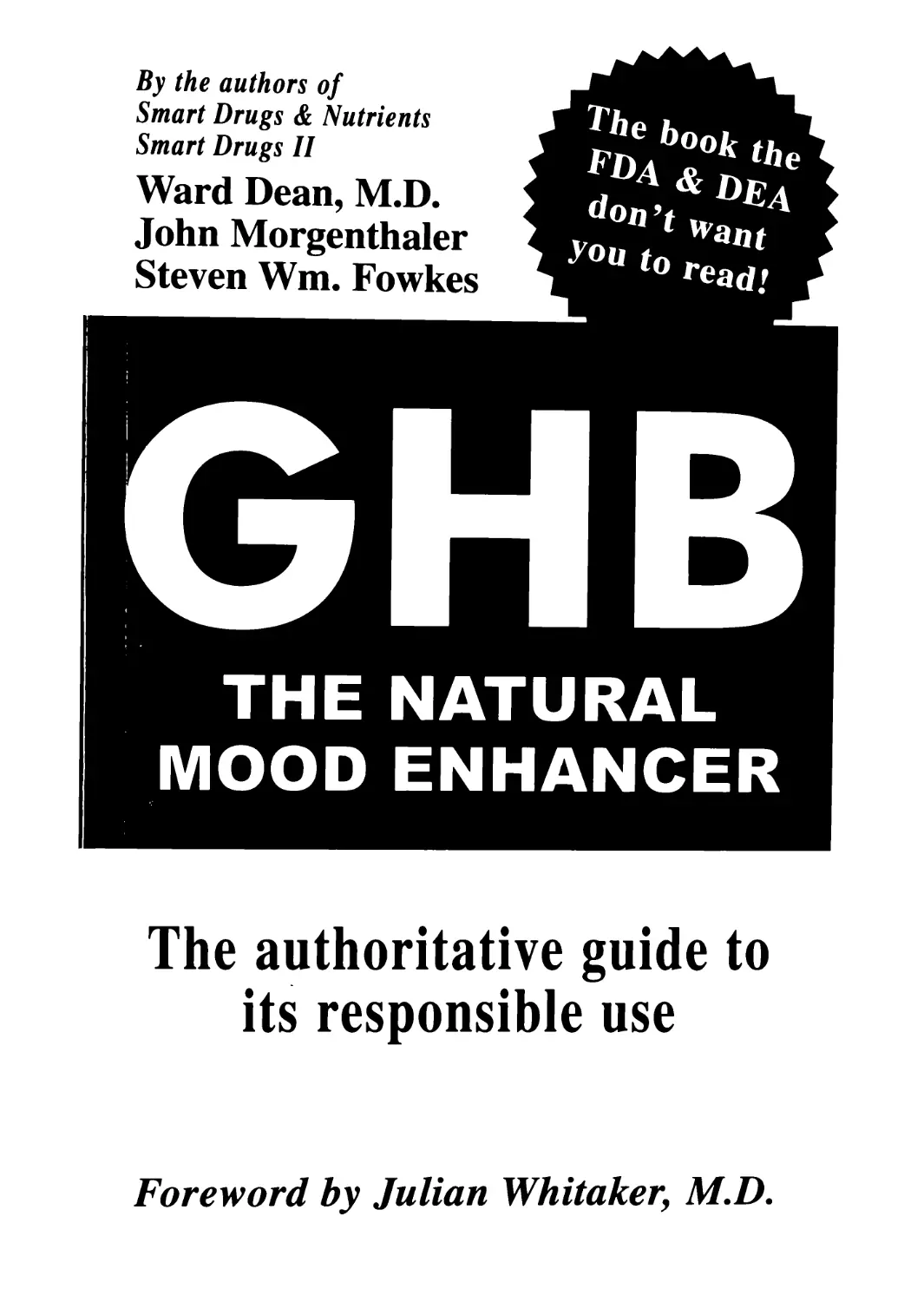


Автор: Dean W. Morgenthaler J. Fowkes S.Wm.
Теги: medicine nervous system human physiology organic substances
ISBN: 0-96227418-6-8
Год: 1998


Текст
                    By the authors of
Smart Drugs & Nutrients
Smart Drugs II
Ward Dean, M.D.
John Morgenthaler
Steven Wm. Fowkes
THE NATURAL
Moon ENHANCER
The authoritative guide to
its responsible use
Foreword by Julian Whitaker, M.D.

About the Authors
Dr. Ward Dean is a graduate of the US Military Academy at West
Point. He is a fonner infantry officer with combat service as an advi-
sor to the Vietnamese Rangers on the Cambodian border, and as an
instructor at the U. S. Army Mountain Ranger School in north Georgia.
After graduating from Han Yang University College of Medicine, in
Seoul, Korea, Dr. Dean spent seven years as an Army Flight Surgeon
and Diving Medical Officer, including three years as a member of the
Delta Force, America's top—secret counter-terrorist unit, where he par-
ticipated in a number of still-‘classified missions. After 5 years private
practice of life extension medicine in southern California, Dr. Dean
transferred into the Navy as a Flight Surgeon, in Pensacola, Florida,
where he retired as a Commander in l996.
A specialist in anti—aging and life extension medicine, Dr. Dean
served on the founding Board of Directors of the American Academy
of Anti-Aging Medicine, and was the group's first vice-president. He
is also vice-president of the International College of Advanced
Longevity Medicine, and was on the Board of Directors of the
American Aging Association. Dr. Dean has written extensively on the
biology of aging, with over 70 published articles and reviews. He is the
author of Biological Aging Measurement--Clinical Applications, and is
co-author of the best sellers Smart Drugs & Nutrients (with John
Morgenthaler), Smart Drugs 11--The Next Generation, (with John
Morgenthaler and Steve Fowkes) and the critically-acclaimed,
Neuroendocrine Theory of Aging and Degenerative Disease (with
Professor Vladimir Dilman).
He is also founder and Medical Director of the Center for Bio-
Gerontology, in Pensacola, Florida, where he continues his study of the
causes of aging, and works to develop ways to measure and to retard
the aging process, with the goal of restoring people to more youthful
biological ages. Since I996, Dr. Dean has also been the Director of
Research and Development for Vitamin Research Products, in Carson
City, Nevada. Dr. Dean is recognized as an Expert Witness on issues of
safety and toxicology of nutritional substances, and has testified for the
defense in a number of cases regarding GHB.

What people are saying about...
GHB: The Natural Mood Enhancer
In GHB: The Natural Mood Enhancer, authors Dean,
Morgenthaler and F owkes have more than adequately documented
why banning GHB (a natural metabolite with a wide safety mar-
gin) was totally unwarranted and inexcusable. Some of the people
with whom I work have been condemned by their government
(using their tax payments) to return to a state of ill health or forced
to travel overseas for supplies of GHB essential to their well being.
Dean, Morgenthaler and F owkes are to be congratulated for bring-
ing this scandal to our attention. ”
— Jonathan V. Wright, MD
“Once again, the FDA shows its true colors.’ By suppressing the
use of GHB — as they have for decades with EDTA chelation —
they deprive the American public‘ of a safe, valuable treatment for
a wide range of conditions while favoring dangerous, expensive
”approved treatments that benefit the pharmaceutical industry
more than the people who really need the help. Authors Dean,
Morgenthaler; and F owkes are providing a real service by expos-
ing this hypocrisy and alerting people to this valuable natural
substance. ”
— Garry Gordon, MD
“Father of Chelation Therapy”
“As usual, media sensationalism has demonized something they
know nothing about. State Legislatures have followed suit with
similar ignorance. Dean, Morgenthaler and F owkes’ book dispels
the myths and serves up the truth. For insomnia, where existing
drugs can cause memory loss and a hangover: GHB can accom-
plish the role of a soporific drug without these side eflects or tox-
icity.
— Andrew Baer, MD

Other Books From
SMART PQDlU@t5&FU@[Nl§
Smart Drugs & Nutrients
How to Improve Your Memory and Increase Your Intelligence Using the
Latest Discoveries in Neuroscience
by Ward Dean, M.D., and John Morgenthaler
Smart Publications“ (fonnerly Health Freedom Publications) 1990
ISBN: 0-9627418-9-2
Smart Drugs II: The Next Generation
New Drugs and Nutrients to Improve Your Memory and Increase Your
Intelligence
by Ward Dean, M.D., John Morgenthaler, and Steven Wm. Fowkes
Smart Publications” (fonnerly Health Freedom Publications) 1993
ISBN: 0-96274l8—7-6
Stop the FDA
Save Your Health Freedom
edited by John Morgenthaler & Steven Wm. Fowkes
Smart Publications” (formerly Health Freedom Publications) 1992
ISBN: 0-9627418-8-4
Better Sex Through Chemistry
A Guide to the New Prosexual Drugs & Nutrients
by John Morgenthaler & Dan Joy
Smart Publications“ 1994
ISBN: 0—96274l8-2-5
Natural Hormone Replacement for Women Over 45
The Safe and Natural Menopause Treatment Alternative
by Jonathan V. Wright, M.D. & John Morgenthaler
Smart Publications“ 1997
ISBN: 0-9627418-0-9

GHB: The Natural
Mood Enhancer
The Authoritative Guide
to Its Responsible Use
by Ward Dean, M.D.,
John Morgenthaler, and
Steven Wm. Fowkes
TM
(W//.»
SMART .:;’?;;Z:1-é_5I:?»j
PO Box 4667
Petaluma, CA 94955
tel: 707 769 8308
fax: 707 763 3944
www.smart-pub|ications.com

GHB: The Natural Mood Enhancer
The Authoritative Guide to Its Responsible Use
by Ward Dean, M.D., John Morgenthaler,
and Steven Wm. Fowkes
Published by:
Smart Publications”
PO Box 4667
Petaluma, CA 94955
tel: 707 769 8308
fax: 707 763 3944
www.smart—publications.com
All rights reserved. No part of this book may be
reproduced in any form without written permission from
Smart Publications.“
Copyright © 1997 by Smart Publications“
Library of Congress Catalog Card Number: 97-65918
First Printing 1998
Printed in the United States of America
First Edition
Library of Congress Cataloging in Publication Data
Dean, Ward
GHB: The Natural Mood Enhancer
The Authoritative Guide to Its Responsible Use
by Ward Dean, M.D., John Morgenthaler,
and Steven Wm. Fowkes
Includes references and index.
1. Health.
2. Nutritional Supplements.
3. Sleep Disorders.
4. Sex.
ISBN: O—962274 1 8-6-8: $16.95 Softcover

Table of Contents
Foreword I by Julian Whitaker, M.D. 9
Foreword II by Andrew Baer, M.D. 11
Chapter 1: The Persecuted Nutrient 15
Chapter 2: Myths and Lies about GHB 25
Chapter 3: The Therapeutic Uses of GHB .......................................... ..55
Chapter 4: A Review of GHB Scientific Research ..................... .. 89
Chapter 5: The Demonization of GHB 107
Chapter 6: Those GHB-Related Deaths and
Other Near-Disasters: What’s Really Going On? ................. ..129
Chapter 7: Guidelines for
the Responsible Use of GHB 149
Chapter 8: How to Obtain GHB 161
Index 137
About the Authors 191

Disclaimer
The material in this book has been collected and published for
educational purposes only. It is not intended to provide medical
advice. Please do not use the material in this book as a substitute
for advice from your personal physician. If you wish to act on
some information you find in this book, we recommend that you
consult with a knowledgeable physician.

Foreword I
by Julian Whitaker, MD
At last, a book that tells the truth about GHB!
Until now, the only information that has reached the public
about this truly remarkable substance has been hysterical, irra-
tional and downright fraudulent stories that demonize GHB as a
dangerous, date-rape drug with no medical uses whatsoever.
Folks, itjust ain’t true!
But as a result of media hysteria and behind—the-scenes
“help” from government agencies like the FDA and DEA, a num-
ber of states have enacted legislation to classify GHB as a con-
trolled drug, equivalent to heroin, cocaine, or LSD. In every case,
the legislation passed with minimal debate and with absolutely no
input from the scientific community.
In contrast to the lies provided to the public by the media
and government, GHB has been shown in four decades of scien-
tific studies to be safe and extremely helpful for a variety of con-
ditions. This remarkable substance provides effective relief for so
many conditions it is difficult to list them all.
For example, when used appropriately, GHB is a highly
effective and safe sleep aid. It has already been shown — in
FDA—sanctioned studies — to be the treatment of choice for nar-
colepsy, and it can also be particularly beneficial to the elderly
and others who suffer from insomnia. In addition, GHB may be
useful in the treatment of anxiety and depression, fibromyalgia,
obesity, chronic pain syndromes, schizophrenia, and even seizure
disorders (a condition that it has been wrongfully blamed for
causing!)
In spite of its therapeutic power, GHB is perhaps one of the
safest and least toxic substances available for the treatment of
these conditions. To my knowledge — and contrary to the irra-
tional media hysteria — not one death has ever accurately been
attributed to GHB. In fact, GHB is rapidly metabolized to carbon
dioxide and water, which are safely eliminated by the lungs and
kidneys.

l0 GHB: The Natural Mood Enhancer
Compare this to the tens of thousands of people who die
each year from adverse reactions to legal, FDA-approved drugs
used to treat conditions for which GHB can be effective, and
you’ll get a sense of just how irrational and counterproductive the
FDA and the DEA have become in their evaluation of GHB —
not to mention many other non—patented, non-drug therapies.
I’m not sure what infuriates me more, the irrational, arbi-
trary, and consequently, unlawful actions of the FDA, or the harm
they’re doing to the millions of citizens who could be benefitting
from this unique natural substance.
This book is a must read for people searching for tools to
maximize their health, and for those concerned with the ongoing
transformation of this country from one governed by reasonable
law into one governed by hysterical decree.
I hope that after reading this book, you will contact your
state representatives and urge them to reverse the insane laws that
prohibit GHB from the marketplace.
— Julian Whitaker, MD
January, 1998

Foreword II
By Andrew Boer, MD
In the Cloisters, a part of New York’s Metropolitan Museum of
Art, hangs the famous Medieval Unicorn Tapestries depicting the
Hunt of the Unicorn. The favorite method of dispatching one’s
enemies in Medieval times was by poisoning. The mythical uni-
corn depicted in this priceless tapestry was a horse—like creature
that had a single horn, which, when ground up and made into a
potion, was supposed to be a universal antidote for poisons. I sus-
pect that those who lived in Medieval times would have found
this most useful to have around.
In medicine we strive for such potions — effective medica-
tions without side effects or toxicity. But, alas, the drugs we take
to treat the countless ills of mankind are not perfect. Almost
invariably, they have unwanted side effects, and they may be
downright toxic. Take some antihistamines to relieve allergy and
you might get sleepy — a side effect. The dose of some of anti-
cancer drugs has to be calculated just right, in the hope of killing
the cancer without killing you. That’s toxic!
Am I a cynic or a realist? As a physician practicing medi-
cine, I have found that often the efficacy of a drug is directly pro-
portional to its ability to generate unwanted side effects and tox-
icity. This is to say that if a drug does what it is touted to do, it
usually does some things to you that you could do without. And,
conversely, drugs which are either non-toxic or without side
effects usually don’t work! At least, this has been my experience.
Rarely does a substance come along which is both effective
and relatively harmless. It is doubly ironic that GHB, the subject
of this book, is not only such a non-toxic-yet-effective substance,
but that it has drawn so much negative press despite its non-tox-
icity and therapeutic efficacy.
As you read this book, you will learn just how useful GHB
is. No less than 15 applications for Investigational New Drug
(IND) status for GHB have been submitted to the FDA by phar-
maceutical companies interested in marketing GHB.

l2 GHB: The Natural Mood Enhancer
In my medical practice, I have found GHB particularly use-
ful for treating insomnia. Most of the drugs that have been com-
monly used for this purpose have side effects. The earliest drugs
developed for this purpose, the barbiturates, get you to sleep, but
in the morning you get a hangover and may have trouble waking
up. The newer drugs, the benzodiazepines, may not only leave
you with a hangover, but they interfere with your memory, par-
ticularly if you are older. It is generally older people who take
medications for insomnia and have problems with decreasing
memory to begin with. The last thing they need is to take some-
thing that makes their memory worse. Indeed, this class of drug
is used during surgery specifically because they make you forget
the pain inflicted during the course of an operation! Additionally,
both barbiturates and benzodiazepines may be addictive.
GHB does not cause a hangover, interfere with memory, or
cause addiction. It would seem to be the perfect drug to use for
insomnia. Then why has it been so maligned in the press?
Because a handful of teenagers have mixed GHB with alco-
hol resulting in essentially an overdose. This is not the first time
we have seen this type of thing. In the ‘50s, barbiturates were
mixed with alcohol in a drink called the “Mickey Finn” and given
to unsuspecting women in the hope of loosening their inhibitions.
People have also mixed barbiturates with alcohol intentionally to
commit suicide. Despite this, barbiturates are still available and
have not been taken off the market.
State legislatures across the country have been reacting in
typical knee-jerk fashion in an attempt to either make GHB ille-
gal outright or at least difficult to get. This is being done as the
result of pure ignorance and a response to media sensationalism.
Because some people act irresponsibly, must the rest of us suffer
the loss of a potentially very useful drug? This book will educate
you and dispel the myth.
Read on and learn.
— Andrew M. Baer, MD
January, 1998

GHB: The Natural
Mood Enhancer
The Authoritative Guide
to Its Responsible Use

14
GHB: The Natural Mood Enhancer

Chapter 1
The Persecuted Nutrient
HB — Gamma-HydroxyButyrate — is a naturally-
occurring component of mammalian biochemistry. It is
both a metabolite and a precursor of the neurotransmitter
gamma aminobutyric acid (GABA). GHB is also known among
scientists and physicians as sodium oxybate, sodium oxybutyrate,
gamma-hydroxybutyrate sodium, 4-hydroxybutyrate, and gamma
hydrate, as well as by its commercial European trade names
Alcoverm, Gamma-OHTM and Somatomax PMTM.
Millions of GHB molecules exist in everyone’s body,
where they are intimately involved in the normal functioning of
the brain. Without GHB, our nervous systems would not function
properly.
GHB was discovered and first synthesized in the early
1960s by Dr. Henri-Marie Laborit, a brilliant French physician. A
decade earlier, Laborit had demonstrated that the drug chlorpro—
Gamma DH
4-hydmxybutymte do Na
sownou maecraaus |.V.
etmmuus as 1 0 ML
Earl)‘ Iubelfor Gamma OH. (1 French versimr 0_/GHB

16 GHB: The Natural Mood Enhancer
mazine (sold in the US as Thorazine®) could be used to suppress
the symptoms of schizophrenia and other psychoses. It was the
discovery of chlorpromazine in the early 1950s — and eventual-
ly other antipsychotic drugs — that revolutionized the treatment
of schizophrenia.
Prior to chlorpromazine, “psychosurgery” was a standard
treatment for severe schizophrenia. Psychosurgery is a euphe-
mistic name for a debilitating, brain-scrambling surgical proce-
dure known as a prefrontal lobotomy in which the frontal lobe of
the brain was severed from the rest of the brain. With the advent
of chlorpromazine, this barbaric procedure ended. It also allowed
many victims of schizophrenia to “escape” from the virtual
imprisonment of mental institutions.
For his pioneering work with chlorpromazine, Professor
Laborit was nominated for the Nobel Prize. Although he did not
win, in 1957 he was awarded the Albert Lasker Medical Research
Award, which is known informally as the “American Nobel.”*
Until the day he died in 1995 at age 81, Laborit continued to pub-
lish research about GHB, to use it himself at least three times a
week, and to recommend it to friends and colleagues. He always
maintained that his work with GHB and chlorpromazine were his
two greatest scientific accomplishments.
In the four decades since GHB was discovered, Laborit and
other scientists have thoroughly and systematically explored its
role in the biochemistry of humans and other mammals. During
this time, GHB has been used safely and successfully in Europe
and the United States as a pediatric anesthetic, an aid to child-
birth, and a treatment for alcohol and opiate withdrawal symp-
* Other Lasker winners have included Edwin G. Krebs, whose important
research led to the discovery of the Krebs Cycle, a basic element in the metab-
olism of all living things; Michael DeBakey, one of the world’s leading heart
surgeons; George Papanicolau, developer of the “Pap smear”; Solomon
Snyder, the co-discoverer of endorphins; Barry Marshall, who recently proved
that most stomach ulcers are caused by a bacterium named Helicobacter pylori
and could be treated with a simple antibiotic; and Robert Gallo and Luc
Montagnier, co-discoverers of the AIDS virus. In 1951, the Lasker Award went
to Alcoholics Anonymous for its pioneering work in treating alcohol addic-
tion. A large percentage of Lasker winners have also won the Nobel Prize.

The Persecuted Nutrient l7
toms. It is the treatment of choice for narcolepsy and associated
cataplexy. With few exceptions, researchers have also found
GHB supplements to be extraordinarily safe and highly effective
for treating insomnia, alleviating anxiety and depression, and
enhancing cervical dilation during childbirth. In Europe, GHB is
readily available. It is sold “over the counter” in some countries
and by prescription in others (e.g., Italy and France).
The effects of GHB in varying doses have been studied in
depth in both laboratory animals and humans. Scientific investi-
gations have demonstrated GHB’s potential to alleviate the symp-
toms of more than a dozen diseases and clinical syndromes.
FDA Cracks Down as GHB
Grows Popular as a Hallucinogen
Illicit drug lands
users in EDs with
vomiting, drowsiness,
consciousness loss,
respiratory arrest
BY LISA HOFFMAN
tlanta —Federal and state officials
are cracking down on an illicit
drug once sold openly for body building
that is now being abused as a hal-
lucinogen.
The drug, gamma hydroxybutyrate
(GHB), is a CNS depressant also being
promoted as a replacement for L-tryp-
tophan, a food supplement which was
said to alleviate insomnia, depression,
and premenstrual syndrome. L-tryp-
tophan was recalled in November 1989
after hundreds of reports of eosin-
ophilia-myalgia syndrome.
Nearly 70 cases of acute poisoning
from GHB have been reported to the
federal Centers for Disease Control, ac-
cording to Medical Epidemiologist Ste-
ven B. Auerbach, MD, MPH. The drug
is used in the United States for investi-
gational research, like the treatment
of narcolepsy, and in Europe as an
anesthetic adjunct and to treat post-
hypoxic cerebral edema and ethanol
withdrawal. It can, however, cause
vomiting, drowsiness, hypnagogic
states, hypotonia, and vertigo 15-60
minutes after ingestion, according to
Dr. Auerbach. “Loss of consciousness,
irregular and depressed respiration,
tremors, or myoclonus may follow. Sei-
zure-like activity, bradycardia, hypo-
tension, and/or respiratory arrest
have also been reported,” Dr. Auer-
bach wrote in November
Reprinted from Enwrgem'_' Meclicitze News ( with perniission)

18 GHB: The Natural Mood Enhancer
Because of its unique mode of action, its incredibly rapid
absorption, its powerful antianxiety/antidepressant activity and
its high level of safety, some researchers have suggested that
GHB should be the treatment of choice for potentially suicidal
patients.
Before the current clamp-down on GHB use, pharmaceuti-
cal companies had filed 15 investigational new drug (IND)
reports with the FDA (see box). INDs constitute an early step in
the procedure pharmaceutical companies must follow to obtain
FDA approval before marketing a medication. IND studies typi-
cally include the results of preclinical and toxicology reports to
demonstrate that the drug is safe for clinical trials in humans. An
FDA—approved IND is a green light for the pharmaceutical com-
pany to begin large—scale clinical trials.
Possible Therapeutic Uses of GHB
15 INDs for GHB Filed With the FDA
1. Improving sleep patterns and maintaining daytime alertness in
narcolepsy
2. Reducing schizophrenic symptoms
Stabilizing Parkinson's disease
Reducing nocturnal myoclonus (painful leg cramps at night)
Improving memory problems
3
4
5
6. Stimulating natural growth hormone release
7 Decreasing pain and improving sleep in fibromyalgia
8 Relieving symptoms in Huntington's chorea.
9 Regulating muscle tone in dystonia musculorum deformans
l0. Controlling tardive dyskinesia symptoms
11. Decreasing drug withdrawal symptoms (alcohol and opiates)
l2. Decreasing hyperactivity and learning disabilities in children
13. Inducing sedation and tranquilization
l4. Relieving anxiety
15. Lowering cholesterol

The Persecuted Nutrient 19
Although an IND is far from a guarantee that a substance is
safe enough, effective enough, and economically viable enough
to make it all the way to market, approved INDs are not to be
taken lightly. The FDA’s drug approval process is so long and so
costly that companies file INDs only when they believe their
product has a good chance of surviving the tortuous drug
approval process mandated by FDA regulations. This is especial-
ly true in the case of a substance
that may have “psychoactive”
properties (as GHB does). Even a
hint of possible danger — an
Q
Z:n:-no.-«me
5123'‘? CO“ .‘—
’ ‘I1-,Iul..:lrJ
. 3:»: -.:<|:: dehnco
overdose risk or potential for I 2.',°,fiiu‘-'9“”’
abuse — is often enough for the
product to be thrown down the W
laboratory drain. Such products f v':’r--M-.=u-v;:.b:.r~JI=;m1
8 3:.-......-*..:.:=:~.::'°j
seldom, if ever, make it to the
IND stage, let alone have 15 sep-
arate INDs filed. i ‘~’”“' I
No pharmaceutical compa— fl
—n.
Bl
ny likes throwing away money
(not to mention its credibility) on ‘
useless or dangerous substances
that are to be rejected. At an LabelforAlc0ver®. an Italian brand of
liquid GHB thal is sold as a treatment for
average approval Cost Of $250 to alcohol withdrawal.
$350 million per drug, pharma-
ceutical companies have collectively bet many millions on
GHB’s safety and efficacy.
The Demonization of GHB
Until November 8, 1990, GHB was sold legally in the US, most-
ly in health food stores. On that day, the Food and Drug
Administration (FDA) issued a press release in which it declared
GHB to be a dangerous and “illegally marketed drug,” with seri-
ous abuse potential, that was being “promoted as a legal psyche-
delic.” The only evidence the FDA offered in support of its alle-
gations of danger was an assertion that “more than 30” uncon-

20 GHB: The Natural Mood Enhancer
firmed reports of “nausea, vomiting, severe respiratory problems,
seizures, and coma” had been made. The FDA provided no sci-
entific evidence that GHB was dangerous, nor did it establish the
legal basis for GHB’s “illegality.” They also failed to mention
anything about GHB’s 30-40-year record of safety.
With no more legal authority than this press release, the
FDA, along with the Drug Enforcement Administration (DEA)
and the US Department of Justice, began arresting and prosecut-
ing manufacturers and distributors of GHB. Articles began
appearing in newspapers and magazines referring to GHB as a 1)
new, 2) potentially lethal, 3) certainly toxic, 4) hallucinogenic, 5)
designer drug, with 6) high abuse potential and 7) no legitimate
FDA warns resurgent
THE ASSOCIATED PRESS
WASHINGTON — Americans
should avoid a popular party drug
called GHB because the concoction,
often promoted to teen-agers over
the Internet as an aphrodisiac or an
easy high, can be deadly, the govem-
ment warned yesterday.
Criminal investigators from the
Food and Drug Administration are
tracking down laboratories that ille-
gally produce the chemical, which
was banned in 1991 but is experienc-
ing a resurgence — particularly as a
“date rape drug that, when slipped
into a woman's drink, can render her
helpless.
GHB is blamed for dozens of hospi-
talizations and at least three deaths.
A Texas high school student died in
August after someone slipped the
chemical into her soft drink at a
dance club. A Winchester, Va.,
woman in her 20s was thought to
have been in a drunken-driving crash
until an autopsy showed she had
taken GHB instead of alcohol.
Just a week ago, three Massachu-
setts college students were hospita-
lized after trying GHB. Two fell into
a coma, but all eventually recovered.
The drug, known by the street names
“cherry meth, “liquid X” and “liquid
ecstasy, is believed one of several
that sickened dozens of youths at a
New Year's Eve concert in Los An-
geles.
And California doctors last fall re-
ported having to resuscitate Holly-
wood nightclub patrons who stopped
breathing after ingesting the drug.
GHB, or gamma hydroxybutyrate,
is an odorless, nearly tasteless drug
that produces a high. But it also can
cause vomiting, tremors and sei-
A recent newspaper story based an FDA misin_formation.

The Persecuted Nutrient 21
medical uses. According to these stories, GHB causes epileptic
seizures and leaves unwitting or careless users in a coma or even
dead. GHB was also said to be an ideal “date-rape” drug.
“GHB abuse” in Europe has been a non—issue since GHB
was discovered in the early 1960s. In fact, one of its major uses
in Europe was — and continues to be — to help alcohol and hero-
in addicts safely kick their habit. This strange dichotomy raises
several interesting questions:
0 Could this “highly dangerous” substance in the US be the
same GHB that European consumers, physicians and clini-
cal researchers have been using safely all this time?
party drug can be fatal
zures, side effects strong enough to
send some people into comas.
The drug commonly is distributed
as a white powder or clear liquid that-
can be mixed into a drink. It sells for
about $10 a vial.
GHB was originally developed as a
surgical anesthetic but had so many
side effects that it was abandoned. In
1990, the FDA began investigating
reports that body builders were abus-
ing GHB as an alternative to steroids.
The following year, the FDA declared
it illegal to manufacture or sell GHB
for any purpose.
But after an initial lull, the FDA
says, GHB is on the rise again. Since
1995, FDA prosecutors have begun
45 investigations of underground
GHB manufacturing or distribution,
_l2 of which have resulted in convic-
tions so far.
Its inherent danger aside, doctors
say GHB is made so haphazardly that
people might think the dose that gave
them a mild buzz once is safe to try
again — only to have the same
amount send them into a coma be-
cause the new batch is more potent.
GHB proponents actually declare it
legal to possess because the Drug
Enforcement Administration has not
yet listed the chemical as a controlled
substance like cocaine or marijuana.
But two states, Georgia and Rhode
Island, have separately declared GHB
a controlled substance, and other
states are considering the move.
Meanwhile, the FDA is urging po-
lice officers, emergency rooms and
coroners to begin aggressively test-
ing for GHB when young people wind
up in emergency rooms with the
chemical’s symptoms, so the govern-
ment can get a better sense of how
widely it is abused.
Reprinted with permission from Associated Press.

22 GHB: The Natural Mood Enhancer
0 Could this be the same natural substance that has been
found to be safe and effective for a host of serious and
debilitating conditions?
0 Could this “lethal designer drug” be the same one used
in France and Italy as a nontoxic aid to childbirth and as a
pediatric anesthetic?
0 How can it be that US law enforcement agencies, drug
regulation bureaus, and unquestioning news media have
come to view GHB as a dangerous new designer/narcot-
ic/hallucinogen/date—rape drug that warrants the
same legal standing as heroin and crack cocaine?
0 How is it possible that European scientists find GHB safe,
effective and non—habit-forming, for a wide variety of uses,
while Americans find it dangerous, addictive and clinically
useless?
0 Has something been lost in the translation?
It is worth noting that the voices of scientific reason have
been noticeably quiet during the current media furor over GHB.
Stories about GHB raise alarms by quoting local or national
police agencies and regulatory bodies, opportunistic politicians
trying to rid their community of yet another “drug menace,” or
grieving relatives who have little choice but to accept at face
value what the police and politicians have told them about the
“dangers” of GHB.
With the possible exception of one brief TV network news
report, no knowledgeable or prominent GHB researchers or
physicians who prescribe GHB for their patients are ever quoted
in these scare stories. The nearly 40 years of solid scientific
research on GHB is treated as though it didn’t exist.
And that’s the way the FDA, DEA, and Justice Department
seem to like it. They have worked diligently to suppress public
knowledge about the existence of the 15 INDs that have been
filed with the FDA. These documents contain thousands of pages
of data showing that GHB is one of the safest, least toxic and least
addictive psychoactive substances ever studied. Yet when attor-

The Persecuted Nutrient 23
neys for defendants in GHB prosecutions tried to gain access to
these documents in court, the government lawyers dismissed the
INDS as “irrelevant” — and then proceeded to present “expert”
witnesses to testify to GHB’s alleged toxicity and addictive prop-
erties.
Fortunately, the US Court of Appeals eventually saw
through this ruse and ordered the INDS admitted into evidence.
This action resulted in the reversal of convictions in several
cases, and raised questions about prosecutorial misconduct on the
part of the lead US Justice Department attorney in charge of pros-
ecuting the GHB cases. The IND data clearly show that the testi-
mony of the government’s “expert” witnesses — to the effect that
GHB is a dangerous, addictive substance with no known clinical
utility — has absolutely no basis in fact.
While the US govemment-sponsored, media—driven atti-
tude toward GHB has been based on ignorance, disinformation
and hysteria, the European attitude has generally been based
firmly in science and clinical experience. But, references from the
scientific literature confirming GHB’s safety never appear in the
FDA’s agenda-driven press releases and news reports that seem
designed more to scare than to inform. Until now, though, these
slanted press releases and news reports have been virtually the
only source of information about GHB available to the general
public in the US.

24
GHB: The Natural Mood Enhancer

Chapter 2
Myths and Lies about GHB
he following is a sampling of the most common misstate-
ments about GHB that have recently appeared in news sto-
ries, government reports, and/or sworn testimony (usually
by paid government witnesses). Let’s take a look at what they say
and detennine how much is actually supported by the facts.
“GHB Is an ‘Illegal Drug”’
According to Federal law, GHB is not a drug. This incontrovert-
ible point of fact is based on the FDA’s failure to take the steps
required by law to classify it as a drug. It’s true that in its
November 1990 press release (hardly a legal document), the FDA
did refer to GHB as “an illegally marketed drug,” and they have
repeated this unsubstantiated characterization frequently ever
since. But it is not at all clear which laws FDA bureaucrats think
have been broken by those who have sold or used GHB. Even
under oath in trials of GHB “dealers,” FDA witnesses have been
unable to specify any statute or regulation that made or makes
GHB illegal (see Chapter 5).
At the time of the press release, the FDA’s own definition
of a “drug,” according to the Food, Drug, and Cosmetic Act,
included the following specifications:
0 Non-food items “intended to affect the structure or function
of the body of man or other animals”
° Items meant to “treat, cure, mitigate, or prevent” disease
According to this law, the FDA — in 1990 — had the
power and the authority to classify GHB as either a food or a
drug, but it did neither. In 1994, Congress passed the Dietary
Supplement Health & Education Act (DSH&EA). The new law
created a new category, dietary supplements, which, henceforth,
were to be regulated as foods, not drugs.

26 GHB: The Natural Mood Enhancer
Under the DSH&EA, dietary supplements were defined to
include vitamins, minerals, amino acids, nutrients and herbs, or
extracts, concentrates or metabolites of any of the above. Since
GHB is found naturally in meat, and is both a precursor and a
metabolite of the amino acid gamma-aminobutyric acid (GABA),
it meets two separate legal criteria that qualify it as a dietary sup-
plement.
The new law was not retroactive. In other words, com-
pounds that met the new definition of dietary supplement but had
already been classified as drugs (e.g., the amino acid L-DOPA)
were not reclassified as dietary supplements. Drugs were to
remain drugs. GHB, though, was never so classified.
The new law also specified that the food status of dietary
supplements was henceforward not to be revoked by the FDA
when and if the agency were to approve a particular dietary sup-
plement as a drug. This means that the newly approved drug ver-
sion of the supplement (even if a prescription were required),
would have to compete head to head with the supplement version
of the substance, which would remain available on an over—the-
counter basis.
These provisions have interesting ramifications in the case
of GHB. Because GHB was never legally classified as a drug (the
FDA never issued a New Drug Application, or NDA), and
because it was sold as a dietary supplement prior to the passage of
DSH&EA, the Federal govemment’s power to control the medical
GHB market was limited in ways it had never before experienced.
Can the FDA still declare GHB a drug under the new law?
Yes, it can. However, the DSH&EA’s provision that new drug sta-
tus cannot be retroactive means that GHB, the drug, would have
to compete head-to—head with GHB, the over-the counter (OTC)
supplement.
Can the FDA revoke GHB’s nutrient status? Yes, it can.
There is a process under the DSH&EA that allows the FDA to
remove any dietary supplement from the OTC market. All the
they have to do is demonstrate that GHB is dangerous — that is,
it poses a threat to public health.

Myths and Lies about GHB 27
So, if they want GHB to be illegal, why doesn’t the FDA
simply declare GHB a threat to public health and legally revoke
its dietary supplement status? All they would have to do is jump
through a series of bureaucratic and legal hoops, such as:
0 Holding an open “rule-making” procedure, an open—to-the
public hearing in which it establishes that GHB poses an
unacceptable risk to public health, or,
- Declaring that GHB is an “imminent risk” to public health,
which must also be confirmed in an open “rule-
making” procedure
For some reason, the FDA has chosen to avoid this legally
sanctioned course of action. No one knows exactly why, but the
most obvious reason is simple: They know they can ’t win.
GHB is not a dangerous drug, nor is it an imminent risk
to public health. It is not even a significant risk to public health.
An open hearing —— in which all testimony must be transcribed
and published — would allow the truth about GHB to be told.
Closed-door hearings, back—room deals, confidential (secret) tes-
timony and “filtering” of experts and relevant facts, all of which
are part of business—as—usual at the FDA, would be precluded.
The FDA knows that once the scientific truth about GHB
gets out, as it certainly would during an open rule-making proce-
dure, people would not be clamoring for GHB to be suppressed.
Instead, they’d be demanding to know why the government was
keeping this valuable nutrient from them. A straightforward, legal
approach carries a high risk of unfavorable publicity and poten-
tial embarrassment for the FDA.
To avoid this, the FDA has resorted to an unprecedented
extralegal strategy to suppress GHB. Although they have taken
no action to classify GHB as a drug, they repeatedly tell the
media that GHB is an “illegal drug.” Although their representa-
tives testify under oath that GHB is an illegal and dangerous drug,
they have never been able to cite any law which have been bro-
ken, and they resist providing the court with the documentation
that demonstrates GHB’s remarkable safety record.

23 GHB: The Natural Mood Enhancer
While the FDA works behind the scenes to approve GHB
as an “orphan” drug, they simultaneously vilify it in the media as
having “no legitimate medical uses.”
It is important to remember that the FDA probably has as
many lawyers as they do scientists — maybe even more. It is no
coincidence that the recently-resigned FDA commissioner, David
Kessler, MD, pediatrician, was also David Kessler, Esq, attorney.
Medical truth is not the FDA’s strong suit. Contrary to what the
agency would like us to believe, the FDA is not the benevolent
protector of the health of the citizens of this country. In fact, the
FDA is far more concerned with politics, publicity, and enforce-
ment of rules (most of which have never been promulgated by
elected legislators) than they are with public health. Many of their
rules, like their GHB “decision,” are completely arbitrary and
even illegal.
Knowing they have so many lawyers with time on their
hands, we shouldn’t be too shocked to find that the FDA has been
looking for a way around the DSH&EA. Unable to use their legal
authority to suppress GHB (or other nutrients), they have decid-
ed to engage in a little extra—legal activity. The route they’ve cho-
sen is to “encourage” individual states, which are not governed
by the DSH&EA, to pass their own laws against this “new, dan-
gerous, designer, date—rape, party drug.”
The FDA and DEA have been only too happy to supply
local prosecutors and medical examiners with “helpful” informa-
tion about GHB “poisonings.” Best of all, they put the locals in
touch with their own medical “experts” on GHB — not one of
whom has ever 1) prescribed GHB for a patient or 2) treated even
.a single patient supposedly “poisoned” by GHB. Apparently the
only criterion by which they are considered “experts” is that they
help get convictions against GHB “dealers.”
This strategy, carried out at taxpayer expense, represents a
clear violation of both the letter and the intent of the DSH&EA
— not to mention the US Constitution and Bill of Rights. As it is
with GHB, as it was with the amino acid L-tryptophan, and as it
has often been with other suppressed nutritional substances, the

Myths and Lies about GHB 29
The L- T ryptophan Fiasco
For those readers who do not remember the L-trypto-
phan incident, in 1989, the FDA permanently banned all sales
of the amino acid L-tryptophan despite clear and unambigu-
ous evidence that an outbreak of eosinophilia myalgia syn-
drome (EMS) attributed to tryptophan use was caused by con-
tamination of only one manufacturer’s product. Just trypto-
phan from the Showa Denko Company of Japan, which used
a new, untested and unproven technique based on genetically
engineered bacteria, was tied to cases of EMS. Nevertheless,
the FDA banned all tryptophan products, even those made by
long-established and well-proven fermentation technologies.
The sad case of tryptophan demonstrates how the FDA
puts its own anti-nutritional supplement political agenda,
ahead of its public health mission. For a brief, but excellent,
discussion of the L—tryptophan fiasco, see the article “The
FDA Ban of L—Tryptophan: Politics, Profits, and Prozac,” by
Dean Wolfe Manders, PhD, which appeared in Social Policy
Magazine, Winter 1995, vol. 26. The article is available at the
Cognitive Enhancement Research Institute’s website:
www.ceri.com.
people breaking the law are not manufacturers, merchants, and
consumers; rather, it is the Federal government, represented in
GHB cases by the FDA, DEA and Justice Department, that is vio-
lating laws, disregarding regulations and ignoring the Consti-
tutionally guaranteed rights of citizens.
“Fatal Doses?”
In nearly 40 years of GHB use, there has never been a single con-
firmed report of anyone dying from a GHB overdose. What about
the rash of so-called “GHB-related” deaths and near deaths that
have been loudly reported in the media?
There have been a number of cases where GHB was listed
as the cause of death on the death certificate by a medical exam-

30 GHB: The Natural Mood Enhancer
How Much GHB is Too Much?
No deaths have been reported in man attributable to acute
[GHB] toxicity. The author has used doses of 20 to 30 gm
per 24 hours for several days without ill effect.
— Vickers, MD. lntAm1esthesiu Clin I 969; 7: 75-89
iner who was unfamiliar with GHB’s effects and lack of toxicity.
A review of these cases by other physicians who are familiar with
GHB has led to the conclusion that, while GHB may have been
present in the body in varying amounts, it could not have been the
cause of death.
It’s true that some of the people whose death was attrib-
uted to “GHB poisoning” may have actually used GHB, but that
does not mean that GHB was the cause of their deaths.
Attributing death to “GHB overdose” in these cases is analogous
to attributing someone’s death to “Coca-Cola overdose,”
because some Coke was found in their digestive system. To
understand why this is so requires a little understanding about
the science of toxicology.
Toxicology 101
Toxicology is the science that studies the harm that drugs and
other substances do to living bodies of all species, including
humans. One of the most important things toxicologists want to
know about any substance is how much it takes to kill an organ-
ism. That amount is known as its lethal dose (LD). Obviously
this kind of research cannot be conducted on humans, so animals
(typically rats, mice, and other small laboratory animals) are used
as models. Even though the extrapolation from laboratory ani-
mals to humans is often imprecise, animal—based LDs still pro-
vide important information.
Toxicology researchers generally determine the lethal dose
by giving the animals larger and larger doses until all the animals
die. The dose that kills all animals is known as the LD,00. The

Myths and Lies about GHB 31
dose that kills 50% of the animals is known as the LD50. The LD50
is the number that toxicologists generally use as a benchmark.
According to toxicology studies conducted by Dr. Henri
Laborit in the early 1960s, the LD50 for rats for sodium GHB is
l.7 grams/kg body weight. The LD,00 is 2 grams/kg.‘ For a
human weighing 50 kg (about 110 pounds), we can multiply 1.7
grams x 50 kg to get an approximate LD50 of 85 grams. For the
decimally impaired, this means ingesting about 10 to 15 heaping
teaspoons of dry, salty powder in one sitting. Even dissolving that
amount of GHB in water or other liquid to make it “go down”
more easily wouldn’t help much.
It’s not even clear from these studies whether it was GHB
that actually killed the animals. It might well have been the sodi-
um, because the GHB used in these studies was sodium GHB
(NaGHB), which consists of 18% sodium and 82% GHB. For ref-
erence purposes, sodium chloride (NaCl, table salt) is 39% sodi-
um and 61% chloride. That means that GHB carries fully half the
sodium of pure table salt! It is quite easy to understand why sci-
entists might consider that much salt to be toxic. We know how
we would feel faced with the prospect of trying to down even one
heaping teaspoon of salt, let alone more than 10 in one sitting!
Even dissolved in water, the foul—tasting, sodium-laced water
would be enough to send most people into hypersodium over-
drive.
Another estimate of the lethal human dose comes from the
official package insert for the French GHB product (Gamma-
OHTM), which lists the human LD50 as an even more generous
4.28 grams/kg. According to this figure, the lethal dose is about
300 grams, or more than half a pound!
With either of these estimates, it is obvious that the safety
margin for GHB is extraordinarily wide. A high therapeutic dose
that has been used in clinical trials for more than 14 years for
treating people with narcolepsy is just 4 to 8 grams per night (see
Chapter 3). An active oral dose, one that produces a noticeable
physical/psychological reaction, may be as low as 100 to 250 mg,
an exceedingly tiny fraction of the lethal dose.

32 GHB: The Natural Mood Enhancer
There has been one report of a man who accidentally swal-
lowed 15 tablespoons (!) of sodium GHB, or about 75 grams.
(Imagine swallowing 7.5 tablespoons of table salt!) This individ-
ual slept for 24 hours and woke up feeling groggy with a mild
headache. These symptoms resolved quickly, and he was dis-
charged from the hospital. There were no lasting consequences?
This important episode appeared in a preliminary version
of the influential paper on “acute GHB poisonings,” by Chin, et
al.3 It is interesting to note, however, that this incident was delet-
ed from the version that was eventually published.4 This paper
launched the “enforcement arm” of the Federal government’s
campaign against GHB. We will discuss more about this impor-
tant paper later.
In striking contrast to the situation portrayed by govern-
ment and police agencies, GHB “overdoses” and GHB “poison-
ings” have never been a social or criminal or medical problem in
Europe. Why not? Why here? If no serious adverse effects or
abuses have shown up in more than 30 years of use, why should
we expect any now?
In the only FDA—approved clinical study of GHB as a treat-
ment for narcolepsy, initiated in the early 1980s, the dosing pro-
tocol in no way reflects concern about a potential overdose dan-
ger, nor were study participants given any special dispensing or
handling requirements for the GHB. After preliminary laborato-
ry-monitored sleep studies, the participants were given large con-
tainers of GHB, told to measure out their own dose (as much as 8
grams per night), and instructed to come back for more GHB
when they needed it.
Imagine the Federal government treating heroin, cocaine,
LSD, or even cannabis that way! Yet these are the drugs to which
the FDA is comparing GHB today. The FDA didn’t consider
GHB overdose to be a danger at the time it approved this proto-
col. The published European literature on the subject was clear
that such easy access to GHB was not a risk. There have been no
problems whatsoever with GHB overdose, “poisonings,” or
abuse in the 14 years of this FDA—approved clinical study. The

Myths and Lies about GHB 33
FDA’s own files clearly demonstrate this fact.
Based on everything we know about GHB, it appears to be
one of the safest therapeutic substances available. Yet the news
media have been only too happy to perpetuate the myth of GHB
as “the new designer party drug that causes seizures, coma, and
death, especially in the unwary.” Such stories sell newspapers,
magazines, and ad time. Since nobody “owns” GHB, there is
nobody to sue the media for slander, malicious mischief, and eco-
nomic damages. Without economic disincentive, and without
higher standards of journalistic responsibility, it is open season on
GHB — sensationalism without limits. Stories about the actual
safety of a “killer drug” do not promise the same newspaper sales
or TV ratings.
One of the first widely publicized “GHB-related” fatalities
was the young actor River Phoenix, who collapsed and died in
October 1993 outside a hip Hollywood night spot where GHB
was supposedly being “gulped down by West Coast thrill-seek-
ers.” Two months later, Newsweek quoted earlier press reports
attributing the actor’s death to GHB, calling it “an obscure and
dangerous steroid substitute.”3 Where did Newsweek get its infor-
mation?
DEA agents at that time were going around to the news
media, spreading the word of this “dangerous new designer party
drug” or “fatal aphrodisiac” known as GHB, which, they said —
probably only half in jest — stood for “Great Bodily Harm” or
“Grievous Bodily Harm.” No matter that the acronym translates
to G—B-H, not G—H-B, many news media outlets — always look-
ing for a sensational new story — lapped it up as a catchy head-
line.
Like most news organizations, (which these days seem to
be nothing more than purveyors of government press releases)
Newsweek had not bothered to look beyond the FDA/DEA ver-
sion of the GHB story. To its credit, however, Newsweek did point
out one actual fact: the Los Angeles coroner had found no GHB
(or “GBH” for that matter!) in River Phoenix’s body. What was
found was a mixture of morphine, cocaine, and other drugs, any

34 GHB: The Natural Mood Enhancer
combination of which would probably have been sufficient to kill
him. Of course, that fact was not featured in the headline. A sim-
ilar scenario has occurred in every case of supposed GHB-relat-
ed death that we have examined.
“GHB Causes Comas”
Police agencies love words like “coma” for their scare value.
“Take a little too much of this stufl°, folks, and you’ll wind up in
a coma,” they tell us. The image is clear — and frightening. There
you are, lying unconscious in a hospital bed, a feeding tube run-
ning up your nose and into your stomach, while another tube ‘car-
ries urine to a bag attached to the side of your bed. A mechanical
ventilator keeps you breathing. Wires attached to your chest
record the activity of your heart, while wires on your scalp take
the electrical pulse of your brain, your EEG. Family and friends
gather around your bedside, worried, saddened, angry. Will you
live on as a vegetable?
No question about it, coma is a very scary prospect. The only
trouble is, the above scenario has nothing to do with GHB. Virtually
'l
7 coco O
l;
L
—L ‘ , ' ‘L
a R ’ '1 j
. ' _ ._______ .
l K‘/ / 0 F4
I (J 10 ‘ll ’
C9
The above is standard for a coma patient — hardly necessarjv for someone who will
wake up feeling refreshed in a few hours.’

Myths and Lies about GHB 35
every person who has ever been in a “GHB-induced coma” has
awakened within a few hours, feeling rested and alert, without
wires, without tubes, and most importantly, without brain damage.
The analysis of GHB “poisonings” quoted most often by
those who would suppress GHB, is the 1992 paper by Chin,
Kreutzer, and Dyer titled “Acute Poisoning from y—Hydroxy-
butyrate in California.”4 The authors describe six cases, drawn
from a total of 25 cases of “GHB toxicity” reported to California
poison control centers prior to the infamous FDA press release in
November 1990. These six cases were said to illustrate “the spec-
trum of serious illness seen” (although it’s probably safe to say
that they were really the worst cases they could find). Strikingly,
all but one of the “poisoned” people described by Chin, et al fully
recovered. The one patient who did not fully recover died from
conditions totally unrelated to GHB. In fact, we believe GHB
probably prolonged his life. As the authors themselves described
these patients:
0 Case 1: “She experienced a full recovery with no lasting
symptoms.”
° Case 2: “Since discontinuing GHB, she has been asympto-
matic.”
° Case 3: “No adverse effects have been observed since she
stopped taking GHB.”
0 Case 4: “The patient has had no symptoms since discon-
tinuing GHB use.”
° Case 5: “The patient was discharged asymptomatic 6 hours
after admission.”
° Case 6: A 77-year-old man... died of “massive gastro-
intestinal hemorrhage caused by esophageal varices and
marked fatty metamorphosis of the liver,” (these conditions
are almost invariably due to chronic use of alcohol, or by
some other liver disease like hepatitis). Moreover, in addi-
tion to GHB, this man was also taking “various other over-
the—counter ‘medications’ (tryptophan, Prostex, Motion-
Mate, and Nutrasleep).” Noted the authors, in what must

36 GHB: The Natural Mood Enhancer
certainly rank as the understatement of the year, “It is
unclear whether the GHB played a role in his death.”
If these six cases represent the worst of the 25 cases they
encountered, then it indeed looks as if they were scraping the bot-
tom of the barrel!
Coma and GHB-induced deep sleep are similar in one super-
ficial but important way. In each case, arousal is difficult or impos-
sible. To a doctor who knows nothing about GHB-induced sleep, a
patient brought to the emergency room who is not arousable might
seem to be in a genuine coma. Such a doctor, who may have been
alerted to look for cases of “GHB-poisoning” by “helpful” DEA
agents, would probably do all the “right” things for that patient,
including inserting all those tubes and attaching all those wires.
Just because a doctor who doesn’t know any better writes
“coma” on a patient’s chart, does not mean that the patient was
actually in a coma. Yet, we have no doubt that that is the way
every single one of the so-called “GHB—induced comas” has
occurred.
Doctors who know anything about the physiological state
of coma usually wind up scratching their respective heads when
faced with a “GHB-induced coma,” because the apparently
“comatose” person soon wakes up, feeling alert and refreshed.
People don’t come out of real comas that quickly and that com-
pletely, and they don’t, as a rule, feel very good.
By no stretch of the imagination could GHB by itself
induce a dangerous comatose state, as some would have you
believe. The scientific evidence is incontrovertible on this issue.
In fact, the deep sleep induced by high doses of GHB is exactly
that — deep sleep.
Physiologically, coma is a completely different state from
GHB-induced sleep. To equate them is highly misleading and
inflammatory. One might just as well state that people with nar-
colepsy who take GHB every night before going to bed benefit
from nightly drug-induced “comas.”
The real danger in coma has less to do with the inability to
be aroused than it does with hypometabolism. In a hypometabol-

Myths and Lies about GHB 37
ic state, the body puts out too little biological energy to keep itself
running optimally. The system that suffers the most in coma,
because its energy demands are the highest, is the central nervous
system, and, hence, consciousness and cognitive function.
Contrast that with GHB-induced sleep which is characterized by
normal cerebral metabolism and normal (although deeper) sleep
patterns and EEGs.
Unlike coma, all the normal physiological sleep stages,
including stages 1, 2, 3 and 4, and REM (rapid-eye movement),
take place in the normal sequence during GHB-induced sleep.
The only aspect of the EEG sleep pattern that could be considered
unusual is a selective deepening of stages 3 and 4 sleep. These are
the stages that are most frequently impaired in the elderly with
insomnia and in people with narcolepsy. Thus, deepening of
stages 3 and 4 is probably therapeutic. It may also be the mecha-
nism by which GHB enhances the release of growth hormone (an
action that occurs during the deepest stages of sleep).
GHB’s ability to put people into a deep, restful sleep is the
main reason it is being used by knowledgeable physicians to treat
narcolepsy. To characterize this phenomenon as a “dangerous
adverse effect” is disingenuous at best and dishonest at worst.
Chin, et al, concluded their review by stating, “The prog-
nosis for those who experience GHB poisoning is quite good.
There are no documented or anecdotal reports of long-term
adverse effects or fatalities, nor any evidence of physiologic
addiction. ”4 (italics added) Despite the prevalence of inflamma-
tory language throughout this report, it’s hard to see how this con-
clusion would lead one to regard GHB as a life-threatening, dan-
gerous or addicting drug.
“GHB Causes Seizures”
Like “coma,” the word “seizure” is also emotionally charged. We
visualize the unconscious victim flailing about uncontrollably,
biting his tongue, and foaming at the mouth. Brain damage and
even death loom as possibilities. But is this what happens when
people take GHB? Let’s see what the scientific literature says.

33 GHB: The Natural Mood Enhancer
Chin, et al, in their review of “acute GHB poisoning,”
described “uncontrollable shaking,” “uncontrollable twitching”
and/or “seizure” in three of the six patients they profiled.4 They
also point out that one patient had also been taking ibuprofen,
Vicodin®, (a powerful pain killing drug containing hydrocodone
bitartrate — a fonn of the narcotic codeine), and acetaminophen
(the generic name for Tylenol®). Another patient had a blood
alcohol level of 80 mg/dL (far above the fatal dose for most peo-
ple); the third patient admitted to a history of seizures associated
with “excessive drinking” and ingestion of “a few pills.” As men-
tioned earlier, all of these people recovered completely, with no
aftereffects.
A few laboratory animal studies have shown that GHB can
induce EEG and behavioral changes that resemble human petit
mal epilepsy (also known as “absence seizures”). These are mild,
nonconvulsive seizures that usually manifest as a brief trance-like
state.-7 This response is nothing like the “uncontrollable” shaking,
shivering, and reported “head-banging” described by Chin, et al.‘‘
People who have taken high doses of GHB, however, may
manifest “random clonic movements of the limbs and face,” but
EEG analysis of these movements shows no seizure activity in
the brain.3 More likely, these movements are related to the ran-
dom — and benign limb—jerking movements many people
experience as they pass from the wakeful state into deep sleep,
rather than being caused by true seizures, as erroneously reported
by emergency medical services (EMS) and emergency room (ER)
personnel.
This is not to deny that a few people who have taken GHB
may have experienced genuine seizures. It does, however, call
into question whether GHB alone caused them. Almost invari-
ably, there have been other contributing factors, such as prior
ingestion of mood-altering drugs or painkillers, high blood alco-
hol levels, or, a history of epilepsy. Given this information, com-
mon sense would dictate that one should not take GHB in com-
bination with alcohol or mind-altering drugs nor if one has a
history of epilepsy or a seizure disorder.

Myths and Lies about GHB 39
“GHB Is a New ‘Designer Drug”’
This is another headline-grabbing, media—created myth. To call
GHB “new” is to call adrenaline, vitamin C, or melatonin “new.”
It is only “new” to those who knew nothing about it.
The label “designer drug” always implies a synthetic (lab-
oratory-created) chemical analog of some other drug (like keto—
profen is an analog of ibuprofen). Except in the way the law treats
them, there is no difference between “designer drugs” created for
so-called “illicit” purposes and analogs designed by pharmaceu-
tical chemists. Since GHB is a natural substance and was not
“designed” by anybody, GHB is in no way a “designer drug.”
“GHB Could Make You Stop Breathing”
This false assertion is yet another example of “helpful” govern-
ment and police agencies, in the absence of any hard evidence,
propagating the misconception that GHB can cause fatal respira-
tory suppression. These agencies justify this claim by pointing to
the fact that some “GHB victims” have been intubated and
mechanically ventilated. Since we do not know that these “vic—
tims” actually needed to be intubated and ventilated, this amounts
to a circular argument that proves nothing.
These unsubstantiated claims of respiratory suppression are
in direct conflict with scientific evidence that ventilation is not
necessary, even with deep GHB—induced sleep. I (WD) believe
that medical personnel are not only administering an unnecessary
procedure, but also further traumatizing the patient due to a lack
accurate information about the effects of GHB.
Laborit showed a long time ago that “hypnotic doses” (i.e.,
doses that induce sleep) of GHB do, in fact, slow the breathing
rate. However, in parallel with the slowed breathing rate is an
increase in the depth of respiration. “Both in animals and in
man,” wrote Laborit, “the sleep induced by 4—hydroxybutyrate
[GHB] is not accompanied by a decrease in 02 consumption. In
our opinion, this finding sets 4—hydroxybutyrate apart from any
other known agent used in anaesthesia”' (italics in the original).

40 GHB: The Natural Mood Enhancer
In other words, although a person on GHB may be breathing
more slowly than normal, sometimes much more slowly than nor-
mal, their brain always get enough oxygen.
Laborit also noted that people who take large doses of GHB
sometimes exhibit a pattern of breathing known as “Cheyne-
Stokes respiration,” which sometimes occurs in comatose people,
as well. It consists of rhythmic waxing and waning of the depth
of respiration, with regular periods of apnea (temporary cessation
of breathing). Significantly, though, Laborit also found that their
breathing never completely stopped, because the centers in the
brain that control respiration remain sensitive to high levels of
blood CO2, which always trigger a new breath.‘
Given the difficulty in distinguishing between GHB-
slowed respiration and true respiratory failure, it is easy to see
how harried medical professionals, when confronted with an
unarousable patient, could misdiagnose individuals under GHB-
induced sleep as being comatose or in respiratory failure, espe-
cially if they were unfamiliar with GHB’s effects and/or did not
know what (if anything) the patient had consumed.
Imagine you’re a paramedic on a 911 call where a young
man has reportedly taken a “drug overdose.” Immediately upon
arriving on the scene, you’re told, “All he took was GHB.”
What’s GHB? Who knows? (Maybe the paramedic knows only
what he or she has read in the newspaper or seen on TV.) Since
the patient’s unconscious, you automatically check his breathing.
How long do you wait to see a breath? Five seconds? Ten sec-
onds? Fifteen seconds? Remember, you’re on an emergency call.
Every minute counts when you believe the victim’s survival is at
stake. Under such circumstances, 15 seconds seems like a life-
time. But to somebody deeply asleep, 15 seconds is nothing! An
awake and relaxed human can get by with one deep breath every
30 seconds, and with training, every 60 seconds. What paramedic
would wait even a minute before diagnosing respiratory failure?
We think very few.
Now imagine you’re an ER physician at 3 AM on a Sunday
morning. A young woman is wheeled in, barely breathing, possi-

Myths and Lies about GHB 41
bly comatose, apparently “on drugs.” Again, her friends say, “She
took GHB.” The “standard of care” in these cases requires a
“standard workup” for a drug-induced coma, such as a number of
uncomfortable, expensive tests and procedures (blood gases, tox-
icology screen, intravenous fluids, injection of Narcan® (an opi-
ate antagonist useless against GHB), as well as administration
of oxygen, and perhaps an EEG and/or CT scan of the brain. If all
of the above are accomplished within 3 hours and the patient is
still asleep — the patient may be moved to the ICU for intubation
and ventilation.
While these tests and procedures may be appropriate for a
true opiate overdose, they are unnecessary and completely inap-
propriate for someone in a state of GHB—induced sleep. All that
is required for these people is time — usually about 3 to 4 hours
— for the patient to “recover” (i.e., wake up).
What typically happens is that after about 3 hours, as the
patient is being wheeled into the ICU for intubation, they become
fully alert and ask what all the commotion is about. Within min-
utes, they’re up and around, demanding to be released from the
hospital and sent home. Incredibly, in one case reported in the lit-
erature, the alert, well-oriented “GHB—poisoning victim” was
forcibly subdued, rendered unconscious again with intravenous
Valium, and then intubated and placed on mechanical ventilation!
The remainder of the hospital course was uneventful, and the
patient was released a day later.
“GHB Is an Ideal ‘Date-Rape’ Drug”
According to the news media, GHB is showing up increasingly
as a “date—rape” drug. Nearly tasteless and odorless, a small
amount reportedly can be, and has been, slipped into the drinks
of unsuspecting women, rendering them unconscious. Even
more frightening, it is alleged to erase the memory of what sub-
sequently takes place, and perhaps even of the person who did
this to them. As a result, prosecutors complain that many of
these women are unable to testify against the men who may have
raped them.

42 GHB: The Natural Mood Enhancer
The only thing wrong with the above scenario is that most
of it is false. While GHB could conceivably be slipped into some-
one’s drink, the amount necessary to cause unconsciousness
would impart a strong, noticeably salty taste to the drink. As stat-
ed previously, powdered sodium-GHB has half the saltiness of
pure table salt. So a 2-gram dose of GHB — the minimal amount
necessary to cause unconsciousness in the most susceptible per-
son — has the saltiness of a gram of salt.
The European liquid formulation, AlcoverTM, has a very
sweet, “mediciny” taste and a thick syrupy texture. It too, is far
from “tasteless.” Home-brewed liquid GHB is likely to be even
saltier than pharmaceutical GHB, because more sodium is
required to drive the reaction to completion. Without that excess,
a small amount of unreacted butyrolactone remains, which, if not
purified further, imparts a strong, solvent—like smell to the GHB,
rendering it even more distasteful than pure sodium—based GHB.
The taste of potassium—based GHB (KGHB) is dramatically more
noticeable. Even the taste of magnesium-GHB (MgGHB), which
has the lowest mineral percentage of any GHB salt, is dramati-
cally more noticeable than sodium-GHB. While it is true that the
free—acid form of GHB (HGHB) would not have a “mineral”
taste, it is strongly acidic, and, more importantly, it is quite unsta-
ble. Within hours of manufacture, a portion of HGHB is convert-
ed into butyrolactone, which has a strong, unpleasant, solvent-
like smell and taste.
The point is that, despite the claims of detractors, none of
these various forms of GHB is “tasteless” and “odorless” as
claimed. Sodium-GHB, potassium-GHB, magnesium-GHB, GHB-
acid, home—brewed GHB and Alcover all have a conspicuous taste
that can be disguised only with some difficulty, especially in the
large doses required to render someone completely unconscious. In
this respect, GHB is directly comparable to alcohol. When mixed
into a large enough volume of beverage, or into a sufficiently
strongly flavored beverage, the taste of GHB can be disguised. So
the advice given by date—rape—prevention guidelines to watch what
you drink, be wary if someone offers you a strongly flavored drink,

Myths and Lies about GHB 43
and only consume beverages when you know what’s in them is
sound advice — for both GHB and alcohol alike. But this issue is
hardly being represented honestly by GHB detractors.
Centuries of experience (and actual scientific research)
have confinned that alcohol is the date-rape drug of choice.
Alcohol is endemic in our society. Thanks largely to its prohibi-
tion, alcohol use by teenagers has become a rite of passage into
adulthood. It is very likely that most parents and grandparents
today have had the experience of throwing up or passing out from
overconsumption of alcohol at some time during their teens or
twenties. They may even be familiar with Ogden Nash’s short
poem, “Candy is dandy, but liquor is quicker.” Written in 1931,
the advice still has currency: men still ply their lady friends with
booze as a way to assure “getting laid,” and sooner rather than
later. (Sex itself, is viewed as a rite of passage into adulthood.)
With our cultural attraction to alcohol and preoccupation
with sex, it is long past time to acknowledge that rape and date-
rape are serious problems in our society. Much more so, in fact,
than many realize or acknowledge. Despite changes in the law,
the social stigma against victims of rape, in general, and rape by
an acquaintance, friend or husband, in particular, mean that the
vast majority of date-rapes go unreported.
Some people unquestioningly accept the date-rape accusa-
tions against GHB because they seem plausible in today’s social
climate. Is it honest to selectively outlaw GHB because of its real
alleged or possible use in date-rape when, according to the US
Department of Justice, 70% of “acquaintance rape” or “date rape”
involves the use of alcohol, which remains legal?
Although GHB has been available for decades, only recent-
ly have there been a few confirmed reports of its use in date-rape.
While recent media reports on the subject have condemned GHB
as a “date—rape drug” in one paragraph, and then gone on to quote
rape counselors in the next paragraph stating that they have never
encountered a case of GHB date rape. How much GHB-related
date-rape is being underreported, and how much is being falsely
reported is just not known. Unlike the situation with alcohol-

44 GHB: The Natural Mood Enhancer
related date—rape, no studies have systematically examined GHB-
related date—rape. Not one.
What is clear is that we have little or no reliable informa-
tion about GHB’s use in date—rape. We have only inflammatory
accusations associated with an overtly biased policy of misinfor-
mation being conducted by self-serving government agencies
with not-so-hidden agendas.
The one thing everybody can certainly agree upon is that
any kind of rape, including date—rape, is an assault. Should a date-
rape involve either alcohol, Rohypnol (“Roofies”), GHB, threats,
intimidation, or brute force, it should be vigorously prosecuted as
a crime — no ifs, ands, or buts. At the same time, we hope that
most people will agree that the possible use of GHB by a few
unscrupulous men should not result in banning a substance that
offers so many beneficial health and medical uses for the rest of
us. Such an action would represent a classic case of “throwing the
baby out with the bath water.”
“GHB Is a Dangerous ‘Steroid Substitute”’
77 6‘
Like “coma” and “seizure, steroid” is one of those words anti-
drug crusaders love to throw into a conversation to help raise the
temperature of a debate about supposedly dangerous drugs.
Everyone knows that steroids are “dangerous,” the stuff of
“cheaters,” of athletes who feel they need a pharmacological
boost to beat the competition. By calling GHB a “steroid substi-
tute,” government agencies and the media make GHB sound like
steroid’s pimply little brother!
GHB is not now, nor has it ever been, a steroid. It does not
look like a steroid; it does not act like a steroid. It is a carbohy-
drate, an entirely different class of chemical from that of a
steroid. GHB is more like a sugar than a steroid. Calling GHB a
“steroid substitute” is like calling Coca Cola an “alcohol substi-
tute.” Sure, they’re both liquids that may be used socially, but
that’s where the similarities end.
GHB does have one thing in common with anabolic
steroids: it may help build strong muscles and bones. GHB

Myths and Lies about GHB 45
enhances the release of growth honnone from the pituitary gland
(see Chapter 3). Recent studies have shown that taking regular
injections of growth hormone or enhancing the release of endoge-
nous growth hormone with nutritional supplements (eg, arginine
or GHB) may have a number of important anti-aging effects,
including strengthening muscles and bones, enhancing immunity,
improving vision, and increasing a sense of well being. If GHB
releases growth hormone, and growth hormone helps you live
longer, it is not too great a leap to suggest that GHB might even
help you live longer.
One pharmaceutical company believed so strongly in the
potential growth hormone-stimulating effects of GHB that it filed
an IND for this use with the FDA. Dr. Henri Laborit, who took
GHB regularly for the last 30 years of his life, always believed it
had extended his life. He passed away at the age of 81.
“GHB Has ‘No Medical Uses’ and Is ‘100% Abused”’
This ludicrous statement, uttered by a Los Angeles police detec-
tive before a legislative committee hearing, is absolutely false.
Unfortunately, this is typical of the ignorant, irresponsible claims
repeatedly made by government “experts” and unquestioningly
reported by the media. One need only to look at the 15 IN Ds filed
with the FDA for GHB to see that it has many potentially valu-
able medical uses. One can also review the positive results of
numerous clinical studies published in the world’s medical/scien-
tific literature over the last four decades to appreciate the absur-
dity of the above statement.
Apparently, the media doesn’t consider the fact that GHB
has been successfully used as a medicine for more than 30 years
in Europe with no known “abuse problem” as newsworthy. The
image of the GHB user they like to portray is that of a “West
Coast thrill seeker” trying to get high by “gulping down an
obscure and dangerous designer drug/steroid substitute.”3
They are less attracted to the more positive image of a GHB
user such as the person with narcolepsy, who takes it to normal-
ize her sleep cycle; or the person with serious depression taking

46 GHB: The Natural Mood Enhancer
it to quell his suicidal thoughts; or the woman taking it to facili-
tate childbirth, or the harried businessperson looking for an alter-
native to alcohol to help relax at the end of a bad day. In one sci-
entific report from Italy, where GHB has been widely given to
women about to give birth, researchers noted GHB’s ability to
calm maternal anxiety, protect against hypoxic injury to the
infant, and accelerate dilation of the cervix. This latter effect was
characterized by Laborit as “absolutely spectacular.”' However
much this might be a boon to mankind, is not considered news-
worthy by today’s media. Another positive use is represented by
the tens of thousands of children who were given GHB as a safe,
nontraumatic way to induce anesthesia prior to surgery. The kinds
of laws now being proposed — and passed — to curb this “dan-
gerous designer street drug” would almost certainly deprive such
individuals of this potentially valuable substance.
While there are bound to be people who will use GHB irre-
sponsibly, they are vastly outnumbered by those who could ben-
efit from it. Many more people use alcohol and automobiles irre-
sponsibly. But, we learned the painful lesson of alcohol prohibi-
tion earlier in this century. Banning automobiles, which kill and
maim tens of thousands of people every year, of course, is a
laughable idea. Some people even use fatty foods irresponsibly or
ignore all the warnings about skin cancer and excessive exposure
to sunlight. Should we regulate, or even criminalize, these costly,
“life-threatening activities?”
“GHB’s Quality and Purity Are Questionable”
According to an Associated Press (AP) report (pp. 20-21) —
apparently based solely on information provided by the FDA
and/or DEA, “GHB is made so haphazardly that people might
think the dose that gave them a mild buzz once is safe to try again
— only to have the same amount send them into a coma because
the new batch is more potent.”
Not only is this statement factually untrue, it is deliberate-
ly misleading with regard to identifying the true cause of adulter-
ated or variable-potency GHB. The cause of this very real prob-

Myths and Lies about GHB 47
lem, of course, is the FDA’s elimination in I990 of all legitimate
sources of high-quality GHB. How can anyone deny this obvious
fact! The only reason people are purchasing GHB “on the street”
is because they can no longer purchase it from legitimate sources.
Before the FDA began criminalizing GHB, there was no such
thing as “street GHB”; there was no need for it. When GHB was
sold openly in health food stores, it was pure, of uniform poten-
cy, and well-labeled — a pharmaceutical-grade material.
Once GHB was forced underground, it was inevitable that
some people would try to make it themselves. The ingredients to
make GHB are inexpensive, readily available, and relatively sim-
ple to put together (see Chapter 8). But it’s also easy to make mis-
takes if you don’t know what you’re doing. It should come as no
surprise that home-brewed GHB can vary in potency and be con-
taminated with impurities. It is highly likely that many of the
“bad reactions” attributed to GHB “overdose” were caused by
impurities in “street GHB.” FDA bureaucrats should be held per-
sonally responsible for every one of these bad reactions.
“GHB Was Originally Developed as a Surgical Anesthetic
but Had So Many Side Effects That It Was Abandoned.”
This statement, quoted directly from the same AP report, is also
false. The grain of truth obscured within it is that GHB was, in fact,
“abandoned” as an anesthetic, but not because of side effects. It fell
into disuse because the duration of its sedative effects were too
unpredictable for most surgical procedures,9 and because it was only
a partial anaesthetic (like nitrous oxide) and, like nitrous oxide,
required use of an additional anesthetic (except in children).'°
GHB was introduced into surgical anesthesia during the
19603 because it induced “a reliable state of sedation and anes-
thesia without depressing either respiratory or cardiocirculatory
parameters or liver or kidney function.”'° According to Laborit,
this highly desirable characteristic of GHB “distinguishes it from
every other known anesthetic.”'
GHB’s fate as a viable anesthetic is not fully sealed, how-
ever. Its use is currently being re-evaluated by two German re-

43 ‘ GHB: The Natural Mood Enhancer
searchers. They observed in a recent review of its role in anesthe-
sia and intensive care medicine that GHB has a number of impor-
tant advantages that should not be overlooked (see Chapter 3).
GHB vs Alcohol
The intoxication caused by GHB is often compared with that
caused by alcohol. While there are certainly similarities. the
differences may be even more important.
Like alcohol, GHB induces feelings of relaxation and
physical and psychological well-being, and it lowers inhibi-
tions. These effects make both GHB and alcohol useful for
enhancing social interactions. GHB researcher Claude Rifat
has called GHB a “sociabilizer.” GHB can also make the
prospect of intimacy and sex more attractive than it would be
otherwise. In fact, GHB is often used by couples as a prosex—
ual aid for exactly these reasons.
Unlike GHB however, alcohol increases irritability,
aggressiveness and violent behaviors in a significant number
of users. By contrast, GHB causes everyone to become
relaxed, happy, and passive.
Alcohol is metabolized into acetaldehyde, a central ner-
vous system irritant with 30 times the toxicity of alcohol.
GHB is metabolized cleanly into succinic acid, an energy
metabolite for the cells of the body.
While alcohol has toxic effects on the liver, kidneys,
and brain, GHB does not. In fact, GHB has no known sys-
temic toxicity of any kind.
When alcohol wears off, people feel headachy, hung
over, irritable, and depressed. When GHB wears off, people
feel rested, alert, and happy.
These health-related properties of GHB justify our taking a
closer look at GHB for its potential benefits to public health.
Regarding the question of safety, just because GHB detractors
call GHB a menace to individual safety doesn’t make it so.
Indeed. given all the considerations noted above, the world might
be a better place if alcohol were replaced by GHB.

Myths and Lies about GHB 49
The Responsible Use of GHB
One way to get people to use GHB more responsibly would be to
inform them honestly about its effects. Most “bad reactions” have
come about when users — as well as friends and family and med-
ical and police personnel — have been completely in the dark
about its actual effects. In retrospect, most of those “bad reac-
tions” were normal, non-dangerous, responses to GHB that were
misinterpreted by people at the scene. The subsequent misrepre-
sentation of these circumstances by government agents, police,
and news media as cases of “poisoning” or “coma” just perpetu-
ated the ignorance and led to further misunderstandings.
This situation is demonstrated dramatically in the Chin, et
al“ “acute GHB poisoning” study, in which all but one of the “vic-
tims” recovered quickly and completely, with no adverse effects.
(The one man who did not recover died of causes that were obvi-
ously unrelated to his use of GHB. Even the authors admitted
that.) Once people understand how GHB works, what reactions to
expect, and what the appropriate dose is, they will be less likely
to overreact.
What if a person has taken a little too much GHB and has
fallen into a deep sleep from which they cannot be easily
aroused? If you understand the effect of high doses of GHB and
that everyone wakes up within a few hours — feeling wide awake
and refreshed —— you’re not going to immediately cry “Coma!”
and rush them to the ER.
The contrast between how we handle alcohol-induced “stu-
por” and GHB-induced sleep is a prime example of how the igno-
rance factor influences our perception of and response to an
“emergency” situation. If a parent comes home unexpectedly and
finds their teenager passed out on the couch with the smell of
liquor on their breath with bottles and glasses lying around, what
do they do? Even if their child were unarousable, would they rush
them off to the emergency room? We think not. We are inclined
to believe that they would let them “sleep it off.” Some might
even hope for a serious hangover the next day as a means of dri-
ving home a lesson about drinking too much.

50 GHB: The Natural Mood Enhancer
The key point that must be emphasized is most parents
have had personal experience with alcohol and can at least
vaguely remember experimenting with it themselves as
teenagers. Alcohol intoxication is familiar, so even when their
own child is affected, they’re not likely to panic and rush them
off to the ER.
With GHB it is different. Parents did not have any person-
al experience with GHB when they were growing up. And, thanks
to the govemment/media campaign of misrepresentation and
deception, they do not know that GHB is actually less toxic than
alcohol. They do not know that their children will “sleep it off’
with fewer consequences than an equivalent alcohol experience.
Lacking accurate knowledge and personal experience, they panic.
Instead of letting their child sleep it off, they end up with a hor-
rendous emergency room bill.
While such scenarios may please agents of the Federal gov-
ernment, they do a serious disservice, both emotionally and eco-
nomically, to US citizens. It is past time to recognize that this
national campaign of disinformation is doing more hann than
good. Putting children and adults in prison for selling and/or
using GHB solves nothing, just as putting people in prison for
alcohol use in the 1920s created more problems than it solved.
It’s time to try something else. How about honest and accurate
information?
The only genuine dangers associated with GHB involve the
use of impure “street GHB” and mixing GHB with other sub-
stances that also act as central nervous system (CNS) depressants.
These substances include alcohol, benzodiazepines (e.g., Valium
and Xanax), barbiturates (e.g., phenobarbital) and opiates (e.g.,
heroin and morphine).
In terms of its depressant effect on the CNS, GHB is no dif-
ferent than alcohol. You should not mix alcohol with any of these
drugs either. In fact, most people who have gotten into trouble
using GHB have been either drinking too much or using other
drugs that simply don’t mix, and should not be used simultaneous-
ly (see Chapter 6).

Myths and Lies about GHB 51
Getting the Truth Out
Such dangers are easily avoided when information is allowed to
flow freely. As with other powerful substances, a label describing
the proper way to use GHB, which drugs to avoid while taking it,
and what reactions to expect when using it would probably head off
99% of “GHB—related poisonings.” It goes without saying that ille-
gal “street GHB” will never carry such a label. This is in contrast
to legal phannaceutical—grade GHB, which certainly would have
such a label.
It is interesting to compare the differences in the way major
media and government agencies have handled cases of “GHB poi-
soning” with instances of adverse reactions to commercial drugs,
such as acetaminophen (the generic name for Tylenol). In I994,
poison control centers around the country reported a total of
102,619 adverse effects associated with acetaminophen! As report-
ed in the American Journal of Emergency Medicine in 1995, 309
deaths were attributed to acetaminophen use from just 42 metro-
politan areas.”
The reason there are no headlines about Tylenol—induced
deaths is that Tylenol is a proprietary product and its owner,
McNeil Pharmaceuticals, is a major advertiser. Because those in
the media have a vested economic interest in seeing that such infor-
mation is not sensationalized, Tylenol-related deaths are minimal-
ly reported. Furthennore, McNeil Pharmaceuticals has deep pock-
ets and can easily afford to sue careless reporters who don’t check
their facts and/or get carried away with unwarranted characteriza-
tions.
GHB’s status as a naturally-occurring, generic substance
that cannot be patented works against it in this regard. Because no
one owns, or can own, the marketing rights to GHB, no one has
a vested financial interest in defending its “good name.”'
The power of the pharmaceutical companies was amply
demonstrated during the Tylenol tampering/cyanide poisoning
incident in 1982, when someone (still unknown) put cyanide into
Tylenol capsules and returned them to store shelves, killing sev-
eral people.

52 GHB: The Natural Mood Enhancer
McNeil Pharmaceuticals (and its parent company Johnson
& Johnson) were not going to sit by and watch a multibillion dol-
lar product go down the drain, because consumers no longer had
confidence in its safety. So they shifted their public relations and
product packaging machines into high gear to defend their prod-
uct. By most accounts, they came out of it stronger than before.
Compare that with the case that arose just a few years later
with the unpatentable amino acid, L—tryptophan, mentioned earli-
er. There is absolutely nothing to be feared from well—manufac—
tured tryptophan. Yet because there is nobody (with lots of
money) to defend it, the FDA refuses to consider restoring it to its
pre-1989 legal status. You can be sure that if a company with the
size and influence of Johnson & Johnson owned even a small
piece of tryptophan, it would be available today.
Indeed, if anyone were deliberately making false and mis-
leading statements about Tylenol similar to those that government
agents and news media have been making about GHB and tryp-
tophan, they would soon find themselves in court defending
against a civil suit. Thus, GHB and other natural substances stand
legally defenseless against the lies and misinformation spread by
government agencies and unquestioning, scandal-mongering
media outlets.
References
l. Laborit H. Sodium 4—hydroxybutyrate. Int J Neuropharmacol.l964:433—452.
2. Chin M-Y, Kreutzer R. Acute poisoning associated with consumption of gammahy-
droxybutyrate (GHB) in California. Unpublished manuscript.
3. Rogers P, Katel P. The new view from on high. Newsweek. l993:62.
4. Chin M-Y, Kreutzer R, Dyer J. Acute poisoning from y-hydroxybutyrate in
California. West J Med. l992;l56:380—384.
5. Depaulis A, Bourguignon J—J, Marescaux C, Vergnes M, Schmidt M, Micheletti G.
Warter J-M. Effects of gamma-hydroxybutyrate and gamma—butyrolactone deriva-
tives on spontaneous generalized non—convulsive seizures in the rat.
Neumpharnzacology. l988:27:683-689.
6. Snead 01, Liu C. GABA(A) receptor function in the gamma-hydroxybutyrate
model of generalized absence seizures. Neur0pharma(‘0I0g_'. l993;32:40l—409.

Myths and Lies about GHB
7.
G
53
Snead Ol. The gamma—hydroxybutyrate model of absence seizures: correlation of
regional brain levels of gamma-hydroxybutyric acid and gamma-butyrolactone
with spike wave discharges. Neurophannacology. l99l ;30: l6l—l67.
Vickers M. Gammahydroxybutyric acid. Int Anaesthesia Clin. l969;7:75-89.
Entholzner E, Mielke L, Pichlmeier R, Weber F, Schneck H. EEG changes during
sedation with gamma-hydroxybutyric acid. Anaesthetist (Gennany). 1995;44:345-
350.
.Kleinschmidt S, Mertzlufft F. Gamma-hydroxybutyric acid. The significance of
anesthesiology and intensive care medicine. Anesthesiologie lntensivemedizin
Notfallmedizin Schmerztherapie (Germany). l995;30:393-402.
. Mamelak M, Escriu J, Stokan O. The effects of ‘y-hydroxybutyrate on sleep. Biol
Psychiatr. 1977; l 2:273-288.
. Mamelak M, Scharf, MB, Woods M. Treatment of narcolepsy with 'y—hydroxybu-
tyrate. A review of clinical and sleep laboratory findings. Sleep. l986;9:285-289.
. Litovitz TL, Felberg L, Soloway RA, Ford M, Geller R. I994 annual report of the
American Association of Poison Control Centers Toxic Exposure Surveillance
System. Am J Emerg Med. l995;l3:55l-597.

GHB: The Natural Mood Enhancer

Chapter 3
The Therapeutic Uses of GHB
improving sleep to alleviating depression, even to
enhancing sex. In this chapter, we will review some of the
research that has been done over the last four decades exploring
GHB’s possible clinical uses in these and other areas.
Inducing Sleep with GHB
GHB has many potential therapeutic uses, ranging from
GHB may be the closest thing to an ideal sleep-inducing sub-
stance ever discovered. Laborit considered GHB’s ability to
induce sleep without reducing oxygen consumption to be its
“principal property,” that is, the characteristic that “distinguishes
it from every other known anesthetic.”' Unlike barbiturates, GHB
does not depress the brain’s reticular activating system (RAS),
which controls such vital functions as heart rate and respiration.
Regarding its safety, one researcher called GHB “a truly nontox-
ic hypnotic.”3
Early studies by Laborit and others showed that GHB-
induced sleep very closely resembles normal physiologic sleep.
For example, arterial CO2 (the partial pressure of carbon dioxide
in the blood) rises slightly in GHB-induced sleep — an effect also
seen with the onset of natural sleep. Laborit wrote that GHB also
“induces a slow—wave sleep rapidly followed by REM sleep, sub-
sequently favoring the predominance of REM sleep.”‘
When people awaken from GHB-induced sleep, they feel
unusually alert and refreshed. This response is in sharp contrast
to virtually all other sedative-hypnotic drugs, which tend to leave
one feeling “drugged” and “groggy” the next morning. Laborit’s
observations on this point have been replicated numerous times
by other researchers — and by countless GHB users — in the
decades since he first published his findings.-‘ In a 1977 paper, the
Canadian psychiatrist and sleep researcher, Mortimer Mamelak,

56 GHB: The Natural Mood Enhancer
MD, called GHB “a remarkably safe and nontoxic hypnotic agent
which is reported to be free of addicting properties.”4 Mamelak
and his coauthors went on to note, “Sleep induced by GHB was
indistinguishable from natural sleep as confirmed by behavioral
and electroencephalographic criteria. Unlike most synthetic hyp-
notics, GHB increased delta sleep [stages 3 and 4] and did not
suppress REM sleep” (italics added).
It is now well-accepted by sleep researchers that the normal
physiologic sleep functions of the brain, stages 1, 2, 3, 4, and
REM (rapid eye movement), all occur in their normal sequence
with GHB-induced sleep. If there is a variation from normal, it is
a selective enhancement of the deepest stages of sleep — stages
3 and 4 and REM (non-REM sleep is decreased).
So natural and benign is the sleep induced by GHB that it
can be extended for days with no apparent adverse consequences.
During the 1960s, Wyeth Pharmaceuticals researchers were able
to maintain a rat in continuous sleep for 5 days by giving it sub-
cutaneous injections of GHB around the clock. As soon as they
stopped the injections, they reported, “The animal rapidly and
completely recovered.”5
A unique characteristic of GHB’s hypnotic action is its rel-
atively short duration of action. With a metabolic half—life of only
about 35 to 40 minutes, GHB is rapidly cleared from the system.
At normal doses, its sleep-enhancing effects wear off within 3 or
4 hours. This means that people who take GHB to help themselves
sleep may wake up in the middle of the night and find themselves
wide awake. Although this phenomenon is considered by some to
be a drawback, others, who want to restore their energy in the
shortest possible time, find it to be one of GHB’s major attributes!
Martin Scharf, PhD, who has been studying the effects of
GHB on sleep in narcoleptic patients for nearly 14 years (see
below), believes that the extraordinary alertness people feel when
they wake up from GHB-induced sleep may be akin to the
rebound insomnia seen with conventional hypnotic drugs. With
these drugs, which have a much longer half—life, the rebound
occurs the following night, whereas with GHB, Dr. Scharf

The Therapeutic Uses of GHB 57
hypothesizes, it seems to occur during the same night.
Whether these are similar phenomena or not, those who
want to sleep longer can simply take another dose of GHB upon
awakening. This is the procedure that Scharf has followed in his
FDA-sanctioned narcolepsy studies.
Overall, GHB has many important advantages over stan-
dard sedative—hypnotic drugs used for promoting sleep:
Stages 3, 4, and REM — frequently impaired in the
elderly — are specifically enhanced with GHB.
Enhancing these deeper stages of sleep with GHB returns
people to a more normal sleep pattern, without forcing
them to take dangerous prescription sleep-inducing drugs.
Given that these stages are often deficient in elderly people,
GHB may be an important aid to normalizing geriatric
sleep patterns.
Regular (daily) use of GHB is not addictive, and stopping
its use does not result in significant withdrawal symptoms.
This fact was demonstrated in a clinical study by
researchers at Wyeth Pharmaceuticals during the 1960s.
They gave GHB to a group of 36 psychiatric patients, most-
ly schizophrenics, at a variety of doses, ranging from 0.5
mg, three times a day, to 14 grams in 24 hours. The dura-
tion of treatment was 1 to 47 days. The investigators report-
ed “no symptoms of addiction or withdrawal even after the
abrupt cessation of large doses.”
Despite such observations, some people report being able
to detect effects from stopping GHB. Indeed, there may be
minor withdrawal symptoms that are too subtle to be easi-
ly observed in a clinical environment. Most people using
GHB, however, claim they do not notice any such effects.
Clearly, it seems safe to conclude that withdrawal effects,
to the extent that they may exist, are not even at the level
noticed by those who consume caffeinated beverages or
chocolate — not even close to those associated with com-
mon prescription “sleeping pills.”

58
GHB: The Natural Mood Enhancer
GHB may make sleep more efficient. As we have men-
tioned above, after taking GHB at bedtime, people often
wake up feeling refreshed and alert after 3 or 4 hours. This
makes it ideal for people who need to get a good night’s
sleep but don’t have a “good night”‘to do it in. Airline pilots
and cabin attendants, for example, often have a short turn-
around time between flights, but for many of these people,
their only opportunity to sleep is totally out of sync with
their normal sleeping schedules. GHB enables these indi-
viduals to get an extremely restful period of sleep in a min-
imal period of time, greatly enhancing their sense of well-
being and also improving flight safety.
Because people taking GHB spend a relatively greater
amount of time in the deeper stages of sleep, some people
think they may be able to achieve the benefits of a full
night’s sleep in only 3 or 4 hours. Whether or not this is so
has not been confirmed in scientific studies. If a full night’s
sleep is desired, -it’s easy to take another close of GHB and
go back to sleep.
Most of the research in GHB’s sleep applications have been
with people who have sleep problems (narcolepsy and
insomnia). GHB has not been well studied as a sleep aid for
normal healthy sleep. GHB is undoubtedly better than any
other sleep inducing medication, but it may not enhance the
sleep of people who do not have sleep problems.
Growth hormone output, which normally peaks during
REM sleep, is enhanced by GHB. Growth hormone release
from the pituitary gland is known to decline dramatically
with age. GHB has been demonstrated to restore growth hor-
mone levels to those of young adults.’ The mechanism by
which GHB increases growth hormone release may be relat-
ed to GHB’s ability to deepen stage 3 and 4 sleep and to
enhance REM sleep (more about this later). Growth hormone
injections have been shown to have important anti-aging
benefits in both animals and humans“ and may be able to
extend life span. More research is needed to quantify GHB’s

The Therapeutic Uses of GHB 59
numerous life-extending and life—enhancing benefits. These
results are in sharp contrast with commonly prescribed hyp-
notic and sedative drugs, including:
- Barbiturates (e.g., Nembutal®, Seconal®, and others).
These powerful CNS-depressing drugs are highly addictive
and very dangerous — an overdose can easily kill. (For
many years, when they were more readily prescribed, bar-
biturate overdose was a favorite means of committing sui-
cide.) Although barbiturates may “put you to sleep,” the
sleep is very unnatural and unrestful, because the amount of
time spent in stages 3, 4 and REM is actually reduced. Not
surprisingly, users typically wake up feeling groggy or
“hung over.” Those who use barbiturates regularly to help
themselves sleep, and then stop abruptly, may suffer from
drug—withdrawal syndromes that include increased dream-
ing, nightmares, and/or insomnia. Worse, these drugs tend
to lose their effectiveness after about 2 weeks of use, thus
necessitating an escalation of the dosage, a potentially dan-
gerous situation. This loss of effectiveness of a drug over a
period of time that sets up a demand for larger doses to
achieve the same effect, is known as tolerance, or tachy-
phylaxis. Tachyphylaxis has not been reported with GHB.
According to the official labeling on barbiturate drugs, they
are “of limited value beyond short—term use.”7 For obvious
reasons, people who are depressed should not be taking any
of these drugs. By contrast, GHB can be used on a long-
term basis with no adverse effects. Furthermore, it is safe
for people who are depressed and may actually have sig-
nificant antidepressant actions (more about this later).
0 Benzodiazepines (e.g., Halcion®, Restoril®, and others).
Although these drugs may be safer than barbiturates, ben-
zodiazepines come with their own discomforts and dangers.
Halcion, the best known drug in this class, has been report-
ed to be quite effective to induce and maintain sleep,
although it does tend to cause grogginess and memory loss
on awakening.

60
GHB: The Natural Mood Enhancer
Benzodiazepines begin to lose their effectiveness after
about 10 to 14 days of nightly use. Their use at night may
also cause daytime anxiety.
After discontinuing benzodiazepine use, a phenomenon
known as “rebound insomnia” tends to occur, which makes it
more difficult to fall asleep the next night or two. Halcion
may also cause “traveler’s amnesia” when taken during an
airplane flight. In these cases, the individual may have trou-
ble remembering events immediately prior to taking the drug.
Based on the recommendations of pharmaceutical sales
representatives, when I (WD) was the flight surgeon for the
US Army’s Delta Force, we tried Halcion several times to
prevent jet lag on out—of—country missions. Many of the
operators reported memory loss and disorientation as a
result of the drug. I discontinued using it as a result of these
side effects, and switched to melatonin. Unfortunately, I
wasn’t aware of GHB at the time, as it would have been an
ideal substance to guarantee that the members of “The
Force” were rested and alert upon arrival.
In rare cases, Halcion use has been associated with a pat-
tern of abnormal thinking and behavior, including
decreased inhibition, excess aggressiveness, and extrover—
sion similar to that seen with alcohol. In depressed individ-
uals, benzodiazepines have been reported to worsen depres-
sion and increase suicidal thoughts.
Benzodiazepines are also addictive. Rapid termination
often results in withdrawal symptoms similar to those seen
with barbiturates and alcohol.
Benzodiazepine overdose can cause seizures, respiratory
depression, and death. They are particularly dangerous
when combined with alcohol. Symptoms of Halcion toxic-
ity may appear at a dose of 2 mg, which is only four times
the therapeutic dose.7
Ambien® is a relatively new hypnotic drug available since
I994. Ambien appears to be quite effective and may be

The Therapeutic Uses of GHB 61
safer than barbiturates and other benzodiazepines.
Although Ambien’s manufacturer claims that it is not a
benzodiazepine, it does bind to one of three benzodiazepine
receptors, suggesting that it may be a benzodiazepine ago-
nist, or mimic. Ambien seems to be very effective for
inducing and maintaining sleep and has little or no effect on
typical EEGs during sleep.
Residual (next-day) effects, including rebound effects and
memory impairment, are reported to be minimal. However,
because Ambien is so new, relatively little is known about
its potential adverse effects and long—term toxicity. As a
result, Ambien’s official labeling contains most of the same
warnings and precautions as the benzodiazepines, includ-
ing its contraindication for those who are depressed. It
should not be taken with alcohol. Its safety margin appears
to be much better than that of the other drugs, but not bet-
ter than GHB.7
The Treatment for Narcolepsy
Narcolepsy is a disorder characterized by excessive daytime
sleepiness, including a tendency to fall into deeplREM sleep
without warning. The nighttime sleep of narcoleptics is typically
marked by unstable periods of REM and non—REM sleep and
shortened REM latency.
Narcolepsy is also associated with three unusual and dra-
matic phenomena: cataplexy, a sudden loss of muscle tone dur-
ing daytime activities; sleep paralysis, an inability to move for a
moment just after falling asleep or just after awakening; and
hypnagogic events, vivid auditory or visual illusions or halluci-
nations that occur at the onset of sleep. These three phenomena
are similar to events that normally occur during REM sleep. In
people with narcolepsy, however, they may occur while the indi-
vidual is awake, just falling asleep orjust awakening.
Treatment for narcolepsy has traditionally involved the use
of powerful stimulant drugs, such as amphetamines, to keep the

62 GHB: The Natural Mood Enhancer
person awake during the day, and sometimes antidepressants at
night to minimize the occurrence of symptoms. These drugs are
generally acknowledged to be an unsatisfactory therapy, though.
Side effects range from unpleasant to dangerous. If the stimulants
are taken too late in the day, for example, they may actually pro-
long wakefulness inappropriately. More importantly, an individ-
ual may develop tolerance, as mentioned earlier, requiring the
dose to be escalated, sometimes repeatedly.
There seems to be little doubt that GHB is a far better solu-
tion. Use of GHB for treating narcolepsy was first proposed as far
back as the 1970s by Dr. Mortimer Mamelak.3 He found that a
dose of 1.5 to 2.5 grams at bedtime followed by one or two doses
of l to 1.5 grams upon awakening during the night improved the
subjective quality of night sleep and reduced the number of irre-
sistible daytime attacks of sleep and cataplexy in all 15 patients
he treated. He reported that they were able to maintain this
improvement for up to 20 months without the development of tol-
erance and with no serious toxic effects.9
In a 1985 study, Dr. Martin Scharf and colleagues tested
GHB for up to 30 weeks in 30 patients with narcolepsy.'° The
patients took 3 to 3.75 grams per night at bedtime and a second
dose of 1.5 grams 4 hours later when they woke up. Those who
woke up again after the second dose took another 1.5 grams for a
total nightly dosage of 5 to 8 grams. The results (Fig. 3-1) showed
statistically significant reductions in daytime sleep attacks, naps,
cataplexy, sleep paralysis, and hypnagogic hallucinations. These
effects showed up in the first week of treatment. No tolerance
developed to the GHB, and side effects were minor and self-lim-
iting. Although some daytime sleepiness persisted in most
patients, it could be treated with lower doses of stimulants than
these individuals had been taking prior to the GHB study.
Although Mamelak’s and Scharf’s studies used uncon-
trolled, open—label (unblinded) designs, two more recent, double-
blind, placebo—controlled studies, one from the Netherlands and
one from the US, have confirmed GHB’s extraordinary efficacy
and safety in treating narcolepsy.-'3

The Therapeutic Uses of GHB 63
The Only F DA-Approved Clinical Trial on GHB
The big question about GHB’s role in narcolepsy is not whether
it is effective or safe, but why the researchers and physicians who
specialize in sleep disorders, referred to as the “sleep communi-
ty”, have completely ignored it. With the exception of Dr.
Mamelak and another group of Canadian physicians (all of whom
have been relatively inactive in recent years), Dr. Martin Scharf,
who heads The Tri-State Sleep Disorders Center in Cincinnati,
has been the only serious investigator keeping GHB research
alive. For more than 14 years, largely at his own expense, Scharf
has been conducting the only FDA-approved clinical trial on
GHB.
“The reason I’ve stayed with this is that people with nar-
colepsy have gotten so much better that they would commit sui-
Effects of GHB on Symptoms
of Narcolepsy
40 ~-
60-
80
Mean % Improvement
100 ; c ; _ ‘- e , V
Baseline 1 3 6 9 12 15 18 21 24
Weeks of Treatment
—I— Daytime Sleep Attacks -9- Cataplexy
—><— Hypnagogic Hallucinations -o-- Sleep Paralysis
Figure 3-]. Results of an open-label study of GHB in patients with nar('0leps_v.
(Adapted from Scharfer al, I 985)

64 GHB: The Natural Mood Enhancer
cide rather than go back to the way they were,” says Dr. Scharf.
“The problem is that GHB never got embraced by the sleep com-
munity because of politics: If they didn’t discover it, they don’t
want to do it.”
GHB’s unpatentability (because it is a naturally-occurring
substance, like air or water) has been another serious obstacle,
says Scharf. “Because it’s not patentable, it’s hard to find some-
one to spend the money to do the research. It’s the same reason
we don’t have tryptophan around anymore.”
So confident is Scharf about the safety of GHB that he has
conducted his clinical trial without any malpractice insurance
coverage, an unheard-of practice in medical research, where the
risks are potentially enormous. “It’s pretty scary,” he says. “I’ve
done this with the knowledge that if something happens to the
patients, they can literally take everything away from me.”
Needless to say, in 14 years and more than 900 patient-years of
treatment, not one patient has ever brought suit against Dr.
Scharf.
Scharf’s strategy has been to get GHB approved by the
FDA as an orphan drug for treating narcolepsy. Once approved,
any physician will be able to write a prescription for GHB for any
use, not just for narcolepsy. He has “no doubt” the FDA is going
to approve GHB for treating narcolepsy, “No ifs, ands or buts...
the FDA knows this works.” He has done all the required animal
studies, toxicology studies, and phannacokinetic studies. “We
probably have more safety information on GHB than on any other
orphan drug in history. We’ve collected efficacy and safety infor-
mation on these people every day for almost 14 years,” states
Scharf.
To approve a drug, the FDA requires two double—blind,
placebo-controlled clinical trials. One of these is almost complete;
the second may be finished later this year. Although Scharf is
coordinating these clinical trials, he is not the only one treating
patients. The current clinical trial involves 16 different researchers
in 16 different locations. “Everybody is getting the same results,
and everybody has wonderful stories to tell,” he says.

The Therapeutic Uses of GHB 65
GHB’s Antidepressant Effects
The idea that GHB might have antidepressant activity was first
put forth by Laborit based on his assessment of its biochemical
and pharmacological properties, particularly its ability to increase
brain levels of the neurotransmitters acetylcholine (ACh) and
dopamine, and to increase cerebral protein synthesis, serotonin
turnover, and aspartic acid levels.‘ “All these properties of GHB
may correct metabolic disturbances secondary to depressive
states,” wrote Laborit.
Laborit also reported that when GHB was used as an anes-
thetic during electroconvulsive (shock) therapy (ECT) for severe
depression, patients tended to require fewer shocks and to
achieve better results compared with their responses to conven-
tional drugs used for immobilizing ECT patients, such as sodium
Pentothal or curare. Although ECT is far less common today,
such a response, if real, would again suggest that GHB might play
a role in lifting depression.
The clinical evidence supporting GHB’s use as an antide-
pressant and antianxiety agent is, so far, largely anecdotal. If and
when these reports are borne out by controlled clinical trials,
however, then the potential for treating these disorders with GHB
may be enormous.
The most striking difference between GHB and conven-
tional antidepressant drugs (e.g., Prozac®, Zoloft®, and Paxil®) is
that GHB is often effective within hours, whereas conventional
antidepressants may take weeks or months of daily use to produce
an effect. During this period, potentially suicidal patients must be
closely watched, because before these drugs alleviate the depres-
sion, they sometimes actually increase the risk of suicide. GHB,
on the other hand, rapidly alleviates feelings of hopelessness.
Claude Rifat, a Swiss researcher who was a colleague of Laborit,
notes that “GHB strongly stimulates the desire to be and to
remain alive despite unfavorable circumstances.”
One psychiatrist reported that he became seriously
depressed himself during his mid-to-late 40s and tried “every pre-
scription antidepressant there was, but to no avail.” Then he heard

66 GHB: The Natural Mood Enhancer
about GHB and ordered some from a European supplier. “I took
it very sparingly,” he recalls, “but, I almost immediately got a
tremendous amount of relief, almost a euphoria. It was an instant
antidepressant. Astounding!”
After about 8 months, during which time he took GHB on
and off, sometimes at very high doses (14-16 grams/day spread out
over several doses), he was able to report, with a mixture of relief
and amazement, “I’m not depressed anymore!”
Having achieved such a remarkable recovery himself, this
psychiatrist, who has long prescribed conventional antidepressant
drugs for his patients, has now started treating his depressed
patients with GHB with equally incredible outcomes. “ In 18
years of medical practice I have never seen anything like this,” he
says. “We really need to take a good look at GHB.”
Broad Clinical Applications.
I have worked with clinically depressed patients, helping them
to get off prescription medications or avoid them in the first
place when they were not aware they had any viable alterna-
tive. Other conditions that have responded well [to GHB]
include: alcohol and substance abuse, intractable insomnia,
anxiety, chronic pain syndrome and musculo-skeletal injury. I
have observed improved sexual function in geriatric patients
and one of the areas I am most impressed with is the increased
strength, stamina, muscle mass, and function in older, frail
patients. I believe that GHB is a very safe natural substance
with very broad clinical applications that would benefit
almost anyone.
— Lance J. Morris NMD, FANCFM
F ounder: Wholistic Family Medicine
President, Arizona Naturopathic Medical Association Faculty
Founding Director, Southwest College of Naturopathic Medicine
and Health Sciences

The Therapeutic Uses of GHB 67
Even more enthusiastic is Claude Rifat, who, like Laborit,
became a strong advocate of GHB for a variety of uses, including
treating depression. Rifat calls GHB “the first authentic antide-
pressant,” and he also claims that it helped rescue him from a
severe depressive state that had lasted many years. “GHB saved
my life when all other antidepressants failed,” he says. “GHB is
a remarkable molecule, because it can suppress depressive
ideation, sometimes within 30 minutes.”
Rifat characterizes conventional antidepressants as
“mind anesthetics.” He believes that GHB is superior to these
drugs, notjust because it works so quickly, but also because it
achieves its clinical benefits without blunting emotions —
both negative and positive — as the SSRIs may do. Instead, it
appears to selectively intensify positive feelings. Like the psy-
chiatrist mentioned above, he cautions that regular daily use of
GHB for several weeks can sometimes result in rebound anx-
iety.
Cognitive Enhancement Research Institute (CERI) (see
p. 192) receives regular anecdotal reports of antidepressant
effects from GHB users who have had less than satisfactory
results following standard drug approaches. A few of these
reports have involved mood elevations in people who did not
consider themselves to be depressed.
Dr. Martin Scharf, who probably has more experience
with GHB in controlled clinical trials than anyone working
today, is not so sure about GHB as an antidepressant. “I don’t
see any evidence of that at all,” he said. “Most of the patients
we’ve put on GHB in our open-label study had already been
on an antidepressant for their cataplexy; we took them off their
antidepressants, because they wouldn’t need them with the
GHB. In a number of these people, who also had a history of
depression, the depression came back, even with GHB.”
Scharf thinks that the reported antidepressant effects of GHB
may be due to a rebound, similar to the effect of stimulants.
It is possible, however, that Dr. Scharf’s highly unique
patient population — all narcoleptics — may be the reason for

68 GHB: The Natural Mood Enhancer
his negative experience of GHB as an antidepressant. I (WD)
have had extremely favorable results with GHB in my
depressed patients, none of whom were narcoleptics.
There are also other factors to consider. For example,
there’s really no reason to expect that the same dosage that
works for narcolepsy should be appropriate for depression. It
is entirely possible that the dosing regimen Scharf uses (one
dose at bedtime and up to two more during the night upon
awakening) may not be ideal for treating depression. Claude
Rifat points out that the best results he has seen have involved
use of multiple doses throughout the day (up to a total daily
dose of 8-16 grams). “What is important is to maintain more
or less continuous GHB activity so that the antidepressive
effect builds up,” he says.
According to reports collected by CERI, taking GHB in
the late morning to late afternoon seems to be more efficacious
for antidepressant effects than restricting its use to nighttime
hours.
Given the high stakes involved in serious depression, it
is clear that well—controlled clinical trials should be conducted
to help delineate the role, if any, that GHB could play in treat-
ing depression, and to determine the dosing regimens that pro-
duce the best results.
The potential for vast savings in health-care costs is
another important factor to be considered. A daily dose of 10
grams of pharmaceutical quality GHB sold competitively as a
dietary supplement should retail for approximately one dollar.
This nontoxic alternative antidepressant could save patients,
insurance companies and taxpayers hundreds of millions of
dollars annually over the cost of conventional antidepressant
drugs.
GHB’s Antianxiety Effects
As far back as 1965, studies showed that low doses of GHB had
antianxiety, or tranquilizing effects.” When Laborit gave GHB to
schizophrenics with anxiety, he found that doses of 500 mg four

The Therapeutic Uses of GHB 69
times a day produced a “disinhibiting effect.” The patients were
relaxed and participated in “psycho- and sociotherapeutic activi-
ties” and their “autistic defenses” diminished.‘ In the same study
Laborit also observed that GHB stimulated “vigilance and atten-
tion, particularly memory” in nonnal people with acute emotion-
al disturbances. “In France,” he wrote, “GHB is frequently used
by students or speakers who have to pass examinations or face the
public.”
Like conventional antianxiety agents (e.g., Valium®,
Xanax®), GHB does not “cure” chronic anxiety; when people
stop taking it, their anxiety often returns — sometimes with
increased intensity. However, as Vickers noted in his 1969 review
of GHB research, “Its low acute toxicity may make it a safer
sedative drug to prescribe when suicide is a possibility.”2
Laborit was intrigued by the possibility of using GHB’s
disinhibitory properties to facilitate psychotherapy. The reduction
of inhibitions, increased tendency to verbalize, and typical lack of
fear would seem to provide an ideal context in which to explore
difficult emotional territory during talk therapy — a process often
hampered by fear, inhibition, or general shyness. Not surprising-
ly, there have been many anecdotal reports of psychological
breakthroughs associated with GHB, particularly during the early
period of use.
GHB may also be of particular value in couples therapy.
This compound seems to offer much promise as a facilitator of
intimate verbal communication between partners when commu-
nication has become “blocked.” GHB may be able to substitute
for MDMA (aka “Ecstasy”) once recommended by many couples
counselors before it was banned. Considering MDMA’s potential
toxicity and GHB’s almost complete lack of toxicity, this area is
ripe for exploration. GHB might also be useful as an aide to over-
coming barriers that may be interfering with sexual intimacy in a
relationship.
It is undoubtedly the disinhibiting effect of low—dose GHB
that has made it popular among some people as an alcohol sub-
stitute in social situations. Like alcohol, GHB induces relaxation,

70 GHB: The Natural Mood Enhancer
increases feelings of physical well-being, and lowers psycholog-
ical inhibitions. Unlike alcohol, GHB does not make users irrita-
ble, hostile, or aggressive. On the contrary, low doses of GHB
makes people passive, sociable, and gregarious. As we noted in
the previous chapter, the lack of aggressiveness in those taking
GHB results from a key difference between the way GHB is
metabolized compared with the way alcohol is metabolized.
Alcohol is metabolized to acetaldehyde, a nerve irritant chemi-
cally related to embalming fluid. Acetaldehyde is 30 times more
toxic than alcohol. GHB’s metabolite (succinic acid) is not only
completely nontoxic, it is an essential intermediate of the cellular
energy cycle in which it is cleanly converted to carbon dioxide
and water.
Although GHB has no significant toxicity, it does have
powerful phannacological effects. One of these effects is the sup-
pression of dopamine release, which rebounds to a dopamine
surge when GHB wears off. This rebound effect may aggravate
anxiety symptoms in individuals with dopamine-driven anxiety.
This may increase the incentive to use more GHB to suppress the
rebound anxiety. Close supervision of GHB consumption patterns
is suggested for the treatment of anxiety with GHB.
Only two examples of inappropriate use of GHB have been
reported to CERI, both of which involved treating anxiety. Both
individuals experienced profound relief of anxiety with GHB use,
and rebound anxiety when it wore off. They began using GHB
every 3-4 hours to alleviate the rebound anxiety. This necessitat-
ed higher doses of GHB, which further magnified the rebound
anxiety. Eventually, GHB was discontinued in both cases.
Although the final rebound anxiety was especially severe, it
resolved with no long—lasting consequences.
GHB and Sexual Enhancement
The scientific and medical communities have traditionally been
extremely reluctant to ascribe aphrodisiac properties to any sub-
stance, although their position may have relaxeds somewhat in
recent years. It is perhaps a testament to the power of GHB’s pro-

The Therapeutic Uses of GHB 71
sexual effects that they were acknowledged by Laborit in the sci-
entific literature as early as 1972 — if only in hesitating phrases
and elliptical language: “A last point should still be mentioned:
the [GHB] action on man which could be called ‘aphrodisiac’,”
wrote Laborit. “We cannot present any animal experiments on
this subject. However, the oral form has now been sufficiently
used so that, as generally agreed, there can be no doubt as to its
(aphrodisiac effects) existence.”'4 Beyond this provocative state-
ment, Laborit offers no elaboration aside from a brief speculation
as to the nature of the underlying biological mechanism of GHB’s
prosexual effects.
Although Laborit used the “A-word,” GHB is probably not
an “aphrodisiac” in the true sense of the word. Aphrodisiacs are
usually considered to increase sex drive, sexual desire, and sexu-
al abilities. That does not appear to be what GHB does. While vir-
tually no systematic clinical research has been carried out on this
subject, anecdotal data gathered from interviews and other
sources reveal four central prosexual properties of GHB:
0 Disinhibition. This seems to be the foremost prosexual
property of GHB. Some users suggest that GHB’s other
sexual benefits are secondary to this loosening and relax-
ation of psychosomatic constraint. A number of GHB users
have commented that disinhibition is particularly marked
among women. One man who has used GHB with a variety
of female partners describes this compound as “a profound
disinhibitor for women.” His observation is echoed by a
female researcher who has collected a great deal of techni-
cal as well as anecdotal and experiential data on GHB: “A
lot of women say it helps their libido because of the disin-
hibition.”
One woman in her early 30s had been using GHB as an aid
to sleep. When she heard about its disinhibiting effects on
sexuality, she thought it would help her and her new part-
ner overcome the tentative and nervous quality that comes
from being with somebody new. “Inhibitions were definite-
ly gone,” she reports. “It made me more aggressive, and

72
GHB: The Natural Mood Enhancer
definitely helped us break through some barriers. After the
GHB started to kick in, it was just really easy to go for it.”
A male who has experimented extensively with GHB
describes the results as “wonderfully loose.”
Heightened sense of touch. As a male user put it, the sense
of touch becomes “electric or sparkling” with GHB. One
woman — who related a scene in which she and her part-
ner spent a long stretch of time exploring the pleasures of
touching a sheepskin rug — describes the effect of GHB as
“enhanced sensuality and intense eroticism. You can get
lost in what something feels like — not only how things
feel to the touch, but how your whole body feels when it’s
being touched.”
Enhancement of male erectile capacity. Many men report
that GHB helps them to achieve erection more quickly and
that it makes their erections firmer, more stable, and longer-
lasting. As one man put it, “GHB really helps to sustain
erection. Something that would normally distract you just
doesn’t.”
In her book Love Potions: A Guide to Aphrodisiacs and
Sexual Pleasures, Cynthia M. Watson, MD, relates an anec-
dote involving a man in his 70s who took GHB and noticed
a return of his morning erections, which had disappeared
for many years following cardiac surgery.'5 A male scholar
in his 50s, who sometimes has spontaneous erections on
GHB even in the absence of sexual stimulation, compares
and contrasts its effects with those of MDMA: “With GHB,
I get both warm and cuddly, like you do with Ecstasy, and
hard and crusty, like you don’t [with Ecstasy].”
Increased power of orgasm. Women often report that
GHB makes their orgasms longer and more intense. One
41-year-old songwriter and single mother, who has some-
times “had a hard time coming on GHB,” tells of one occa-
sion when she “took a very small quantity — 1/8 teaspoon”
before sex. “Although I didn’t get ‘high’ and couldn’t real-

The Therapeutic Uses of GHB 73
ly feel anything from the drug, I had this incredibly long
orgasm that was quite unusual,” she says.
As with its other effects, GHB’s impact on female orgasm
seems highly sensitive to small adjustments in dosage. A
biochemist who has collected data on GHB says, “Higher
doses can postpone orgasm. I’ve heard complaints from
women that if the amount isn’t just right, or if they’ve had
too much, they have trouble with orgasm. The effect is very
dose dependent.”
GHB’s effects on male ejaculation also seem to bear a close
relationship to dosage. Reports one man, “It can become
very hard to come if you take a tiny bit too much.” When
GHB was still sold over the counter, one company adver-
tised its GHB product with the claim that it “markedly
delays ejaculation.” Apparently, at slightly higher dosage
levels, this delay can be experienced as interference with
orgasm. This effect was first noted by Laborit, who wrote,
“The phenomenon may even reach a stage of complete
absence of ejaculation without causing any of the displea-
sure or anguish generally connected with such a phenome-
non.”1 For this reason alone, some men who suffer from
premature ejaculation consider GHB to be a boon.
Most people who have experienced a GHB-charged orgasm
seem to feel that it is well worth the wait and extra work. One
young woman said, “I did find it harder to come; it took a lit-
tle longer. But it seems to really enhance orgasm... every-
thing’s just going on up in your head...it’s hard to explain!”
GHB Enhances Growth Hormone Release
GHB triggers the release of growth hormone from the pituitary
gland. This was most clearly demonstrated in a Japanese study in
which six healthy male volunteers received intravenous injec-
tions of 2.5 grams of GHB.” Significant increases in plasma
growth hormone were observed at 30, 45, 60, and 90 minutes
post-injection (Fig. 3-2).

74 GHB: The Natural Mood Enhancer
GHB-induced Release of Growth Hormone
in Human Volunteers
-5
O
00
0'!
O
U1
U1
Plasma GH (ng!mL)
4 -3 N N on
O O
Placebo
_ _ _ _ _ _ _ _ _ _ _ _ _ _ _ _ _ _ _ _ . . . .
x . _ . . . . — - —-)-<
00!
6 15 30 45 so do 120
Minutes Since GHB Injection (2.5 g IV)
Figure 3-2. Increase in plasma levels of growth hormone following intravenous admin-
istration of GHB to healthy male volunteers. (Adapted from Takahara et al, I 977)
Growth hormone, of course, has been the subject of furious
research over the last decade because of its demonstrated anti-
aging capabilities, including building bone and muscle, reducing
fat, and making skin thicker and more flexible.
When GHB was officially condemned by the FDA in 1990,
its primary users were body builders and weight lifters. They
were using GHB for its GH stimulating properties in hopes of
building bigger muscles without the side effects of steroids.
It was this association with large—muscled men and women
that got GHB tagged with the “steroid substitute” label by igno-
rant media and police/regulatory authorities. Their “scientific”
reasoning seems to go something like this: “Because steroids help
build muscles, and steroids are dangerous drugs, therefore, any-
thing that helps build muscles must also be a dangerous drug.”
Whatever we may think about the medically dubious assertion
that steroids are inherently dangerous, even when used properly,
the illogic of the above reasoning is obvious. This same logic

The Therapeutic Uses of GHB 75
could be used to conclude that all exercise is dangerous. The
FDA/DEA’s decision to remove this safe and effective alternative
to steroids has probably had the paradoxical effect of increasing
steroid use. By all accounts, steroids remain even more readily
available than “street GHB” to any serious athlete who wants
them, despite their official prohibition. Such are the fruits of fool-
ish regulation.
In the absence of any well-controlled studies on this sub-
ject, Dr. Martin Scharf remains skeptical about claims that GHB
can release enough growth hormone to have a large enough ana-
bolic effect for body builders to build significant muscles. “Even
though there is a dose-response increase in growth hormone with
GHB, and even though we’ve demonstrated an increase in slow-
wave sleep which should cause an increase in growth hormone,”
he argues, “the studies demonstrating improvements with growth
hormone have involved intravenous injections of growth hor-
mone in a very different range of levels compared with those pro-
duced by oral GHB. I’ve been giving this to people for many
years, and I’m not seeing people turning into great big, muscular
kinds of people.”
It should be pointed out that Scharf’s patients were nar-
coleptics, not bodybuilders. There is no reason to expect that
increased growth hormone levels, without weight—lifting, would
build larger—than-normal-muscles. In fact, even injections of
growth hormone only seem to normalize muscle building in peo-
ple who do not exercise intensely.
Dr. Scharf is far more excited about the possibility that
GHB-induced growth hormone release might help slow the aging
process. Again, though, he refuses to draw any firm conclusions
until well-controlled studies test this aspect of GHB’s activity. He
feels that the amounts of growth hormone stimulated by GHB
might be adequate to produce these anti-aging effects. “No one
has looked to see whether it will slow aging, muscle deteriora-
tion, or changes in bone density,” he said. But Scharf thinks these
studies definitely should be done. On a personal level, Scharf
says, “I sure would like to know that somewhere down the road

76 GHB: The Natural Mood Enhancer
there is going to be something that would slow deterioration and
allow me to continue to be vital in my older years.”
The Prolactin Paradox
In the same Japanese study discussed above, researchers
also assayed the effect of intravenous GHB on blood prolactin
levels. They found that serum prolactin levels increased along a
curve contoured similarly to that of growth hormone, peaking at
the 60-minute point at a level more than five times greater than
baseline.” This effect, unlike the release of growth honnone, is
entirely consistent with GHB’s inhibition of dopamine (see
Chapter 4). Other compounds that dampen dopamine activity in
the brain, such as the prototypical neuroleptic chlorpromazine
(also discovered by Laborit), have also been shown to result in
pituitary prolactin release.
This finding makes GHB a clear exception to the rule stat-
ed by Durk Pearson and Sandy Shaw in Life Extension: A
Practical Scientific Approach that “Most drugs that increase GH
[growth hormone] decrease prolactin and vice versa.”'7 In fact, as
they also noted, the effects of these two hormones are often dia-
metrically opposed. For instance, 1) growth hormone is an
immune stimulant, whereas excessive levels of prolactin may
have immunosuppressive effects; 2) growth hormone is associat-
ed with fat reduction, whereas prolactin is associated with fat
increase; and 3) growth hormone is thought to have prosexual
effects, whereas the sex—negative consequences of high prolactin
concentrations have been well-documented.
In the case of GHB, however, it is probably safe to assume
that the effects of growth hormone release overwhelm those of
prolactin release in ‘those areas where the actions of the two hor-
mones are opposed: An intravenous dose of 2.5 grams of GHB
induces a 5-fold surge in prolactin in contrast to a l6—fold
increase in the level of growth hormone.
It has been suggested that GHB’s seemingly contradictory
actions, simultaneously stimulating the release of both growth
hormone and prolactin, might be explained by reference to a

The Therapeufic Uses of GHB 77
mechanism involving the serotonin system and its inhibition of
dopamine release. This hypothesis was extrapolated from obser-
vations of nervous system activity in certain species of mussel.'°
At the present time, such notions must be considered entirely
speculative.
Treating Alcohol and Drug Addiction
GHB seems to be uniquely useful in helping those addicted to
alcohol, cocaine, benzodiazepines, or opiates to kick their habit.
GHB has been so successful in treating alcoholics in Italy that a
patented GHB-containing product known as Alcoverm is widely
distributed as a prescription drug for this purpose.
In severe cases, withdrawal from alcohol can produce delir-
ium tremens, which can be life-threatening! It has long been com-
mon practice to assist alcoholics through the difficult, unpleasant,
and sometimes dangerous withdrawal process with the use of
other drugs, such as general anesthetics, benzodiazepines, and
alcohol itself. The problem is that these drugs have serious limi-
tations, including excessive central nervous system depression,
short duration of action, narrow range of safety, and an abuse lia-
bility all their own.'3
To test the possibility that GHB might be an improvement
over these conventional treatments, a group of Italian researchers
from the University of Cali gari, headed by Dr. Luigi Gallimberti,
first gave rats addicted to alcohol either GHB (one of three
doses), ethanol, or placebo. The animals were treated 8 hours
after the last dose of alcohol (ethanol), a point at which with-
drawal symptoms generally begin.'3 The results (Fig. 3-3)
showed that GHB was very effective in a dose-response manner
at suppressing ethanol withdrawal syndrome.
Alcoholic rats are one thing, but how does GHB work in
alcoholic humans? The results of a double-blind study by some of
the same researchers indicate it works very well.'9 The partici-
pants — 23 men and women who met the accepted criteria for
alcohol withdrawal syndrome — were randomly divided into two
groups. The GHB group received a single 50 mg/kg dose of liq-

73 GHB: The Natural Mood Enhancer
Effect of GHB on Withdrawal Tremors in
Ethanol-dependent Rats
10 I
8
§ 6 5
ac; .
-,5 4
§ ; ______ .-I
,: 2 I-— ______ ,_ ,
0 SE E ?EF 85
'2 30 so so 120
Time Afler Treatment (min)
-3; Placebo Q Ethanol --- GHB 0.25 4 GHB 0.50 96 GHB1.00
Figure 3-3. Significant dose-dependent reduction in withdrawal tremors
_/i)II(m'ing Ireutnzenr with GHB or ethanol. (Adapred from Fadda er a1, I 989)
uid GHB (Alcover), while the control group received a similarly-
tasting liquid placebo. Neither the patients nor the evaluator knew
which treatment they had received. All participants were evaluat-
ed by the same observer for symptoms of alcohol withdrawal,
including tremors, sweating, nausea, depression, anxiety, and
restlessness.
Again, the results showed a dramatic improvement in the
GHB-treated group compared with placebo (Fig. 3-4). Nearly all
withdrawal symptoms disappeared within 2 to 7 hours after
receiving GHB. “Despite the small number of patients,” wrote the
authors, “the results clearly indicated that GHB is effective for
the suppression of withdrawal symptoms in alcoholics. GHB
action has a rapid onset and seems to be without serious side
effects.”'9
Not only does GHB reduce alcohol withdrawal symptoms,
there is also evidence from these same researchers that it may
help reduce alcohol cravings in some alcoholics as well.3° Over a

The Therapeutic Uses of GHB 79
3-month period, 36 alcoholics received GHB (a total of 50 mg/kg
divided over three daily doses) and 35 received an identical
placebo as outpatients. Based on their self—assessments, 1 1 of the
GHB-treated patients preferred to give up alcohol completely,
and 15 said they would prefer “controlled drinking.” By contrast,
among the control group, only two patients gave up alcohol alto-
gether, and six said they would prefer “controlled drinking” (Fig.
3-5).
Dr. Gallimberti and his colleagues calculated a “success
score” that was a combination of the number of patients reporting
abstinence and those reporting controlled drinking. According to
this measure, the GHB-treated group had a success score of 70%
at the end of the third month of treatment, compared with 20% for
the placebo group. Self-reporting does not always yield accurate
results. In this case, however, the results reported by participants
were corroborated by laboratory tests and weekly urine analyses
for alcohol.
GHB may also prove useful in treating people addicted to
other drugs. In a small pilot study of two patients addicted to opi-
Effect of GHB on Alcohol Withdawal
Syndrome in Humans
E15
3
‘D14
E
«E12 Placebo
E10
3 8
3
E 6
E
4
E GHB
E 2
O
'” o . . .
Baseline 1 2 3 5 7
Tlme Slnco Treatment (hrs)
Figure 3-4. Results of a double-blind, placebo-controlled trial of GHB ( n: I I ) or
P100950 (n=l2) in people with alcohol withdrawal syndrome (tremors, sweating,
nausea, depression, anxiety. restlessness). (Adapted from Gallimberti et al, I989)

30 GHB: The Natural Mood Enhancer
Effect of GHB on Alcohol Craving
10
8
6 Placebo
4 -
‘T . -T GHB
2 T
0 r
1
Baseline 2 3
Months of Treatment
Cravlng Score
F igure 3-5. Reducthm in ul(.'()Iml (‘raving in uI('0h0li('.s' undergoing det().n_'/icutimi with
either GHB or placebo. * = P <0.()()l vs placebo; f = P <().()0l vs baseline.
(Aa'apted_/'r()m Gallimberti er al, I992)
ates, GHB was administered every 4 to 6 hours for 8 to 9 days fol-
lowing abrupt withdrawal from long—term methadone treatment.
The authors reported observations of some mild and transient
symptoms attributable to opiate withdrawal, but only in the first
few days of treatment. Overall, GHB showed both high efficacy,
and good tolerability without any GHB—related side effects.“
These observations were confirmed by a larger double-
blind, placebo-controlled study of 14 heroin addicts and 13
addicts on methadone-maintenance, all of whom were in with-
drawal. Within just. 15 minutes of taking a relatively low dose of
GHB (25 mg/kg), withdrawal symptoms began to fade; they
remained suppressed for 2 to 3 hours. When GHB was then given
every 2 to 4 hours for the first 2 days, and every 4 to 6 hours for
the following 6 days, the authors reported that “most abstinence
signs and symptoms remained suppressed and patients reported
feeling well.” After 8 days, GHB treatment was stopped, and no
withdrawal symptomatology was seen.”
Andrew Baer, MD, a Pennsylvania-based alternative medi-
cine specialist, who practiced addiction recovery medicine for
many years, states that he found GHB to be “very safe and use-
ful” for detoxifying addicts from alcohol and benzodiazepines on

The Therapeutic Uses of GHB
81
Recovery from Severe Alcoholism & Depression
I have worked with several patients and a variety of condi-
tions using GHB, with good outcomes. One of my patients
who is an alcoholic had reached the breaking point. He was
seriously depressed and frankly suicidal. He was determined
to quit alcohol or die in the attempt. The only problem was
that the withdrawal pain, shaking, anxiety and insomnia were
intolerable. He felt that his only option was to continue drink- I
ing to maintain a modicum of sanity. However, he realized
that this was not really an option, thus his crisis.
At this point I was prepared to place him into a treat—
ment center. He was very resistant, having been there before
with only short—term help. He wanted to continue an integra—
tive outpatient treatment program under my supervision. We
developed a program of careful diet, exercise, acupuncture,
supplements and herbs.
Both the patient and myself believe that the positive
turn in his recovery occurred when we added GHB to his pro-
tocol. It was at that point that the patient was able to start
sleeping and the heavy cloud of depression lifted. After 9
months he is living a productive alcohol-free life. Since that
time I have treated two other alcoholic patients and one with
multiple substance abuse using GHB, all with excellent
results.
Over the years I have treated many patients with sub-
stance-abuse problems. These are difficult cases and require
long-temi management. Since the addition of GHB as a regu-
lar part of my treatment protocol, I have seen a significant
increase in patient response and the rate of recovery.
— Lance J. Morris NMD, FANCF M
Founder; Wholistic Family Medicine
President, Arizona Naturopathic Medical Association
Faculty and Founding Director, Southwest College
of Naturopathic Medicine and Health Sciences
A--.

32 GHB: The Natural Mood Enhancer
an in-patient basis. He has also found it “very effective” for deal-
ing with the anxiety and depression that comes with cocaine and
amphetamine detoxification. Although Dr. Baer no longer treats
addicts, he still prescribes GHB for people with sleep disorders
on an outpatient basis.
Can people become addicted to GHB the same way they
do to heroin or cocaine? Dr. Baer believes it is theoretically
possible in some people under some conditions. “The problem
with GHB — if there is a problem — is that it does alter mood.
It has a soporific, a sort of ‘alcoholish,’ effect if you take
enough of it,” he explains. “For a person who’s in recovery
from addictive illness, anything that alters their mood — even
sex puts them at risk for relapse. It’s just the nature of the
beast.” He is quick to add, “I don’t mean that as any kind of
impediment to its use.”
There appears to be no danger of moving on from GHB to
stronger drugs, Dr. Baer argues. “But if you’ve already been
defined as someone who cannot use mood-altering drugs safely,
anything that lowers your inhibitions may also weaken your resis-
tance to your original drug. I think there’s a definite risk of these
people becoming addicted to GHB. But, I don’t think that’s any
reason for GHB not to be available.”
Again, Dr. Baer emphasizes that these concerns are only
theoretical. While recovering addicts given unlimited access to
GHB might “wind up taking a lot of it,” in more than 15 years of
treating and speaking with addicts, he has yet to encounter any-
one who had become addicted to GHB.
CERI has received two reports of people who appeared to be
“addicted” to GHB. Both individuals had been using GHB to
reduce anxiety, that appeared to be dopamine—mediated. Their fre-
quency of GHB intake eventually in—creased to match the rebound
frequency; i.e., as the previous dose of GHB wore off, they began
to feel anxious, so they took another dose, and gradually the dose
escalated. One person was able to recognize the pattern and elim-
inate GHB use without any outside intervention. The other indi-
vidual required strenuous intervention from her spouse.

The Therapeutic Uses of GHB 83
These cases reinforce the feeling that using GHB to help
with dopamine-mediated anxiety may be risky. Anyone consider-
ing using GHB to help reduce anxiety should probably do so only
under close medical supervision.
Dr. Baer points out that “GHB, in and of itself, is a harm-
less ‘substance, especially when compared with the other agents
available for treating addicts in withdrawal the sedative hyp-
notics, barbiturates, and certainly the newer ‘benzos,’ which are
terrible agents.”
Childbirth: Relaxing the Mother,
Protecting the Infant
One of the most dramatic but least well—known uses of GHB is as
an aid to childbirth. Laborit first observed, “Independently of the
decrease in anxiety and consciousness obtained, [GHB]
showed an absolutely spectacular actio/non the dilation of the
cervix.” (Italics added)
Laborit went on to state that GHB is also directly beneficial
to the neonate. It provides protection against the dangers of anox-
ia (lack of oxygen), as might occur if the umbilical cord were
wrapped around the newbom’s neck during birth, and, at the same
time, it does not cause respiratory depression.”
Anesthesia
One of the first uses of GHB was as a general anesthetic.
Administered intravenously, an anesthetic dose of GHB is in the
range of 60 to 70 mg/kg of body weight (for a 150-pound person
this would be 4 to 5 grams).'~’ Laborit reported on more than 6,000
cases of GHB use in general anesthesia.” He concluded that it
had several advantages over other general anesthetics. Besides
not causing respiratory depression and having low toxicity com-
pared with other agents, GHB:
° Acts as a muscle relaxant
° Slows heart rate without loss of blood pressure

34 GHB: The Natural Mood Enhancer
° Does not irritate the veins on intravenous administration
0 Pennits easy reduction and maintenance of body tempera-
ture (hypothermia). By reducing the metabolic demands of
the brain, hypothemiia offers a “protective” effect against
certain possible complications associated with surgery.
GHB also performs various other protective and anti-shock
functions of value in surgical situations.2~ 23
On the other hand, GHB has never really caught on as a
general anesthetic for several reasons. First, its duration of action
is too unpredictable for many procedures.“ Second, it produces
complete surgical anesthesia only in children; adults almost
always require the co-administration of other analgesic drugs.3~33
Third, the autonomic nervous system remains active during
GHB-induced anesthesia. This means that the body continues to
respond to surgical stimuli through increases in heart rate, blood
pressure, and cardiac output, as well as through sweating, periph-
eral vasoconstriction, vocalization, and reflex muscle action.
Surgeons usually prefer that these responses be suppressed?
Local anesthetics or other drugs that suppress these responses
must therefore be used along with GHB, although concomitant
use of GHB lowers the required doses of these depressants? The
use of a combination of local anesthetic with GHB is comparable
to the use by dentists and dental surgeons of Novocaine® (to kill
pain in the mouth) along with nitrous oxide (to render the patient
relaxed and/or semiconscious during the procedure).
Although not currently in common use as an anesthetic,
GHB is being given a second look in Germany as an anesthetic in
emergency and critical care medicine. In a recent review of its
role in anesthesia and intensive care medicine, two German
researchers delineated several important advantages of GHB:“
0 GHB induces a state of deep, natural, restful sleep.
0 Unlike other powerful sedatives, GHB does not cause to]-
erance or withdrawal, because it actually reduces the oxy-
gen requirements of the heart and brain.

The Therapeutic Uses of GHB 35
- GHB is metabolized quickly, completely, and benignly, so
that neither GHB nor its metabolites (succinate, water and
CO2) accumulate, even in people with impaired liver or
kidney function.
0 Because it helps maintain blood pressure, GHB may help
prevent tissue damage and improve the chances of survival
in people who are in shock or who require cardiopulmonary
resuscitation.
- GHB reduces energy metabolism and thereby functions as
an antioxidant. This suggests that GHB “may be of thera-
peutic benefit if tissues are exposed to hypoxia or reperfu-
sion” (situations in which blood flo/wk to a region is stopped
for a time and then restarted, a cause of serious oxidation-
related damage). This would make GHB a valuable resource
for people who undergo procedures such as coronary artery
bypass surgery or who suffer traumatic brain injury accom-
panied by cerebral edema (brain swelling) or ischemia
(reduced blood flow) to the brain or other vital tissues.
References
l. Muyard J, Laborit H—M. Gammahydroxybutyrate. In: Usdin E, Forrest I, eds.
Ps_ych0therapeutic Drugs. New York: Marcel Dekker; 1976.
2. Vickers M. Gammahydroxybutyric acid. Int Anaesthesia Clin. l969;7:75-89.
3. Lapierre O, Montplasir J, Lamarre M, Bedard M. The effect of gamma-hydroxybu-
tyrate on nocturnal and diurnal sleep in normal subjects: further considerations on
REM sleep-triggering mechanisms. Sleep. l990;l3:24-30.
4. Mamelak M. Escriu J, Stokan O. The effects of gamma-hydroxybutyrate on sleep.
Biol Ps_vchiatr_v. I 977; l 2:273-288.
5. Gluckman M. Sodium 4-hydroxybutyrate. Wy—3478; a general central nervous sys-
tem depressant. Radnor. PA: Wyeth Pharmaceuticals Company.
6. Rudman D, Axel M, Hoskote S, et al. Effects of human growth hormone in men
over 60 years old. N Engl J Med. l990;323: l-5.
7. P/1_‘.s'i('ians' Desk Reference. Montvale, NJ 2 Medical Economics Company; I996.
8. Mamelak M,‘ Scharf, MB. Woods M. Treatment of narcolepsy with y-hydroxybu-
tyrate. A review of clinical and sleep laboratory findings. Sleep. l986;9:285-289.

GHB: The Natural Mood Enhancer
2
2
2
O
N)
Broughton R, Mamelak M. The treatment of narcolepsy-cataplexy with nocturnal
gamma-hydroxybutyrate. Can J Neurol Sci. l979;6:|-6.
. Scharf M, Brown D, Woods M, Brown L, Hirschowitz J. The effects and effective-
ness of y hydroxybutyrate in patients with narcolepsy. J Clin Psychiatry.
I 985;46:222-225.
. Scrima L, Hartman P, Johnson FJ, Thomas E, Hiller F. The effects of gamma-
hydroxybutyrate on the sleep of narcolepsy patients: a double-blind study. Sleep.
l990;l3:479- 490.
.Lammers G, Arends J, Declerck A, Ferrari M, Schouwink G, Troost J.
Gammahydroxybutyrate and narcolepsy: a double-blind placebo-controlled study.
Sleep. 1993; I 6:2 I 6-220.
. Delay J, Deniker P, Perier M, Ginestet D, Sempé J, Verdeaux G. Effets neuropsy—
chiques de l’acide gamma—hydroxybutyrique par voie orale et par voie veneuse.
L’Encephale. 1965;54:546-554.
.Laborit H. Correlations between protein and serotonin synthesis during various
activities of the central nervous system (slow and desynchronized sleep, learning
and memory, sexual activity, morphine tolerance, aggressiveness, and pharmaco-
logical action of sodium and gamma-hydroxybutyrate. Res Comm Chem Pathol
Pharrnacol. l972;3:5 l -81.
. Watson C. Love Potions: A Guide to Aphrodisiacs and Sexual Pleasures. Tarcher/
Peri gee; I993.
.Takahara J, Yunoki S, Yakushiji W, Yamauchi J, Yamane Y, Ofuji O. Stimulatory
effects of gamma-hydroxybutyric acid on growth hormone and prolactin release in
humans. J Clin Endocrinol Metab. l977;44:lOl4-l0l7.
. Pearson D, Shaw S. Life Extension: A Practical Scientific Approach. New York:
Warner Books; I982.
. Fadda F, Colombo G, Mosca E, Gessa G. Suppression by gamma-hydroxybutyric
acid of ethanol withdrawal syndrome in rats. Alcohol & Alcoholism. l989;24:447—
451.
. Gallimberti L, Gentile N, Cibin M, et al. Gamma—hydroxybutyric acid for treatment
of alcohol withdrawal syndrome. Lancet. l989;2:787-789.
. Gallimberti L, Fen°i M, Ferrara S, Fadda F, Gessa G. Gamma—hydroxybutyric acid
in the treatment of alcohol dependence: a double-blind study. Alcohol C lin Exp Res.
1992; l 6:673-676.
.Gallimberti L, Schifano F, Forza G, Miconi L, Ferrara S. Clinical efficacy of
gamma-hydroxybutyric acid in the treatment of opiate withdrawal. Eur Arch
Ps_vchiatr_v Clin Neurosci. l994;244:l l3-l l4.
. Gallimbeni L, Cibin M, Pagnin P, Sabbion R, Pani P, Pirastu R. Gamma—hydroxy-
butyric acid for treatment of opiate withdrawal syndrome. Neurops_vchophamta—
cology. l993;9:77-8 l.

The Therapeutic Uses of GHB 87
23. Laborit H. Sodium 4-hydroxybutyrate. Int J Neuropharmacol. l964;l964:433—452.
24. Kleinschmidt S. Menzlufft F. Gamma-hydroxybutyric acid. The significance of
anesthesiology and intensive care medicine. Anesrhesiologie lntensivemedizin
Norfallmedizin Schmerztherapie (Gennany). l995;30:393-402.

88
GHB: The Natural Mood Enhancer

Chapter 4
A Review of
GHB Scientific Research
HB’s history is unusual in that it was synthesized (created
Gin the laboratory) before it was found to be a naturally-
occurring substance. This is the reverse of what typically
occurs.
The scientific study of GHB began in the early 1960s in
Paris. Dr. Henri—Marie Laborit, who was then Director of the
Laboratoire d’Eutonologie, Boucicaut Hospital, was interested in
the function of the natural organic acid, butyric acid (butyrate,
See Fig. 4-1), in cell metabolism and in the central nervous sys-
tem. Butyrate had caught Laborit’s eye, because, when given to
experimental animals, it had a definite hypnotic (sleep—inducing)
action. However, very little of the butyric acid seemed to be get-
ting into the brain. Rather, nearly all of it was being oxidized in
the body and excreted in the urine.‘
In an attempt to improve the ability of the butyrate mole-
cule to survive oxidation and thus increase its chances of getting
into the brain, Laborit modified it slightly, adding an OH
(hydroxy) group to the fourth carbon atom. This change resulted
in a molecule called 4-hydroxybutyrate, or gamma-hydroxybu—
tyrate (GHB), which was a less attractive target for oxidation.
Laborit had another goal in creating the GHB molecule. He
was interested in studying gamma aminobutyric acid (GABA),
which has since been shown to be an important inhibitory neuro-
transmitter in the brain. The effects of GABA are difficult to
study, because, when supplemental GABA is given to experi-
mental animals, it cannot cross the blood-brain barrier and there-
fore does not readily enter brain tissue. Laborit hoped that GHB
would function as a precursor to GABA; if so, he theorized that
he could increase brain levels of GABA by giving GHB.
What Laborit did not know at the time was that the GHB
molecule he had created was actually a natural precursor to

90 GHB: The Natural Mood Enhancer
° 0
/I /‘~—J ll H H H
K/ But rate HO-C-C—C-C ‘
Ho fig) H H “H
JOK//OH Iol H H H
Ho <E.f3:-> Ho-c-c-c-c-oH
” H H H
° W. 9.. ..
HOJK//NH2 /GABA > Ho-c-c-c-3—NH
H H H H
Figure 4-]. Chemical structure ofburyric acid, gamma-h_vdr0x_vbur_vric acid (GHB),
and g; ' ' ' mfuuie (GABA).
GABA (as well as a metabolite of GABA). Natural GHB was dis-
covered in physiological amounts in the normal brain shortly
after Laborit had created synthetic GHB? The natural and syn-
thetic GHB molecules were identical in structure (Fig. 4-1).
What Happens to GHB in the Body?
The research on GHB’s many roles in the body has probably just
scratched the surface. Most of it was done 30 to 35 years ago,
before many of the computerized, high-tech devices now com-
monplace in biochemical analysis were available. And, undoubted-
ly, there is much to be learned about how GHB works in the body
at the molecular level.
In a 1969 review of GHB research, Vickers lamented the fact
that the bulk of Laborit’s work on GHB metabolism was unknown
to most English—speaking scientists because they did not read the
French language. “There is no doubt,” he wrote, “that Laborit has
been able to assemble a great deal of experimental pharmacologi-
cal evidence and if it were not for the translation difficulty, more
interest would certainly exist in this matter among anesthetists in
the English-speaking countries.”3

A Review of GHB Scientific Research 91
The Metabolism of GHB
lntravenously administered GHB passes very rapidly from the
bloodstream across the blood-brain barrier and into the brain. A
dose that produces anesthesia in dogs and cats was found to raise
the level of GHB in the brain to 100 times its natural level. The
peak level of GHB is not maintained for very long. GHB is not
only rapidly metabolized (its half—life is about 35-40 minutes),
but some GHB also passes rapidly back into the bloodstream via
the cerebrospinal fluid. This explains GHB’s rather short-term
phannacologic effects.
As it circulates throughout the body, GHB is metabolized
into succinic acid, which enters the Krebs energy cycle (the
body’s central energy—producing mechanism) to be rapidly
metabolized into two benign substances, carbon dioxide (CO2)
and water. CO2 and water are the typical metabolic by-products of
dietary carbohydrates (carbo = carbon, hydrate = water). The CO2
generated from carbohydrate metabolism is breathed out via the
lungs, and the water is either used by cells or excreted through
the kidneys in urine. As with most natural carbohydrate sub-
stances, GHB’s metabolism is an extremely “clean” process.
There are no psychoactive or toxic metabolites that might cause
unpleasant side effects, hangovers, or worse.-3-4
Laborit initially thought that once GHB got into the brain it
would increase levels of GABA. He found, to his surprise, that
the picture is a little more complicated. Certainly, GHB is capa-
ble of forming GABA,5~ but when radioactive GHB is injected
into mice, GABA levels in the brain do not rise, despite the fact
that radiolabelled GHB is found in the brain.7 On the other hand,
when radiolabeled GABA is injected into cerebrospinal fluid,
GHB levels increase, suggesting that GABA is serving as a pre-
cursor to GHB.3
Although no such direct evidence is available from human
studies, one report indicated that people who are in a deep GHB-
induced sleep did not have elevated levels of GABA. This sug-
gests that whatever GHB is doing to produce its profound psy-

92 GHB: The Natural Mood Enhancer
choactive effects, it seems to be doing it on its own, without the
help of elevated GABA levels.3
GHB works much better on an empty stomach. Laborit and
his colleagues gave the same dose of GHB via gastric intubation
(a tube into the stomach) to two groups of animals: fed animals
(those that had just finished a meal) and fasted animals (those that
had not eaten in 36 hours). The fed animals slept only briefly; the
fasted animals went into a long, deep sleep.‘
It is known is that GHB activates a metabolic process
known as the pentose pathway (or the pentose phosphate shunt),
which produces ribose (for nucleotide and RNA) and NADPH
(which strengthens cellular antioxidant defenses), and which also
plays an important role in the synthesis of protein in the body.9
This may be why GHB appears to have a “protein-sparing” effect.
Without getting into the complexities of the Krebs cycle (also
called the citric acid cycle), suffice it to say that GHB helps
reduce the rate at which the body breaks down its own proteins,
including muscle tissue.‘
Central Nervous System Effects of GHB
GHB has a variety of complex effects on brain function, only a
few of which have been elucidated.
Dopaminergic Effects
GHB’s effect on the neurotransmitter dopamine (DA) is probably
its best—studied mechanism. Early on it was discovered that IV
administration of GHB (1-2 grams/kg) to rats induces sleep and
results in a doubling of DA levels after about 1 hour.'‘’- When
they awakened, their DA levels were found to be normal. The
increases in DA were most pronounced in the region of the brain
known as the caudate nucleus.
More recently, it has been found that subanesthetic doses
stimulate the firing rate of DA neurons in the substantia nigra
region of the brain, whereas high doses suppress these neurons.”
L—DOPA, a precursor to DA, which also increases DA levels, has
been shown to potentiate GHB’s hypnotic effects.”

A Review of GHB Scientific Research 93
Parkinson’s disease is a debilitating and cognition-impair-
ing illness that is in large part due to a reduction of DA produc-
tion by the substantia nigra. Several FDA-sanctioned clinical
studies have been conducted to evaluate the potential of GHB to
restore the DA-producing functions of the substantia nigra, and
thereby alleviate Parkinson’s disease.
Serotonergic Effects
High doses of GHB also increase brain levels of the neurotrans-
mitter serotonin,4 although these increases are smaller than those
seen with DA. Since serotonin is thought to be involved in nor-
mal sleep processes, it is possible that this mechanism may con-
tribute to GHB’s ability to induce sleep.”
This same mechanism may contribute to GHB’s profound
' antidepressant effects. Among the hottest of the new pharmaceu-
tical agents are the selective serotonin-reuptake inhibitors
(SSRIS), which include Prozac®, Paxil®, and Zoloft®, among oth-
ers. All these drugs act to reduce depression by increasing levels
of serotonin in the synapse (they block the reuptake process that
clears serotonin from synapses). It has been suggested by some
that one reason for the persecution of GHB is that this inexpen-
sive, natural substance presents unwanted competition to these
expensive, patented drugs.
Cholinergic Effects
GHB increases the synthesis of the neurotransmitter acetyl-
choline (ACh). Deficiency of ACh has been proposed as one of
the primary aspects of Alzheimer’s disease. ACh is also believed
to be involved in the production of rapid-eye movement (REM)
sleep. When rats are deprived of REM sleep, their brain levels of
ACh decrease, but during REM sleep, they increase. Although
this research is preliminary, it suggests one possible mechanism
by which GHB may enhance REM sleep.” It also may provide a
rationale for testing the effectiveness of GHB in people with
Alzheimer’s disease.

94 GHB: The Natural Mood Enhancer
EEG Effects
The effects of GHB on brain function as seen in an electroen-
cephalogram (EEG) are confusing, contradictory, poorly under-
stood and, not surprisingly, controversial. Some evidence sug-
gests that GHB may promote seizure activity in the brain, while
other evidence suggests that GHB may prevent seizures.
Studies in cats,'5 rats,'° rabbits,” and monkeys” have found
that anesthetic doses of GHB may result in EEG recordings that
resemble nonconvulsive epilepsy. In one cat study, though, tactile
stimulation following GHB administration was associated with
convulsions.”
Taken together, these data have led some researchers to the-
orize that GHB might play a role in the etiology of absence
seizures (better known as petit mal epilepsy) in humans?“ and/or
that GHB-induced seizures in animals might be a model for
human petit mal epilepsy?‘-33
On the other hand, several animal studies have shown that
GHB has anticonvulsive properties. In one of the first GHB
experiments ever published, GHB was shown to prevent convul-
sions caused by the drugs strychnine, cardiazol, isoniazide, and
ammonium chloride.”
In a 1994 review of GHB research, Dr. Christopher D. Cash
of the Centre de Neurochemie in Strasbourg, France, argued that
even though the EEG and behavioral aspects of absence epilepsy
in the rat resemble those observed in human petit mal epilepsy,
especially in children, the rat model may have little or nothing to
do with what happens‘ in the human brain. “The petit mal epilep-
tic symptoms induced by peripheral administration of GHB [in
animals are] not applicable to humans,” Cash wrote.4
To give you an idea just how difficult it is to interpret the
results of these types of experiments and then extrapolate them to
humans, consider a recent study by Brankack and colleagues,
from the University of Kuopio, in Finland.“ These researchers
recorded the frontal cortical EEG in freely-moving rats that had a
genetic form of absence epilepsy. They knew that systemically
administered GHB, whether orally or by IV, can induce a “rhyth—

A Review of GHB Scientific Research 95
mic spike—and—wave” pattern of brain waves that resembles that
associated with petit mal epilepsy. They wanted to see what would
happen to these waves when they put GHB directly into discrete
regions of the brain (intracerebral administration) in these ani-
mals, which were genetically predisposed to petit mal seizures.
Before they injected GHB into the rats’ brains, the
researchers recorded a baseline EEG, which showed that most of
the animals were exhibiting the spontaneous high voltage spin-
dles (HVS group) that characterize petit mal seizures. Some of
the animals did not have these spindles (no-HVS group). When a
tiny amount of GHB was placed directly into their cerebral cor-
tex, animals in both groups reacted similarly with an EEG pattern
that featured epileptogenic spikes and discharges accompanied by
occasional muscle jerks, convulsions, and seizures. Oddly,
though, GHB did not cause the HVS or spike-and-wave pattern
characteristic of petit mal epilepsy that occurs after systemic
administration. Even stranger, in the animals with spontaneous
-HVS activity, GHB actually suppressed the abnormal EEG activ-
ity. The Finnish researchers concluded that, in these animals at
least, genetic petit mal epilepsy and the epileptic discharges
induced by GHB had different origins and different mechanisms
of action.
Human studies don’t clarify the picture much either. Oral
administration of GHB has been reported to be an “excellent hyp-
notic with few side effects” that induces sleep described as
“indistinguishable from natural sleep,” as determined by both
behavioral criteria and EEG analysis.”-2° No EEG abnormalities
were observed in these studies.
During the 1960s, Wyeth Pharmaceuticals (now Wyeth-
Ayerst) was interested in GHB as an anesthetic agent. In support
of their IND, they described a study of 17 schizophrenic patients
who received intravenous doses of GHB ranging from 10 to 49
mg/kg. The EEG recording of these patients indicated a general
slowing characteristic of deep sleep. Within 3.5 to 4 hours, the
EEGS returned to normal as the patients woke up. Of particular
interest was the lack of any sign of seizure activity in these

96 GHB: The Natural Mood Enhancer
patients. As they reported in their IND (which is on file at the
FDA), “In none of these patients did we ever see any spikes or
suggestions of spikes or any potent disturbances. Even in those
five patients who had organic brain pathology or a history of
seizures, there was no evidence of any increased abnormality in
the EEG.”27
Although some of the Wyeth patients did show the twitch-
ing and jerking that has sometimes been observed in people tak-
ing GHB, the researchers were never able to correlate these with
any EEG effects and, thus, were unable to say definitively that
these were or were not seizures. “I am sure that if I saw this in an
individual, I would be inclined to think they are seizure—like and
may not necessarily be seizures,” said one of the researchers.”
In his 1969 review of GHB research, Vickers‘ acknowl-
edges that people in a deep GHB—induced sleep frequently exhib-
it “random clonic movements of the limbs or face.” However, like
the Wyeth researchers, he pointed out that these movements are
“not accompanied by an epileptic discharge” (italics added). It
seems likely that these are the types of movements that EMS per-
sonnel have misidentified as “seizures” in some people who have
been found in GHB—induced “comas” (i.e., sleep).
Using a double—blind design, Wyeth researchers also gave
high doses of GHB (4-6 grams/day) to brain-damaged children
(aged 2-10 years) who had established convulsive disorders.
While GHB did not seem to have anticonvulsive effects, neither
did it induce any seizure activity in this highly vulnerable popu-
lation. Noted the researchers, “The children tolerated daily doses
of 4 to 6 grams of [GHB] per day without untoward effects or
gross sedation for a period of a month.”
Does GHB cause seizures? Clearly, there is as yet no good
answer to that question. Even in the cases of seizure reported by
Chin, Kreutzer, and Dyer in their oft-quoted review of “acute
GHB poisonings,” it is highly questionable whether GHB, by
itself, was causing the perceived problem?“ For example:
0 Case 1 was a 39-year-old woman who developed a range of
symptoms, including “uncontrollable twitching” in her

A Review of GHB Scientific Research 97
arms and legs that may have lasted for 45 minutes, as well
as intense drowsiness, confusion, difficulty breathing, and
speech problems. She had been taking low doses (about ‘/2
teaspoon daily) of GHB for about a month with no inci-
dents. Then, one day she took three to four such doses over
the course of the day. It was the last dose, taken at bedtime,
that apparently triggered her symptoms.
When she was brought to the emergency room, her pulse,
blood pressure, and respiration were normal. Except for
occasional leg twitches and a tendency to alternately wake
up and fall back to sleep, she appeared normal.
In addition to GHB, the woman had also been taking
ibuprofen and the combination painkiller Vicodin®, which
contains hydrocodone bitartrate and acetaminophen.
Hydrocodone is a narcotic drug related to codeine. Like
other opium-like drugs, hydrocodone is a powerful central
nervous system (CNS) depressant.
Although the woman admitted to being an alcoholic and
illicit drug user, Chin, et al state that she denied ingesting
alcohol or using illicit drugs at the same time as GHB.
Apparently, no tests were done at the time to confirm her
assertion.
As indicated before, combining GHB with any CNS
depressant, including opiates (e.g., codeine, morphine,
heroin, Demerol®, and others), benzodiazepines (e.g.,
Valium®, Xanax®, Halcion®, and others) and alcohol, is rec-
ognized as being potentially dangerous because of an
apparent synergy of CNS depressive effects that may occur
when two or more such drugs are taken together. It is prob-
ably just as dangerous to mix Xanax and alcohol, or
Halcion and morphine.
Nevertheless, Chin, et al reported, the woman “experienced
a full recovery with no lasting symptoms.”28
° Case 3 was a 28-year-old woman who reportedly took GHB
at a nightclub along with “some mixed drinks.” She soon

98
GHB: The Natural Mood Enhancer
experienced “uncontrollable shaking, followed by a seizure
and then coma.” A witness stated that she was banging her
head on a wall before becoming unconscious.”23
When she arrived at the ER, her respiratory effort was
described as “good” but with “long apneic periods.”
Despite this, she was put on mechanical ventilation. Her
EEG was nonnal. Although her toxicologic screen was
negative, she had apparently been doing some serious
drinking when she took GHB. Her blood alcohol level was
found to be 80 mg/dL, which is more than twice the dose
that is theoretically fatal!
Nevertheless, Chin, et al reported, “No adverse effects have
been observed since she stopped taking. GHB.”28
Case 4 was a 47-year-old man who had been taking about
1 teaspoon of GHB “every once in a while” for about 2
months without apparent incident. Then one day he took 1
teaspoon every 2 hours for a total dose of 4 teaspoons.
Shortly after the last dose, he was found “immobile and
having difficulty breathing.” Paramedics reported “uncon—
trollable shaking” which they described as “seizure.”
In the ER, he was found to be “initially lethargic but later
became awake and alert.” His physical examination, ECG
(electrocardiogram), CAT scan, and blood tests were all
normal, and he was released after 3 hours. Two weeks later,
a follow-up neurologic exam and EEG were found to be
normal.
Whether this patient actually suffered seizures is question-
able. It is known, though, that he may have been predis-
posed to seizures, because he reported that 20 years earlier
he “may have had a seizure” after drinking excessively and
swallowing a “few pills.”
Nevertheless, Chin, et al reported, “The patient has had no
symptoms since discontinuing GHB use.”33
If GHB does increase the risk of seizures, it is certainly
not clear from any of these reports. However, given the uncer-

A Review of GHB Scientific Research 99
tainty that surrounds the potential seizure risk, and until fur-
ther definitive knowledge is obtained, prudence would dictate
that:
- GHB should not be combined with any other CNS depres-
sant except under close medical supervision.
- People who have a personal or family history of epilepsy or
other seizure disorder should probably avoid using GHB
without some kind of medical monitoring of their ongoing
condition.
Cardiovascular Effects
GHB’s effects on the function of the heart and blood vessels tend
to be beneficial overall. Laborit observed that injection of 2 to 4
grams of GHB had no effect on blood pressure except in certain
_rare instances.‘ In animals, a slowing of the heart beat (bradycar—
dia) has been observed. While heart rate may decrease, Laborit
noted, pulse pressure “increases substantially,” so that the net
effect is little or no reduction in cardiac output.
GHB administration does not affect the autonomic nervous
system’s control of cardiovascular function. This means that,
even though GHB may slow the baseline heart rate, the heart and
blood vessels remain responsive to stimulation, such as might
occur during surgery} This situation is analogous to GHB’s
effects on respiration (see below).
Shock and Ischemia Protection
GHB’s major cardiovascular benefit may lie in its ability to pro-
tect the body against low tissue oxygen levels and shock. Studies
have demonstrated a clinically important protective action of
GHB against various types of cardiac arrhythmia and states of
anoxia (low oxygen levels). “In the animal,” wrote Laborit, “we
have observed a strong hepatic and renal vasodilating action
which is particularly marked during hemorrhage. This property
explains in part its anti-shock activity, clearly observed in the ani-
mal and frequently seen in man.”'

IOO GHB: The Natural Mood Enhancer
Cash has suggested that a low dose of GHB in combination
with other anesthetic agents could be beneficial in human surgery
where there is a danger of damage from ischemia4 (loss of blood
flow due to an obstructed or ruptured artery). Higher doses of
GHB have been shown to protect the heart from injury that occurs
due to the accumulation of fat droplets in heart muscle fibers fol-
lowing cerebral ischemia.”
Another animal study also demonstrated that GHB can pre-
vent complications and improve the chances of survival follow-
ing severe loss of blood due to hemorrhage. In hamsters, hemor-
rhage was induced to the point at which the animals had lost 37%
of their blood volume. Blood was then restored. In nontreated
animals, blood flow in the intestines came to a standstill 2 hours
later (“complete intestinal microvascular stasis”). In animals
treated with GHB, however, microvascular stasis was completely
prevented. In a second group of animals (rats), when GHB was
given after hemorrhage, blood pressure and cardiac output rapid-
ly returned to pre-hemorrhage levels even though the shed blood
was not returned.” This is a remarkable result that may have
extremely important implications for the treatment of shock due
to blood loss and clearly deserves further study.
Reduced Cholesterol
As a cardiovascular bonus in these cholesterol—conscious times,
GHB has been shown to reduce blood cholesterol levels. In a
study of 100 patients in Poland, GHB administration was associ-
ated with a constant drop in blood cholesterol levels.3'
Respiratory Effects
As noted previously, much has been made of the decrease in res-
piratory rate associated with high doses of GHB. When people
are brought to the ER in deep GHB-induced sleep (often misdi-
agnosed as coma), they may be placed — usually inappropriate-
ly — on mechanical ventilation. Because of their reduced respi-
ratory rate, the ER doctor assumes they are about to go into res-
piratory arrest, even though the oxygen level in their blood is nor-

A Review of GHB Scientific Research l0l
mal. According to the scientific literature, however, the danger of
respiratory arrest in these people is minimal, at worst.
Laborit found that while hypnotic (sleep—inducing) doses of
GHB reduce the rate of breathing, at the same time, they increase
the amplitude (depth) of each breath. As a result, wrote Laborit,
“Both in animals and man, the sleep induced by 4—hydroxybu-
ryrate is not accompanied by a decrease in 02 consumption”
(italics in original).
High doses of GHB were found to induce a Cheyne-Stokes
rhythm (waxing and waning of the depth of respiration, with reg-
ular periods of apnea, or arrested breathing) which is often seen
in real coma. While ER physicians and EMS personnel who are
not knowledgeable about GHB may think that people in this state
are in coma and require mechanical ventilation, Laborit stated
that, even at high doses, GHB does not cause people to stop
breathing. The reason is that the respiratory center in the brain
remains sensitive to high levels of CO2 which build up as respi-
ration slows. When CO2 levels start to rise, the respiratory center
always triggers a new breath.
Doses of GHB that induce unconsciousness do not typical-
ly abolish pharyngeal and laryngeal reflexes. As Vickers pointed
out, “In this state, respiratory obstruction does not occur, and
indeed, deliberate attempts to produce it result in active move-
ments by the subject to preserve the airway.” With higher doses,
however, some depression of these reflexes does occur. Laborit
observed that this effect can be beneficial in still—breathing
patients in that it facilitates insertion of a ventilator tube into the
airway, a procedure that otherwise calls for paralyzing the larynx
and pharynx with curare or other drugs.”
Laborit hypothesized that the decreased rate of breathing
associated with high doses of GHB was due to a decrease in the
sensitivity of pulmonary stretch receptors rather than a central
depression of respiratory centers in the brain, as is the case with
virtually all other hypnotic and anesthetic drugs.‘ “One of the
most striking features of gamma-hydroxybutyric acid narcosis
[sleep],” wrote Vickers, is “the brisk responsiveness of the brain

I02 GHB: The Natural Mood Enhancer
stem centers and of the autonomic centers to a noxious stimulus...
In contrast to barbiturates, there is little or no depression of the
reticular-activating system.”3
GHB Toxicity and Adverse Effects
Chin, et al erroneously considered GHB to have “documented
clinical actions consistent with severe neurot0xicity.”23 (italics
added) This is truly a bizarre statement. Based as it is on a sec-
ond-hand analysis of cases reported by medical officials who
knew nothing about GHB, it stands in stark contrast to more than
30 years of published research on GHB. In fact, even a cursory
reading of the scientific literature suggests that GHB is one of the
least toxic psychoactive substances known.
Laborit found that the LD50 (the dose that kills 50% of the
animals) in rats was 1.7 grams/kg; the LD,00 was 2 grams/kg. The
rats died of respiratory depression. If they were placed on artifi-
cial ventilation, however, they could tolerate as much as 7
grams/kg! In humans, Laborit observed that GHB was generally
well-tolerated, causing no neurological, physiological, or EEG
abnormalities.
To test for long—tem1 toxicity, Laborit gave a group of rats
1/ 10 of the LD50 daily. After 70 days, the GHB—treated rats were
no different in terms of weight, bone marrow, or liver or kidney
function from untreated controls.‘ Researchers at Wyeth
Pharmaceuticals were in agreement with these findings and noted
that GHB’s “safety margin is wide.”-*3
Of course, similar studies cannot be performed on humans,
but, as noted in Chapter 2, extrapolation of rat data to humans
yields an LD50 of at least 100 grams for an average human. This
figure is in contrast to therapeutic doses that typically range from
2 to 8 grams. There has been one reported case of a person who
took daily doses of 15 grams with no adverse effects.-*3 There are
also numerous reports in the INDs of patients who took 30
grams/day for months with no adverse effects.
The package insert for the French GHB product (Gamma-
OHTM) lists the human LD50 for an oral dose of GHB as 4.28

A Review of GHB Scientific Research 103
grams/kg!-*4 In other words, to have a 50/50 chance of killing
him/herself with GHB, a person would have to ingest about 300
grams, or more than half a pound. Hardly any drug on the market
today has a safety margin as wide as that.
Side effects known to occur in conjunction with GHB use,
according to Laborit, include “variously located myoclonias” (the
muscle twitching often misidentified as seizure activity), nausea
(most often in alcoholics, people with liver disorders, or people
taking high doses, especially when combined with alcohol), mild
hypokalemia (loss of serum potassium, which does not occur
with the potassium salt of GHB), and, of course, “respiratory
intermittence,” which may be “very intense at the time of sleep
induction, but gradually subsides or disappears completely.”'4
Despite Chin and colleagues’ inexplicable choice of the
words “severe neurotoxicity” in connection with GHB, it is worth
repeating here that they concluded their paper by stating, “The
prognosis for those who experience GHB poisoning is quite
good. There are no documented or anecdotal reports of long-term
adverse effects or fatalities, nor any evidence for physiologic
addiction.”23
References
l. Laborit H. Sodium 4-hydroxybutyrate. Int] Neuropharmacol. l964;l964:433—452.
2. Bessman S, Fishbein W. Gamma—hydroxybutyrate — A new metabolite in the
brain. Fed Proc. l963;22:334.
3. Vickers M. Gamma-hydroxybutyric acid. lnt Anaesthesia Clin. l969;7:75-89.
4. Cash C. Gammahydroxybutyrate: An overview of the pros and cons for it being a
neurotransmitter and/or a useful therapeutic agent. Neurosci Behav Rev.
|994;l8:29l—304.
5. Della Pietra G, llliano G, Capano V, Rava R. In vivo conversion of g-hydroxybu-
tyrate into -aminobutyrate. Nature. l966;2l0:733-734.
6. Wolleman M. Devenyi J. The metabolism of 4-OH butyric acid. Agressologie.
|965:4:593-598.
7. de Feudis F. Collier B. Amino acids of brain and gamma-hydroxybutyrate-induced
depression. Arch Int Pharmacodyn Ther. l970;l87:30-36.
8. Roth R. Formation and regional distribution of g-hydroxybutyric acid in mam-

I04 GHB: The Natural Mood Enhancer
malian brain. Biochem Pharmacol. l970;I9:30|3-30I9.
9. Laborit H. Correlations between protein and serotonin synthesis during various
activities of the central nervous system (slow and desynchronized sleep, learning
and memory, sexual activity, morphine tolerance, aggressiveness, and pharmaco-
logical action of sodium and gamma-hydroxybutyrate. Res Comm Chem Pathol
Pharmacol. l972;3:5I-8|.
I0. Gessa G, Spano P, Vargui L, Crabai F, Tagliamonte A, Mameli L. Effect of I,4-
butanediol and other butyric acid cogeners on brain catecholamines. Life Sci.
I968;7:289-298.
I I. Gessa G, Vargiu L, Crabai G, Boero G, Caboni F, Camba R. Selective increase of
brain dopamine induced by gamma-hydroxybutyrate. Life Sci. I966;5: l92I—|930.
I2. Diana M, Mereu G, Mura A, Fadda F, Passino N, Gessa G. Low doses of g-hydrox-
ybutyric acid stimulate the firing rate of dopaminergic neurons in unanesthetized
rats. Brain Res. I99l ;566:208—2l I.
I3. Rizzoli A, Agosti S, Galizigua L. Interaction between cerebral amines and 4-
hydroxybutyrate in the induction of sleep. J Pharmacol. I969;2I :465-466.
14. Muyard J, Laborit H—M. Gammahydroxybutyrate. In: Usdin E, Forrest I, eds.
Psychotherapeutic Drugs. New York: Marcel Dekker; I976.
I5. Winters W, Spooner C. A neurophysiological comparison of gamma-hydroxybu-
tyrate with pentobarbital in cats. Clin Neurophysiol. 1965;18:287-296.
I6. Marcus R, Winters W, Mori K, Spooner C. EEG and behavioral comparison of the
effects of gamma-hydroxybutyrate, gamma—butyrolactone and short chain fatty
acids in the rat. Int] Neuropharmacol. I967;6:I75-I85.
I7. Scotti De Carolis A, Massotti M. Electroencephalographic and behavioral investi-
gations on “gabaergic” drugs: muscimol, baclofen, and sodium —hydroxybutyrate.
Implications on human epileptic studies. Prog Neuro-Psychopharmacol.
I978;2:43 I -432.
I8. Snead O. GABAB receptor mediated mechanisms in experimental absence seizures
in rat. Pharmacol Commun. l992;2:63-69.
I9. Winters W, Spooner C. Various seizure activities following gamma—hydroxybu-
tyrate. Int] Neuropharmacol. I965;4:l97-200.
20. Godschalk M, Dzoljic M, Bonta 1. Slow wave sleep and a state resembling absence
epilepsy induced in the rat by g—hydroxybutyrate. Eur J Phannacol. I977;44: I05-
I I I.
2
. Snead O. g-Hydroxybutyrate model of generalized absence seizures: Further char-
acterization and comparison with other absence models. Epilepsia. 1988;29:361-
368.
22. Snead O. Pharmacological models of generalized absence seizures in rodents. J
Neural Transm. I992;35(Suppl):7-I9.

A Review of GHB Scientific Research
23.
2
25.
26.
2
l
28.
29.
30.
3
3
I9
33.
34.
.4‘
.Unidentified Wyeth Researchers.
105
Jouany J, Gérard J, Broussolle B, et al. Phannacologie comparée des sels de l’acide
butyrique et 4-hydroxybutyrique. Agressologie. l960;l :4l7-430.
Brankack J, Lahtinen H, Koivisto E, Reikkinen P. Epileptogenic spikes and seizures
but not high voltage spindles are induced by local frontal cortical application of
gamma—hydroxybutyrate. Epilepsy Res. l993;l5:9|—99.
Mamelak M, Escriu J, Stokan O. The effects of g—hydroxybutyrate on sleep. Biol
Psychiatr. l977;l2:273—288.
Hoes M, Vree T, Gueen P. Gamma-hydroxybutyric acid as a hypnotic. L’Encéphale.
I 980;6:93-99.
New Drug Application: Sodium-4-
Hydroxybutyrate. Wyeth Pharmaceuticals; 1964.
Chin M—Y, Kreutzer R, Dyer J. Acute poisoning from g—hydroxybutyrate in
California. West J Med. l992;l56:380-384.
Kolin A, Brezina A, Mamelak M. Cardioprotective effects of sodium gamma-
hydroxybutyrate (GHB) on brain induced myocardial injury. In Vivo. l99l ;5:429-
431.
Boyd A, Sherman I. Saibil F. The cardiovascular effects of gamma—hydroxybutyrate
following hemorrhage. Circ Shock. l992;38:l I5-l2l.
.Rosenganen H, Laborit H, Weber B. Diminution du taux de cholésterol sanguin
aprés administration intraveneuse du 4—hydroxybutyrate de Na. Agressologie.
I 963;4:285—290.
. Russell P. Preclinical Investigations: WY 3478 sodium, oral solution. Radnor, PA:
Wyeth Pharmaceutical Company; 1963.
Delay J, Deniker P, Perier M, Ginestet D, Sempé J, Verdeaux G. Effets neuropsy-
chiques de l’acide gamma-hydroxybutyrique par voie orale et par voie veneuse.
L’Encepha|e. 1965;54:546-554.
Gamma O.H. Nouveau Narcotique 5 Action Métabolique. France: Equilibre
Biologique, S.A.

106 GHB: The Natural Mood Enhancer

Chapter 5
The Demonizafion of GHB
Education Act (DSH&EA) in 1994, the FDA, with no clear
legal authority to do so, prosecuted numerous “GHB deal-
ers” for selling an “illegal drug.” As we discussed in Chapter 2,
before the DSH&EA, GHB might have met the FDA’s criteria to
be considered a “drug.” We’ll never know, though, because the
agency never bothered to take the steps required by law to offi-
cially classify it as a drug.
Since 1994, the question of whether or not GHB met the
FDA’s definition of drug has become moot. GHB now clearly
meets the legal criteria for a nutritional supplement and, there-
fore, is protected from any arbitrary legal classification by the
FDA as a drug. Under the new law, the only way the FDA could
legally remove GHB from the over-the-counter (OTC) market
would be to hold an open hearing in which it proved that GHB
poses a threat to public health. If, in the FDA’s opinion, GHB
poses an imminent threat to public health, the agency is empow-
ered by the DSH&EA to remove GHB from the market prior to
holding the hearing. Otherwise, they are required to hold the
hearing first.
The FDA has chosen to avoid this lawful route for remov-
ing GHB from the market, probably because it knows it would be
a very hard sell. Instead, it has decided to engage in an unprece-
dented extra-legal attack against GHB that amounts to an end run
around the DSH&EA. This attack involves the following:
Prior to the passage of the Dietary Supplement Health &
1. Stir up the gullible news media with scare stories about this
“new and deadly aphrodisiac, hallucinogenic, designer,
date-rape drug.”
2. Send out misleading information to police agencies about
GHB, citing scare stories in the media they have planted
and quotes from FDA/DEA personnel.

l08 GHB: The Natural Mood Enhancer
3. Use resulting police reports to further inflame the media.
4. Encourage each of the 50 state legislatures to bypass the
DSH&EA and pass their own anti-GHB laws based on
inflammatory testimony from local police who have been
coached by FDA and DEA personnel.
The Press Release
In November 1990, 4 years prior to the passage of the DSH&EA,
the FDA issued a press release announcing for the first time that
GHB was “an illegally marketed drug” that was being “promoted
as a legal psychedelic.” Instead of following formal regulatory
procedures for establishing drug status for GHB, the FDA took
the unusual (and legally unsanctioned) step of announcing their
decision in a press release! That’s all — just a press release.’
The press release is for the most part devoted to deceiving
the public and press with sensationalist “factoids” (and some bla-
tant lies) about the alleged dangers of GHB.
The most blatant of all the lies was probably the FDA’s
assertion that GHB was an “illegally marketed drug.” The only
way GHB could have been even remotely considered to be an
“illegally marketed drug” was, if:
1. It could be shown that, like heroin and crack cocaine, GHB
had no medically approved uses and was classified as
Schedule I substance (which it was not).
2. GHB was not a “food substance” (which it is) and therefore
required “drug approval” before it could be sold. (Foods do
not require FDA pre-approval.)
3. GHB was a food substance that was marketed with “med-
ical” claims on the label or product literature accompany-
ing the product.
This last point requires some clarification. If the FDA has
not approved a substance for a specific indication (a process that
routinely takes a decade and costs hundreds of millions of dol-

The Demonizafion of GHB 109
News ll/08/I990
GHB Warning
P90-53
Food and Drug Administration
FOR IMMEDIATE RELEASE
Bill Grigg - (301) 443-3285
Donald McLeam - (301) 443-4177
The Food and Drug Administration today warned consumers to discontin-
ue use of an illegally marketed drug -— GHB or gamma hydroxybutyric
acid — that has been promoted as a legal psychedelic but has caused
more than 30 people in California, Florida and Georgia to become ill with
symptoms ranging from nausea and vomiting to severe respiratory prob-
lems, seizures and coma.
Health departments in those states have been working with the
FDA to learn more about the GHB-linked illnesses. Thus far, the investi-
gation has uncovered strong evidence linking GHB consumption to the ill-
nesses.
Gamma hydroxybutyric acid, also called sodium oxybate and
gamma hydroxybutyrate sodium, is a chemical that is being promoted for
strength training, body building, weight loss and as a replacement for L-
tryptophan, a food supplement that FDA ordered removed from the market
last year after it was linked to a rare blood disorder.
GHB has been used in Europe as an anesthetic adjunct and it is
being evaluated in FDA-approved clinical trials for the treatment of nar-
colepsy.
The FDA offered consumers the following medical advice:
—- Anyone taking GHB outside of physician—supervised clinical
trials should stop immediately.
-- Anyone who has consumed GHB and is experiencing seizures,
uncontrolled shaking, headache, unexplained drowsiness or other central
nervous system disorders, nausea, vomiting or diarrhea should consult
their physician immediately.
-- Physicians treating patients exhibiting these conditions should
report these cases to their local poison control center.
According to the California health department, GHB is sold
through mail order outlets, health food stores, body building gyms and fit-
ness centers. lt is marketed as powder or granules.
The infamous November 8. I 990 FDA press release. declaring GHB to be an illegally marketed
drug and a ''legal psychedelic‘ that caused .s'_wnptoms ranging from nausea and vomiting to
severe respiratory problems. seizures and coma. It launched the current campaign of GHB
demonization. suppression. prosecution. and persecution.

H0 GHB: The Natural Mood Enhancer
lars), that substance cannot legally be marketed with claims about
that medical indication. In other words, marketing something as
a drug means, in the bizarre world of FDA-speak, simply making
a “medical” claim on the label.
This is where several of the people who were convicted of
selling GHB ran afoul of the FDA. As long as GHB was sold
without any “medical” claims (e.g., enhancing sleep, releasing
growth hormone), it was a food supplement, not a drug. Thus,
GHB should have remained a food supplement unless a manufac-
turer or distributor printed a possible therapeutic use on its labels.
Unfortunately, some GHB manufacturers did just that. This
was all the FDA need to bring their considerable weight to bear
on all GHB manufacturers. Overnight, GHB became an “illegal—
ly marketed drug.” There is no regulatory justification for treat-
ing one manufacturer’s GHB as a drug just because some other
manufacturer makes a medical claim, yet this is precisely what
the FDA did.
Since GHB is (and was) a food substance, and some of it
was being sold as a dietary supplement (without any medical
claims), it was, in fact, technically, perfectly legal. Instead of fol-
lowing proper internal regulatory procedures and issuing cease-
and-desist notices to those GHB manufacturers and distributors
making medical claims on their label (the legally sanctioned pro-
cedure), the FDA put out its press release baldly asserting that all
GHB was “illegal.” Instead of having to justify its actions in reg-
ulatory hearings designed to minimize adverse impacts on law-
abiding citizens, where legitimate questions about the interpreta-
tion of convoluted FDA regulations could be raised, the agency
banned GHB outright and quickly began arresting and prosecut-
ing manufacturers and vendors in Federal courts.
The lack of opportunity of GHB manufacturers and ven-
dors to address their grievances about arbitrary FDA application
of drug regulations to a nutritional substance like GHB was a
travesty of justice. The people who were harassed, jailed, tried
andimprisoned are political prisoners in the truest sense of the
word.

The Demonizafion of GHB lll
Four years after the FDA initiated this extralegal attack,
criticism of the FDA’s misapplication of their own drug and food-
additive regulations reached such a crescendo that the Congress
passed the DSH&EA. This law was not passed because of any
awareness of what the FDA was doing about GHB. Rather, it was
based largely on their habit of inappropriately applying drug reg-
ulations (and food additive regulations) to other dietary sub-
stances that people cared more about. The FDA’s egregious vio-
lations of law, misinterpretations of legislative intent and reinter-
pretation of their own regulations prompted Congress to strip the
agency of any discretion in these matters. They were forbidden to
apply drug and food—additive regulations to dietary supplements,
and dietary supplements were formally classified as foods.
Although this message was fairly blunt, the FDA still remains
intransigent regarding its policies toward GHB.
The FDA’s view of GHB’s status is certainly questionable.
While it is true the FDA has never approved GHB for any clini-
‘cal use, neither has Congress ever passed a law against its use,
nor has the agency followed the required procedures to have
GHB declared a controlled substance. In fact, under the provi-
sions of the Orphan Drug Act, the FDA has actively worked to
get GHB approved as an orphan drug. Contrary to what they state
publicly, the FDA recognizes that GHB has legitimate medical
uses and is actively engaged in a “partnership” with Orphan
Medical, Inc. to approve GHB and make it available by prescrip-
tion. Although it may seem incredible with all that has been writ-
ten and what the FDA has said, most of the necessary human
research to establish that GHB is safe and effective for the treat-
ment of narcolepsy and myoclonic seizure has already been com-
pleted and GHB has passed with flying colors.
The deliberate blurring or overt obfuscation of legalities by
the FDA and DEA should be a serious concern to all Americans.
The FDA and DEA like to picture GHB as having somehow
slipped through a loophole in the law. In other words, since they
think it should be illegal, they believe this gives them the author-
ity to treat it that way — a serious and dangerous precedent.

ll? GHB: The Natural Mood Enhancer
When it comes to the law, wishing does not make it so. At least,
wishing should not make it so. Just because the FDA says — in a
press release — that GHB is illegal does not make it illegal.
Whether it slipped through a loophole or not, there is cur-
rently no law on the Federal books that characterizes GHB as an
illegal drug. The only government document that asserts this
notion is the FDA’s press release. Yet, as we shall see shortly, a
number of people have been convicted in Federal court and
served time in Federal prison for distributing GHB after being
prosecuted solely on the basis of the assertion in that press release
that GHB was an “illegally marketed drug.”
Let’s be perfectly clear about this. Unbelievable as it may
sound, innocent people have been put in Federal lockups on the
basis of a bureaucrat’s press release! It’s hard to imagine a more
flagrant abuse of government power.
In the case of Mike Owens,* who was convicted of selling
GHB around the time of the press release and served about 6
months in Federal prison, the Appeals Court took notice of the
fact that 1) he had been illegally arrested, 2) his house had been
illegally searched, and 3) his inventory, records, and computers
had been illegally taken and not returned.
In addition, the Court wondered out loud what law he’d
actually broken. Consider this bit of dialogue from his Appeals
Court transcript, in which the Judge (The Court) tries to make the
Federal prosecutor (Mr. Byrne) understand that GHB is not the
same thing (legally) as cocaine, and that the defendant was being
prosecuted for a crime he could not have known he was commit-
ting.
The Court: ...My concern is whether or not you can legal-
ly prosecute people under those circumstances, where they
are not said to have violated a specific written law, such as
the controlled substance law. You are saying they produced
or distributed a substance which meets the definition of
some statute, and therefore, they are not authorized to dis-
pense without first getting FDA approval.
* Not his real name. He prefers to maintain a low profile these days.

The Demonization of GHB 113
Mr. Byrne: Your Honor, there is no difference from saying
that cocaine, which is controlled, again cocaine falls with-
in the statute, distributing cocaine...
The Court: But the citizen knows that he can’t distribute
cocaine, presume to know, because the law says so express-
ly in writing. These people did not know what they could
not do if something was to be determined after the fact. You
distribute something, the FDA decides it’s illegal, it’s toxic,
and it requires permission; then they can be charged crimi-
nally for having done so without seeking the permission of
the FDA to do so. There is nowhere they can go in the
books to clear — we operate on the theory that a person to
be charged with a crime has to have notice of it, notice of
what his behavior should be. The notice is usually in the
form of a statute (italics added).
The Appeals Court ultimately established that no statute or
regulation specifically prohibited GHB from being distributed
and Owen’s conviction was overturned.
Half Truths and Finer Shades of Truth
Beyond the outright lie of GHB’s illegality, the FDA’s press
release contains numerous exaggerations, distortions and clever-
ly misleading statements. For example, the press release states
that GHB has been “promoted as a legal psychedelic.” Just
because somebody promotes something as a “psychedelic” does-
n’t make it one. Drugs including many legitimate pharmaceu-
ticals — get “promoted” all the time for uses they don’t neces-
sarily accomplish or for uses for which they are not “approved.”
When banana peels were “promoted” by some during the 1960s
as having psychedelic properties, did the FDA rush out to crimi-
nalize bananas? No, and rightly so. Fringe groups will always
make wild and unsupported claims about almost anything. This is
no reason to naively accept such claims at face value without
independent investigation, or without following due process of
law.

H4 GHB: The Natural Mood Enhancer
Moreover, such claims, if and when they were made, never
appeared on the label of legitimate GHB products. Any claims of
GHB being a psychedelic were more in the category of “street
claims” or rumors. This is hardly the basis for a government
crackdown on legitimate distributors or users of the substance,
especially since none were involved in creating or propagating
the rumors.
Moreover, from reading their own files, FDA bureaucrats
had to have been well-aware that more than 30 years of use had
not yielded a shred of evidence to suggest that GHB had psyche-
delic properties. By phrasing it this way, though, they succeeded
in linking GHB to one of their favorite scare words — psyche-
delic — without actually having to call it a psychedelic, which, of
course, would be an outright fabrication.
In a similar manner, the FDA has chosen to accept at face
value the assertions of “severe respiratory problems, seizures, and
coma” made by local police, EMS, and ER personnel, most of
whom have been misinformed about these alleged effects by
FDA, DEA, and local police agents and/or “experts” whose actu-
al level of knowledge about the effects of GHB approaches zero.
Although, the FDA’s cleverness at misinforming local police
about GHB and then quoting its misperceptions might be com-
mended as a brilliant strategic ploy, it is hard to justify such clev-
erness within the moral bounds of the agency’s supposed public
health mission or the legal bounds of legislative and
Constitutional law.
If FDA bureaucrats had bothered to read their own files,
including the 15 IND records, or do a simple 5-minute online lit-
erature search of Medline, the electronic database of the National
Library of Medicine, (and it’s hard to believe they haven’t), they
would have quickly seen that:
- GHB-related respiratory “problems” are an illusion
based on widespread ignorance of GHB’s well-
documented effects on respiration: decreased rate, but
increased depth of breathing. As a point of fact, breathing
never stops, and the brain always gets enough 02 (see

The Demonizafion of GHB H5
Chapter 4). If people taking GHB are being put on ventila-
tors, it’s usually because ER personnel don’t know they
don’t have to, and/or because the victims of “GHB poison-
ing” had actually been drinking heavily or using other
drugs before they ever took GHB.
0 Seizures, if they occur, are rarely, if ever, related to
GHB use. The types of random limb jerking typically iden-
tified as “seizures” by uninformed EMS or ER personnel
have never been associated with EEG seizure activity in the
brain. In fact, GHB may even have anti-seizure activity.
- GHB does not cause “coma.” All it does is put people into
a deep, short-term, and otherwise normal state of sleep. The
FDA files and the scientific literature could not be any
clearer on this point. Calling this state “coma,” although
perhaps technically true according to the dictionary defini-
tion of coma, (“A state of unconsciousness from which the
patient cannot be aroused, even by powerful stimulation.”
D0rland’s Medical Dictionary) is misleading and inflam-
matory, because in everyday medical parlance “coma” has
very different connotations. Applying the diagnosis “coma”
to GHB—induced sleep totally ignores the fact that, in near-
ly 40 years of use, there has not been a single reported case
of someone taking GHB by itself (even at extremely high
doses) and not waking up within a few hours feeling fine.
Compared with other drugs the FDA has approved for
inducing sleep, GHB is far and away the safest, the most
effective, and the least addictive.
“Unexplained Drowsiness”?
Perhaps the most simplistically sinister statement in the entire
1990 press release was this one: “Anyone who has consumed
GHB and is experiencing...unexplained drowsiness...should con-
sult their physician immediately.”
By what stretch of the imagination is drowsiness an “unex-
plained” response to GHB? Drowsiness is what GHB does. It is

H6 GHB: The Natural Mood Enhancer
its primary effect. If you take GHB and don’t get drowsy, either
you haven’t taken very much, or — only half in jest — maybe
you should see a doctor, because a lack of drowsiness would be
an “unexplained” effect.
Yet, what the FDA has done here is to suggest that if you
take GHB and feel drowsy, something may be fatally wrong, and
you should get yourself to a doctor immediately. This is irre-
sponsibility run amok, and the FDA knows it’s not true. This
statement represents a flagrant manipulation of the truth for the
sole purpose or frightening the public and demonizing GHB.
Illegal GHB Prosecutions
Based solely on the 1990 press release, agents of the FDA and
DEA began investigating, arresting, and prosecuting many health
food store owners and vitamin distributors for selling an “illegal
new drug” (i.e., GHB). Some of these people were promised
lenient treatment if they would testify against others (e.g., the “big
fish” or GHB “kingpins”). Some went to prison, served their time
and are now branded as “convicted felons” — unable to vote, own
firearms, or enjoy many of the other rights of free citizens. Others
have had their convictions overturned by appeals courts.
Their cases are rife with illegal searches and seizures, ille-
gal wiretaps, entrapment, harassment, illegal withholding of rele-
vant evidence for the defense, perjured testimony on the part of
government witnesses, and, in at least two cases, questions about
prosecutorial misconduct on the part of the government’s
lawyers.
The government’s “expert” witnesses in these cases have
been anything but. At one recent trial at which I [WD] testified as
an expert witness for the defense, it quickly became evident that
the government representatives, (i.e., prosecutors, FDA agents,
and FDA “expert” witnesses) either didn’t know what they were
talking about regarding GHB (which is difficult to believe) or
were deliberately lying (the only reasonable alternative).
In the government’s case against Leonard Hopkins, a
Massachusetts health food store owner in February 1997, the

The Demonization of GHB H7
govemment’s “expert,” Dr. Jean Anne Fourcroy, a physician-
tumed-FDA-bureaucrat, was forced to admit, under oath, that she
had never seen a single patient who had taken GHB, had never
prescribed GHB, and, in fact, no longer saw patients at all.
“No Relevant Information”?
In most GHB cases, the prosecutors, who worked for the US
Justice Department, have attempted to portray GHB as a
Schedule I controlled substance (a drug that, like heroin or crack
cocaine, has no medical uses and has a strong potential for addic-
tion and abuse). To justify this claim, the prosecutors withheld
from the court’s knowledge the existence of the 15
Investigational New Drug Applications (INDs) filed with the
FDA. When confronted about this, their rationale was, the INDs
“contained no relevant information.”
It’s easy to understand why the government worked so hard
to keep the INDs out of court. Even a cursory view of these doc-
uments reveals that, instead of corroborating the FDA’s distorted
-views and the ill-informed or perjured testimony of government
“expert” witnesses that GHB is a dangerous substance with no
medical uses, the INDs flatly contradict them. In document after
document, GHB is described as safe, nontoxic, and nonaddictive,
with an extremely wide margin of safety and a variety of poten-
tially valuable clinical applications. “No relevant information,”
indeed!
Finally, after a number of people had spent considerable
time in prison for GHB—related “crimes,” higher courts began 1)
ruling against the withholding of the INDs, 2) commenting on
evidence of prosecutorial misconduct, and 3) questioning the
entire legal basis of the prosecutions (specifically, the legal valid-
ity of a press release). As a result, many of the GHB convictions
have been overturned and the FDA has been forced to submit
copies of all GHB-related INDs to the courts for inclusion in still-
pending trials or retrials of overturned cases. Not surprisingly,
this has spelled doom for the Federal government’s GHB convic-
tions, and at least one US attorney (Sharon Kurn) may be in jeop-

H3 GHB: The Natural Mood Enhancer
ardy of facing disbarment proceedings due to allegations of pros-
ecutorial misconduct during these GHB cases. Unfortunately,
these legal setbacks have not deterred the government from its
self-appointed task.
The Second Front
Undeterred by these defeats, government agencies have opened a
second front in their war against GHB. Whereas the first front
was clumsy and doomed to fail as soon as defendants realized
what tactics were being used against them, the second is far more
sinister and, so far, seems to be succeeding in portraying GHB in
the public arena as a deadly date-rape drug.
Deceiving the Gullible Media
In their new, insidious, and unprecedented “end-run” tactic, the
government has shifted its emphasis from the Federal courts
(where it has become clear they can no longer win), to the news
media and the state legislatures, where they are experienced mas-
ters of manipulation and where they have so far gone virtually
unchallenged. If there is one thing the FDA and DEA are good at,
it’s stirring up antidrug hysteria in the press. And if there’s one
thing the press loves, it’s a good “deadly, designer, date-rape
drug” story.
Journalist and former Harvard professor Paul H. Weaver
describes the reality of the government-press relationship in his
book, News and the Culture of Lying.‘ “Journalists need [govern-
ment] officials’ events and information to make news stories,”
writes Weaver. “Officials need journalists’ attention to gain pub-
lic support for their projects and careers. The two engage in
barter: Information, access, and events are given in exchange for
news coverage, and vice versa.”
The resulting “theater of crisis” works to both parties’ ben-
efit, Weaver explains, and more often than not, the truth gets left
in a ditch by the side of the road. “For the news media, the advan-
tage of the crisis-and—emergency-response genre that invites and
validates the lies is that it attracts bigger audiences, and bigger

The Demonizotion of GHB 119
audiences in turn mean more advertising revenues than could be
provided by a less puffed-up, more candid concept of news. For
officials, the crowd-pleasing images the news enables them to
project are a terrific boon to, and often the necessary base of, their
public careers,” Weaver writes.
The government’s “War on Drugs,” in general, and the cur-
rent “Battle of GHB,” in particular, are perfect illustrations of the
relationship Weaver describes. The FDA and DEA have launched
a full-scale public relations/disinformation campaign to “inform”
news outlets, local police departments, medical examiners, and
ER physicians, and, through them, state legislatures, that GHB is
a l) “dangerous,” 2) “potentially lethal,” 3) “hallucinogenic,” 4)
“addictive,” 5) “illegal” 6) “designer” 7) “date—rape” 8) “drug.”
The characterization of GHB as a “date-rape drug” has turned out
to be their most successful gambit so far.
Anyone who looks at the actual facts can easily see that not
one of these allegations is substantiated. Yet “expert” government
sources have propagated a plethora of hysterical stories in the
more-than-willing popular press (and even the medical press) to
demonize GHB. Frenzied (but false or misleading) media reports
about River Phoenix, dead teenagers, seizures, comas, and near-
death and death experiences of GHB-using club-goers are sweep-
ing the nation. Aside from a few passing references to “GHB
defenders” that are almost always delivered in a cynical context,
virtually all stories in the news media indicate that their only
source of information was some FDA, DEA, or law enforcement
“expert” or press release. They almost never mention that prob-
lems related to alleged GHB use, if and when they occur, are
always due to obvious misuse, particularly the combination of
GHB with large amounts of alcohol and/or other drugs. Nor do
they ever mention that GHB has a long history of safe and effec-
tive use in Europe, and that it is on the cusp of FDA approval.
One story in Time Magazine, for example, referred to GHB
in its headline as a “fatal aphrodisiac” and recounted without
question the police version of the sad death of Hillory Farias in
La Porte, Texas. In this case, the police belatedly (several weeks

l20
GHB: The Natural Mood Enhancer
after the autopsy) blamed the teenager’s death solely on GHB,
despite the fact that they had no evidence to support this conclu-
sion? (See Chapter 6 for more on this important case.) Among
the misstatements of fact in the Time article:
GHB is “odorless and nearly tasteless.” Anyone who has
ever used GHB knows this to be untrue. GHB powder has
a powerfully salty taste which is fully half as salty as pure
table salt. Street GHB often has a strong and unmistakable
chemical solvent taste from traces of butyrolactone.
“The risk [of GHB] is that not enough oxygen gets to the
brain, triggering both unconsciousness and loss of
memory.” If anything, GHB protects the brain from loss of
oxygen.” There is absolutely no scientific evidence that
GHB causes unconsciousness by reducing the supply of
oxygen to the brain. Such a hypothesis is “junk science” at
its worst. Rather, GHB induces a normal state of sleep by a
complex neurochemical mechanism involving the brain’s
GABA/GHB circuits.
Finally, there is absolutely no scientific evidence that GHB
causes amnesia. Loss of memory is associated with use of
Rohypnol and alcohol, not GHB. If and when any of these
effects have been observed in people alleged to have taken
GHB, invariably, the individuals involved had also con-
sumed large amounts of alcohol and/or other drugs, which
are well-known to cause unconsciousness and amnesia.
Blind attribution of these effects to GHB is purely a tactic
of demonization and a reflection of bad journalism.
“The dose [of GHB] required to knock someone out
isn’t much lower than the one that kills.” This fabrica-
tion is completely at odds with the entire body of scientific
evidence on GHB. As we have repeated on several occa-
sions in this book, an effective hypnotic dose of GHB for
the average person is about 2 to 4 grams. A lethal dose for
humans is so high that it has never been reached. In animal
studies, the LD50 has been calculated to be 1.7 grams/kg of

The Demonization of GHB 121
body weight. Extrapolated to a 150-lb human, that comes to
about 116 grams of sodium GHB. The official labeling for
the French commercial GHB product (Gamma—OH‘M) lists
the human LD50 as 4.28 grams/kg, which amounts to a
potentially lethal dose of about 300 grams.7 There aren’t
many “approved” drugs, or even vitamins, as safe as that.
What Time should have said was, “The dose of GHB
required to knock someone out may be as much as 100
times lower than the dose that might cause death.” While
this may be joumalistically responsible, it lacks the sensa-
tionalistic punch that serves Time’s purposes.
The San Francisco Chronicle recently published this inter-
esting bit of GHB misinformation: “One of the scariest develop-
ments on the drug scene is GHB (gamma hydroxybutyrad [sic I),
a stimulant similar to speed. Unlike beer or marijuana, there is
no way to regulate its eflects by limiting intake.” Wow, GHB is
now a stimulant! As for the second part of this statement, it’s not
clear exactly what the writer was trying to say, but GHB has a
well—documented dose—response effect. Experienced users have
no problem either regulating dosage or limiting their intake. Such
nonsensical statements, coupled with the absurd comparison of
GHB (a depressant) to “speed” (street name for amphetamine, a
stimulant), proves that the author of this story did no fact check-
ing and was fundamentally unqualified to judge the facts on his
or her own. We can only wonder at these examples of journalis-
tic “professionalism.”
There was even one legal-looking-but-bogus report on the
Tennessee Bar Association’s website purporting to be from the
Memphis medical examiner who performed the autopsy on Elvis
in 1977. In this apparent “affidavit,” the ME claimed that “The
King” had actually died from a “GHB overdose”! When ques-
tioned about this document, the TBA admitted it was just part of
an academic exercise and had no basis in reality.
One of the most blatant examples of ill-informed, over-sen-
sationalized, and biased reporting was a feature on CNN’s
“Impact” series, which portrayed GHB as a “killer cocktail.” It

122 GHB: The Natural Mood Enhancer
recounted the standard misinformation about the Hillory Farias
case, and also reported another case in Georgia in which a
teenage girl wound up in a genuine coma after first drinking
heavily, then taking an unspecified amount of home-brewed GHB
of questionable quality. GHB was advanced as the sole cause of
her coma, despite the fact that she had consumed massive quan-
tities of alcohol and that she had been dropped on her head (and
presumably ‘concussed’) by her “helpful” friends. (See Chapter 6
for more on both of these important cases.) As in the Farias case,
it is highly doubtful that GHB was directly involved in this trag-
ic outcome. Since the only “experts” interviewed were law
enforcement, FDA, or DEA officials, though, the reporting was
completely one-sided. Here are a few of the more obvious, over-
sensationalized lies presented by “Impact” and dramatized as
fact:
0 “A lot of people [GHB users] have heart attacks, go into
cardiac arrest.” — Sgt. Michael Lewis, Atlanta Police.
0 “GHB, the new back—room drug on the party scene, can kill
without warning.” — Steven Frazier, CNN
0 “GHB slows breathing — cuts off oxygen. A blackout can
be brief — can be forever.” — David Lewis, CNN
The popular news media are not the only ones to propagate
these kinds of lies and distortions. In addition to perpetuating the
misrepresentation that GHB puts users into a “coma,” the following
are among the more egregious misstatements that appeared in an
unsigned article in the influential Journal of the American Medical
Association.3
0 “Interest dropped [in GHB as an anesthetic] when its use
was associated with petit mal and grand mal seizures.” In
fact, GHB fell out of favor as an anesthetic for reasons that
had more to do with dissatisfaction with the level of anes-
thesia it produced (see Chapter 3). Whether it produces
petit mal (absence) seizures is highly debatable, and it has
never been shown to produce grand mal seizures in

The Demonization of GHB 123
humans, except in one study in cats. In fact, in one report
published in the same journal a few years earlier, a physi-
cian who had actually used GHB as an anesthetic in chil-
dren called it “a valuable and safe pediatric anesthetic.”9
- “Preliminary findings suggest that GHB...has no currently
accepted medical applications, and though it is probably
safe within certain ranges, there has been one death from
GHB while a patient was under medical supervision.” -
The quotation is from Thomas DiBerardino, Ph.D., a chemist
who works for the DEA. This assertion represents an
extremely narrow — if not outright provincial — interpreta-
tion of “accepted medical application” as limited to what has
been “approved” in the USA by the FDA. And since the FDA
does not regulate the practice of medicine in the US (only the
interstate sale of drugs and medical devices), the FDA is
unqualified legally and practically to define accepted medical
practice. In addition, GHB has been used clinically in Europe
for 30 to 40 years for a variety of medical applications. It has
been in FDA—approved clinical trials in the US for treating
narcolepsy for 14 years, where it has been shown to be extra-
ordinarily safe and effective. As for the patient who suppos-
edly died from GHB, it is not clear who the speaker is refer-
ring to, but the only case reported in the literature that comes
close to this description was a man with a 20-year heroin habit
and a variety of serious chronic diseases (pulmonary anthra-
cosis [“black lung” disease], bronchitis, and active chronic
hepatitis [liver disease]), any one of which could have killed
him, and none of which were related to his use of GHB. He
died after taking both heroin and GHB. As the authors of the
report wrote, “Damage due to hepatitis probably slowed GHB
and heroin metabolism, with consequent enhanced toxic
effects.’’'‘’ (See Chapter 6 for more on this case.)
° “The life-threatening and acute ill effects of GHB are
potentiated by other drugs, such as alcohol and marijuana. ”
It is well—known that GHB and alcohol can be a dangerous
combination, but this statement has got it backwards. More

124 GHB: The Natural Mood Enhancer
likely, it is GHB that is potentiating the “life-threatening and
acute ill effects” of alcohol, since, of the two substances
involved, only GHB is essentially nontoxic. Moreover, labels
on early GHB packages, prior to its being forced underground
by the FDA, recognized this interaction and carried promi-
nent warning labels to this effect.
With regard to the second point, there is absolutely no pub-
lished data to suggest that GHB’s effects are potentiated by
marijuana. In fact, the opposite is probably true. In an article
recently published to highlight the negative aspects of GHB
use, the authors, who ran drug treatment centers, expressed
pleasant surprise that GHB seemed to antagonize the effects
of marijuana. “The antagonism of marijuana’s effects is
intriguing and may indicate a relationship between pathways
involving GHB and THC receptors,” they wrote (See
Chapter 6).
Taking It to the States
The underlying strategy behind the government’s current anti-
GHB media campaign has been to incite state legislatures to pass
tough new laws that would criminalize the sale and possession of
GHB. States are not subject to the constraints of the DSH&EA,
which controls only the actions of the Federal government.
Consequently, it is much easier for individual states to regulate
and/or criminalize the use of GHB. By this means, the
FDA/DEA has been able to accomplish in a roundabout, but
equally effective way what Federal law prohibits them from
doing. Unfortunately, it appears their strategy is working all too
well.
State legislators, lacking any valid, scientific information
about GHB, have been only too happy to jump on the GHB—as-
dangerous-date—rape-drug bandwagon. With the willing help of
irresponsible and lazy reporting by news media, “drugs” have
become the new communism of American politics, and GHB has
become the most recent manifestation of the “drug menace.”

The Demonization of GHB 125
The three “ D”s
FDA and DEA “experts” have successfully exploited this hyste-
ria by framing the GHB “debate” in terms of the three “Ds”:
drugs, death, and date rape. (We use the word “debate” very
loosely, because genuine debate on GHB has been nonexistent.)
With no real scientific evidence, no testimony from nongovern-
ment “expert” witnesses who actually know anything about
GHB, and no public debate, either in the media, in legislative
committees or on the floors of the state legislatures themselves,
anti—GHB legislation is being rammed through one legislative
body after another with GHB joined at the hip to ketamine and
Rohypnol as a “date-rape” drug. In many cases, these laws have
been passed without a single dissenting vote. Georgia, Rhode
Island, Florida, New Jersey, California, Iowa, Illinois, Texas and
Hawaii have all passed such bills, and other states are certain to
follow suit.
Incredible as it may sound, in Hawaii, GHB was legally
classed as a date—rape drug, while Rohypnol® (a highly potent,
commercial benzodiazepine drug, similar to Valium and Xanax)
was quietly dropped from the legislation at the last minute, appar-
ently due to pressure applied by its manufacturer, Hoffman-La
Roche. This occurred despite the fact that Rohypnol is widely
acknowledged to be used for date-rape purposes (It is far more
potent than GHB, and because a smaller dose is required, far eas-
ier to slip into someone’s drink unnoticed.) With no equivalent
force willing to stand up for GHB, it never stood a chance.
In those states where GHB has been or will be classified as
a Schedule I drug, e.g. (Georgia and Rhode Island), it will have
no “allowed” medical use and will be lawfully available only for
closely monitored research. No medical use? That’s right, no
medical use! Forget about over-the—counter GHB. GHB is con-
sidered in these states to be so dangerous that physicians won’t be
able to prescribe it.
In other states, such as California, Florida, and New Jersey,
GHB is being given the equivalent of a Schedule II classification,
which puts it in the same category as morphine, PCP, cocaine,

126 GHB: The Natural Mood Enhancer
methadone, and methamphetamine. Such drugs are deemed to
have some medical use but also to have an extremely high abuse
potential and a high risk of inducing psychological or physical
dependence. They may be available by prescription, but only with
severe restrictions. In addition, the DEA limits the quantity of
Schedule I and II drugs that can be commercially produced in any
calendar year.
A Devastating Precedent
The incredible dichotomy between GHB as safe nutrient (with
extensive applications to a host of human maladies) and GHB as
“lethal designer drug” (used for date rape and other nefarious pur-
poses) could hardly be more striking. The “reefer madness” of the
1930s and 1940s seems quaint, by comparison!
This is a crisis manufactured by the FDA, aided and abet-
ted by the DEA, compounded by local police, inflamed by the
media, and perpetuated by ignorance. “GHB madness” does not
have to become a permanent part of our culture as law. We do not
need to disenfranchise patients, impair the practice of medicine,
and drive citizens to obtain their food supplements in the drug
underground.
None of what we have been saying is news to the
FDA/DEA. If these bureaucrats have read their own files, they
know that everything we’ve said about the safety and efficacy of
GHB is supported by scientific evidence. Much of our informa-
tion is drawn from their own files on GHB, including the results
of clinical trials they themselves have approved and monitored
for 14 years. The question is, why don’t they want anyone else to
know it?
The FDA's current strategy of ignoring the DSH&EA and
working through the individual state legislatures cannot be
allowed to succeed. If it does, it could set a potentially devastat-
ing precedent. not just for GHB. but for any substance the agency
disapproves of but cannot legally challenge. The FDA’s campaign
against GHB. in circumventing conventional law, has usurped the
constitutional checks and balances on the exercise of government

The Demonization of GHB
127
power. If GHB goes down, can melatonin, DHEA, pregnenolone,
and high-potency vitamins and amino acids be very far behind?
References
1.
-—n
. Weaver P. News and the Culture of Lying: How Joumalism Really Works. New
York: Free Press; I994.
. Gorman C. Liquid X: A club drug called GHB may be a fatal aphrodisiac. Time
Magazine. I 996; I48.
Laborit H. Correlations between protein and serotonin synthesis during various
activities of the central nervous system (slow and desynchronized sleep, leaming
and memory, sexual activity, morphine tolerance, aggressiveness, and pharmaco-
logical action of sodium and gamma-hydroxybutyrate. Res Comm Chem Pathol
Pharmacol. l972;3:5 l -8 l.
. Laborit H. Sodium 4-hydroxybutyrate. lntJNeuropharmacol. l964;l964:433-452.
. Muyard J, Laborit H—M. Gammahydroxybutyrate. In: Usdin E, Forrest l, eds.
Psychotherapeutic Drugs. New York: Marcel Dekker; I976.
Vickers M. Gammahydroxybutyric acid. In! Anaesthesia Clin. l969;7:75-89.
Gamma OH. Nouveau Narcotique a l’Action Métabolique. France: Equilibre
Biologique, S.A.
Anonymous. Coma-inducing drug GHB may be reclassified. JAMA.
l997;277: 1505- l 506.
Lane R. Gamma hydroxybutyrate (GHB). JAMA. l99l;265:2959.
Ferrara S, Tedeschi L, Frison G, Rossi A. Fatality due to gamma-hydroxybutyric
acid (GHB) and heroin intoxication. J Forensic Sci. l995;40:50l—504.
.Ga|loway G, Frederick S, Staggers J, FE, Gonzales M, Stalcup S, Smith D.
Gamma—hydroxybutyrate: an emerging drug of abuse that causes physical depen-
dence. Addiction. l997;92:89-96.

128 GHB: The Natural Mood Enhancer

Chapter 6
Those ”GHB-Related Deaths
and Other Neor Disasters:
What's Really Going On?
cles on the notorious Hillory Farias case (see below), a
Houston Chronicle headline read: “Among Claims for
‘Date-Rape Drug’ Is a New One — Killer: GHB Can Put People
into Sleep from Which They Never Wake.”' Reporting on the
same case, Time magazine ran this headline: “Liquid X: A Club
Drug Called GHB May Be a Fatal Aphrodisiac”? An Associated
Press story — tied to an FDA press release — which ran in many
different newspapers, had this headline in at least one paper:
“FDA Warns Resurgent Party Drug Can Be Fatal.”3 “Death of the
Party” was a story in Newsweek reporting on a number of cases
of death and other serious reactions supposedly caused by GHB.4
Even the “scientific” literature contains a few articles pur-
porting to show that GHB can cause death and/or other serious
adverse effects. Titles include “Fatality Due to Gamma—hydroxy-
butyric Acid (GHB) and Heroin Intoxication,”5 “Gamma—
hydroxybutyrate: An Emerging Drug of Abuse That Causes
Physical Dependence,”6 “‘Grievous Bodily Harmz’ Gamma
Hydroxybutyrate Abuse Leading to a Wernicke-Korsakoff
Syndrome,”7 “Acute Poisoning from Gamma-Hydroxybutyrate,”3
“Profound Coma Due to Gamma Hydroxy Butyrate,”9 and of
course, the oft-mentioned article by Chin, et al, “Acute Poisoning
from y-Hydroxybutyrate in California,’’'‘’ All these articles and
news reports have two or three things in common:
The headlines are truly frightening. In one of a series of arti-
- They have a scary title. Each article has an attention-grab-
bing title designed to imply that GHB is a really dangerous
and/or addictive drug.

130 GHB: The Natural Mood Enhancer
- They repeat government lies without challenge. The
news articles and TV reports, in particular, are based almost
exclusively on the now—familiar FDA/DEA/law enforce-
ment—generated distortions and outright lies about GHB.
Hardly any writers have bothered to look beyond these self-
serving sources to verify what they say.
- The facts of these so-called scientific articles don’t sup-
port the conclusions. Even when they’re not repeating the
usual distortions and lies, the “scientific” articles appear to
be reporting serious, even fatal, consequences from using
GHB. Yet, if each report is carefully read, one has to won-
der what all the fuss is about. What are described as
“adverse” effects of GHB are invariably mild and pre-
dictable, and the serious effects, up to and including death,
are clearly not caused by any toxicity associated with GHB.
In the remainder of this chapter, we will perform a ‘‘scien—
tific autopsy” on these articles and news reports, examining the
most prominent cases.
The Tragic Case of Hillory Farias
The case of Hillory Farias is a perfect illustration of the way the
FDA/DEA, law enforcement agencies, politicians, and news
media have conspired to use the tragic death of an innocent
teenage girl to build a case against GHB as a deadly designer
date-rape drug based on nothing more than unsupported suspi-
cion, innuendo, a desire to demonize GHB, and an interest in cap-
turing the attention of the public.
As we will see, an objective review of all the evidence in
this case leads to the unmistakable conclusion that l) Hillory did
not die from ingesting GHB, and 2) government agents took
advantage of her death to gain publicity for their anti-GHB cam-
paign at the expense of the bereaved Farias family. Poor Hillory,
who had the misfortune to die (probably from a congenital heart
condition) after a night out drinking Sprite at a local club, neither
overdosed on GHB nor was she raped. Oddly enough, when all

Those 'GHB Deoths:' What's Really Going On? 131
the dust had settled, it was the DEA that publicly pulled the rug
out from under the govemment’s fabricated GHB theory.
Hillory Farias was a 17-year-old high school student from
La Porte, Texas, near Houston. She was portrayed by police and
then by news media, which quickly picked up the story, as “a
clean—cut girl, a model student, a varsity volleyball player and tal-
ented overall athlete.” She did not drink or use drugs, and, on that
unfortunate night, she had not been drinking. As such, she was
the perfect “poster child” for demonizing GHB. The message was
irresistible: “If GHB can kill Hillory Farias, then no one is safe.”
Her tragic situation has been exploited by anti-GHB forces
beyond belief, culminating in the recent introduction of a
“Hillory Farias Date-Rape Bill” into the US Congress! Behind
the hysteria, the facts are sobering.
On the night of August 4, 1996, Hillory went to a local
dance club, where she apparently shared a Sprite with a girl-
friend. The girls left the club sometime after midnight at which
time Hillory complained of a headache and feeling tired. Her
friend drove her home. After she got home, she went to bed and
never woke up. The next morning, her grandmother, unable to
rouse her, called 911. Hillory was pronounced dead of cardiac
arrest at 12:40 PM on August 5.
An autopsy and multiple toxicologic screens found no
traces of alcohol or other drugs in her body, and the cause of
death remained a mystery for more than a month. That’s when La
Porte’s police chief, Bobby Powell, got into the act. He remem-
bered a flyer he had received from a local organized crime task
force urging police to be on the lookout for GHB. When he had
Harris County medical examiner, Dr. Joye Carter (who had not
done the original autopsy) re—examine Hillory’s blood for GHB,
sure enough, she reportedly found a trace — 27 mg/L.
How could Hillory have gotten enough GHB to kill her?
Chief Powell surmised that some still unknown person must have
slipped a fatal dose of GHB into her Sprite at some point during
the evening. The reported presence of only about 27 mg/L in
Hillory’s blood a month after the original autopsy was sufficient

l32 GHB: The Natural Mood Enhancer
evidence for Chief Powell to publicly declare that Hillory had
been murdered.
Despite the attractiveness of this neat little scenario to
Chief Powell, the FDA, the DEA, politicians, and the news
media, it has some gargantuan holes in it, especially if you know
anything about how GHB works.
First, remember that Hillory shared the Sprite with her
friend, and both young women had apparently been drinking
from the same glass. How is it that Hillory managed to ingest a
fatal dose, while her friend (who drove her home) didn’t even get
a “buzz?” Dr. Carter, the medical examiner, who apparently knew
nothing about GHB prior to finding it in Hillory’s blood, never-
theless felt qualified enough to explain away this discrepancy to
CNN: “It’s going to affect all of us differently; that’s why it’s a
dangerous drug.” Even though it killed Hillory Farias, she said,
it’s entirely plausible that it would have no effect on her friend.
This is ignorant nonsense! While it may be true that differ-
ent people may react somewhat differently to a given dose, a dif-
ferential this broad (death for one, no effect for the other) is
unprecedented and unsupported by any scientific data in over 30
years of medical research into GHB. Dr. Carter’s ill-informed
assertion represents the rankest kind of unsubstantiated specula-
tion. It is exactly what responsible scientists and medical profes-
sionals are trained to avoid: the creation of a theory without
regard for existing facts.
The medical examiner who offered a second opinion (he
was the predecessor of the current medical examiner) agreed with
the diagnosis of GHB-induced death. However, his was a diag-
nosis of exclusion. That is, since he couldn’t figure out what
caused her death, he assumed it must have been GHB!
Hillory’s level of GHB, as mentioned, was reported to be
only 27 mg/L. Although it is far from certain how much of the
original dose this represented, it’s virtually impossible that it
could have been enough to kill her. In nearly 40 years of research,
there has never been a reported human death due to a high dose
of GHB. Extrapolating from animal studies, a potentially lethal

Those ‘GHB Deafhs:' What's Really Going On? 133
dose is thought to be at least 100 grams (that’s 100,000 mg!) and
probably higher. Even if one assumes that some of the original
dose was metabolized by the time she died, a lethal dose of
upwards of 100,000 mg would have to have left more than 27
mg/L (the equivalent of about 300 mg total in the body. How any
scientist could rationalize that so little GHB could represent a
lethal dose when narcoleptic patients safely consume 5,000 to
8,000 mg of GHB per night is astounding. The fact that there is a
documented case of a man consuming greater than 50,000 mg of
GHB without any lasting adverse effects suggests that the
“expert” finding that Hillory Farias’ death was a GHB-related
homicide is entirely fallacious.
The second major hole in the GHB theory concerns the tim-
ing of events. According to police reports, Hillory arrived home
at about 12:45 AM, said nothing about feeling bad to her grand-
mother, washed up and was in bed by about 1 AM. Although the
onset of action of a dose of GHB varies depending on the size of
the dose and the presence of food in the stomach, it typically
ranges between 5 and 30 minutes, with 10 to 20 minutes being
common. This means that if she did somehow take an “overdose”
of GHB, she would have to have taken it shortly before leaving
the club or even in the car on the way home.
Moreover, people experienced with GHB know that the
higher the dose, the faster the onset of sleep. Extremely high
doses would certainly render someone unconscious in a matter of
minutes. Yet Hillory was driven home by her friend, walked into
the house unassisted, talked to her grandmother, went upstairs,
got undressed for bed, washed up, and got into bed, all unassist-
ed. During this entire period, she did not exhibit slurred speech,
unsteady gait, dizziness, or any other symptom of GHB intoxica-
tion. There is no way anybody could do what Hillory did after
consuming even as little as 5 grams of GHB, let alone I00 grams
or more. The entire scenario is completely at odds with the known
pharmacologic effects of GHB.
A person taking a dose of GHB that causes deep sleep
(approximately 3-5 grams) will first experience mild sleepiness;

l34 GHB: The Natural Mood Enhancer
a few minutes later they become overwhelmingly sleepy, and a
few minutes later, they fall fast asleep. Hillory Farias’ “tiredness”
was relatively stable. It did not progress rapidly to deep sleep as
it would had it been due to the influence of GHB. She did not fall
asleep in the car, in front of her grandmother, on the steps going
upstairs, or in the bathroom.
The third major hole in GHB theory concerns another more
likely cause of death. During the autopsy, a blood clot was found
in her heart. Although this blood clot was noted in the autopsy
report and was sent off for analysis by another laboratory, no
mention of a possible myocardial infarction (heart attack) was
ever mentioned in the report (or in any news media stories) as a
possible cause of death. This is a remarkable omission by itself.
It is simply unbelievable in light of the fact that Hillory may have
had a familial congenital heart condition. This condition had
already claimed the life of one of her uncles at a young age and
had required that a young nephew and niece have open heart
surgery. No one suspected that Hillory may have had a similar
condition, because she had always appeared healthy. Why deny
such an obvious cause of death? Why stretch credulity to the
breaking point by advancing the implausible theory that GHB
was responsible?
In the cold light of reality, Hillory Farias’ death was a trag-
ic accident probably related to a familial history of cardiomyopa—
thy. The assertions of government agents to the contrary represent
nothing less than a deliberate victimization of the Farias family.
There is absolutely no justification for this callous disregard for
the facts. This example of GHB fear-mongering has slandered the
outstanding reputation of a bright, energetic young woman and
has exposed her grieving relatives to sensationalist exploitation at
the hands of the media.
Did GHB really kill Hillory Farias? As far as we are con-
cerned. the answer is clearly no. But you don‘t have to believe us:
you could ask the DEA. Six months after Hillory‘s death. a DEA
agent in Washington. collecting infonnation for a GHB database.
contacted the La Porte police for details about its case. When the

Those ‘GHB Deaths: What's Really Going On? 135
agent heard how little GHB had been found in Hillory’s blood, he
remarked, “Compared to all the other cases throughout the
country, the level of GHB [found in Hillory’s blood] is low. ” On
February 6, 1997, the Farias’ family attorney, Pablo Rodriguez,
went public with this news, telling the Houston Chronicle,
“About a week ago, the family was informed that the amount of
GHB detected in Hillory’s system was not suflicient to have
caused her death. ”' ' ~ ' 2
This minor discrepancy has not deterred the news media
and politicians from continuing to exploit Hillory’s case as the
prime example of the dangers of GHB to innocent youth. In April
I997, and repeatedly in the months following the DEA agent’s
statement, CNN ran an exposé of GHB on its “Impact” series
with the sensational title, “Daughters, Drugs, and Death.” The
centerpiece of this program was the Farias case, and the script
definitively and repeatedly stated, “GHB can kill without warn-
ing” and “GHB killed Hillory Farias.”
Although CNN must have known about the DEA report,
which was issued 2 months before the program first aired, they
failed to mention it. It’s easy to understand why: if GHB did not
kill Hillory, (or even if there were some serious doubt) they had
no story.
The only hint that there was more to the story was a one-
sentence addendum by “Impact” host Bernard Shaw, who stated,
just before the commercial break, “Perplexed by the unanswered
questions, the Farias family has now hired its own medical inves-
tigator.” Well, if GHB really did kill Hillory Farias, as the show
stated, then which “unanswered questions” are we talking about?
Why would the Farias family, who are not wealthy people, hire
an independent medical examiner? Certainly not to find her
“killer.” Obviously, they had questions about the competence of
the official medical examiners and the veracity of their reports.
Despite being informed of these facts, CNN chose to broadcast
and repeatedly rebroadcast the segment without correction or
retraction.
What killed Hillory Farias? No one knows for sure, but,

136 GHB: The Natural Mood Enhancer
according to none other than the Drug Enforcement Agency,
there is one thing we know for sure — it wasn ’t GHB.’
This kind of biased, dishonest, inflammatory reporting is
unfortunately typical of the GHB “beat.” The reporting on the
Holly Harmon case, as well shall see, has been equally distorted.
The Case of Holly Harmon
Stories in the Atlanta Journal-Constitution reported that on the
night of October 19, 1996, Holly Harmon, a '19-year-old Georgia
college student, “gulped” down some liquid GHB at the house of
a friend, who was described as an “older man who owned an auto
repair shop...and allegedly ran with a partying crowd.” Soon after-
wards she collapsed and “went into convulsions.” Then, she start-
ed “bleeding out of the nose.” The article stated that she has been
“in a coma and on life support at Emory University Hospital since
ingesting a so—called ‘date—rape’ drug.”'3 Clint Phillips, the man
who gave her the GHB, is facing prosecution. Is GHB to blame?
What the AJC article fails to mention is that before Holly
ever got to Clint Phillips’ house, she and her friends had been
drinking heavily. As CNN described it on the same “Impact” pro-
gram, “A neighbor had a keg of beer; then a trip with [Jamie]
Moucet [a friend] to a favorite watering hole,” and finally to
Phillips’s house. Moucet stated that Phillips advised everyone to
drink only one capful of GHB, but Holly “gulped it like twice,
two big gulps [two capfuls].”
After Holly passed out on the couch, Moucet began to
panic, even though Phillips tried to reassure her that Holly would
sleep it off. With the help of Holly’s roommate, whom they had
summoned, they tried to lift her off the couch, but dropped her,
apparently on her head. It was only then that she began to bleed
from the nose and gurgle at the mouth. There was no mention of
convulsions in the CNN version of the story. Although Holly had
a blood alcohol level of 0.125, she was diagnosed in the emer-
gency room as being in a “GHB-induced coma”!
Did GHB cause Holly’s distress? In more than 30 years of
use, there has never been a report of GHB causing the kinds of

Those ‘GHB Deaihs:' What's Really Going On? 137
problems she experienced that night. A more likely scenario is
that the combination of high doses of alcohol and GHB caused
her to pass out. When her friends panicked and dropped her on
her head, they most likely caused a subdural or subarachnoid
hemorrhage (exacerbated by the anticlotting effects of alcohol),
which left her in a genuine coma with permanent brain damage.
Everything we know about GHB suggests that had they fol-
lowed Phillips’ advice and let her “sleep it off,” she would have
awakened in relatively good health within a few hours, after the
alcohol and GHB had been fully metabolized.
We can accept the fact that Clint Phillips might have exer-
cised poor judgment in offering GHB to someone so seriously
intoxicated on alcohol, or that he might have been negligent in
assuming that Holly would behave more responsibly toward the
proffered GHB. Nevertheless, we cannot see how Phillips is sig-
nificantly responsible for Holly’s probable concussion at the
hands of her concerned friends.
The date-rape angle of these GHB stories obviously serves
the interests of the news media, but it remains to be seen whether
such misinformation serves to increase awareness of the genuine
date-rape problem or to provide a constructive solution. Although
the AJC repeatedly refers to Holly Harmon as a victim of a “date—
rape drug,” they also point out that neither Holly nor her friends
were raped that night. Moreover, they quote rape counselors and
state crime officials who perform toxicology reports as saying
they have never seen a case where a rape has occurred with a
“date-rape drug,” including GHB.
The Case of a 77-Year-Old Man:
“Acute Poisoning from Y-Hydroxybutyrate
in California”
The paper by Chin, et aim has long served as the leading item of
“scientific proof’ that GHB is a dangerous drug. The authors pre-
sent six “representative” cases which, they argue, show that GHB
causes “severe neurotoxicity” and even death, even though five
of them recovered without further incident. The one individual

138 GHB: The Natural Mood Enhancer
who died is worth reconsidering, because his case demonstrates
the lengths to which some “scientists” will go to condemn GHB
— if only by implication — as a potentially fatal drug, even in the
absence of any credible evidence.
This patient was a 77-year-old man who died of “massive
gastrointestinal hemorrhage [internal bleeding] caused by
esophageal varices [enlarged, tortuous veins] and marked fatty
metamorphosis of the liver [a sign of severe liver pathology].” In
addition to various over—the-counter “medications” (tryptophan,
Prostex, Motion Mate, and Nutrasleep), the authors report that he
was also taking GHB.
The man’s symptoms suggest he was a lifelong alcoholic,
and that the GI and liver damage that finally did him in had noth-
ing to do with GHB. (In fact, GHB is indicated for the treatment
of alcoholics in Europe.) Nevertheless, the mere fact that he used
GHB led Chin and colleagues to include him as a “representa-
tive” case, despite their own understated admission that, “It is
unclear whether GHB played a role in his death.”
How do they justify including this patient? Here is their
rationale: “The case of the 77-year-old man who was taking GHB
to improve a body ravaged by age and disease [More likely, he
was using it to help him sleep!] illustrates that the vulnerable pop-
ulation may not be restricted to the young.” This lame excuse
seems more appropriate for a social policy editorial than a med-
ical journal. The actual reason for including this man’s case was
probably that they needed a death — any death — to justify their
preconceived notion that GHB was genuinely dangerous. In other
words, they felt the need to include at least one case of a “GHB—
related death,” and this was the best case they could come up
with.
We should re-emphasize that Chin and colleagues con-
clude their report with the following statement: “The progno-
sis for those who experience GHB poisoning is quite good.
There are no documented or anecdotal reports of long-term
adverse effects or fatalities, nor any evidence for physiologic
addiction. ”’

Those ‘GHB Deaths:' What's Really Going On? 139
“Fatality Due to Gamma-Hydroxybutyric Acid
(GHB) and Heroin Intoxication”
On its face, this paper by a group of Italian forensic researchers
appears to suggest that GHB was at least partly to blame for one
patient’s death.5 A closer look reveals something quite different.
The patient was a 42-year-old man with a 20-year record of
addiction to heroin and other psychoactive drugs. Under the
supervision of a physician, he began taking GHB (AlcoverTM) in
yet another attempt to break free of heroin. About a month after
starting GHB, he was found dead on a river bank.
An autopsy found fresh needle marks, indicating that he
had continued to use heroin. (Combining heroin and GHB is con-
traindicated, because the two drugs can synergistically suppress
respiration and CNS activity.) In addition, he was found to have
had acute visceral congestion, edema, and pulmonary anthracosis
[“black lung” disease], bronchitis, and active chronic hepatitis.
Any one of these diseases, not to mention a heroin over-
dose, could easily have killed him. Because the liver normally
metabolizes and deactivates many drugs, the authors concluded
that the shutdown of his liver due to hepatitis probably left him
vulnerable to doses that normally would not have been fatal:
“Damage due to hepatitis probably slowed GHB and heroin
metabolism, with consequent enhanced toxic effects,” they
wrote.5 Again, there is no direct evidence that GHB contributed
in any way to this man’s death, which could just as easily have
been blamed on Coca Cola, had it been found in his stomach.
“‘Grievous Bodily Harmz’
Gamma Hydroxybutyrate Abuse
Leading to Wernicke-Korsakoff Syndrome”
This is another instance, again a single case report, in which a
condition clearly caused by other factors (i.e., long-term alcohol
or drug use) was blamed on GHB simply because the individual
was also using GHB. To make matters worse, the authors use an
inflammatory nickname for GHB (“Grievous Bodily Harm” or

140 GHB: The Natural Mood Enhancer
G-B-H [sic]) in the title.7*
The patient was a 24-year-old woman with a 10-year histo-
ry of depression, alcoholism, and attempted suicide. About 18
months prior to her current admission to the hospital, she started
taking GHB (without medical supervision) to quit drinking. She
was successful in getting ofi alcohol, but unfortunately, she began
to increase her GHB use to a point (2 teaspoons every 2 hours)
where it essentially became a substitute for being drunk on alco-
hol all the time. In an attempt to “detox” from GHB, she started
using alcohol again in large amounts (more than 1 quart per sit-
ting!) to help counter the tremors and restlessness she felt. She
began to suffer from nausea, vomiting and other distressing
symptoms of alcohol toxicity and stopped eating for days at a
time, losing an indeterminate amount of weight.
This extreme abuse of her body eventually took its toll,
and one day, suffering from paranoia, delusions, hallucinations,
and tremors, she was arrested following an auto accident. She
was diagnosed with Wernicke-Korsakoff syndrome (WKS), a
condition typically seen in serious alcoholics and caused
directly by malnutrition (specifically a vitamin B,, or thiamine,
deficiency).
Clearly, this was a woman with many serious long-term
mental and physical illnesses, including a strong tendency to
become dependent on alcohol or other drugs. She seemed to need
to be “high” on something all the time. WKS is a vitamin defi-
ciency disease that is easily treated (as it was in her case) by prop-
er nutrition, including vitamin B, supplements. Since, like most
alcohol and drug abusers, she had failed to eat properly while
drinking and taking large, frequent doses of alcohol and GHB, the
* This nickname was given to GHB by a government prosecuting attorney trying to
prejudice the media and the court in a GHB—related court case. Hollywood actor River
Phoenix had just died unexpectedly at a Los Angeles club amid rumors (later dis-
proved) of GHB use, and this opportunistic prosecutor slipped in the Grievous. or
Great, Bodily Harm nickname. Apparently none ofthe reporters present noticed that the
letters of GHB and GBH were transposed. and the name stuck with reporters more
interested in sensationalism than accurate reporting. The fact that it appears in the title
of a “scientific” article is inexcusable.

Those ‘GHB Deaths:' What's Really Going On? l4l
authors try to make the case that GHB was a factor in her illness.
Did GHB cause WKS? The answer is clearly no.
Although the title of the paper implies a causal connection
between GHB use and the development of WKS, the authors pro-
vide no direct evidence to substantiate that conclusion. In no way
does this case suggest that WKS is an outcome of normal GHB
use. It would be virtually impossible for an average, otherwise
healthy, nonaddicted person taking sensible doses of GHB to slip
into the kind of malnourished state that would lead to WKS.
“Acute Poisoning from
Gamma Hydroxybutyrate (GHB)”
This paper reports on two cases of individuals who drank exces-
sive amounts of alcohol and then took GHB.3 The first, a 24-year-
old man, was found to have 183 mg/dL of alcohol in his blood,
which is two to three times the “drunk driving” limit. This much
alcohol, by itself, is known to be associated with such responses
as disorientation, mental confusion, dizziness, exaggerated emo-
tional states, loss of critical judgment, muscular incoordination,
staggering, slurred speech, and other signs of extreme drunken-
ness. Thus, it should come as no surprise that this man, who was
drinking heavily at a bar when he also took some GHB, became
violent and incoherent, especially when police tried to arrest him.
Such scenarios occur in bars across the country every night due
to alcohol intoxication alone. Why the authors chose to blame
this man’s behavior solely on GHB is mystifying. He recovered
fully once the alcohol and GHB were metabolized.
In the second case, a 27-year-old woman drank four beers
at a local bar before ingesting GHB and then passing out in the
bathroom. She was taken to the ER where she woke up about 45
minutes later with no further complications.
Co-ingestion with alcohol is by far the most common prob-
lem associated with GHB use. As in the cases cited, people gen-
erally wake up after a relatively short period of time with no last-
ing adverse effects.

142 GHB: The Natural Mood Enhancer
“Profound Coma Due to
Gamma Hydroxy Butyrate”
This is another single-case report of a 23-year-old woman who
had been drinking heavily (six shots of liquor) early in the
evening and then took 2 teaspoons of GHB later on.9 She passed
out in her friend’s car on the way home and was taken to the ER
by paramedics who became alarmed when they could not arouse
her. Within 30 minutes, she began to wake up, and within an hour
she began answering questions. Profound coma? Two and a half
hours later, she was wide awake and had complete recall of the
evening’s events, up to the point where she had passed out.
It is worth noting here that GHB is often falsely portrayed
as the ideal “date-rape” drug because it supposedly “erases”
memories of events leading up to unconsciousness. Not only is
this idea unsupported by decades of clinical experience with
GHB, this case obviously disputes that myth. It appears that GHB
detractors have attributed memory—loss claims to GHB that have
been documented for alcohol and Rohypnol (street name
“roofies”), a tranquilizing drug with a media reputation for date-
rape use. Federal agents, local police, politicians and reporters
feel justified in misrepresenting the facts about GHB and date-
rape because date-rape is politically incorrect. But lies and mis-
representations are never justified, even in the name of a “good
cause.” Honesty and integrity are much better weapons with
which to deal with the date—rape problem.
“Gamma-hydroxybutyrate: An Emerging Drug
of Abuse That Causes Physical Dependence”
This recent article, written by a group of people who run drug
treatment clinics in California, purports to show that GHB can
cause physical dependence as well as the usual array of so-called
adverse effects. In fact, if you read the eight cases the authors
present, they show GHB to be relatively benign and, in some
cases, even useful with no more tendency to cause physical
dependence than, say, coffee. Here is a case-by—case analysis:

Those 'GHB Deaths:' What's Really Going On? 143
Ms. A. This 30-year-old woman had a history of binge
drinking and marijuana use and had been using high doses
of GHB (10-25 grams/day) for about 2 years. Although she
denied any adverse effects of GHB itself, she said she felt
“doom, tremor and insomnia” when she tried to stop using
it. Her anxiety was described as “moderate in intensity and
not accompanied by diaphoresis [sweating], palpitations or
chest pain.” It could be relieved by taking more GHB or a
couple of alcoholic beverages. These feelings persisted for
about a week, after which she felt fine. Incidentally, the
authors noted that the effects of marijuana on Ms. A were
“markedly blunted” by GHB.
Mr. B. This patient was a 36-year-old man who was depen-
dent on methamphetamine and multiple benzodiazepines.
He had also been taking about 2.5 to 5 grams of GHB two
to four times each day for 2 years to help blunt the effects '
of the other drugs. On one occasion, he reportedly took 15
grams in one dose, after which he vomited, passed out and
woke up about 3 hours later. Mr. B said that he had experi-
enced no adverse effects associated with discontinuing
GHB.
Mr. C. The only “adverse” effect experienced by this 28-
year-old man was — believe it or not — waking up “feel—
ing refreshed” at 3 AM after taking GHB prior to bedtime.
That’s all.
Mr. D. This patient was a 40-year-old man who was taking
20 grams/day in six divided doses. “When he experienced
a hypnotic effect, he felt exceptionally well-rested upon
awakening,” wrote the authors. On three occasions, Mr. D
had tried to discontinue GHB use for up to 30 days. Each
time, he experienced insomnia, which lasted just 3 days.
The authors also noted that once Mr. D began using GHB,
he found the taste of alcohol aversive and its hypnotic

l44
GHB: The Natural Mood Enhancer
effects “superfluous,” and he virtually gave up drinking
altogether. They conclude his case as follows: “Mr. D con-
siders his GHB use to be beneficial and has no intention of
discontinuing it. ”
Mr. E. Again we have a case demonstrating that GHB and
alcohol don’t mix. This 25-year-old male had had about 10
alcoholic drinks within 3 hours at a Los Angeles nightclub
when he took a tablespoon of GHB. Within 15 minutes, he
began vomiting and feeling seriously drunk. He managed to
make it home, where he went to bed. When he woke up, he
felt fine. End of story.
Mr. F. Mr. F was a 39-year-old alcoholic who managed to
stop drinking with the help of GHB, but when he found that
GHB could produce euphoric effects similar to those of
alcohol, he began using GHB instead. Not surprisingly, he
soon began using too much GHB, just as he had used too
much alcohol. In addition to noticing that his driving was
impaired, he would lose consciousness, at one point black-
ing out while he was supposed to be minding his children.
That episode scared him enough to quit GHB use, which
resulted in a 3- to 7-day period during which he experi-
enced muscle cramps, anxiety, and insomnia, and another
week of feeling “drained.” Although he subsequently went
back on GHB and alcohol, there were no long-term seque-
lae.
Ms. G. This 22-year-old woman regularly used MDMA
(“Ecstacy”) at “rave” clubs with no adverse effects. One
night she took MDMA plus GHB and became “agitated and
delusional.” She was hospitalized for 2 days and experi-
enced no long-term sequelae. It’s doubtful that GHB was
really the problem here, but rather the combination of GHB
and MDMA? Again, the lesson is, don’t mix GHB with
other psychoactive drugs.

Those ‘GHB Dea’rhs: What's Really Going On? l45
Ms. H. Ms. H was a 31-year-old woman with a history of
anabolic steroid and cocaine use. She began taking GHB
(2.5 grams) in the afternoon and again at bedtime. She
reported four episodes of sleepwalking while taking GHB.
When she tried to reduce her GHB use, she experienced
insomnia. When she increased her dose over a weekend,
she reported that on Monday morning she felt “hyper,”
“shaky,” “lightheaded,” and unable to perform fine motor
work because of tremors. She was able to relieve these
symptoms by taking more GHB or the prescription tran-
quilizer Xanax. She was eventually weaned off GHB with
phenobarbital, which she found to be “aversive” and which
also led to insomnia. She had no further ill effects. As in the
case of Ms. A, Ms. H also noted that GHB seemed to
markedly antagonize the eflects of marijuana.
That’s all there is. These are the worst cases of GHB “tox-
icity,” “abuse,” and death that have been reported in the scientif-
ic literature. Does GHB cause death? The DEA itself admits that
Hillory Farias, the most notorious case of “deadly date-rape” so
far linked with GHB did not, in fact, die from GHB (nor was she
raped). Although Hillory is dead, her case has taken on a life of
its own, and the actual facts no longer matter. If you don’t believe
that, keep your eye on the “Hillory Farias Date-Rape” bill now
working its way through Congress.
The other adverse effects, when they really were adverse,
were invariably tied to combinations of GHB with heroin, alco-
hol, methamphetamine, MDMA, and perhaps other drugs. In sev-
eral cases, GHB helped long-term alcoholics quit drinking. Since
they were doing this in an unsupervised manner, however, some
began to use GHB merely as a substitute for alcohol. As former
addiction specialist Andrew Baer, MD has pointed out (see
Chapter 3), recovering addicts are extremely vulnerable during
the period of withdrawal. “For a person who’s in recovery from
addictive illness, anything that alters their mood — even sex —
puts them at risk for relapse. It’s just the nature of the beast,” he
says.

l46 GHB: The Natural Mood Enhancer
Is GHB Addicting?
This question needs to be addressed in two parts: psychological
addiction and physical addiction. Anything that makes people
feel good has the potential for psychological addiction. The old
biblical phrase about “wine, women and song,” which can be
loosely translated as alcohol, sex and esthetic gratification, is an
apt summary of the role psychological addiction plays in our
lives. What about fast cars, hot tubs, rich food, or falling in love?
Their psychologically addicting potential is not in doubt, but the
thought of outlawing them or controlling them by medical pre-
scription is absurd. GHB definitely makes people feel well. Does
that justify outlawing it? Hardly. Feeling good is not a sin that
demands legal prohibitions. It is a birthright all of us seek in our
pursuit of life, liberty and happiness, guaranteed by the
Declaration of Independence and secured by the Constitution.
What about physical dependency with GHB? If- it does
occur, it seems that only a small percentage of people under par-
ticular circumstances are susceptible. Narcoleptics who use GHB
one to three times a night on a continuous basis (under medical
supervision), some for up to 14 years, show no signs of physical
dependency, nor do people using GHB occasionally, even at high
doses. However, repeated use of high doses over an extended
period of time, or highly frequent (continuous) use, may induce
physical addiction in susceptible people. Despite the efficacy of
GHB for treating alcoholism and drug addiction, perhaps previ-
ous addiction is itself a risk factor for susceptibility to GHB
addiction. Right now, possible cases of GHB addiction are so rare
that the subject has not been well-studied. Research reported to
date suggests that very few people are at risk for GHB addiction.
Dr. Baer, who probably has more experience than any other clin-
ician in treating addicts with GHB, says that he has never seen
anyone become addicted to GHB.
Once heavy GHB use is stopped, “withdrawal symptoms,”
if and when they occur, tend to be mild and brief, usually lasting
only a few days. In the more severe cases, where multiple drugs
are involved, it is hard to know how much of the withdrawal

Those ‘GHB Dealhs:' What's Really Going On?
147
effect is due to GHB and how much is due to the other drugs. All
in all, it is probably much more difficult to break a long—term,
heavy-duty coffee habit than it is to give up heavy GHB use.
References
Horswell C.Among claims for ‘date-rape drug’ is a new one -— killer: GHB can
put people into sleep from which they never wake. Houston Chronicle.
September 9. I996.
Gorman C. Liquid X: A club drug called GHB may be a fatal aphrodisiac. Time
Magazine. l996:l48.
Associated Press. FDA warns resurgent party drug can be fatal. Asbury Park
Press. February l9, l997:A2.
Rosenberg D. Death of the party. Newsweek. October 27, l997:55.
Ferrara S, Tedeschi L, Frison G, Rossi A. Fatality due to gamma—hydroxybu—
tyric acid (GHB) and heroin intoxication. J Forensic Sci. 1995. 40:501-504.
Galloway G, Frederick S, Staggers J, FE, Gonzales M, Stalcup S, Smith D.
Gamma-hydroxybutyrate: an emerging drug of abuse that causes physical
dependence. Addiction. I997. 92:89-96.
Friedman J, Westlake R, Furman M. “Grievous Bodily Harmz” Gamma hydrox-
ybutyrate abuse leading to a Wernicke—Korsakoff syndrome. Neur()log_'. I996.
462469-47l.
Steele M, Watson W. Acute poisoning from gamma—hydroxybutyrate (GHB).
Missouri Med. 1995. 92:354-357.
Frazer D, Broders Cl. Profound coma due to gamma hydroxy butyrate. Dallas
Medical Journal. I99 l. March: I I9- I 22.
. Chin M—Y, Kreutzer R. Dyer J. Acute poisoning from y-hydroxybutyrate in
California. WestJMed. I992. l56:380-384.
. Rendon R. DEA disputes family's claim about drug test. Houston Chronicle.
February 7, I997.
. Rendon R. New tests have family asking if “date rape” drug really killed teen.
Houston Chronicle. February 6, I997.
. Torpy B. Party's Over: She's in coma. and he's in jail. Atlanta Journal and
Constitution. December 4. I996.

148 GHB: The Natural Mood Enhancer

Chapter 7
Guidelines for the
Responsible Use of GHB
with a wide range of valuable uses. But, like any other
substance you put into your body, it is extremely impor-
tant that you do so only with a good understanding of its poten-
tial effects. Where problems have arisen, almost invariably they
have occurred because someone didn’t know something impor-
tant about GHB. It may have been the person using GHB, their
friends or family, EMS personnel, law enforcement officers, or
ER physicians and/or nurses who did not know what GHB was,
how it worked, how people are likely to react when they take it or
what to do about it.
Although the effects of GHB are essentially benign, they
can be quite powerful. This is especially true at higher doses, or
when a person takes it along with alcohol or drugs that suppress
the central nervous system. Once you know this simple fact, it is
easy to act responsibly and safely with GHB.
The following guidelines are presented to help the potential
GHB user determine how to define the ideal dose for the effects
they wish to achieve. As you read through these guidelines, keep
in mind that they are just that...guidelines, not hard-and—fast rules.
Different people are likely to have different responses and differ-
ent limits. In addition, responsible use of GHB involves the con-
text and situation in which GHB is taken. The dose of GHB that
is appropriate at home may not be appropriate when visiting
friends or relatives. And since GHB can powerfully inhibit coor-
dination, reaction time and judgment, it is never appropriate to
use pharmacologically active doses of GHB when you are driv-
ing an automobile, operating machinery, climbing ladders or jug-
gling chain saws. Taking too much GHB at the wrong time, in the
wrong place, or in combination with too much alcohol or other
drugs, has needlessly landed some people in the ER hooked up to
S s we have seen, GHB is an extraordinarily safe substance

150 GHB: The Natural Mood Enhancer
a ventilator, with police officers asking embarrassing questions,
and with financial responsibility for a huge medical bill.
While these people have almost invariably awakened from
their “coma” within a few hours feeling refreshed — and won-
dering what all the fuss was about — such ill- infonned, careless,
or even irresponsible users of GHB have given GHB’s opponents
all the ammunition they need to bring down the weight of gov-
ernment and law enforcement, not only on those few who may
use it foolishly, but also on the many more who would use it
responsibly and to great benefit.
Know Your Dose
As with any psychoactive substance, including alcohol, no two
people react to a given dose of GHB in exactly the same way. A
dose that puts one person into a deep, restful sleep, might leave
another person merely relaxed and euphoric. Some people do not
fall asleep on GHB, even when taking large doses. Your reaction
to a given dosedepends on many factors, including:
- Your body weight. The less you weigh, the less GHB you
need for a given effect.
0 Your genetic, biochemical and metabolic sensitivity to
GHB.
0 The presence (or absence) of food in your stomach. Food
slows the absorption of GHB, delaying and possibly dimin-
ishing the magnitude of the effect.
0 The form of GHB (dissolved in liquid versus encapsulated).
- The temperature of the water in which it is dissolved.
0 Whether or not you have recently taken any GHB.
0 Other substances you may have taken recently.
° Your level of physical activity.
0 Any recent change in altitude.
° The time of day you take it.
- Your state of mind or mood at the time.

Guidelines for the Responsible Use of GHB l5l
If there is a single rule that everyone who uses GHB should
follow, it’s this: “Know your dose.” With alcohol, it is often said,
“Know your limit.” With GHB, too, it’s important to know the
dose range you might require for a particular effect. However, if
the only dose of GHB you ever take is your maximum, you’ll be
missing out on the more subtle effects that are achievable pri-
marily at lower doses. Therefore, you may find it helpful to
explore the full range of doses.
We recommend that the first time you use GHB you take
only a low dose — less than 1 gram — that would be unlikely to
put you to sleep. This way, you can gain experience with GHB
under a variety of circumstances. After you take GHB ask your-
self these questions:
How does it make you feel?
How does it affect your thinking?
How does it affect your coordination?
Can you play cards or other sedentary games?
Can you dance?
Can you close your eyes, stretch out your arms and then
touch your nose with your finger?
Can you juggle?
Can you catch a football or frisbee?
Does your appreciation for music change?
Do you become more sensual?
Can you “open up” more easily and talk more intimately?
Does your muscle tone decrease (have somebody squeeze
your shoulders)?
Since previous consumption of GHB influences GHB
metabolism for several hours, do not take additional doses when
using GHB for the first few times. At subsequent sessions, you
can increase the dose, taking care to note the way you feel and
how each dose increase changes your response.

l52 GHB: The Natural Mood Enhancer
It is recommended that you take GHB in a safe and con-
trolled location where it is convenient to lie down and fall asleep,
just in case that dose makes you very sleepy. This is especially
important at higher doses. As we will discuss later in this chapter,
all people who might see you asleep should know that you are
taking GHB, so they do not panic if they cannot arouse you and
inappropriately send you off to the ER in an ambulance.
The GHB Dose-Response Curve
The effects of GHB follow a classic dose-response curve — the
higher the dose, the greater the effect. In addition, it is useful to
note that some reactions (e.g., anxiety reduction) occur at lower
doses than others (e.g., sleep, alleviation of depression). Because
of individual variability, your response to a given dose may be
more, less, or the same as those described below. It is also impor-
tant to be aware that these effects are based on the use of pure,
pharmaceutical-grade GHB. The potency of home-made or
“street GHB” may be quite different. Nonpharmaceutical grade
GHB may also contain impurities that can cause undesirable
effects.
Low doses (less than 1 gram) produce mild relaxation,
decreased anxiety, and enhanced sociability.
Doses of 1 gram or less usually cause a slight decrease in muscle
tone, usually experienced as relaxation, along with a reduction in
inhibition and anxiety. Low doses help many people become
more sociable in a way that has been compared to a glass of wine
or beer. Because of this latter effect, Claude Rifat has often
referred to GHB as a “sociabilizer.” This effect may last about 1
to 2 hours.
When GHB wears off, the relaxation and euphoria tend to
be replaced by a heightened state of alertness and energy. This is
in contrast to alcohol, which usually results in feelings of fatigue
and/or “hangover” (i.e., headache, irritability, dehydration, senso-
ry hypersensitivity, and general malaise) after its initial effects
wear off.

Guidelines for the Responsible Use of GHB l53
Because GHB helps take the edge off anxiety without
dulling the senses or making you feel “drunk” or “high,” some
people find it beneficial to take a low dose just prior to taking an
exam, making a public speech, or other stressful activity. This
application is for experienced users only. Too much GHB can
impair perfonnance. The dose must be precisely controlled.
If you are taking GHB for sexual enhancement, you may
want to experiment with the low dose range first (see p. 159).
Moderate doses (1-2 grams) produce strong relaxation.
Such doses often induce a sense of strong physical and mental
relaxation within 5 to 10 minutes when using GHB dissolved in
water and 10 to 20 minutes when using encapsulated GHB. The
effect may last for 2 to 3 hours. At this dose, GHB simultaneous-
ly slows and deepens respiration while maintaining adequate
blood and tissue levels of oxygen. It may also slow heart rate
slightly (bradycardia), although cardiac output (the amount of
blood pumped) is not significantly reduced. The net effect is to
induce a state of calmness, passivity, and drowsiness. In some
people, moderate doses may interfere with articulation, motor
coordination, and/or balance. For others, moderate doses may be
enough to induce sleep.
Stronger doses (2-4 grams) induce sleep.
GHB doses in the range of 2-4 grams produce a powerful relax-
ing effect that causes most people to fall asleep. Impaired motor
control and speech may be quite pronounced. In some people, the
sleep induced by this dose range may be quite deep, although oth-
ers find this not to be the case. The sleep usually lasts about 3 to
4 hours, after which most people wake up feeling alert and
refreshed.
High doses (4-8 grams) produce powerfully deep sleep.
GHB doses in the range of 4-8 grams range can induce a very
deep sleep, usually within 5 to 15 minutes. At this dosage, the
sleep induced by GHB may be so deep that it may be difficult or

154 GHB: The Natural Mood Enhancer
impossible to be awakened. This is the state of deep sleep that
has been repeatedly mislabeled as “coma” by poorly informed
medical and legal personnel. They choose to ignore the fact that
these “comatose” people invariably wake up within 3 to 4 hours
feeling alert and well-rested, a result that is never seen in a gen-
uine coma. This is also the dose range that is typically used by
people taking GHB every night as a treatment for narcolepsy,
cataplexy or other sleep disorders. Lower doses are often suffi-
cient to treat the well-known insomnia that accompanies normal
aging.
Extremely high doses (10-30+ grams) produce very deep,
long-lasting sleep.
Doses as high as 10 to 30 grams have occasionally been used
— sometimes by accident. These doses induce a very deep,
long-lasting sleep (as long as 24 hours in one man who took a
reported dose of 15 tablespoons — probably in excess of 75
grams — but who woke up suffering only from a headache and
a feeling of sedation, which resolved shortly without any
adverse consequences).'
It should be emphasized, that while such high doses of
GHB appear to be safe and nontoxic, we don’t know of any good
reason to take such excessive amounts. If, for some reason, you
wanted to sleep for 24 hours, you could dojust as well by taking
2 to 4 grams, and then repeating the same (or lower) dose every
time you woke up.
Empty Stomach or Full Stomach?
Like alcohol, the potency of GHB and the rapidity with which it
takes effect are strongly influenced by the amount and type of
food in your stomach at the time you ingest it. This is important
to know, because if you’re used to taking a given dose of GHB
on an empty stomach and then you take that same dose with food
in your stomach, the effect may be significantly or dramatically
less than you’re expecting, and it may have a much more grad-
ual onset. This is especially true of foods like popcorn which can

Guidelines for the Responsible Use of GHB 155
soak up significant amounts of liquids. The opposite is also true.
If you're used to taking a given dose with food in your stomach,
and then take that close on an empty stomach, the effect is likely
to be stronger and the onset more rapid. Unless otherwise noted,
the doses described in this book assume GHB is taken on an
empty stomach.
Driving and GHB
In high doses, GHB lowers muscle tone, slows reaction time, and
makes you sleepy in much the same way that alcohol does.
Because this interferes with coordination and the ability to oper-
ate mechanical equipment, such equipment, including automo-
biles, should not be operated by people under the influence of
GHB. The risk of driving under the influence of GHB should be
considered to be similar to that of driving under the influence of
alcohol. This effect lasts from 2 to 4 hours.
Social Responsibility: Inform Friends
and Family About GHB
As we have stated on numerous occasions in this book, the
biggest problem with GHB has nothing to do with GHB itself,
but rather with ignorance concerning its effects. Virtually every
case of GHB—induced “poisoning” or “coma” has come about
because someone took enough GHB to put them into a deep
sleep (often in combination with alcohol or other drugs). While
they were asleep, someone else, who did not know they had
taken it and/or what its normal effects were, found them uncon-
scious and panicked.
This situation is easily avoided by telling anyone who is
likely to be around when you take GHB that 1) you are taking it;
2) it might put you into a deep sleep; and 3) you will wake up
within a few hours feeling just fine. If they require a more
detailed explanation, you can tell them that your breathing may
be slower than usual, that you may occasionally pause for as long
as 30 seconds between breaths, and that it may be difficult or

156 GHB: The Natural Mood Enhancer
impossible for them to wake you up if they try. Tell them not to
panic under these circumstances, because these are completely
normal phenomena for GHB. Explain that calling 911 for an
ambulance ride t_o the hospital can cost thousands of dollars and
that the emergency procedures they will use can actually endan-
ger your life. (Perhaps people who have a tendency to take high
doses in public should wear “GHB—alert” bracelets, with an
inscription that explains what they have taken and what respons-
es to expect. Who knows, they might help keep a few people out
of the ER!)
If everyone who took GHB and everyone they associated
with (as well as police, EMS, and ER personnel) knew these few
simple facts, there would be no “GHB abuse problem” in the US
today.
Avoid “Unknown” GHB
Before the FDA began suppressing GHB in 1990, virtually all
the GHB available in the US was high quality, pharmaceutical-
gradeproduct. Since 1990, much of the GHB sold on the street
is “homebrew” material of unknown quality. Today, in the era
of GHB prohibition, those individuals interested in using GHB
have to either I) order it from overseas, usually high in quality
but very costly; 2) get their physician to write a prescription
which could be filled by a compounding pharmacist, also good
but expensive; 3) make their own, which may be good quality,
if they use high quality ingredients and know what you’re
doing (see Chapter 8); or 4) purchase someone else’s “home
brewed” product (i.e., “street” GHB), which is of unknown
quality.
Since 1990, the FDA’s campaign against GHB has elimi-
nated most access to pharmaceutical—grade GHB. This campaign
has even included threats of “enforcement action” against phar-
macies stocking GHB for filling legitimate medical prescriptions.
At the time of the final editing of this manuscript, it was becom-
ing exceedingly difficult to get a prescription for GHB filled by
any compounding pharmacy in the US.

Guidelines for the Responsible Use of GHB 157
Unfortunately, as the government has forced GHB farther
and farther underground, “homebrew” and “street GHB” have
become the most common sources for many people. GHB is rel-
atively simple to make (see Appendix A). If the ingredients are of
high quality and if the proportions are correct, the resulting prod-
uct will likely be quite good. The question, of course, is “Can you
rely on the source?”
This is a decision each individual must make for them-
selves. If you know the person who made the GHB well and
know them to be reliable; if you have tried their product before
and found it to be satisfactory and consistent from batch to batch;
if you trust this person’s description of their product, then you are
probably safe to continue using it.
At the other extreme, if a person you do not know well
offers to sell (or give) you some GHB, alarms should immediate-
ly go off in your head. Who is this person? What kind of ingredi-
ents have they used? What is the potency of their product? How
pure is it?
It is our opinion that many of the so-called GHB “overdos-
es” and bad reactions occur when people use “street GHB” that is
either more potent than they were used to or contaminated with
impurities, or both. This “problem” is a direct consequence of
GHB prohibition, not of GHB itself. Street and home—brew GHB
would vanish overnight by restoring the over—the-counter avail-
ability of pharmaceutical—grade GHB. We estimate that the open-
market price for lOO—gram quantities of pharmaceutical GHB
would be between $20 and $25, with the lower price winning out
in a competitive and expanding market. There’s no way low—qual—
ity, potentially dangerous “street GHB” could compete against it.
In 1990, the retail price of 100 grams of GHB was $40 and
falling. Soon after prohibition, the cost rose to $70 to $100. After
the FDA succeeded in getting several states to criminalize GHB,
the price rose to $120 to $140. As of the last edit of this manu-
script, the price of I00 grams of GHB was about $160, and it was
hard to find a compounding pharmacist who would agree to fill
the prescription. Contrast these prices with the original $40 price

l58 GHB: The Natural Mood Enhancer
in 1990 and with a wholesale price of less than 5 cents/gram in
bulk quantities, and you can begin to appreciate the economic
impact of the FDA’s policies. The social costs, in terms of toxic
effects of street GHB and imprisonment of GHB distributors and
consumers, are probably an order of magnitude higher.
GHB + Alcohol or Other Depressants?
The other major cause of “GHB-toxicity” is mixing GHB with
alcohol or other CNS-depressing drugs. Here’s a typical scenario:
Someone drinks too much, gets drunk, and then takes a barely-
measured dose of GHB of unknown potency and questionable
quality. A dose of GHB that might leave a nondrinking person
simply relaxed or tired, could push someone who has already had
a significant amount of alcohol “over the edge,” leaving them
vomiting and passed out on the sidewalk.
It is a general rule that drugs that suppress vital functions,
like the central nervous system, heart rate, and respiration, should
never be combined, because of the danger that additive or syner-
gistic effects might shut these vital systems down. This rule
applies not just to GHB, but also to alcohol (beer, wine, liquor),
benzodiazepine anti-anxiety (Valium®, Xanax®) and sleep—induc—
ing drugs (Halcion®, Restoril®, Ambien®), opiates (opium, mor-
phine, heroin, methadone), barbiturates (phenobarbital, Seconal®,
Nembutal®), and even antihistamines, including those found in
common cough syrups, cold remedies, and anti-allergy drugs
(Benadryl®, Hismanal®, Tylenol PM®). If you’re taking one of
these substances, you should always think twice before taking
another one at the same time.
No one knows for sure what happens when you mix GHB
with any of these drugs, although the vast majority of people who
have found themselves in the ER with an “acute GHB—overdose”
have seemed to be intent on finding out. The depressive reaction
you’re likely to achieve by mixing GHB and alcohol is probably
dose—related. While most people have nothing to fear from a low
dose of GHB and a glass of wine (in fact, a lot of people have
learned to combine GHB and alcohol safely and predictably)

Guidelines for the Responsible Use of GHB 159
there’s little doubt that a high dose of alcohol combined with
GHB is going to pack a much larger punch than either alone or
a small dose of both.
Of course, when overdose incidences like these reach the
news media, the villain is never alcohol. It’s invariably GHB!
Consider one of the six representative cases of “acute GHB
poisoning” described by Chin, et al2 in their influential anti-
GHB paper. This was a woman who had more than enough
alcohol in her blood to kill her when she was brought to the ER.
But, since she had also been observed apparently using an inde-
terminate amount of GHB, it was GHB that was blamed for her
condition. Because she should have been dead from the alco-
hol, one could easily argue that the GHB actually saved her
life!
If you are tempted to try combining GHB and alcohol (or
any other drug), it only makes common sense to start both at a
low dose and then “titrate” the doses by increasing one or the
other by small increments on subsequent occasions until you
find a level that meets your needs without leaving you passed
out in the bathtub or on the street. Due to cross—metabolic
effects, there will likely be a difference in the dose—response
curve if you start with GHB and then add alcohol as compared
to starting alcohol and then adding GHB. Be sure to pay atten-
tion to such variables.
Finally, it is worth remembering in this context that GHB
has been used with great success in helping alcoholics and drug
addicts break their habits. To our knowledge, there have been
no reports of “GHB-overdose” problems among these individ-
uals. Given the potential problem of psychological addiction
among such an addiction-prone patient population, it is a testa-
ment to GHB’s safety that it is so effective and well-tolerated
for such use.
Sex and GHB
As described in Chapter 3, GHB has unique, complex, and poten-
tially valuable prosexual effects. However, these effects are high-

160 GHB: The Natural Mood Enhancer
ly dose—dependent, and they vary dramatically from person to
person. The dose you select for sex is something you need to
determine for yourself and your partner through experience. A
dose that normally puts you to sleep is probably going to be too
much for sex. Even if you manage to stay awake, such a dose may
make it difficult or impossible to achieve orgasm. Lower doses of
GHB are often preferred for sexual enhancement, because they
are sufficient to lower inhibitions and enhance communication
but less likely to significantly postpone orgasm. For some men,
however, significant delay of orgasm may be an important plus
rather than a liability. Each individual needs to balance his/her
needs for disinhibition, latency to orgasm, and intensity of
orgasm and then select the dose that delivers the best of all
worlds.
Responsible Sharing
If you should share your GHB with another person, it is essential
that they understand what they are taking and what its effects are
likely to be before they agree to take it. All the dosing guidelines
you apply to yourself should apply equally to someone with
whom you are sharing your GHB. Never start someone off at a
high dose, and under no circumstances should you ever give
GHB to someone who has been drinking or using other drugs, or
to someone who is unaware that they are taking it.
References
1. Chin M-Y, Kreutzer R. Acute poisoning associated with consumption of gamma-
hydroxybutyrate (GHB) in California. Unpublished manuscript.
2. Chin M-Y, Kreutzer R, Dyer J. Acute poisoning from y-hydroxybutyrate in
California. WestJMea'. l992;l56:380—384.

Chapter 8
How to Obtain GHB
ntil November 1990, obtaining high-quality GHB was as
‘ l simple as going down to your local health food store.
Unfortunately, the current GHB “prohibition” has made
things significantly more complicated and even potentially dan-
gerous. As discussed in Chapter 5, the legal status of GHB differs
from state to state, so before attempting to obtain GHB from any
source, it is important to find out what the situation is in your
state.
Get a Doctor’s Prescription
By far the safest and most reliable means of obtaining GHB, from
both a legal and a pharmacologic standpoint, is to have a physi-
cian write you a prescription, which you can have filled by a com-
pounding pharmacist.
Compounding pharmacists represent one of the last bas-
tions of medical freedom in the United States. Rather than being
mere pill counters like your typical neighborhood “drug store,”
these highly trained pharmacists are a throwback to the days
when pharmacists actually produced the drugs they sold. They
can and will produce any legal pharmaceutical substance you
may want and in any form (e.g., liquid or capsules, sodium, potas-
sium, or magnesium salt). They are not limited by what pharma-
ceutical companies manufacture. Because their materials are of
the highest quality available, you can be sure that the GHB you
Free GHB Source Listing
If you would like to receive a free, up-to-date listing of reli-
t able sources of GHB, GHB kits, and raw materials for mak-
ing GHB, please send the tear—out card in the beginning of this
‘ book, and we’ll be happy to send you one.

l62 GHB: The Natural Mood Enhancer
obtain this way will be free of impurities and consistent from
batch to batch. If there is no compounding pharmacy nearby,
most will send your prescription by mail.
Unfortunately, this door may be closing rapidly, thanks to
pressure from the FDA, DEA, and state legislatures. In some
states GHB has been given the equivalent of a Schedule I classi-
fication (like heroin, LSD, marijuana, and crack cocaine) making
it illegal to prescribe or dispense. In some others, it has been
made Schedule II (like cocaine, PCP, morphine, methadone, and
methamphetamine) which is having a chilling affect on prescrip-
tions. This designation means that doctors can prescribe it and
pharmacists can dispense it, but the DEA oversight and red tape
can be oppressive. (When was the last time you heard about
someone who had a prescription for cocaine or methampheta-
mine?) In the remaining states — a vanishing minority — it may
still be unscheduled (i.e., unregulated) or, depending on the polit-
ical winds, made Schedule III (like codeine or barbiturates), or
Schedule IV (like Darvon, Valium, or Xanax).
' As this book is going to press, the Professional Com-
pounding Centers of America (PCCA), which supplies most
compounding pharmacies with bulk GHB, had been ordered by
the FDA to cease shipping raw GHB. PCCA has complied with
that directive. Those pharmacies that had a supply of GHB on
hand continued to fill prescriptions and ship them to states where
GHB has not been outlawed. If and when GHB is approved for
treating narcolepsy, this situation may change, but as things
stand now, obtaining high—quality GHB from a compounding
pharmacy with a doctor’s prescription is becoming difficult or
impossible.
Overseas Sources
GHB remains perfectly legal in most places in Europe, where it is
available by prescription in some countries and over the counter in
others. As the waves of repression originating in the US begin to
crash on European shores, this too could change. As of this writ-
ing, though, GHB has not been subject to the kind of prohibition

How to Obtain GHB 163
outside the US that it has in the US, probably because it has been
used there for so long without serious problems.
Importing GHB into the US is a rather gray area. The FDA
usually allows importation of small amounts of non—Schedule I
drugs and II for personal use, but US Customs and FDA agents
also have considerable discretion in holding up or seizing a par-
ticular shipment. Thus, there can be no guarantee that Customs
will not seize your order and the FDA harass you. Since there is
no Federal scheduling of GHB, the Federal government’s author-
ity to seize imported GHB is questionable, to say the least.
If you import GHB into a state where it has been outlawed,
you are subject to arrest and prosecution by state authorities for
possessing it. Companies that export GHB into the US may
refuse to fill your order if it is being sent to one of these states.
Other companies may not care if you get arrested or not. Make no
mistake about it: possession of a Schedule I drug under any cir-
cumstances or a Schedule II drug without a legal prescription is a
felony crime, punishable by imprisonment for years.
Do-It-Yourself GHB
One of the most remarkable things about GHB is the ease with
which it can be made. High—quality liquid GHB results basically
from the combination of just two common — and legal — chem-
icals: sodium hydroxide, better known as ordinary lye (potassium
hydroxide works just as well), and gamma—butyrolactone, which
is a commonly used solvent.
While some people may be tempted to run down to their
local hardware store to pick up a can of Drano and a can of floor
stripper, remember that these products are not intended for human
consumption and are likely to contain seriously toxic impurities.
Unfortunately, much of the “home-brewed” GHB that finds its
way to the “street” may be made with these ingredients by people
whose chemistry skills leave something to be desired. It seems
likely that many of the “bad reactions” and “overdoses” reported
to occur with these products are a result of impurities and sloppy
chemistry.

164 GHB: The Natural Mood Enhancer
If you are intent on making your own GHB “from scratch,”
be sure to seek out high—purity, pharmaceutical grade (U.S.P.)
reagents from a reputable supplier.
GHB Kits
For people who can’t afford the high cost of imported or pre-
scription GHB but are “chemistry—challenged,” GHB kits repre-
sent an excellent solution. These kits contain premeasured
amounts of gamma—butyrolactone and either sodium or potassium
hydroxide. They also include simple instructions for making a
liquid form of GHB with a reliable potency of about 0.85 to 1.3
grarn/teaspoon. With a typical kit, it takes only 2 or 3 minutes to
mix the two chemicals with distilled water to make about a quart
of liquid containing approximately 180 to 200 grams of GHB.
Are these kits legal? Remarkably, as of early 1998, the pri-
mary kit suppliers in the US and Canada report that they have had
no problems with regulatory or law enforcement authorities.
Nevertheless, be aware that although the kits themselves may be
legal, depending on where you live, their final product may not
be. Extreme discretion is advised.
Recipes for GHB Synthesis
People who have never done any chemistry lab experiments in
school or do not regularly handle chemicals should probably
ignore this section. Solvents and other chemicals can be danger-
ous, and inexperience and ignorance can be serious liabilities
when working with them.
Having said this, the synthesis of GHB is among the sim-
plest and safest of chemical procedures. Because of this simplic-
ity and safety, thousands of Americans are now synthesizing their
own GHB in the privacy of their kitchens and garages. While
some may decry this practice as dangerous, illegal and licentious
(not to mention socially irresponsiblel), it is happening. Just like
home—brewing of beer and wine became popular when prohibi-
tionists banned the manufacture and sale of alcoholic beverages

How to Obtain GHB 165
during the 1920s, home-brewed GHB is springing up as a cottage
industry to circumvent ill—conceived and irrational FDA policies
and state laws designed to criminalize free access to GHB.
The FDA would like to believe its policies with regard to
GHB are a net benefit to public health, but a good case can be
made that driving otherwise law—abiding citizens to make their
own GHB has both real and potential hazards. Although simple,
the synthesis of GHB can be botched by bad procedure, impure
ingredients or negligence on the part of the person who makes it.
Just as prohibition resulted in illness and blindness from wood-
alcohol (methanol) contaminated home brew and “bootleg” alco-
holic beverages, impurities in the ingredients used to make GHB
can result in contaminated GHB with toxicities unrelated to GHB
itself.
The real cause of contaminated GHB has been ignored by
FDA policymakers, police, legislative aides and legislators.
While we hope that it does not become as big a public health dis-
aster as “bootleg” booze did during the ‘20s, we are hoping to
minimize the probabilities of such an outcome by providing accu-
rate information about how to brew high-quality GHB correctly.
We are taking it upon ourselves to remedy the failure of the FDA
and state legislatures to protect the public health within a real-
world context. This book — including the recipes, warnings, and
advice that follow — is one way we feel we can do our part to
minimize the public—health risks of GHB prohibition.
General Notes about GHB Recipes
The following recipes use three or four ingredients to make GHB.
0 Butyrolactone, a cyclic GHB compound with industrial
uses as a solvent and a chemical precursor to drugs, chem-
icals, and plastics.
° Hydroxide (alkali), which helps drive the hydrolysis
(water-catalyzed breakdown) of butyrolactone into GHB.
The hydroxide can be sodium hydroxide, which produces
sodium GHB (NaGHB); potassium hydroxide, which pro-

166 GHB: The Natural Mood Enhancer
duces potassium GHB (KGHB); or other alkaline com-
pounds (which we will talk more about later).
0 Water, plain, ordinary, distilled water.
0 Alcohol (l00% ethyl alcohol or ethanol), which helps the
butyrolactone to better mix with the water. It is optional.
When butyrolactone and water are mixed, they react with
one another. When one molecule of butyrolactone combines with
one molecule of water, one molecule of GHB is generated.
0
0
H20 + O) —» '°/I
HO
water butyrolactone GHB
The reverse reaction also occurs.
° H20 °
Hob Z 0)
HO
GHB
butyrolactone
We can combine these reactions to show that there is an
equilibrium between GHB and butyrolactone.
Q 0
J +H2O HO)
0
‘H20
butyrolactone GHB

How to Obtain GHB 167
Various chemical conditions influence the forward and back-
ward reactions to favor either GHB or butyrolactone. An excess of
water, for example, pushes the reaction toward GHB. Too little
water pushes the reaction toward butyrolactone.
Alkalinity and Acidity (pH)
Acidity and alkalinity also influence the reaction. An alkaline
(pH >7) favors the formation of GHB. An acidic (pH <5) favors
the formation of butyrolactone. So by optimizing the reaction
conditions to strongly alkaline pH with lots of water, GHB is
maximally favored. Many of the GHB recipes include instruc-
tions for monitoring pH.
A word of caution: pH is a nonlinear scale. pH 9 is 10
times more alkaline than pH 8, which is 10 times more
alkaline than pH 7. When working with strongly alkaline
agents such as sodium hydroxide (NaOH) — commonly
called lye — caution is essential. A pellet of NaOH (pH
13) will dissolve hair, skin, clothing, paint, and even
some plastics. Eye protection is absolutely essential.
It also follows that GHB should never be stored at acidic
pH, lest it be partially converted back into butyrolactone. Even
during short periods of acidic exposure (as when GHB is mixed
into acidic fruit juices, or as GHB mixes with hydrochloric acid
in the stomach, some butyrolactone is produced. As far as we
know, this is not cause for concern in and of itself. GHB and buty-
rolactone are always in equilibrium with each other, even the
GHB which is naturally produced within the human body. There
is no scientific or medical evidence that traces of butyrolactone
are particularly toxic. In fact, one drug company has tested a 30%
butyrolactone, 70% sodium GHB mixture in animals and
humans. To date, though no butyrolactone-containing mixture has
yet been approved as a drug anywhere in the world.

l68 GHB: The Natural Mood Enhancer
Temperature vs Time
Increased temperature speeds up chemical reactions. Many
recipes include instructions to heat the reaction mixture to vari-
ous temperatures for various lengths of time. Generally, the high-
er the temperature, the shorter the “cooking time.” GHB can be
synthesized without any added heat; it just takes longer.
Heat, however, involves risk of fire and explosion.
Butyrolactone is flammable. Reactions involving butyrolactone
should never be conducted over open flame. Some GHB recipes
also specify alcohol, which is itself highly flammable. Even
without exposure to open flame, high levels of solvent in the air
can be ignited by sparks from wall switches or electric motors
(such as might power a ventilation fan). The solvent levels that
could conceivably be reached with any of these recipes are not
likely to get high enough to cause ignition, but accidents have
occurred and should be anticipated. What would happen if you
dropped a liter bottle of butyrolactone or pure ethanol onto a con-
crete or tile floor? Please try to consider a worst—case scenario
when making safety plans.
I The time that a particular recipe takes also depends on the
strength of the alkali used in the recipe. Sodium hydroxide and
potassium hydroxide are very powerful alkaline agents and make
for a quick reaction. This is why sodium hydroxide is so effective
as a drain cleaner: it quickly hydrolyzes hair and other proteins
into peptides and amino acids that “liquify” clogs and allow them
to be washed away.
Weaker alkaline substances can be used with longer reac-
tion times and/or higher temperatures. For example, sodium car-
bonate (washing soda), magnesium hydroxide (milk of magne-
sia), and sodium bicarbonate (baking soda) have all been suc-
cessfully used to make GHB. However, the reactions involving
these chemicals take much longer and may not go to completion
(i.e., there may be a higher residue of butyrolactone when the
reaction reaches equilibrium). The use of sodium carbonate and
sodium bicarbonate produces sodium GHB just as sodium
hydroxide does. The reaction takes longer because heat is

How to Obtain GHB M9
required to drive off carbon dioxide to alkalinize the reaction
mixture.
0 Q3 0
C02 /| Nago
NaHCO3-,fit>NaOH + 0 —>
HO
sodium sodium
bicarbonate hydroxide butyrolactone NaGHB
Using magnesium hydroxide results in magnesium GHB
(MgGHB), which is much less hygroscopic (water absorbing)
than NaGHB or KGHB. This makes MgGHB ideal for handling
as a solid. Under humid conditions, NaGHB and KGHB tend to
become sticky and difficult to handle. In addition to the mess,
moisture tends to allow the growth of microorganisms.
O OH O
/I oC;i'|fi:3_@3oJ
Mg(OH)2 + 0 -—> |/
HO
ma nesium 0
by roxide butyrolactone MgGHB
Purity of Ingredients
When chemists perform chemical reactions, they almost always
purify the results. Due to this post-reaction purification, chemists
are usually willing to accept a significant degree of impurity in
the starting chemicals of the reaction. Once they get to the final
reaction product, they remove any impurities — those that may
have existed in the starting materials as well as those that were
created during the reaction — before its use in animals or people.
Although there are no universal purity standards, the purity
of chemicals is generally classified into “grades,” which are
decided on a case-by-case basis by groups, committees, organi-
zations and government agencies.

170 GHB: The Natural Mood Enhancer
° “Reagent” grade is established by the American Chemical
Society (ACS) and generally indicates suitability for fine
chemical syntheses.
° USP (U.S. Pharmacopoeia), NF (National Formulary) and
FCC (Food Chemicals Codex) grades indicate that chemi-
cals conform to specific purity standards established by
these respective committees, which are authorized by gov-
ernmental regulations to oversee such determinations.
- “General” grades denote “official” suitability for certain
uses, such as feed grade for animal supplementation, food
grade for human supplementation, injectable grade for
medical intravenous, intramuscular or intraperitoneal injec-
tion, spectrograde for use in spectrophotometry or chro-
matography, and technical grade for use in industrial chem-
ical manufacturing.
Technical and reagent grade materials may be well-suited
for standard and industrial syntheses, but they are completely
unsuitable for most common GHB recipes. This is because most
GHB recipes specify minimal or no post-reaction purification!
For this reason, it is best that the butyrolactone and sodium
hydroxide starting materials be free of any impurities that
would be inappropriate to directly consume. The alternative is to
employ post-reaction purification. Later in this section, we will
discuss two purification techniques that can be performed at
home.
Butyrolactone comes in many grades. While technical
grades (95—98% pure) may be suitable for paint and varnish strip-
pers or engine-degreasing solvents, they are not suitable for
GHB synthesis without post-reaction purification. Even
reagent-grade butyrolactone (approximately 99% pure) may be
problematic. If you do not plan on subsequent purification, use
only butyrolactone that is at least 99.9% pure.
A good way to think of purity is to think of its opposite —
impurity. In other words, if butyrolactone is 96% pure, then it is
also 4% impure. If the hydrolysis of butyrolactone introduces no

How to Obtain GHB 171
further impurities, then 4% of your GHB will be something other
than GHB. If you are taking a dose of 2 grams (2000 mg) of
GHB, then you will be consuming 80 mg of impurities (4% of
2000 mg). How toxic is 80 mg of impurities? The answer depends
on the specific impurities present; 80 mg of acetone (a mildly
toxic impurity in the grand scheme of things) amounts to about 2
drops of acetone. This amount represents a serious, but probably
nonlethal, exposure in an otherwise healthy person. Chronic
exposure to 2 drops of acetone may make many healthy people
quite ill.
Even with 99% pure butyrolactone, a 2000-mg dose of
GHB would provide 20 mg of impurity, which could be even
more serious than 200 mg of acetone if the impurity were ben-
zene, toluene, xylene, or a host of other seriously toxic and/or car-
cinogenic chemicals. The use of 99.9% pure butyrolactone mini-
mizes exposure to impurities.
When one buys a chemical, there is generally no informa-
tion provided about the exact nature of the impurities that may be
present in it. We caution that you not assume the impurities are
benign.
In addition, important toxic impurities may be found in
sodium and potassium hydroxide. Specifically, heavy metals
must be carefully evaluated. Lead, mercury, cadmium, nickel, sil-
ver and arsenic content should be minimized (<l—5 parts per mil-
lion, ppm). Cheap (technical) grades of hydroxide (e.g., lye-based
drain cleaners) may have elevated levels of these heavy metal
impurities and should never be used without considerable post-
reaction purification, which calls for expertise far beyond that
required for the simple hydrolysis reactions discussed here.
Reagent-grade sodium and potassium hydroxides (>97%
pure) have significant levels of impurities that are not signifi-
cantly toxic. A good example is carbonate, which may approach
I% impurity. While this may seem large, carbonates are not sig-
nificantly toxic. Moreover, carbonates are alkaline and will
hydrolyze butyrolactone into GHB almost as well as hydroxides
do. In fact, some people prefer to use sodium and/or potassium

172 GHB: The Natural Mood Enhancer
carbonates (or bicarbonates), because they are easier to obtain in
higher purity grades (i.e., with lower heavy-metal impurities).
Sodium bicarbonate (baking soda) is freely sold in virtually every
food store in the world.
Stoichiometry (stoy-kee-OMM-eh-tree)
This technical word may make your eyes glaze over,.but it sim-
ply refers to the matching of molecule to molecule in a pre-
dictable ratio. We mentioned earlier that one molecule of sodium
hydroxide reacts with one molecule of butyrolactone to create
one molecule of sodium GHB. Stoichiometry is about figuring
out how much sodium hydroxide and butyrolactone need to be
used to maintain this 1:1 ratio.
Since an NaOH molecule weighs only 46% as much as a
butyrolactone molecule (we’ll explain in a moment how we know
this) one must use only 46 grams of NaOH for every 100 grams
of butyrolactone to maintain a stoichiometry of 1:1.
The advantage of understanding stoichiometry is that it
allows you to adjust a recipe without altering proper chemical
ratios. For example, most GHB recipes published in the chemical
literature use NaOH and make sodium GHB (NaGHB). For those
that want to adapt those recipes to use potassium hydroxide
(KOH) to make potassium GHB, they need to know that potassi-
um is 70% heavier than sodium and that, accordingly, they will
need more KOH to equal the same number of sodium hydroxide
molecules.
The weights of molecules are determined by adding up the
weights of their parts — atoms. The weights of atoms have been
measured by scientists and are available in any basic chemistry
book. Here are some examples:
1.0 Hydrogen (H)
12.0 Carbon (C)
16.0 Oxygen (O)
23.0 Sodium (Na)
39.1 Potassium (K)

How to Obtain GHB 173
So the weight of water (H20) is the weight of oxygen (16.0)
plus double the weight of hydrogen (1.0) for a total weight of
18.0. Some other molecular weights are:
40.0 Sodium hydroxide (NaOH) [Na+O+H]
56.1 Potassium hydroxide (KOH) [K+O+H]
138.2 Potassium carbonate (K2CO3) [C+O*3+K*2]
106.0 Sodium carbonate (Na2CO3) [C+O*3+Na>t=2]
286.1 Sodium carbonate decahydrate (washing soda)
[Na2CO3+10H2O]
84.0 Sodium bicarbonate (NaHCO3) [C+H+O=t<3+Na]
86.1 Butyrolactone (C4H6O2) [C*4+H*6+O*2]
104.1 GHB (C4H8O3) [C*4+H*8+O*3]
126.1 NaGHB (C4H,O3Na) [C*4+H>x<7+O=I<3+Na]
142.2 KGHB (C4H7O3K) [C>x<4+H*7+O*3+K]
In our previous example, where we wanted to substitute
KOH for NaOH, we compare the total molecular weight of KOH
(56.1) to the total molecular weight of NaOH (40.0), and we get
a ratio of 140% (56.1/40.0=1.4025). In other words, we need to
use 40% more KOH than the amount of NaOH specified in the
recipe. So if the old recipe calls for 100 grams of NaOH, the new
recipe should specify 140 grams KOH.
If we want to produce GHB in a 4:1 sodium/potassium
ratio, we can take away 20% of the NaOH and replace it with
KOH. So if the recipe calls for 100 grams of NaOH, we can use
80 grams of NaOH + 28 grams of KOH (i.e., 140% of 20 grams).
Although stoichiometry is often expressed as precise num-
bers, practical chemistry tends to be less precise. There may be
different levels of impurities in the sodium and potassium
hydroxides that require slight adjustment. More importantly, one
may want a slight excess of one element in the reaction to guar-
antee that the reaction will minimize another. In fact, this is why

I74 GHB: The Natural Mood Enhancer
many people prefer to use a slight excess of hydroxide when
making GHB. Instead of using a 1:1 mixture, using a 1.01:] or
1.1:] ratio minimizes unreacted butyrolactone.
Using excessive hydroxide may reduce butyrolactone
residue, but it leaves hydroxide residue that must be neutralized
before consumption. This neutralization is easily accomplished
with hydrochloric acid, citric acid or acetic acid (vinegar), guid-
ed by pH test papers. Ideally, one should be able to exactly bal-
ance the amount of hydroxide to the butyrolactone to ensure
complete conversion to GHB with minimal excess of hydroxide.
This is the art of chemistry, as distinguished from the science of
chemistry.
GHB Recipe #1 — Simple Liquid GHB
Safety Notice: Wear gloves, safety glasses and old
clothes at all times. No exceptions. If any of these
chemicals touch the skin, immediately wash well with
ample amounts of cold water.
Ingredients:
1. 135 grams (120 ml) gamma—butyrolactone (liquid)
2. 64 grams sodium hydroxide (NaOH, solid), or 91 grams of
potassium hydroxide (KOH, solid)
3. pH test papers (range: 6-1 1)
Instructions: (Read fully before starting.)
1. Pour the butyrolactone into a pyrex bowl or saucepan.
2. Carefully add the NaOH or KOH to the bowl or saucepan.
3. Very carefully, add a half cup of warm distilled water and
immediately cover with a loose-fitting lid. The reaction

How to Obtain GHB 175
may be rapid if the hydroxide is finely flaked, or slow if it
is present as coarse pellets.
4. If there is no obvious reaction after several minutes, swirl
the mixture gently. If it still does not react, heat the reac-
tion gently. When it begins to react — rapid boiling —
remove it from the heat and let the reaction proceed on its
own internally generated heat.
Note: During step 4 above and 5 below, you may see
white material accumulate on the side of the saucepan. (It
doesn’t always happen.) This is GHB as the sodium or potas-
sium salt. Don’t throw it away. It will dissolve back into solu-
tion when more water is added.
5. As the reaction calms down, it may or may not have gone
to completion (i.e., be fully reacted). To ensure completion,
heat slowly until it starts boiling. Boil for a few minutes to
a half hour. Do not overheat! GHB can get singed or burn
if you boil away too much water. Add additional distilled
water to replace any that boils away.
6. Measure the pH. If it’s higher than 7 (alkaline), you can add
vinegar (5% acetic acid) or citric acid (do not use ascorbic
acid at this point!) to lower it to pH 7. It may take up to 5
to 10 tablespoons of vinegar or up to a tea-spoon of citric
acid to accomplish this task. Neutralizing pH is not manda-
tory. The GHB can be neutralized immediately before con-
sumption (e.g., by diluting it in orange juice or other acidic
fruit juices, or by adding a 0.5 to 1.0 gram of ascorbic acid
immediately before consumption).
7. Add enough distilled water (or ice cubes made from dis-
tilled water) to the completed reaction mixture to bring it to
a total volume of 750 ml (a little more than 3 cups) to make
a solution of approximately 1.3 grams/teaspoon, or to a

176
GHB: The Natural Mood Enhancer
total volume of 1 quart (a little less than a liter) to make a
solution of approximately 1 grarn/teaspoon.
Store in a glass container with a conspicuous label in the
refrigerator or freezer. Keep away from children, and from
adults who are not familiar with GHB. Although GHB is
chemically stable in liquid solution at room temperature, at
neutral—to-alkaline pH, it is susceptible to overgrowth by
microorganisms (especially yeasts, molds and other fungi).
The colder the temperature, the longer it takes for bacterial
or fungal contamination to occur. Try to make only as much
as you can use in a reasonably short period of time. For
longer—term storage, store in a freezer.
Note about freezing: Your GHB solution may or may not
freeze solid depending on the temperature of your freezer, the
amount of sodium (or potassium) present, the degree of dilu-
tion and the pH. If you want it to freeze solid (e.g., to make
unitized-dose GHB—cubes), you may have to dilute the solu- _.
tion with considerably more water. i
GHB Recipe #2 — Powdered GHB
Safety Concerns:
For step 4, use electric oven only. In a gas oven, the pilot
light may ignite alcohol fumes, causing an explosion or
fire.
Evaporating alcohol can emit solvent fumes; dry only with
plenty of ventilation.
Always wear gloves, safety glasses and old clothing at all
times. If any of the reagents or intermediates contacts the
skin, wash well with cold water.

How to Obtain GHB 177
Reagents:
l. 60 grams of sodium hydroxide (NaOH)
2. I20 ml 99.9+%—pure gamma-butyrolactone
3. I000 ml pure anhydrous ethanol
These quantities are not fixed; use more or less as needed, but
keep the proportions the same. The NaOH can be dissolved in less
ethanol, but these proportions make the process easier and faster.
The ethanol must be pure (no water in it) — don’t use
vodka. GHB will not crystallize if there is water in the solution.
Denatured ethanol can also be used, but be sure to let it com-
pletely evaporate before ingesting it.
Equipment:
1. Screw cap bottle larger than 1000 ml; if you choose plastic,
use high density polyethylene (HDPE). (It will be clearly
marked on the bottom.)
2. Glass container, volume 1200 ml or greater
3. Two paper coffee filters
Method:
1. Dissolve NaOH in the ethanol. Place the ethanol in the
screw cap bottle and add the NaOH. Shake continuously or
periodically until all the NaOH has dissolved. This may
take up to an hour. The solution will warm considerably. Be
sure to loosen the cap frequently to release pressure. Allow
to stand until cool.
2. Pour the NaOH-ethanol solution into the glass container
and add the gamma—butyrolactone. A precipitate (NaGHB)
will form. Allow to stand for an hour. Keep covered to
minimize alcohol evaporation and absorption of atmos-
pheric moisture.

l78 GHB: The Natural Mood Enhancer
3. After allowing it to stand, filter the product through a dou-
ble layer of coffee filters (placed inside each other) to col-
lect the precipitate.
4. Dry the precipitate by placing it in an electric (only!) oven
on the lowest setting for up to 24 hours.
Safety Concerns: Use an electric oven only. The open
flame of the pilot light in a gas oven may ignite alcohol
fumes, causing explosion or fire. Wear gloves, old
clothes and safety glasses at all times. If any of the
reagents or intermediates’ contact the skin, immediately
wash well with ample cold water.
5. You can store the GHB precipitate in a sealable plastic bag
or glass bottle. Since GHB is hygroscopic (it will absorb
moisture from the atmosphere), some degree of care must
be taken to minimize exposure to air during storage and
use. It can also be dissolved in 750 ml water, neutralized to
pH 7, and stored as liquid in a refrigerator of freezer. This
dilution results in a solution of about 1 g GHB per tea-
spoon. See notes about recrystallization below.
GHB Recipe #3 — Another Method for Making
Powdered GHB
This synthesis is similar to the first recipe, but uses USP alcohol
(95% ethanol, 5% water) instead of absolute, pure or denatured
alcohol.
Reagents:
l. 60 grams NaOH
2. 120 ml gamma butyrolactone
3. 40 oz (1 liter) 95% alcohol (e.g., Everclear)

How to Obtain GHB
179
Again, these quantities are not fixed; use more or less as
needed, but keep the proportions the same. The NaOH can be dis-
solved in less alcohol, but these proportions make the process
easier and faster. Alcohol from the liquor store is expensive, but
you will be able use it several times.
Equipment:
1.
Two funnels. One for a bottle (narrow mouth), one for a
mason jar (wide mouth)
Two glass containers (mason jars) at least 1000 ml (1 quart)
in volume
Paper coffee filters (at least 4)
Method:
Pour 36 oz (875 ml) of alcohol into a narrow—mouth bottle.
Add NaOH to the alcohol using the funnel.
Dissolve by periodic gentle shaking with the cap on. The
reaction will generate heat. After each shaking, loosen the
cap to relieve any built-up pressure. Continue until all
NaOH has dissolved. Allow to cool.
Pour the alcohol-NaOH solution into a glass container and
add the gamma—butyrolactone. Stir if necessary. A precipi-
tate (NaGHB) will form. Allow to stand for an hour.
Filter the reaction mixture through two layers of coffee fil-
ter to collect the precipitate in the filters and the residual
alcohol solution in the second glass container. Put a lid on
the residual alcohol container and store in the freezer.
Dry the precipitate by placing it in an oven on the lowest
setting for several hours or overnight. Never dry GHB in a
gas oven! The pilot light may ignite alcohol fumes and
cause a fire.
After several hours, remove the residual alcohol solution
from the freezer. It will contain more GHB precipitate.

l80 GHB: The Natural Mood Enhancer
Filter this solution through another double layer of coffee
filter and dry in electric oven as described above.
8. Keep your used alcohol solution. There is still considerable
GHB dissolved in it. You may go back to Step 1 and use it
again with more NaOH, butyrolactone, etc. The second run
results in a slightly higher yield of GHB. Each successive
use increases the water content of the alcohol, which will
gradually lower yields. Eventually, you will have to aban-
don it.
Post-Reaction Purification
One of the post-reaction purification techniques involves the
addition of activated charcoal to the reaction mixture. Activated
charcoal adsorbs impurities, which can then be removed by fil-
tering the charcoal mixture through filter paper (or a coffee filter).
The ability of activated charcoal to adsorb chemicals is the basis
of its use as a treatment for poisoning. Activated charcoal is sold
in drug stores for that purpose, and by chemical supply stores for
chemical purification.
If you are not sure whether your butyrolactone is 99.9%
pure, we recommend that you add this activated charcoal purifi-
cation step to your recipe — just to be sure. The charcoal will
adsorb some GHB, but it will adsorb a much greater percentage
of non—GHB compounds.
Recipe for Using Activated Charcoal
These steps are to be inserted into the recipe after the reaction and
pH neutralization, but before adjusting the final volume with
water or ice, or evaporating the solvent.
1. Using a funnel, transfer the pH—neutralized reaction mix-
ture from your GHB synthesis to a 1 L narrow neck glass
or plastic bottle.
2. Add ‘A cup of activated charcoal (as a slurry or powder,
whichever is more convenient).

How to Obtain GHB 131
3. Screw on cap and shake vigorously and repeatedly to thor-
oughly mix charcoal and reaction mixture. If mixture is still
hot, and especially if it contains alcohol, periodically
loosen cap to release pressure. Allow an hour or more for
the charcoal to saturate with solvent and impurities.
4. Filter mixture through filter paper or coffee filter. All char-
coal should collect in the filter, and none should pass
through the filter. Discard the used charcoal.
5. Resume recipe (adjust final volume, or evaporate solvent).
GHB Recipe #4 — Recrystallization of GHB
GHB is simplest to recrystallize from hot anhydrous ethanol. The
use of 95% ethanol 5% water is difficult because of GHB’s
extreme affinity for water. Very large temperature changes are
necessary and a significant amount of GHB remains in the alco-
hol/water fraction.
Safety Concerns: Ethanol is flammable.
Hot ethanol is very flammable.
0 Do not use near open flame or electric motors.
0 Have fire extinguisher on hand.
0 Adequate ventilation is required.
0 Use boiling stones or stir bar if heating ethanol to
boiling point.
0 Use only electric oven for drying. _
0 Wear gloves, old clothes and safety glasses at all times.
0 If any of the reagents or intermediates contact the
skin, immediately wash well with ample cold water.

l82 GHB: The Natural Mood Enhancer
Reagents:
l. Ethyl alcohol (ethanol), absolute ethanol preferred
2. GHB salt (Na or K)
The amount of solvent will vary depending on the amount of
GHB, the water present in the GHB and alcohol, and the temper-
ature of the alcohol.
Equipment:
1. Glass flask, beaker or bottle
2. Heating plate with magnetic stir bar
3. Four paper coffee filters and funnel
Method:
1. Put NaGHB or KGHB into the flask and cover with
ethanol.
2. Heat while stirring until all the GHB is dissolved. If it
reaches the boiling point with GHB still undissolved, add
more alcohol. Keep adding alcohol incrementally until all
the GHB is dissolved. The less alcohol used, the better the
yield will be.
3. After the GHB is dissolved, allow the mixture to cool to
room temperature. GHB will precipitate as the mixture
cools. Filter through a double layer of paper coffee filters.
4. Transfer precipitate to a glass container for drying in elec-
tric oven at low temperature for several hours.
Note: If the precipitate is a sticky mess, you have too much
water in your GHB or alcohol. The GHB can be rescued by
redrying it under vacuum or by redissolving it in anhydrous
alcohol.

How to Obtain GHB 133
5. Cover filtrate and place in freezer.
6. After several hours in freezer, more GHB will precipitate.
Filter cold through double coffee filter and dry precipitate
as above. Filtrate may be stored for reuse or discarded. If
the filtrate is clear, it can be reused. If filtrate is yellowed,
it may be best to discard it.
Fractionation of Butyrolactone
(for experienced_chemists, only!)
A method for purifying butyrolactone of low purity is fractiona-
tion, which is done before reacting it with hydroxide. Fraction-
ation is a distillation process that separates volatile chemicals
having different boiling points. A fractional distillation is differ-
ent from a simple distillation in that a special fractionation col-
umn is inserted between the boiling chamber (which vaporizes
the liquid) and the condenser (which re—liquifies the vapor).
This fractionation column is filled with glass balls, glass
helices, or a series of baffles and chambers that force the rising
vapor to interact with any condensing liquid. Each time the rising
vapor condenses and revaporizes, the more volatile elements tend
to move up the column faster than the less volatile elements. In
other words, the volatile elements tend to vaporize earlier and
condense later than their less volatile cousins. If the fractionation
column is well insulated, tall enough, and is structured to inter-
mix vapors and condensates efficiently, it will separate the con-
tents of the mixture into “fractions,” with the lower-boiling com-
ponents collecting first and the higher—boiling components col-
lecting last.
Detailed instructions for fractionation can be found in
most first-year chemistry texts and lab manuals. Fractionating
columns can be purchased from chemical supply houses that sell
glassware, or they can be made from simple glass columns by
“packing” (filling) them with homogenous glass balls or glass
helices (spiral glass fragments) and then wrapping the column in
insulation.

l84
GHB: The Natural Mood Enhancer
adaptor
thermometers
(range>206°C)
condensor/
condensate
fractionating column
(must be vertical)
packing
(glass beads, helicies, etc.)
insulation
<2Q$°C
lower-boglI_ng
pefed neck Impurities I impurities
206°C
three-neck flask
pyrex bowl
silicone oil bath (non-flammable oil)
ma netic stir bar
(or oiling chips)
heating plate
(or heating mantle)
Although a good fractionation can increase the purity of
butyrolactone by a factor of ten, it requires a fairly large invest-
ment in capital and time. For example, it takes a much larger
investment in equipment (ground-joint glassware, a heating man-
tle, multiple thermometers, at the very least). It also involves close
attention. The rate of boiling must be carefully controlled so as not
to overload the capacity of the fractionation column, and the tem-
perature endpoints must be closely monitored in order to manual-

How to Obtain GHB 135
ly separate the initial fraction (containing the volatile impurities)
from the middle fraction (which is purified butyrolactone) from
the latter fraction (containing the less volatile impurities).
One separates the fractions based on the temperature at the
top of the fractionation column. This temperature will climb as
the reaction mixture is heated and begins to boil up through the
fractionation column. As the lower—temperature boiling impuri-
ties pass through the top of the column, the temperature will
remain below the boiling point of butyrolactone (206 C). When
these lower—boiling substances have all passed up the column, the
temperature will reach the boiling point of butyrolactone. This
means that purified butyrolactone is now condensing in the con-
denser. The collection flask should now be exchanged for a fresh
one to collect the middle fraction. The initial fraction should be
discarded, or saved for additional fractionation at a later time, to
conserve solvent. The temperature will remain stable at the boil-
ing point of butyrolactone as the bulk of the butyrolactone comes
up the column. When the higher-boiling impurities start to come
up the column, the temperature will rise. You should change the
collection flask before this happens.
The exact boiling point of butyrolactone depends on
atmospheric pressure. In other words, the temperature will be
higher at sea level than it will be
at 5,000 feet altitude, and it will
slightly change preceding bad
weather (when barometric pres-
sure is falling) and during good
weather (when barometric pres-
sure is high). Tlme -
Although the exact temperature may not be known in
advance of the actual distillation, it is easily recognized by watch-
ing the temperature at the top of the fractionation column. The
temperature gradually increases until all of the low-boiling impu-
rities have been distilled. The stabilization of the boiling point at
the top of the column is the sign to start collecting the purified
butyrolactone.
_§gp(o_)qmateI 204-206°C
LT}
butyrolactone
fraction to
be collected
Temperature—>

186 GHB: The Natural Mood Enhancer

Index
acetaldehyde . . . . . . . . . . . . . . . . .48, 70
acetaminophen . . . . . . . . . . . .38, 5|, 97
acetylcholine (Ach) . . . . . . . . . . .65, 93
alcohol . . .I6, 2|, 35, 38, 42-44, 46, 48-
50, 60, 6| , 69, 70, 77-80, 86, 97, 98.
I03, II9, I20, I22-I24, I3I, I36, I37.
I39—I46, I49-I52, I54, I55, I58, I59.
I65, I66, I68, I76—|82
Alcover . . . . . . . . . . . . . . . . . . . .42, 78
Alzheimer's disease . . . . . . . . . . . . . .93
Ambien . . . . . . . . . . . . . . . . . . . .60, 6|
amnesia . . . . . . . . . . . . . . . . . . . . . .I20
anesthesia . . . . . . .46—48, 83, 84, 9I,I22
anesthetic . . . . . . . . . .I6, 22, 47, 55, 65,
83, 84, 94, 95, I00, IOI, I22, I23
anoxia . . . . . . . . . . . . . . . . . . . . .83, 99
antidepressant . . . . . . .I8, 59, 65-68, 93
antioxidant . . . . . . . . . . . . . . . . . .85, 92
anxiety . . .I7, 46, 60, 67-70, 78, 82, 83.
I43, I44, I52, I53, I58
aphrodisiac . . . . . . . . . .70, 7|, I07, I27,
I29, I47
Associated Press . . . . . . . . .46, I29, I47
Atlanta Joumal-Constitution . . . . . . .136
autonomic nervous system . . . . . . . . .84
Baer, Andrew . . . . .80, 82, 83, I45, I46
barbiturates . . . . . . . . .50, 55, 59-61, 83,
I02, I58, I62
benzodiazepines . .50, 59-6|, 77, 80, 97,
I43
blood pressure . . . . . .83—85, 97, 99, I00
blood-brain barrier . . . . . . . . . . . .89, 9|
brain .....|5, I6, 34, 35, 37, 38, 40, 4|,
48, 53, 56, 65, 76, 84, 85, 89-96, IOI.
I03-I05, II4, lI5, I20, I37
butyrolactone . . . . .42, 52, 53, I04, I20,
I63—l68, I70-I74, I77—I80, I83-I85
California . . . . . . . . . . .35, 52, I05, I25,
I29, I42, I47, I60
carbohydrate . . . . . . . . . . . . . . . . .44, 9|
carbon dioxide (CO2) . . . . . . . . . . . . .9I
cataplexy . . . . . . .I7, 6|, 62, 67, 86, I54
cerebral edema . . . . . . . . . . . . . . . . . .85
cervical dilation . . . . . . . . . . . . . . . . .|7
Chin, Ming-Yan . . . . .32, 35, 37, 38, 49,
52, 96-98, I02, I03. I05. I29. I37, I38.
I47, I59. I60
chlorpromazine . . . . . . . . . . . . . . .I6, 76
cholesterol . . . . . . . . . . . . . . . . . . . .l00
CNN . . . . . . . . . . . ..I22, I32, I35, I36
cocaine . . . .22, 32, 33, 77, 82, I08, I I2.
II3, II7, I25, I45, I62
codeine ., . . . . . . . . . . . . . . . .38, 97, I62
Cognitive Enhancement Research
Institute (CERI) . . . . . . . . 67, 68, 70, 82
coma. . . . .21, 33, 34, 36, 37, 4|, 46, 98,
I00, IOI, II5, I22, I27, I29, I36, I37.
I42, I47, I54
compounding pharmacists . . . . . . . .|6|
coronary artery bypass surgery . . . . . .85
crack cocaine . . . . . . .22, I08, II7, I62
date-rape . .22, 28, 42-44, I07, I18, I24.
I25, I30, |3I, I37, I42
date-rape drug . . . . . . .22, 43, I07, II8,
I25, I30
dependence . . . . . . . .86, I26, I27, I29,
I42, I47
depression . . .I7, 45, 55, 60, 65, 67, 68,
77, 78, 82, 83, 93, IOI-I03, I40, I52
designer drug . . . . . . . . . . . . . . . .20, 45
detoxification . . . . . . . . . . . . . . . . . . .82
Dietary Supplement Health &
Education Act (DSH&EA) . . 25, 26, 28,
I07, I08, III, I24, I26
disinhibition . . . . . . . . . . . . . . . .7I, I60
dopamine . . . . . . . . . .65, 70, 76, 77, 82,
83, 92, I04
driving . . . . . . . . . . . .49, I44, I55, I65
Drug Enforcement
Administration (DEA) . . . . . .20, 22, 28,
29, 33, 36,46, I07, I08, Ill, II4, H6,
H8, I|9,l22-I26, I30-I32, I34, I35.
I45, I47, I62
EEG . . . . .34, 37, 38, 4|, 53, 94-96, 98,
I02, I04, II5
ejaculation . . . . . . . . . . . . . . . . . . . . .73
Elvis . . . . . . . . . . . . . . . . . . . . . . . . .I2l
EMS ...38,96, IOI, II4, I|5, I49, I56
epilepsy . . . . . . .38, 94, 95, 99, I04, I05
erection . . . . . . . . . . . . . . . . . . . . . . .72
Farias, Hillory . . . . . .I I9, I22, I29-I32.
I34, I35, I45

I88
GHB: The Natural Mood Enhancer
Food and Drug Administration
(FDA) . . . . . . .I8-20, 22, 25-29, 32, 33.
35, 45-47, 52, 57, 63, 64, 74, 75, 93, 96,
I07, I08, IIO-II9, I22-I26, I29, I30.
I32, I47, I56, I57, I62, I63, I65
Florida . . . . . . . . . . . . . . . . . . . . . . .I25
gamma aminobutyric acid
(GABA) . . . . . . . .I5, 26, 52, 89-92, I20
Georgia . . . . . . . . . . . . . . .I22, I25, I36
Halcion . . . . . . . . . . . . . . . . . .59, 60, 97
Hawaii . . . . . . . . . . . . . . . . . . . . . . .I25
heart . . . . . .34, 55, 83, 84, 99, I00, I22,
I30, I34, I53, I58
heroin . . .2I, 22, 32, 50, 80, 82, 97, I08,
II7, I23, I27, I29, I39, I45. I47. I58.
I62
Hoffman-La Roche . . . . . . . . . . . . . .I25
Houston Chronicle . . . . . .I29, I35, I47
hydrocodone bitartrate . . . . . . . . .38, 97
hypnotic .55-57, 59, 60, 89, 92, 95, I01,
I05, I20, I43
IND . . . . . . ..I8, I9, 23, 45, 95,96, I I4
ischemia . . . . . . . . . . . . . . . .85, 99, I00
Journal of the
American Medical Association . . . . .I22
Kessler, David . . . . . . . . . . . . . . . . . .28
Krebs energy cycle . . . . . . . . . . . . . . .9I
L-DOPA . . . . . . . . . . . . . . . . . . . .26, 92
L—tryptophan . . . . . . . . . . . . . . . .28, 52
Laborit, Henri Marie . . . . . . .I5, I6, 3|,
39, 40, 45-47, 52, 55, 65, 67-69, 7|, 73.
76, 83, 85-87, 89-92, 99, I()I-I05, I27
LDI()0 . . . . . . . . . . . . . . . . .30, 3I, I02
LD50 . . . . . . . . . . . . .31, I02, I20, I21
lethal dose . . . . . . .30, 31, I20, |2I, I33
LSD . . . . . . . . . . . . . . . . . . . . . .32, I62
Mamelak, Mortimer . . . . . . .53, 55, 56,
62, 63, 85, 86, I05
marijuana . . . . . . . ..I2I, I23, I24, I43,
I45, I62
MDMA . . . . . . . . . . . . .69. 72, I44, I45
memory . . .4I, 59—6I, 86, I04, I20, I27,
I42
methadone . . . . . . . . . .80, I26, I58, I62
methamphetamine . . .I26, I43, I45, I62
morphine . . . . . . . . .33, 50, 86, 97, I04,
I25, I27, I58, I62
narcolepsy . . .I7, 3|, 32, 36, 37, 45, 53,
57, 58, 6|-64, 68, 85,86, I I I, I23, I54,
I62
nausea . . . . . . . . . . . . . . . . .78, I03, I40
New Jersey . . . . . . . . . . . . . . . . . . . .I25
Newsweek . . . . . . . . . .33, 52, I29, I47
orgasm . . . . . . . . . . . . . . . . .72, 73, I60
Orphan Drug Act . . . . . . . . . . . . . . .I II
Orphan Medical, Inc. . . . . . . . . . . . .I II
Parkinson's disease . . . . . . . . . . . . . . .93
PCP . . . . . . . . . . . . . . . . . . . . .I25, I62
pentose pathway . . . . . . . . . . . . . . . . .92
petit mal epilepsy . . . . . . . . . .38, 94, 95
phenobarbital . . . . . . . . . . .50, I45, I58
Phoenix, River . . . . . . . . . . . . . .33, II9
potassium hydroxide . . . . . . . . .I63-I65,
I68, I7I-I74
press release . . . . . . .19, 20, 25, 35, I08,
IIO, II2, II3, II5-II7, II9, I29
prohibition . . . . . . .43, 46, 75, I56, I57.
I62, I65
prolactin . . . . . . . . . . . . . . . . . . . .76, 86
prosexual effects . . . . . . . . . .7I, 76, I59
psychedelic . . . . . . . . .I9, I08, II3, II4
RAS . . . . . . . . . . . . . . . . . . . . . . . . . .55
REM . . . . . . . . . . .37, 55-59, 61, 85, 93
respiration . . . . . . . . .39, 40, 55, 97, 99,
IOI, II4, I39, I53, I58
reticular activating system (RAS) . . . .55
Rhode Island . . . . . . . . . . . . . . . . . .I25
Rifat, Claude . . . . . . .48, 65, 67. 68, I52
Rohypnol . . . . . . . . . .44, I2(), I25, I42
San Francisco Chronicle . . . . . . . . . .I2I
Scharf, Martin . . . .53, 56, 57, 62-64. 67.
68, 75. 85, 86
schizophrenia . . . . . . . . . . . . . . . . . . .I6
sedation . . . . . . . . . . . . .47, 53. 96, I54
seizure . . . . .38, 94-96, 98, 99, I()3, I04.
III. II5
serotonin . . . . . .65, 77, 86, 93, I04. I27
sex . . . . .43, 48, 55, 7|, 72, 76, 82, I45.
I46, I59, I60
shock . . . . . . . . .65, 84, 85, 99, I00, I05
sleep . . . . .32, 36-4|, 45, 49, 50, 53, 55-
59, 6I—64, 7|, 75, 82, 84-86, 89. 9|-93.
95-97, I00, IOI, I03—I05, IIO. lI5, I20.
I27, I29, I33, I34, I36, I38, I47, I50-
l55, I58, I60
sodium hydroxide . . .I63, I65, I68, I70.
I72-I74, I77

Index
state legislatures . . . .I08, II8, II9, I24-
I26, I62, I65
steroid . . . . . . . . . . . .33, 44, 45, 75, I45
stimulant . . . . . . . . . . . . . . . .6I, 76, I2I
stoichiometry . . . . . . . . . . . . . .I72, I73
succinic acid . . . . . . . . . . . . . .48, 70, 9|
suicide . . . . . . . . . . .59, 63, 65, 69, I40
tachyphylaxis . . . . . . . . . . . . . . . . . . .59
Time Magazine .....I I9, I27, I29, I47
tolerance . . . . . .59, 62, 84, 86, I04, I27
toxicity . . .23, 30, 48, 60, 61, 69, 70, 83,
I02, I30, I40
toxicology I8, 30, 3I, 4I, 64, I37
Tylenol . . . . . . . . . . . . . . . . .5I, 52, I58
US Department of Justice . . . . . . .20, 43
USP . . . . . . . . . . . . . . . . . . . . .I70, I78
Valium . . . . . . . . . . . . .41, 50, I25, I62
vomiting . . . . . . . . . . .20, I40, I44, I58
Wemicke—
Korsakoff Syndrome . . . . .I29, I40, I47
Wyeth Phannaceuticals . . . . .56, 57, 85,
95, I02, I05
Xanax . . . . . . . . . .50, 97, I25, I45, I62
I89

190 GHB: The Natural Mood Enhancer

I92 GHB: The Natural Mood Enhancer
John Morgenthaler is a science writer and publisher in Petaluma,
California. He has degrees in psychology and computer science and has
research experience in the field of artificial intelligence. John has also
launched several successful business ventures. He has been researching
nutritional supplements since 1980.
John has co—authored several books, including Smart Drugs &
Nutrients‘, Smart Drugs 1], Stop the FDA, Better Sex Through
Chemistry, and Natural Hormone Replacement for Women over 45. He
has appeared on the Today Show, Larry King Live, 20/20, and Phil
Donahue, and has been interviewed in Time, Newsweek, Playboy, New
York Times, Rolling Stone, Details, and Cosmopolitan.
Steven Wm. Fowkes is Executive Director of the Cognitive
Enhancement Research Institute (CERI) and Editor of Smart Life News
(formerly Smart Drug News). He earned a bachelors degree in organic
chemistry from Reed College in 1975 and has been researching the
nutritional basis of brain function ever since. Steve co-founded
Vitamin Research Products in 1979 and introduced several smart-nutri-
ent products to the US health food market. After leaving VRP, Steve
has co-authored several books, including Smart Drugs 11 and Stop the
FDA: Save Your Health Freedom. He also served as Editor for Dilman
and Dean's The Neuroendocrine Theory of Aging and Degenerative
Disease.
Steve has done extensive volunteer work for people dealing with
life—threatening illnesses (HIV infection, cancer and autoimmune dis-
ease) and is currently a volunteer Scientific Advisor to Trisomy 21
Research, Inc. (a Down's syndrome research and advocacy group).
Steve and CERI are actively involved in disseminating informa-
tion about emerging cognitive therapies for Parkinson's disease,
Alzheimer's disease, Down's syndrome, autism, attention deficitl
hyperactivity disorders, learning disabilities, brain trauma,sleep disor-
ders, aging—associated memory impairment, age-relatedmental decline,
hypometabolism (i.e., subclinical hypothyroidism),and various types of
metabolic arrhythmias (jet lag, artificial jet—lag syndromes, and chron-
ic inflammatory conditions). Some of material that went into this book
first appeared in the pages of CERI's newsletter Smart Life News. For
further information about these and other topics, visit CERI's web site
(www.ceri.com), or subscribe to Smart Life News at 650-321-CERI
(Visa, MasterCard and American Express) or CERI, Post Office Box
4029, Menlo Park, California 94026 USA.

Health
“At last, a book that tells
the truth about GHB!
This book is a must-read for people searching for tools to
maximize their health, and for those concerned with the
ongoing transformation of this country from one governed
by reasonable law into one governed by hysterical decree.”
— Julian Whitaker; M.D.
Scientific studies published over the last
30-40 years demonstrate that GHB may be
the safest, most effective Slll)Sf(lllC€ ever
developed for
promoting deep, restful sleep, 9
alleviating anxiety and depression.
‘ building muscles,
facilitating childbirth,
helping to break alcohol and drug
addiction, and
counteracting the debilitating
effects of aging
l
“Dean, Morgenthaler and Fowkes are to be congratulated
for bringing this scandal to our attention.”
— Jonathan V. Wright, M.D.
l‘-—--;—;—ppATE§. | ISBN 0-9627418-6-8
| “K5341 NEV;5‘.Es I‘ 9 0 0 0 o
' OTHER R50 I
www.smart- ub|Icahons.com 9 780962 741869 .
|______._—--'— U.S.$16.95Can.$26.00