/
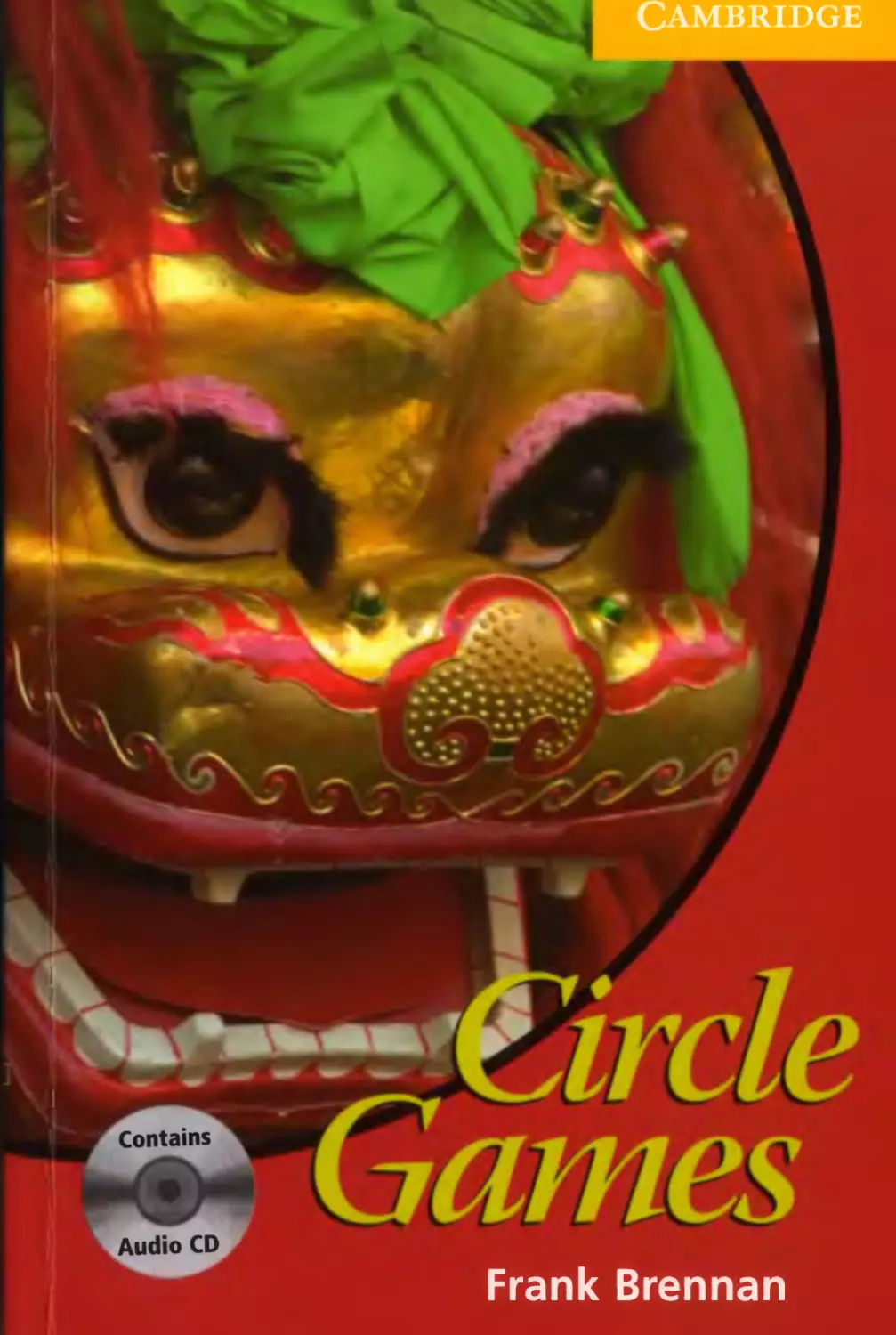


Автор: Brennan F.
Теги: fiction children's literature children's books
ISBN: 978-0-521-63070-2
Год: 2005
Похожие


Текст
                    Quick Man Tan
Everybody called him 'Quick Man Tan' when he was a
young man. That was a long time ago. Now people called
him by his real name - Caleb Tan.
Caleb liked to talk about the old days. He talked to
anybody who was interested. He told them that when he
was younger he could catch a fly in his hand.
That was how quick he was. Sometimes tourists came to
his cafe for coffee or maybe some chicken with rice. When
they had a meal was best. Then Caleb had more time to tell
them how quick he once was. 'I was the best,' he told them.
And, just to show them, he moved his hands in the air. He
moved like the fighters in kungfu films.
4

'Nobody could fight like me,' he always said. 'I was the
best in Singapore.' But he wasn't very quick now. He still
knew what to do, but he was slower.
Usually, people smiled at him and finished their chicken
with rice. But sometimes someone told Caleb he was a
stupid old man. At those times he went back into the
kitchen and May May, his wife, talked to them. 'Please
don't mind my husband,' she laughed to them. 'He just
likes to think of the old days. He was good when he was
young. But he's old now. He forgets . . .' She laughed, but
she didn't feel happy.
Caleb Tan was seventy years old. He had photographs of
the Chinese Lion Dance all over the walls of his cafe. He
was once a lion dancer himself. He danced with the best.
He was the best. Everyone said so. Years ago, everybody
wanted Quick Man Tan to dance the Lion Dance for them.
It was their favourite dance and Caleb could dance it better
than anybody else. At Chinese New Year he was everybody's
favourite dancer. He danced under a big Chinese Lion's
head made of paper. He moved his feet in a quick and
beautiful way that everybody loved.
Then, after the dance, he did some fight moves. They
looked like dances, too.
Caleb loved all the moves. But most of the fighting he
did was in his head. He thought about fighting but he
didn't often fight. He really could fight with his hands and
feet. But he didn't fight very often. Only once or twice.
That was enough for Caleb. He preferred to dance. He
didn't really like fighting people. But he did like talking
about it.
That was what he liked to do now - talk about the old
5

days. The cafe was his business but all Caleb wanted to do
was talk. As he got older, his hearing got worse and his
voice got louder.
Caleb talked to anybody who wanted to listen.
Sometimes he talked when people didn't really want to
listen. May May knew that most of the things he said were
not true. But Caleb believed it all. It was more real to him
than his business was. To Caleb, his cafe was just a place
where he could tell stories. But May May knew they needed
the cafe. It made them just enough money to live on.
Sometimes Caleb did a Lion Dance with children who
were interested. He was slow, but you could see how good
he once was. All the children liked to see the old man. He
was something from the old days. There were not many like
him around now.
Chinese New Year was always a busy time for everybody. It
was one of the few times of the year when the cafe could do
good business. May May worked more than ever at New
Year. This year she really wanted Caleb to help her. She
couldn't do everything. Sometimes people left the cafe after
waiting too long for their food. All Caleb did was talk.
People wanted their coffee and lunch, not his stories.
For Caleb, Chinese New Year was his favourite time. He
had lots of people to listen to his stories. Sometimes other
Lion Dancers came to the cafe. Then he shouted with
happiness as he told them how to dance. And, of course,
how he could dance better than anybody else.
'You see, my friends,' called out Caleb to a table full of
bored tourists, 'it's all in the way you move. Like a circle,
6

like a wheel - like this . . .' And Caleb then turned round
with his hands in front of him. His hands went right into
May May and what she was carrying. The food was for a
table full of tourists next to him. Everything fell to the floor.
May May did her best to help the tourists but they left.
Other people left, too. For once, Caleb was quiet and
helped her.
May May was unhappy.
'Its not right!' May May told her husband that night.
'While you tell your stories I do all the work! There is too
much for me and Henry to do.'
Henry was the cook. He was also their only son. He
cooked everything. He was very good, but he had a lot to
do in the kitchen. He needed someone to help him.
Henry dreamed of having the cafe to himself one day. He
was already forty years old and still not married. There was
no wife to help. There were no grandchildren to do little
jobs. There was not enough money to pay for help.
Henry was a little like his father. He had his dreams. But
he kept his dreams about the cafe to himself. In his head, he
was always far away while he worked.
But now Henry was asleep. He couldn't hear his parents
shouting. He couldn't hear Caleb tell May May to be quiet.
He couldn't hear the hurt in his mother's voice. All Henry
could hear was the sound of cooking in his dreams.
The words GongXi Fa Chai were written in red and yellow
letters all over Singapore. This was Chinese for 'Happy
New Year'. Sometimes old friends of Caleb and May May
left hong bao in the cafe at this time. Hong bao are little red
7

bags, usually with money inside. People always did this at
Chinese New Year. Sometimes people left money,
sometimes not. But they always left something. Poorer
friends left oranges in place of money. Oranges are lucky.
But May May was pleased when they got money. They
always needed money. This year they got a lot of oranges.
Henry and May May wanted the cafe to do well this New
Year. Henry worked very hard. He cooked more good food
than he usually did. Lots of people came to the cafe. And
Caleb couldn't talk to all of them. May May smiled a lot.
She was busy but she was happy. Maybe business was
getting better after all.
This time, Caleb did try to help. He brought coffee and
food to the tables. He smiled as he worked. But then a
young father with his children asked about the Lion Dance
photographs on the walls. Caleb stopped what he was
doing. He started to talk. May May heard him but she
couldn't stop him. She was too busy. She wanted Caleb to
get back to work before he did anything stupid.
It was early afternoon and there were lots of hungry
people in the cafe. It was hot. But that didn't stop the rain.
The rain started all at once. It came down and down on the
roof of the cafe and made a loud, heavy sound. More
people came in. They wanted to get out of the rain and
have something to eat or drink. Caleb was happy. He could
tell his stories while people stayed out of the rain. They
could enjoy a good story while they ate their lunch. Why
not? He thought it was good for business.
A young father and his two small children listened as
Caleb talked. And talked. And talked. They were getting
hungry. Caleb started to show them moves from the Lion
8

Dance. 'You turn, like a wheel - see?' Caleb told them in a
loud voice. His hands moved in front of him. His feet
moved, too. People were looking at him. Not all of them
knew what he was doing. It just looked strange to them.
And all the time the heavy rain fell.
By this time the cafe was full of people and all the tables
were full. Some people were standing. They just wanted to
be out of the rain. There wasn't much room for May May
to do her work. People were talking and enjoying
themselves while the rain fell outside.
Then a large young man pushed his way into the cafe.
He was wearing a big jacket and he was very wet. His right
hand was under his jacket and a bag was in his left hand. It
was a travel bag - the kind tourists use to put passports and
money in. The man looked afraid and he looked around
him all the time. By mistake he pushed against a table. The
man at the table was reading a magazine.
'Hey, watch where you're going!' said the man with the
magazine in an angry voice. But the large young man
brought his hand out from under his jacket. He had a
dangerous-looking knife in it. He held the knife against the
face of the man with the magazine.
'You just shut your mouth!' he shouted. 'See this knife!
Don't start anything!'
9

As the young man spoke he turned around with the
knife. He was talking to everybody in the cafe now. He
sounded afraid. He looked dangerous. People put down
their things and looked at him. They were all afraid. The
cafe went quiet as the rain fell.
'Yes, feet too - just like a wheel!' said Caleb in a loud
voice. He turned as he spoke and his foot moved quickly up
into the air. His foot hit the big man's hand and the knife
flew up into the air.
'Why, you stupid old man!' the young man shouted.
Caleb smiled. He remembered his old fighting moves. In a
minute the young man was on the floor. Somebody used a
mobile phone to call the police. Soon they arrived and took
the young man away in the rain.
A few minutes later the rain stopped.
* * *
The newspapers were full of the story the next day. 'Quick
Man Tan' was once more in the news. The young man was
a robber. The bag he had with him was a tourist's. That
was why he ran to the cafe. He didn't want the police to
find him.
'But he didn't know about "Quick Man Tan",' said the
young father in the newspaper story. 'I saw it all with my
two children. He just moved his foot in the air and then the
knife flew away! He was just like Jackie Chan in the films!
The children will never forget this. He was great!'
There were lots of hong bao for Caleb and May May after
that. All of them had money inside. There was a lot of
money this time.
With the money, May May found somebody to help
10

with the cafe. Her name was Elizabeth and she was a cook.
Elizabeth and Henry worked very well together.
People asked Caleb to teach the Lion Dance to children.
So that's what he did all the time now. He got paid for it,
too. He didn't work at his cafe any more - he left that to
Henry and May May. But he was happy.
Henry and Elizabeth got married a year later. The
famous 'Quick Man Tan' did the Lion Dance on that day.
He wasn't quite so quick now. But nobody minded that.
'Turn like a wheel,' he laughed while he danced with the
children. 'Like a wheel. . .'
11

The Wheel on the Wall
'Well, just take a look at that wheel!' Earl Cooper said to
Candy, his wife. 'It must be much older than anything we
have back home.'
When Earl Cooper travelled he always thought of home.
But there weren't many really old buildings in Texas. Now
he was in Portsmouth in the south of England. Portsmouth,
Earl knew, was one of the best places to see old ships. Earl
liked old things. They were staying at a pub which was very
near to the sea. They could see lots of ships from the pub -
that's why they liked it.
Earl was looking at the wall outside the pub. The pub's
name, The Old Swan, was on the wall. Next to the name
was a wooden ship's wheel and in the middle of the wheel
was the name of a ship, HMS Swan. The wheel was old,
Earl could tell. And it was there, just above his head.
12

The Old Swan was hundreds of years old. Earl knew
because it said so on the sign by the wheel. It said that in
the past sailors used the pub before they went to sea. Now
the pub sold food and drink to tourists. They watched the
ships and listened to the sea birds while they ate their meals.
Earl Cooper was sixty years old and both of his children
- Marylou and Earl Junior - were parents themselves. Earl
didn't work any more. He had enough money. More than
enough.
Earl looked at the sign again. It told him how the oldest
part of the pub was from 1350. The pub was bigger now, of
course, but all of it was old. 'How can a place be so old?'
thought Earl. And it was still being used.
'Are you getting ideas again, honey?' asked Candy. They
always called each other 'honey'. 'You and your ideas!
Sometimes you're just like a little boy, you big old thing!'
Candy liked to say things like that. But she liked him just
as he was. Her husband loved finding out about the past.
Earl knew all about his family name of Cooper. The
family came from Portsmouth - that was why they were on
holiday there now. The last Cooper to live in Portsmouth
was his great-grandfather, Benjamin Cooper. Benjamin
sailed from Portsmouth in 1875 at the age of nineteen. He
wanted to make himself rich in America. He didn't make
himself rich but he had a good life. Benjamin died in Texas
when he was sixty-three years old in 1919. It was just after
the end of the First World War. Benjamin was waiting for
his son, Ralph, to come back from the war in Europe. Just
before Benjamin died, Ralph came back to America. He
only had one arm now but he had a new wife. Ralph was
Earl's grandfather.
13

Ralph Cooper always remembered the old things he saw
in Europe in the war. He just loved stories about the past.
He gave that love of the past to his children and to Earl.
Earl was always his favourite grandson. Ralph told Earl lots
of stories about old England. Other children heard cowboy
stories from their grandfathers: Earl got old England.
Earl remembered Ralph. 'And here I am,' he thought to
himself, 'standing in front of one of the oldest buildings I've
ever seen. Not only that, it's in the very place where my
great-grandfather, Benjamin Cooper, came from.'
Earl knew something else, too. Benjamin Cooper came
to America on a sailing ship called The Swan. It was already
an old ship in 1875 and Earl thought that there was
nothing left of it now. But now he knew there was
something left of the old ship. And there it was - the wheel
on the wall of the The Old Swan pub.
Earl knew he wanted the wheel. He wanted to take it
home to Texas. It was a part of his family history. It had to
be his.
Earl and Candy had a good meal that evening, some fine
English beer and then a good night's sleep. When he woke
up, Earl knew just what to do. He told Candy all about it
while they were eating breakfast.
'You know, honey, that ship's wheel is from old Benjamin
Cooper's ship. I just know it. That's why I want to take it
back home.'
'I understand, honey,' Candy answered with a smile. 'But
it's part of this pub now.'
14

'I know!' said Earl with a loud laugh. 'But we can buy it!
What do you think, Candy?'
Earl looked very happy and everyone in the room heard
his laugh. People were looking at him.
'But honey,' asked Candy, 'what if they don't want to sell?
What if they don't want anybody else to have their ship's
wheel? After all, they've had it for all these years. It could be
very expensive. They don't give things like that away for
nothing, you know.'
'I've thought about that, honey,' Earl replied. And I
agree with you. But everything has a price and I've got the
money. Hey, they're a business, aren't they? They
understand money all right, you just wait and see.'
After breakfast Earl asked to see Tony Thatcher. The Old
Swan was Tony's pub. Tony was a small, thin man with a
big smile. He wore nice clothes and was always friendly to
the people who came to his pub. With rich tourists he was
very friendly. His red Jaguar sports car was usually outside
the pub. It was what they call a 'classic' car - it was old and
cost a lot of money.
Tony Thatcher took Earl to his office while Candy had a
coffee outside by the river. Earl said he could give Tony a
lot of money for the ship's wheel. He told Tony about
Benjamin Cooper and his family history. But Tony said no
at first. After all, the wheel was very old and it was part of
the pub's past.
'You can think of the past, Mr Thatcher - can I call you
Tony? - or you can think of today. And with the money,
Tony, you can buy another sports car. Maybe another old
Jaguar? And, as I've told you, the wheel is part of my
15

family's past, too. So you could say it's going back home, in
a way. So, what do you say?'
A month later, Earl and Candy were smiling as they looked
at the wall of their house in Houston, Texas. Earl thought
to himself that, at last, he had a piece of his family's past.
He was happy.
In Portsmouth, Tony Thatcher was happy, too. He was
putting another Jaguar into his large garage. He was careful
not to drive into any of the six ship's wheels in the garage. A
friend of his made the wheels for him. They were just like
the one that Earl bought. And there was another wheel on
the outside wall of The Old Swan now. Old or new - Tony
thought there was no way that a tourist could ever know
which was which. Never in a hundred years.
16

Special Clay
Emilio Lopez was a boy with problems.
His family was poor and they didn't know what to do
with him. He was thirteen years old, but his parents still
couldn't find the right school for him. Not anywhere in
Cleveland, Ohio in the USA. So far, not one of the schools
wanted to have Emilio. They just couldn't help a boy with
his 'difficulties'. That's what the schools all said.
Emilio was not a bad boy. He just got very angry
sometimes. He got angry when he didn't understand things.
He didn't like things that he couldn't understand. Not
understanding something made him afraid and being afraid
made him angry. He was a big boy for his age, too. His
teachers didn't find it easy to stop him when he got angry.
But he wasn't the kind of boy who liked to get into fights.
No, he usually broke things or sent furniture flying across
the room. But breaking things could be dangerous. He
could hurt somebody - or himself- doing things like that.
His parents were very unhappy about their son. They
wanted to do the best for him. But they knew that, one day,
he could get into real difficulties. Then a doctor from a
university came to see Emilio. He was somebody who knew
all about the kind of problems Emilio had. He said Emilio
needed special help.
The doctor said Emilio needed to go to a special school
where there were young people like him. The students lived
at the school. His parents were pleased to hear that the
17

school was free. It was also good for them for Emilio to be
away from home for a while. His father and mother loved
Emilio, but they also had three other children to look after.
Emilio didn't say a lot but everybody knew he was
intelligent. He found it difficult to make friends or talk to
people. He wanted to talk - everybody knew that. But there
was something that stopped him. It was like there was a
wall there that was too high for him to get over. This wasn't
easy for him, and sometimes not being able to say what he
meant made him angry. That was the biggest problem.
Then there were other times when Emilio couldn't stop
talking. But the things he talked about were things few
people wanted to know about. When Emilio got interested
in something, he talked about nothing else. And Emilio got
interested in things like car numbers. Or railway trains. Or
the names of all the players in his favourite baseball team
for the last thirty years. This made it difficult for anybody
to have a real conversation with Emilio. Most people got
very bored after the first half hour. And when people got
bored, Emilio got angry.
The special school was on the far side of Cleveland. It
was a nice place and the teachers were kind, too. They
taught all of the usual things at the school but the classes
were a lot smaller. Things didn't look very different to
Emilio - at first. And, at first, he was just the same as ever.
After a while, he found he liked maths and science. But his
favourite class was drama.
The teacher Emilio liked best was Mrs McFee, the drama
teacher. She was small and round and she was sixty-three
years old. She had white hair and a big smile. Emilio was
tall and thin. He had black hair and a sad look on his face.
18

Emilio was a lot taller than Mrs McFee. Teacher and
student couldn't be more different to look at.
But they liked each other at once.
Mrs McFee's drama classes let Emilio be himself. He
could be angry if he wanted. It was OK. But that didn't
happen very often now. Mrs McFee made everything into a
game they could all play. Everybody knew what to do in her
classes. Emilio liked that. He liked things he could easily
understand. He also liked the games they played in the
drama classes. His favourite game was one Mrs McFee
called 'special clay'. In the school pottery classes Emilio
used real clay to make things. But Mrs McFee's special clay
was different.
'Right,' Mrs McFee told the students. 'Here is some
special clay. Why is it so special? I'll tell you why: it's
because you can make it into anything you like. It can be
big; it can be small. It can be a car, a baseball bat -
anything. But, most of all, you must see the thing in your
head just as if it was in front of you. Then, in a very careful
way, you make the thing with your hands. After that, you
19

show us how to use it. Then, once you've finished, you just
make the thing small again and put it back into your
pocket.'
But Mrs McFee had no clay. There was nothing there.
Her hands were empty. But nobody ever said so. It was all
real to them at the time. Emilio believed it more than
anybody. He was always most careful to make things just
right. And when his car or his boat or his guitar was ready,
it was just as if it was really there. And not just for Emilio -
everybody else in the class believed it, too. Until the game
was over. For those few minutes Emilio couldn't be happier.
Things got better for Emilio. Nobody said he could be
just like everybody else. But, for the first time ever, Emilio
felt he could do something with his life. To Emilio and
everybody who knew him, that meant a lot.
Mrs McFee's drama classes also helped Emilio with his
anger. Before then, his anger was like a wall in front of his
mind. It was a problem he couldn't get over. But now, at
last, his anger was a problem he could do something about.
20

Emilio's teachers soon found that he was very good at
pottery. He could make things out of clay that were quite
beautiful. He made little people and animals that looked
just like the real thing. But you always knew they were
made by Emilio. There was something about them that you
couldn't mistake for anyone else's work.
By the time Emilio was nearly sixteen he was doing very
well at school. He still had problems, but he was much
better than before. He was also becoming well-known as a
good young potter. People already wanted to buy the things
he made. He could make quite a lot of money from pottery,
everybody was sure. Mrs McFee knew Emilio could learn to
be a great potter. All he needed was the right teacher. Mrs
McFee wanted to make sure he got that teacher.
She had a friend who was a well-known potter. His name
was Grover Jackson and he had a pottery studio which was
next to Lake Erie. Grover was the best potter she knew -
and a good teacher. He made the kind of things in clay that
Emilio loved. Grover also liked to see good young potters
work at his studio.
Mrs McFee and his parents took Emilio to see Grover.
The boy and the potter liked each other right away. Grover
said Emilio could be a fine potter. Emilio could work with
him. He could learn from him and stay in a room at his
studio. He said Emilio could sell anything he made and
could make some money. This was good news for Emilio
and his parents. Emilio, of course, loved the studio and
couldn't wait to start work.
But first he had to go home and get his things ready.
Mrs McFee had a big green and white car. It was thirty
years old and people often told her to get a new car. But she
21

never did. She liked old things. She said she could take
Emilio and his things to Grover's studio in her old car.
There was lots of room in it. Emilio's parents liked Mrs
McFee and were happy for her to help.
The day came, at last, when Emilio was ready to go. He
knew how important this day was, not only to himself but
to his family as well. And, of course, to his good friend Mrs
McFee. Thanks to her, he wasn't just another boy with
problems. That's what he thought. And he was probably
right.
Emilio still had some problems of course. Talking to
people still wasn't easy for him, but he could look after
himself now. He could cook and clean, and knew how to
drive a car.
It was still early in the morning when Mrs McFee's old
green and white car arrived. Emilio and his family were
already waiting outside. His family were all feeling both sad
and happy, at the same time. Emilio felt the same way - he
was sad to leave but happy to go. Emilio put his few things
into the car. After saying goodbye to his family, Emilio and
Mrs McFee were off.
The pottery studio was about an hour's drive away from
Emilio's home. Everything was fine. Mrs McFee was a
careful driver and the day was warm. Soon they could see
the blue waters of Lake Erie through the open windows of
the car. But, after a while, the waters of the lake began to
turn grey. The sky became dark. It began to rain. Mrs
McFee turned her car into the road that led to Grover's
studio. She knew they were now only a few kilometres away.
The rain didn't stop. It got worse. They closed all the car
windows. Soon the heavy rain made it very difficult to see
22

the road. Mrs McFee slowed down as she looked for a good
place to stop the old car. But the young man in the fast
sports car behind her didn't slow down until it was too late.
The sports car hit the back of Mrs McFee's car. Both cars
then came to a stop at the side of the road.
Emilio was lucky. His seat-belt kept him safe. He looked
at Mrs McFee. She was still wearing her seat-belt but her
eyes were closed. Emilio didn't know what to do. At first he
felt angry like he did when he was at school. How could
something this bad happen? Why now? But he knew he
mustn't get angry. He must do something - but what?
He got out of Mrs McFee's car and looked at the sports
car. He saw that the driver was not much older than him.
23

There was blood on the drivers face and his eyes were
closed. Emilio knew he must get help. Mrs McFee didn't
have a mobile phone. She didn't like them. Did the young
man have a phone with him? He looked. Yes! There was a
phone on the floor of the sports car. But it was broken.
At first, Emilio thought of waiting for another car to
come and stopping it. But the road was quiet and not many
cars used it. It could be a long time before a car came and
he didn't have time. No, he must do something himself.
The rain stopped. Emilio thought hard. Perhaps he could
drive one of the cars.
The sports car was no good, but Mrs McFee's car looked
OK. Maybe he could take the young man and Mrs McFee
to the pottery studio in it. Grover Jackson could get help
for them then.
Emilio looked carefully at Mrs McFee's car. One of the
back tyres was no good. The other tyres looked OK. He
didn't know how badly hurt the sports car driver and Mrs
McFee were. He must get them to Grover's studio. But
how? He needed one more wheel but there wasn't one. He
felt his anger again.
24

Then Mrs McFee s voice spoke to him inside his head.
'You must see it in your head, just like it was in front of you.
Then, in a very careful way, you make it with your hands. . .
Of course! All his anger was gone. He knew what to do.
* * *
When Grover Jackson saw young Emilio Lopez driving
Mrs McFee s car up to the pottery studio, he knew
something was wrong. He called for help right away.
Fifteen minutes later, Grover and Emilio were talking to
two policemen. Mrs McFee was getting into an ambulance.
The young man from the sports car was all right - thanks to
Emilio. The police all said that Emilio was a fine young
man. Emilio was trying to tell them what happened. They
were asking him a lot of questions.
One of the policemen said that you could not drive Mrs
McFee's car with only three wheels. But Grover was sure he
saw four wheels on the car when it arrived. The policeman
said, 'I'm sorry, sir, but there are only three wheels on the
car/
But Grover just knew he saw four wheels on the car. Yet,
when he looked again, he saw only three wheels. Why was
that? What happened? Could Emilio tell him where the
fourth wheel came from? Where was it now?
'Hey!' Mrs McFee shouted from the ambulance. She was
fine, but she wasn't going anywhere without seeing Emilio
first. She told the police that the hospital could wait a little
longer for her.
Emilio wasn't the kind of boy to put his arms around
people he liked. He just gave a big smile when he saw her.
The smile told Mrs McFee all she needed to know. Grover
25

put his arms around her and laughed.
Grover told Mrs McFee about the fourth wheel. She
looked very interested but said nothing. Then Grover asked
Emilio about the wheel.
Emilio answered by putting his hand on his pocket.
Emilio knew the car needed another wheel. Then he
remembered Mrs McFee's drama classes:
4 You must see it in your head just like it was in front of you.
Then, in a very careful way, you make it with your hands.У
All it needed was for him to believe. So he made the
wheel. And he did believe in it. And it did work, just like
she told him. And, when the job was finished, he put it
back into his pocket.
So Emilio spoke just two words to answer Grover.
Grover Jackson thought he knew a lot about clay. But he
didn't understand the answer Emilio gave.
Emilio knew. He and Mrs McFee knew. They both
laughed as they said the words again together - special clay.
26

The Trishaw Man
Gregory Lim was only thirteen years old, but he was the
best student in his class. All his teachers said he was doing
very well. 'Singapore needs young people like him,' they
said. 'He'll go far.'
But Gregory wasn't very good at sport. He wasn't bad but
he wasn't good. It wasn't important. Not really. He was
intelligent but he wasn't strong.
Gregory's father, Thomas Lim, was strong, very strong,
and he loved his son. No father could feel better about his
son than Thomas did. He was always thinking about his
only child. Thomas drove a trishaw and he worked for many
hours a day. He drove people around on a three-wheeled
trishaw bicycle. The bicycle pulled a seat for two people. It
had a kind of big umbrella at the back. This went over the
seat to keep the sun out of people's eyes. Thomas often had
two or sometimes three people in his trishaw. They sat under
the umbrella while he pulled them around in the hot sun.
Sometimes taxi drivers got angry with him because the
trishaw was slow. The taxi drivers also didn't like Thomas
taking business away from them. But that didn't happen so
often now. Years ago people used trishaws a lot. But people
these days usually wanted taxis because they were quicker.
Trishaws were too slow for most people. Only tourists on
holiday used them. And, sometimes, old people who liked
to remember the old days. Thomas often had to work well
into the night to make enough money to live on.
27

Gregory's mother, Anita, liked to think of her son as she
worked at a fish shop. Every time she cleaned a fish or put a
kilo of prawns in a bag she thought of her only child. She
didn't mind all the hard work and the smell of the fish on
her skin. It was all done for her son. The money from
Anita's job at the fish shop helped to pay for Gregory's
school things.
Yes, it was a hard life for Thomas and Anita, and
everything they did was for their son. Gregory was going to
get a good job and look after them when they were old.
Gregory went to school by bus. He hated it when other
students arrived at school in taxis or cars. The rich students
came in their fathers' new Mercedes or comfortable taxis.
He was the best student but it was the others who had
money. That's how Gregory saw it. They were the ones with
nice new clothes. They played computer games. They ate
hamburgers at expensive fast food restaurants when they
wanted to.
And everybody knew his parents were poor. That's what
28

Gregory hated most. They all knew his father drove a
trishaw. Everybody saw his father pulling tourists around in
the hot sun. Could there ever be a worse job than that?
Why, driving an old taxi was better than driving a trishaw!
Gregory wasn't the only one from a poor family. Many
other students also had two working parents. But their
fathers had better jobs than his father. They didn't work in
the hot sun and they wore nice clothes. They got paid every
month.
Gregory loved his father. He knew how hard he worked.
If only his father had a different job. Gregory was an 'A'
student! But his father was a poor trishaw driver. It was all
wrong.
No, Gregory never forgot what his father did. But he
often wanted to.
Ayuh!' said Thomas to himself as he pulled the trishaw up a
hill. There were two heavy tourists in the back and the roads
were full today. It was National Day - a holiday in
Singapore. It was very busy and everybody was having a
party. People were out in the streets. The red and white
colours of Singapore were everywhere. It was a good time
for business for Thomas. Cars were slow on the busy roads.
This was one of the few times that Thomas's trishaw could
be quicker than a car. It was a good time to make money but
it was hard work. After all, he wasn't getting any younger.
His two tourists wanted to see the famous Raffles Hotel.
It was a favourite place for tourists. On that day there was
another visitor to the hotel - a beautiful and very famous
film star called Dianne Troy. She was making a film in
29

Singapore. Dianne was having a day off from filming and
wanted to rest. But she had lots of fans who wanted to see
her. Everybody knew Dianne Troy was staying at Raffles.
The street outside the hotel was very busy. People were
there for National Day and also to see their favourite film
star. There were hundreds of people all around the front of
the hotel. They all wanted to see Dianne Troy. The fans
were happy but after a time they felt uncomfortable. The
sun was hot and it wasn't easy for people to move. There
were just too many people there. All the taxis coming to the
hotel moved slowly because of the crowd. It was still early
in the afternoon. The day was at its hottest.
Thomas could get to the hotel quite quickly. He knew
his way around Singapore better than almost anybody. He
knew all the shortest ways that cars were too big to use. And
it was easier for a trishaw to move through lots of people.
Cars were much slower. Thomas always called out in a loud
voice to let people know he was coming.
30

The trishaw stopped outside Raffles Hotel and the two
tourists got out. They wanted to see Dianne Troy too.
There were cameras everywhere. And so many people! The
two tourists took out their cameras and Thomas said
goodbye. He was about to go when Dianne Troy came to
the window. Everybody pushed to the front to get a better
look. All the people were very close together. Dianne Troy
smiled and waved to the fans and they shouted back.
Then Thomas saw something at the front of the crowd.
A woman was calling loudly for help. But why? Then he
saw why. The woman was trying to stop a young girl from
falling. It wasn't easy with all those people around them.
The girl was about twelve years old. Both the woman and
the girl looked like tourists.
'My daughter!' the woman shouted. A hornet stung her!
Please help me. She needs a doctor quickly!' There were
shouts from the people around her. They all knew that
hornets in Singapore are very dangerous.
Hornets can kill children or old people. Everybody is
afraid when they see the big black and yellow insects.
But the nearest hospital was far away. The woman
couldn't walk through the streets carrying the sick child.
Certainly not when the streets were as busy as this. A taxi
was too slow in these crowds. But Thomas knew what to do.
31

Gregory Lim felt very pleased. He was looking at a page
from The Straits Times, Singapore's biggest newspaper. Lots
of students were looking at it. The page was up on the
school wall.
Tourist Stung By Hornet -
Film Star Says Thank You' to Trishaw Driver
Thomas Lim, a Singapore
trishaw driver, took a very sick
Australian girl to hospital
yesterday. A hornet stung the
girl, twelve-year-old Tracey
Kinsella from Melbourne, on
the arm outside Raffles Hotel.
"I was so afraid for Tracey,"
her mother, Mrs Lauren
Kinsella, said. "Insect stings
make her very ill. She had to
see a doctor at once."
Police Officer Melvin Yip,
who was at the hotel, told this
newspaper what happened.
"The crowds of people made
things worse for Miss Kinsella.
The girl needed help quickly.
A taxi couldn't get through the
crowded streets in time. It
certainly was quick thinking
from Mr Lim. With his trishaw
he was much faster than any
car. Yes, Miss Kinsella is well
now because of Mr Lim, I'm
sure of that."
Miss Dianne Troy, the
famous film star, saw what
happened. "I saw it all from
my hotel window," Miss Troy
told this newspaper. "I was
saying hello to my lovely
Singapore fans at the time.
Then I saw that poor girl. She
looked very sick but Mr Lim
was so good. He knew just
what to do, and got that poor
girl to a doctor in time."
Gregory smiled as the students read the newspaper story
on the wall. That was his father they were reading about.
His father, the trishaw driver.
32

Beautiful Thing
'Beautiful! Very, very beautiful! Where did you find it?' the
professor asked.
'Well,' I said. 'I didn't really find it - it found me.'
Professor Selkirk looked very happy and I was feeling
happy myself.
'I've been at university for two years now,' I thought, 'and
this is the first time he has said something nice to me.' OK
- I know all the other students have found interesting
things. But not me. / never found anything. Not until now.
Now I was, at last, someone he was interested in.
The professor smiled at me. He had quite a nice face
really. Old but kind.
33

'You have to be a real archaeologist to find something
like this, Polly,' the professor said.
'Polly! He usually calls me "Miss Hopkins". He must
really like what I've found,' I thought to myself.
'Yes,' he went on. 'A real archaeologist sees right away
what something is. That's what we're here for. We're here to
study things from the past; things we find in the earth. We
can learn important things - if we know how to look. So,
how did this beautiful thing find you?
I looked again at the beautiful thing he had in his hands.
It was round and as big as my hand. It looked like a little
wheel from something. A thin, silver-coloured wheel. It was
dirty but you could still see its lovely silver colour. Like a
CD. But there were lines on it. Was it writing of some sort?
Maybe.
'It was strange,' I said. 'I mean, I wasn't looking for
anything unusual. Then, all at once, it was there at my feet.
I know that sounds stupid but that's how it happened,
really.'
'That's OK, Polly. We archaeologists know what that
means, don't we?' the professor said.
My face told him that I didn't know.
'It's what we call "the nose".' He laughed. '"The nose" is
the feeling you get when you know something is important.
34

It doesn't look important at first but it is. That's when you
really know archaeology, when you can do that. It's really
wonderful.'
It was nice that the professor thought I had "the nose".
But I knew I didn't. No, the silver disc really did come from
nowhere. It was just like it decided to find me. But I
couldn't say that to the professor now. Not when he'd just
said I had "the nose".
cSo, er, what do you think it is, Professor Selkirk?' I
asked.
'You know, Polly,' he replied with a smile, 'I have no
idea.'
I couldn't believe what I was hearing. I mean, I always
thought the professor knew everything. Why didn't he say it
was Roman or something? After all, he's the professor of
archaeology here, not me.
'Er, is it Roman or something?' I asked. I was trying to
help.
'Well, Polly, I've never seen anything like it before. I
think I'll have to ask some people to take a look at it. You
know, this really is very, very beautiful!'
So, no Romans, then. 'What about the lines on it?' I
asked. 'Is it some kind of writing?'
'Maybe,' he said. 'I'm afraid I just don't know. All I know
is that it's old. It has to be.'
'How do you know it's old?' I asked again - it was
unusual for me to ask so many questions. 'Maybe it's some
kind of CD or something.'
'Then they were making CDs about two thousand years
ago,' he answered in a quiet voice. 'You see the earth around
it, Polly? Look at the colour. This disc hasn't seen the light
35

of day for hundreds - thousands - of years. Anybody can
see that. This thing is older than it looks. And anyway,
there's no hole in the centre. And CDs all have a hole in the
centre, don't they?'
* * *
The professor asked some people to come to the university
and look at the disc. They were at the university for a week.
I don't know what they did to the disc, but it wasn't long
before they asked me to speak to them. They wanted to ask
me lots of questions. I was, after all, the person who found
the disc.
Professor Selkirk was in his office with two people - a
man and a woman. They were older than the professor and
looked important.
'Dr Janet Collins and Dr Danny Fellows are old friends
of mine,' the professor said. 'They know more about the
archaeology of early Britain than anybody in the world.
They want to ask you a few questions, Polly. Is that OK?'
They asked questions all right. They asked questions all
afternoon. And not only about the disc. Three hours of
questioning later, they knew more about me than I did!
They were very nice about it and they never made me feel
uncomfortable. But by the time they finished, my life was
like an open book to them.
Were they really just archaeologists?
'Do you mind if we take some DNA from the inside of
your mouth?' asked Dr Collins in a friendly voice. 'It won't
hurt.'
DNA? It's everywhere in our bodies. It's what makes each
36

of us different. They can find DNA in just one hair, and
everybody has different DNA.
'Of course not,' I said. I was sure there were things that
they weren't telling me. Still, I did as they asked. Why not?
'It's OK, Polly,' said Professor Selkirk. 'They asked for
my DNA too. They want DNA from all the people who
have had the disc in their hands.'
'So where is the disc?' I asked. 'I'd like to see it again.'
'Oh, you will, Polly,' said the professor. 'But we want to
look at it for a little longer first.'
'How long?'
'Just a day or two - no time at all,' Dr Fellows replied
with a smile. 'Then we'll talk again.'
* * *
I just couldn't sleep. All I could do was think about the
disc. What was it? Why did it mean so much to me? I
knew it was unusual for a student to find something
important. But there was more to it than that. I knew that,
in some way, the disc wanted me. Like it was calling out to
me. I know it sounds stupid. After all, how can something
thousands of years old speak to you?
I didn't do much studying. I tried but I couldn't do it. All
I thought about was the disc. About how beautiful and
strange it was. I didn't really think it was Roman. I didn't
think that anybody knew anything about it. That's why the
professor's friends asked me so many questions - because
they didn't know much themselves. I was sure of that.
Three days later I was having breakfast in the university
cafe, as usual. It was only half past eight in the morning.
37

There were still thirty minutes to go before my first class -
it was about Roman buildings. I usually have breakfast
with other students and talk to them. Today I chose to eat
alone and read a book about the Romans. I was just
getting to one of the more interesting bits when there was
a hand on my shoulder. At first I thought it was one of my
friends.
'Sorry - can't talk - I'm reading,' I said, not looking up
from my book.
'It's nice to see you working so hard, Miss Hopkins,' said
a voice I knew. But it wasn't another student. It was Dr
Fellows. Dr Collins was with him. They both laughed.
'But today you can stop for a little,' said Dr Collins. 'We
have some important things to talk about. But not here.
Let's go to the professor's office.'
* * *
Professor Selkirk's office wasn't very big and it looked a
little strange. It was quite a new office with computers and
other new things. But everywhere you looked there were
things from the past next to them. And there was the
professor sitting at his desk. The disc was on the desk in
front of him. He smiled. But the look in his eyes told me
he had something important to say. I felt hot in that small
room with three other people.
'Polly, please sit down.'
We all sat down: me in front of the professor's desk and
the others behind it. I felt like a little girl at school again. I
waited for somebody to speak.
'You said the disc looked like a CD,' the professor began.
'Dr Collins thinks that perhaps you are right, Polly.'
38

I didn't say anything but my mouth opened. I closed it
quickly.
'You see,' Dr Collins said. 'We didn't understand what
the lines on the disc were at first. We looked at the disc in
all kinds of ways. We looked at the earth from the disc. But
we found nothing.'
£Then last night the disc was on a desk next to a
computer,' said Dr Fellows. 'When we turned the computer
on something very strange happened. The lines on the disc
changed. We all saw it. It was almost like the disc knew
about computers. Like it wanted to speak to us.'
'So . . . what did the disc say?' I asked.
'See for yourself,' replied the professor.
He gave me the disc and I looked at it carefully. The lines
were now a picture of something. I knew what it was. I
remembered it from school. It was a picture of DNA.
'I can see you know what it is,' Dr Fellows smiled. 'But
this DNA - the one in the picture - is rather different. It
isn't from the professor or from us. It isn't from anybody
else at the university. Except you. You see, Polly, this is a
picture of your DNA.'
'And what's more . . .' Dr Collins began.
39

But the professor spoke before Dr Collins could finish.
'Perhaps this isn't the right time. Polly has heard enough for
now, don't you think?'
'No, Professor. We have to tell her,' Dr Collins answered.
'And now is a good time to do it.'
I didn't like the sound of this. Tell me what?
Dr Fellows spoke now. 'You see, Polly, the DNA in the
picture is yours. There's no mistake about that. But there's
something else . . .'
'And what's that?' I asked.
'The DNA in the picture - your DNA - isn't from a
person. It's different,' Dr Fellows said slowly. 'It looks like a
person's DNA, but it isn't. We haven't ever seen anything
like it before. Not anywhere on Earth.'
'What are you saying?' I shouted. 'My family are from
London! Now you tell me that we're from Mars or
something! Don't be stupid!'
'We're not saying anything more for now,' said Dr
Collins. 'Maybe the disc changed your DNA. Maybe not.
We don't know. But we need you to stay with us. That's the
only way we'll find an answer.'
'Stay with you?' I asked. 'What do you mean? Where?
For how long? I mean, I have work to do!'
'It's all right, Polly,' said the professor. 'I've already
spoken to the university. You can have all the time you
need. They understand.'
'Do they?' I answered. I was feeling rather angry with
them. 'I'm not sure I do. Are you saying I can't go home
until you find answers to all this? Do I have to stay here
until you can read an old CD?'
40

Of course, I didn't really think of the disc like that. But I
like going home to my flat and I like going out with my
friends. I don't like being told what to do or where to go.
Who were they to stop me from doing these things?
'That's just what we are saying,' said Dr Collins. I didn't
like the way she said it. Her voice wasn't so friendly any
more. 'And the disc is something we don't understand yet. It
could be something we've never seen before.'
'It's not my problem,' I shouted as I got up from my
chair. 'I'm me — a student. I'm not from Mars! I'm going
home now and nobody is going to stop me.'
And nobody tried to stop me. Not until I opened the
door and found two large men there. 'Excuse me,' I said. I
tried to get past them. It was like trying to walk through a
wall.
I looked back at the professor. His face looked sad.
Perhaps he couldn't do anything about any of this. I didn't
know.
'So, you really do mean it?' I asked, looking at the two
doctors. They said nothing. 'You know, I don't think you
two are just archaeologists. You're not, are you?'
'We are,' said Dr Fellows. 'But we do other important
things too. Now I think it's best if you come along with
us.'
I'm not usually the kind of person who gets angry easily.
But this time I couldn't stop myself. I went over to the table
and took the disc in my hands. I did it before anybody had
time to stop me.
'It's all because of this little thing,' I told them, 'so I'm
taking it.'
41

They all stood up. They all told me to be careful - that
there was no need to be angry. I wasn't listening to them.
Tm going to walk out of that door. Try to stop me and
I'll break this stupid disc in two!'
I didn't really know how to break it. But they didn't want
me to try. The two large men at the door also looked very
uncomfortable.
Then the strangest thing happened. The disc in my hand
sent out strong light, like a little sun. I couldn't look at it,
but it wasn't hot. I closed my eyes. A second later I opened
my eyes again and looked at my hand.
My hand was empty. The disc was gone.
* * *
The next week they let me go back to my studies. The
strange thing was, they couldn't find anything different
about my DNA any more. They couldn't understand it.
They looked at my DNA many more times, but now there
was nothing unusual about it. After a while they said it was
all a mistake. Anyway, they let me get back to my flat and
my friends.
And the disc? They said it wasn't really old or unusual
after all. Really, the disc was nothing more than a CD. It
was a mistake and they were sorry. But it was best for me
not to tell anyone. Anyone at all. Didn't I think that was
best? Maybe I did.
I never said anything about the disc to Professor Selkirk
again. I didn't really know what to say to him.
But I knew the disc was real. Was it from some other
world? Was another world trying to say something to us? I
was sure of it. Maybe the disc saw how angry I was. Perhaps
42

it knew this was not the right time to talk to us. Yes, there
was a mistake. But was it our mistake or not?
You tell me.
43