/
Похожие

Текст
                    Journal of Environmental Protection, 2011, 2, 1084-1094
doi:10.4236/jep.2011.28125 Published Online October 2011 (http://www.scirp.org/journal/jep)

Soil-Based Biofiltration for Air Purification:
Potentials for Environmental and Space Life
Support Application
Mark Nelson1,2, Hinrich L. Bohn3,4
1

Institute of Ecotechnics, Santa Fe, New Mexico and London, UK; 2Biospheric Design Division, Global Ecotechnics Corp., Santa Fe,
New Mexico and London, UK; 3Department of Soil Sciences, University of Arizona, Tucson, USA; 4 Bohn Soil Biofiltration Company, Tucson, USA.
Email: nelson@biospheres.com
Received August 14th, 2011; revised September 17th, 2011; accepted October 11th, 2011.

ABSTRACT
Soil biofiltration, also known as soil bed reactor (SBR), technology was originally developed in Germany to take advantage of the diversity in microbial mechanisms to control gases producing malodor in industrial processes. The approach has since gained wider international acceptance and continues to see improvements to maximize microbial and
process efficiency and extend the range of problematical gases for which the technology can be an effective control. We
review the basic mechanisms which underlay microbial soil processes involved in air purification, advantages and
limitations of the technology and the current research status of the approach. Soil biofiltration has lower capital and
operating/energetic costs than conventional technologies and is well adapted to handle contaminants in moderate concentrations. The systems can be engineered to optimize efficiency though manipulation of temperature, pH, moisture
content, soil organic matter and airflow rates. Soil air biofiltration technology was modified for application in the Biosphere 2 project, which demonstrated in preparatory research with a number of closed system testbeds that soil could
also support crop plants while also serving as soil filters with airpumps to push air through the soil. This Biosphere 2
research demonstrated in several closed system testbeds that a number of important trace gases could be kept under
control and led to the engineering of the entire agricultural soil of Biosphere 2 to serve as a soil filtration unit for the
facility. Soil biofiltration, coupled with food crop production, as a component of bioregenerative space life support systems has the advantages of lower energy use and avoidance of the consumables required for other air purification approaches. Expanding use of soil biofiltration can aid a number of environmental applications, from the mitigation of
indoor air pollution, as a method of reducing global warming impact of methane (biogas), improvement of industrial
air emissions and prevention of accidental release of toxic gases.
Keywords: Soil Biofiltration, Indoor Air Quality, Bioremediation, Ecological Engineering, Air Pollution, Purification,
Bioremediation

1. Introduction
The past few decades has seen increasing development
of soil and compost beds for the purification of industrial
discharge airstreams. They have been targeted primarily
for the control of objectionable odors and reduction in
potentially toxic trace gases. The systems employ either
an enriched soil medium or compost in an engineered
system which makes use of natural soil processes for the
adsorption, dissolution and microbial metabolism of the
volatile organic and inorganic gases contained in the
effluent air. The present paper will briefly review the
development of the technology, the mechanisms which
Copyright © 2011 SciRes.

account for its efficacy and consider some of the future
potential and limitations of its use as a method of air
purification for both environmental applications and in
the context of bioregenerative life support systems.

2. History of the Technology
The diversity of metabolism of soil living biota has been
understood for a long time. There are a tremendous number of biological agents in soils (e.g. one billion bacteria
and 100,000 fungi per gram of soil [1]. These soil organisms include fungi, which often account for a majority
of the weight of soil living biomass, actinomycetes and
JEP

Soil-Based Biofiltration for Air Purification: Potentials for Environmental and Space Life Support Application

bacteria, both prokaryotes and eukaryotes. All known
microbes are found in soil and their metabolic efficacy is
assisted by the presence of some 50 types of enzymes
which catalyze a wide variety of chemical reactions [2].
The practical utilization of this microbial power in air
purification technologies has only really developed in the
past fifty years. This is quite different from the situation
in wastewater treatment and regeneration where microbial action has long been employed in systems as diverse
as oxidation trenches, septic tanks, trickle filter, activated
sludge oxidation, aerated ponds etc. utilizing both anaerobic and aerobic microbial digestion of sewage and
other organic and inorganic components of water from
industrial and residential sources [3]. The heterogeneity
of bacteria present and able to metabolize the wastewater
impurities is a benefit and engineers of such systems
seek to provide optimal conditions for their performance
[4].
Among the earliest literature references to the possibility of using soil biofiltration for control of malodor from
wastewater treatment was in 1923 by Bach. There were
published accounts of such sewage systems in the 1950s
in both Germany and the United States. Carlson and Leiser [4] developed soil biofilters for gas emissions from a
sewage plant and their research established biodegradation rather than adsorption as the causal mechanism. But
the wide-ranging acceptance of this approach as an important air pollution control technology along with development of practical engineering systems took place
primarily in Germany and the Netherlands during the
1970s and 1980s [5]. Some research and applications are
underway in the United States as the technology has become more widely known, But U.S. systems are still
quite few in contrast to Europe where soil and compost
beds are now accepted as highly effective and relatively
inexpensive means of air purification for many purifications, often being ranked as the best management practice choice among competing technologies for many applications [1,6].
The interest in the use of soil/compost reactors for air
purification is part of a growing cooperation between
engineers and environmentalists/ecologists to develop
more natural systems. A new field, ecological engineering, is exploring a range of new, hybrid approaches
which require less intrusive reliance on resources including sophisticated technologies with high energy demands. Because they employ natural methods of biological function these approaches are frequently more
adaptable and lower in cost than conventional high-tech
alternatives [7].
Ecological engineering encompasses a variety of scale
and function from the restoration of damaged ecosystems,
the creation of “synthetic ecologies” for the solution of
Copyright © 2011 SciRes.

1085

pollution problems, or the harnessing of ecological processes into engineered systems for specific regeneration
or bioremediation [2]. So, from this viewpoint, the engineering of soil and compost beds represents a type of
ecological engineering, in that it takes a fundamentally
ecological approach to air purification (biofiltration).
This becomes clearer when soil biofiltration is compared
to alternative conventional systems.

3. Soil Biofiltration vs. Conventional
Technologies
Soil/compost reactors (henceforth referred to as soil biofiltration) are systems where beds of the material are set
up so that perforated pipes can deliver the discharge air
so that it passes through the moist, aerated biological
material, where its pollutant gases adhere to the soil particles, dissolving them into the soil solution and exposing
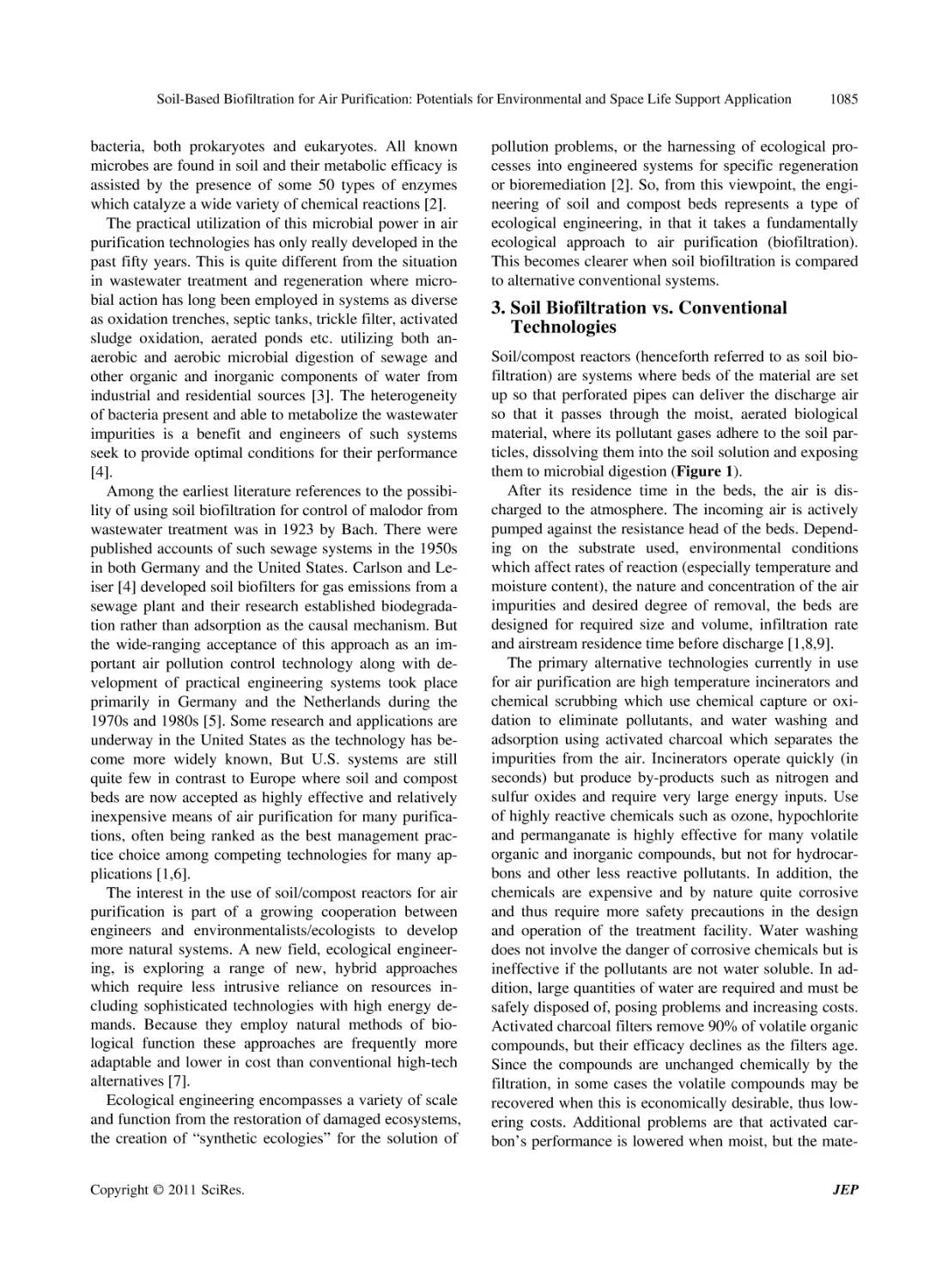
them to microbial digestion (Figure 1).
After its residence time in the beds, the air is discharged to the atmosphere. The incoming air is actively
pumped against the resistance head of the beds. Depending on the substrate used, environmental conditions
which affect rates of reaction (especially temperature and
moisture content), the nature and concentration of the air
impurities and desired degree of removal, the beds are
designed for required size and volume, infiltration rate
and airstream residence time before discharge [1,8,9].
The primary alternative technologies currently in use
for air purification are high temperature incinerators and
chemical scrubbing which use chemical capture or oxidation to eliminate pollutants, and water washing and
adsorption using activated charcoal which separates the
impurities from the air. Incinerators operate quickly (in
seconds) but produce by-products such as nitrogen and
sulfur oxides and require very large energy inputs. Use
of highly reactive chemicals such as ozone, hypochlorite
and permanganate is highly effective for many volatile
organic and inorganic compounds, but not for hydrocarbons and other less reactive pollutants. In addition, the
chemicals are expensive and by nature quite corrosive
and thus require more safety precautions in the design
and operation of the treatment facility. Water washing
does not involve the danger of corrosive chemicals but is
ineffective if the pollutants are not water soluble. In addition, large quantities of water are required and must be
safely disposed of, posing problems and increasing costs.
Activated charcoal filters remove 90% of volatile organic
compounds, but their efficacy declines as the filters age.
Since the compounds are unchanged chemically by the
filtration, in some cases the volatile compounds may be
recovered when this is economically desirable, thus lowering costs. Additional problems are that activated carbon’s performance is lowered when moist, but the mateJEP

1086

Soil-Based Biofiltration for Air Purification: Potentials for Environmental and Space Life Support Application

Figure 1. (Left): Schematic of a biofilter using compost and compost sieving and (Right): photograph of aerator pipes leading
into a soil or compost biofilter [11].

rial is flammable when dry [1,10].
Soil biofiltration substitutes its own adsorption on
soil/compost particles for what is achieved by activated
charcoal or other manufactured sorption media, accomplishes water washing through the dissolution of the impurities in the soil solution and oxidation is accomplished at ambient or much lower temperatures by the
soil biota [1].

4. Cost Comparisons
The cost of soil biofiltration is almost always less than
conventional alternatives and sometimes dramatically so.
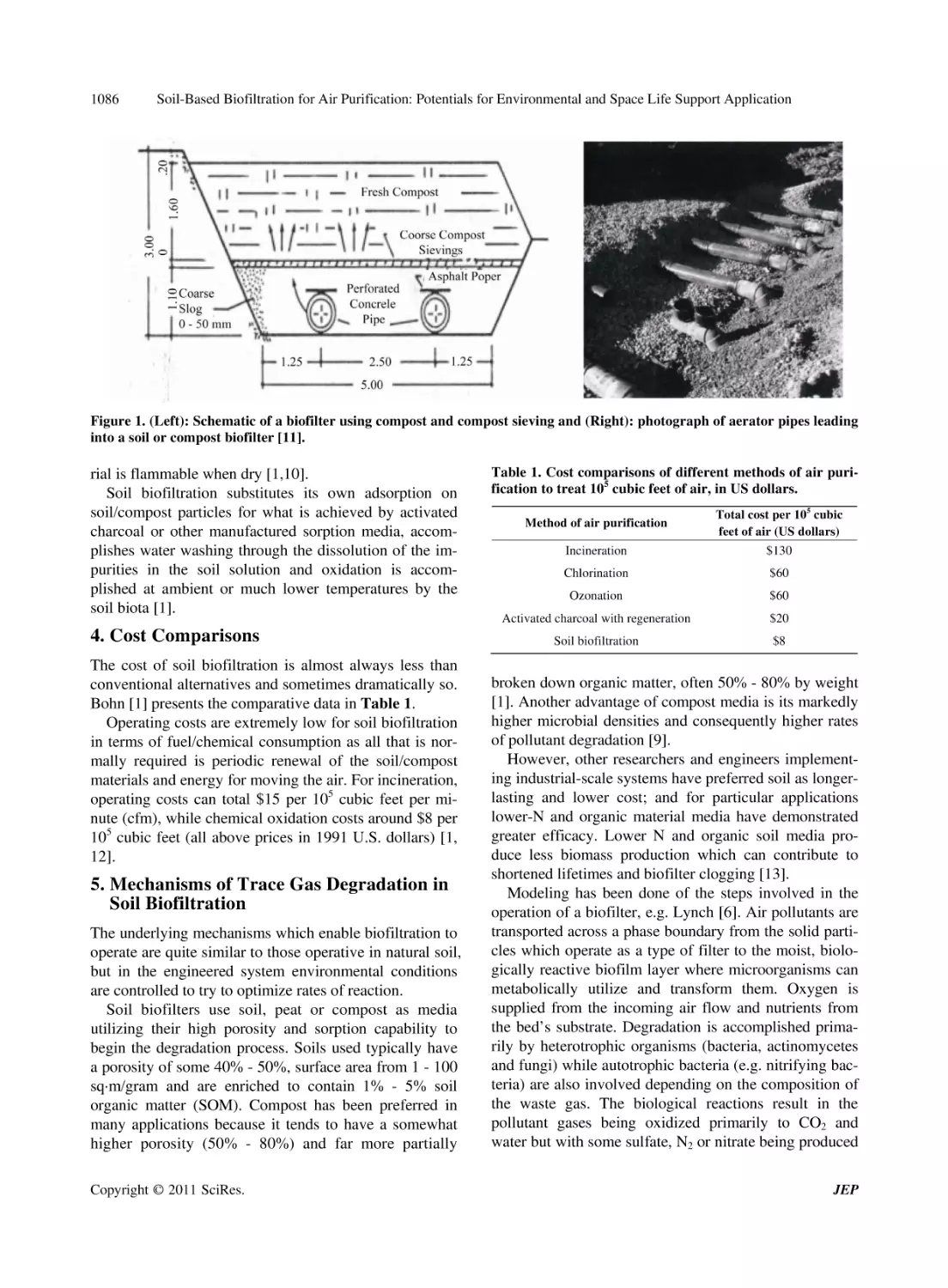
Bohn [1] presents the comparative data in Table 1.
Operating costs are extremely low for soil biofiltration
in terms of fuel/chemical consumption as all that is normally required is periodic renewal of the soil/compost
materials and energy for moving the air. For incineration,
operating costs can total $15 per 105 cubic feet per minute (cfm), while chemical oxidation costs around $8 per
105 cubic feet (all above prices in 1991 U.S. dollars) [1,
12].

5. Mechanisms of Trace Gas Degradation in
Soil Biofiltration
The underlying mechanisms which enable biofiltration to
operate are quite similar to those operative in natural soil,
but in the engineered system environmental conditions
are controlled to try to optimize rates of reaction.
Soil biofilters use soil, peat or compost as media
utilizing their high porosity and sorption capability to
begin the degradation process. Soils used typically have
a porosity of some 40% - 50%, surface area from 1 - 100
sq·m/gram and are enriched to contain 1% - 5% soil
organic matter (SOM). Compost has been preferred in
many applications because it tends to have a somewhat
higher porosity (50% - 80%) and far more partially
Copyright © 2011 SciRes.

Table 1. Cost comparisons of different methods of air purification to treat 105 cubic feet of air, in US dollars.

Incineration

Total cost per 105 cubic
feet of air (US dollars)
$130

Chlorination

$60

Method of air purification

Ozonation

$60

Activated charcoal with regeneration

$20

Soil biofiltration

$8

broken down organic matter, often 50% - 80% by weight
[1]. Another advantage of compost media is its markedly
higher microbial densities and consequently higher rates
of pollutant degradation [9].
However, other researchers and engineers implementing industrial-scale systems have preferred soil as longerlasting and lower cost; and for particular applications
lower-N and organic material media have demonstrated
greater efficacy. Lower N and organic soil media produce less biomass production which can contribute to
shortened lifetimes and biofilter clogging [13].
Modeling has been done of the steps involved in the
operation of a biofilter, e.g. Lynch [6]. Air pollutants are
transported across a phase boundary from the solid particles which operate as a type of filter to the moist, biologically reactive biofilm layer where microorganisms can
metabolically utilize and transform them. Oxygen is
supplied from the incoming air flow and nutrients from
the bed’s substrate. Degradation is accomplished primarily by heterotrophic organisms (bacteria, actinomycetes
and fungi) while autotrophic bacteria (e.g. nitrifying bacteria) are also involved depending on the composition of
the waste gas. The biological reactions result in the
pollutant gases being oxidized primarily to CO2 and
water but with some sulfate, N2 or nitrate being produced
JEP

Soil-Based Biofiltration for Air Purification: Potentials for Environmental and Space Life Support Application

if nitrogen and sulfur compounds are being treated [1]
with an increase of microbial biomass and energy utilization occurring during the process. The biological degradation of pollutants can be limited by both biological
activity of the microbiota or diffusion rates across the
media to the biofilm at lower pollutant concentrations
[6].
It is generally accepted that biofiltration follows first
order kinetics. An exception is Ottengraf (cited in [9])
whose theoretical modeling of the processes of degradation assumes that degradation is independent of pollutant concentrations, i.e. zero order kinetics for concentrations below a critical level for the compound. Bradford and Krishnamoorthy [14] point out that the reaction
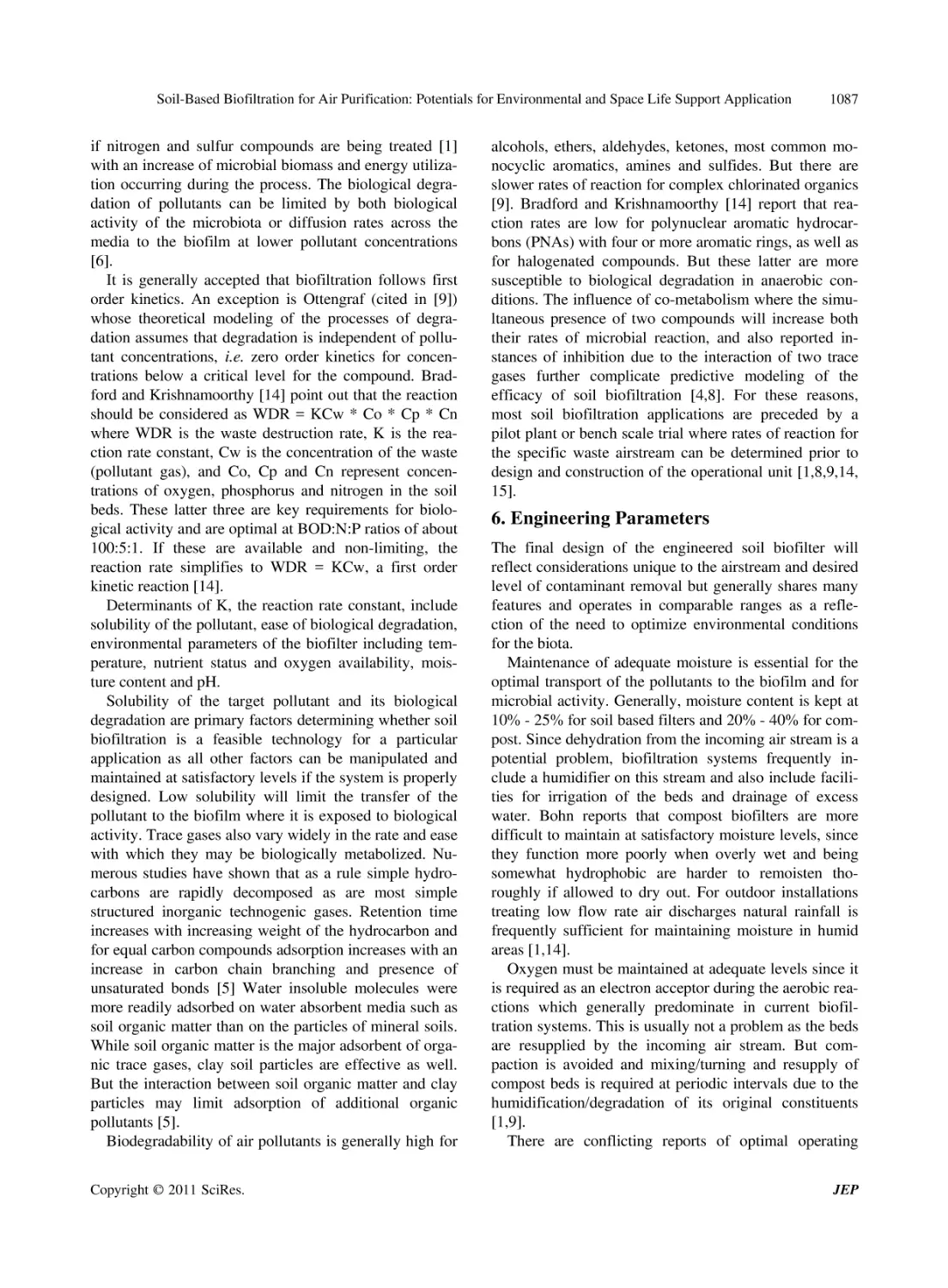
should be considered as WDR = KCw * Co * Cp * Cn
where WDR is the waste destruction rate, K is the reaction rate constant, Cw is the concentration of the waste
(pollutant gas), and Co, Cp and Cn represent concentrations of oxygen, phosphorus and nitrogen in the soil
beds. These latter three are key requirements for biological activity and are optimal at BOD:N:P ratios of about
100:5:1. If these are available and non-limiting, the
reaction rate simplifies to WDR = KCw, a first order
kinetic reaction [14].
Determinants of K, the reaction rate constant, include
solubility of the pollutant, ease of biological degradation,
environmental parameters of the biofilter including temperature, nutrient status and oxygen availability, moisture content and pH.
Solubility of the target pollutant and its biological
degradation are primary factors determining whether soil
biofiltration is a feasible technology for a particular
application as all other factors can be manipulated and
maintained at satisfactory levels if the system is properly
designed. Low solubility will limit the transfer of the
pollutant to the biofilm where it is exposed to biological
activity. Trace gases also vary widely in the rate and ease
with which they may be biologically metabolized. Numerous studies have shown that as a rule simple hydrocarbons are rapidly decomposed as are most simple
structured inorganic technogenic gases. Retention time
increases with increasing weight of the hydrocarbon and
for equal carbon compounds adsorption increases with an
increase in carbon chain branching and presence of
unsaturated bonds [5] Water insoluble molecules were
more readily adsorbed on water absorbent media such as
soil organic matter than on the particles of mineral soils.
While soil organic matter is the major adsorbent of organic trace gases, clay soil particles are effective as well.
But the interaction between soil organic matter and clay
particles may limit adsorption of additional organic
pollutants [5].
Biodegradability of air pollutants is generally high for
Copyright © 2011 SciRes.

1087

alcohols, ethers, aldehydes, ketones, most common monocyclic aromatics, amines and sulfides. But there are
slower rates of reaction for complex chlorinated organics
[9]. Bradford and Krishnamoorthy [14] report that reaction rates are low for polynuclear aromatic hydrocarbons (PNAs) with four or more aromatic rings, as well as
for halogenated compounds. But these latter are more
susceptible to biological degradation in anaerobic conditions. The influence of co-metabolism where the simultaneous presence of two compounds will increase both
their rates of microbial reaction, and also reported instances of inhibition due to the interaction of two trace
gases further complicate predictive modeling of the
efficacy of soil biofiltration [4,8]. For these reasons,
most soil biofiltration applications are preceded by a
pilot plant or bench scale trial where rates of reaction for
the specific waste airstream can be determined prior to
design and construction of the operational unit [1,8,9,14,
15].

6. Engineering Parameters
The final design of the engineered soil biofilter will
reflect considerations unique to the airstream and desired
level of contaminant removal but generally shares many
features and operates in comparable ranges as a reflection of the need to optimize environmental conditions
for the biota.
Maintenance of adequate moisture is essential for the
optimal transport of the pollutants to the biofilm and for
microbial activity. Generally, moisture content is kept at
10% - 25% for soil based filters and 20% - 40% for compost. Since dehydration from the incoming air stream is a
potential problem, biofiltration systems frequently include a humidifier on this stream and also include facilities for irrigation of the beds and drainage of excess
water. Bohn reports that compost biofilters are more
difficult to maintain at satisfactory moisture levels, since
they function more poorly when overly wet and being
somewhat hydrophobic are harder to remoisten thoroughly if allowed to dry out. For outdoor installations
treating low flow rate air discharges natural rainfall is
frequently sufficient for maintaining moisture in humid
areas [1,14].
Oxygen must be maintained at adequate levels since it
is required as an electron acceptor during the aerobic reactions which generally predominate in current biofiltration systems. This is usually not a problem as the beds
are resupplied by the incoming air stream. But compaction is avoided and mixing/turning and resupply of
compost beds is required at periodic intervals due to the
humidification/degradation of its original constituents
[1,9].
There are conflicting reports of optimal operating
JEP

1088

Soil-Based Biofiltration for Air Purification: Potentials for Environmental and Space Life Support Application

temperature ranges. Bohn [1] indicates that there is little
change in reaction rates between a wide range of
temperature, 10 - 60 deg. C. At low temperatures, microbial activity is lessened, but this is compensated for by
somewhat higher rates of adsorption. Upper temperature
limits reflect a sharp decline in microbial activity above
65 deg C. [1]. In contrast, Leson and Winer [9] report a
temperature range between 20 - 40 deg C. as optimal,
citing decreased water solubility as well as a lessening of
activity of mesophilic bacteria which are the primary
class of responsible bacteria in biofiltration reactions at
higher temperatures [9]. Still other accounts assert that
overall bacterial activity slows above 32 deg C. although
some thermophilic bacteria can survive up to 60 deg C
[8]. In any case, performance characteristics can be
determined at the pilot plant phase and is frequently
engineered for cooling/heating of' incoming airstream or
the system made larger to accommodate reaction rates at
anticipated operating temperatures. pH levels are normally maintained between 7 - 8. This is normally not a
problem except in the case where inorganic gas degradation results in the formation of acids. In these cases,
periodic liming of the biofilter is carried out to maintain
higher pH levels [9].
One of the advantages of biofiltration is the flexibility
of response to changing pollutant characteristics because
of the wide variety of microbial metabolic pathways. The
pollutants become “food” for the type of microbiota
which can digest them. This means operationally that a
period of “acclimatization” is often required for pollutants which are uncommon. During this period (often
reported to be about ten days) populations of microbiota
build up until a stable rate of reaction of the pollutant is
reached. This has led to some experimentation with introduction of particular types of microbes to accelerate
this process. There is no consensus on the necessity or
long-term success of such introductions, as the introduced bacteria must compete with existing populations
and most native bacteria will adapt to handle synthetic
pollutants [1]. But this approach is used in a number of
currently operating European systems [9]. An analogous
concern is the viability of microbial activity if the operation of the biofilter is interrupted (e.g. because of intermittent releases from the source, or down-time during
maintenance/repair operations). Indications are that periods of up to two weeks can be tolerated without decline
in microbial populations and perhaps as long as two
months as long as the filter contains adequate alternative
sources of nutrients [9].
Residence time is a key engineering system parameter
and is dependent on flow pressure and rate, bed porosity,
moisture content and size. Typically soil or compost beds
are around 1 m deep and overall filter areas range from
Copyright © 2011 SciRes.

10 - 2000 sq m, with air input rates between 1000 to
150,000 cu m/hr. An important safety consideration is to
size beds so that “breakthrough” of discharge air does
not occur during peak loading, and so that back pressures
don’t become too high. Generally biofilters are designed
with loads up to 300 cu m of incoming air per sq m per
day of filter bed, although for mixtures with very good
porosity (e.g. compost/bark) loads of up to 500 cu m/sq
m/day have performed satisfactorily [9].
Recommended rule of thumb residence times are 30
seconds for 90 percent removal of organic pollutants in
compost biofilters and one minute in soil biofilters (because of their lower microbial populations) particularly if
inorganic gases such as SO2 and NOx are to be treated as
well [14]. An advantage of soil/compost media is that
volatile gases tend to stay in contact with the bed for far
longer periods than the transport air because of their
partition out on the pore surfaces of the soil particles [1].
Most soil biofilters are constructed as a single bed, but
in circumstances where space is limited a stacked bed
configuration may be used. Since particle size and pore
structure is key to maintaining desired flow rates and
adsorption of pollutants, some engineered systems add
porous clay or polystyrene spheres to increase surface
area, reduce back pressure and increase lifetime of materials. Others add activated carbon to reduce required
system size and increase effectiveness and buffering
capacity of the system especially if pollutant loading is
intermittent [9].
Presence of pollutants toxic to the microbiota in the
concentrations found in the discharge air will result in
poor performance of the biofilter. Thus, chemical analysis of the pollutant flow prior to system design is important both to assess feasibility of soil biofiltration and
to make necessary corrective steps such as a filtering of
the particular toxic component, or dilution of its concentration in the inlet air. Biofilters tend to be especially
effective and inexpensive for the treatment or low concentrations of pollutants in discharge air, and as a rule
are appropriate technologies where maximum VOC concentration is below 3000 - 5000 ppm [9].
Another important advantage of biofiltration over
competing air purification technologies is the ease and
low cost of disposal of bed materials. In most cases,
there is little residual pollutant and materials may be
used for nursery, farm or garden soils or landfill covers.
For this reason, careful screening of original soil or compost materials to exclude the presence of hazardous materials such as heavy metals, or pesticide residues is
desirable since it will make disposal after use far less
costly. Similarly, since drainage of water is occasionally
required, proper maintenance of pH in the beds will not
only result in better system performance, but also lessen
JEP

Soil-Based Biofiltration for Air Purification: Potentials for Environmental and Space Life Support Application

the problem of excessively acid discharge water which
will be more difficult and costly to dispose [1,9]. Power
consumption for biofiltration systems tend to be far
lower than that required for alternative technologies.
Average power requirements are from 1.8 - 2.5 kWhr per
1000 cu m of treated airflow. This is about 1/6 those
required for chemical scrubbing [1,9,14].
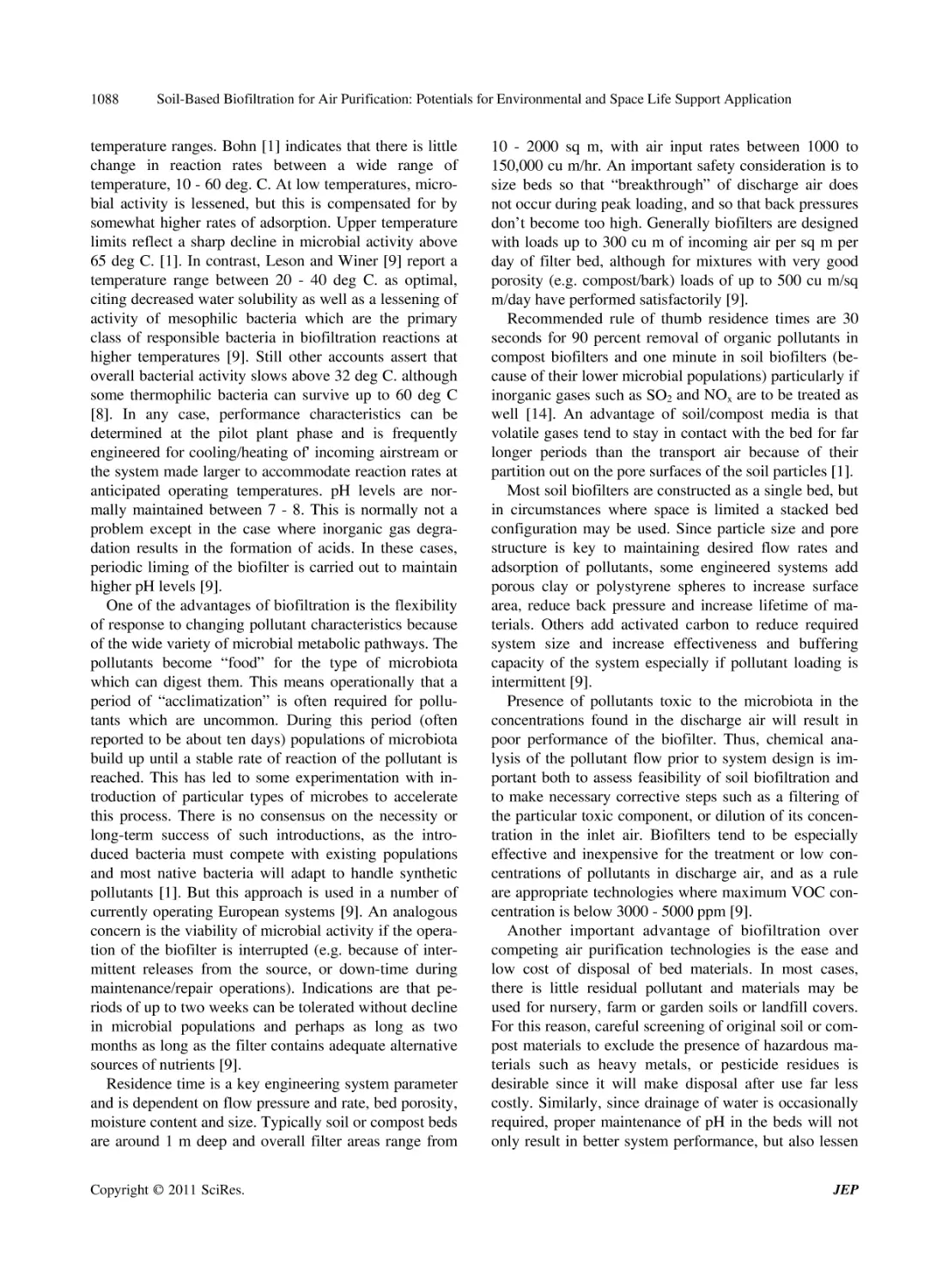
Recent innovations in the field include use of innovative media, such as ceramic beads in the “trickle-bed”
biofilter (Figure 2) to maximize porosity, airflow and
reduce clogging, hybrid systems which use biofiltration
as a preliminary step to conventional air purification to
lower costs, automation to ensure moisture levels are
maintained, and the development of fully enclosed biofilters when applications need more control to ensure
regulatory standards are met [16,17].

7. Limitations of Soil Biofiltration
In principle biofilter microbes can degrade/oxidize any
compound that is thermodynamically unstable in air. The
rule of thumb is that if it burns in air, it degrades in a
biofilter. Polyhalogenated hydrocarbons are therefore untreatable, and mono- and di-halogenated and aliphatic
hydrocarbons degrade significantly only at slow flow rates
through biofilters. The degradation rate increases with the
number of double bonds and the O, N, and S content of the
molecule. The second rule of thumb is that the degradation
rate increases with water solubility of the molecule.
Biofilters are low-temperature catalytic oxidizers, the

1089

catalysts being of course the microbial enzymes. The
low-cost and self-regenerative capability of these catalysts is somewhat offset by their molecular selectivity
and their temperature dependence. The increase of enzymatic rate with temperature is counterbalanced by the
decreasing solubility of gases at increasing temperature.
The net effect is that degradation rates change little over
the range of 10 - 40 C, and degradation occurs over the
range of 1 - 55 C. Freezing inactivates the microbes and
60+ C sterilizes all but a few thermophilic microbes.
Hotter air must cool and dry air must be water saturated
in order for biofiltration to be effective.

8. Air Cleaning Results for Soil Biofilters
Experimental results generally show reaction rates of 10 100 g/cu m per hr for many common air pollutants. In
European installations, pollutant reductions ranged from
50 - 94 percent for organic carbon compounds, with associated odor reductions of 82 - 99 percent. In most facilities with proper system design, reductions of over 90
percent are obtainable. A wide range of industrial applications have had effective use of soil biofiltration: adhesive production, coating operations, chemical manufacturing, iron foundries, print shops, coffee roasting, tobacco processing, fish frying and rendering, flavors and
fragrances, pet food manufacture, slaughter houses, industrial and residential wastewater treatment, gas extraction, waste oil processing.
Sequential removal of pollutants by microbes has been
observed evidently as a result of the varying structures
and biodegradability of the compounds [8]. Bohn [1]
reports results from installations where 100 mg of butanol/kg of compost were removed per hour, an Arizona
facility where rendering plant odors were 99% removed
at 100% relative humidity, and a Texas installation dependent solely on incident rainfal1 where extremely
odorous discharge air has 95% removal when bed is too
wet, and 99% at moderate moisture levels.

9. Space Life Support Research: Combining
Plants with Soil Biofiltration

Figure 2. Schematic of a ceramic bead biofilter for control of
air-phase benzene which includes humidifier to ensure adequate moisture to the biofilter (A) Pump (B) Humidification
unit (C) Liquid benzene (D) Air flow meter (E) U-tube manometer (F) Mixing chamber (G) Benzene inlet (H) Distributor (I) Perforated support (J) Ceramic beads (K) Filter bed
(L) Gas sampling ports (M) Treated air (N) Port for sprinkling fresh media [18].
Copyright © 2011 SciRes.

Bioregenerative life support systems face particularly
acute concerns about the buildup of trace gases because
they will inherently be tightly sealed to prevent loss of
valuable atmosphere. This makes the problem, also seen
in energy-conserving tightly sealed residences and offices, of what has come to be called “sick building syndrome”. This lowered ventilation combined with the out
gassing from synthetic materials (synthetic materials
such as carpets, sealants, solvents, paints, electronic and
electrical equipment etc.) creates an enhancement in concentration of many volatile organic and inorganic compounds that can be up to one or two orders of magnitude
JEP

1090

Soil-Based Biofiltration for Air Purification: Potentials for Environmental and Space Life Support Application

greater than those in the outside environment [15].
Some researchers, especially Wolverton at the NASA
Stennis Space Center, have demonstrated the efficacy of
certain plants, e.g. spider plants, at removing technogenic
and VOC trace gases [19]. These capacities are enhanced
when coupled with soil biofiltration [15].
Biosphere 2 in southern Arizona, USA, is the largest
closed ecological system ever built, with rainforest, savannah, desert, marsh and ocean coral reef ecosystems as
well as an agricultural area and workshops/laboratories
built to support crews of 8 - 10 people [20-22]. In research during the facility’s development, a new system
which integrates soil biofiltration with the growing of
plants was developed. The intention was to provide a
means of biological purification without the use of consumables. Preparatory research for Biosphere 2 conducted at the Environmental Research Laboratory at the
University of Arizona confirmed both the efficacy of soil
biofiltration for removal of potentially hazardous gases
such as CO, CH4 and ethylene and the compatibility with
the soil also supporting food crop production. It was
found that crop production was essentially unchanged
with or without the operation of the underlying soil as a
soil biofiltration. The slight increase in crop yields, during a long-term experiment with 72 one-meter diameter
soil biofiltration planters was attributed to maintenance
of good aerobic conditions in the soils from the operation
of the air pumping system [23].
So the choice of running Biosphere 2’s agriculture
with soil rather than hydroponics opened the way to a
fundamental solution to one of the most vexing of space
life support problems—the maintenance of air quality.
The great diversity of out gassing products from anthropogenic, biogenic and technogenic sources combined
with the small volumes and rapid cycling times of atmospheric components in tightly sealed closed systems create a significant hazard for toxic gas buildups [20]. In
Apollo, Skylab and Space Shuttle cabins, for example,
several hundred trace gases were identified in cabin air
which raises concerns about unanticipated secondary
reactions [24,25]. These air contamination concerns occurred in spite of flushing of the air volume through the
carbon dioxide removal system, and other measures such
as exclusion of certain materials known to be problematic for out gassing, equipment isolation, absorption technologies using charcoal, and absorption of soluble substances on the condensate in humidity-control devices.
The conventional solutions to this problem include filtering methods using charcoal or catalytic oxidation
which will require substantial energy costs and/or expendable parts, such as filters, both of are very costly in
off-planet application [26].
The Biosphere 2 research with soil biofiltration inCopyright © 2011 SciRes.

cluded testing in special closed chambers to simulate the
proportions of open water (ocean and marsh), wilderness
soils and agricultural soils as well as atmosphere. In such
studies, the ability of the soil biofiltration technology to
control a variety of potentially toxic gases was demonstrated. Special closed chambers were built for such studies, and soil biofiltration was also studied in greenhouses and in the Biosphere 2 Test Module. Such studies
confirmed that a period of “conditioning” (prior exposure
to the trace gas in question) leads to greater control, presumably through the increase in their metabolizers; that
higher levels of organic matter increases efficacy; and
that removal rates vary with moisture content of the soils
and airflow rates. Another issue of concern is release of
carbon dioxide: initially there is an net output of carbon
dioxide from the flushing of the soil bed area as soils
typically have far higher CO2 levels (typically 5 - 10
times greater) than the atmosphere, but over time carbon
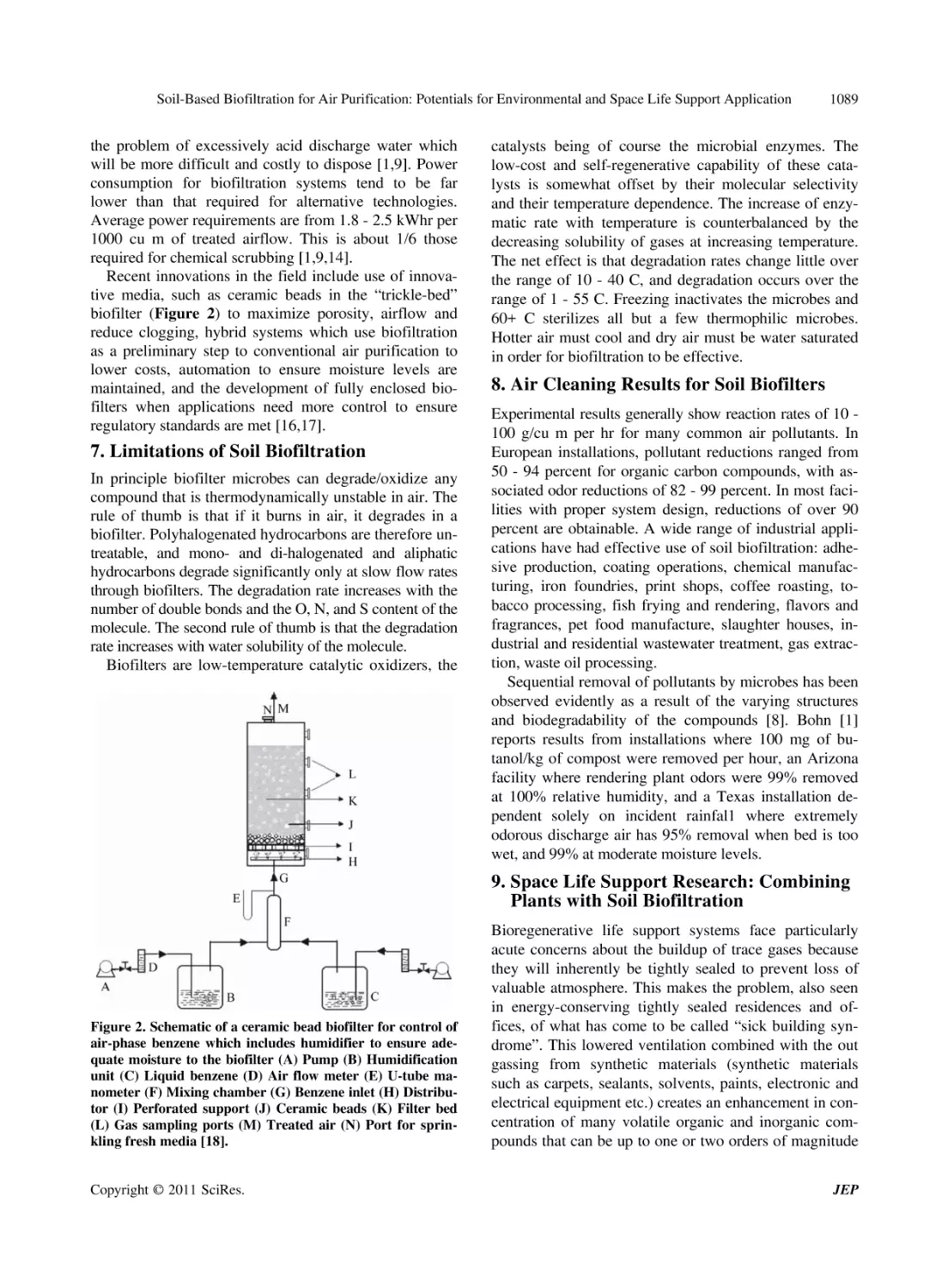
dioxide is not enhanced by operation of the soil biofiltration unit. Figure 3 shows rates of removal of some of the
trace gases tested in preparation for Biosphere 2 [23].
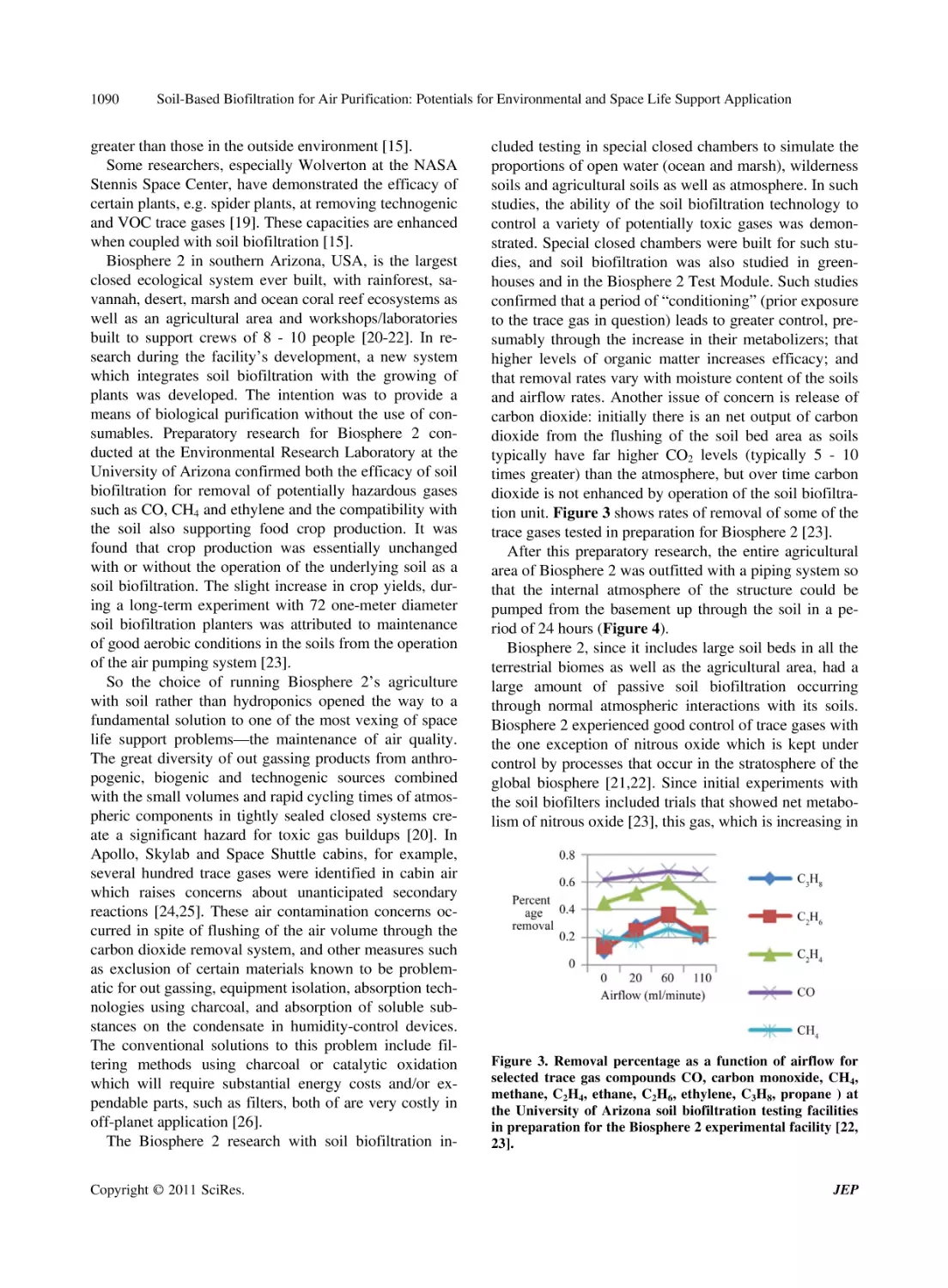
After this preparatory research, the entire agricultural
area of Biosphere 2 was outfitted with a piping system so
that the internal atmosphere of the structure could be
pumped from the basement up through the soil in a period of 24 hours (Figure 4).
Biosphere 2, since it includes large soil beds in all the
terrestrial biomes as well as the agricultural area, had a
large amount of passive soil biofiltration occurring
through normal atmospheric interactions with its soils.
Biosphere 2 experienced good control of trace gases with
the one exception of nitrous oxide which is kept under
control by processes that occur in the stratosphere of the
global biosphere [21,22]. Since initial experiments with
the soil biofilters included trials that showed net metabolism of nitrous oxide [23], this gas, which is increasing in

Figure 3. Removal percentage as a function of airflow for
selected trace gas compounds CO, carbon monoxide, CH4,
methane, C2H4, ethane, C2H6, ethylene, C3H8, propane ) at
the University of Arizona soil biofiltration testing facilities
in preparation for the Biosphere 2 experimental facility [22,
23].
JEP

Soil-Based Biofiltration for Air Purification: Potentials for Environmental and Space Life Support Application

1091

Figure 4. Airflow patterns in the Biosphere 2 agricultural
area. The entire soil was engineered to serve as a “soil bed
reactor” so if pumps were activated in the technical basement below the farm, the internal air of Biosphere 2 could
be pumped through the soils in 24 hours.

the Earth’s biosphere, would be worthy of further detailed studies.
The Biosphere 2 development and success with soil
biofiltration should make the technology a candidate for
inclusion in bioregenerative space life support systems.
The integration of food crop production from the soils
used makes it a multi-benefit addition, and the low energy and non-use of consumables, increase its attractiveness for volume and energy-limited space missions. The
fact that soil biofiltration can adapt to whichever pollutants might otherwise build up make it a robust solution
for the complexity of anthropogenic, biogenic and technogenic gases likely to be found in tightly sealed space
habitats.

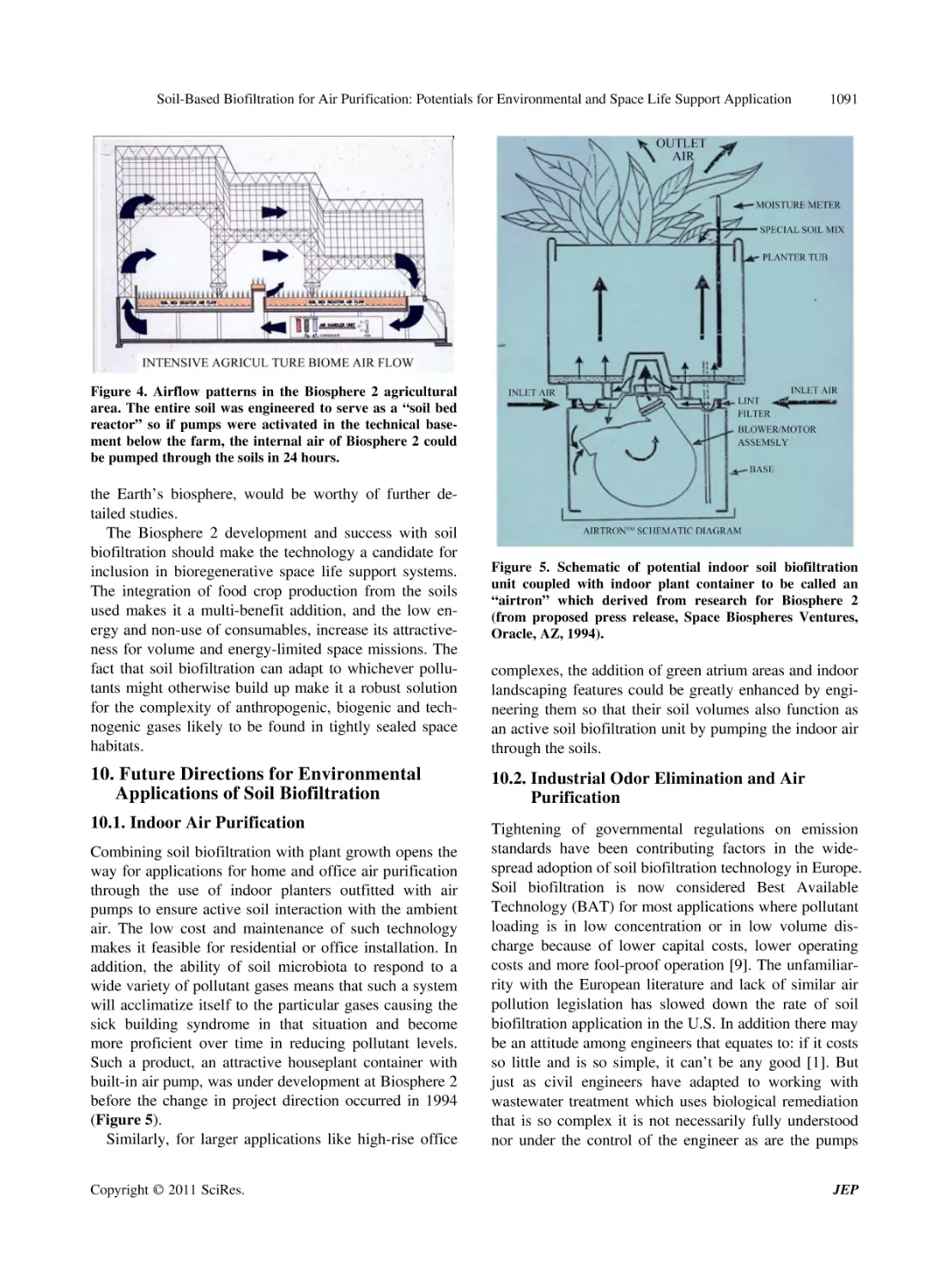
Figure 5. Schematic of potential indoor soil biofiltration
unit coupled with indoor plant container to be called an
“airtron” which derived from research for Biosphere 2
(from proposed press release, Space Biospheres Ventures,
Oracle, AZ, 1994).

complexes, the addition of green atrium areas and indoor
landscaping features could be greatly enhanced by engineering them so that their soil volumes also function as
an active soil biofiltration unit by pumping the indoor air
through the soils.

10. Future Directions for Environmental
Applications of Soil Biofiltration

10.2. Industrial Odor Elimination and Air
Purification

10.1. Indoor Air Purification

Tightening of governmental regulations on emission
standards have been contributing factors in the widespread adoption of soil biofiltration technology in Europe.
Soil biofiltration is now considered Best Available
Technology (BAT) for most applications where pollutant
loading is in low concentration or in low volume discharge because of lower capital costs, lower operating
costs and more fool-proof operation [9]. The unfamiliarrity with the European literature and lack of similar air
pollution legislation has slowed down the rate of soil
biofiltration application in the U.S. In addition there may
be an attitude among engineers that equates to: if it costs
so little and is so simple, it can’t be any good [1]. But
just as civil engineers have adapted to working with
wastewater treatment which uses biological remediation
that is so complex it is not necessarily fully understood
nor under the control of the engineer as are the pumps

Combining soil biofiltration with plant growth opens the
way for applications for home and office air purification
through the use of indoor planters outfitted with air
pumps to ensure active soil interaction with the ambient
air. The low cost and maintenance of such technology
makes it feasible for residential or office installation. In
addition, the ability of soil microbiota to respond to a
wide variety of pollutant gases means that such a system
will acclimatize itself to the particular gases causing the
sick building syndrome in that situation and become
more proficient over time in reducing pollutant levels.
Such a product, an attractive houseplant container with
built-in air pump, was under development at Biosphere 2
before the change in project direction occurred in 1994
(Figure 5).
Similarly, for larger applications like high-rise office
Copyright © 2011 SciRes.

JEP

1092

Soil-Based Biofiltration for Air Purification: Potentials for Environmental and Space Life Support Application

and stirrer which can be turned on or off, so they may
learn to work with the microbial agents responsible for
air purification. Even the apprehension of coming legislation, plus the appreciation of the goodwill that environmental responsibility brings, led Johnson Wax to successfully install a soil biofiltration system for cleaning
propane, isobutane and n-butane discharge from aerosol
cans in Wisconsin. The engineers responsible reported
reductions of over 90% of the hydrocarbons, using a residence time of 15 minutes, operating temperatures of 12 24 deg C. They even had success with trichloroethane
(TCE) a compound previously thought to be too unreactive to be handled by a soil biofilter [15]. Tightening U.S,
standards since the 1980s stimulated research into whether biofilters could be used for such pollutants as VOCs
and the development of newer designs with higher degrees of monitoring, control and automation and using
closed chambers to ensure consistent performance and
regulatory compliance. These advances have resulted in
better performance of biofilters for VOC control [27].

10.3. Reduction of Global Warming
Contributions from Methane (Biogas)
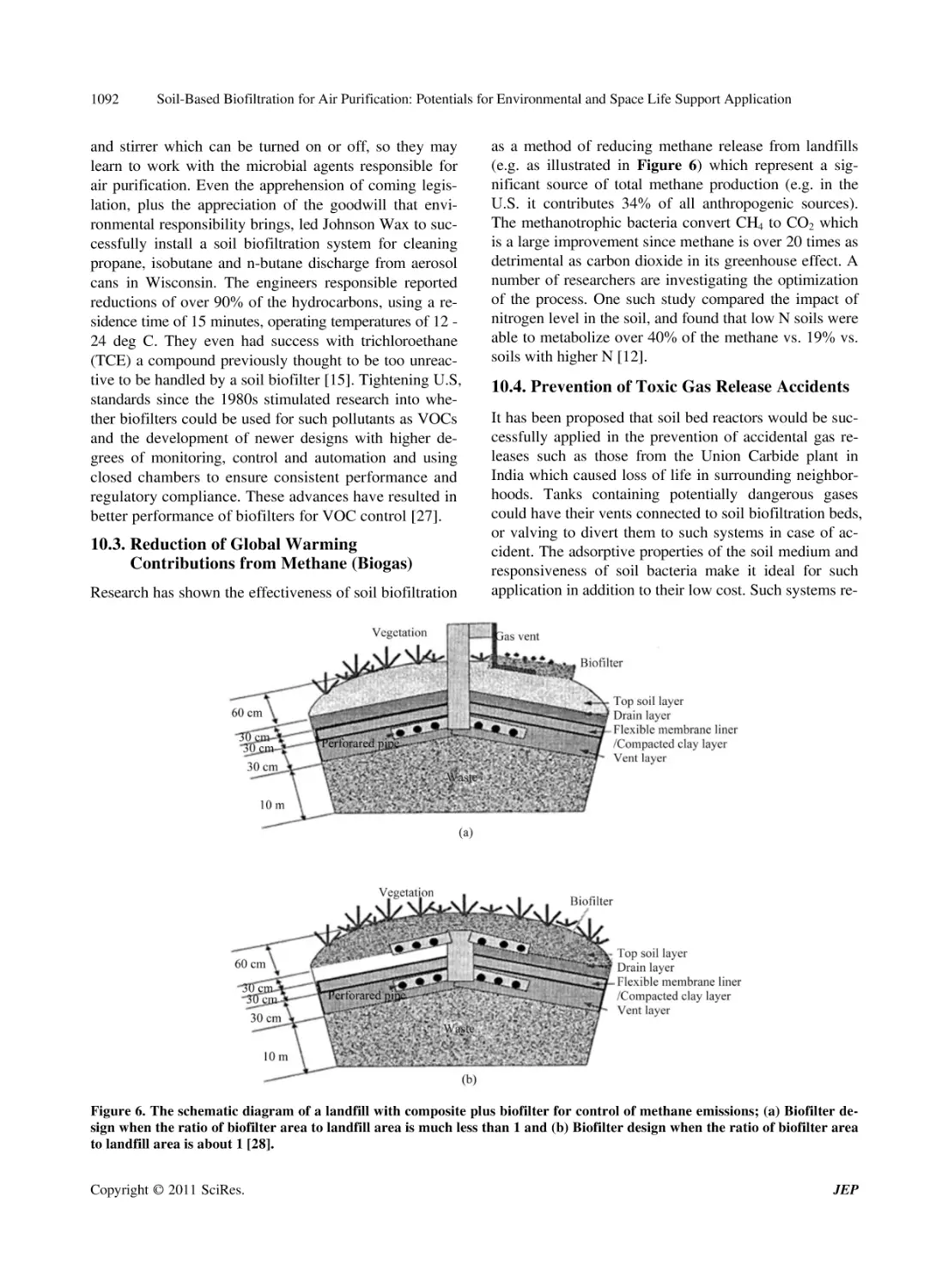
Research has shown the effectiveness of soil biofiltration

as a method of reducing methane release from landfills
(e.g. as illustrated in Figure 6) which represent a significant source of total methane production (e.g. in the
U.S. it contributes 34% of all anthropogenic sources).
The methanotrophic bacteria convert CH4 to CO2 which
is a large improvement since methane is over 20 times as
detrimental as carbon dioxide in its greenhouse effect. A
number of researchers are investigating the optimization
of the process. One such study compared the impact of
nitrogen level in the soil, and found that low N soils were
able to metabolize over 40% of the methane vs. 19% vs.
soils with higher N [12].

10.4. Prevention of Toxic Gas Release Accidents
It has been proposed that soil bed reactors would be successfully applied in the prevention of accidental gas releases such as those from the Union Carbide plant in
India which caused loss of life in surrounding neighborhoods. Tanks containing potentially dangerous gases
could have their vents connected to soil biofiltration beds,
or valving to divert them to such systems in case of accident. The adsorptive properties of the soil medium and
responsiveness of soil bacteria make it ideal for such
application in addition to their low cost. Such systems re-

Figure 6. The schematic diagram of a landfill with composite plus biofilter for control of methane emissions; (a) Biofilter design when the ratio of biofilter area to landfill area is much less than 1 and (b) Biofilter design when the ratio of biofilter area
to landfill area is about 1 [28].
Copyright © 2011 SciRes.

JEP

Soil-Based Biofiltration for Air Purification: Potentials for Environmental and Space Life Support Application

quire virtually no energy, expendable chemicals and maintenance requirements are minimal. They could also be
economically effective in the removal of pollutants when
storage tanks are filled [11]. Soil bed reactors may well
become as commonplace in the 21st century as the smokestack industries were of the 19th and 20th.

11. Conclusions
As previously noted, biofiltration is less suited to some
of the applications where pollutant load is extremely
concentrated, or to treat compounds such as complex,
branched halogens where slower reaction times would
require extreme residence times, and thus large volumes
of material. But for a great many applications in industry,
office, public utility and even indoor air cleanup, biofilters may prove to be cost-effective, reliable and easy to
operate systems—a natural as well as best available technology.

REFERENCES

1093

[12] H. L. Bohn and R. K. Bohn, “Soil Bed Scrubbing of Fugitive Gas Releases,” Journal of Environmental Science
and Health, Vol. A21, 1986, pp. 561-569.
[13] J. Nikiema, L. Bideau and J. Lavoie, “Biogas: A Real
Problem; Biofiltration: A Promising Solution,” In: J. S.
Devinny, Ed., Proceedings 2004 Conference on Biofiltration for Air Pollution Control, USC Center for Sustainable Cities and Department of Civil and Environmental
Engineering, Los Angeles, 2004, pp. 73-80.
[14] M. L. Bradford and R. Krishnamoorthy, “Consider Bioremediation for Waste Site Cleanup,” Chemical Engineering Progress, Vol. 87, No. 2, 1980, pp. 80-85.
[15] D. H. Kampbell, J. T. Wilson, H. W. Read and T. T.
Stocksdale, “Removal of Volatile Aliphatic Hydrocarbons
in a Soil Bioreactor,” Journal of the Air & Waste Management Association, Vol. 7, No. 10, 1987, pp. 1236-1240.
[16] C. Van Lith, G. Leson and R. Michelson, “Evaluating
Design Options for Biofilters,” In: F. E. Reynolds, Ed.,
Proceedings 1996 Conference on Biofiltration, University
of Southern California, The Reynolds Group, Tustin,
1996, pp. 102-127.

[1]

H. L. Bohn, “Consider Biofiltration for Decontaminating
Gases,” Chemical Engineering Progress, Vol. 42, No. 4,
April 1992, pp. 34-40.

[17] J. Devinny, “Topics for Research in Biofiltration,” In: D.
S. Hodge and F. E. Reynolds, Eds., Proceedings 1995
Conference on Biofiltration, University of Southern
California, The Reynolds Group, Tustin, 1995, pp. 6-13.

[2]

W. J. Mitsch, “Ecological Engineering: The Roots and
Rationale of a New Ecological Paradigm,” In: C. Etnier
and B. Guterstam. Eds., Ecological Engineering for
Wastewater Treatment, Bokskagen, Gothensburg, 1991,
pp. 19-37.

[18] E. R. Rene, D. V. S. Murthy and T. Swaminathan,
“Steady- and Transient-State Effects during the Biological
Oxidation of Gas-Phase Benzene in a Continuously Operated Biofilter,” Clean Technology and Environmental
Policy, Published 2009 online.

[3]

M. Gandolla and M. Aragno, “The Importance of Microbiology in Waste Management,” Experientia, Vol. 48,
1992, pp. 362-366. doi:10.1007/BF01923430

[4]

D. A. Carlson and C. P. Leiser, “Soil Beds for the Control
of Sewage Odors,” Journal of the Water Pollution Control Federation, Vol. 38, No. 5, 1966, pp. 829-833.

[19] B. C. Wolverton, “Foliage Plants for Removing Indoor
Air Pollutants from Energy-Efficient Homes,” Economic
Botany, Vol. 38, 1983, pp. 224-228.
doi:10.1007/BF02858837

[5]

H. L. Bohn, G. K. Prososki and J. G. Eckhardt, “Hydrocarbon Absorption by Soils as the Stationary Phase of
Gas-Solid Chromatography,” Journal of Environmental
Quality, Vol. 9, No. 4, 2008, pp. 563-565.
doi:10.2134/jeq1980.00472425000900040005x

[6]

J. M. Lynch, “Soil Biotechnology: Microbiological Factors
in Crop Productivity,” Blackwell Scientific Publications,
Oxford, 1993.

[7]

C. Etnier and B, Guterstam, “Ecological Engineering for
Wastewater Treatment,” Bokskagen, Gothensburg, 1991.

[8]

A. W. Busch, “Aerobic Biological Treatment of Waste
Waters,” Oligodynamics Press, Houston, 1971.

[9]

G. Leson and A. M. Winer, “Biofiltration: An Innovative
Air Pollution Control Technology for VOC Emissions,”
Journal of the Air & Waste Management Association, Vol.
41, No. 8, 1991, pp. 1045-1054.

[10] T. Godish, “Indoor Air Pollution Control,” Lewis Publishers,
Chelsea, 1989.
[11] D. Mathsen, “Evaluating Compost and Biofilter Aeration
Performance,” Biocycle, Vol. 45, No. 6, 2004, pp. 20-25.

Copyright © 2011 SciRes.

[20] M. Nelson, W. F. Dempster, N. Alvarez-Romo and T.
MacCallum, “Atmospheric Dynamics and Bioregenerative
Technologies in a Soil-Based Ecological Life Support
System: Initial Results from Biosphere 2,” Advances in
Space Research, Vol. 14, No. 11, 1994, pp. 417-426.
doi:10.1016/0273-1177(94)90331-X
[21] M. Nelson and W. F. Dempster, “Living in Space: Results from Biosphere 2’s Initial Closure, an Early Testbed
for Closed Ecological Systems on Mars,” In: C. R. Stoker
and C. Emment, Eds., Strategies for Mars: A Guide to
Human Exploration, AAS Publication, San Diego, Vol.
86, 1996, pp. 363-390.
[22] J. P. Allen and M. Nelson, “Biospherics and Biosphere 2,
Mission One (1991-1993),” Ecological Engineering, Vol.
13, 1999, pp. 15-29.
doi:10.1016/S0925-8574(98)00089-5
[23] R. Frye and C. Hodges, “Soil Bed Reactor Work of the
Environmental Research Laboratory of the University of
Arizona in Support of the Biosphere 2 Project,” In: M.
Nelson and G. Soffen, Eds., Biological Life Support Systems, NASA Conference Proceedings 3094, Synergetic
Press, Oracle, 1990, pp. 33-40.
[24] A. Nicogossian and J. F. Parker, “Space Physiology and

JEP

1094

Soil-Based Biofiltration for Air Purification: Potentials for Environmental and Space Life Support Application
Medicine,” NASA SP-447, U.S. Government Printing
Office, Washington DC, 1982, pp. 285-292.

[25] W. J. Rippstein and H. J. Schneider, “Toxicological Aspects of the Skylab Program,” In: R. S. Johnston and L. F.
Dietlin, Eds., Biomedical Results from Skylab, NASA
SP-377, U.S. Government Printing Office, Washington
DC, 1977.
[26] R. M. Hord, “Handbook of Space Technology: Status and
Projections,” CRC Press, Boca Raton, 1985.

Copyright © 2011 SciRes.

[27] G. Wu, J. C. Chabot, J. J. Caron and M. Heitz, “Biological Elimination of Volatile Organic Compounds from
Waste Gases in a Biofilter,” Water, Air and Soil Pollution,
Vol. 101, No. 1-4, 1998, pp. 69-78.
doi:10.1023/A:1004914919615
[28] S. Y. Park, K. W. Brown and J. C. Thomas, “The Use of
Biofilters to Reduce Atmospheric Methane Emissions
from Landfills: Part 1, Biofilter Design,” Water, Soil and
Air Pollution, Vol. 155, No. 1-4, 2004, pp. 63-85.
doi:10.1023/B:WATE.0000026522.36984.42

JEP