/


Текст
Theory and History of Literature
Edited by Wlad Godzich and Joeben Schulte-Sasse
Volume 61.
Volume 60.
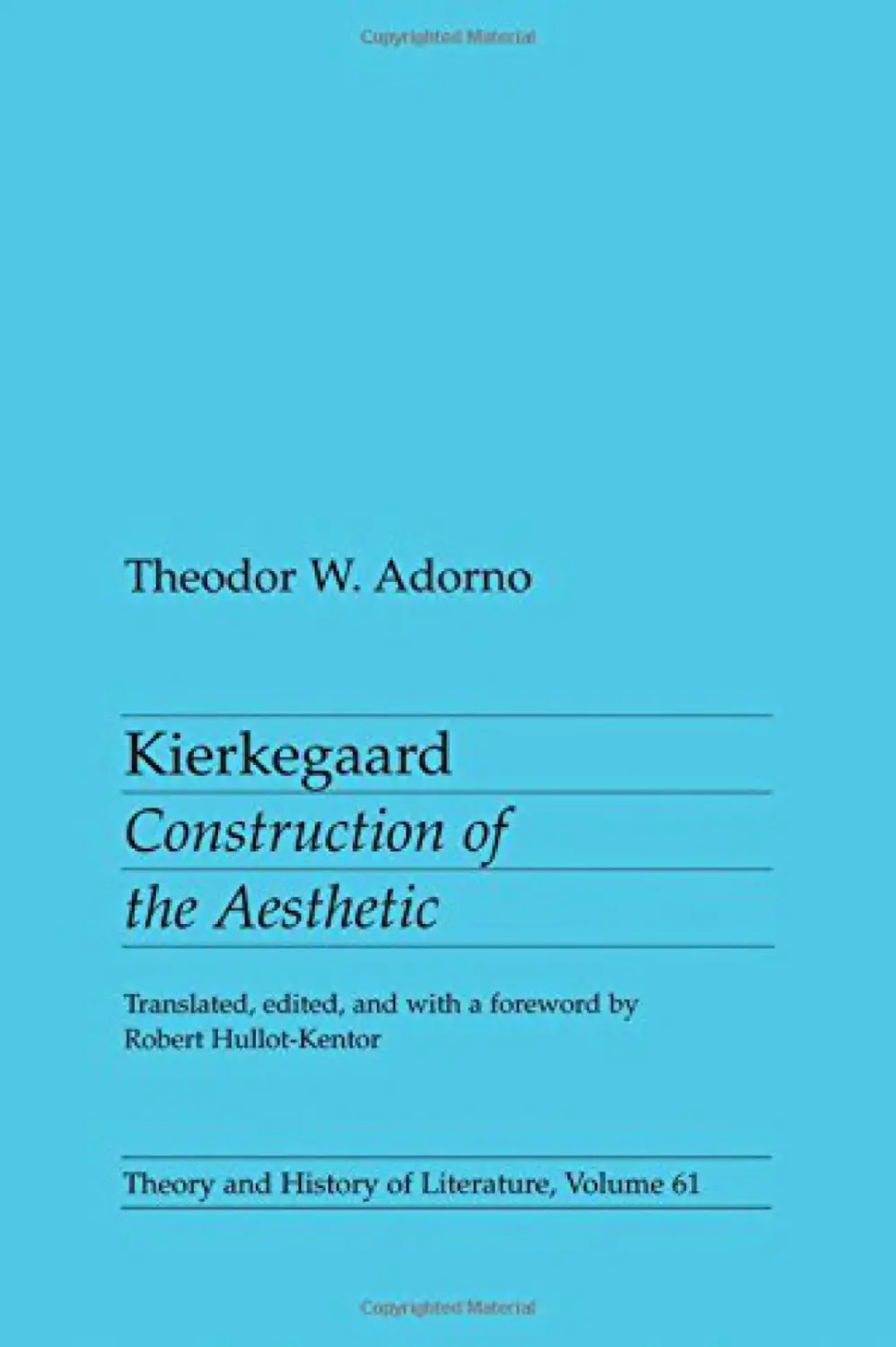
Theodor W. Adorno Kierkegaard: Construction of the Aesthetic
Kristin Ross The Emergence of Social Space: Rimbaud arul the
Paris Commune
Volume 59.
Edited by Lindsay Waters and Wlad Godzich Reading De Man
Volume 58.
F.W.J. Schelling The Philosophy of Art
Volume 57.
Louis Marin Portrait of the King
Volume 56.
Volume 55.
Reading
Peter SloterdijkThinker on Stage: Nietzsche's Materialism
Paul Smith Discerning the Subject
Volume 54.
Reda Bensma'ia The Barthes Effect
Volume 53.
Edmond Cros Theory and Practice of Sociocriticism
Philippe Lejune On Autobiography
Volume
52.
Volume 5 1 .
Volume 50.
Fredric Jameson The Ideologies of Theory: Essays
Fredric Jameson The Ideologies ofTheory: Essays
46.
1971-1986, 2
1971-1986, I
Eugene Vance FromTopic to Tale: Logic and Narrativiry in the
Middle Ages
Jean-Fran�ois Lyotard The Dife
f rend
Volume 45.
Volume 44.
Manfred Frank What is Neostructuralism?
Volume 43.
Michael Nerlich The Ideology of Adventure, Volume 2.
Volume 42.
Theodor W. Adorno
Translated, edited, and with a foreword by
Robert Hullot-Kentor
Daniel Cottom Social Figures: George Eliot, Social History,
and Literary Representation
Michael Nerlich The Ideology of Adventure, Volume I.
Volume 41.
Denis HollierThe College of Sociology
Volume 39.
Geza von Mo lnar Romantic Vision·, Ethical Context: Novalis and
Volume 40.
the Aesthetic
and Modernity
Luiz Costa Lima The Control of the Imaginary
Volume 49.
Volume
Construction of
Thierry d e Duve The Readymade: Marcel Duchamp, Painting
Volume 48.
Volume 47.
Kierkegaard
Peter Sloterdijk Critique of Cynical Reason
Theory and History of Lit
erature, Volume 61
Artistic Autonomy
Volume 38.
Volume 37.
Algirdas Julien Greimas On Meaning: Selected Writings in
SemioticTheory
Nicolas Abraham and Maria TorokThe Wolf Man's Magic Word:
A Cryptonymy
Volume 36.
Alice Yaeger Kaplan Reproductions of Banality: Fascism,
Volume 35.
Volume 34,
Denis HollierThe
Volume 33.
Paul de Man The Resistance toTheory
Uterature, and French Intellectual Life
Politics of Pro se
Geoffrey Hartman The Unremarkable Wordsworth
For other books in the series, see p.
167.
University of Minnesota Press
MinneapoJis
London
Theory and History of Literature
Edited by Wlad Godzich and Joeben Schulte-Sasse
Volume 61.
Volume 60.
Theodor W. Adorno Kierkegaard: Construction of the Aesthetic
Kristin Ross The Emergence of Social Space: Rimbaud arul the
Paris Commune
Volume 59.
Edited by Lindsay Waters and Wlad Godzich Reading De Man
Volume 58.
F.W.J. Schelling The Philosophy of Art
Volume 57.
Louis Marin Portrait of the King
Volume 56.
Volume 55.
Reading
Peter SloterdijkThinker on Stage: Nietzsche's Materialism
Paul Smith Discerning the Subject
Volume 54.
Reda Bensma'ia The Barthes Effect
Volume 53.
Edmond Cros Theory and Practice of Sociocriticism
Philippe Lejune On Autobiography
Volume
52.
Volume 5 1 .
Volume 50.
Fredric Jameson The Ideologies of Theory: Essays
Fredric Jameson The Ideologies ofTheory: Essays
46.
1971-1986, 2
1971-1986, I
Eugene Vance FromTopic to Tale: Logic and Narrativiry in the
Middle Ages
Jean-Fran�ois Lyotard The Dife
f rend
Volume 45.
Volume 44.
Manfred Frank What is Neostructuralism?
Volume 43.
Michael Nerlich The Ideology of Adventure, Volume 2.
Volume 42.
Theodor W. Adorno
Translated, edited, and with a foreword by
Robert Hullot-Kentor
Daniel Cottom Social Figures: George Eliot, Social History,
and Literary Representation
Michael Nerlich The Ideology of Adventure, Volume I.
Volume 41.
Denis HollierThe College of Sociology
Volume 39.
Geza von Mo lnar Romantic Vision·, Ethical Context: Novalis and
Volume 40.
the Aesthetic
and Modernity
Luiz Costa Lima The Control of the Imaginary
Volume 49.
Volume
Construction of
Thierry d e Duve The Readymade: Marcel Duchamp, Painting
Volume 48.
Volume 47.
Kierkegaard
Peter Sloterdijk Critique of Cynical Reason
Theory and History of Lit
erature, Volume 61
Artistic Autonomy
Volume 38.
Volume 37.
Algirdas Julien Greimas On Meaning: Selected Writings in
SemioticTheory
Nicolas Abraham and Maria TorokThe Wolf Man's Magic Word:
A Cryptonymy
Volume 36.
Alice Yaeger Kaplan Reproductions of Banality: Fascism,
Volume 35.
Volume 34,
Denis HollierThe
Volume 33.
Paul de Man The Resistance toTheory
Uterature, and French Intellectual Life
Politics of Pro se
Geoffrey Hartman The Unremarkable Wordsworth
For other books in the series, see p.
167.
University of Minnesota Press
MinneapoJis
London
To My Friend Siegfried Kracauer
Copyright C1989 by the UDiversity of Minnesota
Originally published as Kierlu:gQQI't!, Ko71Struktio11 deJ AstMti.!chen,
copyright e 1962 by Suhdwnp Verlag, Frankfurt am Main.
All
rights reserved. No part of this publication may be reproduced,
ston:d in a nolrieval system, or transmit
t ed, in any form or hy any
means, electronic, mechanical, photocopying, recording, or otherwise,
without the prior written permission of the publisher.
Published by the University of Minnesota Press
111 Third Avenue South, Suite 290, Minneapolis, MN 55401-2520.
Published simultaneously in Canada
by Fitzhenry & Whiteside Limited. Markham.
Printed in the United States of America on acid-free paper.
Third printing 1999
LlbntrY ofCongress cataloglng-ln-Publlcation Data
Adorno, Theodor W., 1903-1969.
[Kierkegaard. English]
Kierkegaard : construction of lhe aesthetic I Theodor W. Adorno;
translated, edited, and with a foreword hy Robert Hullot-Kentor.
p.
em.-(Theory and history of literature: v. 61)
Translation of Kierkegaanl.
Includes bibliographical references and index.
ISBN 0-8166-1186-6
ISBN 0-8166-1187-4 (pbk.)
1. Kierkegaard, Sl!ren, 1813-1855-Contributions in aesthetics.
2. Aesthetics, Modern-19th century.
11. Title.
I. Hullot-Kentor, Robert.
Ill. Series.
B3199.A33KS413
1989
111'.85'0924 - d c l 9
The University ofMinnesota
is an equal-opportllllity
educalor and employer.
88-14389
To My Friend Siegfried Kracauer
Copyright C1989 by the UDiversity of Minnesota
Originally published as Kierlu:gQQI't!, Ko71Struktio11 deJ AstMti.!chen,
copyright e 1962 by Suhdwnp Verlag, Frankfurt am Main.
All
rights reserved. No part of this publication may be reproduced,
ston:d in a nolrieval system, or transmit
t ed, in any form or hy any
means, electronic, mechanical, photocopying, recording, or otherwise,
without the prior written permission of the publisher.
Published by the University of Minnesota Press
111 Third Avenue South, Suite 290, Minneapolis, MN 55401-2520.
Published simultaneously in Canada
by Fitzhenry & Whiteside Limited. Markham.
Printed in the United States of America on acid-free paper.
Third printing 1999
LlbntrY ofCongress cataloglng-ln-Publlcation Data
Adorno, Theodor W., 1903-1969.
[Kierkegaard. English]
Kierkegaard : construction of lhe aesthetic I Theodor W. Adorno;
translated, edited, and with a foreword hy Robert Hullot-Kentor.
p.
em.-(Theory and history of literature: v. 61)
Translation of Kierkegaanl.
Includes bibliographical references and index.
ISBN 0-8166-1186-6
ISBN 0-8166-1187-4 (pbk.)
1. Kierkegaard, Sl!ren, 1813-1855-Contributions in aesthetics.
2. Aesthetics, Modern-19th century.
11. Title.
I. Hullot-Kentor, Robert.
Ill. Series.
B3199.A33KS413
1989
111'.85'0924 - d c l 9
The University ofMinnesota
is an equal-opportllllity
educalor and employer.
88-14389
Contents
The boat appeared to be hanging, as if by magic, midway down, upon the
interior surface of a funnel vast in circumference, prodigious in depth, and
whose perfectly smooth sides might have been mistaken for ebony, but for the
bewildering rapidity with which they spun around, and for the gleaming and
ghastly radiance they shot forth, as the rays of the full moon, from that
circular rift amid the clouds . . . streamed in a flood of golden glory along
the black walls, and far away down into the inmost recesses of the abyss.
Edgar Allan Poe
(1841)
Translator's Acknowledgments ix
Foreword.: Critique of the Organic Robert Hullot-Kentor x
I. Exposition of the Aesthetic 3
Poetry �d Dialectic� concept-The Claim to Poetry-Poetry as
.
ltlustrabon- Aesthetle•sm
-Masks and Methods- Equivocations
Classicist Material Aesthetics- Fonnalism
2. Constitution of Inwardness 24
"Scripture" -Objectless Inwardness-Immanent Dialectic-Philosophy
of History-'' Situation''
-
Intlrieur
3. Explication of In�ardness 47
Sociology-The Spiritual Body-Mythical Content-Dialectical
Conjuration-Melancholy-Baroque-Paradoxies of the Aesthetic
4. Concept of Existence
68
�
Ex stence and 'lhlth-Paradoxy and Ambiguity-The Abstract Self
EXIStence Mythical-Objective Despair-Reversal of the Existential
Dialectic
Contents
The boat appeared to be hanging, as if by magic, midway down, upon the
interior surface of a funnel vast in circumference, prodigious in depth, and
whose perfectly smooth sides might have been mistaken for ebony, but for the
bewildering rapidity with which they spun around, and for the gleaming and
ghastly radiance they shot forth, as the rays of the full moon, from that
circular rift amid the clouds . . . streamed in a flood of golden glory along
the black walls, and far away down into the inmost recesses of the abyss.
Edgar Allan Poe
(1841)
Translator's Acknowledgments ix
Foreword.: Critique of the Organic Robert Hullot-Kentor x
I. Exposition of the Aesthetic 3
Poetry �d Dialectic� concept-The Claim to Poetry-Poetry as
.
ltlustrabon- Aesthetle•sm
-Masks and Methods- Equivocations
Classicist Material Aesthetics- Fonnalism
2. Constitution of Inwardness 24
"Scripture" -Objectless Inwardness-Immanent Dialectic-Philosophy
of History-'' Situation''
-
Intlrieur
3. Explication of In�ardness 47
Sociology-The Spiritual Body-Mythical Content-Dialectical
Conjuration-Melancholy-Baroque-Paradoxies of the Aesthetic
4. Concept of Existence
68
�
Ex stence and 'lhlth-Paradoxy and Ambiguity-The Abstract Self
EXIStence Mythical-Objective Despair-Reversal of the Existential
Dialectic
viii D CONTENTS
Translator's Acknowledgments
5. On the Logic of the Spheres 86
Existence and System-Origin of the Spheres- "Constellation"
_
Overlapping of Idealist and Ontological Elements- umor, Acctdent,
f.I
and "Motivation"-Confinen and "Leap"-Dialectic of the Spheres
Intermittence-Projection-Trancendences
6. Reason and Sacrifice 106
Self-Destruction of Idealism-Mythical Sacrifc
i e- "Gnosis"-Paradox
Sacrifice of Mere Spirit-Passio
7. Construction of the Aesthetic
123
Crisis of Melancholy-Passing Away of Existence-Images and
_
Spheres-Subjective "How" and Enmity toward Art-Fantasy m the
Fragment-Transcendence of Longing
Notes 145
Index 161
I would like to thank the University Professors Program at Boston University
which supported this translation during a post·doctoral year; Hobart and William
Smith Colleges for funding my research in Frankfurt; and the people who offered
their assistance: Kevin Sullivan helped resolve numberless difficulties, Lawrence
Ryan was constantly generous in the discussion of textual issues. Ernst Behler,
Rolf Tiedemann, Gary Smith, Steve Babson, and Benjamin Daise all contributed
In different ways.
viii D CONTENTS
Translator's Acknowledgments
5. On the Logic of the Spheres 86
Existence and System-Origin of the Spheres- "Constellation"
_
Overlapping of Idealist and Ontological Elements- umor, Acctdent,
f.I
and "Motivation"-Confinen and "Leap"-Dialectic of the Spheres
Intermittence-Projection-Trancendences
6. Reason and Sacrifice 106
Self-Destruction of Idealism-Mythical Sacrifc
i e- "Gnosis"-Paradox
Sacrifice of Mere Spirit-Passio
7. Construction of the Aesthetic
123
Crisis of Melancholy-Passing Away of Existence-Images and
_
Spheres-Subjective "How" and Enmity toward Art-Fantasy m the
Fragment-Transcendence of Longing
Notes 145
Index 161
I would like to thank the University Professors Program at Boston University
which supported this translation during a post·doctoral year; Hobart and William
Smith Colleges for funding my research in Frankfurt; and the people who offered
their assistance: Kevin Sullivan helped resolve numberless difficulties, Lawrence
Ryan was constantly generous in the discussion of textual issues. Ernst Behler,
Rolf Tiedemann, Gary Smith, Steve Babson, and Benjamin Daise all contributed
In different ways.
R)REWORD 0 xi
aesthetics attempts to locate
Foreword
Critique of the Org anic
Robert Hullot-Kentor
: The chancellor
This is an unlikely spot for a yiddish story, bu � nevertheless
t �as been
harves
the
that
kmg
the
s
infonn
and
rushes into the throne room
_ to setze what
kmg
the
urges
He
.
insane
falls
its
from
eats
infected· whoever
�; he w�ll
untainted stores remain and rule a mad people sanely. The king refuse
we w1ll
llor,
chance
his
tells
he
ad."
not be separated from his people. "Inste
has
w
what
kn
will
we
mad
�
are
we
when
that
so
make signs on our foreheads
turned
h1story
would awaken them from
h appened . " The idea of a mark. that
.
e mark
IS not beyond susp1c1on. Th
. on the fore1t
but
t,
interes
some
bears
r
disaste
.
IS not a thought
ttmes
lt
difficu
in
it
to
nce
. ontrol
head is of sacrificial lineage and recurre
to gam
effort
!he.
.
reflex
dable
depen
7
most
its
to crack open history, but
nm•sm�
n
�e
n
has
atJO
domm
e
becaus
not
ce,
sacrifi
of
_
form
the
has always had
. t�e po nt
.
_
IS
Thts
ahon
domm
of
�
ed but because sacrifice is the dialectical truth
s
nr (1947). Domination inevitably 1mphe
� Adorno's Dialectic of Enlightenme
the
to
nt
mom
t
ce to the sacrifice of the prese�
�
�acrifice:1 the ego 'owes its existenoperan
othm
ts
ol,
cont
fic
scienti
o�
di
�
? other
�
modus
the
_
ction,
abstra
";
future
t
an
a1m
s
Adorno
sal.
umver
the
rac'_llg out
than the sacrifice of the particular to
lsiOns of
compu
the
escape
to
effort
cal
histori
the
that
this dialectic was to show
_ .
vatton
preser
self
t
th
nature fails to achieve human autonomy because the nature � y �IS therefore a
to preserve is destroyed by the logic of self-preservation. Histor
o's alternate formul�
rocess of its own transfonnation into nature or-in Adornmea
it
which
from
ity
necess
of
ion
condit
�t to escape. Th1s
the
tion-into myth,
_
and here th�
tics,
aesthe
an
s
analysis of the dialectic of enlightenment impl1e
: Adorno s
transformed
hat
somew
returns
interest of the mark on the forehead
·
•
:
·
·
an image that would awaken history from its self
consuming progress as the compulsion to sacrifice. Such an image, however,
would not be simple mimicry of the logic of sacrifice, but neither is it dialecti
cally conceivable that the image would circumvent sacrifiCe. Rather, as Adorno
wrote in one of his final formulations, it would be sacrifice that would become
memory of nature as the expression of sacrifice: "All that art is capable of is to
grieve for the sacrifice it makes and which it itself, in its powerlessness, is. "2
KierkegQfJrd: Construction of t� Aest�tic was the first major philosophical
study Adorno published; it appeared in bookstores on February 27, 1933, the day
that Hitler declared a national emergency and suspended the free dom of the
press, making the transition from chancellor to dictator.3 References to Kierke
Raard inevitably note this as ironic. There is nothing ironic about it: Kierkegaard
is the study of the unconscious reversal of history into nature, Adorno's first anal
ysis of the dialectic of enlightenment. According to Adorno, sacrifiCe "occupies
the innermost cell of his [Kierkegaard's) thought. "4 The process of his philoso
phy is a sacrificial struggle against nature: ''through sacrifice be asserts his
rule,"' which nevertheless succumbs to nature because "sacrifice is itself myth
ical.' '6 Although the ostensible claim of the philosophy of existence was to over
come the abstractness of idealism, abstraction remains its unwitting course in its
Hacrificial progress through the "stages on life's way": the aesthetic, the ethical,
11nd the religious spheres. "Existence" itself turns out to be a pure abstractio n of
which nothing can be predicated, and the leap of faith is not an act of transcen
dence, but the despairing culmination of self-sacrifice. The truth-content of
"existence," on the other band, is in the sphere that ''existence" rejects by its
own progress, the aesthetic sphere of semblance: the sphere of melancholy, frag
mentation, transience. In aesthetic semblance, existence passes away as the wish
for a reality without sacrifice; it is the sphere of the memory of nature. Kierke
Raard: Construction ofrhe Aesthetic intends to recuperate the sphere of the aes
thetic from the dialectic of existence: "not to forget in dreams the present world,
but to change it by the strength of an image. "7
Early Adorno
Although Kierkegaard: Construction oft� Aesthetci was Adorno's first pub
IIJhed philosophical work, be was not a novice. He had already written more than
1 hundred articles-mainly on music-as well as two extensive philosophical
1tudies: a doctoral dissertation, The 7ranscendent Thing and Noema in Husser/'s
Phenomenology (1924), and a Habili.tationscs hrift The Concept ofthe Uncon
ICious in 7ranscendental Psychology (1927), an analysis of the concept of the
unconscious in Freud and Kant. This latter work should have qualified Adorno
tor a professorship at the Johann Wolfgang Goethe University in Frankfurt, but
,
R)REWORD 0 xi
aesthetics attempts to locate
Foreword
Critique of the Org anic
Robert Hullot-Kentor
: The chancellor
This is an unlikely spot for a yiddish story, bu � nevertheless
t �as been
harves
the
that
kmg
the
s
infonn
and
rushes into the throne room
_ to setze what
kmg
the
urges
He
.
insane
falls
its
from
eats
infected· whoever
�; he w�ll
untainted stores remain and rule a mad people sanely. The king refuse
we w1ll
llor,
chance
his
tells
he
ad."
not be separated from his people. "Inste
has
w
what
kn
will
we
mad
�
are
we
when
that
so
make signs on our foreheads
turned
h1story
would awaken them from
h appened . " The idea of a mark. that
.
e mark
IS not beyond susp1c1on. Th
. on the fore1t
but
t,
interes
some
bears
r
disaste
.
IS not a thought
ttmes
lt
difficu
in
it
to
nce
. ontrol
head is of sacrificial lineage and recurre
to gam
effort
!he.
.
reflex
dable
depen
7
most
its
to crack open history, but
nm•sm�
n
�e
n
has
atJO
domm
e
becaus
not
ce,
sacrifi
of
_
form
the
has always had
. t�e po nt
.
_
IS
Thts
ahon
domm
of
�
ed but because sacrifice is the dialectical truth
s
nr (1947). Domination inevitably 1mphe
� Adorno's Dialectic of Enlightenme
the
to
nt
mom
t
ce to the sacrifice of the prese�
�
�acrifice:1 the ego 'owes its existenoperan
othm
ts
ol,
cont
fic
scienti
o�
di
�
? other
�
modus
the
_
ction,
abstra
";
future
t
an
a1m
s
Adorno
sal.
umver
the
rac'_llg out
than the sacrifice of the particular to
lsiOns of
compu
the
escape
to
effort
cal
histori
the
that
this dialectic was to show
_ .
vatton
preser
self
t
th
nature fails to achieve human autonomy because the nature � y �IS therefore a
to preserve is destroyed by the logic of self-preservation. Histor
o's alternate formul�
rocess of its own transfonnation into nature or-in Adornmea
it
which
from
ity
necess
of
ion
condit
�t to escape. Th1s
the
tion-into myth,
_
and here th�
tics,
aesthe
an
s
analysis of the dialectic of enlightenment impl1e
: Adorno s
transformed
hat
somew
returns
interest of the mark on the forehead
·
•
:
·
·
an image that would awaken history from its self
consuming progress as the compulsion to sacrifice. Such an image, however,
would not be simple mimicry of the logic of sacrifice, but neither is it dialecti
cally conceivable that the image would circumvent sacrifiCe. Rather, as Adorno
wrote in one of his final formulations, it would be sacrifice that would become
memory of nature as the expression of sacrifice: "All that art is capable of is to
grieve for the sacrifice it makes and which it itself, in its powerlessness, is. "2
KierkegQfJrd: Construction of t� Aest�tic was the first major philosophical
study Adorno published; it appeared in bookstores on February 27, 1933, the day
that Hitler declared a national emergency and suspended the free dom of the
press, making the transition from chancellor to dictator.3 References to Kierke
Raard inevitably note this as ironic. There is nothing ironic about it: Kierkegaard
is the study of the unconscious reversal of history into nature, Adorno's first anal
ysis of the dialectic of enlightenment. According to Adorno, sacrifiCe "occupies
the innermost cell of his [Kierkegaard's) thought. "4 The process of his philoso
phy is a sacrificial struggle against nature: ''through sacrifice be asserts his
rule,"' which nevertheless succumbs to nature because "sacrifice is itself myth
ical.' '6 Although the ostensible claim of the philosophy of existence was to over
come the abstractness of idealism, abstraction remains its unwitting course in its
Hacrificial progress through the "stages on life's way": the aesthetic, the ethical,
11nd the religious spheres. "Existence" itself turns out to be a pure abstractio n of
which nothing can be predicated, and the leap of faith is not an act of transcen
dence, but the despairing culmination of self-sacrifice. The truth-content of
"existence," on the other band, is in the sphere that ''existence" rejects by its
own progress, the aesthetic sphere of semblance: the sphere of melancholy, frag
mentation, transience. In aesthetic semblance, existence passes away as the wish
for a reality without sacrifice; it is the sphere of the memory of nature. Kierke
Raard: Construction ofrhe Aesthetic intends to recuperate the sphere of the aes
thetic from the dialectic of existence: "not to forget in dreams the present world,
but to change it by the strength of an image. "7
Early Adorno
Although Kierkegaard: Construction oft� Aesthetci was Adorno's first pub
IIJhed philosophical work, be was not a novice. He had already written more than
1 hundred articles-mainly on music-as well as two extensive philosophical
1tudies: a doctoral dissertation, The 7ranscendent Thing and Noema in Husser/'s
Phenomenology (1924), and a Habili.tationscs hrift The Concept ofthe Uncon
ICious in 7ranscendental Psychology (1927), an analysis of the concept of the
unconscious in Freud and Kant. This latter work should have qualified Adorno
tor a professorship at the Johann Wolfgang Goethe University in Frankfurt, but
,
xii
D FOREWORD
FOREWORD D Jtiii
.
t1que. "II
''unworthy topic.'' Three years later, Adorno, age twe�;�ty-seven, submitted the
.
Tbe Image, however, Adorno would disput
e: the organ1c was not the
measure of his work.
ested in them; as far as the Kierkegaard study is concerned, it was not exclusively
Enlightenment and Myth
its neo-Kantian sponsor, Hans Cornelius, rejected it-obviously hedging-as an
Kierkegaard study, this time successfully under the direction of Paul Tillich The
:
order of these projects of course does not document when Adorno became tnter
written in the three years fol1owing the completion of the Kant/Freud study. Its
gapless density depended
on
Whether they admired the book or not, the other early reviewers of KierkegatJTd,
a visceral familiarity with every word of Kierke
like most since, found it impossible to resume. F. J. Brecht wrote:
gaard 's extensive oeuvre. From a letter of Siegfried Kracauer toLeo Lowenthal,
this book is diff�eult; to
dated 1923, it is evident that the twenty-year-old Adorno was already completely
getic and adroit thought does not solidify into binding and definitive concepts;
undoubtably take such a difficult form that the young lady will have to have read
rather it rolls by in expressive and polished formulations that
the whole of Kierkegaard . .. to understand Teddie at all."8 Kierkegaard, then,
was one of Adorno's earliest interests, which is not surprising.In the early 1920s,
that the reading was fatiguing: "the peculiarly swirling and swimming" text
made understanding difficult.14 Karl Loewith called the book insightful in spite
called, and al most every major development in ph ilosophy depended on how Kierke
nf its "dictatorial, ranting and mannered style;"1� if he had added "arty" and
gaard was appropriated: the emergence of existential philosophy in Jasper's first
''artificial" he would have covered the freld of invectives leveled at Adorno ever
publications, the "dialectical theology" o f Barth and Tillich, and later in the
Mince. Loewith. snipped out lists of themes from the book and packed them mis
decade, Heidegger's Being and Time, all drew on Kierkegaard's concept of exist
cellaneously into paragraphs, quoting extensively. This was characteristic of the
ence as antidote to idealism. In this historical context the contentiousness of
reviews. None of the reviewers considered why the book's style was so difficult
Adorno's decipherment of Kierkegaard's philosophy as the apex of idealism
or off-putting, or if what they all found interesting in it might have bee n insep
becomes evident. Although political turmoil and the war dissolved this context,
urable from a style they took to be a blurring distraction. They all could, and did,
Adorno's interest in Kierkegaard continued through the war and after. In l 940 he
licftly recite the problem of idealism, in Hegel, in Kierkegaard, in Adorno, but as
gave a talk, later published in English as "Kierkegaard's Doctrine ofLove,"9 to
u
a seminar convened by Paul Tillich in New York City, where both had emigrated
several years earlier. Whereas the Construction of the Aesthetic dealt exclusively
object to speech. All of Adorno's reviewers took their pose of masterful distance
from the book as assurance that they could not possibly be implicated in such a
difficult problem. It occurred to none of them to bring to bear on the form of the
In 1963, six years before his death, he wrote "Kierkegaard.
One More Time," a study of Kierkegaard's last publications, their political
review a central insight of the book: that abstraction is the mark of the mythical.
implications and his polemic against the established church.10 Apart from works
Bound to clear-headedness yet unable to organize a work they shattered into a
several smaller pieces not mentioned here,
�haos of partial themes under the pressure of summarizing it, their vision swarms
Adorno's writings bristle with reference to him, often explicitly, frequently as
with an archaic anxiety.
sous-entendu. And in another sense all of Adorno's works draw arcs out from
Kierkegaard because it was in this first major work that Adorno developed the
fundamental ideas and forms of everything he ever wrote after it. Passages from
Kierkegaard could be transposed seamlessly to his final works, as well as the
reverse. In his review of the book, published only several days after it appeared.
but after he had already fled the country, Benjamin was prescient "In this book
much is contained in little space. Very possible that the author's later books will
spring from this one. In any case the book belongs to �at class of �e and �
culiar first-works in which a winged thought appears
m
the puppatton of
en-
parody of the critique of idealism. Idealism floundered because of its inability
In fulfill its claim of overcoming the division of form and content, of bringing its
with Kierkegaard as a philosopher, the 1940 lecture extended the analysis to his
are
are frequently over
whelmingly' successful but also hovering and fragile.''13 Another complained
German philosophy was in the midst of a Kierkegaard renaissance, as it was
directly on Kierkegaard, and there
•'
Helmut Kuhn found it brilliant but flawed: "Its deficiency . . .is that its ener
gaardese: "If Teddie one day makes a real declaration of his love ... it will
writings.
lb discuss
sum it up without distorting it, impossible''12 and then
took the reviewer's prerogative to shoot and run and panned it in half a page.
familiar with Kierkegaard's writings and perhaps spoke an adolescent Kierke
religious
'
'
.
·
.
'
Chapter and Paragraph
It Is hard to find other words than paragraph and chapte
r to describe the basic
oraanization of KierkegatJTd, Apparendy,
seven chapters are composed of
lllquence of paragraphs. But these concepts are misleading
as any
a
attempt to read
llralght from one paragraph to the next, even
one sentence to the next, makes
IVIdent. The pans are not related to each other
by way of the compulsion of argu
mentation, logic's instinctual life; while they
are completely logical, they do not
xii
D FOREWORD
FOREWORD D Jtiii
.
t1que. "II
''unworthy topic.'' Three years later, Adorno, age twe�;�ty-seven, submitted the
.
Tbe Image, however, Adorno would disput
e: the organ1c was not the
measure of his work.
ested in them; as far as the Kierkegaard study is concerned, it was not exclusively
Enlightenment and Myth
its neo-Kantian sponsor, Hans Cornelius, rejected it-obviously hedging-as an
Kierkegaard study, this time successfully under the direction of Paul Tillich The
:
order of these projects of course does not document when Adorno became tnter
written in the three years fol1owing the completion of the Kant/Freud study. Its
gapless density depended
on
Whether they admired the book or not, the other early reviewers of KierkegatJTd,
a visceral familiarity with every word of Kierke
like most since, found it impossible to resume. F. J. Brecht wrote:
gaard 's extensive oeuvre. From a letter of Siegfried Kracauer toLeo Lowenthal,
this book is diff�eult; to
dated 1923, it is evident that the twenty-year-old Adorno was already completely
getic and adroit thought does not solidify into binding and definitive concepts;
undoubtably take such a difficult form that the young lady will have to have read
rather it rolls by in expressive and polished formulations that
the whole of Kierkegaard . .. to understand Teddie at all."8 Kierkegaard, then,
was one of Adorno's earliest interests, which is not surprising.In the early 1920s,
that the reading was fatiguing: "the peculiarly swirling and swimming" text
made understanding difficult.14 Karl Loewith called the book insightful in spite
called, and al most every major development in ph ilosophy depended on how Kierke
nf its "dictatorial, ranting and mannered style;"1� if he had added "arty" and
gaard was appropriated: the emergence of existential philosophy in Jasper's first
''artificial" he would have covered the freld of invectives leveled at Adorno ever
publications, the "dialectical theology" o f Barth and Tillich, and later in the
Mince. Loewith. snipped out lists of themes from the book and packed them mis
decade, Heidegger's Being and Time, all drew on Kierkegaard's concept of exist
cellaneously into paragraphs, quoting extensively. This was characteristic of the
ence as antidote to idealism. In this historical context the contentiousness of
reviews. None of the reviewers considered why the book's style was so difficult
Adorno's decipherment of Kierkegaard's philosophy as the apex of idealism
or off-putting, or if what they all found interesting in it might have bee n insep
becomes evident. Although political turmoil and the war dissolved this context,
urable from a style they took to be a blurring distraction. They all could, and did,
Adorno's interest in Kierkegaard continued through the war and after. In l 940 he
licftly recite the problem of idealism, in Hegel, in Kierkegaard, in Adorno, but as
gave a talk, later published in English as "Kierkegaard's Doctrine ofLove,"9 to
u
a seminar convened by Paul Tillich in New York City, where both had emigrated
several years earlier. Whereas the Construction of the Aesthetic dealt exclusively
object to speech. All of Adorno's reviewers took their pose of masterful distance
from the book as assurance that they could not possibly be implicated in such a
difficult problem. It occurred to none of them to bring to bear on the form of the
In 1963, six years before his death, he wrote "Kierkegaard.
One More Time," a study of Kierkegaard's last publications, their political
review a central insight of the book: that abstraction is the mark of the mythical.
implications and his polemic against the established church.10 Apart from works
Bound to clear-headedness yet unable to organize a work they shattered into a
several smaller pieces not mentioned here,
�haos of partial themes under the pressure of summarizing it, their vision swarms
Adorno's writings bristle with reference to him, often explicitly, frequently as
with an archaic anxiety.
sous-entendu. And in another sense all of Adorno's works draw arcs out from
Kierkegaard because it was in this first major work that Adorno developed the
fundamental ideas and forms of everything he ever wrote after it. Passages from
Kierkegaard could be transposed seamlessly to his final works, as well as the
reverse. In his review of the book, published only several days after it appeared.
but after he had already fled the country, Benjamin was prescient "In this book
much is contained in little space. Very possible that the author's later books will
spring from this one. In any case the book belongs to �at class of �e and �
culiar first-works in which a winged thought appears
m
the puppatton of
en-
parody of the critique of idealism. Idealism floundered because of its inability
In fulfill its claim of overcoming the division of form and content, of bringing its
with Kierkegaard as a philosopher, the 1940 lecture extended the analysis to his
are
are frequently over
whelmingly' successful but also hovering and fragile.''13 Another complained
German philosophy was in the midst of a Kierkegaard renaissance, as it was
directly on Kierkegaard, and there
•'
Helmut Kuhn found it brilliant but flawed: "Its deficiency . . .is that its ener
gaardese: "If Teddie one day makes a real declaration of his love ... it will
writings.
lb discuss
sum it up without distorting it, impossible''12 and then
took the reviewer's prerogative to shoot and run and panned it in half a page.
familiar with Kierkegaard's writings and perhaps spoke an adolescent Kierke
religious
'
'
.
·
.
'
Chapter and Paragraph
It Is hard to find other words than paragraph and chapte
r to describe the basic
oraanization of KierkegatJTd, Apparendy,
seven chapters are composed of
lllquence of paragraphs. But these concepts are misleading
as any
a
attempt to read
llralght from one paragraph to the next, even
one sentence to the next, makes
IVIdent. The pans are not related to each other
by way of the compulsion of argu
mentation, logic's instinctual life; while they
are completely logical, they do not
xiv
0
FOREWORD 0 xv
FOREWORD
1
of chapter and paragraph. 6 Adorno's
develop by way of a subordinating logic
d be equally near the
ideal of fonn was that "every sentence shoul
another by a pnnc1p e
. nt 1 1 The parts refer to one another and complete one
and �e taken up
�atio�
atized prepa
o trast. 'lbpics develop without any schem
d1scu
r
earhe
to
�s10ns ? r any
nce back
again at later points without any refere
IS no . as we
There
ped.
devel
�n
�
attempt to sum up the thoughts that have
oncl��
later," no mtroductton, summary, or �
have seen," no "as we will see
.
lf.
al1tse
18
those made by the maten
.
S!On. There are no transitions other than
ld
the
wou
ss1on
expre
g
for paraphrasin
Not any more than new music would settle
solu
ly
o
The
.
ard
Kie�kega
g
paraphrasin
�
Construction of the Aesthetic settle for
the self-ex.press�on of the �atenal. Each
tion to idealism is to fulfill it: to achieve
fragments of Kterkeg� s oeuvre as a
section of the book studies details and
an outdated travel gUtde.' for example,
microcosm of the whole. The image of
the decay of a meanmg that s�ould
studied at the beginning of Chapter 2, shows
through the figur� of the separation of
be canonical. Adorno continues to follow
.
images. Th1s antmomy emerges as the
other
a canonical meaning from the text in
fro� which bo� meaning �nd �h� world
figure of an objectless inwardness, one
e IS only an 1solated subJeCtJVtt� surof things are absolutely separate: "ther
uction pursues a composttiOnal
a1' by a dark otherness. "20 The constr
rounded
.
nt is itself a microcosm of the
eleme
nomm 1sm 21 But because the particular
The constructt�n o bv1ates th.e
.
whole
the
by
ted
whole, every element is media
to the extent that K1erkegaard fads
distinction of thesis and argument. 22 Only
at extracting the �in. points; �very
could his early reviewers have succeeded
mannered hedges; tt IS. pretentious. ·
point is the main point. 'lb call the style
demands of the matenal, not
the
Although this is galling. it follows from
al is to have full autonomy, 1f 1t
materi
the
If
dness
.
Adomo s supposed high hande
coyness 1s requ1red: u � e�ng ly
is not to be subordinated to anything, a
ver one is finally setthng mto an 1s�ue. ::·
seems to take up something else whene
and it is not uncommon to find the Jag- !·
The result is hardly a harmonious flow,
no lo �ger German, or language at all. ·.
gedness of Adorno's language censured as
1ve pronoun to the end
retlex
the
ce
Adorno went so far as to displa
to his critique of the organiC
Related
ntum.
mome
l
natura
its
sentence23 to trip up
ssness under a forward pressu'; that
idiom of tonality, which achieves a gaple
it merges, the gesture of Adorno s 1�
drives one note into the next with which
ss: language that refuses to push.
ardne
guage is an awkardness to undo awkw
��te:-
�� �
••
·
•.
.
·
·
�� .
•
·
.
.
�mo .
of �
of Truth
From Kracauer to Benjamin: The Problem
on Sundays with Siegfried JU•"'-"-•
When Adorno was fteen he studied Kant
idea of �hilosophy.Adorno wrote
o's
who was, if anyone, the origin of Adorn
in the slightest when I say that 1
erate
exagg
don't
these Sunday meetings: ''I
fl
more to this reading than to my academic teachers. Extraordinarily talented ped
agogically. Kracauer brought Kant to life for me. From the beginning, with his
guidance, I discovered that the work was not to be read as pure epistemology, as
an analysis of the conditions of scientifically valid judgments, but as a sort of
cncipherment from which the historical situation of the mind could be read, with
the vague expectation that with it something of the truth itself was to be won.''2'
This "vague expectation" of truth directs the initial impulse of Adorno's study to
decipher the social content of Kierkegaard 's thought. But this expectation would
never have sufficed for the writing of the Construction of the Aesthetic. With
characteristic generosity devoid of any desire to claim Adorno as his student, it
was Kracauer who pointed out in an affectionately careful and judicious review
uf the book that its methodology derived from the concept of truth developed by
Benjamin in his studies of Goethe and the Baroque drama: "In the view of these
Ntudies [i.e. Benjamin's] the truth-content of a work reveals itself only in its col
lapse . . Tbe work's claim to totality, its systematic structure, as well as its
11uperficial intentions share the fate of everything tnmsient; but as they pass away
with time the work brings characteristics and configurations to the fore that are
IICtually images of truth.' '26 This process could be exemplified by a recurrent
dream: throughout its recurrences its images age, however imperceptibly; its his
torical truth takes shape as its thematic content dissolves. It is the truth-content
thot gives the dream, the philosophical work, or the novel its resiliance. This idea
uf historical truth is one of the most provocative rebuttals to historicism ever con
ceived: works are not studied in the interest of returning them t o their own time
nnd period, documents of "how it really was," but rather according to the truth
they release in their own process of disintegration. Thus Adorno writes in Kierke
Ruard: "the innermost (and hence from Kierkegaard hidden) dialectical truth
could only be disdosed in the posthumous history of his work."27 Interpretation
28 The presen
therefore depends on the historical configuration of the material.
tation of truth-content proceeds as a critique of the semblance of the organic, the
olalm to totality. The first step of Adorno's work is therefore to challenge the
purported living autonomy of Kierkegaard's pseudonyms through a critique of his
poetic claim: "By rejecting his claim to be a poet ...his pseudonyms are
.,,eluded as the constitutive element of his philosophy. . . . They are not living
bodies in whose incomparable existence intention is densely embedded. "19
Momo shows the pseudonyms to be illustrations of philosophemes, and thus
brttk s the shell of the philosophy; the imagery, however, rather than being
reduced to the intention of these philosopbemes, pulls away from it: "What the
pHudonyms then tum out to say that is more than what the philosophical sche·
ft'lltlllm had intended, their secret and concrete essence, falls, in the literalness of
lht disclosure, into the bands of interpretation. "30 This is not a matter of sub
lflotlng philosophical intention from imagery.Once interpretation has rejected
till compulsion of identity3 1 the relation of the philosophemes to the imagery that
.
.
xiv
0
FOREWORD 0 xv
FOREWORD
1
of chapter and paragraph. 6 Adorno's
develop by way of a subordinating logic
d be equally near the
ideal of fonn was that "every sentence shoul
another by a pnnc1p e
. nt 1 1 The parts refer to one another and complete one
and �e taken up
�atio�
atized prepa
o trast. 'lbpics develop without any schem
d1scu
r
earhe
to
�s10ns ? r any
nce back
again at later points without any refere
IS no . as we
There
ped.
devel
�n
�
attempt to sum up the thoughts that have
oncl��
later," no mtroductton, summary, or �
have seen," no "as we will see
.
lf.
al1tse
18
those made by the maten
.
S!On. There are no transitions other than
ld
the
wou
ss1on
expre
g
for paraphrasin
Not any more than new music would settle
solu
ly
o
The
.
ard
Kie�kega
g
paraphrasin
�
Construction of the Aesthetic settle for
the self-ex.press�on of the �atenal. Each
tion to idealism is to fulfill it: to achieve
fragments of Kterkeg� s oeuvre as a
section of the book studies details and
an outdated travel gUtde.' for example,
microcosm of the whole. The image of
the decay of a meanmg that s�ould
studied at the beginning of Chapter 2, shows
through the figur� of the separation of
be canonical. Adorno continues to follow
.
images. Th1s antmomy emerges as the
other
a canonical meaning from the text in
fro� which bo� meaning �nd �h� world
figure of an objectless inwardness, one
e IS only an 1solated subJeCtJVtt� surof things are absolutely separate: "ther
uction pursues a composttiOnal
a1' by a dark otherness. "20 The constr
rounded
.
nt is itself a microcosm of the
eleme
nomm 1sm 21 But because the particular
The constructt�n o bv1ates th.e
.
whole
the
by
ted
whole, every element is media
to the extent that K1erkegaard fads
distinction of thesis and argument. 22 Only
at extracting the �in. points; �very
could his early reviewers have succeeded
mannered hedges; tt IS. pretentious. ·
point is the main point. 'lb call the style
demands of the matenal, not
the
Although this is galling. it follows from
al is to have full autonomy, 1f 1t
materi
the
If
dness
.
Adomo s supposed high hande
coyness 1s requ1red: u � e�ng ly
is not to be subordinated to anything, a
ver one is finally setthng mto an 1s�ue. ::·
seems to take up something else whene
and it is not uncommon to find the Jag- !·
The result is hardly a harmonious flow,
no lo �ger German, or language at all. ·.
gedness of Adorno's language censured as
1ve pronoun to the end
retlex
the
ce
Adorno went so far as to displa
to his critique of the organiC
Related
ntum.
mome
l
natura
its
sentence23 to trip up
ssness under a forward pressu'; that
idiom of tonality, which achieves a gaple
it merges, the gesture of Adorno s 1�
drives one note into the next with which
ss: language that refuses to push.
ardne
guage is an awkardness to undo awkw
��te:-
�� �
••
·
•.
.
·
·
�� .
•
·
.
.
�mo .
of �
of Truth
From Kracauer to Benjamin: The Problem
on Sundays with Siegfried JU•"'-"-•
When Adorno was fteen he studied Kant
idea of �hilosophy.Adorno wrote
o's
who was, if anyone, the origin of Adorn
in the slightest when I say that 1
erate
exagg
don't
these Sunday meetings: ''I
fl
more to this reading than to my academic teachers. Extraordinarily talented ped
agogically. Kracauer brought Kant to life for me. From the beginning, with his
guidance, I discovered that the work was not to be read as pure epistemology, as
an analysis of the conditions of scientifically valid judgments, but as a sort of
cncipherment from which the historical situation of the mind could be read, with
the vague expectation that with it something of the truth itself was to be won.''2'
This "vague expectation" of truth directs the initial impulse of Adorno's study to
decipher the social content of Kierkegaard 's thought. But this expectation would
never have sufficed for the writing of the Construction of the Aesthetic. With
characteristic generosity devoid of any desire to claim Adorno as his student, it
was Kracauer who pointed out in an affectionately careful and judicious review
uf the book that its methodology derived from the concept of truth developed by
Benjamin in his studies of Goethe and the Baroque drama: "In the view of these
Ntudies [i.e. Benjamin's] the truth-content of a work reveals itself only in its col
lapse . . Tbe work's claim to totality, its systematic structure, as well as its
11uperficial intentions share the fate of everything tnmsient; but as they pass away
with time the work brings characteristics and configurations to the fore that are
IICtually images of truth.' '26 This process could be exemplified by a recurrent
dream: throughout its recurrences its images age, however imperceptibly; its his
torical truth takes shape as its thematic content dissolves. It is the truth-content
thot gives the dream, the philosophical work, or the novel its resiliance. This idea
uf historical truth is one of the most provocative rebuttals to historicism ever con
ceived: works are not studied in the interest of returning them t o their own time
nnd period, documents of "how it really was," but rather according to the truth
they release in their own process of disintegration. Thus Adorno writes in Kierke
Ruard: "the innermost (and hence from Kierkegaard hidden) dialectical truth
could only be disdosed in the posthumous history of his work."27 Interpretation
28 The presen
therefore depends on the historical configuration of the material.
tation of truth-content proceeds as a critique of the semblance of the organic, the
olalm to totality. The first step of Adorno's work is therefore to challenge the
purported living autonomy of Kierkegaard's pseudonyms through a critique of his
poetic claim: "By rejecting his claim to be a poet ...his pseudonyms are
.,,eluded as the constitutive element of his philosophy. . . . They are not living
bodies in whose incomparable existence intention is densely embedded. "19
Momo shows the pseudonyms to be illustrations of philosophemes, and thus
brttk s the shell of the philosophy; the imagery, however, rather than being
reduced to the intention of these philosopbemes, pulls away from it: "What the
pHudonyms then tum out to say that is more than what the philosophical sche·
ft'lltlllm had intended, their secret and concrete essence, falls, in the literalness of
lht disclosure, into the bands of interpretation. "30 This is not a matter of sub
lflotlng philosophical intention from imagery.Once interpretation has rejected
till compulsion of identity3 1 the relation of the philosophemes to the imagery that
.
.
POREWORD
�tv\ 0 fOREWORD
•ummer camp for consciousness." But the separateness of these islands is illu
ery which, taken literally, hold the keys to the philosophy. In Construction ofthe
IOry: ''Freedom from the economy is nothing else than economic freedom and
Aesthetic the bourgeois intirieur of the nineteenth century emerges as the central
remains restricted to a small circle of people as a luxury. "34 The island beyond is
image of Kierkegaard's philosophy: this image is a peculiar interweaving of
doad center. Neither this Marxian analysis nor the psychoanalytic unconscious
nature and history and it pulls all of his thought into its perspective.
could finally be justified in neo-Kantian terms: both ultimately spring the unity of
transcendental apperception; both reject the claim of consciousness that all its
Between Neo-.Kantianism and Marxism
contents are "mine." It is not a surprise that Cornelius rejected the study. But
however antagonistic these positions may be, Adorno was carrying out a related
Studies of Adorno's early writings have stuck to the facts and thus distorted
rol1ection as a neo-Kantian and as a Marxist: a realm of immediacy is shown to
them. They embrace Adorno's stated allegiance to neo-Kantian idealism in his
dissertation and find a break from this position mid-way through his Kant/Freud
be established on the basis of a
Implied here, much of which becomes apparent only in Adorno's later writings:
lhe critique of a false immediacy, a false nature, has as its intention a true imme
neo-Kantian-as is clear from his reminiscences of Kracauer-than he matured
diacy, a new nature, but dialectically through the greatest distance from it. The
in any simple sense as a Marxist. Kierkegaard, in fact, itself places Marx in the
Idea of the reversal of mediation into a second immediacy, a second nature, has
idealist tradition by taking cognizance of Marx's effort in Capitcll to deduce soci
liN source in the romantic rejection of the antithesis of nature and technic, and can
be traced from Rousseau and Kant through Schiller, Hegel, and Marx, alternately
ety from the principle of exchange (a critique Adorno reiterated throughout his
life). Adorno's positions in his early works did indeed become increasingly
Marxist, but once Marx is recognized as part of the idealist tradition it is no
·
.
longer possible to suppose that, as Adorno became a Marxist, a complete break
from idealism was made. While there are points of complete opposition, philos- •
ophies are not mutually exclusive; it is possible, even necessary, to have Marxian
·
thoughts as a neo-Kantian, and the reverse. When Adorno's works are not simply
sorted according to the old saw of pre-and post-Marxist, a more concrete figure .
emerges. In his dissertation, The 1Tanscendent Thing and Noema in Husserl's
l'lmctioning-as throughout Adorno's work-in socio-political and aesthetic con
IOxts. In his aesthetics, Adorno follows this idea in every possible direction. In an
l�trly critique of the sound motion picture he writes that its effort to achieve a
11erfect organicity composed of image and voice actually tends toward stilted
noKs: "There is even reason to believe that the more closely pictures and words
arc co-ordinated, the more emphatically their intrinsic contradiction and the
actual muteness of those who seem to be speaking are felt by the spectators.' •
Although the effort to mimetically achieve organicity ultimately leads to stilted
Phenom£nology, Adorno criticizes the claim of phenomenology to having se
•
of immediacy -Adomo shows-is predicated on a subterfuge. Husserl excluded
·
the structural aspect of the object-which would have introduced synthetic,
mediating mental functions-by positing a transcendental object, which was then:
placed by methodological caveat beyond the bounds of investigation. 33 This cri- .•
cognate critique of a false nature, as becomes more apparent in the
sort of dualism, which is itself shown to be
merely tactical; once criticized, the claim to immediacy collapses. A great deal is
study. This break is said to mark a transition from Kant to Mar1t; the first mature
work of this Marxist was Kierkegaard.32 But Adorno no more started off as a
tique of a spurious immediacy is fundamental to all critique of ideology. In
Adorno's work, however, this critique becomes more emphatic by drawing on the
xvii
In contemplation or pleasure to rest from the pressure of economic forces as at a
illustrates them is reversed. The philosophemes become metaphors of the imag
cured the mind as a sphere of directly experiential, absolute origins. This sphere
0
·
·
study. In this work, Adorno employed neo-Kantian transcendental psychology
ness, which it is the role of film music to obscure, a true organicity can be
achieved only by way of a principle of dissonant composition: "The relation
between music and picture is antithetic at the very moment when the deepest
unity is achieved."35 Adorno pursues this same dialectic throughout his later
Writings, here characteristically: "Only the aesthetically completely articulated
art work offers an image of a non-mutilated reality, and thus of freedom. The art
work that
has been completely articulated through the most extreme mastery of
the material, a work that by means of that mastery escapes most completely from
llmple organic existence, is once again closest to the organic. "36
justify the psychoanalytic concept of the unconscious in opposition to the
ideal of vitalism. An unconscious that is rationally investigable is defended.
against one conceived as incommensurable with reason and available only
intuition. Adorno then gives a social analysis of the motivation of the vitalist
trine: it is an effort to establish "islands ... for the individual to which
person need only withdraw from the flood of the economic struggle in
Idealism versus Idealism
Klerkegaard's critique of idealism, particularly in the Concluding Unscientific
l'wtscript was devastating, to the point that the major works of objective ideal
lim were hardly read.37 Benjamin's unfamiliarity with most of these works, for
POREWORD
�tv\ 0 fOREWORD
•ummer camp for consciousness." But the separateness of these islands is illu
ery which, taken literally, hold the keys to the philosophy. In Construction ofthe
IOry: ''Freedom from the economy is nothing else than economic freedom and
Aesthetic the bourgeois intirieur of the nineteenth century emerges as the central
remains restricted to a small circle of people as a luxury. "34 The island beyond is
image of Kierkegaard's philosophy: this image is a peculiar interweaving of
doad center. Neither this Marxian analysis nor the psychoanalytic unconscious
nature and history and it pulls all of his thought into its perspective.
could finally be justified in neo-Kantian terms: both ultimately spring the unity of
transcendental apperception; both reject the claim of consciousness that all its
Between Neo-.Kantianism and Marxism
contents are "mine." It is not a surprise that Cornelius rejected the study. But
however antagonistic these positions may be, Adorno was carrying out a related
Studies of Adorno's early writings have stuck to the facts and thus distorted
rol1ection as a neo-Kantian and as a Marxist: a realm of immediacy is shown to
them. They embrace Adorno's stated allegiance to neo-Kantian idealism in his
dissertation and find a break from this position mid-way through his Kant/Freud
be established on the basis of a
Implied here, much of which becomes apparent only in Adorno's later writings:
lhe critique of a false immediacy, a false nature, has as its intention a true imme
neo-Kantian-as is clear from his reminiscences of Kracauer-than he matured
diacy, a new nature, but dialectically through the greatest distance from it. The
in any simple sense as a Marxist. Kierkegaard, in fact, itself places Marx in the
Idea of the reversal of mediation into a second immediacy, a second nature, has
idealist tradition by taking cognizance of Marx's effort in Capitcll to deduce soci
liN source in the romantic rejection of the antithesis of nature and technic, and can
be traced from Rousseau and Kant through Schiller, Hegel, and Marx, alternately
ety from the principle of exchange (a critique Adorno reiterated throughout his
life). Adorno's positions in his early works did indeed become increasingly
Marxist, but once Marx is recognized as part of the idealist tradition it is no
·
.
longer possible to suppose that, as Adorno became a Marxist, a complete break
from idealism was made. While there are points of complete opposition, philos- •
ophies are not mutually exclusive; it is possible, even necessary, to have Marxian
·
thoughts as a neo-Kantian, and the reverse. When Adorno's works are not simply
sorted according to the old saw of pre-and post-Marxist, a more concrete figure .
emerges. In his dissertation, The 1Tanscendent Thing and Noema in Husserl's
l'lmctioning-as throughout Adorno's work-in socio-political and aesthetic con
IOxts. In his aesthetics, Adorno follows this idea in every possible direction. In an
l�trly critique of the sound motion picture he writes that its effort to achieve a
11erfect organicity composed of image and voice actually tends toward stilted
noKs: "There is even reason to believe that the more closely pictures and words
arc co-ordinated, the more emphatically their intrinsic contradiction and the
actual muteness of those who seem to be speaking are felt by the spectators.' •
Although the effort to mimetically achieve organicity ultimately leads to stilted
Phenom£nology, Adorno criticizes the claim of phenomenology to having se
•
of immediacy -Adomo shows-is predicated on a subterfuge. Husserl excluded
·
the structural aspect of the object-which would have introduced synthetic,
mediating mental functions-by positing a transcendental object, which was then:
placed by methodological caveat beyond the bounds of investigation. 33 This cri- .•
cognate critique of a false nature, as becomes more apparent in the
sort of dualism, which is itself shown to be
merely tactical; once criticized, the claim to immediacy collapses. A great deal is
study. This break is said to mark a transition from Kant to Mar1t; the first mature
work of this Marxist was Kierkegaard.32 But Adorno no more started off as a
tique of a spurious immediacy is fundamental to all critique of ideology. In
Adorno's work, however, this critique becomes more emphatic by drawing on the
xvii
In contemplation or pleasure to rest from the pressure of economic forces as at a
illustrates them is reversed. The philosophemes become metaphors of the imag
cured the mind as a sphere of directly experiential, absolute origins. This sphere
0
·
·
study. In this work, Adorno employed neo-Kantian transcendental psychology
ness, which it is the role of film music to obscure, a true organicity can be
achieved only by way of a principle of dissonant composition: "The relation
between music and picture is antithetic at the very moment when the deepest
unity is achieved."35 Adorno pursues this same dialectic throughout his later
Writings, here characteristically: "Only the aesthetically completely articulated
art work offers an image of a non-mutilated reality, and thus of freedom. The art
work that
has been completely articulated through the most extreme mastery of
the material, a work that by means of that mastery escapes most completely from
llmple organic existence, is once again closest to the organic. "36
justify the psychoanalytic concept of the unconscious in opposition to the
ideal of vitalism. An unconscious that is rationally investigable is defended.
against one conceived as incommensurable with reason and available only
intuition. Adorno then gives a social analysis of the motivation of the vitalist
trine: it is an effort to establish "islands ... for the individual to which
person need only withdraw from the flood of the economic struggle in
Idealism versus Idealism
Klerkegaard's critique of idealism, particularly in the Concluding Unscientific
l'wtscript was devastating, to the point that the major works of objective ideal
lim were hardly read.37 Benjamin's unfamiliarity with most of these works, for
>lVUl D
FORBWORD
FOREWORD D >li>l
example, was probably part of Kierkegaard's legacy. Important is Adorno's cri
II up into the ether.''45 Autonomous spirit is necessarily melancholic: ''Bodiless
burden that drags him into despair. "46
tique of Kierkegaard, which situates him within the idea1ist tradition, taking the
11pirit for him [Kierkegaard] becomes a
side of idealism against Kierkegaard. Enlightenment is bound to the problem of
the recuperation of idealism because idealism holds the fate of the principle of
Allegory
identity. If reason is to be rescued from the vitalist critique, or the Kierke
gaardian-in which thought attempts to repent for its claim to absoluteness by
sacrificing itself in the paradox-then identity must become the force of
lnlhe setting of the sun, the Baroque allegorists pictured the
non
identity in such a way as to fulfill the claim to knowledge. The Co11struction of
the Aesthetic is in the first place a ''construction,'' a concept with a long tradition
11hysically merged into the setting,"47 nature. The unpuzzling of such natural
hiNiorical figures is the primary interest of Benjamin's study of the Baroque, The
in objective idealism. Although Adorno's work does not deduce the object from
I}r/J(in of the German
the principle of identity, it remains allied with idealism in the ambiguity of its
11/cgory stands at the center of Kierkegaard, as it does at the center of Adorno's
itself the construction of the aesthetic; this ambiguity is actually a claim to know
flhllosophy altogether, its introduction would be useful here. This, however,
the object from within. Central to Adorno's construction is a reappropriation of
would be more difficult by drawing directly on Benjamin's work rather than on
lhc work that be was translating while he was preparing his study of the Baroque
Hegelian mediation. Mediation is usually understood as a going between, a third ;
element that reconciles opposites, conceived on the model of communication and .
1111t1 that may have given him his own critical insight into allegory, La recherche
·
compromise. In Hegel, on the contrary, mediation is by way of the extremes:
1/11 tt!mps perdu. In Combray, Marcel tries to understand the allegorical character
ol' 11 servant girl, "a sickly creature far 'gone' in pregnancy. "48 What strikes
exaggeration is the route of truth. At its extreme, and by way of its own process,
a concept becomes its opposite.38 What it excludes prevails. Where Helmut
Kuhn felt that the failure of Adorno's work was that no fixed concepts emerged,
he put his finger on the book's achievement . Every fragment of Kierkegaard's
Morccl about her is that her face shows no spiritual trace of the symbol born by
her body: ·'The figure of this girl had been enlarged by the additional symbol that
·
•ho carried
it includes in itself its opposite as its
but carried as if it were an ordinary and rather heavy burden. "49 He.re signifi
art work is socially interpretable not because its represents society but because i�
acquires its social content through resistance to society
Cince
and is thus the uncon
gains its detenninations through negation. In opposition to the privations of
in her body, without appearing to understand what it meant, without
lilY rendering in her facial expression of all its beauty and spiritual significance,
own essence, and this opposite is the whole.39 Just as in Adorno's aesthetics the
scious writing of history, so Kierkegaardian inwardness, the spiritual i11terieur,
Play of Lamentation. In his study of Kierkegaard's imag
ory, Adorno obviously followed Benjamin's lead. Since Benjamin's theory of
·
title as to whether the book is a presentation of Kierkegaard's construction or is
work can be treated micrologically because
fall of the king. This
Mllcgorical image bears "the seal of the all too earthly": history, the king, ''has
is not meaningful, but a physical burden and in this transfonnation of
mooning into nature Marcel recognizes the servant girl's relation to other allegor
Ical characters. Like the pregnancy of the servant, a portrait of "Envy" bears a
·
to shelter his 'meaning' from the historical flood. "41 But precisely "by
Mll>ent on her tongue. But, rather than the serpent being expressed in her face as
11tnvy," Envy herself looked like "a plate in some medical book, illustrating the
Ull!npression of the glottis or uvula by a tumour in the tongue.' '50 Marcel sums
that of the rentier in the first half of the nineteenth century. "42 The imagery
th•t distinguishes it from symbol: allegories are not symbols "(for the thought
high-capitalism, the Kierkegaardia n interieur was to encompass "a lost
mediacy"40 and function "as a romantic island where the individual
the social question Kierkegaard falls to the mercy
Ill' his observations and the entire fascination of allegory in a single parenthesis
of his own historical sit1113.tion
l)'mbolised was nowhere expressed). "51 This, however, does not mean that they
.,. Inexpressive; their expression, rather, is by way of nonexpression: the col
the interieur reveals social contents: a class based asceticism is sedimented in it :
By the effort to overcome the body, this sociological spiritualism reverses
itself. Kierkegaard's imagery uses the living body exclusively as an allegory
truth and uotruth:43 "This, to be sure, indicates the crucial reversal. If the
only appears under the sign of the 'meaning'
of the truth and untruth of
then in return spirit remains bound to the body as its expression." The
spirit eviscerates the body, the more it depends on what it excludes: '''""'"''"''"
"nature takes possession of it [spirit} where it occurs most historically in
less interiority. ''44 In the spirit's will to autonomy it falls to the mercy of
"My soul is so heavy that thought can no more sustain it, no wingbeat
.
llp110 of meaning into nature. In a talk Adorno gave just before the final revisions
ot Kierkegaard, ''The Idea of Natural History,'' he presented the methodological
ktta of Kierkegaard (though not by name) as that of allegory: "Whenever
111C:ond nature' appears, when the world of convention approaches, it can be
. deciphered in that its meaning is shown to be precisely its transience.''52 Para
·
'�na•m�<
Adorno, nature appears at the greatest extreme of second nature .5)
'"".'"''lll" this thought is drawn from Benjamin, its fonn is Hegelian. The Hege
dialectic, passed through Benjamin's idea of allegory, became in Adorno's
.
>lVUl D
FORBWORD
FOREWORD D >li>l
example, was probably part of Kierkegaard's legacy. Important is Adorno's cri
II up into the ether.''45 Autonomous spirit is necessarily melancholic: ''Bodiless
burden that drags him into despair. "46
tique of Kierkegaard, which situates him within the idea1ist tradition, taking the
11pirit for him [Kierkegaard] becomes a
side of idealism against Kierkegaard. Enlightenment is bound to the problem of
the recuperation of idealism because idealism holds the fate of the principle of
Allegory
identity. If reason is to be rescued from the vitalist critique, or the Kierke
gaardian-in which thought attempts to repent for its claim to absoluteness by
sacrificing itself in the paradox-then identity must become the force of
lnlhe setting of the sun, the Baroque allegorists pictured the
non
identity in such a way as to fulfill the claim to knowledge. The Co11struction of
the Aesthetic is in the first place a ''construction,'' a concept with a long tradition
11hysically merged into the setting,"47 nature. The unpuzzling of such natural
hiNiorical figures is the primary interest of Benjamin's study of the Baroque, The
in objective idealism. Although Adorno's work does not deduce the object from
I}r/J(in of the German
the principle of identity, it remains allied with idealism in the ambiguity of its
11/cgory stands at the center of Kierkegaard, as it does at the center of Adorno's
itself the construction of the aesthetic; this ambiguity is actually a claim to know
flhllosophy altogether, its introduction would be useful here. This, however,
the object from within. Central to Adorno's construction is a reappropriation of
would be more difficult by drawing directly on Benjamin's work rather than on
lhc work that be was translating while he was preparing his study of the Baroque
Hegelian mediation. Mediation is usually understood as a going between, a third ;
element that reconciles opposites, conceived on the model of communication and .
1111t1 that may have given him his own critical insight into allegory, La recherche
·
compromise. In Hegel, on the contrary, mediation is by way of the extremes:
1/11 tt!mps perdu. In Combray, Marcel tries to understand the allegorical character
ol' 11 servant girl, "a sickly creature far 'gone' in pregnancy. "48 What strikes
exaggeration is the route of truth. At its extreme, and by way of its own process,
a concept becomes its opposite.38 What it excludes prevails. Where Helmut
Kuhn felt that the failure of Adorno's work was that no fixed concepts emerged,
he put his finger on the book's achievement . Every fragment of Kierkegaard's
Morccl about her is that her face shows no spiritual trace of the symbol born by
her body: ·'The figure of this girl had been enlarged by the additional symbol that
·
•ho carried
it includes in itself its opposite as its
but carried as if it were an ordinary and rather heavy burden. "49 He.re signifi
art work is socially interpretable not because its represents society but because i�
acquires its social content through resistance to society
Cince
and is thus the uncon
gains its detenninations through negation. In opposition to the privations of
in her body, without appearing to understand what it meant, without
lilY rendering in her facial expression of all its beauty and spiritual significance,
own essence, and this opposite is the whole.39 Just as in Adorno's aesthetics the
scious writing of history, so Kierkegaardian inwardness, the spiritual i11terieur,
Play of Lamentation. In his study of Kierkegaard's imag
ory, Adorno obviously followed Benjamin's lead. Since Benjamin's theory of
·
title as to whether the book is a presentation of Kierkegaard's construction or is
work can be treated micrologically because
fall of the king. This
Mllcgorical image bears "the seal of the all too earthly": history, the king, ''has
is not meaningful, but a physical burden and in this transfonnation of
mooning into nature Marcel recognizes the servant girl's relation to other allegor
Ical characters. Like the pregnancy of the servant, a portrait of "Envy" bears a
·
to shelter his 'meaning' from the historical flood. "41 But precisely "by
Mll>ent on her tongue. But, rather than the serpent being expressed in her face as
11tnvy," Envy herself looked like "a plate in some medical book, illustrating the
Ull!npression of the glottis or uvula by a tumour in the tongue.' '50 Marcel sums
that of the rentier in the first half of the nineteenth century. "42 The imagery
th•t distinguishes it from symbol: allegories are not symbols "(for the thought
high-capitalism, the Kierkegaardia n interieur was to encompass "a lost
mediacy"40 and function "as a romantic island where the individual
the social question Kierkegaard falls to the mercy
Ill' his observations and the entire fascination of allegory in a single parenthesis
of his own historical sit1113.tion
l)'mbolised was nowhere expressed). "51 This, however, does not mean that they
.,. Inexpressive; their expression, rather, is by way of nonexpression: the col
the interieur reveals social contents: a class based asceticism is sedimented in it :
By the effort to overcome the body, this sociological spiritualism reverses
itself. Kierkegaard's imagery uses the living body exclusively as an allegory
truth and uotruth:43 "This, to be sure, indicates the crucial reversal. If the
only appears under the sign of the 'meaning'
of the truth and untruth of
then in return spirit remains bound to the body as its expression." The
spirit eviscerates the body, the more it depends on what it excludes: '''""'"''"''"
"nature takes possession of it [spirit} where it occurs most historically in
less interiority. ''44 In the spirit's will to autonomy it falls to the mercy of
"My soul is so heavy that thought can no more sustain it, no wingbeat
.
llp110 of meaning into nature. In a talk Adorno gave just before the final revisions
ot Kierkegaard, ''The Idea of Natural History,'' he presented the methodological
ktta of Kierkegaard (though not by name) as that of allegory: "Whenever
111C:ond nature' appears, when the world of convention approaches, it can be
. deciphered in that its meaning is shown to be precisely its transience.''52 Para
·
'�na•m�<
Adorno, nature appears at the greatest extreme of second nature .5)
'"".'"''lll" this thought is drawn from Benjamin, its fonn is Hegelian. The Hege
dialectic, passed through Benjamin's idea of allegory, became in Adorno's
.
n 0
fOREWORD 0 Xlli
FOREWORD
work the fonn for the interpretation of all culture. No longer a dialectic of
progress, the Hegelian dialectic, as the critique of any first, continually trans
forms meaning into the expression of transience. For Adorno, as he once said in
a lecture, "the aim of philosophy is to say by way of concepts precisely what is
is that cannot be said, to say the unsayable.' '54 He clarified this at another point:
"One could almost say that the aim of philosophy is to translate pain into the
tho
concept.' '55 This would be the aim of a Hegelian dialectic that bas become the
presentation of allegory.
Revisions
In a letter of September 20, 1932, written from the home of his fianc6e, Adorno
·
apologized to the composer Ernst Krenek for having been unable to respond
extreme
most
the
under
living
and
months
sooner: ''I have been here for two
pressure . November 1st I must deliver the final manuscript for my book on Kierke
gaard to M ohr, the publisher. Initially the revisions were only to trim the manu- script for publication; once I got into it, however, I found that l bad to rewrite it·
·
altogether; certainly every stone of the original has been maintained, but not one
remains where it once stood, every sentence has been reformulated, the whole
has now for the first time been truly worked-through . . . and large and precisc�ly;:
central sections have been completely rethought. And all this has been com-:
pressed into the period between September 8th and November 1st. I must tell'
you, I am really in the harness: in three weeks I've dragged eighty pages out
myself, and I may say of the most rigorous sort.' '56 Adorno did not ex;ag�:enlte1
the intensity with which the material was at once maintained and COlrnpletA�ly
transformed. Here is a juxtaposition of the manuscript's first few lines tnllnu,..<t'.
by the corresponding lines of the revisi on:
All attempts to comprehend the writings of philosophers as poetry have
missed their truth content. The object of philosophy is reality, which is
interpreted by philosophy. Only by comprehending reality does the
subjectivity of the philosopher stand the test. Neither the communication
of this subjectivity, however profound, nor the degree of the work's
internal coherence, decide its philosophical quality, but only the claim
and the justice of the claim to state the truth about the real. 57
·
All attempts to comprehend the writings of philosophers as poetry have
missed their truth content. Philosophical form requires the interpretati on
of the real as a binding nexus of concepts. Neither the manifestation of
the thinker's subjectivity nor the pure coherence of tbe work determines
its character as philosophy. This is, rather, determined in the first place
by the degree to which the real has entered into concepts, manifests
itself in these concepts and comprehensibly justifies them. "58
Adorno's excitement in his letter was not only over his productivity, but over the
unexpected emergence of what became his mature style. Characteristic of the
rovlslons was that the language becomes more self-assuredly Hegelian; the best
lineR-among which the first line of this passage-were maintained, while the
l'lfll l'though this is not true of this passage] underwent extreme condensation. By
time Adorno delivered the manuscript to Mohr a month later, he had cut it by
hllf. Structurally, the basic order of the chapters remained intact; Chapters 1 , 4,
lind 6 were least revised, and many headings and subheadings were maintained
throughout. Yet much was changed, most important: Chapter 1 lost a section
entitled "The Aesthetic as a Category of Knowledge"; the title of Chapter 2
uh•nged from "Subject and Ontology" to "Constitution of Inwardness"; the
title of Chapter 4 changed from "Analysis of the Existential" to "Concept of
U�lstence' '; Chapter 5 lost three major sections- ' 'Excursus on Constellation,"
'' Bxcursus on Goethe,'' and ''Abstraction and Concretion' •; Chapter 6 lost sec
on the "Mythical Character of Kierkegaard's Christentum" and "Demyth
oloaization"; the title of Chapter 1 changed from "Rescuing the Aesthetic" to
title of the book, "Construction of the Aesthetic," its first section from
''Apology of Melancholy'' to '"Iransformation of Melancholy,'' the second from
"Ncmblance and Reconciliation" to "Disappearance of Existence," and the last
trum "Outline of the Ontological in the Fragment" to "lhmscendence of L.ong
lnll." Without trying to find a common denominator for all these revisions, what
I• evident is a trimming back of ontological efforts, though not to the point
demanded by his later philosophy. In Kierkegaard Adorno is still concerned with
thm8
lhc
lho possibility of a rescue of ontology. Along with the reduction of passages on
ontology, theological motives are also dropped at many points. This, however, is
more of a sublimation than excision, for theology is always moving right unde r
surface of all of Adorno's writings. This the ological context is so dense that
ano can easily fail to be struck by the peculiarity that, for example, Adorno dated
the published notice of an edition of Kierkegaard "Easter, 1963. The degree t o
Which the ology penetrates every word of his writings can be measured by the
moat misfired sentence he ever wrote, one that points far beyond biographical
attachments: in his introduction t o Benjamin's writings he c ompared Benjamin's
futlnation to that of the reflected light of a Christmas tree :�9 Opaque ideas in
Adorno (as in Benjamin) often become immediately comprehensible when
1r11ped in this context of theological interests. The idea of "truth-content" for
llllample, which has remained so obscure, is a work's content of hope. Kierke
Jiard itself is the research of hope in Kierk:egaard's oeuvre. It is not hard to sym
-:vith this effort in any year, certainly not 1933. Still, as the research of
Krerkegaard wants to take hope under its wing; when it does, it becomes
ministerial and damages itself. On the last page of the book , Adorno writes of the
111nconspicuous hope" sedimented in Kierkegaard's imagery; lists of similar pas
could be given, including a passage in which he writes: ' 'No truer image of
lho
••
pethlze
hope ,
·
n 0
fOREWORD 0 Xlli
FOREWORD
work the fonn for the interpretation of all culture. No longer a dialectic of
progress, the Hegelian dialectic, as the critique of any first, continually trans
forms meaning into the expression of transience. For Adorno, as he once said in
a lecture, "the aim of philosophy is to say by way of concepts precisely what is
is that cannot be said, to say the unsayable.' '54 He clarified this at another point:
"One could almost say that the aim of philosophy is to translate pain into the
tho
concept.' '55 This would be the aim of a Hegelian dialectic that bas become the
presentation of allegory.
Revisions
In a letter of September 20, 1932, written from the home of his fianc6e, Adorno
·
apologized to the composer Ernst Krenek for having been unable to respond
extreme
most
the
under
living
and
months
sooner: ''I have been here for two
pressure . November 1st I must deliver the final manuscript for my book on Kierke
gaard to M ohr, the publisher. Initially the revisions were only to trim the manu- script for publication; once I got into it, however, I found that l bad to rewrite it·
·
altogether; certainly every stone of the original has been maintained, but not one
remains where it once stood, every sentence has been reformulated, the whole
has now for the first time been truly worked-through . . . and large and precisc�ly;:
central sections have been completely rethought. And all this has been com-:
pressed into the period between September 8th and November 1st. I must tell'
you, I am really in the harness: in three weeks I've dragged eighty pages out
myself, and I may say of the most rigorous sort.' '56 Adorno did not ex;ag�:enlte1
the intensity with which the material was at once maintained and COlrnpletA�ly
transformed. Here is a juxtaposition of the manuscript's first few lines tnllnu,..<t'.
by the corresponding lines of the revisi on:
All attempts to comprehend the writings of philosophers as poetry have
missed their truth content. The object of philosophy is reality, which is
interpreted by philosophy. Only by comprehending reality does the
subjectivity of the philosopher stand the test. Neither the communication
of this subjectivity, however profound, nor the degree of the work's
internal coherence, decide its philosophical quality, but only the claim
and the justice of the claim to state the truth about the real. 57
·
All attempts to comprehend the writings of philosophers as poetry have
missed their truth content. Philosophical form requires the interpretati on
of the real as a binding nexus of concepts. Neither the manifestation of
the thinker's subjectivity nor the pure coherence of tbe work determines
its character as philosophy. This is, rather, determined in the first place
by the degree to which the real has entered into concepts, manifests
itself in these concepts and comprehensibly justifies them. "58
Adorno's excitement in his letter was not only over his productivity, but over the
unexpected emergence of what became his mature style. Characteristic of the
rovlslons was that the language becomes more self-assuredly Hegelian; the best
lineR-among which the first line of this passage-were maintained, while the
l'lfll l'though this is not true of this passage] underwent extreme condensation. By
time Adorno delivered the manuscript to Mohr a month later, he had cut it by
hllf. Structurally, the basic order of the chapters remained intact; Chapters 1 , 4,
lind 6 were least revised, and many headings and subheadings were maintained
throughout. Yet much was changed, most important: Chapter 1 lost a section
entitled "The Aesthetic as a Category of Knowledge"; the title of Chapter 2
uh•nged from "Subject and Ontology" to "Constitution of Inwardness"; the
title of Chapter 4 changed from "Analysis of the Existential" to "Concept of
U�lstence' '; Chapter 5 lost three major sections- ' 'Excursus on Constellation,"
'' Bxcursus on Goethe,'' and ''Abstraction and Concretion' •; Chapter 6 lost sec
on the "Mythical Character of Kierkegaard's Christentum" and "Demyth
oloaization"; the title of Chapter 1 changed from "Rescuing the Aesthetic" to
title of the book, "Construction of the Aesthetic," its first section from
''Apology of Melancholy'' to '"Iransformation of Melancholy,'' the second from
"Ncmblance and Reconciliation" to "Disappearance of Existence," and the last
trum "Outline of the Ontological in the Fragment" to "lhmscendence of L.ong
lnll." Without trying to find a common denominator for all these revisions, what
I• evident is a trimming back of ontological efforts, though not to the point
demanded by his later philosophy. In Kierkegaard Adorno is still concerned with
thm8
lhc
lho possibility of a rescue of ontology. Along with the reduction of passages on
ontology, theological motives are also dropped at many points. This, however, is
more of a sublimation than excision, for theology is always moving right unde r
surface of all of Adorno's writings. This the ological context is so dense that
ano can easily fail to be struck by the peculiarity that, for example, Adorno dated
the published notice of an edition of Kierkegaard "Easter, 1963. The degree t o
Which the ology penetrates every word of his writings can be measured by the
moat misfired sentence he ever wrote, one that points far beyond biographical
attachments: in his introduction t o Benjamin's writings he c ompared Benjamin's
futlnation to that of the reflected light of a Christmas tree :�9 Opaque ideas in
Adorno (as in Benjamin) often become immediately comprehensible when
1r11ped in this context of theological interests. The idea of "truth-content" for
llllample, which has remained so obscure, is a work's content of hope. Kierke
Jiard itself is the research of hope in Kierk:egaard's oeuvre. It is not hard to sym
-:vith this effort in any year, certainly not 1933. Still, as the research of
Krerkegaard wants to take hope under its wing; when it does, it becomes
ministerial and damages itself. On the last page of the book , Adorno writes of the
111nconspicuous hope" sedimented in Kierkegaard's imagery; lists of similar pas
could be given, including a passage in which he writes: ' 'No truer image of
lho
••
pethlze
hope ,
·
xxii 0 FOREWORD
FOREWORD
0
xxiii
hope can be imagined than that of ciphers, readable as traces, dissolving in his
Melancholie and Schwermut. When it makes sense to say that one language has
tory, disappearing in front of overflowing eyes, indeed confirmed in lamen
sev�ral words fo� a single word in another language, the one word to some degree
carn s the meamngs of the other two, though it is less able to distinguish them in
�
tation. ' '60 The passage is beautiful, but the mistakenness of this beauty is
betrayed by its coziness, which brings it to the edge of rationalization.61 Kafka's
quoted-to-death "Hope, but not for us" is soberly optimistic in comparison with
these passages. The best that can be done for them is to translate them back into
the helplessness that motivates them. In the revisions of Kierkegaard, particu
larly in the sublimation of the theological, the distance to his later works was
already being covered. The notice to the
"Easter. " In Aesthetic Theory
1966 edition of Kierkegaard drops
(1969), his last work, the idea of hope no longer
sails through the window: rather the work follows out the idea of allegory. In the
sparseness of the late Adorno, the air may be thin, but it is what can be breathed:
it carried out the revision of the earlier image of the reading of the palimpsest:
"Authentic art knows the expression of the expressionless, a crying from which
" 2
are missing. 6
the tears
* * *
Limitations to Adorno's study highlight those of this translation. Adorno cracks
the surface of Kierkegaard's work by the literal interpretation of the imagery of
his writings. His access to this literal level, however, was restricted by an at best
rudimentary knowledge of Danish.63 Adorno relied exclusively on Christian
Schrempf's flawed, perhaps mangled,64 German translation of Kierkegaard's
collected work, an edition now largely superseded. Although a full estimation of
the implications of Adorno's reliance on Schrempf must await critical commen
taries, it is clear that this dependence resulted in occasional serious errors of
detail, and details are almost the least of what goes wrong in translation. The
translation into English of a book that itself hovers awkwardly between two lan
guages poses special problems that are compounded by the condition of the cur
rent English translations of Kierkegaard, themselves of mixed quality and under
revision. Where a choice had to be made between maintaining the coherence of
Adorno's text and the extant translation of Kierkegaard, Kierkegaard was ad
justed to Adorno. In general the differences were not of obviously great signifi
cance, but, as mentioned, further research may well show the contrary. Footnotes
could have signaled these adjustments, but since anyone seriously interested in
the fissures between these texts must know the languages involved in the first
place, such notes would have been out of place here. Only the several greatest
discrepancies have been marked.
A further limitation of this translation must be mentioned. German philosoph
ical language has two sets of terms, deriving from the classical and the Ger
manic roots. Thus for "melancholy," German (like Danish) has two words:
certam contexts. This is the situation with a central concept of this translation:
the English "existence," on one hand, faces the German Existenz and Dasein,
on the other. One could hardly begin to sum up what these concepts hold, but on
the blunte�t level the English concept is used either in the sense of specifically
human extstence or empirical existence in space and time. Existenz and Dasein
can each carry either of these senses. But because German has two distinct, yet
ofte� synonymo s terms, it is able to play off the different aspects found in the
�
Enghsh concept m a way that is hard for English to reproduce. Translation of the
Germ� terms is of course further complicated by what they have undergone in
.
_
the wntmgs of Kierkegaard and Heidegger, who have made them terminological
to th � point that, in certain circles, Existenz effectively means Kierkegaard and
.
Dasem means He1degger. In Adorno's book , Dasein and Existenz occur in all
possible ways, including the specifically Heideggerian and Kierkegaardian, and
as synonyms. It has turned out to be impossible to use any device to mark the
man! jug�lings of these concepts. If the German concepts were given in par'en
�he�Js , .thetr great frequency would have clotted the text; special typefaces or cap
�tahzatons would have been incompatible with Adorno's style as well as made it
�
xmposs�ble to understand the concepts when they are synonymous, overlapping,
or ambiguous. This translation has therefore had to rely on 'existence' ' for all
•
the various instances of Existenz and Dasein in the original . The English concept
�
is indee<l: a le to hold them all. The reader, however, must develop an eye for its
.
�tfferenttat1o �� comparable to the way that the color-blind distinguish traffic
h�ht� by posttion; the distinction is that in this translation the colors really are
miSSing.
Adorno has been much more widely and dependably translated into European
languages than into English. The failings of the English translations are the result
of anything but ill will or indifference: rather, they are due to the fact that Adorno
has not yet been even rudimentarily understood in this country. Once this begins,
better translations will become possible. Kierkegaard has to date been well trans
� into lt�lian, Spanish, and Swedish . If the original cannot be read alongside
la
th1s translatlOn, any of these others would help considerably. Getting a line at a
.
.
slightly different rhythm or angle often makes the difference between obscurity
and comprehension. This translation is not shy about its deficiencies and looks
forward to going the way of Schrempf's and all those other mistaken first trans
lati �ns. I would not claim to have pulled the sword out of the stone; I hope I did
not JUSt pull off the handle.
xxii 0 FOREWORD
FOREWORD
0
xxiii
hope can be imagined than that of ciphers, readable as traces, dissolving in his
Melancholie and Schwermut. When it makes sense to say that one language has
tory, disappearing in front of overflowing eyes, indeed confirmed in lamen
sev�ral words fo� a single word in another language, the one word to some degree
carn s the meamngs of the other two, though it is less able to distinguish them in
�
tation. ' '60 The passage is beautiful, but the mistakenness of this beauty is
betrayed by its coziness, which brings it to the edge of rationalization.61 Kafka's
quoted-to-death "Hope, but not for us" is soberly optimistic in comparison with
these passages. The best that can be done for them is to translate them back into
the helplessness that motivates them. In the revisions of Kierkegaard, particu
larly in the sublimation of the theological, the distance to his later works was
already being covered. The notice to the
"Easter. " In Aesthetic Theory
1966 edition of Kierkegaard drops
(1969), his last work, the idea of hope no longer
sails through the window: rather the work follows out the idea of allegory. In the
sparseness of the late Adorno, the air may be thin, but it is what can be breathed:
it carried out the revision of the earlier image of the reading of the palimpsest:
"Authentic art knows the expression of the expressionless, a crying from which
" 2
are missing. 6
the tears
* * *
Limitations to Adorno's study highlight those of this translation. Adorno cracks
the surface of Kierkegaard's work by the literal interpretation of the imagery of
his writings. His access to this literal level, however, was restricted by an at best
rudimentary knowledge of Danish.63 Adorno relied exclusively on Christian
Schrempf's flawed, perhaps mangled,64 German translation of Kierkegaard's
collected work, an edition now largely superseded. Although a full estimation of
the implications of Adorno's reliance on Schrempf must await critical commen
taries, it is clear that this dependence resulted in occasional serious errors of
detail, and details are almost the least of what goes wrong in translation. The
translation into English of a book that itself hovers awkwardly between two lan
guages poses special problems that are compounded by the condition of the cur
rent English translations of Kierkegaard, themselves of mixed quality and under
revision. Where a choice had to be made between maintaining the coherence of
Adorno's text and the extant translation of Kierkegaard, Kierkegaard was ad
justed to Adorno. In general the differences were not of obviously great signifi
cance, but, as mentioned, further research may well show the contrary. Footnotes
could have signaled these adjustments, but since anyone seriously interested in
the fissures between these texts must know the languages involved in the first
place, such notes would have been out of place here. Only the several greatest
discrepancies have been marked.
A further limitation of this translation must be mentioned. German philosoph
ical language has two sets of terms, deriving from the classical and the Ger
manic roots. Thus for "melancholy," German (like Danish) has two words:
certam contexts. This is the situation with a central concept of this translation:
the English "existence," on one hand, faces the German Existenz and Dasein,
on the other. One could hardly begin to sum up what these concepts hold, but on
the blunte�t level the English concept is used either in the sense of specifically
human extstence or empirical existence in space and time. Existenz and Dasein
can each carry either of these senses. But because German has two distinct, yet
ofte� synonymo s terms, it is able to play off the different aspects found in the
�
Enghsh concept m a way that is hard for English to reproduce. Translation of the
Germ� terms is of course further complicated by what they have undergone in
.
_
the wntmgs of Kierkegaard and Heidegger, who have made them terminological
to th � point that, in certain circles, Existenz effectively means Kierkegaard and
.
Dasem means He1degger. In Adorno's book , Dasein and Existenz occur in all
possible ways, including the specifically Heideggerian and Kierkegaardian, and
as synonyms. It has turned out to be impossible to use any device to mark the
man! jug�lings of these concepts. If the German concepts were given in par'en
�he�Js , .thetr great frequency would have clotted the text; special typefaces or cap
�tahzatons would have been incompatible with Adorno's style as well as made it
�
xmposs�ble to understand the concepts when they are synonymous, overlapping,
or ambiguous. This translation has therefore had to rely on 'existence' ' for all
•
the various instances of Existenz and Dasein in the original . The English concept
�
is indee<l: a le to hold them all. The reader, however, must develop an eye for its
.
�tfferenttat1o �� comparable to the way that the color-blind distinguish traffic
h�ht� by posttion; the distinction is that in this translation the colors really are
miSSing.
Adorno has been much more widely and dependably translated into European
languages than into English. The failings of the English translations are the result
of anything but ill will or indifference: rather, they are due to the fact that Adorno
has not yet been even rudimentarily understood in this country. Once this begins,
better translations will become possible. Kierkegaard has to date been well trans
� into lt�lian, Spanish, and Swedish . If the original cannot be read alongside
la
th1s translatlOn, any of these others would help considerably. Getting a line at a
.
.
slightly different rhythm or angle often makes the difference between obscurity
and comprehension. This translation is not shy about its deficiencies and looks
forward to going the way of Schrempf's and all those other mistaken first trans
lati �ns. I would not claim to have pulled the sword out of the stone; I hope I did
not JUSt pull off the handle.
Kierkegaard:
Construction of
the Aesthetic
Kierkegaard:
Construction of
the Aesthetic
Chapter 1
Exposition of the Aesthetic
Poetry and Dialectical Concept
All attempts to comprehend the writings of philosophers as poetry have missed
their truth content. Philosophical form requires the interpretation of the real as a
binding nexus of concepts. Neither the manifestation of the thinker's subjectivity
nor the pure coherence of the work determines its character as philosophy. This
is, rather, determined in the first place by the degree to which the real has entered
into concepts, manifests itself in these concepts, and comprehensibly justifies
them. The interpretation of philosophy as poetry is opposed to this. By tearing
philosophy away from the standard of the real, it deprives it of the possibility of
adequate criticism. Only in communication with critical thought may philosophy
be tested historically. That almost all -in the proper sense of the word - 'sub
•
jective" thinkers had the rank of poet allotted to them can be accounted for by the
equation of philosophy and science that the nineteenth century effected. Every
thing in philosophy that could not be integrated into the ideal of science was
dragged along behind as a stunted appendage under the title of poetry. It was a
requirement of scientific philosophy that its concepts be constituted as the dis
tinctive characteristics of the objects subsumed by them. If, however, the Kantian
conception of philosophy as science was first comprehensively formulated by
Hegel in the sentence
•
'that now is the time for philosophy to be raised to the
status of a science, ' ' 1 still his demand for scientific conceptualization does not
coincide with that for the unambiguous givenness of concepts as unities of dis
tinctive characteristics. The dialectical method, to which, despite all his opposi-
Chapter 1
Exposition of the Aesthetic
Poetry and Dialectical Concept
All attempts to comprehend the writings of philosophers as poetry have missed
their truth content. Philosophical form requires the interpretation of the real as a
binding nexus of concepts. Neither the manifestation of the thinker's subjectivity
nor the pure coherence of the work determines its character as philosophy. This
is, rather, determined in the first place by the degree to which the real has entered
into concepts, manifests itself in these concepts, and comprehensibly justifies
them. The interpretation of philosophy as poetry is opposed to this. By tearing
philosophy away from the standard of the real, it deprives it of the possibility of
adequate criticism. Only in communication with critical thought may philosophy
be tested historically. That almost all -in the proper sense of the word - 'sub
•
jective" thinkers had the rank of poet allotted to them can be accounted for by the
equation of philosophy and science that the nineteenth century effected. Every
thing in philosophy that could not be integrated into the ideal of science was
dragged along behind as a stunted appendage under the title of poetry. It was a
requirement of scientific philosophy that its concepts be constituted as the dis
tinctive characteristics of the objects subsumed by them. If, however, the Kantian
conception of philosophy as science was first comprehensively formulated by
Hegel in the sentence
•
'that now is the time for philosophy to be raised to the
status of a science, ' ' 1 still his demand for scientific conceptualization does not
coincide with that for the unambiguous givenness of concepts as unities of dis
tinctive characteristics. The dialectical method, to which, despite all his opposi-
4 0 EXPOSITION OF THE AESTHETIC
EXPOSmON OF THE AESTHETIC 0 S
tion to Hegel, Kierkegaard's work entirely subscribes, has its essence rather in
tongue as on a fine instrument, setting
free the greatest variety of tones; he is at
the recognition that the clarification of particular concepts, as their complete def
the same time a poet with
system and not through the analysis of the isolated particular concept. In the pref
the philosophy. As opposed to the sheer possibility for confoundment, like that of
inition, can be accomplished only through the totality of the fully developed
ace to the Phenomenology, which expounds this, Hegel explicitly had in mind
the aura of the poetic that surrounds every philosophical beginning. Conscious
ness "misses in the newly emerging form the range and specificity of content,
gloomiest
ence lacks universal intelligibility and gives the appearance of being the esoteric
possession of a few individuals-an esoteric possession since it is as yet present
only in its concept or in its inwardness; and of a few individuals, since its undif
fused manifestation makes its existence something singular. "2 The revealing
power of the newly emerging, however, is maintained beyond the scope of the
definition of characteristic traits even in a model of thought that is no longer
encompassed by a rigid system. Thus does a contemporary materialist interpreter
of Hegel answer "the question of the determination of concept and terminology.
It is of the essence of dialectical method that concepts which are false in their
abstract onesidedness are later transcended. The process of transcendence makes
it inevitable that these one-sided, abstract, false concepts be constantly em
ployed; that the concepts be brought to their correct meaning less through a def
inition than through the function that they acquire as sublated elements of
totality. "3 Not even "totality" is required to confer on dialectical concepts the
ability to reveal the content of phenomena. If, however, philosophy as "sub
jective" thought has renounced totality altogether, it is the newly emerging that is
most likely to confer on it the questionable reputation of being poetic. Yet dia
lectical concepts are indeed the proper instrument of philosophy. Philosophy is
distinguished from science not so much as the supreme science that systemati
cally unifies the most universal propositions of subordinated sciences. Rather, it
constructs ideas that illuminate and apportion the mass of the simply existing;
ideas around which the elements of the existing crystalize as knowledge. These
ideas present themselves in dialectical concepts. As soon as this type of philos
ophy is tolerantly accepted as poetry, the strangeness of its ideas, in which its
power over reality manifests itself, is neutralized along with the seriousness of its
claim. Its dialectical concepts then serve as metaphorical decorative additions
that may be arbitrarily dismissed by scientific rigor. Philosophy is thereby depre
ciated: poetry in philosophy means everything that is not snictly relevant. The
same goes for the concurring praise of philosophical poetry. Gottsched, one of
Kierkegaard's translators, finds not only that in Repetition "the aesthetic element
is most brilliantly represented in both playful and earnest sections, "4 but also
that "this essentially dry philosopher, although he left behind no single verse of
poetry, is at the same time not only a poet who played on his beloved mother
lyre strung with the loftiest and most delicate the
and most brilliant cords. "5 This praise dishonors the poetry as w:u as
�ttsched's the fi�t concern of the construction of the aesthetic in Kierkegaard's
:
.
philosophy ts to dtsttnguish it from poetry.
and even more the articulation of form, whereby distinctions are given a fixed
definition and are arranged in their firm relations. Without such articulation, sci
a
The Claim to Poetry
!fte rel�tion of Kierkegaard's work to the claim of being poetry is ambiguous. It
ts cunnmgly organized to take into account every
misunderstanding that in the
reader inaugurates the process of appropriating
the content of the work. The dia
lectic in the material is for Kierkegaard at the
same time a dialectic of commu
nication. In this dialectic his work deceptively
claims the title of the poetic just as
often as it again disavows it. In the posthumous The
Point of Viewfor My Work as
an Author he has an imaginary
poet uncontestedly caJJ him a "genius in a pro
vincial town.' '6 This formula was still effective
in the work of Theodor Haecker:
who in an early study of Kierkegaard's pseudonymou
s production writes that it i�
to be considered "a compendium written not by
various scholars, but by various
geniuse s.' '7 On the other hand, Kierkegaard, in
the work whose external form
could best be called poetic, grasps the status
of the poet problematically: "He
who wrote it" -the Journal ofa Seducer- "was
of a poetic nature, and as such,
we might say was not rich enough , or perhap s,
not poor enough, to distinguish
poetr� and reali . . . . First he enjoyed the aestheti
c personally, and then his per
�n tty �thettcally. . . . Thus the poetic was constantly present in the
ambigu
Ity tn whtch he passed his life.''8 The ambiguous
image distorts that of the phi
losopher of the extremes, a philosopher such as
Kierkegaard considered himself
to be. At other points he sternly rejects the status
of poet: "I am no poet and I go
at things only dialectically. ''" Insight into the specific
function of the claim to the
poetic in his own works elucidates Kierkegaard's
vacillation. He considers all
those theses of his theology poetic, insofar as
they are not apodictically derived
from Christian doctrine: 'As a writer I am a peculia
r sort of genius, neither more
nor less- absolutely without authority and
therefore continually dependent on
his own liquidation so as never to become,
for anyone , an authority. " 1 0 As a
' ' genius ,'' he preempts the title of poet primar
ily in order to avoid usurping, in
.
hts own and others' eyes, the name of apostle
. In this respect, the "Ethico
e
ligious Treatise s,'' the stereotypical opening
formula of the Religious Ora
tw ns, the carefully calculated publication of the
essay on the actress, leave no
room for doubt.- Without "mission," he attemp
ts to extract the concept of faith
from a recalcitrant reason, to produce it from that
recalcitrance . The poetic stance
of ''speaking without authority'' moves him into
the realm of religio-philosoph-
�
�
•
�
4 0 EXPOSITION OF THE AESTHETIC
EXPOSmON OF THE AESTHETIC 0 S
tion to Hegel, Kierkegaard's work entirely subscribes, has its essence rather in
tongue as on a fine instrument, setting
free the greatest variety of tones; he is at
the recognition that the clarification of particular concepts, as their complete def
the same time a poet with
system and not through the analysis of the isolated particular concept. In the pref
the philosophy. As opposed to the sheer possibility for confoundment, like that of
inition, can be accomplished only through the totality of the fully developed
ace to the Phenomenology, which expounds this, Hegel explicitly had in mind
the aura of the poetic that surrounds every philosophical beginning. Conscious
ness "misses in the newly emerging form the range and specificity of content,
gloomiest
ence lacks universal intelligibility and gives the appearance of being the esoteric
possession of a few individuals-an esoteric possession since it is as yet present
only in its concept or in its inwardness; and of a few individuals, since its undif
fused manifestation makes its existence something singular. "2 The revealing
power of the newly emerging, however, is maintained beyond the scope of the
definition of characteristic traits even in a model of thought that is no longer
encompassed by a rigid system. Thus does a contemporary materialist interpreter
of Hegel answer "the question of the determination of concept and terminology.
It is of the essence of dialectical method that concepts which are false in their
abstract onesidedness are later transcended. The process of transcendence makes
it inevitable that these one-sided, abstract, false concepts be constantly em
ployed; that the concepts be brought to their correct meaning less through a def
inition than through the function that they acquire as sublated elements of
totality. "3 Not even "totality" is required to confer on dialectical concepts the
ability to reveal the content of phenomena. If, however, philosophy as "sub
jective" thought has renounced totality altogether, it is the newly emerging that is
most likely to confer on it the questionable reputation of being poetic. Yet dia
lectical concepts are indeed the proper instrument of philosophy. Philosophy is
distinguished from science not so much as the supreme science that systemati
cally unifies the most universal propositions of subordinated sciences. Rather, it
constructs ideas that illuminate and apportion the mass of the simply existing;
ideas around which the elements of the existing crystalize as knowledge. These
ideas present themselves in dialectical concepts. As soon as this type of philos
ophy is tolerantly accepted as poetry, the strangeness of its ideas, in which its
power over reality manifests itself, is neutralized along with the seriousness of its
claim. Its dialectical concepts then serve as metaphorical decorative additions
that may be arbitrarily dismissed by scientific rigor. Philosophy is thereby depre
ciated: poetry in philosophy means everything that is not snictly relevant. The
same goes for the concurring praise of philosophical poetry. Gottsched, one of
Kierkegaard's translators, finds not only that in Repetition "the aesthetic element
is most brilliantly represented in both playful and earnest sections, "4 but also
that "this essentially dry philosopher, although he left behind no single verse of
poetry, is at the same time not only a poet who played on his beloved mother
lyre strung with the loftiest and most delicate the
and most brilliant cords. "5 This praise dishonors the poetry as w:u as
�ttsched's the fi�t concern of the construction of the aesthetic in Kierkegaard's
:
.
philosophy ts to dtsttnguish it from poetry.
and even more the articulation of form, whereby distinctions are given a fixed
definition and are arranged in their firm relations. Without such articulation, sci
a
The Claim to Poetry
!fte rel�tion of Kierkegaard's work to the claim of being poetry is ambiguous. It
ts cunnmgly organized to take into account every
misunderstanding that in the
reader inaugurates the process of appropriating
the content of the work. The dia
lectic in the material is for Kierkegaard at the
same time a dialectic of commu
nication. In this dialectic his work deceptively
claims the title of the poetic just as
often as it again disavows it. In the posthumous The
Point of Viewfor My Work as
an Author he has an imaginary
poet uncontestedly caJJ him a "genius in a pro
vincial town.' '6 This formula was still effective
in the work of Theodor Haecker:
who in an early study of Kierkegaard's pseudonymou
s production writes that it i�
to be considered "a compendium written not by
various scholars, but by various
geniuse s.' '7 On the other hand, Kierkegaard, in
the work whose external form
could best be called poetic, grasps the status
of the poet problematically: "He
who wrote it" -the Journal ofa Seducer- "was
of a poetic nature, and as such,
we might say was not rich enough , or perhap s,
not poor enough, to distinguish
poetr� and reali . . . . First he enjoyed the aestheti
c personally, and then his per
�n tty �thettcally. . . . Thus the poetic was constantly present in the
ambigu
Ity tn whtch he passed his life.''8 The ambiguous
image distorts that of the phi
losopher of the extremes, a philosopher such as
Kierkegaard considered himself
to be. At other points he sternly rejects the status
of poet: "I am no poet and I go
at things only dialectically. ''" Insight into the specific
function of the claim to the
poetic in his own works elucidates Kierkegaard's
vacillation. He considers all
those theses of his theology poetic, insofar as
they are not apodictically derived
from Christian doctrine: 'As a writer I am a peculia
r sort of genius, neither more
nor less- absolutely without authority and
therefore continually dependent on
his own liquidation so as never to become,
for anyone , an authority. " 1 0 As a
' ' genius ,'' he preempts the title of poet primar
ily in order to avoid usurping, in
.
hts own and others' eyes, the name of apostle
. In this respect, the "Ethico
e
ligious Treatise s,'' the stereotypical opening
formula of the Religious Ora
tw ns, the carefully calculated publication of the
essay on the actress, leave no
room for doubt.- Without "mission," he attemp
ts to extract the concept of faith
from a recalcitrant reason, to produce it from that
recalcitrance . The poetic stance
of ''speaking without authority'' moves him into
the realm of religio-philosoph-
�
�
•
�
EXPOSmON OF THE ABSlliETIC 0 7
6 0 EXPOSITION OF THE AESTHETIC
leu! speculation ofthe kind that he opposed in Hegel and Schelling - fro
which,
�
however, it is obviously distinguished by the irony of a method that d:ums to be
��·
able to prove nothing but what is already secretely inherent in it as f
For
Kierkegaard, poetry is the mark. of the deception borne by all me�hystcs tn the
presence of positive revelation.- In less formal language he calls
�self a poet
when he undertakes to recapitulate the poetic existence that constitutes. accord
�
�
ing to his hierarchy of the spheres of spiritual life, the locatio of epravity i
�
human life. Without exception, the origin of the name poetry m Kterkegaard s
work is transparently philosophical.
literary reputation was established by the Journal of a Seducer. which bewitched
with its voluptuously ornate presentation of moods.
is less daring: In Vino Verita.s
. . In
The second literary triumph
both cases an ostentatious eloquence has
refined
and exhausted creative force.''12 Tile "bewitchment" of the JourNll,
however. was only possible in the literary situation of a country that in Kierlc:e
gaard's earlier work barely matched the literary sensation of Lucinde; the Pla
tonic symposium of pseudonyms, in its bare antithetic of worldviews, as whose
mouthpieces the interlocutors function, is anything but a • 'tour deforce,
••
or per
haps merely a tour de force; finaJly, in regard to Kierkegaard's eager aestheti
as
there can be no question of "a decadent, overrefined and exhausted cre
The philosophy of the Jourtull may be extracted from its romantic
ative force. '
Dlustration
Anonymously. of course, it is the structure of the work itself that to a great extent
announces the claim to be poetry. The various writings, Either/Or, Fear and
7rembling, Repetition, Stages on Life's Way, contain novels, novellas, lyrical
fragments; from the dense surface of the Journal of a Seducer to conceptually
: �
transparent works like In Vino Veritas and the passion narrative Guilty No
.
Guilty. But precisely these writings that would like to fulfill aesthettc cntena
prove conclusively that the concept of the artist cannot possibly be applied to
Kierkegaard. It is not the "impurity" of their self-reflective form that excludes
them
.
dangerously hollowed out the content; they are also evidence of a decadent, over
cism,
Poetry
.
from art. This impurity established itself in the works of Friedrich Schlegel,
Hoffmann, and Jean Paul, the models of Kierkegaard the novelist, as a binding
law that is not confuted by Kierkegaard's having often opposed to it, as aesthetic
theoretician, a reactionary classicism that his literary efforts themselves had left
behind. Nowhere, however, in these writings of Kierkegaard is the electrifying
clash of perceived reality and reflexive subjectivity to be found, which consti
tutes the formal principle of German romantic prose. Kierkegaard repeats this
rhythm only externally. In every instance, intuition, as well as thought, is reduc
ible to subjective intention. This is nowhere more drastically evident than where
•
husk without losing anything in the process, but also without any remnant of the
husk being left behind. Even the alternation of presentational and reflective sec
tions, through which this worldview would like to assert itself in the Jourtull, is
produced by a dialectic to which Johannes, a subject/object of romantic aesthet
icism, is subordinated, so that in accord with the Hegelian schema of triplicity,
all immediacy in him can be transcended. This dialectic distinguishes itself from
the Hegelian only by tbe -in Hegel's terms- "bad" infinity of the process,
which is precisely to condemn reflection as depravedly aesthetic. This holds true
for the entire dynamic of the plot, the entire psychology of the individual picto
rial consciousness right down to the last detail: the seduction itself. Intentionally
or not, the seduction turns out to be a parody of Kierkegaard's concept of the
instant. In spite of its intended demonic content, the seduction is constructed
according to the same logic as the "point at which time and eternity touch"; the
seducer possesses the beloved once, in order to abandon
her at once forever.
Kierlc:egaard's aesthetic figures are strictly illustrations of his philosophical cate
gories, which they exemplify in primitive simplicity before they have been ade
quately articu1ated conceptually. As anyone today would recognize, all are
marked by that peculiar characteristic of semblance typical of many illustrations
this intention so imperiously appears in the Journal, which down to the last for
of the first half of the nineteenth century. In their coloration, waning in their
tuitous coincidence can be deduced from the predetermined model of the seducer.
bourgeois miniature format, the great intention of allegory is hidden; although it
He who as a philosopher steadfastly challenged the identity of thought and being,
acquires a lofty dignity in his philosophical works, it is incommensurable with
casually lets existence be governed by thought in the aesthetic object. Only
the psychological novel that tempted Kierkegaard early on. If, in his last novel
Lukacs provides a full understanding of this in an early essay on Kierkegaard and
Regine Olson: "An incorporeal sensuality and a plodding, programmatic ruth�
tessness are the predominant features of these writings" in the Journal of a
Seducer. "The erotic life, the beautiful life. life culminating in pleasure, occurs
in them as a world-view-and as no more than that. " 1 1 Even Vetter, who senses
the dubiousness of Kierkegaard's artistic results, seeks their origins in romantic
aestheticism, which the Journal programmatically presents, without noticing that
the immanent claim of the Journal is in no way fulfilled in them: ''Kierkegaard's
istic effort, the passion narrative, even the external structure manifests· the alter
nation of immediacy
and reflection; if he hardly any longer bothers to anecdot
ally cover the skeleton of conceptuality and in the postscript to Tacitumus
altogether reveals it, this may have been motivated-along with the bluntly
emerging philosophical intention-by the recognition of the insufficiency of his
fictional, aesthetic technique. The conceptuaJ skeleton is identical in the three
studies of erotic life: the Jourtull, Repetition, and the passion narrative. And
indeed he presents it differently from how his concept of repetition would liter-
EXPOSmON OF THE ABSlliETIC 0 7
6 0 EXPOSITION OF THE AESTHETIC
leu! speculation ofthe kind that he opposed in Hegel and Schelling - fro
which,
�
however, it is obviously distinguished by the irony of a method that d:ums to be
��·
able to prove nothing but what is already secretely inherent in it as f
For
Kierkegaard, poetry is the mark. of the deception borne by all me�hystcs tn the
presence of positive revelation.- In less formal language he calls
�self a poet
when he undertakes to recapitulate the poetic existence that constitutes. accord
�
�
ing to his hierarchy of the spheres of spiritual life, the locatio of epravity i
�
human life. Without exception, the origin of the name poetry m Kterkegaard s
work is transparently philosophical.
literary reputation was established by the Journal of a Seducer. which bewitched
with its voluptuously ornate presentation of moods.
is less daring: In Vino Verita.s
. . In
The second literary triumph
both cases an ostentatious eloquence has
refined
and exhausted creative force.''12 Tile "bewitchment" of the JourNll,
however. was only possible in the literary situation of a country that in Kierlc:e
gaard's earlier work barely matched the literary sensation of Lucinde; the Pla
tonic symposium of pseudonyms, in its bare antithetic of worldviews, as whose
mouthpieces the interlocutors function, is anything but a • 'tour deforce,
••
or per
haps merely a tour de force; finaJly, in regard to Kierkegaard's eager aestheti
as
there can be no question of "a decadent, overrefined and exhausted cre
The philosophy of the Jourtull may be extracted from its romantic
ative force. '
Dlustration
Anonymously. of course, it is the structure of the work itself that to a great extent
announces the claim to be poetry. The various writings, Either/Or, Fear and
7rembling, Repetition, Stages on Life's Way, contain novels, novellas, lyrical
fragments; from the dense surface of the Journal of a Seducer to conceptually
: �
transparent works like In Vino Veritas and the passion narrative Guilty No
.
Guilty. But precisely these writings that would like to fulfill aesthettc cntena
prove conclusively that the concept of the artist cannot possibly be applied to
Kierkegaard. It is not the "impurity" of their self-reflective form that excludes
them
.
dangerously hollowed out the content; they are also evidence of a decadent, over
cism,
Poetry
.
from art. This impurity established itself in the works of Friedrich Schlegel,
Hoffmann, and Jean Paul, the models of Kierkegaard the novelist, as a binding
law that is not confuted by Kierkegaard's having often opposed to it, as aesthetic
theoretician, a reactionary classicism that his literary efforts themselves had left
behind. Nowhere, however, in these writings of Kierkegaard is the electrifying
clash of perceived reality and reflexive subjectivity to be found, which consti
tutes the formal principle of German romantic prose. Kierkegaard repeats this
rhythm only externally. In every instance, intuition, as well as thought, is reduc
ible to subjective intention. This is nowhere more drastically evident than where
•
husk without losing anything in the process, but also without any remnant of the
husk being left behind. Even the alternation of presentational and reflective sec
tions, through which this worldview would like to assert itself in the Jourtull, is
produced by a dialectic to which Johannes, a subject/object of romantic aesthet
icism, is subordinated, so that in accord with the Hegelian schema of triplicity,
all immediacy in him can be transcended. This dialectic distinguishes itself from
the Hegelian only by tbe -in Hegel's terms- "bad" infinity of the process,
which is precisely to condemn reflection as depravedly aesthetic. This holds true
for the entire dynamic of the plot, the entire psychology of the individual picto
rial consciousness right down to the last detail: the seduction itself. Intentionally
or not, the seduction turns out to be a parody of Kierkegaard's concept of the
instant. In spite of its intended demonic content, the seduction is constructed
according to the same logic as the "point at which time and eternity touch"; the
seducer possesses the beloved once, in order to abandon
her at once forever.
Kierlc:egaard's aesthetic figures are strictly illustrations of his philosophical cate
gories, which they exemplify in primitive simplicity before they have been ade
quately articu1ated conceptually. As anyone today would recognize, all are
marked by that peculiar characteristic of semblance typical of many illustrations
this intention so imperiously appears in the Journal, which down to the last for
of the first half of the nineteenth century. In their coloration, waning in their
tuitous coincidence can be deduced from the predetermined model of the seducer.
bourgeois miniature format, the great intention of allegory is hidden; although it
He who as a philosopher steadfastly challenged the identity of thought and being,
acquires a lofty dignity in his philosophical works, it is incommensurable with
casually lets existence be governed by thought in the aesthetic object. Only
the psychological novel that tempted Kierkegaard early on. If, in his last novel
Lukacs provides a full understanding of this in an early essay on Kierkegaard and
Regine Olson: "An incorporeal sensuality and a plodding, programmatic ruth�
tessness are the predominant features of these writings" in the Journal of a
Seducer. "The erotic life, the beautiful life. life culminating in pleasure, occurs
in them as a world-view-and as no more than that. " 1 1 Even Vetter, who senses
the dubiousness of Kierkegaard's artistic results, seeks their origins in romantic
aestheticism, which the Journal programmatically presents, without noticing that
the immanent claim of the Journal is in no way fulfilled in them: ''Kierkegaard's
istic effort, the passion narrative, even the external structure manifests· the alter
nation of immediacy
and reflection; if he hardly any longer bothers to anecdot
ally cover the skeleton of conceptuality and in the postscript to Tacitumus
altogether reveals it, this may have been motivated-along with the bluntly
emerging philosophical intention-by the recognition of the insufficiency of his
fictional, aesthetic technique. The conceptuaJ skeleton is identical in the three
studies of erotic life: the Jourtull, Repetition, and the passion narrative. And
indeed he presents it differently from how his concept of repetition would liter-
8 0 EXPOSmON OF THE AESTHETIC
EXPOSITION OF THE AESTHETIC 0 9
ally have it. Three times, with allegorical rigidity, he presents th� enigmatic
empty image of his disintegrating love. Its collapse degrades the entt� phenom
enal world to mere semblance. In its presence people are transformed mto masks,
while speech comes to sound like opera dialogue: ''He who lays
�
is he�d on a
fairy hillock sees the image of a fairy in his dreams. I do not know 1f that IS true.
But I do know this: When I rest my head on your breast and do not close my eyes
but look up at you, I see an angel's face. " 1 3 Or, similarly, the Platonic banquet of
pseudonyms helplessly conjures up the scenery f �on Giovanni: ''The �xalted
� .
.
mood of the participants, the noise of the festmtles, the foanung dehght of
the champagne, are recollected best in a place which is quiet, remote and for
gotten. " 14 Finally, the catastrophe in nuce: "As soon as they were together the
French doors were thrown open. The effect of the tadiant illumination, of the
coolness which encountered them, of the infatuating fragrance of perfume, of the
�
elegance of the table-arrangement, overwhelmed for an instant the gues s who
were on the point of entering the room; they were transfixed and for an mstant
stood still as if in reverence before an invisible spirit encompassed them.'' 15 - It
is not accidental that Kierkegaard's artistic insufficiency most prefers art and the
artistic as its object. One of the central motives of semblance in the nineteenth
century is announced here. As an artist, he was not involved with giving form to
the contents of experience, but with the reflection of the aesthetic process and of
the artistic individual in himself. The consequence, that art becomes its own
�
object, is prefigured in the aesthetic idealism ofthe early Schelling and in chopen
hauer and finally brought to its destructive completion in Wagner and Nietzsche.
Under the influence of German romanticism, Kierkegaard's writings prepare the
transition of this intention from philosophical systematics-which he critically
breaks through-to an artistic praxis of which he was not yet capable . At the
same time he gives testimony to the isolation of an intellectual, living on private
income, shut in on himself; an isolation that, in this period of late German
romanticism and late idealism, was expressed in philosophy only by Schopen
hauer. Kierkegaard was well aware of his affinity to Schopenhauer and shortly
before his own death noted: "A. S . - strange, my initials are S.A.; we also com
port ourselves as contraries-he is undeniably a major rite� and has interested
�
.
me considerably. It is disconcerting to find a writer who m sp1te of the total dtver
�
gence of our positions resembles me so closely. " 16
lose affinity through
.
"deportment" is an idea not limited to Kierkegaard's radical Protestant1s . F�r
even though Kierkegaard's criticism of Schopenhauer extends to the latter s pn
vate life, 17 the primary characteristic of both is the private. Schopenhauer's ex�
rienced thought mourns a bad reality; Kierkegaard's loneliness never re�ched 1t.
.
For this reason, his artistic failure can no more be adequately explamed m exclu
sively aesthetic terms than it can be meaningfully criticized. ecause th� world
.
of objects recedes before the gaze of his melancholy, for him the wntmg of
poetry becomes the determination of the poet's comportment. The emblems of
�
�
his self-election as poet surround him like stage props, unmoved by his language,
ominous decorations of his monologue.
Aestheticism
For the aesthetic Kierkegaard, no poet himself, the figure of the "aesthete," pas
sively driven between philosophical knowledge and the artistic demand for form
was ready-made. This is how he characterized himself in an often quoted and
obviously very early diary entry: "Here I stand like Hercules, but not at the
crossroads-no, here there is a much greater multiplicity of roads, and so much
the harder it is to choose the correct one. It is perhaps precisely the bad luck of
my life, that I am interested in too many things without being able to decide on
any one; my interests are not all subordinate to one, but are co-ordinate with one
another. "18 Most recent studies of Kierkegaard have taken up the question of
Kierkegaard the "writer." Its position is central is Schrempf's exhaustive biog
raphy and penetrates, as Przywara has correctly noted, the entire oeuvre , includ
ing Kierkegaard's theology of sacrifice: "If he wanted to be the sacrifice, which
he nolens volens was as 'poet,' so the disproportion was overcome without how
ever helping him, humanly (kat anthropon) as a person. That which was to be
communicated to humanity through him as a chosen vehicle of the divine, con
secrated as such to ruin, was indeed the idea for which he wanted to live and die.
Were not these notions of the 'poet' the longed-for idea that would allow him to
transcend the ever-present irony of life? Were they not the revelation that he was
to deliver to humanity?"19 In Schrempf's study, the question of Kierkegaard's
literary aestheticism, as a question of "deportment," is removed from his work
and becomes a psychological discussion of the person. The question appears as a
strictly psychological problem in Vetter's "interpretation . " Even the Catholic
analysis of Erich Przywara has taken up the thesis of a romantic, aesthete Jitter
rateur as its psychological-dialectical infrastructure. 20 Apart from the attitude of
the earlier pseudonymous writings and the assurances of the diaries of the same
period, this interpretation can above all draw on the use of the word ''writer.'' In
Kierkegaard's work it is repeated like a magic spell; in the Diary it is at one point
developed as the express conception of the whole of life as writing. 21 Only philo
sophical analyses can penetrate its formulaic character, which is on no account to
be taken at face value. But even the secular imagination from which Kierkegaard
distinguishes himself seems to be that of the literary ·aesthete, though less that of
late German romanticism than of Baudelaire. Vetter, to whom this discovery is
owed, gathers an abundance of proof from the latter's Journaux intimes, which
attest to startling correspondances between the aestheticism of 'Ws Papers' ' or
the "Symposium" and Kierkegaard's unrecognized Parisian exemplum.22 The
analogy may reach deeper, into more determinate historical figures than even
8 0 EXPOSmON OF THE AESTHETIC
EXPOSITION OF THE AESTHETIC 0 9
ally have it. Three times, with allegorical rigidity, he presents th� enigmatic
empty image of his disintegrating love. Its collapse degrades the entt� phenom
enal world to mere semblance. In its presence people are transformed mto masks,
while speech comes to sound like opera dialogue: ''He who lays
�
is he�d on a
fairy hillock sees the image of a fairy in his dreams. I do not know 1f that IS true.
But I do know this: When I rest my head on your breast and do not close my eyes
but look up at you, I see an angel's face. " 1 3 Or, similarly, the Platonic banquet of
pseudonyms helplessly conjures up the scenery f �on Giovanni: ''The �xalted
� .
.
mood of the participants, the noise of the festmtles, the foanung dehght of
the champagne, are recollected best in a place which is quiet, remote and for
gotten. " 14 Finally, the catastrophe in nuce: "As soon as they were together the
French doors were thrown open. The effect of the tadiant illumination, of the
coolness which encountered them, of the infatuating fragrance of perfume, of the
�
elegance of the table-arrangement, overwhelmed for an instant the gues s who
were on the point of entering the room; they were transfixed and for an mstant
stood still as if in reverence before an invisible spirit encompassed them.'' 15 - It
is not accidental that Kierkegaard's artistic insufficiency most prefers art and the
artistic as its object. One of the central motives of semblance in the nineteenth
century is announced here. As an artist, he was not involved with giving form to
the contents of experience, but with the reflection of the aesthetic process and of
the artistic individual in himself. The consequence, that art becomes its own
�
object, is prefigured in the aesthetic idealism ofthe early Schelling and in chopen
hauer and finally brought to its destructive completion in Wagner and Nietzsche.
Under the influence of German romanticism, Kierkegaard's writings prepare the
transition of this intention from philosophical systematics-which he critically
breaks through-to an artistic praxis of which he was not yet capable . At the
same time he gives testimony to the isolation of an intellectual, living on private
income, shut in on himself; an isolation that, in this period of late German
romanticism and late idealism, was expressed in philosophy only by Schopen
hauer. Kierkegaard was well aware of his affinity to Schopenhauer and shortly
before his own death noted: "A. S . - strange, my initials are S.A.; we also com
port ourselves as contraries-he is undeniably a major rite� and has interested
�
.
me considerably. It is disconcerting to find a writer who m sp1te of the total dtver
�
gence of our positions resembles me so closely. " 16
lose affinity through
.
"deportment" is an idea not limited to Kierkegaard's radical Protestant1s . F�r
even though Kierkegaard's criticism of Schopenhauer extends to the latter s pn
vate life, 17 the primary characteristic of both is the private. Schopenhauer's ex�
rienced thought mourns a bad reality; Kierkegaard's loneliness never re�ched 1t.
.
For this reason, his artistic failure can no more be adequately explamed m exclu
sively aesthetic terms than it can be meaningfully criticized. ecause th� world
.
of objects recedes before the gaze of his melancholy, for him the wntmg of
poetry becomes the determination of the poet's comportment. The emblems of
�
�
his self-election as poet surround him like stage props, unmoved by his language,
ominous decorations of his monologue.
Aestheticism
For the aesthetic Kierkegaard, no poet himself, the figure of the "aesthete," pas
sively driven between philosophical knowledge and the artistic demand for form
was ready-made. This is how he characterized himself in an often quoted and
obviously very early diary entry: "Here I stand like Hercules, but not at the
crossroads-no, here there is a much greater multiplicity of roads, and so much
the harder it is to choose the correct one. It is perhaps precisely the bad luck of
my life, that I am interested in too many things without being able to decide on
any one; my interests are not all subordinate to one, but are co-ordinate with one
another. "18 Most recent studies of Kierkegaard have taken up the question of
Kierkegaard the "writer." Its position is central is Schrempf's exhaustive biog
raphy and penetrates, as Przywara has correctly noted, the entire oeuvre , includ
ing Kierkegaard's theology of sacrifice: "If he wanted to be the sacrifice, which
he nolens volens was as 'poet,' so the disproportion was overcome without how
ever helping him, humanly (kat anthropon) as a person. That which was to be
communicated to humanity through him as a chosen vehicle of the divine, con
secrated as such to ruin, was indeed the idea for which he wanted to live and die.
Were not these notions of the 'poet' the longed-for idea that would allow him to
transcend the ever-present irony of life? Were they not the revelation that he was
to deliver to humanity?"19 In Schrempf's study, the question of Kierkegaard's
literary aestheticism, as a question of "deportment," is removed from his work
and becomes a psychological discussion of the person. The question appears as a
strictly psychological problem in Vetter's "interpretation . " Even the Catholic
analysis of Erich Przywara has taken up the thesis of a romantic, aesthete Jitter
rateur as its psychological-dialectical infrastructure. 20 Apart from the attitude of
the earlier pseudonymous writings and the assurances of the diaries of the same
period, this interpretation can above all draw on the use of the word ''writer.'' In
Kierkegaard's work it is repeated like a magic spell; in the Diary it is at one point
developed as the express conception of the whole of life as writing. 21 Only philo
sophical analyses can penetrate its formulaic character, which is on no account to
be taken at face value. But even the secular imagination from which Kierkegaard
distinguishes himself seems to be that of the literary ·aesthete, though less that of
late German romanticism than of Baudelaire. Vetter, to whom this discovery is
owed, gathers an abundance of proof from the latter's Journaux intimes, which
attest to startling correspondances between the aestheticism of 'Ws Papers' ' or
the "Symposium" and Kierkegaard's unrecognized Parisian exemplum.22 The
analogy may reach deeper, into more determinate historical figures than even
10 0 EXPOSmON OF TilE AESTHETIC
EXPOSJTION OF TilE AESTHETIC o II
Vetter realized. Kierkegaard, in fact, reminiscing on the period of Either/Or,
referred to himself as ajlaneur and thereby fostered a corporeal similarity of his
Masks and Methods
own image to that of the Baudelairian dandy. 23 But it is precisely in the dense
That aU this talk of Kierkegaard the aesthete, of Kierkegaard the poet, could ever
Aestheticism is no ' 'deportment,'' to be assumed at will. It has both its hour and
of tightly maintained aesthetic formulas, to which he-for better and for worse
nexus of these similarities that the differences make themselves sharply apparent.
take hold, can only be understOod as an effect of the fascination of a rigid litany
place: the early history of the metropolis. It is there, like artificial street lighting.
does not correspond. Fascination is the most dangerous power in his work. Who
form emits its beam to eternalize, garishly, life as it slips away. Kierkegaard's
inexhaustibly displays; whoever bows to its grandeur without comparing it with
in the twilight of incipient despair, that this strange, dangerous, and imperious
ever succumbs to it by taking up one of the imposing and inflexible categories he
writings never attained this arena. The noisy earnestness of a narrow private life
concretion, without ever investigating if it is adequate to concretion, has fallen
evident experience of the social landscape, the terrain of the flaneur and the
is ruled by magical incantation, Kierkegaard's realm is ruled by logical imma
that accompanies the promulgation of Kierkegaard's aestheticism; the lack of any
under its dominion and become the servant of a mythical realm. Just as this realm
victim in a cooking school24 -this ensemble results in a parody of an intended
nence in �hich everything must .find its place, come what may. The highest con
cept of hts purported aestheticism, geniality, is itself of magical provenance.
losophy. Schrempf's down-to-earth wisdom is incontrovertible; with less inhibi
Schrempf, Gottsched, and even Haecker successively fall under its spell. This
coquettish and even silly aestheticism" of the first part of Either/Or, whose
gards the pseudonyms, like the force of "geniality," as powers of fascination on
dandy; the confines of a small town in which a seduction must search out its
dandyism. To take it at face value would obscure the true seriousness of his phi
tion than any of the well-versed Kierkegaard critics, he recognized the "affected,
"aesthetic earnestness" could not protect "it in any way from the childish and
trifling. "25 The seducer confesses, harmlessly enough: "I am an aesthete, an
eroticist, one who has understood the nature and meaning of love and knows it
Although it was originally intended to conjure away the apostolic claim,
explains Haecker's supposition of "various geniuses." It is as such that he re
the Kierkegaardian landscape . By rejecting his claim to be a poet, however, his
pseu���yms are excluded as the constitutive element of his philosophy. The
�sstbthty o! a �thod fundamentally oriented to them is therefore precluded.
from the ground up, and only makes the private reservation that no love affair
Kterkegaards fruitless attempt to compose self-animating poets confuses creator
should cease as soon as one has had the ultimate enjoyment. "26 Or, more bluntly,
goal. Every interpretive effort that unreflectively accepts the claim of the partie
should last more than six months at the most and that every erotic relationship
in In vino veritas: ' 'Since at a banquet the essential business is to eat and drink,
woman ought not to be included in the company, for she cannot acquit herself
properly, and if she does, it is exceedingly unaesthetic
with artist and corresponds better to his idealist origins than to his theological
��� pseud�ny�s and m�asures itself by this claim misses the mark. They are not
hvmg bodies m whose mcomparable existence intention is densely embedded.
Even as allegories of
They are altogether abstract representational figures. This is not to say that crit
mulas unmask him as harboring the absurd ambition of laisserfaire laisser aller.
own. Criticism has, rather, to confront the abstract figures of the pseudonyms as
.•
m
aestheticism such as the one presented by the cipher of ''Aesthete A,'' these for
The same is true of the category of the "interesting." It is expressed subordi
nately as "deportment": "To be in love: how beautiful! To know that one is in
love: how interesting!"28
icism can ever disregard their function and take their opinion as Kierkegaard's
� group with the c�ncrete motives encompassed by the framework of pseudonym
tty and to determme the coherence of the organization accordingly. Under this
The philosophical correlative of the "interesting," of
pressure the deceptive consistency of the pseudonyms may crumble; as it is, the
Kierkegaard's existential logic, their precise, if objectively dubious, meaning:
Cri�cism must first understand the assertions of the pseudonyms
:my real insight ..
m terms of thetr philosophical construction; it must understand how this con
"aesthetic concupiscence," presents, as the dividing line between two spheres of
''The category I shall consider in more detail is the interesting, a category that
especially now- since the age lives in discrimine rerum [at a turning point in
history] -has become very important, for it is actually the category of the turn
ing point . . . . The interesting is a border category, a confinium [border territory}
between aesthetics and ethics. Accordingly, this examination must constantly
wander into the territory of ethics, while in order to be of consequence it must
seize the problem with aesthetic fervor and concupiscence. "29 The thinker is
able to formulate as a "problem" what the aesthete nowhere proves in his
"deportment. "
superficial coherence of the philosophical doctrine inevitably blocks the way to
struction may be demonstrated in every instance as a dominating schema. What
the pse�donyms then tum out to say that is more than what the philosophical .
.
schemansm had mtended, their secret and concrete essence. falls, in the literal
�ss. of th�. disclosure, into the hands of interpretation. No writer is more cunning
m h1s cho1ce of words than Kierkegaard or aims at concealing more through his
language than he who inexhaustibly denounced himseJf as a "spy in a higher
service, "30 part of the secret police,
a
dialectical seducer. There is no way to
meet up with him in the fox kennel of infinitely reflected interiority other than to
10 0 EXPOSmON OF TilE AESTHETIC
EXPOSJTION OF TilE AESTHETIC o II
Vetter realized. Kierkegaard, in fact, reminiscing on the period of Either/Or,
referred to himself as ajlaneur and thereby fostered a corporeal similarity of his
Masks and Methods
own image to that of the Baudelairian dandy. 23 But it is precisely in the dense
That aU this talk of Kierkegaard the aesthete, of Kierkegaard the poet, could ever
Aestheticism is no ' 'deportment,'' to be assumed at will. It has both its hour and
of tightly maintained aesthetic formulas, to which he-for better and for worse
nexus of these similarities that the differences make themselves sharply apparent.
take hold, can only be understOod as an effect of the fascination of a rigid litany
place: the early history of the metropolis. It is there, like artificial street lighting.
does not correspond. Fascination is the most dangerous power in his work. Who
form emits its beam to eternalize, garishly, life as it slips away. Kierkegaard's
inexhaustibly displays; whoever bows to its grandeur without comparing it with
in the twilight of incipient despair, that this strange, dangerous, and imperious
ever succumbs to it by taking up one of the imposing and inflexible categories he
writings never attained this arena. The noisy earnestness of a narrow private life
concretion, without ever investigating if it is adequate to concretion, has fallen
evident experience of the social landscape, the terrain of the flaneur and the
is ruled by magical incantation, Kierkegaard's realm is ruled by logical imma
that accompanies the promulgation of Kierkegaard's aestheticism; the lack of any
under its dominion and become the servant of a mythical realm. Just as this realm
victim in a cooking school24 -this ensemble results in a parody of an intended
nence in �hich everything must .find its place, come what may. The highest con
cept of hts purported aestheticism, geniality, is itself of magical provenance.
losophy. Schrempf's down-to-earth wisdom is incontrovertible; with less inhibi
Schrempf, Gottsched, and even Haecker successively fall under its spell. This
coquettish and even silly aestheticism" of the first part of Either/Or, whose
gards the pseudonyms, like the force of "geniality," as powers of fascination on
dandy; the confines of a small town in which a seduction must search out its
dandyism. To take it at face value would obscure the true seriousness of his phi
tion than any of the well-versed Kierkegaard critics, he recognized the "affected,
"aesthetic earnestness" could not protect "it in any way from the childish and
trifling. "25 The seducer confesses, harmlessly enough: "I am an aesthete, an
eroticist, one who has understood the nature and meaning of love and knows it
Although it was originally intended to conjure away the apostolic claim,
explains Haecker's supposition of "various geniuses." It is as such that he re
the Kierkegaardian landscape . By rejecting his claim to be a poet, however, his
pseu���yms are excluded as the constitutive element of his philosophy. The
�sstbthty o! a �thod fundamentally oriented to them is therefore precluded.
from the ground up, and only makes the private reservation that no love affair
Kterkegaards fruitless attempt to compose self-animating poets confuses creator
should cease as soon as one has had the ultimate enjoyment. "26 Or, more bluntly,
goal. Every interpretive effort that unreflectively accepts the claim of the partie
should last more than six months at the most and that every erotic relationship
in In vino veritas: ' 'Since at a banquet the essential business is to eat and drink,
woman ought not to be included in the company, for she cannot acquit herself
properly, and if she does, it is exceedingly unaesthetic
with artist and corresponds better to his idealist origins than to his theological
��� pseud�ny�s and m�asures itself by this claim misses the mark. They are not
hvmg bodies m whose mcomparable existence intention is densely embedded.
Even as allegories of
They are altogether abstract representational figures. This is not to say that crit
mulas unmask him as harboring the absurd ambition of laisserfaire laisser aller.
own. Criticism has, rather, to confront the abstract figures of the pseudonyms as
.•
m
aestheticism such as the one presented by the cipher of ''Aesthete A,'' these for
The same is true of the category of the "interesting." It is expressed subordi
nately as "deportment": "To be in love: how beautiful! To know that one is in
love: how interesting!"28
icism can ever disregard their function and take their opinion as Kierkegaard's
� group with the c�ncrete motives encompassed by the framework of pseudonym
tty and to determme the coherence of the organization accordingly. Under this
The philosophical correlative of the "interesting," of
pressure the deceptive consistency of the pseudonyms may crumble; as it is, the
Kierkegaard's existential logic, their precise, if objectively dubious, meaning:
Cri�cism must first understand the assertions of the pseudonyms
:my real insight ..
m terms of thetr philosophical construction; it must understand how this con
"aesthetic concupiscence," presents, as the dividing line between two spheres of
''The category I shall consider in more detail is the interesting, a category that
especially now- since the age lives in discrimine rerum [at a turning point in
history] -has become very important, for it is actually the category of the turn
ing point . . . . The interesting is a border category, a confinium [border territory}
between aesthetics and ethics. Accordingly, this examination must constantly
wander into the territory of ethics, while in order to be of consequence it must
seize the problem with aesthetic fervor and concupiscence. "29 The thinker is
able to formulate as a "problem" what the aesthete nowhere proves in his
"deportment. "
superficial coherence of the philosophical doctrine inevitably blocks the way to
struction may be demonstrated in every instance as a dominating schema. What
the pse�donyms then tum out to say that is more than what the philosophical .
.
schemansm had mtended, their secret and concrete essence. falls, in the literal
�ss. of th�. disclosure, into the hands of interpretation. No writer is more cunning
m h1s cho1ce of words than Kierkegaard or aims at concealing more through his
language than he who inexhaustibly denounced himseJf as a "spy in a higher
service, "30 part of the secret police,
a
dialectical seducer. There is no way to
meet up with him in the fox kennel of infinitely reflected interiority other than to
12 0 EXPOSITION OF TilE AESTHETIC
take him at his word; he is to be caught in the traps set by his own hand. The
choice of words, whose stereotypical (if not always planned) repetition indicates
contents that even the deepest intention of dialectical procedure' would rather
conceal than reveal. Thus, the interpretation of Kierkegaard's pseudonymous
writings must break down the superficially simulated poetic coherence into the
polarities of his own speculative intention and a traitorous literalness. The im
pulse for the literal examination of Kierkegaard's language does not have to be
imported psychoanalytically into his work, although there is more than enough
occasion and temptation. It has its precedent in the work itself, in the theological
Christian exegesis. Like the edifying writings, the pseudonymous 7raining in
Christianity is exegetical; and all the pseudonymous writings are interwoven with
exegetical sections. No meaningful exegesis can be conceived, however, that is
not obligatorily bound to the vocabulary of the text. In Kierkegaard's work, the
model of the exegesis is the canonical explication of the doctrine of the Parousia.
According to the Training, ' 'the whole existence of the Church here on earth is a
parenthesis, a parenthesis in Christ's life; the content of this parenthesis begins
with Christ's ascension, and with His second coming it ends. "31 It would do
injustice to Kierkegaard's exegetical seriousness if one destroyed the dignity of
his language through a psychological treatment of the pseudonyms. For at every
point Kierkegaard's statements refer to texts that he held to be holy. The individ
ual pseudonymously written statements are to be taken literally, according to the
logic by which they are positioned in the construction of the spheres; that is, as
explications of the aesthetical, ethical, and religious forms of existence that at the
same time have their borders in literalness. In contrast to Kierkegaard's exegesis,
the exegetical method must be concerned primarily with metaphor. Whereas met
EXPOSITION OF TilE AESTHETIC
o
13
ness unto Death, yet only as incarnate constitutes the true object of Kierkegaard's
demonology. The objective images, whose interpretation is the aim of his writ
ing, are volatilized into such metaphors under the pressure of his subjectivism.
They are to be called back out of the imagery to their authentic reality. However
near this method seems to border on the psychoanalytic in its approach to Kierke
gaard's demonic concealment, it must be distinguished from it as a philosophical
method to the same degree so that it does not capitulate to the demonic. For to
date psychoanalysis conceives of the person in complete immanence and grounds
every impulse in the total nexus of the life of consciousness. Kierkegaard uses
the doctrine of existence and radical personalism to make alluring the composi
tion of individual immanence as autonomous and self-enclosed as psychoanalysis
would like to pry the same immanence away, as knowledge, from the antagonis
tic struggle of the instincts. Immanence is for Kierkegaard the sovereign realm of
the demonic; psychoanalysis subordinates itself to it ab initio by deducing itself
from this very immanence that Kierkegaard's formulas conjure. Criticism, how
ever, questions precisely the prerogative of the argumentatio ad hominem, even
in the most inward theology; the prerogative of the identity of person and object,
the thesis of the Concluding Unscientific Postscript that subjectivity is truth.
Granting this thesis to Kierkegaard amounts to subordination to his regime. For
this reason Schrempf's bold biography, starting with the thesis of the subjective
thinker, argues despairingly with Kierkegaard over every sentence of his oeuvre
and every decision in his life, and is a struggle with specters. Its arena is the cave
of subjective immanence, hopeless from the beginning. Superior to all the other
works on Kierkegaard, though not simply because of the much acclaimed
aphorically intended objects are to be clarified according to the logic of his
"passion" (which is the inevitable topic wherever critical ability is insufficient)
"spheres," the literal metaphors gain their own autonomy. It is at this point that
bu� rather because of the close dialectical contact with its object, this book is yet
the mythical contents of his philosophy become evident, contents that the trans
ultimately unable to make its insights fruitful: the casuistry of the postulate of the
parent logical architecture of the spheres vainly sought to ban. Their force is most
subjectivity of truth knocks the wind out of them. Blinded, it pursues the tracks
evident precisely in his loftiest conceptions, where substance arid statement are
of its opponent, whose figure remains ungraspable so long as it nebulously envel
most deeply intertwined. A line from The
ops its pursuer. Schrempf saves himself by surrendering the tracks that he faith
Sickness unto Death reads: ''As ac
cording to the report of superstition the troll disappears through a crack that no
fully pursued; he retains the empty hands of the secularized, ethical free thinker
one can perceive, so it is for one who despairs all the more important to dwell in
while whatever truth, sedimented in Kierkegaard's work, better than that of the
an exterior semblance behind which it ordinarily would never occur to anyone to
dubious postulate of identity, escapes him. The closeness to the object, which
look for it . • m The metaphor, besides exposing the disjunction between a super
ficial context and a hidden content, intends with the fairy-tale figure of the dis
appearing troll to express the hiddenness of despair: "as indeed an exterior cor
responding to concealedness would be a contradiction in terms; for if it is
corresponding, it is then of course revealing. "33 At the same time, however, the
word "troll" is the mythical-corporeal announcement of what indeed remains
effective in general conceptual form as the category of the demonic in The Sick-
Schrempf was the ftrst to achieve, is to be maintained: every insight into Kierk
egaard is to be wrung out of his own context. This insight, however, first
becomes truth when its own spell is broken and singularly maintained. Indeed,
Kierkegaard the person cannot simply be banished from his work in the style of
an objective philosophy, which Kierkegaard unrelentingly, and not without good
cause, fought. But the person is only to be cited in the content of the work, a
content that is no more identical with the person than the person with the work.
12 0 EXPOSITION OF TilE AESTHETIC
take him at his word; he is to be caught in the traps set by his own hand. The
choice of words, whose stereotypical (if not always planned) repetition indicates
contents that even the deepest intention of dialectical procedure' would rather
conceal than reveal. Thus, the interpretation of Kierkegaard's pseudonymous
writings must break down the superficially simulated poetic coherence into the
polarities of his own speculative intention and a traitorous literalness. The im
pulse for the literal examination of Kierkegaard's language does not have to be
imported psychoanalytically into his work, although there is more than enough
occasion and temptation. It has its precedent in the work itself, in the theological
Christian exegesis. Like the edifying writings, the pseudonymous 7raining in
Christianity is exegetical; and all the pseudonymous writings are interwoven with
exegetical sections. No meaningful exegesis can be conceived, however, that is
not obligatorily bound to the vocabulary of the text. In Kierkegaard's work, the
model of the exegesis is the canonical explication of the doctrine of the Parousia.
According to the Training, ' 'the whole existence of the Church here on earth is a
parenthesis, a parenthesis in Christ's life; the content of this parenthesis begins
with Christ's ascension, and with His second coming it ends. "31 It would do
injustice to Kierkegaard's exegetical seriousness if one destroyed the dignity of
his language through a psychological treatment of the pseudonyms. For at every
point Kierkegaard's statements refer to texts that he held to be holy. The individ
ual pseudonymously written statements are to be taken literally, according to the
logic by which they are positioned in the construction of the spheres; that is, as
explications of the aesthetical, ethical, and religious forms of existence that at the
same time have their borders in literalness. In contrast to Kierkegaard's exegesis,
the exegetical method must be concerned primarily with metaphor. Whereas met
EXPOSITION OF TilE AESTHETIC
o
13
ness unto Death, yet only as incarnate constitutes the true object of Kierkegaard's
demonology. The objective images, whose interpretation is the aim of his writ
ing, are volatilized into such metaphors under the pressure of his subjectivism.
They are to be called back out of the imagery to their authentic reality. However
near this method seems to border on the psychoanalytic in its approach to Kierke
gaard's demonic concealment, it must be distinguished from it as a philosophical
method to the same degree so that it does not capitulate to the demonic. For to
date psychoanalysis conceives of the person in complete immanence and grounds
every impulse in the total nexus of the life of consciousness. Kierkegaard uses
the doctrine of existence and radical personalism to make alluring the composi
tion of individual immanence as autonomous and self-enclosed as psychoanalysis
would like to pry the same immanence away, as knowledge, from the antagonis
tic struggle of the instincts. Immanence is for Kierkegaard the sovereign realm of
the demonic; psychoanalysis subordinates itself to it ab initio by deducing itself
from this very immanence that Kierkegaard's formulas conjure. Criticism, how
ever, questions precisely the prerogative of the argumentatio ad hominem, even
in the most inward theology; the prerogative of the identity of person and object,
the thesis of the Concluding Unscientific Postscript that subjectivity is truth.
Granting this thesis to Kierkegaard amounts to subordination to his regime. For
this reason Schrempf's bold biography, starting with the thesis of the subjective
thinker, argues despairingly with Kierkegaard over every sentence of his oeuvre
and every decision in his life, and is a struggle with specters. Its arena is the cave
of subjective immanence, hopeless from the beginning. Superior to all the other
works on Kierkegaard, though not simply because of the much acclaimed
aphorically intended objects are to be clarified according to the logic of his
"passion" (which is the inevitable topic wherever critical ability is insufficient)
"spheres," the literal metaphors gain their own autonomy. It is at this point that
bu� rather because of the close dialectical contact with its object, this book is yet
the mythical contents of his philosophy become evident, contents that the trans
ultimately unable to make its insights fruitful: the casuistry of the postulate of the
parent logical architecture of the spheres vainly sought to ban. Their force is most
subjectivity of truth knocks the wind out of them. Blinded, it pursues the tracks
evident precisely in his loftiest conceptions, where substance arid statement are
of its opponent, whose figure remains ungraspable so long as it nebulously envel
most deeply intertwined. A line from The
ops its pursuer. Schrempf saves himself by surrendering the tracks that he faith
Sickness unto Death reads: ''As ac
cording to the report of superstition the troll disappears through a crack that no
fully pursued; he retains the empty hands of the secularized, ethical free thinker
one can perceive, so it is for one who despairs all the more important to dwell in
while whatever truth, sedimented in Kierkegaard's work, better than that of the
an exterior semblance behind which it ordinarily would never occur to anyone to
dubious postulate of identity, escapes him. The closeness to the object, which
look for it . • m The metaphor, besides exposing the disjunction between a super
ficial context and a hidden content, intends with the fairy-tale figure of the dis
appearing troll to express the hiddenness of despair: "as indeed an exterior cor
responding to concealedness would be a contradiction in terms; for if it is
corresponding, it is then of course revealing. "33 At the same time, however, the
word "troll" is the mythical-corporeal announcement of what indeed remains
effective in general conceptual form as the category of the demonic in The Sick-
Schrempf was the ftrst to achieve, is to be maintained: every insight into Kierk
egaard is to be wrung out of his own context. This insight, however, first
becomes truth when its own spell is broken and singularly maintained. Indeed,
Kierkegaard the person cannot simply be banished from his work in the style of
an objective philosophy, which Kierkegaard unrelentingly, and not without good
cause, fought. But the person is only to be cited in the content of the work, a
content that is no more identical with the person than the person with the work.
EXPOSmON OF THE AESTHETIC 0 IS
14 0 EXPOSITION OF THE AESTHETIC
ately what he is; the ethical is that whereby he becomes what he becomes . He
Equivocations
By the same token, the aesthete cannot serve as a starting point for the construc
tion of the aesthetic in Kierkegaard. The category of the aesthetic is, in contrast
to the position of the aesthete, one of knowledge. Little as the aesthetic may be
who lives in and by and of and for the aesthetical in him lives aesthetically. "3s
Aesthetic deportment appears as an absence of decisiveness from the perspective
of the "ethical." The ethical recedes behind his doctrine of the paradoxical
anticipatorily defined, it is equally clear that it must be freed from all muddle
religious. In the face of the "leap" of faith, the aesthetic is deprecatorily trans
Conned from a level in the dialectical process-that of the failure of decisive
ment. Even with respect to an ultimate convergence of art and philosophy, all
ness -into simple creaturely immediacy. For it is precisely this immediacy that
attempts to aestheticize philosophical method are to be rebuffed. On the contrary,
should be broken by paradox and that constitutes the absolute contrary of deci
the more exclusively philosophical form is crystallized as such, the more firmly
siveness. Thus, the aesthetic finally falls, with whatever proviso, subject to the
it excludes all metaphor that externally approximates it to art, so much the better
is art able to survive as art by the strength of its own law of form. To begin with,
the equivocations of the term "aesthetic" in Kierkegaard must be sought out.
The synthesis of its various meanings is not to be found in Kierkegaarc;l's art or in
his deportment but only through the construction of elements that have been ade
quately differentiated. Although they are always mutually implicating, three of
these elements should be distinguished. In Kierkegaard ''aesthetic'' means, first
of all-as it does in common usage -the realm of art works and the theory of
art. 34 This is its sense in many sections of the first volume of Either/Or, in the
large essay on Don Juan, in the brief and important treatise "The Ancient Trag
ical Motive as Reflected in the Modem, " in the "Shadowgraphs" of dramatis
personae, and in Scribe's interpretation of' 'The First Love . ' ' They refer to Kierke
gaard 's second and central employment of the term by their choice of objects: the
aesthetic as deportment or, in his later terminology, as "sphere." The sensual
seducer constitutes the dialectical thesis to the antithesis of the reflected
Johannes; the voices of Marie Beaumarchais, Elvira, and Gretchen reply sadly to
the call of seduction; in Scribe's comedy, love based exclusively on memory is
fully illusory. But at the same time the essays, as aesthetic theory,
can
be taken as
largely self-sufficient and independent from the intention of the pseudonymous
Erimita or the anonymous A. In particular the essay on the tragic contains
motives that recur unchanged in Kierkegaard's theology. Similarly, the essay on
the actress is not fully absorbed by the Machiavellian plans of its publication.
The essay can be sensed distinctly in Kierkegaard's "ethical" theory whereby
marriage protects love from time; and it contradicts the formulation of the aes
thetic as the mere present and immediate, just as it develops this thesis more con
sistently in the presentation of the "sphere." For the mature Kierkegaard, the
aesthetic as the artistic may have fused with the formula of the ''poetic'' through
which he wanted to secure the position of speaking without authority. It is other
wise impossible to understand Kierkegaard's declaration of his total pseudony
mous work prior to the Fragments, even the manifestly theological writings like
Fear and Trembling and The Concept of Anxiety, as aesthetic. -The second
manner in which he developed the concept of the aesthetic was already expressly
defined in Either/Or: "The aesthetical in a man is that by which he is immedi-
verdict that at least dialectically asserts its legitimacy in the early writings.
The
in the 1Taining, correspond to the terminological shift
and have little in common with the early rebuff of aesthetic existence. - The third
attacks on art, beginning
sense of "aesthetic" is somewhat peripheral to Kierkegaard's usual use of
language. It is found only in the Concluding Unscientific Postscript. Here
"aesthetic'' refers to the form of subjective communication and justifies itself on
the basis of Kierkegaard's concept of existence. "The subjective thinker is an
existing individual essentially interested in his own thinking, existing as he does
in his thought. His thinking has therefore a different type of reflection, namely
the reflection of inwardness, of possession, by virtue of which it belongs to the
thinking subject and to no one else. "36
The "double reflection" of subjective
thought, that is, the reflection on the "matter at hand" and the "inwardness" of
thought, must "also express itself in the form of communication. That is to say,
the subjective thinker will from the beginning have his attention called to the
requirement that this form should embody artistically as much of reflection as he
himself has when existing in his thought. In an artistic manner, please note; for
the secret does not lie in a direct assertion of the double reflection; such a direct
expression of it is precisely a contradiction . "37 Accordingly, aesthetic
means
precisely the manner in which inwardness -as the mode of subjective commu
nication -is manifested, since it cannot, according to his doctrine, become
"objective." Thus: "Wherever the subjective is of importance in knowledge,
and where appropriation thus constitutes the crux of the matter,
the process of
communication is a work of art;"38 or, even more briefly: "the greater the art
istry, the greater the inwardness. "39-Kierkegaard's category of the aesthetic
encompasses disparate usages. However, it cim no more be
added up out of them
than won from their abstract contradictoriness . Nor does Przywara's supposition
of a disparate psychology suffice: ''The Kierkegaard of contemporary philoso
phy of existence" is "a foreground that may be passed through into the Kierke
gaard of Either/Or between psychoanalysis and rigorous religion .' '40 This would
amount to a shadow play of competing concepts in the gigantic mass of which the
definite colors and form of the objects would disappear. The pompous conflicts
of the universal never attain the real issue. It is to be reached only in the concrete
cells of the dialectic, just as Kierkegaard's work itself develops them. The obscu-
EXPOSmON OF THE AESTHETIC 0 IS
14 0 EXPOSITION OF THE AESTHETIC
ately what he is; the ethical is that whereby he becomes what he becomes . He
Equivocations
By the same token, the aesthete cannot serve as a starting point for the construc
tion of the aesthetic in Kierkegaard. The category of the aesthetic is, in contrast
to the position of the aesthete, one of knowledge. Little as the aesthetic may be
who lives in and by and of and for the aesthetical in him lives aesthetically. "3s
Aesthetic deportment appears as an absence of decisiveness from the perspective
of the "ethical." The ethical recedes behind his doctrine of the paradoxical
anticipatorily defined, it is equally clear that it must be freed from all muddle
religious. In the face of the "leap" of faith, the aesthetic is deprecatorily trans
Conned from a level in the dialectical process-that of the failure of decisive
ment. Even with respect to an ultimate convergence of art and philosophy, all
ness -into simple creaturely immediacy. For it is precisely this immediacy that
attempts to aestheticize philosophical method are to be rebuffed. On the contrary,
should be broken by paradox and that constitutes the absolute contrary of deci
the more exclusively philosophical form is crystallized as such, the more firmly
siveness. Thus, the aesthetic finally falls, with whatever proviso, subject to the
it excludes all metaphor that externally approximates it to art, so much the better
is art able to survive as art by the strength of its own law of form. To begin with,
the equivocations of the term "aesthetic" in Kierkegaard must be sought out.
The synthesis of its various meanings is not to be found in Kierkegaarc;l's art or in
his deportment but only through the construction of elements that have been ade
quately differentiated. Although they are always mutually implicating, three of
these elements should be distinguished. In Kierkegaard ''aesthetic'' means, first
of all-as it does in common usage -the realm of art works and the theory of
art. 34 This is its sense in many sections of the first volume of Either/Or, in the
large essay on Don Juan, in the brief and important treatise "The Ancient Trag
ical Motive as Reflected in the Modem, " in the "Shadowgraphs" of dramatis
personae, and in Scribe's interpretation of' 'The First Love . ' ' They refer to Kierke
gaard 's second and central employment of the term by their choice of objects: the
aesthetic as deportment or, in his later terminology, as "sphere." The sensual
seducer constitutes the dialectical thesis to the antithesis of the reflected
Johannes; the voices of Marie Beaumarchais, Elvira, and Gretchen reply sadly to
the call of seduction; in Scribe's comedy, love based exclusively on memory is
fully illusory. But at the same time the essays, as aesthetic theory,
can
be taken as
largely self-sufficient and independent from the intention of the pseudonymous
Erimita or the anonymous A. In particular the essay on the tragic contains
motives that recur unchanged in Kierkegaard's theology. Similarly, the essay on
the actress is not fully absorbed by the Machiavellian plans of its publication.
The essay can be sensed distinctly in Kierkegaard's "ethical" theory whereby
marriage protects love from time; and it contradicts the formulation of the aes
thetic as the mere present and immediate, just as it develops this thesis more con
sistently in the presentation of the "sphere." For the mature Kierkegaard, the
aesthetic as the artistic may have fused with the formula of the ''poetic'' through
which he wanted to secure the position of speaking without authority. It is other
wise impossible to understand Kierkegaard's declaration of his total pseudony
mous work prior to the Fragments, even the manifestly theological writings like
Fear and Trembling and The Concept of Anxiety, as aesthetic. -The second
manner in which he developed the concept of the aesthetic was already expressly
defined in Either/Or: "The aesthetical in a man is that by which he is immedi-
verdict that at least dialectically asserts its legitimacy in the early writings.
The
in the 1Taining, correspond to the terminological shift
and have little in common with the early rebuff of aesthetic existence. - The third
attacks on art, beginning
sense of "aesthetic" is somewhat peripheral to Kierkegaard's usual use of
language. It is found only in the Concluding Unscientific Postscript. Here
"aesthetic'' refers to the form of subjective communication and justifies itself on
the basis of Kierkegaard's concept of existence. "The subjective thinker is an
existing individual essentially interested in his own thinking, existing as he does
in his thought. His thinking has therefore a different type of reflection, namely
the reflection of inwardness, of possession, by virtue of which it belongs to the
thinking subject and to no one else. "36
The "double reflection" of subjective
thought, that is, the reflection on the "matter at hand" and the "inwardness" of
thought, must "also express itself in the form of communication. That is to say,
the subjective thinker will from the beginning have his attention called to the
requirement that this form should embody artistically as much of reflection as he
himself has when existing in his thought. In an artistic manner, please note; for
the secret does not lie in a direct assertion of the double reflection; such a direct
expression of it is precisely a contradiction . "37 Accordingly, aesthetic
means
precisely the manner in which inwardness -as the mode of subjective commu
nication -is manifested, since it cannot, according to his doctrine, become
"objective." Thus: "Wherever the subjective is of importance in knowledge,
and where appropriation thus constitutes the crux of the matter,
the process of
communication is a work of art;"38 or, even more briefly: "the greater the art
istry, the greater the inwardness. "39-Kierkegaard's category of the aesthetic
encompasses disparate usages. However, it cim no more be
added up out of them
than won from their abstract contradictoriness . Nor does Przywara's supposition
of a disparate psychology suffice: ''The Kierkegaard of contemporary philoso
phy of existence" is "a foreground that may be passed through into the Kierke
gaard of Either/Or between psychoanalysis and rigorous religion .' '40 This would
amount to a shadow play of competing concepts in the gigantic mass of which the
definite colors and form of the objects would disappear. The pompous conflicts
of the universal never attain the real issue. It is to be reached only in the concrete
cells of the dialectic, just as Kierkegaard's work itself develops them. The obscu-
EXPOSmON OF lliE AESTHETIC 0 17
16 0 EXPOSITION OF THE AESTHETIC
rity of the category of the aesthetic cannot be dissolved by a more inclusive
method, but only through the critical inspection of individual phenomena.
lovers do not understand one
another, the comedy is that two who do not under
stand one another should love one another. ' '43 The dialectic of these fundamental
distinctions never gets beyond their formal "resolution." For this reason, Kierke
gaard maintains a definition of the beautiful that is an equivalent of the Kant
Classicist Material Aesthetics
The category seems to offer itself most readily to such inspection where it com
municates with historical linguistic usage: in the doctrine of the beautiful, the
explicit aesthetic in the first volume of Either/Or. Yet to suppose that the key �o
the category is located here would obfuscate its specific contents. The aesthetic
stands isolated in the entirety of his thought. It maintains rudimentarily a phase
of his philosophy of which the polemic against Anderson is perhaps a remnant.
The latter, however, distinguishes itself from the authentic Kierkegaard by the
neutrality with which it regards art and the demands of art without seri�s�y
.
posing the question of art's fundamental legitimacy. Even 1f the neutraltty ts
included in the dialectic as the dialectic of "aesthetic deportment," in itself this
neutrality proves to be only fragmentarily related to the dialectic. In the first
volume of Either/Or the pseudonymous mask is the most minimal disguise that
nowhere adequately conceals the features of naive aesthetic speculation and pos
itive Christian doctrine. Schrempf rightly notes that "even in the first part A.
always employs Christian thought in such a fashion that to one's amazement one
notices that this frivolous person in fact thinks remarkably like a Christian. "41
ian;William presents it as the thesis of his opponent A, the official representative
of Kierkegaards' aesthetic: "The beautiful according to your definition is that
which has its teleology in itself. "44 The emptiness of the concept of contradic
tion becomes evident in the shallow and arbitrary characterization of the tragic
and comic: "The matter is qUite simple. The comical is present in every stage of
life (only that the relative positions are different), for wherever there is life,
there
is contradiction, and wherever there is contradiction, the comical is present. The
tragic and the comic are the same, in so far as both are based on contradiction;
but the tragic is the suffering contradiction, the comical, the painless con
tradiction. "45 It did not, however. escape Kierkegaard that the dialectical key
concept of contradiction is at the same time not fully unifiable with the formal
idealistic definition of beauty. He wanted to play off Hegel's material aesthetics
against the formal aesthetic tradition: "It has often seemed strange to me that
these aestheticians attached themselves without question to the Hegelian philos
ophy, since a general knowledge of Hegel, as well as a special acquaintance with
his aesthetics, makes it clear that he strongly emphasizes, with regard to the aes
thetic, the significance of the content.' '46 The vain and empty lyric is appropriate
to formal aesthetics: ''God only knows what
books the present generation of
Or- it should be added-as an aesthete he thinks with the concepts of Kantian
young versifiers is reading! Their study probably consists of learning rhymes by
and post-Kantian idealist aesthetics: the finite, the infini�e, and co�tra�icti�n.
.
These concepts undergo no substantial correctton by Kterkegaard s dtalect1c.
know of no benefit from them other than that they provide an edifying proof of
With its loose weave they spin a web over the aesthetic object. The definitions of
the tragic and the comic are developed out of them. Both are constructed
_
according to the formal principle of contradiction, unchallenged by KJerke
gaard's Hegelian criticism of Hegel: "The comical rests as such throughout on
_
contradictory contrasts both between aims in themselves and also between thetr
objects and the accidents of character and external ci umstances, and therefore
�
_
the comic action requires a solution almost more stnngently than a tragtc o e
�
does. In a comic action the contradiction between what is absolutely true and tts
realization in individuals is posed more profoundly.' '42 The tragic and the comic,
which coincide according to the formal conditions of contradiction, are distin
guished by Kierkegaard according to the relation in which finitude and i fini
�
tude-the contradictory elements-respectively stand to each other. For Kterke
gaard, the tragic is the finite that comes into conflict with t� infinite n�,
�
.
measured according to it, is judged by the measure of the mfimte; the comtc 1s
the infinite that is entangled in the finite and falls to the mercy of the determina
tions of finitude. This is explained by Tacitumus in the commentary to the
"Passion Narrative" with an example from the erotic: "The tragedy is that two
heart. God knows what importance they have in this world! At this moment, I
the immortality of the soul , since of them one may safely say to oneself what
Baggesen says about the local poet KildevalJe: 'If he becomes immortal, then all
of us will.' "47 Yet in his material aesthetics, Kierkegaard only apparently suc
ceeds in correcting formalism. For wherever aesthetics is established on the basis
of a dualism of content and form, without the clarification of the production of
one through the other in the full analysis of forms and contents, formalism pre
vails. Kierkegaard maintains this dualism unconditionally and at the same time
reveals his own classicism: "The good fortune" of aesthetic success "has two
factors: it is fortunate that the most distinguished epic subject fell to the lot of
Homer; here the accent falls as much on Homer as on the material. It is this pro
found harmony which reverberates through every work of art we call classic.
And so it is with Mozart; it is fortunate that the subject, which is perhaps the
only strictly musical subject, in the deeper sense, that life affords, fell to
Mozart. "48 The rigid divergence of forms and contents is mastered only by the
primacy of
form, and it is this primacy that immediately cancels the acknowl
edged independence of the contents. And it does so by a principle of selection.
Kierkegaard distinguishes between aesthetic and nonaesthetic contents. This
EXPOSmON OF lliE AESTHETIC 0 17
16 0 EXPOSITION OF THE AESTHETIC
rity of the category of the aesthetic cannot be dissolved by a more inclusive
method, but only through the critical inspection of individual phenomena.
lovers do not understand one
another, the comedy is that two who do not under
stand one another should love one another. ' '43 The dialectic of these fundamental
distinctions never gets beyond their formal "resolution." For this reason, Kierke
gaard maintains a definition of the beautiful that is an equivalent of the Kant
Classicist Material Aesthetics
The category seems to offer itself most readily to such inspection where it com
municates with historical linguistic usage: in the doctrine of the beautiful, the
explicit aesthetic in the first volume of Either/Or. Yet to suppose that the key �o
the category is located here would obfuscate its specific contents. The aesthetic
stands isolated in the entirety of his thought. It maintains rudimentarily a phase
of his philosophy of which the polemic against Anderson is perhaps a remnant.
The latter, however, distinguishes itself from the authentic Kierkegaard by the
neutrality with which it regards art and the demands of art without seri�s�y
.
posing the question of art's fundamental legitimacy. Even 1f the neutraltty ts
included in the dialectic as the dialectic of "aesthetic deportment," in itself this
neutrality proves to be only fragmentarily related to the dialectic. In the first
volume of Either/Or the pseudonymous mask is the most minimal disguise that
nowhere adequately conceals the features of naive aesthetic speculation and pos
itive Christian doctrine. Schrempf rightly notes that "even in the first part A.
always employs Christian thought in such a fashion that to one's amazement one
notices that this frivolous person in fact thinks remarkably like a Christian. "41
ian;William presents it as the thesis of his opponent A, the official representative
of Kierkegaards' aesthetic: "The beautiful according to your definition is that
which has its teleology in itself. "44 The emptiness of the concept of contradic
tion becomes evident in the shallow and arbitrary characterization of the tragic
and comic: "The matter is qUite simple. The comical is present in every stage of
life (only that the relative positions are different), for wherever there is life,
there
is contradiction, and wherever there is contradiction, the comical is present. The
tragic and the comic are the same, in so far as both are based on contradiction;
but the tragic is the suffering contradiction, the comical, the painless con
tradiction. "45 It did not, however. escape Kierkegaard that the dialectical key
concept of contradiction is at the same time not fully unifiable with the formal
idealistic definition of beauty. He wanted to play off Hegel's material aesthetics
against the formal aesthetic tradition: "It has often seemed strange to me that
these aestheticians attached themselves without question to the Hegelian philos
ophy, since a general knowledge of Hegel, as well as a special acquaintance with
his aesthetics, makes it clear that he strongly emphasizes, with regard to the aes
thetic, the significance of the content.' '46 The vain and empty lyric is appropriate
to formal aesthetics: ''God only knows what
books the present generation of
Or- it should be added-as an aesthete he thinks with the concepts of Kantian
young versifiers is reading! Their study probably consists of learning rhymes by
and post-Kantian idealist aesthetics: the finite, the infini�e, and co�tra�icti�n.
.
These concepts undergo no substantial correctton by Kterkegaard s dtalect1c.
know of no benefit from them other than that they provide an edifying proof of
With its loose weave they spin a web over the aesthetic object. The definitions of
the tragic and the comic are developed out of them. Both are constructed
_
according to the formal principle of contradiction, unchallenged by KJerke
gaard's Hegelian criticism of Hegel: "The comical rests as such throughout on
_
contradictory contrasts both between aims in themselves and also between thetr
objects and the accidents of character and external ci umstances, and therefore
�
_
the comic action requires a solution almost more stnngently than a tragtc o e
�
does. In a comic action the contradiction between what is absolutely true and tts
realization in individuals is posed more profoundly.' '42 The tragic and the comic,
which coincide according to the formal conditions of contradiction, are distin
guished by Kierkegaard according to the relation in which finitude and i fini
�
tude-the contradictory elements-respectively stand to each other. For Kterke
gaard, the tragic is the finite that comes into conflict with t� infinite n�,
�
.
measured according to it, is judged by the measure of the mfimte; the comtc 1s
the infinite that is entangled in the finite and falls to the mercy of the determina
tions of finitude. This is explained by Tacitumus in the commentary to the
"Passion Narrative" with an example from the erotic: "The tragedy is that two
heart. God knows what importance they have in this world! At this moment, I
the immortality of the soul , since of them one may safely say to oneself what
Baggesen says about the local poet KildevalJe: 'If he becomes immortal, then all
of us will.' "47 Yet in his material aesthetics, Kierkegaard only apparently suc
ceeds in correcting formalism. For wherever aesthetics is established on the basis
of a dualism of content and form, without the clarification of the production of
one through the other in the full analysis of forms and contents, formalism pre
vails. Kierkegaard maintains this dualism unconditionally and at the same time
reveals his own classicism: "The good fortune" of aesthetic success "has two
factors: it is fortunate that the most distinguished epic subject fell to the lot of
Homer; here the accent falls as much on Homer as on the material. It is this pro
found harmony which reverberates through every work of art we call classic.
And so it is with Mozart; it is fortunate that the subject, which is perhaps the
only strictly musical subject, in the deeper sense, that life affords, fell to
Mozart. "48 The rigid divergence of forms and contents is mastered only by the
primacy of
form, and it is this primacy that immediately cancels the acknowl
edged independence of the contents. And it does so by a principle of selection.
Kierkegaard distinguishes between aesthetic and nonaesthetic contents. This
·'"" .
EXPOSmON OF THE AESTHETIC 0 19
18 0 EXPOSITION OF THB AESTHETIC
cancels the specific substance of the contents; through selection, subjectivity
becomes the dominant factor by its prerogative over the material, and those con
tents are omitted that would challenge this rule. In spite of the supposedly dia
lectical procedure, Kierkegaard in fact falls behind Kant and Schiller. According
figure of his aesthetics.
If autonomous, selective subjectivity usurps the right of
its objects, it must pay for this with its own self. Subjectivity cannot form itself
in its concreteness as an art object: it only finds itself again in the objects as a
schema of predetermined and conventional ideas that no more originate in sub
to their unrestricted principle of form, all objects have the potential to become
jectivity than subjectivity really puts itself to the test in them. Kierkegaard relies
aesthetic
on Hegel who corrected "the expression of the undisciplined subject in its
material insofar as they are penetrated by form: and so little as the prin
ciple of form is able to awaken its own substance. just so little does it obstruct the
equally undisciplined emptiness"S4 by giving "the theme, the idea, its due. "'s
access of the substance. This explains why in Hebbel, Flaubert, and Ibsen real
Yet in truth he reads eighteenth-century theses out of Hegel. The identification of
istic impulses were able to break through under the mantel of formalism. Kierke
"theme" and "idea" echoes a natural-rational, predialectical ontology of the
gaard, however, does indeed grant autonomy to the material but manages it in
arts. This is apparent in his static delimitation of the arts, which he undertakes
even though -with reference to Schelling56 - he wanted to pursue ''the develop
such a fashion that the most urgent-that of social experience-is excluded on its
own account from treatment. Confronted with the nascent realism of the 1840s,
all he has to say is: ''Poetry makes one attempt after the other to play the role of
reality, which is entirely unpoetical. Speculative thought repeatedly attempts to
reach reality within its own domain. "49 The consequences are drastic in the
Stages; they are condemned by Kierdegaard as
••
aesthetic posture, ' ' yet unchal
lenged in their intra-aesthetic legitimacy: "Aesthetics replies proudly and quite
consistently, 'Sickness is no poetic motive, poetry must not become a hospital.'
That is quite right, so it must be, and it is only a bungler who would attempt to
treat such subjects aesthetically. 'Health alone is lovable ' according to Friedrich
ment of the aesthetically beautiful dialectically and historically":s7 "Music has
time as its element, but it gains no permanent place in it; as notes are struck they
fade away, existing only in the instant that they originate and dissipate.
Of all the
arts poetry knows best how to set off to advantage the significance of time and is
precisely for this reason the highest of all arts. ' •'8 This taxonomy of the arts is as
antiquated as it is inadequate to musical form. For time is precisely one of the
constitutive conditions of music. In its formal organization, in the alternation of
the repeated and the new, in the concept of motivic and thematic labor and all of
their ' 'tectonics," its temporal course produces relations that give objective dura
Schiller. And from the standpoint of aesthetics he is perfectly right. Poetry must
tion to the ephemeral sounding of the note, the isolated individual musical ele
have a similar attitude towards poverty. To keep off the moaning and groaning it
ment. His assertion that music "is merely because it is constantly repeated, exist
must decree that 'Wealth alone is lovable.' It has no use for the truly poor. Even
the idyll makes no real exception here .. . so Accordingly, even the possibility of
ing merely in the instant of execution' '59 is completely absurd. In the musical
text, readable just like a literary work, music has an existence independent from
the psychological in art is narrowed and deprived of its true object: ''The reason
its punctual performance. -In spite of his insight into its failings/11> Kierkegaard
why the aesthetic consistently treats all self-torment as comic can be easily per
succumbs to the classification of the arts according to their subject matter. The
ceived, just because it is logical . Aesthetics keeps the hero in an undamaged state
idealism of his selection of material constantly verges on reversing into a barbaric
material. Many artworks are exalted simply because of their subject
by reason of the direct proportion between strength and suffering (the one within,
faith in
the other from without). It therefore regards every inward direction of thought
matter, regardless of their form. In any case, William-who in general readily
as desertion, and not being able to have the deserter shot it makes him ri
diculous . . . s! Thus, with regard to content, Kierkekgaard's aesthetics becomes
•
'aesthetic deportment' '; since aesthetic existence is for him that of mere imme
affects a complete aesthetic naivete-says: "There is a picture representing
artistic sense it is remark
I leave undecided, whether the forms are beautiful, I do not presume to
Romeo and Juliet-an eternal picture. Whether in an
able,
diacy, immediacy constitutes the exclusive object of poetry: 'Poetry deals with
judge, I lack the requisite taste and competence. The eternal quality of the picture
instant it is put in doubt whether the lovers are absolutely faithful as lovers, are
consists in the fact that it represents them by an essential expression . . . . Juliet
1
has sunk down admiringly at the beautiful situation of love .' '6 The aesthetics of
•
immediacy and cannot therefore think an ambiguous situation. If for a single
absolutely ready within themselves for the union of love-a single doubt of this
sort, and with that poetry turns away from the guilty one and says, 'To me this is
an indication that thou dost not love, hence I cannot have anything to do with
thee.' And in this poetry does well, if it would not become a ludicrous power, as
in these latter times it often enough has been through a mistaken choice of its
task . . . sz For Kierkegaard, the aesthetic has, as art and as deportment, "nothing
to do with
the inward. "53
This alone fully determines the
scurrilous
emotion that was appropriate to the major works of the eighteenth century, here
manages only to produce apologia for paltry genre-images. It is, of course, Hegel
himself who pointed the way: "Real art works-e.g. Raphael's Madonnas-do
not enjoy distinguished veneration, or elicit
a
multitude of offerings; on the con
trary, it is the inferior pictures that seem to be especial favorites and to be made
the object of the warmest devotion and the most generous liberality. Piety passes
by real art for this very reason, that were it to linger in their vicinity it would feel
·'"" .
EXPOSmON OF THE AESTHETIC 0 19
18 0 EXPOSITION OF THB AESTHETIC
cancels the specific substance of the contents; through selection, subjectivity
becomes the dominant factor by its prerogative over the material, and those con
tents are omitted that would challenge this rule. In spite of the supposedly dia
lectical procedure, Kierkegaard in fact falls behind Kant and Schiller. According
figure of his aesthetics.
If autonomous, selective subjectivity usurps the right of
its objects, it must pay for this with its own self. Subjectivity cannot form itself
in its concreteness as an art object: it only finds itself again in the objects as a
schema of predetermined and conventional ideas that no more originate in sub
to their unrestricted principle of form, all objects have the potential to become
jectivity than subjectivity really puts itself to the test in them. Kierkegaard relies
aesthetic
on Hegel who corrected "the expression of the undisciplined subject in its
material insofar as they are penetrated by form: and so little as the prin
ciple of form is able to awaken its own substance. just so little does it obstruct the
equally undisciplined emptiness"S4 by giving "the theme, the idea, its due. "'s
access of the substance. This explains why in Hebbel, Flaubert, and Ibsen real
Yet in truth he reads eighteenth-century theses out of Hegel. The identification of
istic impulses were able to break through under the mantel of formalism. Kierke
"theme" and "idea" echoes a natural-rational, predialectical ontology of the
gaard, however, does indeed grant autonomy to the material but manages it in
arts. This is apparent in his static delimitation of the arts, which he undertakes
even though -with reference to Schelling56 - he wanted to pursue ''the develop
such a fashion that the most urgent-that of social experience-is excluded on its
own account from treatment. Confronted with the nascent realism of the 1840s,
all he has to say is: ''Poetry makes one attempt after the other to play the role of
reality, which is entirely unpoetical. Speculative thought repeatedly attempts to
reach reality within its own domain. "49 The consequences are drastic in the
Stages; they are condemned by Kierdegaard as
••
aesthetic posture, ' ' yet unchal
lenged in their intra-aesthetic legitimacy: "Aesthetics replies proudly and quite
consistently, 'Sickness is no poetic motive, poetry must not become a hospital.'
That is quite right, so it must be, and it is only a bungler who would attempt to
treat such subjects aesthetically. 'Health alone is lovable ' according to Friedrich
ment of the aesthetically beautiful dialectically and historically":s7 "Music has
time as its element, but it gains no permanent place in it; as notes are struck they
fade away, existing only in the instant that they originate and dissipate.
Of all the
arts poetry knows best how to set off to advantage the significance of time and is
precisely for this reason the highest of all arts. ' •'8 This taxonomy of the arts is as
antiquated as it is inadequate to musical form. For time is precisely one of the
constitutive conditions of music. In its formal organization, in the alternation of
the repeated and the new, in the concept of motivic and thematic labor and all of
their ' 'tectonics," its temporal course produces relations that give objective dura
Schiller. And from the standpoint of aesthetics he is perfectly right. Poetry must
tion to the ephemeral sounding of the note, the isolated individual musical ele
have a similar attitude towards poverty. To keep off the moaning and groaning it
ment. His assertion that music "is merely because it is constantly repeated, exist
must decree that 'Wealth alone is lovable.' It has no use for the truly poor. Even
the idyll makes no real exception here .. . so Accordingly, even the possibility of
ing merely in the instant of execution' '59 is completely absurd. In the musical
text, readable just like a literary work, music has an existence independent from
the psychological in art is narrowed and deprived of its true object: ''The reason
its punctual performance. -In spite of his insight into its failings/11> Kierkegaard
why the aesthetic consistently treats all self-torment as comic can be easily per
succumbs to the classification of the arts according to their subject matter. The
ceived, just because it is logical . Aesthetics keeps the hero in an undamaged state
idealism of his selection of material constantly verges on reversing into a barbaric
material. Many artworks are exalted simply because of their subject
by reason of the direct proportion between strength and suffering (the one within,
faith in
the other from without). It therefore regards every inward direction of thought
matter, regardless of their form. In any case, William-who in general readily
as desertion, and not being able to have the deserter shot it makes him ri
diculous . . . s! Thus, with regard to content, Kierkekgaard's aesthetics becomes
•
'aesthetic deportment' '; since aesthetic existence is for him that of mere imme
affects a complete aesthetic naivete-says: "There is a picture representing
artistic sense it is remark
I leave undecided, whether the forms are beautiful, I do not presume to
Romeo and Juliet-an eternal picture. Whether in an
able,
diacy, immediacy constitutes the exclusive object of poetry: 'Poetry deals with
judge, I lack the requisite taste and competence. The eternal quality of the picture
instant it is put in doubt whether the lovers are absolutely faithful as lovers, are
consists in the fact that it represents them by an essential expression . . . . Juliet
1
has sunk down admiringly at the beautiful situation of love .' '6 The aesthetics of
•
immediacy and cannot therefore think an ambiguous situation. If for a single
absolutely ready within themselves for the union of love-a single doubt of this
sort, and with that poetry turns away from the guilty one and says, 'To me this is
an indication that thou dost not love, hence I cannot have anything to do with
thee.' And in this poetry does well, if it would not become a ludicrous power, as
in these latter times it often enough has been through a mistaken choice of its
task . . . sz For Kierkegaard, the aesthetic has, as art and as deportment, "nothing
to do with
the inward. "53
This alone fully determines the
scurrilous
emotion that was appropriate to the major works of the eighteenth century, here
manages only to produce apologia for paltry genre-images. It is, of course, Hegel
himself who pointed the way: "Real art works-e.g. Raphael's Madonnas-do
not enjoy distinguished veneration, or elicit
a
multitude of offerings; on the con
trary, it is the inferior pictures that seem to be especial favorites and to be made
the object of the warmest devotion and the most generous liberality. Piety passes
by real art for this very reason, that were it to linger in their vicinity it would feel
EXPOSmON OF THE AESTHETIC 0 21
20 o EXPOSmON OF THE AES'rnETlC
ent of a kind that cannot but be felt
an inward stimulus and attraction; an excitem
mental bondage in which self is
to be alien, whereas what is desired is a sense of
in its very nature transcen ed
art
-Thus
ence.
lost-the stupor of abject depend
that in Hegel the theological
t
acciden
by
not
is
It
62
.
the principle of the Church
the coarseness of the excesses
motive resounds that alone makes understandable
ntation of the sacred image,
of Kierkegaard's material aesthetics. It is the represe
inates as truth content and
more precisely the "symbol, " whose theme predom
aard presented it in the
fractures the immanent form, just as the later Kierkeg
against the aesthetic
turns
narration of the image of the crucified. This motive
�
itself.
aesthetically necessary as magnitude. Even the undersized, like the oversized,
can be legitimate in the right situation.' '64 Kierkegaard evades this insight by
clinging to the traditional concept of perfection: ' 'All classic productions stand
equally high, because each one stands infinitely high. ' '65 Immortality is the only
criterion of the classical he knows: ''With his Don Juan Mozart enters the little
immortal circle of those whose names, whose works, time will not forget,
because eternity remembers them. ' '66 Under the heading of immortality he vol
atilizes eternity in the same fashion as he had previously accused Hegel of having
done. For Kierkegaard, eternity is in art bound to abstractness: • 'I believe, on the
other hand, that the following considerations may open the way for a classifica
tion that will have validity, precisely because it is altogether accidental . The more
abstract and hence the more void of content the idea is, and the more abstract and
tormalism
Where Kierkegaard clings to the dualism of form and content, this dualism
retains its idealistic character. The material aesthetics becomes formalistic under
the sign of the "greatness" of its objects: "The aestheticians particularly, who
have one-sidedly emphasized poetic activity, have so enlarged this concept, the
pantheon of the exemplary became so enriched, aye, so overloaded with cla si l
� �
gimcracks and bagatelles, that the natural conception of a ool hall contammg
�
.
individually distinguished and imposing figures completely disappeared, and thts
pantheon became rather a lumber-room. Every neat little bit of perfect artistry is,
.
according to this aesthetic verdict, a classical work, assured of absolute Immor
tality; indeed, in this hocus-pocus, such little trifles were admitted most of all.
Although otherwise one hated paradoxes, still one did not fear the paradox that
the smallest was rea11y the greatest art. The falsity lay in one-sidedly emphasiz
ing the formal. Such an aesthetic could therefore flourish only temporarily, only
.
so long as no one noticed that time made it and its classic works absurd. Th1s
tendency in the aesthetic sphere was a form of that radicalism, which, in a cor
responding manner, has expressed itself in so many different spheres. "63 In this
passage the •greatness'' of the object is measured by what the transcendental
•
subject first stamped on it as "idea" and "totality." The Hegelian school -to
which Kierkegaard owed his material aesthetics as well as the category of total
hence the more poverty-stricken the medium is''- i.e., aesthetic material such as
tone and language- "the greater the probability that a repetition will be impos
sible, and the greater the probability that when the idea has once obtained its
expression, then it has found it once for all";67 the greater the probability, in
other words, that the work is immortal. The abstract is defined as the temporally
invariant, the concrete as the historically conditioned.68 Aesthetic ideas are for
Kierkegaard universalia post rem, achieved through the exclusion of historically
specific elements. His aesthetics thereby becomes ensnared in a nominalism that
ultimately robs it of its object. What truly endures in artworks is not that from
which time has been
abstracted; in its emptiness it falls most completely to the
mercy of time. Those motives assert themselves whose hidden eternity is most
deeply embedded in the constellation of the temporal and is most faithfully main
tained in their ciphers. Artworks do not obey the power of the universality of
ideas. Their center is the temporal and the particular, whose figuration they are;
what they mean that is more than this, they mean exclusively through this figure.
Every division of the arts into the abstract and concrete remains, along with the
hierarchy of their '·'eternity, '' inessential because concretion is required in every
artwork
and on no account limited to language. Once again, music contradicts
Kierkegaard's definitions. Kierkegaard does indeed take music to be language in
a certain sense: ''The kingdom known to me, to whose utmost boundaries I
intend to go in order to discover music, is language. If one wished to arrange the
ity-was able to give a better account of the centers of aesthetic intuition. In the
different media according to their appointed developmental process, one would
highly esteemed Rosenkrantz writes that ''there is nothing at all automatically
often been said that music is a language, which is something more than a genial
estate whose possession is probably very enjoyable, but there is certainly nothing
ogy founded exclusively on the character of the receptive organ: "Aside from
An estate of only ten dollars is very small but it is still funds in which there is
ference is equated with that of the abstract and the concrete: "But what does it
ugly; it is only written minutely. Smallness, at the right time and place, can be as
less approximates language, or is seen in approximation to language. "71 And the
Aesthetic of the Ugly, which appeared ten years after Either/Or, Kierkegaard's
sublime in greatness or magnitude (magnitudo); twenty million dollars is a vast
sublime in it. Similarly, there is nothing at all mean about smallness (parvitas).
nothing to despise. A Lord's Prayer written on a cherry pit is not for that reason
have to place m�sic and language next to one another, for which reason it has
remark."69 But he conceives the relation of music and language as a mere anal
language, music is the only medium that addresses itself to the ear.' '70 Their dif
mean to say that the
medium is more or Jess concrete, other than to say it more or
EXPOSmON OF THE AESTHETIC 0 21
20 o EXPOSmON OF THE AES'rnETlC
ent of a kind that cannot but be felt
an inward stimulus and attraction; an excitem
mental bondage in which self is
to be alien, whereas what is desired is a sense of
in its very nature transcen ed
art
-Thus
ence.
lost-the stupor of abject depend
that in Hegel the theological
t
acciden
by
not
is
It
62
.
the principle of the Church
the coarseness of the excesses
motive resounds that alone makes understandable
ntation of the sacred image,
of Kierkegaard's material aesthetics. It is the represe
inates as truth content and
more precisely the "symbol, " whose theme predom
aard presented it in the
fractures the immanent form, just as the later Kierkeg
against the aesthetic
turns
narration of the image of the crucified. This motive
�
itself.
aesthetically necessary as magnitude. Even the undersized, like the oversized,
can be legitimate in the right situation.' '64 Kierkegaard evades this insight by
clinging to the traditional concept of perfection: ' 'All classic productions stand
equally high, because each one stands infinitely high. ' '65 Immortality is the only
criterion of the classical he knows: ''With his Don Juan Mozart enters the little
immortal circle of those whose names, whose works, time will not forget,
because eternity remembers them. ' '66 Under the heading of immortality he vol
atilizes eternity in the same fashion as he had previously accused Hegel of having
done. For Kierkegaard, eternity is in art bound to abstractness: • 'I believe, on the
other hand, that the following considerations may open the way for a classifica
tion that will have validity, precisely because it is altogether accidental . The more
abstract and hence the more void of content the idea is, and the more abstract and
tormalism
Where Kierkegaard clings to the dualism of form and content, this dualism
retains its idealistic character. The material aesthetics becomes formalistic under
the sign of the "greatness" of its objects: "The aestheticians particularly, who
have one-sidedly emphasized poetic activity, have so enlarged this concept, the
pantheon of the exemplary became so enriched, aye, so overloaded with cla si l
� �
gimcracks and bagatelles, that the natural conception of a ool hall contammg
�
.
individually distinguished and imposing figures completely disappeared, and thts
pantheon became rather a lumber-room. Every neat little bit of perfect artistry is,
.
according to this aesthetic verdict, a classical work, assured of absolute Immor
tality; indeed, in this hocus-pocus, such little trifles were admitted most of all.
Although otherwise one hated paradoxes, still one did not fear the paradox that
the smallest was rea11y the greatest art. The falsity lay in one-sidedly emphasiz
ing the formal. Such an aesthetic could therefore flourish only temporarily, only
.
so long as no one noticed that time made it and its classic works absurd. Th1s
tendency in the aesthetic sphere was a form of that radicalism, which, in a cor
responding manner, has expressed itself in so many different spheres. "63 In this
passage the •greatness'' of the object is measured by what the transcendental
•
subject first stamped on it as "idea" and "totality." The Hegelian school -to
which Kierkegaard owed his material aesthetics as well as the category of total
hence the more poverty-stricken the medium is''- i.e., aesthetic material such as
tone and language- "the greater the probability that a repetition will be impos
sible, and the greater the probability that when the idea has once obtained its
expression, then it has found it once for all";67 the greater the probability, in
other words, that the work is immortal. The abstract is defined as the temporally
invariant, the concrete as the historically conditioned.68 Aesthetic ideas are for
Kierkegaard universalia post rem, achieved through the exclusion of historically
specific elements. His aesthetics thereby becomes ensnared in a nominalism that
ultimately robs it of its object. What truly endures in artworks is not that from
which time has been
abstracted; in its emptiness it falls most completely to the
mercy of time. Those motives assert themselves whose hidden eternity is most
deeply embedded in the constellation of the temporal and is most faithfully main
tained in their ciphers. Artworks do not obey the power of the universality of
ideas. Their center is the temporal and the particular, whose figuration they are;
what they mean that is more than this, they mean exclusively through this figure.
Every division of the arts into the abstract and concrete remains, along with the
hierarchy of their '·'eternity, '' inessential because concretion is required in every
artwork
and on no account limited to language. Once again, music contradicts
Kierkegaard's definitions. Kierkegaard does indeed take music to be language in
a certain sense: ''The kingdom known to me, to whose utmost boundaries I
intend to go in order to discover music, is language. If one wished to arrange the
ity-was able to give a better account of the centers of aesthetic intuition. In the
different media according to their appointed developmental process, one would
highly esteemed Rosenkrantz writes that ''there is nothing at all automatically
often been said that music is a language, which is something more than a genial
estate whose possession is probably very enjoyable, but there is certainly nothing
ogy founded exclusively on the character of the receptive organ: "Aside from
An estate of only ten dollars is very small but it is still funds in which there is
ference is equated with that of the abstract and the concrete: "But what does it
ugly; it is only written minutely. Smallness, at the right time and place, can be as
less approximates language, or is seen in approximation to language. "71 And the
Aesthetic of the Ugly, which appeared ten years after Either/Or, Kierkegaard's
sublime in greatness or magnitude (magnitudo); twenty million dollars is a vast
sublime in it. Similarly, there is nothing at all mean about smallness (parvitas).
nothing to despise. A Lord's Prayer written on a cherry pit is not for that reason
have to place m�sic and language next to one another, for which reason it has
remark."69 But he conceives the relation of music and language as a mere anal
language, music is the only medium that addresses itself to the ear.' '70 Their dif
mean to say that the
medium is more or Jess concrete, other than to say it more or
22 o EXPOSITION OF TilE AESTHETIC
reverse:
•
EXPOSmON OF THE AESTHETIC 0 23
'What is the most abstract idea? The most abstract idea conceivable is
sensuous geniality. But in what medium is this idea expressible? Solely in
music. "72 Regardless of the justific ation for naming sensuous geniality the most
abstract idea, the definition of music as its most abstract material leads to absurd
conclusions. Don Juan is deduced from it as the single and exclusive musical
masterpiece, just as in Hegel the Prussian state is deduced as the realization of
historical reason: "The perfect unity of this idea" -of sensuous geniality - "and
the corresponding form we have in Mozart's Don Juan. But precisely because the
idea is so tremendously abstract, because the medium is also abstract, so it is not
probable that Mozart will ever have a rival. It was Mozart's good fortune to have
found a subject that is absolutely musical, and if some future composer should
try to emulate Mozart, there would be nothing else for him to do than to compose
Don Juan over again . . .
.
Don Juan
.
. . will always stand alone by itself, in the
same sense that the Greek sculptures are classics. But since the idea in Don Juan
is even more abstract than that underlying sculpture, it is easy to see that while
sculpture includes several works, in music there can be only one. There can, of
course, be a number of classical musical works, but there will never be more than
the one work of which it is possible to say that the idea is absolutely musical, so
that the music does not appear as an accompaniment, but reveals its own inner
most essence in revealing the idea. It is for this reason that Mozart stands highest
among the immortals through his Don Juan. "13 Aesthetic idealism cannot be
driven any further; in the face of the unity of the
• •
idea,'' the contentless univer
sal concept of "sensuous geniality," all qualitative differences -in which art has
its existence- shrivel up. The masterpiece is the canonically defined residue,
mournfully alone , a closed and conclusive totality. Music is arbitrarily consigned
to the abstractly demonic, and "absolute" music is, as in the George circle, con
demned: "By saying that when language ceases, music begins, and by saying, as
people do, that everything becomes musical , we do not advance but go back
wards. This is the reason why I never had any sympathy- and in this perhaps
even the experts will agree with me- with that sublime music which believes it
can dispense with words. As a rule it thinks itself higher than words, although it
is inferior."74 The same Kierkegaard who often enough seems to perceive in the
image of Mozart the contours of the future course of music; who detects in Don
Giovanni the demonic reign of a mere natural power that was only to be set free
musically in Wagner, and who interprets the opera bu.ffa according to a romantic
hermeneutical schema that in fact took just this course; this same Kierkegaard
would have been unable- according to his aesthetics""""" to have approved of a ·
single phrase of Beethoven. His musical intuitions, like the description of the
Don Juan overture, that found their counterpart only in Nietzsche's comments on
the prelude to the Meistersinger, fell to him despite his own theory. The hierar
chy of the arts provides him with sufficient theoretical insights only in the realm
of language. His dualistic form/content aesthetics therefore
finds its most com-
peUing expression in the philosophy of language; that is, in the doctrine of
"communication" that incorporates in itself the third sense of the term "aes
thetic." Here the idealism of Kierkegaard's aesthetic reaches its philosophical
foundation: " The reduplication of the content in the form is essential to all art
istry, and it is particularly important to refrain from referring to the same content
in an inadequate form. "7' As mere reduplication, however, "the aesthetic" is
detachable from the content and ·supererogatory; it is simply the addition of sub
jectivity to a being which remains foreign to subjectivity and which subjectivity
is unable to gain in any other way except in that it, through communication,
stamps being with its merely external seal. Against any claim of "inwardness,"
an
unmediated unity with its object is not granted to it in the aesthetic object. The
misconstrual of Kierkegaard's commentators, that his artistry lies in the embel
lishment and not in the matter itself, is promoted by his theoretical aesthetics. It
originates in the constellation in which the fundamental elements of all idealistic
and accordingly of Kierkegaard's philosophy appear: subject and object. He sees
art where something objective,
the
"content,"
formed by the subject, "is
expressed in existence." As an element of the "existential ," form is for him
subjective. He conceives the concretion of the artwork, like all concretion, as a
mere product of two abstract elements: the abstract self and the abstract idea; at
least by analogy to the elements of subject and object, of form and content. With
out further ado he applies this polarity-and that of "existential statement" - to
the concrete aesthetic region. Kierkegaard's aesthetic is more than the schema of
this transposition. In it one is unable to grasp the meaning of his category of the
aesthetic. It is only to be constructed out of the subject/object relation itself and
therefore out of the obscure depths of a philosophy that his doctrine of art touches
upon only in momentary shudders.
22 o EXPOSITION OF TilE AESTHETIC
reverse:
•
EXPOSmON OF THE AESTHETIC 0 23
'What is the most abstract idea? The most abstract idea conceivable is
sensuous geniality. But in what medium is this idea expressible? Solely in
music. "72 Regardless of the justific ation for naming sensuous geniality the most
abstract idea, the definition of music as its most abstract material leads to absurd
conclusions. Don Juan is deduced from it as the single and exclusive musical
masterpiece, just as in Hegel the Prussian state is deduced as the realization of
historical reason: "The perfect unity of this idea" -of sensuous geniality - "and
the corresponding form we have in Mozart's Don Juan. But precisely because the
idea is so tremendously abstract, because the medium is also abstract, so it is not
probable that Mozart will ever have a rival. It was Mozart's good fortune to have
found a subject that is absolutely musical, and if some future composer should
try to emulate Mozart, there would be nothing else for him to do than to compose
Don Juan over again . . .
.
Don Juan
.
. . will always stand alone by itself, in the
same sense that the Greek sculptures are classics. But since the idea in Don Juan
is even more abstract than that underlying sculpture, it is easy to see that while
sculpture includes several works, in music there can be only one. There can, of
course, be a number of classical musical works, but there will never be more than
the one work of which it is possible to say that the idea is absolutely musical, so
that the music does not appear as an accompaniment, but reveals its own inner
most essence in revealing the idea. It is for this reason that Mozart stands highest
among the immortals through his Don Juan. "13 Aesthetic idealism cannot be
driven any further; in the face of the unity of the
• •
idea,'' the contentless univer
sal concept of "sensuous geniality," all qualitative differences -in which art has
its existence- shrivel up. The masterpiece is the canonically defined residue,
mournfully alone , a closed and conclusive totality. Music is arbitrarily consigned
to the abstractly demonic, and "absolute" music is, as in the George circle, con
demned: "By saying that when language ceases, music begins, and by saying, as
people do, that everything becomes musical , we do not advance but go back
wards. This is the reason why I never had any sympathy- and in this perhaps
even the experts will agree with me- with that sublime music which believes it
can dispense with words. As a rule it thinks itself higher than words, although it
is inferior."74 The same Kierkegaard who often enough seems to perceive in the
image of Mozart the contours of the future course of music; who detects in Don
Giovanni the demonic reign of a mere natural power that was only to be set free
musically in Wagner, and who interprets the opera bu.ffa according to a romantic
hermeneutical schema that in fact took just this course; this same Kierkegaard
would have been unable- according to his aesthetics""""" to have approved of a ·
single phrase of Beethoven. His musical intuitions, like the description of the
Don Juan overture, that found their counterpart only in Nietzsche's comments on
the prelude to the Meistersinger, fell to him despite his own theory. The hierar
chy of the arts provides him with sufficient theoretical insights only in the realm
of language. His dualistic form/content aesthetics therefore
finds its most com-
peUing expression in the philosophy of language; that is, in the doctrine of
"communication" that incorporates in itself the third sense of the term "aes
thetic." Here the idealism of Kierkegaard's aesthetic reaches its philosophical
foundation: " The reduplication of the content in the form is essential to all art
istry, and it is particularly important to refrain from referring to the same content
in an inadequate form. "7' As mere reduplication, however, "the aesthetic" is
detachable from the content and ·supererogatory; it is simply the addition of sub
jectivity to a being which remains foreign to subjectivity and which subjectivity
is unable to gain in any other way except in that it, through communication,
stamps being with its merely external seal. Against any claim of "inwardness,"
an
unmediated unity with its object is not granted to it in the aesthetic object. The
misconstrual of Kierkegaard's commentators, that his artistry lies in the embel
lishment and not in the matter itself, is promoted by his theoretical aesthetics. It
originates in the constellation in which the fundamental elements of all idealistic
and accordingly of Kierkegaard's philosophy appear: subject and object. He sees
art where something objective,
the
"content,"
formed by the subject, "is
expressed in existence." As an element of the "existential ," form is for him
subjective. He conceives the concretion of the artwork, like all concretion, as a
mere product of two abstract elements: the abstract self and the abstract idea; at
least by analogy to the elements of subject and object, of form and content. With
out further ado he applies this polarity-and that of "existential statement" - to
the concrete aesthetic region. Kierkegaard's aesthetic is more than the schema of
this transposition. In it one is unable to grasp the meaning of his category of the
aesthetic. It is only to be constructed out of the subject/object relation itself and
therefore out of the obscure depths of a philosophy that his doctrine of art touches
upon only in momentary shudders.
CONSTITl!fiON OF INWARDNESS 0 25
Chapter 2
Constitution of Inwardness
sertion might wish to be rid of, the sooner the better, or to have reduced to the
least possible significance, and yet again with ironic courtesy might wish to have
in their company as a repellent contrast. "2 In the theology of the Instant the
image of scripture is finally torn away from the subject: 'The New Testament
therefore, regarded as a guide for Christians, becomes . . . a historical curiosity,
•
pretty much like a guidebook to a particular country when everything in that
country has been totally changed. Such a guidebook no longer serves the serious
purpose of being useful to travelers in that country, but at the most it is worth
reading for amusement. While one is making the journey easily by railway, one
reads in the guidebook, 'Here is Woolf's Gullet where one plunges 70,000 fath
oms down under the earth'; while one sits and smokes one's cigar in the snug
cafe, one reads in the guidebook, 'Here a band of robbers has its stronghold,
from which it issues to assault the travelers and maltreat them.' ''3 1be passage
polemicizes not so much against the "text," against the guidebook itself, as
against its historical deterioration. This is what makes the text a cipher. Implicit
in Kierkegaard's metaphor of scripture is: the unalterable givenness of the text
itself as well as its unreadableness as that of a . . cryptogram" composed of
.. ciphers" whose origin is historical . - The invariable givenness of the text is
founded on his theology. God's unchangeableness and that of truth is a theme of
"Scripture''
the religious discourses. Hence in the 'lraining, where ..edifying" and philo
Kierkegaard stipulates that the truth and untruth of thought be determined solely
something very various; but if it is to be truly capable of drawing the person
sophical contents interweave, one reads: "Now this 'something higher' may be
by reference to the thinker's existence. That this requirement, howe:ver, c�nsti
tutes no epistemological a priori is made evident by the fundamental mtentton of
towards it, and at every instant, it must not itself be subject to 'variableness or the
Kierkegaard's own philosophy. For it aims not at the determination of subjectiv- :
become transfigured like the transfigured life of a dead man. "4 As for the cre
shadow of turning,' but must have passed triumphantly through every change and
ity but of ontology, and subjectivity appears not as the content of ontology but as
ator, so for the created: ''Whatever one generation learns from another, no gen
its stage. In "A First and Last Declaration," the principal investigation into
pseudonymity and candor, Kierkegaard states that the meaning of the pseudonyms-which indeed guarantee the radical subjectivity of "communication"
eration learns the essentially human from a previous one. "5- The invariable
,
does not lie "in making any new proposal, any unheard-of discovery, or in form
meaning of the invariable text is, however, in Kierkegaard, incomprehensible:
the fullness of divine truth is hidden from the creature. Kierkegaard speaks of
this in parables comparable to those perfected by his student of a much later gen
ing a new party, or wanting to go further, but, precisely on the contrary, consists
eration, Kafka: "If one were to offer me ten dollars I would not undertake to
in wanting to have no im-pOrtance, in wanting (at a distance which is the remote
explain the riddle of existence. And why should I? If life is a riddle, in the end
ness of double reflection) to read solo the original text of the individual, human
the author of the riddle will doubtless explain it. I have not invented the temporal
life, but I have noticed that in the periodicals which make a custom of printing
existence-relationship, the old text, well known, handed down from the fathers
to read it through once more, if possible in a more heartfelt way. ' ' 1 The archaic
image of scripture, in which human existence is supposedly recorded, expresses
.,
.
more than the merely existing person. Kierkegaard's countless metaphors denved
··
..
from the image of scripture refer to the writer of scripture; 'out this writer is also )•
the reader of scripture, indeed including his own. The coquettishness of "A First
and Last Declaration' ' hides yet does not ultimately destroy its earnestness:
''From the beginning I perceived very clearly and do still perceive that my per
sonal reality is an embarrassment which the pseudonyms with pathetic self-as-
·
riddles, the solution is generally offered in the next number. To be sure, it does
happen that some old maid or pensioner is mentioned with honor as having
solved the riddle, Le. has known the solution a day in advance-that difference
is certainly not very considerable. "6 Kierkegaard is more closely allied with the
opinion of such a "humorist" than he would like to admit in the Postscript. The
same goes for the ''moralist ' ' of the second volume of Either/Or: 'The man who
•
lives ethically may do exactly the same things as the man who lives aesthetically,
so that for a time this may create a deception, but finally there comes an instant
CONSTITl!fiON OF INWARDNESS 0 25
Chapter 2
Constitution of Inwardness
sertion might wish to be rid of, the sooner the better, or to have reduced to the
least possible significance, and yet again with ironic courtesy might wish to have
in their company as a repellent contrast. "2 In the theology of the Instant the
image of scripture is finally torn away from the subject: 'The New Testament
therefore, regarded as a guide for Christians, becomes . . . a historical curiosity,
•
pretty much like a guidebook to a particular country when everything in that
country has been totally changed. Such a guidebook no longer serves the serious
purpose of being useful to travelers in that country, but at the most it is worth
reading for amusement. While one is making the journey easily by railway, one
reads in the guidebook, 'Here is Woolf's Gullet where one plunges 70,000 fath
oms down under the earth'; while one sits and smokes one's cigar in the snug
cafe, one reads in the guidebook, 'Here a band of robbers has its stronghold,
from which it issues to assault the travelers and maltreat them.' ''3 1be passage
polemicizes not so much against the "text," against the guidebook itself, as
against its historical deterioration. This is what makes the text a cipher. Implicit
in Kierkegaard's metaphor of scripture is: the unalterable givenness of the text
itself as well as its unreadableness as that of a . . cryptogram" composed of
.. ciphers" whose origin is historical . - The invariable givenness of the text is
founded on his theology. God's unchangeableness and that of truth is a theme of
"Scripture''
the religious discourses. Hence in the 'lraining, where ..edifying" and philo
Kierkegaard stipulates that the truth and untruth of thought be determined solely
something very various; but if it is to be truly capable of drawing the person
sophical contents interweave, one reads: "Now this 'something higher' may be
by reference to the thinker's existence. That this requirement, howe:ver, c�nsti
tutes no epistemological a priori is made evident by the fundamental mtentton of
towards it, and at every instant, it must not itself be subject to 'variableness or the
Kierkegaard's own philosophy. For it aims not at the determination of subjectiv- :
become transfigured like the transfigured life of a dead man. "4 As for the cre
shadow of turning,' but must have passed triumphantly through every change and
ity but of ontology, and subjectivity appears not as the content of ontology but as
ator, so for the created: ''Whatever one generation learns from another, no gen
its stage. In "A First and Last Declaration," the principal investigation into
pseudonymity and candor, Kierkegaard states that the meaning of the pseudonyms-which indeed guarantee the radical subjectivity of "communication"
eration learns the essentially human from a previous one. "5- The invariable
,
does not lie "in making any new proposal, any unheard-of discovery, or in form
meaning of the invariable text is, however, in Kierkegaard, incomprehensible:
the fullness of divine truth is hidden from the creature. Kierkegaard speaks of
this in parables comparable to those perfected by his student of a much later gen
ing a new party, or wanting to go further, but, precisely on the contrary, consists
eration, Kafka: "If one were to offer me ten dollars I would not undertake to
in wanting to have no im-pOrtance, in wanting (at a distance which is the remote
explain the riddle of existence. And why should I? If life is a riddle, in the end
ness of double reflection) to read solo the original text of the individual, human
the author of the riddle will doubtless explain it. I have not invented the temporal
life, but I have noticed that in the periodicals which make a custom of printing
existence-relationship, the old text, well known, handed down from the fathers
to read it through once more, if possible in a more heartfelt way. ' ' 1 The archaic
image of scripture, in which human existence is supposedly recorded, expresses
.,
.
more than the merely existing person. Kierkegaard's countless metaphors denved
··
..
from the image of scripture refer to the writer of scripture; 'out this writer is also )•
the reader of scripture, indeed including his own. The coquettishness of "A First
and Last Declaration' ' hides yet does not ultimately destroy its earnestness:
''From the beginning I perceived very clearly and do still perceive that my per
sonal reality is an embarrassment which the pseudonyms with pathetic self-as-
·
riddles, the solution is generally offered in the next number. To be sure, it does
happen that some old maid or pensioner is mentioned with honor as having
solved the riddle, Le. has known the solution a day in advance-that difference
is certainly not very considerable. "6 Kierkegaard is more closely allied with the
opinion of such a "humorist" than he would like to admit in the Postscript. The
same goes for the ''moralist ' ' of the second volume of Either/Or: 'The man who
•
lives ethically may do exactly the same things as the man who lives aesthetically,
so that for a time this may create a deception, but finally there comes an instant
26 0 CONSTITUTION OF INWARDNESS
CONSTITUTION OF INWARDNESS D 27
when it is evident that he who Jives ethically has a limit which the other does not
abstract desideratum: ' ' I do it in the interest of its idea, its meaning; for I cannot
recognize. This is the only way in which the ethical can become manifest;
live exclusive of the idea; I cannot endure that my life should have no meaning at
according to its positive meaning it remains hidden in the deepest layer of the
:
soul . '• 7- Paradoxically, the absolutely hidden is communicated by the cipher. It
.
is, as is an allegory according to Benjamin, not merely a sign but expression.
·
8:
The cipher no more belongs to ontological archetypes than it could be reduced to
immanently human determinations. It is rather a middle realm that presents itself
in the ''affects,'' which Kierkegaard treated under the heading of psychology,
particularly in The Concept of Anxiety and The Sickness unto Death. Haecker is
right to separate sharply Kierkegaard's psychology from traditional scientific
psychology. Yet it is also not to be equated-as Haecker in his �ly work still
thought possible9-with current phenomenological philosophy. For phenomenol
ogy attempts to constitute ontology directly, on the basis of the autonomous
all. The nothing that I do does after all give a little meaning to it." 13 For Kierke
gaard, meaning was not always estranged from man, but became so historically:
"The individuals of the contemporary generation are fearful of existence,
because it is God-forsaken; only in great masses do they dare to live,
and they
cluster together en masse in order to feel that they amount to something." 14
Hence the retrograde direction of his philosophy: "In one word the direction of
my writings is, 'Back!' And although it is all done without 'authority,' there is,
nevertheless, something in the accent which recalls a policeman when he faces a
riot and says, 'Back!'
"15
Kierkegaard's psychology of emotion wants to use the
eternally, authentically human to conjure up historically lost meaning.
ratio. Kierkegaard's psychology, however, is aware that ontology is blocked by
the ratio. It attempts only to gain the reflections of ontology in the affects. This
psychology depends on theology; it is not a self-sufficient anthropology. In The
Concept of Anxiety Kierkegaard does not simply use the relation of anxiety and
sin to imply that the affects are ciphers of a positive-theological object; he
expressly defines them as such: "The mood of psychology is that of a discover
Objectless Inwardness
What Kierkegaard describes as ' 'being quit with everything fundamental to
human existence" was called, in the philosophical language of his age, the alien
ation of subject and object. Any critical interpretation of Kierkegaard must take
ing anxiety, and in its amdety psychology portrays sin, while it worries and tor
conceive the structure of existence as one of "subject" and "object" within the
things are so arranged that the judicial report follows at once upon every fault,
themselves originate historically. But it is precisely in these categories that inter
ments itself over the portrayal that it itself develops. "10 In The Sickness unto
Death, despair is likewise a cipher of damnation: "By the aid of conscience .
and that the guilty one himself must write it. But it is written in sympathetic hues
and therefore only becomes thoroughly clear when in eternity it is held up to the
light, while eternity holds audit over the consciences. "
1 1 -Obstructed ontology
and cipher, however, are not simply conditions of the natural individual. They are
not even adequately accounted for as a prehistorical result of the Fall. History
engraved the fissure between the unreadable cipher and truth . What William
asserts of the "exception," and therefore of Kierkegaard's person, contains at
the same time fragments of Kierkegaard's conception of the history of spirit:
"For in the face of the desolateness into which he has ventured and where there
is more to lose than merely one's life, every person, who is still a humanly
responsive person, recoils. He is quit with everything fundamental to human
existence and thus these fundaments, which should have been his support
through life, have become for him hostile powers.' ' 1 2 The fissure stands not only
between individual and text. If in his theology the two do not confront each other
directly, but reciprocally refer to one another, decay necessarily attacks the text
itself. Whereas according to every undiminished theological doctrine the signi
fying and the signified are unified in the symbolic word, in Kierkegaard the .
"meaning" separates from the cipher in the text. The affects, as ciphers, draw
the fullness of immanence into themselves; the ''meaning'' remains frozen as an
this alienation as its starting point. Not that such interpretation would want to
framework of an ontological "project." The categories of subject and object
pretation is able to secure Kierkegaard's historical figure, a figure that dissolves
into general anthropological considerations when the question becomes that of a
"project of existence." If subject and object are historical concepts, they consti
tute at the same time the concrete conditions of Kierkegaard's description of
human existence. This description conceals an antinomy in his thought that
becomes evident in the subject/object relation, to which his "being quit" may be
traced. This is an antinomy in the conception of the relation to ontological
" meaning." Kierkegaard conceives of such meaning, contradictorily, as radi
cally devolved upon the "I," as purely immanent to the subject and, at the same
time, as renounced and unreachable transcendence. -Free , active subjectivity is
for Kierkegaard the bearer of all reality. In his youth he accepted Fichte's criti
cism of Karit, and although he scarcely ever again formulated the problems that
are the legacy of the history of idealism from its origins to Hegel, there is still no
doubt that the dissertation expresses what is silently presupposed by all • 'exis
tential communication": "Indeed, the more the ego became absorbed in scruti
nizing the ego in the Critical philosophy, the more emaciated the ego became,
until it ended by becoming a spector, as immortal as the husband of Aurora. The
ego was like the crow, which, deceived by the fox's praise of its person, lost the
cheese. Thought had gone astray in that reflection continually reflected upon
26 0 CONSTITUTION OF INWARDNESS
CONSTITUTION OF INWARDNESS D 27
when it is evident that he who Jives ethically has a limit which the other does not
abstract desideratum: ' ' I do it in the interest of its idea, its meaning; for I cannot
recognize. This is the only way in which the ethical can become manifest;
live exclusive of the idea; I cannot endure that my life should have no meaning at
according to its positive meaning it remains hidden in the deepest layer of the
:
soul . '• 7- Paradoxically, the absolutely hidden is communicated by the cipher. It
.
is, as is an allegory according to Benjamin, not merely a sign but expression.
·
8:
The cipher no more belongs to ontological archetypes than it could be reduced to
immanently human determinations. It is rather a middle realm that presents itself
in the ''affects,'' which Kierkegaard treated under the heading of psychology,
particularly in The Concept of Anxiety and The Sickness unto Death. Haecker is
right to separate sharply Kierkegaard's psychology from traditional scientific
psychology. Yet it is also not to be equated-as Haecker in his �ly work still
thought possible9-with current phenomenological philosophy. For phenomenol
ogy attempts to constitute ontology directly, on the basis of the autonomous
all. The nothing that I do does after all give a little meaning to it." 13 For Kierke
gaard, meaning was not always estranged from man, but became so historically:
"The individuals of the contemporary generation are fearful of existence,
because it is God-forsaken; only in great masses do they dare to live,
and they
cluster together en masse in order to feel that they amount to something." 14
Hence the retrograde direction of his philosophy: "In one word the direction of
my writings is, 'Back!' And although it is all done without 'authority,' there is,
nevertheless, something in the accent which recalls a policeman when he faces a
riot and says, 'Back!'
"15
Kierkegaard's psychology of emotion wants to use the
eternally, authentically human to conjure up historically lost meaning.
ratio. Kierkegaard's psychology, however, is aware that ontology is blocked by
the ratio. It attempts only to gain the reflections of ontology in the affects. This
psychology depends on theology; it is not a self-sufficient anthropology. In The
Concept of Anxiety Kierkegaard does not simply use the relation of anxiety and
sin to imply that the affects are ciphers of a positive-theological object; he
expressly defines them as such: "The mood of psychology is that of a discover
Objectless Inwardness
What Kierkegaard describes as ' 'being quit with everything fundamental to
human existence" was called, in the philosophical language of his age, the alien
ation of subject and object. Any critical interpretation of Kierkegaard must take
ing anxiety, and in its amdety psychology portrays sin, while it worries and tor
conceive the structure of existence as one of "subject" and "object" within the
things are so arranged that the judicial report follows at once upon every fault,
themselves originate historically. But it is precisely in these categories that inter
ments itself over the portrayal that it itself develops. "10 In The Sickness unto
Death, despair is likewise a cipher of damnation: "By the aid of conscience .
and that the guilty one himself must write it. But it is written in sympathetic hues
and therefore only becomes thoroughly clear when in eternity it is held up to the
light, while eternity holds audit over the consciences. "
1 1 -Obstructed ontology
and cipher, however, are not simply conditions of the natural individual. They are
not even adequately accounted for as a prehistorical result of the Fall. History
engraved the fissure between the unreadable cipher and truth . What William
asserts of the "exception," and therefore of Kierkegaard's person, contains at
the same time fragments of Kierkegaard's conception of the history of spirit:
"For in the face of the desolateness into which he has ventured and where there
is more to lose than merely one's life, every person, who is still a humanly
responsive person, recoils. He is quit with everything fundamental to human
existence and thus these fundaments, which should have been his support
through life, have become for him hostile powers.' ' 1 2 The fissure stands not only
between individual and text. If in his theology the two do not confront each other
directly, but reciprocally refer to one another, decay necessarily attacks the text
itself. Whereas according to every undiminished theological doctrine the signi
fying and the signified are unified in the symbolic word, in Kierkegaard the .
"meaning" separates from the cipher in the text. The affects, as ciphers, draw
the fullness of immanence into themselves; the ''meaning'' remains frozen as an
this alienation as its starting point. Not that such interpretation would want to
framework of an ontological "project." The categories of subject and object
pretation is able to secure Kierkegaard's historical figure, a figure that dissolves
into general anthropological considerations when the question becomes that of a
"project of existence." If subject and object are historical concepts, they consti
tute at the same time the concrete conditions of Kierkegaard's description of
human existence. This description conceals an antinomy in his thought that
becomes evident in the subject/object relation, to which his "being quit" may be
traced. This is an antinomy in the conception of the relation to ontological
" meaning." Kierkegaard conceives of such meaning, contradictorily, as radi
cally devolved upon the "I," as purely immanent to the subject and, at the same
time, as renounced and unreachable transcendence. -Free , active subjectivity is
for Kierkegaard the bearer of all reality. In his youth he accepted Fichte's criti
cism of Karit, and although he scarcely ever again formulated the problems that
are the legacy of the history of idealism from its origins to Hegel, there is still no
doubt that the dissertation expresses what is silently presupposed by all • 'exis
tential communication": "Indeed, the more the ego became absorbed in scruti
nizing the ego in the Critical philosophy, the more emaciated the ego became,
until it ended by becoming a spector, as immortal as the husband of Aurora. The
ego was like the crow, which, deceived by the fox's praise of its person, lost the
cheese. Thought had gone astray in that reflection continually reflected upon
CONSTITUTION OF INWARDNESS o 29
28 0 CONSTITUTION OF INWARDNESS
from all
reflection, and every step forward naturally led further and further away
to
begins
one
when
that
so,
be
ever
will
it
and
t,
content. Here it became apparen
that
notice
to
failed
It
n.
directio
right
the
in
pointed
be
to
speculate it is essential
for it there,
what it sought for was in the search itself, and since it refused to lookwho
has his
it was not in all eternity to be found. Philosophy was like a man is right
in
what
spectacles on but goes on searching for them; he searches for
that
Now
them.
finds
front of his nose, but he never looks there and so never
subject
which is external to experience, that which collided with the experiencing
own
its
in
impact
the
of
force
the
like a solid body, after which each recoiled from
experi
the
g
temptin
in
ed
persist
tly
direction; the thing-in-itself, which constan
visible
encing subject (as a certain school in the middle ages believedr);the
exter
this
believe
the
tempt
to
order
in
present
were
emblems in the Eucharist
It
system.
Kant's
in
ss
weakne
the
ted
constitu
what
was
nality, this thing in itself
prob
This
even became a problem whether the ego itself was not a thing in itself.
lem was raised and resolved by Fichte. He removed the difficulty connected with
this 'in-itself' by placing it within thought, that is, he rendered the ego infinite ast
abstrac
I I. The producing ego is the same as the produced ego; I I is thefrom
the
phrase
A
identity. With this he infinitely emancipated thought. "16
theo
off
played
is
Unscientific Postscript corresponds to this thesis where Fichte
ing" in
logically against Hegel at the same time that the relocation of all "mean
,
idealism
of
ion
content
the
ing
pure subjectivity is affirmed: "Instead of conced
reality
a
of
problem
entire
the
ion
but in such a manner as to dismiss as a temptat
ions
in the sense of a thing-in-itself eluding thought, which like other temptat
Kant's
to
end
an
putting
of
instead
it;
to
way
cannot be vanquished by giving
misleading reflection which brings reality into connection with thoughte;; instead
of relegating reality to the ethical-Hegel scored a veritable advanc for he,
became fanta.'ltic and vanquished idealistic scepticism by means of purea thought
fantastic . :
which is merely an hypothesis, and even if it does not so declare itself, appare
nt.
already
is
hypothesis. Here, however, the countervaling tendency
''
with
tive
affirma
the
in
The question of the thing-in-itself is no longer answered
"temp
as
d
repulse
i
s
it
the postulate of identity and absolute subjectivity; instead
of the thing-in
tation" and held in abeyance. For the absolute "1," the reality
ing'' that is
''mean
the
of
reality
the
with
along
itself must become problematical
be traced
also
insight
This
·'I.''
the
of
neity
sponta
indeed to be situated in the
Fich
other
every
like
is
Fichte
in
t
though
of
infinity
this
to the dissertation: ''But
his
sake,
own
tian infinity (his ethical infinity is incessant striving for striving's God's infinsake,
aesthetic infinity is perpetual production for production's own is, a negative
ity is continual development for development's own sake), that t. Hence when
infinity, an infinity without finitude, an infinity void of all conten n to which all .
Fichte rendered the ego infinite he asserted an idealism in relatio
m became
actuality became pale, an acosmism in relation to which his idealis
t was
though
Fichte
With
m.
docetis
was
it
that
actuality, notwithstanding the fact
=
=
"17
can
·
ren�ered infinite, and �ubjectivity became infinite absolute negativity, infinite
_ Ftchte hereby acquired a significance for knowing. His
tens1on and �ongmg.
Theory ofSctence rendered knowledge infinite. But that which he rendered infi
nite was the negative, hence in place of truth he acquired certainty, not positive
��t negative in�nity in �e infinite identity of the ego with itself. Instead of pos
tttve endeavor, I.e. happtness, he obtained negative endeavor, i.e. an ought.
Absolute subjectivity is denied "meaning" along with happiness. The idealist
who co�ived of "relegating reality to the ethical," that is, to subjectivity, is at
the �e bme the archenemy of any assertion of the identity of the external and
the mternal. 1be pathos of his philosophy is directed against this assertion from
the very first sentence of his pseudonymous works: "Dear Reader: I wonder if
you may not sometimes have feJt inclined to doubt a little the correctness of the
familiar philosophic maxim that the external is the internal, and the internal the
�x�maJ. �rhaps you have cherished in your heart a secret which you felt in all
tts JOY or pam was too precious for you to share with another. . . . Perhaps neither
of these presuppositions applies to you and your life, and yet you ar:e not a
stranger to this doubt; it flits across your mind now and then like a passing
shadow.. '' 19 Every line of Kierkegaard's work makes this presupposition. -The
elements in Kierkegaard's formulation of meaning, subject, and
co?tradtctory
obJect are not simply disparate. They are interwoven with one another. Their
figure is called inwardness. In The Sickness unto Death, inwardness is deduced
as the substantiality of the subject directly from its disproportionateness to the
outer world: "Well, there is no 'corresponding' external mark, for in fact an out
:-":u-d expression corresponding to close reserve is a contradiction in terms; for if
It IS corresponding, it is then of course revealing. On the contrary, • • here-in the
moment of despair- "outwardness is the entirely indifferent factor in this case
where introversion, or what one might call inwardness with a jammed lock is so
much the predominant factor. Where Fichte's idealism springs and de�elops
out of the center of subjective spontaneity, in Kierkegaard the • 'I'• is thrown back
onto itself by the superior power of otherness. He is not a philosopher of identity;
nor does he recognize any positive being that transcends consciousness. 1be
w�rld ofth�ngs i� for him neither part ofthe subject nor independent of it. Rather,
th1s world OJrutted. It supplies the subject with the mere "occasion" for the
deed , with mere resistance to the act of faith. In itself, this world remains random
and totally indeterminate. Participation in "meaning" is not one of its potentials.
In K1.erkeg�d there is so little of a subject/object in the Hegelian sense as there
_ ObJects; there is only an isolated subjectivity, surrounded by a dark oth
are gtven
emes�. Ind�e?: only by"crossing over this abyss would subjectivity be able to
_
. that otherwise denies itself to subjectivity's solitude. In
partiCipate
m �eanmg
th� e�ort t� achieve. a �scendental ontology, inwardness takes up the • ' struggle
With .•tself, .. on which
Kierkegaard the "psychologist" reports. Yet no psychol
ogy 1s requ red to explain this struggle; not even the supposition-in which
"18
"20
IS
1
CONSTITUTION OF INWARDNESS o 29
28 0 CONSTITUTION OF INWARDNESS
from all
reflection, and every step forward naturally led further and further away
to
begins
one
when
that
so,
be
ever
will
it
and
t,
content. Here it became apparen
that
notice
to
failed
It
n.
directio
right
the
in
pointed
be
to
speculate it is essential
for it there,
what it sought for was in the search itself, and since it refused to lookwho
has his
it was not in all eternity to be found. Philosophy was like a man is right
in
what
spectacles on but goes on searching for them; he searches for
that
Now
them.
finds
front of his nose, but he never looks there and so never
subject
which is external to experience, that which collided with the experiencing
own
its
in
impact
the
of
force
the
like a solid body, after which each recoiled from
experi
the
g
temptin
in
ed
persist
tly
direction; the thing-in-itself, which constan
visible
encing subject (as a certain school in the middle ages believedr);the
exter
this
believe
the
tempt
to
order
in
present
were
emblems in the Eucharist
It
system.
Kant's
in
ss
weakne
the
ted
constitu
what
was
nality, this thing in itself
prob
This
even became a problem whether the ego itself was not a thing in itself.
lem was raised and resolved by Fichte. He removed the difficulty connected with
this 'in-itself' by placing it within thought, that is, he rendered the ego infinite ast
abstrac
I I. The producing ego is the same as the produced ego; I I is thefrom
the
phrase
A
identity. With this he infinitely emancipated thought. "16
theo
off
played
is
Unscientific Postscript corresponds to this thesis where Fichte
ing" in
logically against Hegel at the same time that the relocation of all "mean
,
idealism
of
ion
content
the
ing
pure subjectivity is affirmed: "Instead of conced
reality
a
of
problem
entire
the
ion
but in such a manner as to dismiss as a temptat
ions
in the sense of a thing-in-itself eluding thought, which like other temptat
Kant's
to
end
an
putting
of
instead
it;
to
way
cannot be vanquished by giving
misleading reflection which brings reality into connection with thoughte;; instead
of relegating reality to the ethical-Hegel scored a veritable advanc for he,
became fanta.'ltic and vanquished idealistic scepticism by means of purea thought
fantastic . :
which is merely an hypothesis, and even if it does not so declare itself, appare
nt.
already
is
hypothesis. Here, however, the countervaling tendency
''
with
tive
affirma
the
in
The question of the thing-in-itself is no longer answered
"temp
as
d
repulse
i
s
it
the postulate of identity and absolute subjectivity; instead
of the thing-in
tation" and held in abeyance. For the absolute "1," the reality
ing'' that is
''mean
the
of
reality
the
with
along
itself must become problematical
be traced
also
insight
This
·'I.''
the
of
neity
sponta
indeed to be situated in the
Fich
other
every
like
is
Fichte
in
t
though
of
infinity
this
to the dissertation: ''But
his
sake,
own
tian infinity (his ethical infinity is incessant striving for striving's God's infinsake,
aesthetic infinity is perpetual production for production's own is, a negative
ity is continual development for development's own sake), that t. Hence when
infinity, an infinity without finitude, an infinity void of all conten n to which all .
Fichte rendered the ego infinite he asserted an idealism in relatio
m became
actuality became pale, an acosmism in relation to which his idealis
t was
though
Fichte
With
m.
docetis
was
it
that
actuality, notwithstanding the fact
=
=
"17
can
·
ren�ered infinite, and �ubjectivity became infinite absolute negativity, infinite
_ Ftchte hereby acquired a significance for knowing. His
tens1on and �ongmg.
Theory ofSctence rendered knowledge infinite. But that which he rendered infi
nite was the negative, hence in place of truth he acquired certainty, not positive
��t negative in�nity in �e infinite identity of the ego with itself. Instead of pos
tttve endeavor, I.e. happtness, he obtained negative endeavor, i.e. an ought.
Absolute subjectivity is denied "meaning" along with happiness. The idealist
who co�ived of "relegating reality to the ethical," that is, to subjectivity, is at
the �e bme the archenemy of any assertion of the identity of the external and
the mternal. 1be pathos of his philosophy is directed against this assertion from
the very first sentence of his pseudonymous works: "Dear Reader: I wonder if
you may not sometimes have feJt inclined to doubt a little the correctness of the
familiar philosophic maxim that the external is the internal, and the internal the
�x�maJ. �rhaps you have cherished in your heart a secret which you felt in all
tts JOY or pam was too precious for you to share with another. . . . Perhaps neither
of these presuppositions applies to you and your life, and yet you ar:e not a
stranger to this doubt; it flits across your mind now and then like a passing
shadow.. '' 19 Every line of Kierkegaard's work makes this presupposition. -The
elements in Kierkegaard's formulation of meaning, subject, and
co?tradtctory
obJect are not simply disparate. They are interwoven with one another. Their
figure is called inwardness. In The Sickness unto Death, inwardness is deduced
as the substantiality of the subject directly from its disproportionateness to the
outer world: "Well, there is no 'corresponding' external mark, for in fact an out
:-":u-d expression corresponding to close reserve is a contradiction in terms; for if
It IS corresponding, it is then of course revealing. On the contrary, • • here-in the
moment of despair- "outwardness is the entirely indifferent factor in this case
where introversion, or what one might call inwardness with a jammed lock is so
much the predominant factor. Where Fichte's idealism springs and de�elops
out of the center of subjective spontaneity, in Kierkegaard the • 'I'• is thrown back
onto itself by the superior power of otherness. He is not a philosopher of identity;
nor does he recognize any positive being that transcends consciousness. 1be
w�rld ofth�ngs i� for him neither part ofthe subject nor independent of it. Rather,
th1s world OJrutted. It supplies the subject with the mere "occasion" for the
deed , with mere resistance to the act of faith. In itself, this world remains random
and totally indeterminate. Participation in "meaning" is not one of its potentials.
In K1.erkeg�d there is so little of a subject/object in the Hegelian sense as there
_ ObJects; there is only an isolated subjectivity, surrounded by a dark oth
are gtven
emes�. Ind�e?: only by"crossing over this abyss would subjectivity be able to
_
. that otherwise denies itself to subjectivity's solitude. In
partiCipate
m �eanmg
th� e�ort t� achieve. a �scendental ontology, inwardness takes up the • ' struggle
With .•tself, .. on which
Kierkegaard the "psychologist" reports. Yet no psychol
ogy 1s requ red to explain this struggle; not even the supposition-in which
"18
"20
IS
1
CONSTITUTION OF INWARDNESS 0 31
30 0 CONSTITUTION OF INWARDNESS
Schremf, Przywara, and Vetter agree-{)f sexual inversion, whether characterizing
the work or the person. Mourning can be shown, pragmatically, to be Kierke
gaard's central affect in the foundational nexus of his philosophy. Whereas the
psychological factors under which Kierkegaard�s p�ilosophy de:eloped are
scarcely to be denied, his character expresses a htstoncal constellatton. From a
historico-philosophical perspective, Kierkegaard, the psychologically solitary, is
least solitary. He himself vouches for a situation of which he never tires of assev
erating that he has lost reality. Even the extreme of solipsism falls within the
boundaries of his philosophical landscape: "This that inhers in the individual is
the only reality that does not become a mere possibility through being known,
and which can be known only through being thought; for it is the individual's
own reality. In the image of the concrete individual, subjectivity rescues only
the rubble of the existent. Subjectivity, in the form of objectless inwardness,
mourns in its painful affects for the world of things as for "meaning.''
for himself, nor for God either; he chooses himself abstractly and therefore lacks
transparentness. 'ltansparentness, however, is itself exclusively determined
inwardly: by repentance. Ethical concretion therefore remains as abstract as the
mystical act, as the mere "choice of choice.'' This choosing constitutes the
schema of all of Kierkegaard's dialectics. Bound to no positive ontic content,
transforming all being into an "occasion" for its own activity, Kierkegaard's dia
lectic exempts itself form material definition. It is immanent and in its imma
nence infinite. Indeed he hopes to protect the dialectic from the bad infinity of the
simply unlimited: "When a mystification, a dialectical reduplication, is used in
the service of a serious purpose , it will be so used as merely to obviate a misun
derstanding, or over-hasty understanding, whereas all the while the true expla
nation is at hand and ready to be found by him who honestly seeks it. "30 Or in
the act of ''choice'': ''The self that one chooses in so far as one chooses oneself
is assumed to be in existence prior to the choice; and likewise, one can onl;
choose the beloved that is indeed already the beloved. To choose the beloved can
only mean her acceptance. Yet the origin of this immanent dialectic presents
itself � the same time as functional: ''Am I just suffering from an excess, morbid
reflecttveness? I can give evidence that this is not the case. For there is a leading
thought in this whole matter that is as clear to me as day, namely to do everything
to work her loose and to keep my soul upon the apex of the wish. "32 Maintaining
the self at the apex of the wish is nothing other than dialectical movement within
the enigmatic-unreal figure that Kierkegaard's philosophy of immanence confers
upon this movement. This is the proper place for the question that Theodor
Haecker poses in his important treatise on Kierkegaard's concept of truth. He
reproaches Kierkegaard for a subjective dynamic that, beyond its own tension,
assumes no autonomous being given to man Kierkegaard's "terrible error" is
''that the starting point and ultimately everything is 'how.' For the individual
commences with the 'what,' in a still weak, and just as distant 'how' the endur
ing, the dogmatic 'what' of faith, the supernatural seed, the content, that can
only be_ just that, which alone corresponds to the supernatural faith of the person
and whtch no human passion, however intense, can gain by coercion.' •33 Kierke
gaard is-Haecker continues-a "philosopher of becoming . . . a spiritualist,
that is, one who according to expectation and nature would be a philosopher of
being. However pointedly this takes issue with the basic organization of the
philosophy, it does not do justice to the historical depth of its foundation. Kierke
�aard did not, in neo-Kantian fashion, reconceive being as pure becoming. Being
ts supposed to inher in becoming as its content, one that is of course concealed
�m the individual. Concealed being, enciphered "meaning," produces dialec
ttcal movement, not blind subjective coercion. This raises Kierkegaard above
romantic efforts of reconstruction that claim to be able to recreate ontology
whole, phenomenologically. He prefers to Jet consciousness circle about in the
self's own dark labyrinth and communicating passageways, without beginning or
"28
29
an
,zl
"31
Immanent Dialectic
ment that subjectivity ·
Kierkegaard bestows the term "dialectics" on the movening.
" This cannot be .
"mea
regain
to
itself
completes both out of itself and in
objectivity nowhere
conceived as a subject/object dialectic since materialtransp
between sub- .
becomes commensurable with inwardness. This dialectic withoires
ut being merged ·
jectivity and its "meaning, " which the dialectic containsof "inwa
rdness.'' The
with it, and which does not merge with the immanencedoes not escape
Kierke- .
affinity between this dialectic and the mystical dialectic ll plan of the oeuvre
__
gaard . He uses the "moralist" William-who in the overa the cntlq
ue of mysout
represents the figure that does justice to reality -to carry
d
egaar from any
ticism; this undoubtedly serves at the same time to free Kierk
cted inwardness, ·
suspicion of mysticism. True, like the "moralist" who has perfe
whereas for the "ethical
the mystic "has chosen himself absolutely. But, the
mystic prayer takes �n
character" prayer becomes "more deliberate, for on to
The mysttc
an "erotic character" as an "intrusiveness in his relati God God.
him'_'25
igned
has �
impatiently disdains ''the reality of existence to which
realtty, .
of
ton
negat
the
and commits "a deceit against the world. Through us: "The mystic is :.
however, the content of mystical faith itself becomes dubio
al it is not obvious why
never consistent. If he has no respect for reality in gener
y when, as he ,
he does not regard with equal distrust that moment intoorealit
ed a
inde
is
believes, he was affected by the higher experience. That
d himself. .
egaar
Kierk
st
again
of reality! This thought could easily enough turn
to the .
din
ru:cor
not
d
judge
is
c
But his arguments do not crystalize. The mysti the measure of hts own �mward ·
to
ding
measure of a reality that he fails, but accor
e cor1cn�te
ness: ''The failing of the mystic is that by his choice he does not becom
·
·
·
"22
"23
"2A
"26
·
"27
.
"34
CONSTITUTION OF INWARDNESS 0 31
30 0 CONSTITUTION OF INWARDNESS
Schremf, Przywara, and Vetter agree-{)f sexual inversion, whether characterizing
the work or the person. Mourning can be shown, pragmatically, to be Kierke
gaard's central affect in the foundational nexus of his philosophy. Whereas the
psychological factors under which Kierkegaard�s p�ilosophy de:eloped are
scarcely to be denied, his character expresses a htstoncal constellatton. From a
historico-philosophical perspective, Kierkegaard, the psychologically solitary, is
least solitary. He himself vouches for a situation of which he never tires of assev
erating that he has lost reality. Even the extreme of solipsism falls within the
boundaries of his philosophical landscape: "This that inhers in the individual is
the only reality that does not become a mere possibility through being known,
and which can be known only through being thought; for it is the individual's
own reality. In the image of the concrete individual, subjectivity rescues only
the rubble of the existent. Subjectivity, in the form of objectless inwardness,
mourns in its painful affects for the world of things as for "meaning.''
for himself, nor for God either; he chooses himself abstractly and therefore lacks
transparentness. 'ltansparentness, however, is itself exclusively determined
inwardly: by repentance. Ethical concretion therefore remains as abstract as the
mystical act, as the mere "choice of choice.'' This choosing constitutes the
schema of all of Kierkegaard's dialectics. Bound to no positive ontic content,
transforming all being into an "occasion" for its own activity, Kierkegaard's dia
lectic exempts itself form material definition. It is immanent and in its imma
nence infinite. Indeed he hopes to protect the dialectic from the bad infinity of the
simply unlimited: "When a mystification, a dialectical reduplication, is used in
the service of a serious purpose , it will be so used as merely to obviate a misun
derstanding, or over-hasty understanding, whereas all the while the true expla
nation is at hand and ready to be found by him who honestly seeks it. "30 Or in
the act of ''choice'': ''The self that one chooses in so far as one chooses oneself
is assumed to be in existence prior to the choice; and likewise, one can onl;
choose the beloved that is indeed already the beloved. To choose the beloved can
only mean her acceptance. Yet the origin of this immanent dialectic presents
itself � the same time as functional: ''Am I just suffering from an excess, morbid
reflecttveness? I can give evidence that this is not the case. For there is a leading
thought in this whole matter that is as clear to me as day, namely to do everything
to work her loose and to keep my soul upon the apex of the wish. "32 Maintaining
the self at the apex of the wish is nothing other than dialectical movement within
the enigmatic-unreal figure that Kierkegaard's philosophy of immanence confers
upon this movement. This is the proper place for the question that Theodor
Haecker poses in his important treatise on Kierkegaard's concept of truth. He
reproaches Kierkegaard for a subjective dynamic that, beyond its own tension,
assumes no autonomous being given to man Kierkegaard's "terrible error" is
''that the starting point and ultimately everything is 'how.' For the individual
commences with the 'what,' in a still weak, and just as distant 'how' the endur
ing, the dogmatic 'what' of faith, the supernatural seed, the content, that can
only be_ just that, which alone corresponds to the supernatural faith of the person
and whtch no human passion, however intense, can gain by coercion.' •33 Kierke
gaard is-Haecker continues-a "philosopher of becoming . . . a spiritualist,
that is, one who according to expectation and nature would be a philosopher of
being. However pointedly this takes issue with the basic organization of the
philosophy, it does not do justice to the historical depth of its foundation. Kierke
�aard did not, in neo-Kantian fashion, reconceive being as pure becoming. Being
ts supposed to inher in becoming as its content, one that is of course concealed
�m the individual. Concealed being, enciphered "meaning," produces dialec
ttcal movement, not blind subjective coercion. This raises Kierkegaard above
romantic efforts of reconstruction that claim to be able to recreate ontology
whole, phenomenologically. He prefers to Jet consciousness circle about in the
self's own dark labyrinth and communicating passageways, without beginning or
"28
29
an
,zl
"31
Immanent Dialectic
ment that subjectivity ·
Kierkegaard bestows the term "dialectics" on the movening.
" This cannot be .
"mea
regain
to
itself
completes both out of itself and in
objectivity nowhere
conceived as a subject/object dialectic since materialtransp
between sub- .
becomes commensurable with inwardness. This dialectic withoires
ut being merged ·
jectivity and its "meaning, " which the dialectic containsof "inwa
rdness.'' The
with it, and which does not merge with the immanencedoes not escape
Kierke- .
affinity between this dialectic and the mystical dialectic ll plan of the oeuvre
__
gaard . He uses the "moralist" William-who in the overa the cntlq
ue of mysout
represents the figure that does justice to reality -to carry
d
egaar from any
ticism; this undoubtedly serves at the same time to free Kierk
cted inwardness, ·
suspicion of mysticism. True, like the "moralist" who has perfe
whereas for the "ethical
the mystic "has chosen himself absolutely. But, the
mystic prayer takes �n
character" prayer becomes "more deliberate, for on to
The mysttc
an "erotic character" as an "intrusiveness in his relati God God.
him'_'25
igned
has �
impatiently disdains ''the reality of existence to which
realtty, .
of
ton
negat
the
and commits "a deceit against the world. Through us: "The mystic is :.
however, the content of mystical faith itself becomes dubio
al it is not obvious why
never consistent. If he has no respect for reality in gener
y when, as he ,
he does not regard with equal distrust that moment intoorealit
ed a
inde
is
believes, he was affected by the higher experience. That
d himself. .
egaar
Kierk
st
again
of reality! This thought could easily enough turn
to the .
din
ru:cor
not
d
judge
is
c
But his arguments do not crystalize. The mysti the measure of hts own �mward ·
to
ding
measure of a reality that he fails, but accor
e cor1cn�te
ness: ''The failing of the mystic is that by his choice he does not becom
·
·
·
"22
"23
"2A
"26
·
"27
.
"34
32 0 CONSTITUTION OF INWARDNESS
distant tunnel as
aim, hopelessly expecting hope to flair up at the end of the most
fata morgana of
the distant light of escape, rather than deluding himself with the
are left unfulfilled.
static ontology in which the promises of an autonomous ratiospite
the ontolog
This explains the preponderance of becoming over being in ofofideas
is trans
ical question of origin. The qualitative multiplicity of the beingHegel "only
rec
posed into the unity of immanent becoming. Croce's thesis 3that
for
good
ooids
ognized contradictions and denied validity to differences'' 5 also
un
s
ination
determ
Kierkegaard. The objectless dialectic subsumes all qualitative
gaard's philosophy,
der the formal category of "negation." According to Kierke
consciousness
human
ual
dialectic is to be conceived as the movement of individ
structure does
l
rationa
ially
through contradictions. Its "intellectualized," essent
shown that
has
,
Hirsch
on
g
not in truth conflict with its content. Geismar, drawin
e of
doctrin
the
iece,
centerp
ical
Kierkegaard's "intellectualism" in the dialect
to
wants
gaard
Kierke
which
Christian paradox, is of a part ''with the energy with
36 The same evi
"
sity.
religio
isolate Christ's revelation from that of any other
from the con
dence can be used to philosophically deduce the "intellectualism"
belongs.
itself
ce
sacrifi
of
gy
dition of objectless inwardness, to which the theolo
the
holds
t
though
tion,
tempta
as
Where the intuition of things is repudiated
that
s
diction
contra
h
throug
ively
field and its monologue articulates itself exclus
ally contradic
thought itself produces. Reality finds expression only in the interngaard
conceives
Kierke
.
history
as
is,
tory temporal course of the monologue, that
t mys
agains
guard
to
is
city
histori
its
the choice of choice itself as historical, and
,
history
a
have
can
he
that
fact
the
in
ts
ticism: "For man's eternal dignity consis
can
will,
he
if
f,
himsel
he
that
fact
the
the divine element in him consists in
tic,'' which
impart to this history continuity. -Tile doctrine of a "real dialec
the idealist
to
es
oppos
and
gaard
contemporary Protestantism reads out of Kierke
's sys- .
Hegel
ome"
"overc
not
did
gaard
dialectic, remains unconvincing. Kierke
comes closest to ··
tern of identity; Hegel is inverted, interiorized, and KierkegaardKierke
him
reality where he holds to Hegel's historical dialectic. Indeed, a of gaard
lity.
interna
sch�m
the
to
ing
accord
ively
self conceives the dialectic exclus
is.
truth
in
it
as
history
by
nted
confro
ually
But in this schema he is contin
-
" 37
Philosophy of History
developed no
As an opponent of Hegel's doctrine of objective spirit, Kierkegaard
n" and the
philosophy of history. He wanted to use the category of the "perso
context of his thought. ·
person's inner history to exclude external history from theically
to external history
But the inner history of the person is bound anthropolog individ
ual is both him- .
through the unity of the "race ": "At every moment, the d as a state.
also a · ·
self and the race. This is the individual's perfection vieweexpression ofItaistask;
a
contradiction. A contradiction, however, is always the
CONSTITtmON OF INWARDNESS 0 33
task, however, is a movement; but a movement that as a task is the same as that
to �bich the task is directed is an historical movement. Hence the individual has
a history. _Bu� i� the individual has a history, then the race also has a history. "38
�ce and mdiv1dual are to substantiate each other reciprocally and indissoluably.
K1erk:egaard takes the ''person'' to be the point of indifferentiation between
them. �i� poi�t of �ndifferentiation must both maintain the exclusive unity of
the su��tive dtalectrc and assign it an appropriate position in reality. The indif
ferenttat•�· �we�er, cannot be stabilized. Objectless inwardness strictly ex
�ludes O�Ject1Ve history; history relentlessly drags into itself the enclaves of
1soJated mwardness. Therefore Kierkegaard's construction of indifferentiation
bec�mes mere ambi��sness. This
be shown concisely in The Concept of
A�Jety: whose defin�tton of hereditary sin as an anthropological and equally as
a _htstoncal con�tant ts supposed to illuminate the essence of historicity itself.
��rkegaard hesitates to recognize hereditary sin as a historical constant: ''In tra
ditiOnal te� the difference between Adam's first sin and the first sin of every
other �an rs thts: Ada�'s sin conditions sinfulness as a consequence, every other
first sm presupposes smfulness as its condition. Were this so, Adam would actu
ally stand outside the race, and the race would not have begun with him but
would have had a beginning outside itself, which is contrary to the terms of the
d'1scuss.1on. . The recommencement in each individual that is required, so that
Ad� _ not Situated "outside the race," negates any authentic history as the
constitutive tr�sformation of the individual. Yet certain doubts are stirred up
that �se thts: What "the presence of sinfulness" -of hereditary sin, in any
c�- m a man, the power of the example, etc . . . otherwise means in the
h1stor_y of the rae� or as preliminary runs to the leap, without being able to
explam the 1�, IS something else. It is precisely the "something else,"
however, that IS under c�sideration. lt is the dependence of the person on exter
_
nal ��s�o��As soo� as Krerkegaard admits this, he arrives at the opposite thesis
of hts tm�al assertiOn: "Since the race does not begin anew with every individ
�al, the smfulness of the race does indeed acquire a history. "41 The contradiction
�s not �orrec�le as a mere inexactness in the logic of the presentation. It orig
��a�s �� ��.dtfferent concepts of history. -On one hand, history is conceived as
hrstonclty =. the ab�tract possibility of existence in time. As such, history is an
�lement of phdosophi�al
anthropology. It is therefore exemplified by a prototyp
Ical phenomenon : wh1ch as prototypical is therefore an extrahistorical phenom
enon: Adam. He �s not able to "condition sinfulness as a consequence" because
he would otherwtse stand "outside the race," which would contradict the con
cept, that i�, the general _co�cept of the historical individual altogether. Precisely
what.con�tttutes a�thent1c history, the irreversible and irreducible uniqueness of
t� hrst��al
�act, IS emphatically rejected by Kierkegaard. According to his doc
tri�, thts .ts s1mply because this uniqueness itself excludes the fact-on account
of Its umqueness-from history; more important, however, the unique is
can
•
.
..39
IS.
"40
32 0 CONSTITUTION OF INWARDNESS
distant tunnel as
aim, hopelessly expecting hope to flair up at the end of the most
fata morgana of
the distant light of escape, rather than deluding himself with the
are left unfulfilled.
static ontology in which the promises of an autonomous ratiospite
the ontolog
This explains the preponderance of becoming over being in ofofideas
is trans
ical question of origin. The qualitative multiplicity of the beingHegel "only
rec
posed into the unity of immanent becoming. Croce's thesis 3that
for
good
ooids
ognized contradictions and denied validity to differences'' 5 also
un
s
ination
determ
Kierkegaard. The objectless dialectic subsumes all qualitative
gaard's philosophy,
der the formal category of "negation." According to Kierke
consciousness
human
ual
dialectic is to be conceived as the movement of individ
structure does
l
rationa
ially
through contradictions. Its "intellectualized," essent
shown that
has
,
Hirsch
on
g
not in truth conflict with its content. Geismar, drawin
e of
doctrin
the
iece,
centerp
ical
Kierkegaard's "intellectualism" in the dialect
to
wants
gaard
Kierke
which
Christian paradox, is of a part ''with the energy with
36 The same evi
"
sity.
religio
isolate Christ's revelation from that of any other
from the con
dence can be used to philosophically deduce the "intellectualism"
belongs.
itself
ce
sacrifi
of
gy
dition of objectless inwardness, to which the theolo
the
holds
t
though
tion,
tempta
as
Where the intuition of things is repudiated
that
s
diction
contra
h
throug
ively
field and its monologue articulates itself exclus
ally contradic
thought itself produces. Reality finds expression only in the interngaard
conceives
Kierke
.
history
as
is,
tory temporal course of the monologue, that
t mys
agains
guard
to
is
city
histori
its
the choice of choice itself as historical, and
,
history
a
have
can
he
that
fact
the
in
ts
ticism: "For man's eternal dignity consis
can
will,
he
if
f,
himsel
he
that
fact
the
the divine element in him consists in
tic,'' which
impart to this history continuity. -Tile doctrine of a "real dialec
the idealist
to
es
oppos
and
gaard
contemporary Protestantism reads out of Kierke
's sys- .
Hegel
ome"
"overc
not
did
gaard
dialectic, remains unconvincing. Kierke
comes closest to ··
tern of identity; Hegel is inverted, interiorized, and KierkegaardKierke
him
reality where he holds to Hegel's historical dialectic. Indeed, a of gaard
lity.
interna
sch�m
the
to
ing
accord
ively
self conceives the dialectic exclus
is.
truth
in
it
as
history
by
nted
confro
ually
But in this schema he is contin
-
" 37
Philosophy of History
developed no
As an opponent of Hegel's doctrine of objective spirit, Kierkegaard
n" and the
philosophy of history. He wanted to use the category of the "perso
context of his thought. ·
person's inner history to exclude external history from theically
to external history
But the inner history of the person is bound anthropolog individ
ual is both him- .
through the unity of the "race ": "At every moment, the d as a state.
also a · ·
self and the race. This is the individual's perfection vieweexpression ofItaistask;
a
contradiction. A contradiction, however, is always the
CONSTITtmON OF INWARDNESS 0 33
task, however, is a movement; but a movement that as a task is the same as that
to �bich the task is directed is an historical movement. Hence the individual has
a history. _Bu� i� the individual has a history, then the race also has a history. "38
�ce and mdiv1dual are to substantiate each other reciprocally and indissoluably.
K1erk:egaard takes the ''person'' to be the point of indifferentiation between
them. �i� poi�t of �ndifferentiation must both maintain the exclusive unity of
the su��tive dtalectrc and assign it an appropriate position in reality. The indif
ferenttat•�· �we�er, cannot be stabilized. Objectless inwardness strictly ex
�ludes O�Ject1Ve history; history relentlessly drags into itself the enclaves of
1soJated mwardness. Therefore Kierkegaard's construction of indifferentiation
bec�mes mere ambi��sness. This
be shown concisely in The Concept of
A�Jety: whose defin�tton of hereditary sin as an anthropological and equally as
a _htstoncal con�tant ts supposed to illuminate the essence of historicity itself.
��rkegaard hesitates to recognize hereditary sin as a historical constant: ''In tra
ditiOnal te� the difference between Adam's first sin and the first sin of every
other �an rs thts: Ada�'s sin conditions sinfulness as a consequence, every other
first sm presupposes smfulness as its condition. Were this so, Adam would actu
ally stand outside the race, and the race would not have begun with him but
would have had a beginning outside itself, which is contrary to the terms of the
d'1scuss.1on. . The recommencement in each individual that is required, so that
Ad� _ not Situated "outside the race," negates any authentic history as the
constitutive tr�sformation of the individual. Yet certain doubts are stirred up
that �se thts: What "the presence of sinfulness" -of hereditary sin, in any
c�- m a man, the power of the example, etc . . . otherwise means in the
h1stor_y of the rae� or as preliminary runs to the leap, without being able to
explam the 1�, IS something else. It is precisely the "something else,"
however, that IS under c�sideration. lt is the dependence of the person on exter
_
nal ��s�o��As soo� as Krerkegaard admits this, he arrives at the opposite thesis
of hts tm�al assertiOn: "Since the race does not begin anew with every individ
�al, the smfulness of the race does indeed acquire a history. "41 The contradiction
�s not �orrec�le as a mere inexactness in the logic of the presentation. It orig
��a�s �� ��.dtfferent concepts of history. -On one hand, history is conceived as
hrstonclty =. the ab�tract possibility of existence in time. As such, history is an
�lement of phdosophi�al
anthropology. It is therefore exemplified by a prototyp
Ical phenomenon : wh1ch as prototypical is therefore an extrahistorical phenom
enon: Adam. He �s not able to "condition sinfulness as a consequence" because
he would otherwtse stand "outside the race," which would contradict the con
cept, that i�, the general _co�cept of the historical individual altogether. Precisely
what.con�tttutes a�thent1c history, the irreversible and irreducible uniqueness of
t� hrst��al
�act, IS emphatically rejected by Kierkegaard. According to his doc
tri�, thts .ts s1mply because this uniqueness itself excludes the fact-on account
of Its umqueness-from history; more important, however, the unique is
can
•
.
..39
IS.
"40
34 0 CONSTITUTION OF INWARDNESS
CONSmUTION OF INWARDNESS o 35
excluded from history because uniqueness is contrary to the ahistorical, general
exceedingly strange things he says . . . . Socrates, on the other hand, was the
determination of the race; contrary, that is, to the detennination of the individual
by the natural quality of the possibility of history. Indeed, Kierkegaard attempts
to rescue the content of real historical uniqueness through the categories of the
leap and the beginning. He speaks impressively of the "secret of the first.
Precisely
as
"42
the "leap," however, the appearance of the first is abstractly set
apart from historical continuity; it becomes a mere means for the inauguration of
a new " sphere, " for which category the historical moment, the specific content
of the emerging first, remains entirely insignificant. Its historical force continues
to resound only in the act of "achieving" a new sphere. Hereditary sin itself,
however, is bled of its historical substance: "That sin was not in the world before
Adam's first sin is, in relation to sin itself, something entirely accidental and
irrelevant. It is of no significance at all and cannot justify making Adam's sin
greater or the first sin of every other man lesser. "43 In Kierkegaard's doctrine of
hereditary sin, history is nothing else than the fonnal schema according to which
the intrasubjective dialectic is to reverse into the dialectic of the "absolute. " It
establishes the borders against mere subjectivity, leaving, however, the historical
fact in dark contingency. -On the other hand, real history prevails in his philos
ophy. Even the objectless "I" and its immanent history
are
bound to historical
objectivity. Kierkegaard makes this plain with regard to language. For language
is materially and qualitatively dependent on the objective historical dialectic and
n;tost unpopular man in Greece, precisely because he said the same thing as the
stmplest man, but attached infinite thought to it. • '4s The paradoxy of the inter
pretation of language as at once historical and extrahistorical has, however, as its
consequence that the concept of sin, whose content for Kierkegaard varies only
�
q�ant tativ�ly in history while it is qualitatively assumed as prior to everything
.
htstoncal, ts also determtned qualitatively and historically through language. For
the "innocence" of every later generation, which according to his theory enters
the sphere of sin exclusively through the ''qualitative leap,'' has at its disposal in
langu �ge a concept of sin that the generations have bequeathed to language. Kierke
gaard ts able to escape from this dilemma only through the powerless, psycholo
gistic assertion that this later innocence, when it speaks of sin, in truth has no
idea of what is actual1y meant by it: "Nevertheless, his anxiety is not anxiety
about sin, for the distinction between good and evil does not exist prior to the
developing actuality of freedom. This distinction, to the degree that it exists, for
example in language which even guiltlessness hears and speaks, is only a fore
boding presentiment that through the history of the race may signify a more or a
less. ' '46 Accordingly, intrahistorical persons would be situated at a level of con
sciousness that they do not find themselves in, even as children. Against Kierke
gaard's intention, innocence and sin would constitute a continuum of various
levels of consciousness without a ''qualitative leap,' • and the genesis of language
at the same time, according to Kierkegaard's doctrine, ontologically predeter
would be psychologically relativized. These aporia may have obliged Kierke
mined. He attests to the doctrine's ambivalence. Language is said to be ontolog
gaard to let the paradox of language and history stand. Even in the positive-theo
becomes a question of how the first man learned to speak, I would answer that
logical Iraining, concrete historical language is for him at the same time the seal
of truth: "Believe me it is highly important that a man's speech be accU11lte and
ical in The Concept of Anxiety: ' ' If one were to say further that the issue then
. . . psychologically pathbreaking . . . investigation. However, this must not be
true, for so then will his thought be. "47 Precisely here Kierkegaard shows rev
understood in the manner of modern philosophy as though my reply were eva
words, for the sake of their function in history: "Life is-to use a foreign word
this is very true, but also that the question lies beyond the scope of the present
erence for the historical scars on the creaturely body of language, the foreign
sive, suggesting that I could answer the question in another place. But this much
(partly because it so exactly characterizes the situation, and partly because it so
is certain, that it will not do to represent man himself as the inventor of
promptly and definitely reminds everyone of what one should remember)- it is
language."44 In contrast, the Stages teaches the rudiments of a nominalistic
theory of language that separates thoughts and words and surrenders language to
the "accidental, " in any case to the intrahistorical: "People generally believe
that what makes a presentation of thought unpopular are the many technical terms
of scientific phraseology. That however is an entirely extrinsic sort of unpopu
larity, which scientific speakers have in common with sea-captains, for example,
who also are unpopular because they speak a jargon, and by no means because
they speak profoundly. Therefore time and again the phraseology of a philosophy
may penetrate even to the common man, proving that its unpopularity was only
extrinsic. No, it is the thought and not the expression that makes a formulation
essentially unpopular. A 'systematic' handicraftsman may be unpopular, but he is
not intrinsically unpopular, because he does not attach much thought to the
an 'Examen' [examination]. " 48 - If language is the fonn of the communication
of pure subjectivity and at the same time paradoxically presents itself as histori
cally objective, objectless inwardness is reached in language by the external dia
lectic. In spite of the thesis of the abstractness and contingency of the world of
things, inwardness is not altogether able to escape from it: they collide in ' 'ex
pression" and in its historical figure. Inwardness attempts to still the external
world that crowds in on it by anathematizing history. Thus originates Kierke
gaard's struggle against history, prompted empirically by the events of 1848.
' 'Internal history is the only true history; but true history contends with that
whi�h is �he life principle of history, i.e. with time. But when true history, that is,
.
the mdlVldual , contends with time, then the temporal and therefore every little
moment of it acquires its immense reality.' '49 In this sentence, written in 1843,
34 0 CONSTITUTION OF INWARDNESS
CONSmUTION OF INWARDNESS o 35
excluded from history because uniqueness is contrary to the ahistorical, general
exceedingly strange things he says . . . . Socrates, on the other hand, was the
determination of the race; contrary, that is, to the detennination of the individual
by the natural quality of the possibility of history. Indeed, Kierkegaard attempts
to rescue the content of real historical uniqueness through the categories of the
leap and the beginning. He speaks impressively of the "secret of the first.
Precisely
as
"42
the "leap," however, the appearance of the first is abstractly set
apart from historical continuity; it becomes a mere means for the inauguration of
a new " sphere, " for which category the historical moment, the specific content
of the emerging first, remains entirely insignificant. Its historical force continues
to resound only in the act of "achieving" a new sphere. Hereditary sin itself,
however, is bled of its historical substance: "That sin was not in the world before
Adam's first sin is, in relation to sin itself, something entirely accidental and
irrelevant. It is of no significance at all and cannot justify making Adam's sin
greater or the first sin of every other man lesser. "43 In Kierkegaard's doctrine of
hereditary sin, history is nothing else than the fonnal schema according to which
the intrasubjective dialectic is to reverse into the dialectic of the "absolute. " It
establishes the borders against mere subjectivity, leaving, however, the historical
fact in dark contingency. -On the other hand, real history prevails in his philos
ophy. Even the objectless "I" and its immanent history
are
bound to historical
objectivity. Kierkegaard makes this plain with regard to language. For language
is materially and qualitatively dependent on the objective historical dialectic and
n;tost unpopular man in Greece, precisely because he said the same thing as the
stmplest man, but attached infinite thought to it. • '4s The paradoxy of the inter
pretation of language as at once historical and extrahistorical has, however, as its
consequence that the concept of sin, whose content for Kierkegaard varies only
�
q�ant tativ�ly in history while it is qualitatively assumed as prior to everything
.
htstoncal, ts also determtned qualitatively and historically through language. For
the "innocence" of every later generation, which according to his theory enters
the sphere of sin exclusively through the ''qualitative leap,'' has at its disposal in
langu �ge a concept of sin that the generations have bequeathed to language. Kierke
gaard ts able to escape from this dilemma only through the powerless, psycholo
gistic assertion that this later innocence, when it speaks of sin, in truth has no
idea of what is actual1y meant by it: "Nevertheless, his anxiety is not anxiety
about sin, for the distinction between good and evil does not exist prior to the
developing actuality of freedom. This distinction, to the degree that it exists, for
example in language which even guiltlessness hears and speaks, is only a fore
boding presentiment that through the history of the race may signify a more or a
less. ' '46 Accordingly, intrahistorical persons would be situated at a level of con
sciousness that they do not find themselves in, even as children. Against Kierke
gaard's intention, innocence and sin would constitute a continuum of various
levels of consciousness without a ''qualitative leap,' • and the genesis of language
at the same time, according to Kierkegaard's doctrine, ontologically predeter
would be psychologically relativized. These aporia may have obliged Kierke
mined. He attests to the doctrine's ambivalence. Language is said to be ontolog
gaard to let the paradox of language and history stand. Even in the positive-theo
becomes a question of how the first man learned to speak, I would answer that
logical Iraining, concrete historical language is for him at the same time the seal
of truth: "Believe me it is highly important that a man's speech be accU11lte and
ical in The Concept of Anxiety: ' ' If one were to say further that the issue then
. . . psychologically pathbreaking . . . investigation. However, this must not be
true, for so then will his thought be. "47 Precisely here Kierkegaard shows rev
understood in the manner of modern philosophy as though my reply were eva
words, for the sake of their function in history: "Life is-to use a foreign word
this is very true, but also that the question lies beyond the scope of the present
erence for the historical scars on the creaturely body of language, the foreign
sive, suggesting that I could answer the question in another place. But this much
(partly because it so exactly characterizes the situation, and partly because it so
is certain, that it will not do to represent man himself as the inventor of
promptly and definitely reminds everyone of what one should remember)- it is
language."44 In contrast, the Stages teaches the rudiments of a nominalistic
theory of language that separates thoughts and words and surrenders language to
the "accidental, " in any case to the intrahistorical: "People generally believe
that what makes a presentation of thought unpopular are the many technical terms
of scientific phraseology. That however is an entirely extrinsic sort of unpopu
larity, which scientific speakers have in common with sea-captains, for example,
who also are unpopular because they speak a jargon, and by no means because
they speak profoundly. Therefore time and again the phraseology of a philosophy
may penetrate even to the common man, proving that its unpopularity was only
extrinsic. No, it is the thought and not the expression that makes a formulation
essentially unpopular. A 'systematic' handicraftsman may be unpopular, but he is
not intrinsically unpopular, because he does not attach much thought to the
an 'Examen' [examination]. " 48 - If language is the fonn of the communication
of pure subjectivity and at the same time paradoxically presents itself as histori
cally objective, objectless inwardness is reached in language by the external dia
lectic. In spite of the thesis of the abstractness and contingency of the world of
things, inwardness is not altogether able to escape from it: they collide in ' 'ex
pression" and in its historical figure. Inwardness attempts to still the external
world that crowds in on it by anathematizing history. Thus originates Kierke
gaard's struggle against history, prompted empirically by the events of 1848.
' 'Internal history is the only true history; but true history contends with that
whi�h is �he life principle of history, i.e. with time. But when true history, that is,
.
the mdlVldual , contends with time, then the temporal and therefore every little
moment of it acquires its immense reality.' '49 In this sentence, written in 1843,
36 o CONSTITUfiON OF lNWARDNESS
historical heteronomy still appears as a matter of indifference, worthy of neglect.
Later, however, the image of history becomes that of radical evil, whose _power
he admits insofar as he rages against it: "Oh, that there were someone (bke the
heathen who burnt the libraries of Alexandrea) able to get these eighteen centu
ries out of the way-if no one can do that, then Christianity is abolished. Oh, that
there were someone capable of making it clear to these many orators who prove
the truth of Christianity by the 1 ,800 years-that there were someone who could
make it clear to them (terrible as it is) that they are betraying, denying, abolishing
Christianity- if no one can do that, then Christianity is abolished. ''5° From the
annihilation of historical reality by the absolute self, the motive of "contempo
raneousness' • emerges in which contemporary dialectical theology imagines it
possesses the key to reality: ' 'For in relation to the a�solute there is only o�e
tense: the present. For him who is not contemporary w1th the absolute- for htm
it has no existence. "51 The external world is lost in the face of "inner history";
but inner history can only transpire simultaneously as a ''relation to the ab- ·
solute. • • For its time has no binding unity of measure; it is exclusively the imma
nent form of the dialectical movement, unreal in the face of the "absolute ."
Thus history vanishes. The early Kierkegaard attempted to justify this epis�emo
logically in one of the essays of "aesthete A," who invariably represents K•er�e
gaard's own doctrine. The doctrine is Platonizing, in contr�st to the large� dia
lectical intention of the work, and therefore at the same t1me problemaucally
expressed: ' 'Should anyone feel called upon to say that the tragic always remai_ns
the tragic, 1 should in a sense have no objection to make, in so far as every hiS
torical evolution always remains within the range of the concept. On the suppo
sition that his statement has meaning, and that the repetition of the word tragic is
not to be regarded as constituting an empty meaningless parenthesis, then the ,
meaning must be this, that the content of a concept does not dethrone the c�ncept
but enriches it. On the other hand, it can scarcely have escaped the attentiOn of ·
any observer . . . that there is an essential difference between ancient tragedy ,
and modem tragedy. If, in tum, one were to emphasize this difference abs�lutely, .
and by its aid, first stealthily, then perhaps forcibly, to separate the conceptiOns of ·
the ancient and modern tragical, his procedure would be no less absurd than that •
of the man who denied any essential difference; for he would thereby be cutting
off the branch he sits on and would only prove that what he wanted to separate ·
belongs together." 52 If here history is s�ill mastered � �e " r:mge .of the
concept" in which, according to the Hegehan model, a h1stoncal dtalec�1c tran
spires, history later evades the plan and ap�ars sim�ly �s a threat t� mward
ness. -The horror in the face of every spec1fically h1stoncal content ts finally
concretized as a negative philosophy of history. Such a negative philosophy
history is found, in defiance of "simultaneity," in the Instant,_ and is
reminiscent of neo-Platonic, gnostic doctrine: "In a totally opposite sense
is a process. The idea is introduced-and with that it enters into the process
·
CONSTITlTfiON OF INWARDNESS o 37
history. But unfortunately this does not (as one ludicrously assumes) result in the
purification of the idea, which never is purer than in its primary form. No, it
results, with steadily increasing momentum, in garb1ing the idea, in making it
hackneyed, trite, in wearing it out, in introducing the impure ingredients which
originally were not present (the very opposite of filtering), until at last, by the
enthusiastic cooperation and mutual approbation of a series of successive gener
ations the point is reached where the idea is entirely extinguished and the oppo
site of the idea has become what they now call the idea, and this they maintain
has been accomp1ished by the historical process in which the idea has been puri
fied and refined. "s3 Kierkegaard thereby takes up in his final polemic the roman
tic thesis of a golden age. Already in Either/Or, William claims: "Our age
reminds one vividly of the dissolution of the Greek city-state: everything goes on
as usual, and yet there is no longer anyone who believes in it. The invisible spir
itual bond which gives it validity no longer exists, and so the whole age is at once
comic and tragic-tragic because it is perishing, comic because it goes on, ,.54
This borders on insight into the historical origin of objectless inwardness: 'Men
have perceived that it avails nothing to be ever so distinguished an individual
man, since no difference avails anything. A new difference has consequently
been hit upon: the difference of being born in the nineteenth century. . . ss All that
would be needed is the sequacious insight that in fact "no difference avails
anything" for his own concept of absolute inwardness to appear in front of his
own eyes as a romantic island where the individual undertakes to shelter his
"meaning" from the historical flood. But it is at this point that Kierkegaard's
thought breaks off, and he supposes himself protected on the island from the
flood. The following sentence is perfectly characteristic: "It is not to be denied
that the whole tendency of the age often makes such a marriage''-one ''ilhat has
been rescued from reflection and its shipwreck'' - • 'a dolorous necessity. As for
this 'necessity,' however, it must be remembered that every generation, and each
individual in the generation, begins life anew to a certain extent, and that for
each one severally there is a possibility of escaping this maelstrom.' '56 The flood
of history is similar to the devastating maelstrom; in it, however, the person
asserts himself as free . Only at particular instants do person and history come
into contact. At these moments of contact, however, the historical dimension
shrivels. The concept of "situation," Kierkegaard's own present isolated from
historical contingency, corresponds to the concept of ''simultaneity,'' the reve
lation that has. already occurred. It is true that the concept of "situation" contains
historical, real elements in itself. These elements, however, are isolated and sub
ordinated to the individual. "Situation," for Kierkegaard , is not-as is objective
history for Hegel-graspable through the construction of the concept, but only
by the spontaneous decisiveness of the autonomous individual. To put it in the
language of idealism, in "situation" Kierkegaard pursues the indifferentiation of
subject and object. He is able to do without it so long as inwardness -lacking
•
36 o CONSTITUfiON OF lNWARDNESS
historical heteronomy still appears as a matter of indifference, worthy of neglect.
Later, however, the image of history becomes that of radical evil, whose _power
he admits insofar as he rages against it: "Oh, that there were someone (bke the
heathen who burnt the libraries of Alexandrea) able to get these eighteen centu
ries out of the way-if no one can do that, then Christianity is abolished. Oh, that
there were someone capable of making it clear to these many orators who prove
the truth of Christianity by the 1 ,800 years-that there were someone who could
make it clear to them (terrible as it is) that they are betraying, denying, abolishing
Christianity- if no one can do that, then Christianity is abolished. ''5° From the
annihilation of historical reality by the absolute self, the motive of "contempo
raneousness' • emerges in which contemporary dialectical theology imagines it
possesses the key to reality: ' 'For in relation to the a�solute there is only o�e
tense: the present. For him who is not contemporary w1th the absolute- for htm
it has no existence. "51 The external world is lost in the face of "inner history";
but inner history can only transpire simultaneously as a ''relation to the ab- ·
solute. • • For its time has no binding unity of measure; it is exclusively the imma
nent form of the dialectical movement, unreal in the face of the "absolute ."
Thus history vanishes. The early Kierkegaard attempted to justify this epis�emo
logically in one of the essays of "aesthete A," who invariably represents K•er�e
gaard's own doctrine. The doctrine is Platonizing, in contr�st to the large� dia
lectical intention of the work, and therefore at the same t1me problemaucally
expressed: ' 'Should anyone feel called upon to say that the tragic always remai_ns
the tragic, 1 should in a sense have no objection to make, in so far as every hiS
torical evolution always remains within the range of the concept. On the suppo
sition that his statement has meaning, and that the repetition of the word tragic is
not to be regarded as constituting an empty meaningless parenthesis, then the ,
meaning must be this, that the content of a concept does not dethrone the c�ncept
but enriches it. On the other hand, it can scarcely have escaped the attentiOn of ·
any observer . . . that there is an essential difference between ancient tragedy ,
and modem tragedy. If, in tum, one were to emphasize this difference abs�lutely, .
and by its aid, first stealthily, then perhaps forcibly, to separate the conceptiOns of ·
the ancient and modern tragical, his procedure would be no less absurd than that •
of the man who denied any essential difference; for he would thereby be cutting
off the branch he sits on and would only prove that what he wanted to separate ·
belongs together." 52 If here history is s�ill mastered � �e " r:mge .of the
concept" in which, according to the Hegehan model, a h1stoncal dtalec�1c tran
spires, history later evades the plan and ap�ars sim�ly �s a threat t� mward
ness. -The horror in the face of every spec1fically h1stoncal content ts finally
concretized as a negative philosophy of history. Such a negative philosophy
history is found, in defiance of "simultaneity," in the Instant,_ and is
reminiscent of neo-Platonic, gnostic doctrine: "In a totally opposite sense
is a process. The idea is introduced-and with that it enters into the process
·
CONSTITlTfiON OF INWARDNESS o 37
history. But unfortunately this does not (as one ludicrously assumes) result in the
purification of the idea, which never is purer than in its primary form. No, it
results, with steadily increasing momentum, in garb1ing the idea, in making it
hackneyed, trite, in wearing it out, in introducing the impure ingredients which
originally were not present (the very opposite of filtering), until at last, by the
enthusiastic cooperation and mutual approbation of a series of successive gener
ations the point is reached where the idea is entirely extinguished and the oppo
site of the idea has become what they now call the idea, and this they maintain
has been accomp1ished by the historical process in which the idea has been puri
fied and refined. "s3 Kierkegaard thereby takes up in his final polemic the roman
tic thesis of a golden age. Already in Either/Or, William claims: "Our age
reminds one vividly of the dissolution of the Greek city-state: everything goes on
as usual, and yet there is no longer anyone who believes in it. The invisible spir
itual bond which gives it validity no longer exists, and so the whole age is at once
comic and tragic-tragic because it is perishing, comic because it goes on, ,.54
This borders on insight into the historical origin of objectless inwardness: 'Men
have perceived that it avails nothing to be ever so distinguished an individual
man, since no difference avails anything. A new difference has consequently
been hit upon: the difference of being born in the nineteenth century. . . ss All that
would be needed is the sequacious insight that in fact "no difference avails
anything" for his own concept of absolute inwardness to appear in front of his
own eyes as a romantic island where the individual undertakes to shelter his
"meaning" from the historical flood. But it is at this point that Kierkegaard's
thought breaks off, and he supposes himself protected on the island from the
flood. The following sentence is perfectly characteristic: "It is not to be denied
that the whole tendency of the age often makes such a marriage''-one ''ilhat has
been rescued from reflection and its shipwreck'' - • 'a dolorous necessity. As for
this 'necessity,' however, it must be remembered that every generation, and each
individual in the generation, begins life anew to a certain extent, and that for
each one severally there is a possibility of escaping this maelstrom.' '56 The flood
of history is similar to the devastating maelstrom; in it, however, the person
asserts himself as free . Only at particular instants do person and history come
into contact. At these moments of contact, however, the historical dimension
shrivels. The concept of "situation," Kierkegaard's own present isolated from
historical contingency, corresponds to the concept of ''simultaneity,'' the reve
lation that has. already occurred. It is true that the concept of "situation" contains
historical, real elements in itself. These elements, however, are isolated and sub
ordinated to the individual. "Situation," for Kierkegaard , is not-as is objective
history for Hegel-graspable through the construction of the concept, but only
by the spontaneous decisiveness of the autonomous individual. To put it in the
language of idealism, in "situation" Kierkegaard pursues the indifferentiation of
subject and object. He is able to do without it so long as inwardness -lacking
•
CONSTITUTION OF INWARDNESS 0 39
38 o CONSTITlFTION OF INWARDNESS
there in these shrewd times be found even a youth who does not easily understand
any object-is withdrawn into itself. It becomes the refuge of the subject as soon
that, if the state got the notion, for example, of wanting to introduce the religion
as it is overwhelmed by objectivity.
that the moon i s made out of a green cheese, and to that end were to arrange for
1000 jobs for a man with family, steadily promoted, the consequence would be
i f only the state held t o its purpose-that after a few generations a statistician
"Situation"
would be able to affirm that this religion (the moon is made out of a green cheese)
Therefore the "situation" is not directly intuited; rather it is produced in advance
is the prevailing religion in the land?' '59 For Kierkegaard, the relation of church
by its concept; according to the schema in which he presents the movement of
.
inwardness and which at the same time largely corresponds-m the category of
and state stands in the foreground. Yet his attack takes him far enough to allow
him to see through the socioeconomic bases of this relation: "Of course it will
reflection-to the Hegelian philosophy of history: "For in fact the people he
cost money, for without money one gets nothing in this world, not even a certif
icate of eternal blessedness in the other world; no, without money one gets noth
addresses are already Christians. But if it is Christians he is addressing, what can
be the sense of getting them to become Christians? If, on the contrary, they
are
ing in this world. ''60 This sort of comment, whose applicability could easily
�
�
not Christians, in his opinion, although they call themselves such, the v ry act ·
_
t
that they call themselves Christians shows that ere we have to �o wtth a sttua
that demands reflection, and with that the tactics must be enttrely reversed. s
�
enough spring from the bearers of religion to religion itself, can be found in
�?�
Georg Buechner. The economic motive of society is formulated with perfect clar
ity in the antithesis: "By seeing the glorious ones, the witnesses to the truth,
venture everything for Christianity, one is led to the conclusion: Christ�anity must
The situation that "translates everything into terms of reflection"58 is itself at the
same time conceived as a ''sphere of reflection." Situation thereby proves itself
�
be truth. By considering the priest one is led to the conclusion: Christianity is
1
hardly the truth, but profit is the truth. ' '6 -For Kierkegaard, the external world
�
to be subjective-objective indifferentiation: on the basis of ts objecti e-hist?rical
derivation, it gives cause for reflection and at the same time roots Itself tn the
becomes effectively real only in its depravity. It is therefore in the "situation"
scended all immediacy." In Kierkegaard's ''situation," historical actuality
fronts immanence with the depraved present as its own origin; in protest, the sit
ack. The
.
harder subjectivity rebounds back into itself from the heteronomous, mdetermt-
lian materialist authors, such as Boerne and Feuerbach, against an empty idealist
element of subjective reflectedness that, according to Kierkegaard, ''has tran
appears as reflection. Indeed, it appears re-flected, literally thrown
that his dialectic makes its way out of a closed immanence. The situation con
�
nate, or simply mean world, the more clearly the external world expresses itself,
mediatedly, in subjectivity. The course of this process is the sa�e as that of
.
Kierkegaard's own development. Only when its immanent dialectic ts repelled by
uation is forced toward .. reflection. '' Kierkegaard gladly played off left-Hege
.
:
·
�
:
lectic plastically reproduce the contours of the external world. The po �•cal .
character which characterizes all of Kierkegaard's statements on the sttua- .
tion," orlginates not from the pathos of a "prophetic attack" occasionally arro.
_
gated by his tone. On the offensive, his philosophy responds to he pamful mtru
�
·
�
in the Diaries) would ever lead one to imagine. This ultimately becomes evtdent.
reification of social life, the alienation of the individual from a world that comes
relation of subject and object. In his philosophy the knowing subject can no more
•·
For the later Kierkegaard. situation is ' 'what subsists. · · In the Training and For
Self-Examination, the subsistent is still spoken of with a timidity that w� uld ha�
pily give unto Caesar what is his, because in truth a Caesar no more ex1sts for 1t
��
gaard asserts the thesis. The efficient cause, however, hidden in the "sub
sistent," which the "situation" reveals, is none other than the knowledge of the
reach its objective correlative than , in a society dominated by exchange-value,
tently they fail to grasp the circumstances. they are more deeply formed by them .
than the blatantly reactionary, provincial, and individualistic thesis (partic larly
impact of the subsistent, reverse as fundamentally into its antithesis as Kierke
into focus as a mere commodity. This clarifies Kierkegaard's formulation of the
sion of reality into the objectless interior, marked by the recesstve movement of
.
the self. This accounts for Kierkegaard's political opinions. However consis
_'
intention, a secret affinity may be hidden. There is enough materialist explosive
present in the Instant, and the either/or of inwardness must, once shaken by the
external reality-where it is still tolerated as aesthetic immedia�y and as the
"middle reality" of the ethical -does reality enter into the dialectic and the _1a-
�:
philosophy of identity-against a church he thought less knowledgeable of the
62
essence of Christianity than precisely Feuerbach; behind his ironic-dialectical
than does property. In the final essays, however, the conce�t of the ' sub ste t"
.
�
_
obtains its true force insofar as it absorbs the actual soctal cond1t1on:
Mtght
things are 'immediateIy'' accessible to the person. Kierkegaard recognized the
'
distress of incipient high-capitalism. He opposed its privations in the name of a
lost immediacy that he sheltered in subjectivity. He analyzed neither the necessity
and legitimacy of reification nor the possibility of its correction. But he did nev
ertheless-even if he was more foreign to the social order than any other ideal
istic thinker-note the relation of reification and the commodity form in a met
aphor that need only be taken literally to correspond with Marxist theories.
According to the 'Iraining (1 8.50): "To reflect means, in one sense of the
CONSTITUTION OF INWARDNESS 0 39
38 o CONSTITlFTION OF INWARDNESS
there in these shrewd times be found even a youth who does not easily understand
any object-is withdrawn into itself. It becomes the refuge of the subject as soon
that, if the state got the notion, for example, of wanting to introduce the religion
as it is overwhelmed by objectivity.
that the moon i s made out of a green cheese, and to that end were to arrange for
1000 jobs for a man with family, steadily promoted, the consequence would be
i f only the state held t o its purpose-that after a few generations a statistician
"Situation"
would be able to affirm that this religion (the moon is made out of a green cheese)
Therefore the "situation" is not directly intuited; rather it is produced in advance
is the prevailing religion in the land?' '59 For Kierkegaard, the relation of church
by its concept; according to the schema in which he presents the movement of
.
inwardness and which at the same time largely corresponds-m the category of
and state stands in the foreground. Yet his attack takes him far enough to allow
him to see through the socioeconomic bases of this relation: "Of course it will
reflection-to the Hegelian philosophy of history: "For in fact the people he
cost money, for without money one gets nothing in this world, not even a certif
icate of eternal blessedness in the other world; no, without money one gets noth
addresses are already Christians. But if it is Christians he is addressing, what can
be the sense of getting them to become Christians? If, on the contrary, they
are
ing in this world. ''60 This sort of comment, whose applicability could easily
�
�
not Christians, in his opinion, although they call themselves such, the v ry act ·
_
t
that they call themselves Christians shows that ere we have to �o wtth a sttua
that demands reflection, and with that the tactics must be enttrely reversed. s
�
enough spring from the bearers of religion to religion itself, can be found in
�?�
Georg Buechner. The economic motive of society is formulated with perfect clar
ity in the antithesis: "By seeing the glorious ones, the witnesses to the truth,
venture everything for Christianity, one is led to the conclusion: Christ�anity must
The situation that "translates everything into terms of reflection"58 is itself at the
same time conceived as a ''sphere of reflection." Situation thereby proves itself
�
be truth. By considering the priest one is led to the conclusion: Christianity is
1
hardly the truth, but profit is the truth. ' '6 -For Kierkegaard, the external world
�
to be subjective-objective indifferentiation: on the basis of ts objecti e-hist?rical
derivation, it gives cause for reflection and at the same time roots Itself tn the
becomes effectively real only in its depravity. It is therefore in the "situation"
scended all immediacy." In Kierkegaard's ''situation," historical actuality
fronts immanence with the depraved present as its own origin; in protest, the sit
ack. The
.
harder subjectivity rebounds back into itself from the heteronomous, mdetermt-
lian materialist authors, such as Boerne and Feuerbach, against an empty idealist
element of subjective reflectedness that, according to Kierkegaard, ''has tran
appears as reflection. Indeed, it appears re-flected, literally thrown
that his dialectic makes its way out of a closed immanence. The situation con
�
nate, or simply mean world, the more clearly the external world expresses itself,
mediatedly, in subjectivity. The course of this process is the sa�e as that of
.
Kierkegaard's own development. Only when its immanent dialectic ts repelled by
uation is forced toward .. reflection. '' Kierkegaard gladly played off left-Hege
.
:
·
�
:
lectic plastically reproduce the contours of the external world. The po �•cal .
character which characterizes all of Kierkegaard's statements on the sttua- .
tion," orlginates not from the pathos of a "prophetic attack" occasionally arro.
_
gated by his tone. On the offensive, his philosophy responds to he pamful mtru
�
·
�
in the Diaries) would ever lead one to imagine. This ultimately becomes evtdent.
reification of social life, the alienation of the individual from a world that comes
relation of subject and object. In his philosophy the knowing subject can no more
•·
For the later Kierkegaard. situation is ' 'what subsists. · · In the Training and For
Self-Examination, the subsistent is still spoken of with a timidity that w� uld ha�
pily give unto Caesar what is his, because in truth a Caesar no more ex1sts for 1t
��
gaard asserts the thesis. The efficient cause, however, hidden in the "sub
sistent," which the "situation" reveals, is none other than the knowledge of the
reach its objective correlative than , in a society dominated by exchange-value,
tently they fail to grasp the circumstances. they are more deeply formed by them .
than the blatantly reactionary, provincial, and individualistic thesis (partic larly
impact of the subsistent, reverse as fundamentally into its antithesis as Kierke
into focus as a mere commodity. This clarifies Kierkegaard's formulation of the
sion of reality into the objectless interior, marked by the recesstve movement of
.
the self. This accounts for Kierkegaard's political opinions. However consis
_'
intention, a secret affinity may be hidden. There is enough materialist explosive
present in the Instant, and the either/or of inwardness must, once shaken by the
external reality-where it is still tolerated as aesthetic immedia�y and as the
"middle reality" of the ethical -does reality enter into the dialectic and the _1a-
�:
philosophy of identity-against a church he thought less knowledgeable of the
62
essence of Christianity than precisely Feuerbach; behind his ironic-dialectical
than does property. In the final essays, however, the conce�t of the ' sub ste t"
.
�
_
obtains its true force insofar as it absorbs the actual soctal cond1t1on:
Mtght
things are 'immediateIy'' accessible to the person. Kierkegaard recognized the
'
distress of incipient high-capitalism. He opposed its privations in the name of a
lost immediacy that he sheltered in subjectivity. He analyzed neither the necessity
and legitimacy of reification nor the possibility of its correction. But he did nev
ertheless-even if he was more foreign to the social order than any other ideal
istic thinker-note the relation of reification and the commodity form in a met
aphor that need only be taken literally to correspond with Marxist theories.
According to the 'Iraining (1 8.50): "To reflect means, in one sense of the
CONSTITtJI'ION OF INWARDNESS D 41
40 o CONSTITUTION OF INWARDNESS
compares inwardness. Nor need the name be established sociologically by mere
look at, whereas in
word, to come quite close to something which one would
ess so far as
remoten
infinite
of
ess,
another sense it implies an attitude of remoten
and he is
one
to
out
pointed
is
the personality is concerned. When a painting
example, ·
for
cloth,
of
piece
a
at
asked to regard it, or when in a shop one looks
it in his .
takes
even
he
instance
he steps up quite close to the object, in the latter
But in •
.
possible
as
object
the
to
close
hands and feels it, in short, he gets as
away
gets
himself,
of
out
quite
goes
another sense, by this very movement he
that ·
he
is
it
that
him
remind
to
nothing
is
from himself, forgets himself, and there
look
is
that
cloth
the
or
picture
the
not
and
is looking at the picture or the cloth,
(I become objec
ing at him. That is to say, by reflection I enter into the object
e)."63 Christi
subjectiv
be
to
cease
(I
myself
from
tive), but I go out of or away
Christian ·
"For
n:
reificatio
of
extremity
the
from
anity, however, brings rescue
does not"
1l-uth
"64
eye.
all
is
yea,
with,
see
to
eyes
truth, ifl may say so, has itself
intel
the
like
falls
which
glance,
divine
the
is
have the character of a thing. It
·
enchanttheir
from
them
releases
and
us on alienated things
"coordination" with Kierkegaard; rather, it is pragmatically implicit in his work.
And, indeed, it is to be found in the imagery of the apartment interior, which,
·
while it discloses itself only to interpretation, demands interpretation by its strik
ing independence. It is the bourgeois interieur of the nineteenth century, before
which all talk of subject, object, indifferentiation, and situation pales to an ab
stract metaphor, even though for Kierkegaard the image of the intirieur itself
serves only as a metaphor for the nexus of his fundamental concepts. The relation
is reversed as soon as interpretation gives up the compulsion of identity that is
exerted even by Kierkegaard's idea of situation, which indeed exclusively occurs
as the actual site of inward decisiveness. - Philosophically schooled authors have
not yet given any attention to Kierkegaard's interieur. Only Monrad's innocuous
biography betrays-in a single passage- knowledge of the true state of affairs:
"How his fantasy developed, aided by the arts of disguise and imagery, during
promenades in the parlor, how it ran wild !-In the parlor! Everywhere one looks
in Kierkegaard, one finds something undeniably shut-in; and out of his prodi
lectus archetyp
itself are
ment. -Along with the things, human relations and humanity
glance is ,
his
speaker:
the
in
that
perceive
can
enchanted: "Some reflections! You
figures ·
those
of
one
as
man
a
much
so
not
s
drawn back into the eye, he resemble
speaker,
the
was
who
'1,'
the
that
is
it
So
.
.
.
.
eyes
carved in stone that has no
.
dropped out; the speaker is not an 'I,' he is the thing at issue, the reflection And
fact .
the
hearer,
the
thou
with,
away
done
was
'thou'
as the 'I' failed, so also the
. .
addressed
is
discourse
the
whom
to
person
the
that thou who sittest there art
.
other
to
fashion
personal
this
in
talk
to
that
far
Indeed, it has almost gone so
nds
understa
one
'
personal
'getting
By
.'
personal
people is regarded as 'getting
'I,' to talk
unseemly and rude behavior - and so it will not do for the speaker,
of the
hold
takes
ss
Inwardne
"6s
'
'thou.
persunally, and to persons, the hearer,
ss has
inwardne
of
door
castle
the
"When
spell:
own
its
reified person and breaks
apart
an
like
ly
noiseless
move
not
does
it
opened,
long been shut and is finally
the
for
only
opens
door
this
ly,
Admitted
"66
hinges.
on
ment door which swings
:.
subis
It
r.
possesso
the
to
belongs
ng
everythi
world,
external
instant. For "in the
obeys
ring
the
of
spirit
the
'and
'
nreificatio
-of
ce"
indifferen
of
ject to the law
in, and he who
the one who has the ring, whether he is an Aladdin or a Nouredd
It is different in the
has the wealth of the world has it regardless of how he got it.
itself over the "situ- :
world of the spirit. "67 Thus shallow idealism consoles
external , spirit and
ation" ; it comfortably divides up its objects into internal and
nature, freedom and necessity.
·
gious oeuvre there comes to us the smell of the hothouse.' '68 From Kierkegaard's
youthful writings Geismar quotes the description of those ' 'promenades in the
parlor'' that importantly ilJuminate the work of the isolated individual. There the
report is of a "Johannes Climacus" (the pseudonym with which Kierkegaard
later cloaked his own position): "When Johannes on occasion asked for pennis
sion to go out, he was most often denied; as an alternative, the father occasion
ally offered his hand for a walk up and down the hall. At first sight this was a
meager ersatz, and yet . . . something totally out of the ordinary was hidden in
it. The suggestion would be accepted, and it would be left entirely up to Johannes
.
where they would go. Then they went out the front door to a nearby garden
house, or to the beach, just as Johannes desired; for the father was capable of
everything. As they now went up and down the hall , the father pointed out every
·
thing they saw; they greeted others passing by, cars noisily crossed their way,
drowning out the father's voice; the cakes in the bakery window were more invit
ing than ever. "69 Thus the flaneur promenades in his room; the world only
appears to him reflected by pure inwardness. Images of interiors are at the center
of the early Kierkegaard's philosophical constructions. These images are indeed
produced by the philosophy, by the stratum of the subject-object relation in the
·.
work, but they point beyond this stratum by the strength of the things that they
record. Just as in the metaphorical interieur the intentions of Kierkegaard's phi
losophy intertwine, so the interieur is also the real space that sets free the cate
gories of the philosophy. The central motive of reflection belongs to the
interieur. The "seducer" begins a note: "Why can you not be quiet and well
Interieur
entary indifferentiaThe fitting name of the "situation," as the powerless-mom
aard romantically
Kierkeg
which
tion of subject and object, is not the castle , with
·
behaved? You have done nothing the entire morning except to shake my awning,
pull at my window mirror, play with the bell-rope from the third story, rattle the
windowpanes, in short, in every possible way nied to get my attention!' '7° Kierke-
CONSTITtJI'ION OF INWARDNESS D 41
40 o CONSTITUTION OF INWARDNESS
compares inwardness. Nor need the name be established sociologically by mere
look at, whereas in
word, to come quite close to something which one would
ess so far as
remoten
infinite
of
ess,
another sense it implies an attitude of remoten
and he is
one
to
out
pointed
is
the personality is concerned. When a painting
example, ·
for
cloth,
of
piece
a
at
asked to regard it, or when in a shop one looks
it in his .
takes
even
he
instance
he steps up quite close to the object, in the latter
But in •
.
possible
as
object
the
to
close
hands and feels it, in short, he gets as
away
gets
himself,
of
out
quite
goes
another sense, by this very movement he
that ·
he
is
it
that
him
remind
to
nothing
is
from himself, forgets himself, and there
look
is
that
cloth
the
or
picture
the
not
and
is looking at the picture or the cloth,
(I become objec
ing at him. That is to say, by reflection I enter into the object
e)."63 Christi
subjectiv
be
to
cease
(I
myself
from
tive), but I go out of or away
Christian ·
"For
n:
reificatio
of
extremity
the
from
anity, however, brings rescue
does not"
1l-uth
"64
eye.
all
is
yea,
with,
see
to
eyes
truth, ifl may say so, has itself
intel
the
like
falls
which
glance,
divine
the
is
have the character of a thing. It
·
enchanttheir
from
them
releases
and
us on alienated things
"coordination" with Kierkegaard; rather, it is pragmatically implicit in his work.
And, indeed, it is to be found in the imagery of the apartment interior, which,
·
while it discloses itself only to interpretation, demands interpretation by its strik
ing independence. It is the bourgeois interieur of the nineteenth century, before
which all talk of subject, object, indifferentiation, and situation pales to an ab
stract metaphor, even though for Kierkegaard the image of the intirieur itself
serves only as a metaphor for the nexus of his fundamental concepts. The relation
is reversed as soon as interpretation gives up the compulsion of identity that is
exerted even by Kierkegaard's idea of situation, which indeed exclusively occurs
as the actual site of inward decisiveness. - Philosophically schooled authors have
not yet given any attention to Kierkegaard's interieur. Only Monrad's innocuous
biography betrays-in a single passage- knowledge of the true state of affairs:
"How his fantasy developed, aided by the arts of disguise and imagery, during
promenades in the parlor, how it ran wild !-In the parlor! Everywhere one looks
in Kierkegaard, one finds something undeniably shut-in; and out of his prodi
lectus archetyp
itself are
ment. -Along with the things, human relations and humanity
glance is ,
his
speaker:
the
in
that
perceive
can
enchanted: "Some reflections! You
figures ·
those
of
one
as
man
a
much
so
not
s
drawn back into the eye, he resemble
speaker,
the
was
who
'1,'
the
that
is
it
So
.
.
.
.
eyes
carved in stone that has no
.
dropped out; the speaker is not an 'I,' he is the thing at issue, the reflection And
fact .
the
hearer,
the
thou
with,
away
done
was
'thou'
as the 'I' failed, so also the
. .
addressed
is
discourse
the
whom
to
person
the
that thou who sittest there art
.
other
to
fashion
personal
this
in
talk
to
that
far
Indeed, it has almost gone so
nds
understa
one
'
personal
'getting
By
.'
personal
people is regarded as 'getting
'I,' to talk
unseemly and rude behavior - and so it will not do for the speaker,
of the
hold
takes
ss
Inwardne
"6s
'
'thou.
persunally, and to persons, the hearer,
ss has
inwardne
of
door
castle
the
"When
spell:
own
its
reified person and breaks
apart
an
like
ly
noiseless
move
not
does
it
opened,
long been shut and is finally
the
for
only
opens
door
this
ly,
Admitted
"66
hinges.
on
ment door which swings
:.
subis
It
r.
possesso
the
to
belongs
ng
everythi
world,
external
instant. For "in the
obeys
ring
the
of
spirit
the
'and
'
nreificatio
-of
ce"
indifferen
of
ject to the law
in, and he who
the one who has the ring, whether he is an Aladdin or a Nouredd
It is different in the
has the wealth of the world has it regardless of how he got it.
itself over the "situ- :
world of the spirit. "67 Thus shallow idealism consoles
external , spirit and
ation" ; it comfortably divides up its objects into internal and
nature, freedom and necessity.
·
gious oeuvre there comes to us the smell of the hothouse.' '68 From Kierkegaard's
youthful writings Geismar quotes the description of those ' 'promenades in the
parlor'' that importantly ilJuminate the work of the isolated individual. There the
report is of a "Johannes Climacus" (the pseudonym with which Kierkegaard
later cloaked his own position): "When Johannes on occasion asked for pennis
sion to go out, he was most often denied; as an alternative, the father occasion
ally offered his hand for a walk up and down the hall. At first sight this was a
meager ersatz, and yet . . . something totally out of the ordinary was hidden in
it. The suggestion would be accepted, and it would be left entirely up to Johannes
.
where they would go. Then they went out the front door to a nearby garden
house, or to the beach, just as Johannes desired; for the father was capable of
everything. As they now went up and down the hall , the father pointed out every
·
thing they saw; they greeted others passing by, cars noisily crossed their way,
drowning out the father's voice; the cakes in the bakery window were more invit
ing than ever. "69 Thus the flaneur promenades in his room; the world only
appears to him reflected by pure inwardness. Images of interiors are at the center
of the early Kierkegaard's philosophical constructions. These images are indeed
produced by the philosophy, by the stratum of the subject-object relation in the
·.
work, but they point beyond this stratum by the strength of the things that they
record. Just as in the metaphorical interieur the intentions of Kierkegaard's phi
losophy intertwine, so the interieur is also the real space that sets free the cate
gories of the philosophy. The central motive of reflection belongs to the
interieur. The "seducer" begins a note: "Why can you not be quiet and well
Interieur
entary indifferentiaThe fitting name of the "situation," as the powerless-mom
aard romantically
Kierkeg
which
tion of subject and object, is not the castle , with
·
behaved? You have done nothing the entire morning except to shake my awning,
pull at my window mirror, play with the bell-rope from the third story, rattle the
windowpanes, in short, in every possible way nied to get my attention!' '7° Kierke-
CONSTITUTION OF INWARDNESS 0 43
42 0 CONSTITUTION OF INWARDNESS
t?at our eyes meet exactly in the doorway. The living room is small, comfortab
le,
htt e more than a cabinet. Although I have now seen it from many different
view
�omts, the one dearest to me is the view from the sofa. She sits there by my side;
" for the
gaard may have introduced the "window mirror" as a "symbol
which
in
image
an
defines
it
But
s.
casualnes
l
intentiona
with
reflected seducer
sedimented.
is
material
historical
and
social
intention
ard's
Kierkega
against
The window mirror is a characteristic furnishing of the spacious nineteenth-cen
from the
tury apartment; that such an apartment is under discussion is evident
�
m front of us stands a round tea table, over which is draped a rich tablecloth
. On
�e table stands a lamp shaped like a flower, which shoots up vigorously to bear
Jts crow�, over which a delicately cut paper shade hangs down so lightly that
it is
never stlll. The form of the lamp reminds one of oriental lands, the movemen
t of
the shade of the mild oriental breezes. The floor is concealed by a carpet
woven
from a certain kind of osier, which immediately betrays its foreign origin. For
the
m�ment I let the lamp become the keynote of my landscape. I am sitting
there
Wtth her outstretched on the ground, under this wonderful flower. At other times
I let the osier rug evoke ideas about a ship, about an officer's cabinwe sail out
into the middle of the great ocean. When we sit at a distance from the window.
we
gaze directly into heaven's vast horizon . . . . Cordelia's environment must
have
no foreground, but only the infinite boldness of far horizons. She must not
be of
the earth, but ethereal, not walking but flying, not forward and back but ever
lastingly forw�. "73 In this description Kierkegaard's philosophica
intention
encounters, wtthout any effort on his part, objective, historical contents in
those
of the in erieur. The "illustration" takes on a life of its own that ignites
in the
text of hts thoughts, and consumes the text with its images. The text was con
cerned with a vague-erotic "mood, "which is only deciphered in the outline
of
the illustration; and concerned as well with the category of the infinite
that,
another
mention of the "bell-rope from the third story" that must be occupied by
is
mirror
window
the
of
family for him to have a separate bell-rope. The function
bourgeois
isolated
the
into
buildings
t
to project the endless row of apartmen
at the
Jiving room; by the mirror, the living room dominates the reflected row
"sit
the
philosophy
rd's
Kierkegaa
in
as
it-just
by
same time that is is delimited
the
time,
their
In
it.
by
defined
is
yet
and
y
subjectivit
to
ed
subordinat
is
uation"
is
nineteenth century, window mirrors were commonly called "spies" -which
a
like
is,
how Kierkegaard refers to himself in his final self-account: "I am, that
watch
keep
must
spy in a higher service, in the service of the idea and as such
up
on the intellectual and the religious and spy out how 'ellistence' matches
the
into
looks
who
He
"71
.
with knowledge and 'Christendom' with Christianity
i
window mirror, however, is the private person, solitary, inactive, and separated
from the economic process of production. The window mirror testifies to object
lessness- it casts into the apartment only the semblance of things -and isolated
rd
privacy. Mirror and mourning hence belong together. It is thus that Kierkegaa
father
a
once
was
''There
Stages:
the
in
mirror
the
of
metaphor
the
used
himself
for the
and a son. A son is like a mirror in which the father beholds himself, and
son the father too is like a mirror in which he beholds himself as he will someday
�
th�gh contrast, binds the dialectic of the seducer to the intimacy of the person
al-pnvate. But the force of the material goes beyond the intention of the meta
be. However, they rarely regarded one another in this way, for their daily inter
on. It ..·
course was characterized by the cheerfulness of gay and lively conversati
son
the
before
happened only a few times that the father came to a stop, stood
·
you
child,
'Poor
said:
with a sorrowful countenance, looked at him steadily and
Melancholy appears in the symbol of the mirror, in the
live in silent despair. '
impris
archaic and the modem, as the imprisonment of mere spirit in itself. This
in the
relation;
natural
a
in
ent
imprisonm
time
same
onment is, however, at the
therefore
intirieur
the
of
image
The
son.
and
father
ambiguous bond between
image
draws all of Kierkegaard's philosophy into its perspective, because in this
s
the doctrine's elements of ancient and unchanging nature present themselve
phor. The imerieur is accentuated in contrast to the horizon, not just as
the finite
.
self m contrast to the supposedly erotic�aesthetic infinitude but rather
as an
objectless interior vis-a-vis space. Space does not enter the int rieur; it is
only its
boundary. The interieur is polemically posited on the boundary of space
as the
��� dete ina being; it is polemically the equivalent of Kierkegaard's "sub
t
"72
image.
directly as the elements of the historical constellation that governs the
passage
a
in
Thus the key to Kierkegaard's entire oeuvre may indeed be sought
a great
from the "Diary of a Seducer" : "Environment and setting still have
and
firmly
itself
stamps
which
influence upon one; there is something about them
never
therefore
is
which
and
soul,
whole
deeply in memory, or rather upon the
to
forgotten. However old I may become, it will always be impossible for me
come
I
When
room.
little
this
from
different
ngs
surroundi
amid
think of Cordelia
her
to visit her, the maid admits me to the hall; Cordelia herself comes in from
door, so
room, and, just as I open the door to enter the living room, she opens her
� �
·
.
.
·
.·
·
ecti e thm
ker. Just as external history is ''reflected ' ' in internal history, in the
�
�
.
mteneur space IS sembJance. Kierkegaard no more discerned
the element of sem
blance in all merely reflected and reflecting intrasubjective reality, than
he sees
through the semblance of the spatial in the image of the intirieur. But here
be is
e posed by the material. It is not by accident that he readily compares
�
inwardness
with a fortr ss. Under the sign of the fortress as that of the primordia
l past, and
�
under the sign of the interieur as that of the incalculably distant,
which are
stamped upon the present and the nearest, semblance gains its power.
The con
tents of the ntirieur � mere decoration, alienated from the purposes
they rep
resent, de nved of t e1r own use-value, engendered solely by the
isolated apart
�
�ent that IS eated m the first place by their juxtaposition. The "lamp
shaped
hke � flower ; the dream orient, fit together out of a cut paper lampshad
e hung
over tts crown and a rug made of osier; the room an officer's cabin,
full of pre-
!
��
�
CONSTITUTION OF INWARDNESS 0 43
42 0 CONSTITUTION OF INWARDNESS
t?at our eyes meet exactly in the doorway. The living room is small, comfortab
le,
htt e more than a cabinet. Although I have now seen it from many different
view
�omts, the one dearest to me is the view from the sofa. She sits there by my side;
" for the
gaard may have introduced the "window mirror" as a "symbol
which
in
image
an
defines
it
But
s.
casualnes
l
intentiona
with
reflected seducer
sedimented.
is
material
historical
and
social
intention
ard's
Kierkega
against
The window mirror is a characteristic furnishing of the spacious nineteenth-cen
from the
tury apartment; that such an apartment is under discussion is evident
�
m front of us stands a round tea table, over which is draped a rich tablecloth
. On
�e table stands a lamp shaped like a flower, which shoots up vigorously to bear
Jts crow�, over which a delicately cut paper shade hangs down so lightly that
it is
never stlll. The form of the lamp reminds one of oriental lands, the movemen
t of
the shade of the mild oriental breezes. The floor is concealed by a carpet
woven
from a certain kind of osier, which immediately betrays its foreign origin. For
the
m�ment I let the lamp become the keynote of my landscape. I am sitting
there
Wtth her outstretched on the ground, under this wonderful flower. At other times
I let the osier rug evoke ideas about a ship, about an officer's cabinwe sail out
into the middle of the great ocean. When we sit at a distance from the window.
we
gaze directly into heaven's vast horizon . . . . Cordelia's environment must
have
no foreground, but only the infinite boldness of far horizons. She must not
be of
the earth, but ethereal, not walking but flying, not forward and back but ever
lastingly forw�. "73 In this description Kierkegaard's philosophica
intention
encounters, wtthout any effort on his part, objective, historical contents in
those
of the in erieur. The "illustration" takes on a life of its own that ignites
in the
text of hts thoughts, and consumes the text with its images. The text was con
cerned with a vague-erotic "mood, "which is only deciphered in the outline
of
the illustration; and concerned as well with the category of the infinite
that,
another
mention of the "bell-rope from the third story" that must be occupied by
is
mirror
window
the
of
family for him to have a separate bell-rope. The function
bourgeois
isolated
the
into
buildings
t
to project the endless row of apartmen
at the
Jiving room; by the mirror, the living room dominates the reflected row
"sit
the
philosophy
rd's
Kierkegaa
in
as
it-just
by
same time that is is delimited
the
time,
their
In
it.
by
defined
is
yet
and
y
subjectivit
to
ed
subordinat
is
uation"
is
nineteenth century, window mirrors were commonly called "spies" -which
a
like
is,
how Kierkegaard refers to himself in his final self-account: "I am, that
watch
keep
must
spy in a higher service, in the service of the idea and as such
up
on the intellectual and the religious and spy out how 'ellistence' matches
the
into
looks
who
He
"71
.
with knowledge and 'Christendom' with Christianity
i
window mirror, however, is the private person, solitary, inactive, and separated
from the economic process of production. The window mirror testifies to object
lessness- it casts into the apartment only the semblance of things -and isolated
rd
privacy. Mirror and mourning hence belong together. It is thus that Kierkegaa
father
a
once
was
''There
Stages:
the
in
mirror
the
of
metaphor
the
used
himself
for the
and a son. A son is like a mirror in which the father beholds himself, and
son the father too is like a mirror in which he beholds himself as he will someday
�
th�gh contrast, binds the dialectic of the seducer to the intimacy of the person
al-pnvate. But the force of the material goes beyond the intention of the meta
be. However, they rarely regarded one another in this way, for their daily inter
on. It ..·
course was characterized by the cheerfulness of gay and lively conversati
son
the
before
happened only a few times that the father came to a stop, stood
·
you
child,
'Poor
said:
with a sorrowful countenance, looked at him steadily and
Melancholy appears in the symbol of the mirror, in the
live in silent despair. '
impris
archaic and the modem, as the imprisonment of mere spirit in itself. This
in the
relation;
natural
a
in
ent
imprisonm
time
same
onment is, however, at the
therefore
intirieur
the
of
image
The
son.
and
father
ambiguous bond between
image
draws all of Kierkegaard's philosophy into its perspective, because in this
s
the doctrine's elements of ancient and unchanging nature present themselve
phor. The imerieur is accentuated in contrast to the horizon, not just as
the finite
.
self m contrast to the supposedly erotic�aesthetic infinitude but rather
as an
objectless interior vis-a-vis space. Space does not enter the int rieur; it is
only its
boundary. The interieur is polemically posited on the boundary of space
as the
��� dete ina being; it is polemically the equivalent of Kierkegaard's "sub
t
"72
image.
directly as the elements of the historical constellation that governs the
passage
a
in
Thus the key to Kierkegaard's entire oeuvre may indeed be sought
a great
from the "Diary of a Seducer" : "Environment and setting still have
and
firmly
itself
stamps
which
influence upon one; there is something about them
never
therefore
is
which
and
soul,
whole
deeply in memory, or rather upon the
to
forgotten. However old I may become, it will always be impossible for me
come
I
When
room.
little
this
from
different
ngs
surroundi
amid
think of Cordelia
her
to visit her, the maid admits me to the hall; Cordelia herself comes in from
door, so
room, and, just as I open the door to enter the living room, she opens her
� �
·
.
.
·
.·
·
ecti e thm
ker. Just as external history is ''reflected ' ' in internal history, in the
�
�
.
mteneur space IS sembJance. Kierkegaard no more discerned
the element of sem
blance in all merely reflected and reflecting intrasubjective reality, than
he sees
through the semblance of the spatial in the image of the intirieur. But here
be is
e posed by the material. It is not by accident that he readily compares
�
inwardness
with a fortr ss. Under the sign of the fortress as that of the primordia
l past, and
�
under the sign of the interieur as that of the incalculably distant,
which are
stamped upon the present and the nearest, semblance gains its power.
The con
tents of the ntirieur � mere decoration, alienated from the purposes
they rep
resent, de nved of t e1r own use-value, engendered solely by the
isolated apart
�
�ent that IS eated m the first place by their juxtaposition. The "lamp
shaped
hke � flower ; the dream orient, fit together out of a cut paper lampshad
e hung
over tts crown and a rug made of osier; the room an officer's cabin,
full of pre-
!
��
�
44
0
CONSTITUTION OF INWARDNESS D 45
CONSTITUTION OF INWARDNESS
e complete fata morgana
edil collected across the seas -th
cious decorations grey
of which they
its meaning not from the material
of decadent ornaments receives
s in the form
thing
of
sture
that unifies the impo
are made but from the interieur
self is over
The
.
ured
conj
are
'
e, lost objects
of a still life. Here, in the imag
nce. Their
esse
rical
histo
their
commodities and
whelmed in its own domain by
of th�ng
ation
alien
�
by
uced
prod
onomically
.
illusory quality is historically-ec
s meamng
draw
It
en.
ah
m
rema
not
do
s
ieur thing
from use-value . But in the inter
expressio�;
s itself from alienated things into
form
trans
ess
ignn
Fore
.
them
of
out
tment IS
apar
." The ordering of things in the
mute things speak as "symbols
sem
the
as
it
in
illusory objects are arranged
.
called arrangement. Historically
e
1mag
the
ld:
unfo
es
imag
e. In the interieur archaic
blance of unchangeable natur
the
lly
ifica
spec
as
t
orien
the
life; the image of
of the flower as that of organic
. For the sem
of the sea as that of eternity itself
e
imag
the
ing;
homeland of yearn
abandoned
Godal.
etern
is
s
thing
condemns
blance to which the historical hour
�s re�cued
it
until
ce
la
semb
of
�
the ambiguity
creation presents itself marked by
ion m �e
creat
of
tty
etern
the
of
semblance
by the actuality of judgment. The
lance . -�IS
ity of the transcience of all semb
image of the intirieur is the etern
rete meanmg.
ation" as indifferentiation its conc
alone gives the doctrine of "situ
s philosophy,
as it is conceived in Kierkegaard'
Indifferentiation is not simply,
natural. The
the
but of the historical and
that of the subjective and objective,
nt" : every
"poi
ical
kegaard 's philosoph
interieur is the incarnate imago of Kier
ne
eless
spac
� can be
to the point. The same
thing truly external has shrunken
ly, but •
ssive
succe
loped
sophy. It is not deve
recognized in the structure of his philo
e." ..
stenc
"exi
of
that
t,
poin
e
moments in a singl
in a complete simultaneity of all
kega�d that '.
ulty for every presentation o� Kier
This explains the peculiar diffic
ght mto the
thou
h1s
of
nt
insta
al and temporal
must arduously analyze the spati
ironic after- .
the
in
elf
hims
this
ates
egaard intim
extensive and sequential. Kierk
ed from the .
by the one thought I have not budg
word to the Stages: "enthra1led
can appear
ot spread itself out in the point, but
spot. "74 The world, however, cann
, h���ver,
lance
through a peephole : In semb
only as an optical illusion, .as
.
s1tua- .
the
rd
as nature . -That m Kterkegaa
the historical world presents Itself
is
her
toget
g
belon
t
the "modem" apartmen
tion" -i.e ., of Christianity-and
on:
inati
Exam
SelfFor
arative, polemical work
evident in a passage of the prep
stairs to :
house one is not obliged to go down
inted
appo
well.
"No, just as in a
tu�m�g .
y
ly
�
mere
s
floor
r
dy has it on the uppe
.
fetch water, but by pressure alrea
sttamty IS .
stian orator, who, just because Chn
the tap so too is with the real Chri
hand . "75 A
sely the nght eloquence, cIose at
his life , has eloquence, and preci
e eterna! pre
temporal present stands in for t
metaphor of technical life as the
mty and htstory
·
ition, and in the apartment etet_
paredness of the Christian cond
nature-bound.
mc,
fashion the images of demo
merge. In the most noteworthy
even though
,
anics
h are derived from mech
defiance in The Sickness unto Deat
rical indihisto
the
of
not
of the creature and
the sickness is supposed to be that
vidual. They devour the historical motive of reificatlon with an archaic motive
�h?t is summoned up out of it: "No, this puffing and the onrush which succeeds
It IS really not the thing that has to be considered, but rather the even momentum
with which the locomotive proceeds and which occasions the puffing. And so it
.
.
IS WI'th sm. "76 - Elsewhere Kiei'kegaard combines sorcery and machine, unin-
tentionalJy revealing the demonic character of subjective-autonomous existence
mor� �rough the ima�e than through the thought: 'The least inconsistency is a
<
bgJOus Joss, for wtth that a man . . . [and) existence which is under the rubric
pro
•
of spirit . . . in fact loses consistency; that same instant the spel1 is perhaps
broken.' the mysterious power which bound all powers in harmony is enfeebled,
.
�e spnn.g loses �.ts tenston,
tbe whole machinery is a chaos where the forces fight
m rebellion agamst one another, to the injury of the self, and therein there is no
�cord �ith oneself, no momentum, no impetus. The prodigious machine which
m consistency was so compliant with its iron strength, so pliable with aU its
. .
power, 1s m d'ISOrder. ,77 He goes even further with the "secret of the first " the
most obscure image of the mechanics of his day: ''As one who ascends in 'a bal
�oon rises
in a thoroughly magical metaphysics such as Kierkegaard otherwise disdained:
''The case of the guilty man who journeys through Jife to eternity is like that of
the murderer who with the speed of the railway train fled from the place where he
perpetrated his crime. Alas, just under the railway coach where he sat ran the
·
ele�tric telegraph with its signal and the order for his apprehension at the next
statton. When he reached the station and alighted from the coach he was arrested.
·
In a way he had himself brought the denunciation with him. "79 Thus Kierke
gaard himse�f turn s over the key to all civilizatory metaphors: in the assumption
.
of the actual1ty ofJudgment,
the semblance of sudden historical figures is at once
.
'
·
?
�Y casting weights from him, so does the despairing man sink by cast
mg from h1m the good. ''78 The final metaphor of the train irradiates like a flare
destro�ed and fulfilled. They revolve around the bourgeois apartment as the locus
.
.
of thetr htstonca] fulfillment and as their powerful cipher. Thus is to be under
stood the most memorable passage that Kierkegaard dedicated to the interieur
from the multiply important Repetition: • 'One climbs the stairs to the first floor in
� gas-illuminated building, opens a little door, and stands in the entry. To the left
ts a glass door leading to a room. One continues directly ahead into an anteroom.
Beyon� are two entirely identical rooms, identically furnished, as if one were the
reflection of the other. The farther room is tastefu11y illuminated. A candelabra
stands on a writing table; a graceful1y designed armchair upholstered in red
'.
·
�elvet stands before the desk. The nearer room is not il1uminated. Here the pale
hght of the moon blends with the strong light from the inner room. One takes a
seat by the �indow and looks out on the great square, sees the shadows of pass
�rsby hurrymg along the walls; everything is transformed into theatrical decora
OO:am
tiOn. A
world �limmers in the background of the soul. . . . Having
smoked a c1gar, one rettres to the further room and begins to work . -It is past
44
0
CONSTITUTION OF INWARDNESS D 45
CONSTITUTION OF INWARDNESS
e complete fata morgana
edil collected across the seas -th
cious decorations grey
of which they
its meaning not from the material
of decadent ornaments receives
s in the form
thing
of
sture
that unifies the impo
are made but from the interieur
self is over
The
.
ured
conj
are
'
e, lost objects
of a still life. Here, in the imag
nce. Their
esse
rical
histo
their
commodities and
whelmed in its own domain by
of th�ng
ation
alien
�
by
uced
prod
onomically
.
illusory quality is historically-ec
s meamng
draw
It
en.
ah
m
rema
not
do
s
ieur thing
from use-value . But in the inter
expressio�;
s itself from alienated things into
form
trans
ess
ignn
Fore
.
them
of
out
tment IS
apar
." The ordering of things in the
mute things speak as "symbols
sem
the
as
it
in
illusory objects are arranged
.
called arrangement. Historically
e
1mag
the
ld:
unfo
es
imag
e. In the interieur archaic
blance of unchangeable natur
the
lly
ifica
spec
as
t
orien
the
life; the image of
of the flower as that of organic
. For the sem
of the sea as that of eternity itself
e
imag
the
ing;
homeland of yearn
abandoned
Godal.
etern
is
s
thing
condemns
blance to which the historical hour
�s re�cued
it
until
ce
la
semb
of
�
the ambiguity
creation presents itself marked by
ion m �e
creat
of
tty
etern
the
of
semblance
by the actuality of judgment. The
lance . -�IS
ity of the transcience of all semb
image of the intirieur is the etern
rete meanmg.
ation" as indifferentiation its conc
alone gives the doctrine of "situ
s philosophy,
as it is conceived in Kierkegaard'
Indifferentiation is not simply,
natural. The
the
but of the historical and
that of the subjective and objective,
nt" : every
"poi
ical
kegaard 's philosoph
interieur is the incarnate imago of Kier
ne
eless
spac
� can be
to the point. The same
thing truly external has shrunken
ly, but •
ssive
succe
loped
sophy. It is not deve
recognized in the structure of his philo
e." ..
stenc
"exi
of
that
t,
poin
e
moments in a singl
in a complete simultaneity of all
kega�d that '.
ulty for every presentation o� Kier
This explains the peculiar diffic
ght mto the
thou
h1s
of
nt
insta
al and temporal
must arduously analyze the spati
ironic after- .
the
in
elf
hims
this
ates
egaard intim
extensive and sequential. Kierk
ed from the .
by the one thought I have not budg
word to the Stages: "enthra1led
can appear
ot spread itself out in the point, but
spot. "74 The world, however, cann
, h���ver,
lance
through a peephole : In semb
only as an optical illusion, .as
.
s1tua- .
the
rd
as nature . -That m Kterkegaa
the historical world presents Itself
is
her
toget
g
belon
t
the "modem" apartmen
tion" -i.e ., of Christianity-and
on:
inati
Exam
SelfFor
arative, polemical work
evident in a passage of the prep
stairs to :
house one is not obliged to go down
inted
appo
well.
"No, just as in a
tu�m�g .
y
ly
�
mere
s
floor
r
dy has it on the uppe
.
fetch water, but by pressure alrea
sttamty IS .
stian orator, who, just because Chn
the tap so too is with the real Chri
hand . "75 A
sely the nght eloquence, cIose at
his life , has eloquence, and preci
e eterna! pre
temporal present stands in for t
metaphor of technical life as the
mty and htstory
·
ition, and in the apartment etet_
paredness of the Christian cond
nature-bound.
mc,
fashion the images of demo
merge. In the most noteworthy
even though
,
anics
h are derived from mech
defiance in The Sickness unto Deat
rical indihisto
the
of
not
of the creature and
the sickness is supposed to be that
vidual. They devour the historical motive of reificatlon with an archaic motive
�h?t is summoned up out of it: "No, this puffing and the onrush which succeeds
It IS really not the thing that has to be considered, but rather the even momentum
with which the locomotive proceeds and which occasions the puffing. And so it
.
.
IS WI'th sm. "76 - Elsewhere Kiei'kegaard combines sorcery and machine, unin-
tentionalJy revealing the demonic character of subjective-autonomous existence
mor� �rough the ima�e than through the thought: 'The least inconsistency is a
<
bgJOus Joss, for wtth that a man . . . [and) existence which is under the rubric
pro
•
of spirit . . . in fact loses consistency; that same instant the spel1 is perhaps
broken.' the mysterious power which bound all powers in harmony is enfeebled,
.
�e spnn.g loses �.ts tenston,
tbe whole machinery is a chaos where the forces fight
m rebellion agamst one another, to the injury of the self, and therein there is no
�cord �ith oneself, no momentum, no impetus. The prodigious machine which
m consistency was so compliant with its iron strength, so pliable with aU its
. .
power, 1s m d'ISOrder. ,77 He goes even further with the "secret of the first " the
most obscure image of the mechanics of his day: ''As one who ascends in 'a bal
�oon rises
in a thoroughly magical metaphysics such as Kierkegaard otherwise disdained:
''The case of the guilty man who journeys through Jife to eternity is like that of
the murderer who with the speed of the railway train fled from the place where he
perpetrated his crime. Alas, just under the railway coach where he sat ran the
·
ele�tric telegraph with its signal and the order for his apprehension at the next
statton. When he reached the station and alighted from the coach he was arrested.
·
In a way he had himself brought the denunciation with him. "79 Thus Kierke
gaard himse�f turn s over the key to all civilizatory metaphors: in the assumption
.
of the actual1ty ofJudgment,
the semblance of sudden historical figures is at once
.
'
·
?
�Y casting weights from him, so does the despairing man sink by cast
mg from h1m the good. ''78 The final metaphor of the train irradiates like a flare
destro�ed and fulfilled. They revolve around the bourgeois apartment as the locus
.
.
of thetr htstonca] fulfillment and as their powerful cipher. Thus is to be under
stood the most memorable passage that Kierkegaard dedicated to the interieur
from the multiply important Repetition: • 'One climbs the stairs to the first floor in
� gas-illuminated building, opens a little door, and stands in the entry. To the left
ts a glass door leading to a room. One continues directly ahead into an anteroom.
Beyon� are two entirely identical rooms, identically furnished, as if one were the
reflection of the other. The farther room is tastefu11y illuminated. A candelabra
stands on a writing table; a graceful1y designed armchair upholstered in red
'.
·
�elvet stands before the desk. The nearer room is not il1uminated. Here the pale
hght of the moon blends with the strong light from the inner room. One takes a
seat by the �indow and looks out on the great square, sees the shadows of pass
�rsby hurrymg along the walls; everything is transformed into theatrical decora
OO:am
tiOn. A
world �limmers in the background of the soul. . . . Having
smoked a c1gar, one rettres to the further room and begins to work . -It is past
46 0 CONSTITUTION OF INWARDNESS
Chapter 3
Explication of Inwardness
midnight. One extinguishes the candles and lights a little night candle. Unmin
gled, the light of the moon is victorious. A single shadow appears even blacker,
the echo of a single footstep takes a long time to disappear. The cloudless arch of
heaven has a sad and pensive look as if the end of the world had already come and
heaven, unperturbed, were occupied with itself.' '80 The idea of judgment, as
•.
·.
otherworldly as the moonlit scenery beyond the interieur and mere inwardness, .
softly echoes in the image of the apocalypse. Gas lighting and red plush armchair ·
are the historical traces in the image; with the false comfort of singing
with their diffuse light, with the cheap imitation of crimson , they are at the same
time the refuge of semblance. The gaslight flees from the moon back into itself, .
just as does Cordelia's room from the open horizon, and suffers the street only as .
a reflection, "a dream world glimmers in the background of the soul."
duplication of the room is unfathomable, seeming to be a reflection, without
being so: like these rooms, all semblance perhaps resembles itself, so long as
itself, obedient to nature, persists as semblance. With the word "decoration"
image of the apartment calls itself by name, as if it wanted to awaken. But in
intirieur melancholy dreams on; "as if the end of the world had already come,' :
it begins and remains in the apartment. Later Kierkegaard once again Ul\J'uxtn.
together illumination and melancholy -which, being objective, he could
comprehend: "Silence! Silence! Silence is not a definite something, for it
not consist simply in not speaking. No, silence is like the subdued light in
cozy room, like friendliness in the humble chamber"81-in the interieur as
prototypical cell of abandoned inwardness. Even the solace of this light is
" 2
blance, "more beneficial than the subdued light of evening to weak eyes. 8
of the half-light of such melancholy emerge the contours of
which for Kierkegaard constitutes the arena of existence. 83 It therefore
tutes the contours of his doctrine of existence itself. Inwardness and me:Jau,cmJiy1
the semblance of nature and the actuality of judgment; his ideal of concrete
vidual human life and his dream of a hell that the despairing inhabits for his
time exactly like a house-the models of all of his concepts are sworn to a
tableau in the deceptive light of crepuscular rooms in which escape is the issue
one wants to separate what is true in them from what is deceptive . In the '"'"r''"u�
the historical dialectic and the eternal power of nature pose their peculiar
It must be solved by philosophical criticism, which seeks the real origin of
idealistic inwardness in the historical, as in the prehistorical.
Sociology
A soci logy of inwardness would
be necessary to historically explain
�
the image
of the mtin.eur. The .dea of such
a sociology is only apparently parad
oxical.
Inwardness presents It
self as the restriction of human existence
to a private
phere free
m the power of reification . Yet as a priva
�
te sphere it itself belongs,
1f only �Jem1cally, to the social struct
ure. -With ironic modesty and some
arro
. nally
anc ,
e egaard cas10
lays claim to the title of a man of privat
�
e means:
.An ms•g�tfican �
t th nker, an intellectual with a priva
te income, a speculative
�
�l choh�, occup m li�e a pover
ty-stricken lodger a garret at the top of
� �
a vast
butld
mg, sus there m hts bttle refuge, held
captive in what seemed to him d'ffi
cult oughts. "1 Kierkegaard disclo
sed something of the character of the
s i�
relat1on
tween the uter world and the priva
tely supported thinker: "A truly
?
great ethtcal personality would seek
to realize his life in the following
manner.
.
H� would stnve
to develop himself with the utmo
st exertion of his powers; in so
domg be wo d perhaps produce
great effects in the external world.
But this
would not no sly engage his attenti
on, for he would know that the extern
� �
.
al
result IS n 10 hts power, and hence
that it has no significance for him, eithe
rpro
or contra. 2 But
would the moral person have to cond
uct himself if the outer
.
world were mdeed m h s power or
if he could gain control of this powe
.
r? Does
�ot K1erk gaard recogmze the external
as distinct from the internal and as mate
�
nat f et tcal con��ct; wou d not,
n that case, morality itself be depen
�
dent
on
the h1stoncal condition of th1s mate
nal as its proper object? By denying the
social
!
�
�
��
�
�
O::
�
�
�
�
ho�
�
�
�
46 0 CONSTITUTION OF INWARDNESS
Chapter 3
Explication of Inwardness
midnight. One extinguishes the candles and lights a little night candle. Unmin
gled, the light of the moon is victorious. A single shadow appears even blacker,
the echo of a single footstep takes a long time to disappear. The cloudless arch of
heaven has a sad and pensive look as if the end of the world had already come and
heaven, unperturbed, were occupied with itself.' '80 The idea of judgment, as
•.
·.
otherworldly as the moonlit scenery beyond the interieur and mere inwardness, .
softly echoes in the image of the apocalypse. Gas lighting and red plush armchair ·
are the historical traces in the image; with the false comfort of singing
with their diffuse light, with the cheap imitation of crimson , they are at the same
time the refuge of semblance. The gaslight flees from the moon back into itself, .
just as does Cordelia's room from the open horizon, and suffers the street only as .
a reflection, "a dream world glimmers in the background of the soul."
duplication of the room is unfathomable, seeming to be a reflection, without
being so: like these rooms, all semblance perhaps resembles itself, so long as
itself, obedient to nature, persists as semblance. With the word "decoration"
image of the apartment calls itself by name, as if it wanted to awaken. But in
intirieur melancholy dreams on; "as if the end of the world had already come,' :
it begins and remains in the apartment. Later Kierkegaard once again Ul\J'uxtn.
together illumination and melancholy -which, being objective, he could
comprehend: "Silence! Silence! Silence is not a definite something, for it
not consist simply in not speaking. No, silence is like the subdued light in
cozy room, like friendliness in the humble chamber"81-in the interieur as
prototypical cell of abandoned inwardness. Even the solace of this light is
" 2
blance, "more beneficial than the subdued light of evening to weak eyes. 8
of the half-light of such melancholy emerge the contours of
which for Kierkegaard constitutes the arena of existence. 83 It therefore
tutes the contours of his doctrine of existence itself. Inwardness and me:Jau,cmJiy1
the semblance of nature and the actuality of judgment; his ideal of concrete
vidual human life and his dream of a hell that the despairing inhabits for his
time exactly like a house-the models of all of his concepts are sworn to a
tableau in the deceptive light of crepuscular rooms in which escape is the issue
one wants to separate what is true in them from what is deceptive . In the '"'"r''"u�
the historical dialectic and the eternal power of nature pose their peculiar
It must be solved by philosophical criticism, which seeks the real origin of
idealistic inwardness in the historical, as in the prehistorical.
Sociology
A soci logy of inwardness would
be necessary to historically explain
�
the image
of the mtin.eur. The .dea of such
a sociology is only apparently parad
oxical.
Inwardness presents It
self as the restriction of human existence
to a private
phere free
m the power of reification . Yet as a priva
�
te sphere it itself belongs,
1f only �Jem1cally, to the social struct
ure. -With ironic modesty and some
arro
. nally
anc ,
e egaard cas10
lays claim to the title of a man of privat
�
e means:
.An ms•g�tfican �
t th nker, an intellectual with a priva
te income, a speculative
�
�l choh�, occup m li�e a pover
ty-stricken lodger a garret at the top of
� �
a vast
butld
mg, sus there m hts bttle refuge, held
captive in what seemed to him d'ffi
cult oughts. "1 Kierkegaard disclo
sed something of the character of the
s i�
relat1on
tween the uter world and the priva
tely supported thinker: "A truly
?
great ethtcal personality would seek
to realize his life in the following
manner.
.
H� would stnve
to develop himself with the utmo
st exertion of his powers; in so
domg be wo d perhaps produce
great effects in the external world.
But this
would not no sly engage his attenti
on, for he would know that the extern
� �
.
al
result IS n 10 hts power, and hence
that it has no significance for him, eithe
rpro
or contra. 2 But
would the moral person have to cond
uct himself if the outer
.
world were mdeed m h s power or
if he could gain control of this powe
.
r? Does
�ot K1erk gaard recogmze the external
as distinct from the internal and as mate
�
nat f et tcal con��ct; wou d not,
n that case, morality itself be depen
�
dent
on
the h1stoncal condition of th1s mate
nal as its proper object? By denying the
social
!
�
�
��
�
�
O::
�
�
�
�
ho�
�
�
�
48
o
EXPLICATION OF INWARDNESS 0 49
EXPLICATION OP INWARDNESS
of his own historical situation , that of
question, Kierkegaard falls to the mercy
century. Within commodious limits ,
enth
the rentier in the first half of the ninete
so than the owner of the same ··
more
,
ndent
the rentier is economically indepe
of high-capitalism in which a comparable
amount of productive capital in the age
e
as a result of the concentration of financ
e
ndenc
amount of wealth lost all indepe
.
ecothis
of
corporations. Yet the limits
capital and the division of stock in public
does
r
rentie
·
the
economic production,
nomic position are evident: excluded from
with
rialist
indust
an
than
parably less
not accumulate capital, or in any case incom
economically the intellectual labor
it
explo
to
able
he
is
nor
;
estate
r
a simila
·.
in the First and Last Declaration: "the
isolated "literary work, " as he mentions
Socratic. ' '3 He stands in opposition ·
honorarium has, to say the least, been rather
made his type almost extinct . Only
that
to the progress of economic competition
ry could initially guarantee him ,
count
ped
an agrarian, economically underdevelo
e- .
style oflife . According to Geismar, Kierk
security and make possible his particular
invest
us scruple -any interest-bearing
gaard spurned-o n the basis of religio
er
Neith
consumed it in installments .
ment of his small estate and instead
'- which Kierkegaard constantly crit
stine'
''phili
the
rpart,
rentier nor its counte
of the modern antithesis of industrial
icized-are to be understood in the sense
on borrowed capital, not required to sell .
and petty-bourgeoisie. Not dependent
an "open view. " His knowledge
his labor power, the rentier maintains
"milie u," in which the "philistine"
beyond the pure immediacy of his
position do not block an overview of
immured; the necessities of his own social
self-irony of the tone with
vain
the
the whole and the "essential" ; hence
as it is precisely his ec'>no,ml·C
where
ner,
he refers to himself as a simple pensio
classical German
which
to
y
totalit
a
position as rentier that guarantees
Kierkegaard 's nettv-,ooLLT
as
r
appea
today
at
-Wh
laid claim with less ceremony.
ntic production,
econo
from
ion
exclus
his
to
pond
geois characteristics corres
characteristic
such
tely subject. One
"accidents" to which he is indeed ultima
list- in
capita
rful
powe
the
which only
the powerless hatred of reification in
''
stands
under
he
for
'
'
thened
streng
words of Karl Marx - feels ' 'at ease and
of
ance
sembl
"the
sses
posse
it
in
and
estrangement" as his "own power, "
to
ly
tional
condi
only
grants
tion
aliena
human existence, "4 a semblance that
nts
that does not derive philosophical co1nte
rentier. Even cautious interpretation
of the philosopher must take as
directly from the economic circumstance
ess" that he sustained major
rlessn
powe
rnal
mation of Kierkegaard's "exte
he had fallen into such
ht
thoug
and
848
1
of
in the market fluctuations
yment. The influence of his effort
straits as to be obliged to look for emplo
his later relation to the bishop is
obtain a position through Mynster on
than his piousness toward the ' 'corates>sOl•;
not to be judged as any less important
ssible during Mynster's life to attack
of his father. " It would have been impo
try when he himself had tried to
minis
as a representative of a hypocritical
established churc h. As a rule,
the
in
on
him to gain a paid seminarial positi
sophical criticism may hardly deduce its arguments from economic circum
stan_ces, �et they are not to be overlooked in the case of Kierkegaard's claim of
the Identity of truth and person. Whatever the mediation of private existence and
theoretical thought, the philosophy itself cannot disclaim the characteristic fea
tures of the rentier. The lack of any developed concept of praxis, in contrast to
idealist philosophy since
Kant and Fichte; the polemical-retrospective attitude
toward an overwhelming capitalist external worJd is, in terms of its impulse, pri
v�te. The external world, which at least gives the person some prerogative, is for
thts very reason condemned in general as the "external world, " and not as a
s�cificaiJ � capitalist world . The economic context becomes apparent when
objectless tnwardness must understand itself in social existence: in Kierkegaard's
ethics.- His moral rigorism derives from the absolute claim of the isolated
person. He criticizes all eudaemonism as heteronomous for the objectless self:
''He who says that he wants to enjoy life always posits a condition which either
�ies outside the individual or is in the individual in such a way that it is not pos
Ited by the individual himself. "!5 The material contents of the autonomous ethic
of
�e absolute person, ho�ever, give evidence of its dependency on bourgeois
����ty. Th� concrete self ts for Kierkegaard identical with the bourgeois self:
Th1s self IS not merely a personal self but a social, a boLLTgeois self. "6 For this
reason the self posits precisely those "distinctions" that the universality of the
moral law should have excluded. The basis of these distinctions is class con
sciousness. Blacks and female singers fall outside the limits ofKierkegaard's eth
ical universality; in the Stages he says of Othello: "a colored man ,
dear boon
companions . . . cannot be supposed to represent esprit" 7; and he writes in a
letter to Boesen, justly quoted by Schrempf: ' 'The death of a female vocalist does
not co�nt for much. "8 In Fear and Trembling he occasionally defends the crass
.
est soctal immorality and irrationality with the na"ivete of a class perspective that
refus�s t� comprehend socioeconomic interrelationships: "Once when the price
of sp1ces m Holland fell, the merchants.had a few cargoes sunk in the sea in order
to jack up the price . This was an excusable, perhaps even necessary, decep
tion. "9 Wherever the "moralist" happens to speak of those conflicts that can
occur between inwardness (represented by marriage) and the material situation
(po�erty), he justifies inwardness with the cozy cynicism of the petty-boLLTgeois
rent1er: ''When, for example, poverty is proposed as a difficulty with which mar
ri �ge may have to con
Smce we
t�nd, I would answer: 'Work -then all obstacles give way. •
are now relymg on our imaginations, you will perhaps take advantage
of Y our poetic license and make answer: 'They couldn't get any work. The
.
.
dechn m business and in the shipping trade has left a great many people without
.
bread. Or you permtt them to get a little work, but it is not sufficient. In my
�
opinion, by wise economy they surely could have been able to make both ends
.
meet. " 10 The Iog1c of the argument bears Witness against itself. And still it goes
.
.
too far for K1erkegaard. Whde
he recognizes the influence of business cycles
·
48
o
EXPLICATION OF INWARDNESS 0 49
EXPLICATION OP INWARDNESS
of his own historical situation , that of
question, Kierkegaard falls to the mercy
century. Within commodious limits ,
enth
the rentier in the first half of the ninete
so than the owner of the same ··
more
,
ndent
the rentier is economically indepe
of high-capitalism in which a comparable
amount of productive capital in the age
e
as a result of the concentration of financ
e
ndenc
amount of wealth lost all indepe
.
ecothis
of
corporations. Yet the limits
capital and the division of stock in public
does
r
rentie
·
the
economic production,
nomic position are evident: excluded from
with
rialist
indust
an
than
parably less
not accumulate capital, or in any case incom
economically the intellectual labor
it
explo
to
able
he
is
nor
;
estate
r
a simila
·.
in the First and Last Declaration: "the
isolated "literary work, " as he mentions
Socratic. ' '3 He stands in opposition ·
honorarium has, to say the least, been rather
made his type almost extinct . Only
that
to the progress of economic competition
ry could initially guarantee him ,
count
ped
an agrarian, economically underdevelo
e- .
style oflife . According to Geismar, Kierk
security and make possible his particular
invest
us scruple -any interest-bearing
gaard spurned-o n the basis of religio
er
Neith
consumed it in installments .
ment of his small estate and instead
'- which Kierkegaard constantly crit
stine'
''phili
the
rpart,
rentier nor its counte
of the modern antithesis of industrial
icized-are to be understood in the sense
on borrowed capital, not required to sell .
and petty-bourgeoisie. Not dependent
an "open view. " His knowledge
his labor power, the rentier maintains
"milie u," in which the "philistine"
beyond the pure immediacy of his
position do not block an overview of
immured; the necessities of his own social
self-irony of the tone with
vain
the
the whole and the "essential" ; hence
as it is precisely his ec'>no,ml·C
where
ner,
he refers to himself as a simple pensio
classical German
which
to
y
totalit
a
position as rentier that guarantees
Kierkegaard 's nettv-,ooLLT
as
r
appea
today
at
-Wh
laid claim with less ceremony.
ntic production,
econo
from
ion
exclus
his
to
pond
geois characteristics corres
characteristic
such
tely subject. One
"accidents" to which he is indeed ultima
list- in
capita
rful
powe
the
which only
the powerless hatred of reification in
''
stands
under
he
for
'
'
thened
streng
words of Karl Marx - feels ' 'at ease and
of
ance
sembl
"the
sses
posse
it
in
and
estrangement" as his "own power, "
to
ly
tional
condi
only
grants
tion
aliena
human existence, "4 a semblance that
nts
that does not derive philosophical co1nte
rentier. Even cautious interpretation
of the philosopher must take as
directly from the economic circumstance
ess" that he sustained major
rlessn
powe
rnal
mation of Kierkegaard's "exte
he had fallen into such
ht
thoug
and
848
1
of
in the market fluctuations
yment. The influence of his effort
straits as to be obliged to look for emplo
his later relation to the bishop is
obtain a position through Mynster on
than his piousness toward the ' 'corates>sOl•;
not to be judged as any less important
ssible during Mynster's life to attack
of his father. " It would have been impo
try when he himself had tried to
minis
as a representative of a hypocritical
established churc h. As a rule,
the
in
on
him to gain a paid seminarial positi
sophical criticism may hardly deduce its arguments from economic circum
stan_ces, �et they are not to be overlooked in the case of Kierkegaard's claim of
the Identity of truth and person. Whatever the mediation of private existence and
theoretical thought, the philosophy itself cannot disclaim the characteristic fea
tures of the rentier. The lack of any developed concept of praxis, in contrast to
idealist philosophy since
Kant and Fichte; the polemical-retrospective attitude
toward an overwhelming capitalist external worJd is, in terms of its impulse, pri
v�te. The external world, which at least gives the person some prerogative, is for
thts very reason condemned in general as the "external world, " and not as a
s�cificaiJ � capitalist world . The economic context becomes apparent when
objectless tnwardness must understand itself in social existence: in Kierkegaard's
ethics.- His moral rigorism derives from the absolute claim of the isolated
person. He criticizes all eudaemonism as heteronomous for the objectless self:
''He who says that he wants to enjoy life always posits a condition which either
�ies outside the individual or is in the individual in such a way that it is not pos
Ited by the individual himself. "!5 The material contents of the autonomous ethic
of
�e absolute person, ho�ever, give evidence of its dependency on bourgeois
����ty. Th� concrete self ts for Kierkegaard identical with the bourgeois self:
Th1s self IS not merely a personal self but a social, a boLLTgeois self. "6 For this
reason the self posits precisely those "distinctions" that the universality of the
moral law should have excluded. The basis of these distinctions is class con
sciousness. Blacks and female singers fall outside the limits ofKierkegaard's eth
ical universality; in the Stages he says of Othello: "a colored man ,
dear boon
companions . . . cannot be supposed to represent esprit" 7; and he writes in a
letter to Boesen, justly quoted by Schrempf: ' 'The death of a female vocalist does
not co�nt for much. "8 In Fear and Trembling he occasionally defends the crass
.
est soctal immorality and irrationality with the na"ivete of a class perspective that
refus�s t� comprehend socioeconomic interrelationships: "Once when the price
of sp1ces m Holland fell, the merchants.had a few cargoes sunk in the sea in order
to jack up the price . This was an excusable, perhaps even necessary, decep
tion. "9 Wherever the "moralist" happens to speak of those conflicts that can
occur between inwardness (represented by marriage) and the material situation
(po�erty), he justifies inwardness with the cozy cynicism of the petty-boLLTgeois
rent1er: ''When, for example, poverty is proposed as a difficulty with which mar
ri �ge may have to con
Smce we
t�nd, I would answer: 'Work -then all obstacles give way. •
are now relymg on our imaginations, you will perhaps take advantage
of Y our poetic license and make answer: 'They couldn't get any work. The
.
.
dechn m business and in the shipping trade has left a great many people without
.
bread. Or you permtt them to get a little work, but it is not sufficient. In my
�
opinion, by wise economy they surely could have been able to make both ends
.
meet. " 10 The Iog1c of the argument bears Witness against itself. And still it goes
.
.
too far for K1erkegaard. Whde
he recognizes the influence of business cycles
·
50 o EXPLICATION OF INWARDNESS
on the possibility of savings, he extraCts the entire crisis as a� "arbitrary inven· .
tion of poetic license' ' 1 1 from a period in which, at the same ttme t?at �itherl?r
was being written, the most terrible impoverishment of the Enghsh mdustnal
his neighbor as himself, complete human equality would be attained." • � This
.
poverty and want: 'One has never heard of a C�stian man dy�n of hunger.'
�
.
.
Therewith Luther has disposed of the matter and thmks, m my opmton correctly, •·
that he has spoken about it with much unction and to the genuine edification of .
_ .
his hearers. "12 The individual uncritically submits to church tradttton. -Moral
action, for Kierkegaard, exclusively concerns the "neighbor. ". He says of the
intended effect of his defense of marriage: "Through her [the w1fe] I am a man ,
for only a married man is a genuine man, every other title �o bono i s as
�
.
compared to this which in reality is the assumptlon underlymg al� utles.
.
her I am a father; every other dignity is merely a human mventJOn, an
opposition of the concrete "neighbor" - "as the court of 'truth' is to deny God,
and it certainly cannot mean to love the 'neighbor.' And the 'neighbor' is the
absolutely true expression for human equa1ity. If everyone were in truth to love
proletariat was taking place. If the ethics of absolute i war�ness cannot �lways
.�
defend its puritanical demands unrelentingly enough, tt m thts case �akes �� easy
for itself: "Luther says somewhere in one of his sermons where he ts talkmg of .
;I
EXPLICATION OF INWARDNESS 0 51
equality is not achieved when human relations are so preformed by the domina
tion of exchange-value, the division and commodity form of tabor that one
"neighbor" can no more respond spontaneously to the other for
more
than an
instant than the individual's kindness suffices to do him any good, let alone have
an effect on the social structure. Thus Kierkegaard's ethics is contentless . -This
ethics originates in his concept of freedom. Such a concept does not remain, as
does the Kantian concept, in the realm of the intelligible, surrendering the empir
ical realm to necessity. It establishes itself in the empirical, and the empirical
world is tolerated only insofar as it is the arena of freedom. Society contracts
.
which is forgotten in a hundred years; through her I am head of the famtly,
to the circumference of free ' 'neighbors,'' while precisely its necessities are
shunted aside as ''accidental'' from the gates of philosophy. Freedom determines
through her I am defender of the home, its breadwinner, the children's protec
the self, which Kierkegaard conceives exclusively in its freedom, just as it deter
sake of attaining a new dignity. I have not the least desire for a dignity I dare
dom, the necessities and reality of the instincts vanish from the self according to
tor. _ When one has so many dignities, one does not become an author for
Jay claim to, but I write in order that he who is as happy as I. am, if he re�s
may be reminded of his good fortune; that he who doubts, 1f he reads th1s,
be won over, if it
were
only a single individual , I am glad even of that.
the same scheme. Kierkegaard 's absolute self is mere spirit. The individual is not
the sensuously developed person, and no property is accorded him beyond the
..
bare necessities. Inwardness does not consist in its fullness but is ruled over by an
ascetic spiritua1ism.
Because such an ethical address limits itself to the Christian ' ' neighbor,'' it
poses itself immune to objective criticism; William ·�wish s that the man
�
might possibly profit by it may not be put out by deficiency m f rm and
�
to tolerate any criticism. For a married man who writes on marnage IS surely
•.
The Spiritual Body
last person to write for critical appreciation." 14 The pathos of the entreaty,
ever, is unable fully to stave off criticism. For the concept of th "nei ghbor,
�
.
.
foundation of Kierkegaard's ethics, is a fiction. The concept IS vahd only m
1be thesis of spiritua1ism receives an extreme formulation in the Philosophical
Fragments. The relation of tr.uth and untruth is equated with that of being and
"
nonbeiog. Kierkegaard writes of the "disciple," the sinful man who is to be
society of direct human relations, fr m w?ich Kie�egaard ":ell k�ws that he
�
separated. Fleeing precisely from re1ficanon, he Withd�aws �nto mwardness.
.
In this arena, however, he acts as if that immediacy still ex1sted m the
world whose ersatz is inwardness itself. The possibility that a person,
�s of private ethics, could act infamously in his objecti:e social function,
in te
function not reducible to inwardness, is a thought that K erkegaard �s
1
allow to occur. In fact neither this immediacy nor its semblance ex1st
tn
framework of common class interests; the rupture of immediacy is identical
that between the classes. Kierkegaard's ethics of concrete·meaningful life
therefore a poor and deceptive class moral . In theologi l tenns ·:And to
:
.�
every man, absolutely every man, is the truth, and thts 1s �hat 1t s to fear
�
. _
and love one's 'neighbor. • But from an ethico-rehg1ous
pomt of vtew to
:
.
.
nize the 'crowd' " - which for Kierkegaard, as a product of re1ficattOn, IS
mines society. If the material necessities of society are denied in the name of free
awaken by Christ: "In so far as he was in error, and now receives the truth and
with it the condition for understanding it, a change takes place within him like the
.
change from non-being to being." 16 The ex.clusively spiritual "rebirth" that he
sees in this. that one ' 'receives the truth and with it the condition for understand
ing it," is compared to natural birth as the transition from nonbeing to being.
Thus birth itself is spiritualized: "When one who has experienced birth thinks of
himself as born, he conceives this transition from non-being to being. The same
principle must also hold in the case of re-birth. " 1 7 'Jfue, Kierkegaard himself
fleetingly raises the objection of spiritualism: "Or is the difficulty increased by
the fact that the non-being which precedes the re-birth" -that is the natural
being that is here specifically at issue qua nonbeing
- •
•
;
contains mo e being than
the non·being that preceded the first birth?"18 But this objection is casuistically
overruled. The spiritualistic thesis of the Philosophical Fragments is maintained
50 o EXPLICATION OF INWARDNESS
on the possibility of savings, he extraCts the entire crisis as a� "arbitrary inven· .
tion of poetic license' ' 1 1 from a period in which, at the same ttme t?at �itherl?r
was being written, the most terrible impoverishment of the Enghsh mdustnal
his neighbor as himself, complete human equality would be attained." • � This
.
poverty and want: 'One has never heard of a C�stian man dy�n of hunger.'
�
.
.
Therewith Luther has disposed of the matter and thmks, m my opmton correctly, •·
that he has spoken about it with much unction and to the genuine edification of .
_ .
his hearers. "12 The individual uncritically submits to church tradttton. -Moral
action, for Kierkegaard, exclusively concerns the "neighbor. ". He says of the
intended effect of his defense of marriage: "Through her [the w1fe] I am a man ,
for only a married man is a genuine man, every other title �o bono i s as
�
.
compared to this which in reality is the assumptlon underlymg al� utles.
.
her I am a father; every other dignity is merely a human mventJOn, an
opposition of the concrete "neighbor" - "as the court of 'truth' is to deny God,
and it certainly cannot mean to love the 'neighbor.' And the 'neighbor' is the
absolutely true expression for human equa1ity. If everyone were in truth to love
proletariat was taking place. If the ethics of absolute i war�ness cannot �lways
.�
defend its puritanical demands unrelentingly enough, tt m thts case �akes �� easy
for itself: "Luther says somewhere in one of his sermons where he ts talkmg of .
;I
EXPLICATION OF INWARDNESS 0 51
equality is not achieved when human relations are so preformed by the domina
tion of exchange-value, the division and commodity form of tabor that one
"neighbor" can no more respond spontaneously to the other for
more
than an
instant than the individual's kindness suffices to do him any good, let alone have
an effect on the social structure. Thus Kierkegaard's ethics is contentless . -This
ethics originates in his concept of freedom. Such a concept does not remain, as
does the Kantian concept, in the realm of the intelligible, surrendering the empir
ical realm to necessity. It establishes itself in the empirical, and the empirical
world is tolerated only insofar as it is the arena of freedom. Society contracts
.
which is forgotten in a hundred years; through her I am head of the famtly,
to the circumference of free ' 'neighbors,'' while precisely its necessities are
shunted aside as ''accidental'' from the gates of philosophy. Freedom determines
through her I am defender of the home, its breadwinner, the children's protec
the self, which Kierkegaard conceives exclusively in its freedom, just as it deter
sake of attaining a new dignity. I have not the least desire for a dignity I dare
dom, the necessities and reality of the instincts vanish from the self according to
tor. _ When one has so many dignities, one does not become an author for
Jay claim to, but I write in order that he who is as happy as I. am, if he re�s
may be reminded of his good fortune; that he who doubts, 1f he reads th1s,
be won over, if it
were
only a single individual , I am glad even of that.
the same scheme. Kierkegaard 's absolute self is mere spirit. The individual is not
the sensuously developed person, and no property is accorded him beyond the
..
bare necessities. Inwardness does not consist in its fullness but is ruled over by an
ascetic spiritua1ism.
Because such an ethical address limits itself to the Christian ' ' neighbor,'' it
poses itself immune to objective criticism; William ·�wish s that the man
�
might possibly profit by it may not be put out by deficiency m f rm and
�
to tolerate any criticism. For a married man who writes on marnage IS surely
•.
The Spiritual Body
last person to write for critical appreciation." 14 The pathos of the entreaty,
ever, is unable fully to stave off criticism. For the concept of th "nei ghbor,
�
.
.
foundation of Kierkegaard's ethics, is a fiction. The concept IS vahd only m
1be thesis of spiritua1ism receives an extreme formulation in the Philosophical
Fragments. The relation of tr.uth and untruth is equated with that of being and
"
nonbeiog. Kierkegaard writes of the "disciple," the sinful man who is to be
society of direct human relations, fr m w?ich Kie�egaard ":ell k�ws that he
�
separated. Fleeing precisely from re1ficanon, he Withd�aws �nto mwardness.
.
In this arena, however, he acts as if that immediacy still ex1sted m the
world whose ersatz is inwardness itself. The possibility that a person,
�s of private ethics, could act infamously in his objecti:e social function,
in te
function not reducible to inwardness, is a thought that K erkegaard �s
1
allow to occur. In fact neither this immediacy nor its semblance ex1st
tn
framework of common class interests; the rupture of immediacy is identical
that between the classes. Kierkegaard's ethics of concrete·meaningful life
therefore a poor and deceptive class moral . In theologi l tenns ·:And to
:
.�
every man, absolutely every man, is the truth, and thts 1s �hat 1t s to fear
�
. _
and love one's 'neighbor. • But from an ethico-rehg1ous
pomt of vtew to
:
.
.
nize the 'crowd' " - which for Kierkegaard, as a product of re1ficattOn, IS
mines society. If the material necessities of society are denied in the name of free
awaken by Christ: "In so far as he was in error, and now receives the truth and
with it the condition for understanding it, a change takes place within him like the
.
change from non-being to being." 16 The ex.clusively spiritual "rebirth" that he
sees in this. that one ' 'receives the truth and with it the condition for understand
ing it," is compared to natural birth as the transition from nonbeing to being.
Thus birth itself is spiritualized: "When one who has experienced birth thinks of
himself as born, he conceives this transition from non-being to being. The same
principle must also hold in the case of re-birth. " 1 7 'Jfue, Kierkegaard himself
fleetingly raises the objection of spiritualism: "Or is the difficulty increased by
the fact that the non-being which precedes the re-birth" -that is the natural
being that is here specifically at issue qua nonbeing
- •
•
;
contains mo e being than
the non·being that preceded the first birth?"18 But this objection is casuistically
overruled. The spiritualistic thesis of the Philosophical Fragments is maintained
EXPLICATION OF JNWARDNESS o 53
52 0 EXPLICATION OF INWARDNESS
through the entire oeuvre. Like the natural self,
"the crowd" is for "'·'"'"'
I ""'"""
·..
the most emphasized passages reads: "For just as the voice is the revelation of
.
an inwardness incommensurable with the outer, so the
"the untruth . " 19 Without exception, living people appear as allegones of
and untruth. This alone makes the artistic failure comprehensible. The
substratum of intuition is canceled by philosophy and endured only insofar as
presents truth and untruth. It is illuminating that genuine aesthetic adlli.ev«�ments
fall to Kierkegaard only where he presented the bewilderment of pure
propriated. "23 This is
is the instrument by
by which it is ap
by no means an exclusive attribute of the mask of aesthete
A. The idea of the dialectical necessity of God's distance is maintained even in
The Sickness unto Death: "So strangely constructed in an acoustic sense is the
where , that is, spiritualism no longer interferes with poetic form because (as
.
Stages) spiritualism becomes the object
world of spirit, so strangely are the relationships of distance arranged. " 24 - Kierke
the novella "A Possibility" in the
gaard 's spiritualism is above all enmity toward nature. Spirit posits itself as free
form. Everything sexual is excluded from the psychology of the erotic; even
his synopsis of others' novels, the sexual is prudishly avoided. 20 If sprnt�rallsnl
_
reigns over instinct, it so completely prevails in the philoso hica dialect
��
�
even in The Sickness unto Death, it is not construed as a dtalecttc of spmt
�
nature; instead spirit itself has split into freedom and the demonic.
ear
which this inwardness is apprehended, hearing the sense
�is, to
and autonomous in opposition to nature because it considers nature demonic as
much in external reality as in itself. In that, however, autonomous spirit appears
corporally, nature takes possession of it where it occurs most historically: in
objectless interiority. Spirit's natural content must be investigated if in Kierke
gaard the being of subjectivity itself is to be explicated. The natural content of
sure, indicates the crucial reversal. If the body appears only under the s1gn of
mere spirit, "historical" in itself, may be called mythical.
"meaning" of the truth and untruth of spirit, spirit in return remains bound to
body as its expression, bound as to the semblance of the
eluded by history
interieur. N�tu� ,
.
from an objectless inwardness, nevertheless prevails m tt,
the historical spiritualism builds for itself a natural-anthropological or�
�an�
otogy•.
:
The images of pure spirit that Kierkegaard comes up with are consistently_
.
of the human body. 'My sould is so heavy that thought can no more sustam at,
•
wingbeat lift it up into the ether"2 1 ; so says the melancholic in Either/Or,
most spiritual of Kierkegaard's many masks. Bodiless spirit for him becomes
burden that drags him into despair. The ancient somatic doctrine of
.
.
strangely returns in idealistic spiritualism. It perfectly complements
gaard's psychology of emotions . Where every emotion,
its own, is a cipher of the disguised truth that ' 'appears"
�
y right
t p d of
�
�
�
1t, tt must ttself be
.
•
,
m
apparition and as such paradoxically perceptible. If the functions of the eye
ear are differentiated not so much by their function in the three-dirner1sicma:
world as in the spiritual inner world, so, on the other hand, the inner world
is at the same time divided up according to images of the natural organs. '
I will break off this reflection. It perhaps does not satisfy you, your greedy
devours it without being satisfied by it, but that is because the eye is the
which is most insatiable, especially when like you one does not hunger but
fers from a lust of the eye which cannot be satisfied with seeing. "22 n."'"'v'u"'"''J
the eye is the organ of aesthetic "immediacy" and semblance; it alone
the images of things for inwardness. In this the usual distinction of an '
and an "outer" sense, temporal and spatial forms of intuition, perhaps
role. Ultimately, however, it may have remained hidden from Kierkegaard
took the music of Don Giovanni as the most perfect expression of '
genius" -that the visual as well as the auditory facult inbue sen ual
�
�
Nevertheless, for him the ear is the. direct instrument of mwardness ttself, a
ical representative of the strictly bodiless. At the beginning of Either/Or, one
·
.
Mythical Content
In his di�rtation Kierkegaard introd
uces the concept of the mythical both as
the
counterconcept to historical movement
and in unity with it. What he says there
in
regard to the Platonic myths leads to
the mythical content of his own tho�g
ht,
which his mature philosophy conceals.
-His excurse on "The Mythical in
the
earlier Platonic Dialogues" assumes
a
"disp
arity between the dialectical and the
.
myth1cal , "2S sai'd to be apparent betwe
en the conceptual and pictorial form
of
presentation in Plato. Kierkegaard sets
as his task the deduction of the neces
sity
of this divergence from the objec
t and its unity. For the mythical,
according to
Kierkegaard, is not a free creation of
the author. It "has a much deeper signifi
cance, a fact which becomes evide
nt when one observes that the myth
ical in
Plato has a history. "26 This is not only
a history in the development of Plato
's
work but a history in itself. Even
in the early dialogues "it is prese
nt in
connection with . . . its opposite,
the abstract" - that is, the conceptual
"dialectic. "27 If Stallbaum and R
C. Bauer establish a relation between the
Pla
tonic myths and "folk-consciousness"
or "underscore the significance of tradi
tion in the mythical,"28 they have
indeed caught a glimpse of the histor
ical in
myth, but only tangentially, witho
ut comprehending the common origin
of dia
lectical and mythical modes of prese
ntation. In contrast, Kierkegaard
formulates
the idea of an ' ' inner history of the
mythical . ' ' 29 This idea tends towar
d the his
torical figure of the mythical in his own
work; the form of complete immanence
,
whose image turns out to be the interi
eur. He recognizes the unity of the
dialec
tical and the mythical in Plato as
an image: whereas the mythical ''in
the earlier
dialogues appears in opposition to
the dialectical, inasmuch as the myth
ical is
only heard or, more correctly, seen
when the dialectical is silent, in the
later dia-
EXPLICATION OF JNWARDNESS o 53
52 0 EXPLICATION OF INWARDNESS
through the entire oeuvre. Like the natural self,
"the crowd" is for "'·'"'"'
I ""'"""
·..
the most emphasized passages reads: "For just as the voice is the revelation of
.
an inwardness incommensurable with the outer, so the
"the untruth . " 19 Without exception, living people appear as allegones of
and untruth. This alone makes the artistic failure comprehensible. The
substratum of intuition is canceled by philosophy and endured only insofar as
presents truth and untruth. It is illuminating that genuine aesthetic adlli.ev«�ments
fall to Kierkegaard only where he presented the bewilderment of pure
propriated. "23 This is
is the instrument by
by which it is ap
by no means an exclusive attribute of the mask of aesthete
A. The idea of the dialectical necessity of God's distance is maintained even in
The Sickness unto Death: "So strangely constructed in an acoustic sense is the
where , that is, spiritualism no longer interferes with poetic form because (as
.
Stages) spiritualism becomes the object
world of spirit, so strangely are the relationships of distance arranged. " 24 - Kierke
the novella "A Possibility" in the
gaard 's spiritualism is above all enmity toward nature. Spirit posits itself as free
form. Everything sexual is excluded from the psychology of the erotic; even
his synopsis of others' novels, the sexual is prudishly avoided. 20 If sprnt�rallsnl
_
reigns over instinct, it so completely prevails in the philoso hica dialect
��
�
even in The Sickness unto Death, it is not construed as a dtalecttc of spmt
�
nature; instead spirit itself has split into freedom and the demonic.
ear
which this inwardness is apprehended, hearing the sense
�is, to
and autonomous in opposition to nature because it considers nature demonic as
much in external reality as in itself. In that, however, autonomous spirit appears
corporally, nature takes possession of it where it occurs most historically: in
objectless interiority. Spirit's natural content must be investigated if in Kierke
gaard the being of subjectivity itself is to be explicated. The natural content of
sure, indicates the crucial reversal. If the body appears only under the s1gn of
mere spirit, "historical" in itself, may be called mythical.
"meaning" of the truth and untruth of spirit, spirit in return remains bound to
body as its expression, bound as to the semblance of the
eluded by history
interieur. N�tu� ,
.
from an objectless inwardness, nevertheless prevails m tt,
the historical spiritualism builds for itself a natural-anthropological or�
�an�
otogy•.
:
The images of pure spirit that Kierkegaard comes up with are consistently_
.
of the human body. 'My sould is so heavy that thought can no more sustam at,
•
wingbeat lift it up into the ether"2 1 ; so says the melancholic in Either/Or,
most spiritual of Kierkegaard's many masks. Bodiless spirit for him becomes
burden that drags him into despair. The ancient somatic doctrine of
.
.
strangely returns in idealistic spiritualism. It perfectly complements
gaard's psychology of emotions . Where every emotion,
its own, is a cipher of the disguised truth that ' 'appears"
�
y right
t p d of
�
�
�
1t, tt must ttself be
.
•
,
m
apparition and as such paradoxically perceptible. If the functions of the eye
ear are differentiated not so much by their function in the three-dirner1sicma:
world as in the spiritual inner world, so, on the other hand, the inner world
is at the same time divided up according to images of the natural organs. '
I will break off this reflection. It perhaps does not satisfy you, your greedy
devours it without being satisfied by it, but that is because the eye is the
which is most insatiable, especially when like you one does not hunger but
fers from a lust of the eye which cannot be satisfied with seeing. "22 n."'"'v'u"'"''J
the eye is the organ of aesthetic "immediacy" and semblance; it alone
the images of things for inwardness. In this the usual distinction of an '
and an "outer" sense, temporal and spatial forms of intuition, perhaps
role. Ultimately, however, it may have remained hidden from Kierkegaard
took the music of Don Giovanni as the most perfect expression of '
genius" -that the visual as well as the auditory facult inbue sen ual
�
�
Nevertheless, for him the ear is the. direct instrument of mwardness ttself, a
ical representative of the strictly bodiless. At the beginning of Either/Or, one
·
.
Mythical Content
In his di�rtation Kierkegaard introd
uces the concept of the mythical both as
the
counterconcept to historical movement
and in unity with it. What he says there
in
regard to the Platonic myths leads to
the mythical content of his own tho�g
ht,
which his mature philosophy conceals.
-His excurse on "The Mythical in
the
earlier Platonic Dialogues" assumes
a
"disp
arity between the dialectical and the
.
myth1cal , "2S sai'd to be apparent betwe
en the conceptual and pictorial form
of
presentation in Plato. Kierkegaard sets
as his task the deduction of the neces
sity
of this divergence from the objec
t and its unity. For the mythical,
according to
Kierkegaard, is not a free creation of
the author. It "has a much deeper signifi
cance, a fact which becomes evide
nt when one observes that the myth
ical in
Plato has a history. "26 This is not only
a history in the development of Plato
's
work but a history in itself. Even
in the early dialogues "it is prese
nt in
connection with . . . its opposite,
the abstract" - that is, the conceptual
"dialectic. "27 If Stallbaum and R
C. Bauer establish a relation between the
Pla
tonic myths and "folk-consciousness"
or "underscore the significance of tradi
tion in the mythical,"28 they have
indeed caught a glimpse of the histor
ical in
myth, but only tangentially, witho
ut comprehending the common origin
of dia
lectical and mythical modes of prese
ntation. In contrast, Kierkegaard
formulates
the idea of an ' ' inner history of the
mythical . ' ' 29 This idea tends towar
d the his
torical figure of the mythical in his own
work; the form of complete immanence
,
whose image turns out to be the interi
eur. He recognizes the unity of the
dialec
tical and the mythical in Plato as
an image: whereas the mythical ''in
the earlier
dialogues appears in opposition to
the dialectical, inasmuch as the myth
ical is
only heard or, more correctly, seen
when the dialectical is silent, in the
later dia-
EXPUCATION OF INWARDNESS 0 S5
INW
54 o EXPLICATION OF
ARDNESS
to has '
dialectical, that is, Pla
e amiable relation to the
duced
logues it exhibits a mor
Pro
l becomes image. ' '30
ich is to say, the mythica
' the
,'
become master of it, wh
ory
hist
its own "inner
ught and according to
_ ec� '::
in the immanence of tho
dtal
the
as
as an image : j�st
e time visibly embodied
pro- .
_
"mythical" is at the sam
�
o te o�gamc tmage.
emb
the
s
.
itualism require
s of
sttc
tic of Kierkegaard's spir
e
ract
cha
tt the
�
natural and organtc; m
e
onc
at
is
y
unit
this
p�
duction of
destroyed: ' 'The n:'ythtcal �
ological truth are jointly
tton
historical facticity and ont
rela
mto
t
ugh
bro
not
is
e of the soul after death
that :
resentation of the existenc
ther it is indeed the case
whe
ely,
.
nam
on,
ecti
refl
either with a historical
reflec�
c
phi
loso
phi
a
with
or
gment,
jud
in
sit
us
anth
dam
pond
Aeacus Minos and Rha
erize the dialectic corre�
is true. If one may charact
so ,
tion , n mely, hether it
tdea
the
ce that gazes upon
ing and desire, as a glan
of
e
ing to the mythical as long
spit
I
ace of the I e ; ''31
:'
hical is th fruitf emb
_
.fr ttfu
l
as to desire it, then the myt
and
e
dem
and
mg
long
of
the discussiOn
_
Kierkegaard's intention,
product1v1ty of:
metaphor, demonstrate the
ble
cha
deta
a
as
not,
s
embrace" doe
d the pr� ,
ed "mythical"
y, spirituality itself is nam
p ;e- spirit. To the contrar
ttc
gma
pra
se
e who
..
This is shown by a senten
ductivity of spirit natural.
r else.
sctou ness than n�whe
-con
self
to
er
clos
phy
oso
phil
's
aard
rkeg
Kie
,r
g
brin
hical by begmnmg wtth the
ilar consideration of the myt
"One may arrive at a sim
•
g� protrude e�er �o
reflection one sees the ima
image. When in an age of
vtan
dtlu
ante
an
hke
,
and
,
ective representation
and unobserved into a refl
rhaps
oubt, one wm
existence washed away by
of
cies
.
suggest another spe
an tmportant rol .
ld ever have played such
amazed that the image cou
<>rnPJJro
'
WS. �fld yet thJS "'. m<>.'7
foll
hat
azement" with W
gaard wards off the "am
ge.
1ma
•
nd
ecttc, my h , _a
ght into the relatiOn of dtal
... .,:
announces the deepest insi
re prevwls m the ut<�.tc._.u
natu
t
tha
sent
pre
ly living and
it is not as the continuous
the
in
l
hica
the image and cites the myt
Dialectic comes to a stop in
ry. For this reaso�
isto
to-h
pro
as
re
natu
t:
ant pas
t
most recent as the dist
ectic and myth to the pom
of the interieur bring dial
e
thos
like
ch
whi
,
ges
ima
ed
call
�
may
y
The
. .
y "antediluvian fossils."
indifferentiation, are trul
on
whose co pelh�g defimu
,
ion
ress
exp
in's
jam
cal images, to use Ben
_ c mtent1 n as a
�
. .
for Kierkegaard's allegon
"allegory" also holds true
defimtlon
th1s
to
tng
ord
Acc
re.
c and mythical natu
ration of historical dialecti
o ratica f history, a
fronted with thefacies hipp �
con
is
r
erve
allegory the obs
nature IS myth1c�l as
pe. • •33 -In Kierkegaard
rifted primordial landsca
al moment. It 1� thus hat . .
and concept of his historic
,
tory, cited in the image
sage, after the dJsser�tton
ression i n the single pas
,
_ aro. lhere
overtly employed the exp
Ftg
s
zart
Mo
on of
ated ; in the interpretati
which it is still accentu
page
historical costume of the
The
''34
re.
figu
l
hica
calls the page boy a ' ' myt
creature; the unde ned
of an ambiguous natural
_
the same time the disguise
ha of pure sp�nt,
uise is closely allied with
.
puzzling depth of this disg
IS not
e
stag
destre m thts
not be denied: "Although
mythical constitution can
�
� �
.
·
·
·.
;
�
�
�
��
?�
�
�
�
�
�
�
�
�
.
·
.
. .
.
�
�
�
�::;
�
�
�
•
?
�
_t �
�
�fled � desire, althoug� �is intimating desire, so far as its object is concerned.
��
�oes not yet mdtca_te a relation to the object but remains an infinite, vague Iong
t�g. In harmony With the earlier description given here, we shall find it very sig
1s entirely un e ned, still at has the characteristic of being infinitely deep . . . . It
mficant that the page's part is so arranged musically that it always lies within the
�n�e of a female voice. In this contradiction, the contradictory of every stage is
_ is so indefinite. its object so minimally distinguished, that
md1ca�: the d�stre
the object of des1re rests androgynously within the desire, just as in plant life the
�:Ue �d fe�le parts are both present in one blossom. Desire and the desired are
JOmed m thts unity. in which both parts are of neuter gender. • •35 In the androg
nous o s me the ele ent of semblance is present that characterizes everything
�
�
�
.
tene� r. It ts thts element that Kierkegaard, in his dissertation, perceived
n the m
�
�
m
�e Platomc myths and described with words cJearly reminiscent of the inti
�
matm , obscure desire of the page boy: ''As soon as consciousness appears. how
_
ever, 1t becomes evtdent
that these mirages' • -the myths- ''were not the Idea
�
If, after consciousness is awaken, the imagination again desires to return to thes
�s, the mythical exhibits itself in a new fonn, that is. as image.
dre
. . . The
mythtcal may wen contain traditional elements, for the traditional is the lullaby
_ �ere co prisi g one eleme t of the dream. "36 Yet it is most authentically
as It
�
myth1 a not an that mstant-as K1erkegaard spiritualistically supposes- "where
�
�!
�
the spmt steals away. and no one knows from whence it came nor whither it
.
.
goes "37 but when the appeanng 1mage startles up what has been from the cav•
erns of prehistory. Si ce however, in the mythical image of the page "desire
.'
ests androgynous)
Jth n t e de ire," the image also remains immanently spir
�
�
�� � ? �
�tual . Immanent sptntual�ty 1tself 1s mythical. As mythical, spirituality becomes
mcarnate. Thus the drast1c metaphor of the seducer: • 'I wi11 be your poetl I wilJ
not be a poet for others; I eat my own verse and that sustains me. Show yourself!
I want to compo e you . "38 Thus the artist, pure spirit, is mythically raised up
�
n ong the stars
�
m
_
�e amage
of Saturn who eats his children. In Kierkegaard 's
philosophy, pure spmt therefore goes over into the ghostly, its primordial arche
type. Of a "modem-tragic" figure-presumably Regine-it is said: "Her life
�
d
s not unfold like that of the Greek Antigone; the direction of her development
Is mward, not outward; the scene is not external but internal · it is a ghostly
'
·
HCe e "39 And the unendmgly
re ected seducer enters without a trace, as a phan;,
tom. In e same way as one mtght say of him that his way through life left no
�
�
�
�
trace (for h1s f et were so fonned that they took their footprints with them, which
�
Is how I best ptc e to myself his infinite self-reflection), in that same sense one
_
mtght �ay that h1s ar of seduction demanded no victim.
Where Kierkegaard
recogmzes the mythtcal character of mere spirit, he calls it demonic. This is
�
''40
� T�
�II true n
Concept of Anxiety. Here the immigration of mythical
_
nature mto spmtual
mwardness is interpreted historically: ''It is of no use to
above
make an ogre out of the demonic, at which one first shudders but afterwards
EXPUCATION OF INWARDNESS 0 S5
INW
54 o EXPLICATION OF
ARDNESS
to has '
dialectical, that is, Pla
e amiable relation to the
duced
logues it exhibits a mor
Pro
l becomes image. ' '30
ich is to say, the mythica
' the
,'
become master of it, wh
ory
hist
its own "inner
ught and according to
_ ec� '::
in the immanence of tho
dtal
the
as
as an image : j�st
e time visibly embodied
pro- .
_
"mythical" is at the sam
�
o te o�gamc tmage.
emb
the
s
.
itualism require
s of
sttc
tic of Kierkegaard's spir
e
ract
cha
tt the
�
natural and organtc; m
e
onc
at
is
y
unit
this
p�
duction of
destroyed: ' 'The n:'ythtcal �
ological truth are jointly
tton
historical facticity and ont
rela
mto
t
ugh
bro
not
is
e of the soul after death
that :
resentation of the existenc
ther it is indeed the case
whe
ely,
.
nam
on,
ecti
refl
either with a historical
reflec�
c
phi
loso
phi
a
with
or
gment,
jud
in
sit
us
anth
dam
pond
Aeacus Minos and Rha
erize the dialectic corre�
is true. If one may charact
so ,
tion , n mely, hether it
tdea
the
ce that gazes upon
ing and desire, as a glan
of
e
ing to the mythical as long
spit
I
ace of the I e ; ''31
:'
hical is th fruitf emb
_
.fr ttfu
l
as to desire it, then the myt
and
e
dem
and
mg
long
of
the discussiOn
_
Kierkegaard's intention,
product1v1ty of:
metaphor, demonstrate the
ble
cha
deta
a
as
not,
s
embrace" doe
d the pr� ,
ed "mythical"
y, spirituality itself is nam
p ;e- spirit. To the contrar
ttc
gma
pra
se
e who
..
This is shown by a senten
ductivity of spirit natural.
r else.
sctou ness than n�whe
-con
self
to
er
clos
phy
oso
phil
's
aard
rkeg
Kie
,r
g
brin
hical by begmnmg wtth the
ilar consideration of the myt
"One may arrive at a sim
•
g� protrude e�er �o
reflection one sees the ima
image. When in an age of
vtan
dtlu
ante
an
hke
,
and
,
ective representation
and unobserved into a refl
rhaps
oubt, one wm
existence washed away by
of
cies
.
suggest another spe
an tmportant rol .
ld ever have played such
amazed that the image cou
<>rnPJJro
'
WS. �fld yet thJS "'. m<>.'7
foll
hat
azement" with W
gaard wards off the "am
ge.
1ma
•
nd
ecttc, my h , _a
ght into the relatiOn of dtal
... .,:
announces the deepest insi
re prevwls m the ut<�.tc._.u
natu
t
tha
sent
pre
ly living and
it is not as the continuous
the
in
l
hica
the image and cites the myt
Dialectic comes to a stop in
ry. For this reaso�
isto
to-h
pro
as
re
natu
t:
ant pas
t
most recent as the dist
ectic and myth to the pom
of the interieur bring dial
e
thos
like
ch
whi
,
ges
ima
ed
call
�
may
y
The
. .
y "antediluvian fossils."
indifferentiation, are trul
on
whose co pelh�g defimu
,
ion
ress
exp
in's
jam
cal images, to use Ben
_ c mtent1 n as a
�
. .
for Kierkegaard's allegon
"allegory" also holds true
defimtlon
th1s
to
tng
ord
Acc
re.
c and mythical natu
ration of historical dialecti
o ratica f history, a
fronted with thefacies hipp �
con
is
r
erve
allegory the obs
nature IS myth1c�l as
pe. • •33 -In Kierkegaard
rifted primordial landsca
al moment. It 1� thus hat . .
and concept of his historic
,
tory, cited in the image
sage, after the dJsser�tton
ression i n the single pas
,
_ aro. lhere
overtly employed the exp
Ftg
s
zart
Mo
on of
ated ; in the interpretati
which it is still accentu
page
historical costume of the
The
''34
re.
figu
l
hica
calls the page boy a ' ' myt
creature; the unde ned
of an ambiguous natural
_
the same time the disguise
ha of pure sp�nt,
uise is closely allied with
.
puzzling depth of this disg
IS not
e
stag
destre m thts
not be denied: "Although
mythical constitution can
�
� �
.
·
·
·.
;
�
�
�
��
?�
�
�
�
�
�
�
�
�
.
·
.
. .
.
�
�
�
�::;
�
�
�
•
?
�
_t �
�
�fled � desire, althoug� �is intimating desire, so far as its object is concerned.
��
�oes not yet mdtca_te a relation to the object but remains an infinite, vague Iong
t�g. In harmony With the earlier description given here, we shall find it very sig
1s entirely un e ned, still at has the characteristic of being infinitely deep . . . . It
mficant that the page's part is so arranged musically that it always lies within the
�n�e of a female voice. In this contradiction, the contradictory of every stage is
_ is so indefinite. its object so minimally distinguished, that
md1ca�: the d�stre
the object of des1re rests androgynously within the desire, just as in plant life the
�:Ue �d fe�le parts are both present in one blossom. Desire and the desired are
JOmed m thts unity. in which both parts are of neuter gender. • •35 In the androg
nous o s me the ele ent of semblance is present that characterizes everything
�
�
�
.
tene� r. It ts thts element that Kierkegaard, in his dissertation, perceived
n the m
�
�
m
�e Platomc myths and described with words cJearly reminiscent of the inti
�
matm , obscure desire of the page boy: ''As soon as consciousness appears. how
_
ever, 1t becomes evtdent
that these mirages' • -the myths- ''were not the Idea
�
If, after consciousness is awaken, the imagination again desires to return to thes
�s, the mythical exhibits itself in a new fonn, that is. as image.
dre
. . . The
mythtcal may wen contain traditional elements, for the traditional is the lullaby
_ �ere co prisi g one eleme t of the dream. "36 Yet it is most authentically
as It
�
myth1 a not an that mstant-as K1erkegaard spiritualistically supposes- "where
�
�!
�
the spmt steals away. and no one knows from whence it came nor whither it
.
.
goes "37 but when the appeanng 1mage startles up what has been from the cav•
erns of prehistory. Si ce however, in the mythical image of the page "desire
.'
ests androgynous)
Jth n t e de ire," the image also remains immanently spir
�
�
�� � ? �
�tual . Immanent sptntual�ty 1tself 1s mythical. As mythical, spirituality becomes
mcarnate. Thus the drast1c metaphor of the seducer: • 'I wi11 be your poetl I wilJ
not be a poet for others; I eat my own verse and that sustains me. Show yourself!
I want to compo e you . "38 Thus the artist, pure spirit, is mythically raised up
�
n ong the stars
�
m
_
�e amage
of Saturn who eats his children. In Kierkegaard 's
philosophy, pure spmt therefore goes over into the ghostly, its primordial arche
type. Of a "modem-tragic" figure-presumably Regine-it is said: "Her life
�
d
s not unfold like that of the Greek Antigone; the direction of her development
Is mward, not outward; the scene is not external but internal · it is a ghostly
'
·
HCe e "39 And the unendmgly
re ected seducer enters without a trace, as a phan;,
tom. In e same way as one mtght say of him that his way through life left no
�
�
�
�
trace (for h1s f et were so fonned that they took their footprints with them, which
�
Is how I best ptc e to myself his infinite self-reflection), in that same sense one
_
mtght �ay that h1s ar of seduction demanded no victim.
Where Kierkegaard
recogmzes the mythtcal character of mere spirit, he calls it demonic. This is
�
''40
� T�
�II true n
Concept of Anxiety. Here the immigration of mythical
_
nature mto spmtual
mwardness is interpreted historically: ''It is of no use to
above
make an ogre out of the demonic, at which one first shudders but afterwards
56 o EXPLICATION OF INWARDNESS
ignores, since, after all, it is several hundred years since it was found in the •
world. Such an assumption is a great stupidity, but it probably has never been as :
widespread as in our times, except that nowadays it manifests itself especially in ·
the spiritual spheres. ''41 The demonic, defined as ''the enclosing reserve and the ,_
unfreely disclosed, "42 originates in the delusion in which autonomous
imagines itself absolute: "The demonic does not close itself up with jU\rnPthin111
but it closes itself up within itself, and in this lies what is profound about
ence, precisely that unfreedom makes itself a prisoner. "43 As mythic,
demonic shatters subjectivity and becomes ontological untruth in opposition
the ontological truth of God: ' ' lbe devil 's despair is the most intense despair,
the devil is sheer spirit, and therefore absolute consciousness and traJnsp,are,ncJf::
in the devil there is no obscurity that might serve as a mitigating excuse,
despair is therefore absolute defiance. "44 All this could just as well be said
objectless inwardness as it is said of the depraved, eviscerated self of the
demonic. For only that language can lead beyond the demonic that is ti.,.t,l'ln�tt'
from an inwardness that does not know a priori "whether other human
EXPLICATION OF INWARDNESS o 57
philosophies of Baader and Sche
iJing. They did not simply absor
b mythical
''elements' '
� ''ma�erial '' into the philosophical structure. Rather, the origi
n of
the structure ts mythtcal: the tyran
ny of spirit, of the created that enthro
nes itself
creator
�d sinks so much deeper into nature the higher that spirit imag
ines
Itself to enng above it. In the final
"':
products of the idealist spirit, the
mythical
content st�ply �s t
�gh the ·cells of the systematically developed concept,
�here philosophical cntictsm has banished it, and takes possession
of the old
r�a�es. Along ith the stability of
the system, however, it destroys
�
itself: pure
�pint' called y tts name, loses its power. Kierkegaard stands along
side the late
.
1de
a
hs
s moment of historical reversal. As
� at
in their case, the crisis of the
.
a�tarchrc sprnt 1s consummate
d as the emancipation of the mythical
content. But
ts ver:sat does not lead Kierkegaa
rd into mythological metaphysics
�
and ' 'pos
ltlv� phtl sophy. The mythical conte
nt remains embedded in the imman
?
ent dia
lecttc and 1s expelled by him only
with the obliteration of subjectivity
itself.
�
�
�
�
�
in the world "exist":45 "Enclosing reserve is precisely muteness. Language,
word, is precisely what saves, what saves the individual from the empty abs:tfa(�.;J,
tion of enclosing reserve. Let x signify the demonic, the relation of freedom to
something outside x. The law for the manifestation of the demonic is that
its will it 'comes out with it.' For language does indeed imply communication'
with the external world, which is expressly excluded, as contingent, from
mythical-natural; he warns against "forgetting that unfreedom" - which he
explained by naturalistic categories. "47 He attributes the mythical
come under the rubrics of misfortune, fate, etc. and can then be viewed as
ogous to being mentally deranged at birth. "48 But he is only able to separate
ideas of the demonic and fate, immemorially kindred concepts, by means of
vehement protestation of a theology for which the ·demonic is ''free' ' because
takes the primordial Fall itself for an act of freedom and which escapes ...... ...,11!>•...,
ment in fate through the ' ' leap . ' ' However, the theological protestation does
·
inwardness from the ' ' mythical. • • - The character of the mythical in COlllcept\Jtal
idealism of absolute spirit. In radical idealism, the mythical-historical image
the crude discussion of Hegel's mythology of history has a more profound
fication than it imagines, though not because reality is metaphysically recast,
on the basis of the mythical content itself. "At this point Hegel's philosophy
driven inexorably into the arms of mythology. "49 This is certainly true of
b��
�
of the demonic to "aesthetic-metaphysical" thought; "the phenomena will
the interieur becomes evident through philosophical self-consciousness.
�
��
ceives as the demonic- "is a phenomenon of freedom and thus cannot
form is thus attributed to Kierkegaard's absolute inwardness as to all forms
serves to clarify the relation of objec
tless
mwardness to blocked ontology that,
as truth, is the concern of Kierk
egaard's
thought. Through conjuration a myth
ically self-enclosed subjectivity unde
rtakes
to rescue ''f
ental
relations'' and their meaning, ontol
�
ogy. Even the
sedu
� admits, m a mythtcal tmage, to being a sorcerer: "But you do not suspe
ct
what tt ts I rule over as a kingdom.
It is over stormy moods. Like Aeol
us . . . ' • .SO
conjuration is no more limited to
the "aesthetic sphere" than to the
poeti
rzmg
metaphor. Inwardness itself conjures.
�
' 'Thus in the ethical view of life it
IS the task of th individu
� to strip himself of the qualification of interiority
. �
d
to e�press thts m some
thing external. ""1 Thus for inwa
rdness the external is a
�ag1cal apparatus that quotes a hidden content as "expressi
on. " But the con
Jured con nt, owe e inward,
is not inwardness itself: ' 'The parad
�
�
� �
ox of faith is
that �here 1 an �tenonty that is
incommensurable with exteriority
�
; an interiority
that ts ot �
�
�tical, please note , with the frrst but is a new interiority. "52 This
second
however, with which Kierkegaard's
dialectic is altogether con
�erned, ts OnJ�red truth . -Kierkeg
aard does not conceptuaUy clarify
�
the inten
tion of c nJuratlon. Its demonic
character would imperil the truth
�
.
claim of dia
lecttcal mwardness. But this inten
tion becomes evident in the form
of his
lan age, and more so in the diffu
� .
senesss of the aesthetic writings
than in their
conJunng
This diffuseness has often been noted
.
; scarcely, however,
has ats relatron to the philosophical
content been explained. His wellknown ref
e�nce _to the ' 'vastness of affli
ction ,'' the bad infinity of the mon
ologue and the
.
dtal�hc of
suffi� . Even its explanation as Socra
�s
tic Jove of spec
e h
supphes only hts mtentaon, not
1ts origin; the same is true of his
aversion to con-
�
wardness. Certainly, Kierkegaard rejects any equivalence of the demonic
suffice other than through sheer assertion to separate the demonic from nature
Dialectical Conjuration
?nly the category of the mythical
�
J�ten�ty,
�taphors.
pat�,
�ot
56 o EXPLICATION OF INWARDNESS
ignores, since, after all, it is several hundred years since it was found in the •
world. Such an assumption is a great stupidity, but it probably has never been as :
widespread as in our times, except that nowadays it manifests itself especially in ·
the spiritual spheres. ''41 The demonic, defined as ''the enclosing reserve and the ,_
unfreely disclosed, "42 originates in the delusion in which autonomous
imagines itself absolute: "The demonic does not close itself up with jU\rnPthin111
but it closes itself up within itself, and in this lies what is profound about
ence, precisely that unfreedom makes itself a prisoner. "43 As mythic,
demonic shatters subjectivity and becomes ontological untruth in opposition
the ontological truth of God: ' ' lbe devil 's despair is the most intense despair,
the devil is sheer spirit, and therefore absolute consciousness and traJnsp,are,ncJf::
in the devil there is no obscurity that might serve as a mitigating excuse,
despair is therefore absolute defiance. "44 All this could just as well be said
objectless inwardness as it is said of the depraved, eviscerated self of the
demonic. For only that language can lead beyond the demonic that is ti.,.t,l'ln�tt'
from an inwardness that does not know a priori "whether other human
EXPLICATION OF INWARDNESS o 57
philosophies of Baader and Sche
iJing. They did not simply absor
b mythical
''elements' '
� ''ma�erial '' into the philosophical structure. Rather, the origi
n of
the structure ts mythtcal: the tyran
ny of spirit, of the created that enthro
nes itself
creator
�d sinks so much deeper into nature the higher that spirit imag
ines
Itself to enng above it. In the final
"':
products of the idealist spirit, the
mythical
content st�ply �s t
�gh the ·cells of the systematically developed concept,
�here philosophical cntictsm has banished it, and takes possession
of the old
r�a�es. Along ith the stability of
the system, however, it destroys
�
itself: pure
�pint' called y tts name, loses its power. Kierkegaard stands along
side the late
.
1de
a
hs
s moment of historical reversal. As
� at
in their case, the crisis of the
.
a�tarchrc sprnt 1s consummate
d as the emancipation of the mythical
content. But
ts ver:sat does not lead Kierkegaa
rd into mythological metaphysics
�
and ' 'pos
ltlv� phtl sophy. The mythical conte
nt remains embedded in the imman
?
ent dia
lecttc and 1s expelled by him only
with the obliteration of subjectivity
itself.
�
�
�
�
�
in the world "exist":45 "Enclosing reserve is precisely muteness. Language,
word, is precisely what saves, what saves the individual from the empty abs:tfa(�.;J,
tion of enclosing reserve. Let x signify the demonic, the relation of freedom to
something outside x. The law for the manifestation of the demonic is that
its will it 'comes out with it.' For language does indeed imply communication'
with the external world, which is expressly excluded, as contingent, from
mythical-natural; he warns against "forgetting that unfreedom" - which he
explained by naturalistic categories. "47 He attributes the mythical
come under the rubrics of misfortune, fate, etc. and can then be viewed as
ogous to being mentally deranged at birth. "48 But he is only able to separate
ideas of the demonic and fate, immemorially kindred concepts, by means of
vehement protestation of a theology for which the ·demonic is ''free' ' because
takes the primordial Fall itself for an act of freedom and which escapes ...... ...,11!>•...,
ment in fate through the ' ' leap . ' ' However, the theological protestation does
·
inwardness from the ' ' mythical. • • - The character of the mythical in COlllcept\Jtal
idealism of absolute spirit. In radical idealism, the mythical-historical image
the crude discussion of Hegel's mythology of history has a more profound
fication than it imagines, though not because reality is metaphysically recast,
on the basis of the mythical content itself. "At this point Hegel's philosophy
driven inexorably into the arms of mythology. "49 This is certainly true of
b��
�
of the demonic to "aesthetic-metaphysical" thought; "the phenomena will
the interieur becomes evident through philosophical self-consciousness.
�
��
ceives as the demonic- "is a phenomenon of freedom and thus cannot
form is thus attributed to Kierkegaard's absolute inwardness as to all forms
serves to clarify the relation of objec
tless
mwardness to blocked ontology that,
as truth, is the concern of Kierk
egaard's
thought. Through conjuration a myth
ically self-enclosed subjectivity unde
rtakes
to rescue ''f
ental
relations'' and their meaning, ontol
�
ogy. Even the
sedu
� admits, m a mythtcal tmage, to being a sorcerer: "But you do not suspe
ct
what tt ts I rule over as a kingdom.
It is over stormy moods. Like Aeol
us . . . ' • .SO
conjuration is no more limited to
the "aesthetic sphere" than to the
poeti
rzmg
metaphor. Inwardness itself conjures.
�
' 'Thus in the ethical view of life it
IS the task of th individu
� to strip himself of the qualification of interiority
. �
d
to e�press thts m some
thing external. ""1 Thus for inwa
rdness the external is a
�ag1cal apparatus that quotes a hidden content as "expressi
on. " But the con
Jured con nt, owe e inward,
is not inwardness itself: ' 'The parad
�
�
� �
ox of faith is
that �here 1 an �tenonty that is
incommensurable with exteriority
�
; an interiority
that ts ot �
�
�tical, please note , with the frrst but is a new interiority. "52 This
second
however, with which Kierkegaard's
dialectic is altogether con
�erned, ts OnJ�red truth . -Kierkeg
aard does not conceptuaUy clarify
�
the inten
tion of c nJuratlon. Its demonic
character would imperil the truth
�
.
claim of dia
lecttcal mwardness. But this inten
tion becomes evident in the form
of his
lan age, and more so in the diffu
� .
senesss of the aesthetic writings
than in their
conJunng
This diffuseness has often been noted
.
; scarcely, however,
has ats relatron to the philosophical
content been explained. His wellknown ref
e�nce _to the ' 'vastness of affli
ction ,'' the bad infinity of the mon
ologue and the
.
dtal�hc of
suffi� . Even its explanation as Socra
�s
tic Jove of spec
e h
supphes only hts mtentaon, not
1ts origin; the same is true of his
aversion to con-
�
wardness. Certainly, Kierkegaard rejects any equivalence of the demonic
suffice other than through sheer assertion to separate the demonic from nature
Dialectical Conjuration
?nly the category of the mythical
�
J�ten�ty,
�taphors.
pat�,
�ot
58 o EXPUCATION OF INWARDNESS
EXPLICATION OF INWARDNESS o 59
cise formulation in the system, to which the ''Expression of Gratitude to
supranaturally in Kierkegaard as spirit and freedom, i.e., objectless inwardness.
ing" gives negative proof by its praise: "This stylistic e uanimity, whic?
�
ops a simile in minutest detail, as if the literary express1on had � val e JD
�
as if peace and safety reigned; and that although perhaps the pnnter s devil
In the Fragments, Kierkegaard himself cast into doubt the supranatural essence of
' ' spirit' ' through the theological doctrine of the absolute transcendence of God, a
•
doctrine that shatters every claim of the individual's spiritual freedom: • 'Still less
will he be able in his own strength to bring God anew over to his side. . . ss In that
world-history, indeed all mankind stood waiting for him to have it finished . '
All this cannot illuminate why a philosophy that-unlike Hegel's, or for
.
matter Lessing's- dispenses with all realien, and that is obliged to develop
·.
detenninations altogether out of the mere "point'' of the person, still requires the·
most extensive spatial extension in the form of its presentation. The law of
form is repetition: the repetition of conjuring formulas. The changeless
hidden truth is invoked as the invariable with invariable phrases out of
lessness to posit its content positively or to deduce it progressively, but also out
the hope that truth might spring forth if the correct number of conjurations
fulfilled. The formulaic brevity of the particular corresponds precisely to
mythical repetition of the whole, just as the densely compressed and
propositions of The Concept of Anxiety and the founding passages of
philosophy in the first sections of The Sickness unto Death correspond to the
less paraphrases of the "Passion Narrative" and the Unscientific
Ontology, however, conjured by a mythical, autOnomous will obeys only
entreaty in the form of a phantasmagoria. Fate, fortune, and misfortune are
mythical constellations of a dialectical voyage whose course is ambigu us
�
cause "on the sea of possibilities" of the mere self, "the compass Itself
dialectical. "54 Kierkegaard's dialectic must be termed ambiguous in the
exact sense. For as the movement of an isolated individual consciousness,
own origins are mythical and even in its turbulence remains within the pro,xmut¥
of the mythical, It has two meanings. They are to be distinguished according
the form of appearance that the mythical content takes on in them. -On
hand, Kierkegaard conceives of mere nature, of mythical semblance, as a peril
the individual, who, as a sinful creature, is part of t
i , yet in freedom exalts
case, however, the individual is not divided into the natural and the supranatural,
which struggle between themselves; rather, his natural being is dialectical in
Itself, and what contributes in the individual to his rescue is equally attributable
to his nature as to what will ruin him. Kierkegaard's effort to separate nature and
Ihe demonic from each other refers to the model of the dialectic of nature, an
effort that obviously cannot be brought into the foreground of the predominating
spiritualism. This effort is more evident in the imagery that describes the same
process of becoming transparent, which consciousness is to achieve over a resist
ing nature, as a natural process: "My being was transparentness, like the deep
thought of the sea, like the self-satisfied silence of the night, like the soliloquiz
ing stillness of midday.' '56 While Kierkegaard spiritualistically risks the sentence
''that every individual who is born is by being born and becoming part of the
race, a lost individual, ''s1 he raises, in opposition to this thought, the possibility
of rescue in the dialectic of nature with the question of The Sickness unto Death:
"How far complete clarity about oneself, that one is in despair, may be united
with being in despair, that is, if this clarity of knowledge and self-knowledge
might not avail precisely to tear a man out of his despair, to make him so terrified
about himself that he would cease to be in despair.' .ss The clarity of the despon
dent, who as spirit becomes demonically entangled in his own nature, is, how
ever, a clarity that the mythical dialectic itself produces. In the captivity of total
immanence mythical ambiguous nature is divided since it does not endure inertly,
but moves dialectically, and its movement takes hold of nature in the depths from
which it originates in order to pull it up to safety.
self above it. Here dialectic is a process of spiritualization or, in 1\.H:rK«��aaro
language , "a making transparent," that the self undertakes by the force of
own free spirit. This dialectic transpires between nature and spirit, mythical
tent and consciousness. as qualitatively different, strictly contrary powers;
Melancholy
Kierkegaard's psychology of emotions portrays this movement as that of melan
should lay bear the entryway to reconciliation , for mythical semblance collaJ>�
in the face of spiritual splendor. The dialectic predominates throughout
choly. It belongs to the interieur to which ' 'mood, '' the constellation of the fac
gaard's explicit doctrine according to which the true self, the "freedom" of
mythical, here mere nature-the melancholic temperament -presents itself as
individual, emerges from the perceived unreality of self asserting nature. But
tual content, binds it. Just as in the interieur the historical image presents itself as
dialectic offers only the frontal view of a second and deeper concept of ma.1ecnc
historical. Therefore it presents itself as dialectical and as the "possibility" of
that, without having been theoretically developed in the philosophy, may
altogether, is conceived by Kierkegaard without any regard for external history.
objectively demonstrated in it. This concept is that of a dialectic in the
fundament of nature itself. It necessarily becomes the center of an : ... ........,....
. ... ;,..,.;;
.
that would critically expose th� mythical character of what appears on
reconciliation. -The inner history of melancholy, just like that of subjectivity
"My concern is egoistic or sympathetic melancholy. People have now been talk
ing long enough about the frivolity of this age; I believe it is now high time to talk
a little about its melancholy, and I hope that by this everything will be better clar-
I
,I
58 o EXPUCATION OF INWARDNESS
EXPLICATION OF INWARDNESS o 59
cise formulation in the system, to which the ''Expression of Gratitude to
supranaturally in Kierkegaard as spirit and freedom, i.e., objectless inwardness.
ing" gives negative proof by its praise: "This stylistic e uanimity, whic?
�
ops a simile in minutest detail, as if the literary express1on had � val e JD
�
as if peace and safety reigned; and that although perhaps the pnnter s devil
In the Fragments, Kierkegaard himself cast into doubt the supranatural essence of
' ' spirit' ' through the theological doctrine of the absolute transcendence of God, a
•
doctrine that shatters every claim of the individual's spiritual freedom: • 'Still less
will he be able in his own strength to bring God anew over to his side. . . ss In that
world-history, indeed all mankind stood waiting for him to have it finished . '
All this cannot illuminate why a philosophy that-unlike Hegel's, or for
.
matter Lessing's- dispenses with all realien, and that is obliged to develop
·.
detenninations altogether out of the mere "point'' of the person, still requires the·
most extensive spatial extension in the form of its presentation. The law of
form is repetition: the repetition of conjuring formulas. The changeless
hidden truth is invoked as the invariable with invariable phrases out of
lessness to posit its content positively or to deduce it progressively, but also out
the hope that truth might spring forth if the correct number of conjurations
fulfilled. The formulaic brevity of the particular corresponds precisely to
mythical repetition of the whole, just as the densely compressed and
propositions of The Concept of Anxiety and the founding passages of
philosophy in the first sections of The Sickness unto Death correspond to the
less paraphrases of the "Passion Narrative" and the Unscientific
Ontology, however, conjured by a mythical, autOnomous will obeys only
entreaty in the form of a phantasmagoria. Fate, fortune, and misfortune are
mythical constellations of a dialectical voyage whose course is ambigu us
�
cause "on the sea of possibilities" of the mere self, "the compass Itself
dialectical. "54 Kierkegaard's dialectic must be termed ambiguous in the
exact sense. For as the movement of an isolated individual consciousness,
own origins are mythical and even in its turbulence remains within the pro,xmut¥
of the mythical, It has two meanings. They are to be distinguished according
the form of appearance that the mythical content takes on in them. -On
hand, Kierkegaard conceives of mere nature, of mythical semblance, as a peril
the individual, who, as a sinful creature, is part of t
i , yet in freedom exalts
case, however, the individual is not divided into the natural and the supranatural,
which struggle between themselves; rather, his natural being is dialectical in
Itself, and what contributes in the individual to his rescue is equally attributable
to his nature as to what will ruin him. Kierkegaard's effort to separate nature and
Ihe demonic from each other refers to the model of the dialectic of nature, an
effort that obviously cannot be brought into the foreground of the predominating
spiritualism. This effort is more evident in the imagery that describes the same
process of becoming transparent, which consciousness is to achieve over a resist
ing nature, as a natural process: "My being was transparentness, like the deep
thought of the sea, like the self-satisfied silence of the night, like the soliloquiz
ing stillness of midday.' '56 While Kierkegaard spiritualistically risks the sentence
''that every individual who is born is by being born and becoming part of the
race, a lost individual, ''s1 he raises, in opposition to this thought, the possibility
of rescue in the dialectic of nature with the question of The Sickness unto Death:
"How far complete clarity about oneself, that one is in despair, may be united
with being in despair, that is, if this clarity of knowledge and self-knowledge
might not avail precisely to tear a man out of his despair, to make him so terrified
about himself that he would cease to be in despair.' .ss The clarity of the despon
dent, who as spirit becomes demonically entangled in his own nature, is, how
ever, a clarity that the mythical dialectic itself produces. In the captivity of total
immanence mythical ambiguous nature is divided since it does not endure inertly,
but moves dialectically, and its movement takes hold of nature in the depths from
which it originates in order to pull it up to safety.
self above it. Here dialectic is a process of spiritualization or, in 1\.H:rK«��aaro
language , "a making transparent," that the self undertakes by the force of
own free spirit. This dialectic transpires between nature and spirit, mythical
tent and consciousness. as qualitatively different, strictly contrary powers;
Melancholy
Kierkegaard's psychology of emotions portrays this movement as that of melan
should lay bear the entryway to reconciliation , for mythical semblance collaJ>�
in the face of spiritual splendor. The dialectic predominates throughout
choly. It belongs to the interieur to which ' 'mood, '' the constellation of the fac
gaard's explicit doctrine according to which the true self, the "freedom" of
mythical, here mere nature-the melancholic temperament -presents itself as
individual, emerges from the perceived unreality of self asserting nature. But
tual content, binds it. Just as in the interieur the historical image presents itself as
dialectic offers only the frontal view of a second and deeper concept of ma.1ecnc
historical. Therefore it presents itself as dialectical and as the "possibility" of
that, without having been theoretically developed in the philosophy, may
altogether, is conceived by Kierkegaard without any regard for external history.
objectively demonstrated in it. This concept is that of a dialectic in the
fundament of nature itself. It necessarily becomes the center of an : ... ........,....
. ... ;,..,.;;
.
that would critically expose th� mythical character of what appears on
reconciliation. -The inner history of melancholy, just like that of subjectivity
"My concern is egoistic or sympathetic melancholy. People have now been talk
ing long enough about the frivolity of this age; I believe it is now high time to talk
a little about its melancholy, and I hope that by this everything will be better clar-
I
,I
EXPLlCATION OF INWARDNESS o 61
60 0 EXPLICATION OF INWARDNESS
ified. Or is not melancholy the ailment of our age? Is it not this that •c:.ovi.IIIIUIJ.
even in its frivolous laughter? Is it not melancholy that had deprived us of
age to command, of courage to obey, of power to act, of the confidence necess�
As an "ailment of the age, " melancholy is not accidental;
inwardness becomes melancholic through the specific struggle with
realien, which Kierkegaard 's elaborate metaphor adequately outlines: "But
strange ideas of my melancholy I do not give up; for these humours (as a
to hope?"�9
exclusively as semblance. nuth is, in the pure imagination of inwardness, com
parable to the pleasure of the melancholic: 'The essence of pleasure does not lie
•
in pleasure itself, but in the accompanying consciousness. "61 As imagination,
melancholy is related to insanity; in the novena
A Possibility, melancholy,
interieur:
bewitched, becomes insanity. At the center of the novella is a magical
"This is what one saw in the street; but whosoever entered his room might
.
marvel stdl more. One frequently gets an entirely different impression. of a
party would perhaps sympathetically name them) lead me to the eternal
person seeing him in his home and in his chamber than when one sees him else
instead of congratulating myself for rendering mankind blissfully peerless
coveries in the religious field-instead of this they teach me to my own
other people, but seated in his observatory has
of the infinite . - In my loneliness therefore these ideas are dear to me,
though they terrify me; they have the utmost importance for me and teach
where . And this is not only true of magicians, alchemists and astrologers . . .
mythical figures . . . like Dapsul von Zabelthau, who on the street looks like
The insanity of the bookkeeper, who essays magically through recollection to
mile separates the little huts there is more godly fear than in the noisy town ,
sailors have more godly fear than the inhabitants of the market town
indeed unless on the heath, on the turbulent sea, one experiences something,
conjure up out of his distant past the 'possibility'' that a child of his own exists
•
from certain destruction: when one can save the bother of screaming oec:au1�
there is no human ear to hear it-then one learns to possess one's soul in
tience, relying upon something else besides night watchmen and the police,
fire department and the coast guard . In the great cities both men and buildings
crowded tcio close together. If one is to receive a primitive impression, there
either be an event, or one must have another way, as I have in my melancholy.
Hemblance as it draws the isolated melancholic to his mythical origin. Thus Kierke
gaard combines the isolation of inward, pure nature and semblance in the meta
phor of the echo: "If you
stand face to face with nothingness, your soul may be
calmed, yea, attuned to sadness, by the sound of the echo of your sadness rever
berating back to you. To hear an echo one must face emptiness. "64 And the illu
sory quality of melancholy does not remain merely metaphorical in his work .
to be deceitful. "65 As semblance, however, mythical melancholy is not depraved
but dialectical in itself. "Providence" is concealed in it. Providence "endows an
individual with uncommon powers of dealing with reality. 'But then,' says prov
idence, 'lest he occasion too much harm I have confined this power in melan
ence" leaves behind in the individual's experience. In the reified world of
metropolis, whose inhabitants qua police and night watchmen, "functionaries'
one toward the deliverance of lost "meaning. " A truly dialectical motion. For
truth presents itself in melancholy, it indeed presents itself to pure
inner excitement; and imagination and thought hasten after the fugitive emotion
to where it conceals itself in its secret hiding place. "63 This pallid light is that of
The theory itself testifies to this quality: "Thus it is in the nature of melancholy
1be two ways mentioned by Kierkegaard intersect in his psychology of
choly and constitute a crossroads, which according to ancient beliefs was the
most propitious for conjuration. The intention of the metaphor is ontological:
"primitive impression" of that which "the original scripture of human
historical prison of primordial human nature. The emotion of the trapped is
ancholy. In melancholy truth presents itself, and the movement of melancholy
interieur. In the conjuration, however, contingent reality and inward�
ness are severed: ''lbe outward paUor is, as it were, the parting salutation of the
is such an
experience it in such a way that there is no escape? When at night the ten1pes�
rages and the hungry cry of the wolf howls ominously, when in peril upon the
a man has saved himself upon a plank , that is to say, must be rescued by a
dwellers, beyond reification, with the sea and field still hold up to the
the "original scripture . " In the reified world itself, however, by its history,
ical nature is driven back into the inwardness of the individual. Inwardness is
high peaked cap on his head, a
voice
. "62
bugaboo
a
for
him
takes
but
him
recognize
cannot
daughter
own
his
that
o
s
ment to discover as it were, and with endless contentment to be satisfied with
very simplest things. . . . Why is it indeed that in remote places where half.
of order, are themselves things and caricatures, the truth content of scripture
been historically lost because the objectivity of the social forms no longer
mits the "primitive impression. " Only the primordial nature of the ship, the
a
mantle of gray callimanco, a long white beard , and talks with a disguised
·
choly and thereby bide it from him' ' ' -just as 'truth' ' itself, according to Kierke
•
gaard, is hidden from inwardness. " 'What he is capable of he shall never learn
to know, but I want to make use of him. He shall not be humbled
by any reality,
to that extent he is treated with more partiality than other men, but in himself
he shall feel shattered such as has no other man. Then and only then shall he
understand me, but then he shall also be certain that it is
1 he understands.'
"66
Thus truth subordinates itself to melancholic semblance through semblance's
own dialectic. In its semblance melancholy is, dialectically, the image of an
other. Precisely this is the origin of the allegorical character of Kierkegaard's
melancholy. In the face of melancholy, nature becomes allegorical: "Who,
unless it were a madman, has ever beheld a young girl without a certain sense of
sadness, without being most poignantly reminded by her sweetness of the fragil-
EXPLlCATION OF INWARDNESS o 61
60 0 EXPLICATION OF INWARDNESS
ified. Or is not melancholy the ailment of our age? Is it not this that •c:.ovi.IIIIUIJ.
even in its frivolous laughter? Is it not melancholy that had deprived us of
age to command, of courage to obey, of power to act, of the confidence necess�
As an "ailment of the age, " melancholy is not accidental;
inwardness becomes melancholic through the specific struggle with
realien, which Kierkegaard 's elaborate metaphor adequately outlines: "But
strange ideas of my melancholy I do not give up; for these humours (as a
to hope?"�9
exclusively as semblance. nuth is, in the pure imagination of inwardness, com
parable to the pleasure of the melancholic: 'The essence of pleasure does not lie
•
in pleasure itself, but in the accompanying consciousness. "61 As imagination,
melancholy is related to insanity; in the novena
A Possibility, melancholy,
interieur:
bewitched, becomes insanity. At the center of the novella is a magical
"This is what one saw in the street; but whosoever entered his room might
.
marvel stdl more. One frequently gets an entirely different impression. of a
party would perhaps sympathetically name them) lead me to the eternal
person seeing him in his home and in his chamber than when one sees him else
instead of congratulating myself for rendering mankind blissfully peerless
coveries in the religious field-instead of this they teach me to my own
other people, but seated in his observatory has
of the infinite . - In my loneliness therefore these ideas are dear to me,
though they terrify me; they have the utmost importance for me and teach
where . And this is not only true of magicians, alchemists and astrologers . . .
mythical figures . . . like Dapsul von Zabelthau, who on the street looks like
The insanity of the bookkeeper, who essays magically through recollection to
mile separates the little huts there is more godly fear than in the noisy town ,
sailors have more godly fear than the inhabitants of the market town
indeed unless on the heath, on the turbulent sea, one experiences something,
conjure up out of his distant past the 'possibility'' that a child of his own exists
•
from certain destruction: when one can save the bother of screaming oec:au1�
there is no human ear to hear it-then one learns to possess one's soul in
tience, relying upon something else besides night watchmen and the police,
fire department and the coast guard . In the great cities both men and buildings
crowded tcio close together. If one is to receive a primitive impression, there
either be an event, or one must have another way, as I have in my melancholy.
Hemblance as it draws the isolated melancholic to his mythical origin. Thus Kierke
gaard combines the isolation of inward, pure nature and semblance in the meta
phor of the echo: "If you
stand face to face with nothingness, your soul may be
calmed, yea, attuned to sadness, by the sound of the echo of your sadness rever
berating back to you. To hear an echo one must face emptiness. "64 And the illu
sory quality of melancholy does not remain merely metaphorical in his work .
to be deceitful. "65 As semblance, however, mythical melancholy is not depraved
but dialectical in itself. "Providence" is concealed in it. Providence "endows an
individual with uncommon powers of dealing with reality. 'But then,' says prov
idence, 'lest he occasion too much harm I have confined this power in melan
ence" leaves behind in the individual's experience. In the reified world of
metropolis, whose inhabitants qua police and night watchmen, "functionaries'
one toward the deliverance of lost "meaning. " A truly dialectical motion. For
truth presents itself in melancholy, it indeed presents itself to pure
inner excitement; and imagination and thought hasten after the fugitive emotion
to where it conceals itself in its secret hiding place. "63 This pallid light is that of
The theory itself testifies to this quality: "Thus it is in the nature of melancholy
1be two ways mentioned by Kierkegaard intersect in his psychology of
choly and constitute a crossroads, which according to ancient beliefs was the
most propitious for conjuration. The intention of the metaphor is ontological:
"primitive impression" of that which "the original scripture of human
historical prison of primordial human nature. The emotion of the trapped is
ancholy. In melancholy truth presents itself, and the movement of melancholy
interieur. In the conjuration, however, contingent reality and inward�
ness are severed: ''lbe outward paUor is, as it were, the parting salutation of the
is such an
experience it in such a way that there is no escape? When at night the ten1pes�
rages and the hungry cry of the wolf howls ominously, when in peril upon the
a man has saved himself upon a plank , that is to say, must be rescued by a
dwellers, beyond reification, with the sea and field still hold up to the
the "original scripture . " In the reified world itself, however, by its history,
ical nature is driven back into the inwardness of the individual. Inwardness is
high peaked cap on his head, a
voice
. "62
bugaboo
a
for
him
takes
but
him
recognize
cannot
daughter
own
his
that
o
s
ment to discover as it were, and with endless contentment to be satisfied with
very simplest things. . . . Why is it indeed that in remote places where half.
of order, are themselves things and caricatures, the truth content of scripture
been historically lost because the objectivity of the social forms no longer
mits the "primitive impression. " Only the primordial nature of the ship, the
a
mantle of gray callimanco, a long white beard , and talks with a disguised
·
choly and thereby bide it from him' ' ' -just as 'truth' ' itself, according to Kierke
•
gaard, is hidden from inwardness. " 'What he is capable of he shall never learn
to know, but I want to make use of him. He shall not be humbled
by any reality,
to that extent he is treated with more partiality than other men, but in himself
he shall feel shattered such as has no other man. Then and only then shall he
understand me, but then he shall also be certain that it is
1 he understands.'
"66
Thus truth subordinates itself to melancholic semblance through semblance's
own dialectic. In its semblance melancholy is, dialectically, the image of an
other. Precisely this is the origin of the allegorical character of Kierkegaard's
melancholy. In the face of melancholy, nature becomes allegorical: "Who,
unless it were a madman, has ever beheld a young girl without a certain sense of
sadness, without being most poignantly reminded by her sweetness of the fragil-
62 o EXPLICATION OF INWARDNESS
ity of earthly life?"67 So asks William, reminiscing perhaps on Matthias
dius's allegory of death and the maiden. The image of the maiden in her
signifies precisely transience. Melancholy itself, however. is the historical
in its natural depth and therefore, in the images of its corporeity, it is the
allegory. Like Hermes, who led the dead with his stave, "melancholy must
68
led" him who is imprisoned in inwardness "through the previous stages. "
melancholy's saturnine lineage is cited in the discussion: "What is ,,...,,...,.,.,!
Melancholy. Where is the seat of this sickness? In the power of imagination:
it feeds on possibility. ' '69 If in the absolute break between inner and outer
is sealed only in the physical depth of emotion the fault lines of Kic�rkc��a.ardj
philosophy are reminiscent of Descartes, the allegorical intention fully
to an objective affinity to the Baroque. This allegorical intention could
establish the similarities between Kierkega.ard and Pascal than a phi •u:;uu•u"l
attitude that hopes to be able to eavesdrop through the centuries on cmwersaljOI'I
between Augustin, the Jansenist Catholic and the idealist Protestant, the
believer.
EXPUCATION OF INWARDNESS 0 63
My Work as an Author. As in the Baroque, melancholy and disguise are insepa
rable: ''This proportion-the equally great magnitude of melancholy and the art
of disguise- indicates that I was relegated to myself and to a relation with
Ood";76 and at the same time the isolation of objectless inwardness shows signs
of the Baroque isolation of the creature in worldly immanence. Kierkegaard's
philosophy is even invested with the dreaded insignia of the Baroque spirit: pom
posity and cruelty. Allegorical images are amassed: ''Every woman has her
11hare: the merry smile, the roguish glance, the wistful eye, the pensive head,
the exuberant spirits, the quiet sadness, the deep foreboding, brooding melan
choly" -and the center point of the imagery- "the earthly homesickness;
the inexplicable emotions" ;77 thus it continues on with ever fresh variations.
Baroque cruelty characterizes Kierkegaard in the ' 'Diapsalmata'' of the magician
Vigilius and the oven of Phalaris; in the presentation of the schizophrenic
Periander; but also in the character of the ''Passion Narrative,' ' whose name does
not accidently cite the Pa.ssion; here melancholy, as the self's spiritual body, is
harrowingly divided up into its affective impulses as though they were its limbs.
The only other arena besides the interieur that is acceptable to Kierkegaard's
philosophy (the streets of the flaneur are unrecognizably foreshortened in the
Baroque
Kierkegaard occasionally refers to himself a.s "the Baroque thinker, "70
ously playing on a comment made about him by one of his contemporaries,
out realizing how much in fact his pragmatic impulses correspond to those of
literary Baroque. With the literary Baroque, he shares the condition of
immanence71 no less than the allegorical conjuration of lost ontological co111tentS,
Like flotsam on an island, scraps of long forgotten figures of Baroque drama
known to him in the original only through Shakespeare, to the degree that he
counted among the Baroque-are washed up on his philosophical landscape.
constituent elements of Baroque drama, which Benjamin exposed through
idea in the Origin of the German Play ofLamentation, appear fully assembled
the cave of his philosophy. The tyrant makes his appearance as a m'ortnJtcall-hi.Si
torical person: now called Nero,72 now Periander,73 now Nebachane7.er;74
last named being a fully remote allegorical motive of the melancholic person
:
beast, a figure found in the works of the Baroque German dramatist Honold,
the
Kierkegaard himself identified with the dialectical counterimage of
mirror) is the Baroque graveyard. ' 'Everyone is a.sleep; only the dead rise at this
hour from the grave revived. But I, I am not dead, and so I cannot be revived; and
if I were dead, I could not be revived for indeed I have never lived.' '78 Or again,
exactly like the opening scene of a Baroque drama, copied- perhaps intention
ally-right down to the details of its diction: ' 'A Leper's Soliloquy. The scene is
among the graves at dawn, Simon Lebrosus is sitting on a tombstone, he has
fallen asleep, he wakes and cries out: Simon! . . . 'Yes.' . . . Simon! . . . 'Yes,
who is calling?' . . . Where are you, Simon? . . . 'Here. With whom are you
speaking?' . . . .With you, Simon! You filth! You plague! You loathsome thing!
Out of my way! Fly! Th your home, the tombs! . . . Why am I the only one
who is unable to speak thusly to myself?"79 All of these characteristics, barely
appraised in their continuity, surround the image of the melancholic , the dead,
and the mourning. The evidence of literary influence does not lead far. Kierke
ga.ard certainly knew nothing of Lohenstein and Gryphius, and whether even
Calderon was known to him seems questionable since, given the affinity of inten·
tions in his- indeed Baroque-pleasure in cultured citations, he would doubt
lessly have made mention of him. Kierkegaard, furthermore, accepted the con
the martyr. whose concept so thoroughly rules his later theology that in his
polemic Martensen, with justice, accused Kierkegaard of simply equating
ventional argument against allegory, as is evident in a critical excursus on the text
'
whom he, like Hamlet, plays the part of the fool. The dialectic of ..'""''"'"
ns
presentatio
the
in
intrigue
for
apology
leads to a complex casuistry of and
let Papageno say of himself, 'I am a child of Nature,' and so in that very moment
''witness of truth'' with the ''martyr.' ' Baroque intrigues are to be found not
in the tales of seduction, but aJso in the separation of Quidarn from his love
View
the "indirect method" in the Unscientific Postscript and The Point of
of the "Magic Flute" : "Tile speeches, for which either Schikaneder or the
Danish translator is responsible, are in general so crazy and stupid that it is
almost inconceivable how Mozart has brought as much out of thein a.s he has. To
make himself a liar, may be regarded as an example instar ominum. " 80 But Papa
gena, whom Kierkegaard called -as he did the page boy- mythical, is an alle-
62 o EXPLICATION OF INWARDNESS
ity of earthly life?"67 So asks William, reminiscing perhaps on Matthias
dius's allegory of death and the maiden. The image of the maiden in her
signifies precisely transience. Melancholy itself, however. is the historical
in its natural depth and therefore, in the images of its corporeity, it is the
allegory. Like Hermes, who led the dead with his stave, "melancholy must
68
led" him who is imprisoned in inwardness "through the previous stages. "
melancholy's saturnine lineage is cited in the discussion: "What is ,,...,,...,.,.,!
Melancholy. Where is the seat of this sickness? In the power of imagination:
it feeds on possibility. ' '69 If in the absolute break between inner and outer
is sealed only in the physical depth of emotion the fault lines of Kic�rkc��a.ardj
philosophy are reminiscent of Descartes, the allegorical intention fully
to an objective affinity to the Baroque. This allegorical intention could
establish the similarities between Kierkega.ard and Pascal than a phi •u:;uu•u"l
attitude that hopes to be able to eavesdrop through the centuries on cmwersaljOI'I
between Augustin, the Jansenist Catholic and the idealist Protestant, the
believer.
EXPUCATION OF INWARDNESS 0 63
My Work as an Author. As in the Baroque, melancholy and disguise are insepa
rable: ''This proportion-the equally great magnitude of melancholy and the art
of disguise- indicates that I was relegated to myself and to a relation with
Ood";76 and at the same time the isolation of objectless inwardness shows signs
of the Baroque isolation of the creature in worldly immanence. Kierkegaard's
philosophy is even invested with the dreaded insignia of the Baroque spirit: pom
posity and cruelty. Allegorical images are amassed: ''Every woman has her
11hare: the merry smile, the roguish glance, the wistful eye, the pensive head,
the exuberant spirits, the quiet sadness, the deep foreboding, brooding melan
choly" -and the center point of the imagery- "the earthly homesickness;
the inexplicable emotions" ;77 thus it continues on with ever fresh variations.
Baroque cruelty characterizes Kierkegaard in the ' 'Diapsalmata'' of the magician
Vigilius and the oven of Phalaris; in the presentation of the schizophrenic
Periander; but also in the character of the ''Passion Narrative,' ' whose name does
not accidently cite the Pa.ssion; here melancholy, as the self's spiritual body, is
harrowingly divided up into its affective impulses as though they were its limbs.
The only other arena besides the interieur that is acceptable to Kierkegaard's
philosophy (the streets of the flaneur are unrecognizably foreshortened in the
Baroque
Kierkegaard occasionally refers to himself a.s "the Baroque thinker, "70
ously playing on a comment made about him by one of his contemporaries,
out realizing how much in fact his pragmatic impulses correspond to those of
literary Baroque. With the literary Baroque, he shares the condition of
immanence71 no less than the allegorical conjuration of lost ontological co111tentS,
Like flotsam on an island, scraps of long forgotten figures of Baroque drama
known to him in the original only through Shakespeare, to the degree that he
counted among the Baroque-are washed up on his philosophical landscape.
constituent elements of Baroque drama, which Benjamin exposed through
idea in the Origin of the German Play ofLamentation, appear fully assembled
the cave of his philosophy. The tyrant makes his appearance as a m'ortnJtcall-hi.Si
torical person: now called Nero,72 now Periander,73 now Nebachane7.er;74
last named being a fully remote allegorical motive of the melancholic person
:
beast, a figure found in the works of the Baroque German dramatist Honold,
the
Kierkegaard himself identified with the dialectical counterimage of
mirror) is the Baroque graveyard. ' 'Everyone is a.sleep; only the dead rise at this
hour from the grave revived. But I, I am not dead, and so I cannot be revived; and
if I were dead, I could not be revived for indeed I have never lived.' '78 Or again,
exactly like the opening scene of a Baroque drama, copied- perhaps intention
ally-right down to the details of its diction: ' 'A Leper's Soliloquy. The scene is
among the graves at dawn, Simon Lebrosus is sitting on a tombstone, he has
fallen asleep, he wakes and cries out: Simon! . . . 'Yes.' . . . Simon! . . . 'Yes,
who is calling?' . . . Where are you, Simon? . . . 'Here. With whom are you
speaking?' . . . .With you, Simon! You filth! You plague! You loathsome thing!
Out of my way! Fly! Th your home, the tombs! . . . Why am I the only one
who is unable to speak thusly to myself?"79 All of these characteristics, barely
appraised in their continuity, surround the image of the melancholic , the dead,
and the mourning. The evidence of literary influence does not lead far. Kierke
ga.ard certainly knew nothing of Lohenstein and Gryphius, and whether even
Calderon was known to him seems questionable since, given the affinity of inten·
tions in his- indeed Baroque-pleasure in cultured citations, he would doubt
lessly have made mention of him. Kierkegaard, furthermore, accepted the con
the martyr. whose concept so thoroughly rules his later theology that in his
polemic Martensen, with justice, accused Kierkegaard of simply equating
ventional argument against allegory, as is evident in a critical excursus on the text
'
whom he, like Hamlet, plays the part of the fool. The dialectic of ..'""''"'"
ns
presentatio
the
in
intrigue
for
apology
leads to a complex casuistry of and
let Papageno say of himself, 'I am a child of Nature,' and so in that very moment
''witness of truth'' with the ''martyr.' ' Baroque intrigues are to be found not
in the tales of seduction, but aJso in the separation of Quidarn from his love
View
the "indirect method" in the Unscientific Postscript and The Point of
of the "Magic Flute" : "Tile speeches, for which either Schikaneder or the
Danish translator is responsible, are in general so crazy and stupid that it is
almost inconceivable how Mozart has brought as much out of thein a.s he has. To
make himself a liar, may be regarded as an example instar ominum. " 80 But Papa
gena, whom Kierkegaard called -as he did the page boy- mythical, is an alle-
64 0 EXPLICATION OF INWARDNESS
nature (in the Enlightenment
gorical figure of the concept of unspoiled
an individual's inept expression
and the incriminated sentence is not so much
of a feather-cloaked bird
it is the interpretative caption under the image
,
aria. of operettas. ktc�rkA�gaaro
nce
which has endured to the present in the "entra
dity of allegory. Its power is to
never reflected theoretically on the profun
most hidden impulses ...u,,..,,,•.,,,.,.1�
whose
assessed as all the greater in an oeuvre
would have to condemn acc:orclin�
oeuvre
the
demonstrate the same intention that
it proclaims in its manifest
that
tics
to the categories of the idealist aesthe
Kierkegaard's philosophy. If
of
center
trine. This power must inhabit the very
ntial knowledge of the
substa
any
t
philosophy, unintentionaHy and withou
of meaning but anc:go:rtca
forms
rical
allego
only
priate literature, produces not
names, then this may
al
person
of
choice
the
to
material contents right down
cally emerging
histori
en
betwe
ctions
conne
onstrate that fundamental
ries, but by
catego
.and
res"
structu
al
"ment
by
phies are not established
the fundament of the COI1Ceptui81
matic elements that serve prototypically as
as the objective constellation
expressions and once again burst forth as soon
not the thought corresponds
the thought draws them near, whether or
cultural-historical genesis,
the philosophical intention. According to its
cally consistent according to
histori
is
it
yet
nistic;
gaard's Baroque is anachro
the "solitary person" traverses; . ·
law of mythical inwardness, whose labyrinth
cal-natural imagery. Through
inwardness that is inseparable from its histori
of truth to the point that rm::umi\,;11\JIJ
ancholy, inwardness conjures the semblance
point, that is, that melancholy .
itself becomes transparent as semblaoce; to the
choly conjures images, and
wiped out and at the same time rescued; melan
. It is not by accident that
stand ready for it in history as enigmatic figures
.
a long past aesthetic figurativeness . . .
images are all attributable to the region of
that
ions
the disparate definit
is, however, toward this topography that all of
tic are directed.
aesthe
the
of
name
the
under
ves
gaard concei
Paradoxies of the Aesthetic
like an eagle's nest upon the peak
''Carking care is my feudal castle. It is built
it by storm. From this abode I
a mountain lost in the clouds. No one can take
prey; but I do not remain down
down into the world of reality to seize my
My booty is images that I weave into
I bear my quarry aloft to my stronghold.
of the dead. I immerse
tapestries of my palace . There live like one
fulness, consecrating it to an
have experienced in a baptism of forget
....antrtP.I'1
contingent is cast-off and t<
remembrance. Everything temporal and
after
e
pictur
n
explai
and
htful,
thoug
Then I sit, an old man, grey-haired and
and
sits
child
a
side
my
at
and
ture in a voiee as soft as a whisper;
have to say. "81 While this definition
although he long knows everything that I
I
EXPLICATION OF INWARDNESS o 65
the aesthetic , itself pictorial and certainty the most precise that Kierkegaard gave,
attempts to derive the mythical pictorial content of his philosophy from an aes
thetic worldview, it would be better to seek the origin of what he calls aesthetic in
the mythi�al sub stratt: itself Inwardness indeed conjures up the images, but they
:
.
nre not Simply Identical with it, and nothing divulges the mythical character
of his absolute spirituality more precisely than the pictorial character of its
''booty. '' What Kierkegaard critically recognized in the modem reinterpretation
of the idea of the tragic holds good for his own concept of aesthetic inwardness:
"It is certainly a misunderstanding of the tragic, when our age strives to tran
substantiate the whole tragic destiny into individuality and subjectivity. "82 It
is precisely in this fashion that Kierkegaard's doctrine of subjective aesthetic
deportment misunderstands its mythical content. The tragic, as an aesthetic cat
egory, is defined-according to Kierkegaard's own insight -by fate and estab
lishes the �ounterimage to every subjective dynamic. This is, however, precisely
.
the c� With the objects
encompassed by Kierkegaard's coocept of the aesthetic.
For th1s reason, aesthetic behavior is more legitimately defined by him as that of
the viewer than it is located in his "ethical' ' view of the aesthetic: "And now for
you ?wn life. Has that its teleology in itself? Whether a man is justified in leading
the hfe of mere spectator I will not decide. But let us assume that the significance
of you life is to contemplate others, then after all you would not have your tele
�
ology m yourself. Only when every particular man is an element and at the same
time the whole can he be regarded with a view to his beauty; but when he is
regarded thus he is regarded ethically, and if he is regarded ethicalJy, he is
. terms of his freedom. ''83 For to objectless inwardness, as to a ''spec
regarded m
tator, " truth appears as a strange and enigmatic drama even when he tries to
assure himself of it through introspection. The fissure that separates truth from
�nwardness, to whi�h truth appears as mere semblance, defines the shape of truth
Itself. Hen the !na�le ambiguousness of the term "aesthetic" in Kierkegaard;
c_e
bene� the dtscontmu1ty of the aesthetic itself, which he recognizes from the per
spective of the ' ' ethical ' ' : ''For about that you could not enlighten him, precisely
bec use you yourself are enmeshed in the aesthetic; only he can explain the aes
�
thetic who stands on a higher level and lives ethicaJiy. . . . The reason why the
man who lives aesthetically can give no satisfactory explanation of his life, is
that he constantly lives in the moment, and therefore has only a relative, limited
consciousness. . . . The intellectual gifts of the aesthete are enslaved; transpar
.
.
ency ts lackmg
to them. . . . You are constantly only in the moment, and there
fore your life dissolves into arbitrary particular occurrence, and it is impossible
for you to explain it. "84 With the historical break between inner and outer, with
!he collapse of ''totality,'' the mythical essence of the aesthetic image expresses
Itself at the same time as discontinuity. The aesthetic region is ambiguous and no
more knows the sharp distioction of the individual than the nexus of the whole
;
Faithless, the aesthetic has fallen to the mercy of nature, and drags in whomeve
64 0 EXPLICATION OF INWARDNESS
nature (in the Enlightenment
gorical figure of the concept of unspoiled
an individual's inept expression
and the incriminated sentence is not so much
of a feather-cloaked bird
it is the interpretative caption under the image
,
aria. of operettas. ktc�rkA�gaaro
nce
which has endured to the present in the "entra
dity of allegory. Its power is to
never reflected theoretically on the profun
most hidden impulses ...u,,..,,,•.,,,.,.1�
whose
assessed as all the greater in an oeuvre
would have to condemn acc:orclin�
oeuvre
the
demonstrate the same intention that
it proclaims in its manifest
that
tics
to the categories of the idealist aesthe
Kierkegaard's philosophy. If
of
center
trine. This power must inhabit the very
ntial knowledge of the
substa
any
t
philosophy, unintentionaHy and withou
of meaning but anc:go:rtca
forms
rical
allego
only
priate literature, produces not
names, then this may
al
person
of
choice
the
to
material contents right down
cally emerging
histori
en
betwe
ctions
conne
onstrate that fundamental
ries, but by
catego
.and
res"
structu
al
"ment
by
phies are not established
the fundament of the COI1Ceptui81
matic elements that serve prototypically as
as the objective constellation
expressions and once again burst forth as soon
not the thought corresponds
the thought draws them near, whether or
cultural-historical genesis,
the philosophical intention. According to its
cally consistent according to
histori
is
it
yet
nistic;
gaard's Baroque is anachro
the "solitary person" traverses; . ·
law of mythical inwardness, whose labyrinth
cal-natural imagery. Through
inwardness that is inseparable from its histori
of truth to the point that rm::umi\,;11\JIJ
ancholy, inwardness conjures the semblance
point, that is, that melancholy .
itself becomes transparent as semblaoce; to the
choly conjures images, and
wiped out and at the same time rescued; melan
. It is not by accident that
stand ready for it in history as enigmatic figures
.
a long past aesthetic figurativeness . . .
images are all attributable to the region of
that
ions
the disparate definit
is, however, toward this topography that all of
tic are directed.
aesthe
the
of
name
the
under
ves
gaard concei
Paradoxies of the Aesthetic
like an eagle's nest upon the peak
''Carking care is my feudal castle. It is built
it by storm. From this abode I
a mountain lost in the clouds. No one can take
prey; but I do not remain down
down into the world of reality to seize my
My booty is images that I weave into
I bear my quarry aloft to my stronghold.
of the dead. I immerse
tapestries of my palace . There live like one
fulness, consecrating it to an
have experienced in a baptism of forget
....antrtP.I'1
contingent is cast-off and t<
remembrance. Everything temporal and
after
e
pictur
n
explai
and
htful,
thoug
Then I sit, an old man, grey-haired and
and
sits
child
a
side
my
at
and
ture in a voiee as soft as a whisper;
have to say. "81 While this definition
although he long knows everything that I
I
EXPLICATION OF INWARDNESS o 65
the aesthetic , itself pictorial and certainty the most precise that Kierkegaard gave,
attempts to derive the mythical pictorial content of his philosophy from an aes
thetic worldview, it would be better to seek the origin of what he calls aesthetic in
the mythi�al sub stratt: itself Inwardness indeed conjures up the images, but they
:
.
nre not Simply Identical with it, and nothing divulges the mythical character
of his absolute spirituality more precisely than the pictorial character of its
''booty. '' What Kierkegaard critically recognized in the modem reinterpretation
of the idea of the tragic holds good for his own concept of aesthetic inwardness:
"It is certainly a misunderstanding of the tragic, when our age strives to tran
substantiate the whole tragic destiny into individuality and subjectivity. "82 It
is precisely in this fashion that Kierkegaard's doctrine of subjective aesthetic
deportment misunderstands its mythical content. The tragic, as an aesthetic cat
egory, is defined-according to Kierkegaard's own insight -by fate and estab
lishes the �ounterimage to every subjective dynamic. This is, however, precisely
.
the c� With the objects
encompassed by Kierkegaard's coocept of the aesthetic.
For th1s reason, aesthetic behavior is more legitimately defined by him as that of
the viewer than it is located in his "ethical' ' view of the aesthetic: "And now for
you ?wn life. Has that its teleology in itself? Whether a man is justified in leading
the hfe of mere spectator I will not decide. But let us assume that the significance
of you life is to contemplate others, then after all you would not have your tele
�
ology m yourself. Only when every particular man is an element and at the same
time the whole can he be regarded with a view to his beauty; but when he is
regarded thus he is regarded ethically, and if he is regarded ethicalJy, he is
. terms of his freedom. ''83 For to objectless inwardness, as to a ''spec
regarded m
tator, " truth appears as a strange and enigmatic drama even when he tries to
assure himself of it through introspection. The fissure that separates truth from
�nwardness, to whi�h truth appears as mere semblance, defines the shape of truth
Itself. Hen the !na�le ambiguousness of the term "aesthetic" in Kierkegaard;
c_e
bene� the dtscontmu1ty of the aesthetic itself, which he recognizes from the per
spective of the ' ' ethical ' ' : ''For about that you could not enlighten him, precisely
bec use you yourself are enmeshed in the aesthetic; only he can explain the aes
�
thetic who stands on a higher level and lives ethicaJiy. . . . The reason why the
man who lives aesthetically can give no satisfactory explanation of his life, is
that he constantly lives in the moment, and therefore has only a relative, limited
consciousness. . . . The intellectual gifts of the aesthete are enslaved; transpar
.
.
ency ts lackmg
to them. . . . You are constantly only in the moment, and there
fore your life dissolves into arbitrary particular occurrence, and it is impossible
for you to explain it. "84 With the historical break between inner and outer, with
!he collapse of ''totality,'' the mythical essence of the aesthetic image expresses
Itself at the same time as discontinuity. The aesthetic region is ambiguous and no
more knows the sharp distioction of the individual than the nexus of the whole
;
Faithless, the aesthetic has fallen to the mercy of nature, and drags in whomeve
66 0 EXPLICATION OF INWARDNESS
it encounters: • ' Of all the branches of knowledge, aesthetics is the most faithless.
Anyone who has really loved it becomes in one sense unhappy. but he who has
never loved it is and remains a pecus [dumb brute]. "85 This defines the peculiar ,
danger of the ' 'poet'' in the Moment: ''Precisely for this reason is the poet, from
,
a spiritual perspective, the most dangerous, because man loves the poet above ·
.
all , because he is the most dangerous. For it is an ordinary accompaniment of·
illness to desire most vehemently, to love most of all, precisely that which is inju
rious to the sick man. But, spiritua1ly understood, man in his natural condition is
sick, he is in error, self-deluded, and therefore desires most of all to be deceived,
so that he may be permitted not only to remain in error but to find himself thor
oughly comfortable in his self-deceit . "86 The poet as the merely natural man: it
is as such that absolute spirituality perceives its own mythical origin. The para- ·
doxy is clearly evident in Kierkegaard's outline of the aesthetic: "the aesthetic' ..
is indeed the sphere of mere immediacy; yet it should be dialectical in itself
•
lead to precisely that decisiveness that is denied only to aesthetic life: "The aes
• .
thetic is that in a man whereby he immediately is the man he is; the ethical is
whereby a man becomes what he becomes . . . . If, then, he has the aesthetic ·,
seriousness you talk about so often and a little worldly wisdom, he will easily see
that all cannot possibly thrive equally; hence he will choose, and what
mines his choice is a more or less, which is a relative difference.
"87 Kl(:rl«<�ga.ard
occasionally cJaimed the dialectic that originates here as the schema of his
authorial project: "The movement from the 'poet' to religious existence is
damentally the movement of my whole activity as an author, understood in
totality. One may compare The Works ofLove. with regard to the use which
is made of 'the poet' as terminus a quo for Christian religious existence.
movement away from the philosophical, the systematic, to the simple, i.e.
existential. is essentially the same movement as from the poet to religious
ence, only in different tenns. "88- As a dialectical "stage," therefore, the
cept of the aesthetic is pushed into definitive opposition to "existence."
objective images and the subjective modes of behavior, whose mythical i
ness is exposed by the plan of his own philosophy, are, for Kierkegaard,
thetic. In his philosophy, however, this insight into the mythical origin does
apply to the form of objective inwardness itself. Thus, although the spell of
"aesthetic" in Kierkegaard indeed covers the ruins of the immediate ext:errlal
world, which is jettisoned from inwardness as contingent; and, although
spell covers as well the ruins of a transsubjective "meaning," which he fends
as a romantic, metaphorical fraud; it does not extend to the movements of
illusory internality that are unhesitatingly appealed to, even in the Passion
rative, as movements toward positive religiosity. This exposes the central
omy in Kjerkegaard's concept of the aesthetic. Where his philosophy, in the
consciousness of its mythical semblance, encounters ·'aesthetic •' ch:ilfacterisltics
it comes closest to reality: to the reality of its own condition of objectless
�
EXPLICATION OF INWARDNESS 0 67
�
ness as wen as at of e �stran
gement of things in regard to itself
. Kierkegaard
nowhere saw soc1al rea
h m sharper outline than in an
"aesthetic" diapsalm that
e measured ot accordmg to the
objects that it indicates but acco
,
rding to a
.depo
rtment and theref� , spurning
it, ranged it among the fragments
_
of sem
bla�e, even though 1t ongmates
not so much from an indecisive
cons
ciou
sness
as •t po�trays the se�blance of
the situation itself: "In the last analy
_
sis,
what
is
th� s�gmficance of hfe? Mankind
is divided into two great classes:
one
work
s
for
a h�mg, the other does not need
to . But working in order to
live cannot be the
_
s1gmfica�� of lif�. For it would
be a contradiction to say that the
production of
he con t10ns of life somehow
answers the question of the signi
ficance of what
IS cond1t1oned. The lives of
the other class have no other signi
ficance than that
t�� consume the conditions of
subsistence. And to say that the
significance of
hfe �� death, seems again a contradic
tion.
When his philosoph y-i n the name
of e�•s nce takes objectless
inwardness and mythical conjurati
�
on as substantial
reahty, It capitulates to the semb
lance that it rejects in the dept
hs of oblivion
Semblance, hic� illumina
thought from the remoteness of
the
images like t
.
s
of reconcJbahon, burns m the abys
s of inwardness as an all-consuming
fire.
It Is to be sought out and named
in this abyss, if the hope that it
radiates is not to
be forfeited by knowledge.
?
�
?
�
��
"89
�
�
�
�
�
66 0 EXPLICATION OF INWARDNESS
it encounters: • ' Of all the branches of knowledge, aesthetics is the most faithless.
Anyone who has really loved it becomes in one sense unhappy. but he who has
never loved it is and remains a pecus [dumb brute]. "85 This defines the peculiar ,
danger of the ' 'poet'' in the Moment: ''Precisely for this reason is the poet, from
,
a spiritual perspective, the most dangerous, because man loves the poet above ·
.
all , because he is the most dangerous. For it is an ordinary accompaniment of·
illness to desire most vehemently, to love most of all, precisely that which is inju
rious to the sick man. But, spiritua1ly understood, man in his natural condition is
sick, he is in error, self-deluded, and therefore desires most of all to be deceived,
so that he may be permitted not only to remain in error but to find himself thor
oughly comfortable in his self-deceit . "86 The poet as the merely natural man: it
is as such that absolute spirituality perceives its own mythical origin. The para- ·
doxy is clearly evident in Kierkegaard's outline of the aesthetic: "the aesthetic' ..
is indeed the sphere of mere immediacy; yet it should be dialectical in itself
•
lead to precisely that decisiveness that is denied only to aesthetic life: "The aes
• .
thetic is that in a man whereby he immediately is the man he is; the ethical is
whereby a man becomes what he becomes . . . . If, then, he has the aesthetic ·,
seriousness you talk about so often and a little worldly wisdom, he will easily see
that all cannot possibly thrive equally; hence he will choose, and what
mines his choice is a more or less, which is a relative difference.
"87 Kl(:rl«<�ga.ard
occasionally cJaimed the dialectic that originates here as the schema of his
authorial project: "The movement from the 'poet' to religious existence is
damentally the movement of my whole activity as an author, understood in
totality. One may compare The Works ofLove. with regard to the use which
is made of 'the poet' as terminus a quo for Christian religious existence.
movement away from the philosophical, the systematic, to the simple, i.e.
existential. is essentially the same movement as from the poet to religious
ence, only in different tenns. "88- As a dialectical "stage," therefore, the
cept of the aesthetic is pushed into definitive opposition to "existence."
objective images and the subjective modes of behavior, whose mythical i
ness is exposed by the plan of his own philosophy, are, for Kierkegaard,
thetic. In his philosophy, however, this insight into the mythical origin does
apply to the form of objective inwardness itself. Thus, although the spell of
"aesthetic" in Kierkegaard indeed covers the ruins of the immediate ext:errlal
world, which is jettisoned from inwardness as contingent; and, although
spell covers as well the ruins of a transsubjective "meaning," which he fends
as a romantic, metaphorical fraud; it does not extend to the movements of
illusory internality that are unhesitatingly appealed to, even in the Passion
rative, as movements toward positive religiosity. This exposes the central
omy in Kjerkegaard's concept of the aesthetic. Where his philosophy, in the
consciousness of its mythical semblance, encounters ·'aesthetic •' ch:ilfacterisltics
it comes closest to reality: to the reality of its own condition of objectless
�
EXPLICATION OF INWARDNESS 0 67
�
ness as wen as at of e �stran
gement of things in regard to itself
. Kierkegaard
nowhere saw soc1al rea
h m sharper outline than in an
"aesthetic" diapsalm that
e measured ot accordmg to the
objects that it indicates but acco
,
rding to a
.depo
rtment and theref� , spurning
it, ranged it among the fragments
_
of sem
bla�e, even though 1t ongmates
not so much from an indecisive
cons
ciou
sness
as •t po�trays the se�blance of
the situation itself: "In the last analy
_
sis,
what
is
th� s�gmficance of hfe? Mankind
is divided into two great classes:
one
work
s
for
a h�mg, the other does not need
to . But working in order to
live cannot be the
_
s1gmfica�� of lif�. For it would
be a contradiction to say that the
production of
he con t10ns of life somehow
answers the question of the signi
ficance of what
IS cond1t1oned. The lives of
the other class have no other signi
ficance than that
t�� consume the conditions of
subsistence. And to say that the
significance of
hfe �� death, seems again a contradic
tion.
When his philosoph y-i n the name
of e�•s nce takes objectless
inwardness and mythical conjurati
�
on as substantial
reahty, It capitulates to the semb
lance that it rejects in the dept
hs of oblivion
Semblance, hic� illumina
thought from the remoteness of
the
images like t
.
s
of reconcJbahon, burns m the abys
s of inwardness as an all-consuming
fire.
It Is to be sought out and named
in this abyss, if the hope that it
radiates is not to
be forfeited by knowledge.
?
�
?
�
��
"89
�
�
�
�
�
..
CONCEPT OF EXISTENCE 0 69
movement of existence without remaining in it. Existence does not interpret itself
Chapter 4
through "meaning" ; rather, it separates itself from the meaningless, from con
Concept of Existence
tingency. This is acutely formulated not only by "aesthete A:' but even more
definitively by the "anonymous friend" in Repetition: "One sticks a finger into
the ground to smell what country one is in; I stick my finger into existence- it
has no smell. Where am I? What does it mean to say: the world? What is the
meaning of that word? Who tricked me into this whole thing and leaves me stand
ing here? Who am I? How did I get into the world? Why was I not asked about it,
why was I not informed of the rules and regulations but just thrust into the ranks
as if I had been bought from a peddling shanghaier of human beings? How did I
get involved in this big enterprise caJled reality? Why should I be involved? Isn't
it a matter of choice? And if I am compelled to be involved, where is the man
ager-I have something to say about this. Is there no manager? 1b whom shall I
make my complaint?' '4- Kierkegaard himself used the term ontology only
polemically, as equivalent to metaphysics. If it is applied to truth, the figure of
which his philosophy wants to produce, then, according to his intention, exist
ence could not be termed ontologicaJ. ' 'Existence is ontically distinctive in that it
is ontological:"5 Heidegger's thesis is incompatible with Kierkegaard's inten
tion. 'Ifue, for Kierkegaard ontology is bound to creaturely existence, from
which it must be inseparable if it is not to dissolve in the uncertainties of spec
Existence and Truth
of existence is cur�entty the most
Of all of Kierkegaard's concepts, that
tianity" has lost tts urgency for �
nent. If his struggle with "official Chris
hmd
h and indiv dual life long ago left be
tali!y in which the established churc
_
r
weve
h
d,
ltnke
them
�
.
dialectic in which Kierkegaard found
_
of God- whtch dtalectlcal
idea
the
of
nce
cende
trans
ct
abstra
if the
s
the Philosophical Fragme�ts -:- appear
extracts from Fear and 'Irembling and
y
m
mg
want
too
all
time
same
the
at
�
too bound to positive dogmatics and
al concern beyon the boundanes of
epoch
icant
signif
a
e
becom
to
nt
conte
ing
egaard's formulatton of the problem
intra-Protestant controversy; then Kierk
ut dogmatic thesi� an without
truth is most compelling when, witho
_
in the form m whtch tt defin�s the
antithesis, it is addressed to existence
: when it is �ddressed, hat •s : to
ference of' his philosophical experience
. eamng of
ion, as the questton of the
ual existence. The ontological quest
d more tha� a�y other. To be sure,
ence ," is today read out of Kierkegaar
.
.
from the begmmng In Kter e�aard
doctrine of "meaning" is equivocal
tf 1t we
even
ner of being," not
ence is not to be understood as a "man
gy
ental
m�d with a "fun
�ntolo
"laid open" to itself.2 He is no� conce
_
d,
egaar
K1erk
r
F
ttc of ex1stence.
�
" must be sought in the existenttal analy
rly
prope
ence
ex1s
is not th�t of what
�
qpestion of the "meaning" of existenc�
_ ttself -a meanmg.
m
s
ngles
meam
nceexiste
. .
gives
but rather what
ideas insofar as they occur wtthm
but
s,"
being
of
g
"bein
the
not
is
concern
�
�
�
�
�
�
���
�
ulation: "All essential knowledge relates to existence, or only such knowledge as
has an essential relationship to existence is essential knowledge. All knowledge
that does not inwardly relate itself to existence, in the reflection of inwardness,
is, essentially viewed, accidental knowledge; its degree and scope is essentially
indifferent.' '6 But since ontology is sought within the field of existence, it is not
at the same time the answer to the ontological "question," and "meaning" is
much more than simply the structure of the possibility of existence. This is
Kierkegaard's point: "It is only momentarily that the particular individual is able
to realize existentially a unity of the infinite and the finite that transcends
existence. "7 Accordingly, "meaning" is not designated as the intention of inter
pretive ontological questioning, but as the unquestionable " infinity" that tran
scends existence. It is conjured up out of existence; transcendence is sought in
immanence; and it is the movement of individual human consciousness-as
engrossment-that offers the form of the conjuration. Kierkegaard's concept of
existence does not coincide with mere existence, but with an existence that,
dynamic in itself, obtains a transcendent meaning that is supposedly qualitatively
different from existence. Accordingly, it does not pose the question of existence
os that of simple existence, but as that of historical existence. For the paradoxy of
a "meaning" that is not self-identically posited by the subject as a "unity of the
finite and the infinite," yet all the same exclusively situated in the "reflexion of
Inwardness" -this paradoxy is none other than the law of Kierkegaard's object
less inwardness itself, which can be located historically. Unlike current existen-
..
CONCEPT OF EXISTENCE 0 69
movement of existence without remaining in it. Existence does not interpret itself
Chapter 4
through "meaning" ; rather, it separates itself from the meaningless, from con
Concept of Existence
tingency. This is acutely formulated not only by "aesthete A:' but even more
definitively by the "anonymous friend" in Repetition: "One sticks a finger into
the ground to smell what country one is in; I stick my finger into existence- it
has no smell. Where am I? What does it mean to say: the world? What is the
meaning of that word? Who tricked me into this whole thing and leaves me stand
ing here? Who am I? How did I get into the world? Why was I not asked about it,
why was I not informed of the rules and regulations but just thrust into the ranks
as if I had been bought from a peddling shanghaier of human beings? How did I
get involved in this big enterprise caJled reality? Why should I be involved? Isn't
it a matter of choice? And if I am compelled to be involved, where is the man
ager-I have something to say about this. Is there no manager? 1b whom shall I
make my complaint?' '4- Kierkegaard himself used the term ontology only
polemically, as equivalent to metaphysics. If it is applied to truth, the figure of
which his philosophy wants to produce, then, according to his intention, exist
ence could not be termed ontologicaJ. ' 'Existence is ontically distinctive in that it
is ontological:"5 Heidegger's thesis is incompatible with Kierkegaard's inten
tion. 'Ifue, for Kierkegaard ontology is bound to creaturely existence, from
which it must be inseparable if it is not to dissolve in the uncertainties of spec
Existence and Truth
of existence is cur�entty the most
Of all of Kierkegaard's concepts, that
tianity" has lost tts urgency for �
nent. If his struggle with "official Chris
hmd
h and indiv dual life long ago left be
tali!y in which the established churc
_
r
weve
h
d,
ltnke
them
�
.
dialectic in which Kierkegaard found
_
of God- whtch dtalectlcal
idea
the
of
nce
cende
trans
ct
abstra
if the
s
the Philosophical Fragme�ts -:- appear
extracts from Fear and 'Irembling and
y
m
mg
want
too
all
time
same
the
at
�
too bound to positive dogmatics and
al concern beyon the boundanes of
epoch
icant
signif
a
e
becom
to
nt
conte
ing
egaard's formulatton of the problem
intra-Protestant controversy; then Kierk
ut dogmatic thesi� an without
truth is most compelling when, witho
_
in the form m whtch tt defin�s the
antithesis, it is addressed to existence
: when it is �ddressed, hat •s : to
ference of' his philosophical experience
. eamng of
ion, as the questton of the
ual existence. The ontological quest
d more tha� a�y other. To be sure,
ence ," is today read out of Kierkegaar
.
.
from the begmmng In Kter e�aard
doctrine of "meaning" is equivocal
tf 1t we
even
ner of being," not
ence is not to be understood as a "man
gy
ental
m�d with a "fun
�ntolo
"laid open" to itself.2 He is no� conce
_
d,
egaar
K1erk
r
F
ttc of ex1stence.
�
" must be sought in the existenttal analy
rly
prope
ence
ex1s
is not th�t of what
�
qpestion of the "meaning" of existenc�
_ ttself -a meanmg.
m
s
ngles
meam
nceexiste
. .
gives
but rather what
ideas insofar as they occur wtthm
but
s,"
being
of
g
"bein
the
not
is
concern
�
�
�
�
�
�
���
�
ulation: "All essential knowledge relates to existence, or only such knowledge as
has an essential relationship to existence is essential knowledge. All knowledge
that does not inwardly relate itself to existence, in the reflection of inwardness,
is, essentially viewed, accidental knowledge; its degree and scope is essentially
indifferent.' '6 But since ontology is sought within the field of existence, it is not
at the same time the answer to the ontological "question," and "meaning" is
much more than simply the structure of the possibility of existence. This is
Kierkegaard's point: "It is only momentarily that the particular individual is able
to realize existentially a unity of the infinite and the finite that transcends
existence. "7 Accordingly, "meaning" is not designated as the intention of inter
pretive ontological questioning, but as the unquestionable " infinity" that tran
scends existence. It is conjured up out of existence; transcendence is sought in
immanence; and it is the movement of individual human consciousness-as
engrossment-that offers the form of the conjuration. Kierkegaard's concept of
existence does not coincide with mere existence, but with an existence that,
dynamic in itself, obtains a transcendent meaning that is supposedly qualitatively
different from existence. Accordingly, it does not pose the question of existence
os that of simple existence, but as that of historical existence. For the paradoxy of
a "meaning" that is not self-identically posited by the subject as a "unity of the
finite and the infinite," yet all the same exclusively situated in the "reflexion of
Inwardness" -this paradoxy is none other than the law of Kierkegaard's object
less inwardness itself, which can be located historically. Unlike current existen-
CONCEPT OF EXISTENCE 0 71
70 o CONCEPT OF EXISTENCE
and :svc:Nutal••vg,:
tial philosophy, Kierkegaard's unrelenting polemic against Hegel
from
metaphysics does not want to hold a transcendent meaning at a distance
than
interpretation of existence, a meaning of which he felt more assured
cortscitOUI�
ever did. On the contrary, Kierkegaard wants to preserve immanent
Hegel
in
whereas
ness as an arena of a manifest transcendent meaning,
.
rational
is
real
is
What
meaning is to be immanent in transcendent being.
makes possible the misrepresentation that, in its restriction to subjective
al, '
ence, the interest of Kierkegaard's philosophy is "existential-ontologic
:,
and
existence
binds
merely
nt
engrossme
whereas actually his dialectic of
ogy in order ultimately to divide them. The ontological question of
is anathematized as "objective": "the way of objective reflection makes the
·
·
ject accidental and thereby transforms existence into something
something vanishing. The way to objective truth leads away from the
and while the subject and his subjectivity become indifferent, the truth
becomes indifferent, and this indifference is precisely its objective validity;
tVC!
a1l interest, like all decisiveness, is rooted in subjectivity. The way of oo;.eclt
knowledge
historical
to
cs,
reflection leads to abstract thought, to mathemati
or
different kinds; and always it leads away from the subject, whose being
"
•n"""''
infinitely
becomes
rightly
quite
being from the objective point of view
only
have
non-being
and
being
says,
Hamlet
ent. Quite rightly, since as
rive significance. In its perfection this way will arrive at a contradiction, and
so far as the subject does not become wholly indifferent to himself, this
its
constitutes a sign that his objective striving is not objective enough. At
�
�
out bemg ontolog.zed; and at the same time, without truth, hypostatiz
ed,
.
bemg Withdrawn from the person: "It is the passion of the infinite that
is the
decisive factor and not its content, for its content is precisely
itself. In this
manner subjectivity and the subjective 'how' constitute the truth"; 1 1 that
is, in
Kierkegaard's opinion, insofar as passion is not the decisive factor: but
becomes
itself through infinite negation of itself. Under the category of 'negativity
, of
Wl
m
an appropnatton-process of the most passionate inwardness is the truth the
�ig�e�t truth attainable for an existing individua1. ' ' 1 2 Kierkegaard's idea of �th
.
1s distmgu1shed from one that is merely subjectivistic by the postulate
of "infin
ity,' '
�h ch the finite self is simply incommensurate; and it is distinguished
f m �bJectmty of whatever sort by the rejection of any positive
transsubjective
cntenon: "When the question of truth is raised in an objective manner,
reflection
is directed objectively to the truth, as an object to which the
knower is related.
n:'
·
immediately transport us into the fantastic realism of the I-am-1, which
a narticutll
speculative thought has not hesitated to use without explaining how
than
more
is
being
human
no
knows,
God
and
individual is related to it;
particular individual . If an existing individual were really able to transcend.
1s
self, the truth would be for him something final and complete; but where
w
point at which he is outside himself? The 1-am-1 is a mathematical point
·
"uncertainty," truth is separated from any ontological project of the person,
to
is called subjectivity, the mere abstract form of an abstract objectivity. And
the objectivity which has thus come into being is, from the subjective point
view in its perfection, either an hypothesis or an approximation, because all
and
object' ' are for Kierkegaard hypostatizations under the sign of identity
in
existence
of
being
rejected precisely to the extent that they set up a pure
sition to the existing "particular individual ": "S�ulative philosophy
·
�hom ontolo�y belongs only paradoxically: "An objective uncertainty held fast
.
imum this way leads to the contradiction that only the objective has come
being , while the subjective has gone out; that is to say, the existing
has vanished , in that it has made an attempt to become what in the abstract
the
nal decisiveness is rooted in subjectivity. ' '8 This is a critique not only of
"ob
the
of
equally
but
world,
objective
the
of
sion
entific comprehen
of
interpretation of subjectivity and, therefore, a priori, of the possibility
"existential analytic of existence. " Fichte's "I am I" and Hegel's '
does not exist, and to this extent there is nothing to prevent everyone
from occu
pying thi� .standpoint; the one will not be in the way of the other. ''9 And similarly
In oppos1t1on to Hegel: ''Or is the existing spirit himself the identity
of subject
and object, the subject-object? In that case I must press the question
of where
such an existing human being is, when he is thus at the same time
also
a
subject.
10
ob�ect?"
.
Because the extst
mg thus takes the place of existence, ontology is
n:moved further from existence the more that the question of the existing is
duected toward the existing particular person. Individual existence
is for Kierke
gaard the arena of ontology only because it itself is not ontological. Hence
the
existence of the person is for Kierkegaard a process that mocks
any objectivation;
.
hence, With regard to inner-philosophical constitution, absolute spirituality
is
held to be dynamic-dialectical. Spirituality is not being whose meaning
is to be
released ontologically, but a function that locks meaning within itself. As
such
spirituality is not accidentally named by a word reminiscent of subjugatio
n t
.
n�ture, pas�ton. Throu h passion the existing person should participate in truth,
�
wi!h
�
Reflection is not focused upon the relationship, however, but upon
the question
of whether it is the truth to which the knower is related. If only
the object to
which he is related is the truth, the subject is accounted to be
in the truth. When
the question of the truth is raised subjectively, reflection is directed
subjectively
to the nature of the individual's relationship; if only the mode,
the 'how • of this
relationship is in the truth, the individual is in the truth even if he
should happen
to be thus related to what is not true . ' ' 13 Immanent and transcende truth
are no
nt
longer ' ' mediated '' by the hypostatization of subjective and objective
' 'partici
pation'' in truth. The predication of truth, just as any predicatio
n of content,
w?ud "objectivate" the idea of truth and is therefore, for Kierk:egaa
rd, not per
�
miSSible. 'lhlth's transcendence is produced instead through the
negation of
immanent subjectivity, through the infinite contradiction. Subjectivi
ty and truth
CONCEPT OF EXISTENCE 0 71
70 o CONCEPT OF EXISTENCE
and :svc:Nutal••vg,:
tial philosophy, Kierkegaard's unrelenting polemic against Hegel
from
metaphysics does not want to hold a transcendent meaning at a distance
than
interpretation of existence, a meaning of which he felt more assured
cortscitOUI�
ever did. On the contrary, Kierkegaard wants to preserve immanent
Hegel
in
whereas
ness as an arena of a manifest transcendent meaning,
.
rational
is
real
is
What
meaning is to be immanent in transcendent being.
makes possible the misrepresentation that, in its restriction to subjective
al, '
ence, the interest of Kierkegaard's philosophy is "existential-ontologic
:,
and
existence
binds
merely
nt
engrossme
whereas actually his dialectic of
ogy in order ultimately to divide them. The ontological question of
is anathematized as "objective": "the way of objective reflection makes the
·
·
ject accidental and thereby transforms existence into something
something vanishing. The way to objective truth leads away from the
and while the subject and his subjectivity become indifferent, the truth
becomes indifferent, and this indifference is precisely its objective validity;
tVC!
a1l interest, like all decisiveness, is rooted in subjectivity. The way of oo;.eclt
knowledge
historical
to
cs,
reflection leads to abstract thought, to mathemati
or
different kinds; and always it leads away from the subject, whose being
"
•n"""''
infinitely
becomes
rightly
quite
being from the objective point of view
only
have
non-being
and
being
says,
Hamlet
ent. Quite rightly, since as
rive significance. In its perfection this way will arrive at a contradiction, and
so far as the subject does not become wholly indifferent to himself, this
its
constitutes a sign that his objective striving is not objective enough. At
�
�
out bemg ontolog.zed; and at the same time, without truth, hypostatiz
ed,
.
bemg Withdrawn from the person: "It is the passion of the infinite that
is the
decisive factor and not its content, for its content is precisely
itself. In this
manner subjectivity and the subjective 'how' constitute the truth"; 1 1 that
is, in
Kierkegaard's opinion, insofar as passion is not the decisive factor: but
becomes
itself through infinite negation of itself. Under the category of 'negativity
, of
Wl
m
an appropnatton-process of the most passionate inwardness is the truth the
�ig�e�t truth attainable for an existing individua1. ' ' 1 2 Kierkegaard's idea of �th
.
1s distmgu1shed from one that is merely subjectivistic by the postulate
of "infin
ity,' '
�h ch the finite self is simply incommensurate; and it is distinguished
f m �bJectmty of whatever sort by the rejection of any positive
transsubjective
cntenon: "When the question of truth is raised in an objective manner,
reflection
is directed objectively to the truth, as an object to which the
knower is related.
n:'
·
immediately transport us into the fantastic realism of the I-am-1, which
a narticutll
speculative thought has not hesitated to use without explaining how
than
more
is
being
human
no
knows,
God
and
individual is related to it;
particular individual . If an existing individual were really able to transcend.
1s
self, the truth would be for him something final and complete; but where
w
point at which he is outside himself? The 1-am-1 is a mathematical point
·
"uncertainty," truth is separated from any ontological project of the person,
to
is called subjectivity, the mere abstract form of an abstract objectivity. And
the objectivity which has thus come into being is, from the subjective point
view in its perfection, either an hypothesis or an approximation, because all
and
object' ' are for Kierkegaard hypostatizations under the sign of identity
in
existence
of
being
rejected precisely to the extent that they set up a pure
sition to the existing "particular individual ": "S�ulative philosophy
·
�hom ontolo�y belongs only paradoxically: "An objective uncertainty held fast
.
imum this way leads to the contradiction that only the objective has come
being , while the subjective has gone out; that is to say, the existing
has vanished , in that it has made an attempt to become what in the abstract
the
nal decisiveness is rooted in subjectivity. ' '8 This is a critique not only of
"ob
the
of
equally
but
world,
objective
the
of
sion
entific comprehen
of
interpretation of subjectivity and, therefore, a priori, of the possibility
"existential analytic of existence. " Fichte's "I am I" and Hegel's '
does not exist, and to this extent there is nothing to prevent everyone
from occu
pying thi� .standpoint; the one will not be in the way of the other. ''9 And similarly
In oppos1t1on to Hegel: ''Or is the existing spirit himself the identity
of subject
and object, the subject-object? In that case I must press the question
of where
such an existing human being is, when he is thus at the same time
also
a
subject.
10
ob�ect?"
.
Because the extst
mg thus takes the place of existence, ontology is
n:moved further from existence the more that the question of the existing is
duected toward the existing particular person. Individual existence
is for Kierke
gaard the arena of ontology only because it itself is not ontological. Hence
the
existence of the person is for Kierkegaard a process that mocks
any objectivation;
.
hence, With regard to inner-philosophical constitution, absolute spirituality
is
held to be dynamic-dialectical. Spirituality is not being whose meaning
is to be
released ontologically, but a function that locks meaning within itself. As
such
spirituality is not accidentally named by a word reminiscent of subjugatio
n t
.
n�ture, pas�ton. Throu h passion the existing person should participate in truth,
�
wi!h
�
Reflection is not focused upon the relationship, however, but upon
the question
of whether it is the truth to which the knower is related. If only
the object to
which he is related is the truth, the subject is accounted to be
in the truth. When
the question of the truth is raised subjectively, reflection is directed
subjectively
to the nature of the individual's relationship; if only the mode,
the 'how • of this
relationship is in the truth, the individual is in the truth even if he
should happen
to be thus related to what is not true . ' ' 13 Immanent and transcende truth
are no
nt
longer ' ' mediated '' by the hypostatization of subjective and objective
' 'partici
pation'' in truth. The predication of truth, just as any predicatio
n of content,
w?ud "objectivate" the idea of truth and is therefore, for Kierk:egaa
rd, not per
�
miSSible. 'lhlth's transcendence is produced instead through the
negation of
immanent subjectivity, through the infinite contradiction. Subjectivi
ty and truth
CONCEPT OF EXISTENCE 0 73
72 0 CONCEPT OF EXISTENCE
s in na.�.s1n�n:.
intersect in paradoxy: "Inwardness in an existing subject culminate
14
paradox."
a
becomes
truth
the
subject
the
in
passion
to
ding
correspon
al
theologic
all
of
side
this
conceived
paradoxthe
of
idea
rd's
Kierkegaa
ip of
doxy of the symbol-has its philosophical genesis in the relationsh
the
less inwardness and ontology. In Kierkegaard, paradoxy is raised to
. power of conjuration; a power that renounces aesthetic semblance; a power,
is, without images. The critique of his concept of existence is concerned with
paradoxy,
and not with the meaning of the being of existence.
chologically, but only in terms of the configuration of Kierkegaa
rd's idea of
truth. lhmsparentness is indeed conceived ontologically: ' ' I could have
caJied
the good 'transpare y.' "18 But it is, according to the concept of
knowledge,
�
not so much an achieved level of being as dynamic in itself: "The ethical
indi
�id� knows himself, but this knowledge is not a mere contemplation (for the
mdiVI�ual would understand himself only as determined by necessity)
, it is a
.
reflectlon upon h1mself that itself is an action, and therefore I have deliberate
ly
]>referred to use the expression 'choose oneself' instead of know oneself.'
'19 But
then �s�ntness is no longer paradoxical truth but ambiguous.
Imageless
�ruth, mto �htc the n_m�ement of individual consciousness is to flow paradox
•call�, nega�m Itself, s 1tse1f drawn into the movement without any
possibility
�
1
of differentiatiOn: the ontological good is the ontical existence in the
act of
"choice," and ontology, previously wrenched away from subjective immanenc
e
by the strength of ''infinity, ' ' threatens once again to sink back into itself
as soon
as �he i
o truth itself-as "transparentness" -is subjected to the dialectic.
�
?
Paradoxy and Ambiguity
The movement of existence is for Kierkegaard one that is to lead obj•ectlesl
inwardness out of its mythical entanglement in "freedom" to the presence
Y
truth itself. Kierkegaard does not expressly conclude that this truth in pruraa4i>X
.
but
destroys semblance: for him, semblance is not bound to mythical content,
the subjective mode of behavior, and is therefore unable to constitute the
thetical idea to that of existence. But the conception of paradoxical truth as
geless inheres in his terminology. For Kierkegaard, truth is "tralnSJ:Iarf:ntttes:s,
� �
Th1s ambtgulty of Kierkegaard's idea of truth is to be emphatically separated
the
o�. Truth appears paradoxical in the subjective -and not only sub
�ro�
an:;n,
and the profound gaze that without any resistance penetrates the lntJflSlll
images
seems to be the complete opposite of what is embodied in the mythical
which it satiates itself but at the same time encounters its own n·nnellf�tT:atiJie
rd 's
border. -The centrality of the category of transparentness in Kierkegaa
to
nt'
trine of existence has been recognized by Guardini: "To be 'transpare
;
m�:em�ou1s
means
It
self. For Kierkegaard the word has the greatest significance.
ry
commenta
s
free of all obscurity, manifestly authentic. " 1 5 Clearly, Guardini'
a Catholic interpretation of Kierkegaard's ' 'transparentness'': for him, nature
;
been atoned for by the sacrifice of Christ, whereas for the Protestant ,
:
gaard, a sinful-ambiguous nature stands ever again in need of rescue. uu.diUJIII
where
''There,
takes transparentness as'' simplicity' ' in the Christian sense:
Author,
gaard looks back on his work, in The Point of View ofMy Work as an
Christ's
as
,
perfection
names 'simplicity' the highest value of Christian
kindgom
'Except ye become as little children, ye shall not enter into the
" .
together.
belong
ntness
transpare
and
heaven. ' Matthew 18:3- , simplicity
of traJilSP:IU\
This misses the dialectical character, which for Kierkegaard the idea
ntness,
transpare
of
condition
concrete
the
y,
entness itself preserves. Simplicit
·
of
goal
the
As
life.
"ethical"
rrect
for him not identical with simple-co
value
"highest
the
is
it
virtual;
remains
and "negative" movement, simplicity
to it, i.e.
Christian perfection" not so much in life as in perfect contradiction
ard
Kierkega
"that
suppose
to
enough
not
is
it
this
d
sacrifice. To understan
matters."
religious
on
wrote
ever
who
person
ed
complicat
perhaps the most
grasped
For the dialectical conception of transparentness is not adequately
�
Jectlve-dlal�ctic hat is extinguished in it; truth becomes ambiguou
s as the quin
�
tessence of dialectcal movement without being its measure. It is easy to
suppose,
i
.
and It has been often enough asserted, that Kierkegaard's dialectic
reaches its
pin�acle when spirit emerges pure and undisguised from the dialectic in
order to
ach1eve transc ndence as simplicity. Whether or not this is true of Kierkegaa
�
rd 's
.
Christology, this schema does not hold good for the doctrine of truth
and the cor
respon ing ialectic of existence. For truth, metamorphosed as fear,
does not
absorb mto Itself the rising sap of the dialectic, instead it is conceded
to the aim
less growth of the tree.
�
�
The Abstract Self
For Kierkegaard, ontological "meaning" is not one in which a self-interpretive
.
extstenc� could k�ow its own being; rather, existence must conjure meaning;
.
.
c��ure �t Without 1magery in order to gain self-possession in pure, unmanifest
at spirituality conjures is granted to it ambiguously and entangled
s�mtual1ty.
�
With mere eJttstence; this throws the critique of Kierkegaard's idea of truth back
onto the str�ture of his concept of existence as the origin of ambiguity. -To
understand this concept, it will help to bring Kant's synthesis to mind, which .
prep�d the v:ay for Fichte's and Hegel's systems as much as for Kierkegaard's
doctrine of existence. Tile critique of pure reason was a critique of rational ontol
ogy, specifically of Wolff's ontology. This ontology was subjected to its most
�ev� test: that of the contingency of the categorically undeducible material of
Intuition. If ontology is not to be rescued as the content of experience, it may be
CONCEPT OF EXISTENCE 0 73
72 0 CONCEPT OF EXISTENCE
s in na.�.s1n�n:.
intersect in paradoxy: "Inwardness in an existing subject culminate
14
paradox."
a
becomes
truth
the
subject
the
in
passion
to
ding
correspon
al
theologic
all
of
side
this
conceived
paradoxthe
of
idea
rd's
Kierkegaa
ip of
doxy of the symbol-has its philosophical genesis in the relationsh
the
less inwardness and ontology. In Kierkegaard, paradoxy is raised to
. power of conjuration; a power that renounces aesthetic semblance; a power,
is, without images. The critique of his concept of existence is concerned with
paradoxy,
and not with the meaning of the being of existence.
chologically, but only in terms of the configuration of Kierkegaa
rd's idea of
truth. lhmsparentness is indeed conceived ontologically: ' ' I could have
caJied
the good 'transpare y.' "18 But it is, according to the concept of
knowledge,
�
not so much an achieved level of being as dynamic in itself: "The ethical
indi
�id� knows himself, but this knowledge is not a mere contemplation (for the
mdiVI�ual would understand himself only as determined by necessity)
, it is a
.
reflectlon upon h1mself that itself is an action, and therefore I have deliberate
ly
]>referred to use the expression 'choose oneself' instead of know oneself.'
'19 But
then �s�ntness is no longer paradoxical truth but ambiguous.
Imageless
�ruth, mto �htc the n_m�ement of individual consciousness is to flow paradox
•call�, nega�m Itself, s 1tse1f drawn into the movement without any
possibility
�
1
of differentiatiOn: the ontological good is the ontical existence in the
act of
"choice," and ontology, previously wrenched away from subjective immanenc
e
by the strength of ''infinity, ' ' threatens once again to sink back into itself
as soon
as �he i
o truth itself-as "transparentness" -is subjected to the dialectic.
�
?
Paradoxy and Ambiguity
The movement of existence is for Kierkegaard one that is to lead obj•ectlesl
inwardness out of its mythical entanglement in "freedom" to the presence
Y
truth itself. Kierkegaard does not expressly conclude that this truth in pruraa4i>X
.
but
destroys semblance: for him, semblance is not bound to mythical content,
the subjective mode of behavior, and is therefore unable to constitute the
thetical idea to that of existence. But the conception of paradoxical truth as
geless inheres in his terminology. For Kierkegaard, truth is "tralnSJ:Iarf:ntttes:s,
� �
Th1s ambtgulty of Kierkegaard's idea of truth is to be emphatically separated
the
o�. Truth appears paradoxical in the subjective -and not only sub
�ro�
an:;n,
and the profound gaze that without any resistance penetrates the lntJflSlll
images
seems to be the complete opposite of what is embodied in the mythical
which it satiates itself but at the same time encounters its own n·nnellf�tT:atiJie
rd 's
border. -The centrality of the category of transparentness in Kierkegaa
to
nt'
trine of existence has been recognized by Guardini: "To be 'transpare
;
m�:em�ou1s
means
It
self. For Kierkegaard the word has the greatest significance.
ry
commenta
s
free of all obscurity, manifestly authentic. " 1 5 Clearly, Guardini'
a Catholic interpretation of Kierkegaard's ' 'transparentness'': for him, nature
;
been atoned for by the sacrifice of Christ, whereas for the Protestant ,
:
gaard, a sinful-ambiguous nature stands ever again in need of rescue. uu.diUJIII
where
''There,
takes transparentness as'' simplicity' ' in the Christian sense:
Author,
gaard looks back on his work, in The Point of View ofMy Work as an
Christ's
as
,
perfection
names 'simplicity' the highest value of Christian
kindgom
'Except ye become as little children, ye shall not enter into the
" .
together.
belong
ntness
transpare
and
heaven. ' Matthew 18:3- , simplicity
of traJilSP:IU\
This misses the dialectical character, which for Kierkegaard the idea
ntness,
transpare
of
condition
concrete
the
y,
entness itself preserves. Simplicit
·
of
goal
the
As
life.
"ethical"
rrect
for him not identical with simple-co
value
"highest
the
is
it
virtual;
remains
and "negative" movement, simplicity
to it, i.e.
Christian perfection" not so much in life as in perfect contradiction
ard
Kierkega
"that
suppose
to
enough
not
is
it
this
d
sacrifice. To understan
matters."
religious
on
wrote
ever
who
person
ed
complicat
perhaps the most
grasped
For the dialectical conception of transparentness is not adequately
�
Jectlve-dlal�ctic hat is extinguished in it; truth becomes ambiguou
s as the quin
�
tessence of dialectcal movement without being its measure. It is easy to
suppose,
i
.
and It has been often enough asserted, that Kierkegaard's dialectic
reaches its
pin�acle when spirit emerges pure and undisguised from the dialectic in
order to
ach1eve transc ndence as simplicity. Whether or not this is true of Kierkegaa
�
rd 's
.
Christology, this schema does not hold good for the doctrine of truth
and the cor
respon ing ialectic of existence. For truth, metamorphosed as fear,
does not
absorb mto Itself the rising sap of the dialectic, instead it is conceded
to the aim
less growth of the tree.
�
�
The Abstract Self
For Kierkegaard, ontological "meaning" is not one in which a self-interpretive
.
extstenc� could k�ow its own being; rather, existence must conjure meaning;
.
.
c��ure �t Without 1magery in order to gain self-possession in pure, unmanifest
at spirituality conjures is granted to it ambiguously and entangled
s�mtual1ty.
�
With mere eJttstence; this throws the critique of Kierkegaard's idea of truth back
onto the str�ture of his concept of existence as the origin of ambiguity. -To
understand this concept, it will help to bring Kant's synthesis to mind, which .
prep�d the v:ay for Fichte's and Hegel's systems as much as for Kierkegaard's
doctrine of existence. Tile critique of pure reason was a critique of rational ontol
ogy, specifically of Wolff's ontology. This ontology was subjected to its most
�ev� test: that of the contingency of the categorically undeducible material of
Intuition. If ontology is not to be rescued as the content of experience, it may be
CONCEPT OF EXISTENCE 0 75
74 0 CONCEPT OF EXISTENCE
to a synthetic a priori
conceived only as the form of experience. It shrinks
and powerless transcensecure
the
to
ment to the extent that it is not relegated
the contingent outer
and
inner
the
between
gap
dence of the postulates. The
d by means of
produce
vely
subjecti
es:
principl
of
still mastered in the system
of cm1sc:1ousness ::
nce
immane
the
to
belong
they
ption,
apperce
synthetic unity of
they are themselves
as constitutive conditions of all objective knowledge,
it is protected from
tive. Ontology is preserved in their double meaning:
eous center and prc1tected�
gency through the systematic strength of the spontan
tial validity. The
from the deceptions of speculative thought through experien
ry • • only insofar
'necessa
'
are
of this security is abstractness: the principles
again to recover
once
k
undertoo
systems
they are "universal." The idealist
ency of the '
conting
the
of
tion
elimina
the
lost content of ontology through
ption, uc::••c::"-'1""'4.
apperce
of
unity
c
syntheti
the
from
derived
•
rial,· which is itself
' ' ontology ' ' can be de(1uced .
as ' 'conten t'' out of the subjective forms from which
subjectivity. This is
and through "development" posited as identical with
For Kierkegaard, just
model of Kierkegaard's philosophico-historical effort.
ss by its ab!;tra•ctn•�ss.
for Hegel, Kant's subjective ontology is rendered powerle
fraud of the rn>t•r:n'"'
the
At the same time, however, Kierkegaard recognizes
the ncgca.uau.:
systemn
ontology of the late expositional sections of the Hegelia
and the
real
the
of
identity
the
construction of the status quo as meaningful:
e
existenc
of
whole
the
over
out
it
g
sonable volatilizes ontology by spreadin
a
g,''
'meanin
of'
as
e
existenc
exalted
of
thus forgoes any binding measure
e at all. n..u;n�.���cs<Uu
ing whose ubiquity threatens to .reverse into being nowher
Hegelian S'YiliDI:!Sl!;,;:
the
and
thesis
Kantian
the
of
is
antithes
project is the precise
y; against Hegel , he
Against Kant, he pursues the plan of concrete ontolog
the existent by absorbing
sues the plan of an ontology that does not succumb to
ntian idealism: he
into itself. He therefore revises the process of post-Ka
the Kantian lallldSit:a�lei
not
ders the claim of identity. What remains is, however,
s of order
concept
and
of a transcendental subject whose forms of intuition
n au,_,,.,.:r.'.
Hegelia
with
Along
ce.
tify the manifold of perceptual data as experien
Kant,
in
s
Wherea
ity.
objectiv
he sacrifices the Kantian transcendental
- as the guarantor of
sciousness in general" persists -this side of the gap
"results.. and contrasts
of
validity
c
scientifi
the
es
renounc
ogy, Kierkegaard
, as concrete, with the
particular consciousness of the individual person
s, for Kierkegaard,
gency of external experience. The individual become
identity was unable to
bearer of a material meaning that the philosophy of
Kantian "I think .. did
in contingent sensuous material, whereas the abstract
gful. Hegel is
meanin
as
suffice to confirm the existence it had mastered
for Kierk:egaard.
is
al
individu
the
what
inside out: world history is for Hegel
Kantian tribute
the
paying
of
on
obligati
the
from
Kierkegaard is not exempted
be
cannot
which
,
quiddity
and
e
existenc
s
contingency. For the person'
al data. To
perceptu
any
as
ent
conting
as
is
"
ng,
"meani
any
of
on the basis
·
vent the individual's contingency from losing its "meaning," the concrete indi
vidual is subjected to a procedure that indeed ensures him of concrete meaning
just as the Kantian ' 'idea' • ensures the coherence of the intellect ( Vi?rstand) - yet
renders the individual abstract: the ontological determinations that are sought in
him are hollowed out, be it that they -like the terms "meaning," "freedom,"
and "idea" -are in no way less abstract than the Kantian categories; be it that
insofar as they remain concrete, they are overtaken -as determinations of mere
facticity - by the same contingency from which the restriction to inwardness was
supposed to give protection. This is made perfectly evident by the ambiguity of
ontological meaning in Kierkegaard. The origin of this ambiguity is the abstract
self. Its abstractness is the counterpole to the abstractness of the universal. It is
the abstractness of the particular. This abstractness
stands in contrast to the trans
parentness that is Kierkegaard's aim. True, this transparentness is imageless, yet
what lies close&_! to it remains as impenetrable as are only those images that are
seen at the most extreme distance. Kierkegaard gives evidence of this in a pas
sage from
The Concept of Anxiety; while the passage is concerned with an
"egoist," no criterion distinguishes it from his positive presentation of existence:
"For selfishness is precisely the particular, and what this signifies only the single
individual can know as the single individual , because when it is viewed under
universal categories it may signify everything in such a way that it signifies noth
ing at all. . . . 'Self, ' however, signifies precisely the contradiction of positing
the universal as the particular. Only when the concept of the particular is given
can there be any talk of selfishness; however, although there have lived countless
millions of such 'selves, • no science can say what the self is without again stating
it quite generally. "20 The self, the hoard of all concretion, contracts in its singu
larity in such a fashion that nothing more can be predicated of it: it reverses into
the most extreme abstractness; the claim that only the individual knows what the
individual is amounts to no more than a circumlocution for its final unknowabil
ity. Thus the most determinate self remains the most indeterminate. Modern logic
did not fail to perceive the indeterminateness of the pure substratum of any form
of categorial detennination. In Husserl's analysis of noematic "meaning" in the
Ideas, there is a description that precisely sums up the situation of the Kierke
gaardian "self": "There detaches itself as the central noematic phrase: the
'object,' the 'objective unity, ' the 'self-same,' the 'determinable subject of its
possible predicates' -the pure x in abstraction from all predicates. "21 Just as in
Husser! 's many synonymous expressions, the logical center of the Kierkegaard
ian self, the object of all possible predication, the inherently "concrete, " be
comes an indetenninate, indeterminable, abstraction. Its abstractness is the
reflection of the abstractness of the highest universalities to which it is subordi
nated: the idea, decisiveness, and spirit. That, however, this abstractness charac
terizes not only the egoistic, "selfish" self, but the "existential" self as well ,
can be interpretively inferred from an excursus from the Concluding Unscientific
CONCEPT OF EXISTENCE 0 75
74 0 CONCEPT OF EXISTENCE
to a synthetic a priori
conceived only as the form of experience. It shrinks
and powerless transcensecure
the
to
ment to the extent that it is not relegated
the contingent outer
and
inner
the
between
gap
dence of the postulates. The
d by means of
produce
vely
subjecti
es:
principl
of
still mastered in the system
of cm1sc:1ousness ::
nce
immane
the
to
belong
they
ption,
apperce
synthetic unity of
they are themselves
as constitutive conditions of all objective knowledge,
it is protected from
tive. Ontology is preserved in their double meaning:
eous center and prc1tected�
gency through the systematic strength of the spontan
tial validity. The
from the deceptions of speculative thought through experien
ry • • only insofar
'necessa
'
are
of this security is abstractness: the principles
again to recover
once
k
undertoo
systems
they are "universal." The idealist
ency of the '
conting
the
of
tion
elimina
the
lost content of ontology through
ption, uc::••c::"-'1""'4.
apperce
of
unity
c
syntheti
the
from
derived
•
rial,· which is itself
' ' ontology ' ' can be de(1uced .
as ' 'conten t'' out of the subjective forms from which
subjectivity. This is
and through "development" posited as identical with
For Kierkegaard, just
model of Kierkegaard's philosophico-historical effort.
ss by its ab!;tra•ctn•�ss.
for Hegel, Kant's subjective ontology is rendered powerle
fraud of the rn>t•r:n'"'
the
At the same time, however, Kierkegaard recognizes
the ncgca.uau.:
systemn
ontology of the late expositional sections of the Hegelia
and the
real
the
of
identity
the
construction of the status quo as meaningful:
e
existenc
of
whole
the
over
out
it
g
sonable volatilizes ontology by spreadin
a
g,''
'meanin
of'
as
e
existenc
exalted
of
thus forgoes any binding measure
e at all. n..u;n�.���cs<Uu
ing whose ubiquity threatens to .reverse into being nowher
Hegelian S'YiliDI:!Sl!;,;:
the
and
thesis
Kantian
the
of
is
antithes
project is the precise
y; against Hegel , he
Against Kant, he pursues the plan of concrete ontolog
the existent by absorbing
sues the plan of an ontology that does not succumb to
ntian idealism: he
into itself. He therefore revises the process of post-Ka
the Kantian lallldSit:a�lei
not
ders the claim of identity. What remains is, however,
s of order
concept
and
of a transcendental subject whose forms of intuition
n au,_,,.,.:r.'.
Hegelia
with
Along
ce.
tify the manifold of perceptual data as experien
Kant,
in
s
Wherea
ity.
objectiv
he sacrifices the Kantian transcendental
- as the guarantor of
sciousness in general" persists -this side of the gap
"results.. and contrasts
of
validity
c
scientifi
the
es
renounc
ogy, Kierkegaard
, as concrete, with the
particular consciousness of the individual person
s, for Kierkegaard,
gency of external experience. The individual become
identity was unable to
bearer of a material meaning that the philosophy of
Kantian "I think .. did
in contingent sensuous material, whereas the abstract
gful. Hegel is
meanin
as
suffice to confirm the existence it had mastered
for Kierk:egaard.
is
al
individu
the
what
inside out: world history is for Hegel
Kantian tribute
the
paying
of
on
obligati
the
from
Kierkegaard is not exempted
be
cannot
which
,
quiddity
and
e
existenc
s
contingency. For the person'
al data. To
perceptu
any
as
ent
conting
as
is
"
ng,
"meani
any
of
on the basis
·
vent the individual's contingency from losing its "meaning," the concrete indi
vidual is subjected to a procedure that indeed ensures him of concrete meaning
just as the Kantian ' 'idea' • ensures the coherence of the intellect ( Vi?rstand) - yet
renders the individual abstract: the ontological determinations that are sought in
him are hollowed out, be it that they -like the terms "meaning," "freedom,"
and "idea" -are in no way less abstract than the Kantian categories; be it that
insofar as they remain concrete, they are overtaken -as determinations of mere
facticity - by the same contingency from which the restriction to inwardness was
supposed to give protection. This is made perfectly evident by the ambiguity of
ontological meaning in Kierkegaard. The origin of this ambiguity is the abstract
self. Its abstractness is the counterpole to the abstractness of the universal. It is
the abstractness of the particular. This abstractness
stands in contrast to the trans
parentness that is Kierkegaard's aim. True, this transparentness is imageless, yet
what lies close&_! to it remains as impenetrable as are only those images that are
seen at the most extreme distance. Kierkegaard gives evidence of this in a pas
sage from
The Concept of Anxiety; while the passage is concerned with an
"egoist," no criterion distinguishes it from his positive presentation of existence:
"For selfishness is precisely the particular, and what this signifies only the single
individual can know as the single individual , because when it is viewed under
universal categories it may signify everything in such a way that it signifies noth
ing at all. . . . 'Self, ' however, signifies precisely the contradiction of positing
the universal as the particular. Only when the concept of the particular is given
can there be any talk of selfishness; however, although there have lived countless
millions of such 'selves, • no science can say what the self is without again stating
it quite generally. "20 The self, the hoard of all concretion, contracts in its singu
larity in such a fashion that nothing more can be predicated of it: it reverses into
the most extreme abstractness; the claim that only the individual knows what the
individual is amounts to no more than a circumlocution for its final unknowabil
ity. Thus the most determinate self remains the most indeterminate. Modern logic
did not fail to perceive the indeterminateness of the pure substratum of any form
of categorial detennination. In Husserl's analysis of noematic "meaning" in the
Ideas, there is a description that precisely sums up the situation of the Kierke
gaardian "self": "There detaches itself as the central noematic phrase: the
'object,' the 'objective unity, ' the 'self-same,' the 'determinable subject of its
possible predicates' -the pure x in abstraction from all predicates. "21 Just as in
Husser! 's many synonymous expressions, the logical center of the Kierkegaard
ian self, the object of all possible predication, the inherently "concrete, " be
comes an indetenninate, indeterminable, abstraction. Its abstractness is the
reflection of the abstractness of the highest universalities to which it is subordi
nated: the idea, decisiveness, and spirit. That, however, this abstractness charac
terizes not only the egoistic, "selfish" self, but the "existential" self as well ,
can be interpretively inferred from an excursus from the Concluding Unscientific
76 0 CONCEPT OF EXISTENCE
CONCEPT OF EXISTENCE 0 77
? Does it consist in'.·
Postscript: "What does it mean in general to explain anything
.•
but something
showing that the obscure something in question is not this
of
function
the
was
This would be a strange sort of an explanation; I thought it
is oermne·�
was
explanation to render it evident that the something in question
ject.
ob
the
not
but
thing, so that the explanation took the obscurity away
g quite different:·•.�
wise the explanation would not be an explanation, but somethin
ard dei'nan1ds :
Kierkega
that
tion"
"explana
namely, a correction. "22 The sort of
excluded
are
these
precisely
and
name,
and
would be possible only in image
by n.n••"'""·
blocked
generally
addition,
in
is,
It
'
entness.'
the demand for ' 'transpar
his
grounds
which
,
language
of
theory
inalistic
gaard's subjectivistic-nom
which helplessly
however,
tness,
ransparen
T
ication."
"commun
of
trine
cornpletelYi
veres in the face of its blind, unilluminable, and closed object,
t1'
tra1nS�1arcm
all
resists
renounces knowledge in a different manner. 1be object
to
ntness
transpare
of
ness. This is evident in the relationship of the category
it clear
category of the paradox: ' 'The explanation of the paradox makes
ntness,
transpare
here
If
"23
.
obscurity
g
the paradox is, removing any remainin
al,
paradoxic
the
of
concept
ting
the name for ontology, is the subordina
.
sh this,
obscurity is to be "removed" -how should transparentness accompli
For
the paradoxical itself remains obscure, indeterminate. and abstract?
ate
determin
of
condition
the
by
defined
es
boundari
its
all iUumination has
a
into
existence
volatilize
ly
gnostical
never
will
ion
ence. 1\'ue illuminat
on of
constatati
mere
the
mean
ever
on
illuminati
can
Nor
tions."
of "significa
indeed
scurity; knowledge may be unable to solve its material, yet it may
�
;
hmwev·e•
struct its material in figures of the existing in which the materialsame
the
l
obscure and however impoverished of meaning it is for itself-al
is set up as
tionally contributes to illumination. The empty and blind "x"
only by a pseudo-dialectic in which illumination is identical with
where such
under universal concepts and which celebrates its triumphs there
traJnsc:encien1cCj
the
negation,
the
takes
it
because
egorization is no longer possible
shment.
and the explosion of the concept to be its material's highest accompli
of its
iateness
inappropr
the
is
ates
demonstr
really
that this pseudo-dialectic
to
able
was
d
Kierkegaar
objects.
rical
ical-histo
philosoph
its
egories to
thought he
himself about this by the force of his opposition to Kant. He
without,
warded off its abstractness along with the transcendental subject,
concretion to
ever, noticing that the abstractness returns in the narrowing of
by
himself
defended
be
pure this-there . Where he recognized the danger,
indeed
are
s
inwardnes
and
concretion away from knowledge: ' 'Certitude
e of the
tivity, but not in an entirely abstract sense. It realty is the misfortun
ent.
magnific
terribly
so
become
has
g
recent knowledge that everythin
degree
same
the
to
ss
inwardne
lacks
and
uncertain
as
just
subjectivity is
ly reserved
exclusive
were
ity
subjectiv
concrete
If
"24
ty.
objectivi
abstract
e would
praxis, praxis itself would be without orientation and knowledg
abdicated. For this reason Kierkegaard must unceasingly concern himself with
the theoretical interpretation of concrete subjectivity, with the person as the
bearer of "meaning . " But this theoretical effort necessarily entangles itself in
tautology:
''The most concrete content that consciousness can have is conscious
ness of itself, of the individual himself- not the pure self-consciousness but the
self-consciousness that is so concrete that no author, not even the one
�ith the
great�st power of description, has even been able to describe a single such self
consciOusness, although every single human being is such
a one. This self-con
sciousness is not contemplation, for he who believes this has not understood him
self, because he has not seen that he himself is in the process of becoming and
consequently cannot be somethi ng completed for contemplation. This self-con
.
SCIOusness, therefore, is action . "2s Only the Fichtean turn toward "action " as
�he. unity of theory. and praxis, leads out of the tautology.
�
Yet had Kierke aard
I �SJsted on such un_tty. he would have been consigned to the philosophy of iden
.
t�ty.
us the doctnne of ex1stence at every turn comes up against aporia. Some
t�l'nes Its center, the "self, • • is abstract and only tautologically definable; some
�
times the self falls to a praxis that would first have to receive its rule from the
self; sometim�s the conception of the self leads to nebulous positings of identi
.
fication. In sp1te of e various constructions, the self becol'nes obviously fully
abs
�
��c�!here where 1ts content was to ha�e been interpreted, in the "psychol
ogy
·
powers ,
I may lose my wealth, my honor m the eyes of others, my intellectual
and suffer no damage to my soul. I could gain it all and yet suffer
dam�ge. What then is �y soul? What is this inmost being of mine which can
remam unaffected b� th1s loss and suffer damage by this gain? To the despairing
.
•
�an th �s appare�tly msubstantial abstraction proves to be 'something . "26 The
dJscuss lon here 1s of an insubstantial abstraction; the "something," however, its
.
.
corrective, remams equally abstract. If one wanted, by a questionable method, to
�arc�
out the grounding nexus of Kierkegaard's concept of existence in praxis,
.
I . e . . m 1ts moral theses, it would not- gain adequate concreteness. For Kierke
gaard, the instrument of moral "action" is the "earnestness" of decisiveness .
Through earnestness the anthropological schemata of the self and of existence are
to gain their content. But since earnestness may not draw its determinations from
the objective world, it is defined
by the same "inwardness" to which it is sup
�osed t� grant " �aning" ; and hence, once again, the thought is tautological:
But thts SMne thmg to which earnestness is to return with the same earnestness
can only be ��estness itself. "27 Just as earnestness remains tautological, the
.
subject rema�ns 1ts own object: ''The phrase 'What has made him earnest in life'
must of course be understood, in a pregnant sense, as that from which the indi
viduality in the deepest sense dates his earnestness. Having become truly earnest
�
a out that which is the �bject of earnestness, a person may very well, if he so
.
Wishes, treat vanous thmgs 'earnestly,' but the question is whether he first
became earnest about the object of earnestness. This object every human being
76 0 CONCEPT OF EXISTENCE
CONCEPT OF EXISTENCE 0 77
? Does it consist in'.·
Postscript: "What does it mean in general to explain anything
.•
but something
showing that the obscure something in question is not this
of
function
the
was
This would be a strange sort of an explanation; I thought it
is oermne·�
was
explanation to render it evident that the something in question
ject.
ob
the
not
but
thing, so that the explanation took the obscurity away
g quite different:·•.�
wise the explanation would not be an explanation, but somethin
ard dei'nan1ds :
Kierkega
that
tion"
"explana
namely, a correction. "22 The sort of
excluded
are
these
precisely
and
name,
and
would be possible only in image
by n.n••"'""·
blocked
generally
addition,
in
is,
It
'
entness.'
the demand for ' 'transpar
his
grounds
which
,
language
of
theory
inalistic
gaard's subjectivistic-nom
which helplessly
however,
tness,
ransparen
T
ication."
"commun
of
trine
cornpletelYi
veres in the face of its blind, unilluminable, and closed object,
t1'
tra1nS�1arcm
all
resists
renounces knowledge in a different manner. 1be object
to
ntness
transpare
of
ness. This is evident in the relationship of the category
it clear
category of the paradox: ' 'The explanation of the paradox makes
ntness,
transpare
here
If
"23
.
obscurity
g
the paradox is, removing any remainin
al,
paradoxic
the
of
concept
ting
the name for ontology, is the subordina
.
sh this,
obscurity is to be "removed" -how should transparentness accompli
For
the paradoxical itself remains obscure, indeterminate. and abstract?
ate
determin
of
condition
the
by
defined
es
boundari
its
all iUumination has
a
into
existence
volatilize
ly
gnostical
never
will
ion
ence. 1\'ue illuminat
on of
constatati
mere
the
mean
ever
on
illuminati
can
Nor
tions."
of "significa
indeed
scurity; knowledge may be unable to solve its material, yet it may
�
;
hmwev·e•
struct its material in figures of the existing in which the materialsame
the
l
obscure and however impoverished of meaning it is for itself-al
is set up as
tionally contributes to illumination. The empty and blind "x"
only by a pseudo-dialectic in which illumination is identical with
where such
under universal concepts and which celebrates its triumphs there
traJnsc:encien1cCj
the
negation,
the
takes
it
because
egorization is no longer possible
shment.
and the explosion of the concept to be its material's highest accompli
of its
iateness
inappropr
the
is
ates
demonstr
really
that this pseudo-dialectic
to
able
was
d
Kierkegaar
objects.
rical
ical-histo
philosoph
its
egories to
thought he
himself about this by the force of his opposition to Kant. He
without,
warded off its abstractness along with the transcendental subject,
concretion to
ever, noticing that the abstractness returns in the narrowing of
by
himself
defended
be
pure this-there . Where he recognized the danger,
indeed
are
s
inwardnes
and
concretion away from knowledge: ' 'Certitude
e of the
tivity, but not in an entirely abstract sense. It realty is the misfortun
ent.
magnific
terribly
so
become
has
g
recent knowledge that everythin
degree
same
the
to
ss
inwardne
lacks
and
uncertain
as
just
subjectivity is
ly reserved
exclusive
were
ity
subjectiv
concrete
If
"24
ty.
objectivi
abstract
e would
praxis, praxis itself would be without orientation and knowledg
abdicated. For this reason Kierkegaard must unceasingly concern himself with
the theoretical interpretation of concrete subjectivity, with the person as the
bearer of "meaning . " But this theoretical effort necessarily entangles itself in
tautology:
''The most concrete content that consciousness can have is conscious
ness of itself, of the individual himself- not the pure self-consciousness but the
self-consciousness that is so concrete that no author, not even the one
�ith the
great�st power of description, has even been able to describe a single such self
consciOusness, although every single human being is such
a one. This self-con
sciousness is not contemplation, for he who believes this has not understood him
self, because he has not seen that he himself is in the process of becoming and
consequently cannot be somethi ng completed for contemplation. This self-con
.
SCIOusness, therefore, is action . "2s Only the Fichtean turn toward "action " as
�he. unity of theory. and praxis, leads out of the tautology.
�
Yet had Kierke aard
I �SJsted on such un_tty. he would have been consigned to the philosophy of iden
.
t�ty.
us the doctnne of ex1stence at every turn comes up against aporia. Some
t�l'nes Its center, the "self, • • is abstract and only tautologically definable; some
�
times the self falls to a praxis that would first have to receive its rule from the
self; sometim�s the conception of the self leads to nebulous positings of identi
.
fication. In sp1te of e various constructions, the self becol'nes obviously fully
abs
�
��c�!here where 1ts content was to ha�e been interpreted, in the "psychol
ogy
·
powers ,
I may lose my wealth, my honor m the eyes of others, my intellectual
and suffer no damage to my soul. I could gain it all and yet suffer
dam�ge. What then is �y soul? What is this inmost being of mine which can
remam unaffected b� th1s loss and suffer damage by this gain? To the despairing
.
•
�an th �s appare�tly msubstantial abstraction proves to be 'something . "26 The
dJscuss lon here 1s of an insubstantial abstraction; the "something," however, its
.
.
corrective, remams equally abstract. If one wanted, by a questionable method, to
�arc�
out the grounding nexus of Kierkegaard's concept of existence in praxis,
.
I . e . . m 1ts moral theses, it would not- gain adequate concreteness. For Kierke
gaard, the instrument of moral "action" is the "earnestness" of decisiveness .
Through earnestness the anthropological schemata of the self and of existence are
to gain their content. But since earnestness may not draw its determinations from
the objective world, it is defined
by the same "inwardness" to which it is sup
�osed t� grant " �aning" ; and hence, once again, the thought is tautological:
But thts SMne thmg to which earnestness is to return with the same earnestness
can only be ��estness itself. "27 Just as earnestness remains tautological, the
.
subject rema�ns 1ts own object: ''The phrase 'What has made him earnest in life'
must of course be understood, in a pregnant sense, as that from which the indi
viduality in the deepest sense dates his earnestness. Having become truly earnest
�
a out that which is the �bject of earnestness, a person may very well, if he so
.
Wishes, treat vanous thmgs 'earnestly,' but the question is whether he first
became earnest about the object of earnestness. This object every human being
.....
CONCEPT OF EXISTENCE 0 79
78 0 CONCEYI' OF EXISTENCE
h as existence is the thehas, because 1t· ·ts h.tmseIf. Ultimately the self s,whic
the practt�� cat�gory, are
oretical-anthropological category, and e�st�s arnes
. 9 ts
: "Inwardness, i.e. cerbtude, ts � tn�ss: . ThIS
directly identified
. ht· "This seems a little paltry.,, But thts mstght . 1mrneat-:
mstg
.
ary
contr
e
th
. h �f� transcendenta1 �·de ·. '
·
�
�
ately turned into self-righteous irony that intends �o fim
CtlVlty, the pure subjeC.
subJe
ts
ss]
estne
aI.tsm. "If at least I had said that it [earn
sat·d someth.mg,
tivity, the encompassing subjectivity, I would have ever,
I can al�� �xpress
How
st.
earne
that no doubt would have made many
ng, the �pmt tS 1
nestness in another way. Whenever inwardness is lacki
eternal man. , 3
the
of
t
ituen
const
the
Inwardness is therefore eternity or
actness of the past,
he the "impoverishment" becomes evident, the abstr
spirit, and infinity, is subs�tuted for the
;e ;eneral categories of eternity,
self. Th�s �omes
stractness of the most minute, the abstractness of thethe
Unscientific Pn!�tw·rllllt :
ca11Y evt·dent in the central definition of the self in ne�at
·
he
�·vttY. of the ext:sun,g.
"The negativity that pervades existence, or rat�r, thts
.
thmk�n� m an .
subject, which should be essentially reflected m
is � e�tstmg .m�mte. .
form, has its ground in the subject's synthesis: that he bemg
tn the �ubJeCt tt IS
The infinite and eternal is the only certainty, but asve�ess, a d ���.�
existence; and the first expression for this, is i�s elusi s mto b �m . 2 Such
contradiction, that the eternal becomes, that 1t comeut opem�n��1t p A� �
� ·
cepts spin a web around the ethical substratum witho ptual pr�JeCtton
s, �t ts
conce
of
n
ectio
inters
the
as
ate;
it remains indetermin
al
ethtc
the
h
whtc
on in
grasped this specific self. "This is the singl· e fashi
·
·
the
in
d
e
a
l
manifest itself; in itself, in its positive meamng, tt ts conce
layer of the soul,"33 that is, it remains totally opaque.
• •28
•
.
·.
.
m
as
Existence Mythical
enmity manifests itself
Spirit separated from nature, disdains imagery. This
origin of both �e . . .
abstr;ctness in the concept of the self, and it is theconju
red. But th�s enmtty IS .
ness of conjuration and the ambiguity of what is ueness,
bears Wltn�ss to
the same time expression. Abstractness, as opaq iably reverses. L1k.e
the
1 K1·erkegaard's spiritualis.m invar
nature, · to wh·ch
s
d'
r
�
ega
m
Kterk
act
versal concepts, so the pure this-there remams abstr ence expresses tse�f. It
�
of existence. In it the content of the concept of exist
g�tty of
ambt
The
ght.
thou
ical
myth
of
seal
the
is
ss
actne
be said that abstr
�es
umca
comm
ly
tiated
al context, in which everything undifferen
guilty natur
s
thmg
ed
creat
of
s
.
name
the
eve�ythmg else ' knows no true concretion. Here remains in its place . The
sign
con1ound edand blind material or the empty
· th ought
mytht�a1 , arch�tc
monplace attribution of the highest con�ret�n.ess to
thts-there ts
virtue of the conceptually unmediated mtuttton of the
m
.
•
.
Primitive speechless intuition is unable to give its objects lasting boundaries;
although it bestows everything individual with its own word, the word rigidifies
under its gaze as a fetish that locks itself even deeper in its own existence. The
universal concepts, however, distiUed from the intuited objects as abbreviations
of their common characteristics, are, like these characteristics, dependent upon
speechless intuition for their fulfillment. The concrete, already lost in the case of
the universal concept and stiJl obscure to pure intuition, is not the secure middle
between the two. It is the spark that-in the name-shoots across from the most
universal concept to the material of the this-there and ignites.-Material state
ments about existence that contain more than the proclamation of the factual
there-ness of the self or the attempt at its localization through the combination
of universal concepts, occur in Kierkegaard only rarely and with the greatest
abridgement. Kierkegaard-as Johannes de Silentio and Frater Tacitumus-may
have been able to justify his silence with the ''concealedness'' of the existential
substrate, with the insufficiency of the ratio, to develop a "system of exist
ence." The concept of existence is presented in positive form, without any sup
porting apparatus, only on the first several pages of The Sickness unto Death; and
it receives a (qualifying) commentary exclusively in two passages in the 7Taining
in Christianity, which-without referring to The Sickness unto Death unmis
takably pursue the terminology of the earlier work. It is from these fragments that
concrete criticism must start if it wants to do more than to understand existential
thought banally in terms of its antithesis to systematic thought, as thought
directed toward being, without troubling over the specific idea of being at which,
beyond all mere relativity of existence, Kierkegaard's concept of existence
aims.- The Sickness unto Death begins with the thesis of spiritualism, with the
determination of existence as spirit. Guardini has trenchantly noted the danger in
this: "Kierkegaard . . . pushes his thesis one-sidedly to an extreme; for this
thesis shoula be weighty, weighty in such a fashion that it becomes catastrophic
in that it becomes a functionally, meaningful impossibility. Thus he says: 'Spirit'
is identical with the 'self' -a thesis whose destructive consequences cannot be
presented here. Creation is reduced to spirit in the self in order to rescue the
self from its fallenness to guilt-laden nature. Since, however, man as creation
as "existing." which is precisely how Kierkegaard conceives him in opposition
to speculative idealism-is not identical with spirit, nature overcomes him there
where he thinks he has secured the supranatural for himself, i.e. , in the self, pre
cisely as in something absolutely spiritual. "Man is spirit. But what is spirit?
Spirit is the self. "35 This is Kierkegaard's axiom. But is the self spirit? And does
not spirit, identified with created being, become a mythical quality? Kierkegaard
attempts to escape this implication through his ruling idea of the dialectic as one
between "nature and spirit, mythical content and consciousness as qualitatively
different, strictly contrary powers. "36 In The Sickness unto Death this idea is
reduced to its basic formula and joined with the definition of the self as spirit:
-
''34
.....
CONCEPT OF EXISTENCE 0 79
78 0 CONCEYI' OF EXISTENCE
h as existence is the thehas, because 1t· ·ts h.tmseIf. Ultimately the self s,whic
the practt�� cat�gory, are
oretical-anthropological category, and e�st�s arnes
. 9 ts
: "Inwardness, i.e. cerbtude, ts � tn�ss: . ThIS
directly identified
. ht· "This seems a little paltry.,, But thts mstght . 1mrneat-:
mstg
.
ary
contr
e
th
. h �f� transcendenta1 �·de ·. '
·
�
�
ately turned into self-righteous irony that intends �o fim
CtlVlty, the pure subjeC.
subJe
ts
ss]
estne
aI.tsm. "If at least I had said that it [earn
sat·d someth.mg,
tivity, the encompassing subjectivity, I would have ever,
I can al�� �xpress
How
st.
earne
that no doubt would have made many
ng, the �pmt tS 1
nestness in another way. Whenever inwardness is lacki
eternal man. , 3
the
of
t
ituen
const
the
Inwardness is therefore eternity or
actness of the past,
he the "impoverishment" becomes evident, the abstr
spirit, and infinity, is subs�tuted for the
;e ;eneral categories of eternity,
self. Th�s �omes
stractness of the most minute, the abstractness of thethe
Unscientific Pn!�tw·rllllt :
ca11Y evt·dent in the central definition of the self in ne�at
·
he
�·vttY. of the ext:sun,g.
"The negativity that pervades existence, or rat�r, thts
.
thmk�n� m an .
subject, which should be essentially reflected m
is � e�tstmg .m�mte. .
form, has its ground in the subject's synthesis: that he bemg
tn the �ubJeCt tt IS
The infinite and eternal is the only certainty, but asve�ess, a d ���.�
existence; and the first expression for this, is i�s elusi s mto b �m . 2 Such
contradiction, that the eternal becomes, that 1t comeut opem�n��1t p A� �
� ·
cepts spin a web around the ethical substratum witho ptual pr�JeCtton
s, �t ts
conce
of
n
ectio
inters
the
as
ate;
it remains indetermin
al
ethtc
the
h
whtc
on in
grasped this specific self. "This is the singl· e fashi
·
·
the
in
d
e
a
l
manifest itself; in itself, in its positive meamng, tt ts conce
layer of the soul,"33 that is, it remains totally opaque.
• •28
•
.
·.
.
m
as
Existence Mythical
enmity manifests itself
Spirit separated from nature, disdains imagery. This
origin of both �e . . .
abstr;ctness in the concept of the self, and it is theconju
red. But th�s enmtty IS .
ness of conjuration and the ambiguity of what is ueness,
bears Wltn�ss to
the same time expression. Abstractness, as opaq iably reverses. L1k.e
the
1 K1·erkegaard's spiritualis.m invar
nature, · to wh·ch
s
d'
r
�
ega
m
Kterk
act
versal concepts, so the pure this-there remams abstr ence expresses tse�f. It
�
of existence. In it the content of the concept of exist
g�tty of
ambt
The
ght.
thou
ical
myth
of
seal
the
is
ss
actne
be said that abstr
�es
umca
comm
ly
tiated
al context, in which everything undifferen
guilty natur
s
thmg
ed
creat
of
s
.
name
the
eve�ythmg else ' knows no true concretion. Here remains in its place . The
sign
con1ound edand blind material or the empty
· th ought
mytht�a1 , arch�tc
monplace attribution of the highest con�ret�n.ess to
thts-there ts
virtue of the conceptually unmediated mtuttton of the
m
.
•
.
Primitive speechless intuition is unable to give its objects lasting boundaries;
although it bestows everything individual with its own word, the word rigidifies
under its gaze as a fetish that locks itself even deeper in its own existence. The
universal concepts, however, distiUed from the intuited objects as abbreviations
of their common characteristics, are, like these characteristics, dependent upon
speechless intuition for their fulfillment. The concrete, already lost in the case of
the universal concept and stiJl obscure to pure intuition, is not the secure middle
between the two. It is the spark that-in the name-shoots across from the most
universal concept to the material of the this-there and ignites.-Material state
ments about existence that contain more than the proclamation of the factual
there-ness of the self or the attempt at its localization through the combination
of universal concepts, occur in Kierkegaard only rarely and with the greatest
abridgement. Kierkegaard-as Johannes de Silentio and Frater Tacitumus-may
have been able to justify his silence with the ''concealedness'' of the existential
substrate, with the insufficiency of the ratio, to develop a "system of exist
ence." The concept of existence is presented in positive form, without any sup
porting apparatus, only on the first several pages of The Sickness unto Death; and
it receives a (qualifying) commentary exclusively in two passages in the 7Taining
in Christianity, which-without referring to The Sickness unto Death unmis
takably pursue the terminology of the earlier work. It is from these fragments that
concrete criticism must start if it wants to do more than to understand existential
thought banally in terms of its antithesis to systematic thought, as thought
directed toward being, without troubling over the specific idea of being at which,
beyond all mere relativity of existence, Kierkegaard's concept of existence
aims.- The Sickness unto Death begins with the thesis of spiritualism, with the
determination of existence as spirit. Guardini has trenchantly noted the danger in
this: "Kierkegaard . . . pushes his thesis one-sidedly to an extreme; for this
thesis shoula be weighty, weighty in such a fashion that it becomes catastrophic
in that it becomes a functionally, meaningful impossibility. Thus he says: 'Spirit'
is identical with the 'self' -a thesis whose destructive consequences cannot be
presented here. Creation is reduced to spirit in the self in order to rescue the
self from its fallenness to guilt-laden nature. Since, however, man as creation
as "existing." which is precisely how Kierkegaard conceives him in opposition
to speculative idealism-is not identical with spirit, nature overcomes him there
where he thinks he has secured the supranatural for himself, i.e. , in the self, pre
cisely as in something absolutely spiritual. "Man is spirit. But what is spirit?
Spirit is the self. "35 This is Kierkegaard's axiom. But is the self spirit? And does
not spirit, identified with created being, become a mythical quality? Kierkegaard
attempts to escape this implication through his ruling idea of the dialectic as one
between "nature and spirit, mythical content and consciousness as qualitatively
different, strictly contrary powers. "36 In The Sickness unto Death this idea is
reduced to its basic formula and joined with the definition of the self as spirit:
-
''34
,..
80 0 CONCEPT OF EXISTENCE
its own self.
''But what is the self? The self is a relation which relates itself to
but,
statically
existing
as
In that Kierkegaard interprets the self not
net:es:sarily·:
as spirit, it is to transcend the natural world to which its substratum
the
makes
raining
T
the
in
ry
commenta
belongs in its "opaqueness." The
then,
it,
is
"What
evident:
hip"
"relations
of
tiona) character of the doctrine
the
here
established
relation
the
in
Hence
.
be a self? It is a duplication
'truly draw to oneself,' has a double meaning. The magnet draws iron to
itself'
but iron is not a self: hence, in the relation established here, 'draw to
cates a single and simple act. But a self is a duplication , it is freedom: hence
this case 'drawing truly to oneself' means to present a choice. In the case of
But a
which is drawn, there is not and cannot be any question of a choice.
.
can be truly drawn to another only through a choice, so that 'truly drawing
"relation"
a
as
self
the
of
oneself' is a composite act. "38 This conception
has
its mythical character. The "relation which relates itself to its own self"
the
of
substratum
the
as
accepted
not
is
x''
'
'
precise meaning if exactly that
tion. The definitions of Sickness unto Death want, however, in
to those of the Unscientifu: Postscript, to exclude precisely the "opaque"
stratum through the introduction of pure functions. The concept of relation,
ever, says nothing else than that its elements relate to one another; not that
relation relates to the "whole. " The "relation which relates itself to its
self" can therefore, in the first place, not be reflectively comprehended
a "substratum . " If, however, the relation which relates itself to its own self
neither the reference to a substratum nor the reflection of the relationship
itself, which would indeed already amount to objectivatio n, then nothing
could be meant by Kierkegaard 's reflective diction than a structure of the
·
itself that could then be reflected upon. It must be asked: what distinguishes
"relation" from a "relation which relates itself to its own self"? Only
answer is possible: the latter relation produces, as a unity, the self-relating
ments out of itself, just as "life" for the young Hegel is a unity that is self
ing; whereas the former, the mere "relation, " posits divergent elements in
to one another. The relation which relates itself to its own self is a m.....,.,.hn,nr•
designation for the original, productive unity that at once "posits" �nd
the contradictions. Thus not only the Kantian transcendental synthests but
in
the macrocosm of the Hegelian, infinitely productive "totality" is hidden
system,
the
is
self
rd's
Kierkegaa
self.
rdian
microcosm of the Kierkegaa
sionlessly concentrated in the "point . " That in fact a "totality" sustains the
· ..
of the self is betrayed by a passage from The Concept of Anxiety.
also .
there demands of the "psychological observer" that "hence be ought
have a poetic originality in his soul so as to be able at once to create both
totality and the invariable from what the individual always presents in fraJ�mtmU
and erratic form. "39 The transcendental synthesis in the configuration of
and primordiality is easily sensed. This self, in its primordiality at once
CONCEPT OF EXJSTENCE o 81
posited and positing, bears an unmistakable resemblance-as ''on-fragmen
ted" - to the organic, the simply natural self. For in that the creature, split
between nature and the supranatural, as self, as "a relation which relates to its
?wn self," as a primordial and productive unity spontaneously produces the dual
tty of nature and the supranatural, it has raised itself unnoticed to the status of
�reator. Accordingly, however, the ' ' spirit,'' to which the creature has laid claim,
IS pulled down to the level of the creature and is transformed back into nature.
The creature remains mythically self-positing in the undifferentiated nexus of the
natural and measures the highest concept of itself on that of organic life. It could
only become transparent through transcendence. On its own, it remains self
opaque.-The absurdity of Kierkegaard's doctrine of the ''self relating relation
ship" has its origin here. It attempts to rescue the dark, spontaneous and self
positing "I" of transparentness by a postulate: "By relating itself to i� own self
and by willing to be itself the self is grounded transparently in the power which
po�ited it.
�s � "relation w�ich relates to its own self," it is itself the "power
�htch pos1ted It, . and hence tts transparentness is a reflection, just as in the
'_'40
1mag� of the _interieur, and as such it is indeed semblance. Kierkegaard's "self' •
relll81ns �ythically-ambi�uously between autonomy as the immanent production
of meamn� and a refl�ction that perceives itself in the semblance of ontology.
� re�ecti ve element JS accentuated in the definition of despair: "Despair is the
.
di �la�on m the �Jatio� of a synthesis which relates itself to itself. But the syn
thes•s �� not the di �relation, it is merely the possibility, or, in other words, the
.
J>?SSibtltty of the dtsrelation is latent in the synthesis. If the synthesis were the
.
disrelatton, there would be no such thing as despair, for despair would then be
somet�ing i?here�t in human nature as such, that is, it would not be despair. "4 1
The dt�relatt�n With regar� to the synthetic relation can occur as despair only in
reflection; wtthout reflectton, there can be no "disrelation" in a relation for a
disrelation may only be measured by some further reflected relation. This �orre
�ponds to Kierkegaard's resistance to making despair a category of nature in the
.
Jmme�Iatenes� of the "relation." But Kierkegaard's portrayal of despair, if
desparr were Identi�l with "synthesis" as mere immediacy, is to be literally
.
.
ap�he� t� the definttion of the self relating relation itself. It becomes "dupli
s1mply because, in contrast to reflective semblance, the contradiction
�tween ontol?gical transparentness and mythical self-positing could not be mol
cation
hfied. The umty that produces the relation pulls Kierkegaard's self back into the
same nature that transparentness vis-a-vis the positing power was to have purged
from it. Th� di�ectic of �tur� and the supranatural proceed s from natural spirit
as from their umty; the dtalecttc does not attain transparentness, and it must con
s�tly begin anew. �erefore the domineering role of "duplication" and "rep
.
etition, no� only provid�s the tt�e of a work, but essentially constitutes the image
.
?f the z �terzeur. Caught m the ctrcle of natural life, repetition remains mythic and
mvocataonal even when Kierkegaard lays claim to it as an "existential" form of
,..
80 0 CONCEPT OF EXISTENCE
its own self.
''But what is the self? The self is a relation which relates itself to
but,
statically
existing
as
In that Kierkegaard interprets the self not
net:es:sarily·:
as spirit, it is to transcend the natural world to which its substratum
the
makes
raining
T
the
in
ry
commenta
belongs in its "opaqueness." The
then,
it,
is
"What
evident:
hip"
"relations
of
tiona) character of the doctrine
the
here
established
relation
the
in
Hence
.
be a self? It is a duplication
'truly draw to oneself,' has a double meaning. The magnet draws iron to
itself'
but iron is not a self: hence, in the relation established here, 'draw to
cates a single and simple act. But a self is a duplication , it is freedom: hence
this case 'drawing truly to oneself' means to present a choice. In the case of
But a
which is drawn, there is not and cannot be any question of a choice.
.
can be truly drawn to another only through a choice, so that 'truly drawing
"relation"
a
as
self
the
of
oneself' is a composite act. "38 This conception
has
its mythical character. The "relation which relates itself to its own self"
the
of
substratum
the
as
accepted
not
is
x''
'
'
precise meaning if exactly that
tion. The definitions of Sickness unto Death want, however, in
to those of the Unscientifu: Postscript, to exclude precisely the "opaque"
stratum through the introduction of pure functions. The concept of relation,
ever, says nothing else than that its elements relate to one another; not that
relation relates to the "whole. " The "relation which relates itself to its
self" can therefore, in the first place, not be reflectively comprehended
a "substratum . " If, however, the relation which relates itself to its own self
neither the reference to a substratum nor the reflection of the relationship
itself, which would indeed already amount to objectivatio n, then nothing
could be meant by Kierkegaard 's reflective diction than a structure of the
·
itself that could then be reflected upon. It must be asked: what distinguishes
"relation" from a "relation which relates itself to its own self"? Only
answer is possible: the latter relation produces, as a unity, the self-relating
ments out of itself, just as "life" for the young Hegel is a unity that is self
ing; whereas the former, the mere "relation, " posits divergent elements in
to one another. The relation which relates itself to its own self is a m.....,.,.hn,nr•
designation for the original, productive unity that at once "posits" �nd
the contradictions. Thus not only the Kantian transcendental synthests but
in
the macrocosm of the Hegelian, infinitely productive "totality" is hidden
system,
the
is
self
rd's
Kierkegaa
self.
rdian
microcosm of the Kierkegaa
sionlessly concentrated in the "point . " That in fact a "totality" sustains the
· ..
of the self is betrayed by a passage from The Concept of Anxiety.
also .
there demands of the "psychological observer" that "hence be ought
have a poetic originality in his soul so as to be able at once to create both
totality and the invariable from what the individual always presents in fraJ�mtmU
and erratic form. "39 The transcendental synthesis in the configuration of
and primordiality is easily sensed. This self, in its primordiality at once
CONCEPT OF EXJSTENCE o 81
posited and positing, bears an unmistakable resemblance-as ''on-fragmen
ted" - to the organic, the simply natural self. For in that the creature, split
between nature and the supranatural, as self, as "a relation which relates to its
?wn self," as a primordial and productive unity spontaneously produces the dual
tty of nature and the supranatural, it has raised itself unnoticed to the status of
�reator. Accordingly, however, the ' ' spirit,'' to which the creature has laid claim,
IS pulled down to the level of the creature and is transformed back into nature.
The creature remains mythically self-positing in the undifferentiated nexus of the
natural and measures the highest concept of itself on that of organic life. It could
only become transparent through transcendence. On its own, it remains self
opaque.-The absurdity of Kierkegaard's doctrine of the ''self relating relation
ship" has its origin here. It attempts to rescue the dark, spontaneous and self
positing "I" of transparentness by a postulate: "By relating itself to i� own self
and by willing to be itself the self is grounded transparently in the power which
po�ited it.
�s � "relation w�ich relates to its own self," it is itself the "power
�htch pos1ted It, . and hence tts transparentness is a reflection, just as in the
'_'40
1mag� of the _interieur, and as such it is indeed semblance. Kierkegaard's "self' •
relll81ns �ythically-ambi�uously between autonomy as the immanent production
of meamn� and a refl�ction that perceives itself in the semblance of ontology.
� re�ecti ve element JS accentuated in the definition of despair: "Despair is the
.
di �la�on m the �Jatio� of a synthesis which relates itself to itself. But the syn
thes•s �� not the di �relation, it is merely the possibility, or, in other words, the
.
J>?SSibtltty of the dtsrelation is latent in the synthesis. If the synthesis were the
.
disrelatton, there would be no such thing as despair, for despair would then be
somet�ing i?here�t in human nature as such, that is, it would not be despair. "4 1
The dt�relatt�n With regar� to the synthetic relation can occur as despair only in
reflection; wtthout reflectton, there can be no "disrelation" in a relation for a
disrelation may only be measured by some further reflected relation. This �orre
�ponds to Kierkegaard's resistance to making despair a category of nature in the
.
Jmme�Iatenes� of the "relation." But Kierkegaard's portrayal of despair, if
desparr were Identi�l with "synthesis" as mere immediacy, is to be literally
.
.
ap�he� t� the definttion of the self relating relation itself. It becomes "dupli
s1mply because, in contrast to reflective semblance, the contradiction
�tween ontol?gical transparentness and mythical self-positing could not be mol
cation
hfied. The umty that produces the relation pulls Kierkegaard's self back into the
same nature that transparentness vis-a-vis the positing power was to have purged
from it. Th� di�ectic of �tur� and the supranatural proceed s from natural spirit
as from their umty; the dtalecttc does not attain transparentness, and it must con
s�tly begin anew. �erefore the domineering role of "duplication" and "rep
.
etition, no� only provid�s the tt�e of a work, but essentially constitutes the image
.
?f the z �terzeur. Caught m the ctrcle of natural life, repetition remains mythic and
mvocataonal even when Kierkegaard lays claim to it as an "existential" form of
82 o CONCEPT OF EXISTENCE
sophy,
s in the mythical center of h�s philo
correct life. Repetition turns in circle
d
how he defines the self. If Kterkegaar
.
the "relation to relation," which is
, tt
more deeply than is vaguely supposed
municates with Nietzsche anywhere
Bloc�
led on endless repetition .''42 �hich
here: the "image of eternity mode
al m
be, is also the image of what ts etern
shown Nietzsche's eternal return to
of Kierkegaard's doctrine of existence
person around which the concepts
themselves in vain.
CONCEPT OF EXISTENCE 0 83
self-knowledge. Kierkegaard accepts as certain "that one form of despair is pre
cisely this of not being in despair, that is, not being aware of it. . ..s The self is
thereby surrendered to nature; every illumination has lost its power over it; and
nothing remains but an apersonal "relation" from which the comfort of the
mirror-the "self which relates to itself" -has been withdrawn. The last word
of the existential dialectic is death; and Heidegger had good reason to interpret
Kierkegaardian existence as ''being toward death,'' however Kierkegaard may
have rejected sucb being as despair. ' ' If in the strictest sense we are to speak of a
sickness unto death, it must be one in which the last thing is death, and death the
Objective Despair
ine
breaks loose in Kierkegaard's . doctr
The mythical essence of existence
.
nce:
criticism of the concept of existe
despair. The doctrine anticipates the
.
the
there must be consc10usness of
order to will in despair to be oneself
only the abstractest form, the ab�traiCte:st
really
is
self. This infinite self, however,
the individual ?espai�ngl� wills to be
possibility of the self, and it is this self
�.;;�ot'"Iuu�:;
to the power wh1ch postted tt, or u
detaching the self from every relation
of
atd
a power in existence. By the
it from the conception that there is such
to
to preside freely over itself or
infinite form the self despairingly wills
t transforms itself i�to a dellus:1on:
insigh
l
centra
the
itself. ,.43 For Kierkegaard,
interpretation of the self; tf the self
where it should become fruitful for the
it succumbs to blind devotion to its
rifices its claim to autonomy, in return
in blind defiance; in Kierkegaard only.
essence that it itself earlier produced
of tt
the whole thing, in order to get out
despairing undertakes "to refashion
te
infini
the
of
, produced by the aid
this way a self such as he wants to have
to be himsel!.. "� Every ;scape
wills
he
thus
is
it
,
of the negative self-and
_IS blocked to extstence. All
pts
the entanglement of the encircling conce
r
and this is the single source of the powe
gaardian existence is in truth despair,
and
'
nce,'
existe
'
'
. Hope has no place in
the tenets of The Sickness unto Death
•1ua�
a miracle of faith on a universal, c:A•:s•c
as
wed
besto
not
is
Christian paradox
ever
has
ogy
theo�
No
nded of it .
"religiosity A," but despairingly dema
.
or for the mdetermmate substratum
"
ion,
'relat
a
for
hope
of
cei.ved the idea
l creature. Kierkeg�d's . .
the ;elation, but solely as hope for the morta
creature by deceptively exaltmg 1t mto
of existence however, fractures the
"
makes the apersonality of "existence
scendence a� "spirit." Kierkegaard
to
t
oncep
erc
count
the
serve as
.
.
dent in despair. Indeed, despair is to
hty of desprur b�t
persona
the a
him
for
not
is
ion
distinct
the
of
But the origin
the
. Its apersonality is averted only by
refusal of the 'relation' ' to be itself
'
as
ich
-wh
"
ection
"refl
.
terminate substratum of the self. If
to "meaning" -:- w� semblance, th1s
was to open the existential relation
nt the
despair and nothmg JS able to preve
blance disappears in the doctrine of
.
t of
tive for Kierkegaard and mdependen
from existence. For despair is objec
•
•
last thing. And this precisely is despair. "46 But it is also 'existence. ' ' If death is
the last word of imageless conjuration, it is also its exemplary image. In despair
the primeval figures of existential repetition flash up demonically: Sisyphus and
•
Tantalus as the bearers of the myths of repetition. In death a realm of imagery
silently reveals itself: the image of timeless hopelessness in abject, endless,
fallen nature. It is the inability to die as negative eternity: ''On the contrary, the
torment of despair is precisely this, not to be able to die. So it has much in
common with the situation of the moribund when he lies and struggles with
death, and cannot die. So to be sick unto death is, not to be able to die- yet not
as though there were hope oflife; no, the hopelessness in this case is that even the
last hope, death, is not available. When death is the greatest danger, one hopes
for life; but when one has become acquainted with an even more dreadful danger,
one hopes for death . ' '47 In the most extreme depths of the existential dialectic, in
the impersonality of despair in which the mere spirit of the existing individual
finally sinks through the vortex of an ever-circling repetition, Kierkegaard's sub
jectivism hits bottom. Certainly, it lands where he least expected: not in ontolog
ical meaning, but in eternal meaninglessness. Under a thin, deceptive covering
Kierkegaard's doctrine of existence conceals the ontology of hell: "It is in this
last sense that despair is the sickness unto death, this agonizing contradiction,
this sickness in the self, everlastingly to die, to die and yet not to die, to die the
death. For dying means that it is all over, but dying the death means to live to
experience death; and if for a single instant this experience is possible, it is tan
tamount to experiencing it forever. If one might die of despair as one dies of a
sickness, then the eternal in him, the self, ·must be capable of dying in the same
sense that the body dies of sickness. But his is an impossibility; the dying of
despair transforms itself constantly into a living. 1be despairing man cannot die;
no more than 'the dagger can slay thoughts' can despair consume the eternal
thing, the self, which is the ground of despair, whose worm dieth not. and whose
fire is not quenched. "48 Thus the explicit description of the punishment of hell,
of whose eternity he approvingly speaks,49 is developed not from Christian dog
matics but directly from the philosophy of existence and its idealistic core. Only
the image of hell, however, pulls the person out of the enchantment of his hope
less immanence; and it does so by shattering him.
I i
82 o CONCEPT OF EXISTENCE
sophy,
s in the mythical center of h�s philo
correct life. Repetition turns in circle
d
how he defines the self. If Kterkegaar
.
the "relation to relation," which is
, tt
more deeply than is vaguely supposed
municates with Nietzsche anywhere
Bloc�
led on endless repetition .''42 �hich
here: the "image of eternity mode
al m
be, is also the image of what ts etern
shown Nietzsche's eternal return to
of Kierkegaard's doctrine of existence
person around which the concepts
themselves in vain.
CONCEPT OF EXISTENCE 0 83
self-knowledge. Kierkegaard accepts as certain "that one form of despair is pre
cisely this of not being in despair, that is, not being aware of it. . ..s The self is
thereby surrendered to nature; every illumination has lost its power over it; and
nothing remains but an apersonal "relation" from which the comfort of the
mirror-the "self which relates to itself" -has been withdrawn. The last word
of the existential dialectic is death; and Heidegger had good reason to interpret
Kierkegaardian existence as ''being toward death,'' however Kierkegaard may
have rejected sucb being as despair. ' ' If in the strictest sense we are to speak of a
sickness unto death, it must be one in which the last thing is death, and death the
Objective Despair
ine
breaks loose in Kierkegaard's . doctr
The mythical essence of existence
.
nce:
criticism of the concept of existe
despair. The doctrine anticipates the
.
the
there must be consc10usness of
order to will in despair to be oneself
only the abstractest form, the ab�traiCte:st
really
is
self. This infinite self, however,
the individual ?espai�ngl� wills to be
possibility of the self, and it is this self
�.;;�ot'"Iuu�:;
to the power wh1ch postted tt, or u
detaching the self from every relation
of
atd
a power in existence. By the
it from the conception that there is such
to
to preside freely over itself or
infinite form the self despairingly wills
t transforms itself i�to a dellus:1on:
insigh
l
centra
the
itself. ,.43 For Kierkegaard,
interpretation of the self; tf the self
where it should become fruitful for the
it succumbs to blind devotion to its
rifices its claim to autonomy, in return
in blind defiance; in Kierkegaard only.
essence that it itself earlier produced
of tt
the whole thing, in order to get out
despairing undertakes "to refashion
te
infini
the
of
, produced by the aid
this way a self such as he wants to have
to be himsel!.. "� Every ;scape
wills
he
thus
is
it
,
of the negative self-and
_IS blocked to extstence. All
pts
the entanglement of the encircling conce
r
and this is the single source of the powe
gaardian existence is in truth despair,
and
'
nce,'
existe
'
'
. Hope has no place in
the tenets of The Sickness unto Death
•1ua�
a miracle of faith on a universal, c:A•:s•c
as
wed
besto
not
is
Christian paradox
ever
has
ogy
theo�
No
nded of it .
"religiosity A," but despairingly dema
.
or for the mdetermmate substratum
"
ion,
'relat
a
for
hope
of
cei.ved the idea
l creature. Kierkeg�d's . .
the ;elation, but solely as hope for the morta
creature by deceptively exaltmg 1t mto
of existence however, fractures the
"
makes the apersonality of "existence
scendence a� "spirit." Kierkegaard
to
t
oncep
erc
count
the
serve as
.
.
dent in despair. Indeed, despair is to
hty of desprur b�t
persona
the a
him
for
not
is
ion
distinct
the
of
But the origin
the
. Its apersonality is averted only by
refusal of the 'relation' ' to be itself
'
as
ich
-wh
"
ection
"refl
.
terminate substratum of the self. If
to "meaning" -:- w� semblance, th1s
was to open the existential relation
nt the
despair and nothmg JS able to preve
blance disappears in the doctrine of
.
t of
tive for Kierkegaard and mdependen
from existence. For despair is objec
•
•
last thing. And this precisely is despair. "46 But it is also 'existence. ' ' If death is
the last word of imageless conjuration, it is also its exemplary image. In despair
the primeval figures of existential repetition flash up demonically: Sisyphus and
•
Tantalus as the bearers of the myths of repetition. In death a realm of imagery
silently reveals itself: the image of timeless hopelessness in abject, endless,
fallen nature. It is the inability to die as negative eternity: ''On the contrary, the
torment of despair is precisely this, not to be able to die. So it has much in
common with the situation of the moribund when he lies and struggles with
death, and cannot die. So to be sick unto death is, not to be able to die- yet not
as though there were hope oflife; no, the hopelessness in this case is that even the
last hope, death, is not available. When death is the greatest danger, one hopes
for life; but when one has become acquainted with an even more dreadful danger,
one hopes for death . ' '47 In the most extreme depths of the existential dialectic, in
the impersonality of despair in which the mere spirit of the existing individual
finally sinks through the vortex of an ever-circling repetition, Kierkegaard's sub
jectivism hits bottom. Certainly, it lands where he least expected: not in ontolog
ical meaning, but in eternal meaninglessness. Under a thin, deceptive covering
Kierkegaard's doctrine of existence conceals the ontology of hell: "It is in this
last sense that despair is the sickness unto death, this agonizing contradiction,
this sickness in the self, everlastingly to die, to die and yet not to die, to die the
death. For dying means that it is all over, but dying the death means to live to
experience death; and if for a single instant this experience is possible, it is tan
tamount to experiencing it forever. If one might die of despair as one dies of a
sickness, then the eternal in him, the self, ·must be capable of dying in the same
sense that the body dies of sickness. But his is an impossibility; the dying of
despair transforms itself constantly into a living. 1be despairing man cannot die;
no more than 'the dagger can slay thoughts' can despair consume the eternal
thing, the self, which is the ground of despair, whose worm dieth not. and whose
fire is not quenched. "48 Thus the explicit description of the punishment of hell,
of whose eternity he approvingly speaks,49 is developed not from Christian dog
matics but directly from the philosophy of existence and its idealistic core. Only
the image of hell, however, pulls the person out of the enchantment of his hope
less immanence; and it does so by shattering him.
I i
84 0 CONCEPT OF EXISTENCE
CONCEPT OF EXISTENCE 0 85
Reversal of the Existential Dialectic
driven precisely toward this: toward the state of despair, toward total sinfulness .
"But to reach truth one must pierce through every negativity. For there applies:
? };
�
what the fairy-tale recounts about a c rtain enchantment: t e piece of m s
.
�
be played through backwards; otherw1se the en�hantment s not b ken. . If t� .
�
:
�
self, the productive unity of the "relation whtch re ates ttself t� �ts o-:vn self,
.
blocks transparentness in illusory reflection and ctrcbng repetttton, tts
�
�
dwindles in the face of the manifest images of the demonic. The demonic
the autonomy of the self along with its dynamic configuration. This is ultiim�ttel�:i
revealed as more than mere mythical obdurateness toward being transparent;
turns out to be the desperate resistance of nature to its dissolution and
berment. As "relation," the self is to be secure from the insanity that unr·e1e1nt�:
ingly threatens its disparate elements. Thus the dialecti al d uble n:ea i g of
�
?�
�
abstract choice of self: it demands that the immanently tmpnsoned md1V1dual
act ultimately protects it: "Can you imagine a more horrible end than your
actually being dissolved? that the potentialities in you with which you now . .
might one day toy with you? that you . . . would bec�me a play-gro nd for
�
.
legion of demons? and be deprived of the inmost and hohest thmg of all m a
the unifying power of personality. "5 1 This is how hell appears to the subject
has been pulled down into its depths; the subject may climb out of it to the
·
•
gaard's characterization of the "Christian" and "Socratic," sinfulness and
to a fact of which the Socratic view itself was aware (though only to a
�
degree) and sought to remedy, that it lacks a dialecti al dete inant or the
�
�
sition from having understood something to the domg of 1t. In th1s trAin!:ll·,on
Christianity makes its start; by proceeding along this path it proves that sin lies
the will thus attaining the concept of defiance; and then, in order to make the
longer in the twilight of freedom and nature but explicitly in the name of judg
ment and grace. In the idea of judgment, not in that of the autonomy of human
would fall to mythology: "What . a judgment! Why, we men have learned, indeed
experience teaches, that when there is a mutiny aboard ship or in an army, the
guilty are so numerous that the punishment cannot be applied; and when it is a
question of the public, •the highly respected cultured public,' the people, then
not only is there no crime, but, according to the newspapers, upon which one can
rely as upon the Gospel or divine revelation, this is the will of God. Why is this?
masse, play the bose on them en masse, flatter them
en masse, in brief can treat
the people in many ways like beasts, but to hold judgment over the people as
beasts one cannot do, for one cannot hold judgment over beasts; even though ever
is each individual who is judged. Lo, for this reason God is 'the Judge' because
before him there is no crowd but only individuals. . . . Yes, doubtless they are
secured if it was only in eternity they became individuals. But they were and are
before God constantly individuals. "56 Kierkegaard's "transparentness" would
have its time and place in the light of the final judgment. Nature, which as exist
ing, despairing nature perishes, would here, after �nation and reconciliation,
become peJlucid. In the world of experience, however, that is concrete onto
thoroughly fast, it adjoins to this the dogma of original sin. "52 If, however, it
the will that incurred sin, it is not able to wipe it out: just as in the fairy tale,
which a trace of this light once falls. To describe the course of concretion through
in the transformation of myths; wishes do not permit themselves to be
Kierkegaard's mythical-abstract realm amounts to the surveyal of the extensive
.
never have come into the world" - and according to The Sickness unto Death
a'n
as soon as it breaks through the "continuity of sio,' '55 the continuity of the
autonomous will. In objective despair, in the ontology of hell, Kierkegaard's phi
losophy renders the true image of man: shattered, separated, and condemned; no
so many are judged, if there is to be any seriousness and truth in the judgment, it
fulness are bound together: "But where does the difficulty lie? It is to be
higher th
book, as the title indeed says, despair is conceived as the sickness, not as the
cure. So dialectical is despair,' '54 reversing into a remedy for the spiritual body
one does not pronounce a judgment en masse; one can put the people to death en
unity. The self that approaches such regions is still mythic�). It� faith ren11a11��
profoundly bound to the 'will , ' ' as to the mythical figure of 1deahsm. In
is precisely despair- "reduces mankind to a more imperfect sta e . Sin
�
entered in but when the individuals have humbled themselves under 1t they
history of his work. It justifies the puzzling phrase-nowhere explicated in his
writings- found in the preface to The Sickness unto Death , that "in this whole
The reason for it is that the concept of judgment corresponds to the individual ,
.
that the semblance of its self-posited essence is volatized before the actuality
revoked. Sins originating in the autonomous will may not-acc�rding to
.
gaard-be wished away by that same will: "To wish to have 1t that sm
hope. In Kierkegaard's work, this remains the innermost (and hence from Kierke
gaard hidden) dialectical truth, which could only be disclosed in .the posthumous
spirit, Kierkegaard's concept of the individual is rescued, who-unjudged
fall altogether to the mercy of mythical dissociation from which the
that being that has its source in the collapse of the subject's false,
Despair dissociates the self, and the ruins of the shattered self are the marks of
they stood before. "53 Whereas the self thus entre ches itself i�
�
immanence through the freedom to sin in order to escape mythical collapse, tt
organization of a system that is intertwined in itself intensively as existence.
84 0 CONCEPT OF EXISTENCE
CONCEPT OF EXISTENCE 0 85
Reversal of the Existential Dialectic
driven precisely toward this: toward the state of despair, toward total sinfulness .
"But to reach truth one must pierce through every negativity. For there applies:
? };
�
what the fairy-tale recounts about a c rtain enchantment: t e piece of m s
.
�
be played through backwards; otherw1se the en�hantment s not b ken. . If t� .
�
:
�
self, the productive unity of the "relation whtch re ates ttself t� �ts o-:vn self,
.
blocks transparentness in illusory reflection and ctrcbng repetttton, tts
�
�
dwindles in the face of the manifest images of the demonic. The demonic
the autonomy of the self along with its dynamic configuration. This is ultiim�ttel�:i
revealed as more than mere mythical obdurateness toward being transparent;
turns out to be the desperate resistance of nature to its dissolution and
berment. As "relation," the self is to be secure from the insanity that unr·e1e1nt�:
ingly threatens its disparate elements. Thus the dialecti al d uble n:ea i g of
�
?�
�
abstract choice of self: it demands that the immanently tmpnsoned md1V1dual
act ultimately protects it: "Can you imagine a more horrible end than your
actually being dissolved? that the potentialities in you with which you now . .
might one day toy with you? that you . . . would bec�me a play-gro nd for
�
.
legion of demons? and be deprived of the inmost and hohest thmg of all m a
the unifying power of personality. "5 1 This is how hell appears to the subject
has been pulled down into its depths; the subject may climb out of it to the
·
•
gaard's characterization of the "Christian" and "Socratic," sinfulness and
to a fact of which the Socratic view itself was aware (though only to a
�
degree) and sought to remedy, that it lacks a dialecti al dete inant or the
�
�
sition from having understood something to the domg of 1t. In th1s trAin!:ll·,on
Christianity makes its start; by proceeding along this path it proves that sin lies
the will thus attaining the concept of defiance; and then, in order to make the
longer in the twilight of freedom and nature but explicitly in the name of judg
ment and grace. In the idea of judgment, not in that of the autonomy of human
would fall to mythology: "What . a judgment! Why, we men have learned, indeed
experience teaches, that when there is a mutiny aboard ship or in an army, the
guilty are so numerous that the punishment cannot be applied; and when it is a
question of the public, •the highly respected cultured public,' the people, then
not only is there no crime, but, according to the newspapers, upon which one can
rely as upon the Gospel or divine revelation, this is the will of God. Why is this?
masse, play the bose on them en masse, flatter them
en masse, in brief can treat
the people in many ways like beasts, but to hold judgment over the people as
beasts one cannot do, for one cannot hold judgment over beasts; even though ever
is each individual who is judged. Lo, for this reason God is 'the Judge' because
before him there is no crowd but only individuals. . . . Yes, doubtless they are
secured if it was only in eternity they became individuals. But they were and are
before God constantly individuals. "56 Kierkegaard's "transparentness" would
have its time and place in the light of the final judgment. Nature, which as exist
ing, despairing nature perishes, would here, after �nation and reconciliation,
become peJlucid. In the world of experience, however, that is concrete onto
thoroughly fast, it adjoins to this the dogma of original sin. "52 If, however, it
the will that incurred sin, it is not able to wipe it out: just as in the fairy tale,
which a trace of this light once falls. To describe the course of concretion through
in the transformation of myths; wishes do not permit themselves to be
Kierkegaard's mythical-abstract realm amounts to the surveyal of the extensive
.
never have come into the world" - and according to The Sickness unto Death
a'n
as soon as it breaks through the "continuity of sio,' '55 the continuity of the
autonomous will. In objective despair, in the ontology of hell, Kierkegaard's phi
losophy renders the true image of man: shattered, separated, and condemned; no
so many are judged, if there is to be any seriousness and truth in the judgment, it
fulness are bound together: "But where does the difficulty lie? It is to be
higher th
book, as the title indeed says, despair is conceived as the sickness, not as the
cure. So dialectical is despair,' '54 reversing into a remedy for the spiritual body
one does not pronounce a judgment en masse; one can put the people to death en
unity. The self that approaches such regions is still mythic�). It� faith ren11a11��
profoundly bound to the 'will , ' ' as to the mythical figure of 1deahsm. In
is precisely despair- "reduces mankind to a more imperfect sta e . Sin
�
entered in but when the individuals have humbled themselves under 1t they
history of his work. It justifies the puzzling phrase-nowhere explicated in his
writings- found in the preface to The Sickness unto Death , that "in this whole
The reason for it is that the concept of judgment corresponds to the individual ,
.
that the semblance of its self-posited essence is volatized before the actuality
revoked. Sins originating in the autonomous will may not-acc�rding to
.
gaard-be wished away by that same will: "To wish to have 1t that sm
hope. In Kierkegaard's work, this remains the innermost (and hence from Kierke
gaard hidden) dialectical truth, which could only be disclosed in .the posthumous
spirit, Kierkegaard's concept of the individual is rescued, who-unjudged
fall altogether to the mercy of mythical dissociation from which the
that being that has its source in the collapse of the subject's false,
Despair dissociates the self, and the ruins of the shattered self are the marks of
they stood before. "53 Whereas the self thus entre ches itself i�
�
immanence through the freedom to sin in order to escape mythical collapse, tt
organization of a system that is intertwined in itself intensively as existence.
ON THE LOGIC OF THE SPHERES D 87
Chapter 5
On the Logic of the Spheres
elaborated the paradoxical system of existence in the theory of its "spheres."
However carefully he avoided calling this theory a system, he himself disclosed
its systematic character by the word "schema"; it is not accidental that the term
is reminiscent of Kant: ''According to this schema, one is able to orient oneself,
and without getting upset if in an aesthetic lecture Christ's name and a whole
Christian terminology is used; one needs only to refer to the categories." 1 This
schema is laid out twice, the more completely in the Stages on Life's Way:
''There are three spheres of existence: the aesthetic, the ethical, the religious.
The metaphysical is abstraction: there is no man who lives metaphysically. The
metaphysical, the ontological, is but nowhere in particular; for when it has a
location it is in the aesthetic, in the ethical, in the religious, and when it is it is the
abstraction of or the prius for the aesthetic, the ethical, the religious. The ethical
sphere is only a transitional sphere, and hence its highest expression is a negative
action, repentance. The aesthetic sphere is that of immediacy, the ethical is that
of obligation (and this obligation is infinite that it always outstrips the means
of the individual), the religious sphere is that of fulfillment. This is concisely
recapitulated and supplemented in the second volume of Concluding Unscientific
Postscript: "There are thus three spheres of existence: the aesthetic, the ethical,
the religious. 1Wo boundary zones correspond to these three: irony, constituting
the boundary between the aesthetic and the ethical; humor, as the boundary that
separates the ethical from the religious. "3 This schema of the spheres is not
deduced; like Platonic ideas, they are axiomatically posited next to one another.
The cognitive operation that defines them is that of distinction, the countercon
cept to all dialectical "mediation," and is polemically formulated by Kierke
gaard: ''In our own age everything is mixed up together: the aesthetic is treated
ethically, faith is dealt with intellectually, and so forth. Philosophy has answered
every question; but no adequate consideration has been given the question con
cerning what sphere it is within which each question finds its answer. This cre
ates a greater confusion in the world of the spirit than when in the civic life an
ecclesiastical question, let us say, is handled by the bridge commission. If the
method therefore prohibits communication through ''mediation,'' even the con
tent of the spheres-subjectivity-is withdrawn precisely from that dialectic
which, according to the doctrine of existence, specifically constitutes subjectiv·
ity as a self-relating relation: ''If the individual is in himself undialectical and has
his dialectic outside himself, then we have the aesthetic interpretation. If the indi
vidual is dialectical in himself inwardly in self-assertion, hence in such a way
that the ultimate basis is not dialectic in itself, inasmuch as the self which is at
the basis is used to overcome and assert itself, then we have the ethical in
terpretation. ''5 Hence the self, so completely subjected to diaiectic in the defini
tions of The Sickness unto Death that it finally succumbs to dissociation in the
category of despair, is bluntly assigned an ontic substratum, an "ultimate basis
that is not dialectical in itself.'' Even if the concept of existence was not yet so
so
Existence and System
ity.
Kierkegaard's doctrine of existence could be called realis": without _real_m
bemg
for
g
searchm
t
withou
but
being,
and
t
contests the identity of though
other realm than that of thought. Precisely here; however, being evades him:
being of the self is determined functionally, a "relation," �hose
c;u:�Lca"-'�<�
are to conjure an ontological ''meaning,'' but not in such a �ashtOn tha��cal
ontolog
wtth
along
ingly,
Accord
le.
itself would become comprehensib
the
ing and the substratum of the self, that which has been predicated byecome
s
y"-b
"realit
their
i.e.,
ness,
inward
of
s
the structure of the qualitie
ther
�
dally antinomical. Kierkegaard's philosophy of existen� is �othingextsten
ce
the attempt to master or to justify-in thought-the anunomtc of
truth content. And, indeed, it means to accomplish this systematically. True,
But
gaard invariably presents Hegel's "system of exis�ence" a.s detesta;bm
.le.that
�sne�s
that, for Kierkegaard, existence is dra�n together consc10
spontaneous act of freedom becomes the most inward determ�natton o�mated
tivity; in that the image of the individual, as a "total" image, ts su�rd
lston fo�
pure determinations of thought; he succumbs to the idealist compu
er m
whatev
s
expres
to
t
attemp
tematics. At the same time, however, he must
t�
whic�
in
being,
:
system
the
�ght
plan opposes the system in the form of
_
JUes
ontmu
dts
t;
though
with
al
identic
not
�
borne; ontological meaning that is
cannot be derived from a deductive context-all this, however, ts embedded
precisely that spirituality that functions as a system-positing force.
as
m
"2
"4
'i
ON THE LOGIC OF THE SPHERES D 87
Chapter 5
On the Logic of the Spheres
elaborated the paradoxical system of existence in the theory of its "spheres."
However carefully he avoided calling this theory a system, he himself disclosed
its systematic character by the word "schema"; it is not accidental that the term
is reminiscent of Kant: ''According to this schema, one is able to orient oneself,
and without getting upset if in an aesthetic lecture Christ's name and a whole
Christian terminology is used; one needs only to refer to the categories." 1 This
schema is laid out twice, the more completely in the Stages on Life's Way:
''There are three spheres of existence: the aesthetic, the ethical, the religious.
The metaphysical is abstraction: there is no man who lives metaphysically. The
metaphysical, the ontological, is but nowhere in particular; for when it has a
location it is in the aesthetic, in the ethical, in the religious, and when it is it is the
abstraction of or the prius for the aesthetic, the ethical, the religious. The ethical
sphere is only a transitional sphere, and hence its highest expression is a negative
action, repentance. The aesthetic sphere is that of immediacy, the ethical is that
of obligation (and this obligation is infinite that it always outstrips the means
of the individual), the religious sphere is that of fulfillment. This is concisely
recapitulated and supplemented in the second volume of Concluding Unscientific
Postscript: "There are thus three spheres of existence: the aesthetic, the ethical,
the religious. 1Wo boundary zones correspond to these three: irony, constituting
the boundary between the aesthetic and the ethical; humor, as the boundary that
separates the ethical from the religious. "3 This schema of the spheres is not
deduced; like Platonic ideas, they are axiomatically posited next to one another.
The cognitive operation that defines them is that of distinction, the countercon
cept to all dialectical "mediation," and is polemically formulated by Kierke
gaard: ''In our own age everything is mixed up together: the aesthetic is treated
ethically, faith is dealt with intellectually, and so forth. Philosophy has answered
every question; but no adequate consideration has been given the question con
cerning what sphere it is within which each question finds its answer. This cre
ates a greater confusion in the world of the spirit than when in the civic life an
ecclesiastical question, let us say, is handled by the bridge commission. If the
method therefore prohibits communication through ''mediation,'' even the con
tent of the spheres-subjectivity-is withdrawn precisely from that dialectic
which, according to the doctrine of existence, specifically constitutes subjectiv·
ity as a self-relating relation: ''If the individual is in himself undialectical and has
his dialectic outside himself, then we have the aesthetic interpretation. If the indi
vidual is dialectical in himself inwardly in self-assertion, hence in such a way
that the ultimate basis is not dialectic in itself, inasmuch as the self which is at
the basis is used to overcome and assert itself, then we have the ethical in
terpretation. ''5 Hence the self, so completely subjected to diaiectic in the defini
tions of The Sickness unto Death that it finally succumbs to dissociation in the
category of despair, is bluntly assigned an ontic substratum, an "ultimate basis
that is not dialectical in itself.'' Even if the concept of existence was not yet so
so
Existence and System
ity.
Kierkegaard's doctrine of existence could be called realis": without _real_m
bemg
for
g
searchm
t
withou
but
being,
and
t
contests the identity of though
other realm than that of thought. Precisely here; however, being evades him:
being of the self is determined functionally, a "relation," �hose
c;u:�Lca"-'�<�
are to conjure an ontological ''meaning,'' but not in such a �ashtOn tha��cal
ontolog
wtth
along
ingly,
Accord
le.
itself would become comprehensib
the
ing and the substratum of the self, that which has been predicated byecome
s
y"-b
"realit
their
i.e.,
ness,
inward
of
s
the structure of the qualitie
ther
�
dally antinomical. Kierkegaard's philosophy of existen� is �othingextsten
ce
the attempt to master or to justify-in thought-the anunomtc of
truth content. And, indeed, it means to accomplish this systematically. True,
But
gaard invariably presents Hegel's "system of exis�ence" a.s detesta;bm
.le.that
�sne�s
that, for Kierkegaard, existence is dra�n together consc10
spontaneous act of freedom becomes the most inward determ�natton o�mated
tivity; in that the image of the individual, as a "total" image, ts su�rd
lston fo�
pure determinations of thought; he succumbs to the idealist compu
er m
whatev
s
expres
to
t
attemp
tematics. At the same time, however, he must
t�
whic�
in
being,
:
system
the
�ght
plan opposes the system in the form of
_
JUes
ontmu
dts
t;
though
with
al
identic
not
�
borne; ontological meaning that is
cannot be derived from a deductive context-all this, however, ts embedded
precisely that spirituality that functions as a system-positing force.
as
m
"2
"4
'i
r
ON THE LOGIC OF THE SPHERES o 89
88 0 ON THE LOGIC OF THE SPHERES
unto Death, the con- ,
developed in the Postscript as it was later in The Sicknessine
of existence is not · ·
tra.diction between the hierarchy of spheres and the doctr being
and becoming
without objective significance. If in the existential point in actual life. There- .
part
must
they
still
flow undifferentiatedly into each other,
the pure actuality
fore the spheres build a "system" from whose hypostatizations
same time the ,
the
at
thus
but
itself;
ce
of the "relation" may strive to distan
to one another;
spheres, of ontological status. set themselves in opposition
doctrine of the
spheres which the existential vortex has destroyed. Thus the
ect" of exist� ·
spheres is both less and more than a material realization ofthein"proj
itself pure actuality, but
ence. It is less: because the doctrine does not maintaintion
hypostatiza precisely there where
bears witness to the compulsion toward
se subjectivity�
Kierkegaard supposes it has been excluded. It is more: becau
into itself . ..
forced for once to interpret itself materially and not simply to sink
nt such a(
into the productive unity, ends up making statements about theinexiste
nts of
mome
are never achieved by Kierl<egaard's doctrine of existence even the
its greatest concentration.
·
diacy" as a new level of spirit, the presentation of this new level is reminiscent
of Hegel to the point of literal reference; Hegelian ''speculation'' is to have been
overcome through "decisiveness": "Marriage is freedom and necessity, but it is
�s� �ore. for 'freedom' of first love is no more than the emotional freedom: the
JOdlVl�ual has . �t been pulled loose from the dregs of natural necessity to
consciOusness. -The later Kierl<egaard seems to have excluded such rudi
me.nts o� Hegelian systematics through the abrupt reaction against the philosophy
of �denttty. But along with the dialectical structure, Hegelian rhythmics are also
�.3Jn�?ed. The �bjections. to Hegel � not concern the dynamic being of the
Idea, but �nly ats arena m mere ex1stence, where for Kierkegaard the idea is
transfo�d mto se��l�e while transfigured existence solidifies into a thing.
The �oti��. of •.�e .d�stmetion, which he contrasts to Hegel, does not impugn the
Hegelian 1dea ; at mtends to save the idea itself from Hegel. And it means to do
so �i� �egel'� o�n instruments. All of Kierkegaard's antisystematic "psycho
logacal. . mvestigat10ns, whose goal is the distinguishing of the spheres, operate
accordmg to the same fonn of contradiction that in Hegel brings the particular
elements into relation with one another. Even where the ideas have been pulled
free �m the "process" and arranged alongside one another, occupy the philo*
soph1cal landscape, their apparent juxtaposition remains one of mutual contra*
diction. This is markedly so in The Concept ofAnxiety: " Unbelief-Superstition:
The� correspond completely to each other: both lack inwardness, but unbelief is
pass1ve through an activity, and superstition is active through a passivity. . . .
_
Hy��cnsy-Off
ense: These correspond to each other. Hypocrisy begins through an
activ1'?'• .offense �ugh a passivity, . . Pride-Cowardice: Pride begins through
an. activity, coward1ce through a passivity; in all other respects they are idenal . ··8 Just as the� concepts constitute partial contradictions, the "spheres"
tic
define the range of mtra-human activity through total contradiction. Differing
from . Hegel, ?owever, contradiction is not sublated by the concept; rather, it
�m�tms. as a sagn of the brittleness of an existence from which ontological mean
m.g. ls h1dden : �otal c.on�ic�ion is. called the "leap": "It is therefore a super
stition w�n lt 1s mamtained m log1c that through a continued quantification a
new quality .IS brought forth. It is an unforgivable reticence when one makes no
secret of the fact that things indeed do not happen quite that way in the world and
yet ��ceal� the �nsequence of this for the whole of logical immanence by
penruttm� at to drift into logical movement as does Hegel. The new quality
appears With the first, with the leap, with the suddenness of the enigmatic.' • 9 To
� same. , �gree .as this is conceived polemically against Hegel and the
�y�tem, 1t rem�ns dependent upon him. Kierkegaard did not exactly hide tbe
ongm of the �logy so much as obscure it through its aggressive employ
me.n�. ;!'e �rnunology can be found explicitly in the Phenomenology of the
Spmt: But JUSt as the frrst breath drawn by a child after its long, quiet nourish
ment breaks the gradualness of merely quantitative growth-there is a qualita,
Origin of the Spheres
med by its his� ·
The systematic character of the hierarchy of the spheres is confir
of the aes-.
pts
torical origin. As categories of individual existence, the conce Therefore they :
thetic, ethical, and religious articulate their development in time. tical levels of
are sometimes called spheres, sometimes stages :The stages, dialec
t intimacy
the process of existence, are, however, produced in the closes
the concept of the ,
Hegelian systematics. This is evident in the formulation of of
ure the ' 'immediate .
stages in the first volume of Either/Or where the struct
adiction in the. '·.
stages of the erotic" is Hegelian even in its language: "The contr
.
it, never
but
first stage Jay in the fact that desire could acquire no object d it, that
therefore .
and
desire
theless, was in possession of its object without having
rs in its
appea
t
objec
the
could not reach the point of desiring. In the second stage,
it sti11
ness,
arious
multif
multifariousness� but in that desire seeks its object in this desire. In Don Juan, in.
as
has, in a deeper sense, no object, it is not yet posited
desire; it is, in a� .
contrast [in the third stage] desire is absolutely determinedofasthe
two preceding
esis
intensive and extensive sense, the immediate synth d stage desired the par•
secon
stages. The first stage desired the one ideally, the
stage is a synthesis
ticular under the qualification of the multifarious; the thirdstep
be the transforma�
next
the
that
these two. "6 The Hegelian rhythm requires
ns of immediacy
inatio
determ
the
from
tion of quantity into quality: it is the step
ed out the
follow
fact
in
is
el
parall
ic
to those of reflection. The architecton
the Seducer."
of
ry
"Dia
the
by
sented
repre
quality of erotic "reflection" is
etic "immeethical "freedom," by way of reflection, finally confronts aesth
.
r
ON THE LOGIC OF THE SPHERES o 89
88 0 ON THE LOGIC OF THE SPHERES
unto Death, the con- ,
developed in the Postscript as it was later in The Sicknessine
of existence is not · ·
tra.diction between the hierarchy of spheres and the doctr being
and becoming
without objective significance. If in the existential point in actual life. There- .
part
must
they
still
flow undifferentiatedly into each other,
the pure actuality
fore the spheres build a "system" from whose hypostatizations
same time the ,
the
at
thus
but
itself;
ce
of the "relation" may strive to distan
to one another;
spheres, of ontological status. set themselves in opposition
doctrine of the
spheres which the existential vortex has destroyed. Thus the
ect" of exist� ·
spheres is both less and more than a material realization ofthein"proj
itself pure actuality, but
ence. It is less: because the doctrine does not maintaintion
hypostatiza precisely there where
bears witness to the compulsion toward
se subjectivity�
Kierkegaard supposes it has been excluded. It is more: becau
into itself . ..
forced for once to interpret itself materially and not simply to sink
nt such a(
into the productive unity, ends up making statements about theinexiste
nts of
mome
are never achieved by Kierl<egaard's doctrine of existence even the
its greatest concentration.
·
diacy" as a new level of spirit, the presentation of this new level is reminiscent
of Hegel to the point of literal reference; Hegelian ''speculation'' is to have been
overcome through "decisiveness": "Marriage is freedom and necessity, but it is
�s� �ore. for 'freedom' of first love is no more than the emotional freedom: the
JOdlVl�ual has . �t been pulled loose from the dregs of natural necessity to
consciOusness. -The later Kierl<egaard seems to have excluded such rudi
me.nts o� Hegelian systematics through the abrupt reaction against the philosophy
of �denttty. But along with the dialectical structure, Hegelian rhythmics are also
�.3Jn�?ed. The �bjections. to Hegel � not concern the dynamic being of the
Idea, but �nly ats arena m mere ex1stence, where for Kierkegaard the idea is
transfo�d mto se��l�e while transfigured existence solidifies into a thing.
The �oti��. of •.�e .d�stmetion, which he contrasts to Hegel, does not impugn the
Hegelian 1dea ; at mtends to save the idea itself from Hegel. And it means to do
so �i� �egel'� o�n instruments. All of Kierkegaard's antisystematic "psycho
logacal. . mvestigat10ns, whose goal is the distinguishing of the spheres, operate
accordmg to the same fonn of contradiction that in Hegel brings the particular
elements into relation with one another. Even where the ideas have been pulled
free �m the "process" and arranged alongside one another, occupy the philo*
soph1cal landscape, their apparent juxtaposition remains one of mutual contra*
diction. This is markedly so in The Concept ofAnxiety: " Unbelief-Superstition:
The� correspond completely to each other: both lack inwardness, but unbelief is
pass1ve through an activity, and superstition is active through a passivity. . . .
_
Hy��cnsy-Off
ense: These correspond to each other. Hypocrisy begins through an
activ1'?'• .offense �ugh a passivity, . . Pride-Cowardice: Pride begins through
an. activity, coward1ce through a passivity; in all other respects they are idenal . ··8 Just as the� concepts constitute partial contradictions, the "spheres"
tic
define the range of mtra-human activity through total contradiction. Differing
from . Hegel, ?owever, contradiction is not sublated by the concept; rather, it
�m�tms. as a sagn of the brittleness of an existence from which ontological mean
m.g. ls h1dden : �otal c.on�ic�ion is. called the "leap": "It is therefore a super
stition w�n lt 1s mamtained m log1c that through a continued quantification a
new quality .IS brought forth. It is an unforgivable reticence when one makes no
secret of the fact that things indeed do not happen quite that way in the world and
yet ��ceal� the �nsequence of this for the whole of logical immanence by
penruttm� at to drift into logical movement as does Hegel. The new quality
appears With the first, with the leap, with the suddenness of the enigmatic.' • 9 To
� same. , �gree .as this is conceived polemically against Hegel and the
�y�tem, 1t rem�ns dependent upon him. Kierkegaard did not exactly hide tbe
ongm of the �logy so much as obscure it through its aggressive employ
me.n�. ;!'e �rnunology can be found explicitly in the Phenomenology of the
Spmt: But JUSt as the frrst breath drawn by a child after its long, quiet nourish
ment breaks the gradualness of merely quantitative growth-there is a qualita,
Origin of the Spheres
med by its his� ·
The systematic character of the hierarchy of the spheres is confir
of the aes-.
pts
torical origin. As categories of individual existence, the conce Therefore they :
thetic, ethical, and religious articulate their development in time. tical levels of
are sometimes called spheres, sometimes stages :The stages, dialec
t intimacy
the process of existence, are, however, produced in the closes
the concept of the ,
Hegelian systematics. This is evident in the formulation of of
ure the ' 'immediate .
stages in the first volume of Either/Or where the struct
adiction in the. '·.
stages of the erotic" is Hegelian even in its language: "The contr
.
it, never
but
first stage Jay in the fact that desire could acquire no object d it, that
therefore .
and
desire
theless, was in possession of its object without having
rs in its
appea
t
objec
the
could not reach the point of desiring. In the second stage,
it sti11
ness,
arious
multif
multifariousness� but in that desire seeks its object in this desire. In Don Juan, in.
as
has, in a deeper sense, no object, it is not yet posited
desire; it is, in a� .
contrast [in the third stage] desire is absolutely determinedofasthe
two preceding
esis
intensive and extensive sense, the immediate synth d stage desired the par•
secon
stages. The first stage desired the one ideally, the
stage is a synthesis
ticular under the qualification of the multifarious; the thirdstep
be the transforma�
next
the
that
these two. "6 The Hegelian rhythm requires
ns of immediacy
inatio
determ
the
from
tion of quantity into quality: it is the step
ed out the
follow
fact
in
is
el
parall
ic
to those of reflection. The architecton
the Seducer."
of
ry
"Dia
the
by
sented
repre
quality of erotic "reflection" is
etic "immeethical "freedom," by way of reflection, finally confronts aesth
.
90 o ON THE LOGIC OF THE SPHERES
ON lliE LOGIC OF TilE SPHERES 0 91
tive leap, and the child is born-so likewise the spirit in its formation matures .
.
.
slowly and quietly into its new shape, dissolving bit by bit the structure of
_
•.
symptoms.
previous world, whose tottering state is only hi�ted at by tsolated
.
frivolity and boredom which unsettle the estabhshed order, the vague forebodmg .
of something unknown, these are the heralds of approaching change. The gradual
''Constellation' '
This rule is, however, mythical . In the distinguishing of the spheres, subjectivity
�
exalts itself as its own judge; and the judgment of its finitude is as illusory as the
infinite process is hopeless with which subjectivity qua "existence" undertook
the appropriation of grace. If subjectivity has withdrawn into the bottomless and
crumbling that left unaltered the face of the whole is cut short by a sunburst
which, in one flash, illuminates the features of the new world." 10 Kierkegaard
1
indeed admits: "Hegel made use of the leap, but in logic, "1 yet he ontinues:
hty and y�t
qua
new
the
maintain
to
"Hegel's misfortune is exactly that he wants
nameless darkness of its total immanence, so the fixed stars -a frozen and dis
tant eternity that arises out of this abyss- glimmer ambiguously to it. The images
�
of these stars are the spheres. Their nomenclature is astral . And just as the most
concealed experiences of philosophy
does not want to do it, since he wants to do it in logic, which, as soon as this ·
is recognized, must acquire a different consciousness of �se and of ts sig�
_
nificance. ,12 This insubstantial argument bears wttness agatnst ttself. It giVes no .
·
criterion for distinguishing the "leap" from the reversal of quantity into quality
ontemplative
speculative-c
Kierkegaard)
(for
the
of
other than the difference
�
� �
above and the moral law within appears in Kierkegaard's "spheres" in Baroque
·
�
cation a new quality is brought forth," he now criticizes the ntrod�ction of .� .
"leap" in a logic where he himself had required it as a corrective. H1s proposi
tion that a "new quality appears with the first, with the leap," and his "secret o(
the ftrst" are themselves logical determinations in the Hegelian sense. The real
·
nature did not go unnoticed in the Hegel scholarship of Kierkegaard's time. The :
_
idealist origin of the "spheres" is therefore beyond question. They are the ant•�
the
in
thetical elements of the dialectical process that the "self" inaugurates
effort to autonomously recohstruct ontological meaning. As such elements, the .
spheres constitute stages on life's way, '' reversing into one another. Since, how- •
_
ever, "meaning" is not bestowed on the continuity of the process; smce the self
_
.:
mca?able
and
h
persists in circular repetition, opaque in the face of blocked tru�
allcally
syste
t
of producing it out of itself; the totality of the sph�s- �ven
�
.
produced out of the unity of the self -does not consohdate Itself mto an mtegral, ·.
••
�
fully rounded system. It is rather a totality of ruins, and i� the depth of the
chasms between them a dialectic surges that does not flow umnterruptedly from ;'
one to the other. Tom apart by Kierkegaard's dialectic, as though by a natural
come aut�nom�us .
force, the spheres that it had earlier created as stage�
�
elements of its unity.
nized according to natural categories, though not causal but astrological catego
ries. They return incessantly. It is not simply that Kierkegaard is fond of "con
joining" concepts, rather than-like the idealists-deducing them from one
another: "AU deeper apprehension of existence consists in conjoining: ' 1 3 The
from the conjunction and position of the categories, will be the most eminent
·
"ideas" and rule over the existence from which they ongmated as arttculatmg
its freedom has been transformed into natural necessity. Moral life itself is orga
Sickness unto Death is openly astrological: "Such an existence, as is to be seen
difference from Hegel is not so much the "leap" but that the "spheres" do � ·
undergo synthesis. It remains to be decided whether Hegel's schema of logtc,
sp rit did n?t supply ev�n here the
philosophy of nature, and philosophy of
.
model for Kierkegaard , since the "leap" m the mtroducuon of the philosophy .
� �
continuously sedimented in its termino
abbreviation: the starry heavens have collapsed into the blind self, and the Jaw of
"logical" sphere and that of the "ethical" sphere, which is precisely gro�nded ·
in the act of the leap. The argument is therefore circular. But even as stmple .
explication, this argument is not to be maintained. Whereas Kie egaard earlier
_
accused Hegel of maintaining that "in logic . . . through a contmued quanttfi
�
are
logical figures, it is not by accident that the term "sphere" calls up the memory
of mythical, Pythagorean harmony. The Kantian formula of the starry heaven
poet-existence." 14 So too is the Postscript: "If ever the position of the stars in
the firmament has signified something fearful, then the position of the categories
in this situation signifies something other than laughter and jesting. ' ' 15 Every one
of Kierkegaard's "spheres," however, expresses fright. It clings to the magni
tude of its_universal-conceptual scope. In its emptiness as in the minutest detail,
in the blind this-there of existence, the essence of the mythical shows through.
The constellations of the spheres are in every case conjuring signs, collectively
allegoricaL Hence the constant invocation "of" the aesthetic, ethical, and reli
gious, whose objectified character never really corresponds to the demand of the
"subjective thinker"; hence such absurd phraseology as: "To stick to my sub
ject, the religious.'' 16 And hence, again, Kierkegaard's scurrilous methodologi
cal deliberations, as in the initial problem set out by The Concept of Anxiety
(fully misunderstood by Schrempf17) of determining "the sense in which the
object of the study is a task of psychological interest and the sense in which, after
having been the task and
interest of psychology, it
points
directly
to
dogmatics. "18 The most universal concepts, posited by consciousness to order
its multifarious contents, appear to consciousness as alien, meaning conferring
powers that define their own course. They direct the individual's fate the more
completely the stranger they become to him; the more hidden their human origin;
the more, that is, that abstraction progresses in them. Their disparate contours
and stark bOundaries -drawn by Kierkegaard's rational deductive method in
90 o ON THE LOGIC OF THE SPHERES
ON lliE LOGIC OF TilE SPHERES 0 91
tive leap, and the child is born-so likewise the spirit in its formation matures .
.
.
slowly and quietly into its new shape, dissolving bit by bit the structure of
_
•.
symptoms.
previous world, whose tottering state is only hi�ted at by tsolated
.
frivolity and boredom which unsettle the estabhshed order, the vague forebodmg .
of something unknown, these are the heralds of approaching change. The gradual
''Constellation' '
This rule is, however, mythical . In the distinguishing of the spheres, subjectivity
�
exalts itself as its own judge; and the judgment of its finitude is as illusory as the
infinite process is hopeless with which subjectivity qua "existence" undertook
the appropriation of grace. If subjectivity has withdrawn into the bottomless and
crumbling that left unaltered the face of the whole is cut short by a sunburst
which, in one flash, illuminates the features of the new world." 10 Kierkegaard
1
indeed admits: "Hegel made use of the leap, but in logic, "1 yet he ontinues:
hty and y�t
qua
new
the
maintain
to
"Hegel's misfortune is exactly that he wants
nameless darkness of its total immanence, so the fixed stars -a frozen and dis
tant eternity that arises out of this abyss- glimmer ambiguously to it. The images
�
of these stars are the spheres. Their nomenclature is astral . And just as the most
concealed experiences of philosophy
does not want to do it, since he wants to do it in logic, which, as soon as this ·
is recognized, must acquire a different consciousness of �se and of ts sig�
_
nificance. ,12 This insubstantial argument bears wttness agatnst ttself. It giVes no .
·
criterion for distinguishing the "leap" from the reversal of quantity into quality
ontemplative
speculative-c
Kierkegaard)
(for
the
of
other than the difference
�
� �
above and the moral law within appears in Kierkegaard's "spheres" in Baroque
·
�
cation a new quality is brought forth," he now criticizes the ntrod�ction of .� .
"leap" in a logic where he himself had required it as a corrective. H1s proposi
tion that a "new quality appears with the first, with the leap," and his "secret o(
the ftrst" are themselves logical determinations in the Hegelian sense. The real
·
nature did not go unnoticed in the Hegel scholarship of Kierkegaard's time. The :
_
idealist origin of the "spheres" is therefore beyond question. They are the ant•�
the
in
thetical elements of the dialectical process that the "self" inaugurates
effort to autonomously recohstruct ontological meaning. As such elements, the .
spheres constitute stages on life's way, '' reversing into one another. Since, how- •
_
ever, "meaning" is not bestowed on the continuity of the process; smce the self
_
.:
mca?able
and
h
persists in circular repetition, opaque in the face of blocked tru�
allcally
syste
t
of producing it out of itself; the totality of the sph�s- �ven
�
.
produced out of the unity of the self -does not consohdate Itself mto an mtegral, ·.
••
�
fully rounded system. It is rather a totality of ruins, and i� the depth of the
chasms between them a dialectic surges that does not flow umnterruptedly from ;'
one to the other. Tom apart by Kierkegaard's dialectic, as though by a natural
come aut�nom�us .
force, the spheres that it had earlier created as stage�
�
elements of its unity.
nized according to natural categories, though not causal but astrological catego
ries. They return incessantly. It is not simply that Kierkegaard is fond of "con
joining" concepts, rather than-like the idealists-deducing them from one
another: "AU deeper apprehension of existence consists in conjoining: ' 1 3 The
from the conjunction and position of the categories, will be the most eminent
·
"ideas" and rule over the existence from which they ongmated as arttculatmg
its freedom has been transformed into natural necessity. Moral life itself is orga
Sickness unto Death is openly astrological: "Such an existence, as is to be seen
difference from Hegel is not so much the "leap" but that the "spheres" do � ·
undergo synthesis. It remains to be decided whether Hegel's schema of logtc,
sp rit did n?t supply ev�n here the
philosophy of nature, and philosophy of
.
model for Kierkegaard , since the "leap" m the mtroducuon of the philosophy .
� �
continuously sedimented in its termino
abbreviation: the starry heavens have collapsed into the blind self, and the Jaw of
"logical" sphere and that of the "ethical" sphere, which is precisely gro�nded ·
in the act of the leap. The argument is therefore circular. But even as stmple .
explication, this argument is not to be maintained. Whereas Kie egaard earlier
_
accused Hegel of maintaining that "in logic . . . through a contmued quanttfi
�
are
logical figures, it is not by accident that the term "sphere" calls up the memory
of mythical, Pythagorean harmony. The Kantian formula of the starry heaven
poet-existence." 14 So too is the Postscript: "If ever the position of the stars in
the firmament has signified something fearful, then the position of the categories
in this situation signifies something other than laughter and jesting. ' ' 15 Every one
of Kierkegaard's "spheres," however, expresses fright. It clings to the magni
tude of its_universal-conceptual scope. In its emptiness as in the minutest detail,
in the blind this-there of existence, the essence of the mythical shows through.
The constellations of the spheres are in every case conjuring signs, collectively
allegoricaL Hence the constant invocation "of" the aesthetic, ethical, and reli
gious, whose objectified character never really corresponds to the demand of the
"subjective thinker"; hence such absurd phraseology as: "To stick to my sub
ject, the religious.'' 16 And hence, again, Kierkegaard's scurrilous methodologi
cal deliberations, as in the initial problem set out by The Concept of Anxiety
(fully misunderstood by Schrempf17) of determining "the sense in which the
object of the study is a task of psychological interest and the sense in which, after
having been the task and
interest of psychology, it
points
directly
to
dogmatics. "18 The most universal concepts, posited by consciousness to order
its multifarious contents, appear to consciousness as alien, meaning conferring
powers that define their own course. They direct the individual's fate the more
completely the stranger they become to him; the more hidden their human origin;
the more, that is, that abstraction progresses in them. Their disparate contours
and stark bOundaries -drawn by Kierkegaard's rational deductive method in
ON THE LOGIC OF THE SPHERES o 93
92 0 ON THE LOOIC OF THE SPHERES
•
ss·
opposition to its own claim- are transformed by the strength of their abstractne
his
of
fruit
The
ns.
·
constellatio
al
mythologic
threatening
directly into distantly
. Certainly this is not the ·
realism
conceptual
archaic
an
is
idealistic deductions
ns, the
only result. Even though the spheres may rule like demonic abstractio
of th�
"meaning"
the
far
how
to
witness
bears
them"
"conjoins
astrology that
in. :
object
the
scope
whose
to
concept
universal
merely
the
from
concrete lies
object
its
of
control
gain
to
attempts
astrology
reason,
this
For
belongs.
question
not to be too positive, for this really means to be made a jest of by existence.
Existence is cunning and possesses many means of enchantment to catch
rash
adventurers, and ne who is caught, yea, he who is caught, out of him is not made
exactly what could be called a higher being. "19 Kierkegaard did not recognize
ho� cl�sely his doctrine of spheres borders on an • 'astrology • • the expressions of
whtch tt employs; even the conception of a "cunning existence," which he
opposes to Hegel, carries traces of mythical deception. Yet the boundaries of the
spheres are more than merely the outlines of magical, hypostasized universal
concepts. They mark out the distance of the creature from ontology. This is the
ns
in another fashion. Individual existence is interpreted according to constellatio
in order to avoid definitions. What remains opaque to mere contemplation; what ·
escapes from the transparent categorial form as content-this is what
wants to read out of the figures inscribed in the object, in the context of
concepts. As their focal point, the object indeed dictates the law of the figure,
.
without ever coming to rest on any one of the curves. In contrast to mathematics,,
dialectics is unable to summarily formulate the laws of figure and focal point.
.
Constellations and figures are its ciphers and its "meaning," immersed in hisd's
tory, and not arbitrarily calculable. As a doctrine of ciphers, Kierkegaar
in
method of constellation refers back to the manner in which ontology appears
wiJI
fate,
of
his thought. The spheres, originating idealistically, mythical powers
not dispense with ontological importance.
terrupted, unintermittent deductions from the ''idea" becomes a fiction that shat
to
ters in the rifts between the spheres. The totality of the infinite is closed
be
must
distinctions
however,
contingent human consciousness; in the finite,
made . This is the point of Kierkegaard's criticism of the Hegelian doctrine
true intention of Kierkegaard's polemic against Hegelian "mediation ." The
polemic is fruitless as an attempt to situate ontology beyond the subjective
dynamic in the realm of ideas that rule existence as abstractions - whether indif
f�r�n?y or threateni�gly. The polemic, however, legitimately challenges subjec
.
�tVJty. s clatm
t� postt ontology out of itself by the strength of the principle of
tdentJty. For thts reason, the debate between Hegel and Kierkegkaard cannot be
lu
on idealistic terrain. Kierkegaard , in contrast to Hegel, failed to
�
c
o
�
achieve htstorical concretion- the only authentic concretion; he absorbed it into
the blind self, volatilized it in the empty spheres: he thereby surrendered philo
Overlapping of Idealist and Ontological Elements
It was precisely insight into the inaccessibility of ontology that obliged Kierke-
gaard to differentiate the spheres. Since truth is blocked, the continuity of unin"
if long after the System has been finished astronomy might discover on those
di�tant stars higher beings who could make use of it. It must be left to the higher
.
bemgs what they will make out of it, but for men it would be the part of prudence
sophy 's central claim to truth -the interpretation of reality-while calling on a
theology fro which his own philosophy extracted the pith. More emphatically
.
than all preVJous phtlosophers, Hegel posited the question of concretion, but suc
cumbed �elplessly to it by believing that he had produced it; succumbed to a real
�
,
positive infinity: "Positive people, or (to indicate by the definite article
infinity. .
definitely what I mean) the Positives, like the positive have a "positive"
also are
we
that,
hear
we
when
and
This is as it should be: a positive is finished,
it
soon finished with it. Here we have result in superabundance, which is how
ent
enlightenm
seek
would
one
If
with both the positive and the Positives.
has a.
Hegel the Master about what is to be understood by a positive infinity, one
in
succeeds
finally
one
but
make;
to
great deal to read, and a great effort
standing him. 'The one thing a laggard like myself perhaps does not understand
can
how a live man or a man in a living body becomes such a being that he
to terms with this 'positive' infinity, which ordinarily is reserved for the
and eternity and the deceased. Consequently there is no other way I can
•
stand the thing but by supposing that a result is missing which we, the negative
ones who are not finished, might en passant look forward to eagerly, wondering ·
ity that is not rational vis-a-vis a "meaning" that escaped from it. Both philos
oph�rs remain idealists: Hegel by the conceptual definition of life as meaningful ,
''rattOnal' '; Kierkegaard by negating Hegel's claim and tearing • 'meaning'' away
from existence with the same insistence that Hegel forces them together. Onto
logical and idealist elements overlap in Kierkegaard, and it is their interwoven
ness that makes his philosophy so impenetrable.
Rumor. Accident, and "Motivation"
The claim of "absolute" spirit presides both over the surrend�r of the world as
perfectly meaningless and over its glorification by the system of reason. Whether
subjectivity allots or denies "meaning" to reality, in both cases it appears as the
court charged with making this determination because it is io subjectivity itself
that "meaning" inheres. The conceptual realism of the spheres therefore no
more reaches the reality of things than does existential withdrawnness. This can
be demonstrated unequivocaUy in Kierkegaard's analysis of humor. For his anal-
ON THE LOGIC OF THE SPHERES o 93
92 0 ON THE LOOIC OF THE SPHERES
•
ss·
opposition to its own claim- are transformed by the strength of their abstractne
his
of
fruit
The
ns.
·
constellatio
al
mythologic
threatening
directly into distantly
. Certainly this is not the ·
realism
conceptual
archaic
an
is
idealistic deductions
ns, the
only result. Even though the spheres may rule like demonic abstractio
of th�
"meaning"
the
far
how
to
witness
bears
them"
"conjoins
astrology that
in. :
object
the
scope
whose
to
concept
universal
merely
the
from
concrete lies
object
its
of
control
gain
to
attempts
astrology
reason,
this
For
belongs.
question
not to be too positive, for this really means to be made a jest of by existence.
Existence is cunning and possesses many means of enchantment to catch
rash
adventurers, and ne who is caught, yea, he who is caught, out of him is not made
exactly what could be called a higher being. "19 Kierkegaard did not recognize
ho� cl�sely his doctrine of spheres borders on an • 'astrology • • the expressions of
whtch tt employs; even the conception of a "cunning existence," which he
opposes to Hegel, carries traces of mythical deception. Yet the boundaries of the
spheres are more than merely the outlines of magical, hypostasized universal
concepts. They mark out the distance of the creature from ontology. This is the
ns
in another fashion. Individual existence is interpreted according to constellatio
in order to avoid definitions. What remains opaque to mere contemplation; what ·
escapes from the transparent categorial form as content-this is what
wants to read out of the figures inscribed in the object, in the context of
concepts. As their focal point, the object indeed dictates the law of the figure,
.
without ever coming to rest on any one of the curves. In contrast to mathematics,,
dialectics is unable to summarily formulate the laws of figure and focal point.
.
Constellations and figures are its ciphers and its "meaning," immersed in hisd's
tory, and not arbitrarily calculable. As a doctrine of ciphers, Kierkegaar
in
method of constellation refers back to the manner in which ontology appears
wiJI
fate,
of
his thought. The spheres, originating idealistically, mythical powers
not dispense with ontological importance.
terrupted, unintermittent deductions from the ''idea" becomes a fiction that shat
to
ters in the rifts between the spheres. The totality of the infinite is closed
be
must
distinctions
however,
contingent human consciousness; in the finite,
made . This is the point of Kierkegaard's criticism of the Hegelian doctrine
true intention of Kierkegaard's polemic against Hegelian "mediation ." The
polemic is fruitless as an attempt to situate ontology beyond the subjective
dynamic in the realm of ideas that rule existence as abstractions - whether indif
f�r�n?y or threateni�gly. The polemic, however, legitimately challenges subjec
.
�tVJty. s clatm
t� postt ontology out of itself by the strength of the principle of
tdentJty. For thts reason, the debate between Hegel and Kierkegkaard cannot be
lu
on idealistic terrain. Kierkegaard , in contrast to Hegel, failed to
�
c
o
�
achieve htstorical concretion- the only authentic concretion; he absorbed it into
the blind self, volatilized it in the empty spheres: he thereby surrendered philo
Overlapping of Idealist and Ontological Elements
It was precisely insight into the inaccessibility of ontology that obliged Kierke-
gaard to differentiate the spheres. Since truth is blocked, the continuity of unin"
if long after the System has been finished astronomy might discover on those
di�tant stars higher beings who could make use of it. It must be left to the higher
.
bemgs what they will make out of it, but for men it would be the part of prudence
sophy 's central claim to truth -the interpretation of reality-while calling on a
theology fro which his own philosophy extracted the pith. More emphatically
.
than all preVJous phtlosophers, Hegel posited the question of concretion, but suc
cumbed �elplessly to it by believing that he had produced it; succumbed to a real
�
,
positive infinity: "Positive people, or (to indicate by the definite article
infinity. .
definitely what I mean) the Positives, like the positive have a "positive"
also are
we
that,
hear
we
when
and
This is as it should be: a positive is finished,
it
soon finished with it. Here we have result in superabundance, which is how
ent
enlightenm
seek
would
one
If
with both the positive and the Positives.
has a.
Hegel the Master about what is to be understood by a positive infinity, one
in
succeeds
finally
one
but
make;
to
great deal to read, and a great effort
standing him. 'The one thing a laggard like myself perhaps does not understand
can
how a live man or a man in a living body becomes such a being that he
to terms with this 'positive' infinity, which ordinarily is reserved for the
and eternity and the deceased. Consequently there is no other way I can
•
stand the thing but by supposing that a result is missing which we, the negative
ones who are not finished, might en passant look forward to eagerly, wondering ·
ity that is not rational vis-a-vis a "meaning" that escaped from it. Both philos
oph�rs remain idealists: Hegel by the conceptual definition of life as meaningful ,
''rattOnal' '; Kierkegaard by negating Hegel's claim and tearing • 'meaning'' away
from existence with the same insistence that Hegel forces them together. Onto
logical and idealist elements overlap in Kierkegaard, and it is their interwoven
ness that makes his philosophy so impenetrable.
Rumor. Accident, and "Motivation"
The claim of "absolute" spirit presides both over the surrend�r of the world as
perfectly meaningless and over its glorification by the system of reason. Whether
subjectivity allots or denies "meaning" to reality, in both cases it appears as the
court charged with making this determination because it is io subjectivity itself
that "meaning" inheres. The conceptual realism of the spheres therefore no
more reaches the reality of things than does existential withdrawnness. This can
be demonstrated unequivocaUy in Kierkegaard's analysis of humor. For his anal-
94 0 ON TiiE LOGIC OF THE SPHERES
ON TiiE LOGIC OF TiiE SPHERES o 9.5
ysis is founded on the assertion of the radical contingency of the external world;
dependent on the occasion in that an occasion is required to release the diaJectic
says, for example: 'If only I might live to see the day when my landlord installs
sense of the occasion. ''You transform something accidental into the absolute,
.
and humor is precisely not adequately defined on this basis: "When a humorist ·
a new bell-pull in the house where I live, so that it might be quickly and defi.
and, as such, into the object of your admiration. This bas an excellent effect,
22
especially on excitable souls":
the sentence from "The Rotation Method"
nitely decided for whom the bell is rung in the evening, then I would count
myself the happiest of men . ' Everyone who understands repartee understands at
remains ironic as long as the severed external world remains dark and deprived of
once when he hears such a speech, that the speaker has annulled the distinction
any truth. But the flash of light that is reflected back on the world, as soon as the
between fortune and misfortune in a higher madness- because all are sufferers.
dialectic is referred to truth by way of the "occasion," suffices to reestablish to
The humorist comprehends the profundity of the situation, but at the same mo- .
a certain degree the legitimacy of the coiJapsed external world. Thus the abstract
ment it occurs to him that it is doubtless not worthwhile to attempt an ex
distinctions between the spheres are ambivalent: they are at the same time deter
planation. "20 As plausible as Kierkegaard 's explanation of the phenomena seems
to be, just so little does his commentary reach the source of light to which the
·
phenomena owes its dull yet inextinguishable glimmer of humor. The simple
negation: "in a higher madness," as the contingency of external existence, is ,,
not this source of light; neither is the transcendence of the concrete distinctio11
of inwardness, and meaning is therefore lodged beyond subjectivity in the non
·
minations of that realism from which Kierkegaard cannot withhold all content by
means of mere inwardness. For the "occasion" itself is a category of the logic of
the spheres; it is the boundary of the structure of the spheres with the external
world.
between happiness and unhappiness by a more abstract, universal suffering under
a contingent reality. Rather, suffering presents itself on such contingent occasions ·
with the absurd promise of happiness. If a new doorbell is indeed all that is
needed, but is never installed, this and not the murky indifference of something
"external" is the humor of the passage; it is hope in nonsense, just as in the .
Oriental fairy tale Nas'r-ed-din lied to the townspeople that a monstrous whale
had swum up on the shore; and after they had all hurried there and were already
angrily on their way home, he came running to meet them to see if a whale really
·.·
·
was not there. What escapes Kierkegaard in the reply of the "humorist" at leas� . .
touches his aesthetic definition of the "occasion" as the single point of commu-
··
nication between objectless inwardness and the contingent world of things: '·�
Confinien and "Leap"
Such boundary demarcations, and their ambivalent function, are also aspects of
the internal structure of the spheres. They are explicitly touched upon in the doc
trine of the confinien (boundaries). This doctrine is developed as a system of alle
gorical metaphors. The system of the spheres is marked off in opposition to an
unreachable objectivity: horizontally it is limited by the contingent world of
things, vertically by the opposites of eternity and damnation. Layered between
them is subjective life. Its slowest sphere, the "aesthetic," reverses from defin
itive deseair into the condition of objective damnation; its highest confinium is
"irony." The middle region, the "ethical ," is delimited by "humor" from the
occasion is at one and the same time the most significant and the most insigni- ·
ficant, the most exalted and the most humble, the most important and the most .
higher "religious" sphere. The religious sphere itself would be defined by the
unimportant. Without the occasion, precisely nothing at all happens, and yet the
idea of the holy, apostolic life, which Kierkegaard attempted to sketch, polemi
·
cally in the ''1\vo Minor Ethico-Religious Treatises,'' his book against Adler.
occasion has no part at all in what does happen. The occasion is the last category,
the essential transitional category between the sphere of the idea and actuality.
Kierkegaard's model of the spheres, however, is in no way limited to a bare, stat
Logic should consider this. It can be absorbed as much as it wishes in immanent
ic-undia1ectica1 diagram. OccasionaJiy, in the midst of literary criticism, there is
thinking, it can rush down from nothing into the most concrete form; the occa
discussion of a confinium between the aesthetic and the religious. In The Point of
View, Kierkegaard claims this confinium as his own even if it is not inscribed in
sion it never reaches, and, therefore, never reality. The whole of reality can be
ready in the idea, but without the occasion, it never becomes real. The occasion
the topography of the spheres. The ethicaJ itself sometimes appears as a ' ' tran
is a category of the finite, and it is impossible for immanent thinking to lay hold
2
of it; for that it is too paradoxical. " 1 The irony of the passage, which was per-,
haps planned by Kierkegaard as a poor aesthetic distortion of the the:oJG•gic:an
paradoxy, cannot be ignored. It contains not only his fundamental objection
Hegel, but equally a correction of his own doctrine. Even if he took the occasion
as the source of the mere subjeCt alien contingency of complete nonsense, still
the supposedly immanent ontological " meaning" of the dialectic becomes
.
sitional stage'' under the category of the confinium. Moreover, the content of the
confinien varies. Not only irony, but even the "interesting," is defined as a con
flnium between the aesthetic and the ethical spheres, without their relation to
irony ever being explicated: ''The interesting is a confinium between aesthetics
and ethics. Accordingly, this examination must constantly wander into the terri
tory of ethics, while in order to be of consequence it must seize the problem with
aesthetic fervor and concupiscence. "23 Such variations make it probable that the
94 0 ON TiiE LOGIC OF THE SPHERES
ON TiiE LOGIC OF TiiE SPHERES o 9.5
ysis is founded on the assertion of the radical contingency of the external world;
dependent on the occasion in that an occasion is required to release the diaJectic
says, for example: 'If only I might live to see the day when my landlord installs
sense of the occasion. ''You transform something accidental into the absolute,
.
and humor is precisely not adequately defined on this basis: "When a humorist ·
a new bell-pull in the house where I live, so that it might be quickly and defi.
and, as such, into the object of your admiration. This bas an excellent effect,
22
especially on excitable souls":
the sentence from "The Rotation Method"
nitely decided for whom the bell is rung in the evening, then I would count
myself the happiest of men . ' Everyone who understands repartee understands at
remains ironic as long as the severed external world remains dark and deprived of
once when he hears such a speech, that the speaker has annulled the distinction
any truth. But the flash of light that is reflected back on the world, as soon as the
between fortune and misfortune in a higher madness- because all are sufferers.
dialectic is referred to truth by way of the "occasion," suffices to reestablish to
The humorist comprehends the profundity of the situation, but at the same mo- .
a certain degree the legitimacy of the coiJapsed external world. Thus the abstract
ment it occurs to him that it is doubtless not worthwhile to attempt an ex
distinctions between the spheres are ambivalent: they are at the same time deter
planation. "20 As plausible as Kierkegaard 's explanation of the phenomena seems
to be, just so little does his commentary reach the source of light to which the
·
phenomena owes its dull yet inextinguishable glimmer of humor. The simple
negation: "in a higher madness," as the contingency of external existence, is ,,
not this source of light; neither is the transcendence of the concrete distinctio11
of inwardness, and meaning is therefore lodged beyond subjectivity in the non
·
minations of that realism from which Kierkegaard cannot withhold all content by
means of mere inwardness. For the "occasion" itself is a category of the logic of
the spheres; it is the boundary of the structure of the spheres with the external
world.
between happiness and unhappiness by a more abstract, universal suffering under
a contingent reality. Rather, suffering presents itself on such contingent occasions ·
with the absurd promise of happiness. If a new doorbell is indeed all that is
needed, but is never installed, this and not the murky indifference of something
"external" is the humor of the passage; it is hope in nonsense, just as in the .
Oriental fairy tale Nas'r-ed-din lied to the townspeople that a monstrous whale
had swum up on the shore; and after they had all hurried there and were already
angrily on their way home, he came running to meet them to see if a whale really
·.·
·
was not there. What escapes Kierkegaard in the reply of the "humorist" at leas� . .
touches his aesthetic definition of the "occasion" as the single point of commu-
··
nication between objectless inwardness and the contingent world of things: '·�
Confinien and "Leap"
Such boundary demarcations, and their ambivalent function, are also aspects of
the internal structure of the spheres. They are explicitly touched upon in the doc
trine of the confinien (boundaries). This doctrine is developed as a system of alle
gorical metaphors. The system of the spheres is marked off in opposition to an
unreachable objectivity: horizontally it is limited by the contingent world of
things, vertically by the opposites of eternity and damnation. Layered between
them is subjective life. Its slowest sphere, the "aesthetic," reverses from defin
itive deseair into the condition of objective damnation; its highest confinium is
"irony." The middle region, the "ethical ," is delimited by "humor" from the
occasion is at one and the same time the most significant and the most insigni- ·
ficant, the most exalted and the most humble, the most important and the most .
higher "religious" sphere. The religious sphere itself would be defined by the
unimportant. Without the occasion, precisely nothing at all happens, and yet the
idea of the holy, apostolic life, which Kierkegaard attempted to sketch, polemi
·
cally in the ''1\vo Minor Ethico-Religious Treatises,'' his book against Adler.
occasion has no part at all in what does happen. The occasion is the last category,
the essential transitional category between the sphere of the idea and actuality.
Kierkegaard's model of the spheres, however, is in no way limited to a bare, stat
Logic should consider this. It can be absorbed as much as it wishes in immanent
ic-undia1ectica1 diagram. OccasionaJiy, in the midst of literary criticism, there is
thinking, it can rush down from nothing into the most concrete form; the occa
discussion of a confinium between the aesthetic and the religious. In The Point of
View, Kierkegaard claims this confinium as his own even if it is not inscribed in
sion it never reaches, and, therefore, never reality. The whole of reality can be
ready in the idea, but without the occasion, it never becomes real. The occasion
the topography of the spheres. The ethicaJ itself sometimes appears as a ' ' tran
is a category of the finite, and it is impossible for immanent thinking to lay hold
2
of it; for that it is too paradoxical. " 1 The irony of the passage, which was per-,
haps planned by Kierkegaard as a poor aesthetic distortion of the the:oJG•gic:an
paradoxy, cannot be ignored. It contains not only his fundamental objection
Hegel, but equally a correction of his own doctrine. Even if he took the occasion
as the source of the mere subjeCt alien contingency of complete nonsense, still
the supposedly immanent ontological " meaning" of the dialectic becomes
.
sitional stage'' under the category of the confinium. Moreover, the content of the
confinien varies. Not only irony, but even the "interesting," is defined as a con
flnium between the aesthetic and the ethical spheres, without their relation to
irony ever being explicated: ''The interesting is a confinium between aesthetics
and ethics. Accordingly, this examination must constantly wander into the terri
tory of ethics, while in order to be of consequence it must seize the problem with
aesthetic fervor and concupiscence. "23 Such variations make it probable that the
96 0 ON THE LOGIC OF Tim SPHERES
conjinien
are not
�
so much established on the basis of the interpretation of
phenomena in question as they
are derived from
the schema of the spheres
without any regard for their respective contents. This is confirmed by the
tions of the particular
conjinien. Irony and humor are indeed difficult to
guish: "Irony is a synthesis of ethical passion- which infinitely "'""'"'
' "''"'""..'
inwardly the person of the individual in relation to the ethical requirement
of culture, which infinitely abstracts externally from the personal ego, as one
itude among
aU the other finitudes and particularities . . . . Irony is a specif'i�
culture of the spirit, and therefore follows next after immediacy� then comes
moralist, then the humorist, and finally the religious individual. "24
The
sponding definition of humor, however, reads: "So again in the case of
humorist and the religious individual, since . . . the dialectic of the
sphere itself forbids the direct expression, forbids the outward difference. .
The humorist constantly . . . sets the God-idea into conjunction with other
•·
·
·
and evokes the contradiction- but he does not maintain a relationship to God
terms of religious passion
stricte sic dictus.
.
. . Religiosity with humor as
incognito is . . . a synthesis of absolute religious passion (the inwardness
dialectically produced) with a maturity of spirit, which withdraws the
....
,.!>"J""•''
away from all externality back into inwardness, where again it is absolute
gious passion.
"25 Irony and humor are defined as confinien by nothing else
the spheres whose
conjinien they are to constitute and by the form of rno�mottil"···'
�.:
tion according to which they respectively unify in themselves the det:errninatit:>
of two spheres.
'These determinations are explicitly taken up in the cte1tlnittt()D)
of humor: "Contrast produces a comic effect by means of the coJntr:adi•ctic)n.;,
whether the relation i s that the in and for itself not-ridiculous is used to
ridiculous the riduculous or the ridiculous makes that ridiculous which is in
not-ridiculous. or the ridiculous and the ridiculous make each other mutualll}
ridiculous, or the in and for itself not-ridiculous and the in and for itself
ridiculous become ridiculous through the relationship. "26 This contrast,
ever, pertains as much to humor as to irony in that it distinguishes the �tt�rn�Atinrf,
in the fonn of the communication
communication. Thus the
from its negation through the content of
confinien remain- in spite of ,their mt:onilmemmr.ilDl��:
ity with one another- purely deduced forms of mediations, whose task can
fulfilled through interchangeable phenomena. This task is the distinguishing
the spheres. They collide with one another in the contradiction of the coJnfi11il!1ti�
the abyss between them, however, and the movement over it is the ' 'qualil:ati•ve
leap." The equivocation- "leap" -is not a mere figure of speech. It is fou.nc:k:(l>
objectively in the ambiguity of the plan of the logic of the spheres and of a
losophy whose totality is equally posited and fragmented by total
This
COiltrllKtlc:tion:t
fragmentation is the result of distinction: Kierkegaard abstracts
"spheres" from the phenomena and from one another in order to hy]po�;tatizC'
them as ideas.
The "leap" yawns between them as an "abyss of meaning"
ON THE LOGIC OF THE SPHERES o 97
less th
bet een the ·'I'' and the contingent external
world. According to the
topologtcal d1agram of the spheres, the leaps
are the voids which no "mediation"
can patch. Yet this topology is not the last
word: the plan of the spheres is
dynamic. As far as its dynamics are concern
ed, however, the ' 'leap" is the high
�st measure of dialectical movement. If Kierkegaard seeks ontology exclusively
m the dialectic of subjectivity,
this ontology cannot be completely portrayed
in
the friable stasis of the hierarchy of spheres. Its
fissures, then, are only the resid
ual marks of a movement that the hierarchy
itself completes. The self-motivated
totality of the spheres changes one sphere into
another. It is not the subject and its
concrete particular life that mediate between
them;
the subject is, rather, the stage
.
.
on whtch spheres dtsappear and others are reveale
d. Thus in its origin, as in its
fully developed form, Kierkegaard's dialectic
transcends the person for whom it
was planned, while in the objectivity of the mythic
al , ambiguous spheres, the
autonomous self's claim to dominion disavo
ws itself. Insofar as in the "leap" the
�pheres can be thought of as dynamic, this is not a movement of phenomena
1mmanent to the spheres that, as "irony, " or "humo
r, " transform their concrete
figure. Rather, the sphere is transformed altoget
her: the leap means the reversal
of the aesthetic into the ethical, and of the ethical
into the religious. It does not,
however, mean a translation of the individual
content of the spheres, i.e., of the
character. This is most evident in a work that
is apparently as little concerned
with totality and systematic construction as Fear
and Trembling. Abraham, as the
subject of a "dialectical lyric , " is an allegor
ical name for the objective (one
could almost say physical) dynamic of the
spheres. Formulaically defined, the
spheres oppose , attract, and repel one anothe
r: on one hand, the sphere of the
"universal," of human life and ethics; on
the other, the sphere of the "ex
�eption,:• of the transcendent commandment and faith. They do indeed come
mto contact th
�gh the ' ' leap . " Yet the one takes the place of the other regard
less of the spec1fic content of the individual's
experience of faith in which the
mythical sacrifice and its reconciling redemp
tion are intertwined. It goes no far
ther than the name, the "teleological suspen
sion of the ethical ," which is illus
trated by Abraham rather than becoming eviden
t through its real completion, and
the spheres collide without revealing the Word
to man , whom the spheres have
c osen
� their m:ena. This is in accord with Kierkegaard's postulate: "Only pas
SIOn agamst passion provides a poetic collisi
on, not this hurly-burly of minutiae
within the same passion.
�
�
"27
Dialectic of the Spheres
The nexus of the "collisions" of the spheres as a group constitutes the schema of
the dialectic of the spheres. This dialectic rules the hierarchical organization of
the spheres altogether, and its model is the doctrine of "aesthetic seriousness" as
that of a dialectical cure: "Even aesthetic seriousness, like seriousness of every
96 0 ON THE LOGIC OF Tim SPHERES
conjinien
are not
�
so much established on the basis of the interpretation of
phenomena in question as they
are derived from
the schema of the spheres
without any regard for their respective contents. This is confirmed by the
tions of the particular
conjinien. Irony and humor are indeed difficult to
guish: "Irony is a synthesis of ethical passion- which infinitely "'""'"'
' "''"'""..'
inwardly the person of the individual in relation to the ethical requirement
of culture, which infinitely abstracts externally from the personal ego, as one
itude among
aU the other finitudes and particularities . . . . Irony is a specif'i�
culture of the spirit, and therefore follows next after immediacy� then comes
moralist, then the humorist, and finally the religious individual. "24
The
sponding definition of humor, however, reads: "So again in the case of
humorist and the religious individual, since . . . the dialectic of the
sphere itself forbids the direct expression, forbids the outward difference. .
The humorist constantly . . . sets the God-idea into conjunction with other
•·
·
·
and evokes the contradiction- but he does not maintain a relationship to God
terms of religious passion
stricte sic dictus.
.
. . Religiosity with humor as
incognito is . . . a synthesis of absolute religious passion (the inwardness
dialectically produced) with a maturity of spirit, which withdraws the
....
,.!>"J""•''
away from all externality back into inwardness, where again it is absolute
gious passion.
"25 Irony and humor are defined as confinien by nothing else
the spheres whose
conjinien they are to constitute and by the form of rno�mottil"···'
�.:
tion according to which they respectively unify in themselves the det:errninatit:>
of two spheres.
'These determinations are explicitly taken up in the cte1tlnittt()D)
of humor: "Contrast produces a comic effect by means of the coJntr:adi•ctic)n.;,
whether the relation i s that the in and for itself not-ridiculous is used to
ridiculous the riduculous or the ridiculous makes that ridiculous which is in
not-ridiculous. or the ridiculous and the ridiculous make each other mutualll}
ridiculous, or the in and for itself not-ridiculous and the in and for itself
ridiculous become ridiculous through the relationship. "26 This contrast,
ever, pertains as much to humor as to irony in that it distinguishes the �tt�rn�Atinrf,
in the fonn of the communication
communication. Thus the
from its negation through the content of
confinien remain- in spite of ,their mt:onilmemmr.ilDl��:
ity with one another- purely deduced forms of mediations, whose task can
fulfilled through interchangeable phenomena. This task is the distinguishing
the spheres. They collide with one another in the contradiction of the coJnfi11il!1ti�
the abyss between them, however, and the movement over it is the ' 'qualil:ati•ve
leap." The equivocation- "leap" -is not a mere figure of speech. It is fou.nc:k:(l>
objectively in the ambiguity of the plan of the logic of the spheres and of a
losophy whose totality is equally posited and fragmented by total
This
COiltrllKtlc:tion:t
fragmentation is the result of distinction: Kierkegaard abstracts
"spheres" from the phenomena and from one another in order to hy]po�;tatizC'
them as ideas.
The "leap" yawns between them as an "abyss of meaning"
ON THE LOGIC OF THE SPHERES o 97
less th
bet een the ·'I'' and the contingent external
world. According to the
topologtcal d1agram of the spheres, the leaps
are the voids which no "mediation"
can patch. Yet this topology is not the last
word: the plan of the spheres is
dynamic. As far as its dynamics are concern
ed, however, the ' 'leap" is the high
�st measure of dialectical movement. If Kierkegaard seeks ontology exclusively
m the dialectic of subjectivity,
this ontology cannot be completely portrayed
in
the friable stasis of the hierarchy of spheres. Its
fissures, then, are only the resid
ual marks of a movement that the hierarchy
itself completes. The self-motivated
totality of the spheres changes one sphere into
another. It is not the subject and its
concrete particular life that mediate between
them;
the subject is, rather, the stage
.
.
on whtch spheres dtsappear and others are reveale
d. Thus in its origin, as in its
fully developed form, Kierkegaard's dialectic
transcends the person for whom it
was planned, while in the objectivity of the mythic
al , ambiguous spheres, the
autonomous self's claim to dominion disavo
ws itself. Insofar as in the "leap" the
�pheres can be thought of as dynamic, this is not a movement of phenomena
1mmanent to the spheres that, as "irony, " or "humo
r, " transform their concrete
figure. Rather, the sphere is transformed altoget
her: the leap means the reversal
of the aesthetic into the ethical, and of the ethical
into the religious. It does not,
however, mean a translation of the individual
content of the spheres, i.e., of the
character. This is most evident in a work that
is apparently as little concerned
with totality and systematic construction as Fear
and Trembling. Abraham, as the
subject of a "dialectical lyric , " is an allegor
ical name for the objective (one
could almost say physical) dynamic of the
spheres. Formulaically defined, the
spheres oppose , attract, and repel one anothe
r: on one hand, the sphere of the
"universal," of human life and ethics; on
the other, the sphere of the "ex
�eption,:• of the transcendent commandment and faith. They do indeed come
mto contact th
�gh the ' ' leap . " Yet the one takes the place of the other regard
less of the spec1fic content of the individual's
experience of faith in which the
mythical sacrifice and its reconciling redemp
tion are intertwined. It goes no far
ther than the name, the "teleological suspen
sion of the ethical ," which is illus
trated by Abraham rather than becoming eviden
t through its real completion, and
the spheres collide without revealing the Word
to man , whom the spheres have
c osen
� their m:ena. This is in accord with Kierkegaard's postulate: "Only pas
SIOn agamst passion provides a poetic collisi
on, not this hurly-burly of minutiae
within the same passion.
�
�
"27
Dialectic of the Spheres
The nexus of the "collisions" of the spheres as a group constitutes the schema of
the dialectic of the spheres. This dialectic rules the hierarchical organization of
the spheres altogether, and its model is the doctrine of "aesthetic seriousness" as
that of a dialectical cure: "Even aesthetic seriousness, like seriousness of every
ON THE LOGIC OF THE SPHERES 0 99
98 o ON THE LOGIC OF THE SPHERES
sort, is profitable to a man, but it can never save him completely. To a certain · .
extent this is true in your case, l believe. Your aesthetic idealism has undoubtedly ·
done you harm, but it has also been profitable for you: you have s� yourself
blind gazing at the ideal of the good, so that you must also develop an tdeal of �e
on. Of course your aesthetic·.
bad; this has protected you from the merely
seriousness cannot cure you, for you never get further than letting the bad alone
for the reason that it cannot be ideally carried out. "28 "Aesthetic seriousness" is :
dialectical in itself in that it both "harms . . . [and is] . . . profitable"; by the :
strength of the ..ideal, "it is unified as a totality, and in the "leap" of resolution :
this totality inaugurates a new sphere. This clearly implies a dual model of the •·
dialectic: for Kierkegaard, there is a dialectic immanent to the spheres and one
between the spheres. Thus Kierkegaard is not only distinguished in a formal fash
ion from Hegel, to whose schema the ''immanent'' dialectic of the spheres would
correspond, whereas the dialectic of the "leap" between the spheres would con
tradict it. This dual model expresses the very aporia of the dialectic of the .
spheres. This aporia can be grasped in the doctrine of the wonder-the "mir- ·
acle"-which Kierekgaard presented in the Training .19 According to the concepts of the logic of the spheres, which are not expressly developed here, the ··
miracle would be the confinien of Socratic, negative "religiosity /!\' and of par"
adoxical "religiosity B"; yet as confinien, they would still be situated in the
of "religiosity A." For miracles are not for him "proof" of faith, which accord
ing to his thesis is precisely unprovable and only attainable through the "leap."
Rather, miracles serve the leap: "A miracle can make one attentive. "30 To .
extent the miracles are located externally to faith and are subject to the criticism
of the ratio. As an article of faith, miracles are for Kierkegaard the absolutization .
of historical facts, which according to the Philosophical Fragments would not
admissible; time itself appears in Kierkegaard's paradox as merely abstract.31
Hence faith and miracle may be related in two possible ways. (1) The miracle
wants to make the nonbelieving "disciple" "attentive. " Then he has the right to
inquire. If he, for example, compares the Christian miracle stories with their
.·
equivalent in other faiths and concludes from the comparison the
'
which now properly makes him "attentive," then he may legitimately reject
only
is
faith toward which the miracle should have directed him. (2) The miracle
for the faithful. Then Christianity quits the "point," the faith in the paradox
well as the subjective dialectic: it is hypostatized. At the same time, the
question intrudes: how should "nonbelievers" -whom the miracle shou
make "attentive" -become believers if the miracle is only intended for
"believers"? The dialectical question of "mediation" (Vermittlung), Spt:�cu-.ca�uy
that of religiosity A and B, stands behind the theological subtleties.
defamed Hegelian mediation as mere ' 'interposition'' (Mediation) and wanted .
exclude it from the spheres in favor of a "qualitative dialectic' ': "It is ne(:es:sar:y�
always to hold the different spheres apart by the use of the qualitative dialectic,
comm
'·
area ·
sharpl� distinguishing them lest everything come to be all of a piece, the poet
becorrung a bungler when he wants to take a little of the religious with him, and
the religious speaker becoming a deceiver who delays and obstructs his listener
by wishing to dabble a little in the aesthetic. "32 It is evident, however, that
if "mediation" is excJuded from Kierkegaard's dialectic presuppositions and
requirements remain at a variance, either the paradox-as a result of the exclu
sion of �v�ry "reference" -becomes in fact something "absolutely different";
t�at Js. Jt ts set up as the pure negation of the totality of the spheres, which the
dJalectJcal movement completes while its content in no way becomes graspable
by the ''faithful." In this case the paradox is a simple limiting condition, and the
possibility of positive religion, which Kierkegaard indeed wanted to rescue pre
cisely in the radical distinguishing of the spheres, is lost; the entire "holy his
tory," whose concept he as a Christian maintained, remains a mere "reference"
to the paradox, subsidiary to an argument from which Kierkegaard wanted to
defend it-as inspired-in the first part of the Unscientific Postscript. "33 The
possibility of positive religion withers away; all that is left is the idea of a name
less paradoxy: "So let us call this unknown something: the God. It is nothing
more than a name we assign to it";34 even the name of Christ must founder in an
earnestly "dialectical" theology. -Or: the paradox is nevertheless "mediated"
(mediert). Then miracles are mediations and as such ambivalent: for the believer,
they illuminate the landscape of faith; for the nonbeliever, they illuminate the
way to this landscape. In this ambivalence, however, they are symbols of the
"metaphysic" disdained by Kierkegaard, and he finds himself in the place of
those he mocks: "standing in front of a Christmas tree. "35 The dialectic of the
spheres can be judged accordingly. Where the conception of this dialectic is
defined by the categories of the leap, the absolutely different and the paradox,
there can be no room for the authentic dialectic. As a movement, the "leap" is
not commensurable with any dialectical movement immanent to the sphere; it is
not demonstrable in any act of consciousness. Paradoxical in itself and other
worldly, the leap reveals itself to be an act of election: the consummation of an
irrational doctrine of predestination that is perhaps the foundation of Kierke
gaard's "Baroque." In the face of such severity, the image of a "free," dialec
tically self-determining subjectivity -a subjectivity which, as the bearerofKierke
gaard's idealism, first makes possible the constitution and counterplay of the
spheres-must perish. Inconsistency is therefore inscribed in his dialectic of
spheres by the law of its own origin. "Qualitative dialectic" -this is not sim
ply a dialectic between spheres that transform themselves, reversing into one
another. It is also a dialectic in which the quality of the self-reversing phenome
non is itself effective and is rescued from the abyss of theological irrationality.
Thus it is precisely Hegelian interposition (Mediation) that comes to the aid of
Kierkegaard's concern. for the concrete. This form of the dialectic is not ade
quately defined by the logical form of contradiction, by logical reversal. It does
•
.
ON THE LOGIC OF THE SPHERES 0 99
98 o ON THE LOGIC OF THE SPHERES
sort, is profitable to a man, but it can never save him completely. To a certain · .
extent this is true in your case, l believe. Your aesthetic idealism has undoubtedly ·
done you harm, but it has also been profitable for you: you have s� yourself
blind gazing at the ideal of the good, so that you must also develop an tdeal of �e
on. Of course your aesthetic·.
bad; this has protected you from the merely
seriousness cannot cure you, for you never get further than letting the bad alone
for the reason that it cannot be ideally carried out. "28 "Aesthetic seriousness" is :
dialectical in itself in that it both "harms . . . [and is] . . . profitable"; by the :
strength of the ..ideal, "it is unified as a totality, and in the "leap" of resolution :
this totality inaugurates a new sphere. This clearly implies a dual model of the •·
dialectic: for Kierkegaard, there is a dialectic immanent to the spheres and one
between the spheres. Thus Kierkegaard is not only distinguished in a formal fash
ion from Hegel, to whose schema the ''immanent'' dialectic of the spheres would
correspond, whereas the dialectic of the "leap" between the spheres would con
tradict it. This dual model expresses the very aporia of the dialectic of the .
spheres. This aporia can be grasped in the doctrine of the wonder-the "mir- ·
acle"-which Kierekgaard presented in the Training .19 According to the concepts of the logic of the spheres, which are not expressly developed here, the ··
miracle would be the confinien of Socratic, negative "religiosity /!\' and of par"
adoxical "religiosity B"; yet as confinien, they would still be situated in the
of "religiosity A." For miracles are not for him "proof" of faith, which accord
ing to his thesis is precisely unprovable and only attainable through the "leap."
Rather, miracles serve the leap: "A miracle can make one attentive. "30 To .
extent the miracles are located externally to faith and are subject to the criticism
of the ratio. As an article of faith, miracles are for Kierkegaard the absolutization .
of historical facts, which according to the Philosophical Fragments would not
admissible; time itself appears in Kierkegaard's paradox as merely abstract.31
Hence faith and miracle may be related in two possible ways. (1) The miracle
wants to make the nonbelieving "disciple" "attentive. " Then he has the right to
inquire. If he, for example, compares the Christian miracle stories with their
.·
equivalent in other faiths and concludes from the comparison the
'
which now properly makes him "attentive," then he may legitimately reject
only
is
faith toward which the miracle should have directed him. (2) The miracle
for the faithful. Then Christianity quits the "point," the faith in the paradox
well as the subjective dialectic: it is hypostatized. At the same time, the
question intrudes: how should "nonbelievers" -whom the miracle shou
make "attentive" -become believers if the miracle is only intended for
"believers"? The dialectical question of "mediation" (Vermittlung), Spt:�cu-.ca�uy
that of religiosity A and B, stands behind the theological subtleties.
defamed Hegelian mediation as mere ' 'interposition'' (Mediation) and wanted .
exclude it from the spheres in favor of a "qualitative dialectic' ': "It is ne(:es:sar:y�
always to hold the different spheres apart by the use of the qualitative dialectic,
comm
'·
area ·
sharpl� distinguishing them lest everything come to be all of a piece, the poet
becorrung a bungler when he wants to take a little of the religious with him, and
the religious speaker becoming a deceiver who delays and obstructs his listener
by wishing to dabble a little in the aesthetic. "32 It is evident, however, that
if "mediation" is excJuded from Kierkegaard's dialectic presuppositions and
requirements remain at a variance, either the paradox-as a result of the exclu
sion of �v�ry "reference" -becomes in fact something "absolutely different";
t�at Js. Jt ts set up as the pure negation of the totality of the spheres, which the
dJalectJcal movement completes while its content in no way becomes graspable
by the ''faithful." In this case the paradox is a simple limiting condition, and the
possibility of positive religion, which Kierkegaard indeed wanted to rescue pre
cisely in the radical distinguishing of the spheres, is lost; the entire "holy his
tory," whose concept he as a Christian maintained, remains a mere "reference"
to the paradox, subsidiary to an argument from which Kierkegaard wanted to
defend it-as inspired-in the first part of the Unscientific Postscript. "33 The
possibility of positive religion withers away; all that is left is the idea of a name
less paradoxy: "So let us call this unknown something: the God. It is nothing
more than a name we assign to it";34 even the name of Christ must founder in an
earnestly "dialectical" theology. -Or: the paradox is nevertheless "mediated"
(mediert). Then miracles are mediations and as such ambivalent: for the believer,
they illuminate the landscape of faith; for the nonbeliever, they illuminate the
way to this landscape. In this ambivalence, however, they are symbols of the
"metaphysic" disdained by Kierkegaard, and he finds himself in the place of
those he mocks: "standing in front of a Christmas tree. "35 The dialectic of the
spheres can be judged accordingly. Where the conception of this dialectic is
defined by the categories of the leap, the absolutely different and the paradox,
there can be no room for the authentic dialectic. As a movement, the "leap" is
not commensurable with any dialectical movement immanent to the sphere; it is
not demonstrable in any act of consciousness. Paradoxical in itself and other
worldly, the leap reveals itself to be an act of election: the consummation of an
irrational doctrine of predestination that is perhaps the foundation of Kierke
gaard's "Baroque." In the face of such severity, the image of a "free," dialec
tically self-determining subjectivity -a subjectivity which, as the bearerofKierke
gaard's idealism, first makes possible the constitution and counterplay of the
spheres-must perish. Inconsistency is therefore inscribed in his dialectic of
spheres by the law of its own origin. "Qualitative dialectic" -this is not sim
ply a dialectic between spheres that transform themselves, reversing into one
another. It is also a dialectic in which the quality of the self-reversing phenome
non is itself effective and is rescued from the abyss of theological irrationality.
Thus it is precisely Hegelian interposition (Mediation) that comes to the aid of
Kierkegaard's concern. for the concrete. This form of the dialectic is not ade
quately defined by the logical form of contradiction, by logical reversal. It does
•
.
ON THE LOGIC OF THE SPHERES D 10 I
100 o ON THE LOGIC OF THE SPHERES
choly, passion, r�pentance, and
not merely involve parts of descriptions of melan
the way, certam y very much
by
is,
finally despair. It is postulated generally: "It
.:
.
how far thts purely log- ;
explam
once
to be desired that a sober thinker would for
that two negatives make an affir
ical process, which recalls the grammatical rule
es are a plus- how far, I. �ay,
minus
two
mative , and the mathematical rule that
, in the :'orl of quahtt�; :.
reality
of
this logical process is valid in the world
nt dtalecuc; whether tn
differe
a
to
t
subjec
not
;
whether after all the qualities
"36
role.
nt
differe
a
this case 'transition' does not play
!
�
are
Intermittence
as a critique of idealistic continuity: ''When it is impossible to think existence
and the existing individual nevertheless thinks, what does this signify? It signi
fies that he thinks intermittently, that he thinks before and after. His thought
cannot attain to absolute continuity. It is only in a fantastic sense that an existing
individual can be constantly sub specie aeterni.
"39 The positive content of the
intermittent dialectic is the goal of an organic and often repeated metaphor, that
of respiration. "Personality is a synthesis of possibility and necessity. The con
dition of its survival is therefore analogous to respiration, which is an in- and an
a-spiration. The self of the determinist cannot breathe, for it is impossible to
breathe necessity alone, which taken pure and simple suffocates the human self.
. . . So to pray is to breathe, and possibility is for the self what oxygen is for
�
�
��
�
t een
total dialectic
t
Nothing distinguishes this dialectic better from
enttre
The
ce.
pl
m
nt
movem
a
is
�ass1o
it
�
spheres than the statement that
. �
t ated. .
elu
tally
anecdo
1s
c
dtalecn
the
here
�
ly
narrative" is its allegory. Precise
punishment, that of ndmg .
"In old times the army employed a very cruel
down by weights on a
. .
wooden horse. The unfortunate man was held
was put tn.
ment
punish
this
when
time
One
sharp.
razor
horse whose back was
came a peasant w o walked on .
execution and the culprit was groaning in pain, up
where t �ulpnt was un er
the rampart and stooped to look at the drill ground
further trntated by t e stght
going his punishment. Desperate with pain and now
him: 'What are you stanng at?:
of this id1e gaper, the unfortunate man shouted at
anybo y look at you, then you:.
But the peasant replied, 'If you can't bear to have
.
es, m theoretical form, the
can ride around by another street' . "37 This becom
a movement from t e �pot, but .
thesis of The Sickness unto Death: ''To become is
This at first seems to tndtca e t�
to become oneself is a movement in place. "38
dimensionless figure of Kter e-.
condition of objective inwardness, the atemporal,
ent in place refers to a remam
gaard's philosophy. At the same time this movem
.
thought, whtch pro resses �nl.y ,
ing within the sphere of dialectically motivated
.
at is, by the "le�p. B �t t ts �s
by the movement of the total sphere altogether, t
m each sphere; Its contm01ty IS
not all there is to it. The dialectic begins anew
ent is confirmed by the move
fractured. The discontinuity of the large movem
ual mov�ment, an by the model
ment in place of the psychological and individ
JS not a gomg farther but
an "intermittent" dialectic. The latter's true instant
is posited at t e center of .
hesitation, not a process but a caesura; and it
.
transsub�ect1Ve truth �gamst
gaard's existential philosophy as the protest of
e ��tmomy
subject.
mythical universal domination of the spontaneous
ttvtty seeks
subJec
of
ess"
"proc
the
tween the "differentiation" of ideas and
what
which
in
m
vacuu
tical
dialec
most characteristic expression in a
Thus
tion.
m
in
itself
ts
presen
y
�he model
?
presents itself etema11y and eternit
of
tmage
the
to
ly
prec1se
ponds
corres
place
in
the dialectic of a movement
sly
expres
is
tic
dialec
This
es.
hesitat
itself
tic
intirieur in which dialec
�
�
�
�
�
�
�
�
�
�
�
�
·
breath�ng. ''40 The metaphor appears in theological form in the discourse ''Christ
Is the Way" from Self-Examination: " '0 faithless and perverse generation! how
long shall I be with you? how long shall I suffer you?' This is a sigh. It is as when
a sick man-not on a sick-bed, but on a death-bed, for this is no light sickness,
his life is despaired of-raises his head from the pillow and says, 'What time is
it?' . . . Only quickly! Even the most frightful thing is less frightful than this
1
only quickly! A sigh which draws breath deeply and slowly. "4 What is said here
of Christ's suffering refers by way of the "follower" equally to the individual
and thereby to the intrahuman dialectic. In the place of Hegelian "mediation"
between freedom and necessity, intermittence enters as a breath that pauses, con
centrates, and begins anew; it is a movement in place, not one of progress and
continuity. The metaphor of respiration is to be taken litera11y: it is the reestab
lishment of the body in the rhythm of absolute spirituality. The reversal of spir
itualism into an organology bas found its place here in the schema of the dialec
tical movement itself. For the instant of the pause, where dialectic comes to a
stop, is the same instant when nature, its mythical basis, reverberates in the depth
of the sounding of the hour. Humanity is assured of its transience by this instant,
just as are the deathly ill by the caesuras marked on the hour. Yet its empty figure,
the rhythm of mere time, without any other expression than that of itself, is the
voiceless intervention of reconciliation. The endlessly repeated soundings of the
�
hour paradoxically contain the uncertain certainty of the end. Nature, temporal
nature dialectically self-contained, is not lost: "Here it is evident that I do
not" -in contrast to The Sickness unto Death - "assume a radical eviJ, since I
�
posit the validity of repentance. Repentance, it is true, is an expression for rec
onciliation. but it is also an absolutely irreconcilable expression. "42 This dem
onstrates the profound double sense of Kierkegaard's doctrine of emotion. Sub
jectivity moves dialectically in its affects; in them, however, blocked truth, itself
enciphered, also makes itself known. Oearly, this does not occur in the progress
�
of the dialectic, but where the dialectic stops. Subjectivity disappears, admitting
transience as its essence. Therefore repentance is more than a merely preparatory
dialectical category leading to the ' 'leap• •; and it is with good reason that Kierke-
ON THE LOGIC OF THE SPHERES D 10 I
100 o ON THE LOGIC OF THE SPHERES
choly, passion, r�pentance, and
not merely involve parts of descriptions of melan
the way, certam y very much
by
is,
finally despair. It is postulated generally: "It
.:
.
how far thts purely log- ;
explam
once
to be desired that a sober thinker would for
that two negatives make an affir
ical process, which recalls the grammatical rule
es are a plus- how far, I. �ay,
minus
two
mative , and the mathematical rule that
, in the :'orl of quahtt�; :.
reality
of
this logical process is valid in the world
nt dtalecuc; whether tn
differe
a
to
t
subjec
not
;
whether after all the qualities
"36
role.
nt
differe
a
this case 'transition' does not play
!
�
are
Intermittence
as a critique of idealistic continuity: ''When it is impossible to think existence
and the existing individual nevertheless thinks, what does this signify? It signi
fies that he thinks intermittently, that he thinks before and after. His thought
cannot attain to absolute continuity. It is only in a fantastic sense that an existing
individual can be constantly sub specie aeterni.
"39 The positive content of the
intermittent dialectic is the goal of an organic and often repeated metaphor, that
of respiration. "Personality is a synthesis of possibility and necessity. The con
dition of its survival is therefore analogous to respiration, which is an in- and an
a-spiration. The self of the determinist cannot breathe, for it is impossible to
breathe necessity alone, which taken pure and simple suffocates the human self.
. . . So to pray is to breathe, and possibility is for the self what oxygen is for
�
�
��
�
t een
total dialectic
t
Nothing distinguishes this dialectic better from
enttre
The
ce.
pl
m
nt
movem
a
is
�ass1o
it
�
spheres than the statement that
. �
t ated. .
elu
tally
anecdo
1s
c
dtalecn
the
here
�
ly
narrative" is its allegory. Precise
punishment, that of ndmg .
"In old times the army employed a very cruel
down by weights on a
. .
wooden horse. The unfortunate man was held
was put tn.
ment
punish
this
when
time
One
sharp.
razor
horse whose back was
came a peasant w o walked on .
execution and the culprit was groaning in pain, up
where t �ulpnt was un er
the rampart and stooped to look at the drill ground
further trntated by t e stght
going his punishment. Desperate with pain and now
him: 'What are you stanng at?:
of this id1e gaper, the unfortunate man shouted at
anybo y look at you, then you:.
But the peasant replied, 'If you can't bear to have
.
es, m theoretical form, the
can ride around by another street' . "37 This becom
a movement from t e �pot, but .
thesis of The Sickness unto Death: ''To become is
This at first seems to tndtca e t�
to become oneself is a movement in place. "38
dimensionless figure of Kter e-.
condition of objective inwardness, the atemporal,
ent in place refers to a remam
gaard's philosophy. At the same time this movem
.
thought, whtch pro resses �nl.y ,
ing within the sphere of dialectically motivated
.
at is, by the "le�p. B �t t ts �s
by the movement of the total sphere altogether, t
m each sphere; Its contm01ty IS
not all there is to it. The dialectic begins anew
ent is confirmed by the move
fractured. The discontinuity of the large movem
ual mov�ment, an by the model
ment in place of the psychological and individ
JS not a gomg farther but
an "intermittent" dialectic. The latter's true instant
is posited at t e center of .
hesitation, not a process but a caesura; and it
.
transsub�ect1Ve truth �gamst
gaard's existential philosophy as the protest of
e ��tmomy
subject.
mythical universal domination of the spontaneous
ttvtty seeks
subJec
of
ess"
"proc
the
tween the "differentiation" of ideas and
what
which
in
m
vacuu
tical
dialec
most characteristic expression in a
Thus
tion.
m
in
itself
ts
presen
y
�he model
?
presents itself etema11y and eternit
of
tmage
the
to
ly
prec1se
ponds
corres
place
in
the dialectic of a movement
sly
expres
is
tic
dialec
This
es.
hesitat
itself
tic
intirieur in which dialec
�
�
�
�
�
�
�
�
�
�
�
�
·
breath�ng. ''40 The metaphor appears in theological form in the discourse ''Christ
Is the Way" from Self-Examination: " '0 faithless and perverse generation! how
long shall I be with you? how long shall I suffer you?' This is a sigh. It is as when
a sick man-not on a sick-bed, but on a death-bed, for this is no light sickness,
his life is despaired of-raises his head from the pillow and says, 'What time is
it?' . . . Only quickly! Even the most frightful thing is less frightful than this
1
only quickly! A sigh which draws breath deeply and slowly. "4 What is said here
of Christ's suffering refers by way of the "follower" equally to the individual
and thereby to the intrahuman dialectic. In the place of Hegelian "mediation"
between freedom and necessity, intermittence enters as a breath that pauses, con
centrates, and begins anew; it is a movement in place, not one of progress and
continuity. The metaphor of respiration is to be taken litera11y: it is the reestab
lishment of the body in the rhythm of absolute spirituality. The reversal of spir
itualism into an organology bas found its place here in the schema of the dialec
tical movement itself. For the instant of the pause, where dialectic comes to a
stop, is the same instant when nature, its mythical basis, reverberates in the depth
of the sounding of the hour. Humanity is assured of its transience by this instant,
just as are the deathly ill by the caesuras marked on the hour. Yet its empty figure,
the rhythm of mere time, without any other expression than that of itself, is the
voiceless intervention of reconciliation. The endlessly repeated soundings of the
�
hour paradoxically contain the uncertain certainty of the end. Nature, temporal
nature dialectically self-contained, is not lost: "Here it is evident that I do
not" -in contrast to The Sickness unto Death - "assume a radical eviJ, since I
�
posit the validity of repentance. Repentance, it is true, is an expression for rec
onciliation. but it is also an absolutely irreconcilable expression. "42 This dem
onstrates the profound double sense of Kierkegaard's doctrine of emotion. Sub
jectivity moves dialectically in its affects; in them, however, blocked truth, itself
enciphered, also makes itself known. Oearly, this does not occur in the progress
�
of the dialectic, but where the dialectic stops. Subjectivity disappears, admitting
transience as its essence. Therefore repentance is more than a merely preparatory
dialectical category leading to the ' 'leap• •; and it is with good reason that Kierke-
r
102 D ON THE LOOIC OF THE SPHERES
ON THE LOGIC OF TilE SPHERES 0 103
y with repentance,
gaard's opposition to the Fichtean system begins precisel
in the immanent •
power
divine
of
tion
interven
The
which appears as discontinuity.
tence; only by .
intermit
by
hy
philosop
aard's
movement is characterized in Kierkeg
"to draw a
able
sness
consciou
is
ess
inwardn
penetrating the illusion of isolated
everythin�; the co sequences I do not understand. Among these consequences is
�
the begetting of chtldren. Now I fancy that I am a fairly consistent thinker. but if
I were to think until I became crazy, I am not a man who could think thts con
sequence; I simply do not understand it. Only a husband could make sense of
.
it. "45 The "instant" appears "aesthetically" as strictly timeless and hence lacks
·
breath . "
�e character of becoming, the "consequence." Hence the paradoxical instant is
dtstorted, reduced to an empirical-univocal determination, whereas in Kierk.e
Projection
of the spheres.
Intermittence inserts lacunas in the continuity of the dialectic
a unity. It • .
form
not
does
dialectic
this
tically,
Although it is constituted systema
d by it, .
subsume
ena
phenom
the
of
position
the
e
determin
does not unequivocally
suscep
other,
the
on
and,
"leap"
the
in
apart
tom
hand,
which are, on the one
plan of the logic of the .
tible of repetition. Kierkegaard tried to justify this in his
n of the refractory phe· .
repetitio
the
bound
that
e
techniqu
spheres by developing a
system, as to depict
a
as
spheres,
The
spheres.
the
of
nomena with the schema
of the system. Phe
coercion
the
escapes
reality,
as
what,
ion"
through "project
are perspectively pre- .
system.
the
by
defined
sphere
a
in
s
position
nomena, with
, all dialectics, !.
sented in another sphere. In the "aesthetic" sphere, for example
"end" of dialectics
including the "religious, " appears as spuriously infinite; the
"When she
comical:
becomes
eness"
"decisiv
through
sphere
in the aesthetic
nothing, so
to
comes
it
free,
herself
tear
to
times
at
tries
[Marie Beaumarchais]
.
constantly
n
reflectio
and
,
passion
ary
moment
a
mood,
a
this is again only
If she tries to make ·
remains victorious. 'Interposition' (Mediation) is impossible.
the result of
another
or
way
one
in
is
g
beginnin
this
that
so
but
a new beginning,
must be wholly
will
The
away.
carried
once
at
is
she
,
n
reflectio
her previous
there can be any ·
indifferent; it must begin in the strength of its own willing before
a beginning, but she
talk of a beginning. If this happens, she may indeed find
over willingly to
removes herself from the field of our interest, since we turn her
a respectable mar- .
the moralists, or whoever cares to attend her. We wish her
fortunately the
riage, and pledge ourselves to dance on her wedding-day, when
rchais of whom we .
altered name will help us forget that it was the Marie Beauma
" sphere is no
have spoken. "43 Or, similarly, the "universality" of the "ethical
perspective of imme7
more than parodied by the aesthetic sphere; seen from the
al life, as the transcen
diacy, universality appears as the destruction of individu
and in so far as
dence of immediacy: "Death is the common lot of all men,
amongst the·
sought
be
the unhappiest man is not yet found. he will have to
ns of the ·
projectio
the
mortal. ' ' 44 While this is deduced directly from the schema,
the pre
for
means
mere
than
theological theses into the aesthetic sphere are more
them
express
contents
the
Here
sentation of the plan of the logic of the spheres.
the
of
image
erotic
The
ation.
selves in their historically secularized configur
is
woman
instant.
the
in
and
ing,
everyth
is
instant is astonishing: "The instant
·
·
•.
g�'s theol�gy it forces together becoming and incommensurable being as the
pomt where t1me and eternity touch . Here it is precisely the "consequence"
_
for K1erkegaard: the disciple of Christ in the passion -that is to determine the
au�h�nticity �the "instant." Even the famous passage on the unintelligibility of
�
rehgtous wnttngs for heretics is not sufficiently comprehensible on the basis of
the need for disguise, but only as part of the projective depiction of the spheres,
_
whtch converges with the former: ' 'Of course, this deplorable state has its effect
on an author who, in my opinion , very properly joins Clement of Alexandria in
writing in �uch a �a� that the h�retics are unable to understand it. "46 Intrigue is
_
the proJ_ ctive deprct10n of a dralectJcal movement between the spheres within
�
one partrcular sphere. Clearly a more determinate content is implicit in the thesis
of "unintelligibility." In Kierkegaard "higher" spheres may not be arbitrarily
depicted in "lower" spheres; the "leap" precludes
adequate projection, and in
�e necessity of dissimulations the system of the spheres shows itself as a totality
m fragments. The projection of the phenomena of a higher sphere onto a lower
�
me�s f sification and, therefore, every statement of the "religious" sphere
remarns mcomprehensible for the aesthetic sphere because it is already falsified
by mere depiction.
Transcendences
Thus the phenomena are no longer directly deducible from the formal unity of the
sys�m. Rather they are subordinate to its highest material 'meaning,'' the theo
IogJ�al truth contents that Kierkegaard collects in the "religious" sphere. The
•
relations between the spheres cannot be calculated as images derived from their
predetermined definitions; rather, they can be realized only as "transcendences"
in whi h the trut� contents are revealed. This means, however, that the phenom
�
ena nerther m
e
c
hate as confinien, nor provide distorted images of phenomena
from other : ·spheres"; rather, without any mediation, the same phenomenon
belongs to disparate spheres, specifically to those of the "exception": the "reli
gious" and the "aesthetic . " Corresponding to this is the material plan of these
are set apart from intrahuman autonomy: the "aesthetic"
sphere is situated prior to "decisiveness "; the "religious" sphere is set apart
because its autonomy is wiped out by the "leap" into absolute difference.
spheres. Both spheres
r
102 D ON THE LOOIC OF THE SPHERES
ON THE LOGIC OF TilE SPHERES 0 103
y with repentance,
gaard's opposition to the Fichtean system begins precisel
in the immanent •
power
divine
of
tion
interven
The
which appears as discontinuity.
tence; only by .
intermit
by
hy
philosop
aard's
movement is characterized in Kierkeg
"to draw a
able
sness
consciou
is
ess
inwardn
penetrating the illusion of isolated
everythin�; the co sequences I do not understand. Among these consequences is
�
the begetting of chtldren. Now I fancy that I am a fairly consistent thinker. but if
I were to think until I became crazy, I am not a man who could think thts con
sequence; I simply do not understand it. Only a husband could make sense of
.
it. "45 The "instant" appears "aesthetically" as strictly timeless and hence lacks
·
breath . "
�e character of becoming, the "consequence." Hence the paradoxical instant is
dtstorted, reduced to an empirical-univocal determination, whereas in Kierk.e
Projection
of the spheres.
Intermittence inserts lacunas in the continuity of the dialectic
a unity. It • .
form
not
does
dialectic
this
tically,
Although it is constituted systema
d by it, .
subsume
ena
phenom
the
of
position
the
e
determin
does not unequivocally
suscep
other,
the
on
and,
"leap"
the
in
apart
tom
hand,
which are, on the one
plan of the logic of the .
tible of repetition. Kierkegaard tried to justify this in his
n of the refractory phe· .
repetitio
the
bound
that
e
techniqu
spheres by developing a
system, as to depict
a
as
spheres,
The
spheres.
the
of
nomena with the schema
of the system. Phe
coercion
the
escapes
reality,
as
what,
ion"
through "project
are perspectively pre- .
system.
the
by
defined
sphere
a
in
s
position
nomena, with
, all dialectics, !.
sented in another sphere. In the "aesthetic" sphere, for example
"end" of dialectics
including the "religious, " appears as spuriously infinite; the
"When she
comical:
becomes
eness"
"decisiv
through
sphere
in the aesthetic
nothing, so
to
comes
it
free,
herself
tear
to
times
at
tries
[Marie Beaumarchais]
.
constantly
n
reflectio
and
,
passion
ary
moment
a
mood,
a
this is again only
If she tries to make ·
remains victorious. 'Interposition' (Mediation) is impossible.
the result of
another
or
way
one
in
is
g
beginnin
this
that
so
but
a new beginning,
must be wholly
will
The
away.
carried
once
at
is
she
,
n
reflectio
her previous
there can be any ·
indifferent; it must begin in the strength of its own willing before
a beginning, but she
talk of a beginning. If this happens, she may indeed find
over willingly to
removes herself from the field of our interest, since we turn her
a respectable mar- .
the moralists, or whoever cares to attend her. We wish her
fortunately the
riage, and pledge ourselves to dance on her wedding-day, when
rchais of whom we .
altered name will help us forget that it was the Marie Beauma
" sphere is no
have spoken. "43 Or, similarly, the "universality" of the "ethical
perspective of imme7
more than parodied by the aesthetic sphere; seen from the
al life, as the transcen
diacy, universality appears as the destruction of individu
and in so far as
dence of immediacy: "Death is the common lot of all men,
amongst the·
sought
be
the unhappiest man is not yet found. he will have to
ns of the ·
projectio
the
mortal. ' ' 44 While this is deduced directly from the schema,
the pre
for
means
mere
than
theological theses into the aesthetic sphere are more
them
express
contents
the
Here
sentation of the plan of the logic of the spheres.
the
of
image
erotic
The
ation.
selves in their historically secularized configur
is
woman
instant.
the
in
and
ing,
everyth
is
instant is astonishing: "The instant
·
·
•.
g�'s theol�gy it forces together becoming and incommensurable being as the
pomt where t1me and eternity touch . Here it is precisely the "consequence"
_
for K1erkegaard: the disciple of Christ in the passion -that is to determine the
au�h�nticity �the "instant." Even the famous passage on the unintelligibility of
�
rehgtous wnttngs for heretics is not sufficiently comprehensible on the basis of
the need for disguise, but only as part of the projective depiction of the spheres,
_
whtch converges with the former: ' 'Of course, this deplorable state has its effect
on an author who, in my opinion , very properly joins Clement of Alexandria in
writing in �uch a �a� that the h�retics are unable to understand it. "46 Intrigue is
_
the proJ_ ctive deprct10n of a dralectJcal movement between the spheres within
�
one partrcular sphere. Clearly a more determinate content is implicit in the thesis
of "unintelligibility." In Kierkegaard "higher" spheres may not be arbitrarily
depicted in "lower" spheres; the "leap" precludes
adequate projection, and in
�e necessity of dissimulations the system of the spheres shows itself as a totality
m fragments. The projection of the phenomena of a higher sphere onto a lower
�
me�s f sification and, therefore, every statement of the "religious" sphere
remarns mcomprehensible for the aesthetic sphere because it is already falsified
by mere depiction.
Transcendences
Thus the phenomena are no longer directly deducible from the formal unity of the
sys�m. Rather they are subordinate to its highest material 'meaning,'' the theo
IogJ�al truth contents that Kierkegaard collects in the "religious" sphere. The
•
relations between the spheres cannot be calculated as images derived from their
predetermined definitions; rather, they can be realized only as "transcendences"
in whi h the trut� contents are revealed. This means, however, that the phenom
�
ena nerther m
e
c
hate as confinien, nor provide distorted images of phenomena
from other : ·spheres"; rather, without any mediation, the same phenomenon
belongs to disparate spheres, specifically to those of the "exception": the "reli
gious" and the "aesthetic . " Corresponding to this is the material plan of these
are set apart from intrahuman autonomy: the "aesthetic"
sphere is situated prior to "decisiveness "; the "religious" sphere is set apart
because its autonomy is wiped out by the "leap" into absolute difference.
spheres. Both spheres
""'
104 D ON THE LOGIC OF THE SPHERES
ON THE LOGIC OF THE SPHERES o 105
Through the transcendence of both extremes, the ontological question is posed in
the hierarchy of the spheres-a question only apparently answered by the "dis
tinctions'' of the spheres and cut off by the system. That definition is ontological·
that grants authenticity only to the aesthetic and religious spheres; while malcing ·
the ethical sphere a "transitional stage" and relativizing it as the sphere of intra
human autonomy. Theological truth crashes down to human level as aesthetic ·
truth and reveals itself to man as a sign of hope. For this reason the aesthetic
figure of the "poet" is a "terminus a quo for Christian religious existence":47
"So if a religious author wishes to deal with this mirage" -"that religion and
Christianity are something one first has recourse to when one grows older"48- . ·
..he must be at the same time an aesthetic and religious author. But one thing
above all he must not forget, the intention of the whole undertalcing, that what· · ·
must come decisively to the fore is the religious. The aesthetic works thus
become a means of communication"49 -through transcendence. He in whom
such communication is consummated is the "exception." In the "exception,".'
the "aesthetic" transcends to the "religious." 'The "exception," however, is ·
nothing else but the incarnation of objectless inwardness itself; and it is of key .·
importance not only in psychological terms, but for the logic of the system .it- ..
self. Kierkegaard's historical model, the bearer of ontological fulfillment, is the. :
"exception" that devalues the ethical in the hierarchy of the spheres. Guardini;
has correctly recognized that the "attempt to grasp marriage as a moral totality in.
which the individual evolves'' fails because ''the consequence is asserted' ':50 the.
consequence of a state of consciousness for which the objectless individual and : ·
the enciphered "meaning" are bound for better or for worse. It could almost ,
be said that in Kierkegaard the image of man is identical with that of th� :
"exception"; for Kierkegaard, mari exists humanly only by becoming an excep
tion-insofar as he emancipates himself from contingency, anonymity, and rei- .
tied universality. Both the "genial" aesthetic and the "religious" existence are .'
for him "exceptions." He ultimately included the ethical universality of mar- :
riage in reification, expounded Christianity as strictly opposed to marriage,
fiercely ridiculed the style of life praised by William in one ofthe novellas of
Instant. Most commentators have explained this as part of Kierkegaard's
sonal fate. This talces the sting out of his polemic: its disdain for stable, middle•
class life. It is, rather, to be asked if-in the name of a misanthropic transcen"
dence of the extreme spheres-the ethical altogether, and even the bourgeois .
private sphere represented by his "ethical" writings, do not stand under the ··
diet and irony of the "exception." The doctrine of the late writings that .
"meaning" of existence is suffering and that only in the negativity of suffering
can positive meaning be represented is the theological designation of a
psychologically termed "exception." If suffering is the sign of subjugation to
nature, natural life transcends itself in profoundest contradiction to the stated ,
intention of Kierkegaard's spiritualism. At one point Kierkegaard admits this .
· ,
··
a
·
·
·
1
possibility: '�Woman becau� of her imamedi cy is essentially aesth
etic, but just
. thts,
�cause she ts essenttally
the transition to the religious is also direct. Fem
�nine romanticism is in the very next instant the religious. "51 Only by transcend
mg are the phenomena pulled free from the significatio
that the logic of the
spheres, as a schema of autonomous movement, bestonswed
.
them; they
become mcommensurable and concrete. To block these phenoupon
mena
concretion is, however, the greatest concern of the ''ethic • ' of the from such
universal as of
the ���ic of system of the spheres: "I sit and clip myself, take away
that 1s mcommensurable in order to become commensurable. • •52 Thus everything
the system
o� �e s�heres �nally collapses over the question of concretion,
which
d1�tmgmshed. Jt f�m Hegelian systematic universality. Labyrinthi originally
cally inter
���.' the d�alecttc of the spheres permits space for
the entrance of the concrete
m 1ts mtenmnent caesuras, in the light shafts of
ete illumination. The
figure , however, that this dialectic finally constitutesconcr
is
a
cipher of the ultimate
con�iction: its ow� �emise, For Kierkegaard, autonomou
s spirit, infinitely
d�n:un'� and trapped m Itself, may only be truly rescued in death
dlstt?Ction to the sys�m, �e relations between its spheres are . If, in contra
totality of the system ts entirely paradoxical: it is directed towarparadoxical, the
d the transcen
dence ?fthe system. Therefore the traditional, theological interpretati
gaard ts more correct t� the psychologically informed interpr on ofKierke
poses paradoxy �s t� h1ghest theme and not the immanence of etation when it
whose �ystemattc uruty om1t. s-along with the ultimate parad a "spiritual life"
oxy- the cells of
�ncretion. Yet the theological interpretation remains obediently dependent
on
K1�rkegaard to the extent that it unquestioningly concedes parad
oxy as the theo
l�glcal answer. The task is rather: to reveal the struc
ture of the paradoxy itself as
. and
. and at
d1�ectical
systematic
the same time to construct its proper content.
Tius conte�t beco� evident not so much in the theologica
l concept of the
symbol as m myth1caJ sacrifice as it is represente
d
in
the
rever
sal and ruin of
Kierkegaard's idealism.
""'
104 D ON THE LOGIC OF THE SPHERES
ON THE LOGIC OF THE SPHERES o 105
Through the transcendence of both extremes, the ontological question is posed in
the hierarchy of the spheres-a question only apparently answered by the "dis
tinctions'' of the spheres and cut off by the system. That definition is ontological·
that grants authenticity only to the aesthetic and religious spheres; while malcing ·
the ethical sphere a "transitional stage" and relativizing it as the sphere of intra
human autonomy. Theological truth crashes down to human level as aesthetic ·
truth and reveals itself to man as a sign of hope. For this reason the aesthetic
figure of the "poet" is a "terminus a quo for Christian religious existence":47
"So if a religious author wishes to deal with this mirage" -"that religion and
Christianity are something one first has recourse to when one grows older"48- . ·
..he must be at the same time an aesthetic and religious author. But one thing
above all he must not forget, the intention of the whole undertalcing, that what· · ·
must come decisively to the fore is the religious. The aesthetic works thus
become a means of communication"49 -through transcendence. He in whom
such communication is consummated is the "exception." In the "exception,".'
the "aesthetic" transcends to the "religious." 'The "exception," however, is ·
nothing else but the incarnation of objectless inwardness itself; and it is of key .·
importance not only in psychological terms, but for the logic of the system .it- ..
self. Kierkegaard's historical model, the bearer of ontological fulfillment, is the. :
"exception" that devalues the ethical in the hierarchy of the spheres. Guardini;
has correctly recognized that the "attempt to grasp marriage as a moral totality in.
which the individual evolves'' fails because ''the consequence is asserted' ':50 the.
consequence of a state of consciousness for which the objectless individual and : ·
the enciphered "meaning" are bound for better or for worse. It could almost ,
be said that in Kierkegaard the image of man is identical with that of th� :
"exception"; for Kierkegaard, mari exists humanly only by becoming an excep
tion-insofar as he emancipates himself from contingency, anonymity, and rei- .
tied universality. Both the "genial" aesthetic and the "religious" existence are .'
for him "exceptions." He ultimately included the ethical universality of mar- :
riage in reification, expounded Christianity as strictly opposed to marriage,
fiercely ridiculed the style of life praised by William in one ofthe novellas of
Instant. Most commentators have explained this as part of Kierkegaard's
sonal fate. This talces the sting out of his polemic: its disdain for stable, middle•
class life. It is, rather, to be asked if-in the name of a misanthropic transcen"
dence of the extreme spheres-the ethical altogether, and even the bourgeois .
private sphere represented by his "ethical" writings, do not stand under the ··
diet and irony of the "exception." The doctrine of the late writings that .
"meaning" of existence is suffering and that only in the negativity of suffering
can positive meaning be represented is the theological designation of a
psychologically termed "exception." If suffering is the sign of subjugation to
nature, natural life transcends itself in profoundest contradiction to the stated ,
intention of Kierkegaard's spiritualism. At one point Kierkegaard admits this .
· ,
··
a
·
·
·
1
possibility: '�Woman becau� of her imamedi cy is essentially aesth
etic, but just
. thts,
�cause she ts essenttally
the transition to the religious is also direct. Fem
�nine romanticism is in the very next instant the religious. "51 Only by transcend
mg are the phenomena pulled free from the significatio
that the logic of the
spheres, as a schema of autonomous movement, bestonswed
.
them; they
become mcommensurable and concrete. To block these phenoupon
mena
concretion is, however, the greatest concern of the ''ethic • ' of the from such
universal as of
the ���ic of system of the spheres: "I sit and clip myself, take away
that 1s mcommensurable in order to become commensurable. • •52 Thus everything
the system
o� �e s�heres �nally collapses over the question of concretion,
which
d1�tmgmshed. Jt f�m Hegelian systematic universality. Labyrinthi originally
cally inter
���.' the d�alecttc of the spheres permits space for
the entrance of the concrete
m 1ts mtenmnent caesuras, in the light shafts of
ete illumination. The
figure , however, that this dialectic finally constitutesconcr
is
a
cipher of the ultimate
con�iction: its ow� �emise, For Kierkegaard, autonomou
s spirit, infinitely
d�n:un'� and trapped m Itself, may only be truly rescued in death
dlstt?Ction to the sys�m, �e relations between its spheres are . If, in contra
totality of the system ts entirely paradoxical: it is directed towarparadoxical, the
d the transcen
dence ?fthe system. Therefore the traditional, theological interpretati
gaard ts more correct t� the psychologically informed interpr on ofKierke
poses paradoxy �s t� h1ghest theme and not the immanence of etation when it
whose �ystemattc uruty om1t. s-along with the ultimate parad a "spiritual life"
oxy- the cells of
�ncretion. Yet the theological interpretation remains obediently dependent
on
K1�rkegaard to the extent that it unquestioningly concedes parad
oxy as the theo
l�glcal answer. The task is rather: to reveal the struc
ture of the paradoxy itself as
. and
. and at
d1�ectical
systematic
the same time to construct its proper content.
Tius conte�t beco� evident not so much in the theologica
l concept of the
symbol as m myth1caJ sacrifice as it is represente
d
in
the
rever
sal and ruin of
Kierkegaard's idealism.
REASON AND SACRIFICE 0 107
as the quintessence of the phenomena of capitaJist society, maintains allegiance
Chapter 6
to the concept of totality. However, it shifts the emphasis of explanation from the
side of consciousness ro that of the ''materia]'' in such a fashion that the unity of
Reason and Sacrifice
the "idea" of capitalist society is destroyed by contents that do not arise contin
uously from arty idea because they place the reality of the idea itself in question.
Although aJl these categories originate in the self-enclosing infinity of the sys
tem, they draw the systematic structures into themselves like whirlpools in which
they disappear. Kierkegaai"d's case is no different. He becomes a critic of the
system because consciousness, as consciousness of an existence that is not de
ducible from itself, establishes itself as the ultimate contradiction of his ideaJism.
From the totality of consciousness, which is . extensive yet produced in a single
point, his thought returns to this one point in order to gain the single category that
wi1J break the power of the system and restore ontology. The point that he seizes,
his own fulcrum, is the archimedean point of systematic idealism itself: the pre
rogative of thought, as its own law, to found reality. 1be category that dialecti
cally unfolds here, however, is that of paradoxicaJ sacrifice. Nowhere is the pre
rogative of consciousness pushed further, nowhere more completely denied, than
in the sacrifice of consciousness as in the fulfillment of ontological reconcilia
tion. With a truly Pasca1iart expanse, Kierkegaard's dialectic swings between the
negation of consciousness and its unchallenged authority. His spiritualism, the
Self-Destruction of Idealism
nc:
self-imprisoned conscious ss of ide�
Of those modem philosophies in which the
ent and attempts to escape from tts
alism is aware of its own imprisonm
ory, an undeviating intention, a
nence, each develops an exclusive categ
i ea f totaH�y acknowledged by all
guishing trait that, under the rule of the
.
.
.
ll.atc� y,':
n�dtty of this �mp�sonment: ltinl
philosophies, is intended to mollify the
then
whtch
,
ttself
ideahst construction
however, this category dissolves the
l, the IIKJSt ��trem_e ex nent of the
Hege
Thus
s.
omie
antin
.
integrates into its
a c�ttc of tdeal�sm, developed .
but
ing
anyth
s
rance
appea
all
to
of totality and
claim to totahty so dynamically that
dialectical process that employed the
systematic subordinari�� concept; .
ular phenomena never result from the
results-is to be sy�o?ymous wtth
the system-from which reality truly
.
egaard tirelessly n tculed He.gel
quintessence of fulfilled actuality. Kierk
d be binding for real extstenc� unttl
deferring every statement that woul
d
But precisely in this regard Kierkegaar
imaginary completion of the system.
through
For
nize.
recog
to
cared
have
. .
more similar to Hegel than he would
present-and even more the past- gatos
deferment of the whole, the particular
repetitions seek in vain to procure.
concrete fullness that Kierkegaard's
. ·�•'"'
ent concept of humanity, as a ��·
Iarly, Feuerbach moved his enlightenm
amed
con
be
pt that can no lon.ger
to the center of his philosophy; a conce
ultimately subordmated all hts
Marx
,
again
arly,
autonomous spirit. Simil
the commodity. Indeed even this categc111
to the category of exchange-value, of
� �
�
�
_t
historical figure of objectless inwardriess, is to be understood according to the
immanent logic of the crisis of idealism. For Kierkegaard, consciousness must
have pulled itself free from a11 external being by a movement of "infinite resig
nation"; through choice and decisiveness, it must have freely posited every con
tent in order finally, in the face of the semblance of its own omnipotence, to sur
render its omnipotence and, foundering, to purify itself of the guilt it acquired in
having supposed itself autonomous. The sacrifice of consciousness, however, is
the innermost model of every sacrifice that occurs in his philosophy. It consti
tutes the nexus of the mythical and the intrahistoricaJ in his categorical structure.
For sacrifice indeed wants to absolve nature, and nature has its determining po
wer at Kierkegaard's historicaJ moment and even for his knowledge in the spirit
of the isolated individuaJ. Just as, for Kierkegaard, the spirit of the individual
stands as the archetype not only of all spirit, but of nature itself, which does not
appear except as "spirit, '' so sacrifice, the final category of nature to which he
raises himself and at the same time the finaJ category of the destruction of the
naturaJ, is in his terms a sacrifice of spirit. With the greatest tension of which
system-building idealism was still capable, he carried out this sacrifice both for
the system as a whole and in all phenomena that faU within the system. The cat
egory of sacrifice, by means of which the system transcends itself, at the same
time and fully contrary to expectation, holds Kierkegaard's philosophy system
atically together as its encompassing unity through the sacrificiaJ abstraction of
all encountered phenomena. In intellectual sacrifice the mythical origin of sac-
REASON AND SACRIFICE 0 107
as the quintessence of the phenomena of capitaJist society, maintains allegiance
Chapter 6
to the concept of totality. However, it shifts the emphasis of explanation from the
side of consciousness ro that of the ''materia]'' in such a fashion that the unity of
Reason and Sacrifice
the "idea" of capitalist society is destroyed by contents that do not arise contin
uously from arty idea because they place the reality of the idea itself in question.
Although aJl these categories originate in the self-enclosing infinity of the sys
tem, they draw the systematic structures into themselves like whirlpools in which
they disappear. Kierkegaai"d's case is no different. He becomes a critic of the
system because consciousness, as consciousness of an existence that is not de
ducible from itself, establishes itself as the ultimate contradiction of his ideaJism.
From the totality of consciousness, which is . extensive yet produced in a single
point, his thought returns to this one point in order to gain the single category that
wi1J break the power of the system and restore ontology. The point that he seizes,
his own fulcrum, is the archimedean point of systematic idealism itself: the pre
rogative of thought, as its own law, to found reality. 1be category that dialecti
cally unfolds here, however, is that of paradoxicaJ sacrifice. Nowhere is the pre
rogative of consciousness pushed further, nowhere more completely denied, than
in the sacrifice of consciousness as in the fulfillment of ontological reconcilia
tion. With a truly Pasca1iart expanse, Kierkegaard's dialectic swings between the
negation of consciousness and its unchallenged authority. His spiritualism, the
Self-Destruction of Idealism
nc:
self-imprisoned conscious ss of ide�
Of those modem philosophies in which the
ent and attempts to escape from tts
alism is aware of its own imprisonm
ory, an undeviating intention, a
nence, each develops an exclusive categ
i ea f totaH�y acknowledged by all
guishing trait that, under the rule of the
.
.
.
ll.atc� y,':
n�dtty of this �mp�sonment: ltinl
philosophies, is intended to mollify the
then
whtch
,
ttself
ideahst construction
however, this category dissolves the
l, the IIKJSt ��trem_e ex nent of the
Hege
Thus
s.
omie
antin
.
integrates into its
a c�ttc of tdeal�sm, developed .
but
ing
anyth
s
rance
appea
all
to
of totality and
claim to totahty so dynamically that
dialectical process that employed the
systematic subordinari�� concept; .
ular phenomena never result from the
results-is to be sy�o?ymous wtth
the system-from which reality truly
.
egaard tirelessly n tculed He.gel
quintessence of fulfilled actuality. Kierk
d be binding for real extstenc� unttl
deferring every statement that woul
d
But precisely in this regard Kierkegaar
imaginary completion of the system.
through
For
nize.
recog
to
cared
have
. .
more similar to Hegel than he would
present-and even more the past- gatos
deferment of the whole, the particular
repetitions seek in vain to procure.
concrete fullness that Kierkegaard's
. ·�•'"'
ent concept of humanity, as a ��·
Iarly, Feuerbach moved his enlightenm
amed
con
be
pt that can no lon.ger
to the center of his philosophy; a conce
ultimately subordmated all hts
Marx
,
again
arly,
autonomous spirit. Simil
the commodity. Indeed even this categc111
to the category of exchange-value, of
� �
�
�
_t
historical figure of objectless inwardriess, is to be understood according to the
immanent logic of the crisis of idealism. For Kierkegaard, consciousness must
have pulled itself free from a11 external being by a movement of "infinite resig
nation"; through choice and decisiveness, it must have freely posited every con
tent in order finally, in the face of the semblance of its own omnipotence, to sur
render its omnipotence and, foundering, to purify itself of the guilt it acquired in
having supposed itself autonomous. The sacrifice of consciousness, however, is
the innermost model of every sacrifice that occurs in his philosophy. It consti
tutes the nexus of the mythical and the intrahistoricaJ in his categorical structure.
For sacrifice indeed wants to absolve nature, and nature has its determining po
wer at Kierkegaard's historicaJ moment and even for his knowledge in the spirit
of the isolated individuaJ. Just as, for Kierkegaard, the spirit of the individual
stands as the archetype not only of all spirit, but of nature itself, which does not
appear except as "spirit, '' so sacrifice, the final category of nature to which he
raises himself and at the same time the finaJ category of the destruction of the
naturaJ, is in his terms a sacrifice of spirit. With the greatest tension of which
system-building idealism was still capable, he carried out this sacrifice both for
the system as a whole and in all phenomena that faU within the system. The cat
egory of sacrifice, by means of which the system transcends itself, at the same
time and fully contrary to expectation, holds Kierkegaard's philosophy system
atically together as its encompassing unity through the sacrificiaJ abstraction of
all encountered phenomena. In intellectual sacrifice the mythical origin of sac-
108 0 REASON AND SACRIFICE
REASON AND SACRIFICE 0 109
ical function appe�s most
.
.
rifice appears most unalloyed; its histor
carry out the dtalogue of tdealtsm
and
'The two meet on the stage of spirit
tation . Idealism, h�wever i � ulti
mythical thought's own play of lamen
indeed transcends ttself, 1t ts unable
it
gh
revealed as mythical in that althou
ciliation that it announces. Nature.
immanently fulfill the claim to recon
.
in idealism and usurps the power of
drawn into human spirit, hardens itself
free
to
able
s upon itself is therefore
arion. While the ruin that idealism bring
ciliation as catharsis cannot be
recon
omy,
auton
from the semblance of
safed for a fully coUapsing idealism.
•
.
that the hero puts up against fate as he submits and by submitting inserts a cae
sura in the fateful circle. The servant's speech, however, is no aesthetic ' 'way
out"; rather, his disembodied voice is the echo of fate itself that announces its
consummation to the taciturn hero. The paradox also offers up a sacrifice, one
comparable to the silent hero, and therefore falls prey to that mythology that Kierke
gaard imagines never to have ' 'had this idea . ' • For just as the hero, deprived of
all hope, is handed over as absolution to blind natural forces, paradoxy sacrifices
hope, the favorite child of spirit, to spirit itself as expiation. In this fashion Kierke
gaard himself "aesthetically" bans the paradoxical, to which he "religiously"
succumbs specifically in the mythical figure of memory. As mere imageless
spirit , memory destroys the pictorial configuration of hope:
''
I can describe hope
so vividly that every hoping individual will acknowledge my description; and yet
Mythical Sacrifice
any insight into the
Of the many commentators, only Monrad gives
mythical. As part of a sketch of
between Kierkegaard's sacrifice and the
•vtltt ol02'V�'
the HavanUll of no�dic n
gaard 's character, he quotes a passage from
.
mghts
mne
a wind-blown tree
"Odin speak s: I know that I hung from
I myself, consecrated to myself.' .
Odin:
to
crated
conse
,
wounded by a spear
d to Odin: I mysel , co�secr�ted . ·
Monrad emphasizes the phrase "consecrate
of a theology of sacnfice m whtch
myself"; it could in fact serve as the mono
elf. " Nothing is added here by
individual must "perish" to become "hims
rs of Kierkegaard's "genuinely
observation of more recent Danish autho
material. The god sacrifices llll:>lll <>u·
character." 2 The relation is evident in the
remaining in the natural domain of
that is, autonomously; for himself, that is,
transpires, as the continuation of
own domination. Ultimately the sacrifice
the god wanted "to procure a
rad's passage makes evident, because
runes";3 even Kierkegaar 's ohlll.I)SOOI\ol!
knowledge through the transcendence of
ing the model of the ctpher, ts
ical intention of "transparentness," includ
egaard himself compares the
tained in the passage from the Edda . Kierk
ophy . . . no mythology . . . has
of philosophy with mythology: "No philos
should overcome philosophy and
had this idea.' '4 The idea, however, that
ox. -Kierkegaard himself perceived
context of mere nature is that of the parad
cal. He wrote of Euripides' "ll>ll�tgcmtJ
the aesthetic sphere that sacrifice is mythi
ice Iphigenia. Aesthetics demands
in Aulis ": "Agamenmon is about to sacrif
be unworthy of the hero to seek
lence of Agamemnon, inasmuch as it would
tude for the women he ought
solici
of
fort from any other person, just as out
hand, in order to be a hero,
other
the
On
hide it from them as long as possible.
that the tears of
trial
ual
spirit
ful
hero also has to be tried in the dread
It has a way out: it has
do?
tics
aesthe
does
stra and Iphigenia will cause. What
thing to Clytemnestra. Now
old servant in readiness to disclose every
aesthetic character of sacrifice is
the
as
here
ied
is in order .' ' s What is specif
submission to fate; the mute
truth mythical: it is the silence of speechless
�
�
it is a deception, for while I picture hope, I think of memory. '
'6 This already
points the way, by means of a "transcendence of spheres, ' ' to Kierkegaard's
Christology: while hope here falls to the mercy of memory that is as mythical as
the recollection of what has always been, in the Christology all worldly existence
is ultimately consecrated to the simply different that cancels the "deception" of
existence but without reconciling it. The mythical figure of pure spirit ascends
out of the hell of memory: ''No power in the play, no power on earth, has been
able to coerce Don Juan, only a spirit, an apparition from another world, can do
that. If this be understood correctly, then this will again throw light upon the
interpretation of Don Juan. A spirit, a ghost, is a replication; this is the mystery
which lies in its apparition; Don Juan can do everything, can withstand every
thing, except the replication of life, precisely because he is immediate sensuous
life, whose negation the spirit is. "7 Thus power over natural life remains dedi
cated to its annihilation in spirit rather than to reconciliation . The annihilation of
natural life, originating in the statue of the commander, is correctly understood as
ghostly. For here it is not merely natural life that is destroyed by spirit; spirit itself
is annihilated natural life and bound to mythology. For this reason, spirit is with
out hope, and, even in Kierk:egaard's doctrine of faith, paradoxy distorts hope as
the simple annihilation of nature by spirit: "And next the spirit brings hope, hope
in the strictest Christian sense, this hope which is hope against hope. For in every
man there is a spontaneous hope, in one man it may be more vitally strong than
in another, but in death (i.e. when thou dost die from) every such hope dies and
transforms itself into hopelessness. Into this night of hopelessness (it is in fact
death we are describing) comes then the life-giving spirit and brings hope, the
hope of eternity. It is against hope, for according to that merely natural hope
there was no hope left, and so this is hope against hope. "8 In spite of its force
fulness, this image of hope is false. Hope does not unfold in this image in the
absurdity of a life that is natural, fallen to nature, and yet at the same time cre
ated. Rather the absurdity turns against hope itself. By annihilating nature , hope
enters the vicious circle of nature; originating in nature itself, hope is only able to
108 0 REASON AND SACRIFICE
REASON AND SACRIFICE 0 109
ical function appe�s most
.
.
rifice appears most unalloyed; its histor
carry out the dtalogue of tdealtsm
and
'The two meet on the stage of spirit
tation . Idealism, h�wever i � ulti
mythical thought's own play of lamen
indeed transcends ttself, 1t ts unable
it
gh
revealed as mythical in that althou
ciliation that it announces. Nature.
immanently fulfill the claim to recon
.
in idealism and usurps the power of
drawn into human spirit, hardens itself
free
to
able
s upon itself is therefore
arion. While the ruin that idealism bring
ciliation as catharsis cannot be
recon
omy,
auton
from the semblance of
safed for a fully coUapsing idealism.
•
.
that the hero puts up against fate as he submits and by submitting inserts a cae
sura in the fateful circle. The servant's speech, however, is no aesthetic ' 'way
out"; rather, his disembodied voice is the echo of fate itself that announces its
consummation to the taciturn hero. The paradox also offers up a sacrifice, one
comparable to the silent hero, and therefore falls prey to that mythology that Kierke
gaard imagines never to have ' 'had this idea . ' • For just as the hero, deprived of
all hope, is handed over as absolution to blind natural forces, paradoxy sacrifices
hope, the favorite child of spirit, to spirit itself as expiation. In this fashion Kierke
gaard himself "aesthetically" bans the paradoxical, to which he "religiously"
succumbs specifically in the mythical figure of memory. As mere imageless
spirit , memory destroys the pictorial configuration of hope:
''
I can describe hope
so vividly that every hoping individual will acknowledge my description; and yet
Mythical Sacrifice
any insight into the
Of the many commentators, only Monrad gives
mythical. As part of a sketch of
between Kierkegaard's sacrifice and the
•vtltt ol02'V�'
the HavanUll of no�dic n
gaard 's character, he quotes a passage from
.
mghts
mne
a wind-blown tree
"Odin speak s: I know that I hung from
I myself, consecrated to myself.' .
Odin:
to
crated
conse
,
wounded by a spear
d to Odin: I mysel , co�secr�ted . ·
Monrad emphasizes the phrase "consecrate
of a theology of sacnfice m whtch
myself"; it could in fact serve as the mono
elf. " Nothing is added here by
individual must "perish" to become "hims
rs of Kierkegaard's "genuinely
observation of more recent Danish autho
material. The god sacrifices llll:>lll <>u·
character." 2 The relation is evident in the
remaining in the natural domain of
that is, autonomously; for himself, that is,
transpires, as the continuation of
own domination. Ultimately the sacrifice
the god wanted "to procure a
rad's passage makes evident, because
runes";3 even Kierkegaar 's ohlll.I)SOOI\ol!
knowledge through the transcendence of
ing the model of the ctpher, ts
ical intention of "transparentness," includ
egaard himself compares the
tained in the passage from the Edda . Kierk
ophy . . . no mythology . . . has
of philosophy with mythology: "No philos
should overcome philosophy and
had this idea.' '4 The idea, however, that
ox. -Kierkegaard himself perceived
context of mere nature is that of the parad
cal. He wrote of Euripides' "ll>ll�tgcmtJ
the aesthetic sphere that sacrifice is mythi
ice Iphigenia. Aesthetics demands
in Aulis ": "Agamenmon is about to sacrif
be unworthy of the hero to seek
lence of Agamemnon, inasmuch as it would
tude for the women he ought
solici
of
fort from any other person, just as out
hand, in order to be a hero,
other
the
On
hide it from them as long as possible.
that the tears of
trial
ual
spirit
ful
hero also has to be tried in the dread
It has a way out: it has
do?
tics
aesthe
does
stra and Iphigenia will cause. What
thing to Clytemnestra. Now
old servant in readiness to disclose every
aesthetic character of sacrifice is
the
as
here
ied
is in order .' ' s What is specif
submission to fate; the mute
truth mythical: it is the silence of speechless
�
�
it is a deception, for while I picture hope, I think of memory. '
'6 This already
points the way, by means of a "transcendence of spheres, ' ' to Kierkegaard's
Christology: while hope here falls to the mercy of memory that is as mythical as
the recollection of what has always been, in the Christology all worldly existence
is ultimately consecrated to the simply different that cancels the "deception" of
existence but without reconciling it. The mythical figure of pure spirit ascends
out of the hell of memory: ''No power in the play, no power on earth, has been
able to coerce Don Juan, only a spirit, an apparition from another world, can do
that. If this be understood correctly, then this will again throw light upon the
interpretation of Don Juan. A spirit, a ghost, is a replication; this is the mystery
which lies in its apparition; Don Juan can do everything, can withstand every
thing, except the replication of life, precisely because he is immediate sensuous
life, whose negation the spirit is. "7 Thus power over natural life remains dedi
cated to its annihilation in spirit rather than to reconciliation . The annihilation of
natural life, originating in the statue of the commander, is correctly understood as
ghostly. For here it is not merely natural life that is destroyed by spirit; spirit itself
is annihilated natural life and bound to mythology. For this reason, spirit is with
out hope, and, even in Kierk:egaard's doctrine of faith, paradoxy distorts hope as
the simple annihilation of nature by spirit: "And next the spirit brings hope, hope
in the strictest Christian sense, this hope which is hope against hope. For in every
man there is a spontaneous hope, in one man it may be more vitally strong than
in another, but in death (i.e. when thou dost die from) every such hope dies and
transforms itself into hopelessness. Into this night of hopelessness (it is in fact
death we are describing) comes then the life-giving spirit and brings hope, the
hope of eternity. It is against hope, for according to that merely natural hope
there was no hope left, and so this is hope against hope. "8 In spite of its force
fulness, this image of hope is false. Hope does not unfold in this image in the
absurdity of a life that is natural, fallen to nature, and yet at the same time cre
ated. Rather the absurdity turns against hope itself. By annihilating nature , hope
enters the vicious circle of nature; originating in nature itself, hope is only able to
r
REASON AND SACRIFICE 0 I l l
110 0 REASON AND SACRIFICE
of nature . The twilight of
truly overcome it by maintaining the trace
t of the gods that proclaims
twiligh
the
gaardian hope is the sallow light of
a new one, but not sal
of
ing
beginn
s
vain end of an age or the aimles
xy proves to be caught up
parado
s
gaard'
Kierke
Thus, in the dialectic of hope,
ic against mythical
polem
His
alism.
spiritu
tural
nature by virtue of its antina
"existence" cn;1n�o1
of
ent
movem
the
as
just
ssness
becomes mythical hopele
labyrinth. According to its
into the despair that initiated its flight into the
directly opposed to any mvrnomtr•
intention, his interpretation of Christianity is
mythical content that
ical interpretation. He would like to exclude every
...h•111'"�
, he criticizes
severity
st
greate
the
with
s;
gates itself in image
baptism
repudiates infant
religiosity"9 for its "immediacy" ; and he equally
symbolic form, which ·
gical
theolo
their
of
e
becaus
al"
anabaptism as "extern
s him that the image of sacrifice .
attributes to myth. Blinded, however, it escape
of his thought, accessible
itself mythical and occupies the innermost cell
sacrifice of Christ and the '
by way of his philosophy as by his theology. The
. The claim "that Christ
ciple" of reason cannot be finally distinguished
yet all too laconic, transforms
into the world to suffer, ' '10 paradoxical and
the mythical. However um·eteJil�:
Christian doctrine of reconciliation itself into
of sacrifice through u""�'u":
ingly he undertook to extirpate the mythical origin
mythical origin supported him
and however effectively the ambiguity of this
mythical essence of his thc::ol<>g�
this, he nevertheless unintentionally betrays the
ianity once changed the face of
in otherwise unimposing sentences: "If Christ
iacy and ennobling the
world by overcoming the crude passions of immed
1
1 Thus the dialectical refraction
will find in culture a resistance just as great. ''
ns of immediacy," is to become
subordination to nature, of the "crude passio
ianity-with the result that
danger for Christianity itself, is to break Christ
fact that Kierkegaard, to
tianity reverts to subordination to nature. The
questionable concept of culture
nature , polemically substituted the reified and
changes nothing in this sitt1ation1
a reconciling dialectic that issues from nature
' ·
"Gnosis"
in the last instance, although in
There is thus a mythologization of Christianity
out of Christianity. Christ's
preceding instances, nature had been driven
of reconciliation as a prc)pitlatltn;
itself is for Kierkegaard not so much an act
may employ the phrase '
ianity
sacrifice. However the Training in Christ
" is still explicitly defined
iliation
ciling death, " 12 the "doctrine of reconc
ction for hereditary sin.'
satisfa
made
has
atonement: "It is taught that Christ
Christ and likewise man .
marks
him
to
In vain, Kierkegaard denies that which
e the angry gods that "'"'"'":'or
an "exception": "It was not in order to appeas
1
For all authentic existence is
transgressed the universal'' 4- but why else?
ment for Kierkegaard: in The Instant he demands that Christians "live as sacri
ficed men in this world of falsehood and evil. " 1 5 All thereby violate "the uni
versal. ' ' Moral requirements are properly promulgated only in a life for which
�on�il.iation is a continuous possibility; if life is sacrificed, ethos disappears
wtth tt m the abyss of the natural. The distinction of good and evil no longer
.
_
holds under the dommatton
ofdeath. For this reason, ethics constitutes for Kierke
�
gaar a " transitional stage"; since no life is begrudged it, it cannot prove itself.
.
Sacnfice ts that point in the system where the tangent of an abstract and unreach
able "meaning" touches the closed ·circle of life, and his doctrine insists on this
:
"poi�t' without progressing along the circumference; if, according to the para
dox, It ts only here that he can participate in "meaning," he must pay for it
a� o · ng to a grac:etess m thical calculus with the loss of the living person. In
�
hts ethtcs human ltfe sets 1tself, powerlessly, against sacrificial annihilation .
�
Throu
g_IJ sacrifice, the difference between Christ and man is abolished. If Christ,
as sacnfice, falls to the mercy of the natural, in sacrifice the individual raises
himself up, sacrificially, as a follower. Of Christ, it is said: "This story, the story
�
of constan_r ma treatment which finally ended in death, or shall I say the story of
_
tlus suffe�ng, �s the story of his whole life. It can be told in several ways. It can
be told bnefly m two words, nay even in one: it was the story of the passion.
''16
�us the _story i_s mythically reduced to a sacrifice, systematically reduced to a
smgle pomt, as m the morose thesis that ''indeed every day of His life was a day
.
.
of bunal for Htm who was appointed to be a sacrifice. " 17 The life of the indi
�
v dual is ''relegated' ' -through sacrifice-to nothing else: ''Now if for any indi
VIdual an eternal happiness is his highest good, this will mean that all finite sat
isfactions are volitionally relegated to the status of what must be renounced in
� et�rnal happiness. " 1 8 Renounced by the strength of the "follower":
��e Chnsttan IS to : 'I ?ake 'the pattern' so vividly present that" he experiences
favor o
�
_
s ch suffenng as tf m contemporaneousness you had recognized Him for what
�
he IS. All ado made afterwards, all ado about building his tomb etc., etc . , etc . ,
etc., etc . , etc
i s , according to the judgment of Jesus Christ, hypocrisy and the
.•.
same blood-guilt as that of those who put him to death. This is the Christian
requirement. The mildest, mildest form for it after all is surely that which I have
used in 'lhlining in Christianity: that you must admit that this is the requirement,
and then have recourse to grace" 19 -a grace for which Kierkegaard knows no
other criteri �n than suffering. The mythical content of suffering is hardly mas
tered by Chnstology and by being a follower; occasionally this mythical content
breaks t�ugh, autonomously, and sacrifiCe is presented in its true natural form:
.
as exptation, performed for the sinful corps of the present "generation." "The
thought goes very far back in my recollection that in every generation there are
t o or three who are sacrificed for the others, are led by frightful sufferings to
�
discover what redounds to the good of others. So it was that in my melancholy I
understood myself as singled out for such a fate. "20 The emancipation from the
r
REASON AND SACRIFICE 0 I l l
110 0 REASON AND SACRIFICE
of nature . The twilight of
truly overcome it by maintaining the trace
t of the gods that proclaims
twiligh
the
gaardian hope is the sallow light of
a new one, but not sal
of
ing
beginn
s
vain end of an age or the aimles
xy proves to be caught up
parado
s
gaard'
Kierke
Thus, in the dialectic of hope,
ic against mythical
polem
His
alism.
spiritu
tural
nature by virtue of its antina
"existence" cn;1n�o1
of
ent
movem
the
as
just
ssness
becomes mythical hopele
labyrinth. According to its
into the despair that initiated its flight into the
directly opposed to any mvrnomtr•
intention, his interpretation of Christianity is
mythical content that
ical interpretation. He would like to exclude every
...h•111'"�
, he criticizes
severity
st
greate
the
with
s;
gates itself in image
baptism
repudiates infant
religiosity"9 for its "immediacy" ; and he equally
symbolic form, which ·
gical
theolo
their
of
e
becaus
al"
anabaptism as "extern
s him that the image of sacrifice .
attributes to myth. Blinded, however, it escape
of his thought, accessible
itself mythical and occupies the innermost cell
sacrifice of Christ and the '
by way of his philosophy as by his theology. The
. The claim "that Christ
ciple" of reason cannot be finally distinguished
yet all too laconic, transforms
into the world to suffer, ' '10 paradoxical and
the mythical. However um·eteJil�:
Christian doctrine of reconciliation itself into
of sacrifice through u""�'u":
ingly he undertook to extirpate the mythical origin
mythical origin supported him
and however effectively the ambiguity of this
mythical essence of his thc::ol<>g�
this, he nevertheless unintentionally betrays the
ianity once changed the face of
in otherwise unimposing sentences: "If Christ
iacy and ennobling the
world by overcoming the crude passions of immed
1
1 Thus the dialectical refraction
will find in culture a resistance just as great. ''
ns of immediacy," is to become
subordination to nature, of the "crude passio
ianity-with the result that
danger for Christianity itself, is to break Christ
fact that Kierkegaard, to
tianity reverts to subordination to nature. The
questionable concept of culture
nature , polemically substituted the reified and
changes nothing in this sitt1ation1
a reconciling dialectic that issues from nature
' ·
"Gnosis"
in the last instance, although in
There is thus a mythologization of Christianity
out of Christianity. Christ's
preceding instances, nature had been driven
of reconciliation as a prc)pitlatltn;
itself is for Kierkegaard not so much an act
may employ the phrase '
ianity
sacrifice. However the Training in Christ
" is still explicitly defined
iliation
ciling death, " 12 the "doctrine of reconc
ction for hereditary sin.'
satisfa
made
has
atonement: "It is taught that Christ
Christ and likewise man .
marks
him
to
In vain, Kierkegaard denies that which
e the angry gods that "'"'"'":'or
an "exception": "It was not in order to appeas
1
For all authentic existence is
transgressed the universal'' 4- but why else?
ment for Kierkegaard: in The Instant he demands that Christians "live as sacri
ficed men in this world of falsehood and evil. " 1 5 All thereby violate "the uni
versal. ' ' Moral requirements are properly promulgated only in a life for which
�on�il.iation is a continuous possibility; if life is sacrificed, ethos disappears
wtth tt m the abyss of the natural. The distinction of good and evil no longer
.
_
holds under the dommatton
ofdeath. For this reason, ethics constitutes for Kierke
�
gaar a " transitional stage"; since no life is begrudged it, it cannot prove itself.
.
Sacnfice ts that point in the system where the tangent of an abstract and unreach
able "meaning" touches the closed ·circle of life, and his doctrine insists on this
:
"poi�t' without progressing along the circumference; if, according to the para
dox, It ts only here that he can participate in "meaning," he must pay for it
a� o · ng to a grac:etess m thical calculus with the loss of the living person. In
�
hts ethtcs human ltfe sets 1tself, powerlessly, against sacrificial annihilation .
�
Throu
g_IJ sacrifice, the difference between Christ and man is abolished. If Christ,
as sacnfice, falls to the mercy of the natural, in sacrifice the individual raises
himself up, sacrificially, as a follower. Of Christ, it is said: "This story, the story
�
of constan_r ma treatment which finally ended in death, or shall I say the story of
_
tlus suffe�ng, �s the story of his whole life. It can be told in several ways. It can
be told bnefly m two words, nay even in one: it was the story of the passion.
''16
�us the _story i_s mythically reduced to a sacrifice, systematically reduced to a
smgle pomt, as m the morose thesis that ''indeed every day of His life was a day
.
.
of bunal for Htm who was appointed to be a sacrifice. " 17 The life of the indi
�
v dual is ''relegated' ' -through sacrifice-to nothing else: ''Now if for any indi
VIdual an eternal happiness is his highest good, this will mean that all finite sat
isfactions are volitionally relegated to the status of what must be renounced in
� et�rnal happiness. " 1 8 Renounced by the strength of the "follower":
��e Chnsttan IS to : 'I ?ake 'the pattern' so vividly present that" he experiences
favor o
�
_
s ch suffenng as tf m contemporaneousness you had recognized Him for what
�
he IS. All ado made afterwards, all ado about building his tomb etc., etc . , etc . ,
etc., etc . , etc
i s , according to the judgment of Jesus Christ, hypocrisy and the
.•.
same blood-guilt as that of those who put him to death. This is the Christian
requirement. The mildest, mildest form for it after all is surely that which I have
used in 'lhlining in Christianity: that you must admit that this is the requirement,
and then have recourse to grace" 19 -a grace for which Kierkegaard knows no
other criteri �n than suffering. The mythical content of suffering is hardly mas
tered by Chnstology and by being a follower; occasionally this mythical content
breaks t�ugh, autonomously, and sacrifiCe is presented in its true natural form:
.
as exptation, performed for the sinful corps of the present "generation." "The
thought goes very far back in my recollection that in every generation there are
t o or three who are sacrificed for the others, are led by frightful sufferings to
�
discover what redounds to the good of others. So it was that in my melancholy I
understood myself as singled out for such a fate. "20 The emancipation from the
,.
1 1 2 0 REASON AND SACRIFICE
REASON AND SACRIFICE 0 1 1 3
Christian prototype, the separation of the sacrifice from the name and •u•·""''""'·••:
of Christ the fetishistic autonomization of the sacrifice are- in this passage
accident
�f expression. In fact his philosophy develops the cult of sacrifice
such tenacity that it finally becomes a gnosis, which Kierkegaard as a Pro1testant
would have otherwise passionately opposed. Gnosis erupts in late
when -through spiritualism-mythical thought gains power over ChirtStllait';
thought and, in spite of all talk of grace, draws Christianity into the
immanence of the course of nature. Kierkegaard's gnostic doctrines are
prc:se1nte�
as "literary works" and fantasies. This is perhaps not simply on formal
the result of the requirements of the material, as set out in the Concluding
entiflc Postscript,
but also in order to mask the heterodox character of these
trines -a requirement that Kierkegaard must have been aware of. Yet these
u
.,,..,....,:
tic doctrines return so relentlessly; they present such a tight nexus of ..
they pursue so strictly the course of transcenden�e defined by �he system
,
spheres; that the critic of the mythical content of Kterkegaard s phtlo �ophy
.
.
its real basis in them. The mythical character of sacrifice becomes evtdent m
fateful necessity of the "offense," over which God is supposed to have no
trol: "This precisely is the sorrow in Christ: 'He can do no other,' He can nu••unv.�
himself, take the form of a servant, suffer and die for man, invite all to
"incognito,'' just a s this imprisonment follows rationally for Kierkegaard from
the paradox of the immediate unity of divine and human nature: ' 'And now in the
case of the God-Manl He is
God, but chooses to become the individual man.
This, as we have seen , is the profoundest incognito, or the most impenetrable
unrecognizableness that is possible; for the contradiction between being God and
being an individual man is the greatest possible, the infinitely qualitative contra
diction. But this is His will, His free detennination, therefore an almightily
maintained incognito. Indeed, he has in a certain sense, by suffering himself to
be born, bound himself once and for all; his incognito is so almightily maintained
that in a way he is subjected to it, and the reality of his suffering consists in the
fact that it is not merely apparent, but that in a sense the assumed incognito has
power over him. ''23 If a theology of the ' ' strictly different'' were prohibited from
any pronouncement over "God's mournfulness,'' it must be fully confounded
since it denies .God's freedom and subsumes the incarnate God to a necessity that
he cannot "revoke." Kierkegaard's theology cannot escape this entanglement
because the conception of the paradoxy and absolute difference of God is itself
bound to the autonomous spirit as God's systematic negation, an autonomous
spirit that ultimately cancels divine transcendence .by construing God dialecti
cally out of itself and its own necessity. Just as in the depths of perdition the
unto him sacrifice every day of his life and every hour of the day, and sac:ritllcO i
'
his life - but the possibility of the offense he cannot take away. Oh, unique
dialectic of pure spirit turns toward deliverance, it plummets from the heights of
sense he does not will, cannot will it, but, even if he would, he could not
cognizableness of the God-Man is an incognito almightily maintained, and the
oflovel Oh, unfathomable sorrow oflove! that God himself cannot, as in ""'"""�•:·
it impossible that this work of love might not tum out to be for a person
the opposite , to be the extremest misery ! For the greatest possible human
greater even than sin, is to be offended in Christ and rema�n offended.
Christ cannot, 'love' cannot render this impossible. Lo, for thts reason He
'Blessed is he who shall not be offended in me.' More he cannot do. " 2 1
it is not the sacrifice itself, but its acceptance by the creature that is ..,;,,h�'r"u'tt.
from the control of the deity; just as in the astrology of the spheres, so in
sacrifice into mythology, which subjects its god to abstract fate: "But the unre
divine seriousness consists precisely in the fact that it is so almightily maintained
that He Himself suffers under His unrecognizableness in a purely human way.' '24
Haecker criticizes Kierkegaard's spiritualism: ''The Individual is to become
spirit, as he is intended to be, pure spirit if possible; this is an almost gnostic
error on Kierkegaard's part";25 and this gnosis proceeds frOm the definition of
man as purely spiritual to a theology that classifies god in the categories of pure
spirit, as which
man
appears to god. The result is that god disappears into that
demonic "offense," necessity rules. God's sadness over the unreachable,
nature that is in truth precisely man's spirituality. Mythical dialectic consumes
"lost" person, responds gnostically to this necessity as the final "':'ord of
gaard's theology. In ambiguous reconciliation divine love ttself lantenltsl
Kierkegaard's god, as did Kronos his children.
"Behold. he therefore brought to completion this work of love, he offered
sacrifice (in which for his part he exulted), but not without tears. Over
what shall I call it? -historical painting of inwardness there hovered that
possibility. And yet, if this had not hovered over it, his work would not have
that of true love. "22 Thus the "historical painting of inwardness" as the
logical prototype of all melancholy: God's mournfulness over humanity is
mythical . In the image of this mournfulness, the creator founders and falls
less · in sacrifice he is devoured by nature. This is the self-evident and
�
her sy posited by Kierkegaard's doctrine of the imprisonment of God in his
Paradox Sacrifice of Mere Spirit
The mythical sacrifice itself is carried out in Kierkegaard by spiritualism, the his
torical figure that nature takes on in his thought. It is the sacrifice of mere spirit
into which all reality has been transformed. The model of this sacrifice is para
doxy: a movement of thought, completed in pure thought, and negated as totality
in this movement of thought, in order, sacrificed, to draw toward itself the
' 'strictly different,'' its absolute contrary. What, according to Kierkegaard, char
acterizes demonic nature and despair in The Sickness unto Death, namely the im-
,.
1 1 2 0 REASON AND SACRIFICE
REASON AND SACRIFICE 0 1 1 3
Christian prototype, the separation of the sacrifice from the name and •u•·""''""'·••:
of Christ the fetishistic autonomization of the sacrifice are- in this passage
accident
�f expression. In fact his philosophy develops the cult of sacrifice
such tenacity that it finally becomes a gnosis, which Kierkegaard as a Pro1testant
would have otherwise passionately opposed. Gnosis erupts in late
when -through spiritualism-mythical thought gains power over ChirtStllait';
thought and, in spite of all talk of grace, draws Christianity into the
immanence of the course of nature. Kierkegaard's gnostic doctrines are
prc:se1nte�
as "literary works" and fantasies. This is perhaps not simply on formal
the result of the requirements of the material, as set out in the Concluding
entiflc Postscript,
but also in order to mask the heterodox character of these
trines -a requirement that Kierkegaard must have been aware of. Yet these
u
.,,..,....,:
tic doctrines return so relentlessly; they present such a tight nexus of ..
they pursue so strictly the course of transcenden�e defined by �he system
,
spheres; that the critic of the mythical content of Kterkegaard s phtlo �ophy
.
.
its real basis in them. The mythical character of sacrifice becomes evtdent m
fateful necessity of the "offense," over which God is supposed to have no
trol: "This precisely is the sorrow in Christ: 'He can do no other,' He can nu••unv.�
himself, take the form of a servant, suffer and die for man, invite all to
"incognito,'' just a s this imprisonment follows rationally for Kierkegaard from
the paradox of the immediate unity of divine and human nature: ' 'And now in the
case of the God-Manl He is
God, but chooses to become the individual man.
This, as we have seen , is the profoundest incognito, or the most impenetrable
unrecognizableness that is possible; for the contradiction between being God and
being an individual man is the greatest possible, the infinitely qualitative contra
diction. But this is His will, His free detennination, therefore an almightily
maintained incognito. Indeed, he has in a certain sense, by suffering himself to
be born, bound himself once and for all; his incognito is so almightily maintained
that in a way he is subjected to it, and the reality of his suffering consists in the
fact that it is not merely apparent, but that in a sense the assumed incognito has
power over him. ''23 If a theology of the ' ' strictly different'' were prohibited from
any pronouncement over "God's mournfulness,'' it must be fully confounded
since it denies .God's freedom and subsumes the incarnate God to a necessity that
he cannot "revoke." Kierkegaard's theology cannot escape this entanglement
because the conception of the paradoxy and absolute difference of God is itself
bound to the autonomous spirit as God's systematic negation, an autonomous
spirit that ultimately cancels divine transcendence .by construing God dialecti
cally out of itself and its own necessity. Just as in the depths of perdition the
unto him sacrifice every day of his life and every hour of the day, and sac:ritllcO i
'
his life - but the possibility of the offense he cannot take away. Oh, unique
dialectic of pure spirit turns toward deliverance, it plummets from the heights of
sense he does not will, cannot will it, but, even if he would, he could not
cognizableness of the God-Man is an incognito almightily maintained, and the
oflovel Oh, unfathomable sorrow oflove! that God himself cannot, as in ""'"""�•:·
it impossible that this work of love might not tum out to be for a person
the opposite , to be the extremest misery ! For the greatest possible human
greater even than sin, is to be offended in Christ and rema�n offended.
Christ cannot, 'love' cannot render this impossible. Lo, for thts reason He
'Blessed is he who shall not be offended in me.' More he cannot do. " 2 1
it is not the sacrifice itself, but its acceptance by the creature that is ..,;,,h�'r"u'tt.
from the control of the deity; just as in the astrology of the spheres, so in
sacrifice into mythology, which subjects its god to abstract fate: "But the unre
divine seriousness consists precisely in the fact that it is so almightily maintained
that He Himself suffers under His unrecognizableness in a purely human way.' '24
Haecker criticizes Kierkegaard's spiritualism: ''The Individual is to become
spirit, as he is intended to be, pure spirit if possible; this is an almost gnostic
error on Kierkegaard's part";25 and this gnosis proceeds frOm the definition of
man as purely spiritual to a theology that classifies god in the categories of pure
spirit, as which
man
appears to god. The result is that god disappears into that
demonic "offense," necessity rules. God's sadness over the unreachable,
nature that is in truth precisely man's spirituality. Mythical dialectic consumes
"lost" person, responds gnostically to this necessity as the final "':'ord of
gaard's theology. In ambiguous reconciliation divine love ttself lantenltsl
Kierkegaard's god, as did Kronos his children.
"Behold. he therefore brought to completion this work of love, he offered
sacrifice (in which for his part he exulted), but not without tears. Over
what shall I call it? -historical painting of inwardness there hovered that
possibility. And yet, if this had not hovered over it, his work would not have
that of true love. "22 Thus the "historical painting of inwardness" as the
logical prototype of all melancholy: God's mournfulness over humanity is
mythical . In the image of this mournfulness, the creator founders and falls
less · in sacrifice he is devoured by nature. This is the self-evident and
�
her sy posited by Kierkegaard's doctrine of the imprisonment of God in his
Paradox Sacrifice of Mere Spirit
The mythical sacrifice itself is carried out in Kierkegaard by spiritualism, the his
torical figure that nature takes on in his thought. It is the sacrifice of mere spirit
into which all reality has been transformed. The model of this sacrifice is para
doxy: a movement of thought, completed in pure thought, and negated as totality
in this movement of thought, in order, sacrificed, to draw toward itself the
' 'strictly different,'' its absolute contrary. What, according to Kierkegaard, char
acterizes demonic nature and despair in The Sickness unto Death, namely the im-
REASON AND SACRIFICE D 1 1 5
1 14 0 REASON AND SACRIFICE
� at
pulse toward self-destruction and annihilation, returns in "co �scio�sne
�
�
not a new immediacy), but it is a religious starting-point.
apex " - in absolute spirituality. " However, one should not
nk s tghtmgly
.
the paradoxical; for the paradox is the source of the thmker s pass10n, and
has the consequence that all sacrifice in the domain of consciousness assumes the
thinker without a paradox is like a lover without feeling: a paltry mediocrity.
form of the paradoxical. It is not the symbolic, objective completion of sacrifice
the highest pitch of every passion is always to will its own downfall; and so it
that is decisive for Kierkegaard, but rather, that with each sacrifice the autonomy
also the supreme passion of reason to seek a collision, though this collision
of thought be destroyed by determinations of thought. Opposed to this analysis
·
said-had whatever fundamental re1igious experiences that he represented in the
character of sacrifice is already marked by the determinant of hereditary
form of rational paradoxes as the tribute of his thought to "his age. " This objec
tion arbitrarily tears apart time and thought, which are interwoven in him in such
which, itself exclusively spiritual, is to be absolved through sacrifice: "Sin
before God in despair not to will to be oneself, or before God in despair to
a
to be oneself. But is not this definition, even though in other aspects it may.
mythical sacrifice in his work is the historical figure of consciousness: objectless
obedience) , is it not after all too spiritual? To this one must first of all
inwardness. This objectless interiority did not carry on a timeless discussion with
definition of sin can never be too spiritual (unless it becomes
God; by breaking free from the outer world through the strength of its historical
�
spiritual that it does away with sin); for sin is precisely a determinant of spi t .
position
If, however, the creature's sin is defined by spirit, its atonement appears JUSt
alleged dialogue in fear and trembling can be nothing other than the deceptive
the religious consists precisely in being religiously concerned about oneself
echo that answers back out of nothingness to a self-confined spirituality. Rational
sacrifice is not the mere copy of an ontic sacrifice; absolute spirit is incapable of
nitely, and not about visions; in being concerned about oneself infinitely, and
about a positive aim, which is negative and finite, because the infinitely
any other sacrifice than itself. Kierkegaard's "profundity" -if one insists on the
is the only adequate form for the infinite. "28 The sacrifice of consciousness
carried out according to its own categories, rationally. It i s no accident that
·
gaard is fond of using mathematical metaphors in his doctrine of the Chri
.
tent as concomitantly historical, as the "fundamental meaning" of idealism, in
"29
gaard's sacrificial realm can be verified immanently by the fact that paradoxy is
not limited to the spiritual Christology; it does not converge with the traditional
� model
a point that "has no extension,'' just as, in fact, the point serves as t
Seducer on. The tdea of
point, however, which cannot be purely represented visually, refers to the
omous
.·
.
ratio as its origin . The "spontaneous center" of idealism, the
transcendental unity of awerception, the Kantian "principle," is itself a
That Kierkegaard's paradox is to be understood as precisely this point of
neous production may be extracted literally from the
Philosophical Fnlim�ents
"The conclusion of belief is not so much a conclusion as a resolution, and
for this reason that belief excludes doubt . ' '30 The category of ' ·re!;onlm>n,:
which
Kierkegaard
expressly
terms
"ethical,"
subsuming
it thereby
" freedom" and autonomy, is to be, paradoxically, the "religious starting
•
'The resolution is not man's strength, it is not man's courage, it is not
talent (these
are only immediate analogies which do not furnish an nhiiP.ctt\1
measure for the immediacy of love, since they belong to the same sphere and
misused concept-is by no means located in his recreation of an absolute, fun
damental religious meaning in the guise of idealism. He presented mythical con
the moment of its historical collapse. -The primacy of rational paradoxy in Kierke
Kierkegaard's paradolly is here compared to the mathematical-rational paradox
every Kierkegaardian paradox from the Journal of a
and inserting itself into an indissoluble dialectic as the quintessence of
creation and equally as the guarantor of the meaningfulness of this dialectic, the
much posited by spirit as it is contrary to spirit and therefore paradoxically: '
paradox: "Like the straight line that is tangent to the circle at only one
.
.
was He, in the world and yet outstde the world , only servmg one master.
vapor as soon as any inquiry into it is made. Kierkegaard did not
present fundamental religious experiences as rational paradoxes; the locus of
that it is the only scriptural definition, for the scripture always defines sin as
a
fashion that the modem is the site of the archaic, while the archaic becomes
incorporeal
conceded to have advantages (and among them this which is the weightiest of
answer that
is
the common objection to any "intellectualization" of Kierkegaard, who-it is
in one way or another prove its undoing. The supreme paradox of all thought
the attempt to discover something that thought cannot think . "26 The
"31 Thus Kierkegaard
legitimates "religious" paradoxy by a spontaneous act of consciousness. This
paradoxy of theological symbols. If sacrifice is the dialectical structure of his
oeuvre, and if the leap and negation in every case complete the surrender of the
"sphere" from which they derive, every sacrifice is alloted paradoxy as the sign
of its systematic seal of authenticity. The astonishing catalog of paradoxes listed
in one passage of the
Concluding Unscientific Postscript can be explained in no
other way: ''Tile reader will remember: A revelation is signaljzed by mystery,
.
happmess by suffering, the certainty of faith by uncertainty, the ease of the par
adoxical-religious life by its difficulty, the truth by absurdity.
"32 What would be
blasphemous in the face of the once inspiring symbol fits passively into the form
?f a universally rational legality according to its "applications ,"
as if this legal
tty were one that stamped the "cases" as content of whatever paradoxy and
turned it materially against the
ratio. The paradox is Kierkegaard's fundamental,
categorial form; he undertakes the synthesis of multiplicity paradoxically, and in
the categorial unity and totality the rational origin persists that the determinate
REASON AND SACRIFICE D 1 1 5
1 14 0 REASON AND SACRIFICE
� at
pulse toward self-destruction and annihilation, returns in "co �scio�sne
�
�
not a new immediacy), but it is a religious starting-point.
apex " - in absolute spirituality. " However, one should not
nk s tghtmgly
.
the paradoxical; for the paradox is the source of the thmker s pass10n, and
has the consequence that all sacrifice in the domain of consciousness assumes the
thinker without a paradox is like a lover without feeling: a paltry mediocrity.
form of the paradoxical. It is not the symbolic, objective completion of sacrifice
the highest pitch of every passion is always to will its own downfall; and so it
that is decisive for Kierkegaard, but rather, that with each sacrifice the autonomy
also the supreme passion of reason to seek a collision, though this collision
of thought be destroyed by determinations of thought. Opposed to this analysis
·
said-had whatever fundamental re1igious experiences that he represented in the
character of sacrifice is already marked by the determinant of hereditary
form of rational paradoxes as the tribute of his thought to "his age. " This objec
tion arbitrarily tears apart time and thought, which are interwoven in him in such
which, itself exclusively spiritual, is to be absolved through sacrifice: "Sin
before God in despair not to will to be oneself, or before God in despair to
a
to be oneself. But is not this definition, even though in other aspects it may.
mythical sacrifice in his work is the historical figure of consciousness: objectless
obedience) , is it not after all too spiritual? To this one must first of all
inwardness. This objectless interiority did not carry on a timeless discussion with
definition of sin can never be too spiritual (unless it becomes
God; by breaking free from the outer world through the strength of its historical
�
spiritual that it does away with sin); for sin is precisely a determinant of spi t .
position
If, however, the creature's sin is defined by spirit, its atonement appears JUSt
alleged dialogue in fear and trembling can be nothing other than the deceptive
the religious consists precisely in being religiously concerned about oneself
echo that answers back out of nothingness to a self-confined spirituality. Rational
sacrifice is not the mere copy of an ontic sacrifice; absolute spirit is incapable of
nitely, and not about visions; in being concerned about oneself infinitely, and
about a positive aim, which is negative and finite, because the infinitely
any other sacrifice than itself. Kierkegaard's "profundity" -if one insists on the
is the only adequate form for the infinite. "28 The sacrifice of consciousness
carried out according to its own categories, rationally. It i s no accident that
·
gaard is fond of using mathematical metaphors in his doctrine of the Chri
.
tent as concomitantly historical, as the "fundamental meaning" of idealism, in
"29
gaard's sacrificial realm can be verified immanently by the fact that paradoxy is
not limited to the spiritual Christology; it does not converge with the traditional
� model
a point that "has no extension,'' just as, in fact, the point serves as t
Seducer on. The tdea of
point, however, which cannot be purely represented visually, refers to the
omous
.·
.
ratio as its origin . The "spontaneous center" of idealism, the
transcendental unity of awerception, the Kantian "principle," is itself a
That Kierkegaard's paradox is to be understood as precisely this point of
neous production may be extracted literally from the
Philosophical Fnlim�ents
"The conclusion of belief is not so much a conclusion as a resolution, and
for this reason that belief excludes doubt . ' '30 The category of ' ·re!;onlm>n,:
which
Kierkegaard
expressly
terms
"ethical,"
subsuming
it thereby
" freedom" and autonomy, is to be, paradoxically, the "religious starting
•
'The resolution is not man's strength, it is not man's courage, it is not
talent (these
are only immediate analogies which do not furnish an nhiiP.ctt\1
measure for the immediacy of love, since they belong to the same sphere and
misused concept-is by no means located in his recreation of an absolute, fun
damental religious meaning in the guise of idealism. He presented mythical con
the moment of its historical collapse. -The primacy of rational paradoxy in Kierke
Kierkegaard's paradolly is here compared to the mathematical-rational paradox
every Kierkegaardian paradox from the Journal of a
and inserting itself into an indissoluble dialectic as the quintessence of
creation and equally as the guarantor of the meaningfulness of this dialectic, the
much posited by spirit as it is contrary to spirit and therefore paradoxically: '
paradox: "Like the straight line that is tangent to the circle at only one
.
.
was He, in the world and yet outstde the world , only servmg one master.
vapor as soon as any inquiry into it is made. Kierkegaard did not
present fundamental religious experiences as rational paradoxes; the locus of
that it is the only scriptural definition, for the scripture always defines sin as
a
fashion that the modem is the site of the archaic, while the archaic becomes
incorporeal
conceded to have advantages (and among them this which is the weightiest of
answer that
is
the common objection to any "intellectualization" of Kierkegaard, who-it is
in one way or another prove its undoing. The supreme paradox of all thought
the attempt to discover something that thought cannot think . "26 The
"31 Thus Kierkegaard
legitimates "religious" paradoxy by a spontaneous act of consciousness. This
paradoxy of theological symbols. If sacrifice is the dialectical structure of his
oeuvre, and if the leap and negation in every case complete the surrender of the
"sphere" from which they derive, every sacrifice is alloted paradoxy as the sign
of its systematic seal of authenticity. The astonishing catalog of paradoxes listed
in one passage of the
Concluding Unscientific Postscript can be explained in no
other way: ''Tile reader will remember: A revelation is signaljzed by mystery,
.
happmess by suffering, the certainty of faith by uncertainty, the ease of the par
adoxical-religious life by its difficulty, the truth by absurdity.
"32 What would be
blasphemous in the face of the once inspiring symbol fits passively into the form
?f a universally rational legality according to its "applications ,"
as if this legal
tty were one that stamped the "cases" as content of whatever paradoxy and
turned it materially against the
ratio. The paradox is Kierkegaard's fundamental,
categorial form; he undertakes the synthesis of multiplicity paradoxically, and in
the categorial unity and totality the rational origin persists that the determinate
r
REASON AND SACRIFlCE 0 1 1 7
1 1 6 D REASON AND SACRIFICE
in
paradoxies respectively disavow. Such paradoxies therefore occur
esthet:i�
·a
"sphere. " The oneness of time and eternity is alre�dy con�eived .
posttlve
a
m
but
cally"; this is evident not only in the parody of seductton
into that
in the doctrine of art: "Through Don Juan (Mozart) is introduced
is not
which
it,
of
midst
the
in
nity that does not lie outside of time but
for all,
once
not
,
introduced
are
immortals
from the eyes of men, where the
gaze
their
turn
and
pass
s
generation
the
as
constantly, again and again,
the
and
grave,
the
to
go
and
them,
beholding
in
them, find happiness
:
generation passes them again in review, and is transfigured in
the
them . "33 The "ethical" stage is constituted by paradoxy in precisely
way: "The highest expression of immediate love is that the lover feels himself
perceives the paradox to be in the processes of mere nature because the Kierke
gaardian sacrifice is nothing other than that of mere nature: ''If the contemporary
generation had left nothing behind them but
these words: 'We have believed that
and such a year the God appeared among us in the humble figure of a
servant, that he lived and taught in our community, and finaJJy died,' it would be
in such
more than enough. The contemporary generation would have done all that was
necessary; for this little advertisement, this
nota bene on a page of universal his
minous account can in all eternity do nothing more. "39 In such a construction of
the paradoxy, the appearance of Jesus in time becomes arbitrarily interchangeable
the paradox exclusively as an abstract, content
nota bene. This suffices to show how fundamentally Kierkegaard's doctrine
because, indeed, time occurs in
less
content of the doctrine depends. Corresponding to the paradoxy of emotion
at
that of the moral commandment itself: "This shows that the individual is
me;
of
required
is
which
universal
the
is
Duty
the universal and the particular.
hand,
other
the
On
duty.
perform
to
unable
am
I
if I am not the universal,
of the paradox, as a unity of time and eternity. turns against its own fundamental
thesis, according to which ' ' the historical fact that the
God has been in human
form is the essence of the matter: "40 In fact Kierkegaard's paradox omits that
concrete moment of time that it precisely should have maintained and that instead
duty is the particular, something for me alone, and yet it is duty and hence
is ultimately pat-aw�>x•·,.
universal."3 5 Even the non-Christian "religiosity '/>:
"
ical, and in such a precise sense that its delimitation from the Christian
impossible. Paradoxy therefore furnishes the unifying subordinating concept
Kierkegaard's positive theology: "Was Job proved to be in the wrong? Yes,
appears as simple temptation: "There is in
the immediate contemporaneity, " as
in the experience of the temporally concrete life of Christ, "an unrest, which
does not cease until the word goes forth that it is finished . But the succeeding
tranquillity must not be such as to do away with the historical, for then every
nally, for there is no higher court than the one that judged him. Was Job
to be in the right? Yes , eternally, by being proved to be in the wrong
God. "36 The all-inclusive function of paradoxy is made possible by its ah�ctra1�tl
ness, by the inclusion of all specific contents in it as their categorial form.
abstractness, however, is again grounded in sacrifice, the essence of
and is therefore not to be fulfilled or corrected through the multiplicitousness
thing will be Socratic";41 or the "contemporaneity" is called "an intennediate
situation, having its significance indeed, and not eliminable without, as you
would say, turning back to the Socratic order of things, but nevertheless without
absolute significance for the contemporary. "42 Just as in the "point" concrete
time i s wiped out by sacrificial paradoxy, so the image of eternity also fades into
the most extreme abstractness; natural life is sacrificed, and the sacrifice that
d
the contents. The coherence of the living person, according to Kierkegaar
which . . .
ss
religiousne
"The
paradox:
the
in
sacrificed
is
self,
the
of
"reality"
fetched directly from reality is a dubious religiousness; it may be that
·
that nature, though immediately present, is historical, except in the sense of
is
said ingenious speculation? The difficulty comes from the fact that nature
abstract to have a dialectic with respect to time in the stricter sense. This is
gaard the historicity of Christ in the paradox remains precisely as abstract as he
tory, would be sufficient to afford an occasion for a successor, and the most volu
nothing in the presence of the beloved, and this feeling is mutual, for to feel
self as something conflicts with love. "34 Love is defined, therefore, by the
t�
ple negation of that self to which, according to Kierkegaard's doctrine,
has
categories are employed and worldly wisdom acquired; but when reality
religious
the
been able to crush an individual and he falls by himself,
clearer. ' '37 The collapse of the individual is, however, concretely the
itself.
of time and therefore the surrender of the immanent coherence of life
realm
the
from
existence
human
of
realm
the
es
Kierkegaard, time distinguish
.
presstng
present
the
(for
past
the
is
historical
the
"But
merely fallen nature:
the confines of the future has not yet become historical) . How then can it be
tore's imperfection, that it has no history in any other sense. ' '38 But for Kierke
�urs remains bound to natural (be it even spiritual) life, unable to posit deter
mmate transcendence: "Nor is it true that the absolute telos becomes concrete in
the relative ends, for the absolute distinction that was fixed between them in the
moment of resignation will secure the absolute
telos against fraternization at
every moment.' '43 In that the telos becomes incomparable, it also becomes inde
terminate; in that it demolishes all pictorial mythology, it sinks into the imageless
mythology of pure negation. What Kierkegaard was reluctant to state as Christ is
expressed by Job in the doctrine of the paradox in "religiosity N ' : "It is a weak
point in the' structure of the Book of Job that God appears in the clouds and also
appears as the most accomplished dialectician; for what makes God
the terrible
dialectician he is, is precisely the fact that one has him at very much closer quar
ters, and therewith the softest whisper is more blissful , and the softest whisper is
more terrible, than seeing him enthroned upon the clouds and hearing him in the
thunder. Hence one cannot argue dialectically with him, for God brings to bear
I
I
r
REASON AND SACRIFlCE 0 1 1 7
1 1 6 D REASON AND SACRIFICE
in
paradoxies respectively disavow. Such paradoxies therefore occur
esthet:i�
·a
"sphere. " The oneness of time and eternity is alre�dy con�eived .
posttlve
a
m
but
cally"; this is evident not only in the parody of seductton
into that
in the doctrine of art: "Through Don Juan (Mozart) is introduced
is not
which
it,
of
midst
the
in
nity that does not lie outside of time but
for all,
once
not
,
introduced
are
immortals
from the eyes of men, where the
gaze
their
turn
and
pass
s
generation
the
as
constantly, again and again,
the
and
grave,
the
to
go
and
them,
beholding
in
them, find happiness
:
generation passes them again in review, and is transfigured in
the
them . "33 The "ethical" stage is constituted by paradoxy in precisely
way: "The highest expression of immediate love is that the lover feels himself
perceives the paradox to be in the processes of mere nature because the Kierke
gaardian sacrifice is nothing other than that of mere nature: ''If the contemporary
generation had left nothing behind them but
these words: 'We have believed that
and such a year the God appeared among us in the humble figure of a
servant, that he lived and taught in our community, and finaJJy died,' it would be
in such
more than enough. The contemporary generation would have done all that was
necessary; for this little advertisement, this
nota bene on a page of universal his
minous account can in all eternity do nothing more. "39 In such a construction of
the paradoxy, the appearance of Jesus in time becomes arbitrarily interchangeable
the paradox exclusively as an abstract, content
nota bene. This suffices to show how fundamentally Kierkegaard's doctrine
because, indeed, time occurs in
less
content of the doctrine depends. Corresponding to the paradoxy of emotion
at
that of the moral commandment itself: "This shows that the individual is
me;
of
required
is
which
universal
the
is
Duty
the universal and the particular.
hand,
other
the
On
duty.
perform
to
unable
am
I
if I am not the universal,
of the paradox, as a unity of time and eternity. turns against its own fundamental
thesis, according to which ' ' the historical fact that the
God has been in human
form is the essence of the matter: "40 In fact Kierkegaard's paradox omits that
concrete moment of time that it precisely should have maintained and that instead
duty is the particular, something for me alone, and yet it is duty and hence
is ultimately pat-aw�>x•·,.
universal."3 5 Even the non-Christian "religiosity '/>:
"
ical, and in such a precise sense that its delimitation from the Christian
impossible. Paradoxy therefore furnishes the unifying subordinating concept
Kierkegaard's positive theology: "Was Job proved to be in the wrong? Yes,
appears as simple temptation: "There is in
the immediate contemporaneity, " as
in the experience of the temporally concrete life of Christ, "an unrest, which
does not cease until the word goes forth that it is finished . But the succeeding
tranquillity must not be such as to do away with the historical, for then every
nally, for there is no higher court than the one that judged him. Was Job
to be in the right? Yes , eternally, by being proved to be in the wrong
God. "36 The all-inclusive function of paradoxy is made possible by its ah�ctra1�tl
ness, by the inclusion of all specific contents in it as their categorial form.
abstractness, however, is again grounded in sacrifice, the essence of
and is therefore not to be fulfilled or corrected through the multiplicitousness
thing will be Socratic";41 or the "contemporaneity" is called "an intennediate
situation, having its significance indeed, and not eliminable without, as you
would say, turning back to the Socratic order of things, but nevertheless without
absolute significance for the contemporary. "42 Just as in the "point" concrete
time i s wiped out by sacrificial paradoxy, so the image of eternity also fades into
the most extreme abstractness; natural life is sacrificed, and the sacrifice that
d
the contents. The coherence of the living person, according to Kierkegaar
which . . .
ss
religiousne
"The
paradox:
the
in
sacrificed
is
self,
the
of
"reality"
fetched directly from reality is a dubious religiousness; it may be that
·
that nature, though immediately present, is historical, except in the sense of
is
said ingenious speculation? The difficulty comes from the fact that nature
abstract to have a dialectic with respect to time in the stricter sense. This is
gaard the historicity of Christ in the paradox remains precisely as abstract as he
tory, would be sufficient to afford an occasion for a successor, and the most volu
nothing in the presence of the beloved, and this feeling is mutual, for to feel
self as something conflicts with love. "34 Love is defined, therefore, by the
t�
ple negation of that self to which, according to Kierkegaard's doctrine,
has
categories are employed and worldly wisdom acquired; but when reality
religious
the
been able to crush an individual and he falls by himself,
clearer. ' '37 The collapse of the individual is, however, concretely the
itself.
of time and therefore the surrender of the immanent coherence of life
realm
the
from
existence
human
of
realm
the
es
Kierkegaard, time distinguish
.
presstng
present
the
(for
past
the
is
historical
the
"But
merely fallen nature:
the confines of the future has not yet become historical) . How then can it be
tore's imperfection, that it has no history in any other sense. ' '38 But for Kierke
�urs remains bound to natural (be it even spiritual) life, unable to posit deter
mmate transcendence: "Nor is it true that the absolute telos becomes concrete in
the relative ends, for the absolute distinction that was fixed between them in the
moment of resignation will secure the absolute
telos against fraternization at
every moment.' '43 In that the telos becomes incomparable, it also becomes inde
terminate; in that it demolishes all pictorial mythology, it sinks into the imageless
mythology of pure negation. What Kierkegaard was reluctant to state as Christ is
expressed by Job in the doctrine of the paradox in "religiosity N ' : "It is a weak
point in the' structure of the Book of Job that God appears in the clouds and also
appears as the most accomplished dialectician; for what makes God
the terrible
dialectician he is, is precisely the fact that one has him at very much closer quar
ters, and therewith the softest whisper is more blissful , and the softest whisper is
more terrible, than seeing him enthroned upon the clouds and hearing him in the
thunder. Hence one cannot argue dialectically with him, for God brings to bear
I
I
REASON AND SACRIFICE 0 1 19
1 1 8 D REASON AND SACRIFICE
all the dialectical power in the soul of the man concerned against this man.' '44
.
in such sentences Kierkegaard's dialectic meant to raise itself above mythology,
·
here falls entirely to its mercy. For although the mythical images of traln,;:cen�
dence are destroyed in the instant of "faith , "in the same instant human
sciousness itself usurps the power of the absolute through the paradoxy that
posits. "Subjectivity is truth": the paradox reveals the horrible lineaments of
sacrificial mask. In the demonic sacrifice of consciousness, man is still the
of a sinful creation; through sacrifice he asserts his rule, and the name of the
vinity succumbs to his demonic nature . Here the philosophical criticism
gaard converges with the psychological question that current research prefers
pose and that can indeed be answered rigorously only on the basis of
.
.
of the philosophical content itself: was Kierkegaard a true behever?
To ask th1s
the person is neither legitimate nor possible; the text of the last
with Boesen alone prevents its affirmation. Philosophically, in the face of
mythical essence of Kierkegaard's paradoxy, the question can be decided
tively, and indeed according to the evidence furnished by the concept of the ' '
lower. ' ' This concept ultimately becomes the guarantor of theological suh1stance·
itself, but in such a fashion that this substance is secularized in the paradox: '
as the ascension shatters or defies natural law (such in fact is the objection
raises) , so the pressing need of the follower shatters the purely human sources
comfort (how could these give comfort to men who must suffer because
have done well?), and presses for another sort of comfort, pressingly needs
ascension of their lord and master, and believingly presses through to the
sion. So it always is with human need, 'from the eater cometh forth meat':
the need is, it produces as it were that which it needs. And the followers
had need of his ascension in order to hold out in such a life as they led-so
fore it was a certainty to them. • '45 However carefully, perhaps even ....., u,�;u\J•u�•·YI
this is formulated, in that the sacrifice of the follower in the "uncertainty"
faith constitutes the single criterion of truth, this truth is turned over to a
matism that, although it is still concealed in the point, could have been
by its consequences if Kierkegaard had ever relinquished the "point."
gaard's theology would have disintegrated had it ever established itself as
In sacrifice immanence reaches out beyond itself only to plunge into the
relentless context of nature in which the immanent follower is to procure
ance of the transcendent ascension, rather than the reverse. The theology
by the sacrifice is subordinate to intraworldly categories to the extent that
sacrifice agaiq intervenes, occasionally if not continuously, as
deus ex
and subjective immanence submerges in the void of abstract negation.
thesis that Kierkegaard's "leap" was simply a helpless flight from meaningleSS
ness is justified by the same interpretation that makes Kierkegaard a ' ' nihilist'
itations is questionable, his results are critically unchallengeable where he
?
'!t
�
Passw
The governance of sacrificed reason- in Kierkegaard 's philosophy- traces the
.·
'
'
'
and although the methodology of Ludwig Marcuse's cultural-philosophical
sifies Kierkegaard as a "romantic"
and comes to the conclusion that "the
ideal
of faith, which he sketches, is indeed
ultimately romantic fantasy, not an image
.
of existence''46 and where he says of
the paradox that "this romantic credo
quia
absurdum is not inner certainty in the face of
all sorts of cognitive aporia; the
cognitive aporia themselves are to rende
r certainty"4 7-in the mythical sacrif
ice
of reason. Reason, which in Hegel as
infinite reason produces actuality out
of
itself, is in Kierkegaard, again as infini
te reason, the negation of all finite know
l
edge: if the former is mythical by
its claim to universal sovereignty, the
latter
becomes mythical through universal
annihilation . Kierkegaard's continuousl
y
repeated assurances that he was not
one of the faithful are therefore not
to be
taken as an expression of Christian mode
sty but as the truth of the matter. Pre
cisely the assurances- conjuring formu
las like the words ''scripture'' and '
'par
adox" -are too stereotypically repea
ted to ever confirm the revived sentim
ent of
modesty; they do not sternly ward off
imposture from religion, but rather the
rec
onciling word from the mythical circle
that it would burst In the ideal of speak
.
ing ' ' without authority, ' ' the profo
und knowledge of the heterodoxy of
para
doxy -which Kierkegaard sets up
as the standard of Christianity - becom
es
obdurately impenitent. This explains
Kierkegaard's zealous concern for
the
"boundary, " which fills his book again
st Adler: in priestly fashion, it would
:ather secure the ritual tradition of the cult of sacrifice than a Christianity that,
if
tt were truly held, would know itself
secure as revealed truth even in depra
vation
and misrepresentation; it is instead
threatened by demons because it is
itself
demonic. This is what gives the myth
ical tone to a passage in For Self-Examina
tion: "In the case now anyone among us dares
to step out ethically in the role
here indicated, appealing moreover as
an individual to a direct relationship with
od [as does Adler] then I shall instan
tly (so it is I understand myself at this
mstant, but I cannot even know wheth
er the next instant I may not be depri
ved
even of the conditions for being able
to do it, the next instant, perhaps while
I am
getting this published), I shall instan
tly be at his service, by undertaking
what
before God I shall understand as my
task. This task of mine will be to follow
him, the Reformer, step by step, never
budging from his side, to see if step by
step he is in the true character of
his role, is actually the Extraordina
ry. "48 A
border-guard mentality, unchallenge
able discipline, the power of fascin
ation
ese the deluded Kierkegaard owes not,
as he claims, to the purity of his Chris
ttan doctrine, but to its mythical reinte
rpretation in the paradox. Here the
exces
siveness of the created is revenged
mercilessly on the manufactured syste
m. As
boo for the·sacrifice of reason, reaso
n receives whatever falls within its regio
n.
Sacnficed reason governs as a demi
god.
REASON AND SACRIFICE 0 1 19
1 1 8 D REASON AND SACRIFICE
all the dialectical power in the soul of the man concerned against this man.' '44
.
in such sentences Kierkegaard's dialectic meant to raise itself above mythology,
·
here falls entirely to its mercy. For although the mythical images of traln,;:cen�
dence are destroyed in the instant of "faith , "in the same instant human
sciousness itself usurps the power of the absolute through the paradoxy that
posits. "Subjectivity is truth": the paradox reveals the horrible lineaments of
sacrificial mask. In the demonic sacrifice of consciousness, man is still the
of a sinful creation; through sacrifice he asserts his rule, and the name of the
vinity succumbs to his demonic nature . Here the philosophical criticism
gaard converges with the psychological question that current research prefers
pose and that can indeed be answered rigorously only on the basis of
.
.
of the philosophical content itself: was Kierkegaard a true behever?
To ask th1s
the person is neither legitimate nor possible; the text of the last
with Boesen alone prevents its affirmation. Philosophically, in the face of
mythical essence of Kierkegaard's paradoxy, the question can be decided
tively, and indeed according to the evidence furnished by the concept of the ' '
lower. ' ' This concept ultimately becomes the guarantor of theological suh1stance·
itself, but in such a fashion that this substance is secularized in the paradox: '
as the ascension shatters or defies natural law (such in fact is the objection
raises) , so the pressing need of the follower shatters the purely human sources
comfort (how could these give comfort to men who must suffer because
have done well?), and presses for another sort of comfort, pressingly needs
ascension of their lord and master, and believingly presses through to the
sion. So it always is with human need, 'from the eater cometh forth meat':
the need is, it produces as it were that which it needs. And the followers
had need of his ascension in order to hold out in such a life as they led-so
fore it was a certainty to them. • '45 However carefully, perhaps even ....., u,�;u\J•u�•·YI
this is formulated, in that the sacrifice of the follower in the "uncertainty"
faith constitutes the single criterion of truth, this truth is turned over to a
matism that, although it is still concealed in the point, could have been
by its consequences if Kierkegaard had ever relinquished the "point."
gaard's theology would have disintegrated had it ever established itself as
In sacrifice immanence reaches out beyond itself only to plunge into the
relentless context of nature in which the immanent follower is to procure
ance of the transcendent ascension, rather than the reverse. The theology
by the sacrifice is subordinate to intraworldly categories to the extent that
sacrifice agaiq intervenes, occasionally if not continuously, as
deus ex
and subjective immanence submerges in the void of abstract negation.
thesis that Kierkegaard's "leap" was simply a helpless flight from meaningleSS
ness is justified by the same interpretation that makes Kierkegaard a ' ' nihilist'
itations is questionable, his results are critically unchallengeable where he
?
'!t
�
Passw
The governance of sacrificed reason- in Kierkegaard 's philosophy- traces the
.·
'
'
'
and although the methodology of Ludwig Marcuse's cultural-philosophical
sifies Kierkegaard as a "romantic"
and comes to the conclusion that "the
ideal
of faith, which he sketches, is indeed
ultimately romantic fantasy, not an image
.
of existence''46 and where he says of
the paradox that "this romantic credo
quia
absurdum is not inner certainty in the face of
all sorts of cognitive aporia; the
cognitive aporia themselves are to rende
r certainty"4 7-in the mythical sacrif
ice
of reason. Reason, which in Hegel as
infinite reason produces actuality out
of
itself, is in Kierkegaard, again as infini
te reason, the negation of all finite know
l
edge: if the former is mythical by
its claim to universal sovereignty, the
latter
becomes mythical through universal
annihilation . Kierkegaard's continuousl
y
repeated assurances that he was not
one of the faithful are therefore not
to be
taken as an expression of Christian mode
sty but as the truth of the matter. Pre
cisely the assurances- conjuring formu
las like the words ''scripture'' and '
'par
adox" -are too stereotypically repea
ted to ever confirm the revived sentim
ent of
modesty; they do not sternly ward off
imposture from religion, but rather the
rec
onciling word from the mythical circle
that it would burst In the ideal of speak
.
ing ' ' without authority, ' ' the profo
und knowledge of the heterodoxy of
para
doxy -which Kierkegaard sets up
as the standard of Christianity - becom
es
obdurately impenitent. This explains
Kierkegaard's zealous concern for
the
"boundary, " which fills his book again
st Adler: in priestly fashion, it would
:ather secure the ritual tradition of the cult of sacrifice than a Christianity that,
if
tt were truly held, would know itself
secure as revealed truth even in depra
vation
and misrepresentation; it is instead
threatened by demons because it is
itself
demonic. This is what gives the myth
ical tone to a passage in For Self-Examina
tion: "In the case now anyone among us dares
to step out ethically in the role
here indicated, appealing moreover as
an individual to a direct relationship with
od [as does Adler] then I shall instan
tly (so it is I understand myself at this
mstant, but I cannot even know wheth
er the next instant I may not be depri
ved
even of the conditions for being able
to do it, the next instant, perhaps while
I am
getting this published), I shall instan
tly be at his service, by undertaking
what
before God I shall understand as my
task. This task of mine will be to follow
him, the Reformer, step by step, never
budging from his side, to see if step by
step he is in the true character of
his role, is actually the Extraordina
ry. "48 A
border-guard mentality, unchallenge
able discipline, the power of fascin
ation
ese the deluded Kierkegaard owes not,
as he claims, to the purity of his Chris
ttan doctrine, but to its mythical reinte
rpretation in the paradox. Here the
exces
siveness of the created is revenged
mercilessly on the manufactured syste
m. As
boo for the·sacrifice of reason, reaso
n receives whatever falls within its regio
n.
Sacnficed reason governs as a demi
god.
120 D REASON AND SACRIFICE
passio
outlines of passion.49 Along with melancholy, anxiety, and despair,
a u•u""�;;"'
counted by him among the affects that, as ciphers, take the place of
ty.
truth, yet at the same time give witness to the merely agitated subjectivi
"If
uction:
self-destr
of
that
aims at the sacrifice of the self, whose passion is
have
we
then
God,
before
individual is inwardly defined by self-annihilation
of
A . "50 And passio is a subjective category: the natural urge
giousness
n.
continually reconceived by Kierkegaard on the model oferotic inclinatio
by
faith
of
content
ental
transcend
the
of
himself
assure
to
gaard even intended
person
a
in
passion
highest
the
"But
passion.
of
content
psychological
��
faith";51 thus the double sense of his concept of passio encourages mi�>mt.erp!Te
tations, which are condensed, most drastically, in the title of Vetter's book,
as Passion. This double sense is, however, dialectical. It is the old double
of passio which, according to Benjamin's formulation, constitutes the "high
of mythology'': passion and sacrificial suffering . It is not accidental that
gaard's "ethical" passion -from which he indeed thought he had
everything incommensurable," had banished nature- requires such an
and equivocal determination as that of sympathy: ''sympathy is an essential
in
ity of man, and every resolution in which sympathy is not given its due,
;
ide:alizing
an
sense
largest
the
in
not
is
n,
expressio
adequate
it fails to gain
,
expressed
is
It
mythical.
is
sympathy
of
sness
ambiguou
The
resolution. "52
of
Kierkegaard's "ethical sphere," through passio, which as the passion
to
able
is
instinct
This
character.
l
instinctua
natural
its
preserves
intellect
''•
late itself vividly. Its dialectic appears bound to the totality of "�"•"'-"'""
to
claim
which the dialectic expiates altogether through annihilation. Its
however, is bound to absolute spirit's claim to domination. If this claim
t and
pears, passion receives another dialectical form than that of atonemen
to
according
impulses
its
in
itself
plete annihilation. Passion may then fulfill
to
g
submittin
without
lly,
individua
them
s
rhythm with which it encounter
by it ·
rigid subordinating concept; the steps of fulfillment are transformed
the
dialectic,
the
of
plan
second
ard's
Kierkega
is
It
those of reconciliation.
y
philosoph
his
of
depth
the
in
s
reawaken
which
itself,
lectic of the mythical
the plan
"
"isolated
have
could
that
mythology
l
sacrificia
a
turns against
ful,
indeed not subsumed it in its paradoxies. If passion, as an all-power
it finds
wherever
on
insatiable natural power knows only its own destructi
totality,
demonic
passion's
ly
satisfaction in the finite, then despair, previous
is transposed
its power over passion and the dialectical sickness unto death
doctrine of
ard's
Kierkega
as
not,
is
It
life.
al
the force of reconciled-historic
nding"
understa
ial
"superfic
a
,
supposes
sacrifice
al
sin and total expiation
e
qualitativ
the
is
ation
reconcili
of
doctrine
'the
'
that
on
permits the assumpti
imJpei'Cet•U
the
is
iation
Reconcil
"53
ity.
Christian
and
paganism
between
ference
created
ble gesture in which guilty nature renews itself historically as
of
that
unreconciled, it remains obsessed with its greatest gesture,
REASON AND SACRIPJCE 0 1 2 1
���tianity distin�uishes itself from mere natural religion in the
�
�
name of recon·
CJha on and not m e n�l s execution of the paradox. What Kierkegaar
d
�
m th1 ally negJects �� Chrisua
mty, he recognizes, in truth with greater Christi
� �
.
anity, m myth 1tse1f; m the nordic "Saga of Agnes and the Merman, " which
he
n:coun�s, transf��· and comments upon in Fear and 'Irembling . For here the
dJalecucal tranSition from passion to reconciliation is understood , if not
as
already fulfilled, then indeed as without sacrifice: "The merman is a seducer
who rises up from his hidden chasm and in wild lust seizes and breaks the
inno·
cent flower standing on the seashore in all her loveliness and with her
head
thoughtfully inclined to the soughing of the sea. This has been the poets'
inter·
pretation until now. Let us make a change. The merman was a seducer. He
has
called to Agnes and by his wheedling words has elicited what was hidden in her.
In the merman she found what she was seeking, what she was searching
for as
she stared down to the bottom of the sea. Agnes is willing to go with
him. The
m�rman takes her in his arms. Agnes throws her arms around his neck;
trusting
.
With all her soul, she giVes herself to the stronger one. He is already standing
on
the beach, crouching to dive out into the sea and plunge down with
his booty/
_ once more,
then Agnes looks at h1m
not fearfuiJy, not despairingly, not proud of
her good luck, not intoxicated with desire, but in absolute faith and in
absolute
humility, like the lowly flower she thought herseJf to be, and with this
look she
entrusts her whole destiny to him in absolute confidence./ And look! The
sea no
longer roars, its wild voice is stilled; nature's passion, which is the merman's
s�
n h, forsakes him, and there is a deadly calm I and Agnes is still looking
at
h1m th1s way. "S4 The "change" that Kierkegaard has undertaken is so smal1
and
perfect that it can be compared only with what the sagas once underwen
t at the
f the
c ragedians: the enigmatic step that leads out of mere nature by
�
.
rem n ng WJthm t; the reconciling redemption of sacrifice. Sacrifice disappears
� �
,
�
and m ns place dtalectic holds its breath for an instant; a caesura appears
in its
p�gress, as is represented, graphically, by the solidus before "And
look!" Cer
tamly to the e es of Kierkegaard the existentialist, reconciliation passes
by over
�
head hke a rad1ant
�teor that never reaches the earth. Sacrifice, as renunciation,
once more breaks mto the fleetingly reconciled landscape: "Then the
merman
eaks down. He cannot withstand the power of innocence, his natural element
is
dtslo al to him, and he cannot seduce Agnes. He takes her
home again/ he
�
explams that he only wanted to show her how beautiful the sea is when
it is calm
�d Agnes believes him./ Then he returns alone, and the sea is wild, but not a
Wild as the merman's despair. He can seduce Agnes, he can seduce
a hundred
Agneses, he can make any girl infatuated I but Agnes has won,
and the merman
h�s lost her. Only as booty can she be his; he cannot give himself
faithfully to any
g�rl becaus he is indeed only a merman . �s This he remains
e:
through renun·
:
�•atJo�: sacnfice throws him back again into the mythical element, into the
. pass10n of nature," which
"forsakes him" in the instant of reconciliation, dis-
�
� _t
hand�
•
.
�
�
..
.i
I
120 D REASON AND SACRIFICE
passio
outlines of passion.49 Along with melancholy, anxiety, and despair,
a u•u""�;;"'
counted by him among the affects that, as ciphers, take the place of
ty.
truth, yet at the same time give witness to the merely agitated subjectivi
"If
uction:
self-destr
of
that
aims at the sacrifice of the self, whose passion is
have
we
then
God,
before
individual is inwardly defined by self-annihilation
of
A . "50 And passio is a subjective category: the natural urge
giousness
n.
continually reconceived by Kierkegaard on the model oferotic inclinatio
by
faith
of
content
ental
transcend
the
of
himself
assure
to
gaard even intended
person
a
in
passion
highest
the
"But
passion.
of
content
psychological
��
faith";51 thus the double sense of his concept of passio encourages mi�>mt.erp!Te
tations, which are condensed, most drastically, in the title of Vetter's book,
as Passion. This double sense is, however, dialectical. It is the old double
of passio which, according to Benjamin's formulation, constitutes the "high
of mythology'': passion and sacrificial suffering . It is not accidental that
gaard's "ethical" passion -from which he indeed thought he had
everything incommensurable," had banished nature- requires such an
and equivocal determination as that of sympathy: ''sympathy is an essential
in
ity of man, and every resolution in which sympathy is not given its due,
;
ide:alizing
an
sense
largest
the
in
not
is
n,
expressio
adequate
it fails to gain
,
expressed
is
It
mythical.
is
sympathy
of
sness
ambiguou
The
resolution. "52
of
Kierkegaard's "ethical sphere," through passio, which as the passion
to
able
is
instinct
This
character.
l
instinctua
natural
its
preserves
intellect
''•
late itself vividly. Its dialectic appears bound to the totality of "�"•"'-"'""
to
claim
which the dialectic expiates altogether through annihilation. Its
however, is bound to absolute spirit's claim to domination. If this claim
t and
pears, passion receives another dialectical form than that of atonemen
to
according
impulses
its
in
itself
plete annihilation. Passion may then fulfill
to
g
submittin
without
lly,
individua
them
s
rhythm with which it encounter
by it ·
rigid subordinating concept; the steps of fulfillment are transformed
the
dialectic,
the
of
plan
second
ard's
Kierkega
is
It
those of reconciliation.
y
philosoph
his
of
depth
the
in
s
reawaken
which
itself,
lectic of the mythical
the plan
"
"isolated
have
could
that
mythology
l
sacrificia
a
turns against
ful,
indeed not subsumed it in its paradoxies. If passion, as an all-power
it finds
wherever
on
insatiable natural power knows only its own destructi
totality,
demonic
passion's
ly
satisfaction in the finite, then despair, previous
is transposed
its power over passion and the dialectical sickness unto death
doctrine of
ard's
Kierkega
as
not,
is
It
life.
al
the force of reconciled-historic
nding"
understa
ial
"superfic
a
,
supposes
sacrifice
al
sin and total expiation
e
qualitativ
the
is
ation
reconcili
of
doctrine
'the
'
that
on
permits the assumpti
imJpei'Cet•U
the
is
iation
Reconcil
"53
ity.
Christian
and
paganism
between
ference
created
ble gesture in which guilty nature renews itself historically as
of
that
unreconciled, it remains obsessed with its greatest gesture,
REASON AND SACRIPJCE 0 1 2 1
���tianity distin�uishes itself from mere natural religion in the
�
�
name of recon·
CJha on and not m e n�l s execution of the paradox. What Kierkegaar
d
�
m th1 ally negJects �� Chrisua
mty, he recognizes, in truth with greater Christi
� �
.
anity, m myth 1tse1f; m the nordic "Saga of Agnes and the Merman, " which
he
n:coun�s, transf��· and comments upon in Fear and 'Irembling . For here the
dJalecucal tranSition from passion to reconciliation is understood , if not
as
already fulfilled, then indeed as without sacrifice: "The merman is a seducer
who rises up from his hidden chasm and in wild lust seizes and breaks the
inno·
cent flower standing on the seashore in all her loveliness and with her
head
thoughtfully inclined to the soughing of the sea. This has been the poets'
inter·
pretation until now. Let us make a change. The merman was a seducer. He
has
called to Agnes and by his wheedling words has elicited what was hidden in her.
In the merman she found what she was seeking, what she was searching
for as
she stared down to the bottom of the sea. Agnes is willing to go with
him. The
m�rman takes her in his arms. Agnes throws her arms around his neck;
trusting
.
With all her soul, she giVes herself to the stronger one. He is already standing
on
the beach, crouching to dive out into the sea and plunge down with
his booty/
_ once more,
then Agnes looks at h1m
not fearfuiJy, not despairingly, not proud of
her good luck, not intoxicated with desire, but in absolute faith and in
absolute
humility, like the lowly flower she thought herseJf to be, and with this
look she
entrusts her whole destiny to him in absolute confidence./ And look! The
sea no
longer roars, its wild voice is stilled; nature's passion, which is the merman's
s�
n h, forsakes him, and there is a deadly calm I and Agnes is still looking
at
h1m th1s way. "S4 The "change" that Kierkegaard has undertaken is so smal1
and
perfect that it can be compared only with what the sagas once underwen
t at the
f the
c ragedians: the enigmatic step that leads out of mere nature by
�
.
rem n ng WJthm t; the reconciling redemption of sacrifice. Sacrifice disappears
� �
,
�
and m ns place dtalectic holds its breath for an instant; a caesura appears
in its
p�gress, as is represented, graphically, by the solidus before "And
look!" Cer
tamly to the e es of Kierkegaard the existentialist, reconciliation passes
by over
�
head hke a rad1ant
�teor that never reaches the earth. Sacrifice, as renunciation,
once more breaks mto the fleetingly reconciled landscape: "Then the
merman
eaks down. He cannot withstand the power of innocence, his natural element
is
dtslo al to him, and he cannot seduce Agnes. He takes her
home again/ he
�
explams that he only wanted to show her how beautiful the sea is when
it is calm
�d Agnes believes him./ Then he returns alone, and the sea is wild, but not a
Wild as the merman's despair. He can seduce Agnes, he can seduce
a hundred
Agneses, he can make any girl infatuated I but Agnes has won,
and the merman
h�s lost her. Only as booty can she be his; he cannot give himself
faithfully to any
g�rl becaus he is indeed only a merman . �s This he remains
e:
through renun·
:
�•atJo�: sacnfice throws him back again into the mythical element, into the
. pass10n of nature," which
"forsakes him" in the instant of reconciliation, dis-
�
� _t
hand�
•
.
�
�
..
.i
I
122 0 REASON AND SACRIFICE
I I
solved by the fulfilling gesture of the girl who holds true to nature till the end. In
·
sacrificial renunciation, however, the merman becomes "demonic": he falls
·
.
silent. His silence binds him to mere nature. Thus Kierkegaard himself understood it:
• 'We
shall now give the merman a human consciousness and let his ·
Chapter 7
Construction of the Aesthetic
being a merman signify a human preexistence, in consequence of which his life :,
was entrapped . There is nothing to hinder his becoming a hero, for the step he ·
now takes is reconciling. He is saved by Agnes; the seducer is crushed, he has .
submitted to the power of innocence, he can never seduce again. But immedi
ately, two forces struggle over him: repentance, Agnes and repentance. If repen- .
:
tance alone gets him, then he is hidden; if Agnes and repentance get him, then he
is disclosed. ' •.56 In scarcely another passage is Kierkegaard's idealism of object- . .
less inwardness more self-evidently mythical than here where he holds up to himself the image of reconciliation. Objectless inwardness must silently endure,
·
:
the refractory natural demon . The sole organ of reconciliation, however, is the
57
word. "Meanwhile, there is no doubt that the merman can speak"; this speech, . .·
as "the disclosed," would draw him out of mythology, to which he is banned by
his silence-the archaic silence of his unmediated natural existence as well as the
dialectical silence of "repentance" shut within itself and sacrificially annihilat- .
ing itself without ever finding the reconciling word. The "merman" is truly the .
· ' preexistence" of Kierkegaardian inwardness: in silence its dialectical sacrifice ·
reveals itself as archaic. This confirms his idealism as the historical figure of the
mythical. Where, however, nature - free of resignation- perseveres as desirous
instinct and eloquent consciousness, it is able to survive, whereas in sacrifice
nature succumbs to itself; nature, which truly cannot be driven out with a pitch-'
fork and returns until genius is reconciled with it.
Crisis of Melancholy
' _'Just as man-by nature-desires what is able
to sustain and revive the lust of
hfe . so does he who is to live for the eternal need
constantly a dose of pessimism,
so
t he should not dote upon this wretched world,
but rather learn loathing and
we:mness of and disgust at its foolishness
and lies. " 1 What is stylized so puri
.
tamcally m The Instant that it seems to be
an old-fashioned quotation from a
sermon of repentance nevertheless contains
the richest dialectic in the form of a
summar� thesi�, :Wd
trays it dialectically. In Kierkegaard's philoso
phy passion
and s�rifice ongmate m melancholy as their
natural source in order to extinguish
nature • self .m melancholy as in the spiritual
body. Yet nature is not dissolved in
ton of its annihilation; melancholy accompanies
P
Kierkegaard as a 'medi
atmg element
ug� all stages, before sacrificing itself in the
point. For this
�eason melancholy as stdl to be found in his later writings, where
one would think
tt would be overcome by a ?<'lemical-parad
oxical Christianity. Melancholy, frac
tured, has nonetheless su�vaved the ruin that,
as a whole, it earlier visited upon its
.
own , totalaty. What remams, however,
is divided like the despair that with the
� ud en shock the sickness unto death breaks through the
foundation of sub
.
.
Jec vaty, polanzmg ttself
objectively into judgment and grace. Mythi
cal self-as
�rhon throu�h melancholy is anathematize
d: • 'Aye, let the storm break forth in
snll greater vaolence, making an end of life,
and of the world, and of this brief
.
speech, whtch h s at least the advantage
over all things else, that it is soon
ended? Let that wald vortex, which is the
inmost principle of the world , although
�
�
�
� �
�
�
�
��
�
•
122 0 REASON AND SACRIFICE
I I
solved by the fulfilling gesture of the girl who holds true to nature till the end. In
·
sacrificial renunciation, however, the merman becomes "demonic": he falls
·
.
silent. His silence binds him to mere nature. Thus Kierkegaard himself understood it:
• 'We
shall now give the merman a human consciousness and let his ·
Chapter 7
Construction of the Aesthetic
being a merman signify a human preexistence, in consequence of which his life :,
was entrapped . There is nothing to hinder his becoming a hero, for the step he ·
now takes is reconciling. He is saved by Agnes; the seducer is crushed, he has .
submitted to the power of innocence, he can never seduce again. But immedi
ately, two forces struggle over him: repentance, Agnes and repentance. If repen- .
:
tance alone gets him, then he is hidden; if Agnes and repentance get him, then he
is disclosed. ' •.56 In scarcely another passage is Kierkegaard's idealism of object- . .
less inwardness more self-evidently mythical than here where he holds up to himself the image of reconciliation. Objectless inwardness must silently endure,
·
:
the refractory natural demon . The sole organ of reconciliation, however, is the
57
word. "Meanwhile, there is no doubt that the merman can speak"; this speech, . .·
as "the disclosed," would draw him out of mythology, to which he is banned by
his silence-the archaic silence of his unmediated natural existence as well as the
dialectical silence of "repentance" shut within itself and sacrificially annihilat- .
ing itself without ever finding the reconciling word. The "merman" is truly the .
· ' preexistence" of Kierkegaardian inwardness: in silence its dialectical sacrifice ·
reveals itself as archaic. This confirms his idealism as the historical figure of the
mythical. Where, however, nature - free of resignation- perseveres as desirous
instinct and eloquent consciousness, it is able to survive, whereas in sacrifice
nature succumbs to itself; nature, which truly cannot be driven out with a pitch-'
fork and returns until genius is reconciled with it.
Crisis of Melancholy
' _'Just as man-by nature-desires what is able
to sustain and revive the lust of
hfe . so does he who is to live for the eternal need
constantly a dose of pessimism,
so
t he should not dote upon this wretched world,
but rather learn loathing and
we:mness of and disgust at its foolishness
and lies. " 1 What is stylized so puri
.
tamcally m The Instant that it seems to be
an old-fashioned quotation from a
sermon of repentance nevertheless contains
the richest dialectic in the form of a
summar� thesi�, :Wd
trays it dialectically. In Kierkegaard's philoso
phy passion
and s�rifice ongmate m melancholy as their
natural source in order to extinguish
nature • self .m melancholy as in the spiritual
body. Yet nature is not dissolved in
ton of its annihilation; melancholy accompanies
P
Kierkegaard as a 'medi
atmg element
ug� all stages, before sacrificing itself in the
point. For this
�eason melancholy as stdl to be found in his later writings, where
one would think
tt would be overcome by a ?<'lemical-parad
oxical Christianity. Melancholy, frac
tured, has nonetheless su�vaved the ruin that,
as a whole, it earlier visited upon its
.
own , totalaty. What remams, however,
is divided like the despair that with the
� ud en shock the sickness unto death breaks through the
foundation of sub
.
.
Jec vaty, polanzmg ttself
objectively into judgment and grace. Mythi
cal self-as
�rhon throu�h melancholy is anathematize
d: • 'Aye, let the storm break forth in
snll greater vaolence, making an end of life,
and of the world, and of this brief
.
speech, whtch h s at least the advantage
over all things else, that it is soon
ended? Let that wald vortex, which is the
inmost principle of the world , although
�
�
�
� �
�
�
�
��
�
•
CONSTRUCllON OF THE AESTHETIC 0 12S
124 0 CONSTRUCfiON OF THE AESTHETIC
' � Diapsalmata" may, in terms of literary history, have their origins
in romanti
�lsm. Yet they are distinguished from the romantic just as much as by the
dis
tmctness of their definition as by the strict impossibility of their fulfillm
ent an
impossibility who� figure defines the form of hope in Kierkegaa
rd's
_
Thus, m the name, even an observation that starts off fully romantic
becomes
lrue to the finite, but displaced wish: "The lremendous poetic vigor of
folk lit
erature expresses itself, among other ways, in the strength to desire.
The desires
of our age are in comparison with the� both sinful and dull, since we desire
what
belon�s to our n�ighbor. The characters in folk literature are very well aware
that
the ne1ghbor as httle possesses what they are seeking as they them�lve
s do. And
when they do indulge in sinful desire, it is so terrible as to cause men to
tremble.
.
� ?esire does not allow itself to be cheapened by the cool calculation of prob
abilities of sober reason. Don Juan still struts across the stage with his
1 ,003 mis
tresses. No one dares to smile, out of respect for the venerable tradition.
If a poet
were to venture the like in our age, he would be hooted off the stage.
Kierke
�aard �as found the formula for what here exceeds the impul� to restore
lost
and mc1reru�t•
this escapes the attention of men, who eat and drink and marry
re�ent:me1n�
pent-up
in
and
say,
I
forth,
break
it
in heedless preoccupation-let
culture
of
ents
achievem
the
and
nations
the
and
mountains
the
sweep away
the cunning inventions of mankind, let it break forth with the last terrible
which more surely than the trump of doom proclaims the destruction of
w�rk.
stand,
thing; let it move, and moving whirl along this naked cliff on which we
ly
melancho
Thus
2
lightly as thistledown before the breath of our nostrils!"
potential.
its
of
limit
;
concentrated in the image of catastrophe as the extreme
con�.;
"Herein consists also the significance of his melancholy. Its nature is the
centration of possibility, "3 and "the most perfect mockery of the world
have to become earnestness"4 in the presence of this image. Sacrifice is
Jess in this situation; rather, melancholy breaks down before the reality of
such
ment: ''It appears to me that there is sometl•ing infinitely disconsolate in
�
awakes
isolation, and I cannot help thinking how dreadful it is when a man
another life on the Day of Judgment and again stands there quite alone. "5
demonic possibility, however, is that of total, defiant self-assertion . ..:h••u,.,,P/1,
melancholy means something quite different. Its ruins are the ciphers on
Kierkegaard reflects, and hope is integral to the absurdity of its desire. The
"7
m�med1acy �
of the spheres is inverted. There where Kierkegaard supposes only the Oiscorlll
nuity and contingency of total melancholy, the natural impulse, even if
fulfillment, clingS tO the names Of itS Objects; in hiS philOSOphy hOpe nn•Whi�.M·'
insists more stubbornly than in the aesthetic "Diapsalmata," whose fragmenta,:
riness, according to Kierkegaard's hierarchy of spheres, results from the incapac:
ity of the aesthetic to achieve continuity. Thus in a melancholy reminiscence on:
a child named Louis: ' 'How true human nature is to itself. With what
world
genius does not a little child often show us a living image of the adult
he
chair;
little
Today I really enjoyed watching little Louis. He sat in his
about him with obvious pleasure . The nurse Mary went through the
'Mary,' he cried. 'yes, little Louis,' she answered with her usual
·
and came to him. He tipped his head a little to one side, fastened his
eyes upon her with a certain gleam of mischief in them, and thereupon said
phlegmatically, 'Not this Mary, another Mary.' What do we older folks do?
cry out to the whole world, and when it comes smiling to meet us, then we
of
'Not this Mary.' "6 Kierkegaard's commentary helplessly misses the point
own narrative. It is not hopelessness in the autonomous, infinite wish, but
world,
in the finite that is described; a hope that is frustrated in the factual
and
the 'milieu,' by this girl and no other but which still, utopianly
grasps in the name what is denied to it by the world of alienated objects. For
world'
reason, the child does not appear as a banally ironic image of "the adult
of
impulse
the
Rather,
ve.
retrospecti
y
in the vain reduction of a melanchol
be
not
should
fulfilled,
be
to
that,
impulse
an
impatience is mournful;
to reality through "decisiveness," but nourished dialectically. The motives of
fullness of life: ' 'My soul has lost its potentiality. If I were to
w1sh for anythmg, I should not wish for wealth and power, but for the passionate
sense of the potential, for the eye which, ever young and ardent, ever
sees the
possible. "8 Such "potentiality" is not so much a mirage of what has bee
n lost as
� unfulfilled, thin, prophetic, but nevertheless exact schema of what is to be.
cannot create It, melancholic subjectivity is indeed able to read it. In this figure
m�lancholy brings home what existence destroyed. In contradiction to
the super
_
_
.
ficial mtent1on of systematic completeness, the "Diapsalmata" work
toward the
"original script of human existence . " Nowhere are their metaphors more
pow
erful than here: "I am as shrunken as a Hebrew shewa, weak and silent as a
dag
hesh le�; I feel like a letter printed backward in the line, and yet as ungovernable
as a three-tailed Passha, as jealous for myself and my thoughts as a bank
for its
notes,
as generally introverted as any pronomen reflexivum. If only it were
true of misf�nes and sorrows as it is of conscious good works that they
who do
them have thetr reward taken away- if this held lrue of sorrow. then
were I the
hap�ies� �f �n; for I take all my troubles in advance, and ye� they
all remain
.
beh1�d.
It 1s perhaps not by accident that the metaphor chooses Hebrew letters,
the stgns of a language that theologically makes the claim to being
the true lan
�age. Theological truth, however-and here, beyond the paradoxic sacrifice,
al
K1e�keg�d's own ontologi�al position presumably lies-is guaranteed
precisely
by tts enc1pherment and d1stortedness; the "collapse" of fundamen
tal human
re�ations rev�als its�If as the history of truth itself. This is shown,
totally against
_
Kterkegaard s own mtentton and therefore all the more convincingly,
in a passage
of an essay on Marie Beaumacchais; script appears as a model of despair,
only to
�
·
It
��, however, the �bema of that lruth to which Kierkegaard 's question of origin is
directed; that �nc1phered and distorted truth that, while autonomous subjectivity
CONSTRUCllON OF THE AESTHETIC 0 12S
124 0 CONSTRUCfiON OF THE AESTHETIC
' � Diapsalmata" may, in terms of literary history, have their origins
in romanti
�lsm. Yet they are distinguished from the romantic just as much as by the
dis
tmctness of their definition as by the strict impossibility of their fulfillm
ent an
impossibility who� figure defines the form of hope in Kierkegaa
rd's
_
Thus, m the name, even an observation that starts off fully romantic
becomes
lrue to the finite, but displaced wish: "The lremendous poetic vigor of
folk lit
erature expresses itself, among other ways, in the strength to desire.
The desires
of our age are in comparison with the� both sinful and dull, since we desire
what
belon�s to our n�ighbor. The characters in folk literature are very well aware
that
the ne1ghbor as httle possesses what they are seeking as they them�lve
s do. And
when they do indulge in sinful desire, it is so terrible as to cause men to
tremble.
.
� ?esire does not allow itself to be cheapened by the cool calculation of prob
abilities of sober reason. Don Juan still struts across the stage with his
1 ,003 mis
tresses. No one dares to smile, out of respect for the venerable tradition.
If a poet
were to venture the like in our age, he would be hooted off the stage.
Kierke
�aard �as found the formula for what here exceeds the impul� to restore
lost
and mc1reru�t•
this escapes the attention of men, who eat and drink and marry
re�ent:me1n�
pent-up
in
and
say,
I
forth,
break
it
in heedless preoccupation-let
culture
of
ents
achievem
the
and
nations
the
and
mountains
the
sweep away
the cunning inventions of mankind, let it break forth with the last terrible
which more surely than the trump of doom proclaims the destruction of
w�rk.
stand,
thing; let it move, and moving whirl along this naked cliff on which we
ly
melancho
Thus
2
lightly as thistledown before the breath of our nostrils!"
potential.
its
of
limit
;
concentrated in the image of catastrophe as the extreme
con�.;
"Herein consists also the significance of his melancholy. Its nature is the
centration of possibility, "3 and "the most perfect mockery of the world
have to become earnestness"4 in the presence of this image. Sacrifice is
Jess in this situation; rather, melancholy breaks down before the reality of
such
ment: ''It appears to me that there is sometl•ing infinitely disconsolate in
�
awakes
isolation, and I cannot help thinking how dreadful it is when a man
another life on the Day of Judgment and again stands there quite alone. "5
demonic possibility, however, is that of total, defiant self-assertion . ..:h••u,.,,P/1,
melancholy means something quite different. Its ruins are the ciphers on
Kierkegaard reflects, and hope is integral to the absurdity of its desire. The
"7
m�med1acy �
of the spheres is inverted. There where Kierkegaard supposes only the Oiscorlll
nuity and contingency of total melancholy, the natural impulse, even if
fulfillment, clingS tO the names Of itS Objects; in hiS philOSOphy hOpe nn•Whi�.M·'
insists more stubbornly than in the aesthetic "Diapsalmata," whose fragmenta,:
riness, according to Kierkegaard's hierarchy of spheres, results from the incapac:
ity of the aesthetic to achieve continuity. Thus in a melancholy reminiscence on:
a child named Louis: ' 'How true human nature is to itself. With what
world
genius does not a little child often show us a living image of the adult
he
chair;
little
Today I really enjoyed watching little Louis. He sat in his
about him with obvious pleasure . The nurse Mary went through the
'Mary,' he cried. 'yes, little Louis,' she answered with her usual
·
and came to him. He tipped his head a little to one side, fastened his
eyes upon her with a certain gleam of mischief in them, and thereupon said
phlegmatically, 'Not this Mary, another Mary.' What do we older folks do?
cry out to the whole world, and when it comes smiling to meet us, then we
of
'Not this Mary.' "6 Kierkegaard's commentary helplessly misses the point
own narrative. It is not hopelessness in the autonomous, infinite wish, but
world,
in the finite that is described; a hope that is frustrated in the factual
and
the 'milieu,' by this girl and no other but which still, utopianly
grasps in the name what is denied to it by the world of alienated objects. For
world'
reason, the child does not appear as a banally ironic image of "the adult
of
impulse
the
Rather,
ve.
retrospecti
y
in the vain reduction of a melanchol
be
not
should
fulfilled,
be
to
that,
impulse
an
impatience is mournful;
to reality through "decisiveness," but nourished dialectically. The motives of
fullness of life: ' 'My soul has lost its potentiality. If I were to
w1sh for anythmg, I should not wish for wealth and power, but for the passionate
sense of the potential, for the eye which, ever young and ardent, ever
sees the
possible. "8 Such "potentiality" is not so much a mirage of what has bee
n lost as
� unfulfilled, thin, prophetic, but nevertheless exact schema of what is to be.
cannot create It, melancholic subjectivity is indeed able to read it. In this figure
m�lancholy brings home what existence destroyed. In contradiction to
the super
_
_
.
ficial mtent1on of systematic completeness, the "Diapsalmata" work
toward the
"original script of human existence . " Nowhere are their metaphors more
pow
erful than here: "I am as shrunken as a Hebrew shewa, weak and silent as a
dag
hesh le�; I feel like a letter printed backward in the line, and yet as ungovernable
as a three-tailed Passha, as jealous for myself and my thoughts as a bank
for its
notes,
as generally introverted as any pronomen reflexivum. If only it were
true of misf�nes and sorrows as it is of conscious good works that they
who do
them have thetr reward taken away- if this held lrue of sorrow. then
were I the
hap�ies� �f �n; for I take all my troubles in advance, and ye� they
all remain
.
beh1�d.
It 1s perhaps not by accident that the metaphor chooses Hebrew letters,
the stgns of a language that theologically makes the claim to being
the true lan
�age. Theological truth, however-and here, beyond the paradoxic sacrifice,
al
K1e�keg�d's own ontologi�al position presumably lies-is guaranteed
precisely
by tts enc1pherment and d1stortedness; the "collapse" of fundamen
tal human
re�ations rev�als its�If as the history of truth itself. This is shown,
totally against
_
Kterkegaard s own mtentton and therefore all the more convincingly,
in a passage
of an essay on Marie Beaumacchais; script appears as a model of despair,
only to
�
·
It
��, however, the �bema of that lruth to which Kierkegaard 's question of origin is
directed; that �nc1phered and distorted truth that, while autonomous subjectivity
126 0 CONSTRUCfiON OF THE AESTHETIC
CONSTRUCTION OF THE AESTHETIC o 127
transform itself, gently, into a model of hope: "And thus she will pass her time .·
until at last she has consumed the object of her grief which was not the cause of :
her grief, but the occasion through which she always sought an object for her .
grief. If a man possessed a letter which he knew, or believed, contained
mation bearing upon what he must regard as his life's happiness, but the writing ·
was pale and fine, almost illegible- then would he read it with restless
..
and with all possible passion, in one moment getting one meaning, in the next · .
another, depending on his belief that, having made out one word with certainty,
he could interpret the rest thereby; but he would never arrive at anything except
the same uncertainty with which he began. He would stare more and more anx
iously, but the more he stared, the less he would see. His eyes would
·
paper itself would crumble away, and nothing would be left to him except the .
tears in his eyes .' ' 10 Endless, useless reading should represent the empty infinity
•
ual; reflection that, according to the doctrine of the system of spheres, can be
broken only by "decisiveness. " Yet no truer image of hope can be imagined than
that of ciphers, readable as traces, dissolving in history, disappearing in front of .
overflowing eyes, indeed confirmed in lamentation. In these tears of despair the. '
ciphers appear as incandescent figures, dialectically, as compassion, comfort, :
and hope. Dialectical melancholy does not mourn vanished happiness . It knows ,
that it is unreachable. But it knows also of the promise that conjoins the unreach-·, ·
able, precisely in its origin, with the wish: "Never have I been happy; and yet
has always seemed as if happiness were in my train, as if glad genii danced about
me, invisible to others but not to me, whose eyes gleamed with joy. ' ' 1 1 Such ·
hope rejects all mythical deception, all claim to having once existed, by
it is promised as unattainable; whereas, if it were directly asserted as real�: .
'
ity, it would regress to the mythological and phantasmagorical,
itself to the lost and past. For the true desire of melancholy is nourished on
idea of an eternal happiness without sacrifice, which it still could never
quately indicate as its object. Although the wish that follows this aim is
fillable and yet full of hope, it originates in its aim, and just as it circles
happiness, the wish circles, fulfilled, in happiness itself. Accordingly, in n"·•n•�·
gaard homesickness for happiness answers the disguised utopian wish as
eschatological rescue of his gnosis: "The trick would be to feel homesick
withstanding one is at home. Expertness in the use of illusion is requisite
this. "12 Here iilusion is located in the unreachable figure of hope as in hotmestc'k"')
the infinite but in a finiteness that, as a dividing wall, saves body and name ·
better than fue open horizon of thought in which they drift away. Thus in the dia- ,:
psalm concerning the roast, pragmatism goes farther than Kierk.egaard's romantic
and not too fat.' _Perhaps the waiter did not even hear me, to say nothing of
_
paymg
any attention to my request, and sti11 less was it likely that my voice
should reach the kitchen and influence the cook, and even if it did, there was
�rhaps not a good cut on the entire roast. Now I never shout any more.'' 13 Hap
pmess would taste like this precisely described piece of meat; the fonner is as
to the roast, and it is promised just as certainly as the roast in its smell.
of time, the writing would become fainter and more illegible, until at last
ness at home. As the desire for happiness, however, illusion has its content oot
take things as they come, and make no fuss. When I was young and went into a
restaurant, I would say to the waiter, 'A good cut, a very good cut, from the loin,
rant. Reification is as inimical to happiness as the bad organization of the inn is
fill with tears; but the oftener this happened the less he would see. In the course
never:
•
unreachable in the hierarchy of significations as is the latter in a shabby restau
·
of the reflection of the "aesthetic" (in this case the immediately loving) ·
irony gives it credit for: 'One must be very naive to believe that it wm do any
good to cry out and shout in the world, as if that would change one's fate. Better
Passing Away of Existence
�ature and reconciliation communicate in
melancholy; from it the "wish" arises
dtalectically, and its illusion is the reflec
tion of hope. It is illusion because not
happiness itself but only its images are given
to the wish and in them the wish
which is nouri�hed by them, is at the
same time filled with longing because
_
�ordtng
to Kterkegaard, the eye, the organ of the
wish, "Is most difficult to
sattsfy. "14 This insatiability is aesthetic.
What crumbles into disparate, incom
mensurable definitions of the aesthetic
in the face of the claim to power of his
system�tic idealism, what is irreducible to
the spontaneous core of subjectivity,
crystaltzes however irregularly, yet coher
ently, under the gaze of melancholy.
The sphere of the aesthetic, which Kierkegaard ,
employing the categories of his
paradoxical system of existence, divide
s up into a traditional doctrine of art, the
sens�al immediacy of existence, the
speculative deception of objective meta
phystcs, and the subjective how of comm
unication-just to be able to discard it
as discontinuous; this sphere , painfully
furrowed by a subjectivity that leaves its
traces. behind in it without ever mastering
it, receives its structure from images
that are present for the wish, without having
been produced by it, for the wish
itself origi��tes in them . This realm of
images constitutes the absolute opposite
.
of the traditJonal Platomc
realm. It is not eternal, but historical-di
alectical; it
does n�t �ie in �rfect transcendence beyon
d nature , but dissolves darkly into
nature; Jt 1s not tmageless truth, but prom
ises paradoxically unreachable truth in
opposition to its semblance; it does not
open itself to Eros, but shines forth in the
moment of collapse-in the historical collap
se of the mythical unity of unmedia
ted existence; in the mythical dissociation of
the historically existing individual.
� figure� that assemble themselves at
this point carry marks of a suffocating
ob�ctl�ss mward�ess. Kierkegaard leaves
no doubt that the origin of their lumi
nostty JS putrefacton; they often remai
n behind as monuments of a withered and
i
:
126 0 CONSTRUCfiON OF THE AESTHETIC
CONSTRUCTION OF THE AESTHETIC o 127
transform itself, gently, into a model of hope: "And thus she will pass her time .·
until at last she has consumed the object of her grief which was not the cause of :
her grief, but the occasion through which she always sought an object for her .
grief. If a man possessed a letter which he knew, or believed, contained
mation bearing upon what he must regard as his life's happiness, but the writing ·
was pale and fine, almost illegible- then would he read it with restless
..
and with all possible passion, in one moment getting one meaning, in the next · .
another, depending on his belief that, having made out one word with certainty,
he could interpret the rest thereby; but he would never arrive at anything except
the same uncertainty with which he began. He would stare more and more anx
iously, but the more he stared, the less he would see. His eyes would
·
paper itself would crumble away, and nothing would be left to him except the .
tears in his eyes .' ' 10 Endless, useless reading should represent the empty infinity
•
ual; reflection that, according to the doctrine of the system of spheres, can be
broken only by "decisiveness. " Yet no truer image of hope can be imagined than
that of ciphers, readable as traces, dissolving in history, disappearing in front of .
overflowing eyes, indeed confirmed in lamentation. In these tears of despair the. '
ciphers appear as incandescent figures, dialectically, as compassion, comfort, :
and hope. Dialectical melancholy does not mourn vanished happiness . It knows ,
that it is unreachable. But it knows also of the promise that conjoins the unreach-·, ·
able, precisely in its origin, with the wish: "Never have I been happy; and yet
has always seemed as if happiness were in my train, as if glad genii danced about
me, invisible to others but not to me, whose eyes gleamed with joy. ' ' 1 1 Such ·
hope rejects all mythical deception, all claim to having once existed, by
it is promised as unattainable; whereas, if it were directly asserted as real�: .
'
ity, it would regress to the mythological and phantasmagorical,
itself to the lost and past. For the true desire of melancholy is nourished on
idea of an eternal happiness without sacrifice, which it still could never
quately indicate as its object. Although the wish that follows this aim is
fillable and yet full of hope, it originates in its aim, and just as it circles
happiness, the wish circles, fulfilled, in happiness itself. Accordingly, in n"·•n•�·
gaard homesickness for happiness answers the disguised utopian wish as
eschatological rescue of his gnosis: "The trick would be to feel homesick
withstanding one is at home. Expertness in the use of illusion is requisite
this. "12 Here iilusion is located in the unreachable figure of hope as in hotmestc'k"')
the infinite but in a finiteness that, as a dividing wall, saves body and name ·
better than fue open horizon of thought in which they drift away. Thus in the dia- ,:
psalm concerning the roast, pragmatism goes farther than Kierk.egaard's romantic
and not too fat.' _Perhaps the waiter did not even hear me, to say nothing of
_
paymg
any attention to my request, and sti11 less was it likely that my voice
should reach the kitchen and influence the cook, and even if it did, there was
�rhaps not a good cut on the entire roast. Now I never shout any more.'' 13 Hap
pmess would taste like this precisely described piece of meat; the fonner is as
to the roast, and it is promised just as certainly as the roast in its smell.
of time, the writing would become fainter and more illegible, until at last
ness at home. As the desire for happiness, however, illusion has its content oot
take things as they come, and make no fuss. When I was young and went into a
restaurant, I would say to the waiter, 'A good cut, a very good cut, from the loin,
rant. Reification is as inimical to happiness as the bad organization of the inn is
fill with tears; but the oftener this happened the less he would see. In the course
never:
•
unreachable in the hierarchy of significations as is the latter in a shabby restau
·
of the reflection of the "aesthetic" (in this case the immediately loving) ·
irony gives it credit for: 'One must be very naive to believe that it wm do any
good to cry out and shout in the world, as if that would change one's fate. Better
Passing Away of Existence
�ature and reconciliation communicate in
melancholy; from it the "wish" arises
dtalectically, and its illusion is the reflec
tion of hope. It is illusion because not
happiness itself but only its images are given
to the wish and in them the wish
which is nouri�hed by them, is at the
same time filled with longing because
_
�ordtng
to Kterkegaard, the eye, the organ of the
wish, "Is most difficult to
sattsfy. "14 This insatiability is aesthetic.
What crumbles into disparate, incom
mensurable definitions of the aesthetic
in the face of the claim to power of his
system�tic idealism, what is irreducible to
the spontaneous core of subjectivity,
crystaltzes however irregularly, yet coher
ently, under the gaze of melancholy.
The sphere of the aesthetic, which Kierkegaard ,
employing the categories of his
paradoxical system of existence, divide
s up into a traditional doctrine of art, the
sens�al immediacy of existence, the
speculative deception of objective meta
phystcs, and the subjective how of comm
unication-just to be able to discard it
as discontinuous; this sphere , painfully
furrowed by a subjectivity that leaves its
traces. behind in it without ever mastering
it, receives its structure from images
that are present for the wish, without having
been produced by it, for the wish
itself origi��tes in them . This realm of
images constitutes the absolute opposite
.
of the traditJonal Platomc
realm. It is not eternal, but historical-di
alectical; it
does n�t �ie in �rfect transcendence beyon
d nature , but dissolves darkly into
nature; Jt 1s not tmageless truth, but prom
ises paradoxically unreachable truth in
opposition to its semblance; it does not
open itself to Eros, but shines forth in the
moment of collapse-in the historical collap
se of the mythical unity of unmedia
ted existence; in the mythical dissociation of
the historically existing individual.
� figure� that assemble themselves at
this point carry marks of a suffocating
ob�ctl�ss mward�ess. Kierkegaard leaves
no doubt that the origin of their lumi
nostty JS putrefacton; they often remai
n behind as monuments of a withered and
i
:
I
CONSTRUCTION OF THE AESTHETIC o 129
128 0 CONSTRUCTION OF THE AESTHETIC
the living. Kierke,
alienated nature. But no matter how far behind, they are ahead of
izer of exist� ;
systemat
a
as
'than
gist'
'psycholo
'
gaard understood this better as a
t�e mo�t .
man,
every
And
ding.
understan
talent,
a
is
there
ence: "In every man
.
ts m his
e
what
of
ahead
far
knowing
his
in
is
limited,
most
the
knowing and
existence, the '
life, of what his life expresses ."15 By this lead of knowledge over
tion whic�. .
participa
a
e,
semblanc
through
truth
in
tes
participa
subject
knowing
o truth
trace
imageless existence, in its empty depth, never achieves. For the
existent;
merely
becomes accessible to the wish that perseveres in the face of the
s would not ·
if the existent were cast off as contingent, the existence of inwardnes
the trace of ·
Before
life.
offer truth for inwardness knows no truth beyond its own
ly . . .
polemical
says
rd
Kierkegaa
What
away.
s
truth, how ver, mere existence passe
izes posof speculative reason, which usurps the intellectus archetypus, character
of
doctrine
his
of
spite
in
itself
asserts
that
t
deportmen
"
itively that "aesthetic
eterpersonal
his
of
question
the
er
philosoph
g
speculatin
the
for
existence: "But
more and . '
nal happiness cannot arise precisely because his task consists in getting
himself
more away from himself so as to become objective, thus vanishing from
philosophy
and becoming what might be called the contemplative energy of
whose
itself. ' ' 16 Thus the autonomous self would have to ''vanish'' into truth,
�
�
�
·
·.
.
·
.
of which
trace reaches the self by aesthetic semblance in the ephemeral images
dimen�
full
its
in
the self's mighty spontaneity is powerless. If the expansive self
It •
small.
itself
making
by
sion is lost in sacrifice, it survives in its transience
the
i
traction,
ab
?
ethical
rd's
Kierkegaa
�
is possible that knowledge inheres in
that IS, as :
"exclusion of the incommensurable" that transcends mere sacnfice;
roma?tic
the
o
nging
lo
the
by
maintained
is
as
�
ousness
knowledge of inconspicu
.
o �tsaJl"
tkely
l
are
faith
of
treasure
the
carry
who
"They
":
for the "philistine
.
.�
.
sm
phtbstim
bourgeois
to
ce
resemblan
striking
a
have
they
externally
or
f
point,
.
Kierkegaard descnbes
which infinite resignation, like faith, deeply disdains.
good life,,.
the believer, who resembles the philistine, not as one who lives the
'
figure:
g
unimposin
immediately in his humble station, but as a fleeting,
clap
back,
jump
I
once;
instant 1 first Jay eyes on him, I set him apart at
the one
hands, and say half aloud, 'Good Lord, is this the man, is this really
closer
little
a
move
I
one.
the
indeed
is
this
But
looks just like a tax collector !'
eous
heterogen
of
bit
a
reveals
it
if
see
to
t
movemen
him, watch his slightest
a
cal telegraphy from the infinite, a glance, a facial expression, a gesture,
.
with the fimte.
eity
heterogen
its
in
infinite
the
betray
would
that
smile
a
ness,
a crack trm)ug.n::
No! I examine his figure from top to toe to see if there may not be
" 18 This is
which the infinite would peek. No! He is solid all the way through.
of
realm
everyday
the
a sacrificial figure , nor a bourgeois "moralist" of
in
rather
found
be
to
is
origin
tion, marriage , and well-ordered activity. His
himself;
from
hidden
and
ized
unrecogn
ditions: those of the wise man who is
hy from
the saint whose mortal being disappears imperceptibly. The "telegrap
the secret
him
for
is
Death,
unto
Sickness
The
in
judgment
of
finite, " a missive
.·
·
.
�
"17
•. .
communication of grace. It is his ability ''to express the sublime absolutely in the
pedestrian . . . the one and only marvel," 19 and he perfonns it. The subjective
astrology of the spheres is poWerless; neither the freely choosing self nor its sac
rifice in the paradox has any power over it. Settled in the discarded precipitate of
the aesthetic-insignificant, cast off, but enduring- is that which the pathos of
total subjectivity conjured in vain. "Then I lay at your side and vanished from
myself in the immensity of the sky above and forgot myself in your soothing
murmur! You, my happier self, you fleeting life that lives in the brook running
past my father's farm, where I lie stretched out as if my body were an abandoned
hiking stick, but I am rescued and released in the plaintive purling!-Thus did I
lie in my theater box.' '20 This speculative image of passing away and salvation is
co�ce ed, almost irresponsibly, behind the theory of farce found in Repetition,
w�ch It follows; a theory in which not only Kierkegaard's doctrine of art, but his
�
entl� systematics of the concept of existence disintegrates: ' ' Every general aes�
thetic category runs aground on farce; nor does farce succeed in producing a uni
fonnity of mood in the more cultured audience. Because its impact depends
largely on self�activity and the viewer's improvisation, the particular individual
ity comes to assert himself in a very individual way and in his enjoyment is
emancipated from an aesthetic obligations to admire, to laugh, to be moved, etc.
in the traditional way. For a cultured person, seeing a farce is similar to playing
the lottery, except that one does not have the annoyance of winning money. But
that kind of uncertainty wiU not do for the general theater-going public, which
therefore ignores farce or snobbishly disdains it, all the worse for itself. A proper
theater public generally has a certain restricted eagerness; it wishes to be- or at
J�ast fancies that it is-ennobled and educated in the theater. It wishes to have
had- or at least fancies that it has had-a rare artistic enjoyment; it wishes, as
soon as it has read the poster, to be able to know in advance what is going to
happen that evening. Such unanimity cannot be found at a farce, for the same
farce can produce very different impressions, and, strangely enough, it may so
happen that the one time it made the least impression it was performed best . . . .
The otherwise so reassuring mutual respect between theater and audience is sus
pended. Seeing a farce can produce the most unpredictable mood, and therefore
a person can never be sure whether he has conducted himself in the theater as a
worthy member of society who has laughed and cried at the appropriate places.
One cannot, as a conscientious spectator does, admire the fine character por
trayal that a dramatic performance is supposed to have, for in a farce all of the
characters are portrayed according to the abstract criterion "in general." Situa
tion, action, the lines -everything is according to this criterion. Therefore one
can �ust as well be made sad as ecstatic from laughter. "21 The spontaneous inter
vention of the viewer in the work, which supposedly defines farce as a fonn, only
apparently has its origin in the principle of autocratic subjectivism. For this inter
vention is· directed against the unity of the aesthetic object, a unity that itself tes-
I
CONSTRUCTION OF THE AESTHETIC o 129
128 0 CONSTRUCTION OF THE AESTHETIC
the living. Kierke,
alienated nature. But no matter how far behind, they are ahead of
izer of exist� ;
systemat
a
as
'than
gist'
'psycholo
'
gaard understood this better as a
t�e mo�t .
man,
every
And
ding.
understan
talent,
a
is
there
ence: "In every man
.
ts m his
e
what
of
ahead
far
knowing
his
in
is
limited,
most
the
knowing and
existence, the '
life, of what his life expresses ."15 By this lead of knowledge over
tion whic�. .
participa
a
e,
semblanc
through
truth
in
tes
participa
subject
knowing
o truth
trace
imageless existence, in its empty depth, never achieves. For the
existent;
merely
becomes accessible to the wish that perseveres in the face of the
s would not ·
if the existent were cast off as contingent, the existence of inwardnes
the trace of ·
Before
life.
offer truth for inwardness knows no truth beyond its own
ly . . .
polemical
says
rd
Kierkegaa
What
away.
s
truth, how ver, mere existence passe
izes posof speculative reason, which usurps the intellectus archetypus, character
of
doctrine
his
of
spite
in
itself
asserts
that
t
deportmen
"
itively that "aesthetic
eterpersonal
his
of
question
the
er
philosoph
g
speculatin
the
for
existence: "But
more and . '
nal happiness cannot arise precisely because his task consists in getting
himself
more away from himself so as to become objective, thus vanishing from
philosophy
and becoming what might be called the contemplative energy of
whose
itself. ' ' 16 Thus the autonomous self would have to ''vanish'' into truth,
�
�
�
·
·.
.
·
.
of which
trace reaches the self by aesthetic semblance in the ephemeral images
dimen�
full
its
in
the self's mighty spontaneity is powerless. If the expansive self
It •
small.
itself
making
by
sion is lost in sacrifice, it survives in its transience
the
i
traction,
ab
?
ethical
rd's
Kierkegaa
�
is possible that knowledge inheres in
that IS, as :
"exclusion of the incommensurable" that transcends mere sacnfice;
roma?tic
the
o
nging
lo
the
by
maintained
is
as
�
ousness
knowledge of inconspicu
.
o �tsaJl"
tkely
l
are
faith
of
treasure
the
carry
who
"They
":
for the "philistine
.
.�
.
sm
phtbstim
bourgeois
to
ce
resemblan
striking
a
have
they
externally
or
f
point,
.
Kierkegaard descnbes
which infinite resignation, like faith, deeply disdains.
good life,,.
the believer, who resembles the philistine, not as one who lives the
'
figure:
g
unimposin
immediately in his humble station, but as a fleeting,
clap
back,
jump
I
once;
instant 1 first Jay eyes on him, I set him apart at
the one
hands, and say half aloud, 'Good Lord, is this the man, is this really
closer
little
a
move
I
one.
the
indeed
is
this
But
looks just like a tax collector !'
eous
heterogen
of
bit
a
reveals
it
if
see
to
t
movemen
him, watch his slightest
a
cal telegraphy from the infinite, a glance, a facial expression, a gesture,
.
with the fimte.
eity
heterogen
its
in
infinite
the
betray
would
that
smile
a
ness,
a crack trm)ug.n::
No! I examine his figure from top to toe to see if there may not be
" 18 This is
which the infinite would peek. No! He is solid all the way through.
of
realm
everyday
the
a sacrificial figure , nor a bourgeois "moralist" of
in
rather
found
be
to
is
origin
tion, marriage , and well-ordered activity. His
himself;
from
hidden
and
ized
unrecogn
ditions: those of the wise man who is
hy from
the saint whose mortal being disappears imperceptibly. The "telegrap
the secret
him
for
is
Death,
unto
Sickness
The
in
judgment
of
finite, " a missive
.·
·
.
�
"17
•. .
communication of grace. It is his ability ''to express the sublime absolutely in the
pedestrian . . . the one and only marvel," 19 and he perfonns it. The subjective
astrology of the spheres is poWerless; neither the freely choosing self nor its sac
rifice in the paradox has any power over it. Settled in the discarded precipitate of
the aesthetic-insignificant, cast off, but enduring- is that which the pathos of
total subjectivity conjured in vain. "Then I lay at your side and vanished from
myself in the immensity of the sky above and forgot myself in your soothing
murmur! You, my happier self, you fleeting life that lives in the brook running
past my father's farm, where I lie stretched out as if my body were an abandoned
hiking stick, but I am rescued and released in the plaintive purling!-Thus did I
lie in my theater box.' '20 This speculative image of passing away and salvation is
co�ce ed, almost irresponsibly, behind the theory of farce found in Repetition,
w�ch It follows; a theory in which not only Kierkegaard's doctrine of art, but his
�
entl� systematics of the concept of existence disintegrates: ' ' Every general aes�
thetic category runs aground on farce; nor does farce succeed in producing a uni
fonnity of mood in the more cultured audience. Because its impact depends
largely on self�activity and the viewer's improvisation, the particular individual
ity comes to assert himself in a very individual way and in his enjoyment is
emancipated from an aesthetic obligations to admire, to laugh, to be moved, etc.
in the traditional way. For a cultured person, seeing a farce is similar to playing
the lottery, except that one does not have the annoyance of winning money. But
that kind of uncertainty wiU not do for the general theater-going public, which
therefore ignores farce or snobbishly disdains it, all the worse for itself. A proper
theater public generally has a certain restricted eagerness; it wishes to be- or at
J�ast fancies that it is-ennobled and educated in the theater. It wishes to have
had- or at least fancies that it has had-a rare artistic enjoyment; it wishes, as
soon as it has read the poster, to be able to know in advance what is going to
happen that evening. Such unanimity cannot be found at a farce, for the same
farce can produce very different impressions, and, strangely enough, it may so
happen that the one time it made the least impression it was performed best . . . .
The otherwise so reassuring mutual respect between theater and audience is sus
pended. Seeing a farce can produce the most unpredictable mood, and therefore
a person can never be sure whether he has conducted himself in the theater as a
worthy member of society who has laughed and cried at the appropriate places.
One cannot, as a conscientious spectator does, admire the fine character por
trayal that a dramatic performance is supposed to have, for in a farce all of the
characters are portrayed according to the abstract criterion "in general." Situa
tion, action, the lines -everything is according to this criterion. Therefore one
can �ust as well be made sad as ecstatic from laughter. "21 The spontaneous inter
vention of the viewer in the work, which supposedly defines farce as a fonn, only
apparently has its origin in the principle of autocratic subjectivism. For this inter
vention is· directed against the unity of the aesthetic object, a unity that itself tes-
130
D
CONSTRUCTION OF THE AESTHETIC
CONSTRUcnON OF TiiE
one to
the other as laughter and sadness vis-a-vis the farce: they are responses to the
ace
alternation of images- "situations" -in whose "in general" the existence of
the dramatis personae, as of the existing person, disappear. What Kierkegaard
takes the license to say about the anarchy of farce could itself be dangerous to the
hierarchy of spheres and challenges it, if only "aesthetically, "in the critique of
armed comedy hasten past the ethical to
the tragic: "Does the light-
the
uncon
it is, remain mired in the ethical difficulty so that though the idea triumphs the.
would like to be a hero, he must succumb without grace; and if he has no reason .
to fear for his life, since it is only heroes who must die, this is also bitter ·
fice, and Kierkegaard's critique of the hero's fall did not need to become speech
elusions from sacrificial paradoxicalness: "In practice there is nothing more ludi-
m The · .
crous than to see religious categories employed with profound and stupid earnest
ness where one ought to employ aesthetic categories with humor and jest.'
·
:
·
limitation of existential and religious "earnestness" makes room for those sym,
pathies with materialist authors. This sympathy cannot be adequately explained
by enmity toward Hegel or by the general structure of Kierk.egaard's "dialec- .
tical'' thought, for they are opposed to the predominant intention of this dialectic
are
They are for the most part very thoroughly infonned about the religious, i.e. they
·
only able to intervene in the fissures of existential doctrine: '"WritP•r�,,
such as Boerne, Heine, Feuerbach, etc., have great interest for an experimenter.
and
know definitely that they want to have nothing to do with it. This is a great
tage over the 'systematic' writers who, without knowing in what the reulgJ(,us:
properly consists, undertake to explain it, at one moment deferentially, at
superciliously, but always incompetently. An unhappy, a jealous lover can
about love as well as a happy one, and so too one who is offended at the '""'!In"'"':
.
can in his way know about the religious just as well as the believer
since our age furnishes few examples of men who in a great sense are
one has reason to be glad that there
are some right clever men who are :;<;alnuaa-:
ized at religion . "24 They are scandalized on account of
a
wish that does
accommodate itself to sacrifice and rises in the collapse of existence, beC:omma:
luminous as it passes away: "If you have nothing else to say but that this is not
be endured, then you will have to look about for a better world. "25 Not the
of grandeur with which the 'moralist' so scornfully reproaches the "aesthete,
but rather the reverse of the hubris of greatness is his best attribute. It is the
Spheres
�
sacri
"aesthetic" against the "religious" earnestness that indeed alone draws the con-
and
e quint�ssence of such images
is Kierkegaard's ''aesthetic sphe ,
re. ' Its unity is
�d on It� cont
�nts and not on the manner of
its subjective constitution. It
is the
g•on of dtalectJ�al semblance,
in which truth is promised histo
rically through
e collapse of existence, whe
.
reas the "ethical " and "re I"•g1ou
s " sp
heres on the
· of subj
contrary, re�am
· those
ective, sacrificial conjuration
forfeiting ho e with
the ab egatJon of semblance.
At the end of In vino veritas '
Kierkegaard gives a
;p �r of the aesthetic sphere
that captures this more recis
ely than any of
. J Jam s conceptual efforts
because it grasps the realm
.
of images itself
e After the banquet, "�onsta
ntine took leave of them as
host, info i
th�re we� five carnages at their
service, so that each might follo
w his
o':"n mc manon, dnve whither
he would, alone, or, if he wou
ld in company' and
Wtth whomsoever he would
. "26 And the passage continue
s with the following
. that
image·. "Thus . IS
� rocket by the forc
e of powder rises as a sin le
shot
t�stant shll, collected as one
entity, then disperses t all
th
s •s no�e oth�r
the i�ea of the aesthetic sphe
re.
.
Libe
rate
d
.
from
the su ·ective dta�ecnc ecbpsmg
1t enttrely, pausing in the etern
.
:
ity of the instant,
an J usory umty, dtspersmg
the light of hope over those
thin
gs to which it
to gs, as does the rock
et to the modem antiquity of
pyrotechnics Just how
muc the form .of the aesthetic
, as a historical-primordial form
.
, is co�parable to
the form m whtch the innermo
st cell of Kierkegaard 's phil
osophy the interieur
today presents itself to an obse
'
rver is irrefutably confirme
d bY t•he subsequent
course of the
rler narrative: .. The figur
.
es
and
the
grou
ps they formed made a
.
fantastic ImpressiOn
upon me . For that the morning
sun shines upon field and
adow
upon every creature which at
night found rest and strength
to arise
the sun- with this we have
a sympathetic and wholeso
me undera n�turnal party beheld by
morning illumination, in the
' .
midst of a
T r
e
onment, �akes an almost uncanny
impression. One begins to
surpnsed by the dawn of day,
of elves that cannot find the
crevice
ugh htch they
accustomed to vanish because
it is visible only in
the dark of un ortunates
for whom the difference betw
' .
een day and ni ht has
ome . obhter:'ted by the mon
otony of their suffering . 2s
.
Kierkegaard
f' l.mage
�s more mteresung than whe
n it is seen in tenns of the chea
.
p antithes1s
" o ong
mal
mnocence
ption. Those gentlemen m
dress-coats do not profane
the
:
hero is destroyed? placing the auditor in a rather discouraging position? For if he
less at the sight of the victim . For this reason, he occasionally defends the
Images
�
cerned position of metaphysics? Does it want only to arouse laughter by making .
the contradiction manifest? And does tragedy on the other hand, heavy-armed as ·
enough.' '22 The tragic is, however, in every instance the presentation of a
0 131
of a materialism whose visio
n is focused on "a better wor
.
ld" -not to forget m
dreams the present '::orld, but
to change it by the strength of
an image that indeed
rnay be as a whole portrayed
according to the abstract crite
rion 'in general' "
wh�se contours
concretely and unequivocally
filled in every particular dia
Iecttcal element.
tifies to the unity of subjective synthesis. It is enacted against the unity of the
aesthetic object in momentary impulses that remain as incommensurable
AESTHETIC
::
:� th
. ��
�
:�:::: .:�� �
�t
r: :;
:
�n
. b.:1
:!
�
�-1 �
!�:.:� �:
�
.
ear
���� �:;ace
�
: �t�f�
t
.
�
and corru
are
.
..
;
�
130
D
CONSTRUCTION OF THE AESTHETIC
CONSTRUcnON OF TiiE
one to
the other as laughter and sadness vis-a-vis the farce: they are responses to the
ace
alternation of images- "situations" -in whose "in general" the existence of
the dramatis personae, as of the existing person, disappear. What Kierkegaard
takes the license to say about the anarchy of farce could itself be dangerous to the
hierarchy of spheres and challenges it, if only "aesthetically, "in the critique of
armed comedy hasten past the ethical to
the tragic: "Does the light-
the
uncon
it is, remain mired in the ethical difficulty so that though the idea triumphs the.
would like to be a hero, he must succumb without grace; and if he has no reason .
to fear for his life, since it is only heroes who must die, this is also bitter ·
fice, and Kierkegaard's critique of the hero's fall did not need to become speech
elusions from sacrificial paradoxicalness: "In practice there is nothing more ludi-
m The · .
crous than to see religious categories employed with profound and stupid earnest
ness where one ought to employ aesthetic categories with humor and jest.'
·
:
·
limitation of existential and religious "earnestness" makes room for those sym,
pathies with materialist authors. This sympathy cannot be adequately explained
by enmity toward Hegel or by the general structure of Kierk.egaard's "dialec- .
tical'' thought, for they are opposed to the predominant intention of this dialectic
are
They are for the most part very thoroughly infonned about the religious, i.e. they
·
only able to intervene in the fissures of existential doctrine: '"WritP•r�,,
such as Boerne, Heine, Feuerbach, etc., have great interest for an experimenter.
and
know definitely that they want to have nothing to do with it. This is a great
tage over the 'systematic' writers who, without knowing in what the reulgJ(,us:
properly consists, undertake to explain it, at one moment deferentially, at
superciliously, but always incompetently. An unhappy, a jealous lover can
about love as well as a happy one, and so too one who is offended at the '""'!In"'"':
.
can in his way know about the religious just as well as the believer
since our age furnishes few examples of men who in a great sense are
one has reason to be glad that there
are some right clever men who are :;<;alnuaa-:
ized at religion . "24 They are scandalized on account of
a
wish that does
accommodate itself to sacrifice and rises in the collapse of existence, beC:omma:
luminous as it passes away: "If you have nothing else to say but that this is not
be endured, then you will have to look about for a better world. "25 Not the
of grandeur with which the 'moralist' so scornfully reproaches the "aesthete,
but rather the reverse of the hubris of greatness is his best attribute. It is the
Spheres
�
sacri
"aesthetic" against the "religious" earnestness that indeed alone draws the con-
and
e quint�ssence of such images
is Kierkegaard's ''aesthetic sphe ,
re. ' Its unity is
�d on It� cont
�nts and not on the manner of
its subjective constitution. It
is the
g•on of dtalectJ�al semblance,
in which truth is promised histo
rically through
e collapse of existence, whe
.
reas the "ethical " and "re I"•g1ou
s " sp
heres on the
· of subj
contrary, re�am
· those
ective, sacrificial conjuration
forfeiting ho e with
the ab egatJon of semblance.
At the end of In vino veritas '
Kierkegaard gives a
;p �r of the aesthetic sphere
that captures this more recis
ely than any of
. J Jam s conceptual efforts
because it grasps the realm
.
of images itself
e After the banquet, "�onsta
ntine took leave of them as
host, info i
th�re we� five carnages at their
service, so that each might follo
w his
o':"n mc manon, dnve whither
he would, alone, or, if he wou
ld in company' and
Wtth whomsoever he would
. "26 And the passage continue
s with the following
. that
image·. "Thus . IS
� rocket by the forc
e of powder rises as a sin le
shot
t�stant shll, collected as one
entity, then disperses t all
th
s •s no�e oth�r
the i�ea of the aesthetic sphe
re.
.
Libe
rate
d
.
from
the su ·ective dta�ecnc ecbpsmg
1t enttrely, pausing in the etern
.
:
ity of the instant,
an J usory umty, dtspersmg
the light of hope over those
thin
gs to which it
to gs, as does the rock
et to the modem antiquity of
pyrotechnics Just how
muc the form .of the aesthetic
, as a historical-primordial form
.
, is co�parable to
the form m whtch the innermo
st cell of Kierkegaard 's phil
osophy the interieur
today presents itself to an obse
'
rver is irrefutably confirme
d bY t•he subsequent
course of the
rler narrative: .. The figur
.
es
and
the
grou
ps they formed made a
.
fantastic ImpressiOn
upon me . For that the morning
sun shines upon field and
adow
upon every creature which at
night found rest and strength
to arise
the sun- with this we have
a sympathetic and wholeso
me undera n�turnal party beheld by
morning illumination, in the
' .
midst of a
T r
e
onment, �akes an almost uncanny
impression. One begins to
surpnsed by the dawn of day,
of elves that cannot find the
crevice
ugh htch they
accustomed to vanish because
it is visible only in
the dark of un ortunates
for whom the difference betw
' .
een day and ni ht has
ome . obhter:'ted by the mon
otony of their suffering . 2s
.
Kierkegaard
f' l.mage
�s more mteresung than whe
n it is seen in tenns of the chea
.
p antithes1s
" o ong
mal
mnocence
ption. Those gentlemen m
dress-coats do not profane
the
:
hero is destroyed? placing the auditor in a rather discouraging position? For if he
less at the sight of the victim . For this reason, he occasionally defends the
Images
�
cerned position of metaphysics? Does it want only to arouse laughter by making .
the contradiction manifest? And does tragedy on the other hand, heavy-armed as ·
enough.' '22 The tragic is, however, in every instance the presentation of a
0 131
of a materialism whose visio
n is focused on "a better wor
.
ld" -not to forget m
dreams the present '::orld, but
to change it by the strength of
an image that indeed
rnay be as a whole portrayed
according to the abstract crite
rion 'in general' "
wh�se contours
concretely and unequivocally
filled in every particular dia
Iecttcal element.
tifies to the unity of subjective synthesis. It is enacted against the unity of the
aesthetic object in momentary impulses that remain as incommensurable
AESTHETIC
::
:� th
. ��
�
:�:::: .:�� �
�t
r: :;
:
�n
. b.:1
:!
�
�-1 �
!�:.:� �:
�
.
ear
���� �:;ace
�
: �t�f�
t
.
�
and corru
are
.
..
;
�
132 0 CONSTRUCTION OF THE AESTHETIC
ed into natural spirits ·
pure nature of morning: before its purity they are transform
hereb� eter· ..
by means of their costume-the most transient thing about them-�
mheres tn the
�hat
hope
The
e.
transienc
of
content
the
as
through
shines
nity itself
_
m the theological
aesthetic is that of the transparence of decaying figures. Or,
a certain sense, it
terms of Kierkegaard's later presentation of 'holy history': "In
ard's verdict on
Kierkega
as
is true, glory shines through here as well . "29 For just
are hardly
images
its
so
the aesthetic sphere hardly matches with its contents,
the para·
If
it.
granted
has
existence
of
restricted to the domain that his doctrine
mythical
all
over
extend
not
does
it
doxical remains at the mercy of nature,
stopsl
ar�oxica
�e
the
which
of
front
�
images; the final such image in
.
aesthetiC
of
1mage
s
ausp1c1ou
first
the
-is
"
Narrative
"Passion
"N.B." of the
be recogni� in
semblance. Kierkegaard's distinctly Baroque characteristic is to
on of the cru�tfi�
the signiftcance that his philosophy attributes to the phenomen.
by showmg 1t ,
dehght
ion of Christ: "Think then of a child, and give this child
ly, b�t
ar:tistical
trivial
some of those pictures one buys on the stalls, which are so
.
m
feather
tossmg
a
wtth
steed,
so dear to children . This one here on the snorting
thousands
upon
s
thousand
the
of
his hat, with a lordly mien, riding at the head
!' forward
which you do not see, with hand outstretched to command, 'Forward
to
forward
you,
of
front
in
see
you
over the summits of the mountains which
tell
you
now
so
And
n.
Napoleo
only,
and
one
victory- this is the Emperor, the
a huntsman; he
the child a little about Napoleon . -This one here is dressed as
so pierc·
glance
with
him
before
straight
gazes
and
bow
his
stands leaning upon
relate to
now
You
T�ll.
William
is
That
anxious.
so
yet
and
ident,
ing, so self-conf
.
of h1s,
glance
nary
extraorda
that
about
and
him,
about
g
somethin
the child
th beloved child,
explaining that with this same glance he has at once an eye for � .
,
m1�s 1t. And thus .
that he may not harm him, and for the apple, that he may not
dehght. Then you
you show the child many pictures, to the child's unspeakable
,
represents a man
It
others.
come to one which intentionally was laid among the
nd this picture,
crucified. The child will not at once nor quite directly understa
you explain to ·
So
tree.
a
on
that
like
and will ask what it means, why he hangs
, and that ·
crucified
be
to
means
it
on
hang
to
the child that this is a cross, and that
was also
but
penalty
death
painful
most
the
only
not
in that \and crucifixion was
grossest male�
the
for
only
d
employe
n
executio
of
mode
ious
an ignomin
s: "For just as a
factors. "30 Of all the images, only one-dialectically -endure
King of the Jews, ' so
reproach to the Jews there was written above his cross, 'The
.
to the burna�
reproach
a
this picture, which regularly is published every year as
.
should be nd of, 1t
race is a remembrance which the race never can and never
it w_ere this gene�
if
as
seem
will
it
nev�r should be represented differently; and
time shows th1� '
first
the
for
on
generati
this
as
ation which crucified him, as often
..
how
time
st
i
f
he
for
ng
explaini
ion,
�
generat
�
picture to the child of the new
.
anx1�us
become
Will
1s,
t
hears
it
time
?
first
the
child,
the
go in this world; and
and the other p1c- .
and sorrowfu l, for his parents, for the world, and for h1mself;
.
CONSTRUCTION OF THE AESTHETIC 0 133
tures- surely as the ballad relates" - the ballad of Agnes and the merman
1
"they must tum their faces away, the pictures being so different. ' •3 Accordingly,
for Kierkegaard the original experience of Christianity remains bound to the
i�age ; in the image one generation gives the other the idea of Christ; his image
.
like his name -endures as an irreducibly mythical residue. But it endures dia
lectically: it is at the same time the overcoming of the demonic in nature; it is the
�ltimate image, as it is the ultimate sacrifice; before the image of Christ all other
�mages must "avert their eyes." His image goes beyond all art; it is "insignif
ICant from the artistic point of view'' and yet itself an image; thus it rescues the
aesthetic ��e� as the aesthetic is lost, and remaining paradoxical, opens the way
to reconcthatmn. Therefore many of the metaphors of The Sickness unto. Death,
wh�le never finding a place in the rigorous logic of existence, are akin to the
maJor themes of the "Diapsalmata" and the " aesthetic sphere": "It i s (to
�cri � it figuratively) as if an author were to make a slip of the pen, and that
th1s clencal error became conscious of being such- perhaps it was no error but in
a far higher sense was an essential constituent in the whole exposition- it is then
as if this clerical error would revolt against the author, out of hatred for him were
to forbid him to correct it, and were to say, 'No, I will not be erased,! will stand
as a witness against thee, that thou art a very poor writer. '
and enciphered letter is not subordinated to the total ,
· •
' '32
Just as the isolated
existential' ' expression of
the author, so in Kierlcegaard's theology enciphered images oppose the existential
sacrifice and in the midst of its abstracting annihilation grants the solace of their
concretion. That which sets itself up against subjective idealism in the aesthetic
sphere, the ontological character of a ''text,'' whose truth the individual means
to secure as a mere sign; the depersonalization of the self from which a mean
�ngful letter emancipates itself- this determines Kierkegaard's theological stage
m the doctrine of objective despair. The parenthetical possibility. however, that
ultimately the "typographical error" itself would prove to be meaningful is the
nonsensical caesura that brings hope into existence through its collapse. Exist·
ence, despair, and hope-it is with this rhythm, not the monotonous rhythm of
the absolute "I" and total sacrifice, that Kierkegaard's ontology must be mea
sured, and it appears in the disparate images into which the abstract unity of
existence is dialectically divided. In these images the "aesthetic" and the "reli
gious' ' sphe�s go over into each other and not simply -as Kierkegaard supposes
on systemattc grounds - as an "exception" that has
no
part in life. It occurs
rather in a depersonalization of the living in which life, while passing away, yet
?reathes and rests free of sacrifice. Its metaphor is sleep. Kierkegaard uses the
tmage to characterize the two extreme spheres. It is found in the "aesthetic"
"Diapsalmata": "I divide my time as follows: half the time I sleep, the other half
I �am. I never dream when I sleep, for that would be a pity, for sleeping is the .
.
�1gh�st accomplishment of genius.
In the '!raining in Christianity, however, it
"33
Is sa1d of the believer: "Blessed is he who is not offended but believes, who (like
132 0 CONSTRUCTION OF THE AESTHETIC
ed into natural spirits ·
pure nature of morning: before its purity they are transform
hereb� eter· ..
by means of their costume-the most transient thing about them-�
mheres tn the
�hat
hope
The
e.
transienc
of
content
the
as
through
shines
nity itself
_
m the theological
aesthetic is that of the transparence of decaying figures. Or,
a certain sense, it
terms of Kierkegaard's later presentation of 'holy history': "In
ard's verdict on
Kierkega
as
is true, glory shines through here as well . "29 For just
are hardly
images
its
so
the aesthetic sphere hardly matches with its contents,
the para·
If
it.
granted
has
existence
of
restricted to the domain that his doctrine
mythical
all
over
extend
not
does
it
doxical remains at the mercy of nature,
stopsl
ar�oxica
�e
the
which
of
front
�
images; the final such image in
.
aesthetiC
of
1mage
s
ausp1c1ou
first
the
-is
"
Narrative
"Passion
"N.B." of the
be recogni� in
semblance. Kierkegaard's distinctly Baroque characteristic is to
on of the cru�tfi�
the signiftcance that his philosophy attributes to the phenomen.
by showmg 1t ,
dehght
ion of Christ: "Think then of a child, and give this child
ly, b�t
ar:tistical
trivial
some of those pictures one buys on the stalls, which are so
.
m
feather
tossmg
a
wtth
steed,
so dear to children . This one here on the snorting
thousands
upon
s
thousand
the
of
his hat, with a lordly mien, riding at the head
!' forward
which you do not see, with hand outstretched to command, 'Forward
to
forward
you,
of
front
in
see
you
over the summits of the mountains which
tell
you
now
so
And
n.
Napoleo
only,
and
one
victory- this is the Emperor, the
a huntsman; he
the child a little about Napoleon . -This one here is dressed as
so pierc·
glance
with
him
before
straight
gazes
and
bow
his
stands leaning upon
relate to
now
You
T�ll.
William
is
That
anxious.
so
yet
and
ident,
ing, so self-conf
.
of h1s,
glance
nary
extraorda
that
about
and
him,
about
g
somethin
the child
th beloved child,
explaining that with this same glance he has at once an eye for � .
,
m1�s 1t. And thus .
that he may not harm him, and for the apple, that he may not
dehght. Then you
you show the child many pictures, to the child's unspeakable
,
represents a man
It
others.
come to one which intentionally was laid among the
nd this picture,
crucified. The child will not at once nor quite directly understa
you explain to ·
So
tree.
a
on
that
like
and will ask what it means, why he hangs
, and that ·
crucified
be
to
means
it
on
hang
to
the child that this is a cross, and that
was also
but
penalty
death
painful
most
the
only
not
in that \and crucifixion was
grossest male�
the
for
only
d
employe
n
executio
of
mode
ious
an ignomin
s: "For just as a
factors. "30 Of all the images, only one-dialectically -endure
King of the Jews, ' so
reproach to the Jews there was written above his cross, 'The
.
to the burna�
reproach
a
this picture, which regularly is published every year as
.
should be nd of, 1t
race is a remembrance which the race never can and never
it w_ere this gene�
if
as
seem
will
it
nev�r should be represented differently; and
time shows th1� '
first
the
for
on
generati
this
as
ation which crucified him, as often
..
how
time
st
i
f
he
for
ng
explaini
ion,
�
generat
�
picture to the child of the new
.
anx1�us
become
Will
1s,
t
hears
it
time
?
first
the
child,
the
go in this world; and
and the other p1c- .
and sorrowfu l, for his parents, for the world, and for h1mself;
.
CONSTRUCTION OF THE AESTHETIC 0 133
tures- surely as the ballad relates" - the ballad of Agnes and the merman
1
"they must tum their faces away, the pictures being so different. ' •3 Accordingly,
for Kierkegaard the original experience of Christianity remains bound to the
i�age ; in the image one generation gives the other the idea of Christ; his image
.
like his name -endures as an irreducibly mythical residue. But it endures dia
lectically: it is at the same time the overcoming of the demonic in nature; it is the
�ltimate image, as it is the ultimate sacrifice; before the image of Christ all other
�mages must "avert their eyes." His image goes beyond all art; it is "insignif
ICant from the artistic point of view'' and yet itself an image; thus it rescues the
aesthetic ��e� as the aesthetic is lost, and remaining paradoxical, opens the way
to reconcthatmn. Therefore many of the metaphors of The Sickness unto. Death,
wh�le never finding a place in the rigorous logic of existence, are akin to the
maJor themes of the "Diapsalmata" and the " aesthetic sphere": "It i s (to
�cri � it figuratively) as if an author were to make a slip of the pen, and that
th1s clencal error became conscious of being such- perhaps it was no error but in
a far higher sense was an essential constituent in the whole exposition- it is then
as if this clerical error would revolt against the author, out of hatred for him were
to forbid him to correct it, and were to say, 'No, I will not be erased,! will stand
as a witness against thee, that thou art a very poor writer. '
and enciphered letter is not subordinated to the total ,
· •
' '32
Just as the isolated
existential' ' expression of
the author, so in Kierlcegaard's theology enciphered images oppose the existential
sacrifice and in the midst of its abstracting annihilation grants the solace of their
concretion. That which sets itself up against subjective idealism in the aesthetic
sphere, the ontological character of a ''text,'' whose truth the individual means
to secure as a mere sign; the depersonalization of the self from which a mean
�ngful letter emancipates itself- this determines Kierkegaard's theological stage
m the doctrine of objective despair. The parenthetical possibility. however, that
ultimately the "typographical error" itself would prove to be meaningful is the
nonsensical caesura that brings hope into existence through its collapse. Exist·
ence, despair, and hope-it is with this rhythm, not the monotonous rhythm of
the absolute "I" and total sacrifice, that Kierkegaard's ontology must be mea
sured, and it appears in the disparate images into which the abstract unity of
existence is dialectically divided. In these images the "aesthetic" and the "reli
gious' ' sphe�s go over into each other and not simply -as Kierkegaard supposes
on systemattc grounds - as an "exception" that has
no
part in life. It occurs
rather in a depersonalization of the living in which life, while passing away, yet
?reathes and rests free of sacrifice. Its metaphor is sleep. Kierkegaard uses the
tmage to characterize the two extreme spheres. It is found in the "aesthetic"
"Diapsalmata": "I divide my time as follows: half the time I sleep, the other half
I �am. I never dream when I sleep, for that would be a pity, for sleeping is the .
.
�1gh�st accomplishment of genius.
In the '!raining in Christianity, however, it
"33
Is sa1d of the believer: "Blessed is he who is not offended but believes, who (like
.... .
134
o
CONSTRUCJ'ION OF
THETIC
CONSTRUCTION OF THE AES
manner that
) says 'I believe' .
these words as ·tt fa11s asleep
,', 34
a child who is taught to say
Su�h s�eep ts
eth.
sleep
he
dead,
not
is
he
he,
is
sed
bles
and then sleeps·, yea,
. .
tam pas
.
mam
to
p
slee
my
have
t
of passw. "I mus
.
the dialectical double meamng
the
obeys nature and yet receJVes
sio
pas
sleep
in
For
3s
.
run
sion in the long
promise of blissful awakening.
·
•
·
''how''- developed by Kierkegaard in opposition to the shallow dualism of form
laws in the manifestation of truth. Yet his doctrine qualifies this justification by
consigning it to subjectivity which superadds truth to the matter at hand as some
thing new; by dividing truth from the material in which it appears; by ascribing
ity toward Art
Subjective "How" and Enm
, without, however, being ,
'ty 0f the "I" comes to rest
In the sleeper the spontanet
as ontotogical sem· .
ges that surround htm areihilated If the aesthetic ima
the sub:
theory
e autonomy, Kierkegaard:s
ce- l ated beyond subjectiv
their
lose
c s�here,
, the verdict on the "a�st�etl
·ective "how" and its correlate
art,
all
and
e thmker,
. .
J .
the knowledge of the subjecttv
ult1mate legtttmation. For
·
,
think
ive
"·. "Object
ard s vtew - commumcation
alwa.Ys remains - in Kierkega
a
word
the
is not in the strict sen�e o.f
.
.
conscious only of itself, and
s
so far
no artistic �ommumcatton. m
ainly
cert
and
aU,
at
ation
unic
.
mm
o
ss
rene
awa
tent, and an
.
demand reflection on the rectp
a artistry would always
mts·
ible
pient's poss
ication in relation to the reci
o the form of the commun
nomy: to the auton·
auto
to
nd
bou
is
,
ever
.36 Communication how
1
understand'ng
on certam . c?ntent"
icating who imposes a form
,
om of the person commun
�st m �n�
abstract re:ipie�t . whose mter
and
onal
ficti
the
of
that
an to
law mherent m
. Communication vtttates the
. may
stand.mg" determines the form
3
the mwardness • • 7 � thiS
.
.
J. t 'tself "The greater the artistry, the greater
n," but .It � not : ,
kegaardian "�om_muni�atio
e egul ting principle of Kier
appear m e ser. .
such commumcatton mtght
of art However conciliatory
l
the realm of absn;:�
it yet belongs exclusively to
e of hu an understanding,
adapted. dressed up,
. wardness · Only alienated mute contents can be
to the extent that
to suit a subjective will; only
communt·c ated" as "cont nf'
e. The "how" of .·
·
made so by individual ex.tstenc
.
the are not binding are they
pellmi a�e::�
ective surrogate for the com
subj
a
ains
rem
on
icati
·
mun
co
_ reaso�, te
its own abstractness. For tht�
of
sh
peri
to
s
aten
thre
that
the Idea of a
is paradoxically conc�rned With
doctrine of communication
of.. The aO<:mlw
track
ectivity has long smce lost
b r whom his absolute subj
IS, because
he
as
n
now
neighbor, contingent and unk
u�t orient itself by this
ness of t'ts
rete
.
conc
the
.res no 1aw of form from
.
its complete abstractton It acqm
the
ug�
thro
ssly to conjure this law of form
contents. It tries powerle
,
of thetr law of form
orks are eloquent by means .
Artw
of ' , double reflection. '
r semblance .
�het
tion of truth through
the uncompromi sing presenta
monologue nr.,.,.-1��",.
a
ams
ication rem
t est "existential" commun
g�d's unman'f
His "subjective how
r" that does not exist for it.
w1th regard to the "ne'tghbo
·
appearance ,
·
of ItS
ner
man
the
er of truth over
reflects distortedly the pow
�f
�
.
�:�
�
,
·
f ��
•
i
'
.
�
•
..
·
� ;� �
�;
��
!
n:'
"
�
�
;
��
"
can never be separated arbitrarily from it as if it were a mere sign,
. The
aod content-gains its philosophical justification as the expression of objective
..
:.:.
AESTHETIC 0 135
for truth itself exists exclusively in the dialectic in which it '' appears''
•
·
lHE
truth to existence and contingency to the material. However fruitful the linguis
tic-critical norms prove to be when applied to the material at hand-norms which
Kierkegaard poses with the "subjective how" of a philosophy that threatens to
succumb to scientism-the theoretical justification of these norms through pure
subjectivity misses the point of philosophy and art. For this reason Kierkegaard
anathematizes the
'
•
aesthetic sphere'' and finally art altogether. This malediction
has been less compellingly formulated by the existential philosophers than by the
theologian who relies not on the concept of subjective decisiveness but on the
obligation to be Christ's follower, harking back to the prohibition on graven
images: "Only the 'follower' is the true Christian. The 'admirers' have in fact a
pagan relationship to Christianity, and hence admiration gave rise to a new
paganism in the midst of Christendom, namely, Christian art. I do
not wish in any
way to pass judgment upon any one, but I regard it as my duty to pronounce what
I feel . Would it be possible for me, that is to say, could I bring myself to the
point, or could I be prompted, to dip my brush, to lift my chisel, in order to
depict Christ in color or to carve His figure? The fact that I am incapable of doing
it, that I am not an artist, is here irrelevant, I merely ask whether it would be
pqssible for me to do it if I had the capacity. And I answer, No, it would be for me
an absolute impossibility. Indeed, even with this I do not express what I feel, for
in such a degree would it be impossible for me that I cannot conceive how it has
been possible to anyone. A person says, 'I cannot conceive of the calmness of the
murderer who sits sharpening the knife with which he is about to kill another
man.' And to me, too, this is inconceivable. But truly it is also inconceivable to
me whence the artist derived his calm, or the calmness is inconceivable to me
with which an artist has sat year in and year out industriously laboring to paint a
portrait of Christ-without chancing to reflect whether Christ desired perhaps to
have a portrait made by his master-brush, however idealized it might be. I cannot
conceive how the artist preserved his calm, how it is that he did not notice
Christ's displeasure and suddenly cast down brush and colors and all, as Judas
did the thirty pieces of silver, casting them far, far away from him, because he
suddenly understood that Christ required only "followers', that he who here on
earth lived in poverty and wretchedness, not having whereon to lay his head, and
who Jived thus not accidentally, because of the harshness of fate, desiring for
himself different conditions, but of his own free choice, by virtue of an eternal
resolve-that such as he hardly desired or desires that after his death a
man
.... .
134
o
CONSTRUCJ'ION OF
THETIC
CONSTRUCTION OF THE AES
manner that
) says 'I believe' .
these words as ·tt fa11s asleep
,', 34
a child who is taught to say
Su�h s�eep ts
eth.
sleep
he
dead,
not
is
he
he,
is
sed
bles
and then sleeps·, yea,
. .
tam pas
.
mam
to
p
slee
my
have
t
of passw. "I mus
.
the dialectical double meamng
the
obeys nature and yet receJVes
sio
pas
sleep
in
For
3s
.
run
sion in the long
promise of blissful awakening.
·
•
·
''how''- developed by Kierkegaard in opposition to the shallow dualism of form
laws in the manifestation of truth. Yet his doctrine qualifies this justification by
consigning it to subjectivity which superadds truth to the matter at hand as some
thing new; by dividing truth from the material in which it appears; by ascribing
ity toward Art
Subjective "How" and Enm
, without, however, being ,
'ty 0f the "I" comes to rest
In the sleeper the spontanet
as ontotogical sem· .
ges that surround htm areihilated If the aesthetic ima
the sub:
theory
e autonomy, Kierkegaard:s
ce- l ated beyond subjectiv
their
lose
c s�here,
, the verdict on the "a�st�etl
·ective "how" and its correlate
art,
all
and
e thmker,
. .
J .
the knowledge of the subjecttv
ult1mate legtttmation. For
·
,
think
ive
"·. "Object
ard s vtew - commumcation
alwa.Ys remains - in Kierkega
a
word
the
is not in the strict sen�e o.f
.
.
conscious only of itself, and
s
so far
no artistic �ommumcatton. m
ainly
cert
and
aU,
at
ation
unic
.
mm
o
ss
rene
awa
tent, and an
.
demand reflection on the rectp
a artistry would always
mts·
ible
pient's poss
ication in relation to the reci
o the form of the commun
nomy: to the auton·
auto
to
nd
bou
is
,
ever
.36 Communication how
1
understand'ng
on certam . c?ntent"
icating who imposes a form
,
om of the person commun
�st m �n�
abstract re:ipie�t . whose mter
and
onal
ficti
the
of
that
an to
law mherent m
. Communication vtttates the
. may
stand.mg" determines the form
3
the mwardness • • 7 � thiS
.
.
J. t 'tself "The greater the artistry, the greater
n," but .It � not : ,
kegaardian "�om_muni�atio
e egul ting principle of Kier
appear m e ser. .
such commumcatton mtght
of art However conciliatory
l
the realm of absn;:�
it yet belongs exclusively to
e of hu an understanding,
adapted. dressed up,
. wardness · Only alienated mute contents can be
to the extent that
to suit a subjective will; only
communt·c ated" as "cont nf'
e. The "how" of .·
·
made so by individual ex.tstenc
.
the are not binding are they
pellmi a�e::�
ective surrogate for the com
subj
a
ains
rem
on
icati
·
mun
co
_ reaso�, te
its own abstractness. For tht�
of
sh
peri
to
s
aten
thre
that
the Idea of a
is paradoxically conc�rned With
doctrine of communication
of.. The aO<:mlw
track
ectivity has long smce lost
b r whom his absolute subj
IS, because
he
as
n
now
neighbor, contingent and unk
u�t orient itself by this
ness of t'ts
rete
.
conc
the
.res no 1aw of form from
.
its complete abstractton It acqm
the
ug�
thro
ssly to conjure this law of form
contents. It tries powerle
,
of thetr law of form
orks are eloquent by means .
Artw
of ' , double reflection. '
r semblance .
�het
tion of truth through
the uncompromi sing presenta
monologue nr.,.,.-1��",.
a
ams
ication rem
t est "existential" commun
g�d's unman'f
His "subjective how
r" that does not exist for it.
w1th regard to the "ne'tghbo
·
appearance ,
·
of ItS
ner
man
the
er of truth over
reflects distortedly the pow
�f
�
.
�:�
�
,
·
f ��
•
i
'
.
�
•
..
·
� ;� �
�;
��
!
n:'
"
�
�
;
��
"
can never be separated arbitrarily from it as if it were a mere sign,
. The
aod content-gains its philosophical justification as the expression of objective
..
:.:.
AESTHETIC 0 135
for truth itself exists exclusively in the dialectic in which it '' appears''
•
·
lHE
truth to existence and contingency to the material. However fruitful the linguis
tic-critical norms prove to be when applied to the material at hand-norms which
Kierkegaard poses with the "subjective how" of a philosophy that threatens to
succumb to scientism-the theoretical justification of these norms through pure
subjectivity misses the point of philosophy and art. For this reason Kierkegaard
anathematizes the
'
•
aesthetic sphere'' and finally art altogether. This malediction
has been less compellingly formulated by the existential philosophers than by the
theologian who relies not on the concept of subjective decisiveness but on the
obligation to be Christ's follower, harking back to the prohibition on graven
images: "Only the 'follower' is the true Christian. The 'admirers' have in fact a
pagan relationship to Christianity, and hence admiration gave rise to a new
paganism in the midst of Christendom, namely, Christian art. I do
not wish in any
way to pass judgment upon any one, but I regard it as my duty to pronounce what
I feel . Would it be possible for me, that is to say, could I bring myself to the
point, or could I be prompted, to dip my brush, to lift my chisel, in order to
depict Christ in color or to carve His figure? The fact that I am incapable of doing
it, that I am not an artist, is here irrelevant, I merely ask whether it would be
pqssible for me to do it if I had the capacity. And I answer, No, it would be for me
an absolute impossibility. Indeed, even with this I do not express what I feel, for
in such a degree would it be impossible for me that I cannot conceive how it has
been possible to anyone. A person says, 'I cannot conceive of the calmness of the
murderer who sits sharpening the knife with which he is about to kill another
man.' And to me, too, this is inconceivable. But truly it is also inconceivable to
me whence the artist derived his calm, or the calmness is inconceivable to me
with which an artist has sat year in and year out industriously laboring to paint a
portrait of Christ-without chancing to reflect whether Christ desired perhaps to
have a portrait made by his master-brush, however idealized it might be. I cannot
conceive how the artist preserved his calm, how it is that he did not notice
Christ's displeasure and suddenly cast down brush and colors and all, as Judas
did the thirty pieces of silver, casting them far, far away from him, because he
suddenly understood that Christ required only "followers', that he who here on
earth lived in poverty and wretchedness, not having whereon to lay his head, and
who Jived thus not accidentally, because of the harshness of fate, desiring for
himself different conditions, but of his own free choice, by virtue of an eternal
resolve-that such as he hardly desired or desires that after his death a
man
136 0 CONSTRUCTION OF THE AESTHETIC
CONSTRUcnON OF TilE
AESTHETIC
should throw away his time, perhaps his eternal blessedness, by painting him. I'.
cannot conceive it, the brush would have fallen out of my hand the very second ·
I was about to begin, and perhaps I might not have survived it. "38 As a likeness
of the living, art is sacrificed to the followers in death: ' ' How a man is to fare in .
this world is something which the Gospel (in contrast with novels, romances,
·
lies, and other amusements) does not amuse itself by considering. No, for the
Gospel these seventy years are like an instant, and its talk hastens on to the deci· .
sion of eternity. "39 Yet the later Kierkegaard's antagonism toward art cannot·
simply be reduced to the category of sacrifice. For at the same time, as the final
rejoinder of the dialectic of semblance, his antipathy for art expresses the longing :
for an imageless presence. Kierkegaard's material aesthetic itself indicates the ·
theological concept of the symbol as the idea of an imageless self-presentation of
truth. For this reason he entirely excludes from the verdict on art the children's
storybook image of the crucifixion, which is as little subject to aesthetic sem- .:
blance as to any law of form. Kierkegaard 's inconspicuousness does not mean the
simple annihilation of semblance in death, but its finite extinguishing in truth;� ·
which, were it to be incarnated would cause the images to disappear in which ;:
truth has its historical life. This is indicated by a noteworthy passage in the ·
second part of Either/Or, which, while expressly defending the "aesthetic legit·
imacy" of an inconspicuous existence, effectively specifies the limit of the
images more precisely than can
be
achieved by the mythical abstraction of the
·
· ·
self: "In this instance duration cannot be concentrated, for the point is time in its :
extension; and therefore neither poetry nor art can represent the ideal husband. : ',
At the end of fifteen years he has apparently got no further than he was at the
· '
beginning, yet he has lived in a high degree aesthetically. His possession has
been like dead property, but he has constantly been acquiring his possession.
has not fought with lions and ogres, but with the most dangerous enemy:
time. But for him eternity does not come afterwards as in the case of the
but he bas had eternity in time, has preserved eternity in time. He alone,
fore, has triumphed over time. For the knight, in contrast, has merely killed
just as any man kills time when it has not reality for him; this, however, is
final victory. Thus the married man lives truly poetically and solves the
riddle: he lives in eternity and yet hearing the hall clock strike, and hearing it
such a way that the stroke of the hour does not shorten but prolongs his ..........,,, "' ·-'
a wondrous paradox . . . . And now even if this is something which cannot
represented in art, we need not regret it. Let it be your comfort as it is mine
the highest and most beautiful things in life are not to be heard about, nor
about, nor seen, but, may only be lived . Conjugal love is therefore more aes1tnel:t<l
than romantic love precisely because it is so much more difficult to represent. '
If happiness itself, the focal point of wish and cipher of all images, knows
images, then Kierkegaard 's doctrine of a 'burden of hope' '41 which imposes
•
doctrine's images, resplendent and fruitful, upon happiness, can be redeemed .
0 137
course, in Kierlcegaard the
idea of such truth beome
.
e
s confused With the simple
iconoclasm of subjective
.
abstracti on and repudtate
s aesthetic semblance with
out
pursuing the course of
the dialectic to its end, a cou
rse which the transIucence
of
semblance makes evide ·
.
t
blance Jtsel . Ki rkegaard
undialectically takes
�
�
the images for finite g
truct the mfimte good of
.
happiness. Accord.
in to h
d n he P.o�tscript "eternal
happiness, as the absolute
g
e aJ· of bemg definable
solely in terms of the mod
acqUJSt
.' ·...:
e of
uon . Other goods, prec·ise
1 bec use the mode of acq
uisition is acciden�
.
tal, or at
a s
ect to a relative dialectic
must be defined in terms
of the
good itsel . !.4 s J e,
however, as happiness may
.
be defimed bY Jts
mode of
acquisition, " just so littl
e may the "goods " be defi
n�d by "themselves" in thei
reified finitude, but onl
r
.
.
y from the
w
h e
historically
dialectically to the wish
�
as finite
a e
, however, takes
the emptiness of the full
· •er eg
bS
ted Oncept for .mage
I
Jess happiness itself.
C
Therefore the dialectic of m
e
s
at are at once more fini
te, unreachable and
. .
transparent!
K er g
a
merely
� �
their dialec c �
�ythical dece tion ;
e
m tgutty of the contmgent:
"What the
. .
philosophers say bou
s
en as disa pointing as a
sign you see in a shop
t.
window, which
g one Here. If you brou
ght your clothes to be
pressed you would be fooled; for the
sign is there only to be sold
,43 Th'ts en
. 'tIctsm neglects the best dialectical
..
truth in hilo phy as muc
h as m art: the truth
that presents itself in sem
blance In fact
ter gaard nowhere better
.
.
' .
described
:
the reconcilin fi u
h
h
•
u a
history, than
in a passage ire t
r .
�
g
t
ts gure as sem
blance, while yet its sem
.
.
blance ' recog njzed and
mamtamed, serves truth as
its
truest counterimage: "So
.
.
.
me bend eternity
mto time for the imagina
.
tion. Con
ceivcd in th's wa ,
eterntty roduces an enchantin
g effect. One does not know
�
whether it i dreay
m or actuality. As the bea
ms of the moon g1'•mmer .
m an illu
minated forest or a hall,
.
so the eternal peeps Wist
.
fully, dreamtly, and roguishl
into the moment.
y
�:�:�
:OO �a: !�=���� � !
S: ; �
..
•
�
;�
•
"
;:�:::: � � t �
r ��
: � :�;�! ��::�� � �
�
�ads: ::�� og
;
:
k·
� �: : ::� �� ���:��::� ;j�n;�� ;: �
;
' •44
Fantasy in the Fragment
Here it is fantasy _ rep
.
udiated b K•er
.
kegaard- that concetv
�
es semblance as the
instrument of an unbrok
en trans1t•on
firom the mYth'Jca
1-h'tstoncal to reconcilia.
tion, whereas histid
' octrine exclusiVely reco
gnizes the self and the leap
"In a
speculatJ'"
e .•�ant
•·
, as c sense we have
.
post· rJve fimality m
the system, and in an
aesthetic-fantastic sense
we have one m t
be fitfth act of the dram
.
a. BUt th.IS S rt of
finality is valid only for
O
fantastic be'mgs. ,4.5 Yceta
s an opponent of fantasy Kie
�
. .
.
gaard reveals the dee
rkest n ght mto its es
sence, just as the organization of the
�
' 'Diapsalmata'' le'"ti
te 1 self as a work of exa
o·
ct fantasy "For the •ma
· a·
gm
·
·
·
:. : :
·
136 0 CONSTRUCTION OF THE AESTHETIC
CONSTRUcnON OF TilE
AESTHETIC
should throw away his time, perhaps his eternal blessedness, by painting him. I'.
cannot conceive it, the brush would have fallen out of my hand the very second ·
I was about to begin, and perhaps I might not have survived it. "38 As a likeness
of the living, art is sacrificed to the followers in death: ' ' How a man is to fare in .
this world is something which the Gospel (in contrast with novels, romances,
·
lies, and other amusements) does not amuse itself by considering. No, for the
Gospel these seventy years are like an instant, and its talk hastens on to the deci· .
sion of eternity. "39 Yet the later Kierkegaard's antagonism toward art cannot·
simply be reduced to the category of sacrifice. For at the same time, as the final
rejoinder of the dialectic of semblance, his antipathy for art expresses the longing :
for an imageless presence. Kierkegaard's material aesthetic itself indicates the ·
theological concept of the symbol as the idea of an imageless self-presentation of
truth. For this reason he entirely excludes from the verdict on art the children's
storybook image of the crucifixion, which is as little subject to aesthetic sem- .:
blance as to any law of form. Kierkegaard 's inconspicuousness does not mean the
simple annihilation of semblance in death, but its finite extinguishing in truth;� ·
which, were it to be incarnated would cause the images to disappear in which ;:
truth has its historical life. This is indicated by a noteworthy passage in the ·
second part of Either/Or, which, while expressly defending the "aesthetic legit·
imacy" of an inconspicuous existence, effectively specifies the limit of the
images more precisely than can
be
achieved by the mythical abstraction of the
·
· ·
self: "In this instance duration cannot be concentrated, for the point is time in its :
extension; and therefore neither poetry nor art can represent the ideal husband. : ',
At the end of fifteen years he has apparently got no further than he was at the
· '
beginning, yet he has lived in a high degree aesthetically. His possession has
been like dead property, but he has constantly been acquiring his possession.
has not fought with lions and ogres, but with the most dangerous enemy:
time. But for him eternity does not come afterwards as in the case of the
but he bas had eternity in time, has preserved eternity in time. He alone,
fore, has triumphed over time. For the knight, in contrast, has merely killed
just as any man kills time when it has not reality for him; this, however, is
final victory. Thus the married man lives truly poetically and solves the
riddle: he lives in eternity and yet hearing the hall clock strike, and hearing it
such a way that the stroke of the hour does not shorten but prolongs his ..........,,, "' ·-'
a wondrous paradox . . . . And now even if this is something which cannot
represented in art, we need not regret it. Let it be your comfort as it is mine
the highest and most beautiful things in life are not to be heard about, nor
about, nor seen, but, may only be lived . Conjugal love is therefore more aes1tnel:t<l
than romantic love precisely because it is so much more difficult to represent. '
If happiness itself, the focal point of wish and cipher of all images, knows
images, then Kierkegaard 's doctrine of a 'burden of hope' '41 which imposes
•
doctrine's images, resplendent and fruitful, upon happiness, can be redeemed .
0 137
course, in Kierlcegaard the
idea of such truth beome
.
e
s confused With the simple
iconoclasm of subjective
.
abstracti on and repudtate
s aesthetic semblance with
out
pursuing the course of
the dialectic to its end, a cou
rse which the transIucence
of
semblance makes evide ·
.
t
blance Jtsel . Ki rkegaard
undialectically takes
�
�
the images for finite g
truct the mfimte good of
.
happiness. Accord.
in to h
d n he P.o�tscript "eternal
happiness, as the absolute
g
e aJ· of bemg definable
solely in terms of the mod
acqUJSt
.' ·...:
e of
uon . Other goods, prec·ise
1 bec use the mode of acq
uisition is acciden�
.
tal, or at
a s
ect to a relative dialectic
must be defined in terms
of the
good itsel . !.4 s J e,
however, as happiness may
.
be defimed bY Jts
mode of
acquisition, " just so littl
e may the "goods " be defi
n�d by "themselves" in thei
reified finitude, but onl
r
.
.
y from the
w
h e
historically
dialectically to the wish
�
as finite
a e
, however, takes
the emptiness of the full
· •er eg
bS
ted Oncept for .mage
I
Jess happiness itself.
C
Therefore the dialectic of m
e
s
at are at once more fini
te, unreachable and
. .
transparent!
K er g
a
merely
� �
their dialec c �
�ythical dece tion ;
e
m tgutty of the contmgent:
"What the
. .
philosophers say bou
s
en as disa pointing as a
sign you see in a shop
t.
window, which
g one Here. If you brou
ght your clothes to be
pressed you would be fooled; for the
sign is there only to be sold
,43 Th'ts en
. 'tIctsm neglects the best dialectical
..
truth in hilo phy as muc
h as m art: the truth
that presents itself in sem
blance In fact
ter gaard nowhere better
.
.
' .
described
:
the reconcilin fi u
h
h
•
u a
history, than
in a passage ire t
r .
�
g
t
ts gure as sem
blance, while yet its sem
.
.
blance ' recog njzed and
mamtamed, serves truth as
its
truest counterimage: "So
.
.
.
me bend eternity
mto time for the imagina
.
tion. Con
ceivcd in th's wa ,
eterntty roduces an enchantin
g effect. One does not know
�
whether it i dreay
m or actuality. As the bea
ms of the moon g1'•mmer .
m an illu
minated forest or a hall,
.
so the eternal peeps Wist
.
fully, dreamtly, and roguishl
into the moment.
y
�:�:�
:OO �a: !�=���� � !
S: ; �
..
•
�
;�
•
"
;:�:::: � � t �
r ��
: � :�;�! ��::�� � �
�
�ads: ::�� og
;
:
k·
� �: : ::� �� ���:��::� ;j�n;�� ;: �
;
' •44
Fantasy in the Fragment
Here it is fantasy _ rep
.
udiated b K•er
.
kegaard- that concetv
�
es semblance as the
instrument of an unbrok
en trans1t•on
firom the mYth'Jca
1-h'tstoncal to reconcilia.
tion, whereas histid
' octrine exclusiVely reco
gnizes the self and the leap
"In a
speculatJ'"
e .•�ant
•·
, as c sense we have
.
post· rJve fimality m
the system, and in an
aesthetic-fantastic sense
we have one m t
be fitfth act of the dram
.
a. BUt th.IS S rt of
finality is valid only for
O
fantastic be'mgs. ,4.5 Yceta
s an opponent of fantasy Kie
�
. .
.
gaard reveals the dee
rkest n ght mto its es
sence, just as the organization of the
�
' 'Diapsalmata'' le'"ti
te 1 self as a work of exa
o·
ct fantasy "For the •ma
· a·
gm
·
·
·
:. : :
·
CONSTRUcnON OF THE AESTHETIC 0 139
138 D CONSTRUCTION OF THE AESTHETIC
tion is itself more perfect than the sufferings of reality, it is timelessly qualified,
soaring above the sufferings of reality, it is capable of presenting perfection
admirably, it possesses all the splendid colors for portraying it; but suffering, on
the other hand, is something the imagination cannot represent, except in a ren• •
dering that represents it as already perfected, that is, softened, toned-down, fore- ·
shortened. For the imaginary picture, that is, the picture that the imagination ·
presents and fixes, is after all, in a certain sense, unreality, it Jacks the reality of
time and duration and of the earthly life with its difficulties and sufferings . . . .
An actor clad in rags (even if in defiance of stage convention they were actual
rags) is, as the mere deceit of an hour, a totally different thing from being clad iT\
rags in the everyday life of reality. No, however great the effort of imagination to
make this imaginary picture of reality, it cannot be accomplished. "46 If indeed.
fantasy is unable to grasp concretely the ultimate image of despair-as in Poe's
story .. The Pit and the Pendulum" the most horrifying secret of the pit is not .
·
depicted-this incapacity is not a weakness but a strength. The element of reconciliation that makes its transient appearance in fantasy still suffices to dissolve
despair, whereas existence irresistibly rushes into that very despair. The inability
of fantasy to represent despair is its surety of hope. In fantasy nature surpasses
itself: nature, the impulse of fantasy; nature, which-in fantasy -recognizes
.
itself; nature, which through the minutest displacement by fantasy presents itself
leaves
that
n
contemplatio
not
is
fantasy
for
t:
as rescued. Through displacemen
the existing as it is; contemplating, it enters unnoticed into the existing to com-.
plete its composition as an image. Kierkegaard recognized the model of its com- · .
position, far from any autonomous aesthetic "form," in the activity of a child ·
cutting out pictures: 'At times we see the more mature individuality who satiate� ·
himself on the strong food of actuality and is not really influenced by a well
executed painting. But he can be stirred by a Nuernberg print, a picture of the
kind found on the market not long ago. There one sees a landscape depicting a
perfect rural area in general. This abstraction cannot be artistically executed. .
Therefore the whole thing is achieved by contrast,' namely, by an accidental con
cretion. And yet I ask everyone if from such a landscape he does pot get the ·
impression of a perfect rural area in general, and if this category has not stayed·
with him from childhood . In the days of childhood, we had such enormous cat-•.
egories that they now almost make us dizzy, we clipped out of a piece of paper a. .
man and a woman who were man and woman in general in a more rigorous sense
than Adam and Eve were.' '47 The • 'in general' ' of the Nuernberg print is «inlilll•r•!
to that of the farce, but is described by Kierkegaard more exactly, making it more ,
amenable to interpretation than in the theory ofthe farce. It is not the
and range of the concept, but the minute precision and concreteness of a model - .
in one variety it is familiar as a "pattern" -in which individual differences of!
existence disappear only to be resurrected, saved ontologically, as
features ofthe completed figure. Like names, the pattern attaches contingency, as ·
·
·
·
•
·
·
·
·
'
.
"accidental concretion," to the most universal concept; and more, it binds it to
the natural-historical prototype, Adam and Eve, whom anamnesis appropriates
for the instant and for all time by developing their contours, as their "second
out o� the chaos of the sheet of paper. Through fantasy, as recollec
�ature,
tion, gemus contmuously restores original creation-not as the creator of its real
ity but by the reintegration of its given elements in an image. The moments of
fantasy are the festivals of history. As such, they belong to the free, liberated
time of childhood, and their material is as historical as the storybook. Just as in
th� �hild cre�tion reproduces itself in miniature, fantasy imitates creation through
.
mmJatunzatton. "This is the sophistical inclination of imagination, to have the
whole world in a nutshell this way, a nutshell larger than the whole world and yet
not too large for the individual to fill. "49 It is not, however, its sophistical incli
natt. on, but purel� and si�ply the idea by which fantasy proceeds. Fantasy
.
.
ach1eves the tranSition only m the nutshell, in the nutshell that is indeed "larger
than the whole world" of what merely is, because it goes beyond it infinitesi
mally. Therefore it is not the total self and its total structure, but exclusively the
fragment of coUa�ing existence, free of all subjective "meaning, that is a sign
.
of hope; tts fault lutes are the true ciphers, at once historical and ontological . One
o� the diapsalmata mournfully compares the idea of a fissured, fragmentary indi
vtdual to that of an enigmatical disparate text: "My life is absolutely meaning
less. When I consider the different periods into which it falls, it seems like the
word Schnur in the dictionary, which means in the first place a string, in the
second, a daughter-in-law. The only thing lacking is that the word Schnur should
mean in the third place a camel, in the fourth, a dust-brush. "!50 The insight of
The Sickness unto Death gets more to the heart of the matter than the systematiz
er's lament "The earthly and temporal as such are precisely what falls apart into
the particular. It is impossible actually to lose or be deprived of all that is earthly,
for the determinant of totality is a thought-detenninant. "51 Through recollection,
fantasy transforms the traces of the collapse of a sinful creation into a sign of
hope for one that is whole and without sin and whose image it forms out of ruins:
' 'A completely finished work has no relation to the poetic personality; in the case
of �thumous papers one constantly feels, because of the incompletion, the des
ul�onness, a need to romance about the personality. Posthumous papers are like a
rum, and what haunted place could be more natural for the interred? The art
then , is artistically to produce the same effect, the same appearance of careless�
ness and the accidental, the same anacoluthic flight of thought; the art consists in
producing an enjoyment which never actually becomes present, but always has
an element of the past in it, so that it is present in the past. This has already been
expressed in the word: posthumous. "5 2 If the history of sinful nature is that of
the �oil apse of its unity, it moves toward reconciliation even while collapsing,
and tts fragments bear the fissures of collapse as propitious ciphers. In these
terms Kierkegaard's thought-that through sin the individual stands higher than
"�8
•'
CONSTRUcnON OF THE AESTHETIC 0 139
138 D CONSTRUCTION OF THE AESTHETIC
tion is itself more perfect than the sufferings of reality, it is timelessly qualified,
soaring above the sufferings of reality, it is capable of presenting perfection
admirably, it possesses all the splendid colors for portraying it; but suffering, on
the other hand, is something the imagination cannot represent, except in a ren• •
dering that represents it as already perfected, that is, softened, toned-down, fore- ·
shortened. For the imaginary picture, that is, the picture that the imagination ·
presents and fixes, is after all, in a certain sense, unreality, it Jacks the reality of
time and duration and of the earthly life with its difficulties and sufferings . . . .
An actor clad in rags (even if in defiance of stage convention they were actual
rags) is, as the mere deceit of an hour, a totally different thing from being clad iT\
rags in the everyday life of reality. No, however great the effort of imagination to
make this imaginary picture of reality, it cannot be accomplished. "46 If indeed.
fantasy is unable to grasp concretely the ultimate image of despair-as in Poe's
story .. The Pit and the Pendulum" the most horrifying secret of the pit is not .
·
depicted-this incapacity is not a weakness but a strength. The element of reconciliation that makes its transient appearance in fantasy still suffices to dissolve
despair, whereas existence irresistibly rushes into that very despair. The inability
of fantasy to represent despair is its surety of hope. In fantasy nature surpasses
itself: nature, the impulse of fantasy; nature, which-in fantasy -recognizes
.
itself; nature, which through the minutest displacement by fantasy presents itself
leaves
that
n
contemplatio
not
is
fantasy
for
t:
as rescued. Through displacemen
the existing as it is; contemplating, it enters unnoticed into the existing to com-.
plete its composition as an image. Kierkegaard recognized the model of its com- · .
position, far from any autonomous aesthetic "form," in the activity of a child ·
cutting out pictures: 'At times we see the more mature individuality who satiate� ·
himself on the strong food of actuality and is not really influenced by a well
executed painting. But he can be stirred by a Nuernberg print, a picture of the
kind found on the market not long ago. There one sees a landscape depicting a
perfect rural area in general. This abstraction cannot be artistically executed. .
Therefore the whole thing is achieved by contrast,' namely, by an accidental con
cretion. And yet I ask everyone if from such a landscape he does pot get the ·
impression of a perfect rural area in general, and if this category has not stayed·
with him from childhood . In the days of childhood, we had such enormous cat-•.
egories that they now almost make us dizzy, we clipped out of a piece of paper a. .
man and a woman who were man and woman in general in a more rigorous sense
than Adam and Eve were.' '47 The • 'in general' ' of the Nuernberg print is «inlilll•r•!
to that of the farce, but is described by Kierkegaard more exactly, making it more ,
amenable to interpretation than in the theory ofthe farce. It is not the
and range of the concept, but the minute precision and concreteness of a model - .
in one variety it is familiar as a "pattern" -in which individual differences of!
existence disappear only to be resurrected, saved ontologically, as
features ofthe completed figure. Like names, the pattern attaches contingency, as ·
·
·
·
•
·
·
·
·
'
.
"accidental concretion," to the most universal concept; and more, it binds it to
the natural-historical prototype, Adam and Eve, whom anamnesis appropriates
for the instant and for all time by developing their contours, as their "second
out o� the chaos of the sheet of paper. Through fantasy, as recollec
�ature,
tion, gemus contmuously restores original creation-not as the creator of its real
ity but by the reintegration of its given elements in an image. The moments of
fantasy are the festivals of history. As such, they belong to the free, liberated
time of childhood, and their material is as historical as the storybook. Just as in
th� �hild cre�tion reproduces itself in miniature, fantasy imitates creation through
.
mmJatunzatton. "This is the sophistical inclination of imagination, to have the
whole world in a nutshell this way, a nutshell larger than the whole world and yet
not too large for the individual to fill. "49 It is not, however, its sophistical incli
natt. on, but purel� and si�ply the idea by which fantasy proceeds. Fantasy
.
.
ach1eves the tranSition only m the nutshell, in the nutshell that is indeed "larger
than the whole world" of what merely is, because it goes beyond it infinitesi
mally. Therefore it is not the total self and its total structure, but exclusively the
fragment of coUa�ing existence, free of all subjective "meaning, that is a sign
.
of hope; tts fault lutes are the true ciphers, at once historical and ontological . One
o� the diapsalmata mournfully compares the idea of a fissured, fragmentary indi
vtdual to that of an enigmatical disparate text: "My life is absolutely meaning
less. When I consider the different periods into which it falls, it seems like the
word Schnur in the dictionary, which means in the first place a string, in the
second, a daughter-in-law. The only thing lacking is that the word Schnur should
mean in the third place a camel, in the fourth, a dust-brush. "!50 The insight of
The Sickness unto Death gets more to the heart of the matter than the systematiz
er's lament "The earthly and temporal as such are precisely what falls apart into
the particular. It is impossible actually to lose or be deprived of all that is earthly,
for the determinant of totality is a thought-detenninant. "51 Through recollection,
fantasy transforms the traces of the collapse of a sinful creation into a sign of
hope for one that is whole and without sin and whose image it forms out of ruins:
' 'A completely finished work has no relation to the poetic personality; in the case
of �thumous papers one constantly feels, because of the incompletion, the des
ul�onness, a need to romance about the personality. Posthumous papers are like a
rum, and what haunted place could be more natural for the interred? The art
then , is artistically to produce the same effect, the same appearance of careless�
ness and the accidental, the same anacoluthic flight of thought; the art consists in
producing an enjoyment which never actually becomes present, but always has
an element of the past in it, so that it is present in the past. This has already been
expressed in the word: posthumous. "5 2 If the history of sinful nature is that of
the �oil apse of its unity, it moves toward reconciliation even while collapsing,
and tts fragments bear the fissures of collapse as propitious ciphers. In these
terms Kierkegaard's thought-that through sin the individual stands higher than
"�8
•'
140 0 CONSTRUCTION OF THE AESTHETIC
CONSTRUCTION OF TifE AESTifETIC 0 141
before-is authenticated; it is the basis of his doctrine of the ambivalence of anx
in aestheti objects �t in the concrete images of their desire; only in their ful
�
fi1_Iment Without sacnfice do these images open themselves up to the poor. For
�1s re�?n , on one occas�on, K!erkegaard makes poverty the guarantor of hap
_
.
pmess. What IS th happiest eXJstence? It IS that of a young girl of sixteen years
�
when she, pure and mnocent, possesses nothing, not a chest of drawers or a ped
iety, the sickness unto death, as a means of salvation. Unintentionally, his nega
tive philosophy of history as the expression of mere 'existence" reverses itself,
•
and presents itself to the idealist's lamenting gaze as a positive, eschatological
philosophy of history.
estal, but h
to make use of the lowest drawer of her mother's escritoire to keep
�
all her magmficence: the confirmation dress and a prayer-book. ••61 In such sen
Transcendence of Longing
�n s, whose simplicity is exposed to every ideological hazard, poverty and des
�
tltut on call up ��mfort and reconciliation, as in this draft of Kierkegaard's letter
�
to h1s fi�ncee: In my mournfulness I have had only one wish: to make her
The ontological "project" that criticism seeks to crystalize out of Kierkegaard's
philosophy - in spite of Kierkegaard's dominant intentions and those of the sys
h ppy; nght now, I am unable; now I go to her side and like a master of cererno
�
_
?Jes I lead her triumphantly and say: make room for her, give the best spot for
our beloved, and dearest little Regina.' ' '62 The inconspicuous hope of this
.
Image tempers even the violent image of death: What is death? Only a brief stop
tematic strucrure -has nothing in common with the totality of his "religious"
sphere, though at the most perhaps something with his "faith," which he rebuts
in Fear and 'lrembling: "a faith that faintly seeks its object on the most distant
horizon. "53 This "most remote possibility of faith"54 is the law by which the
'•
depth of beauty is measured. This law is implicit in the single metaphor in which
�long t�e. o�ce traveled road. "63 The banality of reconciliation is sublime: "This
_
ts how It IS m time. As for eternity, it is my hope that we shall be comprehensible
Kierkegaard gives concrete witness to the idea of reconciliation: the merman, a
reconciled power of nature through his love of Agnes, is called: "beautiful as a
to one another, and that there she will forgive me. • •64 For the step from mourning
guardian angel. "55 Every aesthetic form is directed toward truth and disappears
to comfort is not the largest, but the smallest.
in it. It is not by accident that Kierkegaard compared the course of music to a
descent from on high: "If in the overture one comes down from these higher
.
regions, then it may be asked where one lands best in the opera, or how does one
get the opera to begin?"56 He compared, however, the transition of arrival with
the "shock of awakening" -drawing on another opera, the • 'Magic Flute. "57 If,
as Kierkegaard writes, "longing alone is not sufficient for salvation,''58 still the
images of beauty devolve upon longing through which the course of deliverance,
disappearing, must travel if it is ever to lead to landing and awakening; longing
is, accordingly, the dialectical substratum of a ' 'doctrine of reconciliation' '59 that
Kierkegaard's theology of sacrifice would like to emancipate from longing.
Longing is not extinguished in the images, but survives in them just as it ema� .
nates from them. By the strength of the immanence of their content, the tran- :
scendence of longing is achieved. Their inconspicuousness is for the sake of the
·
inconspicuous, and it wishes nourishment finally for those who are deprived . .
This is how the "aesthetic" and the "religious" coincide.in poverty, as Kierke- ·
gaard teaches: "Do you think that it is almost a kind of childishness in me to '
persist in seeking this quality among the poor and the suffering? Or maybe
have degraded yourself by adopting the shocking division that assigns the aes
thetic to the distinguished, the rich, the mighty, the highly educated, and at the '
most assigns religion to the poor? Well, it seems to me that the poor do not come
out badly in this division. And do you not see that the poor in having the religious
•.
.
have also the aesthetic, and that the rich , in so far as they have not the religious, ·
have not the aesthetic either?"60 For the "aesthetic " does not exist for the poor
140 0 CONSTRUCTION OF THE AESTHETIC
CONSTRUCTION OF TifE AESTifETIC 0 141
before-is authenticated; it is the basis of his doctrine of the ambivalence of anx
in aestheti objects �t in the concrete images of their desire; only in their ful
�
fi1_Iment Without sacnfice do these images open themselves up to the poor. For
�1s re�?n , on one occas�on, K!erkegaard makes poverty the guarantor of hap
_
.
pmess. What IS th happiest eXJstence? It IS that of a young girl of sixteen years
�
when she, pure and mnocent, possesses nothing, not a chest of drawers or a ped
iety, the sickness unto death, as a means of salvation. Unintentionally, his nega
tive philosophy of history as the expression of mere 'existence" reverses itself,
•
and presents itself to the idealist's lamenting gaze as a positive, eschatological
philosophy of history.
estal, but h
to make use of the lowest drawer of her mother's escritoire to keep
�
all her magmficence: the confirmation dress and a prayer-book. ••61 In such sen
Transcendence of Longing
�n s, whose simplicity is exposed to every ideological hazard, poverty and des
�
tltut on call up ��mfort and reconciliation, as in this draft of Kierkegaard's letter
�
to h1s fi�ncee: In my mournfulness I have had only one wish: to make her
The ontological "project" that criticism seeks to crystalize out of Kierkegaard's
philosophy - in spite of Kierkegaard's dominant intentions and those of the sys
h ppy; nght now, I am unable; now I go to her side and like a master of cererno
�
_
?Jes I lead her triumphantly and say: make room for her, give the best spot for
our beloved, and dearest little Regina.' ' '62 The inconspicuous hope of this
.
Image tempers even the violent image of death: What is death? Only a brief stop
tematic strucrure -has nothing in common with the totality of his "religious"
sphere, though at the most perhaps something with his "faith," which he rebuts
in Fear and 'lrembling: "a faith that faintly seeks its object on the most distant
horizon. "53 This "most remote possibility of faith"54 is the law by which the
'•
depth of beauty is measured. This law is implicit in the single metaphor in which
�long t�e. o�ce traveled road. "63 The banality of reconciliation is sublime: "This
_
ts how It IS m time. As for eternity, it is my hope that we shall be comprehensible
Kierkegaard gives concrete witness to the idea of reconciliation: the merman, a
reconciled power of nature through his love of Agnes, is called: "beautiful as a
to one another, and that there she will forgive me. • •64 For the step from mourning
guardian angel. "55 Every aesthetic form is directed toward truth and disappears
to comfort is not the largest, but the smallest.
in it. It is not by accident that Kierkegaard compared the course of music to a
descent from on high: "If in the overture one comes down from these higher
.
regions, then it may be asked where one lands best in the opera, or how does one
get the opera to begin?"56 He compared, however, the transition of arrival with
the "shock of awakening" -drawing on another opera, the • 'Magic Flute. "57 If,
as Kierkegaard writes, "longing alone is not sufficient for salvation,''58 still the
images of beauty devolve upon longing through which the course of deliverance,
disappearing, must travel if it is ever to lead to landing and awakening; longing
is, accordingly, the dialectical substratum of a ' 'doctrine of reconciliation' '59 that
Kierkegaard's theology of sacrifice would like to emancipate from longing.
Longing is not extinguished in the images, but survives in them just as it ema� .
nates from them. By the strength of the immanence of their content, the tran- :
scendence of longing is achieved. Their inconspicuousness is for the sake of the
·
inconspicuous, and it wishes nourishment finally for those who are deprived . .
This is how the "aesthetic" and the "religious" coincide.in poverty, as Kierke- ·
gaard teaches: "Do you think that it is almost a kind of childishness in me to '
persist in seeking this quality among the poor and the suffering? Or maybe
have degraded yourself by adopting the shocking division that assigns the aes
thetic to the distinguished, the rich, the mighty, the highly educated, and at the '
most assigns religion to the poor? Well, it seems to me that the poor do not come
out badly in this division. And do you not see that the poor in having the religious
•.
.
have also the aesthetic, and that the rich , in so far as they have not the religious, ·
have not the aesthetic either?"60 For the "aesthetic " does not exist for the poor
T�I
iI
Notes
I
I
:
T�I
iI
Notes
I
I
:
Notes
Key to Kierkegaard Citations
Standard English translations have been used wherever possible. They have, however, frequently
been adapted or corrected.
I . Either/Or, volume I, translated by David R Swenson and Lillian Marvin Swenson with
revisions
and a foreword by Howard A. Johnson (New Jersey: Princeton University Press,
1971).
II. Either/Or, volume 2, translated by Walter Lowrie with revisions and a foreword by
Howard A. Johnson (New Jersey: Princeton University Press, 1971) .
III. Fear and Trembling and Reperirlon, edited and translated by Howard V. Hong and Edna
I I
!
H. Hong (New Jersey: Princeton University Press, 1983).
IV.
Stages on Life 's %y, translated by Walter Lowrie (New Jersey: Princeton University
Press, 1940).
V. The Concept of Anxiety, edited and translated with introduction and notes by Reidar
Thomte in collaboration with Albert B. Anderson (New Jersey: Princeton University
Press, 1980).
VI. Philosophical Fragments, originally translated and introduced by David Swenson; new
introduction and commentary by Niels Thulstrup: translation revised and commentary
translated by Howard V. Hong (New Jersey: Princeton University Press, 1967).
VII. Concluding Unscientific Postscript, translated by David F. Swenson and Walter Lowrie
(New Jersey: Princeton University Press, 1968).
Unless otherwise indicated, translations of foreign-language quotations are my own-translator.
VUI. Fear arui 'Irembling arui The Sickness unto Death, translated with an introduction and
notes by Walter Lowrie (New Jersey: Princeton University Press, 1974).
IX.
Training in Christianity and the Edifying Discourse Which 'Accompanied' It, translated
with an introduction and notes by Walter Lowrie (New Jersey: Princeton University Press,
1972).
X. The Point of View, etc., including The Point of View for My Work as an Author,
trans lated with an introduction and notes by Walter Lowrie (London: Oxford University
Press, 1939).
XI. For SelfE:ulmination and Judge for Yourselves!, translated by Walter Lowrie (New
Foreword: Critique of the Organic
1 . T. W. Adorno and Max Horkheimer,
The Dialectic of Englightennu:nt, translated
.
by John
Cummmg (NY: Herder
Herder, 1972), 5 1 .
2 . Ad
o, Aesthet�c Theory, revised translation by
R. Hullot-Kentor (London: Routledge and
Kegan Paul, 10 preparation); Aesthetische
Theorie , edited by Rolf Tiedemann and
Gretl Adorno
(Frankfurt: Suhricamp Verlag, 1971), 84.
293 .
Attack Upon "Christendom, " translated with an introduction and notes by Walter Lowrie;
Xlll.
Christian Discourses; The Uli
es of the Field and the Birds of the Air; Three Discourses
new introduction by Howard A. Johnson (New Jersey: Princeton University Press, 1972). · .
at the Communion on Fridays, translated with an introduction by Walter Lowrie (New
Jersey: Princeton University Press, 1974).
XIV.
The Concept of Irony, translated with an introduction and notes by Lee M. Capel
(Bloomington: Indiana University Press, 1965).
Motto. Edgar Allan Poe, "A Descent into the Malestroem", Best Tales of Edgar Allan Poe (New .
Yorlc: Modem Library, n.d.), p. 34.
3· Adorno, Kierkegaard: Konstruktion des
Aesthet(schen (Frankfurt:
4. Adorno, thls translation, 1 3 1 .
5. Ibid., 118.
Jersey: Princeton University Press).
XII.
and
�
Suhrbmp Verlag, 1962),
6. Ibid., 1 1 0.
7. Ibid., 1 3 1 .
8. Leo Lowenthal, "Recollections of Adorno
," Tt!los 6 1 (Fall 1984) 160--6 1 .
·
9. Ad
. omo, "Kertce
I
gaard•
of Love," Zeitschriftfuer Sozialforschung, 8,
41 3-29.
1 0· Krerlcegaard: Konstruktron des Aesthe
tischen , 294-95.
1 · Walter Be jamin , "Kierkegaard: Das
Ende des philosophischen Idealismus,"
Gesamme/te
Schrijten, v. 3, edited by, Hella Tiedem
ann-Bartels (Frankfurt; Suhrbmp Verlag
' 1972) 383 .
1 2 . F. J. Brecht, Kant Studien, v. 40
(1935), 327 .
3· Helmut Kuhn, Zeitschriftfuer Aesthetic
urui allgemeine Kunstwissensclwft, v.
28 (1934), p.
104
� Doctrine
.'
�
�
'
'
'
14. Anon., Ko lner Vierteljahr:schriftfu
er Sozjologie, v. 12 (1934), 198.
15. Karl Loewrth, Deutsche Literaturzeit
ung, v. 4 (1934), 28.
16. ��o, "The Essay as Form,"
translated by R. Hullot-Kentor and Frederi
c Will ' New
Crlllque 32, 141- 43.
.
17 · Adomo, M'llllltltl
M.oralla,
· translated by E. R N. JepcoU (Londo
n: NLB, 1978), 7 1 .
�
Gemum
, ,
I
Notes
Key to Kierkegaard Citations
Standard English translations have been used wherever possible. They have, however, frequently
been adapted or corrected.
I . Either/Or, volume I, translated by David R Swenson and Lillian Marvin Swenson with
revisions
and a foreword by Howard A. Johnson (New Jersey: Princeton University Press,
1971).
II. Either/Or, volume 2, translated by Walter Lowrie with revisions and a foreword by
Howard A. Johnson (New Jersey: Princeton University Press, 1971) .
III. Fear and Trembling and Reperirlon, edited and translated by Howard V. Hong and Edna
I I
!
H. Hong (New Jersey: Princeton University Press, 1983).
IV.
Stages on Life 's %y, translated by Walter Lowrie (New Jersey: Princeton University
Press, 1940).
V. The Concept of Anxiety, edited and translated with introduction and notes by Reidar
Thomte in collaboration with Albert B. Anderson (New Jersey: Princeton University
Press, 1980).
VI. Philosophical Fragments, originally translated and introduced by David Swenson; new
introduction and commentary by Niels Thulstrup: translation revised and commentary
translated by Howard V. Hong (New Jersey: Princeton University Press, 1967).
VII. Concluding Unscientific Postscript, translated by David F. Swenson and Walter Lowrie
(New Jersey: Princeton University Press, 1968).
Unless otherwise indicated, translations of foreign-language quotations are my own-translator.
VUI. Fear arui 'Irembling arui The Sickness unto Death, translated with an introduction and
notes by Walter Lowrie (New Jersey: Princeton University Press, 1974).
IX.
Training in Christianity and the Edifying Discourse Which 'Accompanied' It, translated
with an introduction and notes by Walter Lowrie (New Jersey: Princeton University Press,
1972).
X. The Point of View, etc., including The Point of View for My Work as an Author,
trans lated with an introduction and notes by Walter Lowrie (London: Oxford University
Press, 1939).
XI. For SelfE:ulmination and Judge for Yourselves!, translated by Walter Lowrie (New
Foreword: Critique of the Organic
1 . T. W. Adorno and Max Horkheimer,
The Dialectic of Englightennu:nt, translated
.
by John
Cummmg (NY: Herder
Herder, 1972), 5 1 .
2 . Ad
o, Aesthet�c Theory, revised translation by
R. Hullot-Kentor (London: Routledge and
Kegan Paul, 10 preparation); Aesthetische
Theorie , edited by Rolf Tiedemann and
Gretl Adorno
(Frankfurt: Suhricamp Verlag, 1971), 84.
293 .
Attack Upon "Christendom, " translated with an introduction and notes by Walter Lowrie;
Xlll.
Christian Discourses; The Uli
es of the Field and the Birds of the Air; Three Discourses
new introduction by Howard A. Johnson (New Jersey: Princeton University Press, 1972). · .
at the Communion on Fridays, translated with an introduction by Walter Lowrie (New
Jersey: Princeton University Press, 1974).
XIV.
The Concept of Irony, translated with an introduction and notes by Lee M. Capel
(Bloomington: Indiana University Press, 1965).
Motto. Edgar Allan Poe, "A Descent into the Malestroem", Best Tales of Edgar Allan Poe (New .
Yorlc: Modem Library, n.d.), p. 34.
3· Adorno, Kierkegaard: Konstruktion des
Aesthet(schen (Frankfurt:
4. Adorno, thls translation, 1 3 1 .
5. Ibid., 118.
Jersey: Princeton University Press).
XII.
and
�
Suhrbmp Verlag, 1962),
6. Ibid., 1 1 0.
7. Ibid., 1 3 1 .
8. Leo Lowenthal, "Recollections of Adorno
," Tt!los 6 1 (Fall 1984) 160--6 1 .
·
9. Ad
. omo, "Kertce
I
gaard•
of Love," Zeitschriftfuer Sozialforschung, 8,
41 3-29.
1 0· Krerlcegaard: Konstruktron des Aesthe
tischen , 294-95.
1 · Walter Be jamin , "Kierkegaard: Das
Ende des philosophischen Idealismus,"
Gesamme/te
Schrijten, v. 3, edited by, Hella Tiedem
ann-Bartels (Frankfurt; Suhrbmp Verlag
' 1972) 383 .
1 2 . F. J. Brecht, Kant Studien, v. 40
(1935), 327 .
3· Helmut Kuhn, Zeitschriftfuer Aesthetic
urui allgemeine Kunstwissensclwft, v.
28 (1934), p.
104
� Doctrine
.'
�
�
'
'
'
14. Anon., Ko lner Vierteljahr:schriftfu
er Sozjologie, v. 12 (1934), 198.
15. Karl Loewrth, Deutsche Literaturzeit
ung, v. 4 (1934), 28.
16. ��o, "The Essay as Form,"
translated by R. Hullot-Kentor and Frederi
c Will ' New
Crlllque 32, 141- 43.
.
17 · Adomo, M'llllltltl
M.oralla,
· translated by E. R N. JepcoU (Londo
n: NLB, 1978), 7 1 .
�
Gemum
, ,
I
146 0 NOTES
18. See R. Hullot-Kentor, "Adorno's Aeslhetics:
143-47.
NOTES 0 147
The
44. Ibid., 53.
Translation," Telos 65 (Fall, 1985),
45. Ibid., 52.
19. Minima Moralia, 7 1 .
20 . This translation, 29.
2 1 . Adorno, "Vers une musique informelle, " Gesammelle Schriften, v. 16, edited by Rolf Tte
demann (Frankfurt: Suhrtamp Verlag, 1978), 500.
22. Minima Moralia, 7 1 .
23. Without any German it is hard to imagine what Ibis does to a sentence. But it is somethina
46. Ibid.
47. Walter Benjamin, 'The Org
i in o
fthe German Play ofI..mnentation [title corrected], translated
by John Osbourne (London: NLB, 1977), 180.
48. Marcel Proust, Swan� Way, translated by C. K. Monscrieff (NY: Modem Library
Editions),
100.
49. Ibid.
50. Ibid., 10 I .
like saying: "He takes seriously himself."
24. "Vers
unc
25. Adorno, "Der wunderliche Realist: Ueber Siegfried Kracauer. " Gesllll!melte Schriften, v.
1 1 , edited by Rolf Tiedemann (Franlc:furt: Suhrkamp Verlag, 1974), 388.
26. This review got as far as being typeset before it was blocked by the National Socialist ceo·
sors.
5 1 . Ibid.
musiquc informelle," 528-30.
It is currently among Kracaucr's posthumous
Neckar, Marbach.
papers
Adorno from Ben·
jamin. Benjamin wanted to present montages of images; they would speak out of their dense juxta
position. In the vast quotations assembled in Kierlcegoord, Ibis book stands closest of all of Adorno's
writings to Benjamin's ideal: many of these passages are expected to speak for themsleves. A good
part of the obscurity of the study originates here. Adorno ultimately rejected montage as a form that
would only relive the dream, not interpret it, and return the work to the historicism that was to be
29. This translation, 1 1 .
30. Ibid.
sparser
and the weight of interpretation
3 1 . This translation, 4 1 .
32. See Susan Buck-Morss, 'The Origins of NegaJive Dialectics (NY: Free · Press,
Carlo Pettazzi, "Studien zu Leben und Werk Adornos bis 1938" Text + Kritik, Special Adorno
Issue, ed. H. L. Arnold, 28-37.
33. See Fred R. Dallmayr,
367-405.
Adorno and
"
34. Adorno, ''Der Begriff des
54. Adorno, Philosophische Terminologie, v. I, ed. Rudolf zur Lippe
(Frankfurt; Suhrkamp,
1974}, 82.
28. How interpretation is to proceed was the question that ultimately divided
become
increasingly falls to the work of dialectical concepts.
.53. Ibid., 1 17.
at the Deotches Literatur Archiv am
27. This translation, 85.
overcome. In Adorno's later studies quotations
52. Adorno, "The Idea of Natural History," translated by R. Hullot-Kentor, Telos
60 (Summer,
1984), 120.
Phenomenology," Cultural Hermeneutics 3 ( 1976),
Unbewussten n
i der transzendentalen Seelenlehre,
Schrift�n. v. I , edited by Rolf Tiedemann (Franlc:furt; Suhrlcamp Verlag, 1973), 156.
Gesammelte
55. Ibid . , 83.
56. Adorno and Ernst Krenek, T. W. Adorno und Ernst Krenek: Briefwechsel, edited by
Wolfgang
Rogge (Frankfurt: Suhrluunp, 1974), 34-35.
57. The manuscript of Adorno's HabUitationschrift is among his papers
at the Adorno Archiv in
Frankfurt.
58. This translation, 3.
Adorno, "Introduction to the Writings of Walter Benjamin," translated by R. Hullot-Kentor,
in Walter Benjamin: Critical Essays and Reflections, edited by Gary Smith
(Cambridge; MIT Press,
1988), 16.
59.
60. This translation, 126.
6 1 . Adorno's effort to document hope perhaps explains the important distortion
lale in the boolc
where, in a discussion of Kierkegaard's famous revision of the story of
the Merman and Agnes,
Adorno mistakes the Merman for a "guardian angel," who is in fact
Agnes.
62. Aesthetic Theory, revised edition.
63. Adorno probably knew no Danish. But in "Kierkegaard's Doctrine of Love" he does throw
in a
Chapter 1. Exposition of the Aesthexia
and Eisler, Kom·
positionfuer den Film, edited by Rolf1iedemann (Frankfurt: Suhrtamp Verlag, 1976), 1�], �
was actually the principal author of the English edition as well, but renounced co-authorship to avOid
1 . Georg W. F. Hegel, Phenomenology ofSpirit, trans. A. V, Miller (Oxford:
Oxford University
Press, 1977), 3-4.
2. Ibid., 6-7.
3. Georg Lukacs, History and Class Consciousness, trans. Rodney Livingstone
(Cambridge,
American political entanglements lhat he feared would result in legal complexities that would inter·
fen: wilh his desire to return to Europe.
The book is of great
largely unknown because it has been out of print so long.
interest for the study of film, though
36. "Vers uae musique informelle, " 538.
37. Adorno, "Faellige Revision; Zu Schweppenhaeusers Buch ueber Kierkegaard und Hegel,"
Gesamm�lt� Schriften, v. 20. 1 , edited by Rolf Tiedemann (Franlcfurt: Suhrkamp Verlag, 1987), 258.
38. Ibid. , 263.
39. Ibid., 256.
40. Ibid., 39.
Mass.: MIT Press, 1968), xlxi.
4. III , 205 (Nachwort von Hermann Gottsched).
5. Ibid., 206.
6. X, 100.
7. Theodor Haecker, S�ren Kierlcegoord und die Philosophie der
bmerlichkeit (Munich,
1913). 8.
8. (, 301 -2.
4 1 . Ibid., 37.
42. Ibid.. 48.
43. Ibid. , 52.
knowledgably, perhaps for clarification, perhaps to obfuscate a defi·
64: Peter von Haselberg, "W�esengrund-Adomo," Tw + Kritik, Special Adorno issue, 10.
35. Hanns Eisler, Composing for the Films (Oxford; Oxford University Press, 1947), 77-78. As
Adorno mentions in a note appended to the Gennan edition of this book [Adorno
word of Danish, perhaps
ciency. A biography of Adorno has still not been written.
56.
9. Ill, 90; cf. ibid.
10. Kierkegaard, Crisis in the Life ofan Actr�S$, trans. Stephen
Crites (London: Collins, 1967),
146 0 NOTES
18. See R. Hullot-Kentor, "Adorno's Aeslhetics:
143-47.
NOTES 0 147
The
44. Ibid., 53.
Translation," Telos 65 (Fall, 1985),
45. Ibid., 52.
19. Minima Moralia, 7 1 .
20 . This translation, 29.
2 1 . Adorno, "Vers une musique informelle, " Gesammelle Schriften, v. 16, edited by Rolf Tte
demann (Frankfurt: Suhrtamp Verlag, 1978), 500.
22. Minima Moralia, 7 1 .
23. Without any German it is hard to imagine what Ibis does to a sentence. But it is somethina
46. Ibid.
47. Walter Benjamin, 'The Org
i in o
fthe German Play ofI..mnentation [title corrected], translated
by John Osbourne (London: NLB, 1977), 180.
48. Marcel Proust, Swan� Way, translated by C. K. Monscrieff (NY: Modem Library
Editions),
100.
49. Ibid.
50. Ibid., 10 I .
like saying: "He takes seriously himself."
24. "Vers
unc
25. Adorno, "Der wunderliche Realist: Ueber Siegfried Kracauer. " Gesllll!melte Schriften, v.
1 1 , edited by Rolf Tiedemann (Franlc:furt: Suhrkamp Verlag, 1974), 388.
26. This review got as far as being typeset before it was blocked by the National Socialist ceo·
sors.
5 1 . Ibid.
musiquc informelle," 528-30.
It is currently among Kracaucr's posthumous
Neckar, Marbach.
papers
Adorno from Ben·
jamin. Benjamin wanted to present montages of images; they would speak out of their dense juxta
position. In the vast quotations assembled in Kierlcegoord, Ibis book stands closest of all of Adorno's
writings to Benjamin's ideal: many of these passages are expected to speak for themsleves. A good
part of the obscurity of the study originates here. Adorno ultimately rejected montage as a form that
would only relive the dream, not interpret it, and return the work to the historicism that was to be
29. This translation, 1 1 .
30. Ibid.
sparser
and the weight of interpretation
3 1 . This translation, 4 1 .
32. See Susan Buck-Morss, 'The Origins of NegaJive Dialectics (NY: Free · Press,
Carlo Pettazzi, "Studien zu Leben und Werk Adornos bis 1938" Text + Kritik, Special Adorno
Issue, ed. H. L. Arnold, 28-37.
33. See Fred R. Dallmayr,
367-405.
Adorno and
"
34. Adorno, ''Der Begriff des
54. Adorno, Philosophische Terminologie, v. I, ed. Rudolf zur Lippe
(Frankfurt; Suhrkamp,
1974}, 82.
28. How interpretation is to proceed was the question that ultimately divided
become
increasingly falls to the work of dialectical concepts.
.53. Ibid., 1 17.
at the Deotches Literatur Archiv am
27. This translation, 85.
overcome. In Adorno's later studies quotations
52. Adorno, "The Idea of Natural History," translated by R. Hullot-Kentor, Telos
60 (Summer,
1984), 120.
Phenomenology," Cultural Hermeneutics 3 ( 1976),
Unbewussten n
i der transzendentalen Seelenlehre,
Schrift�n. v. I , edited by Rolf Tiedemann (Franlc:furt; Suhrlcamp Verlag, 1973), 156.
Gesammelte
55. Ibid . , 83.
56. Adorno and Ernst Krenek, T. W. Adorno und Ernst Krenek: Briefwechsel, edited by
Wolfgang
Rogge (Frankfurt: Suhrluunp, 1974), 34-35.
57. The manuscript of Adorno's HabUitationschrift is among his papers
at the Adorno Archiv in
Frankfurt.
58. This translation, 3.
Adorno, "Introduction to the Writings of Walter Benjamin," translated by R. Hullot-Kentor,
in Walter Benjamin: Critical Essays and Reflections, edited by Gary Smith
(Cambridge; MIT Press,
1988), 16.
59.
60. This translation, 126.
6 1 . Adorno's effort to document hope perhaps explains the important distortion
lale in the boolc
where, in a discussion of Kierkegaard's famous revision of the story of
the Merman and Agnes,
Adorno mistakes the Merman for a "guardian angel," who is in fact
Agnes.
62. Aesthetic Theory, revised edition.
63. Adorno probably knew no Danish. But in "Kierkegaard's Doctrine of Love" he does throw
in a
Chapter 1. Exposition of the Aesthexia
and Eisler, Kom·
positionfuer den Film, edited by Rolf1iedemann (Frankfurt: Suhrtamp Verlag, 1976), 1�], �
was actually the principal author of the English edition as well, but renounced co-authorship to avOid
1 . Georg W. F. Hegel, Phenomenology ofSpirit, trans. A. V, Miller (Oxford:
Oxford University
Press, 1977), 3-4.
2. Ibid., 6-7.
3. Georg Lukacs, History and Class Consciousness, trans. Rodney Livingstone
(Cambridge,
American political entanglements lhat he feared would result in legal complexities that would inter·
fen: wilh his desire to return to Europe.
The book is of great
largely unknown because it has been out of print so long.
interest for the study of film, though
36. "Vers uae musique informelle, " 538.
37. Adorno, "Faellige Revision; Zu Schweppenhaeusers Buch ueber Kierkegaard und Hegel,"
Gesamm�lt� Schriften, v. 20. 1 , edited by Rolf Tiedemann (Franlcfurt: Suhrkamp Verlag, 1987), 258.
38. Ibid. , 263.
39. Ibid., 256.
40. Ibid., 39.
Mass.: MIT Press, 1968), xlxi.
4. III , 205 (Nachwort von Hermann Gottsched).
5. Ibid., 206.
6. X, 100.
7. Theodor Haecker, S�ren Kierlcegoord und die Philosophie der
bmerlichkeit (Munich,
1913). 8.
8. (, 301 -2.
4 1 . Ibid., 37.
42. Ibid.. 48.
43. Ibid. , 52.
knowledgably, perhaps for clarification, perhaps to obfuscate a defi·
64: Peter von Haselberg, "W�esengrund-Adomo," Tw + Kritik, Special Adorno issue, 10.
35. Hanns Eisler, Composing for the Films (Oxford; Oxford University Press, 1947), 77-78. As
Adorno mentions in a note appended to the Gennan edition of this book [Adorno
word of Danish, perhaps
ciency. A biography of Adorno has still not been written.
56.
9. Ill, 90; cf. ibid.
10. Kierkegaard, Crisis in the Life ofan Actr�S$, trans. Stephen
Crites (London: Collins, 1967),
148
D
NOTES D 149
NOTES
BostoCk (Cambridge, Mass. : MIT
II. Lultllcs, The Su11/ and tM Funru, trans. Anna
1974), 37.
Kierkegaords (Leipzig. I
12. August Vetll:r, Froemmigluit ab uidensch.oft Eine Deutung
00-{)t.
13. I, 415.
14. IV. 33.
15. Ibid.. 42.
translated by Theodor Haecker (Jnna16. Kierkegaard, Die Tagebuecher, 2 vols., selected and
·
bruck, 1923), vol. 2, 344.
17. Ibid., 34� ff.
18. lbid., vol. I, 21-22.
ie, vol. I (Jena, 1927), 40 ff.; di.
19. Christopher Schrempf, S,nm Kierugaard. Eine Biograph
ibid., vol. 2 (Jena, 1928), 100 ff.; vol. 2, ISS ff.
and Berlin, 1928), I I ff.
20. Cf. Erich Przywara, S.J .. Das Geheimnis Kierlugaards (Munich
21. Cf. Kierltegaard, Tagebuecher, vol. I , 46.
22. Cf. Vetter, Froemmiglait, \14 and 322-23.
23. x. so.
56. Cf. II. 139.
57.
58.
59.
60.
61.
Ibid., 138.
Ibid.. 139.
Ibid., 139.
Cf. I, 49-SO.
IV, 164.
·
62. Hegel, TM Philo
3
nn
r.
�Hisrory, •
r"
•.. u
:?
�
..
.ns. J stbn!e (New York: Dover Publicaiions, 1956),
409.
·
:: ���
63. I, 5 1 .
osenkranz, Aesthetik des Haesslichen (Koenigsberg, 1853),
180-81.
66. Ibid., 46.
67. Ibid., 52-53.
68. Cf. Ibid., 52.
69. Ibid., 65.
70. Ibid., 66.
71. Ibid., 53.
72. Ibid., 55.
24. cr. 1. 333.
73. Ibid., 55-56.
26. I, 363-64.
75. VII, 297.
d, vol. I , 71.
25. II, 317 (Nacbwort von Scbtempf); cf. Schrempf, S<'ren Kierkegaar
74. Ibid., 68.
27. lv, 40.
28. 1, 330.
Chapter 2. Constitution of Inwardness
29. Ill. 82-83.
I. vu, 554.
30. x. 87.
31. IX, 198.
2. Ibid
32. VIII, 206.
3. XII, Ill.
33. Ibid.
34. Cf. I, 48.
35. II, 182.
36. VII, 67-68.
37. Ibid
68-69.
38. Ibid
73.
.•
.•
39. Ibid., 72.
40. Przywara, Das Geheimnis Kierkegaards, 29.
41. II, 319 (Nacbwort von Schrempf).
Clarendon Press. I
42. Hegel, Aesthetics: Lectures on Fine Art. crans. T. M. Knox (Oxford:
1201.
43. IV, 382.
44. II, 27&.
45. VII, 459.
46. I, 48.
47. Ill, 106.
48. 1,46.
49. vu. 283.
SO. IV, 414.
St. Ibid., 422.
52. Ibid., 369.
53. Ibid
.•
54. I, 51.
55. Ibid.
423.
.•
552.
4. IX, 152.
s. m. 121.
6. VIJ, 403.
7. II, 261.
8. Walter Benjamin, Origin of the Gtrmon Ploy of
LantLnta ton
I e corrected], trans. John
t' Iftl
Osbome (London: NLR Press, 1977), 162--63.
9. Cf. Theodor Haecker' Soertn K'e
I rugoartf Unu
--' dte Phtlruophie <kr lnnerlichkeit (Munich,
1913), 33.
-
·
10. v, 15.
, ..
li
I I . VIII, 25S.
·'
:I
12. IV, 174.
,· I
13. Ibid., 238.
: ;
, ,.
14. VII, 318.
15. X, 75.
16. XIV. 289-90.
17. VII, 292; cf. IV, 401-2.
18. XIV, 290.
19. I, 3.
20. VIII, 206.
21. VII, 284; cf. IV, 323.
22. II, 246.
23. Ibid., 247.
24. Ibid
25. Ibid
.•
.•
248.
248.
148
D
NOTES D 149
NOTES
BostoCk (Cambridge, Mass. : MIT
II. Lultllcs, The Su11/ and tM Funru, trans. Anna
1974), 37.
Kierkegaords (Leipzig. I
12. August Vetll:r, Froemmigluit ab uidensch.oft Eine Deutung
00-{)t.
13. I, 415.
14. IV. 33.
15. Ibid.. 42.
translated by Theodor Haecker (Jnna16. Kierkegaard, Die Tagebuecher, 2 vols., selected and
·
bruck, 1923), vol. 2, 344.
17. Ibid., 34� ff.
18. lbid., vol. I, 21-22.
ie, vol. I (Jena, 1927), 40 ff.; di.
19. Christopher Schrempf, S,nm Kierugaard. Eine Biograph
ibid., vol. 2 (Jena, 1928), 100 ff.; vol. 2, ISS ff.
and Berlin, 1928), I I ff.
20. Cf. Erich Przywara, S.J .. Das Geheimnis Kierlugaards (Munich
21. Cf. Kierltegaard, Tagebuecher, vol. I , 46.
22. Cf. Vetter, Froemmiglait, \14 and 322-23.
23. x. so.
56. Cf. II. 139.
57.
58.
59.
60.
61.
Ibid., 138.
Ibid.. 139.
Ibid., 139.
Cf. I, 49-SO.
IV, 164.
·
62. Hegel, TM Philo
3
nn
r.
�Hisrory, •
r"
•.. u
:?
�
..
.ns. J stbn!e (New York: Dover Publicaiions, 1956),
409.
·
:: ���
63. I, 5 1 .
osenkranz, Aesthetik des Haesslichen (Koenigsberg, 1853),
180-81.
66. Ibid., 46.
67. Ibid., 52-53.
68. Cf. Ibid., 52.
69. Ibid., 65.
70. Ibid., 66.
71. Ibid., 53.
72. Ibid., 55.
24. cr. 1. 333.
73. Ibid., 55-56.
26. I, 363-64.
75. VII, 297.
d, vol. I , 71.
25. II, 317 (Nacbwort von Scbtempf); cf. Schrempf, S<'ren Kierkegaar
74. Ibid., 68.
27. lv, 40.
28. 1, 330.
Chapter 2. Constitution of Inwardness
29. Ill. 82-83.
I. vu, 554.
30. x. 87.
31. IX, 198.
2. Ibid
32. VIII, 206.
3. XII, Ill.
33. Ibid.
34. Cf. I, 48.
35. II, 182.
36. VII, 67-68.
37. Ibid
68-69.
38. Ibid
73.
.•
.•
39. Ibid., 72.
40. Przywara, Das Geheimnis Kierkegaards, 29.
41. II, 319 (Nacbwort von Schrempf).
Clarendon Press. I
42. Hegel, Aesthetics: Lectures on Fine Art. crans. T. M. Knox (Oxford:
1201.
43. IV, 382.
44. II, 27&.
45. VII, 459.
46. I, 48.
47. Ill, 106.
48. 1,46.
49. vu. 283.
SO. IV, 414.
St. Ibid., 422.
52. Ibid., 369.
53. Ibid
.•
54. I, 51.
55. Ibid.
423.
.•
552.
4. IX, 152.
s. m. 121.
6. VIJ, 403.
7. II, 261.
8. Walter Benjamin, Origin of the Gtrmon Ploy of
LantLnta ton
I e corrected], trans. John
t' Iftl
Osbome (London: NLR Press, 1977), 162--63.
9. Cf. Theodor Haecker' Soertn K'e
I rugoartf Unu
--' dte Phtlruophie <kr lnnerlichkeit (Munich,
1913), 33.
-
·
10. v, 15.
, ..
li
I I . VIII, 25S.
·'
:I
12. IV, 174.
,· I
13. Ibid., 238.
: ;
, ,.
14. VII, 318.
15. X, 75.
16. XIV. 289-90.
17. VII, 292; cf. IV, 401-2.
18. XIV, 290.
19. I, 3.
20. VIII, 206.
21. VII, 284; cf. IV, 323.
22. II, 246.
23. Ibid., 247.
24. Ibid
25. Ibid
.•
.•
248.
248.
150 0 NOTES
26. Ibid., 249.
NOTES 0 1.51
73. I, 384-86.
28. Ibid., 252.
74. IV, 437.
29. Cf. ibid., 253.
75. XI, 36.
30. X, 16.
76. VIII, 237.
31. IV. 124.
32. Ibid
.•
238.
33. Theodor Haecker, "Der Begriff der Walut!eit bei Son:n Kierkegaard." LectuR!f in
26 (1928129) (no. I I ; August 1929), 477.
34. Ibid.
.
35. Sven Helander. Marx und Hegel. F.ine kriti&che Studie ueber sozialdeomkratishu
schou11ng (Jena, 1922), 64; cf. Bendetto Croce. ubediges 11nd ToteJ n
i Hegel's Philosophie
berg, 1909). 78.
36. Eduard Geismar, S�ren Kierlcegaard. Seine Enrwick/UIIg und seine Wirluamkeir a/s
steller (Goettingen, 1929), 319.
37. II, 254-55.
38. v. 28-29.
39. Ibid., 29-30.
4(). Ibid., 3 1 .
41. Ibid.. 33.
42. Ibid., 30.
77. Ibid., 238.
78. Ibid., 241.
79. Ibid., 2.5.5.
8 1 . XI, 73.
'
82. Ibid., 47.
83. Cf. ibid
.•
73-74.
Chapter 3. Explication of Inwardness
I. VII, .59.
2. Ibid., 121.
3. Ibid., 553.
4. Karl Marx and Friedrich Ea,els, The Holy Family, ia Col
lntematioul Publisher3), 36.
5. II, 184.
lected Mbrlu, vol. 4 (New York:
·'
7. IV, 62.
44 . Ibid., 47.
8. Scbrempf, S,ren Kierkegaord. Eine Bi
ographie. vol. I (Jena, 1927), 63.
45. IV, 377.
46. v. 52-53.
47. IX, !58.
48. Ibid., 181-82.
49. II, 137.
9. ill. 121.
10. II, 122.
I I . Ibid., 122.
12. Ibid., 125-26.
13. IV, 101.
50. IX, 144.
51. Ibid., 67.
52. I, 137.
53. XII, 194--95.
14. Ibid.
15. X, 118.
16. VI, 23.
17. Ibid., 2.5.
54. II. 19.
18. Ibid.
55. VII, 318.
19. X, IIO.
20. XIV, 303.
56. II, 31-32.
57. X, 37-38.
58. Ibid.. 145.
59. XII, 144-45.
60. Ibid., 98.
21. I, 28.
22. u. 180.
23. I, 3.
24. VIII, 245.
61. Ibid., 271.
25. XIV, 128.
62. Cf. IV, 418 and VII, 196.
26. Ibid., 129.
63. IX, 227-28.
27. Ibid., 129.
64. Ibid.. 22.
28. Ibid., 1 3 1 .
65. Ibid
29. Ibid., 1 3 1 .
.•
I(I :[
80. UI, 1.51-52.
6. Ibid., 267.
43. Ibid., 3 1 .
230.
66. XII. 81 .
i
..,
72. IV, 192.
27. Ibid., 252.
.
30. Ibid., 131-32.
67. lll, 27.
3 1 . Ibid. , 133-34.
68. 0.
32. Ibid., 135.
P. Monrad, Spren Kierkegaard. Sein Le�n und seine Werke (Jena, 1909), 30.
@. Geismar, S,ren Kierkegaard.
70. I, 349-50.
71. x. 87.
33. Waller Benjamin, Origin (Jf the Germnn Play of Lamentati
on [title corrected), trans. John
Osborne (Loadon: NLR Press, 1977), 166. (The.facies hip
pocraJja:z [Hippoc1111ic face] s
i described
by Francis Adams in his introduction to 1M Genuine Wor.t.r of Hip
pocrotes [New York: William
I
I; I
150 0 NOTES
26. Ibid., 249.
NOTES 0 1.51
73. I, 384-86.
28. Ibid., 252.
74. IV, 437.
29. Cf. ibid., 253.
75. XI, 36.
30. X, 16.
76. VIII, 237.
31. IV. 124.
32. Ibid
.•
238.
33. Theodor Haecker, "Der Begriff der Walut!eit bei Son:n Kierkegaard." LectuR!f in
26 (1928129) (no. I I ; August 1929), 477.
34. Ibid.
.
35. Sven Helander. Marx und Hegel. F.ine kriti&che Studie ueber sozialdeomkratishu
schou11ng (Jena, 1922), 64; cf. Bendetto Croce. ubediges 11nd ToteJ n
i Hegel's Philosophie
berg, 1909). 78.
36. Eduard Geismar, S�ren Kierlcegaard. Seine Enrwick/UIIg und seine Wirluamkeir a/s
steller (Goettingen, 1929), 319.
37. II, 254-55.
38. v. 28-29.
39. Ibid., 29-30.
4(). Ibid., 3 1 .
41. Ibid.. 33.
42. Ibid., 30.
77. Ibid., 238.
78. Ibid., 241.
79. Ibid., 2.5.5.
8 1 . XI, 73.
'
82. Ibid., 47.
83. Cf. ibid
.•
73-74.
Chapter 3. Explication of Inwardness
I. VII, .59.
2. Ibid., 121.
3. Ibid., 553.
4. Karl Marx and Friedrich Ea,els, The Holy Family, ia Col
lntematioul Publisher3), 36.
5. II, 184.
lected Mbrlu, vol. 4 (New York:
·'
7. IV, 62.
44 . Ibid., 47.
8. Scbrempf, S,ren Kierkegaord. Eine Bi
ographie. vol. I (Jena, 1927), 63.
45. IV, 377.
46. v. 52-53.
47. IX, !58.
48. Ibid., 181-82.
49. II, 137.
9. ill. 121.
10. II, 122.
I I . Ibid., 122.
12. Ibid., 125-26.
13. IV, 101.
50. IX, 144.
51. Ibid., 67.
52. I, 137.
53. XII, 194--95.
14. Ibid.
15. X, 118.
16. VI, 23.
17. Ibid., 2.5.
54. II. 19.
18. Ibid.
55. VII, 318.
19. X, IIO.
20. XIV, 303.
56. II, 31-32.
57. X, 37-38.
58. Ibid.. 145.
59. XII, 144-45.
60. Ibid., 98.
21. I, 28.
22. u. 180.
23. I, 3.
24. VIII, 245.
61. Ibid., 271.
25. XIV, 128.
62. Cf. IV, 418 and VII, 196.
26. Ibid., 129.
63. IX, 227-28.
27. Ibid., 129.
64. Ibid.. 22.
28. Ibid., 1 3 1 .
65. Ibid
29. Ibid., 1 3 1 .
.•
I(I :[
80. UI, 1.51-52.
6. Ibid., 267.
43. Ibid., 3 1 .
230.
66. XII. 81 .
i
..,
72. IV, 192.
27. Ibid., 252.
.
30. Ibid., 131-32.
67. lll, 27.
3 1 . Ibid. , 133-34.
68. 0.
32. Ibid., 135.
P. Monrad, Spren Kierkegaard. Sein Le�n und seine Werke (Jena, 1909), 30.
@. Geismar, S,ren Kierkegaard.
70. I, 349-50.
71. x. 87.
33. Waller Benjamin, Origin (Jf the Germnn Play of Lamentati
on [title corrected), trans. John
Osborne (Loadon: NLR Press, 1977), 166. (The.facies hip
pocraJja:z [Hippoc1111ic face] s
i described
by Francis Adams in his introduction to 1M Genuine Wor.t.r of Hip
pocrotes [New York: William
I
I; I
152
o
Wood, 1886], 195: This countenance, suffering from "the worst," is marked by "a sharp
hollow eyes, collapsed temples, the ears cold, contracted, and their lobes turned out: the skin
the forehead being rough, distended and parched; the color of the whole f� being green,
livid, or lead colored" -translator's note.)
34. I, 74.
35. Ibid., 75-76.
36. XIV, 134.
37.
Ibid.,
NO'Il!S 0 153
NOTES
135.
38. I, 323.
39. Ibid., 154-55.
40. Ibid., 303.
79. Ibid., 220.
SQ. I, 82.
81. Ibid., 41.
82. Ibid., 142.
83. II, 278.
84. Ibid., 183.
85. Ill, 97.
86. xn. 201.
87. u. 229-30.
88. X, 132.
89. I, 30.
41. v, 136.
42. Ibid., 123.
43. Ibid., 124.
44. VIII, 175.
45. VI, 24.
46. v, 124.
47. Ibid., 135.
48. Ibid., 119.
49. Luk6cs, History and Class Consciousness, trans. Rodney Livingstone (Cambridge,
MIT Press, 1968), 146-47.
50. I, 395.
51. 111. 69.
52. Ibid.
53. VII. 6S.
54. IV, 276.
55. VI, 24.
Cbapter 4.
Concept of Existence
I . Martin Heidegger, Being and Ttme, 1111ns. John Macquarrie and Edward Robinson (New
Yorll: Harper and Row, 1962), 3 1 . (On the translation of Dasein and Existenz' see the Foreword. )
2. Ibid., 34.
3. Jll, 200.
4. Cf., 430-31.
5. Heidegger, Btillg and T
tme, 32.
6. VII, 176--77.
7 . Ibid., 176.
8. Ibid., 173.
9. Jbid., 176.
10. Ibid., 172.
l I. Ibid., 181.
12. lbid. ' 182.
13. Ibid., 178.
56. III, 173.
14. Ibid
57. XIII, 226.
15. RomanoGuardini, "Der Ausgangspunktder Denkbeweaung
Seren Kierkega.ards.'' in Hoch-
58. VJII, 180-8 1 .
59. II, 25.
60. IV, 345-46.
61. I, 30.
62. IV, 262.
63. I, 167�8.
64. II, 165.
65. IV, 171.
66. Ibid., 406.
67. Ibid., 134.
68. Ibid., 390.
69. Ibid., 356.
70. X, 62.
71. Benjamin, Origin o/tM German Play of Lamentation, 80.
72. Cf. II, 186-87.
73. Cf. IV, 298-99.
74. Cf. ibid., 330-3 1 .
75. Benjam.in, Origin of the German Play ofLamentati
on, 85.
76. X. 76.
77. I, 423.
78. IV, 201.
.•
177.
/4nd 24 (I 926127) (no. 7; April 1927), 17.
16. Ibid.
I
17. Ibid.
18. v, 127.
19. II, 263.
20. v, 77-78.
21. Edmund Husser!, ideas, trans. W. R. Boyce Gibbons (New York.: Collier.
1931) 337.
22. VII, 196.
23. Ibid.
24. v. 141.
•
'
25. Ibid., 143.
26. II, 225.
27. v. 149.
28. Ibid., ISO.
29. Ibid., 1 5 1 .
30. Ibid.
31. Ibid.
32. VII, 75-76.
33. n. 226.
34. Guardini, "Der Aus&anl!spunlct der Denkbeweguns S�n Kielkegaard
s
'
35. VIII, 146.
"
23.
I
152
o
Wood, 1886], 195: This countenance, suffering from "the worst," is marked by "a sharp
hollow eyes, collapsed temples, the ears cold, contracted, and their lobes turned out: the skin
the forehead being rough, distended and parched; the color of the whole f� being green,
livid, or lead colored" -translator's note.)
34. I, 74.
35. Ibid., 75-76.
36. XIV, 134.
37.
Ibid.,
NO'Il!S 0 153
NOTES
135.
38. I, 323.
39. Ibid., 154-55.
40. Ibid., 303.
79. Ibid., 220.
SQ. I, 82.
81. Ibid., 41.
82. Ibid., 142.
83. II, 278.
84. Ibid., 183.
85. Ill, 97.
86. xn. 201.
87. u. 229-30.
88. X, 132.
89. I, 30.
41. v, 136.
42. Ibid., 123.
43. Ibid., 124.
44. VIII, 175.
45. VI, 24.
46. v, 124.
47. Ibid., 135.
48. Ibid., 119.
49. Luk6cs, History and Class Consciousness, trans. Rodney Livingstone (Cambridge,
MIT Press, 1968), 146-47.
50. I, 395.
51. 111. 69.
52. Ibid.
53. VII. 6S.
54. IV, 276.
55. VI, 24.
Cbapter 4.
Concept of Existence
I . Martin Heidegger, Being and Ttme, 1111ns. John Macquarrie and Edward Robinson (New
Yorll: Harper and Row, 1962), 3 1 . (On the translation of Dasein and Existenz' see the Foreword. )
2. Ibid., 34.
3. Jll, 200.
4. Cf., 430-31.
5. Heidegger, Btillg and T
tme, 32.
6. VII, 176--77.
7 . Ibid., 176.
8. Ibid., 173.
9. Jbid., 176.
10. Ibid., 172.
l I. Ibid., 181.
12. lbid. ' 182.
13. Ibid., 178.
56. III, 173.
14. Ibid
57. XIII, 226.
15. RomanoGuardini, "Der Ausgangspunktder Denkbeweaung
Seren Kierkega.ards.'' in Hoch-
58. VJII, 180-8 1 .
59. II, 25.
60. IV, 345-46.
61. I, 30.
62. IV, 262.
63. I, 167�8.
64. II, 165.
65. IV, 171.
66. Ibid., 406.
67. Ibid., 134.
68. Ibid., 390.
69. Ibid., 356.
70. X, 62.
71. Benjamin, Origin o/tM German Play of Lamentation, 80.
72. Cf. II, 186-87.
73. Cf. IV, 298-99.
74. Cf. ibid., 330-3 1 .
75. Benjam.in, Origin of the German Play ofLamentati
on, 85.
76. X. 76.
77. I, 423.
78. IV, 201.
.•
177.
/4nd 24 (I 926127) (no. 7; April 1927), 17.
16. Ibid.
I
17. Ibid.
18. v, 127.
19. II, 263.
20. v, 77-78.
21. Edmund Husser!, ideas, trans. W. R. Boyce Gibbons (New York.: Collier.
1931) 337.
22. VII, 196.
23. Ibid.
24. v. 141.
•
'
25. Ibid., 143.
26. II, 225.
27. v. 149.
28. Ibid., ISO.
29. Ibid., 1 5 1 .
30. Ibid.
31. Ibid.
32. VII, 75-76.
33. n. 226.
34. Guardini, "Der Aus&anl!spunlct der Denkbeweguns S�n Kielkegaard
s
'
35. VIII, 146.
"
23.
I
I•
154 0 NOTES
NOTiiS 0 155
27. Ill, 92.
36. Cf. this volume, p. 58.
28. II, 230.
37. VIII, 146.
29. IX, cf. 98-99.
38. IX, I59-(;().
30. IX, 99.
39. V, 55.
3 1 . Cf. VI, 72.
40. VIII. 147.
32. VII, 390-91.
41. Ibid., 148.
42. Ernst Bloch, Durch di
e I+U�tstl!, Kritische Essays (Berlin, l923) 110
•
·
43. VIII, 201.
44. Ibid., 202.
45. lbid., 156.
46. Ibid., ISO.
33. Ibid., 28.
34. Vl, 49.
35. IX, 33.
36. Vll!, 228.
37. IV, 206.
38. VIII, 169.
47. Ibid. . 150-51.
39. vn, 293.
48. Ibid., 15\.
40. VIII, 173.
49. Cf. ibid., 2 1 1 . VI, 80.
41. XI, 83--84.
so. vm. 111.
42. II, 179-80.
5 1 . II, 164.
43. I, 186-87.
52. VIII, 224.
44. Ibid., 219.
53. II. 94.
45. Ibid., 427-28.
54. Vlll, 143.
46. Ill, 225.
55. Ibid., 236.
47. x. 132.
56. Ibid., 253--55.
48. Ibid., 31.
Chapter
5. On
the Logic of tbe Spheres
49. Ibid., 32.
SO. Romano Guudini, "Der Ausgangspllnlc! der Denlcbeweaung Stlren Kierkegaar
land 24 (1926/27) (no.
I . VIII, 507.
2. IV, 430.
5 1 . IV, 163.
3. VII, 448.
52. Ill, 214.
7; April 1927), 29.
ds." In Hoch
4. Ibid., 288.
5. Ibid., 507.
Chapter 6. Reason and Sacrifice
6. I, 83.
7. II, 61-62.
8. v. 144-45.
9. Ibid., 30.
10.
Hegel, Phenom�nology of Spirit,
1971), f>.-7.
I I . V, 30.
8. XI, 101.
14. VJII, 208.
9. Cf. Vii, 523 ft'.
15. VII, 433.
19. IV, 401-2.
20. Vll, 401.
21. I, 236.
22. lbid 296.
23. Ill, 83.
.•
24. VII, 449.
25. Ibid., 451-52.
26. Ibid.' 461.
3. Monrad, S-ren Kierlcegaard. 4.
4. VI, 137-38.
7. Ibid., 11 1-12.
13. Vll, 472.
18. Ibid., 9.
.
I
•
•
: 0X
A. V. Miller (Oxro
,r
d
ord
' Un
'V
ersi
t
y
5. III, 87.
6. I, 35.
12. Ibid.
16. X, !58.
17. V, 166 (Nachwort von Schrempf)
tram.
I . 0. P. Monmd, S-ren K�rlcegaard. Sein Leben und seine Wt-rke
(Jena, 1909), 3.
2. Eduard Geismar, S-nn Kierlcegaard. Seine Entwickl1111g u
nd S1!i� Wirksamkeit als Schrift·
Steller (Goertingen, 1929), 14ft'.
·
10. VII, 529.
I I . Ibid., 536.
12. IX, 181.
13. v. 28.
14.· tn, 58.
IS, XII, 205.
16. IX, 168.
17. Ibid., 169.
18. VII, 350.
19. XII, 243.
20. X, 79.
.i
I•
154 0 NOTES
NOTiiS 0 155
27. Ill, 92.
36. Cf. this volume, p. 58.
28. II, 230.
37. VIII, 146.
29. IX, cf. 98-99.
38. IX, I59-(;().
30. IX, 99.
39. V, 55.
3 1 . Cf. VI, 72.
40. VIII. 147.
32. VII, 390-91.
41. Ibid., 148.
42. Ernst Bloch, Durch di
e I+U�tstl!, Kritische Essays (Berlin, l923) 110
•
·
43. VIII, 201.
44. Ibid., 202.
45. lbid., 156.
46. Ibid., ISO.
33. Ibid., 28.
34. Vl, 49.
35. IX, 33.
36. Vll!, 228.
37. IV, 206.
38. VIII, 169.
47. Ibid. . 150-51.
39. vn, 293.
48. Ibid., 15\.
40. VIII, 173.
49. Cf. ibid., 2 1 1 . VI, 80.
41. XI, 83--84.
so. vm. 111.
42. II, 179-80.
5 1 . II, 164.
43. I, 186-87.
52. VIII, 224.
44. Ibid., 219.
53. II. 94.
45. Ibid., 427-28.
54. Vlll, 143.
46. Ill, 225.
55. Ibid., 236.
47. x. 132.
56. Ibid., 253--55.
48. Ibid., 31.
Chapter
5. On
the Logic of tbe Spheres
49. Ibid., 32.
SO. Romano Guudini, "Der Ausgangspllnlc! der Denlcbeweaung Stlren Kierkegaar
land 24 (1926/27) (no.
I . VIII, 507.
2. IV, 430.
5 1 . IV, 163.
3. VII, 448.
52. Ill, 214.
7; April 1927), 29.
ds." In Hoch
4. Ibid., 288.
5. Ibid., 507.
Chapter 6. Reason and Sacrifice
6. I, 83.
7. II, 61-62.
8. v. 144-45.
9. Ibid., 30.
10.
Hegel, Phenom�nology of Spirit,
1971), f>.-7.
I I . V, 30.
8. XI, 101.
14. VJII, 208.
9. Cf. Vii, 523 ft'.
15. VII, 433.
19. IV, 401-2.
20. Vll, 401.
21. I, 236.
22. lbid 296.
23. Ill, 83.
.•
24. VII, 449.
25. Ibid., 451-52.
26. Ibid.' 461.
3. Monrad, S-ren Kierlcegaard. 4.
4. VI, 137-38.
7. Ibid., 11 1-12.
13. Vll, 472.
18. Ibid., 9.
.
I
•
•
: 0X
A. V. Miller (Oxro
,r
d
ord
' Un
'V
ersi
t
y
5. III, 87.
6. I, 35.
12. Ibid.
16. X, !58.
17. V, 166 (Nachwort von Schrempf)
tram.
I . 0. P. Monmd, S-ren K�rlcegaard. Sein Leben und seine Wt-rke
(Jena, 1909), 3.
2. Eduard Geismar, S-nn Kierlcegaard. Seine Entwickl1111g u
nd S1!i� Wirksamkeit als Schrift·
Steller (Goertingen, 1929), 14ft'.
·
10. VII, 529.
I I . Ibid., 536.
12. IX, 181.
13. v. 28.
14.· tn, 58.
IS, XII, 205.
16. IX, 168.
17. Ibid., 169.
18. VII, 350.
19. XII, 243.
20. X, 79.
.i
156 o NOTES
NOTES 0 157
8. Ibid
21. VIII, 257.
22. Ibid. . 258.
23. IX, 131.
24. Ibid., 131-32.
25. Theodor Haecker, S;r�n Kierkegaard und dill Philosophlt thr IMerlichkeit (Munich, 1913),
.•
40.
9. Ibid., 22.
10. Ibid., 188.
I I . Ibid., 39.
12. IV, 30.
13. I, 32.
33.
26. VI, 46.
14. II, 180.
27. VIU, 212.
15. XI, 133.
28. IV, 438.
29. XI. 178.
30. VI, 104.
17. JU, 38.
16. VI, 54.
18. Ibid., 3S-39.
31. IV, 159.
32. VII, 387.
33. 1, 49.
34. IV, 1 19.
19. Ibid., 41.
20. Ibid., 166.
21. Ibid 159-<iO.
22. IV, 396.
.•
35.
36.
37.
38.
39.
II, 268.
Ill. 212.
IV, 406.
VI, 94.
Ibid., 130-31.
40. Ibid., 130.
41. Ibid., 133-34.
42. VI, 132.
43. vu, 359.
44. IV, 292.
45. XI, 89.
46. Ludwig Marcuse, S;r/!11 Kierkegoord. Die Ueberwindung des rom.antischen Menschen,
23. Ibid., 421.
24. Ibid., 409.
25. II, 130. Adorno correctly cites this other "world" from the German translation; the
original.
however, and the English translation concern another "auditorium" (tmnslator's
note).
26. IV, 89.
27. Ibid., 90.
28. Ibid., 70.
29. XI, 175.
30. IX, 174-75.
3 1 . Ibid., 175.
32. VII, 'liJ7.
33. I, 27.
Die Dioskuren, vol. 2 (Munich, 1923), 226.
47. Ibid .. 232.
48. XI, 218.
49. In Older to distinguish Leidenscho.ft from Passion, both or which are usually tmnslated
"passion," the German has been translated as "passion" and the latter by the Latin possio
34. IX, 79.
35. IV, 285.
,
36. VII, 70.
37. VII. 72.
38. IX, 247-48.
Iaior's note.
50. VII, 5()7.
5 1 . Ill, 121.
52. IV, 117.
53. VIII, 220.
54. lll, 94.
55. Ibid., 94-95.
56. Ill. 96.
57. Ill, 97.
39. Xl, 127.
40. II, 140-41.
41. VII, 385.
42. VII, 382.
43. I, 29.
44. v. 152.
45. VII, 110.
46. IX, 185-86.
47. Ill, 158.
Chapter 7. Construction of the Aesthetic
I.
2.
3.
4.
xu. 264.
1, 166.
IV, 385.
11, 325.
5. Ibid 326.
6. I, 34-35.
7. Ibid., 22.
.•
1 ,
48. Georg L�s. The Thi!ory of the Novel, trans. Anna Bostock (Cambridg�.
Mass.: MIT
Press, 1978), 62.
49. III, 157.
50. I, 35.
51. vm. 194.
52. I, 150.
53. 111, 20.
54. Ibid
.•
20.
I
·.I
156 o NOTES
NOTES 0 157
8. Ibid
21. VIII, 257.
22. Ibid. . 258.
23. IX, 131.
24. Ibid., 131-32.
25. Theodor Haecker, S;r�n Kierkegaard und dill Philosophlt thr IMerlichkeit (Munich, 1913),
.•
40.
9. Ibid., 22.
10. Ibid., 188.
I I . Ibid., 39.
12. IV, 30.
13. I, 32.
33.
26. VI, 46.
14. II, 180.
27. VIU, 212.
15. XI, 133.
28. IV, 438.
29. XI. 178.
30. VI, 104.
17. JU, 38.
16. VI, 54.
18. Ibid., 3S-39.
31. IV, 159.
32. VII, 387.
33. 1, 49.
34. IV, 1 19.
19. Ibid., 41.
20. Ibid., 166.
21. Ibid 159-<iO.
22. IV, 396.
.•
35.
36.
37.
38.
39.
II, 268.
Ill. 212.
IV, 406.
VI, 94.
Ibid., 130-31.
40. Ibid., 130.
41. Ibid., 133-34.
42. VI, 132.
43. vu, 359.
44. IV, 292.
45. XI, 89.
46. Ludwig Marcuse, S;r/!11 Kierkegoord. Die Ueberwindung des rom.antischen Menschen,
23. Ibid., 421.
24. Ibid., 409.
25. II, 130. Adorno correctly cites this other "world" from the German translation; the
original.
however, and the English translation concern another "auditorium" (tmnslator's
note).
26. IV, 89.
27. Ibid., 90.
28. Ibid., 70.
29. XI, 175.
30. IX, 174-75.
3 1 . Ibid., 175.
32. VII, 'liJ7.
33. I, 27.
Die Dioskuren, vol. 2 (Munich, 1923), 226.
47. Ibid .. 232.
48. XI, 218.
49. In Older to distinguish Leidenscho.ft from Passion, both or which are usually tmnslated
"passion," the German has been translated as "passion" and the latter by the Latin possio
34. IX, 79.
35. IV, 285.
,
36. VII, 70.
37. VII. 72.
38. IX, 247-48.
Iaior's note.
50. VII, 5()7.
5 1 . Ill, 121.
52. IV, 117.
53. VIII, 220.
54. lll, 94.
55. Ibid., 94-95.
56. Ill. 96.
57. Ill, 97.
39. Xl, 127.
40. II, 140-41.
41. VII, 385.
42. VII, 382.
43. I, 29.
44. v. 152.
45. VII, 110.
46. IX, 185-86.
47. Ill, 158.
Chapter 7. Construction of the Aesthetic
I.
2.
3.
4.
xu. 264.
1, 166.
IV, 385.
11, 325.
5. Ibid 326.
6. I, 34-35.
7. Ibid., 22.
.•
1 ,
48. Georg L�s. The Thi!ory of the Novel, trans. Anna Bostock (Cambridg�.
Mass.: MIT
Press, 1978), 62.
49. III, 157.
50. I, 35.
51. vm. 194.
52. I, 150.
53. 111, 20.
54. Ibid
.•
20.
I
·.I
r1
1.58 0 NOTES
55. Ibid., 95. Adorno has misrelld Kiettegaard. It is Agnes that is being described, not
Merman.
56. I, 129.
57. I, 78.
58. v, 58.
59. v. 58.
60. II, 126.
61. IV, 246-47.
62. H. Lund. S;ren Kierugaarrls Verlraeltnis zu seiner Braut. Briefe und lt.uft.eiclt1Uen
U18
1904), I13; cf. Erich Pnywara, Da1
dem Nachlass, translated into Oennan by E. Robr (Leipzig,
GehLimnis Kierugaarrls (Munich and Berlin, 1928). 166.
63. IV, 297.
64. Ibid., 350.
Index
r1
1.58 0 NOTES
55. Ibid., 95. Adorno has misrelld Kiettegaard. It is Agnes that is being described, not
Merman.
56. I, 129.
57. I, 78.
58. v, 58.
59. v. 58.
60. II, 126.
61. IV, 246-47.
62. H. Lund. S;ren Kierugaarrls Verlraeltnis zu seiner Braut. Briefe und lt.uft.eiclt1Uen
U18
1904), I13; cf. Erich Pnywara, Da1
dem Nachlass, translated into Oennan by E. Robr (Leipzig,
GehLimnis Kierugaarrls (Munich and Berlin, 1928). 166.
63. IV, 297.
64. Ibid., 350.
Index
Index
Compiled by Hassan Melehy
A Ia reclurr:lu du t�mps perdu, xix
Absolute: and history, 36. See also Dialectic,
Spirit
Adam: and sin, 33·34
Adams, Francis, 151-52 n. 33
Aesthetic ofthe Ugly, 20-23
Aesthetic Theory (Asthetisclu Theorie), xxii,
145 n. 2
Aestheticism: and romanticism, 9·10
Aesthetics: and classicism, 16-20; ud
dialectic, x-xi, 15, 16-17; and ethics, 10,
14-15, 25-26, 65; and formalism, 17-18,
20-23; Hqelian, 17, 20; tiKI immediacy,
xvii; and inwardness. 64-67; Kantillll,
16-17; and knowledge, 14; and
melancholy, 129-3Q: IUid music, 19, 22;
and paradox, 116; and spirit, 66; and
subjectivity, IS, 19, 65; and tragic and
comic, 16-17. See aJso Art
Aesthetks: Lectures on Fi11e Art (Vorlesungen
fiber die Asthetik), 14,CJ n. 42
Alder, Adolph Peter, 95, 119
Allegory: and Baroque, 62-64; as
methodological .Kte., xix-xx
Andersea, Hill$ Christiau, 16
An: and Christianity, I3.5-36; and
communication, 134-35; and �temity, 21;
and religion, 19-20. See also Aesthetics
Astrology: and spbeles, 91-92
BJU!der, FtaJI.Z von, 51
Baggesen, Jens, 17
Baroque: and Kierkegaard's thought, 62-64
Barth, Karl, xli
Baudelaire, Charles, 9
Bauer, F. C., 53
BeaumarcJWs, Marie, 125
Beethoven. Ludwig van, 22
Being: end becoming, 31-32; and existence,
68-69; and thought, 86. See also Ontology,
Spirit
Being and Tllrtt (Sein uNI Zeit), xii, 1.53 n. I,
1.53 n. 5
Benjamin, Walter, xii, 26, 54. 62. 146 n. 28;
on allegory, xiK-xx; and idealism,
xvii-xviii; on passion, 120; on
truth-content, xv
Bloch, Ernst, 82
Body: and spirit, "viii-xix
Boerne, Ludwig. 39, 130
Boesen, Emil, 49, I 18
B�eehl. P. J xiii
Buck-Mom, Susan, l<l<i n. 32
Buechner, Oeora. 39
.•
Caesar, Auaustus, 38
Index
Compiled by Hassan Melehy
A Ia reclurr:lu du t�mps perdu, xix
Absolute: and history, 36. See also Dialectic,
Spirit
Adam: and sin, 33·34
Adams, Francis, 151-52 n. 33
Aesthetic ofthe Ugly, 20-23
Aesthetic Theory (Asthetisclu Theorie), xxii,
145 n. 2
Aestheticism: and romanticism, 9·10
Aesthetics: and classicism, 16-20; ud
dialectic, x-xi, 15, 16-17; and ethics, 10,
14-15, 25-26, 65; and formalism, 17-18,
20-23; Hqelian, 17, 20; tiKI immediacy,
xvii; and inwardness. 64-67; Kantillll,
16-17; and knowledge, 14; and
melancholy, 129-3Q: IUid music, 19, 22;
and paradox, 116; and spirit, 66; and
subjectivity, IS, 19, 65; and tragic and
comic, 16-17. See aJso Art
Aesthetks: Lectures on Fi11e Art (Vorlesungen
fiber die Asthetik), 14,CJ n. 42
Alder, Adolph Peter, 95, 119
Allegory: and Baroque, 62-64; as
methodological .Kte., xix-xx
Andersea, Hill$ Christiau, 16
An: and Christianity, I3.5-36; and
communication, 134-35; and �temity, 21;
and religion, 19-20. See also Aesthetics
Astrology: and spbeles, 91-92
BJU!der, FtaJI.Z von, 51
Baggesen, Jens, 17
Baroque: and Kierkegaard's thought, 62-64
Barth, Karl, xli
Baudelaire, Charles, 9
Bauer, F. C., 53
BeaumarcJWs, Marie, 125
Beethoven. Ludwig van, 22
Being: end becoming, 31-32; and existence,
68-69; and thought, 86. See also Ontology,
Spirit
Being and Tllrtt (Sein uNI Zeit), xii, 1.53 n. I,
1.53 n. 5
Benjamin, Walter, xii, 26, 54. 62. 146 n. 28;
on allegory, xiK-xx; and idealism,
xvii-xviii; on passion, 120; on
truth-content, xv
Bloch, Ernst, 82
Body: and spirit, "viii-xix
Boerne, Ludwig. 39, 130
Boesen, Emil, 49, I 18
B�eehl. P. J xiii
Buck-Mom, Susan, l<l<i n. 32
Buechner, Oeora. 39
.•
Caesar, Auaustus, 38
162 0 INDEX
CalderOn de Ia Barca, Pedro. 63
Capital (Dos K4pital), 1;vi
Capitalism: and ethics. 48-.5 I
Christ, 87. 103; crucifixion of, 132; and
exegll$S
i , 12; and paradox, 1 16-17; and
sacrifice, 110-13; and spiritualism, 51; and
cransparentness, 72-73
Christian doctrine: and aesthetics, 16
Christianity: and art, 13.5-36; and existence,
68; and history, 36, 38; and images,
131-33, 13.5-36; and passion, 120-2 1; and
sacrifice, 109-10; and spheres, 104-5; and
truth, 39. See also God. Religion, Spirit
Cinema: Adorno on, xvii
Cipher: and theology, 25-27
Classicism: and aesthetics, 16-20
Claudius, Matthias, 62
Clement of Alexandria, 103
Comic: and aesthetic, 16-17
Commodity: and subjectivity, 39
Communication: and subjectivity, 134-35
Concept of Amiety, The, 14, 26. 33-34, 55-56,
58, 15, 80, 89, 91
Concept of the Unconscious in Transcendental
Psychology. The (Der Begriffdes
Unbewusstrn in der tTWiszendtntalen
Sulenle/tn), ,..;, xvi-xvii
xvii, 13,
15, 25. 28, 58, 62-63, 75-76, 78, 80,
87·88. 91, 99, 112, 115, 137
Consciousness: and idealism, 107; and
sacrifice, 114-1.5. See also Self,
Subjectivity
Content: and fonn, 16-17, 20
Cornelius, Hans, ,..;i, xvii
Crisis in tM Life of an Actress, 147 n. 10
Croce, Benedetto, 32
Concluding Unsc/mtific Pastsr:ript,
Dallmayr, Fred R., 146 n. �3
Daseln: translation of term, xxiii
Death: and existence, 83
Demonte: and immanence, 13; and myth,
55-56
Desc:arteS, Rene, 62
Desire: and myth, 55; and object, 88
Despair. and dialectic, 84-85; and existence,
82-83; and fantasy, 138; and self, 81, 83
Dialectic: and aesthetics. 1;-xi, 7, 15, 16-17;
and allegory, dx-,..x; and image, 137: and
immanence, 31-32; and myth, 53-54, 58;
INDEX 0 163
and passioo, 120; and philosophy as
science. 3-4; and religioD, 98-99; and self,
.58-59. 87; and spheres,
88-90, 97-102; and
subjectivity, 30-32, 38, 100-102; and truth,
72-73. �e also Hegel, Histocy, Spirit
Diakctic of Enli
ghtennwnt (Dialelltlk d"
Aujkltlrung), x-xi
"Diap5a1mata," 63, I 24-26, 133, 137-38
Diaries, 9, 38
"Diary of a Seducer," 5, 6-7, 42-43, 88-89,
114
Don Giovanni, 21-22
Edda, 108
Ego. See Self. Subjectivity
Eisler, Hanns, 146 n. 35
Eitlu!r/Or, 6, 10, 14-15, 16, 20, 25-26, 37,
so, 52, 88, 136
Engels, Friedrich, IS I n. 4
Enlightenment: and idealism. xviii
Eternity: and art, 21: and images, 136-37
Ethics: and aesthetics, 10, 14-15, 25-26. 6S;
and capitalism, 48-S I; and God, 50-51;
and irony, 96; and paradox, 116; sphere of,
95-96
Eucharist, the, 28
Euripides, I08
Exegesis: and Kierlcegaard's pseudonyms, 12;
and metaphor, 12-13
Existence: and being. 68-69; and death, 83;
and despair, 82-83; in Gennan philosophy,
xii, IS; human, and sc:ripture, 24-2S; and
inwardness, 72; and knowledge, 69; and
meaning, 68-69; and melancholy, 127-3 1;
and myth, 81-82: and ontvloay. 69-72,
73-75; and sacrifice, xi; and self, 73-78,
84-85; spheres of, 86-105 passim: and
spirit, 78-81; and subjectivity, 70-72; and
truth, 71-72
Ex.i�ten:r.: translation of tenn, xxiii
"Expression of Gratitude to Lessing," 58
Faith: and philosophy, S-6; and sacrifice.
1 1 8-19
Fantasy: and despair, 138
Ftar and Trembling. 6, 14, 4!>-50, 68, 97,
1 21 . 140
Feuerbach, Ludwig, 39, 106, 130
Fichle. Johann Gottlieb, 27. 49, 70, 73, 77,
102; on the subject, 28-29
"F"wt and Last Declaration, A," 24-25, 48
Fblubcrt, Gmt&ve, 18
For Self-bmn/nation, 38, 44, 119
Form: and cootmt, 16-17, 20; and written
expression, xiii-xiv
Foi'Olalism: and aesthetics, 17-18, 20-23
Freud, Sigmund: Adorno's srudy of, xi-xii
Geismar, Eduanl, 32, 41, 48, ISS n. 2
George, Stefan, 22
Gnosis: aod sacrifice, 112-13
God: and ethics, S0-51; and infinity, 28; and
mysticism, 30-31 ; and paradox, 116-17;
and sacrifice, 112- I3. See also Christianity,
Religion, Spirit
Goethe, Johann Wolfgang von: Benjamin's
study of, xv
Gottsched, Herman, 4-S, II
Grypilius, Andreas, 63
Guardini, Rom11110, 72, 79, 104
Guilty!Nat·Guilty, 6
Haecker, TheQCior, 5, I I , 26, 3 1 , 113, 148 n.
16
Haselberg, Peter von. 147 n. 64
Ha�Jt��n�Zl, 108
Hebbd, Priedricb, 18
Hegel, G. W. R, xiii, xvii, 5, 7, 16, 2 1 , 22,
27, 28, 32, 56, 58, 70, 73, 94, 98, 106,
ll9, 130, 137; aesthetics of, 17, 19, 20;
and allegory, xix-n; and infinity, 92-93;
and mediation, xviii; and ontology, 74; and
philosophy as science, 3-4; and self, 80;
and splleres, 88-90; and subjectivity, 70-71
Hegelian language: in Adorno,' xxi
Heidegger, Martin, xii, Kxiii, 69, 83, 153 n. 1
Heine, Heinrich, 130
Helander, Swen, 150 n. 35
Hirsch, Emanuel, 32
Hiscory: and absolute, 36; and Christianity, 36;
and Christians, 38; and idea, 37; and
individual, 32-38; and inwardness, 35-36;
and myth, 53-54; and nature, x-xi; and
paradox, 1 16-18; and scriptum, 25; and
situation, 37-38; and truth, xv. See also
Dialectic, Spirit
History and Class Consciousness (Gtschichre
un.d Klas��enbewusststin), 147 n. 3, 152 n.
49
Hoffman,n E. T. A., 6
Holy Family. TM (Die lu!ilige Familie), lSI n.
4
Homer, 17
Horlcbeimer, Max, 145 n. I
Humor. and religion, 96; and spheres, 93-95
Hunold, Christian Friedrich, 62
Husser!, Edmund, liVi, 15
"I." �e Self, Subjectivity
Ibsen, Henrik, 18
Idealism: and astrology, 92-93; and
consciousness, 107; critique of, xiii, xiv,
llvii-xix; and enlightenment, xviii; and
existence, xii; and myth, S6-51; and
subjectivity, 27-30; and totality, 106-7
Ideas: General lntroductwll to a Pure
Plu!MmeMiogy, 1S
Image: and Christianity, 131-33, 135-36; and
dialectic, 137: and eternity, 135-37
Immanence: and dialectic, 31-32; and
psychoanalysis, 13
In Vino W!ritas, 6, 7, 10, 131
Individual: and history, 32-38; and subjectiviry,
30
Infinity: idealist conception of, 23-29; and
spheres, 92-93
Instant, The, 25. 36-37,39,66, 104, Ill, 123
lntlrieur: bourgeois, as cenfer of Kierlcegaard's
philosophy, xvi, xvi
ii; and inwardness. 47;
and reflection, 41-42; and subjectivity,
40-46
Interpretation: and truth-i:ootent, xv-xvi
Inwardness: and aesthetics, 64-67; and
dialectic, 30-32; and existence, 72; and
history, 35-36; and intlrieur, 41; and
melancholy, 59-62, 64; sociology of,
47-Sl; aod spiritualism, Sl-53; and
subjectivity, 29-30
"lphigenia in Aulis, " I08
Irony: and ethics. 96
Jaspers. Karl, xii
Job, &ole of, 11 1
JOIUnaux intimes. 9
Judginent: and melancholy, 123-24; and self,
85
Kafka, Franz, xxii, 25
Kut. Immanuel, 18, 49, 73, 76, 87, 91;
Adorno's study of, xi-xii, xiv-xv, xvi-xvii;
lr
162 0 INDEX
CalderOn de Ia Barca, Pedro. 63
Capital (Dos K4pital), 1;vi
Capitalism: and ethics. 48-.5 I
Christ, 87. 103; crucifixion of, 132; and
exegll$S
i , 12; and paradox, 1 16-17; and
sacrifice, 110-13; and spiritualism, 51; and
cransparentness, 72-73
Christian doctrine: and aesthetics, 16
Christianity: and art, 13.5-36; and existence,
68; and history, 36, 38; and images,
131-33, 13.5-36; and passion, 120-2 1; and
sacrifice, 109-10; and spheres, 104-5; and
truth, 39. See also God. Religion, Spirit
Cinema: Adorno on, xvii
Cipher: and theology, 25-27
Classicism: and aesthetics, 16-20
Claudius, Matthias, 62
Clement of Alexandria, 103
Comic: and aesthetic, 16-17
Commodity: and subjectivity, 39
Communication: and subjectivity, 134-35
Concept of Amiety, The, 14, 26. 33-34, 55-56,
58, 15, 80, 89, 91
Concept of the Unconscious in Transcendental
Psychology. The (Der Begriffdes
Unbewusstrn in der tTWiszendtntalen
Sulenle/tn), ,..;, xvi-xvii
xvii, 13,
15, 25. 28, 58, 62-63, 75-76, 78, 80,
87·88. 91, 99, 112, 115, 137
Consciousness: and idealism, 107; and
sacrifice, 114-1.5. See also Self,
Subjectivity
Content: and fonn, 16-17, 20
Cornelius, Hans, ,..;i, xvii
Crisis in tM Life of an Actress, 147 n. 10
Croce, Benedetto, 32
Concluding Unsc/mtific Pastsr:ript,
Dallmayr, Fred R., 146 n. �3
Daseln: translation of term, xxiii
Death: and existence, 83
Demonte: and immanence, 13; and myth,
55-56
Desc:arteS, Rene, 62
Desire: and myth, 55; and object, 88
Despair. and dialectic, 84-85; and existence,
82-83; and fantasy, 138; and self, 81, 83
Dialectic: and aesthetics. 1;-xi, 7, 15, 16-17;
and allegory, dx-,..x; and image, 137: and
immanence, 31-32; and myth, 53-54, 58;
INDEX 0 163
and passioo, 120; and philosophy as
science. 3-4; and religioD, 98-99; and self,
.58-59. 87; and spheres,
88-90, 97-102; and
subjectivity, 30-32, 38, 100-102; and truth,
72-73. �e also Hegel, Histocy, Spirit
Diakctic of Enli
ghtennwnt (Dialelltlk d"
Aujkltlrung), x-xi
"Diap5a1mata," 63, I 24-26, 133, 137-38
Diaries, 9, 38
"Diary of a Seducer," 5, 6-7, 42-43, 88-89,
114
Don Giovanni, 21-22
Edda, 108
Ego. See Self. Subjectivity
Eisler, Hanns, 146 n. 35
Eitlu!r/Or, 6, 10, 14-15, 16, 20, 25-26, 37,
so, 52, 88, 136
Engels, Friedrich, IS I n. 4
Enlightenment: and idealism. xviii
Eternity: and art, 21: and images, 136-37
Ethics: and aesthetics, 10, 14-15, 25-26. 6S;
and capitalism, 48-S I; and God, 50-51;
and irony, 96; and paradox, 116; sphere of,
95-96
Eucharist, the, 28
Euripides, I08
Exegesis: and Kierlcegaard's pseudonyms, 12;
and metaphor, 12-13
Existence: and being. 68-69; and death, 83;
and despair, 82-83; in Gennan philosophy,
xii, IS; human, and sc:ripture, 24-2S; and
inwardness, 72; and knowledge, 69; and
meaning, 68-69; and melancholy, 127-3 1;
and myth, 81-82: and ontvloay. 69-72,
73-75; and sacrifice, xi; and self, 73-78,
84-85; spheres of, 86-105 passim: and
spirit, 78-81; and subjectivity, 70-72; and
truth, 71-72
Ex.i�ten:r.: translation of tenn, xxiii
"Expression of Gratitude to Lessing," 58
Faith: and philosophy, S-6; and sacrifice.
1 1 8-19
Fantasy: and despair, 138
Ftar and Trembling. 6, 14, 4!>-50, 68, 97,
1 21 . 140
Feuerbach, Ludwig, 39, 106, 130
Fichle. Johann Gottlieb, 27. 49, 70, 73, 77,
102; on the subject, 28-29
"F"wt and Last Declaration, A," 24-25, 48
Fblubcrt, Gmt&ve, 18
For Self-bmn/nation, 38, 44, 119
Form: and cootmt, 16-17, 20; and written
expression, xiii-xiv
Foi'Olalism: and aesthetics, 17-18, 20-23
Freud, Sigmund: Adorno's srudy of, xi-xii
Geismar, Eduanl, 32, 41, 48, ISS n. 2
George, Stefan, 22
Gnosis: aod sacrifice, 112-13
God: and ethics, S0-51; and infinity, 28; and
mysticism, 30-31 ; and paradox, 116-17;
and sacrifice, 112- I3. See also Christianity,
Religion, Spirit
Goethe, Johann Wolfgang von: Benjamin's
study of, xv
Gottsched, Herman, 4-S, II
Grypilius, Andreas, 63
Guardini, Rom11110, 72, 79, 104
Guilty!Nat·Guilty, 6
Haecker, TheQCior, 5, I I , 26, 3 1 , 113, 148 n.
16
Haselberg, Peter von. 147 n. 64
Ha�Jt��n�Zl, 108
Hebbd, Priedricb, 18
Hegel, G. W. R, xiii, xvii, 5, 7, 16, 2 1 , 22,
27, 28, 32, 56, 58, 70, 73, 94, 98, 106,
ll9, 130, 137; aesthetics of, 17, 19, 20;
and allegory, xix-n; and infinity, 92-93;
and mediation, xviii; and ontology, 74; and
philosophy as science, 3-4; and self, 80;
and splleres, 88-90; and subjectivity, 70-71
Hegelian language: in Adorno,' xxi
Heidegger, Martin, xii, Kxiii, 69, 83, 153 n. 1
Heine, Heinrich, 130
Helander, Swen, 150 n. 35
Hirsch, Emanuel, 32
Hiscory: and absolute, 36; and Christianity, 36;
and Christians, 38; and idea, 37; and
individual, 32-38; and inwardness, 35-36;
and myth, 53-54; and nature, x-xi; and
paradox, 1 16-18; and scriptum, 25; and
situation, 37-38; and truth, xv. See also
Dialectic, Spirit
History and Class Consciousness (Gtschichre
un.d Klas��enbewusststin), 147 n. 3, 152 n.
49
Hoffman,n E. T. A., 6
Holy Family. TM (Die lu!ilige Familie), lSI n.
4
Homer, 17
Horlcbeimer, Max, 145 n. I
Humor. and religion, 96; and spheres, 93-95
Hunold, Christian Friedrich, 62
Husser!, Edmund, liVi, 15
"I." �e Self, Subjectivity
Ibsen, Henrik, 18
Idealism: and astrology, 92-93; and
consciousness, 107; critique of, xiii, xiv,
llvii-xix; and enlightenment, xviii; and
existence, xii; and myth, S6-51; and
subjectivity, 27-30; and totality, 106-7
Ideas: General lntroductwll to a Pure
Plu!MmeMiogy, 1S
Image: and Christianity, 131-33, 135-36; and
dialectic, 137: and eternity, 135-37
Immanence: and dialectic, 31-32; and
psychoanalysis, 13
In Vino W!ritas, 6, 7, 10, 131
Individual: and history, 32-38; and subjectiviry,
30
Infinity: idealist conception of, 23-29; and
spheres, 92-93
Instant, The, 25. 36-37,39,66, 104, Ill, 123
lntlrieur: bourgeois, as cenfer of Kierlcegaard's
philosophy, xvi, xvi
ii; and inwardness. 47;
and reflection, 41-42; and subjectivity,
40-46
Interpretation: and truth-i:ootent, xv-xvi
Inwardness: and aesthetics, 64-67; and
dialectic, 30-32; and existence, 72; and
history, 35-36; and intlrieur, 41; and
melancholy, 59-62, 64; sociology of,
47-Sl; aod spiritualism, Sl-53; and
subjectivity, 29-30
"lphigenia in Aulis, " I08
Irony: and ethics. 96
Jaspers. Karl, xii
Job, &ole of, 11 1
JOIUnaux intimes. 9
Judginent: and melancholy, 123-24; and self,
85
Kafka, Franz, xxii, 25
Kut. Immanuel, 18, 49, 73, 76, 87, 91;
Adorno's study of, xi-xii, xiv-xv, xvi-xvii;
lr
INDEX D 165
164 0 INDEX
Fichte's critique of,
27, 28; and ontology,
74; and pbilosopby as science, 3
Knowledge: and aesthetics, 14; and existence,
69. See abo Science
Kracauer, Siegfried, xii, xiv-xv
Kuhn, Helmut, xiii, xviii
Nero,
63
89-90
Object: and desire,
63
Olson, Regine,
7
6, 118, 147 n. 3, 152 n. 49,
157 n. 48
Lund, H.,
158 n. 62
50
Luther, Martin,
"Magic Flute, The,"
13, 140
118-19
MarrUJ.ge of Figaro, The, 54
Martensen, Hans Lassen, 62
Marx, Karl, 48, 106; in idealist tradition,
Marcuse, Ludwig,
xvi-xvii
Marxism: Adorno's �elation to, xvi-xvii
Materialism: and melancholy,
130-31
68-69; and text,
26-27
Mediation: and dialectic, xviii
Meistersinger, 22
6
Ontology: Adorno's treatment of, �txi; and
existence,
69-72, 73-75; and idealism,
92-93; and psychology, 26; and spheres,
92-93; and subjectivity, 24, 74-75; and
transparentness, 76, See also Being
Origin of rhe GermLJn Play of Lamentation,
The (!Hr Ursprung des deutschen
Trauerspiels), xix, 62, \49 n. 8, 151 n. 33
Paradox: and aesthetics and ethics,
1\6; and
1 16-17; Christian, 32; and history,
116-18; and sacrif1ce, 1 1 3-19; and truth,
Christ,
72-73
62
Passion (pastio): and Christianity, 120-21 ; and
dialectic. 120; and reconciliation, 121-22;
and sacrifice, 119-22
"Passion Narrative," 58, 63, 66, 132
Paul, Jean,
Melancholy: and aesthetics,
129-30; and
existence, 127 31 : and inwardness, 59-62,
64; and judgment, 123-24: and
materialism, 130-31; and religion, 130; and
sacrifi
ce, 123-24; and subjectivity, 125,
127-30; and truth, 60-61
Metaphor: and exegesis, 12-13
MinimLJ Moralia, 145 n. 17, 146 n. 19, 146 n.
22
Monrad, Olaf, 41, 108
Mozart, Wolfgang Amadeus, 17, 21-22, 54,
•
116
Music: 1111d aestlletics,
Mynstet, Jakob,
88; and subject, 23, 27-30,
Pascal, Blaise,
Matthew, Gosrul of, 72
Meaning: and existence,
25
8, 82
37-40, 70-72
Leo, xii
Lukacs, Georg,
52-53
62
Nietzsche, Friedrich,
Logic: and spheres,
19, 22
48
Mysticism: Kierkegaard's critique of,
30-31
Poe, Edgar Allan, 138
Poetry: and philosophy, xx,
3-10, 18
Point of V�ewfor My Work as an Author, The,
5, 63, 72, 95
Possibility, A, 61
Protestantism: Kierkegaard's,
New Teswnent, tile,
58
Lohenstein, Daniel Casper von,
Lucinde,
53
Neo-Kantianism: in Adorno's work, xvi-xvii
34-35
Loewitb, Karl, xiii
Lowentllal,
"Mythical in the Earlier Platonic Dialogues,
Nawre: and history, x-xi; and spirit,
Language: and subjectivity,
Lessing, G. E.,
53-54, 58; and existence,
81-82; and history, 53-54; and idealism,
56-57; 1111d sacrifice, 107-10; and spirit,
54-55
The,"
Krenek, Ernst, xx
"A Leper's Soliloquy,"
Myth: and dialectic,
6
62, 63
Pettazzi, Carlo, 146 n. 32
Periander,
Phenomenology: Adorno's critique of. xvi
PhenomLnology of Spirit (Phiinonu!nologie des
Geistes), 4, 89-90, 147 n. I
Philosophical Fragments, 14, 51-52, 59, 6ll,
98, 114
Philosophical Terminology (Philosophische
'/erminologie}, 147 n. 54
Philosophy of History (Philosophie der
GesciJichte), 149 n. 62
Puty as Passion, 120
"Pit and the Pendulum, The," 138
Plato: and myth, 53-55
Platonism: and history, 36-37
8
9, IS, 30, 158 n. 62
Pseudonyms: and criticism, 11-12; and
immanence, 13; and subjectivity, 24
Psychology: and ontology, 26; and subiectivity
•
29-30
Przywara, Erich,
•
Race: and individual,
Raphael,
32-38
19
Science: philosophy as, 3-4.
See also
Knowledge
Scripture: and history,
25; and human
24-25
Self: bourgeois, 49; and despair, 81-83; and
dialectic, 58-59, 87; and existence, 73-78,
84-85; and sin, 84-85; and spirit, 59,
79-81 ; and system, 86-87. See also
e11istence,
Subjectivity
Self-Exami1Ultion, I 01
Semblance: and inwardness, 67
Sickness unto Death, The, 12·13, 26, 29,
44-45, 52, 53, 58, .59, 79-80, 82, 84-85,
87-88, 91' 100, 101, 1 1 3-14, 128-29, 133
I�
Sin: hereditary, 33-34; and self, 84-85
Siwation: and history, 37-38
Sociology: of inwardness, 47-SI
Socrates, 35
Soul and the Forms, The (Dk Seele und die
Fonnen), 148 n. I I
Spheres: and Christianity, 104-5; and dialectic,
88-90, 97-102; and humor, 93-95; and
infinity, 92-93; and logic, 89·90; and
ontology, 87-38, 91-93; and spirit, 105;
and subjectivity, 91; and system, 105; and
transcendence, 103-5
•
Ratio: and ontology, 26
Real: and philosophical form,
3
66-67
Reason: and sacrifice, 1 1 9
Reflection: and intlrieur, 41-42; and
subjectivity, 39-40
Reification: and subjectivity, 39-40
Religion: and art, 19-20; and dialectic, 98_99;
and humor, 96; and melancholy, 130. See
also Christianity, God, Spirit
Religious Orations, .'5
Reality: and aesthetics,
Rentier: and sociology of inwardness, 48-49
Repetition, 4-5, 6, 7, 45-46, 69, 129
Romanticism: and ��estheticism, 9-10; and
Kierkegaard's writings, 8
"Rotation Metllod, The," 95
Spirit: and aesthetic, 66; and body xviii-xix·
and existence,
�
�
78-81; and m , 54-55;
52-53; and sacrifice, 107-8; and
self, 59, 79-81 ; and spheres, I OS. See also
nature,
Rousseau, Jean-Jacques, :�;vii
Being, Dialectic, History, Religion
I 09-13; and
consciousness, 114-15; and domination,
x-xi; and faith, 118-19; and God, 1 12-13;
and hope, 109-10; and melancholy, 123-24;
and myth, 107-10; and paradox, 113-19;
and pas�!on, 1 19-22; and reason, 119; and
spirit, 107-8: and spiritualism, 11 3-19; and
theology, 9, 1 1 8
"Saga of Agnes and the MermM," 121-22
Schelling, Friedrich, 5, 8, 19, 51
Schema: and system, 87
Schik.aneder, Emanuel 63
Schiller, Friedrich, �tvi'i, 18
Schlegel, Friedrich, 6
Schopenhauer, Arthur, 8
Schrempf, Christian, xxii, xxiii 9 10 II 13
16, 30, 49, 91
Sacrifice: and Chrisc,
•
'
•
•
'
•
Spiritualism: and inwardness.
51·53; 1111d
1 1 3-19; and truth, 51-52
Srages on Life's Way, 6, 18, 34, 42, 44, 49,
52,87
Stallbaum, Gottfried, 53
Subject. See Object, Self, Subjectivity
Subjectivity: and aesthetics, IS, 19, 65; as
bearer of reality, 27-30; and commodity,
39; and communication, 134-35; and
dialectic, 30-32, 38, 100- 102; and
existence, 7()..72; and interieur. 40-46;
and language, 34-35; and melancholy, 125,
127-30; and ontology, 24, 74-75; and
psychology, 29-30; and reflection
39-40: and reification, 39-40; as �If
consciousness, 76-17; and spheres, 91 . See
also Self
sacrifice,
Symbol: and allegory, xix
INDEX D 165
164 0 INDEX
Fichte's critique of,
27, 28; and ontology,
74; and pbilosopby as science, 3
Knowledge: and aesthetics, 14; and existence,
69. See abo Science
Kracauer, Siegfried, xii, xiv-xv
Kuhn, Helmut, xiii, xviii
Nero,
63
89-90
Object: and desire,
63
Olson, Regine,
7
6, 118, 147 n. 3, 152 n. 49,
157 n. 48
Lund, H.,
158 n. 62
50
Luther, Martin,
"Magic Flute, The,"
13, 140
118-19
MarrUJ.ge of Figaro, The, 54
Martensen, Hans Lassen, 62
Marx, Karl, 48, 106; in idealist tradition,
Marcuse, Ludwig,
xvi-xvii
Marxism: Adorno's �elation to, xvi-xvii
Materialism: and melancholy,
130-31
68-69; and text,
26-27
Mediation: and dialectic, xviii
Meistersinger, 22
6
Ontology: Adorno's treatment of, �txi; and
existence,
69-72, 73-75; and idealism,
92-93; and psychology, 26; and spheres,
92-93; and subjectivity, 24, 74-75; and
transparentness, 76, See also Being
Origin of rhe GermLJn Play of Lamentation,
The (!Hr Ursprung des deutschen
Trauerspiels), xix, 62, \49 n. 8, 151 n. 33
Paradox: and aesthetics and ethics,
1\6; and
1 16-17; Christian, 32; and history,
116-18; and sacrif1ce, 1 1 3-19; and truth,
Christ,
72-73
62
Passion (pastio): and Christianity, 120-21 ; and
dialectic. 120; and reconciliation, 121-22;
and sacrifice, 119-22
"Passion Narrative," 58, 63, 66, 132
Paul, Jean,
Melancholy: and aesthetics,
129-30; and
existence, 127 31 : and inwardness, 59-62,
64; and judgment, 123-24: and
materialism, 130-31; and religion, 130; and
sacrifi
ce, 123-24; and subjectivity, 125,
127-30; and truth, 60-61
Metaphor: and exegesis, 12-13
MinimLJ Moralia, 145 n. 17, 146 n. 19, 146 n.
22
Monrad, Olaf, 41, 108
Mozart, Wolfgang Amadeus, 17, 21-22, 54,
•
116
Music: 1111d aestlletics,
Mynstet, Jakob,
88; and subject, 23, 27-30,
Pascal, Blaise,
Matthew, Gosrul of, 72
Meaning: and existence,
25
8, 82
37-40, 70-72
Leo, xii
Lukacs, Georg,
52-53
62
Nietzsche, Friedrich,
Logic: and spheres,
19, 22
48
Mysticism: Kierkegaard's critique of,
30-31
Poe, Edgar Allan, 138
Poetry: and philosophy, xx,
3-10, 18
Point of V�ewfor My Work as an Author, The,
5, 63, 72, 95
Possibility, A, 61
Protestantism: Kierkegaard's,
New Teswnent, tile,
58
Lohenstein, Daniel Casper von,
Lucinde,
53
Neo-Kantianism: in Adorno's work, xvi-xvii
34-35
Loewitb, Karl, xiii
Lowentllal,
"Mythical in the Earlier Platonic Dialogues,
Nawre: and history, x-xi; and spirit,
Language: and subjectivity,
Lessing, G. E.,
53-54, 58; and existence,
81-82; and history, 53-54; and idealism,
56-57; 1111d sacrifice, 107-10; and spirit,
54-55
The,"
Krenek, Ernst, xx
"A Leper's Soliloquy,"
Myth: and dialectic,
6
62, 63
Pettazzi, Carlo, 146 n. 32
Periander,
Phenomenology: Adorno's critique of. xvi
PhenomLnology of Spirit (Phiinonu!nologie des
Geistes), 4, 89-90, 147 n. I
Philosophical Fragments, 14, 51-52, 59, 6ll,
98, 114
Philosophical Terminology (Philosophische
'/erminologie}, 147 n. 54
Philosophy of History (Philosophie der
GesciJichte), 149 n. 62
Puty as Passion, 120
"Pit and the Pendulum, The," 138
Plato: and myth, 53-55
Platonism: and history, 36-37
8
9, IS, 30, 158 n. 62
Pseudonyms: and criticism, 11-12; and
immanence, 13; and subjectivity, 24
Psychology: and ontology, 26; and subiectivity
•
29-30
Przywara, Erich,
•
Race: and individual,
Raphael,
32-38
19
Science: philosophy as, 3-4.
See also
Knowledge
Scripture: and history,
25; and human
24-25
Self: bourgeois, 49; and despair, 81-83; and
dialectic, 58-59, 87; and existence, 73-78,
84-85; and sin, 84-85; and spirit, 59,
79-81 ; and system, 86-87. See also
e11istence,
Subjectivity
Self-Exami1Ultion, I 01
Semblance: and inwardness, 67
Sickness unto Death, The, 12·13, 26, 29,
44-45, 52, 53, 58, .59, 79-80, 82, 84-85,
87-88, 91' 100, 101, 1 1 3-14, 128-29, 133
I�
Sin: hereditary, 33-34; and self, 84-85
Siwation: and history, 37-38
Sociology: of inwardness, 47-SI
Socrates, 35
Soul and the Forms, The (Dk Seele und die
Fonnen), 148 n. I I
Spheres: and Christianity, 104-5; and dialectic,
88-90, 97-102; and humor, 93-95; and
infinity, 92-93; and logic, 89·90; and
ontology, 87-38, 91-93; and spirit, 105;
and subjectivity, 91; and system, 105; and
transcendence, 103-5
•
Ratio: and ontology, 26
Real: and philosophical form,
3
66-67
Reason: and sacrifice, 1 1 9
Reflection: and intlrieur, 41-42; and
subjectivity, 39-40
Reification: and subjectivity, 39-40
Religion: and art, 19-20; and dialectic, 98_99;
and humor, 96; and melancholy, 130. See
also Christianity, God, Spirit
Religious Orations, .'5
Reality: and aesthetics,
Rentier: and sociology of inwardness, 48-49
Repetition, 4-5, 6, 7, 45-46, 69, 129
Romanticism: and ��estheticism, 9-10; and
Kierkegaard's writings, 8
"Rotation Metllod, The," 95
Spirit: and aesthetic, 66; and body xviii-xix·
and existence,
�
�
78-81; and m , 54-55;
52-53; and sacrifice, 107-8; and
self, 59, 79-81 ; and spheres, I OS. See also
nature,
Rousseau, Jean-Jacques, :�;vii
Being, Dialectic, History, Religion
I 09-13; and
consciousness, 114-15; and domination,
x-xi; and faith, 118-19; and God, 1 12-13;
and hope, 109-10; and melancholy, 123-24;
and myth, 107-10; and paradox, 113-19;
and pas�!on, 1 19-22; and reason, 119; and
spirit, 107-8: and spiritualism, 11 3-19; and
theology, 9, 1 1 8
"Saga of Agnes and the MermM," 121-22
Schelling, Friedrich, 5, 8, 19, 51
Schema: and system, 87
Schik.aneder, Emanuel 63
Schiller, Friedrich, �tvi'i, 18
Schlegel, Friedrich, 6
Schopenhauer, Arthur, 8
Schrempf, Christian, xxii, xxiii 9 10 II 13
16, 30, 49, 91
Sacrifice: and Chrisc,
•
'
•
•
'
•
Spiritualism: and inwardness.
51·53; 1111d
1 1 3-19; and truth, 51-52
Srages on Life's Way, 6, 18, 34, 42, 44, 49,
52,87
Stallbaum, Gottfried, 53
Subject. See Object, Self, Subjectivity
Subjectivity: and aesthetics, IS, 19, 65; as
bearer of reality, 27-30; and commodity,
39; and communication, 134-35; and
dialectic, 30-32, 38, 100- 102; and
existence, 7()..72; and interieur. 40-46;
and language, 34-35; and melancholy, 125,
127-30; and ontology, 24, 74-75; and
psychology, 29-30; and reflection
39-40: and reification, 39-40; as �If
consciousness, 76-17; and spheres, 91 . See
also Self
sacrifice,
Symbol: and allegory, xix
166 0 INDEX
self,
System: and schema, 87; and
86-87; and
spheres. !OS
Text: and meaning, 26-27
ngs, xxi; and
TbeoiO&Y: in Adorno's writi
.
IIJld sacnfice.
cipher, 2S-27; and poetry, 5;
ion
Relig
also
118. See
rie des
TMory of the Novel. The (Theo
RomGI)IS , 157 n. 48
lehre). 29
Theory of Science (Wissenschafts
28
Thing-in-itself: and subject,
Thou&ht: and being, 86
Ullicb. Paul, di
Thtality: and idealism, 106-7
Tragic: and aesthetic, 16-17
15, 25, 35, 38,
1iuining in Christianity, 12,
l , 133-34
39-40. 79-80, 98, 1\0, I l
res. 103-5
sphe
and
:
ence
scend
Tran
a in Husserl's
Transcendent Thing and Noem
zendenz
Pherwnwnology, The ([)Qs 7rans
cks Dinglichen und Noematischert
in
,inotMnologie) xi, xvi
Hunerls PJci
76: and truth.
11-amparentness: and oncology,
n-n
lfuth: and Christiain ty, 39: and dialectic,
12-73; and eJtistence, 71-72: and
melancholy, 60-6 1 : and
paradoll. 12·73:
and spiritualism, 51-52; and
transparentness, 72-73
5,
Minor Ethloo-Retigious Treatises,"
"'TWo
95
eud Study.
Unconscious: in Adorno's Kant/Fr
xvi-xvii
Vetter, August, 6, 9-10, 30. 120
Wagner, Richard, 8, 22
Wolff, Cluistian, 73
m>rks of Love. The, 66
Theor'y and History of Literature
Volume 32.
Djelal
Kadir Questing Fictions: Latin America's Family
Romance
Volume 31.
Samuel Weber Institution and Interpretation
Volume 30.
Gilles Deleuze and F�lix Guanari Kafka: Toward a MiiWr
Uterature
Volume 29.
Peter Szondi Theory of the Modern Dratn4
Volume 28.
Edited by Jonathan Arac Postmodernism and Politics
Volume 27.
Stephen Melville Philosophy Beside Itself: On Deconstruction
and Modernism
Volume 26.
Andrzej Warminski Readings in Interpretation: Ho
lderlin,
Hegel, Heidegger
Volume 25.
Jose Antonio Maravall Culture of the Baroque: Analysis of a
Historical Structure
Volume 24.
H�lene Cixous and Catherine Clement The Newly Born Woman
Volume 23.
Klaus Theweleit Male Fantasies, 2. Male Bodies:
Volume 22.
Klaus Theweleit Male Fantasies, 1 . Women, Floods, Bodies,
Psychoanalyzing the White Terror
. History
Volume 2 1 .
Malek Alloula The Colonial Harem
Volume 20.
Jean-Fran�ols Lyotard and Jean-Loup Thebaud Just Gaming
Volume 19.
Jay Caplan Framed Narrati
ves: Diderot's Genealogy of the
Beholder
Volume 18.
Thomas G. Pavel The Poetics of Plot: The Case of English
Renaissance Drama
Volume 17.
Michel de Certeau Heterologies
Volume 16.
Jacques Attali Noise
Volume 15.
Peter Szondi On Textual Understanding and Other Essays
Volume 14.
Georges Bataille Visions of Excess: Selected Writings.
Volume 1 3 .
Tzvetan Todorov Mikhail Bakhtin: The Dialogical Principle
Volume 12.
Ross Chambers Story and Situation: Narrative Seduction and
Volume 1 1 .
Edited by John Fekete The Structural Allegory: Reconstructive
Volume 10.
Jean-Fran�ois Lyotard The Postmodern Condition: A Report on
1927-1939
the Power of Fiction
Encounters with the New French Thought
Knowledge
Volume
9.
Erich Auerbach Scenes from the Drama of European Literature
Volume
8.
Mikhail Bakhtin Problems of Dostoevsky s Poetics
Volume
7.
Paul de Man Blindness and Insight: Essays in the Rhetoric of
Contemporary Criticism 2nd ed., rev.
166 0 INDEX
self,
System: and schema, 87; and
86-87; and
spheres. !OS
Text: and meaning, 26-27
ngs, xxi; and
TbeoiO&Y: in Adorno's writi
.
IIJld sacnfice.
cipher, 2S-27; and poetry, 5;
ion
Relig
also
118. See
rie des
TMory of the Novel. The (Theo
RomGI)IS , 157 n. 48
lehre). 29
Theory of Science (Wissenschafts
28
Thing-in-itself: and subject,
Thou&ht: and being, 86
Ullicb. Paul, di
Thtality: and idealism, 106-7
Tragic: and aesthetic, 16-17
15, 25, 35, 38,
1iuining in Christianity, 12,
l , 133-34
39-40. 79-80, 98, 1\0, I l
res. 103-5
sphe
and
:
ence
scend
Tran
a in Husserl's
Transcendent Thing and Noem
zendenz
Pherwnwnology, The ([)Qs 7rans
cks Dinglichen und Noematischert
in
,inotMnologie) xi, xvi
Hunerls PJci
76: and truth.
11-amparentness: and oncology,
n-n
lfuth: and Christiain ty, 39: and dialectic,
12-73; and eJtistence, 71-72: and
melancholy, 60-6 1 : and
paradoll. 12·73:
and spiritualism, 51-52; and
transparentness, 72-73
5,
Minor Ethloo-Retigious Treatises,"
"'TWo
95
eud Study.
Unconscious: in Adorno's Kant/Fr
xvi-xvii
Vetter, August, 6, 9-10, 30. 120
Wagner, Richard, 8, 22
Wolff, Cluistian, 73
m>rks of Love. The, 66
Theor'y and History of Literature
Volume 32.
Djelal
Kadir Questing Fictions: Latin America's Family
Romance
Volume 31.
Samuel Weber Institution and Interpretation
Volume 30.
Gilles Deleuze and F�lix Guanari Kafka: Toward a MiiWr
Uterature
Volume 29.
Peter Szondi Theory of the Modern Dratn4
Volume 28.
Edited by Jonathan Arac Postmodernism and Politics
Volume 27.
Stephen Melville Philosophy Beside Itself: On Deconstruction
and Modernism
Volume 26.
Andrzej Warminski Readings in Interpretation: Ho
lderlin,
Hegel, Heidegger
Volume 25.
Jose Antonio Maravall Culture of the Baroque: Analysis of a
Historical Structure
Volume 24.
H�lene Cixous and Catherine Clement The Newly Born Woman
Volume 23.
Klaus Theweleit Male Fantasies, 2. Male Bodies:
Volume 22.
Klaus Theweleit Male Fantasies, 1 . Women, Floods, Bodies,
Psychoanalyzing the White Terror
. History
Volume 2 1 .
Malek Alloula The Colonial Harem
Volume 20.
Jean-Fran�ols Lyotard and Jean-Loup Thebaud Just Gaming
Volume 19.
Jay Caplan Framed Narrati
ves: Diderot's Genealogy of the
Beholder
Volume 18.
Thomas G. Pavel The Poetics of Plot: The Case of English
Renaissance Drama
Volume 17.
Michel de Certeau Heterologies
Volume 16.
Jacques Attali Noise
Volume 15.
Peter Szondi On Textual Understanding and Other Essays
Volume 14.
Georges Bataille Visions of Excess: Selected Writings.
Volume 1 3 .
Tzvetan Todorov Mikhail Bakhtin: The Dialogical Principle
Volume 12.
Ross Chambers Story and Situation: Narrative Seduction and
Volume 1 1 .
Edited by John Fekete The Structural Allegory: Reconstructive
Volume 10.
Jean-Fran�ois Lyotard The Postmodern Condition: A Report on
1927-1939
the Power of Fiction
Encounters with the New French Thought
Knowledge
Volume
9.
Erich Auerbach Scenes from the Drama of European Literature
Volume
8.
Mikhail Bakhtin Problems of Dostoevsky s Poetics
Volume
7.
Paul de Man Blindness and Insight: Essays in the Rhetoric of
Contemporary Criticism 2nd ed., rev.