/
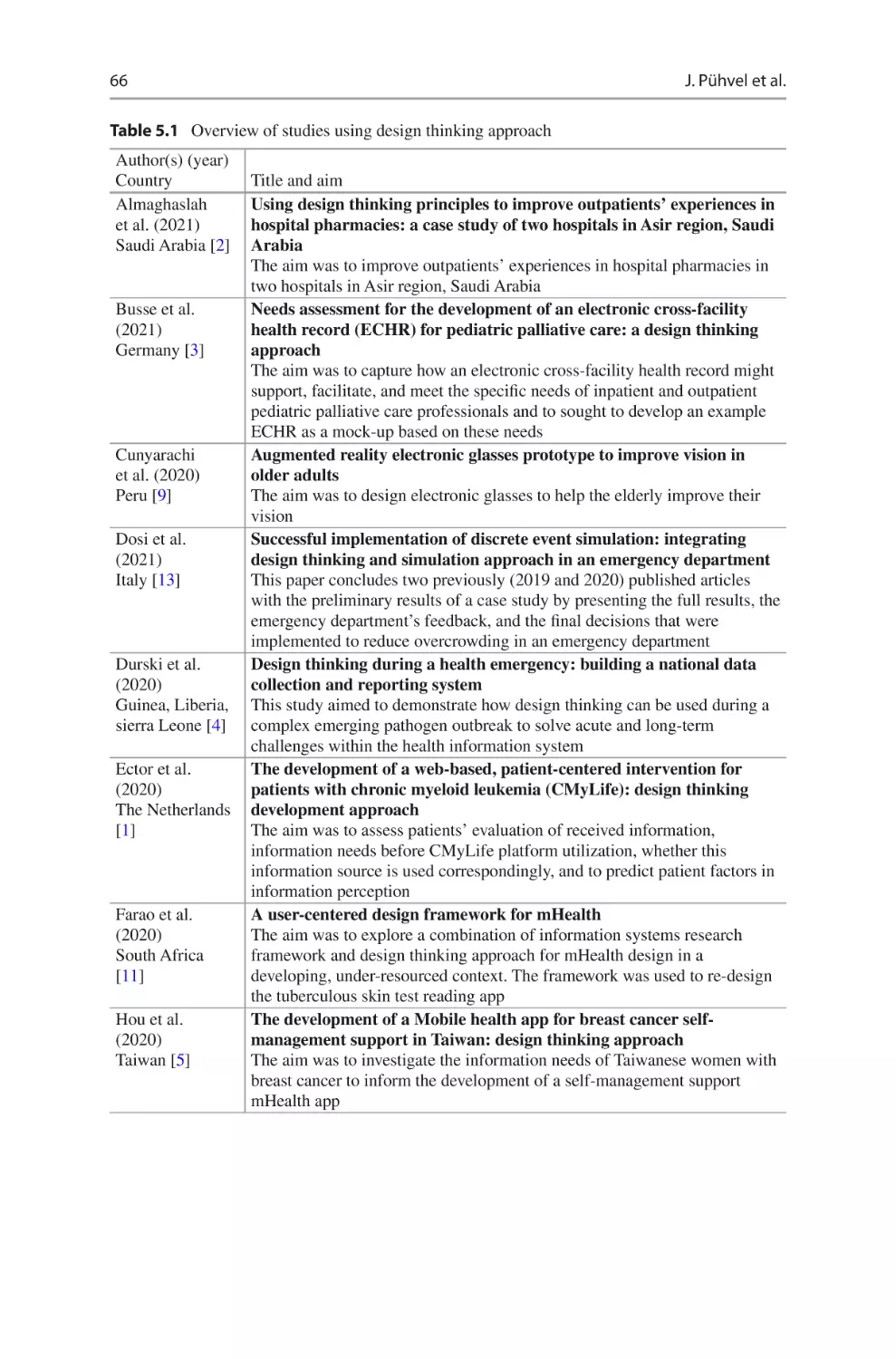
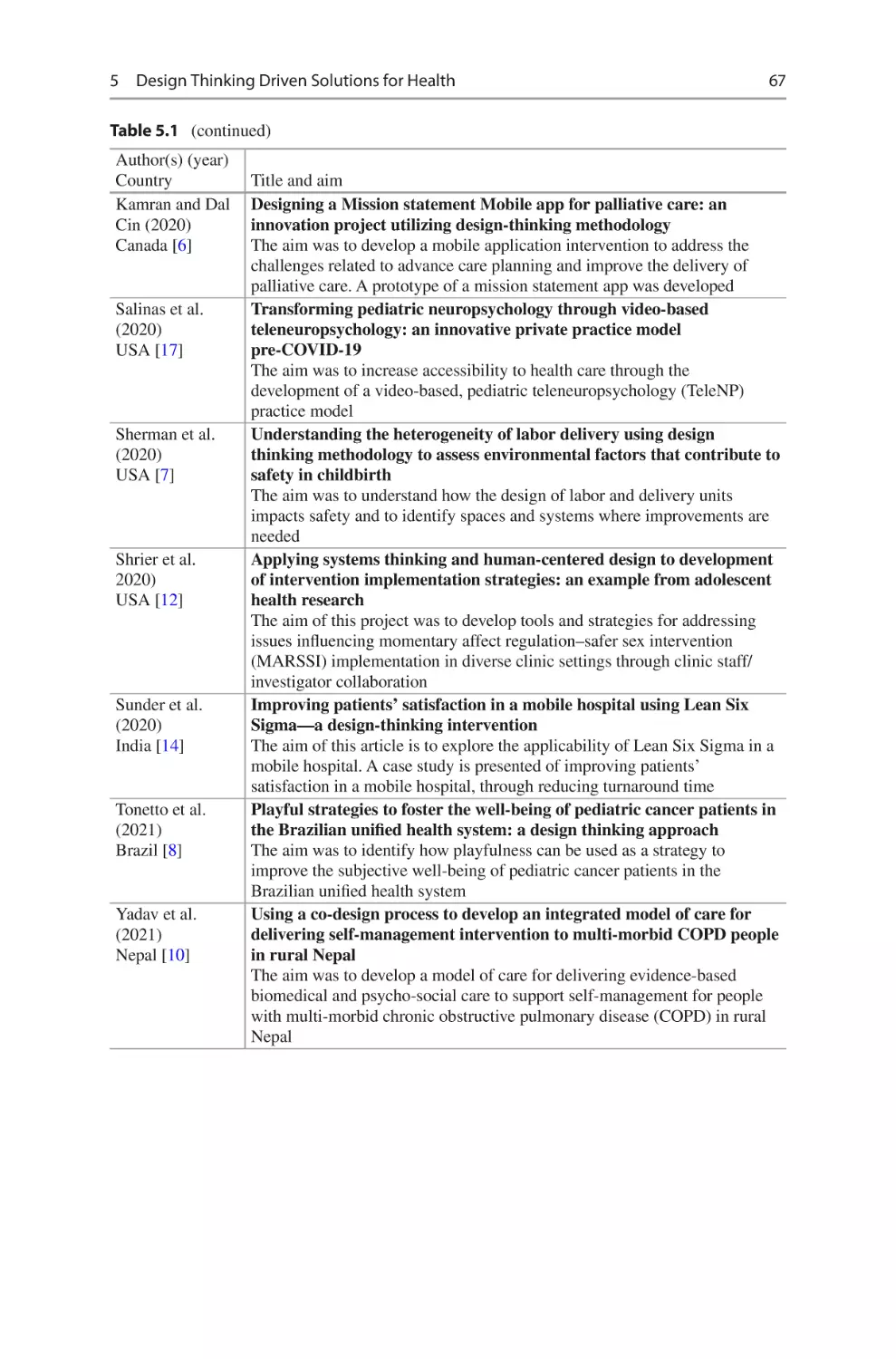
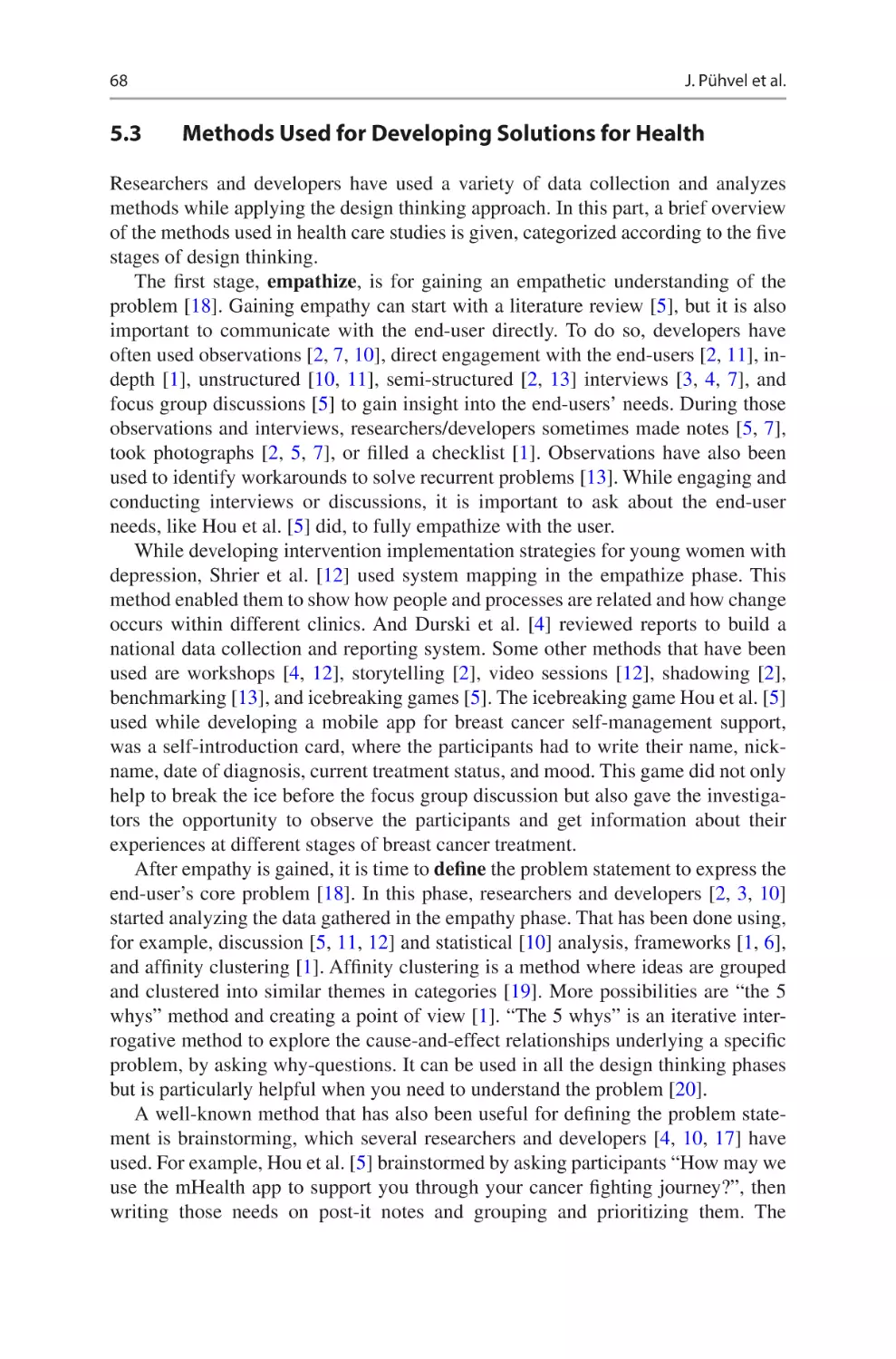
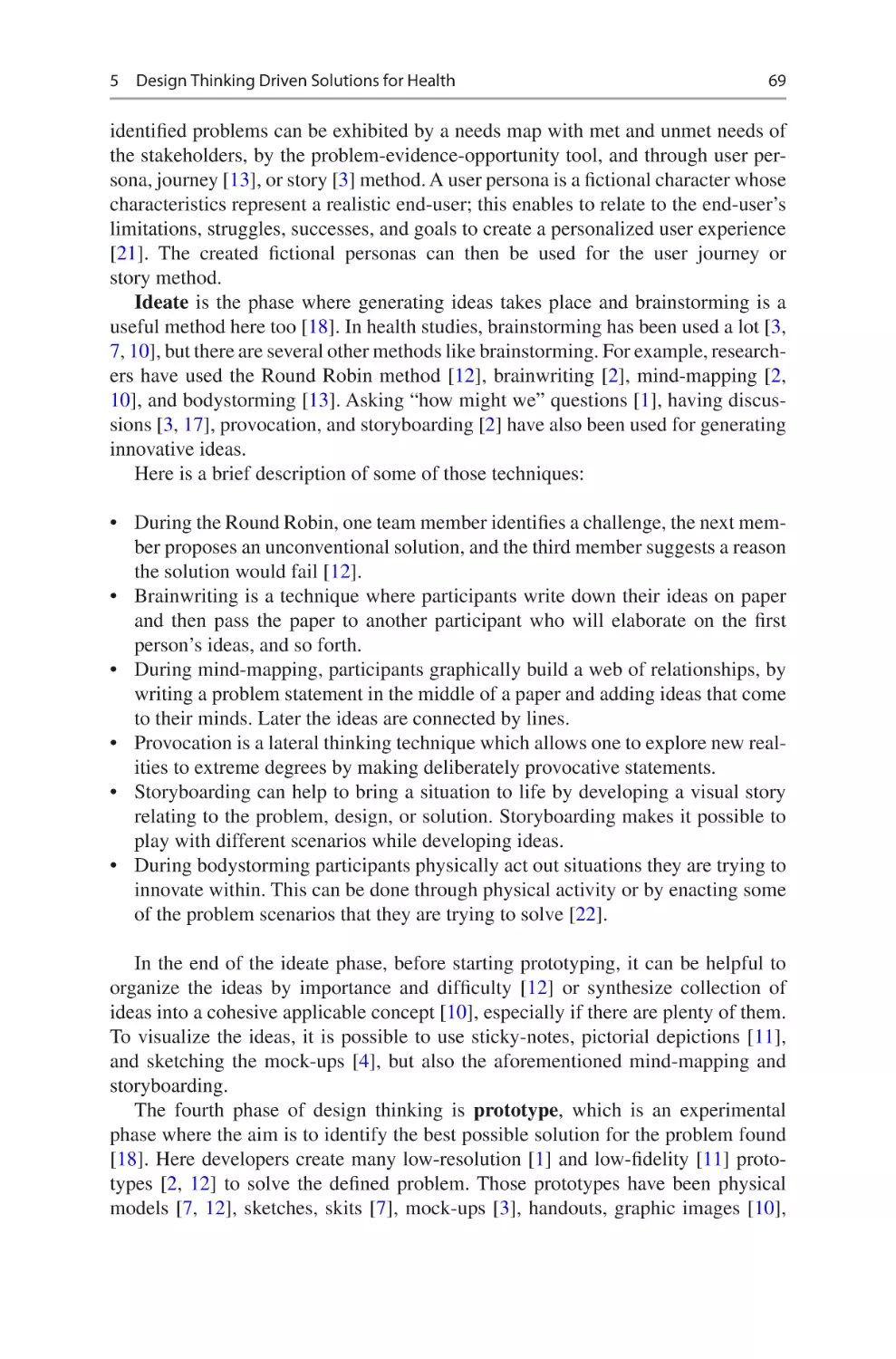
Автор: Pakarinen A. Lemström Th. Rainio E. Siirala E.
Теги: sociology innovation healthcare
ISBN: 978-3-031-24509-1
Год: 2023



Текст
Design Thinking
in Healthcare
From Problem to Innovative
Solutions
Anni Pakarinen
Thomas Lemström
Eeva Rainio
Eriikka Siirala
Editors
123
Design Thinking in Healthcare
Anni Pakarinen • Thomas Lemström
Eeva Rainio • Eriikka Siirala
Editors
Design Thinking
in Healthcare
From Problem to Innovative Solutions
Editors
Anni Pakarinen
Faculty of Medicine
Department of Nursing Science
University of Turku
Turku, Finland
Eeva Rainio
Faculty of Medicine
University of Turku
Turku, Finland
Thomas Lemström
SPARK Finland
Turku, Finland
Eriikka Siirala
Faculty of Medicine
University of Turku
Turku, Finland
ISBN 978-3-031-24509-1 ISBN 978-3-031-24510-7 (eBook)
https://doi.org/10.1007/978-3-031-24510-7
© The Editor(s) (if applicable) and The Author(s), under exclusive license to Springer Nature
Switzerland AG 2023
This work is subject to copyright. All rights are solely and exclusively licensed by the Publisher, whether
the whole or part of the material is concerned, specifically the rights of translation, reprinting, reuse of
illustrations, recitation, broadcasting, reproduction on microfilms or in any other physical way, and
transmission or information storage and retrieval, electronic adaptation, computer software, or by similar
or dissimilar methodology now known or hereafter developed.
The use of general descriptive names, registered names, trademarks, service marks, etc. in this publication
does not imply, even in the absence of a specific statement, that such names are exempt from the relevant
protective laws and regulations and therefore free for general use.
The publisher, the authors, and the editors are safe to assume that the advice and information in this book
are believed to be true and accurate at the date of publication. Neither the publisher nor the authors or the
editors give a warranty, expressed or implied, with respect to the material contained herein or for any
errors or omissions that may have been made. The publisher remains neutral with regard to jurisdictional
claims in published maps and institutional affiliations.
This Springer imprint is published by the registered company Springer Nature Switzerland AG
The registered company address is: Gewerbestrasse 11, 6330 Cham, Switzerland
Preface
Healthcare managers of the past viewed patients’ needs merely as targets for
population-level health outcomes to be validated in the final phases of developing
interventions and services. Today, we know better. Patients’ needs and experiences
should be viewed as sources of innovation at the front-end of the development process. It provides the basis for applying design thinking to develop better healthcare
services and health tech applications.
Today, the success of any healthcare service depends on complex interactions
between various stakeholders, and new solutions can only be delivered effectively
through co-creative and collaborative efforts. Coordinating such efforts relies on
strong concepts that can only result from properly run design processes that this
book describes in light of case studies around the world.
Design thinking is receiving increasing attention in the field, as forward-thinking
organizations delve into the practice. It can change the way medical solutions are
created and how clinical services are delivered. By driving innovation by means of
empathy and practicality, design thinking provides tools for those seeking to drive
radical renewal in the field.
Design thinking is crucial generalist skill, and this book presents design thinking
for nurses and other healthcare professionals, researchers, students, and educators
to support their development as creative and transformative leaders in their fields.
Turku, Finland
Turku, Finland
Turku, Finland
Turku, Finland
Anni Pakarinen
Thomas Lemström
Eeva Rainio
Eriikka Siirala
v
Contents
1
hy Design Thinking Matters in Healthcare ���������������������������������������� 1
W
Anni Pakarinen
2
thical Aspects and Innovations in Healthcare�������������������������������������� 9
E
Helena Siipi and Mari Kangasniemi
3
esign Thinking Toolkit for Healthcare Innovation ������������������������������ 25
D
Beate Rygg Johnsen
4
esign Thinking in Healthcare Education���������������������������������������������� 37
D
Isabella Hajduk, Annika Nordberg, and Eeva Rainio
5
esign Thinking Driven Solutions for Health ���������������������������������������� 63
D
Janne Pühvel, Janne Kommusaar, and Annika Nordberg
6
Using Design Thinking in Nursing Management
and Leadership������������������������������������������������������������������������������������������ 79
Eriikka Siirala, Outi Tuominen, and Sanna Salanterä
7
o-creation and Change in Healthcare���������������������������������������������������� 91
C
Laura Niemi
8
ew Business Creation in Health Technology ���������������������������������������� 101
N
Kaapo Seppälä
9
What is the Importance of Design Thinking
for Future Healthcare?������������������������������������������������������������������������������ 113
Thomas Lemström
vii
Editors and Contributors
About the Editors
Anni Pakarinen is a registered nurse and has a PhD in Health Sciences. Pakarinen
works as a senior researcher and research manager in the Department of Nursing
Science, University of Turku, Finland. Her research focuses on health promotion
and digital interventions, particularly on serious games and gamified applications.
She leads several digital health projects and is experienced in developing, evaluating, and implementing interventions for health. During recent years, she has been
involved in planning and organizing several international and multiprofessional
design thinking courses at the University of Turku.
Thomas Lemström works as a business design advisor for teams creating new products, services, and content that drive innovative change in healthcare. His experiences
in the field include founding a biotech company, running an accelerator program for
innovative health and wellness solutions, consulting in healthcare management, and
serving as a business design advisor for researchers and developers of medical
technologies.
Eeva Rainio has a PhD in Molecular Biology, and she has been working in university administration since 2010, first in MSc and doctoral program coordination, and
then with strategic development, innovations, and business collaboration. She has
also played a significant role in introducing design thinking to the Faculty of
Medicine at the University of Turku, after her visit to Stanford d.school in 2019.
Eriikka Siirala is a registered nurse and has a PhD in Health Sciences. Her
research focuses on nurse managers decision-making and information needs in perioperative settings. At the moment, Siirala works as a chief innovation specialist in
the wellbeing services county of Southwest Finland. In addition, she also works
part-time in the Faculty of Medicine at the university of Turku. Siirala got inspired
to use design thinking after a visit to Stanford d.school, and she has been involved
in design thinking courses at the university and also in the hospital.
ix
x
Editors and Contributors
About the Contributors
Isabella Hajduk is a microbiologist, who undertook her PhD at the University of
Technology Sydney (UTS) in Australia. She teaches Biomedical Innovation and
Entrepreneurship course and Innovation, Entrepreneurship and Commercialization
(IEC) as a Master’s subject at UTS. In Isabella’s courses, biomedical sciences are
successfully combined with design thinking approach.
Mari Kangasniemi is working as a professor and the Vice Head of the Department
of Nursing Science in the University of Turku, Finland and as a Visiting Professor
at the University of Tartu, Estonia. She has worked at the university as a full-time
researcher and teacher since 2002. Her main research interest has been focused on
nursing and healthcare ethics, and she is also investigating the change of social and
healthcare work and environmental responsibility in patient care. Kangasniemi acts
as a research group leader, is a member of national and international multidisciplinary research groups, is supervisor and teacher for academic degrees, and is the
lecturer and expert in various scientific and societal groups and tasks.
Janne Kommusaar has an MSc in Health Sciences (Nursing Science). Kommusaar
works as a responsible teacher of nursing pedagogy courses for Nursing Science
master’s students at the University of Tartu. Before her academic career, she worked
as a school nurse and a nurse in the surgery department. Kommusaar has always
been interested in new technologies and how to utilize these in education and healthcare. She was involved in an international project where design thinking online and
intensive course were created and implemented for multidisciplinary students to
solve diverse healthcare problems and create innovative and new solutions.
Laura Niemi has a PhD in Entrepreneurship. Her research focuses on the co-
creation of new value and touches upon the intersection of strategic management,
entrepreneurship, and marketing domains. Now Niemi is working as a Development
Specialist at Research Development and Administration unit of the University of
Turku. In her current work, Niemi is committed to shaping the ways the research is
carried out and communicated in the future, and she is passionate about facilitation,
visualization, and bringing strategic thinking closer to the academic leaders and
researchers.
Annika Nordberg is a public health nurse and holds a master’s degree of Health
Sciences from the University of Turku. Annika’s passion has always been in the
improvement of patients and end users’ experience. During her studies, she became
acquainted with Stanford Design Thinking process and how to utilize it in the field
of healthcare, including health education. She took part in an international intensive
training program in the area of Biomedical Innovation and Entrepreneurship
(BIE2020) organized by SPARK. After completing the course, she got the opportunity to work for SPARK Finland. She has also coached and organized different
customer experience workshops for healthcare professionals.
Editors and Contributors
xi
Janne Pühvel is a university teacher in the Department of Nursing Science,
University of Tartu. In 2020–21, she was involved in developing and conducting an
international online course about applying design thinking in health technology
education. She has previously worked as a nurse in the department of emergency
orthopedics and is currently participating in a project aiming to improve the quality
and patient safety in surgical care.
Beate Rygg Johnsen is a biochemist from the University of Oslo (UiO) and has
built her carrier in a global industry setting. She has worked in biotech, pharma, and
the start-up scene with innovation, business strategy, and commercialization. She
has broad experience with innovation processes such as IDEO and Design Thinking.
In her current positions as senior innovation adviser at UiO, she works to bring
some of this knowledge into academia to foster innovation and creative thinking.
Sanna Salanterä is a Vice Dean in the Faculty of Medicine and Professor in
Clinical Nursing science in the University of Turku, Finland. Currently, Salanterä’s
main research intersects are health technology and clinical nursing. Her research
team “Connected Health” develops and studies gamification of health, IoT for nursing and health, symptom care, information technology to support clinical decision-
making, and text mining of clinical narratives.
Kaapo Seppälä is teaching Software Project Management and Mixed Reality
Technologies in the Department of Computing in the University of Turku, Finland.
He also works as Sales Lead in a University Spin-off in the company CTRL Reality
which is specialized in Mixed Reality B2B products and services. Seppälä has experience in commercialization and selling software products in complex regulatory
environments.
Helena Siipi is a Doctor of Social Sciences and Docent of Philosophical Ethics.
Siipi works as a University Lecturer in the Department of Philosophy, Contemporary
History, and Political Science at the University of Turku, Finland. She obtained her
PhD in Philosophy in 2005. She conducts research in applied ethics and environmental philosophy on a wide range of topics including the philosophy of food, the
ethics of new biotechnologies and ethical issues related to biodiversity. She has
wide teaching experience and her articles have been used as teaching materials at
institutions such as Michigan State University and SLU Uppsala. At the University
of Turku, Siipi has made a particular contribution as a teacher of research ethics for
undergraduate and postgraduate students.
Outi Tuominen, RN, PhD is Nurse Director from the Department of Pediatrics
and Adolescent Medicine, Turku University Hospital, Finland. She has over 10 years
of management experience. Her Post-Doctoral research interest includes Nursing
Leadership, Nursing Management, Patient Safety, and Quality Improvement.
1
Why Design Thinking Matters
in Healthcare
Anni Pakarinen
1.1 Introduction
Design thinking can be viewed as a systematic, iterative, and exploratory innovation
process to solve complex problems [1]. It offers an accessible problem-solving and
innovation framework and methods to apply when developing new products and
services. It may also refer to a way of thinking and approaching issues, in other
words considered as a philosophy per se [2, 3]. The success behind many companies
is that they have woken up to the requirement of user orientation as they design and
develop new products, and in their processes, they utilized design thinking methods
and tools to gain with desired, compelling, feasible, and viable end-products [3–5].
Individualistic society has set a basis for the demands of citizens, and this affects
not only the need for user-friendly products but also the services that should be
tailored according to the needs and preferences of individuals. This development
also facilitates the sustainability goals, when instead of producing solutions for
society without well-thought reasons and deeper understanding of the users and
their needs, we are designing and developing solutions that have real demand and
need. This progress may lead to more effective, impactful, and sustainable solutions
and produce real value for the whole society [4].
This change has been seen also in the field of healthcare, and the end-users of
healthcare products and services—in other words clients, patients, and healthcare
professionals—are nowadays in the key role in the whole process of the development. Development cannot happen in isolation. Thus, instead of seeing end-users
just as a receiver or producer of care and treatment, we see them as active partners,
valuable informants, and sources of innovation to bring value to the whole healthcare [4, 6].
A. Pakarinen (*)
Faculty of Medicine, Department of Nursing Science, University of Turku, Turku, Finland
e-mail: anni.pakarinen@utu.fi
© The Author(s), under exclusive license to Springer Nature
Switzerland AG 2023
A. Pakarinen et al. (eds.), Design Thinking in Healthcare,
https://doi.org/10.1007/978-3-031-24510-7_1
1
2
A. Pakarinen
The demand for patient, client, and user-centered approach in healthcare provides the basis for applying design thinking to develop better healthcare services
and health technology solutions, and provide better experiences to the clients and
patients [7, 8]. Thus, design thinking has received increasing attention also in
healthcare. One of the main reasons for this is the fact that design thinking emphasizes deep empathy for end-user’s perceptions, needs, and challenges [9].
In design thinking process, designers and developers begin with research and
empathic engagement with the stakeholders, who are most affected by and knowledgeable about a product and service under development. After empathizing,
designers and developers dive deeper to the theme and define the problem for which
they then start generating ideas to solve. Last few phases consist of the selection of
most feasible idea to produce prototypes and test them among intended end-users
[4, 10].
1.2 What Is Design Thinking?
The origins of design thinking ideology lead to a book called Sciences of the
Artificial, written in 1969 by a political scientist and a receiver of the Nobel
Memorial Prize in Economic Sciences, Herbert A. Simon. The design thinking term
itself is traced to a book called Design as a Discipline, written in 1979 by a mechanical engineer and professor of Design Research, Bruce Archer [11].
Design thinking offers a framework for complex problem solving applied
widely by various disciplines. It is traditionally associated with the business,
innovation, and customer-oriented development of products and services, where
the goal is to gain success, sustainability, and customer benefit. Design thinking
has received increased attention in industry, engineering, and architecture, as
well as in educational contexts (see Chap. 4). Design thinking can change how
people solve problems, but also how they learn, thus offering a favorable soil for
success [4, 9, 12].
Design thinking is a term we use, when we are adapting the principles, tools, and
methods familiar from design by traditional designers, but use it somewhere else
than merely for traditional purposes. Design thinking can be viewed as a systematic,
iterative, and exploratory innovation process that puts emphasis into deep empathy
for end-user perceptions, needs, and challenges. It also offers methods, aspirations,
and a way to see and approach issues form different perspective. In a broader sense,
design thinking may be seen as a philosophy. It can be seen as a targeted way to
produce the best possible experience for the end-user [11–14].
Design thinking is not only about the design or development of products or services. It can be also seen as team-based process, which allows us to see the whole
process of design and development to be as meaningful as the end-product that is
designed. The development process is itself a learning experience for the designers,
the team who works together for the common goal. Design thinking is therefore
often associated with the concept of co-design, which will be discussed further in
Chap. 7. The way the team works together—able to combine approaches,
1
Why Design Thinking Matters in Healthcare
3
perceptions, and views—is relevant. How they find a balance between disagreements, similarities, and different ways of thinking is interesting and the end result is
often a reflection of the designers and the balance they have found [12, 15].
1.3 Toward the Solution Following Design Thinking Process
As described above, design thinking offers us with a process to follow when designing
and developing user-centered products and services. Depending on the source of design
thinking literature, different terminology and definitions exist, and different types of
phases of the process may be detected. For example, a recent review found altogether 35
different process models in design thinking. However, the source of the design thinking
approach used, the principles, and main idea of end-user engagement are the same [12].
In this chapter we take an approach and model derived from Stanford d.school and adapt
their terminology and definitions to describe the design thinking approach [16].
In design thinking process, designers begin with empathic engagement with the
stakeholders who are affected by the problem and who have the most experience
and knowledge on it. In this first phase, we need deep empathy for end-user perceptions, needs, and challenges to fully understand a problem to come up with more
comprehensive, feasible, and viable solutions. After this empathic phase, designers
begin a phase that goes beyond the surface to come up with the root cause of the
problem. This is when they have a solid basis to create solutions, prototype them,
and test them among the users [11, 17, 18].
The first phase of the design thinking process is empathizing, understanding the
customer’s real needs. Aim of this phase is to get personal grasps of the needs of the
users (of the service, device, etc.) and to really understand their experiences, motivations, challenges, and problems. This is done best, when we forget our assumptions
and begin to obtain insights into the world of the users. To truly solve a problem, we
must have an empathetic view of the people who experience that problem. Users have
a wealth of first-hand knowledge of what works and what doesn’t, which we should
use as an advantage. During this phase the empathetic view is taken by observing and
consulting with users. For example, we can do a literature review on the given topic,
explore statistics on the problem and its occurrence, extent and frequency among
population to find out the people that a problem mainly has an effect on. This phase
may not be limited to exploring previous studies, but also exploring how, when, and
why it affects the people. Thus, empirical studies are also suggested, such as survey
studies and interviews among the stakeholders [4, 13, 19].
The second phase of the design thinking process is defining, stating users’ perceptions, needs, and problems. Aim of this phase is to interpret and analyze observations (empathizing) and synthesize them to define the core problem. These
definitions are called problem statements. You produce insights that form solid
foundations for finding solutions. The idea is to dig deeper the problem and see the
root causes for the problem. During the defining phase, we focus on the problem to
find new ways of doing things. We may adopt different methods to define the problem (see more about design thinking methods from Chap. 3) [4, 13, 17].
4
A. Pakarinen
The third phase of the design thinking process is ideating. Aim of this phase is to
start generating ideas to identify new solutions to the problem you have detected.
Idea is to look for alternative ways of viewing and solving the problem. During
ideation, it is possible to see beyond the usual methods of solving problems in order
to find better, more suitable, and satisfying solutions to problems [4, 11]. To have
number of ideas it’s crucial to have a team who holds experience and expertise from
different fields, the more heterogeneous the team is, the more fruitful and various
solutions are created. The team may include the content expertise, but also engineers, IT-experts, marketing, and commercial experts [20].
The fourth phase of the design thinking process is prototyping. Aim of this phase
is to choose an idea that seems to be suitable for your purposes and start to work on
it further. Prototyping makes the ideas into a concrete representation. Prototype is a
physical representation of an idea or solution, that is easy to create and gives you
test ideas at low fidelity and cost. Low-fidelity prototyping is an optimal way to create a representation of your ideas to be tested. In this way you can rapidly try and
test many rough ideas. Prototyping gives you the opportunity to make your ideas
into a tangible format to be tested among the end-users [19, 21].
The fifth phase of the design thinking process is testing. Aim of this phase is to
test the complete product and service using the best solutions identified during the
prototyping phase. This phase is an iterative process; the results generated during
the testing phase are often used to refine one or more problems and understand
users, the conditions of use, how people think, behave, and feel. Goal is to understand the product or service and its users as well possible. When the testing takes
place in a real situation in real environment of the end-users, the more valuable
information the session of testing will bring to the designer. At its best you get a
grasp of how people understand, perceive, and accept your idea by just observing
them when using and experiencing the prototype [2, 4, 12].
Even the phases are described in a numerical order, the process of design thinking is not linear itself, merely iterative (Fig. 1.1). The learning curve the process
offers for the designers and developers, is fruitful and insightful and usually gives
DEFINE
EMPATHIZE
Fig. 1.1 Design thinking process
PROTOTYPE
IDEATE
TEST
1
Why Design Thinking Matters in Healthcare
5
the designers and developers the possibility but also forces them to go back to previous phase(s) to learn more from the users, to redefine the problem, or to alleviate the
pitfalls which may occur during prototyping and testing. Therefore, design thinking
approach may be the key to gain more effective, attractive, feasible, and sustainable
solutions for healthcare [4, 13].
Even though design thinking process we provide herein ends to the testing phase,
there is work after that. The whole implementation process needs also time and
effort, before the solutions designed and developed can be real part of the healthcare. Sometimes the innovations coming from the design thinking loop are such that
they should be commercialized. This demands a whole new process of doing.
Chapter 8 talks about business models and offers commercialization scenarios.
1.4 Healthcare Needs Ways to Address Its Challenges
Aging population, complex health challenges, financial pressures, shortage of
healthcare staff, and the demand for patient-centered approach in healthcare provide
the basis for applying design thinking to develop better healthcare services and
health technology solutions.
The aging population and the growing need for care is a global phenomenon. At
the same time, the health problems of the population are becoming increasingly
complex and require a wide range of expertise, the ability to work together in a
multidisciplinary way and services that enable us to provide quality care to clients
and patients. Moreover, the rising cost of healthcare and the increasing number of
patients being treated will not bring relief, but rather challenge providers to develop
financially sustainable ways to ensure the sustainability of healthcare [22, 23].
With increasing numbers of clients and patients, the risk of a shortage of care is
high. This situation is not helped by the current trend of health workers moving to
other sectors, which can be seen in many countries. Healthcare jobs are not attractive, and there are fewer and fewer young people to choose this field as a future
career. The shortage of healthcare staff is becoming one of the most demanding
tasks to solve in healthcare in future. Global challenges such as pandemics are highlighting many shortcomings in the health sector, such as staff fatigue, inefficient
supply chains, and insufficient adaptability of services. This does little to make
healthcare an attractive and compelling field [24].
Modern healthcare calls for patient-centered care and services [7, 8]. New products and services, especially those based on digitalization, offer a better opportunity
to deliver personalized care than before. However, it is not always self-evident that
care and services can be provided equally to all patients. The development of products and services should therefore consider not only the needs and views of end-
users but also the ethical values of healthcare. Design thinking focuses on the needs
and perspectives of the individual. It provides a good model for patient-centeredness
in the design of products and services [4, 7–9]. Chapter 2 focuses on design thinking
and innovations in healthcare from the ethical perspective.
There is therefore a clear need to deliver solutions that will help us meet these
challenges in the future. High-quality products and services may free up staff for
6
A. Pakarinen
other tasks and make healthcare more attractive. Through innovation we can solve
many of the challenges in healthcare. Implementing design thinking methods, we
offer the healthcare staff a greater involvement for the design and development.
When their skills, knowledge, and expertise are valued, it may increase their professional pride and yet help with the shortcomings of the staff. People matter,
which is the essence of design thinking. Collaboration and working together gives
a new mindset to working and increases the capacity for interdisciplinary working.
At the best utilization of design thinking approach in healthcare, we have the ability to deliver adaptive and agile solutions to solve the challenges. Chapter 6 talks
about the use of design thinking in the day-to-day management and leadership in
nursing.
1.5 Design Thinking Can Support Healthcare Staff
to Innovate
The opportunity of healthcare staff to detect challenges and problems in healthcare
is huge. Day-to-day operation in the hospitals and other health institutions makes
staff one of the best experts on the current development needs. Healthcare staff, in
other words, may also act as innovators, designers, and developers. Design thinking
offers professionals with an optimal structure, steps, and framework which can be
used when designing and developing new products and services to healthcare [11,
13, 14]. There is also importance of providing the staff with education on using and
implementing design thinking tools and methods. Continuing education possibilities offer the staff with the opportunity to learn design thinking. Chapter 4 talks
about design thinking in healthcare education.
Research on the use of design thinking in healthcare is evolving. There is nowadays more and more of evidence on its potential and success in healthcare. Design
thinking interventions have showed greater satisfaction, usability, and effectiveness
[13]. Implementation of design thinking approaches within healthcare can help
drive necessary innovation in care processes [4]. Design thinking can be used to
address challenges in a variety of domains related to the patient experience [9].
Design thinking is widely applicable in healthcare to all actions involving disease
prevention and treatment [25]. More evidence on the use of design thinking in
healthcare is described in the Chap. 5.
References
1. Braha D, Reich Y (2003) Topological structures for modeling engineering design processes.
Res Eng Des 14(4):185–199. https://doi.org/10.1007/s00163-003-0035-3
2. Razzouk R, Shute V (2012) What is design thinking and why is it important? Rev Educ Res
82(3):330–348. https://doi.org/10.3102/0034654312457429
3. Maula H, Maula J (2019) Design ja johtaminen. Alma Talent, Helsinki
4. Roberts JP, Fisher TR, Trowbridge MJ, Bent C (2016) A design thinking framework for
healthcare management and innovation. Healthc (Amst) 4(1):11–14. https://doi.org/10.1016/j.
hjdsi.2015.12.002
1
Why Design Thinking Matters in Healthcare
7
5. Bernstein A (2015) The evolution of design thinking (full issue). Harvard Business Review,
September, p 93
6. McLaughlin JE, Wolcott MD, Hubbard D, Umstead K, Rider TR (2019) A qualitative review
of the design thinking framework in health professions education. BMC Med Educ 19(1):98.
https://doi.org/10.1186/s12909-019-1528-8
7. Epstein RM, Fiscella K, Lesser CS, Stange KC (2010) Why the nation needs a policy push on
patient-centered health care. Health Aff (Millwood) 29(8):1489–1495. https://doi.org/10.1377/
hlthaff.2009.0888
8. Cliff B (2012) The evolution of patient-centered care. J Healthc Manag 57(2):86–88. https://
doi.org/10.1097/00115514-201203000-00003
9. Kim SH, Myers CG, Allen L (2017) Health care providers can use design thinking to improve
patient experiences. Harv Bus Rev 95(5):222–229
10. Dell’Era C, Magistretti S, Cautela C, Verganti R, Zurlo F (2020) Four kinds of design thinking:
from ideating to making, engaging, and criticizing. Creat Innov Manag 29(2):324–344. https://
doi.org/10.1111/caim.12353
11. Austin C (2015) Design thinking: expanding the frame of reference. A study of concepts, ideas
and thinking tools developed by Edward de Bono that have potential within a design process
and design thinking framework. Doctor of Philosophy Thesis, Swinburne University. https://
researchbank.swinburne.edu.au/items/a3edaa30-f026-4992-af96-1fb05c8ccc3e/1/
12. Waidelich L, Richter A, Kolmel B, Bulander R (2018) Design thinking process model review.
In: 2018 IEEE international conference on engineering, technology and innovation (ICE/
ITMC). IEEE, Cardiff
13. Altman M, Huang TTK, Breland JY (2018) Design thinking in health care. Prev Chronic Dis
15(180128):E117. https://doi.org/10.5888/pcd15.180128
14. Badwan B, Bothara R, Latijnhouwers M, Smithies A, Sandars J (2018) The importance of
design thinking in medical education. Med Teach 40(4):425–426. https://doi.org/10.108
0/0142159X.2017.1399203
15. Martin RL (2009) The opposable mind: winning through integrative thinking. Harvard
Business Press, Boston
16. Plattner H, Meinel C (2010) In: Leifer L (ed) Design thinking: understand-improve-apply.
Springer Science & Business Media, Berlin
17. Geissdoerfer M, Bocken NMP, Hultink EJ (2016) Design thinking to enhance the sustainable
business modelling process – a workshop based on a value mapping process. J Clean Prod
135:1218–1232. https://doi.org/10.1016/j.jclepro.2016.07.020
18. Cross N (2001) Designerly ways of knowing: design discipline versus design science. Des
Issues 17(3):49–55. https://doi.org/10.1162/074793601750357196
19. Oliveira M, Zancul E, Fleury AL (2021) Design thinking as an approach for innovation in
healthcare: systematic review and research avenues. BMJ Innov 7(2):491–498. https://doi.
org/10.1136/bmjinnov-2020-000428
20. Stempfle J, Badke-Schaube P (2002) Thinking in design teams-an analysis of team communication. Des Stud 23:473–496
21. Seidel VP, Fixson SK (2013) Adopting design thinking in novice multidisciplinary teams: the
application and limits of design methods and reflexive practices: adopting design thinking in
novice teams. J Prod Innov Manag 30:19–33. https://doi.org/10.1111/jpim.12061
22. Ogura S, Jakovljevic MM (2018) Global population aging-health care, social and economic
consequences. Front Public Health 6:335
23. Feng Z (2019) Global convergence: aging and long-term care policy challenges in the
developing world. J Aging Soc Policy 31(4):291–297. https://doi.org/10.1080/0895942
0.2019.1626205
24. World Health Organization (2016) Global strategy on human resources for health: workforce
2030. WHO document production services, Geneva; Available from: https://apps.who.int/iris/
bitstream/handle/10665/250368/?sequence=1
25. Ferreira FK, Song EH, Gomes H, Garcia EB, Ferreira LM (2015) New mindset in scientific
method in the health field: design thinking. Clinics (Sao Paulo) 70(12):770–772. https://doi.
org/10.6061/clinics/2015(12)01
2
Ethical Aspects and Innovations
in Healthcare
Helena Siipi and Mari Kangasniemi
2.1 Introduction
Ethical analysis is much needed in healthcare innovation context for various reasons. First, the necessity for the analysis grows from fundamental purpose of the
healthcare which is both practical and ethical by nature. From practical point of
view, the purpose of healthcare is to provide services on the most effective, efficient,
and economical way to get and maintain inhabitants’ health and well-being with
limited resources. This requires constant development of services and processes,
including innovation development. From ethical point of view, the same target can
be seen as to enable best possible care and service for biggest possible amount of
service users. In addition, health and well-being as the targets of healthcare can be
understood as intrinsically valuable: They are good, right, and fundaments of life
for any human individual, and the aim of healthcare services is to promote and support them. As a result, also the targets and processes through which the healthcare
innovations are developed and used are under special attention: what kind of impact
they have on well-being, health and life of individuals and groups. This means that
balancing between practical and ethical values is a part of design thinking. The
question is how aware the researchers and developers are of it.
Second, ethical reflection on design thinking [1] in healthcare is always multidimensional. There are numerous stakeholders and interests involved in the medical
H. Siipi
Department of Philosophy, Contemporary History and Political Science, University of Turku,
Turku, Finland
e-mail: helsii@utu.fi
M. Kangasniemi (*)
Faculty of Medicine, Department of Nursing Science, University of Turku, Turku, Finland
Satakunta Wellbeing Services County, Turku, Finland
e-mail: mari.kangasniemi@utu.fi
© The Author(s), under exclusive license to Springer Nature
Switzerland AG 2023
A. Pakarinen et al. (eds.), Design Thinking in Healthcare,
https://doi.org/10.1007/978-3-031-24510-7_2
9
10
H. Siipi and M. Kangasniemi
field from individuals such as patients and their families to professionals, private
and public service providers, companies, and researchers. They represent different
disciplines, world views, and cultural and religious values. Making their different
interest visible increases ethical awareness in the innovation process. Yet, this may
not always be simple as power relationships subsist within and between the different
interest groups. In addition, the stakeholder groups are usually somehow excluding,
rising a question how minority and other vulnerable groups are recognized.
2.2 Empathy as Ethical Concept
2.2.1 Empathy as a Part of Design Thinking Process
The first phase of design thinking process, empathy or empathizing, refers to the
responsiveness to experiences to the views of the stakeholders [2, 3]. It can be seen
as a factor that designates design thinking from other ways of creation [4]. Empathy
is seen central as it enables the designers to understand the needs and challenges of
the stakeholders which, in turn, will be integral for finding new and innovative solutions that are suitable for them [4, 5].
The fact that design thinking process starts from empathizing is interesting and
quite revolutionary. In western thought, rationality has tended to be the method for
decision-making. The interest in empathizing has raised from acknowledging the
dangers of rationalism: Rationalism “may facilitate us to ignore the lived experiences of others and replace the subjectivity and individual worth of those others
with utilitarian calculations” [5, 6]. At its best, the human ability to empathize can
allow a designer to understand what are the members of the relevant stakeholder
group going through, learn from them, and take their view into account in the innovation work [2, 5].
2.2.2 What Does Empathy Mean?
From ethical point of view, the process of design thinking can be ethically sound
only if empathy can form an ethical basis for an innovation process. The role of
empathy in moral behavior (including innovation) has been studied to some extent
in last few years with very differing outcomes. Paul Bloom (2016) [1], for example,
is against it whereas Slote [7] sees all morality to be based on empathy. In what follows we will argue that using empathy as a starting point requires ethical awareness
regarding certain issues. Some of these issues to be discussed are especially important in the context of healthcare and, thus, call for attention when applying design
thinking to healthcare.
As a concept, empathy refers to ability to place oneself into a position of another.
In so-called projective empathy we put ourselves into the situation of another and
imagine what we ourselves would feel in their place. The so-called simulative
empathy is more other-directed and instead of asking, what would I feel in their
2
Ethical Aspects and Innovations in Healthcare
11
place, I ask what the other feels in their situation [6]. In design thinking, projective
empathy is not sufficient for good innovation work as it may leave the other person
unnoticed. What a patient with schizophrenia, for example, feels in hospital, may be
totally different to what a more mentally well-being person would feel at the same
hospital environment. Thus, the design thinking relies on simulative empathy (see,
e.g., descriptions of empathizing in design thinking [1, 2, 5]). In practice, this need
to adapt to the others’ point of view usually requires direct data collection or interviewing among target group. However, it is important also to understand the limits
of simulative empathy. The human beings do not have direct access to minds of
others and, thus, simulative empathy is always somehow non-perfect and prone to
misunderstandings.
In design thinking it might be useful to acknowledge different varieties of empathy. Empathy has various varieties and they all do not equally support morality [1,
6]. Thus, ethical soundness of the innovation process and outcome may depend on
variety of empathy adopted to design thinking.
So-called cognitive empathy is about human ability to notice—either by direct
perceiving or by inferring—the emotive states of others [6]. In cognitive empathy
we note the other and rationally conclude their feelings and emotions from facial
expressions, tone of voice, ways of behavior, and other clues. Aaltola (2018, p. 58)
[6] describes cognitive empathy to be an emotionally cool or neutral state. It allows
us to understand others but does not in itself include emotions. The challenge of
cognitive empathy is that it is really an interpretation. The feelings and emotions of
other persons are detected from their behavior and, as with any interpretation, there
is a possibility of making mistakes. Thus, if this type of empathy is used as a starting
point of design thinking, one needs to be aware of this possibility and limits of one’s
capacities. Yet, of course, with the needed awareness it is a valuable tool.
Contrary to cognitive empathy, affective empathy includes emotional responding
to affective states of others. Affective empathy is intrinsically involved and includes
going with the feeling of another person. It is often fast, almost automatic response.
When we see someone to hit his thump with a hammer, we instantly feel his pain
[6]. The problem with affective empathy is that the knowledge gained through it is
always limited—at least in the complex world. People do always openly show their
affective states and they may even purposefully mislead other regarding them. As
Aaltola (2018, p. 87) [6] puts it, “both cognitive and affective empathy are required
for the type of understanding of others that dwells deeper than obvious.”
The reflective empathy consists of understanding the emotions of another person—either just by perceiving them or also by going with the affection. However, in
reflective empathy the emotions of another person are not just let to guide the contents of the empathy but rather the observer intentionally reflects on them. In other
words, we give “attention to what we know of or feel with another and what sort of
mental contents of our own impact our judgement or experience. In short, we empathize and then adopt a metaperspective into the process of empathy” [6]. According
to Aaltola (2018, pp. 132–133) [6] in reflective empathy we move back and forth
between empathy and the metalevel and that will give us clear perception of the situation as well as experience of the other as well as of our own responses. In that way,
12
H. Siipi and M. Kangasniemi
reflective empathy gives a picture about with whom, why, and on what grounds we
empathize. Moreover, it gives us understanding about limitations of the empathizing
process. It is important to notice that reflective empathy is not just theoretical possibility, it is a human skill, and we all use it sometimes. It is also a skill that can be
developed and cultivated.
2.2.3 Who Will Be Empathized?
The crucial question for the ethics of design thinking is, who the designers will
empathize? Empathy is always empathy toward someone. The guides for design
thinking usually highlight not just the importance of hearing the experts, but also
engaging the individuals from different stakeholder groups who will be either use or
otherwise affected by the innovation to be developed. The goal is to deeply understand their insights, needs, and challenges regarding the issue involved [4]. Thus,
the ethically critical issue concerns selection of the relevant stakeholder groups, as
well as individuals, who will represent their group in the innovation process.
But who are the relevant stakeholders? The question is important regarding all
design thinking but ethically exceptionally serious regarding the context of healthcare. There some individuals and groups are in a vulnerable position and where
problems in usability of innovations may turn out to have devastating consequences.
The relevant stakeholders include, obviously, patients and clients as well as healthcare professionals. Yet, experiences of different patients may differ considerably
and, thus, choice of their representatives may greatly influence the outcome. Should,
for example, one involve long-term patients or the ones with new diagnosis, patient
organization activists, or ones randomly selected from the healthcare unit? Further
questions concern inclusion of other stakeholders. Family members and close ones
seem to inherently important, for example, in development of innovations for the
neonatal care units. However, it is also important to notice that views, experiences,
and feelings of the clients may differ from those of their family members, for example, regarding elderly care and housing for disabled. In some cases, for example,
regarding severely autistic clients, empathizing requires professional expertise (e.g.,
regarding communication). Not just who is accepted as a relevant stakeholder but
also who is left out is ethically important. Should, for example, individuals refusing
the treatment or the ones who do not have access to care be included in the process?
These questions become obvious, for example, when considering design thinking regarding palliative care. On the one hand, palliative care could certainly benefit
from new innovations and it is obvious that the experiences of patients are central to
their development. On the other hand, the above-presented problems regarding
inclusion and exclusion are easy to see. Most of the dying patients and their close
ones probably do not have strength to participate in design thinking processes.
Those how can participate may not be representative group. Most importantly, palliative care is often under-resourced and not all patients who need it get it. As a
result, clients of palliative care units have already been selected as all dying patients
do not have equal access to this type of care [8]. Thus, including only clients from
2
Ethical Aspects and Innovations in Healthcare
13
palliative care units might distort the empathizing process as it misses the voices of
those who do not reach the care they need. The example shows, in short, that since
design thinking rests so heavily on the stage of empathizing—it is the starting point
for the whole process—and since the questions of inclusion are central to ethics of
healthcare, applying design thinking to healthcare requires careful and ethically
sensitive planning regarding whom the developers will be empathizing.
2.2.4 Can We Empathize Justly and Equally?
More problems arise from the fact that our empathy reflects our biases: It is easier
to feel empathy toward individuals who are familiar and socially close to us, who
are similar to us, and who we see as attractive or vulnerable. Positive experiences
with someone increase empathy toward his or her, whereas seeing someone as scary
decreases empathy [1, 6]. Most importantly, this kind of bias is often implicit. The
implicit biases are not acknowledged by us, and they may be contrary to our conscious thoughts and values. Thus, even if a designer intellectually believes that suffering of members of different ethnic groups, age groups, sexual orientation groups,
socio-economic groups and lifestyle groups, for example, is equally serious, the
designer still tends to feel most empathy toward individuals who are similar to her.
Implicit biases are common, and they have strong influence on our behavior.
Healthcare professionals exhibit the same level of implicit biases than wider population [1, 9].
This problem of implicit biases will probably be most serious in situations where
stakeholders have conflicting views or interests—that is when the situation is such
that designer cannot simultaneously satisfy desires, needs, and wants of all different
stakeholders [10]. In the reality of sometimes poorly resourced public healthcare,
such situation may not be uncommon. Thus, there is a danger that basing the design
process in empathy leads into favoring members of some groups on the expense of
groups that are more foreign to the designer. This is an ethically serious outcome
and should be somehow tackled in the design thinking process. In the minimum, the
designers should become aware of their biases.
2.2.5 Limits of Empathy in Design Thinking
Empathy-based decision-making has further challenges. The problems arise from
the same source as the strength of empathy—that is from its focus on individuals’
needs, challenges, and viewpoints. Since empathy focuses on specific individuals
and their lived experiences, it is insensitive to statistical data and cost-benefit analyses. Thus, it may lead into ignoring the effects our decisions have on groups of
people—an outcome that cannot be irrelevant to healthcare-related decision-making
[1]. This will be highlighted by the following example:
Imagine learning that a faulty vaccine has caused Rebecca Smith, an adorable
eight-year-old, to get extremely sick. If you watch her suffering and listen to her and
14
H. Siipi and M. Kangasniemi
her family, the empathy will flow, and you’ll want to act. But suppose that stopping
the vaccine program will cause, say, a dozen random children to die. Here your
empathy is silent—how can you empathize with statistical abstraction [1]?
Thus, it seems obvious that in order to be ethically sound, the design thinking
process cannot rest solely on the empathy. In the context of healthcare especially
that might lead into ethically very bad decisions. Thus, the understanding gained
through the empathizing needs in design thinking to be somehow fit together and
balanced with the evidence-based nursing and medicine practices. In addition, and
especially in public healthcare, one also needs to acknowledge the limited resources.
(Yet, at its best, design thinking may contribute to more efficient use of those
resources.)
2.3 Problem Defining and Risk for Medicalization
As the aim of design thinking in healthcare is to create new products, treatments,
devices, services, or processes, and from ethical point of view, design thinking
crosses the question of medicalization. As a concept, medicalization refers to the
process where problems which were not taken to be medical become to be treated
as medical. According to the classical and still widely used [11] definition by Conrad
[12], “medicalization consists of defining a problem in medical terms, using medical language to describe a problem, adopting a medical framework to understand a
problem, or using a medical intervention to ‘treat’ it.” Thus, not only biomedical
knowledge but many different forms of medical knowledge can medicalize aspects
of life [13]. That has been accelerated by advanced technology, producing new or
more expanded or sophisticated knowledge of life. Medicalization as a concept can
be extended to the health problematization, where the health needs will be produced
regarding issues which originally did not require intervention. The consequence is
that producing new means for solving health problems will provoke new health
needs, wishes, and expectations. In addition, medicalization [14] has predicted to
cause over-treatment and over-use of services.
Design thinking can be related also to the distinction between the scope of praxis
and the aim of praxis by Correia (2017) [12]. He has described that as the scope of
praxis, medical decisions are intrinsically context dependent. However, as the “aim
of the practice, while the categories ‘health’ and ‘disease’ have changed drastically,
the aim of medicine can be identified as the quest for ordered explanations and
intervention aimed at treatment or healing.” Thus, within the aim of practice design
thinking may seek for interventions or means to promote health or alleviate suffering or managing of diseases.
It is noteworthy that the medicalization does not only take place through the
medical interest. It is increasingly through the efforts of patients and citizens who
are seeking to legitimize their distress through defining it as a “medical” problem
(Correia 2017) where they are not as passive stakeholders in medicalization [15].
Then the increased concerns over risk and a decline in the trust of expert authority
led to the situation where “the modern day ‘consumer’ of healthcare plays an active
2
Ethical Aspects and Innovations in Healthcare
15
role in bringing about or resisting medicalization.” Thus, the modern-day consumer
requires consideration of the specific social context in which medicalization occurs
[16]. Currently, the ideology of eternal health and life may cause pressures to endless seek for means to achieve health and well-being. This causes inequity and
polarization but also costs for individual patients and clients. Thus, with regard to
design thinking, the understanding what the scope of the product is and how it is
related to the concept of health is needed. What kind of health and well-being concept it represents?
Medicalization has also seen as a part of health promotion: early detection of
symptoms and health problems has seen as attractive for patients and healthcare
staff. In addition to primary, secondary, and tertiary prevention, a quaternary prevention has linkage to medicalization [17]. It has referred to “action taken to identify patient at risk of overmedicalization, to protect him from new medical invasion,
and to suggest to him interventions, which are ethically acceptable” [18]. Thus, on
the design thinking, it is needed to consider, what kind of orientation of health promotion they have. For healthcare it can sometimes be a strategy for improving population health and well-being. On the design thinking process, the analysis of the
scope of healthcare and medicine will make visible their relationship. What is the
acceptable target and how the innovation is related to the aim and scope of healthcare and medicine. It is connected to the promises for patients and clients.
2.4 Sustainable Development and Design Thinking
2.4.1 Dimensions of Sustainability
An inherent starting point for design thinking is to provide new innovations that are
suitable to target group or purpose [5]. The process can be carried out by using
diverse materials to produce various commodities.
Sustainable development can be defined as “development that meets the needs of
the present without compromising the ability of future generations to meet their
own needs” described in the UN sustainable development goals 2022 [19]. United
Nation (2022) [20] has defined 17 different sustainable development goals which
are urgent call for action by all countries in a global partnership. Sustainable development can be organized on four main dimensions which are social, cultural, economic, and environmental dimensions [21]. The heart of sustainable development is
the concern regarding future generations: The needs of the present people should be
fulfilled but in ways that do not compromise the chances of future generations to
meet their own needs [22].
In the context of design thinking, the social and cultural dimensions of sustainability highlight the question of how the innovation is related to the surrounding
society and era. Socially sustainable innovations simultaneously benefit society and
enable people to maintain diversity of cultural values, practices, and chains from
heritage to the future [23]. According to UN (2022) [19, 20] companies have both
direct and indirect effects for employees, workers, customers, and local
16
H. Siipi and M. Kangasniemi
communities. In the similar way, innovation by design thinking may potentially
affect large number of people. All those effects should be acknowledged in socially
and culturally sustainable innovation. The special attention is on the human rights
and equality of specific groups such as women, children, and people with disabilities. In short, the focus is on how innovation work can contribute on the lives of the
people it affects, creating goods and services that help them meet basic needs and
more inclusive value chain.
The economic sustainability refers to use and maintenance of resources in a way
that they will create long-term sustainable values by optimal use, recovery, and
recycling [24]. Regarding the design thinking in healthcare this implies that one
needs to consider not only the straight cost of the development process but also what
the produced innovation will cost in the healthcare system in future. On these calculations, it needs to be recognized, first, how the product will replace some current
practices and what is their cost-relationship, and second, whether the product is a
complementary product for existing services and what type of new costs it will
cause. Third, on need to take into account what kind of new needs the product will
cause and whether may it increase the use of services in short- or long-term period
in future.
The first three dimensions of sustainable development are anthropocentric as the
focus is in the present and future humans. The fourth dimension, environmental
sustainability can be interpreted in anthropocentric or biocentric way. According to
the anthropocentric understanding, nature and environment are resources which
should be used wisely so that the future generations will also have access to them.
Nature is certainly seen valuable—but first and foremost instrumentally valuable
[22]. This kind of sustainability requirement is about preserving an environment
that is healthy and habitable for present and future humans [25].
The biocentric interpretation of environmental sustainability is called ecological
sustainability. Ecological sustainability highlights the importance of living in ways
that enable the continuation of the healthy living planet and biosphere. The interest
is not solely on needs of present and future humans but also on present and future
members of other species, ecosystems, and the life-supporting system on earth in
general [25, 26]. In order to meet the requirements of ecological sustainability, the
design thinking process should have means for including environmental concerns in
this broad sense. Ecological sustainability is a challenge for the design thinking-
based innovation as it is obvious that the plants, animals, and ecosystems—let alone
the biosphere—will not have their direct representatives on the stakeholder groups.
2.4.2 Sustainability on Design Thinking
The challenges sustainable development set for the design thinking have been
acknowledged by various authors and many of them have contributed into developing design thinking models that integrate sustainability targets to its process [21, 27,
28]. These models highlight the necessity of spelling out what sustainability is
understood to mean on that particular innovation process as well as forming clear
2
Ethical Aspects and Innovations in Healthcare
17
criteria for succeeding in sustainable innovation [28]. In practice, this requires
throughout and careful contemplation on environmentally sufficient and, yet, feasible goals.
The innovations made today influence present stakeholders but also future human
beings [27]. Thus, the challenge for the design thinking is interesting and clear:
How to include the interests of the future people into the process? Design thinking
process does not automatically incorporate the needs of future generations [28].
This is not a surprise as design thinking is centered to present stakeholder experiences and, in this sense, prioritizes immediate users [21, 27]. For Hoolohan and
Brownie [27], this is a challenging limitation. There is a danger that the future people and their interests will be left unnoticed. According to Shapira et al. [28, p. 281]
sustainability is usually included in the design thinking process only if the designer
wants to incorporate it as a personal value. They further rise a worry that as design
thinking concentrates on the desires and experiences of the stakeholders it may
contribute to developing products and services which (unintentionally) continue or
strengthen current course of unsustainable lifestyle [28]. This all is true also about
the healthcare context. Innovations developed for healthcare today will have major
impacts for the lives of future people. Thus, in the name of sustainable development,
their needs should be somehow acknowledged in the innovation process.
The challenge with goals is to balance between feasibility and what is sufficient
from the environmental point of view. That climate change requires considerable
lifestyle changes is known by everybody. Yet, at the same time, goals should be
reachable and realistic. Birkeland [26, p. 164], for example, sets a high standard for
sustainability in stating that an innovation cannot be sustainable if the life support
system would be better off without it. How this should be understood regarding
innovations which replace older and more polluting technologies but still cause
harm to the environment? Certainly, not every small improvement is sufficient for
an innovation to be sustainable. On the other side of the coin, in practice, carbon
neutrality is seldom possible.
The further challenge for innovation in healthcare (which may be shared by various other fields as well) is the multitude of connections between healthcare and
climate change. Climate change causes health problems and, thus, also increases the
burden of healthcare services. Yet, at the same time, healthcare system is a source of
emissions. According to Pichler et al. [29, p. 1] healthcare on average accounts 5%
of national Co2 footprint at OECD countries. Thus, conflicts between sustainability
goals and human health and well-being goals can take place: as a simple example,
usage of disposable tools for hygiene reasons may not nicely fit together with sustainability goals. Moreover, even though the stakeholders may (some of them may
not) sympathize the sustainability goals, they may still be hesitant to compromise
the fulfillment of their desires and wants. Thus, including the sustainability goals
into design thinking process may lead into hard dilemmas to be solved [21].
On the other side of coin, sustainability-integrated design thinking and its creative optimist approach may also be valuable tool for solving conflicts between
sustainability goals and stakeholder needs. Combining the complete understanding
of the stakeholders’ experiences with well-defined sustainability goals may at its
18
H. Siipi and M. Kangasniemi
best enhance new innovative solutions which enable fitting together goals that at
first seemed contradictory. Thus, sustainability-aware and enriched design thinking
may well serve not just the needs of stakeholders but also sustainability goals [26,
28]. At its best, design thinking can be taken as an opportunity that has potential to
influence healthcare services and increase the inclusion of sustainability targets to
healthcare innovation and decision-making. This, however, cannot be expected to
happen automatically or by itself but only after conscious and careful inclusion of
the sustainability aspects to the design thinking process. Shapira et al. [28, p. 284]
recommend integrating the selected sustainability goals to all parts of the innovation
process, possibly as numerous small add-ins.
2.5 Research Ethics in Innovations
Depending on the approach, design thinking in healthcare can be identified as
research or developmental work of product or service. The principal characteristic
of research is to produce new knowledge and the principal characteristic of developmental work is to produce improved practices. Despite to their differences, the
intention of both research and developmental work is to produce new ideas or
approaches and, thus, they always are value based. Thus, in line with other research
and developmental work in healthcare, also the design thinking process is guided by
ethical principles of biomedical research [30] and codes of conduct [31]. The primary aim of principles of biomedical ethics is to protect human subjects in the study
and guide researchers to carry out research without intended or unintended harm for
participants in the study [30, 31]. Design thinking is very human centered.
Participation of human subjects of stakeholder groups is integral for the process and
human subjects are also the final user of the product or service. It is noteworthy how
privacy, autonomy, equity, and informed consent have been ensured during the innovation process [32].
2.5.1 Justification of Innovations
From research ethics point of view, the fundamental question in design thinking is
the justification of innovation because the characteristic of innovation cannot simply presuppose that innovation is “inherently good” [33]. Justification refers to consideration of the needs for innovation, the characteristics of innovation itself, and
the impact of innovation [32]. However, justification of needs, characteristics, and
impact of innovations differ depending on the point of views of different stakeholders and their values. The needs for innovations may, among other things, be based
on climate change, resource depletion, poverty alleviation, or aging societies [34].
Decision makers, innovators, or clients may have different approaches, and they can
imply an ethical dilemma between different stakeholders [32]. Technological innovation processes have traditionally been based on commercialization of innovative
products and services. In addition to economic values, innovations can also be
2
Ethical Aspects and Innovations in Healthcare
19
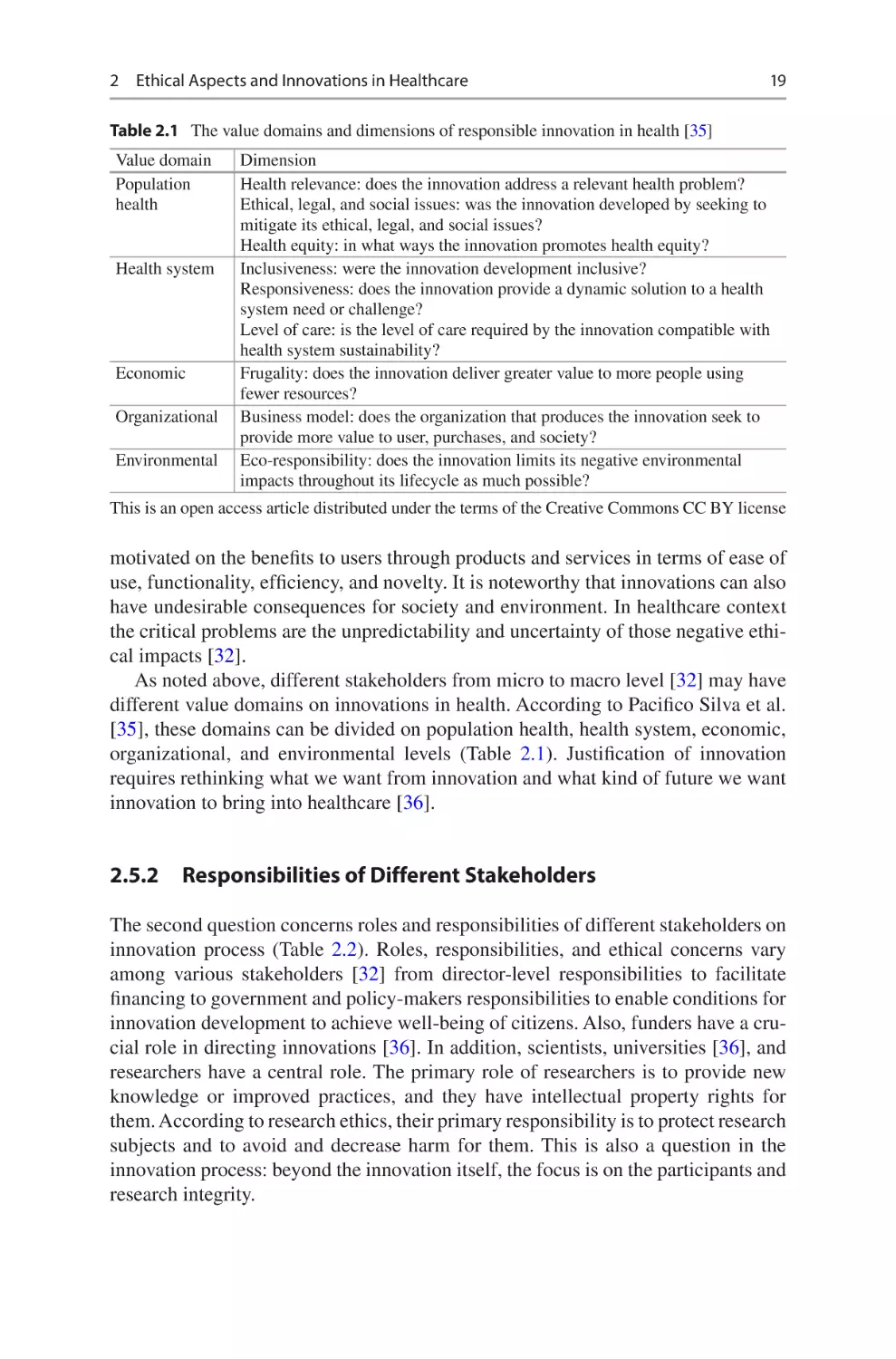
Table 2.1 The value domains and dimensions of responsible innovation in health [35]
Value domain
Population
health
Health system
Economic
Organizational
Environmental
Dimension
Health relevance: does the innovation address a relevant health problem?
Ethical, legal, and social issues: was the innovation developed by seeking to
mitigate its ethical, legal, and social issues?
Health equity: in what ways the innovation promotes health equity?
Inclusiveness: were the innovation development inclusive?
Responsiveness: does the innovation provide a dynamic solution to a health
system need or challenge?
Level of care: is the level of care required by the innovation compatible with
health system sustainability?
Frugality: does the innovation deliver greater value to more people using
fewer resources?
Business model: does the organization that produces the innovation seek to
provide more value to user, purchases, and society?
Eco-responsibility: does the innovation limits its negative environmental
impacts throughout its lifecycle as much possible?
This is an open access article distributed under the terms of the Creative Commons CC BY license
motivated on the benefits to users through products and services in terms of ease of
use, functionality, efficiency, and novelty. It is noteworthy that innovations can also
have undesirable consequences for society and environment. In healthcare context
the critical problems are the unpredictability and uncertainty of those negative ethical impacts [32].
As noted above, different stakeholders from micro to macro level [32] may have
different value domains on innovations in health. According to Pacifico Silva et al.
[35], these domains can be divided on population health, health system, economic,
organizational, and environmental levels (Table 2.1). Justification of innovation
requires rethinking what we want from innovation and what kind of future we want
innovation to bring into healthcare [36].
2.5.2 Responsibilities of Different Stakeholders
The second question concerns roles and responsibilities of different stakeholders on
innovation process (Table 2.2). Roles, responsibilities, and ethical concerns vary
among various stakeholders [32] from director-level responsibilities to facilitate
financing to government and policy-makers responsibilities to enable conditions for
innovation development to achieve well-being of citizens. Also, funders have a crucial role in directing innovations [36]. In addition, scientists, universities [36], and
researchers have a central role. The primary role of researchers is to provide new
knowledge or improved practices, and they have intellectual property rights for
them. According to research ethics, their primary responsibility is to protect research
subjects and to avoid and decrease harm for them. This is also a question in the
innovation process: beyond the innovation itself, the focus is on the participants and
research integrity.
20
H. Siipi and M. Kangasniemi
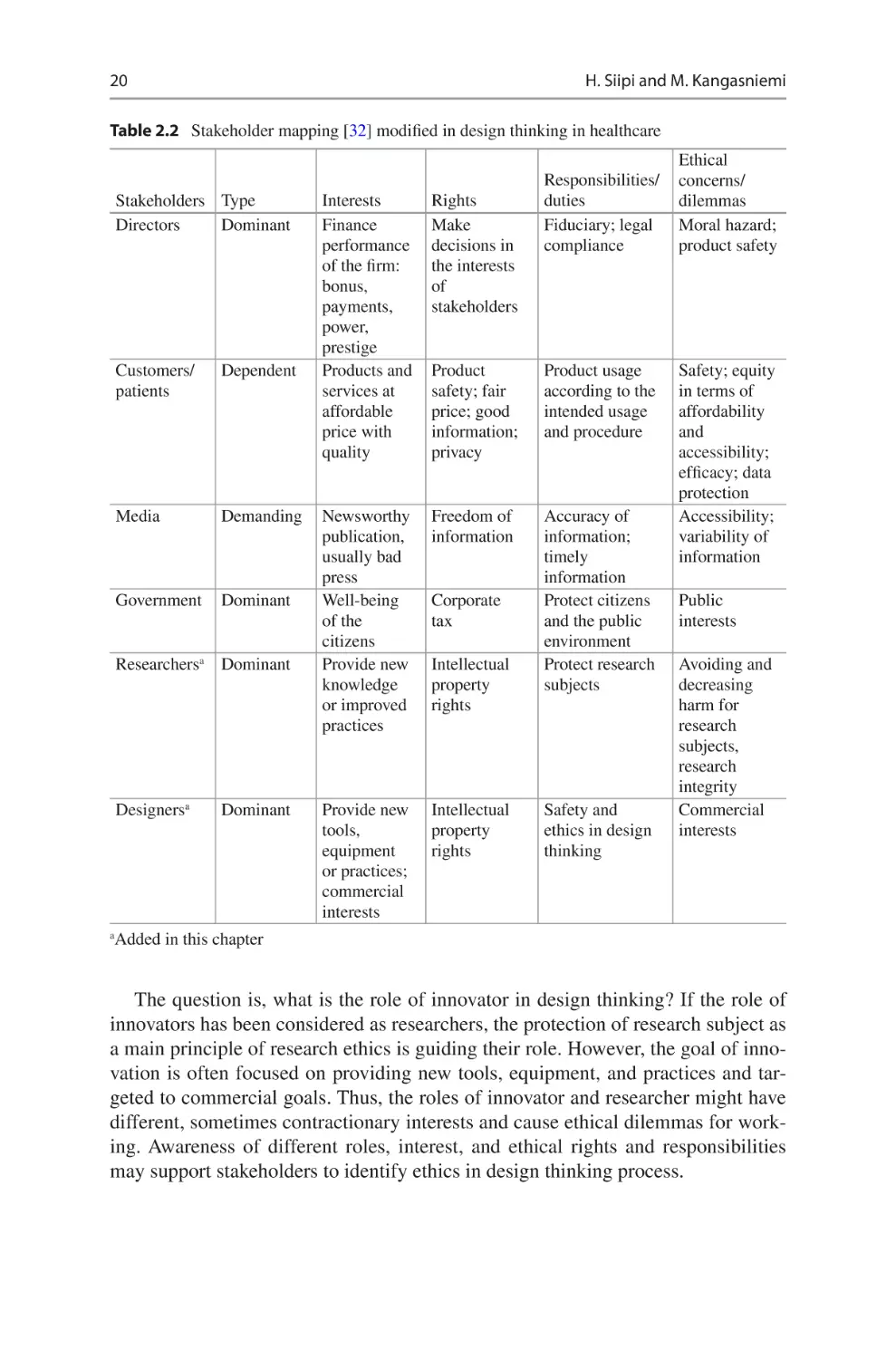
Table 2.2 Stakeholder mapping [32] modified in design thinking in healthcare
Stakeholders Type
Directors
Dominant
Customers/
patients
Dependent
Media
Demanding
Government
Dominant
Researchersa Dominant
Designersa
Dominant
Responsibilities/
duties
Fiduciary; legal
compliance
Interests
Finance
performance
of the firm:
bonus,
payments,
power,
prestige
Products and
services at
affordable
price with
quality
Rights
Make
decisions in
the interests
of
stakeholders
Product
safety; fair
price; good
information;
privacy
Product usage
according to the
intended usage
and procedure
Newsworthy
publication,
usually bad
press
Well-being
of the
citizens
Provide new
knowledge
or improved
practices
Freedom of
information
Accuracy of
information;
timely
information
Protect citizens
and the public
environment
Protect research
subjects
Provide new
tools,
equipment
or practices;
commercial
interests
Intellectual
property
rights
Corporate
tax
Intellectual
property
rights
Safety and
ethics in design
thinking
Ethical
concerns/
dilemmas
Moral hazard;
product safety
Safety; equity
in terms of
affordability
and
accessibility;
efficacy; data
protection
Accessibility;
variability of
information
Public
interests
Avoiding and
decreasing
harm for
research
subjects,
research
integrity
Commercial
interests
Added in this chapter
a
The question is, what is the role of innovator in design thinking? If the role of
innovators has been considered as researchers, the protection of research subject as
a main principle of research ethics is guiding their role. However, the goal of innovation is often focused on providing new tools, equipment, and practices and targeted to commercial goals. Thus, the roles of innovator and researcher might have
different, sometimes contractionary interests and cause ethical dilemmas for working. Awareness of different roles, interest, and ethical rights and responsibilities
may support stakeholders to identify ethics in design thinking process.
2
Ethical Aspects and Innovations in Healthcare
21
2.6 Conclusions
A good ethical analysis is necessarily multidimensional as it needs to acknowledge
various ethically relevant factors. The ethically relevant factors concern rights and
needs of individuals involved. At the same time, a good ethical analysis takes into
consideration those social, economic, ecological, and cultural aspects which influence the ethical acceptability of innovations. Ideally innovations are just, efficient,
low-cost, environment friendly, and responsive to different lifestyles and world
views. In practice, the different ethically relevant factors do not always point toward
the same direction. Maximizing patient autonomy, for example, may in some cases
conflict with ecological sustainability. In similar lines, efficiency may sometimes
compromise privacy or some other patient right. Thus, the ethical analysis often
consists of balancing different ethically relevant factors against each other to form
the ethically acceptable and sustainable solution.
The big question is whether the process of innovation is sufficient for exposing
all factors that should, from the ethical point of view, be acknowledged in an ethically excellent innovation process. Especially, how can one make empathizing (and
design thinking in general) sensitive enough regarding environmental concerns,
necessity of climate actions, and needs of future generations? In short, given the
seriousness of the climate change and other environmental crises, all innovation
work should acknowledge the sustainability requirements. On what conditions can
design thinking do so?
A responsible research-based innovation process is a transparent, interactive process by which societal actors and innovators become mutually responsive to each
other with a view to the (ethical) acceptability, sustainability, and societal desirability of the innovation process and its products (to allow a proper embedding of scientific and technological advances in our society) [37]. Thus, responsible innovation
process requires a circular reflection with embedded ethical decision-making [32].
At its best, incorporating ethical principles in the design process does not only serve
ethics but can lead to well-accepted technological advances [37]. In order to achieve
multidimensional ethical analysis on design thinking process, attention needs to be
paid on researchers’ and innovators’ ethical awareness, willingness to include ethics
on all stages of the design process, and educational support for succeeding in this.
References
1. Bloom P (2016) Against empathy: the case for rational compassion. Ecco. ISBN
978-0-06-233935-5
2. Hamington M (2019) Integrating care ethics and design thinking. J Bus Ethics 155(1):91–103.
https://doi.org/10.1007/s10551-017-3522-6
3. Buchanan R (1992) Wicked problems in design thinking. Des Issues 8(2):5. https://doi.
org/10.2307/1511637
4. Maula H, Maula J (2019) Design ja johtaminen. Alma Talent, Helsinki
5. Mcdonagh D, Thomas J (2010) Rethinking design thinking: empathy supporting innovation.
Australas Med J 1(3):458–464
22
H. Siipi and M. Kangasniemi
6. Aaltola E (2018) Varieties of empathy: moral psychology and animal ethics. Rowman &
Littlefield International, London
7. Slote M (2007) The ethics of care and empathy. Routledge, New York
8. de Veer AJE, Stringer B, van Meijel B, Verkaik R, Francke AL (2018) Access to palliative care
for homeless people: complex lives, complex care. BMC Palliat Care 17(1):119. https://doi.
org/10.1186/s12904-018-0368-3
9. FitzGerald C, Hurst S (2017) Implicit bias in healthcare professionals: a systematic review.
BMC Med Ethics 18(1):19. https://doi.org/10.1186/s12910-017-0179-8
10. Dorst K (2011) The core of ‘design thinking’ and its application. Des Stud 32(6):521–532.
https://doi.org/10.1016/j.destud.2011.07.006
11. van Dijk W, Meinders MJ, Tanke MA, Westert GP, Jeurissen PP (2020) Medicalization
defined in empirical contexts – A scoping review. International journal of health policy and
management 9(8): 327–334. https://doi.org/10.15171/ijhpm.2019.101
12. Conrad P (1992) Medicalization and social control. Annu Rev Sociol 18(1):209–232. https://
doi.org/10.1146/annurev.so.18.080192.001233
13. Correia T (2017) Revisiting medicalization: a critique of the assumptions of what counts as
medical knowledge. Front Sociol 2. https://doi.org/10.3389/fsoc.2017.00014
14. Brownlee S, Chalkidou K, Doust J, Elshaug AG, Glasziou P, Heath I et al (2017) Evidence
for overuse of medical services around the world. Lancet 390(10090):156–168. https://doi.
org/10.1016/s0140-6736(16)32585-5
15. Busfield J (2017) The concept of medicalisation reassessed. Sociol Health Illn 39(5):759–774.
https://doi.org/10.1111/1467-9566.12538
16. Ballard K, Elston MA (2005) Medicalisation: a multi-dimensional concept. Soc Theory Health
3(3):228–241. https://doi.org/10.1057/palgrave.sth.8700053
17. Martins C, Godycki-Cwirko M, Heleno B, Brodersen J (2018) Quaternary prevention: reviewing the concept: quaternary prevention aims to protect patients from medical harm. Eur J Gen
Pract 24(1):106–111. https://doi.org/10.1080/13814788.2017.1422177
18. Bentzen N (2003) Wonca dictionary of general/family practice. Manedsskrift for Praktisk
Laegergerning, Copenhagen
19. United Nation. Sustainable developmental goals. https://sdgs.un.org/goals
20. UN DESA (2022) The sustainable development goals report 2022 - July 2022. New York,
USA: UN DESA. © UN DESA. https://unstats.un.org/sdgs/report/2022/
21. He J, Ortiz J (2021) Sustainable business modeling: the need for innovative design thinking. J
Clean Prod 298(126751):126751. https://doi.org/10.1016/j.jclepro.2021.126751
22. Brennan A, Norva YSL (2002) Environmental ethics. In: Zalta EN (ed) The Stanford encyclopedia of philosophy. Stanford University, Stanford. https://plato.stanford.edu/archives/
win2021/entries/ethics-environmental/
23. Soini K, Birkeland I (2014) Exploring the scientific discourse on cultural sustainability.
Geoforum 51:213–223. https://doi.org/10.1016/j.geoforum.2013.12.001
24. Andrews D (2015) The circular economy, design thinking and education for sustainability.
Local Econ 30(3):305–315. https://doi.org/10.1177/0269094215578226
25. Woods K (2010) Human rights and environmental sustainability. Edward Elgar Publishing,
Cheltenham
26. Birkeland J (2012) Design blindness in sustainable development: from closed to open systems
design thinking. J Urban Des 17(2):163–187. https://doi.org/10.1080/13574809.2012.666209
27. Hoolohan C, Brownie AL (2020) Design thinking for practice-based intervention: co-
producing the charge points toolkit to unlock (un)sustainable practices. Des Stud 67:102–132
28. Shapira H, Ketchie A, Nehe M (2017) The integration of design thinking and strategic sustainable development. J Clean Prod 140:277–287. https://doi.org/10.1016/j.jclepro.2015.10.092
29. Pichler P-P, Jaccard IS, Weisz U, Weisz H (2019) International comparison of health care
carbon footprints. Environ Res Lett 14(6):064004. https://doi.org/10.1088/1748-9326/ab19e1
30. Beauchamp TL, Childress JF (1992) Principles biomedical ethics. Oxford University Press,
Cary, NC
2
Ethical Aspects and Innovations in Healthcare
23
31. The European code of conduct for research integrity (2019) Allea.org. ALLEA [cited 2022
Nov 9]. https://allea.org/code-of-conduct/
32. Nathan G (2015) Innovation process and ethics in technology: an approach to ethical (responsible) innovation governance. J Chain Netw Sci 15(2):119–134. https://doi.org/10.3920/
jcns2014.x018
33. Blok V, Lemmens P (2015) The emerging concept of responsible innovation. Three reasons
why it is questionable and calls for a radical transformation of the concept of innovation. In:
Responsible innovation 2. Springer International Publishing, Cham, pp 19–35
34. The
Lund
Declaration
(2009).
https://www.vr.se/download/18.6969eb1a16a5b
ec8b59338/1556886570218/Lund%20Declaration%202009.pdf
35. Pacifico Silva H, Lehoux P, Miller FA, Denis J-L (2018) Introducing responsible innovation in
health: a policy-oriented framework. Health Res Policy Syst 16(1):90. https://doi.org/10.1186/
s12961-018-0362-5
36. Owen R, Macnaghten P, Stilgoe J (2012) Responsible research and innovation: from science
in society to science for society, with society. Sci Public Policy 39(6):751–760. https://doi.
org/10.1093/scipol/scs093
37. Schomberg V (2013) A vision of responsible research and innovation. In: Owen R, Bessant J,
Heintz M (eds) Responsible innovation. Wiley, London, pp 51–74
3
Design Thinking Toolkit for Healthcare
Innovation
Beate Rygg Johnsen
3.1 Introduction
Too many ideas do not reach the market or users, even if the idea is good. This is
often due to a suboptimal match between the product and the needs of the user,
rather than the solution or technology itself being poor. It is difficult to foresee all
preferences and conditions that are needed for an invention to come into use, and it
is quite common that products end up having some unforeseen detail that may hinder its intended use.
We also tend to empathise more with similar individuals and not so much with
groups of people with other needs than ourselves. It is difficult to stay objective
when investigating someone else’s situation without applying subjective assumptions. This typically applies to cases and situations that are far from our own everyday life.
In this chapter we suggest a toolbox of techniques that can help us stay objective
through the design phase of a new product or service, that may prevent bias and
does not require prior knowledge.
3.1.1 Simple Tools to Get You Started
Design thinking is a process that allows you to design your product or solution
through the eyes of the user, securing a perfect fit between the solution and the end-
user problem. The process is simply explained in Fig. 3.1. The first two steps, empathy and define, represent the problem finding phase. Steps three, four and five
(ideate, prototype and test) represent the problem solving phase.
B. R. Johnsen (*)
UiO Growth House, University of Oslo, Oslo, Norway
e-mail: beaterj@uio.no
© The Author(s), under exclusive license to Springer Nature
Switzerland AG 2023
A. Pakarinen et al. (eds.), Design Thinking in Healthcare,
https://doi.org/10.1007/978-3-031-24510-7_3
25
26
B. R. Johnsen
Fig. 3.1 The design thinking process—freely drawn from Stanford University and other graphics
The tools suggested in this chapter are only a few of many available ways to
apply design thinking to an innovation process, but applying this selection of tools
can help you stay open to the end-users’ needs and create solutions that will solve a
problem and hence be used. The chapter is organized in two main parts:
Part I: Problem Finding
• Observation, interviews and job to be done
• 5 whys
• Empathy map
• Point of view
Part II: Problem Solving
• How might we…
• Brainstorming
• Subtraction
• Prototype and test
3.2 Part I: Problem Finding
3.2.1 Observation, Interviews and the Job to Be Done
An important part of understanding a problem or need is observing and interviewing
the users whose needs you seek to discover. Get yourself out there. Seek out the
places where the needs manifest themselves.
3
Design Thinking Toolkit for Healthcare Innovation
27
A good source of understanding customer need is Clayton M. Christensen’s
description of the job to be done in his book Competing Against Luck (2016) [1]. In
his book, Christensen describes the problem as the job to be done and the solution
as something you hire to get the job done. In his book he describes that when
McDonalds was looking to increase the sales of milkshakes, they turned immediately to introducing new flavours, new sizes, and so on but with little success. By
investigating the people stopping by to buy milkshakes (their behaviour), they registered that milkshakes are particularly popular in the morning. They found that
additional size and flavours did not increase sales, but that the morning milkshakes
fill a specific purpose. Customers that stop before 9 a.m. are alone; they buy only
milkshake and drive off. So, the question was: what job are customers “hiring” the
milkshake to do? The customers could not answer directly, but through observation
and interviews, it was revealed that they stopped to buy milkshake because they had
a long commute to work and would otherwise be hungry by 10. When asked what
could have been “hired” instead of a milkshake, they would suggest beagles, a
banana, a Snickers bar, but these hires would leave crumbs, not be filling enough, be
too sweet, and so on. Milkshake, on the other hand, would fit the bill perfectly. It
was rich, was easy to handle, fit cup-holder, took time to drink and “keeps me full
until lunch”.
All shared a common “job to be done” in the morning. Afternoon buys have a
different “job to be done”, such as connecting with your children. It also has different, comparable and alternative “hires” such as going to the park or to a movie.
Observation is the first step to understanding people’s true needs as people may
find it difficult to express where the problem lies. To place yourself in the situation
is key, and to try to replicate what the end-user is experiencing. The second step is
interviewing people in these situations, and the following section will give some
guidance in how to do this.
This part is especially important, because surprising as it is, people do not always
know what their true needs are. If asked to describe a need, they jump straight to a
solution they think might solve their problem. Influenced by others, and looking for
solutions amongst already existing products, they struggle to see the best possible
solution to a problem.
This is where you come in to guide and explore, and to do so, it is critical to get
close to people. Understand their ways and their passions before you submerge
yourself in discovering their struggles. They are the experts of their own problems,
and you are the one trying to learn what it is all about. Normally you can only look
to children close to you to understand the importance of this engagement. They
often struggle with issues that we as adults cannot see but try to solve in our adult
way. One simple example is trying to teach my 3-year-old the joys of downhill skiing. I tried to teach him how to do turns, but he seemed annoyed. When I sat down
to engage with him, I realised that holding him back from going fast down the slope
only delayed his big thrill, which was riding the ski tow to the top of the hill.
Observation and engagement is particularly important where children are concerned as they are often less skilled in articulating their needs or fears. One example
described in Tom and David Kelley’s book Creative Confidence [2], tells the story
28
B. R. Johnsen
of how lead designer of GE Healthcare’s new MRI machine, Doug Dietz, came to
observe the MRI in use and discovered a young girl terrified of his new machine [3].
After the MRI had been taken into use, Doug learned that most kids were scared and
as much as 80% of them needed to be sedated to keep still during the procedure.
Horrified by this statistics, Doug decided to fix this problem and sought training in
design thinking. The human-centred method gave him the skills to engage with
children and their caretakers to understand how kids experience, and interact with,
technology. Through his “anthropological fieldwork” and a creative problem solving process (methodology described later in this chapter), Doug transformed the
MRI suite into an “adventure story”. He painted MRI machines as pirate ships,
space capsules and submarines and prepared scripts for the operators, making the
kids captains of their vessels. Doug’s empathy-based innovation helped reduce the
sedation of paediatric patients down to a handful and changed kids’ experience from
utter horror to an adventure (Fig. 3.2).
Your role, in addition to observing behaviour, is to ask questions that will unveil
what hinders them in their work or daily life. The most important part of asking
questions is to keep an open mind, listen to and build on the answers you receive,
rather than bringing a list of pre-prepared questions. From a simple topic, let the
user take you into his or her world and try to understand what their story is and how
the problem makes them feel. Below is a list of some simple tips when asking
questions:
Fig. 3.2 GE Healthcare’s new, improved MRI “adventure”
3
Design Thinking Toolkit for Healthcare Innovation
29
• Begin very basic and ask short open questions (“can you help me out …”).
• Be specific about situation that comes up:
–– What is the problem?
–– When did you last have this problem?
–– What were you feeling?
–– What happened?
• Ask why for statements like “I think” or “I believe”.
• Give ample time to reflect and answer—silence is OK.
• Bring with you someone who can make notes and capture the interview.
Although the morning milkshake represents an incremental improvement to a
marketed product, what the story tells us is the importance of understanding your
customer or user’s true need. This is the case whether you have a specific idea in
mind or whether you see an unfulfilled need in the market. In the case of a product
idea, the first you must do is to put your invention aside and visit the segment where
you think your idea will provide value. When you investigate the need/problems,
also look at what users currently do to minimise the problem.
In the case of a market need or unsolved problem, the first phase is empathising
with the user. In the healthcare segment, a problem or need can be anything from a
marketed solution that is too comprehensive and thus not being used, a solution that
is too expensive, too complicated or not anatomically compatible with all users or
maybe an instrument that is scary to kids.
3.2.2 5 Whys
When meeting with new environments, it is sometimes difficult to start asking open
questions without bias toward answers that you expect will come. In these instances,
it can be good to have a proven questioning technique to lean on. One such technique is the 5 whys technique. It was originally developed by Toyota industries in
the 1930s as a method to find the root cause of a manufacturing problem. Toyota
still uses this method and today it is widely used in lean manufacturing, e.g. to perform root cause analysis or eliminate wasteful manufacturing processes.
The technique is very simple. You simply ask “why” when someone tells you
about a situation from his or her experience. After five whys you will have come to
the origin of the problem. Example:
An elderly malnourished person living at home: “I cannot seem to maintain my
weight”—WHY—“I cannot find food that I like”—WHY—“I only buy ready-made
food that doesn’t taste so good”—WHY—“I prefer vegetables, but the good food is
too hard to prepare”—WHY—“I cannot use sharp knives and peelers to prepare the
veggies”—WHY—“my hands are too weak to grip the tools and cut the hard veggies”. Aha!
As consumers cannot always articulate what they want, this is where the 5 WHYs
and other interviewing techniques come in handy. In addition to asking questions
unveiling whether a user will buy a product or service (what Clayton M. Christensen
30
B. R. Johnsen
would call the big hire), one should also keep in mind whether the product will be
used after the purchase is done. This, referred to as the “little hire”, and is not often
investigated, even in design thinking. To ensure that you have captured the problem
correctly so that a potential product or service will fill a purpose also after it has
been “hired”, one can test this by completing the following sentence by filling in the
(blanks):
WHEN: __(a situation occurs)__ I WANT TO:__ (motivation)___ SO I CAN:_
(expected outcome)___.
E.g. when I am hungry I want to be able to eat vegetables so I can maintain
my weight.
3.2.3 Empathy Map
After you and your team have gathered observations and answers to interviews, it is
time to structure the data and findings. The purpose being that with the task of structuring and interpretation you will arrive at some insights about the problem and situation at hand.
Start by asking the team to put all their answers and observations on post-it notes
(Fig. 3.3). You may discuss along the way to reflect and remember all elements.
Then group the notes from all team members into similar answers and observations.
Arrange a large piece of blank paper or wall into four squares and put your observations and answers/statements on the left side.
On the right side of the empathy map, you discuss the following in the team:
behind the statements and observations; what do you think are the users’ true
thoughts and feelings. Do your own interpretation of what they say and do. What do
EXPLICIT
IMPLICIT
answer
answer
statement
thought
thought
quote
statement
belief
t
statemen
beha
viour
WHAT WAS SAID
WHAT DID THEY THINK
WHAT WAS DONE
WHAT DID THEY FEEL
action
behaviour
behaviour
ity
activ
motion
operation
feeling
emotion
behaviour
Fig. 3.3 Empathy map: freely drawn from Stanford University model
3
Design Thinking Toolkit for Healthcare Innovation
31
you think are their beliefs and true thoughts (“I wonder if this means …”)? Are there
any surprises or new thoughts that spring from working with transitioning pure
observation into inferences—what are these new insights?
Through your interpretations of what you hear and the insights you have discovered, you may reveal issues that you did not think of starting out. Moreover, keep in
mind that it is OK to speculate and make assumptions, as the validity of these
insights will be tested later on in the process. These possible insights are now the
source of your point of view (POV) sentence.
3.2.4 Point of View
To form a Point of View (POV) is to frame a challenge that will be the starting point
for entering the solution phase of the design process. The POV is an actionable
problem statement that is the cumulation of all the work done in the empathising
phase. It is a crystalised form of one version of the problem as you and your team
see it. As defined by Professor James A. Landay at Stanford University, a POV
statement is:
A unique, concise reframing of the problem that is grounded in user needs & insights
—Professor James A. Landay
But be aware, it is NOT a consensus of the behaviours of all people who are
experiencing this problem in all its shapes and forms, but a focus on one selected
meaningful challenge.
To frame the POV, ask yourself the following sentences:
•
•
•
•
Who did you meet?
What were you surprised to notice?
What do you “wonder if it means”?
What would be game-changing?
The first sentence captures a person or the synthesis of people that experience the
problem in one way. In this situation, it can be useful to choose an extreme user with
an “exaggerated” problem to emphasise the issue. Extreme in the sense demographic, psychographic or other. Demographic means someone’s race, ethnicity,
religious beliefs, age, occupation, income, social class and education level, whereas
psychographics refers to consumers based on their activities, interests and opinions.
Choose one angle to the problem and define what surprised you. Then add your
interpretation of what you think this means—what was inferred, what needs you
discovered. In the final sentence, frame the game-changing challenge in the way of
an informed problem that is specific to your person. A good POV should inspire
your team, capture the people you have met and provide focus and frame the
next phase.
In the case of the elderly malnourished person, one POV could be:
32
B. R. Johnsen
• “the elderly want to eat fresh vegetables without having to use standard cutting
utensils” or
• “the elderly want to eat normal, but are limited by their aging bodies”
It is important not to limit the problem by introducing solutions into the POV, e.g.:
• “the elderly need a new type of cutting utensils to be able to eat fresh
vegetables”.
Most importantly, no matter which approach of interviews or observation you use,
the time-consuming task of putting yourself out there and talking to the users in the
development phase is of the essence. A recent review of usability challenges and
medical devices in the home environment revealed that only 12 out of the 3471 studies reviewed had direct involvement of end-users [4]. The lack of user involvement,
they found, resulted in machines with complex feedback systems that also lacked
intuitiveness in use. The home environment is less structured and consists of a broad
user range. Omitting user involvement increases the likelihood of adverse events.
3.3 Part II: Problem Solving
Allegedly, Henry Ford is known to have said:
If I had asked people what they wanted, they would have said faster horses
—Henry Ford
Although this statement might be more an anecdote than a fact, it brilliantly
points to the fact that we humans are limited by our automatic thoughts. We tend to
seek solutions within our prior knowledge when faced with a problem.
Design thinking is all about managing a state of ambiguity. Finding and solving
problems in a state of uncertainty also means managing discomfort. You are not
looking for a pre-set answer, but finding the best possible solution amongst an ocean
of potential, so far unknown solutions. You must go through the discomfort of not
knowing the answer and be creative and explorative in this state in order to arrive at
new discoveries.
Design is getting from problem finding to problem solving and to quote Justin
Ferrell of Stanford d.school; “you must dare to endure, engage and embrace ambiguity to make your path to a unique discovery”.
Problem solving, that is, finding a solution, may bring an additional dimension
of discomfort. In creating an ideal situation for the creative process, you must strive
to put together a team that is as diverse as possible. Try to create some points of
collision in the way you assemble your team consisting of people with different
scientific and cultural backgrounds that see the world in different ways and have
different values and virtues. This because “hiring individuals who do not look, talk,
or think like you can allow you to dodge the costly pitfalls of conformity, which
discourages innovative thinking” [5].
3
Design Thinking Toolkit for Healthcare Innovation
33
The significance of the diverse team and managing ambiguity are key elements
when moving into phase three, the ideation phase. This phase is all about coming up
with as many ideas as possible, and so we must trust the founder of design thinking,
David Kelley, and believe his statement:
Belief in your creative capacity lies at the heart of innovation
—David Kelley
3.3.1 How Might We
The POV from the last section can be framed into “how might we …” statements
(HMWs) to spark the ideation phase, that is, how might we accomplish the game
changer. The how might we statements are not closed and definite, but open and
inviting you to frame a sentence that addresses the POV. In the case of the
elderly, malnourished person, a HMW statement could be “how might we create
new tools so that this person could peel and cut her veggies” or “how might we
supply her with fresh pre-cut vegetables” or “how might we make pre-cooked
meals more tasty”. The point is to explore the POV from all angles when creating HMW statements by brainstorming as many solutions as possible.
Introducing alternatives to all parts of the problem such as, the who, what, when,
where and so on.
3.3.2 Brainstorming
Brainstorming is one technique/tool that can be used to come up with HMW statements. The first rule of brainstorming ideas is quantity over quality. To find one or
two surprisingly inventive ideas, one must generate a plethora of ideas. The wilder
and more diverse the better.
This is where the diversity of the team is key and creating a safe environment for
people to speak freely without judgement. It is forbidden in this part of the process,
to disagree or contradict and idea, but it is encouraged to add to the ideas of others,
for example, by adding a “yes, and …” to someone’s statement. You’ll need plenty
of empty walls and post-it notes. Allow plenty of time to make HMW statements on
post-it notes and take timeouts where you explain your ideas to the others allowing
the idea to develop through building on each other’s ideas.
Due to the diversity of the team, there should also be some rules for the brainstorming session. This is not to suffocate creativity, but to allow all ideas to
surface:
• Take turns speaking so all voices are heard.
• One person at a time.
• To maintain energy and speed, keep your idea description at a headline level.
34
B. R. Johnsen
3.3.3 Subtraction
Sometimes, in brainstorming sessions, it might happen that ideas tend to evolve
around the same topic and you may feel stuck. For example, all ideas may revolve
around creating a new resource, and no ideas are creating analogies, question
assumptions, explore opposites, changing status quo, and so on. One way to ignite
a brainstorming session that is moving slow, is to introduce restrictions.
One such restriction is subtraction. In subtraction you use the POV as normal,
but remove a vital part from the equation. This leaves you to invent around a subject
that would normally be your focus. To illustrate, if we return to Henry Ford and his
speedy horses, the subtraction made was that people still needed to get from A to B
more quickly, but now without the horse. Henry Ford saw that the limitation was the
horse itself, so he started to brainstorming (we might imagine) how to invent around
using the horse all together, and ended up with a radically innovative solution.
Similarly, in 2009 in San Francisco, Uber revolutionised busy city transportation by
subtracting taxis from the equation. In the case of the malnourished person, one
could easily get stuck inventing only new ergonomically correct tools for peeling
vegetables. To use subtraction, one could take the utensil out of the equation. This
would spark new ways of thinking and new solutions.
This is a powerful innovation tool. It also allows you to remove something from
the equation that you would prefer to get rid of. If successful, this is a way to create
disruptive ideas because it so radically changes the premises of the creation process.
Other tools to spur the brainstorming can be to introduce less dramatic restrictions to overcome the paralysis of having too many choices. These restrictions can
be anything related or unrelated to the task, e.g. “the design must cost less than
$100” or “the idea must fit into a pocket” or “be reusable”. The purpose is to help
your brain think in new directions or to introduce a clear preference.
When you have emptied the creative process, take one step back and arrange the
ideas into themes. Agree in your team on logical ways to group the HMW statements. Then agree on how to select the ideas you want to move to the phase four:
prototyping. You may choose to select themes or single ideas. Ways to select ideas
should be democratic. Each person gets a defined number of votes and places a
sticker-dot on their favourites. It is also possible to have different colour dots for
far-fetched ideas and low hanging fruit if you would like to select ideas with different risk-profiles for testing.
3.3.4 Prototype and Test
Prototyping is an iterative process where you test your ideas with the users. The
purpose is to collect data on all three aspects of an innovation (Fig. 3.4):
• Technical feasibility: can we make it?
• Market desirable: does someone need it and want it?
• Business viability: can we make money on it?
3
35
Design Thinking Toolkit for Healthcare Innovation
Fig. 3.4 Free drawing
from Stanford University
model
FEASIBLE
VIABLE
DESIRABLE
Minimal viable product (MVP)
Cost of Error
Too late:
getting very
expensive here
Early on:
Prototype and
learn here
Timeline
Launch
Fig. 3.5 Free drawing inspired by Stanford University
The effort you put into the prototype will grow linearly with the conviction
you get from the response you collect, that this is a good idea (middle triangle
in the chart). The viability aspect is saved for last as it is more elaborate to
document.
Start simple. If you put too much effort in your prototype, you tend to cherish
and build on it, which may create bias. Also, the time it takes to make a “perfect”
prototype, prevents you from making changes fast and produces multiple iterations
and also controlling cost (Fig. 3.5). Rather build the cheapest and simplest possible
mock-up of what your solution will look like when you start testing. Be creative.
Examples of prototypes include simple drawings or post-its, descriptive leaflets,
cardboard 3D models or any material that can be built into something recognisable
and representative.
Next, create the time and space for your experiments to test the various prototypes.
36
B. R. Johnsen
Plan:
• What props to use?
• What scene or space will your experiment take place in?
• Assign roles for people to play during the test/roleplays.
Keep the sessions short and defined and collect as many experiments as possible.
Use the same line of questioning from the problem finding section above. One role
should be to take thorough notes and pictures when possible and allowed.
When you have tested the prototype, go back and make necessary alterations
based on the feedback, then test again until you feel that you have a prototype worth
exploring further that can be continued in the product design phase.
3.4 Conclusion
Designing products and solutions to meet the users’ true needs is all about stepping
into the unknown. A prerequisite for managing such a “risky” situation is to embrace
the uncomfortableness of not knowing where you are going and be confident that
you and your team’s creative thinking will get you there. It is as much a mindset as
a defined process. And remember, you are not a failure if you fail to excel the first
time around. You are just wiser and better skilled to tackle your next round of innovation by design thinking.
Acknowledgments A big thanks to Norunn Torheim and Nicolay Bérard-Andersen for reviewing
and commenting on the text, and for great collaboration in our task to introduce design-driven
innovation to academia.
References
1. Christensen CM et al (2016) Competing against luck—the story of innovation and customer
choice. Harper Business, New York
2. Kelley T, Kelley D (2013) Creative confidence—unleashing the creative potential within us all.
Crown, New York
3. Dietz D (2012) Transforming healthcare for children and their families. TEDx San Jose,
CA. https://youtu.be/jajduxPD6H4. Accessed 30 Sep 2022
4. Tase A et al (2022) Usability challenges in the use of medical devices in the home environment:
a systematic review of literature. Appl Ergon 103:103769
5. Rock D, Grant H (2016) Why diverse teams are smarter. Harv Bus Rev, November 4
4
Design Thinking in Healthcare Education
Isabella Hajduk, Annika Nordberg, and Eeva Rainio
4.1 A Brief History of Design Thinking in Education
The concept of Design Thinking originated in the 1960’s to describe the collective
problem-solving process that the professional (industrial) designers use when developing new products for consumers. Since then, it has also been integrated into
higher education. Design Thinking is a widely used approach especially in business,
marketing, and entrepreneurship education, but also in engineering, architecture,
and other design areas. It has also recently, during the past 5 years (also based on
authors’ own observations), started to become an increasingly important pedagogical tool in the education of health professionals [1–3].
We have collected representative examples of how Design Thinking is used or
taught in health education around the world, as shown in Table 4.1 at the end of the
chapter. The table does not aim to be a complete listing, but rather gives inspiration
for further reading. For more examples, we also recommend the following recent
review articles to readers. Sandars and Goh offer recommendations, how to efficiently use Design Thinking in medical education. They have concluded that Design
Thinking usually has two main uses: it has been used directly to design a new product, or the principles of Design Thinking have been taught to students with the help
I. Hajduk
The Centre for Innovative Medical Research, Sydney, NSW, Australia
e-mail: isabella.hajduk@cimrglobal.com
A. Nordberg
Department of Nursing Science, University of Turku, Turku, Finland
E. Rainio (*)
Faculty of Medicine, University of Turku, Turku, Finland
e-mail: eeva.rainio@utu.fi
© The Author(s), under exclusive license to Springer Nature
Switzerland AG 2023
A. Pakarinen et al. (eds.), Design Thinking in Healthcare,
https://doi.org/10.1007/978-3-031-24510-7_4
37
38
I. Hajduk et al.
Table 4.1 Examples of how Design Thinking is used in health education
How was Design Thinking used?
Curriculum and course development
Design Thinking was used in curriculum
development: Since 2015 at Harvard Medical
School the students have participated in
curriculum work. They are, after all, the end
users of the “product”, which is the course
curriculum
Design Thinking process was used to create a
course Design Thinking for Public Good for
public health students at the University of North
Carolina at Chapel Hill
A full-day Design Thinking retreat to rethink the
needs for continuing professional education with
emergency medicine stakeholders
Design Thinking process was used in a 2-day
workshop for health profession educators to
develop recommendations how to evaluate the
interprofessional health education
Design Thinking was used to solve an
educational problem: how to overcome
challenges with rural placements of students in
various health professions
Clinical Experience program was improved at
Sidney Kimmel Medical College in a 3-h Design
Thinking sprint with the program stakeholders.
As a result, changes were introduced, and
significant improvement of student satisfaction
achieved
A novel online educational resource, The Path to
Patient-Centred Care was developed with the
support of a Design Jam event
References
Anderson, J., Calahan, C.F. & Gooding, H.
(2017): Applying design thinking to
curriculum reform. Academic Medicine
92(4), 427
Skywark, E. R., Chen, E., & Jagannathan,
V. (2021). Using the design thinking
process to co-create a new, interdisciplinary
design thinking course to train 21st century
graduate students. Frontiers in Public
Health, 9
Chorley, A., Azzam, K., & Chan, T. M.
(2020). Redesigning continuing
professional development: Harnessing
design thinking to go from needs
assessment to mandate. Perspectives on
Medical Education, 1–6
Cahn, P. S., Bzowyckyj, A., Collins, L.,
Dow, A., Goodell, K., Johnson, A. F., ... &
Zierler, B. K. (2016). A design thinking
approach to evaluating interprofessional
education. Journal of Interprofessional
Care, 30(3), 378–380
Wolcott, M. D., McLaughlin, J. E.,
Hubbard, D. K., Williams, C. R., & Kiser,
S. N. (2021). Using design thinking to
explore rural experiential education barriers
and opportunities. Journal of Medical
Education and Curricular Development, 8,
2382120521992333
Fish, A. M., Fields, J. M., Ziring, D.,
McCoy, G., Ostroff, P., & Hayden, G.
(2022). Curriculum development by design
thinking: Analyzing a program for social
determinants of health screening by
pre-clerkship medical students. Journal of
Medical Education and Curricular
Development, 9, 23821205221080701
MacKinnon, K. R., Ross, L. E., Rojas
Gualdron, D., & Ng, S. L. (2020). Teaching
health professionals how to tailor gender-
affirming medicine protocols: a design
thinking project. Perspectives on Medical
Education, 9(5), 324–328
4
Design Thinking in Healthcare Education
39
Table 4.1 (continued)
How was Design Thinking used?
References
Nursing education/interprofessional education in nursing
Transdisciplinary course to engineering, nursing, Lewis, E. J., Ludwig, P. M., Nagel, J., &
Ames, A. (2019). Student ethical reasoning
and pre-professional health students was
confidence pre/post an innovative
organized to introduce them to novel
makerspace course: A survey of ethical
technologies and innovate solutions for
community health problems. The course utilized reasoning. Nurse Education Today, 75,
75–79
MakerSpace open learning environment for
prototyping. Special emphasis was on increasing
understanding about ethical implications related
to novel technologies
Holt, J. M., Talsma, A., Woehrle, L. M.,
Presents a pilot of an innovation and Design
Klingbeil, C., & Avdeev, I. Fostering
Thinking workshop for nursing and sustainable
innovation and design thinking in graduate
peacebuilding students with the help of
programs. Nurse Educator, 10–1097
University Entrepreneurship Center at the
Midwestern University’s College of Nursing.
The aim was to expose students to Design
Thinking and teach them to use creativity and
innovation
Wingo, N., Jones, C. R., Pittman, B. R.,
The article provides insights how the nursing
Purter, T., Russell, M., Brown, J., &
faculty at the University of Alabama at
Ladores, S. (2020). Applying design
Birmingham has used Design Thinking in
thinking in health care: Reflections of
introducing nursing research to undergraduate
nursing honors program students. Creative
students. They discuss the Design Thinking
Nursing, 26(3), 169–174
benefits reflected in student experiences,
including understanding the empathy in
healthcare and future potential of understanding
the Design Thinking process
Gives an example of interdisciplinary healthcare Ziegler, E., Carroll, B., & Shortall, C.
(2020). Design Thinking in nursing
design jam event on the theme of innovative
education to improve care for lesbian, gay,
thinking to support LGBTQI2S Health and
bisexual, transgender, queer, intersex and
Wellness. In addition, the authors continued the
two-spirit people. Creative Nursing, 26(2),
development of an online education tool kit by
118–124
partnering with nurse researchers who develop
simulation games for nurses
Park, M., Giap, T. T. T., Jang, I., Jeong, M.,
Nursing students in South Korea were taught
& Kim, J. (2022, January). Listening to
patient-centered care (PCC) with the help of
5-step Design Thinking process, 2 h each. After
patients’ voices: Applying the design-
the course they self-evaluated their views on
thinking method for teaching person-
supporting patient individuality and on
centered care to nursing students. In
maintaining patient individuality while
Nursing Forum (Vol. 57, no. 1, pp. 9–17)
providing care. Results showed that student
understanding about PCC increased during the
program
(continued)
40
I. Hajduk et al.
Table 4.1 (continued)
How was Design Thinking used?
References
Interprofessional education in other health disciplines
Chen, K., Kruger, J., McCarther, N., &
Paper describes a use of Design Thinking
Meah, Y. (2020). Interprofessional,
process in an abridged hackathon workshop to
learner-driven collaboration for innovative
promote interprofessional and inter-clinic
solutions to healthcare delivery in
collaboration on student-run clinics, as well as
encourage workshop participants to design clinic student-run clinics. Journal of
Interprofessional Care, 34(1), 137–139
practice improvements
Lesselroth, B., Park, H., Duncan, H. M. A.,
Design Thinking principles were utilized in
Thompson, G., & Yarnall, R. (2021).
designing a shift handoff software as an
Designing shift handoff software: Clinical
interprofessional collaborative effort of medical
learners and design students collaborate
informatics program and school of architecture
using the “design thinking” process. Studies
and design
in Health Technology and Informatics, 281,
974–978
This paper gives an example of Design Thinking Lesselroth, B., Park, H., Monkman, H.,
Ijams, S., Yarnall, R., Kollaja, L., & Dennis,
Community Medicine workshop to teach about
S. (2021). Student academy: A pilot design
health-related social needs and to practice
designing person-centered solutions for medical thinking workshop to teach community
medicine. In context sensitive health
and physician assistant students
informatics: The role of informatics in
global pandemics (pp. 79–83). IOS Press.
Sherman, J., Lee, H. C., Weiss, M. E., &
Stanford University d.school offered Medical
Kristensen-Cabrera, A. (2018). Medical
Device Design workshops to multidisciplinary
device design education: identifying
team of undergraduate and graduate students:
problems through observation and hands-on
engineering, design, medicine, business, law,
training. Design and technology education:
humanities, education, and earth sciences. They
An International Journal, 23(2), 154
compared the experiential and observational
learning during the first two phases of Design
Thinking: understanding and defining the
problems
Medical education
Chen, P. P. Y., & Chou, A. C. C. (2021).
3-day Innovation and Design Thinking course
was piloted as a mandatory course in Singapore, Teaching health care innovation to medical
aiming to give the medical students an overview students. The Clinical Teacher, 18(3),
285–289
of healthcare innovation, let them create their
own solutions in design sprint, and practice
pitching
Trowbridge, M., Chen, D. & Gregor, A.
University of Virginia offers Design Thinking
2018: Teaching design thinking to medical
course for first-year medical students. During
students. Medical Education 52, 1199–1200
this course, which lasts 1 year, the students will
develop new services and solutions for patient
work. This module had a clearly positive impact
on their learning throughout the rest of their
studies
4
Design Thinking in Healthcare Education
41
Table 4.1 (continued)
How was Design Thinking used?
References
Badwan, B., Bothara, R., Latijnhouwers,
In 2017 AMEE, an event called #ElsevierHacks
M., Smithies, A. & Sandars, J. 2018: The
utilizing Design Thinking methodology was
importance of design thinking in medical
carried out with students. It lasted 48 h, and
together with software developers and designers education. Medical Teacher 40(4), 425–426
the students generated new tools, such as mobile
phone apps, to help with challenges in medical
education. The participating teams also received
support from marketing and technology
specialists, as well as from medical educators
Authors stated that Design Thinking gives
excellent lifelong learning skills, which assist
with teamwork and tolerating uncertainty, two
very basic characteristics common to all
healthcare professions
Marcus, D., Simone, A., & Block, L.
Design Thinking methodology has also turned
(2020). Design thinking in medical ethics
out to be useful in trainings, where students
education. Journal of Medical Ethics, 46(4),
solve complex ethical issues. This paper
282–284
describes a Design Thinking workshop to
propose better alternatives for liver transplant
allocation system in US
Online transition examples from COVID-19 pandemic
Ferreira, M. F., Savoy, J. N., & Markey,
Description of teaching methods and learning
M. K. (2020). Teaching cross-cultural
outcomes from a novel course for American
design thinking for healthcare. The Breast,
biomedical engineering and natural sciences
50, 1–10
students who participated on study-abroad
Lewis, M. M., & Markey, M. K. (2021).
activities in both US and Portugal. Aim was to
teach how culture impacts on healthcare delivery From study-abroad to study-at-home:
teaching cross-cultural design thinking
and use of technologies
during COVID-19. Biomedical Engineering
The course went through a transition from
study-abroad to study-online during COVID-19, Education, 1(1), 121–125
and changes were reported in this article
Karwat, A., Richmond, T. S., & Leary, M.
University of Pennsylvania School of Nursing
(2021). Transition of a collaborative
transitioned their hands-on community service
in-person health care innovation course to
course Innovations in Health: Foundations of
Design Thinking, to online course and report the online learning. Journal of Nursing
Education, 60(5), 298–300
course changes and outcomes
of a project where the participants develop a new product [4]. The nature of a new
product can vary from curriculum reforms to medical applications. In their commentary, Madson summarizes the operationalization of current understandings of
Design Thinking in medical education. They introduce different initiatives to incorporate Design Thinking into the curriculum [5]. Madson divides them into education programs, courses, workshops, and hackathons, from more extensive modules
to short training events. Inspired by these reviews, the examples in the table are
divided according to the use of Design Thinking in curriculum/content development
or in educational courses/trainings. In addition, the references are grouped based on
the field of education.
42
I. Hajduk et al.
4.2 About the Chapter’s Authors
Isabella, Eeva, and Annika all come from science/medical backgrounds, where
Isabella is a molecular microbiologist, Eeva is a geneticist, and Annika is a nursing
scientist. Throughout their academic careers, they each have had the opportunity to
contribute to the teaching and learning side of tertiary education.
During her PhD candidature at the University of Technology Sydney (UTS) in
Australia, Isabella was given an opportunity to participate in an international training program in the area of biomedical innovation and entrepreneurship (BIE), run
by Professor Michael Wallach. The 2-week intense program takes a Design Thinking
approach, where students are tasked with defining a health or medical problem and
ideating and pitching an innovative and novel solution. Students are supported with
relevant education and expert-mentoring throughout the program to help shape their
ideas into feasible solutions. The BIE course was later adapted into a Master’s core
subject, called Innovation, Entrepreneurship, and Commercialization (IEC). Isabella
joined Professor Wallach in teaching IEC in 2016, and since took an active role in
further elevating the IEC subject into a fun, educational subject marrying biomedical sciences and Design Thinking.
Eeva was first introduced to the Design Thinking approach on a career course
and fell in love with the approach. After visiting Stanford d.school in 2019, she was
convinced that the Faculty of Medicine at the University of Turku needs to learn
more about Design Thinking. Eeva’s final project during her pedagogics studies in
2020 was a short Design Thinking course for medical students to assist them with
their personal study plans. She was also the brains behind a new Design Thinking
course concept called GREAT. She wrote a successful grant to Nordic Council of
Ministers, which helped the Faculty of Medicine to organize its first multidisciplinary health and nursing-focused Design Thinking course, Design Future Health,
or GREAT.
Annika is a public health nurse, whose passion has always been in the improvement of patients and end users experience. She has a shiny new Master’s degree
diploma in Health Sciences, graduated from the University of Turku. Annika has
had experiences in design thinking courses on both sides: she took part in the
international version of the BIE course in 2020 as a student and has also worked
as a project coordinator and teacher in the above-mentioned GREAT, as well as in
a very similar course called D.pop, which is intended for the healthcare
professionals.
This chapter is posed to be a guide and insight from teachers for teachers, for the
integration of Design Thinking into STEM (Science, Technology, Engineering,
Mathematics) education with some tools and exercises to be used by teachers. It will
be described predominantly in context of the IEC course at UTS and the BIE course,
and the lessons learned by Isabella, with additional insight from Eeva and Annika
and their experiences in the GREAT Course. This chapter is anecdotal in nature;
however, since its inception in 2012, there have been many iterations and improvements to the IEC course, with much feedback from the students and many lessons
learned, which the authors have shared here.
4
Design Thinking in Healthcare Education
43
4.3 About Our Courses
The IEC course is run over 12 weeks in a connected progressive manner and delivered in three progressive themes: team building, science, and business. The BIE
course is much like the IEC course; however, it is delivered in a 2-week intensive
mode. The students are posed with a health or medical problem, which over the
course of the subject, they need to break down and develop for it a hypothetical but
feasible solution. The problems put forward are ones from academics at the university in their area of research. These academics participate several times throughout
the subject to provide mentorship and feedback, ensuring that the ideas being developed are scientifically feasible and uphold established dogmas of the topic. This
mentorship is one of the key factors for successful learning and engagement for the
students, which will be discussed more later.
Design Future Health or GREAT was a combination of a 4-week course held
online and a week-long intensive course, intended for both MSc and PhD students
representing multiple fields including nursing science, medicine, biomedicine,
pharmacy, information science, health technology, and economics. The student
groups received real-life challenges collected from healthcare services, and over the
courses they solved them following the Design Thinking process. The course aimed
to equip the participants with a new way of creative thinking about complex healthcare problems and also increase their entrepreneurial mindset.
4.3.1 How Best to Deliver a Design Thinking Course?
A key lesson from teaching these courses is that nothing is certain, and we need to
take on uncertainty and learn to pivot. The COVID-19 pandemic was undoubtedly
an event of uncertainty and we had to quickly adapt and pivot our teaching
approaches to different learning modes: in-person learning, solely online, or a
hybrid approach. The hybrid approach can be interpreted in two ways: a mixed
delivery approach where lectures are delivered online and workshops or other activities are delivered in-person; or where the classes are delivered in-person; however,
the students can join either in-person or online. Table 4.2 provides an overview of
the strengths and weaknesses that we have perceived firsthand from running our
courses in different modes. Regarding hybrid, the strengths and weaknesses posed
are in reference to the latter interpretation of hybrid delivery defined above.
While online has its clear advantages, social interaction is one of the most important factors for learning (especially Design Thinking) that is rooted in human experience. Isabella has run both programs, the BIE course and the IEC subject in each
of the three modes. In her experience, Isabella believes in-person learning is the
most effective mode of learning—both for the students and for the teachers. The
students can establish a deeper connection with each other, while the teachers can
directly sense when groups or students need help.
Running the programs online decreases the personal responsibility for engagement in the work. For example, in the BIE course, students will partake often from
44
I. Hajduk et al.
Table 4.2 An overview of the strengths and weaknesses of different learning modes
Strengths
Weaknesses
Face-to-face (classroom)
• Allows for more extensive
collaboration
• Conducive to teamwork
• Social interaction and
network
• Personalities can be
expressed more freely
• Allows for innovative group
dynamics
• Easy communication
• Conducive to pre- and
post-class discussion
• Allows for coffee breaks,
leading to further social
interactions
• More flexible content
delivery
• Teacher can help to
motivate & encourage
• Requires a dedicated
location and space to which
all parties need to travel.
• Strict time schedule
• Higher cost
• Greater organisation efforts
• For the block mode, there is
a greater time commitment
as it requires students to
travel away from their place
of work for a set time with
little chance of completing
some of their own work
outside of the course hours
Online course
• Flexible time
frame (schedule)
• Allows for
attendance
worldwide
• Cost-effective
for the organisers
• Affordable for
the attendees
• Comfortable and
convenient
• Time efficient as
there is no need
to travel or set up
classrooms
• Easy access to
digital learning
materials
Hybrid
• Flexibility for all
students, notably
international students
that are unable to reach
the place of education for
different reasons
• Teachers do not need to
repeat content for
absentees because they
are able to join the class
online if they are sick
• Opens opportunity to
include international
speakers for the
educational material
• Can be beneficial for the
empathising stage of
Design Thinking
• Requires
technology
experience
• Heightened
chance of
technical
problems
• Difficulty in
having
meaningful
interaction with
students
• Difficulty in
networking with
others
• Limited
communal
synergies
• Different
personalities
may be perceived
differently
• Limited verbal/
non-verbal
communication
• Difficult to facilitate
groups that have both
in-person and online
students. Online students
are often left out of the
conversations
• Presentation of learning
material requires the
teacher to be connected
with in-person and online
students. Questions and
interactions with online
students are often left
secondary
• Classroom needs to be
set up for hybrid
(speakers, microphones,
etc.)
• Need to try and group
students by their
attendance mode and
avoid mixing online with
in person – leads to
difficulty in
communication and
group discussion within
the class
4
Design Thinking in Healthcare Education
45
their place of work. Because of this, they often will take breaks away from the
course to attend to other work. This adds a significant level of difficulty for the
teacher to ascertain when the students require assistance or are just not present at
their computers for the course. Running the courses face-to-face allows the students
to focus on their team and the course work more actively.
Another factor to consider is the duration of the programs. We have each run our
program over different durations:
1. BIE course: 2-week intensive, running full time (Monday to Friday, 9–4 pm;
delivered either in-person or online only).
2. Great Course: hybrid mode—4 weeks online once a week for lessons to learn the
fundamentals of Design Thinking, plus online group work with a real healthcare-
related problem. After this introductory 4 weeks, 1 week in-person intensive
mode where the application of Design Thinking method can be deepened with a
new complex healthcare problem.
3. IEC subject: 3 h per week over 12 weeks. This is time spent with the teacher and
does not include the hours that students spend together outside of class or completing assessments—this would average to be an additional 3 h per week. Has
been delivered in all modes (in-person, online only, and hybrid).
Each of the three durations we have run has their advantages and disadvantages;
however, it ultimately comes down to the requirements of the institutions and availability of the students.
4.4 A Student’s Journey Through Design Thinking
Over the many years of running the three programs, we have observed an interesting
journey or transition that the students go through over the duration of the course.
That is, their experience within the classroom and within themseleves parallels that
of the journey through Design Thinking, going from problem to solution (Fig. 4.1).
These three stages we have put forward as confusion, clarity, and completion:
i) confusion: in who they are as an individual, how they can fit and contribute within
Fig. 4.1 Student’s journey from confusion to completion and confidence during a typical Design
Thinking course
46
I. Hajduk et al.
a group setting, and their abilities in addressing complex and unfamiliar problems;
ii) clarity: gaining confidence within themselves, in their creativity and contribution
to the team, as well as their understanding of the problem and how to address it in a
meaningful way; and iii) completion: the sense of achievement when they have
worked together and to their strengths to put forward a well-developed, well-tested,
and feasible solution.
One of the most reoccurring points of feedback we receive from students after
completing our programs is that it is completely different to anything else they
have done throughout their educational journey. They perfectly reiterate the
stages mentioned above, highlighting how confused they are at the beginning,
but then feel rewarded at the end. This is because the Design Thinking experience can be a difficult one to adapt to as it is a different way to learn. It is therefore ultimately our mission as the teacher to instill confidence in the students and
push them out of their comfort zones to achieve something they have not done
before. This is ultimately essential for their own personal and professional
growth, leading them to:
•
•
•
•
•
•
•
Take more risks
Ask questions
Think critically
Think outside the box
Encourage a desire for lifelong learning
Expand their thinking in generating ideas and seeing them through
Improve their communication skills
All these factors ultimately culminate to better healthcare professionals.
Employers are increasingly seeking individuals with a range of soft skills that can
be deployed within teams and entire organizations, including creativity, adaptability, communication, management, and leadership skills [1]. But beyond this (especially in the field of healthcare) employers are seeking caring and nurturing
individuals, capable of both seeing to the medical needs at hand as well as empathizing with the patient and their individual needs [6–8].
In the following sections, we will lead you through the process of Design
Thinking in the context of the student experience (Confusion, Clarity, and
Completion) to give you insight and tips on how to assist your students through the
Design Thinking journey, as well as some tools and exercises that we have found
most valuable in our courses that you can use in class to aid in their learning throughout the Design Thinking process. Each section will be described, where relevant, in
context of their:
1. Internal motivation—how they may be feeling on an individual scale
2. External standings—how they work together as a group
3. Project development—the work they are undertaking for the course
4
Design Thinking in Healthcare Education
47
4.4.1 Confusion
The start of a Design Thinking course is undoubtedly the most confusing for the
students. They must: i) [1] pivot their usual modes of learning to that of creative and
innovative thinking required for Design Thinking, ii) [2] adapt to teamwork and find
a balance among the members and their (very likely) different personalities, and iii)
[3] personally find their value in the team and confidence in the work. It is therefore
at this point that the role of the teacher is most important, to juggle these three factors and build the foundations for the students going forward.
4.4.1.1 Internal Motivation
To be able to effectively contribute, the students need to understand who they are
and what they can bring to the table within their teams. The first hurdle for the
teacher is to help the student understand who they are as a learner and to bring about
their motivation and creativity for the tasks at hand.
Student motivation is essential for any Design Thinking process to succeed. We
can argue that typically the nature of the problems we attempt to solve with the help
of Design Thinking, is usually such that students will perceive them as motivating.
Students are working with tangible goals trying to improve the quality of people’s
life, create novel innovations, or provide practical solutions for everyday healthcare
work. It is easy to understand why improving health is important and that we all
should have some understanding about such type of problem solving. Moreover, the
human-centered approach is easily understood by the students when they perform
the empathizing step. Students feel engaged because they have adopted the social,
ethical, and economical values into personal interest and are willingly, and happily,
acting to reach the goals of the project and produce useful outcomes.
This finding about student motivation can be examined from the theoretical perspective. It is supported by the self-determination theory, developed by Ryan and
Deci [9]. It is one of the classical approaches to human motivation and personality,
identifying the needs for competence, relatedness, and autonomy as basic needs to
self-motivation. The theory divides different motivation types into intrinsic and
extrinsic. Intrinsic motivation refers to activity, which is done because the activity
itself is satisfying. The term extrinsic motivation is indicating activities which are
performed to reach certain outcomes, and the extrinsic motivation can be further
divided to subtypes. At one end of the extrinsic motivation spectrum, we have students performing tasks because they simply want to avoid punishments and get
rewards, whereas at the other end of the spectrum, extrinsic motivation is very similar to intrinsic motivation. During the typical Design Thinking project, the students
may accept the project tasks as personally important, or experience even stronger
self-determination and have integrated the extrinsic values as their own values
and needs.
Motivation also fuels creativity. Whether creativity can or cannot be taught
remains debated, but teachers can support the learners to enhance and develop their
creative thinking. Baer has summarized his and others’ observations, how extrinsic
48
I. Hajduk et al.
Fig. 4.2 Random Jamming involves creating a new idea from the merging of two existing ideas.
In our Random Jamming exercises, the students within their group put forward either a common
service or shopfront and creatively think of new products or services incorporating both. In the
example provided, there are three students that have put forward two ideas each (orange, green,
and blue sticky notes). The ideas put forward are mixed and randomly paired off as shown by the
mixed colors. It is key that students think (or mind map) beyond the obvious for each sticky note,
to push themselves into the creative space of the exercise
rewards or evaluations may negatively influence creativity, because such constraints
lower intrinsic motivation [10].
A popular activity that we have implemented to kickstart student creativity
is called Random Jamming (Fig. 4.2). We usually start the course with this activity
as a means of an ice breaker but can be played at any point throughout the course,
4
49
Design Thinking in Healthcare Education
for example, to kickstart the ideation phase of Design Thinking. A benefit to such
ice breaker activities at the start of a course is that it can also aid the teacher in the
formation of groups. Such activities not only allow the students to begin building
their confidence amongst their peers, but it also allows the teacher to both interact
with the students to see who they are and to see how they interact with each other.
One thing to consider for student internal motivation is to understand what type of
personality they possess so that they further understand themselves and their potential
role within a group setting. Miller and others have used the Myers-Briggs type inventory in understanding individual personalities; and how they play into group dynamics
and in the fostering of group performance, harmony, and student satisfaction (discussed
further in the next section) [11]. Similarly, Isabella has implemented the Myer-Briggs
personality test to instigate an individual reflection assessment for two purposes: i) to
allow the students to gain new insights about themselves and what role they are best
suited to play within a group; and ii) to aid the teacher in profiling the different personalities and creating dynamic groups, where possible. The journey through IEC is presented to students as the formation of a start-up. Therefore, in IEC, different Myer-Brigg
personalities have been matched with the different roles commonly found within a
start-up, such as CEO, CTO, COO, and so on (Table 4.3). The students can identify
their role within their group and this gives them a sense of responsibility to play to.
Table 4.3 Potential Myers-Briggs type inventory (MBTI) personalities to suit common roles
found in start-ups
Position
CEO: Chief
Executive
Officer
COO: Chief
Operations
Officer
CFO: Chief
Financial
Officer
CTO: Chief
Technology
Officer
CMO: Chief
Marketing
Officer
CPO: Chief
Product
Officer
CSO: Chief
Sales Officer
Role
A jack-of-all-trades, the
leader of the startup, both the
team and the work at hand
Works closely with the CEO
to oversee the operation of
the startup.
The money person, needs to
have a deep understanding of
startup’s financial capabilities
through all stages
Lead technical person,
focuses on the development
of the technology
Creator of the company
image. Needs to have good
understanding of your market
and how the product/service
fits in.
The bridge between CTO and
CMO: marries the vision of
the technology being
developed together with the
needs of the market.
The hustler of the team, turns
the product/service into a
flowing profit.
Attributes
Natural leader and decision
maker, team player, high
energy, resilient
Intelligent and capable of
analytical thinking and
creativity, trustworthy
Systematic and structured
habits, observant and
analytical mind, efficient
work ethic, responsible
Ambitious, problem-solver,
critical thinker, strategic
Potential
MBTI
ENTJ or
ESTJ
ISFJ or INFJ
INTP, ISTJ or
ISTP
INTP or INTJ
Curious, observant, energetic
and enthusiastic, excellent
communicator, knows how to
relax, very popular and
friendly, artistic and
innovative
ENFJ, ENTJ
or ENTP
Confident, persistent,
creative, self-motivated,
enthusiastic, high energy,
thrive on interaction
ESFP, ESFJ,
ESTJ or
ENTJ
50
I. Hajduk et al.
4.4.1.2 External Standings
We will state right off the bat, that we recommend that the teacher form the student
groups, instead of allowing to group themselves. Leaving this decision to the students, they will always pair off with known fellow students. Although this familiarity will benefit such individuals to boost their confidence to be creative by entering
an already familiar environment, this will undoubtedly hinder the individuals that
do not have already existing relationships. The teacher creating the teams allows an
even playing field for all students, one in which they can grow in confidence together.
So how can we make sure the group dynamics is optimal, and everyone participates in joint activities? We have experience in facilitating international Design
Thinking courses with participants from different disciplines. In an international
teaching setting, it is useful to make sure that as many nationalities as possible are
represented in each group. This gives the cross-cultural aspect to group work, which
helps the group to understand the variety of opinions and the multiplicity of different viewpoints. Beyond this, it is important to also consider diversifying regarding
gender, age, education level, study discipline, and personality (if feasible, discussed
later). Such diversifications are valuable for the whole learning process, and in
Design Thinking especially in the empathizing step when the students are using all
the possible skills to listen to the user and trying to understand the nature of the
problem. The outcome with the group of mixed nationalities may be fruitful; the end
result of the Design Thinking process can be a totally surprising solution. Moreover,
the cross-cultural learning experience will give a lifelong toolkit to the students for
international working environments.
We have also found that the interprofessional or multidisciplinary group vitally
supports the success of the Design Thinking process. For example, a design team
consisting of nurses only may face problems when they try to visualize their proposed solutions or build prototypes. Students with science and especially with an
engineering background are more familiar with turning their ideas into practical
models to test how they function. However, in turn, they may be far less accustomed to listening to the needs of their target group. In GREAT course we also
learned that students from business school can also easily help in evaluating the
market value of the solutions, and those studying information technology can also
shine if the proposed solution is, let’s say, a mobile application. Therefore, we
recommend making the groups as dynamic as possible based on the above criteria,
and where feasible, target the courses for the students of a minimum of two different study programs.
As mentioned in the previous section, a mix of personalities can be beneficial to
group dynamics and performance. Learning style theory gives a central role to the
Thinking-Feeling and Intuition-Sensing. According to Miller and others, diversity
on these two central dimensions benefits most groups [11]. Judging-Perceiving and
Introversion-Extroversion dimensions affect the group harmony. They have noticed
that similarities in these areas influenced student satisfaction with the course. It is
easier to work in the group if the members play by the same rules. However, conflicts arising from diversity of these dimensions can induce intelligent debates and
innovations which lead to enhanced group performance.
4
Design Thinking in Healthcare Education
51
Design Thinking process should always be performed as a team effort. But how
many students to a group? This may appear as a trivial question, but is in fact an
important consideration for a Design Thinking course. We have found that three to
four students per group is an effective number. Too few and the students may feel
overwhelmed with the workload, too many and you will have mixed student contribution which will likely lead to group conflicts. Beyond this, it stimulates interprofessional and multidisciplinary collaboration, provides valuable group support, and
develops creative thinking, just to mention a few obvious benefits. But the group
learning also has a strong pedagogical dimension.
The active learning methods used in facilitating a Design Thinking team are
often based on cooperative learning. Cooperative learning is not simply just group
work, but it is defined as an instructional method, where students work together in
groups to maximize their learning to reach common goals under the following
conditions:
1.
2.
3.
4.
5.
Positive interdependence
Individual accountability
Promotive interaction
Social skills
Group processing
This is the Johnson & Johnson model of cooperative learning [12–14], and it
serves as a foundation for many active learning methods, such as problem-based
learning, team-based learning, collaborative learning, and peer-assisted learning.
Positive interdependence simply means that the group members understand that
they can only succeed if all the others succeed. They are linked to each other; if one
fails the whole group sinks.
This interdependence naturally creates individual accountability: everyone must
do their share for the group to reach the set goals. Each group member must also be
able to understand all the details of the project. For promotive interaction to occur,
students must provide constructive feedback, teach, and encourage each other. In
order to do so, and to support the development of their social skills, they can be
taught teamwork skills including leadership, decision making, and communications skills.
Instructors of the group can facilitate the learning situation to fulfill the above-
mentioned conditions of cooperative learning. Felder and Brent offer several suggestions for different techniques in their review [15]. Facilitator also has a significant
role in forming the team, because group learning creates its own challenges.
However sometimes, despite the best efforts of the teacher to create the most
ideal groups, conflicts within groups may still arise. To mitigate potential group
conflicts and to ensure that all team members understand their roles and responsibilities, team rules and policies should be agreed at the beginning of the project, and
teams should be encouraged to regularly discuss and evaluate their performance and
make changes if needed. To aid in this, we have previously employed the use of
team charters within our courses (Fig. 4.3). Team charters are developed at the onset
52
I. Hajduk et al.
Team Charter
Team:
The Project
Ground rules
Team communication plan
(How will the team communicate amongst
members, how often, who is responsible etc.)
Rules of behavior
What ore the norms and ground rules the team
will agree to? E.g., punctuality, communication,
contribution to discussions, if late what ore the
repercussions, etc.
Purpose
Describe in a 1–2 sentences the purpose
of the project
Decision making process
How will you conduct discussions and make
decisions? (e.g., consensus?)
Goals
What is the team's project, process, and
quality goals?To what level of
performance ore ream members willing
to commit'?
Contingency plan
If milestones ore missed or altered, what are
the options available
Conflict resolution
How will you handle dissenting views among
members?
Milestones and schedule
Potential barriers and management
Outline the milestones you need to
complete for the project and a schedule
(or timeline/deadlines)to meet these
milestones
What barriers to effective teamwork might
potentially arise while completing your project
and other team obligations (E.g., work, study,
or family commitments, etc.)? How will you
handle them if they materialize?
The Team
While some responsibilities are shared by all members of the team, some responsibilities will be
unique to the individual/role. Use your self-evaluation assessment (AT2A — personality and
strength/weakness) to lead a discussion within your team as to who has what role (e.g., CEO, etc.)
and what each member is responsible for doing going forward.
Accountability
How will you hold each other accountable for
living by these rules and far task completion?
Progress tracking/evaluation
What kind of participation and level of
commitment do you expect from one another?
HOW will you measure or evaluate each
members contribution?
Name:
Role:
Responsibilities:
Name:
Role:
Responsibilities:
Name:
Role:
Responsibilities:
Name:
Signature:
Date:
Name:
Role:
Responsibilities:
Name:
Signature:
Date:
Name:
Signature:
Date:
Name:
Signature:
Date:
Sign and approve
Each member must sign and date the charter to signify that the contents are agreed upon by the
whole team. Electronic signatures are fine.
Fig. 4.3 An example template for a group chapter for students to fill in, abide by, and reflect on
throughout their group work
of group formation and create a “contract” among the members to which they need
to abide, and which the teachers can use to reference individual requirements later
in the course, when the students’ motivations might begin to slide. This idea is supported by Felder and Brent who suggest establishing team policies as a means of
developing teamwork skills and dealing with uncooperative members [15].
4.4.1.3 Project Level
For participants with a background in natural science, the Design Thinking approach
can certainly be very puzzling at first. Science/medicine students are not necessarily
accustomed to using the maker-type of creativity in problem solving. According to
Owen, “makers”, or “designers”, demonstrate their creativity through invention,
whereas scientists are “finders”, who work with discoveries, trying to find explanations [16]. Their brain is wired to look for the one and only correct answer, and in
Design Thinking there is no right or wrong answer, but an almost indefinite number
of better—or worse—solutions from which the “designer” will choose the best for
the given situation.
To a certain extent this compares to basic scientific hypothesis testing, but usually hypotheses are built in a way that they can be proven to be simply right or
wrong. Whereas in Design Thinking, the aim is to iteratively improve and prototype
the initial idea toward the best possible solution. For a teacher this fundamental difference is important to understand because the teacher’s role is to support the learners to endure the initial overwhelming uncertainty.
4
Design Thinking in Healthcare Education
53
But uncertainty is good. We need to encourage students to lean into this uncertainty because this uncertainty allows for curiosity and creativity, for asking questions, and asking why. This is essential at the early stages of the Design Thinking
process so that the true problem to be solved is identified. Students will often argue
that they do not know enough about a topic to understand it. Our response to this is
always “good!”. They will likely already have some basic science or medical foundation to guide them; however, their “naivety” is advantageous for observing and
analyzing a problem from a broader perspective and asking more and bigger questions. Once the questions are put forward, they can then dig for the answers to being
an iterative process to gain a deeper understanding. By already starting with an indepth understanding about a topic, they blind themselves to other opportunities and
understandings of the problem and potential solutions.
We need to also ensure that ample time is spent on defining the problem. It is not
a 20-min activity, but often a multi-class activity with research and discussion
among team members and teachers. Our experience with both students and academics is that we have a natural tendency to jump into ideating solutions. If the problem
is not properly defined, it will have a significant impact on the generation of solutions. This is especially vital in health-related problems, which are often multifaceted and complex. Without truly understanding the problem, how are we to know if
we are solving the right problem? In IEC, the students are posed with a problem put
forward by an academic in the field. These problems put forward are predominantly
broader questions, which the students need to break down, for example, “current
harbour pontoon designs are negatively impacting harbour biodiversity”. If students
take this problem at face value, they may fall upon a good idea, but are more likely
to miss the mark and design a new pontoon that only partially solves the biodiversity
issue, or not at all. Therefore, the main exercise that we employ is the “5 Whys”
exercise, originally developed by founder of Toyota Industries, Sakichi Toyoda.
The 5 Whys exercise, as the name describes, is asking why to a bigger or superficial problem five times (although it does not always need to be strictly five times),
until a root problem is established. The 5 Whys is a simplistic exercise in instruction. However, the 5 Whys, especially in health- or science-related problems, is not
an easy activity to implement. Students will often just ask “why” to their previous
statement, which may result in them looping back to a previous answer and not
reaching the root problem. Instead, their “why” questions should integrate their
previous answer to ensure that the why path progresses effectively. See Table 4.4 for
an example of these two modes.
In healthcare, problems are often multifaceted. Encourage students to tackle
their initial problem from different perspectives (for example, scientific, medical,
general, economic, or environmental perspectives, etc.) to then form a “Why-tree”
in which there are multiple root causes to an initial problem. Creating a Why-tree
can be beneficial to put into context for the students the complexity of the initial
problem and allow them to better focus on the one root problem, without trying to
tackle them all. Figure 4.4 is an example of a Why-tree that we have put forward on
the larger problem of hospitals being potentially hazardous places for staff. It is not
a perfect Why-tree as it could have used the advice put forward above to reveal more
54
I. Hajduk et al.
Table 4.4 A comparative example between a constructive versus less constructive 5 Whys activity to the complex problem of antimicrobial resistance. On the left, it is seen that a significant root
cause to the rise of antimicrobial resistance is due to the lack of understanding of antibiotics and
how they work, leading to mis- or over-use. By identifying this, students can then go on to ideate
how they might help people understand this difficult topic, such as education programs or apps, ad
campaigns, and so on. On the right, “why” is not asked in a constructive manner and so the concluding “root cause” is not in fact a root cause at all, but a symptom of antimicrobial resistance,
and so no solutions can be effectively ideated
Constructive
Less constructive
Antimicrobial resistance–why is this a problem?
Antimicrobial resistance–why is this a problem?
Existing antibiotics not working
Existing antibiotics not working
Why are existing antibiotics not working?
Why is this a problem?
Antibiotics are overused
People have no way to help overcome their
Why are antibiotics overused?
infections
Doctors overprescribe antibiotics
Why is this a problem?
Why do doctors overprescribe antibiotics?
They could die.
Patients demand a solution to their infection
regardless of the cause for the infection
Why do they demand a solution despite the cause?
Because they do not understand that antibiotics do
not work on all infections.
Patient handling
Fatigue
Insufficient
breaktime
Hospitals can be hazardous
places for staff
Develop muscular
stress
Not enough
staff on duty
Manual/
repetitive tasks
High chance of
exposure to
chemical or
biological hazards
Patients can
become violent/
aggressive
Administration of
treatment
Manual handling
of waste products
High chance of
slips trips or falls
Accidental
spillage/splash
Heightened
stress
Withdrawal
Physiological
difficulties
Medications
affecting
behaviour/
mood
High foot
traffic
Rushing
High number of
non-staff around
not knowing the
procedures
Fatigue
Increased chance
of infection of
oneself and
others
Lots of
equipment
Fig. 4.4 Example of the start of a Why tree around the problem of hazards to staff in hospital
settings
root causes, but there were nonetheless some interesting revelations that allowed for
creative discussions and solutions. Each root could also be further elaborated on;
however, we have kept it brief due to image size.
Empathy is a crucial step in the Design Thinking process, especially in healthcare. However, depending on the duration of the course, it can be difficult to implement, with limited or difficulty in accessing patients or individuals affected by the
problem. If this is the case, then we strongly encourage some level of indirect modes
of empathizing. This includes forums, discussion boards, or videos to gain as much
4
Design Thinking in Healthcare Education
55
Fig. 4.5 Personas are a short profile of a person of interest to you, that you can use throughout the
Design Thinking person. Personas go beyond that of general demographic descriptors, but also
capture emotional and behavioral observation—both directly and indirectly related to the problem
at hand. Personas can be based on a certain individual or can be an amalgamation of similar personalities which you have profiled to create a fictitious individual
information as possible and bring light to factors of the problem not illuminated
during the problem-defining stages. Information gathered can then be used to create
fictional personas representing key persons affected by the problem (Fig. 4.5).
These personas can then be used and referred to throughout the duration of the
course to gain clarity and feedback on whether the problems defined, and ideas
formed are truly solving the problem at hand.
56
I. Hajduk et al.
4.4.2 Clarity
As the students enter ideation and allow for continued iterations of defining, empathizing, and ideating; they gain confidence in their understanding of the problem
and begin to transition from confusion to clarity. It is our role then to transition to
facilitators of thinking, in which we do not give answers, but instead pose questions
back to the students to push and expand their thinking.
4.4.2.1 Internal Motivation and External Standings
With a strong foundation of team building built at the start of the course, team
dynamics need to be continuously developed and monitored throughout the subject. Without a strong foundation, progression through the subject is significantly
hindered. It is therefore vital to allow students to reflect on both their own and their
team members’ contributions throughout the course to understand each person’s
value and any shortcomings that need to be addressed. Some tensions may be visible to the teacher by observation of team interactions during class; however, there
may be underlying or hidden issues unknown to the teacher. Therefore, one online
tool we have utilized in complement with the team charter is called SPARKplus—a
peer evaluation tool where students reflect on their own and their peers’ contributions in a quantitative manner (Fig. 4.6) [17].
We have implemented this tool after each assessment to gain an understanding of
student contributions and to mitigate any conflicts or lack of contribution. Because
this tool gives a quantitative output of individual contributions, we have used this
tool to moderate student grades to ensure that those that contribute adequately to
assessments are not hindered by students that do not.
4.4.2.2 Project Development
From our observations, the first step is having a well thought-out problem question
which allows for both a sense of direction for the students’ thinking and the best
ideas to form. Phrasing the problem as a “how might we” question pushes you into
the ideation mindset. Be sure to have the team spend some time on thinking of the
statement in different ways and establish a few versions of the problem statement to
allow for multiple rounds of ideation. They can do this by following loosely the
statement formula: “How might we (verb) (root problem)?” Have the students play
around with different verbs in the statement, and where possible, see if they can
bring the problem-affected population into the statement to reiterate the empathetic
factor of the problem. Some examples of ways to start the statements may include:
•
•
•
•
•
•
How might we prevent …
How might we reduce …
How might we aid …
How might we determine …
How might we identify …
How might we improve …
4
Design Thinking in Healthcare Education
57
CONTRIBUTION TO PROCESS/OUTPUT
1.
Actively participated in activities, including class discussions and exercises, and activities
outside of class organised by the team, including online communication, meetings, etc.
Student
Almost never
Seldom
Sometime
Fairly often
Almost always
Name 1
1
2
3
4
5
Name 2
1
2
3
4
5
Name 3
1
2
3
4
5
Name 4
1
2
3
4
5
2.
Offered well-considered and innovative ideas and was receptive to the ideas and
suggestions of other group members
Student
Almost never
Seldom
Sometime
Fairly often
Almost always
Name 1
1
2
3
4
5
Name 2
1
2
3
4
5
Name 3
1
2
3
4
5
Name 4
1
2
3
4
5
3.
Contributed adequately to the overall organisation of the tasks and provided team
members with required information and work within specified time-frames
Student
Almost never
Seldom
Sometime
Fairly often
Almost always
Name 1
1
2
3
4
5
Name 2
1
2
3
4
5
Name 3
1
2
3
4
5
Name 4
1
2
3
4
5
Be reflective of each team member. Use your Team Charter as a prompt of what to reflect on.
Did the team member abide by the charter that they signed? What areas specifically? (min 25max 500 words)
Student
Reflection
Name 1
Name 2
Name 3
Name 4
Fig. 4.6 Example criteria used for collecting information on peer contributions throughout the
course. Students assess themselves and their peers on a scale of 1–5. They also need to write a short
reflection explaining their scoring
58
I. Hajduk et al.
From the Why tree about hazards to staff in hospital settings, let’s take the identified problem: “increased chances of infection to oneself and others”. This can be
further elaborated and phrased into several “How might we...” statements to aid in
brainstorming, for example, “How might we protect nurses from infectious materials?”, “How might we reduce the chance of staff infecting others?”, or “How might
we prevent staff from becoming infected?”. Although they sound similar, these
slight differences in phrasing the problem can ignite different ideas and solutions.
Once a problem question/statement is established, the ideation can begin. One of
the keys to effective ideation at the early stages is to not sit and ruminate on an idea
for too long. Orchestrate the initial brainstorming sessions in a lighting round style,
in which the students are encouraged to come up with as many ideas as possible in
a short amount of time (a few minutes per round). A fun and interesting way which
we have run ideation in our courses is using an exercise commonly known as 6-3-5:
6 people, 3 ideas, and 5 rounds. However, because we aim to have groups of four,
we have adapted the concept into an exercise we call “Quick Rounds” (Table 4.5).
Quick Rounds is beneficial in that it allows for:
• The generation of numerous ideas
• Limited overthinking idea generation on an equal scale. That is, shy or introverted individuals are able to put their ideas forward in an equal manner to those
that are more confident
• Combination or snowballing of ideas
Table 4.5 Quick Rounds is a quick and fun activity to generate several ideas in a short time. It
starts with putting forward the “How might we...” question to be thought about. Then the piece of
paper is passed around to each team member for 2–3 min per person. You can either do it that there
is one paper for the group to be passed around, or have a separate paper per person, so that there is
four papers being passed around each time set. In this latter option, you can have all four papers
have the same starting question which may go down different thought paths depending on the
student starting the round, or you may have four different iterations of the “How might we...” question to provoke different ideas
Less desirable
More desirable
4
Design Thinking in Healthcare Education
Further develop
or park ideas
Shelve
Less desirable
Pursue
Further develop
or park ideas
59
Criteria
Less desirable More desirable
descriptor
descriptor
How much will it cost to
make?
Expensive
Cheap
Is it feasible to do?
Feasible
Impossible
Will it be difficult to do?
Difficult
Simple
Is it novel?
Exists
Innovative
Is it important to those
that need it?
Negligible
impact
Valuable/
beneficial/
important
Does it have room to
evolve?
Specific
Broader impact
More desirable
Fig. 4.7 The 2 × 2 Matrix activity is a fantastic way to filter ideas early and effectively based on
their merit. Create a 2 × 2 grid with an X and Y axis. On each axis, put forward a less and more
desirable descriptor of a criteria to evaluate the idea, for example, “How much would it be to make
the idea?”: expensive (less desirable) and cheap (more desirable). Categorize each idea based on
the criteria to narrow down the ideas to pursue. If you have several ideas in the “pursue category”,
you can run another round of the matrix with different criteria on the axes. Some examples of criteria have been included
Once a pool of ideas has been generated, a fantastic exercise we have implemented is the “2 × 2 Matrix” as a means of filtering ideas on their potential based on
established feasibility criteria such as cost, difficulty, innovation, novelty, and so on
(Fig. 4.7). This activity is an effective way to filter ideas in a diplomatic manner, so
as to not have the rejection of ideas be misconstrued as a reflection of the individual
that put forward the idea.
Although the Design Thinking process puts forward individual stages, the actuality is that each stage bleeds into each other. That is, for example, there will always
be elements of defining, empathizing, and testing during the ideation phase. This is
how the best ideas are developed. It is therefore essential to encourage students to
continually undergo this iterative process within the groups, but to also have formative feedback throughout the Design Thinking process, whether it is from the teachers, peers, or external mentors. As mentioned previously, our initial problems are
put forward by leading academics in the respective field. We invite the mentors to
attend class periodically throughout the course to provide feedback to the students,
answer their questions, and validate their ideas regarding feasibility and novelty.
This is especially important in science and healthcare given the complexity of the
problems posed.
4.4.3 Completion
The ultimate culmination to all their hard work of the course is the showcase of their
pitch. This is a very daunting task for many, and so it is our responsibility as the
teacher to make this occasion as special as we can. Do not just treat it as another
60
I. Hajduk et al.
assessment—celebrate them. Invite the mentors and anyone else that has helped the
students along the way. Wherever we could, we would bring some snacks to celebrate their hard work at the end of the pitch, where they can unwind and interact
with the class and invited audience members. This small celebration from you as the
teacher speaks volumes to the students, as it is a means of validation and acknowledgement of their achievements.
The pitch content will vary between courses depending on the focus and intentions of the course. We have included an example of pitch points in Table 4.6 that
we use in our courses for 15–20-min pitch. However, what we would stress is that
each student speaks and answers questions. This is one of the most valuable exercises the students will complete in the course, to show their understanding and contribution. Further, the structure of the pitch will vary from project to project. The
layout presented below is simple one example of a pitch (Table 4.6); however, it
may not be the more effective way for a group to pitch their specific idea.
An interesting question to arise while writing this chapter is whether, outside of
the overall celebrations, should there be prizes for the best pitch presentations? And
if so, what kind of prizes? We have debated both sides, and instead of having a clear-
cut decision, we feel it comes down to the size of the prize. When BIE first began,
there was a significant monetary prize for the best project, with the intention of
using the funding to kickstart the scientific investigation into the hypothetical idea.
Although the intent was genuine and significantly ignited the students to perform
exceptionally, it resulted in significant internal fighting within the winning groups,
whereby some group members attempted to bully the others out of the project and
to sign over their IP rights. Ever since, prizes have been only symbolic in nature,
Table 4.6 Questions to consider when composing a pitch
Content to cover
The open
How can we hook the audience in?
The what
What is the problem?
Why is it a problem? Why should we care?
The who
Who is affected by the problem?
What is the extent of the problem? (Market analysis)
The how
How are you solving the problem—what is your solution?
How does it work? (Scientific and/or technical explanation)
How does it compare to existing alternatives and why/how is your idea better or novel?
(Intellectual property)
How will it be made, for how much (cost), and how much can you make (profit)? (Production
and manufacturing, financial analysis, competitor analysis)
How does it solve the problem you described?
The close
Who are you (the team)?
Why should we (the audience) join you to solve this problem with your idea?
4
Design Thinking in Healthcare Education
61
such as certificates for all participants, with an added note of “best pitch” or “people’s choice”, plus a small token. This is a significantly fairer approach without
burdening the students with added pressure.
4.5 Conclusion
Design Thinking is becoming an increasingly valuable tool, not just in business and
IT where it has been readily implemented, but in all areas that it expands into, such
as science and healthcare. Incorporation of Design Thinking into healthcare education is of significant value as it creates a heightened desire and responsibility of
training healthcare workers to create healthcare experiences in which the patient
and their wants and needs are the center of attention.
Implementing Design Thinking into healthcare course work is a challenging task
but is ultimately rewarding both for the students and for the teachers. It allows a
different sense of accomplishment, in which the students are empowered in their
ability to tackle a difficult problem and bring a valuable and needed solution to the
table. We have outlined in this chapter different perspectives and exercises that we
have implemented in our own Design Thinking courses that we feel are of most
value. But these tasks are nothing without creating the right environment for Design
Thinking. So, we would like to leave you with a few final thoughts about how to
create an environment that invokes thoughtfulness and creativity in our students:
• Encourage the students to fail (in their ideas), and often. And we use the word
“fail” loosely, because their ideas are not failures, but opportunities for later
time, or opportunities to build upon or pivot.
• Show them that it’s ok to not have all the answers all the time, including the
teacher. Your students will be working on a variety of complex problems, and it
is not expected for you to be an expert in it all. I tell my students truthfully if I do
not know something, and instead I use it as a learning opportunity for both me
and the students as it opens the door for questions and ideas from everyone.
• Ensure that all ideas are heard and noted. Often quiet students may feel embarrassed or fearful to contribute, so be sure to ask them questions and have all
voices heard. This will also encourage the other team members to do the same.
• Bring in external opinions, whether it be mentors, scientists, patients, and so on.
Students going through this process may go down a rabbit hole of focus and may
make the tasks at hand daunting and unachievable. Having the same people and
same voices around them further spurs this on. Instead, inviting sporadic external
influence will bring about fresh and new ideas and perspectives and will re-
energize the students for the tasks.
• And finally, create a relaxed atmosphere. Remove the teacher-student barrier and
instead allow for casual conversation between you and the students. By breaking
down this wall, students are much more comfortable and willing to contribute to
class discussions. Just have fun with it all!
62
I. Hajduk et al.
References
1. Wrigley C, Straker K (2017) Design thinking pedagogy: the educational design ladder. Innov
Educ Teach Int 54(4):374–385
2. Panke S (2019) Design thinking in education: perspectives, opportunities and challenges.
Open Educ Stud 1(1):281–306
3. Wolcott MD, McLaughlin JE, Hubbard DK, Rider TR, Umstead K (2021) Twelve tips to
stimulate creative problem-solving with design thinking. Med Teach 43(5):501–508
4. Sandars J, Goh P-S (2020) Design thinking in medical education: the key features and practical application. J Med Educ Curric Dev 7:2382120520926518
5. Madson MJ (2021) Making sense of design thinking: a primer for medical teachers. Med
Teach 43(10):1115–1121
6. Beaird G, Geist M, Lewis EJ (2018) Design thinking: opportunities for application in nursing
education. Nurse Educ Today 64:115–118
7. Padagas RC (2021) Design thinking in a professional nursing course – its effectiveness and
unearthed lessons. Revista Romaneasca pentru Educatie Multidimensionala 13(2):132–146
8. Park M, Giap TT, Jang I, Jeong M, Kim J (2022) Listening to patients’ voices: applying the
design-thinking method for teaching person-centered care to nursing students. Nurs Forum
57(1):9–17
9. Ryan RM, Deci EL (2000) Self-determination theory and the facilitation of intrinsic motivation, social development, and well-being. Am Psychol 55(1):68–78
10. Baer J (2013) Teaching for creativity: domains and divergent thinking, intrinsic motivation,
and evaluation. In: Gregerson MB, Kaufman JC, Snyder HT (eds) Teaching creatively and
teaching creativity. New York, Springer, pp 175–181
11. Miller JE, Trimbur J, Wilkes JM (1994) Group dynamics: understanding group success and
failure in collaborative learning. New Dir Teach Learn 1994(59):33–44
12. Johnson D, Johnson R (2018) Cooperative learning: the foundation for active learning. In:
Active learning - beyond the future. IntechOpen, London
13. Johnson DW, Johnson RT (2009) An educational psychology success story: social interdependence theory and cooperative learning. Educ Res 38(5):365–379
14. Johnson DW, Johnson RT, Smith KA (2014) Cooperative learning: improving university
instruction by basing practice on validated theory. J Excell Univ Teach 25(4):1–26
15. Felder RM, Brent R (2007) Cooperative learning. Active learning, ACS symposium series, vol
970. American Chemical Society, Washington, pp 34–53
16. Owen CL (2007) Design thinking: notes on its nature and use. Design research quarterly
2(1):16–27
17. Improving self‐ and peer assessment processes with technology Campus-Wide Information
Systems (2009) 26(5):379–399. https://doi.org/10.1108/10650740911004804
5
Design Thinking Driven Solutions
for Health
Janne Pühvel, Janne Kommusaar, and Annika Nordberg
5.1 Introduction
Design thinking methodology has been used a lot in health care during the recent
years for developing patient-centered solutions. In this chapter, you will get an
overview of what kind of solutions have been developed for health care using
design thinking methodology during the recent years. Two examples of studies
(Ector et al. [1] and Almaghaslah et al. [2]) are given in the fourth part of this chapter to illustrate the complete process. You can also find information about methods
used in different studies and an overview of benefits and challenges reported by
researchers.
The literature search was done in March 2022 in the following databases:
Medline, Cinahl, Pubmed, Web of Science, PsycInfo, and Scopus. Search words
used were “Design thinking” AND “Intervention” AND “Health*”. The inclusion
criteria were as follows: the research should be a case study or intervention; full-
text; peer-reviewed; and published from 2020 to 2022. Forty articles were found in
the databases. Duplicates were removed and studies about education were excluded
because those are covered in the previous chapter of this book. After reading full
text, studies where design thinking was only mentioned, but it was not explained
how it was used, were excluded. The final number of studies included in this
review was 15.
J. Pühvel · J. Kommusaar
Faculty of Medicine, Department of Nursing Science,
University of Tartu, Tartu, Estonia
e-mail: janne.puhvel@ut.ee; janne.kommusaar@ut.ee
A. Nordberg (*)
Faculty of Medicine, Department of Nursing Science,
University of Turku, Turku, Finland
e-mail: anmaau@utu.fi
© The Author(s), under exclusive license to Springer Nature
Switzerland AG 2023
A. Pakarinen et al. (eds.), Design Thinking in Healthcare,
https://doi.org/10.1007/978-3-031-24510-7_5
63
64
J. Pühvel et al.
5.2 Overview of Health Interventions Using Design
Thinking Approach
In this part, you will have a summary of the solutions created for health using the
design thinking approach. Also, it is explained why and how this methodology has
been combined with other methodologies.
The internet and mobile phones have become a normal part of our everyday life,
and this can also be seen in the health care sector, where more and more apps and
web-based solutions are designed to improve patients’ lives. Mobile health
(mHealth) and e-health have the potential to improve access to health care and make
information exchange easier. However, not all apps and internet platforms are successfully adopted to use by the patients. Design thinking emphasizes the importance
of engaging all stakeholders and therefore increases the chance of successfully
implementing the product.
While developing mHealth and e-health solutions, design thinking has been
used, for example, for needs assessment of an electronic cross-facility health record
with the purpose to develop a prototype to improve information sharing [3]; building a national data collection and reporting system for health emergencies like the
Ebola outbreak in Guinea, Liberia, and Sierra Leone [4]; developing a self-
management support app for breast cancer survivors [5]; and developing a mission
statement app for palliative care [6].
Design thinking has also been successfully used for other purposes than mobile
or e-health. For instance, to understand how the design of maternity clinics impact
and what improvements are needed for safety in Ref. [7], to improve outpatients’
experiences in hospital pharmacies [2], and to develop playful strategies for fostering the well-being of pediatric cancer patients [8]. It has also been used to develop
augmented reality electronic glasses prototype for older adults [9], and to develop
an evidence-based model of care to support self-management for people with multi-
morbid chronic obstructive pulmonary disease (COPD) [10].
Here is a short summary of one of the studies to illustrate what has been done. In
their study about the design impact on safety in maternity clinics, Sherman et al. [7]
were able to identify several human-centered design elements in the design of labor
and delivery units. Those were cabinets, drawers, and closets in some labor and
delivery rooms to meet the needs of the health professionals; an elevator that had all
the supplies for the clinicians to treat the patient in labor during transportation; and
a large format photo book demonstrating a woman giving birth by cesarean section,
with the purpose to educate the patient and reduce her fear by better understand and
anticipate the treatment and care.
Sherman et al. [7] also found some problem areas, which might affect patient
safety. They focused on three areas in need of improvement: blood availability for
hemorrhage management, appropriate space for neonatal resuscitation, and
restocking and organization methods of equipment and supplies. Here are examples of recommended improvements for the second problem area: resuscitation
equipment should be easily accessible and not block other supplies; there should
be sufficient space for clinicians to surround the infant warming table to perform
the resuscitation, and the resuscitation equipment and supplies should be updated.
5
Design Thinking Driven Solutions for Health
65
Design thinking has also been combined with other methods like Information
Systems Research (ISR) [11], Systems Thinking [12], Discrete Event Simulation
(DES) [13], and Lean Six Sigma [14]. The authors justify combining methods
with wanting to overcome the limitations of both approaches. For example, Dosi
et al. [13] bring out that combining the DES with design thinking helps to make
the DES more human-centered and the decision-making process of design thinking more data driven. And according to Farao et al. [11], ISR and design thinking
complement each other, because while ISR does not specify the need of the endusers’ participation during the technical development, design thinking does;
design thinking has end-users’ satisfaction and feedback as criteria, while ISR
does not, and in ISR framework prototyping is time-consuming and costly, while
in design thinking it is possible to create artifacts more quickly and with using
less resources.
Here is a brief overview of how the approaches mentioned were combined with
design thinking:
• The information system research has three cycles: the relevance cycle, where
opportunities and problems of the application environment are identified; the
rigor cycle, which provides past knowledge to ensure the research project’s innovation; and the design cycle, where artifacts are designed and evaluated [15].
Farao et al. [11] used a framework where they integrated the empathize and
define phase of design thinking into the relevance cycle, the test phase into the
rigor cycle, and the ideate and prototype phase into the design cycle of ISR. The
purpose of Farao et al. [11] study was to redesign an already existing mHealth
app for reading the results of the tuberculin skin test.
• Systems Thinking is a holistic approach, where problems are solved by seeking
to understand elements in a system, how they connect and interrelate over time
and within the context of larger systems [16]. Shrier et al. [12] were developing
an intervention implementation strategy for sexual and reproductive health intervention for young women with depression and used a system thinking tool, system mapping, in their empathize phase. This tool enabled them to identify and
solve the implementation challenges.
• Dosi et al. [13] combined Discrete Event Simulation with design thinking and
used four phases, which suited both approaches. Those were comprehension
(seeking to understand the context), abstraction (defining and validating the simulation model), ideation (experimenting with different scenarios), and solution
(test and implementation). Dosi et al. [13] were addressing the overcrowding
problem in an emergency department.
• Sunder et al. [14] used Lean Six Sigma principles (Define-Measure-Analyze-
Design-Verify), from a design thinking prospective to improve patients’ satisfaction in a mobile hospital in India.
An overview of the aims of the studies mentioned in this part is given in Table 5.1.
A longer and more thorough overview of two studies is given in part four of this
chapter.
66
J. Pühvel et al.
Table 5.1 Overview of studies using design thinking approach
Author(s) (year)
Country
Almaghaslah
et al. (2021)
Saudi Arabia [2]
Busse et al.
(2021)
Germany [3]
Cunyarachi
et al. (2020)
Peru [9]
Dosi et al.
(2021)
Italy [13]
Durski et al.
(2020)
Guinea, Liberia,
sierra Leone [4]
Ector et al.
(2020)
The Netherlands
[1]
Farao et al.
(2020)
South Africa
[11]
Hou et al.
(2020)
Taiwan [5]
Title and aim
Using design thinking principles to improve outpatients’ experiences in
hospital pharmacies: a case study of two hospitals in Asir region, Saudi
Arabia
The aim was to improve outpatients’ experiences in hospital pharmacies in
two hospitals in Asir region, Saudi Arabia
Needs assessment for the development of an electronic cross-facility
health record (ECHR) for pediatric palliative care: a design thinking
approach
The aim was to capture how an electronic cross-facility health record might
support, facilitate, and meet the specific needs of inpatient and outpatient
pediatric palliative care professionals and to sought to develop an example
ECHR as a mock-up based on these needs
Augmented reality electronic glasses prototype to improve vision in
older adults
The aim was to design electronic glasses to help the elderly improve their
vision
Successful implementation of discrete event simulation: integrating
design thinking and simulation approach in an emergency department
This paper concludes two previously (2019 and 2020) published articles
with the preliminary results of a case study by presenting the full results, the
emergency department’s feedback, and the final decisions that were
implemented to reduce overcrowding in an emergency department
Design thinking during a health emergency: building a national data
collection and reporting system
This study aimed to demonstrate how design thinking can be used during a
complex emerging pathogen outbreak to solve acute and long-term
challenges within the health information system
The development of a web-based, patient-centered intervention for
patients with chronic myeloid leukemia (CMyLife): design thinking
development approach
The aim was to assess patients’ evaluation of received information,
information needs before CMyLife platform utilization, whether this
information source is used correspondingly, and to predict patient factors in
information perception
A user-centered design framework for mHealth
The aim was to explore a combination of information systems research
framework and design thinking approach for mHealth design in a
developing, under-resourced context. The framework was used to re-design
the tuberculous skin test reading app
The development of a Mobile health app for breast cancer self-
management support in Taiwan: design thinking approach
The aim was to investigate the information needs of Taiwanese women with
breast cancer to inform the development of a self-management support
mHealth app
5
Design Thinking Driven Solutions for Health
67
Table 5.1 (continued)
Author(s) (year)
Country
Kamran and Dal
Cin (2020)
Canada [6]
Salinas et al.
(2020)
USA [17]
Sherman et al.
(2020)
USA [7]
Shrier et al.
2020)
USA [12]
Sunder et al.
(2020)
India [14]
Tonetto et al.
(2021)
Brazil [8]
Yadav et al.
(2021)
Nepal [10]
Title and aim
Designing a Mission statement Mobile app for palliative care: an
innovation project utilizing design-thinking methodology
The aim was to develop a mobile application intervention to address the
challenges related to advance care planning and improve the delivery of
palliative care. A prototype of a mission statement app was developed
Transforming pediatric neuropsychology through video-based
teleneuropsychology: an innovative private practice model
pre-COVID-19
The aim was to increase accessibility to health care through the
development of a video-based, pediatric teleneuropsychology (TeleNP)
practice model
Understanding the heterogeneity of labor delivery using design
thinking methodology to assess environmental factors that contribute to
safety in childbirth
The aim was to understand how the design of labor and delivery units
impacts safety and to identify spaces and systems where improvements are
needed
Applying systems thinking and human-centered design to development
of intervention implementation strategies: an example from adolescent
health research
The aim of this project was to develop tools and strategies for addressing
issues influencing momentary affect regulation–safer sex intervention
(MARSSI) implementation in diverse clinic settings through clinic staff/
investigator collaboration
Improving patients’ satisfaction in a mobile hospital using Lean Six
Sigma—a design-thinking intervention
The aim of this article is to explore the applicability of Lean Six Sigma in a
mobile hospital. A case study is presented of improving patients’
satisfaction in a mobile hospital, through reducing turnaround time
Playful strategies to foster the well-being of pediatric cancer patients in
the Brazilian unified health system: a design thinking approach
The aim was to identify how playfulness can be used as a strategy to
improve the subjective well-being of pediatric cancer patients in the
Brazilian unified health system
Using a co-design process to develop an integrated model of care for
delivering self-management intervention to multi-morbid COPD people
in rural Nepal
The aim was to develop a model of care for delivering evidence-based
biomedical and psycho-social care to support self-management for people
with multi-morbid chronic obstructive pulmonary disease (COPD) in rural
Nepal
68
J. Pühvel et al.
5.3 Methods Used for Developing Solutions for Health
Researchers and developers have used a variety of data collection and analyzes
methods while applying the design thinking approach. In this part, a brief overview
of the methods used in health care studies is given, categorized according to the five
stages of design thinking.
The first stage, empathize, is for gaining an empathetic understanding of the
problem [18]. Gaining empathy can start with a literature review [5], but it is also
important to communicate with the end-user directly. To do so, developers have
often used observations [2, 7, 10], direct engagement with the end-users [2, 11], in-
depth [1], unstructured [10, 11], semi-structured [2, 13] interviews [3, 4, 7], and
focus group discussions [5] to gain insight into the end-users’ needs. During those
observations and interviews, researchers/developers sometimes made notes [5, 7],
took photographs [2, 5, 7], or filled a checklist [1]. Observations have also been
used to identify workarounds to solve recurrent problems [13]. While engaging and
conducting interviews or discussions, it is important to ask about the end-user
needs, like Hou et al. [5] did, to fully empathize with the user.
While developing intervention implementation strategies for young women with
depression, Shrier et al. [12] used system mapping in the empathize phase. This
method enabled them to show how people and processes are related and how change
occurs within different clinics. And Durski et al. [4] reviewed reports to build a
national data collection and reporting system. Some other methods that have been
used are workshops [4, 12], storytelling [2], video sessions [12], shadowing [2],
benchmarking [13], and icebreaking games [5]. The icebreaking game Hou et al. [5]
used while developing a mobile app for breast cancer self-management support,
was a self-introduction card, where the participants had to write their name, nickname, date of diagnosis, current treatment status, and mood. This game did not only
help to break the ice before the focus group discussion but also gave the investigators the opportunity to observe the participants and get information about their
experiences at different stages of breast cancer treatment.
After empathy is gained, it is time to define the problem statement to express the
end-user’s core problem [18]. In this phase, researchers and developers [2, 3, 10]
started analyzing the data gathered in the empathy phase. That has been done using,
for example, discussion [5, 11, 12] and statistical [10] analysis, frameworks [1, 6],
and affinity clustering [1]. Affinity clustering is a method where ideas are grouped
and clustered into similar themes in categories [19]. More possibilities are “the 5
whys” method and creating a point of view [1]. “The 5 whys” is an iterative interrogative method to explore the cause-and-effect relationships underlying a specific
problem, by asking why-questions. It can be used in all the design thinking phases
but is particularly helpful when you need to understand the problem [20].
A well-known method that has also been useful for defining the problem statement is brainstorming, which several researchers and developers [4, 10, 17] have
used. For example, Hou et al. [5] brainstormed by asking participants “How may we
use the mHealth app to support you through your cancer fighting journey?”, then
writing those needs on post-it notes and grouping and prioritizing them. The
5
Design Thinking Driven Solutions for Health
69
identified problems can be exhibited by a needs map with met and unmet needs of
the stakeholders, by the problem-evidence-opportunity tool, and through user persona, journey [13], or story [3] method. A user persona is a fictional character whose
characteristics represent a realistic end-user; this enables to relate to the end-user’s
limitations, struggles, successes, and goals to create a personalized user experience
[21]. The created fictional personas can then be used for the user journey or
story method.
Ideate is the phase where generating ideas takes place and brainstorming is a
useful method here too [18]. In health studies, brainstorming has been used a lot [3,
7, 10], but there are several other methods like brainstorming. For example, researchers have used the Round Robin method [12], brainwriting [2], mind-mapping [2,
10], and bodystorming [13]. Asking “how might we” questions [1], having discussions [3, 17], provocation, and storyboarding [2] have also been used for generating
innovative ideas.
Here is a brief description of some of those techniques:
• During the Round Robin, one team member identifies a challenge, the next member proposes an unconventional solution, and the third member suggests a reason
the solution would fail [12].
• Brainwriting is a technique where participants write down their ideas on paper
and then pass the paper to another participant who will elaborate on the first
person’s ideas, and so forth.
• During mind-mapping, participants graphically build a web of relationships, by
writing a problem statement in the middle of a paper and adding ideas that come
to their minds. Later the ideas are connected by lines.
• Provocation is a lateral thinking technique which allows one to explore new realities to extreme degrees by making deliberately provocative statements.
• Storyboarding can help to bring a situation to life by developing a visual story
relating to the problem, design, or solution. Storyboarding makes it possible to
play with different scenarios while developing ideas.
• During bodystorming participants physically act out situations they are trying to
innovate within. This can be done through physical activity or by enacting some
of the problem scenarios that they are trying to solve [22].
In the end of the ideate phase, before starting prototyping, it can be helpful to
organize the ideas by importance and difficulty [12] or synthesize collection of
ideas into a cohesive applicable concept [10], especially if there are plenty of them.
To visualize the ideas, it is possible to use sticky-notes, pictorial depictions [11],
and sketching the mock-ups [4], but also the aforementioned mind-mapping and
storyboarding.
The fourth phase of design thinking is prototype, which is an experimental
phase where the aim is to identify the best possible solution for the problem found
[18]. Here developers create many low-resolution [1] and low-fidelity [11] prototypes [2, 12] to solve the defined problem. Those prototypes have been physical
models [7, 12], sketches, skits [7], mock-ups [3], handouts, graphic images [10],
70
J. Pühvel et al.
and drawings [13]. But it is also possible to prototype using storyboarding [12] or
story chart to describe the patient’s journey [10], role-play [12, 13], and Lego
pricks [13].
After prototypes are made, it is time to test them. Prototyping and testing sometimes take place simultaneously, so that the prototypes can be refined, or new ones
created based on the testing results. Testing may also result in redefining further
problems and makes it possible to rule out alternative solutions [18]. Dosi et al. [13]
had periodical meetings with the stakeholders to discuss if and how the different
solutions could be implemented and so several options were left out.
Typical methods used for testing are trial [4, 5] or pilot [1] use of the prototypes,
which may also be done via presentation of the prototypes [10, 13]. Testing includes
asking feedback and for that, it is possible to use individual [5], semi-structured [6],
or structured focus group [1] interviews; usability questionnaires [11]; observations
[6, 11]; brainstorm session [10]; and “think aloud” method [11]. Kamran and Dal
Cin [6], for example, plan to use the POEMS framework, where they organized their
observational data under the headings “Peoples”, “Objects”, “Environment”,
“Messages”, and “Services”. Feedback can be gathered during workshops [10] and
meetings [13] with the stakeholders.
To get a quick overview of the methods mentioned, please look at Table 5.2.
Those are only a few examples of the methods that can be used and there are
many more.
Table 5.2 Methods used in
different design thinking phases
Phase
Empathize
Possible methods
System mapping
In-depth, unstructured, and empathy
interviews
Structured and semi-structured interviews
Focus group discussions
Consultations
Observations
Checklists
Field notes
Photographs
Shadowing
Video sessions
Storytelling activities
Reviewing reports
Literature review
Workshops
Ice breaker game
Identification of workaround
Benchmarking
5
Design Thinking Driven Solutions for Health
Table 5.2 (continued)
Phase
Define
Ideate
Prototype
Test
71
Possible methods
Brainstorming
Discussion
Affinity clustering
The 5 whys
Frameworks
Creating a point of view
Thematic analyses
Statistical analyses
Writing needs in post-it notes
Prioritizing the needs
User stories
Problem-evidence-opportunity exhibits
Needs mapping
Process mapping
Personas
User journey
Brainstorming
Brainwriting
Bodystorming
Mind-mapping
Provocation
Storyboard
The Round Robin method
“How might we” questions
Focus group and panel discussions
Sticky-notes
Pictorial depictions
Sketching the mock-ups
Organize ideas by importance and difficulty
Collecting ideas into cohesive applicable
concepts
Developing low-resolution and low-fidelity
prototypes:
Physical models
Sketches
Skits
Mock-ups
Graphic images, drawings
Handouts
Lego bricks
Storyboarding
Story chart
Role-play
Trial/pilot use
Presentation
Workshop and meetings with stakeholders
Asking feedback with:
Individual, semi-structured, or structured
focus group interviews
Usability questionnaires
Observations
“Think aloud” method
Brainstorm session
72
J. Pühvel et al.
5.4 Examples of Using Design Thinking Approach
to Develop Solutions for Health
5.4.1 Developing a Web-Based Platform for Patients
with Chronic Myeloid Leukemia
Design thinking approach has been popular for developing mobile apps and web-
based interventions. In Netherlands, Ector et al. [1] co-produced with patients and
physicians a web-based platform CMyLife, which is meant for patients with chronic
myeloid leukemia (CML). The platform aims to empower patients by providing
adequate information. The project team was multidisciplinary and included patients,
health care professionals, designers, developers, and a communication specialist. In
the development process, Ector et al. [1] followed all the five phases of design
thinking.
Empathize For understanding the end-user’s needs and desires, Ector et al. [1]
conducted in-depth interviews with patients and hematologists, and field observations to have an overview of the patient’s journey in the health care system. A checklist was filled out during the observations. The information gathered was clustered
into themes to identify connections, and stakeholder mapping was done, to identify
all stakeholders.
The patient’s strongest wish was to be cured of the disease. Other wishes were an
insight into the disease, with more knowledge and comprehension, better support in
understanding and coping with the symptoms, and improvement in the organization
of care delivery. The hematologist desired to empower the patient, better insight into
the patient-reported experiences and outcomes, improvement of guideline adherence, and provide care only when medically needed or when desired by the patient.
During the observations, issues like long waiting times and receiving too little information regarding the prescription at the pharmacy were identified. Another bottleneck was the small role of the patients in their care process, and the lack of adequate
tools to take the lead [1].
Define The gathered information was translated into a human-centered problem
statement, by using tools such as affinity clustering, the 5 whys, frameworks, and
creating a point of view. The problem statement was defined as “to empower patients
and facilitate them to take the lead in their own care process”. To achieve this goal,
optimizing guideline adherence and therapy compliance are prerequisites [1].
Ideate The aim here was to use different stakeholders’ perspectives to generate the
broadest range of ideas. Ideating started with a team that contained at least one
designer, patient, developer, and health care professional, and the ideas were then
shared with the entire project team. “How might we” questions were asked to convert the gathered information into requirements of the innovation. In this manner,
5
Design Thinking Driven Solutions for Health
73
innovation concepts could be formed and tested on a small scale. A variety of
solutions were proposed, and, in the end, the project team came up with a webbased innovation [1].
The prototype and test Phases ran partially parallel. In the prototype phase, Ector
et al. [1] developed many quick-to-make and inexpensive prototypes. Those were,
for example, screenshots of possible apps and websites. The prototypes were then
iteratively tested by the end-users (4–6 patients) and refined by the team. The project team also had meetings with the stakeholders to identify missing information or
to come up with new ideas [1].
The iterative testing of the prototypes resulted in the creation of a web-based
platform called CMyLife (see my life) which refers to CML (chronic myeloid leukemia). The public website contains reliable information on the disease, treatment,
other medical issues, the impact on social aspects, and a patient-tailored part with
the following features:
• A forum for patients to meet each other and ask questions.
• Patients Know Best portal where patients are in control of their personal medical
records.
• CMyLife module in the mobile phone app MedApp which is linked to the
Patients Know Best portal in the app. This module makes it possible for the
patients to rate their symptoms daily and get a weekly or monthly overview.
• Disease Activity—where the molecular marker measured is uploaded in the
Patients Know Best record.
• Guideline Application is meant for visualizing the molecular marker levels and
containing an easy stepwise explanation of the Dutch chronic myeloid leukemia
guideline for patients in the chronic phase of the disease and reminders when it
is time to be tested again.
• Reducing Hospital Visits which included features like.
–– Blood Samples drawn at home or nearby.
–– Pharmacy—MedApp’s CMyLife module makes it possible to request a delivery of prescriptions.
–– Screen-to-Screen Consulting with the hematologists [1].
Eventually, a pilot test was run and during it, focus group interviews with patients
and hematologists were conducted to gather feedback. Patients were satisfied with
the screen-to-screen consultations, having blood samples drawn at home, and
insights into individual laboratory results together with guidelines. The feedback on
the possibility to register symptoms and medication intake varied because not all
patients could imagine this to be beneficial to their management. Although the
hematologists could see the value for the patients, they were still reluctant toward
the platform because of the extra work and time it takes. They also pointed out a
concern with the growing development of mobile interventions which are specified
to one disease and the need for a universal solution [1].
74
J. Pühvel et al.
5.4.2 Using Design Thinking Principles to Improve Outpatients’
Experiences in Hospital Pharmacies
Another example of a design thinking driven solution is the study of Almaghaslah
et al. [2], who used the design thinking approach while trying to improve outpatients’ experiences in two hospital pharmacies in Saudi Arabia. In their study, they
followed the five stages of design thinking to overcome the problems that were
affecting the patient’s experience.
Empathize In the first stage, Almaghaslah et al. [2] interacted with patients in two
hospitals to understand the user’s needs, values, and desires. The research team used
shadowing and observation as methods to examine users’ behavior when they visited the pharmacy and used their services. They engaged with the users and had
several one-to-one semi-structured interviews. In this stage researchers took pictures of the waiting areas and hospital pharmacies. Storytelling activities were also
used. After these methods, a list of key problems was identified.
Define After the data was gathered from the users, the researchers defined the
problem in two steps. At this second stage, the research team tried to tackle the situation first by identifying the core problems by utilizing the collected data, and secondly by identifying the possible solutions for the users’ problems. Main goal at this
point was to generate as many solutions as possible to solve these problems [2].
During the empathy and define phase following problems were identified:
•
•
•
•
Lack of comfortable environment in the pharmacies’ waiting areas.
Lack of a queue management system.
Lack of equity in waiting times between the two genders.
Workflow inefficiencies through ordering and supplies.
Ideate In the third part the research team pursued creativity. Brainstorming, prototyping sessions with new techniques that included brainwriting, storyboard, mind-
mapping, and provocation were used for inspiration and to boost creativity [2].
Prototype When the information was collected, the problems identified, and solutions shaped to match the user’s needs, the research team started to sketch and build
the prototypes. In this stage the prototypes were named to answer a specific
problem [2].
In the ideate and prototype phase these solutions were developed [2]:
• Electronic-prescribing initiatives for physicians to communicate with the
pharmacy.
• A queue management system.
• Redesigned waiting areas and more seats for female patients.
5
Design Thinking Driven Solutions for Health
•
•
•
•
•
•
More adaptive arrangements for patients with disabilities.
Vending machines.
Children’s corner in the waiting room.
TV screens in the waiting room.
Bright colors in the waiting room instead of dark.
Partitions at the end of the counter.
75
Test Almaghaslah et al. [2] monitored the use of the prototypes, collected feedback, and observed the users in the test stage of design thinking process. The final
prototype was a model design that overcomes all the shortcomings in both hospitals.
5.5 Benefits and Challenges of Design Thinking Approach
in Health Interventions
Design thinking approach can provide innovative solutions when wanting to
improve the patient experience. The process considers the possibilities of multidisciplinary work and exploits them [2]. Design thinking approach enables to gain
valuable insights from end-users with their life experiences and knowledge [23].
Therefore, it is easier to focus on the user’s needs and prioritize the reframing of the
problem before the solution is made compared to many other methods and frameworks. Design thinking approach ensures that the solution answers to the right problem and needs, and that all the stakeholders are pleased and satisfied with the result.
It has been found to be a successful method in bringing together the end-users, policymakers, implementers, and researchers [10] and developing culture-sensitive
solutions [2, 5].
Although involving all the stakeholders is a strength of this method, it can also
be quite challenging. Some authors described having difficulties in scheduling a
time suitable for everyone [5, 10, 12]. It is possible to form several small groups like
Hou et al. [5] did, which may be helpful for finding meeting times and ensuring that
all participants have the possibility to voice their opinion. It can also be challenging
to engage patients from the marginalized community [10] and transportation too
can become a problem [5] if participants from different regions are involved. The
diversity of the participants also results in a wide range of views and interview conversations can sometimes be abstract. Because of that, it may be difficult to transform a wide range of users’ wishes into specific needs [3].
Design thinking is beneficial for creating a diversity of prototypes and the process helps to stimulate creativity [11]. Although this approach is effective, one of
the disadvantages is that it lacks a strong data-driven decision-making process [13].
The design thinking methodology is time-consuming and it’s challenging to find
enough time to iterate the prototypes and test the solutions [12]. At the same time
the process may lead service users and providers to expect that the solution will be
implemented soon after the development process and it will immediately meet end-
users’ needs in every way [10]. Therefore, it is important to identify the potential
funding in the early process and involve funders in creating, testing, and sustaining
the developed solution [10, 12].
76
J. Pühvel et al.
Despite the challenges of design thinking method, the benefits are bigger, and all
the authors were satisfied with the chosen methodology. The Design Thinking
methodology provides an opportunity for patients and clinicians to share their experiences and problems, which helps to develop best solutions to fit the needs of
patients instead of using pre-determined ideas to improve health care services [10].
The method is focused on people and solves the real problems that real people have.
It allows the solution to be adapted and modified according to the needs of the end-
user so that good results are obtained [9]. Involving all the stakeholders in the development process also helps to reduce the challenges in implementing the final
product [11].
References
1. Ector GICG, Westerweel PE, Hermens RPMG, Braspenning KAE, Heeren BCM, Vinck OMF,
de Jong JJM, Janssen JJWM, Blijlevens NMA (2020) The development of a web-based,
patient-centered intervention for patients with chronic myeloid leukemia (CMyLife): design
thinking development approach. J Med Internet Res 22. https://doi.org/10.2196/15895
2. Almaghaslah D, Alsayari A, Alyahya SA, Alshehri R, Alqadi K, Alasmari S (2021) Using
design thinking principles to improve outpatients’ experiences in hospital pharmacies: a case
study of two hospitals in Asir region, Saudi Arabia. Healthcare 9. https://doi.org/10.3390/
healthcare9070854
3. Busse TS, Jux C, Kernebeck S, Dreier LA, Meyer D, Zenz D, Zernikow B, Ehlers JP (2021)
Needs assessment for the development of an electronic cross-facility health record (Echr)
for pediatric palliative care: a design thinking approach. Children 8. https://doi.org/10.3390/
children8070602
4. Durski KN, Singaravelu S, Naidoo D, Djingarey MH, Fall IS, Yahaya AA, Aylward B,
Osterholm M, Formenty P (2020) Design thinking during a health emergency: building
a national data collection and reporting system. BMC Public Health 20:1896. https://doi.
org/10.1186/s12889-020-10006-x
5. Hou IC, Lan MF, Shen SH et al (2020) The development of a mobile health app for breast
cancer self-management support in Taiwan: design thinking approach. JMIR Mhealth Uhealth
8:e15780. https://doi.org/10.2196/15780
6. Kamran R, Dal Cin A (2020) Designing a Mission statement Mobile app for palliative care: an
innovation project utilizing design-thinking methodology. BMC Palliat Care 19:151. https://
doi.org/10.1186/s12904-020-00659-1
7. Sherman JP, Hedli LC, Kristensen-Cabrera AI, Lipman SS, Schwandt D, Lee HC, Sie L,
Halamek LP, Austin NS (2020) Understanding the heterogeneity of labor and delivery units:
using design thinking methodology to assess environmental factors that contribute to safety in
childbirth. Am J Perinatol 37:638. https://doi.org/10.1055/s-0039-1685494
8. Tonetto LM, da Rosa VM, Brust-Renck P, Denham M, da Rosa PM, Zimring C, Albanti I,
Lehmann L (2021) Playful strategies to foster the Well-being of pediatric cancer patients in the
Brazilian unified health system: a design thinking approach. BMC Health Serv Res 21:985.
https://doi.org/10.1186/s12913-021-07018-7
9. Cunyarachi LO, Santisteban AS, Andrade-Arenas L (2020) Augmented reality electronic
glasses prototype to improve vision in older adults. Int J Adv Comput Sci Appl 11. https://doi.
org/10.14569/IJACSA.2020.0111185
10. Yadav UN, Lloyd J, Baral KP, Bhatta N, Mehta S, Harris MF (2021) Using a co-design process to develop an integrated model of care for delivering self-management intervention to
multi-morbid COPD people in rural Nepal. Heal Res Policy Syst 19. https://doi.org/10.1186/
s12961-020-00664-z
5
Design Thinking Driven Solutions for Health
77
11. Farao J, Malila B, Conrad N, Mutsvangwa T, Rangaka MX, Douglas TS (2020) A user-centred
design framework for mHealth. PLoS One 15:e0237910. https://doi.org/10.1371/journal.
pone.0237910
12. Shrier LA, Burke PJ, Jonestrask C, Katz-Wise SL (2020) Applying systems thinking and
human-centered design to development of intervention implementation strategies: an example
from adolescent health research. J Public Health Res 9. https://doi.org/10.4081/jphr.2020.1746
13. Dosi C, Iori M, Kramer A, Vignoli M (2021) Successful implementation of discrete event
simulation: integrating design thinking and simulation approach in an emergency department.
Prod Plan Control:1. https://doi.org/10.1080/09537287.2021.1996651
14. Sunder MV, Mahalingam S, Krishna MSN (2019) Improving patients’ satisfaction in a
mobile hospital using Lean Six Sigma—a design-thinking intervention. Prod Plan Control
31:512–526. https://doi.org/10.1080/0953728720191654628
15. Hevner A (2007) A three cycle view of design science research U-CARE view project modeling customer churn view project. Scand J Inf Syst 19
16. What is systems thinking?—Definition from WhatIs.com. https://www.techtarget.com/searchcio/definition/systems-thinking. Accessed 20 Oct 2022.
17. Salinas CM, Bordes Edgar V, Berrios Siervo G, Bender HA (2020) Transforming pediatric neuropsychology through video-based teleneuropsychology: an innovative private practice model
pre-COVID-19. Arch Clin Neuropsychol 35:1189. https://doi.org/10.1093/arclin/acaa101
18. What is design thinking? | Interaction Design Foundation (IxDF). https://www.interaction-
design.org/literature/topics/design-thinking. Accessed 20 Oct 2022.
19. Design thinking and affinity mapping | Design & innovation global. https://www.designinnovationglobal.com/design-thinking/articles/design-thinking-and-affinity-mapping. Accessed
20 Oct 2022.
20. What are 5 whys? | Interaction Design Foundation (IxDF). https://www.interaction-design.org/
literature/topics/5-whys. Accessed 20 Oct 2022.
21. User Personas: What are they and why they matter in UX design. https://www.wix.com/
blog/creative/2020/02/how-t o-c reate-a -u ser-p ersona-u x/?utm_source=google&utm_
medium=cpc&utm_campaign=16242205830%5E136002928760&experiment_
id= %5E%5E582527080077%5E%5E_DSA&g c l i d = C j w K CA j w y r y U B h B S E i w
AGN5OCBNf7WBC3wLk48c39HzVK0K40q7zQAghU8nVqmTEtlWp6h_sS9MzxBoCNFUQAvD_BwE. Accessed 20 Oct 2022.
22. Introduction to the essential ideation techniques which are the heart of design thinking |
Interaction Design Foundation (IxDF). https://www.interaction-design.org/literature/article/
introduction-to-the-essential-ideation-techniques-which-are-the-heart-of-design-thinking.
Accessed 20 Oct 2022.
23. Doley JR, McLean SA, Griffiths S, Yager Z (2021) Designing body image and eating disorder prevention programs for boys and men: theoretical, practical, and logistical considerations from boys, parents, teachers, and experts. Psychol Men Masculinity 22:124. https://doi.
org/10.1037/men0000263
6
Using Design Thinking in Nursing
Management and Leadership
Eriikka Siirala, Outi Tuominen, and Sanna Salanterä
6.1 Self-management to Support Nursing Management
and Leadership
Nurse managers work under constant pressure as both implementers of requirements from the strategic level and leaders of nurses providing clinical care [1, 2].
The main tasks of nursing leadership are planning, implementing, and evaluating
departmental activities [3]. In this role, the nurse manager and leader contributes as
a role model who sets goals for the department, supports the nursing staff, is
approachable, and remembers to take care of her/his own well-being. The work is
autonomous and requires the ability to schedule one’s own tasks to achieve objectives [4–6].
Self-management is emphasized in the workplace to ensure a balanced leadership approach. Classically, self-management refers to how a nursing leader manages and schedules the planning, implementation, and evaluation of nursing
activities, and how she or he monitors the achievement of goals. Self-management
is a conscious effort to direct one’s own actions and thinking [7] to achieve things
that are meaningful to oneself and others. It is said that self-management is about
E. Siirala (*)
Innovation Centre, The wellbeing services county of Southwest Finland and Faculty of
Medicine, University of Turku, Turku, Finland
e-mail: Eriikka.siirala@varha.fi
O. Tuominen
Department of Paediatrics and Adolescent Medicine, Turku University Hospital and Faculty
of Medicine, Department of Nursing Science, University of Turku, Turku, Finland
e-mail: outi.tuominen@tyks.fi
S. Salanterä
Faculty of Medicine, Department of Nursing Science, University of Turku and Turku
University Hospital, Turku, Finland
e-mail: sansala@utu.fi
© The Author(s), under exclusive license to Springer Nature
Switzerland AG 2023
A. Pakarinen et al. (eds.), Design Thinking in Healthcare,
https://doi.org/10.1007/978-3-031-24510-7_6
79
80
E. Siirala et al.
influencing oneself and others. In doing so, it has been found that job satisfaction
and dedication to work and job performance improve, and possibly absenteeism
decreases. This also leaves room for creativity, which is needed at work.
Research has approached at self-management from different perspectives and
self-management is one of the key skills for the future of work. The Future of Jobs
Report (2020) [8] by the World Economic Forum (WEF) highlights key self-
management skills such as active learning, the ability to cope with stress and uncertainty, the ability to manage different work tasks, or the ability to be flexible. Stress
tolerance can be improved by prioritizing important tasks and planning work. In
addition, taking care of well-being and recovery is necessary to balance work life
with one’s personal daily life [8].
Self-management is needed due to the constant rush, the change in the nursing
environment, and the resulting prioritization of work. In prioritizing work, the nurse
manager must be aware of the responsibilities and duties of his/her own managerial
role. The nurse manager must be aware of what is essential, important, and useful in
the work. The order of his or her tasks is hardly predetermined, so she or he must be
able to prioritize them. The manager must also be able to identify his or her own
weaknesses and strengths and take them into account when planning and achieving
her own objectives. Good self-management enables creative action, motivates self
and others, and contributes to the achievement of goals [9]. It helps and supports the
nurse manager to adapt to changing and uncertain situations.
6.2 Nursing Management and Leadership
in VUCA Environment
The nursing management and leadership environment can be described through the
phenomena of volatility, uncertainty, complexity, and ambiguity. This type of environment is referred to as a VUCA environment, also referred to as a VUCA phenomenon [10]. The acronym describes the current unpredictable world situation,
which emphasizes the constant change, uncertainty, and ambiguity of the environment on the one hand, and the individual’s ability to change, tolerate uncertainty,
and endure change, on the other.
The VUCA environment has been highlighted as a phenomenon for several
years. The theory described changes that happened very fast, and it has been first
used in 1987 by Warren Bennis and Burt Nanus leadership theory. It is driven by
several mega-trends that are changing society on a large scale, such as globalization
and digitalization. Recent global crises such as pandemics have reinforced the phenomenon [11, 12]. The problems brought about by the VUCA phenomenon in nursing may lead to a situation of the nurse manager where managing work and workload
and maintaining time schedules are difficult and have a negative impact on well-
being [13].
The VUCA phenomenon has been used particularly in crisis management [11].
The VUCA phenomenon can also be considered in the concrete context of nursing.
6
Using Design Thinking in Nursing Management and Leadership
81
The challenges faced in day-to-day nursing management and leadership are complex and the solutions are not always unambiguous [14]. Such problems may include
instability in human resources, uncertainty about changes in patient well-being, the
complexity of multidisciplinary teams, and sometimes ambiguity due to the ambiguity of work tasks.
Nursing management and leadership is volatile. Volatility is caused by changes
in society, such as service system reform [11]. Nurse managers and leaders must
balance existing finite resources, ever-increasing needs and change caused by surprising factors, for example. The instability caused by the surrounding society can
manifest itself in the nursing profession in the uncertainty of how to maintain a
person’s ability to work and well-being at work. Nursing is constantly exposed to
changes in patients’ conditions, which requires management and leadership to be
able to adapt to changing situations and to cope with uncertainty [14]. Changes in
the unpredictable work environment are perceived as a challenge for management, because what has been experienced in the past cannot be used to manage
future situations. In the future, digitalization, artificial intelligence, and technology will bring new possibilities for patient care and nursing, but they will require
a renewal of operating methods and a change in operating culture. Poorly managed change creates uncertainty. Nurse managers and leaders need skills in implementing change.
The nursing environment is often described as complex. Complexity can refer,
for example, to the rapid growth of technology mentioned above and the new solutions it brings [11]. These changes can be confusing and cause chaos. In nursing
management and leadership, complexity is reflected in the increased use of technology in patient care. On the other hand, the complexity of day-to-day management is
caused by multiple professional groups and different specialties working on the
same unit at the same time. Responsibilities and duties vary from one professional
group to another, which means that the head of nursing needs to have knowledge of
multidisciplinary and how to coordinate the various players and their objectives
[15]. Also, many nursing functions are interdependent, so that complexity can manifest itself precisely in the form of mutual confusion.
The work of a nurse manager and leader can be said to be ambiguous. Ambiguity
can be broadly defined as the imprecision of information produced by multiple
sources of information, where it is difficult to verify the accuracy of it [11]. In units
where acutely ill patients are treated, nursing management is hectic and there is little time for the information needed for decision-making and it is not always possible
to check the accuracy of the information to support decision-making [16].
Technology has brought a number of solutions to support action, but the overall
picture of nursing management and leadership is not available.
The ability to adapt and accept constant change and uncertainty is needed in
nursing management and leadership. Recently, it has been suggested that design
thinking in self-management could support leadership in a VUCA environment
[10, 17]. The method offers a novel approach to addressing challenges in nursing
leadership [18].
82
E. Siirala et al.
6.3 Design Thinking Method to Support the Nurse Manager
and Leader
Design thinking aims to innovate something new, such as developing a method,
service, or product from an idea into a new solution. The ability to innovate is also
a competitive asset for an organization. In developing new services and products,
design thinking can be used both in nursing management and leadership and in the
care of individual patients [6, 18–20]. Solutions developed using the methods have
been shown to have a positive impact on care [19]. It has been found that design
thinking provides a new tool for the development of nursing [19, 21] and self-
management in a VUCA environment. The connection with Stanford design thinking method and VUCA is presented in Fig. 6.1. In the figure, it is possible to see
what the VUCA phenomenon means in a nursing management and leadership
environment.
Using the design thinking approach, nurse manager and leader can develop
his or her own strengths and weaknesses. She plays a key role in creating a culture of creativity in the department, where design thinking serves as an excellent
tool for problem solving [6]. The specificities of the VUCA climate for nursing management and leadership outlined above can also be related to supporting one’s own thinking about self-management and how to succeed in it. In
this kappa, design thinking is seen as a cognitive process for the nursing
leader [20].
Volatility
Uncertainty
Response to increasing needs and changes
by surprising factors
Empathy
Create a network
Response to changes in society
i.e. service system reform
Balance with finite resources
React to instability caused
by the society
Test
Show your
support and
commitment
Design thinking
in VUCA environment
Maintain person's ability to work
Maintain well-being at work
Increase ablity to adapt
to changin situations
Increase ability to cope
with uncertaintity
Define the
Problem
Formulate
the question
from the problem
Complexity
Response to rapid growth
of the technology and
digitalization in health care
Ambiguity
Prototype
Verbalize the idea
and model the
guidelines
Co-ordinate multiple professional
groups working on the same unit
at the same time
Consider that responsibilities and duties vary
from one professional group to another
Ideate
Build a map
to provide
a wider picture
Consider the imprecision
of information produced
by multiple sources
Consider difficulty to verify the
accuracy of information for
management and leadership
Recognise that often the overall picture of
nursing management and leadership is missing
Provide sufficient time to complete tasks
that increase stress
Fig. 6.1 Using design thinking in nursing management and leadership in VUCA environment
6
Using Design Thinking in Nursing Management and Leadership
83
6.3.1 Empathy
The empathy stage focuses on understanding the experiences and perceptions of
others about the challenge to be solved. Empathy is an important management and
leadership skill that refers to a genuine caring, attitude, and acceptance of others’
perspectives [22]. In the empathy stage, it is essential to put oneself in the other
person’s shoes in understanding the management and leadership challenge at hand
[18]. One should be able to put aside one’s own views while listening to the views
of others on the challenge or everyday problem at hand. The key is to let go of one’s
own previous perceptions and be open to different ideas and views. The best way to
understand the problem at hand is to interview others and, if possible, to create a
picture of the environment in which the problem occurs.
The nurse managers and leaders often work alone in the unit and peer support
may not be available. They should therefore create a network around them that can
be used to understand different types of challenges and define the problem [6, 23].
Nursing problems are rarely limited to one specialty or professional group, so the
network should include experts from as many areas as possible [18].
6.3.2 Defining the Problem
The next step is for the nurse manager and leader to define a key leadership problem
from the challenge identified through empathy. The challenges and problems in the
VUCA environment are often vague and difficult to delineate; the defining the problem stage requires analysis and interpretation of the information gathered in the first
empathy stage. To support the analysis, the problem can be considered through
questions such as “Who”, “What”, “Why”, “Where”, “When”, and “How”, followed by building questions around the challenge or problem to be addressed. It can
be easier to identify the “yes” and the big picture when the problem is defined in the
form of a question. The result of the definition is a problem statement.
6.3.3 Ideate
A problem stated in the form of a question is solved by brainstorming as many different
solutions as possible. Ideating is about quality rather than quantity, as several ideas can
generate new ideas, which are already slightly better, and hence solutions. The nurse
manager and leader needs to be creative and unconventional, to challenge the basic
solutions, and to be open to completely new solutions by thinking out of the box.
Ideation is often supported by brainstorming, where all ideas are written down
on a concept map to help select the best solution. A concept map is a visual representation of ideas and solutions generated through empathy and possibly
research. The map can be used to support discussion or to explain ideas. Ideation
can be facilitated using supporting questions such as "how might we…". Ideas
84
E. Siirala et al.
presented should not be criticized but further questions to clarify the idea should
be asked. Finally, the ideas are grouped together where they are similar, and the
ideas are named. The aim of the workshop is to produce as much material as possible for prototyping.
The idea map can also be used to demonstrate to other nurse managers and leaders that individual problems and challenges are part of a wider picture that is being
addressed. The map not only serves as a tool for finding a solution but also supports
the development of personal thinking and empathic skills.
6.3.4 Prototype
Prototype refers to the first solution that could be feasible from an ideation point
of view and which is then implemented. The aim is to describe the developed
idea with as little work as possible, but still in line with the intended use. In the
prototyping phase, the nurse manager and leader must accept that the solution
developed may not be as expected, in which case the challenge-solving process
and ideation needs to be redirected and possible other ideas used, or the empathy phase restarted. If necessary, the prototyping phase will also include a preliminary cost analysis.
In nursing management and leadership, a verbal description can serve as an
example of a prototype to be tested in the final phase of design thinking. The description can be a model or a guideline to see how the idea works and how it could be
further developed.
6.3.5 Test
In the test phase, the prototype developed in nurse management and leadership is
tested in everyday nursing practice, in real management situations. The feedback
from the working team helps to improve and further develop the solution, which
also improves the quality of the solution. What is required from the working community is cultural sensitivity and an open environment that allows for the testing of
new solutions and the potential for change that this entails.
The support of the nurse manager and leader in the work community is essential
to ensure that staff are also committed to the implementation of the new solution [24].
6.4 Case Example of an Innovation in Nursing Management
and Leadership Implemented Using Design Thinking
The case example in nursing management and leadership is based on Outi
Tuominen’s dissertation published in 2020. The innovation called Respa © is widely
used in Finnish hospitals.
6
Using Design Thinking in Nursing Management and Leadership
85
6.4.1 Empathy as the Starting Point and Defining the Problem
The Children and Adolescent Division is responsible for specialized care for children and adolescent at Turku University Hospital. It has more than 300 nursing
staff, including 18 float pool nurses. These nurses were designated to continually
change units. In addition, organization used permanent nursing staff to “float” from
their regular ward to other areas, a practice known as “floating shifts”. This may be
required in the case of sudden staff absence due to sickness or as a temporary alternative to booking substitute nurses [25]. In addition to float pool nurses, floating
nurse reserve staff and loan staff were used in our domain. This equalizes staffing
levels and workloads in the units. The practice is often driven by employer need
rather than by the voluntary nature of the nurses [26]. The need for extra nurses was
explored by email, telephone, messages, and meetings. This took up a huge amount
of the time of the nurse managers and nursing supervisors [27].
In the past, float pool nurses’ shifts were printed out in six-week cycles as a basic
for the units’ nurse managers and leaders. In practice, this meant that float pool
nurses were already booked two days after the lists were published. The paper rosters were difficult to interpret, and float pool nurses were not used for what they
were intended, that is, to cover sudden absences. The picture of the paper-based
system of float pool nurses is presented in Fig. 6.2. In addition, organization used
permanent nursing staff to “float” from their regular ward to other areas, a practice
known as “floating shifts” [28].
Fig. 6.2 Printed scheduling list (paper-based system) of float pool nurses
86
E. Siirala et al.
The problem had been identified, back-up staffing needed to be made available
to meet the sudden need, and coordination of nurse manager of float pool nurses
needed to be streamlined. Previous studies showed that similar groups of nursing
staff could also be managed using electronic applications. In Finland, no equivalent
system was available.
6.4.2 Ideating the Solutions
Ideating started with something as simple as a roster of floating nurses’ shift and
stored it electronically for use by nurse managers and leaders instead of printed
scheduling list. There was also a need to add available floating nurses in to it, so that
this information is automatically available to everyone.
As the idea evolved at the idea level, it became clear that the app needed to be
also available to nursing staff outside of office hours and should be easily integrated
into the organization’s HR systems, particularly into the shift scheduling system,
that has been used to schedule float pool nurses’ shifts in a 3-week rotation. It
should enable the reservation of floating nurses and float pool nurses in the same
view and provide open data about the scheduling of float pool nurses and rescheduling of floating nurses [25].
In addition, the app should enable communication about staffing needs. The app
included options for book float pool nurses, add and book floating nurses, add
request for additional nursing staff needs by units and for nursing staff, option to
add their willingness to work extra shifts.
6.4.3 Prototyping the Solution
Finally, the development process was carried out in collaboration with nurse managers and leaders from the pilot departments of Turku University Hospital, the
Department of Nursing Science (University of Turku) and the development manager from Fujitsu Finland. The role of nurse managers and leaders was important;
they proposed ideas for creating and modifying the IT-based rescheduling solution.
6.4.4 Testing the New Application Innovation Respa©
Bringing the application to the testing phase required time and close collaboration
with the application developer. In the first phase, the app was tested in a test environment. In this phase, corrected private points and added functionalities (such as
colors to indicate the booking reasons) were done. During this testing phase, limitations related to the application platform were identified; for example, it was not
web-based, that is, the user had to log in to the organization’s computer to access the
system. There we also need to split float pool nurses’ shift, for some cases were they
change unit between the shift.
6
Using Design Thinking in Nursing Management and Leadership
87
Once the first operationally acceptable version was ready, it was given to the
nurse managers and leaders for test use. Based on the feedback received, the application was further developed and finally the fourth version was unanimously
approved for use.
In the first phase, we tested the mini application alone in a test environment.
In this phase, we corrected private points and added functionalities (such as
colors to indicate the booking size). During this testing phase, we also identified limitations related to the application platform; for example, it was not
web-based, that is, the user had to log in to the organization’s computer to
access the system. We also had to find a solution to the problem that a deputy’s
shift could be split between two different units.
Once the first operationally acceptable version was ready, it was given to the
nurse managers and leaders for test use. Based on the feedback received, the application was further developed and finally the fourth version was unanimously
approved for use.
6.4.5 Implementing the Innovation
The implementation of the application in organization domain was surprisingly
smooth. This is certainly related to the fact that this problem had been waiting
for a solution for a long time. The fact that nurse managers and leaders were
involved in the development of the application certainly facilitated the implementation [29].
An initial challenge was that the transition to the application was sometimes
slow. Nurse managers and leaders did not fully trust the new application and continued to send emails and call each other. This was quickly recognized and it was
found that although the app works and is easy to use, it needed a set of rules that
everyone would follow [30]. Nurse managers and leaders need mutually agreed
shared policies to guide decision-making, regarding the allocation of floating nurses
to build trust in the system functionality [30].
The nursing staff implemented the system smoothly. They now had visibility of
the available float pool and floating nurses in a whole new way. On the other hand,
at the same time, it became clear that they also needed agreed shared policies for
when units should release a floating nurse into the system.
Alongside the development of a single application, organizations must remember that changing the way that has always worked need to be evaluated afterward.
Gathering feedback on the usability of the application through a usability study is
recommended, as is evaluating the change in approach in relation to staff experience. The development process of the IT-based staffing solution is presented in
Table 6.1
88
E. Siirala et al.
Table 6.1 IT-based staffing solution development
IT-based staffing
solution
development
Timeline
The delepment process took six months, including the piloting phase.
Third version were accepted in the daily use.
Software
The solution for the scheduling and rescheduling float pool nurses and
floating nurses contains a Microsoft SQL server, a databased
management method with the central function of storing and retrieving
the data.
Stored data
The solution contained the following data: Reasons for sudden
abcenses of nursing staff, number of booked floating shift, number of
unstaffed shifts and number of staff employed as temporaty staff
outside the organisation.
The recearcher role
Interwieving, motivating nurse managers, collecting feedback during
the develpoment process and provide educationg for the end users
Nurse managers role
The development process were carried out with close colloboration
with nurse managers, they proposed ideas for modifying platform.
Research
Nurse managers work task were studied before and after the
implementation as well as usability of the solution. Nursing staff
experience about floating shifts were studied in percpective of
exprience of stress
Access
Open access for the end users was the main principle during the
development process
6.4.6 What Does Design Thinking Teach in the Context
of Management and Leadership?
Creating something new requires courage and the ability to look at things from a
new perspective and in a new way. In this development, one employee’s idea was
enriched by enabling the actors to participate in the development of the application.
Development work and new creation require cooperation skills and especially communication skills, so that the change can also be implemented in the operating environment. If a single employee does not have these skills, it is worth building a team
where the skills of different people support the completion of the idea.
References
1. Pegram AM, Grainger M, Sigsworth J (2014) Strengthening the role of the ward managers:
a review of the literature. J Nurs Manag 22(6):685–696. https://doi.org/10.1111/jonm.12047
2. Zhu M, Yang Z, Liang X, Lu X, Sahota G, Liu R, Yi L (2016) Managerial decision-making
for daily case allocation scheduling and the impact on perioperative quality assurance. Transl
Perioper Pain Med 1(4):20–30
6
Using Design Thinking in Nursing Management and Leadership
89
3. Miller A, Weinger MB, Buerhaus P, Dietrich MS (2010) Care coordination in intensive care
units: communicating across information spaces. Hum Factors 52(2):147–161. https://doi.
org/10.1177/0018720810369149
4. Batson VD, Yoder LH (2012) Managerial coaching: a concept analysis. J Adv Nurs
68(7):1658–1669. https://doi.org/10.1111/j.1365-2648.2011.05840.x
5. Furtado LC, Batista Mda G, Silva FJ (2011) Leadership and job satisfaction among
Azorean hospital nurses: an application of the situational leadership model. J Nurs Manag
19(8):1047–1057. https://doi.org/10.1111/j.1365-2834.2011.01281.x
6. Snow F (2019) Creativity and innovation: an essential competency for the nurse leader. Nurs
Adm Q 43(4):306–312. https://doi.org/10.1097/NAQ.0000000000000367
7. Manz CC (1992) Self-leading work teams: moving beyond self-management myths. Human
Relat 45(11):1119–1140. https://doi.org/10.1177/001872679204501101
8. The Future of Jobs Report 2020. World Economic Forum. 2020. Available at https://www3.
weforum.org/docs/WEF_Future_of_Jobs_2020.pdf
9. Knotts K, Houghton JD, Pearce CL, Chen H, Stewart GL, Manz CC (2022) Leading from
the inside out: a meta-analysis of how, when, and why self-leadership affects individual
outcomes. Eur J Work and Organizational Psychol 31(2):273–291. https://doi.org/10.108
0/1359432X.2021.1953988
10. Ahmed H, Abd Elhamed S (2021) Future foresight: effect of VUCA leadership educational program on nurse manager’s readiness for change. ASNJ 9(27):11–20. https://doi.org/10.21608/
asnj.2021.102524.1252
11. Bennett N, Lemoine J (2014) What a difference a word makes: understanding threats to performance in a VUCA world. In: Business Horizons. https://doi.org/10.2139/ssrn.2406676. https://
ssrn.com/abstract=2406676
12. Akkaya B, Panait M, Apostu SA, Kaya Y (2022) Agile leadership and perceived career success: the mediating role of job embeddedness. Int J Environ Res Public Health 19(8):4834.
https://doi.org/10.3390/ijerph19084834
13. Uronen L, Moen H, Teperi S, Martimo KP, Hartiala J, Salanterä S (2020) Towards automated
detection of psychosocial risk factors with text mining. Occup Med (Lond) 70(3):203–206.
https://doi.org/10.1093/occmed/kqaa022
14. Remegio W, Rivera RR, Griffin MQ, Fitzpatrick JJ (2021) The professional quality of life
and work engagement of nurse leaders. Nurse Lead 19(1):95–100. https://doi.org/10.1016/j.
mnl.2020.08.001
15. Siirala E, Suhonen H, Salanterä S, Junttila K (2019) The nurse manager’s role in perioperative settings: an integrative literature review. J Nurs Manag 27(5):918–929. https://doi.
org/10.1111/jonm.12770
16. Siirala E, Peltonen LM, Lundgrén-Laine H, Salanterä S, Junttila K (2016) Nurse managers’
decision-making in daily unit operation in peri-operative settings: a cross-sectional descriptive
study. J Nurs Manag 27(5):918–929. https://doi.org/10.1111/jonm.12770
17. Cousins B (2018) Design thinking: organizational learning in VUCA environments. ASMJ
17(2):1–18
18. Roberts J, Fisher T, Trowbridge M, Bent C (2016) A design thinking framework for healthcare management and innovation. Healthc (Amst) 4(1):11–14. https://doi.org/10.1016/j.
hjdsi.2015.12.002
19. Altman M, Huang TT, Breland JY (2018) Design thinking in health care. Prev Chronic Dis
27(15):E117. https://doi.org/10.5888/pcd15.180128
20. Liedtka J (2018) Why design thinking works. Harv Business Rev 96:72–79
21. Abookire S, Plover C, Frasso R, Ku B (2020) Health design thinking: an innovative approach
in public health to defining problems and finding solutions. Front Public Health 28(8):459.
https://doi.org/10.3389/fpubh.2020.00459
22. Mortier AV, Vlerick P, Clays E (2016) Authentic leadership and thriving among nurses: the
mediating role of empathy. J Nurs Manag 24(3):357–365. https://doi.org/10.1111/jonm.12329
23. Horney N, Pasmore B, O'Shea T (2010) Leadership agility: a business imperative for a VUCA
world. People Strategy 33(4):34–42
90
E. Siirala et al.
24. Eines TF, Vatne S (2018) Nurses and nurse assistants’ experiences with using a design thinking approach to innovation in a nursing home. J Nurs Manag 26(4):425–431. https://doi.
org/10.1111/jonm.12559
25. Tuominen, O. 2022 Rescheduling sudden absences of nursing staff in hospital settings. Turku:
University of Turku, Serie D, Medica – Odontologica; 2020; Available from https://www.utupub.fi/handle/10024/148953
26. van Schingen E, Dariel O, Lefebvre H, Challier MP, Rothan-Tondeur M (2017) Mandatory
internal mobility in French hospitals: the results of imposed management practices. J Nurs
Manag 25(1):4–12. https://doi.org/10.1111/jonm.12417
27. Tuominen O, Lundgren-Laine H, Teperi S, Salanterä S (2020) Comparing the two techniques
for nursing staff rescheduling to streamline nurse managers’ daily work in Finland. CIN
38(3):148–156. https://doi.org/10.1097/CIN.0000000000000567
28. Hoffman A, von Sadovszky V (2018) Staff nurses’ perspectives of resources needed during
floating. J Nurs Adm 48(11):580–584. https://doi.org/10.1097/NNA.0000000000000683
29. Lieberman H, Paternò F, Klann M, Wulf V (2006) End-user development: an emerging paradigm. In: Lieberman H, Paternò F, Wulf V (eds) End User Development. Human-Computer
Interaction Series, vol 9. Springer, Dordrecht. https://doi.org/10.1007/1-4020-5386-X_1
30. Tuominen OA, Rantalainen T, Löyttyniemi E, Rehnbäck K, Lundgrén-Laine H, Salanterä S
(2022) Investigation of the causes and effects of stress in nurses working ‘floating shifts’. Nurs
Manag (Harrow) 16. https://doi.org/10.7748/nm.2022.e2044
7
Co-creation and Change in Healthcare
Laura Niemi
7.1 Service Ecosystem in Healthcare
Service ecosystems in healthcare consist of multiple actors, networks, and institutional arrangements with such common principles intersecting and overlapping
among the micro, meso, and macro levels of social interactions.
Typically, service ecosystems consist of relatively autonomous units operating
together with common principles. In general, service ecosystems are dynamic in
nature, meaning that each network or actor within the ecosystem can change the
nature of the system through resource integration. Within the service ecosystem,
different institutions influence the co-creation of value and emphasize the importance of interaction and the social context of the service system as they integrate and
recombine resources. Integrating existing resources in a new way by developing
new relationships, new services, new processes, and new ways of co-creating value
enhances innovations and an emergence of new practices [1, 2].
As described and illustrated above (Fig. 7.1), by definition, the service ecosystem consists of actor networks zooming out from the dyadic relationships while
integrating resources from many sources, not only from the service provider or the
service user, and these networks are linked by dynamic processes [3]. Although it
may be relatively easy to identify the actors and networks involved in a service
design process, the systemic thinking about the service ecosystem is often challenging, especially in the context of healthcare service design process which often is
implemented by actors that have very different operating cultures [4].
Especially, service providers in the healthcare context mostly perceive service
systems differently than the service users do. Hence, healthcare systems are
L. Niemi (*)
Research Development and Administration, University of Turku, Turku, Finland
e-mail: laura.niemi@utu.fi
© The Author(s), under exclusive license to Springer Nature
Switzerland AG 2023
A. Pakarinen et al. (eds.), Design Thinking in Healthcare,
https://doi.org/10.1007/978-3-031-24510-7_7
91
92
L. Niemi
Healthcare
professional
Healthcare
professional
Healthcare
professional
Hospitals
Patient
Friends
Volunteers
Firm
Healthcare
professional
Family
Healthcare
professional
Healthcare
professional
Fig. 7.1 Relationships in service ecosystem (exemplary actor networks)
traditionally planned with organizational considerations in mind, but the resulting
systems can appear complex and confusing to the users of the service. For example,
users are often forced to navigate a landscape of many separate, uncoordinated services to get the care they need. In some cases, the healthcare systems tend to insufficiently meet the needs of people with rare or complex health or life situations, who
may have to use many disparate services offered by several providers such as health
centers, hospitals, rehabilitation providers, home care, pharmacies, and social care.
Healthcare service providers are often narrowly focused on the treatment of a wellbeing or the specific illness and, therefore, can fail to consider the overall view of a
service user. In health service research, analyzing service in terms of interacting
systems of actors and applying the idea of the service design process that extends to
whole ecosystem have served as a way to solve such problems (see, e.g. Rossi and
Tuurnas [5]).
7.2 Co-creation of Value in Healthcare
Traditionally, healthcare sector has regarded healthcare services as the processes
through which people passively receive care from service providers, including, for
example, clinicians, nurses, and allied healthcare professionals. Currently, however,
the relationship between citizens and healthcare sector has evolved and citizens are
increasingly seen as active people who contribute to their health, and therefore, the
creation and design of healthcare offerings can no longer emphasize and focus on
the delivery of the solutions to passive receivers [6].
7
Co-creation and Change in Healthcare
93
This change is reflected in how many healthcare service providers have started to
refer to patients as consumers of health. Moreover, the introduction of terminology
such as patient engagement [7] and patient-centered care [8] in health service literature is indicating that the role of the service providers is chancing in healthcare.
Despite this change, the healthcare sector and health service literature still largely
approach the value as an outcome of certain action which is most often measured in
terms of money. This kind of outcome-centered view upholds the idea of a “goodsdominant logic” (see e.g. Vargo and Lusch [9]) in which the healthcare service
providers are creating services that have intrinsic value for them, and people are
solely buying customers who use the offered services. Thus, prevailing understanding about health services largely perpetuates economic and transactional views on
value creation.
Recently, however, perspectives on interactivity have begun to replace unidirectional notions of value creation. The discussion has been moving away from linear
value creation perspectives toward the existence of more complex and dynamic
interaction systems of actors. These perspectives are related to service-dominant
logic (SD logic) (see, e.g. Vargo and Lusch [9, 10] ), which highlights that value is
not embedded in produced service outputs and cannot be measured sufficiently in
monetary terms.
It is clear that SD logic and service design (i.e. design thinking and patient-
centeredness) go hand-in-hand as according to SD logic, value is co-created by
multiple actors through interactions in an effort to advance the interests of all
actors and the whole system. The essence of SD logic is that value does not arise
from internal organization or individual actions. Rather, value arises through the
interactions of actors, either directly or through service, in a particular context.
Value is co-created reciprocally in interactions among several actors, and new
value emerges when resources from various sources are combined in the context of
each actor’s life [9, 10].
The co-creation of value has led to the understanding that the value emerges in
social interactions between people and does not depend on a single person, a single
insight, or a single act but on on-going, iterative, and continuous interactions extending well beyond dyadic transactions [3]. This idea of the co-creation of value is
quite applicable to the healthcare sector, which forms a complex service ecosystem
with multiple internal and external network actors and systems and in which strong
motivation exists for creating good and seeking beneficial solutions for the people
who are the targets of services.
Although the basic idea of the co-creation of value fits well in healthcare sector, incorporating it into the healthcare service design process is challenging as
the healthcare sector is still very often focusing on medical expertise, internal
processes, and professional autonomy in decision-making rather than on genuinely collaborating with the multi-professional teams or patients. Yet, from a subjective wellbeing perspective or in complex health conditions, the co-creation of
value is broader function than the treatment of a single condition. Hence, in the
co-creation the value is the result as well as the goal of an interaction and it can
be considered as an exchange among the actors involved in specific interaction
94
L. Niemi
[3]. This makes the interactions an important factor in the design of healthcare
services because the interactions comprise comprehensive activities relating to
service user experiences. Furthermore, the activities of service design are effective tools that utilize the service user experiences generated via communication
and interaction to accomplish the co-creation of value. When service users engage
in an interaction during the healthcare service process, they can exchange information or ideas with medical staff, providing a new perspective on the situation
and thus generating innovative ways to improve the quality of healthcare service
[5, 11].
7.3 Role of the Healthcare User in the Co-creation
Currently in healthcare sector and in health service literature, various perspectives
and practices are emerging that define the role of the healthcare user (also referred
as customer or patient) in the ecosystem, ranging from seeing the service user as a
passive recipient of expert medical care to self-managed care where the service user
is seen as an active partner in care and service design processes [4].
Accordingly, in healthcare sector the understanding of ecosystems varies across
different organizations and within in them it is possible to distinguish three different
perspectives to creation of value: either as a system seen from the service provider’s
viewpoint (a provider-focused ecosystem), a system based on a shared and collective viewpoint (a distributed ecosystem), or a system anchored in a focal user’s
viewpoint (a user-focused ecosystem). Thus, it is important to note that these three
perspectives do not exclude or supplant each other but rather offer complementary
starting points for designing service [12].
7.3.1 The Service Provider-Focused Perspective
The provider-focused perspective is a traditional approach to the creation of value
and within it, the actual service has been understood in terms of interactions between
actors who directly take part in the service process [13]. In practice, many organizations still view the creation of value in this way as they are taking ‘a supply-side’
approach to the creation of value and largely ignoring ‘a demand-side’ of the
equation.
However, this perspective is not as narrow as before as the understanding of the
actors involved in the creation of value in the service process has extended over time
from simple provider-user dyads to more complex service systems. Hence, these
service systems are understood as the systems of structures and processes that exist
within a service organization. Consequently, the view of service systems upholds a
strong intra-organizational focus, mostly concerned with how organizations should
manage service processes for service quality. Thus, this perspective entails understanding systems from the provider’s viewpoint, focusing on elements and actors
within the provider’s control (e.g. Grönroos [14]; Lim and Tang [15]).
7
Co-creation and Change in Healthcare
95
7.3.2 The Distributed Ecosystem Perspective
The distributed ecosystem perspective has been greatly influenced by the development of SD logic, a flourishing school of thought within marketing and consumer
research, that has developed the traditional conceptualization of service further by
defining service as systems where all involved actors are to be viewed on equal
terms. Consequently, people might be served by not only one service provider but
also a whole ecosystem of providers that interact and collaborate to co-create the
service provided to the people. A service ecosystem is defined as a “relatively self-
contained, self-adjusting system of resource-integrating actors connected by shared
institutional arrangements and mutual value creation through service exchange” [16].
Thus, the focus is on mutuality and shared institutional arrangements, emphasizing a system that enables a service provision through service-for-service exchange.
In healthcare context, similar ideas have earlier been presented in terms of integrated healthcare networks and systems and later in terms of healthcare ecosystems.
A person might, for example, need to use several service providers for knee surgery
and related physiotherapy or rehabilitation. Thus, the hospital providing the initial
surgery and the private physiotherapist supporting the rehabilitation can coordinate
as a system for the benefit of the person using the service [10, 16, 17].
The development of SD logic has also changed the role of the service user.
Within the classic delivery-focused approach to service, the role of the user (or customer) was mainly to receive and consume the service. Nowadays, however, service
providers are increasingly started to view service as a process of co-creation between
the provider and user. In this way, all the actors in a service system can, in fact, be
understood as actors who are participating into a co-creation of value, rather than
simply delivering or consuming a service [6, 18]. Thus, the healthcare user can be
seen as being involved in a process of interaction and co-creation with a network of
other actors: not just receiving healthcare but also actively contributing to it. In this
perspective, value is understood as a system-level construct, co-created by several
actors. In practice, on the micro level, the nexus of a distributed ecosystem is on a
set of focal relationships, such as physician–patient, patient–healthcare team, or
patient–family member (e.g. parent/spouse/sibling/friend), whereas on the meso
and macro levels, the nexus is on the links between different types of health and
other organizations. Thus, the main objective of managing a service ecosystem is to
facilitate mutual value creation and service-to-service exchange [4].
7.3.3 The Service User-Focused Perspective
The service user-focused perspective highlights that people use service beyond the
control of individual service providers. Thus, in the service user sphere, the service
provider has limited influence and the user is actually more in control of the service
design process, acting according to their own goals, motives, and life themes [19].
This perspective takes its starting point in the user’s processes and the user’s own
subjective understanding of what is valuable and helpful for the individual person
who uses the service. Thus, the user’s goals for engaging with a set of actors and
96
L. Niemi
services that form an ecosystem are to enable wellbeing for themselves and for
other relevant parties. The actual service ecosystem then consists of services, actors,
elements, and technologies that are identified from the point of view of the user’s
own value-creating process. Hence, this perspective views service and value from
the user’s individual and idiosyncratic viewpoint [20, 21].
Crucially, users’ value-creating processes often go beyond the scope of touchpoints and interactions in planned service processes. This implies that individual
service users join directly and indirectly together as dyads, triads, and complex.
These active individuals are also involved in a multitude of co-existing interactions
and build situational relations with their social surroundings by interacting with others through practices, rituals, or traditions to create relationships among and identities for themselves [12, 19, 22].
Thus, the service users are creating an environment that in the end becomes a
social system of individuals in which the recourses are integrated, the new services
are accepted, and, ultimately, new value is defined and co-created with service providers but also independently from interactions with the service providers.
Accordingly, the actual value of the service is determined not only by individual
perceptions of value-in-use but also by wider social perceptions. Therefore, the
value of the service should be understood as “value-in-social-context” [23], because
an individual’s perceptions and experiences of new value depend, at least to some
extent, on the individual’s relative position within the wider social context.
7.4 Toward an Interaction-Based Approach
to Healthcare Service
Healthcare sector can be characterized as a service ecosystem of multiple actors in
which the creation of value has shifted from being a top-down process of a single
service provider to an interactive process of many actors. Thus, co-creation opens
the healthcare service designing and development up to a wide range of voices that
would normally never be involved.
The systemic thinking combined with the understanding of the user-focused perspective promotes an interaction-based approach to healthcare service design process. A well-designed healthcare service process should recognize that people are
not objects of a treatment or some other activity but active co-producers of the service who are actively involved in the co-creation of value.
From a service provider perspective, there are two factors that have a particular
impact on the service provider’s service design process:
1. the user entity and
2. the value-creating activities
The first factor that impacts the service design process is the user entity. The user
entity could be, for example, a family or another group of people acting collectively.
Thus, a user entity can be a unified group of people who share goals and directly
influence each other in terms of service use, choices, and support. For example, a
7
Co-creation and Change in Healthcare
97
couple, where one has fallen seriously ill, can form a user unit. Both people are
involved in treating the disease and are affected by its events and outcomes. The
person who has fallen sick sets the initial scope of the service provider by means of
their insurance and public and private service providers, for example, while the
spouse may bring in additional actors and elements in terms of discussions with
associations and peer group activities, as well as family and friends, and so on.
Thus, the assembly of people in the user entity defines the scope of the actual service ecosystem. Therefore, a successful service design process requires decisions to
be made on the user entity at the center of the service ecosystem.
The second factor, the value-creating activities, refers to what the user entity collectively wants to achieve or do. In healthcare, this could be considered narrowly as
the actors or services involved in a linear process to treat a specific disease or condition or, from a wider perspective, as the actors involved a set of everyday events that
relate to maintaining or improving a person’s health on a more general level. The
value-creating activities of an ecosystem can be defined according to the user entity’s ultimate goal. Depending on which goal is chosen, a specific set of actors or
services will be highlighted and others are excluded. Further, this means that a single user entity may maintain many overlapping ecosystems that relate to different,
interrelated user goals. For example, there may be one ecosystem that supports
everyday mental health, another supporting general wellbeing, and a third for treating a particular disease. These ecosystems are partly overlapping, and all contribute
to the general subjective wellbeing of the user entity. Thus, the service user may
have multi-touch points and multi-channel (e.g. devices, applications, and face-to-
face exchange) encounters in their service journey; the co-creation of value can
occur through a variety of interactions. Therefore, it is important for the healthcare
service provider to consider how different user experiences can be maximized
through a healthcare service design process [3].
7.5 Co-creation as Enabler of Reform and Change
in Healthcare Service
The objective of this chapter is to increase understanding of value co-creation of the
services. The ultimate goal is to approach issues from a new perspective that makes
it possible to achieve better healthcare services, products, and processes. Since the
premise of the co-creation of value is that several actors contribute to a collective
effort in co-creation, the resulting service, product, or process is theoretically valuable for all actors involved.
Recently the health service literature has focused on value co-creation in healthcare services and the importance of engaging patients and other actors in service
delivery, and patient participation in the co-creation of value has been shown to
improve expected service outcomes. Thus, the increased interaction within the
healthcare service design process between service users and service provider is a
critical factor for improving care quality and user satisfaction. This is especially
evident when service users must frequently engage in interactions with the service
provider. Thus, at the beginning of the service design process, the healthcare service
98
L. Niemi
provider should examine how all actors within the recognized service ecosystem
can interact with service users at various encounters, and how different actors and
organizations can provide needed facilities or information to create effective touchpoints, such as medical facilities, websites, devices, and applications, that are valuable for service users and enhance the effective use of the healthcare service.
Moreover, the change and transformation of healthcare services and the creation
of new healthcare services call for collaboration within the service ecosystem to
carefully define the new service design processes and new roles in that process.
Thus, this requires high managerial involvement in ensuring that new service design
processes can be integrated into the working processes of an organization.
The healthcare ecosystem consists of systems and professionals in various areas of
medicine, nursing, therapy, IT, and law, among others. In responding to the challenge
digitization sets for the services, the expertise of all actors is needed in order to establish
complete and consistent services that also meet the requirements for medical devices set
by regulations and legislative norms (e.g. European Committee [24]). The actor network
integrates these resources and relevant information in the development of the system, as
well as in defining the practices for care or treatment through the service.
The new approach outlined in this chapter can help healthcare professionals and
service providers understand the role of the services they are trying to control, in
relation to other relevant, hidden services and actors within the service ecosystem in
which they operate. However, before any change or new service can be created, the
service providers need to understand the relevant user unit, which also might be
hidden from an external actor’s perspective. Only after recognizing the user unit, it
is possible to start uncovering the other steps in the service design process. This
allows the leaders of the healthcare service design process to discover how their
preconceived notions of an ecosystem may differ from the actual service ecosystem.
By understanding the role and position of their service from the user-focused perspective, the leaders in the healthcare service design process may better be able to
support their users’ everyday value-creating processes.
Moreover, a service provider may have different roles in different, parallel healthcare
service processes, depending on what value-creating function it supports. By understanding the service from the user-focused perspective, service provider can also discover which other actors they might need to collaborate or communicate with. Notably,
the healthcare professionals and the leaders in the healthcare service design process can
use insights about individual user ecosystems in planning patient-centered care.
References
1. Vargo SL, Wieland H, Akaka MA (2015) Innovation through institutionalization: a service
ecosystems perspective. Ind Mark Manag [Internet] 44:63–72. Available from:. https://doi.
org/10.1016/j.indmarman.2014.10.008
2. Akaka MA, Vargo SL (2015) Extending the context of service: from encounters to ecosystems. J Serv Mark [Internet] 29(6/7):453–462. Available from:. https://doi.org/10.1108/
jsm-03-2015-0126
3. Brodie RJ, Fehrer JA, Jaakkola E, Conduit J (2019) Actor engagement in networks: Defining
the conceptual domain. J Serv Res [Internet] 22(2):173–188. Available from:. https://doi.
org/10.1177/1094670519827385
7
Co-creation and Change in Healthcare
99
4. McColl-Kennedy JR, Cheung L, Coote LV (2020) Tensions and trade-offs in multi-actor service ecosystems. J Bus Res [Internet]. 121:655–666. Available from:. https://doi.org/10.1016/j.
jbusres.2020.06.055
5. Rossi P, Tuurnas S (2021) Conflicts fostering understanding of value co-creation and service systems transformation in complex public service systems. Publ Manag Rev [Internet]
23(2):254–275. Available from:. https://doi.org/10.1080/14719037.2019.1679231
6. McColl-Kennedy JR, Hogan SJ, Witell L, Snyder H (2017) Cocreative customer practices:
effects of health care customer value cocreation practices on well-being. J Bus Res [Internet]
70:55–66. Available from:. https://doi.org/10.1016/j.jbusres.2016.07.006
7. Barello S, Graffigna G, Vegni E (2012) Patient engagement as an emerging challenge for
healthcare services: mapping the literature. Nurs Res Pract 2012:905934. Available from.
https://doi.org/10.1155/2012/905934
8. Epstein RM, Street RL Jr (2011) The values and value of patient-centered care. Ann Fam Med
9(2):100–103. Available from:. https://doi.org/10.1370/afm.1239
9. Vargo SL, Lusch RF (2004) Evolving to a new dominant logic for marketing. J Mark
68(1):1–17. Available from:. https://doi.org/10.1509/jmkg.68.1.1.24036
10. Vargo SL, Lusch RF (2017) Service-dominant logic 2025. Int J Res Mark 34(1):46–67.
Available from:. https://doi.org/10.1016/j.ijresmar.2016.11.001
11. Hardyman W, Kitchener M, Daunt KL (2019) What matters to me! User conceptions of value
in specialist cancer care. Publ Manag Rev 21(11):1687–1706. Available from:. https://doi.
org/10.1080/14719037.2019.1619808
12. Mickelsson J, Särkikangas U, Strandvik T, Heinonen K (2022) User-defined ecosystems in
health and social care. J Serv Mark 36(9):41–56. Available from:. https://doi.org/10.1108/
jsm-03-2021-0090
13. Parasuraman A, Zeithaml VA, Berry LL (1985) A conceptual model of service quality
and its implications for future research. J Mark 49(4):41–50. Available from:. https://doi.
org/10.1177/002224298504900403
14. Grönroos C (2000) Service management and marketing: a customer relationship management
approach. John Wiley and Sons, Ltd.
15. Cheng Lim P, Tang NKH (2000) The development of a model for total quality healthcare. Manag
Serv Qual 10(2):103–111. Available from:. https://doi.org/10.1108/09604520010318290
16. Vargo SL, Lusch RF (2016) Institutions and axioms: an extension and update of service-dominant
logic. J Acad Mark Sci 44(1):5–23. Available from: doi:10.1007/s11747-015-0456-3 15
17. Frow P, McColl-Kennedy JR, Payne A, Govind R (2019) Service ecosystem well-being:
conceptualization and implications for theory and practice. Eur J Mark 53(12):2657–2691.
Available from:. https://doi.org/10.1108/ejm-07-2018-0465
18. Frow P, McColl-Kennedy JR, Payne A (2016) Co-creation practices: their role in shaping a
health care ecosystem. Ind Mark Manag 56:24–39. Available from:. https://doi.org/10.1016/j.
indmarman.2016.03.007
19. Heinonen K, Strandvik T, Mickelsson K-J, Edvardsson B, Sundström E, Andersson P (2010)
A customer-dominant logic of service. J Serv Manag 21(4):531–548. Available from:. https://
doi.org/10.1108/09564231011066088
20. Heinonen K, Strandvik T, Voima P (2013) Customer dominant value formation in service. Eur
Bus Rev 25(2):104–123. Available from:. https://doi.org/10.1108/09555341311302639
21. Heinonen K, Strandvik T (2020) Customer-dominant service logic. In: The Routledge
Handbook of Service Research Insights and Ideas. Routledge, New York, pp 69–89
22. Grönroos C, Voima P (2013) Critical service logic: making sense of value creation and
co-creation. J Acad Mark Sci 41(2):133–150. Available from:. https://doi.org/10.1007/
s11747-012-0308-3
23. Edvardsson B, Tronvoll B, Gruber T (2011) Expanding understanding of service exchange and
value co-creation: a social construction approach. J Acad Mark Sci 39(2):327–339. Available
from:. https://doi.org/10.1007/s11747-010-0200-y
24. European Committee (2007) Health informatics: system of concepts to support continuity of
care. Part 1: Basic concepts. European Committee for Standardization, Brussels, Belgium
8
New Business Creation in Health
Technology
Kaapo Seppälä
8.1 Medical Devices and Regulatory Environment
The health technology sector is highly regulated, and internationally the legal
and regulatory requirements for medical devices are very complex. To place a
product classified as a medical device on the EU market, a company must comply with the legislation in force at every stage of product development. The CE
mark appears on the product as a sign of compliance with regulatory requirements. The regulation is not limited to the product development phase, but covers all aspects of the company’s activities and products throughout their life
cycle. The responsibility of the company starts at the product development stage
and continues even after the products have been placed on the market. In practice, companies use international standards to develop a compliant product. For
the CE mark, the most relevant are the EU harmonized standards. There are
around 300 of these harmonized standards used in the health technology sector
and some of the most important include:
• ISO 13485 Medical devices—Quality management systems—Requirements for
regulatory purposes
• ISO 14971 Medical devices—Application of risk management to medical devices
• EN 62304 Medical device software—Software lifecycle processes.
Other standards used were the risk management standard ISO 14971, the usability standard IEC 62366, and the software development lifecycle model IEC 62304.
K. Seppälä (*)
Faculty of Technology, University of Turku, Turku, Finland
e-mail: kaapo.seppala@utu.fi
© The Author(s), under exclusive license to Springer Nature
Switzerland AG 2023
A. Pakarinen et al. (eds.), Design Thinking in Healthcare,
https://doi.org/10.1007/978-3-031-24510-7_8
101
102
K. Seppälä
For example, the manufacturer must use standards to show that the product meets
the essential requirements based on legislation. In practice, it is very difficult to
demonstrate compliance with the law unless you rely on standards. A new version
of the quality management standard ISO 13485 was published on 1 March 2016.
This new version of the standard brought changes to which the industry has had to
react. During the time of the survey, the standard became a top priority issue for
most of the companies in medical device sector also in Finland.
So how the relevant companies reacted? Three different groups of companies
emerged from the interview material in terms of quality management. The first
group consists of companies that comply with ISO 13485 because their product is
clearly a medical device or they feel that compliance with the standard is a status
issue and brings credibility to the product and the company. The second group is
made up of companies that do not comply with ISO1385 because their product does
not require it and they feel it is too expensive and complex for their needs. The third
group consists of companies that wonder whether compliance with ISO 13485
would give them a competitive advantage and allow them to participate in more
competitions [1].
The interviews clearly showed the importance of the regulatory aspect.
Companies that did not find regulations and regulatory requirements problematic
said that they did so because they had skilled staff with experience in areas such as
product approvals or quality management. Conversely, companies without staff
with experience in a regulatory background reported that it was difficult to free up
resources to set up a quality management system, for example, when it was needed
for product development or sales, for example. Companies had plans to hire a person or persons to deal with regulatory requirements as their business grew. Some
companies had hired a part-time person to deal with quality management issues, and
the use of consultants was also common among respondents. Recruitment and training of in-house staff were used to acquire expertise.
Regulatory expertise was also seen as a competitive advantage. For example,
during the time of the interviews, Estonia was not considered a significant competitor to Finland in the health technology sector due to its demanding approval procedures and quality management. Decisions to keep production in Finland are also
often based on the fact that quality is easier to control when production takes place
nearby [1].
In summary, regulatory requirements and quality management were seen by
some companies as an isolated stage, rather than as an essential part of product
development. The high level of use of consultants reflects in part the complexity of
the issue and the fact that small and new companies in particular do not have the
necessary skills and resources to deal with regulatory issues. However, extensive
use of consultants does not necessarily build up the skills of the company. It can also
be a challenge to find and select competent consultants if the company does not
have the experience and contacts in place. On the other hand, the stringent requirements for product development of medical devices give a competitive advantage to
companies that master them.
8
New Business Creation in Health Technology
103
8.2 Defining the Customer
As a starting point, the customer and the customer’s needs are as essential in the health
technology sector as in any other. However, defining the customer and the user is a
complex issue. Ultimately, the customer is the patient and their health, both from a
preventive and health problem-solving perspective. Therefore, the starting point for
the development of a healthcare device must be an understanding of the medical context, for example, for the diagnosis or treatment of the patient [1]. The patient, especially for lower-risk devices, is also the actual user of the device. However, the user is
often a healthcare professional, for example, a doctor or nurse, who is then the more
relevant decision maker for the purchase decision, even if the product will ultimately
be used for the benefit of the patient. Purchasing behavior varies from country to
country, and there are also major differences between public health services and private health service providers. Particularly on the public side, the purchaser may be a
purchasing professional, which sometimes brings its own challenges in ensuring that
the purchase decision is based on the suitability of the device to solve a medical problem and not just on price. Once a device is on the market, the success of the sale,
especially if it is a very new approach, also depends on its cost-benefit acceptability to
society. This issue is addressed by Health Technology Assessment analyses and it may
influence Current Care recommendations.
Product innovation alone is not enough. Ultimately, the starting point for the
development of a healthcare device must be the patient’s needs and the user’s needs,
for example, to diagnose or treat a patient. Therefore, understanding the medical
problem and the needs of the patient and the user must be thoroughly investigated
in the early stages of product development. A product that delivers real health benefits and quantified added value over competitors has greater probability to be
successful.
The customer and customer needs are equally relevant to regulatory requirements. Based on these, the manufacturer defines the intended use of the product,
which determines whether the product is a healthcare device or not. It also influences the risk classification of the product. As an official requirement, the characteristics of the final product must be aligned with the product specifications of the
product development baseline, which in turn must be based on user needs [1].
8.3 Entering the Markets
In many cases, health-related research carried out at universities has laid the foundations for the emergence of health technology businesses, although researchers themselves are still relatively rarely entrepreneurs themselves. Business opportunities
may also have arisen as large players have concentrated their business activities, for
example, by downsizing or offshoring.
In companies, the support of national public R&D funding (Business Finland,
Vinnova, etc.) has often played an important role in the product development phase.
104
K. Seppälä
Incubators and mentoring programs such as Spark Finland or universities’ own
commercialization programs have also helped the sector to enter the market. For
example, an incubator may have provided a company with a budget for preparing
commercialization, for example, to carry out market research and identify funding
opportunities. This may have enabled companies to secure their first contracts for
the distribution of their products.
Companies often develop their products from an innovative and technological
point of view. However, the conditions for success exist only if there is a good
understanding of international markets, customers, customer needs, and buying
behavior. From Finnish perspective, health technology products are mostly aimed at
international markets. One-third of products remain in the EU, one-third in the US,
and the remaining third in other parts of the world. In order to export, a company
needs to know the international market and create a marketing strategy in the early
stages of product development. Depending on the countries targeted, the customers
and their needs may be very different. Different countries will also face different
regulatory requirements and their impact on product specifications, how the product
is developed, produced, and ultimately marketed can be very different. Without a
marketing strategy, one cannot develop a sound regulatory strategy and without it,
one cannot develop a product that meets the regulatory requirements of the chosen
target country. A medical device must comply with regulatory requirements and the
company is also subject to requirements for quality management systems. For
example, only compliant devices can be CE marked in the EU, and a device without
a CE mark is not allowed to be placed on the market.
8.4 Sales
SMEs see the health sector as rather conservative. Bringing new solutions to the
sector is seen to be requiring quite a lot of influencing of authorities. In terms of
sales, it is important that the company try to create a credible enough image for
itself, for example, through scientific publishing and communication. In Finland,
for example, it is felt that Finnish healthcare customers are inclined to buy products
from leading American manufacturers in particular, as most are familiar with these
manufacturers and their resources, visibility, and influence are so great [1]. Small
firms can try to compete against large foreign players by knowing customers personally, being close to them and thus trying to serve them as well as possible.
Most companies actively participate in industry fairs and events. Trade fairs provide an opportunity, among other things, to get feedback, to find out where operators are interested, and to make contacts for R&D project applications. This
information can be used to identify where to take the company’s product, how to
better target its marketing, and how to find partners in the future. Entrepreneurs see
that you need to market your product in this way for a few years and meet customers
in person at events a few times before you can actually start selling to them [1].
In terms of their target market, very few health technology companies have
focused exclusively on the consumer market. The majority of companies had the
8
New Business Creation in Health Technology
105
largest number of institutional customers, with the largest number of sales to public
sector customers. Of the Finnish respondents to the 2017 survey, about half sold
mainly to the public sector, about a quarter sold mainly to the private sector, and
about a quarter sold roughly equally to both target groups [1]. Regarding regulatory
requirements, it should be noted that requirements in the consumer market are much
more stringent than if the device is sold to a healthcare professional.
As the majority of products are very often sold outside the national borders and
often also outside the EU, manufacturers rarely have the opportunity to sell their
products themselves. At the outset, the size of the company may not allow it to set
up its own subsidiaries, sales organizations, except perhaps in the most important
markets. In such cases, the creation of an effective network of distributors remains
a more viable option. It is worth starting to build up sales channels early enough, as
the process of finding, evaluating, contracting, and training a distributor can easily
take months, even years. Whatever the sector, sufficient effort must be invested in
contracts, using international expertise—different countries may be affected by
very different legislation. In health technology contracts or their annexes, it must be
remembered that specific regulations in the sector must be carefully highlighted.
For example, the responsibilities of the manufacturer and distributor in handling
complaints, reporting incidents, and recalls should be taken into account. Similarly,
the ownership of registrations, the responsibilities of the distributor/importer/authorized representative, and the correctness of marketing materials and practices need
to be clearly agreed.
8.5 Thoughts About Business Models
In terms of business model, small start-ups and original equipment manufacturers
(OEMs) sell primarily on a one-off basis. This is done because of the need to generate revenue up front and the inability or unwillingness to commit resources to equipment. On the other hand, potential OEM customers may only want the equipment
and develop the software or other additional services themselves. In such a situation, the possibilities to offer the product as a service, or even to offer services that
complement the solution at all, are reduced. In all cases, the regulatory requirements
must be respected and the manufacturer is responsible for the intended use, features,
use, and usability of the product.
In any case, selling as a service is seen as a business opportunity. Many companies are considering selling as a service in an effort to move their business in a direction that enables them to do so (e.g., by investing resources in in-house service
development). On the other hand, there is a decreasing willingness of customers to
invest in equipment and other facilities, which supports the use of a service-based
business model.
Ancillary services sold by companies include IQ (installation qualification), OQ
(operational qualification), and maintenance services. These services are provided
after installation and ensure that the equipment is operational. Depending on the
customer, universities, for example, are generally not interested in purchasing
106
K. Seppälä
qualification services, but customer companies operating under a quality system
often are. Healthcare services may well be interested in such ancillary services.
Additional services that companies perceive as most important for their turnover
(percentage of companies) [1]:
1.
2.
3.
4.
5.
6.
User training 25%
Operational support services (advice, guidance) 23%
Out-of-warranty after-sales services 16%
Product updates 16%
Installation services 13%
Analysis services 7%
Training and support services are often perceived by companies as the most
important services in terms of sales, although they are not usually charged for
separately.
When sold as a service, the product is used through a service provider, which
means that, at least in principle, companies are also well placed to provide value-
added services related to the data collected by the device in one form or another.
This kind of business has increased together with awareness concerning the IoT
(Internet of Things) technology. However, in the context of data collection, customers may be in the habit of using certain devices connected to offline computers, as
there can be seen a risk that the network connection may interfere with the devices.
In some cases, the use of the network connection may also be prohibited. In these
cases the device will naturally not be able to provide the company with usage data.
Sensitive data collected via devices must also be anonymized when it arrives at the
company’s servers. The system must therefore be built in such a way that companies
do not have access to patient data, which they must also be able to demonstrate to
the customer.
Product usage data is more difficult to apply in product development, as the
product is already finished when it is used and cannot be changed once it has been
approved in a certain form. No product can be delivered to the customer until it is
ready and meets all criteria, including regulatory requirements. The product must be
‘frozen,’ so that it can only be modified in accordance with a specific process.
Some companies have stated that the original equipment manufacturer (OEM)
model has been effective in the early stages of a company, when there was no distribution network and no major resources to bring a product to market. The disadvantage of being an OEM supplier is that there is an intermediary between the company
and the user of the product, so that user feedback is received through an intermediary and naturally filtered along the way [1].
In order to lower the threshold for purchasing a product, many companies offer
to test their product in the customer’s environment. For example, in the case of one
company selling on a one-off basis, the customer can first have a 3-month trial of the
product. The customer pays a few thousand euros, which is credited to the total
price if he decides to keep the device. This was seen as facilitating the customer’s
decision to purchase.
8
New Business Creation in Health Technology
107
8.6 Main Challenges Facing the Industry
According to the 2017 survey, by far the biggest challenge in the health technology
industry was the creation of sales channels, which was ranked by a majority of
respondents as one of the top three challenges. The second important challenge was
regulation and regulatory requirements. Around a third of the respondents selected
‘other problems’ as the biggest challenges, including challenges in accessing
finance and challenges in growing the business [1].
Other key challenges include also defining/choosing a business model, increasing competition, insufficient demand, decreasing customer willingness/ability to
pay, increasing labor costs, and increasing other costs [1].
In addition to the challenges mentioned above, some firms perceive ‘market
harassment’ from some companies, that is, firms that have received large amounts
of capital investment, as a problem. For example, if there is a lot of capital available
in China at certain point, and if a company receives such a large capital injection, it
is very difficult to compete with them.
Main challenges that companies perceive as most relevant for their business (percentage of companies mentioning a certain challenge, N=32) [1]:
1.
2.
3.
4.
5.
6.
7.
8.
Managing sales channels 81%
Regulatory environment 68%
Business model 50%
Low demand, low willingness to pay 31%
Costs increase 28%
Competition 19%
Recruiting challenges 9%
Other reasons 31%
Many of the challenges mentioned above are such that they can be said affecting
the whole field of technology sales in general. However, a challenge specific to the
health technology sector is the regulation of national healthcare and in particular,
the law on tendering.
Changes in legislation and standards are a challenge, as the workforce is not
always available to respond to them. This underlines the importance of having the
right consultant. In addition, situations where a product is about to be launched on
a new market or is being considered for CE marking often require new skills.
In the case of public customers, national tendering laws and practices are seen as
a particular challenge, as many respondents felt that they limit the dialogue between
the buyer and the suppliers. In addition, in large organizations, the person responsible for tendering may not always be up to date with the latest technology and this
can lead to poor criteria for the customer or end-user when selecting a product. Calls
for tenders may also include, for example, a requirement for the company’s turnover, which may in practice exclude most SMEs from tendering, regardless of their
quality and performance.
108
K. Seppälä
Competition from Asia is also seen as a challenge, as many operators import
competing products from China. European companies themselves regularly order
competing products to test them, as customers are also constantly scanning
the market.
Long product development cycles require funding, and many European companies often seek to attract venture capital at some stage to secure their own business
and competitive position. In some countries, such as Finland, it is felt that the investor culture is not yet sufficiently developed and capital can be difficult to obtain. The
long product development cycles of health technology products also require long-
term investors who can wait for a return. The Nordic countries welcome the support
mechanisms and institutions (e.g., Business Finland, Vinnova) for the product
development phase as they invest heavily in financing SMEs. However, the 2017
survey felt that there should be more support opportunities for companies also after
the product development phase. The so-called valley of death is the stage when the
product can be ready, but the company does not yet have the cash flow to cover its
costs. Support would be needed at this stage, especially as market entry with limited
resources is perceived as challenging in any case.
Challenges in the operating environment include the fact that the quality of products supplied by subcontractors is not always up to standard, causing unnecessary
delays in the production chain.
8.7 Implications to the Product Development
One of the key goals of a manufacturing company is to drive product development
so that new needs and technologies can be identified and brought to market before
competitors. The aim is to reduce development times, lower product development
costs, and better satisfy customer needs [2].
In industries such as health technology, knowledge and attention to the regulatory environment in product development, manufacturing, and sales also give a
company a significant competitive advantage, as the interview data suggest. Being
aware of regulations from the outset speeds up market entry and reduces the number
of extra iterations, in this case moving to an earlier stage of development.
User-centered design, in turn, can reduce the time needed for overall product
design and possible redesign. User-centered design methods also make it easier to
identify and act on problems earlier, thus reducing the cost of change.
A company designing its first health technology device needs to be able to simultaneously document its product development process and discuss its needs with the
customer. At the same time, the company must also be able to address the needs of
the customer as far as possible by applying user-centered design. The more regulated the industry, the more challenging it becomes to integrate the sales process
with this type of product development and regulatory environment (Fig. 8.1).
The first stage of product development, the pre-design phase, involves defining
the intended use and identifying requirements. The definition of the intended use
determines if the device is a healthcare device in the first place and which category
8
New Business Creation in Health Technology
109
Access to the market
Business models
sales
Distribution
Competition
PARTNERSHIPS
Communication
Integrating needs and
requirements into product
development
REGULATIONS
BUSINESS ENVIRONMENT
Customer relationship
Products and R&D
Innovation processes
Product development
Adaptation to ind
requirements
Objective
Approach
New product
New customer
Better price
Independently (closed
innovation+own value chain)
Through partnerships
(collaboration at different
stages)
Business objectives
Fig. 8.1 External factors that affect the value chain [1]
of device it belongs to. The purpose of use largely determines the requirements to
be met by the device [3]. In practice, this means that, for example, the requirements
for a device in a hospital setting are often different from those in a non-clinical
setting.
In the case of medical devices, a product class has to be defined, which is divided
into classes I, IIa, IIb, and III based on the risk level and on the intended use. The
classification is based, inter alia, on (European Parliament [4]):
•
•
•
•
duration of use;
the part of the body with which the equipment comes into contact;
whether the device is inside the body;
whether it has its own energy source.
The requirements increase according to the category of product. The definition
of the product category is done by the company itself and this definition is one of
the essential steps at the beginning of the development process. If the manufacturer
is unable to meet the requirements of the product class, a lower product class must
be pursued.
110
K. Seppälä
Regardless of whether product development is done in-house or with the help of
partners, requirements definition reduces the need for additional iterations in the
product development process. This saves time and costs. The pre-design phase must
also include risk management throughout the process [5].
Product development must also include the production of the necessary documentation (technical documentation for the device, product labeling, and
instructions for use, clinical evaluation, declaration of conformity, and device
registration) [3].
Selling a device, for example, to a hospital, does not automatically mean that it
should be registered as a medical device. Nevertheless, it may be subject to the same
safety requirements as healthcare equipment [3, 5].
When considering customer and user needs for the R&D, it should be noted that
the customer and the end-user may be the same person, but typically, the person
deciding on the purchase of industrial equipment is not the user of the equipment
being purchased.
Between the producer and the end-user, there may be several different actors,
such as equipment agents, with their own interests. It is important to identify the
different actors involved in the procurement process so that product development
can take their requirements into account. The role of vendors in managing customer relations is generally considered to be crucial, especially in a sector such as
health technology, where start-ups find it difficult to reach institutional customers
in particular. However, it should be noted that sales representatives often represent
several different devices or manufacturers and that their work is generally focused
on existing products rather than on customer contacts at the development stage
(Fig. 8.2).
New technology, new partnerships, new Business Models
Business potential
Expansion of current business
Development of existing
cusatomer relationships
1. Current customer
How the procurement process,
regulations and quality systems
are integrated into the
production and value chain
2. New customer
Understanding the procurement
process, leveraging regulatory
expertise in sales
3. New partnerships
New R&D opportunities
Opening up to
new markets
Integration of regulatory environment to the value vhain
Fig. 8.2 External factors that affect the value chain [1]
8
New Business Creation in Health Technology
111
In Finland, for example, there is a lot of development work in health technology,
and even small companies have a lot of valuable knowledge and industrial property
rights as a result. In some cases, however, customer requirements combined with
regulations can be so costly for a company that it either has to start developing the
product with another company under the same roof (e.g., through a merger) or alternatively sell the whole process to another player (acquisition). Traditionally, mergers are aimed at strengthening market position, market expansion, cost efficiency,
synergies, control of product development costs, and dominance in terms of size. In
the health technology sector, regulatory constraints or the difficulty of reaching
institutional customers may be the starting point for acquisitions or mergers, as
otherwise the product cannot be brought to the customer.
References
1. Grönlund M, Ranti T, Raitoharju R, Seppälä K, Ståhlberg T (2017) Suomen terveysteknologia-
alan nykytila ja haasteet. Tekes
2. Bruce M, Cooper R (2000) Creative product design. A practical guide for requirements capture
management. Wiley, New York
3. Ståhlberg T (2015) Terveydenhuollon laitteiden lakisääteiset määräykset kansainvälisillä markkinoilla Suomi ja EU fokuksessa. Helsinki, Tekes
4. Directive 2007/47/EC of the European Parliament and of the Council of 5 September 2007
amending Council Directive 90/385/EEC on the approximation of the laws of the Member
States relating to active implantable medical devices, Council Directive 93/42/EEC concerning medical devices and Directive 98/8/EC concerning the placing of biocidal products on
the market.
5. Rane E (2016) The definition and consideration of the requirement specifications of medical
devices in company’s product development process. Aalto yliopisto
9
What is the Importance of Design
Thinking for Future Healthcare?
Thomas Lemström
9.1 Introduction
This chapter looks beyond the internal workings of design thinking as a methodology. It discusses the importance of design thinking for the future of healthcare and,
as such, it requires viewing the phenomenon of design thinking from a rather broad
perspective. We may even see healthcare going one way with design thinking, and
another without it.
This chapter mostly builds upon the author’s viewpoint as a practitioner of business design in the field of health innovation. Yet, certain theoretical concepts have
survived those practical experiences especially well, and they provide a loose
framework for developing the argument presented herein. The key theories influencing the author’s thinking are effectuation [1] to explain entrepreneurial action and
institutional logics [2] for identifying mechanisms of change and innovation in various socio-cultural contexts.
To answer the question in the title of this chapter, design thinking is discussed,
first, in relation to other disciplines typically recognized when discussing innovation. Then it is explained briefly how grassroots-based design thinking is needed to
complement and counterbalance the schemes of centralized planning bureaucracies
whose reforms tend to fail to create profound change. The third section develops a
similar theme wherein the grassroots-based design thinking approach is contrasted
to forces of technological imperative and medicalization. Finally, some conclusions
are provided regarding how this book and design thinking more generally can be
brought to life and why, indeed, design thinking is important for future healthcare.
T. Lemström (*)
SPARK Finland, Turku, Finland
e-mail: thomas.lemstrom@sparkfinland.fi
© The Author(s), under exclusive license to Springer Nature
Switzerland AG 2023
A. Pakarinen et al. (eds.), Design Thinking in Healthcare,
https://doi.org/10.1007/978-3-031-24510-7_9
113
114
T. Lemström
9.2 Important Vs. Important
Clearly, this book is here to make the case for design thinking, and its importance
for the future of healthcare. But how may we characterize its importance? It seems
there are at least two ways that the importance of various disciplines is understood.
This is elucidated in the following anecdote.
The author attended a meeting where results of a survey were discussed. A group
of managers (at universities engaged in medical research and innovation) had been
asked to rate the importance of various competencies needed to turn academic discoveries into practical solutions and new businesses. In their responses the number
one position was captured by the rather vague term “business development” followed by “finance,” “regulation,” and “intellectual property management.”
Strategy, design, and entrepreneurship were mentioned way down the list.
However, it can be argued that they provide far greater potential for widening the
bottlenecks of innovation than the topics that had ended up topping the survey. What
explains the discrepancy?
The problem might lie in the wording of the survey question. Especially the term
“important” can be misleading. It often refers to something that is associated with
high social rank, influence, prominence, position, and authority. In the light of these
criteria, regulation and intellectual property rights do indeed appear important.
Moreover, managers in academia, corporations, and healthcare are conditioned to
survive within meritocratic hierarchies and administrative bureaucracies. Therefore,
they might value the formal, centralized, and established over the informal, decentralized, and explorative. In other words, their answers might reflect an administrative-
managerialist bias.
There is another way to understand what “important” means. It can stand for
something that strongly affects the course of events or the nature of things. Design
thinking, strategic choice, and entrepreneurial capabilities strongly affect the process of innovation. Indeed, they are paramount whereas having sufficient knowledge on finance, regulation, and legal issues are mere table stakes. It means that you
need them just to have a seat at the table, but you need more to get ahead in the
game, so to speak.
While innovation in healthcare tends to require considerable investments into
R&D and compliance with rather complex rules and regulations, these table stakes
do not provide vision, content, and direction for the innovation process. Those can
be facilitated systematically by applying various approaches of design thinking.
9.3 Grassroots and Ivory Towers
In healthcare, as in all complex socio-technical systems, there are grassroots (the
ordinary work), and there are ivory towers (the important, high-status work). Formal
schemes like policies, regulations, reform programs, and so on are imposed from
the ivory towers of centralized planning bureaucracies upon the unruly grassroots.
9
What is the Importance of Design Thinking for Future Healthcare?
115
Centralized schemes are built on conceptual simplifications of the reality that the
grassroots deal with every day [3].
Centralized (top-down) reforms in healthcare have proven problematic, and even
quite futile. They are typically driven by vested interests and ideological underpinnings, and they exert influence and requirements on organizations that often steal
the space from more pragmatic development efforts. Reforms produce various
restructurings that take place within an administrative paradigm that survives unaffected by the reforms [4–10].
For instance, administratively driven change has taken place in the Finnish
healthcare system over the past few decades mostly through incremental layering of
service requirements, structures, and regulations [7, 11, 12]. Innovative changes
have been arduous to achieve despite of significant funding [13]. In the end there
has been a lot of reform, but very little meaningful change.
The tension between grassroots and ivory towers is a part of the context where
design thinking takes place. The defense of ideological positions and vested interests forms hurdles to the emergence and adoption of innovations. Innovators and
change-makers in healthcare need to be aware of such issues, while those should not
be allowed to fan the flames of frustration or cynicism. It merely means that driving
change needs to be strategic, and it needs recognition of existing structures, interests, and habitual ways of thinking.
The functioning and renewal of complex socio-technical systems are much more
reliant on informal and tacit knowledge that often gets recognized. When push
comes to shove, grassroots efforts maintain the whole system via “the indispensable
role of practical knowledge, informal processes, and improvisation in the face of
unpredictability” [3]. Practical knowledge, familiarity of informal processes, and
ability to improvise are raw material for creative solutions if they are allowed to
flourish. By being human-centric and promoting empathy, design thinking gives
voice to grassroots experiences and empowers individuals. Thereby, it creates fertile
ground for innovative ideas and experimentation.
While innovations shape the world, they are reciprocally shaped by prevailing
structures. As innovation matures and becomes more widely accepted, it also
becomes more congruent with established structures and practices. Informal fringe
ideas and general ideals evolve into more formalized mechanisms of control.
Inexplicit ideas are developed and structured into formal knowledge and finally
codified into mechanisms of control such as job descriptions and incentive schemes
[14–18]. Design thinking can be used during many stages in the maturation of
innovation, and it can provide constructive means for managing tensions between
grassroots and ivory towers.
9.4 Technology, Digitalization, and Work for Health
“There appears to be an imperative of possibility in healthcare. That which is possible to do has to be done” [19]. The ethos of inevitable and unquestioned technological progress is more generally known as the technological imperative.
116
T. Lemström
Technological evolution seems to be propelled forward by almost uncontrollable forces.
Technology is pulled forward by needs of healthcare organizations as mediators
of the needs of patients and professionals, and technology is pushed by actors who
have stake in the medical technology market including established corporations,
nascent companies, researchers, developers, investors, opinion leaders, business
media, and so on. New technologies are being continually integrated into the practice of medicine. Technological adoption takes place at an intense rate, and some of
it is inappropriate. For example, there are unwise uses of technology that create
more distraction than ease for healthcare workers, and unwanted uses of technology
that disregard the autonomy of patients [19].
Healthcare can make use of an enormous range of different technologies.
However, even healthcare with all its scale and scope is affected by even larger
forces shaping the world. For example, over the past few decades, information technology has become ubiquitous with platforms and services expanding their reach to
most areas of life. The wave of economic transformation commonly referred to as
digitalization has brought about endless changes across all industries globally.
Digitalization has enabled enormous change and economic opportunity, and
therefore, much of design thinking discourse deals with digitalization. Also, especially in the early days of consumer Internet, much of new service concepts were
seen as amplifiers of individual freedom as well as communal and democratic
action, which as ideals served to attract interest from the design community.
However, design thinking does not imply nor necessitate more digitalization—it
only implies an attempt to identify the best possible solution. In the contemporary
technological world, it may not always be obvious what is more and what is less. An
application requiring a minimal input from a human user (seemingly less) may rely
on massively complex technological solution (actually more). Further, as technology becomes more and more ubiquitous and powerful, it becomes more like a commodity. Network and platform connectivity in its various meanings and modalities
has become a standard of the general infrastructure of knowledge work. Artificial
intelligence is on its way to becoming part of all data platforms. Amidst such
changes, the relationships between users, organizations, and technologies are continually re-negotiated. Those who are equipped with design sensibilities and methods have more to say in this kind of world. They are empowered by design thinking.
In addition to creativity, design thinking can facilitate constructive criticism,
which applies in the context of digitalization as well. Digitalization is a great
resource and opportunity, while at the same time digitalization can appear as a blank
canvas whereupon rather vague expectations are projected. The perspective of
design thinking—inter alia putting people in the center, questioning assumptions,
and looking for simple practical solutions—can provide healthy balance into considerations regarding the implementation of new technological solutions.
A word of warning is in place. Titular design thinking exercises and design-talk
have been integrated into the sales processes of technology providers. While engaging end-users, tailoring system specifications, and building commitment are welljustified activities, vendor-driven design thinking might not always be the best
9
What is the Importance of Design Thinking for Future Healthcare?
117
source of objectivity and creativity. In a cynical scenario design thinking is enacted
as intellectually superficial design theater with the sole aim of packaging more digitalization based on technological assets in the vendor’s repertoire.
Design thinking in healthcare shouldn’t be moored onto technological assets,
but, instead, it should be grounded on the work for health that people engage in.
Isolated performance metrics (e.g., imaging resolution) of medical technologies are
secondary to benefits they bring to the people they affect (e.g., a clinic as a workplace and the patients). Considering the chronic workforce shortage in healthcare,
considerations regarding workflows and productivity are likely to become ever
more prominent, which further emphasizes the value of human-centricity and the
value of boots-on-the-ground practice and experience. Channeling that knowledge
into decision making involves co-creation with all stakeholders and, in pragmatic
terms, brings attention to patients as well as to healthcare workers as carriers of
relevant information. It brings attention to the roles and workflows that structure the
performance of work for health.
9.5 Design Thinking Practice for Future Healthcare
Instead of providing yet another conceptual simplification for appeasing administrative anxieties—some idealized framework for innovation management—design
thinking offers methodology for purposeful experimentation and co-creation. It is a
very practical approach for collaborating toward renewal.
Design thinking can have profound effects by bringing awareness to peoples’
needs and expectations, and by questioning ideas that are taken for granted. It can
be used to counter some of the rationalist hubris inherent in the centralized development of socio-technical systems. Healthcare needs design thinking to ensure that
innovation has meaningful direction, and it serves ordinary people—patients and
professionals alike.
This book provides many perspectives on design thinking in the context of
healthcare. Yet, a single book can represent only a limited view of what key notions
such as healthcare and design stand for across different cultures, societies, and
economies. Many of this book’s contributors are Finnish by birth. Many practical
examples arise from the Finnish context, and they represent only a fraction of medicine and medical professions that have their specific sub-cultures and communities
of practice. The reader should be aware of possible limitations to generalizability.
The most impactful way for utilizing this book (and many others like it) is to
think how its recommendations and case studies might translate into the reader’s
own community and environment. So, instead of generalizing, the reader should
focus on reflecting and translating, that is, finding ways for transferring ideas and
approaches from one context to another. It is very conducive approach for learning;
it can result in creative ideas, and it is a profound exercise in design thinking.
The formal knowledge presented on these pages should serve in building practical skills. The reader is encouraged into experimentation and reflection. It’s about
creating capabilities for having real-world impact based on one’s own personal
118
T. Lemström
interests and insights. Reflecting upon one’s own background, approach, and connections—“Who I am, What I know, Whom I know”—is key to identifying those
very special change-making opportunities that would most benefit from a deep personal commitment for driving change (i.e., not only contributing to processes that
are owned/driven/championed by other people) [1, 20].
Change in healthcare—and institutional change in general—is co-implicated
with renewal of roles because institutions are upheld through the fulfillment of
social roles [21]. Yet, no one is completely free to re-design their profession.
Healthcare professionals are embedded in institutional structures. They have roles
that involve assumptions and expectations that limit how opportunities for change
are even identified, let alone valued. However, design thinking tends to challenge—
nudge, shift, transcend—such limitations.
Design thinking can provide counterbalance to rationalist hubris, relentless supply push of technology, and precipitous medicalization. It relies on healthcare organizations not undervaluing the pragmatic and empathic know-how embodied in
their staff and culture. Organizations that aspire true innovativeness and ethical
leadership should be in the driver’s seat of design. They cannot view design thinking
as, for example, technology vendors’ responsibility. Healthcare professionals
should take charge as competent design thinkers. Indeed, integrating design thinking more deeply into healthcare education can unlock great potential.
The challenge of creating meaningful change within the existing medical system
can appear overwhelming. Yet, answers are to be found through tackling practical
issues, involving stakeholders early on, empathizing, and proceeding with grassroots experiments while recognizing existing structures and interests. Design thinking provides tools and tradition for these endeavors.
References
1. Sarasvathy SD (2022) Effectuation: elements of entrepreneurial expertise (new horizons in
entrepreneurship series), 2nd edn. Edward Elgar Publishing, Cheltenham
2. Thornton PH et al (2012) Institutional logics perspective: a new approach to culture, structure,
and process. Oxford University Press, New York
3. Scott JC (1998) Seeing Like a State: How Certain Schemes to Improve the Human Condition
Have Failed. Yale University Press, New Haven
4. Barzelay M, Gallego R (2006) From “new institutionalism” to “institutional processualism”:
advancing knowledge about public management policy change. Governance 19(4):531–557
5. Capano G (2003) Administrative traditions and policy change: when policy paradigm matters.
The case of Italian administrative reform during the 1990s. Public Adm 81(4):781–810
6. Drori GS, Meyer JW, Hwang H (eds) (2007) Globalization and organization: world society and
organizational change. Oxford University Press, Cary
7. Hacker JS (2004) Dismantling the health care state? Political institutions, public policies and
the comparative politics of health reform. Br J Polit Sci 34(4):693–724
8. Helderman J-K (2015) The crisis as catalyst for reframing health care policies in the European
Union. Health Econom Policy Law 10:45–59
9. Lehto, J., Vrangbæk, K., & Winblad, U. (2015). The reactions to macro-economic crises in
Nordic health system policies: Denmark, Finland and Sweden, 1980-2013
9
What is the Importance of Design Thinking for Future Healthcare?
119
10. Windrum P, Koch P (eds) (2008) Innovation in public sector services: entrepreneurship, creativity and management. Edward Elgar Publishing, Northampton
11. Hacker JS (2005) Policy drift: the hidden politics of US welfare state retrenchment. In: Streeck
W, Thelen KA (eds) Beyond continuity: institutional change in advanced political economies.
Oxford University Press, Oxford, pp 40–82
12. Mattila Y (2011) Suuria käännekohtia vai tasaista kehitystä? Tutkimus Suomen terveydenhuollon suuntaviivoista. KELA, Helsinki
13. Teperi J et al (2009) The Finnish health care system: a value-based perspective. Sitra, Helsinki
14. Hasselbladh H, Kallinikos J (2000) The project of rationalization: a critique and reappraisal of
neo-institutionalism in organization studies. Organ Stud 21(4):679–720
15. Hensmans M (2003) Social movement organizations: a metaphor for strategic actors in institutional fields. Organ Stud 24(3):355–381
16. Lindgren M, Packendorff J (2006) Entrepreneurship as boundary work: deviating from and
belonging to community. In: Steyaert C, Hjorth D (eds) Entrepreneurship as social change.
Edward Elgar, Cheltenham, pp 210–230
17. Sundin E, Tillmar M (2008) A Nurse and a Civil Servant changing institutions: entrepreneurial
processes in different public sector organizations. Scand J Manag 24(2):113–124
18. Zilber T (2009) Institutional maintenance as narrative acts. In: Lawrence T, Suddaby R,
Leca B (eds) Institutional work: actors and agency in Institutional Studies of Organizations.
Cambridge University Press, Cambridge, pp 205–235
19. Hofmann B (2002) Is there a technological imperative in health care? Int J Technol Assess
Health Care 18(3):675–689
20. Sarasvathy SD (2001) Causation and effectuation: toward a theoretical shift from economic
inevitability to entrepreneurial contingency. Acad Manag Rev 26(2):243–263
21. Berger PL, Luckmann T (1967) The social construction of reality: a treatise in the sociology of
knowledge. Anchor Books, Garden City