/





Текст
SUMMARY
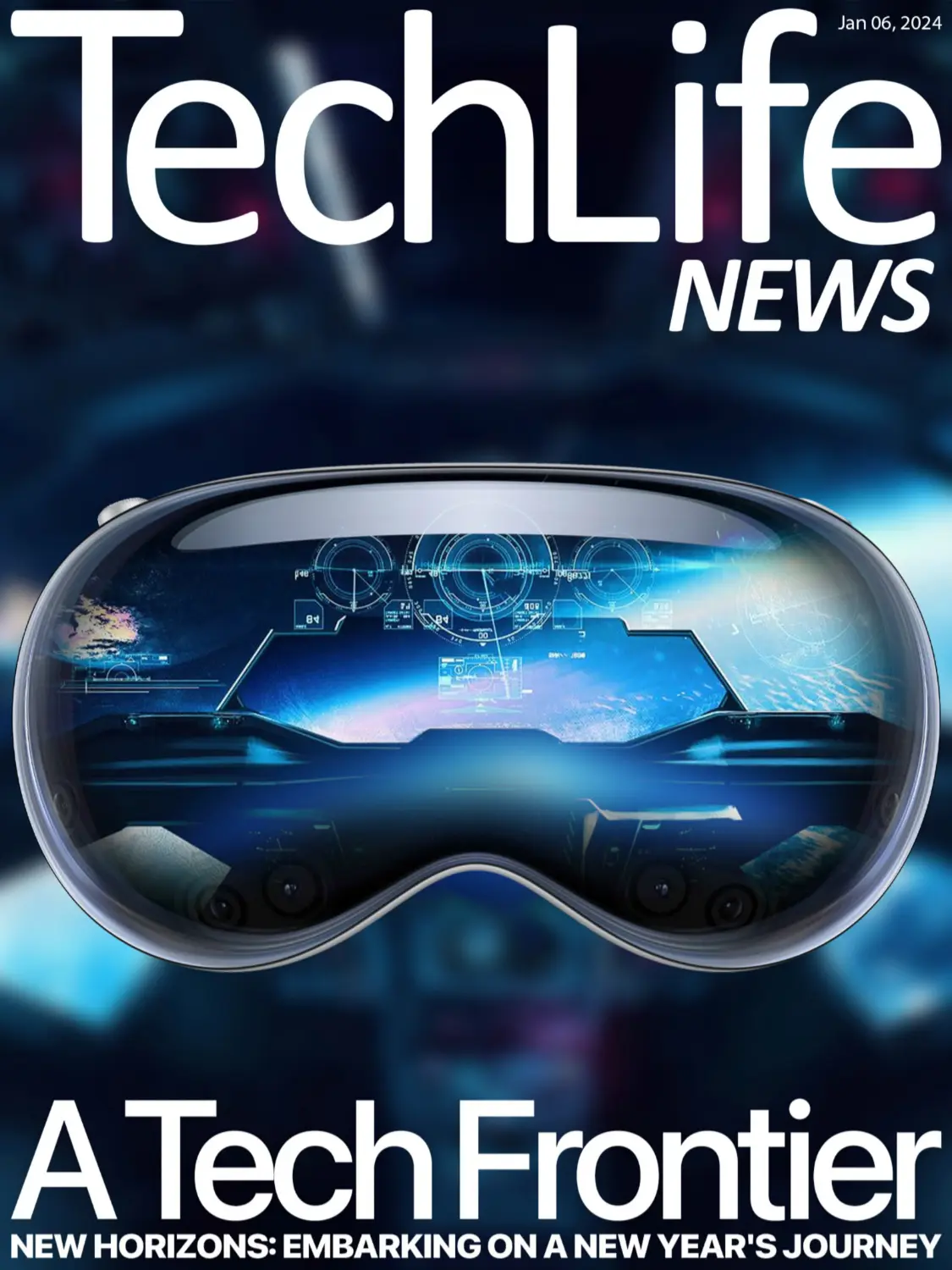
A TECH FRONTIER - NEW HORIZONS: EMBARKING ON A NEW YEAR’S JOURNEY
06
NEXT VISION - PROJECT ALASKA TO BRING SPATIAL COMPUTING TO THE OPEN ...
30
MINI VS STUDIO - BUILD A MAC WORKSTATION ON STEROIDS
58
STARLINK - THE SPACEX SATELLITE NETWORK THAT WILL CONNECT EVERYTHING
84
ORBITAL: THE SPACE RACE TO CONNECT 2023 PHONES WITH SATELLITES
110
IPHONE 15 PRO - LEVELING UP THE LINE WITH A NEW CAMERA SET, TITANIUM...
138
STORE: THE IN-STORE EXPERIENCE REIGNS SUPREME
164
NEW MODEL 3 - 2024 TESLA DRIVING FORWARD WITH FINE STYLE & INNOVATIVE...
188
MASTER PLAN: ELON MUSK DRIVING THE PLANET TOWARD RENEWABLE ENERGY
214
AMAZON ADDS VIDEO TELEMEDICINE VISITS NATIONWIDE TO ITS VIRTUAL CLINIC
244
06
NEW HORIZONS: EMBARKING
ON A NEW YEAR’S JOURNEY
07
2023 was a big year for Apple, with significant
hardware and software announcements, from
the upcoming Apple Vision Pro to the stunning
iPhone 15 Pro range with new titanium chassis.
2024 looks just as exciting for Apple fans, with
significant releases expected.
08
09
UPGRADING THE IPAD
2023 was a quiet year for the iPad, but in 2024,
the company looks set to rewrite its fortunes
and release several upgrades to its tablet
range to boost sales. Apple’s mid-tier iPad Air
tablet is slated for an update with two new
sizes - 10.9 inches and a larger 12.9 inches.
This strategy aims to offer consumers more
choice at various price points, enabling
access to larger displays without the steep
price of the iPad Pro. Some have criticized
Apple for its inability to properly differentiate
between the Pro and Air models. Still, in
2024, battery and display size upgrades are
expected, akin to the iPhone Plus model.
The iPad Pro models are set to receive
significant enhancements with OLED screens,
promising a more comprehensive color range
and superior contrast. While the current 12.9inch model features an impressive mini-LED
screen, OLED promises to elevate this further.
These high-end iPads will also incorporate the
new M3 chip, first seen in the 2023 MacBook
Pro, though concerns about overheating and
battery life linger. It has also been reported that
Apple could bring a long-awaited feature to
the iPad in 2024: the introduction of MagSafe.
According to a source that is familiar with
companies that manufacture magnets for
Apple products, Apple has been considering
adding a glass back to the iPad Pro, while also
testing a MagSafe system. We don’t yet know
whether MagSafe for iPad would come in the
form of a circular magnet and accessories or
the MacBook magnetic charging cable.
10
11
12
13
14
Refreshes for the iPad Mini and a new entrylevel iPad are scheduled, separate from the
iPhone 16 event in October. Anticipated
upgrades include more powerful chipsets,
which could mean that the entire iPad line-up
will be overhauled in 2024.
The third generation of the Apple Pencil,
codenamed B532, is expected to accompany
the new iPad Pro, offering advanced features
for creative endeavors. Apple introduced
a new Apple Pencil with USB-C charging
earlier in the year but it’s thought that the
new Apple Pencil 3 will offer more advanced
features. To complement the iPad Pro, new
Magic Keyboards (codenamed R418) are also
expected to be introduced in 2024, featuring
a robust aluminum frame, enhancing the
tablet’s laptop-like experience.
THE APPLE VISION PRO
The Vision Pro headset marks Apple’s first foray
into a new product category since the Apple
Watch in 2015. Its early 2024 release, potentially
alongside the new iPads and MacBook Air,
heralds a new dimension in the Apple product
ecosystem. We don’t know for certain exactly
when the new headset will be released, but the
company has already begun training staff
According to the report, selected team members
from Apple Stores and Apple online will travel
and participate in an event in Cupertino,
California, at some point in the first months of
2024. Upon returning to their home store, they’ll
deliver training and ongoing support to store
team members. This is a group opportunity for
those passionate about demonstrating Apple
products and teaching others.
15
16
17
It’s widely expected that the rollout of
the Vision Pro headset will be the most
complicated in Apple’s history, with the
company planning to assemble customers’
Vision Pro headsets in-store, compiling the
appropriate headband, light seal, and optional
prescription lenses. Flagship retail stores are set
to gain dedicated Vision Pro hands-on areas,
while other stores will only receive one or two
units. It’s an opportunity for Apple to introduce
the Vision Pro headset to users one-on-one
before an expected cheaper model in the
years ahead.
IPHONE 16 AND APPLE WATCH
The rumor mill is in full swing as the iPhone
16 continues to be the subject of much
speculation and anticipation. The iPhone
16 is rumored to feature a major design
overhaul. There’s speculation about a thinner,
more streamlined design possibly with a
new range of colors. As for the display, the
iPhone 16 may boast an even more advanced
version of the Super Retina XDR display, with
enhanced brightness and a higher refresh
rate. At the heart of the iPhone 16 is likely
to be a new, more powerful chip. This could
be the A17 Bionic or a similarly advanced
processor, offering speed and energy efficiency
improvements, further optimizing the
device for demanding apps. Battery life has
always been a critical aspect of smartphone
performance. The iPhone 16 might include a
more efficient battery and improved wireless
charging capabilities. There’s also speculation
about Apple introducing a new, fastercharging technology.
18
19
20
21
22
With the ongoing expansion of 5G, the
iPhone 16 is expected to include enhanced
5G capabilities. Furthermore, there might
be improvements in Wi-Fi and Bluetooth
technology, offering faster and more reliable
connectivity. The iPhone 16 could also feature
advanced health and fitness sensors, building
upon the health features introduced in previous
models. iOS 17 will debut with the iPhone 16,
introducing new features and improvements in
user experience. Integration with the broader
Apple ecosystem, including macOS, iPadOS,
and watchOS, will remain a key focus, offering
seamless cross-device functionality.
On the other hand, the Apple Watch Series
10 is rumored to feature significant design
changes. Speculations suggest a slimmer
profile and reduced bezels, offering a more
expansive display area. There’s also talk about
Apple introducing new materials for the
watch’s body, potentially enhancing durability
while maintaining the iconic aesthetic.
Rumors hint at introducing sensors for
monitoring blood pressure and glucose,
offering users more comprehensive health
insights. Enhanced sleep-tracking features
and improved fitness metrics are also on the
cards. The Series 10 is also rumored to include
a more efficient battery, potentially offering
longer life between charges.
A new, more powerful processor could be
at the core of the Apple Watch Series 10.
This upgrade would likely result in faster
app loading times, smoother user interface
interactions, and more efficient handling of
complex tasks. With the Apple Watch Series 10
release, a new version of watchOS is expected.
23
This update will likely introduce new health
and fitness features, improved customization
options, and new watch faces designed to take
advantage of the larger display area.
Concluding the year, Apple plans to release
updated low-end and mid-tier AirPods,
incorporating USB-C ports for enhanced
connectivity. This update is expected to
apply to the AirPods 2 and 3, aligning with
the higher-end AirPods Pro 2’s 2023 upgrade.
There’s also some speculation that the
company could release a second-generation
version of the AirPods Max in 2024, and we’ll
see new HomePod products as Apple looks to
boost the value of its Siri smart assistant.
24
25
26
Apple's 2024 roadmap signals a year brimming
with innovation. The comprehensive refresh of the
iPad lineup underscores Apple's commitment to
the tablet market. The iPhone 16 series promises to
elevate the smartphone experience, while the Vision
Pro headset introduces a new era in technological
offerings. We can’t wait to see what comes next
27
30
PROJECT ALASKA TO BRING SPATIAL
COMPUTING TO THE OPEN WORLD
31
In the fast-paced world of technology, a
revolutionary development is on the horizon
– Project Alaska. Following the announcement
of Vision Pro, Apple is now looking to redefine
the spatial computing era with an affordable,
consumer-focused headset for the masses.
32
33
34
35
36
INTRODUCING PROJECT ALASKA
Vision Pro marked Apple’s entry into mixedreality headsets, a bold step that garnered
widespread attention. The device, which is set
to be released in early 2024 in select markets,
is the company’s first product in another major
category since the Apple Watch in 2015 and
a lot is riding on its success. The Vision Pro is
billed as a “spatial computer”, meaning that it
is designed to integrate digital media with the
real world and allow users to interact with it
using physical inputs such as motion gestures,
eye tracking, and voice input. Some of the
most exciting features include an ultra-highresolution display system with two 4K displays,
one for each eye, and a powerful new R1 chip
that delivers a virtually lag-free, real-time view
of the world. An advanced Spatial Audio system
37
38
39
is also included in the headset, designed to
create the feeling that sounds are coming from
the environment around the user.
Other features users can expect from Vision Pro
include a new three-dimensional interface that
frees apps from the boundaries of a display, a
modular system that allows users to find the right
fit, and a high-performance battery that reduces
weight and slips easily into a pocket. Naturally,
reviews on the Vision Pro are hard to come by, as
Apple has made it hard for people close to the
project to discuss the specifics. In a rare teaser, The
Verge said that the upcoming headset was the
“best headset demo ever” and praised its look
and finish while Esquire added that the “sheer
attention to detail is what makes this a luxury
product,” commenting on the high $3,499 price
tag of the upcoming device.
40
41
42
43
The Vision Pro is expected to be used for a wide
variety of purposes, with its infinite screen real
estate and access to all of your favorite apps
allowing users to be more productive than ever
before. The Vision Pro can be used to create
immersive learning experiences that engage
students in new ways, and its high-resolution
displays and powerful R1 chip deliver stunning
graphics and performance for an immersive
gaming experience. The Vision Pro can be used to
watch movies and TV shows, listen to music, and
play games in a whole new way. Tim Cook said
that he had watched the entire third season of
Ted Lasso on his Vision Pro, suggesting that the
product will be comfortable enough for hours of
entertainment at home or on the go.
Whilst it’s still early days, the Vision Pro has
the potential to be one of the most important
products that Apple has ever released. What’s
challenging for Apple, though, is pricing. The
$3,499 price tag is simply unaffordable for
the masses, and so its upcoming successor,
as revealed in a report by Macrumors, is not
merely a refinement but a reimagining of spatial
computing, designed to offer even more features
and bring down the price considerably.
Code-named Project Alaska, it aims
to transform everyday experiences by
extending augmented reality (AR) beyond
the confines of indoor spaces. Project Alaska
introduces significant design and functional
improvements while retaining a semblance of
its predecessor. The aesthetic shift to flatter,
more streamlined earcups and simplified straps
resembling those on fashionable laptop bags
underscores Apple’s commitment to fusing
style with practicality. This design philosophy
44
45
46
47
48
is not just skin-deep; it permeates every aspect
of the headset. Internally, the device boasts
an impressive array of hardware: two microOLED displays, a state-of-the-art TrueDepth
camera, and a variety of vision and infrared
cameras. These enhancements are not just for
show; they promise to deliver an unparalleled
AR experience, seamlessly blending digital
information with the physical world.
EXPANDING THE HORIZON
Imagine donning a pair of glasses that
enhance your vision and enrich it with layers
of contextual information. With Project Alaska,
users can expect to navigate cityscapes with
3D maps, receive live commerce data, engage
in holographic communications, and access a
wealth of in-place details – all superimposed
onto their real-world view. This level of
integration marks a significant leap from the
Vision Pro, which was primarily designed for
indoor use. One of the key challenges for
AR devices is battery life, especially for an
all-day, outdoor-use gadget. Project Alaska
is anticipated to address this with a battery
designed for extended use, ensuring that the
AR experience is not only immersive but also
uninterrupted. This focus on battery efficiency
is crucial, enabling users to rely on their AR
glasses throughout their daily activities without
the hassle of frequent recharging. Apple is
also reportedly working on its own battery
technology for upcoming iPhones and
products suggesting the next AR/VR headset
will do away with some of the controversial
‘battery packs’ that will be included in the
first Vision Pro release.
49
50
51
In an era where data privacy is paramount,
Apple is expected to navigate these waters
with due diligence. Ensuring user privacy
and safety, especially in an always-connected
device like Project Alaska, is not just a feature
– it’s a necessity. The balance between offering
rich AR experiences and safeguarding user
data will be a crucial aspect of this project.
Slated for a late 2025 release, Project Alaska is
not just another gadget; it’s a foray into what
the future holds. It’s a testament to Apple’s
vision of blending the digital and physical
realms, offering a glimpse of a world where
tech seamlessly, intuitively, and meaningfully
enhances our reality.
52
The truth is that, with so far to go until the
launch of the second generation Vision Pro,
and without the first edition even reaching
consumers’ hands until next year, it’s hard to
speculate exactly what the second generation
model could look or perform like. Early reports
from Bloomberg’s Mark Gurman, however, who
has a proven track record when it comes to
Apple news and rumors, suggest the model will
be sold at around US$1,500 at the cheapest to
US$2,500 at the most, a more palatable price
that could send AR/VR into the mainstream.
53
We can’t wait to get our hands
on the first Apple Vision Pro
and discover what Apple is
working on next for the AR/VR
revolution. Whatever’s ahead, be
in no doubt that an AR headset
is Apple’s next frontier and a
product that will revolutionize
technology once again.
54
55
58
59
60
61
62
63
64
65
66
67
68
69
70
71
72
73
74
75
76
77
78
79
80
81
84
THE SPACEX SATELLITE NETWORK
THAT WILL CONNECT EVERYTHING
85
In a world dependent on technology, Elon Musk
is a name that often comes to mind. From X
to Tesla, the entrepreneur has his fingers in a
number of pies. One of Musk’s ventures capturing
both imagination and market share is Starlink, a
global satellite-based internet service, which will
revolutionize the way we think about the internet
for decades ahead.
86
87
88
REVOLUTIONIZING CONNECTIVITY
Starlink is a satellite internet constellation
constructed by SpaceX, the American aerospace
manufacturer founded by Musk. Utilizing a
constellation of small satellites in low Earth
orbit (LEO), Starlink aims to provide high-speed
internet access across the globe. Unlike traditional
internet services, Starlink bypasses the complex
network of terrestrial cables and base stations.
The implications of this are far-reaching, from rural
connectivity to global data-sharing and real-time
communication on an unprecedented scale.
Right now, there are over 4,500 Starlink
satellites orbiting Earth making up more than
50% of all active satellites. Musk’s ambition doesn’t
stop here; plans are to launch up to 42,000
satellites in the coming years to dominate
the industry and connect the globe. With a
valuation nearing $140 billion, SpaceX and its
Starlink venture have started to wield significant
influence in the satellite internet arena - no other
company is coming close.
Starlink’s influence is not confined to traditional
internet consumption. Its technology promises
to facilitate seamless communication between
homes, businesses, Tesla cars, airplanes, and
ships. The network could even extend to future
smartphones, reducing or even eliminating
dependency on conventional cellular networks.
Starlink is already a significant customer for the
U.S. Defense Department and is under test by
other countries like Japan for military applications.
89
90
91
Perhaps no situation illuminates Starlink’s
transformative potential better than its role in
conflict zones like Ukraine. Satellite technology
has become an integral part of battlefield
communications, from coordinating drone strikes
to intelligence gathering. However, concerns
arise when a single entity, driven by the whims
of an individual as polarising as Musk, controls
such a powerful tool. During the Russian invasion
of Ukraine, Musk has restricted Starlink access
multiple times, highlighting the vulnerabilities
of centralized control. As governments begin
to regulate satellite connectivity in our new era,
we’ll likely see new legislation and control over
decision-making.
In a less combative setting, Starlink is also
proving to be a boon for remote places like Maui
and scientific expeditions in Antarctica, where
traditional internet services are unfeasible.
92
93
94
95
GOODBYE, CELL SERVICE
Starlink’s omnipresent connectivity raises
a pressing question for existing cellular
service providers: Can they compete with a
global satellite network that bypasses their
intricate infrastructure? The initial evidence
suggests that cellular companies may face
existential challenges, particularly in remote
or low-population areas where laying physical
infrastructure isn’t profitable. However, the total
demise of cellular carriers may not be imminent.
Regulatory and data governance issues pose
significant challenges to Starlink’s full-scale global
implementation. Additionally, the cost of setting
up a satellite network is not insignificant, and
the eventual consumer pricing could influence
its widespread acceptance. In time, though, with
more companies coming on board to offer the
96
97
98
99
100
service, satellite connectivity could become the
norm. Indeed, even Apple has begun trialing the
technology as part of its iPhone and Apple
Watch emergency call functionality allowing
consumers to access satellite services when
they’re out of reach of their usual cell service and
don’t have WiFi. This is a niche use case, though,
and not something that the company plans to roll
out further just yet. Indeed, even if satellite phones
replace cell phones in the future, Starlink still has
thousands of satellites to get into orbit before it
has the potential to begin offering a telephone
service decades into the future.
SATELLITE CONCERNS
The recent explosion in satellite connectivity has
not come without its critics. Indeed, a number of
people have brought up concerns over the issue
of light pollution caused by Starlink satellites. The
sheer number of them has begun to interfere with
the work of astronomers. Observations made by
ground-based telescopes are being compromised,
which has sparked a call for “strict and immediate
regulations” to combat this problem. Astronomers
began expressing their concern when SpaceX
launched its first 60 Starlink satellites in 2019,
as satellites and leftover debris from spacecraft
reflect and scatter sunlight, which has made the
night sky brighter, according to a 2021 study. We
don’t yet know just how damaging this could be
for the environment, and more research is needed.
Another dark cloud looming over the Starlink
project is its potential monopolization. As we’ve
already touched upon, Elon Musk’s idiosyncratic
decision-making process, largely unchecked,
could have grave ramifications for the world.
Moving forward, work needs to be done to
101
102
103
diversify space-based infrastructure and give
other players a fighting chance. Governmentbacked and private initiatives could mitigate
the risks associated with relying solely on one
entity - the European Union, for example, has
already earmarked EUR 2.4 billion to set up a
“sovereign” satellite constellation to be rolled
out by 2027. China, too, has plans to deploy
a 13,000-satellite LEO mega constellation to
rival Starlink.
With a valuation of SpaceX inching close to
$140 billion, much rides on how responsibly
and ethically the Starlink service is deployed in
the coming years. Competition is sparse, as no
companies or governments have come close to
what Musk has built. The U.S. Defence Department
is a major customer, and other militaries like Japan
are testing the waters.
Whether Starlink will push traditional cellular
technology into obsolescence or co-exist in a
diversified ecosystem remains to be seen. What
is certain is that the project has already made an
indelible mark on our technological landscape.
It’s a Pandora’s box of massive potential but also
of ethical quandaries and regulatory challenges.
Starlink is a testament to human ingenuity but
also a stark reminder that with great power comes
great responsibility.
104
105
106
The potential of Starlink
cannot be understated,
and we can’t wait to
see what comes next.
107
Simply Better Living
SUPERSTEAM+™
BUILT-IN WALL OVEN
SSC2489DS
The Sharp® SuperSteam+ Built-In Wall Oven is the start of
a cooking revolution. With Wi-Fi enabled IoT features, the
innovations within this steam oven are a perfect match
for modern cooking needs.
While regular steam only reaches 212°F, the SuperSteam+
oven can create superheated steam up to 485°F. Steam
this hot can roast meats and caramelize sugars so your
food can be brown and crispy on the outside, tender and
juicy on the inside. With the Sharp SuperSteam+ Oven,
you can grill without smoke, roast without drying, and get
the roasty-toasty, tasty results you desire.
SEE FOR
YOURSELF
Get started right away with built-in recipes and
download the Sharp SuperSteam+ Oven app* to
enable the smart features and access custom
recipes powered by SideChef.
The new Sharp SuperSteam+ Built-In Wall Oven
features Steam Bake for superior breads, and Water
Bath for cheesecakes, custards and puddings.
www.sharpusa.com | simplybetterliving.sharpusa.com
*Mobile Application and Home Assistant Skill available upon commercial release. © 2020 Sharp Electronics Corporation. All rights reserved. Sharp, Supersteam™ Oven
and all related trademarks are trademarks or registered trademarks of Sharp Corporation and/or its affiliated entities. Product specifications and design are subject to
change without notice. Internal capacity calculated by measuring maximum width, depth and height. Actual capacity for holding food is less.
110
THE SPACE RACE TO CONNECT
2023 PHONES WITH SATELLITES
111
Satellite-based communications technology
is making its way to our phones, and it’s not
just for emergency messaging. This new tech
is expanding to standard messengers and
making calls viable, ushering in an era of
ground-to-orbit connectivity and unlocking
endless possibilities.
112
113
QUALCOMM’S SATELLITE CHIP IS ON
APPROACH
Qualcomm Technologies, Inc. has partnered
with Iridium to introduce Snapdragon Satellite,
the world’s first satellite-based two-way
messaging solution for premium smartphones.
Snapdragon Satellite will offer global mobile
messaging coverage, starting with devices
based on the flagship Snapdragon 8 Gen 2
Mobile Platform. Powered by Snapdragon 5G
Modem-RF Systems and Iridium’s weatherresilient L-band spectrum for uplink and
downlink, Snapdragon Satellite will provide
OEMs and other service providers with truly
global coverage for emergency and two-way
messaging. The solution will be available
on next-generation smartphones, with
support for emergency messaging in select
regions launching in the second half of 2023.
Speaking of the news, the company’s senior
vice president and general manager, cellular
modems and infrastructure, Durga Malladi,
said: “Robust and reliable connectivity is at the
heart of premium experiences. Snapdragon
Satellite showcases our history of leadership
in enabling global satellite communications
and our ability to bring superior innovations to
mobile devices at scale.”
Snapdragon Satellite will enable OEMs and
app developers to offer unique branded
services that take advantage of satellite
connectivity across multiple device
categories, including laptops, tablets, vehicles,
and IoT. The ecosystem is planned to support
5G Non-Terrestrial Networks (NTN) as satellite
infrastructure and constellations become
available. Snapdragon Satellite is set to
114
115
116
117
118
revolutionize satellite-based connectivity for
smartphones and beyond, providing global
coverage for emergency messaging and twoway messaging applications. It is expected
to be a game-changer for industries such as
outdoor recreation, offshore locations, and
remote rural areas where reliable connectivity
is crucial - but how will others compete,
and how could Apple incorporate similar
technologies into its iPhones and iPads?
APPLE’S CUSTOM 5G CHIP IS COMING
In a recent speech at the MWC 2023
conference, Qualcomm CEO Cristiano Amon
made a statement that has been the subject
of much discussion in the tech industry. Amon
claimed that Apple’s highly anticipated 5G
chip could be ready for release as early as
next year. For some time now, there have
been rumors circulating that Apple has been
working on a 5G chip to replace the ones it
currently buys from Qualcomm. While Apple
has not confirmed these rumors, they have
been widely reported in the media. The move
to an in-house 5G chip would allow Apple to
reduce production costs and produce different
modem chips for different devices. However,
Amon’s statement suggests that Apple may not
need to wait much longer to launch its own 5G
chip. Although he expects Apple to continue
using Qualcomm’s 5G modems until 2024,
Amon’s comments suggest Apple’s 5G chip
could be ready for at least one product in 2024,
following years of research and development.
The transition to an in-house 5G chip would
represent a significant shift for Apple, as it
would no longer need to rely on a third-party
119
120
121
company for the technology. However, it
remains unclear how Apple’s 5G chip would
perform compared to Qualcomm’s modems.
In the meantime, all iPhone 15 models are
expected to be equipped with Qualcomm’s
Snapdragon X70 modem, which has
further cellular speed and power efficiency
improvements compared to the Snapdragon
X65 found in all iPhone 14 models. Qualcomm
has also announced its latest Snapdragon X75
modem, which could still be used in some
of Apple’s future devices amid the gradual
transition to its own 5G chip. It is worth noting
that there are still technical challenges that
Apple needs to overcome before introducing
its own chip. Analyst Ming-Chi Kuo suggested
the decision to equip iPhone 16 models with
Apple’s 5G chip will depend on whether it
can overcome technical challenges related
to mmWave and satellite connectivity. The
truth is, making the leap to 5G will allow
Apple to unlock significant opportunities and
indeed build upon the success of its recentlyreleased satellite-powered Emergency SOS
feature, but whether Apple is working on its
own satellite-enabled modems as its supplier
Qualcomm Technologies remains to be seen.
THE FUTURE OF SMARTPHONES
INVOLVES SATELLITES
The world of cellular satellite communications
is rapidly evolving, and it’s opening up
new possibilities for communication and
connectivity in remote areas where traditional
cellular networks do not exist or are
inaccessible. In 2022, Apple launched a new
feature in its latest iPhone models that can
122
123
124
detect if you’ve been in an accident and allow
you to send a message for help using a satellite
connection, in areas where traditional cellular
coverage is not available. This feature has
drawn attention to the potential of satellitebased cellular services and has sparked interest
in the industry. Apple’s emergency SOS via
satellite service, which is the first of these
next-generation services, is currently limited
in its capabilities. It requires an open area
with a clear line of sight to the sky, and it will
not work if you fall into a ravine, get stuck in
a cave, or are in a bunker. The app can take
anywhere from 15 seconds to several minutes
to get a clean line of sight to the satellite for
this to work, so if you have a broken leg or are
otherwise disabled, you may still be out of luck.
However, the service is still a significant
development that could be a lifesaver for those
stranded or in trouble in remote areas. It can
help users find a satellite and then, through
menus, uses the phone’s intelligence to
minimize the message and get it to someone
who can help. This emergency service is
available to iPhone 14 users for two years
free of charge. According to one report, the
technology has already saved people’s lives.
After the initial two-year free trial, there will
likely be alternatives available, and this initial
offering will undoubtedly also improve. Several
companies are also developing their own
satellite-based cellular services that promise
to provide superior connectivity and coverage.
Starlink, the space internet venture of Elon
Musk, plans to turn its Starlink satellites into
a telephone solution that can offer better
capabilities than Apple’s satellite offering. Beta
125
126
127
testing of this service is rumored for late
2023, with full service expected within the
following year in areas where there is a critical
mass of the new satellites.
T-Mobile is also working on its own satellitebased smartphone solution in collaboration
with Starlink. If it doesn’t reach critical mass,
T-Mobile and Starlink are in an interesting
position to be the first to succeed with a
satellite-based smartphone solution. Another
company in the field is AST SpaceMobile, which
is slated to launch its low-earth satellite in
2023. It has partnerships with companies like
Vodafone and AT&T providing a strong path for
initial worldwide coverage. The company has
secured over 2,400 patents and should be able
128
to provide decent 4/5G coverage once they get
to critical mass. The service would be treated
much like international travel or on-plane
service for areas with cellular alternatives, so
your phone will work where it currently doesn’t.
Or as a primary phone service for those out of
cellular coverage areas, like remote land or sea
locations. AST SpaceMobile’s service should also
work on planes and be superior to what you
currently get on an airplane. It will support voice
and data, while planes currently just support
data. This could be a significant development
for those who need reliable communication and
connectivity during air travel.
With Apple’s announcement of Emergency SOS
in 2022, we are now in the world of consumer
129
130
131
satellite cellular communications, and the
potential for being able to call for help from
anywhere in the world, regardless of where
the cell tower is located, is becoming a reality.
While the idea of satellite-based cellular
services has been around for some time, recent
developments suggest that this technology is
becoming practical and accessible.
It’s worth noting that while satellite-based
cellular services represent an exciting
development, they are not without their
limitations. In addition to the earlier
constraints, the cost of using such services will
likely be higher than traditional cellular, at least
initially. Furthermore, the limitations of satellite
technology mean that it is unlikely to be a full
replacement for conventional cellular services,
particularly in areas with high population
density. Nevertheless, the increasing
availability and accessibility of satellite-based
cellular services is a promising development
that could have a significant impact on a range
of industries and communities. Connecting to a
global cellular network from virtually anywhere
is a powerful tool that could help save lives,
improve communication, and provide muchneeded connectivity to those in remote
locations. As these technologies continue to
develop, it will be interesting to see how they
are adopted and integrated into our daily lives.
132
133
We can’t wait to see
where satellite advances
are headed next - and
how Apple incorporates
the technology to the
best of its ability to create
truly life-saving, worldchanging products.
134
135
138
LEVELING UP THE LINE WITH A NEW
CAMERA SET, TITANIUM FRAME & MORE
139
Introducing iPhone 15 Pro | Apple
140
At this year’s Wonderlust event, Apple lifted the
lid on the iPhone 15 Pro and iPhone 15 Pro Max,
offering an array of incredible new enhancements
and features like the ultra-powerful A17 Pro chip
and an all-new titanium frame for advanced
durability and performance.
141
142
INTRODUCING IPHONE 15 PRO
In another impressive virtual conference, Apple
lifted the lid on several new products at this
year’s September keynote, but perhaps most
notably, the iPhone 15 Pro and iPhone 15 Pro
Max. Speaking of the new flagship models,
Greg Joswiak, Apple’s senior vice president of
Worldwide Marketing, said: “This is the most pro
lineup we have ever created, with a state-ofthe-art titanium design, the best iPhone camera
system yet that enables game-changing new
workflows, and the A17 Pro chip, which ushers in
a new chapter of performance and games never
before seen on iPhone. iPhone 15 Pro and iPhone
15 Pro Max represent the best of Apple design
and industry-first innovations to help enrich the
everyday experiences of our users while enabling
them to unleash their creativity.”
Apple’s commitment to design innovation is
evident in using aerospace-grade titanium, a first
for the iPhone. This premium alloy, commonly
used in spacecraft, offers one of the highest
strength-to-weight ratios of any metal. The
result is a device that is both incredibly strong and
remarkably lightweight and mimics the success of
the Apple Watch Ultra. Both models are available
in Black Titanium, White Titanium, Blue Titanium,
and Natural Titanium, but for the first time since
the launch of the Pro, no Gold variant.
The new design also features contoured edges
and a customizable Action button, allowing users
to personalize their iPhone experience further.
This button replaces the single-function switch
used to toggle between ring and silent modes,
offering additional options for quick access to
various features like the camera, flashlight, and
143
144
145
Voice Memos. In the demo, users were even seen
programming the Action Button to Snapchat,
demonstrating the possibilities and giving
consumers more choices over how they use their
devices and favored apps.
INCREDIBLE NEW CAMERA
TECHNOLOGY
Apple has ramped up a gear regarding the iPhone
15 Pro and Pro Max camera system. It packs seven
pro lenses, all enabled by the new A17 Pro chip.
The 48MP Main camera now supports a superhigh-resolution 24MP default, offering incredible
image quality. The iPhone 15 Pro Max takes it
further with a 5x Telephoto camera, allowing for
greater zoom capabilities and making it ideal for
capturing wildlife or action from a distance.
The power of computational photography is fully
harnessed in these devices, offering features like
Focus and Depth Control, improvements
to Night mode, and Smart HDR. Apple has
emphasized the fact users can take portraits
without having to switch to Portrait mode,
adding that “when there’s a person, dog, or cat
in the frame or when a user taps to focus, iPhone
automatically captures depth information so that
users can turn photos into stunning portraits
later in the Photos app on iPhone, iPad, or Mac.”
With the iPhone 15 and iPhone 15 receiving
significant camera overhauls this year, it’s
clear that the iPhone 15 Pro and Pro Max have
been re-engineered from both a software and
hardware standpoint to deliver performance.
Other new features on the camera system for
the iPhone Pro include a new nano coating to
reduce lens flare and an improved low-light
performance feature. 48MP HEIF is now supported
146
147
148
Wonderlust Event | iPhone 15 & Apple
Watch Series 9
149
150
for the first time, and optical image stabilization
is enhanced with movement in three directions,
a smartphone first. Apple is already planning to
launch Vision Pro, with the iPhone 15 Pro now
able to capture “spatial video.” It uses an ultrawide and primary camera to create 3D videos. The
feature will be available sometime after launch.
151
152
153
154
PERFORMANCE OVERHAULS
The A17 Pro chip is the industry’s first
3-nanometer chip, bringing improvements
across the board. It offers up to 10% faster CPU
performance and a 2x faster Neural Engine.
The pro-class GPU is also 20% faster, unlocking
entirely new experiences and making the iPhone
15 Pro lineup a powerhouse for gaming. With
hardware-accelerated ray tracing, the iPhone 15
Pro offers smoother graphics and more immersive
AR applications and gaming experiences. Titles
like “Resident Evil Village,”“Death Stranding,” and
“Assassin’s Creed Mirage” can now be played on
the iPhone like never before. The latter will be
available on iPhone in 2024, signaling a new
smartphone gaming era, delivering cutting-edge,
super-charged experiences.
Apple has switched to USB-C, ditching the
155
156
157
Lightning port to appease EU regulators.
The new charging port has been supercharged
with USB 3 speeds, making data transfer up to
20x faster than USB 2. This feature and new video
formats enable powerful pro workflows that were
not possible before. In an industry-first, the iPhone
15 Pro lineup also introduces Roadside Assistance
via satellite, allowing users to connect to help
even when they are off the grid. Apple’s roadside
assistance via satellite will cover everything from
locking your keys in your car to your vehicle
being incapacitated. It will connect you with AAA
via satellite text when you don’t have service.
iPhone 15 users will have access to Roadside
Assistance and Emergency SOS satellite for
free for two years.
The iPhone 15 Pro and Pro Max come in four
new finishes: black titanium, white titanium, blue
titanium, and natural titanium. Pre-orders begin
on Friday, September 15, with availability starting
on Friday, September 22.
158
159
160
With a state-of-the-art design,
powerful performance capabilities,
and groundbreaking new features,
these devices are set to redefine what
a smartphone can do. Whether
you’re a professional photographer, a
gaming enthusiast, or simply want
the best that technology offers, the
iPhone 15 Pro lineup is designed to
enrich your everyday experiences
while enabling you to unleash
your creativity like never before.
161
THE IN-STORE EXPERIENCE
REIGNS SUPREME
164
165
Image: Bangyu Wang
166
When it comes to technology and
innovation, nobody does it better than
Apple. The Apple Store is another example
of this: perfectly marrying together the
virtual and physical to offer consumers
an unparalleled shopping experience and
ultimately sell more merchandise.
167
LET’S GO SHOPPING
Apple has been revolutionizing the way
we interact with devices for years, and as a
testament to their commitment to customer
satisfaction, Apple Stores have become
more than just retail outlets; they are hubs
of immersive experiences. Through the art
of experimentation and the expertise of
Apple professionals, the in-store experience
has reached new heights, delighting new
customers and those seeking upgrades.
Walking into an Apple Store is akin to stepping
into a technological wonderland. One of the
key elements that set Apple Stores apart from
traditional retailers is the emphasis on handson engagement. The ability to interact with the
latest devices and explore their functionalities
tactilely elevates the shopping experience
to a new level. We only need to take a look
at some of the company’s recent Apple Store
fit-outs, from the breathtaking Apple Park
Visitor Centre, Cupertino, with a cantilevered
carbon fiber roof that appears to float and is
only supported by stone-clad cores and no
other extraneous columns for support, to
the Apple Piazza Liberty, Milan, with a glass
fountain that serves as both the entrance to
the store as well as a backdrop to the large
outdoor amphitheater. We, of course, cannot
go on without mentioning the Apple Marina
Bay Sands, Singapore, which opened in 2020
and offers uninterrupted 360-degree panoramic
views of the city and its spectacular skyline
while they buy the latest Apple tech.
According to Apple, the sphere is a first-ofits-kind, all-glass dome structure that is fully
168
Image: James Genchi
169
170
Image: Daryan Shamkhali
171
172
self-supported, comprised of 114 pieces of
glass with only 10 narrow vertical mullions
for structural connection. Once inside these
stunning buildings, customers are encouraged
to experiment freely with a range of Apple
products, from iPhones and iPads to MacBooks
and Apple Watches. This hands-on approach
allows potential buyers to understand the
devices’ features and capabilities fully. As a
result, customers can make informed decisions
based on their preferences and needs, leading
to a higher level of satisfaction with their
purchases - and it helps Apple sell more.
Experimentation goes beyond just using the
devices. Apple Stores often feature interactive
displays and workshops that allow customers
to explore the broader ecosystem of Apple
products and services. From trying out creative
software to experiencing seamless integration
between Apple devices, the store becomes an
educational playground where customers can
unlock the full potential of their Apple devices.
And this will become even more prevalent
next year when Apple releases its longawaited AR/VR headset, Apple Vision. The new
product, priced at more than $3,000, will only
be available in retail stores so that the device
can be properly fitted and explained to new
customers, a truly remarkable feat.
Apple Stores are designed with meticulous
attention to detail, fostering an atmosphere
that engages and captivates visitors. The
store layout is clean and minimalist, allowing
products to take center stage. From the
sleek wooden tables showcasing devices
to the strategically placed accessories, the
presentation is curated to evoke an emotional
173
174
175
connection with the brand. In-store events and
sessions further contribute to the immersive
environment. From product launches and
workshops to creative sessions and developer
meetups, Apple Stores are continually buzzing
with activity. These events provide customers
with opportunities to learn from industry
experts, share experiences, and be part of a
vibrant community.
ELEVATING THE SHOPPING EXPERIENCE
Apple’s commitment to offering expert advice
and support is another integral aspect of the instore experience. The company ensures that its
store professionals, or “Geniuses,” possess in-depth
knowledge of Apple products and can effectively
address customer inquiries. This expertise
extends to troubleshooting issues and providing
personalized recommendations for upgrades or
new purchases. The presence of well-trained and
knowledgeable staff fosters a sense of trust and
reliability among customers. For those seeking
upgrades, the ability to have their questions
answered by professionals instills confidence in
their choices. This personalized assistance creates
a smoother upgrade process and often leads to
higher customer satisfaction.
Beyond the technical expertise, Apple
Store professionals are skilled at offering
tailored solutions. They take the time to
understand each customer’s unique needs and
requirements, guiding them to the products
and services that best fit their lifestyle. This level
of customer-centricity not only enhances the
overall shopping experience but also builds a
sense of brand loyalty. It’s why Apple remains
number one.
176
177
Image: RH Lee
178
HOME DELIVERY FROM APPLE STORE
In an effort to enhance customer convenience
and optimize its retail space, Apple is preparing
to launch its groundbreaking EasyPay Online
Ordering program in August. This program
will enable Apple store employees to offer
customers the option of home delivery when
purchasing products, marking a significant shift
in their sales strategy.
Until now, Apple store employees could only
suggest that customers make their purchases
online or assist them in filling out their orders
on the website. With the official integration
of home delivery shipments into the EasyPay
terminals, customers will now have the ease
of receiving their purchases directly at their
doorstep. The move to home delivery sales
has numerous advantages for both customers
and Apple stores. For customers, it means no
more lugging bulky products like iMacs from
the store to their homes. Instead, they can opt
for hassle-free delivery, making the shopping
experience more enjoyable.
Additionally, this transition could lead to a
reduction in the amount of backroom space
required for holding stock at Apple stores. By
moving more customer sales to home delivery,
Apple stores can allocate their physical
space more efficiently, potentially offering
new opportunities for additional services or
experiences within the stores.
One of the most exciting possibilities this
new strategy opens up is in the context of the
highly anticipated Vision Pro. This cutting-edge
product offers thousands of combinations of
accessories, each customized to fit each user’s
179
180
181
head size perfectly. With such a vast array of
options, it becomes impractical for Apple stores
to stock all variations of the Vision Pro in-store.
However, by supporting shipping delivery as an
option, Apple stores can still complete Vision
Pro sales, even if they don’t have all parts in
stock simultaneously.
This new program aligns with Apple’s
continuous efforts to provide customers
seamless and personalized shopping
experiences. By empowering store employees
Image: Philippe Yuan
182
to offer home delivery, Apple gives customers
greater flexibility and convenience in their
purchase journey.
The move also highlights Apple’s commitment
to incorporating AI-driven solutions into its
retail operations. By integrating home delivery
into the EasyPay terminals, the company
showcases the growing importance of artificial
intelligence and data analytics in streamlining
processes and improving customer satisfaction.
183
There’s no denying the Apple Store takes buying a
new MacBook, iPhone, or Apple Watch to the next
level. In a time where brands are pulling back on their
physical retail spaces in favor of virtual experiences,
it’s great to see Apple double down and realize the
value of its bricks and mortar stores, which will play
an even greater role with the launch of Apple Vision.
184
185
188
2024 TESLA DRIVING FORWARD WITH
FINE STYLE & INNOVATIVE CHANGES
189
Since its debut, the Tesla Model 3 has been
a revelation in the EV market, setting new
standards for what consumers can expect from
an electric saloon. Tesla is now set to launch
a revamped version of this groundbreaking
vehicle, which promises many improvements,
including a longer range, updated styling, a
redesigned interior, and an accessible price tag.
190
191
192
193
STUNNING DESIGN
While the basic silhouette of the Tesla
Model 3 remains largely the same, the new
2024 facelift brings several aesthetic
improvements that are hard to ignore. The
most noticeable change is in the headlights.
The new, slimmer design resembles those on
the Tesla Roadster, adding a touch of sportiness
to this family saloon. The front bumper has also
been streamlined. Gone are the separate fog
lights and multiple vents, replaced by a sleeker,
more aerodynamic design that gives the car a
more aggressive appearance. The side profile
of the car remains essentially unchanged,
preserving the Model 3’s iconic look. However,
Tesla has introduced new alloy wheels to give
customers more options. The standard 18-inch
wheels come with a new design, and for those
looking for something a bit more flashy, 19inch alloys are available as an option.
Tesla has also expanded the color palette
for the Model 3. Two new paint schemes—a
dark red and a stealthy grey—have been
added. These colors offer more choices and
align with current automotive color trends,
adding a contemporary touch. At the rear, the
car features one-piece lights, replacing the
split design of the previous model. The rear
bumper has also been redesigned, featuring
fewer vents and a cleaner look. In a departure
from the previous design, the Tesla badge has
been replaced by the brand name spelled out,
aligning with the design language seen in
Tesla’s newer models like the Model Y.
194
195
196
197
MINIMALISM MEETS MODERNITY
The interior of the new Model 3 retains its
minimalist ethos but adds several new features
to enhance user experience. The dashboard
has been redesigned, but it continues to be
dominated by the large central touchscreen
that controls most of the car’s functions. A new
LED strip runs the width of the car beneath
the windscreen, adding a touch of ambient
lighting that enhances the cabin’s atmosphere.
A trim panel has also been introduced, which
can be personalized with different colors,
allowing owners to add their spin to their
cars. The 15.0-inch touchscreen remains
the same size but comes with significant
improvements. It’s brighter, more responsive,
and offers better resolution, making for a
more engaging user experience. The software
also sees some updates, although Tesla still
needs to release detailed information about
new functionalities. Tesla doesn’t offer Apple
198
199
200
201
202
CarPlay or Android Auto and instead relies
on its in-house interface, but there are some
hacks that can be implemented if you want to
get your hands on CarPlay functionality in
your next Tesla Model 3 car. In a move that
aligns with the new Tesla Model S, the Model 3
has eliminated the traditional steering column
stalks. The controls for indicators, wipers, and
other functions have been integrated into a
redesigned steering wheel, which now features
haptic buttons. The center console has also
been updated, offering more storage space and
ergonomic design.
MORE MILES, THE SAME ENERGY
Despite retaining the same battery packs—
57.5kWh for the standard model and 75kWh
for the Long Range—the new Model 3 boasts
a significant improvement in efficiency and
range. This is partly due to aerodynamic
tweaks that have reduced drag, and partly
due to new, specially designed tires. The rearwheel-drive model now offers a range of 346
miles, up from the previous 305, while the Long
Range version promises an impressive 423
miles, a 49-mile improvement over the previous
model. The motors in the new Model 3 remain
unchanged, offering 279hp for the singlemotor version and 351hp for the dual-motor
Long Range model. However, the 0-60mph
times have slightly increased, likely due to
the added weight from new technology and
sound insulation. While these minor changes
are worth noting for those who prioritize
performance metrics.
The Model 3 has always been known for its
comfortable and stable ride, but Tesla has gone
203
204
205
further with the new model. The suspension
system has been fine-tuned to improve
comfort, featuring new springs and dampers.
Tesla has also updated how the subframe
attaches to the car, enhancing stability and ride
quality. Tesla has also focused on improving
the interior comfort of the new Model 3.
The materials used in the interior have been
upgraded to reduce noise, and additional
sound insulation has been added. Acoustic
glass has been used for all windows, further
reducing noise levels inside the cabin.
206
The Tesla Model 3 facelift is not a radical
departure from its predecessor but doesn’t
need to be. The updates are thoughtful
and meaningful, addressing key areas
that customers and critics felt needed
improvement. Tesla has once again listened
to its community, delivering a product that
keeps pace with evolving expectations and
strengthens its position in the competitive
electric vehicle market. Whether you’re a Tesla
fan or a potential first-time buyer, the new
Model 3 offers plenty of reasons to be excited.
207
208
209
210
With these updates, Tesla
continues to push the
envelope, setting new
standards for what is
possible in an electric
vehicle. The Model 3 is
more than a facelift; it’s
a statement that Tesla is
committed to innovation,
listening to customers, and
leading the EV revolution.
211
214
Elon Musk driving the planet
toward renewable energy
215
During an investor event at Tesla’s Gigafactory
in Austin, Texas, Elon Musk revealed the next
part of the company’s ambitious Master Plan:
leading the global effort to eliminate fossil
fuels and converting the world to sustainable
energy, with potentially endless benefits.
216
2023 Investor Day
217
218
219
MUSK’S MASTER PLAN
The latest Tesla Investor Event made one thing
simple: the company wants to change how we
charge our cars forever. During the keynote,
Elon Musk said he wanted to help “eliminate
fossil fuels and convert the world to sustainable
energy.” The event was an opportunity for Musk
to outline his vision for a “sustainable energy
civilization” and to provide insights into how
Tesla will achieve its goals.
Musk’s plan includes several key elements,
including expanding the world’s energy
storage capacity by up to 240TWh, adding
renewable power to the existing grid,
producing more electric vehicles, installing
heat pumps in homes and buildings, utilizing
high-temperature heat delivery and hydrogen
for industrial applications, and building planes
and boats that run on sustainable fuel. In
essence, Musk is looking to create a world that
is powered by renewable energy and where
fossil fuels are no longer needed. To achieve
this ambitious vision, Musk estimates that it
will require a total of $10 trillion in investments.
While this may sound like a staggering amount
of money, Musk claims it is “not a big number
relative to the global economy.” He also asserts
that achieving this sustainable future will not
require destroying natural habitats or austere
measures and that it can be done without
any significant negative impact on our way of
life. Whether others will want to get involved
remains to be seen, but it’s true that Musk still
has a stellar reputation in the business world.
220
221
222
223
224
During the event, Tesla executives also discussed
how they could expand energy storage without
needing to mine a significant amount of ore.
Musk suggested that less than 30% of all nickel
on Earth would be needed and that iron, the
most abundant metal on the planet, could also
be used. He also noted that the infrastructure
required for renewable energy would take
less than 0.2% of the Earth’s surface. While the
details of Musk’s plan are still light, he promised
to release a paper outlining the details soon.
He also stated that he wanted the event to be
inclusive, not just for Tesla investors, but for
“investors in Earth”. Musk’s ultimate goal is to
create a sustainable energy civilization that
benefits everyone.
THE FUTURE IS COMING
The event did not reveal specific details about
new vehicles, but Tesla did demonstrate a new
manufacturing process called the “Unboxed
Process,” which allows for more efficient vehicle
assembly. The company claims that this will
be used for its next generation of vehicles.
Additionally, the next-gen drive unit won’t use
any rare earth minerals. And that’s not to say
that Tesla isn’t working on new cars: we already
know the company’s plans for the coming years.
In 2021, Tesla made waves in the automotive
industry with the launch of its Model S Plaid,
which boasted record-breaking acceleration
speeds. But the company’s long-term plans
involve making electric cars more affordable for
the average consumer. During its 2020 Annual
Shareholder Meeting and Battery Day, Tesla
confirmed that it aims to release an electric car
priced at $25,000 by the decade’s end. Although
225
226
227
228
Tesla has not officially named the upcoming
model, it has been referred to as the Model 2 or
Model Q by the media. Some rumors suggest
that Tesla has already completed a vehicle
prototype in China. In January 2023, a spy photo
of a camouflaged Tesla surfaced online, hinting
that the affordable model may have a crossoverSUV design.
Tesla’s Chinese R&D center is expected to play
a significant role in developing the $25,000
electric car. The company’s president, Tom
Zhu, has stated that the ultimate goal of the
center is to design, engineer, develop, and
test models that will be sold globally. The
center may also enable Tesla to use 100% local
components in the vehicles built in China.
Features of the upcoming Tesla model are likely
to include autonomous driving capabilities
and a best-in-class infotainment system.
The vehicle will be built on a new platform
that will cost about half as much to make as
the platforms underpinning Tesla’s current
models. Production of the $25,000 electric car
is expected to take place at multiple factories,
including a new Gigafactory in Mexico.
Back to the investment keynote. Tesla’s
previous two master plans were hit or miss.
While the company achieved most of the goals
in the first plan, published in 2006, the second
plan remains largely unrealized. That plan,
which was posted in 2016 under the cheeky
title “Part Deux”, said that Tesla would create
a solar business, introduce multiple vehicles
across major categories, achieve full autonomy,
and launch a robotaxi network for owners
to earn up to $30,000 a year. While Tesla has
launched its solar business, installations
229
have been slow, and some customers have
complained of huge price markups. The
company has also scaled back its ambitions
as revenues remain relatively flat. Tesla did
introduce two new vehicles since publishing
its second Master Plan: the Tesla Semi and the
Cybertruck. Tesla Semi deliveries began late
last year, and the Cybertruck is still planned for
this year. However, Musk’s promise that Tesla
owners with FSD (Full Self-Driving) could earn
passive income by sending their vehicles to
autonomously pick up passengers as a robotaxi
service has failed to materialize. In recent
months, Musk has suggested that Tesla make
a standalone robotaxi vehicle, casting doubt
on his original proposal that Teslas on the road
today could qualify for such a service.
THE SUPERCHARGER PROJECT
While other drivers of electric vehicles fret
about limited infrastructure, blocked charging
bays, and flaky apps, Tesla has been known
for its proprietary Superchargers with their
promise of constant availability and fast
replenishment. However, these Superchargers
have been teasingly out of reach for non-Tesla
electric vehicle owners until now. Building on a
pilot program that started last November, Tesla
has opened a selection of its Supercharger
stations all EVs, not just its own. For nonTesla drivers, the process of charging at a
Supercharger involves downloading and
registering your details with the firm’s app
before plugging in. This shows which sites are
available and guides you to the nearest one.
With a single click via the maps app on the
iPhone, you can follow through CarPlay. With
230
231
232
233
234
235
speeds of up to 150kW on V2 Superchargers
and as much as 250kW on the latest V3 ones,
plugging in at a Tesla station offers super
quick charging to any electric vehicle with
a compatible CCS socket, which is rapidly
becoming the industry standard on most cars
sold in Europe. Charging at that speed, even
a quick 15-minute stop is enough to add 150
miles of range to a Model Y, though rates vary
from brand to brand, not every EV can top up
that quickly.
236
237
238
239
240
There’s no denying Telsa has revolutionized the EV sector.
With a new forward-thinking strategy, it could soon expand
its reach even further and become an essential player in
everyday life for billions of people, similar to Apple with the
iPhone. We can’t wait to see where Musk takes the brand
next and what the future holds for EVs and charging.
241
244
AMAZON
ADDS VIDEO
TELEMEDICINE
VISITS NATIONWIDE
TO ITS VIRTUAL
CLINIC
245
Amazon is adding video telemedicine visits in
all 50 states to a virtual clinic it launched last
fall, as the e-commerce giant pushes deeper
into care delivery.
Amazon said this week that customers can visit its
virtual clinic around the clock through Amazon’s
website or app. There, they can compare prices
and response times before picking a telemedicine
provider from several options.
The clinic, which doesn’t accept insurance,
launched last fall with a focus on text messagebased consultations. Those remain available in 34
states. The new video telemedicine option also
will be available in Washington, D.C.
Virtual care, or telemedicine, exploded in
popularity when COVID-19 hit a few years ago.
It has remained popular as a convenient way to
check in with a doctor or deal with relatively minor
health issues like pink eye.
Amazon says its clinic offers care for more than 30
common health conditions. Those include sinus
infections, acne, COVID-19 and acid reflux. The
clinic also offers treatments for motion sickness,
seasonal allergies and several sexual health
conditions, including erectile dysfunction.
It also provides birth control and
emergency contraception.
Chief Medical Officer Dr. Nworah Ayogu said in a
blog post that the clinic aims to remove barriers to
help people treat “everyday health concerns.”
“As a doctor, I’ve seen firsthand that patients want
to be healthy but lack the time, tools, or resources
to effectively manage their care,” Ayogu wrote.
Amazon said messaging-based consultations cost
$35 on average while video visits cost $75.
246
247
248
249
That’s cheaper than the cost of many in-person
visits with a doctor, which can run over $100 for
people without insurance or coverage that makes
them pay a high deductible.
While virtual visits can improve access to help,
some doctors worry that they also lead to care
fragmentation and can make it harder to track
a patient’s overall health. That could happen if a
patient has a regular doctor who doesn’t learn
about the virtual visit from another provider.
In addition to virtual care, Amazon also sells
prescription drugs through its Amazon Pharmacy
business and has been building its presence with
in-patient care.
Earlier this year, Amazon also closed a $3.9 billion
acquisition of the membership-based primary
care provider One Medical, which had about
815,000 customers and 214 medical offices in
more than 20 markets.
One Medical offers both in-person care and
virtual visits.
Anti-monopoly groups had called on the Federal
Trade Commission to block the deal, arguing it
would endanger patient privacy and help make
the retailer more dominant in the marketplace.
The agency didn’t block the deal but said it won’t
rule out future challenges.
That deal was the first acquisition made under
Amazon CEO Andy Jassy, who took over from
founder Jeff Bezos in 2021. Jassy sees health care
as a growth opportunity for the company.
250
251