/



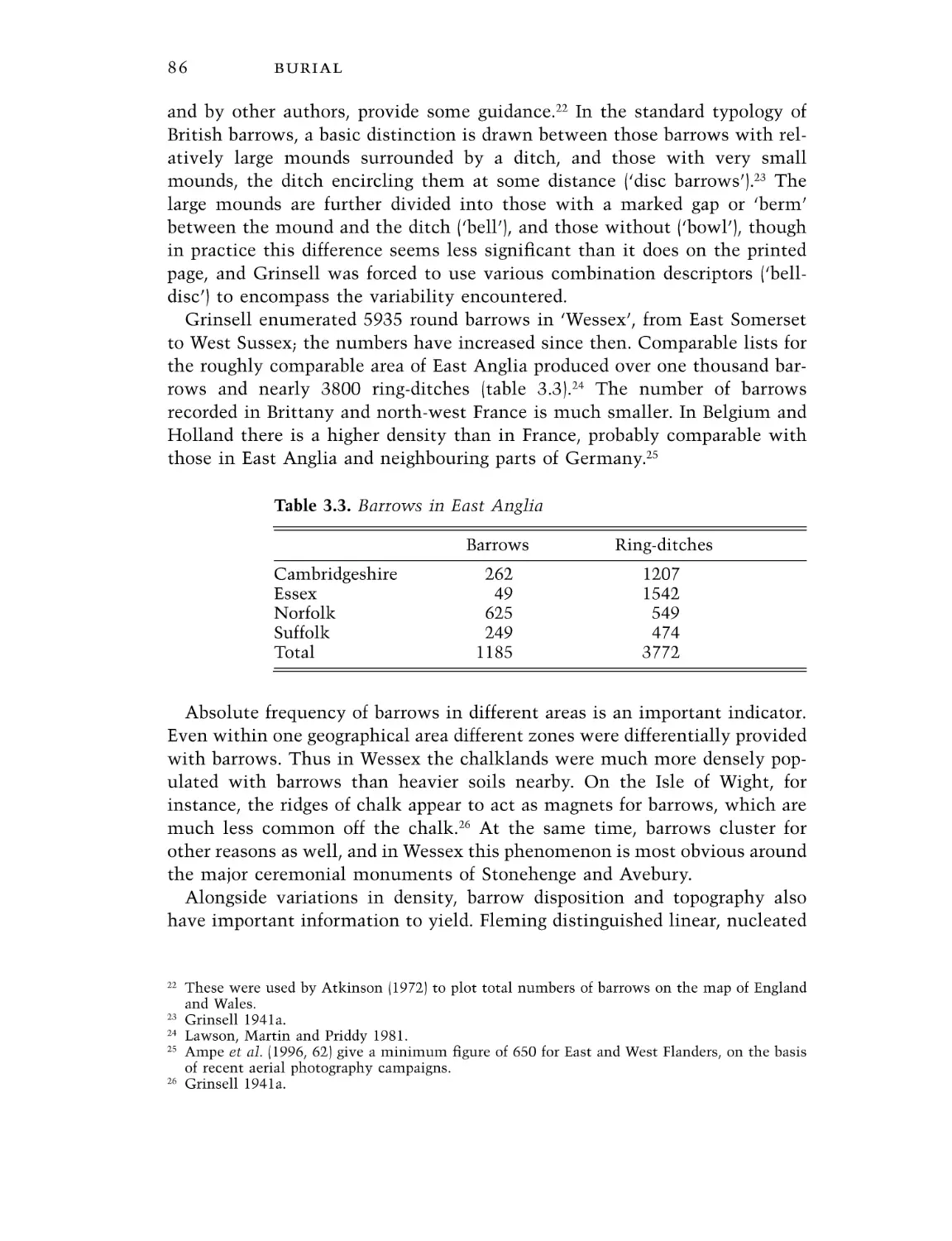

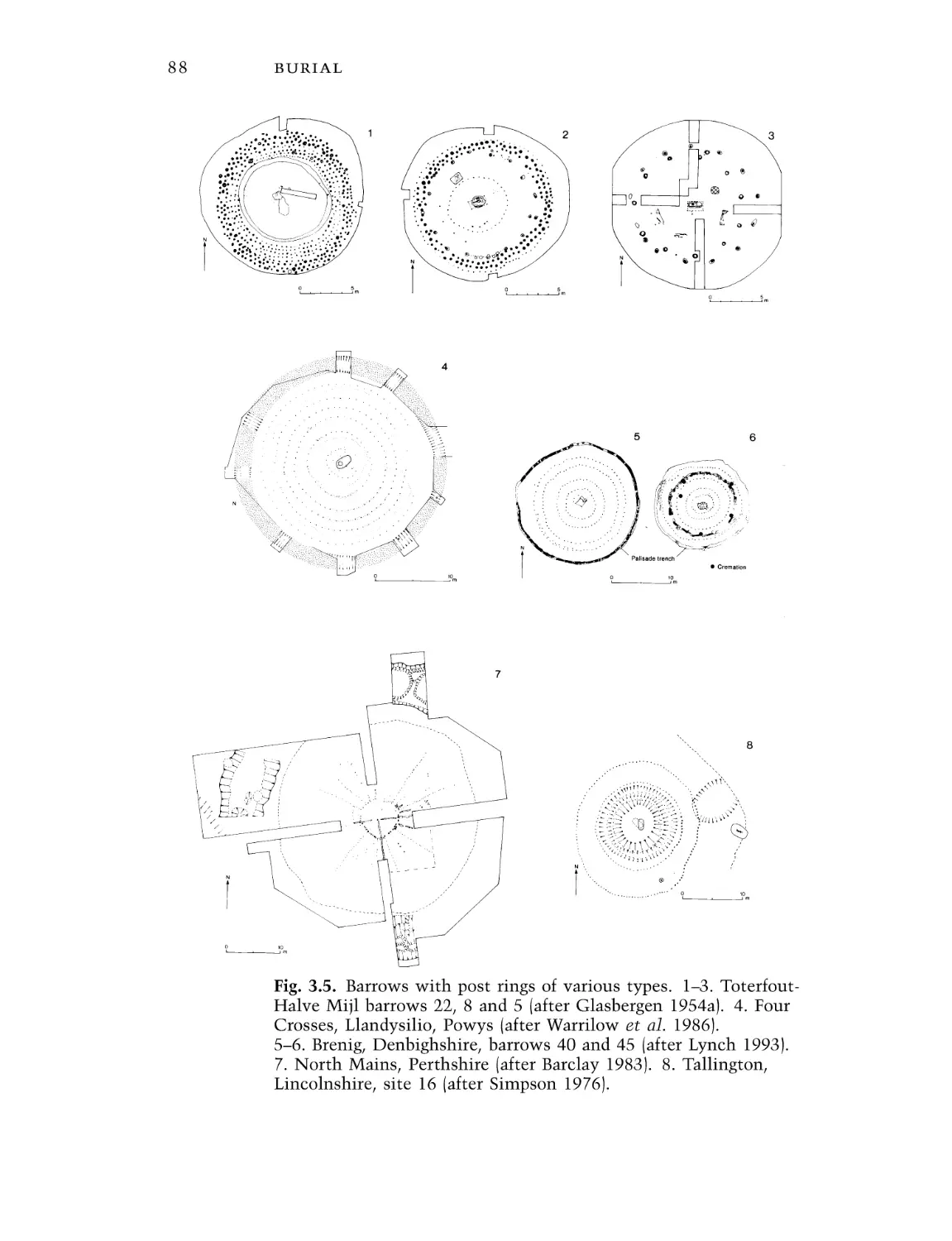
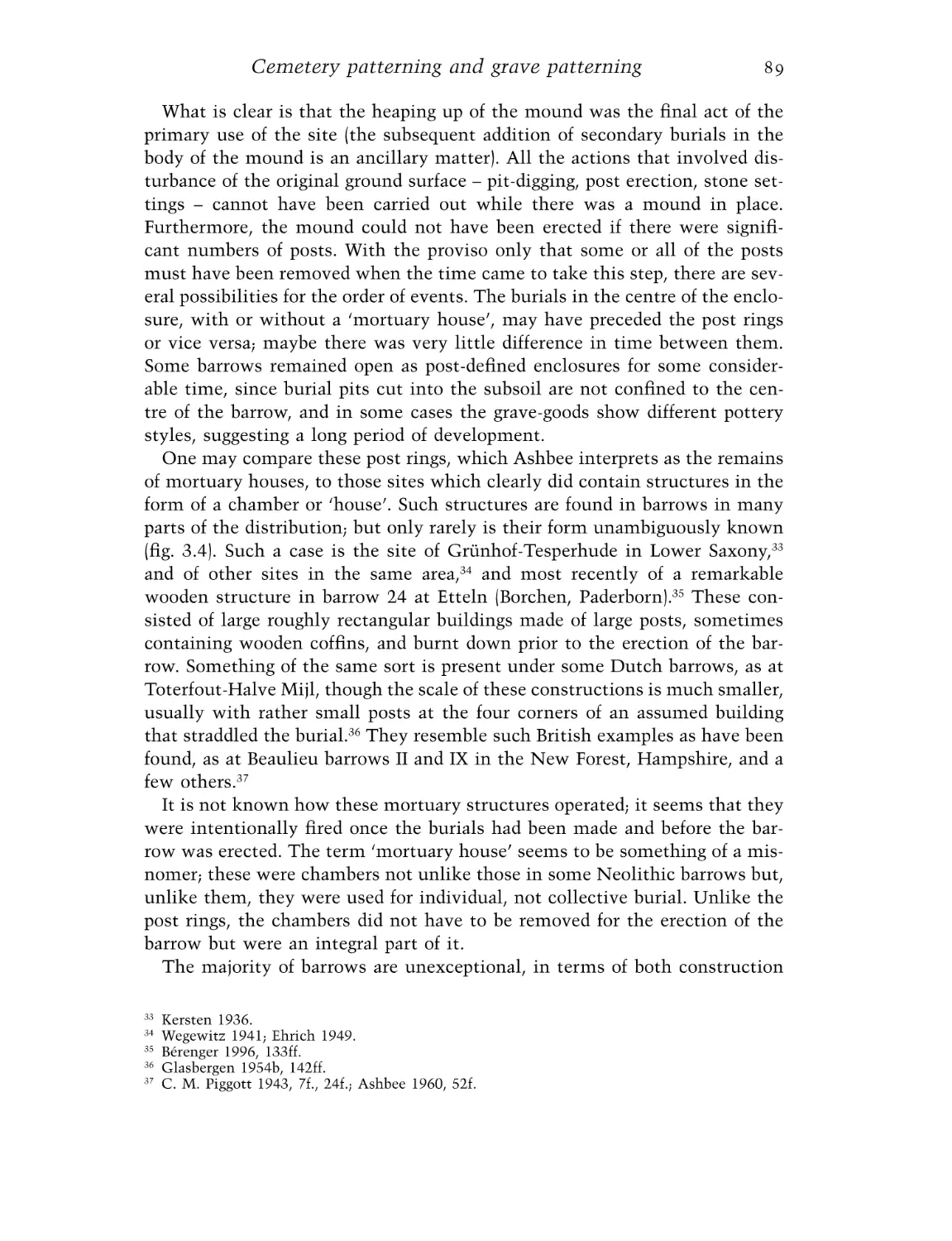
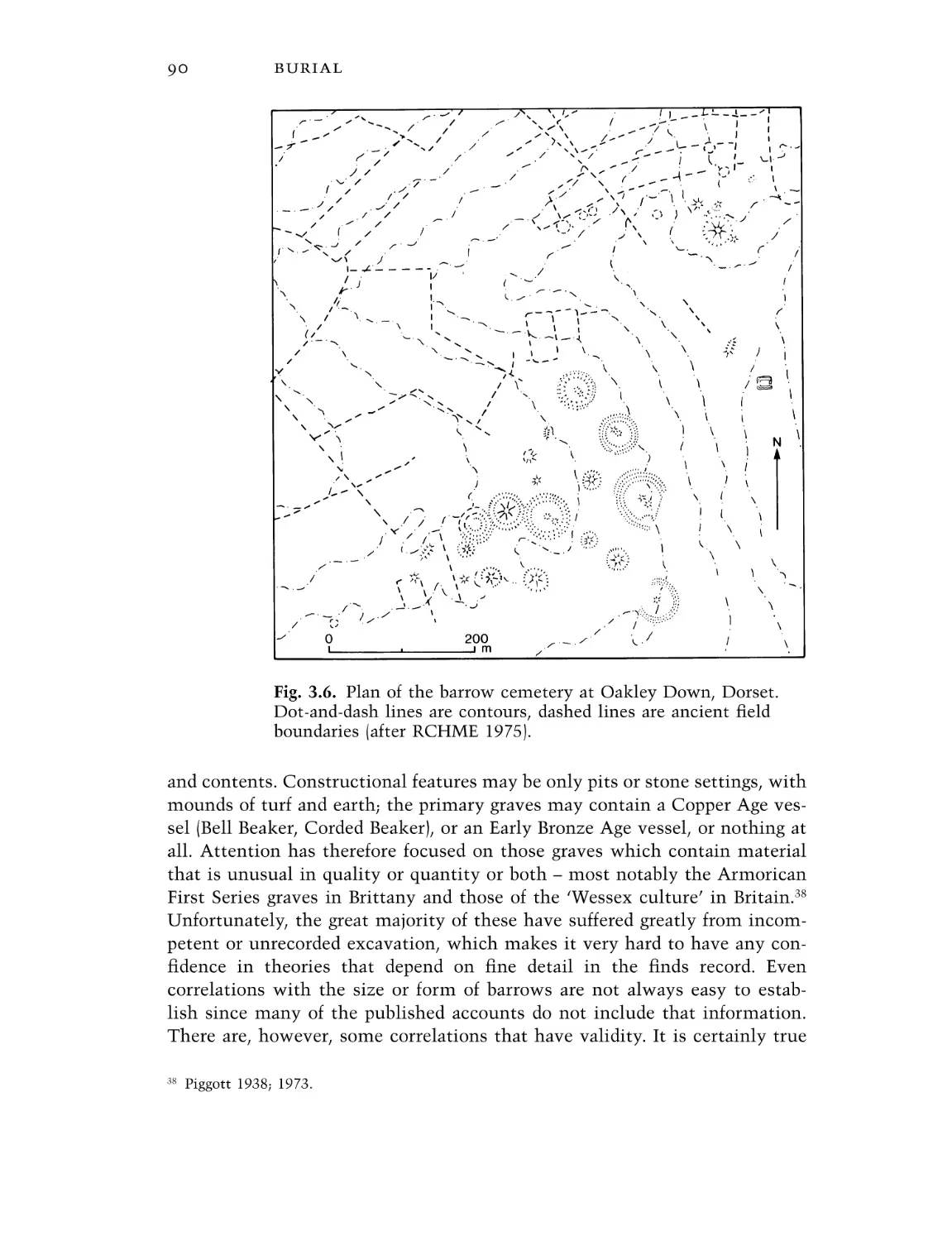











Автор: Harding A.F.
Теги: history ancient history bronze age european society
ISBN: 0-521-36477-9
Год: 2000



Текст
                    European Societies in the Bronze Age
The European Bronze Age, roughly 2500 to 750 BC, was the last fully prehistoric
period and crucially important for the formation of the Europe that emerged in
the later first millennium BC. This book provides a detailed account of its material culture, and focuses on the findings of the past twenty years, when a large
amount of data was collected, necessitating a revision of received views on many
aspects of the period. By comparing and contrasting evidence from different geographical and cultural zones of Europe, it draws out the essential characteristics
of the Bronze Age. Arranged thematically, it reviews the evidence on settlement,
burial, economy, technology, trade and transport, warfare, and social and religious
life, and describes the main theoretical models that have been developed to interpret these new materials. The result is a comprehensive study that will be of
value to specialists and students, and accessible to non-specialists.
ANTHONY F. HARDING is Professor of Archaeology at the University of
Durham. He has worked on sites in many countries of Europe, directing excavations in Britain, Poland and the Czech Republic, and has published widely on
Bronze Age archaeology. His publications include The Bronze Age in Europe, with
John Coles (1979); The Mycenaeans and Europe (1984) and Die Schwerter im
ehemaligen Jugoslawien (1995).

CAMBRIDGE WORLD ARCHAEOOGY

Series editor
NORMAN YOFFEE , University of Michigan

Editorial board
SUSAN ALCOCK , University of Michigan
TOM DILLEHA y, University of Kentucky
CHRIS GOSDEN , University of Oxford
CARLA SINOPOLI , University of Michigan

The Cambridge World Archaeology series is addressed to students and professional archaeologists, and to academics in related
disciplines. Each volume presents a survey of the archaeology of
a region of the world, providing an up-to-date account of research
and integrating recent findings with new concerns of interpretation. While the focus is on a specific region, broader cultural
trends are discussed and the implications of regional findings for
cross-cultural interpretations considered. The authors also bring
anthropological and historical expertise to bear on archaeological problems, and show how both new data and changing intellectual trends in archaeology shape inferences about the past.
Books in the series
RAYMOND ALLCHIN AND BRIDGET ALLCHIN ,

The Rise of Civilization
in India and Pakistan
CLIVE GAMBLE , The Palaeolithic Settlement of Europe
CHARLES HIGHAM , Archaeology of Mainland South East Asia
SARAH MILLEDGE NELSON , The Archaeology of Korea
DAVID PHILLIPSON , African Archaeology (second revised edition)
OLIVER DICKINSON , The Aegean Bronze Age
KAREN OLSEN BRUHNS , Ancient South America
ALASDAIR WHITTLE , Europe in the Neolithic
CHARLES HIGHAM , The Bronze Age of Southeast Asia
CLIVE GAMBLE , The Palaeolithic Societies of Europe
DAN POTTS , The Archaeology of Elam

CAMBRIDGE WORLD ARCHAEOLOGY

EUROPEAN SOCIETIES
IN THE BRONZE AGE
A. F. HARDING
Department of Archaeology
University of Durham

P U B L I S H E D B Y T H E P R E S S S Y N D I C AT E O F T H E U N I V E R S I T Y O F C A M B R I D G E

The Pitt Building, Trumpington Street, Cambridge, United Kingdom
CAMBRIDGE UNIVERSITY PRESS

The Edinburgh Building, Cambridge CB2 2RU, UK
http://www.cup.cam.ac.uk
40 West 20th Street, New York, NY 10011-4211, USA
http://www.cup.org
10 Stamford Road, Oakleigh, Melbourne 3166, Australia
© Cambridge University Press 2000
This book is in copyright. Subject to statutory exception and to the provisions
of relevant collective licensing agreements, no reproduction of any part may
take place without the written permission of Cambridge University Press.
First published 2000
Typeset in Trump Medieval 10/13 [WV]
A catalogue record for this book is available from the British Library
Library of Congress cataloguing in publication data
Harding, A. F.
European societies in the Bronze Age / A. F. Harding.
p. cm. – (Cambridge world archaeology)
Includes bibliographical references and index.
ISBN 0 521 36477 9 (hc.)
1. Bronze Age–Europe. 2. Europe–Antiquities. I. Title.
II. Series.
GN778.2.A1H38 2000
936–dc21 99–28849 CIP
ISBN 0 521 36477 9 hardback
ISBN 0 521 36729 8 paperback

Transferred to digital printing 2004

For Jan Bouzek, teacher and friend

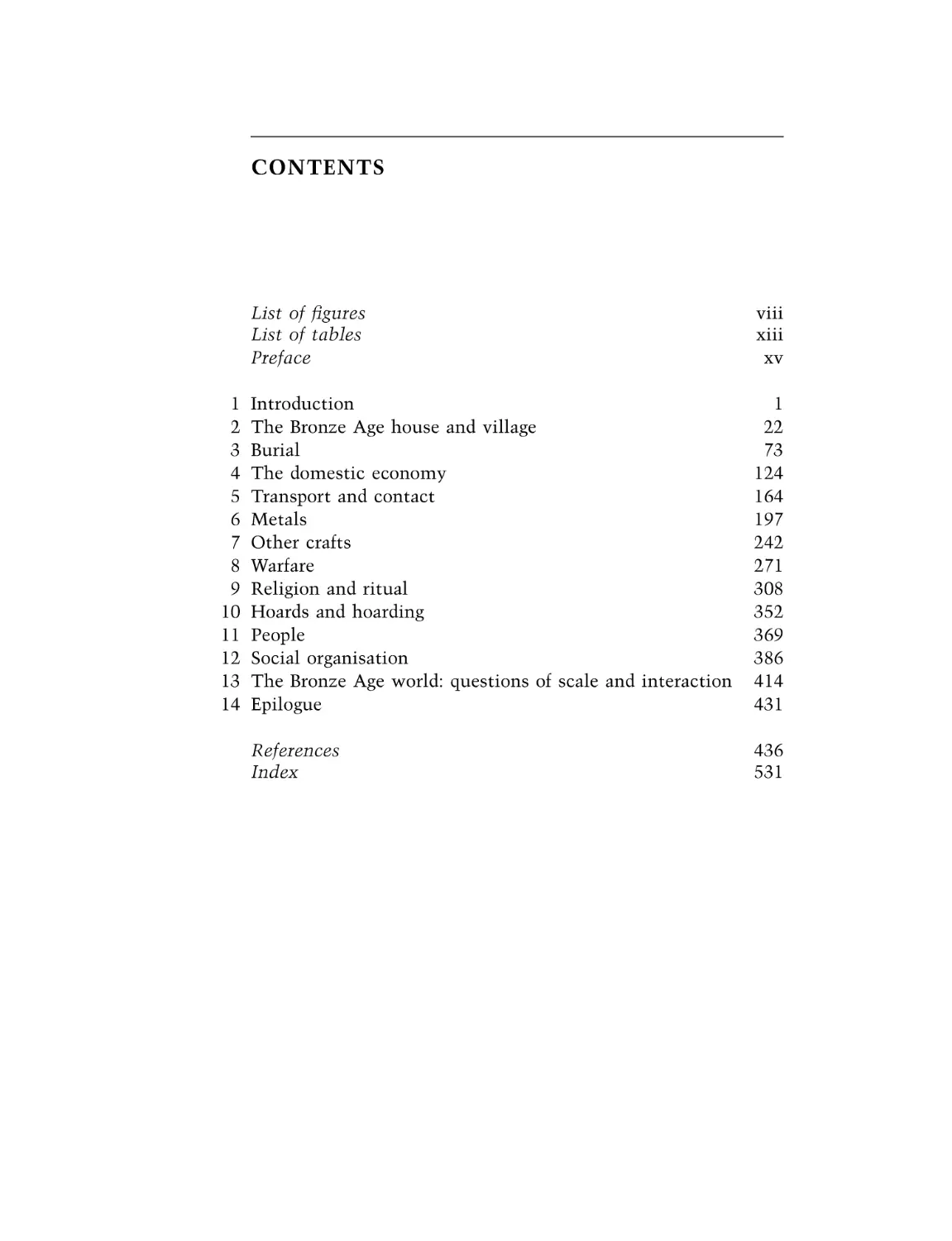
CONTENTS

1
2
3
4
5
6
7
8
9
10
11
12
13
14

List of figures
List of tables
Preface

viii
xiii
xv

Introduction
The Bronze Age house and village
Burial
The domestic economy
Transport and contact
Metals
Other crafts
Warfare
Religion and ritual
Hoards and hoarding
People
Social organisation
The Bronze Age world: questions of scale and interaction
Epilogue

1
22
73
124
164
197
242
271
308
352
369
386
414
431

References
Index

436
531

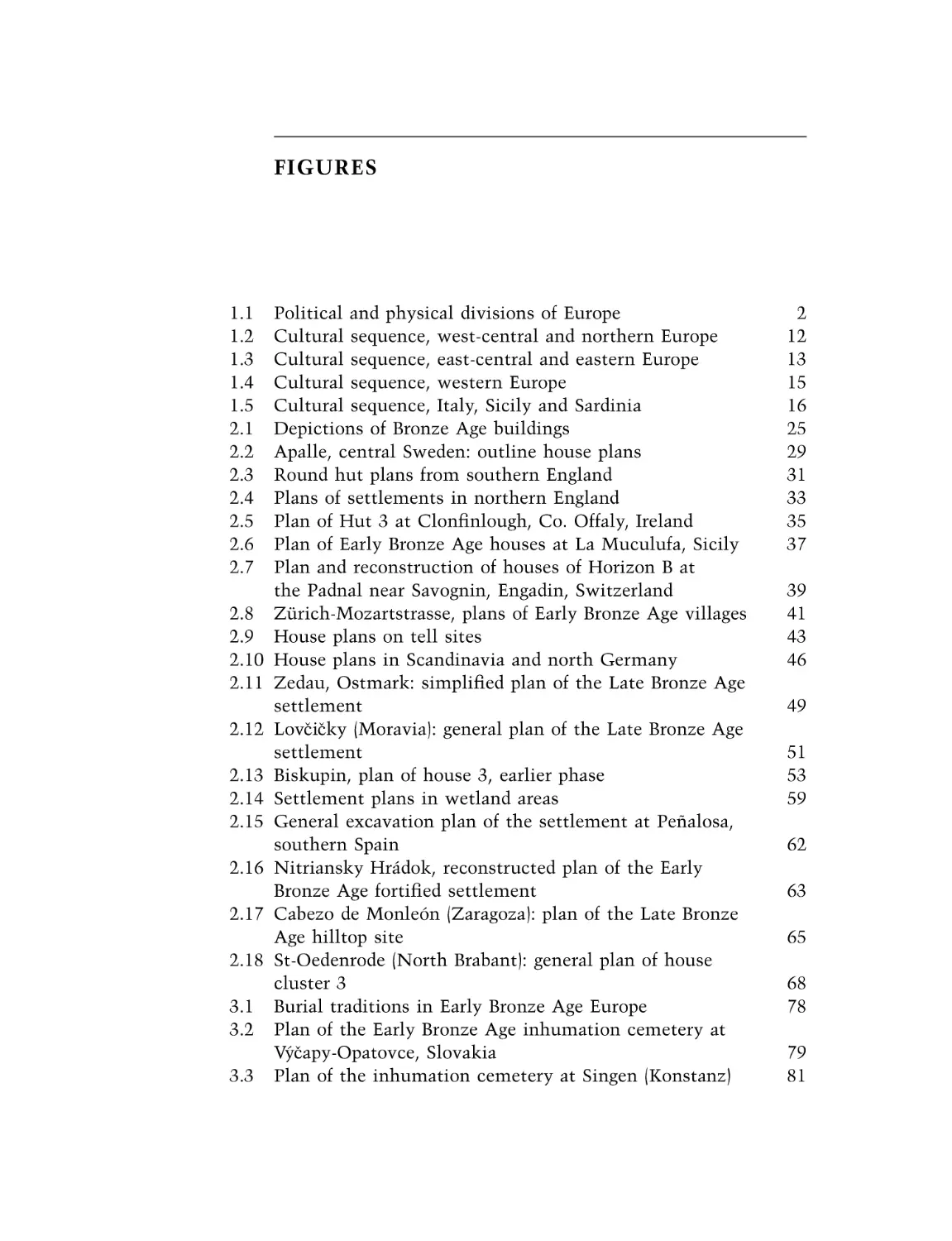
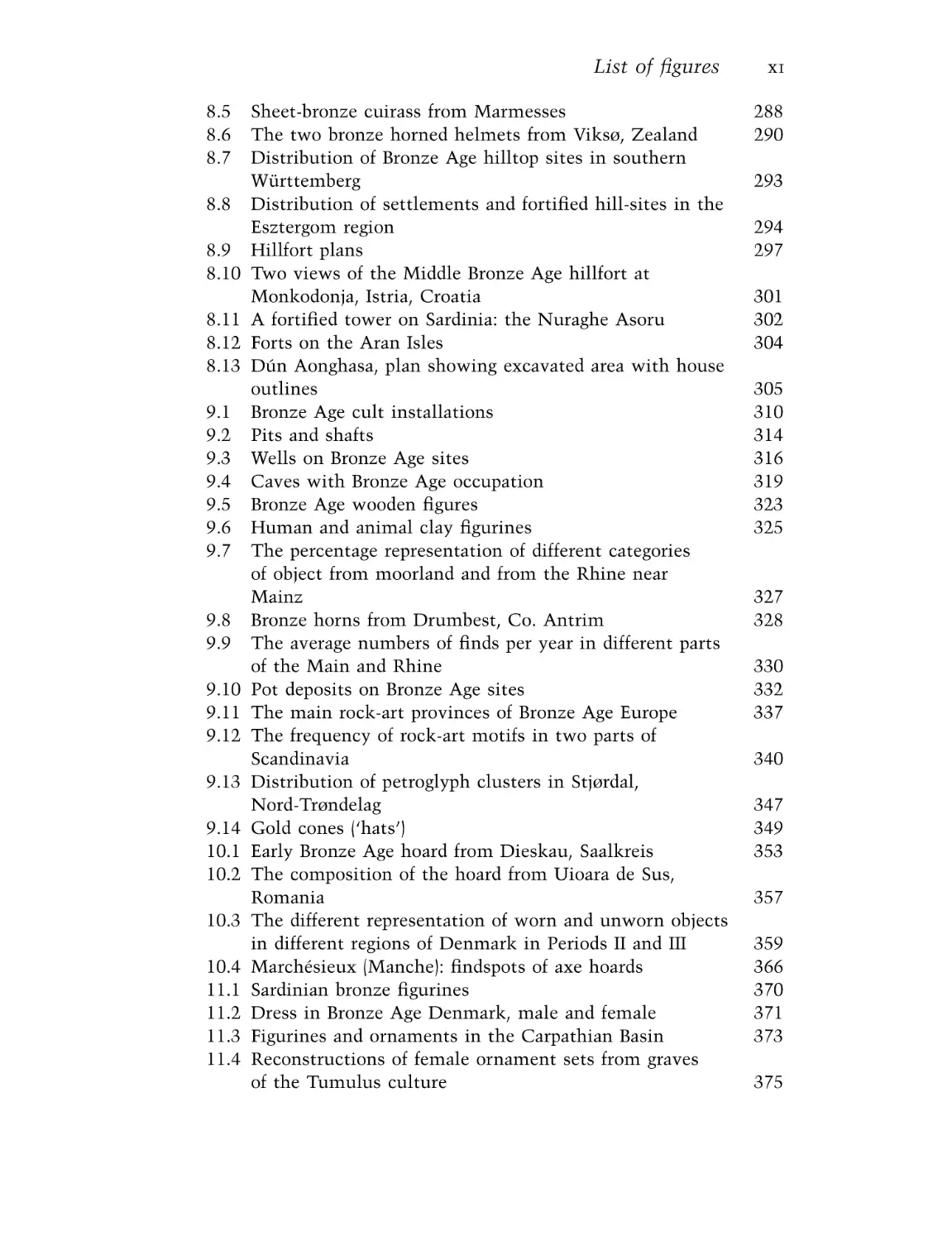
FIGURES

1.1
1.2
1.3
1.4
1.5
2.1
2.2
2.3
2.4
2.5
2.6
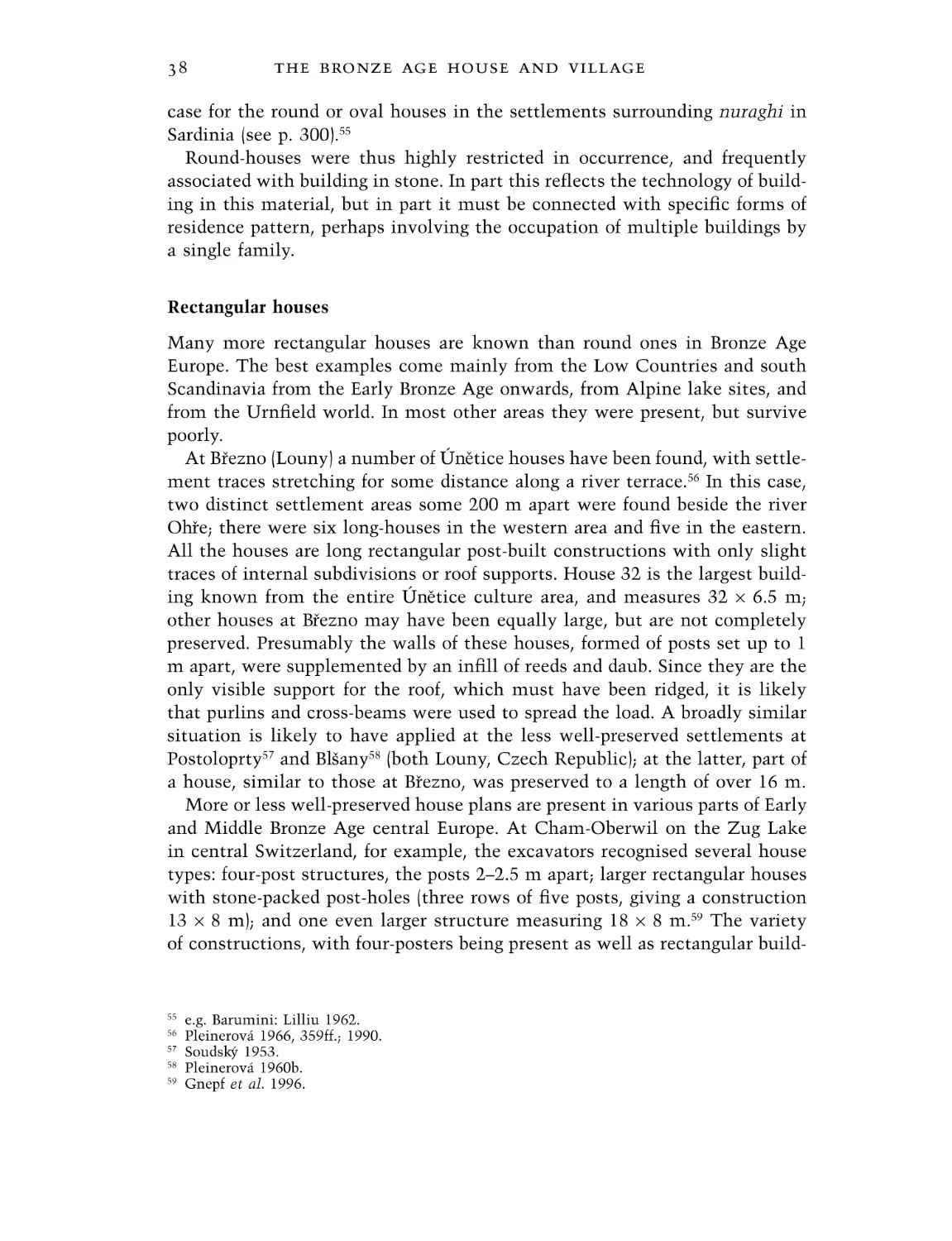
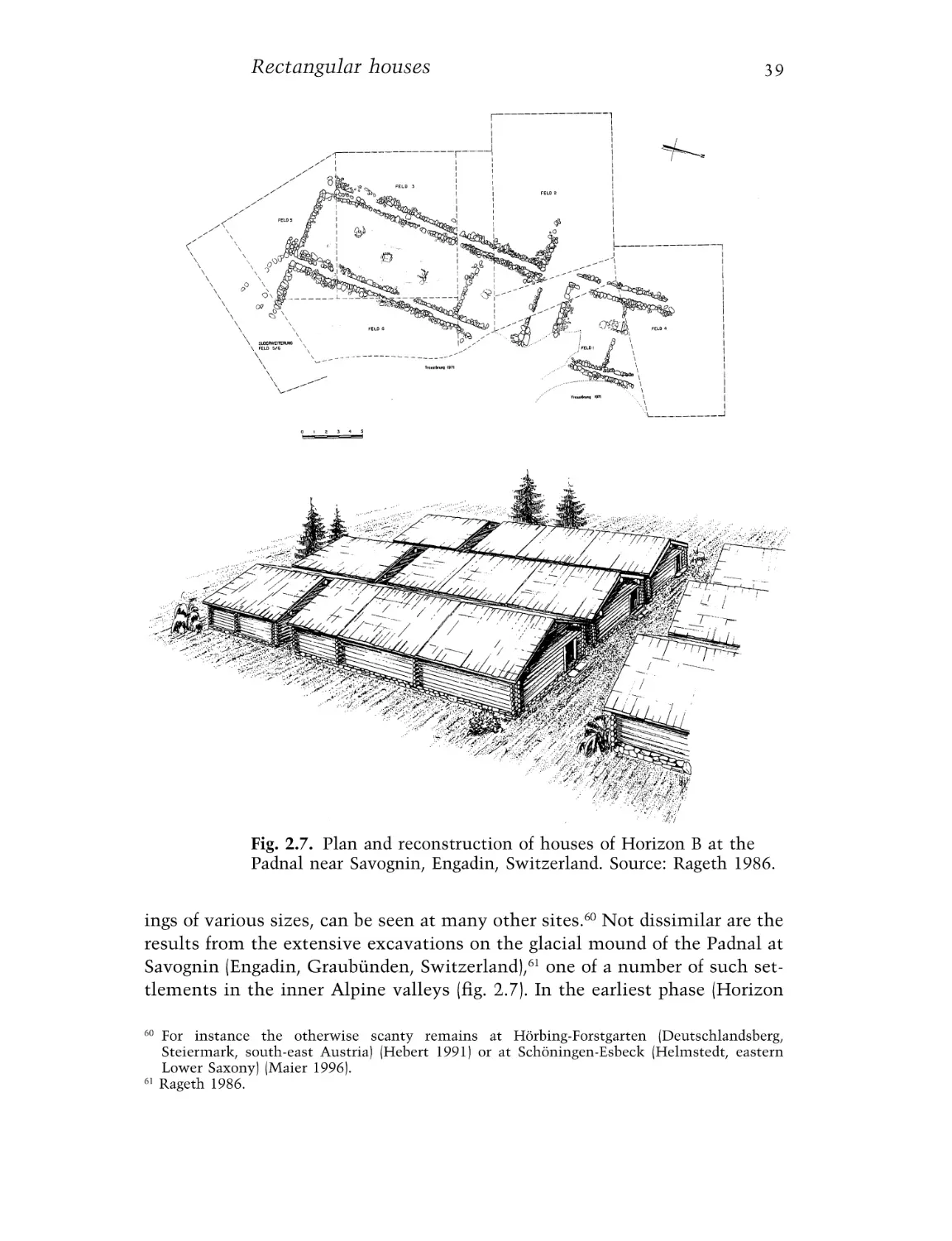
2.7
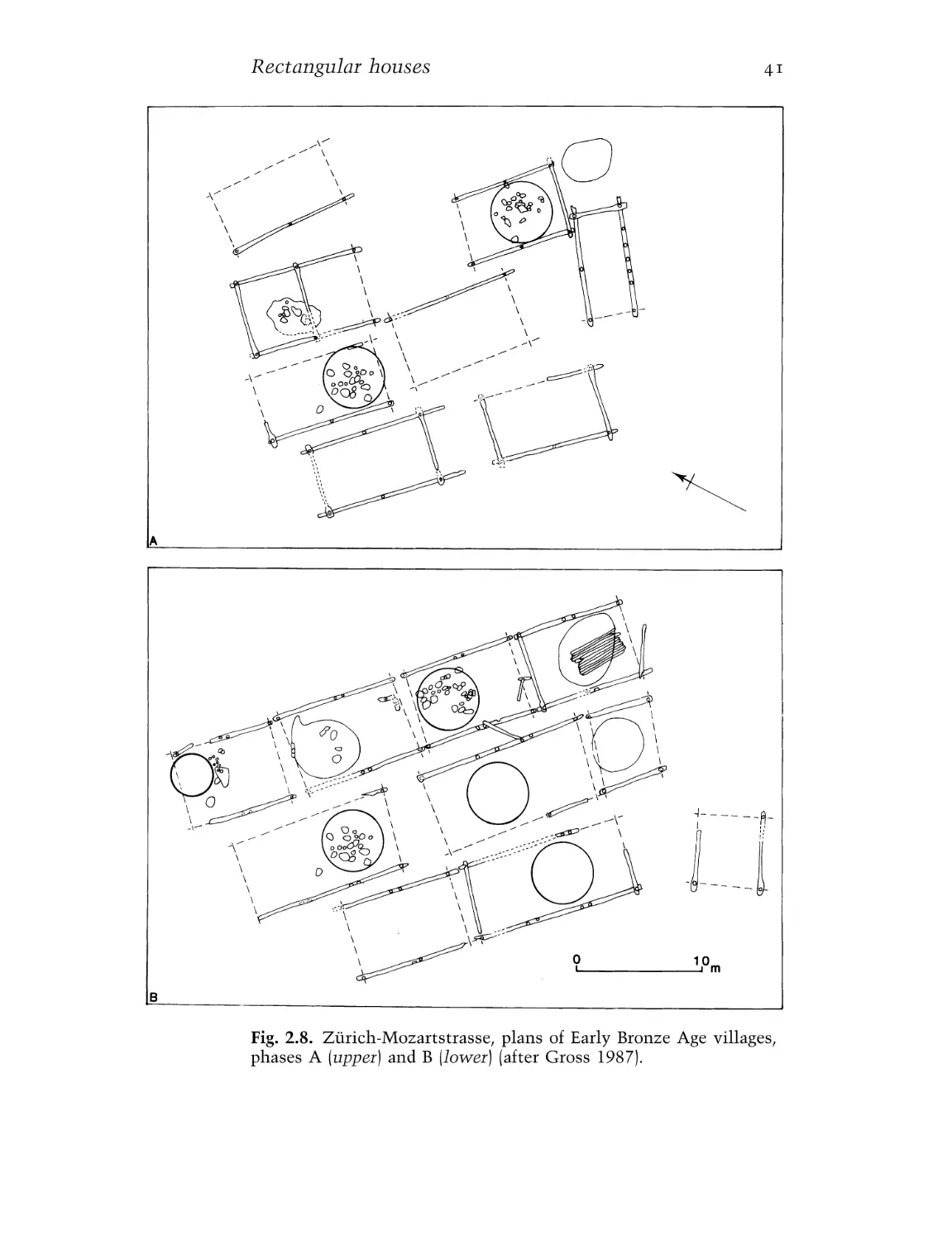
2.8
2.9
2.10
2.11
2.12
2.13
2.14
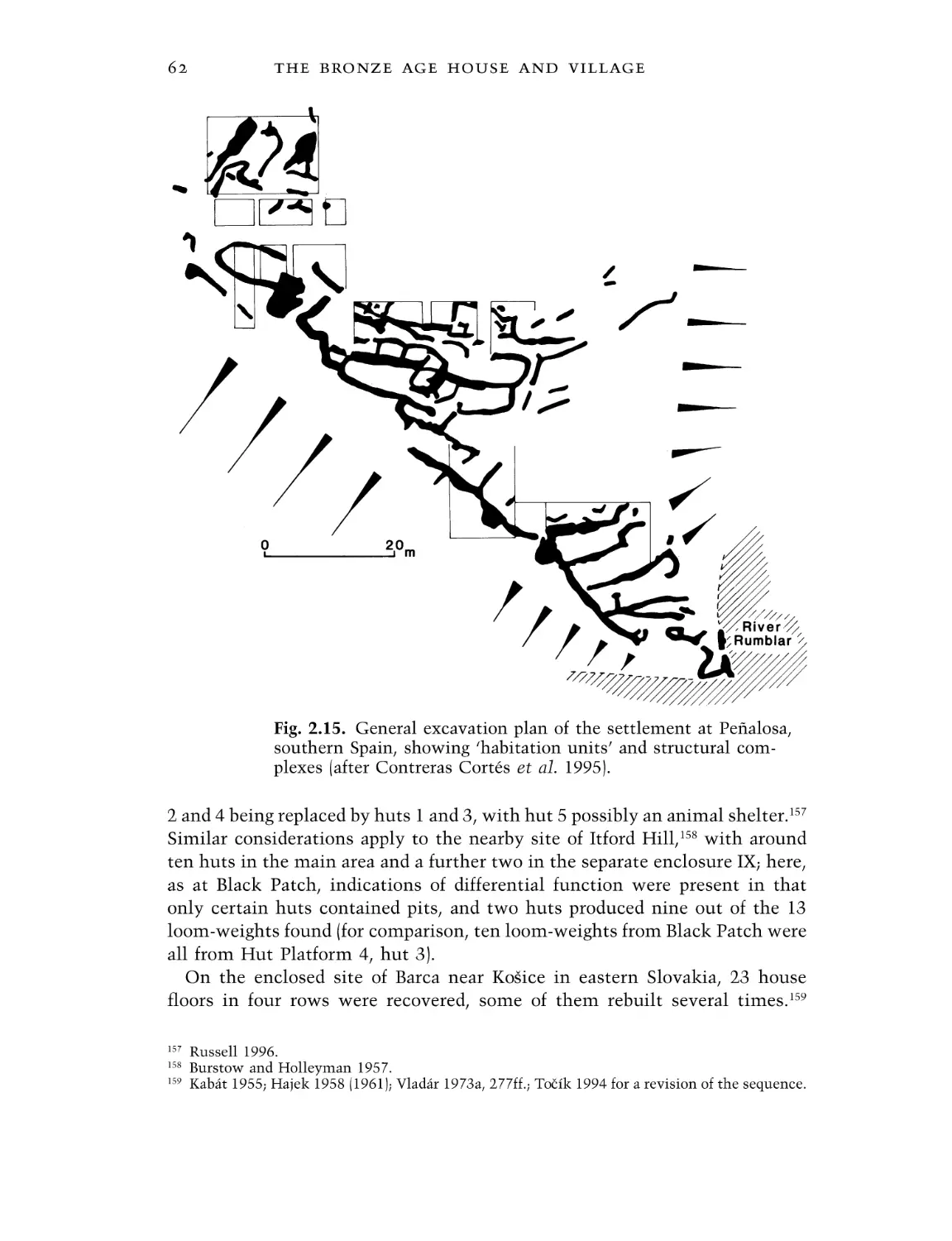
2.15
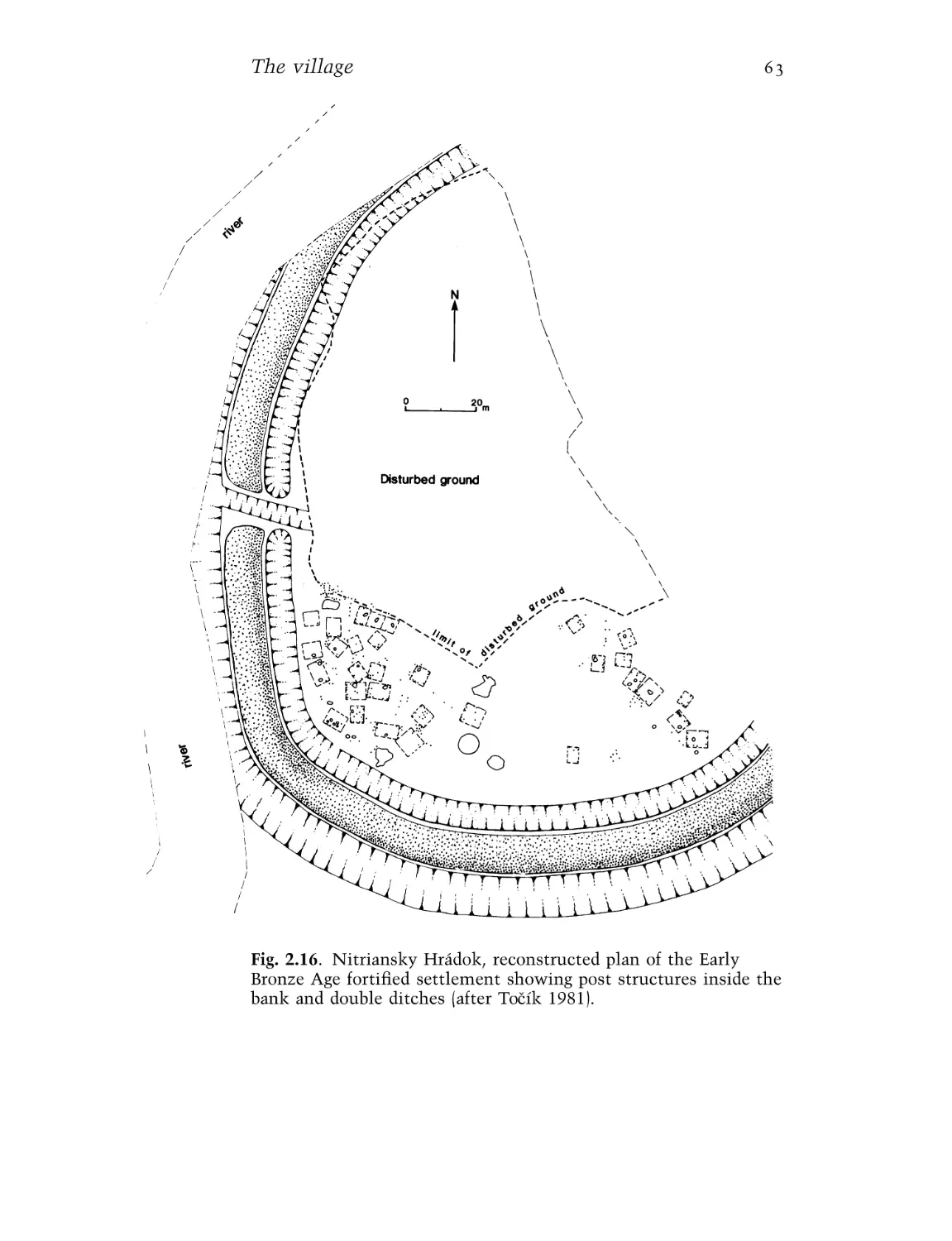
2.16
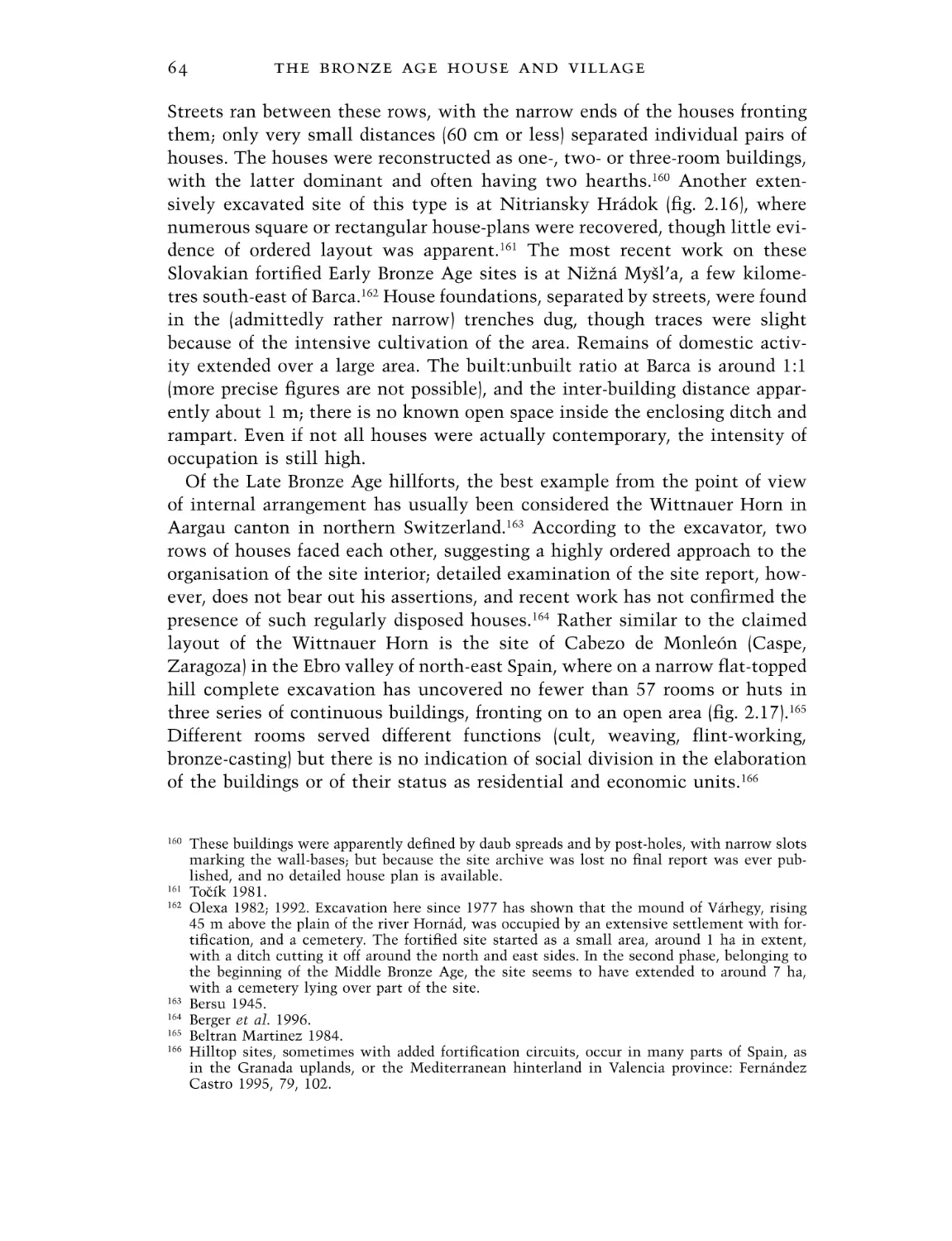
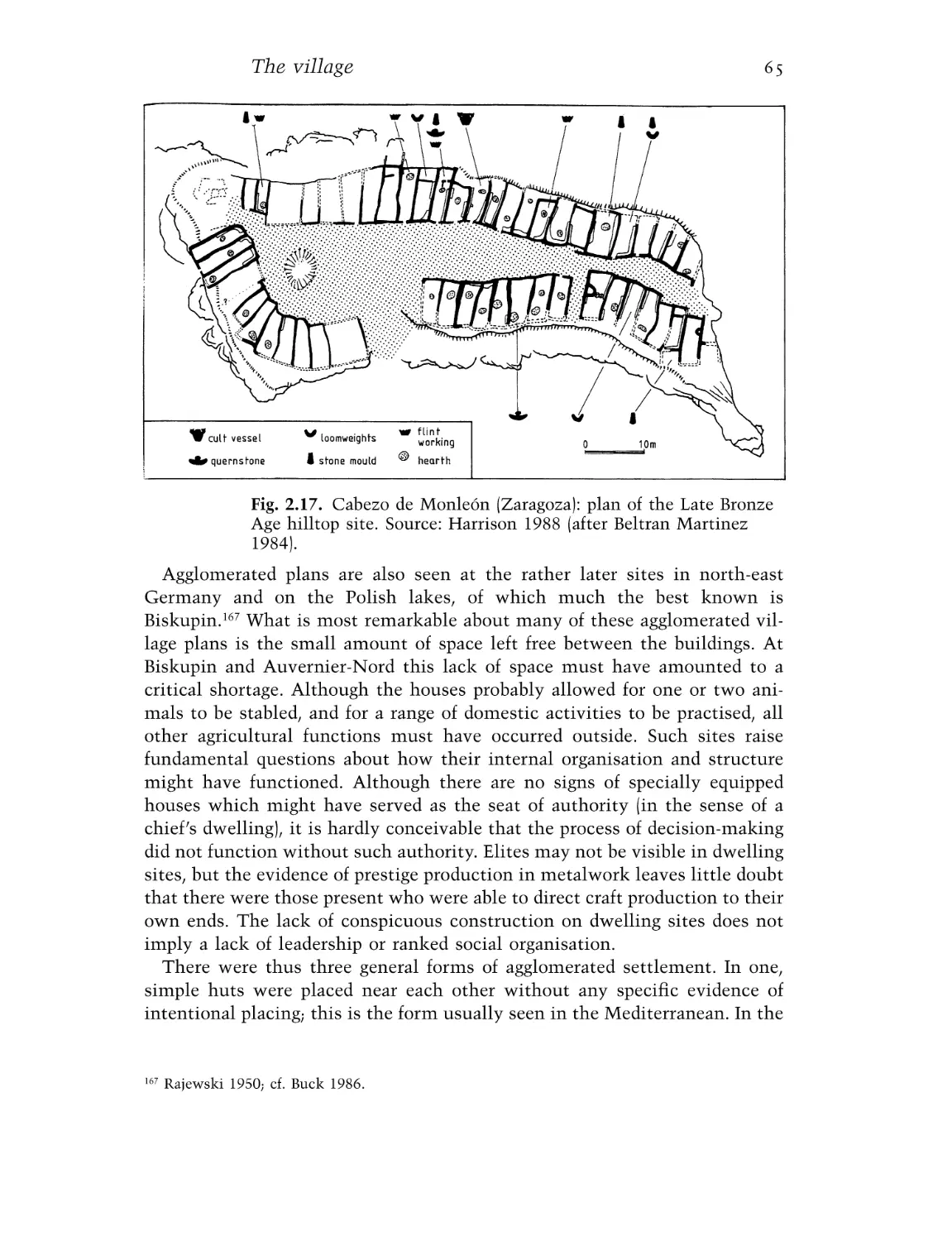
2.17
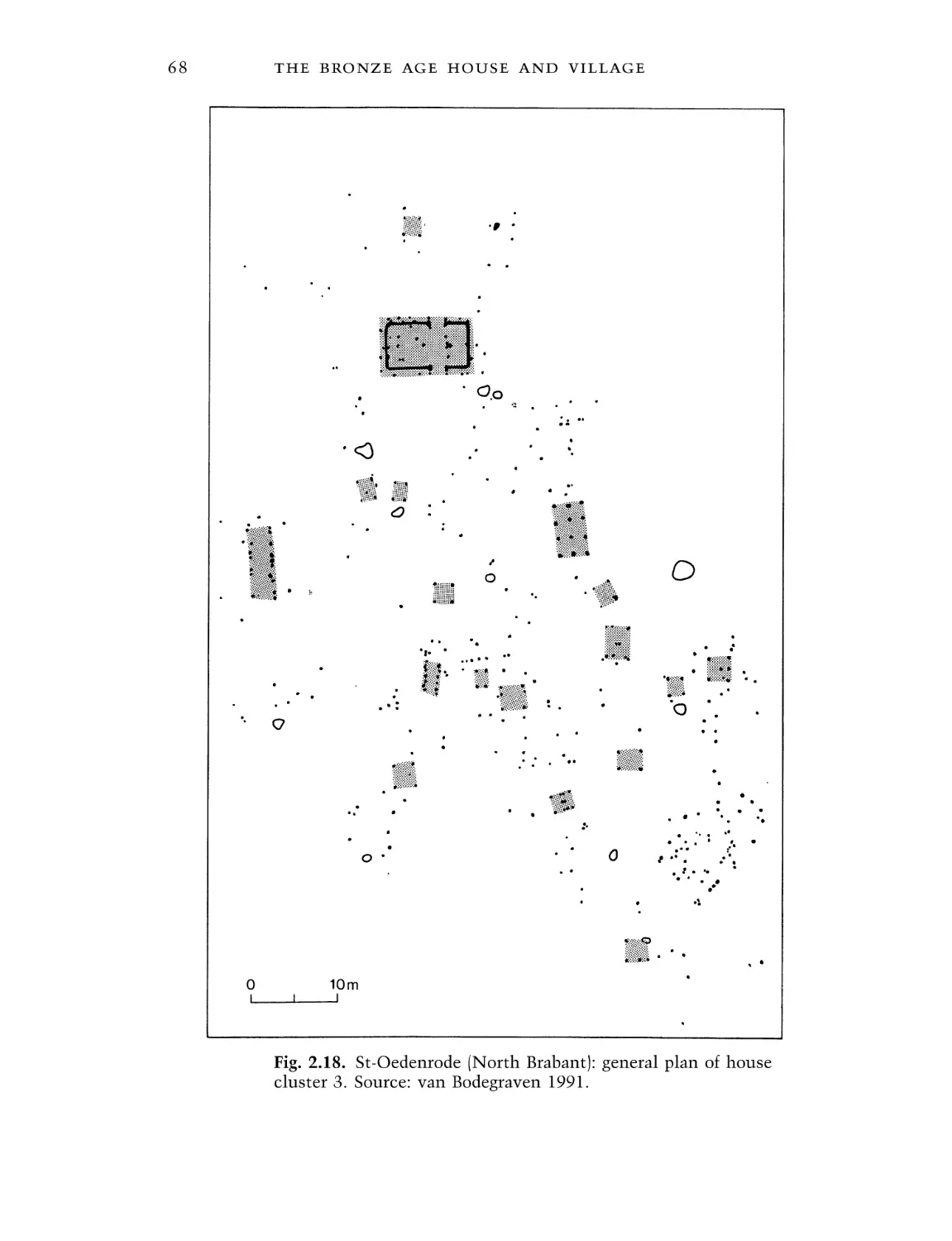
2.18
3.1
3.2
3.3

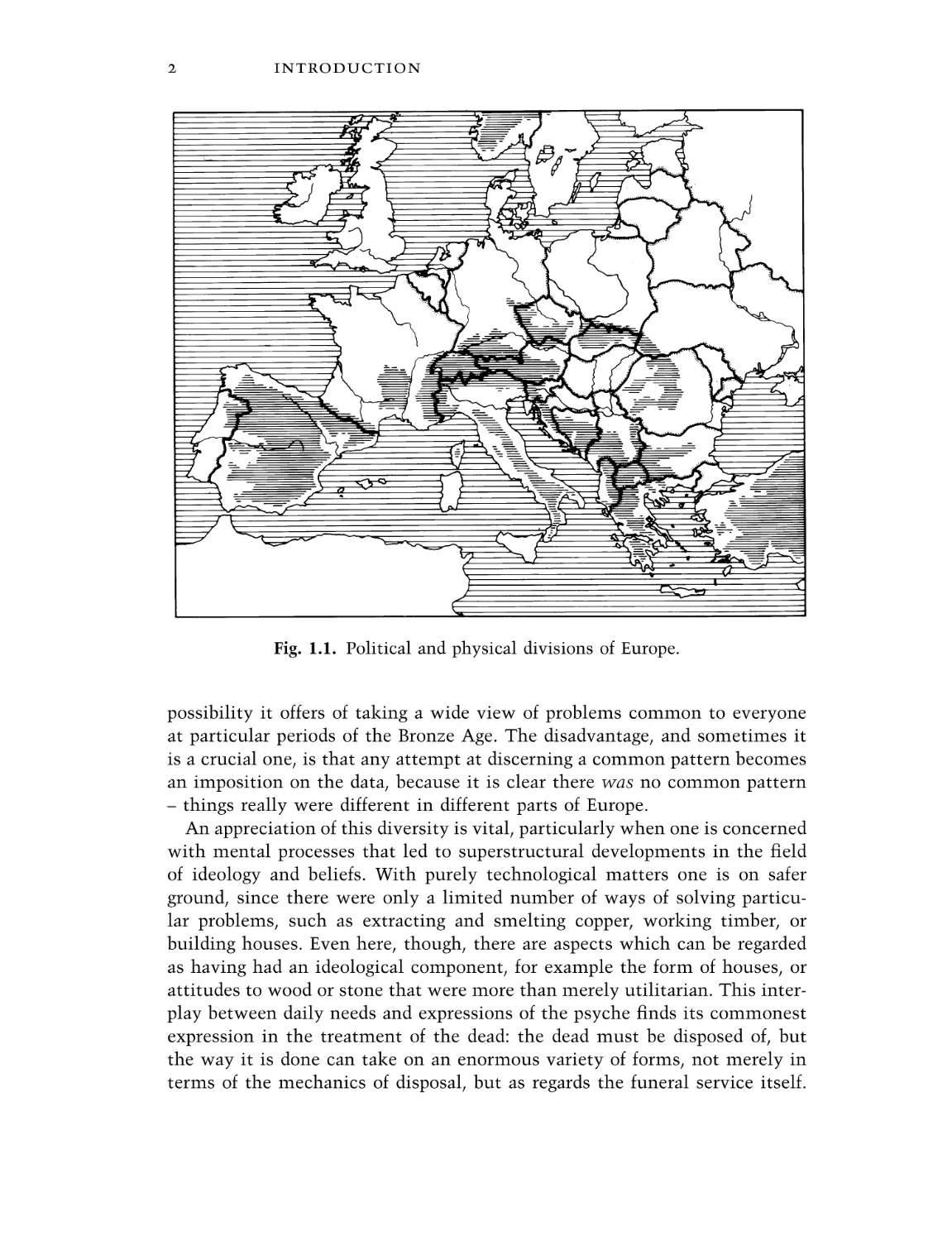
Political and physical divisions of Europe
Cultural sequence, west-central and northern Europe
Cultural sequence, east-central and eastern Europe
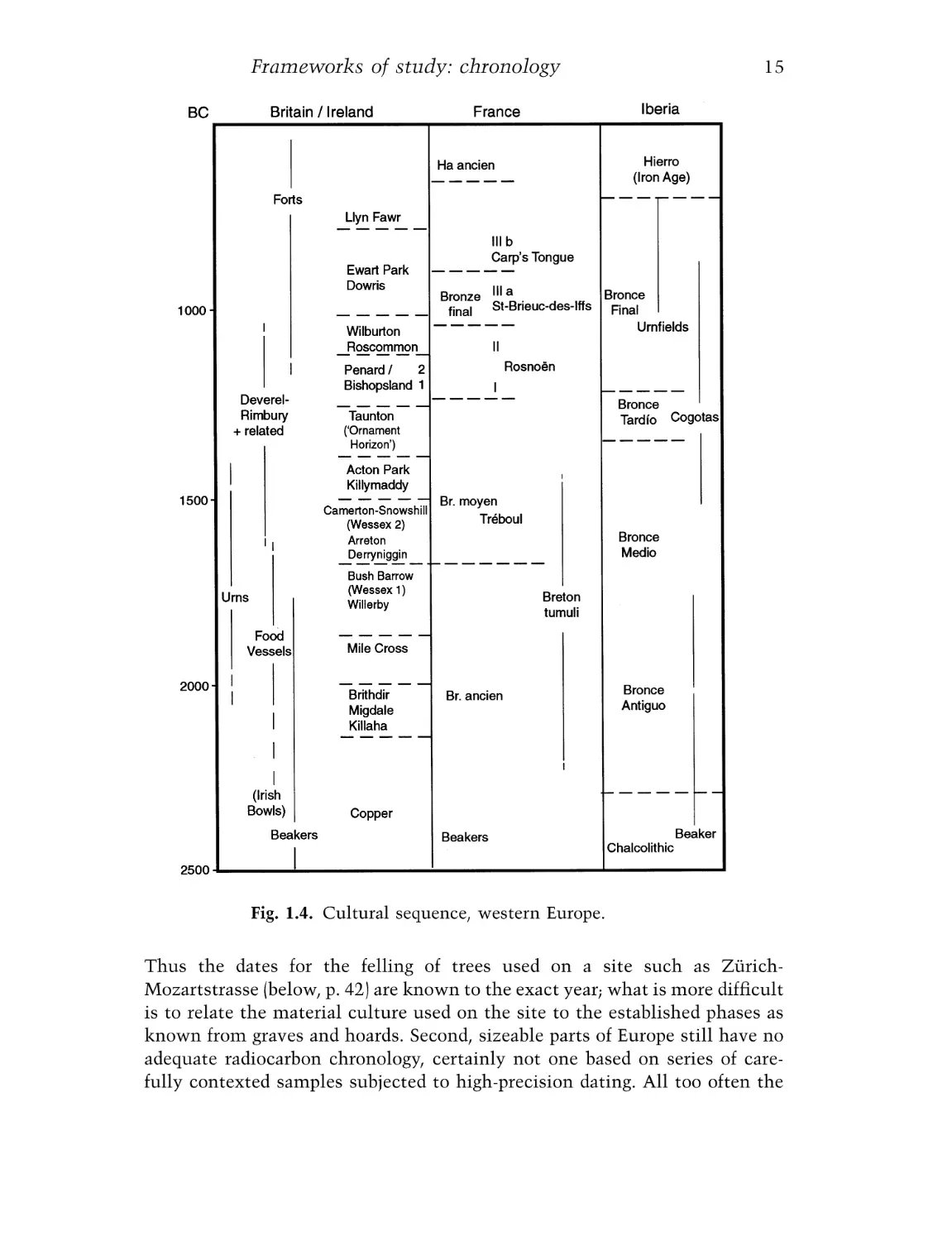
Cultural sequence, western Europe
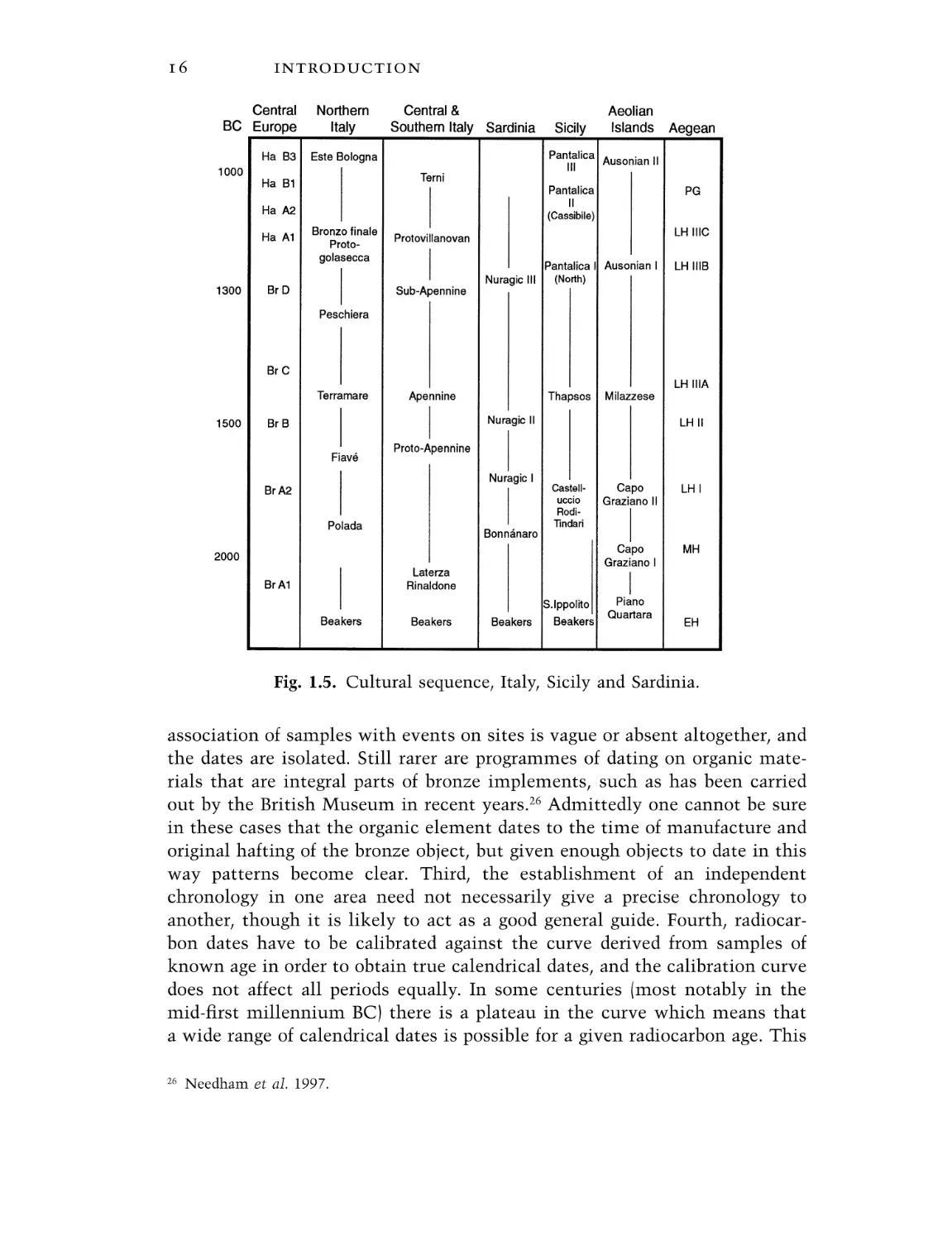
Cultural sequence, Italy, Sicily and Sardinia
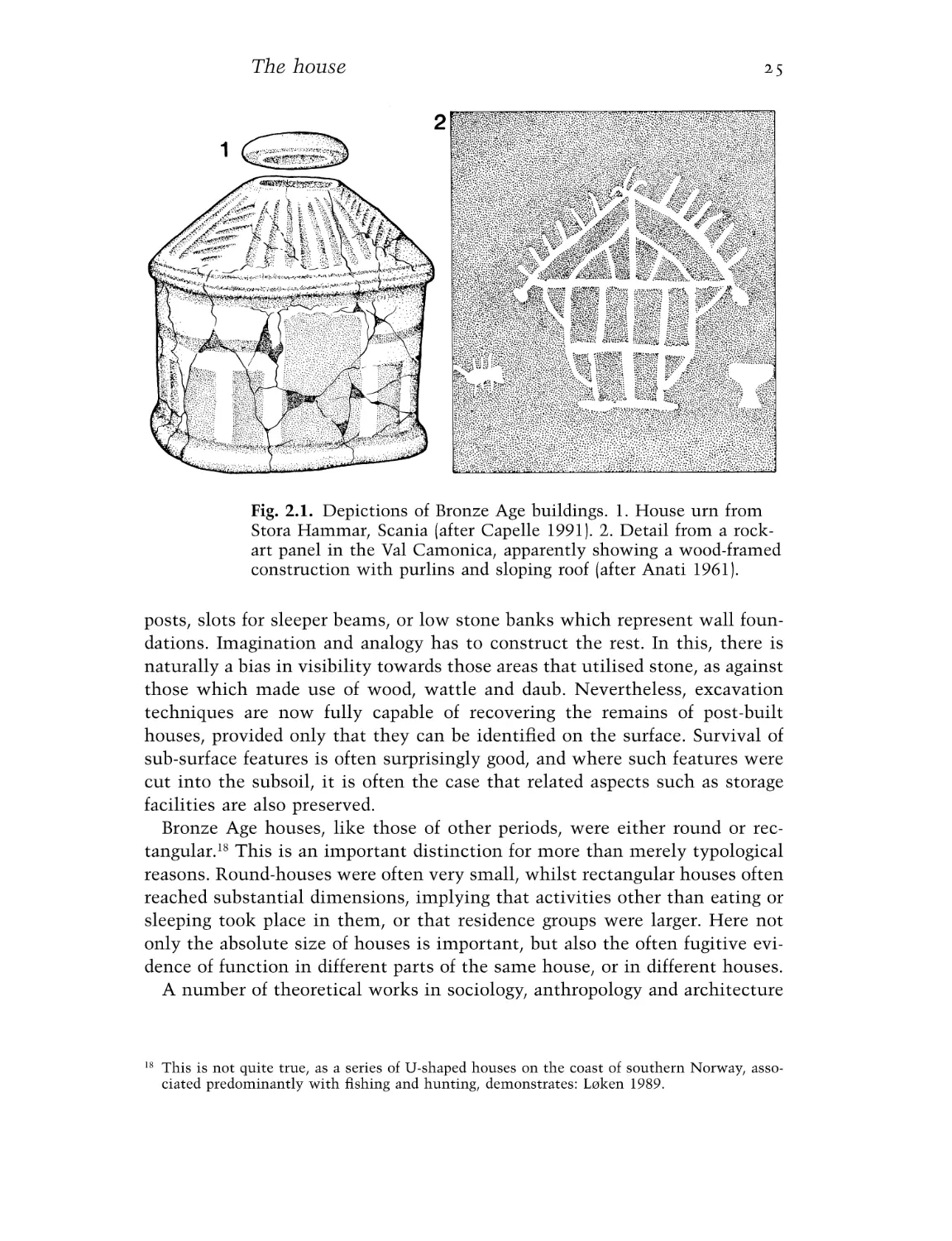
Depictions of Bronze Age buildings
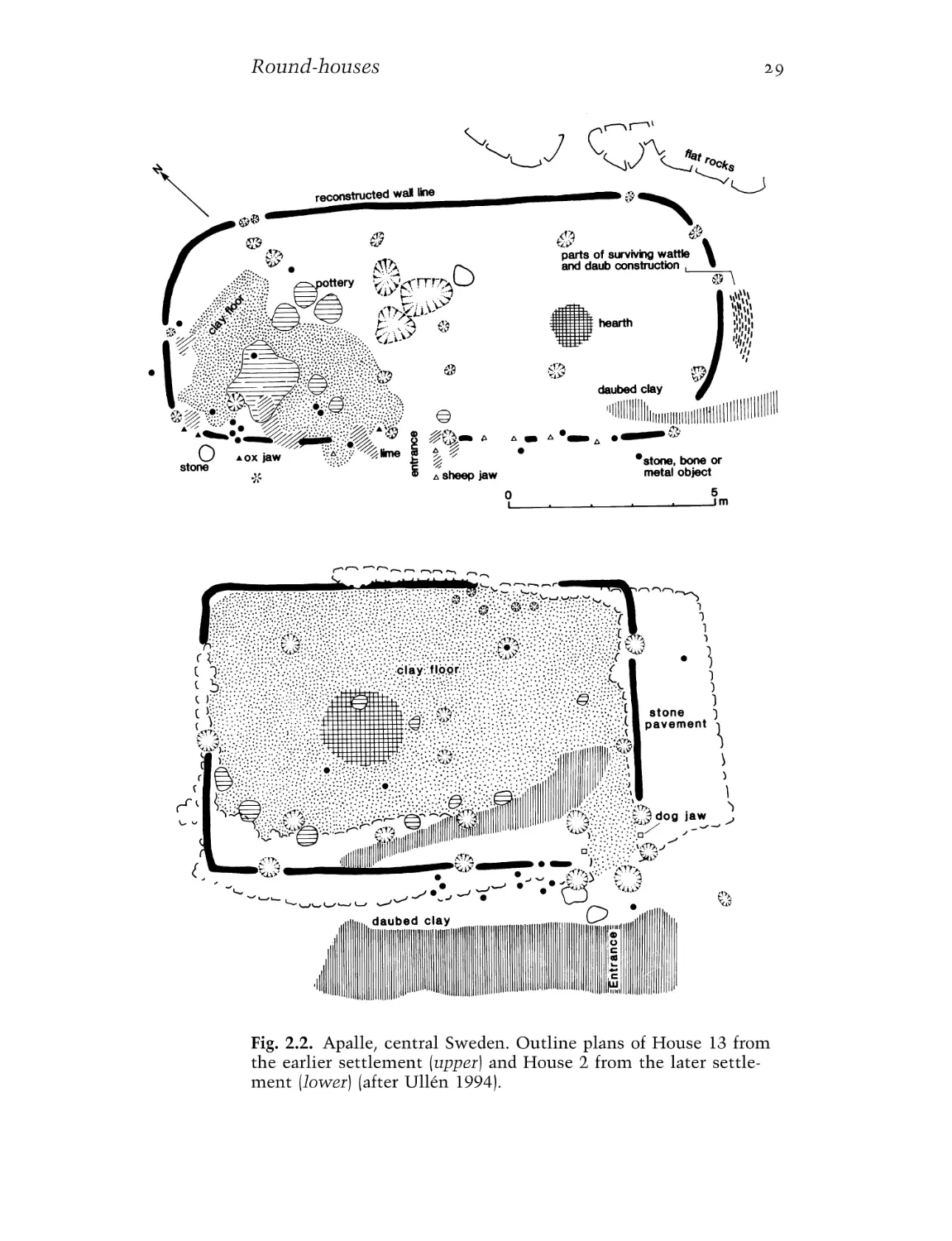
Apalle, central Sweden: outline house plans
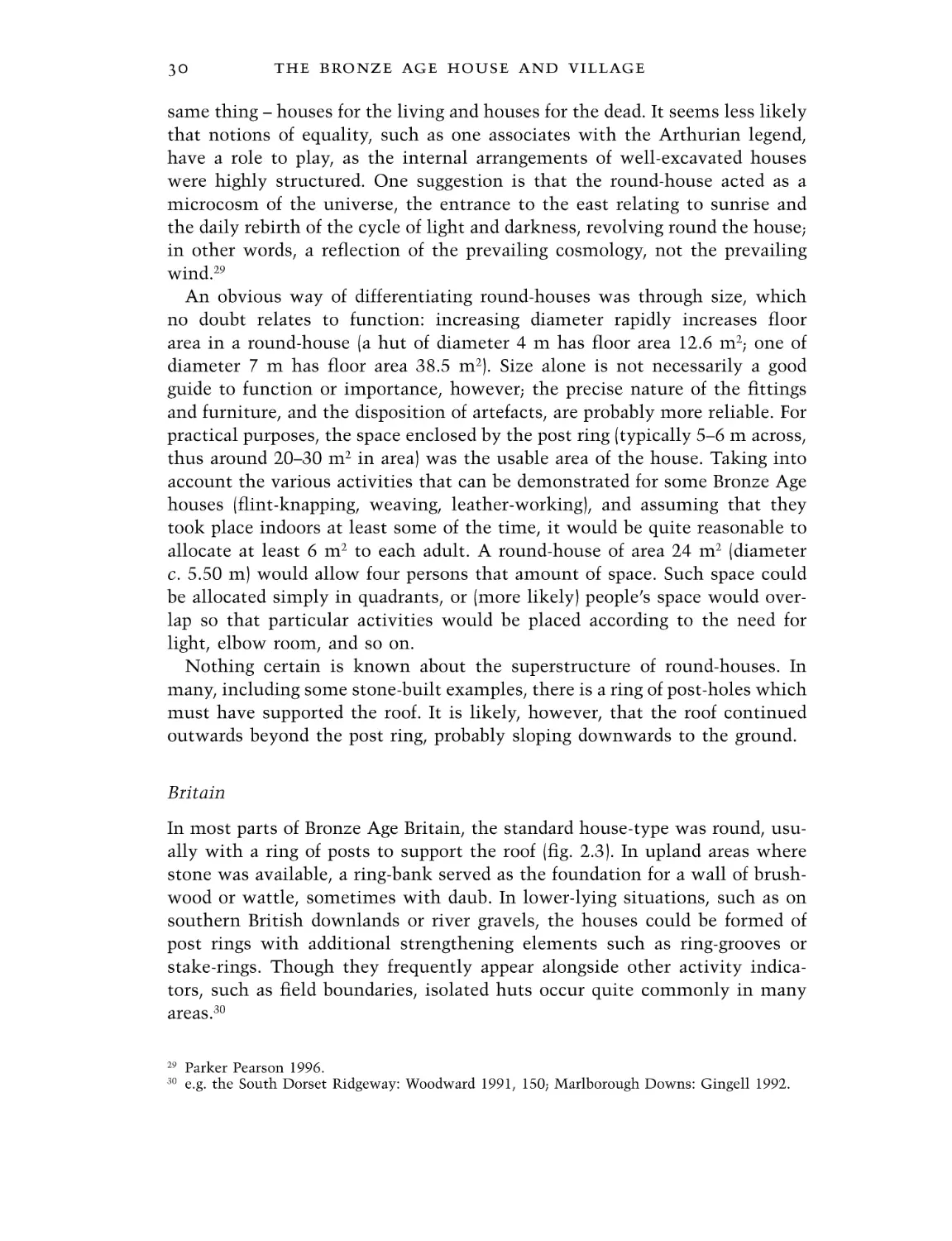
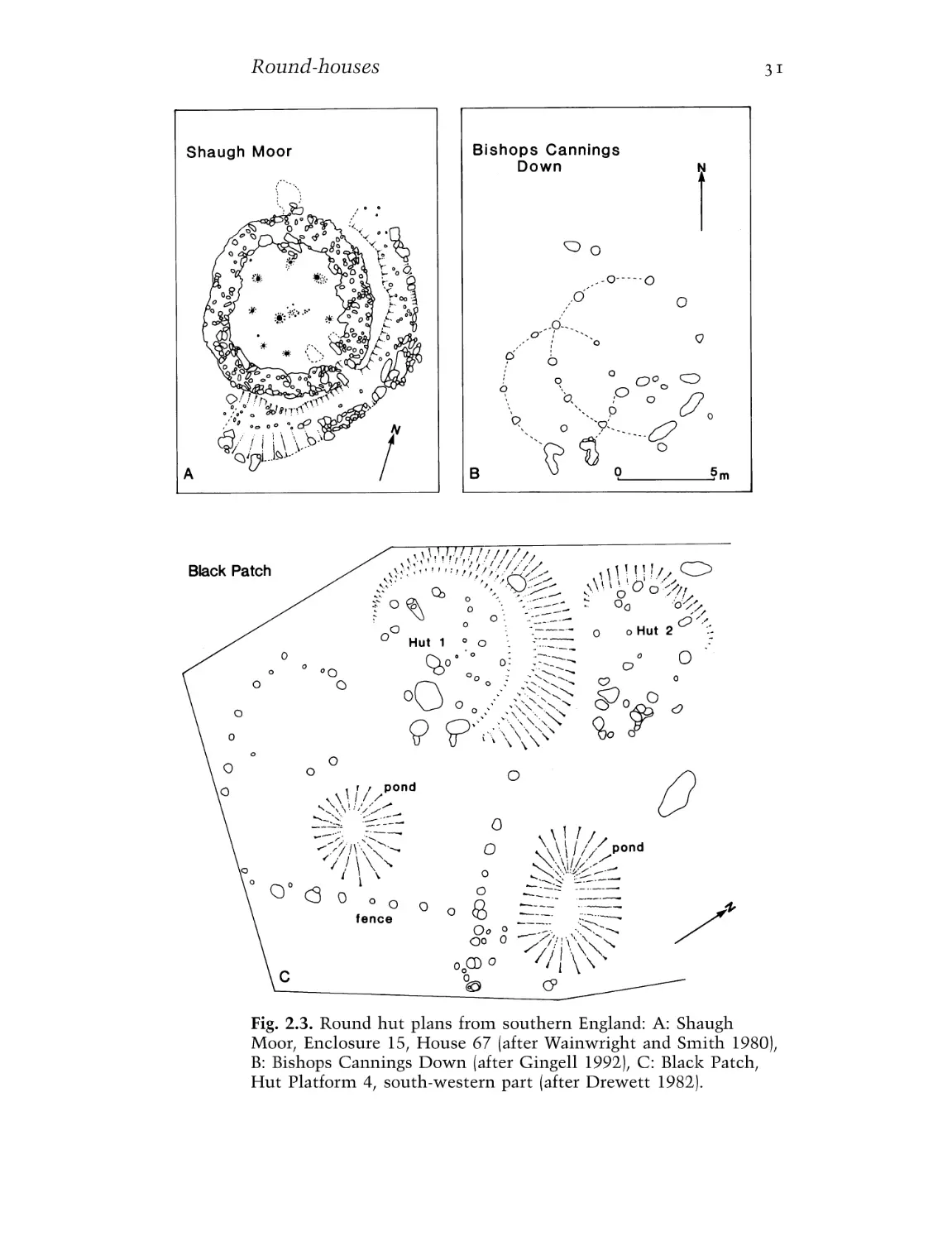
Round hut plans from southern England
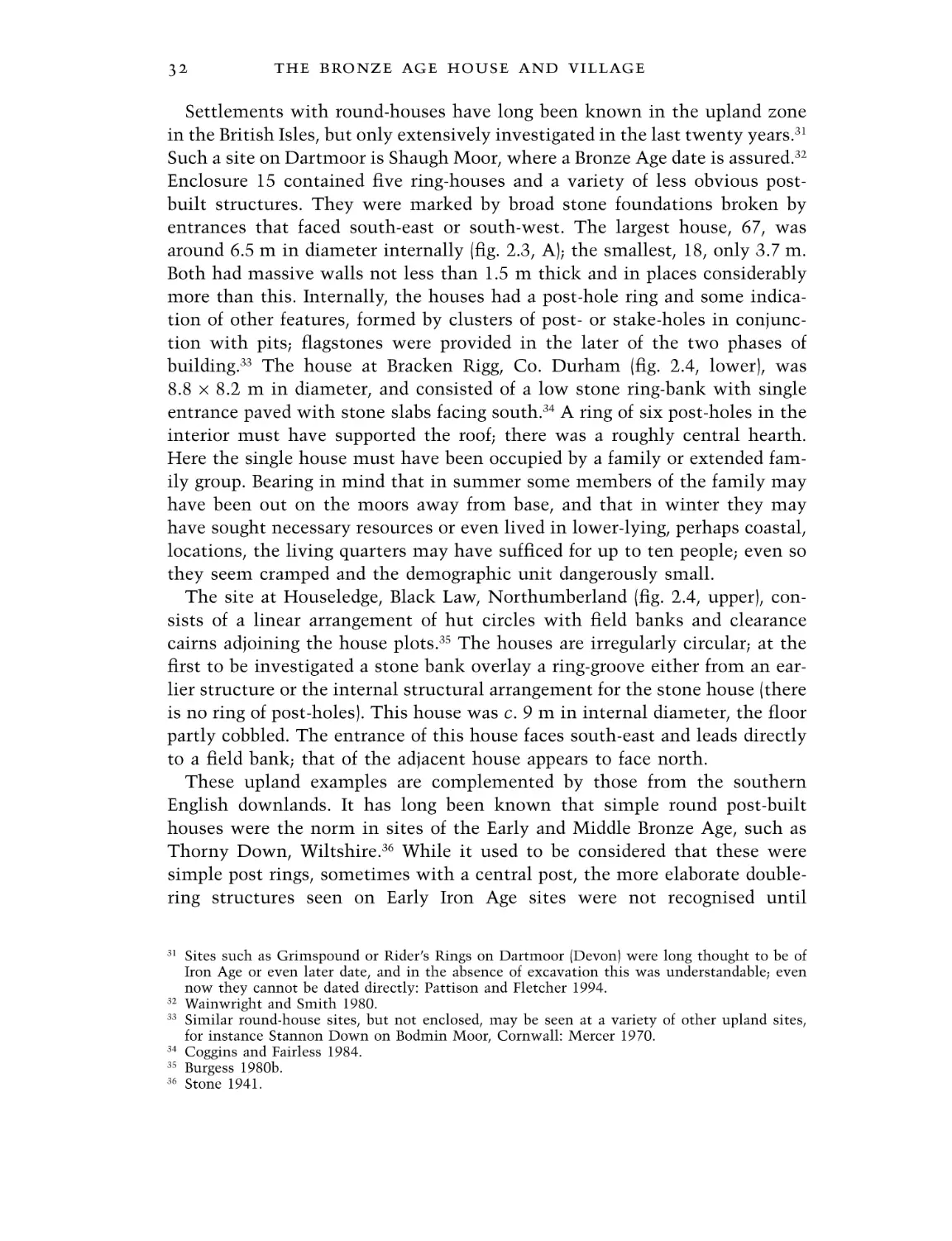
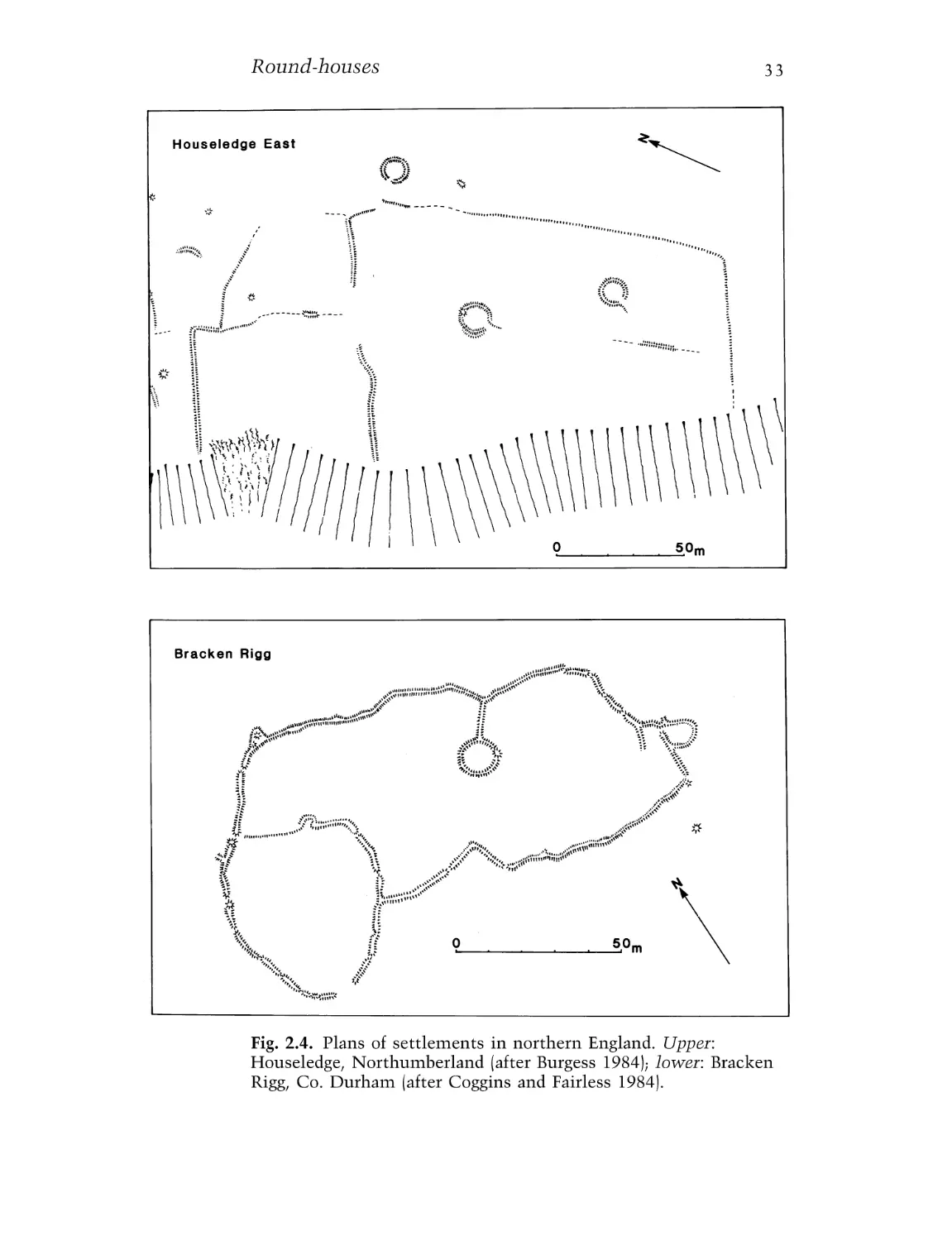
Plans of settlements in northern England
Plan of Hut 3 at Clonfinlough, Co. Offaly, Ireland
Plan of Early Bronze Age houses at La Muculufa, Sicily
Plan and reconstruction of houses of Horizon B at
the Padnal near Savognin, Engadin, Switzerland
Zürich-Mozartstrasse, plans of Early Bronze Age villages
House plans on tell sites
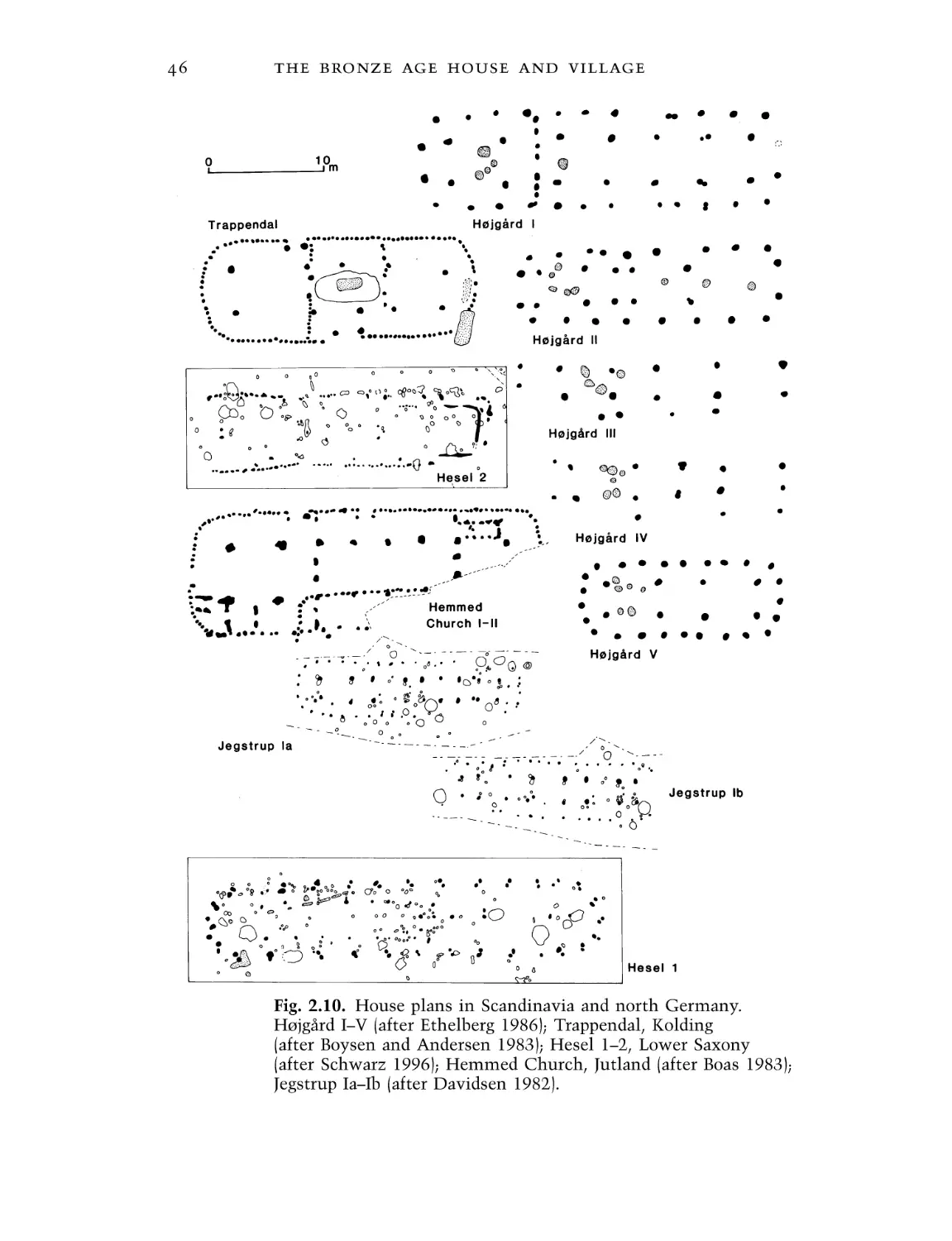
House plans in Scandinavia and north Germany
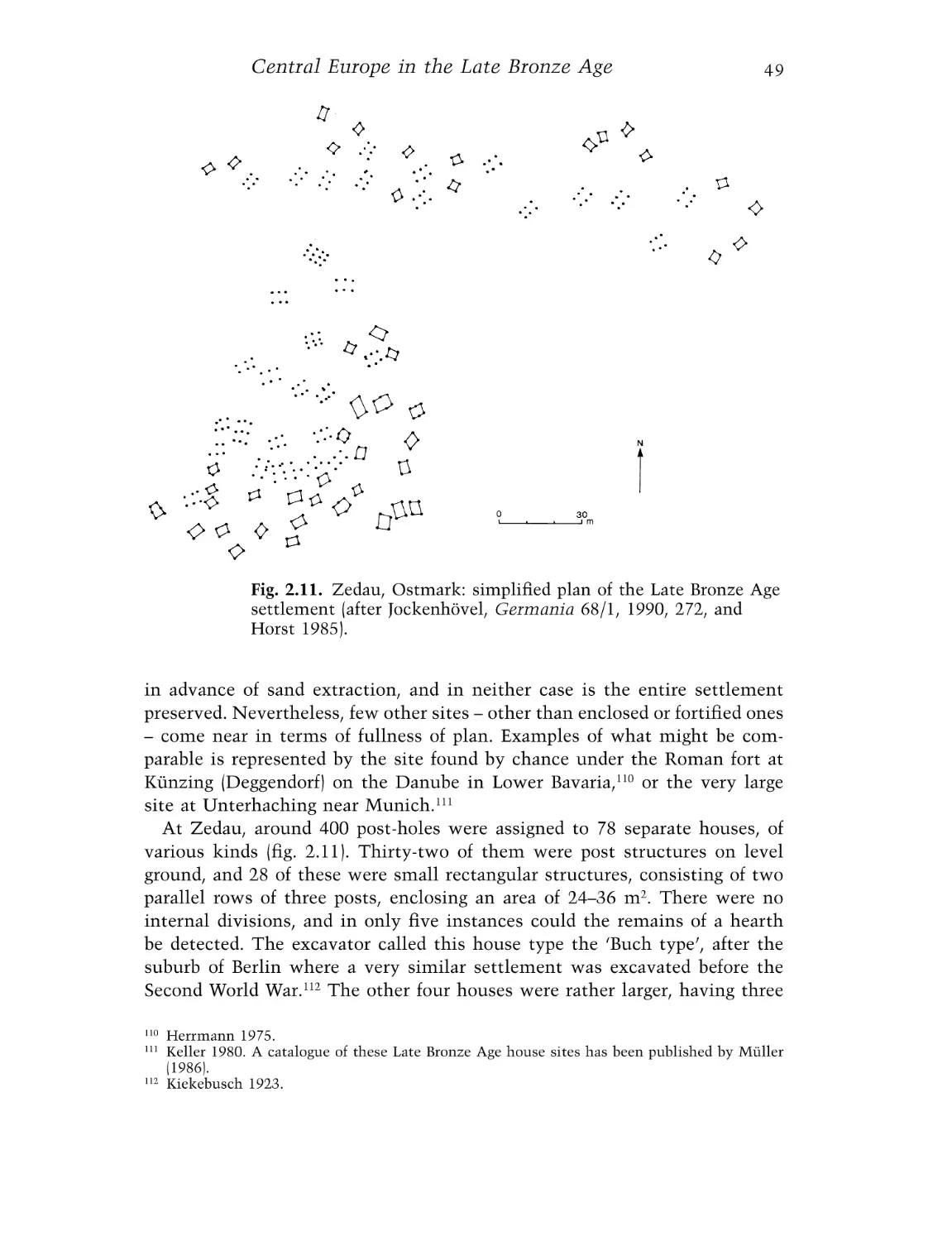
Zedau, Ostmark: simplified plan of the Late Bronze Age
settlement
Lovčičky (Moravia): general plan of the Late Bronze Age
settlement
Biskupin, plan of house 3, earlier phase
Settlement plans in wetland areas
General excavation plan of the settlement at Peñalosa,
southern Spain
Nitriansky Hrádok, reconstructed plan of the Early
Bronze Age fortified settlement
Cabezo de Monleón (Zaragoza): plan of the Late Bronze
Age hilltop site
St-Oedenrode (North Brabant): general plan of house
cluster 3
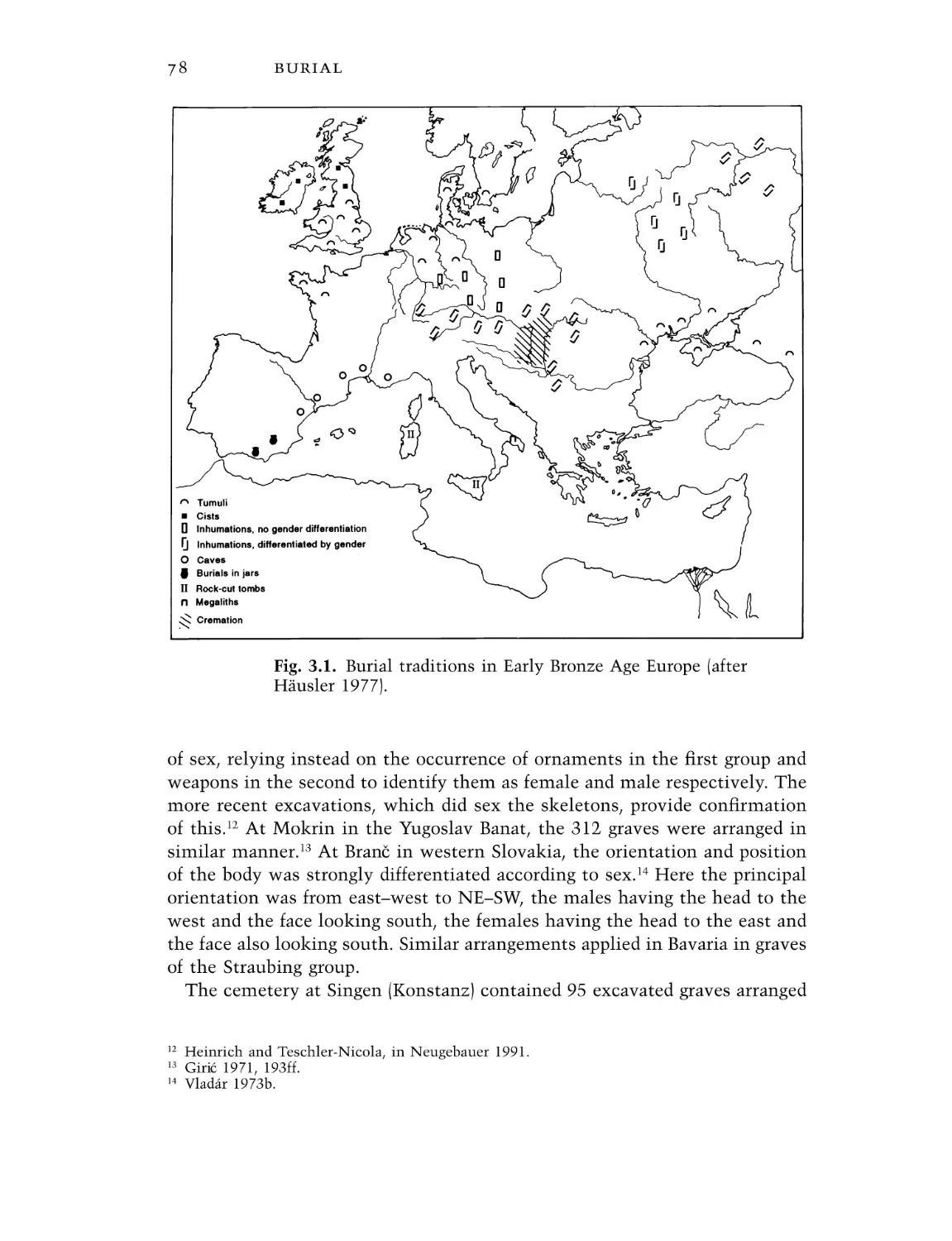
Burial traditions in Early Bronze Age Europe
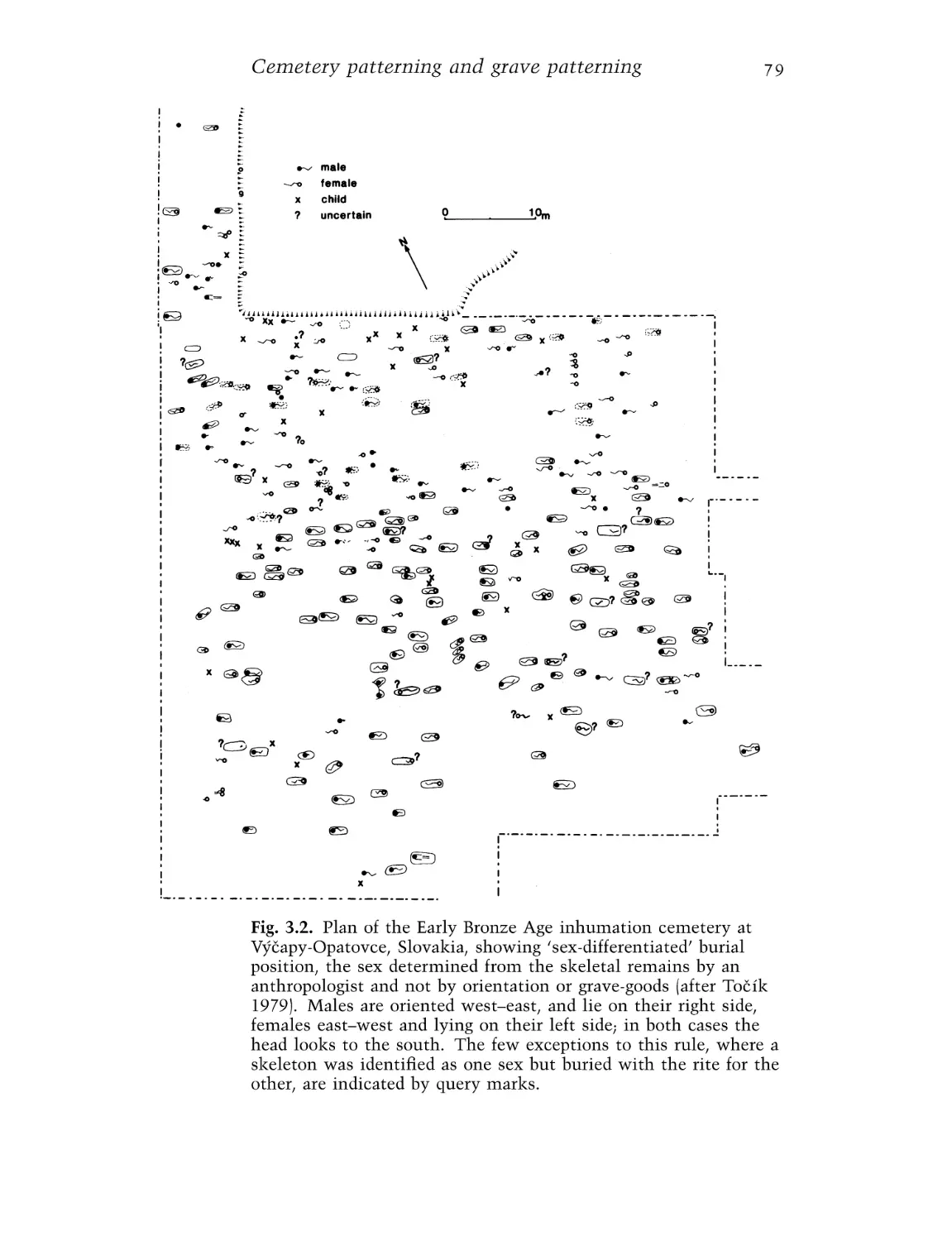
Plan of the Early Bronze Age inhumation cemetery at
Výčapy-Opatovce, Slovakia
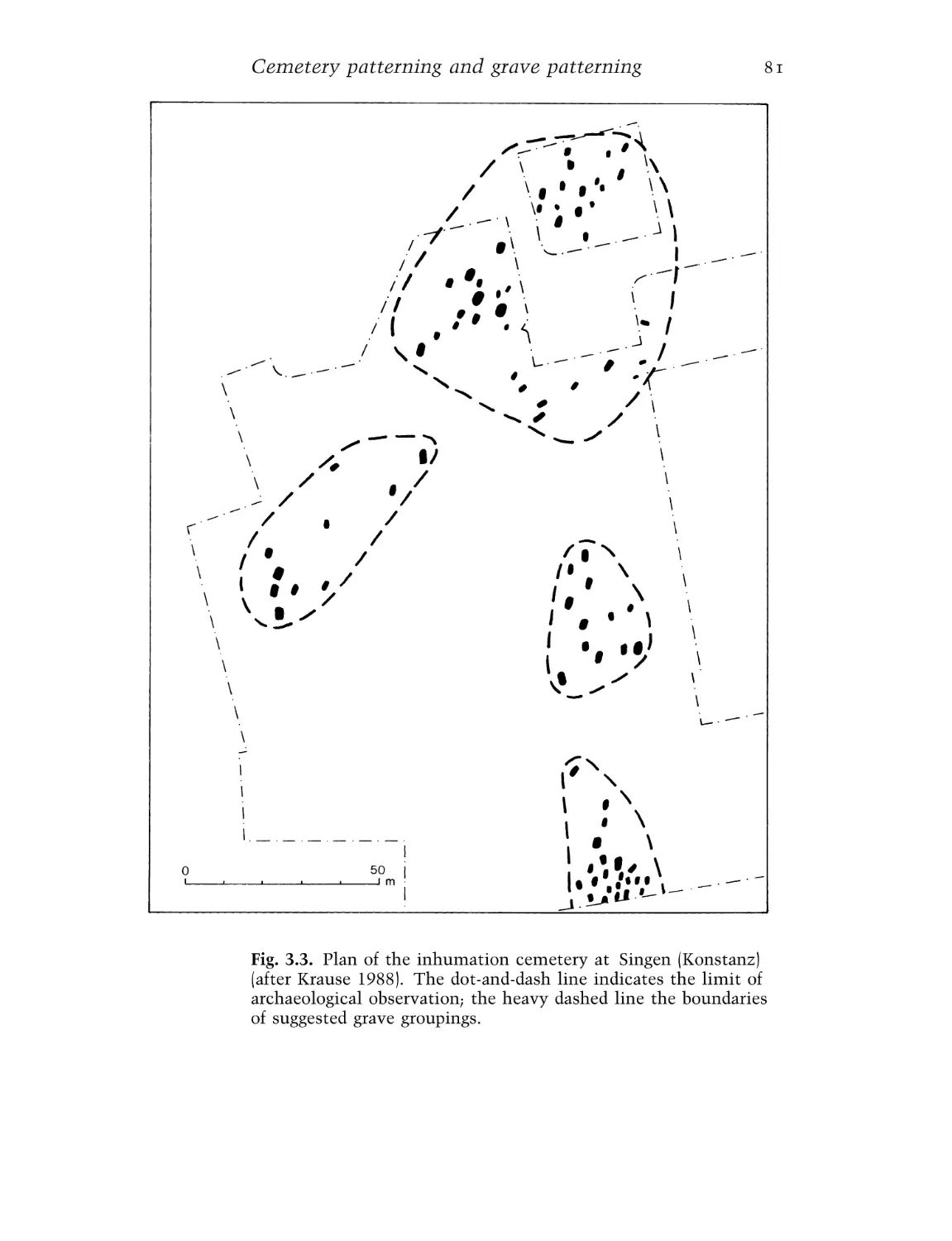
Plan of the inhumation cemetery at Singen (Konstanz)

2
12
13
15
16
25
29
31
33
35
37
39
41
43
46
49
51
53
59
62
63
65
68
78
79
81

List of figures
3.4
3.5
3.6
3.7
3.8
3.9
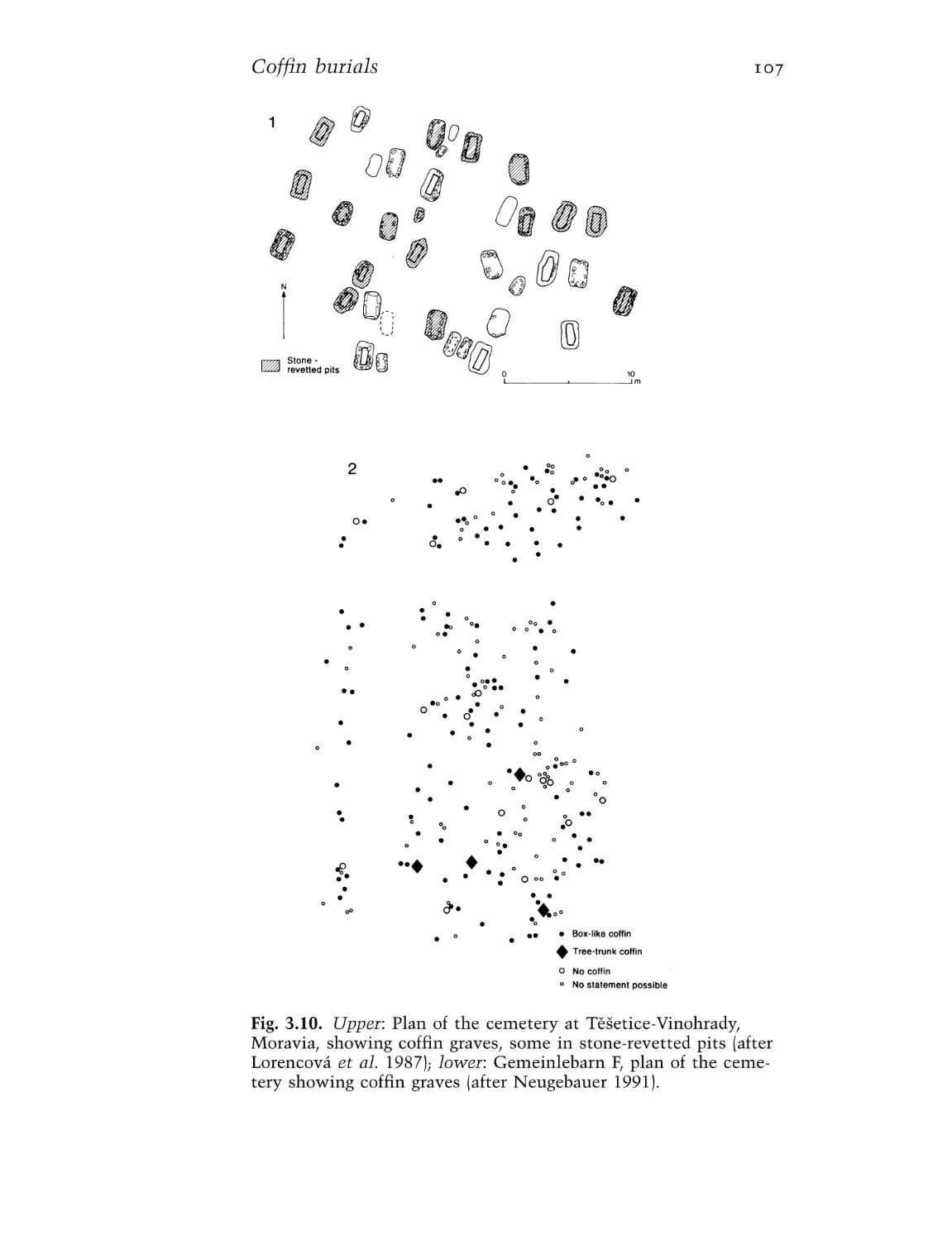
3.10
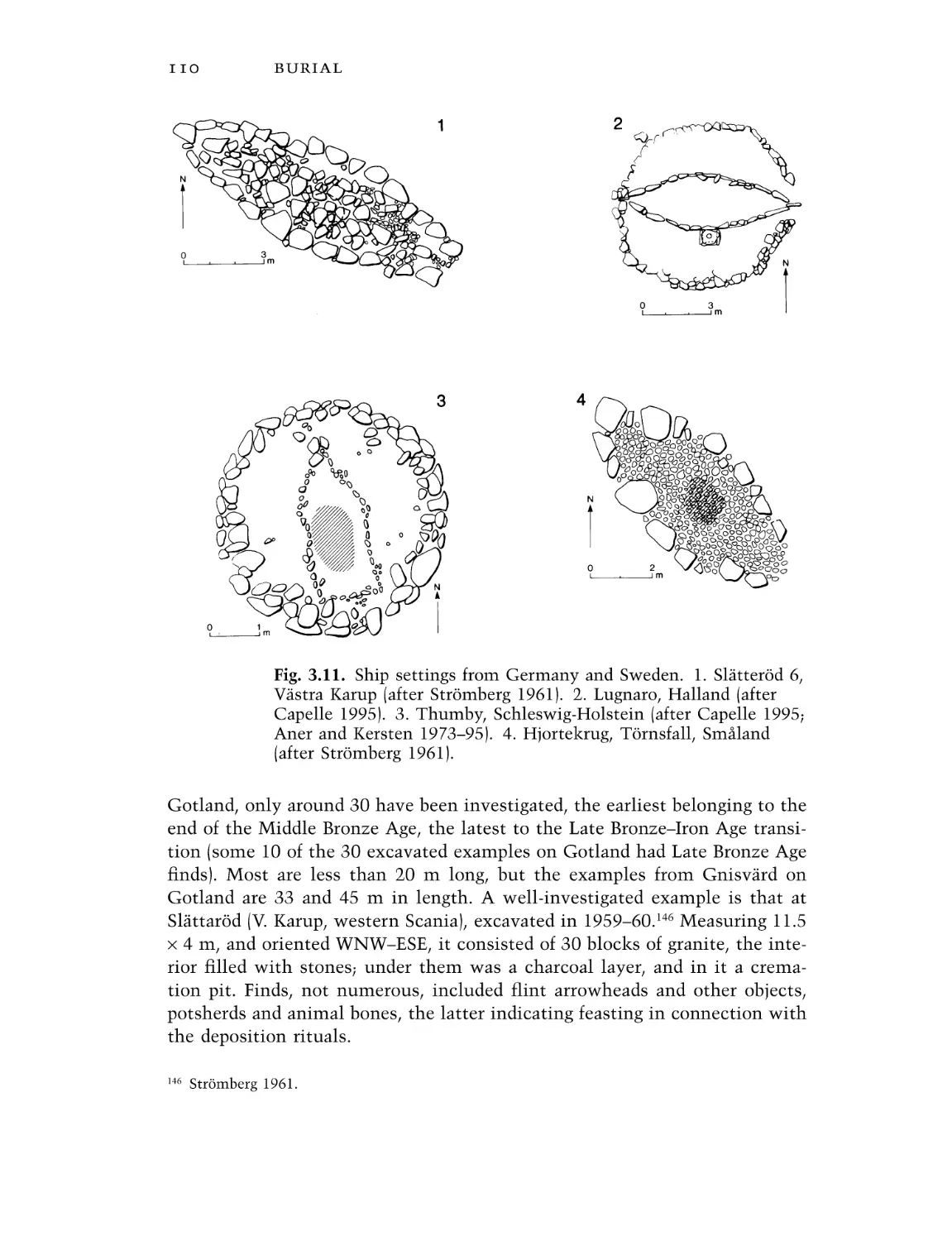
3.11
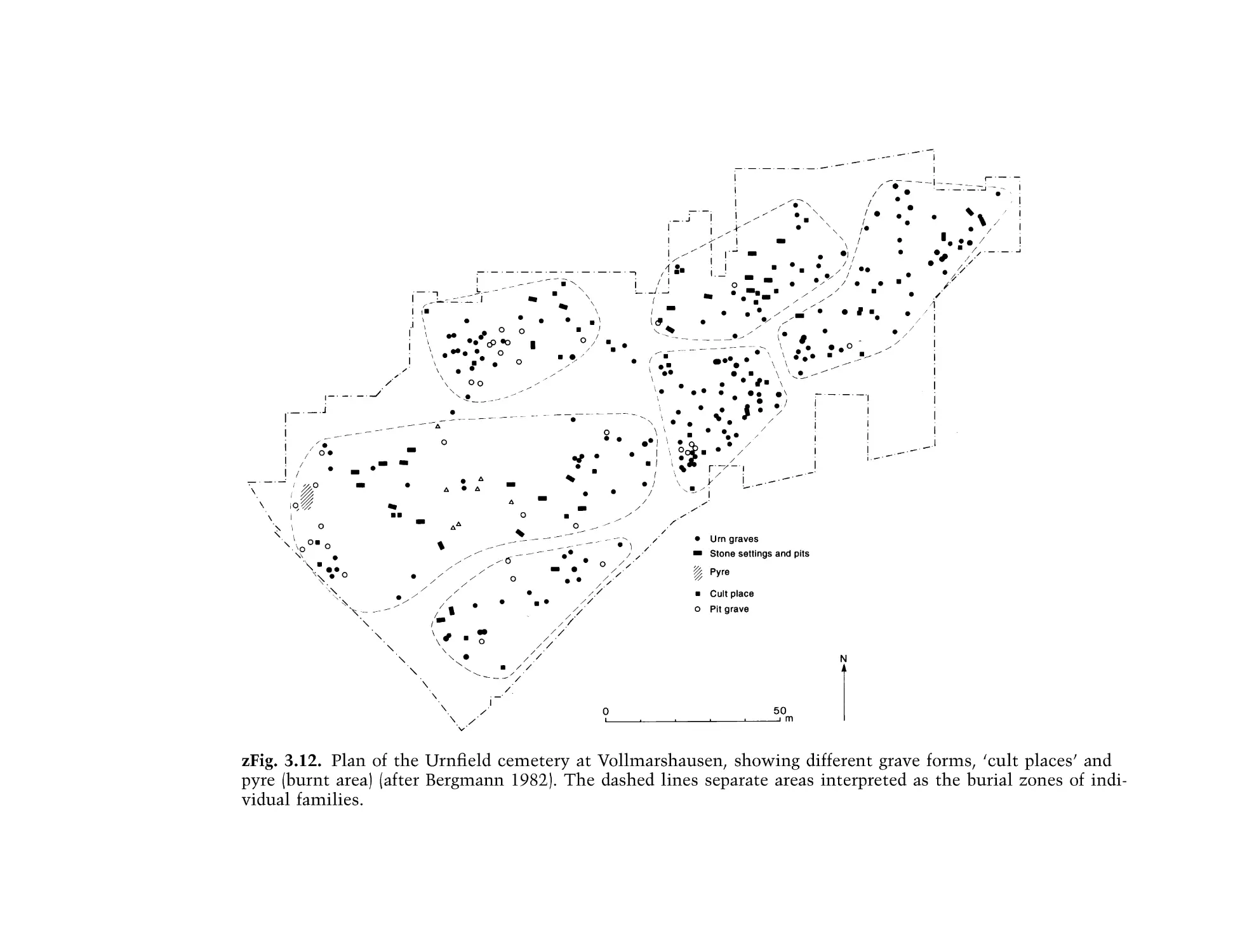
3.12
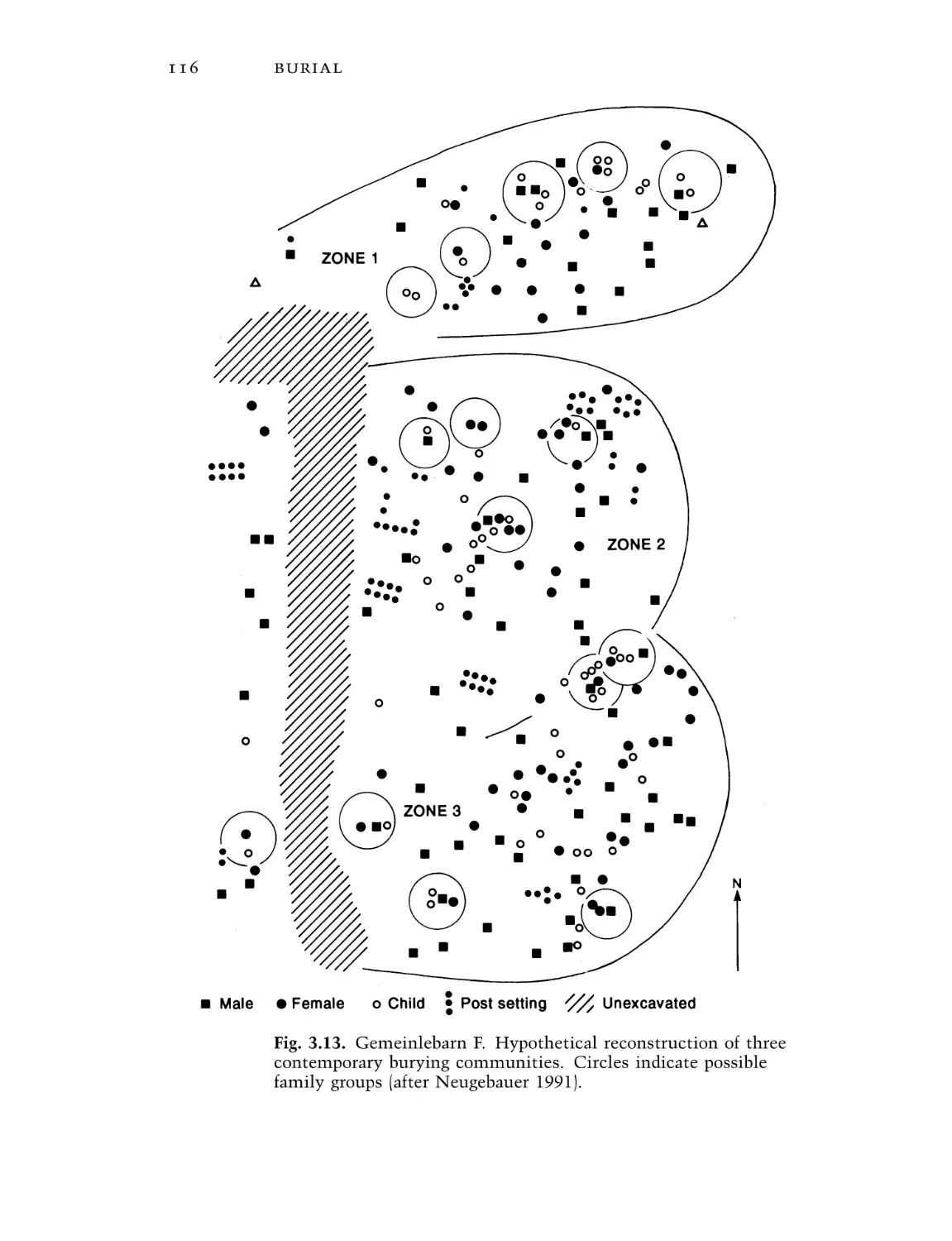
3.13
3.14
3.15
4.1
4.2
4.3
4.4
4.5
4.6
4.7
4.8
4.9
4.10
4.11
4.12
4.13
4.14
4.15
5.1
5.2
5.3
5.4
5.5
5.6

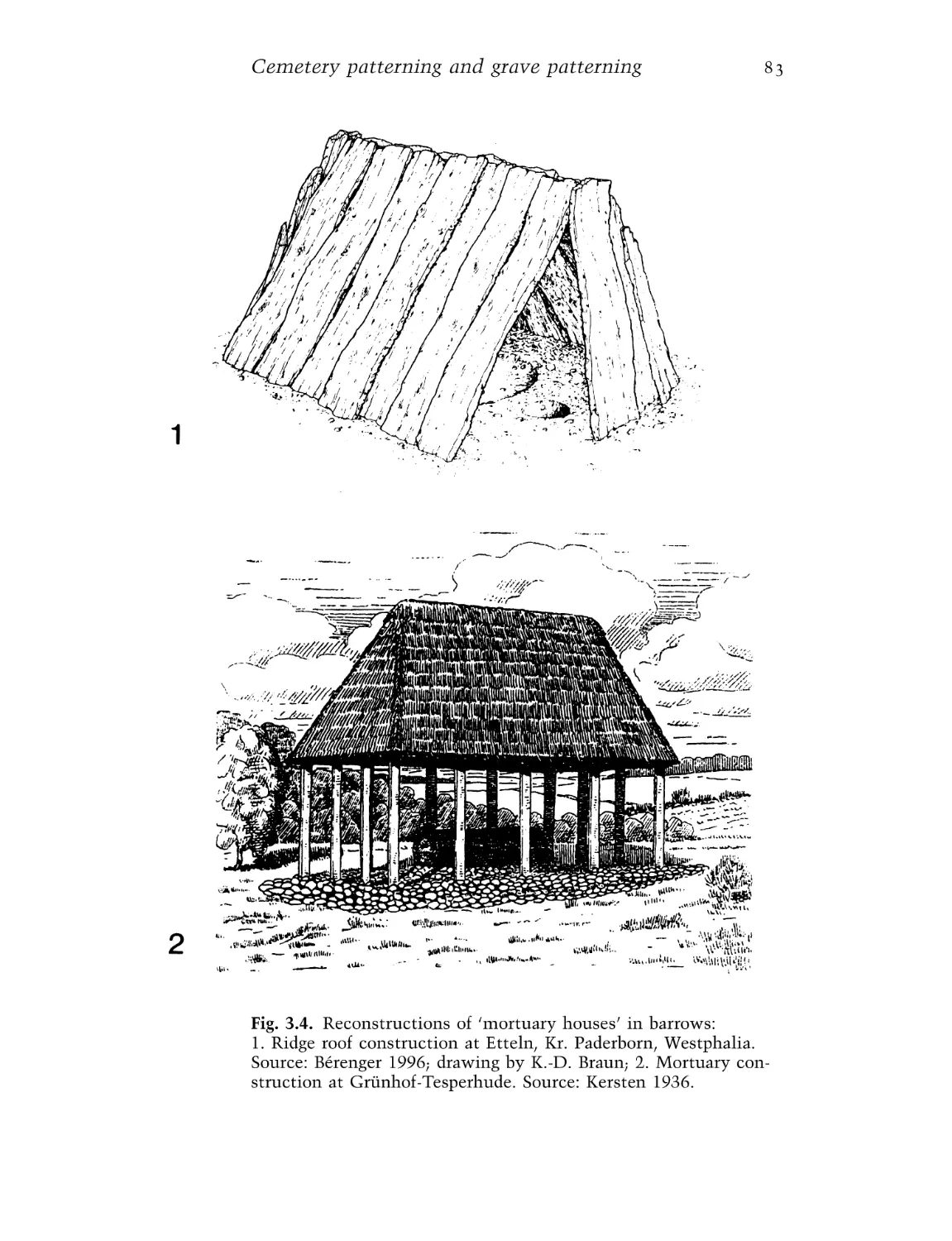
Reconstructions of ‘mortuary houses’ in barrows
Barrows with post rings of various types
Plan of the barrow cemetery at Oakley Down, Dorset
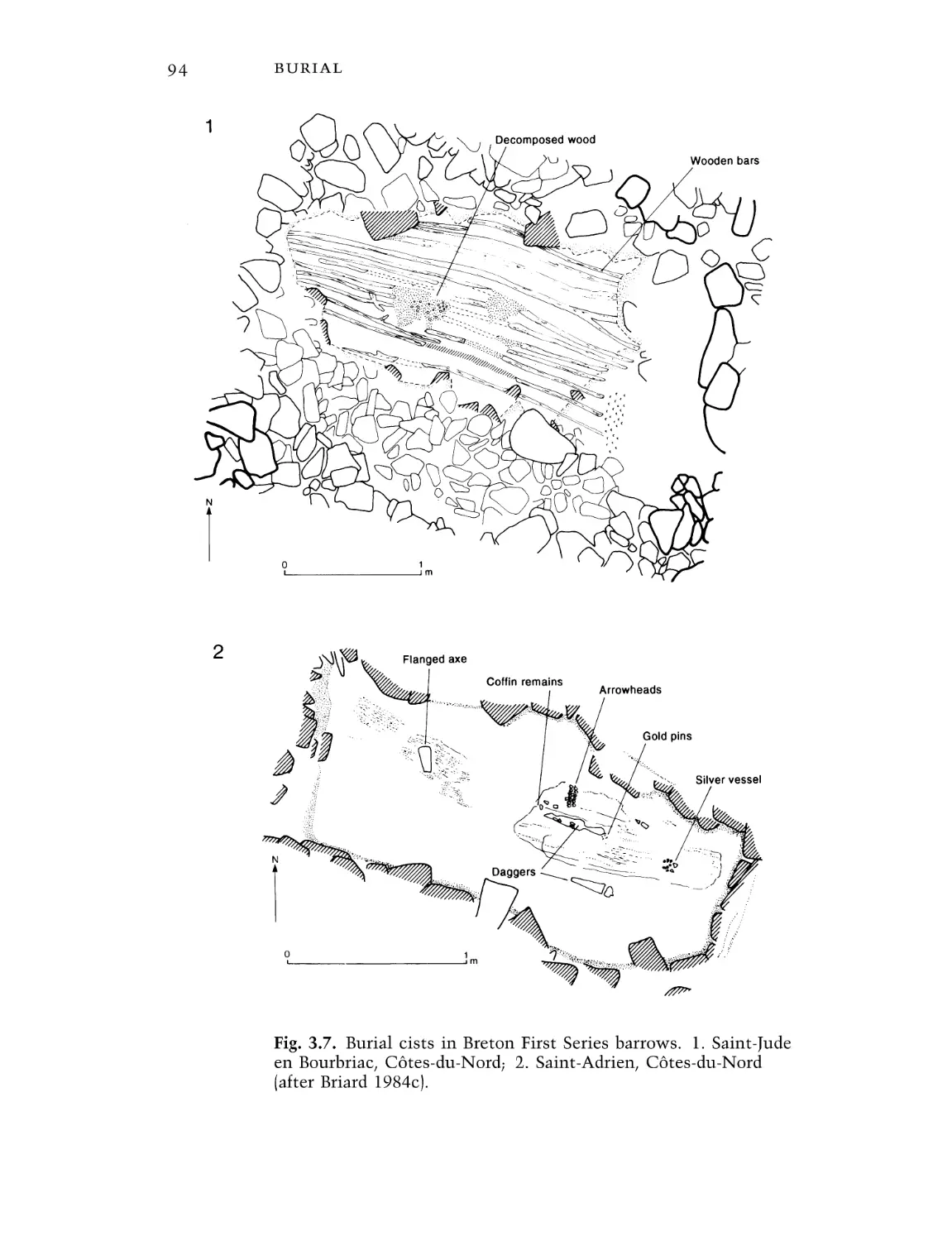
Burial cists in Breton First Series barrows
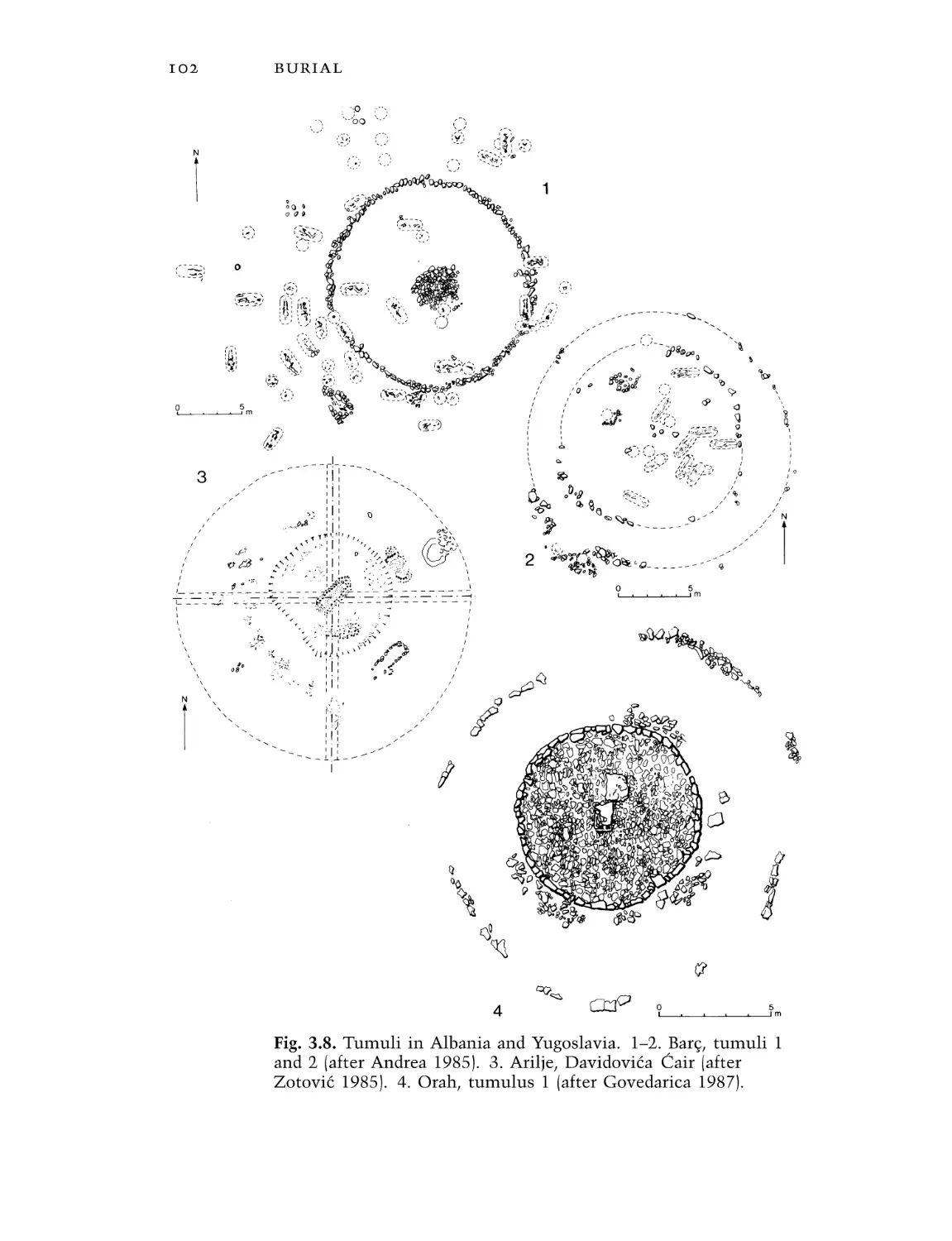
Tumuli in Albania and Yugoslavia
Barrow with coffin burial, Beckdorf, Kr. Stade, Lower
Saxony
Cemeteries with coffin graves
Ship settings from Germany and Sweden
Plan of the Urnfield cemetery at Vollmarshausen
Gemeinlebarn F, hypothetical reconstruction of three
contemporary burying communities
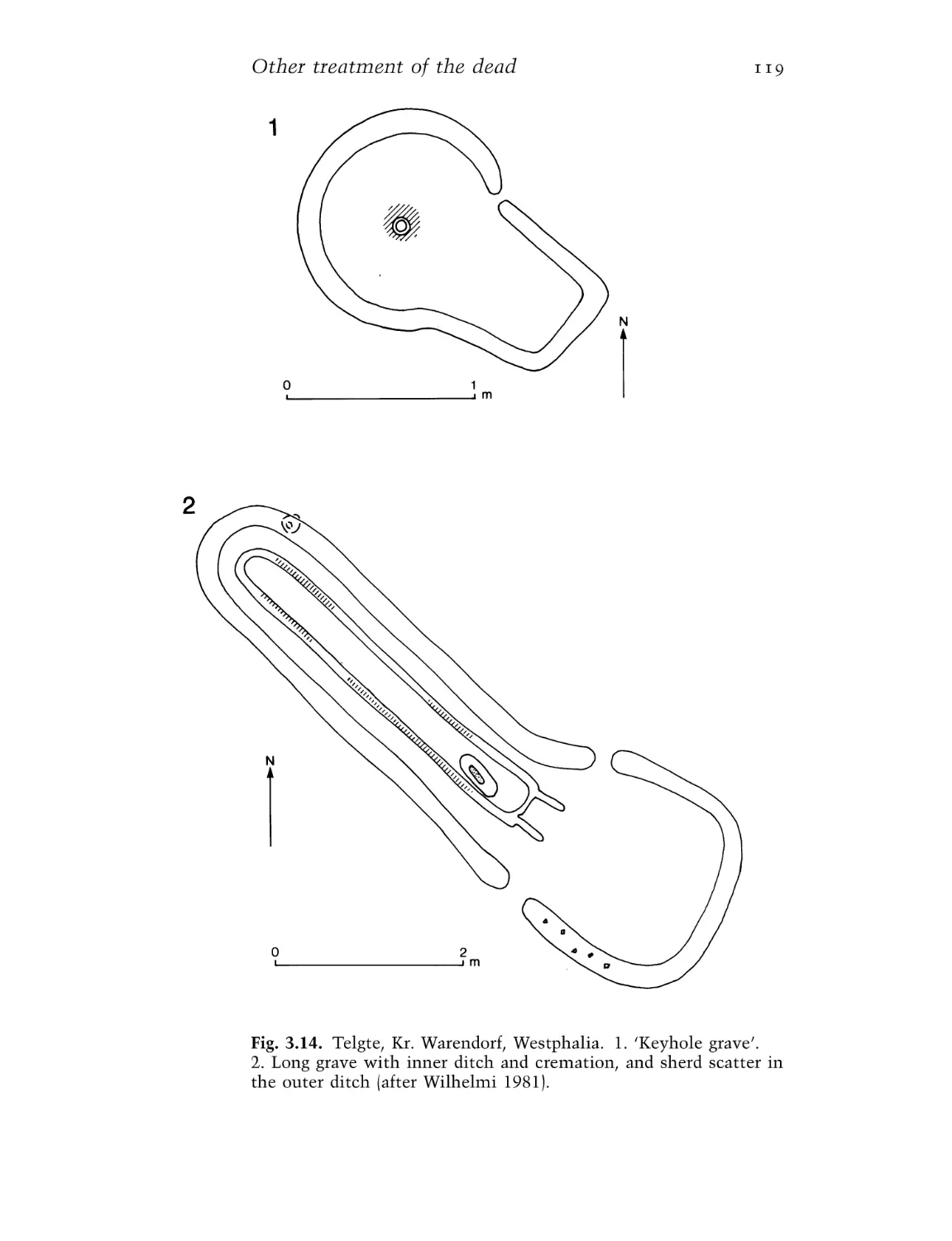
Telgte, Kr. Warendorf, Westphalia, grave forms
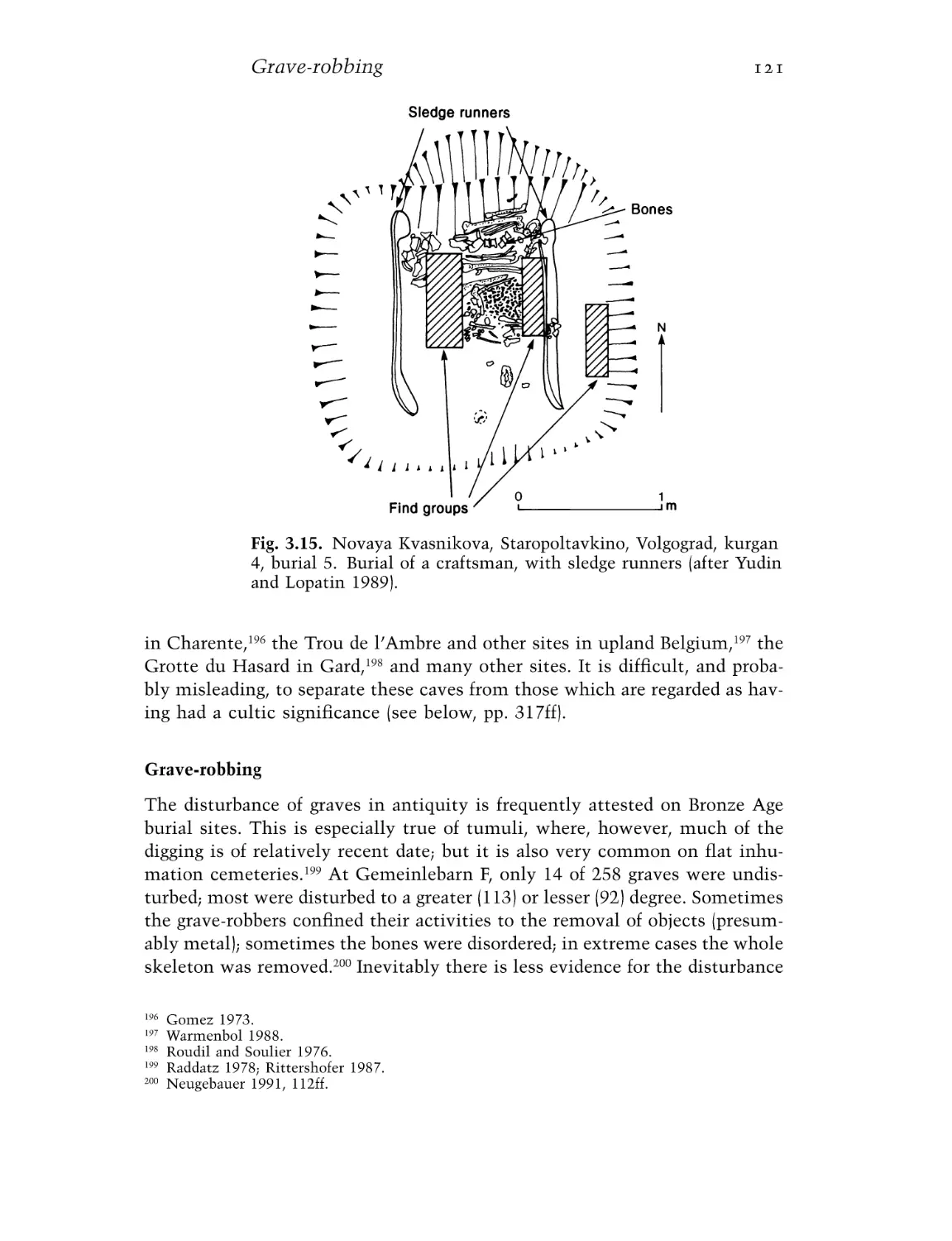
Novaya Kvasnikova, Staropoltavkino, Volgograd, kurgan 4,
burial 5: burial of a craftsman
Ards on Bronze Age sites
Wooden yokes
Sickle types in Bronze Age Europe
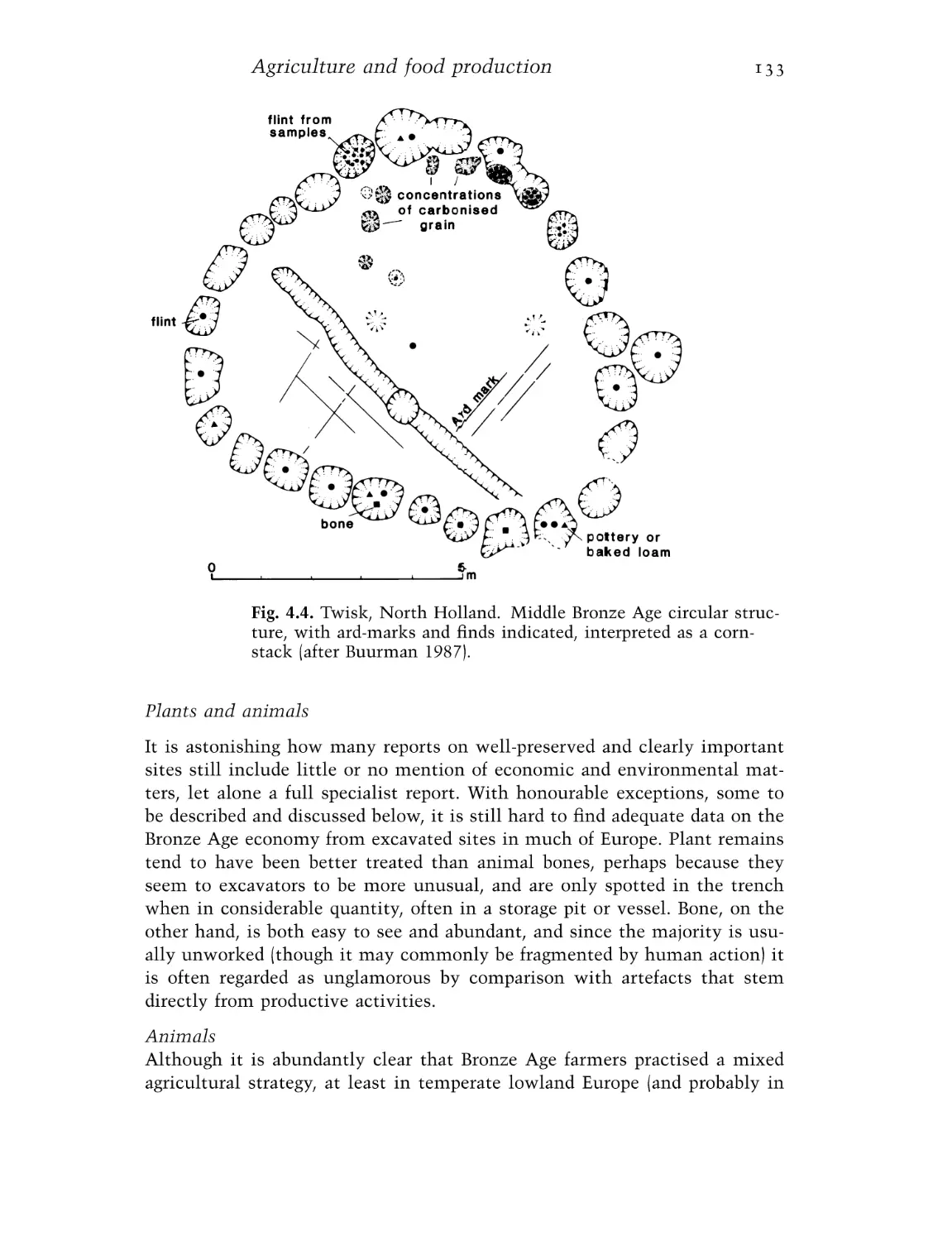
Twisk, North Holland, Middle Bronze Age circular
structure interpreted as a corn-stack
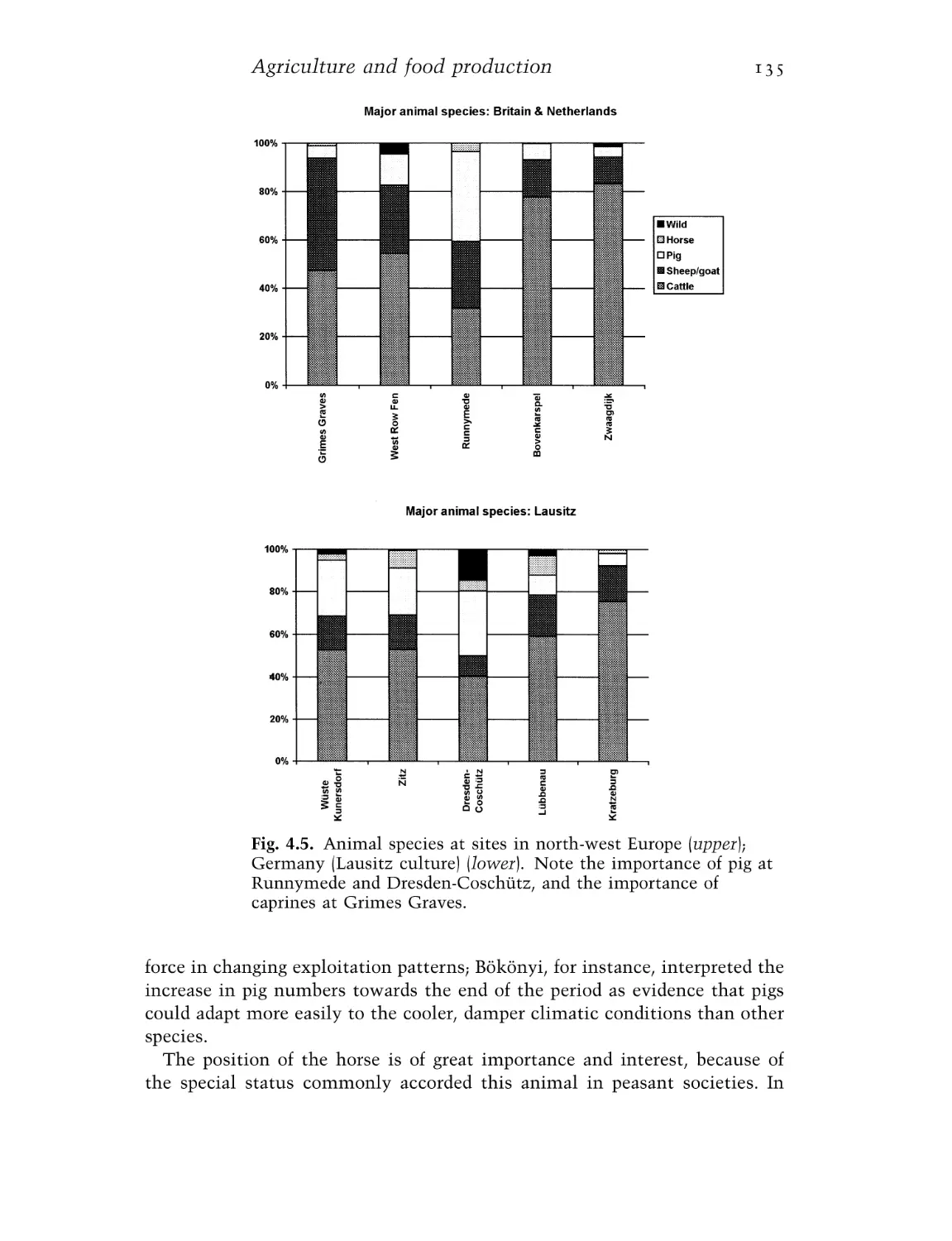
Animal species at sites in north-west Europe and
Germany
Animal species at sites in Hungary and Romania and
Serbia
Animal species at sites in Italy and Sardinia and Spain
and the Balearics
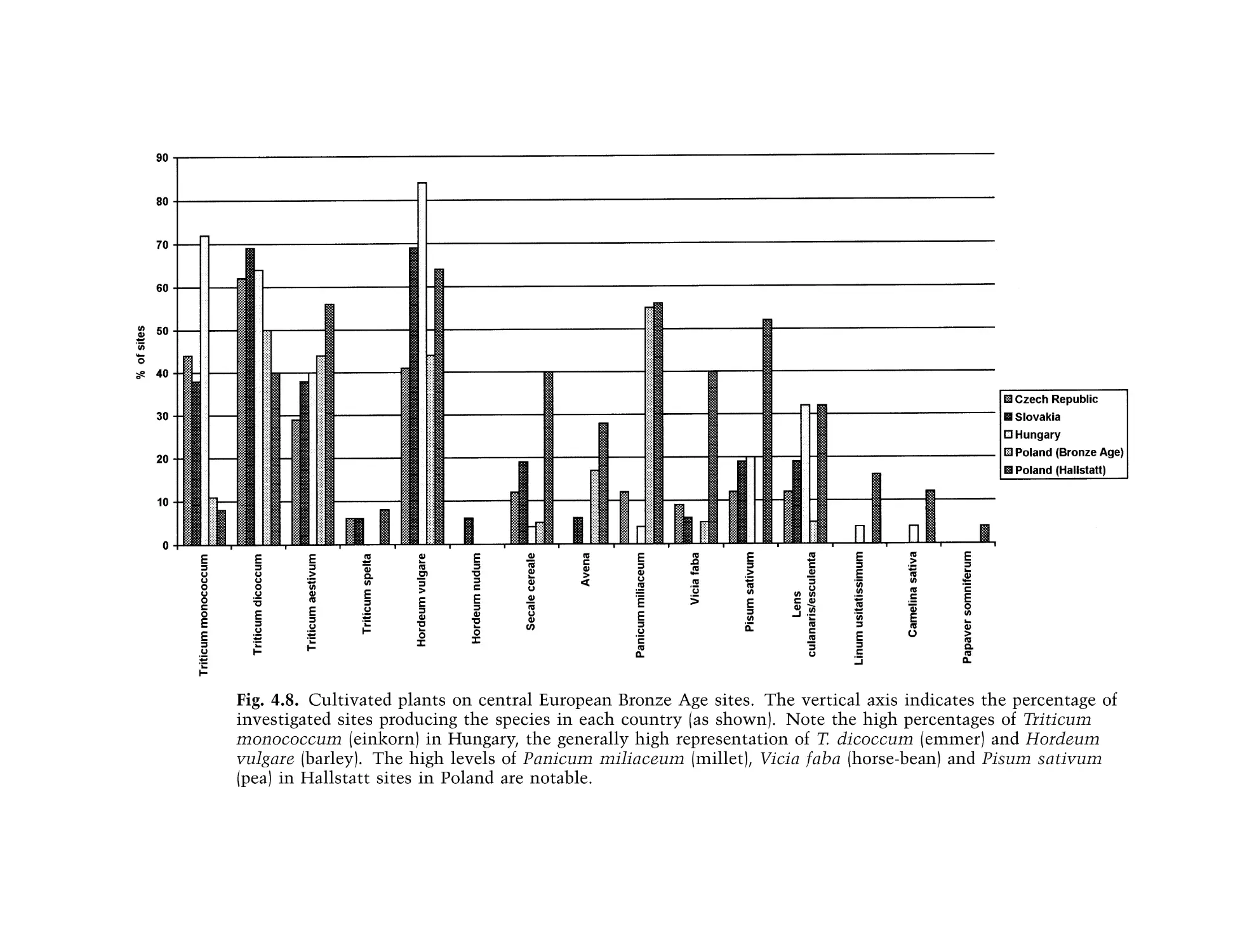
Cultivated plants on central European Bronze Age sites
Cultivated plants on Mediterranean Bronze Age sites
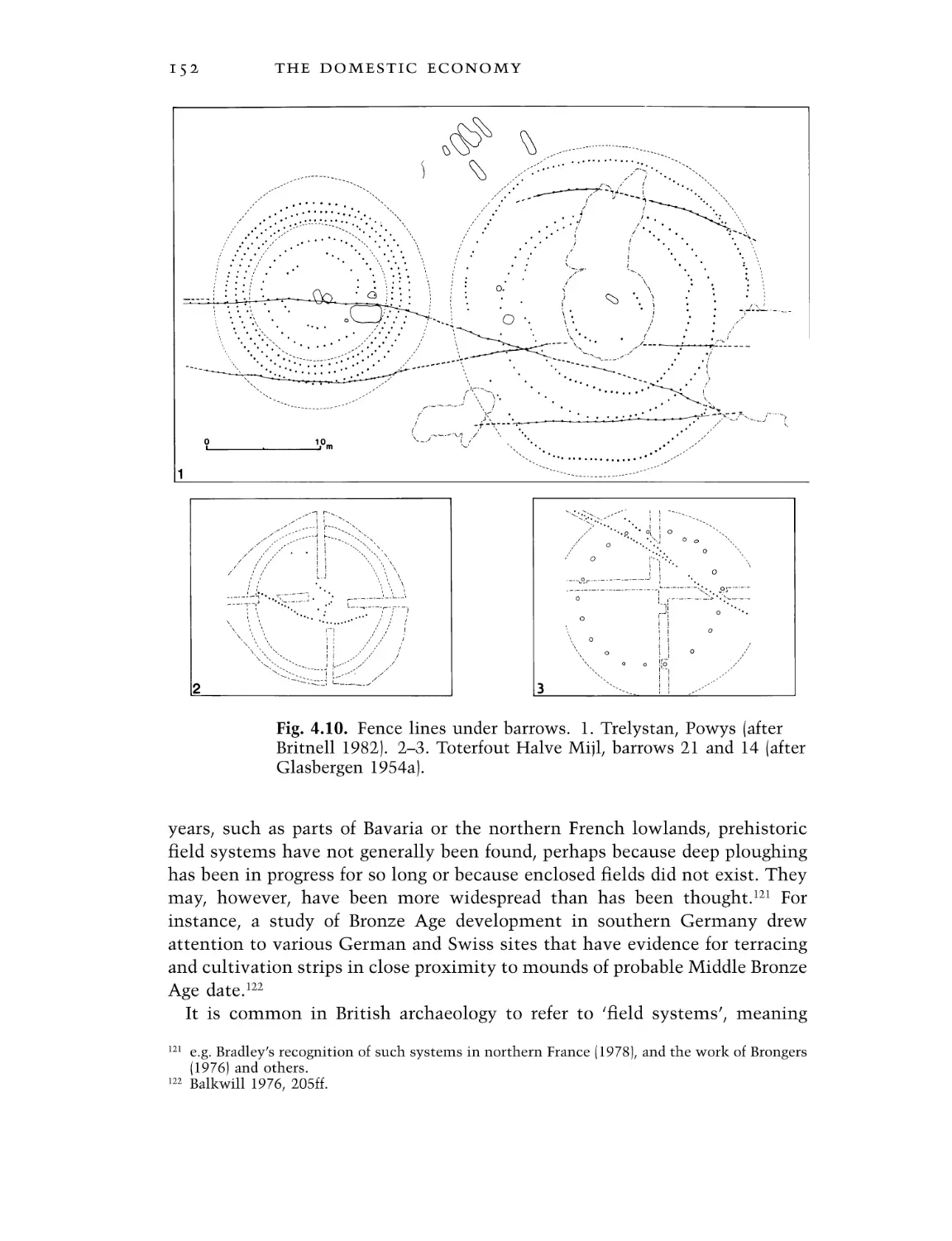
Fence lines under barrows
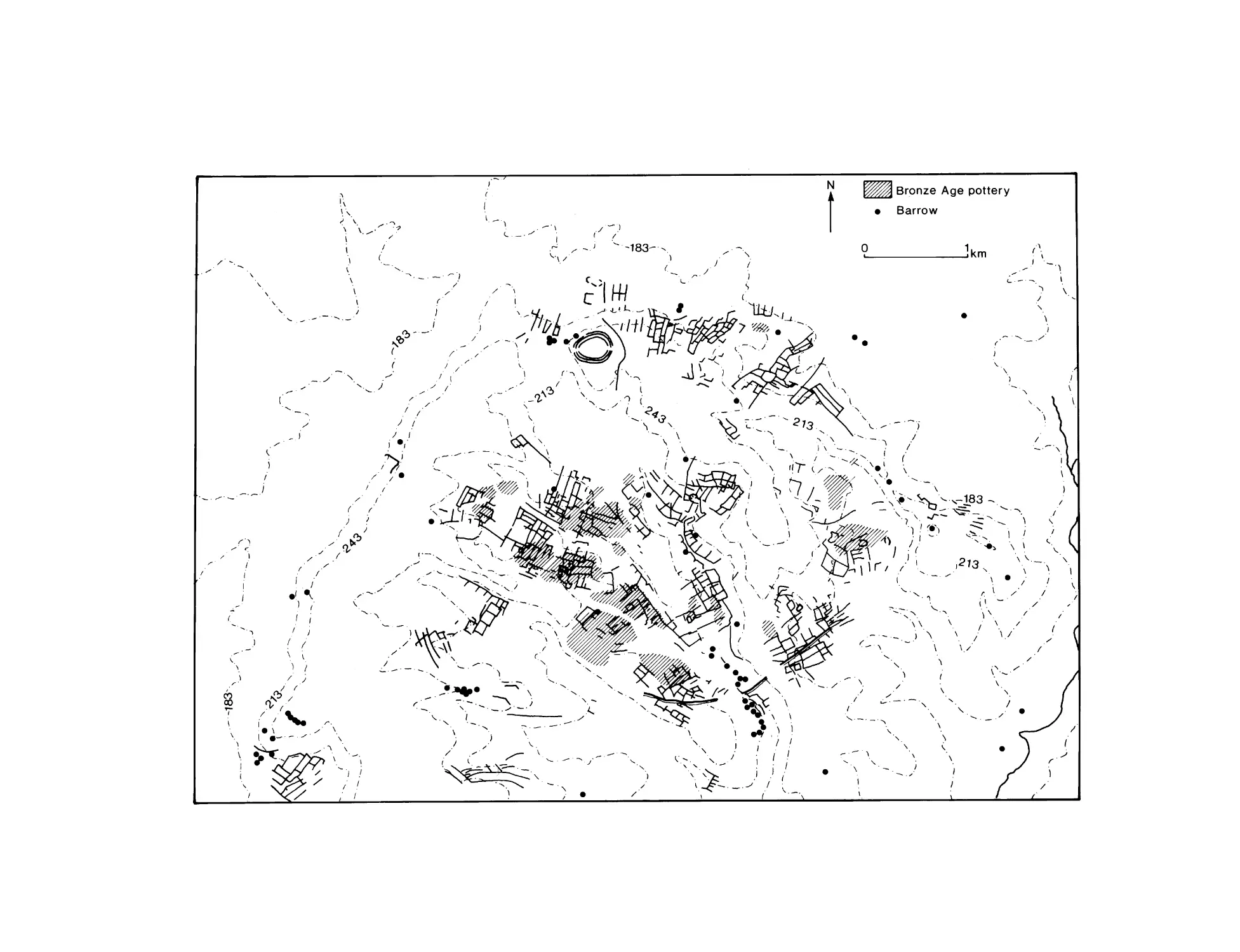
Field systems on the Marlborough Downs, Wiltshire
Field system on Holne Moor, Dartmoor
Animal hoofprints on Bronze Age sites
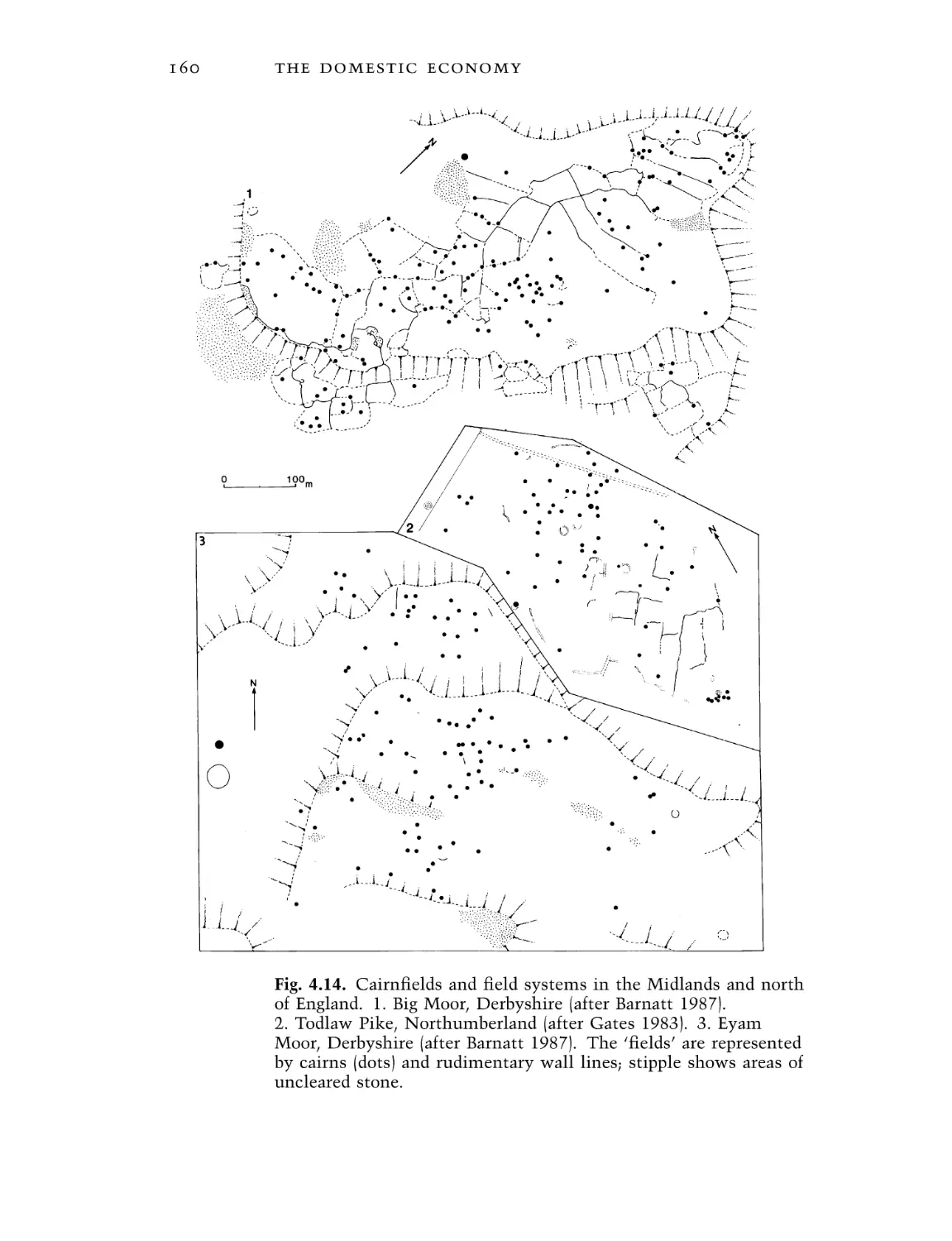
Cairnfields and field systems in the Midlands and north
of England
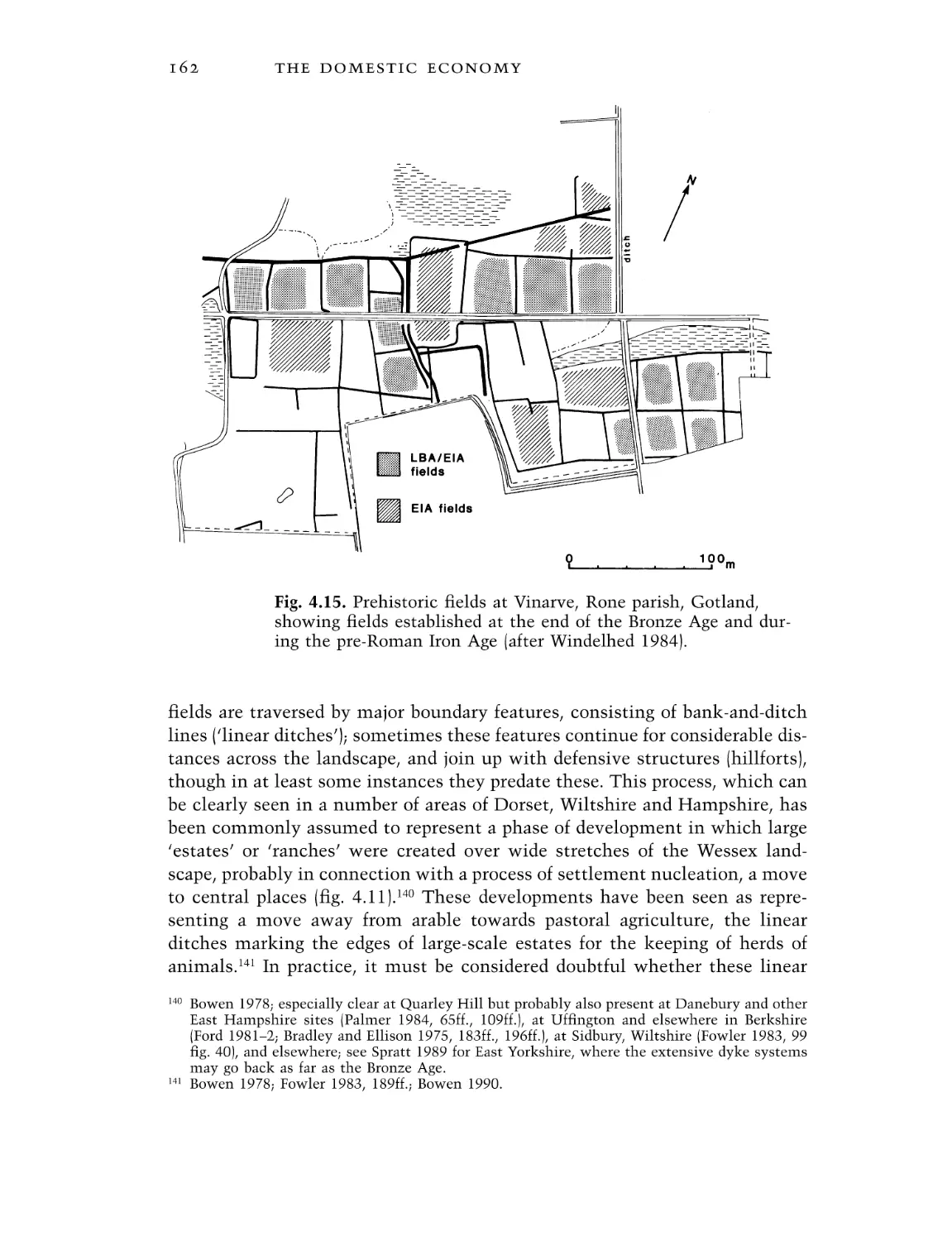
Prehistoric fields at Vinarve, Rone parish, Gotland
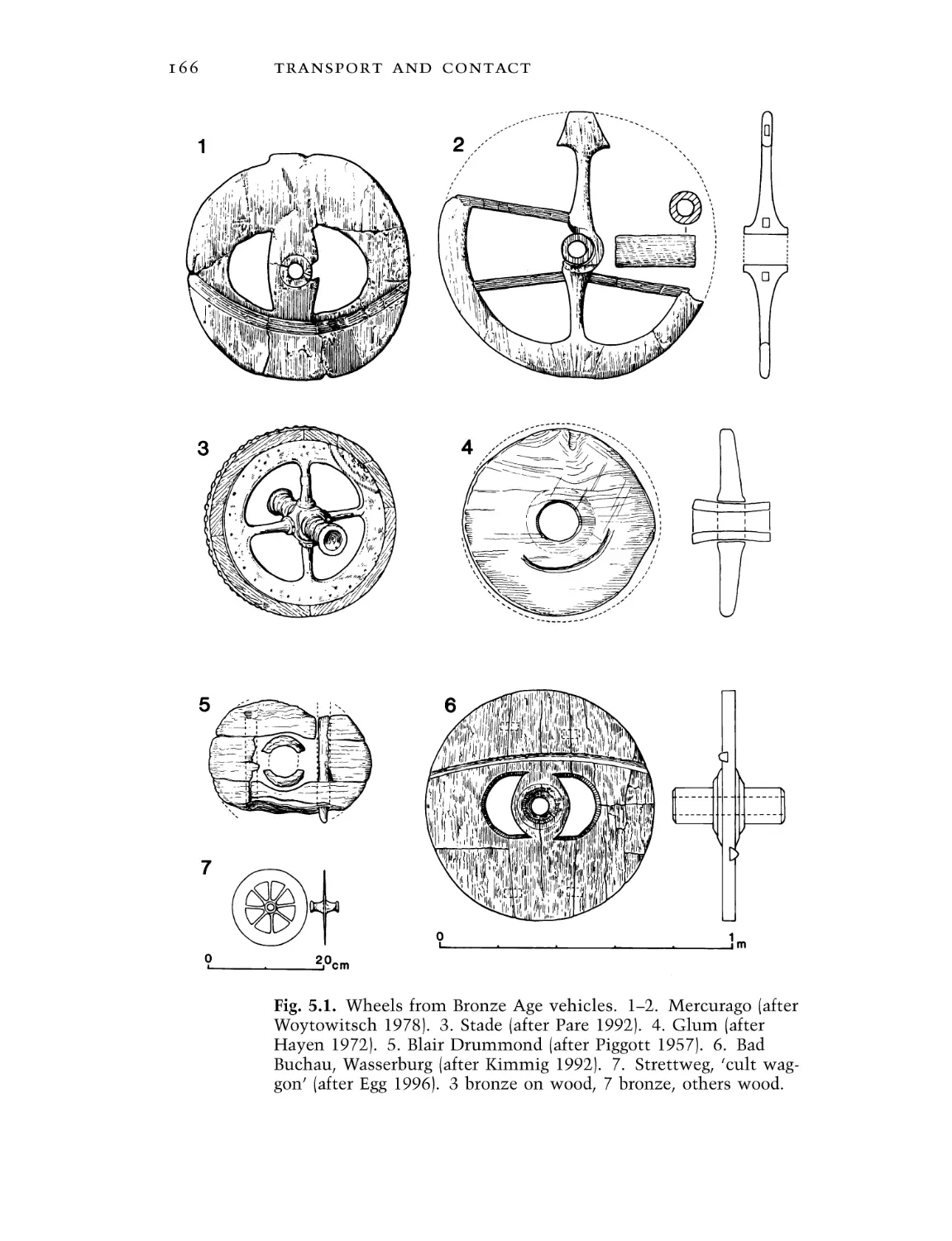
Wheels from Bronze Age vehicles
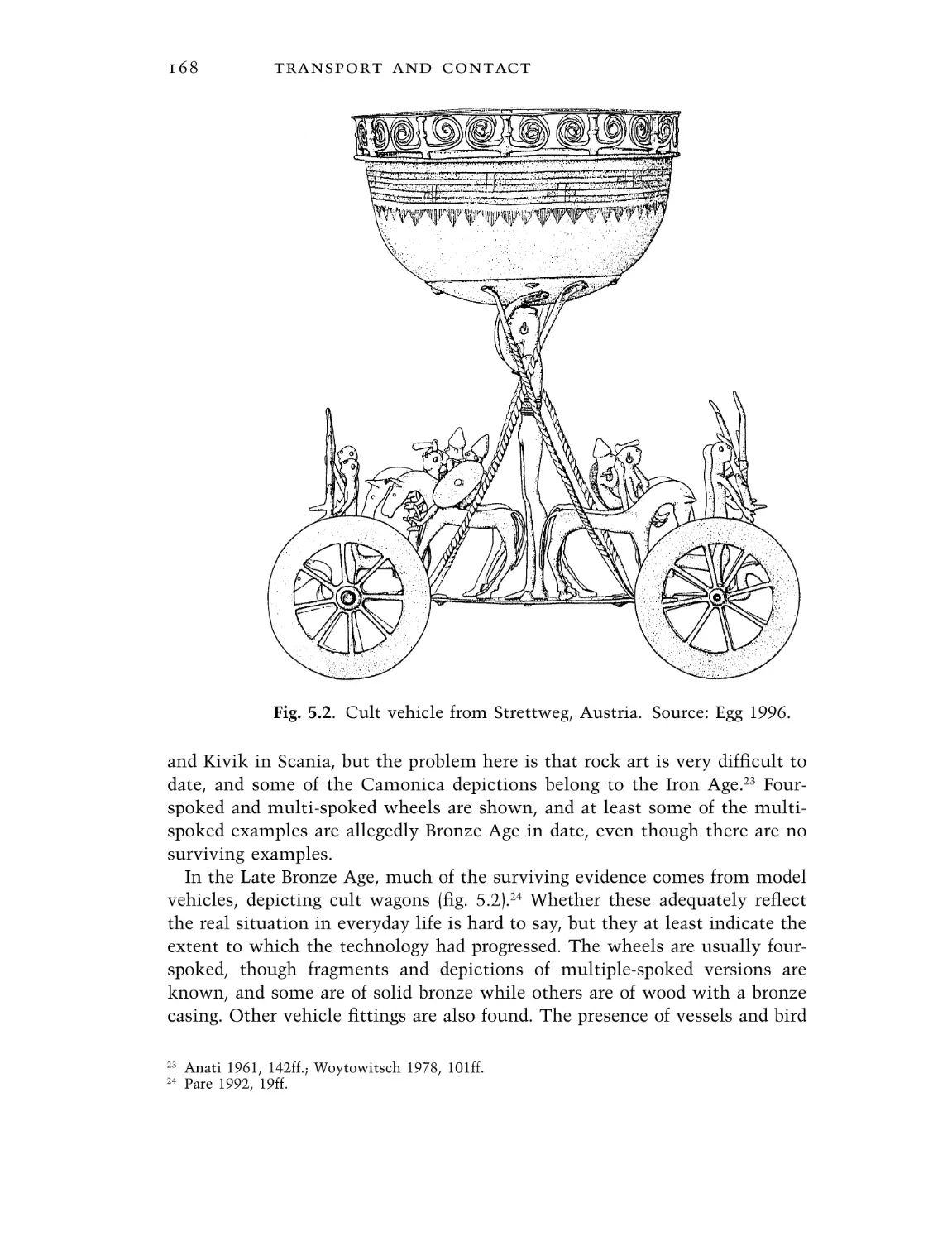
Cult vehicle from Strettweg, Austria
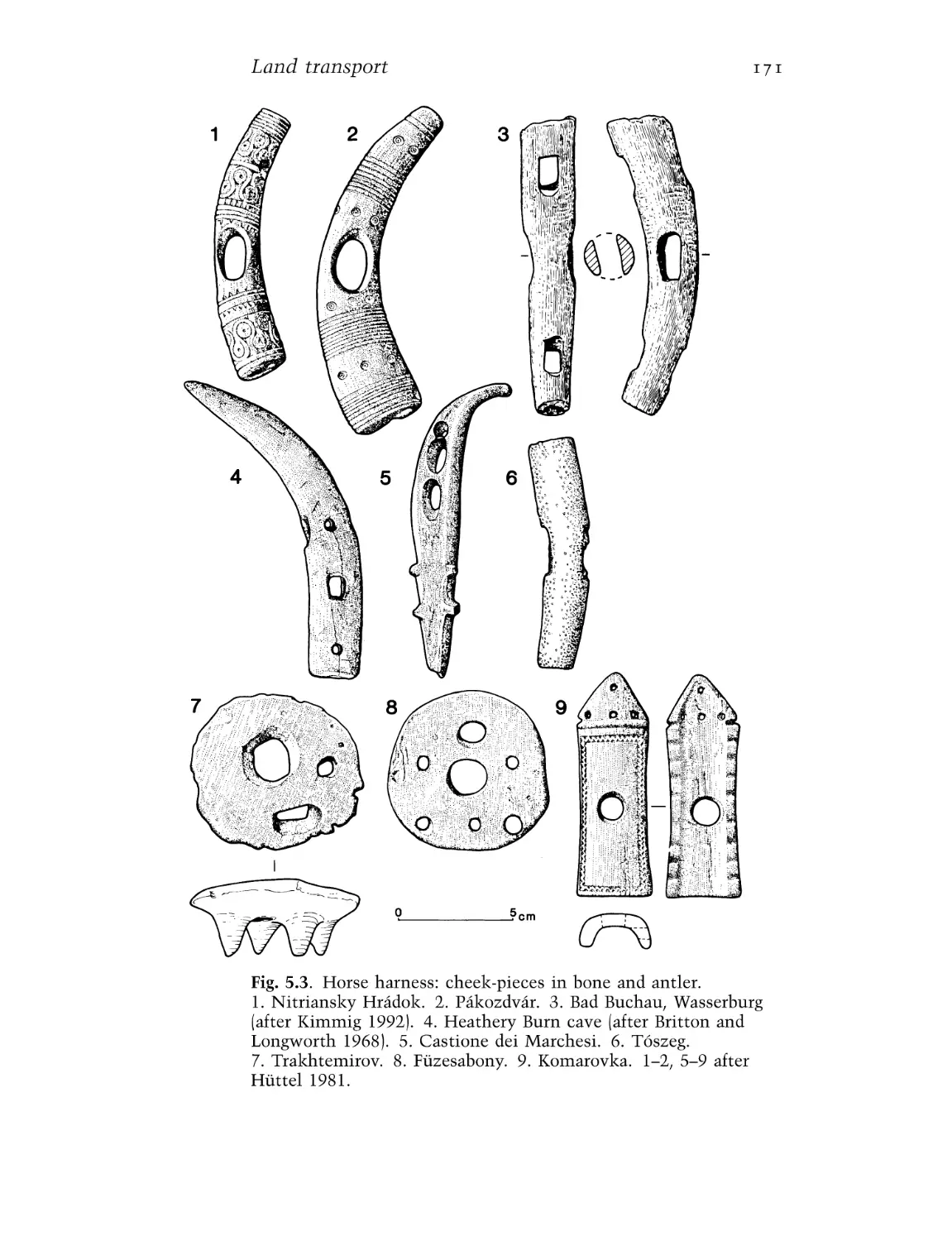
Horse harness: cheek-pieces in bone and antler
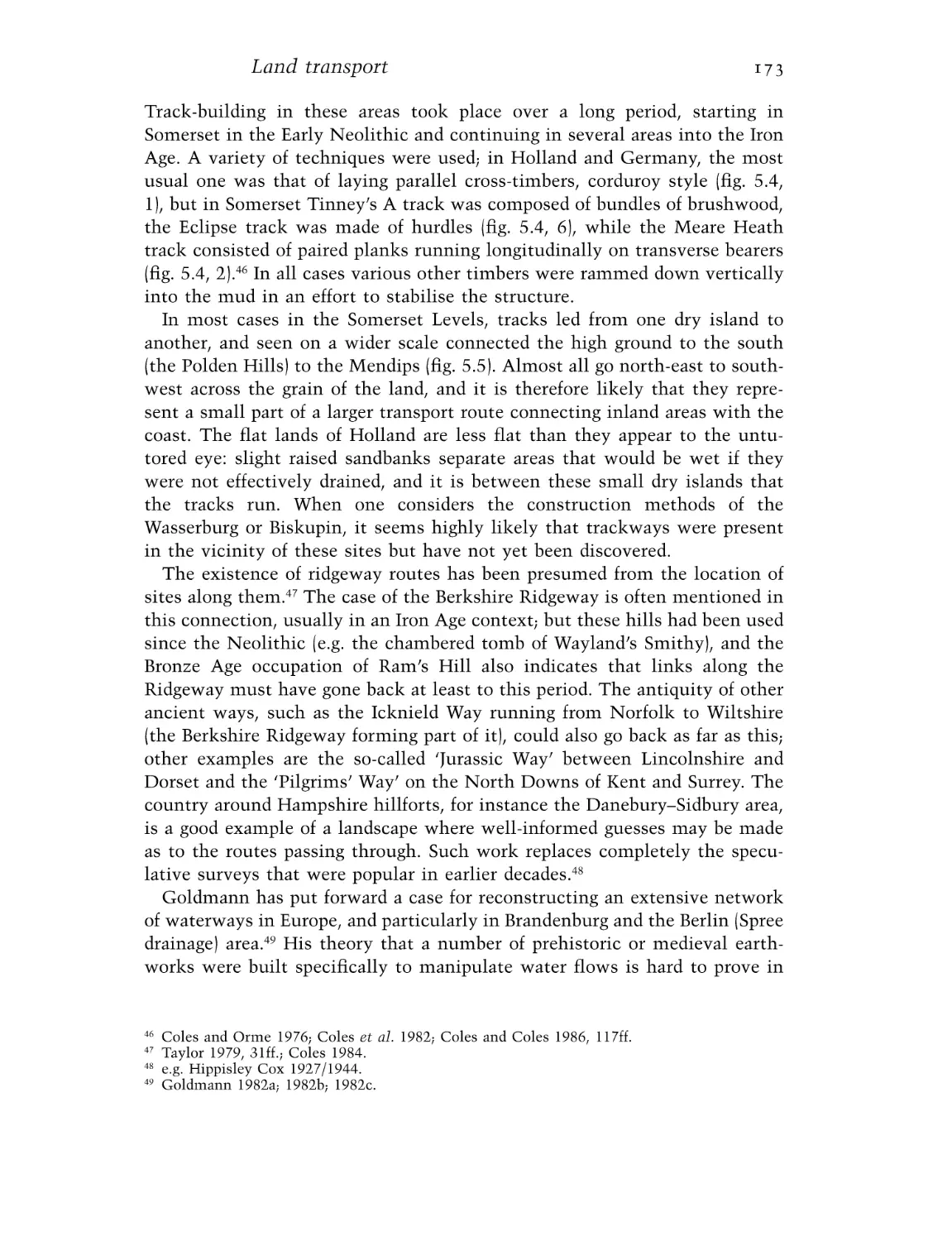
Bronze Age wooden trackways
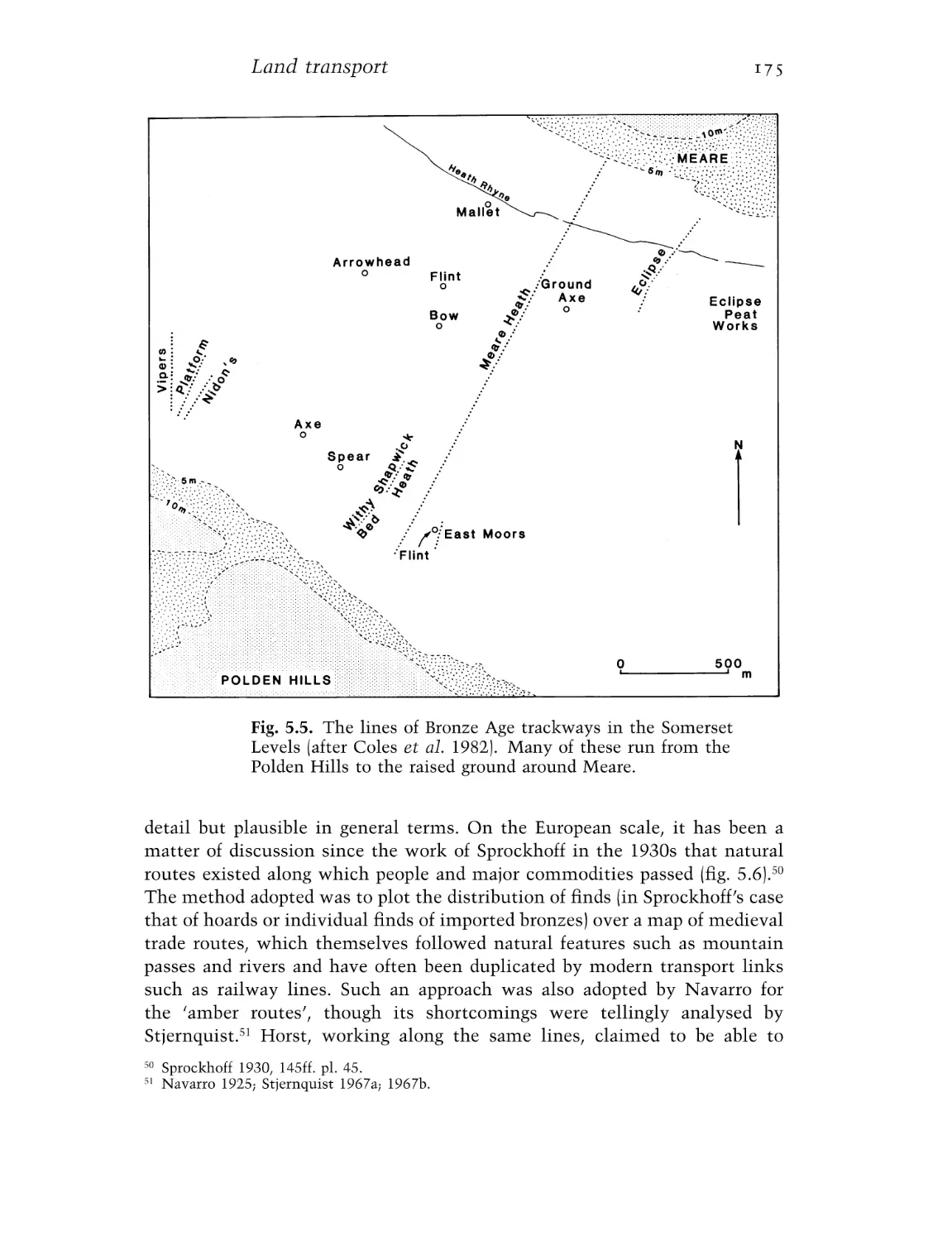
The lines of Bronze Age trackways in the Somerset
Levels
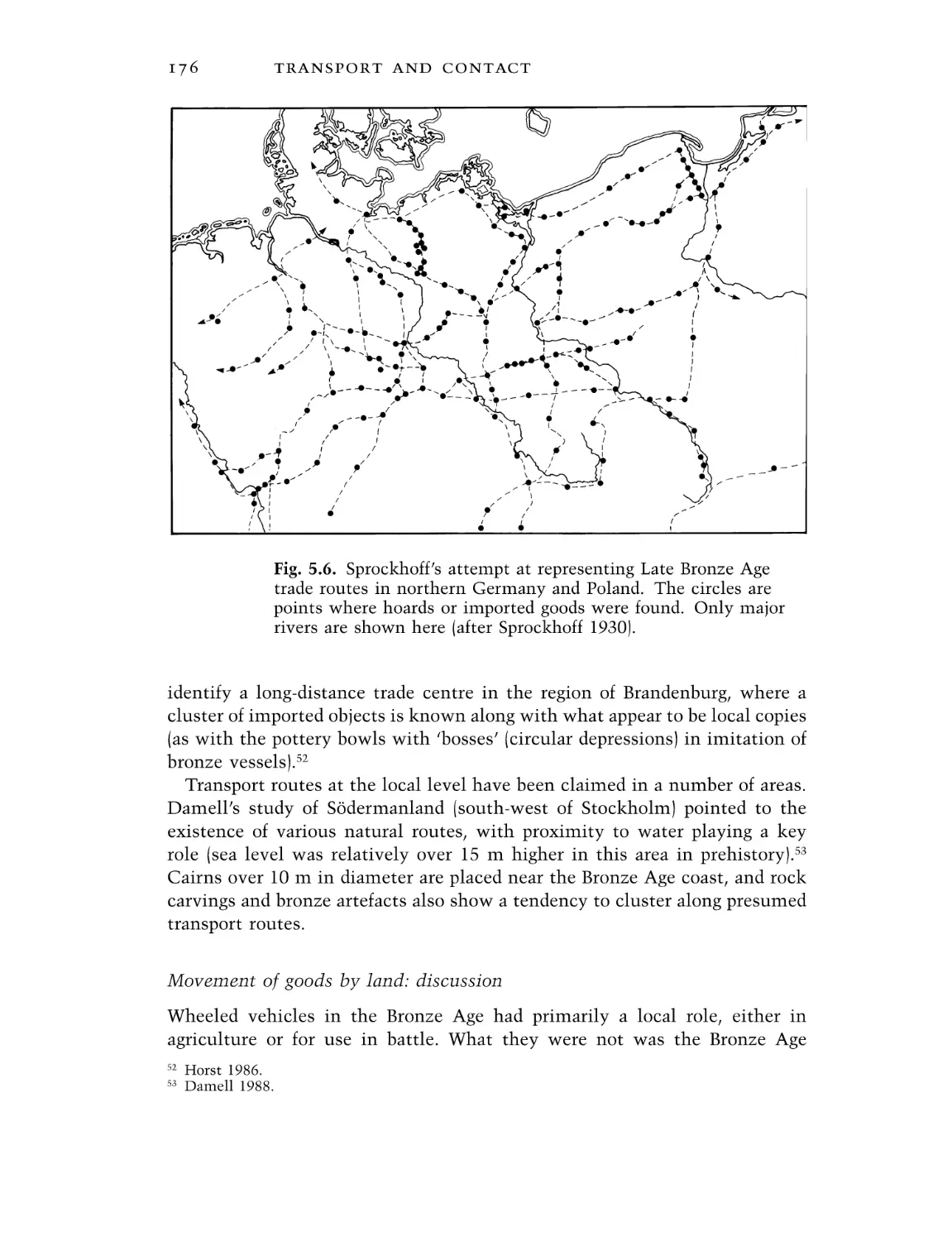
Sprockhoff’s attempt at representing Late Bronze Age
trade routes in northern Germany and Poland

ix
83
88
90
94
102
104
107
110
115
116
119
121
127
129
131
133
135
137
139
147
148
152
154
156
157
160
162
166
168
171
174
175
176

list of figures

x
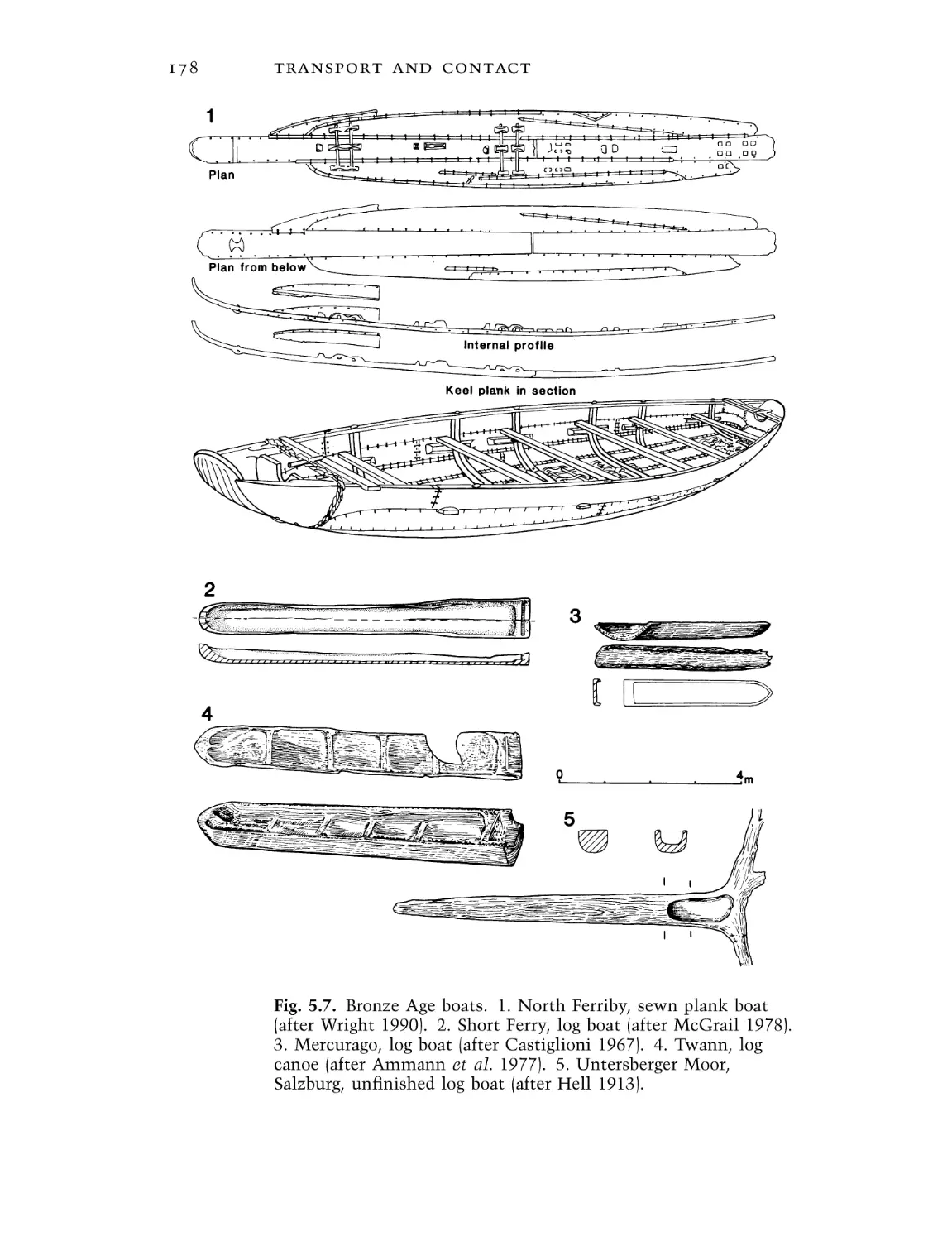
5.7
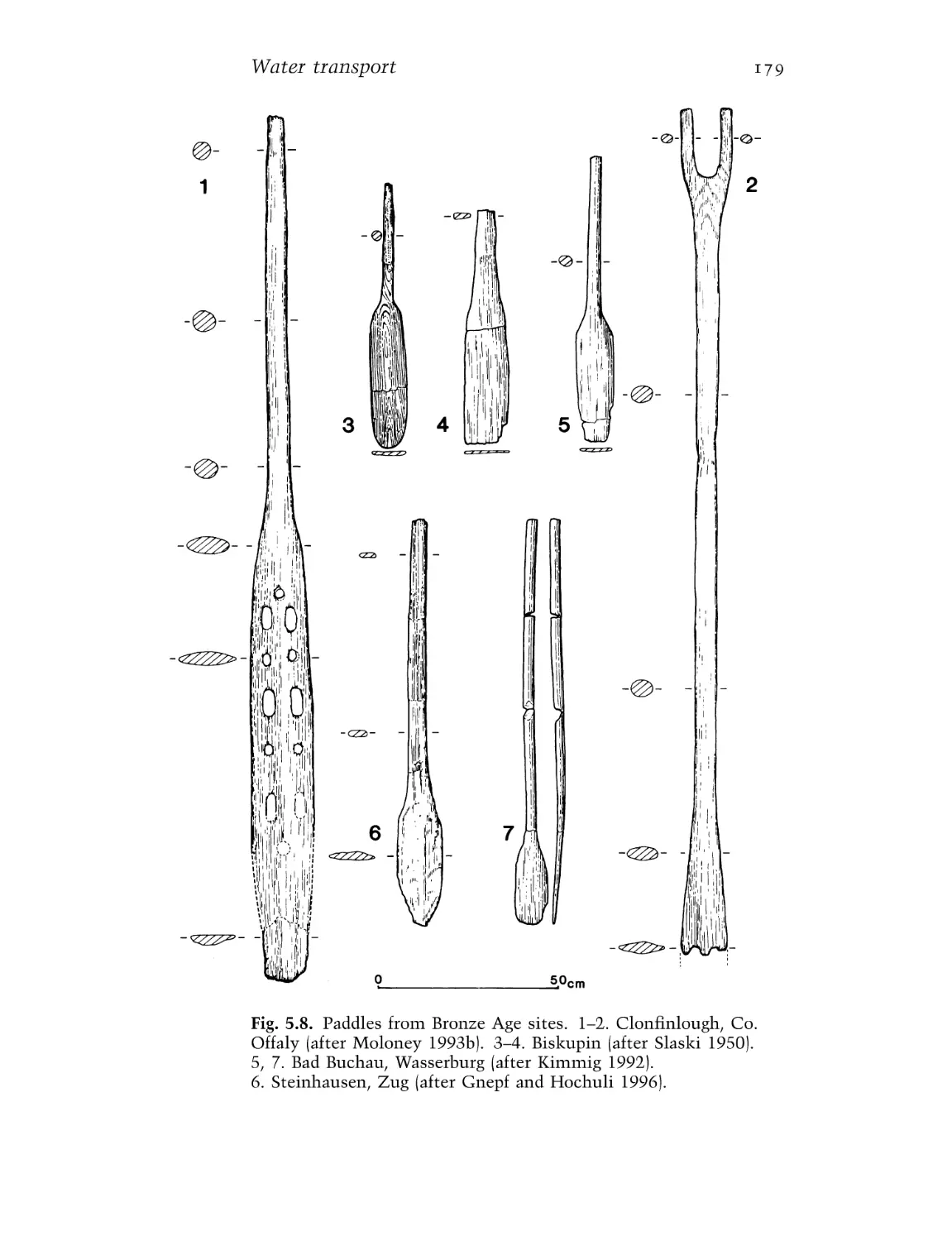
5.8
5.9
5.10
5.11
5.12
5.13
5.14
6.1
6.2
6.3
6.4
6.5
6.6
6.7
6.8
6.9
7.1
7.2
7.3
7.4
7.5
7.6
7.7
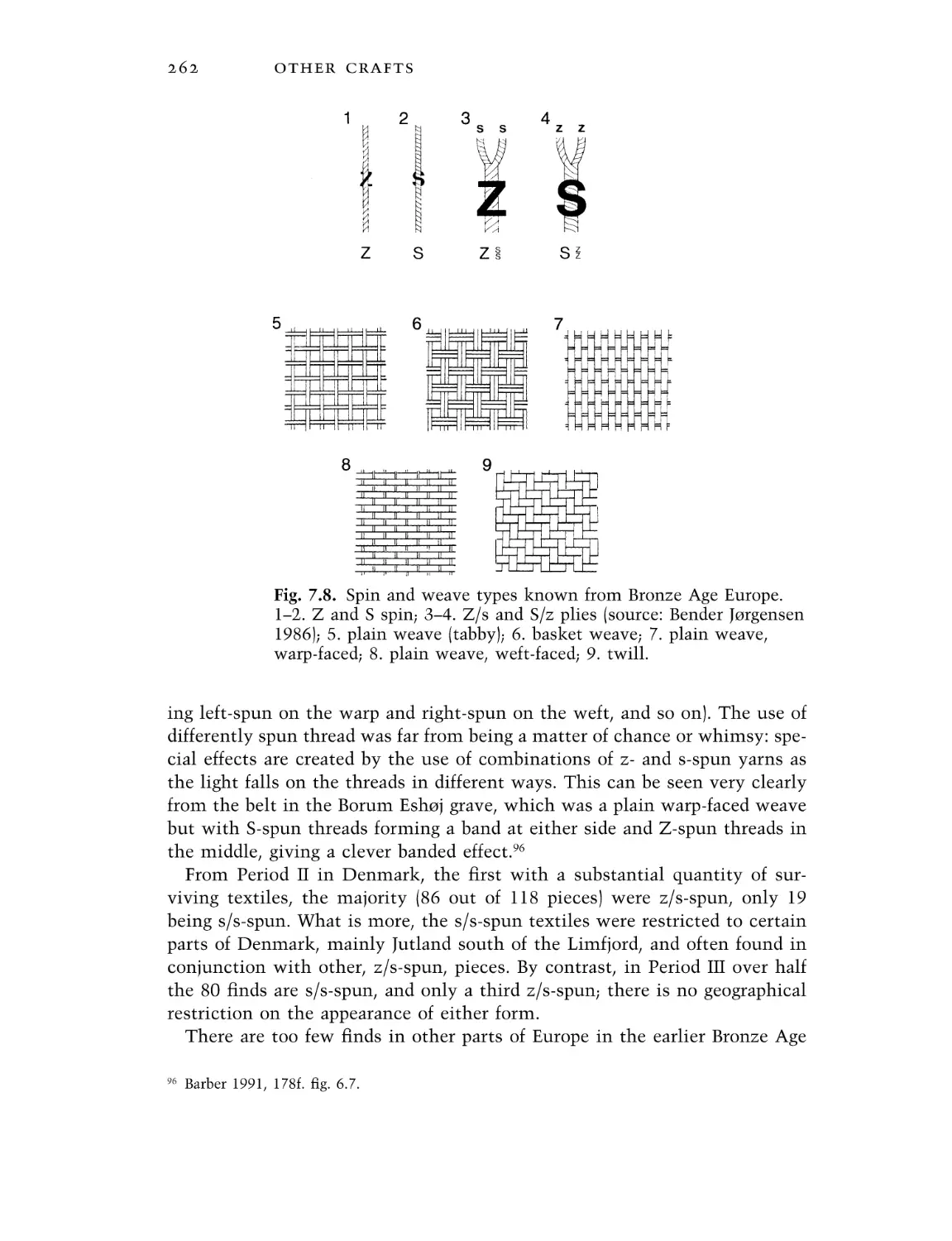
7.8
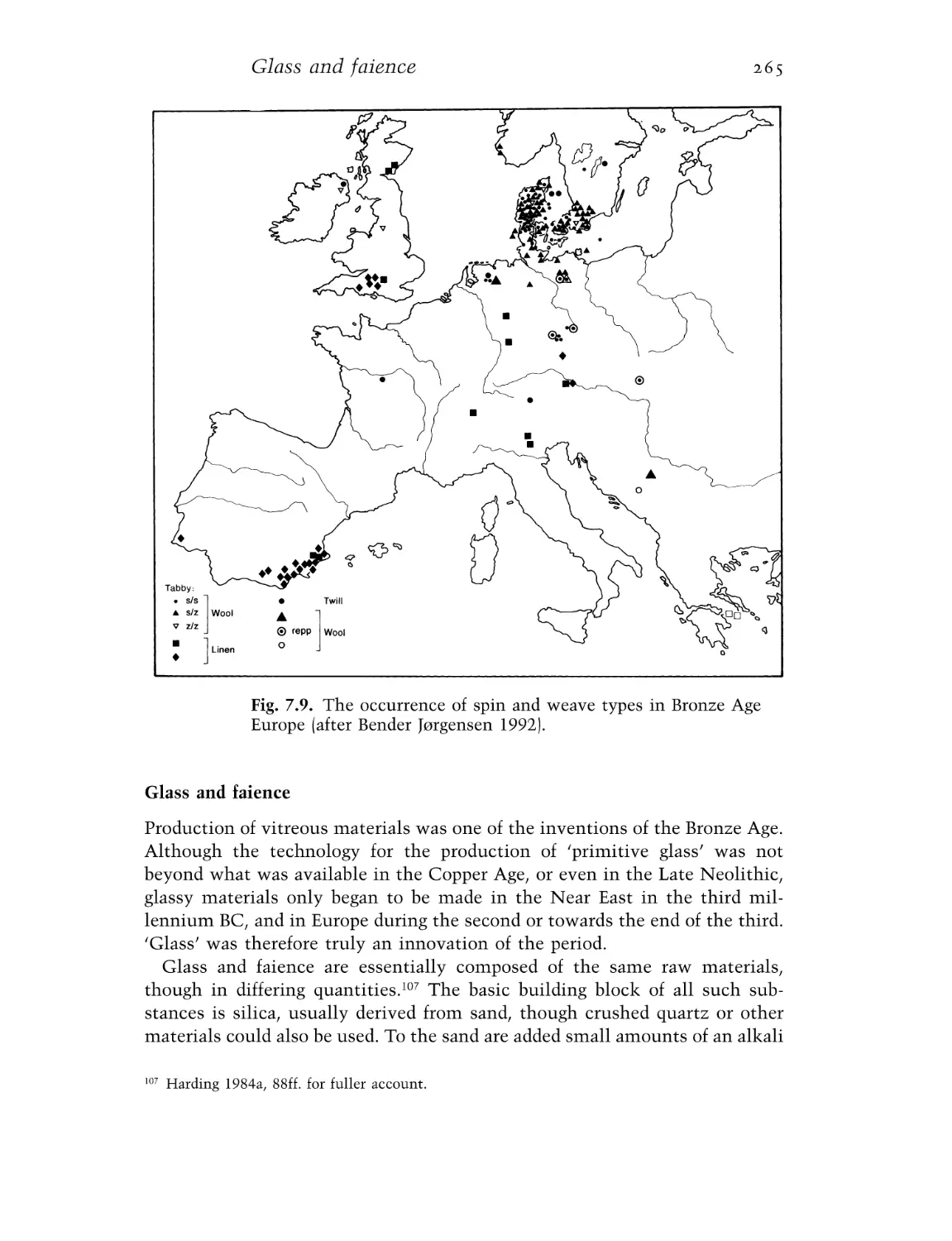
7.9
7.10
8.1
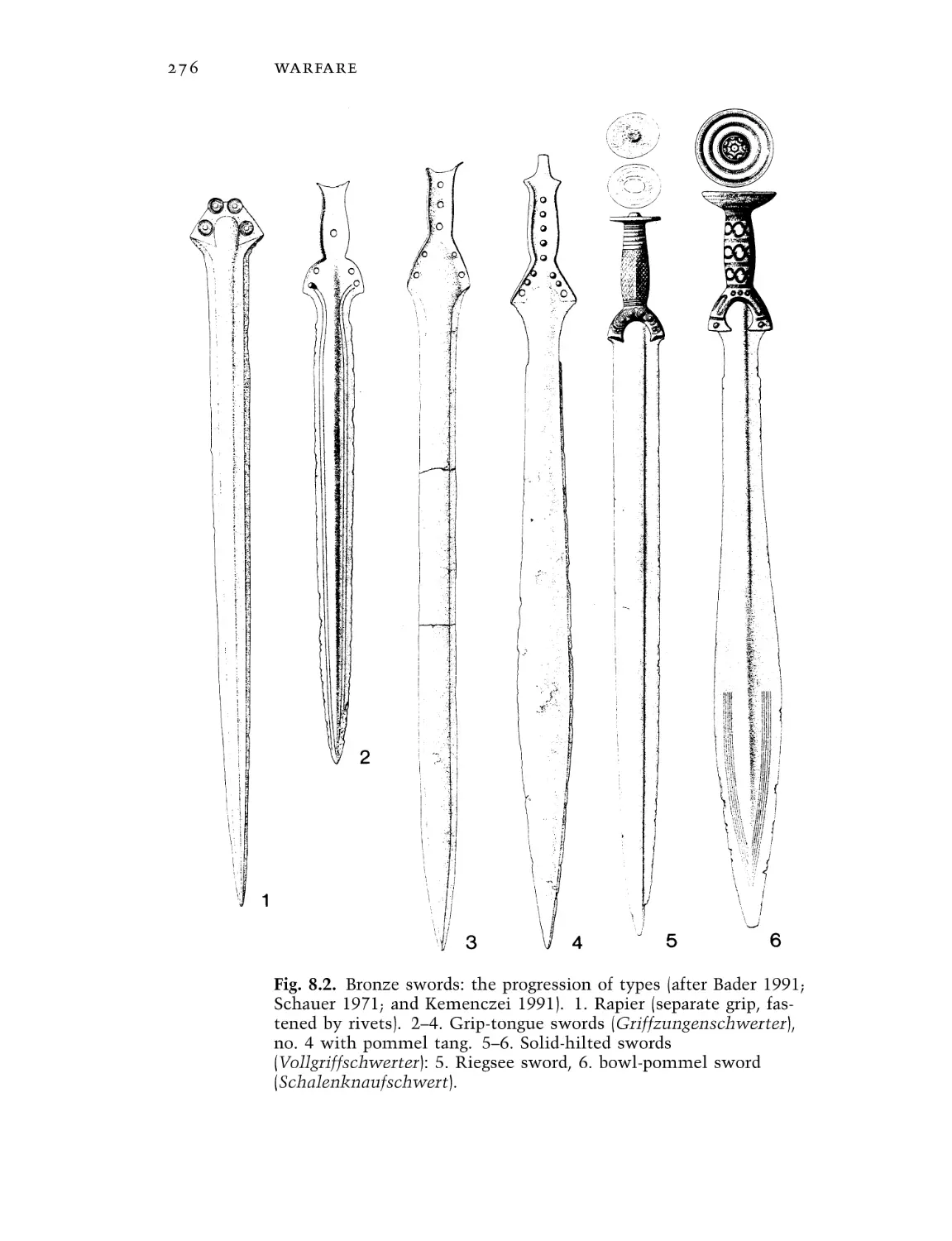
8.2
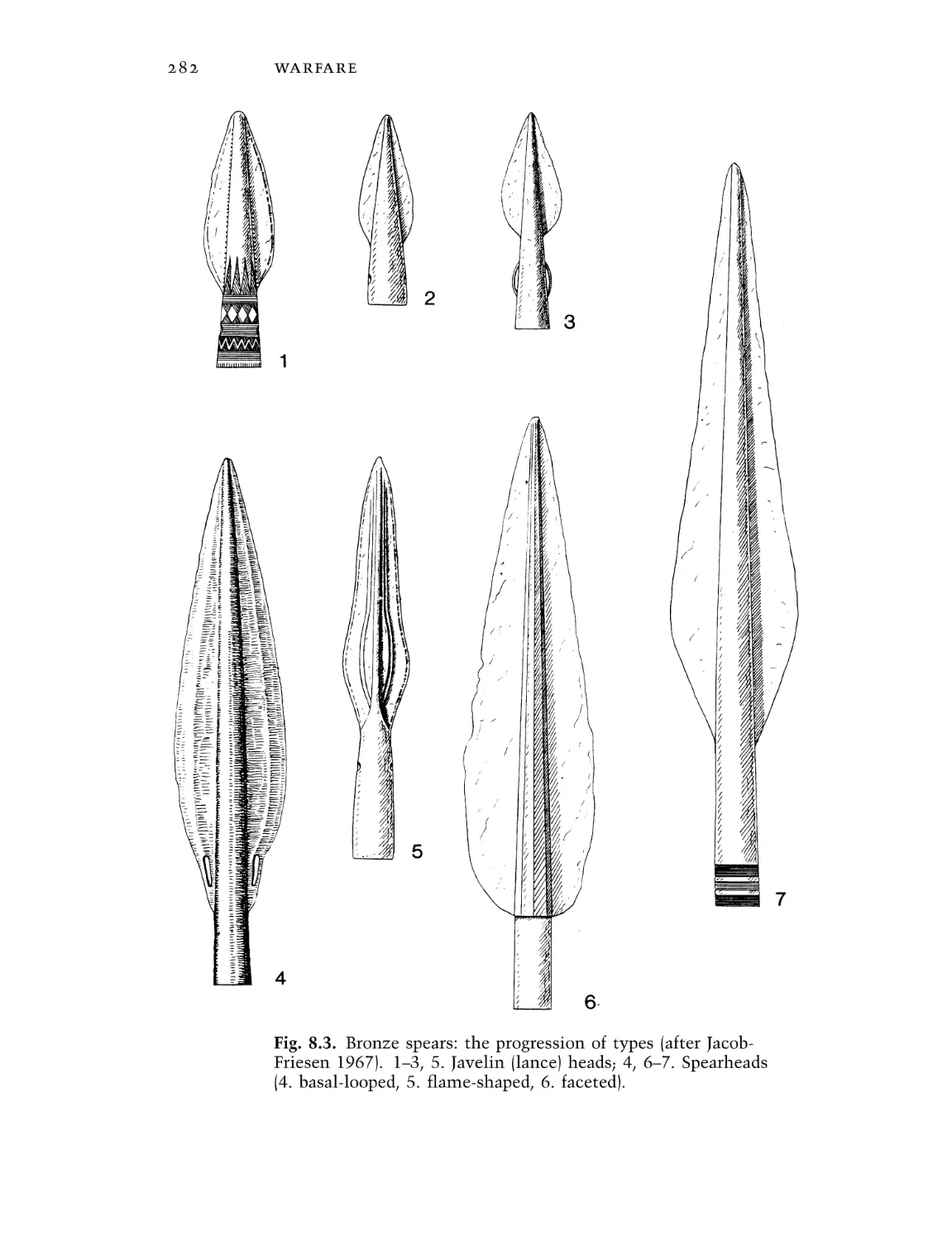
8.3
8.4

Bronze Age boats
Paddles from Bronze Age sites
Bronze Age wreck sites around European shores
Boats from a rock-art panel at Vitlycke, Bohuslän,
western Sweden
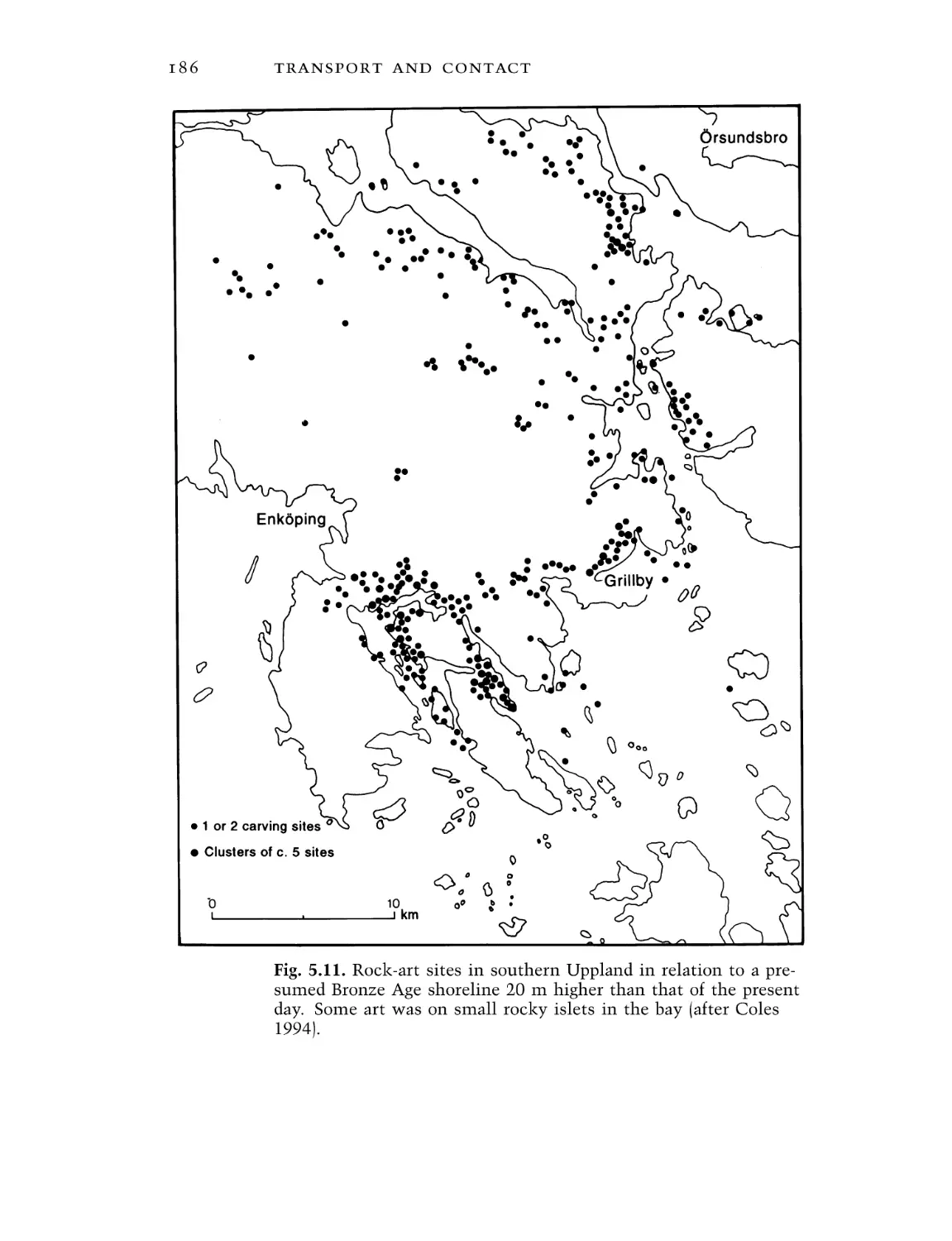
Rock-art sites in southern Uppland in relation to a
presumed Bronze Age shoreline
Distribution of amber beads of the Tiryns and Allumiere
types
Distribution of selected razor types in western Europe
Distribution of bronze vessel types
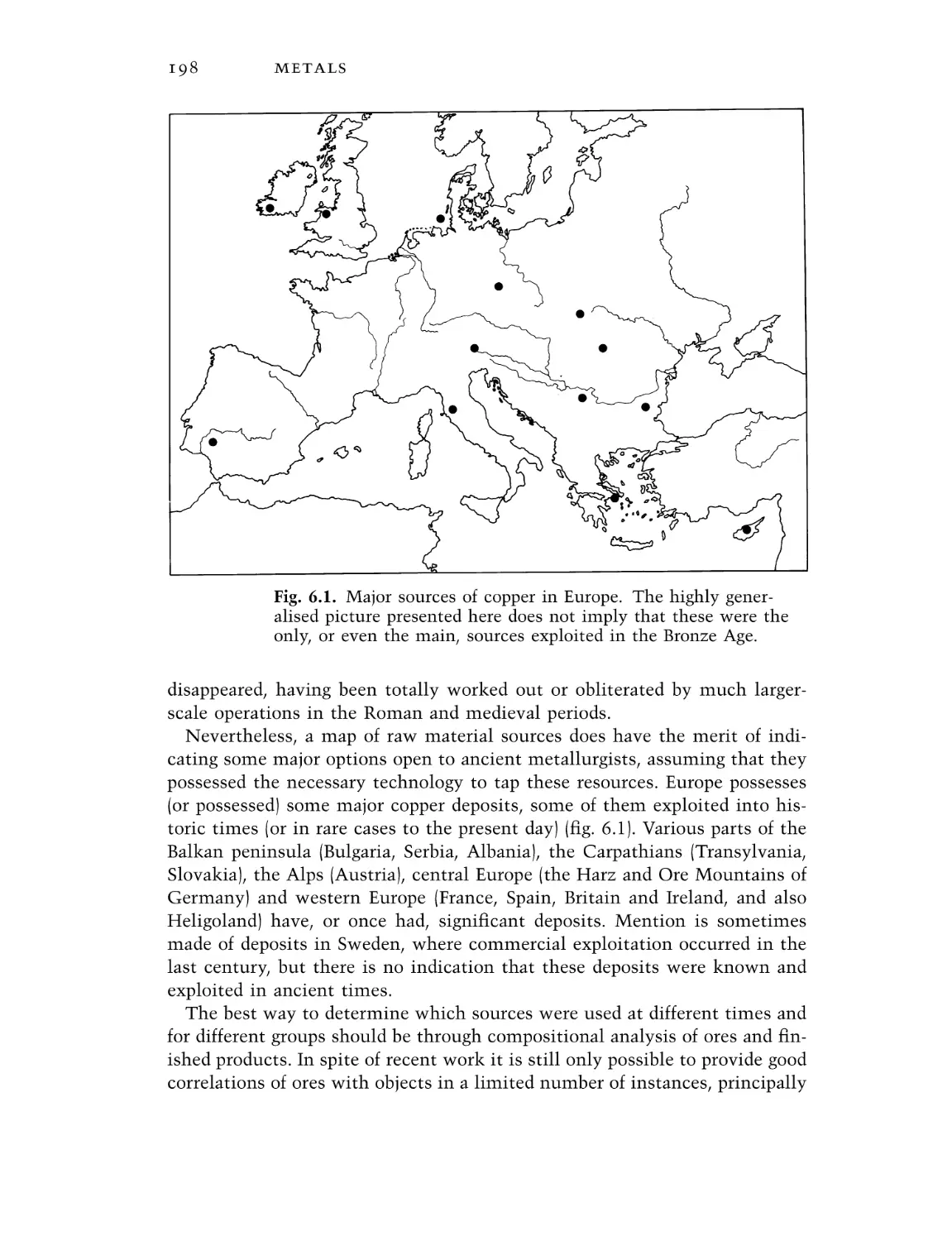
Major sources of copper in Europe
Copper ore sources in the Swiss Alps (Fahlerz and
sulphide ores)
The effect on hardness after cold working of adding 8%
tin to copper; ‘phase diagram’ of a copper–tin alloy
Metal types in the ‘Developed Early Bronze Age’ of the
British Isles
Metal types in the Wilburton phase
Extraction area at Špania Dolina-Piesky, central Slovakia
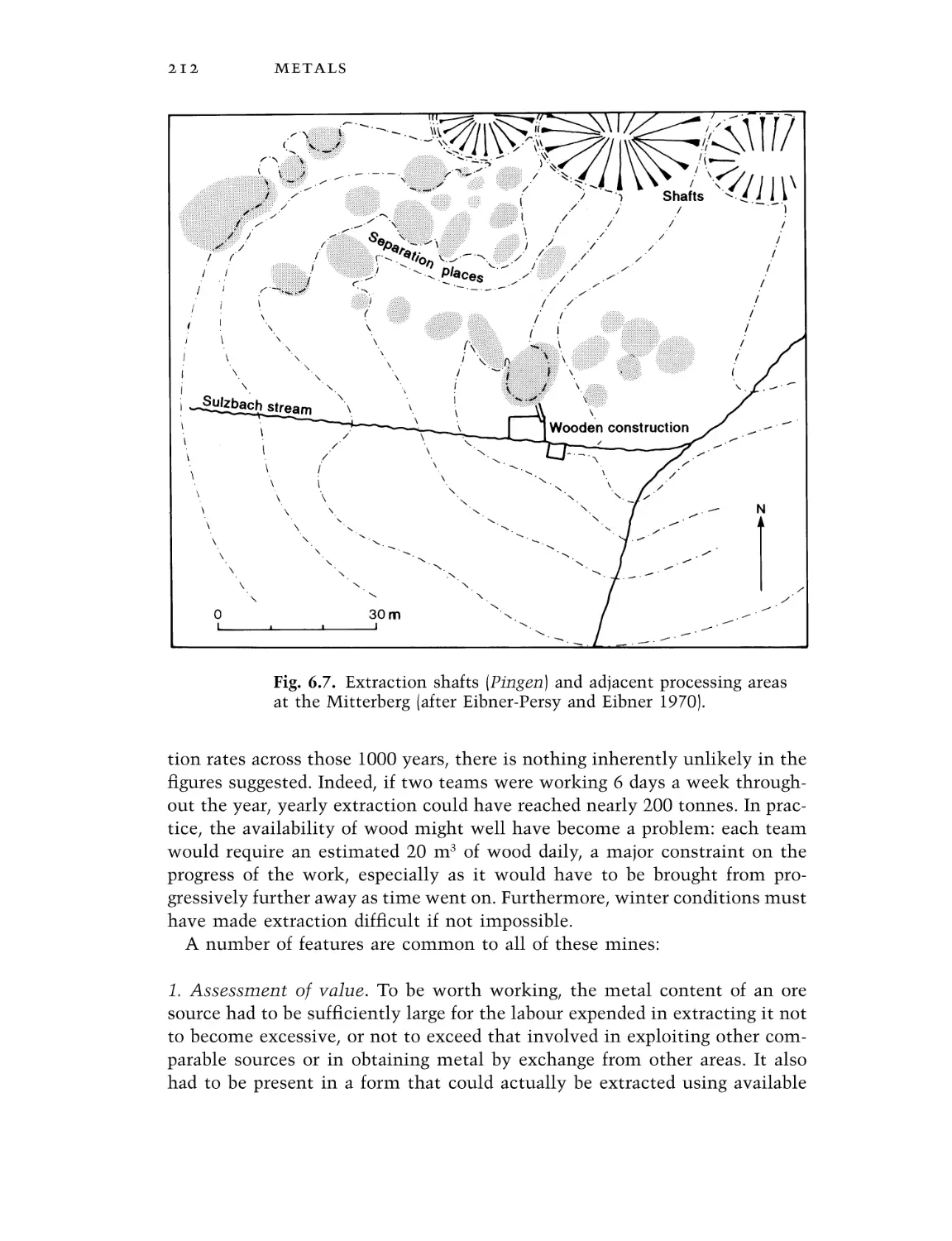
Extraction shafts (Pingen) and adjacent processing areas
at the Mitterberg
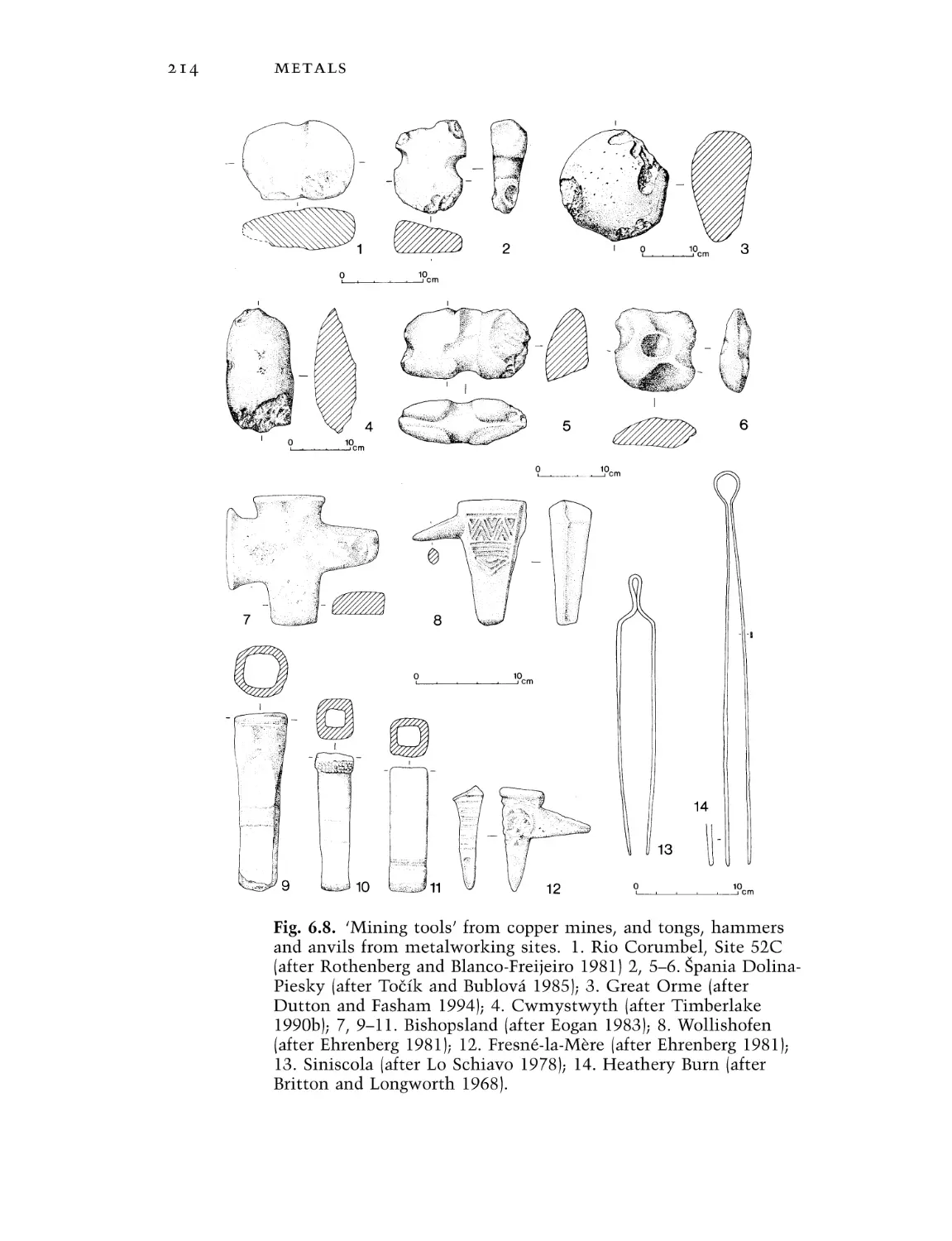
‘Mining tools’ from copper mines, and tongs, hammers
and anvils from metalworking sites
Tuyères from Bronze Age metalworking sites
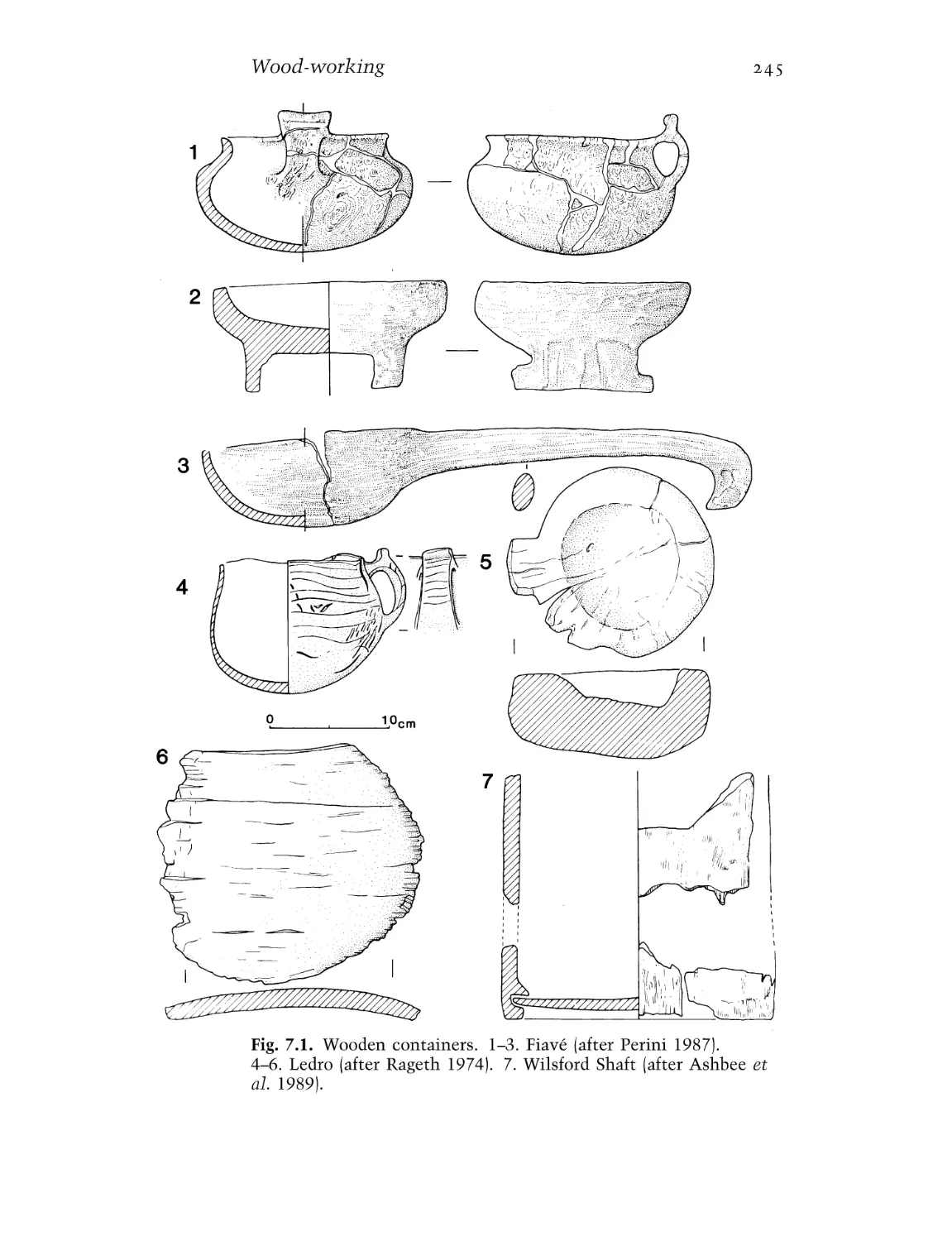
Wooden containers
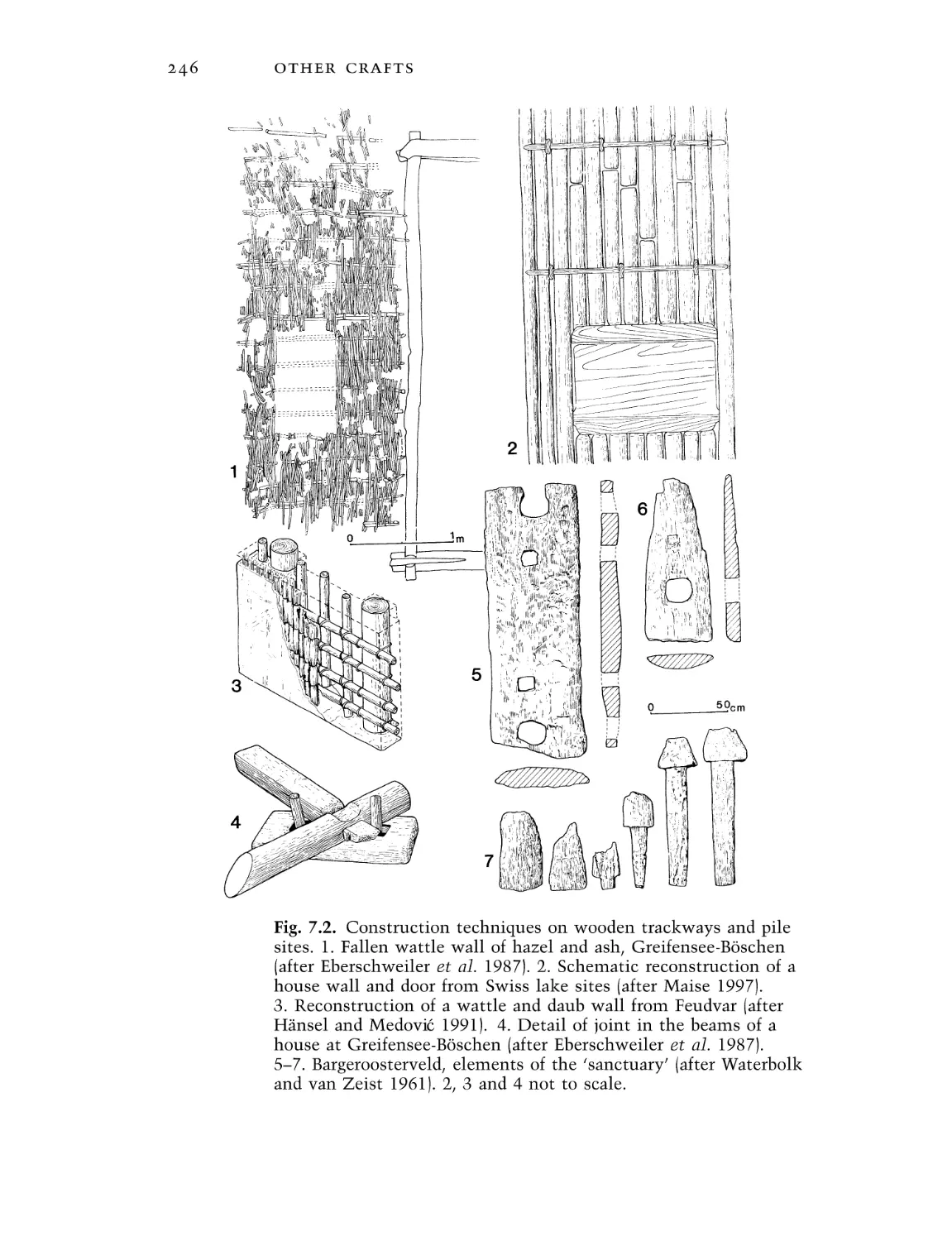
Construction techniques on wooden trackways and
pile sites
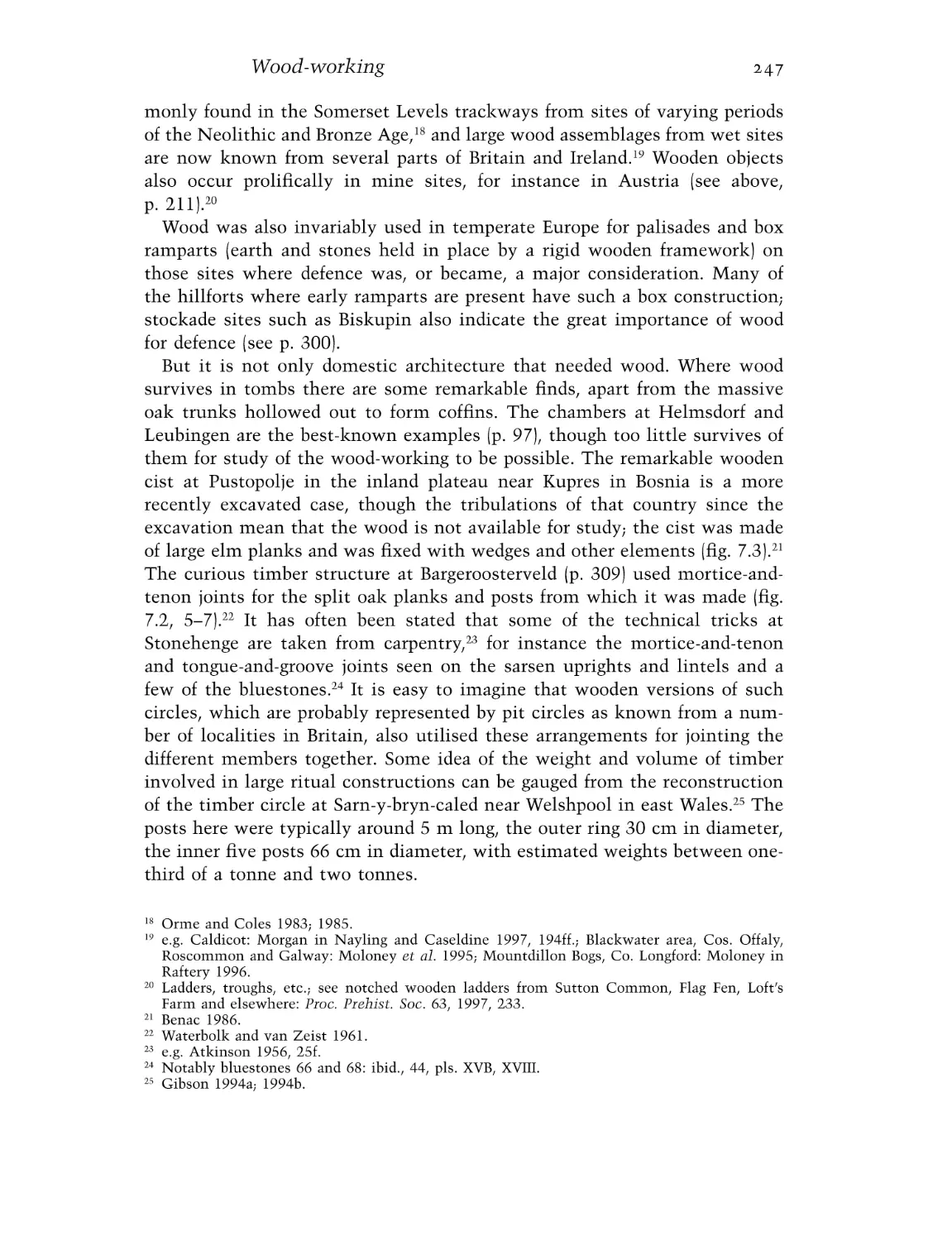
Pustopolje tumulus 16, reconstruction of the wooden
grave chamber
Briquetage from Bronze Age sites
Loom installations and depictions
Loom-weights, spindle-whorls and spools
Textile from Ledro
Spin and weave types known from Bronze Age Europe
The occurrence of spin and weave types in Bronze Age
Europe
Glass and faience beads
Ritual fighting with battle-axes: part of a rock-art panel at
Fossum, Bohuslän
Bronze swords: the progression of types
Bronze spears: the progression of types
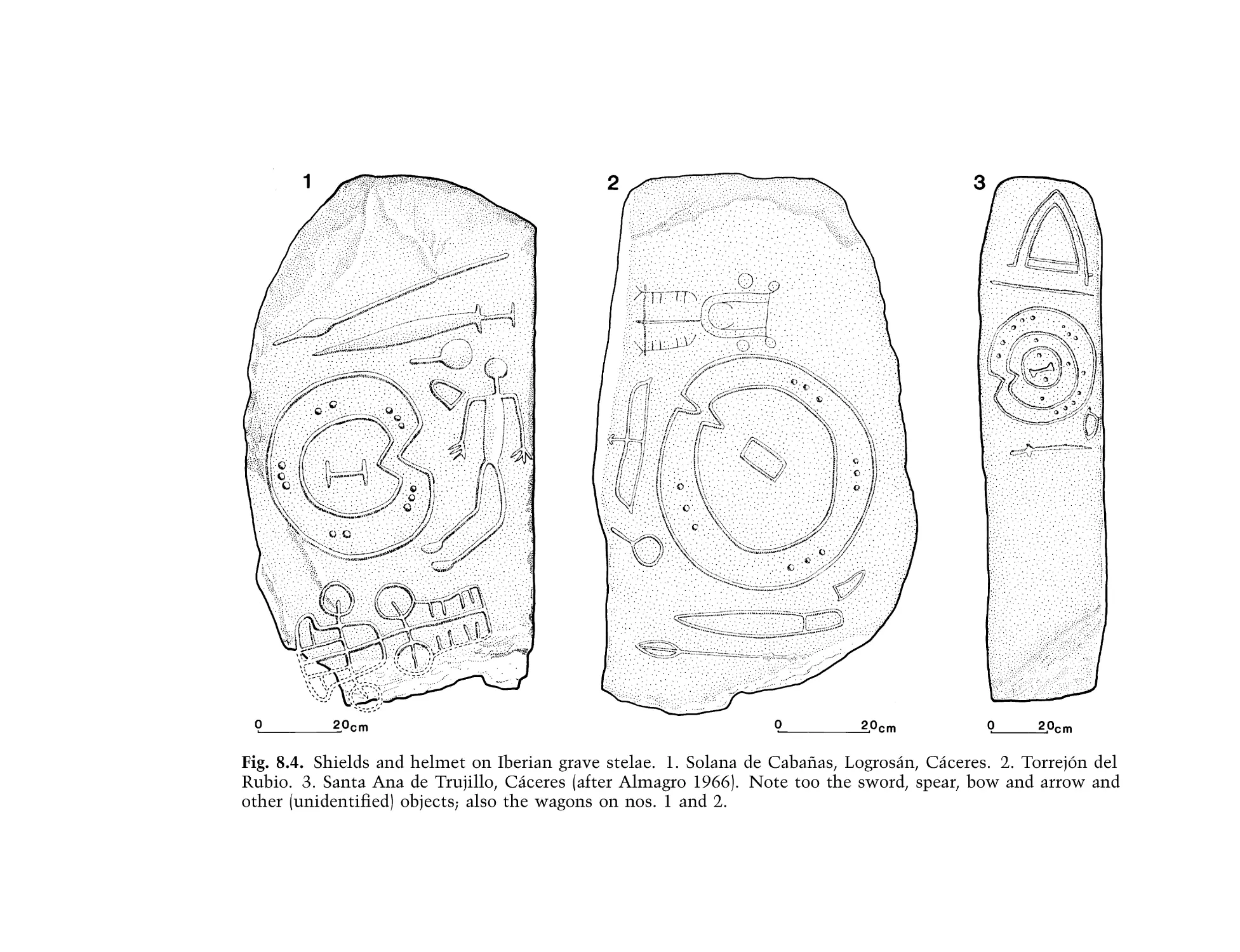
Shields and helmet on Iberian grave stelae

178
179
182
183
186
191
192
194
198
200
203
205
206
209
212
214
221
245
246
248
250
257
259
261
262
265
267
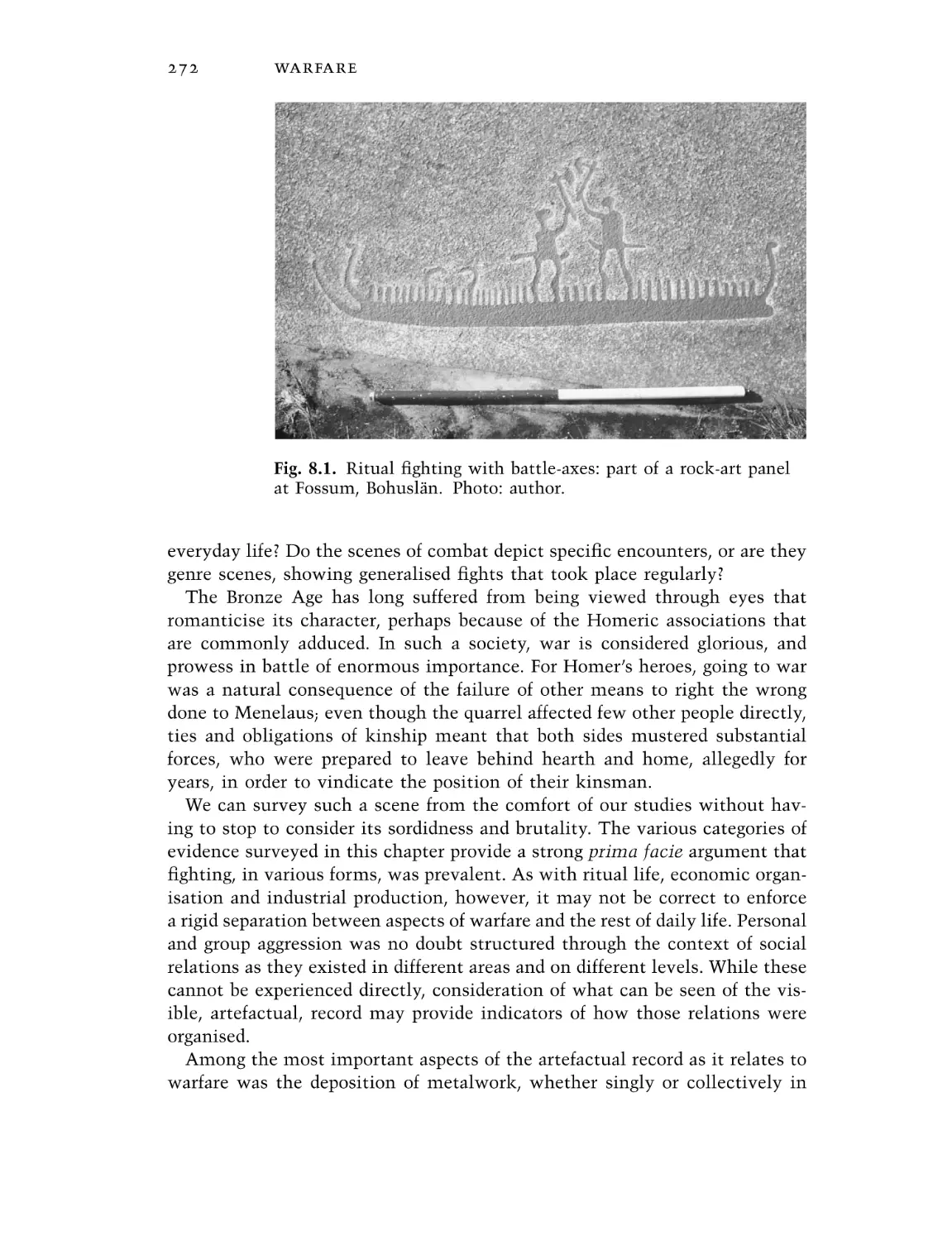
272
276
282
286

List of figures
8.5
8.6
8.7
8.8
8.9
8.10
8.11
8.12
8.13
9.1
9.2
9.3
9.4
9.5
9.6
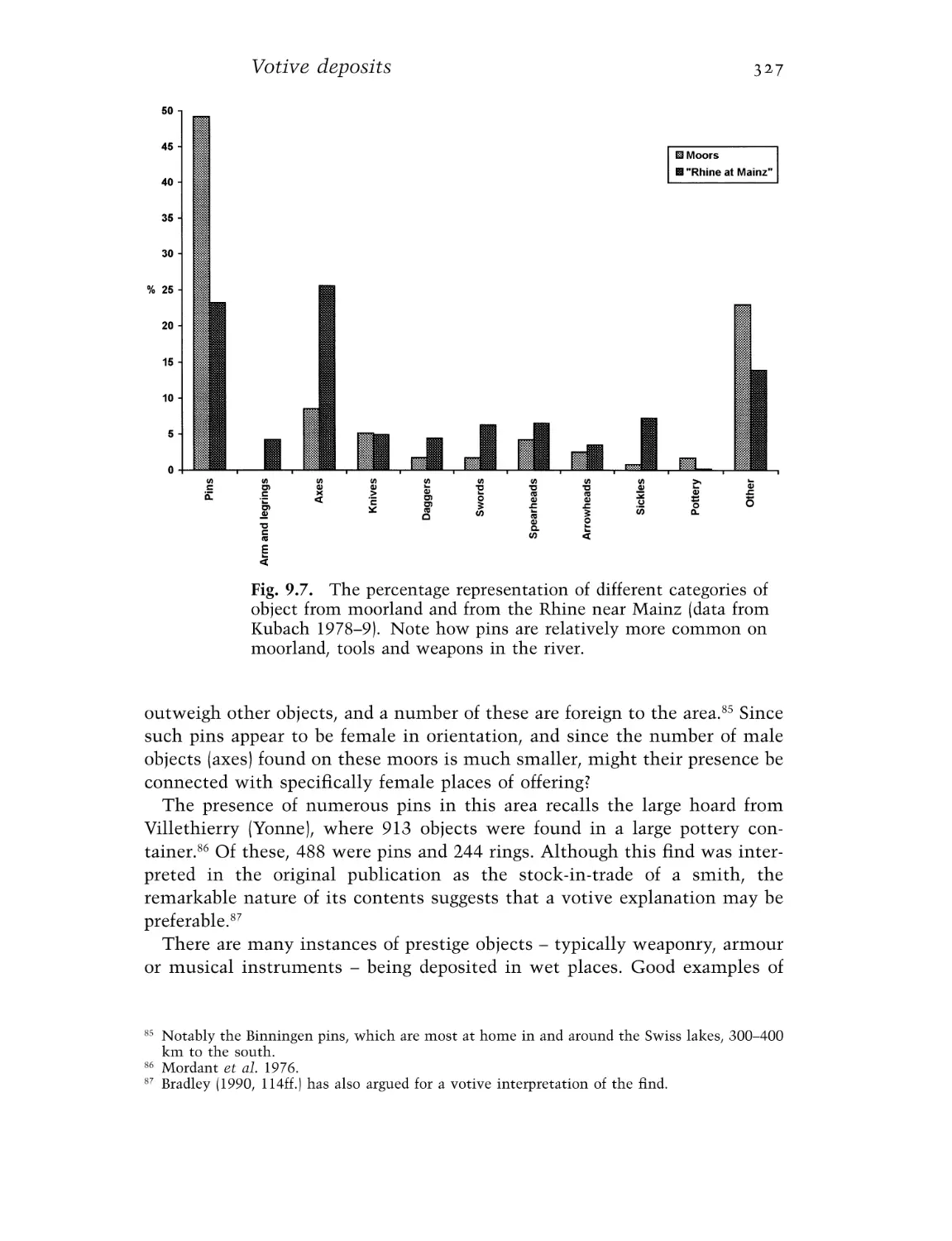
9.7

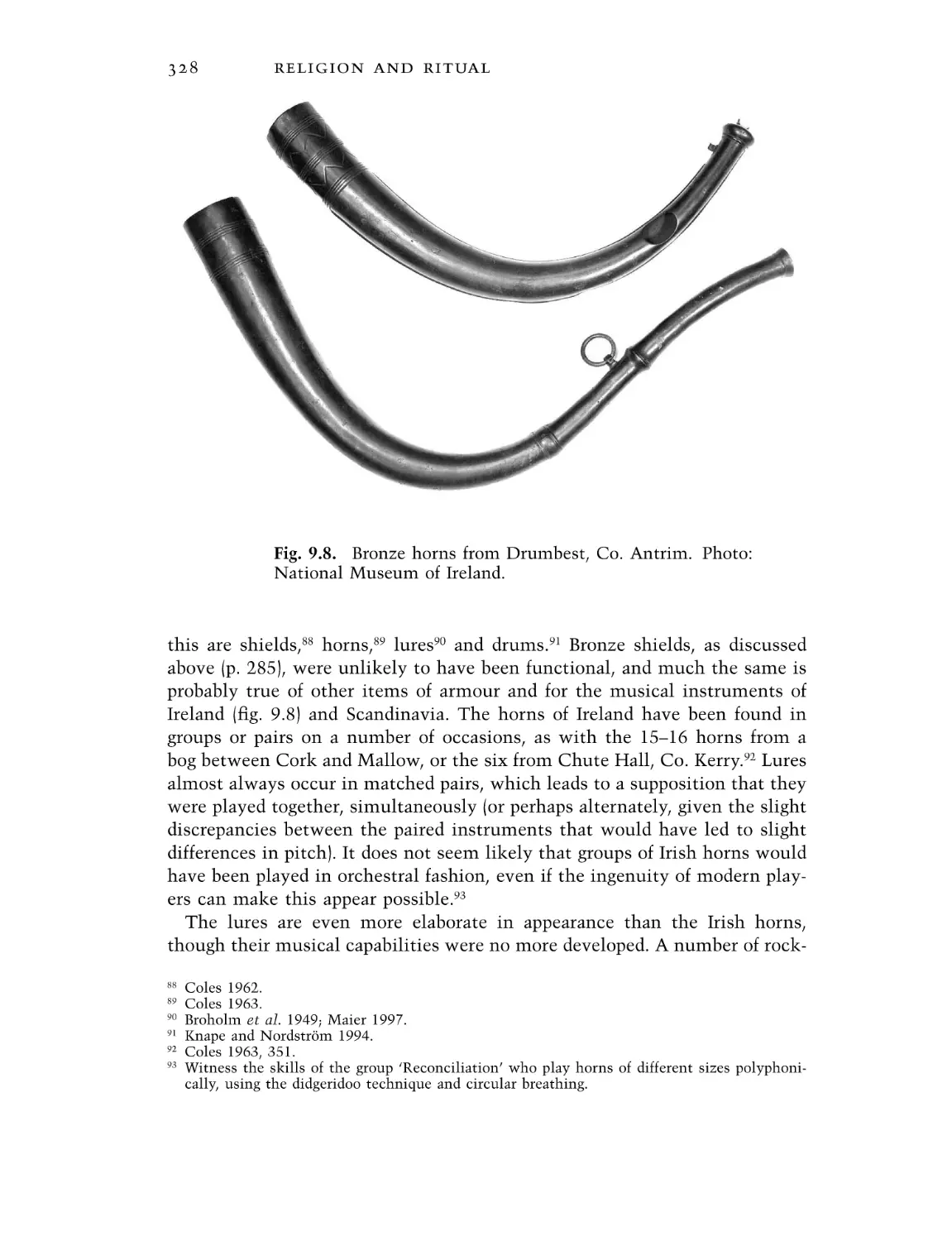
9.8
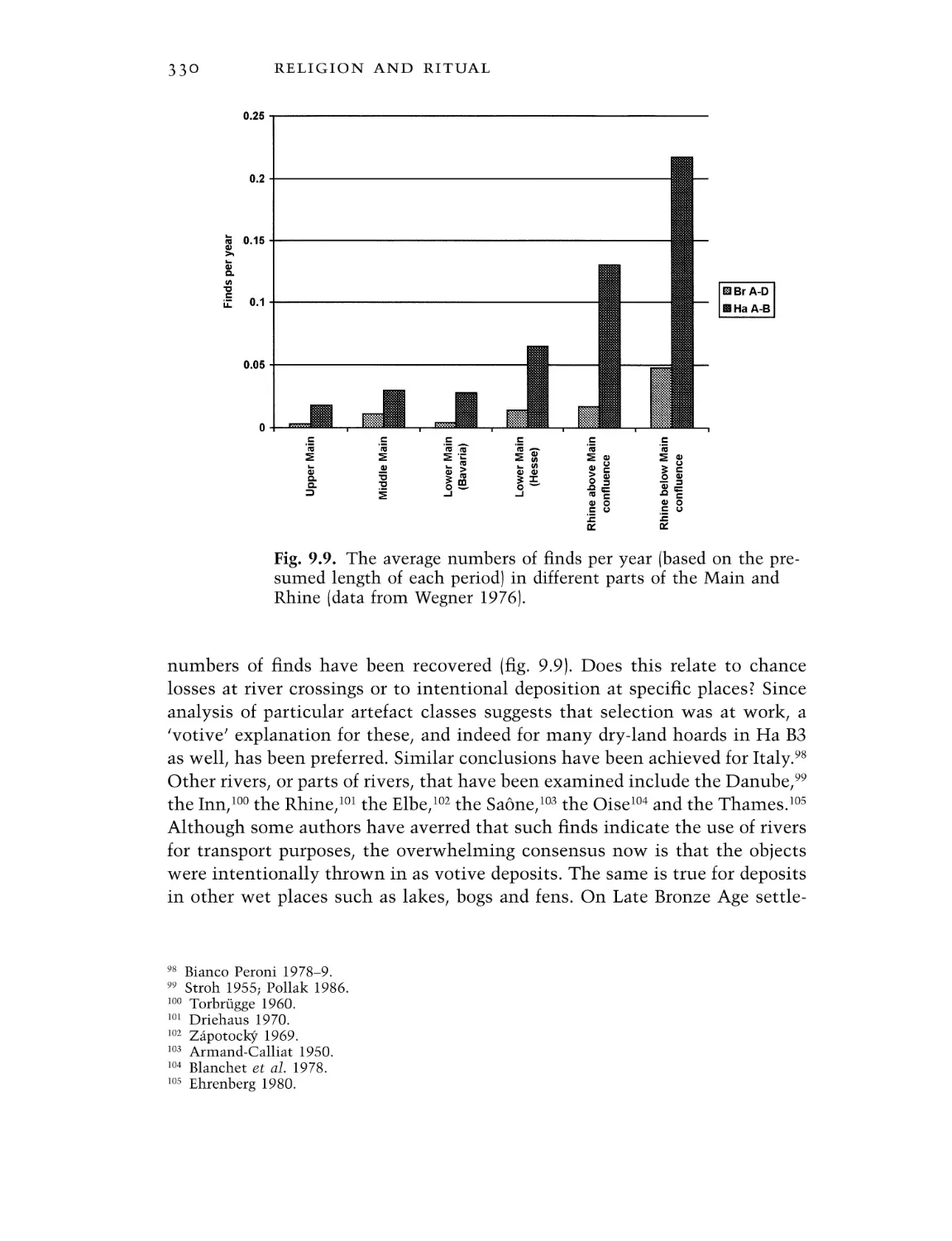
9.9
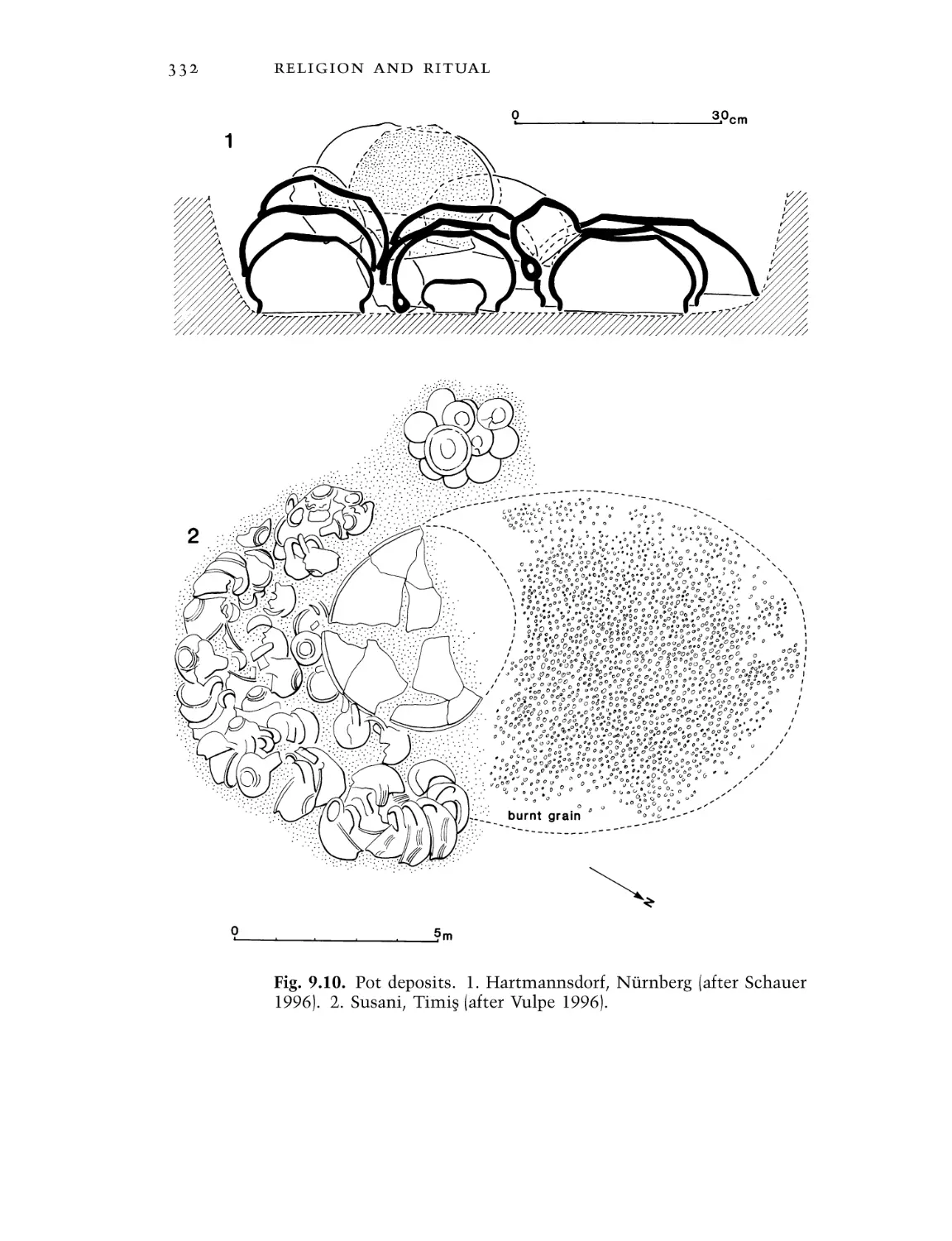
9.10
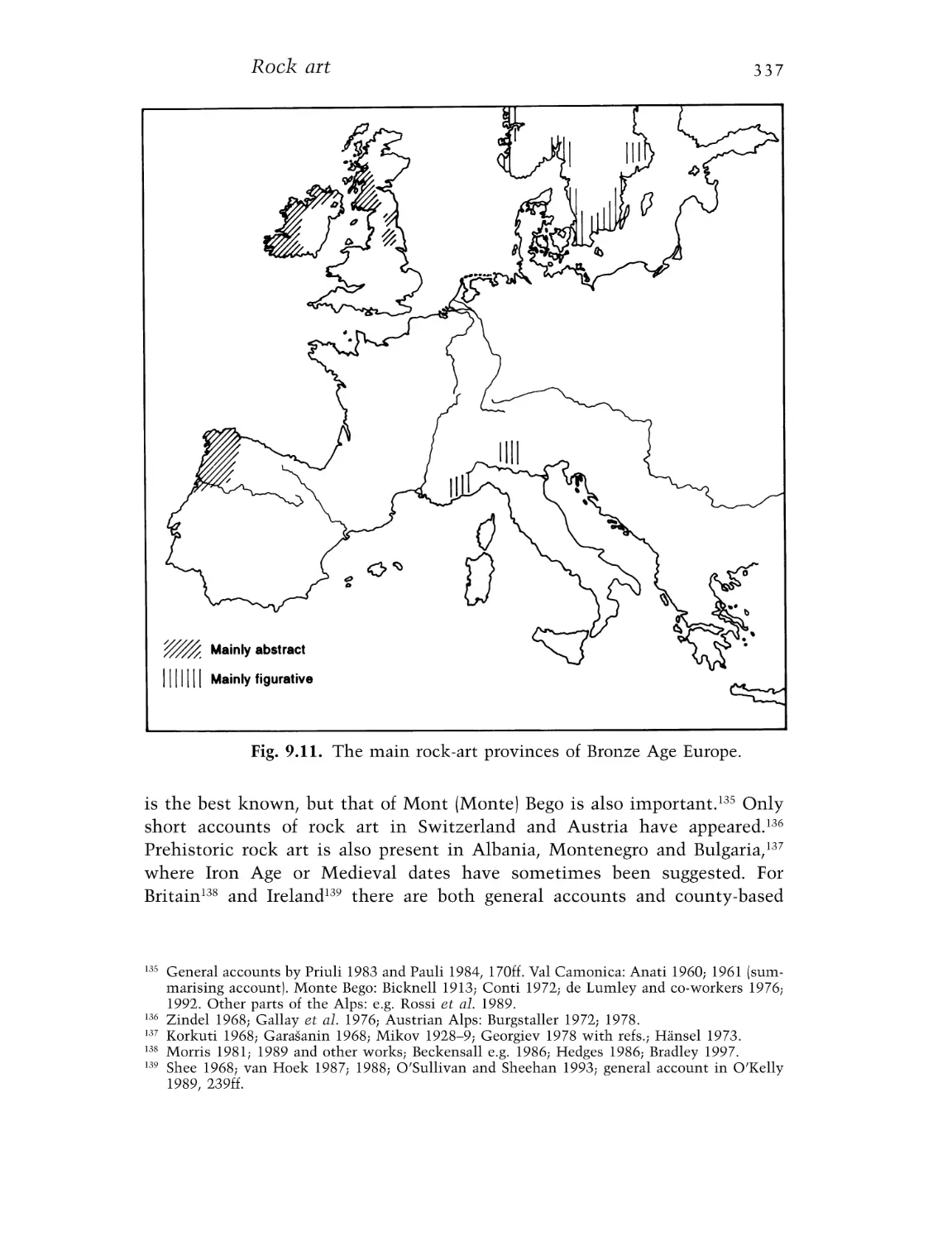
9.11
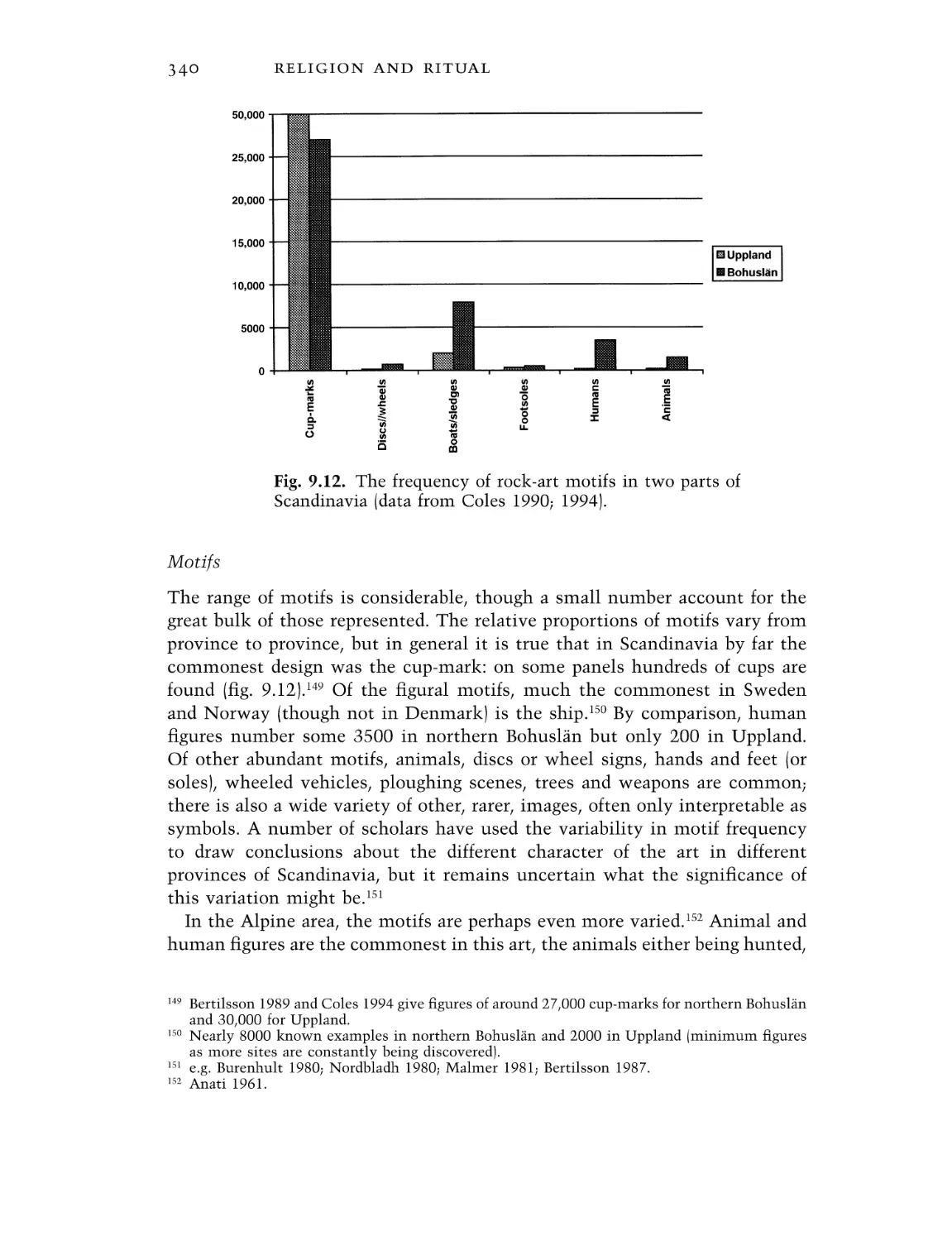
9.12
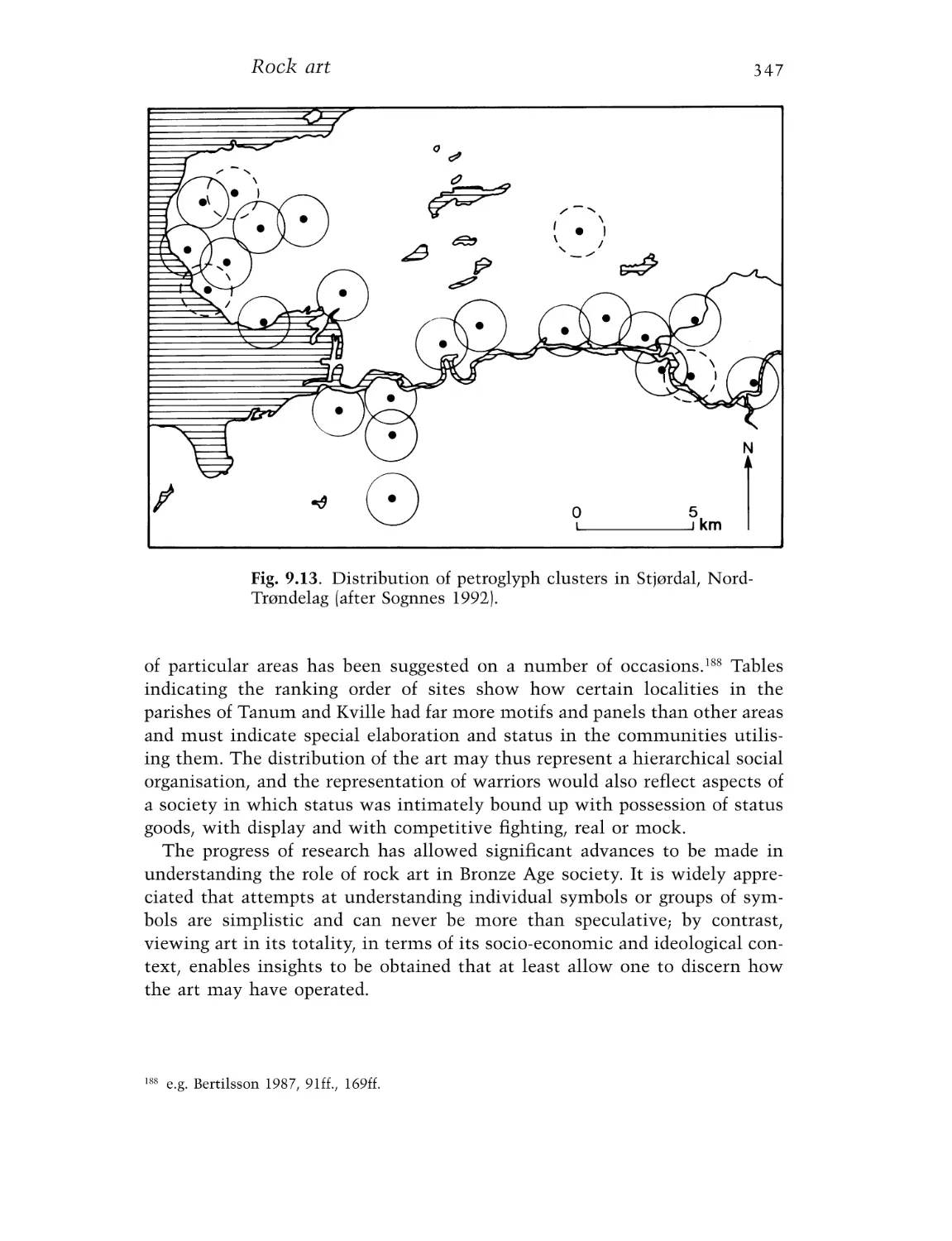
9.13
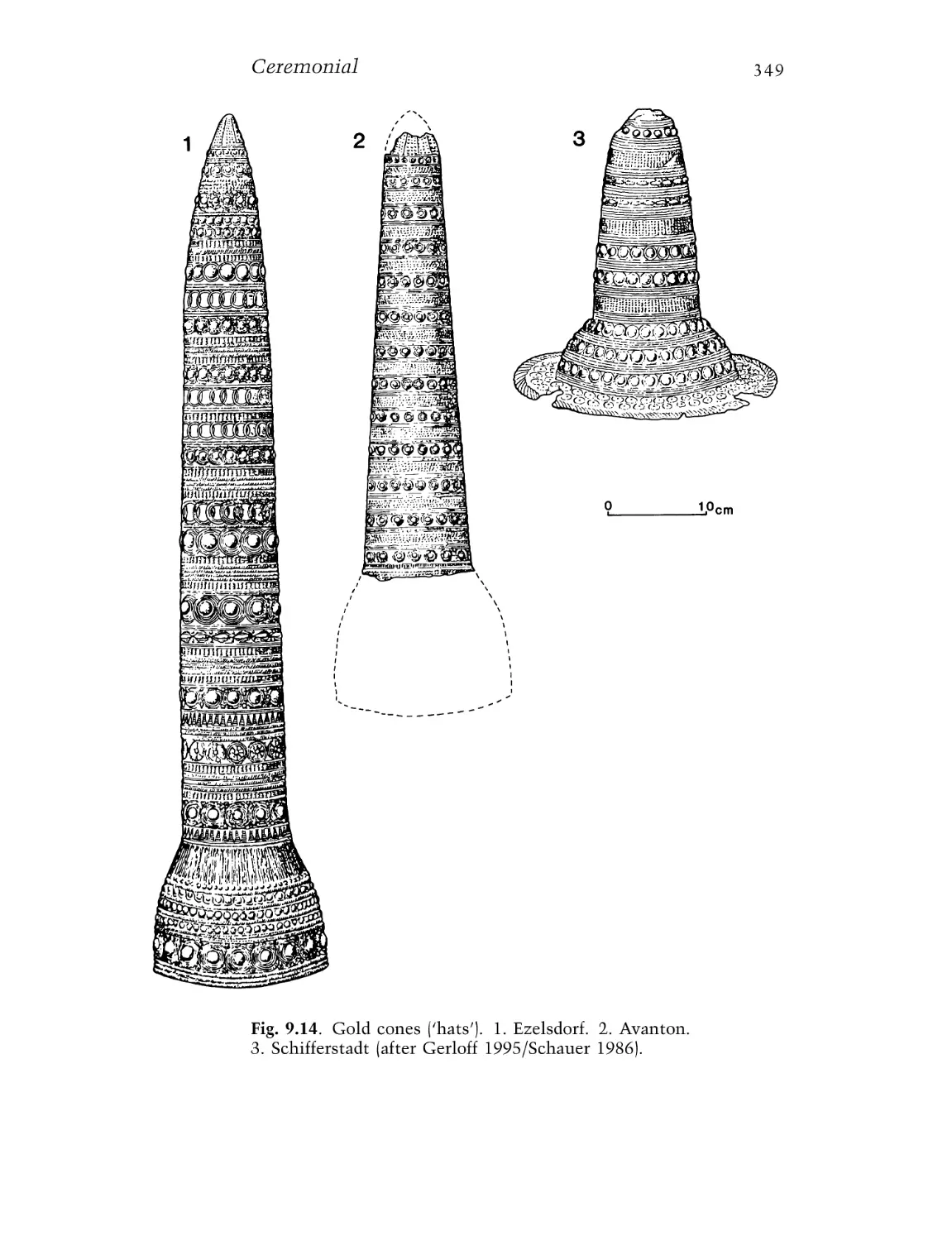
9.14
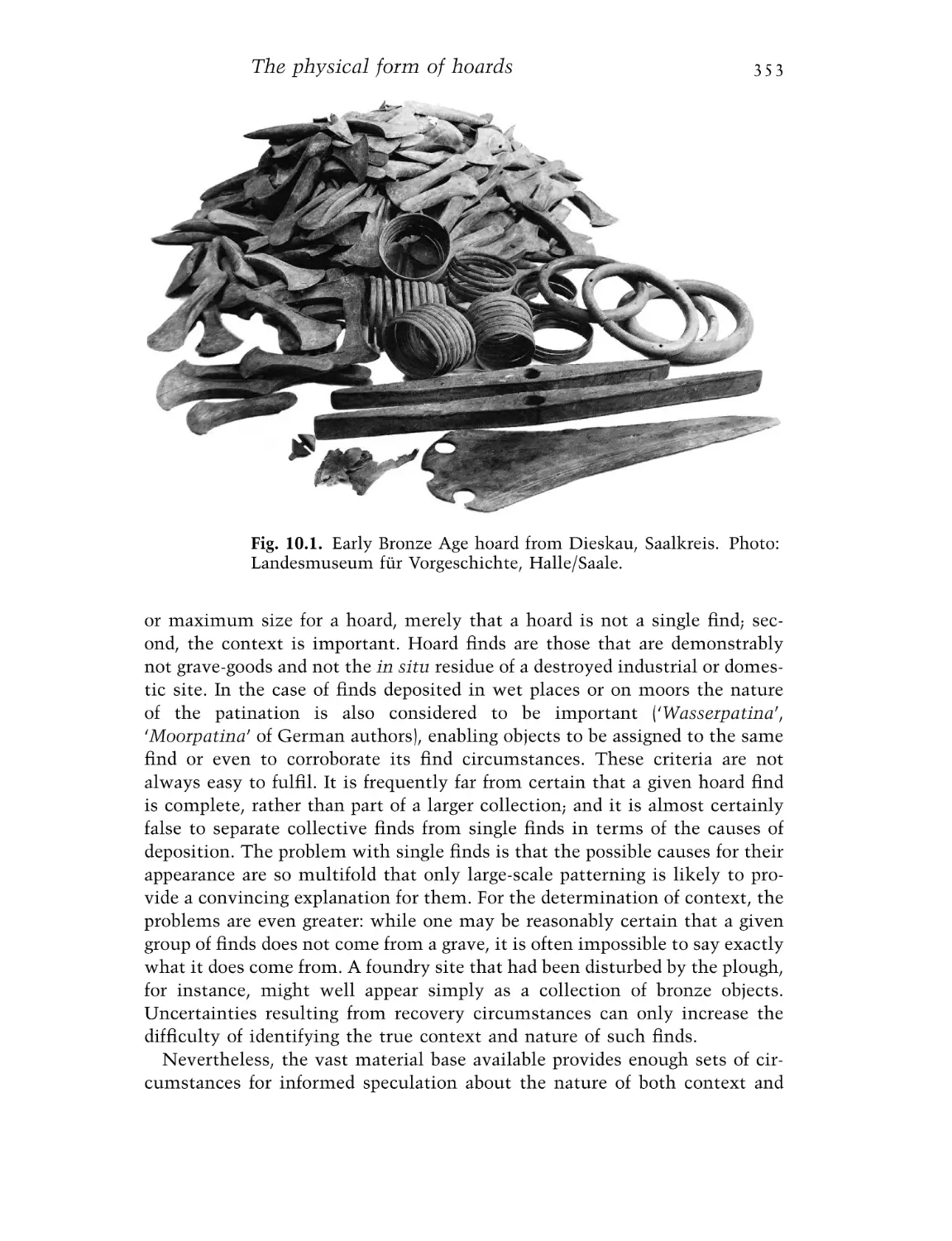
10.1
10.2
10.3
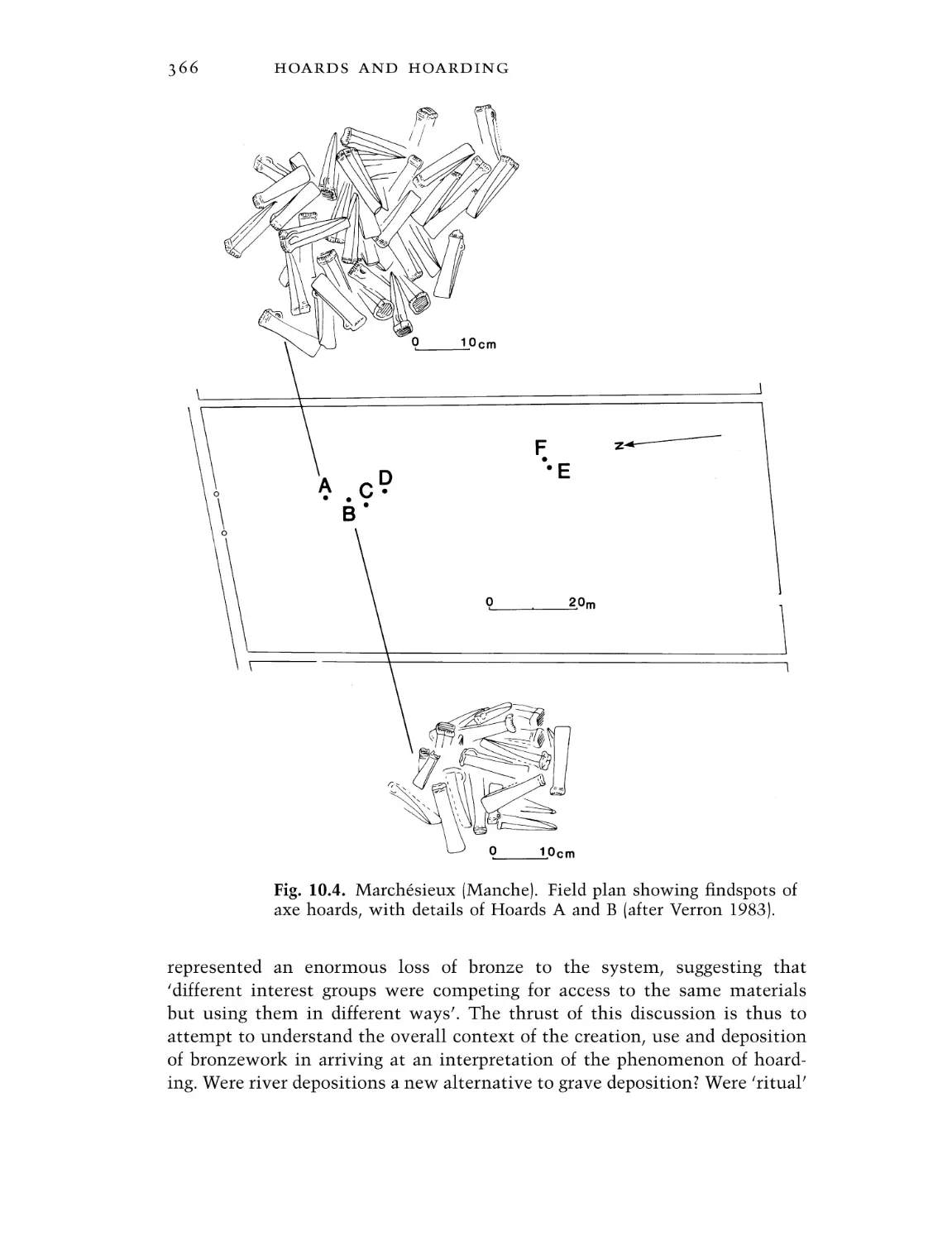
10.4
11.1
11.2
11.3
11.4

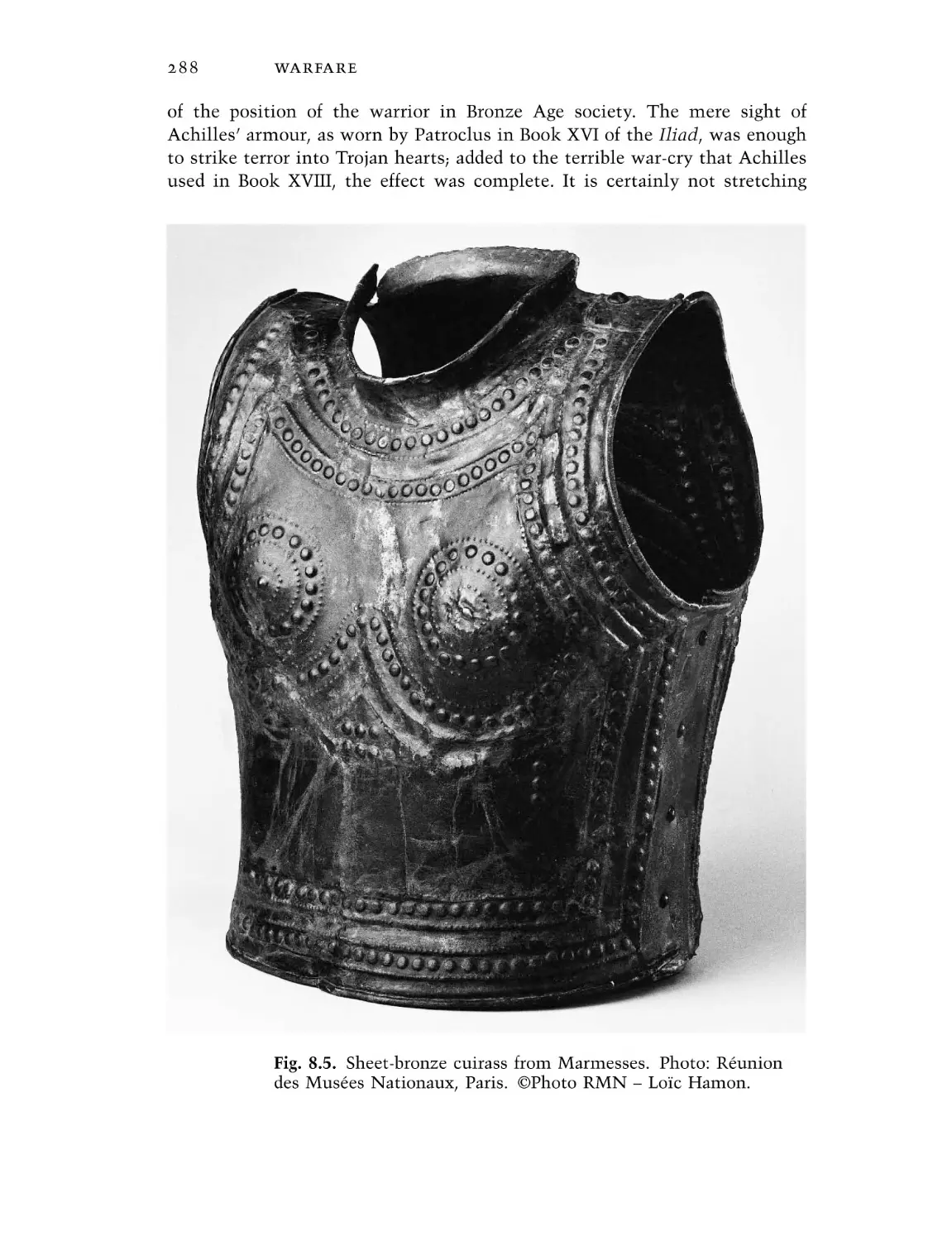
Sheet-bronze cuirass from Marmesses
The two bronze horned helmets from Viksø, Zealand
Distribution of Bronze Age hilltop sites in southern
Württemberg
Distribution of settlements and fortified hill-sites in the
Esztergom region
Hillfort plans
Two views of the Middle Bronze Age hillfort at
Monkodonja, Istria, Croatia
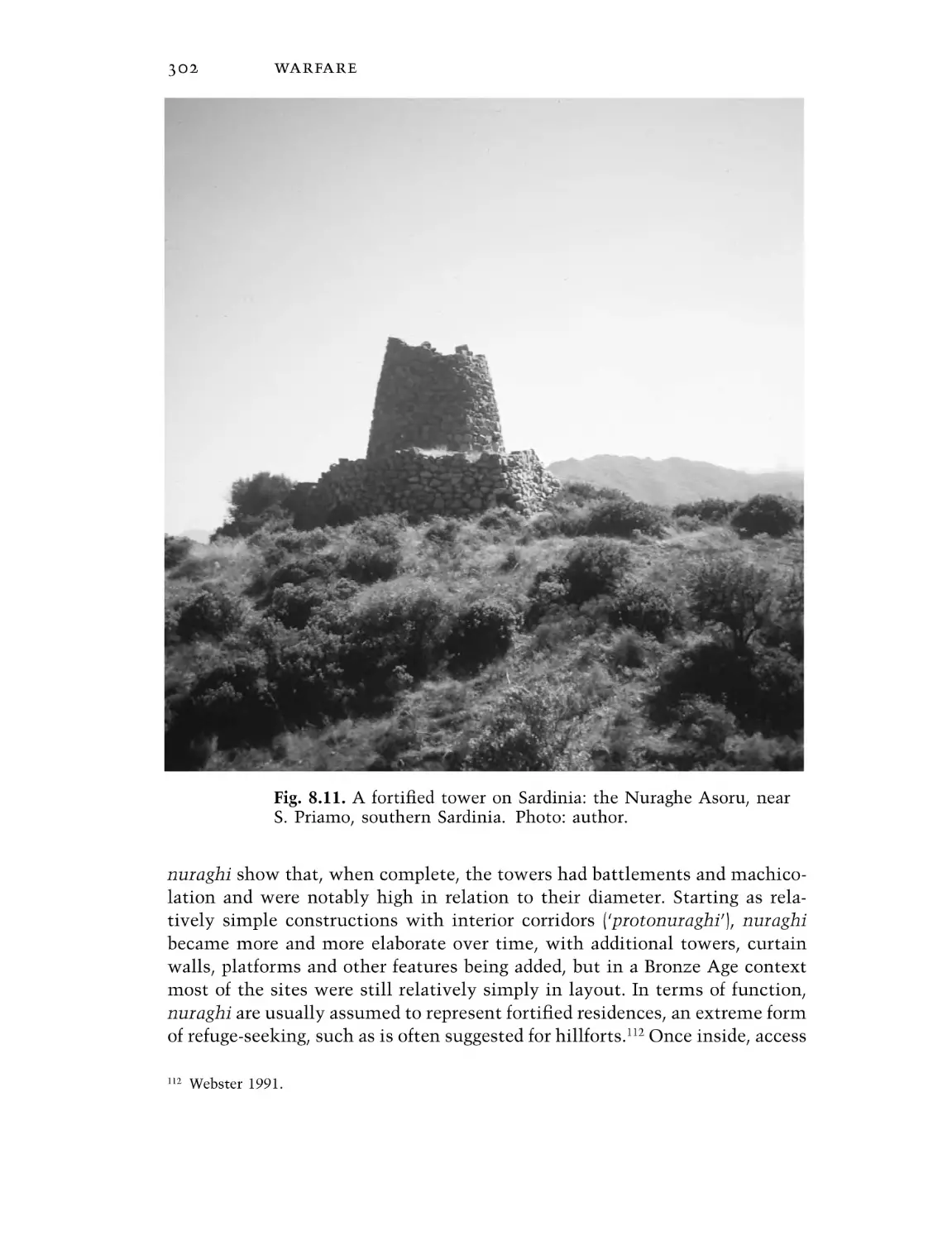
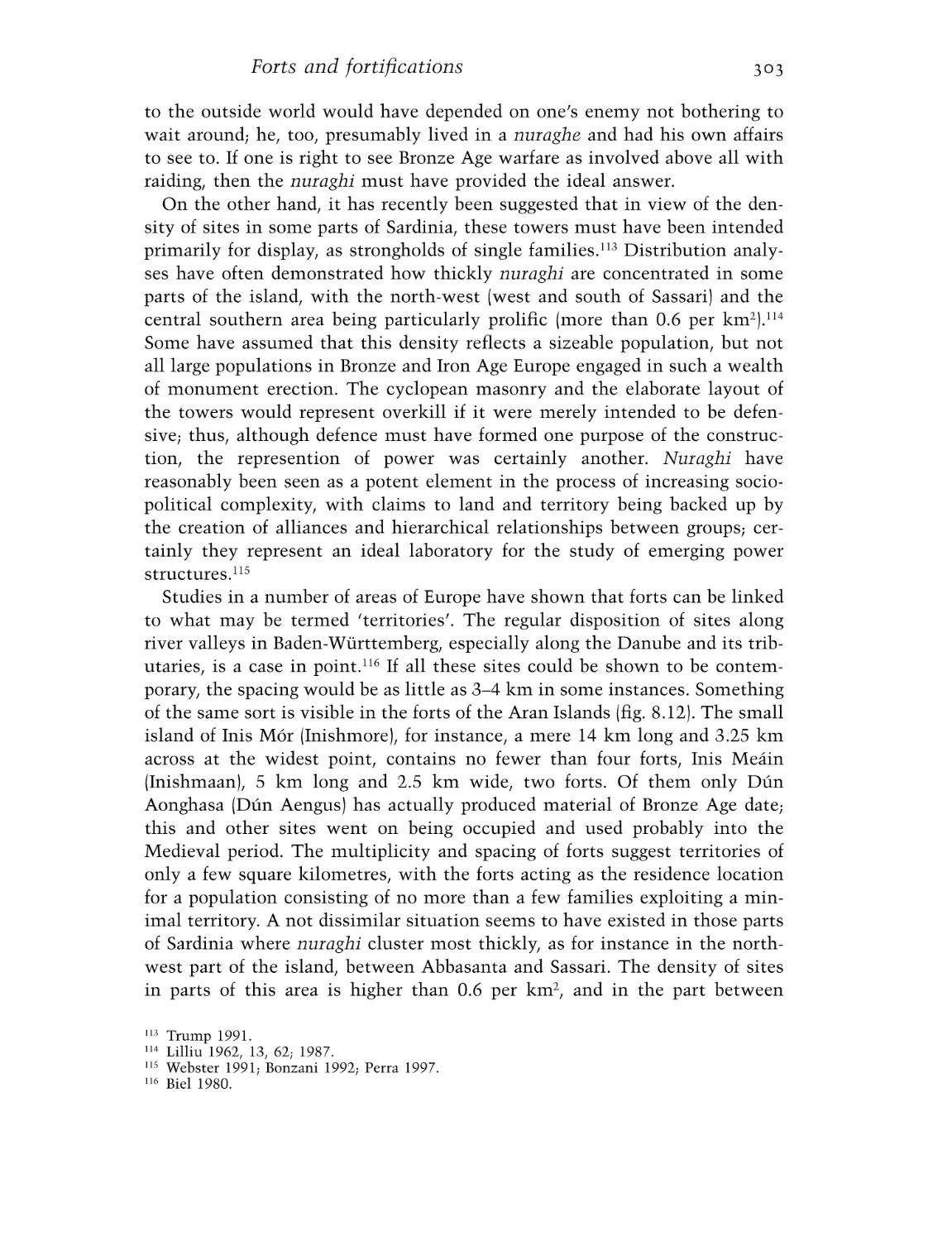
A fortified tower on Sardinia: the Nuraghe Asoru
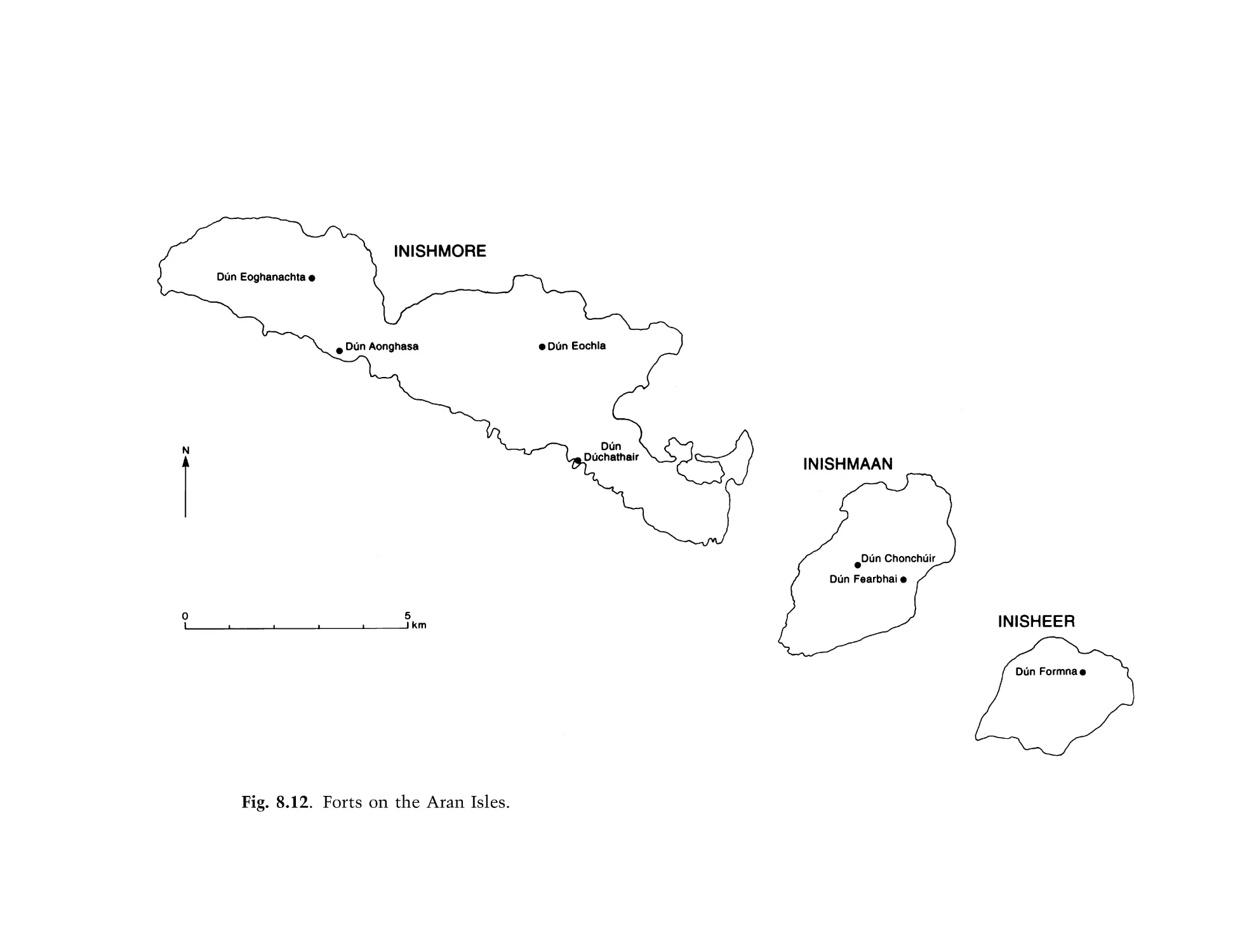
Forts on the Aran Isles
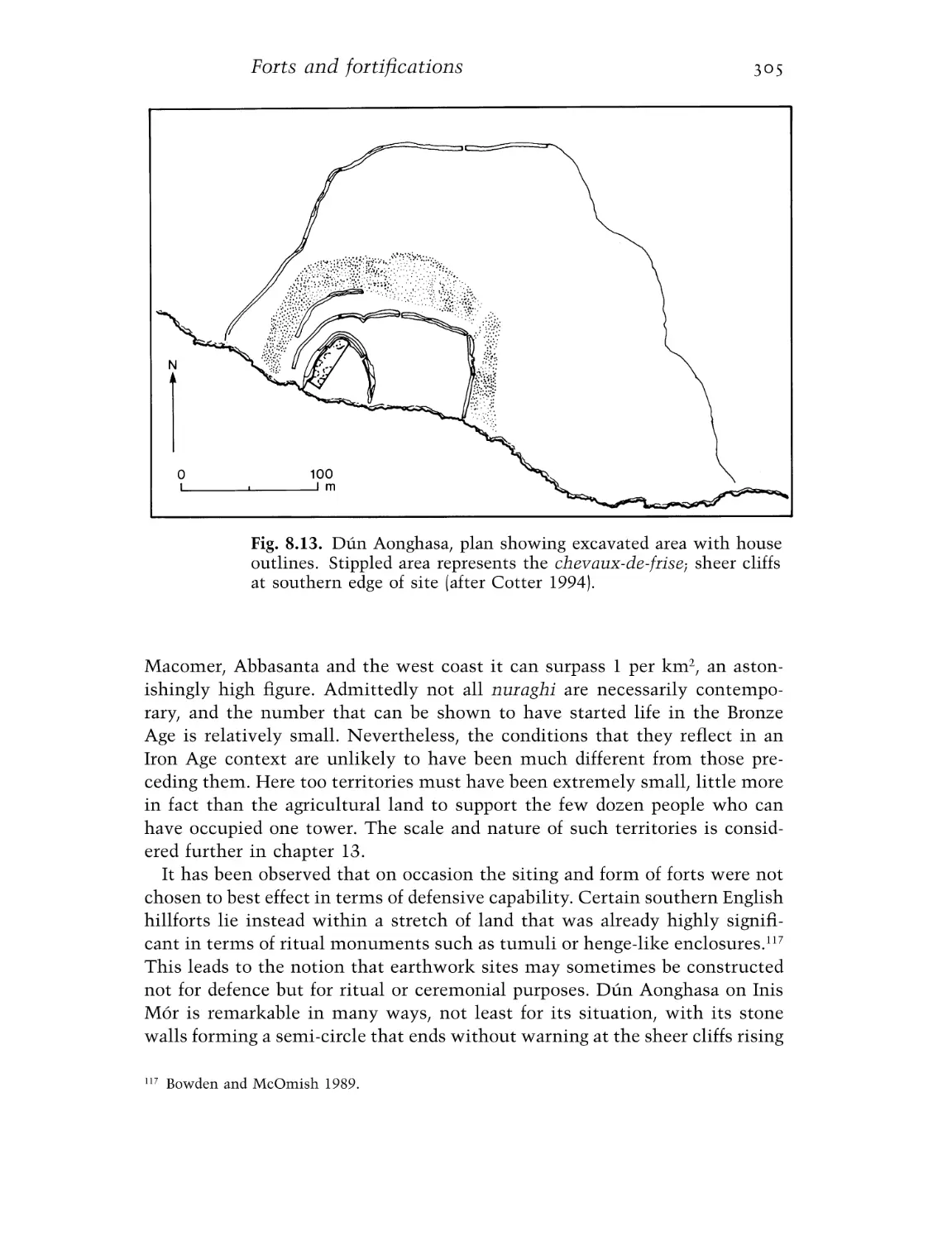
Dún Aonghasa, plan showing excavated area with house
outlines
Bronze Age cult installations
Pits and shafts
Wells on Bronze Age sites
Caves with Bronze Age occupation
Bronze Age wooden figures
Human and animal clay figurines
The percentage representation of different categories
of object from moorland and from the Rhine near
Mainz
Bronze horns from Drumbest, Co. Antrim
The average numbers of finds per year in different parts
of the Main and Rhine
Pot deposits on Bronze Age sites
The main rock-art provinces of Bronze Age Europe
The frequency of rock-art motifs in two parts of
Scandinavia
Distribution of petroglyph clusters in Stjørdal,
Nord-Trøndelag
Gold cones (‘hats’)
Early Bronze Age hoard from Dieskau, Saalkreis
The composition of the hoard from Uioara de Sus,
Romania
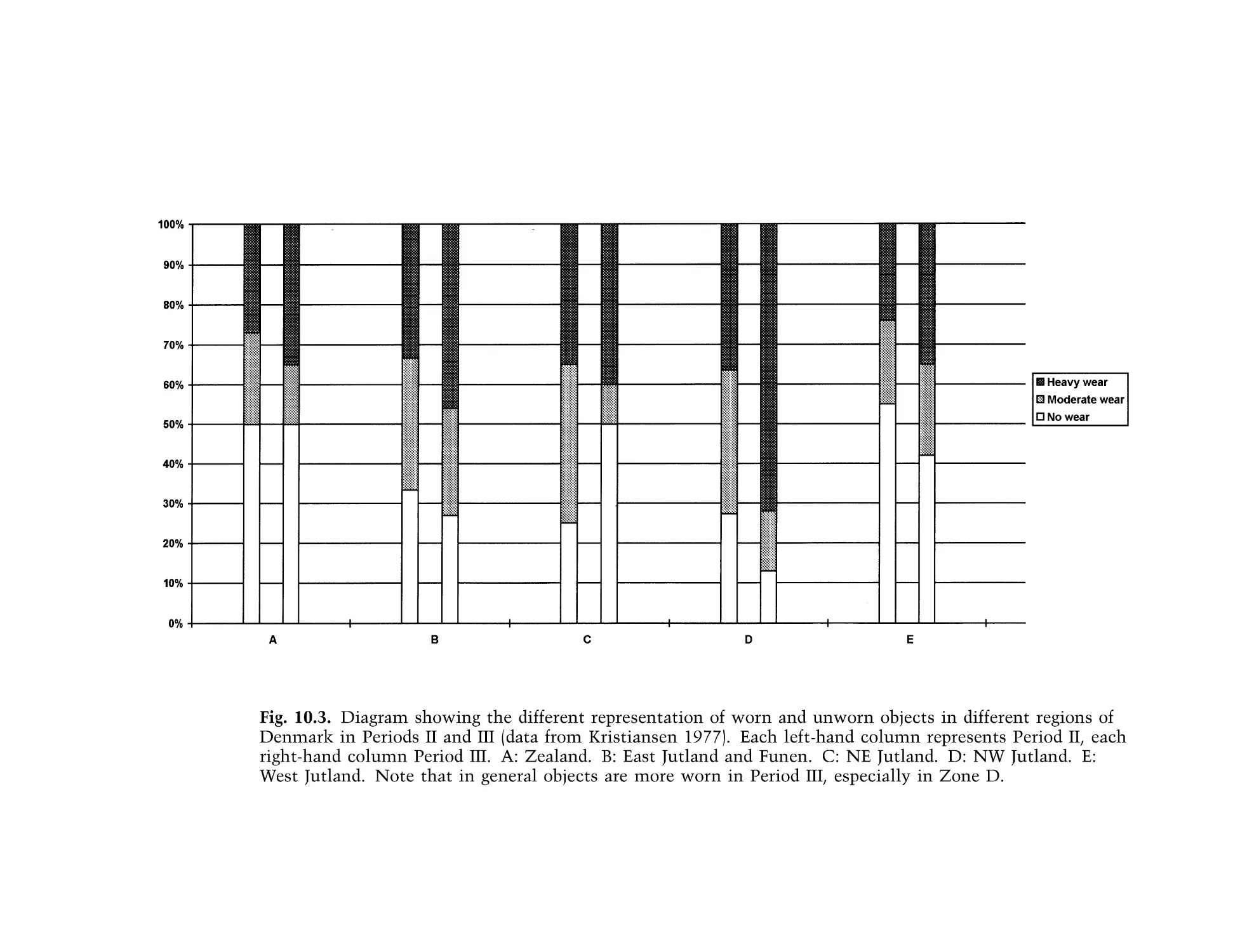
The different representation of worn and unworn objects
in different regions of Denmark in Periods II and III
Marchésieux (Manche): findspots of axe hoards
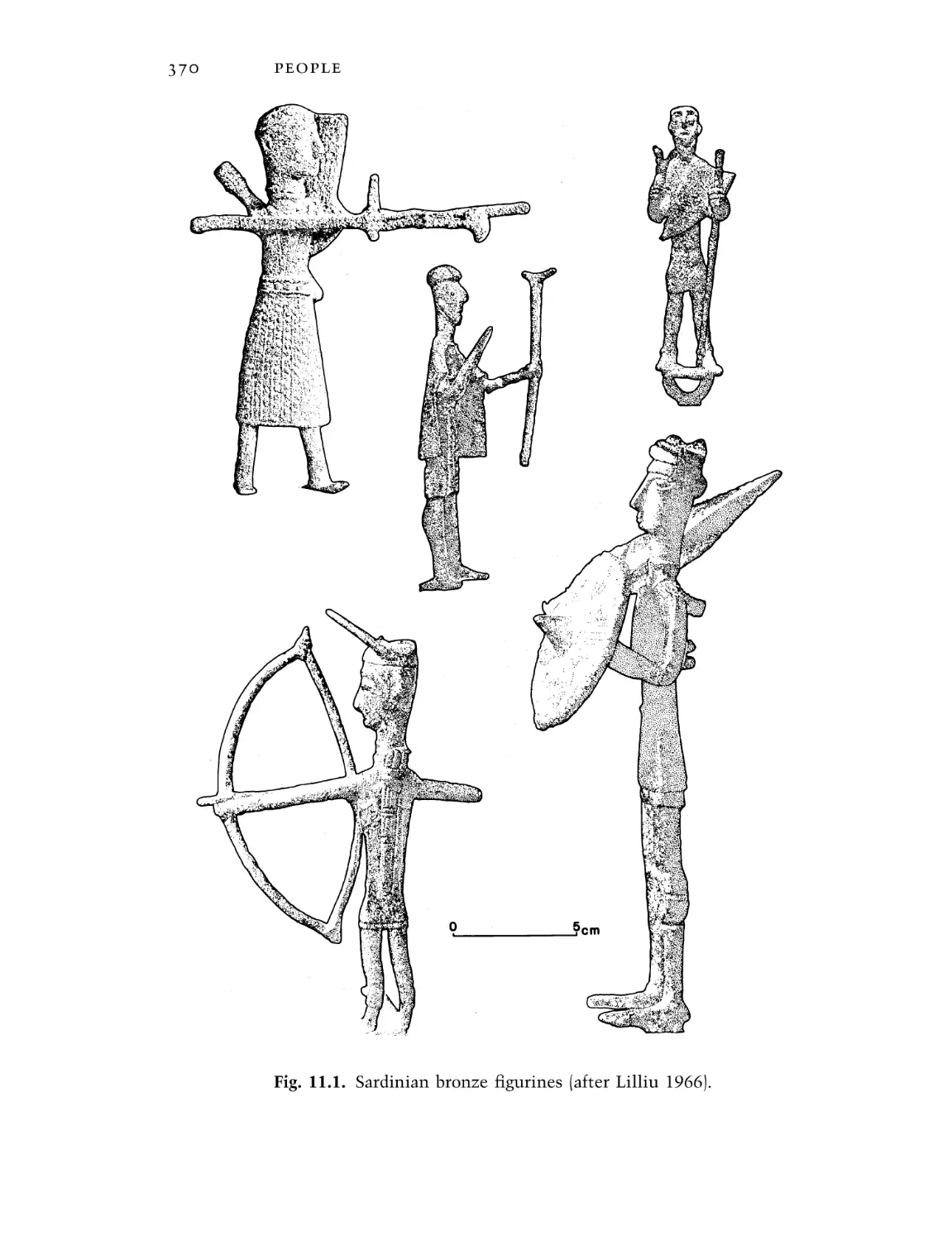
Sardinian bronze figurines
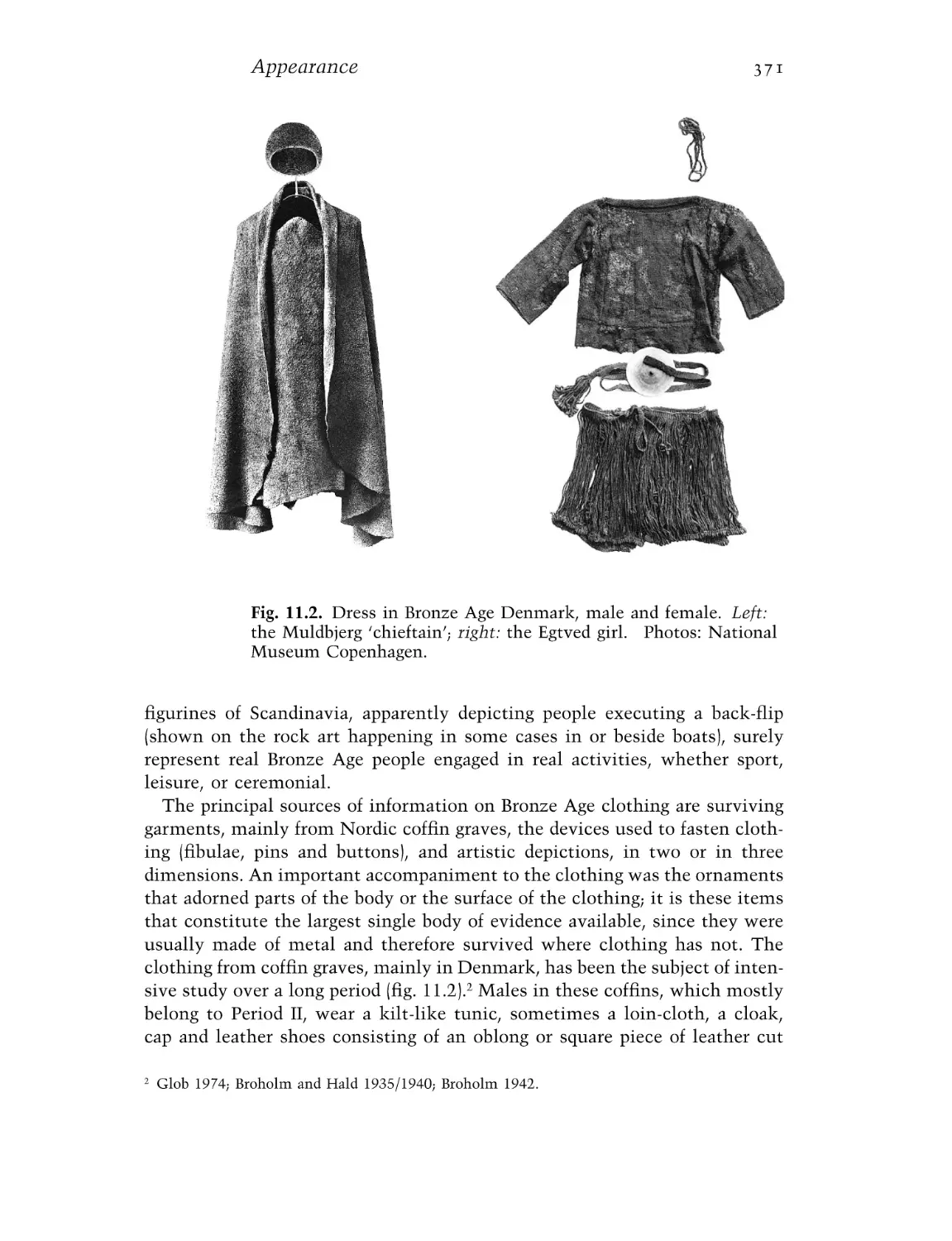
Dress in Bronze Age Denmark, male and female
Figurines and ornaments in the Carpathian Basin
Reconstructions of female ornament sets from graves
of the Tumulus culture

xi
288
290
293
294
297
301
302
304
305
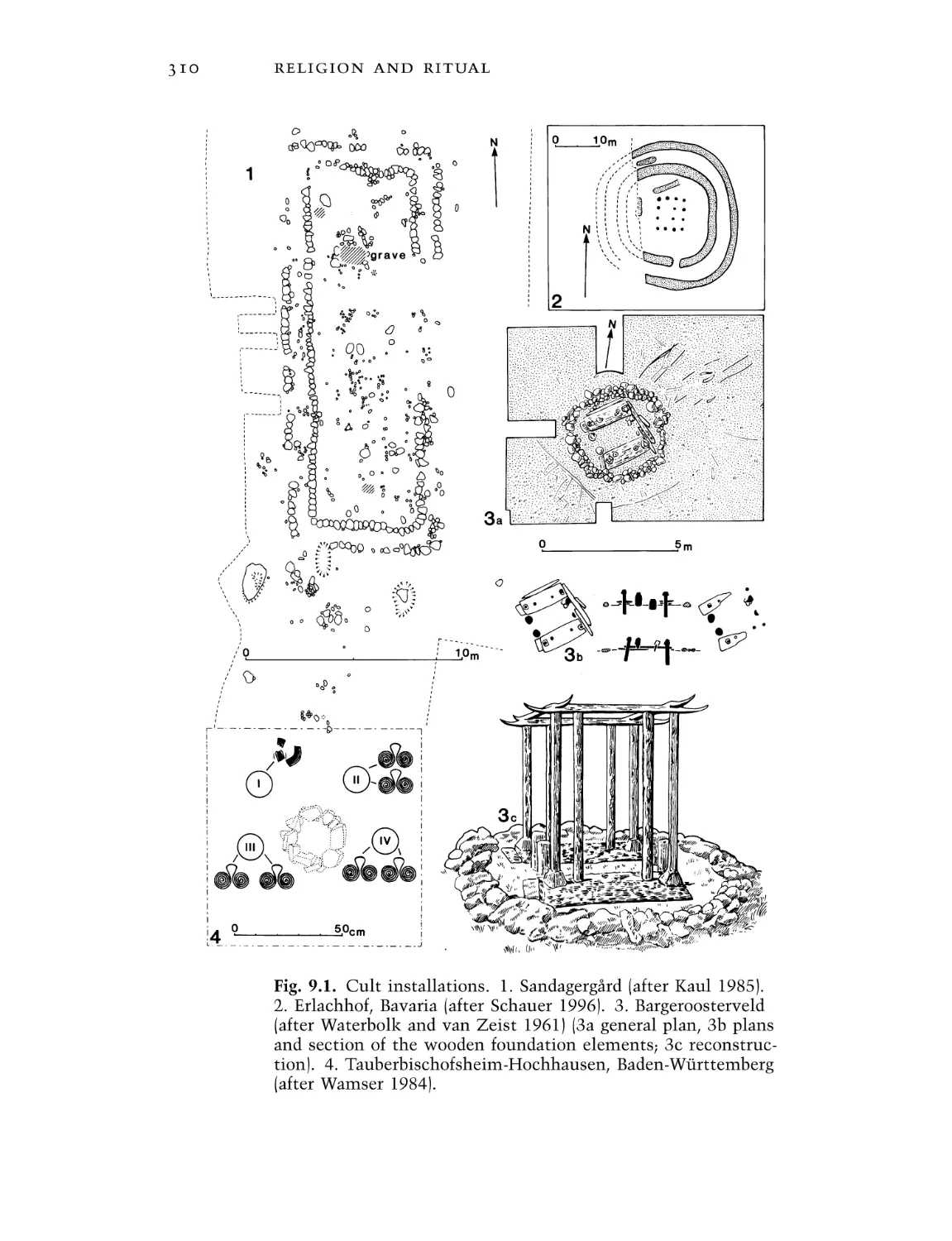
310
314
316
319
323
325

327
328
330
332
337
340
347
349
353
357
359
366
370
371
373
375

xii

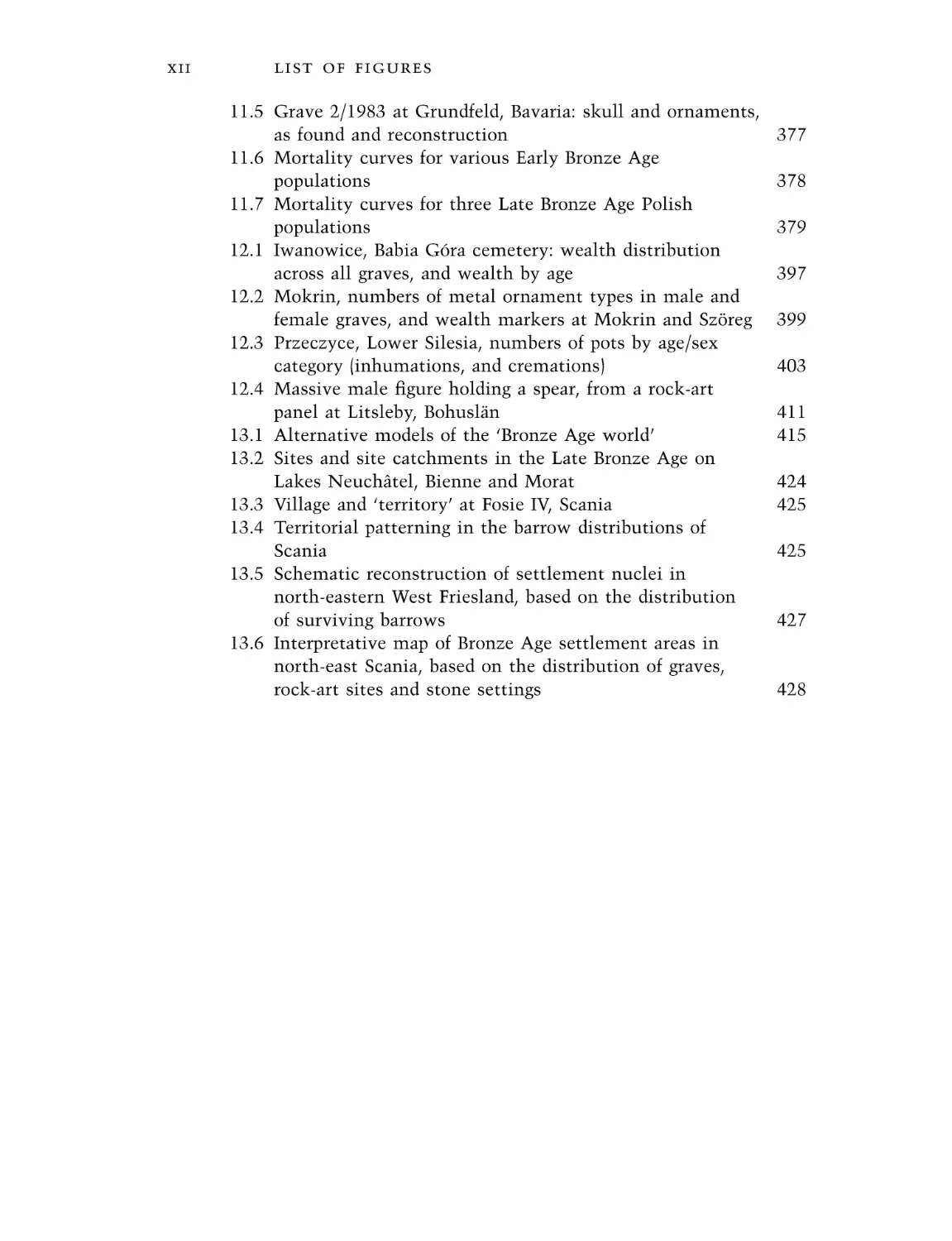
list of figures
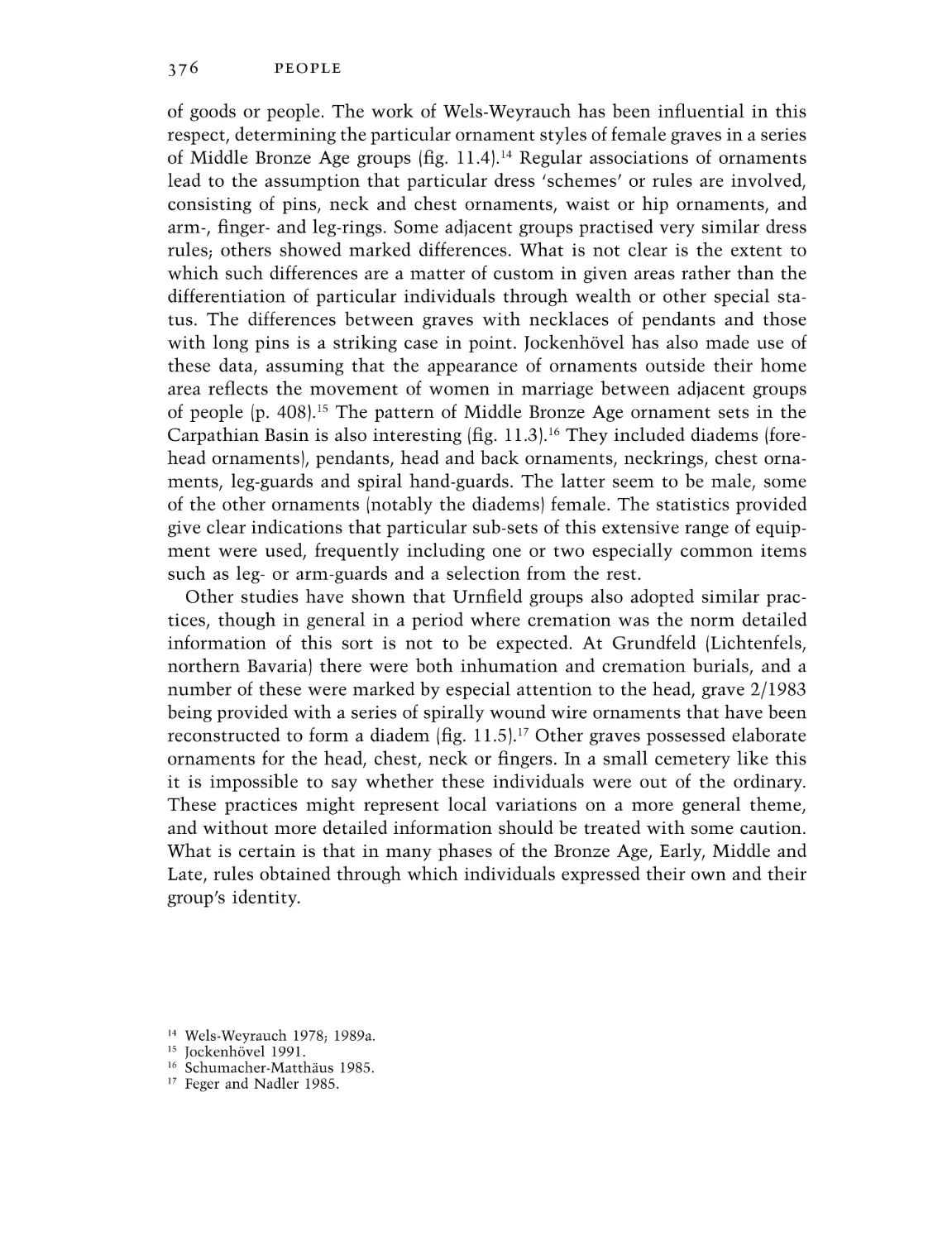
11.5 Grave 2/1983 at Grundfeld, Bavaria: skull and ornaments,
as found and reconstruction
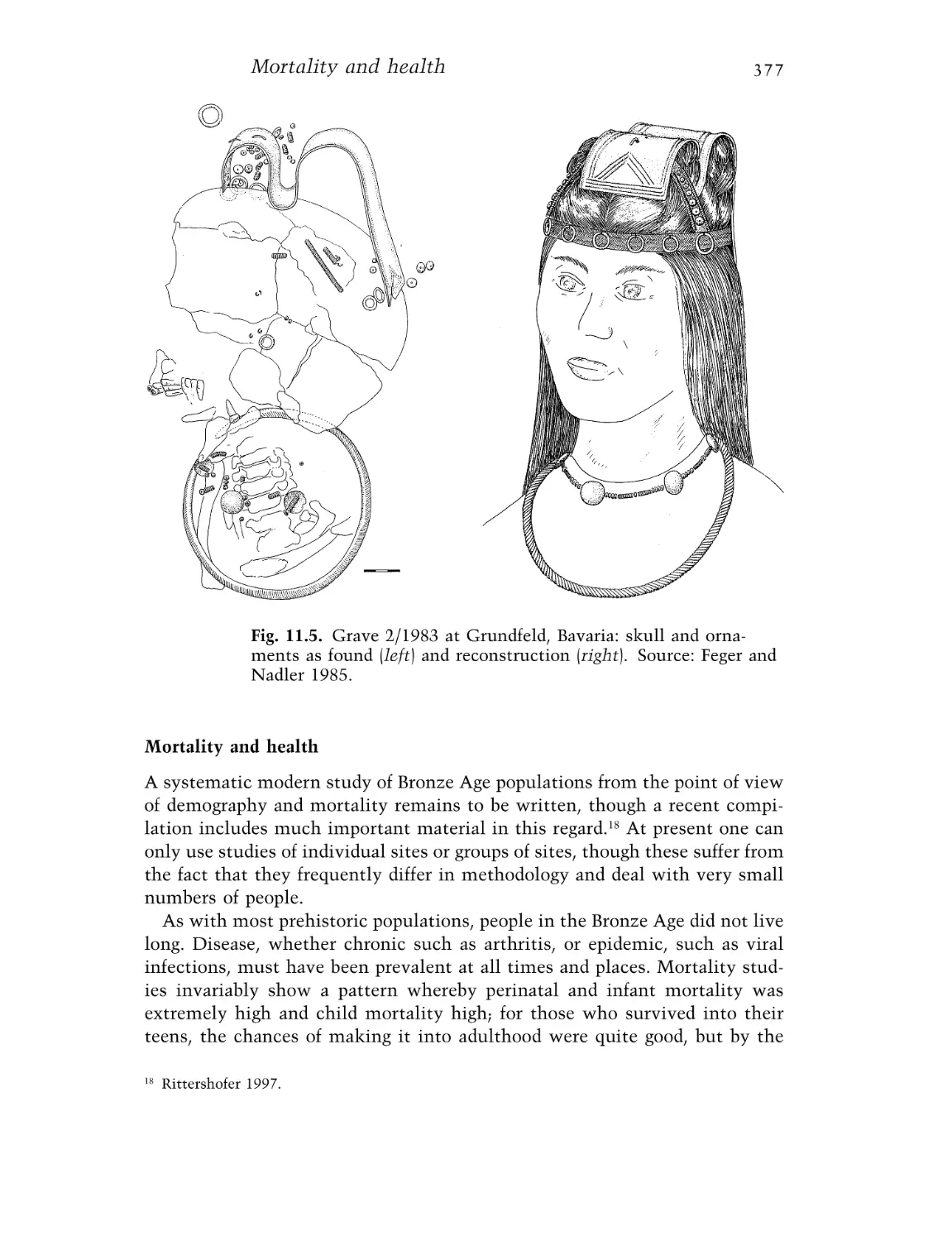
11.6 Mortality curves for various Early Bronze Age
populations
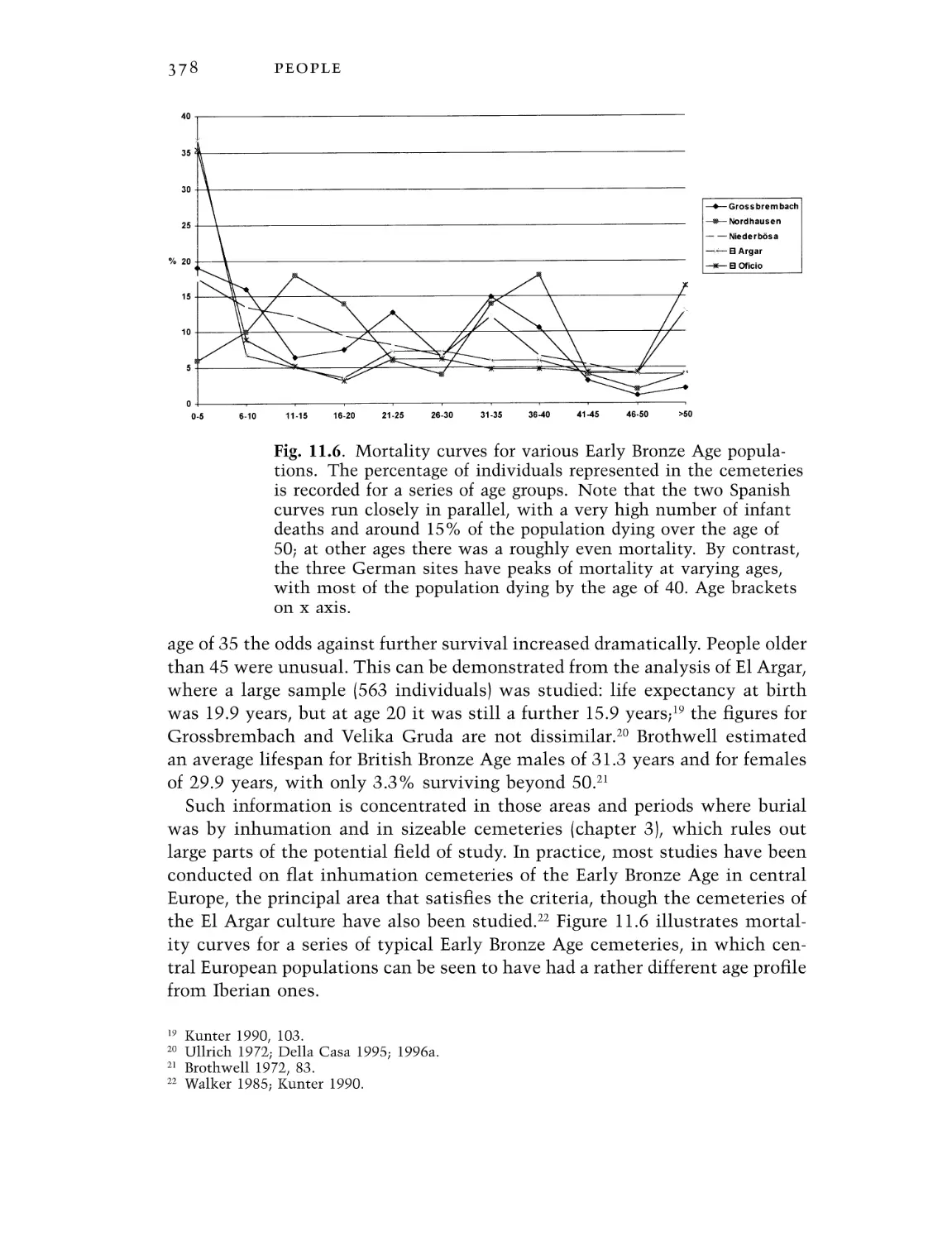
11.7 Mortality curves for three Late Bronze Age Polish
populations
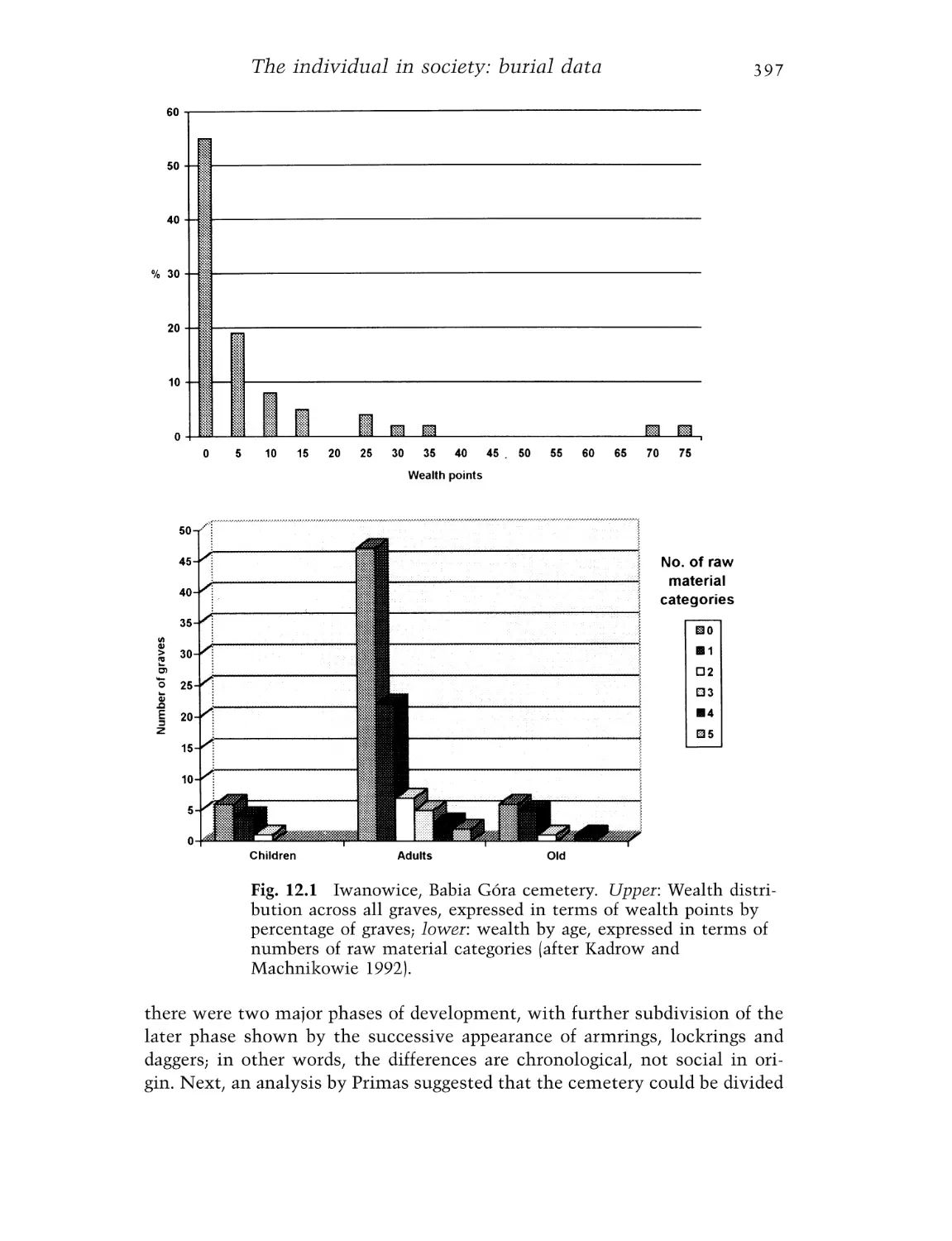
12.1 Iwanowice, Babia Góra cemetery: wealth distribution
across all graves, and wealth by age
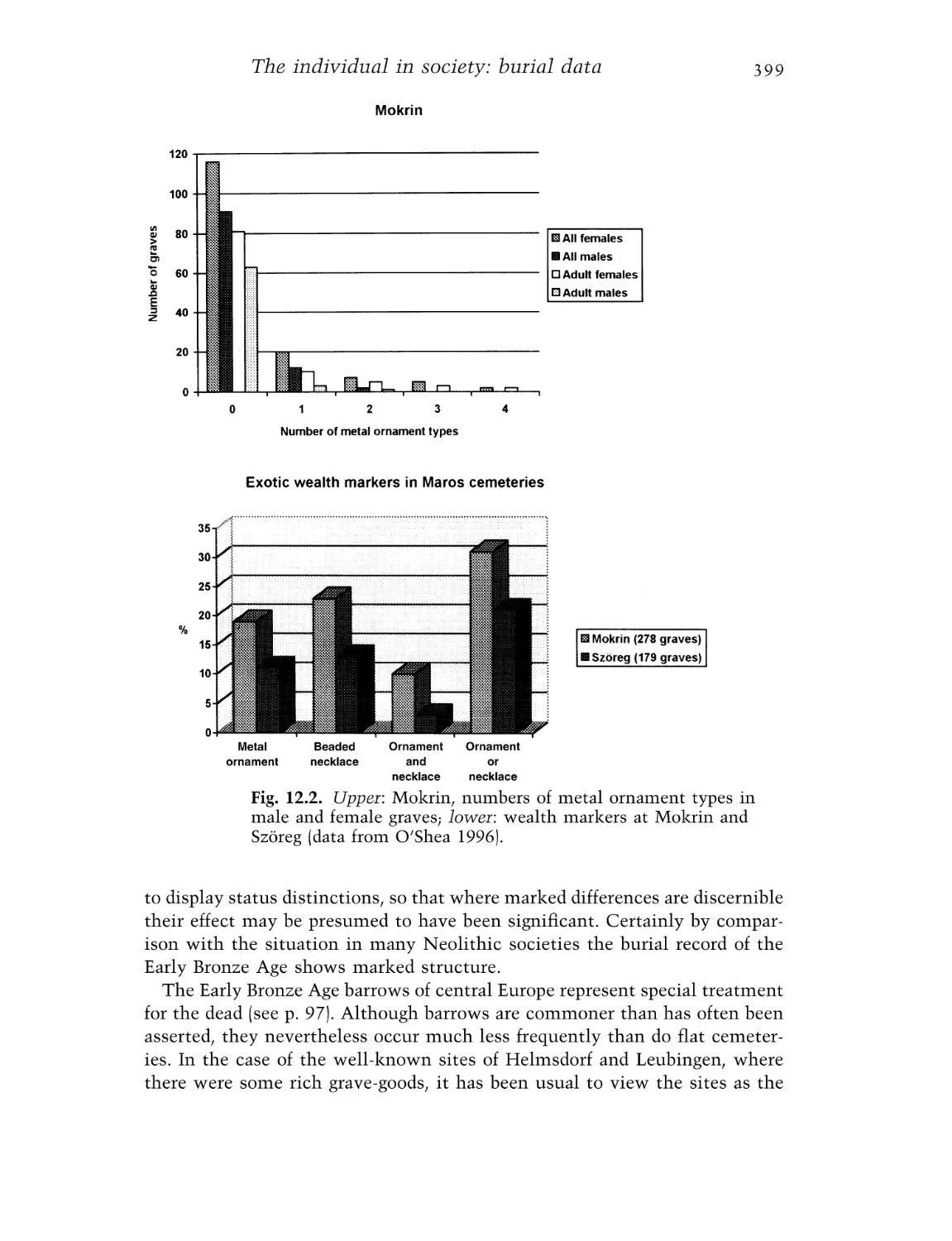
12.2 Mokrin, numbers of metal ornament types in male and
female graves, and wealth markers at Mokrin and Szöreg
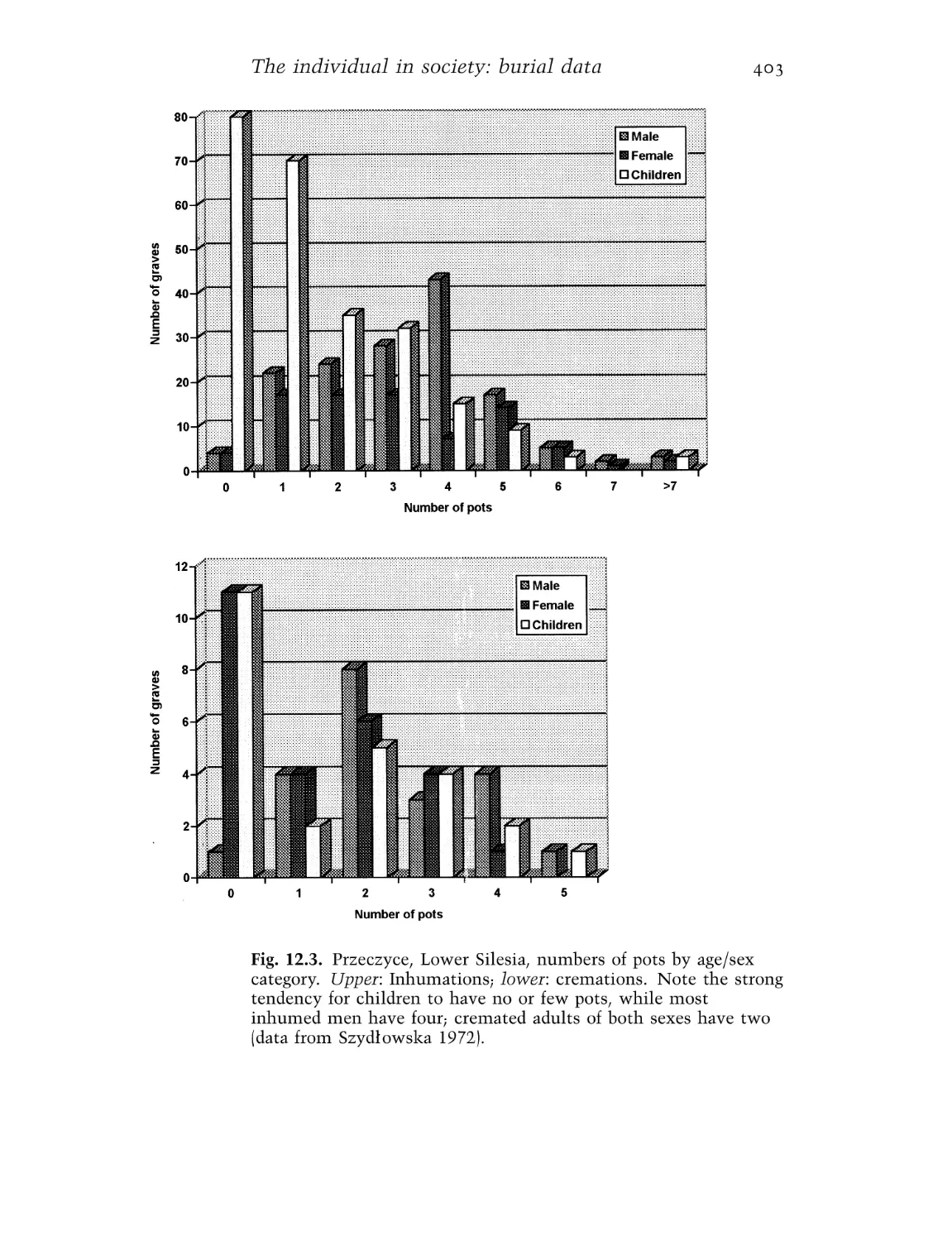
12.3 Przeczyce, Lower Silesia, numbers of pots by age/sex
category (inhumations, and cremations)
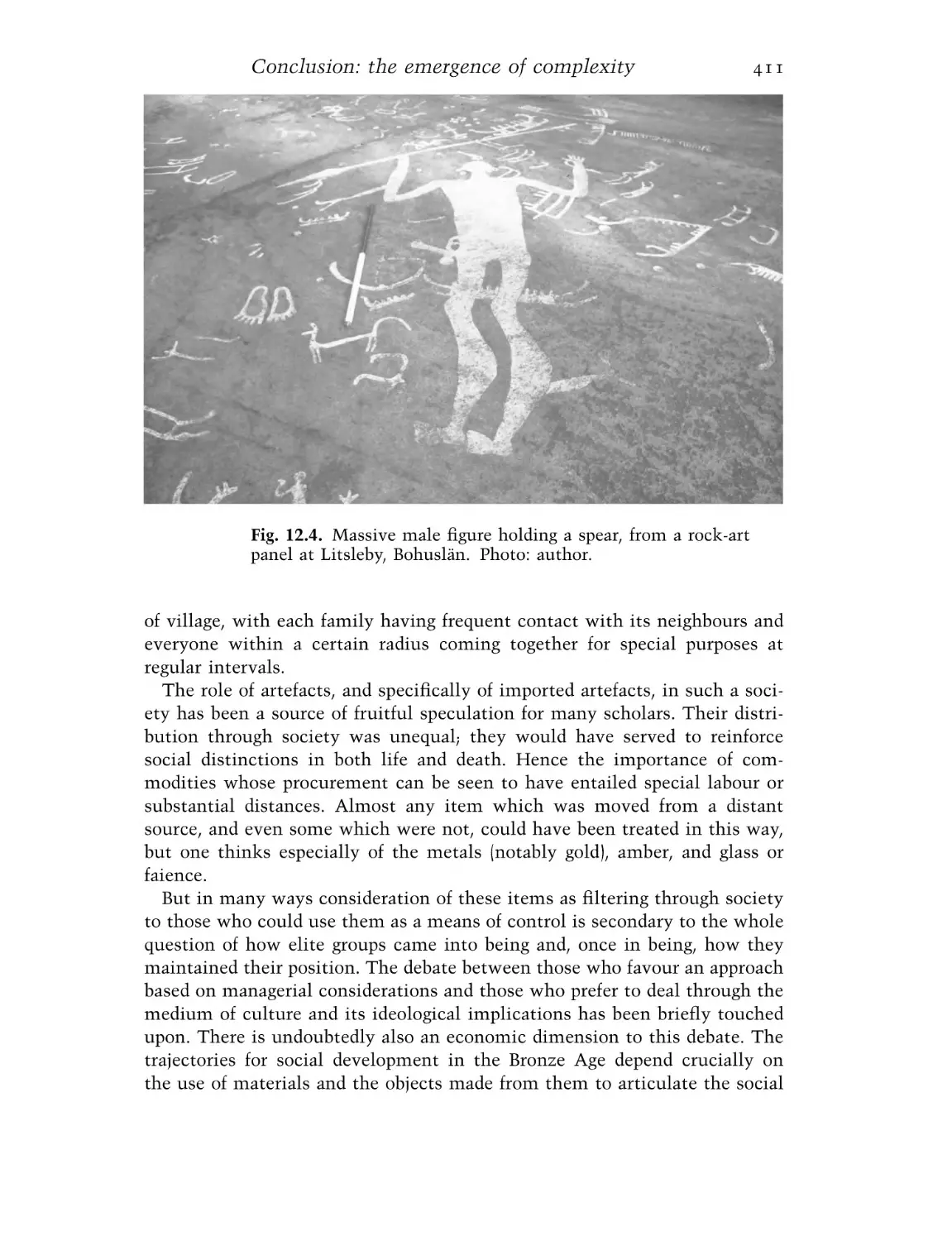
12.4 Massive male figure holding a spear, from a rock-art
panel at Litsleby, Bohuslän
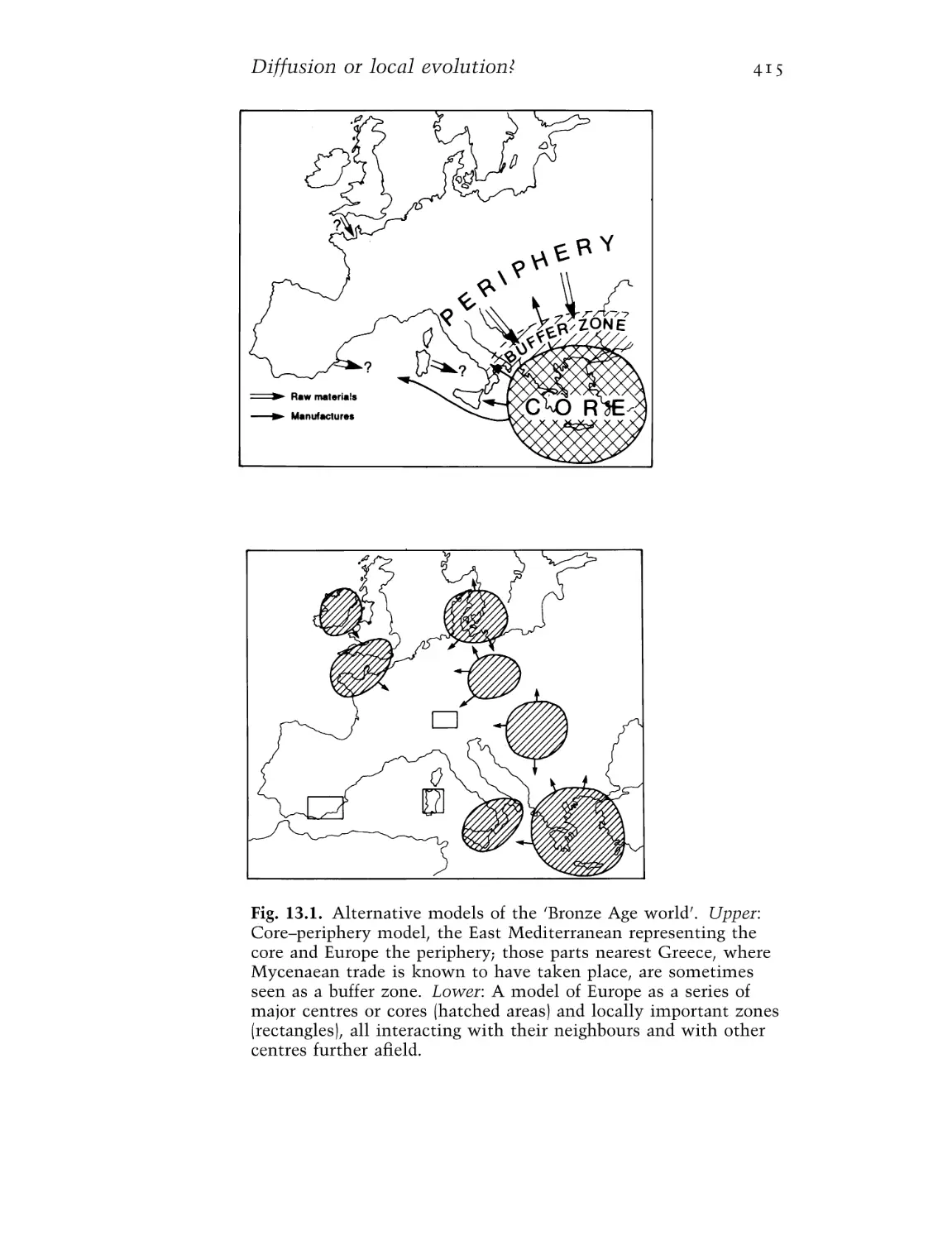
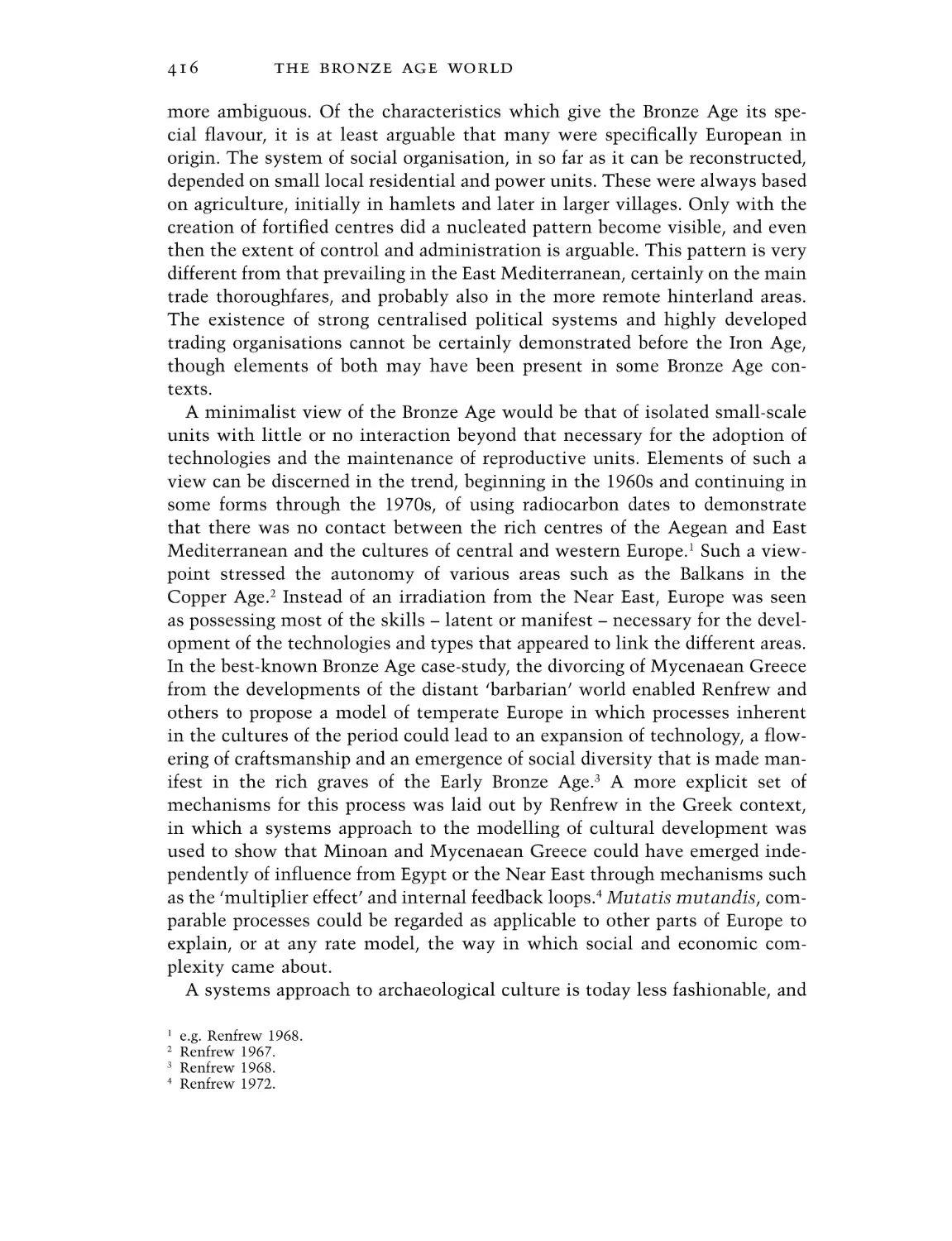
13.1 Alternative models of the ‘Bronze Age world’
13.2 Sites and site catchments in the Late Bronze Age on
Lakes Neuchâtel, Bienne and Morat
13.3 Village and ‘territory’ at Fosie IV, Scania
13.4 Territorial patterning in the barrow distributions of
Scania
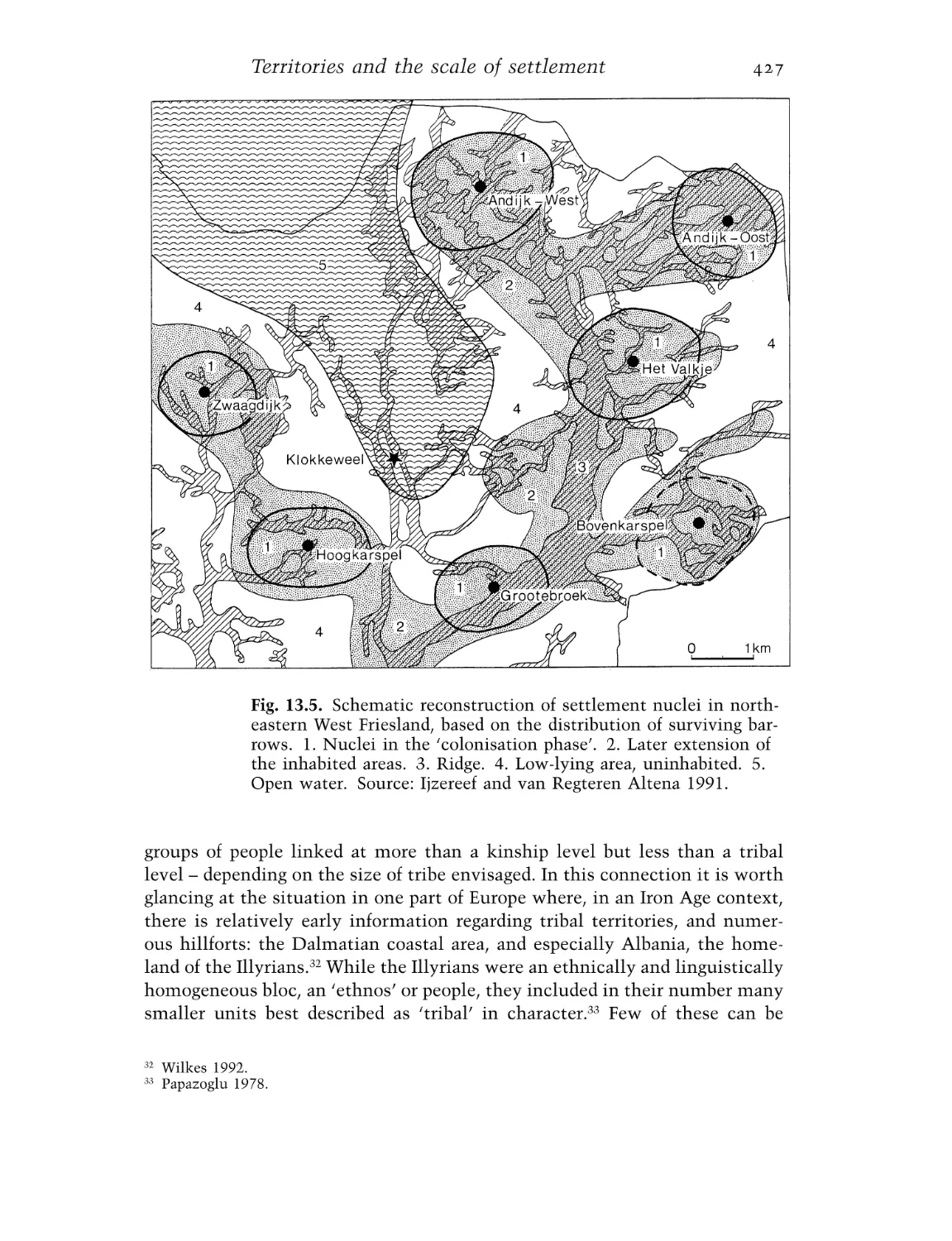
13.5 Schematic reconstruction of settlement nuclei in
north-eastern West Friesland, based on the distribution
of surviving barrows
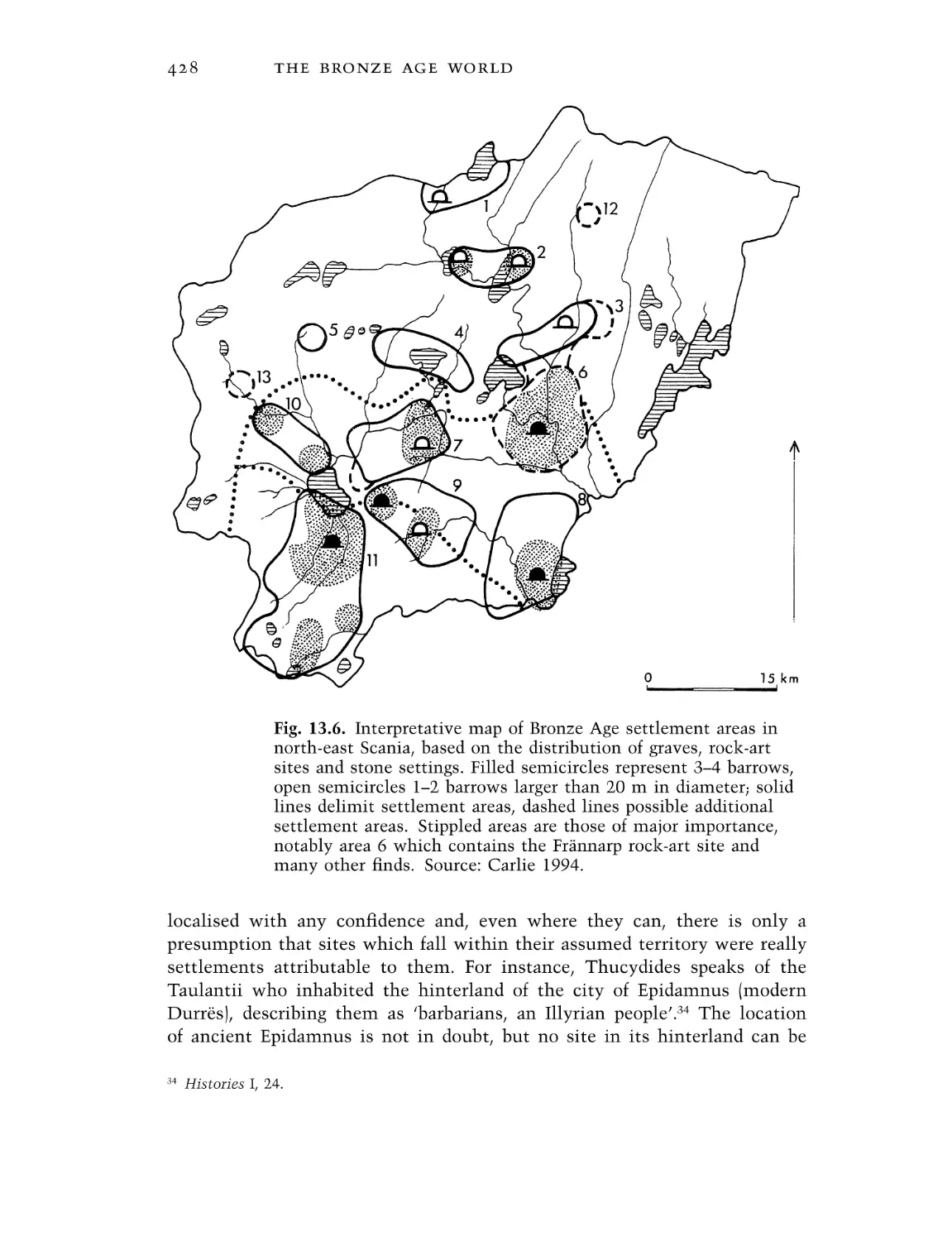
13.6 Interpretative map of Bronze Age settlement areas in
north-east Scania, based on the distribution of graves,
rock-art sites and stone settings

377
378
379
397
399
403
411
415
424
425
425

427

428

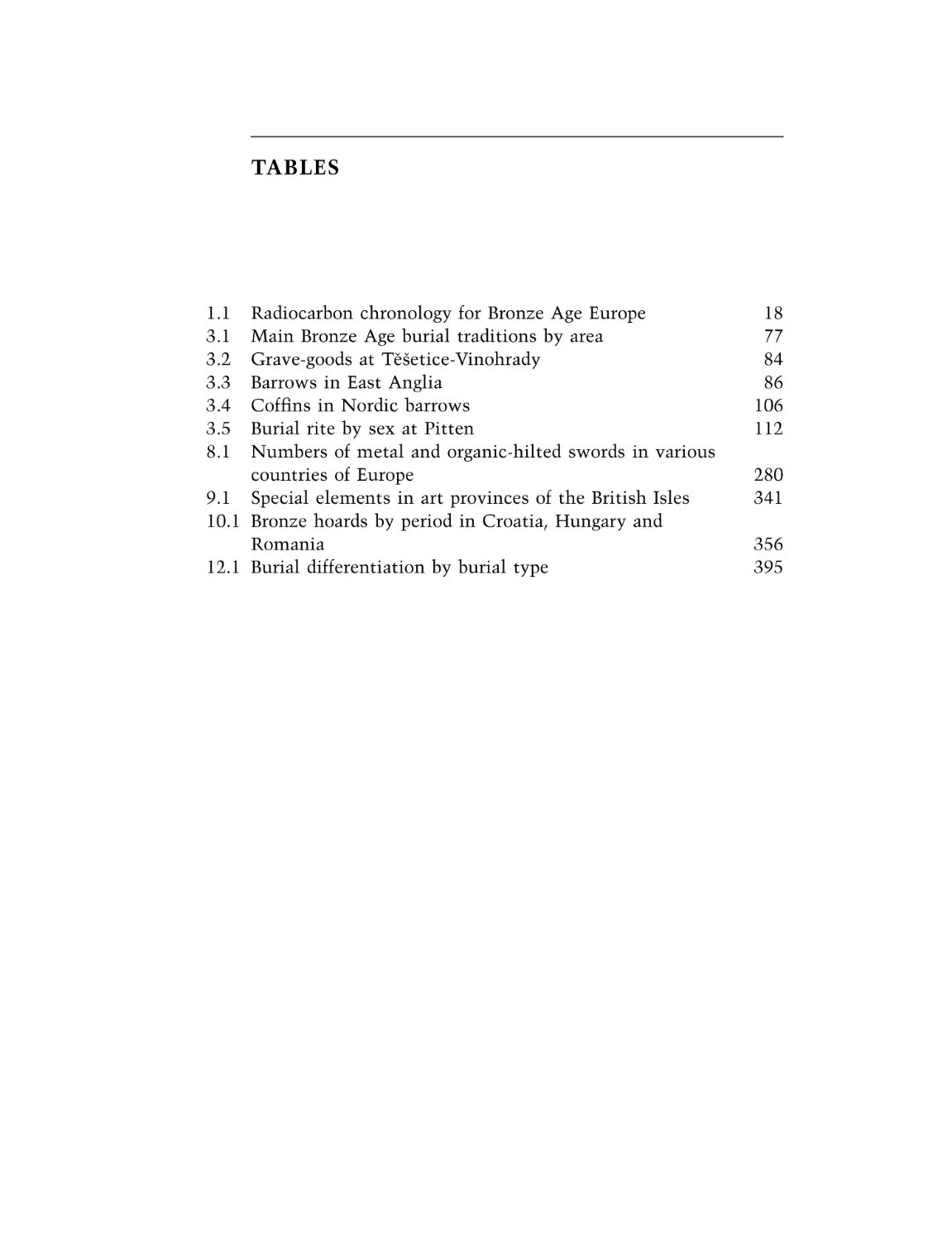
TABLES

1.1
3.1
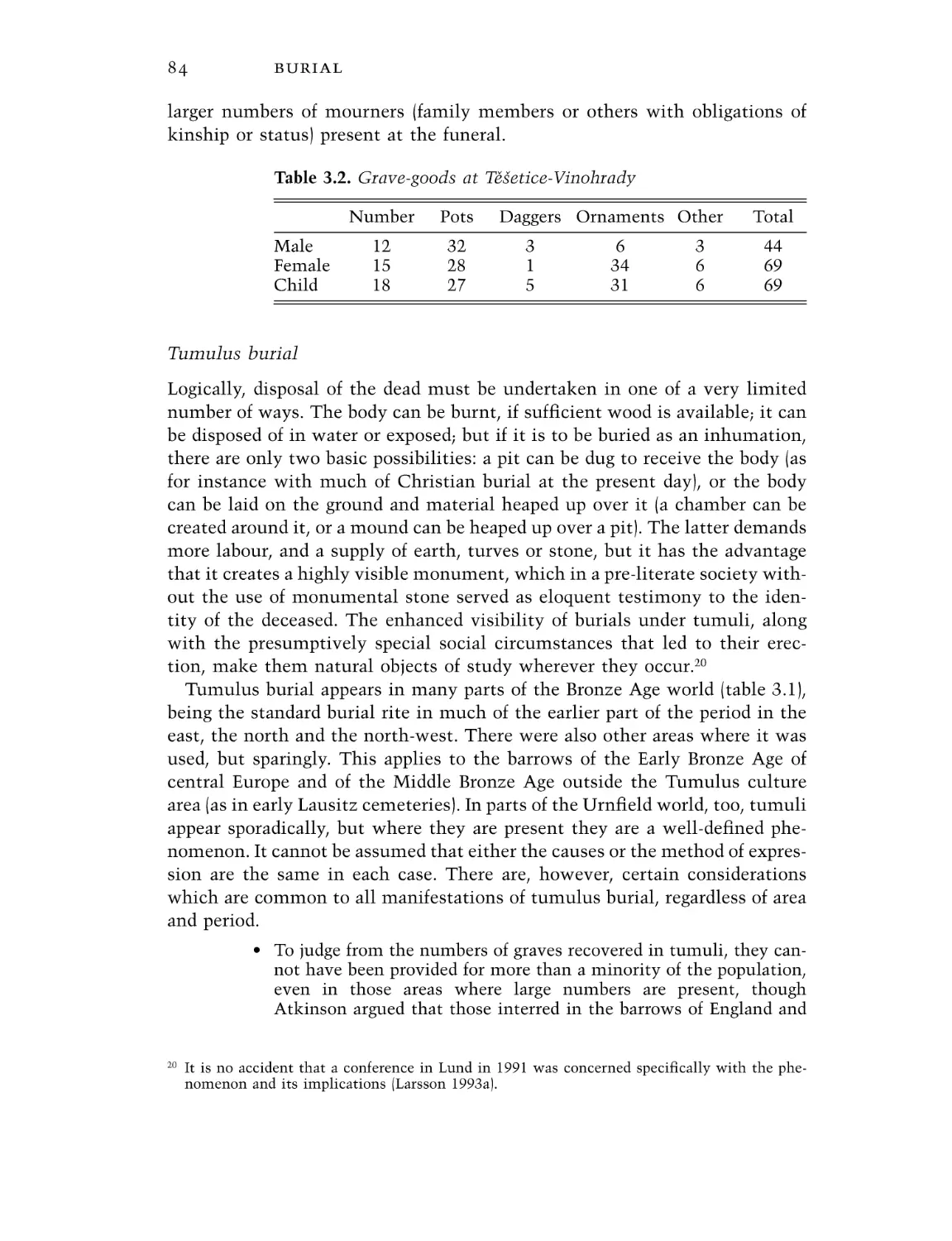
3.2
3.3
3.4
3.5
8.1

Radiocarbon chronology for Bronze Age Europe
Main Bronze Age burial traditions by area
Grave-goods at Těšetice-Vinohrady
Barrows in East Anglia
Coffins in Nordic barrows
Burial rite by sex at Pitten
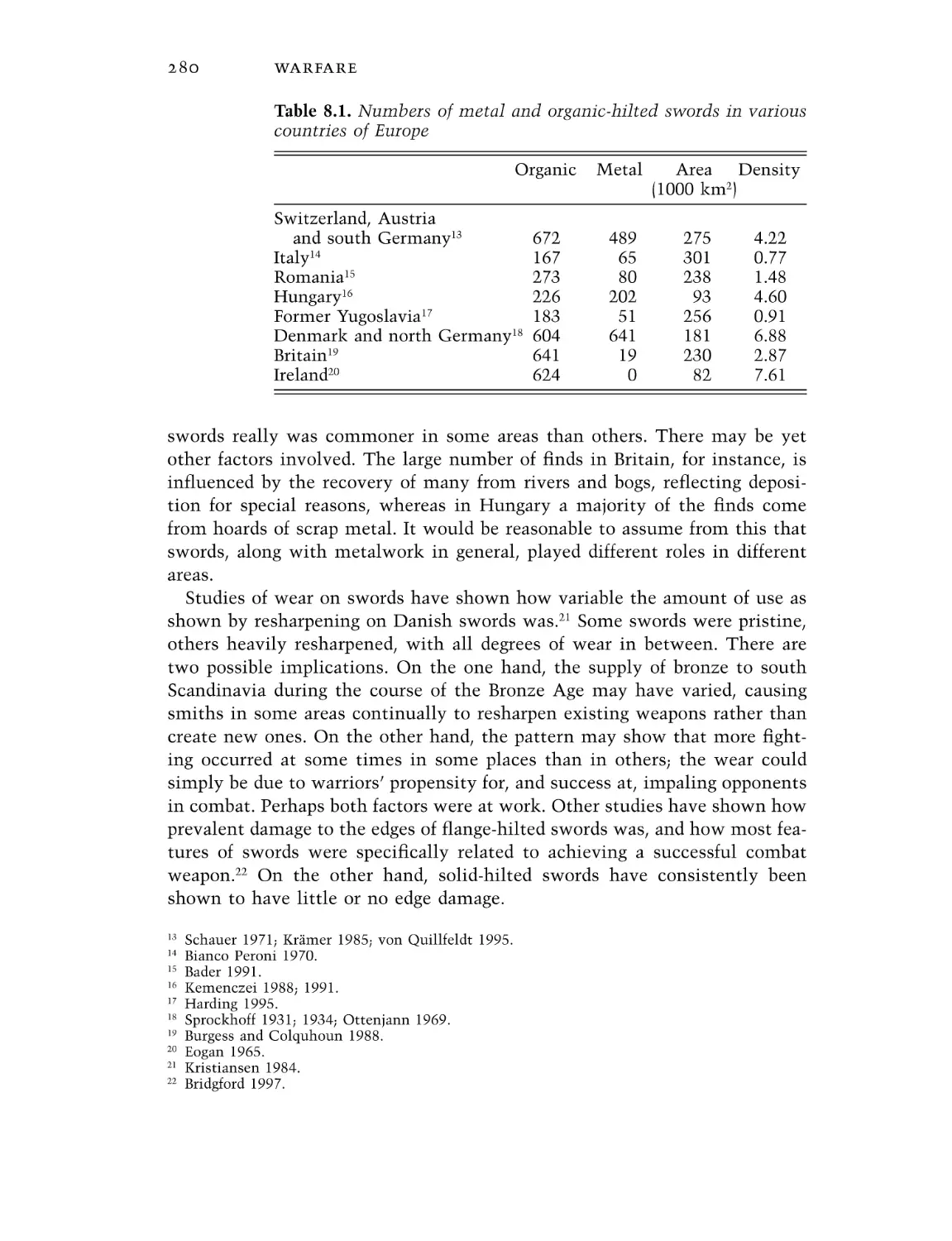
Numbers of metal and organic-hilted swords in various
countries of Europe
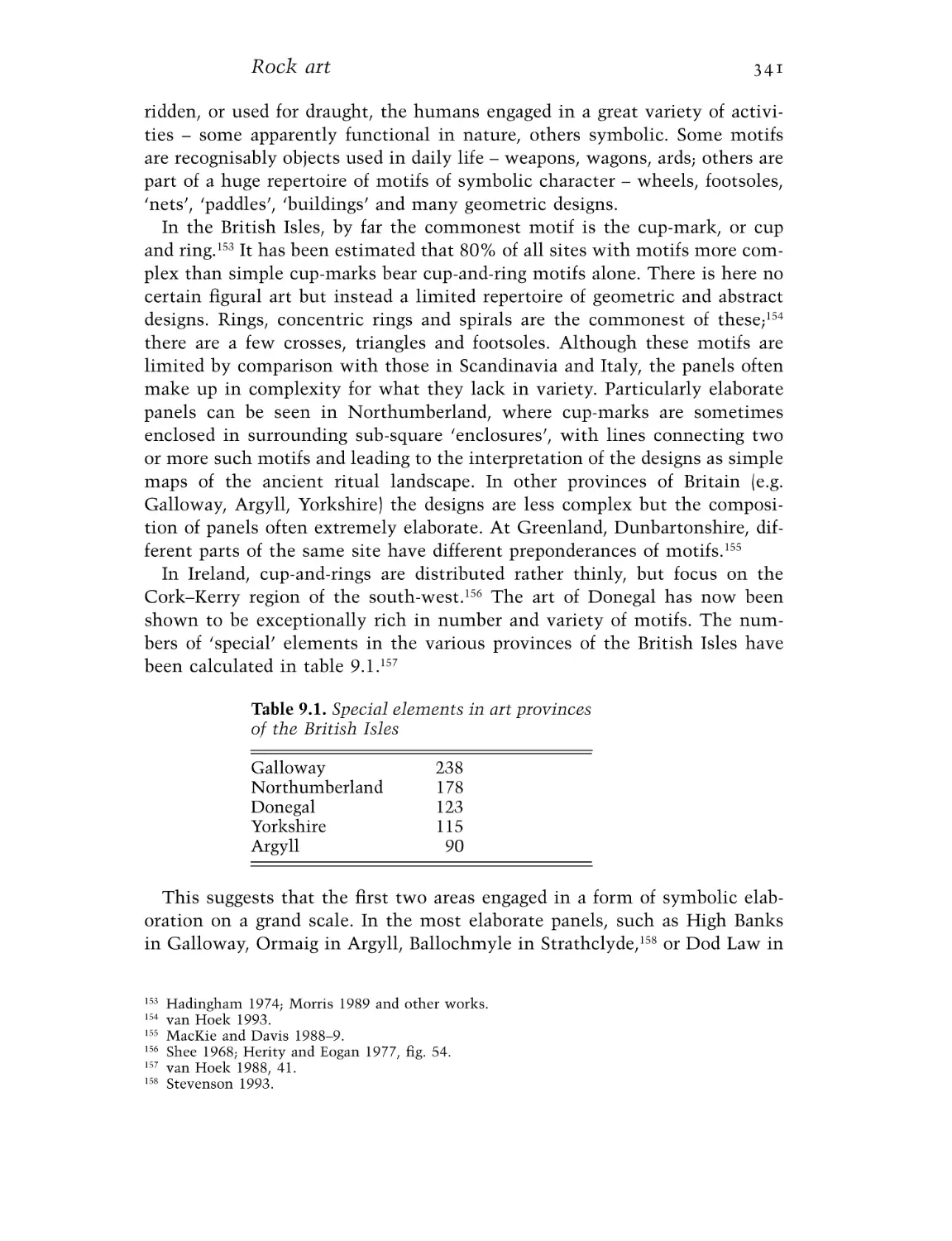
9.1 Special elements in art provinces of the British Isles
10.1 Bronze hoards by period in Croatia, Hungary and
Romania
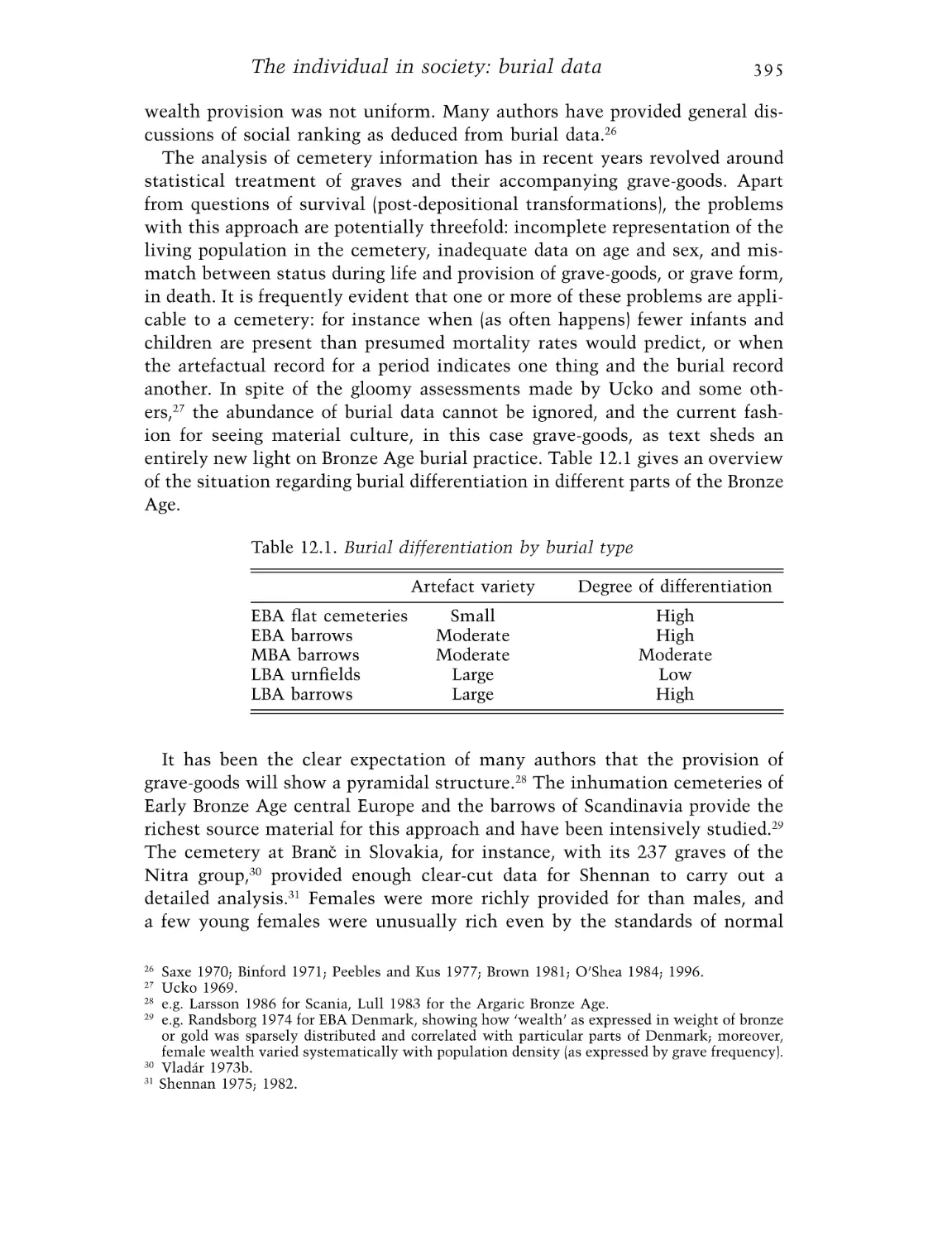
12.1 Burial differentiation by burial type

18
77
84
86
106
112
280
341
356
395

PREFACE

The origin of this book lies in the publication and reception of an earlier work
on the Bronze Age, The Bronze Age in Europe (1979), which J. M. Coles and
I wrote in the mid-1970s. The work represented the first attempt to give a
continent-wide (if necessarily superficial) account of a complicated set of
materials, and remains the only such work. Though the critical reception was
on the whole favourable, it rapidly became evident that as a tool for understanding the Bronze Age it was of limited use, framed as it was around a
descriptive approach to the culture sequence in each area of Europe. In spite
of this, many people continue to ask whether a revised edition of The Bronze
Age in Europe will be produced. The answer is that, though it may be needed,
the enormous amount of work which would be necessary to bring it up to
date would be quite beyond the powers and wishes of its authors, who have
other tasks to fulfil and interests to pursue.
Instead, I have felt for a number of years that what would be of much more
use would be a work which sought to analyse different aspects of the Bronze
Age on a thematic basis. Other commitments prevented me from starting it
until 1994, and as I have proceeded I have often felt that the enterprise was
a rash one. For a start, the sheer volume of material that has been produced
in the last twenty years, and continues to pour out, is staggering. The reader
will note from the References that the great majority of items listed date from
the period since 1979 (which is not to say that works before this date are
superseded; some of the more important can be found referenced in Coles and
Harding 1979). Had I known prior to starting work how vast the literature
would prove to be, I might have thought again.
But this is just a question of quantity. What has given me far more pause
for thought is the question of coverage, and the value of generalisation. I used
to think that many processes and phenomena present in the Bronze Age were
much the same across all of Europe, and that therefore one could write a
story for the period that would give a satisfactory and satisfying account valid
for most areas. Such an assumption was, of course, ridiculously naive and
hopelessly ignorant. As I have read, visited sites, and talked to practitioners,
I have come to realise how complex the situation really was, and how difficult
– invalid, indeed – generalisation is.
Nevertheless, I do attempt in what follows to discern common patterns in

xvi

preface

what people were creating and doing in the Bronze Age. Dissimilarities are
just as important as similarities in this respect. Why did people in Britain
react to much the same environment so differently from people in France?
How did it come about that identical bronze forms were adopted from one
end of Europe to the other at the start of the Late Bronze Age? While I cannot promise to answer such questions, I do at least feel it is worth asking
them.
The book attempts to cover the whole of Europe, but inevitably it deals
more with some areas than others. In part these reflect my own biases and
knowledge, but they do also stem from the fact that better and more recent
work has been done in some areas than others. It will rapidly become evident that Britain, Scandinavia and central Europe are the areas most often
cited for examples, though I have tried to use appropriate examples from every
part of the continent. I confess to almost total failure as far as the more eastern areas are concerned, but this is not entirely through lack of knowledge
(see chapters 3 and 8 in The Bronze Age in Europe); I have found little sign
of recent high-quality work in, for instance, Russia which would merit significant inclusion here. The relative shortage of Mediterranean examples is
a failing all my own, which I admit in the full realisation that much excellent work has been carried out in Iberia and Italy in recent years. But just to
have given the island of Sardinia the attention it deserves would have greatly
extended this book, as Webster’s recent synthesis (1996) makes clear. I do not
expect to escape censure for such failings, though I would plead in mitigation that there is a limited number of case studies which it is practical to
introduce into a book of this length, and since my concern has been, among
other things, to discern the presence or absence of patterning in the data available, it would not have been appropriate to use isolated and disparate examples from all over Europe. The reader will judge whether or not I have been
successful in this enterprise, but I hope she/he will not feel the enterprise to
have been worthless in the first place. Though both ‘Europe’ and ‘the Bronze
Age’ are constructs, they serve a purpose in communication (as I explain on
p. 4), and I would contest the importance of this particular period of time in
this particular continent against all comers.
It is my pleasurable duty to record the names of the many people who have
helped me during the arduous process of writing this book. The unstinting
generosity of fellow-students of the Bronze Age never ceases to amaze me,
offered out of pure altruism (as far as I can tell) and leading me to think that,
contrary to popular belief, there is such a thing as a free lunch. My duties at
work in recent years, and other academic and family commitments, have not
permitted me the time to undertake extensive museum and site tours of the
sort that preceded the writing of The Bronze Age in Europe, but regular contact with leading scholars has done much to fill the gap.
I am extremely grateful to Kristian Kristiansen for lending me a manuscript

Preface

xvii

of his book Europe before History (1998) considerably before publication. I
have read and profited from this work, and its general ideas have without
doubt influenced me; but I have refrained from making detailed use of it, and
quoting it, because its approach to the same material is very different from
mine, and I wanted to be sure to avoid any suspicion of plagiarism – or even
copying of the same sources (most of which were, of course, already familiar
to me). Kristiansen has a particular view of the period to present, and he has
selected his material to suit that view; my concern has been to paint some
sort of whole picture, using theoretical ideas while still mostly dealing with
the artefactual data. Just before submission of this book to the press, I saw
Marisa Ruiz-Gálvez Priego’s book La Europa atlántica en la edad del bronce
(Barcelona, Crítica, 1998). This work will clearly be an invaluable guide to
the western end of Europe in the Bronze Age, and it covers many of the same
topics as does the present book, with many fascinating insights of an anthropological and sociological nature. I have not, however, made use of it to modify the present work.
For reading and commenting on chapters or sections in draft I am greatly
indebted to my colleagues and friends John Chapman, Colin Haselgrove, Pippa
Henry, Simon James, Matthew Johnson, Janet Levy, Billy O’Brien, Peter
Rowley-Conwy and Jo Wood; Elizabeth Donnan read the entire typescript.
Bob Chapman provided many helpful comments and advised me on matters
Iberian. The kindness of all of them has saved me from many errors, but I
alone am responsible for those that remain.
Many scholars have generously provided me with books, offprints, and illustrative material, sometimes knowing that I would use them to quarry material for this book, more often not. Others have discussed Bronze Age issues
with me over longer or shorter periods. Among them I would particularly like
to mention (in alphabetical order): David Anthony, Lawrence Barfield, Graeme
Barker, Niels Björhem, Zbigniew Bukowski, Colin Burgess, Alessandro Canci,
Andrea Cardarelli, Anne Carlie, Neritan Ceka, Horia Ciugudean, Janusz
Czebreszuk, Philippe Della Casa, Margarita Díaz-Andreu, Marta Dočckalová,
Caroline Earwood, George Eogan, M. Fansa, Vacláv Furmánek, Sabine Gerloff,
Alex Gibson, Ilirian Gjipali, Alessandro Guidi, Bernhard Hänsel, Alexander
Häusler, Richard Harrison, the late Fritz Horst, Jiří Hrala, Albrecht
Jockenhövel, Slawomir Kadrow, Anita Knape, Tibor Kovács, Rüdiger Krause,
´
Wolf Kubach, Andreas Lippert, David Liversage, Raffaele de Marinis, Dragi
Mitrevski, Ignacio Montero, Stuart Needham, Johannes-Wolfgang
Neugebauer, Peter Northover, Billy O’Brien, Debbie Olausson, Janusz OstojaZagórski, Aleksandar Palavestra, Chris Pare, Sebastian Payne, Renato Perini,
Renato Peroni, Mauro Perra, Neil Price, Margarita Primas, Klavs Randsborg,
Peter Romsauer, Nico Roymans, Emily Schalk, R. Schneider, Stephen
Shennan, Biba Teržan, Henrik Thrane, Peter Turk, Lucia Vagnetti, Helle
Vandkilde, Rastko Vasić, Magdi Vicze, John Waddell, Eugène Warmenbol and

xviii

preface

Peter Wells. Many others, too numerous to mention individually, have provided help in other ways.
I thank my Durham colleagues who have patiently listened to assurances
that the manuscript was ‘almost ready’ for several years, and for putting up
with my periodic absences while library and site visits were in progress;
Yvonne Beadnell and Sandra Rowntree for their professional and speedy execution of the illustrations; Trevor Woods for photographic reproductions; and
Jessica Kuper of Cambridge University Press for her patience over a manuscript that took such a long time to appear. Finally, a special word of thanks
to my family for their forbearance during the long hours and days that the
writing of this book has entailed.
A . F. HARDING
Durham, December 1998

chapter 1

INTRODUCTION

This book is concerned with the history of human societies and the course
of human interactions in Europe during the period that is traditionally called
the Bronze Age, that is to say in absolute years the period of time between
about 2500 and 800 BC. During this time, Europe changed from a continent
settled by small farming and pastoral groups, strongly linked at the local level
but only weakly linked, if at all, at broader levels, to one where it is possible
to discern the existence of quasi-political groupings on a relatively large scale;
from a society where individuals were powerful but did little to express that
power in their material remains to one where the expression of status and
power was extremely important; and from a society where the use of metal
was rather rare and its circulation highly restricted to one where metals were
a commonplace and vast quantities were produced.
The progress of these aspects of life and death was not, however, even across
time or space. Nor were the processes outlined uniform in their manifestation. Europe is a large and geographically complex area (fig. 1.1), and the variety of its landscapes inevitably finds reflections in the patterns of activity of
its inhabitants. It has also traditionally been seen as a melting-pot for the
creation of ‘peoples’, that is to say ethnic identities. Although perspectives
on both these aspects have shifted in recent years, it is undeniable that people reacted differently in different places and at different times to stimuli that
from today’s perspective look to have been similar or identical. In other words,
one can identify groups of people, that is to say common groupings of material culture remains, whom it is convenient to lump together, naming them
‘groups’ or ‘cultures’. It is this diversity of human reactions that is explored
in this book.
Since people were different and reacted differently, the inevitable temptation is to write a book that merely lists or describes those reactions, in the
form of material manifestations. It is in truth hard to escape this tendency
altogether, since one is forced to relay some of the details of the more significant finds and sites that constitute the remains of any period of the
prehistoric past, and the reader will find plenty of such descriptions in this
work. These are, however, accompanied by an attempt to view the finds in
a wider perspective, to arrive at some understanding of a common approach
to particular aspects of life or death. The advantage of this approach is the

2

introduction

Fig. 1.1. Political and physical divisions of Europe.

possibility it offers of taking a wide view of problems common to everyone
at particular periods of the Bronze Age. The disadvantage, and sometimes it
is a crucial one, is that any attempt at discerning a common pattern becomes
an imposition on the data, because it is clear there was no common pattern
– things really were different in different parts of Europe.
An appreciation of this diversity is vital, particularly when one is concerned
with mental processes that led to superstructural developments in the field
of ideology and beliefs. With purely technological matters one is on safer
ground, since there were only a limited number of ways of solving particular problems, such as extracting and smelting copper, working timber, or
building houses. Even here, though, there are aspects which can be regarded
as having had an ideological component, for example the form of houses, or
attitudes to wood or stone that were more than merely utilitarian. This interplay between daily needs and expressions of the psyche finds its commonest
expression in the treatment of the dead: the dead must be disposed of, but
the way it is done can take on an enormous variety of forms, not merely in
terms of the mechanics of disposal, but as regards the funeral service itself.

Introduction

3

One can no more suppose that the last rites as practised in Ireland were the
same as those in Romania than suppose that the Bronze Age Irish were ethnically the same as the Bronze Age Romanians.
Nevertheless, the attempt at discerning common patterns has been thought
worthwhile in enough cases to justify the writing of a book with this broad
geographical scope. The alternative, that of writing many smaller books about
the Bronze Age of particular regions (and at what scale? that of the county?
the state? the geographically defined region?), has often been done, and to this
author at least has little appeal, tending as it does to create divisions where
there are none. Thus general books on the Bronze Age in Hungary,1 or
Slovakia,2 or eastern Austria3 or the British Isles,4 serve a useful local purpose but do little to further the understanding of the period on a wider level.5
The themes presented here therefore explore the extent to which general
trends may be discerned, while endeavouring to avoid imposing such trends
on the data. Although by today’s standards the Bronze Age was a long period
(around 1700 years in most of barbarian Europe, equivalent to all the time
that has elapsed since the adoption of Christianity under Constantine), by
comparison with anything which had gone before it was a time of rapid development and change, particularly so in the later stages. Furthermore, it was a
time when contact between different parts of the European continent became
common, so that major innovations in one area were adopted almost simultaneously in others; this is particularly true of technological change, but could
apply as well to other, more ‘psychological’ developments such as burial
modes. This means that it could be perfectly reasonable for common trends
to have developed across much of the continent, and for archaeologists to
attempt to spot them. Since the object of study is human beings and their
responses, however, it would be unrealistic to expect such similarities to go
beyond the most superficial of levels.
As well as dealing in the general, therefore, it will be necessary to look at
the particular. In this, the study of local context is especially important. It
has become a commonplace that sites and finds must be contextualised in
order for any understanding of their meaning and form to be developed. The
aim is laudable, but the results presented for public digestion so far, though
bold and imaginative, have seemed less than impressive when it comes to
convincing the sceptical that the particular interpretation presented has to
be the correct one.

1
2
3
4
5

Kovács 1977.
Furmánek et al. 1991.
Neugebauer 1994.
Burgess 1974; 1980a.
One of the criticisms levelled at The Bronze Age in Europe was that the authors did not have
an adequate knowledge of the period in given countries, so that multi-author volumes using
local specialists were said to be the way forward e.g. V. Trbuhović, Starinar 30, 1979, 137–8.

4

introduction

A word is necessary about the use of the terms ‘Europe’ and ‘Bronze Age’
in this book. ‘Europe’ is intended purely as a geographical description, meaning that part of the globe that lies between Connemara and the Urals, Malta
and the North Cape; for purely practical reasons, I do not include Greece and
the Aegean area in the present work except in order to introduce the occasional comparison.6 I do not believe that any other significance can or should
be assigned to the term in a rather remote period of the past, least of all that
there was any special ‘Europeanness’ about Bronze Age Europe. By the same
token, the ‘Bronze Age’ merely represents that chunk of time, roughly 2500
to 800 BC, that is traditionally called the Bronze Age. On the other hand, I
believe that the phenomena encountered in this area and period are intrinsically interesting and that at certain times it is possible to illustrate the existence of trends and processes that were common to large parts of the territory,
and were different from those occurring elsewhere on the globe. In this sense,
I intend to show that ‘Bronze Age Europe’ is a worthwhile subject of study.
The Bronze Age is a much-studied period, and since the last century many
authors have trodden the ground that underpins the present work. On the
other hand, there have been astonishingly few books written that deal with
the period as a whole and with Europe at large. Exceptions from the older literature are the works on chronology by Montelius and Åberg,7 while Childe
wrote a very general brief account, drawing in the East Mediterranean as well
as ‘barbarian’ Europe.8 The huge volume by Gimbutas, dealing with central
and eastern Europe, represented a milestone in Bronze Age studies, bringing
a vast quantity of little-known and inaccessible data before a wider public,
and presenting a daring if controversial picture of the period in ethnogenetic
terms.9 Some of these matters were picked up by Coles and Harding in an
attempt at treating the whole period over the whole continent; a more recent
survey based primarily on radiocarbon dating is that by González Marcén,
Lull and Risch.10 A brief but extremely useful summary is provided by MüllerKarpe, who also gives a wide range of illustrative material from all parts of
Europe,11 while a short general account was provided by Bergmann.12
The problems faced by the generalist attempting to write a synthesis of a
long period over a wide geographical area are compounded by political and
linguistic difficulties, which create artificial divisions in the cultural story

6

No disrespect is thereby intended to Greece and its archaeology, which are of course fully
‘European’ in a geographical sense; but the cultural manifestations are so different, and so
extensive, that only a full-length book (of which many already exist) could do justice to the
situation.
7
Åberg 1930–5.
8
Childe 1930.
9
Gimbutas 1965.
10
Coles and Harding 1979; González Marcén, Lull and Risch 1992.
11
Müller-Karpe 1974; 1981.
12
Bergmann 1987.

The Bronze Age and its students

5

and render much literature inaccessible to many people, especially to
Anglophones. With the changes that have occurred in Europe since 1989,
however, much more is being written in the major world languages, especially English. Several countries have made one or more of their vehicles of
archaeological publication into foreign-language journals (e.g. Archaeologia
Polona, Památky Archeologické); in others this was the case already (e.g. Acta
Archaeologica (Budapest)). While there are some areas where this trend is not
yet apparent (Russia is a notable example), there is no doubt that it is now
much easier to acquire and read the literature than it used to be. Of course
English speakers are in a particularly privileged position in this respect.
Unfortunately, the trend mentioned will do nothing to encourage them to
widen their linguistic horizons, reinforcing many in their present view that
what is not written in English is not worth reading. This form of cultural
imperialism and isolationism is particularly sad at a time when many barriers
in Europe are in other respects being broken down.
While the literature is more accessible than it was, this fact does bring
other problems in its wake. During the period over which this book was written, a glut of publication on Bronze Age archaeology has occurred, stimulated
among other things by the designation of 1994 as the ‘Year of the Bronze Age’
by the Council of Europe, part of a campaign to raise awareness of Bronze
Age sites and monuments, for both touristic and conservation reasons.
Conferences and exhibitions have been held in more than a dozen countries,
and books or exhibition catalogues have been produced to accompany them,
often lavish in scale. It is still too early to assess the longer-term benefits of
this awareness-raising action, but the publication of many hitherto unknown
sites and artefacts has certainly been of benefit to the scholarly world, even
though this frequently involves sifting through great masses of semi-popular
writing to extract a small number of pearls.
This cannot be the only reason, however. The designation of the ‘Year of
the Bronze Age’ was really a symptom, not a cause. Scholarly interest in the
period had been on the increase for years prior to 1994; there has been a vast
outpouring of publication on Bronze Age matters in the last twenty years. It
is not altogether easy to explain the reasons for this. In part it stems from
the hugely increased level of activity within archaeology generally. But it
must also reflect the fact that people have come to realise that the Bronze
Age contains material for study of a kind and quantity that cannot be found
in other prehistoric periods. A comparison with the Neolithic is instructive.
In the Neolithic, very large numbers of sites are now known in many parts
of Europe – settlements in central Europe, graves in north and west Europe,
various combinations of these in other areas – and during the 1970s a great
deal of attention was focused on these cultural manifestations. To the dispassionate observer, however, there is no doubt that there is a certain sameness, a lack of variety, about the material remains of the Neolithic; this is

introduction

6

perhaps one of the features that were attractive to those of a positivist persuasion in earlier decades. Where this is not the case, the opposite is often
true: the remains are so bafflingly enigmatic that it is hard to see how one
can make much progress with understanding them, other than through postprocessual approaches. A good example of this would be the study of megalithic tombs, where detailed typological study is a quick route to insanity.
This is not to say that these problems do not also afflict Bronze Age studies
in some part. It is rare to find a student – at least in the Anglo-Saxon world
– who finds bronze implement typology fascinating, and stone circles are just
as resistant to typological study as are megalithic tombs. But the range and
quantity of material available for study is very much larger in the Bronze
Age, particularly as modern survey and analytical techniques have demonstrated the richness of the source materials. Maybe too there has been a feeling that it is now the turn of the Bronze Age, that it has been understudied
in the past and now offers possibilities for fruitful study. Whichever of these
is correct, the problem remains. Anyone wanting to embark on serious study
of the Bronze Age faces an enormous task in assimilating the literature. It is
hoped that this book will make such a task somewhat easier.
The Bronze Age and its students
The course of Bronze Age studies over the last century, and especially over
the last half century, has been determined by, but has also determined the
work of, the scholars who have engaged in it. This observation is not, of
course, peculiar to the Bronze Age; it applies to the study of any period or
any subject. The Bronze Age differs from preceding periods, however, in that
it produced very large quantities of specialised artefacts, which it has seemed
natural to study in great detail; at the same time, it has lacked the great
fortified sites and proto-urban centres that characterise the Iron Age. Its subjects of study have been conditioned accordingly.
To some extent these preoccupations have been those of their age. Morris
has indicated how the nature of Bronze Age studies has changed with successive generations of archaeologists, at least in a British context;13 similar
effects have been felt in other countries. For many years, artefact studies and
funerary monuments were the principal objects of study. Artefacts were long
ago appreciated as the key to Bronze Age chronology. In the nineteenth century, the work of Montelius or of Reinecke showed the way to the development of a sound chronological basis, by means of a sophisticated analysis of
artefact types and associations. Workers in other areas, such as Déchelette in
France or John Evans in Britain, also used artefacts for chronological purposes,
even though their schemes did not have the same permanency.
13

Morris 1992.

The Bronze Age and its students

7

Funerary studies were extremely popular in earlier years, especially in the
last century but also in this. Funerary monuments, particularly tumuli or barrow mounds, are conspicuous and usually produce finds. In many instances,
the foundations of our knowledge of the period are the work of early barrow
excavators: F. X. Franc in western Bohemia or Sir Richard Colt Hoare and
William Cunnington in Wessex are good examples. The excavation of Bronze
Age funerary monuments was not, however, confined to the last century.
Many excavators have dug large numbers of funerary monuments in recent
times, for instance P. Ashbee in Britain or Zh. Andrea in Albania.14
Given these preoccupations, it is not surprising that other aspects of the
archaeological record and its interpretation were left out of consideration.
Settlement studies, for instance, made barely any impact for many years, with
the notable exception of the Swiss lake sites (in many ways the Swiss equivalent to Victorian barrow digging in Britain). But even the recovery of vast
quantities of material from both the west and the east Swiss sites did not
lead to any significant attempt at understanding the sites other than in terms
of their situation and building method. In other parts of Europe, settlement
studies relating to the Bronze Age hardly existed; even where settlement sites
were dug, such as the southern English sites excavated by General Pitt Rivers,
the Argaric settlements of south-east Spain dug by the Siret brothers, the
Sicilian sites dug by P. Orsi,15 or the nuraghi dug by Taramelli, no real attempt
was made to set them in an overall context of a Bronze Age living system.
Even fewer efforts were made to understand the nature of the Bronze Age
economy, or the society that gave rise to it, except in the most general terms.
Few works that aimed to set the Bronze Age in an overall context emanate
from these earlier years. One exception is Gordon Childe’s book The Bronze
Age (1930), an early work, but one that built on the foundations for European
Bronze Age studies laid in The Danube in Prehistory of the preceding year.
In this work, Childe foreshadowed many of the debates that concern Bronze
Age scholars today: the economic and social significance of metalworking,
the status and role of the smith, the effects of metalworking on small communities, and the longer-term effects on human society more generally. The
work differs from all others written on the Bronze Age at this period by its
willingness to engage in speculation about matters that some considered
unknowable, and its insistence on a social and economic role for technological matters; in view of Childe’s personal and political beliefs, this is perhaps
not surprising, but it was for its day unusual, and finds few parallels until
the very recent past.
Not surprisingly, major trends in archaeology generally have found
their reflection in Bronze Age studies. Thus the fashion for environmental
14
15

Ashbee 1960; Andrea 1985.
Leighton 1986.

introduction

8

examination and explanation that was prevalent in Britain in the 1970s under
the influence of E. Higgs spawned a series of articles that considered sites in
their environmental setting, examined the economic foundations for their
existence, and catalogued their biological debris in exemplary detail. While
one could not pretend that the ‘New Archaeology’ had a big influence on
mainstream Bronze Age studies, there was a certain spin-off: the number of
quantitative analyses increased markedly, and the influence of new modes
of thought can be gauged from, for instance, the work of J. Levy or K.
Kristiansen. This last author has also been one of those responsible for the
application of World Systems Theory to European Bronze Age studies, while
his contributions to various volumes that have applied models of various
kinds to the archaeological record have seen Marxist, structuralist and other
approaches tried out on selected Bronze Age evidence. The stimulus this provided has not, however, translated itself – at least in the Anglo-Saxon world
– into large numbers of students entering the field for research purposes,
though in Germany, Spain and Italy Bronze Age studies have always attracted
plenty of them. Through the 1980s and 1990s, the mood has been characterised more by uncertainty than anything else. On the one hand, many
Bronze Age workers continue to adopt a positivist attitude to their subjects
of study, and to believe that definite answers to specific questions can be
obtained from the rich data sources at their disposal, if only enough analysis
can be done; on the other, there is a trend to more subjective approaches to
the Bronze Age, as to other periods of the past, under the influence of the
post-modern movement. An extreme example of this is perhaps C. Tilley’s
1991 book on Norwegian rock-art,16 but glimmerings of the same thing can
be seen in a number of articles that have appeared since the mid-1980s.
A fully post-modern approach to the Bronze Age is yet to come. The contextualisation of the study of the Bronze Age is a task that is already under
way, though few mainstream Bronze Age scholars would consider the task
either legitimate or necessary. Yet for the study of a society and an economy
where exchange mechanisms, industrial production and personal display were
key elements, it clearly is necessary to specify one’s personal context before
any attempt at interpretation is made. The nature of archaeological facts in
a Bronze Age context is also something to which little – if any – attention
has been paid; it will become apparent that for this author the equation of
‘archaeological facts’ and ‘artefacts’ is still valid, and that artefacts constitute
the source material with which the Bronze Age is to be studied.

16

Tilley 1991.

Frameworks of study: chronology

9

Frameworks of study: chronology
In order to set the developments that are the subject of this book in correct
perspective, an appreciation of the time-scale over which they occurred is
essential. The relative chronology of most parts of the European Bronze Age
is well understood, though the details still give rise to debate and discussion
in the literature. On the other hand, the absolute chronology has long been
a matter of considerable uncertainty, stemming from the fact that the available sources were incapable until recently of giving a definitive answer to the
question being asked. Traditionally, absolute chronology in the Bronze Age
depended on the time-scale established in Egypt and Mesopotamia, to which
that of the Aegean could be related, and that of Europe in turn to the Aegean
(the cross-dating method). This produced results that were broadly acceptable, but did not command unanimous support.
From the 1960s, radiocarbon dating has been available to provide an independent chronology, but the progress of research on Bronze Age chronologies
for most areas of Europe has been patchy and faltering. Earlier attempts to
use radiocarbon dates to derive chronologies for central Europe were often
decried as unreliable because they enforced a rethink of the traditional position. Added to this were numerous problems of context with many of the
dated samples, for the most part isolated dates from poorly stratified or inadequately excavated sites. In recent years, however, the situation has changed
with the advent of dendrochronologically dated sequences. These are only
available in certain areas, notably the Alpine zone and Ireland, but since it
is usually possible to link cultures, sites and objects to those areas with dendro dates the results are still of good quality. Added to this is the vast improvement in the quality of radiocarbon dates. Laboratories are extremely careful
to date only those samples whose context is good; long stratified sequences
are preferred; high-precision dating, using the results of dendrochronological
calibration of the radiocarbon age, is possible; and the advent of accelerator
mass spectrometry (AMS) dating has enabled the carbon-14 atoms to be measured directly in samples, rather than by counting the emission of betaparticles as happens in conventional dating. As a consequence, it is now
possible to place absolute dates on many of the important transitions between
different periods of the Bronze Age in much of central, southern and western Europe. This is not to say that problems do not remain, for instance in
the East Mediterranean, where a major event such as the eruption of Thera
in the Late Bronze Age is still the subject of controversy.
Relative chronologies
In broad terms, it is usual to divide the Bronze Age into three parts, Early,
Middle and Late. In practice, the progress of knowledge in many areas means

10

introduction

that these divisions are barely meaningful any more; in Germany, for instance,
a series of phase labels based on representative finds has largely displaced the
Early/Middle/Late system, which was in any case hard to apply because of
the subtle meanings attached to German or French versions of such terminology (e.g. Spät-, Jung-, Jüngere- Jüngst- and End-Bronzezeit, or Bronze tardive and Bronze final, all loosely translatable as ‘Late Bronze Age’). Similar
trends are visible in other areas, for instance in the British Isles.
It is necessary, however, to have an understanding of the principal chronological schemes that are in use in continental Europe, above all those devised
long ago by Reinecke for southern Germany and by Montelius for Scandinavia,
because they are still in everyday use. These two schemes have been successively applied to larger and larger areas of Europe, and continue to exert
a major influence.
Reinecke
Paul Reinecke (1872–1958), working with closed find groups (graves and hoards)
in Bavaria, developed over a period of decades a system of phase labels for the
‘Bronze Age’ (Bronzezeit) and ‘Hallstatt Age’ (Hallstattzeit), each of them being
assigned four stages labelled A, B, C and D. The Hallstattzeit was based on
the finds from the great cemetery of Hallstatt in central Austria, which
included finds of iron and were therefore attributable in broad terms to the
Iron Age. Subsequently it became clear that phases A and B of the Hallstattzeit
actually belonged to the period that came to be called the Urnfield period
(Urnenfelderzeit) because of the characteristic burial mode of depositing cremated bone in a funerary urn, and the urns in a defined burial place or ‘urnfield’. Accordingly the practice grew up of assigning Bronzezeit A–D and
Hallstattzeit A–B to the Bronze Age (in its general sense), and Hallstattzeit
C–D to the Iron Age (the abbreviations Br or Bz and Ha are commonly used).
In broad terms, Br A represents the Early Bronze Age, Br B–C the Middle
Bronze Age (or Tumulus Bronze Age, after the characteristic burial form of
the period), and Br D with Ha A–B the Late Bronze Age or Urnfield period.
All of these phases have at various times been subdivided, but the precise
meaning attached to the divisions has not been constant from scholar to
scholar. I cannot here enter into the complex debates which have attended
these exercises. Instead, a brief indication of the more important aspects of
the subdivisions is necessary.
Br A is divided into A1, representing the earliest full bronze industries, and
characterised by inhumation cemeteries such as Singen (Konstanz) or
Straubing, and hoards with flanged axes and metal-hilted daggers such as
Bresinchen (Guben),17 and A2, to which a different range of specific types such
as the pin with perforated spherical head or the socketed spearhead are
17

Breddin 1969.

Frameworks of study: chronology

11

assigned.18 There is also good evidence for the existence of a third Early Bronze
Age phase, sometimes called A3, sometimes A2/B1, containing material that
is clearly later than classic A2 but not yet fully developed into the full
Tumulus Bronze Age material; this phase is represented at the recently excavated Austrian cemetery of Franzhausen II.
Phases B and C, the Middle Bronze Age, have both been subdivided at various times, but in general terms all that is relevant for present purposes is
that they represent the sequence of the ‘Tumulus cultures’. On the other
hand, the divisions of the Urnfield period (Br D, Ha A and B) are extremely
important. All three phases have been divided, but the divisions established
by H. Müller-Karpe in 1959 have proved most influential. Building on the
foundations of earlier scholars, he codified a system which divided Ha A into
A1 and A2, and Ha B into B1, B2 and B3. This has not proved uncontroversial. A number of authors denied that they could recognise the separate existence of phase B2 as defined by Müller-Karpe on the basis of the cemetery of
Kelheim near Munich. Nevertheless, the usage has continued in Germany,
at least; in Switzerland, where the second phase is not generally discernible,
Ha B2 is sometimes used in more or less the same sense as Ha B3 in Bavaria.19
Each of the phases is characterised by a range of artefact types known from
graves and hoards (settlement material is not always easy to slot into this
sequence), and in general the range of material is extremely well known and
easily recognised, though debates continue over the details. Thus the relative
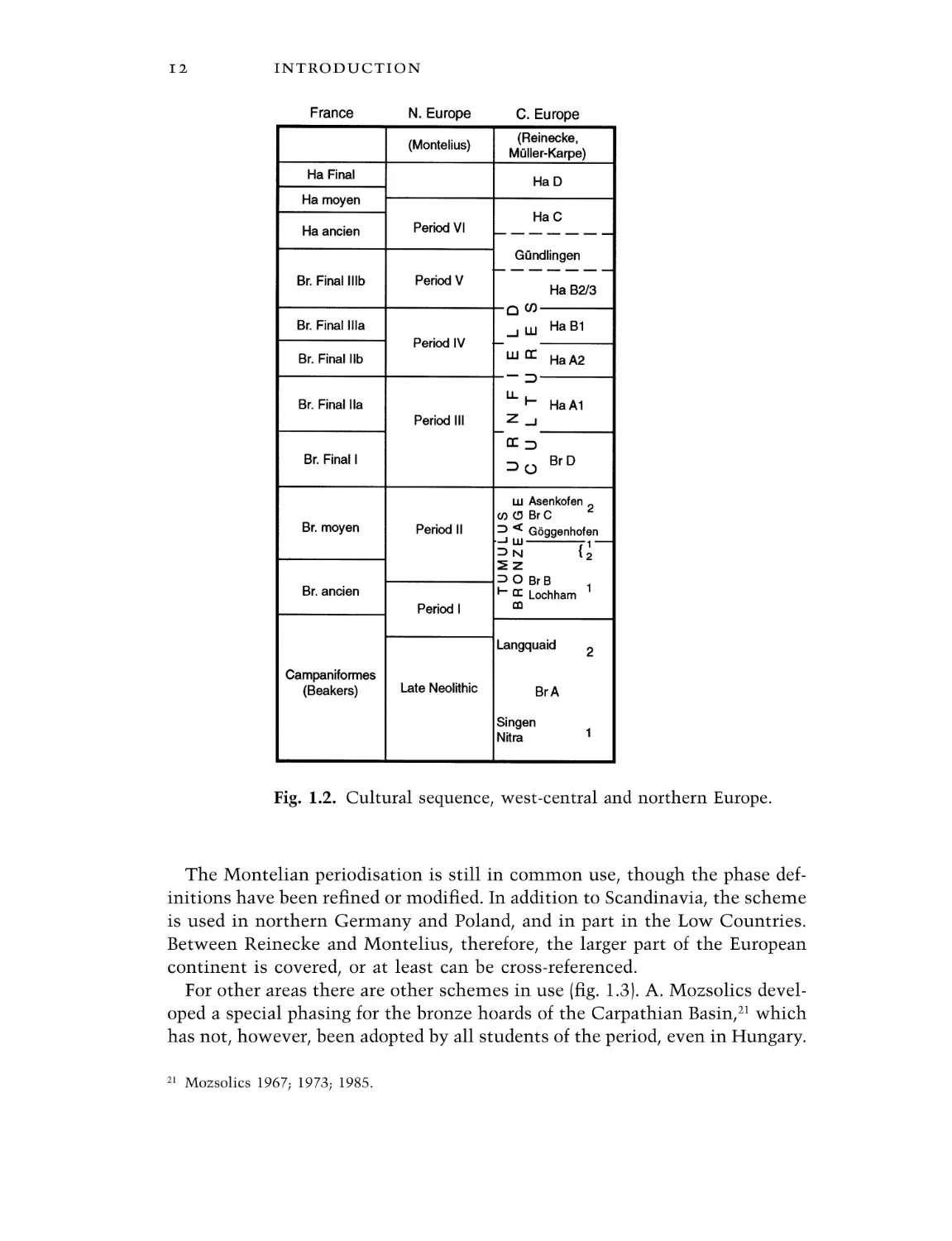
chronological sequence is not in doubt (fig. 1.2).
Montelius
Oscar Montelius (1843–1921) lived and worked in Stockholm but had a vast
knowledge of the archaeology of all parts of Europe. The chronological scheme
for which he is justly famous was developed by him in order to understand
the phasing of the Scandinavian Bronze Age, but his panoramic knowledge
meant that it had ramifications far beyond Scandinavia.20 Working from closed
find groups, Montelius distinguished six periods, I–VI, of which I–III are
referred to as Early Bronze Age, IV–V as Late Bronze Age, and VI falls at the
transition to the Iron Age. In Period I local metal production was still slight,
and significant numbers of objects were imported from central Europe and
the Carpathian Basin. Period II is the main floruit of the earlier northern
Bronze Age, with many richly furnished barrow graves and large quantities
of metal. In Period III, cremation started to become common, and by Period
IV it was absolutely dominant. In terms of the central European chronology,
I corresponds to the Early Bronze Age, II and part of III to the Tumulus period,
and IV and V to the Urnfield period.
18
19

20

e.g. the Langquaid hoard: Hachmann 1957, table 54.
Though recently it has become evident that there is indeed funerary material that falls
between Ha B1 and B3: Matter 1992, 312ff.
Montelius 1986.

12

introduction

Fig. 1.2. Cultural sequence, west-central and northern Europe.

The Montelian periodisation is still in common use, though the phase definitions have been refined or modified. In addition to Scandinavia, the scheme
is used in northern Germany and Poland, and in part in the Low Countries.
Between Reinecke and Montelius, therefore, the larger part of the European
continent is covered, or at least can be cross-referenced.
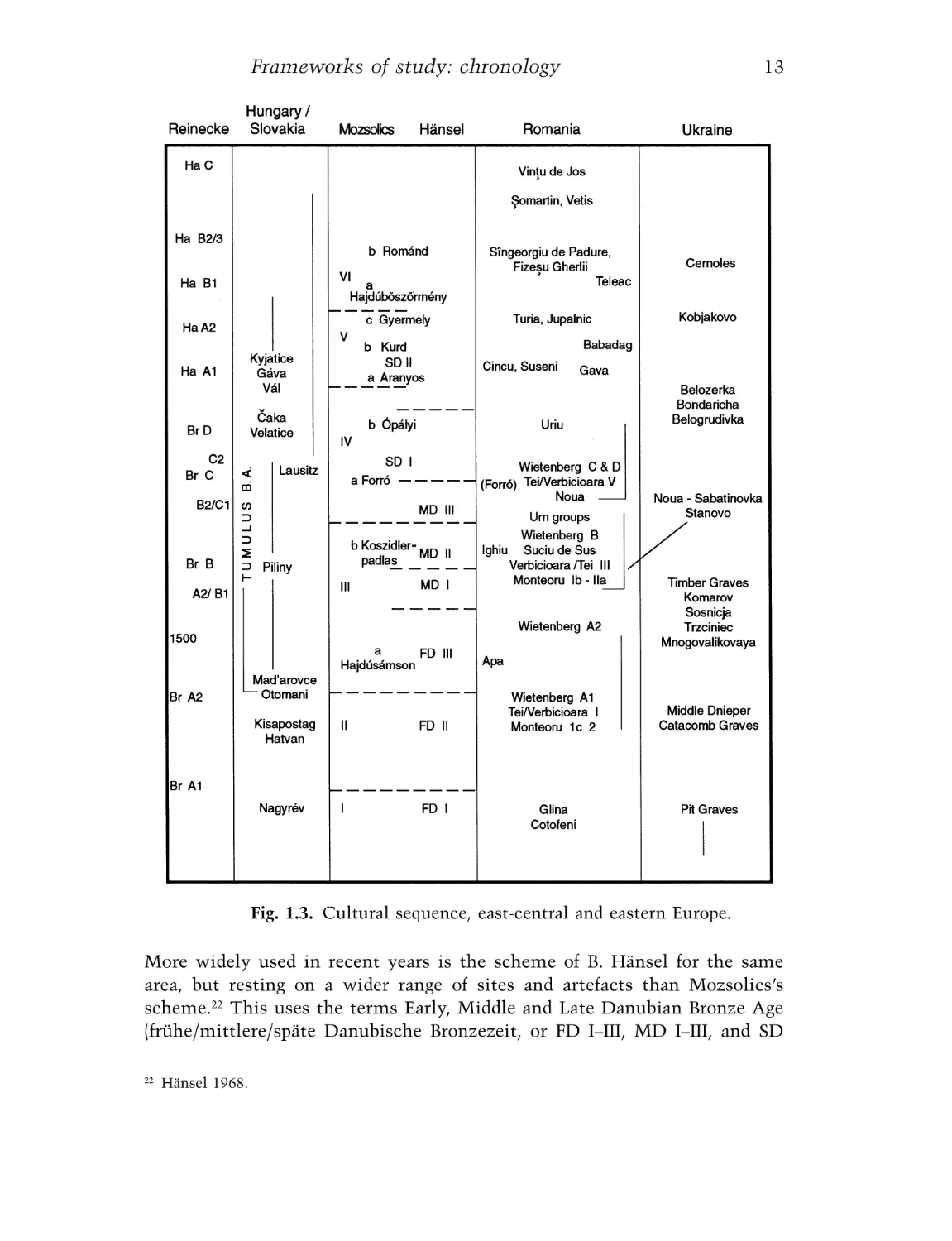
For other areas there are other schemes in use (fig. 1.3). A. Mozsolics developed a special phasing for the bronze hoards of the Carpathian Basin,21 which
has not, however, been adopted by all students of the period, even in Hungary.
21

Mozsolics 1967; 1973; 1985.

Frameworks of study: chronology

13

Fig. 1.3. Cultural sequence, east-central and eastern Europe.

More widely used in recent years is the scheme of B. Hänsel for the same
area, but resting on a wider range of sites and artefacts than Mozsolics’s
scheme.22 This uses the terms Early, Middle and Late Danubian Bronze Age
(frühe/mittlere/späte Danubische Bronzezeit, or FD I–III, MD I–III, and SD
22

Hänsel 1968.

14

introduction

I–II); it has come to be widely adopted, not least because of the prolific writings of Hänsel’s pupils on the Carpathian Basin and neighbouring areas.
A cultural sequence of great importance that must also be introduced is
that named after the cemetery of Únětice (German ‘Aunjetitz’) near Prague.
The characteristic material culture from this and similar inhumation cemeteries, including the famous ‘hour-glass’ cups, is found over a wide area of
central Europe, centred on the Czech Republic but also occurring in eastern
Germany, central and southern Poland and northern Austria. Although it can
be equated with Br A1 and A2 in the Reinecke system, a local five-stage
sequence of development has been distinguished for the pottery.23
In most other areas of Europe, either the Early/Middle/Late scheme is in
use, or a sequence of culture names is preferred. This is the case in Britain
and France, Italy and Spain (figs. 1.4 and 1.5), and the Balkans. One area that
has its own distinctive sequence is south Russia and Ukraine, where it has
been usual to refer to culture names based on grave form – Pit Grave (Russian
jamnaya kultura), Catacomb Grave (katakombnaja kultura) and Timber
Grave (srubnaja kultura).24 In other parts of Russia a sequence of local culture names is used.
Absolute chronology
Had this book been written thirty, or even twenty, years ago, it would probably have been considered necessary to devote many pages to a consideration
of the absolute dating of the phases and cultures which would have been enumerated. This dating would have been derived largely from cross-dating via
the Aegean to Egypt, and the links between the Aegean Bronze Age civilisations and the ‘barbarian’ world.25 As it is, the progress of development of independent dating frameworks has been so rapid and so successful that for much
of the period discussion is no longer necessary: the time-spans involved are
now clear in outline. This optimistic statement needs to be qualified in a
number of respects. First, dendro dates come mainly from settlement sites,
and are largely concentrated in those areas where there is good preservation
of organic remains (dates for oak coffins of northern Europe are the exception). In practice this means the Alpine area, southern Germany and Ireland,
with some material now becoming available from elsewhere (e.g. Poland).
23
24

25

Moucha 1961; 1963.
Both Russian and translated versions may be found in the literature. Gimbutas (1965),
Sulimirski (1970) and Coles and Harding (1979) use the translated form, as did Piggott and
others; Mallory (e.g. 1989) and Anthony (e.g. 1996) use the Russian form. In this work the
translated form is used, because I believe it aids comprehension and is more consistent: in
Britain the term ‘Schnurkeramik’ is not used, let alone ‘s̆nurová keramika’, but ‘Corded Ware’.
Complete consistency is impossible since it is commonplace for Anglophones to refer to the
Linearbandkeramik or LBK, and the TRB, rather than their English translations.
e.g. Renfrew 1968; Harding 1980; Randsborg 1991; Gerloff 1993; 1996.

Frameworks of study: chronology

15

Fig. 1.4. Cultural sequence, western Europe.

Thus the dates for the felling of trees used on a site such as ZürichMozartstrasse (below, p. 42) are known to the exact year; what is more difficult
is to relate the material culture used on the site to the established phases as
known from graves and hoards. Second, sizeable parts of Europe still have no
adequate radiocarbon chronology, certainly not one based on series of carefully contexted samples subjected to high-precision dating. All too often the

16

introduction

Fig. 1.5. Cultural sequence, Italy, Sicily and Sardinia.

association of samples with events on sites is vague or absent altogether, and
the dates are isolated. Still rarer are programmes of dating on organic materials that are integral parts of bronze implements, such as has been carried
out by the British Museum in recent years.26 Admittedly one cannot be sure
in these cases that the organic element dates to the time of manufacture and
original hafting of the bronze object, but given enough objects to date in this
way patterns become clear. Third, the establishment of an independent
chronology in one area need not necessarily give a precise chronology to
another, though it is likely to act as a good general guide. Fourth, radiocarbon dates have to be calibrated against the curve derived from samples of
known age in order to obtain true calendrical dates, and the calibration curve
does not affect all periods equally. In some centuries (most notably in the
mid-first millennium BC) there is a plateau in the curve which means that
a wide range of calendrical dates is possible for a given radiocarbon age. This
26

Needham et al. 1997.

Frameworks of study: chronology

17

problem affects the latest dates for the Bronze Age, though it is more acute
in the Iron Age.
In spite of these difficulties, little – except the availability of finance to
procure datings – stands in the way of establishing a sound chronological
framework for all parts of Europe throughout the Bronze Age. The procedures
are routine; subject to the availability of suitable material, cultural sequences
should be accurately dated everywhere within a couple of decades.
A good example of the way in which traditional dating methods (crossdating) are modified by new independently derived dates is given by the oak
coffin graves of north Germany and Denmark. The famous ‘princely’ burial
sites of Helmsdorf and Leubingen belong to the classic phase of the Únětice
culture, equivalent to the earlier part of Br A2, and were assigned to the middle of the second millennium BC, in accordance with the standard view that
Br A2 and its congeners in the Carpathian Basin were to be placed parallel
with the Shaft Graves of Mycenae (c. 1650–1450 BC on the traditional chronology). Dendro dates on the grave constructions of these two graves in fact gave
the dates 1942 ± 10 BC (Leubingen) and 1840 ± 10 BC (Helmsdorf).27 Even
allowing for a period of time represented by the outermost (absent) rings of
the timbers involved, the gap between the two sets of dates is at least two
centuries, probably three, and cannot be bridged by special pleading alone. A
radical revision of traditional chronologies became necessary.
Less dramatic in its effects, but equally important as a rather precise indicator of deposition date, is the series of dendro dates obtained on Danish coffin graves. Those that were datable belong to Period II.28 The latest rings on
these coffins all fall in the period 1425–1350 BC, and with an allowance of
20 additional years for the absent sapwood they span the period 1396–1330
BC. In this case, the dates are in accord with the expectations of traditional
chronology – one implication of which is that the Early and Middle Bronze
Ages must have lasted considerably longer than previously thought.
Dendro dates have also had a marked effect in the dating of the Urnfield
period, introducing a general tendency to heighten the start and finish dates
of each period.29 The problems of relating settlement materials to grave and
hoard finds reappear here, and the discrepancies between the dendro-dated
sequence and the ‘historical’ chronology laid down by Müller-Karpe have not
yet been resolved.
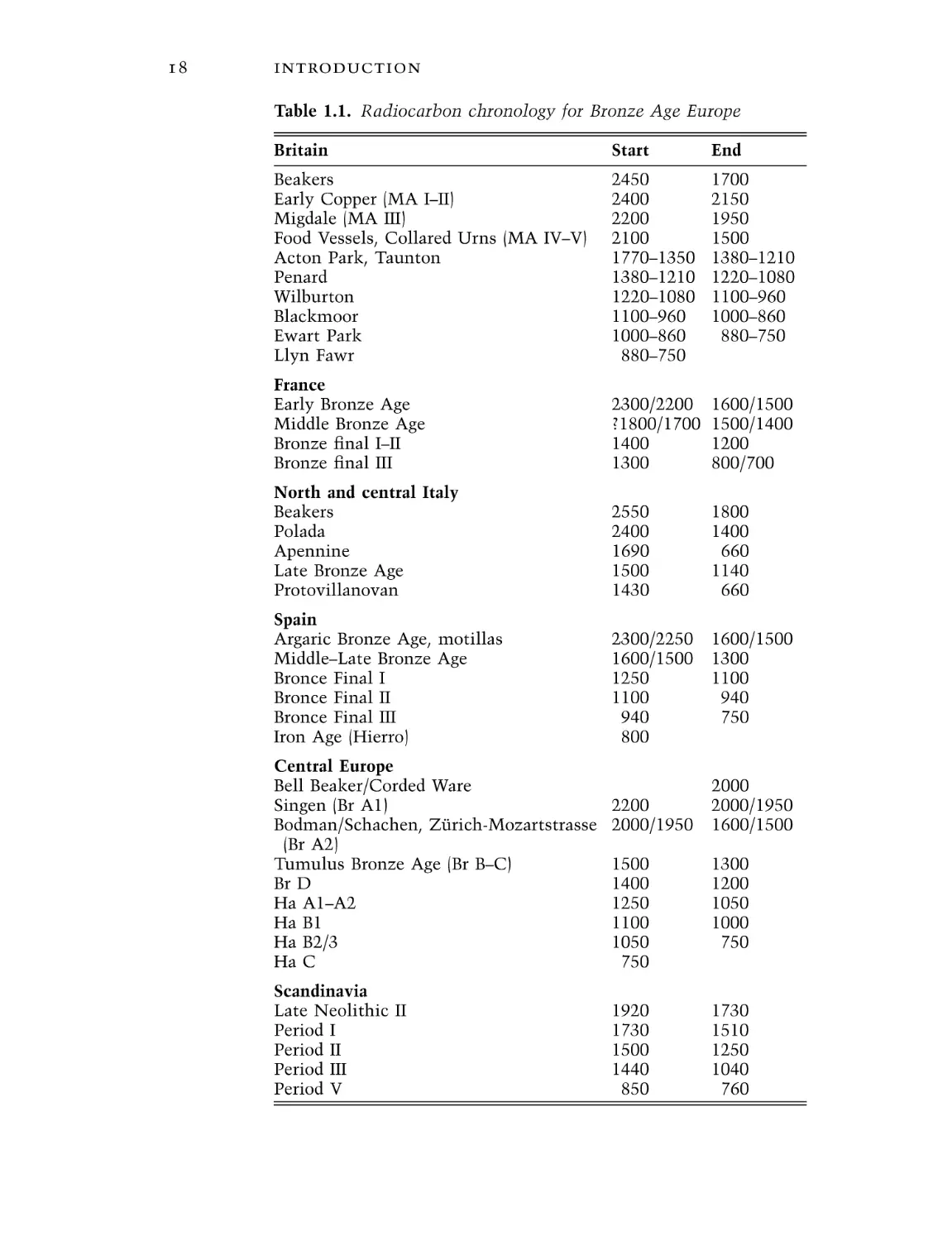
Table 1.1 illustrates current best estimates for absolute ages in each area,
on the basis of radiocarbon dates.30
27
28
29
30

Becker, Jäger et al. 1989; Becker, Krause and Kromer 1989.
Randsborg 1991.
Sperber 1987.
These are derived from a variety of recent sources, but above all from the proceedings of a
conference held in Verona in 1995 (Randsborg 1996), and selected other works e.g. Chronologie
1986; Skeates and Whitehouse 1994; Needham et al. 1997; Sperber 1987.

18

introduction
Table 1.1. Radiocarbon chronology for Bronze Age Europe
Britain

Start

End

Beakers
Early Copper (MA I–II)
Migdale (MA III)
Food Vessels, Collared Urns (MA IV–V)
Acton Park, Taunton
Penard
Wilburton
Blackmoor
Ewart Park
Llyn Fawr

2450
2400
2200
2100
1770–1350
1380–1210
1220–1080
1100–960
1000–860
880–750

1700
2150
1950
1500
1380–1210
1220–1080
1100–960
1000–860
880–750

France
Early Bronze Age
Middle Bronze Age
Bronze final I–II
Bronze final III

2300/2200
?1800/1700
1400
1300

1600/1500
1500/1400
1200
800/700

North and central Italy
Beakers
Polada
Apennine
Late Bronze Age
Protovillanovan

2550
2400
1690
1500
1430

1800
1400
660
1140
660

Spain
Argaric Bronze Age, motillas
Middle–Late Bronze Age
Bronce Final I
Bronce Final II
Bronce Final III
Iron Age (Hierro)

2300/2250
1600/1500
1250
1100
940
800

1600/1500
1300
1100
940
750

Central Europe
Bell Beaker/Corded Ware
Singen (Br A1)
Bodman/Schachen, Zürich-Mozartstrasse
(Br A2)
Tumulus Bronze Age (Br B–C)
Br D
Ha A1–A2
Ha B1
Ha B2/3
Ha C
Scandinavia
Late Neolithic II
Period I
Period II
Period III
Period V

2200
2000/1950

2000
2000/1950
1600/1500

1500
1400
1250
1100
1050
750

1300
1200
1050
1000
750

1920
1730
1500
1440
850

1730
1510
1250
1040
760

Climate and environment

19

Climate and environment
A detailed discussion of the natural environment in Bronze Age Europe is
beyond the scope of this book. The availability of relevant source materials
is extremely variable, though pollen sequences have been studied in almost
all areas and other types of proxy data are also available.31
The Bronze Age falls within the climatic period called the Sub-boreal, which
is sandwiched between the Atlantic and Sub-atlantic periods. In general, this
was a warm and dry period, in contrast to the warm wet Atlantic and the
cool wet Sub-atlantic. But such a bland general statement conceals a mass of
small variations, both spatial and temporal. Fine-resolution pollen sampling
shows that within the broader picture obtained by traditional pollen analysis there is a similar detailed set of fluctuations happening in the pollen
record, which as a proxy climate indicator reflects changes in air temperature, precipitation and so on. Lake-level fluctuations and the movement of
the tree-line in the Alps similarly indicate a constantly changing pattern. In
peat bogs there are indications that peat growth was periodically halted, and
soil profiles in some central European sites suggest that markedly dry conditions prevailed at some points in the Urnfield period. At other times, these
were replaced by catastrophically wet conditions, which were responsible for
the abandonment of many lakeside sites that lay close to normal lake water
level. Indeed, it has been suggested that the pattern of climate change can be
followed through the study of lakeside settlement: at the times when it is
absent, water levels were high; when present, water levels were relatively
low. There are problems with this approach as the importance of cultural factors is almost totally ignored, but it is certainly puzzling that many sites were
completely abandoned after major flooding episodes and never, or only centuries later, reoccupied.
On British moors and heaths, there is extensive evidence for the deterioration of soils during the course of the Bronze Age.32 The examination of
buried soils beneath Early Bronze Age barrows has sometimes shown that
mixed oak forest lay not far away, while the presence of cereal pollen is a
clear sign that parts of the landscape were cleared and cultivated. But examination of some ‘cairnfields’ (below, p. 158) has found that soils were already
podsolised and the clearance of stone that they represent has even been seen
as a strategy for maintaining yields in the face of catastrophic environmental deterioration.
One of the problems in determining the nature and importance of environmental conditions in the Bronze Age is that both human and natural agencies were at work. Specifically, clearance of forests that may never have been
31

32

Coles and Harding (1979) include brief discussion of environmental conditions in each area
of Europe. The general picture may be obtained from works such as Tinsley in Simmons and
Tooley 1981, Harding 1983a, and other syntheses.
Dimbleby 1962.

20

introduction

touched since the global warming after the Ice Age must have proceeded
apace. Molluscan evidence in southern England has sometimes shown an
extensively cleared landscape in the Late Neolithic and Early Bronze Age (for
instance at Stonehenge); pollen diagrams on moorlands suggest a recurring
attack on the woodlands, probably in the form of numerous small-scale clearances rather than the extensive clearance of large tracts.33 Similar patterns
can be seen in the lowland areas of much of the rest of Europe.
Much has been written in recent years about the possible impact of major
natural catastrophes and other events, notably volcanoes,34 and, most recently,
comet or asteroid impacts. The only active volcanoes in Europe are in Iceland
and the central and eastern Mediterranean (Vesuvius, Etna, the Aeolian
Islands and Thera), but Thera at least is known to have undergone a massive
eruption in the Bronze Age. Such eruptions eject huge clouds of debris into
the atmosphere, and the finer particles can linger at high altitudes for months
or years, where they may block solar radiation. As a consequence, vegetation
on the earth’s surface can be severely affected. Short-lived plants will leave
no permanent trace in the fossil record, but trees can show stunted growth
in their annual rings. This phenomenon is visible in Irish bog oaks in the
1620s BC.35 There are other grounds for believing that this pattern is to be
associated with the eruption of Thera (though the date of the eruption has
been the subject of controversy and is still not definitively settled). Whether
or not this was the case, growing trees suffered a severe setback at that date,
which must reflect the sudden onset of markedly colder conditions worldwide. If the impact on trees was so strong, it would also have had dramatic
effects on growing crops and grassland. The effects on human life must have
been correspondingly significant; various marked changes in the archaeological record have been attributed to the aftermath of such events.
But for most of the time life was not rocked by calamities on such a grand
scale. Climatic and environmental conditions fluctuated, so that the observer
on the ground will have suffered bad years for crop production along with the
good ones, as has always been the case. The extent to which human groups
buffered themselves against such effects is a cultural matter; there is some
evidence that in the Late Bronze Age, for instance, specific strategies were
adopted for this precise purpose (p. 145). Given the small scale of most Bronze
Age communities, however, responses to the natural environment were probably palliative rather than prophylactic.

33
34
35

e.g. Balaam et al. 1982.
Baillie 1989; 1995; Burgess 1989; Gross-Klee and Maise 1997.
Baillie 1995, 75ff.

Conclusion

21

Conclusion
In an age where relativist approaches are becoming the norm and there is a
tendency to deny the relevance of constructs such as ‘the Bronze Age’, it
might be thought a risky enterprise to devote a book to the topic. Yet, as I
hope to show, the geographical area known today as Europe in the time-span
2500–800 BC was host to a mass of technical and conceptual developments
that make it legitimate to describe and analyse it, and appropriate to treat it
as an entity with its own character and trajectory that was different from
those of other continents.
In contrast to most previous approaches to the period, however, this book
does not deal much with artefact typology or chronological analysis, and it
attempts to avoid straight description of sites and artefacts. An inclusive
approach is adopted to Bronze Age studies, though it will become evident
that I believe some are more useful than others. The ‘Year of the Bronze Age’
was a celebration of ‘Europe’s first Golden Age’, concentrating on the spectacular end of the range of monuments and artefacts that emanate from the
period. This book is intended no less as a celebration of the period, which
represents a crucially formative phase in the human past, constituting the
change from Neolithic farming villages, in many ways little altered since the
arrival of the first farmers, to Iron Age proto-states on the verge of literacy
and written history. The people who created the archaeological record studied here were in all likelihood biologically the same throughout, and enter
history with particular ethnic labels attached to them. One of the tasks of
this book is to chart the ways in which the complexity that is visible then
was achieved, what were its roots, and what its constituents.

chapter 2

THE BRONZE AGE HOUSE AND VILLAGE

Bronze Age life was for the most part a life based in agricultural villages.1
Few of these villages possessed houses of special size or elaboration. In most
parts of Bronze Age Europe they are unspectacular affairs, no more than clusters of pits and post-holes, or cooking places marked by accumulations of
fired stones, discovered by chance during development work or the excavation of sites of a different period. The study of Bronze Age settlements is possible to differing degrees in different parts of Europe, as a result of differential
survival and differential success at extracting the necessary information from
the archaeological record. Spectacular discoveries in a few areas are balanced
by an almost complete absence of known sites in others.
That the fugitive traces of Bronze Age house sites can reflect stable and
long-lived settlement has been apparent since the work of Strömberg and
Stjernquist on the settlement sites of Scania.2 Settlement traces which on the
basis of a few good plans can be reconstructed to something much bigger can
be found in many areas, and emanate from all parts of the Bronze Age.3 The
remains of hearths, ovens and cooking places are often found; some were originally inside buildings, others outside. Analysis of the internal structure of
Bronze Age settlements defined only by pits identified clusters that might
correspond to original activity foci, probably houses and their associated activities (a cluster being a grouping of potentially contemporary features which
represent a non-coincidental agglomeration).4 Such groupings of features could
sometimes be seen to occupy a roughly oval area up to 25 × 40 m across,
interpreted as the remains of single socio-economic units, in other words
1

2
3

4

An excellent general study of Bronze and Iron Age settlement in barbarian (‘Celtic’) Europe
has appeared quite recently, to which the reader is referred for fuller discussion of some of
these matters, in particular the nature of house construction and the internal arrangements of
houses in the late second and first millennia BC: Audouze and Büchsenschütz 1991.
Strömberg 1954, 1973–4; Stjernquist 1969.
The 26 pits containing Únětice pottery and bone, stone and antler tools from Sundhausen in
Thuringia provide an example from the Early Bronze Age (Walter 1990a); the large site, at least
500 × 300 m in extent yet with only one recognisable house plan, at Graben near Augsburg in
Bavaria, is a Late Bronze Age Urnfield case (Dietrich and Sorge 1991). In the lower Pegnitz valley in eastern Bavaria a series of small sites, or sites investigated only in small areas, produced
domestic debris (pottery, bones, loom-weights, hearths or oven floors) from scattered pits and
post-holes, which allow no possibility of reconstruction (Reisenhauer 1976); these are isolated
examples among many that could be cited.
Turková and Kuna 1987.

The Bronze Age house and village

23

house sites. The distance between the central points of feature groups varied
between 20 and 50 m.5 In the Únětice culture area, isolated pits containing
domestic pottery, sometimes with surrounding post-holes, were the norm. At
Grossmugl (Stockerau) attempts were made by the excavators to interpret
large pits with stake-holes around as semi-sunken dwellings, but these were
never very convincing, either in form or in structural detail, and it is much
more likely that such pits were for storage than anything else.6 Smaller pits
for domestic purposes can be seen at many sites, for instance Döbeln-Masten
in Saxony,7 or Bruszczewo in western Poland.8 At Iwanowice in south-east
Poland,9 a dynamic model of change in the creation of building complexes
(‘house clusters’), as defined by ‘T-features’ (trapeze-shaped pits), was created.
A ridge 8 ha in area (‘Babia Góra’) saw the movement over time of individual buildings or groups of buildings, as detected by the detailed and sophisticated analysis of pottery sets, with varying density and extent of settlement.
Especially pervasive and liable to good preservation are the heaps of stones,
exhibiting signs of heating, which were used for cooking in clay-lined pits,
and survive to archaeologists as ‘burnt mounds’. Known in Ireland as fulachta
fiadh, they occur in most areas of Europe where there has been extensive survey work, and though dating is hard, many examples have been shown to
belong to the Bronze Age.10 Examples are known not only from Britain and
Ireland, but also from Sweden,11 from Switzerland,12 and many other places.
Recent interpretations suggest that some of the burnt mounds of Scandinavia
might be the remains of cremation pyres rather than cooking places,13 or that
they were saunas or hot baths.14 It would not be right to impose an identical
interpretation on all sites; I favour the traditional explanation for most burnt
mounds, without ruling out other explanations for some of them. Contextual
study is therefore essential.
Many different specific settlement types and modes developed in different
areas and parts of the Bronze Age. Tell sites in south-east Europe, glacial
mounds and valley-side sites in Alpine valleys, hut platforms on northwestern moors, extensive settlement areas on central European loess lands:
all had somewhat different requirements and possibilities, but the form of
the houses on them was much the same in terms of shape, size and building
5

6
7
8
9
10
11

12
13
14

At Dobroměřice, which was completely excavated, the number of individual groupings was
between five and ten, with two to three storage pits per grouping.
Beninger 1941.
Coblenz 1973.
Pieczyński 1969.
Kadrow 1991a; 1991b.
Hedges 1986; Buckley 1990; Hodder and Barfield 1991.
‘Heaps of fire-cracked stones’ are very common: Hyenstrand 1967–8; Larsson 1986, 150ff.;
1990; Lundqvist 1991.
For instance at the site of Uf Wigg at Zeiningen in the Aargau: Brogli 1980.
Kaliff 1994.
T. Laurie, pers. comm.

24

the bronze age house and village

materials, though not necessarily in internal arrangements. Where information is lacking, widely differing environmental and social conditions make it
extremely dangerous to impose the pattern of one area on another. The analyses are therefore site- or area-specific, but nonetheless certain general points
are applicable to Europe as a whole.
One of these, worth stressing at the outset, is that settlement traces as
recovered may represent palimpsests, that is, the remains of reoccupation on
the same site over and over again. Thus an apparently bewildering array of
pits and post-holes will need to be ‘dissected’ if the true pattern of any one
phase is to be analysed, and this may not be possible where there is no independent means of assigning dates to features. The ‘palimpsest problem’ means
that more than one solution may be possible to the question of settlement
size and complexity. This has implications for the size of sites and therefore
communities. One cannot assume that the settlement unit remained the same
throughout the period or across the whole of the European landmass, either
in absolute size or in terms of social complexity. In this chapter I will be
looking at sites on which houses or domestic debris have been found. These
were farmsteads (single buildings), hamlets (small groups of buildings) or villages (larger groups of buildings), in other words settlement sites of different
size.
The house
The basic unit of residence, the house, is recorded patchily across Europe.
Even in those parts where excavation and survey have uncovered plentiful
house foundations, little is known about superstructure or internal fittings.
For these one is often dependent on models and depictions, which are, however, rarer than in the Neolithic. An exception is a painted clay urn from
Stora Hammar in Scania (fig. 2.1, 1), in the form of a sub-rectangular tub with
rounded ends and almost conical roof. The painted elements show vertical
posts and thatch, and a doorway.15 A series of triangular or trapezoidal shapes
on Hallstatt period vases from Schirndorf in Bavaria have been taken to be
huts or tents.16 Rock-art depictions from the Nordic area are all extremely
uncertain and ambiguous; but the Val Camonica art portrays a variety of postbuilt structures shown in elevation view, some apparently with outside stairs
and more than one storey, and all with pointed, i.e. ridged, roofs (fig. 2.1, 2).
Some, for instance on the Bedolina rock, are on stilts and may represent pile
dwellings.17
The usual extent of evidence on the ground consists of holes for upright

15
16
17

Capelle 1991.
Stroh 1988.
Anati 1961, 106, 137–8, 239–41.

The house

25

Fig. 2.1. Depictions of Bronze Age buildings. 1. House urn from
Stora Hammar, Scania (after Capelle 1991). 2. Detail from a rockart panel in the Val Camonica, apparently showing a wood-framed
construction with purlins and sloping roof (after Anati 1961).

posts, slots for sleeper beams, or low stone banks which represent wall foundations. Imagination and analogy has to construct the rest. In this, there is
naturally a bias in visibility towards those areas that utilised stone, as against
those which made use of wood, wattle and daub. Nevertheless, excavation
techniques are now fully capable of recovering the remains of post-built
houses, provided only that they can be identified on the surface. Survival of
sub-surface features is often surprisingly good, and where such features were
cut into the subsoil, it is often the case that related aspects such as storage
facilities are also preserved.
Bronze Age houses, like those of other periods, were either round or rectangular.18 This is an important distinction for more than merely typological
reasons. Round-houses were often very small, whilst rectangular houses often
reached substantial dimensions, implying that activities other than eating or
sleeping took place in them, or that residence groups were larger. Here not
only the absolute size of houses is important, but also the often fugitive evidence of function in different parts of the same house, or in different houses.
A number of theoretical works in sociology, anthropology and architecture

18

This is not quite true, as a series of U-shaped houses on the coast of southern Norway, associated predominantly with fishing and hunting, demonstrates: Løken 1989.

26

the bronze age house and village

have discussed the question of how space in settlements is organised according to behavioural criteria, and specifically social needs. The use of space is
a social matter: ‘each society constructs an “ethnic domain” by arranging
space according to certain principles. By retrieving the abstract description of
these principles, we intuitively grasp an aspect of the social for that society’;19
‘spatial organisation is a function of the form of social solidarity’;20 ‘human
groups create orderly patterns of space and structures’.21
Much has been written on this topic, but relatively little is of direct application to archaeology.22 Kent has demonstrated in a range of ethnographic examples that as societies become more complex (in terms of stratification,
specialisation and division of labour) their architecture and use of space become
more segmented. Of the five levels or categories of complexity that she
describes, European Bronze Age societies would fall in the middle three. Her
‘category III’ societies are characterised by chiefdoms, political confederacies,
ranking in age grades or sets, with economic and socio-political specialisation
and emphasis on gender differences; categories II and IV are respectively less
and more developed in these terms. In terms of architecture, category III
societies make frequent use of wealth and gender divisions, and separation for
activity areas. To what extent European Bronze Age societies fit these categories requires discussion, but there is a prima facie case for seeing second- and
first-millennium BC Europe as falling in this general area (see chapter 12).
One of the most controversial methods of analysis of these matters has
been the development of a spatial syntax with which to describe and understand the ‘social logic of space’.23 Proceeding from the premise that ‘human
spatial organization . . . is the establishment of patterns of relationships composed essentially of boundaries and permeabilities of various kinds’, and that
there is a finite number of ways in which space can be organised, Hillier and
Hanson have developed ways of categorising the plans of both individual
buildings and collections of buildings (e.g. villages or farmsteads). Buildings,
according to them, ‘by the way in which they are collected together, create
a system of open space’,24 the form and shape of the open space constituting
one’s experience of the settlement; hence their development of ‘alphaanalysis’, a method for analysing settlement layouts in terms of the space
created by, in other words between, the buildings. Different layouts will
19
20
21
22

23
24

Hillier and Hanson 1984, 48.
Ibid. 142.
Fletcher 1981, 118.
Exceptions in this respect are the work of Fletcher (1977; 1981; 1984; 1995), who has developed models for understanding the relationship between population size, density and settlement area; Chapman (1989/1991); Grøn (1991), who has made a number of specific suggestions
for understanding the relationship between social organisation and settlement layout, in the
context both of the Maglemosian of the Mesolithic and Iron Age settlements such as Feddersen
Wierde; and Kent (e.g. 1990).
Hillier and Hanson 1984.
Ibid. 89.

The house

27

then promote different internal logics, depending on whether inhabitants are
members of the same spatial or ‘transpatial’ group, and thus whether boundaries are strongly defined or not. This approach has been predictably criticised
for its lack of attention to context and its prior assumption of knowledge
about social structure, but there are aspects of it which are of value to
archaeology.
One of these is ‘access analysis’, the study of access to the interiors of buildings, which will differ according to whether those involved are inhabitants or
visitors. Since ‘buildings transmit social information through their interior
structures’, and embody knowledge of social relations, their analysis should –
theoretically, at any rate – reflect those relations. Specifically, analysis of the
number of levels of access in buildings can indicate how open a structure was,
or how far access to the innermost parts (in terms of defined steps or stages
from the entrance) was allowed. For archaeologists, the method might help in
revealing aspects of social relations that would otherwise be lost.
Access analysis has been applied to the study of Iron Age houses, though
it is debatable to what extent understanding of them has been heightened as
a result.25 As far as the structures of Bronze Age Europe are concerned, in
most instances there is no indication that access was restricted, at least by
means of archaeologically retrievable features. The vast majority of Bronze
Age houses were in structural terms one-cell affairs, though this is not to say
that internal divisions, archaeologically invisible, were not present. In the
case of the three-aisled houses of the north and north-west of Europe, it may
be that not all parts of the building were accessible to all, and in particular
not to visitors. This is also true for the houses of Early Iron Age Biskupin,
where it appears that the sleeping quarters were in a raised loft above the
animal stalls, and would not have been entered by visitors. Even potentially
complex structures such as the long halls of Lovčičky (fig. 2.12) cannot realistically be subjected to access analysis in the absence of full information
about internal arrangements.
Perhaps more profitable has been the analysis of internal space in terms of
a structuring approach to architecture, which sees the house as a cosmos, an
entity that expresses its occupants’ beliefs about the world they live in. Thus
orientation, sidedness, constructional elements and the positioning of functional features all represent aspects of that ‘cosmology’.26 Special attention
is paid to distinctions between food-processing areas, areas for rubbish disposal, activity areas, and so on.27 The problem from the point of view of a
25
26
27

Foster 1989.
Parker Pearson and Richards 1994a.
e.g. by Parker Pearson and Richards (1994b) on Orcadian Neolithic houses, or Barrett (1994)
on southern English round-houses of the Late Bronze and Early Iron Ages. Much attention is
there accorded the supposed binary oppositions (light:dark; front:back; clean:dirty) that are
present, though this approach has recently come in for criticism (Haselgrove and Gwilt 1998).

28

the bronze age house and village

generalising approach is that it is hard to define any wider context within
which to situate such work.
An indication of how post-processual interpretations of house plans
might be moving can be seen from a recent analysis of a pair of houses in
the Late Bronze Age settlement of Apalle, near the north side of Lake Mälaren
in central Sweden (fig. 2.2).28 Both are essentially of the three-aisled variety
(see below), but the earlier has evidence for separation of a find-free hearth
area from an area with a clay and lime floor and pits, while along the side
where the entrance lay were sheep and ox jaw-bones. By contrast, in the later
house there was no lime and no room divisions; all the floor was of clay and
the hearth was centrally placed. Fire-cracked stones and daub, probably from
the early phase, are incorporated into the walls and refuse areas of the later.
The interpretation dwells on the relative isolation of the first-phase hearth
area (‘more private, anonymous’), the hearth being used for heating and not
for cooking, whereas in the second phase the central hearth suggests cooking and the area outside the house is more structured and ‘private’; ‘the later
settlement put more emphasis on the individual household . . . contact
between the house as a building and the midden was now reinforced’.
Furthermore, the deposition of animal bones, including those of wild animals,
might indicate a desire to bring the wild into the domestic sphere. These
interesting ideas require confirmation from other sites if widespread acceptance is to be achieved, but the study is commendable in seeking to understand the curious placing of animal bones and fire-cracked stones.
Round-houses
Simple round huts are known from several parts of the Bronze Age world, of
which Britain and southern Italy are the most notable; rare examples are
known in continental Europe. The use of the round-house developed spontaneously in these two areas; there was no general tradition of round-house
building in Europe which linked them. Round-houses may have been preferred for two main reasons. In functional terms, they present identical features and thus problems to be solved in all parts of the structure with the
exception of the doorway; there are no corners, angles or ends to complicate
matters. In fact the only decisions to be taken, once a location for building
was agreed, was the orientation of the entrance (probably determined by the
direction of the prevailing wind), and the angle and method of roofing. The
other reason might be psychological. The standard burial site of north-western
Europe in the first half of the Bronze Age was the round mound, often containing circles of posts or stakes. Like Neolithic long barrows and long-houses,
round-houses and round barrows may have been viewed as two aspects of the
28

Ullén 1994.

Round-houses

29

Fig. 2.2. Apalle, central Sweden. Outline plans of House 13 from
the earlier settlement (upper) and House 2 from the later settlement (lower) (after Ullén 1994).

30

the bronze age house and village

same thing – houses for the living and houses for the dead. It seems less likely
that notions of equality, such as one associates with the Arthurian legend,
have a role to play, as the internal arrangements of well-excavated houses
were highly structured. One suggestion is that the round-house acted as a
microcosm of the universe, the entrance to the east relating to sunrise and
the daily rebirth of the cycle of light and darkness, revolving round the house;
in other words, a reflection of the prevailing cosmology, not the prevailing
wind.29
An obvious way of differentiating round-houses was through size, which
no doubt relates to function: increasing diameter rapidly increases floor
area in a round-house (a hut of diameter 4 m has floor area 12.6 m2; one of
diameter 7 m has floor area 38.5 m2). Size alone is not necessarily a good
guide to function or importance, however; the precise nature of the fittings
and furniture, and the disposition of artefacts, are probably more reliable. For
practical purposes, the space enclosed by the post ring (typically 5–6 m across,
thus around 20–30 m2 in area) was the usable area of the house. Taking into
account the various activities that can be demonstrated for some Bronze Age
houses (flint-knapping, weaving, leather-working), and assuming that they
took place indoors at least some of the time, it would be quite reasonable to
allocate at least 6 m2 to each adult. A round-house of area 24 m2 (diameter
c. 5.50 m) would allow four persons that amount of space. Such space could
be allocated simply in quadrants, or (more likely) people’s space would overlap so that particular activities would be placed according to the need for
light, elbow room, and so on.
Nothing certain is known about the superstructure of round-houses. In
many, including some stone-built examples, there is a ring of post-holes which
must have supported the roof. It is likely, however, that the roof continued
outwards beyond the post ring, probably sloping downwards to the ground.
Britain
In most parts of Bronze Age Britain, the standard house-type was round, usually with a ring of posts to support the roof (fig. 2.3). In upland areas where
stone was available, a ring-bank served as the foundation for a wall of brushwood or wattle, sometimes with daub. In lower-lying situations, such as on
southern British downlands or river gravels, the houses could be formed of
post rings with additional strengthening elements such as ring-grooves or
stake-rings. Though they frequently appear alongside other activity indicators, such as field boundaries, isolated huts occur quite commonly in many
areas.30
29
30

Parker Pearson 1996.
e.g. the South Dorset Ridgeway: Woodward 1991, 150; Marlborough Downs: Gingell 1992.

Round-houses

31

Fig. 2.3. Round hut plans from southern England: A: Shaugh
Moor, Enclosure 15, House 67 (after Wainwright and Smith 1980),
B: Bishops Cannings Down (after Gingell 1992), C: Black Patch,
Hut Platform 4, south-western part (after Drewett 1982).

32

the bronze age house and village

Settlements with round-houses have long been known in the upland zone
in the British Isles, but only extensively investigated in the last twenty years.31
Such a site on Dartmoor is Shaugh Moor, where a Bronze Age date is assured.32
Enclosure 15 contained five ring-houses and a variety of less obvious postbuilt structures. They were marked by broad stone foundations broken by
entrances that faced south-east or south-west. The largest house, 67, was
around 6.5 m in diameter internally (fig. 2.3, A); the smallest, 18, only 3.7 m.
Both had massive walls not less than 1.5 m thick and in places considerably
more than this. Internally, the houses had a post-hole ring and some indication of other features, formed by clusters of post- or stake-holes in conjunction with pits; flagstones were provided in the later of the two phases of
building.33 The house at Bracken Rigg, Co. Durham (fig. 2.4, lower), was
8.8 × 8.2 m in diameter, and consisted of a low stone ring-bank with single
entrance paved with stone slabs facing south.34 A ring of six post-holes in the
interior must have supported the roof; there was a roughly central hearth.
Here the single house must have been occupied by a family or extended family group. Bearing in mind that in summer some members of the family may
have been out on the moors away from base, and that in winter they may
have sought necessary resources or even lived in lower-lying, perhaps coastal,
locations, the living quarters may have sufficed for up to ten people; even so
they seem cramped and the demographic unit dangerously small.
The site at Houseledge, Black Law, Northumberland (fig. 2.4, upper), consists of a linear arrangement of hut circles with field banks and clearance
cairns adjoining the house plots.35 The houses are irregularly circular; at the
first to be investigated a stone bank overlay a ring-groove either from an earlier structure or the internal structural arrangement for the stone house (there
is no ring of post-holes). This house was c. 9 m in internal diameter, the floor
partly cobbled. The entrance of this house faces south-east and leads directly
to a field bank; that of the adjacent house appears to face north.
These upland examples are complemented by those from the southern
English downlands. It has long been known that simple round post-built
houses were the norm in sites of the Early and Middle Bronze Age, such as
Thorny Down, Wiltshire.36 While it used to be considered that these were
simple post rings, sometimes with a central post, the more elaborate doublering structures seen on Early Iron Age sites were not recognised until
31

32
33

34
35
36

Sites such as Grimspound or Rider’s Rings on Dartmoor (Devon) were long thought to be of
Iron Age or even later date, and in the absence of excavation this was understandable; even
now they cannot be dated directly: Pattison and Fletcher 1994.
Wainwright and Smith 1980.
Similar round-house sites, but not enclosed, may be seen at a variety of other upland sites,
for instance Stannon Down on Bodmin Moor, Cornwall: Mercer 1970.
Coggins and Fairless 1984.
Burgess 1980b.
Stone 1941.

Round-houses

33

Fig. 2.4. Plans of settlements in northern England. Upper:
Houseledge, Northumberland (after Burgess 1984); lower: Bracken
Rigg, Co. Durham (after Coggins and Fairless 1984).

34

the bronze age house and village

relatively recently.37 Other sites with round-houses of this type include Black
Patch38 and Itford Hill.39
Round-houses also appear in the Late Bronze Age in fortified sites and on
crannógs. At Rams Hill, Berkshire, a considerable number of post-holes, which
were grouped by the excavators into round or oval houses and four-post structures, were found.40 At Paddock Hill, Thwing, a large round-house lay at the
centre of the site in the Late Bronze Age, the only such structure on the site;
the timbers of the outer wall were placed in a bedding trench 25 m in diameter, with a ring of massive post-holes inside this on a diameter of 16 m.41
Similarly, at Lofts Farm, Essex, a single roundish house 11 × 10 m across lay
in the middle of a roughly square enclosure,42 while at the North Rings,
Mucking, Essex, three circular post-built houses 5–5.5 m in diameter lay in
the western half of a large round, ditched enclosure.43
There is extensive and increasing evidence for lakeland occupation in the
Bronze Age, in the form of crannógs.44 At Clonfinlough, in the centre of Ireland
near the Shannon, an oval enclosure formed by a palisade was around 50 ×
40 m in extent, and contained two large round-houses on platforms, a smaller
round hut, and a working area (fig. 2.5).45 The main platforms were around 7
to 9 m in diameter, with wicker walls and floors formed of brushwood matting on a support of stone flags and a roundwood substructure. The upper
level of the platform was made of superimposed layers of split oak planks,
laid in a roughly circular arrangement around a central hearth area. The
entrances faced north-east, away from the prevailing south-west wind. If, as
is assumed, these platforms were houses, then they would have been roofed,
probably with a reed thatch. At Ballinderry II, two construction types were
present: small round constructions of wicker lay at the eastern side of the
37
38
39
40

41
42
43
44

45

e.g. Shearplace Hill, Dorset: Rahtz and ApSimon 1962; Avery and Close-Brooks 1969.
Drewett 1982.
Burstow and Holleyman 1957.
Bradley and Ellison 1975, 52ff. These were assumed to belong to a phase of Bronze Age fortified enclosure, but recent redating has shown that the developmental sequence of the
defences occurred within a relatively short period at the start of the Late Bronze Age, and that
the internal structures, where datable at all, could fall before the period of enclosure (Needham
and Ambers 1994).
Manby 1980.
Brown 1988.
Bond 1988.
Morrison 1985; Wood-Martin 1886. These structures of brushwood and stones, resting on shallow lake beds, were traditionally thought to belong to the post-Roman period, and it is probably true that crannógs proper, situated on small islands in lakes, such as Lagore, are an Early
Christian development. Lake-side settlements, on the other hand, go back to the Bronze Age
(Lynn 1983). Irish examples include Knocknalappa, Co. Clare (Raftery 1942), Ballinderry II, Co.
Offaly (Hencken 1942), Cullyhanna, Co. Armagh (Hodges 1958) and Clonfinlough, Co. Offaly
(Moloney 1993b); in Scotland sites such as Milton Loch, Kirkudbrightshire, or Oakbank, Loch
Tay, start in the middle of the first millennium BC (C. M. Piggott 1952–3; Morrison 1985,
24). A new consideration of the dating of Scottish sites, illustrating their preponderance in
the first millennium BC: Henderson 1998.
Moloney 1993b.

Round-houses

35

Fig. 2.5. Plan of Hut 3 at Clonfinlough, Co. Offaly, Ireland The
oval ring of dark circles marks the line of uprights forming the
house wall; the stippled and hatched area is the central stone
hearth surrounded by charcoal and crushed stone. Source:
Moloney 1993b.

platform, while at the western end were the perforated oak planks of a roughly
square building, apparently built in the technique known as Ständerbau,
whereby a framework of wooden posts sits on sill-beams, the spaces in
between the posts being infilled with wattle and daub, and additional

36

the bronze age house and village

load-bearing posts being present in the house interior.46 Unfortunately nothing is known of the superstructure of either type.
In continental Europe, the round-house is hardly known. An exception is
provided by the lines of post-holes that form a round structure at Nijnsel,
North Brabant, the Netherlands, and at a few other similar sites.47 The plan
thus formed is highly ambiguous, however, and in any case seen by its excavators as relating to British round-houses rather than as a manifestation of a
Dutch round-house tradition.
From this it can be seen that the diameter of houses is very variable. Mostly
they fall between 4 and 7 m in diameter, in other words within the range discussed above, but the houses at Bracken Rigg and Houseledge are larger than
this, and those at Lofts Farm and especially Thwing very much larger.
Completely different patterns of residential organisation probably obtained in
the sites with large houses, plausibly related to the desire or need to include
under one roof all family members as well as all the activities that would
normally be performed indoors; by contrast, groups of small houses would
have seen the division of both sleeping and activity functions.
Italy and Sicily
The other main area where round or oval stone-founded houses appear is
south Italy and Sicily, notably the Aeolian Islands and Sardinia. Sites such as
Montagnola di Capo Graziano on Filicudi, of the Early Bronze Age,48 Milazzese
on Panarea of the Middle Bronze Age49 or the acropolis of Lipari (multiperiod)50
contain numerous oval stone house outlines, though there is little available
information on inter-house variation.51 At Porto Perone, Leporano, near
Taranto (Apulia), round post-built huts were present throughout the Bronze
Age levels, but only in the later, Middle Apennine layers, was a group excavated.52 Post-holes formed rings up to 4 m in diameter, with clay floors and
hearths surrounded by stone settings inside them.
At La Muculufa in central southern Sicily, houses of the Early Bronze Age
Castelluccio culture were round, and in the case of hut 2 of a characteristic

46
47
48
49
50
51

52

Hencken 1942.
Beex and Hulst 1968.
Bernabò Brea and Cavalier 1966.
Bernabò Brea and Cavalier 1968.
Bernabò Brea and Cavalier 1980.
A comparison of house size and occurrence of special finds at Milazzese shows little correlation between the two, though finds were differentially abundant and one house (XI) is marked
not only by plentiful local pottery but also by imported Mycenaean vessels, clay hooks, miniature vessels, and by two moulds for the casting of bronze strips or bands. Indeed this southern part of the site, along the cliff edge, seems to have been richest in finds overall, though
since the whole site is on a rocky promontory one would want to be sure that post-depositional
factors were not to blame.
Lo Porto 1963.

Round-houses

37

Fig. 2.6. Plan of Early Bronze Age houses at La Muculufa, Sicily
(after McConnell 1992).

type, with stone foundations and superstructure of wattle and daub resting
on four posts, and a bench of earth running round the inside of the stone
wall; the hut measured 8 m in external diameter, and 4.8 × 4.5 m internally
(fig. 2.6).53 This is larger than most houses of the Castelluccio culture, as for
instance at Manfria.54 The appearance of round huts in Early and Middle
Bronze Age contexts in Sicily and the Aeolian Islands is standard but their
form and precise method of construction are somewhat varied. In other words,
although there was a clear expression of a residential mode in these villages,
the way in which it was achieved varied, perhaps indicating relative isolation and consequently local architectural autonomy. This must also be the
53
54

McConnell 1992.
Orsi 1911; 1926; Orlandini 1962.

38

the bronze age house and village

case for the round or oval houses in the settlements surrounding nuraghi in
Sardinia (see p. 300).55
Round-houses were thus highly restricted in occurrence, and frequently
associated with building in stone. In part this reflects the technology of building in this material, but in part it must be connected with specific forms of
residence pattern, perhaps involving the occupation of multiple buildings by
a single family.
Rectangular houses
Many more rectangular houses are known than round ones in Bronze Age
Europe. The best examples come mainly from the Low Countries and south
Scandinavia from the Early Bronze Age onwards, from Alpine lake sites, and
from the Urnfield world. In most other areas they were present, but survive
poorly.
At Březno (Louny) a number of Únětice houses have been found, with settlement traces stretching for some distance along a river terrace.56 In this case,
two distinct settlement areas some 200 m apart were found beside the river
Ohře; there were six long-houses in the western area and five in the eastern.
All the houses are long rectangular post-built constructions with only slight
traces of internal subdivisions or roof supports. House 32 is the largest building known from the entire Únětice culture area, and measures 32 × 6.5 m;
other houses at Březno may have been equally large, but are not completely
preserved. Presumably the walls of these houses, formed of posts set up to 1
m apart, were supplemented by an infill of reeds and daub. Since they are the
only visible support for the roof, which must have been ridged, it is likely
that purlins and cross-beams were used to spread the load. A broadly similar
situation is likely to have applied at the less well-preserved settlements at
Postoloprty57 and Blšany58 (both Louny, Czech Republic); at the latter, part of
a house, similar to those at Březno, was preserved to a length of over 16 m.
More or less well-preserved house plans are present in various parts of Early
and Middle Bronze Age central Europe. At Cham-Oberwil on the Zug Lake
in central Switzerland, for example, the excavators recognised several house
types: four-post structures, the posts 2–2.5 m apart; larger rectangular houses
with stone-packed post-holes (three rows of five posts, giving a construction
13 × 8 m); and one even larger structure measuring 18 × 8 m.59 The variety
of constructions, with four-posters being present as well as rectangular build-

55
56
57
58
59

e.g. Barumini: Lilliu 1962.
Pleinerová 1966, 359ff.; 1990.
Soudský 1953.
Pleinerová 1960b.
Gnepf et al. 1996.

Rectangular houses

39

Fig. 2.7. Plan and reconstruction of houses of Horizon B at the
Padnal near Savognin, Engadin, Switzerland. Source: Rageth 1986.

ings of various sizes, can be seen at many other sites.60 Not dissimilar are the
results from the extensive excavations on the glacial mound of the Padnal at
Savognin (Engadin, Graubünden, Switzerland),61 one of a number of such settlements in the inner Alpine valleys (fig. 2.7). In the earliest phase (Horizon
60

61

For instance the otherwise scanty remains at Hörbing-Forstgarten (Deutschlandsberg,
Steiermark, south-east Austria) (Hebert 1991) or at Schöningen-Esbeck (Helmstedt, eastern
Lower Saxony) (Maier 1996).
Rageth 1986.

40

the bronze age house and village

E) the houses were post-and-plank-built, sometimes with a stone foundation,
in one case with a floor of wooden planks; they were squarish or rectangular
and around 4–5 m in each dimension. In subsequent phases, they were invariably stone-founded, with wooden walls, sometimes with stone-paved floors;
in Horizons D and C the houses were long (up to 9 m in length), with internal divisions into separate rooms, hearths and storage areas. In Horizon D
there was a rectangular wooden construction interpreted as a cistern, 4.8 × 3
m in extent, built of larch-wood posts and planks and sunk into a pit. Whether
such arrangements were typical for other Alpine settlements is harder to say,
because the extent of excavation and preservation is rarely so good as at the
Padnal;62 but at other sites in the Alpine valleys remains of post-built houses
are commonly found.63
Not surprisingly, it is in waterlogged sites that the most spectacular remains
of wooden houses are preserved, above all in the lake sites of the Alpine area.64
Most Alpine lake-side sites produce abundant wood, usually piles, but little
evidence for house form. One example of this is Fiavé,65 where, in spite of
the many hundreds of piles that supported structures, the form of individual
houses is not known. In general, houses on wet ground were formed of
horizontal members stabilised by vertical posts and ‘post-shoes’ or soleplates (short perforated planks for stabilising vertical posts) at the corners.
The horizontal timbers, which are usually all that survive archaeologically,
were the lowest element of the walls, and on them were placed either
further horizontal timbers, to produce a log cabin (Blockbau), or a vertical
framework of posts, the gaps filled in with hurdles, wattle and daub, or
similar materials. It is often hard to tell from the archaeological
remains which technique was in use, unless remains of the wattling are
preserved.
Knowledge of Early Bronze Age settlements has been radically transformed
by the discovery of well-preserved lake-side sites at Zürich-Mozartstrasse66 or
Bodman-Schachen (phase I) on Lake Constance, and the Forschner site in
Upper Swabia,67 and a number of other sites that cover this period, for instance

62
63

64

65
66
67

St Veit-Klinglberg: Shennan 1995, 85ff.
Wyss 1971a. A systematic presentation of these Alpine house types has been possible following the excavation of Munt Baselgia at Scuol (Schuls-Kirchhügel) in the Engadin
(Graubünden) (Stauffer-Isenring 1983). A whole series of house floors was found here, with
posts marked by stone settings, stone wall foundations, and on occasion wooden floors and
sill-beams. Most houses were post-built, the walls being constructed either of simple wooden
members lying on the earth, or of the same resting on stones, or of wattle-and-daub. An inner
line of posts in some houses supported a ridge roof.
Summary presentations of house types in these areas have been produced by Wyss (1971a) and
Audouze and Büchsenschütz (1989/1991), building on the pioneering work of Vogt (1954,
132ff.).
Perini 1984.
Gross et al. 1987.
Billamboz et al. 1989; Keefer 1990; Torke 1990.

Rectangular houses

41

Fig. 2.8. Zürich-Mozartstrasse, plans of Early Bronze Age villages,
phases A (upper) and B (lower) (after Gross 1987).

42

the bronze age house and village

Meilen-Schellen.68 The Mozartstrasse settlement in Zürich (fig. 2.8) produced
two successive groups of Early Bronze Age structures, mainly sleeper-beam
buildings, rectangular in shape, with the wall outline consisting of sleepers
laid directly on the ground and perforated by mortise holes; posts were then
passed through the holes and rammed into the ground. The dimensions were
usually 3–4 m wide and 5.5 to 6.6 m long. The construction method did not
differ significantly between the two phases. They were overlain by a wooden
floor or platform covering some 200 m2, which may have served as a foundation for further constructions; numerous sole-plates were found on and
around the platform. Dendro-dating enabled the excavators to place the
sleeper-beam houses at or before 1607 BC, the platform before 1545 BC and
the sole-plate houses after that; sole-plates of alder and posts of ash east and
south of the platform date to around 1545, while an oak palisade and houses
formed of beech sole-plates and oak posts have a felling date of 1503/4 BC.
The Forschner site on the Federsee in Baden-Württemberg saw two main
phases of occupation, the first in the eighteenth century BC, the second from
1508 BC on. Rectangular houses were first erected in 1764 BC, though details
of their construction methods are not yet available. At Meilen-Schellen on
Lake Zürich traces of several phases of house-building were recovered, of
which the clearest saw the construction of a long rectangular building, marked
by sole-plates, at least 11.5 m long and 4 m broad, erected in the 1640s BC.
The nature of the superstructure is not known, but is unlikely to have consisted of large timbers, probably being wattle and daub instead.
Houses on tells
The excavation of tell sites in Hungary and Bulgaria has produced a series of
house plans of varying types and methods of construction (fig. 2.9). The recent
spate of tell excavations in Hungary69 has shown that every site dug can produce house plans in addition to stratigraphic sequences. The commonest
building material was wattle and daub on a light framework of upright posts,
not dissimilar to what had been used since far back in the Neolithic, especially in Bulgaria. Excavations at Tószeg (Szolnok) have recovered small parts
of such buildings since the last century,70 but systematic work in the 1970s
showed that houses of this type belonged to the lowest, Nagyrév, levels, and
were variable in size, some having three and others two internal rooms, with
beaten earth floors and open square or circular hearths beside one of the

68

69
70

Ruoff 1987; see also Becker et al. 1985. From earlier discoveries one may mention the site of
the Bleiche at Arbon, also on Lake Constance, though the structures there were more difficult to interpret (Fischer 1971).
e.g. Máthé 1988; Bronzezeit in Ungarn 1992.
Mozsolics 1952; Banner et al. 1957.

Rectangular houses

43

Fig. 2.9. House plans on tell sites. Upper: Feudvar, Vojvodina,
Trench E, level 13, western house, schematic representation of
excavated elements (after Hänsel and Medović 1991); lower:
Jászdózsa-Kápolnahalom, house plans of level 6 (after Stanczik and
Tárnoki 1992).

44

the bronze age house and village

walls.71 In the succeeding Hatvan layers, the Blockbau (log cabin) technique
was sometimes used. This information was confirmed by other recent excavations on Hungarian tells, for instance Tiszaug-Kéménytető,72 where the rectangular houses were between 7 and 9 m long and 3.5 and 5 m wide; or
Jászdózsa-Kápolnahalom (fig. 2.9, lower).73 The Blockbau technique is also
found, for instance at Törökszentmiklós-Terehalom74 and Békés-Várdomb in
south-east Hungary, where it occurs side by side with post-building; it is not
known for sure why one technique was used in some instances and the other
in others.75
In a series of excavations in the Berettyó valley, all tells investigated produced a succession of house plans, usually with post-framed outline and plastered floor, or in some cases wooden plank floor.76 Sometimes sleeper-beams,
or halved beams laid horizontally, were pierced by upright members to produce these post-holes, but in other sites true sleepers were used, leaving no
post traces. At Szilhalom there was a large house of Gyulavarsand date with
wattle and daub walls and an inner post row. Floors were sometimes replastered (three times at Herpály), but the excavators believe that wood was in
general preferred to clay for floors, by contrast with the Neolithic. House outlines with hearths and pits were recovered at Aszod,77 but excavation has not
so far enabled dimensions to be established.
Houses on the extensively excavated tell at Feudvar in the Vojvodina were
typically post-framed with reed and daub infilling and clay floors (fig.
2.9, upper).78 Houses were on average 5–6 m wide and 10–12 m long and probably had a raised bench in one corner and a loom in another, in addition to
the eccentrically placed hearth.
The situation on Bulgarian tells in the Bronze Age is harder to understand
because of the vicissitudes of excavation and publication. But in general it
appears that post-framed wattle-and-daub constructions continued throughout the Bronze Age wherever tells themselves continued (bearing in mind
that many sites appear to come to an end with the Early Bronze Age). Houses
of this sort are present at Ezero in this early period,79 but also later at sites
such as Nova Zagora80 and Ognyanovo.81
The situation on the terramara sites of northern Italy is essentially similar. These sites, often deeply stratified, are in essence tells, and consist largely
71
72
73
74
75
76
77
78
79
80
81

Stanczik 1980; Bóna 1992.
Csányi and Stanczik 1992.
Stanczik and Tárnoki 1992.
Tárnoki 1992.
Banner and Bóna 1974.
Máthé 1988.
Tárnoki 1988.
Hänsel and Medović 1991, 73ff.
Georgiev et al. 1979.
Katinčarov 1972.
Detev and Macanova 1977.

Rectangular houses

45

of occupation debris. Excavation has usually consisted of deep soundings
through them, recovering a stratigraphic succession but not exposing any great
horizontal area; as a consequence, house plans are barely known. Recent work
has, however, concentrated much more on area excavation, so that it is now
clear that rectangular or trapezoidal post-built houses were the norm, as one
can see at Ca’ de’ Cessi (Sabbioneta, Mantova)82 or Santa Rosa (Fodico di
Poviglio, Reggio Emilia).83 Earlier work had suggested that round huts were
present, or in the case of Castione dei Marchesi (Borgo San Donnino, Parma)
solid wooden constructions of Blockbau type.84
Scandinavia, Holland and France
Although house plans have been recovered in Scandinavia over many years,85
a series of excavations in northern Europe in the last 15 years has transformed
knowledge of Bronze Age houses in that part of the world, demonstrating the
existence of a rather specific tradition.86
At Egehøj in north-east Jutland the remains of three houses dated to Period
I consisted of post-framed walls forming sub-rectangular areas, with a central
row of load-bearing posts, with pits containing weaving equipment, heaps of
fired stones, and whole pots sunk into the floors.87 This simple rectangular
plan appears to represent the earliest house type, and is also seen at Hemmed
Church house III in eastern Jutland,88 or in the series of houses at Hesel (Leer,
Lower Saxony) (fig. 2.10).89 Subsequently, the single row of roof supports gave
place to two rows, presumably supporting a ‘trestle’ arrangement and thus
forming three ‘aisles’. This change took place by Period II, as can be seen at
Hyllerup in western Zealand;90 this three-aisled form then became the norm,
though other variations are also found.91 The addition of the third aisle has
been seen in connection with the need to stall animals indoors,92 under the
eaves, though why this should have changed between Periods I and II is not
82
83
84
85

86

87
88
89
90
91

92

de Marinis et al. 1992–3, 50ff.
Bernabò Brea and Cremaschi 1990; 1996.
Säflund 1939, 96ff., 219.
e.g. the settlements at Broby/Börje in Uppland, or Ivetofta/Bromölla on Lake Ivö in southern
Sweden: Schönbäck 1952; Stenberger 1977, 226.
Thrane 1985; Tesch 1992; Rasmussen and Adamsen 1993; Karlenby 1994; the lengthy discussion by Tesch is fundamental to the study of Bronze Age houses in general, and
Scandinavian houses in particular.
Boas 1983.
Boas 1989.
Schwarz 1996.
Pedersen 1986.
In addition to the many examples in south Scandinavia, comparable constructions were apparently present at Ullunda in central Sweden, where a single three-aisled long-house of the Early
Bronze Age was reconstructed in the Middle Bronze Age over added gravel levelling material,
and in Rogaland, southern Norway, where houses at Forsandmoen, Forsand, were also of this
type: Price 1995; Løken 1989.
Tesch 1992, 290; Rasmussen and Adamsen 1993, 138.

46

the bronze age house and village

Fig. 2.10. House plans in Scandinavia and north Germany.
Højgård I–V (after Ethelberg 1986); Trappendal, Kolding
(after Boysen and Andersen 1983); Hesel 1–2, Lower Saxony
(after Schwarz 1996); Hemmed Church, Jutland (after Boas 1983);
Jegstrup Ia–Ib (after Davidsen 1982).

Rectangular houses

47

clear. Tesch also suggests that the trestle arrangement involved less use of
stout timbers, indicating a possible shortage of wood and thus major landscape changes.
At Trappendal (Kolding) a post-built long-house with rounded ends, 23.5 m
long, was found under a barrow (fig. 2.10).93 The house was divided into three
internal rooms by transverse walls, and had a hearth at either end. The size
of this house – much smaller than the 50 m long building at Store Tyrrestrup
– and the use of misshapen timbers at Bjerre have again been taken to indicate local wood shortages, but this is hard to believe for such a substantial
building.94 Quite why the house should have been overlain by a barrow is
mysterious, but it suggests a close connection between the two; perhaps even
that the Trappendal house was not purely domestic in function. A comparable case is to be seen at Hyllerup, and at Handewitt (Schleswig-Flensburg)
in northern Germany;95 such a situation recalls the connection between houses
and burial sites in the Neolithic,96 while the affinity between Early Bronze
Age round-houses and round barrows in Britain has already been mentioned.
Variation in the form and construction method of houses is apparent
at various sites, for instance at Højgård (Gram, southern Jutland), where of
11 houses, two were supposed sunken-floor houses, two were post-frame
houses and seven three-aisled long-houses (fig. 2.10),97 and at Vadgård in northern Jutland,98 where five houses have thick turf walls; some are totally
enclosed by turf walls, while others have them only on the south side. There
are no internal roof-bearing constructions and few hearths. It has been suggested that these turf constructions have a quite different function from the
more normal post-built structures,99 though determining what it was is more
difficult since they seem less than ideal either for ordinary occupation or for
storage. The variation in house form is also evident in the Köpinge area of
southern Sweden, where in addition to long-houses with or without internal
divisions there are small, roughly square houses with only two pairs of trestle
posts, and sunken-floor huts, probably outbuildings.100
This remarkable set of discoveries in Denmark continued into the Middle
and Late Bronze Age as with the houses of the three-aisled variety at Hemmed
Church on the Djursland peninsula in north-east Jutland101 and Jegstrup
(Skive) in central Jutland (fig. 2.10).102 Traces of painting on the surface of
93
94
95
96

97
98
99
100
101
102

Boysen and Andersen 1983.
Rasmussen and Adamsen 1993, 137.
Bokelmann 1977.
For example the house beneath the court tomb at Ballyglass, Co. Mayo, western Ireland
(Ó Nuailláin 1972) or the segmented building at Barkær in eastern Jutland (Madsen 1979).
Ethelberg 1986.
Lomborg 1976.
Rasmussen 1992–3.
Tesch 1992, 300.
Boas 1989.
Davidsen 1982.

48

the bronze age house and village

daub are known at Voldtofte. Recent excavations in central Sweden have been
taken as suggesting that a further change took place around 1000 BC: the
length of houses decreased markedly, from well over 20 m before that time
to less than 20 m afterwards, though what might have caused such a change
remains mysterious.103
Such aisled long-houses of post-built construction are also widely known
in north-west Europe, most notably in the Low Countries. The sites of Elp
and Nijnsel have been known for some time, but more recently a large number of excavations in both Holland and Belgium, allied to good-quality recovery techniques, has produced settlements ranging in date from Middle Bronze
Age to Early Iron Age where post-framed houses are present, and the majority of these are three-aisled;104 this information can be taken as replacing
that known previously from sites such as Zwaagdijk (Wervershoof, North
Holland).105 Such houses continue through the Late Bronze Age and into the
Early Iron Age.106 In Lorraine, the fragmentary remains of rather similar
houses have been recovered in recent excavations.107
The houses can reach considerable lengths, as with the 27 m inner length
at Zijderveld and Dodewaard, and have a number of internal partitions, quite
apart from the inner rows of posts whose main function was of course to support the roof. Apart from rows of large posts, one also finds smaller posts in
pairs forming the wall; there is some debate as to what filled the space in
between the post pairs. It is likely that a double wattle wall is represented,
perhaps with reed or straw between to add to the insulation of the wall, which
was very likely coated with daub inside and out. In some cases a clear porch
arrangement is present.
Central Europe in the Late Bronze Age
The Late Bronze Age villages of central Europe differed significantly from
those of the west. In recent years improved excavation technique has enabled
the recovery of a number of Urnfield settlements complete with house plans;
of many possible examples, two are here singled out for detailed attention:
cky
Zedau (Osterburg) in the Altmark (part of Sachsen-Anhalt),108 and Lovčič
near Vyškov in Moravia.109 Both were excavated initially as rescue projects
103
104
105

106

107
108

109

Karlenby 1994.
Fokkens and Roymans 1991.
Modderman 1964. Of numerous cases which could be quoted, those from Wijk bij Duurstede
(Utrecht), Zijderveld (South Holland) and Dodewaard (Gelderland) or Nijnsel (St Oedenrode,
North Brabant) serve as good examples: Hessing 1991; Hulst 1973; 1991; Beex and Hulst 1968.
As seen at Den Burg on the island of Texel (North Holland) or Oss-Ussen, Mikkeldonk (North
Brabant): Woltering 1991; Fokkens 1991.
Blouet, Koenig and Vanmoerkerke 1996.
Horst 1985; the plan shown in simplified form by A. Jockenhövel’s review of this work,
Germania 68/1, 1990, 272.
Říhovský 1982.

Central Europe in the Late Bronze Age

49

Fig. 2.11. Zedau, Ostmark: simplified plan of the Late Bronze Age
settlement (after Jockenhövel, Germania 68/1, 1990, 272, and
Horst 1985).

in advance of sand extraction, and in neither case is the entire settlement
preserved. Nevertheless, few other sites – other than enclosed or fortified ones
– come near in terms of fullness of plan. Examples of what might be comparable is represented by the site found by chance under the Roman fort at
Künzing (Deggendorf) on the Danube in Lower Bavaria,110 or the very large
site at Unterhaching near Munich.111
At Zedau, around 400 post-holes were assigned to 78 separate houses, of
various kinds (fig. 2.11). Thirty-two of them were post structures on level
ground, and 28 of these were small rectangular structures, consisting of two
parallel rows of three posts, enclosing an area of 24–36 m2. There were no
internal divisions, and in only five instances could the remains of a hearth
be detected. The excavator called this house type the ‘Buch type’, after the
suburb of Berlin where a very similar settlement was excavated before the
Second World War.112 The other four houses were rather larger, having three
110
111

112

Herrmann 1975.
Keller 1980. A catalogue of these Late Bronze Age house sites has been published by Müller
(1986).
Kiekebusch 1923.

50

the bronze age house and village

rows of posts; in two houses these were four posts long, and in the other two
three posts long; the internal area thus reaches up towards 40 m2, though the
positioning of the interior posts meant that not all this area could be effectively utilised. Only one produced a hearth. Besides these 32 houses on level
ground, there were a further 46 structures that were partially sunk into the
ground, with posts placed at the corners outside the depression. Some were
extremely small, while others were almost as big as the level-ground structures. No hearths were found in them. The excavator saw these as being
connected with economic activities such as storage, grain-processing and
the like, as opposed to the level-ground structures, which he thought to
have been dwelling houses. It certainly appears that at Zedau there were no
large installations either for extended family occupation or for communal
activities. Even the largest of the post structures, at 40 m2, pales into insignificance beside the Dutch or Danish examples, which commonly reached
150 m2 and sometimes more. Why should residence patterns have changed
so markedly around the line of the river Elbe?
At Lovčcičcky the differences between houses are even more marked (fig.
2.12). Of 48 reconstructable house plans, all are post-built (just one has a
trench foundation on three sides). Forty of the 48 have large post-holes set
apart some distance from each other (average 2.25 m), and a mere four have
close-set post-holes, while only three are constructed of small posts. The
majority are relatively small houses of predominantly rectangular plan, with
two or three rows of posts, covering an area from as small as 7 m2 to as large
as 35 m2. Clearly buildings of such different size were intended for radically
different purposes. Then there are a few houses with a central row of posts,
presumed to be for supporting the roof. Two of these are much larger than
the rest, House E with closely spaced posts having a length of over 21 m and
a ground area of 144 m2, and House AS with quite small, widely spaced posts,
a length of around 35 m and an area of 187 m2. In the case of this last example, examination of the plan might suggest that more than one building is
involved, particularly as there are slight but definite changes in orientation
and post size along the walls.113
The difficulty of identifying with certainty the extent and nature of houses
in this period can be seen from numerous examples.114 At Lovčičcky, the nature
of the excavation (scraping the topsoil off by machine to expose the loess subsoil) means that only those features which penetrated deep enough into the
ground to leave a significant trace below topsoil level will have been recorded.
113

114

More recent methods of computer analysis of post-hole distribution might well come up with
different configurations of house plans.
e.g. the Elchinger Kreuz site at the intersection of the A7 and A8 motorways near Ulm, dug
as a rescue excavation in 1975–6: Pressmar 1979. Some post-holes lie in a row, but parallel
rows such as one would expect from rectangular houses are harder to identify, and the seven
hearths found do not clearly fall inside such tentative outlines as one can make out.

Central Europe in the Late Bronze Age

51

Fig. 2.12. Lovčičky (Moravia): general plan of the Late Bronze Age
settlement. Source: Říhovský 1982. Key: 1. Velatice culture pits.
2. Post-holes. 3. Eneolithic pits. 4. Únětice culture pits and graves.
5. Rust-brown stripes.

This is the case with most wood-built houses, but it is often accorded too
little importance in the literature; puzzling gaps in the distribution of features across a site must sometimes be attributable to this factor, since it is
entirely possible that at least some posts did not go down deeper than the
30 cm of modern ploughsoil. Such an explanation may in part account for
the poor preservation of a plan such as that of the Knovíz-period settlement

52

the bronze age house and village

of Březno (Louny) in north-west Bohemia.115 There, an extensive area of pits
was found, but post-holes occurred in only some five spots, and of them only
in one case could a complete house-plan be reconstructed (a rectangular
structure measuring 15 × 5.5 m, with a central hearth and one end more or
less free of structural timbers, the other – probably divided by a screen or partition – with numerous post subdivisions that must relate to function rather
than construction).116
Numerous other Late Bronze Age settlement sites are known from central
Europe, but in most cases the information is a reduced and repetitive version
of what has already been seen. Most Lausitz houses, for instance, were simple
post-built one-room affairs.117 A notable exception is the long-house at Ksia̧z·ek
(Wal´ brzych), apparently with five rooms; but the plan invites the suspicion that
a two-room building was rebuilt, probably more than once, on the same alignment but shifted axially. At Hascherkeller in Bavaria, a double ditch system,
with a palisade in the inner one, surrounded a series of enclosures which contained pits, many of them full of daub; no post-structures were found.118
On the Alpine lakes, Late Bronze Age structures are more numerous than
Early Bronze Age ones.119 At Greifensee-Böschen a series of square house outlines constructed in 1047/6 BC was recovered, formed by timbers resting on
sole-plates at the corners and presumed to have supported a wall of horizontally laid beams in the log cabin or Blockbau technique. One of the houses,
however, produced a hurdle that had fallen outwards from the wall, and such
fabrications, sealed with daub, would represent a more likely form of wall
construction. These log cabins were also present at Zug-Sumpf, and strongly
recall the structures of the first phase of the Wasserburg at Bad Buchau,120
where corduroy-style wooden floors were also sometimes present (see p. 60).
At Auvernier-Nord excavations in the 1970s produced no less than 24 rectangular house plans, each formed of three lines of wall-posts.121 Floors are
partly of clay, on which fires were lit; on or beside these clay features, which
show as lenses in section, querns and fire-dogs (crescentic clay objects) were
often found, indicating that they were houses and not barns or granaries. A
similar situation applied at Cortaillod-Est, where a remarkable picture has
been built up through dendrochronology and timber analysis.122
115
116

117
118
119

120
121
122

Pleinerová and Hrala 1988.
Similar information, from a somewhat different cultural milieu, comes from Sobčice (Jičín,
north-east Bohemia); in addition to pits and post-holes, the rectangular outline of a bedding
trench forming a potential house some 6 m wide and at least 25 m long was found: Motyková
1973.
Buck 1986; Bukowski 1990.
Wells 1983.
Sites with extensive evidence for houses include Auvernier-Nord (Arnold 1977; 1983), ZugSumpf (Speck 1954; Ruoff 1984), Greifensee-Böschen (Ruoff 1984; Eberschweiler et al. 1987)
and Cortaillod-Est (Arnold 1984; 1990).
Reinerth 1928; Kimmig 1992.
Arnold 1983.
Arnold 1984; 1990.

Central Europe in the Late Bronze Age

53

Fig. 2.13. Biskupin, plan of house 3, earlier phase (after Rajewski
1950).

Other waterlogged sites with good information on house form include the
Polish stockades of the late Lausitz culture (Early Iron Age), the most famous
·
being Biskupin (Znin). Here the houses were large, 9 by 8 m, with an anteroom leading to a main room with hearth, loom and other facilities; the floor
was of wooden poles and beams, corduroy-style.123 A ladder led to an upper
floor, probably a hay-loft, doubling as sleeping-quarters (fig. 2.13). Dry-land
sites of the same period are inevitably less informative: at Sobiejuchy there
was evidence of dense occupation, as represented by daub lines, hearths or
ovens, and pits, but individual houses could barely be distinguished.124
The only southern British sites with extensive evidence for waterlogged
wooden structures that are presently known and excavated are Runnymede

123
124

Rajewski 1950.
Harding and Ostoja-Zagórski 1989.

54

the bronze age house and village

on the Thames125 and Flag Fen near Peterborough.126 Behind a palisade of posts
that served as the waterfront at Runnymede were the substantial posts of a
large rectilinear building. Other structures may be presumed to have lain
nearby, and other waterside sites, such as Wallingford, Oxfordshire, were probably similar.127 At Flag Fen a platform supported buildings, but the excavator
has argued for a ritual rather than a domestic function for the site.
Caves
It is commonly supposed that the occupation of caves must relate to cult
activities rather than domestic activity, and in some cases this is certainly
true (see below, chapter 9). In others, however, the character of the occupation does not necessarily permit such an interpretation, and caves may rather
have represented an easy way of obtaining shelter, at least at certain times –
perhaps on a seasonal basis, perhaps at times when for other reasons there
were difficulties in the way of erecting permanent buildings.
A sizeable number of caves were occupied in the Bronze Age in continental Europe, without any particular evidence that cult activities were involved.
This may apply to some of the caves of central Europe discussed in chapter
9. Cave sites were used in Bulgaria throughout the Bronze Age and into the
Iron Age, as at Devetaki, Emen, Magura and Muselievo;128 in some cases the
remains of wattle-and-daub house constructions were found in them. Caves
were also used in Romania.129
In south-west Germany cave sites with pottery were especially common in
the Middle Bronze Age,130 a fact that compares interestingly with the apparent reduction in lake-side settlement a little further south in Switzerland in
this period, and the contemporaneous increase in hill settlement (as also at
the end of the Bronze Age). The move to hills and caves must betoken a reluctance or inability to maintain settlement on the lowlands, but interest in
these caves may rather have been of a symbolic than a utilitarian nature.
Many French caves that are best known for their Stone Age occupation
were also utilised in the Bronze Age; this is certainly true of many southern
French sites such as the Grotte Murée131 and many others,132 and is also found

125
126
127
128

129

130
131
132

Longley 1980; Needham 1991, 114ff.
Pryor 1991.
Thomas et al. 1986.
Mikov and Džambazov 1960; Nikolova and Angelov 1961; Džambazov and Katinčarov 1974;
Gergov 1979.
As with the Cioclovina cave (Hunedoara), or a number of others in south-west Transylvania;
see recent excavations of a long stratified sequence at Peştera Cauce (also Hunedoara) by
S. A. Luca (University of Sibiu) to whom thanks are due for the information.
Biel 1987, 51ff., 82f.
Courtin 1976, 27.
Sandars 1957, 283ff., 329f.; Guilaine 1976, 443ff.

The village

55

in neighbouring Aragon and Catalonia and adjacent parts of Spain.133 A number of caves in the south and east of France have Late Bronze Age occupation and burial, for instance the Grotte du Hasard at Tharaux (Gard),134 the
Grotte des Planches at Arbois (Jura)135 and many others (see pp. 317ff.). It may
also be the case in British sites such as those in Somerset (Wookey Hole,
Soldier’s Hole, Sun Hole; all Cheddar), south Wales (Lesser Garth Cave,
Glamorgan; Ogof yr Esgyrn, Brecknock) or the Peak District and Yorkshire
Pennines (Elbolton cave, Wharfedale).136 The character of the occupation was
much the same as it had been in previous millennia, representing everyday
domestic activity rather than any special utilisation for cult or ritual – though
such aspects may well have merged imperceptibly with more mundane ones.
In the Apennines of Italy, caves in the higher areas were frequently used
in the Bronze Age, as in earlier periods, and have been seen as part of a wider
system of transhumant exploitation.137 Examples of these are the Grotta a
Male and the Grotta dei Piccioni (see p. 142). Caves are common in many
other parts of Italy, and they were utilised in many periods of prehistory; it
is thus not surprising to find that in north-eastern Sicily, for instance, cave
occupation is found during the Early Bronze Age.138
The village
Individual houses are not entities that can be completely understood on their
own, because they are part of a larger set of relations, the settlement as a
whole. Just as the positioning of houses, both mentally and physically, was
a crucial element of Lévi-Strauss’s structuralist analysis of ethnographic settlement, so the layout of villages recovered by archaeology must relate to the
mental and social processes that underlay the workings of those villages. The
disposition of buildings, in other words the disposition of the spaces in
between the buildings, is a statement about how the inhabitants viewed and
interacted with each other; it represents the possibilities for circulation within
the settlement. It also has a functional character. Tightly clustered settlements depended on fields and garden plots that were located outside the builtup area. These could have been disposed in a radial fashion, so that each
house had the shortest journey to its dependent fields; or (more likely) they
could have extended in other patterns, with proprietorial rights to them determined by factors other than proximity. Dispersed settlements, on the other

133

134
135
136
137
138

Eiroa 1979; Arqueología en Catalunya 1983, 74ff.; Rodanés Vicente 1992; Maya 1992; Alcalde
et al. 1994.
Roudil and Soulier 1976.
Pétrequin 1985; Audouze and Büchsenschütz 1991, 125.
Burgess 1980a, 227; Mason 1968; Gilks 1973.
Barker 1975.
Pellegrini 1992, 479.

56

the bronze age house and village

hand, could have had garden plots between the buildings, suitable for some
cultivation of vegetables and the grazing of a few animals, though not for
more extensive grain-crop production which would still have been located
outside the built-up area altogether. These functional and interactional elements must have cross-cut each other. It is not enough to say that the need
for horticulture determined the dispersed pattern of settlement in individual
cases, since this pattern results in a level of inter-neighbour interaction that
must be lower than that experienced by the inhabitants of closely spaced
houses; in just the same way as those who live in detached houses today have
a greater interactional distance from their neighbours than those who live in
terraces. This is partly because of the physical distance between the buildings, but interactional distance is not simply a matter of physical distance;
it depends crucially on such matters as the position of doorways relative to
each other and to common space, and how easy it is for visitors to penetrate
the space of their neighbours, for instance whether fences or hedges are erected
between garden plots, whether access to and through the main door is unrestricted, and similar matters. Neighbours in terrace houses can make access
very difficult for each other by such means; equally, neighbours in houses
detached from each other by considerable distances can keep ‘open house’.
This concept of interactional distance is an important one for trying to
understand the form and layout of both houses and settlements. At the same
time, it has to be admitted that there are few guidelines for achieving such
an understanding; much of what can be said about Bronze Age settlements
has to be based on ethnocentric notions, derived from present-day experience
or recent ethnographic evidence. More practically, it is also the case that the
majority of settlement sites in this as in other periods are extremely incomplete, whether through destruction or through partial excavation; statements
about the use of space on them are therefore necessarily circumscribed. This
is the case for the majority of Early Bronze Age sites in central Europe. In
many of the dry-land sites mentioned above a single house is present, so that
little can be said about the overall form of the settlement. Even in more
extensive cases, uncertainties about the nature of the evidence means that
the location of buildings is at best speculative.
Fletcher has suggested that the size and density of populations and the area
occupied by their settlements are correlated,139 and specifically that smallscale agricultural settlements (such as one imagines existed in the Bronze
Age) have populations between 100 and several thousand, and densities
between 2–3 persons and over 100 persons per acre. The settlements of Bronze
Age Europe would clearly fall at the lower end of this scale as far as population size was concerned, but would vary considerably in terms of density,

139

Fletcher 1981, 100.

The village

57

from the isolated farmstead to the densely occupied fortified site. Fletcher
further suggests that there are cycles of spatial arrangement in settlements,
going from a situation where there is a lack of pattern towards one where
spatial order develops.140 With repeated rebuildings this order disintegrates,
and the settlement order breaks down, as characteristically in failing communities. Whether one could go further and see lack of order in settlements
as signifying the disintegration of community life is more debatable; there is
no doubt that, historically speaking, communities have adopted many
approaches to the ordering of space, not all of them obvious in terms of
‘rational’ explanation.
As with the analysis of house form, approaches have been suggested based
on methods of formal analysis. Hillier and Hanson utilised a variety of transformations of the crude locational data in order to develop a spatial syntax,
or ‘morphic language’, concentrating especially on the ways in which the positioning of buildings enabled or prevented access to various parts of the settlement; the ‘permeabilities’, or ways in which space could be crossed, are
key to this approach.141 It is not entirely clear how this can be applied to
archaeological plans in such a way as to produce information on social organisation that was not evident beforehand. On the other hand, there are some
sets of variables in settlement form that can profitably be examined. Chapman
looked at site size, building size, ratio of built to unbuilt space, and minimum inter-building distance, in order to explore the ‘dimensional order’ of
Balkan Neolithic and Copper Age sites.142 Tells and flat sites could by this
means be seen to have different spatial approaches: on tells the ratio of built
to unbuilt space varies between 2:1 and 1:3, whereas on open sites it varies
typically from 1:7 to 1:15 or more; the inter-building distance on tells is as
little as 2–3 m but on open sites it is typically 5–15 m. Another relevant factor is orientation of the long axis of buildings: on tells this tends to be similar, but on open sites it can be extremely variable, even if doorways tended
to face the same way (commonly 180° from the prevailing wind). These measures are a convenient way to describe and map the differences between different types of site, though of course they do not explain those differences;
they are a symptom, not a cause.
A further factor to be taken into account is the presence or absence of
enclosing features, such as palisades, or ditches and ramparts. One can question whether the form of open settlements can be compared directly with
those that are enclosed or defended. The very presence of enclosing features
gives a settlement a quite different feel, as one can appreciate from fortified
medieval towns, though in functional terms the way that houses interacted

140
141
142

Fletcher 1984.
Hillier and Hanson 1984.
Chapman 1989/1991.

58

the bronze age house and village

may have been much the same. In terms of the inhabitant–stranger relationship, of course, fortified sites were quite different from open ones. In what
follows, however, settlement plans are considered and compared without differentiating between the enclosed and the unenclosed.
The Bronze Age village
As well as the presence of enclosing features, a number of other basic distinctions are apparent on Bronze Age settlement layouts. Chief among these
are the degree of agglomeration or dispersion, for which the built:unbuilt ratio
acts as a good measure, and the ease of accessibility, as discussed above.
Enclosing ditches or palisades were present from the Early Bronze Age, as can
be seen from sites in Slovakia and some Hungarian tells.143
Clustered, or agglomerated, village sites occur frequently across much of
Europe and throughout the Bronze Age. The internal structure that they
exhibit is, however, varied. At Early Bronze Age Zürich-Mozartstrasse, for
instance, rows of box-like rectangular buildings were found, each one barely
large enough to contain a family unit (fig. 2.8). Each construction looks very
similar to all the others, which suggests that there was a building template
or ‘module’ in operation; but the buildings had different functions (for
instance, not all had hearths, several different sizes were present).144 In phase
a, the eight rectangular buildings were 1–2 m apart and with one exception
aligned the same way, but their disposition appears somewhat random. By
contrast, in phase b nine of the ten buildings are aligned in three lines with
narrow passages between them only 1 m across, a change that indicates
increasing structuring and spatial order in the settlement. Since the positions
of doorways are not known, it is impossible to carry out a proper access analysis, nor can one securely tie in individual buildings with specific functions
(apart from the outliers interpreted as granaries or stores). The ratio of built
to unbuilt space is around 1:5.3 in phase b, indicating that there was an apparently unbuilt area around the houses up to the surrounding palisade; in the
built-up area the figure is much higher, as the inhabitants lived cheek by
jowl. The Forschner settlement on the Federsee in Baden-Württemberg is comparable.145 Clusters of single-cell houses are present in the south-west part of
the site in its first phase, with individual buildings elsewhere within the
enclosure (fig. 2.14, upper). Animals could have been corralled here, but the
major areas of economic exploitation must have been situated well away from
the swampy ground on which the settlement lies.
A rather similar situation existed in the Late Bronze Age in this area. At

143
144
145

Furmánek et al. 1991, 179ff.; Tárnoki 1988.
Gross 1987, 62ff.
Torke 1990.

The village

59

Fig. 2.14. Upper: Forschner settlement I (Early Bronze Age),
south-west Germany, showing houses and other dated features
(after Torke 1990); lower: Greifensee-Böschen, plan of Late Bronze
Age settlement showing buildings and palisade (after
Eberschweiler et al. 1987).

60

the bronze age house and village

Bad Buchau (Wasserburg) the first-phase plan resembles that of Forschner quite
strikingly, but in the second phase it was different; in neither is there space
for other than modest animal corralling, and certainly not for horticulture.146
Neither in the first phase, with 38 small buildings, nor in the second, with
nine larger ones, is there a clear impression of systematic planning; the
built:unbuilt ratio remains at around 1:6 in each case. The change of plan is
more remarkable. Most commentators have assumed that the move from onecelled buildings, dispersed widely across the enclosed space, to multi-celled,
concentrated around the edges, reflects a social change, from a small quasiegalitarian community to one based on power vested in major families. In
practice the change may not be so great as has been thought, since the buildings of the first phase form a series of natural clusters which may represent
grouped residential units or modules. The main change in the second phase
is to link these units into a single building.
At Greifensee-Böschen the simple square or rectangular structures were
more or less regularly spread out over the excavated area (fig. 2.14, lower).147
At Auvernier-Nord a dense pattern of rectangular buildings was present, with
minimal space between, very much in the same manner as at ZürichMozartstrasse, and the same was true at Cortaillod-Est.148 Indeed, along the
shores of Lake Neuchâtel there was a series of Late Bronze Age sites similar
to Cortaillod and Auvernier, varying mainly in size: from over 1.5 ha at
Cortaillod-Les Esserts, around 1 ha at Auvernier-Nord and Concise, to as
small as 0.25 ha at Cortaillod-Plage.149
Little is known about the overall disposition of houses on tell sites because
of the relatively small areas excavated, but where there is suitable information all the indications are that occupation covered the entire tell surface,
with minimal free space in between. The excavation of Feudvar in the
Vojvodina, for instance, showed a shifting pattern of rectangular houses separated by streets, the houses many times renewed but never with more than
a few metres of space between them. There was certainly no room for
animal grazing or plant cultivation in the village; as with other tells, this
must have taken place in the surrounding countryside.150 Though little is
known about individual houses, the layout of Italian terramara sites is
comparable. In the lowest of the three cultural layers at Santa Rosa near
Poviglio (Reggio Emilia), the extensive post-holes of houses and other buildings were dug into the subsoil, lying in straight parallel rows, and among
them were ash mounds, sherd scatters and hearths, resting on what is thought

146
147
148
149
150

Reinerth 1928; Kimmig 1992.
Eberschweiler et al. 1987.
Arnold 1983; 1990.
Arnold 1990, 138f.
Hänsel and Medović 1991; cf. Chapman 1989/1991.

The village

61

to have been a wooden structure.151 In the upper layer are the remains
of plaster walls, but no post-holes, indicating that structures probably lay on
sleeper-beams.152
The villages of small round-houses in a number of Mediterranean situations, for instance in the Early Bronze Age sites of southern Iberia, the Aeolian
Islands, or around Sardinian nuraghi, represent clustered settlement in much
the same way. There is little sign of detailed planning on these sites: houses
appear to have been built adventitiously on the next available piece of land.
Although the building methods and house types were quite different, sites
such as El Argar, El Oficio, Ifre153, Peñalosa (fig. 2.15)154 and Cerro de la
Encina155 clearly exhibit the centripetal tendency which is such a feature of
Bronze Age settlement, especially in the Early Bronze Age.
Although houses in Bronze Age sites in southern England usually appear
in a dispersed form, there are cases where a degree of clustering is present.
At Black Patch, Sussex, for instance, Hut Platform 4 (the most extensively
preserved and recovered part) has been reconstructed in terms of an occupation by an extended family, with sleeping only in larger houses that contained
hearths, and individual huts being assigned to individual family members, on
the analogy of various ethnographic examples.156 Since, however, little trace
of hearths survived, even in huts that contained charcoal and fire-cracked
flints, the case for thinking that only some houses were heated is unproven.
Taken purely in terms of available space, it would be possible to imagine that
Hut Platform 4, with its five houses, could have housed 20 people or more,
and the whole settlement, with its four hut platforms, considerably more
than that, but not all hut platforms were necessarily contemporary: a case
has been made, for instance, that Hut Platform 4 was a two-phase affair, huts
151

152

153
154
155
156

Bernabò Brea and Cremaschi 1990; 1996. Discovered initially in the last century but remaining relatively undamaged because the cultural layers were too thin to be worth carting away
as fertiliser, large-scale excavations since 1984 have uncovered much of the plan of the site.
A small occupation area, 1800 m2 in extent, lay to the north, with a larger annexe extending southwards, and covering some 7 ha. In the first phase, a ditch and bank surrounded the
settlement area; in the second, a thick layer of earth is present, interpreted as having been
brought on to the site, presumably to level it.
Angelucci and Medici 1994. The sequence at other sites, for instance Cavazzoli (Reggio Emilia)
(De Marinis et al. 1992–3) or Ca’ de’ Cessi appears to be very similar, though at the latter
the excavator has interpreted the post-holes of the lowest layer as indicating the presence of
a raised platform, a dry-land palafitta; this interpretation harks back to that of Pigorini in
the last century, and are not widely accepted, but it must be admitted that the size and depth
of the post-holes are very considerable, recalling the massive piles of Fiavé. Indications on
other terramara sites from air photography and surface survey suggest that comparable results
are to be found elsewhere (e.g. Baggiovara: Modena 1989, II, 167; Colombare di Bersano: Bruzzi
et al. 1989). In general, studies on terramare have shown that they tend to cover 1–1.5 ha in
the earlier phase of their existence (initial phase of the Middle Bronze Age), but expanded
greatly thereafter (Bernabò Brea et al. 1991–2).
Siret and Siret 1887.
Contreras Cortés et al. 1995.
Arribas Palau et al. 1974.
Drewett 1982.

62

the bronze age house and village

Fig. 2.15. General excavation plan of the settlement at Peñalosa,
southern Spain, showing ‘habitation units’ and structural complexes (after Contreras Cortés et al. 1995).

2 and 4 being replaced by huts 1 and 3, with hut 5 possibly an animal shelter.157
Similar considerations apply to the nearby site of Itford Hill,158 with around
ten huts in the main area and a further two in the separate enclosure IX; here,
as at Black Patch, indications of differential function were present in that
only certain huts contained pits, and two huts produced nine out of the 13
loom-weights found (for comparison, ten loom-weights from Black Patch were
all from Hut Platform 4, hut 3).
On the enclosed site of Barca near Košice in eastern Slovakia, 23 house
floors in four rows were recovered, some of them rebuilt several times.159
157
158
159

Russell 1996.
Burstow and Holleyman 1957.
Kabát 1955; Hajek 1958 (1961); Vladár 1973a, 277ff.; Točík 1994 for a revision of the sequence.

The village

63

Fig. 2.16. Nitriansky Hrádok, reconstructed plan of the Early
Bronze Age fortified settlement showing post structures inside the
bank and double ditches (after Točík 1981).

64

the bronze age house and village

Streets ran between these rows, with the narrow ends of the houses fronting
them; only very small distances (60 cm or less) separated individual pairs of
houses. The houses were reconstructed as one-, two- or three-room buildings,
with the latter dominant and often having two hearths.160 Another extensively excavated site of this type is at Nitriansky Hrádok (fig. 2.16), where
numerous square or rectangular house-plans were recovered, though little evidence of ordered layout was apparent.161 The most recent work on these
Slovakian fortified Early Bronze Age sites is at Nižná Myšl’a, a few kilometres south-east of Barca.162 House foundations, separated by streets, were found
in the (admittedly rather narrow) trenches dug, though traces were slight
because of the intensive cultivation of the area. Remains of domestic activity extended over a large area. The built:unbuilt ratio at Barca is around 1:1
(more precise figures are not possible), and the inter-building distance apparently about 1 m; there is no known open space inside the enclosing ditch and
rampart. Even if not all houses were actually contemporary, the intensity of
occupation is still high.
Of the Late Bronze Age hillforts, the best example from the point of view
of internal arrangement has usually been considered the Wittnauer Horn in
Aargau canton in northern Switzerland.163 According to the excavator, two
rows of houses faced each other, suggesting a highly ordered approach to the
organisation of the site interior; detailed examination of the site report, however, does not bear out his assertions, and recent work has not confirmed the
presence of such regularly disposed houses.164 Rather similar to the claimed
layout of the Wittnauer Horn is the site of Cabezo de Monleón (Caspe,
Zaragoza) in the Ebro valley of north-east Spain, where on a narrow flat-topped
hill complete excavation has uncovered no fewer than 57 rooms or huts in
three series of continuous buildings, fronting on to an open area (fig. 2.17).165
Different rooms served different functions (cult, weaving, flint-working,
bronze-casting) but there is no indication of social division in the elaboration
of the buildings or of their status as residential and economic units.166

160

161
162

163
164
165
166

These buildings were apparently defined by daub spreads and by post-holes, with narrow slots
marking the wall-bases; but because the site archive was lost no final report was ever published, and no detailed house plan is available.
Točík 1981.
Olexa 1982; 1992. Excavation here since 1977 has shown that the mound of Várhegy, rising
45 m above the plain of the river Hornád, was occupied by an extensive settlement with fortification, and a cemetery. The fortified site started as a small area, around 1 ha in extent,
with a ditch cutting it off around the north and east sides. In the second phase, belonging to
the beginning of the Middle Bronze Age, the site seems to have extended to around 7 ha,
with a cemetery lying over part of the site.
Bersu 1945.
Berger et al. 1996.
Beltran Martinez 1984.
Hilltop sites, sometimes with added fortification circuits, occur in many parts of Spain, as
in the Granada uplands, or the Mediterranean hinterland in Valencia province: Fernández
Castro 1995, 79, 102.

The village

65

Fig. 2.17. Cabezo de Monleón (Zaragoza): plan of the Late Bronze
Age hilltop site. Source: Harrison 1988 (after Beltran Martinez
1984).

Agglomerated plans are also seen at the rather later sites in north-east
Germany and on the Polish lakes, of which much the best known is
Biskupin.167 What is most remarkable about many of these agglomerated village plans is the small amount of space left free between the buildings. At
Biskupin and Auvernier-Nord this lack of space must have amounted to a
critical shortage. Although the houses probably allowed for one or two animals to be stabled, and for a range of domestic activities to be practised, all
other agricultural functions must have occurred outside. Such sites raise
fundamental questions about how their internal organisation and structure
might have functioned. Although there are no signs of specially equipped
houses which might have served as the seat of authority (in the sense of a
chief’s dwelling), it is hardly conceivable that the process of decision-making
did not function without such authority. Elites may not be visible in dwelling
sites, but the evidence of prestige production in metalwork leaves little doubt
that there were those present who were able to direct craft production to their
own ends. The lack of conspicuous construction on dwelling sites does not
imply a lack of leadership or ranked social organisation.
There were thus three general forms of agglomerated settlement. In one,
simple huts were placed near each other without any specific evidence of
intentional placing; this is the form usually seen in the Mediterranean. In the

167

Rajewski 1950; cf. Buck 1986.

66

the bronze age house and village

second, huts were still small and simple but were disposed in a structured
manner that indicates a detailed concern with interaction between the different buildings. Examples of this are the Swiss and German lake-side sites,
and the house platforms on British agricultural settlements. In the third,
buildings are tailored to specific needs of enclosure and defence and placed
in a regular, and apparently intentional, set of alignments. This group includes
hillforts and stockades such as the Wittnauer Horn and Biskupin. Inevitably,
the precise way in which Bronze Age builders created buildings and layouts
reflects local concerns and conditions; detailed study of such layouts must
take these contextual concerns into account.
Dispersed layouts
Sites with a high degree of clustering were the norm only in certain places
and at certain times. It is more usual in most areas and periods to find a more
dispersed form of layout, though even here some sites appear to have been
planned while on others the positioning of individual elements was a matter
of coincidence or personal choice. The latter seems to apply to the form of
villages like Zedau or Lovčičcky, but closer inspection reveals more structuring than initially appears. The situation of the large hall-house E at Lovčičky,
with its large timbers closely set together, appears to be central to the whole
village (fig. 2.12), and it is bordered by mainly open space on north and south
(there are hardly any certain houses to the north, though pits cover the entire
area). The house seems likely, both from size and construction and from its
position, to have served a purpose as a communal facility. On the other hand,
some of the small square structures are likely to have served storage or other
economic functions rather than as dwellings. Slightly differing orientations
in the other post-structures, and overlaps between houses, bespeak differences
in period of construction. At any one moment around six to eight houses
existed, in addition to the central communal hall, arranged roughly in a circle around it. The plan thus demonstrates an interplay between private and
communal space. It also indicates the continuing use of a settlement area
over many decades or centuries, with houses being rebuilt on somewhat different spots.
By contrast, at Zedau the impression is one of unplanned development (fig.
2.11). Here too the houses were no doubt erected over a period of time so
that not all pits and post-holes should be seen in conjunction, especially where
structures cut or are placed close beside one another. It is notable that the
four-post pit structures tend to congregate in particular parts of the site, to
the south-west lying in an arc around the southern post structures, and to
the north and north-east outside the northern post houses. This reinforces
the view that they represent facilities for storage or other non-habitation purposes. Each post house at Zedau possessed at least one four-post store-room;

The village

67

this seems reasonable when one considers that the floor area of the houses
did not exceed 40 m2, leaving little room for occupants and their activities.
This fact, combined with the rather regular orientation of the houses, gives
the lie to any idea of a totally unregulated treatment of space at Zedau.
Admittedly the orientation of the houses may reflect a desire to keep
entrances away from north-east winds, but even so the degree of conformity
to a norm is remarkable.168
A not dissimilar situation pertained on sites in the Low Countries, where
extensive area excavations in recent years have uncovered complete or nearly
complete village plans of the Bronze and Early Iron Ages. Clusters of houses
on the Everse Akkers at St-Oedenrode in North Brabant, for instance, suggest
that a ‘village’ (actually a farmstead) consisted of a main farmhouse and a
number of outbuildings and pits (fig. 2.18).169 Some clusters may have been
somewhat more elaborate than this: cluster 3, for instance, had a major farmhouse of rectangular plan outlined by sleeper-trenches, a series of four-post
structures that are probably granaries or hay-lofts, but a number of long
rectangular post-built structures that in central Europe would be interpreted
as houses. The overall pattern of the settlement area is one of shifting
buildings.170
In Scandinavia, some villages are weakly clustered, while others consist of
isolated buildings.171 A plan such as that of Bjerg in the Nr Omme area of
western Jutland has numerous long-houses, aligned on much the same axis,
but in many cases overlapping with each other. This phenomenon, repeated
in many similar sites, indicates something of the time depth represented in
such plans, and has usually been taken to reflect a long-term occupation of
a given territory, with repeated rebuildings of structures within a broad zone
of settlement, movement taking place every two or three generations.172 The
consistent orientation indicates both the continuity of plan, but also the conservative approach to the placing and layout of buildings. The assumption is
that each building housed a family group, and that a collection of family
groups formed a village; each family created a home in the same form as all
the others, and only its position at any one time varied. Most such villages
probably contained between two and ten buildings at one time, though there
appear to be plenty of examples where a single farmstead represented the
norm for settlement.173
168

169
170

171
172
173

To this, the statements of the excavator – to the effect that most of the features on the site
were contemporary, and that there is little definite plan – run contrary; but the lack of a systematic analysis of all features discovered renders the point debatable: Horst 1985, 64–5.
van Bodegraven 1991.
A similar situation is seen at Den Burg, Texel (Woltering 1991), Bovenkarspel (Ijzereef and
van Regteren Altena 1991) and other sites.
Rasmussen and Adamsen 1993.
Olausson 1992, 273 with refs.
e.g. near Ystad: Olausson 1992, 273.

68

the bronze age house and village

Fig. 2.18. St-Oedenrode (North Brabant): general plan of house
cluster 3. Source: van Bodegraven 1991.

The village

69

Do the small agricultural settlements seen in southern England, for instance
on the Wessex downlands or on Dartmoor, represent something very different from this Scandinavian model in terms of population size and social complexity? The houses are rather simpler in construction, but the range of
outbuildings, and the interpretation as a family-sized farmstead, is much the
same. Shaugh Moor Enclosure 15, for instance, has five houses disposed
around the inside of the enclosure wall, a central circular post structure, and
a number of indistinct stone features in other parts of the interior (see above).
The Grimspound enclosure contains over 20 hut circles, as well as walled
areas next to the inside of the enclosure wall, probably for stock,174 and Rider’s
Rings has some 15 hut circles, rather more spaced out, with a larger stockmaintenance area.175 In spite of the excavator’s belief to the contrary, it seems
likely that animals were corralled inside the Shaugh Moor enclosure, since
it could hardly have been used for defence.
In settlements of the Deverel–Rimbury phase, different structures have been
shown to have differential patterning in terms of layout and finds, some serving as living quarters with areas for food consumption, tool manufacture and
craft production, others being used for food storage and preparation, and other
activities.176 A group of such structures might form a unit or module, an element which recurs regularly on southern English sites of the period and which
might succeed one another on the same spot, giving rise to complicated
palimpsest plans. Middle Bronze Age enclosures in southern England commonly contained one or more houses, the rest of the space presumably being
left free for animals.177 Many of these were quite small in extent, and some
apparently held no houses, but there were also larger enclosures that may
have stood at the top of the pile in hierarchical terms.178 Not all areas possess such enclosures, even in central southern England, which may be a result
of shifting patterns of control and authority.
Villages in their surroundings
In a period when the economy was based on subsistence farming, most sites
in lowland areas of the temperate zone were situated with regard to the needs
of that mode of life, most obviously that of water. Some wetland areas of the
British Isles, notably the west of Ireland, have produced good evidence on the
174
175
176

177

178

Pattison and Fletcher 1994.
Burgess 1980a, 210.
Ellison 1981, 417ff.; 1987. Well-known sites for which this has been suggested include Itford
Hill, Sussex and Thorny Down, Wiltshire: Burstow and Holleyman 1957; Stone 1941; Ellison
1987.
Such enclosures have been tested by excavation in a number of instances, in Cranborne Chase
(South Lodge and Down Farm): Barrett et al. 1991, 144ff.; in north Wiltshire: Gingell 1992,
7ff.; and in south Dorset: Woodward 1991, 39ff.
The enclosure at Hog Cliff Hill, Maiden Newton, Dorset, is one such (Ellison and Rahtz
1987), and Rams Hill, Berkshire, and Norton Fitzwarren, Somerset, are others (Ellis 1989).

70

the bronze age house and village

siting of settlements. Along the Shannon and Fergus estuaries, for instance,
structures are strung out along the shoreline, in areas that were partly carr
woodland, partly reedswamp, saltmarsh and mudflat.179 In north-west
Bohemia six situations were standard for the Late Bronze Age Knovíz sites:
on river and stream terraces, seasonal stream banks, near springs, on lake
margins, or on hilltops.180 The first three accounted for the great majority of
sites (over 70%), but the distribution of the last (hilltop sites) was the most
uniform, perhaps reflecting the more territorial nature of defensive sites. Over
the whole area studied, around 2000 km2, the density of sites was broadly
similar; sites are regularly spaced along river courses, with inter-site distances
of between 1 and 3 km. At Iwanowice in south-east Poland, settlements
occupy terraces above the floodplain of the Dl´ ubnia river (a tributary of the
Vistula), and are situated at distances of 0.5–1.5 km from each other, with
cemeteries filling in some of the intermediate zones (including those on
higher ground).181 Study of Lausitz culture settlements showed their intimate
relationship to features of natural and economic importance (see below,
p. 232).182
In the investigation of agricultural landscapes, a special role is played by
those parts of Europe where the remains of tillage survives. In southern
England, a number of landscape survey projects have taken place in recent
years.183 On the Marlborough Downs, archaeologists had long been aware both
of the extensive field systems, and of a group of enclosures named after the
sites on Ogbourne Down: ‘Ogbourne enclosures’.184 A series of small-scale
excavations, both on open settlements and on enclosures, showed that, rather
than stock enclosures, these were proper settlement sites, lying in the middle of an intensively worked landscape (fig. 4.11). Scatters of Bronze Age pottery at intervals through this landscape confirm the presence of house sites.
Settlements lie in or beside field systems that are typically 5–10 ha in extent,
the inter-site distance between settlements being between 0.5 and 1.5 km.
Areas of what one may assume were unenclosed pasture lay between the field
systems. Further south, on the South Dorset Ridgeway, another extensive survey and excavation programme has shown the development of the area from
one dominated by Late Neolithic ritual monuments (henges) to one with an
extensive barrow landscape, and then to a series of field systems with accom-

179
180
181
182
183

184

O’Sullivan 1995.
Bouzek et al. 1966.
Kadrow 1991a; 1991b.
Buck 1986.
The work of the Marlborough Downs project is particularly impressive (Gingell 1992), and
also that of the South Dorset Ridgeway survey (Woodward 1991), the Cranborne Chase project (Barrett et al. 1991), and on the Berkshire Downs the Maddle Farm project (Gaffney and
Tingle 1989).
Piggott 1942.

Emerging urbanism?

71

panying settlement enclosures.185 In northern England, too, survey work over
the last 30 years has transformed knowledge of prehistoric agricultural landscapes. In Northumberland, for example, the foothills of the Cheviot Hills
have produced large numbers of excellently preserved sites, for instance at
Snear Hill and Todlaw Pike (fig. 4.14), or Linhope Burn, where hut platforms
are situated in the middle of an extensive agricultural landscape.186 Extensive
landscapes with settlement occur in many other parts of northern, western
and upland Britain and Ireland.187
Emerging urbanism?
Some authors have considered that the trend towards clustered settlement,
so evident from many of the areas considered above, along with the creation
of surrounding features (fences, palisades, ditches, ramparts) that marked the
edge of the settlement, indicate that settlement in some parts of the Bronze
Age can be called ‘urban’ or at least ‘proto-urban’.188 It has, for instance, been
asked whether the Early Bronze Age enclosed sites (chapter 8) represent ‘forts’,
‘fortified settlements’ or some other form of enclosure,189 and the same question applies to Late Bronze Age hillforts. Unfortunately there is little agreement on what constitutes a ‘town’ as opposed to a ‘village’, other than that
it should have certain administrative, political and commercial functions.
Whether such functions could be identified archaeologically in a period prior
to the use of writing is a moot point.
What is certain is that during the earlier first millennium BC there were
marked trends towards settlement aggregation. Over the course of the Bronze
Age as a whole, social divisions seem to have become more marked, ‘industrialisation’ (in the form of on-site metallurgy) developed, and quasi-political
territorial units were created. Few would doubt that during the course of the
Iron Age one can discern the start of truly urban entities; the processes that
led to their development were also at work during the Bronze Age. In this
sense, the term ‘proto-urban’ has meaning. But it would be false to suggest
that sites such as Barca or Nitriansky Hrádok were urban or ‘proto-urban’ in
any sense other than that they were agglomerated settlements. Little or
185

186
187

188

189

At South Lodge in Cranborne Chase, the enclosure was created in a landscape already subdivided into fields, as lynchets pre-dated the enclosure which therefore came relatively late
in the sequence of events (Barrett et al. 1991, 146, 181ff.).
Burgess 1984, 145ff.; Gates 1983, 143; Topping 1990–1.
North York Moors: Spratt 1993; Harding 1994. Derbyshire: Barnatt 1987; 1991. Rhossili Down,
south Wales: Ward 1987; see Ward 1989 for Dyfed. Ffridd Brynhelen (Clwyd): Manley 1985.
Denbigh Moors: Manley 1990. Scottish borders: Jobey 1978, 1978–80, 1983, 1985; Halliday
1985. Perthshire: Thorneycroft 1932–3. Caithness: Mercer 1985. Monavullagh Mountains of
Co. Waterford: Moore 1995.
Examples of this tendency can be found from the Adriatic area (Ceka 1985; 1986), central
Europe (Vladár 1973a) and Iberia (review in R. W. Chapman 1995).
Zeitler 1993.

72

the bronze age house and village

nothing in the rest of the archaeological record would suggest that political
organisation was as developed as social organisation, that interdependencies
of territories and central places were on the same scale as interdependencies
of individuals within single places. This is certainly true for the Early Bronze
Age, where Barca falls. Only towards the end of the Bronze Age can one imagine that hillforts and certain other sites achieved the degree of centrality and
internal organisation that would merit the term ‘proto-urban’ (see chapter 13).
Summary: the village
The Bronze Age village was in general terms neither very large nor very elaborate in physical space and organisation. The great majority of sites were
small agricultural hamlets; as the period progressed, there was a tendency –
at least in central Europe – for sites to become larger and for defences to be
erected, though there were also some early, short-lived, manifestations of this
phenomenon. There remains no convincing evidence for social division in the
construction of these villages; what organisation can be seen relates rather to
the need for individual households to have access both to storage facilities
and to the means of reaching the outside world.
A basic distinction between dispersed and agglomerated villages is apparent. Various factors must have influenced those who created the houses and
villages, some of them functional such as the needs of agriculture, horticulture and stock-breeding, some social and demographic such as patterns of kinship and community interaction, and others ideological such as the means of
expressing power relations within and between communities. Deciding which
factors were most important is partly a matter of personal preference, but
partly something to be assessed in each individual case.
Although generalisation is dangerous when one is dealing with such a wide
span of time and space, certain patterns do emerge. Most inhabitants of Bronze
Age Europe were peasant farmers, and usually their settlements consisted of
small hamlets or isolated farmsteads. In the north and north-west, these hamlets almost invariably consisted of dispersed houses or house clusters, but in
the centre, south and east they were agglomerated, sometimes strongly so.
This basic distinction finds a reflection in the large cemetery sites of the
period. It cannot, however, be related in any simple fashion to environmental conditions. The agglomerated villages of Germany are only a few hundred
kilometres from the dispersed settlements of Denmark or the Low Countries,
in a similar environment. One should therefore look to the social and the
ideological for explanations, or at least correlations, in trying to understand
these distinctions.

chapter 3

BURIAL

Since no elixir of life has yet been discovered, all humankind continues to
end up as dust, ashes and bones, to the great advantage of archaeology. Bronze
Age people were no more successful than anyone else at discovering the secret
of eternal life, and consequently there are a lot of them available for study
in skeletal or combusted form. Estimates of their numbers are necessarily little more than guesses, but there is no doubt that the surviving buried population of the Bronze Age is much greater than that of the Neolithic, and
probably on a par with that of the pre-Roman Iron Age. It is a huge resource
for study.
Traditionally, the study of burials has been a popular activity for Bronze
Age scholars, but over the years their preoccupations have changed. Originally
the quest for grave-goods was all-important; these were then catalogued and
divided into types. Later, this information was combined with that on age
and sex, and with statistics on orientation and grave form, to produce ‘combination tables’ which aimed to show the associations of each object. This
led directly to the production of chronological charts through the use of seriation techniques. En route, many individual studies of artefact types were
possible, especially for unusual or well-represented types. Such studies have
also led to the study of social status, intra- and extra-societal relationships,
the evolution of social and political systems, and the relationship between
archaeological artefacts and kinship structures.
General studies of burial have usually been concerned with the information potential of the evidence, and specifically with what burial can say about
social organisation in the society from which the dead came.1 In spite of the
difficulties involved, many writers believe that regularities linking living societies and their procedures for the disposal of the dead do exist, particularly
as concerns the patterning of mortuary differentiation, the consistency of
differentiation according to social position, and the way that complexity of
mortuary differentiation increases with the complexity of societies themselves. In O’Shea’s analysis, four basic principles reflect the ‘minimum level
of constraint operating on mortuary variability in archaeological contexts’:
all societies employ regular procedures for the disposal of the dead; the
1

Chapman, Kinnes and Randsborg 1981; Pader 1982; O’Shea 1984.

74

burial

mortuary population exhibits demographic and physiological characteristics
that reflect the living population; each burial represents a systematic application of a series of prescriptive and proscriptive directives relating to the
individual; and all the elements in a burial context were originally contemporaneous in the living society at the time of burial.2 This relatively optimistic view of the potential of mortuary data corresponds closely to the view
adopted in the present work.
A different stance is taken by Barrett, who argues that if mortuary analyses are to have any power they must ‘observe the way mortuary practices
intervened in an overall cycle of social reproduction’, that is the ‘entire system in both its material and its human aspects’.3 Specifically, Barrett advocates distinguishing between funerary rituals and ancestor rituals – the former
concerning the rites of passage that are observed at the time a person dies,
the latter concerned to bring ancestors symbolically into the present. Drawing
on the work of Turner and Van Gennep, he seeks to establish in what ways
the structuring of the archaeological record in Neolithic and Bronze Age
Dorset could reflect the actions of the mourners at funerals, and specifically
(in a Bronze Age context) how the developmental sequence of barrow construction in Wessex cemeteries might indicate the nature of the ritual. The
element of continuity in the use of burial sites, whether flat or mounded,
rightly emphasises the importance of ‘the ancestors’, whose burial places
could have played a major role in the social structuring of behaviour.4
This concern with the actions carried out at funerals as part of a mortuary
‘field of discourse’, rather than merely with the form of disposal of the dead,
is a recurring theme in recent treatments of the subject of death and burial,
and has considerable attraction as a subtle and sophisticated way of interpreting the finer details of grave form and body disposition. For instance,
Mizoguchi has suggested that structuration theory, applied to the material
culture remains of funerary sites, can be used to interpret the ‘mortuary field
of discourse’, which can be treated as one aspect of social reproduction, in
other words the way humans reproduce the social forms and actions of the
environment in which they live.5 In the specific instance studied, that of the
barrow cemetery at Shrewton, Wiltshire, it was suggested that the use of space
was successively elaborated by the erection of stake-circles in the creation of
an alignment of barrows, and that new practices were introduced whereby
bodies were cremated elsewhere and the remains brought back to the graves.6
Both features are interpreted as suggesting that the physical movement of
people was controlled, so that the authority of individuals and groups came
2
3
4
5
6

O’Shea 1984.
Barrett 1988a; Barrett, Bradley and Green 1991, 120ff.
Olausson 1993.
Mizoguchi 1992.
Green and Rollo-Smith 1984.

Cemetery patterning and grave patterning

75

to play a crucial part in structuring the ‘mortuary field of discourse’. A somewhat comparable analysis is that offered by Garwood, in which a discussion
of the reproduction of the principles structuring Late Neolithic and Early
Bronze Age society is coupled with the analysis of barrow and cemetery development in Wessex, descent being stressed – reflecting the importance of ancestors – rather than any simplistic interpretation of ‘ranking’ based on the
possession of goods.7 The complexities of the funerary ritual, and their relationship to living society, are also explored by Kaliff.8
Disposal of the dead, a basic and universal rule of hygiene, took as many
forms in the Bronze Age as in other periods. A basic dichotomy between inhumation and cremation is perhaps the most obvious form of variability, and
one to which I shall return by virtue of its profound implications for belief
systems and spiritual life; but there are others which may have seemed equally
important to those involved, such as burial in a simple pit or under a mound;
burial on one side or the other or on the back, with head pointing in one
direction or another, the knees bent or straight, the ashes deposited in an urn
or not – there are numerous possibilities. The interplay between these sets
of variables – it is not necessarily accurate to define them as opposites, as
some have done – makes the burial record of the Bronze Age exceptionally
rich, but also exceptionally complicated. In many ways the story of Bronze
Age burial is the story of that interplay.
A dichotomy that operates on an altogether different level is that relating
to the representation of burial evidence in the ground. A good many areas
and periods of the European Bronze Age have few known burial sites; an example close to home is the Late Bronze Age of Britain. The progress and chances
of discovery and survival have an influence on such matters, but there are
archaeologically well-researched areas, with good survival of material from
other periods, which have nevertheless failed to produce burials, and in such
cases it is hard to avoid the conclusion that their absence is not merely coincidental but the result of specific patterns of deposition, or its converse.
This chapter, therefore, deals with the patterning of burial itself, not with
social reconstruction from the burials. It will examine cemetery patterning
and burial mode through time and space, and certain special ways of treating the dead, in particular the use of barrows (tumuli), pyres, coffins and mortuary houses, and the interplay between inhumation and cremation as
disposal modes.
Cemetery patterning and grave patterning
Across the vast area of Europe, there are clear traditions of burial in each
area and period. Broadly speaking they may all be defined as one of three
7
8

Garwood 1991.
Kaliff 1997.

76

burial

variations on the general theme of body disposal: cremation, flat inhumation
and mounded inhumation. Within this broad grouping, much detailed variation is present. One can view this variation on two levels: that of broad
distinctions between areas and that of detailed distinctions within each area
and site.
On the broad, macroscopic level, it is necessary first to make the distinction between different stages of the Bronze Age. Each stage saw a rather different pattern of burial mode across Europe, though generalisation is
dangerous. In the Early and Middle Bronze Age, burial was usually by inhumation, whereas in the Late Bronze Age it was by cremation. The earlier
inhumations could be either under a mound (barrow, tumulus, cairn, kurgan)
or placed in a pit or built grave (cist, shaft) with no covering mound. In general, the practice of mounded burial increased during the Middle Bronze Age,
certainly in central and western Europe. The advent of cremation leads to the
burial rite lending its name to the period. Cremated remains were placed
either in pits or in pottery containers (urns), and the urns placed in a defined
deposition area, an ‘urnfield’. Hence the Late Bronze Age in continental
Europe is also called the Urnfield period, when cremation was dominant, if
not universal (depending on area).
For the Early Bronze Age, a number of studies by A. Häusler has set out
the main variables (see table 3.1).9 Two main traditions are present: tumulus
burial, found in the east, parts of the Balkans, the north and the west; and
flat inhumations, found throughout central Europe and in Italy and Spain (fig.
3.1). Cremation is, with rare exceptions, restricted to the Hungarian plain and
adjacent regions. These distinctions are in themselves interesting, but the fact
that within them it is possible to discern sex-dependent orientation, distinctions in the precise treatment of the body, and different principles in the utilisation of space under tumuli, is also of importance. At the most basic level,
differences in treatment of the dead are presumed to reflect different attitudes
to the dead and death, and potentially therefore spiritual and cultural preferences; perhaps also ethnic and linguistic affinities.
Flat inhumation burial
Flat inhumation was the standard rite through much of central Europe in the
Early Bronze Age, and particularly between the Rhine and the Vistula, in
Germany, the former Czechoslovakia, Austria and Poland.10 In this vast area,
large numbers of multiple inhumation cemeteries are to be found, usually
arranged according to specific principles of interment. The dead were usually
laid in the grave with the legs somewhat bent, though sometimes they could
9
10

Häusler 1977; 1994; 1996.
Primas 1977a; Ruckdeschel 1978.

Cemetery patterning and grave patterning

77

Table 3.1. Main Bronze Age burial traditions by area
Tumulus burial
Early Bronze Age
S. Russia
S. Scandinavia
N. Germany
Netherlands
Britain (both rites)
Brittany
E. Hungary
W. Serbia
Albania

Flat inhumation

Cremation

C. Europe
Italy
C. Russia
N. Russia

Hungary

C. Europe (few)

C. Europe (dominant)
Italy
N. Europe
France and Spain
Most of Balkans
?British Isles

Middle Bronze Age
C. Europe
N. Europe
Pontic zone
Parts of Balkans
Late Bronze Age
C. Europe (few)
Parts of Balkans
Steppe zone

be placed flat on their backs. The different parts of this burial province can
be distinguished according to the specifics of the practice utilised in them,
in particular the ‘sexually differentiated bipolar deposition mode’, the practice of placing males lying in one direction, and females in the polar opposite, the face looking in the same direction in each case because of the side
on which the body was laid (fig. 3.2). This practice occurs in various parts
of continental Europe, though the sexual differentiation was not always of
exactly this type: for instance, it could be expressed merely by placing the
bodies on different sides, the heads always placed to the same compass direction. In this, orientation towards sun positions may have been important.
Cemeteries such as these are those in eastern Austria and in Slovakia, for
instance those of the Nitra, Unterwölbling and Košt’any groups. The cemetery at Gemeinlebarn (St Pölten, Lower Austria) is the best known of them,
and has been the subject of many studies.11 All graves were oriented approximately north–south, but in one group the head is to the south, in another
to the north. The early excavators did not carry out biological determination
11

Christlein 1964; Stein 1968; Ruckdeschel 1968; Gallay 1972; Bertemes 1989; Neugebauer 1991.

78

burial

Fig. 3.1. Burial traditions in Early Bronze Age Europe (after
Häusler 1977).

of sex, relying instead on the occurrence of ornaments in the first group and
weapons in the second to identify them as female and male respectively. The
more recent excavations, which did sex the skeletons, provide confirmation
of this.12 At Mokrin in the Yugoslav Banat, the 312 graves were arranged in
similar manner.13 At Branč in western Slovakia, the orientation and position
of the body was strongly differentiated according to sex.14 Here the principal
orientation was from east–west to NE–SW, the males having the head to the
west and the face looking south, the females having the head to the east and
the face also looking south. Similar arrangements applied in Bavaria in graves
of the Straubing group.
The cemetery at Singen (Konstanz) contained 95 excavated graves arranged

12
13
14

Heinrich and Teschler-Nicola, in Neugebauer 1991.
Girić 1971, 193ff.
Vladár 1973b.

Cemetery patterning and grave patterning

79

Fig. 3.2. Plan of the Early Bronze Age inhumation cemetery at
Výčapy-Opatovce, Slovakia, showing ‘sex-differentiated’ burial
position, the sex determined from the skeletal remains by an
anthropologist and not by orientation or grave-goods (after Točík
1979). Males are oriented west–east, and lie on their right side,
females east–west and lying on their left side; in both cases the
head looks to the south. The few exceptions to this rule, where a
skeleton was identified as one sex but buried with the rite for the
other, are indicated by query marks.

80

burial

in four (or possibly more) groups, with two outliers that may form a fifth;
the areas in between were excavated or watched during development so that
the fact of grouping is not in doubt.15 The cemetery extends over an area
roughly 200 × 100 m (fig. 3.3). The graves are mostly formed of stone settings, with inhumation burials – some in coffins – laid in them. Bodies are
laid north–south or close to it, females with head to the south, males with
head to the north. Two graves do not fit this pattern: a male grave lying on
the right side, head to the south-west, and a female grave (a young adult) on
the left side, head to the NNE. The male had no grave-goods, but the female
conformed to expectation with an arm-spiral and a disc-headed pin. The association tables show that grave-goods are strongly sex-specific, though it is
notable that only 15 graves could be attributed with any degree of certainty
to a given sex. Of these, daggers occurred in six of the eight male graves, the
only find to recur in association with men. Women, by contrast, usually had
one or more pins, sometimes a neckring or armring, more rarely foot spirals
and other ornaments. All identified females lay on their right side and had
the head to the south; it is thus a reasonable assumption that other graves
with this disposition are also female. Defined like this, there was also a strong
association between female graves and awls, a tool probably used for leatherworking; while there is no inherent reason why it should be women who
were equipped with these tools, the evidence that this was in fact the case
at Singen is very strong. Unusually, pots of any kind are virtually absent in
the Singen graves.
In spite of this impression of regularity there are a number of discrepant
features, for instance north–south-oriented graves, the body lying on the left
side, with pins (i.e. male grave form, female grave-goods); a male grave with
dagger but also jet pendant, silver wire ring, spiral wire and arm-spiral; and
two female graves with daggers. The placing of these was unusual: in the
neck and shoulder area rather than by the waist or arms as with male graves;
in neither case were the rest of the grave-goods remarkable. How are these
divergences to be explained?
In certain instances, it may be that individuals were being specially marked
out because of social characteristics or other special circumstances. The provision of daggers to two women – one young, the other old – may be a case
in point, and the daggers were worn in a different manner from that adopted
by men. In the case of the ‘males’ possessing pins, it is noteworthy that none
was anthropologically sexed, the determination depending solely on the
north–south orientation of the grave. While grave-goods are concentrated in
female graves (those with head to the south), daggers are almost all in those
with head to the north. The division of society through funerary rites was
15

Krause 1988. A similar arrangement was observed at Grossbrembach (Sömmerda) in Thuringia,
there based primarily on anthropologically observed traits (Ullrich 1972).

Cemetery patterning and grave patterning

81

Fig. 3.3. Plan of the inhumation cemetery at Singen (Konstanz)
(after Krause 1988). The dot-and-dash line indicates the limit of
archaeological observation; the heavy dashed line the boundaries
of suggested grave groupings.

82

burial

thus almost complete, but not quite. Did women who were left as head of a
family, perhaps through being widowed, assume male roles? Could such
women be regarded as ‘foreign’ to the main Singen population, perhaps originally members of a different community and brought in through marriage?
In contrast to these sex-dependent grave rites, in the cemeteries of the
Únětice culture in Bohemia and adjacent areas grave form was not usually
dependent on sex – though grave-good provision might be. A general study
of the early Únětice grave rite has highlighted the main features.16 Flat inhumations predominate, and only two examples from 377 studied had mounded
coverings. The dead were usually placed in rectangular or oval pits, the majority on their right side, the head to the south. A certain number were multiple graves. The graves could be laid out in irregular rows, with some evidence
of grouping within the cemeteries. Study of individual cemeteries, however,
quickly shows that other forms may occur: in double-grave 19 at Moravská
Nová Ves-Hrušky, for instance, the grave-pit had large post-holes at the four
corners, which the excavators interpreted as the remains of a roofed building
covering the burial.17
A recent publication is that of the cemetery at Těšetice-Vinohrady in south
Moravia, excavated in 1956–8.18 Forty-one Early Bronze Age graves were investigated, 37 in a central group and 4 somewhat removed. At least 45 individuals were represented. In 2 graves there were 2 individuals, in one 3 (male,
female, child). Only 20 of the graves were intact: 18 had been robbed and 3
disturbed by cultivation, though in fact this seems to have made little difference to what objects are found in the graves, and several graves with no
goods were intact. Wooden coffins were found in 14 graves with 3 further
possible examples; wooden box flooring was found in a further 4.
The distribution of grave-goods by age and sex shows that adult males have
most pots, an average of 3.0 per grave (excluding multiple graves), adult
females have 2.08 per grave, but children only 1.56 per grave. When it comes
to bronzes, however, the pattern is quite different: male graves have only
three daggers and three ornaments in total, females only a single dagger but
29 ornaments; 2 of these graves contain large numbers. Surprisingly, children’s graves contain 5 daggers and 26 ornaments. In other words, pottery
apart, male graves were poorly provided for, while women and children sometimes received significant numbers of goods. This may well be connected
with the practice of male or family wealth being exhibited in the women and
children;19 the larger number of pots in male graves may be a reflection of

16
17

18
19

Matous̆ek 1982.
Comparable instances occur elsewhere in central Europe from Corded Ware times onwards:
Stuchlík and Stuchlíková 1996, 76ff.
Lorencová, Beneš and Podborský 1987.
Cf. Shennan 1975.

Cemetery patterning and grave patterning

83

Fig. 3.4. Reconstructions of ‘mortuary houses’ in barrows:
1. Ridge roof construction at Etteln, Kr. Paderborn, Westphalia.
Source: Bérenger 1996; drawing by K.-D. Braun; 2. Mortuary construction at Grünhof-Tesperhude. Source: Kersten 1936.

84

burial

larger numbers of mourners (family members or others with obligations of
kinship or status) present at the funeral.
Table 3.2. Grave-goods at Těšetice-Vinohrady

Male
Female
Child

Number

Pots

12
15
18

32
28
27

Daggers Ornaments Other
3
1
5

6
34
31

3
6
6

Total
44
69
69

Tumulus burial
Logically, disposal of the dead must be undertaken in one of a very limited
number of ways. The body can be burnt, if sufficient wood is available; it can
be disposed of in water or exposed; but if it is to be buried as an inhumation,
there are only two basic possibilities: a pit can be dug to receive the body (as
for instance with much of Christian burial at the present day), or the body
can be laid on the ground and material heaped up over it (a chamber can be
created around it, or a mound can be heaped up over a pit). The latter demands
more labour, and a supply of earth, turves or stone, but it has the advantage
that it creates a highly visible monument, which in a pre-literate society without the use of monumental stone served as eloquent testimony to the identity of the deceased. The enhanced visibility of burials under tumuli, along
with the presumptively special social circumstances that led to their erection, make them natural objects of study wherever they occur.20
Tumulus burial appears in many parts of the Bronze Age world (table 3.1),
being the standard burial rite in much of the earlier part of the period in the
east, the north and the north-west. There were also other areas where it was
used, but sparingly. This applies to the barrows of the Early Bronze Age of
central Europe and of the Middle Bronze Age outside the Tumulus culture
area (as in early Lausitz cemeteries). In parts of the Urnfield world, too, tumuli
appear sporadically, but where they are present they are a well-defined phenomenon. It cannot be assumed that either the causes or the method of expression are the same in each case. There are, however, certain considerations
which are common to all manifestations of tumulus burial, regardless of area
and period.
• To judge from the numbers of graves recovered in tumuli, they cannot have been provided for more than a minority of the population,
even in those areas where large numbers are present, though
Atkinson argued that those interred in the barrows of England and

20

It is no accident that a conference in Lund in 1991 was concerned specifically with the phenomenon and its implications (Larsson 1993a).

Cemetery patterning and grave patterning

•

•

•
•

•

•

•

•

85

Wales represent almost the entire original Beaker and Early Bronze
Age population (a view that few share).21
The visible mound represents the final phase of the creation of the
burial place. Prior to its heaping up, a variety of actions took place,
and various permanent or impermanent features were created – pits,
grave chambers, post circles, stone rings or other settings, pyre burning, and so on.
Tumuli have attracted the attention of tomb-robbers and early antiquarians over the centuries. Many are robbed – in some areas almost
every mound that survives – and it is often difficult to demonstrate
with certainty that the contents of a given grave are complete, let
alone those of a whole cemetery.
Tumuli involve the heaping up of turf, earth, stones or a mixture
of any two or all three. In cases where turf is used, there is a significant area of land where cultivation may be impeded.
Conditions of preservation are similar in widely separated areas of
Europe. The finds of organic materials such as items of clothing are
exceptional and stem from waterlogging (it is recorded in a number
of instances that water poured out of the oak coffins when they
were disturbed) or other means of excluding oxygen, such as ultraeffective stone and clay sealing layers. Normally even tree-trunk
coffins are reduced to no more than stains in the soil.
Once built, tumuli acted as magnets for further burial and ritual
activity. Late Bronze and Iron Age mounds are often added to
Neolithic and Early Bronze Age tumulus cemeteries. By the same
token, Bronze Age graves were often added to Neolithic and Copper
Age tumuli.
Many more tumuli may once have been present than now appears
to be the case. Agricultural and related activities have frequently
removed the mounds, leaving them to be recognised – usually from
the air, from survey and fieldwalking, or from chance discoveries –
by their grave-pits or ring-ditches.
Ring-ditches may often represent the remains of tumuli, but equally
they may have been used as the defining lines of funerary or ritual
enclosures. This was especially the case in the Late Bronze Age, in
the Low Countries, or the Aisne valley of north-east France, for
example.
Analysis of tumulus cemeteries is invariably hindered by the incompleteness of the artefactual record. It has, nevertheless, been possible in some instances to attempt a reconstruction of the living
population and depositional activities from which the tumuli
emanate.

North-west Europe
Although no one knows for sure how many barrows are present in Britain,
Brittany and the Low Countries, the lists published by Grinsell for Britain,
21

Atkinson 1972.

86

burial

and by other authors, provide some guidance.22 In the standard typology of
British barrows, a basic distinction is drawn between those barrows with relatively large mounds surrounded by a ditch, and those with very small
mounds, the ditch encircling them at some distance (‘disc barrows’).23 The
large mounds are further divided into those with a marked gap or ‘berm’
between the mound and the ditch (‘bell’), and those without (‘bowl’), though
in practice this difference seems less significant than it does on the printed
page, and Grinsell was forced to use various combination descriptors (‘belldisc’) to encompass the variability encountered.
Grinsell enumerated 5935 round barrows in ‘Wessex’, from East Somerset
to West Sussex; the numbers have increased since then. Comparable lists for
the roughly comparable area of East Anglia produced over one thousand barrows and nearly 3800 ring-ditches (table 3.3).24 The number of barrows
recorded in Brittany and north-west France is much smaller. In Belgium and
Holland there is a higher density than in France, probably comparable with
those in East Anglia and neighbouring parts of Germany.25
Table 3.3. Barrows in East Anglia

Cambridgeshire
Essex
Norfolk
Suffolk
Total

Barrows

Ring-ditches

262
49
625
249
1185

1207
1542
549
474
3772

Absolute frequency of barrows in different areas is an important indicator.
Even within one geographical area different zones were differentially provided
with barrows. Thus in Wessex the chalklands were much more densely populated with barrows than heavier soils nearby. On the Isle of Wight, for
instance, the ridges of chalk appear to act as magnets for barrows, which are
much less common off the chalk.26 At the same time, barrows cluster for
other reasons as well, and in Wessex this phenomenon is most obvious around
the major ceremonial monuments of Stonehenge and Avebury.
Alongside variations in density, barrow disposition and topography also
have important information to yield. Fleming distinguished linear, nucleated

22

23
24
25

26

These were used by Atkinson (1972) to plot total numbers of barrows on the map of England
and Wales.
Grinsell 1941a.
Lawson, Martin and Priddy 1981.
Ampe et al. (1996, 62) give a minimum figure of 650 for East and West Flanders, on the basis
of recent aerial photography campaigns.
Grinsell 1941a.

Cemetery patterning and grave patterning

87

and dispersed cemeteries in Wessex.27 The linear cemeteries (also seen in
Denmark) are visually the most striking, suggesting a level of planning that
lasted over centuries. This can be appreciated especially in those instances
where a Neolithic long-barrow formed the initial focus for a linear cemetery,
as is the case with the Winterbourne Stoke crossroads group.28 But the separation of cemeteries one from another is equally striking, illustrating how the
landscape around Stonehenge was humanly constructed, with open space or
woodland between the cemeteries, and perhaps differential rights of access
according to kinship or other affiliations. It is not only the immediately visible form of the cemeteries that is striking. The landscape was structured on
a wider scale as well: for instance, concentric rings of barrows encircle
Stonehenge and Avebury.29 On the South Dorset Ridgeway there is evidence
for the structuring of barrow placing, but it is a linear arrangement relating
to major territorial units.
Of great importance, to judge from the frequency with which it was
employed, was the custom of placing the grave within settings of stones or
posts. Sometimes these are no more than a ring-bank of stone cobbles, or a
small cairn heaped up over the grave-pit within the body of the mound; but
on other occasions they are much more elaborate. The variations are very
numerous. Most common in the Low Countries and the British Isles are the
varieties of post and stake ring which surrounded the central burial.30 These
can be single, double or treble, and closely or widely spaced (fig. 3.5). The
concept of circular structures is presumably akin to that of the circular burial monument, itself part of a wider ritual scene, as evidenced by henge monuments and stone circles. In the case of barrow circles, it is important to
know whether the post rings were a structural part of the monument or only
connected with whatever activities preceded the heaping up of the mound.
The evidence is not altogether consistent. Ashbee states that ‘most of the
internal circles were of a temporary nature, the stakes being withdrawn before
the erection of the barrow’,31 and it was certainly true that in some British
examples the wooden posts were replaced by stone structures for the final
form of the monument. In other cases, for instance in Holland, the posts are
substantial and do not give the impression of being temporary. The post rings
seem to have defined the temenos or enclosed area in a semi-permanent way
before the truly permanent elements were erected, as can be seen from the
evidence for feasting and other ceremonial activities – even without the deposition of a body – on certain sites.32
27
28
29
30
31
32

Fleming 1971.
Grinsell n.d., 18.
Woodward and Woodward 1996.
Glasbergen 1954a; 1954b; Ashbee 1960, 60ff.; Ampe et al. 1996, 60ff.
Ashbee 1960, 65.
Allen et al. 1995.

88

burial

Fig. 3.5. Barrows with post rings of various types. 1–3. ToterfoutHalve Mijl barrows 22, 8 and 5 (after Glasbergen 1954a). 4. Four
Crosses, Llandysilio, Powys (after Warrilow et al. 1986).
5–6. Brenig, Denbighshire, barrows 40 and 45 (after Lynch 1993).
7. North Mains, Perthshire (after Barclay 1983). 8. Tallington,
Lincolnshire, site 16 (after Simpson 1976).

Cemetery patterning and grave patterning

89

What is clear is that the heaping up of the mound was the final act of the
primary use of the site (the subsequent addition of secondary burials in the
body of the mound is an ancillary matter). All the actions that involved disturbance of the original ground surface – pit-digging, post erection, stone settings – cannot have been carried out while there was a mound in place.
Furthermore, the mound could not have been erected if there were significant numbers of posts. With the proviso only that some or all of the posts
must have been removed when the time came to take this step, there are several possibilities for the order of events. The burials in the centre of the enclosure, with or without a ‘mortuary house’, may have preceded the post rings
or vice versa; maybe there was very little difference in time between them.
Some barrows remained open as post-defined enclosures for some considerable time, since burial pits cut into the subsoil are not confined to the centre of the barrow, and in some cases the grave-goods show different pottery
styles, suggesting a long period of development.
One may compare these post rings, which Ashbee interprets as the remains
of mortuary houses, to those sites which clearly did contain structures in the
form of a chamber or ‘house’. Such structures are found in barrows in many
parts of the distribution; but only rarely is their form unambiguously known
(fig. 3.4). Such a case is the site of Grünhof-Tesperhude in Lower Saxony,33
and of other sites in the same area,34 and most recently of a remarkable
wooden structure in barrow 24 at Etteln (Borchen, Paderborn).35 These consisted of large roughly rectangular buildings made of large posts, sometimes
containing wooden coffins, and burnt down prior to the erection of the barrow. Something of the same sort is present under some Dutch barrows, as at
Toterfout-Halve Mijl, though the scale of these constructions is much smaller,
usually with rather small posts at the four corners of an assumed building
that straddled the burial.36 They resemble such British examples as have been
found, as at Beaulieu barrows II and IX in the New Forest, Hampshire, and a
few others.37
It is not known how these mortuary structures operated; it seems that they
were intentionally fired once the burials had been made and before the barrow was erected. The term ‘mortuary house’ seems to be something of a misnomer; these were chambers not unlike those in some Neolithic barrows but,
unlike them, they were used for individual, not collective burial. Unlike the
post rings, the chambers did not have to be removed for the erection of the
barrow but were an integral part of it.
The majority of barrows are unexceptional, in terms of both construction
33
34
35
36
37

Kersten 1936.
Wegewitz 1941; Ehrich 1949.
Bérenger 1996, 133ff.
Glasbergen 1954b, 142ff.
C. M. Piggott 1943, 7f., 24f.; Ashbee 1960, 52f.

90

burial

Fig. 3.6. Plan of the barrow cemetery at Oakley Down, Dorset.
Dot-and-dash lines are contours, dashed lines are ancient field
boundaries (after RCHME 1975).

and contents. Constructional features may be only pits or stone settings, with
mounds of turf and earth; the primary graves may contain a Copper Age vessel (Bell Beaker, Corded Beaker), or an Early Bronze Age vessel, or nothing at
all. Attention has therefore focused on those graves which contain material
that is unusual in quality or quantity or both – most notably the Armorican
First Series graves in Brittany and those of the ‘Wessex culture’ in Britain.38
Unfortunately, the great majority of these have suffered greatly from incompetent or unrecorded excavation, which makes it very hard to have any confidence in theories that depend on fine detail in the finds record. Even
correlations with the size or form of barrows are not always easy to establish since many of the published accounts do not include that information.
There are, however, some correlations that have validity. It is certainly true
38

Piggott 1938; 1973.

Cemetery patterning and grave patterning

91

that disc barrows are mainly found in Wessex and have an association with
material of the ‘Wessex culture’, though perhaps not as strongly as Grinsell
made out since on his own figures only 15 of the surviving 145 disc barrows
in Wessex produced Wessex culture grave-goods.39 This is admittedly more
impressive than the 16 out of 250 bell barrows, and far more so than the 69
out of some 3600 bowl barrows, but it hardly constitutes a secure basis on
which to categorise the whole of the southern British Early Bronze Age.
Piggott listed one hundred graves that he attributed to a ‘Wessex culture’,
but since many of these contained nothing more diagnostic than beads of
shale, amber or faience, the definition has been criticised. The distribution
of dagger graves, for instance, extends far beyond the boundaries of Wessex,40
and the same is true of faience beads41 and amber.42 Ironically, in the same
number of the same journal where Piggott published his original paper,
Grimes published the material from a rich grave in Glamorgan at Breach
Farm, Llanbeddian, comprising a pygmy cup, a flanged axe, a tanged chisel,
a small flat dagger, two ‘arrowshaft smoothers’ and a group of fine flint objects:
convex scraper, leaf-shaped point, three triangular and three discoidal knives
and 13 fine arrowheads of the Conygar Hill type.43 There are many other
instances of rich graves: those in north Britain containing jet crescentic necklaces,44 or that from Mold, north Wales, containing a male inhumation, a
splendid gold cape, 200–300 amber beads, sheet-bronze fragments and gold
‘straps’, are the most notable.45 Some authors have referred to the ‘air of
provincialism about even the richest of the non-Wessex material, examples
of local interpretations of Wessex ideas’,46 but such subjective judgements do
little to further the argument. What is important about Wessex is the relative density of ‘rich’ graves in the area.
To take the example of one Wessex cemetery: that from Oakley Down,
parish of Wimborne St Giles, Dorset.47 The cemetery (group of tumuli) contains 30 barrows, disposed in an apparently irregular manner, an example of
what Fleming calls a nucleated cemetery (fig. 3.6). The 30 consist of 23 bowl
barrows, 2 bell barrows, and 5 disc barrows; mean inter-barrow distance is
only a few paces. Material usually considered typical of the Wessex culture,
including 4 daggers, was found in barrows 4 (bell), 6, 7, 8 (discs), 9, 10 (bowls),
13 (disc), 20 and 22 (bowls). The richest graves (according to the surviving
39
40

41
42
43

44
45
46
47

Grinsell 1974, 87f.
Gerloff 1975: 236 daggers and a further 110 knife-daggers are listed, excluding 19 tanged copper daggers and 4 knife-daggers of Beaker date, and a few exotic pieces.
Harding 1984a, 311ff. with refs.
Beck and Shennan 1991, 72 fig. 6.1.
Grimes 1938; good recent illustration in Clarke et al. 1985, 161 ill. 4.98, 297–8 no. 138; Green
1980, 334 no. 186.
Morrison 1979.
Powell 1953.
Clarke et al. 1985, 107.
Grinsell 1959, 143ff.; 1982, 53f.

92

burial

material) were in barrow 8, where the western mound contained 100 amber
beads and spacer-plates, a bronze awl and a flat riveted knife-dagger.48 There
is no evidence here that any of the primary graves belong to anything other
than the period of the ‘Wessex culture’, even though not all qualified for either
Piggott or Gerloff to include them as members of that group. In this respect
they differ from the situation of those cemeteries that can be seen to have
begun life in the Beaker period, or even in the Neolithic, such as the Shrewton
cemetery,49 or a number of the cemeteries around Stonehenge such as the
Cursus group, where at least two barrows started with Beaker burials.50
In endeavouring to interpret this cemetery one is notably hampered by the
lack of information about age and sex. It has generally been assumed that
daggers occur in male graves and beads in female,51 but there are virtually no
studies on skeletal material to support this. For comparison, it is true that
at Singen almost all the male graves contained daggers and all the dagger
graves where the sex could not be determined from the bones were on other
grounds (e.g. orientation) assumed to be male.52 Accepting this correlation for
Oakley Down leads to the conclusion that males were not, as a rule, provided with rich grave-goods (Bush Barrow is exceptional in this respect). More
usual was the situation in Oakley Down barrow G.9, or Amesbury G.85,
where an Armorico-British B dagger was found with a knife-dagger, bone pins,
arrow-straighteners and antler implements.53 By contrast, female graves could
be marked with significant numbers of goods, as at Oakley Down barrow 8,
or many other famous Wessex graves. This still leaves the great majority of
graves with few, if any, marks of distinction, other than the fact of burial in
a tumulus cemetery in a central part of Wessex. Mutatis mutandis, this situation is not so different from that obtaining in central European flat cemeteries. As in them, wealth was more commonly displayed with females than
with males: many of the gold ornaments and trinkets of Wessex are believed
to have come from female graves.
France and the Low Countries
The Early Bronze Age tumuli of Brittany present many of the same problems.54 The number of burials is similar to that in the Wessex area: perhaps
380 burials are attributable to the Armorican Barrow culture.55 Since they

48
49
50
51
52
53
54
55

Gerloff 1975, 165 no. 281; Annable and Simpson 1964, 58 nos. 407–13.
Green and Rollo-Smith 1984.
Grinsell n.d.
Gerloff 1975, 197.
Krause 1988, 103ff.
Gerloff 1975, 76 no. 137; Newall 1930–2.
Briard 1984c.
Briard 1975.

Cemetery patterning and grave patterning

93

were divided into two ‘series’,56 one having arrowheads and generally considered ‘rich’, the other only pottery, a number of further excavations have
reinforced the division without altogether solving the question of the relative date and significance of the phenomenon, though a powerful body of
opinion holds that the Second Series is in fact later than the First, being of
Middle Bronze Age date (i.e. the distinction is chronological, not social).57 The
First Series consists of only 31 barrows, the Second of 72; in addition a further 103 were too poorly provided to be assigned to either series (fig. 3.7).
Barrows from the 50 or more that have been discovered or excavated since
1951 do not fall exactly into the two series; there is, for instance, a class of
barrows with stone cists (‘tumulus à coffres’) that can contain both flintwork
and pottery,58 and a considerable number of secondary burials that have few
or no grave-goods.59 The cist barrows must be seen in relation to the numerous free-standing cists that are present in Brittany, a situation resembling that
in northern Britain where cists were commoner than mounds. It is also clear
that even within the Second Series, there is considerable variation in grave
form and accompanying grave-goods.60 The crude interpretation of the First
Series graves as an intrusive princely stratum overlying the lower social
classes (represented by the Second Series and the unclassifiable graves) is thus
an oversimplified picture.
Early Bronze Age tumuli elsewhere in France are rather rare, though there
is a large Middle Bronze Age group in the forest of Haguenau in Alsace.61
Some parts of coastal Normandy have large numbers of barrows,62 but France
north of this is virtually devoid of known examples;63 occasional examples
occur elsewhere. Were the Early Bronze Age in France as a whole better
known, it might be possible to assess the position of tumulus burial more
accurately. As it is, the somewhat anomalous position of Brittany and
Normandy might suggest that the creation of a burial tradition under barrows followed the same course as in southern England.
In the Netherlands, barrows are found throughout the central part of the
country but are especially common in the north in Drenthe, and in the south
in North Brabant. Glasbergen’s fundamental study estimates that between
1500 and 2000 barrows were extant in the Netherlands at the start of this
century, of which 500 had been excavated by the time he wrote.64 Since that
time, aerial photography has found more sites, as with recent studies in
56
57
58
59
60
61
62
63
64

Cogné and Giot 1951.
Gallay 1981, 110ff., 117.
e.g. Kergoglay barrow, Plouhinec: Briard et al. 1979.
e.g. Saint-Jude 1, Bourbriac, Côtes-du-Nord: Briard and Giot 1963.
Briard 1983.
Schaeffer 1926; Bonnet et al. 1981.
Verron 1976.
Gaucher 1976.
Glasbergen 1954b, 11.

94

burial

Fig. 3.7. Burial cists in Breton First Series barrows. 1. Saint-Jude
en Bourbriac, Côtes-du-Nord; 2. Saint-Adrien, Côtes-du-Nord
(after Briard 1984c).

Cemetery patterning and grave patterning

95

Belgium,65 and a number of others have been excavated or published,66 so that
the true density of barrows in the Netherlands is probably no lower than for
comparable areas of southern England or Denmark. Unlike those areas, however, datable finds are rather rare, especially those clearly attributable to the
Early Bronze Age: dagger graves, for instance, are absent. What is more, it is
clear that barrow burial, including that in coffins, continued into the Middle
Bronze Age just as it did in Denmark; at Hooghalen, this was the richest
period of grave deposition, and at Toterfout-Halve Mijl the presence of urn
burials indicates continuing interest beyond the Early Bronze Age. The continuing use of barrows in late parts of the Bronze Age, and beyond, is attested
not only by urn burials in major mounds erected earlier in the period, but by
cemeteries of small barrows containing cremations along much of the course
of the lower Rhine.67
Northern Europe
Mound or cairn building was extremely popular in many parts of northern
Europe at various stages of the Bronze Age. Especially in Jutland and adjacent
parts of north Germany large mounds litter the countryside in certain areas;
many tens of thousands of barrows survive or are recorded, sometimes in
cemeteries of remarkable density, as can be seen from the entries in the great
corpus of Aner and Kersten, in which over 43,000 barrows are attested in
Denmark (excluding north-east Jutland) and the western part of SchleswigHolstein.68 Admittedly, some of these belong to the Viking period, and only
a relatively small number are known to have produced finds of Late Neolithic
or Early Bronze Age date, but it is likely that the vast majority are prehistoric. Some began life in the Copper Age and were used again in the Early
Bronze Age, while others were only built in the latter period. In Sweden, some
areas are conspicuous for the large numbers of cairns and mounds that are
visible: in parts of Scania and on the west coast where they are found on
promontories and islets, sometimes visible from the sea and perhaps indicating the connection of the dead person with territories that included
stretches of water. Near Göteborg, for instance, the study of barrows and
cairns, coupled with the reconstruction of shorelines given a 10 m relative
rise in sea level, has enabled scholars to work out the line of the Bronze Age
‘strait’, lined with islets bearing such mounds.69 Estimates for the west coast
of Sweden are of 2800 cairns and 1100 barrows,70 including a certain number
of large sites (greater than 20 m in diameter).
65
66
67
68
69
70

Ampe et al. 1996.
e.g. Hooghalen near Hijken: van der Veen and Lanting 1989.
Kersten 1948.
Aner and Kersten 1973–95.
Sandberg 1973.
Bertilsson 1981.

96

burial

Barrows usually contained pits, stone settings or coffins, and seem to have
been regarded as discrete containers for the resting-place of the dead. At
Löderup 15 in Scania, however, a group of four barrows served as a focal point
for cemetery growth over a long period, apparently from the Late Neolithic
right through to the Roman Iron Age.71 In this case, burials were placed both
in and around the barrows, so that it is not even possible to determine which
burials were primary to the barrows. This site also raises questions about continuity of burial tradition and, though it is perhaps an extreme example, illustrates the point that major barrows of whatever period attracted attention
from later generations.
Much attention inevitably focuses on the spectacular finds of textiles,
wooden objects, leather, bark and other organic materials from certain Danish
(and to a lesser extent German) barrows, and the information from them is
indeed unrivalled in scope and scale. Particularly the barrows at Skrydstrup,
Egtved, Muldbjerg, Trindhøj, Lofthøj and Borum Eshøj – all in Jutland, except
Lofthøj, which is on Zealand – produced the finds which help to make the
Prehistoric Department of the National Museum in Copenhagen one of the
richest and most important in all Europe. These finds have been described
many times.72 It is important to realise that there is no reason to believe them
to have been exceptional at the time they were deposited. The barrows were
much like many others, and the tree-trunk coffins which characterise many
of them are repeated hundreds of times over (see below). What is exceptional
is the degree of preservation.
It is uncertain from this how many and what sort of people were buried in
barrows in Scandinavia. As with many areas, there are a significant number
of burials with few or no grave-goods, for which only the fact of barrow burial is distinctive. But there are also a significant number of people buried with
swords and other prestige objects. Even with the large numbers of barrow
burials known, the total number cannot account for more than a small minority of those who lived in the periods covered. Therefore access to barrow burial was restricted, and the rest of the population are not archaeologically
visible.
The existence of grave distinctions is evident from both the size of monuments and the type of construction used: for instance stone or earth for the
body of the mound (though this may have been rather a question of available
materials than conscious choice). Within both traditions, certain sites were
marked out by extra size, reflecting enhanced status.73 The size and elaboration of the great mound of Bredarör at Kivik in south-east Scania, at 75 m in
diameter, is exceptional and presumed to indicate extraordinary status in its
occupant(s); the decorated slabs of the grave chamber confirm the impres71
72
73

Strömberg 1975.
e.g. Glob 1974.
Bertilsson 1981.

Cemetery patterning and grave patterning

97

sion.74 What Thrane has termed ‘mini-mounds’ can be seen where good excavation has taken place and preservation conditions are favourable; some of
these developed into major tumuli, as at Lusehøj, while others became part
of tumulus cemeteries.75
A case has been made for seeing the orientation of graves within mounds
of Periods II and III (tending towards east–west) as related to the position of
sunrise or sunset.76 It has been argued in the case of Merovingian and AngloSaxon cemeteries that the precise orientation of a grave indicates the part of
the year in which the grave was dug, on the assumption that an exact alignment was intended and achieved. The fact that in some Bronze Age instances
the axis of pre-mound ploughing was also that of the grave-pits lends credence to the idea of an intentionally constructed and maintained orientation.
Central Europe
In the Middle Bronze Age in central Europe the practice of burial deposition
under mounds was standard over much of the region, particularly the areas
identified with the ‘Tumulus culture’ (principally Germany and Bohemia,
with adjacent territories such as Alsace, parts of Austria, even parts of the
middle Danube basin). Tumuli also appear quite frequently at this time in
the area of the Lausitz culture (mainly Poland, the north of the Czech lands
and easternmost Germany). Since the Tumulus Bronze Age overlapped the
main period of Bronze Age tumulus burial in the north and west of Europe,
and the continuation of the ‘kurgan culture’ in the east, some scholars have
been tempted to discern higher order affinities – for instance Gimbutas’s theory that such mounds are the hallmark of racially homogeneous people whom
she called the ‘kurgan people’ and identified with the Indo-Europeans.77 By
contrast, some areas maintained quite different rites – for instance parts of
France, Britain and Ireland, Italy and large parts of south-east Europe.
When one looks at central Europe prior to the Tumulus period, the commonest tradition is, as discussed above, that of the flat inhumation cemetery.
But interspersed with these flat cemeteries are barrow burials, a few of which
have attracted an inordinate amount of attention. Most famous are the pair
of barrows in Sachsen-Anhalt at Helmsdorf and Leubingen, and the cemetery
of barrows at ´Lȩki Mal´ e in western Poland.78 Several of these had rich gravegoods, and the two German barrows had elaborately constructed timber
grave-chambers, with ridge roofs; one of the Polish barrows had a deep shaft
under a burial chamber. In terms of size and elaboration, the tumulus at
74
75
76
77
78

Moberg 1975; L. Larsson 1993b.
Thrane 1993.
Randsborg and Nybo 1984.
e.g. Gimbutas 1965.
Coles and Harding 1979, 40ff. with refs.

98

burial

Szczepankowice (Wrocl´ aw) is just as impressive as L
´ ȩki Mal´ e, though relatively few of the grave-goods survived.79 One large mound was excavated, and
another possible example lay nearby. An initial stone setting was enclosed in
a primary mound, into which a woman’s and a child’s grave had been inserted.
The mound was later enlarged. The stone setting, 8 × 6 m in extent, was initially defined by wooden elements; three post-holes and other traces of wood
lay under the perimeter. The mound itself had a substantial turf stack over
the stone setting, while the main mound was of earth. The central grave had
been robbed, so little idea can be obtained of the original state or richness of
the burial, but at 5 m high and 25 m across, this mound was a construction
of considerable size, comparable with the ´Lȩki Mal´ e barrows (respectively 24,
30, 30 and 45 m in diameter and 4.6, 3.9, 3.1 and 4.4 m high).
The really remarkable thing about Helmsdorf and Leubingen is the timber
structures, which are not known from other sites in central Europe (though
something similar is present at Pustopolje in Bosnia: see below). It is quite
evident that, if other tumuli had comparably good survival, timber chambers
might have been shown to be present. In other words, it is a matter of preservation rather than original rarity.
There is a long tradition of Copper Age barrow burial throughout the eastern half of Europe, where the graves are associated with the provision of ochre
and sometimes with cord-decorated pottery, but this early tradition stops with
the beginning of the Bronze Age proper.80 Early Bronze Age barrows can occur
in cemeteries of a score or more,81 but relatively few have been tested by
excavation, and where they have, there are frequently poorly furnished graves
which cannot be attributed to a specific date. The standard work on the
Únĕtice cemeteries of Poland lists 13 localities with Early Bronze Age finds
82
and mounds apart from L
´ ȩki Mal´ e. In Saxony, Billig listed a number of sites
with barrows, though admittedly only that at Gaussig, Kr. Bautzen, contained
typical Early Bronze Age finds.83 In Moravia, Lower Austria, the Burgenland
and western Slovakia Early Bronze Age barrows are known from a number of
places.84 In Thuringia, Walter has listed a number of sites where barrows were
present, ranging in date from the full Early Bronze Age to the transition to
the Middle Bronze Age.85 Neugebauer has made a case for seeing the presence
of small tumuli in the later phases of the cemetery at Gemeinlebarn F, given
the greater distance between graves compared to the earlier phases.86 These
79
80

81
82
83
84
85
86

Sarnowska 1969, 289ff.
Budinský-Krička 1967 (Slovakia), Ecsedy 1979 (Hungary), Panayotov and Dergachev 1984
(Bulgaria), Jovanović 1975 (Serbia; also in Hügelbestattung 1987), Sulimirski 1968 (southeastern Poland) and Ciugudean 1995 (Transylvania).
There are 14 barrows at L
´ ȩki Mal´ e, for instance.
Sarnowska 1969, 30ff, 359ff.
Billig 1958.
Tihelka 1953, 236, 297, 307; Chleborád 1963; Benkovský-Pivovarová 1987.
Walter 1990b.
Neugebauer 1991, 64.

Cemetery patterning and grave patterning

99

sites indicate that barrow burial was far from uncommon in the Early Bronze
Age in central Europe, but treating them all as high-status graves is problematic. Apart from anything else, it leaves open the question of what
happened to high-status individuals in areas where there are no barrows.
Barrow burial really came into its own during the Middle Bronze Age, when
much of continental Europe saw the prevalence of this burial form. Many
studies of individual culture areas have appeared, though an appreciation of
the true significance of the phenomenon seems some way off.87 At the community level, this has led to important advances in understanding. At the
level of cultures and culture groups (the terminology of D. L. Clarke), however, the significance of the dominance of barrow burial across Europe in the
Middle Bronze Age remains obscure. Even if Gimbutas’s hypothesis about
the spread of Indo-European speakers were to be accepted, much remains
uncertain about the relationship between Early and Middle Bronze Age burial
traditions, and that of both to the Copper Age barrow horizon. Few systematic studies have been carried out on the relationship between barrow size,
artefact wealth and the age and sex of the deceased – not least because so
few sites provide the possibility of carrying out such analyses, having been
excavated prior to the advent of adequate recording techniques. Yet such studies remain crucial if an understanding of the Tumulus phenomenon is to be
advanced.
In the Urnfield period, cremation in pits or urns was the norm over vast
areas. But here too, barrows are found: not just very large ones in selected
areas but small ones as well in many parts of Europe. At cemeteries such as
those near Milavc̆e in western Bohemia, several large tumuli belong to the
Middle Bronze Age, and many smaller ones to the Late Bronze Age.88 An
extensive cemetery of small barrows at Solberg in Thuringia is of just this
type,89 and much of what Kersten and others termed the ‘niederrheinische
Grabhügelkultur’ essentially consisted of similar cemeteries of small barrows,
found in western Germany and the Low Countries.90 Comparable instances
may be found on many early Lausitz cemeteries, for instance in Moravia,91
or at Trenc̆ianské Teplice in Slovakia.92 Groups of barrows (in other words
cemeteries) can be seen in western Hungary where in the early Urnfield period
they are quite common along with flat cemeteries; for instance, 80–100
mounds were noted at Zirc-Alsómajer, and in some cases small chambers
made out of limestone slabs containing the burial urns were present.93 A

87
88
89
90
91
92
93

e.g. C̆ujanová-Jílková 1970; Ziegert 1963; Feustel 1958; Toc̆ík 1964; Willvonseder 1937.
C̆ujanová-Jílková 1984.
Speitel 1991.
Kersten 1948.
Nekvasil 1978, with references for other areas.
Pivovarová 1965, 112ff.
Patek 1968, 81ff.

100

burial

recently excavated tumulus at Sávoly-Babócsa (Somogy county, near the western end of Lake Balaton) was 25 m across but had developed from a small
mounded grave in the centre, burials being added to the enlarged mound over
time.94 Cremation was the standard rite both in barrows and in flat graves.
In other words, barrows were actually rather common in the Late Bronze Age,
and by no means restricted to graves with rich goods.
The other side of this coin is that there are a certain number of ‘special’
barrows. Best known is a small number of very rich sites in Germany and
Scandinavia, for instance the ‘King’s Grave’ at Seddin,95 the mound at Lusehøj
on Funen,96 and ‘King Björn’s mound’ at Håga near Uppsala;97 these belong to
an advanced phase of the Bronze Age. But from a much earlier part of the
Late Bronze Age there are a number of famous barrows in Moravia and western Slovakia, notably Velatice, Očkov, Dedinka, Kolta and Čaka, and a smaller
number, less well-known, from north-west Hungary,98 which date to the earliest part of the Urnfield period and which contain goods that look to be
unmistakably part of a warrior’s accoutrements.99 There are other grounds for
inferring high rank for the occupants of these burials: not only the presence
of fine pottery and bronzes, even body armour and weapons, but also the presence of a pyre.
Barrow burial thus appeared in many different phases of the Late Bronze
Age in central Europe, though it was seldom the norm. Where it does occur,
one can plausibly regard it as having held a special significance in social terms,
which seems not to be the case in the Middle Bronze Age. Indeed, the regular recurrence of the tumulus rite at intervals through the central European
Bronze Age implies that it maintained a role, at times dominant, at others
submerged, through much of the period.
The Balkans
The appearance of tumulus burial in the Balkan peninsula can be traced back
to the Copper Age, equivalent to its first appearance in east-central Europe
(see above); good examples are the Bulgarian site of Tărnava (Vraca)100 and a
few large mounds on the Dalmatian coast with exotic finds including gold
and silver, as at Mala Gruda101 and Velika Gruda.102 In the Early Bronze Age
finds of tumuli are rare: a certain number appear in western Serbia and east94
95
96
97
98
99
100
101
102

Honti 1996.
Kiekebusch 1928.
Thrane 1984.
Almgren 1905.
Paulík 1960, 414ff.
Říhovský 1958; Paulík 1962; 1966; 1974; 1983; 1984; Točík and Paulík 1960.
Nikolov 1976.
Parović-Pešikan and Trbuhović 1971.
Primas 1992; 1996b; Della Casa 1996b; cf. too Parović-Pešikan 1977–8.

Cemetery patterning and grave patterning

101

ern Bosnia, notably those at Belotić and Bela Crkva,103 but also a group around
Titovo Užice.104 There are many tumulus cemeteries in the hilly plateaux of
southern Croatia and Bosnia, but the scarcity of finds makes it hard in many
cases to know to which period they belong; they were certainly being built
in the Early Bronze Age.105 By the Late Bronze Age there are significant numbers of barrows being built on the Glasinac plateau east of Sarajevo, a tradition that continued unbroken deep into the Iron Age.106 Because this area is
both elevated and remote, the material culture reflects in only a limited way
what is known in more favoured parts of the peninsula, for instance in the
Sava plain or on the two sides of the Adriatic. Most of the grave-goods are
ornaments, but nothing is known of correlation with age and sex. This curious funerary culture finds little reflection in settlements. It has for this reason been suggested that Glasinac must have acted as a special burial area to
which people came specifically for the purpose of burying the dead.
Still more remarkable is the situation of the group of tumuli in the
Kupreško polje (upland basin) in southern Bosnia, and specifically the tumuli
at Pustopolje.107 Although these mounds were poor in finds, wood was well
preserved, so that details of the coffin or chamber in which the dead person
was laid were recovered: an unusual construction consisting of a box-like
chamber fastened down with cross-bars that fitted into wedges at the sides,
one of the cross-bars being a reused sledge runner (fig. 7.3). The body lay in
a woven woollen rug or cloak but was otherwise naked. This find serves as
a reminder that most of the most striking elements of burials have perished.
Also contemporary with the Glasinac tumuli are those in Albania, mostly
in the east of the country, on the middle and upper river valleys (fig. 3.8).108
They are especially common in the valley of the Mat, but also the Shkumbi,
Devoll and others; there are a number of sizeable cemeteries in inland regions
around the upper Drin and its tributaries. Most of these tumuli date to the
Iron Age, but a few start earlier, certainly in the Late Bronze Age and possibly in some cases in the Middle Bronze Age. Such tumuli contain grave-goods
that mirror what is found in flat graves on and near the Dalmatian coast in
cemeteries like those at Nin or Prozor109 and are therefore commonly attributed to tribes of Illyrian affinity. The number of certain Late Bronze Age
graves is not large, and the dating of a number of artefact types – both metal
and ceramic – is debatable; it was noteworthy that in a few cases imported
Greek material found its way into local Albanian graves, an important sign
of status-related accumulation.
103
104
105
106
107
108
109

M. and D. Garašanin 1956.
Zotović 1985.
e.g. Marović 1991; Kosorić 1976 and many other similar reports.
Benac and Čović 1956.
Benac 1986; 1990.
e.g. Andrea 1985.
Batović 1983; Drechsler-Bižić 1983.

102

burial

Fig. 3.8. Tumuli in Albania and Yugoslavia. 1–2. Barç, tumuli 1
and 2 (after Andrea 1985). 3. Arilje, Davidovića Ćair (after
Zotović 1985). 4. Orah, tumulus 1 (after Govedarica 1987).

Coffin burials

103

A case has been made for seeing these Balkan tumuli as an element of IndoEuropean material culture spreading through the peninsula along with IndoEuropean language, including Greek.110 This theory depends on the belief that
tumulus burial is a characteristically Indo-European trait, and was mainly propounded by M. Gimbutas. While it may be legitimate to identify certain items
of culture as characteristically Indo-European, that does not mean that they
automatically indicate the presence of such peoples. The fact of barrow burial in itself seems far too general a trait to be capable of indicating the source
and direction of movement of such influences. The Balkan tumuli go back to
the Copper Age tradition which was indeed introduced some time around 3000
BC. After that, the idea seems to have maintained its own momentum, popping up here and there in the peninsula at regular intervals, and in some areas
(e.g. Bosnia) lasting throughout the Bronze Age. By the Late Bronze Age tumuli
were valued as a means of creating monumental markers that indicated both
the position and the status of the deceased, a development wholly fitting in
the context of the social and political development taking place at the period.
Coffin burials
Burial in a coffin was used in various parts of the Bronze Age world. In the
absence of a systematic study of this phenomenon, one is forced to rely on
rather impressionistic statements based on the more accessible sources. Lists
of coffin burials have been created for Bohemia,111 Moravia112 and Britain;113
elsewhere the coverage is more haphazard.114 Coffins are usually thought of
as having been hollowed-out tree trunks, and this is indeed a frequently found
form. But it is by no means the only type of wooden container for the dead.
At least as common as tree-trunk coffins in the Nordic area were wooden
containers of a different, unspecified and usually unreconstructable, kind; a
small number are known to have been plank-built.
Coffins were commonest in the Nordic area (fig. 3.9). Statistics can hardly
be regarded as reliable, in view of the likelihood that many early excavators
failed to recognise the existence of coffins unless they actually survived as
preserved wood; but Broholm states that more than one-third of the 1060
grave finds of the Early Bronze Age emanate from oak coffins, and his detailed
catalogue lists 455 coffins from 1100 graves of Period II and coffins in 282 of
the 1300 graves of Period III.115 A tabulation is presented in table 3.4. These
110

111
112
113
114
115

Hammond 1967; Early Bronze Age tumuli in Levkas are seen as indicating this spread into
Greece: Hammond 1974.
Pleinerová 1960a.
Tihelka 1960.
Grinsell 1941a, 103ff.; Elgee and Elgee 1949, 105f.
Jockenhövel 1969–70, 61.
Broholm and Hald 1935/1940, 8; Broholm 1952–3. These statistics appear to be confirmed by
the great catalogue publication of Aner and Kersten (1973–95).

104

burial

Fig. 3.9. Barrow with coffin burial, Beckdorf, Kr. Stade, Lower
Saxony (after Wegewitz 1949). Upper: general plan of the excavated barrow; lower: detail of the coffin with finds.

Coffin burials

105

figures show first that there is considerable variability in barrow numbers in
the different provinces of Denmark and northern Germany (over 7600 barrows are known in Aner and Kersten’s area X, the Ringkøbing district of western Jutland, compared with only 829 in area XVIII, Kreis Rendsburg); and
within these figures there is variability in the frequency with which treetrunk coffins are found; less than 10% of barrows with known Late Neolithic
to Early Bronze Age finds in west and south Zealand (Area II) have them as
compared with over 40% in south Schleswig east (Area IV). An example where
systematic modern excavation revealed large numbers of coffins is that of
Löderup 15 in south-east Scania.116 Of 43 graves of the Late Neolithic-Early
Bronze Age on this site, no less than 35 contained wooden coffins, either treetrunk or plank. Clearly at this site coffin burial was the norm; this was apparently not the case for other sites in southern Scania.
Further south, there are many Early Bronze Age examples in Lower
Saxony,117 and the Urnfield cemetery at Vollmarshausen near Kassel also had
a couple of instances of burnt coffins.118 The cemetery at Wahlitz, Kr. Burg
near Magdeburg in eastern Germany, had coffins in seven of nine large gravepits and others in small pits;119 they were present in all four graves at Hofheim
near Frankfurt;120 wedging stones at grave head and foot have been interpreted
as packing for coffins at Singen.121 For the Low Countries, where no exact figures are available, reference to the classic work reveals a number of examples in Holland.122
In central Europe, coffins occur in many Únětice cemeteries, such as
Rebešovice;123 recent examples include those from Mušov,124 TěšeticeVinohrady (fig. 3.10),125 Przecl´ awice126 and Moravská Nová Ves-Hrus̆ky.127 A
curiosity of some Únětice graves at Březno (north-west Bohemia) is that of
multiple burials in coffins, in some cases with evidence for the removal or
collecting up of skulls and other bones.128 In several of these cemeteries coffin graves accounted for a sizeable proportion of the total (62.5% at
Rebešovice, 40% at Mušov, 37.2% at Przecl´ awice). In the case of Rebešovice
the excavator gave good reasons for believing that the original number
would have been still higher. At Gemeinlebarn F, there were 4 tree-trunk
116
117
118
119
120
121
122

123
124
125
126
127
128

Strömberg 1975.
Wegewitz 1949, 152ff.
Bergmann 1982, 139f.
Voigt 1955.
Jockenhövel 1969–70.
Krause 1988, 36f.
For instance at Noordsche Veld, Zeijen; Kamperschie, Weerdinge; Wessinghuizen barrow 1;
Drouwen and a number of others: van Giffen 1930.
Ondráček 1962.
Stuchlík 1987.
Lorencová et al. 1987.
Lasak 1982; 1988, 51.
Stuchlík and Stuchlíková 1996.
Pleinerová 1981.

106

burial

Table 3.4. Coffins in Nordic barrows1
Area
(vol. no.)

Total
Barrows
Tree-trunk
barrows
with
barrows finds
Neo-EBA finds

I
II
III
IV
V
VI
VII
VIII
IX
X
XVIII
Total

2935
4700
4774
3722
1738
3678
2926
6561
4386
7639
829
43888

362
392
313
218
231
321
300
361
258
246
137
3139

51
31
36
89
47
51
61
37
34
30
17
484

65
44
42
160
78
68
87
58
48
35
27
712

Planks
barrow
5
5
2
3
5
6
8
3
3
5
1
46

Wood
finds

barrow

5
5
5
3
6
7
10
3
3
5
1
53

51
35
40
33
48
40
40
35
23
41
34
420

Total
coffin
finds
burials

65
42
53
51
59
49
55
52
25
50
49
550

107
71
78
125
100
97
109
75
60
76
52
950

Note: 1Coffins are recorded as of tree-trunk, plank and wood construction. Separate figures are
given for barrows and finds, as there are frequently several coffins in a single barrow.
Source: Statistics taken from Aner and Kersten 1973–95.

coffins and 103 definite and 35 probable wood coffins (fig. 3.10);129 at
Unterhautzenthal there were 4 wood coffins and a tree-trunk one.130 The high
percentage of coffins at Gemeinlebarn, provision ranging from infants to the
elderly, speaks against coffins having been provided for a specially privileged
class of people. On the other hand, those without coffins are generally ‘poor’:
the adults come from the poorer wealth clusters, and the rest are children.
In Britain, coffins survive very rarely; usually it is only the outlines that
can be traced. Exceptions are those from Wydon Eals, Haltwhistle,
Northumberland,131 or Loose Howe, Yorkshire.132 On the other hand, recent
excavations have produced plenty of coffin traces (though no actual wood),
which strongly suggests that they were actually quite common in British barrow burials. By contrast, no examples appear to be known from Ireland.133
Admittedly, the burial rite there depends mostly on cists and pits, sometimes
under or within tumuli, and the stone-walled cist probably fulfilled the function of the coffin. In Brittany, traces of wood have been reported in some of
the First Series barrows, but these seem more likely to have been part of
‘mortuary houses’ or wooden chambers than movable coffins. Such wooden
constructions occur in certain well-publicised examples, such as Helmsdorf
and Leubingen, but were probably quite common. In a few cases traces of
129
130
131
132
133

Neugebauer 1991, 72ff.
Lauermann 1995.
Snagge 1873.
Elgee and Elgee 1949.
Waddell n.d. [1990].

Coffin burials

107

Fig. 3.10. Upper: Plan of the cemetery at Těšetice-Vinohrady,
Moravia, showing coffin graves, some in stone-revetted pits (after
Lorencová et al. 1987); lower: Gemeinlebarn F, plan of the cemetery showing coffin graves (after Neugebauer 1991).

108

burial

wood have been recorded, as with Eneolithic tumuli of the Banat,134 and
wooden planking is sometimes mentioned. It is likely that excavation technique has frequently not been adequate for the recognition of poorly preserved
wooden constructions or coffins.
Two distinct burial traditions utilising coffins seem to be discernible. One,
the better known, is that of north and north-west Europe, where a significant
proportion – perhaps a majority – of burials were deposited in tree-trunk or
other coffins, at least in certain areas and at certain periods. The other is that
of the flat inhumation cemeteries of central Europe, as typified by the sites
of Rebešovice or Těšetice-Vinohrady. From the analysis of Těšetice-Vinohrady
coffins were not especially associated with rich graves or with those of a particular age or sex. Some coffin burials in Britain were marked by prestige
grave-goods: the Gristhorpe burial contained a bone pin, a bronze dagger with
a pommel of whale-bone, a wooden knife or spatula, a bone ornament, a bark
basket, a flint arrowhead and two flint flakes.135 The Hove barrow contained
the famous amber cup, a bronze dagger of Camerton type, a whetstone pendant and a little battle-axe.136 Another ‘rich’ coffin burial was that at
Winterbourne Stoke G.5.137 But equally, some coffin burials had few or no
grave-goods, for instance the unaccompanied cremation at Rushmore barrow
9,138 or the coffin burial in the barrow at Poor’s Heath, Risby, Suffolk.139
Little attention has been paid to the environmental implications of the provision of oak coffins or to their symbolic significance. Large numbers of
mature oaks, of diameter typically one metre or more and therefore scores or
hundreds of years old, were felled during the Early Bronze Age. Given that
originally the number of coffins must have been much greater than the present total, and that tens of thousands of barrows of potentially Bronze Age
date cover the landscape of northern Europe, the potential effect on the oak
population would have been marked. Equally important was the symbolic significance of burial in a massive oak tree-trunk coffin, and the connection
with oak-built domestic structures. Houses of the Bronze Age in temperate
Europe were often predominantly of oak. The relationship between houses
and tombs has often been commented on in a Neolithic context, and it is
probably no coincidence that a number of house plans have been found underneath Bronze Age burial mounds.140 There is a strong and recurrent symbolism in the motif of the tree, not necessarily the oak, in Nordic myth and
legend. Thus ‘the world ash-tree’ (Yggdrasil) is one of the main cosmological

134
135
136
137
138
139
140

Girić 1987.
Williamson 1872.
Gerloff 1975, 105.
Piggott 1938, 37.
Pitt Rivers 1888, 32, 40 pl. 87,4.
Vatcher and Vatcher 1976.
Trappendal: Boysen and Andersen 1983; Hyllerup: Pedersen 1986.

Boats and death

109

symbols of the Teutonic North representing the universe;141 Hunding’s house
accordingly has a mighty ash rising in its middle and spreading out all over
the roof. Askr (ash-tree) was one of the first two people in the world. The
concept of the Tree of Life is important in the Judaeo-Christian tradition, as
with the story of the Garden of Eden (Genesis 2); the tree was guarded by
cherubim and by a sword whirling and flashing. In Greek mythology, the
human race grew from tree seeds, ash according to Hesiod, oak in Homer;
trees are also associated with the dwellings of gods and with longevity or
immortality. The association of yews with graveyards probably expresses this
notion, as may the great evergreen tree at Old Uppsala recorded by Adam of
Bremen. Trees are frequently anthropomorphised in world mythology; thus
Daphne (the laurel tree). Burial in a tree-trunk coffin, as it were inside a tree,
thus carries with it obvious connotations of the return to the source of life,
a re-enclosing within the womb from which all humans sprang.
Boats and death
The close similarity between tree-trunk coffins and dug-out canoes can also
be seen as more than a coincidence of the same materials used for similarly
shaped objects; the ‘boat of death’ is a recurring theme in antiquity.142 The
Loose Howe and Shap burials actually involved canoes used as or with burials, as does a find from Disgwylfa Fawr, Ceredigion, west Wales;143 none is
close to significant stretches of water (Loose Howe lies high on the central
watershed of the North York Moors, Shap on the Cumbrian Fells). It is possible that these canoes were used because they had finished their useful sailing life and were available for reuse, but the labour involved in transporting
them to their resting-place must have been considerable.
One of the principal motifs of Urnfield symbolism was the boat, usually
drawn by birds (see chapter 9).144 The pre-echoes of the disposal of Arthur’s
body in later mythology are striking, though no funerary boats are actually
known in Bronze Age Europe (unlike Old Kingdom Egypt). Whether any of
the ship depictions in Scandinavian rock art are connected with rituals of
death, as has been suggested for some other motifs, is a moot point. What is
not in doubt, however, is the connection of boat-shaped settings of stones
with graves. Such ‘ship-settings’ are known from many parts of Scandinavia
and north Germany, especially in Småland and on Gotland (fig. 3.11).145 Many
are of Iron Age and Viking date, but some have been shown by excavation to
belong to the Bronze Age. Of the 300–350 whole or fragmentary settings on
141
142
143
144
145

Simek 1993, 375.
Grinsell 1941b.
Green 1987.
Kossack 1954b.
Strömberg 1961; Müller-Wille 1968–9; Capelle 1986; 1995.

110

burial

Fig. 3.11. Ship settings from Germany and Sweden. 1. Slätteröd 6,
Västra Karup (after Strömberg 1961). 2. Lugnaro, Halland (after
Capelle 1995). 3. Thumby, Schleswig-Holstein (after Capelle 1995;
Aner and Kersten 1973–95). 4. Hjortekrug, Törnsfall, Småland
(after Strömberg 1961).

Gotland, only around 30 have been investigated, the earliest belonging to the
end of the Middle Bronze Age, the latest to the Late Bronze–Iron Age transition (some 10 of the 30 excavated examples on Gotland had Late Bronze Age
finds). Most are less than 20 m long, but the examples from Gnisvärd on
Gotland are 33 and 45 m in length. A well-investigated example is that at
Slättaröd (V. Karup, western Scania), excavated in 1959–60.146 Measuring 11.5
× 4 m, and oriented WNW–ESE, it consisted of 30 blocks of granite, the interior filled with stones; under them was a charcoal layer, and in it a cremation pit. Finds, not numerous, included flint arrowheads and other objects,
potsherds and animal bones, the latter indicating feasting in connection with
the deposition rituals.
146

Strömberg 1961.

Inhumation and cremation

111

Who was eligible for burial in a ship setting in the Bronze Age is unknown
to us, but the continuing popularity of the rite is important for the study not
only of religion but also of entire belief systems and ethnic affinities. The
continuity evident through nearly 2000 years, and even the possible connection with rock-art depictions that may stretch back considerably further,
makes the ship burial one of the most important aspects of symbolism in
northern prehistory.147 One may again turn to Nordic mythology, where
medieval sources make mention of the custom, sometimes with the boat
being burned, sometimes not; in the case of Beowulf and some other legends,
the burning boat was sent out to sea with the corpse in it,148 as was also the
case with the Norse god Balder.
Inhumation and cremation
Although cremation burial is inevitably associated above all with the Urnfield
rite in the Late Bronze Age, it had appeared in a number of areas long before
this. In the Early Bronze Age of Hungary it was the standard rite in the cemeteries of the Nagyrév and Kisapostag groups,149 and in the Middle Bronze Age
in those of the Vatya group (see. fig. 3.1).150 As mentioned above, cremation
also occurs in the Early Bronze Age in north-west Europe. In Britain, cremation was widely practised in the Early Bronze Age, and was dominant in the
north; it occurs with regularity in Wessex, Yorkshire and other areas.151 During
the course of the Middle Bronze Age, it became the commonest rite practised
in Britain, as is seen in the Deverel–Rimbury barrows and related sites in various parts of England.152
Cemeteries usually practised the same rite during a single period, suggesting some stability of practice and therefore of belief. There are, however,
plenty of examples of sites where both inhumation and cremation were practised, sometimes simultaneously (as far as one can tell). Thus while one may
not be sure in British or Irish mounds whether separate burials by different
traditions in a single mound were contemporaneous,153 in some of the ‘biritual’ cemeteries of central Europe the practice is assured. The Tumulusperiod cemetery of Dolný Peter (Komarno) in south-west Slovakia contained
50 inhumations, five cremations and one grave with both inhumation and
cremation.154 There was no indication from the grave-goods that there was
any large difference in time between the graves, though in general the cre147
148
149
150
151
152
153
154

Müller-Wille 1968–9.
Simek 1993, 39.
Patay 1938; Mozsolics 1942; Butler and Schalk 1984.
Bóna 1975.
Petersen 1972; Burgess 1980a, 295ff.
Petersen 1981; White 1982; Allen et al. 1987.
Waddell n.d. [1990], 20.
Dušek 1969.

112

burial

mations were less well provided for than the inhumations (for instance, they
do not possess the long dress-pins so typical of the Tumulus cultures). The
cemetery at Streda nad Bodrogom (Král’ovsky Chlmec) contained 67 Bronze
Age graves, of which 24 were inhumations, 34 cremations, and 9 ‘symbolic
graves’ (i.e. graves with grave-goods but no sign of a body).155 The largest and
most important cemetery of the Middle Bronze Age in central Europe, at
Pitten in Lower Austria, had 221 excavated graves, of which 74 were inhumations and 147 cremations; there was a slight tendency for males to be
inhumed and females to be cremated, though the numbers are too small to
be statistically valid (table 3.5).156 At Gemeinlebarn F, a single cremation was
found among the 258 graves, presumably indicating an exceptional individual or circumstance of death.
Table 3.5. Burial rite by sex at Pitten157

Male
Female

Inhumed

Cremated

23
12

3.51
25.51

Note: 1These numbers are not integers because of uncertainties over assigning sub-adult individuals to sex.

With the Late Bronze Age Urnfields, cremation becomes absolutely dominant, but ‘bi-ritual’ cemeteries are also found. At Przeczyce in Silesia there
were 727 inhumations and 132 cremations;158 at Grundfeld in Franconia
roughly equal numbers of each.159 On the other hand, there are very many
large Urnfield cemeteries which utilised exclusively cremation – for instance
Moravičany (Mohelnice, Moravia), which had 1260 registered graves, only one
of them definitely not a cremation,160 or Vollmarshausen (Kassel), with 252
recovered graves, all by cremation.161 This is a standard pattern for much of
central Europe in the Late Bronze Age, as well as for large parts of the
Mediterranean areas, Scandinavia, France and elsewhere. Not surprisingly, the
change to cremation as standard burial rite has been seen as a reflection of
profound changes in attitudes to death, with preservation of the body after
death no longer being seen as important. For this reason, some authorities
have sought to place major ethnogenetic changes at the start of the Urnfield
period, new beliefs representing the arrival of new peoples.

155
156
157
158
159
160
161

Polla 1960.
Hampl et al. 1981/1985; Benkovsky-Pivovarová 1985; Teschler-Nicola 1982–5.
Teschler-Nicola 1982–5, 201.
Szydl´ owska 1968–72.
Feger and Nadler 1985.
Nekvasil 1982.
Bergmann 1982.

Inhumation and cremation

113

The interplay between inhumation and cremation achieves a curiously paradoxical culmination in the fact that grave forms originally created for the
inhumation rite came to be provided with cremations. The most striking
examples are perhaps the coffins and cists of Denmark, which in Period III
frequently contained cremations,162 but another case is the pit graves of
Champagne, large enough for an inhumation but actually containing a cremation.163 A curious combination of coffin and cremation is to be seen at an
Únětice burial with ‘indirect cremation’ at Jessnitz, Kr. Bautzen, where fire
was applied to a body already lying in a plank coffin; this deduction was made
because the ash all lay in the upper part of the burial, and was not present
lower down.164 If the grave itself was a symbol of one sort and the treatment
of the body another, this situation represents a kind of conflict of symbols.
Although commonly regarded as indicating a major shift in beliefs, the maintenance of the grave forms of an earlier period may suggest that the symbolism of container was stronger than that of the treatment. There are many
possibilities for interpreting this phenomenon in terms of competing ideologies; the desire to place the deceased within the tree, interpreted above as the
source of life or the womb, here remained dominant.
In view of the very abundant evidence for the Urnfield rite throughout Late
Bronze Age Europe, one might wonder whether differences between particular cemeteries are significant. The number of sites is so large, and the time
over which the rite was utilised so extensive, that it seems only to be expected
that one site will differ markedly from the next. In fact, many sites are remarkably similar, and within a given area the repetitious nature of the evidence
lends the phenomenon a leaden quality from which all but the hardiest have
retreated. Nevertheless, inter-site comparisons can be instructive. Olausson,
for instance, looked at Piledal and Svarte near Ystad on the south Scanian
coast and found that, though they were broadly contemporary (mainly Period
V), there were marked differences between them that could not altogether be
accounted for by taphonomic factors, important though these were.165 Urn
burials, for instance, were commoner earlier at Svarte, only becoming the
norm in the late period of use at Piledal; there were generally more bronze
objects at Svarte, including two graves with an unusually high number and
several bronzes exhibiting fine workmanship. The Svarte cemetery was larger,
reflecting a population consisting of an estimated two extended families as
opposed to one at Piledal. Yet both sites seem to have served as burial places
for contemporary populations within a short distance (c. 20 km) of each other.
The suggestion has been advanced therefore that the apparent wealth of the

162
163
164
165

Broholm 1944, 138ff., 291.
Chertier 1976, 55.
Wilhelm et al. 1990.
Olausson 1986.

114

burial

Svarte cemetery reflects groups who controlled both coastal and inland
resources, including coastal trade.
The differences between contemporary cremation cemeteries in the same
area have also been explored.166 Larsson showed the existence of five hierarchical strata in the cemetery of Fiskeby near Norrköping in south-eastern
Sweden, with the degree of differentiation increasing through time into the
Iron Age; various factors such as population increase, changed economic relations and conflicts of interest were suggested as being responsible.
Skjöldebrand looked at the differences between Fiskeby, Klinga and Ringeby,
all in the same area. On all sites, the commonest burial type was the cremation pit with urn and pyre debris, but whereas at Fiskeby and Klinga this
accounted for well over half the burials, at Ringeby it was a much smaller
proportion, other special burial types making up the remainder; stone constructions were also much commoner there, and pots found in many more
graves. The cremated bone also appears to have been treated differently. These
differences are taken to reflect differing social conditions on Ringeby as
opposed to Fiskeby and Klinga, it being suggested that elites maintained a
stronger dominance at the latter compared with the former.
In view of the large number of graves on Urnfield cemeteries, one might
expect there to be significant evidence for spatial ordering of the graves. In
some instances this has been reported, but in general little interest has been
evinced in this aspect. At Vollmarshausen six discrete deposition areas were
identified, separated by unused space (fig. 3.12); these areas were interpreted
as family burial zones, each with a somewhat different burial history and particular traits of burial practice – for instance the provision of lids to the urns,
commoner in some areas than others. Given a total use period of some 500
years, family sizes of three to seven individuals can be reconstructed from
these burial zones.167 At Gemeinlebarn F three deposition zones were identified, which it is suggested could represent the burial places of three contemporaneous family groups (fig. 3.13).168
Pyres
Cremation burial usually implies that the body was burnt on a pyre.169 The
reconstruction of such elements is almost entirely conjectural: there are no
surviving pyres, only the possible spots where they once stood, in the form
of blackened or reddened stretches of ground, usually surviving where they
have been protected by the heaped-up earth of a mound. Some have thought
that the ‘heaps of fire-cracked stones’ so common in Scandinavian archaeology
166
167
168
169

Skjöldebrand 1995; Larsson 1985.
Bergmann 1982, 106.
Neugebauer 1991, 131.
McKinley 1997 for a full discussion of cremation, pyres and pyre debris under barrows.

zFig. 3.12. Plan of the Urnfield cemetery at Vollmarshausen, showing different grave forms, ‘cult places’ and
pyre (burnt area) (after Bergmann 1982). The dashed lines separate areas interpreted as the burial zones of individual families.

116

burial

Fig. 3.13. Gemeinlebarn F. Hypothetical reconstruction of three
contemporary burying communities. Circles indicate possible
family groups (after Neugebauer 1991).

Cemetery enclosures

117

are in fact the remains of cremation pyres, and experimental evidence shows
that this is possible, if not likely in every case.170 Pyre traces have been
recorded in a number of sites. At Dolný Peter, some of the inhumation graves
with ring-ditches also possessed ‘hearths’, which were perhaps pyres where
the cremations that also occurred on the site took place.171 A late Urnfield
barrow at Illingen in Baden-Württemberg contained a wooden chamber that
lay in a charcoal spread interpreted as a pyre, a phenomenon more usually
found with flat graves;172 one example of such a pyre can be seen at
Haunstetten in Bavaria173 and another at Melbeck tumulus 3 (Lüneburg),
where the molten remains of both female and male bronze objects were scattered through a substantial burnt area.174 In Scandinavia, pyre debris was
incorporated into burials from Period V on, in the form of charcoal and sooty
earth mixed in with the cremated bone.175 Structures interpreted as the
remains of cremation installations, in other words pyres, are seen at the
Moulin cemetery at Mailhac in southern France.176 Some Wessex barrows had
burnt areas underneath with the remains of burnt bone in them;177 these
traces vary in size and shape. The case of Bulford G.49 is remarkable: a rectangular space was defined by stakes, timber was laid in it lengthwise, and
the whole thing fired.178 At Poor’s Heath, Risby, the blackened area in and
under the barrow was nearly 8 × 7 m in extent and had apparently been hollowed out of the mound rather than pre-dating it.179 At Snail Down site III,
Wiltshire, a pyre of substantial timbers, about 2 m square, was built on the
grass surface and fired, prior to the interment of the ashes in an urn over
which a turf stack was erected.180 Traces of a pyre were found at Cloghskelt,
Co. Down, Ireland, and possibly at other sites on that island.181
Cemetery enclosures
The concept of enclosure in connection with burial finds an expression in
other forms too; it is not merely the substantial barrows of the Early Bronze
Age that made use of such features. In the Urnfield period, for instance, the
cemeteries of western Europe – western Germany, the Low Countries, France
– made frequent use of the enclos funéraire to define individual deposition
170
171
172
173
174
175
176
177
178
179
180
181

Kaliff 1994; 1997.
Dušek 1969.
Quast 1992.
Wirth 1991.
Laux 1996, 161.
Stjernquist 1961, 100ff.
Janin 1996, 26f.
Grinsell 1941a, 92f.
Hawley 1909–10, 619.
Vatcher and Vatcher 1976, 271f.
Thomas and Thomas 1955.
Waddell n.d. [1990], 20.

118

burial

areas. An air photograph of a Late Bronze Age cemetery in these areas would
show a mass of small ditched features, the ditches usually round (Kreisgraben)
or in some cases in the northern half of the Low Countries and in Westphalia
keyhole-shaped; less frequently oval or sub-rectangular.182 The small round
ditched enclosures were mostly small barrows such as were common in many
parts of the Urnfield distribution. The larger features seem genuinely to have
defined ‘funerary enclosures’, which in some cases in the Netherlands contained wooden post structures.183 At Broussy-le-Grand (Marne) a rather slight
penannular ditch defined an area 13–14 m across and contained a number of
bone groups as well as pottery, stone, burnt chalk and charcoal.184 This site
recalls the penannular cremation enclosures in Britain such as Catfoss,
Whitestanes Moor and Loanhead of Daviot,185 while southern English
cremation cemeteries such as Simons Ground show obvious similarities.186
The sub-rectangular enclosures are less common, but they are seen at Aulnayaux-Planches (Marne), for instance, where they contain cremations;187 on the
same site was found a long rectangular enclosure that is interpreted as cultic (see chapter 9). At Telgte, Kr. Warendorf, Westphalia, a cemetery extended
over some 2 ha and in the investigated part 73 ditches of various shapes and
131 cremations were recovered, including 9 long ditches, 16 round ditches,
and 35 keyhole ditches, 16 of them with complex wooden constructions
(fig. 3.14).188
These enclosure ditches defined special areas. The keyhole shape cannot
have any such functional significance as is the case with mounds, and even
the sub-rectangular enclosures cannot realistically have been covered by barrow mounds. One can compare the shape with that of pendants of late
Urnfield and Hallstatt date in central Europe, notably the East Alpine zone,
often seen as anthropomorphic, perhaps copying a skirted human figure.189
What is important is the recognition of their symbolic import and their variability, which contrasts with the otherwise uniform funerary rite, with poor
grave-goods.
Other special treatment of the dead
Because I have been concentrating on temperate Europe so far, the existence
of special forms of burial in the Mediterranean has gone unmentioned. While
the rock-cut tombs of Castelluccio, Thapsos, Pantalica and elsewhere in Sicily
182
183
184
185
186
187
188
189

Verwers 1966, 1972, 13ff.; Wilhelmi 1974; Chertier 1976, 57ff.; Kooi 1979; 1982.
Kooi 1982, 6f., fig. 2.
Chertier 1976, 64f.
Burgess 1980a, 317ff.
White 1982.
Brisson and Hatt 1953.
Wilhelmi 1981.
Kossack 1954b, pls. 15, 17.

Other treatment of the dead

119

Fig. 3.14. Telgte, Kr. Warendorf, Westphalia. 1. ‘Keyhole grave’.
2. Long grave with inner ditch and cremation, and sherd scatter in
the outer ditch (after Wilhelmi 1981).

120

burial

were a local phenomenon and do not necessarily imply special treatment of
the dead, the provision of imported Greek pottery at Thapsos reflects the ability of local elites to acquire exchange goods by virtue of their inherited or
achieved status. Still more remarkable are the monumental constructions of
some Mediterranean islands: the ‘giants’ graves’ of Sardinia and the navetas
of the Balearics, to name but two forms. Giants’ graves (tombe di giganti),
essentially long megalithic tombs with elaborate carved stone facades and
semi-circular forecourts formed by projecting hornworks, belong mostly in
the Early Bronze Age, though some go on later.190 Navetas are also elongated
monumental stone structures with an interior chamber, the dating of which
is concentrated in the second millennium BC.191 Both forms present many of
the same problems and interpretative possibilities as megalithic tombs of the
Neolithic, since they are collective tombs where individuals could not be
identified once defleshing had occurred. It is certainly arguable, however, that
there were special requirements to qualify for burial in one of these tombs,
in other words that they represent aspects of power exercised within the
communities that erected them.192
In many instances the accompanying goods may indicate the craft or occupation of the occupant, notably through metalworking tools and other comparable equipment. The Catacomb Grave burial in kurgan 4 at Novaya
Kvasnikova (Volgograd), accompanied by a sledge with wooden runners and
items of equipment suggesting that the deceased specialised in arrow production, is more unusual (fig. 3.15).193 But none of these cases involves special treatment of the corpse, as far as one can tell. On the other hand, the
faces of the bodies at Sergeevka (Kherson, Crimea) were covered with what
appeared to be masks – the eyes with balls of ochre, clay and black soil, the
mouths with soil, and the nostrils with soot and powdered shell.194 This may
not have been a mask in the usual sense of the word, but it is certainly striking, as the excavators point out, that these sense organs were closed up. This
may have been connected with the common practice of plugging orifices at
death, but equally it may have been intended symbolically, providing the dead
with a special persona for the grave. The use of ochre is another special feature, going back to the Copper Age;195 its red or yellow colour must have been
part of its special significance.
Another special form of burial took place in caves. Caves used for burials
are especially common in France and Belgium, as with the Grotte des Duffaits

190
191
192
193
194
195

Webster 1996, 78ff., 104ff.
Pericot García 1972, 59ff.; Veny 1974; Castro Martínez et al. 1997, 60ff.
See Webster 1996, 81ff.
Yudin and Lopatin 1989.
Novikova and Shilov 1989.
Häusler 1974; 1976.

Grave-robbing

121

Fig. 3.15. Novaya Kvasnikova, Staropoltavkino, Volgograd, kurgan
4, burial 5. Burial of a craftsman, with sledge runners (after Yudin
and Lopatin 1989).

in Charente,196 the Trou de l’Ambre and other sites in upland Belgium,197 the
Grotte du Hasard in Gard,198 and many other sites. It is difficult, and probably misleading, to separate these caves from those which are regarded as having had a cultic significance (see below, pp. 317ff).
Grave-robbing
The disturbance of graves in antiquity is frequently attested on Bronze Age
burial sites. This is especially true of tumuli, where, however, much of the
digging is of relatively recent date; but it is also very common on flat inhumation cemeteries.199 At Gemeinlebarn F, only 14 of 258 graves were undisturbed; most were disturbed to a greater (113) or lesser (92) degree. Sometimes
the grave-robbers confined their activities to the removal of objects (presumably metal); sometimes the bones were disordered; in extreme cases the whole
skeleton was removed.200 Inevitably there is less evidence for the disturbance
196
197
198
199
200

Gomez 1973.
Warmenbol 1988.
Roudil and Soulier 1976.
Raddatz 1978; Rittershofer 1987.
Neugebauer 1991, 112ff.

122

burial

of cremations, since they did not usually contain such a quantity of metal
goods. Grave-robbing concentrated on particular classes of object, especially
ornaments and especially objects from adult graves.201 At Pitten near Vienna
there was a tendency for daggers to be robbed from male graves, and earlier
rather than later graves – presumably by the population that was responsible
for the later graves; for unless sizeable amounts of valuable metal were
deposited, the objects in question were only of interest to those for whom
they were still current, usable items.
This evidence for extensive disturbance is an important consideration when
one comes to look at questions of social organisation, since it means that one
cannot be sure to what extent one really has a true picture of which buried
individuals were rich and which were not. It also carries with it a strong
implication that graves were marked on the surface by posts, stones or
mounds. Since the graves of the rich and powerful might be more likely to
be so marked, these would be the ones most likely to attract attention from
robbers, and accordingly inferences on social organisation should be drawn
with extreme circumspection.
Epilogue
Burials of the Bronze Age, as of any period, serve a special purpose in the
study of the past because of their ubiquity. In the specific context of the
Bronze Age, two related studies interact: the relative treatment of individuals within a single site or group of sites; and the relationship between different groups of sites across wider territories. In other words, there is a macro
level on which to view the evidence (distinctions between different regions
of Europe, perhaps corresponding to major ethnic divisions), and a micro level
(distinctions between individuals or groups of individuals, corresponding to
families, moieties or – at most – tribal units).
Much here depends on the specific interpretation adopted for the relationship between contrasting modes of funerary practice – barrows/flat graves,
cremation/inhumation, abundant provision of grave-goods/slight provision.
The prevailing view has been that systematic differences between regions and
phases are significant for the reconstruction of social and political life, and
that major shifts of practice in the same region reflect changes in belief systems, which in turn could reflect changing ethnic or linguistic affinity. On
the other hand, since many burial forms and accoutrements are largely symbolic in nature and one cannot understand what the symbolism means, it is
impossible to predict what the social and personal correlates of such features
are. The heaping up of a mound into a barrow was a symbolic act (since all
that was needed in functional terms was enough earth to prevent the decay
201

Rittershofer 1987.

Epilogue

123

of the body causing smells and infection), and one may speculate on whether
a return to the womb of ‘mother’ earth, or another similar metaphor, was
envisaged. The connection with wooden grave furniture and tree-trunks is a
further aspect of this funerary symbolism.
The contrasting modes of deposition, with their differing approaches to
grave-good provision, hinder appreciation of social organisation but do not
prevent it altogether. The relative scarcity of ‘rich’ graves (those with abundant goods) has been interpreted as largely accidental, the result of postdepositional factors. But there are plenty of grounds for thinking that they
were always scarce; the predominance of flat cemeteries in central Europe
with relatively poor provision does not appear to mask a system of differentiation that would originally have seen some graves (individuals) as exceptionally marked out. Systematic differences between different areas are likely
to reflect in part the availability of materials and craft skills, and in part the
regional traditions of funerary practice.
Although one might expect from an analysis of other cultural elements that
through time Bronze Age burial practice would exhibit increasing complexity and differentiation, this is not in general the case. In those areas where
large inhumation cemeteries gave way to large cremation cemeteries, there
is little indication that any such structural change occurred, while in the
north and west, where barrow burial was replaced by a more mixed rite,
including abundant cremation, the change was rather in the reverse direction.
Since elaborate metalwork increased in quantity and quality, and other indicators imply an expansion of available means of displaying prestige, the interpretation of the phenomenon comes back to one of practice. Yet it would be
wrong to despair of obtaining meaningful information from burial sites. In
cases where integration of cemetery data with settlement and other evidence
has been possible, a picture of unrivalled clarity has been obtained of Bronze
Age living systems. It must be the goal of Bronze Age archaeology to extend
and enlarge such analyses to include wider and more diverse areas of Europe.

chapter 4

THE DOMESTIC ECONOMY

While trade and craft production played an important part in the overall structure of economic life in Bronze Age Europe, for most people most of the time
what mattered was the procurement of food and the production of commodities in the home. Smiths, traders, even warriors and heroes had to eat
and be protected from the elements; and if they did not produce and process
their foodstuffs themselves, others in their homes and villages must have
done. Yet the study of this aspect of Bronze Age life is curiously underdeveloped. Perhaps because the remains of economic activities are mundane
in nature they have attracted little attention, and a narrative account of the
domestic economy is still barely possible. Only by supposing that the many
gaps in the evidence can be filled in from similar evidence elsewhere, by
building a composite picture, can a more rounded account be attempted.
Agriculture and food production
Peasant farming was the mainstay of Bronze Age life. The study of Bronze
Age agriculture is based on a number of sources: artefacts, cultivation traces,
field outlines and the remains of the exploited materials, plant and animal.1
Artefacts
The tools that the prehistoric farmer needed were analogous to those needed
by modern farmers, and revolve around the main processes of agriculture:
tools to break the ground, remove weeds and bring up nutrients from the subsoil (spades, hoes, digging sticks and ards or ploughs); and tools to bring in
and process the harvest (sickles or reaping knives, threshing and winnowing
devices).
In a Bronze Age context, the first category is extremely rare. From some
wet sites come wooden objects whose function can be reconstructed as being
for ground-breaking, principally mattock-like instruments, more rarely ards.
The various wetland sites investigated in recent decades have been a prolific
source of information in this respect. A unique double digging-stick from
1

Recent works have covered most of this ground in general outline: Fowler 1983; Thrane 1990.

Agriculture and food production

125

Døstrup (Aalborg) is radiocarbon-dated to 2700 ± 85 and 2620 ± 85 BP.2 Spades
or shovels are very uncommon.3 The marks of a rounded spade were found
at Gwithian, Cornwall, in close proximity to the marks of ard ploughing.4
Double-paddle spades, as known from Jutland, seem to have started in the
Bronze Age, though more are later in date,5 and many peat spades are known
from late prehistoric Denmark.6 Spades may have played a major part in
ground preparation, and are not necessarily inferior to ards in this respect,
especially for intensive garden-type cultivation. Indeed, since Bronze Age ards
could only scratch a furrow, spades would have been better for creating a tilth
since they could actually turn the soil over and bring up the nutrients from
lower levels, as well as killing shallow-rooting weeds through light and oxygen starvation.
A suggestion made some years ago, to account for the perhaps surprising
lack of tools available for ground-breaking in Bronze Age contexts, was that
some of the very numerous bronze axes might have been used for the purpose.7 They occur commonly in hoards along with sickles, and their numbers might be thought to be grossly disproportionate to the relative needs of
carpenter and farmer. In fact Bronze Age hoes, spades, mattocks and ards must
almost always have been made of wood, and few have survived.
Ethnographically, there are records of ground preparation by means of trampling and grubbing by pigs, especially on wet ground where plough teams could
not operate. Herodotus8 records this technique for Egypt, and Pliny the Elder
also mentions it.9 Such a technique, which would leave no archaeological trace,
could well have been used in the many areas where no tillage tools survive.
What can be well attested is the practice of ploughing with a simple scratch
ard. Not only do a few examples survive; there are also depictions on rock
art and, most commonly, the surviving traces of ard-marks on preserved soil
surfaces, usually beneath barrow mounds. These are commonly in two directions, at right-angles to each other; this was also the case at Gwithian, where
the ploughing could be seen to lie within areas defined by banks, that is, in
fields. There has been much debate over the years about the function and significance of the ard-marks beneath barrows, of which scores of examples are
now known from north and north-west Europe. Some have thought that the
marks were found beneath barrows simply because the mound chanced to
2

3

4
5

6
7
8
9

Tools and Tillage 4/1, 1980, 57. Implements from Ukraine also deserve mention: Shramko
1992.
There are some Neolithic finds, e.g. a shovel-like implement found in the Cortaillod levels at
Twann: Wesselkamp 1980, 17 pls. 8, 23.
Thomas 1970; Harding 1976.
Lerche 1977; that from Aalestrup (Viborg) radiocarbon dated to 2720 ± 75 BP (Tools and Tillage
4/1, 1980, 58).
That from Nørre Omme, Ringkøbing, dated 2450 ± 75 BP.
Harding 1976.
Histories II, 14.
Natural History XVIII, 47, 168. Tákacs (1982) gives various ethnographic examples.

126

the domestic economy

preserve that part of a much larger ploughed area; others that the area destined to be covered with a barrow mound was specially ploughed in advance
of barrow construction to clear it of weeds.10 Those who support this theory
point to the fact that grave-pits were often aligned along the axis of the ploughing,11 though this need not indicate a sacred character to the ploughing, nor
are grave pits invariably so aligned. Given the evidence of the Gwithian
ploughed fields, and the survival of plough-marks under later monuments of
clearly non-ritual character,12 it seems greatly preferable to view the traces
under mounds as merely part of a larger ploughed field and therefore an indication of how such activities were normally carried out.
The ards that made these marks are somewhat mysterious.13 Those that
survive archaeologically are light wooden constructions, made from one or
two component pieces, consisting of a main pole or beam, with the actual
ard-share, or sole, pointing back at an angle of around 30 degrees (fig. 4.1).
The one-piece examples, such as those from Vebbestrup and Hvorslev in
Jutland and depicted also on the rock-art panel at Litsleby,14 were constructed
from a piece of wood, sometimes the bole of a tree, that gave maximum
strength to the implement, but even so the damage and fracture rate must
have been very high.15 The two-piece ards probably represent an attempt to
make life easier by having a replaceable share, but in practice it must have
been very difficult to keep the share firmly fastened in position as it was
dragged through the soil. The same would be true for the stone shares that
are found in the Northern Isles of Scotland, perhaps Neolithic in date,16
Sweden and Finland,17 and Ireland.18 These show the expected degree of wear
and battering, but the method of fastening to the beam is not known. Twopiece ards are also known from the Balkans, as shown by the finding of a
bronze shoe-like share from the Gava layers of the Neolithic and Bronze Age
settlement of Bordjoš in the Banat (fig. 4.1, 7),19 and a recent find from Eton
in southern England was probably also a two-piece ard;20 this is arrow-shaped
and radiocarbon-dated to 900–760 BC.
As well as the crook ard, there are a number of examples of the so-called

10
11
12

13

14
15

16
17
18
19
20

Pätzold 1960.
Randsborg and Nybo 1984; Rowley-Conwy 1987.
As at the Roman forts of Carrawburgh (Breeze 1974) or Rudchester, and under Bronze Age
house remains at Sumburgh, Shetland: Lamb and Rees 1981.
Shramko 1964; 1971 (Ukraine); Glob 1951 (Denmark); Perini 1983; 1987, 352 fig. 172 pl. 61.309;
Rageth 1974, 196 (Italy).
Glob 1951, 25ff.
Forerunners for such objects can be seen in the ‘Furchenstock’ and similar implements at
Twann and elsewhere: Wesselkamp 1980, 20f., pls. 14–16.
More than 400 examples are known: Rees 1979a; 1979b.
Damell 1981; Brady 1990a.
Brady 1990b.
Medović 1993.
British Archaeology, July 1997, 5.

Agriculture and food production

127

Fig. 4.1. Ards (wood except no. 7). 1. Døstrup (after Glob 1951).
2. Sergeevsk (after Shramko 1964). 3. Lavagnone (after Perini
1983). 4. Tokary (after Shramko 1971). 5. Polesje (after Shramko
1971). 6. Vebbestrup (after Glob 1951). 7. Bordjoš, bronze ardshare (?) (after Medović 1993). 8. Fiavé (after Perini 1987).

128

the domestic economy

bow ard, that from Donnerupland being the best known;21 the radiocarbon
date of 2560 ± 100 BP for the piece from Døstrup (fig. 4.1, 1) indicates a long
ancestry for the type.22
These ards were rather light, and must have had considerable difficulty
operating in heavier soils, though from the distribution of ard-marks it is
known that heavy clay soils were ploughed. Reynolds found in experiments
that crook and bow ards do not actually make ‘ard-marks’ in the subsoil, and
while bow or beam ards created some disturbance in the soil, crook ards do
very little in this respect, being inferior to both beam ards and mattock-hoes.23
He suggested, therefore, that crook ards were used specifically to create a seed
drill rather than to break the ground. To take the place vacated by the crook
and bow ards, he has hypothesised that there must have been a ‘rip ard’ that
would actually be capable of creating the marks, perhaps like some of the
beam ards seen on Swedish rock art, with a powerful main beam and a substantial ard-share coming down into the ground. Especially at the start of cultivation, after clearance of trees and other vegetation, breaking the ground
must have been a major undertaking. The mat of roots that survives a surface fire would have been a major obstacle to tillage by any means; it may
not even have been possible to draw an ard through such ground. Initially,
therefore, painstaking and laborious digging using sticks, mattocks and spades
would have been necessary; but once roots were removed, regular treatment
with an ard would have been the major element in keeping weeds down and
preventing the regeneration of shrubby plants. There is no evidence that heavier ploughs, ‘sod-busters’ to use the terminology of Reynolds, were in use in
the Bronze Age, though this may reflect only the chances of discovery.
According to the rock-art depictions, ards were pulled by paired animals,
probably oxen. The yokes used were presumably similar to those known from
other comparable situations, for instance with vehicles or from contexts of
Neolithic and other dates.24 A double yoke from Vinelz (Bern) may belong to
the Late Neolithic or Corded Ware layers, though a Bronze Age date is also
possible; it is of the type known as a ‘neck yoke’. Better dated yokes, probably of the neck type, were found at both Lavagnone and Fiavé, belonging to
the Early and Middle Bronze Age,25 and a yoke from near Loch Nell, Argyll,
Scotland, has given a radiocarbon date range of 1950–1525 cal BC (fig. 4.2).26
Following the initial preparation of the ground, sowing – by hand – would
have taken place, after which there followed a long period when the seedlings
and young plants would need to be protected from disturbance by animals or
21
22
23
24
25
26

Glob 1951, 29ff.
Ibid., 36ff.
Reynolds 1981.
Fenton 1972/86; Rees 1979a, 72ff.
Perini 1987, 200, 350f., figs. 170–1, pls. 40, 89; Perini 1988b, 88ff. figs. 40–3.
Sheridan 1996.

Agriculture and food production

129

Fig. 4.2. Wooden yokes. 1. Lavagnone (after Perini 1988b).
2. Fiavé (after Perini 1987). 3. Loch Nell, Argyll (after Sheridan
1996).

130

the domestic economy

competition from the more vigorous growth of other, unwanted, plants
(‘weeds’). Such protection would have taken the form of fences or walls (see
below), and the weeding would be by wooden hoes and sticks. The next
stage which is visible archaeologically is therefore the harvesting, using sickles that were initially of flint and wood, as in the Neolithic, and then of
bronze (fig. 4.3). Enormous numbers of these tools are known; from relatively
early in the Bronze Age they appear in hoards, which sometimes consisted
of nothing but sickles, but more often appeared along with other tool types.
A number of sickle forms have been identified, the commonest being that
with flattish tang-like grip and curving blade – the Griffzungensichel of
German writers, also referred to as a harvesting knife (Erntemesser).27 It is of
some interest that this form, though extremely common in continental
Europe, was not adopted everywhere. In Britain, for example, there are relatively few bronze sickles, and those that do appear are mostly of the socketed type.28 Many sickles were probably of wood, or wood with flint inserts,
as known from various Alpine lake-side sites.29 It is also possible that uprooting was practised, but such a practice is unlikely to have been much used.30
Uprooting is more suited to producing straw, whereas it was the grain that
the harvester was seeking; it is only suitable on very light soils where plants
can be easily pulled up, otherwise the effort expended is disproportionate and
labour excessively time-consuming. In the Mediterranean areas, the arable
component of the economy may have been more restricted but was hardly
absent altogether. Other tools, such as knives, may have been used for the
purpose.
In terms of the processes that followed on from harvesting, such as threshing, winnowing and various forms of cleaning, there are no tools that can
with certainty be assigned to such purposes. This is not surprising since in
ethnographic situations they are invariably of wicker or similar materials.
Here the state of the crop, as represented in carbonised grain finds, can sometimes be of assistance. Recent work has added remarkably to knowledge in
this respect,31 since it is frequently possible to indicate what stage in the processing a given sample had reached, and therefore what processes were being
carried out. Parching and pounding must have been carried out after initial
cleaning in the case of the glume wheats, such as emmer and spelt, in order
to assist in detaching the seed from the husk, and ovens that are found on
archaeological sites may in some cases have been for this purpose.

27
28

29

30
31

Primas 1981.
Fox 1939; 1941; 87 socketed sickles from the British Isles, 35 unsocketed from Britain, almost
all from southern England.
Ledro: Rageth 1974, 193f., quoting also Polada and Lucone; Fiavé: Perini 1987, 306ff., figs.
136–9; Perini 1988b, 90ff. figs. 45–6.
Steensberg 1943.
By Hillman, Jones and most recently van der Veen (1992) with references to earlier work.

Agriculture and food production

131

Fig. 4.3. Sickles. 1. Socketed: Thames at Sion Reach (after Fox
1939). 2. Composite (wood and stone): Fiavé (after Perini 1987).
3. Ring-grip: Castle Dawson, Co. Derry (after Fox 1941).
4–5. Flanged (grip-tongue): Grossetzenberg-Polzhausen and
Herrnbaumgarten (after Primas 1986). 6. Knob: Neuchâtel (after
Primas 1986).

132

the domestic economy

After cleaning, grain would have been used or stored. In many parts of
Europe, storage pits were the normal means of effecting this, though not commonly in Bronze Age Britain until the later stages, when practices best known
from Iron Age contexts took hold. In continental Europe, such pits were the
norm, though relatively little is known about how they functioned. On
Knovíz sites in northern Bohemia, pits of various shapes are found, sometimes with the remains of stored grain or acorns.32 The variability has been
shown to be a function of soil type and destruction processes. The frequent
occurrence of pits on sites, especially Late Bronze Age sites, in many parts
of continental Europe reflects this storage practice; very similar observations
have been made in many areas.33
On sites built on wet foundations, wooden granaries were provided, as on
Swiss sites or at the Wasserburg at Bad Buchau.34 In these buildings, large
storage vases would be placed; such vessels also occur on dry-land sites, and
were clearly preferred in situations where for whatever reason pits were not
considered suitable, or the technology was found wanting. Sometimes
inverted vases are found in pits, as at the Early Bronze Age site of DöbelnMasten35 or the Late Bronze/Early Iron Age site of Sobiejuchy.36 A further suggestion is that grain was stored in the attics of wooden houses, which would
account for the frequent presence of burnt grain in house remains.37 A find
from Twisk in North Holland of a circle of pits, with abundant carbonised
grain, is interpreted as a corn-stack (fig. 4.4).38
The final stage in the process was to convert the gathered material, from
whatever source, into food for the table. Inevitably the information on this
process is very limited. Finds from the North Italian lake sites have indicated
both bread and possibly gnocchi; bread and porridge were present at Twann in
the third millennium, and bread occurs in graves of the Late Bronze and Early
Iron Age in the Münster region,39 and in a grave at Bellenberg (Neu-Ulm) in
southern Germany.40 Acorns are present in various sites in the Alpine region
and elsewhere.41 What is known about Bronze Age food and cookery represents a series of tiny windows on what must have been a huge fund of knowledge. The crust of Camelina sativa seeds on the bread from the Aggtelek cave
in north-east Hungary,42 or the porridge in a pot at Hascherkeller (Landshut,
Bavaria),43 merely indicate the extent of our ignorance.
32
33
34
35
36
37
38
39
40
41
42
43

Bouzek and Koutecký 1964; Bouzek, Koutecký and Neustupný 1966, 80ff.
e.g. Zedau: Horst 1985, 32ff.
Stocker 1976, 31f.
Coblenz 1973.
Harding and Ostoja-Zagórski 1984.
P. Rowley-Conwy, pers. comm.
Buurman 1987.
Währen 1984; 1987.
Währen 1989a; cf. Währen 1989b.
e.g. Pascalone, Fimon: Barfield 1971, 72.
Schultze-Motel 1979, 269.
Benefit in Wells 1983, 87f. fig. 77.

Agriculture and food production

133

Fig. 4.4. Twisk, North Holland. Middle Bronze Age circular structure, with ard-marks and finds indicated, interpreted as a cornstack (after Buurman 1987).

Plants and animals
It is astonishing how many reports on well-preserved and clearly important
sites still include little or no mention of economic and environmental matters, let alone a full specialist report. With honourable exceptions, some to
be described and discussed below, it is still hard to find adequate data on the
Bronze Age economy from excavated sites in much of Europe. Plant remains
tend to have been better treated than animal bones, perhaps because they
seem to excavators to be more unusual, and are only spotted in the trench
when in considerable quantity, often in a storage pit or vessel. Bone, on the
other hand, is both easy to see and abundant, and since the majority is usually unworked (though it may commonly be fragmented by human action) it
is often regarded as unglamorous by comparison with artefacts that stem
directly from productive activities.
Animals
Although it is abundantly clear that Bronze Age farmers practised a mixed
agricultural strategy, at least in temperate lowland Europe (and probably in

134

the domestic economy

other areas as well), the surviving evidence for animal exploitation is very
variable, and the study of the evidence differentially developed. In Britain, for
instance, where the field evidence for land use is extensive and well preserved,
there are very few large assemblages of animal bone available for study. By
contrast, in stratified sites in central Europe, such as on Hungarian tells, there
are large assemblages of bone but little or no indication from the land about
how it was utilised.
Broadly speaking, Bronze Age economies were cattle-based in temperate
Europe and caprid-based in Mediterranean Europe, a conclusion confirmed by
a recent comparative study of Early Bronze Age animal exploitation.44 But
since caprids and pigs were also important in the north, and cattle in the
south, it might be fairer to say that in all areas the animal economy was
mixed, with variations of emphasis depending on the local environment. Even
in each broad environmental zone there is evidence for variability between
sites, probably reflecting either local preferences or a response to environmental differences at the local level. Thus the arid areas of southern Navarra
in north-east Spain have produced many Bronze Age sites with hardly any
horses on them, while in the adjacent better-watered Zaragoza province horses
are present.45
Even where the generalisations presented above apply, it is evident that the
picture was not a static one, and changes occurred over time. Bökönyi was
of the opinion that there was no uniform system of animal-keeping in
Hungary during the Bronze Age – or, no doubt, in the rest of Europe.46
Nevertheless, his account and contributions by other scholars since47 point
to a number of recurring features. Cattle remained the dominant species, but
ovicaprids and pigs increased somewhat in numbers, the pig especially
towards the end of the period. In Britain, where cattle normally predominate,
it has been considered likely that during the course of the Bronze Age sheep
became significantly more important and that wild animals decreased as forest was cleared.48 The increase in importance of caprines is interpreted by
some as evidence of the increasing importance of wool products, perhaps in
response to a cooler climate. At Runnymede, one of the samples showed a
preponderance of pig bones (fig. 4.5). It has been suggested that pigs would
suffer less acutely from liver fluke than cattle and sheep, and since evidence
for the presence of this parasitical worm was found on the site, this may be
a reasonable explanation. Whether a shift towards pigs really represents a
move from pasture to arable is harder to say. Other authorities, for instance
in central Europe, have believed that climatic changes were the major motive
44
45
46
47
48

Chaix 1996.
As at Moncín: R. Harrison, pers. comm.
Bökönyi 1974, 33.
e.g. Bartosiewicz 1996.
Clark 1947; Tinsley and Grigson 1981.

Agriculture and food production

135

Fig. 4.5. Animal species at sites in north-west Europe (upper);
Germany (Lausitz culture) (lower). Note the importance of pig at
Runnymede and Dresden-Coschütz, and the importance of
caprines at Grimes Graves.

force in changing exploitation patterns; Bökönyi, for instance, interpreted the
increase in pig numbers towards the end of the period as evidence that pigs
could adapt more easily to the cooler, damper climatic conditions than other
species.
The position of the horse is of great importance and interest, because of
the special status commonly accorded this animal in peasant societies. In

136

the domestic economy

Hungary, the evidence for the arrival of the horse is particularly good; at the
Bell Beaker site of Csepel-Háros it was the most abundant species, and though
it declined in overall importance on sites after this date, it does appear as a
regular feature of Bronze Age sites (fig. 4.6).49 A study of Bronze Age horses
in central Europe makes clear that the horse is usually present in bone assemblages from Bronze Age sites; of the larger samples studied, only Zwaagdijk
in the Netherlands and Dvory nad Žitavou in Slovakia lacked horses.50 They
are, however, never numerous, typically accounting for less than 5% of the
bones recovered. From an analysis of a dozen more or less complete skeletons it could be shown that these horses were small to medium-sized, rather
bigger in Slovakia, and that there were no signs of any special selection according to breed in the cases where intentional burials or sacrificial animals are
involved.
It is curious, in view of the importance of the horse in other respects, that
it is so little represented on Bronze Age sites. In this context the finding of
horse hoof-prints sealed beneath gravel used as levelling material in the reconstruction of an Early Bronze Age house at Ullunda in central Sweden is significant (fig. 4.13, lower); domesticated horses are not otherwise known in
Sweden until the final phase of the Late Bronze Age.51 The horses were not
pulling a load but may have been carrying a burden, perhaps the gravel in
question, in panniers on their backs. While oxen were probably used for
pulling the agricultural carts whose remains survive, the light chariot would
surely have been drawn by a horse. The finding of harness elements from the
Early Bronze Age onwards seems indisputable evidence for the use of horses
for draught purposes and perhaps for riding too. New horse harness items in
eastern Europe in the earlier first millennium BC appear to show that the
horse was by that time used in battle for rapid mobility, probably being
ridden.52
The virtual disappearance of wild animals in many faunal spectra is in general a characteristic element of Bronze Age sites. There are exceptions to this
statement, and the exploitation of wild species never disappeared altogether
as long as there were fish to fish and game to hunt. Their presence at a mere
1% at Bovenkarspel does indicate, however, the drastic decline in their importance – perhaps through progressive removal of woodland and other areas
where wild animals could shelter, as well as through shifts in cultural preferences. In some areas, however, wild species maintained an important place
in the faunal spectrum. Even in developed stages of the Bronze Age, not only
red and roe deer but also aurochsen were still being hunted on the Hungarian
plain. It comes as some surprise to find that the aurochs was still lumbering
49
50
51
52

Bartosiewicz 1996.
Müller 1993a; 1993b.
Price 1995.
Gallus and Horváth 1939; Kossack 1954a.

Fig. 4.6. Animal species at sites in Hungary (upper); Romania and
Serbia (lower). At Csepel-Háros (a Beaker period site) the horse is
dominant, but at no other site. The proportion of wild animals
fluctuates considerably, and at Ljuljaci they constitute the single
most important element. At most sites cattle are the dominant
species.

138

the domestic economy

about central Europe at a time when much of the landscape was assumed to
have been brought into cultivation. Obviously there were still areas where
such animals could live, perhaps intentionally maintained areas such as forest and seasonal marshland. Since no field systems survive from this part of
Europe, one cannot know to what extent the landscape was utilised as a whole
– whether, for instance, the fields that must have been attached to major tell
sites extended all the way to the next community’s fields, or whether there
was a space in between that either could serve as common grazing land or
was reserved for hunting.
In much of Mediterranean Europe and parts of the Balkans, transhumant
pastoralism has been a significant economic factor in historical and recent
times, and a number of authorities have argued that it was so also in prehistory.53 Twenty-five years ago there was considerably more optimism about
the possibilities for identifying such practices from faunal remains than is
the case today, and it has been convincingly argued that it should indeed be
possible to identify transhumance archaeologically.54 On this basis, faunal
remains should show complementary age profiles between upland and lowland sites, with younger animals being culled in the uplands and older in the
lowlands. This is the pattern in Bronze Age samples from parts of Serbia.55
On the other hand, it is clear that transhumance arises not merely from environmental conditions but rather from a particular set of social and political
circumstances,56 and a number of authors have argued that the archaeological and ecological evidence does not support the idea of Mediterranean transhumance as developed by members of the ‘palaeoeconomy school’ in the
1960s and 1970s.57 In north-west Greece, for instance, Halstead denies that
transhumance was occurring in prehistory, arguing that as flocks grew in size
with the removal of forest cover, there was insufficient pasturage available
to feed them all the year round without high mountain pastures being
exploited for much of the year.
Flocks were in all probability quite small in the Mediterranean lands in the
Bronze Age (excluding the palace societies of Greece), and forest cover still
fairly extensive. It is hard to prove that there was either the need or the context for specialised pastoralism in most of these areas. Certainly there was
exploitation of some upland locales, but it remains to be demonstrated in
most cases that the upland and lowland sites are truly complementary.

53
54
55
56
57

e.g. Kilian 1973; Barker 1975; 1985, 57ff.; Jarman et al. 1982.
Greenfield 1991.
Greenfield 1986, 256ff.
Cleary and Delano-Smith 1990.
Lewthwaite 1981; Halstead 1987; 1990.

Fig. 4.7. Animal species at sites in Italy and Sardinia (upper);
Spain and the Balearics (lower). In both graphs there is a strong
dominance of caprines, though cattle are dominant at Luni and
important elsewhere. Note the high proportion of wild species at
central and southern Italian sites and at Fuente Alamo.

140

the domestic economy

area summary (figs. 4.5–4.7)
Two large and one small faunal samples in the north-west show a massive
preponderance of cattle,58 but at other sites sheep/goat and pigs achieved equal
importance in numerical terms (fig. 4.5, upper).59 Clason characterises cattlebreeding as dominant at all periods since the Eneolithic in Holland.60 During
the Bronze Age, caprines increased in importance somewhat, which she interprets as evidence for a presumed new fashion of woollen clothing. In
Scandinavia, a large group of bones from the early excavations at Voldtofte
was studied many years ago, but samples studied by modern methods are all
small. A recently studied Early Bronze Age group from Torslev demonstrated
that all the normal domesticates were present except for horse, and that red
deer and fish were also exploited.61 There are likewise no large samples from
Early Bronze Age Sweden, but in Scania at least the indications are that cattle were dominant.62 A site on an islet off Gotland was dominated by seal
bones, and fish are common on coastal sites.
In the Lausitz area of eastern Germany, cattle normally accounted for more
than 50% of the total bones recovered in excavation, with pig sometimes
achieving significant numbers (fig. 4.5, lower).63 Only at Dresden-Coschütz
were pigs close behind cattle in frequency.64 Chicken were present at Wüste
Kunersdorf (Seelow)65 and the Bronze Age levels of the cult caves at Kyffhäuser
(Bad Frankenhausen) (see p. 318), one of the earliest such records in northern
Europe.66 In Poland, large faunal samples are available from the fortified sites
of the Late Bronze and Hallstatt periods. Early results from Biskupin indi-

58

59

60

61
62
63

64
65
66

West Row Fen, Suffolk: over 30,000 bone fragments recovered (Olsen 1994); Bovenkarspel: over
17,400 bones recovered (Ijzereef 1981). The picture here compares well with that known from
other Bronze Age sites in west Frisia, such as Hoogkarspel, which have a virtually identical
species representation. Zwaagdijk: domesticated cattle were most important, with caprines in
second place and pigs third (but only 350 identified bones: Clason 1964; 1965, 14f., table 10).
Grimes Graves, Norfolk: Bronze Age midden material in two substantial deposits, the larger
of the two – from Shaft X – comprising nearly 4000 identifiable bones (Legge 1992); the cattle bones in this assemblage are dominated by young specimens, in some cases very young:
nearly half were killed before they were six months old, a practice which Legge interprets as
indicating a predominantly milk-producing economy (Entwistle and Grant 1989 for a contrary
opinion, contra Legge 1989); Runnymede: Done in Needham 1991.
Clason 1965, 203f.; there is some evidence that in sandy dune areas cattle were less important, for instance at Vogelenzang (Clason 1965, 13f.).
Nyegaard 1992–3.
Kristensson et al. 1996.
Kratzeburg and Gühlen-Glienecke: M. Teichert 1964; 1981; L. Teichert 1976; 1986; Ambros
1986; May 1996.
Ambros 1986.
M. Teichert 1968.
The fauna in the ‘cult caves’ on the south slope of the Kyffhäuser hills included numerous
wild species, birds, reptiles, amphibians and fish, as well as common domesticates. Most of
these got there naturally, but some may have been connected with whatever cult practices
the caves involved: M. Teichert 1978; 1981; M. Teichert and Lepiksaar 1977.

Agriculture and food production

141

cated the importance of cattle in the overall economy,67 and the same is true
for other sites of the period.68
In east-central and south-east Europe the picture is quite variable.69
Excavation of two pits at Dvory nad Žitavou produced an enormous preponderance of pig bones,70 and the well at Gánovce also had a significant proportion of pig bones, but this may reflect a special purpose (ritual?) for the
site (see p. 315).71 In general on Hungarian tells, cattle account for around
30–50% of the bones found, with sheep/goat and pig vying for second place;
there were sometimes significant numbers of wild animals (fig. 4.6, upper).72
Some of the most extensive Bronze Age faunal samples available come from
Romania, notably in sites of the Noua culture, where cattle are generally
dominant (fig. 4.6, lower).73 In Serbia, faunal samples studied by Greenfield
show considerable variation in species representation, though cattle are typically present at 30–40% of the total bone number, with pig and sheep/goat
varying in importance and sometimes with a significant number of wild
animals.74
The extreme variety of Italian environments means that many different
faunal spectra are present (fig. 4.7, upper). In Alpine regions, caprovines are

67
68

69
70
71

72

73

74

Krysiak 1950.
Ostoja-Zagórski 1974, 127; e.g. Smuszewo: over 19,000 bones recovered (Godynicki and
Sobociński 1977), with cattle dominant at 40%, and pig at 33%.
Bökönyi 1974.
Ambros 1958.
Ambros 1959. The presence of bear, beaver, hedgehog, birds and fish in this supposedly ritual
well is of interest.
At Békés-Városerdő wild animals accounted for 25% of the total bone assemblage and nearly
30% of the individual animals represented, with 80 wild pig, 89 red deer and 49 aurochsen
being present which compare with 230 domestic pigs, 128 sheep/goat, and 273 cattle (Bökönyi
1974). Tószeg: cattle were dominant, but horses also accounted for a significant proportion of
the total (Bökönyi 1952). Bökönyi (1952, 105) noted at Tószeg the increase of pig in direct
relation as wild animals declined. He subsequently refined and elaborated this picture (1988).
In meat weight, cattle were always most important, but at Berettyóújfalu-Szilhalom pig bones
were the most numerous, and at other tells in the Berettyó valley they were of equal importance to caprids. More important is the finding that more than half the pigs were slaughtered
young, that is for meat purposes, whereas cattle and sheep tended to live longer, and horses,
which were uncommon, were mostly allowed to live into adulthood.
At the Noua levels of Valea Lupului, Piatra Neamţ, Bîrlad and Gîrbovăţ the proportions of
animal bones indicated that cattle occupied first place, but not overwhelmingly so: they were
less than half the total individuals identified, with caprovines, horse and pig all making up a
significant part of the whole: Florescu 1964, 165; Comşa 1988. Sixteen of the 22 sites investigated by Comşa had cattle dominant, regardless of period and province. At Piatra Neamţ,
the proportion of wild animals reached 17%: Haimovici 1964. At Gîrbovăţ, a recent analysis
reiterated the importance of cattle, with caprids in second place and pig in third; horse was
present but with only 5% of the material: Haimovici 1991.
Greenfield 1986. Ljuljaci: cattle, wild pig and domestic pig roughly equal at 20–25%, red deer
at 15%, caprids insignificant, large number of wild animals. Livade: cattle dominant, pig at
25%, caprids and red deer at 10%. There is some variation between the representation in
trenches, pits and features. Novačka Ćuprija: cattle typically around 35%, pigs and caprids
each at around 20–25%, few deer.

142

the domestic economy

dominant, as at Fiavé,75 Albanbühel (south Tyrol),76 or Ledro. On the Po plain
and in parts of the Apennine foothills cattle are numerically as well as economically dominant.77 But in the higher Apennines, the pattern was quite
different, with cave sites showing significant numbers of caprines as well as
cattle; the evidence has been interpreted as one where use of the cave by
transhumant pastoral groups gave way to its use for permanent settlement
as part of new pasturage strategies, perhaps in connection with the advent of
more intensive cereal cultivation at Luni and Narce, and by extension elsewhere in southern Etruria and the central Apennines.78 Finally, in the south
and in Sardinia are sites where caprines were numerically dominant but cattle much the most important in terms of meat weight.79
In Spain and the Balearics, while some sites have cattle represented at over
30%, the dominant species are sheep and goat (fig. 4.7, lower).80 On some
sites, such as Moncín, extensive use was made of wild mammals, notably red
deer but also smaller animals such as badger and rabbit.81
animal remains: conclusion
In spite of inadequate study and survival, a clear general picture of animal
resources in Europe in the Bronze Age comes through. In almost all temperate areas studied, cattle were most important. When one allows for the much
greater body and meat weight of cattle as compared to pigs and caprines, the
preponderance becomes correspondingly greater. Bronze Age economies in
temperate Europe were truly cattle-dependent. There is some divergence of
opinion, and of evidence, as to whether the animals were primarily for meat
75

76

77

78

79

80

81

‘Perhaps the largest and best preserved faunal sample from a Bronze Age settlement in the
whole of Europe’ (Gamble and Clark in Perini 1987), though in fact only selected contexts
have been published. The pastoral economy at Fiavé was probably based on wool and milk
production, with the additional aim of providing a guaranteed meat supply: Jarman 1975.
Riedel and Rizzi 1995: caprines dominated the assemblage numerically, with cattle in second
place and pig in third, but in terms of meat weight cattle would have accounted for nearly
70% of the total.
Luni sul Mignone: cattle are present at up to 50% of the bone assemblage, with caprines at
c. 25% and pigs at c. 20%: Gejvall 1967.
Barker 1975; e.g. the Grotta a Male, Abruzzo: during the course of the Bronze Age there was
a change from hunting and pastoralism based on caprines to an economy based on cattle and
caprines together: in level 4, caprines were dominant over 60%, red and roe deer together
c. 25%, and cattle a mere 6%, with no pig: Pannuti 1969. In later levels, deer were insignificant, cattle and caprines equal in numbers, and pigs between 8 and 18%. Pitigliano (Grosseto):
de Grossi Mazzorin in Aranguren et al. 1985.
Coppa Nevigata: Siracusano 1995. Of interest here was the increasing role of wild animals as
time went on: by the latest Bronze Age levels, turtles and red deer were making up a significant proportion of the total meat provision on the site. Brunku Madugui, Genna Maria and
Sant’Anastasia: Fonzo 1986.
Cerro de la Virgen, Granada: von den Driesch 1972; El Azuer and Los Palacios, Ciudad Real
(motillas): von den Driesch and Boessneck 1980; Fuente Álamo, Almería: von den Driesch et
al. 1985; Cerro de la Encina, Monachil, Granada: Lauk 1976; Milz 1986; Friesch 1987; Son
Ferrandell Oleza, Talayot 4, Mallorca: a large assemblage (10,000 bones) from this multiperiod
site: Chapman and Grant 1997; S’Illot, San Lorenzo, Mallorca talayotic settlement: Uerpmann
1970.
Harrison, Moreno Lopez and Legge 1994, 453ff.

Agriculture and food production

143

or for dairying; they were surely used for both. Next in importance were
caprines and pigs, their popularity increasing during the period. The benefits
of pigs as omnivores, tolerant of a wide range of conditions and useful for
land clearance by grubbing, would have been evident – apparently there were
no taboos on the eating of pork. Caprines, as all-purpose animals, were both
eaten and exploited for milk, wool, skin and horn, and in Mediterranean
Europe were usually dominant; here issues of transhumant pastoralism
assume an important role. Horses were always present, but not much
exploited for food after the Beaker period. Wild animals played only a small
part in most Bronze Age economies, though there were exceptions.
Plants
Although plant remains are commonly found, recovery techniques have frequently not been adequate to compose a satisfactory picture of the plant economy of the Bronze Age, and the lack of settlements in many areas and phases
of the period also hinders research. Taphonomic studies have illustrated how
far plant visibility is dependent on the amount of exposure to fire they receive
during processing: thus glume wheats, which need to be parched, are most
likely to be represented archaeologically, pulses least likely. Nevertheless,
systematic work over the last two decades has enabled specialists to achieve
much, particularly in central Europe.82
Throughout the Bronze Age, the main grain crops to be exploited were the
wheats and barleys; this pattern continues in the Late Neolithic and
Chalcolithic. In many areas, these were supplemented by pulses, peas and
beans, and by other edible plants that were gathered wild rather than cultivated. A wide range of fruits and berries was also exploited, as the evidence
from a number of well-preserved wet sites tells us. At certain times, other
grains were also important, and oil plants usually played a role as well. A
case has been made that vegetable tubers also played a significant role in prehistoric, including Bronze Age, economies.83 In other words, a range of species
was typically exploited, partly no doubt to provide variety in diet, but partly
to maximise returns from a variety of growing environments.
A case has been made for seeing the economy of the Early Bronze Age as
much less firmly based on cereal agriculture than is usually thought.84 It has
been argued that in southern Britain this period has none of the features
indicating major arable activity (large-scale field systems, storage pits, the
82

83
84

Surveys such as those by Hajnalová (1989), Hjelmqvist (1979), Klichowska (1984) and KörberGrohne (1981) have placed the study of the plant economy on an altogether new footing. A
series of regional essays (van Zeist et al. 1991) gives an unrivalled and up-to-date picture of
the situation of each period including the Bronze Age in each country of Europe. The publication of important sites containing large quantities of macroscopic plant material, such as
Hauterive-Champréveyres or Smuszewo, has also contributed greatly to the creation of an
overall picture.
Moffett 1991.
Entwistle and Grant 1989.

144

the domestic economy

regular finding of charred grain assemblages). At the same time, it is clear
that cereals were present in the Early Bronze Age, and likely that field systems were developing at that stage. Although the scale of cereal agriculture
was perhaps not large, cereals were part of a mixed system that goes back to
the early Neolithic, as the plant evidence from Alpine lake sites shows.
In general, there was little change in this pattern of plant exploitation practice during the earlier half of the Bronze Age. Although the available information is far from complete, the picture is reasonably uniform when
environmental factors are taken into account. Around the start of the Urnfield
period, however, there was a very marked shift in practice, certainly in terms
of species exploited, and probably also in intensity of cultivation. The systematic exploitation of a range of new species was begun, though previously
utilised ones continued to be grown as well. Although small quantities of
species other than the main grain crops were present earlier in some areas,
notably in the Balkans in the Neolithic and Early Bronze Age, it is only around
1200 BC that they become abundant. Specifically, the introduction of regular cultivation of spelt wheat and millet, along with a much more intensive
use of legumes and oil-bearing plants, can be demonstrated for many parts of
Europe; the origins of the practice can be traced to the Near East.85 Spelt, for
instance, is rare before the Late Bronze Age.86 There are large finds of millet
at a number of sites in continental Europe;87 in Britain there is possible evidence for the start of rye cultivation.88 In terms of vegetables, the broad or
Celtic bean becomes much more popular.89 There are also many finds of oilbearing plants (poppy, flax and Camelina sativa – gold of pleasure). C. sativa
is not usually regarded as a food plant today, but like flax it is a good source
of oil and is well attested archaeologically. At Smuszewo, 1950 cm3 were
found; at the Aggtelek cave in north-east Hungary, bread with Camelina seeds
sprinkled on the crust was recovered.90
Explanations for these changes have tended to focus on environmental and
demographic trends, and on the potential of particular plants to cope with
new conditions. Millet is very hardy and fast-growing, and can tolerate a wide
variety of soils and climates, including low rainfall and salt winds; only prolonged drought causes it to fail. It has a high protein content, and because
of its very small seeds a low seed volume requirement – its returns are thus
85
86

87

88
89
90

Nesbitt and Summers 1988.
Helbaek 1952b; Jørgensen 1979; it occurs at Toos-Waldi in Switzerland (Behre 1990), at Bad
Buchau and Langweiler in Germany (Knörzer 1972), and at Hallunda, Voldtofte and Bromölla
in Scandinavia (Hjelmqvist 1979; Rowley-Conwy 1982–3).
e.g. Černošice: Tempír 1985; Zürich-Mozartstrasse: Gross et al. 1987; Voldtofte: RowleyConwy 1982–3; Fort Harrouard: Bakels 1982–3; Smuszewo: Klichowska 1977; Hascherkeller:
Wells 1983; Bornholm: Helbaek 1952a.
Chambers and Jones 1984; Chambers 1989.
Jäger 1965.
Studies by Knörzer (1978) and Schultze-Motel (1979) have emphasised the importance of the
plant, and listed many occurrences from Late Bronze Age and Early Iron Age contexts.

Agriculture and food production

145

relatively large in relation to outlay. It has been used historically in a wide
variety of foodstuffs, including porridges and fermented drinks, and was the
standard food of Europe’s poor in the Middle Ages. It is thus versatile and
productive, and a good means of diversifying in crop exploitation. Horsebeans
are easy to grow, even on heavy soils, and useful in crop rotation as nitrogen
fixers. Their food value is extremely high (25% protein) and they are tasty
both on their own, or made into a bean-meal for porridge. The much larger
size of beans than peas and lentils means that harvesting is easier; young and
tender pods can be eaten whole, and indeed in central Europe today the whole
broad bean plant (successor to the Celtic bean) is harvested for animal feed.
Flax, on the other hand, may have been used not just for its oil but as a
source of linen fibre, as came to be the case in the Iron Age and Roman periods. The discovery of what have been interpreted as flax-retting pits91 at West
Row Fen and Reading Business Park92 seems to bear this out, and the numerous flax capsules found at Moncín were also interpreted as evidence for the
utilisation of flax for linen production.93
I have argued that what is involved in this shift is an attempt to diversify
in terms of growing characteristics and yield.94 Whereas an economy based
mainly on wheat, barley, cattle and sheep will usually be successful and productive, it utilises species that demand much the same conditions and are
relatively intolerant of variation in those conditions. In such circumstances,
millet could produce high yields when wheat and barley could not; beans are
suitable in heavy soils and in rotation systems, being heavy croppers and
highly nutritious. The shift to oil-bearing plants might indicate changes in
cooking practice, or simply reflect changes in taste. Taken together, the evidence suggests a major change in practice at the start of the Late Bronze Age.
Both climatic shifts and population expansion have been cited as possible
causes; on the other hand, they might be thought of in purely technological
terms, reflecting new ways of achieving old ends.
In arid or semi-arid environments, where rainfall was too slight or restricted
to the winter months, successful plant agriculture required that irrigation was
practised. This is particularly the case in parts of Spain, notably the southeast, and several authors have suggested that the emergence of complex societies was bound up with the creation of irrigation measures.95 This idea, which
would have profound consequences for both social and economic development, has not found universal favour, and a recent investigation appears to
show that plant seed remains do not exhibit the characteristics which would
91

92
93
94
95

Wet pit in which the fleshy part of the flax stem could be rotted off, leaving the fibrous
element.
Martin and Murphy 1988; Moore and Jennings 1992, 41ff., 108ff.
Wetterstrom in Harrison et al. 1994.
Harding 1989.
Gilman 1976; Chapman 1990.

146

the domestic economy

indicate the existence of artificial irrigation in the Copper and Bronze Ages,
suggesting instead that natural conditions were sufficient for plant growth.96
area summary (figs. 4.8–4.9)97
In Bronze Age Britain, the main cereal crops were emmer and later spelt, with
barley in some areas, notably in Scotland and also in Ireland, where it was
the main crop. Bread wheat and naked barley declined in importance, while
conversely spelt increased markedly. Flax was present and there is some evidence that rye began to be cultivated; oats, on the other hand, was at this
time present only as a wild grass. Millet does not occur in Britain and Ireland
at all.98 In France a shift from naked to hulled barley is evident, and millet
appears as a regular cultivar. A notable assemblage has been recovered from
the recent re-excavation of Fort Harrouard.99 In the Netherlands, a shift has
been documented at Bovenkarspel from emmer and naked six-row barley to
hulled barley, though elsewhere emmer remained important.100 Flax and millet, along with a little oats, occur. At Bovenkarspel, large concentrations of
carbonised grain were found inside small circular ditches, along with chaff
and stem fragments and arable weed seeds. The ditches were interpreted as
drainage for the area around corn-stacks.101
In Germany one sees strong representation of naked barley, emmer and millet as well as legumes. A mixed crop of einkorn and emmer was noted at
Uhingen, spelt at Weisweiler and oats at Langweiler. An increase in weeds of
cultivation has been attributed to the increased efficiency of bronze sickles,
which could reap closer to the ground than flint ones. In Poland, the rich and
prolific sites of the Late Bronze Age and Early Iron Age have produced great
quantities of plant material. Barley and millet, with a single wheat species
(varying from site to site), were the normal staples, along with legumes.102 At
Smuszewo, vegetable foods, notably peas, beans and lentils, occupied a sur-

96

Araus et al. 1997.
British Isles: Greig in van Zeist et al. 1991; western Europe: Bakels in van Zeist et al. 1991;
central Europe: Knörzer, Wasylikowa et al. in van Zeist et al. 1991; Alpine sites: Küster in
van Zeist et al. 1991; Scandinavia: Helbaek 1952a; 1952b; Jensen in van Zeist et al. 1991;
Mediterranean sites: Hopf, Kroll in van Zeist et al. 1991.
98
Runnymede: the main crops are emmer and spelt, barley and flax (Greig in Needham 1991,
259); Hallshill (East Woodburn, Northumberland): emmer and spelt wheat, six-row barley, flax,
hazelnut and blackberry/raspberry were present. Van der Veen’s analysis (1992, 29) suggests
that Hallshill belongs, along with certain other slightly later sites in the same region, to a
group of sites practising intensive, small-scale subsistence agriculture based on emmer.
Wilsford shaft: a large collection of wild plant macrofossils, mostly representing species of
arable fields, pasture, scrub and disturbed ground, was recovered (Robinson in Ashbee, Bell and
Proudfoot 1989). Lofts Farm, Essex: the dominant cereal was emmer with some spelt and barley, and a few grains of oats; a single bean duplicates the finds from Springfield Lyons and
Black Patch (Murphy in Brown 1988, 281ff.; Hinton in Drewett 1982, 382ff.).
99
Bakels 1982–3; 1984.
100
Buurman 1988.
101
Buurman 1979.
102
Wasylikowa in van Zeist et al. 1991.
97

Fig. 4.8. Cultivated plants on central European Bronze Age sites. The vertical axis indicates the percentage of
investigated sites producing the species in each country (as shown). Note the high percentages of Triticum
monococcum (einkorn) in Hungary, the generally high representation of T. dicoccum (emmer) and Hordeum
vulgare (barley). The high levels of Panicum miliaceum (millet), Vicia faba (horse-bean) and Pisum sativum
(pea) in Hallstatt sites in Poland are notable.

Fig. 4.9. Cultivated plants on Mediterranean Bronze Age sites. The vertical axis here shows the number (not
the percentage) of investigated sites where each species is represented, and the low figures for some areas may
thus indicate gaps in research rather than genuine absence. As well as the frequent occurrence of emmer, note
the importance of Triticum aestivum (bread wheat) in southern France and eastern Spain.

Agriculture and food production

149

prisingly large place in the 52 samples analysed. Very large numbers of seeds
of Camelina sativa were found, no doubt for use in the preparation of oil. Of
the grain crops, emmer was most abundant, but great quantities of millet
were present.103 There is evidence from a number of Danish sites which indicates that the changes found in central and southern Europe affected the north
also, particularly as far as the presence of millet was concerned.104 At
Lindebjerg barley was more important than emmer, part of a trend that continued through the Neolithic into the Bronze Age.105 At Egehøj bread wheat
was present and being cultivated as a crop in its own right, along with naked
six-row barley and emmer.106
A special place is occupied by sites in the sub-Alpine region of Europe by
virtue of their excellent preservation of organic materials, including plant
remains. Much attention has been paid to the sites on Lake Zürich, where
some of the classic sites of Swiss lake research are situated, but also some
of the most informative recently investigated sites.107 Grain crops consisted
of several sorts of wheat (emmer, einkorn, bread wheat and spelt), barley and
three sorts of millet including broomcorn millet, the most usual variety. Then
there were oil plants (poppy and flax), peas, beans and lentils, and perhaps
most informative because not found on dry-land sites, wild fruits and berries:
apples, raspberries, blackberries, strawberries, pears, sloes, rose-hips, elderberries and nuts (acorn, hazel and beech), as well as various other species
which could have been eaten, though they are not primary food plants. A
range of species similar to that of the Swiss sites is known from Fiavé, where
pears, apples, cornelian cherries and various berries, along with hazelnuts and
acorns, accompanied the usual range of grain crops and pulses.108 Millet
appears in the Late Bronze Age, and Camelina sativa is also present. Vines
are attested regularly through the Bronze Age.
In Slovakia and Hungary, the dominant species were emmer, barley, field
peas and lentils (fig. 4.8). Smaller amounts of einkorn, spelt and bread wheat
occur; rye and oats are uncommon. Barley was grown as a separate crop. By
the Hallstatt period, spelt and bread wheat were much more common, and
beans, C. sativa, flax and millet had joined the main grain crops as regular
finds.109 In Romania, cereals are mainly barley and spelt, with some einkorn,
emmer, rye and millet. Especially rich remains come from the
Eneolithic–Bronze Age tell site of Sucidava-Celei (Olt), where in addition to
the standard cereals – rye, spelt, C. sativa – there are also legumes, vines,

103
104
105
106
107
108
109

Klichowska 1977.
Helbaek 1952a; Voldtofte: Rowley-Conwy 1982–3.
Rowley-Conwy 1978.
Rowley-Conwy 1984.
Heitz et al. 1981; Gross et al. 1987, 198ff.
Greig, and Jones and Rowley-Conwy in Perini 1984.
Hajnalová, Hartyányi in van Zeist et al. 1991.

150

the domestic economy

acorns and flax.110 Millet is attested from an early stage of the Bronze Age,
though on most sites that have produced plant remains the standard cereal
crops are present.111 Further east, there is evidence from Moldavia and Ukraine
of a standard set of crops on excavated sites.112
In general, the Bronze Age situation around the Mediterranean reflects the
same changes that have been noted in temperate Europe (fig. 4.9). Spelt was
grown instead of naked wheat, and in the east barley and a little rye were
also grown. The Urnfield period sees a complete change, with two sorts of
millet, several legumes, chestnuts and other species being intensively cultivated. The range of plants was surprisingly uniform in spite of the great variety of environments exploited. In Iberia, a broad range of plants is represented
on Argaric sites, including several wheat species, two barleys, millet and
flax.113 Pulses are notable in Portugal. At Moncín in north-east Spain, the
plant economy was dominated by wheat and barley, with a small contribution from edible wild plants and fruits.114 Lentils were present, but only rarely.
Flax was also found, but whether cultivated or not is not known. The sweet
acorns from Quercus ilex, the Mediterranean holm-oak, were common, and
unlike the tannin-rich products of Q. robur could have been eaten either
uncooked or roasted; they may also have been mixed with wheat for bread.
Fields
As well as artefactual and biological sources of information, there are the
locations where agriculture was carried out, that is, fields. This supposes that,
in the Bronze Age, fields really did exist in other places as well as those wellknown parts of Britain where they are exceptionally well preserved.
Agriculture can be carried on without any formal divisions at all (‘open field
systems’), merely by changes in utilisation (one crop to another, or sown to
fallow).
It is a moot point whether a field is an archaeological site at all. It is
detectable not through the area that was exploited, but through the edges,
where nothing actually happened. As one knows from the present day, these
edges can take various forms: hedges, fences, walls, banks and ditches, or various combinations of these elements, ranging from substantial impediments
to the flimsiest and most transitory of divisions. Archaeologically, it is the
latest form of these boundaries that one detects. Farmers probably only
devoted as much attention to their creation and maintenance as was necessary for the efficient use of the land (clearance of stone) or control of animals
110
111
112
113
114

Cărciumaru in van Zeist et al. 1991.
Sărata-Monteoru, Cîrlomăne şti, Oarţa de Sus: Cărciumaru 1996.
Pashkevich, Yanushevich in van Zeist et al. 1991.
Hopf in van Zeist et al. 1991.
Wetterstrom in Harrison, Moreno Lopez and Legge 1994.

Fields

151

(creation of impenetrable barriers). Granted that there was no barbed wire in
the Bronze Age, much use was probably made of its biological equivalents,
the various kinds of thorn bush, wild roses, brambles and the like, which are
extremely effective once they have achieved a certain size, and which would
have formed hedges (as has been argued for the Neolithic).115 If, as has been
suggested, fields were originally created as strip-like forest clearings with a
thin band of uncleared land left between each cleared element, many bushes
and shrubs would have been present from the start, and with the increase in
light resulting from the removal of trees they would have revelled in the more
open conditions. What appears today as a modest bank or wall was probably
a much more substantial barrier in prehistory.
In a few instances, it has been possible to discern the presence of fences,
either as precursors to walls or as isolated elements of field boundaries. At
Holne Moor, Dartmoor, Fleming found a stretch of fencing (represented by
small post-holes) running parallel to a reave (stone wall),116 while another
team found that a reave on Shaugh Moor was preceded by a line of posts.117
Under the great barrow of Lusehøj ran lines of brushwood fences and postholes, running radially out from the phase 5 grave chamber and therefore presumably not agricultural in function;118 but the presence of extensive
ard-marks in phase 3 shows that the barrow was probably constructed on agricultural land, and the ‘mortuary fences’ were probably no different in form
from agricultural ones. Fence lines were found under barrow mounds at
Trelystan, Powys,119 and Tumuli 14, 20 and 21 at Toterfout Halve Mijl, North
Brabant (fig. 4.10).120
As mentioned above, the evidence for prehistoric field form comes almost
exclusively from north and west Europe, and in a Bronze Age context there
is no other country remotely so well endowed with relict fields as Britain.
Parts of Scandinavia and the Low Countries have ancient fields, but many of
these are Iron Age or even medieval in date. The reasons for this survival in
Britain and disappearance elsewhere are not straightforward, but the single
most important one is the prevalence of pastoral land use in so much of
Britain, particularly the upland areas. Whereas large tracts of continental
Europe are occupied either by forests or by arable land, in Britain large parts
of both the elevated moorlands and the grass downlands of southern England
remained unploughed into the present century, with field monuments experiencing a consequential benefit. The finding of field boundary systems in
alluvial plains through air photography illustrates, however, that other factors
are at work too. Even in areas where there has been regular flying for many
115
116
117
118
119
120

Groenman-van Waateringe 1970–1.
Fleming 1988, 89ff. fig. 56.
Smith et al. 1981, 210, fig. 4.
Thrane 1984, 79ff., figs. 68–9; 93ff., figs 89–94.
Britnell 1982, 160f.
Glasbergen 1954a, 64ff., 76ff., figs. 23, 29–30.

152

the domestic economy

Fig. 4.10. Fence lines under barrows. 1. Trelystan, Powys (after
Britnell 1982). 2–3. Toterfout Halve Mijl, barrows 21 and 14 (after
Glasbergen 1954a).

years, such as parts of Bavaria or the northern French lowlands, prehistoric
field systems have not generally been found, perhaps because deep ploughing
has been in progress for so long or because enclosed fields did not exist. They
may, however, have been more widespread than has been thought.121 For
instance, a study of Bronze Age development in southern Germany drew
attention to various German and Swiss sites that have evidence for terracing
and cultivation strips in close proximity to mounds of probable Middle Bronze
Age date.122
It is common in British archaeology to refer to ‘field systems’, meaning
121

122

e.g. Bradley’s recognition of such systems in northern France (1978), and the work of Brongers
(1976) and others.
Balkwill 1976, 205ff.

Fields

153

agglomerations of fields, but implying that their layout betokened a plan to
which they endeavoured to conform. Other authors have referred, with greater
accuracy, to ‘blocks’ of fields, meaning areas covered by fields as opposed to
the unenclosed land in between. In fact there is little indication that Bronze
Age fields were ever laid out with any kind of master plan in mind.
In the British context, one must distinguish between upland and lowland
fields. In lowland Britain, principally central southern England, are found the
so-called ‘Celtic’ fields, so named at a time when most of them were assumed
to date to around the time of the Roman Iron Age and to reflect ‘native’ agricultural practices. In fact there is now extensive evidence to show that these
fields had their main period of creation and use in the Bronze Age. These
fields are mostly square or rectangular, and as they are often on sloping ground
are defined by banks – ‘lynchets’ – which prevented soil from moving downslope. The fields seem to occur in small groups, typically a few hectares in
extent, and to have been separated by areas without any division into fields.
These intervening areas were presumably either woodland or communal pasture. Such a pattern can be seen very well in a number of parts of Wessex,
for instance around the hillforts of Danebury,123 Segsbury, Quarley and Sidbury
(fig. 4.11).124
The fields probably grew up as a result of both social and technological
considerations. Initially, it is suggested that land would be cleared and cultivated in broad strips; these would allow the plough-team an uninterrupted
progression from one end to the other (a distance of perhaps 200 metres or
more). Subsequently, the strips were divided into smaller, squarish units. This
might have been to facilitate the separation of exploited land into different
crops; or it might reflect different workers, as for instance when a father
divides his land between his sons. In such a situation, there is a choice
between expansion on to hitherto undivided land (extension of the field system), or intensification of what is already under cultivation – provided that
the plots do not become too small for economic use.
Although these field systems are most easily studied in the Wessex area,
where a combination of survival in the field and recognition from the air has
enabled the largest body of evidence to be built up, there are many traces in
other areas, though relatively few that form ‘systems’ in the Wessex sense.
Fragments, small or larger, are known from Mucking and Lawford (Essex),
Fengate (Cambridgeshire) and Fisherwick (Staffordshire), the last entirely (as
far as is known) of Iron Age date.125 It is quite evident from settlement patterns that there must have been intensive agriculture on many other areas of

123
124
125

Palmer 1984, 65ff., 109ff.
Fowler 1983, 99 fig. 40; Bradley et al. 1994.
Smith 1979; Fowler 1981.

Fields

155

lowland Britain, for instance on alluvial gravels, but picking up the traces of
fields, and more particularly field systems, has proved much more difficult.
This lowland pattern contrasts with a varied situation in the uplands, where
many of the field systems are very hard to date. Here it does indeed seem to
be the case that the process of field creation went on into the Roman period
or beyond. The famous relict landscape near Grassington, West Yorkshire, for
instance,126 is associated with enclosures of Iron Age and Romano-British type,
and a number of the upland systems termed ‘coaxial’ may be similarly late
in date.127 But there is no doubt about the antiquity of many instances of
ancient field formation and agricultural activity, whether regular or not. The
most famous, and best studied, of these is the extensive series of field systems on Dartmoor in south-west England.128 There are in fact two types of
field system on Dartmoor: small square or rectangular fields, not unlike those
of Wessex, and dubbed ‘arable’ by Fleming; and long strip fields on the higher
moors, presumed to have a pastoral function (fig. 4.12). The standard division
was the wall of stone rubble, on Dartmoor given the local name of ‘reave’.
These walls form either long meandering lines running across miles of moorland at roughly the same height (the ‘contour reaves’) or multiple closely set
parallel walls forming narrow strip fields. It has commonly been supposed
that the major division walls reflect a situation in which changing patterns
of land-holding enabled groups or individuals to parcel out not just a few
hectares of land but vast tracts, sometimes termed (in a rather loaded terminology) estates. As with the Wessex systems, it is clear on Dartmoor that
areas with fields were interspersed with areas without; the process of enclosure was not continuous across the landscape. Fleming has interpreted this
pattern as indicating that groups occupying Dartmoor and adjacent lowlands
in the Bronze Age ordered matters so as to ensure access to several different
environmental (and thus economic) zones: lowland, moor sides and lower
plateaux, and upland.
Although there is evidence from Dartmoor settlements for a significant
arable component in the Bronze Age utilisation of the area, in the form of

126
127
128

Raistrick 1938.
Fleming 1987.
Fleming 1988, summarising earlier reports.

Fig. 4.11. (opposite page) Field systems on the Marlborough
Downs, Wiltshire, showing field systems (plotted from air photographs) and areas with pot scatters (after Gingell 1992). Note the
areas between the field clusters where no fields have been found,
which were probably wooded or open grazing land. Note too in
the south of the area the line of a ‘ranch boundary’ cutting
through the earlier fields. The ditched enclosure, centre top, is
Barbury Castle.

156

the domestic economy

Fig. 4.12. Field system on Holne Moor, Dartmoor, showing coaxial
fields and associated settlements (after Fleming 1988). Key: Large
filled dots: houses; mound symbols: large cairns; small filled dots:
small cairns; open circles: ring-cairns.
Fig. 4.13. (opposite) Animal hoofprints on Bronze Age sites.
Upper: Horse hoofprints at Ullunda, Sweden. Photograph Gunnar
Risberg, copyright Arkeologikonsult AB (courtesy N. Price);
lower: Mixed hoofprints at Shaugh Moor, Dartmoor. Photograph
copyright English Heritage (courtesy G. J. Wainwright and
Plymouth City Museum and Art Gallery).

querns, cereal pollen and grain impressions on pottery, it seems unlikely (nor
is there any evidence) that the strip fields defined by the stone reaves were
used for grain-growing. This would surely have been the task of lower lying
land. What, then, were these strip fields used for? The only clear and unambiguous evidence on this point comes from the excavation of a stretch of field
and field wall on Shaugh Moor, where the hoofprints of a number of animals
were recovered, mainly cattle and sheep but with some horses and a few
badger prints (fig. 4.13, lower);129 these are paralleled in situation if not in
context by the horse-prints from Ullunda (fig. 4.13, upper).130 If grazing was
129
130

Smith et al. 1981, 214 pl. 14.
Price 1995.

Fields

157

158

the domestic economy

the main use of these moorlands, one might reasonably wonder why so much
effort had been invested in the creation of the regular walled fields, when a
policy of open grazing would do just as well. The open moor above the fields
was, presumably, used in just this way. The main produce of the lower moor
slopes, prior to the degradation of the soil that has prevented its economic
use in medieval and modern times, must have been grass for use in animal
foddering. One suggestion for the shape of the Dartmoor strip fields is that
each reave served as a successive barrier in staged grazing, the animals moving gradually across the land in a managed grazing regime. One can see the
same strategy today, where a field will be made available to animals strip by
strip, a movable electric fence serving to keep them within the allotted area.
Depending on growing conditions, any grass that is not then grazed can be
cut and stored. This would not be possible if animals had free access to the
whole area at the outset. The individual fields in the Dartmoor parallel systems seem typically to be from 5 to 15 ha in size, and their width from 80
m to around double that.131 Considering the likely grass yield of land at the
elevation of Dartmoor, this represents a reasonable amount of pasture for a
moderate size of herd or flock to feed on by rotation.
This policy is therefore one of yield maximisation, and there is another factor which might be taken as tending to the same conclusion. One of the continuing and time-consuming tasks of the peasant farmer is the removal of
stones from the ground surface. The extent to which this is necessary depends
on the ground conditions, but is especially needed in upland areas, off alluvial or clay soils. Dartmoor would certainly have needed removal of stone if
stretches of land where movement could be unimpeded were to be available.
In some spots, this stone was heaped up into mounds, but in the reave sections
it was placed in regular straight rows. Stone removal is by no means a complete and satisfying explanation for the existence of the coaxial reave systems, but it is certainly one factor in their creation. It does not in itself explain
why regular straight walls should have been built, only that the stone which
went into them had to be removed anyway.
Elsewhere, the situation was very varied but usually much less regular. If
one takes the situation in the Derbyshire Peak District or the North York
Moors, one finds two recurring elements: small irregular stretches of walling,
interspersed with small mounds of stone. These cairns are now universally
recognised as emanating from stone clearance activities, and the clusters have
long been given the name of ‘cairnfields’. They may vary in number from half
a dozen to many hundreds, and the area they cover from less than a hectare
to many hundreds or thousands of hectares. The stretches of walling that lie
between the cairns cannot, for the most part, qualify for the term ‘field system’, as they are simply too irregular and fragmentary; probably they too, like
131

Fleming 1988, 65 fig. 37.

Fields

159

the cairns, served as a means of heaping up unwanted stone that had been
picked from the ground surface. Rather than continue to create more and more
cairns, it would sometimes have been more economic of effort and less wasteful of space to create longer lines of stone, which appear as irregular walls.
Why clear the stone in the first place? And what were the cairnfields used
for once the stone had been cleared? In the first place, clearance of stone
would in many areas have been essential if any economic activity was to be
carried out. There are many stretches of moorland today where the soil has
been eroded away and an extraordinarily dense litter of stones results, only
suitable for rough grazing (and where bracken has invaded, not even that). In
such situations, not even grass can be effectively grown, and the grazing of
anything but sheep, and then at a low density, would be difficult if not impossible. Secondly, it seems from the distribution of cairnfields that they may
have served as the economic space of individual groups, probably families,
much as the small groups of Celtic fields did in parts of Wessex. Each location would then have needed to maximise its returns from its own economic
space if the entire demographic pattern was not to break down. As in
Dartmoor, it is unlikely that the cairnfield areas were used for arable agriculture; rather for grass production, either for animals directly or for hay crops.
Arable was practised, as querns and cereal pollen indicate to us, but probably
in the intervening valleys or off the higher land altogether.
These themes can be illustrated from the recently investigated sites of
Danby Rigg in North Yorkshire and Highlow Bank and elsewhere in
Derbyshire. Danby Rigg is one of the largest known cairnfields in the country, extending for over a kilometre in one direction and over 500 m in the
other, and comprising some 700 cairns.132 In between the cairns are the small
stretches of walling, with in one or two cases larger, more regular, walls that
may be of later date. Interspersed with the cairns are ritual monuments (barrows and ring cairns) of the Early Bronze Age, and defensive earthworks (apparently medieval in date) cut the hill off from the higher land to the south.
This is one of a number of large cairnfields in the northern part of the North
York Moors, and may have served a special purpose, perhaps connected with
ritual; the norm is a much smaller affair, including perhaps 10–20 cairns and
extending over a hectare or two. This is also the pattern seen at Highlow
Bank and other Derbyshire sites (fig. 4.14), where the cairnfields are interpreted as having a ‘primary function as areas of agricultural activity’, and
developing in different ways according to local conditions.133 Much has been
written about cairnfields and their function in recent years, but the last word
remains to be said about how they functioned in their landscape. The paucity

132
133

Harding 1994.
Barnatt 1987; 1991.

160

the domestic economy

Fig. 4.14. Cairnfields and field systems in the Midlands and north
of England. 1. Big Moor, Derbyshire (after Barnatt 1987).
2. Todlaw Pike, Northumberland (after Gates 1983). 3. Eyam
Moor, Derbyshire (after Barnatt 1987). The ‘fields’ are represented
by cairns (dots) and rudimentary wall lines; stipple shows areas of
uncleared stone.

Fields

161

of evidence associated with them makes it hard to say much about dating
and function, and uncertainties are likely to remain.
A further variant on the theme is seen in the enclosures, field banks and
cairnfields of Northumberland, which have only been investigated in recent
years and about which there is still relatively little information (fig. 4.14, 2).
Small and medium-sized cairnfields, in close proximity to enclosures, areas
of ridge cultivation and walls or banks, were commonplace; fields varied from
0.1 ha to 2.1 ha in size, with an average of 0.6 ha of enclosed land per house.134
Individual settlements could have one field or several.135 To add to the evidence for stone clearance and field formation, the recent discovery of cultivation marks in the form of narrow parallel ridges known as cord rig, as at
Snear Hill, Northumberland, is of special interest, suggesting as it does
that arable activities were important in these enclosed areas as well as the
pastoralism that is widely assumed to have taken place over these northern
uplands.136 Although this narrow ridge cultivation is hard to date, its discoverers have suggested a start as early as the Late Bronze–Early Iron Age transition; it seems unlikely on present evidence to have been a mainstream
Bronze Age practice or in use prior to the first millennium BC.
Fields in other areas
Although the best evidence for Bronze Age fields and field systems comes
from Britain, other areas do possess them. The well-known Iron Age fields of
the Netherlands had a Bronze Age ancestry, in particular at Vaassen, where
two phases, labelled ‘pre-Celtic field’ and ‘Celtic field’, were identified, the
change occurring in the middle of the first millennium BC.137 On Bornholm,
too, field systems are said to emerge during the earlier first millennium BC,138
and the same is true for parts of southern and western Sweden (fig. 4.15).139
Fields: later developments
The story of field creation and use was not static, nor did fields stay in use
indefinitely. While the dating of fields is invariably difficult, it is possible to
see in some cases that an existing set of fields went out of use, because other
features became superimposed on to them. This is the case in a number of
instances in southern England in the later part of the Bronze Age. Blocks of
134
135

136
137

138
139

Gates 1983, 111 fig. 5.
As at Hazeltonrigg Hill 2 (one field); Linhope Burn, Hazeltonrigg Hill 1, Kidlandlee Dean 1,
and others (several fields).
Gates 1983, 114 fig. 11; Topping 1989.
Brongers 1976. Brongers also refers to Bronze Age ‘parcelling systems’ from West Friesland
(1976, 69), though it seems these are not systematically developed fields.
Nielsen 1984.
Windelhed 1984; Mascher 1993.

162

the domestic economy

Fig. 4.15. Prehistoric fields at Vinarve, Rone parish, Gotland,
showing fields established at the end of the Bronze Age and during the pre-Roman Iron Age (after Windelhed 1984).

fields are traversed by major boundary features, consisting of bank-and-ditch
lines (‘linear ditches’); sometimes these features continue for considerable distances across the landscape, and join up with defensive structures (hillforts),
though in at least some instances they predate these. This process, which can
be clearly seen in a number of areas of Dorset, Wiltshire and Hampshire, has
been commonly assumed to represent a phase of development in which large
‘estates’ or ‘ranches’ were created over wide stretches of the Wessex landscape, probably in connection with a process of settlement nucleation, a move
to central places (fig. 4.11).140 These developments have been seen as representing a move away from arable towards pastoral agriculture, the linear
ditches marking the edges of large-scale estates for the keeping of herds of
animals.141 In practice, it must be considered doubtful whether these linear
140

141

Bowen 1978; especially clear at Quarley Hill but probably also present at Danebury and other
East Hampshire sites (Palmer 1984, 65ff., 109ff.), at Uffington and elsewhere in Berkshire
(Ford 1981–2; Bradley and Ellison 1975, 183ff., 196ff.), at Sidbury, Wiltshire (Fowler 1983, 99
fig. 40), and elsewhere; see Spratt 1989 for East Yorkshire, where the extensive dyke systems
may go back as far as the Bronze Age.
Bowen 1978; Fowler 1983, 189ff.; Bowen 1990.

Fields

163

divisions could ever have been effective for such a purpose, though it is true
that by slicing through the lines of earlier fields they imply that the latter
were obsolete. The changes that they represent seem more likely to be connected with social than with economic developments.
The field systems of Bronze Age Britain are an astonishing survival, both
in scale and in complexity. The changes that they introduced to the Neolithic
landscape were no less astonishing. Although discussion continues about the
real extent and intensity of woodland clearance in both the Neolithic and
Bronze Age, once field systems were in place there can be no doubt that substantial areas were permanently cleared. And the long-term effects were more
dramatic than that. In upland areas clearance of woodland and subsequent
cultivation meant that an irreversible change occurred in the nature of the
land. The onset of podsolisation caused much of the British uplands to become
useless for arable agriculture, and to stay like that for centuries. Bronze Age
farmers can have had little idea of the permanent impact they would make
on the landscape of Britain, if not of Europe as a whole.
Agriculture and food production: summary
It is highly likely that the Bronze Age landscape was divided up into manageable blocks from an early stage, and then subdivided into smaller units
which served for the cultivation of particular crops, though these divisions
need not necessarily have been marked by permanent or large-scale barriers
as they were in Britain. But the evidence of the crops grown shows clearly
that discrete areas must have been maintained for the cultivation of each
species. Though one cannot impose the British pattern of Bronze Age agriculture on to continental situations, the evidence of tools, plant and animal
remains, and vegetational history gives some indication of the importance of
subsistence practices, which applied in all areas. It is to be hoped that the
widespread adoption of air photography for archaeological purposes will now
fill in some of the gaps that are present on the agricultural map of Bronze
Age Europe.

chapter 5

TRANSPORT AND CONTACT

If ‘no man is an island’, no group of people is an island either. Not only were
contacts essential demographically for the maintenance of biological groups
through provision of marriage partners, they were also a necessary element
in the articulation of relationships between different members of the same
community and between different communities. They served as channels for
the movement of goods, and goods, i.e. artefacts, are the archaeologically concrete expression of relationships, as well as representing the supply of materials wanted for the maintenance of life.
What is being talked of here is trade, or more accurately exchange, since
many, perhaps most, transactions that take place in pre-monetary societies
cannot be considered commercial in the sense in which the term is understood today. Goods can move between different people, and between different groups or political units in a variety of ways, many of them not ‘economic’
at all. A range of commentators have shown how within the community most
of these transactions are social in nature, depending on reciprocated giving
(‘balanced reciprocity’) that reinforce particular relationships. On the other
hand, exchange or procurement of goods outside the community might well
witness the effects of bargain-hunting, the desire to get as good a deal as
possible, perhaps at the expense of the exchange partner (‘negative reciprocity’). Both these cases assume that goods entered communities from outside,
that they were available on some kind of supply network, and passed from
supply or production area to consumer destination. In order for this to happen, various technological hurdles had to be overcome, including those of
transport.
Land transport
There are many forms of transport over land that do not involve wheeled
vehicles, and some of these were assuredly used in the Bronze Age. The most
basic form of transport is Shanks’s pony, i.e. walking, and a variety of carrying devices are known ethnographically.1 Simple precursors of wheeled vehi-

1

Cole 1954; Fenton et al. 1973.

Land transport

165

cles were sledges and slide-cars, though little is known of these in a European
context.2
The wheel is first represented in Europe in the Copper Age, when solid
wooden disc wheels appear in various parts of Europe from the Ukraine to
Holland and Denmark. Such wheels were part of carts that must have been
used for agricultural purposes: there are models of some of them from Hungary
and Romania, with high sides or tilts (probably of wickerwork).3 The earliest
such wheels come from sites of the earlier third millennium BC,4 but by the
middle of the second millennium model wagons and disc wheels are found
widely through the Carpathian Basin in contexts of the Early Bronze Age; for
instance, one of the Romanian models comes from a site of the Wietenberg
culture and is decorated in motifs that characterise pottery of that culture. A
series of small clay wheels are often interpreted as belonging to model vehicles, though they may also be spindle-whorls.5 Further west there is very little evidence, other than depictions, between the time of the Corded Ware and
the Late Bronze Age, though since the technology existed and wagons were
indeed utilised in east-central Europe this must be more a matter of preservation than any real prehistoric absence. In the Copper Age many of the wheels
come from wet sites, notably in Switzerland and the Low Countries. For some
reason such finds have been less common in Bronze Age contexts, though an
exception is the find of four wheels from Glum near Oldenburg in Lower
Saxony, which have been radiocarbon-dated to the mid-second millennium BC
(fig. 5.1.4), and a find from Catoira (Pontevedra) in north-west Spain with a
date at the very beginning of the Bronze Age.6 Another example came from
the Italian terramara site of Castione dei Marchesi,7 and much the same form,
though with lunate openings in the solid wood, is seen at Mercurago in
Piedmont near Lake Maggiore (fig. 5.1, 1).8 This same form occurs too in the
latest part of the Bronze Age at the Wasserburg near Bad Buchau (fig. 5.1, 6)9
and at Biskupin.10 What used to be considered the only tripartite disc wheel
from Britain, the ash wheel from a bog at Blair Drummond, Perthshire, has
been dated to 1255–815 cal. BC, the later Bronze Age (fig. 5.1, 5).11 Recently a
tripartite disc wheel has been found at Flag Fen, 80 cm across and made of
alder, with pegs of oak; this joins an axle found a few years earlier.12
2
3
4

5

6
7
8
9
10
11
12

Piggott 1968.
Bóna 1960; Bichir 1964; Piggott 1983, 44ff., 83ff.
As with the recent find from Börzönce-Temetődülő, in a pit with pottery of the Chalcolithic
Somogyvár-Vinkovci culture (Bondár 1990).
Bóna 1960, 98; Bichir 1964, 12; recent find from Hungary (Bakonszeg-Kádárdomb): Máthé 1988,
pl. 9,7.
Hayen 1972; Chapman 1990, 122.
Säflund 1939, 105 pl. 98, 4; Woytowitsch 1978, 26f. no. 1, pl. 2, 1a–b.
Woytowitsch 1978, 27f. no. 2, pl. 1, 2a–b.
Kimmig 1992, 71 pl. 58, 1.
Kostrzewski 1936, 136 pl. 46, 7.
Piggott 1957; Archaeometry 35, 1993, 154–5; Sheridan 1996.
British Archaeological News, October 1994, 8.

166

transport and contact

Fig. 5.1. Wheels from Bronze Age vehicles. 1–2. Mercurago (after
Woytowitsch 1978). 3. Stade (after Pare 1992). 4. Glum (after
Hayen 1972). 5. Blair Drummond (after Piggott 1957). 6. Bad
Buchau, Wasserburg (after Kimmig 1992). 7. Strettweg, ‘cult waggon’ (after Egg 1996). 3 bronze on wood, 7 bronze, others wood.

Land transport

167

Such vehicles must have been immensely heavy. If, as seems likely from
the models and from surviving wheels, they contained around 1 m3 of oak
wood, they must have weighed up to 700 kg.13 Resting on wheel surfaces only
a few centimetres across, they would all too easily become bogged down in
mud, and it is unlikely that they travelled very far or very fast. Today, similar carts pulled by oxen move at a slow walking pace: 1.8–2.5 km an hour
is quoted as normal, giving a daily figure of 20 ± 4 km,14 assuming the existence of tracks and relatively dry and level ground.
The possible traces of paving and wheel-ruts have been found on a Middle
Bronze Age site at Cham-Oberwil (Zug, Switzerland).15 The ‘paving’ consisted
of lines of heat-treated stones and potsherds, the wheel-ruts lying beneath
them. A piece of paved road was recently excavated near Oxford, a causeway
35 m long and 5 m wide having limestone pieces carefully laid on its surface; timber posts running along the side might have formed a hand-rail.16
For faster travel, and for mobility in battle, the light chariot was developed.
In Europe, this first appears in the Shaft Graves of Mycenae.17 The first essential technical advance was the invention of the spoked wheel, or in some
instances the cross-bar wheel (fig.5.1, 2).18 Either way, the intention was to
reduce the weight without materially affecting the strength. Early examples
of what appear to be spoked wheels occur in the south Russian steppes of the
Volga–Ural region,19 and fine spoked-wheel vehicles are found in Georgia and
Armenia in the second millennium BC.20 Further west, the presence on certain Early Bronze Age sites in central Europe of what are often interpreted as
model spoked wheels is important evidence for the spread of light vehicles,
and wheel figures also occur on pottery; at Vel’ké Raškovce in eastern Slovakia
they are shown as part of two-wheeled vehicles drawn by horses.21 Such vehicles may be similar to well-known cult pieces such as the clay models from
Dupljaja in the southern Banat.22 These curious objects, the complete one a
three-wheeler with bowl-like car and pair of shaft-poles terminating in birds’
heads, have four-spoked wheels and presumably represent real vehicles of the
period, in this case ritual carts. They do, however, indicate the existence of
light two-wheeled vehicles capable of rapid travel in good conditions.
Certainly vehicles with spoked wheels were present by the time of rock-art
depictions in the Camonica valley, in central-southern Spain and at Frännarp
13
14
15
16
17
18

19
20
21
22

Estimated by Piggott 1992, 17.
Piggott 1983, 89; 1992, 18 gives 3.2 km per hour.
Gnepf et al. 1996.
British Archaeology 36, July 1998, 5.
Pare 1992, 12ff.
As known from Mercurago: Littauer and Crouwel 1977; Woytowitsch 1978, 28f. no. 3, pls.
2–3; Piggott 1983, 97ff. fig. 53.
Piggott 1983, 91f.
Piggott 1968; 1983, 95.
Vizdal 1972.
D. Garašanin 1951; Piggott 1983, 109.

168

transport and contact

Fig. 5.2. Cult vehicle from Strettweg, Austria. Source: Egg 1996.

and Kivik in Scania, but the problem here is that rock art is very difficult to
date, and some of the Camonica depictions belong to the Iron Age.23 Fourspoked and multi-spoked wheels are shown, and at least some of the multispoked examples are allegedly Bronze Age in date, even though there are no
surviving examples.
In the Late Bronze Age, much of the surviving evidence comes from model
vehicles, depicting cult wagons (fig. 5.2).24 Whether these adequately reflect
the real situation in everyday life is hard to say, but they at least indicate the
extent to which the technology had progressed. The wheels are usually fourspoked, though fragments and depictions of multiple-spoked versions are
known, and some are of solid bronze while others are of wood with a bronze
casing. Other vehicle fittings are also found. The presence of vessels and bird
23
24

Anati 1961, 142ff.; Woytowitsch 1978, 101ff.
Pare 1992, 19ff.

Land transport

169

heads on these vehicles is cultic in nature; the vessels rest on a rectangular
chassis and in at least one case there is a pole projecting at the front, for fastening to a yoke or similar arrangement. An early Urnfield group, represented
by finds such as those from Acholshausen or Milavče (Bohemia), has flattish
solid bronze wheels; the more elaborate later group, sometimes called the Stade
type after a famous find-spot in Lower Saxony (fig. 5.1, 3),25 has bronze sheathing over wood. Fittings of other types indicate that there was considerable
diversity of wagon and wheel form by the end of the Bronze Age.26
There are also fragments of wheel and vehicle fittings from Urnfield graves,
the so-called pyre graves, of which the Bavarian site of Hart an der Alz is the
most famous.27 This was almost certainly a full-size vehicle on which the
dead person was laid, the whole being burnt in the funeral pyre. Fragments
of nave-sheathing, axle-caps and spoke-sheathing for spokes with expanded
ends survive; the felloes were presumably of wood, and there is no indication of metal tyres. Such wheels, and the vehicles from which they emanated,
may have been standard Urnfield equipment. They are relatively light – compared to the wooden agricultural carts discussed above – and high in draught.
Drawn by horses, they must have been capable of a speed at least twice that
of the ox-drawn wagons, though since higher speeds on rough ground would
have reduced their lifespan considerably, they were probably used with circumspection. They were not sprung, had no means of reducing friction on
the axle parts, no dishing of the wheels to counteract the outward thrust of
the load, and without an independently swivelling front axle would have
needed a large space in which to turn.
Another twist to the tale of spoked-wheel vehicles comes from the identification of a particular type of spoke which branches into a squarish or semicircular pattern just before it joins the felloe.28 This design is seen both in
depictions and on real examples,29 and recurs on wheel-shaped pin-heads that
are known from Italy and Greece in the Late Bronze Age. It has been convincingly demonstrated that this form was earlier in the Aegean and Cyprus
than in continental Europe, and must represent an aspect of cultural transmission from the south-east northwards.
Harness and horsepower
As discussed in chapter 4, the horse appeared for the first time in Beaker and
Early Bronze Age contexts in various parts of Europe. Initially, horses were
25

26
27
28

29

More recently renamed the Coulon group after a new find from the centre of the distribution:
Pare 1992, 30ff.
Pare 1992.
Müller-Karpe 1956.
Pare 1987; see Winghart 1993 for further discussion of this and wheel reconstructions from
the wagon-grave of Poing, Ldkr. Ebersberg, Bavaria.
As in the case of the fittings for Hart an der Alz, or the complete wheel from Obis̆ovce.

170

transport and contact

being used as a food source, but it was not long before they were harnessed
for traction purposes. The stelae of the Shaft Graves at Mycenae depict animals harnessed to hunting chariots, but in continental Europe there is no
such iconographic evidence. Instead, there are the parts of harness equipment,
initially in the form of antler ‘cheek-pieces’ (the side parts of a bridle arrangement, fitting the side of the horse’s head, with a leather strap running between
them through the horse’s mouth). Two main varieties existed: discs and bars,
with a few intermediate pieces showing some features of both. The discoid
cheek-pieces (Scheibenknebel) (fig. 5.3, 7–8) sometimes have projecting knobs
or spikes on their flat surface, believed to be intended to produce a quicker
reaction time from the horse by pressing into the sensitive skin at the side
of the mouth; this form is not found further west than Romania, with simple
perforated discs reaching Hungary. Bar cheek-pieces (Stangenknebel), which
developed into the first bronze snaffle-bits, come in a variety of perforation
patterns whose precise method of use has been the subject of considerable
discussion over the years.30 The earliest examples are from Hungary, where
they date to the Early Bronze Age (fig. 5.3, 1–2, 6).31 During the course of the
Bronze Age similar pieces turn up throughout central Europe and in Italy (fig.
5.3, 5),32 and (rather rarely) in Britain, as in the Heathery Burn cave find (fig.
5.3, 4).33 By the end of the Bronze Age in western Europe, bronze hoards quite
frequently contain fittings that are believed to have been part of harnessing
arrangements.34
On the other hand, there is little or no evidence that horses were actually
ridden at this stage. It is possible to ride a horse bareback, in which case only
horse bones would survive, but it is much more effective to have a proper
saddle and harness, including a pair of stirrups. Harness used for riding cannot be distinguished from that used for traction in this period, and the earliest metal stirrups in Europe do not appear until much later;35 either they were
not used prior to this, or they were made of rope or textiles which have not
survived.
Pack animals
Beasts of burden must have played a crucial role in Bronze Age trade and
transport. As well as the harnessing of horses, depictions on rock art show
30
31

32
33
34

35

Mozsolics 1953; Hüttel 1981; etc.
New examples were found recently at both Bakonszeg-Kádárdomb and Berettóújfalu-Szilhalom:
Máthé 1988, 35 pl. 9, 3; 28, 1.
Woytowitsch 1978, 117 pls. 52–4.
Britnell 1976; Britton and Longworth 1968, nos. 27–8.
Many such pieces are present in the Isleham hoard, for example (Britton 1960), and in hoards
of the Ewart Park phase and its equivalents on the Continent, e.g. the Prairie des Mauves
hoard (Briard 1965, 219ff.).
Littauer 1981.

Land transport

171

Fig. 5.3. Horse harness: cheek-pieces in bone and antler.
1. Nitriansky Hrádok. 2. Pákozdvár. 3. Bad Buchau, Wasserburg
(after Kimmig 1992). 4. Heathery Burn cave (after Britton and
Longworth 1968). 5. Castione dei Marchesi. 6. Tószeg.
7. Trakhtemirov. 8. Füzesabony. 9. Komarovka. 1–2, 5–9 after
Hüttel 1981.

172

transport and contact

ploughing scenes using oxen (more rarely horses). With oxen some kind of
saddle or pack would have been necessary, probably of wood or leather, or
else wagons and carts would have been pulled. Yoking arrangements are
shown on models and in rock art (p. 128, fig. 4.2). Similarly, a ‘swingletree’
(a pivoted crossbar to the ends of which traces are fastened) from White Moss
in Orkney gave the date range 1516–1253 cal BC.36
It is generally considered that splaying or asymmetry of the metapodial
bones in cattle also indicates use of the animals for traction; some experimental work seems to support this.37 Dimorphism or trimorphism in animal
bone samples is usually interpreted in this way: at Bovenkarspel for instance,
males, females and castrates are all present.38 The castrates were presumably
used for traction purposes.
Roads, tracks and waterways
The reconstruction of ancient roads in pre-Roman times depends largely on
inference from other types of site. Actual roads in the form of wooden trackways occur only in, and were conditioned by the existence of, wet locations,
and thus cannot represent the norm for transport possibilities in prehistoric
periods. Instead, the location of sites in relation to each other and to natural
features provides a guide to the reconstruction of transport routes in the
Bronze Age, as in other periods.
Thus while there are no known paved roads in the Bronze Age, with the
possible exception of the sites at Cham-Oberwil, Oxford (above) and certain
Danish examples,39 considerable numbers of short stretches of roadway in the
form of wooden tracks crossing wet areas are preserved. These are concentrated in a few areas of north-west Europe, though it is becoming clear that
there are many more than has previously been realised; there were far more
marshy areas in prehistory than there are today (or were even in the Roman
period), and they evidently needed to be traversed in certain situations. Thus
recent work has shown that many marshy areas existed in east London, and
has produced fragments of a number of wooden trackways.40 The bulk of the
evidence, however, comes from a few well-studied areas, of which the
Somerset Levels,41 the Irish Midlands,42 the east Dutch veen near Emmen,43
the north-west part of Lower Saxony,44 and parts of Jutland are paramount.45
36
37
38
39
40
41
42
43
44
45

Sheridan 1996.
Bartosiewicz et al. 1993.
Ijzereef 1981, 42ff.
Schou Jørgensen 1993.
Philp and Garrod 1994; Meddens 1993.
Coles and Coles 1986.
Lucas 1985; Raftery 1990; Moloney 1993a.
Casparie 1984.
Hayen 1957; 1987.
Schou Jørgensen 1982.

Land transport

173

Track-building in these areas took place over a long period, starting in
Somerset in the Early Neolithic and continuing in several areas into the Iron
Age. A variety of techniques were used; in Holland and Germany, the most
usual one was that of laying parallel cross-timbers, corduroy style (fig. 5.4,
1), but in Somerset Tinney’s A track was composed of bundles of brushwood,
the Eclipse track was made of hurdles (fig. 5.4, 6), while the Meare Heath
track consisted of paired planks running longitudinally on transverse bearers
(fig. 5.4, 2).46 In all cases various other timbers were rammed down vertically
into the mud in an effort to stabilise the structure.
In most cases in the Somerset Levels, tracks led from one dry island to
another, and seen on a wider scale connected the high ground to the south
(the Polden Hills) to the Mendips (fig. 5.5). Almost all go north-east to southwest across the grain of the land, and it is therefore likely that they represent a small part of a larger transport route connecting inland areas with the
coast. The flat lands of Holland are less flat than they appear to the untutored eye: slight raised sandbanks separate areas that would be wet if they
were not effectively drained, and it is between these small dry islands that
the tracks run. When one considers the construction methods of the
Wasserburg or Biskupin, it seems highly likely that trackways were present
in the vicinity of these sites but have not yet been discovered.
The existence of ridgeway routes has been presumed from the location of
sites along them.47 The case of the Berkshire Ridgeway is often mentioned in
this connection, usually in an Iron Age context; but these hills had been used
since the Neolithic (e.g. the chambered tomb of Wayland’s Smithy), and the
Bronze Age occupation of Ram’s Hill also indicates that links along the
Ridgeway must have gone back at least to this period. The antiquity of other
ancient ways, such as the Icknield Way running from Norfolk to Wiltshire
(the Berkshire Ridgeway forming part of it), could also go back as far as this;
other examples are the so-called ‘Jurassic Way’ between Lincolnshire and
Dorset and the ‘Pilgrims’ Way’ on the North Downs of Kent and Surrey. The
country around Hampshire hillforts, for instance the Danebury–Sidbury area,
is a good example of a landscape where well-informed guesses may be made
as to the routes passing through. Such work replaces completely the speculative surveys that were popular in earlier decades.48
Goldmann has put forward a case for reconstructing an extensive network
of waterways in Europe, and particularly in Brandenburg and the Berlin (Spree
drainage) area.49 His theory that a number of prehistoric or medieval earthworks were built specifically to manipulate water flows is hard to prove in

46
47
48
49

Coles and Orme 1976; Coles et al. 1982; Coles and Coles 1986, 117ff.
Taylor 1979, 31ff.; Coles 1984.
e.g. Hippisley Cox 1927/1944.
Goldmann 1982a; 1982b; 1982c.

Fig. 5.4. Bronze Age wooden trackways. 1. Bohlenweg XII (Ip) – ‘Hünenbrücke’, Lower Saxony (after Krämer
1992). 2. Meare Heath, Somerset (A Reconstruction, B Timbers as recovered) (after Coles and Orme 1976).
3–5. Bou XVII, XVIII and XVI, Holland (after Casparie 1984). 6. Eclipse Track, Somerset (after Coles et al.
1982).

Land transport

175

Fig. 5.5. The lines of Bronze Age trackways in the Somerset
Levels (after Coles et al. 1982). Many of these run from the
Polden Hills to the raised ground around Meare.

detail but plausible in general terms. On the European scale, it has been a
matter of discussion since the work of Sprockhoff in the 1930s that natural
routes existed along which people and major commodities passed (fig. 5.6).50
The method adopted was to plot the distribution of finds (in Sprockhoff’s case
that of hoards or individual finds of imported bronzes) over a map of medieval
trade routes, which themselves followed natural features such as mountain
passes and rivers and have often been duplicated by modern transport links
such as railway lines. Such an approach was also adopted by Navarro for
the ‘amber routes’, though its shortcomings were tellingly analysed by
Stjernquist.51 Horst, working along the same lines, claimed to be able to
50
51

Sprockhoff 1930, 145ff. pl. 45.
Navarro 1925; Stjernquist 1967a; 1967b.

176

transport and contact

Fig. 5.6. Sprockhoff’s attempt at representing Late Bronze Age
trade routes in northern Germany and Poland. The circles are
points where hoards or imported goods were found. Only major
rivers are shown here (after Sprockhoff 1930).

identify a long-distance trade centre in the region of Brandenburg, where a
cluster of imported objects is known along with what appear to be local copies
(as with the pottery bowls with ‘bosses’ (circular depressions) in imitation of
bronze vessels).52
Transport routes at the local level have been claimed in a number of areas.
Damell’s study of Södermanland (south-west of Stockholm) pointed to the
existence of various natural routes, with proximity to water playing a key
role (sea level was relatively over 15 m higher in this area in prehistory).53
Cairns over 10 m in diameter are placed near the Bronze Age coast, and rock
carvings and bronze artefacts also show a tendency to cluster along presumed
transport routes.
Movement of goods by land: discussion
Wheeled vehicles in the Bronze Age had primarily a local role, either in
agriculture or for use in battle. What they were not was the Bronze Age
52
53

Horst 1986.
Damell 1988.

Water transport

177

equivalent of articulated lorries thundering through Europe on major arterial
routes. Even in the Near East, depictions of vehicles for purposes other than
warfare and display are relatively infrequent. One is that at Medinet Habu in
Egyptian Thebes, where the adversaries of the Egyptians at the battle of the
Delta in year 8 of the reign of Ramses III (c. 1186 BC) are shown with their
camp followers, who have wagons with solid or wicker sides drawn by oxen.
This intriguing picture raises all sorts of questions, many of which are equally
relevant to barbarian Europe. What kind of surface did these vehicles travel
on? Did they need paved surfaces or (more likely) would they be capable of
travelling on dust tracks, at least outside the rainy season? How fast and far
could they travel? Did they commonly convey the household possessions of
a family? Could they be used to transport goods as well?
In Europe, dirt tracks were the norm and must have experienced considerable ‘drift’ in wet weather as travellers and convoys endeavoured to find firm
ground. For this reason, wagons are unlikely to have been the main mode of
transport for traded goods; instead, pack-animals must have played a crucial
role. In the Near East, caravans of animals were responsible for moving the
traded commodities of the great cities, including bulky and heavy material
such as metal; so when bulky goods were moved around Europe, convoys of
animals (oxen, horses) were probably used.
Water transport54
Although there are still a considerable number of Bronze Age boats of one
sort or another in existence, and an enormous number of depictions, the great
majority of these are not sea-going vessels but rather intended for use in rivers
and creeks, or at most along coasts. Of the two sorts of boat known, the more
common was the dug-out canoe (fig. 5.7).55 These craft were made from half
a tree-trunk, hollowed out in the middle and provided with certain additional
features such as a detachable stern-board. They vary considerably in size, the
largest being around 16 m long, the smallest under 3 m.56 It is presumed that
they would usually have been paddled or possibly poled, since they do not
often incorporate facilities for fastening oars to the gunwales, and the objects
that survive57 are paddles rather than oars; they were present at Biskupin (fig.
5.8, 3–4),58 and examples were recently found on the foreshore at North
Ferriby, near the find-spot of the famous boats (below),59 on the wetland

54
55
56
57

58
59

Casson 1971; Johnstone 1980; McGrail 1987.
McGrail 1978; 1987, 56ff.; Arnold 1985; Lanting and Brindley 1996.
Ibid., 88, 325.
Such as the find from the river Crouch at Canewdon, Essex: Heal in Wilkinson and Murphy
1995, 152ff.
Slaski 1950, 167f. fig. 11.
British Archaeology 3, 1995, 5.

178

transport and contact

Fig. 5.7. Bronze Age boats. 1. North Ferriby, sewn plank boat
(after Wright 1990). 2. Short Ferry, log boat (after McGrail 1978).
3. Mercurago, log boat (after Castiglioni 1967). 4. Twann, log
canoe (after Ammann et al. 1977). 5. Untersberger Moor,
Salzburg, unfinished log boat (after Hell 1913).

Water transport

179

Fig. 5.8. Paddles from Bronze Age sites. 1–2. Clonfinlough, Co.
Offaly (after Moloney 1993b). 3–4. Biskupin (after Slaski 1950).
5, 7. Bad Buchau, Wasserburg (after Kimmig 1992).
6. Steinhausen, Zug (after Gnepf and Hochuli 1996).

180

transport and contact

settlement of Clonfinlough, Co. Offaly (fig. 5.8, 1–2),60 and in a pile site at
Steinhausen (Zug, Switzerland), giving a Late Bronze Age radiocarbon date
(fig. 5.8, 6).61 In a very few instances, rowlocks or holes for thole-pins are present.
Such craft are inherently very unstable, largely because they do not have
the beam (i.e. breadth) to compensate for their great weight relative to their
narrowness, so that they would be liable to roll if they were not handled with
great care, unless they were used in pairs lashed together (a number of finds
have been made of two or more boats in the same locality, but in no Bronze
Age example are they known to have been used in this manner). For this reason, it has usually been supposed that they would have been suitable only
for movement in calm water, primarily lakes and rivers. Examples are known
from several parts of inland Britain and Ireland (fig. 5.7, 2),62 as well as from
certain Alpine and sub-Alpine lakes,63 for instance at Twann and ErlachHeidenweg on the Bielersee (fig. 5.7, 4),64 from the Federsee in BadenWürttemberg,65 from Italy (fig. 5.7, 3),66 as well as from Lower Saxony67 and
elsewhere. A canoe of this sort was discovered half-finished on the
Untersberger Moor near Salzburg (fig. 5.7, 5);68 the tree (a fir) had been felled,
the roots left in place and hollowing-out of the interior had been started;
another example came from Tündern, Kr. Hameln, in Lower Saxony.69
The other type of craft is known only from rare survivals in Britain, and
consists of multiple piece boats, sewn together with withies and other fibres.70
Examples of this type of boat have been known since the discovery of vessels either side of the river Humber, notably at North Ferriby on the north
and at Brigg on the south side (fig. 5.7, 1),71 though a recent (disputed)
reassessment of the Brigg ‘raft’ sees it as a round-bilge boat with a bent frame,
the earliest example of its kind.72 These vessels were clearly used to undertake river crossings and exploitation of the creeks on either side of the river;
it had not been thought that they would have been suitable for open sea crossings. Startling new light has, however, been shed on this type of boat by the
discovery in 1992 in the area of the Roman waterfront in Dover of a wellpreserved boat of this kind, presumed to be c. 15 m long (one part remains
60
61
62

63
64
65
66
67
68
69
70
71
72

Moloney 1993b, 51ff.
Gnepf and Hochuli 1996.
McGrail 1978; Lanting and Brindley 1996; new finds from Co. Mayo: Robinson and Shimwell
1996.
Arnold 1985.
Ammann et al. 1977; Suter et al. 1993.
Paret 1930.
Castiglioni 1967; Castiglioni and Calegari 1978.
Ellmers 1973.
Hell 1913; Ellmers 1974.
Ellmers 1973, 25ff.
McGrail and Kentley 1985; McGrail 1987, 98ff.
Wright and Wright 1947; Wright 1990; McGrail 1981.
Roberts 1992; McGrail 1994.

Water transport

181

in the ground) and up to 2.20 m wide.73 It is hard to imagine what this boat
would have been doing other than operating in the Channel. Its broad beam
and flat base would have made it fairly stable in a moderate sea, though it
cannot have travelled very fast (there is no indication of a mast for the attachment of a sail, so that like the dug-outs it must have been propelled entirely
by paddling).
There is a considerable amount of evidence available on the vessels in use
in the Mediterranean world for the transport of materials. The shipwrecks
from Cape Gelidonya74 and Ulu Burun75 will not add greatly to knowledge of
boats since hardly anything of the structures has survived, nor do vessels like
the funerary boat of Cheops help since this was a special-purpose boat which,
if it ever sailed, would have operated on the relatively calm water of the
Nile.76 Depictions in the Aegean area include those on the Miniature Fresco
at Thera, where the boats are plainly plank-built affairs with masts and elaborate superstructures. Since Aegean goods were transported to the central and
west Mediterranean, such vessels were probably used for the purpose. It is
likely that long open sea crossings were avoided, and coast-hopping was the
main type of movement; this would be relatively easy as far as Sardinia, and
potentially beyond to southern France, the Balearics and Spain, possibly even
beyond the Straits of Gibraltar. Since Bronze Age anchors of Mediterranean
type, and ox-hide ingots, have been found off the Bulgarian coast,77 clearly
the Black Sea was also within range.
Hugging the coast was not always successful as is evident from the wreck
sites that eloquently mark the places where ancient voyages came to a sudden
and unforeseen end (fig. 5.9). These are commonest in the Mediterranean,78
which is not surprising in view of that sea’s known role in trade throughout
the whole of antiquity, but they are also known from southern England,79
southern France,80 and Spain,81 in addition to the famous Turkish Bronze Age
wrecks mentioned above. The finding of Early Bronze Age pottery in the sea
off Lipari in the Aeolian Islands is also suggestive,82 and a Mycenaean stirrup jar was found off Capo Graziano.83 Since the chances of finding other
major trading stations in south Italy and Sicily must be declining, given the
73
74
75
76
77
78
79
80

81

82
83

Parfitt 1993.
Bass 1967.
Bass et al. 1989.
Lipke 1984.
Frost 1970; McCaslin 1980; see also Harding 1984a, 49, 241.
Parker 1992.
Langdon Bay, by Dover Harbour, and Moor Sands near Poole: Muckelroy 1980; 1981.
Rochelongues and Cap d’Agde, Hérault: Jully et al. 1978; Bouscaras 1971; Bouscaras and
Hugues 1967 – the Cap d’Agde finds were made in isolation with no sign of a boat, but were
very likely from a wreck – not listed in Parker 1992.
Huelva: Albelda 1923; Almagro 1940; 1958; 1974; analyses in Junghans et al. 1974, 256ff.,
Rovira 1995; Ruiz-Galvez Priego 1995 for an alternative, ritual, interpretation.
Ciabatti 1984.
Bernabò Brea and Cavalier 1966, 171.

182

transport and contact

Fig. 5.9. Bronze Age wreck sites around European shores.

intensive use of the coastline at the present day, the best hope for a new find
which will revolutionise understanding of the trade with Greece is a wreck
site in the area around Sicily or Sardinia.
The discovery of cargoes and boats on the southern English coast raises the
question of the nature of seafaring in the Channel in the Bronze Age. While
it is not certain that the Langdon Bay finds emanate from a wreck, the metalwork is mostly of continental types that are not at home in Britain, and
Northover’s work has demonstrated how continental metal was in widespread
use in north-west Europe, including Britain. McGrail has suggested that three
routes across the Channel would have been in use from the second millennium BC: the Rhine to the Thames; the Seine to the Solent; and the Rance
(St Malo) to Christchurch harbour (Poole).84 Other routes, for instance the
direct crossing at the shortest point and the westernmost route between western Brittany and Cornwall, along with coastal movement on both sides of the
Channel, he sees as having come into operation in the first millennium. In
practice, there is little evidence for the dates at which particular routes came
to be utilised. Bronze Age finds at Mount Batten, for instance, might suggest

84

McGrail 1993.

Water transport

183

Fig. 5.10. Boats from a rock-art panel at Vitlycke, Bohuslän, western Sweden, showing the wooden framework, raised prow and
stern, and vertical dashes on the deck, possibly indicating the
crew. Photo: author.

an earlier use of this western route;85 while the supposition that Christchurch
harbour saw Bronze Age use is speculative in the absence of a significant
Bronze Age presence in the area, for instance at Hengistbury Head.
Scandinavia
The decorated rock panels of Scandinavia represent one of the most prolific
sources of information about Bronze Age boats, even though to date not a
single in corpore find of a boat has been made (fig. 5.10). Tens of thousands
of such depictions are known from all the countries of the North, and especially Sweden and Norway, and more are being discovered all the time. As
well as depictions on rock art, those on bronzes provide another rich source
of information, which number several hundred and, though no easier to interpret, are generally more distinct.86
Much debate has taken place about the precise form and method of con-

85
86

Cunliffe 1988.
Kaul 1995.

184

transport and contact

struction of the boats.87 Since the engravings are not consistent in the way
they depict the vessels, even at the same locality, this is not surprising. Thus
different authorities have interpreted the depictions in radically different
ways: as skin boats or as plank-built boats for instance. Although it has been
pointed out that wood was the main building material in Bronze Age
Scandinavia, and that the plank-built Hjortspring boat only post-dates the
Bronze Age by a couple of centuries,88 the fact that no single plank-built
Bronze Age example has yet been found in Scandinavia seems to reduce the
likelihood that they were the normal form. On the other hand, until the
Dover boat was found in 1992, sewn boats as known from the Humber were
thought to be suited only to riverine traffic, and a peculiarity of northern
England. There is little or no information about seagoing vessels outside the
Mediterranean in the Bronze Age.
In spite of these uncertainties, there are certain features of the boats of
Scandinavia whose interpretation is not in doubt. They have such high prows
and sterns that it is not always possible to tell which is which; sometimes
they have a projection at the water-line in the manner of the beak known on
many ships from antiquity, perhaps a safety device for preventing accidental
damage when beaching or sailing close to rocky shores. The outlines of the
vessels as shown presumably represent the outlines of real craft, but even
here there are puzzling features. For instance, do the lines drawn inside the
outline represent a wooden framework or are they decorative? And most curious of all, do the rows of dashes shown projecting above the gunwales represent the crew members (oarsmen) shown schematically? If so, there would
appear to have been considerable variation in the number of crew present.
On occasion there are structures shown on the decks of the vessels, but as
these are often in conjunction with human figures clearly engaged in ritual
activities (dances, horn-playing), these may well have been related to sacred
practice rather than navigational necessity.
However one interprets the details depicted on these boats, there are certain implications for society and economy. Whatever their method of construction, they represent a considerable investment of time and resources for
their owner or owners. Assuming that wooden parts represented a substantial proportion of the boat (certainly the frame, potentially also the walls of
the boat), there are obvious time and skill inputs to consider. Even such a
minimal wooden element would require a substantial amount of carpentry
time; if skins were used for the hull, they would need curing and treating to
ensure that they were watertight. Both these raw materials would have been
plentiful. If Gilman is right to view the rise of elites in terms of the exploita87

88

Marstrander 1963; 1976; Johnstone 1972; Hale 1980. The experimental reconstructions of a
boat based on a design at Kalnes, Østfold, Norway, showed that they are reasonably manoeuvrable, stable and watertight.
Randsborg 1995; Kaul 1995.

Contact and exchange

185

tion of those making long-term capital investments, one should regard the
investment of time in the production of boats as of equal importance to that
made on particular cultivation regimes or crops.89 But to assess this possibility, one needs to consider what the boats were actually used for.
Although many boat depictions are today some way from the sea, it is evident that taking relative land uplift into consideration, many were positioned
to face creeks and other bodies of water (fig. 5.11). Boats might have been
used purely to get from place to place, or they could have served as fishing
vessels. The dissected coastline of Norway and Sweden, and the presence of
numerous peninsulas and small islands, makes movement along these coasts
much more efficient by boat. Even today, many such areas have no roads, and
even those roads that do exist involve long detours to avoid deep inlets and
creeks. Curiously, fishing is hardly ever shown on the art panels. This might
have been because it was so much an everyday practice that it had no special significance to the artists. It certainly seems inconceivable that fishing
should not have taken place in such coastal areas, where land resources,
notably arable land, are relatively scarce. These were coastal societies: boats
represented not only capital investment but also the fundamental means of
communication with neighbouring and more distant groups.
Other boats
There remain a small number of rather ambiguous finds or models which do
not obviously fit into the categories outlined above. Some of these may be
coracles.90 The Caergwrle boat model, made of shale, may also represent a
craft of this kind.91 Such vessels are light and manoeuvrable, and quickly
built, but suited mainly to river and estuarine journeys, with relatively small
loads. A large group of sheet-gold objects from Nors in Denmark, with rounded
bottoms and tapering to a point at each end, and with gunwales and ribs made
of thin bronze wire, may also be boat models, but it is impossible to determine of what kind.92 These, and the representations in rock art, may have
been hide or skin boats which could have been capable of open sea voyages,
not unlike Irish curraghs; but until a Bronze Age example is found, one cannot take these speculations further.
Contact and exchange
The technological matters discussed so far in this chapter relate only to a
means, not an end in itself. Transport was for a purpose, that of maintaining
89
90
91
92

Gilman 1981.
Such as Watkins (1980) reconstructed – on rather flimsy evidence – for Barns Farm, Dalgety, Fife.
Corcoran 1961; Denford and Farrell 1980; Green et al. 1980.
Broholm 1952–3, 37, 63 no. 337.

186

transport and contact

Fig. 5.11. Rock-art sites in southern Uppland in relation to a presumed Bronze Age shoreline 20 m higher than that of the present
day. Some art was on small rocky islets in the bay (after Coles
1994).

Contact and exchange

187

contact with other people. Contact may have occurred for various reasons,
some relating to kinship and social obligations, others to economic needs.
The exchange of goods and materials could have fallen into either category.
In the case of raw materials, especially metals, the economic need was probably paramount, but with finished objects or exotic materials other factors
need to be considered.
Recent advances in provenancing techniques have enabled a wide range of
materials to be sourced. In the context of Bronze Age Europe, the sourcing of
metal ores and artefacts is perhaps the best known, but other materials,
notably amber, were also important. Identifying where artefacts were manufactured is often more difficult because of the lack of knowledge about workshops. Amber, for instance, could have been transported in raw or finished
state, and only workshop debris might be expected to answer the question.
Models for exchange
A number of authors have discussed the ways in which exchange might be
practised.93 In the context of Bronze Age Europe, where it is unlikely that the
more sophisticated forms of trading took place, the most significant models
would probably be those labelled ‘down-the-line’ and ‘prestige-chain’
exchange, though direct access to resources may have played its part. The
social context in which exchange took place was very likely one in which
reciprocity was all-important.
Usually when talking about exchange in a Bronze Age context one thinks
of long-distance exchange, that is, movement of goods not merely beyond the
frontiers of the local residential unit but far beyond it. Deciding which model
is appropriate is, however, a matter of interpreting artefact distributions, since
no other analytical tool is likely to be available. This is a form of archaeological interpretation that was very popular in the heyday of processual
archaeology, when it was commonly believed that archaeological answers
could be forthcoming from the appropriate analysis of artefacts; it is less popular today, though it is far from certain that a successor has been found.
Today, more attention might be paid to the context in which goods occurred
as an indicator of their significance, though in essence this is just a change
of emphasis.
It is still reasonable to infer that declining abundance of a material or artefact from its source indicates that it was being passed down a line of communities, those nearest the source being most likely to have utilised it and
benefited from it, those furthest away having poorest access to it. In cases
where the distribution pattern shows discrete pockets of abundance, with
93

Notably Renfrew 1972, 465ff.; 1975; 1977, who proposed a series of models to account for the
known or reconstructible types of trade and exchange in the ancient world; see too Hansen
1995.

188

transport and contact

little correlation with distance from source, a type of movement based on
limited access through social mechanisms might be in play, especially where
there is reason to think that the goods were connected with prestige or display. Most difficult of all will be the determination of actors and access,
whether materials were freely available to all and thus the object of individual enterprise, or whether they were controlled at source and handed down
in strictly defined conditions.
Raw materials
Many raw materials must have been moved around Europe. Some materials
were plentifully available over most of the continent, while others were
scarce. In the context of a metal age, attention focuses on metal ores, but in
fact the commonest materials in daily use were wood, clay, in some areas
stone. Nothing is known about the movement of wood.94 Even where wood
is preserved on waterlogged sites, it will never be possible to demonstrate
that it came from further afield than the immediate vicinity, say within a
radius of a few kilometres. The case of clay is similar. Few parts of Europe
lie far from clay sources, and for the everyday production of pottery, particularly coarse pottery, most of these would have sufficed. Fine wares, however, would have required clays that had particular properties, and these were
less readily available. In general, it is unlikely that clays were moved other
than in very special circumstances; on the other hand vessels, usually fine
wares, certainly were moved. Chemical analysis cannot separate movement
of clay from movement of pots, but petrographic analysis is helpful. In
Mediterranean contexts, and with Roman ceramics, considerable success has
attended attempts at pinning down the origin of clays and therefore the place
of manufacture of pottery, particularly fine wares;95 earlier work using optical emission spectrography and petrographic analysis is now supplemented
by the use of neutron activation, ICPMS and other methods, with the problems of chemical characterisation being progressively reduced.96 Elsewhere in
Europe, however, the most successful work has used ceramic petrology97 and
neutron activation analysis.98 Some success has also been achieved using
diatom analysis, though in the Milfield Basin, Northumberland, most Late
Neolithic/Early Bronze Age pottery was demonstrably made from local clays.99
Local clay sources were also used for Early Bronze Age pottery in Spain.100
94
95
96
97
98

99
100

The piece of unworked ebony on the Ulu Burun ship is an exception: Bass et al. 1989.
Reviewed in Jones 1986; Pollard and Heron 1996, ch. 4.
Mommsen et al. 1988; Neff 1992.
Peacock 1969 for the movement of clays in Neolithic England.
e.g. Barrett et al. 1978 for Middle Bronze Age Cranborne Chase; Topping 1986 for the demonstration that local clay sources were used in the later prehistoric Hebrides.
Gibson 1986.
Andres and Balcazar 1989.

Contact and exchange

189

Because metal ores are found sporadically in Europe, movement of raw
metal (and of finished or half-finished metal products) must have taken place
between metal-rich and metal-less areas. On this basis, metalliferous zones
such as the Carpathians and Alps, the Harz Mountains and parts of Spain,
Brittany and Ireland would have been the source of materials for neighbouring areas where no metals are found. It is indeed remarkable that some of the
richest areas of Europe in terms of metal objects found are also those where
non-ferrous metals do not occur naturally – such as Denmark or Hungary. In
Hungary, metals would have been moved on to the plain from the mountains
of the Carpathian ring to the east and north, no very large distance; in
Denmark, metal must have been moved from the south (Harz, Alps) or the
west (British Isles, Heligoland), a considerable distance. Hundt believed that
all metal in the North was imported from southern sources – Alpine or
Carpathian – and that the course of the Nordic Bronze Age reflected continual contact with the south, as shown in community of artefact forms.101
The movement of metals is usually studied by means of metal analysis,
though problems in the interpretation of spectrographic data have delayed a
definitive understanding. Lead isotope analysis holds out greater hope for the
future, though so far this has mostly taken place in the context of
Mediterranean ores and artefacts.102 In some cases, analysis has been able to
determine the presence of ‘foreign’ metal types, for instance Northover’s
metal types P, R and S in Middle and Late Bronze Age north-west Europe.103
Especially for metal type S, an Alpine origin is likely – it is certainly not
British, despite forming the backbone of the Wilburton metal industry (fig.
6.5).104 It also found its way into many other areas, for instance Croatia.105
How did this metal move around? Water transport was one obvious possibility, though pack-animals and vehicles must also have been used. In view
of the distances that were travelled, down-the-line movement is most unlikely
for common metals, though it may have operated in the case of gold. Instead,
one must probably envisage ‘caravans’ consisting of groups of animals, not
unlike the situation somewhat earlier in the second millennium in the Near
East, where donkeys and pack-asses were used. During the second millennium BC in central and western Europe horses became available, and horse
transport seems intrinsically more likely than either vehicle transport (given
their weight and the lack of paved roads) or oxen used as pack-animals (given
their slowness).
The movement of amber is also instructive. Although there were some
sources of amber in southern Europe, analysis of Greek, Yugoslav and Italian
101
102
103
104
105

Hundt 1978.
Review in Gale 1989b.
Northover 1982a.
Northover 1982b.
Forenbaher 1995.

190

transport and contact

amber finds has shown that the great majority were of ‘Baltic’ amber, that is,
from the sources of northern Europe, of Tertiary age and spread about by the
Quaternary ice-sheets around and to the south of the Baltic Sea. Particularly
in the case of Mycenaean Greece the implications of this movement are highly
important.106 Study of particular amber forms has shown that there is a specific connection between southern Greece and southern England, since the
so-called amber spacer-plates of both areas were fashioned in identical ways;
spacers in France and Germany, even where similar in design, were utilised
in different ways. Amber spacer-plates in Greece are an intrusive, foreign form
of north-western origin; they must have got there by long-distance exchange
across the continent of Europe (a sea route, while not physically impossible,
is probably less likely than a cross-continent land route). Many authors have
pointed to the puzzling lack of intermediate finds between Greece and the
Alps; though Italy started to receive quantities of amber in the late Urnfield
period and more especially in the Iron Age, on the eastern side of the Adriatic
finds remain few and far between.107 The site of Frattesina near the mouth of
the Po is especially important in this regard,108 since amber-working took
place on the site, and particular bead shapes may have been produced such
as the Tiryns109 and Allumiere types (fig. 5.12),110 which turn up from Sardinia
in the west to Switzerland in the north and Syria and the Ukraine in the
east.111
Movement of finished goods
It used to be thought that other materials, notably glass and faience, were
similarly moved across Europe, though in this instance from south to north.
More recently, however, the local origin of a majority of faience finds in Early
Bronze Age Europe has been analytically demonstrated,112 though glass objects
of the Early and Middle Bronze Age may well indicate an origin in the southeast (see chapter 7). It is, however, the technological implications which are
important, since they imply the transfer of technology from one area to
another.
The cases of amber and faience were exceptional. Much more usual is the
situation where objects of bronze and gold were moved about over a defined
distribution zone. For example, certain types of leg-guard with spiral terminals have very restricted distributions in Poland.113 The Wierzbiȩcin type is
106
107
108
109
110
111
112
113

Harding and Hughes-Brock 1974; Harding 1984a.
Harding 1984a, 73ff.; Palavestra 1993; Forenbaher 1995, 275ff.
Bietti Sestieri 1980; Arenoso Callipo and Bellintani 1994.
Harding and Hughes-Brock 1974; Palavestra 1992.
Steinhauser and Primas 1987.
Lo Schiavo 1981; Todd 1985; Klochko, pers. comm.
Harding and Warren 1973; Aspinall and Warren 1976.
Blajer 1984, 59ff., pl. 78B.

Contact and exchange

191

Fig. 5.12. Distribution of amber beads of the Tiryns and
Allumiere types. While the main concentration is along Adriatic
shores, note the finds in Sardinia, Greece, Syria and the Ukraine
(after Palavestra 1992; Steinhauser and Primas 1987; and Lo
Schiavo 1981).

mainly found near Szczecin, but there are outliers near Sl´ upsk to the east,
and on Møn in Jutland to the west. In the case of razors in western Europe,
a number of comparable cases occur (fig. 5.13): the Ins/Serres type of lunate
razor is mostly found in southern France west of Marseilles, but a couple of
examples come from the Saône valley 400 km to the north; the MagnyLambert type is found in Burgundy and the Jura but one example is known
from Langenthal in the Swiss Midlands, and a very similar piece comes from
Nin on the Dalmatian coast.114
These are objects of personal use or adornment which can plausibly be
interpreted as indicating the movement of individuals from one place to
another, without necessarily implying any more regular or deep-seated contact or exchange. With objects of an industrial nature, the situation is rather
different. One can search in vain for evidence that sickles, to take one example, were regularly transported from one area to another – the case of the

114

Jockenhövel 1980b, 182ff., pl. 57B; Weber 1996, no. 608.

192

transport and contact

Fig. 5.13. Distribution of selected razor types in western Europe,
showing discrete areas of currency of particular forms (after
Jockenhövel 1980b).

Transylvanian sickle from the Slovakian hoard of Blatnica is an exception.115
An interesting case-study is that of the bronze finds from the Montlingerberg
hillfort in eastern Switzerland.116 Consisting mainly of pins, knives, sickles
and axes, the material was shown to fall into three main groups: pins and
axes with southern connections, those with northern connections, and other
forms foreign to the region entirely, having a place of origin in Italy, Slovenia,
or still further afield.
The movement of weapons is different again. Since weapons probably reflect
directly the movement of the individuals wielding them, or the paths along
which exchange of prestige goods took place, their places of deposition are of
unusual importance. Study of swords, for instance – which is the most developed field in terms of systematic publication of the main finds – indicates
115
116

Furmánek 1995, 165.
Primas 1977b.

Contact and exchange

193

that, while certain types were specially favoured in some areas, it was common for many forms to travel over considerable distances. The case of
Mycenaean and Mycenaean-derived swords in Albania, Bulgaria, Macedonia
and Kosovo is a case in point,117 as is the Rixheim sword from the Rimavská
Sobota hoard,118 or the Alpine rod-tang swords from Salaš Noćajski in Serbia
and the Moor Sands cargo,119 and the continental antenna swords from the
river Witham and Deeping Fen in Lincolnshire.120 In all these cases, the area,
if not the exact place, of manufacture can be pinned down quite closely, and
in all of them it lies far from the place of deposition.
In addition to bronze objects of personal use, relatively small and easily
carried, there were others, much larger, that appear to reflect the movement
of prestige items over long distances. Among these may be mentioned metal
vessels imported into Scandinavia from a production place in the Carpathian
Basin (fig. 5.14),121 and in a few instances objects of Scandinavian origin found
in Hungary; a decorated belt-disc has even been suggested as exemplifying
Nordic technology introduced to the Carpathian Basin.122 Certain objects
interpreted as cult items were also moved over long distances, such as the
Balkåkra ‘sun drum’ and other similar objects found in Scandinavia, which
show close similarities to cult vessels in central Europe.123
Trade across the English Channel represents an important source of information because of the implications for transport and presumably the intentionality involved.124 Studies of specific artefact movements have been
amplified by the finds from Langdon Bay.125 This cargo (whether or not it was
intended to arrive on English shores) consists mainly of continental forms,
for instance sword fragments, median-winged axes and palstaves that would
be most at home in France. The cargo from Moor Sands, Salcombe, also contained swords including a complete example of the Monza type,126 itself a
variant of a form found widely on the Continent but almost never in Britain.127
Similarly, one can point to a considerable number of isolated objects which
plainly crossed the Channel: a palstave from Horridge Common, Dartmoor,128
Breton palstaves from various sites,129 or, going in the opposite direction, Irish
flat axes.130
117
118
119
120
121
122
123
124
125

126
127
128
129
130

Kilian-Dirlmeier 1993; Harding 1995, 20ff.
Furmánek 1995, 165.
Harding 1995, 18.
Burgess and Colquhoun 1988, 122, nos. 751–2.
Thrane 1963; 1966; 1979.
Szabó 1994–5.
Olausson 1992, 263; Knape and Nordström 1994.
Butler 1963; O’Connor 1980. General discussions: Brun 1993; Briard 1993.
Muckelroy 1980; 1981; Needham and Dean 1987; Burgess and Colquhoun 1988, 14ff. pls.
137–43.
Bianco Peroni 1970, 30.
Burgess and Colquhoun 1988, 11ff.
Fox and Britton 1969.
Burgess 1969.
Megaw and Hardy 1938.

194

transport and contact

Fig. 5.14. Distribution of bronze vessel types: ‘Fuchsstadt cups’
(left); buckets, cauldrons and strainers (right) (after Thrane 1966).
These vessels are mostly of central European manufacture, but
their distribution into Scandinavia illustrates the way that fine
metalwork could be moved far from its production area.

From these finds it would appear that during the course of the Bronze Age
cross-Channel exchange developed significantly in extent and frequency. From
an early stage, individual items were moved between communities on either
side of the water. By the later stages, there is evidence for the extensive movement of metal, presumably in ingot form, and for the transport of finished
items. Even if the two southern coastal cargoes do not represent intentional
movement of metal and artefacts to Britain, there are enough objects of continental type known within Britain to indicate that there were mechanisms
in place which facilitated the transport of such goods between users on both
sides of the Channel. In much of the Continent, where no stretch of water
larger than a river separated communities, such movement of goods must
have been easier and more frequent.
A study by P. Brun has examined relations between the two cultural complexes of the ‘Rhin-Suisse – France orientale’ and ‘Manche’ cultures.131 Study
of Atlantic and North Alpine types in central France suggests the existence
of a kind of buffer zone between the two distribution provinces, which developed during the Middle and Late Bronze Age, having been absent during the
131

Brun 1993.

Exchange in the Bronze Age economy

195

Early Bronze Age. The buffer zone is notable for containing hillforts, e.g. Fort
Harrouard, which seem to be linked closely to the circulation and production of bronze objects, mainly prestige goods; artefacts from both provinces
coexist in the forts. Concentration of prestige metal lies along stretches of
river in the buffer zone. In the latest part of the Bronze Age, the situation
changes, with forts and hoards much more widespread, indicating a change
in socio-political relations (see chapter 8). The study relates the development
of this trading network to social processes involving the position of chieftains, who could control supra-local networks.
Exchange in the Bronze Age economy
Discussions of the Bronze Age economy are forced to concentrate on the tangible evidence of subsistence and related practices which can be seen in the
archaeological record, such as plant and animal remains. Such things were
necessary to the people who used them, but they were not the only aspects
of the economy which were of importance. This is not to say that one should
adopt a ‘formalist’ or ‘modernist’ approach to the ancient economy. In the
period under review, economic activity, including that involving commercial
relations, was ‘primitive’ in the sense used by economic anthropologists. It
was not formally structured, had no ‘money’ or markets, and can best be considered more a part of social life than a purely economic phenomenon. One
cannot even presume that ‘laws’ of supply and demand applied, though no
doubt in some instances something akin to them might have been seen.
From the evidence presented above, it is reasonable to view many Bronze
Age communities as partaking in exchange on a local or regional level; some
on an inter-regional level. Local exchange of foodstuffs was probably practised, either as a result of different growing conditions in different areas or
as a consequence of specialisation by particular groups. Further afield, it is
less likely that foodstuffs would (or could) have been moved very far, with
the possible exception of special items such as spices, or conceivably dried
or salted foods. It is possible to demonstrate, on the other hand, that certain
raw materials – notably metals, in ore or ingot form – were moved on a
regional and inter-regional level.
As well as this relatively mundane exchange, there were a number of
instances of long-distance movement of special materials or goods occurred.
Such is the case with amber and potentially with other items that travelled
the long route between south and north, or vice versa, and with the movement of Aegean and East Mediterranean goods to the central and west
Mediterranean.132 There has been much debate in recent years about the

132

Fully discussed in a previous work (Harding 1984a).

196

transport and contact

significance of such movement to the local economies involved. Such matters are best studied in the framework of a ‘social’ view of the economy.
The study of Bronze Age exchange in Europe has progressed enormously in
recent years with the advent of new discoveries and new analytical techniques, coupled with the systematic publication of corpora of material. While
one cannot predict what further new discoveries will be made, or in what
ways new techniques of analysis will aid archaeology in the future, it is possible to look forward to the day when a more or less complete body of information (sensu artefact documentation) is at hand, on the basis of which the
movement of goods can be followed with precision. Such work is tedious and
unfashionable. I believe, however, that it represents an essential part of the
process by which it will be possible to arrive at a fuller understanding of the
processes which drove the exchange, to refine existing models and to develop
new ones.

chapter 6

METALS

Of the various materials and industries that were current during the Bronze
Age, metals occupy a special place: not so much because they were especially
important to the population of the period as a whole; more because of the
association of the name with the assumed production of metal objects on a
wide scale. During the 1500 years over which the Bronze Age lasted, metallurgical technology developed from the use of unalloyed copper and gold for
simple objects that were hammered to shape or made in open moulds, to the
creation of a large and varied repertory using a variety of metals. From the
middle of the second millennium, very large numbers of objects were made,
principally in tin-bronze but also in other alloys of copper, and in gold. Thanks
to recent experimental and analytical work, most of the processes involved,
and the places where they were conducted, are well understood. But many
questions remain concerning the way in which metals were regarded and
utilised in other than functional terms, how the objects into which they were
made operated in the society and economy of the period, and what status was
accorded those who carried out the work of procuring the materials and producing the objects.
A number of general accounts of metallurgical processes are available,
though none is written purely from a Bronze Age point of view, or with the
situation in Europe principally in mind. The works of R. F. Tylecote are commonly cited, but other valuable general accounts are those by Coghlan,
Mohen, Ottaway and Craddock.1
The natural occurrence of metals
Distribution maps of ore sources for copper, tin, lead and gold, the metals
mainly used in the Copper and Bronze Ages, are an essential preliminary to
any enquiry about the methods and role of metallurgy in those periods.
However, they present at best a partial picture since they cannot show the
multiplicity of small surface sources which for early metalworkers would
have represented the first port of call for ore supplies. Most such sources have
1

Tylecote 1986; 1987; Mohen 1990; Ottaway 1994; Craddock 1995. In more specialist matters
the works of Drescher, Hundt and Northover deserve special mention.

198

metals

Fig. 6.1. Major sources of copper in Europe. The highly generalised picture presented here does not imply that these were the
only, or even the main, sources exploited in the Bronze Age.

disappeared, having been totally worked out or obliterated by much largerscale operations in the Roman and medieval periods.
Nevertheless, a map of raw material sources does have the merit of indicating some major options open to ancient metallurgists, assuming that they
possessed the necessary technology to tap these resources. Europe possesses
(or possessed) some major copper deposits, some of them exploited into historic times (or in rare cases to the present day) (fig. 6.1). Various parts of the
Balkan peninsula (Bulgaria, Serbia, Albania), the Carpathians (Transylvania,
Slovakia), the Alps (Austria), central Europe (the Harz and Ore Mountains of
Germany) and western Europe (France, Spain, Britain and Ireland, and also
Heligoland) have, or once had, significant deposits. Mention is sometimes
made of deposits in Sweden, where commercial exploitation occurred in the
last century, but there is no indication that these deposits were known and
exploited in ancient times.
The best way to determine which sources were used at different times and
for different groups should be through compositional analysis of ores and finished products. In spite of recent work it is still only possible to provide good
correlations of ores with objects in a limited number of instances, principally

The natural occurrence of metals

199

in the Mediterranean area. Early attempts using spectrographic analysis represented pioneering efforts to solve the problem and are a major source of
data for later workers, but have been found wanting in terms of the crucial
link between source and product.2 Thus, while it is possible to identify impurity patterns and alloy types, tying metals down to particular ore sources is
another matter altogether. For this, more advanced (and expensive) techniques, notably that of lead isotope analysis, are necessary.3
In practice, it is likely that many small sources of copper were exploited
in prehistory, which today are regarded as insignificant. In the Alpine valleys
of Switzerland, Austria and the Trentino, for example, there are many such
small deposits, their location often only discovered by chance since they are
far too small to have been worth working commercially in recent centuries
(fig. 6.2). In the region around Monte Bego in the Ligurian Alps, too, there
are many deposits of both oxide and sulphide ores, and it has been suggested
that their exploitation might have been a main reason for the presence of so
much activity in the region, as seen in the rock art.4 The same is probably
true for south-east Spain, home to the Argaric Bronze Age.5 Many deposits
are listed for Slovakia.6 Similarly, in upland parts of Britain and Ireland there
are indications of small deposits, sometimes associated with other minerals,
which have produced evidence of working in prehistoric times, but preserve
no exploitable ore today – the Mount Gabriel-type mines in south-west Ireland
are a good example of this. This presents something of a problem for the
archaeologist seeking to understand the nature of ancient copper-working. In
such circumstances, it is reasonable to concentrate on those areas where quantity and quality of information are fairly good, while exercising caution when
attempting to transfer the results to other areas or types of working. In fact,
the best available evidence for ancient copper-working in the Old World comes
not from Europe but from Timna in southern Israel, where the long-term
explorations of Rothenberg and his collaborators have shed light on the whole
process of the mining, smelting and refining of copper, from the Chalcolithic
to the Islamic periods;7 by comparison, European results are meagre.
The case of gold is different.8 Most Bronze Age gold was probably extracted
through placer mining, for instance panning in gold-bearing streams. Ore
extraction may have taken place at certain major sources, notably the
Wicklow Mountains of eastern Ireland and the Munţii Metalici of western

2
3

4
5
6
7
8

Pittioni 1957; Junghans, Sangmeister and Schröder 1960; 1968.
There has been debate in recent years about the significance of lead isotope results (Budd et
al. 1996 with further refs.; Gale forthcoming).
Mohen and Eluère 1990–1.
Montero Ruiz 1993.
Bátora 1991, 106f.
Rothenberg 1972; 1990.
Lehrberger 1995.

200

metals

Fig. 6.2. Copper ore sources in the Swiss Alps (Fahlerz and sulphide ores) (after Bill 1980). Stippled area: land over 1500 m.

Transylvania. Spectrographic analysis by Hartmann has successfully characterised these two major gold sources, though not the host of smaller ones.9
Small placer deposits were probably present in other areas, for instance in
Cornwall, where alluvial gold occurs in small quantities along with tin. New
analytical techniques show good results in identifying these alluvial deposits
in terms of their elemental associations or ‘fingerprints’.10
Tin sources in Europe are extremely few.11 Cornwall was the largest, and
certainly exploited by the Romans. That prehistoric exploitation is also probable is seen from the find of cassiterite pebbles from St Eval, Trevisker, and
tin-smelting slag from the barrows at Caerloggas, St Austell.12 The Wicklow
Mountains of Ireland have been thought to have had tin deposits that could
be recovered by placer working as there is some documentation of cassiterite
in gold streams there, but it remains uncertain whether this could really
reflect ancient tin extraction in the area.13 Brittany, Iberia, Tuscany and

9
10
11
12
13

Hartmann 1970.
Taylor et al. 1996.
Muhly 1973, 248ff.; Penhallurick 1986.
ApSimon and Greenfield 1972, 309, 350; Shell n.d. [1980]; Tylecote in Miles 1975, 37–8.
Budd et al. 1994 for a sceptical view.

The natural occurrence of metals

201

Sardinia all have small quantities of tin, as do parts of western Serbia;14 the
Ore Mountains (Erzgebirge) in the Czech–German border area also have it,
but it is disputed whether or not it could have been exploited with a Bronze
Age technology.15 What is not in doubt is that Bronze Age sites lie not far
from the known tin sources, notably in the Elster valley.16 Placer mining of
tin may well have been carried on there, and this might have supplied the
major central European bronze industries, for instance those in Germany,
Poland, Bohemia and Austria; perhaps also those of Scandinavia. Whether
they could also have supplied smiths further east, for instance in Hungary
and Romania, is more doubtful.
Through much of Europe, it is unknown how the bronzesmiths who turned
out such enormous quantities of bronzework, containing typically 5–10% of
tin, acquired their supplies. Even if one supposes that the tin of the Erzgebirge
was accessible, the distances involved were considerable. On the other hand,
Cornwall – the only source for which good evidence for Bronze Age exploitation exists – cannot realistically have supplied smiths throughout continental Europe and Scandinavia. Claims have also been made for tin sources in
Yugoslavia, which would have the merit of being well situated from the point
of view of supply routes to either the Aegean or the Hungarian plain and
northwards.17 Much remains to be elucidated in this area, crucial both for
technological understanding and for a realistic appreciation of the transport
and exchange patterns. This puzzle applies also to the great cultures of the
East Mediterranean, for instance Minoan and Mycenaean Greece, Egypt and
the cities of the Levant, and is not definitively solved to this day.18
Lead is much more widely found, notably in the form of galena. It commonly contains significant amounts of silver, and the extraction of that silver
by the technique of cupellation (raising argentiferous smelted lead to red heat
in an open dish and blowing air across the surface) may have been a main
reason for interest in lead, though it was also much used in its own right.19

14

15
16
17
18

19

Durman 1997; Balkan sources are under-researched and could prove to be extremely important.
Muhly 1973, 256; Taylor 1983; Waniczek 1986; Bouzek, Koutecký and Simon 1989.
Bouzek et al. 1989, favoured also by Waniczek 1986.
McGeehan-Liritzis and Taylor 1987.
Texts from cities such as Mari (Middle Bronze Age) or Ugarit (Late Bronze Age) make frequent
reference to a material, annaku, that was being moved from the east in great caravans, and
the consensus has been that this represents tin. The discovery of a large amount of tin on the
Ulu Burun ship confirms the hypothesis that tin was in circulation around the Mediterranean
in the Late Bronze Age, though it does not in itself indicate where that tin had come from
(Maddin 1989). Recent work has suggested the Taurus Mountains of southern Turkey (Yener
and Özbal 1987; Yener and Vandiver 1993), the eastern desert of Egypt (Muhly 1985; 1993)
and Afghanistan (Cleuziou and Berthoud 1982; Stech and Pigott 1986).
This technique may have been used in the Rio Tinto mines in southern Spain (Blanco and
Luzon 1969; Craddock et al. 1985/1992).

202

metals

Metal types and alloys
Identifying metal types and the objects for which they were used is important because of the possibility of tying down the routes and processes by
which metals were moved around. The attribution to specific ore sources
must be distinguished from the identification of a particular metal composition, which will only rarely be attributable to an ore source. Such work usually depends on compositional analysis.20 The question of metal types, in the
sense of ore compositions, is complicated by the fact that finished artefacts
were rarely, after the initial period of metal production, made of copper alone.
Other minerals were added, to facilitate casting, improve hardness or even to
bulk out the copper metal in order to make it go further. Alloying, by means
of the addition of arsenic, tin or lead to the copper, means that the composition of finished objects will be a further stage removed from that of the ore.
Where small amounts of a mineral were added, it can even lead to doubt as
to whether its presence was intentional or simply an impurity in the copper
ore.
In general, it is not in doubt that the metals used proceeded from pure copper through copper–arsenic and copper–tin alloys to copper–tin–lead during
the course of the Bronze Age.21 Since tin and lead were usually added in substantial quantities (several per cent, or more in the case of some Late Bronze
Age lead-bronzes) it is not hard to detect their presence and to deduce that
the addition was for specific purposes. The addition of arsenic and/or antimony is a more difficult matter, however, since both minerals are naturally
present in many copper ores as impurities. Where, as is often the case with
Early Bronze Age objects, arsenic is present in quantities of 1% or more, the
consensus used to be that it was intentionally added to the metal during
smelting on the basis that it improves the hardness of the finished product
(fig. 6.3).22 On the other hand, it has been persuasively contended that the
extraction and smelting of arsenical minerals in the Bronze Age is highly
unlikely, and that the presence of arsenic in copper objects reflects the use
of secondary copper ores containing arsenates, which can easily be reduced
to form copper–arsenic alloys.23 But it has been shown in a variety of contexts that arsenic content varies according to artefact type, there usually being
more in objects with a cutting edge and less in axes and ornaments;24 similarly, sickles from Late Bronze Age hoards in Slovenia have been shown to
have less tin (3–4%) than axes (6–7%), probably a deliberate alloying proce-

20

21
22
23
24

Such as the enormous corpus of material assembled in the 1960s by the Stuttgart analysis
team (Junghans, Sangmeister and Schröder 1960; 1968, etc.).
Tylecote 1986, 26; Northover 1980/1991.
Charles 1967.
Budd et al. 1992.
Ottaway 1994, 134.

Metals and types of alloys

203

Fig. 6.3. Left: The effect on hardness after cold working of adding
8% tin to copper (after Tylecote 1987c); hardness on the vertical
axis. Continued hammering to reduce thickness barely makes
pure copper any harder after the initial stages, whereas the
copper–tin alloy continues to increase in hardness. Right: ‘Phase
diagram’ of a copper–tin alloy (stages through which the metal
passes with increasing temperature, at different admixtures of tin).
Although pure copper becomes forgeable very quickly, it does not
become liquid until well over 1000° C is achieved. By contrast,
the admixture of 10% tin does nothing for the forging qualities
but reduces the melting temperature to around 800° C (after
Mohen 1990).

dure to make the tools more malleable for frequent resharpening.25 In fact, it
has been claimed that most British–Irish ore sources would have produced
more or less pure copper, so that metal objects with significant impurities
represent the mixing of pure and impure metal sources, in other words a
much more developed circulation system than has usually been considered
likely.26
The interpretation of compositional analyses is fraught with difficulties,27
25
26
27

Trampuž Orel et al. 1996.
Ixer and Budd 1998.
One of the more acute criticisms of the Stuttgart analyses has been that the results fly in the
face of archaeological sense, largely because the statistical treatment utilised in the original
publications does not take archaeological data into account: Waterbolk and Butler 1965; Härke
1978.

204

metals

but sensible results can be obtained from this great corpus of information.28
It has long been clear that a very pure copper (named E00) was prevalent in
the earliest period of metalworking, another was commonly used for the production of ingot rings (C2 or ‘Ösenring metal’), while a multi-impurity metal
with high levels of nickel and antimony and moderate to high arsenic and
silver was very widely found (‘Singen metal’).29 More detailed applications
can show how such metals were used at the site level. At Výčapy-Opatovce
different metal types were used preferentially for specific artefact types, for
instance 89% of the rings are of Singen metal, and 52% of the willow-leaf
ornaments are of so-called VO metal.30
Northover has identified a series of impurity groups and alloy types in the
artefacts of Bronze Age Britain and north-west Europe, seeing them moving
within ‘metal circulation zones’.31 Initially the bulk of metalworking and
metal emanated from Ireland, mainly for axes, with some coming in from the
Continent in the form of daggers and halberds. This pattern then gave way,
in the developed Early Bronze Age, to one in which local ores were exploited
more intensively in Scotland and Wales, notably with metal types A, B and
C (fig. 6.4). With the Acton Park phase (Middle Bronze Age I), there was a
dramatic change: the north Welsh sources began to supply much of lowland
Britain (copper with 9–12% tin and increasingly the addition of lead, the introduction of impurity groups M1 and M2). In the next, Taunton, phase (Middle
Bronze Age II), the dominant composition group had a consistently high tin
content (13–17%); at the end of the Middle Bronze Age (Penard phase), two
new impurity patterns (P and R) appear, with tin alloys in the region of 8–11%.
Such metal is widespread also in France and Germany, and seen also in the
Langdon Bay wreck.32
The Late Bronze Age metal types are very different. Of particular
importance was metal type S, with major impurities of arsenic, antimony,
cobalt, nickel and silver, and in some areas – notably that of the Wilburton
industry33 – a high lead content indicating intentional alloying. Northover’s
analyses suggest that this S metal, which cannot be British because of its
impurities, may be Alpine or Carpathian, certainly central European; it is
28

29
30

31
32
33

e.g. Coles 1969 for Scotland; D. and M. Liversage 1989 for Denmark; 1990 for Slovakia;
Liversage 1994 for the Carpathian Basin.
Waterbolk and Butler 1965, 237ff. graphs 8–9; Krause 1988, 183ff.
The discussion by D. and M. Liversage (1990) of the published analyses from the VýčapyOpatovce cemetery (Točík 1979) shows that around 65% were of Singen metal, having the
characteristic impurity patterns for antimony and nickel (> 0.75%), arsenic (0.14–1.4%), and
silver (0.23–0.75%); 20% (38/169) were of another type (moderate arsenic, low antimony, silver and nickel), and a third group (10 analyses) was similar to Singen metal but with low
arsenic. Ten other low-impurity objects do not fall into any group.
Northover 1980a; 1982a.
Muckelroy 1981.
Northover 1982b. In addition to the dominant S group, Group H, with arsenic as the main
impurity, occurs mainly in the later hoards (e.g. Selbourne) and in hoards of scrap metal such
as the great Isleham hoard (Britton 1960).

Metals and types of alloys

205

Fig. 6.4. Metal types in the ‘Developed Early Bronze Age’ of the
British Isles, showing the way in which local ores were exploited
in western regions (after Northover 1982a).

widely found in Europe at this time (fig. 6.5). It introduced a large amount of
lead into circulation, which continued to have an effect into the following
phases, including the Carp’s Tongue metalwork phase.

206

metals

Fig. 6.5. Metal types in the Wilburton phase, showing the suggested movement of S metal from the Continent (Alps or
Carpathians) into Britain, where lead was added in local industries. Hatched zones indicate concentrations of Wilburton metalwork (after Northover 1982a).

Ore to metal
The first step in the set of complex processes referred to as metallurgy was
the location and extraction of the raw materials. In some parts, for instance
at Ergani Maden in Turkey, gossans (iron oxides emanating from sulphide
deposits) appear on the earth’s surface, and would have acted as an indicator
that other minerals were present lower down.34 A knowledge of ore types and
34

Tylecote 1976, 8. O’Brien points out that in the British Isles many copper mines were in areas
that had already experienced millennia of hard rock extraction for axe production, so that
prospectors would have had an intimate knowledge of the local rock types.

Ore to metal

207

their attendant geology is necessary for understanding how ores may have
been located and worked, but it does not answer all the questions that arise.
In Europe many of the surface deposits which were the first target of Copper
and Bronze Age miners have long since been worked out, and the extent to
which deeper deposits were then exploited is controversial. So a reconstruction based on practices in other parts of the world, or on medieval European
practice, may indicate likelihoods and possibilities, but it cannot be regarded
as definitive.
It is generally assumed that copper ore bodies would initially be noted where
they appear on the earth’s surface in their oxidised form, that is as ores such
as malachite or azurite, which have a brightly coloured appearance, or, in
more southerly areas where glacial action has not been a factor, where the
gossan lay above sulphidic copper ores. Sometimes the sulphur-bearing ores
such as chalcopyrite, or the products of the enrichment zone between the
oxide and sulphide ores (the best known being the Fahlerz grey ores), can
appear in oxidised form on the surface, as is the case in parts of south-west
Ireland. Although not coloured blue or green as the oxidised ores are, shiny
grey or gold patches or chunks within the dull rock matrix, sometimes a centimetre or more across, indicate that the rock is of special interest. Many copper ores occur in polymetallic deposits, along with small quantities of other
metals such as silver or nickel. Large quantities of iron are usually present
within many of the ore bodies, and although separation of the iron from the
copper was a primary concern, such iron was not suitable for the production
of iron objects.
Direct traces of prehistoric exploitation are discernible in a tiny minority
of known sources in Europe, almost all of them relating to copper. They are
known and have been investigated in Russia,35 Bulgaria,36 Serbia,37 Slovakia

35

36

37

Recent work has shown that a vast mining area at Kargaly, in the south-western periphery of
the Urals, was exploited in the Bronze Age (Chernykh 1996 and elsewhere). Although so far
only relatively small areas have been investigated, the amount of recovered material is colossal. Chernykh estimates that the Kargaly mining area would have produced not less than 1.5–2
million tonnes of extracted mineral.
Chernykh (1978a) located numerous copper sources in south-east Bulgaria; few have evidence
for date. There is little indication of Bronze Age exploitation; a little Late Bronze Age pottery
at the Eneolithic mines of Aibunar (Stara Zagora) (Chernykh 1978b) is paralleled at Gorno
Aleksandrovo (Sliven), while there is Early to Middle Bronze Age pottery at Tymnjanka (Stara
Zagora).
North-east Serbia, particularly around Bor where the Rudna Glava mines have produced much
evidence of Eneolithic working, is prolific; there are also extensive Roman and medieval workings, which have obliterated many of the traces of earlier work. There seems to be no direct
evidence of Bronze Age exploitation (Jovanović 1982 with full bibliography).

208

metals

(fig. 6.6),38 Austria (see below), France,39 Spain,40 Britain41 and Ireland;42 the
absence of the other sources listed above does not mean that they were not
exploited, only that direct field evidence has not yet been forthcoming.
Exploitation of all these sources was probably relatively small-scale in com38

39

40

41

42

The mines at Špania Dolina, near Banska Bystrica, and Slovinky, district of Spišská Nová Ves,
central Slovakia, have been investigated under rescue conditions (Točík and Bublová 1985;
Točík and Žebrák 1989). Both oxides and sulphide ores are present. Rescue excavations recovered large numbers of waisted and other stone tools, along with pottery of Eneolithic character and a little attributable to the Lausitz culture.
At Cabrières, Hérault (Vasseur 1911; Ambert et al. 1984; Ambert 1995; 1996), the veins of
Pioch Farrus and Roque Fenestre were utilised in the Copper and Early Bronze Ages. The ores
are varied; Fahlerz was abundant, along with malachite, and was probably used in preference
to the sulphide ores present at greater depths.
The province of Huelva, and especially the area inland from Huelva itself around Chinflon
and the Rio Tinto, was one of the richest metal sources in classical antiquity, producing silver, copper and other metals. The copper is largely sulphidic, but there are indications that
oxides must also have been present (Rothenberg and Blanco-Freijeiro 1981). Oxide ores would
quickly have been worked out, and Bronze Age miners must then have found a way of penetrating the very hard gossan cap to the secondary enrichment zone underneath with its copper, silver and gold. Major working of these ores did not take place until the Early Iron Age,
when numerous shafts and galleries were dug, but the presence of Late Bronze Age material
indicates the possibility of an earlier start for some of this working.
Radiocarbon dates indicating mine-working in the Copper Age and earliest Bronze Age have
also been recovered from the mines of El Aramo (Riosa) and El Milagro in northern Spain
(Blas Cortina 1996 with full references).
At the Great Orme’s Head (Llandudno), Cwmystwyth, Dyfed, and other sites in north and central Wales a number of traces of Bronze Age mining have been found, those at the Great Orme’s
Head being the most extensive. Here excavation has revealed a complex set of workings that
extended up to 27 m deep and more than 100 m long (James 1988; Lewis 1990; Dutton 1990;
Jenkins and Lewis 1991; Dutton and Fasham 1994). The dolomitised limestone with interbedded mudstones contains crystals and thin veins of chalcopyrite, with oxidisation to form malachite at the surface. Stone tools, mainly in the form of mauls, have been found in some quantity,
and were evidently used to smash the softer rock faces and drive the shafts back. In places where
harder rock intervened, fire-setting was probably used. Radiocarbon dates on charcoal and bone
taken from spoil indicate an Early to Middle Bronze Age date. At Cwmystwyth, where chalcopyrite is present, sectioning of waste tips in 1986 produced hammer stones and antler, and
charcoal which also gave radiocarbon dates in the Early to Middle Bronze Age (Timberlake and
Switsur 1988; Timberlake 1990b); comparable dates have been obtained from Parys Mountain
on Anglesey, and Nantyreira north of Cwmystwyth (Timberlake 1990a; 1991).
At Alderley Edge, Cheshire (Craddock and D. Gale 1988; D. Gale 1990), malachite and azurite occur, and have been worked into relatively recent times. An early phase of extraction used
a ‘pitting’ technique with stone hammers (many waisted); distinctive peck marks appear on the
rock where such pits are present. Although there is no dating evidence for this phase of activity, a Bronze Age date has been suggested, based on parallels for the stone hammers and a radiocarbon date of 1888–1677 cal BC (1σ) on a wooden shovel from the mines (Garner et al. 1994).
At Mount Gabriel, Co. Cork, Derrycarhoon, and other sites in south-west Ireland an extensive field research programme has been carried out (O’Brien 1994). There are two groups of
prehistoric mines in Cork and Kerry: those located on sedimentary copper beds, like Mount
Gabriel, and those working richer vein-style mineralisations, like Ross Island, Killarney
(O’Brien 1995). At Mount Gabriel there are thirty-two workings (individual shafts or shaft systems), which were driven along mineralised copper-bearing strata; similar workings are present at other spots in the Mizen and Beara peninsulas. The ores are sulphide, mainly chalcocite,
chalcopyrite and boerite, with surface oxidation to produce ‘staining’ in the form of malachite
and azurite; there is no Fahlerz at Mount Gabriel. Radiocarbon dates for waterlogged wood
and for charcoal removed from adjacent spoil tips confirm Bronze Age mining from c. 1700
to 1400 BC (Jackson 1968; 1980; 1984; O’Brien 1990; 1994, 178ff.). Recent excavations at Ross
Island confirm the extraction of Fahlerz and chalcopyrite in the period 2400–1900 BC. The
early production of arsenical copper in this site, linked to the users of Beaker pottery, continued into the earliest phase of insular tin-bronze production (O’Brien 1995).

Ore to metal

209

Fig. 6.6. Extraction area at Špania Dolina-Piesky, central Slovakia,
showing shafts and waste heaps (after Točík and Bublová 1985).

210

metals

parison with that of the major East Mediterranean sources: most notably
Cyprus, but also Laurion in Attica and, further afield, Timna and parts of the
eastern desert of Egypt. The evidence for the importance of Cypriot copper
in the economies of the eastern Mediterranean is overwhelming, and finds
its most dramatic representation in the Ulu Burun shipwreck, full of copper
and tin ingots. The existence of major supplies of raw materials to the east
was inevitably a factor for the inhabitants of Greece and therefore for other
parts of Europe from which she might have obtained metal.
The lack of direct evidence of working, then, does not mean that sources
were not worked. Particularly in the case of the Carpathians the conclusion
(based on the distribution of metalwork products) seems unavoidable that prehistoric working took place; the absence of prehistoric mine shafts cannot be
used as an argumentum ex silentio. Similarly, the Harz Mountains are commonly cited as the nearest copper sources to Scandinavia, where the Bronze
Age metal industries were rich. But direct evidence of their exploitation does
not begin until the third century AD,43 though finds of Bronze Age pottery
near the Harzburg in the northern Harz has suggested Bronze Age interest in
the area, and excavation of smelting sites has produced stone tools, hearths
and furnaces very similar to those in the Austrian Alps.44 Copper was certainly being extracted on Heligoland in the medieval period, and could well
have started much earlier.45 No prehistoric workings are known, but the finding of flat copper disc-like ingots in shallow water south of the island, dated
to the medieval period by radiocarbon determinations on charcoal inclusions
in the discs, the proximity of the island to the German and Danish coast (the
presence of Early Bronze Age sites on the island shows that it was in the cultural orbit of Schleswig-Holstein), and the fact that no other copper source
lies so close to the north German/Scandinavian Bronze Age cultures, make
this probable.46
By far the greatest volume of Bronze Age copper mine-working in Europe
comes from the Austrian Alps, particularly the Mitterberg area west of
Bischofshofen in the Salzach valley south of Salzburg, but also from several
other parts of the north and east Tyrol; adjacent parts of Italy, Switzerland
and Slovenia also have deposits and in some cases traces of mining.47 Although
no mines have yet been found in the Trentino, it is likely from the number
of slag and other finds of metallurgical debris that they were (and perhaps
still are) present.48 The Libiola mines in Liguria are known to have been
worked in the Chalcolithic, since a wooden axe haft from them has given a

43
44
45
46
47
48

Klappauf et al. 1991; Kurzynski 1994.
Nowothnig 1965; Preuschen 1965.
Lorenzen 1965.
Stühmer et al. 1978; Hänsel 1982.
Teržan 1983; Drovenik 1987.
Lunz 1981, 11ff.; Perini 1988.

Ore to metal

211

radiocarbon date in this period.49 At the Mitterberg, the work of the mining
engineers K. Zschocke and E. Preuschen between the world wars uncovered
numerous traces of prehistoric shafts and waste heaps in the course of modern exploitation of the copper that is still present.50 Unfortunately, their work
is familiar to most modern readers only through secondary sources, though
it remains a classic of the mining literature.
The ore mainly represented at the Mitterberg is chalcopyrite, a sulphide.
The veins of ore run for many kilometres through this mountainous region,
the main lode 1–2 m thick, some others less than this. To extract the ore
from the quartz matrix, fire-setting was used in conjunction with picks and
hammers to create Pingen, large pit-like features up to 10 m across that in
some cases turn into shafts or adits. These apparently reached considerable
lengths – 100 m or more – and elaborate arrangements had to be made, by
the use of pit-props, to stow the waste. Rows of Pingen run across the mountainside, sometimes with parallel rows in close proximity. Outside the shafts,
a number of separating areas have been found, relying partly on hand separation and partly on water-dependent devices involving wooden constructions;
remains of post-and-plank constructions were found during excavation
together with sediments of various particle sizes, suggesting that water separation was used to concentrate ore or metal (fig. 6.7). Not far away, slagheaps attest to the fact that smelting took place locally, usually a little lower
down the mountain on more level ground, close to water. Analysis of this
slag shows that much of it is fayalite with a very low copper content, attesting to an efficient extraction process. Datable artefacts and radiocarbon dates
from the excavations indicate a lifespan for the Mitterberg mines throughout
the Bronze Age, but so far no detailed chronology is available.
Estimates of the amount of copper extracted have been attempted on a number of occasions. Even allowing for orders of magnitude discrepancies, the
quantities of copper obtained from the Mitterberg area alone are very large,
amounting to many hundreds of tonnes. Zschocke and Preuschen calculated
that over 18,000 tonnes of raw copper could have been produced in prehistory, assuming a concentration of copper in the quartz matrix of around 2.5%,
a 10% loss in preparatory roasting, and a 25% loss in smelting. One cannot
know that all this copper was produced in the Bronze Age, and even if it
were, the time over which the mines were demonstrably worked – perhaps
1000 years – would produce a yearly average of only 18 tonnes. Zschocke and
Preuschen further calculated that one team, consisting of 180 people, could
produce 315 kg of smelted copper per day; at that rate, 18 tonnes could be
produced in a mere 57 days. Even allowing for very great variability in extrac-

49
50

Barfield 1996.
Zschocke and Preuschen 1932; Pittioni 1951. Recent work (Eibner-Persy and Eibner 1970;
Eibner 1972; 1974; Gstrein and Lippert 1987) has confirmed many of these findings.

212

metals

Fig. 6.7. Extraction shafts (Pingen) and adjacent processing areas
at the Mitterberg (after Eibner-Persy and Eibner 1970).

tion rates across those 1000 years, there is nothing inherently unlikely in the
figures suggested. Indeed, if two teams were working 6 days a week throughout the year, yearly extraction could have reached nearly 200 tonnes. In practice, the availability of wood might well have become a problem: each team
would require an estimated 20 m3 of wood daily, a major constraint on the
progress of the work, especially as it would have to be brought from progressively further away as time went on. Furthermore, winter conditions must
have made extraction difficult if not impossible.
A number of features are common to all of these mines:
1. Assessment of value. To be worth working, the metal content of an ore
source had to be sufficiently large for the labour expended in extracting it not
to become excessive, or not to exceed that involved in exploiting other comparable sources or in obtaining metal by exchange from other areas. It also
had to be present in a form that could actually be extracted using available

Ore to metal

213

technology. The main criterion must have been that the nodules or concentrations of metal should be large enough to be both easily visible and successfully separable from the parent rock by physical means. It is evident from
what ancient miners left behind that there was a limit beyond which they
did not go in this respect: the sites of many ancient mines exhibit rocks that
contain small flecks of metal, large enough to see but too small to be successfully extracted.51
2. Extraction. For detaching large chunks of rock the technique of fire-setting
was often used, depending on the depth and complexity of the workings. The
lighting of a fire against a rock surface would, by means of the differential
expansion of the crystals within the rock, cause cracks to form or to expand.
If sudden cooling by means of quenching with water was also adopted, the
effect would be still more marked. The remains of charcoal layers in mining
waste suggest that fire was frequently used in this way, and the rounded
undercutting of rock faces indicates the application of this technique, which
has been reproduced experimentally.52 After the fire had cooled, picks could
be inserted into the cracks and leverage exerted on the blocks of stone. Stone
hammers and mauls were also used, the waisted shape being particularly characteristic (fig. 6.8); on occasion the pock-marks can be seen on surviving rock
surfaces in mine shafts, as at Alderley Edge.53 By these means an opening
would be formed in the rock, and if the metalliferous area continued downwards or inwards into a hillside, in time a shaft or tunnel would be formed.
These were commonly no more than a metre or so across, suggesting that
children must have been used to work the shafts.
Fire-setting would become progressively more laborious once the shaft had
reached more than a certain distance from the surface, and the problems of
smoke and lack of ventilation would hinder access to it for anything but initial kindling. For the same reason, quenching and other operations would be
difficult. In spite of this, evidence for ancient fire-setting was found in the
Mitterberg at considerable depths, and historical sources show that it can
indeed be carried out at depths of 100 m or more. The cramped, dark, damp
and dangerous conditions in which ancient mining for metals took place can
only be imagined.

51

52
53

A heap of silver ore (jarosite) in a Roman gallery at Rio Tinto was left unsmelted; the concentration is estimated at 120 ppm (0.012%). Ores containing more than 3000 ppm were available (Craddock et al. 1985, 207). Muhly (1993, 252) considers that the reported concentration
of tin in the the Bolkardag ores of 3400 ppm (0.34%) would be too small for Early Bronze Age
metallurgists even to detect, let alone utilise. The acceptable lower limits clearly vary with
ore and matrix type, minerals involved and technology available.
Pickin and Timberlake 1988; Timberlake 1990.
Craddock 1986, 108.

214

metals

Fig. 6.8. ‘Mining tools’ from copper mines, and tongs, hammers
and anvils from metalworking sites. 1. Rio Corumbel, Site 52C
(after Rothenberg and Blanco-Freijeiro 1981) 2, 5–6. Špania DolinaPiesky (after Točík and Bublová 1985); 3. Great Orme (after
Dutton and Fasham 1994); 4. Cwmystwyth (after Timberlake
1990b); 7, 9–11. Bishopsland (after Eogan 1983); 8. Wollishofen
(after Ehrenberg 1981); 12. Fresné-la-Mère (after Ehrenberg 1981);
13. Siniscola (after Lo Schiavo 1978); 14. Heathery Burn (after
Britton and Longworth 1968).

Ore to metal

215

3. Lighting, ventilation and drainage. In order to continue mining to greater
depths, a variety of devices were necessary to facilitate the work. The lighting of fires may have served to draw in air, while light could have been provided by a bowl of fat or oil with a wick floating in it, or by pine splints
(which have actually been found in a number of sites, including Mount
Gabriel). In either case, smoke would have been a constant irritant, the light
given off inconstant, and the danger of burning the operator considerable.
Removal of water from the shaft end or bottom would also become a major
consideration, depending on local conditions. By the very nature of the terrain where many mines are situated, rainfall and groundwater would have
been abundant, and the digging of a hole in the ground likely to trap water.
It is possible that mining took place mainly at times of the year when such
problems would be minimised, but even so some shafts would very likely
have had to be abandoned, at least temporarily, because water had collected
in them.
The Austrian mines have produced a variety of wooden implements that
seem to have served the needs of the Bronze Age miner, not only shovels but
also pointed posts and planks (shaft lining or supports for stowage of waste),
parts of carrying packs or buckets, troughs, pipes or channels, kindling sticks
and notched poles that probably served as ladders. Considerable timber needs
are implied (as also by the fire-setting technology) as well as labour to work
and transport the wood. The recent finds of wood at Mount Gabriel and other
sites give some idea of the wealth of information still to be recovered.
4. Beneficiation. Fire-setting, particularly where stone hammers are also used
to pound the heated surfaces, tends to produce highly comminuted rock fragments, which would aid the manual concentration of mineralised rock outside the mine. Where larger rock pieces were produced, however, it had to be
broken up into small lumps, or ‘cobbed’, using heavy stone hammers. Such
hammers have been found on many sites and are often a prime indicator of
‘primitive’ working on a site (fig. 6.8).54 In addition to hammers, a variety of
pounders, mortars, millstones and anvils were used for breaking up and grinding the ore. At the Mitterberg, water-processing was used in addition to handsorting.
5. Roasting and smelting. Chemical knowledge in prehistory was purely
empirical in nature and the technology built up on a trial-and-error basis; the
majority of what survives in the archaeological record represents the successes, while the failures were destroyed by remelting. The first step would
have been to break up the ore and convert sulphide to oxide by a simple roasting in an open bonfire. Ores from the surface oxidation zone would have
54

Pickin 1990; D. Gale 1991; 1990.

216

metals

needed this stage much less than those from deeper deposits, from which sulphur compounds as well as other undesirable elements had to be removed.
Smelting was the next stage, the process of producing a chemical alteration
in the ore to concentrate the metal in one place by removing the unwanted
elements. Molten metal does form, but it collects at the bottom of the furnace and cannot be poured. The difference between specific gravities of copper and waste products means that the former will sink to the bottom in the
form of globules of pure copper, leaving the latter above; this waste can be
tapped (allowed to run off), from a tap or valve in the furnace side solidifying to form the slag that characterises ancient smelting localities. The composition of the slag depends on the type of ore that was used in the first place:
it is common for copper slags to be high in iron, reflecting the fact that sulphide ores commonly occur in a matrix of iron-bearing rock or have been
fluxed with iron oxide. The flux (added material to facilitate the chemical
reaction) was an important element in this process; its precise nature would
have depended on the nature of the ore. Wood ash, which would have developed from the charcoal, is itself a fluxing agent, and in some cases the addition of anything else may not have been necessary.
Slag is the commonest indicator of ancient metallurgical activity, since it
is produced at some stage in most ore-to-metal operations and is almost indestructible. In the Mitterberg area, for instance, there are many large slagheaps. The remains of slag on numerous Late Bronze Age settlements in
southern Germany show that smelting took place on site, probably in crucibles, as is shown by large graphite or stone and clay containers.55 On the
other hand, there is no slag in the British Isles that demonstrably accompanies Early Bronze Age workings of the sort known at Mount Gabriel and elsewhere, and some attention has been paid to the question of how the ore
reduction could have been carried out without slagging.56 It has been suggested that early smelting would have taken place at low temperatures and
concentrated on arsenate copper ores such as olivenate.57 Such ores can look
similar to copper carbonates and often occur in the same places. Unlike them,
however, they can be smelted in a bonfire to produce a copper–arsenic alloy
that might then have been melted in a crucible.
In order to raise temperatures to 1083°, the melting point of copper, an
enclosed furnace would have been necessary, and a forced draught using
bellows would have introduced oxygen. The form and attributes of such
furnaces can be reconstructed since the technical requirements are well
understood, but few installations from archaeological sites survive. A site
55
56
57

Jockenhövel 1986, 219.
Craddock 1986.
Budd et al. 1992; Budd 1993. On the other hand, the recent work at Ross Island suggests that
shallow pit furnaces were being used in Beaker times to smelt the sulphide and Fahlerz ores
present on the site; there is no sign that the model suggested by Budd is correct for this site.

Ore to metal

217

interpreted as a smelting furnace on Kythnos consisted of a series of small
round stone structures; an excavated example contained a clay-lined bowl
with fragments of slag and copper.58 Numerous sites at Timna illustrate similar constructions, dating from various prehistoric and historic periods.59
Experiments based on recovered smelting ovens at Mühlbach in Salzburg
province have suggested that the ovens were originally 1 m high, and that
two batteries of ovens were used so that two ovens could be in operation
simultaneously. Not far away lay a roasting bed, for the preliminary treatment of the sulphide ores that were commonest at the Mitterberg.60 A smelting place was recently recovered at Bedollo in the Trentino, consisting of a
series of six pits in line, with a stone wall providing a surround for them.61
The production of charcoal is an aspect of metalworking that is often
ignored.62 Charcoal was the ideal fuel for furnaces prior to the advent of coke
because it promotes a strongly reducing atmosphere in the furnace, consisting as it does of almost pure carbon, and on burning creates an oxygen-starved
atmosphere, essential if oxygen compounds are to be removed from the metal
being worked. The forcing of air into an enclosed charcoal-burning furnace
raises the temperature rapidly; charcoal has a calorific value about twice that
of dried wood. To make charcoal, cut timber is ignited in a sealed heap or pit
and allowed to smoulder; only sufficient oxygen is admitted at the start to
get the fire going, after which the process continues without the addition of
oxygen. By this means combustion is incomplete, no ash results, and almost
everything except carbon is removed from the wood. Considerable quantities
of timber would have been needed in the most prolific metal-production areas.
It has been estimated that to produce 5 kg of copper metal one would need
at least 100 kg of charcoal, which would in turn have required some 700 kg
of timber, a considerable requirement in terms of labour.
Charcoal has been found in many mining and smelting areas, for instance
at the Great Orme mines.63 This is probably the end-product of fire-setting;
it is possible that the process resulted in the production of charcoal which
could then be used for smelting and metal production.

58
59

60
61

62
63

Hadjianastasiou and MacGillivray 1988.
Rothenberg 1972, 65ff.; 1985; 1990, 8ff. Furnace IV in Area C, Site 2, for instance, was a round
bowl-shaped affair set in the ground with a thick layer of clay mortar forming its wall and
bottom, holes set into it for the insertion of tuyères, and on the opposite side the slag tapping pit, a rectangular depression with a lining of large stone slabs; around the upper rim,
large flat stones formed a working area for the smelters.
Herdits 1993.
Čierny et al. 1992. This find confirms a number of earlier finds of slag-heaps and smelting
places in South Tyrol and the Trentino going back to the Chalcolithic (Dal Ri 1972; Perini
1988; Šebesta 1988/1989; Fasani 1988; Storti 1990–1).
Horne 1982; Hillebrecht 1989.
Dutton and Fasham 1994, 280f.

218

metals

Ingots
The smelting operation produced copper in agglomerated, relatively pure
form. This may have been in the form of ‘prills’ of copper (irregular elongated
masses not unlike icicles, ‘frozen’ as the dripping metal cooled and solidified), which would be added direct to a crucible or, where simple bowl furnaces were used for smelting, the copper would have collected in a concave
depression at the bottom of the furnace to form a lump of copper that was
flat on top and curved underneath, the so-called plano-convex ingot. Many
hoards of bronze in Europe contain whole or fragmentary ingots of this kind.
Axe-shaped ingots were also used. In the Mediterranean in the Late Bronze
Age, a specialised form was used, the ‘ox-hide’ ingot (so called supposedly
because the shape resembles a hide, but more likely because the four handles that project from a basically rectangular block enabled easy porterage).
Originally these ingots were thought to be exclusively an East Mediterranean
phenomenon, occurring as they do in Crete and mainland Greece, in Cyprus
and parts of the Levant, on the two ships wrecked at Cape Gelidonya and
Ulu Burun off the south Turkish coast, and in miniature form or representations in Cyprus and Egypt.64 There are also a number of such ingots, or fragments, in Sardinia and Sicily,65 though in Italy, as elsewhere in Europe, the
normal form was the plano-convex ingot. Fragments of an ox-hide ingot were
recently identified in a hoard from Unterwilflingen-Oberwilflingen in southwest Germany (Ostalbkreis, Baden-Württemberg),66 and a miniature example
has recently been found on a settlement site in Romania. Only one production site is known, at Ras Ibn Hani in Syria, where a sandstone mould is set
into the ground in a part of the palace devoted to industrial activities. It is
highly likely, however, that such ingots were also made in Cyprus, where a
number of sites (Enkomi, Kition, Athienou) have major metalworking installations. The presence of such ingots in Sardinia has, therefore, caused much
interest and not a little controversy.67 Most surprisingly, the Sardinian oxhide ingots appear to be made of Cypriot copper (though other ingots and finished artefacts are most probably of local copper), a striking case of coals to
Newcastle.
In Europe, an unusual kind of hoard appears, that containing objects which
from their form are usually called ‘loop neck-rings’ (Ösenhalsringe) or sometimes just ‘loop rings’ (Ösenringe) after the loops or eyelets formed at each
end of the ring, but they are better described as ring ingots.68 A less commonly found form is the Rippenbarren or rib ingot. Both ingot forms occur

64
65
66
67
68

Buchholz 1959; Bass 1967; N. Gale 1989.
Lo Schiavo, Macnamara and Vagnetti 1985, 10ff.
Primas 1997.
Lo Schiavo 1989; N. Gale 1989, with refs.
Bath-Bílková 1973; Menke 1978–9; Eckel 1992.

Ingots

219

in such large numbers – sometimes several hundred in a single find – that it
is highly unlikely that they really served a purpose as personal ornaments
(except where they appear in graves).69 Instead, it seems most likely that they
represent a means of transporting metal about, their form intended for easy
carrying by inserting a pole through the middle. No moulds for ring ingots
are known, but they could readily have been cast into simple grooves in stone
– perhaps even in living rock – and then hammered into their ring shape.
They may well have been manufactured close to the smelting sites or else in
valley settlements after transport of the pure copper in plano-convex form
down from the mountain. The distribution of ingots northwards from the
eastern Alps, with especially dense concentrations in southern Bavaria, Lower
Austria and Moravia, is very striking and seems likely to be connected with
the known production of copper in the Austrian mines.
Attempts have been made over many years to tie these objects down to ore
sources.70 Examination of the analyses of the copper carried out by the
Stuttgart laboratory suggested that two main copper types were involved. One
– accounting for over 75% of all analysed pieces – has relatively high impurities; the other is of very pure copper and accounts for around 15% of analysed
pieces.71 What cannot at present be demonstrated is any correlation between
the two distinctive copper types and any particular source area. Indeed, a
number of hoards contain metal of both types, made into identical objects.
This may suggest that the two metal types relate rather to stages and methods of working than to different origins for the metal. The two different metals look different today and would have handled differently in the workshop;
smiths cannot have failed to be aware of different properties resulting from
different treatment during and after smelting.
Ingots were one form in which metal circulated, though even here there
are stages which are not properly understood. For instance, breaking ingots
up for use was no simple matter. Fragments are commonly found, indicating
that ingots must have been heated to a high temperature first.72 But as well
as ingots, much scrap metal undoubtedly circulated. Hoards of broken objects
are commonly supposed to represent such circulation (though ritual explanations have also been proposed: below, p. 361). Although much metal was
consigned to the ground for good during the course of the Bronze Age, much
must have been reused. The fact that metal objects can be melted down and
made into new artefacts is, after all, one of the great advantages of a metal
technology over a stone-based technology.
69

70

71
72

It is necessary to record, however, that some authorities do indeed believe that the rings were
in the process of being made into ring ornaments, and were not ‘pure ingots’: Butler n.d. [1980].
Pittioni et al. (1957) identified the high impurity metal of the ingots, and believed that this
represented copper that had been brought in from the east (Ostkupfer), meaning the Carpathian
ring in general and Slovakia in particular.
Butler n.d. [1980]; Harding 1983.
Tylecote 1987b.

220

metals

From metal to object
While smelting usually took place in the immediate vicinity of the mining
sites, bronze-working could occur almost anywhere; there are indications
from various settlements, for instance, of working being carried out on site.
Working near ore sources would probably be that of ‘primary’ metal, while
that on settlements might well include recycled metal, melted down from
bronze scrap. The furnace would be constructed much as already described,
though it would not need to be so large as a smelting furnace, nor would it
need a tapping hole or pit, or a bowl-shaped base to collect the copper. Instead,
pieces of copper would be put in a crucible and the crucible heated in a charcoal fire in a clay-lined furnace, with forced air being introduced to raise the
temperature to the required point.
No archaeological finds of bellows or blowpipes seem to be known from
Bronze Age Europe, but the majority would have been of organic materials
and are thus unlikely to survive. Pot bellows, a broad open pottery vessel
with a nozzle in the wall and a skin stretched over the top, might be a possibility, as is the case in the Near East,73 but they have yet to be certainly
identified. Experiments in both smelting and refining have demonstrated the
efficiency of pot bellows, but conventional blacksmith’s bellows deliver a
higher air flow and would leave few, if any, non-organic parts in the archaeological record.74
Tuyères, clay nozzles through which the bellows were inserted into the furnace, are known from various sites and come in a large version believed to
be for smelting furnaces75 and a small, conical version, perhaps for the insertion of a blowpipe such as is shown on Egyptian tomb paintings, for melting
furnaces (fig. 6.9).76 These small conical tuyères are known from a number of
finds in central and eastern Europe, for instance from Únětice and related
Early Bronze Age groups, and from the Timber Grave culture grave at
Kalinovka in south Russia (below, p. 239).77 Tuyères can be straight or curving, in certain examples even turning a right angle. Many more examples are
known from the Near East and Cyprus than Europe;78 there a hemispherical
‘small’ tuyère (perforated lump of clay) is distinguished from a tubular, builtin tuyère, the latter always very fragmentary and therefore unlikely to survive in a European climate. In the Aegean area, the best example is that from
the bronze workshop in the Unexplored Mansion at Knossos.79

73
74
75

76
77
78
79

Davey 1979.
Merkel 1983; 1990.
e.g. Fort Harrouard: Mohen and Bailloud 1987, 128f. pl. 5, 15; pl. 98, 19; Velem St Vid: von
Miske 1908; 1929.
Hundt 1974, 172 fig. 27; 1988; Tylecote 1981; Jockenhövel 1985.
Jockenhövel 1985.
For instance the series studied at Timna by Rothenberg (1990, 29ff.); see Tylecote 1971.
Catling in Popham 1984, 220 pl. 199, i; 207, 5; described as a ‘bellows nozzle’.

From metal to object

221

Fig. 6.9. Tuyères from Bronze Age metalworking sites.
1–3. Kalinovka; 4. Bogojeva; 5. Tószeg (after Hundt 1988);
6. Mierczyce; 7. Lago di Ledro; 8. Nowa Cerekwia (after
Jockenhövel 1985); 9. Knossos, Unexplored Mansion (after Catling
in Popham 1984); 10. Fort Harrouard (after Mohen and Bailloud
1987); 11. Ewanrigg (after Bewley et al. 1992); 12. Bad Buchau,
Wasserburg (after Kimmig 1992); 13. Löbsal (after Pietzsch 1971).

222

metals

An interesting recent find was of a ‘connecting rod’ of clay from an Early
Bronze Age cemetery at Ewanrigg, Cumbria (fig. 6.9, 11).80 This clay tube,
some 17 cm long and 3.7 cm in diameter with an irregular internal perforation 1.2 cm in diameter, is thought to have served as an intermediate piece
between bellows and tuyère; its slightly rounded end would have connected
somewhat flexibly with the tuyère, and its presence would have provided an
additional means of preventing hot gas from the furnace being drawn back
into the bellows, at the same time as representing an additional source of
fresh cold air for the bellows.
An extensive range of tools was needed for casting and working the metal:
crucibles, moulds, tongs, hammers, blocks, anvils and others.81 These are
found relatively rarely, though they must have been common enough in the
smith’s toolkit. Crucibles were commonly made of a coarse sand–clay mixture, less often of stone, and could be narrow and deep or shallow and broad,
sometimes with a pouring lip. A suitable method of holding the crucible for
lifting and pouring metal no doubt also presented problems: Egyptian paintings appear to illustrate pairs of staves being used for the purpose, but since
even green wood would flame rapidly under such intense heat it may be that
these are metal bars, or conceivably wood covered in metal sheet.
Metal tongs are known but occur infrequently (fig. 6.8, 13–14);82 examples
are found in Cyprus, Crete and the Levant but may have been rather for holding hot metal objects during hammering.83
Anvils are well known, especially in western Europe (fig. 6.8, 7, 8, 12).84
The basic distinction is between simple, beaked and complex anvils (those
with multiple spikes or ‘beaks’ and facets). Many of these tools are relatively
small (less than 8 cm across) and could have been carried around; others,
including large stones sometimes used for the purpose, must have been fixtures. Some have holes for hole-punching or swages (grooves) in which metal
could be beaten into wire or thin bars, and there are two wire-drawing blocks
in the Isleham (Cambridgeshire) hoard.85 A small anvil from Lichfield,
Staffordshire, contained particles of gold in its surface layer and was probably used for beating out gold sheet. It also includes a swage groove on one
end, perhaps for creating bar bracelets.86
The counterpart to the anvil is the hammer, of which six different forms
80
81
82

83

84
85
86

Bewley et al. 1992, 343ff., fig. 13.
Coghlan 1975, 92ff.; Mohen 1984–5.
e.g. Siniscola, Sardinia: Lo Schiavo 1978, 86–7 pl. 27, 2; Lo Schiavo, Macnamara and Vagnetti
1985, 23–5 fig. 9; Heathery Burn cave: Britton 1968.
Catling 1964, 99 A1 fig. 11, 4 pl. 10a; Catling in Popham 1984, 206–7, 219f., pl. 199; Vagnetti
1984. Catling (in Popham 1984, 215) suggests that tweezers or pincers may also have been
used to hold hot furnace materials.
Ehrenberg 1981; examples from central Europe: Hralová and Hrala 1971, 19ff.
Eluère and Mohen 1993, 20.
Needham 1993; another stone with gold traces comes from a settlement at Choisy-au-Bec
(Oise) (Eluère 1982, 176 fig. 164).

From metal to object

223

are known in central Europe.87 Many occur in the large hoards of the early
Urnfield period (fig. 6.8, 9–11),88 on sites interpreted as locations for metalworking, such as the Breiddin, Powys, Wales,89 and on Swiss lake sites,
although metalworking installations have not been recovered there.90
Socketed hammers are associated by Jockenhövel with the practice of beating metal sheet into objects such as vessels, helmets, shields and the like;
they must have had predecessors in stone.91 Used in conjunction with an anvil
or swage block, thin sheet could be produced, decorated with delicate patterns. There must also have been larger anvils (probably of stone) and sledgehammers for fashioning large objects where fineness of work was not a
consideration, but these seem not to survive in continental Europe; examples
are known from Cyprus and Sardinia.92
Bronze Age mould technology is reasonably well understood, though duplicating the results of ancient smiths is not always successful. In general there
was a progression from simpler to more complex types, from open moulds
cut on to the surface of a stone block to two-piece moulds, each half the mirror image of the other, and from stone to clay (depending on area). Multiple
mould finds in stone illustrate something of the range which was possible:
they are especially common in the north Pontic area, as in the great hoard
of Majaki (Kotovsk, Odessa), with 13 moulds for spearheads, daggers, socketed axes, rings and pins;93 the strange collection from Pobit Kamăk (Razgrad)
in Bulgaria is even more remarkable, containing moulds for socketed and
shaft-hole axes, for a large dagger and an extraordinary halberd with spirally
curved blade, and a collection of small objects that may have been pommels
or hilt attachments to swords, daggers or knives.94 Both of these finds belong
to the local Late Bronze Age. Somewhat earlier is the large find of 41 stone
moulds from Soltvadkert (Kiskörös) east of the Danube in central Hungary.95
As well as tools (socketed and flanged axes) there are pins, bracelets, pendants and beads represented in this find. The stone is sandstone, which must
have come either from across the Danube in Transdanubia or from the
Carpathians to the east. Another plentiful source of stone moulds is Sardinia.96
87
88

89
90
91
92

93
94
95
96

Hralová and Hrala 1971; Jockenhövel 1982a; Lo Schiavo, Macnamara and Vagnetti 1985, 22f.
Examples include those from Surbo (Apulia) (Macnamara 1970), Lengyeltóti, Hungary (Wanzek
1992) and Fresné-la-Mère (Calvados) (Coghlan 1975, 95ff. fig. 23; see too Larnaud, Jura: Chantre
1875–6, 110ff.; Vénat (St-Yrieix, Charente): Coffyn et al. 1981, 118f. pl. 22, 1–3, and other sites
in the Charente basin (Gomez 1984) or Breton hoards (Briard 1984)). Sets of hammers, an anvil
and other tools from the Bishopsland (Co. Kildare) hoard: Eogan 1983, 36, 226 fig. 10.
Coombs in Musson 1991, 133f.
Auvernier: Rychner 1979, pls. 125–6; 1987, 74 pl. 29, 5–8.
Hundt 1975.
Lo Schiavo et al. 1985, 22 fig. 7, 6–7. Catling (1964, 99) suggests that massive wooden mallets covered in metal sheet could have been used as sledge-hammers, or perhaps such hammers could have had metal inserts of some kind.
Boc̆karev and Leskov 1980, 15ff. pls. 4–7.
Hänsel 1976, 39ff. pls. 1–3; Chernykh 1978a, 254ff. figs. 67–8.
Mozsolics 1973, 80f. pls. 108–9; Gazdapusztai 1959; Kovacs 1986.
Becker 1984.

224

metals

In contrast to these stone mould finds, in the west of Europe there are large
collections of fragmentary clay moulds, especially in the British Isles.97 In the
Swiss lake sites, stone moulds are commonest but clay ones do occur.98 These
moulds are fragmentary because they have to be broken after the metal has
been poured in order to get the object out; they are intended for use once
only, in contrast to moulds of stone or metal. They would have been made
by pressing clay round a ‘master’ object or pattern, taking on the exact form
of the pattern and enabling great homogeneity between different pieces to be
achieved. Interestingly, wooden patterns for the production of clay moulds
are known from Ireland.99
Clearly there was a balance to be struck between the labour of making clay
moulds afresh each time a casting was required and the more time-consuming
process of fashioning stone moulds for multiple usage. If suitable clay was
available, this was the more appropriate material for mass production of
objects and may have had desirable properties for successful castings. There
does not seem to have been a functional difference between stone and clay,
but clay had two intrinsic advantages: more complex forms could be cast and
standardised manufacture was possible, since each clay mould was the negative of the same master and hence the bronze product was the clone of that
master. On the other hand, at Dainton different clays were used in moulds
for different object classes, though whether this is connected with metallurgical practice or with different episodes of work is impossible to say.
Moulds were also made of metal, on the face of it a curious practice. A
number of studies of these have been made, and it has been demonstrated
experimentally that they can be used for successful casting.100 The inner surfaces of the mould would need to be coated in graphite or some similar
medium onto in order to prevent the newly poured metal from adhering to
the mould.
A variety of techniques were used to produce hollow castings, complex
objects and other specialities. In some instances debris from these operations
survives: cores, valves, chaplets or ‘core-prints’ (small rods to pin a core in
position inside a mould) and other devices. Cores and gates are present among
the mould debris at Jarlshof, Shetland.101
In the Late Bronze Age, a number of highly elaborate bronze objects were
made using the technique of lost wax casting (cire perdue). The principle of
97

98
99

100

101

Hodges 1954; Collins 1970; Mohen 1973: as at Dainton (Devon) (Needham 1980), Rathgall
(Raftery 1971), Fort Harrouard (Mohen and Bailloud 1987, 130ff.); see too Peña Negra (Gonzalez
Prats 1992).
Rychner 1979, pl. 131, 5–6; 1987, pl. 33, 1–5, pl. 34, 2; Weidmann 1982.
Hodges 1954, 64ff. fig. 3. A group of objects from a bog at Tobermore, Co. Derry, are of the
form of Late Bronze Age bronzes (leaf-shaped spearheads and socketed axes). On certain
bronzes the grain of the wooden model is still visible.
Drescher 1957; Mohen 1978; Rychner 1979, pl. 137, 7; 1987, 78ff., pl. 35, 1; Tylecote 1986,
92; Voce in Coghlan 1975, 136ff.
Curle 1933–4, 282ff.

From metal to object

225

this method is that a form or pattern is made in wax or wax around a clay
core; fine details can be modelled in the soft material that are much harder
to create on stone or even on clay. The form is then covered in clay and fired,
during which the wax runs out, leaving a cavity. Molten metal can then be
poured into the cavity and the outer clay walls broken away to reveal a metal
version of the original wax form. Numerous objects were made by this technique, not only those with elaborately moulded appendages but also, it seems,
those with intricate surface decoration. The highly regular spiral decoration
on objects of Periods II and III in Scandinavia was executed by creating the
design on wax rather than punching it onto finished objects.102 Other objects
for which this was true include the great ceremonial trumpets or lurs of
Scandinavia, and the rather similar horns of Ireland. Detailed study of some
of these has shown that lures are cast in lost-wax moulds in several separate
pieces.103 On some of the lures, slots or holes can be seen where coresupporters were present and have dropped out; such holes were probably filled
with plugs of resin or wax, or had extra metal cast on. The sections were
then joined with locking joints, of which the most interesting are the socalled maeander joints, made by incorporating a dove-tailed end to the base
of each section. A further piece of lost-wax casting then enabled the sections
to be joined together and the length to be adjusted so that each lure was
exactly the same as its partner (they appear in pairs, the bells facing in opposite directions).104 The mouthpiece and bell, with elaborately decorated plate
or disc, were then cast on and the whole object polished to remove casting
traces and other imperfections. In the case of the Irish horn, holes were usually cut into the wall of the instrument, great care being taken to achieve
regularity both of diameter and of positioning so as to achieve the desired
musical results.
A suggestion to account for the relative lack of moulds in some parts of
Bronze Age Europe is that moulds were made from a special casting sand
(sand with an admixture of gum, oil or fine clay to enable it to stick
together).105 To make a bivalve mould by this process, two hollowed-out pieces
of wood – such as a tree-trunk or branch – would be needed. One would be
filled with sand and the pattern pressed into it (after being dusted with
graphite or a similar substance to prevent it sticking in the sand), the second
placed on top and more sand inserted from a hole in the upper surface. Then
the two parts would be separated, the shape of the pattern now imprinted in
the sand. The addition of an end piece to retain the metal when it has been
102
103

104

105

Rønne 1989a.
Basic studies by Schmidt (1915), Broholm, Larsen and Skjerne (1949) and Oldeberg (1947) for
the Nordic area, and Holmes (n.d. [1980]) for Ireland.
On some lures a tubular ring was used to strengthen the joint. A locking device, consisting
of a triangular projection that slotted under the ring-band to ensure that the sections did not
come apart, also appears (Schmidt 1915, 103–4).
Coghlan 1975, 50f.; Goldmann 1981.

226

metals

poured completes the process. Such moulds can apparently be used without
the need for channels for the escape of gas (the gas percolates through the
sand) and do not need preheating. If this technique really was suitable for the
casting of bronze objects, all that would be needed would be a supply of suitable sand and clay.
The technique of casting on, also known as ‘running on’ (in German Überfangguss), was used to fabricate objects made in more than one piece, to repair
broken objects, or to add pieces on to existing objects (for example, the solid
bronze hilt to a sword).106 A separate mould would be made and the original
cast object inserted into it and heated before the metal was poured. In spite
of the technical difficulties, very many successful castings of this type were
made, especially handles, hilts and other attachments. Evidence for its use is
noted on Wilburton hoard material in Britain.107 A striking case of casting on
to effect a repair can be seen in two swords from Kosovo, where rapiers were
remodelled into flange-hilted swords by the addition of cast-on hilts.108 In like
manner, casting faults could be repaired by skilful casting on to fill gaps, as
with the circular additions to the blade of a solid-hilted sword from Kuhbier,
Kr. Ost-Prignitz.109
Decoration and finishing
After the casting of an object and its successful extraction from its mould, it
had to be finished. In the case of simple tools such as axes, this might consist of no more than the removal of the most intrusive evidence of the casting process, such as the flashes and projecting seams where the metal ran
into the venting holes and the gap between the mould halves. This was presumably done by hammering, though filing or grinding with a stone may have
been equally effective.110 Hammering would have been carried out to increase
the hardness of objects, and hot forging to sharpen cutting edges. After this,
the surface would probably have been finished by using a stone for fine grinding and polishing, and a high sheen could have been imparted by a polisher
of wool, initially with an abrasive agent such as fine sand, followed by oil or
wax. Many bronzes retain their sheen to the present day: the arts of the Bronze
Age smith were effective and durable.
At Hesselager, Gudme district (Funen), a grave contained a collection of
stone objects that have been interpreted as polishers or grinders for metalfinishing.111 These are similar to the collections from Ommerschans and
106
107
108
109
110

111

Drescher 1958; Coghlan 1975, 64f.
Northover 1982b, 94.
Harding 1995, 21 pl. 4.
Born and Hansen 1991.
Coghlan 1975, 104ff.; bronze files would more likely have been used for working wood: e.g.
Velem St Vid (von Miske 1908, 132).
Randsborg 1984.

Decoration and finishing

227

Lunteren in the Netherlands and seem to represent the portable equipment
of a metal-finisher.112 The Lunteren find includes a group of stones which
may include touchstones for determining the purity of gold objects. The polishing stones are repeated in the find from Ordrup (north-west Zealand).113
The decoration of objects, for instance with line ornament, bosses or dots,
could be achieved either through the casting (by creating the decoration on
the mould) or through working the metal after casting by incision or punching on to the surface, or by pushing the thin metal into a wooden form
(repoussée work). A range of punches, chisels, scribers and gravers are known
which account adequately for most of the ornamentation seen.114 The methods used to create decoration on the surface of bronze objects are of considerable interest. Bronze chisels and punches are of limited use on copper and
of no use at all on bronze, as experiments have shown.115 The possibility that
iron punches were in use at least by the time of the Late Bronze Age has
been raised, since marks of such tools on bronze objects have been recognised.116 Bronze tools leave marks that are broad, shallow and rounded in the
middle, while iron produces sharp, narrow and angular marks. The marks of
iron punches can be recognised on bronzes of Ha A2 and B1, though not on
those of Br D and only doubtfully on those of Ha A1. The finding of an iron
punch on a Middle Bronze Age trackway in Holland is taken as corroborating evidence for the existence of such punches long before the start of the
Iron Age.117
Tools such as these were not only used for creating new objects in the first
place; they were also used to repair broken pieces. On a sword from Croatia,
for instance, a broken blade was repaired by sawing through the midrib, filing off the rib and inserting a rivet which was then hammered down to fill
the missing rib area. In spite of these attentions, the blade broke again a little further down.118
Drills must have been available for some of the fine work, and possible
drill bits have been identified in the metalwork from the Unexplored
Mansion.119 No such examples are known from continental Europe, and
punching or casting is considered to have been the standard method of
112
113
114

115
116
117

118
119

Butler and Bakker 1961; Butler and van der Waals 1966, 63f.
Rønne 1989b.
Maryon 1937–8, 1938; Wyss 1971; Coghlan 1975, 98ff.; Bouzek 1978; Mohen 1984–5. The
hoards from Larnaud (Jura), Génelard (Sâone-et-Loire) and Fresné-la-Mère (Calvados) include
many of these tools, and other collections come from Swiss lake sites (Rychner 1979, pl. 126,
1–17; 1987, pl. 29, 9–10) and Ireland (Tylecote 1986, 103). The Génelard hoard has a curious
set of what are believed to be moulds, though they look more like punches, for making buttons and ornaments with concentric circles (Eluère and Mohen 1993).
Drescher 1956–8; Coghlan 1975, 99f.
Bouzek 1978.
Casparie 1984; Charles 1984. The small but slowly rising number of iron objects lends some
weight to this notion (Harding 1993).
Harding 1995, 34 pl. 11.
Catling, in Popham 1984, 214; Deshayes 1960, i 46f., ii 10–11 pl. 2.

228

metals

perforating bronzework.120 Experiments showed that drill bits of bronze rapidly wear out; iron bits would have done the job but have not been found.
Holes needed to be bored in order to take rivets, a common joining technique
(seen, for instance, on buckets and cauldrons of the Late Bronze Age), and for
the insertion of wire, which is found in a number of hoards and other finds.
Riveting was a standard feature in the attachment of hafts and handles, for
instance the hilts of swords and daggers or the handles of sickles. A curious
feature of solid-hilted swords is that they often have skeuomorphic rivet
designs on the hilts, the appearance of a rivet where there was none. Smiths,
it seems, expected to provide rivets on sword hilts and carried on doing so
even when there was no need.
Other metals
Not much is known about silver in pre-Iron Age Europe.121 Native silver is
rare and most silver must have been obtained by cupellation from lead, so it
is not surprising that silver objects are rare in Bronze Age Europe. The famous
sources in Greece (Siphnos, Laurion), Early Bronze Age artefacts in Egypt,
Crete and Troy122 and Late Bronze Age objects in the Shaft Graves of Mycenae
find little echo in lands to the north; there are a few finds of Copper Age date
scattered through Europe.123 Daggers from Usatovo belong to the Early Bronze
Age, parallel with early Troy, while the silver dagger, spearheads and pin from
the Borodino hoard also suggest Aegeo-Anatolian connections; its date is disputed, but must lie in the second millennium BC.124 The famous hoard from
Perşinari (Ploieşti) contains, in addition to the well-known gold sword, four
silver axes,125 and a silver dagger in the Hungarian National Museum presumably belongs to the same horizon. Silver pendants are present at the
Zimnicea cemetery (Teleorman) in southern Romania and other Romanian
sites.126 Two silver rings were found in graves at Singen in southern
Germany.127 Much the most spectacular, however, are the finds from the west,
notably the diadems, rings and beads of the Argaric Bronze Age in southern
Spain128 and the silver cups from barrows at Saint-Adrien (Côtes-du-Nord) and

120
121
122
123

124
125
126
127
128

Coghlan 1975, 104.
Mozsolics 1965–6, 34ff.; Primas 1996.
Branigan 1968; Gale and Stos-Gale 1981.
e.g. spiral ornament from the megalithic grave MVI at Petit Chasseur, Sion, Switzerland
(Primas 1996), and a shaft-hole axe from the tumulus at Mala Gruda (Tivat, Montenegro)
(Parović-Pešikan and Trbuhović 1971).
Harding 1984, 200ff.
Mozsolics 1965–6, 5ff., 50.
Alexandrescu 1974, 85; Oarţa de Sus in the Sălaj depression: Kacsó 1987, 69f., fig. 23.
Krause 1988, 88f., fig. 46.
Siret and Siret 1887, 147, 152ff., 223ff., 259ff., pls. 20, 27, 29–34, 36, 43–5, 63, 68; Hook et
al. 1987; Pingel 1992, 36ff.; Montero Ruiz 1993, 53ff.

Other metals

229

Saint-Fiacre en Melrand (Morbihan).129 A silver bead recently turned up on a
destroyed burial mound in southern England, the first Bronze Age silver find
from Britain.130
By contrast, gold finds are relatively common. From the time of the Varna
cemetery, gold seems to have occupied an important place in the scheme of
values prevalent in Europe – dangerous though it is to attempt judgements
of value for remote periods of the past. A number of recent accounts of the
development of gold-working in the Bronze Age are available, from which it
is clear that the amounts of gold varied enormously from region to region
and period to period, presumably a reflection of both availability and fashion,
as well as (in the case of hoard finds of gold) factors other than utilitarian.131
The beaten sheet goldwork seen in the Early Bronze Age of the west on
lunulae, discs and diadems was in technological terms the equivalent to the
gold of Varna or other Eneolithic finds in eastern Europe. To make a lunula,
a bar of gold metal was beaten out thin using stone or metal hammers, and
decoration added by the repoussée technique. The trick of decorating dagger
pommels in Wessex and Brittany with minute gold pins is also noteworthy.132
But more complicated forms were also possible, as is shown by the group of
sheet-gold vessels of Early Bronze Age date, the earliest probably a golden
Beaker from Eschenz (Switzerland), soon followed by cups from Fritzdorf
(Bonn) and Rillaton (Cornwall).133 In the Carpathian Basin, too, there are gold
cups, discs and small ornaments, but also a series of massive bracelets and
shaft-hole axes, as seen in the finds from Ţufalău and Biia,134 and gold came
to be used for similar prestige objects in the German area (for instance in the
Leubingen barrow). The Argaric Bronze Age of south-eastern Spain produced
a range of mostly small gold objects,135 both in sheet and in more solid form,
and small objects were present in the west of Spain at the same period; an
extraordinary hoard from Caldas de Reyes (Pontevedra) contains vessels, armrings and a diadem.136
In later stages of the Bronze Age, a bewildering variety of techniques was
used to create the extraordinary range of magnificent showpieces that survive in the treasuries of European museums. Sheet gold-working continued,
as can be seen from the Mold cape,137 and from the large and varied repertoire of highly decorated cups and other vessels,138 including the so-called
129

130
131
132
133
134
135
136
137
138

Briard 1975; 1978; other silver finds from Brittany are ring-headed pins and spirally wound
armrings: Gallay 1981, 87 table 53 (Pleudaniel), 93 table 56 (Quimperlé).
Bradley 1997, 28.
Hardmeyer 1976; Taylor 1980; Eluère 1982; Hartmann 1982; Pingel 1992; Eogan 1994.
Taylor 1980, 47ff.; Eluère 1982, 45ff.
Hardmeyer and Bürgi 1975.
Mozsolics 1965–6.
Including hilt-plates on swords: Almagro Gorbea 1972.
Pingel 1992, 55ff.
Powell 1953.
Eogan 1981; Eluère 1982, 102ff.

230

metals

‘crowns’ from Avanton, Ezelsdorf and Schifferstadt.139 Such cups came to
occupy a central place in the provision of ‘service sets’, such as the magnificent collections from Messingwerk near Eberswalde in Brandenburg,140 or
Mariesminde on Funen.141 Many of these may have had ritual functions. Barworking became extremely common after the Early Bronze Age, gold bars
being hammered into various shapes (flat bands, bars that were square or
round in cross-section, sometimes with raised flanges), where appropriate
twisted, and then bent to the desired form. By this means, elaborate bracelets,
earrings and neckrings were created. Gold sheet was also used to encase
objects made of other materials, a technique that started in the Early Bronze
Age but was revived later on. In the latest part of the Irish Bronze Age, new
forms appear: ‘lock-rings’, gorgets, ‘dress-fasteners’ and ‘sleeve-fasteners’,
bracelets with flaring terminals, and many other forms.142 The extraordinary
penannular lock-rings are made out of two circular pieces of gold plate or
individual gold wires soldered together and are held together by binding strips
round the edge.143 The gorgets are large penannular ornaments decorated with
ridges, bosses and rope patterns, with a disc terminal soldered to each end.
The multitude of splendid ornaments produced in Ireland and other areas
indicates both the proficiency of goldsmiths and the ready availability of gold.
Unfortunately, little is known about the contexts in which this gold was used
and deposited. Iberia also saw a rich development of gold-working, with the
hoard of Villena-Rambla del Panadero (Alicante) containing elaborately decorated vessels, armrings and other objects.144
Lead was important for the bronze-worker, not only in its own right for
making objects but also as an alloying material and as a material for fittings
and repairs. Because of its weight and relative malleability, it was well suited
for making small fittings and attachments on bronze and other objects, for
instance in the attachment of hilt-plates and pommels to swords, and also
for repairs and to remove imperfections in bronze.145 It was used in the hafting of implements, for instance swords: the cavity in the grip of a number of
solid-hilted swords (Vollgriffschwerter) was filled with the metal, no doubt to
improve the balance of the sword which would otherwise be far too light for
the size of the blade.146 This practice remained somewhat unusual, however,
and is not present on many of the examples investigated. Lead was used to
fill spaces left by cores in casting.147 At the nuraghe of Antigori in southern
139
140
141
142
143
144
145
146
147

Schauer 1986; Gerloff 1995.
Kossinna 1913; Schuchhardt 1914.
Brøndsted 1962, 167ff., 298.
Eogan 1994.
Eogan 1969.
Soler García 1965; Pingel 1992, 207ff. table 70.
Schmidt 1915, 92ff.
Wüstemann 1992.
As with a double-looped palstave from Spain (Harrison and Craddock 1981).

Other metals

231

Sardinia, lead rivets or clamps were used to mend both local nuragic and
imported Mycenaean pottery.148 It was also used to make small objects, for
instance a block and a sword pommel at Runnymede,149 and small irregular
oblong beads, as in a unique find from Peeblesshire, southern Scotland.150 At
Auvernier there is a circular weight with a lifting loop,151 and at Antigori a
small double-axe was of lead, either votive or a toy.152 Two lead earnings were
found in grave 351 at Jelšovce, Slovakia, belonging to the Únětice-Mad’arovce
phase. At present, this is the earliest known lead find from Europe.153
Somewhat larger lead objects are also occasionally found, notably socketed
axes,154 and some of the Late Bronze Age Breton socketed axes have a high
lead content.155 As discussed in chapter 9, these axes may have had a votive
function, though it has also been suggested that the addition of lead was a
way of eking out copper in times of scarcity.
Inevitably, there was more lead metal in circulation than it is possible to
reconstruct from the surviving material. Some of this was in the form of
ingots, as from Fort Harrouard and sites in Brittany.156 Something of the abundance of lead can be seen from a number of moulds that have either lead
adhering to them or lead traces present on the surfaces. The former, along
with the socketed axes, suggests that lead patterns may have been used in
the production process, or even that casting by ‘lost lead’ may have been practised; the latter probably reflect the use of lead in alloyed copper rather than
that of lead on its own.
Small objects of tin are also found, albeit rarely, for instance tin beads on
a necklace at Odoorn (Drenthe) and Sutton Veney (Wiltshire) and tin pins on
the dagger hilt from Bargeroosterveld (Drenthe) and the wooden vessels from
Guldhøj in Jutland.157 Its use as a decorative material on pottery in the north
Alpine area and elsewhere recalls a similar use on Mycenaean pottery;158 in
the Swiss–German area, its presence does not seem to be related to any particular pottery production tradition or grave deposition pattern. An example
is that on the pottery from sites on the Lac du Bourget (Savoie).

148
149
150
151
152
153
154
155
156
157
158

Ferrarese Ceruti 1979, 248.
Needham and Hook 1988.
Hunter and Davis 1994.
Rychner 1979, pl. 130, 11.
Ferrarese Ceruti 1979, 248 pl. 1; reinterpreted as a boat model by Lo Schiavo 1986b.
J. Bátora, pers. comm.
Tylecote 1987c, 93.
de Lisle 1881; Briard 1965.
Briard 1990–1.
Shell n.d. [1980]; Primas 1985.
Primas 1985, 558; Fischer 1993; Immerwahr 1966.

232

metals

Metalworking sites
One of the most frustrating aspects of the study of European Bronze Age metallurgy is the almost total lack of sites with satisfactory evidence for the
processes of metalwork production. This is probably because furnaces were
slight affairs, consisting of pits with clay lining and superstructure, all aboveground elements being destroyed at the end of the firing. Pits containing evidence of such firing may, therefore, be all that survives, and unless they
contain specific indications that metallurgy took place in them (for example
through the finding of slag or metal waste) they can easily be interpreted as
something quite different. With modern excavation techniques, a number of
sites have been shown to have hosted metallurgical operations, even without
the survival of the furnace.
The remains of a furnace were found at Taltitz near Plauen in the Vogtland
of Saxony.159 In an area with many traces of Urnfield settlement, and with
both copper and tin sources close at hand, a series of pit concentrations, each
50–100 m across, led up a small side valley of the river Elster. At the northernmost was found a pair of pits of sub-rectangular shape with flat floor and
steeply sloping sides, about 50 cm long and 30 cm wide, connected by a flat
channel; between the pits the floor was strongly reddened in a circular shape.
A broadening of the channel in the middle exhibited particularly strong signs
of heat, but there was no sign of slagging or sintering, which makes it likely
that this was a casting and not a smelting furnace.160
A sizeable number of Danish Late Bronze Age settlements also produced
mould and crucible fragments and bronze waste.161 It has been suggested that
Urnfield settlements can be divided into ‘production’ and ‘user’ sites in the
context of metallurgy. Many did not practise metallurgy themselves but were
dependent on neighbouring sites which did. In many others, only everyday
items were produced, such as sickles, axes and small ornaments. Fortified
sites played an especially important role in this, not only supplying themselves but also serving as regional recycling centres. If they also practised
crucible smelting, almost all necessary processes could have happened on
them.
Notable assemblages of metalworking debris, some with the remains
of furnaces, come from many sites, such as Fort Harrouard (Sorel-Moussel,
159
160

161

Simon 1992.
Comparable remains have been found at other German sites, notably Parchim (Becker 1989)
and Dresden-Coschütz (Pietzsch 1971), where bronze waste was found near the metalworking site, along with moulds, finished bronzes, bun ingots, scrap hoards and a chisel for surface bronze-working. Copper ore is present in the immediate vicinity of this site too; analysis
of the slags on the site, however, ruled out the possibility that the ovens there were used for
smelting ores rather than for secondary working of copper metal. The situation in the upper
Saale valley and Orla basin in eastern Thuringia is similar, with workshop sites lying close
to copper-bearing rocks (e.g. Pössneck-Schlettwein: Simon 1982).
Levy 1991.

Metalworking sites

233

Eure-et-Loir)162 and other sites in central France;163 Auvernier and HauteriveChampréveyres, Lake Neuchâtel, and a number of other sites on the
Swiss lakes;164 the Wasserburg at Bad Buchau, Württemberg;165 Karlstein
(Berchtesgaden, Bavaria);166 Säckingen (Waldshut, southern Baden);167 Nieder
Neundorf (Niesky) and other fortified settlements of the Billendorf group in
eastern Germany;168 Velem St Vid in western Hungary;169 Hallunda, Botkyrka,
Södermanland, Sweden;170 Fiavé and Ledro, north Italy;171 and sites in Spain
(for instance Cerro Virtud (Almeria),172 El Ventorro, Madrid,173 Peña Negra,
Alicante174 and sites of the Argaric Bronze Age175), Corsica and Sardinia (as at
162

163

164
165

166

167

168

169

170

171

172
173
174
175

Mohen and Bailloud 1987, 126ff. Numerous locations on this important site had traces of
metallurgical activity, both from the old, poorly recorded excavations and from the new work
in the 1980s; most date to the Early and Middle Bronze Age. These concentrate on the periphery of the site, and some indicate specialisation in the production of particular forms: spearheads in ‘locus 1’, the ‘smith’s house’; daggers, bracelets, pins and axes elsewhere; swords in
a large find made in 1984 (Mohen 1984). Fired clay structures found in both old and new
excavations are interpreted as the bases of smithing furnaces; in at least one case, the tuyère
slot was evident.
Charente and adjacent areas: caves of Queroy at Chazelles and of Perrats at Agris (Bourhis
and Gomez 1985), as well as the site at Bois-du-Roc at Vilhonneur (Coffyn et al. 1981, 29f.;
Gomez 1984). At the latter was the base of a furnace with slag from bronze-casting, at the
former clay tuyère and crucible fragments and moulds.
Wyss 1971, 123; Rychner 1987; Rychner-Faraggi 1993.
Moulds, hammers and a tuyère were found, but no sign of any metalworking location inside
the settlement itself. This has led observers to suggest that such workshops must have lain
outside the site, far enough away to avoid sparks from the furnace endangering the wooden
buildings but near enough for workers to retreat inside the palisade in time of danger
(Jockenhövel 1986; Kimmig 1992).
Menke 1968. Three mould fragments, for flanged axe, ingot and dagger blade, were found
with a fragment of a ‘tongue’ ingot (Zungenbarren), slag, clay fragments with slag adhering,
and pieces of ore.
Gersbach 1969, 38ff.; Jockenhövel 1986b, 223, 232: a large Urnfield settlement lies on an
island in the Rhine, where industrial waste is spread over a wide area, including slag, ingot
pieces, smelting crucibles, moulds, funnels and other metal waste.
Buck 1982: of 12 stockades certainly belonging to the Billendorf group, five have produced
evidence for bronze-working. At Nieder Neundorf a post-built house contained numerous clay
mould fragments, and both inside and nearby were tuyères and crucibles. Also on the site
were pins complete with runners and miscastings.
von Miske 1908; 1929: this site lies near sources of copper, with malachite and azurite obtainable on the surface on the I’rottkö (Geschriebenstein) mountain, part of the Günsergebirge
range that straddles the border. On the site were found numerous bronze-working implements, including stone hammers, crucibles, tuyères, bun ingots, moulds, a range of bronze
hammers and chisels, a saw and various punches. Unfortunately, the excavation techniques
of the time did not permit the recovery of working installations, which must undoubtedly
have been present.
Jaanusson 1981; Jaanusson and Vahlne 1975; Jaanusson, Löfstrand and Vahlne 1978: in Site
13 a large building (the ‘workshop’) contained the foundations of six furnaces, with a further
six outside. Large furnaces were placed in a pit lined with stones, small ones rested directly
on the ground. Fired, partly vitrified, clay floors and parts of the collapsed domes were present. In their vicinity were fragments of crucibles, clay moulds and a few bronze rods. Similar
but less extensive evidence came from Sites 69 and 76.
Metalworking equipment has been found in both these pile sites in north Italy, including crucibles, tuyères and moulds. At both sites, crucibles of clay with a socket for the insertion of
a wooden handle were found (Perini 1987, 34ff.; Rageth 1974, 175ff. pls. 89–91).
Delibes de Castro et al. 1996 (late Neolithic).
Priego Fernández del Campo and Quero Castro 1992 (Beaker date).
Gonzalez Prats 1992 (Late Bronze Age).
El Argar: Siret and Siret 1887, 127f., pl. 27; Lull 1983; Montero Ruiz 1993.

234

metals

Terrina IV (Aléria) and Monte d’Accoddi).176 Sites in Britain and Ireland have
also produced metalworking remains in recent years, though none has given
such extensive evidence as the continental examples listed above. These
include the Breiddin hillfort, Powys, Wales;177 Mucking North Ring;178
Dainton, Devon;179 Grimes Graves;180 Jarlshof;181 Lough Gur;182 Dun Aonghasa
(Inis Mór, Aran Islands);183 Rathgall, Co. Wicklow;184 and Killymoon, Co.
Tyrone.185
The organisation of metal production
All these metallurgical processes involve specialist knowledge, but also an
input of labour. But metal production is not a ‘public’ operation like the erection of megalithic tombs or standing stones; for space reasons, most operations can have involved only a limited number of people. At the same time,
the number of those involved in servicing the industry (woodmen, animal

176

177

178

179

180

181

182

183

184

185

At Aléria crucibles, slag and tuyères, along with an awl of arsenical copper, were found; the
copper may have come from the local source at Linguizetta (Lo Schiavo 1986, 232).
Musson 1991, 57ff., 147ff. fig. 60: crucible and mould fragments, fragments of copper alloy
melting slag and broken bronzes from Area B3–4–5 in the hillfort interior, from which were
recovered hearths and a complex of pits, furnace bases and working-hollows of Late Bronze
Age date.
Needham in Bond 1988: clay mould fragments and part of a crucible, with a little bronze
scrap, from the ditch of a Late Bronze Age circular enclosure. Similar material comes from
Springfield Lyons, Essex (not yet published).
Needham 1980: a large assemblage of metalworking debris in and around a pit beside mound
2. Crucible fragments, moulds for spearheads, swords and rings, and a little bronze waste,
were represented. The crucibles, which were of two distinct classes and included legged varieties, gave evidence of use over a period of time because of relining and wall heightening.
Needham in Longworth et al. 1991: a few crucible fragments and around 150 clay mould fragments were found in the Middle Bronze Age midden in the top of Shaft X. The moulds were
all, where recognisable, for basal-looped spearheads and represent certain evidence that clay
moulds were in use by the Middle Bronze Age.
Curle 1933–4; Hamilton 1956, 21f., 28f.: one of the houses of the Late Bronze Age settlement
produced in its last phase of use a crucible fragment, 200 mould fragments with 44 gate
pieces, other valve and casing fragments, the core for a socketed knife and a knife into which
it fitted.
Ó Ríordáin 1954, 400–3, 420–2: clay and stone moulds and crucibles were found in House I,
Site D, along with a few small bronzes; in Site F, a large collection of clay moulds and some
bronze waste occurred in, and was possibly associated with, a stone-walled house. A crucible
fragment and bronzes also occurred in Site C.
Recent excavations produced settlement evidence as well as clay moulds for Late Bronze Age
swords, spearheads, axes, pins, bracelets and other objects, and crucible fragments, in a hut
whose walls extend under, and thus predate, the stone fortification wall, which is usually
attributed to the Iron Age (Cotter 1994).
Raftery 1971: more than 400 clay mould fragments, including those for swords, spearheads
and tools, and lumps and bars of bronze, occurred in an area with nine large hearths near the
round-house in the innermost area of the fort; a large mould fragment was found in one of
the hearths.
This consisted of an area of grey ashy soil deriving from three mounds full of baked clay and
charcoal (Hurl 1995). Bronze and gold objects, spindle-whorls, polished stone axes, saddle
querns, clay moulds and stone hammers and polishers were found, the datable objects belonging to the Dowris phase.

The organisation of metal production

235

handlers and others) would have meant that the workforce was far from
negligible. Estimates have been made of the number of workers who might
have serviced the Mitterberg production, a figure of 180 allegedly accounting
for all those needed for transport, haulage and timber erection as well as mining, in a ‘mining-unit comprising three open-casts’; a figure of 500–600 was
suggested for the whole Salzburg mining region.186 Shennan uses ethnographic
and historical sources, and an estimate of 10 tonnes output of copper per
annum, to suggest that 270–400 people could have been involved in the production at the Mitterberg, making allowance for those not engaged in the
activity and for time spent on other activities such as food production.187 The
figure compares well with his estimate of a population on the settlement site
of the Klinglberg at St Veit near Bischofshofen of 40–100; the Klinglberg is
one of three such sites in the area. It is certainly possible, however, in view
of limitations on space in the mines themselves, that the numbers involved
were smaller still. The mode of operation at Mount Gabriel was probably also
distinctly limited. If, in contradiction of the inflated figures produced by
Jackson, these mines were worked for around 200 years, producing as little
as 15 kg of copper per annum (enough for around 46 bronze axes), the scale
of production was potentially much smaller than would appear at first sight.188
Was the access to ore sources controlled? There is little or no sign that the
maintenance of life was centralised, at least in the earlier stages of the Bronze
Age, but one can argue that from an early stage there were defined notions
of territoriality which would include control of resources, while the input of
labour and energy involved in initiating mining was such that control would
not have been relinquished lightly. By contrast, the ‘direct access model’
would envisage that human groups could have come to a mine and exploited
it as and when they wanted, on a seasonal basis. It must be a task for Bronze
Age research in the coming years to try to understand by what means decisions to undertake mining operations were taken, and how the procurement
of a given quantity of ore then led to the production of a given number and
type of axes or other products. What transactions occurred between the production of raw copper and the conversion into objects? Were the miners and
the smiths one and the same?
Shennan has attempted to answer some of these questions as a consequence
of his excavation of the settlement site of St Veit-Klinglberg in the Salzach
valley of central Austria.189 Analysis of metal waste (‘casting cake’) on the
site, and of the slag temper in pottery, showed that more than one metal
source was being exploited by the occupants of the Klinglberg, either through

186
187
188
189

Zschocke and Preuschen 1932; Pittioni 1951.
Shennan 1995, 300ff.
O’Brien 1994, 195ff., 235ff.; Jackson n.d. [1979].
Shennan 1995.

236

metals

exchange with other neighbouring groups or by Klinglbergers spending time
away from their home base. What is more, cereals found on the site suggest
that foodstuffs were imported and therefore that productive workers were
devoting their time to mining rather than agriculture. This fits a picture of
rapid expansion of work in the Mitterberg mines, with deeper sulphide ores
coming into use for the first time in the Early Bronze Age. By the Middle
Bronze Age, settlement sites considerably larger than the Klinglberg are
known, reflecting an increase in productive effort by a further order of
magnitude.
If little is known about miners, there is not much more known about
smiths, artefacts being the main source of evidence with which to reconstruct
their mode of operation. Childe’s model has been widely adopted, implicitly
or explicitly, in many works dealing with the Bronze Age.190 According to this
model, the smith was an itinerant specialist, his skills restricted in distribution and therefore carefully guarded. As smithing was a full-time occupation,
the rest of society provided for the smith in return for the products of his
craft. He was itinerant – peripatetic would be a better description – in the
sense that he travelled from village to village, setting up his workshop and
casting his products in each place as he came to it; he did not operate from
a central workshop.
There are a number of reasons why Childe and others adopted this model.
First, there seemed to be no evidence for permanent workshops from which
smiths might have operated. Bronze Age villages were invariably small-scale
and dependent on agriculture, with no sign of an industrial component to
their economies. Second, the relative scarcity of raw materials in many parts
of Europe meant that special access to supplies had to be organised; for a
peasant farmer it would be better to leave this in the hands of a specialist
who could move between suppliers and users as required. Third, and most
important, was the evidence of bronze hoard deposition, where hoards of broken or miscast bronze objects were collected together, apparently for remelting and recasting into new objects. Such finds were thought to be the
stock-in-trade of a smith, travelling between communities and recovering his
stock at each stop. Alternatively, the metal might have belonged not to the
smith but to the village or community. In this case, the metal would not
need to be transported about, but the failure to recover the stock is no less
puzzling. The problem is that this model is rarely, if ever, supported by ethnographic evidence.191 Although smiths could sometimes be peripatetic, their
travels were determined not by free enterprise on their part but as part of a
wider settlement system under the control of a local chief; other examples

190
191

Childe 1930, 44f.
Rowlands 1971.

The organisation of metal production

237

show that smiths are resident within communities and practise their craft on
a seasonal or part-time basis. Certainly there is nothing to suggest that the
pattern of hoard deposition that is seen in the Bronze Age finds any reflection in recent practice in Africa or Asia.
Detailed analysis of individual bronze objects, in particular that relating to
smithing traditions and ‘industries’, sheds some light on the matter. Ideally
one would seek to show which products were made by which smith, and over
what time-scale. Since that is probably too ambitious a task, one should perhaps settle for indications that a particular working tradition, in other words
a workshop, was responsible for certain objects.
In the case of the Middle Bronze Age metalwork of southern England, the
restricted distribution of bronze types suggests that production was local in
nature and probably seasonal.192 Some of the hoards of palstaves, for instance,
contain large numbers of ‘blanks’ of the same sub-type, indicating that a single operation would have been responsible for the production of a large number of identical pieces. This, together with the evidence for fixed facilities for
hot-working, suggests that permanent workshops were the norm. A study of
the so-called Stogursey socketed axe (formerly known as the south Welsh
axe), characterised by a decoration of three ribs, a simple moulding round the
mouth, and a side loop that is placed high up on the axe, shows that they
are found thinly scattered in southern England and rather more densely in
south Wales.193 Stone moulds for such axes occur on five widely separated
sites between Cornwall and Surrey; two different sorts of stone have been
used, one restricted to Cornwall, the other found in central southern England.
Local production of these axes thus probably took place in Devon and
Cornwall, in central Wessex and probably also in Somerset, but in south
Wales, where axes are most prolific, there are no mould finds and thus no
direct evidence for production.194
Attempts have been made to identify Hungarian workshops on the basis of
objects coming from identical moulds and on similar decoration on different
objects.195 Two daggers from the Kelebia find, apparently from the same
mould, the swords from Apa and Hajdúsámson, the decoration on the ends
of disc-butted axes and many other examples make it highly likely that a single production location, and perhaps also a single artist, was responsible for
their creation. Further, the finding of a number of hoards of unfinished objects
together with objects from the same mould, such as the socketed axes in

192
193
194

195

Rowlands 1976.
Needham 1981a; 1990.
At Petters Sports Field, a mould of this type was of non-local stone and perhaps introduced
to the Thames Valley by a smith working in the Bulford–Helsbury tradition of central and
south-western England.
Mozsolics 1967, 102ff; 1973, 84ff.

238

metals

the hoard from Drajna de Jos (Prahova, southern Romania), illustrates the
point.196
Production centres of some sort clearly did exist. What may be questioned
is the scale of the enterprise, along with the location of the activity. As shown
above, most smithing operations seem, from the scanty traces which they
left, to have been on an extremely modest scale, the furnaces and the crucibles
being rather small and thus likely to have serviced very limited amounts of
metal at one time. Where there are no traces of metalworking at all, one is
forced to rely instead on the distribution patterns of the objects produced, the
general principle being that the production workshop should lie in the centre of the distribution, or where it clusters most thickly. Particular tricks in
the formation of the hilt suggest the existence of workshops for the production of Early Bronze Age swords in the Nordic area, centring on Denmark.197
The distribution of solid-hilted antenna swords of the Tarquinia type is concentrated massively in north Italy, where the rich centres of the emerging
Iron Age were able to commission and absorb large quantities of prestige metalwork;198 it would be amazing if these particular swords had been produced
anywhere other than Etruria. On the other hand, when one takes all the different sub-varieties of antenna sword into account, the picture is somewhat
different: although Italy still looms large, other types are distinctly transAlpine in distribution, most notably the Zürich and Lipovka types.199
But bronze types of the same general form can have an extremely wide distribution, even if detailed sub-types are restricted to a narrow area. This raises
the question of how such knowledge was transmitted from area to area; how
smiths came to produce such closely similar objects in widely separated parts
of Europe. Of many examples which could be examined, one of the most
remarkable is the flange-hilted sword of the early Urnfield period.200 Almost
identical forms are found from the East Mediterranean, the Balkans, Italy,
central Europe and western Europe. In part, the necessity of weapon modernisation may be responsible (one cannot afford to let one’s armoury become
obsolete, either in the Bronze Age or today), in that the warriors who actually wielded these swords presumably demanded weaponry that could compete with that of their rivals. But if one is to deny the existence of peripatetic
smiths, as the discussion above has suggested, the knowledge of bronze forms
in different areas must spread by movement of the actual objects. The currency of bronze swords and hanging bowls in Denmark showed very different amounts of wear or resharpening, which may be due in part to the length

196
197
198
199
200

Petrescu-Dîmboviţa 1978, 111f., no. 103, pl. 66.
Ottenjann 1969.
Müller-Karpe 1961, pl. 101.
Ibid. pl. 97.
Harding 1984, 162ff.; Bouzek 1985, 119ff., both with full refs.

The organisation of metal production

239

of time they were in circulation.201 This differs in different parts of Denmark,
suggesting that there was differential access to supplies according to the local
conditions in various parts of the country.
The custom and community of bronze-smithing thus documented demands
explanation. Whether, as has sometimes been suggested, smiths had a ‘mental template’ in their production processes which resulted in the remarkable
standardisation of forms which is seen, whether the exchange of moulds or
patterns was responsible, or whether the copying of metalwork seen elsewhere is involved, the end result was often extraordinary.
In all this, the position of the smith himself remains uncertain, and his
identity and mode of functioning shadowy. The smith is in many traditional
societies a valued, if feared, craftsman (almost all ethnographic examples are
of men), essential for the well-being of a community in many spheres – warfare, agriculture, carpentry, as well as the production of ‘non-essential’ items
such as jewellery or religious goods. In weapon and agricultural tool production, societies depended in a very direct way on his labours. When one
attempts to understand these matters, it is ethnographic examples from recent
or historical times, usually relating to iron-working, that provide the main
source of evidence and, suggestive though these may be, there is no guarantee that they are at all relevant to the Bronze Age. The elements of skill and
restricted knowledge that the smith’s art involves, and the processes by which
this knowledge could be passed on to others, have often been stressed.202
Ethnography tends to indicate that this is usually done in the context of kinbased social structures and that, the more developed the level of social hierarchisation, the more likely it will be that craft specialisation will apply.
As an epitaph for the smith, we may recall those graves that contained
pieces of equipment belonging to the metalworking process. A famous example comes from Kalinovka in south Russia, but there is a series of graves in
central Europe with ore pieces, tuyères, crucibles, ingots or bars from Urnfield
and early Hallstatt contexts.203 At Kalinovka kurgans 8 and 55 (Dubovka,
Volgograd), two kurgans (barrows) of the Poltavka phase of the earliest Timber
Grave culture contained conical tuyères, crucibles, moulds and grindstones,
apparently the graves of smiths.204 The collection of stone polishers from a
grave at Hesselager on Funen has already been mentioned.205 The significance
of these graves may indicate the occupation of the deceased and the intimate
connection of smithing tools with particular individuals. Their presence may
imply special status for the smith, or that aspects of the smithing process
were connected with votive acts (see chapter 9). Given the important role
201
202
203
204
205

Kristiansen 1977; 1978.
e.g. Williamson 1990.
Jockenhövel 1982b.
Shilov 1959a; 1959b; Gimbutas 1965, 546ff.
Randsborg 1984.

240

metals

that the smith must have played, it would not be surprising to find special
treatment accorded him in death, as perhaps in life.
Epilogue: the change to iron
During the later stages of the Bronze Age, increasing numbers of iron objects
were being produced, especially in the eastern half of Europe but also in the
south, where East Mediterranean influences have been suspected.206 A few
pieces in iron were indeed present much earlier, in the Early Bronze Age, as
with the famous dagger from a well at Gánovce in Slovakia.207 It is commonly
supposed that this iron must have come from Anatolia, though nothing is
known of the processes by which this could have occurred. Certainly there
is no indication of a local iron-producing industry in Europe at this time. A
case has, however, been made, based on the evidence of the finely incised
lines on some Urnfield bronzework, that iron tools for decorating bronze were
in use much earlier than has otherwise been supposed.208 Since the earliest
examples of a phenomenon are the hardest to recover archaeologically, there
is nothing inherently unlikely in this argument.
By the late Urnfield period, there was a significant number of iron objects
in use, both in eastern and southern Europe and also in the centre and north.209
In Sweden, finds of iron slag on Late Bronze Age sites (from Period IV onwards)
indicate local working, taken to mean that iron technology was adopted by
local bronze-smelters, by means of contact and exchange of ideas with ‘foreign metalworkers’, clear indication that the preferred model for the introduction of iron-working is the ‘immigrant’ model of Alexander.210 Iron in the
north is here seen as a functional, not a prestige, metal from the start, being
used for minor cutting tools. Its ready availability led to its widespread adoption and the falling-off of long-distance trade routes which had brought copper metal to parts of Europe distant from the mining areas.
The process of transition to a full iron-using technology was a gradual one,
and there are few signs that iron had any great impact on Bronze Age
economies. At the same time, it has been suggested that the main reason for
the enormous number of bronze hoards of the latest, Ewart Park, phase in
Britain was the introduction of iron, and the consequent dumping of bronze
(see chapter 10).211 Certainly by Ha C, iron became the dominant metal for
everyday use and was also in use for weapons and some ornaments. The
206
207
208
209

210

211

Pleiner 1980; 1981; Waldbaum 1980; Delpino 1993.
Vlček and Hajek 1963; Taylor 1989.
Bouzek 1978; Drescher (1956–8) used similar arguments.
László 1977; Čović 1980; Bouzek 1978; 1985; Kimmig 1981; Furmánek 1988; Bukowski 1989;
Hjärthner-Holdar 1993.
Hjärthner-Holdar 1993; Alexander 1981; the other models are peaceful introduction and warlike introduction.
Burgess 1979.

Epilogue: the change to iron

241

decline of bronze was only the most obvious of the many elements of material culture that underwent a major transformation in the eighth and seventh centuries BC, and which would naturally be the subject of a book
describing the ensuing period, the Age of Iron.

chapter 7

OTHER CRAFTS

Metal production was a major preoccupation in the Bronze Age but it was by
no means the only one, nor for many people the most important one.
Commoner materials were at hand for daily use. Far and away the commonest archaeological material from the period is pottery, though this reflects
survival as well as original abundance. On the other hand, the material used
in most areas for building construction was wood, though usually only the
negative traces of its former existence survive, in the form of post-holes. In
areas where stone was available, it was also used, usually in rough form, but
for items such as querns and grinders, or for the production of high-quality
display items such as mace-heads or battle-axes, it could be finely worked
and highly polished to bring out the veining in the material. Leather, bone
and antler working were important in most areas, though few detailed studies are available.
Other crafts were also important, notably textile manufacture and glass production. The production and distribution of salt is a crucial (though often forgotten) aspect of life in all societies, and it was no less important in the
prehistoric world than in today’s. These crafts and industries have left traces
of varying extent in the archaeological record.
Potting
In spite of its abundance, little is known about the context of production of
Bronze Age pottery. It is not known who made pots (male or female, higher
or lower status individuals) or in what situations they were fired, transported
around communities, or ‘commoditised’ (see p. 404). There is some ethnographic support for the suggestion that potting was usually carried out by
women, but there is no means of knowing if this was the case in Bronze Age
Europe. Certainly it was the case that in some areas great effort was expended
on pottery, especially in terms of elaborate shapes or decoration: in Italy, for
instance. The pottery of the Apennine culture exhibits a range of exotic forms
and ornaments, though in other ways the material culture of these sites was
not at an advanced technological level.1 It is almost as if people were mak1

Trump 1958.

Wood-working

243

ing up for the lack of other skills (e.g. metalworking) by pouring their art into
their pottery.
Pottery on most Bronze Age sites naturally divides into several categories
of fineness, ranging from the very coarse (for storage and cooking) to the very
fine (high-quality tableware). In some cases, it appears that particular shapes
and fabrics were made specifically for deposition in graves or ‘ritual’ deposits;
it is common to find certain types in graves but not in settlements (this is
undoubtedly a factor that has contributed to the difficulty of defining the settlement archaeology of many cultures). The elaborate wares seen in the graves
of the Velatice culture, for instance, show forms that seem unlikely to have
graced the tables of the period, even those of elites.
Pot-firing kilns have occasionally been found, though in practice it is hard
to tell which installations were really for this purpose rather than for others.
Excavations in the Lausitz fortified settlements of Poland, for instance,
showed that many ovens and hearths were present, marked by their baked
clay floors; one assumes that some had a domed upper part and were for breadmaking or something similar, but some could have been connected with other
firing activities. The remains of pottery kilns have turned up on a number of
Bronze Age sites, for instance at Hascherkeller and Elchinger Kreuz in
Bavaria;2 and at Sévrier on Lake Annecy (Haute Savoie) and Hohlandsberg in
Alsace.3
Hoards of pottery, which recur with some regularity in several parts of the
Bronze Age world, have been interpreted in various ways. Some authors have
seen these as newly fired pots awaiting distribution, while others have preferred a ritual interpretation (see p. 331). These considerations indicate that
while pottery production played a major role in Bronze Age industrial activity, most of it remains a closed book in terms of context and situation.
Detailed analysis of form and ornament by find-spot remains one possible
avenue of research that could be explored, as it has been in the Neolithic.4
Wood-working5
Although wood survives relatively rarely in the archaeological record, in prehistory it was one of the most frequently utilised materials, and for building
probably the most utilised material – certainly in those areas where no suitable stone was available. In practice, lamentably little information is available for study. There are notable exceptions, of which the sites of the Somerset
Levels and of the Italian Alps are the most striking, but they serve to indicate the depth of ignorance about most wood-working in the Bronze Age. A
2
3
4
5

Wells 1983, 40ff.; Pressmar 1979.
Audouze and Büchsenschütz 1991, 138f.
Richards and Thomas 1984.
Schweingruber 1976; Taylor 1981; Perini 1988b; Noël and Bocquet 1987; Earwood 1993.

244

other crafts

survey of 1978 found that almost 200 artefacts of wood had been recovered
from nearly 200 sites in Britain and Ireland.6 These included relatively large
numbers of handles, hilts and weapons, and a substantial number of coffins
and/or boats (see pp. 103ff.).7 Only 18 sites had produced structural timbers
from buildings, which indicates how much is lacking in terms of detailed evidence on wood-working in one of its major applications. The number of
wooden tools, for instance for agriculture, is also extremely small, but in
Alpine sites they are prolific: wooden ards, mattocks, shovels, rakes and various other tools come from Fiavé, for instance.8 A two-pronged pitchfork of
coppiced hazel was found at Skinner’s Wood, Shapwick, in Somerset.9 The
marks of a spade or shovel from Gwithian, Cornwall, also deserve mention
(see p. 125).10 The majority of agricultural tools for tilling the soil would have
been made of wood, and very few of them survive.
Artefacts such as containers (bowls, boxes and other forms) occur in various wet situations (fig. 7.1).11 In the Wilsford Shaft, for instance, were staves,
withies and discoid bases for stitched buckets as well as fragments of a turned
wooden bowl from a single large piece of timber.12 At Caldicot, Gwent, there
was a bowl of alder wood, a ladle of birch, a stave of ash and a fragmentary
trough of alder, as well as a variety of long-handled tools of uncertain function.13 Two containers from Islay, western Scotland, a box and a tub, have
been radiocarbon-dated to the Late Bronze Age.14 At Fiavé there were a number of one-piece wooden cups and bowls, as well as larger composite containers made out of fir or spruce wood with spruce withies tying the base to
the walls.15
Apart from portable artefacts, wood was the main element in the construction of houses, defensive installations, platforms and pile-sites in wet
situations. Planks and other structural elements occur on Swiss and Italian
Alpine sites such as the Padnal near Savognin, the Bürg at Spiez and the
Cresta at Cazis,16 as well as on the better-known waterlogged lake-side sites.
These sites are of course most prolific in piles but also produce worked planks,
beams, wedges, cross-ties and other structural members, often with morticeholes and matching tenons (fig. 7.2).17 Boards and planks with holes and
notches, as well as pegs, points and other structural elements, were com6

Coles, Heal and Orme 1978; many more finds have been made since.
McGrail 1979.
8
Perini 1987.
9
Coles and Orme 1978.
10
Thomas 1970; Harding 1976.
11
Earwood 1993, 38ff.
12
Ashbee et al. 1989, 51ff.
13
Earwood in Nayling and Caseldine 1997, 204ff.
14
C. Earwood, pers. comm.
15
Perini 1987, 276ff., 293ff.
16
Schweingruber 1976, 83f.
17
Perini 1987; Marzatico 1988; Maise 1997.
7

Wood-working

245

Fig. 7.1. Wooden containers. 1–3. Fiavé (after Perini 1987).
4–6. Ledro (after Rageth 1974). 7. Wilsford Shaft (after Ashbee et
al. 1989).

246

other crafts

Fig. 7.2. Construction techniques on wooden trackways and pile
sites. 1. Fallen wattle wall of hazel and ash, Greifensee-Böschen
(after Eberschweiler et al. 1987). 2. Schematic reconstruction of a
house wall and door from Swiss lake sites (after Maise 1997).
3. Reconstruction of a wattle and daub wall from Feudvar (after
Hänsel and Medović 1991). 4. Detail of joint in the beams of a
house at Greifensee-Böschen (after Eberschweiler et al. 1987).
5–7. Bargeroosterveld, elements of the ‘sanctuary’ (after Waterbolk
and van Zeist 1961). 2, 3 and 4 not to scale.

Wood-working

247

monly found in the Somerset Levels trackways from sites of varying periods
of the Neolithic and Bronze Age,18 and large wood assemblages from wet sites
are now known from several parts of Britain and Ireland.19 Wooden objects
also occur prolifically in mine sites, for instance in Austria (see above,
p. 211).20
Wood was also invariably used in temperate Europe for palisades and box
ramparts (earth and stones held in place by a rigid wooden framework) on
those sites where defence was, or became, a major consideration. Many of
the hillforts where early ramparts are present have such a box construction;
stockade sites such as Biskupin also indicate the great importance of wood
for defence (see p. 300).
But it is not only domestic architecture that needed wood. Where wood
survives in tombs there are some remarkable finds, apart from the massive
oak trunks hollowed out to form coffins. The chambers at Helmsdorf and
Leubingen are the best-known examples (p. 97), though too little survives of
them for study of the wood-working to be possible. The remarkable wooden
cist at Pustopolje in the inland plateau near Kupres in Bosnia is a more
recently excavated case, though the tribulations of that country since the
excavation mean that the wood is not available for study; the cist was made
of large elm planks and was fixed with wedges and other elements (fig. 7.3).21
The curious timber structure at Bargeroosterveld (p. 309) used mortice-andtenon joints for the split oak planks and posts from which it was made (fig.
7.2, 5–7).22 It has often been stated that some of the technical tricks at
Stonehenge are taken from carpentry,23 for instance the mortice-and-tenon
and tongue-and-groove joints seen on the sarsen uprights and lintels and a
few of the bluestones.24 It is easy to imagine that wooden versions of such
circles, which are probably represented by pit circles as known from a number of localities in Britain, also utilised these arrangements for jointing the
different members together. Some idea of the weight and volume of timber
involved in large ritual constructions can be gauged from the reconstruction
of the timber circle at Sarn-y-bryn-caled near Welshpool in east Wales.25 The
posts here were typically around 5 m long, the outer ring 30 cm in diameter,
the inner five posts 66 cm in diameter, with estimated weights between onethird of a tonne and two tonnes.
18
19

20

21
22
23
24
25

Orme and Coles 1983; 1985.
e.g. Caldicot: Morgan in Nayling and Caseldine 1997, 194ff.; Blackwater area, Cos. Offaly,
Roscommon and Galway: Moloney et al. 1995; Mountdillon Bogs, Co. Longford: Moloney in
Raftery 1996.
Ladders, troughs, etc.; see notched wooden ladders from Sutton Common, Flag Fen, Loft’s
Farm and elsewhere: Proc. Prehist. Soc. 63, 1997, 233.
Benac 1986.
Waterbolk and van Zeist 1961.
e.g. Atkinson 1956, 25f.
Notably bluestones 66 and 68: ibid., 44, pls. XVB, XVIII.
Gibson 1994a; 1994b.

248

other crafts

Fig. 7.3. Pustopolje tumulus 16, reconstruction of the wooden
grave chamber. Source: Benac 1986.

The Somerset Levels work has shown clearly how woodland was managed
throughout later prehistory.26 Bronze Age oaks there averaged 30–50 cm in
diameter, though Neolithic ones were larger; other tree species that were often
used, mainly alder, birch, hazel, ash and willow, were smaller. Many timber
pieces preserve the marks of cutting blows and secondary working, and
numerous indications of primary and secondary splitting are present. The
studies of Coles and Orme showed clearly that certain trees were favoured
for certain trackways. Thus alder was the dominant species in the Abbot’s
Way, Tinney’s, Godwin’s and Stileway tracks; birch in Westhay, Viper’s and
Platform; oak at Meare Heath; and hazel in Eclipse, Tollgate and East Moors.
At the latter hazel was the sole species used. Things are a little more complicated than this, however, because the construction of these trackways differed: East Moors, Eclipse and Stileway were hurdle tracks, the Abbot’s Way
was a corduroy track, Meare Heath a plank trackway, and Godwin’s and
Tinney’s brushwood. All of the tree species were available locally, but the
builders sometimes went out of their way to select a particular species for a
particular construction. What is more, the history of the trackways shows
that woodland management, notably coppicing, went back far into the
Neolithic: hazel, for instance, is present in coppiced pieces on the Sweet Track
as well as in Late Bronze Age tracks such as Tollgate.

26

Orme and Coles 1983; 1985; see also Rackham 1977; 1979.

Salt production

249

Salt Production
Salt production was in many parts of Europe an important industry, and its
procurement an essential of everyday life.27 A daily minimum intake of 3–7 g
is usually provided by normal food consumption where this includes a large
proportion of animal products, but its use as an additive in food preparation
is culturally very important and may well reflect a biological preference for
an intake of at least twice that minimum. Depending on diet, humans often
like to add salt to food, especially meat, purely for taste, but it is also important as a preservative and in other types of food preparation such as cheesemaking. Animals need salt too, but in many parts of the world they derive
what they need from their natural diet, and because they enter the food web
themselves, they pass on their salt content to humans. As a biological necessity, salt has achieved great importance as a commodity that is moved
between production and consumption areas, both in historical times (notably
in Africa) and in ancient times. Several studies have been devoted to the identification and significance of its movement.28
Salt can be obtained from salt water or from rock sources. In ethnographic
situations it is also obtained from plants. The simplest way of procuring salt,
at least in those areas with a sea coast, would have been to make use of salt
water from the sea, from brine springs near the sea, or from salt lakes. To
extract the salt, the water had to be evaporated, simple in principle but in
temperate Europe unlikely to be possible purely through solar evaporation.
On the other hand, the boiling of neat sea-water, in which the salt concentration is only around 2.6%, is enormously expensive in fuel. Instead, steps
would be taken to collect materials in which the salt was already partly concentrated, such as seaweed, or through the products of small inland lagoons
in summertime, where in hot dry spells concentration can be raised significantly, provided new water is kept out. The boiling that followed was done
in troughs or pans raised on pedestals above a clay floor on which a fire would
be lit. As the water was driven off, the salt crystals would be pressed into
beakers or moulds and dried off to form a cake which could be easily transported. The archaeological remains of this process are the firing places (for
instance the ‘Red Hills’ of the east coast of England) and the ceramic implements (pedestals, pans, beakers) or ‘briquetage’ that were used in the process
(fig. 7.4). Such objects can be very characteristic when whole objects are represented, but where the material is fragmentary it is hard to recognise, especially as the clay used was often friable and poorly tempered, so that it must
often have disintegrated and thus not been recognised archaeologically. It is
likely that there are collections of material of many periods which include
briquetage, but which cannot be identified for this reason. The classic studies
27
28

Nenquin 1961.
e.g. Alexander 1985; Jaanusson and Jaanusson 1988; Morris 1994.

250

other crafts

Fig. 7.4. Briquetage (Halle unless stated, after Matthias 1961).
1–2. Spool-shaped pedestals. 3, 5 Conical vessels. 4. Cylindrical
pedestal. 6, 13. Cylinder pedestal, splaying feet. 7. ‘Chalice’.
8, 18. Goblets with long shafts. 10, 14. Brean Down, pedestals
(after Bell 1990) 9, 11, 16. Pointed chalices (9, 11 Boucaud,
Préfailles, Loire-Atlantique, after Tessier 1960). 15. Cylindrical
chalice foot. 17. ‘Crucible’.

Salt production

251

have identified the main forms as known from central Germany: chalice-like
and conical vessels, pillar-shaped cylinders, crucible-shaped vessels, and
basins or pans.29
Identification is not helped by the fact that briquetage cannot be shown
unequivocally to have been specifically for salt production. In experiments it
was found that better results were obtained simply by evaporating water in
an ordinary storage or cooking vessel of the Lausitz culture than by using the
chalice-like vessels for the purpose.30 The coarse ceramic was inclined to crack
with the heat, and a significant amount of salt seeped into the walls. Thus
boiling in a normal pot recovered 46.58% of the salt content of 5 litres of
brine, for the expenditure of 7 kg of wood; while with chalices only 24.61%
of the salt in over 2 litres of brine was recovered, using much more wood.
Briquetage and firing sites tend to follow similar models in many different
periods, so that it is often hard to date such material in the absence of characteristic finds of the relevant period. The great majority of early salt-working
dates to the Early Iron Age and Roman periods, but in Germany, Poland and
Romania there is extensive evidence for salt exploitation from the Neolithic.31
The Bronze Age is the first period in which such material is found with any
regularity; thereafter, it increased in frequency, especially from the Iron Age
onwards. In a Bronze Age context, the best and most extensive evidence
known at present comes from central Europe, and specifically from the area
around Halle on the Saale in Sachsen-Anhalt, and the Salzkammergut in
Upper Austria, but many other areas such as the important salt-producing
areas in the Moselle basin, and specifically the valley of the river Seille south
of Château-Salins, were early salt-producers and may have been exploited as
early as the Bronze Age: the small pedestals in some of the Seille valley sites
appear to date to the local Bronze final.32 Ancient salt-working is also attested
in west-central Germany.33 In many areas, place-names indicate the importance of salt in the economy over the ages. In Greek, hals is salt and hales
are saltworks (Halle, Hallein, Hallstatt); in Latin, sal is salt and salinae saltworks (as in Salzburg, Salins; Salinae was the Latin name for the
Droitwich/Middlewich salt-production area of the English Midlands, and for
Ocna Mureşului in western Transylvania).
In the Halle area, much evidence comes from sites in the suburb of HalleGiebichenstein, where thousands of fragments of vessels and of pan supports
– cylindrical, pointed, conical – were found.34 In general, the evidence indicates that briquetage becomes common from Period IV onwards, but the so29
30
31
32
33
34

Riehm 1954; 1961; 1962; Matthias 1961; 1976.
Matthias 1961, 207f.
Jodl´ owski 1971, 68ff.; Müller 1987; Ursulescu 1977.
Riehm 1954; Poncelet 1966; Bertaux 1976.
Leidinger 1983.
Matthias 1961.

252

other crafts

called ‘oval columns’ and pans, which are much less common in the Halle
area than the other briquetage forms, were found with Aunjetitz pottery, and
therefore date to the Early Bronze Age.35 As well as the better-known briquetage from Halle, there is briquetage, partly of Bronze Age date, from several other areas in eastern Germany, for instance the Cottbus area,36 while
the lower Lausitz has also produced finds, and conical vessels with projecting finger-pinched carination below the rim are known from a number of sites
between the Saale and the Neisse in eastern Germany.37 As discussed above,
they have often not been recognised for what they are: they have a coarsely
formed outline, are usually only 5 cm high and truncated conical in shape,
and are made of friable fabric with a sandy surface. Curiously, most of the
lower Lausitz finds come from Late Bronze Age graves, as at Klein Jauer
(Calau) and Saalhausen (Senftenberg). Given the 30,000 or more finds in the
Halle region, however, the presence of a few pieces of briquetage elsewhere
is hardly surprising. Finds published as crucibles or something similar may
in some cases turn out to be briquetage.38
In Britain, Bronze Age briquetage is known from Mucking, Essex,39 and
Brean Down, where a substantial collection was found, consisting of pedestals
and trays, the pedestals crudely made with triple tines forking off at the top.40
Most came from inside the buildings, and covered a substantial timespan from
Early to Late Bronze Age according to the radiocarbon dates. Few other sites
in Britain can be firmly attributed to the Bronze Age;41 exceptions are Northey
near Peterborough,42 Padholme Road, Fengate, Peterborough,43 Billingborough
and Tetney, Lincolnshire,44 and a salt-production hearth in the Hullbridge
basin.45 Trade in characteristic vessels made specifically for salt transport cannot be demonstrated until the Early Iron Age.46
Perforated clay slabs were found at Lofts Farm, where their function was
described as unknown.47 Along with them were ‘a few slabby fragments of
unknown use’ and some ‘unremarkable lumps’ of fired clay. Comparable perforated slabs are found on other Essex and Thames Valley sites, and at La
35
36
37
38
39
40
41
42

43
44

45
46

47

Matthias 1976.
Petzel 1987.
Bönisch 1993.
e.g. Šaldová 1981, 36 fig. 27, 1–4.
Barford in Bond 1988.
Foster in Bell 1990, 165ff.
Barford 1990.
Gurney 1980. Two types of fired clay object occurred: pedestals and fragments of large circular vessels, perhaps used in the later stages of the evaporation process.
Pryor 1980, 18ff., 181.
Chowne 1978; Palmer-Brown 1993. Briquetage in the form of a pedestal and other supports
and various thin- and thick-walled vessels were found in the remains of a shallow pool at
Tetney.
Wilkinson and Murphy 1986, 187; 1995, 157ff.
Morris 1985; 1994; such containers, emanating from the Droitwich area, complement the
known production sites from this important inland salt area (see Woodiwiss 1992).
Brown 1988, 280.

Salt production

253

Panne in western Flanders.48 They may have served as stands for the conical
beakers or other salt-making vessels. Perforated lids are found in Lausitz culture contexts, but the perforations are usually much smaller and probably
intended for the boiling of liquids in cooking.
Of the large number of salt-producing sites on the Breton coast, most are
Iron Age or Roman, but a few seem to go back to the Bronze Age.49 The small
pedestals in some of the Seille valley sites appear to start in Bronze final.50
Other authors have speculated on a greater antiquity for salt sites than commonly supposed for many coastal areas in north and west Europe – for instance
the Skagerrak and Kattegat.51 The waters of the Baltic are, however, brackish
and unsuitable for salt extraction.
The Salzkammergut became a major producer in the Early Iron Age, and
the importance of Hallstatt, the Dürrnberg near Hallein, and other sites is
usually attributed to its place at the centre of the salt-producing industry
based on mines, not springs. The saltworks at Hallstatt are the most famous
but by no means the only ones. There, the Iron Age cemetery lies on a hillside which was exploited for massive salt extraction, the technique in
Medieval times being that of elution and evaporation rather than direct mining of the rock. Exploitation began in the Late Bronze Age; detailed study of
the form of the workings and of the objects from the mines has shown that
there are three groups of working sites, called the Eastern, Northern and
Western groups, and that the Eastern and Northern differ in character and in
age.52 Specifically, radiocarbon dates for the Northern group lie in the earlier
first millennium bc, whereas those for the Eastern group lie between 700 and
200 bc.53 The Northern group can therefore be assigned to the Bronze Age,
and Barth has suggested that the wide, low tunnels seen there show a copper-mining technique that was applied to salt without adaptation.54 Why the
change to the Eastern zone was made, even though there was still plenty of
salt in the Northern, is unknown.
It has been argued that large hoards and metalworking sites in Transylvania
lie close to salt sources, which are very numerous and prolific: more than
300 rock-salt sources and 3000 salt springs are known from present-day
Romania.55 All the published evidence relates to exploitation in the Roman
and Medieval periods, however, and nothing is certainly known from pre-Iron
Age contexts, though at least in the case of Ocna Mureşului (Alba) exploita48
49

50
51
52
53
54
55

Riehm 1962, 387.
Curnic en Guissény: Giot et al. 1965; Pointe Saint-Gildas: Gouletquer 1969; 1970; Tessier
1960.
Bertaux 1976.
Jaanusson and Jaanusson 1988.
Schauberger 1960; Barth 1973; 1982.
Barth, Felber and Schauberger 1975.
Barth 1982, 40.
Rusu 1981, 381f.; Medeleţ 1995.

254

other crafts

tion has been assumed since the Early Bronze Age on the basis of finds from
the vicinity of the sources, and radiocarbon-dating of museum objects from
at least one site has produced indications of Bronze Age date.56
It has been claimed that salt-moulding by the briquetage technique ‘was a
practice restricted to a specific group of people, the Urnfielders’.57 Leaving
aside the objection that no such ‘people’ existed, the theory that salt-working
was specifically connected with a Late Bronze Age development takes too little account of the extensive earlier evidence from Halle and the sometimes
equivocal evidence connecting salt evaporation to an Urnfield date. Salt
springs were exploited early in many areas, with different technologies developing to meet different needs (for instance in the cases of the Hallstatt mines,
where briquetage was not used). Equally, it is clear that much briquetage dates
to later than the Urnfield period in France and Britain.
This review of salt-working indicates that salt production was a major
industry in some areas by the Late Bronze Age, if not before. Salt was moved
around in Africa in historic times in cakes that leave little or no archaeological trace, and the same may be true for prehistoric Europe. The identification of briquetage in more of the potential production sites would enable
a clearer picture to be obtained.
Textiles
The study of Bronze Age textiles goes back to the 1930s when the first systematic publications of both Danish and Swiss finds appeared.58 In the last
ten years, further notable advances have been made.59
The presence of sheep in abundance in most periods of European prehistory had obvious potential for wool production. Apart from animal hide and
skin, wool was a main resource available for making clothing. Some evidence
for the importance of wool has also been seen in the abundance of sheep in
faunal spectra, with a substantial number of individuals at many sites reaching an age of several years, certainly more than would indicate a solely meatproducing economy. It has been noticed that Danish woollen textiles utilised
on the same piece both the soft inner wool and also coarser fibres, which
came from the sheep’s outer fleece. Nor was it only sheep’s wool that was
utilised: a strange textile found at Sheshader on the island of Lewis, western
Scotland, in 1991 utilised in addition to woollen cord both horsehair and
cattle fibre.60
By contrast, in south-central Europe, flax is the main material found: all
56
57
58
59
60

Wollmann 1996, 405ff.
Hopkinson 1975, 46.
Broholm and Hald 1940; Vogt 1937; Schlabow 1937; Hald 1980.
Bender Jørgensen 1986; 1992; Barber 1991.
A. Sheridan, pers. comm.

Textiles

255

the Neolithic textiles studied by Vogt were of flax,61 and of the rather rare
Bronze Age finds those from Ledro were all of flax, including a ball of linen
thread and curious rings of other vegetable fibre.62 It is not known, however,
how representative of the original situation the archaeological finds might
be: in the Alpine lakes vegetable materials are preserved but animal products
are not; in the tree-trunk coffins of Denmark the situation is reversed. By
comparison with the Neolithic, there are extraordinarily few textiles from
the Alpine lakes in the Bronze Age, yet one can assume that all materials
and technologies present in the earlier period were still available. The obvious conclusion is that textile manufacture in the Bronze Age switched to
wool, perhaps because it was more reliably available and more predictable in
its working qualities. Some textiles from Denmark were made of two
materials, of which only the wool survives; the remainder was presumably
made of vegetable fibres. This has been demonstrated on a textile from
Unterteutschental, Saalkreis, to have been flax: the thin warp-threads were
flax, and the thick wefts wool, the latter completely hiding the former.63 Flax
would have needed to be retted (subjected to bacterial agents to rot away all
but the fibre, typically by the use of water or urine in pits), and pits found
at West Row Fen (Suffolk) and Reading Business Park (Berkshire) containing
flax capsules have been mentioned above (p. 145).
Apart from flax there is evidence for the use of other fibrous plants, such
as the nettles found in the Bohøj at Voldtofte.64 Hemp (Cannabis sativa) may
also have been used, though at present the evidence suggests an introduction
in the Iron Age.65 Fragments of textile made from bast fibre, thought to be
hemp, occurred in the St Andrews Late Bronze Age hoard.66 In the Swiss lakes
a variety of plant materials was used, notably tree-bast,67 of which oak
accounted for 45%, lime 35% and willow 8%.68 A fine plain-weave textile
from Zürich-Mythenquai, for instance, is of lime bast,69 and the fibres forming cord which ran between the loops of many of the socketed axes in a hoard
of Late Bronze Age metalwork from Beeston Regis, Norfolk, was of lime bast.70
A range of other plants were used for the manufacture of cord, thread and
plaited materials. For instance, material from caves near Bad Frankenhausen
in Thuringia included cords and woven material;71 some of the cord was made
of Clematis vitalba (wild clematis or old man’s beard), a climbing plant whose
61
62
63
64
65
66
67
68
69
70
71

Vogt 1937.
Rageth 1974, pl. 121, 6–70.
Schlabow 1959; 1976, 26f. fig. 3.
Hald 1980, 126 fig. 117.
Turner in Simmons and Tooley 1981, 269ff.
Gabra-Sanders 1993 [1994].
Rast-Eicher 1992a.
Reinhard 1992.
Rast-Eicher 1992b.
Lawson 1980.
Farke 1991.

256

other crafts

tough fibrous stems are ideally suited for the purpose. Other plants, such as
nettles, may well have been used in this way. On Neolithic sites, grasses and
rushes were used to make plaited textiles,72 and grasses and animal hair were
used to tie bronze objects together in the St Andrews hoard.73
The technology of textiles revolves around the production of thread, usually by spinning, and its weaving into a fabric, using some form of loom. The
two processes leave their respective archaeological remains. A recent find
from the Horgen (late Neolithic) layers at Sipplingen-Osthafen was that of
wooden spindles complete with whorls and spun thread.74 Spindle-whorls are
in general a common find in Bronze Age sites in all areas; for example, there
is a rich collection of finds from Hungarian tells.75 It is, however, not always
possible to be sure that such objects, found in isolation, are really whorls
rather than wheels such as are seen on model carts (see chapter 5). But one
need be in no doubt that spinning with a whorl was a universal technology
in the Bronze Age, as in other prehistoric periods; the implements needed are
minimal and the skill is readily acquired.
It is usually assumed that prehistoric textiles were made on upright looms
of the ‘warp-weighted’ variety, that is with a rigid frame composed of two
vertical (or near-vertical) posts, a beam joining them at the top, and threads
hanging down from the beam (the warp threads), weighted down by heavy
weights which would typically be of clay.76 Many pieces of surviving textile
were probably made on such looms, but not all; where evidence for them, in
the form of weights, is absent, a ground-loom, such as was used in Egypt,
may have been used, though this is very uneconomical in terms of floor space
and best suited to outdoor use. The principles of forming warp and weft are
the same, but the loom lies horizontally instead of standing vertically. An
alternative might have been an upright loom that did not require weights,
such as a tubular loom. The special techniques used for starting, finishing
and edging pieces of cloth give special information on the type of loom that
could have been used, and in pieces from Trindhøj and Egtved the presence
of closed warp loops at both ends means that an upright warp-weighted loom
cannot have been used. Instead, some sort of tubular arrangement must have
been used, though it is not yet known of precisely what sort.77
Looms themselves do not survive, even on wet sites (unless some of the
wooden objects of unknown use are loom parts, for instance from Ledro).78
What do survive are the weights that hung down from the vertical (warp)
threads, and in a few cases the possible holes into which the vertical frame
72
73
74
75
76
77
78

Schlichtherle 1990a, 124ff.
Rast-Eicher 1992a.
Ruoff and Suter 1990, 284 fig. 6.
Bóna 1975, table 144: Vărşand.
Hoffmann 1974.
Hald 1980, 211ff. for the method; Bender Jørgensen 1986, 137ff.
Rageth 1974, 192 pls. 102–3; some smaller objects may be shuttles.

Textiles

257

Fig. 7.5. Loom installations and depictions. 1. Tučapy (Vyškov,
Moravia) (after Ludikovský 1958). 2. Naquane, Val Camonica,
depiction of looms (after Anati 1960). 3. Black Patch, Sussex, plan
of hut 3 on Hut Platform 4, showing position of loom-weights
and possible loom installation (after Drewett 1982). 4. Biskupin,
loom-weights lying in the street near house 50 (after Szafranski
1950).

258

other crafts

members were inserted. Loom-weights of various shapes and sizes are common finds on sites in many areas, but one cannot necessarily be certain that
such weights were really for looms; thatch on house roofs can also be secured
by nets held down by large clay or stone weights. However, many clay weights
are made of poorly fired clay that would not have survived very long if exposed
to the rigours of the weather. Since loom-weights are common in the
Neolithic, it is no surprise to find them in Hungary and the Czech lands in
the earlier Bronze Age.79 Two sorts of weight were present at Ledro, perhaps
indicating two different types of loom.80 A number of house sites in central
southern England have produced such weights, of annular or cylindrical
form.81 In the Late Bronze Age on the Continent the standard form is a pyramidal, conical or sub-conical weight perforated near the thin end, such as is
commonly found in Swiss lake sites82 and at many other central European
sites (fig. 7.6).83 Some of the weights were quite modest in size (8–12 cm high
being the norm at Fort Harrouard), but others are much larger, up to 20 cm
and weighing nearly 3 kg. The size and weight employed will have varied
with the thickness and strength of the thread being woven. On the other
hand, loom-weights are absent from Denmark until the Early Iron Age, so
that textiles must have been made on a loom that did not require them, either
a ground-loom or an upright tubular loom.84 The annular loom-weight from
Jegstrup (Skive, central Jutland) is an exception, dating probably to Period V.85
Horst calculated that the span of the loom at Zedau was a minimum of
1 m, so that cloth up to 80 cm broad could be woven.86 In one of the pits, a
row of loom-weights lay in a line 59 cm long. Pits at Berlin-Buch and
Lichterfelde also indicated looms of around this size; at Buch several of the
pits held numbers of weights. An irregular pit at Wallwitz (Burg), the site dating to Period IV, contained a row of 27 loom-weights about 2 m long, with
post-holes at either end, over 3 m apart.87 The pit was assumed by the excavator to be to enable the cloth to be extended, presuming that the upper beam
did not rotate, allowing the fabric to be wound in. No traces of a roofing
structure were evident in the vicinity, although many hundreds of post-holes
were identifiable on the site; but it hardly seems likely that weaving was

79

80
81

82
83

84
85
86
87

Hradčany, Moravia: Barber 1991, 101, after Červinka; Tučapy, Moravia: Ludikovský 1958;
Vărşand: Bóna 1975, tables 146–8.
Rageth 1974, 178 pl. 93.
For instance Black Patch (Drewett 1982, 371 fig. 34), Itford Hill (Burstow and Holleyman 1957,
200ff. fig. 25) and Shearplace Hill (Rahtz and ApSimon 1962, 321 fig. 22).
Wyss 1971b, 136 fig. 15; Ruoff 1981, 254ff. figs. 6–7.
Zedau: Horst 1985, 105 fig. 50 l–m; Sobiejuchy: Bukowski 1959–60, 213 pl. 49, 5–9; Biskupin:
Szafranski 1950, etc.; Gadzowice-Kwiatoniów (Silesia): Macewicz and Wuszkan 1991; Fort
Harrouard: Mohen and Bailloud 1987, 108 fig. 59; Staré Město: Hrubý 1968–9.
Barber 1991, 253f.
Davidsen 1982, 72 fig. 5, 11.
Horst 1985, 105.
Stahlhofen 1978.

Textiles

259

Fig. 7.6. Loom-weights, spindle-whorls and spools. 1. Biskupin
(after Szafranski 1950). 2–6. Fort Harrouard (after Mohen and
Bailloud 1987). 7–9. Fiavé (after Perini 1987). 10-12. Black Patch
(after Drewett 1982). 13–15. Bad Buchau, Wasserburg (after
Kimmig 1992). 16–17. Fiavé (after Perini 1987). 18–26. Bad
Buchau, Wasserburg (after Kimmig 1992).

260

other crafts

carried on in the open air at this latitude. Further south, a similar find came
from Gars Thunau (Horn, Lower Austria), where the weights were flat clay
discs perforated eccentrically.88 A Ha B date is suggested by the pottery. An
exhaustive series of experiments by this author with an upright loom and
identical weights to those found attempted to determine what type of weaving had been practised at the moment of destruction. Although the possibility that the loom was in the counter-shed position for plain weave could not
be excluded, it was considered more likely that twill was being woven (see
below). Pits, post-holes and weights appear on other sites of similar age.89 At
Fort Harrouard similar groups were found, one being an oval pit containing
15 weights and a whorl. On the other hand, some of the Danish textiles indicate an original width of 3 m, which is large even by historical standards and
must have needed several workers to operate the loom. Evidence that this
was the case can be seen from the irregularities in some Danish fabrics, where
the wefts cross over each other, indicating that two or three people were
inserting the shuttles and passing them along to each other.90
Drewett assumed for Black Patch that where weights were found in the
vicinity of a straight row of post-holes they indicated the foundations of a
loom (fig. 7.5, 3).91 In hut 3, this putative loom was situated opposite the
door, so that a good light would be obtained. A distribution of loom-weights
at Biskupin shows that only around half of all houses investigated produced
such finds, and in a number of these cases they were restricted to one or two
weights only.92 On the other hand, in a few houses there were larger numbers, mostly represented by fragments. Perhaps most puzzling was the find
of nine weights – the largest find of complete weights – at the end of street
2, apparently not in a house at all. Szafranski suggested that they came from
a loom normally kept in house 37 and brought outside during a fine spell of
weather (fig. 7.5, 4).93 Looms were not an invariable component of Biskupin
houses, suggesting an element of specialisation between different households.
Looms are depicted on the Grande Roccia at Naquane in the Val Camonica
in northern Italy, apparently warp-weighted (fig. 7.5, 2); they are shown with
their frame and upper beam, hanging weights, and two or three bars going
across the body of the loom, representing the shed bar and one or more heddle bars.94 According to Anati, they belong to phases IIIC–IV, or the Late
Bronze Age and Early Iron Age.95
88
89
90
91
92
93

94
95

Schierer 1987.
e.g. Brno-Obřany, feature 29: Adámek 1961, 46 fig. 45, pl. 19; also pl. 89.
Hald 1980, 152f. fig. 140.
Drewett 1982, 339.
Szafranski 1950, 156 fig. 24.
A more likely explanation is provided by study of the plan of the finds (Szafranski 1950, figs.
13–15), which suggest strongly that the weights were actually in an unrecognised house in
the area usually referred to as street 2.
Anati 1960, 60ff.; Zimmermann 1988; Barber 1991, 82, 110f. for the terminology.
Anati 1961, 138ff.; 1963.

Textiles

261

Fig. 7.7. Textile from Ledro. Photo: Museo Tridentino di Scienze
Naturali, Trento.

The fabrics (fig. 7.7)
All known fabrics from the first half of the Bronze Age were of plain weave,
known as ‘tabby’, where the warps and wefts cross each other alternately (fig.
7.8, 5). It was, however, common for this to be disguised somewhat by the
practice of making the warps more prominent than the wefts by using thicker
thread for the former than the latter, effectively hiding the wefts (‘warp-faced’,
‘ribbed’ or ‘repp’) (fig. 7.8, 7). While the body of the fabrics was in this basic
weave, a great variety of techniques was used for the starting and finishing
borders and selvedges, often quite complex.
To complicate matters further, there were various conventions in the thread
twisting used, as Bender Jørgensen has made clear. It is well known to textile specialists that thread can be twisted to the left or the right, giving the
Z- and S-spun threads (fig. 7.8, 1–2). These can then themselves be plied into
cord, which must be wound in the opposite direction to the threads, producing the so-called Zs and Sz plies (fig. 7.8, 3–4). Woven cloth consists of
two sets of threads (warp and weft), which may be twisted differently; the
simplest forms may then consist of s/s, s/z, z/s or z/z varieties (z/s indicat-

262

other crafts

Fig. 7.8. Spin and weave types known from Bronze Age Europe.
1–2. Z and S spin; 3–4. Z/s and S/z plies (source: Bender Jørgensen
1986); 5. plain weave (tabby); 6. basket weave; 7. plain weave,
warp-faced; 8. plain weave, weft-faced; 9. twill.

ing left-spun on the warp and right-spun on the weft, and so on). The use of
differently spun thread was far from being a matter of chance or whimsy: special effects are created by the use of combinations of z- and s-spun yarns as
the light falls on the threads in different ways. This can be seen very clearly
from the belt in the Borum Eshøj grave, which was a plain warp-faced weave
but with S-spun threads forming a band at either side and Z-spun threads in
the middle, giving a clever banded effect.96
From Period II in Denmark, the first with a substantial quantity of surviving textiles, the majority (86 out of 118 pieces) were z/s-spun, only 19
being s/s-spun. What is more, the s/s-spun textiles were restricted to certain
parts of Denmark, mainly Jutland south of the Limfjord, and often found in
conjunction with other, z/s-spun, pieces. By contrast, in Period III over half
the 80 finds are s/s-spun, and only a third z/s-spun; there is no geographical
restriction on the appearance of either form.
There are too few finds in other parts of Europe in the earlier Bronze Age
96

Barber 1991, 178f. fig. 6.7.

Textiles

263

to be able to say that this pattern was repeated on a wider scale. In German
Tumulus graves, the fabrics are s/s-spun, and a few of these are z-plied.97 In
Britain the fabrics were z-spun or z-plied, though s-ply is also found.98 In
Spain, z/z plain-weave fabrics are present in the Copper Age, as on a pair of
tunics from Lorca (Murcia).99
In subsequent parts of the Bronze Age in Denmark, the change to cremation means that relatively little material is available for study, among which
s/s and z/s spinning are both evident, s/s being the commoner. What is more
important is the introduction of the new technique of twill weaving. Twills
are those fabrics where the weft threads are passed under and over two or
more of the warps; by shifting one warp thread sideways in each successive
weft pass, diagonal patterns can be formed (fig. 7.8, 9). Twill fabrics are seen
at Gerumsberg (Vester Götland, Sweden) and Haastrup on Funen in
Denmark,100 at the Ha B sites of Sublaines, Indre-et-Loire, Gevelinghausen,
Kr. Meschede, Westphalia,101 and also in the Late Bronze Age crannog site of
Island MacHugh in Co. Tyrone, Ireland,102 the sash from Cromaghs, Armoy,
Co. Antrim, and in some of the finds from the salt mines of Early Iron Age
Austria – which, it should be remembered, started production in the Late
Bronze Age (see above).103
The pattern of spinning is no mere chance matter. Bender Jørgensen has
been able to demonstrate in elegant fashion that the changes and variations
which she has detected in thread pattern coincide with variations noticed in
other parts of the archaeological record. The appearance of s/s-spun threads
in Period II in Denmark, for instance, coincides with that in the western areas
of south Scandinavia where Randsborg detected the early appearance of Period
III types, such as the small fibula with cross-shaped head.104 Similarly, the
fabric from Voldtofte made from nettle fibres comes from a princely grave
with a number of imported objects; it too might have arrived at Voldtofte as
part of the imported collection. Finally, the Haastrup fabric is very similar to
those from the Austrian salt mines, and could have been a southern import.
Yet in the case of the Early–Middle Bronze Age change from z/s to s/s fabrics there is no obvious technical reason why one fabric type should have
been preferred over another. The subtleness of the change can plausibly be
taken to reflect purely cultural concerns. The appearance of twill weaving is
perhaps another matter, though the cloth that results is not qualitatively dif-

97
98
99
100
101
102
103
104

Schlabow and Hundt in Feustel 1958, 28ff.
Henshall 1950; Bender Jørgensen 1992.
Alfaro 1992.
Hald 1980, 189f.
Hundt 1974a.
Henshall 1950, 158.
Hundt 1959, 1960.
Randsborg 1968, 82, 131ff.

264

other crafts

ferent in terms of wear or durability. What it did enable was ornamentation
through an entirely new method: instead of having to add ornament to the
surface of a fabric through embroidery or some similar technique, more interesting fabrics, often with elaborate inwoven motifs, could be produced at the
initial weaving stage. The quantity of loom-weight finds from the Late Bronze
Age probably reflects the renewed interest in and experimentation with weaving that these new techniques derive from.
As well as these more conventional weaving techniques, a great variety of
special techniques is evident in Periods II and III in Denmark, in addition to
the variety of borders and selvedges already mentioned. The plaiting technique known as ‘sprang’ can be seen in the hair-nets from Borum Eshøj and
Skrydstrup, as can embroidery on the neck and sleeves of blouses from those
graves. The men’s caps from Muldbjerg, Trindhøj, Guldhøj and Borum Eshøj
grave A (among others) are examples of piled fabrics, where hundreds of
threads are sewn on the outside of the cap’s material.105 The cap from
Muldbjerg is finished in button stitch. Lastly, the technique of the famous
skirt from the Egtved burial deserves special mention. It is made of a warpfaced band at the waist, with a heavy cord formed by groups of twisted weft
threads that were allowed to hang free and were then caught at the bottom
by a spacing-cord, their ends being rolled into loops.
Bender Jørgensen’s map of cloth-types in Europe (fig. 7.9) illustrates both
the variety of fabrics, when taken on a European scale, but also the strength
of local traditions in weaving matters.106 Since these results reflect the situation only in those areas where textiles survive, and it is quite clear that flax
was the favoured material in the southern half of continental Europe, it is
evident that this picture is a very partial one; the notable absence of Swiss
sites from the map indicates how incomplete the distribution must be.
Nevertheless, it is evident that a number of local weaving traditions can be
detected: Zs/Zs linen tabbies in southern Spain and Britain, Sz/Sz linen tabbies in central Europe, and s/s or s/z wool tabbies in northern Europe. Even
in these areas there are exceptions to the norms outlined. It is reasonable to
imagine that each area had very specific ways of carrying out its weaving.
The presence of ‘foreign’ weaves could, if borne out by the developing
evidence, indicate introductions of textiles from other areas, or even the
movement of weavers (for instance women moving through marriage) from
one area to another. Since these textiles were for the most part utilised on
people’s clothes, they represent a very personal statement about technology
in daily life.

105
106

Schlabow 1937, 60ff.
Bender Jørgensen 1992, 117 fig. 140.

Glass and faience

265

Fig. 7.9. The occurrence of spin and weave types in Bronze Age
Europe (after Bender Jørgensen 1992).

Glass and faience
Production of vitreous materials was one of the inventions of the Bronze Age.
Although the technology for the production of ‘primitive glass’ was not
beyond what was available in the Copper Age, or even in the Late Neolithic,
glassy materials only began to be made in the Near East in the third millennium BC, and in Europe during the second or towards the end of the third.
‘Glass’ was therefore truly an innovation of the period.
Glass and faience are essentially composed of the same raw materials,
though in differing quantities.107 The basic building block of all such substances is silica, usually derived from sand, though crushed quartz or other
materials could also be used. To the sand are added small amounts of an alkali
107

Harding 1984a, 88ff. for fuller account.

266

other crafts

(to bind the sand or quartz grains together) and a lime (a fluxing agent, reducing the temperature at which chemical alteration takes place), along with a
colouring agent. In glass, the chemical reactions go furthest, producing fusion
of the silica crystals and thus vitrification; higher temperatures, but also subtle differences in the recipe used, brought this about. By contrast, ‘faience’
(in the sense used here – see below) is usually opaque and only slightly vitrified, or not vitrified at all. Lower firing temperatures were used, and the
process also involved somewhat different admixtures for binding, fluxing and
colouring than those used for glass.
The name ‘faience’ is the French form of Italian Faenza, the town in EmiliaRomagna where glazed majolica was produced from Renaissance times
onwards. This is characterised by a white core and a glaze, applied after the
core was already fired. The term was adopted by Egyptologists to describe
certain products of ancient Egypt, and then by archaeologists elsewhere for
substances that appeared similar. For many years it was assumed that the
technology of Bronze Age faience was the same as, or similar to, that of
Renaissance Italy, that is a two-stage process, but more recent work and experimental reconstructions have shown that faience can be produced in a
single-stage process, and that the technology, while quite complex, was not
the involved process it was once thought to be. Since all the materials are
readily available, including copper as a colouring agent, and the firing temperature is no higher than that used in pottery manufacture or metallurgy,
the production of faience was technically feasible from the start of the Bronze
Age in much of Europe. Production of glass, on the other hand, required a
rather more sophisticated set of ingredients and manufacturing instructions,
though once these were mastered, there was no reason why the technology
should not have become widely available.
Faience in this sense is found in the Near East from the fourth millennium
BC, used for beads, pendants and the like; in the third millennium it reached
Crete, probably as a result of Egyptian influence.108 It does not occur in mainland Europe (including Greece), however, until the Early Bronze Age, in other
words the centuries around 2000 cal BC. At that point, it is widely found in
central Europe,109 and also in France,110 Spain111 and the British Isles;112 more
isolated finds occur in Italy,113 Malta, Denmark114 and elsewhere. In Europe,
all these finds are of small beads, suitable for stringing on necklaces. They
are of simple rounded or ring forms, or take more unusual shapes: star-shaped,

108
109
110
111
112
113
114

Beck and Stone 1936; Stone and Thomas 1956.
Harding 1971; Venclová 1990, 35ff.
Briard 1984b.
Harrison et al. 1974.
Beck and Stone 1936; Stone and Thomas 1956; Harding 1984a, 98ff.; Magee 1993.
Barfield 1978.
Becker 1954.

Glass and faience

Fig. 7.10. Glass and faience beads. Upper: Košice, Slovakia
(faience); lower: Blučina, Moravia (glass). Photos: author.

267

268

other crafts

quoit-shaped, or segmented (like a series of rounded beads fused together). In
central Europe, they often occur in very large numbers in Early Bronze Age
graves (fig. 7.10, upper).
For many years, it was assumed that these beads were imported from the
advanced cultures of the Near East or Egypt.115 Nowadays, the perspective on
this debate is rather different. While it is not in doubt that the technology
for faience and glass manufacture ultimately originated in the Near East,
analyses have shown that the majority of faience beads in central Europe and
in Britain were in all likelihood made locally to local recipes using local materials.116 The implications of this finding are that local communities in many
parts of Europe had at their disposal both the materials and the technological knowledge to produce these objects, and did not have to be dependent on
East Mediterranean civilisations for such manufactures. The spread of faiencemaking was very much a part of craft tradition in Bronze Age Europe.
With glass, the matter is more complex.117 Until the Late Bronze Age in
central Europe, when many small beads, usually blue or green, are found in
Urnfield contexts (fig. 7.10, lower),118 glass beads are extremely rare. Even
then, areas other than central Europe have produced relatively little material
earlier than the Iron Age. In the British Isles, for instance, a small number of
glass beads have occurred in contexts that might indicate a Bronze Age date.119
Perhaps the most striking instance is a plum-coloured bead from the Early
Bronze Age grave Wilsford G42,120 which seems to have a good context, and
whose composition is unusual, falling outside the established European
Bronze Age glass types.121 Elsewhere, finds of glass beads earlier than the Late
Bronze Age have been made in the Cioclovina hoard in Romania,122 the
Werteba cave near Bil’če Zolote (Borshchiv) in Podolia (Ukraine), a grave at
Parkany (Odessa), and a few finds in central and western Europe.123
In the Late Bronze Age, two main glass types were being produced.124 First
there was a low-magnesium, high-potassium mixture, found especially at
Rathgall and other sites in Ireland, Hauterive-Champréveyres on Lake
Neuchâtel, and Frattesina in the Po valley. Then there was a high-magnesium
mixture, known from analyses conducted on beads from Potterne in Wiltshire
and a scatter of sites elsewhere in Britain and Europe; this composition resembles that found in the Mediterranean and has been considered to represent
115
116

117
118
119
120
121
122
123
124

Stone and Thomas 1956.
Newton and Renfrew 1970; Aspinall, Warren and Crummett 1972; Harding and Warren 1973;
review of the debate in Harding 1984a, 98ff.
Henderson 1988; 1989.
Haevernick 1978; Venclová 1989 [1990]; 1990, 40ff.
Guido 1978, 19ff.
Guido et al. 1984.
Henderson 1988.
Comşa 1966.
Harding 1984a, 102.
Henderson 1988; Hartmann et al. 1997.

Conclusion

269

either the actual import of beads or their manufacture from imported raw
glass. What is important is that there is clear evidence by the Late Bronze
Age for local manufacture of this chemically complex material. The site of
Frattesina, for instance, is a key locality in northern Italian prehistory, showing evidence for the working of bone, horn, ivory and amber as well as glass,
and having imported Mycenaean sherds and ostrich eggshell.125 The low-magnesium, high-potassium glass found there is quite different from contemporary products in the eastern Mediterranean and seems to be eloquent
testimony to a major local industry.
In terms of ornamentation, the makers of beads in central Europe soon
realised that decoration could be added through the way in which the thread
of molten glass could be twisted into a spiral (as with the so-called
Pfahlbauperlen, which are barrel-shaped and have an encircling spiral) or
‘eyes’ added through the addition of concentric rings of different coloured
glass to a slight protrusion or boss.126 There are also annular beads
(Ringchenperlen), which as the name implies are torus-shaped. Variants on
these themes appear in many of the areas of Urnfield Europe.127
The glass and faience industry in Bronze Age Europe thus represents the
beginnings of a major new set of techniques for adding value and artistic merit
to otherwise intrinsically ‘worthless’ materials. Just as the arrival of copper
metallurgy enabled a whole new set of value objects to be created as it were
out of nothing, so the adoption of glass-making produced commodities that
seem, from the fact that they were initially used sparingly and were scarce,
to have been items of value and prestige. Although it was to be many centuries before European glass-makers were able to make elaborate objects, representing the pinnacle of artistic achievement, nonetheless the technological
seeds for the process were sown during the Bronze Age. In this sense, the
invention and early development of glass and faience represent one of the
most important aspects of craft or industrial production in the period.
Conclusion
Craft-workers in the Bronze Age practised a range of skills, many of them
often overlooked. Potting, carpentry, salt-making, textile manufacture and
glass-working were all everyday activities. One should not forget, however,
that some aspects of craft or specialist skill are even less visible than these:
musical accomplishments, for instance. The lures and horns of Scandinavia
and Ireland have been mentioned above (p. 225); drums, pan-pipes and flutes
125
126

127

Bietti Sestieri 1975; 1980, 28ff.
The Pfahlbaunoppenperlen or Augenperlen: Haevernick 1978, though eye beads are mainly
confined to the Iron Age.
e.g. the Lausitz cemeteries of Poland and eastern Germany: Haevernick 1953; Durczewski and
Olczak 1966; Alpine Urnfields: Neuninger and Pittioni 1959; other refs. in Guido 1978, 24.

270

other crafts

are also known.128 Though life must have been drudgery for many people much
of the time, there were compensations. The pride that the finest craftspeople
must have taken in their work can also count amongst these. Then as now,
the human spirit could soar above the mundane preoccupations of daily life.

128

Knape and Nordström 1994; Szydl´ owska 1972, 143ff.; Schöbel 1987.

chapter 8

WARFARE

If Homer is to be believed, the Bronze Age Aegean was a world of heroes,
whose eminence was measured less by their skills as diplomats than by their
prowess on the battlefield. In terms of archaeological finds, this picture finds
a reflection in the weaponry, armour and fortifications of the Late Bronze
Age. It is a moot point whether one could have reconstructed the heroic age
of Greece on the basis of such finds alone. In the barbarian world of Europe,
where no literary aids are available, there is much to suggest a heroic era
similar to that in Greece, even though the evidence differs in the two areas.
First and foremost, there are the weapons and armour of the period, which
are comparable in quantity, if not in quality, to those of Mycenaean Greece.
Next, there are the burials which contain such weaponry, usually seen as
warriors’ graves. And lastly, there are the fortifications of the period, whether
built in stone (as in parts of the Mediterranean) or in earth with a wooden
framework. The combination of these types of evidence leaves one in little
doubt that group aggression, what may here be termed warfare, was a major
preoccupation in Bronze Age life. Indeed, Treherne has suggested that the
‘warrior grave’ was the material residue of a ‘heroic’ mortuary ideology; the
warrior hero can perhaps stand as a symbol of the age.1 All these types of evidence combine in the rock art of Scandinavia to give an imposing picture of
the Bronze Age warrior (fig. 8.1). Many rock-art ‘scenes’ appear to depict people engaging in ‘fights’, that is armed males facing each other with weapons
– usually axes – raised as if to strike. The figures are often also depicted with
a sheathed sword hanging at the waist. Sometimes they brandish spears. In
a number of cases, the figures with these weapons are extra large, dominating the panel in which they appear. Usually such scenes depict only one or
two individuals, but there are a few cases where larger numbers are present;
a notable panel from Tegneby at Litsleby in northern Bohuslän shows warriors mounted on horses with spears raised above the head, apparently charging each other.2
In what way is one to interpret such scenes? Was fighting between individuals or groups so commonplace that it was depicted as a standard part of
1
2

Treherne 1997.
Coles 1990, 83.

272

warfare

Fig. 8.1. Ritual fighting with battle-axes: part of a rock-art panel
at Fossum, Bohuslän. Photo: author.

everyday life? Do the scenes of combat depict specific encounters, or are they
genre scenes, showing generalised fights that took place regularly?
The Bronze Age has long suffered from being viewed through eyes that
romanticise its character, perhaps because of the Homeric associations that
are commonly adduced. In such a society, war is considered glorious, and
prowess in battle of enormous importance. For Homer’s heroes, going to war
was a natural consequence of the failure of other means to right the wrong
done to Menelaus; even though the quarrel affected few other people directly,
ties and obligations of kinship meant that both sides mustered substantial
forces, who were prepared to leave behind hearth and home, allegedly for
years, in order to vindicate the position of their kinsman.
We can survey such a scene from the comfort of our studies without having to stop to consider its sordidness and brutality. The various categories of
evidence surveyed in this chapter provide a strong prima facie argument that
fighting, in various forms, was prevalent. As with ritual life, economic organisation and industrial production, however, it may not be correct to enforce
a rigid separation between aspects of warfare and the rest of daily life. Personal
and group aggression was no doubt structured through the context of social
relations as they existed in different areas and on different levels. While these
cannot be experienced directly, consideration of what can be seen of the visible, artefactual, record may provide indicators of how those relations were
organised.
Among the most important aspects of the artefactual record as it relates to
warfare was the deposition of metalwork, whether singly or collectively in

Warfare in tribal and chiefdom societies

273

hoards. Consideration of this issue elsewhere suggests that much of this deposition was carefully structured, and related not to utilitarian issues such as
the disposal of worn-out implements but to the provision of specialised items
as part of a symbolic practice. A great number of these items are military in
character. It is hard to avoid the conclusion that the symbolic provision of
such military equipment was an expression of its importance in the maintenance of life. So it was not some unusual and undesirable aspect of the Bronze
Age world but a recurrent and normal feature, however distasteful this may
seem to modern sensibilities.
Warfare in tribal and chiefdom societies
The study of warfare in pre-state societies has long been of interest to all students of human social behaviour.3 Debate has centred on the purposes of warfare in such societies, for instance whether it can be explained in functional
terms, whether it is adaptive, or why some societies undertake it frequently
but others do not.4 Attempts have been made to see warfare in terms of human
psychology, for instance as the result of innate aggression (most notably in
the work of Konrad Lorenz), but critical consensus today does not take such
views too seriously.
On the other hand, a small number of writers who bridge the anthropology/archaeology interface have drawn attention to the importance of warfare
as a factor in the study of ancient, as well as recent, societies. Archaeologists
frequently refer to warfare when discussing military sites and equipment, but
rarely stop to consider the social, economic and political implications, perhaps because anthropologists are not in agreement themselves about the functions and causes of war.5 A number of American anthropologists have
addressed themselves specifically to this issue in the context of the Americas
and the Pacific, where they have paid particular attention to the status of the
societies concerned in terms of social evolution.6
From these studies, it is apparent that, while there may be some consensus on the immediate causes of warfare, its deeper significance remains a
matter of dispute. Thus, one can point to such factors as the avenging of
slights, insults, theft (especially of women), murder and other perceived
wrongs as leading to armed conflict between groups. The blood-feud, common in the Balkans into the present century, is a case in point. In such cases,
the conflict appears to have its own momentum, one act of aggression lead3
4
5

6

e.g. Malinowski 1941.
e.g. Fried, Harris and Murphy 1967; Ferguson in Haas 1990a.
Exceptions to this have included Escalon de Fonton (1964), Behrens (1978) and Vencl (1983;
1984a; 1984b; 1984c) in European prehistoric studies, and Goldberg and Findlow (1984) in a
Roman context.
Notably Haas 1990b, Carneiro 1990 and Ferguson 1984; Ferguson and Whitehead 1992.

274

warfare

ing inevitably to another and needing no justification beyond that of revenge.
But such instances seem to have little relevance to warlike societies such as
(apparently) the Yanomamö, where acts of aggression are an endemic part of
everyday life and every male is brought up to express aggression through play
and other behaviour.7 The net result is that around one-quarter of adult males
are said to die violent deaths among the Yanomamö. It is hard to see such
behaviour, which leads to a much less intensive occupation of the settlement
space than could otherwise be the case, as promoting the welfare of the people
practising it in any practical sense.8
This may be an extreme example, but it is possible to point to many cases,
in the historical and ethnographic record of small-scale pre-state societies, of
what appears to be aggression by groups against their neighbours, or to longlasting feuds characterised by raiding, theft, murder and other features. In the
context of the social groups believed to have occupied Europe in the Bronze
Age, one is not talking about the institutionalised warfare that came to characterise early states and empires, but something on an altogether smaller
scale. In such situations, small-scale raiding by parties numbering not more
than a few score might well have been the prevailing mode of aggression,
much along the lines suggested for the Anasazi.9 But the role of the individual warrior should not be forgotten. Bravery and prowess in battle could lead
to significant prestige and status in everyday life. There are good grounds for
seeing such a situation in the Bronze Age world of Europe.
These matters are intimately bound up with the development of social systems, and specifically the evolution of chiefdoms. With the movement to a
social organisation significantly more complex than that of tribes, and with
the installation of single individuals of pre-eminent status at the head of such
organisations, the size of territories dependent on a single central settlement,
and therefore also of fighting units, probably increased, as in Fiji where hundreds, occasionally even thousands, of men might be assembled for warlike
purposes.10 Larger armies had implications for the conduct of war, so that the
movement of men and material would be much more visible, the problems
of supply much greater, and campaigns likely to last considerably longer.
Whereas a band of men a few score strong can be mobilised, deployed and
dispersed again in the space of two or three days, an army of several hundred
would need several days to assemble, perhaps a minimum of two or three to
organise and attack, and as much again to be wound down. With the advent
of what may be termed an army, warfare ceased to be a quick opportunistic
matter, in which little more than a rallying cry and a desire for glory were
needed, and became a matter for bureaucrats and quartermasters.
7

Chagnon 1967.
This view of the Yanomamö has been challenged in recent years (Ferguson 1992).
9
Haas and Creamer 1993.
10
Carneiro 1990.
8

Arms and armour

275

It is in this light that consideration of military equipment and installations
in Bronze Age Europe should take place. The scale of political and probably
also military organisation increased markedly during the course of the period,
but even so much of what is found represents the concerns of individuals
or at most small bands of warriors, reflecting small-scale political units akin
to chiefdoms rather than states, relying on single heroes rather than
regiments.
Arms and armour
The story of the Bronze Age is also to some extent the story of the inventions that occurred during it. High up on the list of these come the series of
new weapons created during the period. The bow and arrow had existed since
at least the Mesolithic, the dagger since the Neolithic. During the Early
Bronze Age the halberd enjoyed a brief vogue, and there was an early appearance of the sword in the Carpathian Basin; the spear was also invented at
this stage. During the course of the Middle Bronze Age the sword gained in
popularity and by the Urnfield period was widespread, developing into several variant forms. Also during the Bronze Age sheet defensive armour was
developed, perhaps starting in the Middle Bronze Age but culminating in the
magnificent bronze parade armour of the Urnfield period, along with the less
spectacular but undoubtedly more efficient and protective leather armour.
Such armour was necessary because in the Bronze Age, for the first time,
weapons were developed for the sole and specific purpose of killing humans
rather than animals.
Most or all of these types had a functional (i.e. utilitarian) purpose, as well
as in some cases a symbolic one. Presumably they were initially intended for
real conflict, and some types never seem to have lost that function. But the
battle-axe seems to have become merely a symbol of prestige and power rather
than an effective weapon of war, and in other cases the degree of decoration
on weapons, often in pristine condition, strongly suggests a symbolic role.
Daggers, stabbing weapons for offensive use at close quarters, were likely
always to have been ancillary to longer range weapons, notably the bow.
Depictions, on Copper Age stelae for instance, show warriors with a dagger
at their waist; many burials from the Beaker period and Early Bronze
Age were equipped with a dagger. The incidence of daggers in graves, which
often leads analysts to imagine their bearers to have had special status, perhaps shows no more than that all those who could manage to acquire one
did so; like other Bronze Age weapons, its purpose may have been mainly
deterrent.
With the passage of time, the dagger became extended in length so that it
could no longer be used for stabbing at very close quarters. The development
of the dirk and the rapier (fig. 8.2, 1) by this means led to a weapon that could

276

warfare

Fig. 8.2. Bronze swords: the progression of types (after Bader 1991;
Schauer 1971; and Kemenczei 1991). 1. Rapier (separate grip, fastened by rivets). 2–4. Grip-tongue swords (Griffzungenschwerter),
no. 4 with pommel tang. 5–6. Solid-hilted swords
(Vollgriffschwerter): 5. Riegsee sword, 6. bowl-pommel sword
(Schalenknaufschwert).

Arms and armour

277

be used for thrusting, not stabbing or cutting. The popularity of such weapons
was limited in time, mainly to the Middle Bronze Age, no doubt because they
were not versatile enough in close combat, and in any case tended to come
adrift from their hilts. The role of thrusting weapons came to be taken over
by the spear, which had the great advantage that it could be mounted on a
much longer shaft, enabling effective blows to be struck at greater distance
and consequently less personal risk. The need for a weapon that could be
used for fighting at close quarters was satisfied when the sword was developed, spelling the death-knell for the rapier.
It is difficult to be sure where the sword was invented. Traditional wisdom
held that it was first developed in the Levant, and there are indeed early examples in that area; but the European series may have been separate, for two
reasons. First, the parallelism between East Mediterranean and European
events is currently under review, and there has been a significant pushing
back of the European chronology; second, there is no sure indication that the
Mediterranean sequence of weapons had any influence on the European at
this early stage. The first swords in Europe, taking the criterion for a sword
as being a weapon with a blade longer than 30 cm, appear in the Middle
Bronze Age (Early Bronze Age in the Nordic area and terminology).
Interestingly, from the start some were hafted in bronze (fig. 8.2, 5–6); some
of these may have been parade weapons, but others surely saw combat.
Initially this concerns a group of highly decorated swords found mainly in
the Carpathian Basin but having outliers in north Germany and Scandinavia.
These solid-hilted swords (Vollgriffschwerter) and swords of similar age
that had organic hilt plates (Griffzungenschwerter, fig. 8.2, 2–4) were highly
decorated with great technical proficiency in a spiral style that reached far
across Europe. To this extent, they are unlikely to have been purely functional. On the other hand, the majority of them are significantly damaged,
commonly with the hilt broken off, suggesting that they had seen at least
some action. This early flowering of the sword-smith’s art seems, however,
to have been something of a flash in the pan, and it was not for another
few centuries that the sword became standard equipment for the European
warrior.
These first swords were relatively long and thin, suited still only to thrusting blows and therefore not versatile. For a while in the Middle Bronze Age
combat seems to have been conducted along these lines, presumably a development of the earlier style of fighting with bow and arrow, and dagger. But
this could not last. Swordsmen fighting at close quarters had to have more
options open to them than merely that of thrusting; they had to be able to
use their weapon to deliver blows from all kinds of angles, to cut, to parry
and to thrust. For this reason, within a fairly short period (around 200 years)
the new weapon with stouter blade and stronger hilt attachment was developed, the so-called cut-and-thrust sword (fig. 8.2, 2–4). To begin with, the

278

warfare

blade was parallel-sided and the whole weapon at around 60 cm in length relatively light, but before long the blade was expanded to form a leaf shape,
and being thickened down the centre it increased greatly in weight.
Surprisingly, the hilt often remained rather slight, leading to some lack of
balance; such swords do not feel comfortable to wield. Other refinements
include the provision of a ricasso (notched edges to the upper blade, to prevent damage to the hand if an opponent’s sword slipped up the hilt in a clash
of weapons, and to provide additional grip by extending the forefinger to hold
it), grooves along the length of the blade (sometimes called blood channels,
but more likely a decorative feature), multiple rivets to improve the hilt
attachment, and the provision of a pommel (a disc, bowl or sphere forming
the termination of the hilt; fig. 8.2, 5–6). Pommels were not new – they were
present on daggers also – but they certainly became more elaborate; in the
latest stages of the Bronze Age bronzesmiths vied with each other to produce
more elaborate forms. The ‘antenna sword’ is so-called because the termination is represented by a flat plate across the top of the hilt, the ends coiled
into spirals and recalling the shape of an insect’s antenna. What is not known
is how the pommel was fastened on to the hilt. One group of swords is provided with a ‘pommel tang’, a tongue-like projection at the end of the hilt
which was inserted into the pommel (fig. 8.2, 4); others have ‘pommel ears’,
small extensions of the flanges that flank the hilt and which likewise went
up into the pommel; but the majority have no clear indication of how the
attachment was achieved, suggesting that it was either glued on or integrated
with the hilt-plates. The function of the pommel was originally to stop the
hand sliding off the grip, and elaborate antenna pommels seem likely to have
represented an encumbrance rather than anything else: further evidence that
many swords were never intended for real fighting.
The interplay between grips made entirely of metal and those formed by
means of a thin plate of metal with side flanges to retain hilt-plates of organic
materials (bone or wood, to judge from surviving examples) is curious. The
overall form of the sword must have been the same, but these two quite distinct traditions emerged in the search to achieve an identical end-product.
Since organic hilt-plates could be decorated with metal pins and other elements to give an elaborate, even opulent appearance, show cannot have been
all there was to this divergence. There are in fact a number of differences
between the two traditions: the blade form of the solid-hilted swords is sometimes distinct, having a swelling rounded midrib; the attachment of blade and
grip is obviously quite different, with the two parts being cast separately and
then joined by over-casting; devices such as false rivets on the metal-hilted
version take the place of real rivets on the organic-hilted form. In spite of the
fact that metal-hilted swords are the better preserved, it seems likely that
there is a functional difference between the two, and that the organic-hilted
swords were intended for real fighting, and metal-hilted swords primarily for

Arms and armour

279

display. The appearance of both forms in the same collective finds supports
the idea of this functional difference.11
The sword was supplemented by a scabbard, which must usually have been
of leather or wood. Many examples are known from the Nordic area of such
finds, some remarkably well preserved. Further south, they do not survive,
and one is left only with those few cases where metal scabbards, or fittings
for them, occur. Complete metal scabbards were especially common in Early
Iron Age Italy; metal chapes (the bottom of the scabbard) occur frequently in
the latest part of the Bronze Age in the west of Europe (in hoards of the ‘Carp’s
Tongue phase’, for example). Occasionally they occur in great display ensembles, as with the magnificent find from Veliki Mošunj in Bosnia, complete
with bronze chain pendants and other paraphernalia.
How were swords used? How many people possessed swords? The graves
centred on Seddin in eastern Germany, for instance, possessed a modality in
the deposition patterns of that area, with swords being restricted to a small
number of rich graves.12 In general in the Urnfield world, swords are exceptional finds in graves; the majority of Urnfield cemeteries do not contain them
or any other weapons. Since this is to some extent a feature of the Urnfield
deposition rite, one cannot necessarily rely on it as an indicator of sword frequency in particular areas. Examination of hoard finds shows that they must
have been more common than graves would lead one to believe. The publication of many corpora of material enables one to put some figures on these
speculations. Table 8.1 presents the crude figures for Late Bronze Age metal
and organic hilted swords as presented for each country.
This picture, while by no means complete, gives some idea of the relative
proportions of each type in each area. A number of points are clear. First,
with the exception of Hungary, organic hilts are much commoner than metal
ones, usually about three times as common but in Britain and Ireland overwhelmingly so. In Hungary, by contrast, the two traditions were equally prevalent. Second, the number and density of swords vary by area. Whereas in Italy
and Yugoslavia there is on average less than one sword per 1000 square kilometres, and in Britain and north Germany between two and three swords, in
central Europe (southern Germany, Austria, Switzerland, Hungary) the figure
is much higher at 4.2–4.6 swords per 1000 km2, while in the Nordic area it
is 6.88 and in Ireland it reaches 7.61 per 1000 km2, the highest of any region
for which statistics are available. Again, this may relate in part to technology: the quantity of metalwork of all kinds is very high in Denmark, Hungary
and Ireland, suggesting that these were areas where many skilled smiths were
at work. Against this, one cannot rule out the possibility that fighting with

11

12

e.g. Krasznokvajda (Borsod-Abaúj-Zemplén; Mozsolics 1972) or Velké Žernoseky (Litoměřice;
Plesl 1961, 155 pl. 54).
Wüstemann 1978.

280

warfare
Table 8.1. Numbers of metal and organic-hilted swords in various
countries of Europe
Organic
Switzerland, Austria
and south Germany13
Italy14
Romania15
Hungary16
Former Yugoslavia17
Denmark and north Germany18
Britain19
Ireland20

672
167
273
226
183
604
641
624

Metal

489
65
80
202
51
641
19
0

Area
Density
(1000 km2)
275
301
238
93
256
181
230
82

4.22
0.77
1.48
4.60
0.91
6.88
2.87
7.61

swords really was commoner in some areas than others. There may be yet
other factors involved. The large number of finds in Britain, for instance, is
influenced by the recovery of many from rivers and bogs, reflecting deposition for special reasons, whereas in Hungary a majority of the finds come
from hoards of scrap metal. It would be reasonable to assume from this that
swords, along with metalwork in general, played different roles in different
areas.
Studies of wear on swords have shown how variable the amount of use as
shown by resharpening on Danish swords was.21 Some swords were pristine,
others heavily resharpened, with all degrees of wear in between. There are
two possible implications. On the one hand, the supply of bronze to south
Scandinavia during the course of the Bronze Age may have varied, causing
smiths in some areas continually to resharpen existing weapons rather than
create new ones. On the other hand, the pattern may show that more fighting occurred at some times in some places than in others; the wear could
simply be due to warriors’ propensity for, and success at, impaling opponents
in combat. Perhaps both factors were at work. Other studies have shown how
prevalent damage to the edges of flange-hilted swords was, and how most features of swords were specifically related to achieving a successful combat
weapon.22 On the other hand, solid-hilted swords have consistently been
shown to have little or no edge damage.
13
14
15
16
17
18
19
20
21
22

Schauer 1971; Krämer 1985; von Quillfeldt 1995.
Bianco Peroni 1970.
Bader 1991.
Kemenczei 1988; 1991.
Harding 1995.
Sprockhoff 1931; 1934; Ottenjann 1969.
Burgess and Colquhoun 1988.
Eogan 1965.
Kristiansen 1984.
Bridgford 1997.

Arms and armour

281

Such studies bring home the fact that the Bronze Age sword was a weapon
related to high status, restricted in distribution through society. Its role seems,
therefore, to have been partly symbolic (the expression of warrior prowess),
but also partly related to the real need for warriors to engage in combat when
appropriate crises arose. More than anything else, the sword was the symbol
of its age.
The spear (fig. 8.3) seems to have entered the world of Bronze Age Europe at
the end of the Early Bronze Age, provided with a socket that could be fitted
over the end of a wooden shaft. Earlier ‘shoed’ examples in Greece find a possible echo in a hoard from Kyhna in Saxony;23 tanged weapons, as seen in the
Sardinian finds from Ottana or the Arreton ‘daggers’ in Britain, may derive ultimately from Cypriot prototypes.24 Pre-eminently a thrusting weapon, the spear
must have superseded the dagger as a means of inflicting damage on an opponent without getting too close, and therefore represents a dramatic new development in fighting techniques. In addition, it is necessary to draw a distinction
between spears that were held firm and used for thrusting, and those hurled
through the air like a javelin. In some cases the socket seems too short for
effective fastening to a shaft or for the hafting to remain undamaged on impact
with a target. This has led some scholars to imagine that there was an intention that the head should separate from the shaft on hitting its target, on the
principle of encumbrance, as seen also with the harpoon.25 It is not easy to
decide which function was served by which finds, though it is supposed that
small spearheads would be suitable for throwing, large ones for thrusting.26
There is an additional argument for this: a thrown weapon might well not be
recovered (though presumably its counterpart would be received from the other
side!), in which case not only the weapon but also a significant amount of
bronze would be lost to its owner. Thus thrown weapons would be as small as
possible, consistent with effectiveness in causing damage to the opponent.
Very few recent studies of the artefact class have appeared.27 In the context
of Mycenaean weaponry, where much greater variability in the size of spearheads is found, it is possible to discern patterns of deposition which suggest
a changing use over time, perhaps under influence from the barbarian north.28
23
24
25
26

27

28

Coblenz 1985; 1986.
Lo Schiavo 1980.
Bartlett and Hawkes 1965.
The term ‘lance’ is often used to designate the thrusting spear, but this merely indicates the
degree of confusion in the terminology since lancer in French means to hurl. Historically a
lancer was a cavalryman armed with a long spear (lance) intended to impale an opponent during a charge. It is possible that some Bronze Age weapons were intended for use from a horse,
but there seems little chance of identifying which. It is perhaps best to stick to the terms
‘spear’ and ‘javelin’, the former held and the latter thrown.
Notably Jacob-Friesen 1967. Earlier works are still used: Greenwell and Brewis 1909; Evans
1933. More recent contributions: Burgess et al. 1972; Ehrenberg 1977; Needham 1979b; Briard
and Mohen 1983. There are no Prähistorische Bronzefunde volumes except that for Greece
(Avila 1983).
Höckmann 1980.

282

warfare

Fig. 8.3. Bronze spears: the progression of types (after JacobFriesen 1967). 1–3, 5. Javelin (lance) heads; 4, 6–7. Spearheads
(4. basal-looped, 5. flame-shaped, 6. faceted).

Arms and armour

283

Here too there are depictions which suggest strongly that certain long spears
were used in chariot warfare and hunting, as a stela from Shaft Grave Circle
A shows. In Europe as a whole, long spears are much less common than short
ones. Nevertheless, long spearheads begin to appear as early as the Early
Bronze Age in northern Europe,29 though not until the Late Bronze Age in
central Europe. There is no specific evidence to suggest that they were used
from chariots as in Greece, though light vehicles of this sort were present
from the Early Bronze Age onwards in central and eastern Europe. Bronze
wheels of the Urnfield period are usually associated with cult or other specialpurpose vehicles, and seem too large and unwieldy to have been fitted to
light, fast-moving battle-chariots. Equally, the long spear could simply have
been held by the foot-warrior and thrust at the opponent, or in the event of
a charge held firm, as happened with phalanx warfare by hoplites in classical
times.
The very large number of small spearheads is rather surprising in view of
the foregoing, implying as it does that many spears were thrown. To judge
from the quantity of finds in Europe, the first phase of combat may have consisted of the throwing of javelins from a distance, after which the combatants would have engaged in hand-to-hand combat. That distance is unlikely
to have been more than 60–70 m, bearing in mind that the world record for
throwing a precision-engineered modern javelin of 800 g was around 105 m
(prior to the recent rule change). At that distance a javelin would be in the
air for several seconds and one would think that avoiding it should not have
been too difficult, unless there was such a crush of people that someone was
likely to get hit, even if not the original target, or the rules of engagement
dictated that one stood still, as in duelling. Perhaps more likely would be a
distance of around 30 m, over which a well-thrown javelin should fly fast and
low. Even so, it seems inevitable that it was the ensuing close combat that
was really important in deciding the outcome of these encounters.
Recent studies in eastern Europe show how widespread the spearhead was
in those areas (Ukraine, southern Russia), whereas the sword is rather rare.30
Large numbers of spears are present in hoards, as moulds, as chance finds,
and occasionally in graves. Arguably the steppelands saw the rise of squads
of fighters not unlike the hoplite phalanx, rather than the sword-based warrior combat which the finds of central and western Europe suggest.
The weapon that was standard at the start of the Bronze Age was the bow
and arrow. The frequent finding of chipped stone arrowheads in the Neolithic
(and comparable projectile points much earlier) is strikingly confirmed by
the discovery of a number of wooden bows in Neolithic and Bronze Age

29
30

Jacob-Friesen’s Typ Valsömagle: 1967, 117 pl. 27.
Klochko 1993; 1995.

284

warfare

contexts.31 Figured grave stelae of the Copper Age from Le Petit Chasseur at
Sion in Switzerland also show warriors armed with bow and arrow.32 Other
iconographic evidence comes from the Italian rock art,33 as well as (more commonly) from Sweden.34 Sardinian bronze figurines often depict warriors bearing bows.35 These depictions confirm the impression gained from the frequent
finding of arrowheads that archery was common, and that it may in some
circumstances have had a special meaning.36 Such arrowheads were tanged
and made of stone – typically flint – in the Early Bronze Age, but by the
Middle Bronze Age were socketed and made of bronze.37 In east-central
Europe, the horizon that is thought to indicate the invasion or migration of
iron-using peoples at the end of the Bronze Age (the ‘Thraco-Cimmerians’ or
Scythians) is thought by some to be characterised by the finding of such arrowheads on destroyed stockades and forts;38 on the Eurasian steppe the bow and
arrow continued to develop right through the Bronze Age.39
While bow and arrow were no doubt regularly used for hunting throughout the Bronze Age (and beyond), it is not easy to know to what extent they
were made use of in warfare. To begin with, the practices of the Neolithic
and Chalcolithic must have continued, but presumably the advent of the
sword, spear and armour indicates the adoption of a new mode of fighting
which to some extent displaced these earlier practices. For long-distance fighting, however, there was no substitute – apart from slings and catapults – until
the arrival of gunpowder and associated weapons in the late Medieval period,
so that it is no surprise to find the bow and arrow a recurring element of
Bronze Age armament throughout the period.
A recent attempt to determine the order of battle by means of analysis of
weapon hoards deserves attention at this point.40 This proceeds from the
hypothesis that deposits of Bronze Age weaponry can yield significant meaning after the manner of the Hjortspring (Jutland) find of the Iron Age, where
a case is made for identifying commanders and paddlers, the latter serving
also as warriors. An interpretation of weapon hoards in terms of their utilitarian value is currently unpopular, which is not to say that it is impossible.
Part of the analysis depends on an interpretation of axes and palstaves as

31

32
33
34
35
36

37
38
39
40

Clark 1963; Sheridan 1992; 1996 (Scotland; see Switsur 1974); Switzerland: Bellwald 1992;
Rageth 1974, 195f. fig. 13 (Ledro); see too the bow found with Ötzi the Ice Man (Egg 1992,
254ff.).
Bocksberger 1978, 67 pl. 20.
Anati 1961, 119.
Coles 1990, 32ff. fig. 19d.
Lilliu 1966, 58, 66ff.; Thimme 1980, 116ff., 280ff.
e.g. the miniature antler bow from a Middle Bronze Age context at Isleham, Cambridgeshire:
Gdaniec 1996.
e.g. in the Tumulus Bronze Age: Stocký 1928, table 27, 2–9.
Dušek 1964, 52ff.; 1971, 438; Bukowski 1977.
Shishlina 1997.
Randsborg 1995, 44ff.

Defensive armour

285

weapons, which is itself doubtful. Further, in the Smørumovre hoard (the subject of the most detailed analysis) the scrap items and ingot have to be interpreted as currency and the light palstaves as tools perhaps used for payment;
the number of palstaves then corresponds to the hypothetical number of
warriors. The difficulties in the way of accepting this interpretation are not
hard to see.
Defensive armour
To counter the constant improvements in offensive weaponry, Bronze Age
warriors – or some of them – wore defensive armour. Such armour can take
the form of items actually worn on the body (corslet, helmet, greaves) or
carried (shield). Most of what survives is made of bronze, but there are good
grounds for thinking that the majority of what would actually have been used
in combat was made of leather or, in the case of shields, wood. The techniques of manufacture are similar in all cases, involving the manipulation of
sheet metal or of skins and hides.
Presumably defensive armour had an initial phase which one cannot discern because at that stage it was made of organic materials which do not survive. In the Wessex culture grave in Bush Barrow near Stonehenge, for
instance, fragments of wood were found intermixed with bronze rivets, which
some have suggested could have been a shield.41 It has sometimes been suggested that bronze buttons and discs found in isolation could have been
attached to wooden shields. Until recently, this was an isolated example at
such an early date, but a recently obtained radiocarbon date for the wooden
shield mould from Kilmahamogue, Co. Antrim, was 3445 ± 70 BP (1950–1540
cal BC).42 Perhaps the only surprising thing about this result is that it is still
unique at so early a date. It appears to indicate that shields of organic materials were present in the Early Bronze Age, which need not in itself be surprising; its form – with concentric ribs interrupted by a V-shaped notch – is,
however, otherwise only known in the Late Bronze Age (the Herzsprung
type).43 No one knows what this notch represents (it also appears in U-shaped
form), but its distribution from Crete and Cyprus in the east to Iberia44 (fig.
8.4) and Ireland in the west, and from Italy to Scandinavia, shows that it was
widely known and to the Bronze Age smith a necessary part of shield creation. It was presumably skeuomorphic, or at least represents a feature that
was in origin functional; it has been suggested that originally the design came
from a fault on a famous ‘ancestor’ shield, thereafter copied in skeuomorphic
form on all subsequent shields without any longer having any functional
41
42
43
44

Though others have doubted if this was possible – Coles 1962, 172.
Hedges et al. 1991, 128f.
Sprockhoff 1930.
Almagro 1966.

Fig. 8.4. Shields and helmet on Iberian grave stelae. 1. Solana de Cabañas, Logrosán, Cáceres. 2. Torrejón del
Rubio. 3. Santa Ana de Trujillo, Cáceres (after Almagro 1966). Note too the sword, spear, bow and arrow and
other (unidentified) objects; also the wagons on nos. 1 and 2.

Defensive armour

287

meaning.45 It is noticeable, however, that in most examples the notch and
handle are aligned, which would mean that in normal use the notch would
indicate which way up the shield was to be carried.
This find apart, the first certain shields are those from Hungarian hoards
of the early Urnfield period,46 and possibly also from a well-known but
ambiguous find at Plzeň-Jíkalka,47 which was allegedly found with a hoard
dating to Br D. Since this piece is apparently of cast, not beaten, bronze and
has an ‘archaic’ look to it, there is in principle no reason why it should not
date to the start of the Urnfield period.
This is also the date of the first known body-armour, as in the rich grave
at Čaka in western Slovakia, where fragments of bronze sheet were reconstructed to form a protective cape covering the shoulders and upper body.48
Probably the origin of the gold ‘cape’ from Mold in north Wales lies in something similar,49 which might again indicate an earlier date for the start of the
tradition than commonly appreciated. With greaves, too, the earliest examples date to the early Urnfield period, as with the hoards from Cannes-Ecluse
(Seine-et-Marne) and Rinyaszentkiraly (Somogy), as well as a number in the
Sava valley of Croatia.50 And the same story may also be told for helmets.51
The indications are therefore clear that sheet-metal armour started its life
with the Urnfield period and had an earlier history in organic materials.
Though it might seem as if it was a response to the new weapon types that
also characterise this period, such an analysis is probably false. Experiments
have demonstrated unequivocally that sheet-bronze shields are significantly
less useful than leather or wooden examples; in a reconstruction, blows from
a ‘Bronze Age’ sword were able to cut right through a beaten sheet-bronze
shield, whereas they made little impression on one of hardened leather.52 It
is not known what the effect on a thicker, cast bronze shield might be; this
could have been much more effective. The wooden shields from Ireland would
have been heavy to carry but must have afforded very considerable protection against both slashing blows from a sword and piercing blows from a
spear, arrow or rapier.
The clear implication is that the finds of beaten bronze metal armour were
made not so much for defence as for display. Together with some of the more
highly decorated weaponry, they offer significant clues to the understanding

45
46
47

48
49
50
51
52

Undset, quoted by Sprockhoff (1930, 28f.).
Patay 1968; Schauer 1980.
Most recently Kytlicová (1986), who has provided strong arguments that two groups of finds
were present at Jíkalka, the shield belonging to a later group that can be placed towards the
end of the Bronze Age.
Točík and Paulík 1960; Paulík 1968; Snodgrass 1971; Schauer 1978.
Powell 1953.
von Merhart 1956–7 [1958]; Schauer 1982. New find in Swabia: Krahe 1980.
Oranienburg, Pass Lueg, Weissig: Hencken 1971, 37 fig. 13e; 179ff.
Coles 1962.

288

warfare

of the position of the warrior in Bronze Age society. The mere sight of
Achilles’ armour, as worn by Patroclus in Book XVI of the Iliad, was enough
to strike terror into Trojan hearts; added to the terrible war-cry that Achilles
used in Book XVIII, the effect was complete. It is certainly not stretching

Fig. 8.5. Sheet-bronze cuirass from Marmesses. Photo: Réunion
des Musées Nationaux, Paris. ©Photo RMN – Loïc Hamon.

Defensive armour

289

imagination too far to see these finds representing something similar in the
barbarian world of Europe.
In the more developed stages of the Urnfield period, some of these objects
were technologically and artistically of the highest quality. The magnificent
helmets from the ‘ritual’ hoard of Viksø (see below), for instance, or the corslet
from Marmesses (fig. 8.5), indicate something of the expertise that was available to those with the status to command it. Curiously, however, no single
find contains all the elements that might have been at the disposal of the
Late Bronze Age warrior, and scholars have had to be content with reconstructions taken from several different sources in their attempts at viewing
the complete outfit. Frustratingly, a number of finds of armour have come
from poor contexts and not from graves, though some of the finds of corslets
from Slovakia53 and the eastern and western Alps,54 or greaves like those from
Ilijak on the Glasinac plateau in Bosnia or Torre Galli in north Italy,55 are
from graves that illustrate what items of military equipment might have been
buried with a Late Bronze Age or Early Iron Age warrior in continental Europe.
A recent find from Sweden further illustrates the special attention paid to
defensive armour. In what seems to be a clear foreshadowing of Iron Age practices (as seen for instance at Illerup in Jutland), at Fröslunda on the southern
edge of Lake Vänern a series of 16 shields were recovered from land that is
believed to be a silted-up creek.56 The shields are of the Herzsprung type, that
is round in shape with concentric circles of ribs and bosses raised on the
bronze and U- or V-shaped ‘notches’ interrupting one or more of the ribs.
Although one might interpret this find as connected with a local production
centre for such armour, it is much more likely that it represents a votive
deposit of the type studied by Levy and others,57 especially as the bronze from
which the shields were made is very thin. It joins a series of other shield
finds from Scandinavia, for instance that from Taarup Mose on the Danish
island of Falster, and from other areas, like those of the Nipperwiese type
from Thorpe (Surrey) and Long Wittenham (Oxfordshire) in southern
England,58 or from Lough Gur (Co. Limerick) and Athenry (Co. Galway) in
western Ireland.59 The majority of shield finds in the west and north of Europe
are from wet places; the majority of those from the centre and east from
hoards. Certainly the wet finds reinforce the ‘ritual’ interpretation of beaten
bronze body armour.
A comparable find was that made in 1942 in a peat bog in northern Zealand
in the parish of Viksø of two bronze helmets made of beaten sheet metal
53
54
55
56
57
58
59

Paulík 1968.
von Merhart 1954.
von Merhart 1956–7 [1958], 93f., 107ff.
Hagberg 1988; 1994.
Levy 1982.
Needham 1979a.
Coles 1962.

290

warfare

Fig. 8.6. The two bronze horned helmets from Viksø, Zealand.
Photo: National Museum, Copenhagen.

(fig. 8.6).60 They were fashioned from two halves, riveted together, a heavy
cross-shaped bronze fitting surmounting the peak, having space for a crest
and terminating at the front in a beak-like hook. Either side of the beak are
large bosses representing eyes, with curving rib-like features above for the
60

Norling-Christensen 1946.

Forts and fortifications

291

brows; large and small bosses decorate the rest of the cap. Most remarkable
of all, two curving horns are attached to each helmet, made by lost-wax casting, with a biconical expansion near the tips.
Such helmets may have been worn in battle, but the artistic evidence that
is most readily available, on rock surfaces and bronze figurines, suggests that
it was in ritual performances that they were most at home. The rock panels
from Hede near Kville in Bohuslän, for instance, depict several shields, and
a number of figures have horns projecting from their schematically drawn
heads, including lur-blowers from Kalleby in the same region. The performances seen in such images no doubt originated in real conflicts but seem here
to be stylised and ritualised in nature. They do, nevertheless, speak for the
importance accorded the warrior in the societies in question. More enigmatic
are the small figurines of bronze, seen in Scandinavia and in Sardinia, some
of which depict armed warriors. On a handle attachment from Grevensvænge,
Næstved (Zealand) were a pair of men with horned helmets brandishing massive battle-axes; opinion has been divided as to whether these represent divinities or warriors in mid-performance.61 In Sardinia a striking series of bronze
figurines illustrate aspects of the warrior on that island (fig. 11.1).62 These too
may carry round shields, in this case with a central projecting spike, they
wear horned helmets and wield massive swords or carry bows or spears. In
some cases, a dagger or sword is slung on the chest. Although these Sardinian
warriors did not apparently wear bronze armour, they did wear tunics, probably of leather, greaves, sometimes kilts bearing small roundels (perhaps
bronze bosses), and bronze spiral neck and leg guards, much as occurred in
central Europe in the Early and Middle Bronze Ages.63 The appearance of
shields and helmets in this context illustrates beyond doubt that such armour
was available even in those areas where no in corpore examples survive.
Perhaps the nearest to such a survival is seen in the statue-menhirs of neighbouring Corsica, especially those around the great site of Filitosa; some of
these have holes in the head apparently for the insertion of horns, and many
carry swords, daggers, or both.64 Similar statues are present in Sardinia itself,
but there is no evidence there for the representation of armour.65
Forts and fortifications
Sites with fortifications provide a prime source of evidence for inter-group
conflict and aggression, but one must also consider sites with burning or
with skeletal material lacking formal burial. These latter features are hard to
61
62
63
64
65

Djupedal and Broholm 1952.
e.g. Thimme 1980, 268ff.
Lilliu 1966, 58ff. (greaves), 62 (shield and horned helmet), 75ff. (kilts).
Grosjean 1966, 64ff.
Atzeni 1978.

292

warfare

interpret and ambiguous in nature. Unwanted fires were a feature of daily life
until relatively recent times, especially in settlements constructed mainly of
wood.66 Unless there are special grounds for doing so, it is dangerous to assume
that the presence of charcoal or other carbonised material is necessarily anything to do with burning by an enemy. The first village of Biskupin was
destroyed by burning, but given the close proximity of the houses to one
another it would take no more than a strong wind and an errant spark to set
the whole place alight. On the other hand, the fact that such a site was built
at all suggests strongly that hostile action was responsible for its downfall.
Similarly, the presence of human bone in pits and ditches does not automatically signify the slaughter of a site’s inhabitants in an attack. On the one
hand, the presence of numerous skeletons associated with material of the
Velatice culture in the Cezavy hill at Blučina in Moravia has been taken, perhaps legitimately, as evidence of hostile attack; but on the other, the many
instances of human remains in the ditches and pits of Velim, eastern Bohemia,
are more likely an indication of special treatment of the dead (see p. 334).
In considering the origin and development of hillforts, it is usual to draw
a distinction between settlements on hills and those with defensive installations (banks and ditches, ramparts, palisades). The positioning of settlements
on low eminences was no doubt undertaken for practical reasons such as the
need to avoid the damp conditions of valley floors; but the use of higher hill
locations may reflect the desire to situate dwellings well away from potentially hostile neighbours. In such a situation, simply placing settlements on
hills could act as a deterrent in itself; the provision of a fence or other slight
surround could act in concert with the natural factors (slope, elevation) to
deter hostile approach. If additional strength was required, the provision of a
modest ditch and bank at certain weak spots might be all that was required
– and indeed it can frequently be seen that ‘defences’ did not completely encircle sites, but were confined to small areas. The next logical step, that of providing a full set of defensive barriers, was one taken in the Late Bronze Age
and more especially in the Early Iron Age, but it was more a question of
degree than of different intention, perhaps also reflecting different modes of
warfare and weaponry.
In several parts of central Europe, elevated sites were used for settlement
throughout the Bronze Age.67 A study of South Württemberg and adjoining
areas listed several dozen sites where occupation of the Early and Middle
Bronze Age could be demonstrated, in addition to those (sometimes the same
ones) where settlement and defences of the Urnfield and Hallstatt periods
were present (fig. 8.7).68 Within the Early and Middle Bronze Ages, not all
66

67
68

Cf. the fires that first damaged and later destroyed the reconstructed lake villages in Zürich
in 1990: Ruoff 1992.
Jockenhövel 1990.
Biel 1980; 1987.

Forts and fortifications

293

Fig. 8.7. Distribution of Bronze Age hilltop sites in southern
Württemberg (after Biel 1980).

segments are equally well represented: occupation starts in Br A2 and not
earlier, and sees a significant falling off during the course of the Tumulus
period, except in certain areas (such as the upper Rhine valley in Switzerland).
A site such as the Runder Berg at Urach (Reutlingen) has produced finds of
Br A2 date and later;69 a fortified site at Mörnsheim (Eichstätt, Bavaria) appears
to have been occupied throughout the Bronze Age up to the early Urnfield
period,70 and a fair number of other sites with bank and ditch are known in
69
70

Stadelmann 1980.
Menke 1982.

294

warfare

Fig. 8.8. Distribution of settlements and fortified hill-sites along
the Danube in the Esztergom region of northern Hungary (after
Bándi 1982).

central Europe from this period.
Further east, a number of Early Bronze Age sites in Slovakia and Poland
have long been known to have had defences,71 and in Moravia too a number
of Early and Middle Bronze Age sites have surrounding ditches or defensible
locations or both.72 Of these, the best known is Spišský Štvrtok near Poprad
in the hilly north-central part of the country, but other sites include Barca
near Košice in the eastern lowlands. At Spišský, the excavator found various
stone walls that apparently encircle the central part of the settlement, but
the absence of any proper published plans and sections makes it hard to assess
their true significance.73 At Barca densely packed houses were surrounded
by a ditch and wood-framed rampart.74 Both these sites achieve additional
significance from the fact that gold and bronze hoards were found on them,
including heart-shaped pendants, amber beads, gold and bronze spirally
wound and biconical beads, and at Barca a decorated dagger, at Spišský a gold
armring.
Hilltop sites appear along with ordinary settlements along the Danube in
Hungary (fig. 8.8).75 Other sites on the fringes of the Hungarian plain were
provided with surrounding ditches, but one must question whether these were
all necessarily for defence against human attack rather than flood defences.
71
72
73
74
75

Vladár 1973a, 273ff.; Gedl 1982; Točík 1982.
Stuchlíková 1982.
Vladár 1973a.
Točík 1994 for the fortification sequence.
Bándi 1982.

Forts and fortifications

295

The case of Nitriansky Hrádok (Nové Zámky) in south-west Slovakia is often
quoted, and certainly a ditch and rampart surrounded the domestic settlement on this site (fig. 2.16).76 It lies, however, in the flood-plain of the river
Nitra (today beside a tributary stream close to the confluence) in flat country. In a number of other cases on the Hungarian Plain, excavation around
the tell has revealed a large ditch. This was present at JászdózsaKápolnahalom,77 and at a number of other sites on the Tisza flood-plain, as
well as the 28 fortified Vatya culture sites of central Hungary.78 An enclosure
ditch surrounded the settlement at Aszod.79 Equally, some sites were not surrounded by a ditch, for instance Füzesabony.80 Whether such surrounding
ditches were really defensive in nature is often doubtful in view of the fact
that they are generally broad and shallow, with no clear indication of the
nature of their accompanying ramparts; in a number of cases protection
against flooding seems a better explanation.
In Transylvania, hilltop settlement was common. The type-site of
Wietenberg near Sighişoara,81 or the Otomani sites on the hills overlooking
the edge of the Great Hungarian Plain,82 are located on low hills, in some
cases with a ditch and bank cutting off the easiest approach route. Only 14
Wietenberg sites were fortified in this way;83 the rest were open.
In Alsace, such a site is situated on the Hohlandsberg near Wintzenheim
(Haut-Rhin).84 Although little is known about the structural evidence accompanying the numerous finds of Middle Bronze Age pottery in the areas investigated so far on this extensive hilltop 400 × 200 m across, it is certainly clear
that such a hill, rising high above the Rhine valley below to a height of 640
m above sea level, would have been a major deterrent to hostile action; this
is one of the most impressive hill settlements of the period prior to the Late
Bronze Age (it continued to be occupied into that period). A site at Le Lébous
in the Hérault represents a further example of a substantial fortified enclosure of the Copper and Early Bronze Age on the Mediterranean coast.85
There are signs already in the Middle Bronze Age in Britain that settlements were starting to be sited on hilltops; in the case of Rams Hill, Berkshire,
an enclosure ditch was added to the pre-existing settlement towards the end
of the Middle Bronze Age,86 and other southern sites, such as Norton

76
77
78
79
80
81
82
83
84
85
86

Točík 1981.
Stanczik 1982, 384 fig. 7.
Kovacs 1982; see also Bándi 1982.
Tárnoki 1988.
Szathmári 1992.
Horedt and Seraphin 1971.
Bader 1982.
Three per cent of the total studied by Boroffka (1994, 76, 100).
Bonnet 1973; Bonnet, Plouin and Lambach 1985.
Arnal 1973.
Needham and Ambers 1994.

296

warfare

Fitzwarren, Somerset, may show the same pattern.87 At Mam Tor, Derbyshire,
radiocarbon dates for settlement in the interior indicate a date range as early
as 1578–1134 cal BC, though there is no evidence for the provision of fortifications at this time.88 Yet in this early period there is little sign that there
was any systematic network of sites in elevated positions; the observation
that hilltops were increasingly used for settlement from the Early Bronze Age
onwards cannot, in the present state of knowledge, be integrated into a more
complete picture.
This situation clearly changed markedly in the ensuing centuries, when
not only were hills provided with artificial defences but in some areas a network of sites was spaced more or less regularly along river valleys. Such a
shift must relate to socio-political conditions, economic developments, technological changes leading to changes in warfare, or a combination of any or
all of these. One suggestion is that there was a change in kinship relations,
whereby a stronger emphasis was placed on the ‘insider/outsider’ distinction
than had existed previously, perhaps as a result of agricultural intensification,
leading to a stronger sense of ‘property’.89 The new forms of weaponry indicate new forms of warfare, as discussed above, and the hill sites were used
as part of these new practices. On the one hand, personal combat between
warriors was important; on the other, group security could principally be
assured by placing non-combatants out of harm’s way, even if that meant significant inconvenience and discomfort, for instance in the transport of water,
food and other necessities.
It is the Late Bronze Age which sees the major development of forts and
fortifications (fig. 8.9). This process took place through much of Europe,
though the literature tends to give the impression that it happened mainly
in central Europe. In fact, improved field evidence from many countries now
indicates that fortifications were being erected in the Late Bronze Age wherever they have been systematically investigated – from Ireland and Portugal
in the west to Romania and Ukraine in the east, from Scotland, Poland and
Sweden in the north to Italy and Spain in the south.
Systematic studies of Bronze Age hillforts have been carried out in various
parts of Europe, particularly in some areas of Germany.90 It is clear from these
studies that many of the forts that achieved greater prominence in the Iron
Age were also occupied in the Urnfield period. Most of this evidence comes
from chance surface finds or cuttings through the ramparts. Much information has thus been gathered about rampart form and construction method,
especially in the Lausitz area of eastern Germany.91 A variety of palisade and
87
88
89
90
91

Ellis 1989.
Coombs 1976; Coombs and Thompson 1979.
Thomas 1997.
e.g. Schubart 1961; Jockenhövel 1980a; 1982c; 1990; Biel 1980; Stadelmann 1980; Simon 1982b.
Tackenberg 1949–50; Coblenz 1964; 1978; 1982, etc.; Herrmann 1969a.

Forts and fortifications

297

Fig. 8.9. Hillfort plans. 1. Nivize [Ajdovskigrad], Rupingrande
(after Moretti 1978). 2. Predikstolen, Uppsala (after M. Olausson
1993). 3. Basedow, Malchin. 4. Kratzeburg, Neustrelitz.
5. Gühlen-Glienicke, Neuruppin. 6. Rühlow, Neubrandenburg.
7. Görne, Rathenow (3–7 after Horst 1982).

298

warfare

box rampart types were created, some using much more timber than others,
some using dumps of earth, some using stone rubble as an infilling. At Nieder
Neundorf (Niesky), for example, timbers were laid in alternate directions to
form a rampart of more or less solid wood;92 at the Schafberg near Löbau,
what was basically a stone wall was anchored by wooden members passing
through the rampart.93 While the details of these rampart constructions provide fascinating material for excavators to puzzle over, what is important here
is that already during the Urnfield period a highly structured method of enclosure was in place, with elaborate rampart building involving a lot of resources,
both natural and human.
The rise of hillforts in Sweden has been seen as part of the same process
that led to the emergence of a few very rich burials in the Late Bronze Age,
as with the fort at Predikstolen near Uppsala (fig. 8.9, 2) and the nearby mound
of Håga (see chapter 3), or a number of other Swedish sites that can be shown
to have begun life at the start of the Late Bronze Age.94 In the western part
of Europe, too, there is now good and increasing evidence for a Bronze Age
start to hillforts. At the Breiddin, Powys (mid-Wales), a substantial rampart
was added to an area already settled since the Early Bronze Age; the associated dates fell in the range 1048–801 cal BC. Substantial occupation material,
including a furnace and post-structures and four-posters, lay inside the rampart.95 There are indications that other hillforts in this part of the Welsh
Marches may also have Bronze Age beginnings.96 Several Irish forts, for example Rathgall in Co. Wicklow, Mooghaun in Co. Clare and Dún Aonghasa on
the Aran Islands (fig. 8.13), have all produced Late Bronze Age material, though
it is uncertain to what extent this is to be associated with the fortified
phases.97
Nor is it only sites on hilltops that were fortified: many lower lying sites
came to be provided with defences. This is true of many of the sites of the
north European plain, from Poland or south Russia to Germany and the Low
Countries.98 In Britain, too, sites such as Paddock Hill, Thwing (East
Yorkshire), or Loft’s Farm, Essex, were defended homesteads surrounded by a
very considerable ditch and rampart.99 As yet, however, there are still relatively few sites where the evidence is extensive enough to permit detailed
appreciation of what Late Bronze Age forts were like, and none to rival the
large-scale investigation of Iron Age sites such as Danebury or the Heuneburg.
The great majority of sites have been investigated by no more than sections
92
93
94
95
96
97
98
99

Coblenz 1963.
Coblenz 1966.
M. Olausson 1993.
Musson et al. 1991, 20ff., 175ff.
e.g. Moel y Gaer, Rhosesmor: Guilbert 1976.
Raftery 1971; Cotter 1994; Grogan 1995.
Buck 1982a; Horst 1982.
Manby 1980; Brown 1988; Needham 1992, 52ff., 66 with list.

Forts and fortifications

299

through the defences, coupled with the digging of small trenches in the interior in order to get some idea of the nature of internal constructions. The site
that still has most extensive evidence is that of the Wittnauer Horn, Aargau,
Switzerland.100 Here the long narrow promontory was defended by crossdykes, and two rows of building foundations were laid out along the promontory with an open space separating them. These foundations were principally
visible as terrace-like steps cut into the bedrock; the complete absence of
post-holes indicates a construction method based on sleeper beams. Bersu
believed, from the depth of the occupation layer and the absence of burning,
that there had been a long and unbroken period of use, though he was rightly
puzzled by the absence of storage pits. Since the publication of this site in
1945 it has been accepted as the exemplar for Late Bronze Age fort interiors
in central Europe. There has been little indication since then, however, that
it was really typical of the situation in this area and period. Examination of
the report suggests that other interpretations of the excavation evidence are
possible. Bersu opened only narrow trenches (1 m wide), so that he was unable
to recover the complete ground plan of any house, even in the few areas where
these sondages were extended laterally. The edges of houses were defined as
linear steps in the bedrock, and Bersu assumed that they continued through
the unexplored areas, thus arriving at figures of around 35 houses in the north
row, 30 in the south row, 4 in the interior and 1 at the east end, around 70
in total. While extensive occupation remains are certainly present, it is far
from certain that there were so many, all occupied simultaneously.
Confirmation that Bersu’s dating is not completely reliable comes from the
recent excavations on the site.101
A survey of the scene between Germany and Bulgaria shows that almost
nowhere is anything like a full examination of any fort interior available for
study.102 In country after country, site after site, details of rampart date and
construction method, based on section cuttings through the defences, are provided, while consideration of the nature of the occupation is almost absent.
The main exception is formed by the stockade sites of the western part of
Great Poland and north-eastern Germany, where there are indeed sites that
have been investigated over extensive parts of the interior; many, perhaps all,
belong to the Early Iron Age, with a Late Bronze Age phase present at some.
One of the best-known examples is the Altes Schloss at Senftenberg, near
Potsdam, where excavations earlier this century revealed an interior full of
post-holes that can perhaps be joined up to form a series of buildings; a well
and storage pits were also found. Around 30 buildings stood in rows separated
100
101

102

Bersu 1945.
Berger et al. 1996. This confirmed that there is Late Bronze Age occupation (through artefactual and radiocarbon evidence) but not that all the features Bersu assigned to the period
really belonged to it, since the occupation stretches through to Ha D1; in particular the dating of the walled compound is completely uncertain.
Beiträge 1982.

300

warfare

by ‘streets’ about 3 m wide, probably paved with wooden planks like the surrounding circuit road.103 The most famous of these sites is Biskupin, but it
appears to belong almost entirely to the Iron Age; not far away is the much
bigger site of Sobiejuchy, which started life in the Late Bronze Age and largely
falls earlier than Biskupin.104 Here the whole interior was occupied – not necessarily simultaneously, but certainly all within a short time – while the surrounding rampart was modified on several occasions. That such sites were
destroyed after a relatively short period of occupation shows that the system
was structurally weak.
In many parts of the Mediterranean, stone is abundant and wood much less
so. As a consequence, stone was used for the construction of defences and
sites are correspondingly better preserved. Along the Adriatic, for instance,
are the castellieri of the Trieste area and adjoining karst land, and the gradine of the Dalmatian coast and Bosnia.105 One of these, Monkodonja in Istria,
has spectacularly preserved stone walls and gateways and has been shown by
recent excavation to date to the Middle Bronze Age (fig. 8.10).106 On the tiny
island of Pantelleria, south-west of Sicily, lies the fortified Early Bronze Age
village of Mursia, surrounded by a vast stone wall with bastion-like projections on one side.107 In northern Portugal there are the castros, the first phase
of which falls in the Late Bronze Age.108 Scores of such sites are known,
though few have been extensively excavated. The surrounding walls are of
stone rubble with little sign of built construction, and few interiors have been
investigated in detail, but the elevated situations overlooking the coastal strip
are often impressive.
A very special form of stone fort is that known from the western
Mediterranean islands, principally Sardinia but also Corsica and the Balearics.
The nuraghi of Sardinia are the most famous and the most impressive, though
the torre of Corsica and the talayots of the Balearics are also noteworthy; the
motillas of La Mancha in east-central Spain may be somewhat similar, if
rather earlier.109 These have been shown to be large permanent settlements
with substantial fortification walls, and to be associated with arable agriculture; of a number of recently excavated examples, that of El Azuer stands
out.110 The nuraghi (conical towers) are built of masoned and coursed massive stone blocks, with staircases in the thickness of the walls and two, three
or even more vaulted chambers one above the other (fig. 8.11).111 Model
103
104
105
106
107
108
109
110
111

Götze 1933; Herrmann 1969b.
Bukowski 1959–60.
Marchesetti 1903; Karoušková-Soper 1983; Čović 1965; Benac 1985.
Teržan et al. 1998.
Tozzi 1968; Tusa 1994, 139ff.
Ferreira da Silva 1986.
Martín et al. 1993; Fernández Castro 1995, 106ff.
Molina et al. 1979.
Lilliu 1962; 1987; Webster 1991; 1996.

Forts and fortifications

301

Fig. 8.10. Two views of the Middle Bronze Age hillfort at
Monkodonja, Istria, Croatia. Upper: Aerial view (photo: O.
Braasch); lower: the massive masonry of the west gate. Photos by
kind permission of the excavators, B. Hänsel and B. Teržan.

302

warfare

Fig. 8.11. A fortified tower on Sardinia: the Nuraghe Asoru, near
S. Priamo, southern Sardinia. Photo: author.

nuraghi show that, when complete, the towers had battlements and machicolation and were notably high in relation to their diameter. Starting as relatively simple constructions with interior corridors (‘protonuraghi’), nuraghi
became more and more elaborate over time, with additional towers, curtain
walls, platforms and other features being added, but in a Bronze Age context
most of the sites were still relatively simply in layout. In terms of function,
nuraghi are usually assumed to represent fortified residences, an extreme form
of refuge-seeking, such as is often suggested for hillforts.112 Once inside, access
112

Webster 1991.

Forts and fortifications

303

to the outside world would have depended on one’s enemy not bothering to
wait around; he, too, presumably lived in a nuraghe and had his own affairs
to see to. If one is right to see Bronze Age warfare as involved above all with
raiding, then the nuraghi must have provided the ideal answer.
On the other hand, it has recently been suggested that in view of the density of sites in some parts of Sardinia, these towers must have been intended
primarily for display, as strongholds of single families.113 Distribution analyses have often demonstrated how thickly nuraghi are concentrated in some
parts of the island, with the north-west (west and south of Sassari) and the
central southern area being particularly prolific (more than 0.6 per km2).114
Some have assumed that this density reflects a sizeable population, but not
all large populations in Bronze and Iron Age Europe engaged in such a wealth
of monument erection. The cyclopean masonry and the elaborate layout of
the towers would represent overkill if it were merely intended to be defensive; thus, although defence must have formed one purpose of the construction, the represention of power was certainly another. Nuraghi have
reasonably been seen as a potent element in the process of increasing sociopolitical complexity, with claims to land and territory being backed up by
the creation of alliances and hierarchical relationships between groups; certainly they represent an ideal laboratory for the study of emerging power
structures.115
Studies in a number of areas of Europe have shown that forts can be linked
to what may be termed ‘territories’. The regular disposition of sites along
river valleys in Baden-Württemberg, especially along the Danube and its tributaries, is a case in point.116 If all these sites could be shown to be contemporary, the spacing would be as little as 3–4 km in some instances. Something
of the same sort is visible in the forts of the Aran Islands (fig. 8.12). The small
island of Inis Mór (Inishmore), for instance, a mere 14 km long and 3.25 km
across at the widest point, contains no fewer than four forts, Inis Meáin
(Inishmaan), 5 km long and 2.5 km wide, two forts. Of them only Dún
Aonghasa (Dún Aengus) has actually produced material of Bronze Age date;
this and other sites went on being occupied and used probably into the
Medieval period. The multiplicity and spacing of forts suggest territories of
only a few square kilometres, with the forts acting as the residence location
for a population consisting of no more than a few families exploiting a minimal territory. A not dissimilar situation seems to have existed in those parts
of Sardinia where nuraghi cluster most thickly, as for instance in the northwest part of the island, between Abbasanta and Sassari. The density of sites
in parts of this area is higher than 0.6 per km2, and in the part between
113
114
115
116

Trump 1991.
Lilliu 1962, 13, 62; 1987.
Webster 1991; Bonzani 1992; Perra 1997.
Biel 1980.

Fig. 8.12. Forts on the Aran Isles.

Forts and fortifications

305

Fig. 8.13. Dún Aonghasa, plan showing excavated area with house
outlines. Stippled area represents the chevaux-de-frise; sheer cliffs
at southern edge of site (after Cotter 1994).

Macomer, Abbasanta and the west coast it can surpass 1 per km2, an astonishingly high figure. Admittedly not all nuraghi are necessarily contemporary, and the number that can be shown to have started life in the Bronze
Age is relatively small. Nevertheless, the conditions that they reflect in an
Iron Age context are unlikely to have been much different from those preceding them. Here too territories must have been extremely small, little more
in fact than the agricultural land to support the few dozen people who can
have occupied one tower. The scale and nature of such territories is considered further in chapter 13.
It has been observed that on occasion the siting and form of forts were not
chosen to best effect in terms of defensive capability. Certain southern English
hillforts lie instead within a stretch of land that was already highly significant in terms of ritual monuments such as tumuli or henge-like enclosures.117
This leads to the notion that earthwork sites may sometimes be constructed
not for defence but for ritual or ceremonial purposes. Dún Aonghasa on Inis
Mór is remarkable in many ways, not least for its situation, with its stone
walls forming a semi-circle that ends without warning at the sheer cliffs rising
117

Bowden and McOmish 1989.

306

warfare

nearly 100 m above the Atlantic (fig. 8.13).118 Outside the walls is an extensive area of chevaux de frise (sharp upright stones), usually thought of as
intended to deter mounted attackers. The occupants and users of the site may
not have distinguished clearly between defence and ceremonial function.
Certainly it is hard to see the scale and nature of the defences overall as anything other than massively impregnable against attack from outside; equally,
the situation would appear to have been unnecessarily hazardous for the site’s
occupants; in the event of a determined and prolonged attack, there seems to
have been only one way to go: downwards. An interpretation of Dún Aonghasa
as essentially ceremonial in origin is in many ways preferable to a defensive
interpretation.
Conclusion
Prestige weaponry was a major part of the panoply used to display rank in
Bronze Age society. Both the intricacies of decoration on weapons and the
differential wealth of weapon graves show that symbolic aspects were marked
by subtle differences in form and style. Symbolism can hardly have been the
only reason for weapon provision, however; weapons were undoubtedly used
as well as unconsciously understood.
Swords and spears are commonly found in graves of Periods II and III in
south Scandinavia, and their presence on rock art occasions no surprise.
Among all the encounters depicted on the panels, none certainly shows ‘real’
combat in the sense that a person is actually struck or killed by a weapon.
The poses are threatening, but no more. Given that there are well-known
cases where the figures are standing in boats, it seems most probable that the
fights are of a ritual or ceremonial nature. In this respect, they provide an
interesting reflection of the sheet-bronze armour, also thought to be of a nonutilitarian nature. The existence of combat scenes and the frequent depiction
of weaponry do, however, give a clear indication of the importance of these
aspects of Bronze Age life. What is more, the dominant position of some of
the individuals seems to fit in well with what may be deduced from studies
of weaponry from graves in various parts of Europe and leads to a reasonable
assumption that much of the Bronze Age world was dominated by highstatus individuals, who used these ceremonial combats – among other things
– as a means of maintaining that status. Combat, whether between individuals or between societal groups, was thus a natural and commonplace accompaniment to Bronze Age life. The parade, ceremonial and defensive aspects
of warrior equipment are all related features of the same general phenomenon. Although one cannot enter into the Bronze Age psyche, one can be left
in little doubt that real or simulated aggression was a structural part of Bronze
118

Rynne 1992.

Conclusion

307

Age life. Apart from anything else, one can point to instances where wounds
are visible on human bones.119 In other cases, there are flint arrowheads
embedded in bones, for instance in the Beaker period burial in the ditch at
Stonehenge.120 This is in addition to the instances of human bones that have
been butchered (p. 334).
An interesting case has been made for seeing warrior equipment as part of
a life-style involving the glorification of the warrior through both the ornamentation of his body and the provision of weaponry with which he could
express his warrior role: ‘For the Late Bronze Age warrior, an aesthetic of
male beauty appears to have been central in life as well as death, the two
states mutually constituting one another and together the individual’s selfidentity.’121 In this analysis, the Bronze Age saw the rise of the warrior band
that became so important in Germanic warfare, a form of combat that was
only lost with the emergence of armies controlled by Medieval aristocrats.
Combat encounters were thus of great importance during the Bronze Age,
a conclusion that is inevitable in view of the quantity of arms and armour
manufactured in the period. Though a proportion of this weaponry was
intended for parade and ritualised fighting rather than serious inter-group
aggression, some of it clearly saw action. At the same time, there are good
reasons for believing that a significant proportion of the weaponry was
deposited for non-utilitarian reasons, as discussed in chapter 10; in other
words it had a symbolic and ideological function rather than a practical one.
In this sense, warfare was the hallmark of the age in Bronze Age Europe.

119

120
121

A number of cases are recorded from Slovakia (Bátora 1991, 124f.), and trauma associated
with spear-thrusts is attested from Dorchester, Oxfordshire, and Tormarton, Gloucestershire
(Knight, Browne and Grinsell 1972).
Evans et al. 1983.
Treherne 1995.

chapter 9

RELIGION AND RITUAL

Though the interpretation of spiritual matters in other societies is hard
because of differences in culture and context, the facility for reflective thought
and emotion is one of the features that distinguishes humans from animals,
and shows every sign of having been an influential factor in all past societies.
While it is impossible to enter into the psyche of prehistoric peoples or chart
the psychological processes that led them to undertake particular spiritual
journeys, one is justified in supposing that the processes existed, and that
many aspects of material culture reflect these preoccupations.
It is common to refer these various processes and preoccupations to the
catch-all terms ‘religion’ and ‘ritual’. What is certain is that particular mental and psychological states can produce particular effects in terms of material behaviour – for instance the building of churches, synagogues or
mosques, or artefacts bearing symbols of known significance such as the cross.
These effects are visible among the material records available to Bronze Age
archaeology as much as in any other period.
What appear to be symbolic manifestations are widely found in Bronze Age
Europe, in portable objects, in decorative motifs and in the art carved on to
rock outcrops. The locations for activities that may loosely be described as cultic or ritual are harder to identify. Such activities may have taken place almost
anywhere; certainly they did not require a built construction, and could have
utilised natural features such as hilltops, areas with curious rock formations,
groves, marshes and bogs, pools and lakes, caves or rock fissures, and rivers or
streams. The discovery of archaeological material in one of these places tends
to lead scholars to assume a non-utilitarian function for the material. Many
such features occur in the myths and legends of ancient civilisations.
A number of authors have written about the possibilities of identifying cult
places and votive deposits or ‘offerings’ in the archaeological record.1 In
general, where a non-utilitarian function can be identified, deposition is
assumed to belong to the symbolic, not the practical, sphere. Within this
general scheme, however, there are numerous instances where a judgement
is difficult, and the dangers of imposing on to the data a modern perspective
of what is utilitarian are acute.
1

Stjernquist 1962–3; Colpe 1970; Renfrew 1985.

The locations of ritual

309

The locations of ritual
For the Bronze Age, as for many other periods, there are very few ‘sites’, in
the sense of constructions, that can be interpreted as having served as the
location for religious or ritual practices. The great majority of material consists of art motifs that are found on rock panels or portable artefacts, and of
deposits of material that is apparently ‘votive’ in nature. In a few instances,
baffling arrangements of features on sites have also led to interpretations as
cult centres or locations for ritual practices, but such evidence is invariably
ambiguous and of uncertain significance.
Many sites have been claimed to represent installations for the special purposes of religious or ritual activities, usually for no other reason than that
they appear to have unusual features that are not obviously domestic or funerary in nature. There are also many indications from places such as hilltops
and caves that natural features were often seen as appropriate venues for activities connected with the spiritual.2 A small number of sites seem to represent installations that were created in special ways, no doubt for special
purposes. The elaborate wooden structure in the raised bog at Bargeroosterveld
(Drenthe), for instance, is such a case (fig. 9.1, 3).3 As reconstructed, the site
consists of a square setting of upright posts, resting on two large parallel
planks, with a superstructure of cross-beams terminating in curving ends that
had been deliberately broken off, the whole thing fastened together by elaborate mortice and tenon joints. A ring of stones surrounded the structure.
The horn-like appearance of the curving terminals, and the evidence for timber dressing using exceptionally broad-bladed axes, perhaps the ‘ritual axes’
that are known from northern Europe in this period, are especially suggestive.
Having much more of the character of a domestic building was the ‘temple’ at Sălacea on the edge of the Hungarian plain in western Romania.4 This
unique building, rectangular with an open porch, had two clay platforms or
‘altars’, one on each side. The finds included pyramidal clay objects said to
be ‘fire-dogs’, curved stone knives and a cylindrical vase-support with cut-out
sides. Elsewhere in the building were a hanging altar, figurines, miniature
clay carts, model wheels, a clay model boat and various cult vessels. A supposed ‘offering pit’ lay outside, containing another cylindrical vase-support
and the disarticulated bones of a child.
A rectangular structure at Sandagergård, Ferslev, northern Zealand, has also
been interpreted as ritual in nature (fig. 9.1, 1).5 Consisting of two rows of
large rounded stones defining an area 18.5 m by 7.5 m in external dimensions, there were four engraved stones (decorated with the ‘hand-and-arm
2
3
4
5

See Schauer 1996.
Waterbolk and van Zeist 1961.
Ordentlich 1972; Coles and Harding 1979, 86f.
Kaul 1985.

310

religion and ritual

Fig. 9.1. Cult installations. 1. Sandagergård (after Kaul 1985).
2. Erlachhof, Bavaria (after Schauer 1996). 3. Bargeroosterveld
(after Waterbolk and van Zeist 1961) (3a general plan, 3b plans
and section of the wooden foundation elements; 3c reconstruction). 4. Tauberbischofsheim-Hochhausen, Baden-Württemberg
(after Wamser 1984).

The locations of ritual

311

motif’) to its south, and standing stones flanking them. The structure, which
was probably a building with wall material enclosed within the stone rows,
contained pottery and mould and crucible fragments, but no flint; this marks
it off from domestic buildings of the period (Period IV). There were also urn
burials in the enclosed area, so that there was probably an overall connection
with burial; this means it should be considered in the same bracket as the
‘mortuary houses’ at Grünhof-Tesperhude and Sottorf,6 or Tofta Högar in
Scania and other sites in Sweden (see p. 89).7 Hand-and-arm carvings are found
especially in Zealand,8 but also occur in Østfold, Norway, while the standing stones recall the ‘bauta stones’ that are known from various parts of
Sweden,9 or the standing stones on or near barrows at Frejlev Skov, Lolland,
Denmark. Standing stones are especially common in the British Isles and
Brittany (see below).
More ambiguous remains, possibly indicative of a cult installation, have
been found at Vadgård in north Jutland.10 Among the post-holes and slot foundations of a village dated to Period II was found a curious collection of closely
spaced post-holes in an arc surrounding a pit containing a large stone, on one
face of which a stylised fish was carved, apparently with hooks embedded in
it. In the vicinity were smaller stones that may have served as the footings
for a small building.
Elements of structures that could be considered indicative of cult buildings
have come from a number of other sites in central Europe, for instance the
cross-shaped feature of stones with vases placed in the centre and at each
arm termination from Černčín (Bučovice), or the curious platforms with bowllike depressions and ox skulls and skeletons from the Middle Bronze Age site
at Uherský Brod, Czech Republic.11 ‘Altars’ and other comparable features
come from a number of Czech sites,12 while a couple of possible cult sites
are known from Germany and France.13 Here too are possible examples of
defined deposition areas for votive objects, for example at Tauberbischofsheim
(Main-Tauber-Kreis, south-west of Würzburg), where the excavator’s reconstruction sees a wooden post serving as the centre for the deposition of four
groups of bronzes, mainly spectacle spiral pendants (Brillenspiralen) (fig.
9.1, 4).14
A site that utilised and enhanced natural features to create what appears
to have been a special installation for cultic purposes is Belverde di Cetona
6
7

8
9
10
11
12
13
14

Kersten 1936.
Kaul 1985, 50. Some think that other houses, such as that at Norddorf on the island of Amrum,
should also be seen as mortuary structures, but this remains very uncertain (Struve 1954).
Originally studied by Brøndsted 1941.
Forssander 1940.
Lomborg 1976, 424ff.
Hrubý 1958.
Coles and Harding 1979, 45.
Hansen 1991, 185; Lambot 1993.
Wamser 1984.

312

religion and ritual

near Siena. Caves (the Antro della Noce, Antro del Poggetto and others) and
rock crevices were used for the deposition of pots and human bone, and some
of the rocky outcrops were artificially shaped, notably the area known as the
‘Amphitheatre’ with tiered seats on three sides.15
Sites interpreted as offering places and marked by burning have been noted
in the Alpine area.16 There is extensive burning at various sites in southern
Germany, Switzerland and the eastern Alps,17 with a great deal of animal
bone; most of these sites date to the Urnfield or Hallstatt periods. A recently
excavated example of the same thing is to be found at the Pillerhöhe in the
upper Inn valley.18 Caution should be exercised with this interpretation, however. It is hard to see that the sites in question are much different from the
Irish fulachta fiadh, which are cooking sites, equivalent to the ‘burnt mounds’
in Britain or the ‘heaps of fire-cracked stones’ of Sweden.19 Perhaps allied to
these burning sites are middens, some of which have been interpreted – on
the basis of their apparently structured and selective nature – as the remains
of feasting. The site at East Chisenbury, Wiltshire, for instance, contained
large quantities of pottery and animal bone, along with spindle-whorls,
worked and decorated bone and stone, shale and a glass bead, and two skull
fragments, all in a dark greasy matrix material.20
In the British Isles, many sites were created during the Late Neolithic and
Early Bronze Age for which a ritual explanation is generally favoured: stone
circles, alignments and standing stones.21 Although some of these go back
into the Neolithic, and many cannot be dated accurately (or at all), a significant number of those that can were used, if not constructed, in the Bronze
Age.22 The Druids’ Circle at Penmaenmawr in north Wales, for instance, contained Early Bronze Age Food Vessels and cremation urns; Loanhead of Daviot
in north-east Scotland contained Beakers and a pygmy cup as well as ‘flatrimmed ware’ that may date late in the Bronze Age; Barbrook II in Derbyshire
contained cremation urns,23 and from this it is clear that one function of the
sites was that of burial.
The ship settings of Scania have been mentioned above in connection with
burials (p. 109, fig. 3.11),24 and it is worth dwelling on the variety of forms
that stone settings could take in Sweden, though a majority of them belong
to the Iron Age rather than the Bronze Age. These include the curious trian-

15
16
17
18
19
20
21
22
23
24

Calzoni 1933; 1954; Martini and Sarti 1990.
Krämer 1966; Gleirscher 1996.
e.g. Langacker, Reichenhall, Upper Bavaria, and 24 other sites.
Tschurtschentaler and Wein 1996.
Ó Ríordáin 1979, 84ff.; Buckley 1990; Larsson 1990.
McOmish 1996.
Burl 1976; Barnatt 1989; Thom, Thom and Burl 1990.
Thom, Thom and Burl 1990, 380ff.
Barnatt 1989, 161.
Strömberg 1961.

The locations of ritual

313

gular or three-point stars and other unusual forms,25 which were not used
primarily for burial. They often contain charcoal, interpreted as evidence for
ritual fires.
A powerful case has been made for seeing some of these megalithic sites,
notably those in which linear alignments of stones are present, as connected
with observation of the heavens, for instance the rising and setting of sun
and moon at their maximum positions in the annual or lunar cycle.26 Some
of these are more convincing than others; the observation that most of the
recumbent stone circles of north-east Scotland were orientated towards the
south and specifically towards the moon during its travel through the sky at
its maximum and minimum positions, is especially noteworthy.27 If this theory is correct, the moon at its maximum (major standstill) would have been
visible low in the southern sky grazing the top of the recumbent stone during its time in the night sky – which, at these latitudes, is brief. The other
area where recumbent stone circles are present, in south-west Ireland, has
also been examined for astronomical alignments,28 and the case for accepting
such a conclusion here, though less convincing, is still impressive.
The evidence of the various megalithic sites of the west shows that a variety of functions, part utilitarian and part symbolic, were served. Some sites
suggest that astronomy was a major preoccupation; others came to be seen
as appropriate locales for burial; all must have served a role in turning landscape into homescape by a process of interaction with the surrounding natural world.
Wells, pits and shafts (fig. 9.2)
A well-known feature of Celtic religion and of Iron Age archaeology was that
of deep shafts, which served, among other things, as a means of communicating with the other world.29 Shaft digging went back, in Britain at least, to
the Neolithic. In a Bronze Age context, the most impressive find of this type
is the Wilsford Shaft, near Stonehenge in Wiltshire.30 At 30 m in depth, it is
among the most impressive monuments of the Bronze Age, though entirely
invisible on the ground surface. The finding at depths below 20 m of wooden
objects (including containers), bone pins, amber beads and a shale ring, along
with pottery, animal bones, rope pieces and other waterlogged material, indicates how the shaft must have been open to this depth for some considerable
time. There has been some disagreement as to whether this site was simply
a well or had ritual functions, but it is quite possible that both explanations
25
26
27
28
29
30

Strömberg 1962–3.
Burl 1983.
Burl 1980.
Barber 1973.
Ross 1968; Piggott 1978; Ashbee, Bell and Proudfoot 1989, 134.
Ashbee, Bell and Proudfoot 1989.

314

religion and ritual

Fig. 9.2. Pits and shafts. 1. Swanwick, Hampshire (after Fox
1930). 2. Lossow, Frankfurt/Oder (after Griesa 1982). 3. Gánovce,
Poprad (after Vlček and Hajek 1963).

The locations of ritual

315

applied, and that wells (along with springs and other wet sites) formed the
focus of particular cult activities. Also of interest is the pit from Swanwick,
Hampshire, some 4.6 m in diameter at the surface, tapering to half that at
the bottom of its main part, where it was 7.3 m deep (fig. 9.2, 1).31 In the base
was a narrow shaft containing an oak post, the walls lined with a brown matter that was interpreted as emanating from the burning of organic matter,
perhaps blood. Some 20 cylindrical loom-weights of various sizes were found
in the bottom of the tapering part of the shaft.
Features that seem to be wells are present in various German sites, notably
at Berlin-Lichterfelde32 and Senftenberg.33 At the Lichterfelde site, two woodlined wells were found outside the rather slight enclosure ditch, Well 2 being
full of pottery, bone and other material. Some of the pottery was complete,
suggesting that it had been placed deliberately and not thrown in with other
rubbish. Complete pots were also present in the Senftenberg well. These features were initially used simply as wells but, with the silting and infilling
which seems to have occurred during their lifetime, probably became useless
for that purpose. Depositions of various kinds were then made, perhaps of a
propitiatory nature. Other shafts, not apparently wells but claimed to be ritual in nature, are present on other sites, e.g. Lossow (Frankfurt/Oder), where
human and animal skulls and other bones were found inside a stockade site
(fig. 9.2, 2).34
The Budsene well on the island of Møn consisted of a hollowed-out alder
trunk sunk into the ground, with stones packed round, and contained bronze
hanging vessels, a belt ornament and three spiral armrings, along with animal bones (fig. 9.3, 1).35 Another well that is thought to have had a ritual
character comes from Gánovce (Poprad) in central Slovakia (fig. 9.2, 3).36 Two
metres deep and wood-lined, it contained various organic materials including
a birch-bark vessel, animal and human bones, and an iron dagger. The claim
of ‘ritual cannibalism’ for this site should perhaps be treated with the same
caution as at other sites where cannibalism is claimed (see below). Another
well or spring believed to be ritual in nature is that at St Moritz in the
Oberengadin, Graubünden, Switzerland (fig. 9.3, 2).37 Here a sunken double
chamber of roundwood and plank construction surrounded two hollowed-out
larch trunk sections; in the larger of the two were found two solid-hilted
swords, half of a Rixheim sword, a dagger and a pin.
It was not merely in central and northern Europe that wells and springs
had particular importance. Fifty or more springs on Sardinia are known to
31
32
33
34
35
36
37

Fox 1928; 1930.
von Müller 1964a, 19ff.
Herrmann 1969b.
Griesa 1982, 134.
Nordmann 1920; Levy 1982, 17.
Vlček and Hajek 1963.
Heierli 1907; Wyss 1996.

316

religion and ritual

Fig. 9.3. Wells. 1. Budsene, Møn (after photo, National Museum,
Copenhagen). 2. St Moritz, Graubünden (after Heierli 1907).

The locations of ritual

317

have been utilised as ‘sacred wells’ or water temples, Sant’Anastasia in Sardara
being a prime example.38 There, steps led down into a domed tholos some 4
m in diameter, with a central cistern. The extraordinary tholos of San
Calogero on Lipari, where in the Capo Graziano period a domed cupola was
built beside a thermal spring, also exploited water; perhaps, as in recent times,
it was used for its healing and restorative powers.39
Caves
Caves and rock clefts, as dark and winding holes in the ground, are naturally
impressive, even frightening; their use by predatory animals means that bones
frequently occur in them; they are home to bats; they have special properties of sound and light. An association with the other-worldly is a commonplace in time and space. Their significance may have lain in their being
perceived as openings to the underworld or homes to mythical and mystical
beings, just as Aeneas found on his consultation with the Sibyl and subsequent journey to the underworld:
Excisum Euboicae latus ingens rupis in antrum,
quo lati ducunt aditus centum, ostia centum.
‘There is a cleft in the Euboean rock forming a vast cavern.
A hundred mouthways and a hundred broad tunnels lead into it’
(Virgil, Aeneid VI, 42–3, trans. W. F. Jackson Knight).
Spelunca alta fuit vastoque immanis hiatu,
scrupea, tuta lacu nigro nemorumque tenebris.
‘There was a deep rugged cave, stupendous and yawning wide,
protected by a lake of black water and the glooming forest’
(ibid., 237–8).

In an important article, Schauer has distinguished between sink-holes or
rock clefts, some used for offerings of food and drink as well as human bodies, others for artefacts; caves used for the deposition of hoards; caves used
for subterranean cult practices; and caves used for burials.40 In practice, what
this means is that one may find bones, articulated or disarticulated, and a
variety of individual artefacts in caves. Burial in caves can perhaps be taken
as suggesting that the deposition is symbolic in nature, but in fact such distinctions are more an artefact of the observer than a reflection of prehistoric
reality. There is also evidence for domestic occupation in some instances,
with no specific indication of a symbolic significance (see chapter 2); caves
do, after all, provide shelter and in mountain areas where it might be imprac38
39
40

Webster 1996, 147ff.
Bernabò Brea and Cavalier 1990.
Schauer 1981.

318

religion and ritual

tical to construct built shelters would have provided instant refuge from the
elements.
A remarkable example of non-utilitarian cave use is to be seen at the underground cavern of Mušja jama (Fliegenhöhle, ‘Flies’ Cave’) in the karst region
of Slovenia. Lying on the dissected limestone plateau that characterises this
landscape, and entered from above, the cave produced large quantities of
Urnfield period bronzes, some iron objects and much charcoal; many of the
bronzes were damaged or melted together by fire, and burnt bone was present along with small quantities of unburnt human and animal bone.41 Since
the burning could not have taken place inside the cave, the excavator searched
for such a spot outside the cave, but without success. Not far away was the
Bone Cave, which contained large amounts of human and animal bone, some
bronzes indicating an Urnfield date, and iron objects. These two caves were
evidently used for specialised depositions in the Late Bronze and Early Iron
Ages.
Caves further south, in Croatia, were similarly used for human bone deposition along with bronzes and pottery, the Bezdanjača cave (Vrhovina) being
the most notable (fig. 9.4, 1).42 This remarkable site contained an estimated
200 human burials, placed singly or arranged in groups. They were found
along a 350 m stretch, mainly in the eastern arm of the cave. No special constructions were made to receive the burials, natural niches in between the
stalagmites and other concretions being used instead; the burials were not
covered with earth or stones and as a result have suffered much disturbance.
Ochre was extensively used, perhaps to paint the face and hands of the dead;
as well as considerable quantities of pottery and some bronzes, there were
wooden spoons and poles with rounded, charred ends, perhaps used for spitting meat in connection with funeral feasts. Burnt areas were sometimes situated beside the body. Typology and radiocarbon determinations indicate a
lifespan for this grave cult through much of the Middle and Late Bronze Age.
At the Grotta Pertosa in Campania large numbers of bronzes were found
in a cave out of which emerges a powerful stream; other central Italian sites
were utilised in a similar way.43 In Britain, the Heathery Burn cave is the
most famous, where human bones, including skulls, were found as well as
quantities of bronze and worked bone (fig. 9.4, 3).44 Many examples of such
caves are known from Germany, most famously the caves in the
Kyffhäusergebirge near Bad Frankenhausen in Thuringia,45 but also in several
41
42
43

44

45

Szombathy 1912.
Drechsler-Bižić 1979–80.
Rellini 1916; Bernabei and Grifoni Cremonesi 1995–6 – e.g. the Grotta dell’Orso (Sarteano) or
the Grotta Misa (Ischia di Castro). For the connection with water, cf. the tholos construction
of S. Calogero on Lipari (Bernabò Brea and Cavalier 1990).
Greenwell 1894; Britton 1971. Much human bone was also found in the Sculptor’s Cave,
Covesea (Benton 1930–1; Shepherd 1995)
Behm-Blancke 1958; 1976.

The locations of ritual

319

Fig. 9.4. Caves. 1. Bezdanjača, Croatia (after Drechsler-Bižić
1979–80). 2. Grotte de Han, Han-sur-Lesse (after Warmenbol
1996). 3. Heathery Burn, Co. Durham (after Britton 1971).

other parts of the country.46 At Serlbach (Forchheim), 26 axes and four spearheads were found in a rock cleft in a sandstone quarry.47 Late Bronze Age
spearheads, knives and socketed hooks were found in a rock cleft at Pass
Luftenstein in the Saalach valley of Austria,48 and the well-known find of a
parade bronze helmet came from high up in the Alps at Pass Lueg, also in
Salzburg province. Recent excavations on the Pillerhöhe, high above the upper
Inn valley in the North Tyrol, also produced bronzes and pottery in rock clefts,
not far from a spot used for the deposition of burnt animal bone.49
Another cave site that saw important depositions during the Bronze Age
was the Grotte (Trou) de Han at Han-sur-Lesse in the Ardennes south of
Namur (fig. 9.4, 2).50 This site, at the source of the river Lesse, consists of a
46

47
48
49
50

Maier 1977; Buck 1979, 103 (Totenstein at Königshain, Kr. Görlitz); Flindt 1996
(Lichtensteinhöhle at Osterode am Harz); Schauer 1981.
Hachmann 1957, 209 no. 477, pl. 53, 3–10.
Hell 1939.
Tschurtschentaler and Wein 1996.
Mariën 1964; Mariën and Vanhaeke 1965; Warmenbol 1988; 1996.

320

religion and ritual

huge underground chamber, from which (and from the river bed) have come
large numbers of bronzes and a great deal of pottery, dating to Bronze final
IIb and IIIa. The metalwork includes not only local types but also types with
connections in distant places, such as gold discoid pendants with analogies
in the Rheinland-Pfalz. Some objects, such as swords and bronze vessels, had
apparently been deliberately thrown into the water.
Finds of pottery and other materials, though without burials or other signs
of cult activity, are sometimes found in caves, for instance in the karst regions
of Bohemia, Moravia and the northern Adriatic. Caves in the Bohemian karst
south-west of Prague were especially commonly occupied in the Knovíz
period, much less so in the Early to Middle Bronze Ages or Hallstatt Iron
Age.51 Most finds consist simply of a few sherds, but in some cases human
bones also occurred in vertical rock clefts.52 Comparable chronological differentiation was found in studies in other areas, e.g. the Bohemian Paradise
in north-east Bohemia,53 Moravia,54 Slovakia,55 Franconia/Thuringia56 and
Little Poland.57 The caves around Trieste and adjacent parts of Slovenia were
similarly utilised, perhaps over long periods. Examples include the cave of
Veliki zjot by the Kupa river near Vinica in the extreme south of Slovenia,58
and the upper levels of the Grotta Azzurra at Samatorza behind S. Croce near
Trieste.59 There is some evidence too for use of these caves for burial (as at
the Grotta di S. Croce). The Baradla cave in the Aggtelek karst in north-east
Hungary (Kom. Györ) produced material of many dates, including that of the
Late Bronze and Early Iron Ages.60
Taken together, this evidence is strongly suggestive of a special role for
caves and rock clefts in Bronze Age religion. While it is impossible to specify exactly what the significance of caves was, in other words why some caves
were chosen for special depositions but not others, the sum of occurrences
is impressive.
The locations of ritual thus surveyed cannot be categorised beyond the basic
level of natural or artificial. Built structures existed, whose form and finds
differed from those of domestic buildings; locations in the open air, and in
naturally enclosed spots were also frequented. Only a contextual examination of each case can serve to further understanding; generalisations are
impossible.

51
52
53
54
55
56
57
58
59
60

Sklenář and Matoušek 1994.
e.g. Bačín I, Sisyfova propast, both Beroun district.
Filip 1947.
Skutil 1965; Stuchlík 1981.
Barta 1961; Furmánek et al. 1991, 174ff.
Walter 1985.
Rook 1980.
Leben 1991.
Cannarella and Cremonesi 1967.
Tompa 1934–5 [1937].

Cult objects and symbols

321

Cult objects and symbols
Cult practice invariably brings with it certain paraphernalia with which to
carry out the necessary actions and which provide references to the mythology and mental frameworks involved. Bronze Age cult practice was no exception. A variety of objects and symbols have been found, some specific to
particular areas and periods, others transcending such boundaries.
One of the most important of these was the axe. Axes were vital tools in
the carpenter’s armoury, serving essential purposes for tree-felling and for the
creation of shelter, transport, furniture and many other needs, including a
role in battle. Axes apparently played a special role in the British Early Bronze
Age,61 as the evidence of deposited large axes and axes in rock clefts, on
henges, and the depictions both at Stonehenge and at Ri Cruin in the important ritual centre of the Kilmartin valley of Argyll (south-west Scotland) attest.
In Scandinavia, the axe was long-lived as a cult symbol, from Early through
to Late Bronze Age;62 oversize axes are known from a number of finds (e.g.
Ekilstuna, Södermannland, Sweden), as well as being represented on art panels, notably at Simris and Kivik in southern Scania and Åby in Bohuslän.
Amulets (small objects, often occurring in groups, which do not appear to
be ornaments or have any other utilitarian function) have been found in children’s graves, and a notable increase in the Urnfield period has been charted
(in the preceding Middle Bronze Age such objects appear patchily).63 They
included pendants (for instance wheel-shaped or crescentic), beads of various
kinds (notably of amber but also of glass, clay, bone and antler), fossil stones,
the shells of fish or snails, animal teeth and bones (astragali at Grünwald, for
instance), small rings, and rattles of clay. The last-named can frequently be
seen in Lausitz graves in Poland64 and may represent toys rather than amulets.
Miniature objects, for instance the halberd pendants seen in certain graves of
the Wessex Early Bronze Age, or the ‘wheel models’ found in Slovakia, may
also be toys and have no amuletic character whatsoever. One interpretation
is that some objects have an apotropaic (warding off) character, such as animal teeth and fish vertebrae, or fossils, whereas pendants and beads have a
close relationship to ornaments proper and may represent little more than
charms. Most such amulets are perforated for wearing on a string; otherwise
they may have been carried in a bag. The contents of the well-known grave
at Hvidegård, Zealand, and some other Danish graves, are notable in this
respect: the presence at Hvidegård of dried roots, bark, the tail of a grasssnake, the claw of a falcon, a squirrel’s jaw in a leather case, and other curious objects perhaps indicate concerns with healing but may also have been
talismans or had an apotropaic purpose.65
61
62
63
64
65

Schmidt 1978–9.
Jensen 1978.
Kubach-Richter 1978–9.
e.g. at Przeczyce: Szydl´ owska 1972, 148ff.; Laski: Ćwirko-Godycki and Wrzosek 1936–7.
Glob 1974, 114ff.

322

religion and ritual

Figurines are also usually taken as indicative of some kind of ritual intention. Deposits of figurines may be seen at Visegrád-Csemetekert, where pottery and animal figurines were present in a pit, dated typologically from Ha
A2/B to Ha C/D.66 Figurines can occur too on settlement sites, where they
might have served equally as children’s toys or for a cultic purpose.67 A crude
figurine in one of the ring of pits at Velim that was not otherwise notable for
ritual material has been taken as confirming its ritual intention.
Wooden figurines are known from several sites in the British Isles and elsewhere (fig. 9.5), and radiocarbon dating has placed several of them, for instance
that from Lagore crannog, in the Bronze Age.68 There are comparable finds
on the Continent, though the dating of curious pieces beside a trackway in
Lower Saxony indicates that they belong in the later first millennium BC.69
All the carvings are anthropomorphic and have almost all been found in wet
places. An affinity of such pieces to known gods in later mythology is potentially a fruitful line of research.
Birds and animals also seem to have played a big part in the imagery and
symbolism of Urnfield Europe.70 A bewildering variety of forms and symbols
are known, of which the most frequently recurring are anthropomorphic and
zoomorphic figures and vessels (fig. 9.6, 3–6). Bird figures are especially common in the Urnfield world, being found frequently in clay but also in bronze,
as terminals to various larger objects, little pendants or amulets, or as decoration on sheet bronze. The so-called ‘bird boat’ (Vogelbarke) seems to have
played a special role in Urnfield symbolism71 and may be connected with the
funerary function of boats (see chapter 5). Boats themselves seem to have
played an important role as symbols, especially in the Nordic area where they
are abundant not only in rock art but also on bronze objects.72 In some of
these instances, especially on razors, the form is so heavily stylised that it
can be unclear whether boats or birds are being depicted; there is an artistic
ambiguity about the two forms which may reflect a psychological ambiguity. Other motifs found on pendants and in decorative elements include the
wheel (or sun), the hour-glass (or double-axe), triangle, crescent, swallow-tail
and various others. The snake also played a part in this symbolism, being
found not only in the form of pendants but in stylised form on sheet bronzework.73
Especially in the Balkan–Danubian province, elaborately ornamented
figures were created. Figurines or anthropomorphic vessels like those from
66
67
68
69
70
71
72
73

Gróh 1984.
e.g. Sobiejuchy and comparable sites in Poland: Bukowski 1959–60, 211, pl. 50, 14–17.
B. Coles 1990.
Hayen 1971.
Kossack 1954b; Müller-Karpe 1978–9; Buck 1979, 104.
Merhart 1952, 45ff.; Sprockhoff 1955.
Coles 1993; Kaul 1995.
Uenze 1993.

Cult objects and symbols

Fig. 9.5. Wooden figures. 1. Bad Buchau, Wasserburg (after
Kimmig 1992). 2. Lagore crannog (after B. Coles 1990).
3. Ralaghan (after B. Coles 1990).

323

324

religion and ritual

Klic̆evac and Dupljaja are justly famous, but they are only the most elaborate
of a large series, decorated with spirals, concentric circles, pendant triangles
and hatched bands, perhaps representing aspects of ornamentation applied to
clothing or even body parts. The series of figurines from Cîrna in Oltenia
show many of these features (fig. 9.6., 1–2).74 From the cemetery came nine
complete figurines and two fragments, varying between 13 and 25 cm in
height. The head is highly stylised and shown as a simple knob-like protruberance, the upper body is a flattish disc, the waist shown drawn in and belted,
and the lower body is bell-shaped and hollow. The rich impressed decoration
indicates necklaces and other ornaments, elaborate coiffures, dress attachments and make-up (or perhaps tattoos). The excavator considered these figurines to represent a female divinity, the protectress of the graves, and sought
parallels in Minoan–Mycenaean figurines. The Klic̆evac figurine is similar but
even more elaborate.75 The Dupljaja group consists of a stylised figure riding
in a three-wheeled cart drawn by water-birds, all profusely decorated with
concentric circles (sun symbols?).76
One can hardly believe that all figurines are ‘ritual’ in nature, in the sense
that they assisted practices connected with belief systems and symbolism.
On the other hand, deciding that they were toys or ornaments, or art for art’s
sake, is something that seems unlikely to command widespread agreement.
A study of context in each instance must be undertaken, but even then one
lacks the basic rules with which to adjudicate between rival explanations.
The importance of bird imagery in the Urnfield world has prompted speculation about where it might have originated, and whether there was any connection between objects decorated in this fashion in the Minoan–Mycenaean
world and in central Europe and Italy.77 Both areas possess an ancestry for
such forms. Certainly by the late Mycenaean period there are indisputable
connections between Greece and Italy, as is shown by various artefact types
and decorative motifs.78 In the context of bird images, the low bowl from a
chamber tomb at Pylos with antithetically placed birds’ heads is especially
close to motifs seen on pottery of the Pianello group in central Italy.79 Whether
or not the bird had the same significance in both the Aegean and the Urnfield
areas, it occurs in both with regularity and prompts speculation that the
underlying symbolism is cognate.

74
75
76
77
78
79

Dumitrescu 1961.
Letica 1973.
Kossack 1954b, 10ff.; D. Garašanin 1951; Bošković 1959; M. Garašanin 1983, 531f.; Pare 1989.
e.g. Matthäus 1981; Pare 1989.
Harding 1984a, 255ff.
Ibid. 1984a, 205ff., 211 n. 55, with references.

Cult objects and symbols

Fig. 9.6. Human and animal clay figurines. 1–2. Cîrna (after
Dumitrescu 1961). 3. Przeczyce, Zawiercie (after Szydlowska
´
1968–72). 4. Topornica, Zamość (after Gedl 1996). 5–6. Bad
Buchau, Wasserburg (after Kimmig 1992).

325

326

religion and ritual

Votive deposits
The study of votive deposits is in many ways similar to that of hoards, which
are considered more fully in chapter 10. At issue here are both single or isolated objects that appear to have been deposited for votive reasons and collective finds that do not have a utilitarian character. The potential scope of
such an analysis is enormous, and it is necessary to restrict discussion to
certain well-studied examples.
The work of Levy has come to occupy pride of place in the English-speaking
world in the discussion of symbolic depositions.80 It is the specific act of deposition that is of importance in the discussion of religion. To judge from rock
art and other finds, such depositions and other symbolic acts were attended
by a specific ceremonial involving parades, the blowing of horns or lures, ritualised combat and the like. The hoards are also seen as one means of contributing to the maintenance of social organisation since they involved
specialised knowledge not available to the populace at large. Since religion
and ritual are often used as a powerful means of social and political organisation, through the privileging of certain individuals at the expense of others,
the evidence of the ‘ritual’ hoards is highly important. This work draws on,
and is paralleled by, that carried out by Helms on Panamanian chiefdoms.81
Levy’s operational criteria for distinguishing between ritual and non-ritual
deposits concentrated on differences in location (wet or dry ground, depth of
deposit, markers), special objects (dominance of ornaments and weapons or
special forms, as opposed to a broad range of types), association with food or
otherwise, and special arrangement of the objects.82 Such criteria may be
applied to a wide range of sites and finds. Jensen, for instance, has identified
a fluctuating picture for the deposition of single ‘votive’ objects across the
periods of the Late Bronze and Early Iron Age.83 Armrings – presumptively
female items – were usually deposited in wet places in collections of several
different forms, but in Period VI the number of depositions with just a single type increases markedly. Does this reflect more than access to the products of a particular phase of production? Is it to be connected with the dress
traits of particular women? Were they in any case exclusively used by women?
Kubach showed that ‘moor deposits’ in the Rhine plain in south Hesse constitute a different category from finds on dry land or in rivers, suggesting that
different mental concepts lay behind the different forms (fig. 9.7).84 Pins far

80
81
82
83

84

Levy 1982.
Helms 1979.
Levy 1982, 21f.
Jensen 1972. The trend in deposition from swords in Period IV to swords, spearheads and neckrings in Period V, and thence to pins, neckrings and armrings in Period VI, is notable. It is
particularly striking how spearheads abruptly stopped being deposited in Period VI, and how
pins were virtually absent before this time.
Kubach 1978–9.

Votive deposits

327

Fig. 9.7. The percentage representation of different categories of
object from moorland and from the Rhine near Mainz (data from
Kubach 1978–9). Note how pins are relatively more common on
moorland, tools and weapons in the river.

outweigh other objects, and a number of these are foreign to the area.85 Since
such pins appear to be female in orientation, and since the number of male
objects (axes) found on these moors is much smaller, might their presence be
connected with specifically female places of offering?
The presence of numerous pins in this area recalls the large hoard from
Villethierry (Yonne), where 913 objects were found in a large pottery container.86 Of these, 488 were pins and 244 rings. Although this find was interpreted in the original publication as the stock-in-trade of a smith, the
remarkable nature of its contents suggests that a votive explanation may be
preferable.87
There are many instances of prestige objects – typically weaponry, armour
or musical instruments – being deposited in wet places. Good examples of

85

86
87

Notably the Binningen pins, which are most at home in and around the Swiss lakes, 300–400
km to the south.
Mordant et al. 1976.
Bradley (1990, 114ff.) has also argued for a votive interpretation of the find.

328

religion and ritual

Fig. 9.8. Bronze horns from Drumbest, Co. Antrim. Photo:
National Museum of Ireland.

this are shields,88 horns,89 lures90 and drums.91 Bronze shields, as discussed
above (p. 285), were unlikely to have been functional, and much the same is
probably true of other items of armour and for the musical instruments of
Ireland (fig. 9.8) and Scandinavia. The horns of Ireland have been found in
groups or pairs on a number of occasions, as with the 15–16 horns from a
bog between Cork and Mallow, or the six from Chute Hall, Co. Kerry.92 Lures
almost always occur in matched pairs, which leads to a supposition that they
were played together, simultaneously (or perhaps alternately, given the slight
discrepancies between the paired instruments that would have led to slight
differences in pitch). It does not seem likely that groups of Irish horns would
have been played in orchestral fashion, even if the ingenuity of modern players can make this appear possible.93
The lures are even more elaborate in appearance than the Irish horns,
though their musical capabilities were no more developed. A number of rock88
89
90
91
92
93

Coles 1962.
Coles 1963.
Broholm et al. 1949; Maier 1997.
Knape and Nordström 1994.
Coles 1963, 351.
Witness the skills of the group ‘Reconciliation’ who play horns of different sizes polyphonically, using the didgeridoo technique and circular breathing.

Votive deposits

329

art panels depict lure-blowers in operation, in some cases standing in boats.
Given the find circumstances of in corpore examples and the elaborateness
of the objects, these instruments must surely have played a ceremonial role,
perhaps to be used on special occasions and to impress rather than merely
for musical appreciation, given the strictly limited possibilities for melodic
and harmonic creation that they offered. The instruments cannot play any
regular or recurring diatonic scale, western or other, relying instead on harmonics, and the discrepancies between instruments mean that particular
effects of harmony must have been a matter of chance rather than intention.
Nevertheless, if music is a human universal – and there are good grounds for
believing that it is – one can ascribe as lively an interest in the sounds of a
pair of lures to Bronze Age people as listeners today have in more recent
musical creations, even if on a purely technical level the level of musical
accomplishment was not by modern standards particularly high.
There are a number of important finds in Scandinavia which seem to fall
in the category of special votive deposits.94 In all these cases, special bronze
forms occur, suggesting that they were made to be used in particular forms
of display activity – not for real use in work or combat – and then deposited
in situations that suggest a non-utilitarian function. The Fogdarp find, for
instance, contained bronzes believed to be part of the accoutrements for horse
display gear, the discs from the ends of lures, and other objects, deposited in
a pit and covered by a stone on the side slope of a valley in central Scania.
There is another large category of finds to discuss here, those emanating
from ‘wet’ locations such as rivers, bogs and lakes. In the vast majority of
such cases, it is impossible to prove that the objects were deposited simultaneously, in a single act; they accumulated in a series of individual acts on
the same spot, and, as discussed below in chapter 10, can with good reason
be seen as entirely non-utilitarian in nature. The discussion of these depositions with no intent to recover is thus artificially divided between wet and
dry – reflecting the apparently divided character of the material.
Since Torbrügge’s seminal paper of 1970–1, where the significance of such
deposition was systematically presented on a broad, European, scale for the
first time,95 there have been many studies of individual sites or rivers. Wegner,
for instance, discussed in considerable detail the factors which might have
been at work in the phenomenon of deposition of goods in the rivers Rhine
and Main.96 Broadly speaking, there is an even distribution of finds along the
course of the Main,97 but there are certain spots where unusually large
94

95
96
97

Examples include the well at Budsene (above) and or the finds from Fogdarp (Larsson 1974),
Viksø (Norling-Christensen 1946), Fröslunda (Hagberg 1988) and Grevensvænge (Djupedal and
Broholm 1952).
Torbrügge 1970–1.
Wegner 1976.
The study thus also serves as an object lesson in source criticism – see Kristiansen 1974; 1985.

330

religion and ritual

Fig. 9.9. The average numbers of finds per year (based on the presumed length of each period) in different parts of the Main and
Rhine (data from Wegner 1976).

numbers of finds have been recovered (fig. 9.9). Does this relate to chance
losses at river crossings or to intentional deposition at specific places? Since
analysis of particular artefact classes suggests that selection was at work, a
‘votive’ explanation for these, and indeed for many dry-land hoards in Ha B3
as well, has been preferred. Similar conclusions have been achieved for Italy.98
Other rivers, or parts of rivers, that have been examined include the Danube,99
the Inn,100 the Rhine,101 the Elbe,102 the Saône,103 the Oise104 and the Thames.105
Although some authors have averred that such finds indicate the use of rivers
for transport purposes, the overwhelming consensus now is that the objects
were intentionally thrown in as votive deposits. The same is true for deposits
in other wet places such as lakes, bogs and fens. On Late Bronze Age settle-

98

Bianco Peroni 1978–9.
Stroh 1955; Pollak 1986.
100
Torbrügge 1960.
101
Driehaus 1970.
102
Zápotocký 1969.
103
Armand-Calliat 1950.
104
Blanchet et al. 1978.
105
Ehrenberg 1980.
99

Votive deposits

331

ments on the Swiss lakes, for instance, large quantities of metalwork are often
found. In the past, these have been assumed to be the result of either the natural losses or disposals of everyday life or the suddenness of the flooding of
the sites in question, which meant that people could not save their valuables.
Some scholars nowadays consider it more likely that these bronzes were part
of intentional depositions, either in contemporaneous hoards or as part of an
ongoing deposition of objects on the same spot.106
A British example of such deposits may be seen at Flag Fen near
Peterborough, where the use of metal detectors around the platform site
revealed a remarkable series of metalwork objects – swords and rapiers, spearheads, chapes, knives, awls, razors, rings, pins, a gouge and an axe, and other
small objects, as well as a smaller number of iron objects.107 While many
objects are complete, they show signs of wear and some are broken or damaged – though not to the extent that one sees in ‘founders’ hoards’. Pryor
argues that objects were deliberately damaged and then dropped or tossed into
water, or in a few cases buried in scoops. In certain instances, deliberate burial beneath timbers was noted. Furthermore, some objects appear to have been
poorly made as if intended for such burial and not for real-life functions, just
as with ceremonial bronzes such as shields and horns.
Another possible site type where votive depositions seem to have been
made is on mountains and passes; these are known from all parts of the Alps
and parts of Italy.108 In some areas, cliffs seem also to have been used for such
depositions.109 Since different categories of object are differentially represented, and there is a marked decline in such finds in the latest stages of the
Bronze Age, intentionality is assured.110
Deposits of pots are known from various contexts and locations in central
and eastern Europe (fig. 9.10); some may represent food depositions, for
instance at Zedau where chemical analysis of residues in pots indicated the
presence of plant material and ‘blood or organs’.111 A pit found by chance in
excavation in Plovdiv, central Bulgaria, contained six layers of complete pots,
one above the other, with four layers of stones covering the find.112 At Igrici
(Borsod), 52 vessels were found on a hillslope where traces of more than 100
ovens or kilns have been noted. Most of these were high-quality tableware
(high-handled cups, low conical bowls, amphoroid urns, jugs), and while it is
possible that they were awaiting distribution after manufacture, it is equally

106
107
108
109
110
111
112

Müller 1993.
Pryor 1991; Coombs 1992.
Mayer 1978–9; Bianco Peroni 1978–9; Wyss 1996.
As with a group of ‘stepped’ armrings (Marquart 1993).
Neubauer and Stöllner 1994.
Horst 1977.
Detev 1964.

332

religion and ritual

Fig. 9.10. Pot deposits. 1. Hartmannsdorf, Nürnberg (after Schauer
1996). 2. Susani, Timiş (after Vulpe 1996).

Human and animal sacrifice and cannibalism

333

likely that they were not intended for recovery at all.113 Such deposits need
not have been different in character or intention from the much better known
metal finds, discussed above, for which an intentional motive for deposition
has been argued.114
It was not only manufactured objects that may have possessed symbolic
significance, especially where human burial was concerned. What have been
taken to be ritual floral tributes have been identified at a number of monuments in Scotland, in the form of organic deposits containing the pollen of
Filipendula (meadowsweet or dropwort).115 While some instances, notably
the find at Ashgrove, Fife,116 containing a large amount of lime pollen, may
be interpreted as a honey-based drink, in other cases a mat of flowers seems
to have been laid beneath the body.
Human and animal sacrifice and cannibalism
Cannibalism, and the taboo on it, are cultural practices. In the vast majority
of recorded societies cannibalism has been prohibited, but there are enough
records of its occurrence under defined circumstances for it to occasion no
surprise when it does turn up. Even in modern western society, one aspect
of it is familiar: the symbolic eating of the divinity, as represented by the
blood and body of Christ in Holy Communion, a practice found too in the
ritual eating of animals or even humans that was part of the Dionysiac orgiastic cult in early Greece, representing the eating of the god himself.
Cannibalism as a practice has often been claimed in historical (e.g. the
Aztecs) and ethnographic (e.g. New Guinea) situations, but reliable accounts
of it occurring are in fact hard to come by. Homer’s Cyclops was a cannibal;117 for Herodotus, the distant and unknown Androphagi were ‘man-eaters’
by definition.118 It is striking that many accounts of cannibalism repeat information at second or third hand, or are patently mythical; it never happens in
any society from which the historian-ethnographer himself comes, and is usually attributed to other cultures on a ‘lower’ level of moral or social development. Although it has been claimed that institutionalised cannibalism has
113

114

115
116
117
118

Hellebrandt 1990. The same may be true for a deposit of Gava urns from a pit on a site of
uncertain character at Gyoma 133 in south-east Hungary (Genito and Kemenczei 1990), at
Battonya (Kallay 1986) and at Schrattenberg in Lower Austria (Eibner 1969). A hoard of pottery was similarly found in the late Lausitz (Billendorf) site of Raddusch, Kr. Calau, and other
sites in eastern and southern Germany (von Müller 1964b; Buck 1979, 103; Schauer 1996;
Czyborra 1997).
Horst argued this for the Lausitz culture, showing that special pot forms, made specially for
the purpose with extra care, were used for such depositions. A majority occurred on or near
Lausitz cemeteries, though outside the Lausitz area many were in isolated spots including
moors and wet places.
Tipping 1994.
Dickson 1978.
Odyssey IX, 287ff.
Histories IV, 102–3.

334

religion and ritual

never been securely attested,119 there are enough reliable data available to
show that, though rare, it has occurred in some societies in certain defined
contexts. What is missing in the ethnographic literature is the study of those
contexts as part of the overall social culture.120 If true for ethnography, this
is all the more true for archaeology. It would be mistaken to suppose that
cannibalism was frequent in prehistory, but equally mistaken to suppose that
it never happened.121
The treatment of humans and animals after death is usually quite different. Humans one expects to be laid out in inhumation graves or burnt in
cremation pyres; one does not normally expect the bones to have been manipulated or damaged, except perhaps after a considerable period of time when
they were already defleshed and circumstances necessitated some kind of
clearing operation. With animals it is precisely the opposite: one expects to
find their bones jointed or cut, and whole burials of meat-bearing animals are
taken to indicate special treatment. These attitudes are culturally determined
and need not have applied to any or all of the societies under examination.
But where these roles are reversed, so that there is evidence for the jointing,
cutting or smashing of human bones shortly after death, or the deposition of
animals in contexts that indicate an interest other than as an economic
resource, then one may be justified in seeking a cult or ritual explanation.
Especially where such treatment of human bone is concerned, archaeologists
are tempted to speculate that cannibalism was involved.
Examples of these practices have been found at a number of sites in central Europe belonging to the Tumulus, Velatice, Knovíz and Lausitz cultures.122 Among the best known is that of Velim in eastern Bohemia, where
a substantial number of human bones have cut marks.123 In addition, there
is considerable evidence for manipulation of the dead at various times after
death, and for the deposition of the dead in many curious ways.124 Late Bronze
Age pit burials in central Europe sometimes provide evidence for dismemberment or partial burial, occasionally with different bones of the same individual in different pits.125 Human bones also occur on settlement sites in

119
120
121

122
123
124

125

Arens 1979.
Brown and Tuzin 1983.
Sagan (1974) has analysed some of the psychological forces that are supposed to underlie the
practice.
Lehmann 1929; Jelínek 1957; 1988; Mal´ inowski 1970; Chudziakowa 1975; Salaš 1990.
Dočkalová 1990.
Other sites in central Europe where cannibalism and related practices have been claimed
include Cezavy near Blučina (Salaš 1990), Hradisko and Rataj in the Czech Republic, Gánovce
in Slovakia and, rather later, Biskupin in Poland.
Bouzek and Koutecký 1980; Plesl 1988; Kytlicová 1988b. A recent article (The Independent,
19 September 1995) has reported the finding of dismembered human remains, including those
of a child, in East Sussex, along with deliberately smashed pottery, cattle, sheep and pig bones,
amber beads, horse harness pieces and bronze tools, several of them deliberately broken. The
objects were apparently dropped into a marsh from a wooden platform.

Rock art

335

eastern Germany, for instance at Lübbenau and Dresden-Coschütz.126 At
Ladenburg, north of Heidelberg, there was a large round funnel-shaped pit
containing potsherds and broken pieces of bronze knife, and on its floor three
large broken moon-shaped clay objects (‘fire-dogs’), a complete bronze knife,
and a human cranium.127 Skulls are deposited in a number of sites in southern Germany in ways that may represent a skull cult.128
The burial of animals, either with or without humans, is also of interest.
While never common, this recurs with sufficient frequency to suggest that it
was a regular, if relatively uncommon, event in the life of Bronze Age communities. Deposits of animal bones have been found in eastern Germany, for
instance at Neuendorf, Lübbenau and other sites.129 At Berlin-Rahnsdorf, animal bones from a Late Bronze Age cremation cemetery were interpreted as
at least in part symbolic in nature because meat-poor parts of the animals
were deposited.130 There are instances in Italy where there are unusual
arrangements of animal bones, for instance at Toppo Daguzzo in the
Basilicata, where a human skeleton lies over a layer of bones consisting of
the heads and limbs of three cows.131 On the same site were pits containing
parts of animal skeletons. At Roca near Lecce ring-ditches contained much
ash and cultural debris, and in one there was a dog skeleton together with
the skull of a mature bovine. Whether such finds are really to be interpreted
as cultic in nature is open to some doubt, but they certainly differ from normal domestic deposition.
Rock art
The carved rock panels of parts of Scandinavia, northern Italy/southern
France, the British Isles and north-west Spain form one of the finest sources
of evidence from which to gain an insight into the Bronze Age mind. While
few, if any, such ‘canvases’ depict scenes of Bronze Age life in the sense of
specific events, even a purely symbolic interpretation of the art provides a
window on to practice and usage in a way that excavated site outlines or artefacts tout court cannot. Although rock art raises more questions than it

126
127
128

129

130
131

Buck 1979, 103.
Hansen 1991, 72.
Schauer 1996. Vertebrae showing cut marks, interpreted as evidence of decapitation, were
found in the Sculptor’s Cave, Covesea, Morayshire (Benton 1930–1).
Buck 1979, 103. Wȩgrzynowicz (1981) has drawn attention to this feature in Lausitz and Iron
Age graves in Poland. Although the number of Lausitz cemeteries where the practice is
attested is not large (40 out of over 3000 investigated cemeteries), wherever analysis of the
cremated bones by an anthropologist has taken place the percentage has risen dramatically
(22 out of 37 examples). Cattle dominate in such instances. Wȩgrzynowicz interprets these
instances as examples of blood offerings, though they could also have been intended as edible accompaniments for the soul of the deceased in its journeyings after death.
Müller 1989.
Wilkens 1995.

336

religion and ritual

answers, it remains a magnificent source of information, or at least hypotheses, on many aspects of Bronze Age life and death.132
It is generally considered that this art served a ritual purpose, but one should
also consider whether any of it was created purely for ‘artistic’ purposes – as
‘art for art’s sake’. As with Palaeolithic cave art, such matters are notoriously
difficult to resolve. One can respond to Palaeolithic art on a number of different levels. On the one hand, it is undeniably accomplished and many people would consider it ‘beautiful’, eliciting an emotional response in the viewer.
On the other hand, it may well have been created not primarily as an artistic endeavour but for its symbolic or magical significance. Layton refers to
the ‘impossibility of learning much about prehistoric artists’ intentions or
values’, a fact that applies to Bronze Age no less than to Palaeolithic art; similarly, concepts of ‘beauty’, including such matters as ‘harmony, rhythm and
proportion’, are culturally conditioned.133 Such attempts should not form part
of one’s aims, as they are almost certain to be fruitless; instead, one should
look to place the art in its context, as far as this is possible. The ‘art for art’s
sake’ argument is often impossible to condemn out of hand but equally impossible to sustain as the main motivating force in Palaeolithic cave art. It is
exactly the same with Bronze Age rock art, and for present purposes its purely
artistic merit – if it were possible to agree on such a thing – will not be considered. Instead, its interest as a source of knowledge about Bronze Age spiritual and ceremonial life will be the main concern.
A distinction must be drawn between the art that is figurative and that
which is purely symbolic. In some areas, only symbols are found; in other
areas only figurative designs; in still others a mixture of the two. While it is
easier to respond to the figurative art, this does not necessarily make it any
easier to interpret. It is all too easy to be lulled into a false sense of security
as far as one’s understanding of the art is concerned, simply because one can
say: ‘That is a ship.’ But why should that particular motif be chosen for depiction on rock art, and why was it so widely used?
Distribution and position
Bronze Age rock art is found principally in Scandinavia, the Alpine area, the
British Isles and north-west Spain (fig. 9.11); a huge literature has built up,
especially in Scandinavia.134 For the Alpine area, the art of the Val Camonica
132
133
134

A general account of Bronze Age rock art: Kühn 1956.
Layton 1981, 3, 11ff.
Older work by Baltzer, O. Almgren, Ekholm, Gjessing, Hallström, E. and P. Fett, Althin, and
others; more recently Fredsjö et al. 1971 and other works, Marstrander 1963, Glob 1969,
Capelle 1972, Burenhult 1973, 1980, Mandt Larsen 1972, Kjellén 1976, Nordbladh 1980,
Malmer 1981, B. Almgren 1983/1987, Bertilsson 1987, Janson et al. 1989, Tilley 1991, and
many others. Coles (1990; 1994) has provided brief up-to-date surveys of the material in
Bohuslän and Uppland.

Rock art

337

Fig. 9.11. The main rock-art provinces of Bronze Age Europe.

is the best known, but that of Mont (Monte) Bego is also important.135 Only
short accounts of rock art in Switzerland and Austria have appeared.136
Prehistoric rock art is also present in Albania, Montenegro and Bulgaria,137
where Iron Age or Medieval dates have sometimes been suggested. For
Britain138 and Ireland139 there are both general accounts and county-based

135

136
137
138
139

General accounts by Priuli 1983 and Pauli 1984, 170ff. Val Camonica: Anati 1960; 1961 (summarising account). Monte Bego: Bicknell 1913; Conti 1972; de Lumley and co-workers 1976;
1992. Other parts of the Alps: e.g. Rossi et al. 1989.
Zindel 1968; Gallay et al. 1976; Austrian Alps: Burgstaller 1972; 1978.
Korkuti 1968; Garašanin 1968; Mikov 1928–9; Georgiev 1978 with refs.; Hänsel 1973.
Morris 1981; 1989 and other works; Beckensall e.g. 1986; Hedges 1986; Bradley 1997.
Shee 1968; van Hoek 1987; 1988; O’Sullivan and Sheehan 1993; general account in O’Kelly
1989, 239ff.

338

religion and ritual

surveys. For Galicia and northern Portugal, older work by Iberian scholars is
now supplemented by new studies by R. Bradley and others.140
There are few factors which link together these different areas. The only
universal is that there should be suitable rock surfaces on which to work.
This means that glacial landscapes are most appropriate, in which the action
of compressed ice has polished or smoothed rock surfaces, which are typically flat or inclined at only a gentle angle (usually less than 45°). In Bohuslän,
north of Göteborg, the rocks are granite, in Uppland mostly gneiss, both very
hard rocks which would have required long labour to carve. In the Val
Camonica, the rock is mostly a hard Permian sandstone known as verrucano
lombardo, with some schist. At Monte Bego most carvings are on polished
schist surfaces. In Britain and Ireland a variety of rock types were utilised,
commonly sandstones and mudstones, occasionally harder rocks such as millstone grit.
The hardness of the rocks involved means that a specialised set of tools
and procedures would have been necessary to produce the carvings (by grinding and pecking rather than carving proper). There has been much speculation that fire and/or water may have been used to assist in the long process
of grinding out the designs, but there is little hard evidence for this. A number of west Swedish art sites are traversed by springs and streams, which
might have provided the required water, but in other areas this is not the
case. The excavation at Hornnes in Norway was noteworthy in that the base
of the decorated rock showed signs of burning; much broken pottery, burnt
clay lumps and flint chips were found, but there were no chipping stones for
working the rock face. All the finds were inside a line of stones forming an
‘enclosure’, running parallel with the rock face and thought to be the site of
whatever ceremonies occurred – perhaps feasting followed by the smashing
of pots against the rock.141 This site may offer some indication of what went
on once art panels had been created but it does not seem to shed light on
how and when the motifs were originally carved.
The positioning of the art in the landscape is hard to appreciate today
because of the difference in the relative heights of land and sea since the
Bronze Age (fig. 5.11) and because of changes in vegetation and land use. In
Uppland (east Sweden) the land was probably 20 m lower around 1800 BC
than it is today, and in Bohuslän (west Sweden) 13 m lower at 1500 BC, so
that the sea came much further inland; as a consequence, many of the carving sites were close to, or within sight of, creeks and inlets, if not the open
sea.142 During the 1000-year course of the Bronze Age, the land may have
risen as much as 8 m, so that some art sites moved away from the sea, while
140

141
142

Sobrino Buhigas 1935 (cited by Fett and Fett 1979); Santos Júnior 1942; Peña Santos and
Vázquez Varela 1979; Bradley 1997.
Johansen 1979.
Coles 1994, 8ff., fig. 2A.

Rock art

339

others were probably created near it. The ongoing effect of land uplift since
prehistoric times means that almost all sites now appear to be well
away from the shoreline. These factors may go some way towards explaining why ship depictions should appear in landscapes with no apparent access
to water. At the same time, it has been shown that there is little relationship between the location of art sites in Norway and the economy of the society in question, so that the position of the art is of no value as far as
interpretation is concerned.143 Instead, carvings were made in areas where
there was an abundance of desired resources, whatever they may have been.
Date
Since the art occurs on natural rock panels and usually has no association
with any built monument or artefact to which a date can be assigned, dating
is extremely difficult, though there are some grounds for optimism that new
techniques will help.144 In the case of Scandinavia and the Italian Alps, there
are sufficient depictions of recognisable artefacts (boats, axes, daggers, swords)
for a date in the Bronze Age to be assumed for much of the art.145 In Austria,
many of the sites had been extensively reused in medieval times, but the general character of the earliest designs appears to be prehistoric.146 In the case
of the British Isles and Spain, however, there is no help at hand from depicted
artefacts, since the art is almost entirely symbolic in character or unspecific
as to date (depictions of animals, for instance). This has led to debate about
whether it is Neolithic or Bronze Age in date. In Ireland, it was originally
thought that all rock art dated to the period of the megalithic art of the Boyne
valley, until the different character of the art on living rock, especially that
found in the south-west, was recognised.147 Subsequently it was assumed that
a Bronze Age date was likely for this ‘Galician’ type of art, though in the case
of isolated panels there is no specific support for this – other than the
supposition of contemporaneity with Scandinavia. Most recently Burgess has
entered the debate by asserting that all such art is of Neolithic origin; this
is now the subject of intense discussion.148

143

144
145
146
147
148

Mandt 1978. Bertilsson demonstrated the relationship between art sites and the distribution
of arable land in northern Bohuslän (1987, 174ff.). A comparable study by Johnston (1991) for
Ireland suggests a good correlation between soils suitable for tillage and pasture and the distribution of rock-art sites.
Bednarik 1992.
e.g. Anati 1963; cf. Sognnes 1992, 162ff.
Burgstaller 1972; 1978.
MacWhite 1946.
Burgess 1990. While on some sites cup-and-ring art seems to originate in Neolithic art, the
assumption that the many unassociated panels must also have a Neolithic origin is unsupported by direct evidence; see MacKie and Davis 1988–9 (pro); Morris 1989–90 (hesitant);
Waddington 1998. Most recently a cist grave with decorated cover from Witton Gilbert, Co.
Durham, has produced a C-14 date in the Early Bronze Age.

340

religion and ritual

Fig. 9.12. The frequency of rock-art motifs in two parts of
Scandinavia (data from Coles 1990; 1994).

Motifs
The range of motifs is considerable, though a small number account for the
great bulk of those represented. The relative proportions of motifs vary from
province to province, but in general it is true that in Scandinavia by far the
commonest design was the cup-mark: on some panels hundreds of cups are
found (fig. 9.12).149 Of the figural motifs, much the commonest in Sweden
and Norway (though not in Denmark) is the ship.150 By comparison, human
figures number some 3500 in northern Bohuslän but only 200 in Uppland.
Of other abundant motifs, animals, discs or wheel signs, hands and feet (or
soles), wheeled vehicles, ploughing scenes, trees and weapons are common;
there is also a wide variety of other, rarer, images, often only interpretable as
symbols. A number of scholars have used the variability in motif frequency
to draw conclusions about the different character of the art in different
provinces of Scandinavia, but it remains uncertain what the significance of
this variation might be.151
In the Alpine area, the motifs are perhaps even more varied.152 Animal and
human figures are the commonest in this art, the animals either being hunted,
149

150

151
152

Bertilsson 1989 and Coles 1994 give figures of around 27,000 cup-marks for northern Bohuslän
and 30,000 for Uppland.
Nearly 8000 known examples in northern Bohuslän and 2000 in Uppland (minimum figures
as more sites are constantly being discovered).
e.g. Burenhult 1980; Nordbladh 1980; Malmer 1981; Bertilsson 1987.
Anati 1961.

Rock art

341

ridden, or used for draught, the humans engaged in a great variety of activities – some apparently functional in nature, others symbolic. Some motifs
are recognisably objects used in daily life – weapons, wagons, ards; others are
part of a huge repertoire of motifs of symbolic character – wheels, footsoles,
‘nets’, ‘paddles’, ‘buildings’ and many geometric designs.
In the British Isles, by far the commonest motif is the cup-mark, or cup
and ring.153 It has been estimated that 80% of all sites with motifs more complex than simple cup-marks bear cup-and-ring motifs alone. There is here no
certain figural art but instead a limited repertoire of geometric and abstract
designs. Rings, concentric rings and spirals are the commonest of these;154
there are a few crosses, triangles and footsoles. Although these motifs are
limited by comparison with those in Scandinavia and Italy, the panels often
make up in complexity for what they lack in variety. Particularly elaborate
panels can be seen in Northumberland, where cup-marks are sometimes
enclosed in surrounding sub-square ‘enclosures’, with lines connecting two
or more such motifs and leading to the interpretation of the designs as simple
maps of the ancient ritual landscape. In other provinces of Britain (e.g.
Galloway, Argyll, Yorkshire) the designs are less complex but the composition of panels often extremely elaborate. At Greenland, Dunbartonshire, different parts of the same site have different preponderances of motifs.155
In Ireland, cup-and-rings are distributed rather thinly, but focus on the
Cork–Kerry region of the south-west.156 The art of Donegal has now been
shown to be exceptionally rich in number and variety of motifs. The numbers of ‘special’ elements in the various provinces of the British Isles have
been calculated in table 9.1.157
Table 9.1. Special elements in art provinces
of the British Isles
Galloway
Northumberland
Donegal
Yorkshire
Argyll

238
178
123
115
90

This suggests that the first two areas engaged in a form of symbolic elaboration on a grand scale. In the most elaborate panels, such as High Banks
in Galloway, Ormaig in Argyll, Ballochmyle in Strathclyde,158 or Dod Law in
153
154
155
156
157
158

Hadingham 1974; Morris 1989 and other works.
van Hoek 1993.
MacKie and Davis 1988–9.
Shee 1968; Herity and Eogan 1977, fig. 54.
van Hoek 1988, 41.
Stevenson 1993.

342

religion and ritual

Northumberland, scores of cup-marks and cup-and-rings occur on panels that
clearly were intended as major foci of art even if they were not compositions
as such. Equally, one can interpret large concentrations of art panels, as on
Rombalds Moor in Yorkshire, as indicating special significance even though
none of the panels by itself is especially impressive on a national scale.
In Galicia, cup-marks are again the commonest design but cup-and-rings
are also common, sometimes elaborated into spirals, as well as animals (especially deer), weapons and axes.159
The art of Sils/Carschenna, high up at 1100 m above sea level near Thusis
in the upper Rhine valley, has cup-marks, cup-and-rings with a line joining
the centre to the outside, wheel or sun motifs, wavy lines and horsemen.160
Cup-marks occur widely through Europe,161 in the west associated with
chambered tombs (but also with the recumbent stone circles of north-east
Scotland), but they are by no means restricted to the western and northern
areas. They appear in the eastern Mediterranean in various contexts, at least
some of them ‘ritual’ in nature.162 They occur on Sardinian and Corsican
statue-menhirs,163 and on Portuguese cromlechs and menhirs.164 Schalensteine
are found in other areas of continental Europe, in southern Scandinavia as
mentioned above but also in north Germany,165 Brittany, Austria and
Switzerland.166 This shows that even areas with no other rock art of the
Neolithic and Bronze Age have produced cup-marks. It is striking that similar symbolic worlds existed in widely separated parts of Europe in later prehistory; but the form is so generalised that it would be dangerous to read too
much into this fact.
Recent fieldwork and analysis by Bradley and co-workers suggests that the
apparently simple range of motifs and settings is deceptive, and that considerable elements of structure underlie the art of Galloway, as may also be the
case in other art provinces in Britain.167 Analysis of the landscape location in
terms of view and visibility confirms earlier suggestions that the art is sited
with particular views in mind, especially that of the sea.168 What is more,
there appear to be two broad types of art panel, simple and complex, each
with particular design and setting characteristics. Those ‘with four or fewer
159

160
161
162
163

164
165

166

167
168

Sobrino Buhigas 1935 (cited Fett and Fett 1979, 74f.); Peña Santos and Vázquez Varela 1979;
Peña Santos 1980.
Zindel 1968; Sauter 1976, 111 pl. 48; fig. 18 shows other sites in the upper Rhine valley.
Déchelette 1908, 615ff.; Hansen 1937; Röschmann 1962.
Buchholz 1981.
Lilliu 1967/1980, 136 pl. 12; Lilliu 1981, 17f., 74ff. (with discussion of occurrences in Italy,
south France and Catalonia), pl. 9d, 26, 1.
Pina 1976; Burgess 1990.
Schwantes 1939, 255f.; Röschmann 1952; 1962; Wegewitz 1949, 138 fig. 162, table 36, 2; 1967;
Nowothnig 1958; Capelle 1972, 229f.
Déchelette 1908, 615ff.; Suter 1967; Liniger and Schilt 1976; Gallay et al. 1976; Pauli 1984,
170ff. 288 n. 99 with refs.
Bradley et al. 1993; 1994.
Bradley 1991.

Rock art

343

concentric circles lack any additional features’ and are generally small,
whereas the more complex designs also have more elaborate circular motifs
and are larger. There is also some evidence that the two design types had
different widths and depths of view, which are interpreted as indicating a relationship to the likely audience for the art in terms of economic activities.
Art on portable rock
The great majority of art in Scandinavia is carved into ‘living rock’ (bedrock).
In Denmark and north Germany, where the moraine landscape means that
bedrock is not exposed, art is found instead on boulders or slabs.169 In rare but
significant instances in Sweden and Norway art is present in funerary contexts.
The most famous of these is undoubtedly the great mound of Bredarör at Kivik
in south-east Scania, where the cairn, 70–80 m in diameter, enclosed a stone
cist formed of thin, roughly square, dressed slabs, four along one side and five
along the other (when originally found in 1748 the stones were disturbed and
their original position is uncertain).170 Eight of the slabs are known to have
been decorated, with designs that include boats, horses, spoked circles, axes
and human figures. Most scholars have thought that opposing slabs were paired
by subject matter, two with ships, two with spoked wheels (sun symbols?) and,
most significant, two with processions of people: one with four men followed
by a two-wheeled chariot pulled by two horses, with attendant animals and
mourners, the other (very damaged) with rows of people including musicians
and mourners. A recent re-examination of the Kivik cist and its art has confirmed earlier views which suggested that the decorated slabs were set up with
the intention of creating a structured progression, with opposing slabs corresponding to each other in general subject matter.171
At the excavated barrow of Sagaholm (near Jönköping, north Småland), 15
of the incomplete ring of 45 slabs revetting the mound were decorated, these
being mixed in with the undecorated.172 The motifs, notably horses, with
some ships, three human figures, and cup-marks on two slabs, form a very
restricted selection from those normally available. Another burial monument
with art is Mjeltehaugen on the island of Giske, in Sunnmøre, western
Norway.173 This included ships of a special ‘square’ kind, but also elaborate
linear ornament which is difficult to parallel.174
169
170
171

172
173
174

Glob 1969; Capelle 1972.
Grinsell 1942; Nordén 1917/1926/1942.
Verlaeckt 1993; Randsborg 1993, suggesting that the slabs have a shamanistic significance,
perhaps related to the representation of a world view with the nether regions for the dead,
the land of the living in the middle, and above them the heavens. For shamanism, see the
well-known Period III grave from Hvidegård in Zealand (p. 321).
Wihlborg 1977–8.
Mandt 1983.
See Marstrander 1978; Randsborg 1993, 72ff. Some of the best parallels are of Copper Age
date in northern continental Europe.

344

religion and ritual

Interpretation
The interpretation of rock art of any period is a matter from which archaeologists have traditionally shied away, beyond a generalised assumption that
the depictions are symbolic and their creation undertaken for reasons connected with the spiritual side of the human psyche. The art panels cannot be
called utilitarian, at least not in the sense of felling trees, tilling the land,
casting bronze, or erecting houses; they functioned in the human mind, in
thought processes, not directly in physical properties. But they could inspire
the human actors in the landscape to do these things, or at any rate to create a mental state in humans which led to these things getting done, and
therefore they can be reckoned to have had a role no less important than that
of many technological processes that are far more obvious in the archaeological record. Specialists in the study of art distinguish between instrumental and transcendental art.175 On the one hand, the designs could serve a
specific purpose in people’s minds, for instance in ensuring fertility or success in the hunt. On the other, the purely spiritual world of beliefs, for
instance in what happens at death or in the existence of deities, could engender an art that is non-functional, purely symbolic in nature and content. For
the observer who is divorced from the context of creation, separating the two
will be difficult, if not impossible.
Interpretations of Scandinavian rock art fall into two broad categories: one
which views the art as an expression of particular rituals, and the scenes and
symbols as representations of mythological elements and ideas; the other ideological in nature, reflecting general principles of social structuring and ‘world
view’. It has been suggested that the art reflected a general change in ideology that came about with the Bronze Age, so that depictions of warriors,
weaponry and prestige objects reflect ‘conflicts and institutionalised rivalry
between and within regions’.176 Others have seen the creation of art as a means
of asserting power through the representation of special activities that
reflected social prestige. In Bertilsson’s view, ploughing scenes, instead of representing standard elements of a cult such as a fertility cult, should be seen
as ‘elements and expressions of great general ideological importance for the
local society’, that is for the maintenance of a social order and the legitimation of a social elite. Thus ploughing was not a central but a marginal aspect
of the subsistence economy, and knowledge and control of it (for instance
through the ard) was restricted to elites. The products of such agriculture,
grain for instance, could have been used to make alcoholic drinks, which
could have played a role in ceremonies and ritual feasting that were used to
maintain and enhance these social divisions. In a similar way, it has been
proposed that symbols such as carts and ships represented items of special
175
176

Coles 1994, 40ff.
Bertilsson 1987; 1989, etc.

Rock art

345

status, reflecting aspects of ownership and control in a ranked society.177 Many
art panels bear out the importance of rank and status, especially as shown
by scenes of fighting, perhaps ritualised fighting.178
Much attention has been directed towards the interpretation of particular
motifs or groups of motifs. The ship motif, for instance, can be connected
with people’s need to make and use the vehicles which enabled them both
to acquire valuable economic resources, such as fish, and to maintain
contact with neighbouring human groups along a rocky coastline where water
transport was the simplest form of travel (see p. 183). Boats have also been
connected by some commentators with a fertility god or with the sun as
expressed by its passage through the sky; it can also be seen as a correlate
of burial, the boat carrying off the body or spirit of the deceased.179
Depictions of animals, wild or domestic, may reflect purely economic
concerns. Scenes that show activities such as dancing or lure-blowing could
on one level be taken as generic depictions of common acts. Depictions of
purely symbolic motifs, however, have to be thought of in non-utilitarian
terms.
At the same time, recent discussions have cast doubt on many interpretations previously accepted as standard. This has been particularly true in the
case of the apparent lack of women in the art. Since many figures are depicted
as phallic, and few have any clear indication of female attributes, it is usual
to assume that most depictions are of men, while scenes of sexual intercourse
are said to imply the presence of both male and female. The indicators of
gender in the figures are much more ambiguous than commonly supposed,
and at least some of the scenes may relate to homosexual intercourse;180 the
creators of the art were not necessarily making an explicit distinction but
were intentionally ambiguous: one should not think of the images in terms
of recent ideas of sexual identity and sexuality.181 There is a marked discrepancy between the apparently male-dominated rock art and the plentiful evidence of female deposits and symbols in graves in Bronze Age Scandinavia,
suggesting that many of the signs and symbols in the art are in fact representations of the female principle.182
In recent years the application of ideas from semiotics to the study of the
art has come to enjoy a vogue. Art contains information, but the ability to
comprehend that information depends on the ability to ‘read’ the language of
the art; art is a form of visual communication, in which a variety of cultural

177
178
179
180
181
182

Malmer 1981, 108; Harding 1984b.
Nordbladh 1989.
Almgren 1962; Grinsell 1941b.
Yates 1990.
Wood 1995.
Mandt 1987.

346

religion and ritual

conventions condition the means and mode of expression.183 A study by Tilley,
for instance, makes use of a variety of approaches derived from or allied to
hermeneutics and semiotics to propose a set of interpretations of the art of
Nämforsen in northern Sweden that stress the relational nature of the art,
the idea that it represents a text which must be read according to the experience and world view of the creator and observer.184 To do this he not only
analyses the occurrence of motifs in relation to each other, he also deploys
ethnohistoric data to illustrate the range of possibilities for understanding the
context in which the art might have been created. The problem with the
approach, as Tilley himself admits, is that of bringing about a generally acceptable interpretation of the art; the art could have had several meanings and
each would be dependent on the context of the observer.185
As discussed above, recent research in Scotland suggests that the composition of some art panels, and their placing in the landscape, was not coincidental. The communities which created the art and whose purposes it served
were territorial in nature (see chapter 14) and exploited particular socioeconomic niches. On the other hand, Mandt’s study of western Norway has
suggested exactly the opposite conclusion,186 which brings home the point
that there are unlikely to be overriding rules that apply to all the rock art of
the European Bronze Age. The art could have served a role both in local terms
and also at regional and supra-regional levels. Large clusters of petroglyph
sites are close to one another in Stjørdal (Trøndelag, northern Norway), suggesting they were made by sedentary groups, each with its own panel which
would be added to at infrequent intervals (fig. 9.13).187 Initially the petroglyphs
were at four sites; and thence the practice of carving panels spread to the surrounding units. At the regional level, ‘culture strongholds’ controlled large
hunting areas and the traffic along the Trondheim fjord. The replacement of
‘Arctic’ (i.e. hunting-based) art with ‘Nordic’ (i.e. farming-based) on the same
panels is a reflection of this role. At the supra-regional level, the standardisation of the art over large areas of Scandinavia indicates a common culture
in much the same way as bronzes were standardised in the Late Bronze Age.
The position of Trøndelag, supposedly on the border between two zones, suggests that it played a role in the contact and interaction that is discernible
over wide areas of Scandinavia.
The idea that the density of art sites is indicative of the social importance

183

184
185
186
187

An excellent discussion to the background of such an approach: Layton 1981, 91ff. The discussion goes back to the original expression of the concept of the ‘signifier’ and the ‘signified’ developed for language by Saussure. Layton’s analysis of the Narmer palette from Early
Dynastic Egypt illustrates the point (ibid., 114ff.).
Tilley 1991. Other examples: Nordbladh 1978; Yates 1990.
Tilley 1991, 172ff.
Mandt 1978.
Sognnes 1992.

Rock art

347

Fig. 9.13. Distribution of petroglyph clusters in Stjørdal, NordTrøndelag (after Sognnes 1992).

of particular areas has been suggested on a number of occasions.188 Tables
indicating the ranking order of sites show how certain localities in the
parishes of Tanum and Kville had far more motifs and panels than other areas
and must indicate special elaboration and status in the communities utilising them. The distribution of the art may thus represent a hierarchical social
organisation, and the representation of warriors would also reflect aspects of
a society in which status was intimately bound up with possession of status
goods, with display and with competitive fighting, real or mock.
The progress of research has allowed significant advances to be made in
understanding the role of rock art in Bronze Age society. It is widely appreciated that attempts at understanding individual symbols or groups of symbols are simplistic and can never be more than speculative; by contrast,
viewing art in its totality, in terms of its socio-economic and ideological context, enables insights to be obtained that at least allow one to discern how
the art may have operated.

188

e.g. Bertilsson 1987, 91ff., 169ff.

348

religion and ritual

Magicians and priests?
The role of the various individuals depicted on Bronze Age rock art might
allow one to reconstruct both ceremonial scenes and also scenes of cult or
ritual in which special persons, i.e. priests, officiated. Examples include a
number from the Naquane rock in the Val Camonica where human figures
are depicted wearing elaborate headdresses. Some of the objects which
defy normal explanation in graves or other contexts may similarly relate to
special equipment or clothing related to such priestly functions.
One such group of objects that has recently been interpreted, or reinterpreted, in this way is the set of gold cones of west-central Europe, from
Schifferstadt in the Rheinland-Pfalz, Ezelsdorf in Bavaria, and Avanton
(Vienne) in Poitou (fig. 9.14).189 Although these curious and magnificent
objects have sometimes been seen as gold covers for wooden posts, or something similar, both they and the gold bowls of Ireland and elsewhere might
have served as ceremonial or ritual hats, presumably worn by special functionaries on ceremonial occasions. Parallels with depictions in Scandinavia,
on the Kivik slabs and the Stockhult figurines, as well as with the pointed
hats worn by Hittite gods in Anatolia, illustrate the point. If this was indeed
the function of the cones, they would certainly have made an indelible impression on the observer. Such an impression would also have been made by the
famous gold ‘cape’ from Mold in north Wales, which has likewise been associated with priestly or ceremonial functions.190
Nor should one forget the thesis that Britain in the period of the stone circles was allegedly a land of astronomer-priests in whose hands specialised
knowledge was concentrated, particularly that relating to astronomical observation and its related activities.191 Though the notion of a class of ‘astronomerpriests’ is perhaps overstated, it must certainly have been the case that the
rites associated with standing stones and circles could have been the special
preserve of a priestly class whose position was maintained by their access to
specialised knowledge.
Ceremonial
Many aspects of ritual practice thus revolved around formalised presentations
of various kinds, which may conveniently be grouped together under the term
‘ceremonial’. Many aspects of the rock art suggest this; so do many of the
specialised bronze and gold finds. Still other aspects may also fall into this
category, for instance the ceremonial use of the chariot or wagon.192 While
189
190
191
192

Schauer 1986; Gerloff 1995.
Powell 1953.
MacKie 1977.
Pare 1989.

Ceremonial

Fig. 9.14. Gold cones (‘hats’). 1. Ezelsdorf. 2. Avanton.
3. Schifferstadt (after Gerloff 1995/Schauer 1986).

349

350

religion and ritual

the knowledge of the spoked wheel is likely to have come to continental
Europe from the south-east at the time of the Mycenaean Shaft Graves, the
regular use of vehicles in graves and with cult associations does not start
until the Urnfield period. At this time, the symbols discussed above became
widespread, including for instance the use of the model wagon carrying a
vessel or cauldron (Kesselwagen) or of the cart bearing birds on its pole
(Deichselwagen).193 Urnfield hoards not uncommonly include wagon parts or
horse harness, sometimes indicating paired animals and often with female
associations. The finding of real wagon and harness parts makes it highly
likely that practices involving these items were a regular part of Bronze Age
ritual.
The same is true of many of the other items that have been presented above,
for instance the bronze musical instruments and drums (including for instance
the famous drums from Balkåkra in southern Sweden and Hasfalva in western Hungary194), the sheet-metal weaponry, and the ritualised fighting and
dancing depicted in the rock art. In many parts of Europe a highly formalised
set of practices existed, ostensibly involving mainly men, but in fact including also many female associations.
Conclusion: the nature of Bronze Age religion
While it would be wrong to imagine that attitudes to cult and ritual were the
same throughout Bronze Age Europe, a number of themes can be detected
with applicability over a wide geographical area. There is extensive evidence
for the use of natural features, notably wet places and caves, for the deposition of materials, and for supposing that deposition itself was a recurring element of Bronze Age practice. The frequent occurrence in central Europe and
Italy of symbolic objects may suggest certain unifying forces in cultural terms,
if one can assume that the reasons behind such objects were similar in different areas. If one may refer to the Christian cross as an element that symbolises an event central to the beliefs of the Christian church, or depictions
of the Virgin Mary as both a reference to the genesis of the central figure of
Christianity and a means of communicating with that figure, then the symbols seen in Bronze Age Europe – sun, birds, animals – can plausibly be taken
to be comparable references.
At the same time as the maintenance of a cult-based sphere of activity,
there was also a strong ceremonial element in much of the creation and deposition of art and artefacts in the Bronze Age. Parade bronzework of no practical use other than visual impact, the playing of musical instruments, the
creation of locales to which meaning had been added by relatively discreet
193
194

Maraszek 1997.
Knape and Nordström 1994.

The nature of Bronze Age religion

351

means – a standing stone in a grove, human bones in a cave – and where –
if the rock art has been correctly interpreted – displays such as dancing took
place: all these indicate a strong interest in the visual, in hieratically ‘unnatural’ poses and movements, perhaps too in audible and olfactory experiences.
We may not be contextually able to understand the references thus created,
but taken all in all we are not much worse off than are many ethnographers
in their attempts to understand the symbolic referents of living or recently
observed cultures, where even oral information has to be interpreted with reference to a context or world view. The progress of archaeological research is
enabling that process of contextualisation to take place, in the Bronze Age as
in other periods of the past.

chapter 10

HOARDS AND HOARDING

One of the most remarkable things about the artefactual record of the
European Bronze Age is the enormous quantity of metalwork which was consigned to the ground. This phenomenon, the deposition of ‘hoards’ of bronze
(fig. 10.1), is one of the most discussed, though least understood, aspects of
the Bronze Age. Whatever explanation one prefers, the vast amount of wasted
raw material and encapsulated labour that these finds represent is by any
standard extraordinary. If they were utilitarian in nature, how could the societies involved afford to lose so much material? If they were votive, why were
they deposited on such a large scale? In view of the complexity of the issues,
it is likely that no single explanation will account for more than a proportion of the finds.
Bronze hoards, that is collective finds of whole or fragmentary bronze implements or pieces of waste and uncast metal, vary greatly in size and constitution. This variability can be followed in both chronological and geographical
dimensions; attempts at discerning regularities in this material are usually
only valid for a restricted area and period. Conversely, when one looks at the
picture over wider areas and across chronological divisions, any impression
of neat patterning dissolves. But this very diversity has provided fertile ground
for the germination of ideas on the nature and significance of the phenomenon. The literature is large and the difference in views between scholars
treating identical material striking, ranging from the minutely detailed examination of particular collections of material, notably by German writers, to
contextual treatments such as those of Bradley. Particularly in recent years,
an enormous literature has developed on the subject, which makes a comprehensive overview impossible.1
The physical form of hoards
Strictly speaking, any collection of more than one object that was found
together other than in a funerary or domestic situation can be called a hoard
find. There are two implications in this statement: first, there is no minimum
1

e.g. most recently Teržan 1995; Kultgeschehen 1996; A. and B. Hänsel 1997; Kadrow 1997;
Maraszek 1998.

The physical form of hoards

353

Fig. 10.1. Early Bronze Age hoard from Dieskau, Saalkreis. Photo:
Landesmuseum für Vorgeschichte, Halle/Saale.

or maximum size for a hoard, merely that a hoard is not a single find; second, the context is important. Hoard finds are those that are demonstrably
not grave-goods and not the in situ residue of a destroyed industrial or domestic site. In the case of finds deposited in wet places or on moors the nature
of the patination is also considered to be important (‘Wasserpatina’,
‘Moorpatina’ of German authors), enabling objects to be assigned to the same
find or even to corroborate its find circumstances. These criteria are not
always easy to fulfil. It is frequently far from certain that a given hoard find
is complete, rather than part of a larger collection; and it is almost certainly
false to separate collective finds from single finds in terms of the causes of
deposition. The problem with single finds is that the possible causes for their
appearance are so multifold that only large-scale patterning is likely to provide a convincing explanation for them. For the determination of context, the
problems are even greater: while one may be reasonably certain that a given
group of finds does not come from a grave, it is often impossible to say exactly
what it does come from. A foundry site that had been disturbed by the plough,
for instance, might well appear simply as a collection of bronze objects.
Uncertainties resulting from recovery circumstances can only increase the
difficulty of identifying the true context and nature of such finds.
Nevertheless, the vast material base available provides enough sets of circumstances for informed speculation about the nature of both context and

354

hoards and hoarding

role to be possible; the ensuing discussion assumes that a core of finds is sufficiently coherent for hypotheses to be developed.
Several broad categories or polarities in hoard contents can be distinguished:
first, complete or perfect objects as against broken or miscast ones; second,
hoards of one object type as against those with several or many types; third,
differences in the types represented, for instance between ornaments, tools
and weapons; fourth, hoards with objects said to have female associations as
against those with male associations (this is itself a culturally conditioned
judgement, which contrasts weaponry and razors with ornaments); fifth,
hoards with a markedly industrial character such as those containing ingots
or ingot fragments, metalworking tools, scrap metal, casting waste and the
like, as opposed to those with what seems to be a votive character. These,
however, are contextual judgements and need fuller discussion.
These indications of internal diversity would alone suggest that the phenomenon of hoarding was not a unitary one, and that no single explanation
would suffice to account for all hoards. Scholars have, since the days of
Worsaae and Sophus Müller, interpreted hoards as the product of a number
of different processes. Broadly speaking, one may categorise these as founders’
hoards, traders’ hoards, personal hoards or treasures, votive hoards and
equipment for the afterlife.2 Thus founders’ hoards would be those with scrap
metal, ingots and casting debris; traders’ hoards those consisting of multiple
complete objects of one or a restricted number of types; personal hoards would
consist of complete objects, with a few examples of a range of different types;
votive hoards would also consist of complete objects, but here the context
(for instance deposition in wet places) would suggest a special purpose; while
equipment for the afterlife might consist of objects usually associated with
grave deposition, for instance specialised eating or drinking equipment.
These categories may not account for all hoards, but they can be extended
to embrace the great majority of finds. What is less certain is whether such
categorisation actually assists in understanding the phenomenon. It is of
course based on a modern, ‘economic’ view of the past, on a ‘common-sense’
interpretation of what past finds might have meant to their makers and owners. Thus, while foundry debris undoubtedly emanated from the industrial
processes associated with bronze-casting, that does not in itself mean that a
collection of such debris was necessarily placed in the ground for reasons connected with those industrial processes.
Traditionally, founders’ hoards – those that contained broken or miscast
objects not capable of functional use – have been seen as a direct consequence
of the mode of operation of the Bronze Age smith. They are often extremely
large and heavy; hoards of hundreds of objects are not uncommon, and some
run into thousands. This bulk and weight means that it would be very
2

See the useful review of the literature in Eogan 1983, 3.

The physical form of hoards

355

unlikely that they were transported over any great distance, instead being
kept in a single place for future use, the spot carefully guarded and its location kept secret. In this model, when the smith came on his rounds to a village where he had hidden a stock of metal, he would go to it to recover what
he needed, reburying what was left over at the end of the operation. Motives
of security have also been suggested for traders’ and personal hoards, the
objects being deposited for safekeeping, perhaps in times of unrest.
While this interpretation accounts for some of the observed facts, it falls
short in a number of important respects, not least in the sheer unlikelihood
that so many metal hoards of this kind – and they run into thousands – would
have survived intact and unrecovered. It would mean that large numbers of
smiths perished before they could return to their supplies, and since only
they knew the location of the stock, it was destined to languish in the earth
until the fortunes of discovery brought it to light in recent times.
The assumption that political unrest led to the practice of burying metal
in the ground might be thought to derive support from the fact that hoards
concentrate in particular periods. In Hungary, for instance, there is a clearly
defined phase – the Koszider phase – coinciding with the end of many Early
Bronze Age tell settlements, when hoards of a particular character were
deposited. Throughout central and eastern Europe, the phase coeval with Ha
A1 saw the deposition of many more hoards than any other period. By contrast, in the north and west of Europe there is a marked concentration on the
last period of the Bronze Age. There are, therefore, regional and chronological trends in deposition. A connection has been suggested between hoard deposition and hillfort construction in the Urnfield period in southern Germany,
as at the Bleibeskopf in the Taunus,3 or the Bullenheimer Berg south-east of
Würzburg in northern Bavaria.4
In other areas such connections are tenuous. In Britain and Ireland fortbuilding did begin during the Late Bronze Age, but such dating evidence as
there is suggests that this was before, rather than contemporary with, the
Ewart Park/Dowris phase when the greatest number of hoards was deposited.
In central Europe there are some hilltop sites used during Ha A1, but relatively few compared to those occupied in later phases. One exception may
be the Early Bronze Age forts of Slovakia, where there is some evidence to
suggest that gold hoards accompanied the move to hilltops, as at Barca or
Spišský Štvrtok.5 On the other hand, the Middle Bronze Age example of Velim
in eastern Bohemia, with its seven separate hoards or groups of gold and
bronze finds, is certainly to be connected with ritual deposition, not with
concerns for security.6
3
4
5
6

Stein 1976, 106ff. Other examples are quoted by Janssen 1985.
Diemer 1985.
Vladár 1973a, 269ff.
Hrala, Sedláček and Vávra 1992.

356

hoards and hoarding

The varying number of bronze hoards may be related to the amount of
bronze produced at different periods. The large number of hoards of the Ewart
Park phase, and in particular of Carp’s Tongue material, led to the suggestion
that the introduction of large-scale iron-working to Britain ‘caused the bottom to fall out of the bronze market’.7 Iron is widely available in most areas
of Britain, and its rapid adoption might have relegated bronze to a minor role,
causing ‘a massive flood of surplus bronze [to be] released onto the market’,
spelling catastrophe for traditional bronze-workers. Though this argument has
its attractions, it is rendered weaker by applying only to a single period. Even
in Britain, the theory would not account for the large number of hoards of
the preceding Wilburton–Wallington phase, let alone the admittedly much
smaller numbers of earlier hoards; but more significantly, in central Europe
the high point of bronze hoard deposition was represented by Ha A1 and
equivalent phases in areas further east. There can hardly be any question of
iron replacing bronze at this stage of the Bronze Age: bronze continued as a
major metal, and iron was still extremely scarce, even in Ha A2. The explanation for these massive quantities of deposited metal must be sought elsewhere.
One should not be in any doubt about the scale of these operations. When
one looks at the standard corpora of bronze hoards for central and eastern
Europe, the disproportionate numbers of hoards by period are instantly striking (table 10.1).8
Table 10.1. Bronze hoards by period in
northern Croatia, Hungary and Romania9
Br B–C
Br C–D
Ha A1
Ha A2

34
168
265
70

As well as these crude figures for the absolute number of hoard finds, there
are further remarkable features of the hoards. In northern Croatia, for
instance, three-quarters of adequately documented hoards in Br D–Ha A1 contained more than 50 objects, in contrast with only one-quarter of those at all
other periods. Some of the hoards are truly enormous: six large hoards in
Transylvania contained around 10,000 objects, weighing an estimated
5 tonnes (fig. 10.2 for a breakdown of one of these hoards). The mismatch
between these figures and those for other periods can only reflect special production and deposition circumstances. One can find other cases in other areas
7
8
9

Burgess 1968; 1979, 275; see also Taylor 1993, 54ff.
Vinski-Gasparini 1973; Petrescu-Dîmboviţa 1978; Moszolics 1973; 1985.
Cf. the estimates given by Mozsolics (1985, 84): Aranyos horizon (Br D): 35–40 hoards; Kurd
horizon (Ha A1): 300–320 hoards; Gyermely horizon (Ha A2): 100 hoards.

The physical form of hoards

357

Fig. 10.2. The composition of the hoard from Uioara de Sus, Ocna
Mureş, Alba county, Romania (data from Petrescu-Dîmboviţa
1978). Note logarithmic scale.

and periods, such as the massive hoard of over 6000 pieces from Isleham,
Cambridgeshire, dating to the end of the Wilburton phase.10
What are the possible explanations for this remarkable mismatch between
assumed metal in circulation and actual deposited finds? One can dismiss at
10

Britton 1960.

358

hoards and hoarding

the start any suggestion that the figures are in some way coincidental, i.e.
that only the chances of discovery are responsible for the discrepancies, since
the pattern repeats itself across wide tracts of territory. If differential amounts
of metal were reaching the ground, either differential amounts of metal were
in circulation, deposition practice varied at different times, or recovery rates
varied.
1. The supply of metal varied. There is no evidence from the metal production areas that this was the case. The only artefactual evidence for dating at
the main mining areas comes from isolated finds of pottery, which say nothing about the intensity of usage of the mines. In the British Isles, there is
barely any dating evidence other than radiocarbon dates, which by their nature
pinpoint individual episodes rather than occurrences of long duration. The
other way that might measure metal circulation directly would be a study of
the quantities and circulation times of metal items. In graves and settlements,
it is not possible to see Ha A1 reflected as a phase that was more prolific
than those that followed it, either in overall total of sites or in number of
artefacts represented. In fact, as is evident from the demographic indicators
for the Late Bronze Age, there are good reasons to suppose that the total
human population, and therefore the amount of activity generally, increased
throughout the period, not that it reached a maximum in Ha A1 and declined
thereafter.
Measuring circulation times has been taken as an indicator of the abundance or otherwise of metal.11 According to this view, the more worn objects
are, the longer they have been in circulation and therefore the less new metal
there is around to replace them (fig. 10.3). This argument has been applied
both to swords and to hanging bowls (ornaments worn on the belt), and in
a British context to ornaments, tools, weapons and other objects.12
Unfortunately, in the case of swords it is not evident that extra wear really
does indicate lack of fresh supplies rather than exceptional usage resulting
from local political conditions. To achieve wear on a sword, one would have
to use it a great deal in practice, perhaps combined with real fencing with
enemies, and then resharpen it. Nor is it necessarily evident that wear on
hanging bowls indicates a shortage of metal with which to replace old pieces.
Kristiansen’s analysis saw fluctuations between different areas of Denmark,
but with most new metal in circulation in Periods II and V (i.e. at these times
least wear is visible).13 In Period III, north-west Jutland had virtually no new
metal arriving, with the result that weapons show very heavy wear. In this
period, too, some sword-hilts are so worn that their edges have been rubbed

11
12
13

Kristiansen 1984.
Taylor 1993, 58ff.
Kristiansen 1977; 1984.

Fig. 10.3. Diagram showing the different representation of worn and unworn objects in different regions of
Denmark in Periods II and III (data from Kristiansen 1977). Each left-hand column represents Period II, each
right-hand column Period III. A: Zealand. B: East Jutland and Funen. C: NE Jutland. D: NW Jutland. E:
West Jutland. Note that in general objects are more worn in Period III, especially in Zone D.

360

hoards and hoarding

away. In Periods IV and V, the west of Denmark has plenty of graves but
almost no metal, while in the north and east the percentage of very heavily
worn objects decreases, that of moderately worn objects showing a corresponding increase. There is little in this to suggest that Period III/IV/Ha A1
was one of especially large quantities of metal in circulation, though it cannot be ruled out in view of the fact that the burial rite was changing in the
Nordic area towards cremation, just as it did in central Europe, with a corresponding decline in surviving grave-goods. Similarly, in Britain it is clear
that different artefact categories underwent different amounts of wear, interpreted as differential circulation times.14
2. There was a change of practice in the deposition of metal in connection
with smithing operations. The main difficulty in accepting this explanation
is the lack of any apparent technical rationale for it. Even if the level of
smithing activity was significantly higher in Ha A1 than in Br D or Ha
A2/B1/B3, smiths must have been extremely active in the latter periods to
account for the large number of prestige bronzes that survive from contexts
other than hoards. Scrap and raw metal may therefore not have been deposited
in holes in the ground, instead staying above ground in structures such as
workshops and storerooms where they were at hand for ready use. The implication of this might be, paradoxically, that the level of metallurgical activity
was actually higher in periods when there is less metal in evidence in the
form of hoards. In the case of Ha A2–B3 in central Europe this seems a reasonable view; in the case of Ewart Park, and specifically the Carp’s Tongue
complex, the prevalence of such hoards in wet places is a matter of interest
in its own right.
3. Recovery rates varied from period to period. While this may have been the
case, it is hard to think of any good reason why it should have been so, unless
there was an element of intentionality about the loss of metal. Where there
are grounds for thinking that hoard deposition was somehow ‘ritual’, the
intention cannot be doubted; with founders’ or scrap hoards, it is generally
assumed that the intention was to recover. But need this necessarily have
been so? If one can view the throwing of a collection of swords or bracelets
into a river or bog as rational in the terms in which it was done by the
thrower, there seems little in principle to distinguish this from the deposition of hoards containing some imperfect objects.
14

Taylor 1993, 90. The predisposition of some artefacts to become worn is also recognised. Thus
objects circulated for longer in the Wilburton period in East Anglia than they did in Wessex,
and these circulation times remained long in the Ewart Park period though ornaments show
less wear in that phase. For Taylor this represents the influence of external factors on supplies, interpretable as ‘a restriction in the metal supply from the peripheries and through
exchange’ (1993, 67). One might equally as well suggest that internal structural problems and
potentials created these effects.

Votive explanations

361

Votive explanations
The view that hoards are votive in nature and intention has been advanced
by many scholars over the years, but in recent years German scholars have
led the way in propounding a votive explanation for almost all hoards, including many of those that might on the face of it appear utilitarian. Such explanations have to demonstrate why essentially industrial objects, such as ingots
or fragments of them, should take on a votive role. The literature on this
topic is now extensive.15 But the basic question remains: were hoards hidden
with the intention to recover, or were they thrown away deliberately? Or
were they deposited for other reasons, for instance changes in burial practice
in the Urnfield rite which showed a move from the deposition of grave-goods
to Totenschätze, treasures provided for the dead in a funerary ritual?16 These
questions demand some consideration of a related category of material, that
of metalwork found in rivers and bogs, an aspect which has traditionally been
seen as inherently more likely to be involved with ritual (p. 329).
A number of authors have pointed out that in principle there is no difference between ‘hoards’ and single finds in terms of the reasons for their deposition. The problem is that single finds may appear thus for purely
coincidental reasons. Is there in fact any difference between them and the
‘one-piece hoards’ of the south Scandinavian area, i.e. single finds that were
deposited as such, and if not, what is the distinction between these and ‘multiple hoards’, which can themselves consist of one type or of many types
(‘mixed inventory’)?17 Since certain objects were regularly associated with
hoards and not with graves, it is reasonable to assume that there were different rules for the selection of objects for hoards. Multiple hoards also show
a chronological unity – they were not accumulated over time. Clearly a quite
complex set of rules underpinned the selection and deposition of objects,
which must relate also to the rules for grave deposition and to the division
of goods by gender.
One of the ways forward in the study of this material must be a detailed
source-critical analysis of the material, taking into account taphonomic factors and correlating content with context. In this connection, the work of

15

16
17

Fundamental discussions have appeared at regular intervals, especially in the German literature: von Brunn (1968; 1980) and Kubach (1978–9; 1983; 1985) are basic; other important works:
Hundt (1955), Aner (1956), Baudou (1960), Kolling (1968), Zimmermann (1970), Mandera (1972),
Stein (1976), Menke (1978–9), Verron (1983), Eogan (1983), Willroth (1985a; 1985b), z. ErbachSchönberg (1985), Schumacher-Matthäus (1985), Matthäus and Schumacher-Matthäus (1986),
Moszolics (1987), Knapp, Muhly and Muhly (1988) and Hansen (1991). Some of these works
present basic corpora of material (von Brunn, Stein, Menke, Eogan, Willroth) and then attempt
interpretations; the others look for correlations and correspondences in the content of the
hoards, or between content and context.
As suggested by Hundt 1955.
Willroth 1985a; 1985b.

362

hoards and hoarding

Levy on the Scandinavian hoards and other deposits represents one of the
clearest statements available, and has been widely quoted (p. 326).18
In trying to determine whether a votive or a utilitarian explanation is the
more likely in particular instances, it is especially useful to compare the find
circumstances of particular artefact types. A study of deposition in Urnfield
Upper Austria, for instance, examined the relative occurrence of different artefact types in rivers, hoards, graves and isolated finds, paying especial attention to swords.19 Not only were swords much more likely to end up in rivers
or wet places than anywhere else in this area (61% of the total), they differed
in this respect from other categories of metalwork, especially sickles (mainly
in hoards), pins, arrowheads and knives (mainly in graves), and axes and spearheads (mainly isolated finds). The situation in Bavaria with swords is rather
similar: there are more swords in graves there, but still many in rivers. By
contrast, in other areas of Austria swords do not mainly come from rivers,
and in Lower Austria and the Tyrol grave finds predominate. The find statistics across time are more complex but they do reinforce the finding that
western Austria with Bavaria consistently saw more river finds than eastern
Austria. The contrast was most marked in Br C, Ha B1 and Ha B3, when
there were no river finds at all in the eastern areas. This analysis of a relatively small region compares with the situation across Europe as a whole,
where some areas had many wet finds, others few; and within that general
statement, some periods saw much more wetland deposition, and deposition
of hoards generally, than others.
In the light of the shift in opinion discussed above, it is less surprising to
find that some scholars view all, or almost all, hoards as having been deposited
for ritual reasons. This was the view of Menke, for instance, for the hoards
of ring ingots that are found north of the Alps, principally in Bavaria, Austria
and Moravia;20 it is the view of Hansen in a recent study;21 it has also been
propounded by Kubach and others.22 Hoards in the Carpathian Basin concentrate in certain regions and consist there of particular groupings or selections
of objects, including non-utilitarian objects, ingots and casting waste.23 They
are commoner in those areas where cremation was practised; in other words
they reflect a deposition rite rather than a desire to hide for its own sake.
18
19
20
21

22
23

Levy 1982.
zu Erbach-Schönberg 1985.
Menke 1978–9.
Hansen 1991. Like Kolling (1968, 114), he points to the fact that hoards (other than scrap
hoards) tend regularly to contain a selection of the available metalwork, thus indicating some
kind of structuring principle. What is more, the contents of hoards that were deposited in wet
places do not differ much from those placed in dry places. Any dichotomy between the two
situations is thus a false one; the same principles should have operated in both cases. Granted
that river finds cannot reasonably be seen as anything but votive in nature, the move towards
identifying a large number of ‘dry’ finds as votive was irresistible.
Kubach 1985.
Schumacher-Matthäus 1985, 140ff.

Votive explanations

363

The so-called ingot torcs, better called ring ingots, have a remarkable distribution northwards from the Alps, occurring in very large numbers in hoards
that sometimes consist solely of this artefact type (see pp. 218f.).24 Scholars
have long supposed that these objects represent a form of ingot, a means of
carrying metal around, perhaps on a pole – though the form may have originated in an ornament worn around the neck. The distribution strongly suggests that they emanated from the copper sources of the eastern Alps, and
most previous writers have interpreted them as ingots. An interpretation of
the hoards as votive, therefore, goes against received opinion. The grounds
for believing this are various: they are unlikely to be metal stores because
there is no evidence for on-site metalworking on Bavarian Early Bronze Age
settlements, and by definition a metal store ought to lie close to the place of
its working; the quantities of ore produced by the Alpine sources were very
great and the potential demand for metal throughout the Bronze Age was
enormous, so that there would be no point in burying it so close to source,
especially in the Alpine foothills where metal was abundant; if they were
simply deposits that their owner had failed to retrieve, one would expect a
more or less even distribution in the hinterland of the sources, whereas there
are more hoards in the Salzach valley than in other southern tributaries of
the Danube; and if the hoards were deposited not by individuals but by communities, the failure to retrieve them would indicate depopulation, which is
certainly not credible on other grounds in, for instance, the Straubing area of
Bavaria. The apparent patterning of hoards, with a number of defined sets of
objects present in them, suggests careful selection prior to deposition; and
careful deposition in some cases.
While each of these arguments on its own seems convincing enough, one
is left with a sense of unease at the interpretation of all these finds as votive.
It is perfectly true that many hoards were carefully selected and carefully
deposited, and their placing in the ground may well have had a significance
that could not be separated in the minds of their owners from the symbolic
side of things. But taking the distribution of ring ingots as a whole, the traditional explanation as raw material moving out from its place of extraction
seems overall much more convincing. The absence of metalworking places
on settlements is hardly an argument against this theory; such installations
might well have been located away from domestic buildings, and in any case
would often have left only fugitive traces.
Is it credible that all bronze hoards, or at least the great majority of them,
were deposited for votive reasons? Several other authorities have not thought
so, citing the vast number of finds and objects, for instance in the huge
foundry hoards of Transylvania, as support for their view.25 Although
24
25

Bath-Bílková 1973; Butler 1978; Harding 1983b.
Moszolics 1985, 84; Rusu 1981; contra: Petrescu-Dîmboviţa 1971, 182.

364

hoards and hoarding

relatively little attention has been paid to find circumstances in the eastern
half of Europe, a glance at some of the main corpora of material quickly shows
that the majority of finds were made during agricultural activities, usually
ploughing, vineyard cultivation or ditch-digging.26 Although the possibility
that these relate to places that were once wet and are now dry (old river
courses, for instance) cannot altogether be ruled out, the chances of any significant number being diverted in this way are rather small. Certainly there
are wet finds in Hungary, for instance a significant number of bronzes from
the Danube,27 but in general these appear exceptional, and a far greater number of finds come from dry land.
In France, Britain and Ireland some authors have supposed that votive reasons were the principal ones involved, while others are reluctant to commit
themselves to such a hypothesis.28 In general, the debate in these lands has
been more muted, and certainly there has been no activity comparable to that
in Germany to investigate the correlations between hoard contents and other
finds, or between different areas of this region: all the more surprising, given
the fact that Celtic religion was later centred on these countries, with its
well-known emphasis on deposition in wet places.29 There has been general
agreement in recent years that wet finds, such as weaponry and prestige
bronzes from rivers and bogs, were votive in nature, but the idea that all
hoards might be ritual in nature has been little considered in Britain and
Ireland. Thus a recent interpretation of the Huelva river find, usually seen as
a shipwreck, as ritual in nature or even a burial site, has found little resonance in these islands.30
But the arguments against accidental loss or inability to recover hidden
stock are no less powerful, even if there is a higher proportion of founders’
hoards, especially in southern England, than in central Europe. The phenomenon of hoarding is one that for all its regional and temporal variation
represented the same set of activities in many different places. The great
founders’ hoards of southern England are different only in detail from those
of Transylvania. Equally, a collection of perfect objects such as the Great
Clare (Mooghaun) hoard is no different in kind from the hoards of perfect
objects in Scandinavia.
A final explanation to be mentioned is that advanced by Sommerfeld, which
sees some central European hoards, and specifically those containing large
numbers of sickles, as being a primitive kind of ‘coinage’.31 According to this
26
27
28
29

30
31

e.g. Moszolics 1985.
Such as swords: Moszolics 1975.
e.g. Eogan 1983.
An exception is Taylor (1993). The otherwise excellent accounts of Burgess give the briefest
of discussions (e.g. 1974, 210), while other general works on French, British and Irish prehistory have little more to say (Megaw and Simpson 1979, 297ff.; Gaucher 1988, 94ff.; Herity
and Eogan 1977, 210; Parker Pearson 1993, 117).
Ruiz-Gálvez Priego 1995.
Sommerfeld 1994.

Context

365

view, bronze sickles were not essential for harvesting, and certainly not in
the quantities in which they appear. They almost all occur in hoards, and are
complete and unused, following very specific design criteria and sometimes
bearing ‘marks’. In these respects they differ from most other artefact classes.
The view that they represent value standards, like coinage, is intriguing and
deserves examination in other contexts; it may have much to say about value
systems and methods of exchange in the Bronze Age.
Hoarding was thus the most characteristic Bronze Age activity in much of
Europe. In this connection it is necessary to glance at those areas where it
did not occur to any great degree. One of these areas was Greece, where there
is a startling mismatch between the quantities of metal known or assumed
in the palatial societies of the Minoans and Mycenaeans and the number of
hoards preserved in the ground. In this case it seems highly probable that
structural reasons connected with the nature of the economy are responsible
for the extraordinarily low representation of metal deposition. Virtually all
the hoards known from mainland Greece in the Late Bronze Age are of tools
and smithing debris. The metalwork from the Unexplored Mansion at Knossos
was actually found in the ruins of a building and had certainly not been hidden far out of sight. In Cyprus, on the other hand, the indications are more
ambiguous, and it has been argued that the hoards there are votive in nature,
just like those in central Europe.32 This argument has been fiercely criticised,33
but in reality this debate is simply a re-run of that prevailing in central Europe,
and there is no conceptual reason why the situation should be different in
Cyprus from that in Europe generally. On the other hand, Cyprus had a special place in the East Mediterranean Bronze Age as a major copper producer.
The association of deities with copper production (e.g. the Enkomi ‘Ingot
God’, a figurine of the smiting god standing on an oxhide ingot) indicates the
special position of bronze production on the island.34 In this light, it could
be argued that the context of bronze deposition was different on Cyprus from
that in Europe.
Context
The study of hoard context has come to be recognised as a crucial element
in Bronze Age metalwork studies. The approach taken by R. Bradley builds
on earlier studies, stressing the changing role of finds such as swords in rivers
and graves over time, and asking what the roles of complex grave-goods were.35
Like many others before him, he is puzzled by the fact that ‘utilitarian’ hoards

32
33
34
35

Matthäus and Schumacher-Matthäus 1986.
Knapp, Muhly and Muhly 1988.
Knapp 1986.
Bradley 1990.

366

hoards and hoarding

Fig. 10.4. Marchésieux (Manche). Field plan showing findspots of
axe hoards, with details of Hoards A and B (after Verron 1983).

represented an enormous loss of bronze to the system, suggesting that
‘different interest groups were competing for access to the same materials
but using them in different ways’. The thrust of this discussion is thus to
attempt to understand the overall context of the creation, use and deposition
of bronzework in arriving at an interpretation of the phenomenon of hoarding. Were river depositions a new alternative to grave deposition? Were ‘ritual’

Context

367

depositions of bronzes, such as the great find of bronzes (notably pins)
deposited in a pot at Villethierry, Yonne (northern France), really different
from ‘smithing’ or ‘foundry’ hoards? Detailed study of the types discovered
in such finds suggests that the differences are less great than has sometimes
been imagined. Furthermore, certain tool types (axes, sickles) appear to be
‘over-represented’, that is, present more often than would be expected simply
from their assumed commonness in Bronze Age times. Did changes in other
parts of the living system, for instance changes in settlement to encompass
fortified sites, and the increasing role played by exotic objects that were perhaps part of a gift exchange system, correlate with increasing occurrence of
hoard deposition?36 River finds may have operated as funeral gifts but also as
offerings to the supernatural, and as a means for mourners to ‘stake a claim’
by ‘fixing status’ and ‘claim prestige associated with the deceased’. By this
means, the Late Bronze Age in western Europe saw the establishment of a
new system of metal deposits similar to that found in central Europe in the
previous period, its adoption going hand in hand with ‘the mobilisation of
productive resources [new agricultural systems] and the adoption of defensive
architecture’.37
On occasion, it has been possible to examine the deposition circumstances
of hoards through excavation. In a recent French example, at Marchésieux
(Manche) some 60 ‘Breton’ socketed axes had been found in 1961, and a further source was discovered during agricultural operations in 1976 (fig. 10.4).
Geophysical prospection carried out subsequently in the same field detected
no fewer than six separate hoards in addition to the two already known.38
The best preserved of these was hoard B, where the axes had been buried in
a hole cut in the peat and a covering of branches and planks provided over
the top. In total, well over 400 axes were found, and it is suggested that the
separate hoards represent different groupings of axes of approximately equivalent value or status: hoards A, B and C numbering 150 axes, hoards D, E
and F 153. It is further suggested that the distribution of the hoards in the
field is significant, perhaps relating to a path crossing the bog.
Breton socketed axes have often been supposed to represent a form of currency, or to encapsulate metal for exchange,39 but in the case of Marchésieux
(the only one where detailed observations of the true disposition in the ground
are available) the appearance is much more like that of the later Snettisham
gold and silver torc hoards. It is ironic, therefore, that these magnificent collections have been interpreted not as votive but as treasure buried in time of
36

37
38
39

‘The key to understanding the Later Bronze Age deposits in Western Europe probably lies with
the interpretation of earlier grave-goods. These can be regarded, not necessarily as the property of the deceased, but as a specific set of gifts provided by the survivors’ (ibid., 135).
Ibid., 142.
Verron 1983; Tabbagh and Verron 1983.
Briard 1965, 242ff., 270f.

368

hoards and hoarding

trouble.40 It would appear from this that Iron Age scholarship has yet to run
the debate over hoard deposition that the Bronze Age has already seen.
Conclusion
The sheer volume of bronze hoards dating to the Bronze Age, and especially
to its second half, makes extended discussion of their function inevitable, if
inconclusive. Minute examination of hoard composition and context in various geographical and chronological situations has demonstrated that there is
good evidence for the existence of structuring principles in the process of deposition. Particular combinations of objects were deposited, some in specifically defined spots, whether on dry land or in wet places. Debate continues
over the function of hoards, even those which appear to be unequivocally
industrial in nature. Certainly it seems possible to say that some hoards
appear to have no utilitarian function, at least on the primary level of metal
production and distribution. They may have had such a function in the eyes
of their makers and users, but if this was psychological in origin, it is not
possible to specify exactly what it may have been.
Instead, one can point with some exactitude to the details of deposition in
terms of archaeological context, associations and technology. While these cannot in themselves answer the higher order questions that need to be asked,
they do provide an increasingly sophisticated means of specifying the parameters within which hoard deposition proceeded, in a period when, it would
seem, ‘everybody did it’.

40

Stead 1991.

chapter 11

PEOPLE

For all the apparent lack of personal information that is available on the
people of the European Bronze Age, much can be said about their appearance
and identity as expressed through dress and ornament. One of the most abundant categories of material to survive is human skeletal material; another is
the depictions of people and the remains of their clothing and ornaments.
This chapter considers some of the types of evidence that provide information on the human beings who lived in the period and whose handwork,
homes and graves have been examined in previous chapters.
Appearance
In terms of physical build, skeletal material gives good information on stature
and robustness, and some indication of morphological features such as head
shape. With the exception of the Ice Man, the reconstruction of facial characteristics has not yet had any impact on the buried people of Copper and
Bronze Age Europe other than in Greece, but this line of approach has obvious potential.1
Artistic depictions of people are of uncertain value, because naturalistic
representation was frequently not the artist’s aim. Thus one can no more
imagine that all young men were the slender creatures seen in the
Grevensvænge figurines than that people in the Camonica valley were stick
figures. Where there is equipment for fastening on or attachment to the body,
such as rings, bracelets, corslets or helmets, all the indications are that size
and physical type were not greatly different from those of modern populations; certainly the degree of variation is unlikely to have been much different from what can be seen at the present day.
The figurines from Sardinia, Sweden and elsewhere (for instance the cult
wagon from Strettweg) perhaps give the most vivid impression of Bronze Age
people (fig. 11.1). Those from Sardinia, with their depictions of chieftains and
warriors, shepherds and wrestlers, men and (much less commonly) women,
are an especially interesting and unusual source of information on what the
people of Nuragic Sardinia actually looked like. Equally, the curious acrobat
1

Prag and Neave 1997.

370

people

Fig. 11.1. Sardinian bronze figurines (after Lilliu 1966).

Appearance

371

Fig. 11.2. Dress in Bronze Age Denmark, male and female. Left:
the Muldbjerg ‘chieftain’; right: the Egtved girl. Photos: National
Museum Copenhagen.

figurines of Scandinavia, apparently depicting people executing a back-flip
(shown on the rock art happening in some cases in or beside boats), surely
represent real Bronze Age people engaged in real activities, whether sport,
leisure, or ceremonial.
The principal sources of information on Bronze Age clothing are surviving
garments, mainly from Nordic coffin graves, the devices used to fasten clothing (fibulae, pins and buttons), and artistic depictions, in two or in three
dimensions. An important accompaniment to the clothing was the ornaments
that adorned parts of the body or the surface of the clothing; it is these items
that constitute the largest single body of evidence available, since they were
usually made of metal and therefore survived where clothing has not. The
clothing from coffin graves, mainly in Denmark, has been the subject of intensive study over a long period (fig. 11.2).2 Males in these coffins, which mostly
belong to Period II, wear a kilt-like tunic, sometimes a loin-cloth, a cloak,
cap and leather shoes consisting of an oblong or square piece of leather cut
2

Glob 1974; Broholm and Hald 1935/1940; Broholm 1942.

372

people

into flaps at the toes, with the lace pulled through and round the foot. The
Guldhøj barrow contained part of a cloth shoe with sewn-on leather sole.
Females wear either a corded skirt and jacket (Egtved) or a blouse and long
skirt, a belt with bronze disc, socks and leather shoes, and also a hair-band
or hair-net. Much attention has been focused on the more unusual garments,
for instance the skirt worn by the young woman in the Egtved mound, formed
of a continuous twisted cord looped up and down and gathered at the bottom; it was short (well above knee length), but wound twice round the body
– the wearer presumably compensated for chilliness of calves and knees
brought about by the shortness of the mini-skirt by making sure her upper
thighs were warm. An element of Scandinavian dress was formed by the
bronze hanging-bowls that form a regular part of the grave-goods of Period
IV. These have been seen as a means of gathering the folds of a dress on the
back; the tutulus (disc with protruding knob) was used for a similar purpose
at the front.3
The figurines give additional information about dress, mostly female.4 The
short corded skirt is shown a number of times: these individuals seem to
have worn little else except ornaments, but it is likely that they are depictions of special people or special activities, not of everyday wear. These figures also indicate that the hair was elaborately coiffured and held in place
with a band or net, just as has been found in the Borum Eshøj grave.5 The
figures from Cîrna and elsewhere on the lower Danube also imply an elaborate coiffure, though the stylised nature of the pieces makes its identification
difficult (fig. 11.3).6
The depictions on rock art are much more vague about what people wore.
Some of the figures from Bohuslän could be wearing tunics (for instance those
that are shown with a square upper body), but really it is only their helmets
and shields that are at all obvious, and the fact that most are phallic might
imply they were naked or almost so. In the Camonica valley, most depictions
show no certain clothing, but a few have apparently special items such as
robes with projecting plumage. The dating of these is, however, very uncertain; they could be from well into the Iron Age.7
As is known now from the Ice Man find,8 tattooing was practised in the
Chalcolithic, and the Pazyryk finds show that it was also practised in the
Scythian Iron Age; no doubt it was done at other places and periods also.
Depictions on rock or other art may well be intended to represent body decoration of this kind, but in corpore Bronze Age examples do not seem to exist.
3
4
5
6
7
8

Henning-Almgren 1952.
Broholm and Hald 1935/1940, 152; Larsson 1974, 196.
Broholm and Hald 1935/1940, 73f.
Dumitrescu 1961.
Anati 1961, 184–5, 190, 241.
Spindler 1994, 167ff.

Appearance

373

Fig. 11.3. Figurines and ornaments in the Carpathian Basin.
1. Kličevac, Smederevo (Serbia). 2. Gaj, Banat (Serbia), hoard.
3. Ciocaia, Săcueni (Romania), hoard. 4. Korbovo-Glamija, Zaječar
(Serbia). 5. Ornament set from Nagybátony, Nograd (Hungary),
grave 873. 6. Kemecse, Szabolcs-Szatmár (Hungary), hoard.
Source: Schumacher-Matthäus 1985.

374

people

There is, however, abundant information on the ornaments, mostly bronze,
which people wore on their persons. Every cemetery, and a large proportion
of the graves in those cemeteries, contains such information, though identifying regularities and associating them with specific practices and groups of
people is another matter. Again, depictions sometimes provide a clear source
of evidence: some of the Scandinavian figurines wear earrings and neckrings,
while the Cîrna figures wear necklaces, pendants and other ornaments.9
It is important to know whether these ornaments were used randomly or
in a structured fashion, for instance whether there were particular rules about
which ornaments were appropriate to which people or circumstances.
Specifically, were there particular sets or groupings of ornaments that went
together and that were considered appropriate to particular circumstances? In
Scandinavia, Levy demonstrated how ‘sumptuary sets’ were created and used,
by the regular association of particular artefact types in graves and hoards;
these probably marked social positions through their use as display items on
the person.10 Different sets marked out males from females, and the sets differed at different periods of the Bronze Age. In Period II, for instance, the association of the belt-plate with various other forms, singly or combined – dagger,
tutulus, armring, neckring – formed such a set; in Period IV, the fibula and
armring formed a commonly found set, or the hanging vessel with one or
more of belt-plate, fibula, armring or neckring. Comparable data are available
for other periods. Similarly, male and especially female clothing and ornament in Middle Bronze Age graves in the Lüneburg area exhibit regularities
that probably derive from the use of such sets.11
These ornament sets are by no means confined to the Nordic world or the
earlier Bronze Age. Kytlicová showed how specific ornament sets were placed
in graves in the early Urnfield period, consisting of particular combinations
of finger- and armring, bracelet, buttons and so on.12 In the Urnfield and
Hallstatt periods in Bavaria, it has been shown that what were formerly interpreted in cremation graves simply as bracelets can now be seen to have been
worn in sets or in pairs, reflecting the wearing of one or several rings on each
leg.13 The number of rings worn appears to have chronological significance
for the different areas, showing continuity from Ha B into Ha C, and probably also symbolic significance in that the wearing of sets of rings reflected
more than mere fashion.
Interesting studies have also been conducted on the way in which ornament sets and types were specific to particular areas, so that when an example occurs outside its home area one may presume an intentional movement
9
10
11
12
13

Schumacher-Matthäus 1985, 6ff.
Levy 1982, 69ff.
Laux 1981.
Kytlicová 1981.
Schopper 1993.

Appearance

375

Fig. 11.4. Reconstructions of female ornament sets from graves of
the Tumulus culture. 1. ‘Rhine–Main grouping’, with disc pendants (Bayerseich, Darmstadt, Hesse, tumulus 25 grave 1).
2. ‘Fulda-Werra grouping’, with spectacle spirals (Thundorf, Bad
Kissingen, Bavaria). Source: Wels-Weyrauch 1989a.

376

people

of goods or people. The work of Wels-Weyrauch has been influential in this
respect, determining the particular ornament styles of female graves in a series
of Middle Bronze Age groups (fig. 11.4).14 Regular associations of ornaments
lead to the assumption that particular dress ‘schemes’ or rules are involved,
consisting of pins, neck and chest ornaments, waist or hip ornaments, and
arm-, finger- and leg-rings. Some adjacent groups practised very similar dress
rules; others showed marked differences. What is not clear is the extent to
which such differences are a matter of custom in given areas rather than the
differentiation of particular individuals through wealth or other special status. The differences between graves with necklaces of pendants and those
with long pins is a striking case in point. Jockenhövel has also made use of
these data, assuming that the appearance of ornaments outside their home
area reflects the movement of women in marriage between adjacent groups
of people (p. 408).15 The pattern of Middle Bronze Age ornament sets in the
Carpathian Basin is also interesting (fig. 11.3).16 They included diadems (forehead ornaments), pendants, head and back ornaments, neckrings, chest ornaments, leg-guards and spiral hand-guards. The latter seem to be male, some
of the other ornaments (notably the diadems) female. The statistics provided
give clear indications that particular sub-sets of this extensive range of equipment were used, frequently including one or two especially common items
such as leg- or arm-guards and a selection from the rest.
Other studies have shown that Urnfield groups also adopted similar practices, though in general in a period where cremation was the norm detailed
information of this sort is not to be expected. At Grundfeld (Lichtenfels,
northern Bavaria) there were both inhumation and cremation burials, and a
number of these were marked by especial attention to the head, grave 2/1983
being provided with a series of spirally wound wire ornaments that have been
reconstructed to form a diadem (fig. 11.5).17 Other graves possessed elaborate
ornaments for the head, chest, neck or fingers. In a small cemetery like this
it is impossible to say whether these individuals were out of the ordinary.
These practices might represent local variations on a more general theme,
and without more detailed information should be treated with some caution.
What is certain is that in many phases of the Bronze Age, Early, Middle and
Late, rules obtained through which individuals expressed their own and their
group’s identity.

14
15
16
17

Wels-Weyrauch 1978; 1989a.
Jockenhövel 1991.
Schumacher-Matthäus 1985.
Feger and Nadler 1985.

Mortality and health

377

Fig. 11.5. Grave 2/1983 at Grundfeld, Bavaria: skull and ornaments as found (left) and reconstruction (right). Source: Feger and
Nadler 1985.

Mortality and health
A systematic modern study of Bronze Age populations from the point of view
of demography and mortality remains to be written, though a recent compilation includes much important material in this regard.18 At present one can
only use studies of individual sites or groups of sites, though these suffer from
the fact that they frequently differ in methodology and deal with very small
numbers of people.
As with most prehistoric populations, people in the Bronze Age did not live
long. Disease, whether chronic such as arthritis, or epidemic, such as viral
infections, must have been prevalent at all times and places. Mortality studies invariably show a pattern whereby perinatal and infant mortality was
extremely high and child mortality high; for those who survived into their
teens, the chances of making it into adulthood were quite good, but by the
18

Rittershofer 1997.

378

people

Fig. 11.6. Mortality curves for various Early Bronze Age populations. The percentage of individuals represented in the cemeteries
is recorded for a series of age groups. Note that the two Spanish
curves run closely in parallel, with a very high number of infant
deaths and around 15% of the population dying over the age of
50; at other ages there was a roughly even mortality. By contrast,
the three German sites have peaks of mortality at varying ages,
with most of the population dying by the age of 40. Age brackets
on x axis.

age of 35 the odds against further survival increased dramatically. People older
than 45 were unusual. This can be demonstrated from the analysis of El Argar,
where a large sample (563 individuals) was studied: life expectancy at birth
was 19.9 years, but at age 20 it was still a further 15.9 years;19 the figures for
Grossbrembach and Velika Gruda are not dissimilar.20 Brothwell estimated
an average lifespan for British Bronze Age males of 31.3 years and for females
of 29.9 years, with only 3.3% surviving beyond 50.21
Such information is concentrated in those areas and periods where burial
was by inhumation and in sizeable cemeteries (chapter 3), which rules out
large parts of the potential field of study. In practice, most studies have been
conducted on flat inhumation cemeteries of the Early Bronze Age in central
Europe, the principal area that satisfies the criteria, though the cemeteries of
the El Argar culture have also been studied.22 Figure 11.6 illustrates mortality curves for a series of typical Early Bronze Age cemeteries, in which central European populations can be seen to have had a rather different age profile
from Iberian ones.
19
20
21
22

Kunter 1990, 103.
Ullrich 1972; Della Casa 1995; 1996a.
Brothwell 1972, 83.
Walker 1985; Kunter 1990.

Mortality and health

379

Fig. 11.7. Mortality curves for three Late Bronze Age Polish
populations. The low number of infants represented at Bachórz
and Knapy must indicate that infants were not buried in these
cemeteries. Note too the steep decline in the curve from category
‘adult’ onwards, with hardly any people living beyond the age
of 50.

By contrast, there are few Late Bronze Age cemeteries with anthropological determinations because of the prevalence of cremation in the period. In
some cases, age and sex determination has been possible, but for the most
part we depend on cemeteries where a sizeable part of the population was
inhumed rather than cremated. One may question, therefore, to what extent
the available data are representative. Figure 11.7 illustrates mortality curves for
some Late Bronze Age populations; in these the low representation of infants
is notable, suggesting that they were buried away from the adult cemetery.
Given the incidence of disease, the quality of life must in many cases have
been poor. Those with chronic arthritis would have been in constant pain,
and dependent on other members of the community for the maintenance of
daily life. Even so ‘minor’ an affliction as tooth caries could have caused ongoing pain, while a tooth abscess could even have been life-threatening. Fourteen
of the Grossbrembach adults had tooth caries, in some cases extensive. On
Italian Bronze Age sites, the incidence varied from as little as 3.3% to as
much as 19.7% of studied populations, and periodontal disease and dental
hypoplasia were also found.23 A large kidney-stone, 35 mm across and over
22 g in weight, was found in the pelvic area of a mature male from CsongrádFelgyő.24 No doubt people’s tolerance of pain was higher than that of most
23
24

Borgognini et al. 1995.
Boross and Nemeskéri 1963.

380

people

people today; equally, there must also have been homely remedies and palliatives to ease the suffering. The contents of the purse carried by the man
in the Hvidegård barrow have sometimes been seen as relevant in this context (see p. 321); the ‘Ice Man’ from the Hauslabjoch in the Tyrol carried a
large mushroom on a string, believed to have healing properties.25 A large
range of herbal and homoeopathic remedies would have been available, some
of which may have been quite effective. Hallucinogens and alcoholic drinks
were probably used, then as now, to ease physical or mental pain. Surgery, in
the form of trepanation (excision of a disc of bone from the skull), was practised frequently.26 This was no doubt used to gain access to the brain and
other internal cranial organs, perhaps in cases of severe pain or mental illness. It is hard to imagine that anyone actually profited from such an operation, undertaken without effective anaesthetics or infection control, but
amazingly, some people survived it, since in some ‘patients’ the bone round
the excision started to grow back. Such an operation was being conducted on
a 30–year-old woman from grave 29 at Lauingen-‘am Galgenberg’, in order to
treat an impression fracture from a violent blow to the skull, when the patient
died on the operating table.27
Examples of pathological features deriving from chronic illness include
spina bifida,28 arthritis,29 particularly of the vertebrae; inflammation-like
changes in the bones of the hand;30 and osteomyelitis.31 An interesting interpretation is that relating to the incidence of Cribra orbitalia (spongy bone
above the eye sockets);32 it was present on 28% of 125 Italian Bronze Age
individuals studied, and considered to be a reaction to parasitic infections
that derive from animal breeding and in particular the consumption of
untreated dairy products and cattle meat.33 This feature was also present at
El Argar and Gatas, where it is taken to be an indicator of blood iron deficiency, perhaps caused by malaria,34 at Blučina in southern Moravia,35 and at
Franzhausen I, Gemeinlebarn F and Melk-Spielberg.36

25
26

27
28
29

30
31

32
33
34
35
36

Spindler 1994, 113ff.
Twice at Grossbrembach: Ullrich 1972. General discussions: Breitinger 1938; Piggott 1940;
Jennbert 1991.
Glowatzki and Schröter 1978.
Grossbrembach: Ullrich 1972, 33.
e.g. at Toppo Daguzzo: Borgognini et al. 1995; El Argar: Kunter 1990, 89; Gatas: Buikstra et
al. 1995.
Early Bronze Age skeleton from Ølmosehuse (Ringsted, Sorø): Bennike 1985, 199f.
Toppo Daguzzo and other sites: Canci et al. 1991; 1992; Minozzi et al. 1994; Schöppingen:
Trellisó Carreño 1996; Franzhausen I: Teschler-Nicola 1994.
Hengen 1971.
Minozzi et al. 1994; Borgognini et al. 1995.
Kunter 1990, 88f.; Buikstra et al. 1995.
Smrčka et al. 1988.
Teschler-Nicola 1994.

Population estimates and demography

381

Population estimates and demography
In general, it is not in doubt that Bronze Age communities were by today’s
standards small, as the extent of settlements and the size of cemeteries both
testify. The methods for estimating population size are well established.37 In
the present context, the majority of information comes from cemetery studies. These give indications of group size and organisation. When one moves
on to consider larger areas, such as tribal areas or quasi-political territories,
estimates become much more speculative.
The Early Bronze Age cemetery of Singen is divided into distinct zones (fig.
3.3).38 Assuming that each zone represented the burial area of a family or
extended family, and with each zone containing 20 graves or so, a kin-based
group numbering six could have provided sufficient deaths within 100 years.
The radiocarbon dates for the Singen cemetery indicate a use life of some 200
years, so that the rate of deposition was not especially fast, reflecting rather
the small population that was feeding into it. At Těšetice-Vinohrady the excavator suggested that with a duration for the cemetery of 30 years and a family of 3–4 people making 9–10 burials per 100 years, the cemetery might have
been used by 19–20 families, each burying a couple of their members during
the period.39 In fact, 20 families of 4 people, each containing a male and female
of reproductive age, would be likely to generate significantly more than 2
deaths in 30 years. Any adults alive at the beginning of the period would be
dead at the end of it, and there would be progressively more chance of deaths
occurring by the end of the period the nearer the start of it people were born.
Other inhumation cemeteries of the Early Bronze Age in central Europe
have provided fruitful material for analysis. Thus the population reconstructed from the 714 graves (757 individuals) at Franzhausen I, assuming a
use life of 300 years, would be 68.40 At Gemeinlebarn F, the estimated population from the 258 buried individuals, assuming a cemetery life of 80 years,
was at least 83,41 or rather less if the cemetery life was longer; at Pitten it
was 31.42 Similar methods have been used at El Argar to arrive at figures of
40–60 for Phase A and 106–136 for Phase B;43 and at Velika Gruda to suggest
a living population of 28–35 individuals, or a village of 6 nuclear families of
5–6 individuals each.44
37
38
39

40

41
42
43
44

Acsádi and Nemeskéri 1957; Welinder 1979; Hassan 1981.
Krause 1988.
Lorencová, Beneš and Podborský 1987. Such figures depend on an average life expectancy rather
higher than is usually used for pre-modern societies, not least because children are severely
under-represented.
Berner 1997; 31 if a use life of 600 years is assumed. See too Teschler-Nicola and Prossinger
1997.
Heinrich and Teschler-Nicola in Neugebauer 1991, 234.
Teschler-Nicola 1982–5, 219.
Kunter 1990, 116.
Della Casa 1995; 1996a (the method applied also to other cemeteries in the Balkans).

382

people

In the late Lausitz cemetery at Sobiejuchy (site 2), central Poland, 745 individuals were recovered from some 518 graves; after allowing for destroyed
graves, children, and other factors, a total buried population of 1420 is arrived
at.45 If the length of time over which the cemetery was used was 50 years
(probably too little), the living population might have numbered 600. The
nearby fortified site suggests that a short lifespan for the cemetery is likely,
and that a large population was resident (cf. p. 53). These figures, from the
end of the Bronze Age and start of the Iron Age, are of a different order from
those from earlier in the Bronze Age.
Turning to settlement data, Rageth estimated the population of Early Bronze
Age Padnal at 40–50, rising to 60–70 in the Early Middle Bronze Age and
80–90 in the Late Bronze Age.46 Taking into account other settlements in the
immediate vicinity, a figure of 140–200 is arrived at for the population of the
Savognin region. Estimates for the population of Biskupin have ranged from
600–800 to 1000–1250.47 Assuming that there were around 104 houses and
that a house served as the dwelling for a single family, such estimates seem
reasonable.
From this, it is evident that, at least in the Early and Middle Bronze Age
in central Europe, group size, that is the population of a single site, was typically a few tens or scores. In the agglomerated sites of south-east Spain, it
probably achieved a rather larger figure than this, certainly in the later stages
of the Argaric Bronze Age, and in central Europe at the end of the Bronze Age
group sizes of several hundred are likely.
A variety of methods have been used to arrive at population estimates for
larger-scale territories, for instance what one may interpret as tribal areas.
Atkinson’s assumption of an average 3 burials per barrow was applied to the
area around Milton Keynes, but the population this produced was considered
far too low.48 If we take instead a hypothetical figure of 10 persons per km2
for each of the 350 km2 in question, and assuming that only a certain proportion of the population were buried in barrows (1 in 44), there would have
been a barrow density of 3 per km2, and they would have been constructed
at a rate of 1.44 per generation. These figures are highly speculative, and only
results from areas with better preservation will enable them to be tested.
Work on barrow densities in Sweden has made similar assumptions.49
Assuming the same original buried population of three individuals per barrow, and making various assumptions about the relationship of that buried
population and the contemporary living population, a range between 155 and
465 individuals for the 60 km2 area around Ystad in southern Sweden is
45
46
47
48
49

Ostoja-Zagórski and Strzal´ ko 1984.
Rageth 1997.
Rajewski 1950; Ostoja-Zagórski 1974; Piotrowski 1995.
Atkinson 1972; Green 1974.
Olausson 1992, 260.

Genetic origins

383

arrived at; if the settlement group size was 10, between 16 and 47 groups
(individual farmsteads, such as at Fosie IV – p. 423) would have been present.
Brothwell suggests a population density for Britain in the Bronze Age of 5
persons per square mile and a total population range of 20,000–100,000.50
Given what is now known about the extent of human interference with the
environment in the period, in the form of both lowland and upland field systems, and the vast number of burial sites, even the upper of these two figures seems rather low. In Polish Pomerania a total population in the Late
Bronze Age of 30,000 for the 5 analysed ‘macroregions’ has been suggested,
using a figure of 3 persons per km2, which translates into a living population
at any one time of around 1200.51 The total population of the Lausitz group
(defined as the relevant parts of Germany and Poland), with a total area of
30,555 km2, has been estimated as lying between 97,500 and 195,000.52 Similar
principles have been applied to the Terramara region of north Italy, where
figures of some 18,000 in the MBA 2 period, rising to 29,000 in MBA 3, and
at least 31,000 in the Late Bronze Age, have been arrived at.53
All of these are guesses, based on assumptions about population density at
the level of the site and the number of sites co-existing at any one time. They
do, nevertheless, provide a starting point from which to approach the problem. If it is right to imagine that the territory of Slovakia could have been
occupied by around 200,000 people at the start of the Late Bronze Age, based
on a growing population density from 1.3 to 3.5 people per km2, then continental Europe as a whole must have been home to several million people. To
take just Germany and France on this basis, the area of around 900,000 km2
could have had a population of up to 3 million people in the Late Bronze Age,
which might suggest 10 million or more in the continent as a whole as far
east as the Bug – and that relates to only a single generation, or half century
at most. It is therefore hardly surprising that sites and monuments of the
Bronze Age are abundant, or that the remains of buried individuals from the
period turn up with frequency.
Genetic origins
In earlier years, scholars were optimistic that the study of skeletal remains
would yield information about the origins and development of the population in a given area, or indeed across the Old World. In the time-scale under
review here, particular attention focused on the nature of the ‘Beaker people’,
in other words the people who made and used Beaker pottery; major
differences in skull type from previous Neolithic populations were commonly
50
51
52
53

Brothwell 1972, 79.
Ostoja-Zagórski 1982.
Buck 1997.
Cardarelli 1997; see too Furmánek 1997 for Slovakia.

384

people

interpreted as supporting the idea that ‘Beaker people’ were intrusive
newcomers on the European scene.54 Although more recently such interpretations have become rarer, it is still the case that many physical anthropologists assign skulls to broad groups depending on their shape (Nordic,
Mediterranean, Armenoid, Palaeoeuropoid, Cromagnoid, etc.).55 But most
cemeteries produced a mixture of types, and nowadays the implications of
these physical characteristics are regarded as very uncertain. A study of physical types in central Germany found that for most skull indices and measurements there were no significant differences between any of the prehistoric
groups studied, from Early Neolithic to Early Bronze Age.56 Only the Beaker
individuals differed, and then only on two indices, which, it is argued, could
have occurred through natural processes. Whereas Ullrich had argued that the
Early Bronze Age population of Grossbrembach was markedly different from
the local Copper Age groups and therefore had to be derived from the much
more similar Únĕtician populations of Bohemia and Moravia,57 it has now
been shown convincingly that the Grossbrembach individuals are in fact statistically indistinguishable from most other populations and very close morphologically to local Corded Ware groups. This study indicates the unwisdom
of attempting very much in the way of population genetics for European
Bronze Age populations with traditional methods. A statistical treatment of
a variety of index data has been attempted,58 but such use of indices for statistical manipulation, and for the drawing of genetic conclusions, has been
subjected to fierce criticism.59 Whether more modern techniques, such as
DNA analyses, will resolve such issues remains to be seen. Trace element
analysis of bone may help studies of diet and nutrition, though hopes have
been expressed that it could also be of use for more general issues in a Bronze
Age context.60
Conclusion
The frustrations which are brought about by the general paucity of evidence
on individuals in Bronze Age archaeology are mitigated both by the abundance of human skeletal material and by the extensive range of artefacts of
a ‘personal’ nature. While study of the former still has a long way to go before
conclusions of more than site-specific validity can be expected, advances in
54

55

56
57
58
59
60

Notably Gerhardt 1953; supported too by data in Brothwell (1972, 81), and considered further
in Brodie 1994.
Examples of such work in a Bronze Age context include the studies by Jelínek 1959, Gerhardt
1964, Riquet 1970, Ullrich 1972, Miszkiewicz 1972 and Česnys 1991.
Bach et al. 1972.
H. Ullrich, unpublished dissertation (1962) cited by Bach et al. 1972.
Schwidetzky and Rösing 1989.
Walker 1985.
Kaufmann 1996.

Conclusion

385

artefact studies mean that much can be inferred regarding the relationship
between production, use and deposition by these prehistoric populations. It
is ironic that one can sometimes tell the year, even the month, in which a
Bronze Age person died, but not her/his name or what they looked like.
Nevertheless, the materials for the physical study of Bronze Age people are
extensive and show considerable potential for the future.

chapter 12

SOCIAL ORGANISATION

In most of what has been presented in this book so far, the discussion has
revolved around patterns of material culture and their relationship to various
categories of human activity. This chapter, by contrast, is concerned with
social inference; in other words, it seeks to elicit an interpretation of social
aspects of the Bronze Age from the material culture. By ‘social’ aspects I mean
the way society was structured, how power relations worked, how individuals operated within and reproduced the accepted norms of behaviour in their
relations with others and with their residence or kin group, and how they
expressed their identity in terms of gender, age and status. In the context of
European Bronze Age archaeology, the sources of evidence for social organisation are few and capable of different interpretations. Despite the fact that
material forms such as artefacts and sites cannot have occurred in a social
vacuum, the reconstruction of a social past is inevitably based on the
observer’s subjective and experiential understanding of potential modes and
means of organisation. In spite of the difficulties, it is therefore necessary to
consider the implications involved in the creation of the material data, in
terms of the articulation of society as a living entity.1 Since the archaeological record consists of artefacts, it is the role of artefacts that forms the basis
of the discussion that follows.
The reconstruction of a social past, for the Bronze Age as for other periods,
has gone through a number of phases. In the first half of the twentieth century, when material culture was seen as all-important, a deep scepticism prevailed that social reconstruction was possible at all, at least in any form
that could be related to the material evidence (as opposed to assumptions
based on historical analogies). The oft-cited ‘ladder of inference’ of Hawkes
exemplifies this position.2 With the 1970s and the rise of processual archaeology came a belief that the collection and appropriate analysis of data would
enable archaeologists to give answers to questions of social organisation,
for instance the nature and extent of ranking, as revealed through the
1

2

One attempt at writing a ‘history of social structure’ for prehistory and early history is by
Steuer (1982); in that work, however, the account of Bronze Age social structure is little more
than a backcloth against which the developments of the Merovingian and Carolingian periods
can be viewed.
Hawkes 1954.

Social organisation

387

differential provision of grave-goods in cemeteries. This standpoint assumes
that such provision reflects wealth in life and therefore social standing; other
correlates were also suggested.3 More recently, doubts have been expressed
that such procedures are relevant to the understanding of ancient societies.
The point has been made that the study of mortuary variability as a reflection of the degree of organisational complexity of ancient society, a common
procedure of processual archaeology, treats culture as if it were a static entity,
taking a snapshot of it when what is really relevant is the nature of social
reproduction, the means by which individuals acquire knowledge of what
society is and reproduce it through their actions by engaging in a series of
‘discourses’ with their fellows.4 The archaeologist interested in pursuing this
line of enquiry will concentrate not on evidence purporting to indicate ranking or the reverse (e.g. differential provision of grave-goods) but on material
that can be interpreted as indicating the structuring of behaviour within the
various ‘fields of discourse’ (for instance the form, style and placing of artefacts).5 Thus recent years have seen a return to the study of material culture
for understanding past human behaviour, though the methods used have been
very different from those of earlier generations.
A middle way has to be found between an approach based purely on artefacts and sites and one based on speculation derived primarily from a desire
to be novel, interesting and ‘relevant’. Likewise, a balance must be struck
between the use of analogy for the reconstruction of the prehistoric past and
the generation and interpretation of data directly from the sources under
review. A number of complementary approaches will thus feed in to a successful interpretation of Bronze Age society: at the heart lies the archaeological record, the artefacts on which knowledge of the Bronze Age is based. This
collection of artefacts is exploited initially by means of typology, that is,
ordering the mass of data into usable categories. The study of material culture as text, of context, of higher-order divisions of the Bronze Age world
(such as World Systems Theory: see chapter 13) and of analogy all draw on
that central pool of artefactual data, while simultaneously providing the
means to modify interpretations of it.
Social structure can thus be viewed at a number of different scales, ranging from the position of the individual to the nature of ‘political’ groupings.
Most studies of the Bronze Age have related to the smaller scale of analysis,
particularly where mortuary data are concerned, but a number of influential
studies have been concerned with ‘macroscopic’ issues, the larger-scale units
and the place of Bronze Age communities within them. The procedure to be
adopted here will be to move from the ‘macro’ to the ‘micro’ level, from larger
to smaller units.
3
4
5

Peebles and Kus 1977.
Barrett, Bradley and Green 1991, 120.
Barrett 1988b.

388

social organisation

Analogies in ethnography and history: types of early complex society
When the type of social and political organisation that obtained in the Bronze
Age is being considered, the first port of call for many is the work of ethnographers on modern societies that are, or may be presumed to be, comparable in complexity to those of prehistory. In this the work of American
anthropologists has been especially influential, notably Service with his distinction between band, tribe and chiefdom organisation,6 but more recently
Johnson and Earle, who distinguish between family-level groups, local groups
(including acephalous groups and the ‘Big Man collectivity’) and regional polities, including chiefdoms and states.7 These are based on a mixture of group
size and social and economic complexity. It is not necessary to imagine that
every facet that Service includes need have been present in any particular
society in the past to see value in these categories. Empirically speaking, it
seems that group size increased over time in the ancient past, and it is likely
that social complexity grew correspondingly. This does not mean that tribe
A was structurally the same as tribe B in the past any more than today, but
the use of the term ‘tribe’ provides a convenient form of readily understood
shorthand.
Thus, bands represent the smallest and culturally the most basic form of
social organisation, based on hunting and foraging for wild food, organised on
the basis of family groups and therefore numbering no more than tens or
scores of individuals. They provide no evidence for economic or religious
organisation transcending the local level: ‘no special economic groups or special productive units such as guilds or factories, no specialized occupational
groups, no economic institutions such as markets, no special consuming
groups or classes . . . There is no separate political life and no government or
legal system above the modest informal authority of family heads and
ephemeral leaders. Likewise, there is no religious organization standing apart
from family and band.’ By contrast, a tribe consists of a larger number of ‘economically self-sufficient residential groups which because of the absence of
higher authority take unto themselves the private right to protect themselves
. . . leadership is personal – charismatic – and for special purposes only . . .
there are no political offices containing real power’.8 Within this ‘segmental’
organisation there is an increase in specialisation in craft production and religious practice.
Chiefdoms, then, represent a somewhat more complex level of organisation.9 A chiefdom is a ‘polity that organises centrally a regional population
in the thousands’, more densely populated than simple segmented tribes, usu6
7
8
9

Service 1962/1975.
Johnson and Earle 1987.
Service 1962/1975, 98.
Ibid.; Sahlins 1968; Carneiro 1981; 1991; Earle 1987; 1991; 1997.

Types of early complex society

389

ally with evidence of inheritable social ranking and economic stratification,
and central places ‘which coordinate economic, social and religious activities’. Here, religious observance and control are major features of the maintenance of the status quo. The system is a hierarchical one that can be
expressed in the form of a pyramid, with large numbers of labouring peasants
or other workers at the base and a few powerful or rich individuals at the
apex. The higher population is made possible through greater productivity
associated with craft specialisation and redistribution. Developed chiefdoms
are thus not unlike simple states, the last level of organisation postulated in
the evolutionary hierarchy of social development, but in a European context
there is no evidence that could be interpreted as reflecting a state level of
organisation until the late pre-Roman Iron Age.
It will be evident from this that most Bronze Age groups would fall into
the category of tribe, some of the simple segmented form, some more complex and qualifying for the label ‘chiefdom’. Clearly they were larger and more
complex than band societies. Equally clearly, they were not states; they fall
somewhere in between. Some commentators have preferred to avoid terms
like ‘tribe’, which carry superstructural connotations that may not be appropriate, or which are inadequate on other grounds.10 Instead, they have found
it safer to focus on the method by which authority was exercised and control organised. It is admittedly easier to envisage the exercise of control in a
period such as the Neolithic or Copper Age, when the majority of the great
megalithic and related monuments were erected. Such works self-evidently
require a decision to erect them in the first place, and, once the construction
is under way, they need regulating. But even though monument-building in
this sense was a thing of the past by the time of the Bronze Age, it has usually been supposed that much the same organising principles would have
applied, in other words society regulated itself through the mechanism of
allowing certain individuals to achieve a special status and to use that status
not only to obtain access to goods and valuables but also to act as leaders in
decision-making, particularly where inter-group conflict was concerned.
‘Chiefdoms’ are the expression of this method of organisation. In other words,
where there is evidence for ranking in the creation of artefacts and their provision in life or death, and where the economy can be shown to have been
organised in such a way that there was differential access to goods, a chiefdom was probably the mode of social and political organisation. A further
distinction suggested by Renfrew is between ‘group-oriented’ and ‘individualising’ chiefdoms.11 The first were concerned with control in societies that
undertook great communal enterprises such as megalith- or henge-building
but which left few indications in the form of special burials with wealthy
10
11

Such as the failure to consider language as a defining characteristic: Naroll 1964.
Renfrew 1974.

390

social organisation

grave-goods. The second, represented by the Bronze Age situation, saw the
accumulation and display of wealth in the form of grave-goods, even though
there is little in the way of communal monuments to reflect the power of
those buried in this way.
How accurately do such labels reflect the apparent nature of Bronze Age
society as it appears archaeologically? On the face of it, the chiefdom model
appears to be a good way of describing the apparently hierarchical method of
social organisation in Bronze Age Europe. Cemetery data often seem to reflect
a situation where wealth was distributed unequally, with only a few graves
containing the bulk of the valuables, and this is also reflected in the ‘sumptuary’ goods and hoards discussed above.12 Prestige metalwork and other material objects were created, presumably for a ‘rich’ clientele; control of metal
wealth has frequently been seen as intimately linked to social power.13 In
some areas, communal works were undertaken that would have required
organisation and leadership. The rise of the elite and the aggrandisement of
the few seem to be processes that are incontestably present in the period. But
does that mean that society was organised as a chiefdom?
In recent years, this model has been increasingly criticised, both in general
terms and in its applicability to later prehistory. The critique has centred on
two main areas: on the one hand, the archaeological record does not always
appear to illustrate the ‘ideal’ characteristics of chiefdoms as defined above;
on the other, the methods by which chiefs would have acquired and maintained their elite status have been questioned. At the same time, the question of scale has been much discussed. How large were the areas over which
chiefs had control? How constant did these areas stay? If in modern situations the scale can vary from the household level at the lowest to the ‘interpolity’ at the highest,14 is it possible to generalise at all in the archaeological
context? Could one actually distinguish between a regional chiefdom and a
purely local one?
The ‘ideal’ chiefdom should have clear evidence of ranking, and this should
presumably be expressed in both graves and settlement form. Yet the settlement record of Bronze Age Europe gives little or no indication that a hierarchical system was in operation. Settlements are very much like one another,
and the houses on them are not generally differentiated in terms of size or
richness of contents, nor does the subsistence evidence suggest marked differences in the way they functioned. Instead, one could be forgiven for believing that a system of small-scale settlement units, roughly equal to each other
in size and resource availability, was the prevailing mode, similar to what
has been described as characteristic of the tribal mode of organisation.

12
13
14

Levy 1982, 69ff.
e.g. most recently Earle 1997, 102 and elsewhere.
Johnson and Earle 1987.

Types of early complex society

391

In answer to this, it has been suggested that what is in question is not a
hierarchical system but a ‘heterarchical’ one, in which the system was either
unranked or ranked in different ways.15 So the organisation of society would
not necessarily be ordered in a pyramidal structure, with a tribe composed of
several villages, a village of several lineages, and a lineage of several households, each with its defined characteristics and spatial sphere of operation.
Instead, an altogether more fluid mode of operation would be possible, with
groups cross-cutting one another in a variety of different ways and on a variety of different levels. It is not altogether certain how such tendencies might
manifest themselves in the archaeological record, other than that the evidence for ranking might not be consistently present, or that it might be
evident in some areas and not in others.
If one accepts that ranked societies were a feature of European later prehistory, the question arises of how they were formed and how status distinctions were maintained. This matter has been much discussed in recent
years.16 Most authors have tended to view the rise of elites in functional
terms, stressing the benefits they brought society at large. Thus decisions did
need to be taken; wars did need to be waged and defence organised; the gods
did need to be propitiated, or so people thought. For all these purposes, leaders were indispensable. But it is still unclear from such an analysis how individuals came to occupy positions of rank and authority in the first place. The
distinction that has been drawn between the self-interest of elites and the
needs of the community at large is a false one, since the interests of the
masses need not have been at variance with the interests of the few. These
interpretations recall those advanced for the origins of the state, one of which
is the ‘managerial’, contending that leaders arose because of their decisionmaking role,17 as opposed to the ‘conflict’ model in which higher-order sociopolitical groupings arose because of the demands of warfare and the need for
defence.
It has been widely supposed that developing social complexity of this kind
went hand in hand with developing technology and the resultant trend
towards specialisation. Especially with the rise in importance of metals, a
whole range of manufactured valuables became available that required the
skill of a craftsman for their inherent value to be realised; they also provided
a motor in the form of competition for resources.18 Control of metal technology and control of the sources of metals may also have been factors in the
process of elite emergence, as has often been suggested for phenomena such
as the ‘Wessex culture’ of the southern English Early Bronze Age, though it
has been questioned whether the scale of Bronze Age metal production in
15
16
17
18

Crumley 1987; 1995; Levy 1995.
e.g. Gilman 1981; 1991.
Service 1962/1975; Wright 1977.
See Shennan 1986.

392

social organisation

Denmark would have been such as to provide the necessary stimulus towards
hierarchisation.19 Equally, developments in land use also have far-reaching
social consequences, stretching from the first cultivation following tree clearance, through various intensification processes (manuring, double cropping,
ploughing), to over-use and soil degradation, and eventually enclosure and
division of land. The latter is as much a social as an economic effect, but it
is uncertain which came first – or whether the two are actually separable.
In a much-cited work, Mann has detailed a number of pathways towards
the creation of social power.20 In particular, he has charted four ‘sources and
organizations of power’: ideological, economic, military and political (IEMP),
which in their different ways serve to transform groups of humans ‘pursuing
goals’ into organisations dominated by power structures and powerful people. Although Mann has little to say about pre-state societies in Europe, his
general approach is exemplified by his treatment of Stonehenge, which he
recognises as representing the collective organisation of centralised authority, and as part of a cyclical process of fusion and fission among the social
groups of prehistory.21 Among essentially ‘egalitarian’ peoples, increasing
intensity of interaction and population density can form larger settlement
units with centralised, permanent authority; but if the persons in authority
become ‘overmighty, they are deposed. If they have acquired resources such
that they cannot be deposed, the people turn their backs on them.’22 This
would indicate a large element of choice among prehistoric peoples, with
social units able to create alternative networks and interactions.
It is debatable, even when using this relatively sophisticated model,
whether one is really explaining the process of hierarchisation rather than
describing it. In general terms there need be no doubt that the IEMP model
is valid to describe the pathway from egalitarian societies in the huntergatherer (band) stage of social organisation to ranked societies (tribes and
chiefdoms) in later prehistory. The four ‘sources of power’ and the interaction between them can in any analysis be anticipated. Effectively, one is free
to speculate on which aspect played the more important role at each point
along the route.
Certainly in recent years the tendency has been to play down the economic
side of the argument and to stress instead the ideological (for instance the
role of weaponry). The view that all social relations are founded in power
has been pervasive, and it has become common for various aspects of prehistoric material culture to be interpreted as evidence of power relations. In
this, control – of processes, of resources, of ritual – is all-important. It is interesting to note, however, that the simple statement and restatement of
19
20
21
22

Levy 1991, contra Earle (1991; 1997).
Mann 1986.
Ibid., 63.
Ibid., 68.

Village, household and family

393

this fact is just as reductionist as most of the positions that it sought to
criticise.
To conclude: assessing the status of Bronze Age societies in socio-political
terms has been a preoccupation of many commentators over the last 50 years.
Many of these assessments have been based on models advanced in ethnography, especially those emanating from the United States. Most scholars today
agree that the band–tribe–chiefdom–state model is an oversimplification,
though aspects of it, and particularly those pertaining to the chiefdom concept, are useful for an analysis of Bronze Age groups. Equally important is
the analysis of the reasons for the rise to prominence of particular members
of society, the ‘sources of social power’. Here a combination of factors should
be stressed, as in Mann’s formulation. In spite of these theoretical advances,
much remains to be understood, and in my opinion it is the study of material culture that will provide Bronze Age archaeology with the most important insights in the coming years.
Village, household and family: settlement evidence
Chapter 2 examined the various forms of settlement in Bronze Age Europe.
This variability is presumed to reflect a real situation in prehistory, though
there are considerable difficulties in interpreting the plans in social terms.
The simple agricultural hamlets of Britain or Scandinavia offer very limited
possibilities for social reconstruction. The size of these settlements alone
indicates that in most cases only a single family group can have been involved.
If Drewett’s interpretation for Black Patch is accepted,23 then individual
round-houses may have served as residences for single individuals, a group of
houses thus serving a family group. Differences in finds between houses might
then indicate the different roles of different family members, for instance
flint-knapping as opposed to spinning and weaving. In such instances, it is
not special size or elaboration of the house structure itself that leads to inferences about chiefly dwellings.
In some of the cases where more extensive settlement plans are available
(e.g. Lovčičky, p. 50), it is evident that large or elaborate structures were present. These were interpreted as long halls, perhaps for communal purposes,
though some could also have served to differentiate households of differing
social rank. Unfortunately, the published evidence on artefact distribution
does not permit a judgement. The interpretation of separate units, small collections of houses arranged in oval groups with substantial open areas between
the groups, strongly suggests a division of the site into socially or kinshipdetermined sub-units (always assuming that chronological differences are not
responsible).
23

Drewett 1979.

394

social organisation

In enclosed and fortified sites, the evidence for social differentiation is little better. Both in lowland sites such as Biskupin or Senftenberg and in genuine hillforts such as the Wittnauer Horn house plans were undifferentiated.
Even the evidence from the Wasserburg at Bad Buchau, since its excavation
regarded as an indication of rank-based house differentiation, is hardly unambiguous; the slightly larger houses that Reinerth and others have interpreted
as chiefly can just as easily be interpreted in other, simpler, ways. Yet here
more than anywhere it would have been necessary for communal decisions
to be taken that would profoundly affect the whole community. Since the
period of hillforts is also one of increasing display in artefact terms (see below),
with a warrior society firmly in evidence, it seems clear that status distinctions were hardly, if at all, made manifest at the settlement level.
The identification of high-status settlements is not easy even in historical
periods. In Greek Bronze Age contexts it has been usual to identify ‘palaces’
through their exceptional elaboration, but lower down the social scale differentiation is often controversial. On sites in Sicily and south Italy, where
some of the same conditions applied and where trade with the East
Mediterranean brought about marked social differences as seen in grave finds,
site plans are far from unambiguous in the social information they provide.
While the rectilinear features of Thapsos appear to echo grander buildings in
Greece, and may even contain elements of a palatial organisation (the site is
too eroded to be able to tell from the finds),24 other Sicilian Bronze Age sites
offer little scope for such interpretations. A village like La Muculufa, for
instance (pp. 36f.), can have been little other than an agriculturally based hamlet where those of higher rank expressed their position through means other
than house form or artefact accumulation. Even the ‘anaktoron’ at Pantalica,
sometimes regarded as a true palace, offers little real grounds for confidence
that the residence of elites has been found.25
The individual in society: the evidence of burial data
Burials represent the category of material most often considered suitable for
treatment in the quest for meaningful statements about ancient social systems, and the Bronze Age is no exception. They are the most prolific source
of material culture emanating from the period, and since cemeteries contain
the remains of actual people, they might be considered the preferred source
of evidence about how those people organised themselves in life, as in death.
In practice, burial data are rarely so unambiguous that interpretations of sites
and cultures are widely agreed, beyond the banal level of determining that

24
25

Voza 1972; 1973.
Orsi 1899; Bernabò Brea 1990.

The individual in society: burial data

395

wealth provision was not uniform. Many authors have provided general discussions of social ranking as deduced from burial data.26
The analysis of cemetery information has in recent years revolved around
statistical treatment of graves and their accompanying grave-goods. Apart
from questions of survival (post-depositional transformations), the problems
with this approach are potentially threefold: incomplete representation of the
living population in the cemetery, inadequate data on age and sex, and mismatch between status during life and provision of grave-goods, or grave form,
in death. It is frequently evident that one or more of these problems are applicable to a cemetery: for instance when (as often happens) fewer infants and
children are present than presumed mortality rates would predict, or when
the artefactual record for a period indicates one thing and the burial record
another. In spite of the gloomy assessments made by Ucko and some others,27 the abundance of burial data cannot be ignored, and the current fashion for seeing material culture, in this case grave-goods, as text sheds an
entirely new light on Bronze Age burial practice. Table 12.1 gives an overview
of the situation regarding burial differentiation in different parts of the Bronze
Age.
Table 12.1. Burial differentiation by burial type

EBA flat cemeteries
EBA barrows
MBA barrows
LBA urnfields
LBA barrows

Artefact variety

Degree of differentiation

Small
Moderate
Moderate
Large
Large

High
High
Moderate
Low
High

It has been the clear expectation of many authors that the provision of
grave-goods will show a pyramidal structure.28 The inhumation cemeteries of
Early Bronze Age central Europe and the barrows of Scandinavia provide the
richest source material for this approach and have been intensively studied.29
The cemetery at Branč in Slovakia, for instance, with its 237 graves of the
Nitra group,30 provided enough clear-cut data for Shennan to carry out a
detailed analysis.31 Females were more richly provided for than males, and
a few young females were unusually rich even by the standards of normal
26
27
28
29

30
31

Saxe 1970; Binford 1971; Peebles and Kus 1977; Brown 1981; O’Shea 1984; 1996.
Ucko 1969.
e.g. Larsson 1986 for Scania, Lull 1983 for the Argaric Bronze Age.
e.g. Randsborg 1974 for EBA Denmark, showing how ‘wealth’ as expressed in weight of bronze
or gold was sparsely distributed and correlated with particular parts of Denmark; moreover,
female wealth varied systematically with population density (as expressed by grave frequency).
Vladár 1973b.
Shennan 1975; 1982.

396

social organisation

provision for females on the site. The interpretation offered, that male wealth
could be shown through female display (women exhibiting not just their own
but also their husband’s status), may be applied to many other sites. An obvious alternative is that some power and wealth really were concentrated
mainly in female hands, but this contradicts what is known from artistic
depictions, from armour and from other warrior-like equipment with distinctively male connotations. Clearly such work depends on a number of
assumptions, most notably (a) accurate age and sex data and (b) a complete
and unrobbed set of graves. In the case of Branč doubts have been expressed
on both counts. A considerable body of data now exists from several parts of
central Europe, much of it unanalysed except in the crudest way. At VyčapyOpatovce, for instance, in spite of the fact that no analysis has been published, it is clear from the lists of grave-goods that more rich graves were
female than male (p. 79).32
An exception to the above is represented by the work of Kadrow and
O’Shea.33 Kadrow analysed the distribution of ‘wealth’ in the Babia Góra cemetery of the Mierzanowice culture at Iwanowice near Kraków, and found that
there was considerable differentiation between graves in terms of wealth, as
well as gender-based differences. Nearly 60% of all graves had no grave-goods
at all, while only some 2% of the total were ‘rich’; of these, five were adult
men and two were women. The next 2–3% were less well provided for, and
included children and older people (fig. 12.1). The interpretation put forward
is that only one ‘rich’ person would have been alive at one time, and that
these were chiefs, manifesting their own wealth themselves, rather less commonly through their wives. In fact, the Babia Góra cemetery is one of the
most poorly equipped sites of the period in the whole north Carpathian zone;
at Mierzanowice, Kadrow showed that the range of wealth was several times
greater than at Iwanowice, and in cemeteries of the Únĕtice and Mad’arovce
cultures a considerably greater degree of differentiation is seen.34
The analysis of Mokrin in the Yugoslav Banat has been conducted on a
number of levels.35 The original publication provided a detailed catalogue of
the graves and their contents, complete with osteological determinations, but
it attempted little in the way of correlation analysis, let alone social interpretation. An analysis by Soroceanu was the first to introduce the concept of
horizontal stratigraphy, a correlation table of grave-goods, and distribution of
particular types across the cemetery.36 On this basis it was suggested that
32
33
34

35
36

Točík 1979.
Kadrow 1994; Kadrow and Machnikowie 1992; O’Shea 1996.
The analysis of Nitra culture cemeteries by Bátora (1991) arrives at similar conclusions, with
a chiefly class represented by special grave constructions (wood-lined pits, surrounding
ditches), special position of the body and grave, and special grave-goods (flint arrowheads,
wristguards, boars’ tusks, copper daggers and willow-leaf knives). Comparable differentiation
is discernible in female graves.
Girić 1971.
Soroceanu 1975.

The individual in society: burial data

397

Fig. 12.1 Iwanowice, Babia Góra cemetery. Upper: Wealth distribution across all graves, expressed in terms of wealth points by
percentage of graves; lower: wealth by age, expressed in terms of
numbers of raw material categories (after Kadrow and
Machnikowie 1992).

there were two major phases of development, with further subdivision of the
later phase shown by the successive appearance of armrings, lockrings and
daggers; in other words, the differences are chronological, not social in origin. Next, an analysis by Primas suggested that the cemetery could be divided

398

social organisation

into zones of variable deposition density, with irregular rows separated by
narrow grave-free areas.37 Some of these zones contain a single male grave
with an axe, perhaps the equipment of a leading personage. Stratigraphical
superpositioning showed that several parts of the cemetery were being used
simultaneously, presumably for family groups, rather than there being a linear progression across the site. Rich grave-goods could be found with either
male or female burials. In the most recent analysis, O’Shea has drawn these
varying views together into a full social analysis of all cemeteries of the Maros
group, into which Mokrin falls.38 O’Shea distinguishes a ‘normative’ burial
mode (flexed inhumation, facing east), which represents the standard form
that a community member could expect on death, and a series of differentiated modes. Some of them, for instance weapons and certain head ornaments
with males and beaded sashes with females, are argued to be signs of hereditary social office, while other items, notably body ornaments, are seen as
representing ‘associative’ wealth, that is, wealth derived from membership of
a particular household by the person possessing it (fig. 12.2). Particular attention focuses on grave 10, an elderly male with an extensive set of equipment
usually found with females, regarded by O’Shea as an example of a compromise to accommodate unique or unusual social circumstances.
The cemeteries of the Argaric Bronze Age of south-east Spain have been
the subject of much discussion.39 Since early days, rich graves (as marked out
by, for instance, silver objects) have been distinguished, but recent analyses
have suggested there is much more structure in the record than this. Lull
identified a series of standardised vessel forms which appear to have been
used in a structured way in funerary contexts, as well as other objects which
served as status markers (daggers, halberds, diadems and other ornaments). A
further analysis then suggested that five ranked levels or groups were distinguishable according to the grave-goods included, the top two representative
of the ‘dominant’ class.40 These included children’s burials, thus suggesting
that wealth and status were hereditary or ascribed; what is more, the degree
of differentiation reached its maximum in the middle of the Argaric Bronze
Age. Given that these cemeteries are located near major agglomerated settlements, it is reasonable to suppose that political centralisation accompanied this trend towards hierarchisation in the burial record.
The picture thus obtained from these flat cemeteries is one where gravegoods show clear signs of differentiation within individual cemeteries, which
can reasonably be interpreted as reflecting at least some of the divisions
within society. At this stage of the Bronze Age, as the overall artefactual
record shows, there was still a limited range of objects available with which
37
38
39
40

Primas 1977a, 14ff.
O’Shea 1996. This analysis is complex and cannot adequately be summarised.
Lull 1983; Chapman 1990, 195ff.; Buikstra et al. 1995.
Lull and Estévez 1986.

The individual in society: burial data

399

Fig. 12.2. Upper: Mokrin, numbers of metal ornament types in
male and female graves; lower: wealth markers at Mokrin and
Szöreg (data from O’Shea 1996).

to display status distinctions, so that where marked differences are discernible
their effect may be presumed to have been significant. Certainly by comparison with the situation in many Neolithic societies the burial record of the
Early Bronze Age shows marked structure.
The Early Bronze Age barrows of central Europe represent special treatment
for the dead (see p. 97). Although barrows are commoner than has often been
asserted, they nevertheless occur much less frequently than do flat cemeteries. In the case of the well-known sites of Helmsdorf and Leubingen, where
there were some rich grave-goods, it has been usual to view the sites as the

400

social organisation

resting-places of a local elite. Such an interpretation does not provide a full
and satisfactory explanation for the phenomenon, however. While the size of
these barrows certainly reflects an ability to mobilise labour forces, and their
contents the ability to acquire both a large quantity and a high quality of
grave-goods, it is uncertain how unusual such constructions were, taking
Europe as a whole.
In the Middle Bronze Age Tumulus cultures, it is possible to point to individual rich graves, both male and female, which have often been interpreted
as those of ‘chieftains’ and people from socially favoured groups.41 While this
interpretation is in general unobjectionable, it is rendered less than complete
in view of the exceedingly poor information available on graves other than
under tumuli in the Middle Bronze Age.
In the context of Urnfields, conclusions on social differentiation are rendered more difficult because the practice of cremating the dead along with
their grave-goods tends to destroy evidence of age and sex along with much
of the artefactual material. Nevertheless, in some instances it has been possible to make suggestions about social structure. A good example is an analysis of Bavarian and Tyrolean Urnfield cemeteries.42 The Volders cemetery,
where there is an almost complete cemetery plan, and other sites where at
least part of the cemetery is fully known, suggest that much more of the original patterning is recoverable than was hitherto imagined. In the first place,
a distinction is to be drawn between goods placed on the pyre with the corpse
and goods placed unburnt in the grave, the latter group perhaps a less sumptuous version of the deceased’s clothing and possessions. Among the fragmentary objects usually associated with the former group are occasional
bronze objects – discs or buttons – with a gilded surface, and less frequently
the remains of a sword or an object associated with a sword such as a double button, allegedly worn on the sword belt. Analysis of the chronology and
grouping of the cemetery, in which four discrete areas are discernible, concluded that the separate areas were the burial places of different family groups,
with two or three families using the areas in each generation, and with only
one individual at a time in the entire site being the owner of a sword. Gilded
discs, by contrast, could be present in the graves of several individuals in the
same generation. The implications of this analysis are that communities, in
this part of central Europe at least, and by implication also in other parts,
were hierarchically organised, with a single individual able to acquire special
importance through control of, or prowess in, weaponry – or at least the
importance is articulated through the possession of weaponry that was denied
to the rest of the community. Such individuals would, on this argument, be
relatively numerous, one per community settled through the Urnfield world.
41
42

Zeitler 1993, 84.
Sperber 1992.

The individual in society: burial data

401

Even if one does not accept all the steps in the argument as outlined, there
are enough elements to indicate that society in this north Alpine area was
structured in sophisticated and subtle ways. The problems start when one
looks further north, for instance to the Lausitz or Knovíz culture areas of
Bohemia, Saxony and Poland, where the provision of swords in graves is
extremely uncommon.43 On the other hand, a strong case has been made that
what is really important in Urnfield graves is not so much weaponry as drinking sets, in the form of cups or groups of bronze vessels, which are seen as
reflecting ceremonials similar to those depicted on situla art of the Early Iron
Age.44 Particularly with those graves that include three or more vessels, such
as Milavče, Hart an der Alz, Očkov or Osternienburg, it seems reasonable to
suppose that only the highest status individuals or families were in a position to acquire the means of practising the ceremonials and then to destroy
the objects.
It is easy to point to individual examples of ‘rich’ graves in various parts
of the Urnfield world, even where the cremation rite has damaged or destroyed
the grave-goods. From the earlier part of the period one can point to graves
like that at Velatice in Moravia, with its sword, spearhead, beaten bronze cup,
ornaments and other objects.45 From the late part of the period, a grave such
as that at Haunstetten near Augsburg in southern Bavaria illustrates the
point.46 This grave showed the remains of a pyre, and on it were various
melted bronze objects including bracelets, pins, a belt ornament, a knife with
elaborate ornamental grip, beads of glass, amber, jet and shell, tubular wire
beads of gold, and other items.
An analysis of the area around Seddin (Perleberg, Brandenburg) in the Late
Bronze Age clearly distinguished between the mass of simple urn graves and
burials in carefully built cists. Within each of these categories distinctions
were evident between those graves containing metal grave-goods and those
(the great majority) without, differences which are interpreted as having social
origins.47 Furthermore, barrow graves are also present, themselves varying in
elaborateness of construction (though this does not correlate with grave-goods
or rite). In complete contrast to the urn graves, around half of the barrow
graves contain metal grave-goods, but these are themselves differentiated,
with small items such as rings and awls being more numerous than prestige
weaponry such as swords, spears, socketed axes, decorated knives, harness
items and metal vessels. These latter are in any case found exclusively in
barrows. The barrow graves can then be divided further by means of their
grave-goods, ranging from those with a sword (sometimes combined with a
43
44
45
46
47

Kytlicová 1988a lists only 10 examples in the whole of Bohemia in the whole Urnfield period.
Ibid.
Říhovský 1958.
Wirth 1991.
Wüstemann 1974.

402

social organisation

knife, a socketed axe, a razor or tweezers), those characterised by the presence of a knife, and a few which regularly contain socketed axe, spearhead,
harness items or bronze vessels. The spatial distribution of these graves gives
a strong indication that they form clusters, which are plausibly to be interpreted as correlating with the centres of territorial power, in other words with
local potentates. Similar conclusions have been reached with the small number of exceptionally rich graves from other parts of the northern Urnfield
world, as at Håga near Uppsala or Lusehøj on Funen.48
These instances are, however, exceptional in the context of the run of
Urnfield cemeteries. Much more common is a situation where few, if any,
graves contain ‘rich’ goods. There may be different numbers or types of objects
between graves, for instance pots, but it is arguable whether these reflect richness, rather than, for instance, number of people present at the funeral. At
Przeczyce, in Lower Silesia, the ‘Urnfield’ cemetery actually contains a distinct minority of cremation graves (132 out of 874), and fuller analysis has
therefore been possible.49 Although considerable variability in grave-good provision is evident in this cemetery, the small range of goods provided, as compared with what one knows was available in the period, suggests that either
the people could not obtain the prestige goods or the provision of ‘rich’ goods
was not important to them. The number of pots varied with age and sex, the
most well provided for being adult males, where the commonest number was
four (for children, by contrast, the commonest number was zero) (fig. 12.3).
On the other hand, only one-third of the graves contained ornaments, and a
mere 37 contained tools and weapons. These can hardly be taken to indicate
wealth or status, at least not in terms of what one may find in hoards or ritual deposits, though sickles or axes could have taken on a special significance
when placed in graves.
It is evident from this discussion that the degree of social differentiation
displayed in graves is variable, depending on area and period. Certainly in the
Early Bronze Age there are ubiquitous signs that ranking was being marked
by differential provision of grave-goods, or (in the case of the west and north)
that some people were accorded burial in a barrow, while others were not.
Probably the same situation continued into the Middle Bronze Age Tumulus
cultures, though the situation is complicated by the lack of non-barrow burials. In the Late Bronze Age, there is an impression of extraordinary uniformity between graves on Urnfield cemeteries, which appear in very great
numbers and with minimal differentiation. Yet the few instances of richly
equipped burials, such as at Seddin, along with the evidence of the artefactual record which clearly shows that prestige bronzework was being created,
indicate that this situation is more apparent than real, and that society must
48
49

Thrane 1981; 1984.
Szydl´ owska 1968–72; Rysiewska 1980; Harding 1984b; 1987.

The individual in society: burial data

403

Fig. 12.3. Przeczyce, Lower Silesia, numbers of pots by age/sex
category. Upper: Inhumations; lower: cremations. Note the strong
tendency for children to have no or few pots, while most
inhumed men have four; cremated adults of both sexes have two
(data from Szydl owska 1972).

´

404

social organisation

in fact have been proceeding fast along a path leading to the emergence of
‘paramount chiefs’ in the Early Iron Age.
The individual in society: the evidence of artefacts
While burial and settlement data are commonly regarded as fair game for the
study of social reconstruction in the past, the evidence of artefacts in their
own right is less often considered. Yet portable artefacts are the most abundant type of archaeological data and cannot be ignored. While they are often
studied from the point of view of technology, typology, chronology, distribution and origin, their value as social documents is at least as important. They
are the concrete expression of utilitarian needs, but also of psychological concerns, of pleasure, enjoyment and fear as well as comfort or practicality. As
the central link between the ancients and ourselves, artefacts are crucial. The
abundance of artefacts, their sensitivity to place and time, and the directness
of their relationship with human activities make them a superb but underused and poorly understood source of information.
In a Bronze Age context artefacts play a major role in many areas of knowledge. They can be used to identify workshops and their distribution areas,
and from this attempts have been made at specifying the size of Bronze Age
socio-political groupings and the territories they occupied. Production of artefacts was important in terms of daily life, but it also served a role as an indicator of social and economic mechanisms. In this, bronzework occupies pride
of place because of its relative abundance (in relation to goldwork or glass,
for instance) and its specificity (in relation to pottery, whose forms are usually so general that it is impossible to make definite statements regarding
production and range).
In recent years, much attention has focused on artefacts as a means of
expressing human aspirations and concerns. One of these aspects is style,
which reflects mental processes in those who create and determine it, and
which has been considered one form of ‘information exchange’ between individuals and groups.50 Another is the recognition that artefacts have a ‘social
life’, in which they can develop new meanings and identities, switching from
items of purely social value to ‘commodities’ and back again.51
The recognition that Bronze Age artefacts or artefact types can mean different things in different contexts has led to a variety of sophisticated
accounts. Thus Larsson has charted the relationship between different artefact types in particular regions of Sweden, identifying a number of different
production and distribution situations within an overall framework of nonegalitarian social relations.52 The process by which materials became com50
51
52

Wobst 1977; Conkey 1978; 1990.
Appadurai 1986.
Larsson 1986.

The individual in society: artefacts

405

modities has also been explored by Shennan with specific reference to the
circulation of metals in central Europe.53
The number of available forms into which bronze was made increased constantly through the period. Whereas in the Early Bronze Age these amounted
to a mere dozen or so, mostly simple tools or ornaments, by the Late Bronze
Age there were scores of possible ornaments and dozens of possible weapon
types, quite apart from tools, which were available for the smith to produce
and the individual to wear or possess. Social distinctions thus became, in theory, easier to express as time went on. In practice, things are not quite so
straightforward since the full range of forms was not found in direct association with individuals, that is in their graves, in the Late Bronze Age. But in
general, the enormous increase in quantity and range of metal goods leads
one to speculate on the increased opportunities for consumption that were
provided, and thereby the increased scope for a ‘social life’ for the artefacts
of the Bronze Age. Some of these objects were ‘commoditised’, effectively
entering the economic rather than merely the social sphere, but many were
not. If the interpretation of hoards and many single finds as ritual is correct,
it is reasonable to assume that metalwork frequently stayed outside the economic sphere altogether.
This social role for artefacts finds its most obvious reflection in the numerous objects identifiable as prestige in nature. Gold lunulae, for instance, were
obviously items of personal adornment, intended for an individual to wear.
Their clear similarity in shape and design to ‘collier’-type necklaces formed
of beads, including spacers of amber or jet, indicates that the currency of the
form was wider than the distribution of metal lunulae alone would imply;
and the fact that it only appears in these special materials indicates its particular significance. An even more extreme example is that of the extraordinary gold ‘cape’ from Mold, north Wales, which is unparalleled as to form,
though some of the ornamental details are found on other objects. A great
number of Late Bronze Age gold objects, such as bracelets, gorgets or lockrings, appear only rarely in graves but were widely available. Artefact production strongly suggests the emergence, maintenance and development of a
prestige-good system, where warrior equipment was particularly important.54
In a Scandinavian context the amount of metal in ritual hoards is taken to
reflect the wealth of families depositing it, and shows that the degree of
inequality between families decreased over time, being significantly greater
in Period II than in Periods IV–V.55 Many of the ritual hoards consist of objects
defined as ‘sumptuary goods’, that is goods reflecting ‘sumptuary rules’ which
direct the way a society orders itself in matters of access to rank and author53
54

55

Shennan 1993.
See Hafner (1995) on solid-hilted daggers and spoon-shaped flanged axes in the Early Bronze
Age.
Levy 1982.

406

social organisation

ity. Since the ‘ritual hoards’ consist largely of ornaments and weapons, especially suited for display and not for utilitarian purposes, and since they often
consist of a regulated set of ornaments, worn by a single person, a role in
social ordering is most likely.56
Gender
Of course some of this display was gender-related. In recent years much attention has been paid to the identification of gender-based manifestations in the
archaeological record.57 In fact the existence of separable pieces and groups
of equipment attributable to women and to men has been well known for
many years; what is new is a conscious effort to look at the past through
other than male eyes, or at least by means of a perspective that is not overtly
androcentric. In this, one should not forget also the perspective of children,58
who made up a large proportion of the total of Bronze Age people and who
were often provided with special burial arrangements or equipment, such as
the so-called feeding bottles of the Urnfield period.59
The discussion of funerary material showed that in many kinds of cemetery and burial there are graves that can be identified as female or male. This
is the case in flat cemeteries of the Early Bronze Age, where grave form and
orientation, as well as grave-goods, combine with skeletal analysis to show
distinct traditions. It is also the case in tumulus burials, famously so in
Denmark and the Nordic zone where male and female assemblages have long
been recognised in the great barrows of Jutland and Schleswig-Holstein, but
also in southern England where it is usual to identify male and female graves
on the basis of grave-goods with hardly any corroboration from physical
anthropology. Thus the Borum Eshøj barrow contained a young and an older
man, and a woman aged between 50 and 60 (old in Bronze Age terms).60 Only
the woman was richly provided for, with bronze ornaments and personal items
as well as a dagger; both males were relatively ‘poor’ – the young man had a
dagger, a sword scabbard, a bone comb, a bark container and a wooden pin,
the old man only a wooden pin in addition to clothing. On the other hand,
the finds from Muldbjerg provide ample evidence that even in the Early Bronze
Age (Period II) males could also be richly equipped at death – this individual
is sometimes referred to as a chieftain in recognition of the fact that he possessed a sword with inlaid hilt and scabbard, and a fibula. Other items of
male equipment were tweezers, wound wire finger-rings, buttons, razors, arm
and wrist ornaments and (in Period III) knives and pins. Women could have
56

57
58
59
60

These patterns were especially evident in Period V, where 21 set types could be arranged in
five levels of complexity depending on the number of different ornament types in each set.
e.g. Conkey and Spector 1984; Ehrenberg 1989; Gero and Conkey 1991; Stig Sørensen 1991.
Sofaer Derevenski 1994.
Eibner 1973; Siemoneit 1996.
Glob 1974.

The individual in society: artefacts

407

ornamental discs, collier-type neck-plates, and various other rings, buttons,
fibulae and (in Period III) tutuli, knives and torcs.61 Stig Sørensen believes
that these costumes and accoutrements expressed easily read messages about
gender, cultural position and social or marital status.62 While some elements
are clearly gender-associated, others are ambiguous or non-gendered; it was
combinations of items of material culture that assigned gender to the person
wearing them and, once assigned, the identity was permanent. Particular
items of material culture, such as hair coverings or ornaments, probably
served to mark out identity in specific fashion, whether ethnic, gender-related,
age-related, status-related or a mixture of all or some of these.
Why should this separation of the sexes have been so marked in the Nordic
area? In Britain the female graves of the Wessex culture, relatively rich by
comparison with the undifferentiated burials of Deverel–Rimbury, have been
explained by reference to the respective economic bases, the former being
based on pastoralism, the latter on agriculture.63 In many traditional societies,
it can be seen that pastoralism promotes a more lavish display of wealth than
arable agriculture, but paradoxically it is in the latter that women can achieve
higher status. This argument could also apply to the heathy soils of Jutland.
Are rich women’s burials reflecting male wealth, as already suggested for
Branc̆, or were there structural reasons within society which led to wealth
accumulating in the hands of women?
In an Urnfield context, the cremation rite often means that satisfactory
determination of sex is impossible, but there are a number of cases where
good information is available. The cemetery at Grundfeld (Lichtenfels, Upper
Franconia) was for the most part poor in grave-goods, but female graves with
unusually rich goods, specifically for the adornment of the head and neck,
did occur (above, p. 376, fig. 11.5).64 There is no indication on this site that
males could acquire such goods. As the cemetery used both inhumation and
cremation, the criteria for according one rite rather than another might also
be a relevant factor in gender-based differentiation.
The provision of marriage partners was inevitably a matter of concern in
the Bronze Age, as in all other societies, ancient and modern. A fair number
of graves, in several areas, contain a male and a female (sometimes one or
more children as well), which has led to speculation that the pair were partners in life (‘married’);65 such graves imply that the death of one partner
was followed immediately by that of the other. Whatever the precise rules
which govern marriage and similar alliances, the need for reproduction is a
61
62

63
64
65

Struve 1971.
Stig Sørensen 1991; 1997; see too Randsborg 1974 on the implications of female wealth in
these graves.
Ehrenberg 1989, 128.
Feger and Nadler 1985.
Müller-Karpe 1980, 474.

408

social organisation

permanent and inescapable one. For this a supply of marriage partners has to
be available, and this supply depends on the size, success and proximity of
neighbouring communities. It is evident from their size that some Bronze Age
settlements at the farmstead or even the village level were too small to be
self-sustaining in reproductive terms. Families must have looked to neighbouring families, and wider groupings (phratries, for instance) to neighbouring groupings. The clear implication is that marriage partners must have been
acquired from areas outside the home territory of most communities. In this
connection, it is of interest that study of the Middle Bronze Age grave-goods
in several parts of central Europe has identified ‘foreign’ elements, particularly ornaments, that may point to the presence of such marriage partners,
especially women. These tumulus-using groups appear to have adopted a regularly recurring set of equipment with which the dead, especially women,
were provided. The rules for this provision were not absolute, and there is a
considerable variation between very poor and very rich, which may be related
to various factors in life (age and social position, for instance). The movement of goods is particularly clear between the Lüneburg heath in the north
and Alsace in the south: recent studies have shown that each group of female
dress ornaments has outliers in the territory of its neighbours.66 The interpretation of this phenomenon as that of women moving residence to foreign
parts upon marriage, ‘fremde Frauen’ (originally defined in the context of finds
from Iron Age Manching), is an attractive one; it may also provide information on the scale of community groupings involved in the Middle Bronze Age.
The concept has also been applied, in a modest way, to male equipment found
outside its home area.67
Distribution maps as published in artefact studies, especially those that
concern objects of personal adornment such as pins and bracelets, or toilet
articles such as razors or tweezers, may well indicate more of this type of
movement. For instance, razors of British–Irish type named the Feltwell and
Dowris types occur in two Breton and one Belgian finds;68 a south French
razor type (St Etienne-du-Valdonnez) occurs in an example in the Jura, while
a Burgundian type (Mauvilly) occurs in an example in the Hérault (fig. 5.13).69
Since razors can plausibly be interpreted as the personal equipment of males,
perhaps high-status males, their movement may well reflect the movement
of those men across France or even across the Channel.

66
67
68
69

Wels-Weyrauch 1989a; Jockenhövel 1991.
Wels-Weyrauch 1989b.
Jockenhövel 1980b, 64ff., table 50A.
Ibid., 181ff., tables 57B, 58B.

The individual in society: artefacts

409

Gender-related activities?
It was no doubt true that particular activities were the province of one sex
or the other, but there is no sure guide to decide how to allocate the various
tasks in the many cultural groups under review. Ethnographically, potting is
frequently the domain of women, while metalworking is usually carried out
by men; this does not of course mean that such an arrangement applied in
prehistory, except in so far as certain tasks requiring particular muscle-power
(this may include metallurgy) may perforce have been allocated to men. The
presence of awls in graves on other grounds believed to be female at Singen
may suggest that there at least leather-working was a female occupation.
Where anthropological analysis of skeletal material has taken place, warrior
equipment is usually associated with male burials, implying that aggressive
and defensive relations with other groups were a male preserve – though some
individuals identified as female were also provided with daggers. On the other
hand, women were never buried with swords or armour, as far as is known.
In the light of the above, it is curious that the rich traditions of the Neolithic
in terms of religious iconography did not find any continuation in the Bronze
Age. For Gimbutas, the many female figurines that characterise the Balkan
Neolithic indicated a matriarchal society and a pantheon of female gods. It
does not necessarily follow that, because female figurines stopped being produced, matriarchy gave way to patriarchy in the later Neolithic and Bronze
Age, though it is evident that symbolism related to females is rare throughout the European continent and specifically female-oriented ideologies are not
found.70 In fact, in the absence of figurines and other human depictions there
are no clear indications either way. An exception is perhaps represented by
the bell-like figurines of Cîrna in Oltenia and the comparable figurines in
northern Yugoslavia (above, pp. 372f.), which plausibly indicate the importance of the female form in specific ritual acts carried out in this part of the
Lower Danubian province.71
Does anything stand in the way of an interpretation of rich female barrow
burials in the north as indications of a matriarchy? Here one might point to
the evidence of the Nordic rock art. The overwhelming majority of figures
where the sex is made clear are male, usually because they are depicted in
priapic pose. A very few have primary female characteristics; many have no
sexual characteristics at all, but it cannot be assumed from this that they are
female. It is invariably men who are shown in situations where ritual activity, associated with dancing, wielding of axes and lures, and other forms of
display, is depicted. Where fighting is shown, or extra-large individuals are
present, these are again male. It is justified to conclude from this that men
played a crucial role in ceremonial activities in Bronze Age Scandinavia. While
70
71

Robb 1994 (Italy).
Dumitrescu 1961; Letica 1973.

410

social organisation

this may not have applied all over the Bronze Age world, there is no evidence
to suggest that it did not, and the combination of cemetery, artefact and rockart evidence may reasonably be taken to indicate that it did.
Conclusion: the emergence of complexity
In considering the nature of Bronze Age social organisation, it is inevitable
that one concentrates on the members of society who stand out in some manner, those who appear from their material provision to have possessed elite
status. But the obvious corollary of this is that the majority, those not so provided for, were of lesser status and were assigned a different role. Those
who are most evident in the material culture are craftsmen and craftswomen,
responsible for the creation of metalwork, pottery, woodwork and other productions. I have reviewed already the evidence that a certain number of men
were by the time of the Late Bronze Age engaged in the acquisition and maintenance of prestige through combat. But however warlike a society may seem
from its material remains, the fact remains that the fields had to be tilled,
craft production maintained, the dead buried and rites and festivals duly
observed. The constant reiteration in the literature that societies at this time
were ‘ranked’ or ‘stratified’ tends to disguise the fact that most people probably never saw, let alone owned or wielded, parade armour or swords. The
Bronze Age has been described as ‘Europe’s first golden age’, but this represents a view of the past that contradicts the real character of the period for
most people who lived in it. This ‘grass-roots archaeology’ may be less spectacular than the archaeology of the elite but it is no less truthful, and through
it one is more likely to view the period as the great mass of the Bronze Age
population experienced it. At the same time, it would be wrong to ignore the
fact that some people did manage to acquire status, at least in terms of material possessions and probably too through warrior-related display. While
there were many ‘ordinary people’, there were also ‘big men’ (fig. 12.4).
In general, communities were not large: most villages can never have
housed more than a few hundred people at the most, and in very many cases
– particularly in the earlier part of the period – they were merely farmsteads
that can only have been home to a single family. In the later Bronze Age the
size of communities and territorially organised groups increased markedly,
but even in the largest sites a few hundred people, conceivably one thousand
or so, is likely to have been the limit. Even then one cannot be sure that they
lived in the same place for more than short periods at a time (for instance,
whether early hillforts were permanently occupied or not). But however small
individual settlement units were, they must have been linked to each other
by ties of kinship and through the need for common social and economic
activity; otherwise they were too small for viability. Individual farmsteads in
an extended landscape can in many ways be thought of as a dispersed form

Conclusion: the emergence of complexity

411

Fig. 12.4. Massive male figure holding a spear, from a rock-art
panel at Litsleby, Bohuslän. Photo: author.

of village, with each family having frequent contact with its neighbours and
everyone within a certain radius coming together for special purposes at
regular intervals.
The role of artefacts, and specifically of imported artefacts, in such a society has been a source of fruitful speculation for many scholars. Their distribution through society was unequal; they would have served to reinforce
social distinctions in both life and death. Hence the importance of commodities whose procurement can be seen to have entailed special labour or
substantial distances. Almost any item which was moved from a distant
source, and even some which were not, could have been treated in this way,
but one thinks especially of the metals (notably gold), amber, and glass or
faience.
But in many ways consideration of these items as filtering through society
to those who could use them as a means of control is secondary to the whole
question of how elite groups came into being and, once in being, how they
maintained their position. The debate between those who favour an approach
based on managerial considerations and those who prefer to deal through the
medium of culture and its ideological implications has been briefly touched
upon. There is undoubtedly also an economic dimension to this debate. The
trajectories for social development in the Bronze Age depend crucially on
the use of materials and the objects made from them to articulate the social

412

social organisation

structures evolving in the period.72 The use of materials that were moved over
considerable distances is an obvious case in point. One should also not forget the notion of ‘social storage’, propounded for the Aegean palace civilisations, in which foodstuffs might have been exchanged for other valuables in
times of plenty, those valuables then serving as a buffer in times of scarcity.73
Control of the valuables and of the trade in them could then serve to bolster
the status of a few people, who might appear as highly ranked individuals.
This discussion has implied, though not explicitly discussed, the role of
craft specialisation. Given the extent of craft production during the period, it
is clear that specialisation was a key factor. Not only are differences within
and between regions evident during the Bronze Age, there is good evidence
for particular crafts being carried out in particular locations on individual
sites (metalworking and weaving, for instance). This has been studied with
greatest attention in Spain, but was equally important in other areas.74 Taken
in conjunction with the evidence for political centralisation and vertical differentiation within society, many of the elements for describing the evolution of Bronze Age society seem to be present.
It is striking how varied that evolution was across Europe. One would not
expect developments in Scandinavia to mirror those in the Mediterranean,
but in roughly comparable environments it might be thought that the
processes of socio-political development would follow roughly comparable
courses. The contrast between Sardinia and Spain is particularly striking.
While in Spain there is extensive and early evidence for differentiation, seen
in both settlements and burials, and a complex set of technological and economic conditions which relates to that differentiation, in Sardinia society
remained non-hierarchical, the size of groups stayed small, and there was little or no movement towards increasing the scale of production or sociopolitical units. While in most of Europe the tendency was centripetal as the
centuries passed, in Sardinia groups fissioned (or failed to coalesce). This can
partly be ascribed to the relatively remote nature of the island; yet its extensive contacts with the eastern Mediterranean show that it was open to influences from more highly differentiated societies. Local conditions thus
engendered a specific set of processes which give us the archaeological phenomena that are peculiar to the island. This suggests that social and political evolution must be studied afresh in each area; generalisations can only
be simple and are unlikely to be powerful.
Social relations were not static. It is true that the study of process and ‘culture change’ ignores the whole area of social reproduction since each packet
of archaeological data in essence represents the residue of a single event. But

72
73
74

Proposed by, for instance, Shennan 1986.
Halstead and O’Shea 1982.
Chapman 1990; 1996.

Conclusion: the emergence of complexity

413

that does not mean that they cannot be welded into a dynamic whole. The
study of Scandinavian hoards provides a graphic illustration of the way in
which artefact groups were viewed differently over time and therefore of one
possible means by which social change can be documented and – even if
through a glass darkly – the interpretation of ancient society expanded.

chapter 13

THE BRONZE AGE WORLD: QUESTIONS OF
SCALE AND INTERACTION

The attempt in the previous chapter to reconstruct aspects of social organisation was restricted to the individual, the group or the tribe, implying a geographically restricted area. Each tribal territory was, however, part of a wider
continent. Though ‘Europe’ as a concept did not exist, the continent did:
where no geographical barriers existed the inhabitants of one area had no reason not to be aware of their neighbours and of those neighbours’ neighbours.
Every person had a ‘world’ and a ‘world view’, but identifying the components of that view is not an easy matter. In particular, the identification of
an overarching world that encompassed large parts of present-day Europe is
something that has engendered intense debate.
Attempts at reconstructing a ‘Bronze Age world view’ can only ever be speculative in a Europe where the absence of literacy prevents mind-to-mind contact across the ages. Understanding is necessarily determined by familiarity
with a variety of models relating to both past and present societies, derived
from history and ethnography. Such models can provide several alternative
views of the same society, though there may be others which are more appropriate though less well known (fig. 13.1).
Diffusion or local evolution?
Traditionally the European Bronze Age has been seen as some kind of
appendage to the rich civilisations of the East Mediterranean. Most of the
inventions which characterised the period were of Near Eastern origin, including metallurgy, wheeled transport, swords and body armour, and were thought
of as spreading across Europe from the south-east, in classic diffusionist fashion. Even when it could be demonstrated that some of these elements had a
local background, the case for seeing ‘barbarian’ Europe as somehow secondary to the Near East and East Mediterranean was dominant. This certainly
applied to technology, and was reinforced by the situation with literacy, which
was undoubtedly introduced to Europe under influence from the East
Mediterranean, and iron-working, which is widely believed to have moved
into Europe from Anatolia.
If the technological case is persuasive, that for other institutions is much

Diffusion or local evolution?

415

Fig. 13.1. Alternative models of the ‘Bronze Age world’. Upper:
Core–periphery model, the East Mediterranean representing the
core and Europe the periphery; those parts nearest Greece, where
Mycenaean trade is known to have taken place, are sometimes
seen as a buffer zone. Lower: A model of Europe as a series of
major centres or cores (hatched areas) and locally important zones
(rectangles), all interacting with their neighbours and with other
centres further afield.

416

the bronze age world

more ambiguous. Of the characteristics which give the Bronze Age its special flavour, it is at least arguable that many were specifically European in
origin. The system of social organisation, in so far as it can be reconstructed,
depended on small local residential and power units. These were always based
on agriculture, initially in hamlets and later in larger villages. Only with the
creation of fortified centres did a nucleated pattern become visible, and even
then the extent of control and administration is arguable. This pattern is very
different from that prevailing in the East Mediterranean, certainly on the main
trade thoroughfares, and probably also in the more remote hinterland areas.
The existence of strong centralised political systems and highly developed
trading organisations cannot be certainly demonstrated before the Iron Age,
though elements of both may have been present in some Bronze Age contexts.
A minimalist view of the Bronze Age would be that of isolated small-scale
units with little or no interaction beyond that necessary for the adoption of
technologies and the maintenance of reproductive units. Elements of such a
view can be discerned in the trend, beginning in the 1960s and continuing in
some forms through the 1970s, of using radiocarbon dates to demonstrate
that there was no contact between the rich centres of the Aegean and East
Mediterranean and the cultures of central and western Europe.1 Such a viewpoint stressed the autonomy of various areas such as the Balkans in the
Copper Age.2 Instead of an irradiation from the Near East, Europe was seen
as possessing most of the skills – latent or manifest – necessary for the development of the technologies and types that appeared to link the different areas.
In the best-known Bronze Age case-study, the divorcing of Mycenaean Greece
from the developments of the distant ‘barbarian’ world enabled Renfrew and
others to propose a model of temperate Europe in which processes inherent
in the cultures of the period could lead to an expansion of technology, a flowering of craftsmanship and an emergence of social diversity that is made manifest in the rich graves of the Early Bronze Age.3 A more explicit set of
mechanisms for this process was laid out by Renfrew in the Greek context,
in which a systems approach to the modelling of cultural development was
used to show that Minoan and Mycenaean Greece could have emerged independently of influence from Egypt or the Near East through mechanisms such
as the ‘multiplier effect’ and internal feedback loops.4 Mutatis mutandis, comparable processes could be regarded as applicable to other parts of Europe to
explain, or at any rate model, the way in which social and economic complexity came about.
A systems approach to archaeological culture is today less fashionable, and
1
2
3
4

e.g. Renfrew 1968.
Renfrew 1967.
Renfrew 1968.
Renfrew 1972.

Reproduction and growth

417

to many people discredited, reflecting as it did the concerns of a positivist
and scientistic age to solve the problems of the past as one would solve the
problems of the present, by reducing them to their component parts and devising quasi-scientific tests and methods to answer specific questions about each
one. However, it is not necessary to see such autonomy models solely in
terms of systemic views of culture. Even accepting that no society could be
completely closed in terms of exchange and kinship networks, it has nevertheless been common for individual cultures to be viewed as if they were
independent entities. Indeed, the whole process of isolating separate ‘cultures’
is part of the archaeologist’s aim at reducing the vast quantity of available
artefactual data to manageable proportions so that they can be studied more
readily. This process leads one to study them as if they really existed separately from what went on around them, even to think of them as independent of whatever else was going on in the Bronze Age world at the same time.
In other words, what started off as a device of convenience ends up with a
life of its own and an uncertain relationship to reality.
Reproduction and growth
For any small-scale society to continue to exist, the maintenance of links
with the outside world is a sine qua non. Below a certain size, there are insufficient breeding partners to provide enough reproducing couples to maintain
population, and opportunities for technological and economic change are limited. In much of the Bronze Age world, social groups were indeed small: the
great majority of settlement sites known are of small agricultural hamlets. If
these contained between 10 and 50 people, as seems often to have been the
case, the problem of finding partners could easily become acute. Since low
life expectancy meant that only a minority of people survived into mature
adulthood, women would have had a maximum of perhaps 15 years for childbearing, in many cases probably less. If one allows one child per fertile year,
and assumes that only one-quarter of those born survived into adulthood, a
woman of child-bearing age might have produced three or four children capable of contributing to group continuance, assuming that partners were available and pregnancy was readily achieved. In practice, the number must often
have been less as these conditions would not always have been fulfilled. In
a group of 20, of which half were male and half female, only five women
would have been capable of bearing children, and at the most only five men
available for partnering. Such small numbers automatically carry with them
the danger that insufficient breeding pairs will form stable and lasting bonds
to allow a healthy supply of new group members. In such circumstances,
inter-group contact would have been essential. If 10 such groups of 20 interacted, there would have been 50 males and females of breeding age, a much
more viable number. From what can be seen of site size and proximity, such

418

the bronze age world

an assumption about group size seems reasonable. In all this, kinship connections with more distant groups remain possible, thus increasing the potentially available breeding stock exponentially.
Core–periphery models
The use of core–periphery models, or World Systems Theory, has had some
influence on the thinking of some Bronze Age scholars in recent years.5 This
situation is curious in a number of respects, first because sociologists and
economic historians do not now regard these theories as especially important, and second because the founder of this school of thought, Immanuel
Wallerstein, denied that they were applicable to periods prior to AD 1450;
indeed, he regarded them as an explicitly capitalist feature. Nevertheless, a
series of authors have felt it worth while to apply these ideas to the more
distant past, including the Bronze Age of Europe as far back as the third millennium BC (fig. 13.1, upper).
World Systems Theory was developed by economic historians as a model
for understanding the transition to the capitalist economy of the ‘modern’
world.6 It provided an overarching framework within which to set the states
and economies of the early post-medieval world as they moved to create the
political and economic structures that developed into the systems known
from recent history. In particular, it placed in logical relationship to each
other the central or core areas – in Wallerstein’s formulation countries of
Mediterranean and western Europe – and the peripheral areas from which
they drew their resources, for instance parts of Africa, the Near and Middle
East, or eastern Europe. Such definitions of cores and peripheries then become
important for studying social and political developments within each area,
since the relationship (expressed in terms of exploitation of resources or the
movement of goods from one area to another) had effects on the local subsystems in all areas, for instance in the way society came to be structured,
through the acquisition of prestige goods by local elites in the peripheral areas.
Since Wallerstein said nothing about the situation prior to AD 1450, it was
left to others to consider whether there might have been a pre-capitalist
World System.7 The most daring in this respect has been the development
economist G. A. Frank, who frequently refers to a ‘5000-year old World
System’ – not just any old ancient world system, but ‘the one central world
system’, which has been dated to the mid-second millennium BC, or even
earlier.8 Frank sees ‘an unbroken historical continuity between the central
civilization/world system of the Bronze Age and our contemporary modern
5
6
7
8

General discussions: Champion 1989.
Wallerstein 1974/1980.
Schneider 1977; Chase-Dunn and Hall 1991; Hall and Chase-Dunn 1993.
Frank 1990; Wilkinson 1991; 1993; Gills and Frank 1993.

Core–periphery models

419

capitalist world system. It is the same system but it has not remained the
same throughout its evolution.’9 This implies the existence of such a system
in the Bronze Age both of the Near East and of Europe.10
According to Frank, ‘the criterion for identifying a single world system is
that no part of this system would be as it is (or was) if other parts were not
as they are (or were)’.11 In other words, it is truly systemic in that it is an
intricately interdependent construction, with events in one part of the system having effects on all the others. What is more, it has a centre, or core,
and an outer part, or periphery. A core–periphery structure can be identified
as an essential characteristic of early World Systems (according to Frank), as
in modern Latin America. This means that one should be able to identify
such a core and its peripheral areas. This is not just a geographical relationship. The core must be bound up with the periphery, perhaps even dependent on it, in terms of raw materials or other goods, and in turn the periphery
must be linked to the core through bonds of trade or exchange, typically prestige goods that found their way specifically to elites within the local communities. It is easiest to envisage highly centralised political structures, such
as empires, fulfilling this role, with political control being exercised throughout a given territory and either suppressing peripheral areas completely or
incorporating them under the same system; but it is also possible to see what
have been termed dendritic political economies functioning like this, with
exchange between core and periphery but no overt political control.
For Wallerstein,
a world-economy is constituted by a cross-cutting network of interlinked productive processes which we may call ‘commodity chains’, such that for any production process in the chain there are a number of ‘backward and forward
linkages’, on which the particular process (and the persons involved in it) are
dependent. These various production processes usually require physical transportation of commodities between them, and frequently the transfers of ‘rights’
to commodities in a chain are made by autonomous organisations, in which case
we talk of the existence of ‘commerce’... Production for this cross-cutting set of
integrated commodity chains is based on the capitalist principle of maximising
capital accumulation.12

What reason is there to think that such a system has a prehistory that can
be traced back into the Bronze Age? Some restrict the applicability of the
concept to intersocietal systems with states and cities; others believe that
smaller stateless and classless systems can also be studied.13 For Frank, early
state or city-state societies with abundant evidence of trade interests and
9
10

11
12
13

Frank 1993, 387.
Applications to the ‘barbarian’ world of Europe: Kristiansen 1987; 1994; Sherratt 1993a; 1993b.
Critiques: Kohl 1987; Dietler 1995, with further refs.
Frank 1993, 387.
Wallerstein 1984, 2–3.
Frank and Gills 1993; Chase-Dunn and Hall 1991.

420

the bronze age world

connections would qualify for inclusion in the world system. According to
him, one can discern cycles, or alternating phases of expansion and contraction, in the history of the ‘world’ from 3000 BC onwards. Such cycles are a
key part of the argument that there was a World System in the Bronze Age,
since if they could be shown to exist, it would suggest that there was an
interlinked system that experienced phases of boom and bust, expansion and
contraction, with happenings in one part affecting all the others. Other commentators have suggested that what is discernible in the Ancient Near East
is not one world system but several smaller units.14
Sherratt’s application of the model to Bronze Age Europe is much more
subtle.15 For a start, identifying core and peripheral areas in particular contexts is not necessarily the same as identifying a World System. For him the
term ‘periphery’ can only be usefully applied to areas which underwent structural transformation as a result of regular exchanges of products; a technology gap between the two areas is not sufficient. He sees a shifting set of
relationships, with Europe becoming ‘marginal’ to the Near East in different
ways at different times, and in the Bronze and Iron Ages acting as a margin
(his preferred term) which ‘takes its place as the third element in what can
now be described as a core/periphery/margin system’. The margin, it transpires, is dominated by time-lag phenomena – ‘escapes’ – rather than structural interdependence with the core, and such time-lag processes are allegedly
responsible for many of the features which came to characterise the Bronze
Age, including metal technology and usage, textiles, transport technology, and
food and drink. So the margin (i.e. Europe) was transformed as a result of
Near Eastern urbanisation, and in particular ‘marginal’ trade grew. Some support is adduced from the fact that many areas, and not just Europe, proceeded
along much the same course; this envisages ‘chains of regional economies
(themselves with a limited degree of core/periphery differentiation) contributing specialised products into inter-regional networks that at certain periods traversed the whole breadth of the continent’. The amber trade, for
instance, is envisaged as being especially important as a moulder of expectation and perhaps taste in northern elites.
Kristiansen has argued that ‘southern Scandinavia was directly dependent
for its social reproduction on its participation in the larger European network
of bronze exchange. It follows that northern Scandinavia should be defined
as a periphery from the point of view of its relationship to southern
Scandinavia.’16 More recently he has proposed that the inter-regional network
depended on the local organisation of core–periphery relations for its maintenance, and that this explains the rise of rich centres, rock-carving clusters

14
15
16

e.g. Kohl 1987.
Sherratt 1993a; 1993b.
Kristiansen 1987, 81.

Core–periphery models

421

and so on.17 Core–periphery relations were thus an essential structural feature of Bronze Age society, forming a hierarchy from local to regional and
inter-regional core–periphery structures and tending to direct surplus towards
local and regional centres of strong chiefdoms in a system of unbalanced
exchange. This whole process was integrated into an international network
of core–periphery relations that linked the Mediterranean with central Europe
and Scandinavia. After initially proposing that with the Iron Age the system
collapsed, his perspective is now rather different, emphasising the cyclical
transformations of Bronze and Iron Age societies and seeing an oscillation
between two dominant types of social organisation: one based on sedentary
centres of metal production and distribution controlled by an elite, the other
on a more decentralised social and economic setting of warrior societies. The
cycles of communal versus individual burial, and hilltop versus open settlement are then manifestations of this process.18
Whether these arguments really do indicate that it is legitimate to take the
existence of World Systems (as opposed to world systems) so far back in time
is debatable. Obviously it is possible to identify the movement of goods. In
the Near East, abundant textual sources make this clear; in Europe, there is
no shortage of surviving physical evidence for transported goods in the Bronze
and Iron Ages. Demonstrating the existence of trade and exchange is not the
same as proving dependency relations between two areas, however. Even with
the perfectly reasonable assumption that traded goods had their main effect
on elites, enabling them through the control of commodity flows to exercise
relations of dominance, it still does not imply that the linkage between different areas was one of dependency, general or specific.
Another objection to dependency theory as an apposite model for understanding the Bronze Age world is that it is not appropriate to speak of the
ancient world in modern terms, and in particular that the capitalist arena
should be separated from the pre-capitalist one by virtue of differences in
logistics, costs, technology (for transport, for example) and the nature of the
division of labour and human relations. Furthermore, divorcing political from
social and economic forces is not appropriate in the early societies under
examination, where scales of values were not necessarily measured in economic terms and where social institutions played a major role in economic
life. In other words, the context of interaction must be studied: the costs and
benefits to each side have to be studied in local, not global, terms.
An example of this, largely ignored by World Systems theorists, but much
more persuasive as an argument for overarching links between different areas
of Europe, is the communality of artefact tradition and technology that existed
17
18

Kristiansen 1998, incorporating features from a number of his papers published in the 1990s.
On the other hand, his identification of regional centres on the basis of artefact types (‘political catchment areas’) represents little more than what traditionally would have been called
‘cultures’ or ‘artefact clusters’!

422

the bronze age world

across wide stretches of territory. A view of the ‘world’ at 1300 BC, for
instance, would quickly see how closely similar a whole range of artefact
types was through much of Europe, something which traditional artefact studies are unable to account for satisfactorily. In the sense that craft traditions
converged and thereby reflected processes other than themselves, one can
reasonably view what was happening as part of a system linking different
political and production areas. One can call this a world system as long as
one makes clear what sort of system one is talking about. The model I
prefer to adopt is one of many small ‘cores’ or centres, each locally important and each interacting with its neighbours and sometimes with areas further afield. Some of these central areas may have really acted as cores in the
World Systems sense; others were primarily of local significance (fig. 13.1,
lower).
Questions of context and scale are thus crucial to the debate about the
most appropriate means of conceptualising the Bronze Age ‘world’: context
in that notions of capitalism and economy are inappropriate to ancient societies which one cannot experience even indirectly; scale in that the scale of
most of the groups which can be studied in Bronze Age Europe was quite different from that of more modern examples. To understand them, other
approaches must be adopted.
Territories and the scale of settlement
In much of Bronze Age Europe prior to its later stages, residence and burial
units were extremely small, sometimes no more than a single family or reproductive unit, or at most an extended family grouping. This was the case
throughout temperate Europe in the Early and Middle Bronze Ages, and seems
only to have changed to something larger in the Late period. In such situations, archaeological attempts at defining unities that linked people together
in groups (e.g. ‘tribes’) are unlikely to succeed unless there is strong corroborating evidence, supported perhaps by literary material; for instance, statements that particular artefact types were specifically associated with
particular peoples. Since the European Bronze Age was pre-literate, such information is not available, though in rare instances such an interpretation might
be imposed on the artefact data. Such small groups of people would have produced a multitude of small leaders (small in the sense that their constituency
was small); generalised groupings would by comparison have been relatively
weakly bonded together, at a more distant kinship level. How authority then
passed to more important leaders is not known. The absence of communal
works and the prevailing impression of a lack of larger scale communal planning in much of Bronze Age Europe suggests that rather few activities were
conducted at the level of the tribe: phratry-based action might be the most
that was involved. The geographical implications of this would be relatively

Territories and the scale of settlement

423

small in scale, perhaps extending over areas no more than a few tens of
kilometres in extent.
Some idea of the scale of communities in the Alpine valleys of Switzerland
is gained from the settlement pattern of the upper Rhine, where sites lie on
glacial knolls around 5 km apart, and no one site appears to be more important than any other.19 The distribution of Late Bronze Age sites along the
major lakes shows regular patterning, the sites lying between 1 and 5 km
apart from each other (fig. 13.2).20 Such an egalitarian settlement picture mirrors what has been outlined above. Thus a site such as the Padnal at Savognin,
with a mere two or three houses in each phase of its existence, would have
been occupied by only a couple of families, or a single extended family (above,
pp. 39f.). Most of the work involved in creating and maintaining such sites
in good condition, i.e. reasonably dry and with access to necessary economic
resources, could have been undertaken at the family (or at most extended
family) level. These actions (tree-felling and transport, house and pile renewal)
would have had to be repeated over and over again, creating a vast number
of timbers over an extended period, but in principle they could have been
done by a few able-bodied people: only two people are needed to fell a tree
and rig up its transport using oxen, and not many more to erect it on site.
The tasks certainly do not require the armies of labourers who have sometimes been envisaged.
Another approach to the reconstruction of territories is that based on an
analysis of archaeological landscapes in defined areas. The detailed and sophisticated settlement structure reconstructed from the excavations at Fosie IV,
on the outskirts of Malmö, or surveys around Ystad on the south coast of
Scania, are notable. There are two levels of analysis in this work, micro and
macro. At Fosie IV, extensive open-area excavation showed the slowly changing pattern of settlement during later prehistory, with individual villages
(groups of houses) lying 200–300 m from each other in the examined area,
which was around 2 km long and 300 m wide.21 At the local level one can
reconstruct the total living system, with residential areas, burial sites, fields
and areas of wetland or marsh (fig. 13.3); comparable exercises have been carried out for Lausitz sites and on the Danish islands.22 On the other hand,
study of barrow distribution suggests a larger picture: ‘This pattern could be
interpreted as if the concentrations of large burial mounds have had a
social/political background and represents nuclear areas in the Bronze Age
habitation. It could be suggested that the nuclear areas represent a territorial
level of a clan or subclan in a tribal society’ (fig. 13.4).23 A reconstruction of
19
20
21
22
23

Harding 1983.
Arnold 1990, 124f.
Björhem and Säfvestad 1993.
Buck 1986; Stig Sørensen 1992.
Björhem and Säfvestad 1993, 385; Säfvestad 1993. A similar approach is adopted by T. Larsson
(1993).

Fig. 13.2. Sites and site catchments in the Late Bronze Age on Lakes Neuchâtel, Bienne and Morat (after
Arnold 1990).

Territories and the scale of settlement

425

Fig. 13.3. Village and ‘territory’ at Fosie IV, Scania (after Björhem
and Säfvestad 1993). 1. Fields. 2. Marshy areas. 3. Settlements.

Fig. 13.4. Territorial patterning in the barrow distributions of
Scania. A. Barrows in the Malmö area. Filled dots represent large
barrows. B. Barrows in Scania. The clusters plausibly indicate the
location of territorial centres (after Björhem and Säfvestad 1993).

426

the bronze age world

the area west of Ystad suggests that primary settlement, as shown by barrow
distribution, was in a 4-km-wide band along the coast.24 These barrows continued to function as burial sites and potentially as territorial markers in the
Late Bronze Age, with the addition of flat cemeteries near the sea. This coastal
zone offers ‘a gradient of natural zones’, from light sandy soils near the coast,
through clay till soils to the forests of the inland ‘hummocky’ landscape. Each
settlement unit would have held rights to inland grazing as well as the intensively utilised resource zone on the coast, as was also suggested for Funen.25
Something similar has been done to reconstruct settlement nuclei in the
Netherlands (fig. 13.5).26
The distribution of grave finds, artefacts and rock art in north-east Scania
has also been used as a means of identifying major settlement areas – effectively territories (fig. 13.6).27 Thrane has attempted the reconstruction of territories on Funen in a similar manner,28 while at Jyderup Skov in Odsherred
parish (north-west Zealand) he reconstructed a permanently settled territory
based on barrow distribution, in which the location of the domestic settlement might have moved about but the territory itself stayed the same.29
By contrast, in many parts of Late Bronze Age Europe there are clear signs
of the rise of a hierarchical settlement structure. This is evidenced most
clearly by the fortified sites, especially hillforts. As discussed in chapter 8,
such sites can frequently be seen to have a fairly regular spacing across a
given landscape, giving the clear impression of territoriality. In south
Württemberg the spacing varies with the terrain, and no doubt also with the
social and political conditions; inter-site distances can be as small as 3 km
or as large as 20 km, but 5–10 km is most common, giving an area of between
20 and 80 km2, with a population of several thousand.30 This compares with
a theoretical radius of about 50 km for groups based on artefact styles in the
Tumulus Bronze Age (above, p. 408), which may, however, be connected with
kinship affinities rather than political control. It would be dangerous to reconstruct territories from this, because not all sites were contemporaneously
occupied, but the catchments would be large enough to include a variety of
types of resource and a large number of subsidiary small-scale farming settlements. Such a pattern has been reconstructed in a number of comparable
situations.31
Territories of this size, with forts of the complexity that characterises the
period in much of central Europe, must represent the spatial dimension of
24
25
26
27
28
29
30
31

Olausson 1992.
Thrane 1984, 179.
Ijzereef and van Regteren Altena 1991.
Carlie 1994.
Thrane 1989.
Thrane 1991.
Biel 1980.
e.g. the Lausitz stockades of central Poland (Ostoja-Zagórski 1974; 1983).

Territories and the scale of settlement

427

Fig. 13.5. Schematic reconstruction of settlement nuclei in northeastern West Friesland, based on the distribution of surviving barrows. 1. Nuclei in the ‘colonisation phase’. 2. Later extension of
the inhabited areas. 3. Ridge. 4. Low-lying area, uninhabited. 5.
Open water. Source: Ijzereef and van Regteren Altena 1991.

groups of people linked at more than a kinship level but less than a tribal
level – depending on the size of tribe envisaged. In this connection it is worth
glancing at the situation in one part of Europe where, in an Iron Age context,
there is relatively early information regarding tribal territories, and numerous hillforts: the Dalmatian coastal area, and especially Albania, the homeland of the Illyrians.32 While the Illyrians were an ethnically and linguistically
homogeneous bloc, an ‘ethnos’ or people, they included in their number many
smaller units best described as ‘tribal’ in character.33 Few of these can be
32
33

Wilkes 1992.
Papazoglu 1978.

428

the bronze age world

Fig. 13.6. Interpretative map of Bronze Age settlement areas in
north-east Scania, based on the distribution of graves, rock-art
sites and stone settings. Filled semicircles represent 3–4 barrows,
open semicircles 1–2 barrows larger than 20 m in diameter; solid
lines delimit settlement areas, dashed lines possible additional
settlement areas. Stippled areas are those of major importance,
notably area 6 which contains the Frännarp rock-art site and
many other finds. Source: Carlie 1994.

localised with any confidence and, even where they can, there is only a
presumption that sites which fall within their assumed territory were really
settlements attributable to them. For instance, Thucydides speaks of the
Taulantii who inhabited the hinterland of the city of Epidamnus (modern
Durrës), describing them as ‘barbarians, an Illyrian people’.34 The location
of ancient Epidamnus is not in doubt, but no site in its hinterland can be
34

Histories I, 24.

Conclusion

429

specifically and unambiguously associated with the Taulantii.35 Further north,
near Zadar in Croatia, it proved very difficult to identify rural Bronze Age
sites (other than cairns and field systems) which would complement the gradine (hillforts) that are highly visible in the area; but in this largely karst
area, considerably removed from the zone of Greek influence, environmental
and probably social and economic conditions were quite different from those
further south.36 Taking the evidence as it stands, the distribution of Illyrian
‘tribes’, as far as one can reconstruct them, suggests that named groups could
occupy a territory as small as 50 km across, possibly even smaller in the area
around Lake Shkodra, where a plethora of tribal names is known from the
ancient sources. These names and this picture derive from the Iron Age, but
some hillforts in Albania have produced Late Bronze Age finds, so it is likely
that the Iron Age fort distribution pattern is not so different from that developing in the Bronze Age. Though the spacing of known major sites is not
consistent, fortresses and ‘proto-cities’ that served tribal groupings were to
be found at roughly 50 km intervals (depending on terrain), with subsidiary
sites filling in some of the spaces, conceivably five or six to each urban centre.
The range of other ‘territorial’ approaches that have been adopted in recent
years expands this material, so that the prospects for a refined understanding
of territories in the Bronze Age are good.37 This is not to say that uniformity
can be expected across Europe: environments varied, and so did humans. But
at least methodologies exist which offer fruitful possibilities.
Conclusion
The Bronze Age ‘world’ was, according to how you look at it, very large or
very small. The general approach of this book, that of treating Europe as a
whole, tends to give an impression that Europe was one large canvas on which
a unified picture was being painted by the artists of the Bronze Age, but in
fact this cannot have been so. The scale and size of settlements, and the territories inferred from them, show that the overwhelming majority of groupings in most periods before the latest part of the Bronze Age were small,
numbering a few hundreds or thousands and extending over some tens or
hundreds of square kilometres. Most people’s perceived world would not have
extended much beyond the land occupied by those linked to them in kinship
bonds, or the local area over which the products of smiths and potters spread.
But there was another side to this. Some materials did penetrate the ‘barbarian’ world from afar, such as amber, glass and, in some instances, metals
35

36
37

Between the rivers Shkumbi and Erzen there are Iron Age sites at Mlike and Dorëz, while
Zgërdhesh (of the same date) lies some 30 km north of Tirana; to the south at Lleshan (near
Elbasan) a fort goes back into the Late Bronze Age (Ceka 1985; 1986).
Chapman, Shiel and Batović 1996.
Harding 1997.

430

the bronze age world

(notably gold). Though one cannot judge whether the ultimate origin of these
items was known to the recipients, one can be sure they knew they were not
locally available and came from far away. In this sense, they knew they were
part of a ‘world system’, an interconnected network or set of networks that
in some cases linked the inhabitants of the far north with those of the warm
south. Opinions differ about the value of identifying all this as a World System
or series of such systems. Whether or not one chooses to follow dependency
theory, it seems doubtful that it can serve as a very useful guide to action in
furthering the understanding of Bronze Age communities. For this, the study
of scale and context, and of the ‘social life’ of these materials and artefacts,
offers more fruitful possibilities, which are now being systematically and
rapidly followed up. In twenty years’ time, the Bronze Age ‘world’ may look
radically different, as a series of ‘worlds’ in microcosm. The ripples created
by a pebble dropped in water may eventually reach the furthest corners of
the pool in some attenuated form, but they are felt most strongly close to
the point of impact. In just this way, the understanding of production and
distribution at the local level will, in my view, come to dominate the study
of Bronze Age society.

chapter 14

EPILOGUE

The preceding chapters have presented some aspects of the archaeological
record for Bronze Age Europe, and no simple summary can do justice to them.
It is evident, however, that a number of distinct spheres of activity may be
recognised in Bronze Age research. Some of these are ‘nuts-and-bolts’
approaches (i.e. site- and artefact-based), while others are more theoretical in
nature. While the trend is from the former to the latter, in many countries
the study of cultures, for the purposes of ethnogenesis and culture history,
still reigns supreme.1
• Typology and artefact studies. The enormous wealth of material
culture in the Bronze Age naturally means that attention has focused
on the products of the smith and the potter, sometimes to the exclusion of all other objects of study. Of the many examples which one
could cite, the series Prähistorische Bronzefunde (PBF) is preeminent.2 So far only one category of objects – swords – is even reasonably complete across Europe (and even there gaps remain), but
others, such as metal vessels, are not far behind. There are, however, drawbacks to this approach. The objects, when drawn together
on a page, lose their contextual information.3 It is also misleading
to present only finds of bronze, when identical objects might be
made in wood, gold or iron, or other materials.
• Corpora. Among the best-known examples is the series Inventaria
Archaeologica, sponsored by the Union Internationale des Sciences
Pré- et Protohistoriques (UISPP), publishing associated finds of different types and periods.4 An object lesson in the compilation and
publication of corpora, in a Bronze Age or any other context, is the
massive series Die Funde der älteren Bronzezeit in Dänemark,
Schleswig-Holstein und Niedersachsen, edited by E. Aner and K.
1

2

3

4

Ostoja-Zagórski (1996) has charted the reluctance of Polish Bronze Age specialists to move
away from positivist and ‘factographic’ studies to model-building.
The success of the PBF series has spawned imitators (Blažek and Smejtek 1993), and there are
other comparable projects, e.g. the series published by the Société Préhistorique Française,
Typologie des objets de l’âge du bronze en France.
Quite apart from the fact that the redrawn objects in the uniform PBF style are often far
removed from their actual appearance and condition.
The coverage across Europe is very uneven. Some countries (Britain, for example) have published only a few fascicules and seem to have no intention of publishing more; others (for
example Poland) continue to produce significant numbers. A rather similar enterprise, still in
the early stages, is the British Museum’s Associated Find Series entitled British Bronze Age
Metalwork (BBAM).

epilogue

432

•

•

•

•

5

6
7
8
9

Kersten. In progress since 1973, this will eventually publish all Early
Bronze Age material from north-west Germany and Denmark in 25
volumes, of which at the time of writing 12 have been published
and three are in preparation.5 Volumes published by the Royal
Commissions on Historical Monuments and the Victoria County
History in Britain provide comparable data.6
Chronology. Chronological studies have for many years represented
a flourishing industry. Many journals – including influential ones –
continue to publish detailed accounts of the chronology of small
chunks of time in small geographical areas, based almost entirely
on typological minutiae and stratigraphic indications from selected
sites. Such articles are tedious to read, and today mostly unnecessary, since the means of obtaining absolute dates are available in
most areas and periods. In the future, the emphasis will shift towards
the creation of independent chronologies.
Settlement studies. The excavation and surface recording of settlement sites has now achieved a general level of competence which
enables fugitive and subtle house traces to be recovered. Where adequate survival enables the identification of individual houses, and
even their internal fittings, more detailed analysis is possible. This
is usually the case where stone was used for house construction, as
in upland parts of north-west Europe or in the Mediterranean.
Special problems occur in particular situations. In Hungary, for
instance, where tells are the norm east of the Danube, few complete settlement plans exist. To excavate a multi-period tell satisfactorily requires a great deal of time and money.7 But only with
large-scale excavation will the dynamics of settlement change
become apparent.
Landscape studies. Settlements were only one part of a wider landscape, and the study of that landscape represents one of the most
important and exciting developments in Bronze Age studies in
recent years. This is especially the case in north and north-west
Europe, where large tracts of unploughed land survive, either in the
form of permanent pasture or as moorland. In Britain extensive agricultural landscapes have been recorded, in many cases together with
the settlements that exploited them, and in areas such as the chalk
downlands of southern England complex and subtle data have been
successfully recorded and analysed.8 The spread of the use of air photography will mean that such studies become commoner, especially
in central and eastern Europe where aerial archaeology has hitherto
been severely restricted.9
Palaeoenvironmental studies. Faunal studies, plant macro studies
and palaeobotany have all added greatly to understanding of eco-

The finds are arranged by parish or district, and most space is devoted to the enormous number of grave mounds of the Early Bronze Age in the Nordic area; many of the finds are of great
importance for Bronze Age studies, but published long ago or not at all.
Grinsell 1957.
Kovács 1988.
e.g. Richards 1990; Woodward 1991.
A good example of the advances emerging from this new work: Gojda 1997.

Epilogue

•

•

•

•

10

433

nomic processes in the Bronze Age. However, the evidence and its
study is patchily distributed across Europe. The methodological
advances which have brought biological specialists to prominence
have not, perhaps, been as widely disseminated as they should be.
To take a single example, when animal bone is among the most
plentiful finds on many sites, why are there so few extensive and
reliable bone reports for Bronze Age sites available?
Ethnogenesis. The study of how nations formed, how languages and
peoples arrived in the locations where they are to be found today
or attested historically, is important in a Bronze Age context, for it
was during this period that one can place much of the background
development that led to the emergence of historical peoples into the
light of day during the Iron Age. Other methods, for instance glottochronology, which attempts to determine time-scales for language
evolution on the basis of rates of change in word and syntax development, also involve the Bronze Age since several languages are first
attested during that period, and others shortly after it. Reviews of
the Indo-European problem exemplify the approach.10 While some
countries have enthusiastically espoused an explicitly ethnohistoric
approach (Albania is a good example), in western Europe there is
more scepticism about the value of material evidence for the solution of ethnic problems, but also less need to do so since the main
language blocs were in place from a relatively early period
Funerary studies. Because the archaeological record is so biased
towards human burials, there is an enormous mass of cemetery studies, which at their simplest present bare details of grave form and
grave-goods. In fuller treatments, more sophisticated analyses can
be provided, in which correspondences between position, age, sex
and grave-goods may be presented. While the overall quantity of
studies on individual cemeteries or groups of sites is extremely large,
the number that move on to deal with more theoretical analyses of
this kind is small; in the future this situation must change.
Social and political reconstruction. Recent attempts at social reconstruction have gone far beyond what used to be considered possible
in the days when Hawkes’s ‘ladder of inference’ was the dominant
methodological force. Positivist approaches adopted during the
1970s have now largely given way to those based on post-modern
attitudes to data and theory. Nevertheless, a sizeable body of work
dealing with social reconstruction, particularly the questions of
ranking and organisation, has found wide acceptance. In recent years
there has also been an increasing tendency to attempt the reconstruction of the Bronze Age in terms of overall world view and to
identify quasi-political units in Bronze Age Europe based on the scale
of regional groupings and settlement studies, particularly on fortified sites (potential ‘central places’). The main problem with all
these approaches is the lack of an agreed methodology.
Gender, identity and material culture. Recent years have seen
notable moves forward in this area, as scholars have come to realise
the importance of artefacts as objects providing information on their

e.g. Mallory 1989.

434

epilogue
makers. In this there has been a move right away from typological
studies towards the study of artefacts in context. Subtle distinctions
in the form and positioning of objects, particularly those relating to
the human body, have been examined and presented, with the result
that much more is now known about how people in the Bronze Age
presented themselves to the world around them.

The Bronze Age and its importance in world prehistory
The achievements of the European Bronze Age cannot be presented as a set
of brief generalisations, but a number of factors stand out. Since at the start
most areas were still in the process of developing from the mainly stoneusing technologies of the Neolithic, with great communal enterprises in the
megalithic province of the west, and by the end they were on the threshold
of history, with developed tribal organisations, a high degree of political centralisation and powerful elites, it is obvious that much had happened in the
intervening centuries. The processes that were under way were partly technological, partly cultural or ideological and partly social in nature. It is impossible to separate these three areas; they are all intimately interlinked.
Technological developments are perhaps the simplest to comprehend, and
among them metallurgy takes pride of place. This places a heavy burden of
responsibility on the craftworker, in particular the bronzesmith. Many authorities, since the days of Childe, have argued that craft specialisation played a
crucial role in articulating social divisions, in propelling societies on to the
trajectories that they followed. These workers created the products which
enabled society to differentiate one person or group from another. Control of
these resources and their distribution is usually seen as a mechanism by
which social power was exercised.
Technology enabled social and economic developments but (depending on
your point of view) it did not cause them. When we consider the nature of
social, economic, ideological and political development in the Bronze Age, a
number of trends are dominant. In most areas, social differentiation was a
marked factor, though it is arguable whether it actually increased over the
period. There was a strong move towards group coalescing, residence in larger
units, and territorial patterning of fortified centres. Throughout the period,
there is good evidence for the importance of non-utilitarian preoccupations,
those aspects of ritual which arguably bolstered the authority of those who
created and understood them.
Do these factors help us to understand what it was like to be a Bronze Age
person? Yes and no. We can glimpse many aspects of the nature of the Bronze
Age world (sensu living system); we understand how technology operated,
how fields were tilled and how houses were erected. We are on less safe ground
when we come to consider how social reproduction took place, what means
were utilised to teach the denizens of the second and first millennia BC what

Epilogue

435

their place in the world (physical and social) was. Much of the structure of
the archaeological record may relate to precisely that point (though equally
some of it may be incidental or contingent). We have seen a number of
attempts at identifying the nature of the social environment in which Bronze
Age people lived and worked. Ultimately, it is social reproduction that constitutes the very essence of the period, that defined for those who lived in it
what they had to do and therefore what sort of remains they would (inadvertently) leave behind for archaeologists of the late twentieth century to
interpret. The problem that faces us is the lack of a methodology that is sufficiently robust to persuade the archaeological world at large that it can ask
the right questions and then answer them to the satisfaction of more than a
self-perpetuating coterie.
The Bronze Age has until recently been the Cinderella of prehistoric studies,
in that relatively few people have chosen to study it, and the approaches
adopted have rarely been innovative. On the one hand, the volume of artefacts available from the Bronze Age has led to the intensive study and publication of numerous large and indigestible tomes detailing them, undoubtedly
intimidating for the neophyte. On the other, there are in western Europe relatively few settlements by comparison with the situation in the Neolithic,
so that the study of sites in their landscape has been less possible. There is
the further problem that in areas where barrows are found many have been
robbed and, even where there is a record of what was found in them, the
information is rarely of sufficient quality for detailed study and comparison
to be possible. There seems to be little that one can do to enhance such a
poor database, at any rate where no new sites are available for study, which
is the case for many of the areas in question.
Important though these factors may have been in discouraging study of the
period, they need not be crucial. Perhaps the period suffers from having too
much information available for highly speculative research but too little for
that of a historical nature such as is being undertaken in the Iron Age. In
fact, the resource base seems no less adequate, taken as a whole, than that
for any prehistoric period, and it is considerably fuller than for some. In many
ways the potential of the period remains untapped, which is frustrating for
those trying to understand Bronze Age archaeology as it exists today but good
news for the next generation of students, who have a rich source of research
topics available for study.

REFERENCES

Abbreviations used in journal titles:
Antiqs
Archaeol
Archéol.
Bull.
Int.
J.

Antiquaries
Archaeological
Archéologique
Bulletin, Bulletino
International
Journal

Mitt.
Prehist.
Proc.
Soc.
Veröff.

Mitteilungen
Prehistoric
Proceedings
Society, Société
Veröffentlichungen

Åberg, N. F. 1930–5. Bronzezeitliche und früheisenzeitliche Chronologie.
Kungl. vitterhets historie och antikvitets Akademien. Stockholm: Verlag
der Akademie.
Acsádi, G. and Nemeskéri, J. 1957. Paläodemographische Probleme am Beispiel
des frühmittelalterlichen Gräberfeldes von Halimba-Cseres, Kom.
Veszprém, Homo 8, 133–47.
Adámek, F. 1961. Pravěké Hradisko u Obřan. Brno: Krajské Nakladatelství.
Albelda, J. 1923. Bronzes de Huelva (Espagne), Revue Archéol. 5th series 18,
222–6.
Alcalde, G., Molist, M. and Toledo, A. 1994. Procés d’occupació de la Bauma
del Serrat del Pont (La Garrotxa) a partir del 1450 AC. Publicacions
Eventuals d’Arqueologia de la Garrotxa 1. Olot: Museu Comarcal de la
Garrotxa.
Alexander, J. 1981. The coming of iron-using to Britain. In Frühes Eisen in
Europa. Festschrift Walter Ulrich Guyan zu seinem 70. Geburtstag, ed. R.
Pleiner, 57–67. Schaffhausen: Verlag Peter Meili.
1985. The production of salt and salt trading networks of central and western Europe in 1st millennium BC. In Studi di paletnologia in onore di
Salvatore M. Puglisi, 563–9. Rome: Università di Roma.
Alexandrescu, A. D. 1974. La nécropole du bronze ancien de Zimnicea (dép. de
Teleorman), Dacia 18, 79–93.
Alfaro, C. 1992. Two Copper Age tunics from Lorca, Murcia (Spain). In
Archaeological Textiles in Northern Europe, Tidens Tand 5, eds. L. Bender
Jørgensen and E. Munksgaard, 20–30. Copenhagen
Allen, C. S. M., Harman, M. and Wheeler, H. 1987. Bronze Age cremation
cemeteries in the East Midlands, Proc. Prehist. Soc. 53, 187–222.
Allen, M. J., Morris, M. and Clark, R. H. 1995. Food for the living: a reassessment of a Bronze Age barrow at Buckskin, Basingstoke, Hampshire, Proc.
Prehist. Soc. 61, 157–89.
Almagro, M. 1940. El hallazgo de la ría de Huelva y el final de la edad del
bronce en el Occidente de Europa, Ampurias 2, 85–143.

REFERENCES

437

1958. Depósito de la ría de Huelva. Inventaria archaeologica, España, fasc.
1–4, E.1. Madrid: Instituto Español de Prehistoria.
1966. Las estelas decoradas del suroeste peninsular. Bibliotheca Praehistorica
Hispana 8. Madrid: Instituto Español de Prehistoria/Universidad de Madrid.
1974. Depósito de bronces de la ría del Huelva. In Huelva: preistoria y
antiguedad, 213–20. Madrid: Editora Nacional.
Almagro-Gorbea, M. 1972. La espada de Guadalajara y sus paralelos peninsulares, Trabajos de Preistoria 29, 55–82.
Almgren, B. 1962. Den osynliga gudomen. In Proxima Thule. Sverige och
Europa under forntid och medeltid. Hyllningsskrift till H. M. Konungen,
ed. G. Hamberg, 53–71. Svenska Arkeologiska Samfundet. Stockholm: P. A.
Norstedt.
1983/1987. Die Datierung bronzezeitlicher Felszeichnungen in
Westschweden. Uppsala: Universitets Museum för nordiska fornsaker
Gustavianum.
Almgren, O. 1905. ‘Kung Björns Hög’ och andra fornlämningar vid Håga.
Arkeologiska Monografier 1. Stockholm: K. L. Beckmans Boktryckeri.
Ambert, P. 1995. Les mines préhistoriques de Cabrières (Hérault), quinze ans de
recherche, état de la question, Bull. Soc. Préhist. Française 92, 499–508.
1996. Cabrières (France): mines et métallurgie au III° millenaire B.C. Apports
de la métallurgie experimentale. In XIII International Congress of
Prehistoric and Protohistoric Sciences Forlì, Italy, 10: The Copper Age in
the Near East and Europe. Colloquium XIX, Metallurgy: Origins and
Technology, 41–50. Forlì: ABACO Edizioni.
Ambert, P., Barge, H., Bourhis, J.-R., and Esperou, J.-L. 1984. Mines de cuivre
préhistoriques de Cabrières (Hérault). Premiers résultats, Bull. Soc. Préhist.
Française 81/3, 83–8.
Ambros, C. 1958. Zvieracie kosti z doby bronzovej z Dvorov nad Žitavou,
Slovenská Archeológia 6/1, 66–81.
1959. Zvieracie zvyšky z doby bronzovej z Gánoviec, okr. Poprad, Slovenská
Archeológia 7/1, 47–70.
1986. Tierreste von der Heidenschanze in Dresden-Coschütz, Veröff. des
Museums für Ur- und Frühgeschichte Potsdam 20, 175–86.
Ammann, B., Furger, A. R., Joos, M. and Liese-Kleiber, H. 1977. Die neolithischen Ufersiedlungen von Twann. III. Der bronzezeitliche Einbaum. Bern:
Staatliche Lehrmittelverlag.
Ampe, C., Bourgeois, J., Crombé, P., Fockedey, L., Langohr, R., Meganck, M.,
Semey, J., Van Strydonek, M., and Verlaeckt, K. 1996. The circular view.
Aerial photography and the discovery of Bronze Age funerary monuments
in East- and West-Flanders (Belgium), Germania 74, 45–94.
Anati, E. 1960. La Grande Roche de Naquane. Archives de l’Institut de
paléontologie humaine, Mémoire 31. Paris: Masson and Cie.
1961. Camonica Valley. A Depiction of Village Life in the Alps from
Neolithic Times to the Birth of Christ as Revealed by Thousands of
Newly Found Rock Carvings. New York: Knopf.
1963. La datazione dell’arte preistorica camuna. Studi Camuni 2. Breno:
Tipografia Camuna.
Andrea, Z. 1985. Kultura ilire e tumave në pellgun e Korçës. Tirana: Akademia
e Shkencave e RPS të Shqipërisë.
Andres, A. M. de and Balcazar, J. L. 1989. Study of ceramic sherds of Early
Bronze Age shelters (Peña Corva, Guadalajara, Spain). In Archaeometry.

438

REFERENCES

Proceedings of the 25th International Symposium, ed. Y. Maniatis,
593–601. Amsterdam: Elsevier.
Aner, E. 1956. Grab und Hort, Offa 15, 31–42.
Aner, E. and Kersten, K. 1973–95. Die Funde der älteren Bronzezeit des nordischen Kreises in Dänemark, Schleswig-Holstein und Niedersachsen, I–X,
XVII–XVIII. Copenhagen/Neumünster: Karl Wachholtz.
Angelucci, D. E. and Medici, T. 1994. Aspetti stratigrafici e culturali della terramara di Cavazzoli (Reggio Emilia). La campagna di scavo 1990, Padusa
30, 145–86.
Annable, F. K. and Simpson, D. D. A. 1964. Guide Catalogue of the Neolithic
and Bronze Age Collections in Devizes Museum. Devizes: Wiltshire
Archaeol. and Natural History Soc.
Anthony, D. W. 1996. V. G. Childe’s world system and the daggers of the
Early Bronze Age. In Craft Specialization and Social Evolution:
In Memory of V. Gordon Childe, ed. B. Wailes, 47–66. University Museum
Monograph 93. Philadelphia: University Museum, University of
Pennsylvania.
Appadurai, A. (ed.) 1986. The Social Life of Things. Commodities in Cultural
Perspective. Cambridge: Cambridge University Press.
ApSimon, A. M. and Greenfield, E. 1972. The excavation of Bronze Age and
Iron Age settlements at Trevisker, St Eval, Cornwall, Proc. Prehist. Soc. 38,
302–81.
Aranguren, B. M., Pellegrini, E. and Perazzi, P. 1985. L’insediamento protostorico di Pitigliano. Campagne di scavo 1982–83. Pitigliano: Comunità
Montana Zona ‘S’ Colline del Fiora.
Araus, J. L., Febrero, A., Buxó, R., Rodríguez-Ariza, M. O., Molina, F.,
Camalich, M. D., Martín, D. and Voltas, J. 1997. Identification of ancient
irrigation practices based on the carbon isotope discrimination of plant
seeds: a case study from the south-east Iberian peninsula, J. Archaeol.
Science 24, 729–40.
Arenoso Callipo, C. M. S. and Bellintani, P. 1994. Dati archeologici e paleoambientali del territorio di Frattesina di Fratta Polesine (RO) tra la tarda età
del bronzo e la prima età del ferro, Padusa 30, 7–65.
Arens, W. 1979. The Man-Eating Myth: Anthropology and Anthropophagy.
New York: Oxford University Press.
Armand-Calliat, L. 1950. Quelques objets protohistoriques inédits trouvés dans
le Saône aux abords de Chalon, Revue Archéol. de l’Est et du Centre-Est 1,
26–30.
Arnal, J. 1973. Le Lébous à Saint-Mathieu-de-Tréviers (Hérault). Ensemble du
Chalcolithique au Gallo-Romain. I. Etude archéologique, Gallia Préhistoire
16, 131–93.
Arnold, B. 1977. Les deux villages immergés du Bronze final d’Auvernier: la
station Brena et la station Nord, Mitteilungsblatt der schweizerischen
Gesellschaft für Ur- und Frühgeschichte 8 (30/31), 46–57.
1983. Les 24 maisons d’Auvernier-Nord (Bronze final), Jahrbuch der schweizerischen Gesellschaft für Ur- und Frühgeschichte 66, 87–104.
1984. A propos de Cortaillod-Est (Bronze final): le pilotis, une source d’information trop souvent méconnue, Archäologie der Schweiz 7/2, 54–62.
1985. Navigation et construction navale sur les lacs suisses au Bronze final,
Helvetia Archaeologica 16, 91–117.
1990. Cortaillod-Est et les villages du lac de Neuchâtel au Bronze final.

REFERENCES

439

Structure de l’habitat et proto-urbanisme. Archéologie neuchâteloise 6.
Saint-Blaise: Editions du Ruau.
Arqueología en Catalunya 1983. Arqueología en Catalunya, datos para una
síntesis. Barcelona: Departament de Cultura de la Generalitat de
Catalunya.
Arribas Palau, A., Pareja Lopez, E., Molina Gonzalez, F., Arteaga Matute, O.
and Molina Fajardo, F. 1974. Excavaciones en el poblado de la edad del
bronce ‘Cerro de la Encina’, Monachil (Granada) (El Corte Estratigrafico
no. 3). Excavaciones Arqueologicas en España, 81 Madrid: Servicio de
Publicaciones del Ministerio de Educacion y Ciencia.
Ashbee, P. 1960. The Bronze Age Round Barrow in Britain. An Introduction to
the Study of the Funerary Practice and Culture of the British and Irish
Single-Grave People of the Second Millennium BC. London: Phoenix
House.
Ashbee, P., Bell, M. and Proudfoot, E. 1989. Wilsford Shaft: Excavations
1960–62. English Heritage Archaeological Report 11. London: Historic
Buildings and Monuments Commission for England.
Aspinall, A. and Warren, S. E. 1976. The provenance of British faience beads: a
study using neutron activation analysis. In Applicazione dei metodi
nucleari nel campo delle opere d’arte, 145–52. Atti dei Convegni Lincei 11.
Rome–Venice: Accademia dei Lincei.
Aspinall, A., Warren, S. E. and Crummett, J. G. 1972. Neutron activation
analysis of faience beads, Archaeometry 14, 27–40.
Atkinson, R. J. C. 1956. Stonehenge. London: Hamish Hamilton.
1972. Burial and population in the British Bronze Age. In Prehistoric Man in
Wales and the West: Essays in Honour of Lily F. Chitty, eds. F. Lynch and
C. Burgess, 107–16. Bath: Adams and Dart.
Atzeni, E. 1978. Le ‘statue-menhir’ de Laconi. In Sardegna centro-orientale dal
Neolitico alla fine del mondo antico, 47–52. Sassari: Dessì.
Audouze, F. and Büchsenschütz, O. 1991. Towns, Villages and Countryside of
Celtic Europe, from the Beginning of the Second Millennium to the End of
the First Century BC. London: Batsford (translation of Villes, villages et
campagnes de l’Europe celtique, Paris: Hachette, 1989).
Avery, M. and Close-Brooks, J. 1969. Shearplace Hill, Sydling St Nicholas,
Dorset, House A: a suggested re-interpretation, Proc. Prehist. Soc. 35,
345–51.
Avila, R. A. J. 1983. Bronzene Lanzen- und Pfeilspitzen der griechischen
Spätbronzezeit. Prähistorische Bronzefunde V, 1. Munich: Beck.
Bach, A., Bach, H. and Simon, K. 1972. Anthropologische Aspekte der
Bevölkerungsentwicklung im westlichen Mitteldeutschland, Jahresschrift
für mitteldeutsche Vorgeschichte 56, 7–38.
Bader, T. 1982. Die befestigte bronzezeitlichen Siedlungen in
Nordwestrumänien. In Beiträge zum bronzezeitlichen Burgenbau in
Mitteleuropa, 47–70. Berlin: Zentralinstitut für Alte Geschichte und
Archäologie; Nitra: Archeologický Ústav Slovenskej Akadémie Vied.
1991. Die Schwerter in Rumänien. Prähistorische Bronzefunde IV, 8.
Stuttgart: Franz Steiner.
Baillie, M. G. L. 1989. Do Irish bog oaks date the Shang Dynasty? Current
Archaeology 117, 310–13.
1995. A Slice through Time. Dendrochronology and Precision Dating.
London: Batsford.

440

REFERENCES

Bakels, C. C. 1982–3. Les graines carbonisées de Fort-Harrouard (Eure-et-Loir),
Antiquités Nationales 14–15, 59–63.
1984. Carbonized seeds from northern France, Analecta Praehistorica
Leidensia 17, 1–27.
Balaam, N. D., Smith, K. and Wainwright, G. J. 1982. The Shaugh Moor project
– environment, context and conclusion, Proc. Prehist. Soc. 48, 203–78.
Balkwill, C. J. 1976. The evidence of cemeteries for later prehistoric development in the upper Rhine valley, Proc. Prehist. Soc. 42, 187–213.
Bándi, G. 1982. Spätbronzezeitliche befestigte Höhensiedlungen in Westungarn.
In Beiträge zum bronzezeitlichen Burgenbau in Mitteleuropa, 81–90.
Berlin: Zentralinstitut für Alte Geschichte und Archäologie; Nitra:
Archeologický Ústav Slovenskej Akadémie Vied.
Banner, J. and Bóna, I. 1974. Mittelbronzezeitliche Tell-Siedlung bei Békés.
Fontes Archaeologici Hungariae. Budapest: Akadémiai Kiadó.
Banner, J., Bóna, I. and Márton, L. 1957. Die Ausgrabungen von L. Márton in
Tószeg, Acta Archaeologica (Budapest) 10, 1–140.
Barber, E. J. W. 1991. Prehistoric Textiles. The Development of Cloth in the
Neolithic and Bronze Ages with Special Reference to the Aegean.
Princeton: Princeton University Press.
Barber, J. 1973. The orientation of the recumbent-stone circles of the southwest of Ireland, J. Kerry Archaeol. Historical Soc. 6, 26–39.
Barclay, G. J. 1983. Sites of the third millennium bc to the first millennium ad
at North Mains, Strathallan, Perthshire, Proc. Soc. Antiqs Scotland 113,
122–281.
Barfield, L. 1971. Northern Italy before Rome. London: Thames and Hudson.
1978. North Italian faience buttons, Antiquity 52, 150–3.
1996. The Chalcolithic in Italy: considerations of metal typology and cultural interaction. In XIII International Congress of Prehistoric and
Protohistoric Sciences, Forlì, Italy, 10: The Copper Age in the Near East
and Europe. Colloquium XIX, Metallurgy: Origins and Technology, 65–74.
Forlì: ABACO Edizioni.
Barford, P. 1990. Salt production in Essex before the Red Hills. Appendix 2 in
A. J. Fawn, K. A. Evans, I. McMaster and G. M. R. Davies, The Red Hills
of Essex. Salt-Making in Antiquity, 81–4. Colchester: Colchester
Archaeological Group.
Barker, G. 1975. Prehistoric territories and economies in central Italy. In
Palaeoeconomy, ed. E. S. Higgs, 111–75. Cambridge: Cambridge University
Press.
1985. Prehistoric Farming in Europe. Cambridge: Cambridge University
Press.
Barnatt, J. 1987. Bronze Age settlement on the East Moors of the Peak District
of Derbyshire and South Yorkshire, Proc. Prehist. Soc. 53, 393–418.
1989. Stone Circles of Britain. Taxonomic and Distributional Analyses and
a Catalogue of Sites in England, Scotland and Wales. Oxford: British
Archaeological Reports 215.
1991. The prehistoric cairnfield at Highlow Bank, Highlow, Derbyshire: a
systematic survey of all remains and excavation of one of the cairns,
Derbyshire Archaeol. J. 91, 5–30.
Barrett, J. C. 1988a. The living, the dead and the ancestors: Neolithic and Early
Bronze Age mortuary practices. In The Archaeology of Context in the
Neolithic and Bronze Age: Recent Trends, eds. J. C. Barrett and I. A.

REFERENCES

441

Kinnes, 30–41. Sheffield: Department of Archaeology and Prehistory,
University of Sheffield.
1988b. Fields of discourse – reconstituting a social archaeology, Critique of
Anthropology 7/3, 5–16.
1994. Defining domestic space in the Bronze Age of southern Britain. In
Architecture and Order. Approaches to Social Space, eds. M. Parker
Pearson and C. Richards, 87–97. London: Routledge.
Barrett, J. C., Bradley, R., Cleal, R. and Pike, H. 1978. Characterisation of
Deverel–Rimbury pottery from Cranborne Chase, Proc. Prehist. Soc. 44,
135–42.
Barrett, J. C., Bradley, R. and Green, M. 1991. Landscape, Monuments and
Society. The Prehistory of Cranborne Chase. Cambridge: Cambridge
University Press.
Barta, J. 1961. Zur Problematik der Höhlenbesiedlung in den slowakischen
Karpaten, Acta Archaeol. Carpathica 2, 5–39.
Barth, F. E. 1973. Versuch einer typologischen Gliederung der prähistorischen
Funde aus dem Hallstatter Salzberg, Mitt. der anthropologischen
Gesellschaft Wien 102, 26–30.
1982. Prehistoric saltmining at Hallstatt, Bull. Institute Archaeology London
19, 31–43.
Barth, F. E., Felber, H. and Schauberger, O. 1975. Radiokohlenstoffdatierung der
prähistorischen Baue in den Salzbergwerken Hallstatt und DürrnbergHallein, Mitt. der anthropologischen Gesellschaft Wien 105, 45–52.
Bartlett, J. E. and Hawkes, C. F. C. 1965. A barbed bronze spearhead from
North Ferriby, Yorkshire, England, Proc. Prehist. Soc. 31, 370–3.
Bartosiewicz, L. 1996. Bronze Age animal keeping in northwestern
Transdanubia, Hungary, Pápai Múzeum Értesítő 6, 31–42.
Bartosiewicz, L., van Neer, W. and Lentacker, A. 1993. Metapodial asymmetry
in draft cattle, Int. J. Osteoarchaeology 3, 69–75.
Bass, G. F. 1967. Cape Gelidonya: a Bronze Age Shipwreck. Transactions
American Philosophical Soc., new series 57 part 8. Philadelphia.
Bass, G. F., Pulak, C., Collon, D. and Weinstein, J. 1989. The Bronze Age shipwreck at Ulu Burun: 1986 campaign, American J. Archaeology 93, 1–29.
Bath-Bílková, B. 1973. K problému původu hřiven, Památky Archeologické 64,
24–41.
Bátora, J. 1991. The reflection of economy and social structure in the cemeteries of the Chlopice–Veselé and Nitra cultures, Slovenská Archeológia 39,
´
91–142.
Batović, Š. 1983. Kasno brončanog doba na istočnom jadranskom primorju. In
Praistorija jugoslavenskih zemalja, IV, Bronzano doba, ed. B. Čović,
271–373. Sarajevo: Akademija Nauka i Umjetnosti Bosne i Hercegovine,
Centar za balkanološka ispitivanja.
Baudou, E. 1960. Die regionale und chronologische Einteilung der jüngeren
Bronzezeit im Nordischen Kreis. Studies in North-European Archaeology 1.
Stockholm: Almquist and Wiksell.
Beck, C. W. and Shennan, S. 1991. Amber in Prehistoric Britain. Oxford:
Oxbow Monograph 8.
Beck, H. C. and Stone, J. F. S. 1936. Faience beads of the British Bronze Age,
Archaeologia 85, 203–52.
Beckensall, S. 1986. Rock Carvings of Northern Britain. Princes Risborough:
Shire Publications.

442

REFERENCES

Becker, B., Billamboz, A., Egger, H., Gassmann, P., Orcel, A., Orcel, C. and
Ruoff, U. 1985. Dendrochronologie in der Ur- und Frühgeschichte. Die
absolute Datierung von Pfahlbausiedlungen nördlich der Alpen im
Jahrringkalender Mitteleuropas. Antiqua 11. Basel: Verlag Schweizerische
Gesellschaft für Ur- und Frühgeschichte.
Becker, B., Jäger, K.-D., Kaufmann, D. and Litt, T. 1989. Dendrochronologische
Datierungen von Eichenhölzern aus den frühbronzezeitlichen Hügelgräbern
bei Helmsdorf und Leubingen (Aunjetitzer Kultur) und an bronzezeitlichen
Flusseichen bei Merseburg, Jahresschrift für mitteldeutsche Vorgeschichte
72, 299–312.
Becker, B., Krause, R. and Kromer, B. 1989. Zur absoluten Chronologie der
frühen Bronzezeit, Germania 67/2, 421–42.
Becker, C. J. 1954. A segmented faience bead from Jutland. With notes on
amber beads from Bronze Age Denmark, Acta Archaeologica (Copenhagen)
25, 241–52.
Becker, D. 1989. Bronzezeitliche Schmelzofenreste von der Gemarkung
Parchim, Ausgrabungen und Funde 34, 129–32.
Becker, M. J. 1984. Sardinian stone moulds: an indirect means of evaluating
Bronze Age metallurgical technology. In Studies in Sardinian Archaeology,
eds. M. S. Balmuth and R. J. Rowland, 163–208. Ann Arbor: University of
Michigan Press.
Bednarik, R. G. 1992. Developments in rock art dating, Acta Archaeologica
(Copenhagen) 63, 141–55.
Beex, G. and Hulst, R. S. 1968. A Hilversum-culture settlement near Nijnsel,
Municipality of St Oedenrode, North Brabant, Berichten van de Rijksdienst
voor het Oudheidkundig Bodemonderzoek 18, 117–29.
Behm-Blancke, G. 1958. Höhlen, Heiligtümer, Kannibalen. Archäologische
Forschungen im Kyffhäuser. Leipzig: F. A. Brockhaus.
1976. Zur Funktion bronze- und früheisenzeitlicher Kulthöhlen im
Mittelgebirgsraum, Ausgrabungen und Funde 21, 80–8.
Behre, K.-E. 1990. Getreidefund aus der bronzezeitlichen Höhensiedlung ToosWaldi, Kanton Thurgau (Schweiz). In Der Prähistorische Mensch und Seine
Umwelt. Festschrift für U. Körber-Grohne zum 65. Geburtstag, ed. H.
Küster, 239–44. Forschungen und Berichte zur Vor- und Frühgeschichte in
Baden-Württemberg 31. Stuttgart: Konrad Theiss.
Behrens, H. W. 1978. Der Kampf in der Steinzeit (ein Diskussionsbeitrag vom
Aspekt des Prähistorikers), Mitt. der Anthropologischen Gesellschaft Wien
108, 1–7.
Bell, M. 1990. Brean Down Excavations 1983–1987. London: English Heritage
Archaeological Report 15.
Bellwald, W. 1992. Drei spätneolithisch/frühbronzezeitliche Pfeilbogen aus dem
Gletschereis am Lötschenpass, Archäologie der Schweiz 15/4, 166–71.
Beltran Martinez, A. 1984. Las casas del poblado de la I edad del hierro del
cabezo de Monleón (Caspe), Museo de Zaragoza Boletín 3, 23–100.
Benac, A. 1985. Utvrd–ena ilirska naselja (I). Delmatske gradine na
Duvanjskom polju, Bučkom blatu, Livanjskom i Glamočkom polju.
Sarajevo: Akademija Nauka i Umjetnosti Bosne i Hercegovine, Monograph
60/Centar za balkanološka ispitivanja 4.
1986. Praistorijski tumuli na Kupreškom polju. Sarajevo: Akademija Nauka i
Umjetnosti Bosne i Hercegovine, Monograph. 64/Centar za balkanološka
ispitivanja 5.

REFERENCES

443

1990. Recently excavated Bronze Age tumuli in the Kupreško polje, Bosnia,
Yugoslavia, Antiquity 64, 327–33.
Benac, A. and Čović, B. 1956. Glasinac, I. Bronzezeit. Katalog der
vorgeschichtlichen Sammlung des Landesmuseums in Sarajevo 1. Sarajevo:
Zemaljski Muzej.
Bender Jørgensen, L. 1986. Forhistoriske textiler i Skandinavien (Prehistoric
Scandinavian Textiles). Nordiske Fortidsminder series B, 9. Copenhagen:
Kongelige Nordiske Oldskriftselskab.
1992. North European Textiles until AD 1000. Aarhus: Aarhus University
Press.
Beninger, E. 1941. Die frühbronzezeitliche Dorfanlage von Grossmugl
(Niederdonau), Mitt. der Prähistorischen Kommission 4, 3–4, 49–89.
Benkovsky-Pivovarová, Z. 1985. Das Bronzeinventar des mittelbronzezeitlichen
Gräberfeldes von Pitten, Niederösterreich. In Das mittelbronzezeitliche
Gräberfeld von Pitten in Niederösterreich. Ergebnisse der Ausgrabungen
des Niederösterreichischen Landesmuseums in den Jahren 1967 bis 1973.
Mitt. der Prähistorischen Kommission der österreichischen Akademie der
Wissenschaften 19–20, eds. F. Hampl, F. Kerchler and Z. BenkovskyPivovarová, 23–125.
1987. Zur Hügelbestattung der Frühbronzezeit im mittleren Donauraum. In
Hügelbestattung in der Karpaten–Donau–Balkan Zone während der
äneolithischen Periode (Internationales Symposium Donji Milanovac 1985),
eds. D. Srejović and N.Tasić, 167–71. Belgrade: Balkanolos̆ki Institut,
posebna izdanja 29.
Bennike, P. 1985. Palaeopathology of Danish Skeletons. A Comparative Study
of Demography, Disease and Injury. Copenhagen: Akademisk Forlag.
Bérenger, D. 1996. Archäologische Ausgrabungen zur Erforschung der
Mittelbronzezeit im Kreis Paderborn (Ostwestfalen), Die Kunde 47, 127–42.
Benton, S. 1930–1. The excavation of the Sculptor’s Cave, Covesea, Morayshire,
Proc. Soc. Antiqs Scotland 65, 177–216.
Berger, L. et al. 1996. Sondierungen auf dem Wittnauer Horn 1980–1982. Basel:
Basler Beiträge zur Ur- und Frühgeschichte 14.
Bergmann, J. 1982. Ein Gräberfeld der jüngeren Bronze- und älteren Eisenzeit
bei Vollmarshausen, Kr. Kassel. Zur Struktur und Geschichte einer
vorgeschichtlichen Gemeinschaft im Spiegel ihres Gräberfeldes. Kasseler
Beiträge zur Vor- und Frühgeschichte 5. Marburg: N. G. Elwert Verlag.
1987. Die metallzeitliche Revolution. Zur Entstehung von Herrschaft, Krieg
und Umweltzerstörung. Berlin: Reimer.
Bernabei, M. and Grifoni Cremonesi, R. 1995–6. I culti delle acque nella preistoria dell’Italia peninsulare, Rivista di Scienze Preistoriche 47, 331–66.
Bernabò Brea, L. 1990. Pantalica. Ricerche intorno all’anáktoron. Cahiers du
Centre Jean Bérard, 14. Naples, Palazzolo Acreide: Centre Jean
Bérard/Istituto Studi Acrensi.
Bernabò Brea, L. and Cavalier, M. 1966. Ricerche paletnologiche nell’isola di
Filicudi (relazione preliminare), Bull. Paletnologia Italiana 75, 143–73.
1968. Meligunìs-Lipára, III. Stazioni preistoriche delle isole Panarea, Salina
e Stromboli. Palermo: Flaccovio.
1980. Meligunìs-Lipára, IV. L’acropoli di Lipari nella preistoria. Palermo:
Flaccovio.
1990. La tholos termale di San Calogero nell’isola di Lipari, Studi Micenei ed
Egeo-Anatolici 28, 7–84.

444

REFERENCES

Bernabò Brea, M., Cardarelli, A., Mutti, A., Bresciani, R., Bronzoni, L., Catarsi,
M., Desantis, P., Labate, D., Macellari, R., Morico, G., Serges, A., Tirabassi,
J., and Zanasi, C. 1991–2. Ambiti culturali e fasi cronologiche delle terramare emiliane in base alla revisione dei vecchi complessi e ai nuovi dati di
scavo, Rassegna di Archeologia 10, 341–73.
Bernabò Brea, M. and Cremaschi, M. 1990. Les terramares dans la plaine du Pô.
In Colloque internationale de Lons-le-Saunier, 16–19 mai 1990, 407–17.
1996. Tredici anni di ricerche nella terramara Santa Rosa a Fodico di Poviglio
(RE), Pagine di Archeologia (Reggio Emilia Musei Civici) 3, 1–47.
Berner, M. 1997. Demographie des frühbronzezeitlichen Gräberfeldes
Franzhausen I, Niederösterreich. In Demographie der Bronzezeit.
Paläodemographie – Möglichkeiten und Grenzen, ed. K.-F. Rittershofer,
35–42. Internationale Archäologie 36. Espelkamp: Verlag Marie Leidorf.
Bersu, G. 1945. Das Wittnauer Horn. Monographien zur Ur- und
Frühgeschichte der Schweiz, IV. Basel: Birkhäuser.
Bertaux, J.-P. 1976. L’archéologie du sel en Lorraine, ‘Le briquetage de la Seille’
(état actuel des recherches). In Livret-Guide de l’excursion A7,
Champagne, Lorraine, Alsace, Franche-Comté, eds. J.-P. Millotte, A.
Thévenin and B. Chertier UISPP IXe congrès, Nice 1976, 64–79.
Bertemes, F. 1989. Das frühbronzezeitliche Gräberfeld von Gemeinlebarn.
Kulturhistorische und paläometallurgische Studien. Saarbrückener Beiträge
zur Altertumskunde 45. Bonn: Habelt.
Bertilsson, U. 1981. What do the cairns mean? Do monumental cairns in areas
with many cairns have the same significance as cairns in areas with barrows? Bohuslän and Halland 1500–500 BC. In Similar Finds? Similar
Interpretations?, ed. C.-A Moberg, C1–19. Gothenburg: University of
Gothenburg, Department of Archaeology.
1987. The Rock Carvings of Northern Bohuslän. Spatial Structures and
Social Symbols. Stockholm Studies in Archaeology 7. Stockholm:
Department of Archaeology, University of Stockholm.
1989. Rock-carvings, ideology and society in the Bronze Age of western
Sweden. In Bronze Age Studies, eds. H.-Å. Nordström and A. Knape,
101–9. Stockholm: Statens Historiska Museum, Studies 6.
Bewley, R. H., Longworth, I. H., Browne, S., Huntley, J. P. and Varndell, G.
1992. Excavation of a Bronze Age cemetery at Ewanrigg, Maryport,
Cumbria, Proc. Prehist. Soc. 58, 325–54.
Bianco Peroni, V. 1970. Die Schwerter in Italien / Le spade nell’Italia continentale. Prähistorische Bronzefunde IV, 1. Munich: Beck.
1978–9. Bronzene Gewässer- und Höhenfunde aus Italien, Jahresbericht des
Institutes für Vorgeschichte der Universität Frankfurt a.M. 1978–9, 321–35.
Bichir, G. 1964. Autour du problème des plus anciens modèles de chariots
découverts en Roumanie, Dacia 8, 67–86.
Bicknell, C. 1913. A Guide to the Prehistoric Rock Engravings in the Italian
Maritime Alps. Bordighera: Bessone.
Biel, J. 1980. Die bronze- und urnenfelderzeitlichen Höhensiedlungen in
Südwürttemberg, Archäologisches Korrespondenzblatt 10, 23–32.
1987. Vorgeschichtliche Höhensiedlungen in Südwurttemberg-Hohenzollern.
Forschungen und Berichte zur Vor- und Frühgeschichte in BadenWürttemberg 24. Stuttgart: Konrad Theiss.
Bietti Sestieri, A. M. 1975. Elementi per lo studio dell’abitato protostorico di
Frattesina di Fratta Polesine (Rovigo), Padusa 11, 1–14.

REFERENCES

445

1980. L’abitato di Frattesina. In Este e la civiltà paleoveneta a cento anni
dalle prime scoperte (Atti dell’XI Convegno di Studi Etruschi e Italici,
Este-Padova 1976), 23–37. Florence: L. S. Olschki.
Bill, J. 1980. Früh- und mittelbronzezeitliche Höhensiedlungen im
Alpenrheintal im Lichte der Bronzeproduktion, Archäologisches
Korrespondenzblatt 10, 17–21.
Billamboz, A., Keefer, E., Köninger, J. and Torke, W. 1989. La transition Bronze
ancien–moyen dans le sud-ouest de l’Allemagne à l’exemple de deux stations de l’habitat lacustre (Station Forschner, Federsee) et littoral (BodmanSchachen I, Bodensee). In Dynamique du Bronze moyen en Europe
occidentale, Actes du 113e Congrès national des sociétés savantes,
Strasbourg 1988, 51–78. Paris: Editions du CTHS.
Billig, G. 1958. Die Aunjetitzer Kultur in Sachsen. Leipzig: Veröffentl. des
Landesmuseums für Vorgeschichte, 7.
Binford, L. R. 1971. Mortuary practices, their study and potential. In
Approaches to the Social Dimensions of Mortuary Practices, ed. J. A.
Brown, 6–29. Society for American Archaeology, Memoir 25.
Björhem, N. and Säfvestad, U. 1993. Fosie IV. Bebyggelsen under brons- och
järnålder. Malmöfund 6. Malmö Museer.
Blajer, W. 1984. Die Arm- und Beinbergen in Polen. Prähistorische Bronzefunde
X, 2. Munich: Beck.
Blajer, W. (ed.) 1997. Beiträge zur Deutung der bronzezeitlichen Hort- und
Grabfunde in Mitteleuropa. Cracow: Oficyna Cracovia.
Blanchet, J.-C., Cornejo, A., Lambot, B. and Laurent, S. 1978. Dragages de
l’Oise de 1973 à 1976 (deuxième partie), Cahiers Archéologiques de
Picardie 5, 89–104.
Blanco, A. and Luzon, J. M. 1969. Pre-Roman silver miners at Riotinto,
Antiquity 43, 124–31.
Blas Cortina, M. A. de 1996. La primera minería metálica del N. peninsular: las
indicaciones del C-14 y la cronología prehistórica de las explotaciones
cupríferas del Aramo y El Milagro. In Complutum Extra 6/1, Homenaje al
Professor Manuel Fernández-Miranda I, eds. M. A. Querol and T. Chapa,
217–26. Madrid: Universidad Complutense.
Blažek, J. and Smejtek, L. 1993. Die Bronzemesser in Nordwestböhmen.
Beiträge zur Ur- und Frühgeschichte Nordwestböhmens 1; Nordböhmische
Bronzefunde 1, vol. 1. Prague: H. and H.
Blouet, V., Koenig, M.-P. and Vanmoerkerke, J. 1996. L’âge du bronze ancien en
Lorraine. In Cultures et sociétés du bronze ancien en Europe, eds. C.
Mordant and O. Gaiffe, 403–57. 117e Congrès national des sociétés historiques et scientifiques, Clermont Ferrand 1992. Paris: Editions du CTHS.
Boas, N. A. 1983. Egehøj, a settlement from the Early Bronze Age in east
Jutland, J. Danish Archaeology 2, 90–101.
1989. Bronze Age houses at Hemmed Church, East Jutland, J. Danish
Archaeology 8, 88–107.
Bočkarev, V. S. and Leskov, A. M. 1980. Jung- und spätbronzezeitliche
Gussformen im nördlichen Schwarzmeergebiet. Prähistorische Bronzefunde
XIX, 1 Munich: Beck.
Bocksberger, O. J. 1978. Le Site préhistorique du Petit-Chasseur (Sion, Valais).
4. Horizon supérieur, secteur occidental et tombes Bronze ancien. Cahiers
d’archéologie romande 14. Geneva: Département d’Anthropologie,
Université de Genève.

446

REFERENCES

Bodegraven, N. van 1991. Nederzettingssporen uit de late bronstijd en de
vroege ijzertijd op de Everse Akkers in St.-Oedenrode. In Nederzettingen
uit bronstijd en de vroege ijzertijd in de Lage Landen, eds. H. Fokkens and
N. Roymans, 129–40. Nederlandse Archeologische Rapporten 13.
Amersfoort: Rijkdienst voor het Oudheidkundig Bodermonderzoek.
Bokelmann, K. 1977. Ein bronzezeitlicher Hausgrundriss bei Handewitt, Kreis
Schleswig-Flensburg, Offa 34, 82–9.
Bökönyi, S. 1952. Die Wirbeltierfauna der Ausgrabungen in Tószeg vom Jahre
1948, Acta Archaeologica (Budapest) 2, 71–113.
1974. History of Domestic Mammals in Central and Eastern Europe.
Budapest: Akadémiai Kiadó.
1988. Animal remains from Bronze Age tells in the Berettyó valley. In
Bronze Age Tell Settlements of the Great Hungarian Plain I, eds. T.
Kovacs and I. Stanczik, 123–35. Inventaria Praehistorica Hungariae.
Budapest: Magyar Nemzeti Múzeum.
Bóna, I. 1960. Clay models of Bronze Age wagons and wheels, Acta
Archaeologica (Budapest) 12, 83–111.
1975. Die mittlere Bronzezeit Ungarns und ihre südöstlichen Beziehungen.
Budapest: Akadémiai Kiadó.
1992. Tószeg-Laposhalom. In Bronzezeit in Ungarn, 101–14.
Bond, D. 1988. Excavation at the North Ring, Mucking, Essex: a Late Bronze
Age Enclosure. East Anglian Archaeology 43.
Bondár, M. 1990. Das frühbronzezeitliche Wagenmodell von Börzönce,
Communicationes Archaeologicae Hungariae 1990, 77–91.
Bönisch, E. 1993. Briquetage aus bronzezeitlichen Gräbern der Niederlausitz,
Arbeits- und Forschungsberichte zur sächsischen Bodendenkmalpflege 36,
67–84.
Bonnet, C. 1973. Une station d’altitude de l’époque des Champs d’urnes au
sommet du Hohlandsberg, Bull. Soc. Préhist. Française 70, 455–77.
Bonnet, C., Plouin, S. and Lambach, F. 1981. Les tertres du Bronze moyen
d’Appenwihr, forêt de Kastenwald (Haut-Rhin), Bull. Soc. Préhist. Française
78, 432–71.
1985. Linsenbrunnen II, un nouveau secteur de la station d’altitude de
Hohlandsberg (commune de Wintzenheim, Haut-Rhin), Bull. Soc. Préhist.
Française 82, 449–509.
Bonzani, R. M. 1992. Territorial boundaries, buffer zones and sociopolitical
complexity: a case study of the nuraghi on Sardinia. In Sardinia in the
Mediterranean: a Footprint in the Sea, Studies in Sardinian Archaeology
Presented to Miriam S. Balmuth, eds. R. H. Tykot and T. K. Andrews,
210–19. Sheffield: Sheffield Academic Press.
Borgognini, S. M., Canci, A., Minozzi, S., Repetto, E. and Scattarella, V. 1995.
Skeletal and dental indicators of health conditions in Italian Bronze age
samples. In Proceedings of the IXth European Meeting of the
Palaeopathology Association (Barcelona 1992), 37–45. Barcelona: Museu
d’Arqueologia de Catalunya.
Born, H. and Hansen, S. 1991. Antike Herstellungstechniken: ungewöhnliche
Klingenreparaturen an einem spätbronzezeitlichen Vollgriffschwert, Acta
Praehistorica et Archaeologica 23, 147–57.
Boroffka, N. G. O. 1994. Die Wietenberg-Kultur. Ein Beitrag zur Erforschung
der Bronzezeit in Südosteuropa, 2 vols. Universitätsforschungen zur prähistorischen Archäologie 19. Bonn: Habelt.

REFERENCES

447

Boross, M. M. and Nemeskéri, J. 1963. Ein bronzezeitliches Nierenstein aus
Ungarn, Homo 14, 149–50.
Bošković, D. 1959. Quelques observations sur le char cultuel de Dupljaja,
Archaeologia Jugoslavica 3, 41–5.
Bourhis, J. R. and Gomez, J. 1985. Déchets de fonderie de bronze des Grottes
du Queroy à Chazelles et des Perrats à Agris (Charente). In
Paléometallurgie de la France Atlantique. Age du bronze (2), 111–17.
Rennes: Travaux du Laboratoire
anthropologie–préhistoire–protohistoire–quaternaire armoricains.
Bouscaras, A. 1971. L’épave des bronzes de Rochelongues, Archeologia 39,
68–73.
Bouscaras, A. and Hugues, C. 1967. La cargaison des bronzes de Rochelongues
(Agde, Hérault), Rivista di Studi Liguri 33 (Omaggio a Fernand Benoit),
173–84.
Bouzek, J. 1978. Zu den Anfängen der Eisenzeit in Mitteleuropa, Zeitschrift für
Archäologie 12, 9–14.
1985. K otázkám počátku doby železné ve střední Evropě, Archeologické
Rozhledy 37, 83–92.
Bouzek, J. and Koutecký, D. 1964. Knovízské zásobní jámy, Archeologické
Rozhledy 16, 28–43.
1980. Mohylové a knovízské kostrové ‘pohřby’ v jámách ze severozápadních
Čech, Památky Archeologické 71, 360–432.
Bouzek, J., Koutecký, D. and Neustupný, E. 1966. The Knovíz Settlement of
North-West Bohemia. Fontes Archaeologici Pragenses 10. Prague: National
Museum.
Bouzek, J., Koutecký, D. and Simon, K. 1989. Tin and prehistoric mining in the
Erzgebirge (Ore Mountains): some new evidence, Oxford J. Archaeology
8/2, 203–12.
Bowden, M. and McOmish, D. 1989. Little boxes: more about hillforts, Scottish
Archaeol. Review 6, 12–16.
Bowen, H. C. 1978. ‘Celtic ’ fields and ‘ranch’ boundaries in Wessex. In The
Effect of Man on the Landscape: the Lowland Zone, eds. S. Limbrey and
J. G. Evans, 115–23. London: Council for British Archaeology, Research
Report 21.
1990. The Archaeology of Bokerley Dyke. London: HMSO.
Boysen, Å. and Andersen, S. W. 1983. Trappendal, barrow and house from the
Early Bronze Age, J. Danish Archaeology 2, 118–26.
Bradley, R. 1978. Prehistoric field systems in Britain and north-west Europe – a
review of some recent work, World Archaeology 9/3, 265–80.
1990. The Passage of Arms. An Archaeological Analysis of Prehistoric
Hoards and Votive Deposits. Cambridge: Cambridge University Press.
1991. Rock art and the perception of landscape, Cambridge Archaeol. J. 1/1,
77–101.
1994. Symbols and signposts – understanding the prehistoric petroglyphs of
the British Isles. In The Ancient Mind, eds. C. Renfrew and E. Zubrow,
95–106. Cambridge: Cambridge University Press.
1997. Rock Art and the Prehistory of Atlantic Europe: Signing the Land.
London: Routledge.
Bradley, R. and Ellison, A. 1975. Rams Hill: a Bronze Age Defended Enclosure
and its Landscape. Oxford: British Archaeological Reports 19.
Bradley, R., Entwistle, R. and Raymond, F. 1994. Prehistoric Land Divisions on

448

REFERENCES

Salisbury Plain. The Work of the Wessex Linear Ditches Project. London:
English Heritage (Archaeological Report 2).
Bradley, R., Harding, J. and Mathews, M. 1993. The siting of prehistoric rock
art in Galloway, south-west Scotland, Proc. Prehist. Soc. 59, 269–83.
Brady, N. D. K. 1990a. Early ard pieces in Finnish Museums, Tools and Tillage
6/3, 158–75.
1990b. A glimpse of early Irish agriculture, Archaeology Ireland 4/4, 18–19.
Branigan, K. 1968. Silver and lead in pre-palatial Crete, American J.
Archaeology 72, 219–29.
Breddin, R. 1969. Der Aunjetitzer Bronzehortfund von Bresinchen, Kr. Guben,
Veröffent. des Museums für Ur- und Frühgeschichte Potsdam 5, 15–56.
Breeze, D. J. 1974. Plough marks at Carrawburgh on Hadrian’s Wall, Tools and
Tillage 2/3, 188–90.
Breitinger, E. 1938. Zur Trepanation in der Frühbronzezeit. Zwei neue Fälle aus
dem bayrischen Schwaben, Anthropologischer Anzeiger 15, 73–7.
Briard, J. 1965. Les Dépôts bretons et l’âge du bronze atlantique. Rennes:
Travaux du Laboratoire d’anthropologie préhistorique.
1975. Nouvelles découvertes sur les tumulus armoricains, Archaeologia
Atlantica 1, 17–32.
1978. Das Silbergefäss von Saint-Adrien, Côtes-du-Nord, Archäologisches
Korrespondenzblatt 8, 13–20.
1983. La céramique des tumulus de l’âge du bronze du Morbihan, Bull. Soc.
Polymathique Morbihan 110, 94–110.
1984a. L’outillage des fondeurs de l’âge du bronze en Armorique. In
Paléometallurgie de la France Atlantique. Age du bronze (1), 169–80.
Rennes: Travaux du Laboratoire anthropologie–préhistoire–protohistoire–
quaternaire armoricains.
1984b. Les perles en faience du bronze ancien en Bretagne: mediterranéennes
ou occidentales? Revue Archéol. Ouest 1, 55–62.
1984c. Les Tumulus d’Armorique. L’âge du bronze en France 3. Paris:
Picard.
1990–91. Paléometallurgie armoricaine. Lingots en plomb du Bronze final et
creusots protohistoriques, Antiquités Nationales 22–3, 37–42.
1993. Relations between Brittany and Great Britain during the Bronze Age.
In Trade and Exchange in Prehistoric Europe, eds. C. Scarre and F. Healy,
183–90. Oxford: Oxbow Monograph 33.
Briard, J., Bourhis, J., Cabillic, H. and Onnée, Y. 1979. Tumulus et coffres à
Plouhinec (Finistère). Les fouilles de Kergoglay, 1978, Bull. Soc. Archéol.
Finistère 107, 33–54.
Briard, J. and Giot, P.-R. 1963. Fouille d’un tumulus de l’âge du bronze à SaintJude en Bourbriac (Côtes-du-Nord), Annales de Bretagne 70, 5–24.
Briard, J. and Mohen, J.-P. 1983. Typologie des objets de l’âge du bronze en
France. II: Poignards, hallebardes, pointes de lance, pointes de flèche,
armement défensif. Paris: Société préhistorique française.
Bridgford, S. 1997. Mightier than the pen? An edgewise look at Irish Bronze
Age swords. In Material Harm. Archaeological Studies of War and
Violence, ed. J. Carman, 95–115. Glasgow: Cruithne Press.
Brisson, A. and Hatt, J.-J. 1953. Les nécropoles hallstattiennes d’Aulnay-auxPlances (Marne), Revue Archéol. de l’Eest et du Centre-Est 4, 193–233.
Britnell, W. J. 1976. Antler cheekpieces of the British Late Bronze Age, Antiqs
J. 56, 24–34.

REFERENCES

449

1982. The excavation of two round barrows at Trelystan, Powys, Proc.
Prehist. Soc. 48, 133–201.
Britton, D. 1960. The Isleham hoard, Cambridgeshire, Antiquity 34, 279–82.
1971. The Heathery Burn cave revisited. An essay towards the reconstruction
of a well-known archaeological discovery, British Museum Quarterly 35,
20–38.
Britton, D. and Longworth, I. H. 1968. Late Bronze Age Finds in the Heathery
Burn Cave, Co. Durham. Inventaria Archaeologica, GB 55. London: British
Museum.
Brøndsted, J. 1941. Danish arm-and-hand carvings, Acta Archaeologica 12,
119–25.
1962. Nordische Vorzeit, 2. Bronzezeit in Dänemark. Neumünster:
Wachholtz (translation of Danmarks Oldtid, 2. Bronzealderen, Copenhagen
1958).
Brodie, N. 1994. The Neolithic–Bronze Age Transition in Britain. A Critical
Review of some Archaeological and Craniological Concepts. British
Archaeological Reports 208. Oxford: Tempus Reparatum.
Brogli, W. 1980. Die bronzezeitliche Fundstelle ‘Uf Wigg’ bei Zeiningen AG,
Jahrbuch der schweizerischen Gesellschaft für Ur- und Frühgeschichte 63,
77–91.
Broholm, H. C. 1942. The Bronze Age people in Denmark, Acta Archaeologica
(Copenhagen) 1–3, 100–49.
1944. Danmarks Bronzealder. 1. Kultur og folk i den ældre Bronzealder.
Copenhagen: Nyt Nordisk Forlag/Arnold Busck.
1952–3. Danske Oldsager. III. Aeldre Bronzealder. IV. Yngre Bronzealder.
Copenhagen: Gyldendalske Boghandel/Nordisk Forlag.
Broholm, H. C. and Hald, M. 1935/1940. Danske Bronzealders Dragter
(Copenhagen: Nordiske Fortidsminder II, 5–6, 1935); = Costumes of the
Bronze Age in Denmark. Contributions to the Archaeology and TextileHistory of the Bronze Age. Copenhagen: Arnold Busck.
Broholm, H. C., Larsen, W. P. and Skjerne, G. 1949. The Lures of the Bronze
Age. An Archaeological, Technical and Musicological Investigation.
Copenhagen: Gyldendal.
Brongers, J. A. 1976. Air Photography and Celtic Field Research in the
Netherlands. Nederlandse Oudheden 6. Amersfoort: Rijksdienst voor het
Oudheidkundig Bodemonderzoek.
Bronzezeit in Ungarn 1992. Bronzezeit in Ungarn. Forschungen in TellSiedlungen an Donau und Theiss. Frankfurt am Main: Museum für Vorund Frühgeschichte.
Brothwell, D. 1972. Palaeodemography and earlier British populations, World
Archaeology 4, 75–87.
Brown, J. A. 1981. The search for rank in prehistoric burials. In The
Archaeology of Death, eds. R. W. Chapman, I. Kinnes and K. Randsborg,
25–37. Cambridge: Cambridge University Press.
Brown, N. 1988. A Late Bronze Age enclosure at Lofts Farm, Essex, Proc.
Prehist. Soc. 54, 249–302.
Brown, P. and Tuzin, D. F. (eds.) 1983. The Ethnography of Cannibalism.
Washington DC: Society for Psychological Anthropology.
Brun, P. 1993. East–west relations in the Paris Basin during the Late Bronze
Age. In Trade and Exchange in Prehistoric Europe, eds. C. Scarre and F.
Healy, 171–82. Oxford: Oxbow Monograph 33.

450

REFERENCES

Brunn, W. A. von 1968. Mitteldeutsche Hortfunde der jüngeren Bronzezeit.
Röm.-Germ. Forschungen 29. Berlin: de Gruyter.
1980. Eine Deutung spätbronzezeitlicher Hortfunde zwischen Elbe und
Weichsel, Bericht der Römisch-Germanischen Kommission 61,
91–150.
Bruzzi, G. F., Catarsi dall’Aglio, M. and dall’Aglio, P. L. 1989. Nuove ricerche
geofisiche nella terramara di Colombare di Bersano (Piacenza), Padusa 25,
227–35.
Buchholz, H.-G. 1959. Keftiubarren und Erzhandel im zweiten vorchristlichen
Jahrtausend, Prähistorische Zeitschrift 37, 1–40.
1981. ‘Schalensteine’ in Griechenland, Anatolien und Zypern. In Studien zur
Bronzezeit. Festschrift für Wilhelm Albert v. Brunn, ed. H. Lorenz, 63–94.
Mainz: v. Zabern.
Buck, D.-W. 1979. Die Billendorfer Gruppe, Part 2: Text, Veröff. des Museums
für Ur- und Frühgeschichte Potsdam 13.
1982a. Befestigte Siedlungen der Lausitzer Kultur im Norden der DDR. In
Beiträge zum bronzezeitlichen Burgenbau in Mitteleuropa, 97–118. Berlin:
Zentralinstitut für Alte Geschichte und Archäologie; Nitra: Archeologický
Ústav Slovenskej Akadémie Vied.
1982b. Zur Bronzemetallurgie bei den Stämmen der Billendorfer Gruppe,
Archeologia Polski 27/2, 335–42.
1986. Siedlungswesen und sozialökonomische Verhältnisse bei den Stämmen
der Lausitzer Gruppe, Veröff. des Museums für Ur- und Frühgeschichte
Potsdam 20, 277–302.
1997. Bevölkerungszahl, Sozialstruktur und Bevölkerungsmobilität bei den
Stämmen der Lausitzer Gruppe. In Demographie der Bronzezeit.
Paläodemographie – Möglichkeiten und Grenzen, ed. K.-F. Rittershofer
137–54. Internationale Archäologie 36. Espelkamp: Verlag Marie Leidorf.
Buckley, V. (ed.) 1990. Burnt Offerings. International Contributions to Burnt
Mound Archaeology. Dublin: Wordwell.
Budd, P. 1993. Recasting the Bronze Age, New Scientist 23 October 1993,
33–7.
Budd, P., Gale, D., Ixer, R. A. F. and Thomas, R. G. 1994. Tin sources for prehistoric bronze production in Ireland, Antiquity 68, 518–24.
Budd, P., Gale, D., Pollard, A. M., Thomas, R. G. and Williams, P. A. 1992.
The early development of metallurgy in the British Isles, Antiquity 66,
677–85.
Budd, P., Haggerty, R., Pollard, A. M., Scaife, B. and Thomas, R. G. 1996.
Rethinking the quest for provenance, Antiquity 70, 168–74.
Budinský-Kric̆ka, V. 1967. Vychodoslovenské mohyly, Slovenská Archeológia
15/2, 277–388.
Buikstra, J., Castro, P., Chapman, R., González Marcén, P., Hoshower, L., Lull,
V., Micó, R., Picazo, M., Risch, R., Ruiz, M. and Sanahuja Yll, M. E. 1995.
Approaches to class inequalities in the later prehistory of south-east Iberia:
the Gatas project. In The Origins of Complex Societies in Late Prehistoric
Iberia, ed. K. T. Lillios, 153–68. Ann Arbor: International Monographs in
Prehistory, Archaeological Series 8.
Bukowski, Z. 1959–60. Lużyckie osiedle obronne w Sobiejuchach pow. Żnin,
´
Wiadomości Archeologiczne 26, 194–224.
1977. The Scythian Influence in the Area of Lusatian Culture. Warsaw etc.:
Ossolineum.

REFERENCES

451

1989. Bemerkungen zur Problematik des frühen Eisens in Mittel- und
Nordeuropa (Inga Serning in Memoriam), Kungl. Vitterhets Historie och
Antikvitets Akademiens Konferenser 22, 115–41.
1990. Zum Stand der demographischen und siedlungsgeschichtlichen
Forschung zur Lausitzer Kultur im Stromgebiet von Oder und Weichsel,
Acta Praehistorica et Archaeologica 22, 85–119.
Burenhult, G. 1973. The Rock Carvings of Götaland (Excluding Gothenburg
County, Bohuslän and Dalsland). Part II, Illustrations. Acta Archaeologica
Lundensia, series in 4°, 8. Bonn: Habelt/Lund: Gleerup.
1980. Götalands hällristningar, I (The Rock Carvings of Götaland, Part I).
Theses and Papers in North-European Archaeology 10. Stockholm:
University of Stockholm, Institute of Archaeology.
Burgess, C. 1968. The later Bronze Age in the British Isles and north-western
France, Archaeol. J. 125, 1–45.
1969. Breton palstaves from the British Isles, Archaeol. J. 126, 149–53.
1974. The Bronze Age. In British Prehistory, a New Outline, ed. C. Renfrew,
165–222. London: Duckworth.
1979. A find from Boyton, Suffolk, and the end of the Bronze Age in Britain
and Ireland. In Bronze Age Hoards, some Finds Old and New, eds. C.
Burgess and D. Coombs, 269–83. Oxford: British Archaeological Reports 67.
1980a. The Age of Stonehenge. London: Dent.
1980b. Excavations at Houseledge, Black Law, Northumberland, 1979, and
their implications for earlier Bronze Age settlement in the Cheviots,
Northern Archaeology 1/1, 5–12.
1984. The prehistoric settlement of Northumberland: a speculative survey. In
Between and Beyond the Walls: Essays in the Prehistory and History of
Northern Britain in Honour of George Jobey, eds. R. Miket and C. Burgess,
126–75. Edinburgh: John Donald.
1989. Volcanoes, catastrophe and the global crisis of the late second millennium BC, Current Archaeology 117, 325–9.
1990. The chronology of cup- and cup-and-ring marks in Atlantic Europe,
Revue Archéol. Ouest, Supplement 2, 157–71.
Burgess, C. and Colquhoun, I. 1988. The Swords of Britain. Prähistorische
Bronzefunde IV, 5. Munich: Beck.
Burgess, C. B., Coombs, D. and Davies, D. G. 1972. The Broadward complex
and barbed spearheads. In Prehistoric Man in Wales and the West, eds. F.
Lynch and C. B. Burgess, 211–83. Bath: Adams and Dart.
Burgstaller, E. 1972. Felsbilder in Österreich. Schriftenreihe des Institutes für
Landeskunde von Oberösterreich 21. Linz: Landesinstitut für Volksbildung
und Heimatpflege.
1978. Zur Zeitstellung der österreichischen Felsbilder. In Acts of the
International Symposium on Rock Art, Lectures at Hankø 1972, ed. S.
Marstrander, 238–46. Oslo: Universitetsforlaget.
Burl, A. 1976. The Stone Circles of the British Isles. London and New Haven:
Yale University Press.
1980. Science or symbolism: problems of archaeo-astronomy, Antiquity 54,
191–200.
1983. Prehistoric Astronomy and Ritual. Princes Risborough: Shire
Publications.
Burstow, G. P. and Holleyman, G. A. 1957. Late Bronze Age settlement on
Itford Hill, Sussex, Proc. Prehist. Soc. 23, 167–212.

452

REFERENCES

Butler, J. J. 1963. Bronze Age Connections across the North Sea
(= Palaeohistoria 9).
n.d. [1980]. Rings and ribs: the copper types of the ‘ingot hoards’ of the central European Early Bronze Age. In The Origins of Metallurgy in Atlantic
Europe (Proc. Fifth Atlantic Colloquium, Dublin 1978), ed. M. Ryan,
345–62. Dublin: Stationery Office.
Butler, J. J. and Bakker, J. A. 1961. A forgotten Middle Bronze Age hoard with a
Sicilian razor from Ommerschans, Helinium 1, 193–210.
Butler, J. J. and Schalk, E. 1984. Dömsöd: ein frühbronzezeitliches
Urnengräberfeld in Ungarn, Palaeohistoria 26, 19–40.
Butler, J. J. and van der Waals, J. D. 1966. Bell Beakers and early metalworking
in the Netherlands, Palaeohistoria 12, 41–139.
Buurman, J. 1979. Cereals in circles – crop processing activities in Bronze Age
Bovenkarspel (the Netherlands). In Festschrift Maria Hopf zum 65.
Geburtstag, ed. U. Körber-Grohne (Archaeo-Physika 8), 21–37. Cologne:
Rheinland-Verlag (Bonn: Habelt).
1987. A Middle Bronze Age corn-stack at Twisk, province of North Holland,
Berichten van de Rijksdienst voor het Oudheidkundig Bodemonderzoek
37, 7–37.
1988. Economy and environment in Bronze Age West-Friesland, Noord
Holland (from wetland to wetland). In The Exploitation of Wetlands, eds.
P. Murphy and C. French, 267–92. Symposia of the Association for
Environmental Archaeology 7. Oxford: British Archaeological Reports 186.
Calzoni, U. 1933. L’abitato preistorico di Belverde sulla Montagna di Cetona,
Notizie degli Scavi 6th series, 9, 45–102.
1954. Le stazioni preistoriche della Montagna di Cetona. Belverde, I. Istituto
di Studi Etruschi e Italici, Quaderno 1. Florence: L. S. Olschki.
Canci, A., Borgognini Tarli, S. M. and Repetto, E. 1991. Osteomyelitis of probable haemotogenous origin in a Bronze Age child from Toppo Daguzzo
(Basilicata, southern Italy), Int. J. Osteoarchaeology 1, 135–9.
Canci, A., Repetto, E. and Borgognini, S. M. 1992. Sellar pathology in a Middle
Bronze Age skull from southern Italy, Int. J. Osteoarchaeology 2, 305–10.
Cannarella, D. and Cremonesi, G. 1967. Gli scavi nella Grotta Azzurra di
Samatorza nel Carso triestino, Rivista di Scienze Preistoriche 22, 281–330.
Capelle, T. 1972. Felsbilder in Nordwestdeutschland. Eine Übersicht, Acta
Archaeologica (Copenhagen) 43, 229–38.
1986. Schiffsetzungen, Prähistorische Zeitschrift 61, 1–63.
1991. Bronzezeitliche Hausbilder. In Regions and Reflections. In Honour of
Märta Strömberg, eds. K. Jennberg, L. Larsson, R. Petré and B.
Wyszomirska-Werbart, 129–33. Acta Archaeologica Lundensia, series in 8°,
20. Lund: Almqvist and Wiksell.
1995. Bronze-Age stone ships. In The Ship as Symbol in Prehistoric and
Medieval Scandinavia, eds. O. Crumlin-Pedersen and B. Munch Thye,
71–5. Studies in Archaeology and History 1. Copenhagen: Danish National
Museum.
Cărciumaru, M. 1996. Paleoetnobotanica. Studii în Preistoria şi Protoistoria
României. Iasi: Editurii Glasul Bucovinei/Helios.
Cardarelli, A. 1997. The evolution of settlement and demography in the
Terramara culture. In Demographie der Bronzezeit, Paläodemographie –
Möglichkeiten und Grenzen, ed. K.-F. Rittershofer 230–7. Internationale
Archäologie 36. Espelkamp: Verlag Marie Leidorf.

REFERENCES

453

Carlie, A. 1994. På arkeologins bakgård. En bebyggelsearkeologisk undersökning i norra Skånes inland baserad på synliga gravar. Acta Archaeologica
Lundensia, series in 8°, 22. Lund: Almqvist and Wiksell.
Carneiro, R. L. 1981. The chiefdom as precursor of the state. In The Transition
to Statehood in the New World, eds. G. Jones and R. Kautz, 37–79.
Cambridge: Cambridge University Press.
1990. Chiefdom-level warfare as exemplified in Fiji and the Cauca Valley. In
The Anthropology of War, ed. J. Haas, 190–211. Cambridge: Cambridge
University Press.
1991. The nature of the chiefdom as revealed by evidence from the Cauca
Valley of Colombia. In Profiles in Cultural Evolution. Papers from a
Conference in Honor of Elman R. Service, eds. A. T. Rambo and K.
Gillogly, 167–90. Anthropological Papers 85. Ann Arbor: University of
Michigan, Museum of Anthropology.
Casparie, W. A. 1984. The three Bronze Age footpaths XVI (Bou), XVII (Bou) and
XVIII (Bou) in the raised bog of Southeast Drenthe (the Netherlands),
Palaeohistoria 26, 41–94.
Casson, L. 1971. Ships and Seamanship in the Ancient World. Princeton:
Princeton University Press.
Castiglioni, O. C. 1967. Le piroghe preistoriche italiane. Problematica ed inventario dei reperti, Natura (Milan) 58, 5–48.
Castiglioni, O. C. and Calegari, G. 1978. Le piroghi monossili italiane. Nuova
tassonomia – aggiornamenti – iconografia, Preistoria Alpina 14, 163–72.
Castro Martínez, P. V., Gili Suriñach, S., González Marcén, P., Lull, V., Micó
Pérez, R. and Rihuete Herrada, C. 1997. Radiocarbon dating and the prehistory of the Balearic Islands, Proc. Prehist. Soc. 63, 55–86.
Catling, H. W. 1964. Cypriot Bronzework in the Mycenaean World. Oxford:
Oxford University Press.
Ceka, N. 1985. Fortifikimet parahistorike ilire, Monumentet 29/1, 27–58.
1986. Fortifikimet parahistorike ilire II, Monumentet 31/1, 49–84.
Česnys, G. 1991. The Neolithic and Bronze Age man in south-east Baltic area,
3. An essay on the genesis of craniological types, Homo 42, 232–43.
Chagnon, N. A. 1967. Yanamamö social organisation and warfare. In War: the
Anthropology of Armed Conflict and Aggression, eds. M. Fried, M. Harris
and R. Murphy, 109–59. New York: National History Press.
Chaix, L. 1996. L’exploitation de monde animal au bronze ancien et le problème du cheval. In Cultures et sociétés du Bronze ancien en Europe, eds C.
Mordant and O. Gaiffe, 181–88. 117e Congrès national des sociétés historiques et scientifiques, Clermont Ferrand 1992. Paris: Editions du CTHS.
Chambers, F. M. 1989. The evidence for early rye cultivation in north west
Europe. In The Beginnings of Agriculture, eds. A. Milles, D. Williams and
N. Gardner, 165–75. Oxford: British Archaeological Reports, Int. Series 496.
Chambers, F. M. and Jones, M. K. 1984. Antiquity of rye in Britain, Antiquity
58, 219–24.
Champion, T. C. 1989. Introduction. In Centre and Periphery: Comparative
Studies in Archaeology, ed. T. C. Champion, 1–21. One World
Archaeology, 11. London: Unwin Hyman.
Chantre, E. 1875–6. Etude paléoethnologique dans le bassin du Rhône. Age du
bronze. Recherches sur l’origine de la métallurgie en France, II. Gisements
de l’âge du bronze. Paris: Baudry.
Chapman, J. C. 1989/1991. The early Balkan village. In Neolithic of

454

REFERENCES

Southeastern Europe and its Near Eastern Connections, International
Conference 1987, Szolnok-Szeged, ed. P. Raczky, 33–53. Varia
Archaeologica Hungarica 2. Budapest: Institute of Archaeology of the
Hungarian Academy of Sciences (1989). Also in Social Space: Human
Spatial Behaviour in Dwellings and Settlements, eds. O. Grøn, E.
Engelstad and I. Lindblom, 79–99. Odense: Odense University Press
(1991).
Chapman, J. C., Shiel, R. and Batović, Š. 1996. The Changing Face of Dalmatia:
Archaeological and Ecological Studies in a Mediterranean Landscape. Soc.
of Antiqs Research Report 54. London: Leicester University Press.
Chapman, R. W. 1990. Emerging Complexity. The Later Prehistory of SouthEast Spain, Iberia and the west Mediterranean. Cambridge: Cambridge
University Press.
1995. Urbanism in Copper and Bronze Age Iberia? In Social Complexity and
the Development of Towns in Iberia from the Copper Age to the Second
Century AD (Proc. British Academy 86), 29–46.
1996. ‘Inventiveness and ingenuity’? Craft specialization, metallurgy and the
west Mediterranean Bronze Age. In Craft Specialization and Social
Evolution: in Memory of V. Gordon Childe, ed. B. Wailes, 73–83.
Philadelphia: University of Pennsylvania Museum of Archaeology and
Anthropology.
Chapman, R. W. and Grant, A. 1997. Prehistoric subsistence and monuments
in Mallorca. In Encounters and Transformations: the Archaeology of Iberia
in Transition, eds. M. S. Balmuth, A. Gilman and L. Prados-Torreira, 69–87.
Sheffield: Sheffield Academic Press.
Chapman, R. W., Kinnes, I. and Randsborg, K. (eds.) 1981. The Archaeology of
Death. Cambridge: Cambridge University Press.
Charles, J. A. 1967. Early arsenical bronzes: a metallurgical view, American J.
Archaeology 71, 21–6.
1984. The Middle Bronze Age iron punch of southeast Drenthe,
Palaeohistoria 26, 95–9.
Chase-Dunn, C. and Hall, T. D. (eds.) 1991. Core/Periphery Relations in
Precapitalist Worlds. Boulder: Westview Press.
Chernykh, E. N. 1978a. Gornoe Delo i Metallurgija v Drevnejsej Bolgarii.
Sofia: Bulgarian Academy of Sciences.
1978b. Aibunar, a Balkan copper mine of the fourth millennium BC, Proc.
Prehist. Soc. 44, 203–17.
1996. The dawn of mining and metallurgy in eastern Europe: new discoveries. In XIII International Congress of Prehistoric and Protohistoric
Sciences, Forlì, Italy, 10: The Copper Age in the Near East and Europe.
Colloquium XIX, Metallurgy: Origins and Technology, 85–93. Forlì:
ABACO Edizioni.
Chertier, B. 1976. Les nécropoles de la civilisation des Champs d’urnes dans la
région des Marais de Saint-Gond (Marne). Gallia Préhistoire, Supplement
8.
Childe, V. G. 1930. The Bronze Age. Cambridge: Cambridge University Press.
Chleborád, M. 1963. Únětické hroby pod mohylami, Archeologické Rozhledy
15, 4–6.
Chowne, P. 1978. Billingborough Bronze Age settlement: an interim note,
Lincolnshire History and Archaeology 13, 15–21.
Christlein, R. 1964. Beiträge zur Stufengliederung der frühbronzezeitlichen

REFERENCES

455

Flachgräberfelder in Süddeutschland, Bayerische Vorgeschichtsblätter 29,
25–63.
Chronologie 1986. Chronologie. Archäologische Daten der Schweiz. Antiqua
15. Basle: Schweizerische Gesellschaft für Ur- und Frühgeschichte.
Chudziakowa, J. 1975. Ślady kanibalizmu odkryte na grodzisku kultury lużyck´
iej w Gzinie, pow. Chelmno, Wiadomości Archeologiczne 40, 291–7.
´
Ciabatti, E. 1984. Il relitto di Lipari, Archeologia Viva 3/4, 36–47.
Čierny, J., Weisgerber, G. and Perini, R. 1992. Ein spätbronzezeitlicher
Hüttenplatz in Bedello/Trentino. In Festschrift zum 50jährigen Bestehen
des Institutes für Ur- und Frühgeschichte der Leopold-Franzen Universität
Innsbruck, eds. A. Lippert and K. Spindler, 97–105.
Universitätsforschungen zur prähistorischen Archäologie, 8. Bonn: Habelt.
Ciugudean, H. 1995. The later Eneolithic/Early Bronze Age tumulus-burials in
central and south-western Transylvania (I), Apulum 32, 13–32.
Clark, J. G. D. 1947. Sheep and swine in the husbandry of prehistoric Europe,
Antiquity 21, 122–36.
1963. Neolithic bows from Somerset, England, and the prehistory of archery
in North-West Europe, Proc. Prehist. Soc. 29, 50–98.
Clarke, D. V., Cowie, T. G. and Foxon, A. 1985. Symbols of Power at the Time
of Stonehenge. Edinburgh: HMSO.
Clason, A. 1964. The animal bones from the Bronze Age settlement of
Zwaagdijk, Gem. Wervershoof, Prov. North Holland, Berichten van de
Rijksdienst voor het Oudheidkundig Bodemonderzoek 14, 44–52.
1965 (1967). Animal and Man in Holland’s Past. Groningen (=Palaeohistoria
13A/13B).
Cleary, M. C. and Delano-Smith, C. 1990. Transhumance reviewed: past and
present practices in France and Italy, Rivista di Studi Liguri A 66, 21–38
(Atti della Tavola Ronda Internazionale Archeologia della pastorizia
nell’Europa meridionale I).
Cleuziou, S. and Berthoud, T. 1982. Early tin in the Near East. A reassessment
in the light of new evidence from western Afghanistan, Expedition 25/1,
14–19.
Coblenz, W. 1963. Die Ausgrabungen auf dem Burgwall von Nieder-Neundorf
(nach Unterlagen in den Städtischen Kunstsammlung Görlitz), Arbeitsund Forschungsberichte zur sächsischen Bodendenkmalpflege 11–12,
9–58.
1964. Burgen der Lausitzer Kultur in Sachsen. In Studien aus Alteuropa I,
eds. R. von Uslar and K. J. Narr, 189–204. Bonner Jahrbücher, Supplement
10/I. Cologne/Graz: Böhlau Verlag.
1966. Die befestigte Siedlung der Lausitzer Kultur auf dem Schafberg bei
Löbau, Arbeits- und Forschungsberichte zur sächsischen
Bodendenkmalpflege 14–15, 95–132.
1973. Eine Aunjetitzer Vorratsgrube mit Getreide aus Döbeln-Masten,
Ausgrabungen und Funde 18, 70–80.
1978. Zu den befestigten Siedlungen der Lausitzer Kultur in der DDR. In
Mitteleuropäische Bronzezeit. Beiträge zur Archäologie und Geschichte,
eds. W. Coblenz and F. Horst, 239–53. Berlin: Akademie-Verlag.
1982. Zu den bronze- und früheisenzeitlichen Befestigungen der sächsischlausitzischen Gruppe. In Beiträge zum bronzezeitlichen Burgenbau,
149–57. Berlin: Zentralinstitut für Alte Geschichte und Archäologie; Nitra:
Archeologický Ústav Slovenskej Akadémie Vied.

456

REFERENCES

1985. Straubing und Aunjetitz. Bemerkungen zu einem neuen Depotfund
aus Kyhna, Kreis Delitzsch, Bayerische Vorgeschichtsblätter 50,
113–26.
1986. Ein frühbronzezeitlicher Verwahrfund von Kyhna, Kr. Delitzsch,
Arbeits- und Forschungsberichte zur sächsischen Bodendenkmalpflege 30,
37–88.
Coffyn, A., Gomez, J. and Mohen, J.-P. 1981. L’Apogée de bronze atlantique: le
dépot de Vénat. L’âge du bronze en France, 1. Paris: Picard.
Coggins, D. and Fairless, K. J. 1984. The Bronze Age settlement site of Bracken
Rigg, Upper Teesdale, Co. Durham, Durham Archaeol. J. 1, 5–21.
Coghlan, H. H. 1975. Notes on the Prehistoric Metallurgy of Copper and
Bronze in the Old World. 2nd edition. Occasional Papers on Technology 4.
Oxford: Pitt Rivers Museum.
Cogné, J. and Giot, P.-R. 1951. L’âge du bronze ancien en Bretagne,
L’Anthropologie 55, 425–44.
Cole, S. M. 1954. Land transport without wheels. Roads and bridges. In A
History of Technology, I. From Early Times to the Fall of Ancient Empires,
eds. C. Singer, E. J. Holmyard and A. R. Hall, 704–15. Oxford: Clarendon
Press.
Coles, B. 1990. Anthropomorphic wooden figures from Britain and Ireland,
Proc. Prehist. Soc. 56, 315–33.
Coles, J. M. 1962. European Bronze Age shields, Proc. Prehist. Soc. 28, 156–90.
1963. Irish Bronze Age horns and their relations with northern Europe, Proc.
Prehist. Soc. 29, 326–56.
1969. Metal analyses and the Scottish Early Bronze Age, Proc. Prehist. Soc.
35, 330–44.
1984. Prehistoric roads and trackways in Britain: problems and possibilities.
In Loads and Roads in Scotland and Beyond. Land Transport over 6000
Years, eds. A. Fenton and G. Stell, 1–21. Edinburgh: J. Donald.
1990 (2nd edn 1994). Images of the Past. A Guide to the Rock Carvings and
Other Ancient Monuments of Northern Bohuslän. Uddevalla: Bohusläns
Museum.
1993. Boats on the rocks. In A Spirit of Enquiry. Essays for Ted Wright, eds.
J. Coles, V. Fenwick and G. Hutchinson, 23–31. London: National
Maritime Museum; Exeter: Ward.
1994. Rock Carvings of Uppland. A Guide. Department of Archaeology,
Uppsala University: Occasional Papers in Archaeology 9. Uppsala: Societas
Archaeologica Upsaliensis.
Coles, J. M., Caseldine, A. E. and Morgan, R. A. 1982. The Eclipse Track 1980,
Somerset Levels Papers 8, 26–39.
Coles, J. M. and Coles, B. J. 1986. Sweet Track to Glastonbury. The Somerset
Levels in Prehistory. London: Thames and Hudson.
Coles, J. M. and Harding, A. F. 1979. The Bronze Age in Europe. An
Introduction to the Prehistory of Europe c.2000–700 BC. London: Methuen.
Coles, J. M., Heal, S. V. E. and Orme, B. J. 1978. The use and character of wood
in prehistoric Britain and Ireland, Proc. Prehist. Soc. 44, 1–45.
Coles, J. M. and Orme, B. J. 1976. The Meare Heath trackway: excavation of a
Bronze Age structure in the Somerset Levels, Proc. Prehist. Soc. 43,
293–318.
1978. Bronze Age implements from Skinner’s Wood, Somerset Levels Papers
4, 114–23.

REFERENCES

457

Collins, A. E. P. 1970. Bronze Age moulds in Ulster, Ulster J. Archaeology 33,
23–36.
Colpe, C. 1970. Theoretische Möglichkeiten zur Identifizierung von
Heiligtümern und Interpretation von Opfern in ur- und parahistorischen
Epochen. In Vorgeschichtliche Heiligtümer und Opferplätze in Mittel- und
Nordeuropa. Bericht über ein Symposium in Reinhausen bei Göttingen
1968, ed. H. Jankuhn, 18–39. Abhandlungen der Akademie der
Wissenschaften, Göttingen.
Comşa, E. 1966. Le dépôt en bronze de Cioclovina (Carpates Méridionales),
Acta Archaeologica Carpathica 8, 169–74.
1988. Die Viehzucht im Bronzezeitalter auf rumänischem Gebiet, Slovenská
Archeológia 36/1, 25–32.
Conkey, M. W. 1978. Style and information in cultural evolution: toward a predictive model for the Paleolithic. In Social Archaeology, eds. C. L. Redman
et al., 61–85. New York: Academic Press.
1990. Experimenting with style in archaeology: some historical and theoretical issues. In The Uses of Style in Archaeology, eds. M. W. Conkey and
C. A. Hastorf, 5–17. Cambridge: Cambridge University Press.
Conkey, M. W. and Spector, J. D. 1984. Archaeology and the study of gender. In
Advances in Archaeological Method and Theory 7, 1–38.
Conti, C. 1972. Corpus delle incisioni rupestri de Monte Bego. Bordighera:
Istituto Internazionale di Studi Liguri, Collezione di monografie preistorische ed. archeologiche 6, fasc. 1.
Contreras Cortés, F., Antonio Cámara Serrano, J., Lizcano Prestel, R., Pérez
Bareas, C., Robledo Sanz, B. and Trancho Gallo, G. 1995. Enterramientos y
diferenciacion social 1. El registro funerario del yacimiento de la edad del
bronce de Peñalosa (Baños de la Encina, Jaén), Trabajos de Prehistoria 52/1,
87–108.
Coombs, D. G. 1976. Excavations at Mam Tor, Derbyshire 1965–1969. In
Hillforts. Later Prehistoric Earthworks in Britain and Ireland, ed. D. W.
Harding, 147–52. London: Academic Press.
1992. Flag Fen platform and Fengate Power Station post alignment – the
metalwork, Antiquity 66, 504–17.
Coombs, D. G. and Thompson, F. H. 1979. Excavation of the hill fort of Mam
Tor, Derbyshire, 1965–9, Derbyshire Archaeol. J. 49, 7–51.
Corcoran, J. X. W. P. 1961. The Caergwrle bowl: a contribution to the study of
the Bronze Age. In Bericht V. Internationales Kongress für Vor- und
Frühgeschichte Hamburg 1958, 200–3.
Cotter, C. 1994. Atlantic fortifications – the dúns of the Aran Islands,
Archaeology Ireland 8/1, 24–8.
Courtin, J. 1976. Grottes de Baudinard, moyennes gorges du Verdon. In
Livret-Guide de l’excursion C2, Provence et Languedoc Méditerraneen.
Sites paléolithiques et néolithiques (IXe Congrès UISPP), 18–29.
Nice.
Čović, B. 1965. Uvod u stratigrafiju i kronologiju prahistorijskih gradinu u
Bosni, Glasnik Zemaljskog Muzea u Sarajevu 20, 27–100.
1980. Počeci metalurgije željeza na sjeverozapadnom Balkanu, Godišnjak
(Sarajevo) 18, 63–79.
Craddock, P. T. 1986. Bronze Age metallurgy in Britain, Current Archaeology
99, 106–9.
1989. The scientific investigation of early mining and metallurgy. In

458

REFERENCES

Scientific Analysis in Archaeology, ed. J. Henderson, 178–212. Oxford:
Oxford University Committee for Archaeology, Monograph 19.
1995. Early Metal Mining and Production. Edinburgh: Edinburgh University
Press.
Craddock, P. T., Freestone, I. C., Gale, N. H., Meeks, N. D., Rothenberg, B. and
Tite, M. S. 1985/1992. The investigation of a small heap of silver smelting
debris from Rio Tinto, Huelva, Spain. In Furnaces and Smelting
Technology in Antiquity, eds. P. T. Craddock and M. J. Hughes, 199–217.
London: British Museum (Occasional Paper 48).
Craddock, P. T. and Gale, D. 1988. Evidence for early mining and extractive
metallurgy in the British Isles: problems and potentials. In Science and
Archaeology, Glasgow 1987, eds. E. A. Slater and J. O. Tate, 167–92.
Oxford: British Archaeological Reports 196.
Crumley, C. 1987. A dialectical critique of heterarchy. In Power Relations and
State Formation, eds. T. C. Patterson and C. W. Gailey, 155–9. Washington
DC: American Anthropological Association.
1995. Heterarchy and the analysis of complex societies. In Heterarchy and
the Analysis of Complex Societies, eds. R. M. Ehrenreich, C. L. Crumley
and J. E. Levy, 1–5. Arlington: Archeological Papers of the American
Anthropological Association, 6.
Csányi, M. and Stanczik, I. 1992. Tiszaug-Kéménytető. In Bronzezeit in
Ungarn, 115–19.
Čujanová-Jílková, E. 1970. Mittelbronzezeitliche Hügelgräberfelder in
Westböhmen. Archeologické Študijní Materiály, 8. Prague: Archaeological
Institute.
1984. Rekonstrukce plánů mohylových pohřebišt’ Milavče-Chrastavice, Lštění
a Třebnice-Němčice, okres Domažlice, Archeologické Rozhledy 36, 411–22.
Cunliffe, B. 1988. Mount Batten, Plymouth. A Prehistoric and Roman Port.
Oxford: Oxford University Committee for Archaeology Monograph 26.
Curle, A. O. 1933–4. An account of further excavations at Jarlshof, Sumburgh,
Shetland, in 1932 and 1933, on behalf of HM Office of Works, Proc. Soc.
Antiqs Scotland 68, 224–319.
Ćwirko-Godycki, M. and Wrzosek, A. 1936–7 (1938). Grzechotki z grobów
cmentarzyska lużyckiego w Laskach w pow. kȩpińskim, Światowit 17,
´
171–254.
Czyborra, I. 1997. Gefässdeponierungen – Speise und Trank für Götter und
Menschen. In Gaben an die Götter. Schätze der Bronzezeit Europas, eds.
A. and B. Hänsel, 87–92. Berlin: Seminar für Ur- und Frühgeschichte der
Freien Universität/Museum für Vor- und Frühgeschichte (Staatliche
Museen zu Berlin – Preussischer Kulturbesitz).
Dal Ri, L. 1972. Spuren urgeschichtlicher Erzgewinnung in den Sarntaler Alpen,
Der Schlern 46, 592–601.
Damell, D. 1981. Funderingar kring nordbottniska redskap och tidigt jordbruk i
Norrbotten, Fornvännen 76, 169–77.
1988. Transport links in the Bronze Age landscape of Södermanland, Sweden.
In Trade and Exchange in Prehistory. Studies in Honour of Berta
Stjernquist, ed. B. Hardh, L. Larsson, D. Olausson and R. Petré, 113–17.
Acta Archaeologica Lundensia, series in 8°, 16. Lund: Historiska Museum.
Davey, C. J. 1979. Some ancient Near Eastern pot bellows, Levant 11, 101–11.
Davidsen, K. 1982. Bronze Age houses at Jegstrup, near Skive, central Jutland,
J. Danish Archaeology 1, 65–75.

REFERENCES

459

De Lisle, P. 1881. Découvertes de haches en plomb (Bretagne), Revue Archéol.
42, 335–43.
De Lumley, H. 1992. Le Mont Bégo. La Vallée des Merveilles et le val de
Fontanalba. Guides archéologiques de la France. Paris: Ministère de la
Culture.
De Lumley, H., Fonvielle, M.-E. and Abelanet, J. (eds.) 1976. Vallée des
Merveilles, Livret-Guide de l’excursion C1 (IXe Congrès UISPP), Nice.
De Marinis, R., Rapi, M., Scandolo, M., Balista, C., Marziani, G., Iannone, A.
and Camagni, B. M. 1992–93. La terramara dell’età del bronzo recente di
Ca’ de’ Cessi (Sabbioneta, Mantova), Sibrium 22, 43–161.
Déchelette, J. 1908. Manuel d’archéologie préhistorique, celtique et galloromaine. I. Archéologie préhistorique. Paris: Picard.
Delibes de Castro, G., Montero Ruiz, I. and Rovira Llorens, S. 1996. The first
use of metals in the Iberian peninsula. In The Copper Age in the Near East
and Europe, eds. B. Bagolini and F. Lo Schiavo, 19–34. XIII International
Congress of Prehistoric and Protohistoric Sciences, Forlì 1996, Series
Colloquia vol. 10, Colloquium XIX – Metallurgy: Origins and Technology.
Forlì: ABACO.
Della Casa, P. 1995. Zur sozialen Organisation bronzezeitlicher Nekropolen des
14. und 13. Jahrhunderts v. Chr. im dinarischen Raum. In Trans Europam.
Beiträge zur Bronze- und Eisenzeit zwischen Atlantik und Altai.
Festschrift für Margarita Primas, eds. B. Schmid-Sikimić and P. della Casa,
69–78. Antiquitas, series 3, 34. Bonn: Habelt.
1996a. Linking anthropological and archaeological evidence: notes on the
demographic structure and social organisation of the Bronze Age necropolis
Velika Gruda in Montenegro, Arheolos̆ki Vestnik 47, 135–43.
1996b. Velika Gruda II. Die bronzezeitliche Nekropole Velika Gruda (ops̆.
Kotor, Montenegro): Fundgruppen der mittleren und späten Bronzezeit
zwischen Adria und Donau. Universitätsforschungen zur prähistorischen
Archäologie 33. Bonn: Habelt.
Delpino, F. 1993. Apporti egei nell’avvio di attività siderurgiche nell’Italia
antica?, Bull. Paletnologia Italiana 84, 481–90.
Denford, G. T. and Farrell, A. W. 1980. The Caergwrle bowl – a possible prehistoric boat model, Int. J. Nautical Archaeology 9, 183–92.
Deshayes, J. 1960. Les Outils de bronze de l’Indus au Danube (IVe au IIe millénaire), vols. 1–2. Paris: Geuthner.
Detev, P. 1964. Kolektivna nachodka ot glineni s|dove v Plovdiv, Arkheologiya
6/4, 66–70.
Detev, P. and Macanova, V. 1977. Praistoričeskoto selišče pri selo Ognjanovo,
Izvestija na muzeite ot južna Bălgarija 3, 45–86.
Dickson, J. H. 1978. Bronze Age mead, Antiquity 52, 108–13.
Diemer, G. 1985. Urnenfelderzeitliche Depotfunde und neue Grabungsbefunde
vom Bullenheimer Berg: ein Vorbericht, Archäologisches
Korrespondenzblatt 15, 55–65.
Dietler, M. 1995. The cup of Gyptis: rethinking the colonial encounter in
Early-Iron-Age western Europe and the relevance of World-Systems models,
J. European Archaeology 3/2, 89–111.
Dietrich, H. and Sorge, G. 1991. Eine urnenfelderzeitliche Siedlung bei Graben,
Das Archäologisches Jahr in Bayern 1991, 75–6.
Dimbleby, G. W. 1962. The Development of British Heathlands and their Soils.
Oxford Forestry Memoir 23. Oxford: Clarendon Press.

460

REFERENCES

Djupedal, R. and Broholm, H. 1952. Marcus Schnabel og bronzealderfundet fra
Grevensvaenge, Aarbøger 1952, 5–59.
Dočkalová, M. 1990. Characteristics of the Bronze Age osteological finds from
the locality Velim near Kolín, Anthropologie 28/2–3, 197–202.
Drechsler-Bižić, R. 1979–80. Nekropola brončanog doba u pečini Bezdanjači
kod Vrhovina, Vjesnik Arheološkog Muzeja u Zagrebu 3rd series 12–13,
27–85.
1983. Japodska kulturna grupa. In Praistorija jugoslavenskih zemalja, IV,
Bronzano doba, ed. B. Čović, 374–89. Sarajevo: Akademija Nauka i
Umjetnosti Bosne i Hercegovine, Centar za balkanološka ispitivanja.
Drescher, H. 1956–8. Zur Verwendung von Bronzewerkzeugen in der älteren
Bronzezeit, Hammaburg 5, 23–9.
1957. Der Bronzeguss in Formen aus Bronze, Die Kunde 8, 52–75.
1958. Der Überfangguss. Ein Beitrag zur vorgeschichtlichen Metalltechnik.
Mainz: Verlag des Römisch-Germanischen Zentralmuseums.
Drewett, P. 1979. New evidence for the structure and function of Middle
Bronze Age round houses in Sussex, Archaeol. J. 136, 3–11.
1982. Later Bronze Age downland economy and excavations at Black Patch,
East Sussex, Proc. Prehist. Soc. 48, 321–400.
Driehaus, J. 1970. Urgeschichtliche Opferfunde aus dem Mittel- und
Niederrhein. In Vorgeschichtliche Heiligtümer und Opferplätze in Mittelund Nordeuropa. Bericht über ein Symposium in Reinhausen bei
Göttingen 1968, ed. H. Jankuhn, 40–54. Abhandlungen der Akademie der
Wissenschaften, Göttingen.
Driesch, A. von den 1972. Osteoarchäologische Untersuchungen auf der
Iberischen Halbinsel, Studien über frühe Tierknochenfunde von der
Iberischen Halbinsel 3. Munich: University of Munich/Deutsches
Archäologisches Institut, Abteilung Madrid.
Driesch, A. von den and Boessneck, J. 1980. Die Motillas von Azuer und Los
Palacios (Prov. Ciudad Real): Untersuchung der Tierknochenfunde, Studien
über frühe Tierknochenfunde von der Iberischen Halbinsel 7, 84–121.
Munich: University of Munich/Deutsches Archäologisches Institut,
Abteilung Madrid.
Driesch, A. von den, Boessneck, J., Kokabi, M. and Schäffer, J. 1985.
Tierknochenfunde aus der bronzezeitlichen Höhensiedlung Fuente Álamo,
Provinz Almería, Studien über frühe Tierknochenfunde von der Iberischen
Halbinsel 9, 1–75. Munich: University of Munich/Deutsches
Archäologisches Institut, Abteilung Madrid.
Drovenik, M. 1987. Bakrova nahajališča v Sloveniji/Copper ore deposits in
Slovenia. In Bronasta doba na Slovenskem 18.-8. st. pr. n. š, 25–9.
Ljubljana: Narodni Muzej.
Dumitrescu, V. 1961. Necropola de incineraţie din epoca bronzului de la
Cîrna. Biblioteca de Arheologie 4. Bucharest: Editura Academiei Republicii
Populare Romîne.
Durczewski, D. and Olczak, J. 1966. Uwagi o technologii i pochodzeniu
paciorków szklanych z grodziska kultury lużyckiej w Smuszewie, pow.
´
Wa̧growiec (Bemerkungen über die Technologie und Herkunft der
Glasperlen aus dem Burgwall der Lausitzer Kultur in Smuszewo, Kr.
Wa̧growiec), Fontes Archaeologici Posnanienses 17, 55–64.
Durman, A. 1997. Tin in southeastern Europe? Opuscula Archaeologica 21,
7–14.

REFERENCES

461

Dušek, M. 1964. Waren Skythen in Mitteleuropa und Deutschland?
Prähistorische Zeitschrift 42, 49–76.
1969. Bronzezeitliche Gräberfelder in der Südwestslowakei. Archaeologica
Slovaca – Catalogi 4. Bratislava: Verlag der Slowakischen Akademie der
Wissenschaften.
1971. Slovensko v mladšej dobe halštatskej, Slovenská Archeológia 19/2,
423–59.
Dutton, A. 1990. Surface remains of early mining on the Great Orme. In Early
Mining in the British Isles, eds. P. and S. Crew, 11–14. Proc. Early Mining
Workshop 1989, Plas Tan y Bwlch Occasional Paper 1.
Dutton, A. and Fasham, P. J. 1994. Prehistoric copper mining on the Great
Orme, Llandudno, Gwynedd, Proc. Prehist. Soc. 60, 245–86.
Džambazov, I. and Katinčarov, R. 1974. Raskopki v peščerata Magura prez
1971g., Izvestija na archeologičeski institut 34, 107–38.
Earle, T. K. 1987. Chiefdoms in archaeological and ethnohistorical perspective,
Annual Review of Anthropology 16, 279–308.
1991. The evolution of chiefdoms. In Chiefdoms: Power, Economy and
Ideology, ed. T. K. Earle, 1–15. Cambridge: Cambridge University
Press.
1997. How Chiefs Come to Power. The Political Economy in Prehistory.
Stanford: Stanford University Press.
Earwood, C. 1993. Domestic Wooden Artefacts in Britain and Ireland from
Neolithic to Viking Times. Exeter: University of Exeter Press.
Eberschweiler, B., Riethmann, P. and Ruoff, U. 1987. Greifensee-Böschen ZH:
ein spätbronzezeitliches Dorf. Ein Vorbericht, Jahrbuch der schweizerischen Gesellschaft für Ur- und Frühgeschichte 70, 77–100.
Eckel, F. 1992. Studien zur Form- und Materialtypologie von Spangenbarren
und Ösenringbarren, zugleich ein Beitrag zur Frage der Relation zwischen
Kupferlagerstätten, Halbzeugproduktion und Fertigwarenhandel.
Saarbrücker Beiträge zur Altertumskunde 54. Bonn: Habelt.
Ecsedy, I. 1979. The People of the Pit-Grave Kurgans in Eastern Hungary.
Budapest: Akadémiai Kiadó.
Egg, M. 1992. Zur Ausrüstung des Toten vom Hauslabjoch, Gem. Schmals
(Südtirol). In Der Mann im Eis I, eds. F. Höpfel, W. Platzer and K. Spindler,
254–72. Veröffent. der Universität Innsbruck 187. Innsbruck: University of
Innsbruck.
1996. Das hallstattzeitliche Fürstengrab von Strettweg bei Judenburg in der
Obersteiermark. Römisch-Germanisches Zentralmuseum, Monograph 37.
Mainz: Verlag des Römisch-Germanischen Zentralmuseums.
Ehrenberg, M. 1977. Bronze Age Spearheads from Berkshire, Buckinghamshire
and Oxfordshire. Oxford: British Archaeological Reports 34.
1980. The occurrence of Bronze Age metalwork in the Thames: an investigation, Transactions London and Middlesex Archaeol. Soc. 31, 1–15.
1981. The anvils of Bronze Age Europe, Antiqs J. 61/1, 13–28.
1989. Women in Prehistory. London: British Museum Publications.
Ehrich, P. 1949. Die vorgeschichtlichen Totenhäuser und der Hausgedanke im
Bestattungsbrauch, Hammaburg 1, 200–16.
Eibner, C. 1969. Ein mittelbronzezeitlicher Gefässverwahrfund von
Schrattenberg, p. B. Mistelbach, NÖ. Zur Interpretation der sogenannten
Töpfereiwarenlager, Archaeologia Austriaca 46, 19–52.
1972. Mitterberg-Grabung 1971, Der Anschnitt 24/2, 3–15.

462

REFERENCES

1973. Die urnenfelderzeitlichen Sauggefässe. Ein Beitrag zur morphologischen
und ergologischen Umschreibung, Prähistorische Zeitschrift 48, 144–99.
1974. Mitterberg-Grabung 1972, Der Anschnitt 26/2, 14–22.
Eibner-Persy, A. and Eibner, C. 1970. Erste Grossgrabung auf dem
bronzezeitlichen Bergbaugelände von Mitterberg, Der Anschnitt 22/5,
12–19.
Eiroa, J. J. 1979. La cueva del Asno, Los Rabanos (Soria), campañas 1976–1977.
Excavaciones Arqueologicas en España 107. Madrid: Ministerio de
Cultura.
Elgee, H. W. and F. 1949. An Early Bronze Age burial in a boat-shaped wooden
coffin from north-east Yorkshire, Proc. Prehist. Soc. 15, 87–106.
Ellis, P. 1989. Norton Fitzwarren hillfort: a report on the excavations by Nancy
and Philip Langmaid between 1968 and 1971, Somerset Archaeology and
Natural History 133, 1–74.
Ellison, A. B. 1981. Towards a socio-economic model for the Middle
Bronze Age in southern England. In Pattern of the Past, eds. I. Hodder,
G. Isaac and N. Hammond, 413–38. Cambridge: Cambridge University
Press.
1987. The Bronze Age settlement at Thorny Down: pots, post-holes and patterning, Proc. Prehist. Soc. 53, 385–92.
Ellison, A. B. and Rahtz, P. A. 1987. Excavations at Hog Cliff Hill, Maiden
Newton, Dorset, Proc. Prehist. Soc. 53, 223–69.
Ellmers, D. 1973. Kultbarken, Fähren, Fischerboote – Vorgeschichtliche
Einbäume in Niedersachsen, Die Kunde 24, 23–62.
1974. Vor- und frühgeschichtliche Schiffahrt am Nordrand der Alpen,
Helvetia Archaeologica 5, 94–104.
Eluère, C. 1982. Les Ors préhistoriques. L’âge du bronze en France, 2. Paris:
Picard.
Eluère, C. and Mohen, J.-P. 1993. Problèmes des enclumes et matrices en
bronze de l’âge du bronze en Europe occidentale. In Outils et ateliers d’orfèvres de temps anciens, ed. C. Eluère, 13–22. Antiquités nationales,
Memoir 2. Saint-Germain-en-Laye: Société des amis du musée des antiquités nationales.
Entwistle, R. and Grant, A. 1989. The evidence for cereal cultivation and animal husbandry in the southern British Neolithic and Bronze Age. In The
Beginnings of Agriculture, eds. A. Milles, D. Williams and N. Gardner,
203–15. Oxford: British Archaeological Reports, Int. Series 496.
Eogan, G. 1965. Catalogue of Irish Bronze Swords. Dublin: National Museum
of Ireland.
1969. ‘Lock-rings’ of the Late Bronze Age, Proc. Royal Irish Academy 67C,
93–148.
1981. The gold vessels of the Bronze Age in Ireland and beyond, Proc. Royal
Irish Academy 81C, 345–82.
1983. Hoards of the Irish Later Bronze Age. Dublin: University College.
1994. The Accomplished Art. Gold and Gold-Working in Britain and Ireland
during the Bronze Age. Oxford: Oxbow Monograph 42.
Erbach-Schönberg, M.-C. zu 1985. Bemerkungen zu urnenfelderzeitlichen
Deponierungen in Oberösterreich, Archäologisches Korrespondenzblatt 15,
163–78.
Escalon de Fonton, M. 1964. Naissance de la guerre en Occident aux temps
préhistoriques, Archeologia (Paris) 1, 30–4.

REFERENCES

463

Ethelberg, P. 1986. Early Bronze Age houses at Højgård, southern Jutland,
J. Danish Archaeology 5, 152–67.
Evans, E. 1933. The bronze spearhead in Great Britain and Ireland,
Archaeologia 83, 187–202.
Evans, J. G. et al. 1983. Stonehenge – the environment in the late Neolithic
and Early Bronze Age and a Beaker Age burial, Wilts. Archaeol. Magazine
78, 7–30.
Farke, H. 1991. Schnüre, Geflechte und Leder aus Höhlen bei Bad
Frankenhausen, Alt-Thüringen 26, 123–40.
Fasani, L. 1988. La sepoltura e il forno di fusione de La Vela di Valbusa
(Trento), Preistoria Alpina 24, 165–81.
Feger, R. and Nadler, M. 1985. Beobachtungen zur urnenfelderzeitlichen
Frauentracht. Vorbericht zur Ausgrabung 1983/84 in Grundfeld, Ldkr.
Lichtenfels, Oberfranken, Germania 63, 1–16.
Fenton, A. 1972/1986. Early yoke types in Britain, A Magyar Mezögazdasági
Múzeum Közleményei (1971–72) 69–75. Reprinted with additions in The
Shape of the Past 2. Essays in Scottish Ethnology, 34–46. Edinburgh:
J. Donald.
Fenton, A., Podolák, J. and Rasmussen, H. 1973. Land Transport in Europe.
Folkelivs studier 4. Copenhagen: Nationalmuseet.
Ferguson, R. B. (ed.) 1984. Warfare, Culture and Environment. Studies in
Anthropology. Orlando: Academic Press.
1992. A savage encounter: Western contact and the Yanomami war complex.
In War in the Tribal Zone: Expanding States and Indigenous Warfare, eds.
R. B. Ferguson and N. L. Whitehead 199–227. Santa Fe: School of American
Research Press.
Ferguson, R. B. and Whitehead, N. L. (eds.) 1992. War in the Tribal Zone.
Expanding States and Indigenous Warfare. Santa Fe: School of American
Research Press.
Fernández Castro, M. C. 1995. Iberia in Prehistory. Oxford: Blackwell.
Ferrarese Ceruti, M. L. 1979. Ceramica micenea in Sardegna (notizia preliminare), Rivista di Scienze Preistoriche 34, 243–53.
Ferreira da Silva, A. C. 1986. A cultura castreja no noroeste de Portugal. Paços
de Ferreira: Museu Arqueológico da Citania de Sanfins.
Fett, E. N. and P. 1979. Relations west Norway–western Europe documented in
petroglyphs, Norwegian Archaeol. Review 12, 65–92.
Feustel, R. 1958. Bronzezeitliche Hügelgräberkultur im Gebiet von Schwarza
(Südthüringen). Veröffent. des Museums für Ur- und Frühgeschichte
Thüringens 1. Weimar: H. Böhlaus Nachfolger.
Filip, J. 1947. Dějinné počátky Českého ráje. Prague: Státní archeologický ústav.
Fischer, C. 1993. Zinnachweis auf Keramik der Spätbronzezeit, Archäologie der
Schweiz 16/1, 17–24.
Fischer, F. 1971. Die frühbronzezeitliche Ansiedlung in der Bleiche bei Arbon
TG. Schriften zur Ur- und Frühgeschichte der Schweiz 17. Basel:
Schweizerische Gesellschaft für Ur- und Frühgeschichte.
Fleming, A. 1971. Territorial patterns in Bronze Age Wessex, Proc. Prehist. Soc.
27, 138–66.
1987. Coaxial field systems: some questions of time and space, Antiquity 61,
188–202.
1988. The Dartmoor Reaves. Investigating Prehistoric Land Divisions.
London: Batsford.

464

REFERENCES

Fletcher, R. 1977. Settlement studies (micro and semi-micro). In Spatial
Archaeology, ed. D. L. Clarke, 47–162. London: Academic Press.
1981. People and space: a case study on material behaviour. In Pattern of the
Past: Studies in Honour of David Clarke, eds. I. Hodder, G. Isaac and N.
Hammond, 97–128. Cambridge: Cambridge University Press.
1984. Identifying spatial disorder: a case study of a Mongol fort. In Intrasite
Spatial Analysis in Archaeology, ed. H. J. Hietala, 196–223. Cambridge:
Cambridge University Press.
1995. The Limits of Settlement Growth. A Theoretical Outline. Cambridge:
Cambridge University Press.
Flindt, S. 1996. Die Lichtensteinhöhle bei Osterode, Landkreis Osterode am
Harz. Eine Opferhöhle der jüngeren Bronzezeit im Gipskarst des südwestlichen Harzrandes, Die Kunde 47, 435–66.
Florescu, A. C. 1964. Contribuţii la cunoasterea culturii Noua, Arheologia
Moldavei 2–3, 143–216.
Fokkens, H. 1991. Nederzettingen uit de bronstijd en de vroege ijzertijd in OssUssen, wijk Mikkeldonk. In Nederzettingen uit de bronstijd en de vroege
ijzertijd in de Lage Landen, eds. H. Fokkens and N. Roymans 93–109.
Nederlandse Archeologische Rapporten 13. Amersfoort: Rijksdienst voor
het Oudheidkundig Bodemonderzoek.
Fokkens, H. and Roymans, N. (eds.) 1991. Nederzettingen uit de bronstijd en
de vroege ijzertijd in de Lage Landen. Nederlandse Archeologische
Rapporten 13. Amersfoort: Rijksdienst voor het Oudheidkundig
Bodemonderzoek.
Fonzo, O. 1986. Reperti faunistici in Marmilla e Campidano nell’età del bronzo
e nella prima età del ferro. In La Sardegna nel Mediterraneo tra il secondo
e il primo millennio a.C. (Atti del II Convegno di studi ‘Un millennio di
relazioni fra la Sardegna e i Paesi del Mediterraneo’, Selargius-Cagliari
1986), 233–42. Cagliari: Amministrazione Provinciale, Assessorato alla
Cultura.
Ford, S. 1981–2. Linear earthworks on the Berkshire Downs, Berkshire
Archaeol. J. 71, 1–20.
Forenbaher, S. 1995. Trade and exchange in Late Bronze and Early Iron Age
Croatia. In Handel, Tausch und Verkehr im bronze – und früheisenzeitlichen Südosteuropa, ed. B. Hänsel, 269–82. Südosteuropa-Schriften
17/Prähistorische Archäologie in Südosteuropa 11. Munich/Berlin:
Südosteuropa-Gesellschaft/Seminar für Ur- und Frühgeschichte der Freien
Universität Berlin.
Forssander, J. E. 1940. Bautastenar från bronsåldern, Årsberättelse 1939–1940,
95–105, 129 (Meddelanden från Lunds Universitets Historiska Museum
51–61, 85).
Foster, S. M. 1989. Analysis of spatial patterns in buildings (access analysis) as
an insight into social structure: examples from the Scottish Atlantic Iron
Age, Antiquity 63, 40–50.
Fowler, P. 1981. Wildscape to landscape: ‘enclosure’ in prehistoric Britain. In
Farming Practice in British Prehistory, ed. R. Mercer, 9–54. Edinburgh:
Edinburgh University Press.
1983. The Farming of Prehistoric Britain. Cambridge: Cambridge University
Press (= ‘Later Prehistory’ in The Agrarian History of England and Wales,
I,1, 1981).
Fox, A. and Britton, D. 1969. A continental palstave from the ancient field sys-

REFERENCES

465

tem on Horridge Common, Dartmoor, England, Proc. Prehist. Soc. 35,
220–8.
Fox, C. 1939. The socketed bronze sickles of the British Isles, Proc. Prehist.
Soc. 5, 222–48.
Fox, C. F. 1928. A Bronze Age refuse pit at Swanwick, Hants, Antiqs J. 8,
331–6.
1930. The Bronze Age pit at Swanwick, Hants: further finds, Antiqs J. 10,
30–3.
1941. The non-socketed sickles of Britain, Archaeologia Cambrensis 96,
136–62.
Frank, G. A. 1990. A theoretical introduction to 5000 years of world-system
history, Review 14, 155–248.
1993. Bronze Age world system cycles, Current Anthropology 34/4, 383–429.
Frank, G. A. and Gills, B. K. (eds.) 1993. The World System: Five Hundred
Years or Five Thousand? London: Routledge.
Fredsjö, Å, Nordbladh, J. and Rosvall, J. 1971. Hällristningar i Kville härad i
Bohuslän. Svenneby socken. Studier i nordisk arkaeologi 7. Göteborg:
Göteborgs och Bohusläns Fornminnesforening i samarbete med Göteborgs
Arkeologiska Museum.
Fried, M., Harris, M. and Murphy, R. (eds) 1967. War: the Anthropology of
Armed Conflict and Aggression. New York: Natural History Press.
Friesch, K. 1987. Die Tierknochenfunde von Cerro de la Encina bei Monachil,
Provinz Granada (Grabungen 1977–1984), Studien über frühe
Tierknochenfunde von der Iberischen Halbinsel 11.
Frost, H. 1970. Bronze Age stone-anchors from the eastern Mediterranean, The
Mariner’s Mirror 56, 377–94.
Furmánek, V. 1988. Eisen während der Bronzezeit in der Slowakei, Zeitschrift
für Archäologie 23, 183–9.
1995. Tausch und Verkehr im Spiegel bronzezeitlicher Horte der Slowakei. In
Handel, Tausch und Verkehr im bronze- und früheisenzeitlichen
Südosteuropa, ed. B. Hänsel, 1961–72. Südosteuropa-Schriften
17/Prähistorische Archäologie in Südosteuropa 11. Munich/Berlin:
Südosteuropa-Gesellschaft/Seminar für Ur- und Frühgeschichte der Freien
Universität Berlin.
1997. Stand der demographischen Erforschung der Bronzezeit in der
Slowakei. In Demographie der Bronzezeit. Paläodemographie –
Möglichkeiten und Grenzen, ed. K.-F. Rittershofer, 74–8. Internationale
Archäologie 36. Espelkamp: Verlag Marie Leidorf.
Furmánek, V., Veliačik, L., and Vladár, J. 1991. Slovensko v dobe bronzovej.
Bratislava: Veda.
Gabra-Sanders, T. 1993 [1994]. Textiles and fibres from the Late Bronze Age
hoard from St Andrews, Fife, Scotland – a preliminary report. In
Archäologische Textilfunde – Archaeological Textiles. Textilsymposium
Neumünster 1993 (NESAT 5), 34–42. Neumünster: Textilmuseum.
Gaffney, V. and Tingle, M. 1989. The Maddle Farm Project: an Integrated
Survey of Prehistoric and Roman Landscapes on the Berkshire Downs.
Oxford: British Archaeological Reports 200.
Gale, D. 1990. Prehistoric stone mining tools from Alderley Edge. In Early
Mining in the British Isles, eds. P. and S. Crew, 47–8. Proc. Early Mining
Workshop 1989, Plas Tan y Bwlch Occasional Paper 1.
1991. The surface artefact assemblage for a prehistoric copper mine,

466

REFERENCES

Austria. In Archaeological Sciences 1989, eds. P. Budd, B. Chapman,
C. Jackson, R. Janaway and B. Ottaway, 143–50. Oxford: Oxbow
Monograph 9.
Gale, N. H. 1989a. Archaeometallurgical studies of Late Bronze Age ox-hide
copper ingots from the Mediterranean region. In Archäometallurgie der
Alten Welt/Old World Archaeometallurgy, Proc. Int. Symposium
Heidelberg 1987, 247–68. Bochum: Deutsches Bergbau-Museum [= Der
Anschnitt, Supplement 7].
1989b. Lead isotope analyses applied to provenance studies – a brief review.
In Archaeometry. Proceedings of the 25th International Symposium, ed. Y.
Maniatis, 469–502. Amsterdam: Elsevier.
Gale, N. H. and Stos-Gale, Z. A. 1981. Ancient Egyptian silver, J. Egyptian
Archaeology 67, 103–15.
Gallay, A., Favre, S. and Blain, A. 1976. Stèles et roches gravées des Alpes
suisses, in UISPP IXe Congrès, Nice 1976, Colloque XXVII, Les gravures
protohistoriques dans les Alpes, ed. E. Anati, 52–8.
Gallay, G. 1972. Beigaben der Frühbronzezeit Süddeutschlands in ihrer
Verteilung auf Männer- und Frauengräber, Homo 23, 50–73.
1981. Die kupfer- und altbronzezeitlichen Dolche und Stabdolche in
Frankreich. Prähistorische Bronzefunde VI, 5. Munich: Beck.
Gallus, S. and Horváth, T. 1939. Un peuple cavalier préscythique en Hongrie.
Trouvailles archéologiques du premier âge du fer et leurs relations avec
l’Eurasie. Dissertationes Pannonicae, Series II, 9. Budapest: Institut de
Numismatique et d’Archéologie de l’Université Pierre Pázmány.
Garašanin, D. 1951. Prilog proučavanju dupljajskih kolica, Starinar new series
2, 270–2.
Garašanin, M. V. 1968. Neue prähistorische Felsbilder an der adriatischen Küste
der Crna Gora (Montenegro), Germania 46, 213–24.
1983. Dubovačko-žutobrdska grupa. In Praistorija jugoslavenskih zemalja IV,
Bronzano doba, 520–35. Sarajevo: Akademija Nauka i Umjetnosti Bosne i
Hercegovine.
Garašanin, M. V. and D. 1956. Neue Hügelgräberforschung in Westserbien,
Archaeologia Iugoslavica 2, 11–18.
Garner, A., Prag, J. and Housley, R. 1994. The Alderley Edge shovel. An epic in
three acts, Current Archaeology 137, 172–5.
Garwood, P. 1991. Ritual tradition and the reconstitution of society. In Sacred
and Profane. Proceedings of a Conference on Archaeology, Ritual and
Religion, Oxford 1989, eds. P. Garwood, D. Jennings, R. Skeates and J.
Toms, 10–32. Oxford: Oxford University Committee for Archaeology,
Monograph 32.
Gates, T. 1983. Unenclosed settlements in Northumberland. In Settlement in
North Britain 1000 BC – AD 1000, eds. J. C. Chapman and H. C. Mytum,
103–48. Oxford: British Archaeological Reports 118.
Gaucher, G. 1976. Les civilisations de l’âge du bronze dans le bassin parisien et
le nord de la France. In La Préhistoire française. II. Civilisations
néolithiques et protohistoriques, ed. J. Guilaine, 575–84. Paris: Editions du
CNRS.
1988. Peuples du bronze. Anthropologie de la France à l’âge du bronze.
Paris: Hachette.
Gazdapusztai, G. 1959. Der Gussformfund von Soltvadkert, Acta Archaeologica
(Budapest) 9, 265–88.

REFERENCES

467

Gdaniec, K. 1996. A miniature antler bow from a Middle Bronze Age site at
Isleham (Cambridgeshire), England, Antiquity 70, 652–7.
Gedl, M. 1982. Frühbronzezeitliche Burgen in Polen. In Beiträge zum
bronzezeitlichen Burgenbau in Mitteleuropa, 189–207. Berlin:
Zentralinstitut für Alte Geschichte und Archäologie; Nitra: Archeologický
Ústav Slovenskej Akadémie Vied.
1996. Symbolgut, Opferplätze und Deponierungsfunde in Süd- und Ostpolen.
In Archäologische Forschungen zum Kultgeschehen in der jüngeren
Bronzezeit und frühen Eisenzeit Alteuropas, ed. C. Huth, 349–60.
Regensburger Beiträge zur prähistorischen Archäologie, 2. Regensburg:
Universitätsverlag (Bonn: Habelt).
Gejvall, N.-G. 1967. Esame preliminare del materiale osseo reperito negli scavi
effettuati a Luni. Appendix I in C. E. Östenberg, Luni sul Mignone e problemi della preistoria d’Italia, 261–76. Skrifter utgivna av Svenska Institutet
i Rom, 4°, 25. Lund: Gleerup.
Genito, B. and Kemenczei, T. 1990. The Late Bronze Age vessels from Gyoma
133, S.E. Hungary, Communicationes Archaeologicae Hungariae 1990,
113–25.
Georgiev, G. I. 1978. Forschungsstand der alten Felskunst in Bulgarien. In Acts
of the International Symposium on Rock Art, Lectures at Hankø 1972, ed.
S. Marstrander, 68–84. Oslo: Universitetsforlaget.
Georgiev, G. I., Merpert, N. J., Katinčarov, R. V. and Dimitrov, D. G. 1979.
Ezero, rannobronzovoto selišče. Sofia: Bulgarian Academy of Sciences.
Gergov, V. 1979. Praistoričeski nachodki ot peščerata pri s. Muselievo, plevenski okrug, Izvestija muzeite severozapadna Bălgarija 3, 35–55.
Gerhardt, K. 1953. Die Glockenbecherleute in Mittel- und Westdeutschland.
Ein Beitrag zur Paläoanthropologie Eurafrikas. Stuttgart: E. Schweizerbart.
1964. Schädel- und Skelettreste der frühen Bronzezeit von
Singen/Hohentwiel (Ldkrs. Konstanz). Badische Fundberichte, Special
Supplement 5.
Gerloff, S. 1975. The Early Bronze Age Daggers in Great Britain, and a
Reconsideration of the Wessex Culture. Prähistorische Bronzefunde VI, 2.
Munich: Beck.
1993. Zu Fragen mittelmeerländischer Kontakte und absoluter Chronologie
der Frühbronzezeit in Mittel- und Westeuropa, Prähistorische Zeitschrift
68, 58–102.
1995. Bronzezeitliche Goldblechkronen aus Westeuropa. Betrachtungen zur
Funktion der Goldblechkegel vom Typ Schifferstadt und der atlantischen
‘Goldschalen’ der Form Devil’s Bit und Atroxi. In Festschrift für Hermann
Müller-Karpe zum 70. Geburtstag, ed. A. Jockenhövel, 153–94. Bonn:
Habelt.
1996. Wessex, Mycenae and related matters: the chronology of the British
Bronze Age in its European setting. In The Bronze Age in Europe and the
Mediterranean, Colloquium XX: Absolute, Relative and Comparative
Chronological Sequences, 11–19. XIII International Congress of Prehistoric
and Protohistoric Sciences, Forlì 1996, Section 11. Forlì: ABACO Edizioni.
Gero, J. M. and Conkey, M. W. (eds.) 1991. Engendering Archaeology. Women
and Prehistory. Oxford: Basil Blackwell.
Gersbach, E. 1969. Urgeschichte des Hochrheins (Funde und Fundstelle in den
Landkreisen Säckingen und Landshut). Badische Fundberichte, Special
Supplement 11. Freiburg im Breisgau.

468

REFERENCES

Gibson, A. M. 1986. Diatom analysis of clays and late Neolithic pottery from
the Milfield basin, Northumberland, Proc. Prehist. Soc. 52, 89–103.
1994a. The timber circle at Sarn-y-bryn-caled: an exercise in reconstruction.
In Les sites de reconstitutions archéologiques. Actes du colloque
d’Aubechies 1993, 47–52. [Place not stated]: Ministère de la région
wallonne, division du patrimoine.
1994b. Excavations at the Sarn-y-bryn-caled cursus complex, Welshpool,
Powys, and the timber circles of Great Britain and Ireland, Proc. Prehist.
Soc. 60, 143–223.
Gilks, J. A. 1973. The Neolithic and Early Bronze Age pottery from Elbolton
cave, Wharfedale, Yorkshire Archaeol. J. 45, 41–54.
Gills, B. K. and Frank, G. A. 1993. World system cycles, crises, and hegemonic
shifts, 1700 BC to 1700 AD. In The World System: Five Hundred Years or
Five Thousand?, ed. G. A. Frank and B. K. Gills , 143–99. London:
Routledge.
Gilman, A. 1976. Bronze Age dynamics in south-east Spain, Dialectical
Anthropology 1, 307–19.
1981. The development of social stratification in Bronze Age Europe, Current
Anthropology 22/1, 1–23.
1991. Trajectories towards social complexity in the later prehistory of the
Mediterranean. In Chiefdoms: Power, Economy and Ideology, ed. T. K.
Earle, 146–68. Cambridge: Cambridge University Press.
Gimbutas, M. 1965. Bronze Age Cultures in Central and Eastern Europe. The
Hague: Mouton.
Gingell, C. 1992. The Marlborough Downs: a Later Bronze Age Landscape and
its Origins. Wiltshire Archaeol. and Natural History Soc. Monograph 1.
Devizes.
Giot, P.-R., L’Helgouach, J. and Briard, J. 1965. Le site du Curnic en Guissény,
Annales de Bretagne 72, 49–70.
Girić, M. 1971. Mokrin, nekropola ranog bronzanog doba/Mokrin, the Early
Bronze Age Necropolis. Dissertationes et Monographiae 11. Washington:
Smithsonian Institution/Kikinda: Narodni muzej/Belgrade: Arheološko
Društvo Jugoslavije.
1987. Die Erforschung der äneolithischen Hügelgräber im nördlichen Banat.
In Hügelbestattung in der Karpaten–Donau–Balkan Zone während der
äneolithischen Periode, eds. D. Srejović and N. Tasić, 71–6. Belgrade:
Balkanološki Institut, posebna izdanja 29.
Glasbergen, W. 1954a. Barrow excavations in the Eight Beatitudes. The Bronze
Age cemetery between Toterfout and Halve Mijl, North Brabant, I. The
excavations, Palaeohistoria 2, 1–134.
1954b. Barrow excavations in the Eight Beatitudes. The Bronze Age cemetery
between Toterfout and Halve Mijl, North Brabant, II. The implications,
Palaeohistoria 3, 1–204.
Gleirscher, P. 1996. Brandopferplätze, Depotfunde und Symbolgut im
Ostalpenraum während der Spätbronze- und Früheisenzeit. In
Archäologische Forschungen zum Kultgeschehen in der jüngeren
Bronzezeit und frühen Eisenzeit Alteuropas, ed. C. Huth, 429–49.
Regensburger Beiträge zur prähistorischen Archäologie, 2. Regensburg:
Universitätsverlag (Bonn: Habelt).
Glob, P. V. 1951. Ard og plov i Nordens Oldtid. Jysk Arkaeologisk Selskabs
Skrifter 1. Aarhus: Universitetsforlaget.

REFERENCES

469

1969. Helleristninger i Danmark. Aarhus: Jutland Archaeological Society.
1974. The Mound People. Danish Bronze-Age Man Preserved. London: Faber
and Faber.
Glowatzki, G. and Schröter, P. 1978. Versorgte Impressionsfraktur eines
Schädels aus der frühen Bronzezeit in Bayern, Homo 29, 250–9.
Gnepf, U. and Hochuli, S. 1996. Steinhausen ZG, Cosmetochem, GBP 1267,
Jahrbuch der schweizerischen Gesellschaft für Ur- und Frühgeschichte 79,
237.
Gnepf, U., Moser, P. and Weiss, J. 1996. Morastige Wege und stattliche Häuser
im mittelbronzezeitlichen Cham, Archäologie der Schweiz 19/2,
64–7.
Godynicki, S. and Sobociński, M. 1977. Zwierzȩce szcza̧tki kostne z grodziska
kultury lużyckiej w Smuszewie, woj. pilskie, Fontes Archaeologici
´
Posnanienses 28, 3–35.
Gojda, M. 1997: Letecká archeologie v Čechách/Aerial Archaeology in
Bohemia. Prague: Institute of Archaeology.
Goldberg, N. and Findlow, F. 1984. A quantitative analysis of Roman military
aggression in Britain, circa AD 43–238. In Warfare, Culture and
Environment, ed. B. Ferguson, 359–85. Orlando: Academic Press.
Goldmann, K. 1981. Guss in verlorener Sandform – das Hauptverfahren alteuropäischer Bronzegiesser? Archäologisches Korrespondenzblatt 11,
109–16.
1982a. Märkische Kulturlandschaft – das Erbe bronzezeitlicher Kolonisation?
Ausgrabungen in Berlin 6, 5–50.
1982b. Die Lage der Burgen im Verkehrswegenetz. In Beiträge zum
bronzezeitlichen Burgenbau in Mitteleuropa, 209–20. Berlin:
Zentralinstitut für Alte Geschichte und Archäologie; Nitra: Archeologický
Ústav Slovenskej Akadémie Vied.
1982c. Die Lausitzer Kultur der mitteleuropäischen Bronzezeit, Berliner
Museen 24, 11–12.
Gomez, J. 1973. La grotte sépulchrale des Duffaits (La Rochette, Charente).
Etude archéologique, Bull. Soc. Préhist. Française 70, 401–44.
1984. Materiel de fondeur de l’âge du bronze dans le bassin de la Charente.
In Paléometallurgie de la France Atlantique. Age du bronze (1), 169–80.
Rennes: Travaux du Laboratoire anthropologie–préhistoire–protohistoire–
quaternaire armoricains.
González Marcén, P., Lull, V. and Risch, R. 1992. Arqueología de Europa,
2250–1200 A.C. Una introducción a la ‘edad del bronce’. Historia
Universal 6, Prehistoria. Madrid: Editorial Síntesis.
Gonzalez Prats, A. 1992. Una vivienda metalurgica en la Peña Negra
(Crevellente-Alicante). Aportación al conocimiento del Bronce atlántico en
la península ibérica, Trabajos de Prehistoria 49, 243–57.
Götze, A. 1933. Die Ausgrabung des Burgwalles von Senftenberg, Kr. Calau,
Nachrichtenblatt für deutsche Vorzeit 9, 35–9.
Gouletquer, P.-L. 1969. Etudes sur les briquetages, IV, Annales de Bretagne 76,
119–47.
1970. Les Briquetages armoricains. Technologie protohistorique du sel en
Armorique. Rennes: Travaux du Laboratoire d’anthropologie préhistorique,
faculté des sciences.
Govedarica, B. 1987. Einige Fragen der Chronologie und Herkunft der ältesten
Tumuli mit Steinkistengräbern im ostadriatischen Gebiet. In

470

REFERENCES

Hügelbestattung in der Karpaten–Donau–Balkan Zone während der
äneolithischen Periode, eds. D. Srejović and N. Tasić, 57–70. Belgrade:
Balkanološki Institut, posebna izdanja 29.
Green, C. and Rollo-Smith, S. 1984. The excavation of eighteen round barrows
near Shrewton, Wiltshire, Proc. Prehist. Soc. 50, 255–318.
Green, H.S. 1974. Early Bronze Age burial, territory and population in Milton
Keynes, Buckinghamshire, and the Great Ouse valley, Archaeol. J. 131,
75–139.
1980. The Flint Arrowheads of the British Isles. Oxford: British
Archaeological Reports 75.
1987. The Disgwylfa Fawr round barrow, Ceredigion, Dyfed, Archaeologia
Cambrensis 136, 43–50.
Green, H. S., Smith, A. H. V., Young, B. R. and Harrison, R. K. 1980. Caergwrle
bowl: its composition, geological source and archaeological significance,
Report Institute Geological Sciences 80/1, 26–30.
Greenfield, H. J. 1986. The Palaeoeconomy of the Central Balkans (Serbia): a
Zooarchaeological Perspective on the Late Neolithic and Bronze Age
(4500–1000 BC). Oxford: British Archaeological Reports, Int. Series
304.
1991. Fauna from the Late Neolithic of the central Balkans: issues in subsistence and land use, J. Field Archaeology 18, 161–86.
Greenwell, W. 1894. Antiquities of the Bronze Age found in the Heathery Burn
cave, County Durham, Archaeologia 54, 87–114.
Greenwell, W. and Brewis, P. 1909. The origin, evolution and classification of
the bronze spearhead in Great Britain and Ireland, Archaeologia 61,
439–72.
Griesa, S. 1982. Die Göritzer Gruppe, Veröff. des Museums für Ur- und
Frühgeschichte Potsdam 16.
Grimes, W. F. 1938. A barrow on Breach Farm, Llanbleddian, Glamorgan, Proc.
Prehist. Soc. 4, 107–21.
Grinsell, L. V. 1941a. The Bronze Age barrows of Wessex, Proc. Prehist. Soc. 7,
73–113.
1941b. The boat of the dead in the Bronze Age, Antiquity 15, 360–70.
1942. The Kivik cairn, Scania, Antiquity 16, 160–74.
1957. Archaeological gazetteer. In A History of Wiltshire, I part 1, ed. R. B.
Pugh. The Victoria County History of the Counties of England. London:
University of London, Institute of Historical Research.
1959. Dorset Barrows. Dorchester: Dorset Natural History and Archaeol. Soc.
1974. Disc barrows, Proc. Prehist. Soc. 40, 79–112.
1982. Dorset Barrows Supplement. Dorchester: Dorset Natural History and
Archaeol. Soc.
n.d. The Stonehenge Barrow Groups. Salisbury: Salisbury and South
Wiltshire Museum.
Grøn, O. 1991. A method for reconstruction of social structure in prehistoric
societies and examples of practical application. In Social Space. Human
Spatial Behaviour in Dwellings and Settlements, eds. O. Grøn, E.
Engelstad and I. Lindblom, 100–17. Odense University Studies in History
and Social Sciences, 147. Odense: Odense University Press.
Groenman-van Waateringe, W. 1970–1. Hecken im westeuropäischen
Frühneolithikum, Berichten van de Rijksdienst Oudheidkundig
Bodemonderzoek 20–1, 295–9.

REFERENCES

471

Grogan, E. 1995. North Munster project, Discovery Programme Reports 2,
Project Reports 1993, 45–61. Dublin: Royal Irish Academy/Discovery
Programme.
Gróh, D. 1984. Előzetes jelentés a Visegrád-Csemetekert lelőhelyen végzett
későbronzkori és koravaskori feltárásról, Communicationes Archaeologicae
Hungariae 1984, 53–66.
Grosjean, R. 1966. La Corse avant l’histoire. Monuments et art de la civilisation mégalithique insulaire du début du IIIe à la fin du IIe millénaire
avant notre ère. Paris: Editions Klincksieck.
Gross, E. et al. 1987. Zürich ‘Mozartstrasse’. Neolithische und bronzezeitliche
Ufersiedlungen, I. Berichte der Zürcher Denkmalpflege, Monographien 4.
Zurich: Orell Füssli.
Gross-Klee, E. and Maise, C. 1997. Sonne, Vulkane und Seeufersiedlungen,
Jahrbuch der schweizerischen Gesellschaft für Ur- und Frühgeschichte 80,
85–94.
Gstrein, P. and Lippert, A. 1987. Untersuchung bronzezeitlicher Pingen am
Hochmoos bei Bischofshofen, Salzburg, Archaeologia Austriaca 71, 89–100.
Guido, M. 1978. The Glass Beads of the Prehistoric and Roman Periods in
Britain and Ireland. London: Soc. of Antiqs Research Report 35.
Guido, M., Henderson, J., Cable, M., Bayley, J. and Biek, L. 1984. A Bronze Age
glass bead from Wilsford, Wiltshire: Barrow G42 in the Lake group, Proc.
Prehist. Soc. 50, 245–54.
Guilaine, J. (ed.) 1976. La Préhistoire française. II. Les Civilisations
néolithiques et protohistoriques de la France. Paris: Editions du CNRS.
Guilbert, G. 1976. Moel y Gaer (Rhosesmor) 1972–1973: an area excavation in
the interior. In Hillforts. Later Prehistoric Earthworks in Britain and
Ireland, ed. D. W. Harding, 303–17. London: Academic Press.
Gurney, D. 1980. Evidence of Bronze Age salt-production at Northey,
Peterborough, Northants Archaeology 15, 1–11.
Haas, J. (ed.) 1990a. The Anthropology of War. Cambridge: Cambridge
University Press.
1990b. Warfare and the evolution of tribal polities in the prehistoric
Southwest. In The Anthropology of War, ed. J. Haas, 171–89. Cambridge:
Cambridge University Press.
Haas, J. and Creamer, W. 1993. Stress and Warfare among the Kayenta Anasazi
of the Thirteenth Century A.D. Fieldiana, Anthropology, new series 21.
Chicago: Field Museum of Natural History.
Hachmann, R. 1957. Die frühe Bronzezeit im westlichen Ostseegebiet und ihre
mittel- und südosteuropäischen Beziehungen. Chronologische
Untersuchungen. Atlas der Urgeschichte, Supplement 6. Hamburg:
Flemmings Verlag.
Hadingham, E. 1974. Ancient Carvings in Britain: a Mystery. London:
Garnstone Press.
Hadjianastasiou, O. and MacGillivray, J. A. 1988. An Early Bronze Age
copper smelting site on the Aegean island of Kythnos II: archaeological evidence. In Aspects of Ancient Mining and Metallurgy, Acta of a British
School at Athens Centenary Conference, Bangor 1986, ed. J. Ellis Jones,
31–4.
Haevernick, T. E. 1953. Einige Glasperlen der Lausitzer Kultur in Sachsen,
Arbeits- und Forschungsberichte zur sächsischen Bodendenkmalpflege 3,
52–6.

472

REFERENCES

1978. Urnenfelderzeitliche Glasperlen, Zeitschrift für schweizerische
Archäologie und Kunstgeschichte 35, 145–57.
Hafner, A. 1995. ‘Vollgriffdolch und Löffelbeil’, Statussymbole der
Frühbronzezeit, Archäologie der Schweiz 18/4, 134–41.
Hagberg, U. E. 1988. The bronze shields from Fröslunda near Lake Vänern,
west Sweden. In Trade and Exchange in Prehistory. Studies in Honour of
Berta Stjernquist, eds. B. Hardh, L. Larsson, D. Olausson and R. Petré,
119–26. Acta Archaeologica Lundensia, series in 8°, 16. Lund: Historiska
Museum.
1994. Fröslundsköldarna – ett ovanligt depåfynd från Västsverige, Fynske
minder 1994, Fra Luristan til Lusehoj (Festskrift til Henrik Thrane), 93–7.
Haimovici, S. 1964. Studiu asupra resturilor de fauna descoperte in asezarile
apartinînd culturii Noua de la Bîrlad şi Piatra Neamţ, Arheologia Moldavei
2–3, 217–36.
1991. Materialul faunistic de la Gîrbovâţ. Studiu arheozoologic, Arheologia
Moldavei 14, 153–66.
Hajek, L. 1961. Zur relativen Chronologie des Äneolithikums und der
Bronzezeit in der Ostslowakei. In Kommission für das Äneolithikum und
die ältere Bronzezeit, Nitra 1958, 59–76. Bratislava: Verlag der
Slowakischen Akademie der Wissenschaften.
Hajnalová, E. 1989. Katalóg zvyškov semien a plodov v archeologických nálezoch na Slovensku, Acta Interdisciplinaria Archaeologica 6 (Sú časné poznatky z archeobotaniky na Slovensku), 3–192.
Hald, M. 1980. Ancient Danish Textiles from Bogs and Burials. A Comparative
Study of Costume and Iron Age Textiles. Copenhagen: Publications of the
National Museum, Archaeological-Historical Series 21 (2nd edition of
Olddanske Tekstiler, 1950).
Hale, J. R. 1980. Plank built in the Bronze Age, Antiquity 54, 118–27.
Hall, T. D. and Chase-Dunn, C. 1993. The world-systems perspective and
archaeology: forward into the past, J. Archaeol. Research 1/2, 121–37.
Halliday, S. 1985. Unenclosed upland settlement in the east and south-east of
Scotland. In Upland Settlement in Britain. The Second Millennium BC
and After, eds. D. Spratt and C. Burgess, 231–51. Oxford: British
Archaeological Reports 143.
Halstead, P. 1987. Traditional and ancient rural economy in Mediterranean
Europe: plus ça change? J. Hellenic Studies 107, 77–87.
1990. Present to past in the Pindhos: diversification and specialisation in
mountain economies, Rivista di Studi Liguri A 66, 61–80 (Atti della Tavola
Ronda Internazionale Archeologia della pastorizia nell’Europa meridionale I).
Halstead, P. and O’Shea, J. 1982. A friend in need is a friend indeed: social storage and the origins of social ranking. In Ranking, Resource and Exchange.
Aspects of the Archaeology of Early European Society, eds. C. Renfrew and
S. Shennan, 92–9. Cambridge: Cambridge University Press.
Hamilton, J. R. C. 1956. Excavations at Jarlshof, Shetland. Ministry of Works,
Archaeological Report 1. Edinburgh: HMSO.
Hammond, N. G. L. 1967. Tumulus burial in Albania, the Grave Circles of
Mycenae, and the Indo-Europeans, Annual British School Athens 62,
77–105.
1974. The tumulus burials of Leucas and their connections in the Balkans
and northern Greece, Annual British School Athens 69, 129–44.
Hampl, F., Kerchler, F. and Benkovsky-Pivovarová, Z. 1981/1985. Das mittel-

REFERENCES

473

bronzezeitliche Gräberfeld von Pitten in Niederösterreich. Ergebnisse der
Ausgrabungen des Niederösterreichischen Landesmuseums in den Jahren
1967 bis 1973. Mitt. der Prähistorischen Kommission der österreichischen
Akademie der Wissenschaften 19–20 (vol. 1: Fundbericht und Tafeln); 21–2
(vol. 2: Auswertung, Section 1).
Hänsel, A. and B. 1997. Gaben an die Götter. Schätze der Bronzezeit Europas.
Berlin: Seminar für Ur- und Frühgeschichte der Freien Universität/Museum
für Vor- und Frühgeschichte (Staatliche Museen zu Berlin – Preussischer
Kulturbesitz).
Hänsel, B. 1968. Beiträge zur Chronologie der mittleren Bronzezeit im
Karpatenbecken. Bonn: Habelt.
1973. Höhlen- und Felsmalereien an der unteren Donau und ihre Bedeutung
für die Hallstattkunst Mitteleuropas. In Actes du VIIIe Congrès international des sciences préhistoriques et Protohistoriques, Beograd, 9–15 septembre 1971, eds. M. Garašanin, A. Benac and N. Tasić, III, 112–19.
1976. Beiträge zur regionalen und chronologischen Gliederung der älteren
Hallstattzeit an der unteren Donau. Bonn: Habelt.
1982. Frühe Kupferverhüttung auf Helgoland, Archeologia Polski 27/2,
319–22.
(ed.) 1995. Handel, Tausch und Verkehr im bronze- und früheisenzeitlichen
Südosteuropa. Südosteuropa-Schriften 17/Prähistorische Archäologie in
Südosteuropa 11. Munich/Berlin: Südosteuropa-Gesellschaft/Seminar für
Ur- und Frühgeschichte der Freien Universität Berlin.
Hänsel, B. and Medović, P. 1991. Vorbericht über die jugoslawisch-deutschen
Ausgrabungen in der Siedlung von Feudvar bei Mošorin (Gem. Titel,
Vojvodina) von 1986–1990, Bericht der Römisch-Germanischen
Kommission 72, 45–204.
Hansen, S. 1991. Studien zu den Metalldeponierungen während der
Urnenfelderzeit im Rhein-Main-Gebiet. Universitätsforschungen zur
prähistorischen Archäologie 5. Bonn: Habelt.
1995. Aspekte des Gabentausches und Handels während der Urnenfelderzeit
in Mittel- und Nordeuropa im Lichte der Fundüberlieferung. In Handel,
Tausch und Verkehr im bronze – und früheisenzeitlichen Südosteuropa, ed.
B. Hänsel, 67–80. Südosteuropa-Schriften 17/Prähistorische Archäologie in
Südosteuropa 11. Munich/Berlin: Südosteuropa-Gesellschaft/Seminar für
Ur- und Frühgeschichte der Freien Universität Berlin.
Hansen, W. 1937. Verbreitung und Bedeutung der Schalensteine im Glauben
und Brauch der Vorzeit. Hamburg (Inaugural Dissertation Hamburg
1929).
Harding, A. F. 1971. The earliest glass in Europe, Archeologické Rozhledy 23,
188–200.
1976. Bronze agricultural implements in Bronze Age Europe. In Problems in
Economic and Social Archaeology, eds. G. de G. Sieveking, I. H.
Longworth and K. Wilson, 513–22. London: Duckworth.
1980. Radiocarbon calibration and the chronology of the European Bronze
Age, Archeologické Rozhledy 32, 178–86.
(ed.) 1983a. Climatic Change in Later Prehistory. Edinburgh: Edinburgh
University Press.
1983b. The Bronze Age in central and eastern Europe: advances and
prospects, Advances in World Archaeology 2, 1–50.
1984a. The Mycenaeans and Europe. London: Academic Press.

474

REFERENCES

1984b. Aspects of social evolution in the Bronze Age. In European Social
Evolution: Archaeological Perspectives, ed. J. L. Bintliff, 135–45. Bradford:
University of Bradford.
1987. Social and economic factors in the origin and development of the
Urnfield cultures. In Die Urnenfelderkulturen Mitteleuropas. Symposium
Liblice 1985, eds. E. Plesl and J. Hrala, 37–41. Prague: Archäologisches
Institut der Tschechoslowakischen Akademie der Wissenschaften.
1989. Interpreting the evidence for agricultural change in the Late Bronze
Age in northern Europe. In Bronze Age Studies, eds. H.-Å. Nordström and
A. Knape, 173–81. Stockholm: Statens Historiska Museum.
1993. Europe and the Mediterranean in the Bronze Age: cores and
peripheries. In Trade and Exchange in Prehistoric Europe, eds. C. Scarre
and F. Healy, 153–60. Oxford: Oxbow Monograph 33.
1994. Prehistoric and early medieval activity on Danby Rigg, North
Yorkshire, Archaeol. J. 151, 16–97.
1995. Die Schwerter im ehemaligen Jugoslawien. Prähistorische Bronzefunde
IV, 14. Stuttgart: Franz Steiner.
1997. Wie gross waren die Gruppenverbände der bronzezeitlicher Welt? In
Χρόνος. Beiträge zur prähistorischen Archäologie zwischen Nord- und
Südeuropa. Festschrift für Bernhard Hänsel, eds. C. Becker et al., 443–51.
Internationale Archäologie, Studia Honoraria 1. Espelkamp: Verlag Marie
Leidorf.
Harding, A. F. and Hughes-Brock, H. 1974. Amber in the Mycenaean world,
Annual British School Athens 69, 145–72.
Harding, A. F. and Ostoja-Zagórski, J. 1984. Excavations at Sobiejuchy, westcentral Poland, Archaeological Reports for 1983 [Universities of Durham
and Newcastle upon Tyne], 17–23.
1989. Survey and excavation in the Sobiejuchy microregion, Central Poland,
1988, Archaeological Reports for 1988 [Universities of Durham and
Newcastle upon Tyne], 12–20.
Harding, A. F. and Warren, S. E. 1973. Early Bronze Age faience beads from
central Europe, Antiquity 47, 64–6.
Hardmeyer, B. 1976. Prähistorisches Gold Europas im 3. und 2. Jahrtausend
vor Christus. Privately published (Switzerland).
Hardmeyer, B. and Bürgi, J. 1975. Der Goldbecher von Eschenz, Zeitschrift für
Schweizerischen Archäologie und Kunstgeschichte 32, 109–20.
Härke, H. 1978. Probleme der optischen Emissionsspektroanalyse in der
Urgeschichtsforschung. Technische Möglichkeiten und methodische
Fragestellungen, Prähistorische Zeitschrift 53, 165–276.
Harrison, R. J. 1988. Spain at the Dawn of History. London: Thames and
Hudson.
Harrison, R. J. and Craddock, P. T. 1981. A study of the Bronze Age metalwork
from the Iberian peninsula in the British Museum, Institut de Prehistoria i
Arqueologia Barcelona, Monograph 64, 113–79.
Harrison, R. J., Jusmet, F. M. and Giró, P. 1974. Faience beads and Atlantic
bronzes in Catalonia, Madrider Mitt. 15, 95–107.
Harrison, R., Moreno Lopez, G. and Legge, A. J. 1994. Moncín. Un poblado de
la edad del bronce en Aragón. Serie Arqueología Aragonesa. Zaragoza:
Cometa.
Hartmann, A. 1970. Prähistorische Goldfunde aus Europa. Studien zu den
Anfängen der Metallurgie 3. Berlin: Mann.

REFERENCES

475

1982. Prähistorische Goldfunde aus Europa, II. Studien zu den Anfängen der
Metallurgie, Band 5. Berlin: Mann.
Hartmann, G., Kappel, I., Grote, K. and Arndt, B. 1997. Chemistry and technology of prehistoric glass from Lower Saxony and Hesse, J. Archaeol. Science
24, 547–59.
Haselgrove, C. C. and Gwilt, A. (eds.) 1998. Reconstructing Iron Age Societies.
Oxford: Oxbow Monograph 71.
Hassan, F. A. 1981. Demographic Archaeology. New York: Academic
Press.
Häusler, A. 1974. Die Gräber der älteren Ockergrabkultur zwischen Ural und
Dnepr. Berlin: Akademie-Verlag.
1976. Die Gräber der älteren Ockergrabkultur zwischen Dnepr und
Karpaten. Berlin: Akademie-Verlag.
1977. Die Bestattungssitten der frühen Bronzezeit zwischen Rhein und oberer
Wolga, ihre Voraussetzungen und ihre Beziehungen, Zeitschrift für
Archäologie 11, 13–48.
1994. Grab- und Bestattungssitten des Neolithikums und der frühen
Bronzezeit in Mitteleuropa, Zeitschrift für Archäologie 28, 23–61.
1996. Totenorientierung und geographischer Raum. In Terra et Praehistoria.
Festschrift für Klaus-Dieter Jäger, eds. S. Ostritz and R. Einicke, 61–92.
Beiträge zur Ur- und Frühgeschichte Mitteleuropas 9. Wilkau-Hasslau:
Beier and Beran.
Hawkes, C. F. C. 1954. Archaeological theory and method: some suggestions
from the Old World, American Anthropologist 56, 155–68.
Hawley, W. 1909–10. Notes on barrows in South Wilts., Wilts. Archaeol.
Magazine 36, 615–28.
Hayen, H. 1957. Der bronzezeitliche Bohlendamm VII. Einige Ergebnisse der
Ausgrabung im Herbst 1956 aus dem Ipwegermoor, Nordwest-Heimat 4/57
(Supplement 40 der Nordwest-Zeitung, Oldenburg).
1971. Hölzerne Kultfiguren am Bohlenweg XLII (Ip) im Wittemoor (Gemeinde
Berne, Landkreis Wesermarsch) (Vorläufiger Bericht), Die Kunde 22,
88–123.
1972. Vier Scheibenräder aus dem Vehnemoor bei Glum (Gemeinde
Wardenburg, Landkreis Oldenburg), Die Kunde 23, 62–86.
1987. Peatbog archaeology in Lower Saxony, West Germany. In European
Wetlands in Prehistory, eds. J. M. Coles and A. J. Lawson, 117–36. Oxford:
Clarendon Press.
Hebert, B. 1991. Hörbing-Forstgarten: eine bronzezeitliche Siedlung am
Stadtrand von Deutschlandsberg, Archäologie Österreichs 2/2, 41.
Hedges, J. D. (ed.) 1986. The Carved Rocks on Rombalds Moor. A Gazetteer of
the Prehistoric Rock Carvings on Rombalds Moor, West Yorkshire.
Wakefield: West Yorkshire Archaeology Service/Ilkley Archaeology
Group.
Hedges, J. W. 1986. Bronze Age structures at Tongs, Burra Isle, Shetland,
Glasgow Archaeol. J. 13, 1–43.
Hedges, R. E. M., Housley, R. A., Bronk, C. R. and van Klinken, G. J. 1991.
Radiocarbon dates from the Oxford AMS system, Archaeometry 33,
121–34.
Heierli, J. 1907. Die bronzezeitliche Quellfassung von St Moritz, Anzeiger für
schweizerische Altertumskunde, new series 9, 265–78.
Heitz, A., Jacomet, S. and Zoller, H. 1981. Vegetation, Sammelwirtschaft und

476

REFERENCES

Ackerbau um Zürichseegebiet zur Zeit der neolithischen und spätbronzezeitlichen Ufersiedlungen, Helvetia Archaeologica 45–8, 139–52.
Helbaek, H. 1952a. Preserved apples and Panicum in the prehistoric site at
Nørre Sandegaard in Bornholm, Acta Archaeologica (Copenhagen) 23,
107–15.
1952b. Spelt (Triticum spelta L.) in Bronze Age Denmark, Acta
Archaeologica (Copenhagen) 23, 93–107.
Hell, M. 1913. Ein Baumtrogfund in Untersberger Moor bei Salzburg,
Sitzungsbericht der Anthropologischen Gesellschaft Wien 1912/13 (Anhang
zu Mitt. Anthropologischen Gesellschaft Wien 43, 1913), 47–9.
1939. Ein Passfund der Urnenfelderkultur aus dem Gau Salzburg, Wiener
Prähistorischer Zeitschrift 26, 148–56.
Hellebrandt, M. B. 1990. Az igrici kerámiadepot, Communicationes
Archaeologicae Hungariae 1990, 93–111.
Helms, M. 1979. Ancient Panama: Chiefs in Search of Power. Austin:
University of Texas Press.
Hencken, H. 1942. Ballinderry crannog no. 2, Proc. Royal Irish Academy 47C,
1–77.
1971. The Earliest European Helmets, Bronze Age and Early Iron Age.
Cambridge (Mass.): American School of Prehistoric Research/Peabody
Museum.
Henderson, J. 1988. Glass production and Bronze Age Europe, Antiquity 62,
435–51.
1989. The earliest glass in Britain and Ireland. In Le Verre préromain en
Europe occidentale, ed. M. Feugère, 19–28. Montagnac: Editions Monique
Mergoil.
Henderson, J. C. 1998. Islets through time: the definition, dating and distribution of Scottish crannogs, Oxford J. Archaeology 17/2, 227–44.
Hengen, O. H. 1971. Cribra orbitalia: pathogenesis and probable etiology, Homo
22, 57–76.
Henning-Almgren, I. 1952. Hängkärl och bronsåldersdräkt, Tor 1949–51,
46–50.
Henshall, A. 1950. Textiles and weaving appliances in prehistoric Britain, Proc.
Prehist. Soc. 16, 130–62.
Herdits, H. 1993. Zum Beginn experimentalarchäologischer Untersuchungen
einer bronzezeitlichen Kupferverhüttungslage in Mühlbach, Salzburg,
Archaeologia Austriaca 77, 31–8.
Herity, M. and Eogan, G. 1977. Ireland in Prehistory. London: Routledge and
Kegan Paul.
Herrmann, F.-R. 1975. Hausgrundrisse aus einer urnenfelderzeitlichen Siedlung
von Künzing (Niederbayern). In Ausgrabungen in Deutschland gefördert
von der Deutschen Forschungsgemeinschaft 1950–1975, ed. K. Böhner,
155–70. Mainz: Römisch-Germanisches Zentralmuseum Mainz,
Forschungsinstitut für Vor- und Frühgeschichte, Monograph I,I.
Herrmann, J. 1969a. Burgen und befestigte Siedlungen der jüngeren Bronze- und
frühen Eisenzeit in Mitteleuropa. In Siedlung, Burg und Stadt: Studien zu
ihren Anfängen, eds K.-H. Otto and J. Herrmann, 56–94. Berlin: AkademieVerlag.
1969b. Die früheisenzeitlichen Burgen von Podrosche, Kr. Weisswasser, und
Senftenberg in der Niederlausitz, Veröff. des Museums für Ur- und
Frühgeschichte Potsdam 5, 87–108.

REFERENCES

477

Hessing, W. 1991. Bewoningssporen uit de midden-bronstijd en do vroege ijzertijd op ‘De Horden’ te Wijk bij Duurstede. In Nederzettingen uit det bronstijd en de vroege ijzertijd in de Lage Landen, eds. H. Fokkens and N.
Roymans, 41–52. Nederlandse Archeologische Rapporten 13. Amersfoort:
Rijkdienst voor het Oudheidkundig Bodemonderzoek.
Hillebrecht, M.-L. 1989. Untersuchungen an Holzkohlen aus frühen
Schmelzplätzen. In Archäometallurgie der Alten Welt/Old World
Archaeometallurgy, Proc. Int. Symposium Heidelberg 1987, 203–12.
Bochum: Deutsches Bergbau-Museum [= Der Anschnitt Supplement 7].
Hillier, B. and Hanson, J. 1984. The Social Logic of Space. Cambridge:
Cambridge University Press.
Hippisley Cox, R. 1927/1944. The Green Roads of England. London:
Methuen.
Hjärthner-Holdar, E. 1993. Järnets och järnmetallurgins introduktion i Sverige.
Aun 16. Uppsala: Societas Archaeologica Upsaliensis.
Hjelmqvist, H. 1979. Beiträge zur Kenntnis der prähistorischen Nutzpflanzen in
Schweden, Opera Botanica 47, 1–58.
Höckmann, O. 1980. Lanze und Speer im spätminoischen und mykenischen
Griechenland, Jahrbuch des Römisch-Germanischen Zentralmuseums
Mainz 27, 13–158.
Hodder, M. A. and Barfield, L. H. (eds.) 1991. Burnt Mounds and Hot Stone
Technology. Papers from the Second International Burnt Mound
Conference, Sandwell 1990. West Bromwich: Sandwell Metropolitan
Borough Council.
Hodges, H. W. M. 1954. Studies in the Late Bronze Age: 1. Stone and clay
moulds, and wooden models for bronze implements, Ulster J. Archaeology
17, 62–80.
1958. A hunting camp at Cullyhanna Lough near Newtown Hamilton,
County Armagh, Ulster J. Archaeology 21, 7–13.
Hoffmann, M. 1974. The Warp-Weighted Loom. Studies in the History and
Technology of an Ancient Implement. Oslo: Universitetsforlaget.
Holmes, P. n.d. [1980]. The manufacturing technology of the Irish Bronze Age
horns. In The Origins of Metallurgy in Atlantic Europe (Proc. Fifth
Atlantic Colloquium, Dublin 1978), ed. M. Ryan, 165–88. Dublin:
Stationery Office.
Honti, S. 1996. Ein spätbronzezeitliches Hügelgrab in Sávoly-Babócsa, Pápai
Múzeum Értesitő 6, 235–48.
Hook, D. R., Arribas Palau, A., Craddock, P. T., Molina, F., and Rothenberg, B.
1987. Copper and silver in Bronze Age Spain. In Bell Beakers of the
Western Mediterranean. Definition, Interpretation, Theory and New Site
Data. The Oxford International Conference 1986, eds. W. H. Waldren and
R. C. Kennard, 147–72. Oxford: British Archaeological Reports, Int. Series
331 (i).
Hopkinson, B. 1975. Archaeological evidence of saltmoulding at important
European saltsites and its relationship to the distribution of Urnfielders,
J. Indo-European Studies 3, 1–52.
Horedt, K. and Seraphin, C. 1971. Die prähistorische Ansiedlung auf dem
Wietenberg bei Sighişoara-Schässburg. Antiquitas, series 3, 10. Bonn:
Habelt.
Horne, L. 1982. Fuel for the metal worker. The role of charcoal and charcoal
production in ancient metallurgy, Expedition 25/1, 6–13.

478

REFERENCES

Horst, F. 1977. Bronzezeitliche Speiseopfer in Gefässen. In Geneza kultury
użyckiej na terenie nadodrza, eds. B. Gediga et al., 109–48. Wroclaw:
´lPolish
´
Academy of Sciences.
1982. Die jungbronzezeitlichen Burgen im nordwestlichen Teil der DDR. In
Beiträge zum bronzezeitlichen Burgenbau in Mitteleuropa, 243–52. Berlin:
Zentralinstitut für Alte Geschichte und Archäologie; Nitra: Archeologický
Ústav Slovenskej Akadémie Vied.
1985. Zedau, eine jungbronze- und eisenzeitliche Siedlung in der Altmark.
Berlin: Akademie Verlag.
1986. Ein jungbronzezeitliches Fernhandelszentrum im Gebiet von
Brandenburg/Havel, Veröff. des Museums für Ur- und Frühgeschichte
Potsdam 20, 267–75.
Hrala, J., Sedláček, Z. and Vávra, M. 1992. Velim: a hilltop site of the Middle
Bronze Age in Bohemia. Report on the excavations 1984–90, Památky
Archeologické 83, 288–308.
Hralová, J. and Hrala, J. 1971. Hromadný nález bronzů z Březovic u Chrudimi (s
úvahou o mlado- a pozdně bronzových kladivech), Archeologické Rozhledy
23, 3–26.
Hrubý, V. 1958. Kultovní objekty lidstva středodunajské kultury mohylové na
Moravě, Památky Archeologické 49/1, 40–57.
1968–9. Nález tkanin z mlads̆í doby bronzové ve Starém Mĕstĕ, C̆asopis
Moravského Muzea 53/4, 51–8.
Hügelbestattung 1987. Hügelbestattung in der Karpaten-Donau-Balkan Zone
während der äneolithischen Periode (Internationales Symposium Donji
Milanovac 1985), eds. D. Srejović and N. Tasić. Beograd: Balkanolos̆ki
Institut, posebna izdanja 29.
Hulst, R. S. 1973. A contribution to the study of Bronze Age and Iron Age
house-plans: Zijderveld, Berichten van de Rijksdienst voor het
Oudheidkundig Bodemonderzoek 23, 103–7.
1991. Nederzettingen uit de midden-bronstijd in het rivierengebied:
Zijderveld en Dodewaard. In Nederzettingen uit de bronstijd en de vroege
ijzertijd in de Lage Landen, eds. H. Fokkens and N. Roymans, 53–9.
Nederlandse Archeologische Rapporten 13. Amersfoort: Rijkdienst voor het
Oudheidkundig Bodemonderzoek.
Hundt, H.-J. 1955. Versuch zur Deutung der Depotfunde der nordischen jüngeren Bronzezeit, unter besonderer Berücksichtigung Mecklenburgs,
Jahrbuch des Römisch-Germanischen Zentralmuseums Mainz 2,
95–140.
1959. Vorgeschichtliche Gewebe aus dem Hallstätter Salzberg, Jahrbuch des
Römisch-Germanischen Zentralmuseums Mainz 6, 66–100.
1960. Vorgeschichtliche Gewebe aus dem Hallstätter Salzberg, Jahrbuch des
Römisch-Germanischen Zentralmuseums Mainz 7, 126–50.
1974a. Die Gewebereste von Gevelinghausen. Appendix 1 in A. Jockenhövel,
Eine Bronzeamphore des 8. Jahrhunderts v. Chr. von Gevelinghausen, Kr.
Meschede (Sauerland), Germania 52, 16–54.
1974b. Donauländische Einflüsse in der frühen Bronzezeit Norditaliens,
Preistoria Alpina 10, 143–78.
1975. Steinerne und kupferne Hämmer der frühen Bronzezeit,
Archäologisches Korrespondenzblatt 5, 115–20.
1978. Die Rohstoffquellen der europäischen Nordens und ihr Einfluss auf die
Entwicklung des nordischen Stils, Bonner Jahrbücher 178, 125–62.

REFERENCES

479

1988. Einige Bemerkungen zu den älterbronzezeitlichen Tondüsen, Slovenská
Archeológia 36/1, 99–104.
Hunter, F. and Davis, M. 1994. Early Bronze Age lead – a unique necklace from
southeast Scotland, Antiquity 68, 824–30.
Hurl, D. 1995. Killymoon – new light on the Late Bronze Age, Archaeology
Ireland 9/4, 24–7.
Hüttel, H.-G. 1981. Bronzezeitliche Trensen in Mittel- und Osteuropa.
Grundzüge ihrer Entwicklung. Prähistorische Bronzefunde XVI, 2. Munich:
Beck.
Hyenstrand, Å. 1967–8. Skärvstenshögar och bronsåldersmiljöer. Preliminär
översikt över undersökningar i Mälarområdet, Tor 1967–8, 61–77.
Ijzereef, G. F. 1981. Bronze Age Animal Bones from Bovenkarspel: the
Excavations at Het Valkje. Nederlandse Oudheden 10; Project NoordHolland 1. Amersfoort: Rijksdienst voor het Oudheidkundig
Bodemonderzoek.
Ijzereef, G.F. and Regteren Altena, J.F. van 1991. Nederzettingen uit de middenen late bronstijd bij Andijk en Bovenkarspel. In Nederzettingen uit de
bronstijd en de vroege ijzertijd in de Lage Landen, eds. H. Fokkens and N.
Roymans, 61–82. Nederlandse Archeologische Rapporten 13. Amersfoort:
Rijkdienst voor het Oudheidkundig Bodemonderzoek.
Immerwahr, S. 1966. The use of tin on Mycenaean vases, Hesperia 35, 381–96.
Ixer, R. A. and Budd, P. 1998. The mineralogy of Bronze Age copper ores from
the British Isles: implications for the composition of early metalwork,
Oxford J. Archaeology 17/1, 15–41.
Jaanusson, H. 1981. Hallunda. A Study of Pottery from a Late Bronze Age
Settlement in Central Sweden. Stockholm: State Historical Museum.
Jaanusson, H. and V. 1988. Sea-salt as a commodity of barter in Bronze Age
trade of northern Europe. In Trade and Exchange in Prehistory. Studies in
Honour of Berta Stjernquist, eds. B. Hardh, L. Larsson, D. Olausson and R.
Petré, 107–12. Acta Archaeologica Lundensia, series in 8º, 16. Lund:
Historiska Museum.
Jaanusson, H., Löfstrand, L. and Vahlne, G. 1978. Fornlämning 69, boplats
Hallunda, Botkyrka sn, Södermanland, Del III, Arkeologisk undersökning
1969–71. Riksantikvarieämbetet och Statens Historiska Museer Rapport,
Uppdragsvertsamheten 1978: 11. Stockholm.
Jaanusson, H. and Vahlne, G. 1975. Arkeologisk Undersökning 1969–71,
Hallunda, Botkyrka sn, Södermanland, Del II: Fornlämning 13, boplats.
Riksantikvarieämbetet Rapport B64. Stockholm.
Jackson, J. S. 1968. Bronze Age copper mines on Mount Gabriel, West County
Cork, Ireland, Archaeologia Austriaca 43, 92–114.
n.d. [1980]. Metallic ores in Irish prehistory: copper and tin. In The Origins
of Metallurgy in Atlantic Europe (Proc. Fifth Atlantic Colloquium, Dublin
1978), ed. M. Ryan, 107–25. Dublin: Stationery Office.
1980. Bronze Age copper mining in Counties Cork and Kerry, Ireland. In
Scientific Studies in Early Mining and Extractive Metallurgy, ed. P. T.
Craddock, 9–30. London: British Museum (Occasional Paper 20).
1984. The age of the primitive copper mines on Mount Gabriel, West
County Cork, J. Irish Archaeology 2, 41–50.
Jacob-Friesen, G. 1967. Bronzezeitliche Lanzenspitzen Norddeutschlands und
Skandinaviens. Veröff. der urgeschichtlichen Sammlungen des
Landesmuseums zu Hannover 17. Hildesheim: August Lax.

480

REFERENCES

Jäger, K.-D. 1965. Verkohlte Samen aus einem bronzezeitlichen Grabgefäss von
Tornow, Kr. Calau – Ein Beitrag zur Anbaugeschichte der Ackerbohne
(Vicia faba L.) in Mitteleuropa, Ausgrabungen und Funde 10, 131–8.
James, D. 1988. Prehistoric copper mining on the Great Orme Head,
Llandudno, Gwynedd. In Aspects of Ancient Mining and Metallurgy, Proc.
British School Athens Centenary Conference on Ancient Mining and
Metallurgy, ed. J. Ellis-Jones, 115–21. Bangor: University College of North
Wales.
Janin, T. 1996. Pratiques funéraires et sociétés protohistoriques en France
méridionale: les nécropoles du Bronze final IIIB mailhacien, approche
préliminaire et premiers resultats, Revista d’Arqueologia de Ponent 6,
7–34.
Janson, S., Lundberg, E. B., and Bertilsson, U. (eds.) 1989. Hällristningar och
hällmålningar i Sverige. Stockholm: Forum.
Janssen, W. 1985. Hortfunde der jüngeren Bronzezeit aus Nordbayern.
Einführung in die Problematik, Archäologisches Korrespondenzblatt 15,
45–54.
Jarman, M. 1975. The fauna and economy of Fiavé, Preistoria Alpina 11, 65–73.
Jarman, M. R., Bailey, G. N. and Jarman, H. N. (eds.) 1982. Early European
Agriculture: its Foundations and Development. Cambridge: Cambridge
University Press.
Jelínek, J. 1957. Antropofagie a pohřební ritus doby bronzové na podkladě
nálezů z Moravy a z okolních území, Časopis Moravského Muzea v Brně,
vědy přírodní 42, 85–134.
1959. Anthropologie der Bronzezeit in Mähren. Anthropos 10. Brno:
Moravské Muzeum.
1988. Lidské oběti, antropofagie a studium rituálů bronzové a železné doby.
Současný stav. In Antropofagie a pohřební ritus doby bronzové, ed. M.
Dočkalová, 1–16. Brno: Moravské Muzeum – Ústav Anthropos.
Jenkins, D. A. and Lewis, C. A. 1991. Prehistoric mining for copper in the
Great Orme, Llandudno. In Archaeological Sciences 1989, ed. P. Budd et
al., 151–61. Oxford: Oxbow.
Jennbert, K. 1991. Trepanation from Stone Age to medieval period from a
Scandinavian perspective. In Regions and Reflections. In Honour of Märta
Strömberg, eds. K. Jennbert, L. Larsson, R. Petré and B. WysomirskaWerbart, 357–78. Lund: Almqvist and Wiksell.
Jensen, J. 1972. Ein neues Hallstattschwert aus Dänemark. Beitrag zur
Problematik der jungbronzezeitlichen Votivfunde, Acta Archaeologica
(Copenhagen) 43, 115–64.
1978. Kultøkser fra bronzealderen, Nationalmuseets Arbejdsmark 1978,
17–26.
Jørgensen, G. 1979. A new contribution concerning the cultivation of spelt,
Triticum spelta L., in prehistoric Denmark. In Festschrift Maria Hopf zum
65. Geburtstag, ed. U. Körber-Grohne (Archaeo-Physika 8), 135–45.
Cologne: Rheinland-Verlag (Bonn: Habelt).
Jobey, G. 1978. Unenclosed platforms and settlements of the later second millennium BC in northern Britain, Scottish Archaeol. Forum 10, 12–26.
1978–80. Green Knowe unenclosed platform settlement and Harehope cairn,
Peeblesshire, Proc. Soc. Antiqs Scotland 110, 72–113.
1983. Excavation of an unenclosed settlement on Standrop Rigg,
Northumberland, and some problems relating to similar settlements

REFERENCES

481

between Tyne and Forth, Archaeologia Aeliana 5th series 11, 1–21.
1985. The unenclosed settlements of Tyne–Forth: a summary. In Upland
Settlement in Britain. The Second Millennium BC and After, eds. D.
Spratt and C. Burgess, 177–94. Oxford: British Archaeological Reports 143.
Jockenhövel, A. 1969–70. Die frühbronzezeitlichen Gräber [in Vorgeschichtliche
Funde aus Hofheim (Main-Taunus-Kreis)], Fundberichte aus Hessen 9–10,
56–68.
1980a. Bronzezeitliche Höhensiedlungen in Hessen, Archäologisches
Korrespondenzblatt 10, 39–47.
1980b. Die Rasiermesser in Westeuropa. Prähistorische Bronzefunde,
Abteilung VIII, 3. Munich: Beck.
1982a. Zu den ältesten Tüllenhämmern aus Bronze, Germania 60, 459–67.
1982b. Zeugnisse der primären Metallurgie in Gräbern der Bronze- und
Alteisenzeit Mitteleuropas, Archeologia Polski 27/2, 293–301.
1982c. Jungbronzezeitlicher Burgenbau in Süddeutschland. In Beiträge zum
bronzezeitlichen Burgenbau in Mitteleuropa, 253–72. Berlin:
Zentralinstitut für Alte Geschichte und Archäologie; Nitra: Archeologický
Ústav Slovenskej Akadémie Vied.
1985. Bemerkungen zur Verbreitung der älterbronzezeitlichen Tondüsen in
Mitteleuropa. In Frühbronzezeitliche befestigte Siedlungen in Mitteleuropa,
Materialien der Internationalen Arbeitstagung, Kraków 1983, 196–205.
Archaeologia Interregionalis. Warsaw: Wydawnictwa Uniwersytetu
Warszawskiego.
1986a. Bemerkungen zur Frage der Metallverabeitung in der ‘Wasserburg’
Buchau, Germania 64, 565–72.
1986b. Struktur und Organisation der Metallverarbeitung in urnenfelderzeitlichen Siedlungen Süddeutschlands, Veröff. des Museums für Urund Frühgeschichte Potsdam 20, 213–34.
1990. Bronzezeitlicher Burgenbau in Mitteleuropa. Untersuchungen zur
Struktur frühmetallzeitlicher Gesellschaften. In Orientalisch-Ägäische
Einflüsse in der europäischen Bronzezeit, Monographien des RömischGermanischen Zentralmuseums Mainz 15, 209–28.
1991. Räumliche Mobilität von Personen in der mittleren Bronzezeit des
westlichen Mitteleuropa, Germania 69, 49–62.
Jodlowski, A. 1971. Eksploatacja sóli na terenie Malopolski w pradziejach i we
´ wczesnym średniowieczu. Studia i materialy do´ dziejów żup sólnych w
´
Polsce 4. Wieliczka: Muzeum Żup Krakowskich.
Johansen, Ø. 1979. New results in the investigation of the Bronze Age rock
carvings, Norwegian Archaeol. Review 12/2, 108–14.
Johnson, A. W. and Earle, T. 1987. The Evolution of Human Societies: from
Foraging Group to Agrarian State. Stanford: Stanford University
Press.
Johnston, S. 1991. Distributional aspects of prehistoric Irish petroglyphs. In
Rock Art and Prehistory. Papers Presented to Symposium G of the AURA
Congress, Darwin 1988, eds. P. Bahn and A. Rosenfeld, Oxford: Oxbow
Monograph 10, 86–95.
Johnstone, P. 1972. Bronze Age sea trial, Antiquity 46, 269–74.
1980. The Sea-Craft of Prehistory. London: Routledge and Kegan Paul.
Jones, R. E. 1986. Greek and Cypriot Pottery: a Review of Scientific Studies.
Fitch Laboratory Occasional Paper 1. Athens: British School of
Archaeology.

482

REFERENCES

Jovanović, B. 1975. Tumuli stepske kulture grobova jama u Podunavlju,
Starinar 26, 9–24.
1982. Rudna Glava, najstarije rudarstvo bakra na Centralnom Balkanu.
Belgrade: Arheološki Institut/Bor: Muzej rudarstva i metalurgije.
Jully, J.-J., Fonquerle, D., Aris, R. and Adgé, M. 1978. Agde antique. Fouilles
sub-aquatiques et terrestres. Etudes sur Pézenas et l’Hérault, numéro spécial. Pézenas: Les Amis de Pézenas.
Junghans, S., Sangmeister, E. and Schröder, M. 1960. Kupferzeitliche und frühbronzezeitliche Bodenfunde aus Europa. Studien zu den Anfängen der
Metallurgie 1. Berlin: Gebr. Mann Verlag.
1968. Kupfer und Bronze in der frühen Metallzeit Europas. Studien zu den
Anfängen der Metallurgie 2. Berlin: Gebr. Mann Verlag.
1974. Kupfer und Bronze in der frühen Metallzeit Europas. Studien zu den
Anfängen der Metallurgie 2, 4. Berlin: Mann.
Kabát, J. 1955. Otomanská osada v Barci u Košic, Archeologické Rozhledy 7,
594–600, 611–13; cf. 742–6.
Kacsó, C. 1987. Beiträge zur Kenntnis des Verbreitungsgebietes und der
Chronologie der Suciu de Sus-Kultur, Dacia 31, 51–75.
Kadrow, S. 1991a. Iwanowice, stanowisko Babia Góra, cz. 1. Rozwój
przestrzenny osady z wczesnego okresu epoki bra̧zu. Kraków: Instytut
Kultury Materialnej Polskiej Akademii Nauk.
1991b. Iwanowice, Babia Góra site: spatial evolution of an Early Bronze Age
Mierzanowice Culture settlement (2300–1600 BC), Antiquity 65, 640–50.
1994. Social structures and social evolution among Early Bronze Age communities in south-eastern Poland, J. European Archaeology 2/2, 229–48.
Kadrow, S. and Machnikowie, A. and J. 1992. Iwanowice, Stanowisko Babia
Góra. II. Cmentarzysko z wczesnego okresu epoki bra̧zu. Kraków: Instytut
Archeologii i Etnologii Polskiej Akademii Nauk.
Kaliff, A. 1994. Skärvstenshögar och kremeringsplatser. Exempel och experiment med utgångspunkt från en utgrävning i Ringeby, Kvillinge sn,
Östergötland, Tor 26, 35–55.
1997. Grav och kultplats. Eskatologiska föreställningar under yngre bronsålder och äldre järnålder i Östergötland. Aun 24. Uppsala: Uppsala
University.
Kallay, A. Sz. 1986. Késő bronzkori edénydepot Battonya határában,
Archaeologiai Értesitő 113, 159–65.
Karlenby, L. 1994. The Bronze Age house in central Sweden. An evaluation of
two recent excavations, Tor 26, 5–33.
Karoušková-Soper, V. 1983. The Castellieri of Venezia-Giulia, North-eastern
Italy (2nd-1st Millennium BC). Oxford: British Archaeol. Reports, Int. 192.
Katinčarov, R. 1972. Habitations de l’âge du bronze moyen du tell de Nova
Zagora (Bulgarie du Sud), Thracia 1, 43–55. Primus Congressus Studiorum
Thracicorum, eds. V. I. Georgiev, V. Tărkova-Zaimova and V. Velkov. Sofia:
Bulgarian Academy of Sciences.
Kaufmann, B. 1996. Spurenelementuntersuchungen. Eine methodische Hilfe zur
Bevölkerungsrekonstruktion der Bronzezeit in der Schweiz, Archäologie der
Schweiz 19/4, 150–2.
Kaul, F. 1985. Sandagergård. A Late Bronze Age cultic building with rock
engravings and menhirs from northern Zealand, Denmark, Acta
Archaeologica 56, 31–54.
1995. Ships on bronzes. In The Ship as Symbol in Prehistoric and Medieval

REFERENCES

483

Scandinavia, eds. O. Crumlin-Pedersen and B. Munch Thye, 59–70. Studies
in Archaeology and History 1. Copenhagen: Danish National Museum.
Keefer, E. 1990. Die ‘Siedlung Forschner’ am Federsee und ihre mittelbronzezeitlichen Funde, Bericht der Römisch-Germanischen Kommission
71, 38–51.
Keller, E. 1980. Ein Dorf der Urnenfelderzeit in Unterhaching, Landkreis
München, Oberbayern, Das Archäologisches Jahr in Bayern 1980, 72–3.
Kemenczei, T. 1988. Die Schwerter in Ungarn I (Griffplatten-, Griffangel- und
Griffzungenschwerter). Prähistorische Bronzefunde IV, 6. Munich: Beck.
1991. Die Schwerter in Ungarn II (Vollgriffschwerter). Prähistorische
Bronzefunde IV, 9. Stuttgart: Franz Steiner.
Kent, S. 1990. A cross-cultural study of segmentation, architecture, and the use
of space. In Domestic Architecture and the Use of Space. An
Interdisciplinary Cross-Cultural Study, ed. S. Kent, 127–52. Cambridge:
Cambridge University Press.
Kersten, K. 1936. Das Totenhaus von Grünhof-Tesperhude, Kreis Herzogtum
Lauenburg, Offa 1, 56–87.
Kersten, W. 1948. Die niederrheinische Grabhügelkultur, Bonner Jahrbücher
148, 5–81.
Kiekebusch, A. 1923. Die Ausgrabung des bronzezeitlichen Dorfes Buch bei
Berlin. Deutsche Urzeit 1. Berlin: Dietrich Reimer Verlag.
1928. Das Königsgrab von Seddin. Führer zur Urgeschichte 1. Augsburg:
Benno Filser.
Kilian, K. 1973. Zur eisenzeitlichen Transhumanz in Nordgriechenland,
Archäologisches Korrespondenzblatt 3, 431–5.
Kilian-Dirlmeier, I. 1993. Die Schwerter in Griechenland (ausserhalb der
Peloponnes), Bulgarien und Albanien. Prähistorische Bronzefunde IV, 12.
Stuttgart: Franz Steiner.
Kimmig, W. 1981. Ein Grabfund der jüngeren Urnenfelderzeit mit Eisenschwert
von Singen am Hohentwiel, Fundberichte aus Baden-Württemberg 6,
93–120.
1992. Die ‘Wasserburg Buchau’ – eine spätbronzezeitliche Siedlung.
Forschungsgeschichte – Kleinfunde. Materialhefte zur Vor- und
Frühgeschichte in Baden-Württemberg 16. Stuttgart: Konrad Theiss.
Kjellén, E. 1976. Upplands hällristningar. Stockholm: Kungl. Vitterhets historie
och antikvitets Akademien.
Klappauf, L., Linke, F.-A., Brockner, W., Heimbruch, G. and Koerfer, S. 1991.
Early mining and smelting in the Harz region. In Archaeometry 1990, eds.
E. Pernicka and G. A. Wagner, 77–86. Basle: Birkhäuser.
Klichowska, M. 1977. Rośliny uprawne i dziko rosnace z grodziska ludności
kultury lużyckiej w Smuszewie, woj. pilskie, Fontes Archaeologici
´
´
Posnanienses 28, 36–44.
1984. Struktury uprawne w epoce bra̧zu i we wczesnej epoce żelaza na
ziemach polskich w świetle badań archeobotanicznych, Archeologia Polski
29, 69–108.
Klochko, V. I. 1993. Weapons of the Tribes of the Northern Pontic Zone in the
16th–10th Centuries B.C. Baltic-Pontic Studies, 1. Poznań: Adam
Mickiewicz University.
1995. Zur bronzezeitlichen Bewaffnung in der Ukraine. Die Metallwaffen des
17.-10. Jhs. v. Chr., Eurasia Antiqua 1, 81–163.
Knape, A. and Nordström, H.-Å. 1994. Der Kultgegenstand von Balkåkra.

484

REFERENCES

Museum of National Antiquities, Stockholm, Monograph 3. Stockholm:
Statens Historiska Museum.
Knapp, A. B. 1986. Copper Production and Divine Protection: Archaeology,
Ideology and Social Complexity on Bronze Age Cyprus. Studies in
Mediterranean Archaeology, Pocket Book 42. Göteborg: Paul Åströms
Förlag.
Knapp, A. B., Muhly, J. D. and Muhly, P. M. 1988. To hoard is human: Late
Bronze Age metal deposits in Cyprus and the Aegean, Report Department
of Antiquities, Cyprus 1988/1, 233–62.
Knight, R. W., Browne, C. and Grinsell, L. V. 1972. Prehistoric skeletons from
Tormarton, Transactions Bristol and Gloucester Archaeol. Soc. 91, 14–17.
Knörzer, K.-H. 1972. Subfossile Pflanzenfunde aus der bandkeramische Siedlung
Langweiler 3 und 6, Kr. Jülich, und ein urnenfelderzeitlicher Getreidefund
innerhalb dieser Siedlung, Bonner Jahrbücher 172, 395–403.
1978. Entwicklung und Ausbreitung des Leindotters (Camelina sativa s.L.),
Bericht der deutschen botanischen Gesellschaft 91, 187–95.
Kohl, P. 1987. The use and abuse of World Systems Theory: the case of the
‘pristine’ West Asian state, Advances in Archaeological Method and
Theory 11, 1–35 (also in Archaeological Thought in America, ed. C. C.
Lamberg-Karlovsky, 218–40. Cambridge: Cambridge University Press).
Kolling, A. 1968. Späte Bronzezeit am Saar und Mosel. Saarbrücken:
Saarbrücker Beiträge zur Altertumskunde 6. Bonn: Habelt.
Kooi, P. B. 1979. Pre-Roman Urnfields in the North of the Netherlands.
Groningen: Wolters-Noordhoff/Bouma’s Boekhuis.
1982. De Urnenvelden in Drenthe. Museumfonds Publicatie 7. Assen:
Provinciaal Museum van Drenthe.
Körber-Grohne, U. 1981. Pflanzliche Abdrücke in eisenzeitlicher Keramik –
Spiegelbild damaliger Nutzpflanzen? Fundberichte aus Baden-Württemberg
6, 165–211.
Korkuti, M. 1968. Le pitture rupestri di Treni (Albania), Bolletino del Centro
Camuno di Studi Preistorici 4, 89–97.
Kosorić, M. 1976. Kulturni, etnički i hronološki problemi ilirskih nekropola
podrinja. Tuzla: Muzej istočne Bosne.
Kossack, G. 1954a. Pferdegeschirr aus Gräbern der älteren Hallstattzeit
Bayerns, Jahrbuch des Römisch-Germanischen Zentralmuseums Mainz 1,
111–78.
1954b. Studien zum Symbolgut der Urnenfelder- und Hallstattzeit
Mitteleuropas. Römisch-Germanische Forschungen 20. Berlin: de Gruyter.
1913. Der germanische Goldreichtum in der Bronzezeit, I. Der Goldfund von
Messingwerk bei Eberswalde und die goldenen Kultgefässe der Germanen.
Würzburg: Kabitzsch.
Kostrzewski, J. 1936. Osada bagienna w Biskupinie, w pow. żnińskim, Przegla̧d
Archeologiczny 5, 121–40.
(ed.) 1950. III Sprawozdanie z prac wykopaliskowych w grodzie kultury
użyckiej w Biskupinie w powiecie żnińskim za lata 1938–1939 i
´l1946–1948.
Poznań: Polski Towarzystwo Prehistoryczny.
Kovács, T. 1977. The Bronze Age in Hungary. Budapest: Corvina Press.
1982. Befestigungsanlagen um die Mitte des 2. Jahrtausends v. u. Z. in
Mittelungarn. In Beiträge zum bronzezeitlichen Burgenbau in
Mitteleuropa, 279–92. Berlin: Zentralinstitut für Alte Geschichte und
Archäologie; Nitra: Archeologický Ústav Slovenskej Akadémie Vied.

REFERENCES

485

1986. Jungbronzezeitliche Gussformen und Giessereien in Ungarn, Veröff.
des Museums für Ur- und Frühgeschichte Potsdam 20, 189–96.
1988. Review of the Bronze Age settlement research during the past one and
a half centuries in Hungary. In Bronze Age Tell Settlements of the Great
Hungarian Plain I. Inventaria Praehistorica Hungariae 17–25. Budapest,
Magyar Nemzeti Múzeum.
Krahe, G. 1980. Beinschiene der Urnenfelderzeit von Schäfstall, Stadt
Donauwörth, Landkreis Donau-Ries, Schwaben, Das Archäologisches Jahr
in Bayern 1980, 76–7.
Krämer, R. 1992. Die ‘Notgrabung’ am Bohlenweg XII (Ip) aus dem Jahre 713 v.
Chr. im Ipweger Moor, Ldkr. Wesermarsch, Archäologische Mitt. aus
Nordwestdeutschland 15, 101–14.
Krämer, W. 1966. Prähistorische Brandopferplätze. In Helvetia Antiqua.
Festschrift Emil Vogt, eds. R. Degen, W. Drack and R. Wyss, 111–22.
Zurich: Schweizerisches Landesmuseum.
1985. Die Vollgriffschwerter in Österreich und der Schweiz. Prähistorische
Bronzefunde IV, 10. Munich: Beck.
Krause, R. 1988. Die endneolithischen und frühbronzezeitlichen Grabfunde auf
der Nordstadtterrasse von Singen am Hohentwiel. Forschungen und
Berichte zur Vor- und Frühgeschichte in Baden-Württemberg 32. Stuttgart:
Konrad Theiss Verlag.
Kristensson, A., Olson, C. and Welinder, S. 1996. Ecofacts indicating Late
Neolithic and Early Bronze Age farming in Sweden, Tor 28, 53–67.
Kristiansen, K. 1974. En kildekritisk analyse af depotfund fra Danmarks yngre
bronzealder (periode IV-V). Et bidrag til den arkaeologiske kildekritik,
Aarbøger 1974, 119–60.
1977. The circulation of ornaments and weapons in Bronze Age Denmark,
Archaeologica Baltica 2, 77–91.
1978. The consumption of wealth in Bronze Age Denmark. A study in the
dynamics of economic processes in tribal societies. In New Directions in
Scandinavian Archaeology, eds K. Kristiansen and C. Paludan-Müller,
158–90. Studies in Scandinavian Prehistory and Early History, 1.
Copenhagen: National Museum of Denmark.
1984. Krieger und Häuptlinge in der Bronzezeit Dänemarks. Ein Beitrag zur
Geschichte des bronzezeitlichen Schwertes, Jahrbuch des RömischGermanischen Zentralmuseums 31, 187–208.
1985. Bronze hoards from the late Neolithic and Early Bronze Age. In
Archaeological Formation Processes. The Representativity of
Archaeological Remains from Danish Prehistory, ed. K. Kristiansen,
129–41. Copenhagen: Nationalmuseet.
1987. Center and periphery in Bronze Age Scandinavia. In Centre and
Periphery in the Ancient World, eds. M. Rowlands, M. T. Larsen and K.
Kristiansen, 74–85. Cambridge: Cambridge University Press.
1994. The emergence of the European World System in the Bronze Age:
divergence, convergence and social evolution during the first and second
millennia BC in Europe. Europe in the First Millennium BC, eds K.
Kristiansen and J. Jensen, 7–30. Sheffield Archaeological Monograph, 6.
Sheffield: J. R. Collis Publications.
1998. Europe before History. Cambridge: Cambridge University Press.
Krysiak, K. 1950. Szcza̧tki zwierzȩce z Biskupina wydobyte z warstw kultury
lużyckiej w sezonie wykopaliskowym 1948 r. In III Sprawozdanie z prac

´

486

REFERENCES

wykopaliskowych w grodzie kultury l użyckiej w Biskupinie w powiecie
´
żnińskim za lata 1938–1939 i 1946–1948, ed. J. Kostrzewski, 39–71.
Poznań: Polski Towarzystwo Prehistoryczny.
Kubach, W. 1978–9. Deponierungen in Mooren der südhessischen
Oberrheinebene, Jahresbericht des Institutes für Vorgeschichte der
Universität Frankfurt a.M. 1978–9, 189–310.
1983. Bronzezeitliche Deponierungen im Nordhessischen sowie im Weserund Leinebergland, Jahrbuch des Römisch-Germanischen Zentralmuseums
Mainz 30, 113–59.
1985. Einzel- und Mehrstückdeponierungen und ihre Fundplätze,
Archäologisches Korrespondenzblatt 15, 179–85.
Kubach-Richter, I. 1978–9. Amulettbeigaben in bronzezeitlichen Kindergräbern,
Jahresbericht des Institutes für Vorgeschichte der Universität Frankfurt
a.M. 1978–9, 127–78.
Kühn, H. 1956. The Rock Pictures of Europe. London: Sidgwick and
Jackson.
Kultgeschehen 1996. Archäologische Forschungen zum Kultgeschehen in der
jüngeren Bronzezeit und frühen Eisenzeit Alteuropas, ed. C. Huth.
Regensburger Beiträge zur prähistorischen Archäologie, 2. Regensburg:
Universitätsverlag (Bonn: Habelt).
Kunter, M. 1990. Menschliche Skelettreste aus Siedlungen der El Argar-Kultur.
Ein Beitrag der prähistorischen Anthropologie zur Kenntnis
bronzezeitlicher Bevölkerung Südostspaniens. Madrider Beiträge 18. Mainz:
v. Zabern.
Kurzynski, K. von (ed.) 1994. Schätze des Harzes. Archäologische
Untersuchungen zum Bergbau und Hüttenwesen des 3. bis 13.
Jahrhunderts n. Chr. Begleithefte zu Ausstellungen der Abteilung
Urgeschichte des Niedersächsischen Landesmuseums Hannover 4.
Oldenburg: Isensee Verlag.
Kytlicová, O. 1981. Ein Beitrag zu den Schmuckgarnituren des böhmischen
Knovíz-Milavečer Bereichs. In Studien zur Bronzezeit. Festschrift für
Wilhelm Albert v. Brunn, ed. H. Lorenz, 213–49. Mainz: v. Zabern.
1986. Der Schild und der Depotfund aus Plzeň-Jíkalka, Památky
Archeologické 77, 413–54.
1988a. K socialní struktuře kultury popelnicových polí, Památky
Archeologické 79, 342–89.
1988b. Rituální kostrové hroby na popelnicovém pohřebišti v Brdě u
Manětína, okr. Plzeň-sever. In Antropofagie a pohřební ritus doby bronzové, ed. M. Dočkalová, 201–9. Brno: Moravské Muzeum – Ústav
Anthropos.
Lamb, R. C. and Rees, S. E. 1981. Ard cultivation at Sumburgh, Shetland, Tools
and Tillage 4/2, 117–21.
Lambot, B. 1993. Les sanctuaires du Bronze final d’Acy-Romance (Ardennes) et
du nord-est de la France, Archaeologia Mosellana 2, 201–32.
Lanting, J. N. and Brindley, A. L. 1996. Irish logboats and their European context, J. Irish Archaeology 7, 85–95.
Larsson, L. 1974. The Fogdarp find. A hoard from the Late Bronze Age,
Meddelanden från Lunds Universitets Historiska Museum 1973–4, 169–238.
1993a. Bronsålderns gravhögar. Rapport från ett symposium i Lund
15.XI–16.XI 1991. University of Lund, Institute of Archaeology Report
Series 48.

REFERENCES

487

1993b. Relationer till ett röse – några aspekter på Kiviksgraven. In
Bronsålderns gravhögar. Rapport från ett symposium i Lund 15.XI–16.XI
1991, ed. L. Larsson, 135–49. University of Lund, Institute of Archaeology
Report Series 48.
Larsson, T. B. 1985. Soziale Veränderung im Übergang von Bronzezeit zu
Eisenzeit. Eine Analyse der Bestattungsdaten des Fiskeby Gräberfeldes in
Östergötland. In In Honorem Evert Baudou, 415–24. Archaeology and
Environment 4. Umeå: Umeå University.
1986. The Bronze Age Metalwork in Southern Sweden. Aspects of Social and
Spatial Organization 1800–500 BC. Archaeology and Environment 6.
Umeå: Department of Archaeology, University of Umeå.
1990. Skärvstenshögar – the burnt mounds of Sweden. In Burnt Offerings.
International Contributions to Burnt Mound Archaeology, ed. V. Buckley,
142–53. Dublin: Wordwell.
1993. Storhögar i södra Sverige. Kring några utbredningskartor. In
Bronsålderns gravhögar. Rapport från ett symposium i Lund 15.XI–16.XI
1991, ed. L. Larsson, 47–57. University of Lund, Institute of Archaeology
Report Series 48.
Lasak, I. 1982. Pochówki w trumnach drewnianych jako forma obrza̧dku
grzebalnego we wczesnym okresie epoki bra̧zu w świetle badań w
Przeclawicach, woj. Wroclaw, Silesia Antiqua 24, 89–108.
´
´
1988. Cmentarzysko ludności kultury unietyckiej w Przeclawicach.
´
University of Wroclaw, Studia Archeologiczne 18. Warsaw/Wroclaw:
´
´
Panstwowe Wydawnictwo Naukowe.
László, A. 1977. Anfänge der Benützung und der Bearbeitung des Eisens auf
dem Gebiete Rumäniens, Acta Archaeologica (Budapest) 29, 53–75.
Lauermann, E. 1995. Ein frühbronzezeitliches Gräberfeld aus
Unterhautzenthal, NÖ. I. Archäologie. Stockerau: Österreichische
Gesellschaft für Ur- und Frühgeschichte.
Lauk, H. D. 1976. Tierknochenfunde aus bronzezeitlichen Siedlungen bei
Monachil und Purullena (Provinz Granada), Studien über frühe
Tierknochenfunde von der Iberischen Halbinsel 6. Munich: University of
Munich/Deutsches Archäologisches Institut, Abteilung Madrid.
Laux, F. 1981. Bemerkungen zu den mittelbronzezeitlichen Lüneburger
Frauentrachten vom Typ Deutsch Evern. In Studien zur Bronzezeit.
Festschrift für Wilhelm Albert v. Brunn, ed. H. Lorenz, 251–75. Mainz:
v. Zabern.
1996. Zur gesellschaftlichen und sozialen Gliederung der bronzezeitlichen
Gruppen in Niedersachsen. In Leben-Glauben-Sterben vor 3000 Jahren.
Bronzezeit in Niedersachsen. Eine niedersächsische Ausstellung zur
Bronzezeit-Kampagne des Europarates, ed. G. Wegner, 147–65. Hanover:
Niedersächsisches Landesmuseum.
Lawson, A. J. 1980. A Late Bronze Age hoard from Beeston Regis, Norfolk,
Antiquity 54, 217–19.
Lawson, A. J., Martin, E. A. and Priddy, D. 1981. The Barrows of East Anglia (=
East Anglian Archaeology 12).
Layton, R. 1981. The Anthropology of Art. London: Granada Publishing (Paul
Elek).
Leben, F. 1991. Veliki zjot, bakreno- in bronastodobno jamsko bivališče v Beli
Krajini, Poročilo o raziskovanju paleolita, neolita in eneolita v Sloveniji
19, 169–91.

488

REFERENCES

Legge, A. J. 1989. Milking the evidence: a reply to Entwistle and Grant. In The
Beginnings of Agriculture, eds. A. Milles, D. Williams and N. Gardner,
217–42. Oxford: British Archaeological Reports Int. 496.
1992. Excavations at Grimes Graves, Norfolk, 1972–1976. Fascicule 4.
Animals, Environment and the Bronze Age Economy. London: British
Museum.
Lehmann, E. 1929. Knowiser Kultur in Thüringen und vorgeschichtlicher
Kannibalismus, Mannus, Supplementary vol. 7, 107–22.
Lehrberger, G. 1995. The gold sources of Europe: an overview of the possible
metal sources for prehistoric gold objects. In Prehistoric Gold in Europe.
Mines, Metallurgy and Manufacture, eds. G. Morteani and J. P. Northover,
115–44. NATO ASI Series, E (Applied Sciences) 280. Dordrecht/
Boston/London: Kluwer Academic.
Leidinger, W. 1983. Frühe Salzgewinnung in Werl, Kreis Soest, Westfalen,
Archäologisches Korrespondenzblatt 13, 269–74.
Leighton, R. 1986. Paolo Orsi (1859–1935) and the prehistory of Sicily,
Antiquity 60, 15–20.
Lerche, G. 1977. Double paddle-spades in prehistoric contexts in Denmark,
Tools and Tillage 3/2, 111–24.
Letica, Z. 1973. Antropomorfne figurine bronzanog doba u Jugoslaviji.
Dissertationes et Monografiae 16. Belgrade: Savez arheoloških društava
Jugoslavije.
Levy, J. E. 1982. Social and Religious Organization in Bronze Age Denmark.
The Analysis of Ritual Hoard Finds. Oxford: British Archaeological
Reports, Int. Series 124.
1991. Metalworking technology and craft specialization in Bronze Age
Denmark, Archeomaterials 5, 55–74.
1995. Heterarchy in Bronze Age Denmark: settlement pattern, gender and ritual. In Heterarchy and the Analysis of Complex Societies, eds. R. M.
Ehrenreich, C. L. Crumley and J. E. Levy, 41–54. Arlington: Archeological
Papers of the American Anthropological Association 6.
Lewis, A. 1990. Underground exploration of the Great Orme copper mines. In
Early Mining in the British Isles, eds. P. and S. Crew, 5–10. Proc. Early
Mining Workshop 1989, Plas Tan y Bwlch Occasional Paper 1.
Lewthwaite, J. 1981. Plains tails from the hills: transhumance in Mediterranean
archaeology. In Economic Archaeology: towards an Integration of
Ecological and Social Approaches, eds. A. Sheridan and G. Bailey, 57–66.
Oxford: British Archaeological Reports, Int. Series 96.
Lilliu, G. 1962. I nuraghi, torri preistoriche di Sardegna. Cagliari: Edizioni ‘La
Zattera’.
1966. Sculture della Sardegna nuragica. Cagliari: Edizioni ‘La Zattera’.
1967/1980. La civiltà dei Sardi dal Neolitico all’età dei nuraghi. Turin: ERI.
1981. Monumenti antichi barbaricini. Ministero dei Beni Culturali e
Ambientali, Sassari/Nuoro, Quaderni 10. Sassari: Dessì.
1987. La civiltà nuragica. Sardegna Archeologica, Studi e Monumenti 1.
Sassari: Carlo Delfino Editore.
Liniger, H. and Schilt, H. 1976. Der astronomisch geortete Schalenstein ob
Tüscherz (Biel), Jahrbuch der schweizerischen Gesellschaft für Ur- und
Frühgeschichte 59, 215–29.
Lipke, P. 1984. The Royal Ship of Cheops. National Maritime Museum,
Archaeological Series 9. Oxford: British Archaeological Reports Int. 225.

REFERENCES

489

Littauer, M. A. 1981. Early stirrups, Antiquity 55, 99–105.
Littauer, M. A. and Crouwel, J. 1977. The origin and diffusion of the cross-bar
wheel? Antiquity 51, 95–105.
Liversage, D. 1994. Interpreting composition patterns in ancient bronze: the
Carpathian Basin, Acta Archaeologica (Copenhagen) 65, 57–134.
Liversage, D. and M. 1989. A method for the study of the composition of early
copper and bronze artefacts. An example from Denmark, Helinium 28/1,
42–76.
1990. On distinguishing Materialgruppen in Early Bronze Age copper – the
case of Vyčapy-Opatovce, Památky Archeologické 81/2, 466–75.
Lo Porto, F. G. 1963. Leporano (Taranto) – la stazione protostorica di Porto
Perone, Notizie degli Scavi di Antichità, 8th series, 17, 280–380.
Lo Schiavo, F. 1978. Armi e utensili di Siniscola, Sardegna centro-orientale dal
Neolitico alla fine del mondo antico, 85–7. Sassari: Dessì.
1980. Wessex, Sardegna, Cipro: nuovi elementi di discussione, Atti della
XXII Riunione Scientifica dell’Istituto Italiano di Preistoria e Protostoria
(1978), 341–58.
1981. Ambra in Sardegna. In Studi in onore di F. Rittatore Vonwiller, I, 3–22.
Como.
1986a. Sardinian metallurgy: the archaeological background. In Studies in
Sardinian Archaeology II, Sardinia in the Mediterranean, ed. M. Balmuth,
231–50. Ann Arbor: University of Michigan Press.
1986b. Una reinterpretazione: modellino di nave in piombo da Antigori
(Sarroch, Cagliari). In Traffici Micenei nel Mediterraneo. Problemi storici e
documentazione archeologica (Atti del Convegno di Palermo, 1984), eds.
M. Marazzi, S. Tusa and L. Vagnetti, 193–97. Taranto: Istituto per la storia
de l’Archeologia della Magna Grecia.
1989. Early metallurgy in Sardinia. Copper ox-hide ingots. In
Archäometallurgie der Alten Welt/Old World Archaeometallurgy, Proc.
Int. Symposium Heidelberg 1987, 33–8. Bochum: Deutsches BergbauMuseum [= Der Anschnitt Supplement 7].
Lo Schiavo, F., Macnamara, E. and Vagnetti, L. 1985. Late Cypriot imports to
Italy and their influence on local bronzework, Papers British School Rome
53, 1–71.
Løken, T. 1989. Rogalands bronsealderboplasser – sett i lys av områdets kulturelle kontakter. In Regionale forhold i Nordisk Bronzealder. 5. Nordiske
Symposium for Bronzealderforskning på Sandbjerg Slot 1987, ed. J.
Poulsen, 141–8. Jysk Arkaeologisk Selskabs Skrifter 24.
Lomborg, E. 1976. Vadgård. Ein Dorf mit Häusern und einer Kultstätte aus der
älteren nordischen Bronzezeit. In Festschrift für Richard Pittioni zum
siebzigsten Geburtstag. I. Urgeschichte, eds. H. Mitscha-Märheim, H.
Friesinger and H. Kerchler, 414–32. Vienna: Deuticke.
Longley, D. 1980. Runnymede Bridge 1976: Excavations on the Site of a Late
Bronze Age Settlement. Surrey Archaeol. Soc., Research Volume 6.
Guildford: Surrey Archaeol. Soc.
Longworth, I. H., Herne, A., Varndell, G. and Needham, S. 1991. Excavations
at Grimes Graves, Norfolk, 1972–1976. Fascicule 3. Shaft X: Bronze Age
Flint, Chalk and Metal Working. London: British Museum.
Lorencová, A., Beneš, J. and Podborský, V. 1987. Těšetice-Kyjovice 3. Únětické
pohřebiště v Těšeticích-Vinohradech. Brno: Universita J. E. Purkynĕ.
Lorenzen, W. 1965. Helgoland und das früheste Kupfer des Nordens. Ein

490

REFERENCES

Beitrag zur Aufhellung der Anfänge der Metallurgie in Europa.
Otterndorf/Niederelbe: Niederelbe-Verlag / Otterndorfer Verlagsdruckerei
H. Huster.
Lucas, A. T. 1985. Toghers or causeways: some evidence from archaeological,
literary, historical and place-name sources, Proc. Royal Irish Academy 85C,
37–60.
Ludikovský, K. 1958. Pravěké tkalcovský stav v Tučapech u Vyškova, Přehled
Výzkumů 1958, 28–9.
Lull, V. 1983. La ‘cultura’ de El Argar. Un modelo para el estudio de las formaciones económico-sociales prehistóricas. Madrid: Akal Editor.
Lull, V. and Estévez, J. 1986. Propuesta metodológica para el estudio de las
necrópolis argáricos. In Homenaje a Luis Siret (1934–1984), 441–52. Seville:
Consejeria de Cultura de la Junta de Andalucia, Direccion General de
Bellas Artes.
Lundqvist, L. 1991. Undersökta skärvstenshögar i Västsverige. In Arkeologi i
Sverige new series 1, 43–60.
Lunz, R. 1981. Archäologie Südtirols. Archäologische-Historische Forschungen
in Tirol 7. Bozen: Lunz.
Lynch, F. 1993. Excavations in the Brenig Valley. A Mesolithic and Bronze Age
Landscape in North Wales. Cambrian Archaeological Monographs 5.
Bangor: Cambrian Archaeological Association.
Lynn, C. J. 1983. Some ‘early’ ring-forts and crannogs, J. Irish Archaeology 1,
47–58.
McCaslin, D. E. 1980. Stone Anchors in Antiquity: Coastal Settlements and
Maritime Trade-Routes in the Eastern Mediterranean ca. 1600–1050 BC.
Studies in Mediterranean Archaeology 61. Göteborg: Paul Åström.
McConnell, B. E. 1992. The Early Bronze Age village of La Muculufa and prehistoric hut architecture in Sicily, American J. Archaeology 96, 23–44.
Macewicz, K. and Wuszkan, S. 1991. Ciȩżarki tkackie z osady ludności kultury
użyckiej w Gadzowicach-Kwiatoniowie, woj. Opole, Silesia Antiqua 33–4,
´l25–54.
McGeehan-Liritzis, V. and Taylor, J. W. 1987. Yugoslavian tin deposits and the
Early Bronze Age industries of the Aegean region, Oxford J. Archaeology 6,
287–300.
McGrail, S. 1978. Logboats of England and Wales. National Maritime
Museum, Archaeological Series 2; Oxford: British Archaeological Reports
51.
1979. Prehistoric boats, timber and woodworking technology, Proc. Prehist.
Soc. 45, 159–63.
(ed.) 1981. The Brigg ‘Raft’ and her Prehistoric Environment. National
Maritime Museum, Archaeological Series 6; Oxford: British Archaeological
Reports 89.
1987. Ancient Boats in N.W. Europe. The Archaeology of Water Transport to
AD 1500. London: Longman.
1993. Prehistoric seafaring in the Channel. In Trade and Exchange in
Prehistoric Europe, eds. C. Scarre and F. Healy, 199–210. Oxford: Oxbow
Monograph 33.
1994. The Brigg ‘raft’: a flat-bottomed boat, Int. J. Nautical Archaeology
23/4, 283–8.
McGrail, S. and Kentley, E. (eds.) 1985. Sewn Plank Boats. Archaeological and
Ethnographic Papers Based on Those Presented to a Conference at

REFERENCES

491

Greenwich in November 1984. National Maritime Museum, Archaeological
Series 10. Oxford: British Archaeological Reports, Int. Series 276.
MacKie, E. W. 1977. Science and Society in Prehistoric Britain. London: Paul
Elek.
MacKie, E. W. and Davis, A. 1988–9. New light on Neolithic rock carving. The
petroglyphs at Greenland (Auchentorlie), Dunbartonshire, Glasgow
Archaeol. J. 15, 125–55.
McKinley, J. 1997. Bronze Age ‘barrows’ and funerary rites and rituals of cremation, Proc. Prehist. Soc. 63, 129–45.
Macnamara, E. 1970. A group of bronzes from Surbo: new evidence for Aegean
contacts with Apulia during Mycenaean III B and C, Proc. Prehist. Soc. 36,
241–60.
McOmish, D. 1996. East Chisenbury: ritual and rubbish at the British Bronze
Age–Iron Age transition, Antiquity 70, 68–76.
MacWhite, E. 1946. A new view on Irish Bronze Age rock-scribings, J. Royal
Soc. Antiqs Ireland 86, 59–80.
Maddin, R. 1989. The copper and tin ingots from the Kaş shipwreck. In
Archäometallurgie der Alten Welt/Old World Archaeometallurgy, Proc.
Int. Symposium Heidelberg 1987, 99–105. Bochum: Deutsches BergbauMuseum [= Der Anschnitt Supplement 7].
Madsen, T. 1979. Earthen long barrows and timber structures: aspects of the
Early Neolithic mortuary practice in Denmark, Proc. Prehist. Soc. 45,
301–20.
Magee, R. W. 1993. Faience beads of the Irish Bronze Age, Archeomaterials 7/1,
115–25.
Maier, R. 1996. Siedlungs- und Grabfunde der Aunjetitzer Kultur aus dem
Braunkohlentagebau Schöningen, Ldkr. Helmstedt, Die Kunde 47, 111–25.
Maier, R. A. 1977. Urgeschichtliche Opferreste aus einer Felsspalte und einer
Schachthöhle der Fränkischen Alb, Germania 55, 21–32.
Maier, S. 1997. Klingenden Zeugen der Bronzezeit. Die ältesten spielbaren
Blechinstrumente aus den Opfermooren Nordeuropas. In Gaben an die
Götter. Schätze der Bronzezeit Europas, eds. A. and B. Hänsel, 77–81.
Berlin: Seminar für Ur- und Frühgeschichte der Freien Universität/Museum
für Vor- und Frühgeschichte (Staatliche Museen zu Berlin – Preussischer
Kulturbesitz).
Maise, C. 1997. Elemente spätbronzezeitlicher Holzbautechnik, Jahrbuch der
schweizerischen Gesellschaft für Ur- und Frühgeschichte 80, 192–5.
Malinowski, B. 1941. An anthropological analysis of war, American J. Sociology
46, 521–50.
Malinowski, T. 1970. Problème du cannibalisme parmi la population de la civil´ isation lusacienne en Pologne, Actes du VIIe Congrès international des sciences préhistoriques et protohistoriques, Prague, 21–27 août 1966, I, 722–6.
Mallory, J. P. 1989. In Search of the Indo-Europeans. Language, Archaeology
and Myth. London: Thames and Hudson.
Malmer, M. 1981. A Chorological Study of North European Rock Art.
Stockholm: Almqvist and Wiksell.
Manby, T. G. 1980. Bronze Age settlement in eastern Yorkshire. In Settlement
and Society in the British Later Bronze Age, eds. J. Barrett and R. Bradley,
307–70. Oxford: British Archaeological Reports 83.
Mandera, H.-E. 1972. Zur Deutung der späturnenfelderzeitlichen Hortfunde in
Hessen, Fundberichte aus Hessen 12, 97–103.

492

REFERENCES

Mandt Larsen, G. 1972. Bergbilder i Hordaland. En undersøkelse av bildenes
sammensetning, deres naturmiljø og kulturmiljø. Årbok for Universitetet i
Bergen, Humanistisk Serie 1970 no. 2. Bergen: Norwegian Universities
Press.
Mandt, G. 1978. Is the location of rock pictures an interpretative element? In
Acts of the International Symposium on Rock Art, Lectures at Hankø
1972, ed. S. Marstrander, 170–84. Oslo: Universitetsforlaget.
1983. Tradition and diffusion in West-Norwegian rock art. Mjeltehaugen
revisited, Norwegian Archaeol. Review 16/1, 14–32.
1987. Female symbolism in rock art. In Were They All Men? An
Examination of Sex Roles in Prehistoric Society, eds. R. Bertelsen, A.
Lillehammer and J.-R. Næss, 35–52. Stavanger: Arkeologisk Museum.
Manley, J. 1985. Fields, cairns and enclosures on Ffridd Brynhelen, Clwyd. In
Upland Settlement in Britain. The Second Millennium BC and After, eds.
D. Spratt and C. Burgess, 317–49. Oxford: British Archaeological Reports
143.
1990. A Late Bronze Age landscape on the Denbigh Moors, northeast Wales,
Antiquity 64, 514–26.
Mann, M. 1986. The Sources of Social Power I. A History of Power from the
Beginning to AD 1760. Cambridge: Cambridge University Press.
Maraszek, R. 1997. Kultgerät im mittleren Oderraum: die Deichselwagen. In
Gaben an die Götter. Schätze der Bronzezeit Europas, eds. A. and B.
Hänsel, 71–5. Berlin: Seminar für Ur- und Frühgeschichte der Freien
Universität/Museum für Vor- und Frühgeschichte (Staatliche Museen zu
Berlin – Preussischer Kulturbesitz).
1998. Spätbronzezeitliche Hortfunde entlang der Oder.
Universitätsforschungen zur prähistorischen Archäologie 49. Bonn:
Habelt.
Marchesetti, C. 1903. I castellieri preistorichi di Trieste e della regione Giulia,
Atti Museo Civico di Storia Naturale (Trieste) 4, 1–206.
Mariën, M. E. 1964. Découvertes à la Grotte de Han. Brussels: Musées royaux
d’art et d’histoire.
Mariën, M. E. and Vanhaeke, L. 1965. Nouvelles découvertes à la Grotte de
Han. Brussels: Musées royaux d’art et d’histoire.
Marović, I. 1991. Istraživanja kamenih gomila cetinske kulture u srednjoj
Dalmaciji, Vjesnik za arheologiju i historiju dalmatinsku 84, 15–214.
Marquart, M. 1993. Zwei neue Bronzefunde vom bayerischen Untermain, Acta
Praehistorica et Archaeologica 25, 111–16.
Marstrander, S. 1963. Østfolds jordbruksristninger. Skjeberg. Oslo/Trondheim:
Universitetsforlaget.
1976. Building a hide boat. An archaeological experiment, Int. J. Nautical
Archaeology 5, 13–22.
1978. The problem of European impulses in the Nordic area of agrarian rock
art. In Acts of the International Symposium on Rock Art, Lectures at
Hankø 1972, ed. S. Marstrander, 45–67. Oslo: Universitetsforlaget.
Martín, C., Fernández-Miranda, M., Fernández-Posse, M. D. and Gilman, A.
1993. The Bronze Age of La Mancha, Antiquity 67, 23–45.
Martin, E. and Murphy, P. 1988. West Row Fen, Suffolk: a Bronze Age fen-edge
settlement site, Antiquity 62, 353–8.
Martini, F. and Sarti, L. 1990. La preistoria del Monte Cetona. Florence:
Edizioni all’Insegna del Giglio.

REFERENCES

493

Maryon, H. 1937–8. The technical methods of the Irish smiths in the Bronze
and Early Iron Ages, Proc. Royal Irish Academy 44C, 181–228.
1938. Some prehistoric metalworkers’ tools, Antiqs J. 18, 243–50.
Marzatico, F. 1988. I carpentieri di Fiavé. In Archeologia del Legno. Documenti
dell’età del bronzo dall’area sudalpina, ed. R. Perini 35–50. Quaderni della
Sezione Archeologica, Museo Provinciale d’Arte. Trento: Servizio Beni
Culturali.
Mascher, C. 1993. Förhistoriska markindelningar och röjningsröseområden i
Västsveriges skogsbygder. Kulturgeografisk Seminarium 2/93. Stockholm:
Department of Human Geography, Stockholm University.
Mason, E. J. 1968. Ogof yr Esgyrn and Dan yr Ogof caves 1938–50,
Archaeologia Cambrensis 117, 18–71.
Máthé, M. Sz. 1988. Bronze Age tells in the Berettyó valley. In Bronze Age Tell
Settlements of the Great Hungarian Plain I 27–122. Inventaria
Praehistorica Hungariae, Budapest: Magyar Nemzeti Múzeum.
Matoušek, V. 1982. Pohřební ritus rané únětické kultury v Čechách, Varia
Archaeologica 3 (Praehistorica 10), 33–52.
Matter, A. 1992. Die spätbronzezeitlichen Brandgräber von Regensdorf-Adlikon.
In Bronzezeitliche Landsiedlungen und Gräber, eds. A. Siegfried and C.
Hauser, 287–336. Berichte der Zürcher Denkmalpflege, Archäologische
Monographien 11. Egg: Fotorotar AG.
Matthäus, H. 1981. Κκνοι δ σαν τ ρµα. Spätmykenische und urnenfelderzeitliche Vogelplastik. In Studien zur Bronzezeit. Festschrift für
Wilhelm Albert v. Brunn, ed. H. Lorenz, 277–98. Mainz: v. Zabern.
Matthäus, H. and Schumacher-Matthäus, G. 1986. Zyprische Hortfunde: Kult
und Metallhandwerk in der späten Bronzezeit. In Gedenkschrift für Gero
von Merhart, eds. O.-H. Frey, H. Roth and C. Dobiat, Marburger Studien
zur Vor- und Frühgeschichte 7, 129–91. Marburg: Hitzeroth.
Matthias, W. 1961. Das mitteldeutsche Briquetage – Formen, Verbreitung und
Verwendung, Jahresschrift für mitteldeutsche Vorgeschichte 45, 119–225.
1976. Die Salzproduktion – ein bedeutender Faktor in der Wirtschaft der
frühbronzezeitlichen Bevölkerung an der mittleren Saale, Jahresschrift für
mitteldeutsche Vorgeschichte 60, 373–94.
May, E. 1996. Tierknochenfunde aus der jungbronzezeitlichen Siedlung an der
Walkemühle bei Göttingen, Die Kunde 47, 71–110.
Maya, J. L. 1992. Calcolítico y edad del bronce en Cataluña. In Aragón/Litoral
mediterráneo: intercambios culturales durante la prehistoria. En homenaje
a Juan Maluquer de Motes, ed. P. Utrilla Miranda, 515–54. Zaragoza:
Institución Fernando el Católico.
Mayer, E. F. 1978–79. Bronzezeitliche Passfunde im Alpenraum, Jahresbericht
des Institutes für Vorgeschichte der Universität Frankfurt a.M. 1978–9,
179–87.
Mays, S. 1989. Marxist perspectives on social organization in the central
European Early Bronze Age. In Domination and Resistance, eds. D. Miller,
M. Rowlands and C. Tilley, 215–26. One World Archaeology 3. London:
Unwin Hyman.
Meddens, F. 1993. A trackway at Beckton, East London, NewsWARP 14, 34–5.
Medeleţ, F. 1995. Über das Salz in Dakien, Archäologie Österreichs 6/2, 53–7.
Medović, P. 1993. Raonik (lemeš) rala sa Bordjoša kod Novog Bečeja (Banat),
Rad Vojvodanskih Muzeja 35, 33–40.
Megaw, B. R. S. and Hardy, E. M. 1938. British decorated axes and their diffu-

494

REFERENCES

sion during the earlier part of the Bronze Age, Proc. Prehist. Soc. 4,
272–307.
Megaw, J. V. S. and Simpson, D. D. A. 1979. Introduction to British Prehistory,
from the Arrival of Homo sapiens to the Claudian Invasion. Leicester:
Leicester University Press.
Menke, M. 1968. Frühbronzezeitliche Gussformen aus Karlstein, Ldkr.
Berchtesgaden (Oberbayern), Jahrbuch des Römisch-Germanischen
Zentralmuseums Mainz 15, 69–74.
1978–9 [1982]. Studien zu den frühbronzezeitlichen Metalldepots Bayerns,
Jahresber. der bayerischen Bodendenkmalpflege 19–20, 5–305.
1982. Eine Befestigung der älteren Bronzezeit Süddeutschlands (Stand der
Forschung). In Beiträge zum bronzezeitlichen Burgenbau in Mitteleuropa,
293–310. Berlin: Zentralinstitut für Alte Geschichte und Archäologie;
Nitra: Archeologický Ústav Slovenskej Akadémie Vied.
Mercer, R. J. 1970. The excavation of a Bronze Age hut-circle settlement,
Stannon Down, St Breward, Cornish Archaeology 9, 17–46.
1985. Second millennium BC settlement in northern Scotland. In Upland
Settlement in Britain. The Second Millennium BC and After, eds. D.
Spratt and C. Burgess, 253–72. Oxford: British Archaeological Reports 143.
Merhart, G. von 1952. Studien über einige Gattungen von Bronzegefässen. In
Festschrift des Römisch-Germanischen Zentralmuseums Mainz zur Feier
seines hundertjährigen Bestehens, II, 1–71.
1954. Panzer-Studie. In Origines. Raccolta de scritti in onore di Mons.
Giovanni Baserga, Como, 33–61; reprinted in Hallstatt und Italien, Mainz:
Verlag des Römisch-Germanischen Zentralmuseums, 149–71.
1956–7. Geschnürte Schienen, Bericht der Römisch-Germanischen
Kommission 37–8, 91–147; reprinted in Hallstatt und Italien, Mainz:
Verlag des Römisch-Germanischen Zentralmuseums, 172–226.
Merkel, J. F. 1983. Summary of experimental results for Late Bronze Age copper
smelting and refining, MASCA J. 2/6, 173–8.
1990. Experimental reconstruction of Bronze Age copper smelting based on
archaeological evidence from Timna. In The Ancient Metallurgy of Copper.
Archaeology-Experiment-Theory (Researches in the Arabah 1959–1984, 2),
ed. B. Rothenberg, 78–122. London: Institute for Archaeo-Metallurgical
Studies.
Mikov, V. 1928–9. Skalni izobraženija ot’ Bălgarija, Izvestija na bălgarskija
arkheologičeskija Institut 5, 291–308.
Mikov, V. and Džambazov, I. 1960. Devetaškata peščera. Sofia: Bulgarian
Academy of Sciences.
Miles, H. 1975. Barrows on the St Austell granite, Cornwall, Cornish
Archaeology 14, 5–81.
Milz, H. 1986. Die Tierknochenfunde aus drei argarzeitlichen Siedlungen in der
Provinz Granada (Spanien), Studien über frühe Tierknochenfunde von der
Iberischen Halbinsel 10.
Minozzi, S., Canci, A., Borgognini Tarli, S. M. and Repetto, E. 1994. Stresi e
stato di salute in serie scheletriche dell’età del bronzo, Bull. Paletnologia
Italiana 85, 333–48.
Miske, K. von 1908. Die prähistorische Ansiedelung Velem St. Vid. Vienna:
Carl Konegen.
1929. Bergbau, Verhüttung und Metallbearbeitungswerkzeuge aus Velem St.
Veit (Westungarn), Wiener Prähistorische Zeitschrift 16, 81–94.

REFERENCES

495

Miszkiewicz, B. 1972. Die Aunjetitzer Bevölkerung aus Tomice, Kr.
Dzierżoniów, Homo 23, 135–43.
Mizoguchi, K. 1992. A historiography of a linear barrow cemetery: a structurationist’s point of view, Archaeol. Review from Cambridge 11, 39–49.
Moberg, C.-A. 1975. Kivik. Bredarör och andra fornminnen. Svenska fornminnesplatser 1. [Stockholm]: Riksantikvarieämbetet.
Modderman, P. J. R. 1964. Middle Bronze Age graves and settlement traces at
Zwaagdijk, Gemeente Wervershoof, Prov. North Holland, Berichten van de
Rijksdienst voor het Oudheidkundig Bodemonderzoek 14, 27–36.
Modena, 1989. Modena dalle origini all’anno Mille. Studi di archeologia e
storia, I–II. Modena: Edizioni Panini.
Moffett, L. 1991. Pignut tubers from a Bronze Age cremation at Barrow Hills,
Oxfordshire, and the importance of vegetable tubers in the prehistoric
period, J. Archaeol. Science 18, 187–91.
Mohen, J.-P. 1973. Les moules en terre cuite des bronziers préhistoriques,
Antiquités Nationales 5, 33–44.
1978. Moules en bronze de l’âge du bronze, Antiquités Nationales 10, 23–32.
1984–5. Les outils des métallurgistes de l’âge du bronze en France,
Antiquités Nationales 16–17, 89–96.
1990. Métallurgie préhistorique. Introduction à la paléométallurgie. Paris:
Masson.
Mohen, J.-P. and Bailloud, G. 1987. La Vie quotidienne. Les fouilles du FortHarrouard. L’âge du bronze en France, 4. Paris: Picard.
Mohen, J.-P. and Eluère, C. 1990–1. Le rôle du métal dans le site du Mont
Bégo, Antiquités Nationales 22–3, 27–36.
Molina, F., Nájera, T. and Aguayo, P. 1979. La motilla del Azuer (Daimiel,
Ciudad Real): campaña de 1979, Cuadernos de Prehistoria e la Universidad
de Granada 4, 265–94.
Moloney, A. 1993a. Survey of the Raised Bogs of County Longford. Irish
Archaeological Wetland Unit, Transactions 1. Dublin: Office of Public
Works/University College.
1993b. Excavations at Clonfinlough, Co. Offaly. Irish Archaeological
Wetland Unit, Transactions 2. Dublin: Office of Public Works/University
College.
Moloney, A., Bermingham, N., Jennings, D., Keane, M., McDermott, C. and
O Carroll, E. 1995. Blackwater Survey and Excavations. Artefact
Deterioration in Peatlands. Lough More, Co. Mayo. Irish Archaeological
Wetland Unit, Transactions, 4. Dublin: Crannóg Publication (Department
of Archaeology, University College).
Mommsen, H., Kreuser, A. and Weber, J. 1988. A method for grouping pottery
by chemical composition, Archaeometry 30/1, 47–57.
Montelius, O. 1986 (1885). Dating in the Bronze Age, with Special Reference to
Scandinavia (translation of Om tidsbestämning inom bronsåldern med
särskildt afseende på Scandinavien, Kungl. Vitterhets Historie och
Antiqvitets Akademien Handlingar 30). Stockholm: Royal Academy of
Letters, History and Antiquities.
Montero Ruiz, I. 1993. Bronze Age metallurgy in southeast Spain, Antiquity
67, 46–57.
Moore, J. and Jennings, D. 1992. Reading Business Park. A Bronze Age
Landscape (Thames Valley Landscapes: The Kennet Valley 1). Oxford:
Oxford Archaeological Unit.

496

REFERENCES

Moore, M. J. 1995. A Bronze Age settlement and ritual centre in the
Monavullagh Mountains, County Waterford, Ireland, Proc. Prehist. Soc. 61,
191–243.
Mordant, C., Mordant, D. and Prampart, J.-Y. 1976. Le Dépôt de bronze de
Villethierry (Yonne). Gallia Préhistoire, Supplement 9. Paris: CNRS.
Moretti, M. 1978. Complessi dei castellieri di Nivize e Monte Grisa. In I
castellieri di Nivize – Monte Grisa – Ponte S. Quirino, complessi dell’età
del bronzo, 9–64. Atti dei Civici Musei di Storia ed Arte di Trieste,
Monografie di Preistoria 2. Trieste: Electa Editrice.
Morris, E. L. 1985. Prehistoric salt distributions: two case studies from western
Britain, Bull. Board of Celtic Studies 32, 336–79.
1994. Production and distribution of pottery and salt in Iron Age Britain: a
review, Proc. Prehist. Soc. 60, 371–94.
Morris, M. 1992. The rise and fall of Bronze Age studies in England 1840–1960,
Antiquity 66, 419–26.
Morris, R. W. B. 1981. The Prehistoric Rock Art of Southern Scotland. Oxford:
British Archaeological Reports 86.
1989. The prehistoric rock art of Great Britain: a survey of all sites bearing
motifs more complex than simple cup-marks, Proc. Prehist. Soc. 55, 45–88.
1989–90. Cup-and-ring mark dating, Glasgow Archaeol. J. 16, 85–6.
Morrison, A. 1979. A Bronze Age burial site near South Mound, Houston,
Renfrewshire, Glasgow Archaeol. J. 6, 20–45.
Morrison, I. 1985. Landscape with Lake Dwellings. The Crannogs of Scotland.
Edinburgh: Edinburgh University Press.
Motyková, K. 1973. Sídliště lidu popelnicových polí u Sobčic, Památky
Archeologické 64, 235–71.
Moucha, V. 1961. Funde der Úněticer Kultur in der Gegend von Lovosice.
Fontes Archaeologici Pragenses 4. Prague: National Museum.
1963. Die Periodisierung der Úněticer Kultur in Böhmen, Sborník
československé společnosti archeologické 3, 9–60.
Mozsolics, A. 1942. A kisapostagi korabronzkori urnatemető/Der frühbronzezeitliche Urnenfriedhof von Kisapostag. Archaeologia Hungarica 26.
Budapest: Magyar Történeti Múzeum.
1952. Die Ausgrabungen in Tószeg im Jahre 1948, Acta Archaeologica
(Budapest) 2, 34–69.
1953. Mors en bois de cerf sur le territoire du bassin des Carpathes, Acta
Archaeologica (Budapest) 3, 69–109.
1965–6. Goldfunde des Depotfundhorizontes von Hajdúsámson, Bericht der
Römisch-Germanischen Kommission 46–7, 1–76.
1967. Bronzefunde des Karpatenbeckens. Depotfundhorizonte von
Hajdúsámson und Kosziderpadlás. Budapest: Akadémiai Kiadó.
1972. Újabb kardleletek a Magyar Nemzeti Múzeumban II, Archaeologiai
Értesitő 99, 188–205.
1973. Bronze- und Goldfunde des Karpatenbeckens. Depotfundhorizonte von
Forró und Ópályi. Budapest: Akadémiai Kiadó.
1975. Bronzkori kardok folyókból, Archaeologiai Értesitő 102, 3–24.
1985. Bronzefunde aus Ungarn. Depotfundhorizonte von Aranyos, Kurd und
Gyermely. Budapest: Akadémiai Kiadó.
1987. Verwahr- oder Opferfunde? Acta Archaeologica (Budapest) 39, 93–8.
Muckelroy, K. 1980. Two Bronze Age cargoes in British waters, Antiquity 54,
100–9.

REFERENCES

497

1981. Middle Bronze Age trade between Britain and Europe: a maritime perspective, Proc. Prehist. Soc. 47, 275–97.
Muhly, J. D. 1973. Copper and tin. The distribution of mineral resources and
the nature of the metals trade in the Bronze Age, Transactions Connecticut
Academy of Arts and Sciences 43, 155–535 (with Supplement, vol. 46,
1976, 77–136).
1985. Sources of tin and the beginnings of bronze metallurgy, American J.
Archaeology 89, 275–91.
1993. Early Bronze Age tin and the Taurus, American J. Archaeology 97,
239–53.
Müller, A. von 1964a/1975. Die jungbronzezeitliche Siedlung von BerlinLichterfelde. Berliner Beiträge zur Vor- und Frühgeschichte 9. Berlin:
Hessling.
1964b. Der jungbronzezeitliche Keramikfund von Raddusch, Kr.
Kalau/Brandenburg, Berliner Jahrbuch für Vor- und Frühgeschichte 4,
155–74.
Müller, D. W. 1987. Neolithisches Briquetage von der mittleren Saale,
Jahresschrift für mitteldeutsche Vorgeschichte 70, 135–52.
Müller, F. 1993. Argumente zu einer Deutung von ‘Pfahlbaubronzen’, Jahrbuch
der schweizerischen Gesellschaft für Ur- und Frühgeschichte 76, 71–92.
Müller, H.-H. 1989. Tierreste aus Leichenbränden der jungbronzezeitlichen
Gräberfeldes von Berlin-Rahnsdorf, Zeitschrift für Archäologie 23, 237–48.
1993a. Pferde der Bronzezeit in Mitteleuropa, Zeitschrift für Archäologie 27,
131–50.
1993b. Horse skeletons of the Bronze Age in central Europe. In Skeletons in
her Cupboard. Festschrift for Juliet Clutton-Brock, eds. A. Clason, S. Payne
and H.-P. Uerpmann, 143–50. Oxford: Oxbow Monograph 34.
Müller, U. 1986. Studien zu den Gebäuden der späten Bronzezeit und der
Urnenfelderzeit im erweiterten Mitteleuropa. Berlin: privately published
doctoral dissertation, Freie Universität.
Müller-Karpe, H. 1956. Das urnenfelderzeitliche Wagengrab von Hart a.d. Alz,
Bayerische Vorgeschichtsblätter 21, 46–75.
1959. Beiträge zur Chronologie der Urnenfelderzeit nördlich und südlich der
Alpen. Römisch-Germanische Forschungen 22. Berlin: de Gruyter.
1961. Die Vollgriffschwerter der Urnenfelderzeit aus Bayern. Munich: C. H.
Beck.
1974/1981. Handbuch der Vorgeschichte. III. Kupferzeit; IV. Bronzezeit.
Munich: Beck.
1978–9. Bronzezeitliche Heilszeichen, Jahresbericht des Institutes für
Vorgeschichte der Universität Frankfurt a.M. 1978–9, 9–28.
Müller-Wille, M. 1968–9. Bestattung im Boot. Studien zu einer nordeuropäischen Grabsitte, Offa 25–26, 7–203.
Musson C. R., with Britnell, W. J. and Smith, A. G. 1991. The Breiddin
Hillfort. A Later Prehistoric Settlement in the Welsh Marches. London:
Council for British Archaeology Research Report 76.
Naroll, R. 1964. On ethnic unit classification, Current Anthropology 5, 283–312.
Navarro, J. M. de 1925. Prehistoric routes between northern Europe and Italy
defined by the amber trade, Geographical J. 66, 481–504.
Nayling, N. and Caseldine, A. 1997. Excavations at Caldicot, Gwent: Bronze
Age Palaeochannels in the Lower Nedern Valley. Council for British
Archaeology Research Report 108. York: Council for British Archaeology.

498

REFERENCES

Needham, S. P. 1979a. Two recent British shield finds and their continental
parallels, Proc. Prehist. Soc. 45, 111–34.
1979b. A pair of Early Bronze Age spearheads from Lightwater, Surrey. In
Bronze Age Hoards. Some Finds Old and New, eds. C. Burgess and D.
Coombs, 1–39. Oxford: British Archaeological Reports 67.
1980. An assemblage of Late Bronze Age metalworking debris from Dainton,
Devon, Proc. Prehist. Soc. 46, 177–215.
1981. The Bulsford–Helsbury Manufacturing Tradition. The Production of
Stogursey Socketed Axes during the Later Bronze Age in Southern Britain.
London: British Museum Occasional Paper 13.
1990. The Petters Late Bronze Age Metalwork. An Analytical Study of
Thames Valley Metalworking in its Settlement Context. London: British
Museum Occasional Paper 70.
1991. Excavation and Salvage at Runnymede Bridge, 1978: the Late Bronze
Age Waterfront Site. London: British Museum.
1992. The structure of settlement and ritual in the Late Bronze Age of southeast Britain. In L’Habitat et l’occupation du sol à l’âge du bronze en
Europe, eds. C. Mordant and A. Richard, 49–69. Actes du colloque de Lonsle-Saunier, 1990. Documents préhistoriques 4. Paris: Comité des travaux
historiques et scientifiques.
1993. A Bronze Age goldworking anvil from Lichfield, Staffordshire, Antiqs
J. 73, 125–32.
Needham, S. P. and Ambers, J. 1994. Redating Rams Hill and reconsidering
Bronze Age enclosure, Proc. Prehist. Soc. 60, 225–44.
Needham, S. P., Bronk Ramsey, C., Coombs, D., Cartwright, C. and Pettitt, P.
1997. An independent chronology for British Bronze Age metalwork: the
results of the Oxford radiocarbon accelerator programme, Archaeol. J. 154,
55–107.
Needham, S. P. and Dean, M. 1987. La cargaison de Langdon Bay à douvres
(Grande Bretagne) – la signification pour les échanges a travers la
Manche. In Les Relations entre le Continent et les îles britanniques à l’
âge du bronze, 119–24. Amiens: Revue Archéologique de Picardie,
Supplement.
Needham, S. P. and Hook, D. R. 1988. Lead and lead alloys in the Bronze Age –
recent finds from Runnymede Bridge. In Science and Archaeology, Glasgow
1987, eds. E. A. Slater and J. O. Tate, 259–274. Oxford: British
Archaeological Reports 196.
Neff, H. (ed.) 1992. Chemical Characterization of Ceramic Pastes in
Archaeology. Monographs in World Archaeology 7. Madison: Prehistory
Press.
Nekvasil, J. 1978. Mohylníky lužické kultury na Moravě, Památky
Archeologické 69, 52–116.
1982. Pohřebiště lužické kultury v Moravičanech. Fontes Archaeologiae
Moravicae, 14/1–2. Brno: Archeologický Ústav ČSAV.
Nenquin, J. 1961. Salt. A Study in Economic Prehistory. Ghent: Dissertationes
Archaeologicae Gandenses 6.
Nesbitt, M. and Summers, G. D. 1988. Some recent discoveries of millet
(Panicum miliaceum L. and Setaria italica (L.) P. Beav.) at excavations in
Turkey and Iran, Anatolian Studies 38, 85–97.
Neubauer, W. and Stöllner, T. 1994. Überlegungen zu bronzezeitlichen
Höhenfunden anhand eines kürzlich in der Ostschweiz gefundenen

REFERENCES

499

Vollgriffmessers, Jahrbuch des Römisch-Germanischen Zentralmuseums
41, 95–144.
Neugebauer, J.-W. 1991. Die Nekropole F. von Gemeinlebarn, Niederösterreich.
Untersuchungen zu den Bestattungssitten und zum Grabraub in der ausgehenden Frühbronzezeit in Niederösterreich südlich der Donau zwischen
Enns und Wienerwald. Römisch-Germanische Forschungen 49. Mainz:
v. Zabern.
1994. Bronzezeit in Ostösterreich. Wissenschaftliche Schriftenreihe
Niederösterreich, 98–101. St Pölten–Vienna: Verlag Niederösterreichisches
Pressehaus.
Neuninger, H. and Pittioni, R. 1959. Woher stammen die blauen Glasperlen der
Urnenfelderkultur? Archaeologia Austriaca 6, 52–66.
Newall, R. S. 1930–32. Barrow 85 Amesbury [Goddard’s list], Wiltshire
Archaeol. Magazine 45, 432–58.
Newton, R. G. and Renfrew, A. C. 1970. British faience beads reconsidered,
Antiquity 44, 199–206.
Nielsen, V. 1984. Prehistoric field boundaries in eastern Denmark, J. Danish
Archaeology 3, 135–63.
Nikolov, B. 1976. Mogilni pogrebeniya ot rannobronzovata epocha pri Tărnava i
Kneža, Vračanski okrăg, Arkheologiya 18/3, 38–51.
Nikolova, Ja and Angelov, N. 1961. Razkopki na emenskata pes̆c̆era (Les
fouilles de la grotte Emen), Izvestiya na archeologic̆eskiya institut 24,
297–316.
Noël, M. and Bocquet, A. 1987. Les Hommes et le bois. Histoire et technologie
du bois de la préhistoire à nos jours. Paris: Hachette.
Nordbladh, J. 1978. Images as messages in society. Prolegomena to the study of
Scandinavian petroglyphs and semiotics. In New Directions in
Scandinavian Archaeology, eds. K. Kristiansen and C. Paludan-Müller,
63–78. Copenhagen: National Museum.
1980. Glyfer och rum. Kring hällristningar i Kville. Göteborg: University of
Göteborg, Department of Archaeology.
1989. Armour and fighting in the south Scandinavian Bronze Age, especially
in view of rock art representations. In Approaches to Swedish Prehistory: a
Spectrum of Problems and Perspectives in Contemporary Research, eds
T. B. Larsson and H. Lundmark, 323–33. Oxford: British Archaeological
Reports, Int. Series 500.
Nordén, A. 1917/1926/1942. Kiviksgraven och andra fornminnen i
Kivikstrakten. Svenska Fornminnesplatser 1. Stockholm: Wahlström and
Widstrand.
Nordmann, C. A. 1920. Offerbrunnen från Budsene, Aarbøger 1920, 63–87.
Norling-Christensen, H. 1946. The Viksø helmets. A Bronze Age votive find
from Zealand, Acta Archaeologica (Copenhagen) 17, 99–115.
Northover, J. P. 1980a. The analysis of Welsh Bronze Age metalwork. In H. N.
Savory, Guide Catalogue of the Bronze Age Collections, 229–43. Cardiff:
National Museum of Wales.
1980b/1991. Bronze in the British Bronze Age. In Aspects of Early
Metallurgy, ed. W. A. Oddy, 63–70. British Museum Occasional Paper 17.
1982a. The exploration of the long-distance movement of bronze in Bronze
and Early Iron Age Europe, Bull. Inst. Archaeology London 19, 45–72.
1982b. The metallurgy of the Wilburton hoards, Oxford J. Archaeology 1,
69–109.

500

REFERENCES

Novikova, L. A. and Shilov, Ju. A. 1989. Pogrebeniya s licevymi nakladkami
epokhi bronzy (Khersonskaja oblast’), Sovietskaya Arkheologiya 1989/2,
127–35.
Nowothnig, W. 1958. Der Teufelstein von Restrup, Gde Bippen, Kr.
Bersenbrück, Germania 36, 181.
1965. Neue Ergebnisse der Bergbauforschung im Oberharz, Neue
Ausgrabungen und Forschungen in Niedersachsen 2, 236–49.
Nyegaard, G. 1992–93. Animal bones from an Early Bronze Age midden layer at
Torslev, northern Jutland, J. Danish Archaeology 11, 108–10.
O’Brien, W. F. 1990. Prehistoric copper mining in south-west Ireland: the
Mount Gabriel-type mines, Proc. Prehist. Soc. 56, 269–90.
1994. Mount Gabriel. Bronze Age Mining in Ireland. Galway: Galway
University Press.
1995. Ross Island – the beginning, Archaeology Ireland 9/1, 24–7.
O’Connor, B. 1980. Cross-Channel Relations in the Later Bronze Age.
Relations between Britain, North-Eastern France and the Low Countries
during the Later Bronze Age and the Early Iron Age, with Particular
Reference to the Metalwork. Oxford: British Archaeological Reports 91.
O’Kelly, M. J. 1989. Early Ireland. An Introduction to Irish Prehistory.
Cambridge: Cambridge University Press.
Olausson, D. 1986. Piledal and Svarte. A comparison between two Late Bronze
Age cemeteries in Scania, Acta Archaeologica (Copenhagen) 57, 121–52.
1992. The archaeology of the Bronze Age cultural landscape – research goals,
methods and results. In The Archaeology of the Cultural Landscape. Field
Work and Research in a South Swedish Rural Region, eds. L. Larsson, J.
Callmer and B. Stjernquist, 251–82. Acta Archaeologica Lundensia, series
in 4°, 19. Stockholm: Almqvist and Wiksell.
1993. The Bronze Age barrow as a symbol. In Bronsålderns gravhögar.
Rapport från ett symposium i Lund 15.XI–16.XI 1991, ed. L. Larsson,
91–113. University of Lund, Institute of Archaeology Report Series 48.
Olausson, M. 1993. Predikstolen – a Bronze Age hillfort in eastern central
Sweden. In Sources and Resources. Studies in Honour of Birgit Arrhenius,
PACT 38, 65–92.
Oldeberg, A. 1947. A contribution to the history of the Scandinavian bronze
lur in the Bronze and Iron Ages, Acta Archaeologica (Copenhagen) 18,
1–91.
Olexa, L. 1982. Siedlungen und Gräberfelder aus der Bronzezeit von Nižná
Myšl’a in der Ostslowakei. In Südosteuropa zwischen 1600 und 1000 v.
Chr., 387–97. Prähistorische Archäologie in Südosteuropa 1. Berlin:
Moreland.
1992. Náleziská z doby bronzovej v Nižnej Myšli. Predbežná správa o vysledkoch vyskumu opevnenych sídlisk a pohrebiska otomanskej kultúry,
Slovenská Archeológia 40, 189–204.
Olsen, S. L. 1994. Exploitation of mammals at the Early Bronze Age site of
West Row Fen (Mildenhall 165), Suffolk, England, Annals of Carnegie
Museum 63/2, 115–53.
Ondráček, J. 1962. Únětické pohřebiště u Rebešovic na Moravě, Sborník
československé společnosti archeologické 2, 5–100.
Ó Nualláin, S. 1972. A Neolithic house at Ballyglass near Ballycastle, Co.
Mayo, J. Royal Soc. Antiqs Ireland 102, 49–57.
Ordentlich, I. 1972. Contribuţia săpăturilor arheologice de pe ‘Dealul Vida’

REFERENCES

501

(com. Sălacea, judeţul Bihor) la cunoaşterea culturii Otomani, Satu Mare –
Studii şi Comunicări 1972, 63–84.
Ó Ríordáin, S. P. 1954. Lough Gur excavations: Neolithic and Bronze Age
houses on Knockadoon, Proc. Royal Irish Academy 56C, 297–459.
1979. Antiquities of the Irish Countryside, 5th edition. London: Methuen.
Orlandini, P. 1962. Il villaggio preistorico di Manfria presso Gela. Palermo:
Banco di Sicilia, Fondazione ‘Ignazio Mormino’, Publication 2.
Orme, B. J. and Coles, J. M. 1983. Prehistoric woodworking from the Somerset
Levels: 1. Timber, Somerset Levels Papers 9, 19–43.
1985. Prehistoric woodworking from the Somerset Levels: 2. Species selection and prehistoric woodlands, Somerset Levels Papers 11, 7–24.
Orsi, P. 1899. Pantalica e Cassibile, Monumenti Antichi 9, fasc. 2, 33–146.
1911. Due villaggi del primo periodo siculo, Bull. Paletnologia Italiana 36,
158–93.
1926. Villaggio e sepolcreto siculo alle Sante Croci presso Comiso (Siracusa),
Bull. Paletnologia Italiana 46, 5–17.
O’Shea, J. M. 1984. Mortuary Variability: an Archaeological Investigation. New
York: Academic Press.
1996. Villagers of the Maros. A Portrait of an Early Bronze Age Society.
New York/London: Plenum Press.
Ostoja-Zagórski, J. 1974. From studies on the economic structure at the decline
of the Bronze Age and the Hallstatt period in the north and west zone of
the Odra and Vistula basins, Przegla̧d Archeologiczny 22, 123–50.
1982. Przemiany osadnicze, demograficzne i gospodarcze w okresie halsztackim na Pomorzu. Wroclaw etc.: Ossolineum.
´
1983. Aspekte der Siedlungskunde, Demographie und Wirtschaft hallstattzeitlicher Burgen vom Biskupin-Typ, Prähistorische Zeitschrift 58,
173–210.
1996. Bronze and Early Iron Age research in Poland, World Archaeol. Bull. 8,
216–23.
Ostoja-Zagórski, J. and Strzalko, J. 1984. Biologic–cultural changes in the
´
Hallstatt period in the microregion of Sobiejuchy near Żnin, Bydgoszcz
voivodship, Archaeologia Polona 23, 23–48.
O’Sullivan, A. 1995. Marshlanders, Archaeology Ireland 9/1, 8–11.
O’Sullivan, A. and Sheehan, J. 1993. Prospection and outlook: aspects of rock
art on the Iveragh peninsula, Co. Kerry. In Past Perceptions: the Prehistoric
Archaeology of South-West Ireland, eds. E. Shee Twohig and M. Ronayne,
75–84. Cork: Cork University Press.
Ottaway, B. S. 1994. Prähistorische Archäometallurgie. Espelkamp: Leidorf.
Ottenjann, H. 1969. Die nordischen Vollgriffschwerter der älteren und
mittleren Bronzezeit. Römisch-Germanische Forschungen 30. Berlin:
de Gruyter.
Pader, E.-J. 1982. Symbolism, Social Relations and the Interpretation of
Mortuary Remains. Oxford: British Archaeological Reports, Int. Series 130.
Palavestra, A. 1992. Amber beads of the Tiryns type, Balcanica 23, 381–91.
1993. Praistorijski ćilibar na centralnom i zapadnom Balkanu. Belgrade:
Srpska Akademija Nauka i Umetnosti, Balkanolos̆ki Institut, posebna
izdanja 52.
Palmer, R. 1984. Danebury, an Iron Age Hillfort in Hampshire. An Aerial
Photographic Interpretation of its Environs. London: Royal Commission on
Historical Monuments (England), Supplementary Series 6.

502

REFERENCES

Palmer-Brown, C. 1993. Bronze Age salt production at Tetney, Current
Archaeology 136, 143–5.
Panayotov, I. and Dergachov, V. 1984. Die Ockergrabkultur in Bulgarien,
Darstellung des Problems, Studia Praehistorica 7, 99–116.
Pannuti, S. 1969. Gli scavi di Grotta a Male presso l’Aquila, Bull. Paletnologia
Italiana 78, new series 20, 147–67.
Papazoglu, F. 1978. The Central Balkan Tribes in Pre-Roman Times: Triballi,
Autariatae, Dardanians, Scordisci and Moesians. Amsterdam: Adolf
Hakkert.
Pare, C. F. E. 1987. Wheels with thickened spokes, and the problem of cultural
contact between the Aegean world and Europe in the Late Bronze Age,
Oxford J. Archaeology 6, 43–61.
1989. From Dupljaja to Delphi: the ceremonial use of the wagon in later prehistory, Antiquity 63, 80–100.
1992. Wagons and Wagon-Graves of the Early Iron Age in Central Europe.
Oxford: Oxford University Committee for Archaeology, Monograph 35.
Paret, O. 1930. Die Einbäume im Federseeried und im übrigen Europa,
Prähistorische Zeitschrift 21, 76–116.
Parfitt, K. 1993. The Dover boat, Current Archaeology 133, 4–8.
Parker, A. J. 1992. Ancient Shipwrecks of the Mediterranean and the Roman
Provinces. Oxford: British Archaeological Reports, Int. Series 580.
Parker Pearson, M. 1993. Bronze Age Britain. London: Batsford/English Heritage.
1996. Food, fertility and front doors in the first millennium BC. In The Iron
Age in Britain and Ireland: Recent Trends, eds. T. C. Champion and J. R.
Collis, 117–32. Sheffield: J. R. Collis Publications.
Parker Pearson, M. and Richards, C. 1994a. Ordering the world: perceptions of
architecture, space and time. In Architecture and Order. Approaches to
Social Space, eds. M. Parker Pearson and C. Richards, 1–37. London:
Routledge.
1994b. Architecture and order: spatial representation and archaeology. In
Architecture and Order. Approaches to Social Space, eds. M. Parker
Pearson and C. Richards, 38–72. London: Routledge.
Parović-Pešikan, M. 1977–8. Archeološka istraživanja u Boki Kotorskoj, Starinar
28–9, 19–67.
Parović-Pešikan, M. and Trbuhović, V. 1971. Iskopavanja tumula ranog bronzanog doba u Tivatskom polu, Starinar 22, 129–44.
Patay, P. von 1938. Frühbronzezeitliche Kulturen in Ungarn. Dissertationes
Pannonicae, series 2, 13. Budapest: Institut für Münzkunde und
Archäologie der Péter Pázmány-Universität.
1968. Urnenfelderzeitliche Bronzeschilde im Karpatenbecken, Germania 46,
241–8.
Patek, E. 1968. Die Urnenfelderkultur in Transdanubien. Budapest: Akadémiai
Kiadó.
Pattison, P. and Fletcher, M. 1994. Grimspound, one hundred years on, Proc.
Devon Archaeol. Soc. 52, 21–34 (The Archaeology of Dartmoor.
Perspectives from the 1990s).
Pätzold, J. 1960. Rituelles Pflügen beim vorgeschichtlichen Totenkult – ein
alter indogermanischer Bestattungsbrauch? Prähistorische Zeitschrift 38,
189–239.
Pauli, L. 1984. The Alps. Archaeology and Early History. London: Thames and
Hudson.

REFERENCES

503

Paulík, J. 1960. K problematike mladšej doby bronzovej na juhozápadnom
Slovensku, Archeologické Rozhledy 12, 408–27.
1962. Der Velatice-Baierdorfer Hügelgrab in Očkov, Slovenská Archeológia
10, 5–96.
1966. Mohyla čakanskej kultúry v Kolte, Slovenská Archeológia 14,
357–96.
1968. Panzer der jüngeren Bronzezeit aus der Slowakei, Bericht der RömischGermanischen Kommission 49, 41–61.
1974. K významu mohýl z mladšej doby bronzovej v pravekom vývoji
Slovenska, Slovenská Archeológia 22, 73–8.
1983. Mohyla čačianskej kultúry v Dedinke, okres Nové Zámky, Zborník
Slovenského Národného Múzea (História) 77, 31–61.
1984. Čačianska mohyla v Dedinke, okres Nové Zámky (II), Zborník
Slovenského Národného Múzea (História) 78, 27–48.
Peacock, D. P. S. 1969. Neolithic pottery production in Cornwall, Antiquity 43,
145–9.
Pedersen, J.-Å. 1986. A new Early Bronze Age house-site under a barrow at
Hyllerup, western Zealand, J. Danish Archaeology 5, 168–76.
Peebles, C. S. and Kus, S. M. 1977. Some archaeological correlates of ranked
societies, American Antiquity 42, 421–48.
Pellegrini, E. 1992. Le età dei metalli nell’Italia meridionale e in Sicilia. In
Italia preistorica, eds. A. Guidi and M. Piperno, 471–516. Rome–Bari:
Editori Laterza (Manuali Laterza 34).
Penhallurick, R. D. 1986. Tin in Antiquity. London: Institute of Metals.
Peña Santos, A. de la 1980. Las representaciones de alabardas en los grabados
rupestros gallegos, Zephyrus 30–1, 115–29.
Peña Santos, A. de la and Vázquez Varela, J. M. 1979. Los petroglifos gallegos:
grabados rupestres prehistoricos al aire libre en Galicia. La Coruña: Edic.
do Castro.
Pericot García, L. 1972. The Balearic Islands. London: Thames and Hudson.
Perini, R. 1983. Der frühbronzezeitliche Pflug von Lavagnone, Archäologisches
Korrespondenzblatt 13/2, 187–95.
1984. Scavi archeologici nella zona palafitticola di Fiavé-Carera. I.
Campagne 1969–1976. Situazione dei depositi e dei resti strutturali.
Patrimonio storico e artistico del Trentino 8. Trento: Servizio Beni
Culturali della Provincia Autonoma di Trento.
1987. Scavi archeologici nella zona palafitticola di Fiavé-Carera II,
Campagne 1969–1976. Resti della cultura materiale, metallo – osso – litica – legno. Patrimonio Storico e Artistico del Trentino 9. Trento: Servizio
Beni Culturali della Provincia Autonoma di Trento.
1988a. Evidence of metallurgical activity in Trentino from Chalcolithic times
to the end of the Bronze Age. In Archeometallurgia, ricerche e prospettive
(Atti del Colloquio Internazionale di Archeometallurgia, Bologna 1988), ed.
E. Antonacci Sampolo, 53–80. Bologna: Editrice CLUEB.
(ed.) 1988b. Archeologia del legno. Documenti dell’età del bronzo dall’area
sudalpina. Quaderni della Sezione Archeologica, Museo Provinciale d’Arte.
Trento: Servizio Beni Culturali.
Perra, M. 1997. From deserted ruins: an interpretation of nuraghic Sardinia,
Europaea 3/2, 49–76.
Petersen, F. 1972. Traditions of multiple burial in later Neolithic and Early
Bronze Age England, Archaeol. J. 129, 22–55.

504

REFERENCES

1981. The Excavation of a Bronze Age Cemetery on Knighton Heath, Dorset.
Oxford: British Archaeological Reports 98.
Pétrequin, P. 1985. La Grotte des Planches près Arbois (Jura). Paris: Maison des
sciences de l’homme.
Petrescu-Dîmboviţa, M. 1971. Les dépôts tardifs de bronzes sur le territoire de
la Roumanie (de Bronze D au Hallstatt B inclusivement), Actes du VIIIe
Congrès International des Sciences Préhistoriques et Protohistoriques
(Belgrade 1971), I, 175–92.
1978. Die Sicheln in Rumänien (mit Corpus der jung- und spätbronzezeitlichen Horte Rumäniens). Prähistorische Bronzefunde XVIII, 1.
Munich: Beck.
Petzel, M. 1987. Briquetage-Funde im Bezirk Cottbus, Ausgrabungen und
Funde 32, 62–6.
Philp, B. and Garrod, D. 1994. A prehistoric wooden trackway at Greenwich,
Kent Archaeol. Review 117, 147–68.
Pickin, J. 1990. Stone tools and early metal mining in England and Wales. In
Early Mining in the British Isles, eds. P. and S. Crew, 39–42. Proc. Early
Mining Workshop 1989, Plas Tan y Bwlch Occasional Paper 1.
Pickin, J. and Timberlake, S. 1988. Stone hammers and fire-setting: a preliminary experiment at Cwmystwyth mine, Dyfed, Bull. Peak District Mines
Historical Soc. 10/3, 165–7.
Pieczyński, Z. 1969. Sprawozdanie z prac wykopaliskowych na osadzie z II
okresu epoki bra̧zu w Bruszczewie, pow. Kościan, stan. 5, Fontes
Archaeologici Posnanienses 20, 268–71.
Pietzsch, A. 1971. Bronzeschmelzstätten auf der Heidenschanze in DresdenCoschütz, Arbeits- und Forschungsberichte zur sächsischen
Bodendenkmalpflege 19, 35–68.
Piggott, C. M. 1942. Five Late Bronze Age enclosures in north Wiltshire, Proc.
Prehist. Soc. 8, 48–61.
1943. Excavation of fifteen barrows in the New Forest 1941–2, Proc. Prehist.
Soc. 9, 1–27.
1952–3. Milton Loch crannog 1. A native house of the 2nd century AD in
Kirkudbrightshire, Proc. Soc. Antiqs Scotland 87, 134–52.
Piggott, S. 1938. The Early Bronze Age in Wessex, Proc. Prehist. Soc. 4, 52–106.
1940. A trepanned skull of the Beaker period from Dorset and the practice of
trepanning in prehistoric Europe, Proc. Prehist. Soc. 6, 112–32.
1957. A tripartite disc wheel from Blair Drummond, Perthshire, Proc. Soc.
Antiqs Scotland 90, 238–41.
1968. The earliest wheeled vehicles and the Caucasian evidence, Proc.
Prehist. Soc. 34, 266–318.
1973. The Wessex culture of the Early Bronze Age, Victoria County History,
Wiltshire I (ii), 352–75. London: University of London, Institute of
Historical Research.
1978. Nemeton, temenos, bothros: sanctuaries of the ancient Celts. In I Celti
e la loro cultura nell’epoca pre-romana e romana nella Britannia, 37–54.
Problemi attuali di scienza e di cultura, quaderno 237. Rome: Accademia
Nazionale dei Lincei.
1983. The Earliest Wheeled Transport, from the Atlantic Coast to the
Caspian Sea. London: Thames and Hudson.
1992. Wagon, Chariot and Carriage. Symbol and Status in the History of
Transport. London: Thames and Hudson.

REFERENCES

505

Pina, H. L. 1976. Cromlechs und Menhire bei Évora in Portugal, Madrider
Mitt. 17, 9–20.
Pingel, V. 1992. Die vorgeschichtlichen Goldfunde der Iberischen Halbinsel.
Eine archäologiche Untersuchung zur Auswertung der Spektralanalysen.
Madrider Forschungen 17. Berlin: de Gruyter.
Piotrowski, W. 1995. Biskupin – the fortified settlement from the first millennium BC, Quaternary Studies in Poland 13, 89–99.
Pitt Rivers, [A. H.] 1888. Excavations in Cranborne Chase near Rushmore on
the Borders of Dorset and Wilts 1880–1888, II. Printed privately.
Pittioni, R. 1951. Prehistoric copper-mining in Austria: problems and facts,
University of London Institute of Archaeology 7th Annual Report, 16–43.
1957. Urzeitliche Bergbau auf Kupfererz und Spurenanalyse. Archaeologia
Austriaca, Supplement 1.
Pivovarová, Z. 1965. K problematike mohýl v lužickej kultúre na Slovensku,
Slovenská Archeológia 13, 107–62.
Pleiner, R. 1980. Early iron metallurgy in Europe. In The Coming of the Age of
Iron, eds. T. A. Wertime and J. D. Muhly, 375–416. New Haven and
London: Yale University Press.
1981. Die Wege des Eisens nach Europa. In Frühes Eisen in Europa.
Festschrift Walter Ulrich Guyan zu seinem 70. Geburtstag, ed. R. Pleiner,
115–28. Schaffhausen: Verlag Peter Meili.
Pleinerová, I. 1960a. Únětické pohřby v rakvích, Archeologické Rozhledy 12,
49–50.
1960b. Únětické pohřebiště a osada v Blšanech u Loun, Památky
Archeologické 51, 488–526.
1966. Únětická kultura v oblasti Krušnych hor a jejím sousedství I, Památky
Archeologické 57, 339–458.
1981. Zu einigen Sonderformen der Mehrbestattungen in der Aunjetitzer
Kultur. In Studien zur Bronzezeit. Festschrift für Wilhelm Albert v. Brunn,
ed. H. Lorenz, 349–62. Mainz: v. Zabern.
1990. Les habitats et les maisons du bronze ancien en Bohème du nord-ouest.
In Colloque international de Lons-le-Saunier, 16–19 mai 1990, 383–90.
Pleinerová, I. and Hrala, J. 1988. Březno. Osada lidu knovízské kultury v
severozápadních Čechách. Louny: Okresní Muzeum.
Plesl, E. 1961. Lužická kultura v severozápadních Čechách. Prague: Czech
Academy of Sciences.
1988. K otázce kostrových pohřbů v období popelnicových polí. In
Antropofagie a pohřební ritus doby bronzové, ed. M. Dočkalová, 211–19.
Brno: Moravské Muzeum – Ústav Anthropos.
Polla, B. 1960. Birituelle Füzesabonyer Begräbnisstätte in Streda nad Bodrogom.
In Gräberfelder aus der älteren Bronzezeit in der Slowakei, I, eds. B.
Chropovský, M. Dušek. and B. Polla, 299–386. Archaeologica Slovaca
Fontes 3. Bratislava: Academy of Sciences.
Pollak, M. 1986. Flussfunde aus der Donau bei Grein und den oberösterreichischen Zuflüssen der Donau, Archaeologia Austriaca 70, 1–85.
Pollard, A. M. and Heron, C. 1996. Archaeological Chemistry. Cambridge:
Royal Society of Chemistry.
Poncelet, L. 1966. Le briquetage de la Seille, Bull. Association des Amis de
l’Archéologie Mosellane 1966/4, 1–15.
Popham, M. R. 1984. The Minoan Unexplored Mansion at Knossos. London:
British School of Archaeology at Athens/Thames and Hudson.

506

REFERENCES

Powell, T. G. E. 1953. The gold ornament from Mold, Flintshire, north Wales,
Proc. Prehist. Soc. 19, 161–79.
Prag, J. and Neave, R. 1997. Making Faces: Using Forensic and Archaeological
Evidence. London: British Museum Press.
Pressmar, E. 1979. Elchinger Kreuz, Ldkr. Ulm. Siedlungsgrabung mit urnenfelderzeitlichem Töpferofen. Kataloge der Prähistorischen Staatssammlung
19. Kallmünz/Opf.: Lassleben.
Preuschen, E. 1965. Zum Problem früher Kupfererzverhüttung im Oberharz,
Neue Ausgrabungen und Forschungen in Niedersachsen 2, 250–2.
Price, N. 1995. Houses and horses in the Swedish Bronze Age: recent excavations in the Mälar valley, PAST 20, 10–12.
Priego Fernandez del Campo, C. and Quero Castro, S. 1992. El Ventorro, un
poblado prehistorico de los albores de la metalurgica. Estudios de
Prehistoria y Arqueologia Madrileñas 8. Madrid: Museos Municipales del
Ayuntamiento de Madrid.
Primas, M. 1977a. Untersuchungen zu den Bestattungssitten der ausgehenden
Kupfer- und frühen Bronzezeit. Grabbau, Bestattungsformen und
Beigabensitten im südlichen Mitteleuropa, Bericht der RömischGermanischen Kommission 58, 1–160.
1977b. Die Bronzefunde vom Montlingerberg (Kanton St Gallen) – ein Beitrag
zur Frage des prähistorischen Verkehrs. In Festschrift zum 50jährigen
Bestehen des Vorgeschichtlichen Seminars Marburg, ed. O.-H. Frey,
107–27. Marburger Studien zur Vor- und Frühgeschichte 1. Gladenbach:
Verlag Kempkes.
1981. Erntemesser der jüngeren und späten Bronzezeit. In Studien zur
Bronzezeit. Festschrift für Wilhelm Albert v. Brunn, ed. H. Lorenz, 363–74.
Mainz: v. Zabern.
1985. Tin objects in Bronze Age Europe. In Studi di paletnologia in onore de
Salvatore M. Puglisi, 555–62. Rome: Università di Roma ‘La Sapienza’.
1986. Die Sicheln in Mitteleuropa I (Österreich, Schweiz, Süddeutschland).
Prähistorische Bronzefunde XVIII, 2. Munich: Beck.
1992. Velika Gruda, ein Grabhügel des 3. und 2. Jahrtausends v. Chr. in
Montenegro, Archäologisches Korrespondenzblatt 22, 47–55.
1996a. Frühes Silber. In Studien zur Metallindustrie im Karpatenbecken und
den benachbarten Regionen. Festschrift für Amália Mozsolics zum 85.
Geburtstag, 55–9. Budapest: Magyar Nemzeti Múzeum.
1996b. Velika Gruda I. Hügelgräber des frühen 3. Jahrtausends v. Chr. im
Adriagebiet – Velika Gruda, Mala Gruda und ihr Kontext.
Universitätsforschungen zur prähistorischen Archäologie 32. Bonn: Habelt.
1997. Bronze Age economy and ideology: central Europe in focus, J. European
Archaeology 5/1, 115–30.
Priuli, A. 1983. Incisioni rupestri nelle Alpi. Ivrea: Priuli and Verlucca.
Pryor, F. 1980. Excavation at Fengate, Peterborough, England: the Third
Report. Northants Archaeol. Soc., Monograph 1/Royal Ontario Museum,
Archaeol. Monograph 6.
1991. Flag Fen: Prehistoric Fenland Centre. London: Batsford/English
Heritage.
Quast, D. 1992. Zwei Grabhügel der späten Urnenfelderzeit aus Illingen,
Enzkreis, Fundberichte aus Baden-Württemberg 17/1, 307–26.
Quillfeldt, I. von 1995. Die Vollgriffschwerter in Österreich und der Schweiz.
Prähistorische Bronzefunde IV, 11. Stuttgart: Franz Steiner.

REFERENCES

507

Rackham, O. 1977. Neolithic woodland management in the Somerset Levels:
Garvin’s, Walton Heath and Rowland’s Tracks, Somerset Levels Papers 3,
65–72.
1979. Neolithic woodland management in the Somerset Levels: Sweet Track,
Somerset Levels Papers 5, 43–64.
Raddatz, K. 1978. Zum Grabraub in der frühen Bronzezeit und in der römischen Kaiserzeit. In Zum Grabfrevel in vor- und frühgeschichtlicher Zeit.
Untersuchungen zu Grabraub und ‘Haugbrot’ in Mittel- und Nordeuropa,
eds. H. Jankuhn, H. Nehlsen and H. Roth, 48–52. Abhandlungen der
Akademie der Wissenschaften in Göttingen, Phil.-Hist. Klasse, 3rd series
113. Göttingen: Vandenhoeck and Ruprecht.
Raftery, B. 1971. Rathgall, Co. Wicklow; 1970 excavations, Antiquity 45,
296–8.
1990. Trackways through Time. Dublin: Headline Publishing.
1996. Trackway Excavations in the Mountdillon Bogs, Co. Longford,
1985–1991. Irish Archaeological Wetland Unit, Transactions 3. Dublin:
Crannóg Publication (Department of Archaeology, University College).
Raftery, J. 1942. Knocknalappa crannóg, Co. Clare, North Munster Antiqs. J. 3,
53–72.
Rageth, J. 1974. Der Lago di Ledro im Trentino und seine Beziehungen zu den
alpinen und mitteleuropäische Kulturen, Bericht der RömischGermanischen Kommission 55, 73–259.
1986. Die wichtigsten Resultate der Ausgrabungen in der bronzezeitlichen
Siedlung auf dem Padnal bei Savognin (Oberhalbstein, GR), Jahrbuch der
schweizerischen Gesellschaft für Ur- und Frühgeschichte 69, 63–103.
1997. Zur Bevölkerungszahl in der bronzezeitlichen Siedlung auf dem Padnal
bei Savognin (Oberhalbstein, Graubünden). In Demographie der Bronzezeit.
Paläodemographie–Möglichkeiten und Grenzen, ed. K.-F. Rittershofer,
97–104. Internationale Archäologie, 36. Espelkamp: Verlag Marie Leidorf.
Rahtz, P. and ApSimon, A. M. 1962. Excavations at Shearplace Hill, Sydling St
Nicholas, Dorset, England, Proc. Prehist. Soc. 28, 289–328.
Raistrick, A. 1938. Prehistoric cultivations at Grassington, West Yorkshire,
Yorkshire Archaeol. J. 33, 166–74.
Rajewski, Z. A. 1950. Budowle grodów kultury lużyckiej na pólwyspie jeziora
´
´
biskupińskiego w powiecie żnińskim (Les constructions des deux enceintes
fortifées de civilisation lusacienne). In III Sprawozdanie z prac
wykopaliskowych w grodzie kultury l użyckiej w Biskupinie w powiecie
´
żnińskim za lata 1938–1939 i 1946–1948. ed. J. Kostrzewski, 239–85.
Poznań: Polski Towarzystwo Prehistoryczny.
Randsborg, K. 1968. Von Periode II zu III, Acta Archaeologica (Copenhagen) 39,
1–142.
1974. Prehistoric populations and social regulation: the case of Early Bronze
Age Denmark, Homo 25, 59–67.
1984 [1986]. A Bronze Age grave on Funen containing a metal worker’s tools,
Acta Archaeologica (Copenhagen) 55, 185–9.
1991. Historical implications. Chronological studies in European archaeology
c. 2000–500 BC, Acta Archaeologica (Copenhagen) 62, 89–108.
1993. Kivik. Archaeology and iconography, Acta Archaeologica (Copenhagen)
64 /1, 1–147.
1995. Hjortspring. Warfare and Sacrifice in Early Europe. Aarhus: Aarhus
University Press.

508

REFERENCES

(ed.) 1996. Absolute Chronology: Archaeological Europe 2500–500 BC. Acta
Archaeologica (Copenhagen) 67 (= Acta Archaeologica Supplementa 1).
Copenhagen: Munksgaard.
Randsborg, K. and Nybo, C. 1984 [1986]. The coffin and the sun. Demography
and ideology in Scandinavian prehistory, Acta Archaeologica (Copenhagen)
55, 161–84.
Rasmussen, M. 1992–3. Settlement structure and economic variation in the
Early Bronze Age, J. Danish Archaeology 11, 87–107.
Rasmussen, M. and Adamsen, C. 1993. [The Bronze Age.] Settlement. In
Digging into the Past. 25 Years of Archaeology in Denmark, eds. S. Hvass
and B. Storgaard, 136–41. Aarhus: Royal Society of Northern
Antiquaries/Jutland Archaeological Society.
Rast-Eicher, A. 1992a. Neolithische Textilien im Raum Zürich. In
Archaeological Textiles in Northern Europe, Tidens Tand 5, eds. L. Bender
Jørgensen and E. Munksgaard, Copenhagen, 9–19.
1992b. Die Entwicklung der Webstühle vom Neolithikum bis zum
Mittelalter, Helvetia Archaeologica 23, 56–70.
RCHME 1975. An Inventory of the Historical Monuments in the County of
Dorset. 5. East Dorset. London: HMSO.
Rees, S. E. 1979a. Agricultural Implements in Prehistoric and Roman Britain.
Oxford: British Archaeological Reports 69.
1979b. Stone ard points from Orkney and Shetland, Tools and Tillage 3/4,
249–54.
Reinerth, H. 1928. Die Wasserburg Buchau. Eine befestigte Inselsiedlung aus
der Zeit 1100–800 v. Chr. Führer zur Urgeschichte 6. Augsburg: Benno
Filser.
Reinhard, J. 1992. Etoffes cordées et métiers à pierres, Helvetia Archaeologica
23, 51–5.
Reisenhauer, H. 1976. Bronze- und urnenfelderzeitliche Siedlungsstellen im
unteren Pegnitztal. Abhandlungen der Naturhistorischen Gesellschaft
Nürnberg 36.
Relations 1987. Les Relations entre le Continent et les îles britanniques à l’âge
du bronze. Actes du colloque de Lille. Amiens: Revue Archéologique de
Picardie, Supplement.
Rellini, U. 1916. La caverna di Latronico e il culto delle acque salutari nell’età
del bronzo, Monumenti Antichi 24, 461–616.
Renfrew, A. C. 1967. The autonomy of the south-east European Copper Age,
Proc. Prehist. Soc. 35, 12–47.
1968. Wessex without Mycenae, Annual British School Athens 63, 277–85.
1972. The Emergence of Civilisation. The Cyclades and the Aegean in the
Third Millennium BC. London: Methuen.
1974. Beyond a subsistence economy: the evolution of social organisation in
prehistoric Europe. In Reconstructing Complex Societies: an
Archaeological Colloquium, ed. C. B. Moore, 69–95. Bull. American
Schools of Oriental Research, Supplement 20.
1975. Trade as action at a distance: questions of integration and communication. In Ancient Civilisation and Trade, eds. J. A. Sabloff and C. C.
Lamberg-Karlovsky, 1–60. Albuquerque: University of New Mexico Press.
1977. Alternative models for exchange and spatial distribution. In Exchange
Systems in Prehistory, eds. T. K. Earle and J. E. Ericson, 71–90.
London/Orlando: Academic Press.

REFERENCES

509

1985. The Archaeology of Cult. The Sanctuary at Phylakopi. British School
of Archaeology at Athens, Supplementary Volume 18. London: Thames and
Hudson.
Reynolds, P. 1981. Deadstock and livestock. In Farming Practice in British
Prehistory, ed. R. Mercer, 97–122. Edinburgh: Edinburgh University Press.
Richards, C. and Thomas, J. 1984. Ritual activity and structured deposition in
later Neolithic Wessex. In Neolithic Studies: a Review of some Current
Research, eds. R. Bradley and J. Gardiner, 189–218. Oxford: British
Archaeological Reports 133.
Richards, J. 1990. The Stonehenge Environs Project. London: English Heritage
Archaeological Report 16.
Riedel, A. and Rizzi, J. 1995. The Middle Bronze Age fauna of Albanbühel,
Padusa Quaderni 1 (Atti del I° Convegno Nazionale di Archeozoologia,
Rovigo 1993), 171–83.
Riehm, K. 1954. Vorgeschichtliche Salzgewinnung an Saale und Seille,
Jahresschrift für mitteldeutsche Vorgeschichte 38, 112–56.
1961. Prehistoric salt-boiling, Antiquity 35, 181–91.
1962. Werkanlagen und Arbeitsgeräte urgeschichtlicher Salzsieder, Germania
40, 360–400.
Říhovský, J. 1958. Žárový hrob z Velatic I a jeho postavení ve vývoji velatické
kultury, Památky Archeologické 49/1, 67–118.
1982. Hospodářský a společenský život velatické osady v Lovčičkách,
Památky Archeologické 73, 5–56 (also published as Lovčičky, jungbronzezeitliche Siedlung in Mähren. Materialien zur Allgemeinen und
Vergleichenden Archäologie 15. Munich: Beck).
Riquet, R. 1970. Anthropologie du Néolithique et du Bronze ancien. Poitiers:
SFIL/Texier.
Rittershofer, K.-F. 1987. Grabraub in der Bronzezeit, Bericht der RömischGermanischen Kommission 68, 5–23.
(ed.) 1997. Demographie der Bronzezeit. Paläodemographie – Möglichkeiten
und Grenzen. Internationale Archäologie 36. Espelkamp: Verlag Marie
Leidorf.
Rønne, P. 1989a. Early Bronze Age spiral ornament – the technical background,
J. Danish Archaeology 8, 126–43.
1989b. Fund auf aeldre bronzealders keramik og smedevaerktøj fra Ordrup i
Nordvestsjaelland, Aarbøger 1989, 99–114.
Robb, J. 1994. Gender contradictions, moral coalitions and inequality in prehistoric Italy, J. European Archaeology 2/1, 20–49.
Roberts, O. T. P. 1992. The Brigg ‘raft’ reassessed as a round bilge Bronze Age
boat, Int. J. Nautical Archaeology 21/3, 245–58.
Robinson, M. and Shimwell, D. 1996. Boating in the Bronze Age – two logboats
from Co. Mayo, Archaeology Ireland 10/1, 12–13.
Rodanés Vicente, J. M. 1992. Del Calcolítico al Bronce final en Aragón.
Problemas y perspectivas. In Aragón/Litoral mediterráneo: intercambios
culturales durante la prehistoria. En Homenaje a Juan Maluquer de Motes,
ed. P. Utrilla Miranda, 491–513. Zaragoza: Institución Fernando el Católico.
Rook, E. 1980. Osadnictwo neolityczne w jaskiniach Wyżyny KrakowskoCzȩstochowskiej, Materialy Archeologiczne 20, 5–130.
Röschmann, J. 1952. Zwei Schalensteine in der Gemarkung Deutsch-Nienhof,
Kr. Rendsburg, Offa 11, 1–2.
1962. Schalensteine, Offa 19, 133–8.

510

REFERENCES

Ross, A. 1968. Shafts, pits and wells – sanctuaries of the Belgic Britons? In
Studies in Ancient Europe. Essays in Honour of Stuart Piggott, eds. J. M.
Coles and D. D. A. Simpson, 255–85. Leicester: Leicester University Press.
Rossi, M., Gattiglia, A., di Maio, M., Peradotto, M. and Vaschetti, L. 1989.
I petroglifi della bassa Valleorco tra Salto (Cuorgné) e Santa Maria di
Doblazio (Pont Canavese), Antropologia Alpina Annual Report 1, 27–220.
Rothenberg, B. 1972. Timna, Valley of the Biblical Copper Mines. London:
Thames and Hudson.
1985. Copper smelting furnaces in the Arabah, Israel: the archaeological evidence. In Furnaces and Smelting Technology in Antiquity, eds. P. T.
Craddock and M. J. Hughes, 123–50. London: British Museum Occasional
Paper 48.
(ed.) 1990. The Ancient Metallurgy of Copper: Archaeology – Experiment –
Theory. Researches in the Arabah 1959–1984, 2. London: Institute for
Archaeo-Metallurgical Studies/Institute of Archaeology.
Rothenberg, B. and Blanco-Freijeiro, A. 1981. Studies in Ancient Mining and
Metallurgy in South-West Spain. Explorations and Excavations in the
Province of Huelva. Metal in History 1. London: Institute for ArchaeoMetallurgical Studies.
Roudil, J.-L. and Soulier, M. 1976. La grotte du Hasard à Tharaux (Gard). I. La
salle sépulchrale IG et le commerce de l’ambre en Languedoc-oriental,
Gallia Préhistoire 19/1, 173–200.
Rovira, S. 1995. Estudio arqueometalurgico del deposito de la ría de Huelva. In
Ritos de paso y puntos de paso. La ría de Huelva en el mundo del Bronce
final europeo, ed. M. Ruiz-Gálvez Priego, 33–57. Complutum Extra, 5.
Madrid: Universidad Complutense.
Rowlands, M. 1971. The archaeological interpretation of prehistoric metalworking, World Archaeology 3/2, 210–24.
1976. The Production and Distribution of Metalwork in the Middle Bronze
Age in Southern Britain. Oxford: British Archaeological Reports 31.
Rowlands, M., Larsen M. T. and Kristiansen, K. (eds.) 1987. Centre and
Periphery in the Ancient World. Cambridge: Cambridge University Press.
Rowley-Conwy, P. 1978 [1979]. Forkullet korn fra Lindebjerg. En boplats fra
aeldre bronzealder, Kuml 1978, 159–71.
1982–3 [1984]. Bronzealderkorn fra Voldtofte, Kuml 1982–3, 139–52.
1984. The Egehøj cereals. Bread wheat (Triticum aestivum s.L.) in the Danish
Early Bronze Age, J. Danish Archaeology 3, 104–10.
1987. The interpretation of ard-marks, Antiquity 61, 263–6.
Ruckdeschel, W. 1968. Geschlechtsdifferenzierte Bestattungssitten in frühbronzezeitlichen Gräbern Südbayerns, Bayerische Vorgeschichtsblätter 33,
18–44.
1978. Die frühbronzezeitlichen Gräber Südbayerns. Ein Beitrag zur Kenntnis
der Straubinger Kultur. Antiquitas ser. 2, 11. Bonn: Habelt.
Ruiz-Gálvez Priego, M. 1995. El significado de la ría de Huelva en el contexto
de las relaciones de intercambio y de las transformaciones producidas en la
transicion Bronce final/edad del hierro. In Ritos de paso y puntos de paso.
La ría de Huelva en el mundo del Bronce final europeo, ed. M. RuizGálvez Priego, 129–55. Complutum Extra, 5. Madrid: Universidad
Complutense.
Ruoff, E. 1981. Stein- und bronzezeitliche Textilfunde aus dem Kanton Zürich,
Helvetia Archaeologica 12, 252–64.

REFERENCES

511

Ruoff, U. 1984. Zug-‘Im Sumpf’ und Greifensee-‘Böschen’: Zwei Siedlungen mit
Blockbaukonstruktionen, Helvetia Archaeologica 15 (57–60/2), 77–82.
1987. Die frühbronzezeitliche Ufersiedlung in Meilen-Schellen, Kanton
Zürich. Tauchausgrabungen 1985, Jahrbuch der schweizerischen
Gesellschaft für Ur- und Frühgeschichte 70, 51–64.
1992. The Pfahlbauland exhibition, Zurich 1990. In The Wetland Revolution
in Prehistory, ed. B. Coles, 135–46. WARP Occasional Paper 6. Exeter:
Prehistoric Society and WARP.
Ruoff, U. and Suter, P. 1990. Erste Tauchsondierungen in der Ufersiedlung
Sipplingen-Osthafen am Überlinger See (Kr. Konstanz). In
Siedlungsarchäologie im Alpenvorland II, 279–94. Stuttgart: Theiss.
Russell, M. 1996. Problems of phasing: a reconstruction of the Black Patch
Middle Bronze Age ‘nucleated village’, Oxford J. Archaeology 15/1, 33–8.
Rusu, M. 1981. Bemerkungen zu den grossen Werkstätten- und Giessereifunden
aus Siebenbürgen. In Studien zur Bronzezeit. Festschrift für Wilhelm
Albert v. Brunn, ed. H. Lorenz, 375–402. Mainz: v. Zabern.
Rychner, V. 1979. Auvernier 1–2. L’âge du bronze final à Auvernier. Typologie
et chronologie des anciennes collections conservées en Suisse. Cahiers
d’archéologie romande 15–16. Lausanne: Bibliothèque historique vaudoise.
1987. Auvernier 6. Auvernier 1968–1975: le mobilier métallique du Bronze
final. Formes et techniques. Cahiers d’archéologie romande 37. Lausanne:
Bibliothèque historique vaudoise.
Rychner-Faraggi, A.-M. 1993. Hauterive-Champréveyres. 9. Métal et parure au
Bronze final. Archéologie neuchâteloise 17. Neuchâtel: Musée cantonal
d’archéologie.
Rynne, E. 1992. Dún Aengus and some similar ceremonial centres. In
Decantations. A Tribute to Maurice Craig, ed. A. Bernelle, 196–207.
Dublin: Lilliput.
Rysiewska, T. 1980. La structure patriarchale des clans comme type hypothétique de la structure sociale des groupes humains dans la culture
lusacienne. Essai de vérification de l’hypothèse d’après la necropole de
Przeczyce, Archaeologia Polona 19, 7–48.
Säflund, G. 1939. Le Terremare delle Provincie di Modena, Reggio Emilia,
Parma, Piacenza. Skrifter utgivna av Svenska Institutet i Rom, 7. Lund:
Gleerup / Leipzig: Harrassowitz.
Säfvestad, U. 1993. Högen och bygden – territoriell organisation i skånsk bronsålder. In Bronsålderns gravhögar. Rapport från ett sympósium i Lund
15.XI–16.XI 1991, ed. L. Larsson, 161–9. University of Lund, Institute of
Archaeology Report Series 48.
Sagan, E. 1974. Cannibalism: Human Aggression and Cultural Form. New
York: Harper and Row.
Sahlins, M. D. 1968. Tribesmen. Englewood Cliffs: Prentice-Hall.
Salaš, M. 1990. To the problem of human skeletal remains from the Late
Bronze Age in Cézavy near Blučina, Anthropologie 28/2–3, 221–9.
Šaldová, V. 1981. Westböhmen in der Spätbronzezeit. Befestigte
Höhensiedlungen Okrouhlé Hradiště. Prague: Archaeological Institute.
Sandars, N. K. 1957. Bronze Age Cultures in France. The Later Phases from the
Thirteenth to the Seventh Century BC. Cambridge: Cambridge University
Press.
Sandberg, B. 1973. 15:130 Arendal Göteborg, röse bronsålder, Fynd Rapporter
1973, 239–57.

512

REFERENCES

Santos Júnior, J. R. dos 1942. Arte rupestre. Comunicação apresentada ao i
Congreso do Mundo Portugues. Oporto [no publisher stated].
Sarnowska, W. 1969. Kultura unietycka w Polsce, I. Wroclaw: Muzeum
´
Archeologiczne.
Sauter, M.-R. 1976. Switzerland from Earliest Times to the Roman Conquest.
London: Thames and Hudson.
Saxe, A. A 1970. Social dimensions of mortuary practices. Unpublished Ph.D.
dissertation, Ann Arbor, University of Michigan.
Schaeffer, C. F. A. 1926. Les Tertres funéraires préhistoriques dans la forêt de
Haguenau. I. Les Tumulus de l’âge du bronze. Haguenau: Imprimerie de la
Ville.
Schauberger, O. 1960. Ein Rekonstruktionsversuch der prähistorischen
Grubenbaue im Hallstätter Salzberg. Prähistorische Forschungen 5.
Vienna: Anthropologische Gesellschaft.
Schauer, P. 1971. Die Schwerter in Süddeutschland, Österreich und der
Schweiz I (Griffplatten-, Griffangel- und Griffzungenschwerter).
Prähistorische Bronzefunde IV, 2. Munich: Beck.
1978. Der urnenfelderzeitlichen Bronzepanzer von Fillinges, Dép. HauteSavoie, Frankreich, Jahrbuch des Römisch-Germanischen Zentralmuseums
Mainz 25, 92–130.
1980. Der Rundschild der Bronze- und frühen Eisenzeit, Jahrbuch des
römisch-germanischen Zentralmuseums Mainz 27, 196–248.
1981. Urnenfelderzeitliche Opferplätze in Höhlen und Felsspalten. In Studien
zur Bronzezeit. Festschrift für Wilhelm Albert v. Brunn, ed. H. Lorenz,
403–18. Mainz: v. Zabern.
1982. Die Beinschienen der späten Bronze- und frühen Eisenzeit, Jahrbuch
des Römisch-Germanischen Zentralmuseums Mainz 29, 100–55.
1986. Die Goldblechkegel der Bronzezeit. Ein Beitrag zur Kulturverbindung
zwischen Orient und Mitteleuropa. Römisch-Germanisches
Zentralmuseum Mainz, Monograph 8. Bonn: Habelt.
1996. Naturheilige Plätze, Opferstätten, Deponierungsfunde und Symbolgut
der jüngeren Bronzezeit Süddeutschlands. In Archäologische Forschungen
zum Kultgeschehen in der jüngeren Bronzezeit und frühen Eisenzeit
Alteuropas, ed. C. Huth, 381–416. Regensburger Beiträge zur prähistorischen Archäologie 2. Regensburg: Universitätsverlag (Bonn: Habelt).
Schierer, I. 1987. Ein Webstuhlbefund aus Gars-Thunau. Rekonstruktionsversuch
und Funktionsanalyse, Archaeologia Austriaca 71, 29–87.
Schlabow, K. 1937. Germanische Tuchmacher der Bronzezeit. Neumünster:
Wachholtz.
1959. Beiträge zur Erforschung der jungsteinzeitlichen und bronzezeitlichen
Gewebetechnik Mitteldeutschlands, Jahresschrift für mitteldeutsche
Vorgeschichte 43, 101–26.
1976. Textilfunde der Eisenzeit in Norddeutschland. Neumünster:
Wachholtz.
Schlichtherle, H. 1990. Die Sondagen 1973–1978 in den Ufersiedlungen
Hornstaad-Hörnle I. Befunde und Funde zum frühen Jungneolithikum am
westlichen Bodensee. Siedlungsarchäologie im Alpenvorland I. Die
Sondagen 1973–1978 in den Ufersiedlungen Hornstaad-Hörnle I.
Forschungen und Berichte zur Vor- und Frühgeschichte in BadenWürttemberg, 36. Stuttgart: K. Theiss.
Schmidt, H. 1915. Die Luren von Daberkow, Kr. Demmin. Ein Beitrag zur

REFERENCES

513

Geschichte von Formen und Technik in der Bronzezeit, Prähistorische
Zeitschrift 7, 85–105.
Schmidt, P. K. 1978–9. Beile als Ritualobjekte in der Altbronzezeit der
Britischen Inseln, Jahresbericht des Institutes für Vorgeschichte der
Universität Frankfurt a.M. 1978–9, 311–20.
Schneider, J. 1977. Was there a pre-capitalist world system? Peasant Studies 6,
20–29 (also in C. Chase-Dunn and T. D. Hall (eds.) 1991, Core/Periphery
Relations in Precapitalist Worlds, 45–66. Boulder: Westview Press).
Schöbel, G. S. 1987. Ein Flötenfragment aus der spätbronzezeitlichen Siedlung
Hagnau-Burg, Bodenseekreis, Archäologische Nachrichten aus Baden 38–9,
84–7.
Schönbäck, B. 1952. Bronsåldershus i Uppland, Tor 2 (1949–51), 23–45.
Schopper, F. 1993. Zur Frage der Trachtkontinuität von der späten Urnenfelderzur Hallstattzeit in Bayern am Beispiel der Schaukelringe, Acta
Praehistorica et Archaeologica 25, 137–52.
Schou Jørgensen, M. 1982. To jyske bronzealderveje – og en ny metode til
arkæologisk opmåling, Nationalmuseets Arbejdsmark 1982, 142–52.
1993. [The Bronze Age] Roads. In Digging into the Past. 25 Years of
Archaeology in Denmark, eds. S. Hvass and B. Storgaard, 144. Aarhus:
Royal Society of Northern Antiquaries/Jutland Archaeological Society.
Schubart, H. 1961. Jungbronzezeitliche Burgwälle in Mecklenburg,
Prähistorische Zeitschrift 34, 143–75.
Schuchhardt, C. 1914. Der Goldfund von Messingwerk bei Eberswalde. Berlin:
Verlag für Kunstwissenschaft.
Schultze-Motel, J. 1979. Die Anbaugeschichte des Leindotters, Camelina sativa
(L.) Crantz. In Festschrift Maria Hopf zum 65. Geburtstag, ed. U. KörberGrohne (Archaeo-Physika 8), 267–81. Cologne: Rheinland-Verlag (Bonn:
Habelt).
Schumacher-Matthäus, G. 1985. Studien zu bronzezeitlichen Schmucktrachten
im Karpatenbecken. Ein Beitrag zur Deutung der Hortfunde im
Karpatenbecken. Marburger Studien zur Vor- und Frühgeschichte 6. Mainz:
Zabern.
Schwantes, G. 1939. Die Vorgeschichte Schleswig-Holsteins (Stein- und
Bronzezeit). Neumünster: Wachholtz.
Schwarz, W. 1996. Bronzezeitliche Hausgrundrisse von Hesel im Landkreis
Leer, Die Kunde 47, 21–50.
Schweingruber, F. H. 1976. Prähistorisches Holz: die Bedeutung von
Holzfunden aus Mitteleuropa für die Lösung archäologischer und vegetationskundlicher Probleme. Academia Helvetica 2. Bern: Haupt.
Schwidetzky, I. and Rösing, F.W. 1989. Vergleichend-statistische
Untersuchungen zur Anthropologie von Neolithikum und Bronzezeit,
Homo 40, 4–45.
Šebesta, G. 1988/1989. La via del rame, Economia Trentina 37/1, 43–94; 37/4,
43–91; 38/2, 58–103.
Service, E. R. 1962/1975. Primitive Social Organization, an Evolutionary
Perspective. New York: Random House.
Shee, E. A. 1968. Some examples of rock-art from Co. Cork, J. Cork Historical
and Archaeol. Soc. 73, 144–51.
Shell, C. n.d. [1980]. The early exploitation of tin deposits in south-west
England. In The Origins of Metallurgy in Atlantic Europe (Proc. Fifth
Atlantic Colloquium, Dublin 1978), ed. M. Ryan, 251–63.

514

REFERENCES

Shennan, S. 1975. The social organisation at Branč, Antiquity 49, 279–88.
1982. From minimal to moderate ranking. In Ranking, Resource and
Exchange. Aspects of the Archaeology of Early European Society, eds. C.
Renfrew and S. Shennan, 27–32. Cambridge: Cambridge University Press.
Shennan, S. J. 1986. Central Europe in the third millennium BC: an evolutionary trajectory for the beginning of the European Bronze Age,
J. Anthropological Archaeology 5, 115–46.
1993. Commodities, transactions and growth in the central European Early
Bronze Age, J. European Archaeology 1/2, 59–72; also in Festschrift zum 50
jährigen Bestehen des Institutes für Ur- und Frühgeschichte der LeopoldFranzen Universität Innsbruck, eds. A. Lippert and K. Spindler, 535–42.
Universitätsforschungen zur prähistorischen Archäologie 8 (1992). Bonn:
Habelt.
1995. Bronze Age Copper Producers of the Eastern Alps. Excavations at St
Veit-Klinglberg. Universitätsforschungen zur prähistorischen Archäologie
27. Bonn: Habelt.
Shepherd, I. A. G. 1995. The Sculptor’s Cave, Covesea, Moray: from Bronze
Age ossuary to Pictish shrine? Proc. Soc. Antiqs Scotland 125, 1194–5.
Sheridan, A. 1992. A longbow from Rotten Bottom, Dumfriesshire, Scotland,
NewsWARP 12, 13–15.
1996. The oldest bow ... and other objects, Current Archaeology 149, 188–90.
Sherratt, A. G. 1993a. What would a Bronze Age world system look like?
Relations between temperate Europe and the Mediterranean in later prehistory, J. European Archaeology 1/2, 1–57.
1993b. ‘Who are you calling peripheral?’ Dependence and independence in
European prehistory. In Trade and Exchange in Prehistoric Europe, eds. C.
Scarre and F. Healy, 245–55. Oxford: Oxbow Monograph 33.
Shilov, V. P. 1959a. O drevney metallurgii i metalloobrabotke v nizhnem
povolzh’e, Materialy i issledovaniya po Arkheologii SSSR 60 (Pamyatniki
nizhnego povolzh’ya 1. Itogi rabot Stalingradskoy arkheologicheskoy ekspedicii, ed. E. I. Krupnov), 11–38.
1959b. Kalinovskij kurganniy mogil’nik, Materialy i issledovaniya po
Arkheologii SSSR 60 (Pamyatniki nizhnego povolzh’ya 1. Itogi rabot
Stalingradskoy arkheologicheskoy ekspedicii, ed. E. I. Krupnov), 323–523.
Shishlina, N. I. 1997. The bow and arrow of the Eurasian steppe Bronze Age
nomads, J. European Archaeology 5/2, 53–66.
Shramko, B. A. 1964. Drevniy derevyanniy plug iz sergeevskogo torfyanika,
Sovietskaya Arkheologiya 1964/4, 84–100.
1971. Der Hakenpflug der Bronzezeit in der Ukraine, Tools and Tillage 1/4,
223–4.
1992. Tilling implements of south eastern Europe in the Bronze Age and
Early Iron Age, Tools and Tillage 7/1, 48–64.
Siemoneit, B. 1996. Das Kind in der Bronzezeit. Archäologische und anthropologische Befunde aus Niedersachsen, Die Kunde 47, 341–71.
Simek, R. 1993. Dictionary of Northern Mythology. Cambridge: D. S. Brewer.
Simmons, I. and Tooley, M. (eds.) 1981. The Environment in British Prehistory.
London: Duckworth.
Simon, K. 1982. Zum urnenfelder- und hallstattzeitlichen Burgenbau in
Thüringen. In Beiträge zum bronzezeitlichen Burgenbau in Mitteleuropa,
355–62. Berlin: Zentralinstitut für Alte Geschichte und Archäologie; Nitra:
Archeologický Ústav Slovenskej Akadémie Vied.

REFERENCES

515

1992. Ein Schmelzofen der späten Bronzezeit aus dem sächsischen Vogtland,
Arbeits- und Forschungsberichte zur sächsischen Bodendenkmalpflege 35,
51–82.
Simpson, W. G. 1976. A barrow cemetery of the second millennium BC at
Tallington, Lincolnshire, Proc. Prehist. Soc. 42, 215–39.
Siracusano, G. 1995. La fauna del Bronzo tardo del sito stratificato di Coppa
Nevigata, Padusa Quaderni 1 (Atti del I° Convegno Nazionale di
Archeozoologia, Rovigo 1993), 185–91.
Siret, H. and L. 1887. Les Premiers Ages du métal dans le sud-est de l’Espagne.
Antwerp: privately published (translated as Las primeras edades del metal
en el sudeste de España, Barcelona 1890).
Skeates, R. and Whitehouse, R. (eds) 1994. Radiocarbon Dating and Italian
Prehistory. Accordia Specialist Studies on Italy, 3/Archaeological
Monographs of the British School at Rome, 8. London: British School at
Rome / Accordia Research Centre.
Skjöldebrand, M. 1995. On variations in Bronze Age social and economic structure in a homogeneous area, J. European Archaeology 3/1, 91–104.
Sklenář, K. and Matoušek, K. 1994. Die Höhlenbesiedlung des Böhmischen
Karstes, vom Neolithikum bis zum Mittelalter. Fontes Archaeologici
Pragenses 20. Prague: National Museum.
Skutil, J. 1965. Vorgeschichtliche und jüngere Höhlenbesiedlung im Mährischen
Karst, Die Höhle 16, 33–8.
Slaski, J. 1950. Lużyckie wyroby drewniane z Biskupina. In III Sprawozdanie z
´
prac wykopaliskowych w grodzie kultury l użyckiej w Biskupinie w
´
powiecie żnińskim za lata 1938–1939 i 1946–1948. ed. J. Kostrzewski,
160–71. Poznań: Polski Towarzystwo Prehistoryczny.
Smith, C. (ed.) 1979. Fisherwick. The Reconstruction of an Iron Age
Landscape. Oxford: British Archaeological Reports 61.
Smith, K., Coppen, J., Wainwright, G. J. and Beckett, S. 1981. The Shaugh
Moor project: third report – settlement and environmental investigations,
Proc. Prehist. Soc. 47, 205–73.
Smrčka, V., Horn, V., Salaš, M. and Loosová, J. 1988. Známky antropofagie a
anémie na Blučině (Jižní Morava) ve starší době bronzové (předběžné
sdělení). In Antropofagie a pohřební ritus doby bronzové, ed. M.
Dočkalová, 51–9. Brno: Moravské Muzeum – Ústav Anthropos.
Snagge, T. W. 1873. Some account of ancient oaken coffins discovered on the
lands adjoining Featherstone Castle, near Haltwhistle, Northumberland,
Archaeologia 44, 8–16.
Snodgrass, A. 1971. The first European body-armour. In The European
Community in Later Prehistory, eds. J. Boardman, M. A. Brown and
T. G. E. Powell, 31–50. London: Routledge and Kegan Paul.
Sobrino Buhigas, R. 1935. Corpus Petroglyphorum Gallaeciae. Santiago/Madrid:
Seminario de Estudios Galegos.
Sofaer Derevenski, J. 1994. Where are the children? Accessing children in the
past, Archaeol. Review from Cambridge 13/2, 7–20.
Sognnes, K. 1992. The role of rock art in the Bronze Age and Early
Iron Age in Trøndelag, Norway, Acta Archaeologica (Copenhagen) 63,
157–88.
Soler García, J. M. 1965. El tesoro de Villena. Excavaciones Arqueológicas en
España 36. Madrid: Ministerio de Educacion Nacional.
Sommerfeld, C 1994. Gerätegeld Sichel. Studien zur monetären Struktur

516

REFERENCES

bronzezeitlicher Horte im nördlichen Mitteleuropa. Vorgeschichtliche
Forschungen, 19. Berlin/New York: de Gruyter.
Soroceanu, T. 1975. Die Bedeutung des Gräberfeldes von Mokrin für die
relative Chronologie der frühen Bronzezeit im Banat, Prähistorische
Zeitschrift 50, 161–79.
Soudský, B. 1953. Únětická osada v Postoloprtech, Archeologické Rozhledy 5,
308–18.
Speck, J. 1954. Die Ausgrabungen in der spätbronzezeitlichen Siedlung ZugSumpf. In Das Pfahlbauproblem, 275–334. Schaffhausen: Schweizerische
Gesellschaft für Urgeschichte.
Speitel, E. 1991. Das bronzezeitliche Hügelgräberfeld von Solberg bei Auleben,
Kr. Nordhausen, Alt-Thüringen 26, 59–121.
Sperber, L. 1987. Untersuchungen zur Chronologie der Urnenfelderkultur im
nördlichen Alpenvorland von der Schweiz bis Oberösterreich. Antiquitas
ser. 3, 29. Bonn: Habelt.
1992. Bemerkungen zur sozialen Bewertung von goldenem Trachtschmuck
und Schwert in der Urnenfelderkultur, Archäologisches Korrespondenzblatt
22, 63–77.
Spindler, K. 1994. The Man in the Ice. The Preserved Body of a Neolithic Man
Reveals the Secrets of the Stone Age. London: Phoenix.
Spratt, D. A. 1989. Linear Earthworks of the Tabular Hills, Northeast
Yorkshire. Sheffield: Department of Archaeology and Prehistory.
(ed.) 1993. Prehistoric and Roman Archaeology of North-East Yorkshire.
Oxford: British Archaeological Reports 104/York: Council for British
Archaeology Research Report 87.
Sprockhoff, E. 1930. Zur Handelsgeschichte der germanischen Bronzezeit.
Vorgeschichtliche Forschungen 7. Berlin: de Gruyter.
1931. Die germanischen Griffzungenschwerter. Römisch-Germanische
Forschungen 5. Berlin/Leipzig: de Gruyter.
1934. Die germanischen Vollgriffschwerter der jüngeren Bronzezeit.
Römisch-Germanische Forschungen 9. Berlin/Leipzig: de Gruyter.
1955. Das bronzene Zierband von Kronshagen bei Kiel. Eine Ornamentstudie
zur Vorgeschichte der Vogelsonnenbarke, Offa 14.
Stadelmann, J. 1980. Der Runde Berg bei Urach, eine bronze- und urnenfelderzeitliche Höhensiedlung, Archäologisches Korrespondenzblatt 10,
33–8.
Stahlhofen, H. 1978. Eine spätbronzezeitliche Webstuhlgrube in Wallwitz, Kr.
Burg, Ausgrabungen und Funde 23, 179–83.
Stanczik, I. 1980. Az 1973–74. évi Tószegi ásatások / Die Ausgrabungen von
Tószeg in der Jahren 1973–74, A Szolnok Megyei Múzeumok Évkönyve
1979–80, 63–81.
1982. Befestigungs- und Siedlungssystem von Jászdózsa-Kápolnahalom
in der Periode der Hatvan-Kultur. In Beiträge zum bronzezeitlichen
Burgenbau in Mitteleuropa, 377–88. Berlin: Zentralinstitut für Alte
Geschichte und Archäologie; Nitra: Archeologický Ústav Slovenskej
Akadémie Vied.
Stanczik, I. and Tárnoki, J. 1992. Jászdózsa-Kápolnahalom. In Bronzezeit in
Ungarn, 120–7.
Stauffer-Isenring, L. 1983. Die Siedlungsreste von Scuol-Munt Baselgia
(Unterengadin GR). Ein Beitrag zur inneralpinen Bronze- und Eisenzeit.
Antiqua 9. Basel: Schweizerische Gesellschaft für Ur- und Frühgeschichte.

REFERENCES

517

Stead, I. M. 1991. The Snettisham Treasure: excavations in 1990, Antiquity 65,
447–64.
Stech, T. and Pigott, V. C. 1986. The metals trade in southwest Asia in the
third millennium BC, Iraq 48, 39–64.
Steensberg, A. 1943. Ancient Harvesting Implements. A Study in Archaeology
and Human Geography. Copenhagen: Bianco Lunos Bogtrykkeri.
Stein, F. 1968. Beobachtungen zu Tracht- und Bestattungssitten der frühbronzezeitlichen Bevölkerung von Gemeinlebarn, Bericht der RömischGermanischen Kommission 49, 1–40.
1976. Bronzezeitliche Hortfunde in Süddeutschland. Beiträge zur
Interpretation einer Quellengattung. Saarbrücker Beiträge zur
Altertumskunde 23. Bonn: Habelt.
Steinhauser, R. and Primas, M. 1987. Der Bernsteinfund vom Montlingerberg
(Kt. St. Gallen, Schweiz), Germania 65, 203–14.
Stenberger, M. 1977. Vorgeschichte Schwedens. Nordische Vorzeit, IV.
Neumünster: Karl Wachholtz.
Steuer, H. 1982. Frühgeschichtliche Sozialstrukturen in Mitteleuropa. Eine
Analyse der Auswertungsmethoden des archäologischen Quellenmaterials.
Abhandlungen der Akademie der Wissenschaften in Göttingen, Phil.-Hist.
Klasse, 3rd series 128. Göttingen: Vandenhoeck and Ruprecht.
Stevenson, J. B. 1993. Cup-and-ring markings at Ballochmyle, Ayrshire,
Glasgow Archaeol. J. 18, 33–40.
Stig Sørensen, M. L. 1991. The construction of gender through appearance. In
The Archaeology of Gender, eds. D. Walde and N. D. Willows, 121–9.
Chacmool: Archaeol. Assoc. University Calgary.
1992. Landscape attitudes in the Bronze Age: the Als project, Cambridge
Archaeol. J. 2/1, 130–6.
1997. Reading dress: the construction of social categories and identities in
Bronze Age Europe, J. European Archaeology 5/1, 93–114.
Stjernquist, B. 1961. Simris II. Bronze Age Problems in the Light of the Simris
Excavation. Acta Archaeologica Lundensia, series in 4°, 5. Bonn:
Habelt/Lund: Gleerup.
1962–3. Präliminarien zu einer Untersuchung von Opferfunden.
Begriffsbestimmung und Theoriebildung, Meddelanden från Lunds
Universitets Historiska Museum 1962–3, 5–64.
1967a. Ciste a cordoni (Rippenzisten). Produktion – Funktion – Diffusion.
Acta Archaeologica Lundensia, series in 4°, 6. Bonn: Habelt/Lund:
Gleerup.
1967b. Models of Commercial Diffusion in Prehistoric Times. Scripta Minora
1965–6, 2. Lund: Gleerup.
1969. Beiträge zum Studium von bronzezeitlichen Siedlungen. Acta
Archaeologica Lundensia, series in 8°, 8. Bonn: Habelt/Lund: Gleerup.
Stocker, E. 1976. Die grosse Zeit der Buchauer Ausgrabungen. Bad Buchau:
Verlag A. Sandmeier.
Stocký, A. 1928. Čechy v době bronzové. Prague: Jan Štenc.
Stone, J. F. S. 1941. The Deverel–Rimbury settlement on Thorny Down,
Winterbourne Gummer, south Wilts., Proc. Prehist. Soc. 7, 114–33.
Stone, J. F. S. and Thomas, L. C. 1956. The use and distribution of faience in
the ancient East and prehistoric Europe, Proc. Prehist. Soc. 22, 37–84.
Storti, C. 1990–1. Esame delle scorie del forno di fusione de ‘La Vela’ di
Valbusa (Trentino), Sibrium 21, 349–61.

518

REFERENCES

Stroh, A. 1955. Neue Baggerfunde aus der Donau bei Regensburg, Germania 33,
407–10.
1988. Hausdarstellungen auf Gefässen aus dem vorgeschichtlichen Gräberfeld
Schirndorf, Bayerische Vorgeschichtsblätter 53, 263–7.
Strömberg, M. 1954. Bronzezeitliche Wohnplätze in Schonen, Meddelanden
från Lunds Universitets Historiska Museum 1954, 295–380.
1961. Die bronzezeitlichen Schiffssetzungen im Norden, Meddelanden från
Lunds Universitets Historiska Museum 1961, 82–106.
1962–3. Kultische Steinsetzungen in Schonen, Meddelanden från Lunds
Universitets Historiska Museum 1962–3, 148–85.
1973–4. Untersuchungen zur Bronzezeit in Südostschonen. Probleme um die
Besiedlung, Meddelanden från Lunds Universitets Historiska Museum
1973–74, 101–68.
1975. Studien zu einem Gräberfeld in Löderup (Jungneolithikum bis römische Kaiserzeit). Grabsitte – Kontinuität – Sozialstruktur. Acta
Archaeologica Lundensia, Series in 8°, 10. Bonn: Habelt/Lund:
Gleerup.
Struve, K. W. 1954. Der erste Grundriss eines bronzezeitlichen Hauses von
Norddorf auf Amrum, Offa 13, 35–40.
1971. Die Bronzezeit, Periode I–III. Geschichte Schleswig-Holsteins, vol. 2.
Part 1. Lieferung. Neumünster: Karl Wachholtz.
Stuchlík, S. 1981. Osídlení jeskyň ve starší a střední době bronzové na
Moravě. Studie Archeologického Ústavu ČSAV v Brně 9/2. Prague:
Academia.
1987. Únětické pohřebiště v Mušově. Studie Archeologického Ústavu ČSAV v
Brně 14/2. Prague: Academia.
Stuchlík, S. and Stuchlíková, J. 1996. Pravěké pohřebiště v Moravské Nové Vsi
– Hruškách. Studie Archeologického Ústavu Akademie Věd ČR v Brně
16/1. Brno: Archeologický Ústav.
Stuchlíková, J. 1982. Zur Problematik der Burgwälle der älteren Bronzezeit in
Mähren. In Beiträge zum bronzezeitlichen Burgenbau in Mitteleuropa,
389–403. Berlin: Zentralinstitut für Alte Geschichte und Archäologie;
Nitra: Archeologický Ústav Slovenskej Akadémie Vied.
Stühmer, H. H., Schulz, H. D., Willkomm, H. and Hänsel, B. 1978.
Rohkupferfunde von Helgoland; Kupferverhüttung auf Helgoland;
C14–Datierung der Kupferfunde von Helgoland; zur Bedeutung des
Rohkupferfundes von Helgoland, Offa 35, 11–35.
Sulimirski, T. 1968. Corded Ware and Globular Amphorae North-East of the
Carpathians. London: Athlone Press.
1970. Prehistoric Russia: an Outline. London: Baker.
Suter, H. 1967. Über einige Schalensteine in den Kantonen Waadt, Wallis und
Graubünden, Ur-Schweiz 31, 4–14.
Suter, P. J., Francuz, J. and Verhoeven, P. 1993. Der bronzezeitliche Einbaum
von Erlach-Heidenweg, Archäologie der Schweiz 16/2, 53–5.
Switsur, R. 1974. The prehistoric longbow from Denny, Scotland, Antiquity 48,
56–8.
Szabó, G. 1994–5. Északi bronztárgyak – vagy északi technológia a Kárpátmedencében? Archaeológiai Értesitő 121–2, 79–87.
Szafranski, W. 1950. Ciezarki tkackie i prześliki z grodu kultury lużyckiej w
´
Biskupinie. In III Sprawozdanie z prac wykopaliskowych w grodzie kultury lużyckiej w Biskupinie w powiecie żnińskim za lata 1938–1939 i

´

REFERENCES

519

1946–1948. ed. J. Kostrzewski, 132–60. Poznań: Polski Towarzystwo
Prehistoryczny.
Szathmári, I. 1992. Füzesabony-Öregdomb. In Bronzezeit in Ungarn.
Forschungen in Tell-Siedlungen an Donau und Theiss, 134–40. Frankfurt
am Main: Museum für Vor- und Frühgeschichte.
Szombathy, J. 1912. Altertumsfunde aus Höhlen bei St. Kanzian im österreichischen Küstenlande, Mitt. der Prähistorischen Kommission 2/2,
127–90.
Szydlowska, E. 1968–72. Cmentarzysko kultury lużyckiej w Przeczycach, pow.
´
´
Zawiercie. Rocznik Muzeum Górnośla̧skiego w Bytomiu, Archeologia, 5, 8,
9.
1972. Cmentarzysko kultury l użyckiej w Przeczycach, pow. Zawiercie;
´
omówienie material ów. Bytom: Muzeum Górnośla̧skie.
´
Tabbagh, A. and Verron, G. 1983. Etude par prospection électromagnétique de
trois sites à dépôts de l’âge du bronze, Bull. Soc. Préhist. Française 80,
375–89.
Tackenberg, K. 1949–50. Die Burgen der Lausitzer Kultur, Prähistorische
Zeitschrift 34–5, 18–32.
Tákacs, L. 1982. Grubbing by swine as a means of preparing the soil on
swampy ground, Tools and Tillage 4/3, 155–7.
Tárnoki, J. 1988. The settlement and cemetery of the Hatvan culture at Aszód.
In Bronze Age Tell Settlements of the Great Hungarian Plain I, 137–69.
Inventaria Praehistorica Hungariae 1. Budapest: Hungarian National
Museum.
1992. Törökszentmiklós-Terehalom. In Bronzezeit in Ungarn. Forschungen in
Tell-Siedhungen an Donau und Theiss, 128–30. Frankfurt am Main:
Museum für Vor- und Frühgeschichte.
1979. Roads and Tracks of Britain. London: Dent.
Taylor, J. J. 1980. Bronze Age Goldwork of the British Isles. Cambridge:
Cambridge University Press.
Taylor, J. J., Watling, R.J., Shell, C. A., Ixer, R.A., Chapman, R. J., Warner, R. B.
and Cahill, M. 1996. From gold ores to artifacts in the British Isles: a preliminary study of a new LA-ICP-MS analytical approach, Archaeological
Sciences 1995: Proceedings of a Conference on the Application of Scientific
Techniques to the Study of Archaeology, eds. A. J. Sinclair, E. A. Slater and
J. A. J. Gowlett, 144–54. Oxford: Oxbow Monograph 64.
Taylor, J. W. 1983. Erzgebirge tin: a closer look, Oxford J. Archaeology 2,
295–8.
Taylor, M. 1981. Wood in Archaeology. Princes Risborough: Shire Books.
Taylor, R. J. 1993. Hoards of the Bronze Age in Southern Britain. Analysis and
Interpretation. British Archaeological Reports 228. Oxford: Tempus
Reparatum.
Taylor, T. 1989. Iron and Iron Age in the Carpatho-Balkan region: aspects of
social and technological change 1700–1400 BC. In The Bronze Age–Iron
Age Transition in Europe. Aspects of Continuity and Change in European
Societies c.1200 to 500 BC, eds. M. L. Stig Sørensen and R. Thomas,
68–92. Oxford: British Archaeological Reports, Int. Series 483 (i).
Teichert, L. 1976. Die Tierreste aus den Siedlungen der späten Lausitzer Kultur
bei Lübben-Steinkirchen und Lübbenau, Kr. Calau, Veröff. des Museums
für Ur- und Frühgeschichte Potsdam 10, 107–30.
1986. Tierknochenuntersuchung der spätbronzezeitlichen Siedlung Zitz, Lkr.

520

REFERENCES

Brandenburg, im Vergleich zu Ergebnissen einiger zeitgleicher Fundorte,
Veröff. des Museums für Ur- und Frühgeschichte Potsdam 20, 163–73.
Teichert, M. 1964. Die Tierreste von den jungbronzezeitlichen Burgwällen
Kratzeburg und Gühlen-Glienicke, Prähistorische Zeitschrift 42, 107–42.
1968. Die Tierreste der germanischen Siedlung Wüste Kunersdorf, Kr.
Seelow, Veröff. des Museums für Ur- und Frühgeschichte Potsdam 4,
101–25.
1978. Die Katzenknochen aus den urgeschichtlichen Kulthöhlen des
Kyffhäusergebirges, Alt-Thüringen 15, 32–67.
1981. Fauna und Landschaft am Südhang der Kyffhäusergebirges in der
Bronzezeit, Ethnographisch-Archäologische Zeitschrift 22, 649–55.
Teichert, M. and Lepiksaar, J. 1977. Die Vogelknochen aus den
urgeschichtlichen Kulthöhlen des Kyffhäusergebirges, Alt-Thüringen 14,
108–44.
Tempír, Z. 1985. Rozbor rostlinných zbytků z Černošic, Archeologické
Rozhledy 37, 14–15.
Teržan, B. 1983. Das Pohorje – ein vorgeschichtliches Erzrevier? Arheolos̆ki
Vestnik 34, 51–84.
(ed.) 1995. Depojske in posamezne kovinske najdbe bakrene in bronaste
dobe na Slovenskem / Hoards and Individual Metal Finds from the
Eneolithic and Bronze Ages in Slovenia. Catalogi et Monographiae, 29.
Ljubljana: Narodni Muzej.
Teržan, B., Mihovilić, K. and Hänsel, B. 1998. Eine älterbronzezeitliche befestigte Siedlung von Monkodonja bei Rovinj in Istrien. In Archäologische
Forschungen in urgeschichtlichen Siedlungslandschaften, Festschrift für
Georg Kossack zum 75. Geburtstag, eds. H. Küster, A. Lang and P.
Schauer, 155–84. Regensburg: Universitätsverlag / Bonn: Habelt.
Tesch, S. 1992. House, farm and village in the Köpinge area from Early
Neolithic to the Early Middle Ages. In The Archaeology of the Cultural
Landscape. Field Work and Research in a South Swedish Rural Region,
eds. L. Larsson, J. Callmer and B. Stjernquist, 283–344. Acta Archaeologica
Lundensia, series in 4°, 19. Stockholm: Almqvist and Wiksell.
Teschler-Nicola, M. 1982–85. Die Körper- und Brandbestattungen des mittelbronzezeitlichen Gräberfeldes von Pitten, Niederösterreich, demographische
und anthropologische Analyse, Mitt. der prähistorischen Kommission der
österreichischen Akademie der Wissenschaften 21–2, 127–272.
1994. Bevölkerungsbiologische Aspekte der frühen und mittleren Bronzezeit.
In J.-W. Neugebauer, Bronzezeit in Ostösterreich. Wissenschaftliche
Schriftenreihe Niederösterreich, 98–101, 167–88. St Pölten–Vienna: Verlag
Niederösterreichisches Pressehaus.
Teschler-Nicola, M. and Prossinger, H. 1997. Aspekte der Paläodemographie
anhand der frühbronzezeitlichen Friedhöfe des Unteren Traisentales
(Franzhausen I, Franzhausen II, Gemeinlebarn F und PottenbrunnRatzersdorf). In Demographie der Bronzezeit. Paläodemographie –
Möglichkeiten und Grenzen, ed. K.-F. Rittershofer, 43–57. Internationale
Archäologie 36. Espelkamp: Verlag Marie Leidorf.
Tessier, M. 1960. Découverte de gisements préhistoriques aux environs de la
Pointe-Saint-Gildas, Bull. Soc. Préhist. Française 57, 428–34.
Thimme, J. (ed.) 1980. Kunst und Kultur Sardiniens vom Neolithikum bis zum
Ende der Nuraghenzeit. Karlsruhe: C. F. Müller.
Thom, A., Thom A. S. and Burl, H. A. W. 1990. Stone Rows and Standing

REFERENCES

521

Stones: Britain, Ireland and Brittany. Oxford: British Archaeological
Reports, Int. Series 560.
Thomas, C. 1970. Bronze Age spade marks at Gwithian, Cornwall. In The
Spade in Northern and Atlantic Europe, eds. A. Gailey and A. Fenton,
10–17. Belfast: Ulster Folk Museum.
Thomas, N. and Thomas, C. 1955. Excavations at Snail Down, Everleigh: 1953,
1955. An interim report, Wiltshire Archaeol. Magazine 56, 127–48.
Thomas, R. 1997. Land, kinship relations and the rise of enclosed settlement in
first millennium BC Britain, Oxford J. Archaeology 16/2, 211–18.
Thomas, R., Robinson, M., Barrett, J. and Wilson, B. 1986. A Late Bronze Age
riverside settlement at Wallingford, Oxon, Archaeol. J. 143, 174–200.
Thorneycroft, W. 1932–3. Observations on hut-circles near the eastern border
of Perthshire, north of Blairgowrie, Proc. Soc. Antiqs Scotland 67,
187–208.
Thrane, H. 1963. The earliest bronze vessels in Denmark’s Bronze Age, Acta
Archaeologica (Copenhagen) 33, 109–63.
1966. Dänische Funde fremder Bronzegefässe der jüngeren Bronzezeit (Periode
IV), Acta Archaeologica (Copenhagen) 36, 157–207.
1979. Fremde Bronzegefässe in südskandinavischen Funden aus der jüngeren
Bronzezeit (Periode V), Acta Archaeologica (Copenhagen) 49, 1–35.
1981. Late Bronze Age graves in Denmark seen as expressions of social ranking – an initial report. In Studien zur Bronzezeit. Festschrift für Wilhelm
Albert v. Brunn, ed. H. Lorenz, 475–88. Mainz: v. Zabern.
1984. Lusehøj ved Voldtofte – en sydvestfynsk storhøj fra yngre broncealder.
Fynske Studier 13. Odense: Bys Museer.
1985. Bronze Age settlements. In Archaeological Formation Processes. The
Representativity of Archaeological Remains from Danish Prehistory, ed. K.
Kristiansen, 142–51. Copenhagen: National Museum.
1989. Regionale aspekter af bronzealderbebyggelse på Fyn. In Regionale
forhold i Nordisk Bronzealder. 5. Nordiske Symposium for
Bronzealderforskning på Sandbjerg Slot 1987, ed. J. Poulsen, 101–6. Jysk
Arkaeologisk Selskabs Skrifter 24.
1990. Bronzezeitlicher Ackerbau – Beispiel Dänemark. In Beiträge zur
Geschichte und Kultur der mitteleuropäischen Bronzezeit, 483–93.
Berlin/Nitra: Zentralinstitut für Alte Geschichte und Archäologie der
Akademie der Wissenschaften der DDR/Archeologický Ústav Slovenskej
Akadémie Vied.
1991. Territoriality in a Bronze Age landscape (Odsherred). In Regions and
Reflections. In Honour of Märta Strömberg, eds. K. Jennberg, L. Larsson, R.
Petré and B. Wyszomirska-Werbart, 119–28. Acta Archaeologica Lundensia,
Series in 8°, 20. Lund: Almqvist and Wiksell.
1993. From mini to maxi: Bronze Age barrows from Funen as illustrations of
variation and structure. In Bronsålderns gravhögar, Rapport från ett symposium i Lund 15.XI–16.XI 1991., ed. L. Larsson, 79–90. University of
Lund, Institute of Archaeology Report Series 48.
Tihelka, K. 1953. Moravská únětická pohřebiště, Památky Archeologické 44,
229–328.
1960. Moravské únětické pohřby v dřevěných rakvích, Archeologické
Rozhledy 12, 748–9.
Tilley, C. 1991. Material Culture and Text. The Art of Ambiguity. London:
Routledge.

522

REFERENCES

Timberlake, S. 1990a. Excavations at Parys Mountain and Nantyreira. In Early
Mining in the British Isles, eds. P. and S. Crew, 15–21. Proc. Early Mining
Workshop 1989, Plas Tan y Bwlch Occasional Paper 1.
1990b. Excavations and fieldwork on Copa Hill, Cwmystwyth, 1989. In Early
Mining in the British Isles, eds. P. and S. Crew, 22–9. Proc. Early Mining
Workshop 1989, Plas Tan y Bwlch Occasional Paper 1.
1990c. Firesetting and primitive mining experiments, Cwmystwyth, 1989. In
Early Mining in the British Isles, eds. P. and S. Crew, 53–4. Proc. Early
Mining Workshop 1989, Plas Tan y Bwlch Occasional Paper 1.
1991. New evidence for early prehistoric mining in Wales – problems and
potentials. In Archaeological Sciences 1989, 179–93. Oxford: Oxbow.
Timberlake, S. and Switsur, R. 1988. An archaeological investigation of early
mineworkings on Copa Hill, Cwmystwyth: new evidence for prehistoric
mining, Proc. Prehist. Soc. 54, 329–33.
Tinsley, H. and Grigson, C. 1981. The Bronze Age. In The Environment in
British Prehistory, eds. I. Simmons and M. Tooley, 210–49. London:
Duckworth.
Tipping, R. 1994. Ritual floral tributes in the Scottish Bronze Age – palynological studies, J. Archaeol. Science 21, 133–9.
Točík, A. 1964. Die Gräberfelder der karpatenländischen Hügelgräberkultur.
Fontes Archaeologici Pragenses 7. Prague: National Museum.
1979. Vyčapy-Opatovce und weitere altbronzezeitliche Gräberfelder in der
Südwestslowakei. Materialia Archaeologica Slovaca, 1. Nitra:
Archeologický Ústav Slovenskej Akadémie Vied.
1981. Nitriansky Hrádok – Zámeček, bronzezeitliche befestigte Ansiedlung
der Mad’arovce-Kultur. Materialia Archaeologica Slovaca 3. Nitra:
Archeologický Ústav Slovenskej Akadémie Vied.
1982. Beitrag zur Problematik befestigter Siedlungen in der Südwestslowakei
während der älteren und zu Beginn der mittleren Bronzezeit. In Beiträge
zum bronzezeitlichen Burgenbau in Mitteleuropa, 405–16. Berlin:
Zentralinstitut für Alte Geschichte und Archäologie; Nitra: Archeologický
Ústav Slovenskej Akadémie Vied.
1994. Poznámky k problematike opevneného sídliska otomanskej kultúry v
Barci pri Košiciach, Študijné Zvesti 30, 59–65.
Točík, A. and Bublová, H. 1985. Príspevok k výskumu zaniknutej t’ažby medi
na Slovensku, Študijné Zvesti 21, 47–135.
Točík, A. and Paulík, J. 1960. Výskum mohyly v Čake v rokoch 1950–51,
Slovenská Archeológia 8, 59–124.
Točík, A. and Žebrák, P. 1989. Ausgrabungen in Špania Dolina-Piesky. In
Archäometallurgie der Alten Welt/Old World Archaeometallurgy, Proc.
Int. Symposium Heidelberg 1987, 71–8. Bochum: Deutsches BergbauMuseum [= Der Anschnitt Supplement 7].
Todd, J. M. 1985. Baltic amber in the Ancient Near East: a preliminary investigation, J. Baltic Studies 16/3, 292–301.
Tompa, F. 1934–35 (1937). 25 Jahre Urgeschichtsforschung in Ungarn, Bericht
der Römisch-Germanischen Kommission 24–5, 27–127.
Topping, P. 1989. Early cultivation in Northumberland and the Borders, Proc.
Prehist. Soc. 55, 161–79.
1990–1 [1993]. The excavation of an unenclosed settlement, field system and
cord rig cultivation at Linhope Burn, Northumberland, 1989, Northern
Archaeology 11, 1–42.

REFERENCES

523

Topping, P. G. 1986. Neutron activation analysis of later prehistoric pottery
from the Western Isles of Scotland, Proc. Prehist. Soc. 52, 105–29.
Torbrügge, W. 1960. Die bayerischen Inn-Funde, Bayerische
Vorgeschichtsblätter 25, 16–69.
1970–1. Vor- und frühgeschichtliche Flussfunde. Zur Ordnung und
Bestimmung einer Denkmälergruppe, Bericht der Römisch-Germanischen
Kommission 51–2, 1–146.
Torke, W. 1990. Abschlussbericht zu den Ausgrabungen in der ‘Siedlung
Forschner’ und Ergebnisse der Bauholzuntersuchung, Bericht der RömischGermanischen Kommission 71, 52–7.
Tozzi, C. 1968. Relazione preliminare sulla I e II campagna di scavi effettuati a
Pantelleria, Rivista di Scienze Preistoriche 23, 315–88.
Trampuž Orel, N., Doberšek, M., Heath, D. J. and Hudnik, V. 1996.
Archäometallurgische Untersuchungen an Sicheln aus spätbronzezeitlichen
Hortfunden Sloweniens, Prähistorische Zeitschrift 71, 176–93.
Treherne, P. 1995. The warrior’s beauty: the masculine body and self-identity
in Bronze Age Europe, J. European Archaeology 3/1, 105–44.
1997. Reclaiming heroism for the Bronze Age, British Archaeology 26, 7.
Trellisó Carreño, L. 1996. Anthropologische Auswertung der Leichenbrände aus
Schöppingen, Kreis Broken, Westfalen, Die Kunde 47, 177–96.
Trump, D. 1958. The Apennine culture of Italy, Proc. Prehist. Soc. 24, 165–200.
1991. The nuraghi of Sardinia, territory and power: the evidence from the
commune of Mara, Sassari. In Papers of the Fourth Conference of Italian
Archaeology. 1. The Archaeology of Power. Part 1, eds. E. Herring, R.
Whitehouse and J. Wilkins, 43–4. London: Accordia Research Centre.
Tschurtschentaler, M. and Wein, U. 1996. Kontinuität und Wandel einer
alpinen Heiligtums im Laufe seiner 1800–jährigen Geschichte, Archäologie
Österreichs 7/1, 14–28.
Turková, D. and Kuna, M. 1987. Zur Mikrostruktur der bronzezeitlichen
Siedlungen. In Die Urnenfelderkulturen Mitteleuropas. Symposium Liblice
21.–25.10.1985, 217–29. Prague: Archaeological Institute, Czechoslovak
Academy of Sciences.
Tusa, S. 1994. Sicilia preistorica. Palermo: Dario Flaccovio Editore.
Tylecote, R.F. 1971. Observations on Cypriot copper smelting, Report
Department of Antiquities Cyprus 1971, 53–8.
1976. A History of Metallurgy. London: The Metals Society.
1981. From pot-bellows to tuyères, Levant 13, 107–18.
1986. The Prehistory of Metallurgy in the British Isles. London: Institute of
Metals.
1987a. The Early History of Metallurgy. London: Longman.
1987b. Commentary on the metallurgy session. In Studies in Sardinian
Archaeology III. Nuragic Sardinia and the Mycenaean World, ed. M. S.
Balmuth, 223–4. Oxford: British Archaeological Reports, Int. Series 387.
1987c. The Prehistory of Metallurgy in the British Isles. London: Institute of
Metals.
Ucko, P. J. 1969. Ethnography and archaeological interpretation of funerary
remains, World Archaeology 1, 262–80.
Uenze, H. P. 1993. Die Schlange, ein Kultsymbol der Urnenfelder- und
Hallstattzeit, Acta Praehistorica et Archaeologica 25, 132–6.
Uerpmann, H.-P. 1970. Die Tierknochenfunde aus der Talayot-Siedlung von
S’Illot (San Lorenzo/Mallorca), Studien über frühe Tierknochenfunde von

524

REFERENCES

der Iberischen Halbinsel 2. Munich: University of Munich/Deutsches
Archäologisches Institut, Abteilung Madrid.
Ullén, I. 1994. The power of case studies. Interpretation of a Late Bronze Age
settlement in central Sweden, J. European Archaeology 2/2, 249–62.
Ullrich, H. 1972. Das Aunjetitzer Gräberfeld von Grossbrembach. I.
Anthropologische Untersuchungen zur Frage nach Entstehung und
Verwandschaft der thüringischen, böhmischen und mährischen
Aunjetitzer. Weimar: Hermann Böhlaus Nachfolger.
Ursulescu, N. 1977. Exploatarea sării din saramura în neoliticul timpuriu în
lumina descoperirilor de la Solca (jud. Suceava), Studii şi cercetări de
istoria veche 28, 307–17.
Vagnetti, L. 1984. Testimonianze di metallurgia minoica dalla zona di
Nerokourou (Kydonias), Studi Micenei ed. Egeo-Anatolici 25, 155–71.
van der Veen, M. 1992. Crop Husbandry Regimes. An Archaeobotanical Study
of Farming in Northern England 1000 BC – AD 500. Sheffield
Archaeological Monographs 3. Sheffield: University of Sheffield.
van der Veen, M. and Lanting, J. N. 1989. A group of tumuli on the
‘Hooghalen’ estate near Hijken (municipality of Beilen, province of
Drenthe, the Netherlands), Palaeohistoria 31, 191–234.
van Giffen, A.E. 1930. Die Bauart der Einzelgräber. Beitrag zur Kenntnis der
älteren individuellen Grabhügelstrukturen in den Niederlanden. MannusBibliothek 44–5. Leipzig: Curt Rabitzsch.
van Hoek, M. A. M. 1987. The prehistoric rock art of County Donegal (Part I),
Ulster J. Archaeology 50, 23–46.
1988. The prehistoric rock art of County Donegal (Part II), Ulster J.
Archaeology 51, 21–47.
1993. The spiral in British and Irish Neolithic rock art, Glasgow Archaeol. J.
18, 11–32.
van Zeist, W., Wasylikowa, K. and Behre, K.-E. (eds.) 1991. Progress in Old
World Palaeoethnobotany. A Retrospective View on the Occasion of 20
Years of the International Work Group for Palaeoethnobotany.
Rotterdam/Brookfield: A. A. Balkema.
Vasseur, G. 1911. Une mine de cuivre exploitée à l’âge du bronze dans les garrigues de l’Hérault (environs de Cabrières), L’Anthropologie 22, 413–20.
Vatcher, F. de M. and H. L. 1976. The excavation of a round barrow at Poor’s
Heath, Risby, Suffolk, Proc. Prehist. Soc. 42, 263–92.
Vencl, S. 1983. K problematice fortifikaci v archeologii, Archeologické
Rozhledy 35, 284–315.
1984a. Stopy zranění zbraněmi jako archeologický pramen poznání vojenství,
Archeologické Rozhledy 36, 528–45.
1984b. Problémy poznání vojenství v archeologii. Archeologické Študijní
Materiály 14. Prague: Archeologický Ústav ČSAV.
1984c. War and warfare in archaeology, J. Anthropological Archaeology 3,
116–32.
Venclová, N. 1989 [1990]. Sklo mladší a pozdní doby bronzové a doby
halštatské a interregionální kontakty v Evropě. In Problemy kultury
użyckiej na Pomorzu, ed. T. Malinowski, 227–37. Slupsk: Wyższa Szkola
´lPedagogiczna.
´
´
1990. Prehistoric Glass in Bohemia. Prague: Archaeological Institute.
Veny, C. 1974. Anotaciones sobre la cronología de las navetas de Menorca,
Trabajos de Prehistoria 31, 101–42.

REFERENCES

525

Verlaeckt, K. 1993. The Kivik petroglyphs. A reassessment of different opinions, Germania 71, 1–29.
Verron, G. 1976. Les civilisations de l’âge du bronze en Normandie. In La
Préhistoire française. II. Civilisations néolithiques et protohistoriques, ed.
J. Guilaine, 585–600. Paris: Editions du CNRS.
1983. L’interprétation des dépôts de l’âge du bronze à la lumière de prospections et de fouilles récentes. In Enclos funéraires et structures d’habitat en
Europe du nord-ouest. Table Ronde du CNRS, Rennes 1981, 263–81.
Rennes: Travaux du Laboratoire anthropologie–préhistoire–
protohistoire–quaternaire armoricains.
Verwers, G. J. 1966. Non-circular monuments in the southern Dutch urnfields,
Analecta Praehistorica Leidensia 2, 49–57.
1972. Das Kamps Veld in Haps in Neolithikum, Bronzezeit und Eisenzeit.
Leiden: Universitaire Pers (Analecta Praehistorica Leidensia 5).
Vinski-Gasparini, K. 1973. Kultura polja sa žarama u sjevernoj Hrvatskoj.
Zadar: Filozofski Fakultet.
Vizdal, J. 1972. Erste bildliche Darstellung eines zweirädrigen Wagens vom
Ende der mittleren Bronzezeit in der Slowakei, Slovenská Archeológia 20,
223–31.
Vladár, J. 1973a. Osteuropäische und mediterrane Einflüsse im Gebiet der
Slowakei während der Bronzezeit, Slovenská Archeológia 21, 253–357.
1973b. Pohrebiská zo staršej doby bronzovej v Branči. Archaeologica Slovaca
– Fontes, 12. Bratislava: Slovak Academy of Sciences.
Vlček, E. and Hajek, L. 1963. A ritual well and the find of an Early Bronze Age
iron dagger at Gánovce near Poprad (Czechoslovakia). In A Pedro BoschGimpera en el septuagésimo aniversario de su naciamento, ed. S. Genovés,
427–39. Mexico City: Instituto Nacional de Antropología e Historia.
Vogt, E. 1937. Geflechte und Gewebe der Steinzeit. Monographien zur Ur- und
Frühgeschichte der Schweiz 1. Basle: Birkhäuser.
1954. Pfahlbaustudien. In Das Pfahlbauproblem, 119–219. Schaffhausen:
Schweizerische Gesellschaft für Urgeschichte.
Voigt, T. 1955. Das frühbronzezeitliche Gräberfeld von Wahlitz, Kreis Burg.
Veröffent. des Landesmuseums für Vorgeschichte in Halle 14. Halle (Saale):
Max Niemeyer.
Voza, G. 1972. Thapsos, primi resultati delle più recente ricerche, Atti della
XIV Riunione Scientifica dell’Istituto Italiano di Preistoria e Protostoria
(Puglia 1970), 175–205.
1973. Thapsos: resoconto sulle campagne di scavo del 1970–71, Atti della XV
Riunione Scientifica dell’Istituto Italiano di Preistoria e Protostoria
(Verona-Trento 1972), 133–57.
Vulpe, A. 1996. Deponierungen, Opferstätten und Symbolgut im
Karpatengebiet. In Archäologische Forschungen zum Kultgeschehen in der
jüngeren Bronzezeit und frühen Eisenzeit Alteuropas, ed. C. Huth, 517–33.
Regensburger Beiträge zur prähistorischen Archäologie, 2. Regensburg:
Universitätsverlag (Bonn: Habelt).
Waddell, J. n.d. [1990]. The Bronze Age Burials of Ireland. Galway: Galway
University Press.
Waddington, C. 1998. Cup and ring marks in context, Cambridge Archaeol. J.
8/1, 29–54.
Währen, M. 1984. Brot und Getreidebrei von Twann aus dem 4. Jahrtausend
vor Christus, Archäologie der Schweiz 7, 2–6.

526

REFERENCES

1987. Das Brot in der Bronzezeit und älteren vorrömischen Eisenzeit nördlich
der Alpen unter besonderer Berücksichtigung von Brotfunden aus
Kreisgrabenfriedhöfen des Münsterlandes. Eine Skizze zum
Forschungsstand, Ausgrabungen und Funde in Westfalen-Lippe 5, 23–71.
1989a. Identifizierung von gesäuertem Brot in Knochenasche-Kristallen einer
urnenfelderzeitlichen Bestattung in Bellenberg, Ldkr. Neu-Ulm. In
E. Pressmar, Bellenberg, Lkr. Neu-Ulm, Die Grabungen 1983–1987.
Kataloge der Prähistorischen Staatssammlung München 23, 59–65.
1989b. Brot und Gebäck von der Jungsteinzeit bis zur Römerzeit, Helvetia
Archaeologica 20, 82–110.
Wainwright, G. J. and Smith, K. 1980. The Shaugh Moor project: second report
– the enclosure, Proc. Prehist. Soc. 46, 65–122.
Waldbaum, J. C. 1980. The first archaeological appearance of iron and the transition to the Iron Age. In The Coming of the Age of Iron, eds. T. A.
Wertime and J. D. Muhly, 69–98. New Haven and London: Yale University
Press.
Walker, M. J. 1985. Characterising Local Southeastern Spanish Populations of
3000–1500 BC. Oxford: British Archaeological Reports, Int. Series 263.
Wallerstein, I. 1974/1980. The Modern World-System, vols. 1–2. New York:
Academic Press.
1984. The Politics of the World-Economy. Cambridge: Cambridge University
Press.
Walter, D. 1985. Thüringer Höhlen und ihre holozänen Bodenaltertümer.
Weimarer Monographien zur Ur- und Frühgeschichte 14. Weimar: Museum
für Ur- und Frühgeschichte Thüringens.
1990a. Siedlungshinterlassenschaften der Aunjetitzer Kultur bei Sundhausen,
Kr. Nordhausen, Alt-Thüringen 25, 31–60.
1990b. Zum Übergang von der frühen zur mittleren Bronzezeit im Gebiet
zwischen Thüringer Wald und Harz. In Beiträge zur Geschichte und Kultur
der mitteleuropäischen Bronzezeit, 515–35. Berlin/Nitra: Zentralinstitut für
Alte Geschichte und Archäologie der Akademie der Wissenschaften der
DDR/Archeologický Ústav Slovenskej Akadémie Vied.
Wamser, L. 1984. Ein bemerkenswerter Hortfund der Spätbronzezeit von
Tauberbischofsheim-Hochhausen, Main-Tauber-Kreis, Fundberichte aus
Baden-Württemberg 9, 23–40.
Waniczek, K. 1986. Ein Beitrag zur Zinnmetallurgie der Bronzezeit, AltThüringen 21, 112–35.
Wanzek, B. 1992. Der älterurnenfelderzeitliche Hortfund von Lengyeltóti
(‘Lengyeltóti II’), Komitat Somogy, Ungarn. Eine Vorlage, Acta
Praehistorica et Archaeologica 24, 249–88.
Ward, A. H. 1987. Early agriculture on Rhossili Down, Gower, West
Glamorgan, Bull. Board of Celtic Studies 34, 220–7.
1989. Land allotment of possible prehistoric date on Mynydd Llangynderyn,
south-east Dyfed, Archaeologia Cambrensis 138, 46–58.
Warmenbol, E. 1988. Le groupe Rhin–Suisse–France orientale et les grottes
sépulchrales du Bronze Final en Haute Belgique. In Le Groupe
Rhin–Suisse–France orientale et la notion de civilisation des Champs
d’urnes. Actes du colloque international de Nemours 1986, eds. P. Brun
and C. Mordant, 153–63. Nemours: Mémoires du Musée de préhistoire
d’Ile-de-France 1.
1996. L’or, la mort et les Hyperboréens. La bouche des Enfers ou le Trou de

REFERENCES

527

Han à Han-sur-Lesse. In Archäologische Forschungen zum Kultgeschehen
in der jüngeren Bronzezeit und frühen Eisenzeit Alteuropas, ed. C. Huth,
203–34. Regensburger Beiträge zur prähistorischen Archäologie 2.
Regensburg: Universitätsverlag (Bonn: Habelt).
Warrilow, W., Owen, G. and Gibson, A. M. 1986. Eight ring-ditches at Four
Crosses, Llandysilio, Powys, 1981–85, Proc. Prehist. Soc. 52, 53–87.
Waterbolk, H. T. and Butler, J. J. 1965. Comments on the use of metallurgical
analysis in prehistoric studies, Helinium 5, 227–51.
Waterbolk, H. T. and van Zeist, W. 1961. A Bronze Age sanctuary in the raised
bog at Bargeroosterveld (DR.), Helinium 1, 5–19.
Watkins, T. 1980. A prehistoric coracle in Fife, Int. J. Nautical Archaeology
9/4, 277–86.
Weber, C. 1996. Die Rasiermesser in Südosteuropa (Albanien, BosnienHerzegowina, Bulgarien, Griechenland, Kroatien, Rumänien, Serbien,
Slowenien und Ungarn). Prähistorische Bronzefunde,VIII, 5. Stuttgart: Franz
Steiner.
Webster, G. S. 1991. The functions and social significance of nuraghi. In Arte
militare e architettura nuragica, Nuragic Architecture in its Military,
Territorial and Socio-economic Context, ed. B. S. Frizell, 169–85.
Stockholm: Skrifter utgivna av Svenska Institutet i Rom, series in 4°, 48.
1996. A Prehistory of Sardinia 2300–500 BC. Sheffield: Sheffield Academic
Press.
Wegewitz, W. 1941. Totenhäuser und andere Grabformen der älteren Bronzezeit
im Niederelbegebiet, Die Kunde 9, 75–82.
1949. Die Gräber der Stein- und Bronzezeit im Gebiet der Niederelbe.
Hildesheim: August Lax.
1967. Der Schalenstein aus Putensen. In Hamburg-Harburg, Sachsenwald,
Nördliche Lüneburger Heide, Führer zu den vor- und frühgeschichtlichen
Denkmälern 7, Mainz: Zabern, 116–17.
Wegner, G. 1976. Die vorgeschichtlichen Flussfunde aus dem Main und aus
dem Rhein bei Mainz. Materialhefte zur bayerischen Vorgeschichte 30.
Kallmünz/Opf.: Lassleben.
Wȩgrzynowicz, T. 1981. Tierbestattungen und tierische Überreste als Beweise
eines Kultwandels in der Bronze- und Eisenzeit Polens. In Studien zur
Bronzezeit. Festschrift für Wilhelm Albert v. Brunn, ed. H. Lorenz,
499–507. Mainz: v. Zabern.
Weidmann, T. 1982. Keramische Gussformen aus der spätbronzezeitlichen
Seerandsiedlung Zug ‘Sumpf’, Jahrbuch der schweizerischen Gesellschaft
für Ur- und Frühgeschichte 65, 69–81.
Welinder, S. 1979. Prehistoric Demography. Acta Archaeologica Lundensia,
Series in 8° Minore, 8. Bonn: Habelt/Lund: Gleerup.
Wells, P. S. 1983. Rural Economy in the Early Iron Age. Excavations at
Hascherkeller, 1978–1981. Bull. American School of Prehistoric Research
36. Cambridge (Mass.): Peabody Museum.
Wels-Weyrauch, U. 1978. Die Anhänger und Halsringe in Südwestdeutschland
und Nordbayern. Prähistorische Bronzefunde XI,1. Munich: Beck.
1989a. Mittelbronzezeitliche Frauentrachten in Süddeutschland (Beziehungen
zur Hagenauer Gruppierung). In Dynamique du Bronze moyen en Europe
occidentale, Actes du 113e Congrès National des Sociétés Savantes,
Strasbourg 1988, 117–34. Paris: Editions du CTHS.
1989b. ‘Fremder Mann’, Germania 67, 162–7.

528

REFERENCES

Wesselkamp, G. 1980. Die neolithischen Ufersiedlungen von Twann, 5. Die
organischen Reste der Cortaillod-Schichten. Bern: Staatliche
Lehrmittelverlag.
White, D. A. 1982. The Bronze Age Cremation Cemeteries at Simons Ground,
Dorset. Dorset Natural History and Archaeol. Soc. Monograph 3. Dorchester.
Wihlborg, A. 1977–8. Sagaholm. A Bronze Age barrow with rock-carvings,
Meddelanden från Lunds Universitets Historiska Museum new series 2,
111–28.
Wilhelm, M., Gerlach, T. and Simon, K. 1990. Aunjetitzer Bestattung mit ‘indirekter Leichenverbrennung’ von Jessnitz, Kr. Bautzen, Ausgrabungen und
Funde 35, 21–29.
Wilhelmi, K. 1974. Siedlungs- und Bestattungsplätze der Bronzezeit und
Eisenzeit bei Telgte, Kr. Münster, Archäologisches Korrespondenzblatt 4,
213–22.
1981. Zwei bronzezeitliche Kreisgrabenfriedhöfe bei Telgte, Kr. Warendorf.
Bodenaltertümer Westfalens 17. Münster: Aschendorff.
Wilkens, B. 1995. Animali da contesti rituali nella preistoria dell’Italia centromeridionale, Padusa Quaderni 1 (Atti del I° Convegno Nazionale di
Archeozoologia, Rovigo 1993), 201–8.
Wilkes, J. 1992. The Illyrians. Oxford: Blackwell.
Wilkinson, D. 1991. Cores, peripheries and civilizations. In Core/Periphery
Relations in Precapitalist Worlds, eds. C. Chase-Dunn and T. D. Hall,
113–66. Boulder: Westview Press.
1993. Civilizations, cores, world economies, and oikumenes. In The World
System: Five Hundred Years or Five Thousand? eds. G. A. Frank and B. K.
Gills, 221–46. London: Routledge.
Wilkinson, T. J. and Murphy, P. 1986. Archaeological survey of an intertidal
zone: the submerged landscape of the Essex coast, England, J. Field
Archaeology 13, 177–94.
1995. The Archaeology of the Essex Coast, I: The Hullbridge Survey. East
Anglian Archaeology 71. Chelmsford: Essex County Council (Archaeology
Section).
Williamson, D. 1990. The role and status of the Bronze Age smith and the
organisation of metallurgy. Unpublished MA thesis, University of Durham.
Williamson, W. C. 1872. Description of the Tumulus Opened at Gristhorpe,
near Scarborough with Engravings of the Coffin, Weapons, etc.
Scarborough: S. W. Theakston (reprinted by Prehistory Research Section,
Yorkshire Archaeological Society, 1976).
Willroth, K.-H. 1985a. Aspekte älterbronzezeitlicher Deponierungen im
südlichen Skandinavien, Germania 63/2, 361–400.
1985b. Die Hortfunde der älteren Bronzezeit in Südschweden und auf den
dänischen Inseln. Neumünster: Wachholtz.
Willvonseder, K. 1937. Die mittlere Bronzezeit in Österreich. Vienna: Schroll.
Windelhed, B. 1984. ‘Celtic fields’ and prehistoric agrarian landscapes. In
Settlement and Economy in Later Scandinavian Prehistory, ed. K.
Kristiansen, 85–110. Oxford: British Archaeological Reports, Int. Series 211.
Winghart, S. 1993. Überlegungen zur Bauweise hölzerner Speichenräder der
Bronze- und Urnenfelderzeit, Acta Praehistorica et Archaeologica 25,
153–67.
Wirth, S. 1991. Ein reiches Grabfund der späten Urnenfelderzeit von
Haunstetten, Das Archäologisches Jahr in Bayern 1991, 77–8.

REFERENCES

529

Wobst, H. M. 1977. Stylistic behavior and information exchange. In For the
Director: Research Essays in Honor of James B. Griffin, ed. C. E. Cleland,
317–42. Museum of Anthropology Anthropological Paper 61. Ann Arbor:
University of Michigan.
Wollmann, V. 1996. Mineritul metalifer, extragerea sării şi carierele de piatră
în Dacia Romană/Der Erzbergbau, die Salzgewinnung und die Steinbrüche
im Römischen Dakien. Bibliotheca Musei Napocensis 13 / Veröff. aus dem
Deutschen Bergbau-Museum Bochum 63. Cluj-Napoca: Muzeul Naţional de
Istorie a Transilvaniei.
Woltering, P. J. 1991. Nederzettingen uit de bronstijd en de vroege ijzertijd bij
Den Burg, Texel. In Nederzettingen uit de bronstijd en de vroege ijzertijd
in de Lage Landen, eds. H. Fokkens and N. Roymans, 83–92. Nederlandse
Archeologische Rapporten 13. Amersfoort: Rijkdienst voor het
Oudheidkundig Bodemonderzoek.
Wood, J. 1995. An archaeology of sexuality, focusing on the rock engravings of
Bronze Age Scandinavia. Unpublished dissertation, University of Durham.
Wood-Martin, W. G. 1886. The Lake Dwellings of Ireland. Dublin: Hodges,
Figgis and Co./ London: Longman, Green and Co.
Woodiwiss, S. (ed.) 1992. Iron Age and Roman Salt Production and the
Medieval Town of Droitwich. Council for British Archaeology Research
Report 81.
Woodward, A. B. and P. J. 1996. The topography of some barrow cemeteries in
Bronze Age Wessex, Proc. Prehist. Soc. 62, 275–91.
Woodward, P. J. 1991. The South Dorset Ridgeway. Survey and Excavations
1977–84. Dorset Natural History and Archaeological Society, Monograph
Series 8. Dorchester.
Woytowitsch, E. 1978. Die Wagen der Bronze- und frühen Eisenzeit in Italien.
Prähistorische Bronzefunde XVII, 1. Munich: Beck.
Wright, E. V. 1990. The Ferriby Boats. Seacraft of the Bronze Age. London:
Routledge.
Wright, E. V. and C. V. 1947. Prehistoric boats from North Ferriby, E Yorks,
Proc. Prehist. Soc. 13, 114–38.
Wright, H. T. 1977. Recent research on the origin of the state, Annual Review
of Anthropology 6, 379–97.
Wüstemann, H. 1974. Zur Sozialstruktur im Seddiner Kulturgebiet, Zeitschrift
für Archäologie 8, 67–107.
1978. Zur Sozialentwicklung während der Bronzezeit im Norden der DDR. In
Mitteleuropäische Bronzezeit. Beiträge zur Archäologie und Geschichte,
eds. W. Coblenz and F. Horst, 195–209. Berlin: Akademie-Verlag.
1992. Jungbronzezeitliche ‘Vollgriffschwerter’ mit Bleifüllung, Arbeits- und
Forschungsberichte zur sächsischen Bodendenkmalpflege 35, 39–49.
Wyss, R. 1971a. Siedlungswesen und Verkehrswege. In Ur- und
frühgeschichtliche Archäologie der Schweiz, III. Die Bronzezeit, ed. W.
Drack, 103–22. Basel: Verlag Schweizerische Gesellschaft für Ur- und
Frühgeschichte.
1971b. Technik, Wirtschaft und Handel. In Ur- und frühgeschichtliche
Archäologie der Schweiz, III. Die Bronzezeit, 123–44. ed. W. Drack, Basel:
Verlag Schweizerische Gesellschaft für Ur- und Frühgeschichte.
1996. Funde aus Pässen, Höhen, aus Quellen und Gewässern der Zentralund Westalpen. In Archäologische Forschungen zum Kultgeschehen in der
jüngeren Bronzezeit und frühen Eisenzeit Alteuropas, ed. C. Huth, 417–28.

530

REFERENCES

Regensburger Beiträge zur prähistorischen Archäologie 2. Regensburg:
Universitätsverlag (Bonn: Habelt).
Yates, T. 1990. Archaeology through the looking glass. In Archaeology after
Structuralism, eds. I. Bapty and T. Yates, 153–202. London: Routledge.
Yener, K. A. and Özbal, H. 1987. Tin in the Turkish Taurus Mountains: the
Bolkardag mining district, Antiquity 61, 220–6.
Yener, K. A. and Vandiver, P. J. 1993. Tin processing at Göltepe, an Early
Bronze Age site in Anatolia, American J. Archaeology 97, 207–38.
Yudin, A. I. and Lopatin, V. A. 1989. Pogrebenie mastera epokhi bronzy v stepnom Zavolz’e, Sovietskaya Arkheologiya 1989/3, 131–40.
Zápotocký, M. 1969. K vyznamu Labe jako spojovací a dopravní cesty (Zur
Bedeutung der Elbe als Verbindungs- und Transportweg), Památky
Archeologické 60, 277–366.
Zeitler, J. P. 1993. Mykenische Burgen in Süddeutschland. Gedanken zu einem
Phänomen bronzezeitlicher Siedlungsarchäologie, Acta Praehistorica et
Archaeologica 25, 77–86.
Ziegert, H. 1963. Zur Chronologie und Gruppengliederung der westlichen
Hügelgräberkultur. Berlin: de Gruyter.
Zimmermann, W. H. 1970. Urgeschichtliche Opferfunde aus Flüssen, Mooren,
Quellen und Brunnen Südwestdeutschlands. Ein Beitrag zu den
Opferfunden vorherrschenden Fundkategorien, Neue Ausgrabungen und
Forschungen in Niedersachsen 6, 53–92.
1988. Frühe Darstellungen vom Gewichtswebstuhl auf Felszeichnungen in
der Val Camonica, Lombardei. In Archaeological Textiles, Report from the
2nd NESAT Symposium, 26–38. Arkaeologiske Skrifter 2. Copenhagen:
University of Copenhagen.
Zindel, C. 1968. Felszeichnungen auf Carschenna, Gde Sils im Domleschg, UrSchweiz 32, 1–5.
Zotović, M. 1985. Arheološki i etnički problemi bronzanog i gvozdenog doba
zapadne Srbije. Dissertationes et Monographiae XXVI. Belgrade: Savez
Arheoloških Društava Jugoslavije.
Zschocke, K. and Preuschen, E. 1932. Das urzeitliche Bergbaugebiet von
Mühlbach-Bischofshofen. Materialien zur Urgeschichte Österreichs 6.
Vienna: Anthropologische Gesellschaft in Wien.

INDEX

Italics indicate figures.
Aaby, 321
Aalestrup, 125n
Abbot’s Way, 248
Access analysis, 27
Achilles, 288
Acholshausen, 169
Acorns, 132, 149, 150
Acton Park, hoard and phase, 15, 18,
204
Adriatic Sea, 71n, 101, 190, 191, 300, 320
Aegean, 9, 14, 16, 169, 181, 195, 201, 220,
228, 271, 324, 412, 416
Aeneid, 317
Aeolian Islands, 16, 36, 37, 61, 181
Aggtelek cave and karst, 132, 144, 320
Agriculture, arable, 124, 134, 146n, 150, 155,
159, 161, 162, 163, 176, 185, 236, 239,
244, 296, 300, 339n, 344, 387, 394, 407,
416, 426, 432
Aibunar, 207n
Air photography, 86n, 93, 118, 151, 153, 163,
432
Aisne valley, 85
Albanbühel, 139, 142
Albania, 7, 77, 101, 102, 193, 198, 337, 427,
429, 433
Alder, 165, 244, 248, 315
Alderley Edge, Cheshire, 208n, 213
Aléria, Terrina IV, 234
Alkalis, 265
Alloys, 197, 199, 202–5, 230, 231, 234n
Allumiere, 190, 191
Alpha-analysis, 26
Alps, Alpine zone, 14, 19, 23, 38, 39, 40, 52,
118, 130, 132, 141, 144, 146n, 149, 180,
189, 190, 193, 198, 199, 200, 204, 206,
210, 219, 231, 243, 244, 255, 269n, 289,
312, 319, 331, 336, 337n, 339, 340, 362,
363, 401, 423
Alsace, 97, 295, 408
Altars, 309, 311
Amber, 91, 92, 108, 175, 187, 189, 190, 191,
195, 269, 294, 313, 321, 334n, 401, 405,
411, 420, 429
Amesbury, barrow G.85, 92
Amulets, 321, 322
Analogy, 387, 388

Analysis, scientific, 189, 198, 199, 200, 203,
268, 384
Anasazi, 274
Anatolia, 228, 240, 348, 414
Ancestor rituals, 74
Anchors, 181
Androphagi, 333
Aner, E. and Kersten, K., 95, 105, 431
Animal motifs, 322
Animal sacrifice, 333–5
Animals, 28, 45, 56, 58, 60, 65, 69, 124, 128,
133–43, 156, 158, 159, 162, 170, 195,
249, 254, 256, 275, 333, 334, 335, 339,
340, 342, 345, 350
Animals, wild, 136, 137, 139, 140n, 141, 143
Annaku, 201n
Anthropology, 273, 335n, 388, 406, 409
Anthropology, physical, 369, 379, 384
Anthropomorphic vessels, 322
Antigori, 230, 231
Antimony, 202, 204
Antler, 92, 170, 171, 208n, 242, 284n, 321
Anvils, 214, 215, 222, 223
Apa, 237
Apalle, 28, 29
Apennine Bronze Age, Apennine culture, 16,
18, 36, 242
Apennine mountains, 55, 142
Apples, 149
Aran Islands, 234, 298, 303, 304
Aranyos horizon, 356n
Arbon, Bleiche site, 42n
Archery, 284
Ard-marks, 125, 126, 133, 151
Ardennes, 319
Ards, 124, 125, 126, 127, 128, 244, 341, 344
Argaric Bronze Age, 7, 18, 150, 199, 228, 229,
233, 382, 395n, 398
Argyll, 341
Arilje, Davidovića Cair, 102
Arm-spirals, 80
Armenia, 167
Armies, 274
Armour, 100, 271, 275, 284, 285–91, 306,
327, 328, 396, 409, 410, 414
Armrings, 80, 229, 230, 294, 315, 326, 331n,
357, 374, 376, 397

532

INDEX

Arms, see Weapons
Arreton, 281
Arrowheads, 91, 93, 108, 110, 283, 284, 307,
357, 362, 396n
Arrows, 91–2, 120, 275, 277, 283, 284, 286,
287
Arsenic, 202, 204, 208n
Art motifs, 340–3
Artefacts, agricultural, 124–32
Artefacts, role of in Bronze Age studies, 386,
387, 389, 394, 395, 408, 410, 411, 413,
417, 421, 422, 426, 430, 431, 433–4, 435
Arthritis, 377, 379, 380
Asenkofen phase, 12
Ash (tree, wood), 108, 109, 165, 216, 217,
244, 246, 248
Ashbee, P., 7, 87
Ashgrove, 333
Astronomy, 313, 348
Aszod, 44, 295
Athenry, 289
Athienou, 218
Augenperlen, 269n
Aulnay-aux-Planches, 118
Aunjetitz, see Únětice
Aurochsen, 136, 141n
Ausonian period, 16
Austria, 3, 14, 76, 97, 98, 168, 198, 199, 201,
208, 210, 215, 219, 235, 247, 251, 260, 263,
279, 280, 319, 333n, 337, 339, 342, 362
Auvernier, 233n, 231, 233
Auvernier-Nord, 52, 60, 65
Avanton, 230, 348, 349
Avebury, 86, 87
Avena, see Oats
Awls, 80, 92, 234n, 331, 401, 409
Axe-hammers, 357
Axes, 125, 192, 202, 204, 206n, 210, 226, 228,
232, 233n, 234n, 235, 271, 284, 309, 319,
321, 327, 331, 339, 342, 343, 362, 366,
367, 398, 402, 409
disc-butted, 237, 357
double, 231
flanged, 10, 91, 223, 233n, 405n
flat, 193
median-winged, 193
ritual, 309
shaft-hole, 223, 228n, 229
socketed, 223, 224n, 231, 237, 255, 357,
367, 401, 402
stone, 234n
winged, 357
Axles, 165, 169
Azurite, 207, 208n, 233n
Bachórz-Chodorówka, 379
Bačín, Beroun, 320n
Bad Bachau, Wasserburg, 52, 60, 132, 144n,
165, 166, 171, 173, 179, 221, 233, 259,
323, 325, 394
Bad Frankenhausen, 255; see also Kyffhäuser,
mountains

Baden-Württemberg, 117, 180, 218, 233, 292,
293, 303, 310, 426
Badgers, 142, 156
Baggiovara, 61n
Bakonszeg-Kádárdomb, 165n, 170n
Balder, 111
Balearic islands, 120, 139, 142, 181, 300
Balkåkra, 193, 350
Balkans, 14, 57, 76, 77, 100–3, 126, 138, 144,
201n, 238, 273, 322, 381n, 409, 416
Ballinderry, 34
Ballochmyle, 341
Ballyglass, 47n
Baltic Sea, 190, 253
Banat, 108, 126, 167, 396
Bands, 393
Banks, see Ramparts
Baradla cave, 320
Barbrook, Derbyshire, 312
Barbury Castle, 154–5
Barç, 102
Barca, 62, 71, 72, 294, 355
Bargeroosterveld, 231, 246, 247, 309, 310
Bark, 96, 108, 321, 406
Barkær, 47n
Barley, 143, 145, 149, 150
hulled, 146, 147, 148
naked, 146, 147, 148, 149
Barns Farm, 185n
Barrow density, 382
Barrows, 7, 11, 15, 28, 47, 70, 74, 75, 125,
126, 151, 152, 159, 200, 228, 229, 239,
298, 343, 372, 382, 395, 399, 400, 401,
402, 406, 408, 409, 423, 425, 426, 427,
428, 432, 435
bell, 86, 91
bowl, 86, 91
disc, 86, 91
Bars
bronze, 234n, 239, 357
gold, 230
Barumini, 38n
Basedow, Malchin, 297
Basins, 251
Bast, 255
Battle-axes, 272, 275, 291, 108, 242
Battonya, 333n
Bauta stones, 311
Bavaria, 78, 117, 132, 152, 169, 219, 233, 243,
293, 310, 312n, 348, 355, 362, 363, 374,
375, 376, 377, 400, 401
Beads, 321, 401, 405; see also Amber,
Faience, Glass
biconical, 294
metal, 223, 228, 231
tubular, 401
wound, 294
Beaker, gold, 229
Beakers, Beaker period, 12, 15, 16, 18, 85, 90,
91n, 92, 136, 137, 143, 169, 208n, 216n,
233n, 275, 307, 312, 383, 384
for salt-working, 249, 253

INDEX
Beans, 143, 144, 145, 146n, 147, 148, 149
Bears, 141n
Beaulieu, New Forest, 89
Beaver, 141n
Beckdorf, 104
Bedolina rock, 24
Bedollo, 217
Beech-nuts, 149
Beeston Regis, 255
Békés-Várdomb, 44
Békés-Városerdő, 137, 141n
Bela Crkva, 101
Belgium, 48, 86, 120, 121, 408; see also Low
Countries
Bellenberg, 132
Bellows, 216, 220, 222
Belotić, 101
Belt-disc, 193
Belt-plates, 357, 374
Belts, belt ornaments, 262, 315, 358, 372,
400, 401
Belverde di Cetona, 311
Bender Jørgensen, L., 261, 264
Berettyó valley, 44, 141n
Berettyóújfalu-Szilhalom, 141n, 170n
Berlin, 49, 173, 258
Berlin-Lichterfelde, 258, 315
Berlin-Rahnsdorf, 335
Berms, 86
Berries, 143, 149
Bezdanjača cave, 318, 319
Bielersee, Lake Bienne, 180, 424
Big Moor, 160
Biia, 229
Billendorf culture, 233, 333n
Billingborough, 252
Birch, 244, 248
Birch-bark, 315
Bird boats (Vogelbarke), 322
Bird motifs, 322, 324
Birds, 109, 140n, 141n, 167, 168, 324, 350
Bi-ritual cemeteries, 111
Bîrlad, 137, 141n
Bishops Cannings Down, 31
Bishopsland, hoard and phase, 15, 214, 223n
Biskupin, 27, 53, 53, 65, 66, 140, 165, 173,
177, 179, 247, 257, 258n, 259, 260, 292,
300, 334n, 382, 394
Bjerg, 67
Bjerre, 47
Black Patch, 31, 34, 61, 62, 146n, 257, 258n,
259, 260, 393
Black Sea, 181
Blackberries, 146n, 149
Blackmoor, 18
Blackwater, river, 247n
Blair Drummond, 165, 166
Blatnica, 192
Bleibeskopf, 355
Blockbau, 40, 44, 45, 52
Blocks, metalworking, 222, 231
Blšany, 38

533
Blučina-Cezavy, 267, 292, 334n, 380
Bluestones, 247
Boars’ tusks, 396n
Boat depictions, 322, 329, 336, 339, 340, 343,
344, 345
Boats, 109–11, 177–85, 178, 244, 306, 371
model, 185, 231n, 309
sewn, 178, 180, 184
skin, 184, 185
Bodman-Schachen, 18, 40
Bodmin Moor, 32n
Boerite, 208n
Bogdaneşti, 137
Bogojeva, 221
Bogs, 280, 308, 309, 328, 329, 330, 334n, 360,
361, 364, 367, 423, 425
Bohemia, 70, 82, 97, 99, 103, 105, 132, 169,
201, 292, 320, 334, 355, 384, 401; see
also Czechoslovakia
Bohlenweg, 174
Bohøj, see Voldtofte
Bohuslän, 183, 271, 291, 321, 336n, 338,
339n, 340, 347, 372, 411
Bois-du-Roi, Vilhonneur, 233n
Bökönyi, S., 134, 135
Bolkardag, 213n
Bone, 171, 242, 269, 278, 312, 315, 321, 334,
406
cremated, 114, 117
Bone Cave, 318
Bones
animal, 110, 133–43, 170, 172, 312, 313,
315, 318, 319, 321, 335, 432–3
human, 292, 307, 309, 312, 315, 317, 318,
320, 334, 351, 369, 384
Borders, on cloth, 261, 264
Bordjoš, 126, 127
Bornholm, 144n, 161
Borodino, 228
Borum Eshøj, 96, 262, 264, 372, 406
Börzönce-Temető dülő, 165n
Bosnia, 98, 101, 103, 247, 279, 289, 300
Bosses, 227, 289, 290, 291
Bou, 174
Boucaud, Préfailles, 250
Bourget, Lac du, 231
Bovenkarspel, 67n, 135, 136, 140n, 146,
172
Bowls, 244, 324, 331, 348
hanging, see Hanging-bowls
Bows, 275, 277, 283, 284, 286, 291
Boxes, wooden, 244
Boyne valley, 339
Bracelets, 222, 229, 230, 233n, 234n, 357,
360, 369, 374, 401, 405, 408
Bracken Rigg, 32, 33, 36
Bradley, R., 338, 342, 352, 365
Branč, 78, 395, 396, 407
Brandenburg, 173, 176, 230
Breach Farm, Llanbeddian, 91
Bread, 132, 243
Brean Down, 250, 252

534

INDEX

Breiddin, hillfort, 223, 234, 298
Brenig, 88
Bresinchen, 10
Březno, 38, 52, 105
Brigg, 180
Briquetage, 249–54, 250
Britain, 3, 15, 18, 28, 53, 77, 85, 90, 97, 103,
106, 111, 130, 132, 134, 143, 146,
150–61, 165, 170, 180, 182, 193, 198,
199, 203, 208, 226, 234, 247, 252, 254,
263, 264, 268, 279, 280, 281, 295, 312,
318, 331, 337, 338, 341, 342, 348, 355,
356, 360, 364, 383, 393, 407, 432
British Isles, 77, 87, 189, 205, 216, 224, 266,
268, 311, 312, 322, 335, 339, 341, 358
Brittany, 15, 85, 86, 90, 92, 93, 106, 182, 189,
193, 200, 223n, 229, 231, 253, 311, 342,
367, 408
Brno-Obřany, 260n
Broby/Börje, 45n
Broglio di Trebisacce, 139
Bromölla, 144n
Bronze Age, Year of, 5, 21
Bronze, bronzework, 166, 168, 169, 175, 190,
322, 348, 395n, 404, 431
objects, 82, 100, 113, 122, 195, 318, 319,
320, 329, 331, 334n, 346, 350
supply, 280
Bronze-workers, 356
Bronze-working, see Metallurgy
Brothwell, D., 378, 383
Broussy-le-Grand, 118
Brunku Madugiu, 139, 142n
Brushwood tracks, 173, 248
Bruszczewo, 23
Buch, 49, 258
Buckets, 194, 215, 228
wooden, 244
Budsene, 315, 316, 329n
Bug, river, 383
Building motifs, 341
Buildings, 244, 299, 311
Bulford, barrow G.49, 117
Bulford–Helsbury, axe tradition, 237n
Bulgaria, 42, 44, 54, 98n, 100, 181, 193, 198,
207, 223, 299, 331, 337
Bullenheimer Berg, 355
Burg at Spiez, 244
Burgundy, 191, 408
Burial, burials, 73–122, 311, 313, 317, 318,
320, 345, 389, 394, 401, 404, 409, 412,
421, 422, 423, 426, 433
Burnt mounds, 23, 114, 312
Bush Barrow, 15, 92, 285
Button stitch, 264
Buttons, 285, 371, 374, 400, 406, 407
Ca’ de’ Cessi, 45, 61n
Cabezo de Monleon, 64, 65
Cabezo Redondo, 139
Cabrières, 208n
Caergwrle, 185

Caerloggas, St Austell, 200
Cairnfields, 19, 158–61, 160
Cairns, 32, 76, 87, 156, 159, 160, 176, 429
Čaka, site and group, 13, 100, 287
Caldas de Reyes, 229
Caldicot, 244, 247n
Camelina sativa, 132, 144, 147, 148, 149,
150
Camonica valley, see Val Camonica
Canewdon, 177n
Cannes-Ecluse, 287
Cannibalism, 315, 333–5
Canoes, dug-out, 109, 177
Cap d’Agde, 181n, 182
Cape, gold, 91, 229, 287, 348, 405
Capo Graziano, site and period, 16, 36, 181,
317
Caprids, caprovines, 134, 139, 142, 143
Caps, 264, 291, 371
Caravans, 177, 201n
Carp’s Tongue phase, 205, 279, 356, 360
Carpathian Mountains and Basin, 11, 165,
189, 193, 198, 204, 206, 210, 219n, 223,
229, 275, 277, 362, 373, 376, 396
Carpentry, 184, 239, 247, 269, 321
Carrawburgh, 126n
Carrying packs, 215
Carts, see Wagons
Cassiterite, 200
Castellieri, 300
Castelluccio, site and culture, 16, 36, 37, 118
Casting, 227, 232, 233n, 344, 354, 362
Casting on (Überfangguss), 226
Castione dei Marchesi, 45, 165, 171
Castle Dawson, Co. Derry, 131
Castrates, 172
Castros, 300
Catacomb Graves, 13, 14, 120
Catalonia, 342n
Catapults, 284
Catfoss, 118
Catoira, 165
Cattle, 134, 137, 139, 140, 141, 142, 145, 156,
172, 334n, 335
fibre, 254
Cauldrons, 194, 228
Cavazzoli, 61n
Caves, 54–5, 120, 140, 142, 233n, 255, 308,
309, 312, 317–20, 350, 351
Celtic fields, 153, 159, 161
Celtic religion, 313, 364
Cemeteries, 10, 64n, 72, 73–122 passim, 279,
324, 335, 374, 378, 379, 381, 382, 384,
387, 390, 394, 395, 397, 398, 399, 400,
402, 406, 410, 426, 433
Cemetery enclosures, 117
Cereals, 19, 142, 144, 146, 149, 150, 236
Ceremonial, 305, 306, 326, 336, 338, 344,
348–50, 371, 401, 409
Černčín, 311
Černošice, 144n
Cerro de la Encina, 61, 139, 142n

INDEX
Cerro de la Virgen, 142n
Cerro Virtud, 233
Chaff, 146
Chalcocite, 208n
Chalcolithic period, see Copper Age
Chalcopyrite, 207, 208n, 211
Chalices, 250, 251
Cham-Oberwil, 38, 167, 172
Chambered tombs, 324, 342; see also
Megalithic monuments
Champagne, 113
Channel, English, 181, 182, 193, 194, 408
Chapes, 279, 331
Chaplets, 224
Characterisation, 188
Charcoal, 208n, 217, 234n, 292, 313, 318
Chariots, 136, 167, 170, 283, 343, 348
Château-Salins, 251
Cheek-pieces, 170, 171
Cheese, 249
Cheops, 181
Chestnuts, 150
Chevaux-de-frise, 306
Cheviot Hills, 71
Chickens, 140
Chiefdoms, 26, 273, 274, 275, 326, 388, 389,
390, 392, 393, 421
Chieftains, 236, 369, 371, 396, 400, 404, 406
Childe, V. G., 4, 7, 236, 434
Children, 321, 334n, 398, 403, 406
Chinflon, 208n
Chisels, 91, 227, 233n, 357
Choisy-au-Bec, Oise, 222n
Christchurch harbour, 182, 183
Chronology, 9–18, 277, 432
Chute Hall, 328
Ciocaia, 373
Cioclovina cave, 54n, 268
Circle motifs, 324
Circulation, 358, 360
Cire perdue, see Lost wax casting
Cîrlomǎneşti, 150n
Cîrna, 324, 325, 372, 374, 409
Cisterns, 40
Cists, 76, 93, 106, 113, 247, 339n, 343, 401
Clamps, 231
Clans, 423
Clay, 188, 232, 233n, 243, 249, 252, 256, 258,
260, 309, 321, 322, 335, 338
Clematis vitalba, 255
Cliffs, 331
Climate, 19–20
Cloaks, 371
Cloghskelt, 117
Clonfinlough, 34, 35, 179, 180
Cloth, 256, 261
Clothing, 254, 324, 348, 369, 371, 374, 400,
406
Coasts, see Shores
Coaxial fields, 155, 156, 158
Cobalt, 204
Coffins, coffin graves, 14, 17, 75, 80, 82, 85,

535
89, 96, 101, 103–9, 104, 113, 244, 247,
255, 371
Collared Urns, 18; see also Urns
Colombano di Bersano, 61n
Colt Hoare, Sir R., 7
Columns, oval, 252
Combination tables, 73
Combs, 406
Commodities, commoditisation, 242, 404,
405, 419
Complex societies, 145, 410
Concise, 60
Cones, gold, 348, 349
Connecting-rods, 222
Containers, 406
wooden, 244, 245, 313
Coppa Nevigata, 139, 142n
Copper, 197–236, 266, 269
Copper Age, 57, 95, 99, 100, 103, 108, 120,
140, 143, 146, 149, 165, 197, 199, 207,
208n, 210, 217, 228, 229, 263, 265, 275,
284, 295, 343n, 369, 372, 384, 389, 416
Copper sources, 198, 199, 200, 202, 203,
233n, 234n, 235, 363
Coppicing, 248
Coracles, 185
Cord, 254, 255, 261, 264
decoration, 98
rig, 161
Corded Ware, 18, 82, 128, 165, 384
Corduroy track, 248
Core–periphery models, see World Systems
Theory
Cores, 224, 225, 230, 234n
Corn-stacks, 132, 133, 146
Cornelian cherries, 149
Cornwall, 182, 200, 237, 244
Corsica, 233, 291, 300, 342
Corslets, 285, 289, 369
Cortaillod culture, 125n
Cortaillod-Est, 52, 60
Cortaillod-Les Esserts, 60
Cortaillod-Plage, 60
Cosmology, 27, 30
Cottbus, 252
Coulon, find and group, 169n
Covesea, Sculptor’s Cave, 318n, 335n
Craft specialisation, 239, 391, 412, 434
Crafts, craft production, craftsmen, 120, 121,
123, 124, 242–70, 410, 422, 434
Cranborne Chase, 188n
Crannógs, 34, 263, 322, 323
Cremation, 11, 23, 76, 77, 99, 100, 110,
111–14, 122, 123, 263, 312, 334, 335, 360,
362, 374, 376, 379, 400, 401, 402, 403, 407
enclosures, 118
indirect, 113
Cresta at Cazis, 244
Crests, 290
Crete, 218, 222, 228, 266, 285; see also
Minoan
Cribra orbitalia, 380

536

INDEX

Croatia, 101, 189, 227, 287, 301, 318, 356,
429; see also Yugoslavia
Cromaghs, 263
Cromlechs, 342
Cross-dykes, 299
Crosses, 341
Crowns, 230
Crucibles, 216, 218, 220, 222, 232, 233n,
234n, 238, 239, 252, 311
for salt-working, 250, 251
Csepel-Háros, 136, 137
Csongrád-Felgyő, 379
Cuesta del Negro, 139
Cuirasses, 288
Cullyhanna, 34n
Cult, see Ritual
objects, 193, 309, 321–5
places, 115, 118, 121, 308, 309–20
Cultivation, 70, 124, 125, 339n, 344, 434
Cup marks, cup-marked stones
(Schalensteine), 340, 341, 342, 343
Cup-and-ring art, 339n, 341, 342
Cupellation, 201, 228
Cups, 331, 401
metal, 228, 229, 230
wooden, 244
Curnic en Guissény, 253n
Curraghs, 185
Cwmystwyth, 208n, 214
Cylinders, 251
Cyprus, 169, 210, 218, 220, 222, 223, 281,
285, 365
Czechoslovakia, Czech Lands, Czech
Republic, 76, 97, 147, 201, 258, 311, 334n
Dagger graves, 91, 95
Daggers, 80, 82, 91, 92, 108, 122, 204, 223,
228, 231, 233n, 237, 275, 277, 278, 281,
291, 294, 315, 339, 357, 374, 396n, 397,
398, 406, 409
solid-hilted, 10, 405n
Dainton, Devon, 224, 234
Dalmatian coast, 100, 191, 300, 427
Danby Rigg, 159
Dancing, 350, 351, 409
Danebury, 153, 162n, 173, 298
Danube, river, basin, 97, 223, 294, 303, 330,
363, 364, 372, 409, 432
Dartmoor, 32n, 68, 151, 155, 156–7, 158, 159,
193
Daub, 47, 52, 64n
Dedinka, 100
Deeping Fen, 193
Deer, 136, 140, 141n, 342
Defences, see Fortifications
Deities, 365
Demography, 377, 381–85
Denbigh, 71n
Dendrochronology, 9, 17, 42, 52
Denmark, 17, 47, 72, 87, 95, 96, 105, 113,
125, 126n, 149, 165, 172, 185, 189, 191,
204n, 210, 232, 238, 239, 254, 255, 258,

260, 262, 263, 264, 266, 280, 289, 311,
321, 340, 343, 358, 359, 360, 371, 371,
395n, 406, 423, 432
Derbyshire, 71n, 158, 159
Derrycarhoon, 208n
Deverel–Rimbury, 15, 111, 407
Devetaki cave, 54
Devoll, river, 101
Dhokos, 182
Diadems, 228, 229, 376, 398
Dieskau, 353
Diet, 249, 384; see also Food
Digging sticks, 124, 128, 130
Dirks, 275
Disc motifs, 340
Discs, 229, 285, 372, 400, 407
Disease, 377, 379
Disgwylfa Fawr, 109
Ditches, 52, 57, 58, 61n, 62, 64n, 71, 86, 118,
146, 150, 234n, 292, 294, 295, 298, 306,
396n
DNA, 384
Döbeln-Masten, 23, 132
Dobroměřice, 23n
Dod Law, 341
Dodewaard, 48
Dogs, 335
Dolný Peter, 111, 117
Donegal, 341
Donkeys, 189
Donnerupland, 128
Dorchester, Oxon, 307n
Dorëz, 429n
Dorset, 162, 173
Døstrup, 125, 127, 128
Double-axe motif, 322
Dover, 180, 184
Down Farm, 69n
Dowris, hoard and phase, 15, 234n, 355
Drajna de Jos, 128
Drenthe, 93
Dresden-Coschütz, 135, 140, 232n, 335
Dress, 369, 371, 372
Dress-fasteners, 230
Drills, 227, 228
Drin, river, 101
Drinking sets, 401
Droitwich, 251, 252n
Drouwen, 105
Drumbest, 328
Drums, 193, 269, 328, 350
Dun Aonghasa, 234, 298, 303, 304, 305,
305–6
Dupljaja, 167, 324
Dürrnberg, 253
Dvory nad Žitavou, 136, 141
Dyke systems, 162n
Earrings, 230, 231, 374
Earthworks, 159, 173
East Anglia, 86, 249, 360n
East Chisenbury, 312

537

INDEX
East Moors track, 248
Ebony, 188n
Eclipse Track, 173, 174, 248
Economy, 124–63, 195, 240, 272, 339
Egehøj, 45, 149
Egtved, 96, 256, 264, 371, 372
Egypt, 9, 14, 109, 125, 177, 201, 210, 218,
220, 222, 228, 256, 266, 268, 346n, 416
Einkorn, 146, 147, 148, 149
Ekilstuna, 321
El Aramo, 208n
El Argar, 61, 233n, 378, 378, 380, 381
El Azuer, 139, 142n, 300
El Milagro, 208n
El Oficio, 61, 378
El Ventorro, 233
Elbe, river, 330
Elbolton cave, 55
Elchinger Kreuz, 50n, 243
Elderberries, 149
Elites, 65, 114, 120, 184, 243, 344, 390, 391,
394, 400, 410, 411, 418, 419, 420, 421,
434
Elm, 247
Elp, 48
Elster, river and valley, 201, 232
Embroidery, 264
Emen cave, 54
Emmen, 172
Emmer, 130, 146, 147, 148, 149
Enclosures, 161, 234n, 295, 298, 305, 338,
341 (motifs), 392
Eneolithic, see Copper Age
England, 61, 69, 70, 71, 84, 95, 118, 126, 151,
161, 181, 182, 190, 237, 249, 258, 289,
364, 406, 432; see also Britain
Enkomi, 218, 365
Environment, 19–20, 383, 429
Epidamnus, 428
Ergani Maden, 206
Erlach-Heidenweg, 180
Erlachhof, 310
Erzgebirge, see Ore Mountains
Eschenz, 229
Estates, 162
Este, site and phase, 16
Esztergom, 294
Ethnic units, 122, 123
Ethnogenesis, 112, 431, 433
Ethnography, 388, 414
Eton, 126
Etruria, 142, 238
Etteln, 83, 89
Europe, concept of, 4
Evaporation, 249, 251
Ewanrigg, 221, 222
Ewart Park, hoard and phase, 15, 18, 170n,
240, 355, 356, 360
Exchange, 114, 124, 164, 176, 185–96, 201,
240, 252, 360n, 365, 367, 412, 415, 416,
417, 419, 420, 421
Eyam Moor, 160

Eyes (in glass beads), 269
Ezelsdorf, 230, 348, 349
Ezero, 44
Fabrics, textile, 261–4
Fahlerz, 200, 207, 208n, 216n
Faience, 91, 190, 265, 266, 267, 268,
411
Falster, 289
Families, 114, 116, 159, 303, 381, 382, 388,
393, 398, 405, 408, 423
Farming, see Agriculture
Fayalite, 211
Feasting, 318, 338, 344
Feddersen Wierde, 26n
Federsee, 180
Feeding bottles, 406
Felloes, 169
Fences, 71, 130, 150, 151, 152, 292
Fengate, 153, 252
Feudvar, 43, 44, 60, 246
Fiavé, 16, 40, 61n, 127, 128, 129, 131, 139,
142, 233, 244, 245, 259
Fibulae, 263, 357, 371, 374, 406, 407
Fields of discourse, 387
Fields, field systems, 30, 32, 55, 70, 90, 124,
125, 138, 143, 146n, 150–63, 383, 410,
423, 425, 429, 434
Fighting, ritual, 272, 307, 345, 347, 350, 409,
410
Figurines, 284, 291, 309, 322, 323, 324, 325,
348, 369, 370, 371, 372, 373, 374, 409
Filing, 226
Filitosa, 291
Finland, 126
Fir, 180, 244
Fire-dogs, 52, 309, 335
Fire-setting, 208n, 211, 213, 215, 217
First Series barrows, Breton, 90, 93, 106
Fish, fishing, 136, 140, 141n, 185, 311, 321,
345
Fisherwick, 153
Fiskeby, 114
Flag Fen, 54, 165, 247n, 331
Flanders, 86n
Flanges, 278
Flashes, 226
Flat-rimmed ware, 312
Flax, 144, 145, 146, 147, 148, 149, 150, 254,
255, 264
Fleming, A., 86, 91, 151, 155
Fletcher, R., 56, 57
Flint, 91, 93, 108, 110, 130, 146, 284, 307,
311, 338, 396n
Flint-knapping, 30, 64, 393
Flowers, 333
Flutes, 269
Fluxes, 216, 266
Fogdarp, 329
Food, foodstuffs, 124, 143, 170, 195, 236, 249,
317, 331, 412, 420
Food Vessels, 15, 18, 312

538

INDEX

Foot motifs, footsoles, 340, 341
Foot-spirals, 80
Forest clearance, 19, 136, 138, 151, 163, 392,
423
Forsandmoen, 45n
Forschner site, 40, 42, 58, 59
Fort Harrouard, 144n, 146, 195, 220n, 221,
224n, 231, 232, 258, 259, 260
Forts, fortifications, 34n, 57, 62, 64n, 69, 71,
140, 195, 232, 234n, 243, 271, 284,
291–306, 355, 367, 382, 391, 394, 416,
426, 433, 434
Fosie IV, 383, 423, 425
Fossil stones, 321
Four Crosses, Llandysilio, 88
France, 12, 14, 15, 45, 54, 55, 77, 85, 86, 92,
93, 97, 112, 117, 120, 146, 148, 152, 181,
190, 191, 193, 194, 198, 204, 208, 233,
254, 266, 311, 335, 342n, 364, 367, 383,
408
Frank, G., 418, 419
Frännarp, 167, 428
Franzhausen, 11, 380, 381
Frattesina, 190, 268, 269
Frejlev skov, Lolland, 311
Fresné-la-Mère, 214, 223n, 227n
Fridd Brynhelen, 71n
Friesland, 161n, 427
Fritzdorf, 229
Fröslunda, 289, 329n
Fruits, 143, 149, 150
Fuchsstadt cups, 194
Fuel, 249
Fuente Álamo, 139, 142n
Fulachta fiadh, see Burnt mounds
Funen, 226, 230, 239, 263, 359, 402, 426
Funnels, 233n
Furnaces, 210, 216, 217, 218, 220, 222, 232,
233n, 234n, 238, 298
Füzesabony, 171, 295
Gadzowice-Kwiatoniów, 258n
Gaj, 373
Galicia, 338, 339, 342
Galloway, 341, 342
Gánovce, 141, 240, 314, 315, 334n
Gardens, 55, 72, 125
Gars Thunau, 260
Gatas, 380
Gates, 224, 234n
Gateways, 300, 301
Gaussig, 98
Gáva culture, 13, 126, 333n
Gelidonya, Cape, 181, 182, 218
Gemeinlebarn, 77, 98, 105, 106, 107, 112,
114, 116, 122, 380, 381
Gender, 345, 361, 386, 396, 406–10, 433
Génelard, 227n
Genetic origins, 383
Genna Maria, 142n
Geometric designs, 341
Georgia, 167

Germany, 11, 12, 14, 17, 54, 65, 72, 76, 77,
86, 95, 96, 97, 99, 100, 105, 109, 110,
117, 132, 135, 140, 144n, 146, 152, 173,
176, 190, 198, 201, 204, 210, 216, 218,
228, 231, 233, 251, 252, 263, 269n, 277,
279, 280, 296, 298, 299, 311, 312, 315,
318, 333n, 335, 342, 343, 355, 364, 378,
383, 384, 432
Gerumsberg, 263
Giants’ graves, 120
Gibraltar, Straits of, 181
Gimbutas, M., 4, 97, 99, 103, 409
Gîrbovaţ, 141n
Glasinac plateau, 101, 289
Glass, 190, 242, 265, 267, 269, 312, 321, 401,
404, 411, 429
Glaze, 266
Glum, Oldenberg, 165, 166
Gneiss, 338
Gnisvärd, 110
Gnocchi, 132
Goblets, 250
Goddesses, 324, 409
Godwin’s Track, 248
Göggenhofen phase, 12
Gold, 91, 185, 189, 197, 199, 200, 222, 227,
228, 229, 234n, 294, 320, 348, 349, 355,
367, 395n, 401, 404, 405, 411, 430, 431
Gorgets, 230, 405
Görne, Rathenow, 297
Gorno Aleksandrovo, 207n
Gossans, 206, 207, 208n
Göteborg, 95
Gotland, 109, 110, 140, 162
Gouges, 331
Graben, 22n
Gradine, 300, 429
Grain, 50, 130, 132, 144, 146
Granaries, 67, 132
Granite, 338
Graphite, 216, 224, 225
Grasses, 256
Grassington, 155
Grave chambers, 85, 97, 117, 151, 247, 248
Grave-goods, 73, 80, 82, 84, 93, 96, 97, 101,
108, 111, 112, 120, 123, 187, 360, 361,
365, 372, 387, 390, 395–408, 433
Grave-pits, 126
Grave-robbing, 85, 98, 121–2
Gravers, 227
Graves, 73–123 passim, 169, 219, 226, 231,
239, 243, 247, 264, 275, 279, 283, 287,
289, 321, 334, 345, 348, 350, 353, 358,
360, 361, 362, 365, 369, 374, 375, 376,
382, 390, 395–408, 397, 416, 426, 428,
433
Great Orme’s Head, 208n, 214, 217
Greaves, 285, 287, 289, 291
Greece, 4, 138, 169, 182, 189, 190, 191, 201,
210, 218, 228, 266, 271, 281, 283, 324,
333, 365, 369, 394, 415, 416; see also
Aegean

INDEX
Greenland, 341
Greifensee-Böschen, 52, 59, 60, 246
Grevensvænge, 291, 329n, 369
Griffzungenschwerter, see Swords, griptongue
Grimes Graves, 135, 140n, 234
Grimspound, 32n, 69
Grinders, grinding, 226, 239, 242, 338
Grinsell, L., 85, 86, 91
Gristhorpe, 108
Grossbrembach, 80, 378, 378, 379, 380n,
384
Grossetzenberg-Polzhausen, 131
Grossmugl, 23
Grotta Azzurra, 320
Grotta a Male, 55, 139, 142n
Grotta Misa, 318n
Grotta dell’Orso, 318n
Grotta Pertosa, 318
Grotta dei Piccioni, 55
Grotta di S. Croce, 320
Grotte des Duffaits, 120
Grotte de Han, 319
Grotte du Hasard, 55, 121
Grotte Murée, 54
Grotte des Planches, 55
Grundfeld, 112, 376, 377, 407
Grünhof-Tesperhude, 83, 89, 311
Grünwald, 321
Gühlen-Glienicke, Neuruppin, 140n, 297
Guldhøj, 231, 264, 372
Gwithian, 125, 126, 244
Gyermely horizon, 356n
Gyoma site, 133, 333n
Haastrup, 263
Hafts, 228
Håga, King Björn’s Mound, 100, 298, 402
Haguenau forest, 93
Hair ornaments, 407
Hair-nets, 264, 372, 407
Hajdúsámson, 13, 237
Halberd pendants, 321
Halberds, 204, 223, 275, 398
Halle, 250, 251, 252, 254
Hallein, 251, 253
Hallshill, 146n
Hallstatt, site and period, 10, 118, 140, 147,
149, 239, 251, 253, 292, 312, 320, 374
Hallunda, 144n, 233
Hammering, 203, 226
Hammers, 208n, 211, 213, 214, 215, 222, 223,
229, 233n, 234n
Hampshire, 162, 173
Hand motifs, 340
Hand-guards, 376
Handewitt, 47
Handles, 226, 228, 244, 291
on shields, 287
Hanging bowls, 238, 315, 358, 372, 374
Hänsel, B., 13, 14
Hardness, 203

539
Harness, 136, 169, 170, 171, 329, 334n, 350,
357, 401, 402
Hart an der Alz, 169, 401
Hartmannsdorf, 332
Harvesting, 365
Harz Mountains, 189, 198, 210
Hascherkeller, Landshut, 52, 132, 144n, 243
Hasfalva, 350
Hats, ritual, 348
Hatvan, site and culture, 13, 44
Haunstetten, 117, 401
Hauterive-Champréveyres, 143n, 233, 268
Hay, 159
Hay-lofts, 67
Hazel, 244, 246, 248
Hazelnuts, 146n, 149
Hazeltonrigg Hill, 161n
Headdresses, 348
Health, 377–80
Hearths, 22n, 28, 32, 34, 42, 44, 47, 49, 50,
52, 53, 60, 61, 117, 210, 234n, 243, 252
Heathery Burn, 170, 171, 214, 222n, 318, 319
Hebrides, 188n
Hede, Kville, 291
Hedgehog, 141n
Hedges, 150, 151
Helemba-sziget, 137
Heligoland, 189, 198, 210
Helmets, 223, 285, 286, 287, 289, 290, 291,
319, 369, 372
Helmsdorf, 17, 97, 98, 106, 247, 399
Hemmed Church, 45, 46, 47
Hemp, 255
Henges, 70, 87, 305, 321, 389
Hengistbury Head, 183
Hermeneutics, 346
Herodotus, 125, 333
Herpály, 44
Herrnbaumgarten, 131
Herzsprung type, 285, 289
Hesel, 45, 46
Hesiod, 109
Hesselager, 226, 239
Heterarchical organisation, 391
Heuneburg, 298
Hides, 254, 285
High Banks, 341
Highlow Bank, 159
Hillforts, 64, 72, 162, 173, 195, 234, 247,
292–306, 294, 297, 301, 355, 394, 410,
426, 427, 429
Hilt-plates, 229n, 230, 278
Hilts, 226, 231, 238, 244, 277, 278, 358, 406
Hjortekrug, 110
Hjortspring, 184, 284
Hoards, 10, 11, 130, 170, 175, 176, 195, 202,
204n, 218, 219, 223, 228, 229, 230, 236,
237, 238, 240, 243, 253, 255, 273, 279,
281, 284, 287, 294, 317, 326, 327, 330,
331, 350, 352–68, 353, 373, 374, 390,
402, 405, 406, 413
founders’, 354, 360, 363, 364, 367

540

INDEX

Hoes, 124, 125, 128, 130
Hofheim, 105
Hog Cliff Hill, 69n
Hohlandsberg, 243, 295
Højgård, 46, 47
Holland, see Netherlands
Holland, North, 132, 133
Holm-oak, 150
Holne Moor, 151, 156
Homer, 109, 271, 272, 333
Honey, 333
Hoof-prints, 136, 156
Hooghalen, Hijken, 95
Hoogkarspel, 140n
Hooks, socketed, 319
Hoplite warfare, 283
Hörbing-Forstgarten, 39
Hordeum nudum, see Barley, naked
Hordeum vulgare, see Barley, hulled
Horgen culture, 256
Horn, 143, 269
Hornnes, 338
Horns, 225, 269, 326, 328, 331
on helmets, 291
Horridge Common, 193
Horsehair, 254
Horsemen, 342
Horses, 134, 135, 137, 140, 143, 156, 167,
169, 170, 171, 172, 177, 189, 343
Horticulture, see Gardens
Hour-glass motif, 322
Houseledge, 32, 33, 36
Houses, 22–54, 108, 156, 161, 234n, 244, 246,
260, 292, 299, 311n, 344, 382, 390, 393,
394, 423, 432, 434
rectangular, 25, 38–48, 58
round, 25–38, 234n, 393
three-aisled, 27, 45, 47, 48
Hove, 108
Hradčany, 258n
Hradisko, 334n
Huelva, 181n, 182, 208n, 364
Hullbridge basin, 252
Human figures, 340, 343
Human sacrifice, 333–5
Human bones, see Bones, human
Humber, 180, 184
Hungary, 3, 12, 13, 42, 58, 76, 77, 99, 100,
111, 132, 134, 135, 141, 144, 147, 149,
165, 170, 189, 193, 201, 223, 233, 237,
256, 258, 279, 280, 287, 294, 295, 309,
320, 333n, 350, 355, 356, 364, 373,
432
Hunting, 283, 284, 340, 346
Hurdles, 40, 52, 173, 248
Hut circles, 32
Hut platforms, 23, 61, 66
Hvidegård, 321, 343n, 380
Hvorslev, 126
Hyllerup, 45, 47, 108n
I’rottkö, 233n

Iberia, 15, 61, 71, 200, 285, 286, 378; see also
Spain, Portugal
Ice Man, 284n, 369, 372, 380
Icknield Way, 173
Ifre, 61
Igrici, Borsod, 331
Iliad, 288
Ilijak, 289
Illerup, 289
Illingen, 117
Illyrians, 101, 427, 429
Incision, 227
Indo-Europeans, 97, 99, 103, 433
Industrial production, 237, 272
Ingot god, 365
Ingots, 194, 195, 204, 210, 218–19, 231, 233n,
239, 285, 354, 357, 361, 362, 363
bun, 232n, 233n
ox-hide, 181, 218, 365
plano-convex, 218
rib (Rippenbarren), 218
ring (Ösenringe), 204, 218, 219, 362, 363
tongue, 233n
Inhumations, flat, 10, 76, 77, 81, 82, 84, 99,
108, 122, 123, 334, 376, 378, 379, 381,
398, 403, 407
Inn, river, 330
Ins/Serres, razor type, 191
Ireland, 14, 20, 69, 97, 106, 111, 126, 146,
172, 180, 189, 193, 198, 199, 200, 203,
204, 207, 208, 224, 225, 227n, 234, 247,
263, 268, 269, 279, 280, 285, 287, 289,
296, 298, 312, 313, 328, 337, 338, 341,
348, 355, 364
Iron, 10, 207, 216, 227, 228, 239, 240, 284,
315, 318, 331, 356, 431
Iron Age, 10, 85, 96, 101, 109, 114, 132,
144n, 145, 146, 151, 153, 155, 161, 162,
168, 190, 208n, 234n, 238, 240, 251, 252,
253, 255, 258, 260, 263, 268, 269n, 279,
284, 289, 292, 296, 298, 299, 300, 303,
305, 312, 313, 318, 320, 326, 335n, 337,
372, 382, 389, 401, 404, 408, 416, 420,
427, 429, 433, 435
Iron-working, 240, 356, 414
Irrigation, 145, 146
Island McHugh, 263
Islay, 244
Isleham, 170n, 204n, 222, 284n, 357
Isolone, 139
Israel, 199
Italy, 14, 16, 18, 28, 36, 44, 55, 76, 77, 97,
126n, 132, 139, 141, 148, 165, 169,
170, 180, 181, 189, 190, 192, 210, 218,
233, 238, 242, 243, 260, 266, 269, 279,
280, 284, 285, 289, 296, 318, 324, 331,
335, 339, 341, 342n, 350, 379, 380, 383,
394
Itford Hill, 34, 62, 69n, 258n
Ivetofta/Bromölla, 45n
Ivory, 269
Iwanowice, 23, 70, 396, 397

541

INDEX
Jarlshof, 224, 234
Jarosite, 213n
Jászdózsa-Kápolnahalom, 43, 44, 295
Javelins, 281, 282, 283
Jegstrup, 46, 47, 258
Jelšovce, 231
Jessnitz, 113
Jet, 80, 91, 401, 405
Jockenhövel, A., 223, 376
Joints
locking, 225
mortice-and-tenon, 247
tongue-and-groove, 247
Jugs, 331
Jura, 191, 408
Jurassic Way, 173
Jyderup skov, Oddshered, 426
Kalinovka, 220, 221, 239
Kalleby, 291
Kalnes, 183n
Kamperschie, Weerdinge, 105
Kargaly, 207n
Karlstein, 233
Karst, 300, 318, 320, 429
Kattegat, 253
Kelebia, 237
Kelheim, 11
Kemecse, 373
Kergoglay, Plouhinec, 93n
Kesselwagen, see Wagons, model
Keyhole-shaped enclosures, 118, 119
Kidlandlee Dean, 161n
Killaha, hoard and phase, 15
Killymoor, 234
Kilmahamogue, 285
Kilns, 243, 331
Kilts, 291, 371
Kinship, 73, 239, 272, 296, 386, 410, 417,
418, 422, 426, 427, 429
Kisapostag, site and group, 13, 111
Kition, 218
Kivik, Bredarör, 96, 168, 321, 343, 348
Klein Jauer, 252
Kličevac, 324, 373
Klinga, 114
Knapy, 379
Knife-daggers, 91n, 92
Knives, 91, 192, 223, 234n, 309, 319, 331,
335, 357, 362, 401, 402, 406, 407
reaping, 124, 130
willow-leaf, 396n
wooden, 108
Knocknalappa, 34n
Knossos, Unexplored Mansion, see
Unexplored Mansion, Knossos
Knovíz culture, 51, 70, 132, 320, 334, 401
Kolta, 100
Komarovka, 171
Köpinge, 47
Korbovo-Glamija, 373

Košice, 267
Kosovo, 193, 226
Košt’any, 77
Koszider, 355
Krasznokvajda, 279n
Kratzeburg, 135, 140n, 297
Kristiansen, K., 8, 358
Ksia̧z·ek, 52
Kuhbier, Ost-Prignitz, 226
Künzing, 49
Kupa, river, 320
Kupreško polje, 101
Kurd horizon, 356n
Kurgans, kurgan culture, 76, 97
Kville, 347
Kyffhäuser, mountains, caves, 140, 318
Kyhna, 281
Kyjatice culture, 13
Kyme, 182
Kythnos, 217
La Baneza, 139
La Muculufa, 36, 37, 394
La Panne, Flanders, 253
La Starza, 139
Ladders, 53, 215, 247n
Ladenburg, 335
Ladles, 244
Lagore, 34n, 322, 323
Lakes, 180, 308, 329, 330, 423
Lakeside sites, 7, 54, 65, 223, 224, 227n, 233,
244, 246, 255, 258
Lances, 281n
Landscapes, 70, 71, 87, 138, 163, 173, 313,
338, 342, 346, 410, 426, 432, 435
Langacker, Reichenhall, 312n
Langdon Bay, 181n, 182, 182, 193, 204
Langenthal, 191
Languages, 389n, 433
Langweiler, 144n, 146
Larch, 315
Larnaud, 223n, 227n
Laski, 321n
Lauingen-‘am Galgenberg’, 380
Laurion, 210, 228
Lausitz area and culture, 13, 52, 53, 70, 84,
97, 99, 135, 140, 208n, 243, 251, 252,
253, 269n, 296, 321, 333n, 334, 335n,
382, 383, 401, 423, 426n
Lavagnone, 127, 128, 129
Lawford, 153
Le Lébous, 295
Lead, 197, 201, 202, 204, 206, 228, 230–1
Lead isotope analysis, 189, 199n
Leather, leather-working, 30, 80, 96, 170, 172,
242, 275, 279, 285, 287, 291, 321, 371,
372, 409
Ledro, 130n, 142, 221, 233, 245, 255, 256,
258, 261, 284n
Leg-guards, 190, 291, 376
Leg-rings, 376
Legumes, 144, 146, 150

542

INDEX

Łe˛ki Małe, 97, 98

Lengyeltóti, 223n
Lens culinaris, Lens esculenta, see Lentils
Lentils, 145, 147, 148, 149, 150
Lesse, river, 319
Lesser Garth Cave, 55
Leubingen, 17, 97, 98, 106, 229, 247, 399
Levant, 201, 218, 222, 277
Levkas, 103
Levy, J., 8, 289, 326, 362, 374
Libiola, 210
Lichfield, 222
Lichtensteinhöhle, Osterode am Harz, 319n
Lids, 114, 253
Liguria, 199, 210–11
Lime (mineral), 266
Lime (tree), 333
Lime bast, 255
Lincolnshire, 173, 193
Lindebjerg, 149
Linear ditches, 162
Linen, 255, 264
Linguizetta, 234n
Linhope Burn, 71, 161n
Lintels, 247
Linum usitatissimum, see Flax
Lipari, 36, 181, 182, 317
Litsleby, 126, 411
Livade, 137, 141n
Liver fluke, 134
Ljuljaci, 137, 141n
Lleshan, 429n
Llyn Fawr, 18
Loanhead of Daviot, 118, 312
Löbsal, 221
Loch Nell, Argyll, 128, 129
Lock-rings, 230, 397, 405
Löderup, 96, 105
Lofthøj, 96
Loft’s Farm, 34, 36, 146n, 247n, 252, 298
London, 172
Long Wittenham, 289
Loom-weights, 22n, 62, 256, 257, 258, 259,
260, 264, 315
Looms, 44, 53, 256–65, 257
Loose Howe, 106, 109
Lorca, 263
Lorraine, 48
Los Palacios, 142n
Lossow, 314, 315
Lost wax casting (cire perdue), 224–5
Lough Gur, 234, 289
Lovčičky, 27, 48, 50, 51, 66, 393
Low Countries, 12, 72, 87, 92, 93, 95, 99,
105, 117, 118, 151, 165, 298; see too
Belgium, Netherlands
Lower Saxony, 105, 165, 169, 172, 174, 180,
322
Lübbenau, 135, 335
Lucone, 130n
Lugnaro, 110
Lüneburg, area and heath, 374, 408

Luni sul Mignone, 139, 142
Lunteren, 227
Lunulae, 229, 405
Lures (lurs), 225, 269, 291, 326, 328, 329,
345, 409
Lusehøj, 97, 100, 151, 402
Lynchets, 71n, 153
Mace-heads, 242
Macedonia, 193
Mad’arovce culture, 13, 231, 396
Maddle Farm, 70
Magicians, 348
Maglemosian, 26n
Magny-Lambert, razor type, 191
Magura cave, 54
Mailhac, Moulin cemetery, 117
Main, river, 329, 330
Majaki, 223
Mala Gruda, 100, 228n
Malachite, 207, 208n, 233n
Mallets, 223n
Mallorca, 142n
Malmö, 425
Malta, 266
Mam Tor, 296
Manfria, 37
Mann, M., 392, 393
Marchésieux, 366, 367
Mari, 201n
Mariesminde, 230
Marlborough Downs, 30n, 70, 154–5
Marmesses, 288, 289
Maros group, 398
Marriage partners, 407, 408
Marsh, see Bogs
Masks, 120
Masts, 181
Mati, river, 101
Mattocks, 124, 125, 128, 244
Mauls, 208n, 213
Meadowsweet (Filipendula), 333
Meare Heath Track, 173, 174, 248
Medinet Habu, 177
Mediterranean Sea and area, 112, 118, 120,
130, 138, 143, 146n, 148, 150, 181, 184,
188, 189, 195, 199, 201, 210, 218, 238,
240, 268, 269, 271, 277, 295, 300, 342,
365, 394, 412, 414, 415, 416, 418, 421,
432
Megalithic art, 339
Megalithic monuments, 228n, 234, 389,
434
Meilen-Schellen, 42
Melbeck, 117
Melk-Spielberg, 380
Mendips, 173
Menhirs, 342
Mercurago, 165, 166, 167n, 178
Mesopotamia, 9
Messingwerk, 230
Metal circulation, 204, 239

INDEX
Metal production, 11, 365, 368, 414, 420,
421, 434
Metal types, 202–5, 205, 206, 219
Metallurgy, 64, 71, 120, 197–241, 242, 243,
266, 354, 363, 391, 409, 412
Metalworking sites, 232–4, 253
Mesőkomárom, 137
Middens, 312
Mierczyce, 221
Mierzanowice, site and culture, 396
Migdale, 15, 18
Milavče, 99, 169, 401
Milazzese, 36
Milfield, 188
Milk, 143
Millet, 144, 145, 146, 147, 148, 149, 150
Millstone grit, 338
Millstones, 215
Milton Lough, 34n
Mîndrisca, 137
Mines
copper, 199, 206–15, 219, 235, 240, 247
salt, 253, 263
Mining tools, 214
Mining, placer, 199, 200, 201
Minoan civilisation, 201, 324, 365, 416; see
also Crete
Mitterberg, 210, 211, 212, 215, 216, 217, 235,
236
Mjeltehaugen, 343
Mlike, 429n
Models, see under Wheels, Wagons, etc.
Models (theoretical), 187, 414, 415
Moel y Gaer, Rhosesmor, 298n
Mokrin, 78, 396, 398, 399
Mold, 91, 229, 287, 348, 405
Moldavia, 150
Molluscs, 20
Møn, 191
Monavullagh Mountains, 71n
Moncín, 134n, 142, 145, 150
Monkodonja, 300, 301
Monte d’Accoddi, 234
Monte Bego, 199, 337, 338
Monte Ighino, 139
Montelius, O., 4, 6, 11, 12
Montenegro, 337
Monteoru, site and culture, 13
Montlingerberg, 192
Mooghaun, 298, 364
Moor deposits, 326, 327
Moor Sands, 181n, 182, 193
Morat, Lake, 424
Moravia, 82, 98, 99, 100, 103, 107, 219, 257,
267, 292, 294, 320, 362, 380, 384, 401
Moravičany, 112
Moravská Nová Ves-Hrušky, 82, 105
Mörnsheim, 293
Mortality, 377–80, 378, 379
Mortars, 215
Mortice holes, 244
Mortice-and-tenon joints, 309

543
Mortuary field of discourse, 74, 75
Mortuary houses, 75, 83, 89, 106, 311
Mortuary ideology, heroic, 271
Motillas, 18, 142n, 300
Moulds, 36n, 218, 219, 222, 223, 224, 225,
226, 227, 231, 232, 233n, 283, 285, 311
for salt-working, 249
Mount Batten, 182
Mount Gabriel, 199, 208n, 215, 216, 235
Mountdillon bogs, 247n
Mozsolics, A., 12, 13
Mucking, North Rings, 34, 153, 234, 252
Mudstone, 338
Mühlbach, 217
Muldbjerg, 96, 264, 371, 406
Müller-Karpe, H., 11, 12, 17
Münster, 132
Munt Baselgia, 40n
Munţii Metalici, 199
Mursia, 300
Muselievo cave, 54
Musical instruments, 327, 328, 350
Mušja jama (Fliegenhöhle), 318
Mušov, 105
Mycenae, 17, 167, 170, 181, 190, 193, 228,
415, 416
Mycenaean civilisation, 201, 271, 281, 324,
350, 365
Nagybátony, 373
Nagyrév, site and group, 13, 42, 111
Nämforsen, 346
Nantyreira, 208n
Naquane, Grande Roccia, 257, 260, 348
Narce, 139, 142
Narmer palette, 346n
Navarra, 134
Navetas, 120
Neck-guards, spiral, 291
Neck-plates, 407
Necklaces, 91, 231, 266, 324, 374, 376, 405
Neckrings, 80, 230, 326n, 374, 376
Neisse, river, 252
Neolithic, 5, 12, 47, 57, 70, 73, 85, 87, 89,
92, 95, 96, 105, 108, 120, 125n, 126, 128,
130, 143, 144, 149, 151, 163, 173, 188,
233n, 243, 247, 248, 251, 255, 256, 258,
265, 275, 283, 284, 312, 313, 339, 342,
384, 389, 399, 409, 434, 435
Net motifs, 341
Netherlands, 36, 45, 48, 77, 85, 86, 89, 136,
140, 146, 161, 165, 172, 173, 174, 227,
426; see also Low Countries
Nets, 258
Nettles, 255, 256, 263
Neuchâtel, Lake, 60, 131, 233, 268, 424
Neuendorf, 335
Nickel, 204, 207
Nieder Neundorf, 233, 298
Niederbösa, 378
Niederrheinische Grabhügelkultur, 99
Nijnsel, 36, 48

544

INDEX

Nile, river, 181
Nin, 101, 191
Nižná Myšl’a, 64
Nipperwiese type, 289
Nitra group, 77, 395, 396n
Nitra, river, 295
Nitriansky Hrádok, 62, 64, 71, 171, 295
Nivize (Ajdovskigrad), 297
Noordsche Veld, Zeijen, 105
Norddorf, 311n
Nordhausen, 378
Normandy, 93
Nørre Omme, Ringkøbing, 125n
Nors, 185
North Ferriby, 177, 178, 180
North Mains, 88
North York Moors, 71n, 109, 158
Northey, 252
Northover, P., 182, 189, 204
Northumberland, 71, 160, 161, 188, 341
Norton Fitzwarren, 69n, 295–6
Norway, 25n, 45n, 183, 185, 311, 338, 339,
340, 343, 346
Notches, on shields, 285, 287, 289
Noua, site and culture, 13, 141
Nova Zagora, 44
Novačka Ćuprija, 137, 141n
Novaci, 137
Novaya Kvasnikova, kurgan, 4, 120, 121
Nowa Cerekwia, 221
Nuraghe Asoru, 302
Nuraghi, 7, 38, 61, 230, 300, 302–3, 305, 369
Nyergesújfalu, 137
O’Shea, J., 73, 396, 398
Oak, 108, 109, 165, 167, 247, 248, 315
Oak bast, 255
Oakbank, 34n
Oakley Down, Dorset, 90, 91, 92
Oars, 177
Oarţa de Sus, 150n, 228n
Oats, 146, 147, 148, 149
Obišovce, 169n
Ochre, 98, 120, 318
Očkov, 100, 401
Ocna Mureşului, 251, 253
Odoorn, 231
Offering places, 309, 312
Ogbourne Down, 70
Ognyanovo, 44
Ogof yr Esgyrn, 55
Oil plants, 143, 144, 149
Oise, river, 330
Olea, see Olive
Olivenate, 216
Olives, 148
Ølmosehuse, 380n
Ommerschans, 226
Orah, 102
Oranienburg, 287n
Ordrup, 227
Ore Mountains (Erzgebirge), 198, 201

Ores, 187, 188, 189, 195, 198, 199, 204, 206,
232n, 239
oxide, 199, 207, 208n, 215
sulphide, 199, 206, 207, 208n, 211, 215,
216n, 217, 236
Orientation, grave, 76, 78, 79, 80, 97, 406
Orkney, 172
Orla, basin, 232n
Ormaig, 341
Ornament, 227, 343, 369, 376
Ornament sets, 373, 374, 375, 376
Ornaments, 78, 80, 82, 101, 108, 202, 204,
229, 232, 240, 321, 324, 326, 354, 357,
358, 371, 372, 373, 374, 376, 377, 398,
399, 401, 405, 406, 408
Ösenringe, see Ingots, ring
Oss-Ussen, 48n
Osternienburg, 401
Østfold, 311
Ostrich eggs, 269
Otomani culture, 13, 295
Ottana, 281
Ovens, 130, 217, 232n, 243, 331
Overcasting, casting on, 278
Oxen, 128, 136, 167, 169, 172, 177, 189, 311,
423; see also Cattle
Oxford, 167, 172
Pack-animals, 170, 177, 189
Paddle motifs, 341
Paddles, 177, 179, 181
Paddock Hill, Thwing, 298
Padnal at Savognin, 39, 39, 40, 244, 382, 423
Pákozdvár, 171
Palaces, 394, 412
Palaeolithic art, 336
Palafitte, see Pile sites
Palimpsest plans, 24, 69
Palisades, 42, 52, 57, 58, 71, 233n, 247, 292,
296
Palstaves, 193, 230n, 237, 284, 285
Pan-pipes, 269
Panicum miliaceum, see Millet
Pans, 249, 251, 252
Pantalica, 16, 118, 394
Pantelleria, 300
Papaver somniferum, see Poppy
Parchim, 232n
Parkany, 268
Parys Mountain, Anglesey, 208n
Pascalone, 132n
Pass Lueg, 287n, 319
Pass Luftenstein, 319
Passes, 331
Pastoralism, 138, 142, 143, 151, 155, 161,
162, 407
Pasture, 134, 146n, 158, 339n, 432
Patination, 353
Patroclus, 288
Paving, 167, 172, 177, 189
Pazyryk, 372
Pears, 149

INDEX
Peas, 143, 145, 148, 149
Pecica, 137
Pedestals, 249, 250, 252, 253
Pegnitz valley, Bavaria, 22n
Pegs, 244
Peña Negra, 224n, 233
Peñalosa, 61, 62
Penard, hoard and phase, 15, 18, 204
Pendant triangle motifs, 324
Pendants, 80, 223, 228, 266, 279, 294, 320,
321, 322, 357, 374, 375, 376
Penmaenmawr, Druids’ Circle, 312
People, 369–85
Perrats, Agris, 233n
Perşinari, 228
Peschiera, 16
Peştera Cause, 54n
Petit Chasseur, 228n, 284
Petters Sports Fields, 237n
Pfahlbauperlen, Pfahlbaunoppenperlen, 269
Pianello group, 324
Piatra Neamţ, 137, 141n
Picks, 211, 213, 357
Piggott, S., 91, 92
Pigs, 125, 134, 135, 140, 141, 143, 334n
wild, 141n
Pile sites, piles, 40, 61n, 233n, 244, 246, 423
Piledal, 113
Pilgrim’s Way, 173
Piliny culture, 13
Pillerhöhe, 312, 319
Pincers, 222n
Pine, 215
Pingen, 211, 212
Pins, 80, 192, 223, 228, 223n, 234n, 315,
326, 331, 357, 362, 367, 371, 376, 401,
406, 408
Binningen, 327n
bone, 92, 108, 313
disc-headed, 80
long, 112
metal, for decoration, 278
minute gold, 229
ring-headed, 229n
with spherical head, 10
tin, 231
Pipes, 215
Pisum sativum, see Peas
Pit burials, 334
Pit circles, 247
Pit Graves, 13, 14
Pitchforks, 244
Pitigliano, 139, 142n
Pits, cult, 313–7, 314
Pitten, 112, 122, 381
Plain-weave (tabby), 255, 260, 261, 262, 264
Plaiting, 264
Plank trackways, 248
Plants, 124, 143–50, 195, 432
Platform Track, 248
Pleudaniel, 229n
Plies, 261

545
Pliny the Elder, 125
Ploughing, 97, 126, 153, 172, 340, 344, 353,
364, 392
Ploughs, see Ards
Plovdiv, 331
Plzeň-Jíkalka, 287
Po, river and valley, 142, 190, 268
Pobit Kamǎk, 223
Podsolisation, 163
Poing, 169n
Pointe Saint-Gildas, 253n
Polada, site and culture, 16, 18, 130n
Poland, 12, 14, 53, 65, 76, 97, 98, 140, 146,
147, 176, 190, 201, 243, 251, 269n, 294,
296, 298, 299, 320, 321, 334n, 335n, 379,
382, 383, 401, 426n
Polden Hills, 173, 175
Polesje, 127
Polishers, polishing, 226, 234n, 239, 242
Pollen, 159, 333
Pollen diagrams, 20
Poltavka phase, 239
Pommels, 108, 223, 229, 230, 231, 276, 278
Poor’s Heath, Risby, 108, 117
Poppies, 144, 147, 149
Population density, 383
Population size, 56, 113, 235, 303, 358,
381–5, 388, 395n, 410, 426
Porridge, 132, 145
Porto Perone, Leporano, 36
Portugal, 148, 150, 296, 300, 338, 342
Pössneck-Schlettwein, 232n
Post-circles, post-rings, 74, 85, 87, 88, 89
Post-processual interpretations, 28
Postoloprty, 38
Potterne, 268
Pottery, 70, 82, 93, 100, 110, 114, 118, 120,
132, 165, 167, 176, 188, 210, 231, 235,
242, 252, 260, 266, 295, 311, 312, 313,
315, 318, 319, 320, 322, 324, 327, 331,
334n, 335, 338, 358, 367, 403, 404, 410
deposits, 331, 332
Mycenaean, 120, 181, 231, 269
Potting, 242–3, 269, 409, 429, 431
Pounders, 215
Power relations, see Social power
Prairie des Mauves, 170n
Predikstolen, Uppsala, 297, 298
Prestige goods, 418, 419
Priests, 348
Prills, 218
Production, metal, 232, 234–40
Protovillanovan, 18
Prows, 183, 184
Prozor, 101
Przecławice, 105
Przeczyce, 112, 321n, 325, 379, 402, 403
Pulses, 143, 149, 150
Punches, 227, 233n
Pustopolje, 98, 101, 247, 248
Pygmy cups, 91, 312
Pylos, 324

546

INDEX

Pyres, 23, 75, 85, 100, 114–17, 169, 334, 400,
401
Quarley Hill, 153, 162n
Quartz, 265, 266
Quercus ilex, see Holm-oak
Querns, 52, 159, 234n, 242
Queroy, Chazelles, 233n
Quimperlé, 229n
Rabbits, 142
Raddusch, 333n
Radiocarbon dating, 9, 15–18, 165, 180, 208n,
210, 211, 252, 253, 254, 285, 296, 299n,
318, 322, 339n, 358, 381, 416
Raiding, 274
Rainfall, 145
Rakes, 244
Ralaghan, 323
Ramparts, 57, 61n, 62, 71, 150, 161, 247, 292,
294, 295, 296, 298, 299, 300
Rams Hill, 34, 69n, 173, 295
Ramses III, 177
Rance, river, 182
Ranches, Ranch boundaries, 154–5, 162
Ranking, 65, 75, 100, 306, 345, 386, 387, 389,
390, 391, 392, 393, 394, 395, 402, 405,
410, 412, 433
Rapiers, 226, 275, 276, 277, 287, 331
Ras Ibn Hani, 218
Raspberries, 146n, 149
Rataj, 334n
Rathgall, 224n, 234, 268, 298
Rattles, 321
Raw materials, 188
Razors, 191, 192, 322, 331, 354, 402, 406, 408
Reading Business Park, 145, 255
Reaves, 151, 155, 158
Rebešovice, 105, 108
Reciprocity, 164
Red Hills, 249
Reinecke, P., 6, 10, 12, 13
Religion, 308–51
Renfrew, A. C., 389, 416
Repoussée work, 227, 229
Repp, 261
Reproduction, 417–18
Reproduction, social, see Social reproduction
Reptiles, 140n
Resin, 225
Retting pits, 145, 255
Rhine, river, 76, 95, 182, 233n, 293, 295, 326,
327, 329, 330, 342, 423
Rhossili Down, 71n
Ri Cruin, Argyll, 321
Ribbed weave, 261
Ricassos, 278
Rider’s Rings, 32n, 69
Ridge cultivation, 161
Ridgeway
Berkshire, 173
South Dorset, 30n, 70, 87

Riegsee, sword type, 276
Rillaton, 229
Rimavská Sobota, 193
Ring ingots, see Ingots, ring
Ring motifs, 341
Ring-banks, Ring-cairns, 87, 156, 159
Ring-ditches, 85, 86, 117, 335
Ringchenperlen, 269
Ringeby, 114
Rings, 223, 228, 234n, 313, 321, 327, 331,
369, 401, 407
finger, 357, 376, 406
Rinyaszentkiraly, 287
Rio Corumbel, 214
Rio Tinto, 201n, 208n, 213n
Ritual, 54, 55, 64, 140, 166, 167, 184, 230,
272, 283, 306, 308–51, 355, 360, 392,
402, 405, 406, 409, 434
deposits, 243
hoards, 289
monuments, 305
Rivers, 280, 308, 326, 329, 330, 360, 361,
362, 364, 365, 366, 367
Rivets, 227, 228, 231, 276, 278, 285
Roads, 172–7, 185, 189
Roasting, 211, 215, 217
Roca, Lecce, 335
Rochelongues, 181n, 182
Rock art, 8, 24, 25, 109, 111, 125, 128, 167,
168, 170, 172, 176, 183, 183, 185, 186,
199, 271, 272, 284, 291, 306, 308, 309,
321, 322, 326, 328–9, 335–47, 337, 340,
347, 348, 350, 351, 371, 372, 409, 410,
411, 420, 426, 428
Rock clefts, 308, 312, 317–20, 321
Rock-cut tombs, 118
Rods, 233n
Roman period, 145, 155, 180, 188, 198, 200,
207n, 213n, 251, 253, 273n
Romania, 54, 137, 141, 149, 165, 170, 218,
228, 238, 251, 253, 268, 280, 296, 309,
356, 357, 373
Rombalds Moor, 342
Rope, 170, 313
Rose-hips, 149
Roses, wild, 151
Ross Island, Killarney, 208n, 216n
Rowlocks, 180
Rudchester, 126n
Rudna Glava, 207n
Rühlow, Neubrandenburg, 297
Runder Berg, Urach, 293
Runnymede, 53, 54, 134, 135, 140n, 146n,
231
Rushes, 256
Rushmore barrow 9, 108
Russia, 77, 167, 207, 239, 283, 298
Rye, 144, 146, 147, 149, 150
S’Illot, 139, 142n
Saale, river and valley, 232n, 252
Saalhausen, 252

INDEX
Säckingen, 233
Saddles, 170, 172
Sagaholm, 343
St Andrews, 255, 256
St Evan, Trevisker, 200
St Moritz, 315, 316
St Oedenrode, Everse Akkers, 67, 68
St Veit-Klinglberg, 40n, 235
Saint-Adrien, 94, 228
Saint-Fiacre, 229
Saint-Jude, Bourbriac, 93n, 94
Sǎlacea, 309
Salaš Nočajski, 193
Salinae, 251
Salins, 251
Salt, 242, 249–54, 269
Saltaleoni, 357
Salzach, 363
Salzburg, 251
Salzkammergut, 251, 253
San Calogero, 317, 318n
Sand, 265, 266
Sandagergård, 309, 310
Sandstone, 223, 338
Sant’Anastasia in Sardara, 142n, 317
Santa Ana de Trujillo, 286
Santa Rosa, 45, 60
Saône, river, 191, 330
Sǎrata-Monteoru, 150n
Sardinia, 16, 36, 38, 61, 120, 139, 142, 181,
182, 190, 191, 201, 218, 223, 231, 233,
281, 284, 291, 300, 302–3, 315, 342, 369,
370, 412
Šarina Medja, 137
Sarn-y-bryn-caled, 247
Sarsens, 247
Sashes, 263, 398
Sava, river and valley, 101, 287
Sávoly-Babócsa, 100
Saws, 233n, 357
Saxony, 98, 232, 251, 281, 401
Scabbards, 279, 406
Scandinavia, 11, 18, 38, 45, 67, 77, 96, 100,
109, 112, 114, 117, 140, 144n, 146n, 151,
183, 184, 193, 194, 201, 210, 225, 269,
271, 277, 280, 285, 291, 306, 321, 328,
329, 335, 336, 339–47, 340, 348, 361,
362, 364, 371, 372, 374, 393, 395, 405,
409, 412, 413, 420, 421
Scania, 22, 95, 96, 105, 113, 140, 168,
311, 312, 321, 329, 343, 423, 425, 426,
428
Schafberg, Löbau, 298
Schalenknaufschwerter, see Swords, bowlpommel
Schalensteine, see Cup marks
Schifferstadt, 230, 348, 349
Schirndorf, 24
Schist, 338
Schleswig-Holstein, 95, 210, 406
Schöningen-Esbeck, 39
Schrattenberg, 333n

547
Scotland, 34n, 71, 126, 146, 204, 231, 254,
284n, 296, 312, 313, 321, 343, 346
Scrap metal, 204n, 219, 220, 232n, 234n, 235,
280, 285, 352, 354, 360, 362, 365
Scrapers, 91
Scribers, 227
Sculptor’s Cave, see Covesea
Scythians, 284, 372
Seals, 140
Seams, 226
Seaweed, 249
Secale cereale, see Rye
Second Series barrows, Breton, 93
Seddin, King’s Grave, 100, 279, 401, 402
Segsbury, 153
Seille, river and valley, 251, 253
Seine, river, 182
Selbourne, 204n
Selvedges, 261, 264
Semiotics, 345, 346
Senftenberg, Altes Schloss, 299, 315, 394
Serbia, 77, 98n, 100, 137, 138, 141, 193, 198,
201, 207, 373; see also Yugoslavia
Sergeevka, 120
Sergeevsk, 127
Serlbach, 319
Service sets, 230
Settlement, 393, 404, 417, 422, 426, 427, 432
Settlement nucleation, 162
Settlements, 22–72 passim, 390, 398, 408,
412, 425
Sévrier, 243
Sewn boats, see Boats, sewn
Sexual differentiation in graves, 77, 79
Shaft Graves, 167, 170, 228, 283, 350
Shafts, 76, 97, 313–17, 314
Shale, 91, 185, 312, 313
Shamanism, 343n
Shap, 109
Shares, ard, 126
Shaugh Moor, 31, 32, 69, 151, 156, 156–7
Shearplace Hill, 34n, 258n
Sheep, 134, 140, 141, 145, 156, 159, 254,
334n
Sheet metal, 223, 285, 287, 288, 306, 322,
324, 350
Shell, 120, 321, 401
Shennan, S., 395
Shennan, S. J., 235, 405
Sheshader, Lewis, 254
Shields, 223, 285, 286, 287, 289, 291, 328,
331, 372
Ship-settings, 109, 110, 111, 312
Ships, see Boats
Shipwrecks, 181, 182, 201n, 210, 218, 364
Shkodra, Lake, 429
Shkumbi, river, 101
Shoes, 371, 372
Shores, Shorelines, 95, 186, 339, 345, 426
Short Ferry, 178
Shovels, 125, 208n, 215, 244
Shrewton, Wiltshire, 74, 92

548

INDEX

Shuttles, 256n, 260
Sicily, 7, 16, 36, 37, 55, 118, 181, 182, 218,
300, 394
Sickles, 124, 125, 130, 131, 146, 191, 192,
202, 228, 232, 357, 362, 364, 365, 367,
402
Sidbury, 153, 162n, 173
Silica, 265
Sill-beams, 35
Sils/Carschenna, Thusis, 342
Silver, 80, 100, 201, 204, 207, 208n, 213n,
228–9, 367, 398
Simons Ground, 118
Simris, 321
Singen, 10, 12, 18, 78, 80, 81, 82, 92, 105,
228, 381, 409
Singen metal, 204
Siniscola, 214, 222n
Siphnos, 228
Sipplingen-Osthafen, 256
Sisyfova propast, Beroun, 320n
Site catchments, 424, 426
Situla art, 401
Skagerrak, 253
Skin boats, see Boats, skin
Skinner’s Wood, Shapwick, 244
Skins, 143, 254, 285
Skirts, 264, 372
Skrydstrup, 96, 264
Skulls, 335, 384
Slag, 200, 210, 211, 216, 217, 232, 233n,
234n, 235, 240
Slätteröd, 110, 110
Sledge runners, 101, 120, 121
Sledge-hammers, 223
Sledges, 165
Sleeper-beams, sleeper-trenches, 42, 44, 61,
67, 299
Sleeve-fasteners, 230
Slide-cars, 165
Slings, 284
Sloes, 149
Slovakia, 3, 13, 62, 64, 77, 79, 98, 99, 100,
111, 136, 147, 149, 167, 192, 198, 199,
204n, 207, 209, 219n, 231, 240, 267, 287,
289, 294, 295, 307n, 315, 320, 321, 334n,
355, 383, 395; see also Czechoslovakia
Slovenia, 192, 202, 210, 318, 320
Slovínky, 208n
Słupsk, 191
Småland, 109, 110
Smelting, 211, 215, 216, 217, 218, 219, 220,
232
Smiths, 124, 219, 222, 223, 226, 228, 235–40,
279, 285, 327, 354, 355, 360, 365, 429,
431, 434
Smiting god, 365
Smørumovre, 285
Smuszewo, 141n, 143n, 144, 144n, 149
Snaffle-bits, 170
Snail Down, 117
Snails, 321

Snakes, 321, 322
Snear Hill, 71, 161
Snettisham, 367
Sobčice, 52n
Sobiejuchy, 53, 132, 258n, 300, 322n, 382
Social divisions, 72, 434
Social evolution, 273
Social logic of space, 26
Social organisation, 73, 122, 123, 239, 274,
326, 344, 347, 386–413, 414, 416
Social power, 386, 390, 392, 393, 402
Social reconstruction, 433
Social reproduction, 74, 387, 420, 435
Social storage, 412
Society, societies, 272, 273, 274, 281, 347
Södermanland, 176
Soils, 19
Solana de Cabañas, 286
Solberg, 99
Soldier’s Hole, 55
Sole-plates, 40, 42
Solent, 182
Soltvadkert, 223
Somerset Levels, Somerset, 172, 173, 174,
175, 237, 243, 247, 248
Somogyvár-Vinkovci, sites and culture, 165n
Son Ferrandell Oleza, 142n
Sottorf, 311
South Lodge, 69n, 71n
Space, use of, 26
Spacer-plates, 92, 190, 405
Spades, 124, 125, 128, 244
Spain, 7, 18, 55, 64, 76, 77, 134, 139, 142,
145, 148, 150, 165, 167, 181, 188, 189,
198, 199, 201n, 208, 228, 229, 230n, 233,
263, 266, 296, 300, 335, 339, 378, 382,
398, 412; see also Iberia
Špania Dolina, 208n, 209, 214
Spatial syntax, 57
Spears, spearheads, 10, 223, 224n, 228, 234n,
271, 275, 277, 281, 282, 283, 284, 286,
287, 291, 306, 319, 326n, 331, 357, 362,
401, 402, 411
Spectacle spirals, 311, 375
Spelt, 130, 144, 146, 147, 148, 149, 150
Spices, 195
Spindle-whorls, 165, 234n, 256, 259, 260,
312, 350
Spinning, 256, 263, 393
Spiral decoration, spiral motifs, 225, 228n,
277, 324, 341, 342
Spišský Štvrtok, 294, 355
Spokes, 169, 343
Spools, 259
Spoons, wooden, 318
Sprang, 264
Spree, river, 173
Springfield Lyons, 146n, 234n
Springs, 315, 338
Sprockhoff, E., 175, 176
Spruce, 244
Stade, find and type, 166, 169

INDEX
Stake-circles, see Post-circles
Ständerbau, 35
Standing stones, 311, 312, 348, 351
Stannon Down, 32n
Staré Město, 258n
States, 274, 275, 388, 389, 391, 393, 419
Statue-menhirs, 291, 342
Status, 239, 274, 280, 306, 347, 386, 394, 396,
398, 399, 402, 412
Staves, 244
Steinhausen, 179, 180
Stelae, 275, 283, 284, 286
Stern-board, 177
Sterns, 183, 184
Stileway Track, 248
Stirrups, 170, 181
Stjørdal, 346, 347
Stockades, 299, 315, 426n
Stockhult, 348
Stogursey, axe type, 237
Stone, 188, 298, 300, 312, 432
alignments, 312
circles, 87, 312, 313, 342
clearance, 151, 158, 159, 161
rings, 85
settings, 80, 89, 96, 98, 428
Stonehenge, 86, 87, 92, 247, 285, 307, 313,
321, 392
Stora Hammar, 24, 25
Storage, storage pits, 3, 50, 66, 132, 133, 143,
299
Store Tyrrestrup, 47
Strainers, 194
Straubing, 10, 78, 363
Strawberries, 149
Streda nad Bodrogom, 112
Streets, 64, 300
Strettweg, 166, 168, 369
Structuration theory, 74
Style, 404
Sub-boreal period, 19
Sublaines, 263
Sucidava-Celei, 149
Sumburgh, 126n
Sumptuary goods, 374, 390, 405
Sun Hole, 55
Sun motifs, 322, 324, 342, 345, 350
Sundhausen, 22n
Surbo, 223n
Surrey, 173, 237
Susani, 332
Süttő-Hosszúvölgy, 137
Sutton Common, 247n
Sutton Veney, 231
Svarte, 113, 114
Swabia, 287n
Swage blocks, 222, 223
Swanwick, 314, 315
Sweden, 28, 48, 95, 110, 114, 126, 128, 136,
140, 156, 161, 183, 185, 198, 233, 240,
263, 284, 289, 296, 298, 311, 312, 338,
340, 343, 346, 350, 369, 382, 383, 404

549
Sweet Track, 248
Swingletrees, 172
Switzerland, 11, 38, 54, 132, 149, 152, 165,
167, 180, 190, 191, 192, 199, 200, 210,
223, 224, 227n, 229, 231, 233, 244, 246,
254, 255, 258, 264, 279, 280, 284, 293,
299, 312, 315, 327, 331, 337, 423
Swords, 109, 192, 193, 223, 226, 227, 228,
229n, 230, 231, 233n, 234n, 237, 238,
271, 275, 276, 277, 278, 279, 280, 281,
283, 284, 286, 287, 291, 306, 320, 326n,
331, 339, 357, 358, 360, 362, 364n, 365,
400, 401, 406, 409, 410, 414, 431
antenna, 238, 278
bowl-pommel (Schalenknaufschwerter),
276
grip-tongue (Griffzungenschwerter), 276,
277, 278, 279, 280
Lipovka type, 238
Monza type, 193
Rixheim type, 193, 315
rod-tang, 193
solid-hilted (Vollgriffschwerter), 230, 276,
277, 278, 280, 315
Tarquinia type, 238
Zürich type, 238
Symbolic graves, 112
Symbols, symbolic practice, 109, 273, 280,
306, 308, 317, 321–5, 336, 340, 344, 345,
347, 350, 351, 409
Syria, 190, 191, 218
Szczecin, 191
Szczepankowice, 98
Szebény-Paperdő, 137
Szilhalom, 44
Szöreg, 399
Taarup Mose, 289
Tabby, see Plain weave
Talayots, 142n, 300
Tallington, 88
Taltitz, 232
Tanum, 347
Taphonomy, 361
Tǎrnava, Vraca, 100
Tattoos, 324, 372
Tauberbischofsheim-Hochhausen, 310, 311
Taulantii, 428–9
Taunton phase, 15, 18, 204
Taurus Mountains, 201n
Tegneby, Litsleby, 271
Telgte, 118, 119
Tells, 23, 42, 57, 60, 134, 138, 141, 256, 295,
355, 432
Temenos, 87
Temples, 309
Terraces, 152
Terramare, 16, 44, 60, 61n, 165, 383
Territories, 67, 71, 72, 87, 235, 274, 303, 305,
381, 382, 402, 404, 410, 414, 422–9, 425,
434
Těšetice-Vinohrady, 82, 84, 105, 107, 108, 381

550

INDEX

Tetney, 252
Texel, Den Burg, 48n, 67n
Textiles, 96, 170, 242, 254–65, 269, 420
Thames, river and valley, 131, 182, 237n,
252, 330
Thapsos, 16, 118, 120, 394
Thatch, 258
Thebes, 177
Thera, 20, 181
Thorns, 151
Thorny Down, 32, 69n
Thorpe, 289
Thraco-Cimmerians, 284
Thread, 255, 256, 258, 261, 262, 263
Threshing, 124, 130
Thucydides, 428
Thumby, 110
Thuringia, 98, 99, 232n, 255, 318, 320
Thwing, Paddock Hill, 34, 36
Tillage, see Cultivation
Tilley, C., 8, 346
Tilts, 165
Timber, see Wood
Timber Graves, 13, 14, 220, 239
Timna, 199, 210, 217, 220n
Tin, 197, 200, 201, 202, 203, 204, 210, 231,
232
Tin–bronze, 208n
Tinney’s Track, 173, 248
Tiryns, 190, 191
Tisza, river, 295
Tiszaluc-Dankadomb, 137
Tiszaug-Kéménytető, 44
Titovo Užice, 101
Tobermore, 224n
Todlaw Pike, 71, 160
Tofta Högar, 311
Tokary, 127
Tollgate Track, 248
Tongs, 214, 222
Tools, 163, 244, 285, 327, 334n, 338, 354,
357, 358, 365, 402, 405
metalworking, 222
stone, 208n, 210
Toos-Waldi, 144n
Topornica, 325
Toppo Daguzzo, 344, 380n
Torcs, 357, 407
Tormarton, Glos., 307n
Törökszentmiklós-Terehalom, 44
Torre, 300
Torre Galli, 289
Torrejón del Rubio, 286
Torslev, 140
Tószeg, 42, 141n, 171, 221
Totenschätze, 361
Totenstein, Königshain, 319n
Toterfout-Halve Mijl cemetery, 88, 89, 95,
151, 152
Toys, 231, 321, 322, 324
Tracks, trackways, 167, 172–5, 174, 175, 227,
246, 247, 322

Traction, 170, 172
Trade see Exchange
Trakhtemirov, 171
Transdanubia, 223
Transhumance, 138, 142, 143
Transport, 164–85, 189, 201, 235, 242, 321,
414, 420, 421, 423
Transylvania, 98n, 192, 198, 251, 253, 295,
356, 363, 364
Trappendal, 46, 47, 108n
Trays, for salt-working, 252
Trelystan, 151, 152
Trenčianské Teplice, 99
Trentino, 199, 210, 217
Trepanation, 380
Triangle motifs, 341
Tribes, 122, 273, 388, 389, 390, 391, 392, 393,
414, 422, 423, 427, 429, 434
Tributes, floral, 333
Trindhøj, 96, 256, 264
Triticum aestivum, see Wheat, bread
Triticum dicoccum, see Emmer
Triticum monococcum, see Einkorn
Triticum spelta, see Spelt
Trou de l’Ambre, 121
Troughs, 215, 244, 247n, 249
Troy, 228, 288
Trumpets, 225
Tubers, 143
Tubes, 357
Tučapy, 257, 258n
Ţufalǎu, 229
Tumuli, see Barrows
Tumulus Bronze Age, Tumulus cultures, 10,
11, 12, 13, 18, 84, 97, 99, 112, 263, 284n,
293, 334, 375, 400, 402, 426
Tündern, 180
Tunics, 291, 371, 372
Turkey, 181, 201n, 206, 218; see also
Anatolia
Tuscany, 200
Tutuli, 372, 374, 407
Tuyères, 217, 220, 221, 222, 233n, 234n, 239
Twann, 125n, 126n, 132, 178, 180
Tweezers, 222n, 402, 406, 408
Twill, 260, 263
Twisk, 132, 133
Tymnjanka, 207n
Typology, 6, 387, 431
Tyres, 169
Tyrol, 210, 217n, 319, 362, 380, 400
Überfangguss, see Casting on
Uffington, 162n
Ugarit, 201n
Uherský Brod, 311
Uhingen, 146
Uioara de Sus, 357
Ukraine, 13, 14, 125n, 126n, 150, 165, 190,
191, 220, 268, 283, 296
Ullunda, 45n, 136, 156–7
Ulu Burun, 181, 182, 188n, 201n, 210, 218

INDEX
Únětice (Aunjetitz), site and culture, 14, 22n,
23, 38, 51, 82, 98, 105, 113, 220, 231,
252, 384, 396
Unexplored Mansion, Knossos, 220, 221, 227,
365
Unterhaching, 49
Unterhautzenthal, 106
Untersberger Moor, 178, 180
Unterteutschental, Saalkreis, 255
Unterwilfingen-Oberwilfingen, 218
Unterwölbling, 77
Uppland, 186, 336n, 338, 340
Ural Mountains and region, 4, 167, 207n
Urbanism, urban centres, 71, 420, 429
Urnfield period, 10, 11, 12, 17, 19, 48, 76, 84,
99, 100, 109, 144, 150, 169, 190, 223, 232,
233n, 238, 239, 240, 254, 268, 269, 275,
279, 283, 287, 289, 292, 293, 296, 298,
312, 318, 321, 322, 324, 350, 355, 361,
362, 374, 376, 400, 401, 402, 406, 407
Urnfields, Urnfield rite, 76, 111, 112, 113,
114, 395, 400
Urns, 10, 75, 76, 95, 99, 113, 114, 311, 312,
331
Usatovo, 228
Vaassen, 161
Vadgård, 47, 311
Val Camonica, 24, 25, 167, 168, 257, 260,
336, 337n, 338, 348, 369, 372
Vál culture, 13
Valea Lupului, 137, 141n
Valsömagle, spear type, 283n
Valves, 224, 234n
Vänern, Lake, 289
Varna, 229
Vǎrşand, 256n, 258n
Vase-supports, 309
Vatya, site and group, 111, 295
Vebbestrup, 126, 127
Vegetables, 56, 149
Vegetational history, 163, 338
Vehicles, 128, 164, 167, 176, 177, 189, 283,
340, 350
cult, 168, 169
model, 168
Velatice, site and culture, 13, 51, 100, 243,
292, 334, 401
Velem St Vid, 220n, 226n, 233
Velika Gruda, 100, 378, 381
Veliki Mošunj, 279
Veliki zjot cave, 320
Velim, 292, 322, 334, 355
Vel’ke Raškovce, 167
Velké Žernoseky, 279n
Vénat, 233n
Vessels
metal, 176, 193, 194, 223, 229, 230, 320,
401, 402, 431
model, 350
wooden, 231
zoomorphic, 322

551
Vicia faba, see Beans
Viksø, 289–90, 290, 329n
Villages, 22–72, 355, 391, 393, 394, 408, 410,
411, 416, 423, 425
Villena-Rambla del Panadero, 230
Villethierry, 327, 367
Vinarve, 162
Vinelz, Bern, 128
Vines, 148, 149, 150
Viper’s Track, 248
Visegrád-Csemetekert, 322
Vistula, river, 76
Vitis, see Vines
Vitlycke, 183
Vogelenzang, 140n
Volcanoes, 20
Volders, 400
Voldtofte, 48, 140, 144n, 149n, 255, 263
Vollgriffschwerter, see Swords, solid-hilted
Vollmarshausen, 105, 112, 114, 115
Votives, votive deposits, 231, 239, 308,
326–33, 352, 354, 361–5
Výčapy-Opatovce, 79, 204, 396
Wagons, 136, 165, 167, 169, 172, 177, 286,
324, 341, 344, 348
cult, 166, 168, 369
model, 165, 167, 256, 309, 350
Wahlitz, 105
Wales, 55, 85, 91, 109, 204, 208n, 234, 237,
247, 287, 298, 312, 348, 405
Wallerstein, I., 418, 419
Wallingford, 54
Wallington phase, 356
Walls, 130, 150, 151, 158, 160, 161, 217, 294,
298, 300
Wallwitz, 258
Warfare, 177, 239, 271–307, 391
Warp, 255, 256, 261, 262, 263
Warp-faced weave, 261, 264
Warriors, 100, 124, 238, 271–307, 344, 347,
369, 394, 396, 409, 410, 421
Wasserburg, see Bad Buchau
Waste heaps, 209, 211
Waste metal, see Scrap metal
Waterways, water transport, 172–7
Wattle and daub, 25, 30, 35, 40, 42, 44, 48,
246
Wax, 226
Wayland’s Smithy, 173
Wealth, 395, 396, 397, 398, 399, 402, 407
Weapons, 78, 100, 192, 238, 239, 240, 244,
271, 275–91, 306, 326, 327, 340, 341,
342, 344, 350, 354, 357, 358, 364, 392,
398, 400, 401, 402, 405, 406
Weave types, 261–4, 262, 265
Weaving, 30, 45, 64, 101, 256–65, 393, 412
Wedges, 247
Weeds, 124, 126, 128, 130, 146
Weft, 255, 256, 260, 261, 262, 263
Weissig, 287n
Weisweiler, 146

552

INDEX

Wells, 240, 313–17, 316
Werteba cave, 268
Wessex, 69, 74, 75, 86, 87, 91, 111, 117, 153,
155, 159, 162, 229, 237, 360n
Wessex culture, 90, 91, 92, 285, 321, 391,
407
Wessinghuizen, 105
West Row Fen, 135, 140n, 145, 255
Westhay Track, 248
Westphalia, 118, 263
Wheat, 130, 143, 145, 150
bread, 146, 147, 148, 149
Wheel motifs, 322, 340, 341, 342
Wheels, 164, 165, 166, 167, 168, 169, 176,
283, 414
model, 256, 309, 321
spoked, 167, 168, 343
Whetstone pendants, 108
White Moss, 172
Whitestanes Moor, 118
Wicker, 165, 177
Wicklow Mountains, 199, 200
Wierzbie˛cin, razor type, 190
Wietenberg, site and culture, 13, 165, 295
Wijk bij Duurstede, 48n
Wilburton, hoard and phase, 15, 18, 189, 204,
206, 226, 356, 357, 360n
Willow, 248
Willow bast, 255
Wilsford, barrow G.42, 268
Wilsford Shaft, 146n, 244, 245, 313
Wiltshire, 162, 173, 268; see also Wessex
Winnowing, 124, 130
Winterbourne Stoke
barrow G.5, 108
crossroads, 87
Wire, wire-drawing, 80, 185, 222, 228, 230,
376, 377, 406
Witham, 193
Withies, 180, 244
Wittnauer Horn, 64, 66, 299, 394
Witton Gilbert, 393n
Wollishofen, 214

Wood, 25, 44, 82, 84, 96, 98, 101, 108, 118,
123, 124, 126, 130, 165, 166, 168, 169,
172, 174, 184, 188, 208n, 210, 212, 215,
217, 222, 223n, 224, 225, 226n, 227, 231,
233n, 235, 242, 243–8, 251, 256, 271,
278, 279, 283, 285, 287, 292, 294, 298,
300, 309, 310, 313, 315, 318, 322, 323,
331, 334n, 396n, 406, 423, 431
Wood-working, 410
Wookey Hole, 55
Wool, 101, 140, 226, 254, 255, 264
Workshops, 236, 237, 238, 360, 404
World, Bronze Age, 414–30, 415
World Systems Theory, 8, 387, 415, 418–22
Wristguards, 396n
Wüste Kunersdorf, 135, 140
Wydon Eals, Haltwhistle, 106
Yanomamö, 274
Yarns, 262
Yew (tree), 109
Yokes, 128, 129, 169, 172
Yorkshire, 111, 162n, 341, 342
Ystad, 67n, 113, 383, 423, 426
Yugoslavia, 102, 189, 201, 279, 280, 396, 409
Zadar, 429
Zaragoza, 134
Zedau, 48, 49, 66, 67, 132n, 258, 331
Zeiningen, Uf Wigg, 23n
Zgërdhesh, 429n
Zijderweld, 48
Zimnicea, 228
Zirc-Alsómajer, 99
Zitz, 135
Zoomorphic figures, 322
Zug-im Sumpf, 52
Zürich, Lake, 149
Zürich-Mozartstrasse, 15, 18, 40, 41, 42, 58,
60, 144n
Zürich-Mythenquai, 255
Zwaagdijk, 48, 135, 136, 140n