/


Автор: Square V.
Теги: knitting do it yourself handicrafts and creativity clothing making
ISBN: 978-1-931499-89-7


Текст
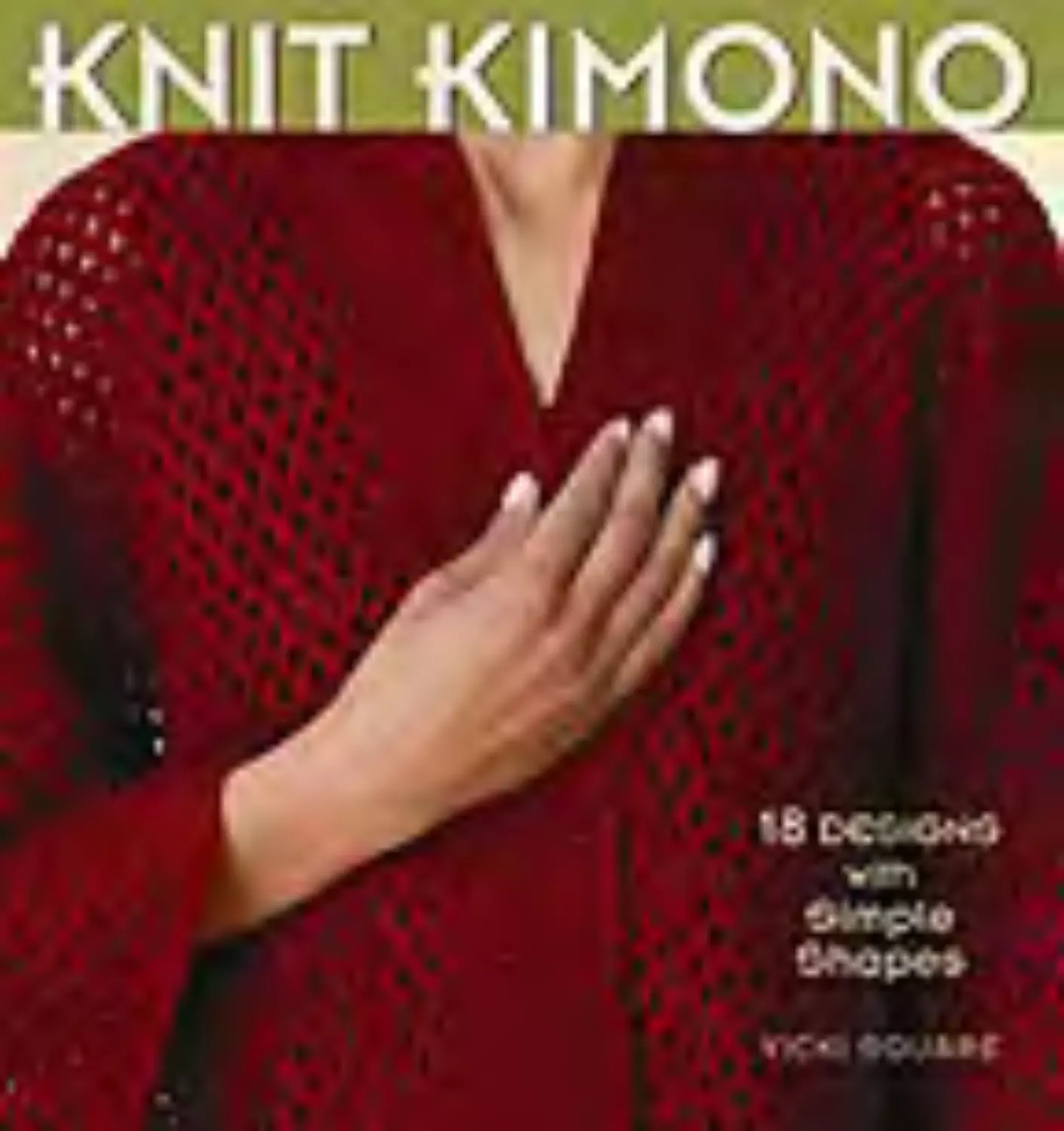
                    KNIT KIMONO
KNIT KIMONO
18 DESIGNS with
SIMPLE SHAPES
VICKI SQUARE
INTERWEAVE PRESS
interweave.com
ACKNOWLEDGMENTS
I count I a pt viiege to work at whal I love. Without a question, however,
a project of this magnitude is a big team effort, and I am so grateful to everyone at Interweave Press who has been a part of bringing this book to fruition Thank you Linda Ligon, founder and original visionary of Interweave Press, for giving me opportunity and letting me offer my artistic vision to kimono. Thank you to Marilyn Murphy for believing in me. io Linda Stark for all her encouragement and marketing expertise, to Tricia Waddell for her professional direction, to Paulette Livers for her nand in the art direction My heartfelt thanks go to Ann Budd lor her expert editing and oversight, her constant encouragement and her gentle way Thank you to Karen Friso for excellent technical editing. Thanks go to Susan Wasinger lor artistic book design and photo styling and to photographer John Mueller
To my knitting family, I love you all and I'm so grateful to have you support me so wholeheartedly, with your lime, your exceptional skill and your kind words and prayers Lois Eynon. Joan Pickett, Micky Shafer, Sally TFueszen, Nancy Hewitt, Alice Bush and Karen Tadich. This book would still be in the works without all ol you.
To all the yarn companies who so graciously provided yarn to fulfill the vision I had for each kimono I thank you: Berroco, Blue Sky Alpacas, Brown Sheep, Cascade, Classic Elite, Dale of Norway. Debbie Bliss, Fiesta, Louet. Mission Falls, Plymouth, Reynolds, Southwest Trading. Whal a joy Io use so many exquisite yarns.
Thank you to my [amity, who are always there to cheer me on, my husband, Johnny, son, Alexander, daughter and husband. Justine and Jeffrey
For Johnny, the love of my life

К tn КI M о N !:	5
INTRODUCTION
KIMONO BASICS
DESIGN YOUR OWN KIMONO
p	2J?	Katsuri Sodenashi
R		Dogi
	34	Indigo Noragi
о 1	40_	Waves
J	48	Reeds & Grasses
E	52_	Noragi
C	56_	Suikan
T	62_	Iki
s	66_	Dofuku
Komon
Medallions & Scrolls
Haori with Crests
Fan Kimono
Bold Chevron
Water & Sky
Taiko Happi
Kabuki Theater
Samurai Jinbaori

INDEX
GLOSSARY IV. RESOURCES 125 BIBLIOGRAPHY
KN II KIMONO
7
I N T R О D
I have always been enchanted by the beauty and timelessness of the Japanese kimono. From casual to formal, the kimono shape has transcended lime and for centuries has been a fashion cornerstone for peasantry and nobility alike The classic rectangular, yet streamlined and elegant shape is recognized worldwide as an icon of Japanese life and culture.
As a history buff, I m fascinated by how the kimono has lasted through the ages, yet remains contemporary. I he craftsmanship and precision in detail is a reflection of the structure of their society, of the beauty of organization, and of the simplicity of function
As a knitter, I'm drawn to the simple shape and construction of kimono The rectangular pieces give me the opportunity to enjoy the peaceful meditation of knitting row after row without having Io pause to th nk about shaping Even the finishing involves iust a few straightforward seams. If you've only knitted scarves, you car. knit a kimono think of it os a few straight scarves sewn together.
As a clothing designee I can ’ help but marvel how so many simple geometric elements combine to create a garment that looks great on every imaginable body type—from short to tall, narrow to wide, and everything in between With the right combination of yarn stitch pattern, and gauge, kimono offers beautiful drape and fluidity of movement that's always in style.
As an artist. I'm intrigued by the way that the simple shape can become a ( anvas for color, pattern, and design. From just a touch of color at the edgings Io a stitch or color pattern that covers rhe entire garment to artistic splashes of embroidery, the possibilities for design are endless.
Each <imono in this collection represents my knitted interpretation of a style or feature of traditional kimono. The styles and shapes of the garments run the gamut from snort to long, rectangular sleeves to shaped straight or overlapping front opening, with sleeves or wi’houl. casual to dressy. I've selected yams and stitch patterns that drape and move as oeaulifully as their woven counterparts The versatility of the kimono is showcased in this collection, where you I find entirely wearable wraps from tops to jackets to ight coats, all with a contemporary flair. Whether you want to follow tradition or invent your own style, you can t go wrong with a kimono.
VICKI SQUARE
Kimono Basics
The Japanese kimono is a timeless garment that is based on the simplest construction involving nothing but rectangular pieces of cloth. From simple work clothes to elegant formal attire for nobility, the kimono runs the gamut from subdued and practical to flamboyant and ostentatious. Add to this versatility the fact that a kimono looks good on any body type—from huge sumo wrestler to petite geisha—and you've quite possibly got the ideal garment.
The kimono shape is certainly ideal for knitters. Even beginning knitters who haven't ventured beyond simple scarves can be ensured success with the first attempt. Think of the kimono as five large rectangular scarves—one for the back, one for each half of the front, and one for each sleeve. The only difference is that the rectangles are sewn (or in some cases, knitted) together. Experienced knitters can hone their skills by working intricate color or stitch patterns or by adding fine embellishments. Whatever your knitting expertise and whatever your shape, you II find a knitted kimono a classic and sophisticated alternative to the traditional Western cardigan or jacket.
w
KIMONO BASICS
TAN
PARTS OF A KIMONO
12'6"
sleeve	sleeve	» i body 1 ——————	1 1 1 body 4 •	neckband
				overlap	overlap
CONSTRUCTION
Kimono ore generally constructed from rectangular pieces of fabric in standard widths. A boll of cloth, colled a tan, is cut into seven straight pieces; two long body panels, two sleeves, two overlaps, and a neckband A stan dotd ’an is about 14" (35.5 c.m| wide and 121/2 yards (11 5 m) long and will make one ankle-length kimono The body panels (mihaba) are seamed (by hand| at the center back and sides with an opening al the center front The=e are no shoulder seams One overlap (okumi) s sewn to each front panel ’he neckband feri) is a folded strip of fabric that s attached to if -  front overlaps and aiound the neckline II generally reaches about a third cl the way down each side of the center front. Sleeves |sode| are the lull width of the bolt and are sewn to the sides of the body
Very Hille fabric is wasted m the making of a kimono It the garment
needs to be adjusted for a smaller body, deep seams are sewn along the sides and the extra-wide selvedges remain uncut on the inside of the garment. Throughout the ages, various ports have been widened or narrowed lengthened or shortened, and olhetwise subtly altered Nevertheless. the technique ol culling a single bolt of cloth into seven rectangular pieces and stitching those pieces together without further shaping remains unchanged.
The spare shape of lhe kimono translates beautifully into knitted fabric. Cast on rhe number o’ stitches needed for the desired width of each rec! angle, then knit for the desired length. Along lhe way, take a cue from Japanese artisans ond add your own expressions of color, texture, ord embellishment Then sew lhe pieces together (by hand, just like the Japanese), and enjoy a garment that never goes out of fashion
KN 11 Кi MONO
11
The Meaning of Kimono
In a traditional sense, the particu'ai color, cut, and desigr of о к mono conveys socio messages gender, life/death, season, age, formality 01 occasion,, and propriety. A kimono worn by a mar is generally more conservative in both pattern and color—block brown gray, or dark blue—while a woman's kimono is a showcase foi pattern and color. Bright coiors are typically worn by young women, while more subdued colors are associated w th maturity In ile. a kimono is always lapped left over right, for burial only is it lapped right over left Understand ably, an unlined, light open weave silk kimono is worn n the summer months, while a lined quilted hanten is saved for the winter season The type of fabric placement of design, and inclusion of crests can nd.cate a sense ot formality In a more abstract sense, the cut o‘ a kimono can reflect an awareness of social eliquette. In Japan where the nape is an erotic part of the body, the collai <s worn closer to the nape for young, shy. and inexperienced females The farther away the collar is from the nape, the greater the statement of maturity, sophisli cation, and even sensuality. Sleeve length mplies gender, formality and age. In traditional kimono, the depth ol the sleeve from shoulder to armhole signifies social responsibility An adult male, who has the most responsibility, wears the shallowest sleeves. An unmarried female, who is considered to hold the least responsibility, wears deep sleeves that can reach all the way Io the floor (called furisode).
As contemporary knitters, we re free io adool or ignore any of these guidelines Today’s fashions encourage a play ol contrad c-lions—the finest silk is at home with faded blue jeans; cul-and-slash pckels are paired with designer dresses on fashion runways. Take inspiration from the trade onal or break away into your own design ideas.
DESIGNATION OF SLEEVE LENGTH
12
KIMONO BASICS
b BRIEF HISTORY
of the KIMONO
• cncienl ond primitive Japan, clothing can be traced back to ’he mH. ennal continent of China No complete garments have been preserved, bu’ from
o-iests robes and nair,tings it is possible ’O reconstruct the style of dress up
tc eno through the Nara period (645 794) Upper and lower garments with a rectangular cut and overlapping closure were in evidence, dong with front and back skirts and sashes scarves and stoles draped or wrapped arojrd the body. By 'fie ninth century the <osoce. the archetypal kimono, was born. Communication ties with China were cut by then and Japan rook tnc oppotturiry to evolve ir$ own unpara loop statement of ethnic dress, ’he kmono has a rich- and complex nono-ive— per ops more *;,<an any c--e culture n history, the ar-stry arid aesthetic beauty of <. mono are tied to 'he changing political landscape and interconnected rules of society
JUNIHITO
К NI KiMONO 13
OSODE
Heian Period (794-1185)
The Heian period marked the age of osode, which translates ite'dytc "large sleeves During this time, forma dress was a spectacular display of colorful layers called junihilo (jun« means twelve": nite means ur mec robes"! Noble women of the court took tins concept to voluminous proportions, often wearing more than twelve layers of rather stiffly woven sil< osode—each one a different color—layered on top of one another in a lavish visual display The large, loose sleeves of osode had s de wrist openings equal to the entire depth of the sleeve, allowing each oyer to show through. The layers were also visible al lhe neckline and aiong lhe front edges where they swept back m beautiful curves Specific color comb motions held special meaning that related Io lhe spirits of nature, includ ng lhe seasons, geographic directions, personal v Hues, and earthly elements Ir paintings of the period, Heian beauties are almost completely enveloped in lhe billowing folds of their garments. Osode are still used m the impe'ia court for ceremonies and theatrical performances, such as bugaki {masked dance) and Noh dramas
Commoners during the Heian period wore suikan, a garment havir^ a double width of fabric for the sleeves with a cord used Io draw uo the sleeve opening. ?he suikan also featured side slits, open ‘rom hem to waist, to accommodate movement and allow the garment to be lucked into pleated pants called hakama.
KOSODE
The outermost robe of ‘he junihilo was a decorative large-sleeved robe called uchige The innermost robe—the kosode—was a plain white under-garment with small sleeves made of simple plain-weave fabrics {common \ ramie and silk) During Japan's middle ages J185-1868) kosode shiflec from private to public view and, as such, were made from more elaborate fabrics such as silk twills (aya-ori), figured satin (rinzu), and crepes (chinmenj The basic shape of kosode has remained unchanged since the late Heiar period, but fabric design and embellishment techniques have undergone many innovations in response to a series of al embracing political changes Kosode became lhe canvas on which Japanese artisans lavished lhe r nr.os
creative visions.
14
KIMONO BASICS
Kamakura Period (1185-1333)
Duimg the Kamakura period. the military class came to power and the capital was moved from the traditional central imperial seat of powet in Kyoto to Kamakura in eastern ;apan Al! aspects of extravagant and opulent court life were replaced by a more restrained existence The multilayered junihito was replaced by simpler ensembles of perhaps jus’ one or t wo layers. Elaborate dross was reserved for warriors, who wore a two-piece hitatare under their armoi made from brocades decorated with floral designs, figured silks. and tie-dyed fabrics.
К N I X i M 0 N 0	15
Moromachi Period (1333-1563)
lhe Ashiga dynasty of the shoguns dominated the Muromachi period during which time the samurai ruled lhe military The uchikake was lhe mosl elaborate outer garment al lhe kosode style, with small wrist openings, worn by upper class women of the ruling military ciass. Hilolare was lhe standard garment worn by males and motifs woven or dyed into lhe fabric evolved into larger-scale and more flamboyant patterns. The family crest called a mon, became a popular ornamenia feature as a way of establishing a clan or fam у |sim lar to a coal of armsl or as a woy Io honor and identify a particular accomplish men I. A mon is a roundel encircling a stylized design of a traditional theme, such as flowers, bamboo, or fans. In a graduating scale of formality, a kimono may have one. three, or five crests A single crested kimono displays the mon a‘ lhe mid-back a few inches below lhe neckbond. A three-crested kimono adds one Io the back of each sleeve A five-crested kimono adds one Io each side of the front, placed just below the collarbone. Crests are not placed or komon, or small all-over patterning, kimono. Crests may be placed on asymmetrically decorated kimono, but mosl formal of all is the unpolterned monochrome kimono wi’h five crests
CRESTS
Triple Comma Crest
16
KIMONO BASICS
Momoyama Period (1563-1615)
lhe brilliant .Momoyama period marked a short-lived but extraordinary mlerva between wai and peace during which opposites viea for aesthetic supremacy. Counterpoints like gold and straw or sophistication and rusticity were paired in equal measure -monumental castles and rustic teahouses were built; paintings ranged from spectacular audience-room masterpieces to intimate monochromatic works. During this period, elegant textiles were created in the pic tonal tsujigahana style that combined a number of lech niques. including shibor: [resist dyeing;, koki-e (brush painting with sum- ink), Surihaku (gold 01 silver leaf stenciling) ond/oi huihaku (embroidery) to dye fabrics, define lines, and create shadings
During this time, fabrics began to be imported from 'he Chinese Ming dynasty, inspiring the Japanese to weave figured damasks, satins, and crepe silks foi themselves I he more supple fabrics displaced stiff, neovy brocades and made way for an outpouring ol artistic creativity in textile design Cultivated cotton became widely available and commoners began to favor it over the trad tiona1 resilient but stiff bast fibers like hemp. f ax. and ramie. A new design aesthetic emerged that featured dynamic asymmetry, irregular forms, and sweeping curves that defined a new artistic concept of space much like a pointer might define a new' compositional anarigement on a canvas
KN IГ К I HO KO I 17
KANBUN STYLE
Edo Period (1600-1867)
The Edo period wos nomed after ’he ci’y of Edo [modern Tokyo), where lhe Tokugawa shoguns had their new sea’ of government With lhe momentum of the Momoyoma period, there was a rather seamless transition and conlm ualion ol artistic expression with lhe style of clothing ‘hat we generally think of today as traditional Japanese Design expression expanded with the basic techniques of shibo'. surihala (shibon-style resist using s’enci patterns), embroidery, ana parilal nurizome (brush painting with dyes) Dining the early stages of lhe period |i.e., ’he mid-seventeenth century) the Kanbun kosode was in fashion Fabric designs of earlier periods that 'nod featured motifs and repetitive patterns densely compacted m an allover manner gave way to laige abstract areas of color, dapple tie-dye. embroidery, and metallic leaf in bold sweeping diagonals on ’he back ol kosode, extending horn the right shoulder to ’he leh ski't The dramatic early Kanbun kosode style culminated in Genroku JI688 1704). a fleeting fad tucked into rhe Edo period The nurizome brush-painting method gradually evolved into lhe yuzen dyeing technique, in which fine free-form resist lines produced crisp outlines of sharply defined areas of color Yuzen was a more painterly technique 'hat encouraged a fluid freedom of expression P clorial possibilities abounded with endless possibilities for color, shape, and shoeing. This dyemg technique unleashed a virtual revolution in Japanese textiles.
The lavish and radiant Genroku yuzen did not asl however. The Confucian inspired ruling class banned lhe exuberantly colored, stunning oversize patterns in favor of a darker more sophisticated aesthetic called iki The pendu urn once again shifted away from lhe obvious to the subtle, тот bright colors Io dark, ana from ртЬо free-form designs ’o pelite pattern repeats.
It s safe to soy that 'he kosode blossomed as an eloquent expression ol Japanese culture and art during the entire span of lhe Momoyama and Edo periods. Drawing images from nature, literature, and everyday life, kosode designers could turn any subject into a decorative motif. Textile production reached its highest evel of accomp! shment in weaving techniques and desgn, and du' ng this lime woven patterns were replaced by dyed patterns of equal beauty a’ less expense The dye work allowed a free and graphic style that more closely represented lhe inherent beauty of nature, a beauty
I8 KIMONO BASICS
hat lhe Japanese welcomed into every aspect of their lives.
Kosode designs from lhe sixteenth to nineteenth centuries embody the best ol lhe Japanese decorative style in a balance of opposites: expressive bu‘ not sentimental, filling lhe ground or space bet not overcrowding it delicate without rigid symmetry. Kosode designs during this pened embody every artistic and technical accomplisnmer I n weaving, dyeing, and embra cery, derived from long traditions of painting and crafts
Contemporary Dress
In the mid-n.neteenth century, kosode faced its first real competition with the appearance of Western clothing But instead of being replaced with Ejropean-style clothing, the rich style, fab'ic. and design that had been associated with kosode for centuries were embraced as different and distinct During lhe half century of lhe Meiji emperor's reign 11868-1912] the Japanese distilled their entire history into their ethnic dress. They replaced he term kosode with the word kimono ( object of wear") to represent the essence of Japanese culture that lives in this unique garment
With the inHux of Western clothing, there arose a vocabulary to define it os opart from Japanese clothing. Wafuku is Japanese, yofuku is Western Wafuku is either noragi (working wear! or kimono. Kimono is either fundangi (everyday wear) or haregi (forma wear) Japanese men s clothing became known as yofuku, since they more readily adopted the European style of dress Women continued to wear kimono well into the mid-twentieth century. Western clothing has now been adopted by ’he general Japanese population. but kimono continue to be worn for al! occasions from everyday work to formal celebrations and festivals. Ar the some time, the Kimono style has expanded throughout the world where it is becoming a part of everyday dress everywhere.
We can honor the millennium of Japanese Kimono tradition by knitting them, and expressing in a contemporary way. our own interpretation of their beauty.
IKI KIMONO
Kk T KIMONO 19
DESIGN YOUR OWN KIMONO
The basic rectangular shape of a kimono makes it the easiest of all garments to design for knitting. Choose a yorri, knit a generous gauge swatch to determine the number of stitches you get per inch o' knitting, do a few simple calculations, follow the schematics here, and you're on youi way
Choose a Yarn
You can have a lot ol fun here From rugged wool to drapey silk, from chunky to fine, Io anything tn between—any yarn will work,
Determine Your Gauge
Knit a generous gauge swatch (at leas? 6 [15 cm] square) with lhe yarn, needles, and stitch pallern you plan to use for your project. Wash the swatch as you p;an to wash your finished kimono. When the swatch is thoroughly dry. place it on a flat surface and measure the number of stitches
across 4 110 cm| of knitting width. Divide that number by 4 Io gel the number of stitches per inch of knitting. Don't forget to include partial stitches—just one-half of a stitch in 4 can translate to several nches in the total circumference of lhe kimono Measure lhe number of rows in the same way.
Determine Your Stitch Counts
Translate the measurements on the .schematics below into number of stitches and rows by multiplying those numbers by your stitch and row gauge.
BACK
25 mches x stifches/inch =stitches to cast on
28 inches x rows/inch =rows to work to bind off
FRONT (MAKE 2 THE SAME)
9 inches x stitches/inch =_____________________stitches Io cast on
28 inches x rows/inch =rows 'o work to bind off
SLEEVE (MAKE 2 THE SAME)
12 inches x stitches/inch stitches to cast on
30 inches x rows/inch =rows to wot к to bind off
20
DESIGN YOUR OWN KIMONO
NECKBAND
3 Inches x stitches/inch =stitches to cast on
63 inches x rows/inch =rows to work to bind off
Note- The neckband should be stretched slightly for a tidy fit
Make Your Own Variations
Il's easy to add your own flavor by adding stitch or color patterns. Choose garter stitch or seed stitch or simple stripes for an easy kimono that requires no edge finishing. Choose Fair Isle or intarsia color work for more involved visual excitement Add a hem or noncurling stitch to the edges of a stockinette smch kimono. Adjust the length of the body pieces to long coal
or short bolero Make the sleeve deep and long or shoe and narrow Once you're comfortable knitting lhe simple rectangular shapes add rounded or asymmetrical shaping to rhe lower body, sleeves, or neckline Add details like embroidery or a knit-cord knot closure. Before long, you'll be designing your own kimono intrigue.
KNIT KI M 0 N 0
KatsurLSodenashi
Ikat is the Malay word known worldwide for the process
called katsuri in Japanese. Katsuri is a thread-resist technique that we recognize as hazy white patterns reserved on a deep indigo ground Ranging from simple mottled effects to abstract geometric motifs and free-form representations of nature's plant life, katsuri textiles are admired for the skill, ingenuity, and creative imagination they express
Most widely known as a folk craft, katsuri textiles were woven at home primarily out of cotton The weaving required command of technique, proficiency, and patience but needed few tools beyond the two-harness, back-tensioned oom used historically throughout Japan. The pattern is dyed into sections of the thread lengths before it is woven. Warp or weft alone may carry the pattern, or the pattern may be erected by the intersection of dyed warp and weft
Sodenoshi was a common tern of work apparel—a simple straight vest, with or without a collar strip. I let katsuri inspire me for the hront and back yoke on this medium-length sleeve-ess cotton tunic, expressed in a slip-stitch pattern.
MATERIALS
FINISHED SIZE
About 55 У (141 cm) in circumference—53 У (135.5 cm) garment plus a 2/ (5.5 cm) space at center front—and 36 (91 5 cm| in length
YARN
Worsted weight (#4 Medium).
Shown here Cascade Sierra (80% cotton, 20% woo!. 192 yd [176 m]/100 g): #66 indigo |MC), 8 honks; #01 white (CC), 2 skeins
NEEDLES
Size 8 (5 mm): 32 (80 cm) circular (cir). Adjust needle size if necessary to obtain the correct gouge.
NOTIONS
Stitch holders, tapestry needle
GAUGE
18 stitches and 24 rows = 4 (10 cm) in stockinette stitch
KATSURI SODENASHI
24 KATUSURI SODENASHI
BACK
WilhMC CO 107 sts. Next row: *KI pl rep from x to last si, kl Rep ire last row ’.seed st) until piece measures I • (3.8 cm) bom CO, ending wilh о WS row Coni as foil
Row J: |₽S| [Kl. pl] 3 limes, knit Io last 6 sis, [pl, к I] 3 times.
Row 2: Xi pl] 3 limes purl to las! 6 sts. [pl kl | 3 times
Reo Rows I and 2 until piece measures 26’ (66 cm) Irom CO, ending with о RS row
Yoke
With CC, purl 1 (WS| row. Coni as foil
Row I: |RS1 With MC k4, ‘si I, kl, si I k9 rep from * to last 7 sts, si 1. kl, si 1. k4
Row 2 and all WS rows Using the same- color as the preceding RS row pel oil the sis that were knitted on lhe preceding row and slip with yarn r front |wyf) all lhe	sts lhal	were slipped	m lhe preceding row
Rows 3 and 23: Wil-	CC	43, si	I, rep from *	to last 3 sb.	k3
Rows 5 and 21: With	MC,	kl 4 1	si I rep from * to last 2	sis.	k2
Rows 7 and 19: Wil'	CC	45, si	, rep from *	to last 5 sts,	k5
Rows 9 and 17: Wil- MC k2 *sl I k5; rep from * to last 3 sts. si I k.2
Rows 11 and 15: With CC, k3, *sl I kl, si 1 к I si 1, k7 rep from * Io lost 8 sis. si I, kl si 1, kl, si 1, k3
Row 13: With MC, kl 49. si 1 kl. si I rep from * to last 10 Sts, к 10
Row 24: Rep Row 2.
Rep Rows 1-24 two more limes—piece measures about 36" [91 5 t mJ from CO. Place sis on holder.
LEFT FRONT
With MG CO 49 sis Next row: *K1. pl rep from * Ic Iasi st. kl Rep
he Iasi row until piece measures 1'6" [3.8 cm) from CO, ending wilh a WS row. Coni as foil:
Row I: '.RS) [Kl. pl] 3 limes, knit to last 3 sts. ssk, kl -I st deed
Row2 Pud to Iasi 6 sts. [pl. kl] 3 limes
Coni in seed st and Si st os established, det I st ar end of RS row in this nrcnner every 4th row 9 more times- 39 sis rem Corl even in pall until piece treasures 26" [66 cm) from CO. ending with a RS row
Yoke
With CC, pu'l 1 (WS) row. Coni as foil;
Row I: (RS) Wth MC, k4 *sl I, kl, si 1, k9, rep from * to last 11 sts, si 1 kl, s' 1. k8.
Row 2 and all WS rows: Using the same color as the preceding RS row. putl all the sts Inal were knitted in the preceding row and slip wyf a I lhe sis that were slipped in lhe preceding iow
Row$3 and 23: With CC xk3. si I rep from * to Iasi 3 sis k3.
Rows 5 and 21: Wit'* MC. kl 41 si 1 rep from * Io last 2 sts k2 Rows 7 and 19: Wi’n CC	45 $1 I	re;	from * Io last 3 sis k3
Rows 9 and 17: Wilh MC	k2	*$! 1	k5,	rep from	* to Iasi si к I
Rows 11 and /5: With CC.	k3,	*sl I,	kl si 1 к s	I. к/, rep from	‘
Row 13: W th MC, к 49. si	I kl	si 1	rep from	* lo as* 2 sts,	k2
Row 24: Rep Row 2
Rep Rows 24 two more limes -yoke measures about 10" [25.5 cm). Place sts on holder
RIGHT FRONT
With MC CO 49 s’s Next row *K pl rep Irom * to Iasi si к I Rep the last row until piece measures I '/ (3.8 cm) from CO, ending with a WS row Coni as foil
Row 1: [RS! Ki k2log, knil to last 6 sts, [pl. kl 3 times I st deca Row 2: [Kl pl] 3 limes, purl tc end
Conf in seed st and St st as established dec I s? at beg of RS row in this manner every 14th row 9 more times—39 sis rem Coni even in pan until piece measures 26 (66 cm| from CO, ending with a RS row
Yoke
W-lh CC, purl I (WS) row. Coni as foil:
Row 1: (RSI Wilh MC, k8. *sl 1. kl, si 1 k9 rep from * lo Iasi 7 sts, si kl. si I, k4
Row 2 and all WS rows: Using t- e same < olor os ’he preceding RS r >w. pun all lhe sts that were knitted in lhe preceding row and slip wyf all the sis lhal were slipped in the preceding row.
Rows	3 and 23: Wilh CC..	*k3, si 1. rep from * to last 3 sis.	k3
Rows	5 and 21: Wil- MC	kl. 41 $1 I rep from * io last 2	sis,	k2
Rows	7 and 19- With CC k3 si 1 45. si 1, rep from * to last	5 sis, <5
Rows	9 and 17: With MC.	kl. 45. si I rep from * lo last 2	sfs.	.<2
Rows 11 and 75: Wilh CC, 47 si 1, kl, si I к I si 1. rep from * lo last 3 sts, k3.
Row 13: With MC k2 *sl 1. kl si 1, k9, rep from * to last st. kl
Row 24 Rep Row 2
Rep Rows -24 two more limes- -yoke measures about 10“ (25.5 cm) Place sis on holder.
JOIN SHOULDERS
Place 107 back sts onto one needle and 39 right Iron» sts onto another needle. With CC and RS tog, use lhe three-needle method (see Glossary, page 117) to BO 39 sis log for right shoulder, then BO 29 back sts for back пег к then BO rem 39 back sis log w’li 39 left front sis for left shoulder. Cut yam and pull tad through rem si to secure.
KM KIMONO
25
FINISHING
Yoke Armhole Facing
With MC RS facing, and beg al base of left front yoke, pick up and knit 86 sis along selvedge edge of front and back yoke Purl 1 (WS) fow Work even in Si si until facing measures I" (2.5 cm) from pick-up row BO all sis. With yam threaded or a tapestry needle., use a whipstitch [see Glossary page 124[ to tack facing to WS of yoke every 3 io 4 sts. Rep for right armhole, beg at base of right back yoke
Neckband
With MC and RS facing, pick up and knit 172 s’s along right front edge. 29 sis across back neck, and 172 sis along left front edge—373 sis total Knit 1 (WS| row Cent as loll:
Row 1: [RS| With С C k5,	*sl 3	with yam ir back (wyb. ' 5. ep from	*
Row 2: W th CC, k2	pl	k2	*sl 3 wyf. k2. p k2	rep from *
Row 3: With MC. k2.	*sl	I wyb, k7; rep from * Io	Iasi 3 sts, si 1,	k2.
Row 4: With MC. к I,	pl,	*sl	I wyf, p7; rep from *	to last 3 sts, si	1,
pl, kl.
Rows 5, 6, and 7: Rep Row- I 2 and 3
Row 8: With MC, к I pu'l to last st kl
Row 9: With CC. kl, *sl 3 wyb, k5; rep from * to last 4 sis. si 3. к I
Row 10: With CC, kl, *sl 3 wyf, k2, pl, k2 rep from * to ’asl 4 sts, si 3. kl.
Row 11: With MC k6, *$l 1 wyb k7 rep from * ?o last 7 sts s I k6 Row 12: With MC kl p5, *sl 1 wyf. p7 rep bom * to last 7 sts si I p5, kl.
Katsuri textiles are admired
for the skill, ingenuity,
and creative imagination
they express.
Rows 13, 14, and /5: Rep Rows 9. 10. and 11
Row 16: Will MC к I purl tc last st k'
Rows 17 and 18: With MC. knit (lurni-.g -idgel
With MC. work even in Si si for 6 rows
Row 1. (RS) With CC	k5,	*s 3 wyb	k5 rep from *
Row 2: With CC p5.	*sl	3 wy p5	rep from *
Row 3: With MC k2.	‘si	I wyb, <7	;ep from *	Io Iasi	3	sis.	s	<2
Row 4: With MC. p2,	*sl	I wyf. p7;	rep from *	to Iasi	3	sts.	si I, p2
Rows 5, 6, and 7: Rep Rows I 2 and 3
Row 8 With MC k2. ‘pl k7. rep from * to last 3 sis. pl k2
BO all sts kwise Fold lacing al turning ridge Io WS and whips’ tch into place, catchmg the pick-up seam
Side Gusset (make 2)
With MC, CO 17 sis. Work in seed st until piece measures 16" [40.5 cm] from CO. BO all sis in polt Measure 1	(3.8 cm) down from
bottom edge of yoke on front and back and mark for gusset placemen’. Place ’op edge of gusset ar marks and side edge 1 si underlapping front and back [Gusset will not reach to ower edge of garment Lower 8 . [21.5 cm] of side edge will remain bee | Use a whipstitch Io sew in place on WS of garment
Steam block to measurements.
26 KATUSUPI SODENASHI


Dogi
Stunningly beautiful striped patterns have woven their way
through kimono fashion for centuries. There ore literally hundreds of variations of simple parallel line stitch work Stripes may be wide, narrow, paired, grouped in multiples, textured, or defined in a palette of two or more colors. The effluent used silk, and commoners used cotton. Folk textiles of the commoners were by nature utilitarian but by no means excluded decoration. Uniquely beautiful features ore achieved through straightforward methods and are applied io garments that are functional and easy to move and work in, like the sleeveless tunic or vest.
This dogi, or vest is knitted in one piece from side to side in a flat ribbon yarn. The yarn is a blend of rayon and cotton hand pa inted in the dark shibui colors of subdued browns and grays. Unlike traditional kimono silhouettes, I've shaped the armholes and lower edges of this vest into gentle and pleasing curves. However, the front opening hangs straight The vest is worked in a button stitch textural pattern that produces subtle vertical stripes representative of many traditional kimono patterns. The edges are cleanly finished with knitted cord.
MATERIALS
FINISHED SIZE
About 42" '106.5 cm) n circumference—40' (101.5 cm) garment plus a 2" (5 cm) space at center from—-and 22” (56 cm) in length.
YARN
Worsted weight (#4 Medium).
Shown here: Fiesta Meteor (50% rayon 50% cotton: 180 yd [165 m]/4 oz): cinnamon. 6 skeins.
NEEDLES
Size 9 (5.5 mm): 24’ (60 cm) circular (cir); spare size 9 (5.5 mm)
needle for f nishing; size ICw (6.5 mm): 32" (80 cm) cir; size 10 (6 mm) double-pointed (dpn).
Adjust needle size if necessary to obtain lhe correct gauge
NOTIONS
Small amount of waste yarn fo-prov;sional CO: size 1/9 (5.5 mm| crochet hook, stitch holders, tapestry needle
GAUGE
18 stitches and 24 rows - 4" (10 ern) in stockinette stitch or smallest needle.
KNH K’MCHO
29
STITCH GUIDE
Button Stitch worked over 2 stsl
Bring right needle in front of the left needle and insert tip between the second and third sts, wrap working yarn around right needle, draw up a loop (Figure 1|, slip this loop pwise onto left needle tip (Figure 2), knit this st through the back loop (I new st on right needlei slip 'he 2 wrapped sts (the first and second sts on left needle) pwise to right needle, then pass the new st on right needle over the 2 slipped sts and off needle (Figure 3)
Figure 1
Figure 2
Figure 3
30
DOJI
RIGHT FRONT/SIDE
W -h smallest neede. waste yam and working yarn use the crochet'd,am metnod Isee Glossary, page 118) lo provisionally CO 27 sts. leaving a 24" (61 i/n) toi al work*ng yarn for аь-> msh ng. э il I WS) ow Next row: (RS) K l&b (see Glossary page 121) knt to last 2 sis, kll&L к 2 sts inc'd Pur I row. Rep lhe Iasi 2 rows 2 more times—33 sis; piece Treasures about *	(3.2 cm) bom CO. C jI yarn, leaving an 8' (20.5
an) tail Place sis on holde-
RIGHT BACK/SIDE
CO and work same as tight hont/side but do not cut yum and ieove sis on needle—33 sts; piece measures about I " |3 2 cm) ham CO With RS lacing, use the cable method (see Glossary, page 118) to CO I 10 sis lor armhole* .43 sts. Wilh WS facing, purl 33 held right frcn|/side sis—176 sts total Con- in St st use the cable method to CO 3 sts at beg text 4 rows 188 sis Next row: |RS) КI use th  backward <.x>p method |see Glossary, page 118| to CO I st knit to last st, use the backward-loop method to CO 1 st, kl- 2 sis inc'd Pur 1 row. Rer? the last 2rows 4 more times—198 sts Next row: IRS. button si row) Kl, *work button st (see Stitch Guide! over next 2 sis; rep from * to last st. к I Work 9 rows even n Sr st Rep lhe last Ю rows once Rep button st row Purl I tow Work 4 rows even in St st, ending with a WS row—piece measures cboul 71 " (19 cm) from initial CO. With RS facing k98 and place these sts or holder lor right Iron? knit lo era—100 sis rem for bock Work 3 Ш even n S' st Next row: (RS. butler $1 i< w| Kl "work b Hon  • ove- next 2 sis; rep from * to ast st, к I Work 9 rows even n Si st Rep the asl 10 ows 2 more rimes. Work button st row I'url I 'ow Work 2 'ows even <n St st, ending with a WS row- -piece measures about 13 134.5 cm) Irom nitiol CO Wilh RS facing and waste yarn use the crochet-choiri method to provisionally CO 99 sis onto light needle for left -font With WS facing, purl these 99 sis. With RS facing k98. k2tog (last st of left front log wilh first st of bock neck), knit to end—198 sis Work 5 .• Next row: (RS; button st rcw| Kl, *work button st over next 2 sis; rep fiom * to lost st. kl Work 9 rows even in St st Rep the last 0 ows I more time. Work button st row. Purl I row—piece measures about I/ Г (45 cm| from initial CO.
Shape Lower Edge
Next row: )RS) "Kl, k2tog, <n»’ to as' 3 sis ssk kl—2 sts deed. IW 1 •ow. Rep the last 2 rows 4 more limes 188 sis rem BO 3 sis at beg of next 4 raws—176 sis rem.
Shape Left Side/Front
3?S) K! k2tog, <27 ssk. к I (31 sts on right needle), place em 43 sis ry holo, tor left side, back P.il I row Nexl row: |RS| Kl. k2tog, k25
KN I КI KONO |
51
Unlike traditional kimono silhouettes.
I’ve shaped the armholes and lower
edges of this vest into gentle and
pleasing curves.
ssk, kl—29 sis rem. Purl I row. Next row: KI, k2tog. k23. ssk, kl—27 sts rem. Purl 1 row. Place these sis on holder and cut yarn, leaving a 36м 191.5 cm) tai for grafting
Shape Left Side/Back
Place 143 held left side/back $t$ onto needle With RS facing, BO 110 sts for armhole |1 st on right needle), work rem 32 sts as k2tog. k2Z ssk kl—31 sts rem for left side/back. Purl I row. Next row: (RS) Kl. k2tog. k25, ssk kl -29 sis rem Purl I row Next row: Kl, к 2 tog, k23, ssk kl—27 sis rem Pud 1 row.
Join Sides
Place left side/front sts onto spore needle, and with yarn threaded on о tapestry needle, use the Kitchener si (see Glossary page 121' to join lek side/front and left side/back srs log Remove piovisiona: CO from r gh side/front and right side/back placing sis onto two needles Join right side as for left side
FINISHING
Neckband
Place 98 held right front sts onto smallest needle With argest needle and RS facing. [k2, klf&b, k3, klf&b] 14 times (126 sis for right front) pick up and knit 38 srs across back neck, remove waste yam from provisional CO and place 98 left front sis onto smallest needle and work as [k2. klr&b k3. klf&b] 14 limes—290 sis total. Coni with largest needle as foil.
Row 1: (WS) xK2log; rep from * to end—145 sis rem Row 2: (RS) *KH&b: rep from ’ to end—290 sis.
Rep Rows 1 and 2 four more limes, then rep Row I once more—6 gone’ ridges on RS. BO in knit-cord as fol' Place all sts on smokes! needle. With attached yarn at lower right from edge, use the cable method to CO 3 sts. Coni with smallest needle. *k2, si 1 kwise, si I from neckband pwise work these sis tog as for ssk. si these 3 st$ back to left needle: rep from 4 until all neckband sts have been BO—3 sts rem on right needle Change to middle-size dpn and work as regular knit-cord (see Glossc-y. page 121) for 2 rows. Conr working knii-cord but attach it as you go from right to left along left front lower edge as foil *K2. si 1, pick up I s’ if' knitted edge by inserting right needle into work and puling a loop through, pass slipped st over picked up st and drop off needle, side sts 1c opposite end of dpn; rep from * picking up under 1 strand only of edge st and working io keep knitted fabric edge flat (about 2 rows o: knit-coic for every 3 rows of garment along straight edges, about I row of knitcord for every st along convex edge, and less than 1 row of knit cord fo’ every st along concave edge) Conr in this manner along the left front, back, and right front lower edges, ending at the right center front lower comei Cut yarn, leaving a 10 (25.5 cm) tail. Thread tail on a tapestry needle and graft to CO edge as foil Slide sts to opposite end of needle Bring tapestry needle through first st pwise and leave st on needle *bring tapestry needle down through center of first st on CO edge then up through second st. then kwise into first st on needle and remove st hoc needle, then insert ’apestry needle nto nex’ si pwise and leave -his st cn the needle; rep from я working across CO edge, and removing ast st on needle after bringing tapestry needle through it kwise
Bloc k io measurements using the we’-lowel method (see Glossary, page 117).
52 DOGI
**•*•*•
Indigo Noragi
Indigo is a common dyestuff, but the colors it produces
are anything but commonplace. Indigo-dyed cotton, native bast fibers, and tough wild silk were used in garments for the working class peasantry, or noragi. With a nod toward economy, mobility, warmth, and protection, functionality reigned supreme in Japanese folk clothing Yet this did not preclude beauty. Working with materials easily accessible, beautiful craftwork emerged for pants, tops leggings, vests, jackets, and aprons, as well as shorr kimono-shaped robes.
Here, I have taken artistic license with the basic shape of lhe kimono, folding the yoke to create lhe sleeves, add-ing pockets, using buttons as closure . but the basic kimono shape remains intact. I used a wave rib stitch that reads horizontally for the front yoke and back, then reads vertically where the fabric is folded for the sleeve. The remaining pieces are a bit of origami construction, but the result is an indigo flavored short silk jacket that is versatile and beautiful.
MATERIALS
FINISHED SIZE
About 45' (114.5 cm) in circumference and 22 7 (57 cm| in length
YARN
Worsted weight (#4 Medium).
Shown here Reynolds Mandalay (100% silk 98 yd [90 m]/50 g) #35 indigo. 15 skeins.
NOTIONS
Tapestry needle; three 1 x c (2.8 x 13 cm) burtons; size F/5 (3 75 mm) crochet hook.
GAUGE
17 stitches and 24 rows = 4’
(10 cm) in stockinette stitch;
18 stitches and 26 rows = 4 (10 cm) in vertical wave rib pattern
NEEDLES
Size 6 |4 mm): two 24“ (60 cm) circular (cir). Adiusl needle size if necessary to obtain the correct gauge.
KN T К MONO 35
INDIGO NORAGI
STITCH GUIDE
1/1 LC: Knit into the bock of the second st on left hand needle but do not slip this st from the needle, bring right-bond needle in front of work and knit the first st on left needle, then slip both sis off log
1/1 RC: Knit lhe second st on left-hand needle by inserting right-hand needle from Ironl to back but do nd slip this st from the needle, knit lhe first st on the left needle, then slip both sts off tog.
к on RS, p on WS
. p on RS, к on WS
J pattern repeat
ZZ I /1 RC: see Stitch Guide l/l LC: see Stitch Guide
107/'
26 cm
24,"
7 cm
67,"
17 cm
214/'
54.5 cm
Right Front
II'/,-28.5 cm
4"
10 an
58.5 cm
36 I INDIGO NORAGI
LOWER BACK
CO 98 sis.
Row I: (WS) Pl, work Row 2 of Verlicol Wove Rib chart (see page 36) across 96 sis, pl
Row 2. (RS) KI. work Row 3 of chart across 96 sts, к I
Row 3: PI work Row 4 of chart across 96 sis. pl
Row 4: KI work Row 5 of chart across 96 sts kl
Row 5: Purl
Corr in St st on all srs until piece measures 7." (19 cm) horn CO, ending witn a WS row. With RS facing, BO all sts.
BACK/FRONT YOKE (worked from side to side) CO 97 sis. Purl 1 (WS) row.
Row I: |RS| Kl (seivedge st. work in St st), work Row I of chan to end Row 2: Work Row 2 of char* to last st, pl (selvedge st)
Coni in Inis manner, working selvedge st in Si si and 96 srs as charted until piece measures 18'4" (47 cm) from CO, ending with a WS row Shape Left Front Neck
Co" in oa’t as established, work across 67 sts of back yoke. BO next 7 sis ’or front neck, work to end—23 sts rem for front yoke Working on Iron! yoke sis only, work I WS row Keeping in pan, at neck edge (beg o! RS rows}, BO 7 sts once, then BO 8 sis 2 limes Cut yarn With WS lacmg. rejoin yarn to 67 back yoke sts. Coni in pair until piece measures 23'?' (595 cm) from CO. ending with Row 11 of chart.
Shape Right Front Neck
W th spore cir needle and separate ball of yam. CO 8 sis. Purl 1 (WS) row Row 1: (RS) Use tne cable method (see Glossary, page 118.1 to CO 8 more sis, knit Io end -16 sis.
Row 2: (WS) P3. k2. p4, k2, p4, kl.
Row3: Use the cable method to CO 7 sts. kl. [ 1/1 RC (see Stitch
| Guide), k4] 3 times, 1/1 RC. k2—23 sts.
Row4: P2. ’kl. pl, kl. p3] 3 limes, kl, pl kl
Row5: Use the cable method Io CO 7 sis kl. [1/1 RC, k4] 4 limes, ' l/l RC, k3-3O sts.
Row 6: Work Row 12 of chart across 30 front yoke sis, coni in pall across 67 back yoke sis—97 sts total
Corl in patf until piece measures 18 V (47 cm) from neck |oin, ending with a WS row—piece measures 42 (106.5 cm) from CO. With RS facing, BO all sts.
RIGHT FRONT
CO 48 sis Purl I (WS) row Work even r- St si until piece measures 12 (315 cm) frorr CO. ending with a WS row Next row: (RS) Ki. k2log knit io end— 1 st deed. W'ork 5 rows even Rep the last 6 row's 3 more times- 44 sis rem Coni even until piece measures 16'4“ (42 cm) from CO. ending with a WS raw. BO oil sis.
LEFT FRONT
CO and work as for right front until piece measures 12'4»* (31.5 cm) from CO, ending with a WS row. Next row: (RS) Knit to last 3 sts. ssk. kl—1 st dee d Work 5 rows even Rep the last 6 rows 3 more limes—44 sts rem Cont even until piece measures 16 :и (42 cm) bom CO, ending with a WS row. BO all sis.
LOWER FRONT POCKET (make 2)
CO 50 sis.
Row 1: (WS) Pl work Row 2 of chai I across 48 sis. p!
Row 2 (RS'. КI work Row 3 of chart across 48 sis. kl
Row 3: P1 work Row 4 ol chart across 48 sis. pl
Row 4: Kl, work Row 5 across 48 sts. kl
Row 5 Pin I
Coni even in St st until piece measures 74" (19 cm) from CO BO all sis
FINISHING
With crochet hook and RS facing, single crochet (see Glossary, page 119) across top of pocket Fasten off Using the wet-towel method (see Glossary, page 117). block all pieces Io measurements, lightly steam edges -f necessary Io prevent curling. Lei air-dry completely.
Kh'I KIMONO 37
Assembly
Place back/fron1 yoke RS down on a flat surface. Fold down lhe front yoke about 6 ' [17 cm) so that fold ine is even with back neck BO. and fold up lower comer to front yoke edge, meeting side of back yoke to lower edge of Pont yoke forming sleeve cuff (Figure I). With yarn threaded on a tapestry needle and using ‘he invisible vertical to hor zontal seam (see Glossary, page 122). sew seam from cuff edge along lower front yoke (about 9"-i0" [23-25 5 cm)). Pin lower back to back yoke and sew seam from RS using invisible vertical to horizontal graft (F gure 2). Place piece on table so that RS of front yoke and WS of back yoke/lower back are facing up. Place the front m place and pin along yoke and sleeve. Place pocket on top of front and pm Io lower back al side seam With RS facing and using mattress st with a . st seam allow once, sew pocket to lower back then cont seam by joining front to side of sleeve from lower sleeve edge Io bottom of yoke using a I st seam allowance (Figure 3). Using invisible vertical to horizontal graft sew front to front yoke (Figure 4) Fold pocket away from front With WS of pockel and RS of front facing, use a whipstitch (see Glossary page 124) to sew front to inside of seam of lower back/pocke’ (Figure 5) Fold pocket over front and steam press side seam Io flatten (Figure 6| Whipstitch lower edges of pockel to front Whipstitch top of pocket to front for 5" ) 12 5 cm) from center front (Figure 7).
Front Border
Mark first decrease row on front. With RS facing and beg al right center front lower edge, pick up and knit 54 sts (through pocket and Iron’ layers) to marked dec row, 48 sis along light neck edge, 22 sts across back neck 48 sts along left front neck edge lo corresponding dec row. and 54 along left front edge- -226 sts total Knit 7 rows—4 gaiter ridges on RS Buttonhole cow: (RS) K26, work one row buttonhole over 3 Sts (see Glossary, page 117), [klO, work buttonhole over 3 sts] 2 limes knit to end- 3 buttonholes total Knit 7 rows. W'lth RS facing, work knit-cord BO as foil Use lhe cable method to CO 3 sis. *K2. ssk. si 3 sis back lo left hand needle: rep from * to end of row To finish, pass second and third sis over the first and ofl the needie. Cut yarn and pull lai through rem st to secure
Lay right front border over left from border and mark button placement, centered on left border Sew buttons onto left front bordei
Steam-block al seams and border
Figure 1
pocket
Figure 5
Figure 7
38
INDIGO NORAGI
6£ ОКОИ X .IN У
ИМ
Waves
Uchikake is an elegant outer robe worn unbelted over kimono,
a style that originated during the Muromachi period. These robes usually have padded hems, lhey are worn today by brides as part of the traditional attire. Ovei the centuries of classical kimono fashion, there have been specific and defined zones of decoration. Kata suso is pictorial embellishment in the shoulder and hem areas. During the Meiji period (1 868- 1912), newly introduced analine dyes that produced a light, muted turquoise blue became common.
In a blending of attributes of various time periods of kimono history, I have created a kimono with clean graphic images of water in kata suso with a hint of the formal padded hem of the uchikake. Paradoxically, the somewhat mottled texture of the cotton gives the gar ment a more casual look than these formal elements would indicate. Yet, because of the blend of casual and formal, this kimono is at ease at both ends of the social spectrum.
MATERIALS
FINISHED SIZE
About 49' (124.5 cm) in circumference—48" (122 cm) gaiment plus a Г [2.5 cm) space at center front)—and 40" 1101 5 cm) in length
YARN
Worsted weight (#4 Medium).
Shown here: Mission Falls 1824 Cotton 1100% cotton, 84 yd [77m]/50g) #401 chicory (MC), 18 balls. #300 lichen |CC1). 8 balls; #103 pebble |CC2). 5 balls
NEEDLES
Size 7 (4 5 mm): 24' (60 cm) circular (cir|, spare needle of same size or slightly smaller for finishing. Adjust needle size if necessary to obtain the correct gauge
NOTIONS
Stitch holders, tapestry needle; size E/4 (3 5 mm) crochet hook
GAUGE
18 stitches and 27 rows - 4 (10 cm I in stockinette stitch.
KNIT К MONO I 41
LEFT BACK
RIGHT FRONT
With lichen, CO 55 sts. Knit 3 rows Work Rows 1-70 ol Waves left Back and Front chart (page 44), beg and ending as indicated for left back With chicory, cont even in St st until piece measures 40" 110 » 5 cm} from CO,, ending with a WS row. Place sts on holder.
RIGHT BACK
With lichen, CO 55 sis. Knit 3 rows Work Rows 1 -70 of Waves Right Back charr (page 451. With chicory cont n St st until piece measures 40" 1101 5 cm} from CO. ending with a WS naw Place sts on holder
LEFT FRONT
With lichen, CO 70 sis Knit 3 rows. Work Rows I 70 of Waves leit Back
and Front charr. beg and ending as indicated For leh front With chicory, cont n Si st, dec I st al end of next RS row, then every 10th row 3 more rimes'—66 srs rem Work 7 rows even then dec 1 st al end ol next |RS) row 1 si dee d Rep the last 8 rows 7 more limes—58 sis rem. Con? even until piece measures 26" (66 cm) from CO. ending with a WS row Shape Neck
Dec 1 st at neck edge (end of RS rows) every 4rh row 15 limes—43 sts rem Coni even until piece measures 40 (101 5 cm) from CO. ending with a WS row Place sis on holder.
With lichen, CO 70 sts Knit 3 rows Change to S’ si, alternating 2 'cws chicory with 2 rows lichen for 70 rows— piece measures about 10 Г 127.5 cm) from CO. Con* in stripe pa’t dec I st al neck edge |beg of RS rows) on next row. then every 10th row 3 more times—66 sis rem Work 7 rows even, then dec 1 st al beg of next (RS) row—I st dec d. Rep the las’ 8 rows 7 more times-58 sis rem. Con? even n pat* until piece mec sures 26 (66 cm) from CO. ending with a WS row Shape Neck
Dec 1 s’ at neck edge (beg of RS rows} every 4 th row 15 rimes—43 sis rem Coni even until piece measures 40" (101.5 cm) Irom CO. ending with a WS row. P.'ace sts on holder
LEFT SLEEVE
With lichen, CO 18 sis Purl I |WS| row. For the front of the sleeve, work Rows I -74 of Waves Left Sleeve chart Ipage 46}. using the coble method (see Glossary, page 118) to CO sts al beg of RS rows as indicated. beg with CO 5 sis on Row 1-60 sts after all sis have been CO. With chicory, cont even until piece measures 12" (30.5 cm) horn Iasi colo»' change on Row 74 ending with a WS row For the back of the sleeve, turn Waves Right Sleeve cha i upside down and work Rows 1-79 of chart, binding oft al beg of RS lows as ndicaled—18 sts rem. Work I WS row even With RS facing, BO all sis.
RIGHT SLEEVE
With licnen CO 18 sis For the front of the sleeve, work Rows 1-76 of Waves Right Sleeve chart {page 47] using the caole method to CO sis at ceg of WS rows as indicated—60 sis after all sis nave been CO Wi'.n chicory, coni even until piece measures 12" (30.5 cm| from last color change on Row 75, ending with a WS row. For the back of the sleeve, turn Waves left Sleeve chad upside down and work Rows 1 -79 0‘chcr, binding off al beg of WS rows as indicated—23 sis rem At beg of next WS row. BO 5 sis—18 sis rem. Knit 1 (RS} row. BO all sis.
FINISHING
Steam- or wei-towel block {see Glossary, page 117) all pieces lo mea sutemenls. Lei air-dry completely
Assembly
Place all 43 right front sts on one needle and 55 right back sts on anomer needle with points toward the side edge and RS tog. Use the Wee-needle method {see Glossary, page 117) lo BO 43 sts for right shoulder then BO rem 12 back sts Pace 43 left front sts on one needle arc 55 left back sts on another needle with points toward the side edge Qrc RS tog. Use the ihree-needie method to BO 43 sis for left shoulder, then BO rem 12 back sts With yarn threaded on a tapestry needle and using ’he mattress st lor St st wilh a st seam allowance (see Glossary
page 123/, sew side seams for 26 (66 cm| horn lower edge. Sew cen ter back seen Fold sleeve with RS log, meeting CO and BO edges. Measure 6" (15 cm) down from fold on curved edge ‘o mark hand opening. With crochet hook, work slip-stitch seam along lower curved edge lo that mark Steam-press seam allowance to compress seam bulk and make о smooth curve Turn sleeve right side out Measure 1Г (28 cm) down from shoulder seam along side edge of front and back .Mark 11 (28 cm) on each side of fold on sleeve. Pin sleeve to body matching fold of sleeve lo shoulder seam and matching 11 (28 cm] marks. Use the mattress st to sew sleeve lo body
Crochet Edging
With lichen. RS facing, and beg al right center front lower edge, work 1 row of single crochet (see Glossaiy. page 119) up right front, across back neck and down left front edge. With chicory and RS fac ng, work I row of single crochet around sleeve hand opening.
Neckband
Measure 5'5 (14 cm) down from shoulder seam along right and left centei front edge and mark for neckband placement. Wilh chicory and RS fac ng, pick up and knit 1 st in each sc along right front, back neck, and (eft front between markers—about 70 sts total Work even :n gorier st for Г ," (3 8 cm) ending with a RS row With W'S facing. BO all sts kwise. Steam-block crochet eages from WS of garment Let air-dry.
WAVES LEFT BACK AND FRONT
end left front
end left back
beg left front & back
69
67
65
63
61
59
57
55
53
SI
49
47
45
43
41
39
37
35
33
31
29
27
25
23
21
19
17
15
13
I I
9
7
5
3
I
chicory pebble lichen
44
WAVES
WAVES RIGHT BACK
WAVES IEFT SIEEVE & RIGHT SLEEVE BACK
(>pvq элоэ|$ jq3u) ।
E s z 6
11
El SI Zl 61 IE EE SE ZE 6E IE EE SE ZE 6E
It* £t* St* Zt* 6t*
IS
ES SS ZS
6S 19
E9
	S9 Z9
К I	chicory
	pebble	u
□	lichen	ez
	sz
	zz
	6Z
46
WAVES
WAVES RIGHT SI EEVE & LEFT SLEEVE BACK
79
77
75
73
71
69
67
65
63
61
59
57
55
53
51
49
47
45
43
41
39
37
35
33
31
29
27
25
23
21
19
17
15
13
I I
9
7
5
3
I (right sleeve front)
KN I К IM ON
47

ОН
е________Reeds & Grasses
During the Edo period [i6oo-i867), the chonin, or urban artisans
and merchants, expanded their wealth through commerce in the burgeoning seaport of Osaka in western Japan. Far from the baluku shogu-nal government in Edo (modern Tokyo), Osaka fashion and theater found ways to circumvent the governmental edicts to curb extravagant liv ing. During the Genroku peiiod (1688- I 703), merchant patronage of outrageously elaborate textiles reached its peak. This is when sogisode emerged, an excessively long sleeve design with machete-shaped curved outer edges.
I took that curve and created full, deep sleeves that are shaped and gathered into smaller cuffs Natures range of color and texture provides the textural inspiration for this hip-length kimono. The crossover stitch evokes images of green grasses and reeds blow ng and crossing in the wind. The handpainted bamboo fiber calls to mind the dyeing techniques used on kimono for centuries. The cuffs and neckband are faced with black to set off the subtle color and texture combination and give a hint ol layering.
MATERIALS
FINISHED SIZE
About 50 027 cm) in circumference and 28’’ |7I cm) in length (stretches to 34" [86.5 cm]).
YARN
Worsted weight (#4 Medium)
Shown here: Southwest Trading Company Bamboo I 100% bamboo;
250 yd [229 m]/100 g): parrot [MC) 12 balls.
Southwest Trading Company Oasis (100% Soy Silk, 240 yd [219 m]/ 100 g): black (CC), 1 boll.
NEEDLES
Body and sleeves—size 6 И mm). 24" (60 cm) circular (cirl: neckband—size 4 |3.5 mm). 24" [60 cm) cir Adjust needle size if necessary to obtain the correct gauge.
NOTIONS
Cable ••eedle (cn) open ring markers (m); stitch holders, tapestry needle.
GAUGE
28 stitches and 34 rows = 4" (10 cm) with MC in pattern stitch on larger needle (see Note): 24 stitches and 34 rows = 4 (10 cm| with MC in stockinette stitch on larger needle.
К N I KIMONO 49
REEDS 8 GRASSES
50 REEDS E> GRASSES
STITCH GUIDE
Pattern Stitch (multiple of 4 stile es • 1)
Rows 1 and 5: (RS? *K2 si I pw se. kl rep hom * to Iasi st, kl
Rows 2 and 6: Pl *pl. si ’ pwise, p2. rep from *
Row 3: *SI 2 sis onio cn and hold in back of work knit lhe si st of 2 previous lows, k2 from cn, kl, rep from * lo Iasi si, kl
Rows 4 and 8: Purl
Row 7 Kl *kl place s' si onto cn and hold in front ol work, k2 kl from ст rep from *. Repeal Rows 1-8 for pattern.
NOTE
• To test gauge cast on 45 sis and work Rows 1-8 of pattern stitch until piece measures 6" 115 cm) Measure your gauge in the cenlei 4 (10 cm) of the swatch.
9”
23 cm
7"
18 cm
BACK
WilhMC and larger needle, CO 175 sts. Purl I (WS| row. КI {selvedge st. work in St st|, place marker (pen), wo.'< Row I of pall s’ {see Such Guide) to last st. от, к Iselvedge si; work л Si st). Work ng lhe first st □nd lost $’ n St st and lhe center 173 sts n established pat' rep Rows 1-8, until piece measures about 28 (71 cm) from CO, ending with Row 4 or 8 ol pan Place sis on holder
RIGHT FRONT
Win MC and larger needle. CO 103 sts. Purl 1 |WS) row. Work first and les? s’ n Si st and center 01 sis m pail as for back until piece measures 6 I ‘ m‘( from CO. *nd ng wi’h a WS row Dec row (RS КI k2’og work ’D pall to end of row- -1 st dee d. Work 3 rows even in poll Rep the last 4 rows 39 more times—63 sis rem Com even in poll until piece measures same as back, ending with Row 4 or 8 of pall P'-ace s’s on holdei
LEFT FRONT
Work os for right front until piece measures 6" (15 emJ from CO, ending -vilh a WS row Dec row: (RS; Woik n pat* to Iasi 3 sts ssk к I I st dee d. Wark 3 rows even m pat’. Rep ’he ast 4 rows 39 more limes— 63 s’s rem Cont even in pall until piece measures same as back, ending ••vilh Row 4 oi 8 of polt Place sis on holder
JOIN SHOULDERS
°'ace 173 back sis onto one needle and 63 right front $ts onto another neece. With RS tog use lhe ihree-needie method (see Glossary, page
7) rc BO 63 right front sis tog with 63 back sis for right shoulder, BO next 49 sts of back for back neck, then BO rem 63 back sts tog with 63 left front sis for left shoulder.
SLEEVES
•Veasure down 18" {45.5 cm| from shoulder seam on front and back and piece markers for sleeve placement With MC. arger needle and RS facile pick up and knit 2’6 sts between markers. Purl I WS) row Note. Work decs as kl. k2’og. knit lo asl 3 sis ssk. kl ) Work m St st. [dec 1 s’ each end of needle every 4tb row once, ’hen every 2nd row once] 22 Ines, ending with a WS row—128 sts rem. Next row: (RS) Change to smaller reedle and ’k2tog, rep from *—64 sts rem. Knit !WS) row.
Cuff
Charge to CC and knit 2 rows (1 goner ridge). Change to MC and knit 2 rows. Con* in Si st until cuff measures 2" (5 cm; bom Iasi garter ridge
ending wilh a RS row. Knit 1 WS row for turning ridge Change to CC and dec 4 sis evenly spaced across next row—60 sis rem. Cont in St st for facing until piece measures 2" (5 cm’ from turning ridge BO ol sts.
FINISHING
Front border and neckband
With MC. smaller needle, and beg al right center from lower edge, pek up and knit 30 st$ to first neckline dec (cbou’ 6" (15 cm]), 121 sts lo shoulder seam, 36 sis across back neck, 121 sis to first dec o' left center front and 30 sis to lower edge- 338 sis total Knit I (WS) row Change lo CC and knit 2 rows |1 garter ridgel. Change to MC ond knit I row Next row (WS) BO 30 sis kwise. knit to last 30 s’s BO rem sts kwise- 278 sts rem Cut yatr With RS facing, reattach MC to first s' Cont n St st until piece measures 2" |5 cm) from Iasi garter r-dge. ending with a RS row Knit 1 (WS) row for turning ridge Change to CC and dec 10 sis evenly spaced—268 sis rem. Coni even m St si until piece measures 2’ (5 cm) from turning ridge. BO all sis Fold neckband facing to WS al turning ridge and whipstitch (see Glossary, page 1241 in place
Seams
With MC threaded on a tapestry needle and RS facing, use lhe mattress stitch (see Glossary, page 123) lo sew side and sleeve seams. Fold cuff lacings to WS al lurning tidge and whipstitch in piece.
Lightly steam-press seams.
Noragi
Noragi, literally field wear, were rural garments woven from
bast (plant) fibers such as hemp and ramie, known collectively in Japan as asa Depending on whether the threads were gleaned from stem or leaf, the fabric could be quite coarse or silky smooth. The most basic work clothes were made of extremely tough fabrics in plain, natural colors. At the other end of the spectrum is the hanren, a short kimono of a more polished cloth.
I hove let natural colors, fibers, and flavor infuse the design of this kimono, with its simple stripes and warm, unbleached coloring. The fabric in this kimono is reflective of woven bamboo mats, lhe woven inner sole of zori sandals, and rice paper sliding screens. The fluid nature of the yarn in combination with the subtle garter stitch texture makes a fabric with a fluid drape ♦hat is simultaneously elegant and casual. With a handful of basic beginning techniques, this kimono is a pleasure to knit and to wear. Naturally.
MATERIALS
FINISHED SIZE
About 50’ (i 27 cm) in circumference—49" (124 5 cm) garment plus a Г (2 5 cm) space al center front—and 28" |71 cm) in length [Note: Kimono measures 236" [59.5 cm] laying flat and extends to 28 (71 cm] due to flexibility of garter stitch and lhe weight of the yarn.)
YARN
Worsted weight (#4 Medium).
Shown here: Plymouth linen Isle (50% cotton, 30% rayon, 20% linen, 86 yd [79 m]/ 50 g): #7009 maize. 14 balls; #7503 nalu ral, 8 balls; #7471 herb, 4 balls.
NEEDLES
Size 7 (4 5 mm): 24" (60 cm) circular (cir), spare needle of same size or slightly smaller for three-needle bind-off Adjust needle size if necessary lo obtain lhe correct gauge.
NOTIONS
Open-ring markers; stitch holders or waste yarn; knitters pins;
tapestry needle
GAUGE
18 stitches and 36 rows = 4 (10 cm) in garter stitch
KN. KIMONO I 55
NORAGI
54
NORAGI
... ................ Г	................
STITCH GUIDE
Color Sequence
Rows 1-14: Maize
Rows 15 and 16: Nolura'
Rows 17 and 18: Maize
Rows 19-22: Natural
Rows 23-26: Maize
Rows 27 and 28: Natural	•k,.| ’
Rows 29 and 30. Maize
Rows 31 and 32: Herb.
Rows 33-36: Naiural
Repeat Rows 1-36 for coloi sequence
NOTE
© The number of rows worked in each color is a multiple of two; all color changes occui on wrong-side rows What is typically considered the wrong side of garter-stitch color changes will show on the right side of this garment
BACK
W-Ti ma ze. CO 112 sts. Work in garter si, rep Rows '-36 of color sequence (see Stitch Guide) 5 times, then work Rows 1-32 once more— piece measures about 23' (59.5 cm I from CO (bur will stretch wnen worn; Place all sis on noIder
FRONTS
With maize, CO 40 sts. Working in garter st, rep color sequence as for bock, ending with Row 32 Place all sis on holder Make another Iront the same
SLEEVES
W ill maize, CO 54 sts. Working in garter st, rep Rows 1-36 of color sequence 7 times, then work Rows 26 once more—piece measures about 31 |78.5 cm) from CO. BO all s’s
NECKBAND
With herb. CO 14 sts. Work even in garter st for 212 rows 1106 ridges, seme as on fronts! Place open-ring marker in piece Io mark shoulder seam. Cont even in gorier st until piece measures 7 (18 cm| Irorn shoul-de marker. Place another open -ing marker in work to mark second shoulder seam Coni even in garter si lor 2’2 more rows 1106 ridges from secono marker) BO all sts. Note: when knitting neckband, always add a new bal al the some edge Sew that edge to front reserving the clean eage for the finished edge
FINISHING
Join Shoulders
Place 112 back sts onto one needle and 40 left front sts onto another needle. Hold the two pieces with WS tog (the side with the single color ages) with le't from on top of back With herb use the three-needle method Isee Glossary, page 1I7| to BO 40 sis foi left shoulder Coni to BO the next 32 back sis, then use the three-needle method as before to BO rem 40 back sis tog with 40 right front sis for right shoulder. The BO will term a decorative ridge on the RS of the garment
Side Seams
Pin front to back al side seams, matching the first three green stripes Irom lower edge With ma>ze threaded on a tapestry needle, use the mattress st for garter stitch (see Glossary, page 123) to sew side seams Iron- owe- edge towards shoulder, matching ridge for ridge and ending 5 ridges above the third green stripe
Sleeve Seams
Fold sleeve in half at midpoint with RS log With maize threaded on d tapestry needle, use a whipstitch (see Glossary, page 124) to join CO to BO edges Turn piece right side out and fold sleeve along the fourth green stripe (this will match the shoulder seom| Pin the edge of the sleeve that has all the color changes (the clean edge will form the cuff edge) to the front and back matching green stripes (the maize/na’ural stripes will match on only one side of the garment). Beg at the eighth ridge above the lowest green stripe, use the mattress st for gaiter st to sew sleeves into armholes, ending or the eighth ridge above the other lowest green stripe; the lower 5" to 6’ (12.5 to 15 cm| of the sleeve will rem unseamed
Join Neckband
Pin the neckband onto garment matching open ring markers to shoulder seams, and marching lower edges of band and front With herb and beg al lower front edge, use the mattress st for garter stitch Io sew neckband to one front, matching garter ridges along front, then use a whipstitch to coni across the back neck, then use the mattress st to cont along the other front Weave in loose ends.
lightly steam seams. Block to measurements.
К I КI M 0 4 0
55
i

Suikan
The Kamakura period in the late twelfth century was an age
of military efficiency rather than courtly luxury. Leaders of two warrior clans rose to power and established a military government headquartered in Kamakura far east of the imperial capital of Kyoto. The advent of a military government influenced dress styles. The frugality, simplicity, and discipline of Zen Buddhism appealed to fighting men, who saw the elaborate opulence and restrictive style worn by nobility as unsuitable for their active life. The new leaders adopted the suikan, a three-quarter-length upper garment that was tied at a small round neck and had very large sleeves. The suikan was always worn tucked into trousers.
I have kept lhe texture simple in my version lo keep the focus on the unusual shape. The sleeves are wide (but not the suikan's equivalent of two full widths of the standard Ian) and reach lo lhe wrist. A drawstring
running through the cable detail allows the sleeves to be gathered into a smaller opening at the cuff The elegantly curved front opening is set off wilh a single garter ridge of bright orange. The small round neck is fastened wilh a Chinese knot The intensity of the red yam is relieved by the splashes of bright orange al the collar cuff and hem.
MATERIALS
FINISHED SIZE
About 50" 1'27 cm) in c.ircumfer ence and 37” (94 cm) in length.
YARN
Worsted weight '#4 Medium).
Shown here Brown Sheep Lamb's Pride Superwash Worsted (100% wool; 200 yd [183 m]/100 g|: #SW84 Shane's red (MC), 14 balls;
#$\ЛПД5 b\oze |CC\, 3 batts
NEEDLES
Size 7 (4.5 mm). 24” (60 cm) circular |cir| and 2 double-pointed (dpn). Adjust needle size if necessary to obtain the correct gauge
NOTIONS
Markers (mJ; stitch holders cable needle |cn) tapestry needle.
GAUGE
7\ stitches and 27 vows = 4" 110 cm! in stockinette stitch
К M T КI M 0 N 0	57
SUIKAN
STITCH GUIDE
Linen Stitch (multiple ol 2 sis)
Row 1: IRS) *K1 si ' with yarn ir. front, rep from *.
Row 2: IWS) XPI, si 1 with yarn in back; rep from *
Repea* Rows 1 and 2 for pattern
97,"	64»"
23.5 cm 16.5 cm
63.5 cm
30"
76 cm
Sleeve
15'/,"
38.5 cm
BACK
УШ MC and using the ong-’ail melhod |see Glossary page 8), CO >30 sis. Purl 1 (WS) row Coni in Si si until piece measures 36' 19’ 5 cm| from CO. ending with a WS row. Place sts on holder
RIGHT FRONT
Wilh MC and using lhe long-tail method, CO 66 sis Pu'l 1 |WS) row Co1" n Si st until piece measures 33 (84 cm) horn CO, end ng with a WS row.
Shape Neck
At reck edge |beg ol RS rows), BO 5 sis I time, then BO 3 sis 2 limes her BO 2 sis 2 ’ mes—51 sis rem Dec 1 st at neck edge every RS row 3 lines—48 sis rem Coni even in St si until piece measures 36 j91 5 cm| from CO. ending with a WS row Place sis or holder
к on RS, p on WS
| pattern repeat
4/4 RC: si 4 sts onto cn and hold in back, k4, k4 from cn
3>-—4/4 LC: si 4 sts onto cn and hold in front, k4, k4 from cn
LEFT FRONT
CO and work as lor ighl front until piece measures 33 (84 cm) ending wilh a RS row.
Shape Neck
At neck edge (beg ol WS rows), BO 5 sis 1 lime, then BO 3 sis 2 times, then BO 2 sis 2 times--51 sis rem Dec 1 st al neck edge every RS row 3 limes- 48 sis rem Coni even in St st until piece measures 36 (915 cm) Irom CO. ending wilh a WS row Place sis on holder
RIGHT SLEEVE
Using lhe long tail melhod, CO 3 sis with MC, 16 sts with CC, and 70 sis with MC—89 sis total Using the intarsia method ol twisting yarns around each other at color changes, purl 1 row in colors as established Next row: (RS) Work ol MC sts in St s' and work CC sts according ro Row 1 of Suikan chart Coni in this manner, working MC sis in St si and CC sts os charted until piece measures about 30 (76 cm) from CO. ending with Row 12 ol chart BO all sts.
LEFT SLEEVE
Using the long-roil method. CO 70 sts with MC, 16 sis with CC, and 3 sts with MC- 89 sis total Work as for right sleeve.
FINISHING
Shoulder Seams
Place 130 back sts onio one needle and 48 right front sts onto another needle With MC and RS log, use the three-needle melhod (see Glossary, page 117) to BO 48 sts tog for right shoulder, BO next 34 back sis loi back neck, then 30 48 left front sts tog with rem 48 back sis Cut yarn, pull tail through rem st. and pull light to secure.
Using the steam o> wet-towel melhod (see Glossary, page 117] block pieces to measurements.
Right Front Okumi (overlap)
Wilh CC and RS facing, pick up and knit 144 sts along right front edge to beg ol neck shaping. Knit 1 )WS) row Change to MC and knit 1 row Bea with Row 2. work linen st (see Stitch Guide) 'or 3 rows. Work short rows (see Glossary, page 124) as foil:
Short-Row 1: RSI Work Row 1 ol iner st l< last 23 sts. wrap next st. lu^ place marker (pm).
Short-Row 2 8! I wit- yam n back, work Row 2 of patt to end o: row Short-Row 3 Work Row ol poll to 8 sts before m. wrap next st, turn. pm. Short-Row 4: Rea Sr or Row 2
КN11 К MONO
59
Rep the rost 2 tows IO more times—12 markers Work Row 1 ol part removing markers as you go |do not work wraps log with wrapped sis), Work Row 2 of pall Next row: BO al Sts according io Row of pat* (kl, si 1 with yarn in front, pass right st up and over left si Io BO I si. kl, pass light st up and over left st to BO 1 st. s' 1 with yarn >n front, pass right si up and over left si Io BO, etc,)
Left Front Okumi
With CC RS facing, and beg at neck shaping, pick up and knil 144 srs along left front edge. Knit 1 (WS) row. Change to MC and knil 1 row Beg with Row 2 work linen st for 4 rows. Work short-rows as foil Short-Row 1: |WS) Work Row 2 of linen si to last 24 sis, wrap next st.
turn, pm.
Short-Row 2; Kl, si I with yarn in front, work Row I of pan to end of row Short-Row 3: Work Row 2 of call to 8 sts before m wrap next st, turn pm Short-Row 4: Rep Short-Row 2
Rep the last 2 rows Ю more rimes—12 markers Work Row 2 ol pall, removing markers as you go (do not work wraps log with wrapped sts). Wo k Row 1 of pait Next row: BO all sis according to Row 2 of pall Collar
With CC RS facing and beg at right center front neck, pick up and knit 33 sts along front neck edge, 35 sts across back neck, and 33 along left front neck edge—101 sts total Knit 1 |WS) row Coni even in St si until piece measures 2 (5 cm] from pick-up row. ending with a WS row Wilh RS facing, BO ail sis.
Side Seams
Mark 23" (58.5 cm) from lower edge on front and back al side edges. Match lower edges and marks and sew side seams from RS using MC and the mattress si with half-sl seam allowance |see Glossary, page 123) Hem
With CC. RS facing, and beg at left center front lower edge, pic < up and knil 17 sis along linen si okumi, 65 sis across front to side seam. 129 sts across back 65 sts across right front, and I/ sts along linen st okumi -293 sts total. Knil 1 ]WS| row for garter ridge. Work even in St st until hem measures 2" |5 cm) from pick-up row, ending wilh a WS row With RS racing. BO all sts Allow hem to roll naturally Sleeve Seams
With MC threaded on a tapestry needle, match CO Io BO edges and use an invisible horizontal seam (see Glossary, page 122} to sew sleeve seam, changing colors as necessary. Mark 10" (25.5 cm) down from shoulder on front and back at side edge Mack mid-point on plain (not cable) selvedge edge of sleeve and match to shoulder seam. With MC,
RS racing, and using ’he mattress si sew sleeves lo body—lower 5" 112 5 cm) of sleeves will rem free.
Drawstring (make 2)
Wilh MC and dpn CO 4 sts Work 4-sl knit-cord (see Glossary, page 121) until piece measures 54 (137 cm) from CO. Next row: [K2tog] 2 times- 2 sis rem Pass right st over left si and off the needle. Cut yarn one pull tail through rem st to secure Beg at lower edge of sleeve, insert knit cord behind each cable crossing. Even the ends and lie the ends tog in an overhand knot just below the bottom of the sleeve.
Knot Closure
Wilh CC and dpn. CO 3 sis Work 3-st knit-cord until piece measures 9 7 (24 cm) for the loop side Make a second knit-cord 11" (28 cm) long for lhe knot side Tie a slipknot in the shorter piece so that rhe ends extend about 3 (75 cm| from lhe knot and ’he loop extends about Г (2 5 cm| on the other side, he a Chinese knot into lhe longer piece, pulling until the knot is nice and round bul not too snug—the ends should extend about 3" (7.5 crn| from lhe knot Mark 2" (5 cm| down from llie collar garter ridge on each front Pin knot on St si portion of the left front and pin the loop on the Si si portion of lhe right front so that lhe 3" (7.5 cm) extensions are perpendicular to the okumi garter ridge. With CC and WS facing, use о whipstitch Isee Glossary, page 124) lo sew in place
Steam-block |see Glossary, page 117] to sei seams, knot closure, okumi overlaps, and cable cuffs.
CHINESE KNOT
60
SUIKAN
КН 1 KIMONO 61

Iki
The Meiji Restoration n868-1912) marked a return to understated
elegance following an era of colorful flamboyance and extravagance This expression of style called iki emphasized muled colors and elaborate but barely visible woven patterns. Small-scale repeating patterns (komon) and fine stripes worked in dark shibui colors., such os subdued browns and off-greens became favored Decorative embroidery and dyed patterns were reserved for the interior lining of lhe kosode, where lhe wearer could privately enjoy a previously public aesthetic.
This kimono is knitted in one piece from cuff •ocuff. The garter-stitch brick pattern provides 0 subtle allover texture reminiscent of the inconspicuous komon of the time; the spark of color in the facings captures the sense of understated elegance.
MATERIALS
FINISHED SIZE
About 50 (127 cm)—48’ (122 cm) garment plus a 2" (2.5 cm) space at center front—and 42' (106.5 cm) in knitted length (will stretch to 46' [117 cm] front length at neckband and to 50 [ 127 cm] back length)
YARN
Worsted weight (#4 Medium!
Shown here Blue Sky Alpacas Dyed Cotton 1100% cotton; 150 yd [137 m]/100 g): #620 fern.
5 skeins, #619 tomato, 3 skeins #622 pumpkin, I skein
NEEDLES
Body and sleeves—size 106 (6.5 mm| 32 (80 cm) circular (cir). Edging—size 8 (5 mm|: 24 (60 cm| cir and two 32" (80 cm) or longer cir. Adjust needle size if necessary lo obtain the correct gauge.
NOTIONS
Tapestry needle; K/10  (6.5 mm] crochet hook; marker (m|.
GAUGE
14 stitches and 22 rows = 4 (10 cm) in garter stitch brick pattern on larger needle; 16 stitches and 24 rows = 4" [10 cm| m stockinette stitch on smaller needle.
KNIT К IM 04 0
63
IК I
STITCH GUIDE
Garter Stitch Brick Pattern (multiple of 14 stitches)
Row J: |WS) Knit,
Row 2 and all even-numbered rows: (RS) Knr
Row 3: *K7r p7 rep from *.
Row 5: Knit
Row 7 *P7 k7 rep from *
Row 8: Knit.
Repeal Rows 1-8 for paiiern.
NOTE
• The body and sleeves are made in a single piece from right cuff to left cuff.
The pattern stitch is worked al a looser gauge than the stockinette-stitch neckband so the body will be flexible and stretch while the neckband will remain stiffer and create the
curved silhouette inherent in the design
RIGHT SLEEVE
With larger needle and fern. CO 98 sts. Work Rows 1 8 ol garter st brick pall (see Stitch Guide) 7 times then work Rows 1-7 once more, ending with a WS row—piece measures about 11	129 cm) from CO
FRONT AND BACK
With RS facing, use the cable method (see Glossary, page 118) to CO 98 sts for the right front then knit across all sis according Io Row 8 of patt Next row: (WS) Use the cable method to CO 98 sis for the back (counts as Row 8 of pall)—294 sts total Work Rows 1-8 of patt across all sts 6 limes, ’hen work Rows I -3 once more -piece measures about
24  m| fa ><n able CO. Next row. (R<4  >f pall) With RS fa-BO 147 sis for right front edge,, knit Io end - 147 sis rem Keeping in pall work Rows 5-8 once, then work Rows 1-8 two limes, then work Rows 1-7 once—piece measures about 5 (12 5 cm) from front edge BO Next row (Row 8 of oat:) With RS for mg se the a:?:- -letl-xi to CO '47 sis for ell front edge, then knit across all sts—294 sis. Work Rows 1-8 of part across all sis 6 limes, then work Rows 1-3 once more—piece measures about 9 124 cm| from Iront edge CO Next row: (Row 4 of patt) BO 98 sis tor left front, knit to end—196 sts rem Next row: (Row 5 ol part) BO 98 sis for back, work in patt to end—98 sts rem Do noi BO
LEFT SLEEVE
Cont on 98 sis horn front and back work Rows 6-8 of pall once, then work Rows 1-8 seven limes, then work Rows 1-3 once more—piece measutes about 1Г|29 cm) from back BO. BO all sts.
FINISHING
Side and Sleeve Seams
Fold kimono at shoulders with RS log With fern and crochet hook, work a slip-stitch crochet seam (see Glossary, page 124) to jo.n sides from hem to armhole, working stitch for stitch With fern threaded on a tapestry needle, use the mattress stitch for garter slilch (see Glossary, page 123) to sew sleeve seams
Hem Facing
With pumpkin. 24 (60 cm) smaller c r needle, and RS lacing, pick up and km’ 40 sis along lower left front edge 100 stitches аюпд lower back edge, and 40 sis along lower right front edge--180 sis Iola Knit I row for garter ridge. Change to tomato and work even n Si st until piece measures 2	|5 5 cm) from garter ridge. BO all sis Fold lacing Io WS
along garler ridge With tomato threaded on a tapestry needle, use a whipstitch (see Glossary, page 124} to sew facing in place
64
IK I
24” 6/ cm
29 cm
9/Г
24 cm
5" /2.5 cm
Sleeve Facing
With pumpkin, 24 |60 cm) smaller cn needle, and RS facing, pick up and knit 98 sts around lower sleeve edge. Place marker (pm) and join for working in the rnd. Purl I ind for garter ridge. Change to tomato and work even in St st until facing measures I । (4.5 cm) from garter ridge. BO all sis. Fold facing to WS along garter ridge. Whipstitch in place.
Neckband
Wilh pumpkin, first 32 (80 cm) smaller cir needle, and beg al lower center edge of right front pick up and knit 1 st in pumpkin ridge, then 147 sis along right front to shoulder (pick up I st in each st) 20 sts across back neck. 147 srs along left front, and I st in other pumpkin ridge—316 sis total. Wilh second 32" (80 cm| smaller needle, knit 1 row Work with both circular needles lo more easily accommodate all sis. Change to fern Working lhe first 3 and last 3 sis in gatter st. work rem sis in St st until piece measures 2 Г (5.5 cm| from garter ridge, end ing with a RS row Knit 1 WS row for garter r age Change to tomato and coni m St st with 3 st garter st edges for 2 (5 cm). BO all sts Fold neckband facing to WS along fern garter ridge Whipstitch in place.
Weave in loose ends.
Steam seams and press with fingers to compress seam allowance Steam hem and sleeve facings Lay garment out to measurements and lightly steam to block	Bw J-

KNUKIMOKO 65
Dofuku
Dofuku were short jackets worn by samurai generals over
their armor on the battlefield or over kosode at home for relaxation While a true kimono is a full-length garment, short kimono jackets abound in Japanese clothing. From the people's working kimono to short military battle jackets, they are made in everything from bast fibers to cotton to silk, and occasionally imported woolens. As a basic wardrobe component, a short iackel is a hard worker for casual wear in a matte fiber more formal in a luxurious fiber with sheen, and commanding in all black
This very short kimono is knitted in stockinette stitch with a beaded rib at the lower edges and neckband. To wear closed, a’ways overlap kimono left over right. (It is the opposite only for burial.) Although the fronts overlap, they may be worn hanging open. As a closure, use a short chopslick or hair adornment inserted in and out of the layers.
MATERIALS
FINISHED SIZE
About 44 (48 < (ПЗ [123] cm) in circumference and 20 (22Г (51 [56] cm) in length
YARN
Worsted weight (#4 Medium).
Shown here Berroco Softwist (59% rayon, 41% wool; 100 yd [91 m]/ 50 g): #9439 ginger. 14(16) skeins;
#9434 pitch black 1 skein
NEEDLES
Size 7 14.5 mm): 24" (60 cm) circular (cir) and extra cir needle in same size for finishing. Adjust needle size if necessary to obtain the correct gauge.
NOTIONS
Stitch holders, tapestry needle; stick closure.
GAUGE
20 stitches and 28 rows = 4 (10 cm) in stockinette stitch
К Id К KONO 67
BACK
With ginger, CO 111 (121) sts.
Row 1: |WS; *P1 <1 rep from * to last $| pl
Row 2 (RS! Knit
Rep Rows I and 2 three more times, Purl I (WS) row. Cont even in Si si until piece measures 20 |22| |51 [56] cm) from CO. Place sis on holder
RIGHT FRONT
With ginger, CO 66 |70) sis.
Row I: (WS) * PI kl; rep From *
Row 2: (RS) Knil.
Rep Rows 1 and 2 three more 'imes Next row: (WS) Pui to last 3 sis kl. pl kl Knil 1 row Rep the Iasi 2 row's until piece measures 3 (5)’ (75 [12.5] cm| from CO, ending with a WS row.
Shape Neck
(RS) Kl. ssk, knil to end—I st deed. Purl I row. Coni in St st, dec 1 si ol beg of row in this manner every 4th row 25 more limes- 40 (44) sis rem Coni even until piece measures 20 (22)" (51 [56] cm) from CO. Place sts on holder
LEFT FRONT
With ginger CO 66 (70) sis.
Row 1: (WS| "Kl, pl rep from *.
Row 2 Knit
Rep Rows I and 2 'hree more limes. Next row: (WS) Kl pl, I pun Io
20 (22)"
51 (56) cm
8 (87.)"	67. (67.)"
20.5 (22) cm 16 (16.5) cm
227. (247.)"
56.5 (61.5) cm
157. (177.)" 40 (45) cm
L
24 (26)"
61 (66) cm
68 I DOFUKU
end. Knit 1 row Rep the last 2 rows until piece measures 3 (5)" (75 [12.5] cm| from CO. ending with a WS row
Shape Neck
(RS) Knit to last 3 sis, k2tog, к I —I st dec d Purl I row Cont in St st, dec I si at end of row in this manner every 4th row 25 more rimes—40 (44| sis rem Cent even until piece measures 20 (22)" (51 [56] cm) from CO. Place s's on holder.
JOIN SHOULDERS
Pace 111 11211 bock sis onto one needle and 40 (44) right front sis on another needle With ginger and RS log, use the three needle method (see Glossary, page 117| to BO 40 (44! right front and back sts tog for right snoi dei then BO next 31 |33| back sts for back neck, then BO rem 40 (44) back sis log with 40 (44) left front sts tor left shoulder Cut yarn and Dull tail through rem st to secure
SLEEVES
Measure 12 113|" {30.5 [33] cm) down from shoulder seam on front and back .side edges and mark for sleeve placement With, black ano RS lo< ng, pick up and knit 120 1130) sts between markers. Knit 1 row Orange log nger and work in St st. dec 1 st at each end of needle (i.e. kl, ssk, knit to las1 3 sis. k2tog, kl) every 4th row 20 nmes, ending witr a WS row—80|90) sis rem.
Cuff
Gorge 'o black and knit I row, dec I st—79 (89) sis rem Knit I (WS) row for gorier ridge. Change to ginger and work as foil.
Row J: |RS) Knit.
Row 2: *P , к I rep from * to last st pl
Hep Rows 1 ord 2 until cuff measures 1 •’<»" (4.5 cm) from black garter ndge. ending with a RS row With WS facing, BO all sis n par
FINISHING
Front Neckband
Wrh block, RS facing, ana beg at right cente- front al beg of decreases 3 ]5)' (75 [ 12.5] cm) above CO edge, pick up and knit 87 sfs along right front edge, 31 [33) sts across back neck, and 87 sts along left front edge to pent 3 (5)" (75 [ 12 5] cm| above CO edge on left front—205 (207) sis Ida Knit (WS) row for garter ridge Change to ginger and work os foil Row I: (RS) Knit
Row 2: *'<1 pl rep from * to last st. к I
Rep Rows I and 2 until neckband measures 2' (5 cm) from black garter ridge ending with a RS row With WS lacing. BO all sts in poll
Seams
With ginger threaded on a tapestry needle, use the mattress st with . -st seam allowance (see Glossary, page 123) to sew side and sleeve seams Weave n loose ends. BIock. using the wewowel method |see Glossary, page 1171
KN I KIMONO 69
Komon
Komon ore small, textural pattern repeats worked in a single
color or small-scale stencil-resist designs (an incredibly labor-intensive process) worked in subdued colors. When viewed as an overall solid, kimono made with komon fabrics are visions of restrained elegance. As a response to Meiji governmental restraints on flamboyantly bright colors and exuberant textile design, emphasis was placed on beautiful subtle variations. This aesthetic was appreciated by all classes from elite to common. Komon included an endless variety of patterns including narrow stripes, wide stripes, wide and narrow stripes, arrow stripes, triple stripes, even squares uneven rectangles, repeating diamonds, plaids, and lattices
In this knitted version, I have used yarnover stitches to create a small textural pattern that emulates latticework. The sleeves are comparatively shallow and the front opening falls straight from the shoulders. The deep red—dyes traditionally reserved for nobility—and the pressed sheen and beautiful drape of the rayon ribbon give an attitude of formality to this short kimono, called haori.
MATERIALS
FINISHED SIZE
About 44 (113 cm) in circumference—43 " |110 cm) garment plus a Г<«" (3.2 cm| space at center front—and 28 (71 cm) in length
YARN
Worsted weight |#4 Medium).
Shown here Berroco Glace (100% rayon. 75 yd [69 m]/50 g) #2560 maddar lake, 20 skeins
NEEDLES
Body and sleeves—size 9 (5.5 mm): 24’ 160 cm) circular |cir); neckband—size 6 1'4 mm): straight oi dr. Adjust needle size if necessary to obtain the correct gauge
NOTIONS
Size G/6 (4 mm) crochet hook: open-ring markers (m): tapestry needle; knitter's pins
GAUGE
15 stitches and 16 rows = 4" 110 cm) in pattern stitch on larger needle.
к Nil KIMONO
71
KOMON
STITCH GUIDE
Pattern Stitch (multiple of 2 stitches •+ 1|
Row 1: (RS) Kl, *yo, k2, rep from
*—1 st inc'd per paft rep.
Row 2: (WS) Pl. *p3, pass the first st of lhe 3 over lhe other 2 and off the needle; rep from *—1 st deed per patt rep.
Row 3: *K2. ya; rep from ‘ to ost st, к I —I st inc'd pe' pall rep.
Row 4: *P3, pass the first st of lhe 3 over
lhe other 2 and off lhe needle: rep
from * to :ast st. pl—1 st dee d per poll rep
Repeal Rows I -4 for pattern.
NOTE
• When winding this yarn into a boll, it is helpful to wrap a rubber band around ’he ball once or twice during lhe process Doing this, and working from the oulside of lhe boll, will keep lhe slippery yarn from falling into a tangle while you knit.
72 komon
BACK
Wi larger needle CO 83 sis Purl 1 (WS) w Rep Rows 1 -4 of pan st (see Stitch Guide) until piece measures 28' (71 cm| from CO ending with a WS row BO all sis.
FRONT (make 2)
With larger needle, CO 31 sis. Purl 1 |WS| row Rep Rows 1-4 of pan si until piece measures 28" (71 cm) from CO. ending with a WS row BO oil sis.
SLEEVES
With larger needle CO 45 sis. Purl I (WS| row. Rep Rows I - 4 of pan si until piece measures 20" (51 cm) from CO ending wilh a WS row BO all sis
FINISHING
Join Shoulders
Wilh RS tog and side edges aligned use slip-stitch crochet |see Glossary, page 124) to join fronts to back at shoulders.
Sleeve Seams
Fold seeve with RS tog so that CO and BO edges meet Join CO Io BO edge using slip-stitch crochet With iron set for rayon, firmly press seams. Mark 10" |25.5 cm) down from shoulder on front and bock al side edges. With large' needle and RS facing pick up and knil 100 sts between markers. With WS facing, BO all sts kw<se for garter ridge on RS. Mark mid point of sleeve and match lo shoulder seam Sew sleeve Io garter edging using the mattress st with st seam allowance (see Glossary, page I23|
Neckband
Wid smaller needle, CO 14 sis
Row 1: Kl I. si 3 sts pwise with yarn in l-on‘
Row 2: Krnl.
Rep Rows 1 and 2 until piece measures 56 (142 cm) from CO, ending w*h Row i Leave sts on needle do not cut yarn. Pin band n place, start ing at lower edge of front, stretching band slightly lo prevent sagging, ana keeping knitted cord (slipped sts) at ouls-de edge Bog at lower front edge, use the mattress si to sew band up one front, across back neck, and down other front If necessary add or subtract rows in the band for an exact fit, ending wilh Row I of patt To finish, knit the first 2 si sis log, (her
work the remainder of ’fie row as a normal BO Sew rem band n place Weave in loose ends.
Wilh iron set to rayon press entire kimono to compress yarn and create drape.
KNU KIMONO I 75
Medallions & Scrolls
During the Kamakura period (1185-1333), extremely skilled
artisans wove rich brocade fabrics featuring small repeating patterns. Men of the warrior ciass wore on ensemble called a hitatare made or this fabric. A kimono-like top with cropped trousers, a hitatare was worn under armor dur mg battle and as public wear at other times. In the succeeding Muromachi age 11 333-1573), ’he patterns evolved into more flamboyant large-scale decorative patterns called daimon The practical Kamakura hitatare warrior suits became ceremonial garb for daimyo regional ords in the Edo period (1600-1 867)
I have taken the middle road between small and ’arge scale, working with medallions and scrolling leaf images to give an impression of sophisticated elegance. The standard kimono shape is modified with overlapping fronts and shaped sleeves A spark of contrasting color peeks out at front and sleeve edges that may be stitched as a hem or left as a roll at the bottom edge. Although wool had not been widely used in Japan, woolens were imported during •he early Meiji years, (1868 1912).
MATERIALS
FINISHED SIZE
About 52" (13'2 cm! in circumference and 33* (84 cm) in length
YARN
Sport weight (#2 Fine)
Shown here: Dolegorn Tiur (60% mohair, 40% pure new wool; 126 yd [115 m|/50 g): #4155 dark wine (MC), 14 balls; #9853 olive (CC), 8 bolls.
NEEDLES
Size 4 (3.5 mm): two 3'2" (80 cm) circular (cii|. Adjust needle size if necessary to obtain the correct gauge.
NOTIONS
Open-’ing markers, stitch holders, tapestry needle.
GAUGE
24 stitches and 28 rows - 4* (10 cm) in charted pattern.
KN 11 KIMONO
75
MEDALLIONS & SCROLLS
dark wine (MC)
| - | olive (CC) □ pattern repeat
NOTE
О The motifs are worked in a combination of Fair Isle and intarsia techniques, with unused colors stranded across the back only when necessary.
26"
66 cm
12"
30.5 cm
76 MEDALLIONS & SCROLLS
BACK
With CC. CO 156 sis Work in St st until piece measures 7 (5 cm| Iron CO. ending with a WS row Change to MC and knit 2 rows tor garter ridge, then, work 2 rows in Si st Work Rows 1-64 of Medal lions and Scrolls chart 2 limes, beg and ending as indicated for back- 128 rows Mark each side edge for underarm Work Rows 1-64 then work Rows -32 once more—224 rows total. Race sis on holder
LEFT FRONT
With CC. CO 90 sts. Work n St st, inc st a: end of a RS row when piece measures 1" (2.5 cm| from CO, and again when piece measures 2' (5 cm) from CO. ending, with a WS row—92 sts Change to MC and knit 2 rows lor garter ridge then work 2 rows in St st. Work Rows 1-64 two times, beg and ending as indicated for left front, then mark side edge [bee ol RS row) for underarm, then work Rows 1 -64 once, ’hen work Rows 1 32 once more- 224 rows total and at /he same time dec I S’ at center from (end of RS rows) every 8th row 27 times—65 sis rem Pace all sts on holder
RIGHT FRONT
With CC. CO 90 sts. Work in St st, inc I st at beg of a RS row when work measures Г (2.5 cm| bom CO, ard then again at 2 (5 cml from CO, ending with q WS row- 92 sts. Change lo MC and knil 2 rows lorgarte- ridge, then work 2 rows in St st Work Rows 1-64 two times, beg ard ending as indicated for right front then mark side edge 'end of RS row) for underarm then work Rows 1-64 once, then work Rows 1 32 once more -224 rows total, and at lhe same time dec 1 st at center 'tort |beg ol RS rows) every 8th row 27 limes 65 sts rem Race all sts or’ holder.
SHOULDER SEAMS
Росе 156 back sis onto one needle and 65 right front sis onto another needle. With RS tog. use the three-needle method (see Glossary page I 7) to BO 65 sis log for right shoulder, BO next 26 back sis for back neck, then BO next 65 back sts log with 65 left front sts for left shoulder Cui yarn and pul tail through rem st lo secure
SLEEVES
vMlh CC and RS fac mg. pick up and knil 168 sis between underarm тс <ers on side edge of front and back. Knit I (WS; row Working in Sis1, work stripes as foil [10 rows MC, 1 row CC] 8 times, then work
10 rows MC and at the same time shape sleeve as foil: BO 2 sts al beg of every row 8 limes—152 sis rem Next row: «’RSI Kl, k2tag, knil to lost 3 sts, ssk. kl—2 sts deed Dec 1 st each end of needle in this manner every RS row 39 more times- 72 sts tern; piece measures about ' / [31 5 cm) after final Ю rows of MC have been worked Change to CC and knil 2 rows for garter ridge, then con* in St st until piece measures I" 12.5 ern) from garter ridge. BO all sts
FINISHING
Neckband
With CC. RS facing, and beg al right center front lower edge, pick up and knil 172 sts along right front, 27 sts across back neck, and 172 sts along leh front—371 sts total. Using second needle (to knil all sis back and forth from one needle to lhe other), knit 3 rows (2 garter ridges on RS). Coni even in St st until piece measures 2 (5 cm) from last garter ridge Loosely BO all sis.
Side and Sleeve Seams
With M( threaded on a tapestry needle use lhe mattress si (see Glossary, page 123) io sew side and sleeve seams
Using lhe wet-towel method (see Glossary, page 117), block lo measurements If desired, press on WS to flatten some of lhe motif thickness.
KN 1 KIMONO
11

Haori with Crests
A wafuku jacket, or haori, is a shorter version of kimono that
originated for males. The most formal of this type of kimono is the unpatterned monochrome kimono firo muji) with one, three, or five crests. The Japanese crest (mon) is a stylized motif, usually defined by a circle, that combines messages of heraldry, logo, and sheer design. Crests have a multi layered history, rich with extensive definition for family, samurai, and nobility. The presence or absence of crests is ’he clearest mark of formality. While there may be formal kimono without crests, there are no informal kimono with crests. Around 1895 female commoners began to wear black crepe haori with crests for high ceremonial wear By the early twentieth century, different colored and patterned haori came into vogue and were used much like a Westerner would put on a jacket to finish and formalize an ensemble.
The exquisite hand of the bamboo fiber in this knitted version lends itself well to the formal type of kimono. The slight sheen to the fiber, the smooth stockinette stitch texture, and the beautiful drape of the knitted fabric combine to provide an elegant look and feel With the embroidered crests, this kimono pays admirable homage to the haori.
MATERIALS
FINISHED SIZE
About 51 (131 cm) in circumference—50 '7 (1275 cm) garment plus о 1 ' (3.2 cm) space at center front—and 34 (86.5 cm) m length (stretches to 40" [101 5 cm]).
YARN
Worsted weight (#4 Medium)
Shown here' Plymouth Royal Bamboo (100% bamboo; 93 yd [85 m]/50 g) ff 58 dark plum |MC) 26 balls; #02 light ochre (CC), 1 ball.
NEEDLES
Size 8 15 mm): 24 (60 cm) circular (cir); spare needle the same size or smaller for three-needle bind-ofi Adjust needle size if necessary to obtain the correct gauge
NOTIONS
Stitch holders or waste yam; markers (m); tapestry needle; size H/8 (5 mm| crochet hook: knitters pins.
GAUGE
20 stitches and 26 rows - 4" 110 cm) in stockinette stitch.
Khlr KIMONO I 79
HAORI with
CRESTS
80
MAORI WITH CRESTS
STITCH GUIDE
Bamboo Rib Pattern
{multiple or 4 stitches)
Rows / and 3: (RS) К I, *p2. k2 rep from 4 lo last 3 sts, p2. kl
Row 2: PI kl ‘skip next 3 sts and insert needle into Front of fourth st and draw a loop through then knit first st on left-hand needle, purl next 2 sts on left-hand needle, then drop the original fourth st off needle (this st
has already been knitted with the long loop); rep тот * to last 2 sis, kl, pl.
Row 4: Pl. *k2, p2 rep from * to last 3 sts, k-2, pl
Repeal Rows 1-4 for pattern
NOTE
О To ensure a smooth finished fiont border edge, join new balls of yarn al lhe side seam edge, rather than the front border edge or in lhe midd.e of lhe work.
34"
86.5 cm
9" ГЛ-23 cm 19.5 cm
37/'
9.5 cm
27/' 7 cm
Right Front £ Back
127/'
32.5 cm
257/’
65.5 cm
II" 28 cm
30"
76 cm
Sleeve
127."
32.5 cm
BACK
Win MC and using lhe long-fad melhod {see Glossary. page 118), CO 172 sis Purl i row Work Rows I - 4 of bamboo rib pan (see Stitch Guide* 2 ’imes. then wc4 Row.*: .nd 2 nee more Dec row: Kl *k2’og, k-2; rep from * lb last 3 sis. k2tog, kl 129 sis rem Work ever in St s’ until piece measures 34 (86.5 cm} irom CO Place s’s on holder.
RIGHT FRONT
Wilh MC and using the ong-toil method. CO 88 sts Purl I row. Work in bamboo rb cad, but work first st on RS rows as si I puilwise with yarn in Pack (pwise wyb) instead of к I Work Rows 1-4 two limes, then .vc к Rows and 2 one • того Next row: (RS) Coni n par w и к 20 sts. place marker (pm), dec 18 s’s in rem 68 sis as foil: k2, ik k2tog, k2. k2iog] 9 limes, k3—70 sis rem 20 sis before rr. 50 sis after m Slip marker |s m) every row Work 50 sis after m n St st and 20 sis before m in oamboo rib until piece measures 6" 115 cm) from CO ending wilh a WS row Next row: }RS! Work 20 sis in -ib pall si m < к21од, к* 11* end—69 sts rem; 20 sis before rn. 49 sis after m Con’ in pall as eslab lished, dec I st after m in this manner every 6" (15 cm) 4 more times— 65 sts rem; 20 sis before m. 45 sis after m Work even unit piece measures 34" 186 5 cm! from CO, Place 20 s’s ol bamboo rib or one ‘ )lde-place rem 45 sts on a second holder.
LEFT FRONT
Will’ MC arid using lhe long ’ail method, CO 88 sts. Purl I row Work in oambco rib pall, but work first st or WS rows as s I pwise w th yarn in front Iwyf! instead of p I Work Rows 4 two times, then work Rows 1 and 2 once more Next row: :RS] Dec 18 sts in f ist 68 >’s as к4 12 <1 k2tog, k2 k2log] 9 limes. k3. pin work rem 20 sts m bamboo rib poll as established—70 sis rem, 50 sts before m, 20 sis after m. Work even as established until piece measures 6" (15 cm} from CO, ending with a WS row Next row ;RS| Knit lo 3 sis before m, ssk ki. si m. work ю erd in rib pall—69 sts rem. 49 sts before m 20 sis after m. Con’ even n □a*’ as established, dec 1 s’ before m n this manner every 6" 115 cm) 4 more limes—-65 s’s rem; 45 sis before rn. 20 sts oiler m Work even unrj piece measures 34 (86 5 cm} from CO. Place 20 sis of bamboo rib on ore holder, place rem 45 sis on another holder
LEFT SLEEVE
With MC and using the long .'ail method CO 67 sis Purl 1 row
Rows I and 3: (RS) SI pwise wyb [p2, k2! 2 times, p2 kl. pm k47 pm, kl p2. k2, p2 kl
Row 2: Pl • ' skip nexl 3 sts and nserl needle nlc fro-1 of four’ll st and draw a loop through, knit firs’ st on left hand needle purl next 2 sis on left-hand needle., then drop lhe original fourth st oH needle kl, pl. si m, p47, si m, pl kl, [skip next 3 sis and insert needle into front of fourth s’ and draw a loop through kn»r hrst $1 on lefl-hand needle pu« 1 r.exi 2 s’s on left hand needle, then drop the original fourth st off needle] 2 times, kl, pl.
Row 4: Pi k2 p2. k2 pl. si m. p4Z si m pl l<2, p2] 2 t mes. k2. pl Rep Rows I 4 until piece measures 30" (76 cm) from CO, ending wilh Row 3. Next row (Row 4) BO all sts in pan Pull entire ball through la loop lo secure Paid sleeve in half with RS log, matching CO and BO edges With attached yam and crochet nook, use slip-stitch crochet Isee Glossary, page 124} to seam CO edge to BO edge.
RIGHT SLEEVE
With MC and using the long-tail method. CO 67 s’s. Purl I row.
Rows 1 and 3: (RS) Kl. p2 k2 P2, kl pm. k4Z pm. <1 (p2 k2] 2 limes, p2, kl
Row 2: Si 1 pwise wyf [kl. skip next 3 sts and insert needle nto front of fourth st and draw a ioop through Knit first st on left hand needle, purl next 2 sts on left hand needle, then drop the original fourth st off needle] 2 times, kl. pl si m. P4Z si m, pl. kl. skip next 3 sts and insert needle into front of fourth st and draw a loop through, knil f rst st on left-hand needle, purl next 2 sts on left-hand needle, then drop the original fourth st off needle, kl pl.
Row 4: Si 1 pwise wyf [k2, P2] 2 limes. k2. pl si m. P47 si m. ; I, k2, p2, k2, pl.
Rep Rows I 4 until piece measures 30“ |76 cm| from CO. ending wilh Row* 3. Next row: Row 4 BO al s’s n patt Pull ent-re bal through ast loop to secure Fold sleeve in hall with RS log, matching CO and BO edges With attached yam and crochet nook, use slip-stitch crochet to seam CO edge to BO edge
FINISHING
Join Shoulders
Place 129 back s’s onto one needle and 45 right Iron* sis onto another needle. With RS tog. use the three-needle method (see Glossary, page 1 17) to BO 45 right front srs tog with 45 back sts for right shoulder BO 39 sis of back for back neck then place 45 held left front s’s onto a
KMT К I MORO
81
spare needle and use the three-needle method to BO 4.5 left front sis log with rem 45 back sis for left shoulder.
Neckband
left front border: Place 20 held sis o'- left front border (bamboo rib sls| onto needle and cont in pan until piece measures about 3'V' (9.5 cm) from shoulder seam ending with Row 3 of pall. Cut yarn, leaving a 24' (61 cm| toil. Place sis on holder
Right front border: Work as for tefl from border
Hold the left front border and right front border with WS tog. with left front behind right front and needles parallel With tail from left front border threaded on a tapestry needie and working from the finished edge toward the bock neck edge of bordec graft the two borders tog at the center back as foil (this graft s st off due to the knitting coming from opposite directions, but is stil a nearly invisible join):
Step 1: Insert tapestry needle into first stitch on front needle (right front) pwise and leave this st on needle, insert tapestry needle into first st or bock needle (left fror.l| kwise and leave this st on the needle.
Step 2: Insert tapestry needle nto first st on from needle kwise and drop this st off the needle, insert tapestry needle into next s’ kwise and leave this st on the needle.
Step 3: Insert tapestry needle into first st on oack needle pwise and drop this st off the needle, insert tapestry needle into next st pwise and leave this st on the needle
Step 4: Inser • tapestry needle nto first st on front needle pwise and drop this st off the needle, insert tapestry needle into next st kwise and leave this st on the needle
Step 5: Inser tapestry needle nto hrst st on back needle kwise one drop this st off the needle insert tapestry needle into next s* pwise and leave this st on the needle.
Step 6: nsert tapestry needle into first st on front needle pwise and drop this st off the needle, insert tapestry needle into next st pwise and leave this st on the needle
Step 7: Insert tapestry needle into first st on back needle kwise and drop this st off the needle, insert tapestry needle nto next st kwise and leave this st on the needle
Step 8: Insert tapestry needle into first st on front needle kwise and drop this st oil the needle, insert tapestry needle into next st pwise and leave this si on the needle.
Step 9: Insert tapestry needle «nto first st on back needle pwise and drop this st ofl the needle, insert tapestry needle into next st kwise and leave this st on rhe needle
Step 10: Insert topeshy needle into first st on front needle kwise and drop •his st off the needle, insert tapestry needle into next st kwise and eave this st on the needle.
Step 11: Insert tapestry needle into I rst st or cock needle pwise and drop this st off the needle, insert tapestry needle nio next st pwise and leave this st on lhe needle
Step 12 Insert opeshy need e into f rst st or ч ml needle pw s<- and drop this st off the needle, insert tapestry needle into next st kwise and leave this st on lhe needle
Step 13: Insert tapestry needle into first st on bock needle kwise and drop this st oft the needle, insert tapestry needle into next st pwise and leave this st On the needle.
Steps 14-37: Repeal S’eps 6-13 three more t rnes
Step 38: Insert tapestry needle into first st on front needle pwise and drop this st off lhe needle insert tapestry needle into next si pwise and drop this st off lhe needle
Step 39: Inset tapestry needle ini:  nrst st on bac* 1 <-ed.-. • kw >e aid drop this st off the needle, insert tapestry needle into next st kwise and drop this st off lhe needle.
Pi'i neckband lo back neck and with MC ’hreaded on a tapestry needle and RS facing, use the mattress stitch (see Glossary, page 1231 to sew in place.
Side and Sleeve Seams
Mark 1 Iй (28 cm| down from shoulder seam on iron! and back at side edges. Pin fronts to back along side seams. Use the mattress stitch to sew sde seams from lower edge ?o marker. Mark 10 (25.5 cm) down from shoulder on front and bock at side edges. .Matching midpoint of sleeve to shoulder seam and keeping 2 reps of bamboo rib at cuff edge, use lhe mattress stitch to sew sleeve into armhole Sleeve is not joined beiow lhe JO’ {25.5 cm) mark.
Embroidery
With CC. tapestry needle, and following the illustration al right use a stem stitch (see Glossary, page I2O| to embroider 5 crests on garment placing one al lhe center back about 2 : (5 5 cm) below back neck one each on right front and left front about 21 >" (5 5 cm) below shoulder seam (centered on each front), and one on rhe back of each sleeve about 2* (5 cm) below fold at top of sleeve (centered along length of sleeve) Bock to measurements (blocking helps gives the fabric a more fluid look.1
0222? stem stitch, light ochre
KN Ii KIMONO I 83
Fan Kimono
Hifoe, similar to the older term katabira, is an unlined robe.
In modern terms, it is reserved for the summer months and is made of cotton or silk. Kimono fabric and design is regulated by the months and seasons, temperature, designs and patterns that have seasonal connotations, and colors that reflect specific times of the year. For example, in the autumn month of October, an unlined kimono could be worn but only if it had darker, richer colors than one worn in the middle of summer.
This cotton kimono is of the short haori jacket variety, in a light terra cotta color considered appropriate for summer months. The lacy stitch pattern resembles a fan shape, a common theme in feminine kimono. The body of this kimono is worked in a single piece from the back lower edge, up over the shoulders and down the front, with stitches cast on and bound off for the sleeves along the way. This type of construction allows the fan stitch pattern to flow continuously over the entire garment. The neckband and sleeve edges are added at the end
MATERIALS
FINISHED SIZE
About 491 " 1125.5 cm) in circum ference—47W (121.5 cm) garment plus a I •'<; (4.5 cm) space at center front—and 30 (775 cm) in length.
YARN
Worsted weight ,#4 Medium) Shown here: Plymouth Fantasy Nalurqle 1100% cotton.
140 yd [128 mj/ЮО g): #7250 orange, 10 skeins.
NEEDLES
Size 10 (6 mm): 24’ |60 cm) circular (cir|. Adjust needle size 4 necessary to obtain the correct gauge
NOTIONS
16 markers (m); knitter's pins, tapestry needle, size J/Ю (6 mm) crochet hook
GAUGE
15 stitches and 16 rows - 4 (10 cm) in tan stitch, after blocking
KM I К MONO I 85
FAN KIMONO
NOTE
О Race a marker after each char’ repeat lo make it easier to keep your place.
86
FAN KIMONO
BACK
CO 93 sts Purl 1 (WS) row Next row: К Iselvedge st work in Sr st;, k! through back loop (tbl), work 90 sis according Io Fan chart, к I (selvedge st; work in Sr st). Work Rows 1-18 of chart 2 limes, then work Rows
-17 once more—piece measures aboul 12 ‘ (32.5 cm} from CO
Cast On for Sleeves
With WS facing and using the cable method (see Glossary, page 8). CO 40 sts for left sleeve—133 sis. With WS still facing, purl these 40 sts, p' through back loop (p llbl), work next 90 sis according Io Row 18 of char* phbl. pl. Next row: With RS facing, use the cable method to CO 40 sts for right sleeve —173 sis total. With RS still facing, к (selvedge tf), kltbl, work Row 1 of chart lo Iasi st к I [selvedge st) Cont as established through Row 18 of chart, then work Rows 1-18 three more times—piece measures about 301 ’ (775 cm) horn CO
Shape Neck
[RS| Work 77 sis in pall. BO 21 sis in patt tor neck (not working any additional yornovers), work in palt to end of row—77 sts rem for r ghl hont/sleeve and 75 sis rem for left front/sleeve.
Left Sleeve and Front
W th WS facing, work 75 left sleeve and front sts as foil: pl (selvedge st}, work 70 sis in patt [Row 2 of chart), place marker (pm), pllbl. kl, phbl pl Next row; [RS Row 3 ofchart) К к lib. pl, kltb. work as charted lo lost st. kl (selvedge st) Cont as established, working rib at center front edge and selvedge st at cuff edge, work Rows 4-18 ol chart once, then work Rows 1-18 two more limes, then work Rows 117 once more
Next row: (Row 18 of chart) Keeping n pat* BO 40 sis for left sleeve work to end—35 sis rem Next row [Row 1 ofcarl)Kl kltbl pl kltb! work as charted lo last st. к I (selvedge si). Coni os established, work Rows 2-18 then work Rows 118 two more times—piece measures 30 " (77 5 cm) from neck BO BO all sts in pall
Right Sleeve and Front
With WS facing, join yarn -o 77 -ight front and sleeve sts Next row: (WS) Pl pllbl, kl pllbl, pl, pm, work as charted to last 2 sis pltbl. pl Iselvedge si! Next row: [RSI Kl kltbl. work as charter: to m si m yo. k2fog tbl. pl. к llbl, к I Rep the last 2 rows working Rows 4 18 once, lher working Rows - 8 three more limes Next row: (RS) Cor I in palt BO 40 sts for right sleeve, work to end—37 sts rem Next row: [WSI Pl. pltb kl, pllbl. pl. si m, work as charted to last 2 sts, pllbl, pl (selvedge sr| Cont as established work Rows 3-18 or chart once, then work Rows 1-18 two more times—piece measures 30 " (775 cm) from neck BO. BO all sis in patt
к on RS, p on WS
. p on RS, к on WS
ь к tbl on RS, p tbl on WS
[o yo
I \ k2tog tbl
1 pattern repeat
FINISHING
Block piece to measurements using the wet-towel method (see Glossary, page 117)
Side and Sleeve Seams
Fold kimono at shoulder line with WS log. Malching lower edges and underarms, pin side seams. With yarn threaded on a tapestry needle. RS facing, and using the mattress si with ✓ stitch seam allowance (see Glossary page 123) sew side seams Turn garment WS out and pin sleeve seams. With crochet hook, use slip-stitch crochet (see Glossary, page 124) to join sleeve seams Steam seams io flatten and set.
Neckband
With RS facing, pick up and knit 91 sis along right front edge. 15 sts across back neck and 91 sts along left front edge |p»ck up aboul 3 sts for every 4 rows along tight and left front edges, and aboul 2 sts for every 3 sts across back neck edge)—197 sts total. Knit I (WS) rov. Next row; SI 1, knit to end. Rep th -w until neckband measures 2 |5 cm| from pick-up row. ending with a RS tow With WS facing, loosely BO all sis к wise
Sleeve Border
With RS facing, pick up and knit about 103 sts along sleeve cuff (about 3 sts for every 4 rows). Pm and join for working in the rnd. Purl I rnd.
BO all sis pwise
KNIT К MONO
87

Bold Chevron
Noh drama emerged in its present form in the late fourteenth
century It has inauspicious roots as an agricultural festival, complete with singing and dancing and everyday clothing for costumes. Noh reached highly refined artistic heights in the Edo period (1600 1 867) under the patronage of the Tokugawa shoguns who spared no expense in staging magnificent performances. While grand and dramatic Noh is also poetic and for mal, requiring special robes for the setting and storytelling. Costumes became formalized and extremely luxurious. Stage kosode were made of only the finest materials: heavily embroidered silks, fabric imprinted with gold and silver leaf, and sumptuous brocades (nishiki). Textile artists for Noh theater combined themes from nature and used geometric shapes with extraordinary sensitivity, at times bold and at others delicate.
To capture the luscious flavot of brocade without the stiffness, I chose a cotton yarn with a bit of sheen and supple drape for an overall look ol muted opulence. I worked lhe fronts and back from lhe top down on the bias lo create bold diagonal stripes. As a final touch, I added a bit of embroidery on the sleeves lhal suggests a floral motif and softens the strong angular pattern
MATERIALS
FINISHED SIZE
About 53" 1134 5 cm) in circumfer ence—50 " 1128 5 cm) garment plus a 2 " (6.5 cm| space at center front—and 41" (104 cm) in length
YARN
Worsted weight (#4 Medium).
Shown here Berroco Cotton Twist (70% mercerized cotton, 30% rayon, 85 yd [78 m]/50 g): #8464 morandi mix (multicolored; MC), 12 skeins #8345 sensei (oiange, CC ). 8 skeins, #8387 soul (dark plum. CC2), 5 skeins; #8322 fern (olive CC3) and #8383 cork (yellow, CC4|. 3 skeins each
NEEDLES
Body and sleeves—size 9 (5.5 mm) 24 (60 cm) circular (cir). neckband —size 7 (4.5 mm). Adjust needle size if necessary to obtain lhe correct gauge.
NOTIONS
Mbrkers (m); stitch holder, size G/6 И mm) crochet hook tapestry needle; knitters' pins.
GAUGE
17 stitches and 25 rows = 4 (10 cm) in stockinette stitch on larger needle.
К WIT KIMONO
89
BOLD CHEVRON
NOTE
О The fronts and back are worked from the top down on the bias.
10"
25.5 cm
61/2"
16.5 cm
13"
33 cm
30”
76 cm
Sleeve
II1/,"
28.5 cm
26'/,"
67.5 cm
90 BOLD CHEVRON
RIGHT FRONT
Wilh CC2 and larger needle CO 3 sts. Purl 1 row Next row: (RS) [Klf&b |see Glossary, page 121)] 2 times, к I - -5 sts. Cont as foil:
Row 1: (WS) Plf&b |see Glossaiy, page 1211 purl to last 2 sts, plf&b, pl—2 sis inc’d
Row 2: Klf&b, knit to asl 2 sts, klf&b. kl—2 sis nc d.
Row 3: Purl
Row 4: Klf&b. knit to asl 2 sis, klf&b. kl —2 sis nc d
Row 5: Plf&b. pur! to asl 2 sis. plf&b pl - -2 sts inc'd
Row 6: KnH
Rep Rows 1-6 18 sts inc'd every 6 rows) 4 more tmes then work Rows 1 -5 once more—5'3 sis; s de edge measures about 8" (20 5 cm) With MC. work Rows 6 and 1, then with CC1 work Rows 2-6 and then Row hen wikh MC work Rows 2 and 3—65 sts; side edge measures about 10" (25.5 cm).
Decrease for Side Edge
Row 1: (RS) With CC2, kl, k2log, knil to last 2 sis, klf&b kl —no change in stitch count.
Row 2. Plf&b. purl to 'asl 3 sts. p2tog, pl
Row 3: Knit
Row 4: Plf&b. putl to lost 3 sts, p2tog pl
Row 5: Kl, k2log, lend to last 2 sts, klf&b. kl
Row 6: Pur
Rep Rows 1-6 (increasing on the center front edge and decreasing on lhe s;de edge for 2 consecutive rows then working 1 row even) and at the same time, when 18 rows of CC2 have been worked, change colors as foil: 2 rows MC, 6 rows CC3. 2 rows MC, 18 rows CO, 2 rows MC, 6 rows CC2, 2 rows MC 18 rows CC 1. 2 raws MC. 6 rows CC4 2 rows MC, 18 rows CC3, 2 rows MC, 6 rows CC1, 2 rows MC, 17 rows CC4 Next row: Purl wilh CC4 regardless of where you are in lhe shaping sequence Change to MC
Decrease for Bottom Edge
Row 1: (RS) Kl, k2log, knit to last 3 sts, ssk. kl—2 sts dec'd.
Row 2 Pl, ssp (see Glossary page 20), purl lo last 3 sts p2tog, pl 2 sts dee d.
Row 3: With CC3, knit
Row 4: P ssp, purl to last 3 sts p2log. pl —2 sts dec d.
Row 5: Kl. k2log, knit to lost 3 sts. ssk kl —2 sts dec d Row 6: Puri
Rep Rows I -6, working 6 rows of CC3. then 2 rows .'MC.	then	work with
CC1 unbl 5 sts rem Next row: With CC ’ к I si 2 sts toe; kwise,	к I	p2sso.
к 3 sts rer Next row: P3log Cut yam and pul tai through rem st to secure.
LEFT FRONT
CO and work as for right front until there are 65 sts—side edge measures about 10H (25.5 cm).
Decrease for Side Edge
Row 1: RS| Will CC2 klf&b knit lo last 3 sts. ssk. kl.
Row 2: Pl ssp. purl to last 2 sis plf&b pl
Row 3: Knit.
Row 4. Pl ssp purl to ast 2 sts. plf&b pl.
Row 5: Klf&b. knit to asl 3 sts ssk kl
Row 6: Purl
Rep Rows 1-6. working color sequence as for -;ghr front, ending with 18 rows of CC4 Decrease for bottom edge and finish as for right front
BACK
With CC 1 and larger needle. CO 3 sis Pu- 1 row. Next row: IRS) [Klf&b] 2 t mes kl- 5 sis Next row: 3lf&b] 4 times, pl—9 sis.
Next row: K4 place marker (pm), kl [center st), pm, k4 Puri 1 row
Row 1: (RS) К f&b knil lo 1 si before m. klf&b. klf&b in center si and move second m lo between the 2 sis of this inc. knit to last 2 sis, klf&b, kl —4 sis inc’d
Row 2: Plf&b, purl lo 1 si before m. plf&b, p'f&b in center st and move second m to between the 2 sts of this me, purl to lost 2 sis, plf&b. pl—4 sis inc'd.
Row 3: Knit.
Row 4: Plf&b, pur to 1 st before m, plf&b, plf&b in center st and move second m as before, purl to last 2 sts, plf&b, pl—4 sts inc'd
Row 5: Klf&b, knit to 1 st before m klf&b. klf&b in center st and move second m as before, knit lo last 2 sts. klf&b, kl —4 sis inc’d
Row 6: Purl
Rep Rows 1-6 and of the same time, change colors as foil: work 2 rows MC, work CC2 until there are 129 sts (64 sts each edge before m), end ing wilh Row 2, then work 2 rows MC, 6 rows CC 1, 2 rows MC—153 sts total, 76 sts each edge before m, 1 center st.
Decrease for Side Edge
Change to CC2 and coni to me al center as before and at the same time, dec at side edges as foil:
Row I: (RS) К <2rog, knit to 1 si before rr klf&b, slip marker [si m). klf&b in center si and move second m as before knit io last 3 sis. ssk, k’
Kl\ ’KIMONO 91
RIGHT SLEEVE EMBROIDERY
92 BOLD CHEVRON
Row 2 P . ssp, purl to I st before m plf&b si r plf&b rnd move  ond m os before, purl to last 3 sis. p2’og, pi
Row 3: Knil
Row 4 PI ssp purl tc I si before -n. pl’&b, si m. pll&l armove second m as before, purl lo Iasi 3 sts. p2tog. pl
Row 5. <1 k2tog knit to 1 st before m klf&b, s! m klf&b in zenlei si and move Second m as before, knit to lost 3 sis, ssk, k'
Row 6 Pu I
Rep Rows I 6 and wher 18 rows of CC.2 are complete, cont shaping while changing colors as foil 2 rows MC. 6 rows CC3 2 rows MC 18 rows CCl, 2 rows MC. 6 rows CC2. 2 rows MC 18 rows CCl. 2 rows MC, 6 rows CC4 2 rows MC. 18 rows CC3. 2 rows MC 6 rows CCl, 2 rows MC,. ending with Row 4 Lower Left Corner
Change loCC4. Next row: (RSI Kl. k2tog, kml io 1 si before m, klf&b. remove m, klf&b, place Iasi inc’d si plus next 76 s»s on holder for right cor лег—77 sis on holder, 77 sis rem for left comer
Row I: (WS) Pl. ssc purl to last 3 sis. p2‘og pl- 2 sts deed
Row 2: Knit
Row 3: PI. ssp. purl to las’ 3 sis. p2tog p 2 sts dee d
Row4: К k2log knit to las’3 Sts. ssk, к 1 2 stsdeed.
Row 5: Purl.
Row 6: К k2tog. knil lo last 3 sis. ssk, к I -2 sis de- i
Coni in this marine', dec ’ si each end cl needle юг 2 conseculive rows, lher work 1 row even, until 18 rows or CC4 have been worked, then change colors as foil 2 rows MC. 6 iows CC3 2 rows MC, the'’' work with CCl until 5 sts rem. Next row: Ki. si 2 sts log kwise. '<1, p2sso. к I—3 sis rem. P3tog- -1 si rem Cui yarn ond pull tail through tern st lo secure.
Lower Right Corner
Р!сюе 77 sts from holder onto larger needle with RS facing. Next row: (RS) With CC4, si 1, k2log, knit to last 3 sis Ssk, kl -2 Sts dee d. Beg with Row I. work as for lower left corner
SLEEVES
With MC ond larger needle, CO 48 sis Work ever in St st until piece measures 30' (76 cm) from CO BO all sts.
Border
With CCl and RS facing, pick up ond knit 127 sts along one long edge Knil 1 |WS| row Work in Si st lor 8 rows. Kn I 3 rows With WS facing. 30 oil sis kwise.
NECKBAND
With MC and smaller needle, CO 15 sis.
Row 1; (RSI *K1 pl rep from ‘ to last st, kl
Row 2: (WS) *P1 kl rep from * lo Iasi st, pl
Rep Rows I and 2 until piece measures about 88” (223 5 cm)—piece should extend Irorr the bwe< right front, across the bock neck, and down to the lowe> left front when slightly stretched BO all sts.
FINISHING
Join Shoulders
With CC2 threaded on a lapeslry needle. RS facing, and using ’he mai-hess si with a nolf-sl seam allowance Isee Glossary, page 123). sew fronts to bock at shoulders.
Sleeve embroidery
With crochet hook and CC2, work chain st embroidery Isee Glossary, page 120| on front of right sleeve and shoulder ol left sleeve following diagrams ol left.
Side and Sleeve Seams With CO. RS lacing, and beg al lower edge, use the mattress st with a half-sl seam allowance lo sew side seams for about 28" (71 cm), ending al the top edge of a wide CCl stripe Sew sleeve seams matching CO lo BO edges Use the mattress si lo seam CCI sleeve border Pm midpoint of sleeve lo shoulder seam, then down the front and back for 11	(29 cm| Use the
mattress st to sew sleeve into armhole, leaving the bottom 3'(9 cm| of sleeve free
Neckband
Pin neckband from lower right front around the back neck and down to the lower left front, stretching slightly so ’hat neckband will lay Hat Use the mattress st with a half-sl seam allowance to sew in place Steam seams. Block using the steam or wet-towel method |see Glossary,
KNIT KIMONO
93
anese a
weather, and geography. Traditional Japanese interiors are the embodiment of serenity and embrace the idea of ''man with nature'—that is man living in accord with his natural world. The focus is on simplicity that allows a visual flow through an uncluttered space Traditionally, the interior color palette reflects the natural outside world.
The yarn I chose for this kimono is a blend of pale natural colors that represent the reflection of sunlight as water trickles over a rocky streambed. The concept of flowing water is enhanced by the curved lower edge and wave stitch pattern. The result is a fluid expression of elegant beauty. The yarn, a blend of rayon and silk, represents the dichotomy between the plant-based fibers used by commoners and the silk used by the upper class. I worked this airy kimono in an open pattern stitch and relatively loose gauge to encourage the supple hand of the flowing fabric. Proportionally, this kimono silhouette is much wider in the body than is traditional. The sleeves are quite short and function like glorified cuffs lo stabilize the garment about the arms and shoulders
rmonizes
I
MATERIALS
FINISHED SIZE
About 73'/" (186.5 cm) in circumference -—71 л" (181 cm) garment plus a 2 7 (5 5 cm) space al center front—and 42 (106.5 cm) in length at longest point.
YARN
Worsted weight (#4 Medium)
Shown here; Classic Elite Fame (85% rayon. 15% silk 115 yd [105 m]/50 g): «1466 Shantung beige (MC). 20 skeins. Classic Elite Provence (100% mercerized Egyptian cotton; 205 yd [187 m]/100 g). #2616 natural (CC). 2 skeins.
NEEDLES
Body and sleeves—size 9 (5.5 mm): 24" (60 cm) circular (cir); neckband-size 6 (4 mm): 40" (100 cm) cir. Adjust needle size if necessary to obtain the correct gauge.
NOTIONS
Stitch holders; markers (m) 2 of which are distinct; knitter's pins; tapestry needle
GAUGE
17 stitches and 22 rows = 4" (10 cm) in stockinette stitch with MC on larger needle; 17 stitches = 4” (10 cm) in garter stitch with CC on smaller needle.
KN11 К MONO
95
WATER SKY
vav.- ♦ । .?«, V.


STITCH GUIDE Right Wave Stitch (multiple of 24 stitches + 12) Rows 1 and 2: With MC knit.
(Note. Drop all yarnovers oh' needle in subsequent repeals ol Row 1 ,|
Rows 3 and 4 With CC knit.
Rows 5 and 6: With MC knit
Row 7: *K12, [kl, yo] 12 times; rep horn
* to last 12 sis, k!2.
Row 8: *P12 (drop yo of previous row. pl. yo] 12 times, rep from * to last 12 sis. pl2
Row 9: With MC knit, dropping each yo of previous row Rows 10—14: Repeal Rows 2-6
Row 15: *[KI yo] 12 limes, к 2 rep from * a las’ 12 sts [kl yo] 12 limes.
Row 16: *[Drop yo of previous row, pl yo] 12 times; p 2, rep horn * to last 24 sis [drop yo ot previous row. pl. yo] 12 limes.
Repeal Rows 1-16 for pattern

left Wave Stitch
(multiple of 24 stitches + 12)
Rows 1 and 2: With MC knil (Note Drop all yarnovers off needle in subsequent repeats of Row 1.)
Rows 3 and 4: With CC knit
Rows 5 and 6 With MC knit.
Row 7: *[K1. yo] 12 times k!2 rep from * о last 12 sis,
[kl, yo] 12 limes
Row 8: * D^op yo of previous row. p yo] 12 times, pl2. rep from *
Io lost 24 sis, [drop yo of previous row. pl yo] 12 times.
Row 9: With MC knit, dropping each yo of previous row
Rows 10-14: Repea• Row.-. 2-6
Row 15: *K12, [kl. yo] 12 times, rep from * to lost 12 sts. k!2
Row 16: *P12, [drop yo of previous row pi yo] 12 times, rep from * to ia$t 12 sts. pl 2
Repeal Rows 1-16 for pattern.
Center Wave Stitch
(multiple of 24 stitches)
Rows 1 and 2: With MC, knit (Note Drop all yarnovers off needle ir.
subsequent repeals of Row 1.)
Rows 3 and 4: With CC knit
Rows 5 and 6: With MC. knit
Row 7: *[K1, yo] 12 limes. k!2 rep from *
Row 8: *P12 [drop yo of previous iow pl yo] 12 times; rep from
Row 9: With MC. knil. dropping each yo of previous row
Rows 10-14: Repeal Rows 2-6.
Row 15: *K12 [kl yo) 12 times, rep from *
Row 16: *[Drop yo of prev ous row' pl yo] 12 limes, pl 2,
rep from *.
Repeat Rows 1-16 for pattern
96 WATER & SKY
157»"
39.5 cm
RIGHT FRONT
With MC ond larger needle, CO 66 sis
Row 1: (RS K5 ledge sis) place marker (pml. k60, pn k' {edge si) Row 2 Knil, slipping markers (si m| when you come la them
Work Rows 3 6 of right wave si pan [see Siilcn Guide), working center 60 sis in right wave si pall and edge sis in gorier si (knit every row).
Shaping row: (RS; Row 7 of poll) Knit (it necessary! to 2 sis before first m, k2tog. work in right wave si pair to next m, klf&b (see Glossary, page 121), kml (if necessary! lo end Con: in pall, rep shaping row every 8’h row 3 more limes—I st before first m, 5 sts after last m. Work even for 7 more rows, ending w th Row 6 of palt—38 rows total {2 full reps of pan plus 6 rows) piece measures aboul 6 (16 5 cm) from CO at longest point.
Shape Lower Curve
Cont in St si work short-rows (see Glossary, page 124) as foil:
Short -Rows 1 and 2: K6. wrap next st Ln work. p6 Do no- '.ide wraps on foil rows
Short-Rows 3 and 4: К12 wrap next s’ turn pl2
Short-Rows 5 and 6: К18. wrap next $1 turn pl8.
Coni lo work short-rows in Inis manner, working 6 more sis n each short-row pair until all 66 sis have been worked
Upper Body
Conr even m Si si on all sts until piece measures 42’ (106.5 cm) from lower center front edge. Place all sts on holder
LEFT FRONT
With MC CO 66 sts.
Row 1: КI {edge st), pn <60, pm, k5 (edge sts) S n every row Row 2: Knil al sts
Work Rows 3-6 of right wave st pall Isee Stitch Guide), working center 60 Sts n ;lit wove si p< r’ and edge sts n gar lei s1 Shaping row: (RS. Row 7 of patt) Knit (if necessary) to 1 si before first m, klf&b. woi< in right wave si pan to next m. k2tog. knit (if necessary) to end Coni in palt, rep shaping raw every 8th row 3 more times—5 sis before first m. I $i after last m Work even for 7 more rows ending with Row 6 of pall—38 rows lolal (2 full reps of patt plus 6 rows), piece measures about 6 ' {16.5 cm) from CO al longest point.
Shape Lower Curve
Cont in Si si, krul 1 (RS) row Work short-rows to mirror right front as foil Short Rows 1 and 2 P6 wap next si. Lm work k6. Do not hide wraps on fol1 rows.
KMT KIMONO
97
THE CONCEPT OF FLOWING WATER
is enhanced by the curved lower edge and wave stitch pattern.
The result is a fluid expression
Short-Rows 3 and 4: Pl 2. wrap nexl si. turn kl 2.
Short-Rows 5 and 6: P18. wrap next st turn kl 8
Cont to work short-rows in this manner, working 6 more sts in each shortrow pair until oil 66 sts have been worked.
Upper Body
Cont even m St st unti piece measures 42 (106 5 cm) from lower center front edge. Place oil sts on holder
of elegant beauty.
BACK
With MC, CO 156 sis. The first 66 sts will be worked lhe some as for lhe right front rhe center 24 sts will be worked in center wave st pail (see Stitch Guide), and rhe las: 66 sts will be worked using the left wave stitch patt os Foil.
Row I: К5 pm. wax 60 sis in right wove st poll, pm kl place distinct m work 24 sis in center wave st patt. place second distinct m, d pm, work 60 sis in left wave st pair, pm, k5. SI m every row.
Work Rows 2 6 of wove st parts., working ail non-wave st poll sts in goner st as established. Shaping row: (RS: Row 7 of patts) Knit (if necessary) lo 2 sis before first m k2tog, work in right wave st patt to next m. klf&b knit (if necessary! to I ist distinct m, work n centet wave st pall to next distinct m, knit |if necessary! lo I st before next m, klf&b. work in left wave st par to next m. k2log, knit (if necessary) to end Coni in pall, rep shaping row every 8th row 3 more times-—1 st before first m 1 si after ost m, 5 sis before first distinct m 5 sis after second distinct m Work even for 7 more rows, ending with Row 6 of palls- 38 rows total (2 full reps of oalt plus 6 rows): piece measures about 6'." (16 5 cml from CO at longest point.
Shape Lower Curve
Coni in St st, work short-rows on right bock as foil
Short-Rows I and 2: K6 wrap next si turn work. p6 Do not hide wraps on foil rows.
Short-Rows 3 and 4: Ki2. wrap next st. turn p!2 Short-Rows 5 and 6: К18 'wrap nexl st turn, pl 8 Coni lo work short-rows in this manner, working 6 more sts in each short-row pair until all 66 sis before first distinct m have been worked. Knit 1 RS row.
Work short-rows on left back as foil
Short Rows I and 2 P6 wrap - ext st turn work, k6. Do not h de wraps on foil rows
Short-Rows 3 and 4: ?<2 wrap next st. fur- kl 2 Short-rows 5 and 6: P 8 wrap next st. turn, kl 8 Cont lo work short-rows n this manner, working 6 more sts in each
98 water & SKY
snort-row pair until all 66 sts before distinct m have been worked. Purl I WS row.
Cont even in St st until piece measures 42' 1106 5 cm| from lower edge of curved sections Leave sts on needle.
JOIN SHOULDERS
Place 66 right front sts onto a needle With RS tog, use the three-needle method (see Glossary, page 1171 to BO 66 right front sts tog with 66 back sis for right shoulder, BO the next 24 back sts for bock neck, place 66 left Pont sis onto a needle and BO 66 left front sts tog with rem 66 back sis for leF* shoulder.
SLEEVES
.Measure down 9" (23 cm) from shoulder seam on front and back at side edges and place markers. Wth MC. large' needle, and RS facing, pick up and knit 76 sts between markers. Knit I (WSI row Work in St st. dec I st each end o' needle every 4th row 14 limes, ending with a WS row—48 sis гет Change lo CC and smaller needle and knit 2 rows Change to MC end knit 2 rows ’Change to CC and knit row. BO all s’s kw,se
NECKBAND
With CC and smaller needle, CO 379 sis Knit 3 rows. Change to MC and knit 2 rows Change to CC and <n t 2 rows Change to MC and knit 4 rows. Change to CC and knit 2 rows Change to MC and knit 2 rows Change Ю CC and knit 3 rows. Loosely BO all sis kwise
FINISHING
Side and Sleeve Seams
Pin sides and sleeves log with WS log sc ’hat Ine bottom of the side front aligns with the lop of the wave stitch pattern on back (The hemime waves down in center front and up a- side front; down at side back and up at center back.) With MC threaded on a tapestry needle, use the mattress stitch (see Glossary, page 123) to sew side and sleeve seams Neckband
Pm neckband around center fronts and back neck. With MC threaded on c tapestry needle, use a whipstitch (see Glossary, page 124) to sew m aiace.
Using the wet-towel melhod Isee Glossary, page 117), block to measure menls. Alow lo thoroughly air-dry.
Happi coats originated as Japanese loose overcoats of
unlined cotton with the family crest or emblem on the upper back They were everyday short coats worn by workers with somewhat fitted pants for men or with very loose pants and aprons for women. Today happi coats are widely used for festivals, or molsuri, and many feature bold graphic images. Simple and plain sleeveless happi are worn by Taiko drummers performing at festivals
Shibori is the Japanese word for a variety of resist dyeing techniques in which cloth is folded, stitched, bound, or sheathed in numerous combinations to protect areas from dye penetration when submerged in a vat of dye Chance and accident give life to the shibori process, and are its special magic and strongest appeal.
I have combined happ: and shibori inspirations into this classic styled vest. I worked linen yarn in a crossed herringbone stitch that produces a stable fabric that has beautiful drape when pressed with a hot iron. The neckband is worked in a slip-stitch pattern that has the understated elegance of traditional shibori.
MATERIALS
FINISHED SIZE
About 45l/:" (115.5 cm) in circumference—44" (112 cm) garment plus a 1‘4>" (3.8 cm) space at center front—and 2 Г (53.5 cm) in length.
YARN
Sportweight (#2 Fine).
Shown here Louet Euroflax Origi nals 1100% wet-spun linen: 270 yd [247 m]/100g) #18.44 sandal wood (MC). 4 skeins; #18.22 black (CC). 1 skein
NEEDLES
Body—size 6 (4 mm). 32’ (80 cm) circular (cir). Borders—size 4 (3.5 mm): 24й and 32 (60 cm and 80 cm) and size 3
(3 25 mm): 32' (80 cm) cir. Adjust needle size if necessary to obtain the correct gauge
NOTIONS
4 open-ring markers (m); large stitch holders; knitters'’ pins;
tapestry needle.
GAUGE
30 stitches and 28 rows = 4" (10 cm| in horizontal herringbone pattern on largest needle
KNIT К MONO 101
TAIKO HAPPI
r. ...
STITCH GUIDE
Horizontal Herringbone
(even number of sis)
Row 1: (RS) К *sl pwise kl psso but do not drop off left needle, knit into back of slipped st. drop st off needle; rep from * to last st, kl
Row 2: ’P2tog but do not drop of I needle, purl into front o' first st, drop both sis off needle; rep from * to end of row
Reoeal Rows 1 and 2 for pattern
Bind Off in Pattern
Kl *sl 1 pwise, kl psso but do not drop off left needle, BO second st on right needle by passing it over first st and dropping it off the needle, knit into back of passed si st and remove it from needle, BO by passing second st on right needle over first and dropping off needle; rep from * to I st before m or to last 2 sts on left needle, kl, BO by passing second st over first and dropping off, kl (first st after m oi last st on left needle), BO by (Kissing second st over first and dropping off the needle
13"
33 cm
8”
20.5 cm
77Z'	67i"
/8.5 cm	/6.5 cm
87«"	227Г	87«"
2/cm	58 cm	2 / cm
102 TAIKO HAPPl
BODY
Wrh MC, largest needle, and using the long-fail method (see Glossary, росе 118), CO 292 sfs Work Row 2 of horizontal herringbone patt (see Stitch Guide} across ol! sts. Rep Rows I and 2 ol pan until piece meo-seres 8' (20.5 cm) from CO, ending with a WS row
Divide for Armholes
Place open-ring markers fpm} on need’e (without working any sts) as foil 54 sis lor right front, pm. '4 sts lor right armhole, pm, 156 sts for back, pm. 14 sts for left armhole. pm. 54 sts for left front—4 markers placed Next row: (RS) Kl rep Irom * to * of Row I of patt across 52 right front sis, kl—54 sts on right-hand needle for right front. BO 14 sts m patt for armhole (see Stitch Guide}—1 st rem cn right-hand needle lor back; rep from * to * of Row I of patt across next 154 sts, kl— 156 sis for back; BO 14 sts in port for armhole—1 st rem on right-hand needle for left front, rep Irom * lo * ol Row 1 of pair across nexl 52 sts. kl—54 sis for left front. Place 156 back sts on one holder and 54 right front sts on a sec one holder
Left Front
Corl in patt on 54 eft front sis until armhole measures 13" (33 crn| ending with a WS row. BO all sts .n patt
Back
Place 156 back sts onto largest needle With WS lacing, join MC al right edge ol work and. beg with Row 2, cont in pall until armholes measure 13" (33 cm), ending with a WS row. BO ail sis in patt Right Front
Pace 54 held right front sis onto largest needle. With WS facing, join MC at right edge of work and, beg with Row 2, cont in pall until armhole measures 13 (33 cm), ending with a WS row BO all sis in pett
FINISHING
Join Shoulders
Fold garment with RS tog. matching armhole eoges at shoulders Pin shoulders tog. With MC threaded on a tapestry needle, use a whipstitch (see Glossary, page 1241 lo sew shoulder seams. Press with hot iron (set tor linen) on both sides of work to flatten.
Armhole Border
Wil”. CC, 24" (60 cm} middle size cir needle RS facing, and beg at lower back armho e pick up and knit 69 sts along back 69 sts along front, and 12 sts across underarm—150 sts total Join lor working in the rrd. Firmly BO all sts pwise Repeal for 'eft armhole.
Front Border
Wilh CC smallest cir needle. RS facing, and beg al right center front I owe' corner, pick up and knit 136 sts along right front edge, 47 sts across back neck, and 136 sts along left Iron! edge—319 sis total. Knit 1 row Cut CC, leaving a 36 (91.5 cm) tail lo work selvedge st in garter st With RS facing and using lhe intarsia melhod of crossing yams at color changes to avoid holes, к I with CC tail, change lo MC, knit to last si, rejoin CC. kl. With WS facing, charge to middle size needle ana beg check patt as loll, crossmg yarns al color changes:
Row 1: (WS) With CC, kl, pi *sl I with yarn in front (wyf), pl; rep Irom * to last st. kl.
Row 2. RS| With CC C pl *sl 1 with yarn in back (wyb| pl rep from * to last st. kl
Rows 3 and 4- With CC к I c hange to MC pur to last st, with CC, kl W'ork Rows 1-4 a total ol 6 times, then work Rows 1-2 once more Change to smallest needle and work Rows 3-4 ago n. Change to CC and purl 1 row With RS lacing, firmly BO all sts pw-se Blocking
With hot iron set for linen, press body of garment, including armhole borders; do not cress neckband Steam neckband and stretch lo eliminate puckers along front edge Lay flat ro thoroughly air-dry.
KNIT KIR ONO
105
Kabuki Theater Squares
Kabuki theater originated from kabuki odori, a kind of dance
performed in Kyoto in the early Edo period (seventeenth century) by the dancer Okuni of the Izumo region. All male and female roles are performed by men and the drama is enhanced by song ond dance. Kabuki became a hub of social activity during a time when merchants and a lively urban populace gained affluence and more disposable income Artists were commissioned to create ever more lavish and flamboyant kosode. The rich opulence of the stage found its way into everyday wardrobes, with a visual vocabulary of bold patterns of stripes and checks.
This kimono features intarsia checks in a palette of warm wood tones in a matte linen yarn that yields exquisite drape when pressed. The checkered pattern is framed by the neckband and hem borders of a bold slip-stitch chevron pattern. This knitting adventure s ;ime intensive, but the end result is worth the effort.
MATERIALS
FINISHED SIZE
About S7'< (146 cm| in circumference— 56' i" (143 cm) garment plus a I5// (3.2 cm) space al center front— and 40' (101.5 cm) in length
YARN
Sportweighl i#2 Fine)
Shown here. Louel Euroflax Origjnafs (100% wet-spun bnen; 270 yd [247 m]/100 g) tobacco, 5 skeins; black, 3 skeins, cedarwood, mustard, and champagne, 2 skeins each
NEEDLES
Size 4 (3 5 mm), two 32 (80 cm) circular (cir) Adjust needle size if necessary to obtain the correci gouge.
NOTIONS
23 markers (m) knitter $ pins, tapestry needle
GAUGE
22 shtches and 28 rows = 4 (10 cm) in stockinette stitch
KM I KIMONO
105
KABUKI THEATER SQUARES
NOTES
О The body is knitted in one piece from hem fo shoulder The sleeves are knitted separately The neckband and sleeve bands are picked up and knitted from the body and sleeves.
The colored squares are worked in the inrorsia method with a separate length of yarn for each square. Each square will take about 3'4 yards (3.2 meters) of yarn.
Each square on the Squares and Sleeve charts represents 12 stitches and 14 rows.
Weave in the yarn ends periodically as you go so there won’t be so many when the garment is finished
106
67/
16.5 cm
117/
28.5 cm
287/
73 cm
117/
28.5 cm
32"
81.5 cm
Sleeve
28.5 cm
KABUKI THEATER SQUARES
SLEEVE
midpoint for shoulder
	| with black, к on RS, p on WS
I , with tobacco, к on RS, p on WS
♦	| with cedarwood, к on RS, p on WS + ’ with mustard, к on RS, p on WS
□	[ with champagne, к on RS, p on WS V si with yarn at WS
П pattern repeat
ZEBRA CHEVRON
end sleeve
end body

KNIT KIMONO 107
BACK AND FRONT
With black CO 278 sis. Knit I (WS) row Keeping lhe first and last si in gorier st, work center 276 sis according to Zebra Chevron chart, ending as indicated tor body, working Rows I-12 two times. Cut oft lobacco Knit 1 |RS) row wilh black, then cut off black Do nol turn; slide all sis to opposite end of needle in preparation for squares patt Work Rows 1-6 of Squares chart (see Notes) once, then work Rows 1-5 once more—11 rows of squares total, piece measures about 24" (61 cm) from CO Divide for Underarm
Coni as charted, work across the first 5 squares (61 sts, including selvedge st) for the right from, and al /he some lime work к ИЛЬ |see Glossary, page 1211 in the 12th si of tlie fifth square—62 sis for right front. Join oppropiiale color for nexl square but do nol wrap I orotjrxi tire previcxts yarn so tlrat the bock will be separate from the right front, klf&b n the first st. then work as charted across 13 squares (155 more sis), and at life some time work klf&b in ’he last st of lhe thirteenth square—158 sts for back. Jon appropriate color for rexl square but do not wrap it around the previous yarn so that lhe left front will be separate from the bock, klf&b in lhe first st, then work as choked across rem 60 sis—62 sts for left front.
Cont as charted knitting the first and last st of each piece, until 8 more rows of squares have been worked—19 rows of squares total; piece measures 40’ (101.5 cm| Irom CO.
Join Shoulders
Place 62 nght front sts on separate needle Fold kimono at right side seam matching front and back shoulders with RS tog Use the three-reede method (see Glossary, page 117) to BO 60 sis ol right front tog wilh 60 sts of back, then wot к the last 2 sts of front log wilh 1 st horn back lo complete I nal square. BO lhe next 36 back sis for lhe back neck. Place 62 left front sis on separate needle. Fold kimono at left side seam matching front and back shoulders together with RS log. and use the three-needle method to BO rem sis log, working lhe first 2 sts of lhe front tog with 1 $1 Irani back lo align lhe first square
SLEEVES
With tobacco. CO 62 sis. Keeping first and last st in garter st. work center 60 sis according lo Sleeve chait. binding off on last (WS) row ol squares. Border
With black, RS facing, and beg a: BO end rot right sleeve ana at CO end tor left sleeve, pick up and knit I st in BO or CO edge, 12 sis in each square along 16-square length, and I st n CO or BO edge— 94 sts total. Knit 1 |WS) row Keeping first and last st in garter st. work cer-
ter 192 sts according to Zebra Chevron chart, ending as indicated for sieeve. working Rows I 12 two t mes Cut off tobacco. With black, knit 1 IRS) row With WS facing BO all sts kwise. With tobacco and using the invisible horizontal method (see Glossary, page 1221, gra'i sleeve seam, joining CO to BO edge of each square Use th© mattress st with I st seam allowance (see Glossary, page 123) to seam the border.
FINISHING
Front Band
With black, RS facing, and beg at right center front lower edge, pic к up and knit 13 sis in lower botde- 12 Sts in each square along right front to shoulder seam, 12 sis in each square across back neck, 12 sis in eoch square along left front, and 13 s’s in lower border—518 sis total. Next row: {WS} With second circular needle, knit placing markers |pm) as foil к I {selvedge st; knit every row|, pm, [k24. pm] 10 limes (10th m is al shoulder seam) kl 8. pm (center back; use a different colored marker here), к 18, pm (shoulder!, [k24, pm] 10 limes kl (selvedge s', knit every row) Work with both circular needles to accommodate all sis more easily. Work zebra c hev-ron poll as foil slipping markers (s m) as you come Io them
Row 1. (RSI With tobacco, kl *<>11, k2; rep from * Io last si. kl
Row 2: With tobacco, kl *p2 si I. ep from * to last st. к I
Row 3: With black, kl. 41. si 1. [k2. si 1) 3 limes, k3. [si 1 k2] 3 times, si 1*, rep from * Io * 9 more limes, kl, si 1 fk2, si 1] 3 limes, k3. si 1, k2. si I (center backl. kl, si 1, k2 si I, k3, [si 1. k2] 3 times, si 1, wo'k from * to * 10 limes, kl.
Row 4: With alack, kl, purl the black sts and slip the tobacco sis Io the last st. kl.
Row 5.	• tobacco, kl, 42. [si 1, k2] 3 times si I kl si 1, [k2, si I]
3 rimes, kl*. rep from * to 4 9 more rimes. k2, [si 1, k2] 3 times, si 1 kl, $1 1. k2. si 1, kl. (center backl, k2. si 1. k2, si 1, kl. sl 1, [k2. si 1] 3 times, kl, work from * Io * 10 times, kl.
The rich opulence of the stage found its way into everyday wardrobes, with a visual vocabulary of bold patterns of stripes and checks.
Row 6: With tobacco, kl. purl the tobacco sis and slip the black sts to the last st, kl.
Rows 7 and 8: W •! black, rep Rows 1 and 2
Rows 9 and 10: Will tobacc ••>, ep Rows 3 and 4.
Rows 11 and 12: With bla< к rep Rows 5 and 6.
Rep Rows 1-12 once more Cut off tobacco Knit I row with black. With WS lacing, snugly BO all sts kwise.
Join Sleeves
With hot iron, lightly press sleeves and body selvedge edges to make it easier to sew together Match midpoint of sleeve to shoulder seam and pin tog foi 5 squares down from shoulder on both front and back. Will' tobacco, use ’lie mattress st to sew sleeves Io armholes At side of body, sew tog 12lh and 13lh rows of squares on front and back to make a firm side seam.
Blocking
With a hot iron set for linen, press hard over entire garment on both RS and WS to Holter the knitting and give it drape, taking care not to pull or stretch needlessly (the kimono will measure slightly larger after pressing)
KN 1 KIMONO 109
Samurai Jinbaori
The jinbaori started as surcoats worn over armor by military
commanders during the Warring States period from the late fourteenth to the nineteenth century. They later became short battle jackets. Daring and unconventional designs were often used for jinbaori, incorporating materials such as rash and kincan (silk patterned by gilt paper strip). Knotted cords called the ''dragonfly knot" were sometimes added to the back, suggesting a warriors bravery in not retreating.
Curved armholes, stand-up collars, and tie closures were common jinbaori features. In my version, I've exaggerated the armhole curve outward at the shoulder. I've also added curves to lhe front and back lower edges. The black silk with a white collar and red trim is a color triad that commands attention in a dramatic visual statement.
MATERIALS
FINISHED SIZE
About 44 (112 cm) in circumference —40'7 (103 cm) garment plus a 3 7 (9 cm) space at center front—22" (56 cm) in length
YARN
DK weight (#3 light).
Shown here: Debbie Biiss Pure Silk (100% silk, 137 yd [125 m]/ 50 g|: #27001 black (MC), 8 skeins; #27003 cream. 2 skeins; #27012 lipstick 1 skein.
NEEDLES
Body and sleeves—size 5 {3.75 mm): 24’ (60 cm) circular [cir); collar band-size 4 (3.5 mm): straight or cir and set of 4 double-pointed (dpn), optional size 6 (4 mm) needle to work a loose bind-off. Adjust needle size if necessary to obtain the correct gauge.
NOTIONS
Safety pin; 13 open-ring markers |m), size D/3 |3 25 mm) crochet hook; tapestry needle.
GAUGE
22 stitches and 36 rows = 4" {10 cm) in seed stitch on larger needle.
KNIT KIMONO 111
SAMURAI JINBAORI
STITCH GUIDE
Seed Stitch (odd jmb- • sts)
Row 1: ‘Kl pl rep from * to last si kl.
Repeat Row I for pattern.
Seed Stitch (even number of sis)
Row 1: ‘Kl pl, rep from *
Row 2: ‘Pl kl. rep from *
Repeat Rows 1 and 2 for pattern
/3"
33 cm
9”
23 cm
22"
56 cm
112 SANURAI JiNBAORI
BACK
Wilh MC and larger needle, CO 41 sts. Work 1 (WS) row in seed stitch. Use the cable melhod (see Glossary, page 118) to CO 9 sis at beg of next (RS) row, then work across all sts in seed st as established—50 sts. Use the cable method to CO 9 sts at beg of nexl (WS) row, then work across all sts in pall—59 sis. (Note: Because seed si looks lhe same on both sides, fasten a safely pin to the RS of lhe work.) Al beg of lhe next 2 rows, use lhe cable melhod to CO 7 sis—73 sis. Coni in seed si as established, use lhe cable melhod lo CO lhe foil number of sis at beg of every 2 rows as before: 5 sis, 3 sts, 2 sis, [I si] 4 limes (8 rows total), 2 sis, 3 sis, then 5 sis—121 sis when all CO have been worked; piece measures about 2 7 (7 cm) from initial CO. Coni even in seed st until piece measures 9” (23 cm) from initial CO.
Shape Armholes
BO 3 sis at beg of nexl 2 rows, then BO 2 sts al beg of foil 4 rows—107 sis rem. Dec 1 si each end of needle every other row 4 limes—99 sts rem. Cont even until armholes measure 7" (18 cm), ending wilh a WS row.
Inc 1 si each end of needle every other row 7 limes, then every 4th row 6 times—125 sis. Coni even in pall until armholes measure 13“ (33 cm). BO all sis.
RIGHT FRONT
With MC and larger needle. CO 13 sis. Work I (RS) row in seed slilch. Use lhe cable melhod lo CO 9 sts at beg of nexl (WS) row, then work across all sts in seed si os established—22 sts. Work 1 (RS) row even. Use lhe cable melhod lo CO 7 at beg of next (WS) row, then work across all sis in poll—29 sis. Work 1 row even. Coni in seed si as established, use the cable melhod to CO the foil number of sts al lhe beg of every WS row as before: 5 sis, 3 sts, 2 sis, [1 st] 4 times. 2 sis. 3 sts. then 5 sts—53 sis when all CO have been worked; piece measures about 2 (7 cm) from initial CO. Cont even in seed st until piece measures 7" (18 cm) from initial CO, ending with a WS row.
Shape Neckline and Armhole
Note: The neckline and armhole are shaped at lhe same time; read through the entire section before beginning. Keeping in patt, dec 1 si al beg of next (RS) row. Work 9 rows even in patt. Rep the last 10 rows 12 more limes—13 neckline decs. (Note: Il is helpful to mark each dec wilh an open-ring marker.) At the same time, when piece measures 9' (23 cm) from initial CO, shape armhole as foil: At armhole edge (beg of WS rows), BO 3 sts once, then BO 2 sts 2 times, then dec I st every other row 4 times— 11 armhole decs. Coni even at armhole edge until armhole measures 7
(18 cm), then inc 1 st at armhole edge every other row 7 times, then every 4th row 6 times—42 sts rem when all neck and armhole decs and incs have been made. Coni even in seed st until armhole measures 13* (33 cm). BO all sts.
LEFT FRONT
With MC and larger needle. CO 13 sis. Work 1 (WS) row in seed st. Cont in seed st, use the cable method to CO the foil number of sis ol beg of RS rows as before: 9 sts, 7 sts, 5 sts. 3 sts, 2 sis, [1 st] 4 times, 2 sts, 3 sis, then 5 sts—53 sts when all CO have been worked; piece measures about 2 ’ (7 cm) from initial CO. Cont even in seed si until piece measures 7" (18 cm) from initial CO, ending with a WS row.
Shape Neckline and Armhole
Note: The neckline and armhole are shaped at the same time; read through the entire section before beginning. Keeping in poll, dec 1 st ol end of next (RS) row. Work 9 rows even in patt. Rep lhe last 10 rows 12 more limes—13 neckline decs. At the same time, when piece measures 9” (23 cm) from initial CO. shape armhole as foil: At armhole edge (beg of RS rows) BO 3 sis once, then BO 2 sts 2 times, then dec 1 st every other row 4 limes—11 armhole decs. Cont even at armhole edge until armhole measures 7"
(18 cm). Then inc 1 st al armhole edge every other row 7 limes, then every 4th row 6 limes—42 sts rem when all neck and armhole decs and incs have been made. Coni even in seed st until armhole measures 13"
(33 cm). BO all sis.
COLLAR BAND
With cream and smaller needles, CO 3 sis for lower right collar point. Set-up row: Kl, pl, kl.
Row 1: (RS) Klf&b (see Glossary, page 121), pl kl—4 sis.
Row 2 and all WS rows: *K1 pl rep from * ending kl if there are an odd number of sts.
Row 3: Plf&b (see Glossary page 121) kl, pl, kl—5 sts.
Row 5: Klf&b, [pl. kl] 2 times—6 sts.
Row 7: Plf&b, [kl pl] 2 times, kl—7 sis.
Row 9: Klf&b. *pl kl rep from *—8 sts.
Row 11: Plf&b *kl pl rep from * lo Iasi st, kl—9 sts.
Rep Rows 9-12 until there are 15 sis. then rep Row 2 until piece measures about 34" (86.5 cm) from CO, ending with a WS row. Dec as foil: Row 1: (RS) P2tog, work in seed st to end—14 sts rem.
Row 2; *K1, pl rep from *.
KNITKIMONO 113

Row 3: K2log, work in seed st to end- 13 sts rem.
Row 4. *K1 pl rep from ‘ to lost st kl
Repeal Rows 1-4 until 3 sis rem for lower left collar point BO oil sis.
FINISHING
Shoulder Seams
Pin fronts to back with RS tog and outer shoulder edges aligned. With a crochet hook and using slip-stitch crochet (see Glossary, page 124|, join shoulder seams.
Side Seams
With MC threaded on a tapestry needle and using the mattress stitch (see Glossary, page 123), sew side seams.
Crochet Edging
With MC. crochet hook RS facing, and beg al right center front lower edge, work single crochet (sc see Glossary, page 119) as foil 110 sc along right center front 35 sc across back neck, and 110 sc along left center front Work 3 sc into corner st to turn, work 55 sc along curved left front lower edge, 136 sc along back curved lower edge, and 55 sc along right Iron? curved lower edge Join with si st to first sc. Cut yarn. With MC, crochet hook, RS facing, and beg at underarm, work 75 sc along curved armhole to shoulder and 75 sc along curved armhole to underarm Check often to make sure you are keeping the work flat. Join with si st to first sc. Fasten off
Front Border
With lipstick larger needle. RS facing, and beg with center sc of !ower right front corner, pick up and knit 1 st through back oop of each sc along right front back neck, and leh front, ending with center sc of left front corner—259 sts Knit I row. purl I row knit 1 row. Loosely BO all sts pwise {Note Use a size 6 needle for the BO if necessary to ensure the BO is not loo light |
Lower Border
With cream, large: needle. RS lacing, and beg with center sc of corner at lower left front, pick up and knit 1 st through back loop of each sc along lower edge, ending with center sc of corner at lower right front—250 sts. Knit 1 row. Loosely BO all sis pwise as before
Armhole Border
With cream larger needle RS facing, and beg al underarm, pick up and knit 1 st tn back loop of each sc—150 sts. Place marker Ipm) and join for working in the rnd Purl 1 rnd Loosely BO all sis pwise.
114 | SANURAI JINBAORI
Apply Collar Band
'Mark 15'(39.5 cm) down from shoulder on each side of front along cen let front edge: mark center bat к neck On collar, mark center of long edge and mark 3 [75 cm| Irom each side of center mark on long edge ol collar Align center of collar to center back neck align 3" 175 cm| marks to shoul der seams, and align collar points to front marks. Pin collar to front behind red edging With cream, use a whipstitch (see Glossary, page 124) to sew collar ro front edge along black sc
Knitted Cords (make 2)
With cream and dpn, work a 3-st knit-cord (see Glossary, page 121) 20" (51 cm| long. On last row of cord, do not slide sts to other end of needle Instead, pass second and third st over first and off end of needle Cut yarn Pull rail through last loop to secure. Tie a loose first half of a square knot in the middle of the length of cord (Figure 1). Fold in hail at the knot (Figure 2) and pin in place on front al lower point of collar With cream, tack knot into place from WS
Steam press to block to measurements
(ORD KNOT
Figure 2
К NI ’ КIM 0 N 0	115
GLOSSARY
ABBREVIATIONS
beg	beginning; begin begins BO	bind off	s' CC	contrast color	s' cm	centimeter(s) ss cn	coble needle St CO	cast on tb cont	conhnue(s), continuing to dec(s)	decrease(s); decreasing W dpn	double-pointed needles foil	follow(s), following g	gram(s) yd inc(s)	ncreosetel. increasing yo к	knit • klf&b knit into the front and back of same st • kwise	knifwise as f to knit () m	morker(s) MC	main color	[	] mm	millimeter(s) Ml	make one (increase) p	purl plf&b	[ fl into front and back of same st patt(s)	pattern(s) psso	pass slipped st over pwise	purl wise	as If to purl rem	remain(s);	remaining rep	repeal(s);	repeating rev St st	reverse stockinette stitch rnd(s)	roundtel	right side slip st	slip st (slip 1 st pwise	unless otherwise indicated) <	slip slip, knil st	stockinette stitch through back loop g	together S	wrong side fb	with yarn	n	back <f	with yarn	n	front yafdlsl yarnover repeat starling point 'epeot all instructions between asterisks alternate measurements and/or instructions work instructions as a group a specified number of limes
116 I GLOSSARY
BIND-OFFS
Standard Bind-Off
Knit the (’'si stitch, *knit the next stitch (two stitches on light needlel. insert left needle tip into First stitch on right needle (Figure I| and lilt this stitch upend over the second stitch [Figure 2] and off the needle (Figure 3) Repeat from * for ’he desired number of stitches
Figure 1
Figure 2
Figure 3
Three-Needle Bind-Off
Place the stitches to be oined onto two separate needles and hold the needles parallel so that ‘he right sides of knitting lace ’ogetnei. Insert a third needle nlo the hrs’ stitch on each -I two needles (Figure 1I and knit them together as one stitch (Figure 2). 4 knit ’he next stitch on each needle the same way, then use ’he left needle lip to ift ’he I st stitch over the sec ond and of' the needle (Figure 3). Repeat from * until no stitches remain on l>sl two needles. Cut yarn and pul tail through last stitch to secure
।
BLOCKING
Steam Blocking
Pin the pieces to be blocked to a blocking surface. Hold an iron set on the steam setting |1.5 cm) above the knitted surface and direct the steam over the entire surface (except ribbing) You can get similar results by lapping wet cheesecloth on top of the knitted surface and touching it lightly with a dry iron lift and set down the iron gently; do not use a pushing motion
Wet-Towel Blocking
Run a large bath 01 beach towel (or two towels for larger projects) through the rinse/spin cycle of a wash ng mccr ine. Roil the knitted pieces in the wet towel(s), place the roll in a plastic bag, and leave overnight so tho* the knitted pieces become uniformly damp Pm the damp pieces to a blocking surface and let airdry thoroughly.
BUTTONHOLE
One-Row Buttonhole
Bring the yarn to the front o’ the work, slip the next stitch purlwise, ‘hen return the yarn Io the back. *S1 .p the next stitch pass the second stitch over the slipped stitch (Figure I1 and diop it off ’he needle Repeat from x 2 more limes Slip the last stitch on the right needle to the left needle (Figure 2] and turn the work around Br ng 'he working yam to the back, [insert the right needle between the first and second stitches on the eft needle, draw up a юор (Figure 3! ana place in on the left needle] 4 times Turn the work around With the yarn m back, slip the f?$t stitch and pass the extra cast-on stitch over it (Figure 4) and off the needle to complete ’he buttonhole
Figure 1
Figure 2
Figure 3
Figure 4
KN 11 KIMONO
117
CAST-ONS
Backward-Loop Cast-On
*Loop working yarn and place it on needle backward so that it doesn't unwmd. Repeaf from *
Cable Cast-On
Hold needle with stitches in your left hand . * insert right needle between the first two stitches on left needle (Figure I). wrap yarn around needle as if to knit, draw yarn through (Figure 2), and place new loop on left needle (Figure 3) to form a new stitch. Repeal from * for the desired number of stitches, always working between the first two stitches on lhe left needle.
Figure 1
Figure 2
Figure 3
Crochet Chain Provisional Cast-On
With waste yarn and crochet hook, make a loose crochet chain (see page I 19) about four stitches more than you need to cast on Wilh knitting needle, working yarn, and beginning two stitches from end of chain, pick up and knit one stitch through the loop on the back side of each crochet chain for desired number of stitches When you're ready lo work in the opposite direction, pull out the crochet chain to expose live stitches.
Long-Tail (Continental) Cast-On
Leaving a long tail labour 11.3 cm] fo? each stitch to be cost on), make a slipknot and place on right needle Place thumb and index finger of your left hand between the yarn ends so that working yarn is around your index finger and tail end is around your thumb and secure lhe yarn ends wilh your other fingers. Hold your palm upwards, making a V of yarn (Figure I ] * Bring needle up through loop on thumb (Figure 2). catch first strand around index finger, and go back down through loop on thumb (Figure 3). Drop loop off thumb and, placing thumb back in V configuration lighten resulting stitch on needle (Figure 4]. Repeal from * for lhe desired number of stitches
Figure 4
118
GLOSSARY
CRAFT YARN COUNCIL OF AMERICA
The Craft Yarn Council of America has sei up guidelines to bring unifor mity lo yarn labels and published patterns Yarns are classified according lo the ma nuf adorer's recommendations for gauge and needle size
STANDARD YARN WEIGHT SYSTEM
Yarn Weight Symbol and Category Name
	SUPER FINE	FINE	LIGHT	MEDIUM	BULKY	SUPER BULKY
Type of Yarns in Category	Sock. Fingering, Baby	Sport, Baby	OK. Light Worsted	Worsted, Afghan, Aran	Chunky, Craft. Rug	Bulky, Roving
"Knitted Gauge Range in Stockinette Stitch to 4" (10 cm)	27-32 sts	23-26 sts	21-24 sts	16-20 sts	12-15 sts	6-11 Sts
Recommended Needle in Metric Size Range	2.25- 3.25 mm	3.25- 3.75 mm	3.75- 4.5 mm	45-5.5 mm	5.5-8 mm	8 mm and larger
Recommended Needle in US. Size Range	1-3	3-5	5-7	7-9	9-11	11 and larger
’Guidelines Only: The above reflect the most commonly used gauges and needles for specific yarn categories.
CROCHET
Single Crochet (sc)
* Insert hook into the second chain from the hook (or the next stitch), yarn over hook and draw through a loop yarn over hook (Figure 1 /. and draw it through both loops on hook (Figure 2) Repeal from * for the desired number of stitches.
Figure 1
Figure 2
Oil К MONO 119
DECREASES
Ssk
Shp two stitches individually knitw-se (Figure I), insert left needle tip into lhe front of these two slipped stitches, and use lhe tight needle to knit them together rh-ough their back loops (Figure 2)
EMBROIDERY
Chain Stitch
Bring threaded needle out from bock to Iron- at center of a knitted stitch. Form a short loop and insert needie back where it came out. Keeping the loop undet the needle bring needle back out in center of next stitch to the right
Figure 2
Figure 1
Crochet Chain Stitch
Holding the yam. under the background, insert crochet hook through lhe center of a knitted stitch, pull up a loop. * insert hook into the center of lhe next stitch to the right, pul up a second loop through lhe first loop on the hook. Repeat from * as desired.
Ssp
Hading yarn m front, slip two stitches individually knrlwise (F>gure 1). then slip ’hese two stitches bac< onto left needle (they will be turned on the needle) and purl them together through their back loops (Figure 2)
Figure 1	Figure 2
Stem Stitch
Bring threaded needle out of knitted oackground from back to front at the center of a knitted stitch * Insert lhe needle into lhe upper right edge of lhe next stitch lo the right then out again al lhe center of ’he stitch below. Repeal from. * as des red.
120 | GLOSSARY
GRAFTING
Kitchener Stitch
Arrange stitches on two needles so that there s rhe same number of stitches on each needle Hold the needles parallel to each other with right sides of ‘he knitting facing up Allowing about //' |l 3 err) per stitch to be grafted thread matching yarn on a tapestry needle Work from right to eft as follows:
Step 1. Bring tapestry need	ё first stitch on the front needle
as if ’o purl and leave the stitch on the needle (Figure 1).
Step 2. Bring tapestry needle through the first stitch on the back needle as if to knit and leave that stitch on the needle (Figure 2}
Step 3. Bring tapestry needle through the first front stitch as If to knit and shp this s’ltcn off the needle, then bring seaming needle through rhe next iron* stitch as i to purl and leave this stiveL on the needle (Figure 3)
Step 4 Bring -apesl-y reedie tli'cugh tt.p firJ back .ltd. .is I to aid г ! slip this stitch off the needle, then bring tapestry needle through the next bock stitch as f to knit and leave this stitch on the needle (Figure 4(
Repeat Steps 3 and 4 until no stitches remain on the needles, adjusting the tension to match the rest of the <nilbng as you go
INCREASES
Klf&b
Knit into a stitch but leave t on the left needle (Figure I), then knit through 'he back loop ol the same stitch (Figure 2) and slip the original and new stitch off the needle (Figure 3)
Figure 1	Figure 2
Figure 3
Plf&b
Purl into a stitch but leave it on the left needle (Figure 1). then pur through rhe back loop ol the some stitch (Figure 2) and slip the or ginal and new stitch off the needle
Figure 1
Figure 2
Figure 1
Figure 3
Figure 4
Figure 2
KNIT-CORD
Using two double-pointed needles, cost on the desired number of st tches (usually 3 to 4). * Without turning the needle, slide srilches to other end of needle, pull the yarn around the back, and kn;r the sMches as usual Repeat from * for desired length.
К T 1 XI H 0 N 0 I
SEAMS
Invisible Horizontal Seam
Working with the bound-off edges opposite each other, right sides of the knitting fac ng you. and working into the stitches just below the bound-off edges, bring threaded tapestry needle out at the center of the first stitch (i.e. go under half of the first stitch' on one side of the seam, then bring needle in and out under the first whole stitch or. the other side [Figure 11. * Bring needle into the center or the same stitch it come out of before, then out in the center of the ad;acem stitch (Figure 2/ Bring needle in and our under the next whole stitch on the other side (Figure 3) Repeat from *. ending w;*h a half-stitch on the first side
Figure 1
Invisible Vertical to Horizontal Seam
With yarn threaded on a tapestry needle, pick up one bar between the first two stitches along lhe vertical edge (Figure I), then pick up one com plete stitch along lhe horizontal edge (Figure 2). *Pick up the nex- one or two bars on lhe first piece, then the nex' whole stitch on the other piece (Figure 3|. Repeat from * ending by picking up one bar on the vertical edge.
Figure 1
Figure 2
Figure 2
Figure 3
Figure 3
122
GLOSSARY
Mattress Stitch
Place the pieces to be seamed on a table, right sides facing up Begin of the lower edge and work upward as follows for your stitch pattern Stockinette Stitch with One-Stitch Seam Allowance: ’Insert threaded • ee-dle under one bar between rhe two edge stitches on ore piece {Figure I), then under the corresponding bar plus the bar above it on the other piece (Figure 2f. *Pick up the next two bars on the first piece, ’hen the next two bars on the other [Figure 3|. Repeat from * , ending by picking up the last bar or pair of bars on the first piece.
Stockinette Stitch with Half Stitch Seam Allowance: lo reduce bulk •> the mattress stitch seam, work as for the one-stitch seam allowance but pick up the bars in the center of the edge stitches instead of between the last two stitches.
Garter Stitch Insert threaded needle under the lowei hor zontal bar between the two edge stitches on one piece (Figure I), then the upper horizontal bar from the stitch next to the edge stitch on the same row of the other piece (Figure 2).
Figure 1
Figure 2
Figure 2
Figure 3
KN I К MONO 123
SEAMS (con't)
Slip-Stitch Crochet Seam
Wilh right sides together and working one stitch at a time. * insert crochet hook through both thicknesses into the stitch just below rhe boundotl edge lor one stitch in from the .selvedge edge), grab a loop of yarn (Figure 11, and draw this loop through both ihcknesses. then through the loop on the hook (F.-gure 2) Repeat from *, keeping even tension on the crochet stitches
Figure 1
Figure 2
SHORT-ROWS
Work to turning point slip next stitch purlwise, bring -he yarn lo lhe Irani (Figure I). lhen slip lhe same stitch back lo the left needle (Figure 2), turn the work around and bring the yam in position for lhe next stitch, wrapping the s ipped stitch wilh working yarn as you do so. When you come lo a wrapped slitch, cn a subsequent row. hide 'lie wrap by 'working it together with the wrapped stitch as follows Insert right needle tip under the wrap (from the front if wrapped slitch is a kn • stitch, from the back if wrapped stitch is a purl stitch Figure 3), then into the stitch on ’he neede. and work ’he slitch and its w^ap together as a single stitch.
Whipstitch
Hold pieces lo be seamed together so that the edges to be seamed are even wilh each other. With yarn threaded on a tapestry needle * insert needle through both layers from back to front, ’hen bring needle to back. Repeal Irom * keeping even tension on lhe seaming yam.
Figure 1
Figure 2

Figure 3
124 Glossary
$24.95 US / $29.95 Canada
ISBN-13: 978-1-931499 89-7
ISBN-10: 1-931499-89-6 II 5 2 4 9 5
CRAFTS/KNITDNG
If you can knit a rectangle, you can knit a kimono!
INTERWEAVE PRESS
Although the projects may look difficult, they're based on simple rectangles that require very little shaping on the knitter's part. Kimono are ideal first-garment projects for knitters wonting to venture beyond scarves; experienced knitters will appreciate the flattering drape and Vicki's careful attention to detail In constructions, stitch patterns, edgings, and closures.
VICKI SQUARE is the author of Folk Bags, Folk Hats, and the bestselling The Knitter's Companion and revised Knitter's Companion. Vicki has taught knitting for more than ten years, as well os painting and drawing at Colorado State University. She lives in Fort Collins, Colorado.
The kimono is recognized worldwide as an icon of Japanese culture that has endured for centuries The classic boxy shape remains popular, in large part due to its flattering fit and drape on every body type. In Knit Kimono, author Vicki Square provides 1 8 original designs, each reflecting a style or feature of traditional kimono. The styles and shapes run the gamut from short to long, rectangular sleeves to shaped, casual to dressy, straight or overlapping front opening, with ’ ’Ми . *	;	sleeves or without.