/
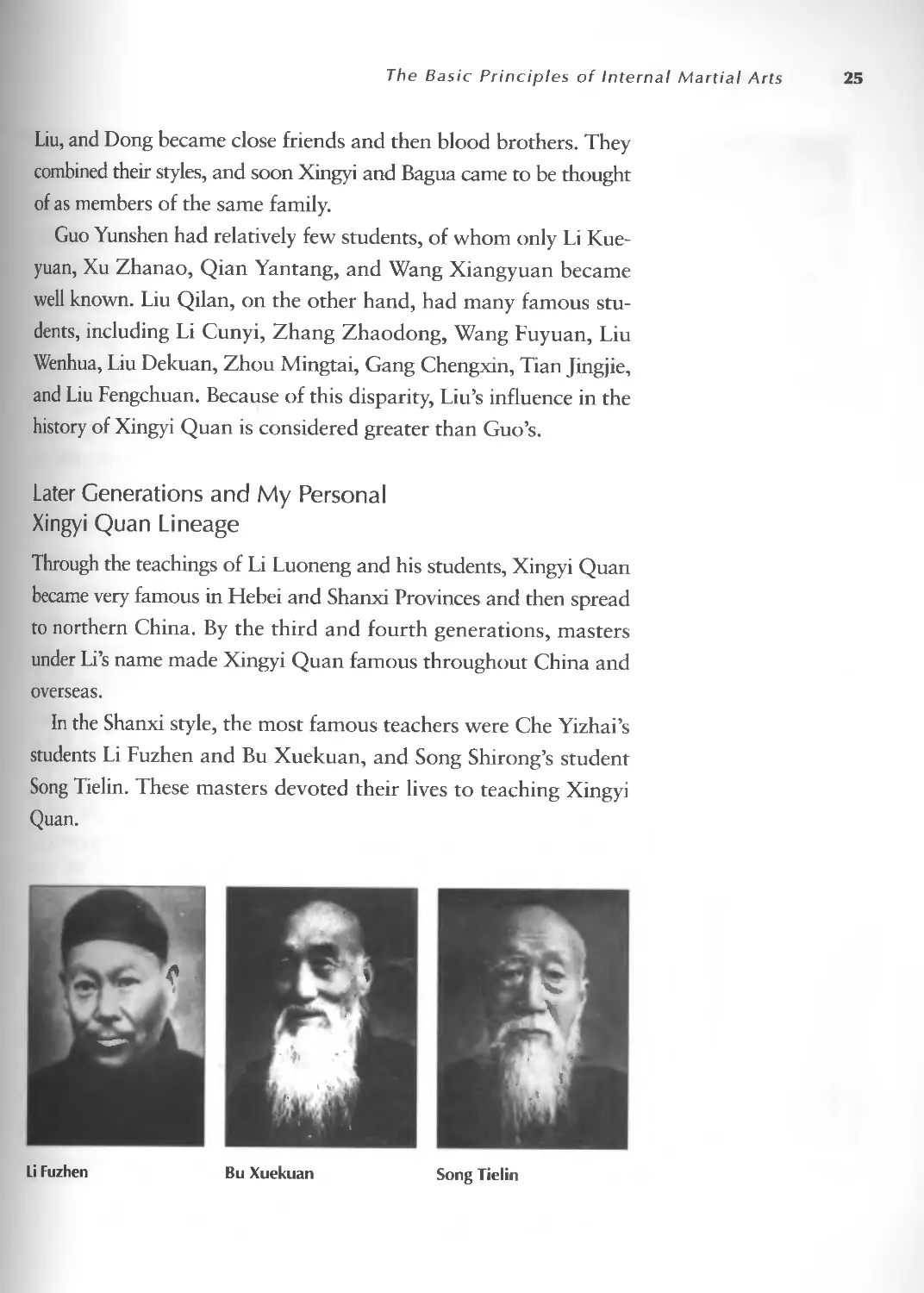
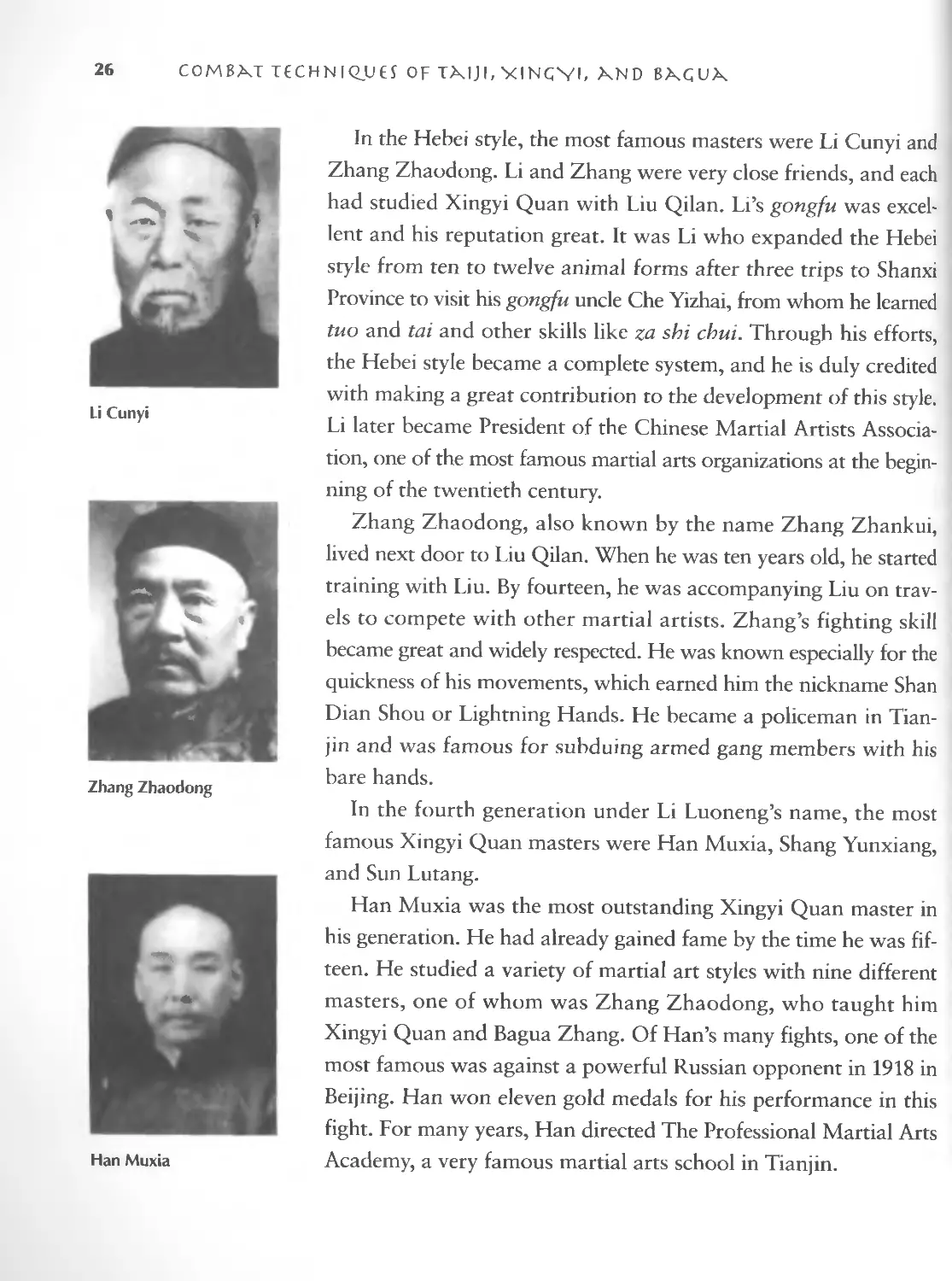
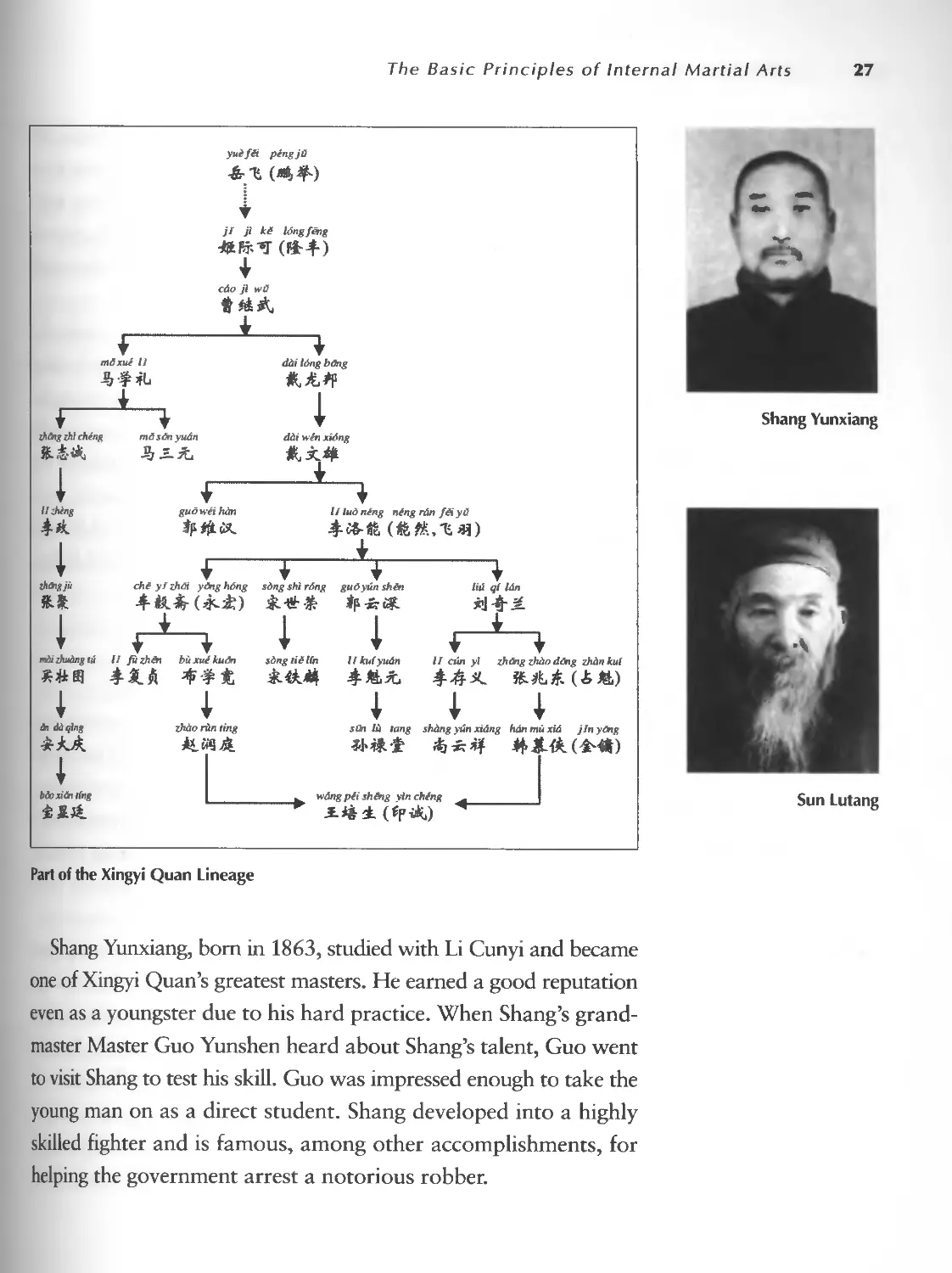
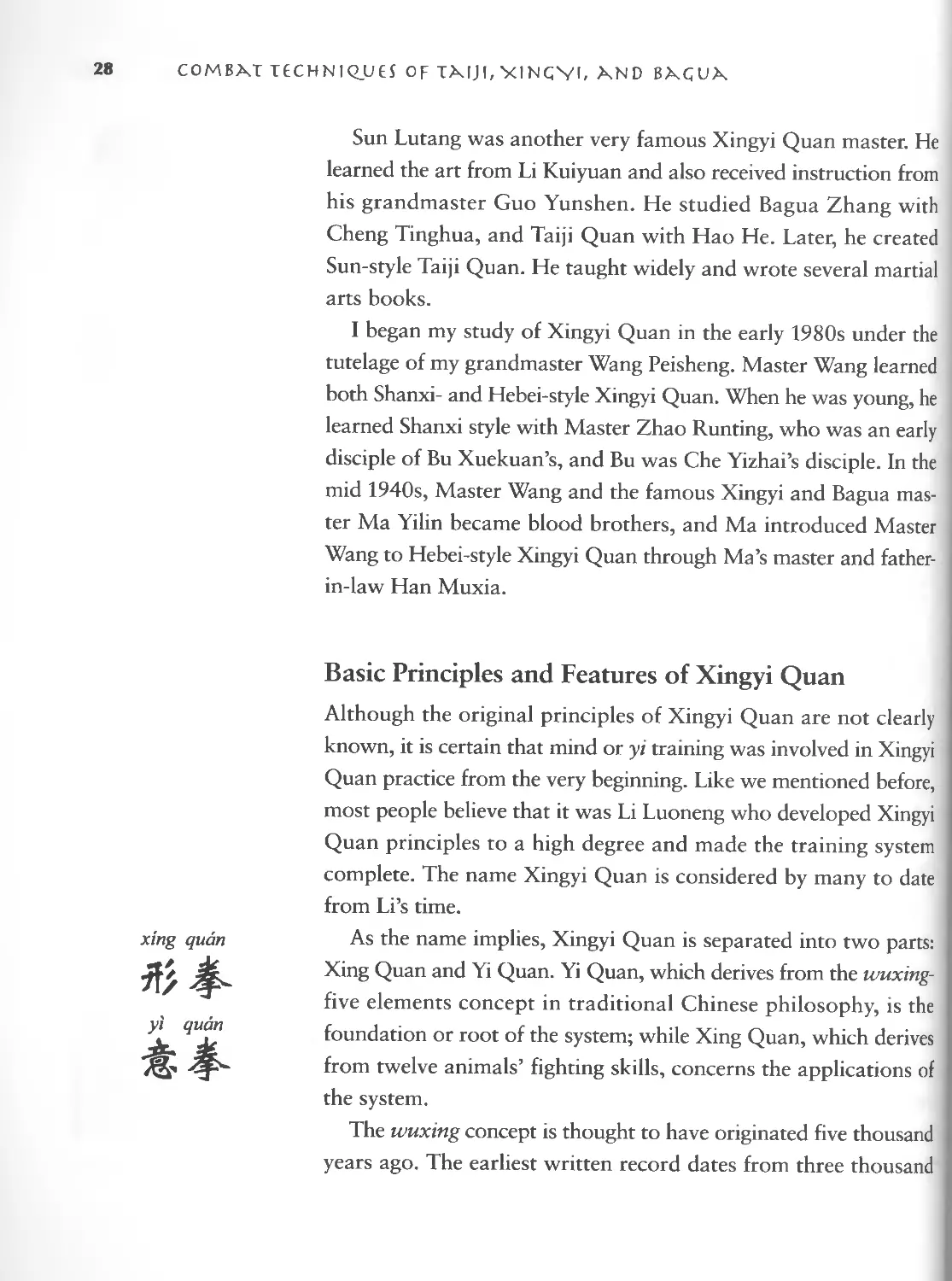
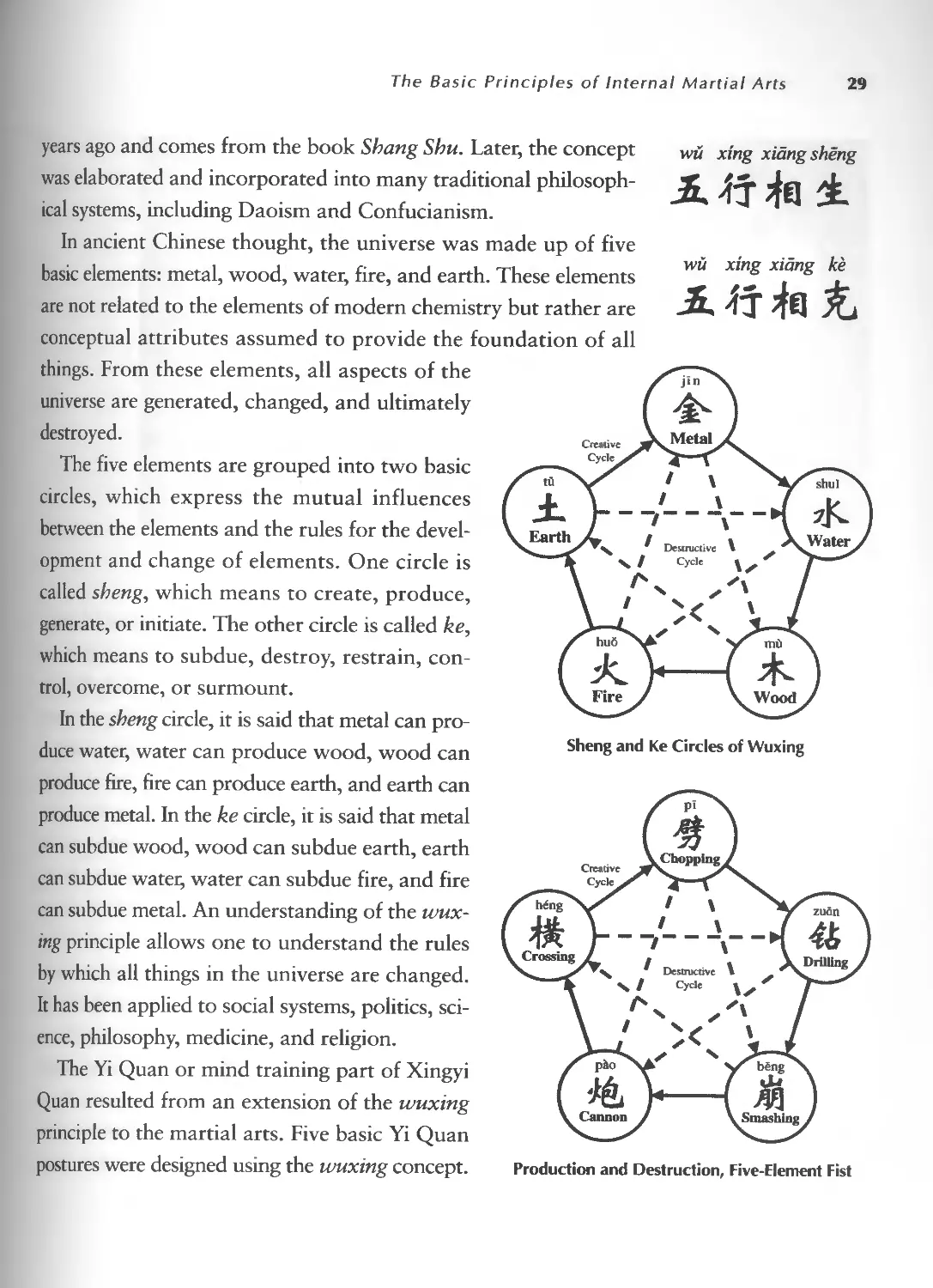
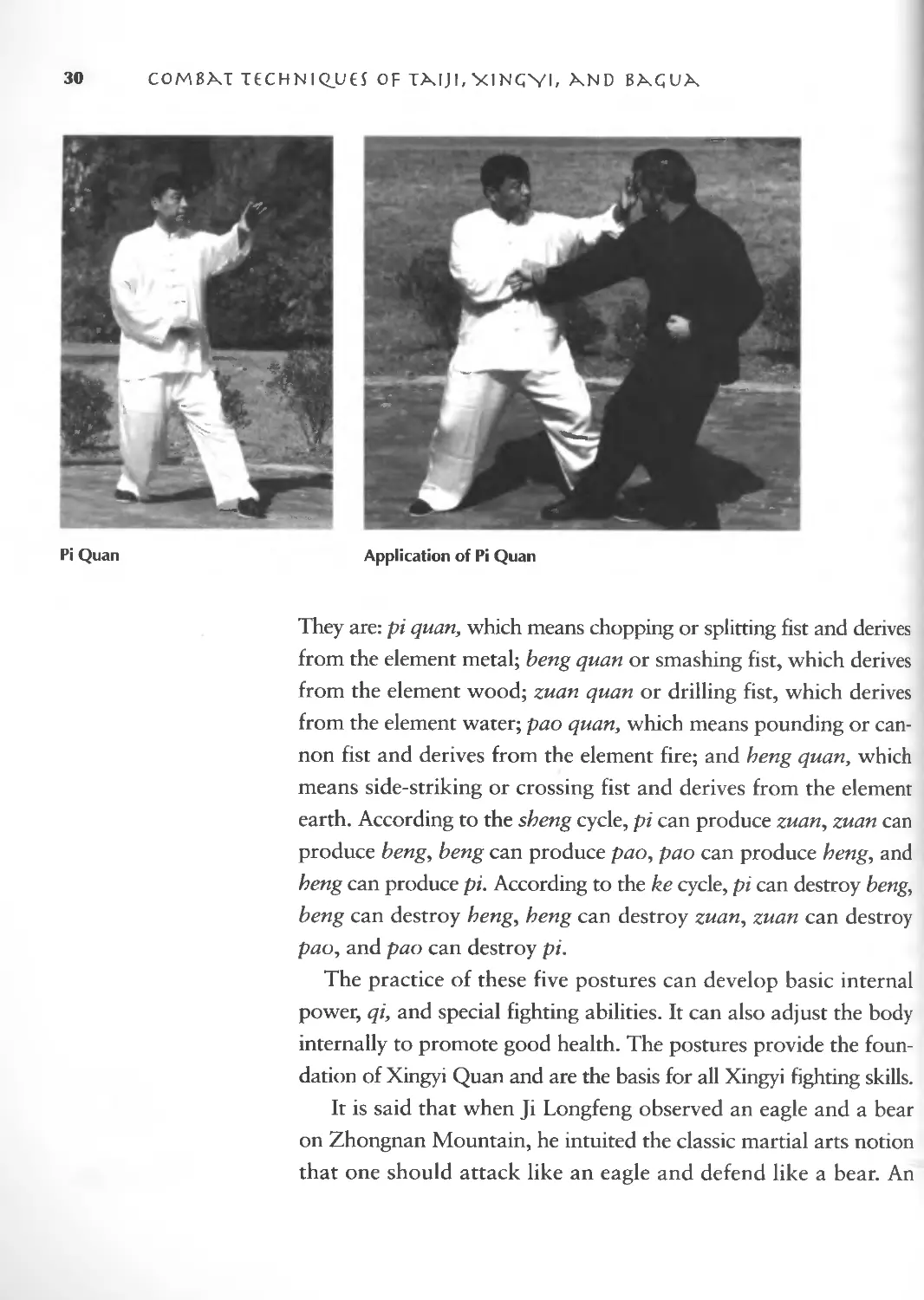
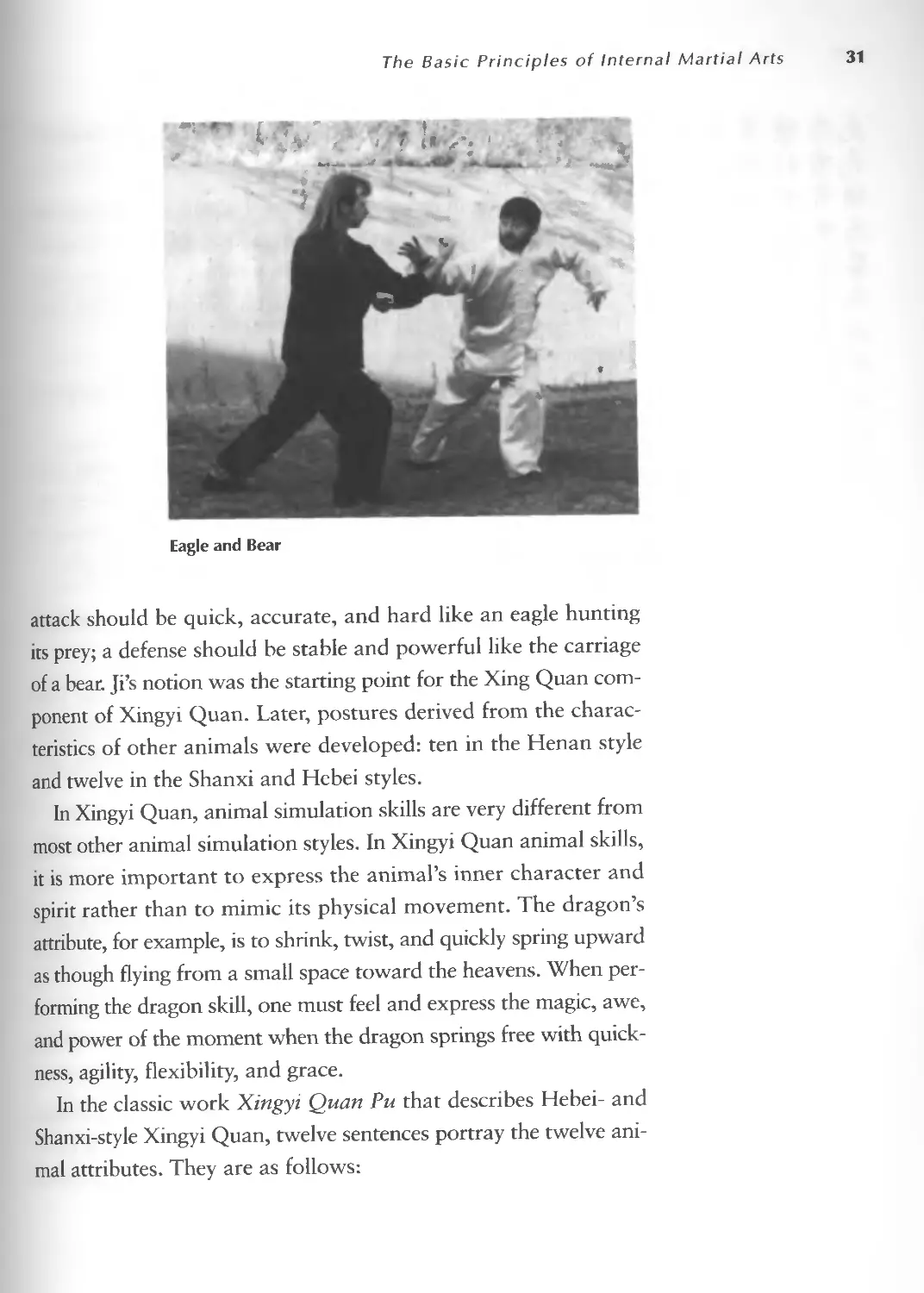
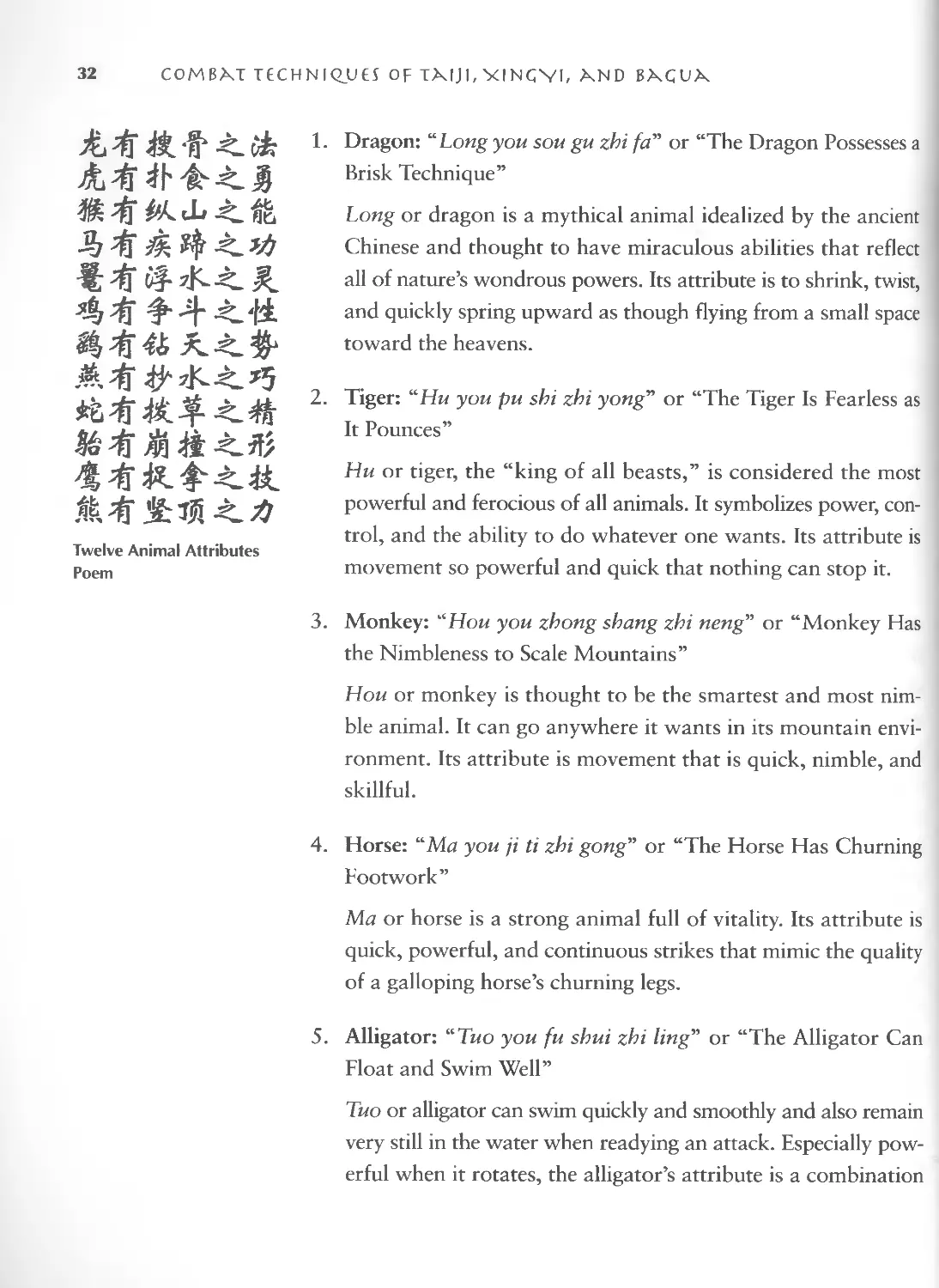
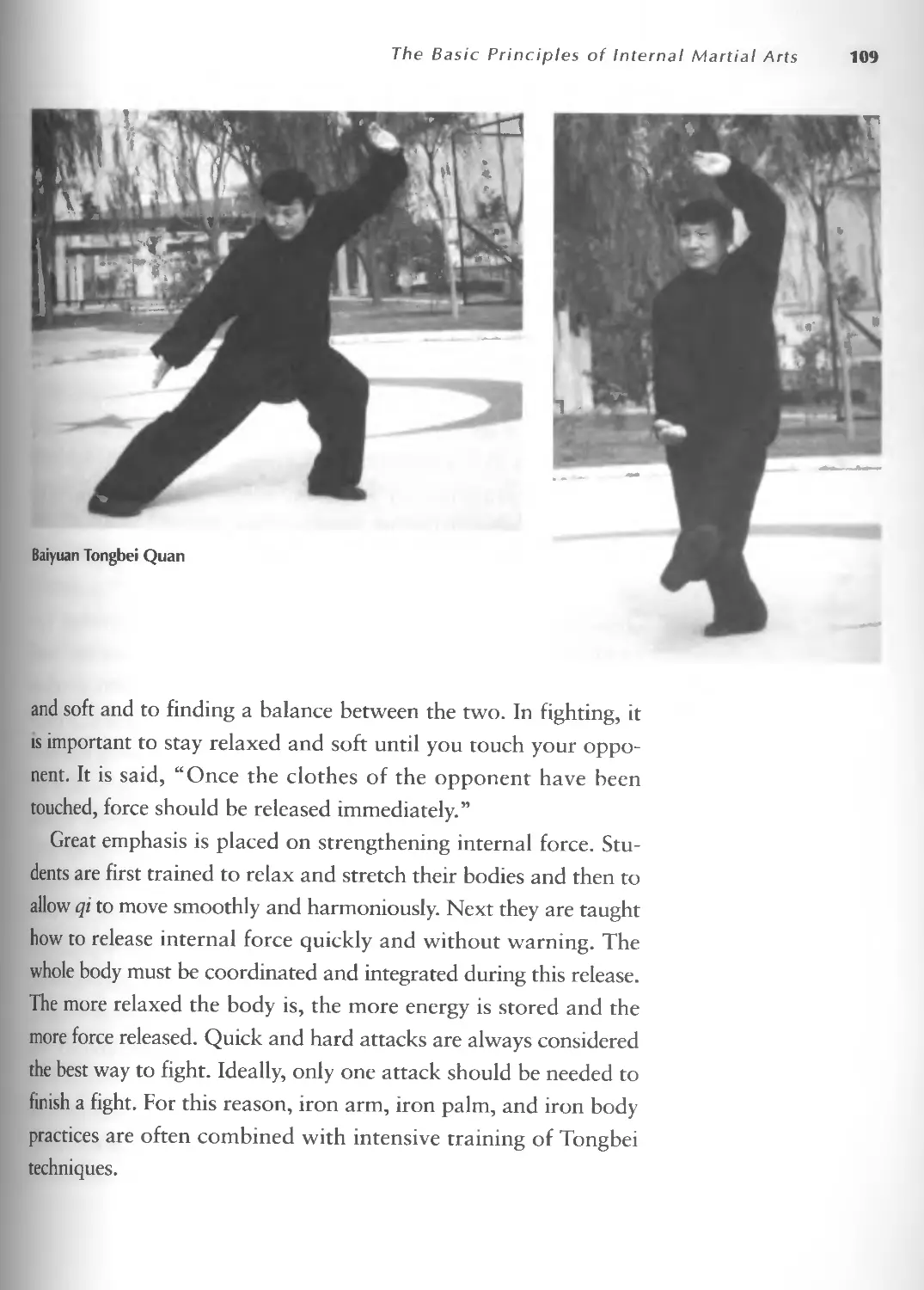
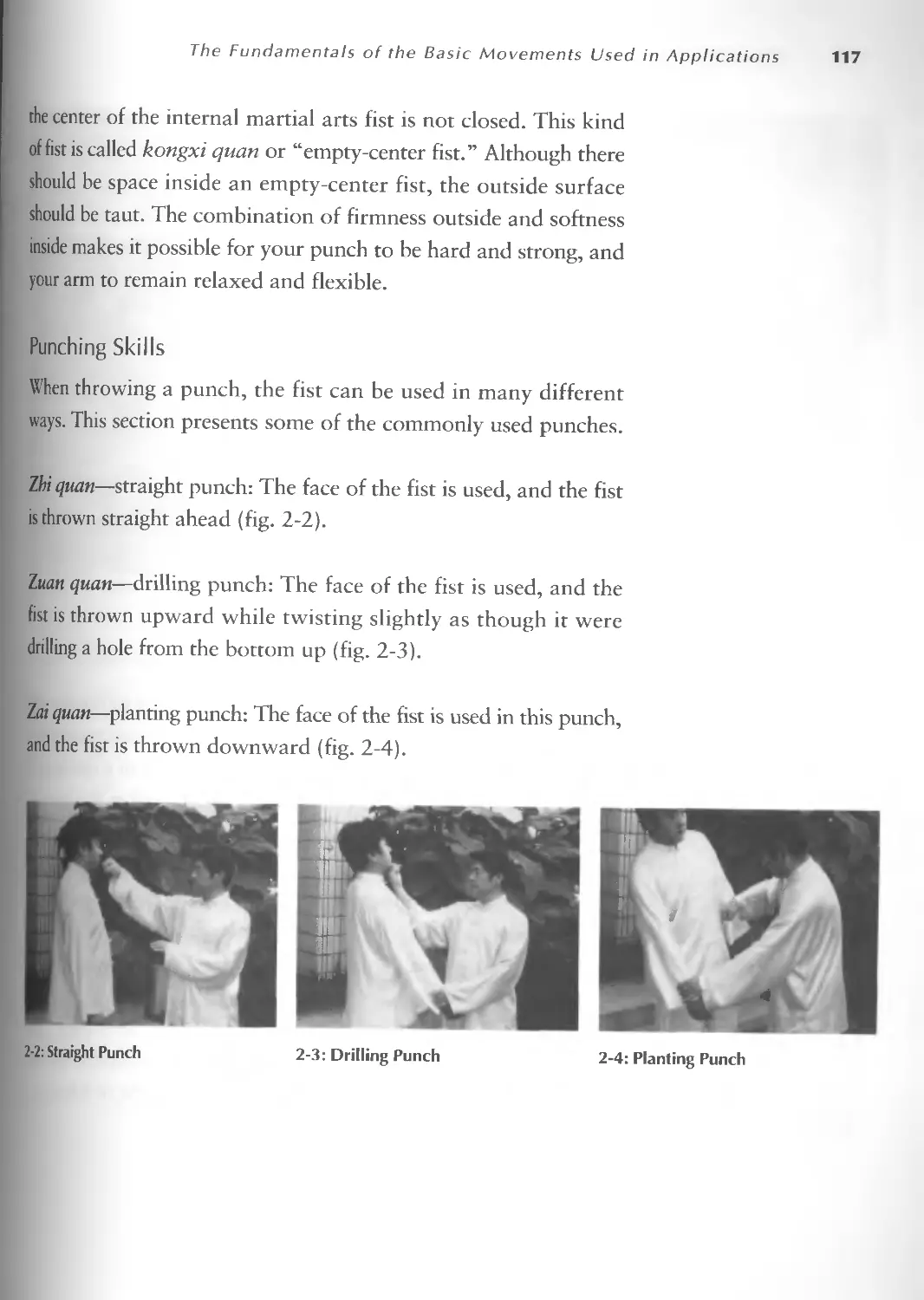
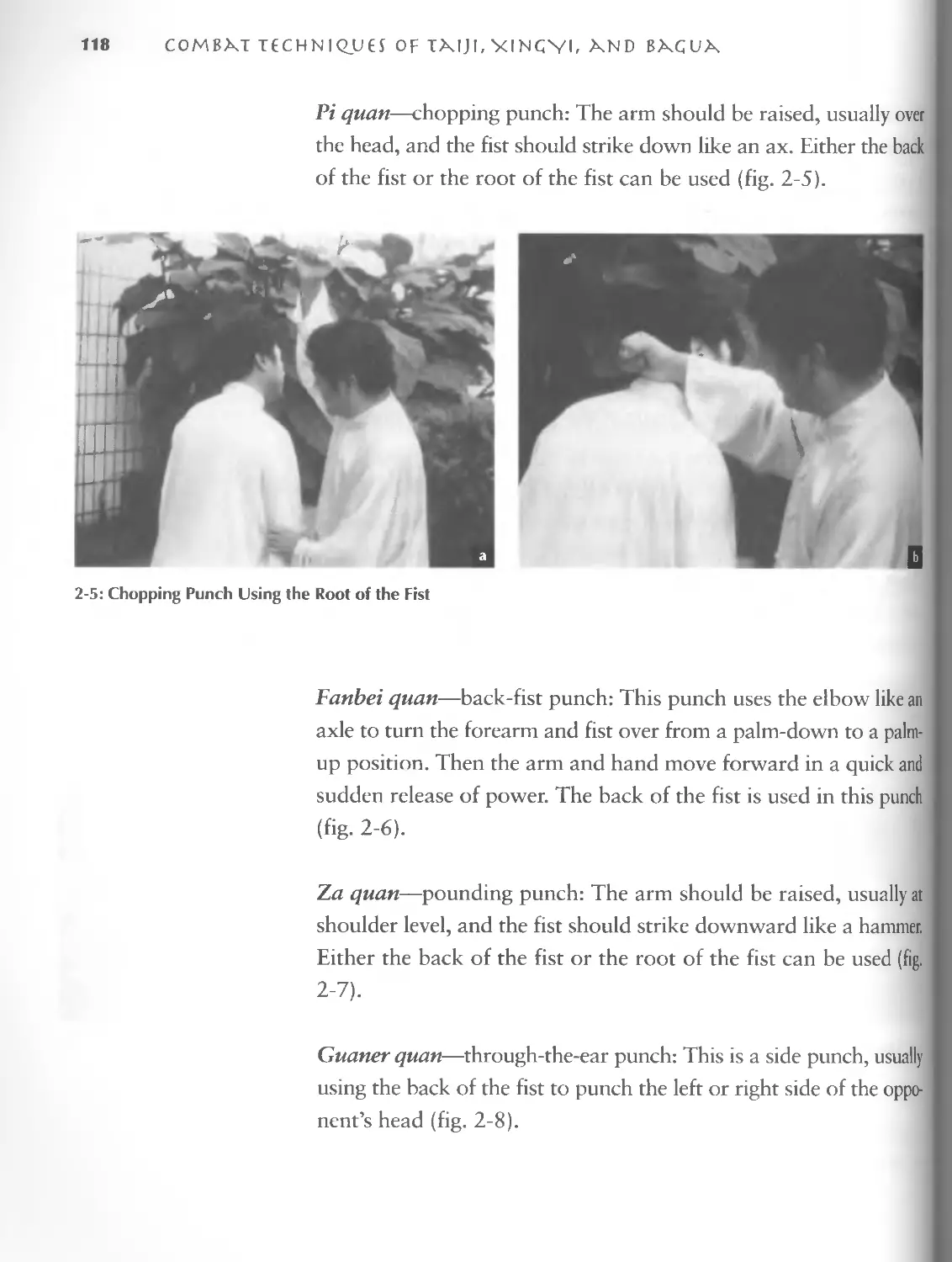
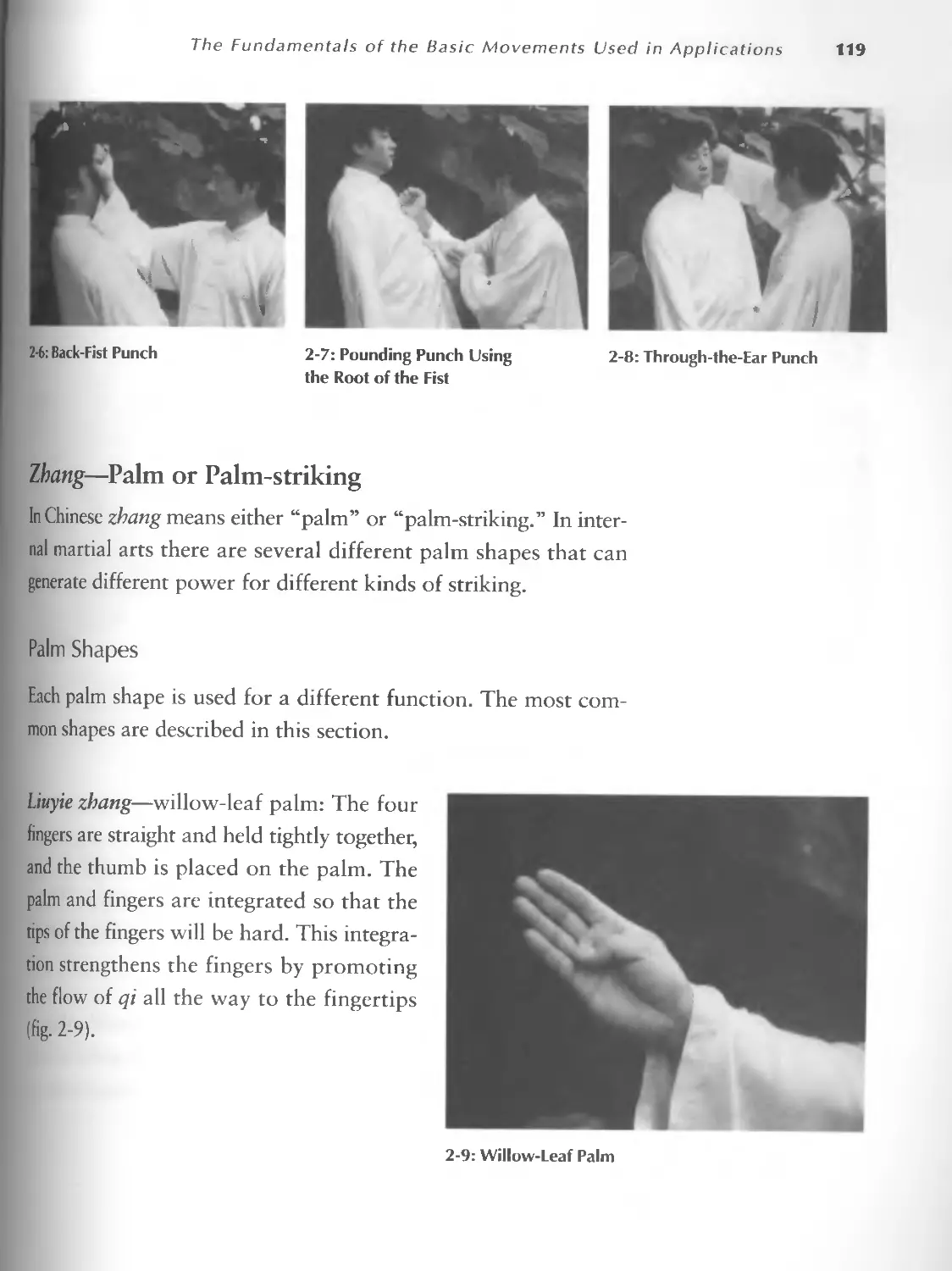
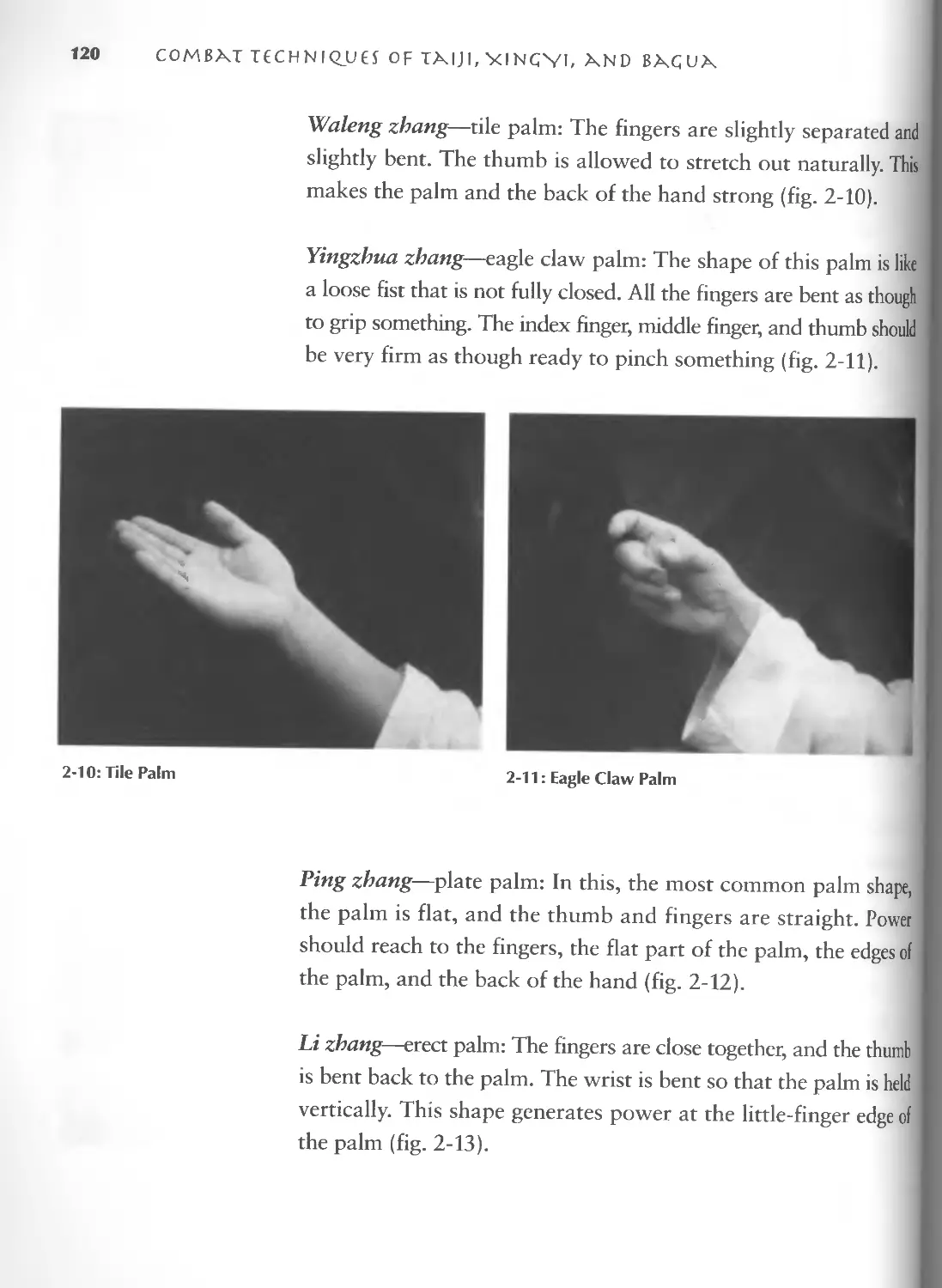
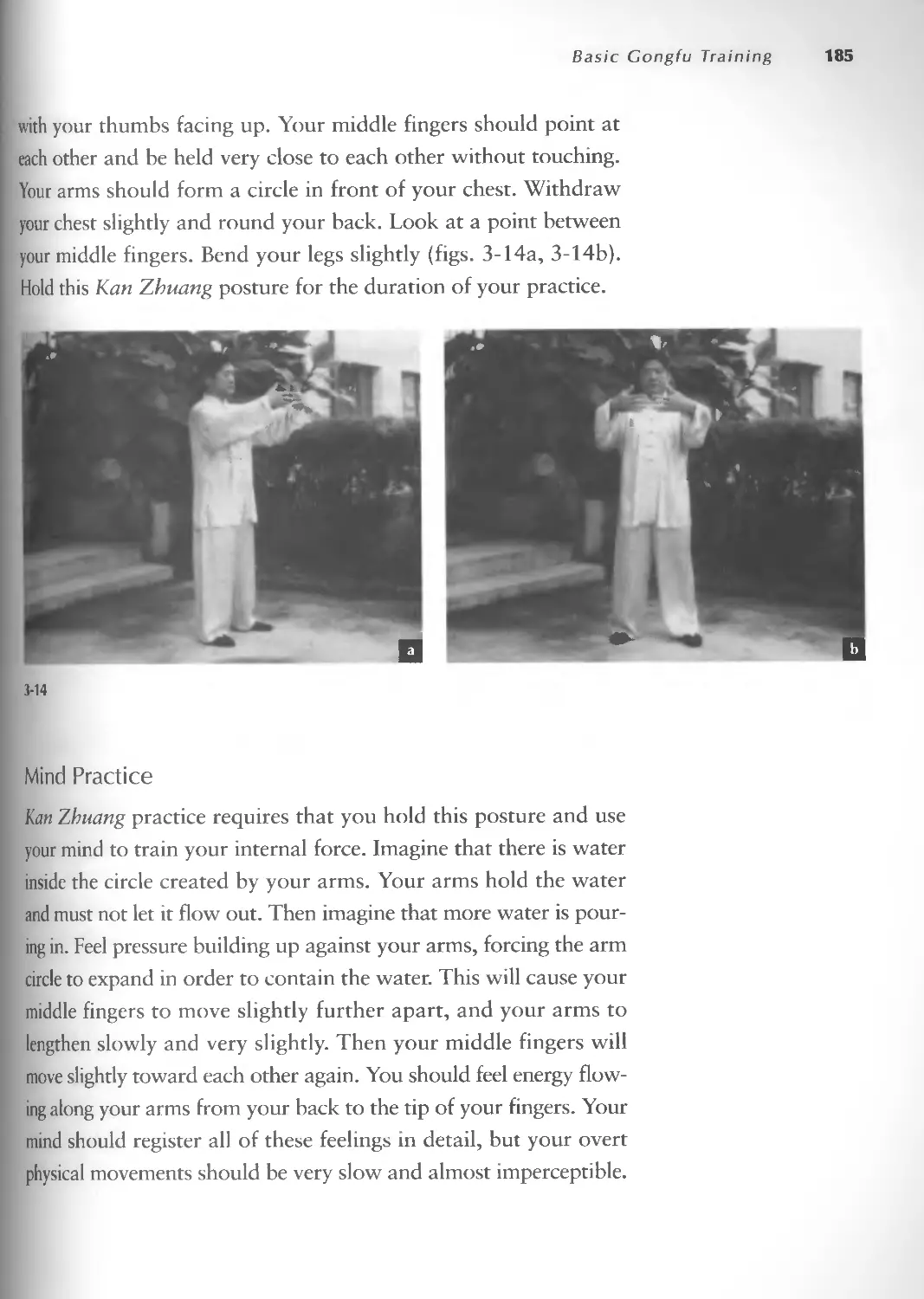
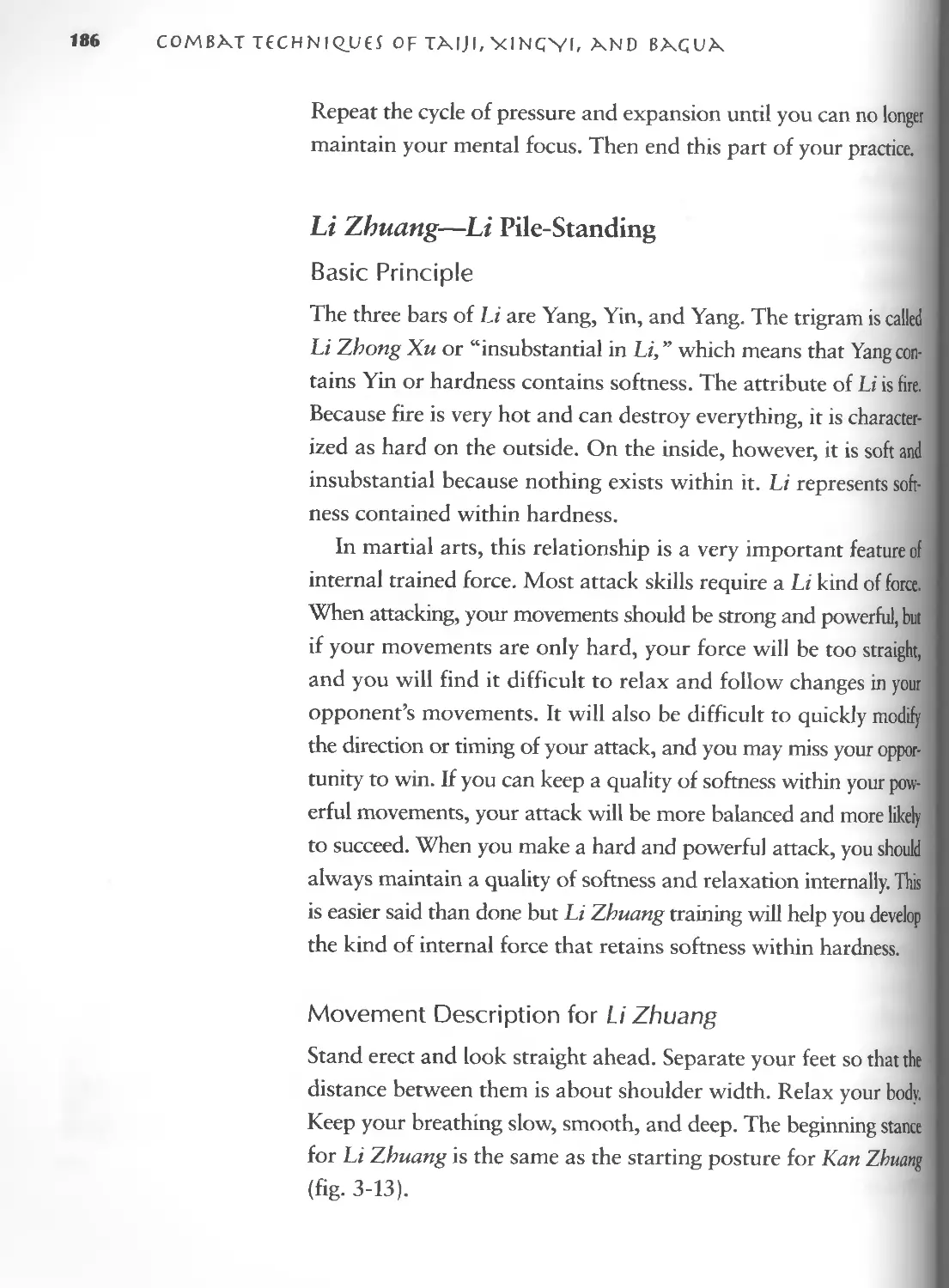
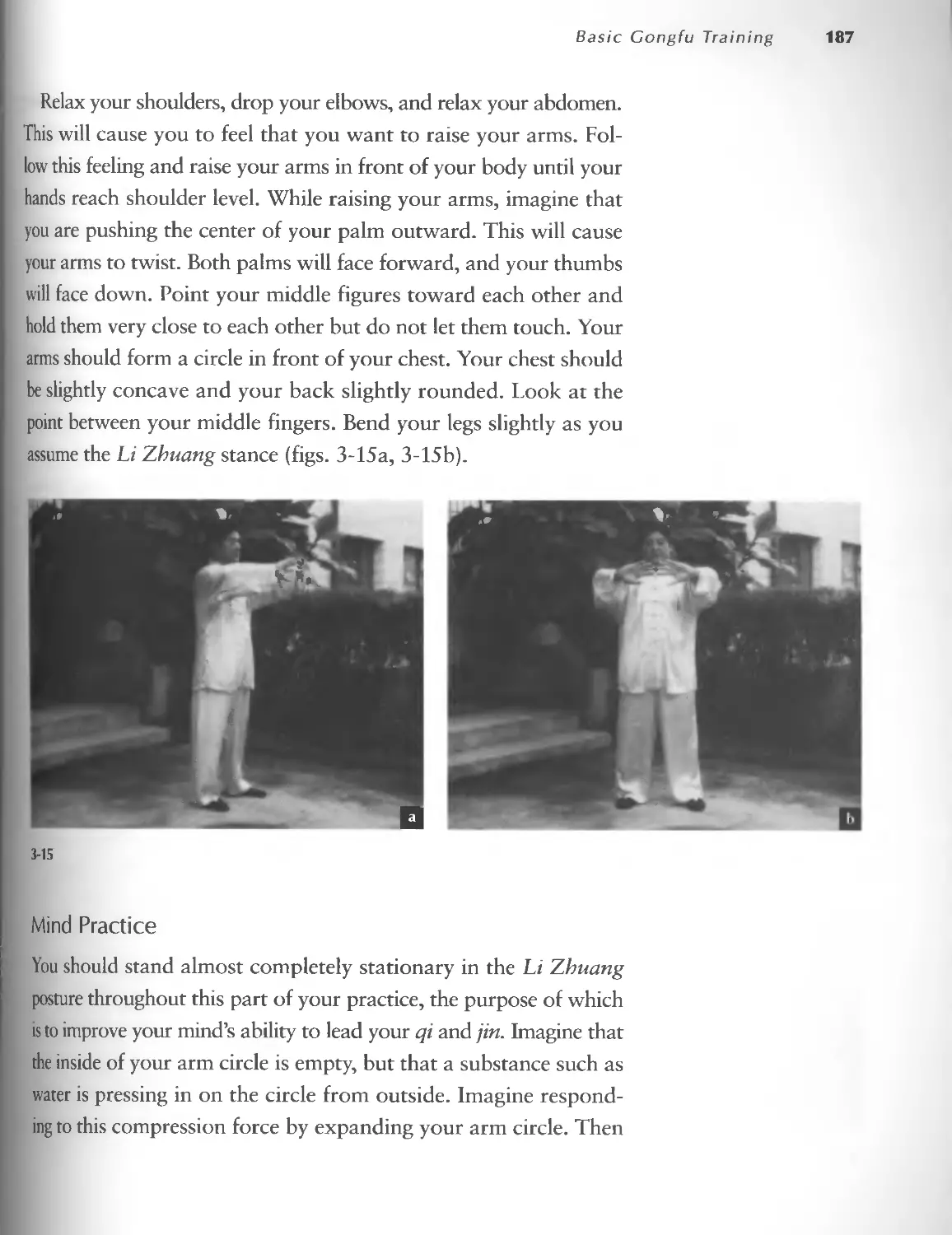
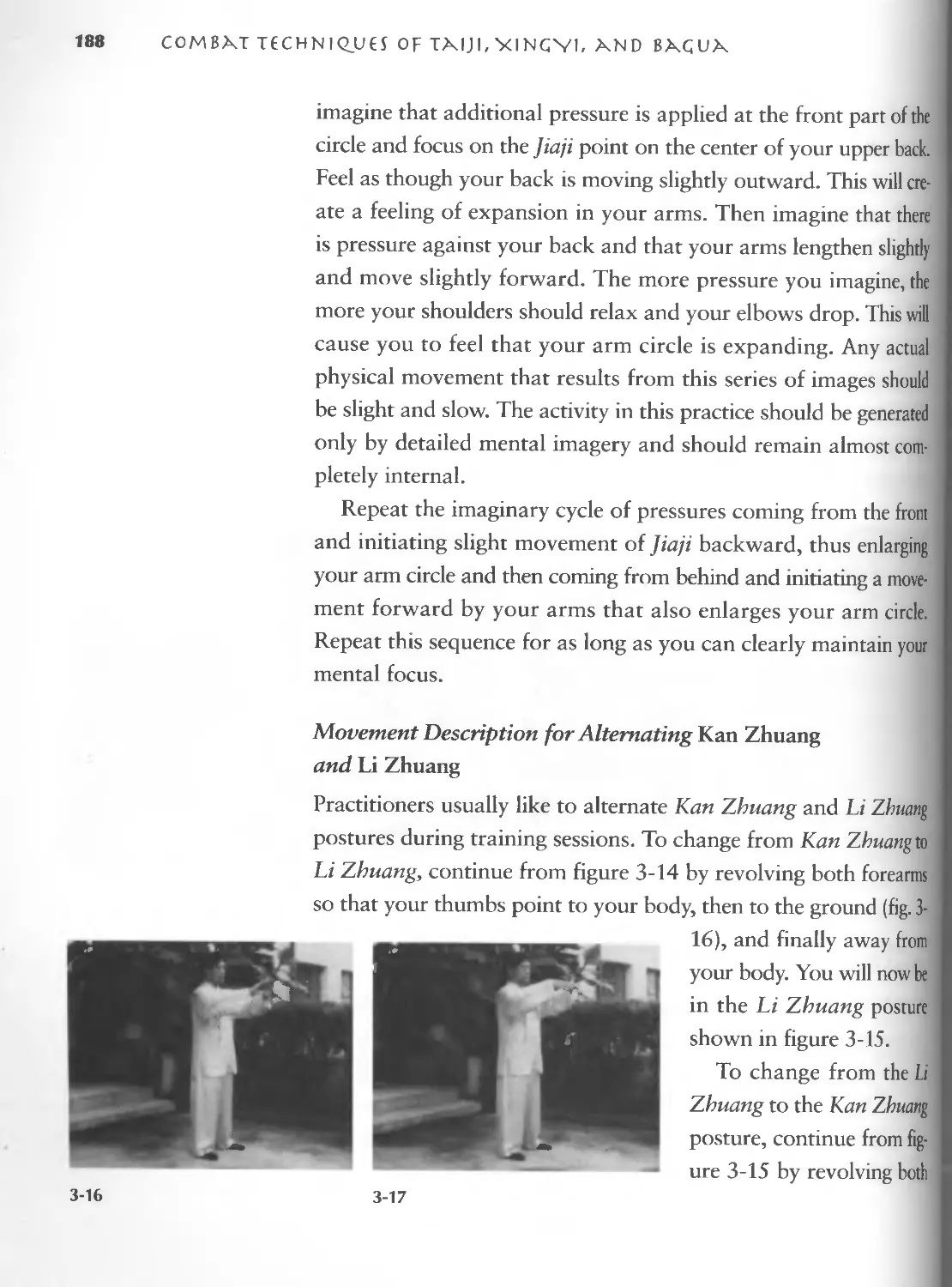
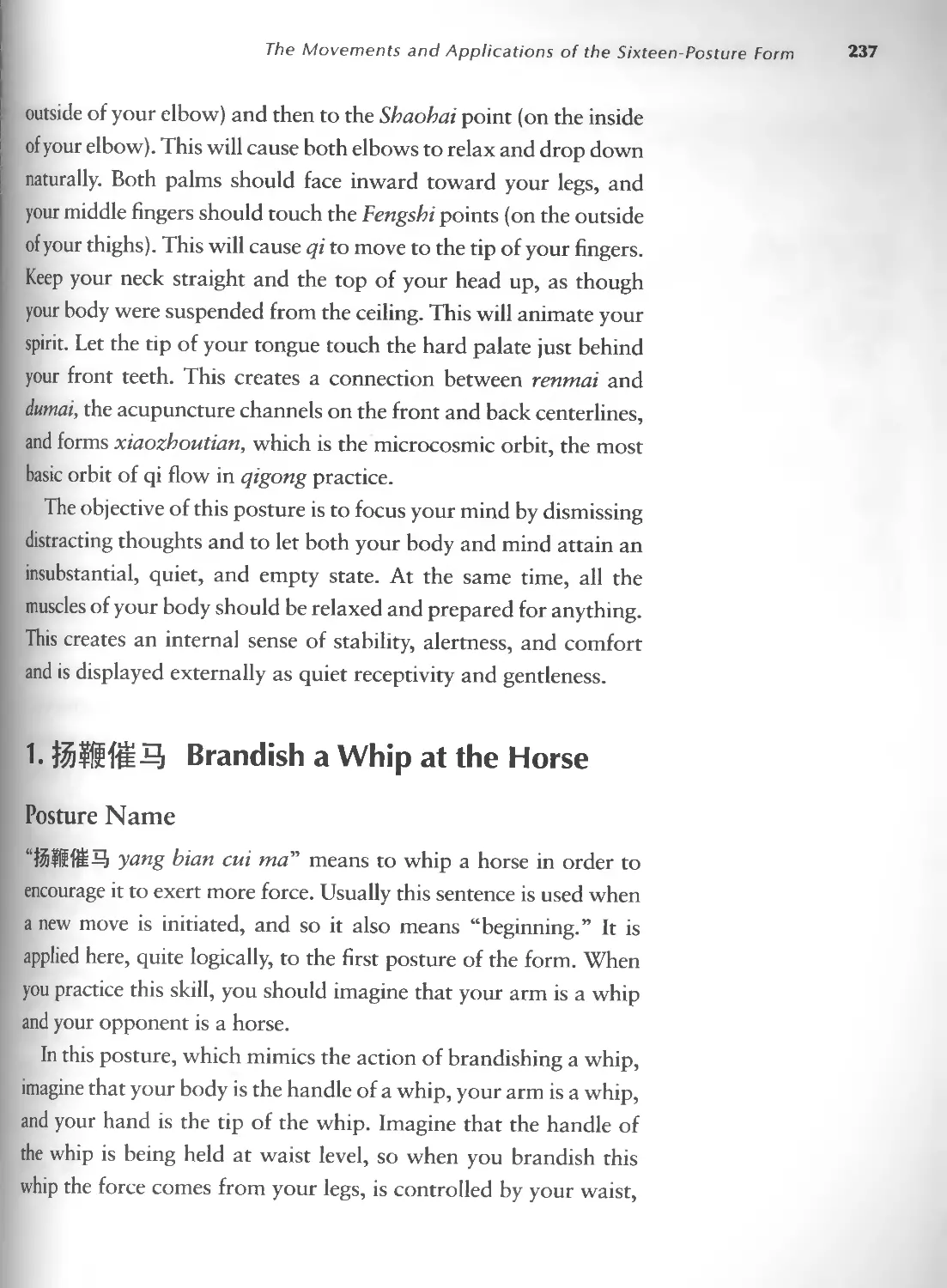
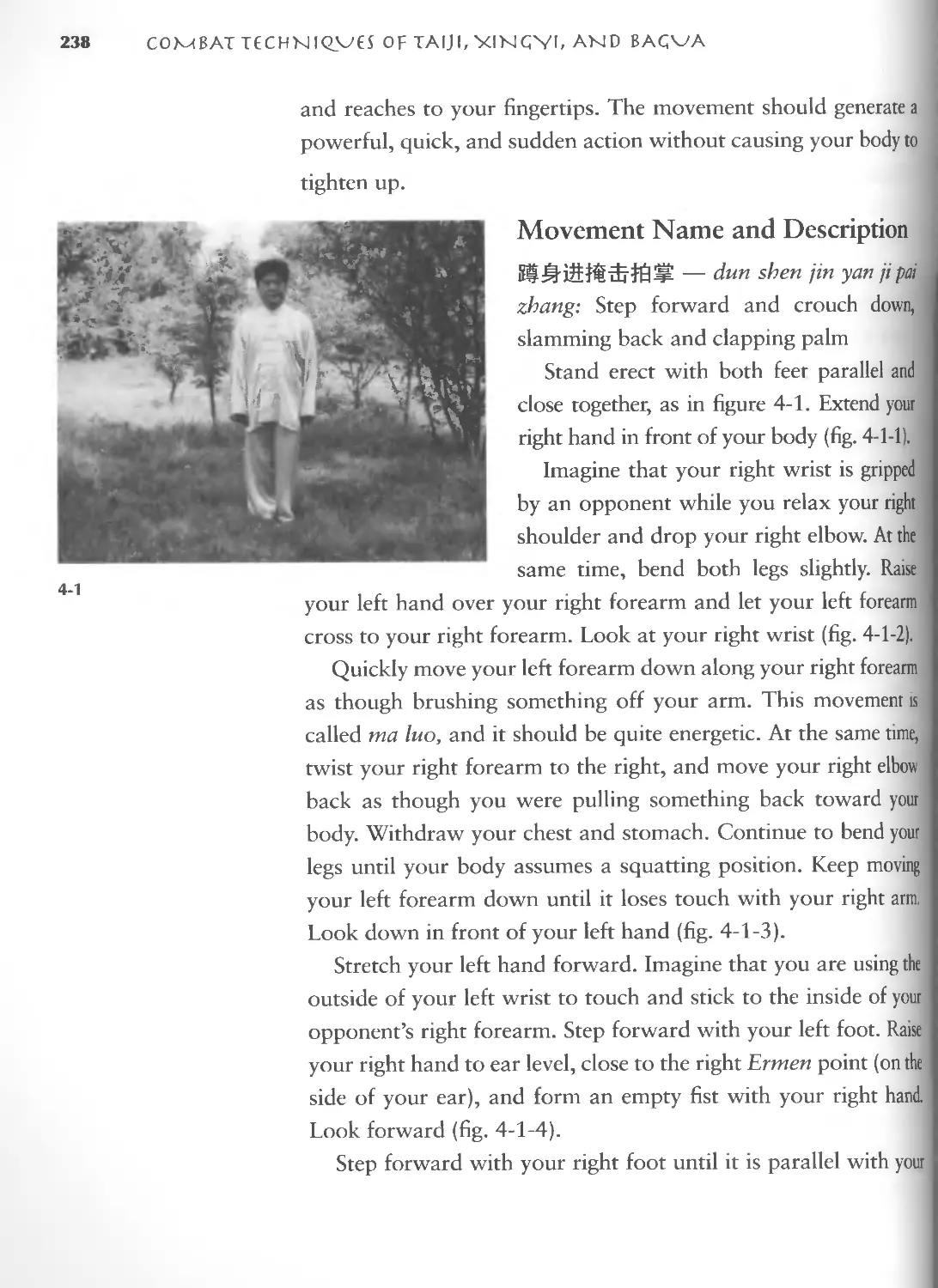
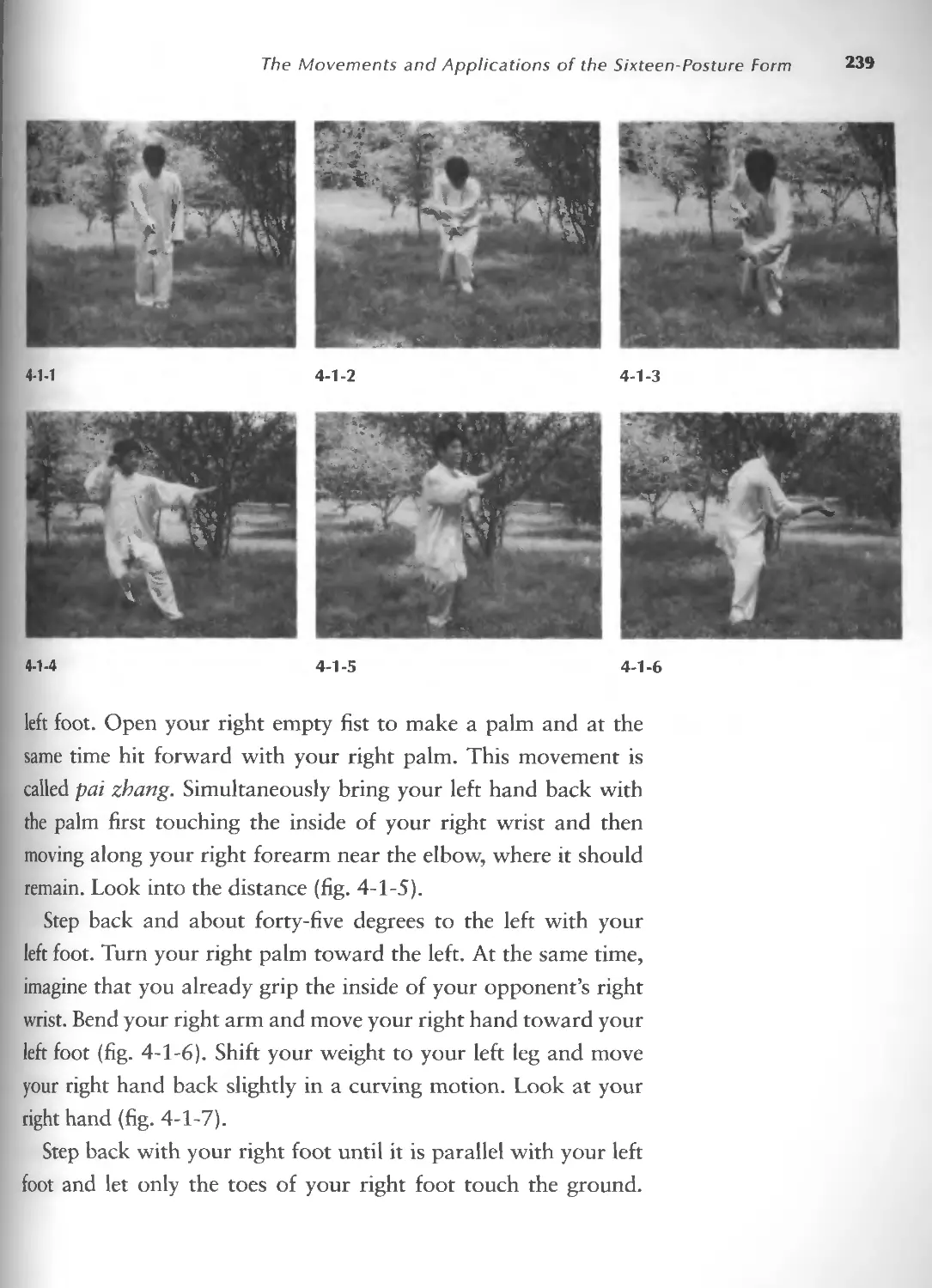
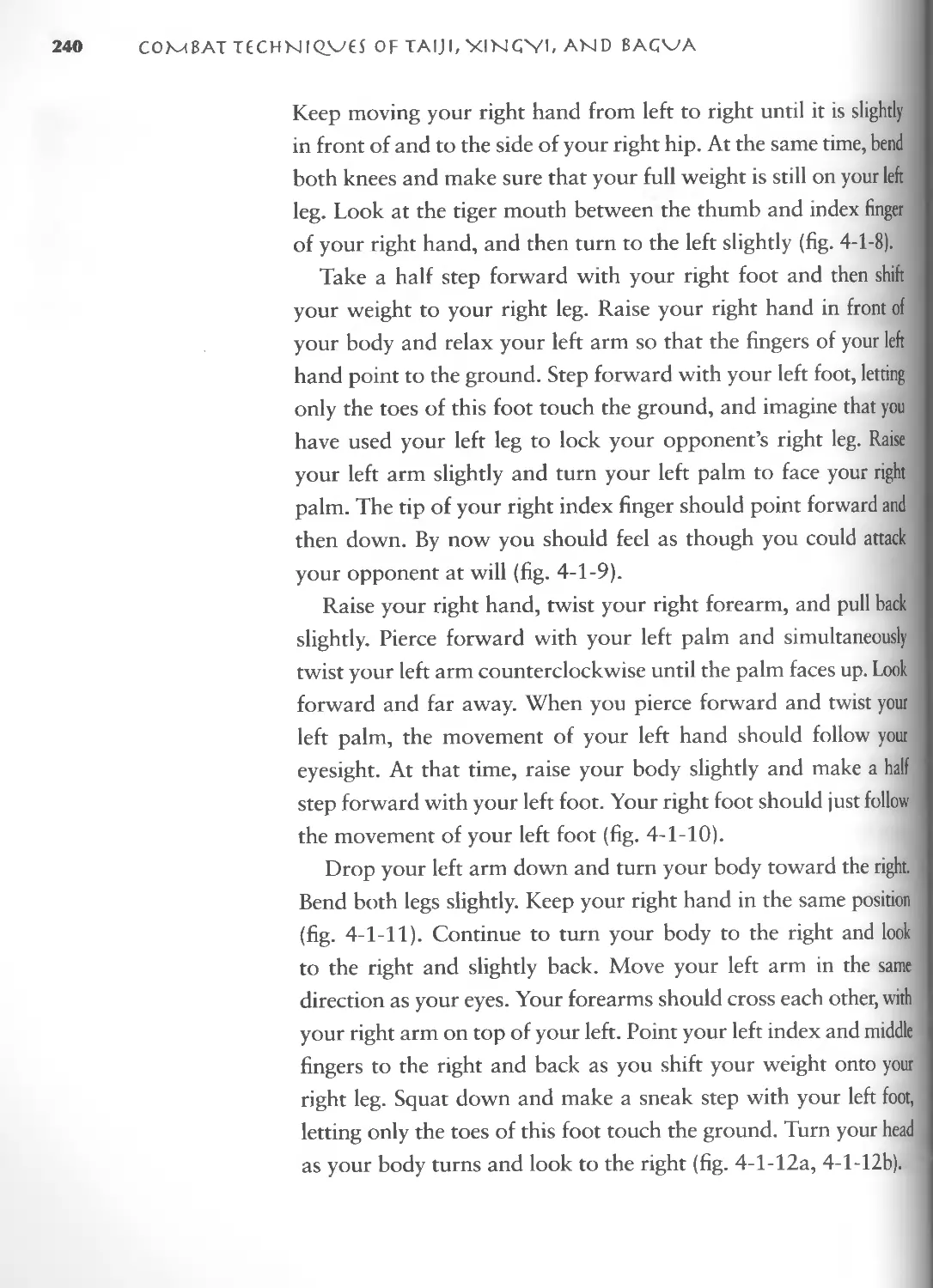
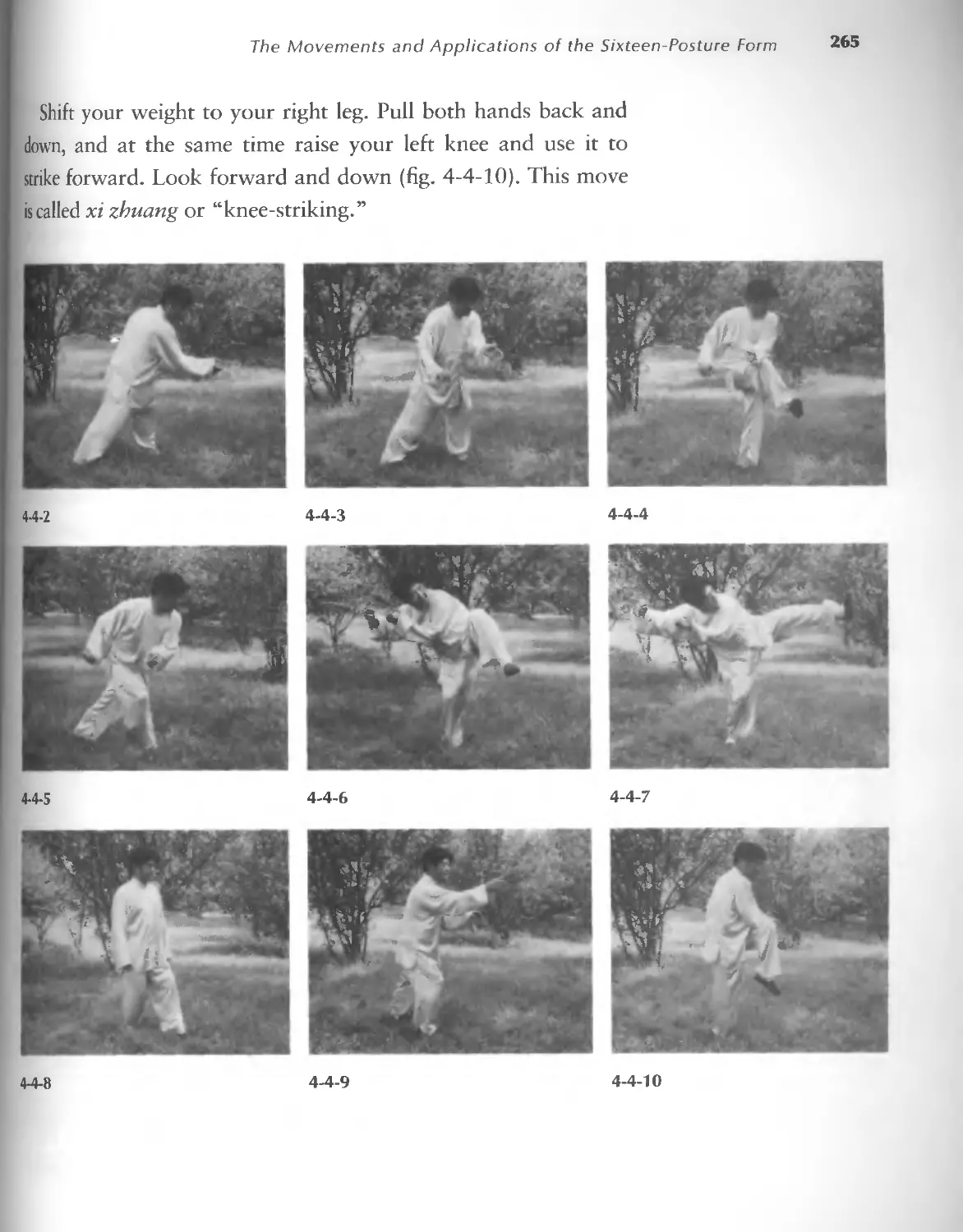
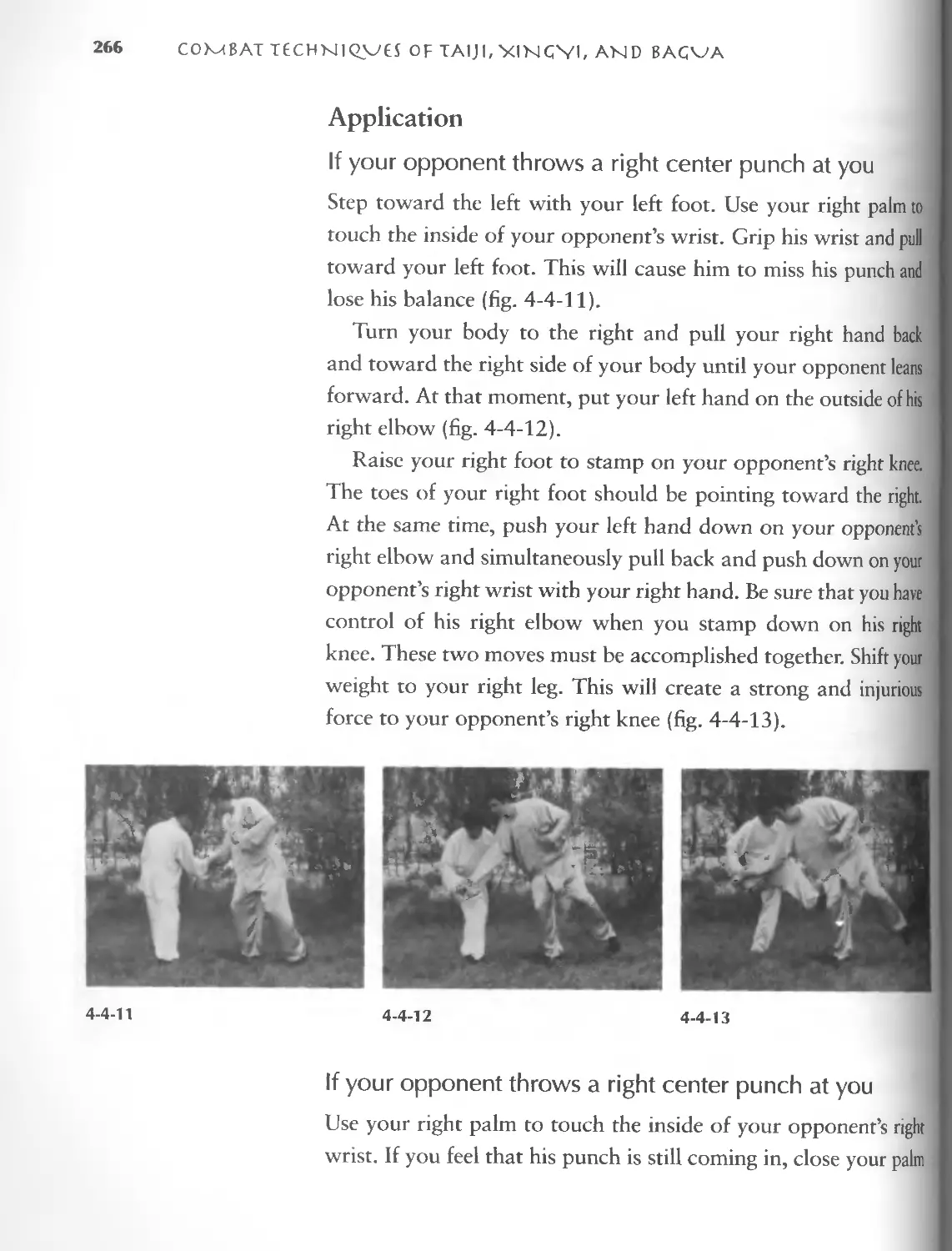
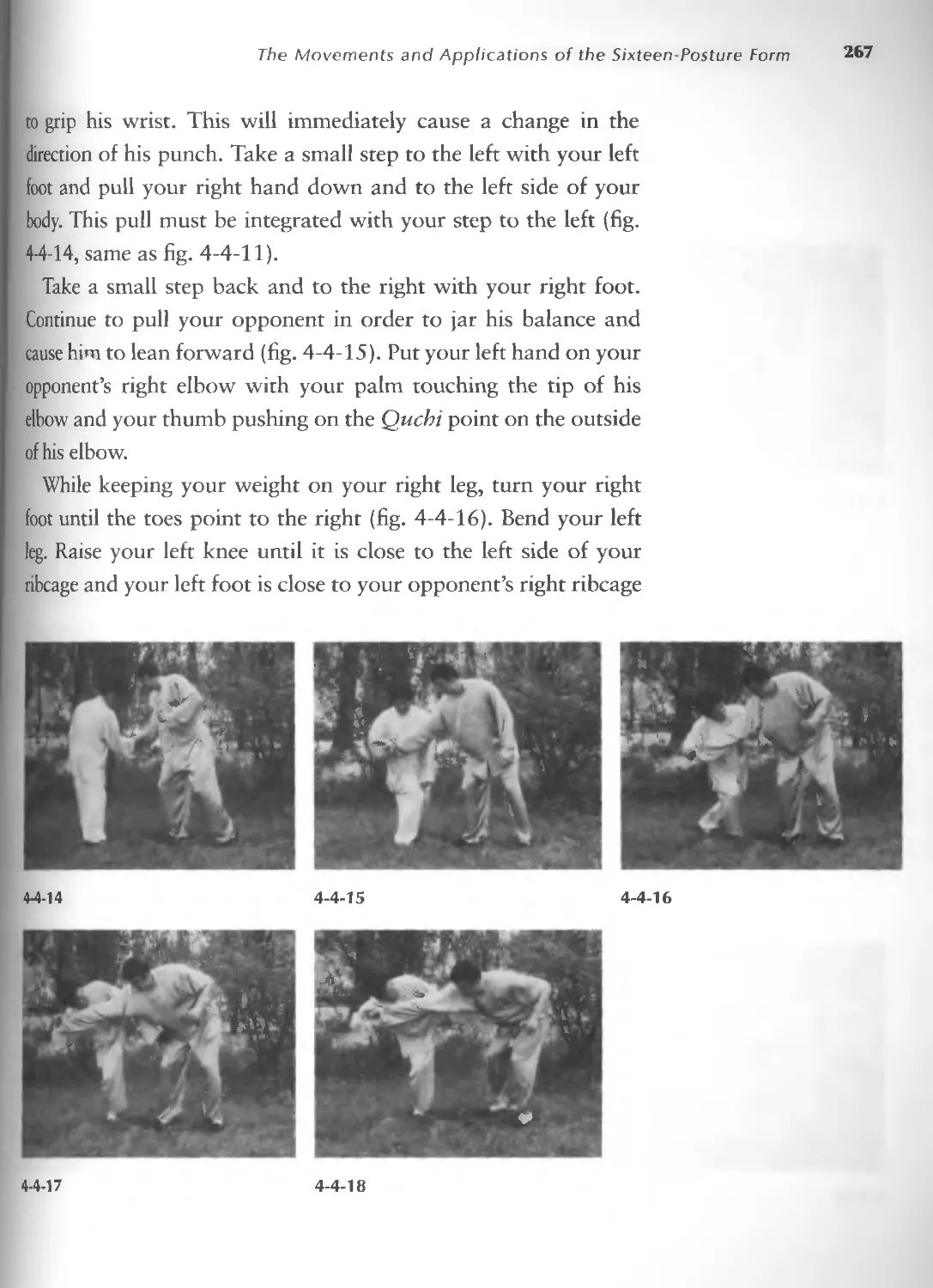
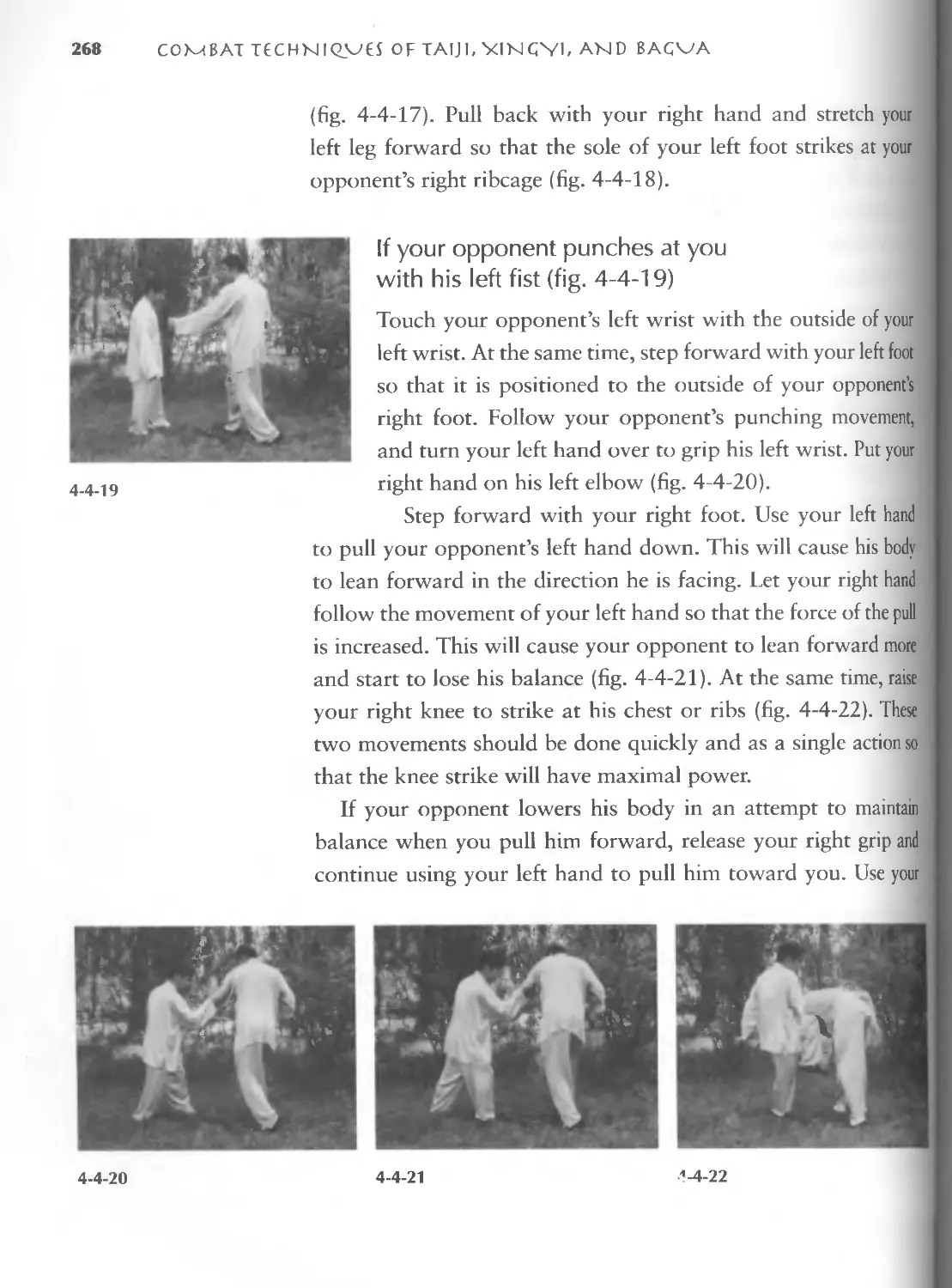
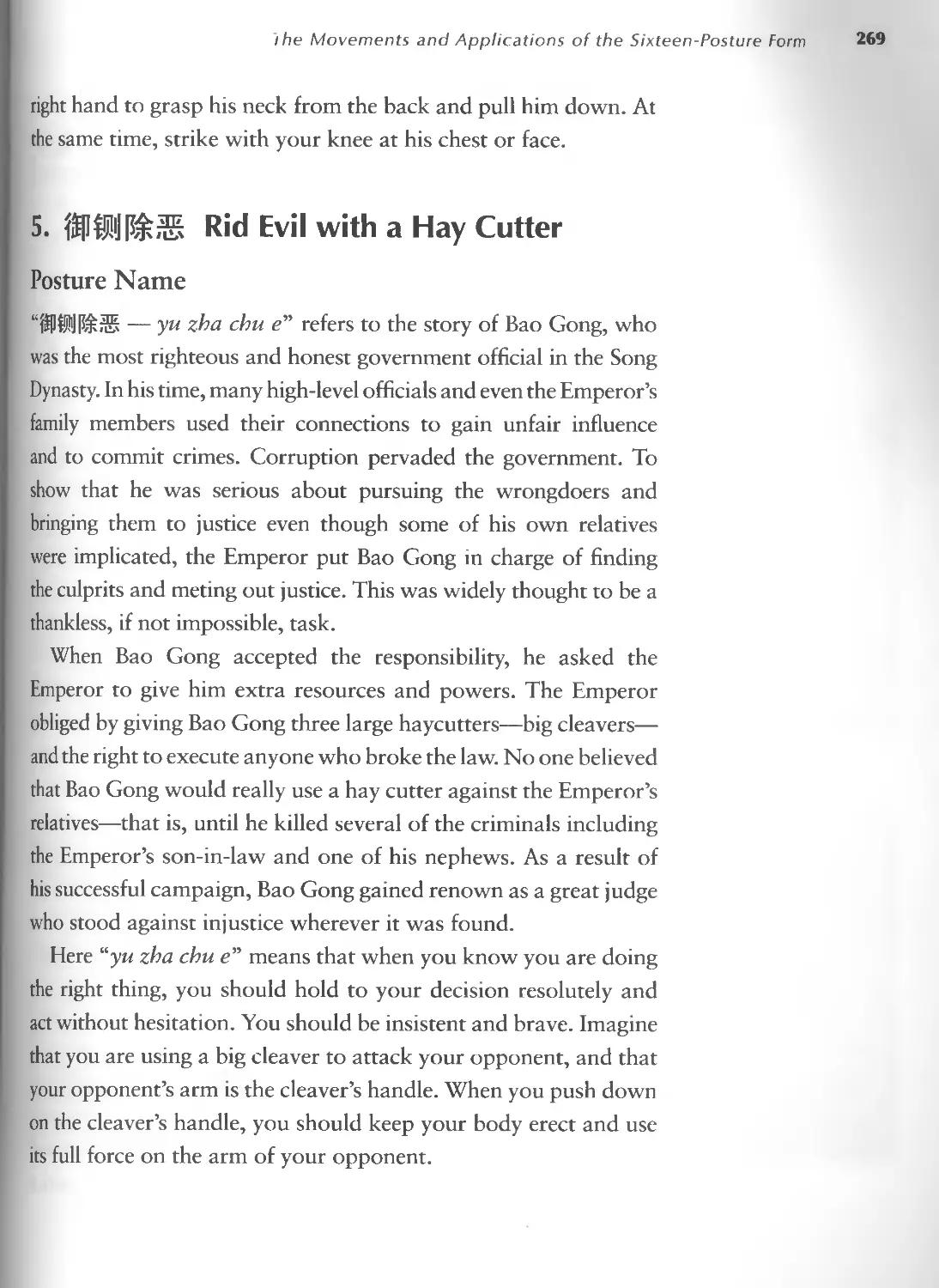
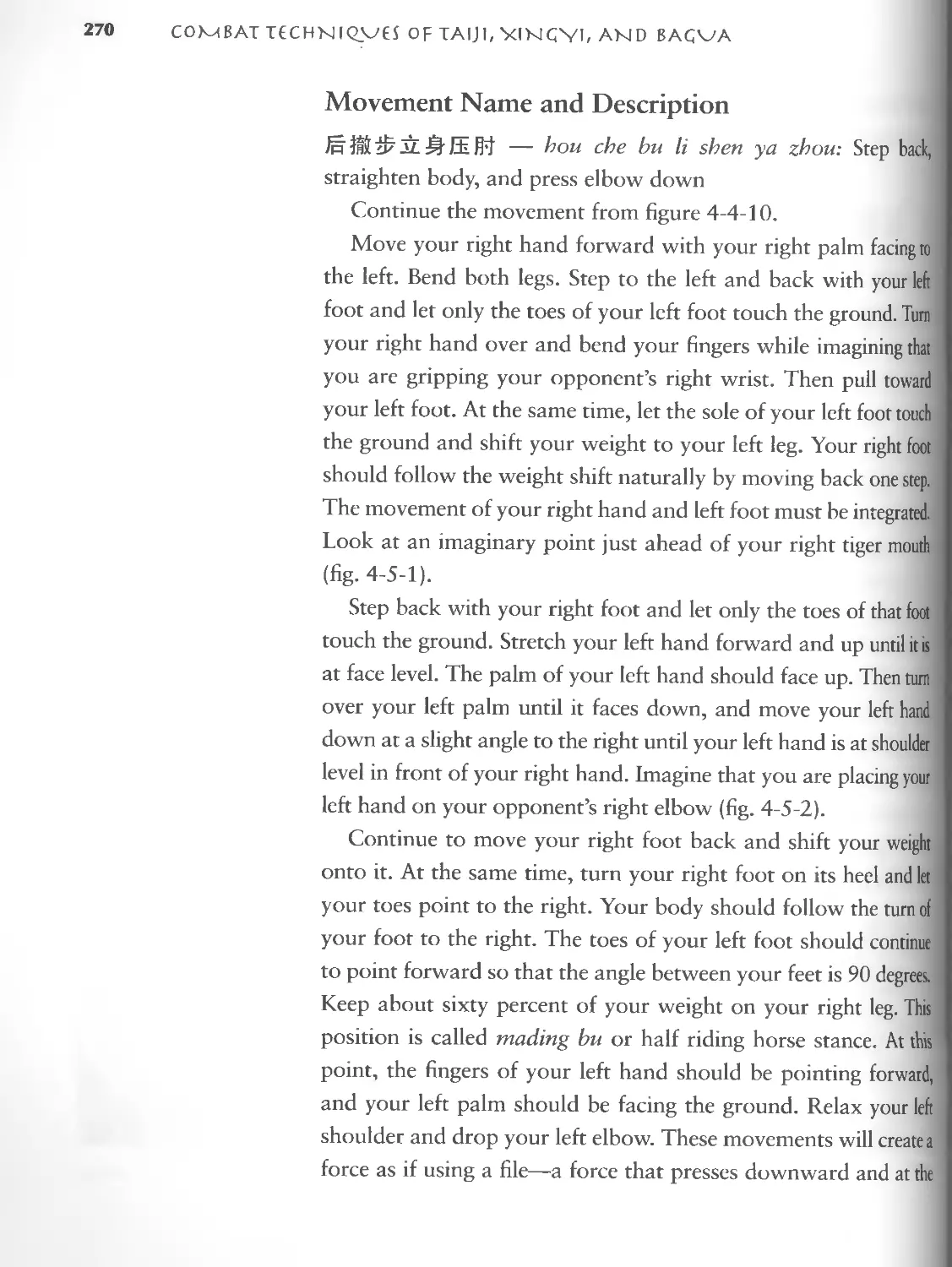
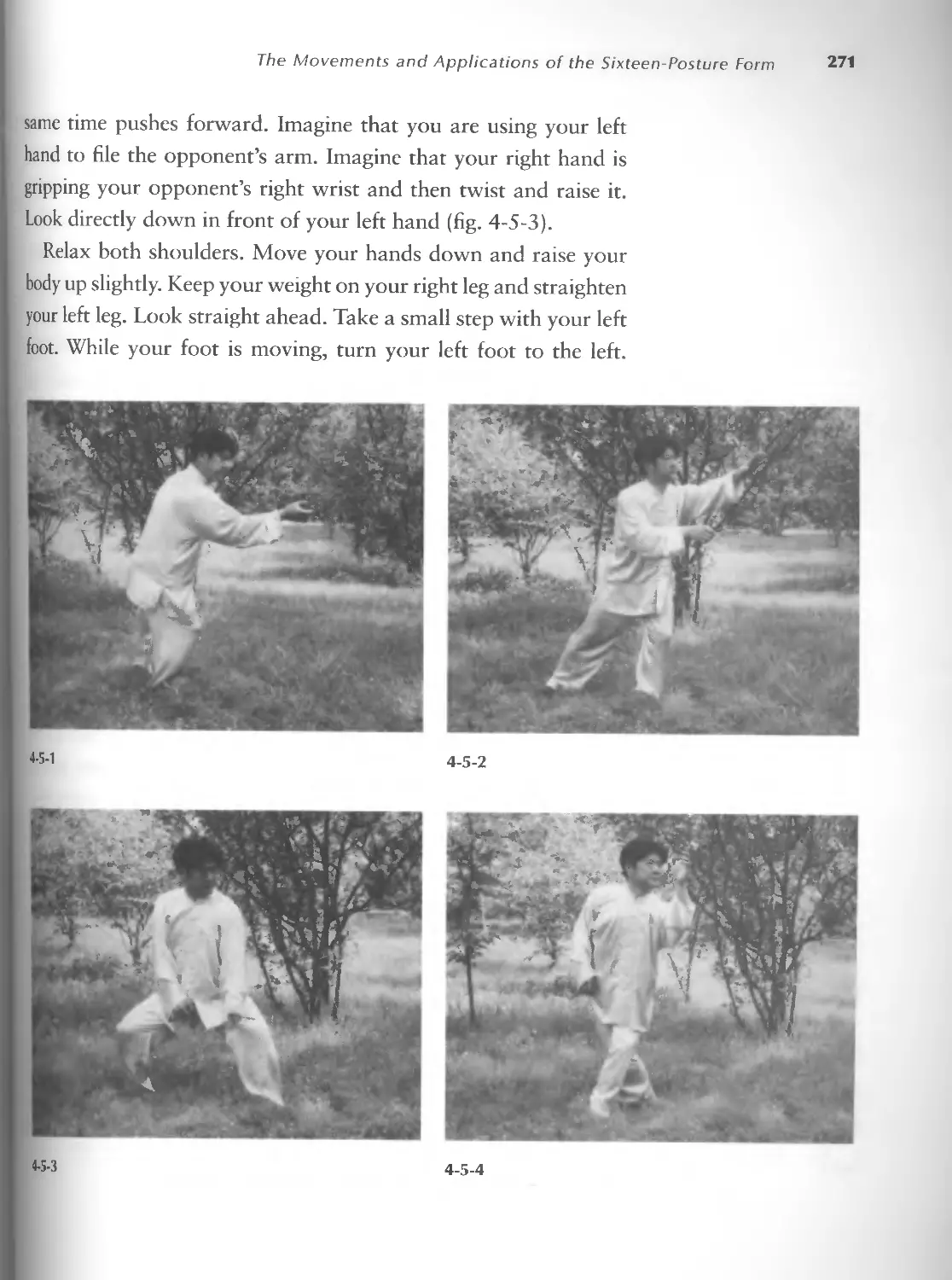
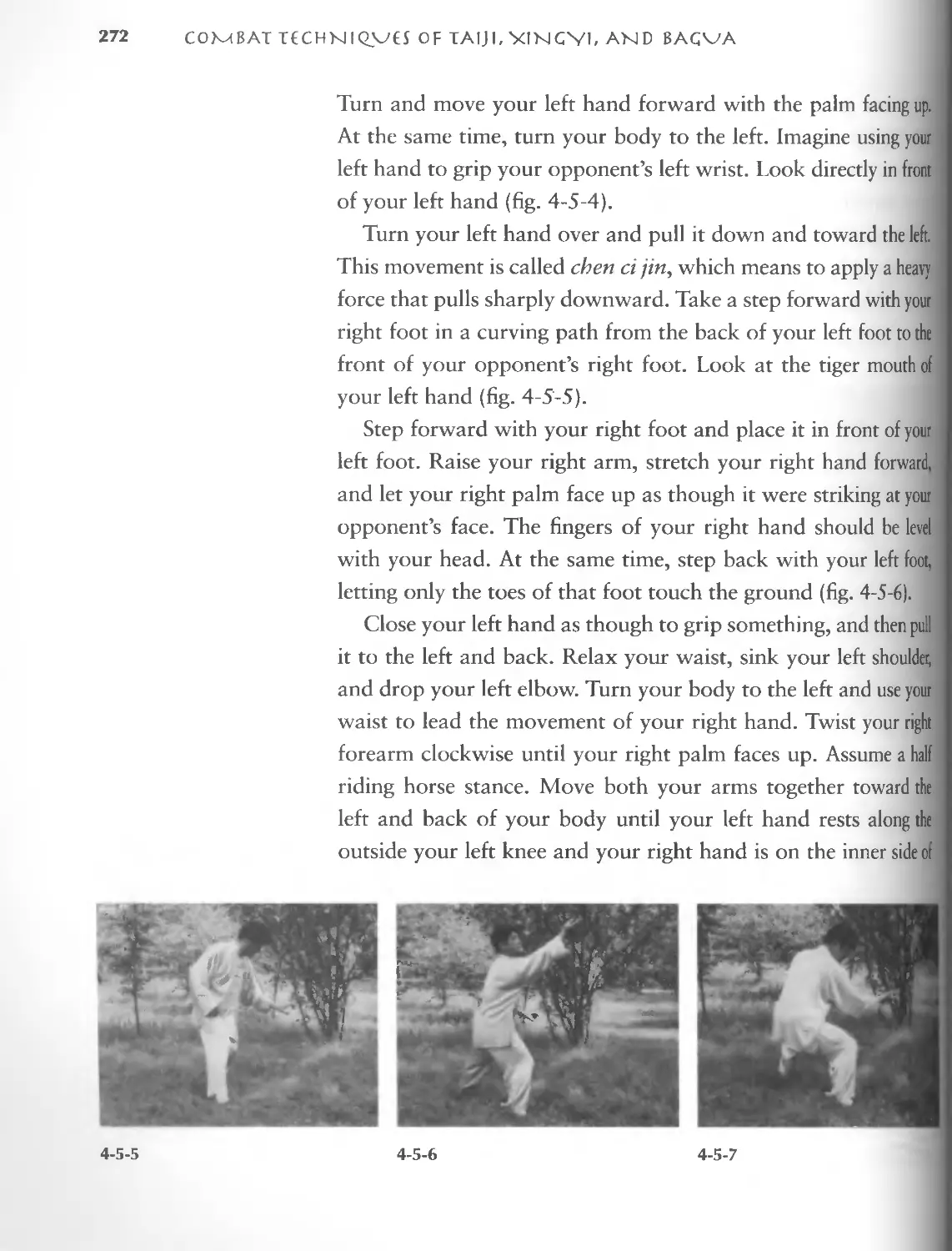
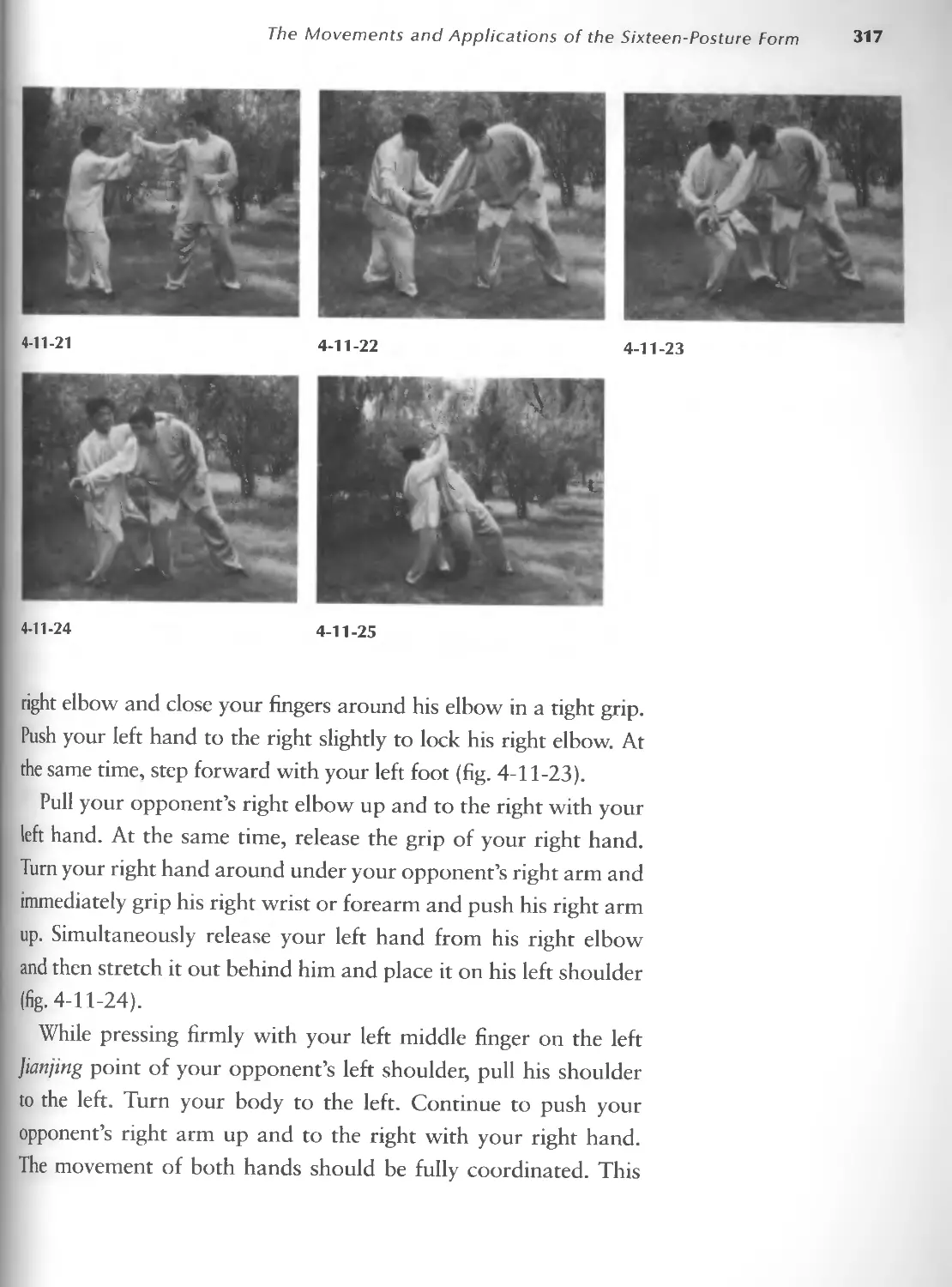
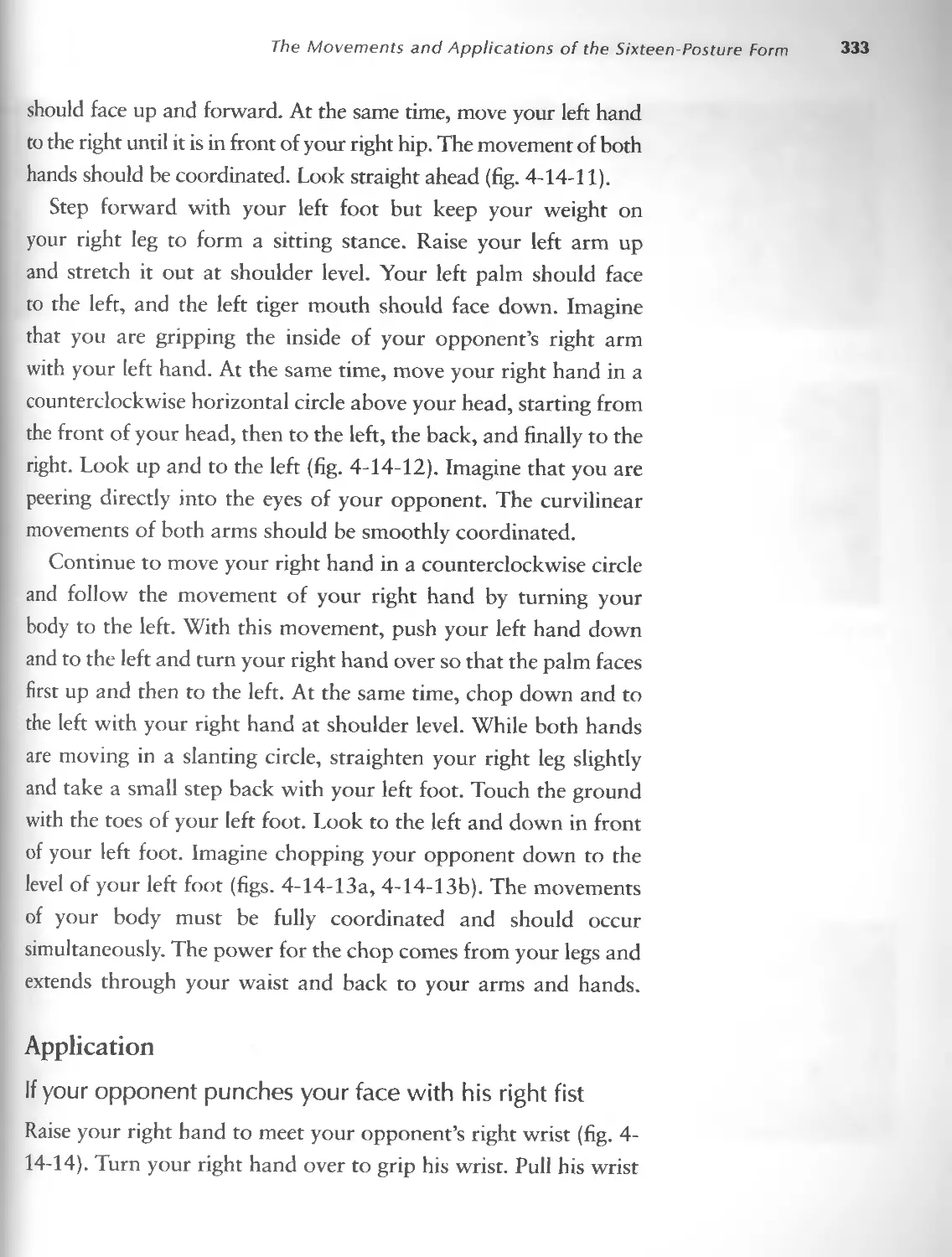
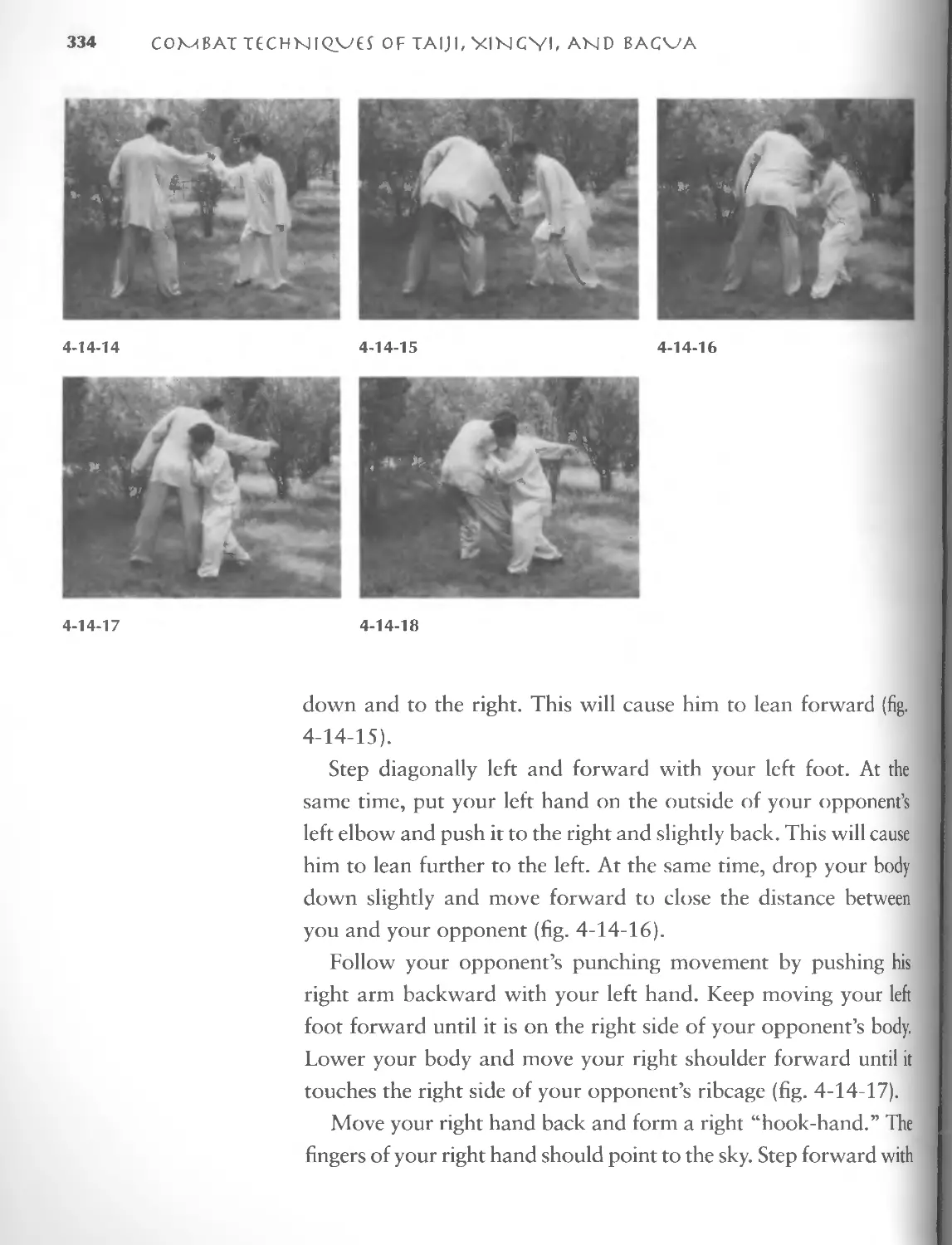
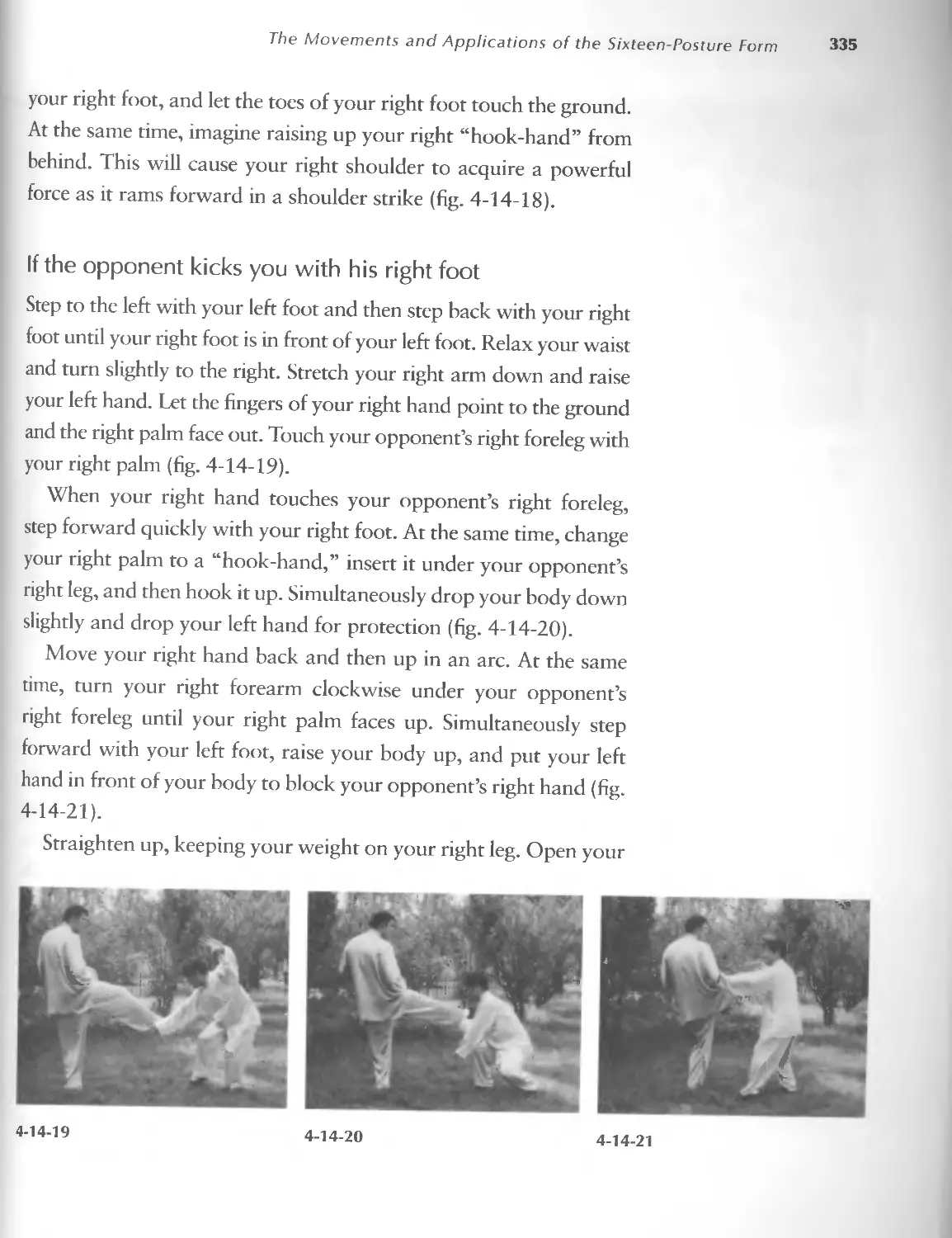
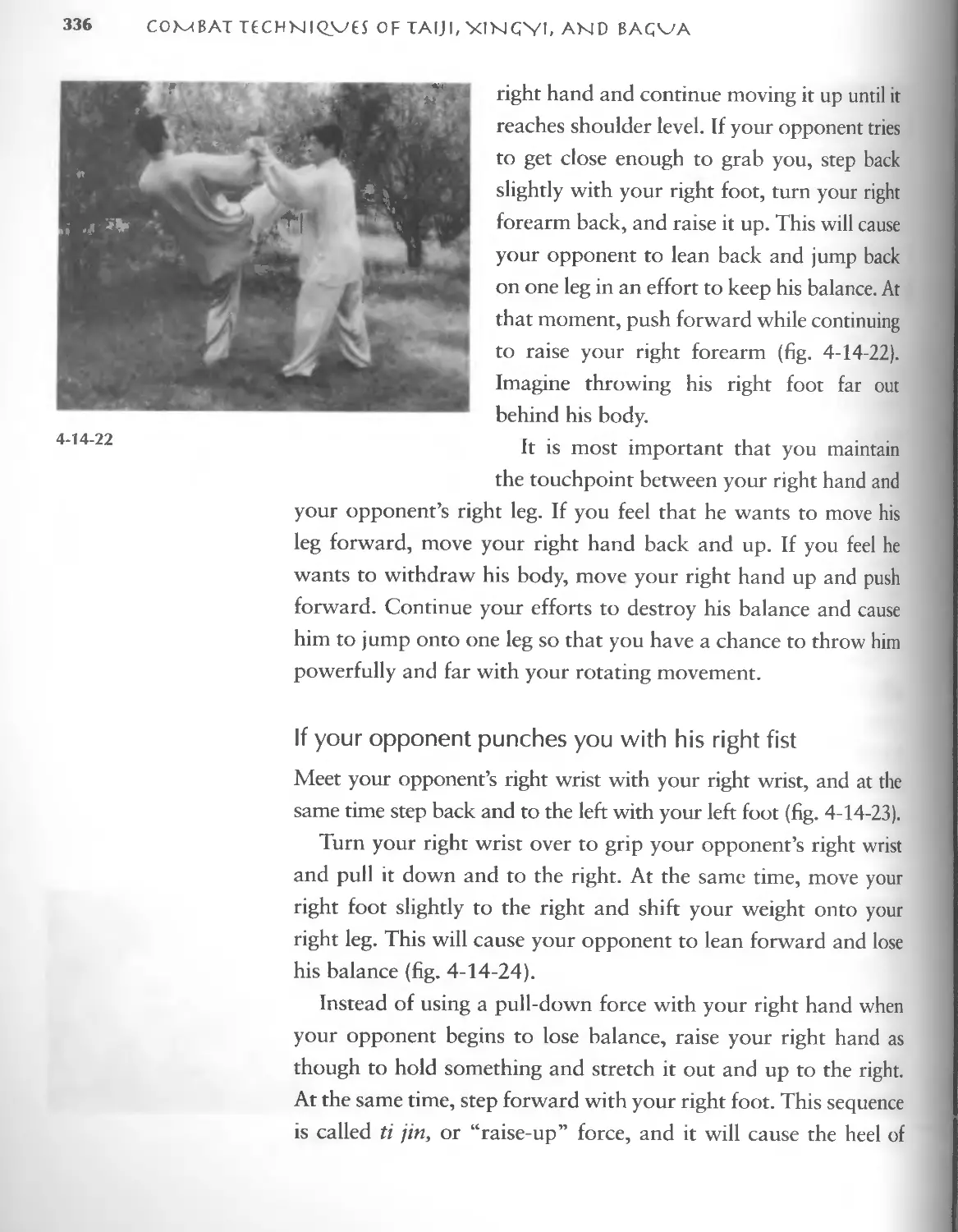
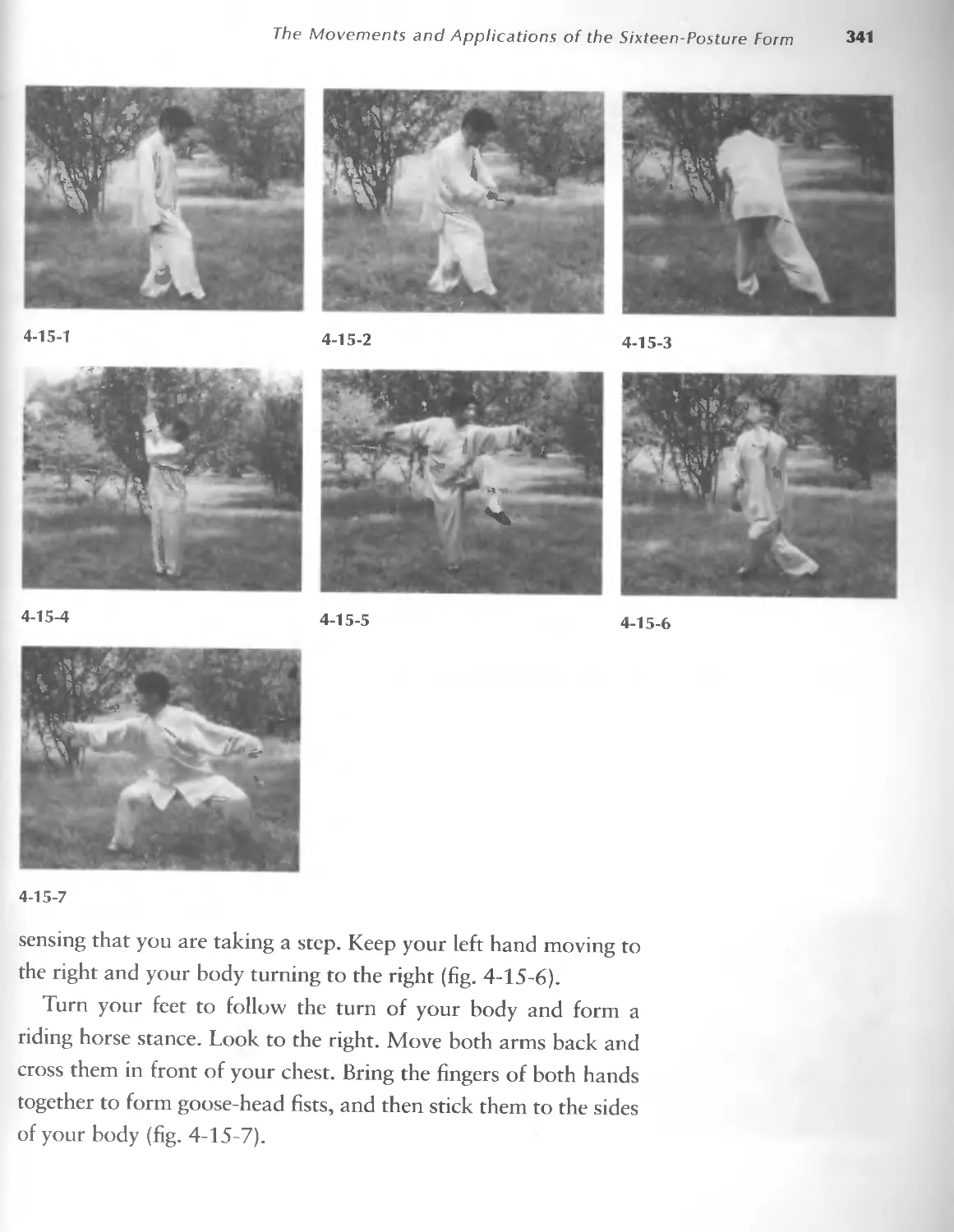
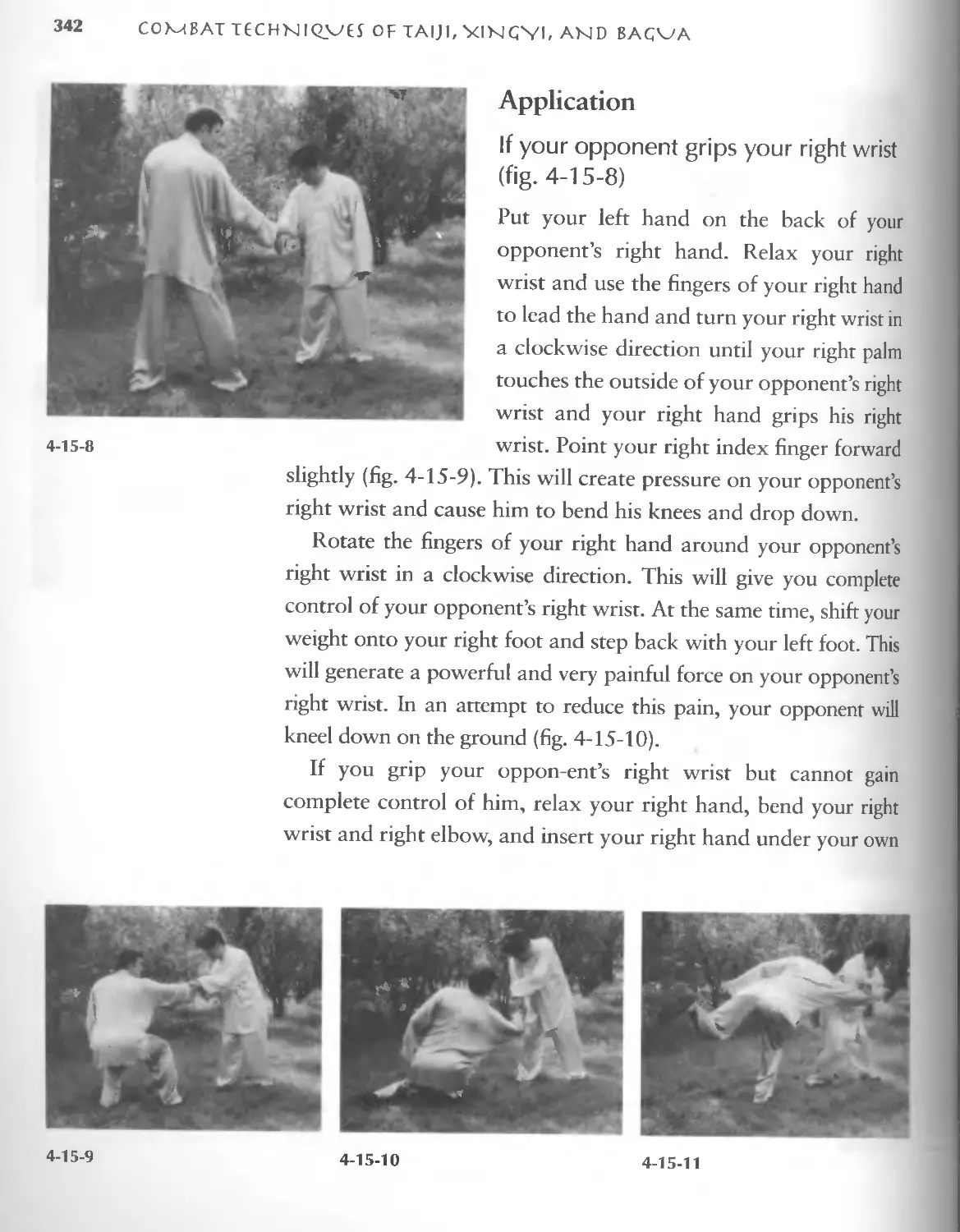
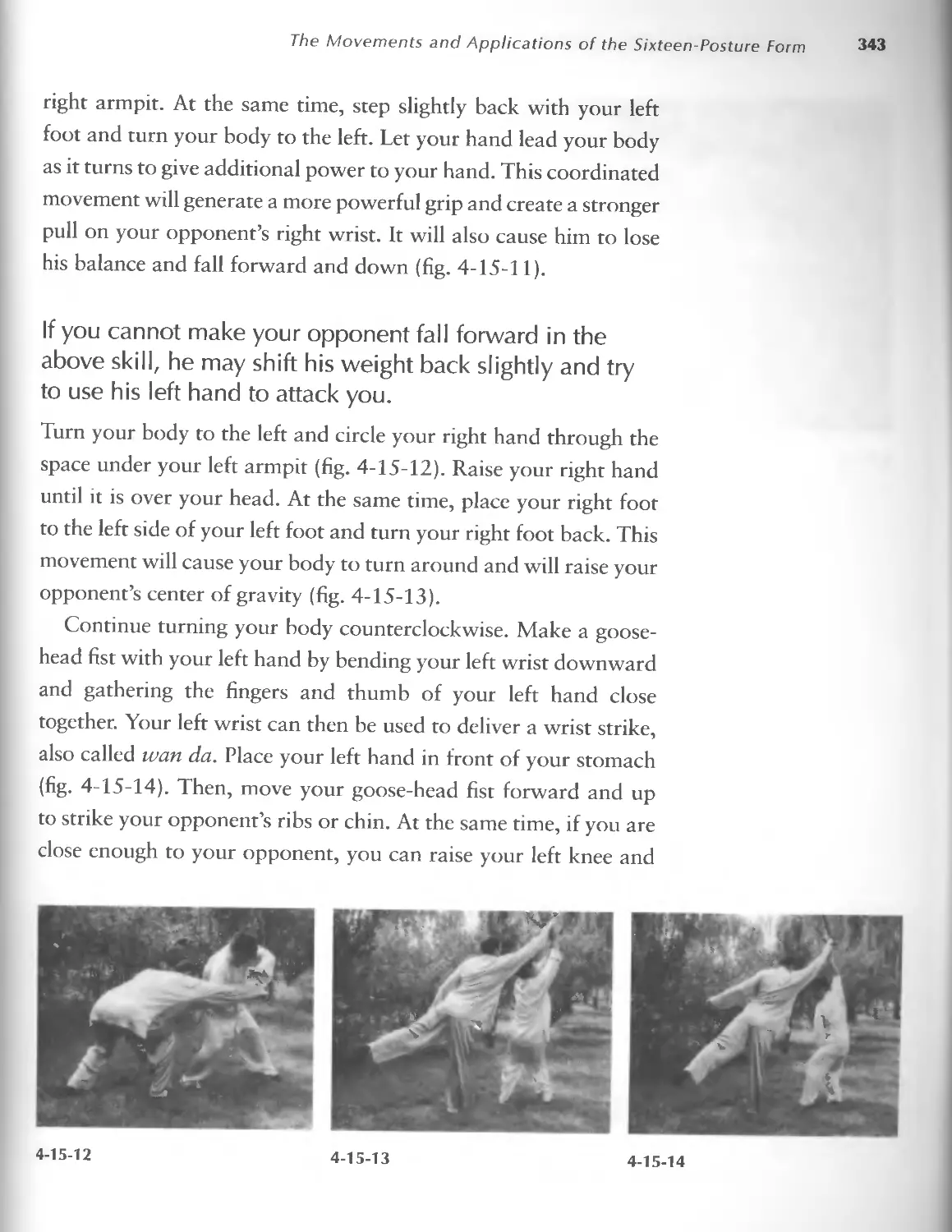
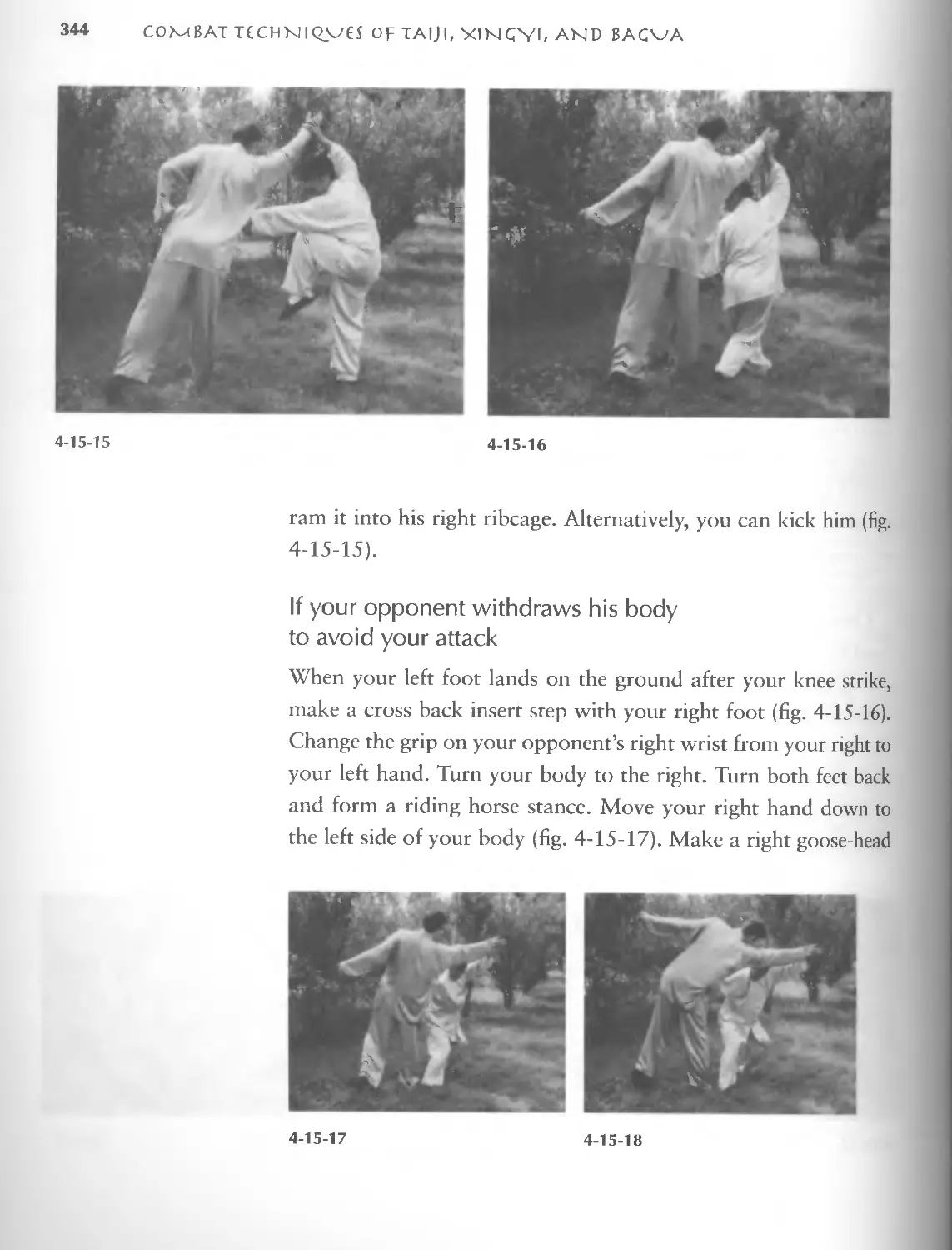
Текст
COMBAT TECHNI UES OF TAIJI,
'><IN YI, AND BA UA
Principles and Practices of Internal Martial Arts
LV SHENCLJ
Translated by Zhang Yun
..
I
I
....- -....
. .
I
1-
, II
t .
.
-
;..
r
p
[ ir1Pi
-
nei Jla quan shf zhim j1 fa zhi Ii fun yu shf jiim
1r #- Zg. -fH{.1r J
COMBAT TECHNICLUES OF TAIJI,
"><INc;YI, AND BAc;UA
Principles and Practices of Internal Martial Arts
p
1Hi
Yin Cheng Gong Fa
Traditional Chinese Martial Arts Training System
(cJ /UL-
-
-
...
...
,
--&
.
...
..
"
...
-
#
.
I
.....
.
"
..
.
.
.....
,r
,_1
......
- .
...
.,
...
-
-
;
.
.....
..
r
;; . I r -
1:.....
.
,
I
I
CO B TTECHNI UES 0 T II,
IN I, ND B U
I
I
t
Principles and Practices of Internal Martial Arts
LU SHENc;LI
'"'"EJ>
}
Translated and Edited by
l..HANGYUN AND SUSAN DAR-.LEY
Yin Cheng Gong Fa Association
-<::>
.
"
..
.,
H.
Ip ......-.....,
- ....... .',
.,
'.
....iII_.. ..;
... ..... ,.,
.,..... ....:.....
II. --'-
"!a.........._
. ........ ...."
....'
,.......
"
.. -=........... .. .
:.: _._.-=. .
--- .
.. "r _"
-. .
... .
BLUE SNAKE BOOKS
Berkeley, California
Copyright @ 2006 by Lu Shengli. No portion of this book, except for brief review, may be repro-
duced, stored in a retrieval system, or transmitted, in any form or by any means, electronic,
mechanical, photocopying, recording or otherwise, without the written permission of the pub-
lisher. For information contact Blue Snake BookslFrog, Ltd. c/o North Atlantic Books.
Photo and Illustration credits: the photographs in this book were taken by Zhao Zeren, Zhang
Yun, Lu Shengli, Kenneth Stinson, and Taotao Zhang. The illustrations and lineage charts were
drawn by Zhang Yun.
PLEASE NOTE: The creators and publishers of this book disclaim any liabilities for loss in con-
nection with following any of the practices, exercises, and advice contained herein. To reduce the
chance of injury or any other harm, the reader should consult a professional before undertak-
ing this or any other martial arts, movement, meditative arts, health, or exercise program. The
instructions and advice printed in this book are not in any way intended as a substitute for med-
ical, mental, or emotional counseling with a licensed physician or healthcare provider.
Published by Blue Snake Books I Frog, Ltd.
Blue Snake Books I Frog, Ltd. books
are distributed by North Atlantic Books
P.o. Box 12327
Berkeley, California 94712
Cover and text design by Brad Greene
Printed in the United States of America
Distributed to the book trade by
Publishers Group West
Blue Snake Books' publications are available through most bookstores. For further infor-
mation, call 800-337-2665 or visit our website at www.northatlanticbooks.com or
www.bluesnakebooks.com.
Substantial discounts on bulk quantities are available to corporations, professional asso-
ciations, and other organizations. For details and discount information, contact our spe-
cial sales department.
Library of Congress Cataloging-in-Publication Data
Lu, Shengli.
Combat techniques of Tai Ji, Xing Yi, and Ba Gua : principles and practices of
internal martial arts I Lu Shengli ; translated and edited Zhang Yun and Susan Darley.
p. em.
Summary: "A comprehensive introduction to the essential fighting techniques of
Taijiquan, Baguazhang, and Xingyiquan, presenting authentic training material that has
survived the cultural revolution" - Provided by publisher.
ISBN 1-58394-145-2 (trade paper)
1. Martial arts-Psychological aspects. 2. Tai chi. 1. Title: Combat techniques of
Taiji, Xingyi, and Bagua. II. Title.
GVI102.7.P75L82 2006
796. 815-dc22
2006034663
CIP
1 2 3 4 5 6 7 8 9 DATA 10 09 08 07 06
-
. *. .* 1
This book is dedicated to my grandmaster,
great martial artist Wang Peisheng.
>1 7
. '.. .
....... ,.1'.
>
...
'.
I
,
..
\
;
$ t"'">--
---
-" )
-.... .... c Jo-
, -
:;
-..
}
.
...j
"'
1
'"'
,
-,
$.
i
}
.,.:-
r ;:..
"-
:I>
..
-.
.
-
,
. .
?
- 7-
.
!
-1
. -
(
"
.
. '
<l
.' .
...
"
,
,
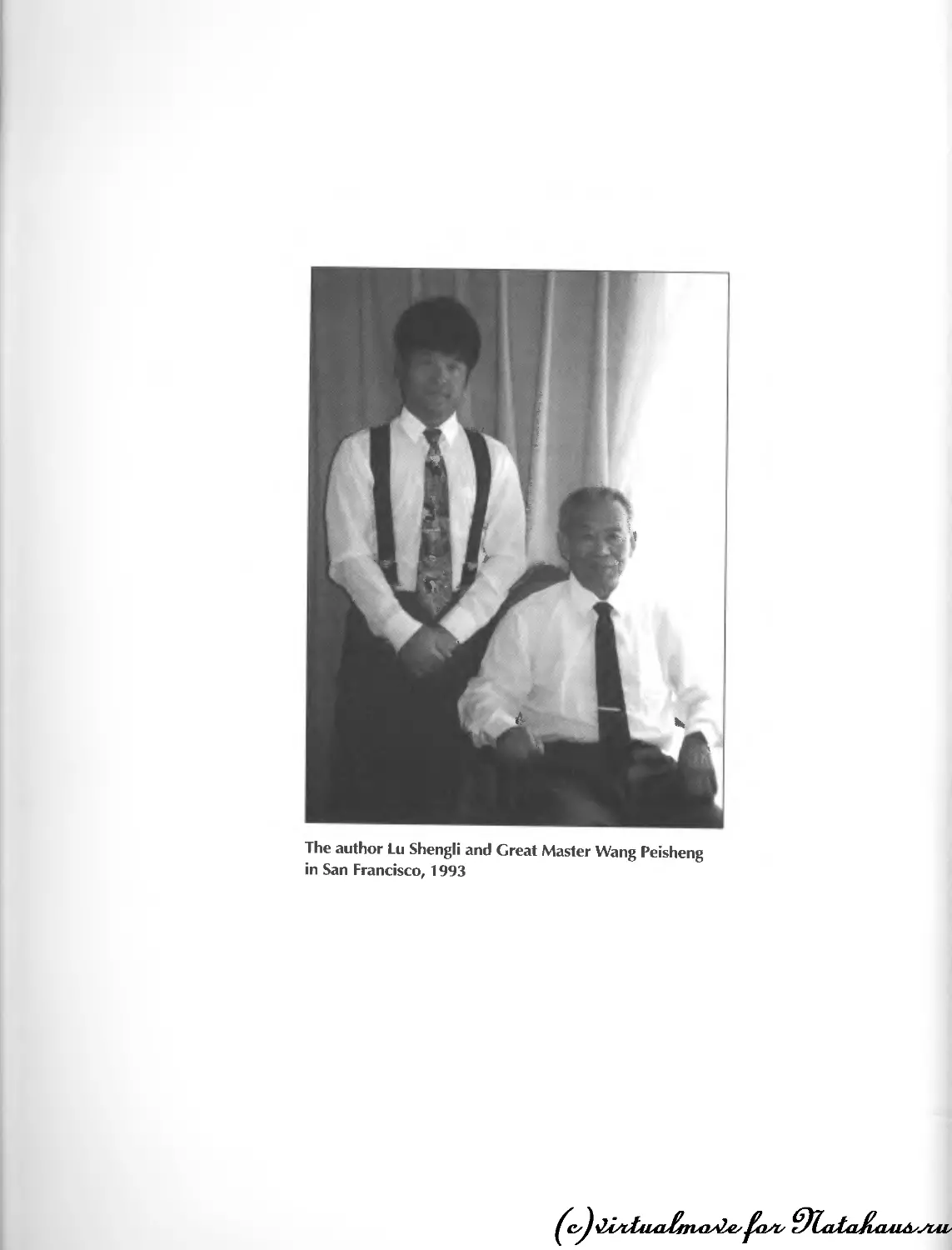
The author Lu Shengli and Great Master Wang Peisheng
in San Francisco, 1993
TABLE OF CONTENTS
Foreword by Zhang Yun . . . xi
Foreword by Strider Clark . . . xv
Preface . . . xxiii
CHAPTE ONE
The Basic Principles of Internal Martial Arts. . . 1
The Development of Chinese Martial Arts . . . 2
From External Martial Arts to Internal Martial Arts . . . 3
The Main Differences between Waijia and Neijia . . . 6
Xingyi Quan . . . 15
History and Lineage . . . 15
Basic Principles and Features of Xingyi Quan . . . 28
Analysis of the Xingyi Quan Training Method. . . 35
Taiji Quan . . . 42
History, Lineage, and Styles . . . 43
Basic Principles and Features of Taiji Quan . . . 64
Analysis of the Taiji Quan Training Method. . . 73
Bagua Zhang . . . 79
History, Lineage, and Styles . . . 80
Basic Principles and Features of Bagua Zhang . . . 94
Analysis of the Bagua Zhang Training Method. . . 97
Other Styles of Internal Martial Arts . . . 102
Tongbei Quan . . . 102
Baji Quan . . . 110
CHAPTE TWO
The Fundamentals of the Basic Movements
Used in Applications .. .. .. 115
Hand Skills .. .. .. 115
Quan Fist or Punching .. .. . 116
Zhang Palm or Palm-striking .. .. .. 119
Gou Hook...... 128
Zhou Elbow or Elbow Strike .. .. .. 130
Jian Shoulder or Shoulder Strikes . .. .. 131
Kua Hip or Hip Strikes .. .. .. 132
Xi Knee or Knee Skills .. .. .. 133
Foot Skills .. .. .. 135
Head .. .. .. 137
Body .. .. .. 137
Stance .. .. .. 139
Step .. .. .. 143
CHAPTER-. TH EE
Basic Gongfu Training. . . 149
Zhuang Gong Pile-Standing.. .. . 151
Santi Shi Trinity Pile-Standing .. .. .. 155
Seven-Star Pile-Standing .. .. .. 175
Kan-Li Zhuang Kan and Li Pile-Standings .. .. .. 183
Kan Zhuang Kan Pile-Standings .. .. .. 183
Li Zhuang Li Pile-Standings .. .. . 186
Bu Fa Application Steps .. . . 190
Tui Shou Pushing Hands .. .. .. 212
Fa fin Releasing Trained Force .. _ .. 220
CHAPTE FOUR-.
The Movements and Applications
of the Sixteen-Posture Form . . . 231
How to Learn and Practice the Sixteen-Posture Form . . . 231
Name List of the Sixteen-Posture Form . . . 234
The Movements and Applications
of the Sixteen-Posture Form . . . 236
1. Brandish a Whip at the Horse . . . 237
2. Three Immortals Gather Together . . . 249
3. Er Lang Carrying the Mountain . . . 255
4. Flying Tiger Blocking the Road . . . 263
5. Rid Evil with a Hay Cutter . . . 269
6. Black Dragon Swaying Its Tail . . . 276
7. Ba Wang Shaking His Armor. . . 286
8. Wild Horse Galloping . . . 292
9. Hungry Tiger Pounces on Its Prey . . . 298
10. Zhou Cang Shouldering the Big Sword . . . 303
11. Plant Flower and Move Tree . . . 310
12. Sleeping Off the Wine Under a Pine Tree . . . 318
13. Fierce Tiger Leaping Out of Its Lair . . . 322
14. Wind-and-Fire Wheel Spinning Swiftly . . . 329
15. Monkey Jumping in Its Lair . . . 338
16. Cold Wind Caresses the Face . . . 345
CHAPTE FIVE
The Practice of Applications. . . 357
Application Training . . . 358
Assessing the Opponent . . _ 360
Finding the Proper Distance . . . 361
Determining Timing and Direction . . . 362
Moving Forward, Backward, and Sideways . . . 363
Protecting Your Body . . . 364
Practicing Applications . . . 365
Are You Ready for Fighting? . . . 367
About the Author and Translators . . . 371
FO EWO "-.D
he first time I met Lu Shengli was at my master Luo Shuhuan's
house in 1975. At that time he had just returned to Beijing from
military service. To take a break after years of highly physical work,
he wanted to try something different. C11inese calligraphy is very
good for calming the mind as well as the body, so at the time he
was studying calligraphy under Master Lua. After that initial meet-
ing, for about a year we did not see much of each other. At the end
of that period, sufficiently recharged, Lu Shengli returned to mar-
tial arts practice for good. We learned and practiced together all the
time, and have remained close friends ever since.
Lu Shengli started his martial art training at age ten. He studied
several different styles, amongst them Shuai Jiao (Chinese wrestling),
Shaolin Quan, and Tongbei Quan. Since he practiced so hard from
such an early age, his basic gongfu skills are extremely solid. While
he was in the military he also received hand-to-hand combat train-
ing. It was around the time we started to meet regularly that he
began his training in internal martial arts. Master Luo liked the fact
that Lu Shengli always practiced diligently and was quick to grasp
the underlying principles, so later on Master Luo introduced him
to his own teacher, Grandmaster Wang Peisheng. That gave Lu
Shengli the opportunity to receive intensive private training with
Grandmaster Wang. For many years, he went to Master Wang's
house two to three times a week. His initial focus was mainly on
Bagua, then it included Taiji, Xingyi, weapons, and qigong.
In 1984, when the political climate changed and traditional rit-
uals were permitted again, Lu Shengli and I were inducted as Mas-
ter Luo's formal indoor disciples in a traditional ceremony. At this
time, Grandmaster Wang gave Lu Shengli and me special permission
.
XI
. .
XII COMBAT TECHNJ<LUES OF TAI]I, 'J<INGYI, AND BA UA
to immediately open our doors and accept disciples of our own.
This was a huge honor, reward for our hard work, as we were the
first ones in our generation allowed to do so.
Lu Shengli is a deep thinker, very serious and meticulous. He
firmly believes that the truth can come only from real experience.
In his training, no one can convince him of anything without show-
ing him both the theoretical basis for why something works a cer-
tain way, and actual skills following those principles in real life.
With each skill he invests a large amount of both physical and men-
tal energy. On the physical side, he often repeats a movement a thou-
sand times without stopping. On the menta] side, he analyzes each
skill in detail and verifies his thinking using real-life situations.
For many years, regardless of the weather, he practiced outside
every morning, starting at five o'clock. His level of skill progressed very
quickly. For this reason Grandmaster Wang Peisheng later picked Lu
Shengli as his assistant to teach martial arts. In 1993, when Grand-
master Wang came to the United States to conduct his first work-
shop, he chose Lu Shengli to accompany him.
Traditional Chinese martial arts are more than just fighting skills.
The skills themselves are deeply rooted in the traditional Chinese cul-
ture, especially the philosophies, and cannot be separated from it. For
this reason, when teaching martial arts in the West, I have always
encouraged my students to visit Beijing, because practicing these arts
in their native environment can provide you with more of the authen-
tic, correct feelings that are integral to their understanding. The need
to understand traditional ideas in Chinese martial arts practice cannot
be overstated. Each time my students go to Beijing, Lu Shengli rakes
care of every detail of their training and living arrangements. Because
of the genuine care he has shown for all of these students, everyone
admires him for both his martial arts skill and his character.
One of the biggest obstacles for students of the internal martial
arts is the transition from training to fighting. It is not uncommon
for people to practice internal martial arts for many years, and to
. . .
Foreword
still not understand fighting principles, or how to apply their skills.
Many people either cannot fight at all, or fight using basically exter-
nal skills. After many years of practice, Lu Shengli recognized this
problem. So starting from the mid-1990s, he began to think about
how to address this issue. The results of that extensive research are
presented in this book.
Under Grandmaster Wang Peisheng's instruction, Lu distilled
his vast experience into this new form. In truth, this book describes
much more than just a form; it includes principles and training
methods as well. It is Lu's hope that learning this form will enable
people to understand internal martia] arts more clearly. He has
since received feedback from many people, and by all indications has
succeeded in this goal with many others.
When I returned to Beijing in 1997, Lu Shengli showed me this
form, and we discussed the principles and skills involved in great
detail. At that time I asked him to write a book on it, but he said he
was not ready. He wanted to spend more time conducting research.
I know Lu Shengli well, and it is simply not in his nature to show
the world anything until he has judged it to be completely satisfac-
tory according to his high standards. So it was not for another two
years, with further encouragement from Grandmaster Wang, that
he finally wrote this book. Still he hesitated, wondering if it was
ready for publication. When I went back to Beijing in 2000, I took
a copy of his manuscript home with me to the U.S. ] told him I
don't care when he publishes it in China, but that] will go ahead
and translate it for publication in the United States right away.
I started this effort as soon as I came back. My student Susan Dar-
ley helped me translate and edit the entire book. My other students
Peter Capell, Paul Keane, David Ho, Paul Cote, Strider Clark, and
Vincent Sha also contributed in various ways. I am grateful for all
their hard work in creating the English version of this wonderful
book. Here I also want to give special thanks to Mr. Jess O'Brien
his help really made the publishing of this book a lot easier.
XIII
.
XIV COMBAT TECHNICLUES OF TAI]I, 'XINc;YI, AND BA UA
Since cultural backgrounds are very different between the East
and the West, many traditional principles and concepts are very
difficult to translate. For many concepts and words, a direct one-
to-one translation is not possible. So in this book we always try to
give plenty of examples and employ several different ways to illus-
trate the same idea in the hope that together they will form a coher-
ent picture of what the original idea in Chinese is all about. Although
we did our best, I still find instances where the translations can be
confusing, especially for beginners.
When you read this book, keep these things in mind. When you
run into some points and doubts arise, don't stop there and try to fig-
ure everything out immediately. Move ahead and read the other
examples and explanations we provide on the same concept. And
do the same thing for each concept, going ahead and reading a11 the
related concepts on internal martial arts we present in this book.
Then, after you have read the whole thing and spent some time prac-
ticing, return to these individual points. You will find them easier
to grasp now that you have a good overview of the whole context.
This is one of those limitations of human language. There are cer-
tain things that cannot be fully conveyed by language alone, fully
understood from reading a book. As with any high-level skills, the
only way they can be learned is face-to-face teaching and diligent
practice. True understanding can only be gained from hard prac-
tice and deep reflection. Ultimately this book offers a good reference
for your practice.
I am happy that, with this book, more people have the opportu-
nity to gain a deeper understanding of traditional Chinese martial
arts, and I hope more practitioners can benefit from it. I truly believe
this valuable art belongs nor to anyone group, or even anyone
country, but to the whole world.
Zhang Yun
Pittsburgh, Pennsylvania, 2005
FOREWORD
am once again honored to introduce yet another wonderful book
on the theories and techniques of the Yin Cheng Gong Fa gongfu
system. This form and the master that developed it hold a very spe-
cial place in my heart. I had the fortunate opportunity to study
with Lu Shengli and be a witness to the unfolding of this innovative
approach to utilizing internal martial arts skill in real combat. Lu
Shengli was a major force in my life and helped me understand not
only martial arts skill, but how to look inward and grow toward
becoming a better human being. Looking back to my training days
with the mighty Lu Shengli instills memories of happiness, laugh-
ter, and brutal workouts complete with tears.
It was the spring of 1993 and I had been studying with my mas-
ter, Zhang Yun, for about four years. Master Zhang sent me to Bei-
jing to study with his gongfu family. His older gongfu brother Lu
Shengli took the primary responsibility of taking care of me and
my training while I was there. I can remember very clearly the first
day that I met Lu Shengli when he picked me up from the airport.
He was not tall, but then I am 6 1 3 11 and stood out in the Beijing
airport. His demeanor was very polite and humble. He smiled every
time we made eye contact, which made me feel comfortable in my
strange new surroundings. He carried himself with an air of great
energy and nobility. He was accompanied by another man who
translated for us. He took me back to his home where I met his
wife and daughter. I was then treated to a fantastic Chinese meal,
Beijing style. Then with the help of the translator, we discussed my
training schedule and living arrangements.
That night I settled in the dormitory of the university where Lu
Shengli worked. Six in the morning came quickly and I was awak-
xv
.
XVI COMBAT TECHNIQ.UES OF TAIJ', ,)('N YI, A.ND BA. UA
ened with a loud knock on my dorm room door. Lu Shengli was
head of security for the university and had sent one of his officers to
wake me up. I headed to Lu Shengli's home, where he had cooked
breakfast for me. As we ate, he explained in detail these special
foods he prepared and their importance in my training. After break-
fast we headed down to the training hall to begin our six-hour daily
practice. The translator was already at the hall waiting for liS. Lu
Shengli began by asking to see what I had been learning with Zhang
Yun in the u.s. He watched intently as [demonstrated some Tong-
bei, Taiji, and Cheng-style Bagua. He then asked if I understood the
movements and their applications. I replied that I had only a basic
understanding and that many movements I could not use at all.
He then turned to the translator and said something in Chinese.
The translator's expression suddenly changed to a look of nervous
discomfort. I asked him what Lu Shengli had said. He then stated
that Lu Shengli wanted me to attack him with any strike I wished.
I was hesitant at first, as anyone would be if asked to punch his
new teacher. However, after throwing the first punch and having
Lu virtually disappear, coiling around me to reappear behind my
shoulder, I began to realize his great skill. Repeatedly I tried to
punch him, and he would simply move to one side and then sud-
denly change direction and appear on the other side.
After several of these amazing evasive movements, he decided
to demonstrate his hitting ability. After dodging, coiling, and almost
slithering around the punch with blinding speed, he suddenly
changed directions and lashed out with a whip-like chop that seemed
more like a knife than a hand. Before I had time to react he had
already changed directions once again and was striking the other side
of my body. Where the first strike had been at my neck, the sec-
ond one hit a pressure point on the back of my lower leg perfectly.
Now his stance was so low that his tailbone touched the floor, yet
he was able to move from that posture with great speed. The shine
that radiated from his eyes was so intense they seemed to burn red,
. .
Foreword XVII
giving me the feeling that my death was a blink away. Then just as
quickly as his angry-tiger intensity appeared, it went away and the
pleasant smile and sparkle in his eye were back. It was as if he had
a switch that simply turned it on and then turned it off.
This attribute to quickly switch between moods made know-
ing and living with Lu Shengli very interesting. Oftentimes I felt as
if he were the kindest and most harmless man around. To see him
interact with his neighbors and even total strangers was pleasant,
as he was downright chivalrous and charming. However, after many
training sessions and being witness to a few real-life combat situa-
tions, I came to know a side of him that few people would ever
see. This was a side that, when a situation called for it, would be
powerful, ferocious, and terrifying. In Chinese this is described as
"Ii hai," one of the first words I learned there. Ironically, the word
that I learned to describe one of his personal attributes would be
the same one that he used to describe his combat skills.
After living with him and traveling around the neighborhood, I
began to notice that Lu Shengli was well known. I also noticed that
the people had great respect and affection for him. I was soon to
understand why. On many occasions I followed him to fights or
arguments between various individuals. He was not only called on
professionally for disputes within the college where he worked, but
by citizens on the street. Several of the restaurants near the college
had problems with people coming in, eating, smashing up the place,
and refusing to pay. Most of the time, the police would take so long
to respond that the assailants would cause damage, not pay, and
leave without getting caught. These owners as well as many others
would call Lu Shengli, and he would come in time to help them.
Just as remarkable as his fighting skill was his ability to talk to
people and defuse seemingly hopeless arguments. Sometimes just
his presence would change the demeanor of those intensely fighting
or arguing. There was no more dramatic example of this than the
night I was awakened at about three o'clock in the morning by a
. . .
XVIII COMBAT TECHNICLUES OF TAIJI, 'XIN YI, AND BA U
knock at my door. It was one of Lu Shengli's security guards.
Through a halting exchange I managed to understand that he
wanted me to follow him. As we made our way across campus, we
could hear screaming and arguing coming from the walkway in
front of us. As we got closer, we could see about a dozen college
students fighting with each other right in front of the campus secu-
rity building. The fighting was savage they were hitting each other
with sticks and rocks. The three guards on duty were young and
looked terrified as they simply stood on the sideline watching.
A thick fog hung in the cool air of early morning. When I looked
down the long walkway through this fog, with the streetlights shin-
ing dimly overhead, I could see a dark silhouette approaching from
the distance. As it got closer I could tell by the figure's confident
and gliding steps that it was Lu Shengli. As he came closer I noticed
that many of those fighting also realized who the dark figure
approaching was. Many simply stopped fighting and began to
quickly walk away. Sticks dropped and shouts softened to whis-
pers. Soon just a few individuals remained engaged in pushing and
yelling at each other. As Lu Shengli stepped into the streetlight his
identity became unmistakable. Those remaining calmly stopped
and bowed their heads as he approached. I do not know what he
said, but his voice was calm and quiet. Everyone spoke quietly, and
the blood and anger that had moments before filled the air simply
was no longer there. From this moment I realized how much this one
man impacted everybody and everything around him in so many
ways. I was glad to be his gongfu nephew and his student.
The following days were filled with long and brutal hours of
hard basic training. I would spend most mornings stretching and
doing basic pile stances. I then would rehearse the Xingyi Five Ele-
ments, Cheng Bagua basic circle walking, the Taiji form, and qigong
for several hours more. [was very fortunate to learn Liu-style Bagua
from Lu Shengli. In our gongfu family, Lu is considered the best
representative of this style. For many years he learned it privately
.
Foreword XIX
from Grandmaster Wang Peisheng himself. This deadly art was
used only for combat and quick annihilation of the opponent. With
Lu Shengli I trained Monday through Saturday and had every other
Sunday off; the other Sunday I spent all day training with Grand-
master Wang Peisheng. Lu Shengli had carefully arranged every hour
of my day with training routines where he watched every movement
I made. His persistence and attention to detail were constant, and his
demands for repetition and focus relentless. Many nights I would
return to my room in tears, exhausted and completely challenged
to my limit.
Lu Shengli has spent his entire life cultivating his gongfu skills
under the tutelage of some of Beijing's most famous masters. Even
more impressive is his ability to understand each of the styles along
with their characteristics and spirit. He can simply flow from one
technique to another in the middle of a full-out attack, as if he had
rehearsed that sequence a thousand times. Sometimes a movement
looks like Taiji and then suddenly blends into a Bagua technique.
Dozens of techniques from many different disciplines seem to effort-
lessly be at his command at any moment he wishes. In the beginning
I simply was impressed and could not understand this ability.
As my time with him increased, he began to explain his meth-
ods and why they worked. One truly remarkable skill Lu Shengli
possesses is the skill of "ting jin" or listening force. His sensitivity
is highly refined he can immediately touch you and know what
your intent is and where your force is going to go. This enables
him to know your next movement and respond effortlessly, or even
take the time to choose his response. Each time, his movements
were executed with perfect timing, speed, and accuracy. Once I
would initiate an attack, I instantly felt dazed and unbalanced. To
watch him do this to another person is simply beautiful, as it all
seems to be so effortless for him.
This first visit to Beijing was just the beginning of my training
with iu Shengli. At this time he mentioned that he was develop-
xx COMBAT TECHN' UES of TAI]I, )(IN YI, AND BA UA
ing a form of many useful movements from his fighting experience.
I practiced many of these movements and tried to use them inter-
changeably, as I had watched him do. The movements he has chosen
are brutal and clever. They all seem to be outstanding representa-
tions of the styles they were selected from. They are skills that often
present themselves in a fight and are easy to apply. He was always
quick to point out that I still had to develop my basic gongfu and
internal force, as without that, these skills simply become rigid,
unconnected external techniques. I used his methods to continue
my training and took them back to the u.s. with me.
My second trip to Beijing took place two years later. This time
Lu Shengli had finished developing his form and the ideas behind
his training methodologies for it. From all his years of training and
experience, he had taken sixteen specific postures, which included
about thirty skills that he felt were the most useful in a fight. The
skills also were selected because he felt that when practiced together,
they would help an individual improve internal force and fighting
spirit. These skills, when linked together, have a very smooth and
powerful flow to them. Lu Shengli understands the difficulty so
many face in developing their skills into useful and effective appli-
cations. Oftentimes a master may have tremendous basic skills and
a strong root. To try to move him can take two or three men, and
then it is not done easily. However, when the speed and power of
a violent attack come his way, he falls to the flurry of a fast and
heavy hand.
From years of research and personal experience, Lu Shengli began
to ask himself what methods could improve this transition from
having internal force to being able to use it effectively in combat
situations. Lu Shengli would also call upon his grandmaster and
mentor Wang Peisheng. He had a very close and personal relation-
ship with the grandmaster and would question and test his ideas
with Master Wang's extensive expertise in combat. In this way Lu
Shengli created a remarkable method that so many can now bene-
.
Foreword XXI
fit from. He provides a bridge to many traditional concepts with
easy-to-understand training methods. These methods are rich in
detail, handed down by Wang Peisheng with an added clarity that
comes from Lu Shengli's personal experience and research.
Lu Shengli evaluates his form constantly. He continually strives
to improve and refine each skill. When I returned to Beijing the
last time, I was amazed to see that the form was even more detailed
and advanced. For example, when he taught "Ba Wang Dou Jia" (Ba
Wang shakes his armor), he explained the application of the skill
with great detail. He talked about how to look at and feel the oppo-
nent, how to get the first touch by intercepting and grabbing the
hand, how to angle the body and turn, and how to release the force
at the right time with right direction. All these details made the
skill even easier to understand and apply.
It is a common adage in the internal arts that movement is used
only to achieve the concept of having no particular skill; that any
movement is skill. The practitioner uses form as a tool to train the
mind and body to realize this concept. However, many still cannot
reach this level, especially when tested under true combat condi-
tions. Lu Shengli's form and concepts guide the practitioner in that
direction effectively. When practicing this form you can feel the com-
fortable, flowing movement of your force. It feels familiar to inter-
nal practitioners since it contains so many components of Taiji,
Bagua, and Xingyi. When the actual skills are practiced and used
according to Lu Shengli's ideas, they seem to be easily executed and
effective, realizing the principles of relaxing, following, and releas-
ing the force at the right time and right direction.
Thus, there are many other individuals who admire Lu Shengli's
form and his innovative approach. With Grandmaster Wang's encour-
agement, Lu Shengli started to write down his ideas and personal
experiences. And then Master Zhang Yun translated these notes
into English. On my most recent trip to Beijing I helped Lu Shengli
shoot photos to accompany the translated text. I truly believe that
.-
XXII COMBAT TECHNI UES OF TAI]I, ')(INGYI, AND BA.GUA
this book will help many practitioners improve their understand-
ing of the internal arts and fighting concepts.
I am confident that the steadfast internal practitioners will in
time come to deeply appreciate the detailed concepts and knowl-
edge presented here, the results of cumulative experiences thought-
fully compiled by such a talented master. Lu Shengli is definitely a
rare example in today's world. He is a warrior trained in ways long
forgotten and largely misunderstood by modern society. Upon meet-
ing this quiet and humble man" one cannot help but to liken him
to a knight or a samurai. Yet he is thoroughly modern in his rig-
orous approach to training, in combining the best of the old and
the new. He carries a skill handed down from a truly impressive
lineage of some of China's greatest masters. For those not fortu-
nate enough to have met the great Grandmaster Wang Peisheng,
there is comfort in knowing that an essential part of him survives
today in this most remarkable practitioner of true Chinese gongfu.
Strider Clark
Pittsburgh, Pennsylvania, 2005
P EFACE
Laditional Chinese martial arts are an important and highly
valued component of Chinese culture. They have deep roots in
philosophical principles and include the development of high-level
skills. The branch of Chinese martial arts known as Neijia Quan,
or internal martial arts, attracts many people with its subtle com-
bination of physical skill and philosophical principles. Although
many people study internal martial arts, only a few really under-
stand the essence of these systems and as a result, only a few achieve
true mastery. There are several reasons for this state of affairs. One
important reason is that in the past, many masters taught Neijia
skills only to a select group of private students. People who trained
in public classes were shown only external postures and were not
taught the uses of these movements nor the principles on which
these movements were based.
Past generations of masters refrained from teaching their skills to
the public at large because of a widely shared belief that such knowl-
edge could be dangerous if given to ill-intentioned or irresponsible
people. In such cases, it was feared that high-level martial arts skills
might be used for destructive purposes. So, martial arts knowledge
was carefully guarded and taught only to those deemed worthy of
using it for beneficial ends. Because of this traditional wariness,
Neijia groups have been said to control their "doors" very strictly.
The resulting risk that Neijia skills might be lost was considered
preferable to the risk that a malevolent person might learn martial
arts skills and then use them for evil intent.
Although the effort to keep martial arts knowledge limited to a
relatively small group of practitioners was well-intentioned, it pre-
vented many good people from learning the skills they sought. As
XXIII
(c) /UL-
XXIV COMBAT TECHNIQ..UES OF TAU', "XINC;YI, AND BAC;UA
it became more difficult for succeeding generations of practition-
ers to learn internal martial arts skills, those who possessed such
mastery were increasingly unwilling to share their knowledge with
others. Thus, an originalJy honorable idea eventually became a con-
servative force limiting the spread of valuable knowledge to gen-
uinely interested people.
Another reason that Neijia skills are not well understood, even
by many practitioners, is that these skills cannot be understood
directly and clearly. If a master doesn't really want to teach from
his heart, it is almost impossible for a student to gain true knowl-
edge. Unfortunately, it is very often the case that even people who
practice diligently and for a long time do not understand martial
arts principles. As a result, they never fully experience the feelings
and power that martial arts skills can generate. Many people have
"walked on the wrong path and never known." Many have quit
their practice frustrated and unfulfilled.
Today, times are different and some of the traditional notions
and concerns are no longer relevant. Many people now believe that
martial arts skill and knowledge belong to everyone and that the
historically conservative viewpoint no longer applies. Many masters
believe instead that "the door to the house should be opened" so
that these great skills and the many benefits they can bring should
be shared with all who want to learn. It is for this reason that my
Grandmaster Wang Peisheng encouraged me to write this book.
I have always liked martial arts very much. At the age of ten, I
began my study of Chinese wrestling with the well-known master,
Mr. Han Ying. Later, I studied Baiyuan (White Ape) Tongbei Quan
with another famous master, Mr. Li Shusen, and then I became an
indoor disciple of the renowned master, Mr. Luo Shuhuan, under
whose guidance I studied Taiji Quan, Bagua Zhang, Xingyi Quan.
At this point in my training, Master Luo sent me to my grandmas-
ter, Mr. Wang Peisheng, for more intensive training at his home.
I am deeply indebted to Grandmaster Wang Peisheng for the
(cJ /UL-
Preface xxv
great kindness he extended to me by offering me his devoted and
meticulous instruction. His deep, detailed, subtle, and invaluable
teaching advanced my knowledge of martial arts greatly and allowed
me to improve my skiUs significantly in just a few years. My fight-
ing techniques were especially enhanced during this time. Grand-
master Wang's teachings led me to a true understanding of the
principles of traditional Chinese martial arts and have continued
to guide my development as a martial artist.
For more than thirty years, I have practiced and researched the
martial arts with my gongfu brothers Zhang Deshan, Zhao Zeren,
Zhang Yun, Gu Yun, and others. They, too, have helped me improve
my knowledge and skills and have brought great benefit to my
practice. I am very grateful to them for this assistance.
If one wants to study internal martial arts, he or she should first
know the principles upon which they are based, the relationship
between practice and principle, and the skills involved. It is also
important to understand the differences between internal and exter-
nal martial arts skills. Only with this knowledge and diligent prac-
tice can one have the opportunity to reach a high level of skill.
Although I have studied internal martial arts for many years, it
is only in the last ten years that I have come to understand these
principles and finally have been able to achieve high-level skill. The
reason for this is that I thought that technique should be the most
important focus of training during my early years of study. I liked
carefully researching how techniques differed from each other, but
I did not think enough about underlying principles, especially as
they applied to fighting skills. As a result, my progress was slow
despite years of intensive training. I wasted much precious time
and took an unnecessarily long path to my goal.
My purpose in writing this book is to help others find an easier
and more direct path to the development of high-level skills. I hope
to accomplish this goal by describing my experiences and the knowl-
edge I have gained. I have written this book both for beginners
(cJ /UL-
XXVI COMBAT TECHNIQ..UES OF TAU), "XINC;YI, AND BAC;UA
who want to find a correct way to gain martial arts skills quickly
and for experienced practitioners who wish to move from inter-
mediate to high skill levels. I hope that this book will bring readers
the benefit not only of my experience but also that of the many
generations before me. I will be very happy if each reader can learn
something from this book, but please be careful. Just reading is not
enough. One has to practice hard.
Combat Techniques of Taiji, Xingyi, and Bagua is the distilla-
tion of many years of study and practice. The main part of the book
is the sixteen-posture form. The principles and skills of the inter-
nal martial arts are the form's basic elements. Most of the tech-
niques are derived from Taiji Quan, Bagua Zhang, and Xingyi
Quan. Other techniques come from Tongbei Quan, Baji Quan, and
Shaolin Quan. My goal was to combine techniques from each of
these styles in order to offer a training method that is more effi-
cient than that used in anyone style alone.
The features of Taiji Quan that are represented in the sixteen-
posture form are: zhan (stick), zou (go), hua (dissolve), and jie (bor-
row). The changing and footwork features come from Bagua Zhang;
the powerful and stable internal force, from Xingyi Quan; and the
quickness of movement, from external gongfu. The sixteen-posture
form is designed to combine these features and to use each in the
best way possible to facilitate the training of internal martial arts
skills. When studying this form, focus your attention primarily on the
kong jin (empty force) skill of Taiji, the bian jin (changing force)
skill of Bagua, and the zhi jin (straight force) skill of Xingyi.
The sixteen-posture form includes more than thirty single tech-
niques. All of these techniques are simple and easy to use, but all are
also based on deep principles, which must be understood if high-level
practice is ever to be achieved. The form charts a correct course
for almost any practitioner. It is easy to master by beginners, and it
can be greatly beneficial for middle-level practitioners as well. It is
a very effective tool for understanding and mastering internal fight-
(cJ /UL-
Preface xxvii
ing principles and skills, and it can guide not only outside move-
ments but also internal practice. With time and assiduous training,
practitioners will increase the internal feelings that follow from the
correct execution of external techniques. Eventually, it will be pos-
sible to forget specific techniques and to experience the internally
mastered skills as natural.
I believe that by practicing this form, one can better understand
the basic principles underlying all internal martial arts skills. Such
understanding, in my view, is the first step to proficiency in the
martial arts. It is the key that opens the door to high-level skill.
Deep thinking and diligent practice must be combined to produce
complete mastery. As expressed in a traditional Chinese saying: "If
you really want it, work hard and you will get it in the end," or
"God rewards hard work."
It is also said, "If one has been your master even for only one
day, you should treat him like your father for the rest of your life."
Thus, I express my appreciation to all my masters and to my grand-
master. I also thank my gongfu brothers. Without the help of all
of them, I would not have been successful.
I especially want to thank my gongfu brother Zhang Yun and
his students. Master Zhang worked hard to translate this book into
English. He also wrote some sections and did a significant amount
of editing. His student, Ms. Susan Darley, also helped edit the book.
His senior student, Mr. Strider Clark, came to Beijing to help me
demonstrate the applications. My student Wang Guibin was my
partner in the basic training photographs. I also want to thank my
other gongfu brother Zhao Zeren, who took most of the photo-
graphs in this book.
Finally, I thank my wife Pan Guilan. Without her support, I
would have accomplished nothing.
-Lu Shengli
Beijing, China, 2002
(cJ /UL-
CHAPTE ONE
The Basic Principles
of Internal Martial Arts
"Neijia Quan" is commonly translated to mean "internal martial
arts." Neijia Quan and its unique skills have developed as an inte-
gral part of traditional Chinese culture. Today Neijia Quan has
become very popular. In the original tradition, only Xingyi Quan,
Bagua Quan, and Taiji Quan are considered to be part of the inter-
nal martial arts family because they all follow the same principles.
Other martial arts, however, like Baji Quan, Tongbei Quan, and
Sanhuang Paochui Quan have developed with internal influence as
well. They draw on similar principles and as a result, the skills they
include may be very close to those of the three primary styles. Over
time, this expanding influence of the internal styles has caused some
scholars to include other systems in the "internal family."
In this chapter, we will review the history of the internal mar-
tial arts and the principles of this "family" as they apply to train-
ing. Knowledge of the history and principles of the internal martial
arts can be of great benefit in helping students deepen their under-
standing and mastery.
Because the Neijia Quan family has become popular and wide-
spread, it is impossible to describe its full history and all its line-
ages in detail. Instead, this chapter presents only the highlights of
internal martial arts history, with attention to those most well-
known and influential masters. In addition to this caution, it should
be noted that any depiction of the martial arts in China is limited
nid 1'Q quim
P-J
1
2 COMBAT TECHNIQ..UES OF TAIjI, "XINC;YI, AND BAC;UA
by the fact that the original history was transmitted largely in oral
form. As a result, many historical details have been lost and many
facts have been modified over time. In general, clarity has given
way to ambiguity.
We do know from oral history that the internal martial arts rep-
resent an excellent style of gongfu, and that they have provided
training for many great masters. Recognizing that there are multi-
ple versions of each story, we do not make any claims here for
which ones are the most factual. Rather, we present the most pop-
ular version. We believe that knowledge of the history of the mar-
tial arts will improve your practice.
o The Development
of Chinese Martial Arts
Chinese martial arts emerged several thousand years ago and evolved
from the simple to the complex and from low level to high level.
Through generations of martial artists, many principles and skills
were developed and some, unfortunately, were lost. Lacking a con-
tinuous written record, we know only that many of these skills
were high level, and that many great masters won widespread recog-
nition and renown, but the details of the techniques they used are
no longer known.
From the historical records that can be verified, we know that
most of the styles and training methods we inherit today date from
the Song Dynasty (960-1297). They showed rapid advancement
during the Ming Dynasty (1368-1644) and were completely sys-
tematized by the Qing Dynasty (1644-1911). During the Ming and
the Qing Dynasties, Chinese martial arts became highly developed
and gradually separated into two main groups: Waijia Quan or the
external martial arts, and Neijia Quan or the internal martial arts.
The Basic Principles of Internal Martial Arts 3
In Chinese martial arts, the development of high-level internal mar-
tial arts comprises a special advance. The origin of these Neijia
martial arts is unknown, but it is likely that they were created by
generations of great masters who dedicated their lives to diligent
and thoughtful practice. Gradually the accrual of their personal
experiences and acquired wisdom resulted in the development of
the internal martial arts.
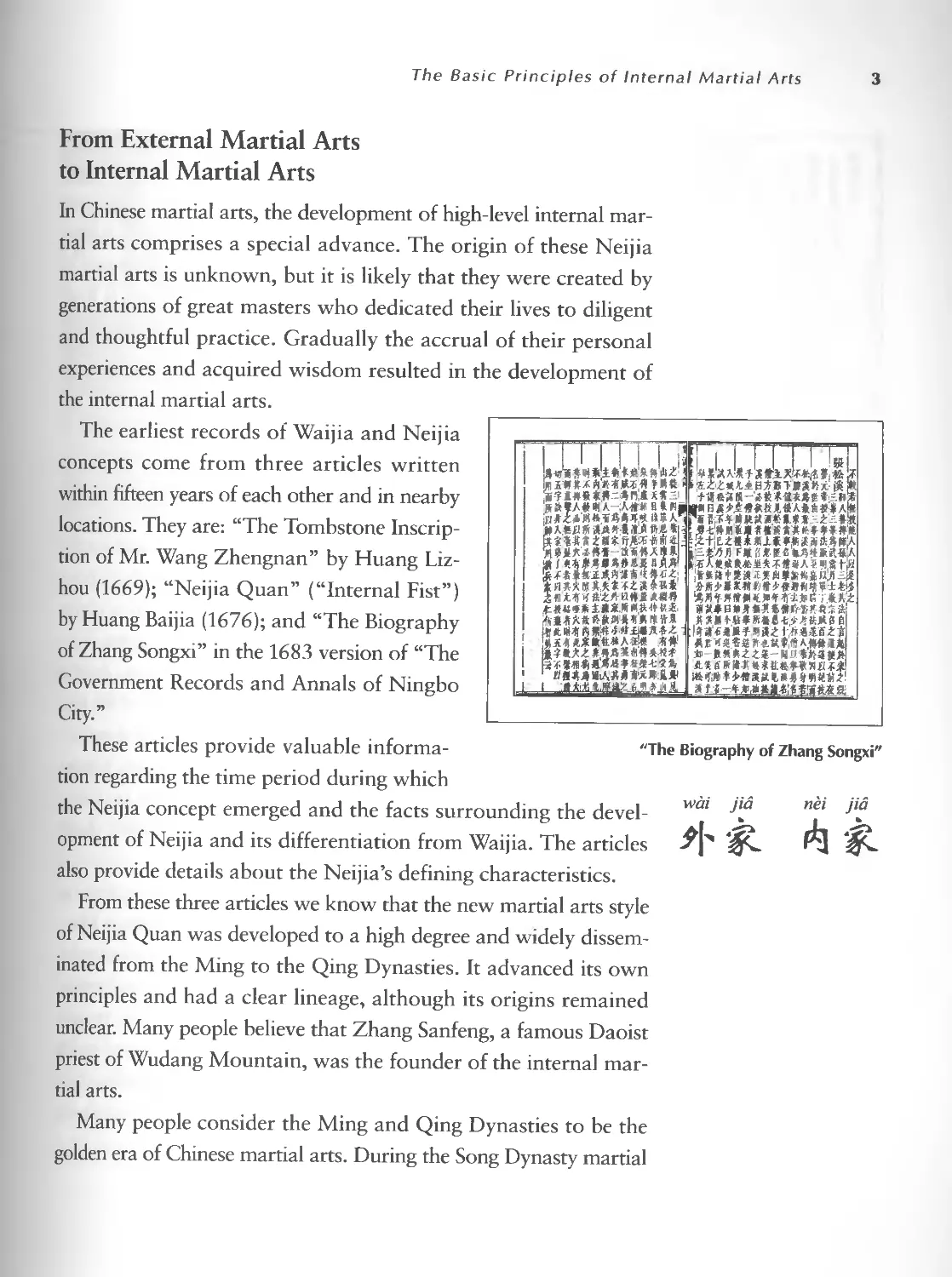
The earliest records of Waijia and Neijia
concepts come from three articles written
within fifteen years of each other and in nearby
locations. They are: "The Tombstone Inscrip-
tion of Mr. Wang Zhengnan" by Huang Liz-
hou (1669); "Neijia Quan" ("Internal Fist")
by Huang Baijia (1676); and "The Biography
of Zhang Songxi" in the 1683 version of "The
Government Records and Annals of Ningbo
City. »
These articles provide valuable informa-
tion regarding the time period during which
the Neijia concept emerged and the facts surrounding the devel-
opment of Neijia and its differentiation from Waijia. The articles
also provide details about the Neijia's defining characteristics.
From these three articles we know that the new martial arts style
of Neijia Quan was developed to a high degree and widely dissem-
inated from the Ming to the Qing Dynasties. It advanced its own
principles and had a clear lineage, although its origins remained
unclear. Many people believe that Zhang Sanfeng, a famous Daoist
priest of Wudang Mountain, was the founder of the internal mar-
tial arts.
Many people consider the Ming and Qing Dynasties to be the
golden era of Chinese martial arts. During the Song Dynasty martial
From External Martial Arts
to Internal Martial Arts
...., !iUI .hU.!ltlill.t!' _ 'f,lI\'ii\J!nt').x _ n ';:' i
!m1i"it-,I; 1\'of!_:jj,ft fU . ;zr:Z'Z.UI3:1iBrUh.
i11,,,,*,,=, ,,,. f;-,=-1 +"UIA-'.U *'U.H .1I
,U,A*II.A-:A-1U U ..,;- 1J.?ft:1t !U..'AU..A-
ifJk.t"'JI!!Io1i1\iII ,oJ. iUA i f -uJt ..t!u._'-.;t'.=-.!i
At!il j(JtJt,tiO 1u.t l " !-tIUlJi.uunu.",,,:1If.
i1utU'Ij"%fil'l :.t-tJl'..tUUU,lliUi1:.."t
JIl'Jl1C'.;I. .-:U*);IU .-'=-t",JI Fllu.u..A!taiHi,"
"11! ..'U.u UJ\AJiAltjt"4>j!".:r-1fiM. _1Iit
1 r.;''(':u;.-j£.JI. iI.,t t -li.t: :UiiUiUUniliJ1Jl::II-'=-il
fIU!!1;."Utit ;.1 . Hr..jf'I. 'iJMtlltA':U;
flH!lfll';tIl-flfU i1l-lll .II'f-J!lttllJf."'4f r'1;JJ1 'j".icJI,:Z
.4:-!t IU iU:.JJi _,jUt , iJlU 1J. .1. 1tJ'i'fi$., ;;; i/;'
.!*a ' A Wl .t . .e-t I!.aft
iM"AI;!f J:tt,Htil.JI.!.t, IU'u.-fu.tt,.fj ;Uj,t jI
'jii.U.tt'JI...,A. .t*, lun .tu..Ut',ff1A,U;U
*I1C.t.ftA. -.M .tt -NV. 3.
.., ..&.& *.$,.ttt. ..
tJl -'."'A...'jtJIII:i.AI i4iJiJilt iltiUUU'lllt1l.t.
. _ I j(t... -t' jl.tlli/J
"The Biography of Zhang Songxi"
woi jiii
I t.
nei jiii
rlJt.
4 COMBAT TECHNIQ..UES OF TAUI, "XINC;YJ, AND BAC;UA
I
;fftJ:.f:JfJ.;fyI-MPf'll
-fff=*,.¥ 4: &
:*111 111
, T4D:..tf. i*:
m.1W ]tm1
.ffl'.iJ! :i!1i1t
I *1>" 3!."''''
1;
"Ji Xiao Xin Shuff
arts spread quickly despite a lack of encouragement from the gov-
ernment and despite more than four hundred years of war and tur-
moil throughout the country. The Neijia style, as a new and unique
style, did not emerge unti] the Ming Dynasty, during which time
many different styles were developed and their skills elaborated in
great detail. Published in 1584, General Qi Jiguang's book Ji Xiao
Xin Shu-known in English as The New Book on Effective Mili-
tary Training Methods-is our primary source of information about
this period of high development in the Chinese martial arts. From it,
we know that many high-]evel skills and concepts were developed at
a rapid pace. Neijia, however, is not mentioned in General Qi
Jiguang's book. From this fact, we believe that Neijia was not a pop-
ular style at the time the book was written.
The Neijia Quan style was taught in the north, middle, and south-
east of China, but it was not popular and disappeared within about
a hundred years of its emergence. Although some masters claim
they still practice the original Neijia Quan style today, there is no
independent proof that their skills are the original ones. As the
original Neijia Quan skills were developed and practiced by dif-
ferent masters and groups in different areas, the name and princi-
ples of the style became diversified into three great styles, Xingyi
Quan, Taiji Quan, and Bagua Quan. These styles arose at differ-
ent times and embodied the concepts of the original Neijia Quan
in different ways.
In about 1892 in Beijing, a group of great masters representing
each of these styles convened under the leadership of Bagua Mas-
ter Cheng Tinghua. They decided to unite the three styles under
the renewed name Neijia or Neijia Quan. After some initial resist-
ance to this grouping of Neijia martial arts into one family, people
accepted the idea and it became popular. Today, this group of styles
has become widely recognized. Because the original Neijia style
was lost, the term "Neijia family" today usually includes its three
offspring: Taiji, Bagua, and Xingyi.
The Basic Principles of Internal Martial Arts 5
:
-
..
I
1 ,
'.-
....
t
\.\
-I I .
-
-
--
....
"--
r
.
-'
...-
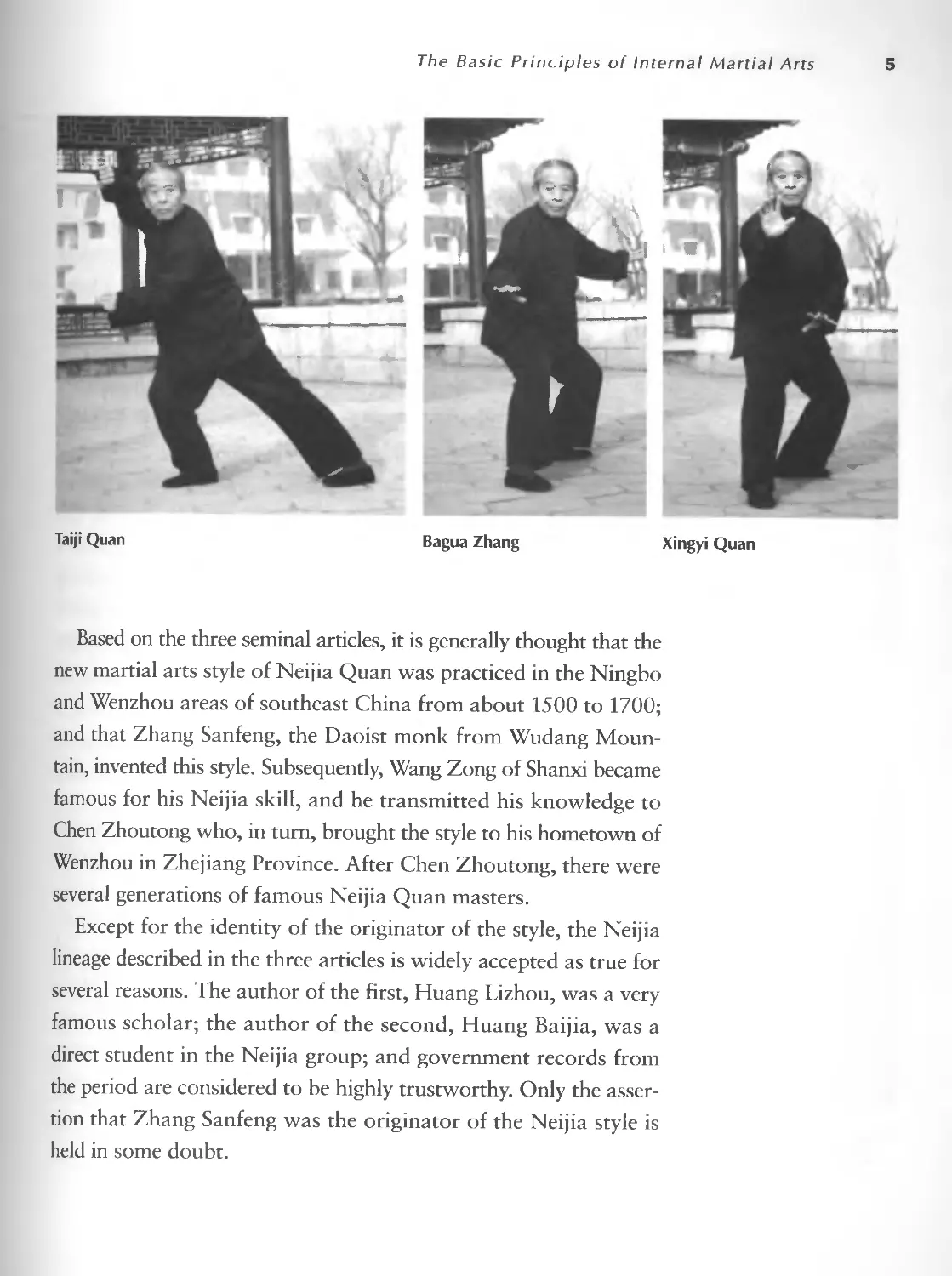
Taiji Quan
Bagua Zhang
Xingyi Quan
Based on the three seminal articles, it is generally thought that the
new martial arts style of Neijia Quan was practiced in the Ningbo
and Wenzhou areas of southeast China from about 1500 to 1700;
and that Zhang Sanfeng, the Daoist monk from Wudang Moun-
tain, invented this style. Subsequently, Wang Zong of Shanxi became
famous for his Neijia skill, and he transmitted his knowledge to
Chen Zhoutong who, in turn, brought the style to his hometown of
Wenzhou in Zhejiang Province. After Chen Zhoutong, there were
several generations of famous Neijia Quan masters.
Except for the identity of the originator of the style, the Neijia
lineage described in the three articles is widely accepted as true for
several reasons. The author of the first, Huang Lizhou, was a very
famous scholar; the author of the second, Huang Baijia, was a
direct student in the Neijia group; and government records from
the period are considered to be highly trustworthy. Only the asser-
tion that Zhang Sanfeng was the originator of the Neijia style is
held in some doubt.
6 COMBAT TECHNIQ..UES OF TAU!, "XINC;YI, AND BAC;UA
Most new ideas derive explicitly or implicitly from ideas that
have preceded them. When the Neijia style first appeared, Waijia
was the only other martial arts style in existence. It seems clear, then,
that Neijia evolved from Waijia. Over time, the variations that devel-
oped were sufficient to render Neijia a distinctive and independent
style. The highest level of Waijia practice was Shaolin, and Zhang
Sanfeng is known to have been an innovative student of Shaolin.
He may well have made the changes in Waijia practice and concepts
that provided the basis for the new style of Neijia. Although the
truth of this assumption may never be known, the story strongly
suggests that Neijia did, in fact, evolve from Waijia and eventually
became differentiated from it.
There is no historical evidence of a name for any martial arts
style before the Neijia style emerged. The term "Waijia" was coined
to differentiate the new Neijia style from the previously existing
Shaolin styles. The appearance of the two names marks the point
at which the new style had become sufficiently distinct in concept
and practice to warrant separate mention.
shew /in
The Main Differences between Waijia
and N eijia
Because Neijia developed from Waijia, the two styles have many
similarities, and some practitioners believe it is a mistake to differ-
entiate them. If we look deeply at their principles and skills, how-
ever, we find significant differences that provide a reasonable basis
for the distinction. Identifying the differences between Neijia and
Waijia reveals the overall process of development in the martial
arts and wilJ clarify and improve your practice. It can also help
practitioners understand Chinese martial arts more deeply, espe-
cially Neijia training. The intricate relationship between Waijia and
Neijia is the focus of the remaining sections of this chapter.
wU dong
The Basic Principles of Internal Martial Arts 7
Waijia is generally considered to be a Shaolin style because most
Waijia-style martial artists believe that their skills derive from those
practiced at the Shaolin Temple. Accordingly, these practitioners
hold the Shaolin style in great respect and seek to emulate it. The
foundational philosophy for Waijia is Buddhism.
Neijia is generally considered to be a
Wudang style because it is thought to derive
from the teachings of the Daoist monk Zhang
Sanfeng, who lived and practiced for many
years on Wudang Mountain, the most famous
Daoist holy place. While Buddhism provides
the philosophical underpinnings of Waijia,
Daoism is the philosophy that underlies Nei-
jia concepts and training.
Although Waijia and Neijia follow differ-
ent philosophies, there are many similarities
between the two families of martial arts. In
China, Zen Buddhism is the most popular
form of Buddhist practice, and Chinese Zen
practice has its origins at the Shaolin Tem-
ple. The form of Zen Buddhism practiced at
the Shaolin Temple, however, combines orig-
inal Buddhist concepts with concepts derived
from Oaoist philosophy. Thus, the founda-
tion of Waijia practice includes Daoist as well
as Buddhist elements.
Zhang Sanfeng belonged to one of the most
famous Daoist styles, known as Quan Zhan
or "Complete Truth." A central notion of
Quan Zhan is that the three main philoso-
phies of Daoism, Buddhism, and Confucian-
Philosophy: Buddhism or Taoism
,.
1.- "I.
"
.,t; <.
. , .
;,., .
110, : ' A
:...""
"
" ////J1I11\\\\\ '-._ ,.
'"
-.-
. y
. .'"
.... -...I
-..:
..... ..
,
a.
:,
,.
... .
- - - ..,.....
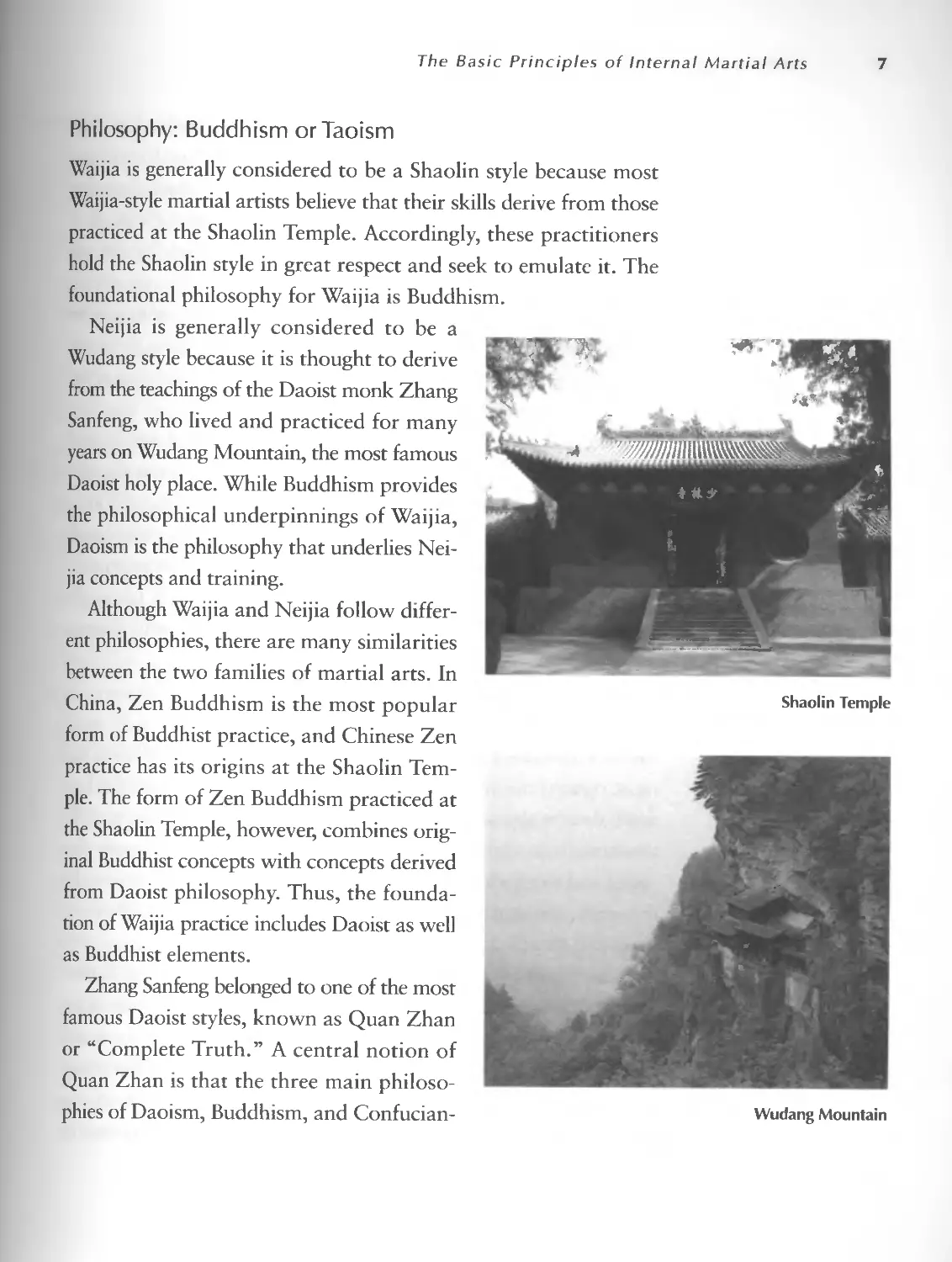
Shaolin Temple
,.
..
Wudang Mountain
8 COMBAT TECHNIQ..UES OF TAUI, "XINC;YI, AND BAC;UA
ism are based on similar principles, and so should be united in prac-
tice. Neijia principles include elements of Buddhism and Confucian-
ism as well as Daoism. Such admixtures of philosophical concepts
produced many of the similarities between Waijia and Neijia. It is
important to note that in this context, Buddhism and Daoism are
viewed as conceptual rather than religious systems. Although philos-
ophy and religions are closely intermingled in China, they can be
clearly separated in practice. Daoist principles, of course, form the
basis of the Daoist religion, but one can apply Daoist concepts with-
out subscribing to the religion itself.
Some styles have characteristics of hoth Waijia and Neijia, and
these styles call into question a sharp distinction between the two
groupings. Tongbei, for example, is usually considered a Waijia
style, but it is based on Daoist concepts. Xingyi, on the other hand,
was considered by some Xingyi masters from Shanxi to be an out-
side branch of the Shaolin style because its originator Ji Jike stud-
ied at the Shaolin Temple for about ten years before creating Xingyi.
Basic Principles:
To Increase or To Change Natural Ability
The goal of Waijia practice is to increase natural human ability, the
most basic elements of which are speed, force, and the natural or
normal responses we all have to incoming stimuli. All fighting skills
combine these abilities. Waijia practice is designed to increase the
speed and force of movement and to enhance natural reactions. In
this style, the criteria for improvement in skill level are relatively
clear and direct.
In Neijia practice, the more important goal is to change rather
than to increase natural abilities. Neijia practitioners want to be
quick and powerful but they seek to achieve these qualities by mod-
ifying their usual patterns of response. Although some Neijia train-
ing methods focus on increasing natural abilities, this goal is always
secondary in importance and desirability to the goal of changing
The Basic Principles of Internal Martial Arts 9
one's normal reactions. The Neijia criteria for improvement are
complex and subtle and often too difficult to understand purely by
logical analysis.
Again, though, the two approaches can be combined. In high-
level Waijia training, for example, emphasis is placed on changing
the natural responses; and in Neijia practice, improvement in speed,
force, and effectiveness occur through training. At the top level,
Waijia and Neijia are interrelated, as expressed in the injunction
to "practice internal and external together." Perhaps this counsel
provided the impetus for the development of the Neijia Quan arts
in that they incorporate internal training from the outset rather
than reserve it until students have attained considerable skiJl. In a
sense, Waijia and Neijia can be seen as selecting different training
methods to reach the same end.
Because Waijia focuses first on simply increasing natural
responses, it is easier to learn than Neijia at the beginning of one's
training. The fact that Neijia training includes internal practice
from the outset, however, gives Neijia students an advantage in
progressing from intermediate to high levels of skill. As a result,
many Waijia practitioners succeed in achieving middle-level skills,
but few advance to a high level. Many Neijia students, on the other
hand, fail to reach middle-level skill, but those who achieve mid-
dle-level skills do have a good chance to reach a higher level. This
may explain why famous masters from Neijia groups are more
numerous than those from Waijia groups, despite the greater num-
ber of Waijia practitioners during the past one hundred years of
Chinese martial arts history.
In Waijia practice, being in good physical condition provides
beginners with more obvious advantage than it does in Neijia prac-
tice because Waijia training uses natural abilities. In Neijia practice,
natural ability can be a disadvantage, especially for beginners who
are used to relying on superior physical strength and agility. Such
reliance tends to make students reluctant to forego their habitual
10 COMBAT TECHNIQ..UES OF TAUI, "XINC;YI, AND BAC;UA
physical responses in order to change these reactions so that they
become more internalJy generated.
When students want to progress from middle-level to high-level
skill, the most important aspect of their practice is internal training.
This is true for Waijia as well as Neijia practitioners. Most people
who have trained for a long time in Waijia will find internal train-
ing difficult because it requires an approach that is in many ways
counter to the direct use of natural ability. For most middle-level
Neijia students, the transition will not be as difficult because inter-
nal training, having been taught from the outset, will already be a
familiar aspect of their practice.
Many Waijia practitioners who want to progress to high-level
skills learn Neijia when they get older. They know how such progress
should feel and realize that Waijia training alone may limit their
advancement, so they incorporate Neijia practices into their train-
ing. Many Neijia practitioners decide to include some Waijia skills
even at the beginning of their training because they realize that Nei-
jia skills cannot initially be effectively used for fighting.
The different training methods of Waijia and Neijia may be seen
as two different roads leading to the top of a mountain. One road
is easier in the beginning but more difficult later on. The other is
more difficult at the beginning but easier later on. If you reach the
top of the mountain, the road you chose will not matter, but before
you set out on the road, it is very important to choose the path that
is more suitable for you. There are, of course, many factors that
will influence your decision, but no matter what your choice, there
are two things you should remember. You must work hard, and
you must find a good teacher so that you will not get lost on the
way. Without diligent practice and expert guidance, you will have
no chance to reach the mountaintop.
The Basic Principles of Internal Martial Arts 11
Training Methods: From Outside to Inside
or from Inside to Outside
It is a mistake to think that Waijia students practice only external
skills and Neijia students, only internal. All Waijia and Neijia prac-
titioners must develop both. The only difference between the two
groups of practitioners is in the training methods they use. It is said
that Waijia is practiced from the outside (wai) to the inside (nei),
and Neijia from the inside to outside.
In Waijia practice the physical responses of the body are trained
first, and no emphasis is placed on internal or "inside" training.
The initial goal is to improve the speed, agility, and force of the
student's physical abilities. Only gradually is training for the inter-
nal components of shen, yi, and qi introduced and practiced.
In Neijia practice, the basic training is similar to that in Waijia,
but an emphasis on inside training is introduced from the very
beginning. As in Waijia, Neijia training improves physical abilities
but it does so more gradually. Neijia practitioners hold to the view
that increases in external ability without improvement in the inter-
nal components cannot result in high-level mastery. This difference
in the Waijia and Neijia approaches creates clear and detailed dif-
ferences in the two kinds of training methods. Understanding these
differences will yield a deeper appreciation of each style.
A common misunderstanding is that only Neijia practitioners
train qi. Perhaps this perception develops from the observation that
Waijia students engage in more overt physical activity in their prac-
tice while Neijia students engage in more internal practice. This
perception leads many observers to the mistaken belief that Neijia
is a higher-level training than Waijia.
Basic Skills: Using External Jin or Internal }in
fin (or jing), often translated as "internal force," is more accurately
translated as "trained force." It is the most important training com-
9h
12 COMBAT TECHNIQ..UES OF TAUI, "XINC;YI, AND BAC;UA
nei jin
ponent in Chinese martial arts. Jin is not the natural kind of force
used in ordinary circumstances by people untrained in the martial
arts-say, in lifting a bucket or opening a door. Instead, jin describes
the use of force developed through specialized training. There are
many different jin in Neijia Quan. Some practitioners even believe
that the core of internal martial arts skills is the practice and devel-
opment of different jin. Basically all of the kinds of trained force
can be separated into two groups. One is the external jin calJed
"wai jin," and the other is the internal jin called "nei jin." Each is
acquired through a distinctive method of training, and each has its
own applications. When jin is applied, there are two phases. One
is called "xu jin" -store energy. The process of xu jin prepares all
of the related muscles to generate or accumulate power. The other
phase is calJed "fa jin"-release force-which means all related
muscles start to work to release the energy. The subject of jin-
store and release-is actually quite complex since there are many
possibilities in the manner in which force may be stored and then
released according to particular situations that can arise in com-
bat. Understanding this complexity is the substance of training jin.
For the sake of simplicity, we refer only to "jin," with the under-
standing that "jin" always comprises both "store" and "release."
In discussing jin, therefore, usually we refer to jin as simply mean-
ing "to store and release energy in different ways."
External jin is conspicuous when released and is exemplified by
a hard punch. Even though an external or wai jin punch is hard,
it must also be relaxed and integrated so that it can be quick and
powerful. These qualities typify all wai jin applications and make
them highly effective for sudden, vigorous attacks. Their effective-
ness, however, can be compromised for several reasons. First, wai
jin attacks are clearly telegraphed to the opponent. They are also of
short duration and difficult to change once begun, and their release
and restore phases occur separately rather than in combination.
Unlike external jin, internal jin is inconspicuous when released.
wai jin
'I JiJ
rlJ JiJ
xu jin
-t JiJ
jQ jin
iA.JiJ
The Basic Principles of Internal Martial Arts 13
Peng jin, the ward-off application of nei jin in Taiji Quan, provides
a good example of this characteristic. Nei jin applications are typ-
ically concealed, long in duration and changeable even in mid-
course. In nei jin attacks, the release and restore phases are
combined. While these qualities make nei jin especially useful for
control skills, they are not as effective for intense attacks. Because
wai jin and nei jin have different advantages and disadvantages,
they should be used in different ways and for different purposes.
In Waijia, external jin is practiced from the outset of training
and remains the primary focus throughout. Internal jin is only an
ancillary part of wai jin practice. In Neijia, internal jin is a primary
focus from the beginning of training, and external jin is ancillary.
Because wai jin is easier to understand and learn than nei jin, Wai-
jia practitioners may master wai jin skills and still be unable to exe-
cute nei jin skills well. For Neijia practitioners, familiar with nei
jin skills from the start of their practice, wai jin skills are relatively
easy to understand and acquire.
Fighting Strategies: To Initiate an Attack
arTa Defend Using Quietness
Waijia's central fighting principle is that you are the master of the
fight. Your goal is to take control by making the initial attack and
to maintain control throughout. The design and execution of all
your moves and countermoves are determined and practiced as
part of your training. The design of your attack and defense skills
is defined by what you imagine your opponent will do. You fol-
low your designed sequence of skills until you have thoroughly
mastered it. Then during the fight, you have only to execute the
much-practiced sequence in order to gain control and maintain the
advantage. This strategy is called "fighting by initiating the attack."
The central Neijia fighting principle holds that you should remain
alertly quiet as the fight begins and let your opponent take initial
control. Your goal is to follow your opponent, and as soon as you
14 COMBAT TECHNIQ..UES OF TAljl, "XI NC;YI, AND BAC;UA
sense an opportunity, you take control. You do not design or repet-
itively practice a sequence of moves but rather learn about your
opponent through actual contact with him. You keep changing
your responses in order to follow whatever your opponent does at
each moment. This strategy is called "using quietness to defend"
or "yielding yourself to follow your opponent."
The Waijia fighting principle is direct and clear-cut: you must
control the fight from the outset and never yield control to your
opponent. This strategy is thought to offer the best chance to prevail.
The Neijia fighting principle, by contrast, is indirect and less
obvious in practice. It holds that because it is not possible to main-
tain total control at all times, you should seek to control your oppo-
nent by understanding his movements and intentions. You can
accomplish this goal by remaining relaxed and following his attack
with sensitivity and patience. Do not worry if your opponent is in
control. In asserting control, he is also giving you a chance to know
and eventually to control him. According to the Neijia fighting
principle, this is the safest and most efficient way to win a fight.
Origin of the Terms "Waijia" and "Neijia"
When a person becomes a Buddhist monk in China, it is said that
he goes "outside" his family. Because the Shaolin-style martial arts
originated in a Buddhist temple, follow Buddhist philosophy, and
are practiced by Buddhist monks, they are referred to as outside
(wai) the family (jia). Taiji, Xingyi, and Bagua, on the other hand,
were taught to family members of the Emperors in the palace in
Beijing and were disseminated from that point of origin. Because
the Emperors' palace was known as Da Nei or "the great inside,"
these styles are referred to as inside (nei) the family (jia).
Although the distinctions between Waijia and Neijia are impor-
tant and, if appreciated, can increase your understanding of mar-
tial arts practice, these two great groupings have always been bound
together by countless ties. They did not develop in total geograph-
The Basic Principles of Internal Martial Arts 15
ical isolation, and they shared mutual influences as each gained in
reputation and adherents. The practitioners of both groups
exchanged their knowledge and experience on a regular basis.
Although the two are clearly different in terms of the underlying
principles from which they derive, they are not so clearly different
in terms of how they are practiced. Some styles combine elements
of both Waijia and Neijia, and even within one style many features
may overlap. It is always said that Waijia and Neijia are both dif-
ferent and similar.
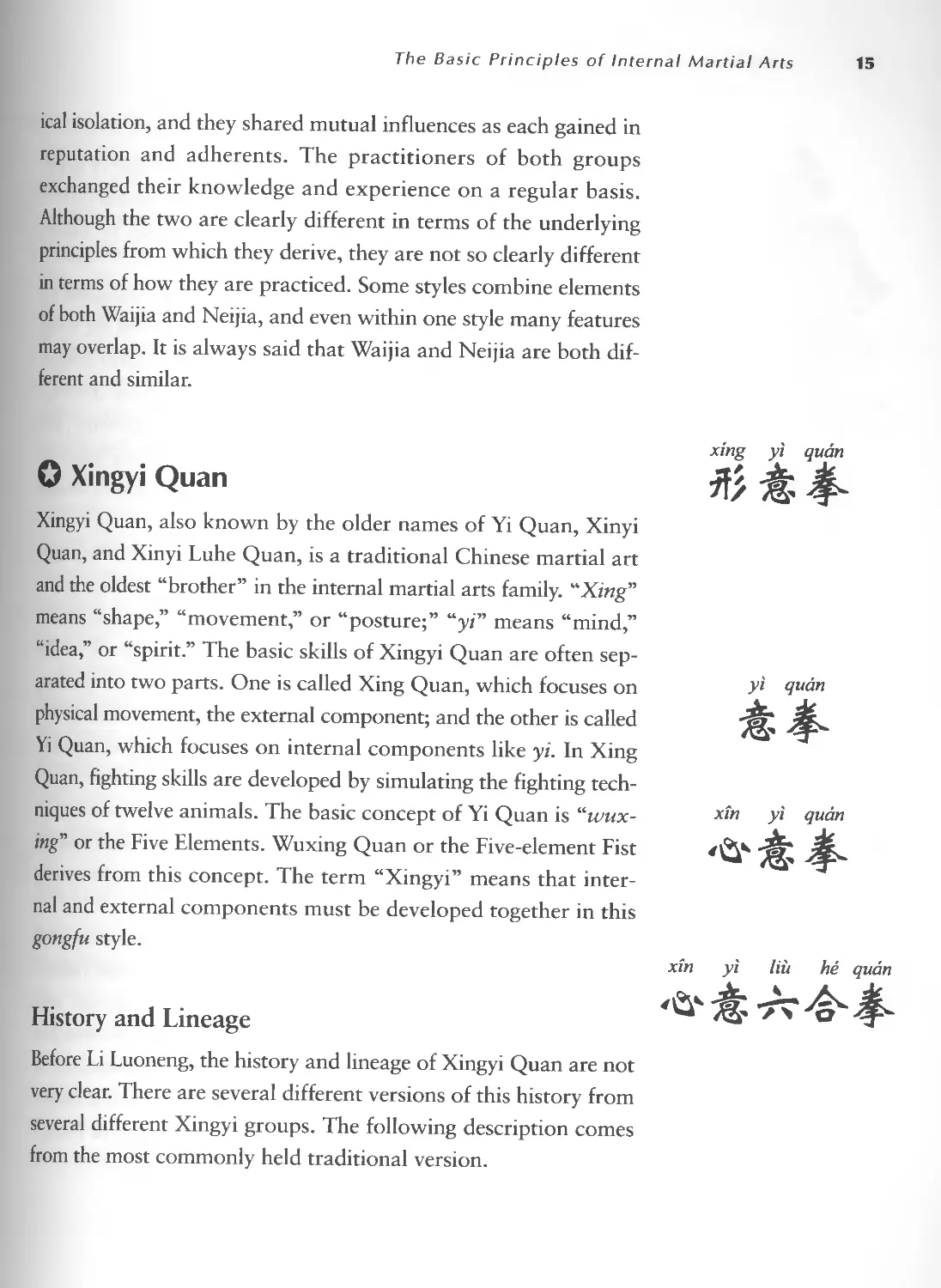
o Xingyi Quan
Xingyi Quan, also known by the older names of Yi Quan, Xinyi
Quan, and Xinyi Luhe Quan, is a traditional Chinese martial art
and the oldest "brother" in the internal martial arts family. "Xing"
means "shape," "movement," or "posture;" "yi" means "mind,"
"idea," or "spirit." The basic skills of Xingyi Quan are often sep-
arated into two parts. One is called Xing Quan, which focuses on
physical movement, the external component; and the other is caned
Yi Quan, which focuses on internal components like yi. In Xing
Quan, fighting skills are developed by simulating the fighting tech-
niques of twelve animals. The basic concept of Yi Quan is "wux-
ing" or the Five Elements. Wuxing Quan or the Five-element Fist
derives from this concept. The term "Xingyi" means that inter-
nal and external components must be developed together in this
gongfu style.
History and Lineage
Before Li Luoneng, the history and lineage of Xingyi Quan are not
very clear. There are several different versions of this history from
several different Xingyi groups. The following description comes
from the most commonly held traditional version.
xing yi quim
1f -t
yi quem
-t
xin yi quim
# , -t
xin yi liu he quim
#' ' .
""" .. " 0
16 COMBAT TECHNIQ..UES OF TAUI, "XINC;YI, AND BAC;UA
!'
fJ
..
'"
J
, . '" .. ., -.'1
'I
,-' ..
General Yue Fei
From Vue Fei to Ji Jike
The identity of the originator of Xingyi Quan is the subject of much
debate. According to the traditional story, General Yue Fei (1103-
1141), one of China's greatest heroes, was the founder of Xingyi
Quan.
When Yue was young, Jin Dynasty warriors from the north of
China invaded central China's Song Dynasty. Yue joined the Song
army to fight against the Jin invaders. Because of his great skill in
spear, arrow, and in military strategy and tactics, he rose through
the ranks quickly to become a general. Always outnumbered, his
forces fought about hundred and twenty battles and never lost. His
enemies said of him, "It is easier to shake a mountain than to shake
Yue's army."
During this period there was widespread governmental corrup-
tion, and Yue was disliked by the Emperor. After one of Yue's great-
est victories on the battlefield, the Emperor had him killed, an act
that was widely recognized as a great injustice. The Emperor's view
notwithstanding, Yue's deeds and talents have always been held in
high esteem, and his name is invoked in many martial arts skills.
About five hundred years after Yue's death, a young martial
artist named Ji Jike visited the Xongju Cave on Zhongnen Moun-
tain, where he claimed to have met an eccentric person who gave
him a martial arts book written by General Yue Fei. Ji said that he
followed the teachings described in the book and ascribed the source
of Xingyi Quan to Yue.
Despite Ji's assertion, most people did not believe his story and
considered Ji himself to be the originator of Xingyi Quan. (Many
believe that it was called Xinyi Quan at that time.) This view was
later promoted by the writings of Dai Longbang, who was Ji's
grandstudent. Today there is still doubt about this question, but it
is generally agreed that Ji Jike was the first person to teach Xingyi
Quan. For this reason, he is considered the first person in the Xingyi
generation.
The Basic Principles of Internal Martial Arts 17
Master Ji, whose official first name is Jike and whose private
first name is Longfeng, was born in 1642 in Zun Village, Pudong
County, Shanxi Province. He liked martial arts and is said to have
studied at the Shaolin Temple for about ten years when he was
young. He became very famous as an adult for his spear skills, and
Xingyi Quan is thought by many people to have developed from
Ji's spear skills.
During Ji's lifetime, China was controlled by the Qing Dynasty,
which was originally composed of a small group of Manchurians
from northern China who waged war for many years against Chi-
nese forces. In many ways, the military situation faced by Ji was
similar to that faced by General Yue. In both historical episodes,
the Chinese people fought against invading forces; and like Yue
before him, Ji became a leader of the resistance. Many people believe
that because of Yue's place in history as a renowned general, Ji
invoked Yue's name as founder of Xingyi Quan when, in fact, it
was Ji who created this fighting style.
Not much is known about Ji's life and teachings. His most famous
disciple was Cao Jiwu, about whom we know only three things.
He was a disciple of Master Ji; he became a general in Shanxi
Province after winning first place at the county, provincial, and
national martial arts examinations in 1693; and he had two famous
disciples, Ma Xueli and Dai Longbang.
Ma Xueli and Henan Style
Ma Xueli was born in Nanyang County, Henan Province. His place
in the Xingyi lineage is somewhat obscure. Most people believe
that he was Cao Jiwu's disciple because Dai Longbang mentioned
in his seminal article that he and Ma Xueli were gongfu brothers.
Others believe that Ma was Ji Jike's disciple because according to
a traditional story he had studied Xingyi Quan with Ji. If this story
is true, Ji must have been very old when Ma studied with him. The
most probable case, which accords with Chinese tradition, is that
18 COMBAT TECHNIQ..UES OF TAIjI, "XINC;YI, AND BAC;UA
Ji taught Ma but listed Ma's name under Cao's generation. Ma,
then, was officially Cao's disciple although he studied with Mas-
ter Ji.
Ma Xueli liked martial arts so much that when he heard about
Master Ji's excellent gongfu, he went to Ji's home hoping to become
a student. He knew, though, that Ji preferred to keep his techniques
secret, so Ma did not say he wanted to study martial arts when he
went to Ji's home. He asked only to be hired as an employee of Ji's
family.
For about three years, Ma stole glances as Ji practiced, and then
he went off by himself to practice what he had seen. When Ma
thought it was time to leave the employ of Ji's family, he bid Ji
good-bye and told him that he had been secretly studying Ji's tech-
niques for the three years he had been in the household. Ji was so
impressed with Ma's commitment that he said: "If you can stay
more time, I will teach you all I know."
Ma stayed with Ji for more than three additional years and stud-
ied diligently. Ji explained everything in complete detail. When Ma
understood all that Ji had to teach, he returned home to Henan
Province, where he taught Xingyi Quan and soon became famous
for his excellent gongfu.
Ma continued to use the old name of Xinyi Luhe Quan instead
of Xingyi Quan, and his style became known as Henan style, or
southern style. In the tradition of Chinese martial practice, chal-
lenges were often given in order to test the effectiveness of a partic-
ular method, style, or system. Most often in these challenges, the
fighting was hard, but it was typically expected that participants
would emerge from these challenges perhaps injured but alive. With
this particular style, hard, powerful strikes were emphasized, and
the masters in some of the Xinyi Luhe Quan groups felt it neces-
sary to provide the ultimate illustration of their power, often killing
their opponents. Not surprisingly, these masters would not often
have the opportunity to teach their high-level skills, so their gongfu
The Basic Principles of Internal Martial Arts 19
never became popularized. It was not until 1928 when Jiang
Rongjiao from the northern Xingyi group met Bao Xianting, a
famous master from the Henan Xingyi group, that masters in the
north even became aware of the southern style.
Ma Xueli had only two excellent disciples: Ma Sanyuan and
Zhang Zhicheng. Ma Sanyuan executed all Xingyi applications
very vigorously. He beat and killed several masters in fights and,
as might be expected, he died young, leaving no good students to
carryon his teachings. Zhang Zhicheng was good but more con-
servative than Ma Sanyuan in his fighting style. The only student to
whom Zhang taught high-level skills was his nephew Li Zheng,
who was also very conservative. Li Zheng agreed to teach only his
friend Zhang Ju and began instructing Zhang only after making
him wait ten years.
Zhang, in turn, taught his son Laoge, who became highly skilled
and at fifteen had already injured and killed several masters. Like
Ma Sanyuan, Laoge died young. Zhang's nephew, Mai Zhuangtu,
who studied with his uncle, was able to pass on Zhang's techniques.
Mai had many students but only An Daqing excelled. Of An's many
good students, Bao Xianting was the best. Bao taught many mar-
tial artists, some of whom are still alive today. He also published
several books that popularized the Henan style.
Oai Longbang and Old Shanxi Style
It is said that Oai Longbang was born in approximately 1732 in
Qi County, Shanxi Province. When he was young, he accompanied
his father to Anhui Province on a business trip. During that sojourn,
he began his study of Xingyi Quan with Master Cao Jiwu and even-
tually became Cao's disciple in Qiupu County.
Dai practiced very hard and thought deeply about Xingyi Quan.
It is said that when Dai was studying with Cao, Xingyi Quan included
only ten animal skills. Through careful observation, Dai invented
two new animal skills: tuo or alligator, and tai, which has been
20 COMBAT TECHNIQ..UES OF TAUI, "XINC;YI, AND BAC;UA
variously interpreted as a large fish, a large bird like an ostrich, or
a wild horse. Since Dai's time, Xingyi Quan has included twelve ani-
mal skills.
Dai's gongfu was exceptional and he became famous. His two
sons, Dai Wenzun and Dai Wenxiong, also developed high-level
gongfu as a result of studying with their father.
Dai eventually opened a very successful security company, but
after he retired and went back to his hometown, a group of thieves
who had tried to rob Dai's business many years earlier and had
been caught and beaten by Dai's security forces attacked Dai's fam-
ily again. They sought revenge against Dai's family because several
members of their gang had been killed by Dai's security guards in
the earlier robbery attempt. Dai's oldest son was murdered by the
thieves in the revenge attack. After this loss, Dai's physical and
emotional health deteriorated and he soon passed away. During
his last days, Dai told his second son Dai Wenxiong that their fam-
ily had suffered great troubles because of martial arts, and that if Dai
Wenxiong taught at all, he should teach martial arts only to fam-
ily members.
After his father's death, Dai Wenxiong moved to Xiaohan Village
outside Qi County and became a hermit. He taught Xingyi Quan
only to his son Dai Wuchang, his daughter Dai Huanu, his nephew
Dai Liangdong, and his cousin Guo Weihan. Because only a few
people learned and practiced Dai Longbang's Shanxi-style Xingyi,
it is often referred to as Dai family Xingyi Quan.
Li Luoneng, the Greatest Xingyi Quan Master
Li Luoneng was born in 1802 in Douwang Zhuang Village, Yangwo
Xiang, Shen County, Hebei Province. His official first name was
Feiyu, and his private first name was Nengran. His nickname was
Luoneng, the original meaning of which was "old farmer." He is
known popularly by his nickname rather than by his real name.
Li Luoneng, as the nickname indicates, was a farmer. He liked
The Basic Principles of Internal Martial Arts 21
martial arts and studied hard-style martial arts in his hometown.
When he heard about Master Dai Longbang's excellent Xingyi tech-
nique, he traveled to Shanxi Province in the hope of studying with
the Master. The year was 1839, and Li was thirty-seven years old.
By the time Li arrived in Qi County, Master Dai Longbang had
passed away. Li asked to study with Dai's son Dai Wenxiong but Dai
Wenxiong, following his father's last wish, was no longer teach-
ing, certainly not anyone outside his family. Although Dai rejected
Li's request, Dai's cousin Guo Weihan liked Li, and he agreed to
teach Li the family style.
Some people believe that it was Guo who changed the name of
the style from Xinyi Quan to Xingyi Quan during the time he taught
Li. In the old meaning of "Xinyi," "xin" means "heart," and "yi"
means "mind." Both the heart and the mind are considered to be
internal. With the new name, however, "xing" means "shape" or
"movement" (and "yi" still means "mind"). Shape and movement
are considered to be external. So the new term, "Xingyi," is thought
to include both internal and external aspects. People believe that
the new name conveys a more accurate sense of the system. Li prac-
ticed very hard and after some time, Guo suggested that Li visit
Dai Wenxiong again. This time Dai was moved by Li's sincere desire
to study with him and accepted Li as a disciple. Li studied in Dai's
home for about ten years.
For a long time it was thought that Li studied directly with Dai
Longbang, but by checking dates, we find that this is almost impos-
sible. More likely, Dai Wen xiong put Li under his father's name
because, according to Chinese tradition, he had to obey his father's
injunction not to teach and so would not want to be officially listed
as Li's teacher. This is, of course, only conjecture; the truth of what
really happened will probably never be known.
After studying Xingyi Quan from Dai's family for more than ten
years, Li went to Taigu County of Shanxi Province in 1849 and
became a security guard for a very rich, famous family headed by
22 COMBAT TECHNIQ..UES OF TAUI, "XINC;YI, AND BAC;UA
Meng Beru. Li began teaching Xingyi Quan during this time and
accepted his first disciple, Che Yizhai, in 1856. In 1867, Li returned
to his hometown and became a professional martial arts master.
He did a lot of research and systematized Xingyi Quan principles
clearly and completely. He also developed an excellent training sys-
tem and had many famous disciples. Through his efforts and those
of his disciples, Xingyi Quan became popular and very highly
regarded. Because he taught in both Shanxi and Hebei Provinces
and because the two groups of disciples practiced in slightly dif-
ferent ways, a distinction was made between Shanxi and Hebei
styles. Eventually, Hebei style became more widespread and popu-
lar than all other styles of Xingyi Quan.
Although there are not many stories about Master Li, he is
regarded as the greatest master in Xingyi Quan history. One day in
1890, he sat down on a chair, smiled, and passed away.
)
-
Che Yizhai, Song Shirong,
and the New Shanxi Style
Che Yizhai, whose private first name was Yonghong, was born in
1833 in Taoyuan Bao, Shanxi Province. When he was young, he
was a wagon driver in Meng Beru's home and studied Xingyi
Quan with Master Li Luoneng. In time, he became Master Li's first
disciple.
Che practiced very hard and so impressed Li with his dedica-
tion and skill that in 1863 Li introduced Che to Dai Wenxiong for
advanced study. Dai came to like Che, too, and gave him Dai Long-
bang's Xingyi Quan book, "The Edited Version of the Xinyi Quan
Guide." This book, never published, existed only in hand-written
form.
By the time Che returned to his village, his gongfu was very good
and he quite quickly gained renown. His disciples included Li
Fuzhen, Lu XieJong, Wang Fenggao, Meng Xide, Fan Yongqing,
Guo Yushen, Bu Xiekuan, and Liu Jian, all of whom also became
--
Che Yizhai
The Basic Principles of Internal Martial Arts 23
famous. Che and his students created many new forms, and today
his group practices more forms than any other group. Che died in
1914.
Song Shirong, whose private first name was Yiezhai, was born in
Beijing in 1849. When he was young, he moved to Taiguo County
of Shanxi Province and became a craftsman who repaired clocks
and watches. He and his brother, Song Shide, studied together with
Master Li and both became very good martial artists. They were
known as "double Song" until Song Shide became a monk and
ended his study of Xingyi Quan. Song Shirong went on to become
master to many famous disciples, including Ran Erqi, Jia Wanguo,
and Song Hucan and Song Tielin, who became known as "young
double Song." Song Shirong did a lot of research on both Xingyi
Quan and internal Qigong practice and left a wealth of valuable
knowledge to subsequent generations. He died in 1927.
After Master Li returned to Hebei Province, Che Yizhai and
Song Shirong continued teaching Xingyi Quan in Shanxi Province.
The style they taught became known as the new Shanxi style to
distinguish it from the Dai family's old Shanxi style. The new Shanxi
style became the more popular of the two because of the Dai fam-
ily's small size and their reluctance to train new students. Today
when people speak of the Shanxi style, they are usually referring
to the new Shanxi style.
Later Li Luoneng's students in Hebei developed Xingyi Quan
Hebei style. The new Shanxi style and the Hebei style are closely
related because both derived from Li Luoneng's teaching. Masters
in both groups frequently exchanged experiences. The most impor-
tant difference between the two styles before 1900 was that the
Hebei style included only ten animal skiJIs. In 1900, Li Cunyi went
from Hebei to Taiguo to visit his gongfu uncle Che Yizhai. During
that visit, Che taught Li the two additional animal skills that Dai
Longbang had originated. Currently, martial artists from both styles
practice all twelve animal skiJIs.
'"
,
Song Shirong
24 COMBAT TECHNIQ..UES OF TAUI, "XINC;YI, AND BAC;UA
Xingyi Quan is sometimes said to include two styles, northern
and southern. The northern style is made up of the old and new
Shanxi styles and the Hebei style. The southern style refers to the
Henan style. (See "Ma Xueli and Henan Style," above.)
Guo Yunshen, Liu Qilan, and Hebei Style
On his return to Hebei Province, Master Li Luoneng taught Xingyi
Quan to numerous students, some of whom became very famous.
These included Guo Yunshen, Liu Qilan, Liu Xiaolan, Li ]ingzhai,
Liu Yuanheng, Zhang Shude, Bai Xiyuan, He Yongheng, Li
Guangheng, Li Taihe, and Liu Zhihe. The skilJs of this group of stu-
dents further enhanced the reputation of Hebei-style Xingyi Quan.
Guo Yunshen and Liu Qilan were the best of Master Li's Hebei dis-
ciples, and most Hebei-style Xingyi Quan practitioners today are
under their lineage.
Guo and Liu were close friends who studied and traveled together
to demonstrate their gongfu and test their skilJs against many com-
petitors. Guo won great renown for his fighting skill. It was said
that no one in the world could defeat his half-step beng quan, a
straight powerful center punch, commonly translated to "smash-
ing, erupting, or explosive fist." Liu, also a great Xingyi Quan Mas-
ter, was highly educated and used his knowledge to develop a
notably efficient training method. He was highly regarded as a
teacher and trained many famous disciples. Guo and Liu brought
Xingyi Quan to Beijing, Tianjin, and other big cities and greatly
increased its popularity and fame.
Guo Yunshen and Liu Qilan won all their fights until they met
Master Dong Haichuan, the founder of Bagua Zhang. When Guo
and Liu visited Dong, Guo and Dong experimented with their respec-
tive techniques, and finally Guo concluded that Dong's skill was
greater than his. The three masters discussed the principles underly-
ing their techniques and discovered that Xingyi and Bagua were
very similar in principle but different in their training methods. Guo,
The Basic Principles of Internal Martial Arts 25
Liu, and Dong became close friends and then blood brothers. They
combined their styles, and soon Xingyi and Bagua came to be thought
of as members of the same family.
Guo Yunshen had relatively few students, of whom only Li Kue-
yuan, Xu Zhanao, Qian Yantang, and Wang Xiangyuan became
well known. Liu Qilan, on the other hand, had many famous stu-
dents, including Li Cunyi, Zhang Zhaodong, Wang Fuyuan, Liu
Wenhua, Liu Dekuan, Zhou Mingtai, Gang Chengxin, Tian Jingjie,
and Liu Fengchuan. Because of this disparity, Liu's influence in the
history of Xingyi Quan is considered greater than Guo's.
Later Generations and My Personal
Xingyi Quan Lineage
Through the teachings of Li Luoneng and his students, Xingyi Quan
became very famous in Hebei and Shanxi Provinces and then spread
to northern China. By the third and fourth generations, masters
under Li's name made Xingyi Quan famous throughout China and
overseas.
In the Shanxi style, the most famous teachers were Che Yizhai's
students Li Fuzhen and Bu Xuekuan, and Song Shirong's student
Song Tielin. These masters devoted their lives to teaching Xingyi
Quan.
f
,
"
\
'-J'
-
-11
. .
. .
"
. j
-, :
"
Li Fuzhen
Bu Xuekuan
Song Tielin
26 COMBAT TECHNIQ..UES OF TAUI, "XINC;YI, AND BAC;UA
,
"
Li Cunyi
-
'"
.
..
Zhang Zhaodong
-,.
..
'.
Han Muxia
"
In the Hebei style, the most famous masters were Li Cunyi and
Zhang Zhaodong. Li and Zhang were very close friends, and each
had studied Xingyi Quan with Liu Qilan. Li's gongfu was excel-
lent and his reputation great. It was Li who expanded the Hebei
style from ten to twelve animal forms after three trips to Shanxi
Province to visit his gongfu uncle Che Yizhai, from whom he learned
tuo and tai and other skills like za shi chui. Through his efforts,
the Hebei style became a complete system, and he is duly credited
with making a great contribution to the development of this style.
Li later became President of the Chinese Martial Artists Associa-
tion, one of the most famous martial arts organizations at the begin-
ning of the twentieth century.
Zhang Zhaodong, also known by the name Zhang Zhankui,
lived next door to Liu QiJan. When he was ten years old, he started
training with Liu. By fourteen, he was accompanying Liu on trav-
els to compete with other martial artists. Zhang's fighting skill
became great and widely respected. He was known especially for the
quickness of his movements, which earned him the nickname Shan
Dian Shou or Lightning Hands. He became a policeman in Tian-
jin and was famous for subduing armed gang members with his
bare hands.
In the fourth generation under Li Luoneng's name, the most
famous Xingyi Quan masters were Han Muxia, Shang Yunxiang,
and Sun Lutang.
Han Muxia was the most outstanding Xingyi Quan master in
his generation. He had already gained fame by the time he was fif-
teen. He studied a variety of martial art styles with nine different
masters, one of whom was Zhang Zhaodong, who taught him
Xingyi Quan and Bagua Zhang. Of Han's many fights, one of the
most famous was against a powerful Russian opponent in 1918 in
Beijing. Han won eleven gold medals for his performance in this
fight. For many years, Han directed The Professional Martial Arts
Academy, a very famous martial arts school in Tianjin.
The Basic Principles of Internal Martial Arts 27
+
</,,'ng zhl c/linR
i-.t.
/lzII,ng
.t.1t
doilllgju
i-t
mdi zJu.ang r.
;f!1II
+
&I rIcIqln8
A.6..
+
blfo.ilitrln8
tJ.Jt
yutfa pingjO
!"t (...)
..
- -
- -
jf jl U IOngfiing
.. f;j; --r (I!i--+ )
.
.....
....
....
..
m6.ui /I
J I" L
+
clio)l wO
tlllJ\.
+
..
dai lOng btlng
t.-t:lp
!
Shang Yunxiang
..
m6s6nyu6n
.!b.!.:1t.
t/ai win .xiling
t.i:.#
+
..
gut5wli ltan
:I I(t
..
II luo .ung .ung rdn fei yO
4 ( t!."t )
+
..
gu"yun shh'J
:I .£;
!
,-
.. ..
ch yf zhlJi r6ng hOng song shl rong
"'iJ.. ( :t) -\!t-1.-
!
II JU VII!'n bu xu, ku6n song rj Iln
4 Jt , t jt1t.44
+
II kul yudn
4.t!.:1t.
+
..
liu q{ 1m.
jlJ -!-
+
.. ..
II cun yl zh6ng zhiW d6ng zJuln leul
4431 Jt.;# t (6.t!.)
+ +
-...;;
.,
zhQo rUn ting slil Iii lang shluag yun xiang haft mu xia jfn ylJng
it ePJ.6t ;J. .. -i; :q. J..1*- ( 4--.)
L wdngpiishl!ng ylncheng .---J
..f,.jj 1 (6p )
Sun Lutang
Part of the Xingyi Quan Lineage
Shang Yunxiang, born in 1863, studied with Li Cunyi and became
one of Xingyi Quan's greatest masters. He earned a good reputation
even as a youngster due to his hard practice. When Shang's grand-
master Master Guo Yunshen heard about Shang's talent, Guo went
to visit Shang to test his skill. Guo was impressed enough to take the
young man on as a direct student. Shang developed into a highly
skilled fighter and is famous, among other accomplishments, for
helping the government arrest a notorious robber.
28 COMBAT TECHNIQ..UES OF TAIJI, "XINC;YI, AND BAC;UA
Sun Lutang was another very famous Xingyi Quan master. He
learned the art from Li Kuiyuan and also received instruction from
his grandmaster Guo Yunshen. He studied Bagua Zhang with
Cheng Tinghua, and Taiji Quan with Hao He. Later, he created
Sun-style Taiji Quan. He taught widely and wrote several martial
arts books.
I began my study of Xingyi Quan in the early 1980s under the
tutelage of my grandmaster Wang Peisheng. Master Wang learned
both Shanxi- and Hebei-style Xingyi Quan. When he was young, he
learned Shanxi style with Master Zhao Runting, who was an early
disciple of Bu Xuekuan's, and Bu was Che Yizhai's disciple. In the
mid 1940s, Master Wang and the famous Xingyi and Bagua mas-
ter Ma Yilin became blood brothers, and Ma introduced Master
Wang to Hebei-style Xingyi Quan through Ma's master and father-
in-law Han Muxia.
yi quem
t:
Basic Principles and Features of Xingyi Quan
Although the original principles of Xingyi Quan are not clearly
known, it is certain that mind or yi training was involved in Xingyi
Quan practice from the very beginning. Like we mentioned before,
most people believe that it was Li Luoneng who developed Xingyi
Quan principles to a high degree and made the training system
complete. The name Xingyi Quan is considered by many to date
from Li's time.
As the name implies, Xingyi Quan is separated into two parts:
Xing Quan and Yi Quan. Yi Quan, which derives from the wuxing-
five elements concept in traditional Chinese philosophy, is the
foundation or root of the system; while Xing Quan, which derives
from twelve animals' fighting skilJs, concerns the applications of
the system.
The wuxing concept is thought to have originated five thousand
years ago. The earliest written record dates from three thousand
xing quem
1f
The Basic Principles of Internal Martial Arts 29
years ago and comes from the book Shang Shu. Later, the concept
was elaborated and incorporated into many traditional philosoph-
ical systems, including Daoism and Confucianism.
In ancient Chinese thought, the universe was made up of five
basic elements: metal, wood, water, fire, and earth. These elements
are not related to the elements of modern chemistry but rather are
conceptual attributes assumed to provide the foundation of all
things. From these elements, all aspects of the
universe are generated, changed, and ultimately
destroyed.
The five elements are grouped into two basic
circles, which express the mutual influences
between the elements and the rules for the devel-
opment and change of elements. One circle is
called sheng, which means to create, produce,
generate, or initiate. The other circle is called ke,
which means to subdue, destroy, restrain, con-
trol, overcome, or surmount.
In the sheng circle, it is said that metal can pro-
duce water, water can produce wood, wood can
produce fire, fire can produce earth, and earth can
produce metal. In the ke circle, it is said that metal
can subdue wood, wood can subdue earth, earth
can subdue water, water can subdue fire, and fire
can subdue metal. An understanding of the wux-
ing principle allows one to understand the rules
by which all things in the universe are changed.
It has been applied to social systems, politics, sci-
ence, philosophy, medicine, and religion.
The Yi Quan or mind training part of Xingyi
Quan resulted from an extension of the wuxing
principle to the martial arts. Five basic Yi Quan
postures were designed using the wuxing concept.
wu xing xiiing sheng
A t 1] 1
wit xing xiiing ke
A t I] Jt
Sheng and Ke Circles of Wuxing
Production and Destruction, Five-Element Fist
30 COMBAT TECHNIQ..UES OF TAIJ!' "XINC;YI, AND BAC;UA
;, ..,.",
.
'\
."
.
Pi Quan
-$ .'
" .f...
,-
-
,
,
c',
.........
....
Application of Pi Quan
They are: pi quan, which means chopping or splitting fist and derives
from the element metal; beng quan or smashing fist, which derives
from the element wood; zuan quan or drilling fist, which derives
from the element water; paD quan, which means pounding or can-
non fist and derives from the element fire; and heng quan, which
means side-striking or crossing fist and derives from the element
earth. According to the sheng cycle, pi can produce zuan, zuan can
produce beng, beng can produce paD, pao can produce heng, and
heng can produce pi. According to the ke cycle, pi can destroy beng,
beng can destroy heng, heng can destroy zuan, zuan can destroy
pao, and pao can destroy pi.
The practice of these five postures can develop basic internal
power, qi, and special fighting abilities. It can also adjust the body
internalJy to promote good health. The postures provide the foun-
dation of Xingyi Quan and are the basis for alJ Xingyi fighting skills.
It is said that when Ji Longfeng observed an eagle and a bear
on Zhongnan Mountain, he intuited the classic martial arts notion
that one should attack like an eagle and defend like a bear. An
The Basic Principles of Internal Martial Arts 31
-.'
(., f .."
.., 1,..'
I. .,
<II
t
,_ ,s,. .
.
'1 --..
4:
"
.,
-) .
..
....
'II
;.-
,
"'\
It
.
I
,
"
Eagle and Bear
attack should be quick, accurate, and hard like an eagle hunting
its prey; a defense should be stable and powerful like the carriage
of a bear. Ji's notion was the starting point for the Xing Quan com-
ponent of Xingyi Quan. Later, postures derived from the charac-
teristics of other animals were developed: ten in the Henan style
and twelve in the Shanxi and Hebei styles.
In Xingyi Quan, animal simulation skills are very different from
most other animal simulation styles. In Xingyi Quan animal skills,
it is more important to express the animal's inner character and
spirit rather than to mimic its physical movement. The dragon's
attribute, for example, is to shrink, twist, and quickly spring upward
as though flying from a small space toward the heavens. When per-
forming the dragon skill, one must feel and express the magic, awe,
and power of the moment when the dragon springs free with quick-
ness, agility, flexibility, and grace.
In the classic work Xingyi Quan Pu that describes Hebei- and
Shanxi-style Xingyi Quan, twelve sentences portray the twelve ani-
mal attributes. They are as follows:
32 COMBAT TECHNIQ..UES of TAUI, "XINC;YI, AND BAC;UA
;fi' t.t z
ht;fi' i -t--Z j
;fi' A.tL z
.¥1 ;fi' * Z oJ/}
f;;fi' 7.KZ
jl ;fi' q,. 4- Z tj.
;fi' t z
}1J. ;fi' .if- 7.K z :15
*t;fi' #: -¥- z
.%;fi' M 3 z1f
;fi' z:lt
t --k ' 1 ifi ? -h
-"., "FJ !J, /../
Twelve Animal Attributes
Poem
1. Dragon: "Long you sou gu zhi fa" or "The Dragon Possesses a
Brisk Technique"
Long or dragon is a mythical animal idealized by the ancient
Chinese and thought to have miraculous abilities that reflect
all of nature's wondrous powers. Its attribute is to shrink, twist,
and quickly spring upward as though flying from a small space
toward the heavens.
2. Tiger:" Hu you pu shi zhi yong" or "The Tiger Is Fearless as
It Pounces"
Hu or tiger, the "king of all beasts," is considered the most
powerful and ferocious of all animals. It symbolizes power, con-
trol, and the ability to do whatever one wants. Its attribute is
movement so powerful and quick that nothing can stop it.
3. Monkey: "Hou you zhong shang zhi neng" or "Monkey Has
the Nimbleness to Scale Mountains"
Hou or monkey is thought to be the smartest and most nim-
ble animal. It can go anywhere it wants in its mountain envi-
ronment. Its attribute is movement that is quick, nimble, and
skillful.
4. Horse: "Ma you ji ti zhi gong" or "The Horse Has Churning
Footwork"
Ma or horse is a strong animal full of vitality. Its attribute is
quick, powerful, and continuous strikes that mimic the quality
of a galloping horse's churning legs.
5. Alligator: "Tuo you fu shui zhi ling" or "The Alligator Can
Float and Swim Well"
Tuo or alligator can swim quickly and smoothly and also remain
very still in the water when readying an attack. Especially pow-
erful when it rotates, the alligator's attribute is a combination
The Basic Principles of Internal Martial Arts 33
of quietness, nimbleness, and a sudden, smooth, and quickly
twisting force.
6. Rooster: "Ji you zheng dou zhi xing" or "The Rooster Is Born
with a Competitive Nature for Fighting"
Ji or rooster is an animal whose nature, according to ancient
stories, is to fight. In competition, it fights bravely and hard
and does not quit easily. Its attribute is the courage and perse-
verance to fight valiantly.
7. Sparrow Hawk: "Yao you zuan tian zhi shi" or "The Sparrow
Hawk Can Pierce the Heavens"
Yao or sparrow hawk is a quick, agile bird of prey. In zuan tian
or upward flight, its strength is displayed; when it flies down-
ward, its agility is apparent. When it flies through the forest,
it shows how accurate it is, and when it turns over in flight, it
shows how nimble it is. Its attribute is a piercing movement
that is quick, hard, and straight but also very nimble.
8. Swallow: "Yan you chao shui zhi qiao" or "The Swallow Has
the Agility to Skim Over the Water"
Yan or swallow can fly very quickly with accurate movements.
Its attribute is light, quick movement, the effectiveness of which
derives from its accuracy.
9. Snake: "She you bo cao zhi jing" or "The Snake Has the Refined
Skill to Move the Grass Aside Neatly"
She or snake is considered a vicious animal that can hide well,
move quietly, and attack suddenly. When it prepares for an
attack, it moves from side to side, so it is difficult to predict
where the attack will come from. The snake attribute is a light,
quick, sudden, and accurate strike that comes from an unpre-
dictable direction.
34 COMBAT TECHNIQ..UES OF TAIJI, "XINC;YI, AND BAC;UA
10. Ostrich: "Tai you beng zhuang zhi zing" or "Tai Are Skilled at
Collision and Ramming Forward"
Tai is variously interpreted as a mythical bird resembling an
ostrich in Hebei-style Xingyi groups or a large fish or wild horse
in other groups. Conceptualized as a bird, this animal is thought
to be able to flap its wings so powerfulJy that they can knock
over anything in their path. Its attribute is movement that is
strong, quick, and able to destroy anything that tries to block it.
11. Eagle: "¥ing you zhou na zhi ji" or "The Eagle Is Skilled at
Capture"
¥ing or eagle circles the skies and dives suddenly and swiftly
down on its prey. Its dive must be powerful and accurate. In
Xingyi Quan, every attack skill should be as accurate, quick,
and powerful as the grip of an eagle's talons. The opponent
should have no chance to fight back or run away. The eagle
attribute is sudden, powerful, and accurate movement that is
carefully controlled from start to finish.
12. Bear: "Xiong you shu ding zhi Ii" or "The Bear Shows Its Power
When It Stands Up"
Xiong or bear is a very powerful animal whose force is shown
clearly when it rears up on its hind legs and squares its shoul-
ders and arms. Its stance is so strong and stable that nothing
can unsettle it, even during an attack. In Xingyi Quan, it is said
that when you defend, you should be like a bear standing up.
The bear's attribute expresses strength and stability.
Through the generations, many Xingyi Quan fighting techniques
have been derived from these principles and skills. The primary
aspects of Xingyi Quan involve combinations of hard and soft,
quick and slow, internal and external, powerful and relaxed, and
straight and slanted. ¥in and yang are fully integrated and mutually
The Basic Principles of Internal Martial Arts 3S
..
....
"
'"
0(-_
t .
...
..
Tiger
Hawl<
aided. Qi flows smoothly and becomes stronger. There is also con-
tinuous mutual influence of the sheng and ke circles. Today, the
theory of Xingyi Quan is complete and the training system has been
perfected, making Xingyi Quan one of the most famous and widely
practiced Chinese martial arts.
Analysis of the Xingyi Quan Training Method
The training system of Xingyi Quan is unique and includes three
stages. Because of this tripartite division, Xingyi Quan is popularly
described as containing three practice methods that use three kinds
of breathing to improve three-step gongfu trainings and to follow
three levels of principle.
The three Xingyi Quan practice methods are ming jin, the use
of evident trained force; an jin, the use of hidden trained force; and
hua jin, the changing or turning of trained force. Here jin is trans-
lated as "trained force" instead of the more commonly used "inter-
nal force" because we think it is more accurate and it avoids
confusion between the two kinds of trained force, wai jin or exter-
36 COMBAT TECHNIQ..UES OF TAUI, "XINC;YI, AND BAC;UA
ming jin
JV] 9h
wai Xl
.91 11l,
nal trained force and nei jin or internal trained force. The three
kinds of breath are outside breath, inside breath, and tai xi or the
breath of a child in utero. The three gongfu training steps are yi
gu or changing bones; yi jin or changing tendons; and xi sui or
washing marrow. The three levels of principle are "transforming
jing to qi"; "turning qi to shen"; and "returning shen to xu."
The Fi rst Stage
The practice method ming jin, or evident trained force, is described
in the classics as being "in the hands," which means that all posi-
tions and movements are visible and should be executed clearly
and correctly. They must be precise and harmoniously coordinated.
The application of each must be accurate, and every aspect of the
positions and movements must accord with specified standards.
According to this method, all forces can be moved and changed
to follow movement. Gradually, the forces sink down throughout
the body and become stable, strong, and integrated. These effects
can be obvious to the eyes. All postures should appear ample and
majestic. To achieve these qualities, all movements should be per-
formed slowly and smoothly so that all parts of the body work
together in a coordinated way. With patience and enough practice,
you will gradually feel your body being infused with power. You
should follow this feeling by intensifying your practice. Little by
little, you will feel your body increasing in strength as your qi flow
increases. This, in turn, will create the very powerful force called
jin or trained force. Jin is sometimes referred to as "internal force"
because it is generated deep within the body.
The kind of breath used in the first stage is called wai xi, or out-
side breath. Air should pass only through the nose and mouth and
then be drawn deeply down into the middle and lower body. The top
of the tongue should touch the roof of the mouth behind the teeth,
and the mouth should appear to open and close. Breathing should
be natural. Do not think about it. Just let it adjust naturally to your
The Basic Principles of Internal Martial Arts 37
movements. This kind of breathing is external and occurs high up
in the body.
The gongfu training step in the first stage is yi gu, which means
"to change bones" or to build basic skills by improving one's
strength. The goal is to increase power and stability using a wide
variety of hard physical practices that build up the body and
strengthen the bones.
The principle of "transforming jing to qi" can be understood in
terms of both the martial arts and qigong. In martial arts terms, it
means that natural force is changed or transformed into jin or
trained force. Here jing means "energy," and it exists in every part
of the body. Without martial arts training, it is not efficient because
the movements of the body are not coordinated. In the first stage of
Xingyi Quan training, the main focus is on integrating jing from
all parts of the body. The natural force that was originally expressed
by the tensing of external muscles is transformed jin that is led and
moved by qi. Jin gradually replaces natural force in leading the
body's movements.
In qigong terms, the principle of the first stage refers to xiao
zhoutian, "the microcosmic orbit" that means qi, with practice,
becomes stronger and more integrated and can rise up or sink down
naturally along the two centerline meridians-Renmai on the back
and Dumai on the front of the body. The free, smooth flow of qi
through the two meridians creates a connection between them, and
this improves the efficiency of qi. The source of qi is jingo Jing
energy comes from two sources: one's genetic inheritance and one's
environment, including most importantly air, water, and food. The
jing that exists from the moment of conception is called yuan jing
or original jingo The jing that derives from the environment is called
hou tian jing or post-natal jingo If jing is strong, the whole body
will be strong, but many circumstances, such as becoming over-
tired, can consume or weaken jingo The first basic skill in qigong
practice is gu jing, which means to set or fix jingo With practice,
yi gU
.t
ficm jlng hUG qi
t ,ft
xiiio zhi5u tiiin
J }!J
38 COMBAT TECHNIQ..UES of TAUI, "XINC;YI, AND BAC;UA
jing is transformed into qi, and as qi becomes stronger, so does
your body.
The fighting principles of the first stage emphasize quickness
and power. The classics advise that you move like an arrow shot
from a bow. You should always strive to move more quickly. When
you attack, the movements of your body should be integrated so
that your power can overcome all obstacles. You should feel as
though you have so much more power than your opponent that
fighting is easy, like taking a walk. Your opponent should be like a
blade of grass that gives way as you stride by. No matter how strong
your opponent may actually be, you should feel as though you can
destroy him at will.
rlJ 11l,
The Second Stage
The practice method in the second stage is an jin or hidden trained
force. The classics locate an jin "in the elbows," the implication of
which is that the movements and expression of trained force have
been practiced to the point that they are no longer visible to an
outside observer. A movement may appear to be straight, for exam-
ple, but the internal trained force associated with it can be diago-
nal, or the movement may appear to be diagonal while the internal
trained force is actually applied in a straight line. Sideways internal
trained force, called heng, cannot be seen from the outside but is
experienced only internally. In general, second-stage applications
are concealed and complex.
Using the an jin method, trained force becomes nimble, light,
smooth, and varied. External movements have great stability but
inside, there is a pervasive quality of nimbleness. Shen, the inter-
nal component akin to attention or spirit, becomes strong while
outwardly all is calm and peaceful.
The breath characteristic of the second stage is called nei xi,
or inside breath. It is accomplished by letting qi sink down to
Dantian. This kind of breathing is not related to movement. There
an jin
.
iJ
nei xi
The Basic Principles of Internal Martial Arts 39
should be an awareness of Dantian but no highly focused atten-
tion on the act of breathing. The Dantian is a special point in
qigong and martial arts practice. In Chinese dan means a special
pill that is good for health and long life, and tian means field. So
Dantian means the place to create this "pill." Usually people think
it is in the center of the lower abdomen just below the navel, but
different styles may have slightly different definitions of where
Dantian should be.
The gongfu training step in the second stage is yi jin, which
means "to change tendons." In this instance jin means "tendons."
It is different from the word "jin" used previously to describe
"trained force." This involves increasing the nimbleness and con-
tinuity of movement, thus allowing internal trained force to reach
every part of the body smoothly and efficiently. With practice, inter-
nal trained force becomes much stronger and more nimble, result-
ing in a rapid advance in one's gongfu.
The principle of "turning qi to shen" in the second stage involves
developing qi so that it can follow and become more integrated
with shen. As a martial arts principle, the focus is on how to move,
change, and apply internal trained force, and this goal can be real-
ized by training the internal harmonies or integrations. According
to the internal harmonies, shen leads yi or mind; yi, in turn, leads
qi; and qi leads jin. Wherever and whenever shen and yi lead, qi
and jin must follow.
Although this description implies that jin exists only in specific
places at specific times, it is actually being used throughout the
body at all times. Because its expression is related to the move-
ments of shen and yi rather than to the movements of the body,
internal trained force can become very nimble.
From a qigong point of view, the second stage involves "da zhout-
ian," "the macrocosmic orbit." The goal of this practice is to
strengthen the flow of qi throughout the body so that it cannot be
broken or stopped under any circumstances. All meridians through-
yi jin
film qi huiI shen
t t t
diI zhOu tiiin
A]J;.
40 COMBAT TECHNIQ..UES OF TAUI, "XINC;YI, AND BAC;UA
out the body become joined together by the qi flow, and the flow
itself becomes more spontaneous and unimpeded.
The fighting principles in the second stage emphasize relaxation,
agility, softness, changeability, and subtlety. The classics assert that
whenever you attack or defend, your movements should be relaxed,
soft, and small. You should not let your opponent sense what you
want to do. You should be agile and able to change skills easily
and unobtrusively, so that you never move directly against your
opponent but find instead an easy way to beat him. Your plan for
attack or defense should never be apparent to your opponent. Attack
and defense skills should be combined so that each includes the
other. You should use your power only after finding a weakness in
your opponent, and you should use the internal components to
lead external skills. Everything should start from your heart and
be accomplished by skills founded on the integration of internal
components and movement.
hUG jin
t jiJ
The Th i rd Stage
The practice method in the third stage is hua jin, which means to
dissolve trained force in your body. According to the classics, hua
jin is "in the body," meaning that in this stage, trained force is
merged with the body so that it functions in a completely natural
manner. Although the internal components of shen, yi, qi, and jin
and the external components of position and movement are the
same in aU three stages, they become fully coordinated only in [he
third stage.
In this stage, the yin and yang aspects of jin can be changed
smoothly and naturally. Practicing martial arts at this stage has
been variously described as: quan wu quan, practicing as though
you were doing nothing; yi wu yi, practicing as though you were
using your mind without having to think; and wu yi zhi zhong shi
zhan yi, practicing without mental effort so that the true meaning
of the skills emerges naturally. Each of these expressions conveys
The Basic Principles of Internal Martial Arts 41
the same truth: that everything you do must be accomplished in a
wholly natural way.
The goal of this method is to integrate shen, yi, qi, jin, and move-
ments so fully that the coordination among them seems to occur
spontaneously. Every aspect of your practice should come to feel
as natural as a reflex. The correct applications should happen with-
out conscious thought as though it had always been your nature
to do them in just that way, as though you never had to practice
them at all.
Third-stage breathing is called tai xi, which refers to the breath-
ing of a baby in its mother's womb. This means that if you are
quiet, empty of intent, and natural in whatever you do, things will
go smoothly. It is not necessary to exert conscious effort or to fol-
Iowa rule. Responses that originally had to be acquired through
training have now become second nature. Your training has brought
you to the point at which you can trust these new natural responses.
The gongfu training step in the third stage is xi sui or washing the
marrow. In this step, the focus is on practicing an inner sense of
stillness and emptiness and an outer quality of natural relaxation.
fin and outside movements spontaneously follow qi, yi, and shen,
and all applications are naturally coordinated.
The principle of "returning shen to xu" in this stage is based on
the premise that all movement and forces must return to nature.
In a martial arts context, this means that shen must return to xu, the
empty and quiet state of being. There is nothing one wants or needs
to do. Everything that has been practiced so diligently and for so
long is now part of you and has led to the creation of new natural
capabilities. There are no images, methods, or conscious efforts
that need to be constructed or followed. The whole body is in imme-
diate touch with its own nature and the nature around it. All action
is natural and spontaneous.
In qigong terms, xi sui is the highest level of gongfu. At this
stage, there is no need to practice nor to think before taking action.
Iii; xi
}jt; 1l,
xi sui
fit
lion shen huon xu
t t
42 COMBAT TECHNIQ..UES OF TAUI, "XINC;YI, AND BAC;UA
xing ming shuiing xiii
ti + g.x..1
lai ji quem
*-
Everything happens according to nature. When you reach this level,
called xing ming shuang xiu, the classics say that your tempera-
ment will be balanced in understanding the meaning of your life
as well as in obtaining good health and a long life. At this level,
you have achieved an understanding of the Dao.
The fighting principle in this stage is that you can do whatever
feels natural because by this time, all specially trained internal com-
ponents and physical movements or skills have become part of your
nature. The classics declare that there is no skill or particular mind-
set needed in order to fight successfully. The only true thing is noth-
ing. If you need to show your skill, you are not good enough. Any
part of your body can be used at any time to do anything. Every-
thing happens naturally.
In the three stages of Xingyi Quan practice, the physical move-
ments are the same but the internal practices are different. If you fol-
low the traditional Xingyi sequence of methods, breathing, gongfus,
and principles, you will have a chance to understand the true mean-
ing of the internal martial arts.
o Taiji Quan
The principle of taiji is one of paramount importance in traditional
Chinese philosophy. In Chinese tai means "very very big" or "great,"
and ji means "extreme" or "limit." As a philosophical premise,
"taiji" refers to the basic natural laws of the universe and is thought
to be all-encompassing. The taiji principle examines the relation-
ship between yin and yang and expresses the rules by which all
changes occur. It describes ancient Chinese notions about the fun-
damental nature of the universe. Developed over the course of thou-
sands of years, the taiji principle has influenced every aspect of
traditional Chinese culture, and when applied to the martial arts,
it generated the unique, complex, and high-level style known as
Taiji Quan. Today Taiji Quan is the most popular Chinese martial
The Basic Principles of Internal Martial Arts 43
art. As the foundation of the principle of Taiji Quan,
the taiji concept is intended to be applied in every
aspect of Taiji Quan. Because of the many years of
effort and the contributions of dedicated and ingen-
ious masters, Taiji Quan theory has become a com-
plete whole-a true reflection of the principles of the
taiji concept in its application to martial art. The tech-
niques of Taiji Quan have been refined to their high-
est potential.
History, Lineage, and Styles
The Old Legends
The identity of the founder of Taiji Quan has puzzled people for
two hundred years. According to legend, there were originally five
different kinds of Taiji Quan. All were based on Daoist philoso-
phy but each had its own distinctive set of movements.
The oldest style of Taiji Quan originated with Han Gongyue,
who lived about 1,600 years ago during the Liang Dynasty. It is not
known whether he invented this style or learned it from someone
else. Cheng Lingxi, who lived in Xiouning County of Hui Zhou and
was one of Han's students, became famous for his mastery of this
style. Having distinguished himself in battle, Cheng was rewarded
by the government with an appointment as governor of a Jun, an
administrative body responsible for overseeing five counties.
The next practitioner who gained renown for this style was
Cheng Bi, a high-level officer in the Song Dynasty. He wrote several
articles describing the principles on which the style was based and
changed the name from Taiji Quan to "Xiao Jiu Tian" or "Small
Nine-Level Heavens."
Xu Xuanping, a hermit who lived on Chengyang Mountain dur-
ing the Tang Dynasty, practiced a form of Taiji Quan called "San Shi
Qi" or "Thirty-Seven Postures." He was tall, had long hair and a
.
.
Taiji Diagram
xiiio jiu lian
4'J.. 1u J;.
him gong yue
+ JJ
san shi qf shi
-=-+k
xu xuan ping
it f-
44 COMBAT TECHNIQ..UES of TAUI, "XINC;YL AND BAC;UA
xicm lion quem
jLJ ..
Ii diw z[
4:.\t
hou lion fa
hU jing z[
t}j 4t
long beard, and could run as fast as a horse. Every day he carried
wood down the mountain to town to barter it for alcohol. Then
he disappeared back up the mountain. Li Bai, a very famous poet
of the period, wanted to meet the elusive Xu but could never find
him.
The movements of Xu's Thirty-Seven Postures form, known as
Chang Quan or the Long Form, are very close to what we practice
today. Originally, each position was studied separately and could be
freely combined with the others in any order. The resulting form
could be long or short, but the postures had to flow in a smooth
sequence. A famous poem portraying Taiji principles has been attrib-
uted to Xu Xuanping.
Several hundred years later, Song Yuanqiao became famous for
his Long Form technique. Sometime between 1910 and 1929, Song
Shuming-who claimed that he was Song Yuanqiao's lineage descen-
dant-brought this style to Beijing. He espoused the old classics,
and several well-known masters like Ji Zixiu, Wu Jianquan, and
Liu Dekuan studied with him, but many people doubted his cre-
dentials.
Li Daozhi was a Daoist priest who lived in the Nanyan Tem-
ple on Wudang Mountain during the Tang Dynasty. The style he
practiced was known as "Xiantian Quan," which can be translated
as "Pre-birth Skills." Li wrote a poem called Shoumi Ge or "Teach
a Secret Song" in which he described the high-level relationships
among Dao, qigong, and the martial arts.
The Xiamian Quan style then passed to the Yu family of Jing
County in Ningguo Fu. Some Yu family members, including Yu
Qinghui, ¥u Yicheng, and Yu Lianzhou, gained fame for their mas-
tery of Xiantian Quan skills.
Also during the Tang Dynasty, a martial artist named Hu Jingzhi
from Yangzhou developed a style called "Houtian Fa," which means
"the training method that allows one to go back to nature." This
style contains sixteen elbow techniques, aU of which are very use-
The Basic Principles of Internal Martial Arts 45
ful for fighting. Hu's most well-known student was Song Zhongshu.
In a later generation, Yin Liheng became famous for his skill in this
style.
Zhang Sanfeng's Taiji Quan is called Shi San Shi or "The Thirteen-
Posture Form." It has become very popular and is the form most
commonly practiced today. When people say Taiji Quan, they are
usually referring to Zhang Sanfeng's form. The main variants of this
style are Chen style, Yang style, Wu (tone 2) style, Wu (tone 3) style,
and Sun style. >I-
Today, with the exception of Zhang Sanfeng's form, the old styles
ofTaiji Quan are almost lost. Only a few old masters know anything
about them. Some people even doubt the existence of these old
styles, believing instead that the forms were devised within the last
one hundred years.
Zhang Sanfeng and the Martial Arts
Facts about the life of Zhang Sanfeng are scarce. The common view
is that he was a Daoist priest who lived during the Ming Dynasty,
although there are also claims that he lived during the Song or Yuan
Dynasty about one hundred years earlier. There is even conjecture
that there were two historically important Daoist priests with the
name of Zhang Sanfeng.
"This word "Wu" appears frequently but is denoted by a different pronunciation,
Chinese is a tonal language. In all languages we find the use of tone or pitch to express
emphasis, emotion, and other nuances in speech. In Chinese, tone is also used to dis-
tinguish meaning, There are four tones in the standard Chinese spoken language, Fol-
lowing are examples of each. First tone: When we pronounce the "woo" in "wooden"
we are using the first, or flat, intonation, Second tone: When we pronounce the "Woo"
in "Wooster Street" we're using the second, or rising, tone. In Taiji Quan, Wu Jian-
quan's family name is pounced like "Woo" in "Wooster," Third tone: When some-
one asks the question "would you do me a favor?" the "wou" in .'would" is an
example of the third tone, which is a down-and-up pitch. In Taiji Quan, Wu Yuxi-
ang's family name is pronounced using the third tone. Fourth tone: When you answer
the above question "Yes, I would," you use a downward, or falling, pitch when pro-
nouncing the "wou" in the word "would,"
+
shi
siin
shi
-
-
...-
zhiing siin fing
-+
46 COMBAT TECHNIQ..UES OF TAUI, "XINC;YJ, AND BAC;UA
Zhang Sanfeng's first name was Junbao, and his other first name
was Quanyi. He was also given the special name of Tongwei Xian-
hua Zhenran by the Emperor because of his great Daoist expertise.
The name Tongwei indicated that he was thought capable of mak-
ing accurate and detailed prophesies; Xianhua meant that he could
appear immediately wherever he was needed; and Zhenran denoted
a person who understood Dao as deeply and thoroughly as an
immortal being. Popularly, Zhang Sangfeng was known as Zhang
Zhenran.
Zhang Sanfeng was born in Yizhou, Liaodong Province, and is
said to have had large round eyes, big ears, and a wiry beard. His
body was strong, with a back like a turtle's and legs like a crane's,
When young, he studied a wide variety of subjects. He was smart
and had very good memory. After passing the national examination,
he became a government officer, but several years of Daoist practice
led him to relinquish his government post and enter the priesthood.
Zhang did not care about the usual comforts nor did he follow
social conventions. From summer to winter, he wore only a Daoist
robe and a straw hat. Because he never changed his clothes, shaved
or cut his hair, he acquired the nickname of Zhang Lata or slovenly
Zhang.
After becoming a priest, Zhang traveled long distances to coun-
sel people and promulgate the Daoist principles he had learned.
He visited many famous priests and temples where he studied with
famous masters. When he reached Zhongnan Mountain, he met a
Daoist priest named Huolong Zhanran, who taught him many pro-
found aspects of Daoism that were not commonly known. These
teachings opened Zhang Sanfeng's mind and greatly deepened his
understanding of Dao.
There are many legends about Zhang's life, practice, and mar-
tial arts knowledge. The most famous story relates the events that
led him to create Taiji Quan. According to this account, Zhang
Sanfeng journeyed to Wudang Mountain. At that time, all the Daoist
The Basic Principles of Internal Martial Arts 47
-" ......, ... .....t.....,.................
.r . .. .A.'..&*e ._.. =
!:.t .".M. .'I... :; .R , ..
. .$. . S ..... .. i :. . :
... I":!tll e . tf--1It .............
!;..... ,.,,". ....!.ot...;
.. :;':'t11 ". I.:I;..t
-"c . 'a"'''''''' """.."....
:.,, ... iI ..:... :-:.
t & .!f" ..>l....i.
.. '1 .S"......
."1. ..........
Ifoe.. .....
.'.'. " ,. ;&!-i
"2- .-. ',. . t
; r. :. t. "Ii
t;c.:. ; I. "; -
ti - \.
...... II '. .' ,
".'
....
....
*i'
to:.
-pc
::
!:;
" t
".. L
;i; -7'/
::;i
;0....
S-I
; .
: . 1
- /.":J{
(
temples had been destroyed by war, and all the priests
had fled. Zhang proclaimed that the monastery on
Wudang Mountain must be rebuilt and began the moun-
tain's renewal by constructing a smalJ thatched cottage
where he lived for more than nine years practicing med-
itation and martial arts daily.
One day, Zhang noticed a crane and a snake fighting
in the grass. Although he had already achieved a high
level of Shaolin gongfu, this fight inspired a sudden insight
that helped Zhang understand how Daoist concepts pro-
vided the foundation for his martial arts practice. The
principle for Taiji Quan arose from this insight. Zhang
continued to practice and develop his ideas, and gradu-
ally a new martial art emerged. It consisted of eight basic
hand skills or bamen associated with the eight-trigrams
principle of bagua, and five basic step skilJs or wubu
associated with the five-elements principle of wuxing.
Given the sum of these elements, Zhang's style is always
referred to as Thirteen-Posture Taiji Quan.
Questions have been raised about whether Zhang Sanfeng cre-
ated Taiji Quan or Neijia Quan, as is mentioned in some histori-
cal records. The debate has led to two points of view. One is that
Zhang created a martial art style that was called Neijia Quan when
it was taught in southern China, and Taiji Quan when it was taught
in northern China. The other view is that Zhang had nothing to
do with the creation of Taiji Quan and that all the stories about
him and Taiji Quan were concocted in the nineteenth century. The
arguments continue to this day.
Different Lineage Versions before Chen Changxing
Although it is not clear who invented Taiji Quan nor when it first
appeared, it is agreed that Chen Changxing-a member of the
,\10 \
.
:..R
II1II
'
»
Zhang Sanfeng
48 COMBAT TECHNIQ..UES of TAUI, "XINC;YI, AND BAC;UA
fourteenth generation of the Chen family in Chen Village of Henan
Province-was a great Taiji Quan master who taught in the nine-
teenth century. He occupies a central place in the different expli-
cations of Taiji Quan's origins. Three main lineage versions, each
of which is popular and widespread, have been advanced.
The first version is the traditional view that Zhang Sanfeng
invented Taiji Quan and then passed it on to Wang Zong. After
several generations, the skill passed to Wang Zongyue and then to
Jiang Fa. Later, Jiang passed his knowledge of Taiji Quan to Chen
Changxing.
A variation of the first version holds that Jiang passed Taiji Quan
to Chen Wangting, a ninth-generation family member of Chen Vil-
lage, from whom it was then passed down through generations of
family members in Chen Village. In this version, Chen Changxing
would have learned Taiji Quan from his father. This view seems
reasonable, is supported by considerable evidence, and is accepted
by most traditional Taiji Quan groups.
The second version of Taiji Quan's lineage history was first put
forth in the 1930s and proposed that Chen Wangting personally
invented Taiji Quan. This version was promoted by the Chinese
government and has become increasingly popular since the 1950s
but is not supported by sufficient evidence.
In a third version, Jiang Fa is thought to have learned Taiji Quan
from Wang Linzhen in Shanxi Province. He then passed it to Xing
Huaixi in Zhaobao Village of Henan Province. There, Taiji Quan
was passed down from generation to generation until at some point
it reached Chen Village and Chen Jixia, an eleventh-generation
member of the Chen family. Evidence in support of this view is
mounting.
Despite much argument about who invented Taiji Quan, there is
no doubt that Wang Zongyue was the greatest Taiji Quan master.
He lived before Chen Changxing was born, and so it can be assumed
that Taiji Quan was already highly developed by the time of Chen
The Basic Principles of Internal Martial Arts 49
Changxing's birth. The only thing clearly known about the life of
Wang Zongyue is that he wrote the most famous Taiji Quan clas-
sic- Taiji Quan Lun or "Discussion of T aiji Quan Theory." Because
of his excellent scholarship, it is possible to understand what Taiji
Quan should be.
lt is also justly claimed that Chen Changxing, born in 1771 in
Chen Jia Go or Chen Village in Wen County, Henan Province, was
a great Taiji Quan master. He practiced very hard and earned great
renown. His nickname was "Paiwei Xiansheng" or "Mr. Tablet."
Paiwei (meaning "tablet") refers to a piece of wood, typically nar-
row and tall. Usually a person's name is written on this tablet,
which is placed standing upright on a special table. It is intended to
express respect for a person from an older generation in a group
or family, somewhat like a stone grave marker. Thus Paiwei's nick-
name-because he always kept his body straight and was so quiet
and unassuming. Chen taught Taiji Quan most of his life and was
a tutor in Chen Dehu's family for many years.
The clear and detailed history of Taiji Quan dates from Chen
Changxing's teaching. He had many students who were Chen fam-
ily members, but the best student he had was a slave in Chen Dehu's
household named Yang Luchan. Many years after Chen Changxing's
death in 1853, Yang Luchan brought Taiji Quan to Beijing, the
capital city of China. Yang won a great reputation and increased
the popularity and eminence of Taiji Quan.
The Great Master Yang Luchan
The most significant growth in the popularity and renown of Taiji
Quan occurred as a result of Yang Luchan's teachings. Yang's pri-
vate first name was Fukui, and his hou or special literature name was
Luchan. He was born to a poor family in Yongnian County, Hebei
Province, in 1799. When he was about ten years old, he and another
young boy, Li Bokui, were sold to Chen Dehu's family as slaves.
50 COMBAT TECHNIQ..UES OF TAU!, "XINC;Y!, AND BAC;UA
1
,f
Yang Luchan
".,
.i
Although Chen Dehu was a resident of Chen Village, he owned a
drug store in Yongnian County, and after purchasing Yang and Li,
he took them to Henan Province to live in Chen Village.
Chen Dehu was a devotee of the martial arts and had invited
Chen Changxing to teach Taiji Quan in his home. Many students
came to Chen's house each evening to practice. During the lessons,
Yang Luchan was expected to make tea and perform other tasks
for Chen Changxing. While performing these duties, he was able
to watch and listen to Chen Changxing's instruction. During the
daytime Taiji Quan classes for Chen Dehu's children, Chen Chang-
xing always used Yang to demonstrate various skills. Although
Yang endured many hard strikes in these demonstrations, he had
a chance to experience Chen Changxing's skill directly. Yang used
his free time every day to review and practice what he had learned.
Eventually, Yang gained a thorough understanding of Taiji Quan,
along with the admiration and respect of Chen Changxing.
In time, both Yang and Li were accepted by Chen Changxing as
disciples. Yang was very smart and practiced with great dedication.
He became the best of Chen Changxing's disciples and lived in
Chen Village for about thirty years until Chen Dehu died, at which
point Chen's widow gave Yang his freedom and allowed him to
return to his hometown.
Back home, Yang could not find a job so he started teaching
Taiji Quan. The local people called his style Mian Quan or Soft
Fist. He quickly became famous and won many fights, thus earn-
ing the nickname Yang Wudi, which means "invincible." It is said
that one day he injured a person so badly in a fight that the oppo-
nent was taken for dead, and his family immediately began plot-
ting revenge. Wisdom being the better part of valor, Yang departed
hastily for Beijing.
Beijing is not far from Yongnian County but because Yang was
a stranger there, he had difficulty finding work. He was eventually
hired as a tutor to the two sons of a man named Mr. Zhang Fengqi,
The Basic Principles of Internal Martial Arts 51
who owned a soy sauce factory that produced the salty vegetables
sold to the Emperor's court and other wealthy households. Yang
had become educated while living in Chen Dehu's household and
was well equipped to teach Zhang's sons to read and write. He did
not mention his martial arts proficiency to his employer, however,
and worried constantly about the revenge plans of the family in
Yongnian.
(Note: Mr. Zhang's home and factory were in a suburb north-
west of Beijing where some of the current residents knew Yang and
tell stories about him to this day. Several of Zhang's factory build-
ings still exist, and I had the good fortune to tour them with my
Grandmaster Wang Peisheng when he visited the site in 1981 to
conduct personal martial arts research.)
Initially, Yang led a quiet life in Zhang's home. The days passed
uneventfully until one evening when Yang heard a commotion and
the clash of weapons in the factory yard. Taking his long pipe with
him as usual, he left his room to investigate and soon discovered
that forty of Zhang's factory workers and guards had been over-
whelmed and tied up by twenty brigands from a nearby factory
after a heated dispute. The captured guards warned Yang to leave
right away because of the danger, but Yang ignored their warnings
and without hesitation beat up the brigands while serenely puffing
on his pipe throughout the melee. He untied Zhang's workers and
guards and bound up the brigands instead. This triumph estab-
lished Yang's reputation as a martial arts master, and with Mr.
Zhang's permission, Yang started teaching martial arts classes for
the guards and for the many friends and students who visited the
Zhang home.
One day a very polite young man appeared at the Zhangs' gate to
visit "Uncle" Yang. When Yang drew near, the young man suddenly
attacked him but Yang responded quickly and easily defeated the
stranger. The assailant fled, but Yang suspected that the attack was
an attempt at revenge for the man he had injured in Yongnian. He
52 COMBAT TECHNIQ..UES OF TAUI, "XINC;YI, AND BAC;UA
realized that more attempts might be imminent and decided once
again to leave town. When he told Mr. Zhang about his past exploits
and explained that he did not want to create any trouble, Mr. Zhang
counseled Yang that running away might not be a good idea. He
suggested instead that because of Yang's high-level gongfu he would
make an ideal teacher for the Emperor's family. Mr. Zhang offered
to introduce Yang to King Duan, the Emperor's brother, who was
(like many members of the royal family) an avid admirer of the
martial arts.
When King Duan met Yang, he immediately recognized the excel-
lence of Yang's technique and offered him very good living condi-
tions in return for lessons. At that time in Beijing, nobody knew
about Taiji Quan so people were amazed by Yang's skill. His move-
ments looked soft and slow but had extraordinary results. Many
people challenged Yang and he beat them all. As a result, he and
Taiji Quan attained quick and far-reaching distinction. Yang's posi-
tion was expanded to include instruction of the Emperor's security
guards, and Taiji Quan became ever more popular as it gained
adherents and students. Yang Luchan taught Taiji Quan in Beijing
for about twenty years and died in 1872.
The Different Schools ofTaiji Quan
Wu Style, Haa Style, and Sun Style
Wu (tone 3)-style Taiji Quan began with Wu Yuxiang, whose pri-
vate first name was Heqing. Wu was born into a rich family in
1812 in Y ongnian County, Hebei Province. Many members of his
family were government officials; all of them, starting with his
great-grandfather, liked martial arts. He and his two brothers, Wu
Chengqing and Wu Ruqing, were well educated and had studied
Taiji Quan with Yang Luchan after Yang returned home from Chen
Village.
In 1852, Wu Yuxiang set out to visit Chen Changxing. On the
The Basic Principles of Internal Martial Arts 53
way, he lived for a while in Zhaopao Village, where he met a Taiji
Quan master named Chen Qingping. This man had a deep knowl-
edge of Taiji Quan and could expertly guide Wu's study. Wu stayed
in the village and studied with Chen Qingping until he truly under-
stood Taiji Quan principles. Then he went on to Wuyang County
where his brother, Wu Chengqing, was the governor. While there,
he acquired Wang Zongyue's Taiji Quan classic, "Discussion of
Taiji Quan Theory," from Yandian, a small town in Wuyang County.
This was the first opportunity people had to read the famous arti-
cle. Wu Yuxiang's thinking was greatly stimulated by the article,
and he wrote several subsequent articles about Taiji Quan princi-
ples. These articles made important contributions to the elucida-
tion of Taiji Quan's essential nature. Because Wu studied with both
Yang Luchan and Chen Qingping, he drew from the two sets of
teachings to develop a new Taiji Quan style that came to be called
Wu (tone 3) style. Wu died in 1880.
Wu Yuxiang practiced hard and his gongfu became very good,
but he did not particularly Like teaching. He had a few students but
only his nephew Li Yiyu (1832-1892) inherited Wu's technique. Li,
whose other first name was Jinglun, wrote several good Taiji Quan
classics, as his uncle had, and also shared with his uncle a dislike
for teaching. Of his few students, only Hao He was good.
Hao He (1849-1920), whose private first name was Weizhan,
was a powerfully built person who practiced diligently and became
famous. He and his son Hao Yueru (1877-1935) were responsible
for popularizing Wu style to such an extent that the style was occa-
sionally referred to as Hao style.
In 1911, Hao He embarked on a journey to Beijing to visit a
friend but fell sick along the way. When Sun Lutang (1861-1932),
a famous martial arts master, heard about Hao's misfortune, he
went to meet Hao and provide aid. In return for Sun's help, Hao
taught him Taiji Quan. Sun had also studied Bagua Quan with
Cheng Tinghua and Xingyi Quan with Li Kuiyuan, so he combined
' .-.
, ..,.
,
-
\ -
Wu Yuxiang
I
I.
.,
-
...
L,- ,
Li Yiyu
t
\
.
Hao He
54 COMBAT TECHNIQ..UES OF TAUI, "XINC;YI, AND BAC;UA
I
Sun-style Taiji Quan
Taiji, Bagua, and Xingyi concepts to create a new Taiji Quan style
called Sun style.
Yang Style
Yang Luchan had three sons. The oldest, Yang Qi, was a farmer
and never studied martial arts. The second, Yang Yu, whose pri-
vate first name was Banhou, studied and then taught Taiji Quan, as
did the third, Yang Jian, whose private first name was Jianhou.
Both younger sons became famous. In the next generation of the
Yang family, Yang Jianhou's sons, Yang Shaohou and Yang Chengfu,
became well-known and through their teaching brought Taiji Quan
into even greater favor.
Yang Banhou (1837-1892) received his education and learned
basic gongfu in Wu Yuxiang's home when he was young and then
practiced intensively with his father Yang Luchan. When his gongfu
became good, he was made an instructor in the camp of the
Emperor's security guard. He became famous for his fighting tech-
niques and beat many famous masters, some of whom died in the
process. His favorite punching technique was banlan chui.
Because of his mean and jealous disposition, however, Yang Ban-
hou was not well liked. Even when he taught, he beat people very
hard. Not surprisingly, he did not attract many students and for
the most part, his skills were not passed down. He was wary by
nature and did not like to show his skill. Fortunately, he was not suc-
cessful in his many attempts to dissuade his father from teaching
high-level techniques to numerous dedicated students for many
years.
Yang Jianhou (1839-1917), also called Jinghu, was a much kinder
man than his brother. As a youngster, he did not especially like
martial arts but his father urged him very strongly to study Taiji
Quan and eventually he complied. His gongfu became good, though
not better than Yang Banhou's. He was, however, happy to help
his father teach Taiji Quan, and he went on to teach many of his
The Basic Principles of Internal Martial Arts 55
own students, who benefited from his goodness as well as his knowl-
edge. Some of his students became famous Taiji Quan masters, as
did his sons Yang Zhaoxong and Yang Zhaoqing.
Yang Zhaoxong, also called Mengxiang and well known as Shao-
hou, was famous for his fighting skill. Because his favorite tech-
nique was Lu or rolling back, he got the nickname "Fei-Lu Yang
Shaohou" which means that he could beat people with his Lu tech-
nique as if they were flies. His fractious personality, much like his
uncle Yang Banhou's, led him to do just that. He beat even his stu-
dents, of whom he soon had only a few. Yang Shaohou, impover-
ished in old age, committed suicide.
Yang Zhaoqing (1883-1936), whose private first name was
Chengfu, was the most famous Yang-style Taiji Quan master. When
he was young, he did not like martial arts and studied Taiji Quan
only out of loyalty to family tradition. After his father died, he
began to appreciate the importance of Taiji Quan to his family and
practiced very hard, eventually becoming highly skilled. His inter-
nal force was especially notable. He was a nice person and trav-
eled all over the country to teach many eager Taiji Quan students.
His gongfu became the most popular style, and today when peo-
ple talk of Yang-style Taiji Quan, they are usually referring to Yang
Chengfu's style. In the 1950s, the Chinese government put forth a
.... , ......
.J.
.\
Yang Banhou
Yang Jianhou
Yang Shaohou
56 COMBAT TECHNIQ..UES of TAUI, "XINC;YI, AND BAC;UA
" I"
),
rt' W
. .
.,
Yang Chengfu
,
--
-"'
...
. -"
standard Taiji Quan short form with twenty-four pos-
tures based on Yang Chengfu's style.
..
Li Style- Taiji Wuxing Chui
Wang Lanting was a housekeeper in King Duan's house-
hold. When Yang Luchan taught King Duan, Wang
joined in the lessons and by diligent practice became
very skilled. One day he met a famous martial arts mas-
ter named Li Ruidong. Li had excellent gongfu in Cuo-
jiao and Fanzi, Chinese wrestling, and Longchan gongfu.
He was also the successor of Jinchan Pei, the Golden
'I. Toad style. His nickname was "Bizi Li" or "Nose Li"
because his nose was deformed. He was a longstanding
supervisor of the Forbidden City Security Guard.
When Li and Wang met, they talked about their
respective martial arts. Li thought he was very good but when Wang
beat him, Li was shocked because he had always assumed that Taiji
Quan was ineffective. Li decided to study Taiji Quan with Wang,
and the two men became close friends and practice partners. Later,
Wang introduced Li to Yang Luchan and listed Li's name under
Yang's. Li understood Taiji Quan very well and advanced quickly.
Soon other friends, like Li Binpu and Si Xingsan, joined Wang and
Li and they all became blood brothers.
When Yang Luchan died, tradition dictated that his body be sent
back to his hometown for burial. Wang Lanting wanted to help
and so accompanied Yang's family on the trip. One night during
the journey, Yang Banhou tackled Wang in his hotel room. He said:
"My father always said that you practiced hard and had good
gongfu. I would like to push hands with you right now." Wang
thought Yang's attitude was friendly so he agreed.
When the push hands started, Yang felt that Wang was, indeed,
very good and he became immediately jealous. Yang used a very
hard technique to attack Wang. Recognizing Yang's ill will, Wang
\ .
.J .
('. .
The Basic Principles of Internal Martial Arts 57
became angry and said, "I know your personality, and I know you
are jealous. If you don't approve of my practicing your father's
gongfu, I will quit right now and promise never to practice your
family style again."
Wang returned to Beijing at once and told Li Ruidong and his
other friends what had happened. Li told Wang that Yang Luchan
had trusted him and taught him very well and that he should not
quit his style. He urged Wang to ignore Yang Banhou's jealousy
and to keep practicing. Wang agreed that Li was right but felt that
he had to stand by his vow, so Li suggested that they invent a new
style. They worked together for years and succeeded in establishing
a new style called Taiji Wuxing Chui.
This style combined Taiji concepts with the Jinchan style that Li
Ruidong had learned from his master, the Buddhist monk Longchan
who, some believe, had studied with Zhang Songxi. Because the pri-
mary techniques of the new style were the five fist punches of Taiji
Quan, the new style was called Wuxing Chui or Five-Star Fist. It
included four empty-hand forms and a variety of weapons forms.
Most of the movements of this style require a very low stance so
strong legs are necessary. It is probably for this reason that the style
is not very popular today. Many people contributed to the develop-
ment of the new style but Wang Lanting and Li Ruidong were the
most important. Wang always remembered his promise and never did
much teaching. Li taught this style to many students and made it
famous. Today, it is generalJy known as Li-style Taiji Quan.
Chen Style
In October 1928, a middle-aged farmer came to Beijing. He was a
simple man who did not like to talk and who dressed without adorn-
ment, but when he showed his martial art technique, he surprised
all onlookers with the speed and power of his movements. His name
was Chen Fake and he came from Chen Village. Using Chen-style
Taiji Quan, he won competitions with many famous masters.
\
1
\
.......-
Li Ruidong
58 COMBAT TECHNIQ..UES OF TAIJI, "XINC;YI, AND BAC;UA
t. ....
I
.
Chen Fusheng (1887-1957), Chen Changxing's great-grandson,
was well known as Chen Fake. He studied Chen-style Taiji Quan
from a young age, practiced the form more than thirty times every
day, and developed very good gongfu.
When Taiji Quan gained popularity and admiration in Beijing,
people became curious about its origins and invited Chen to come
to the city. Chen's Taiji Quan, especially the second form, was so dif-
ferent from other styles that a great debate was initiated and con-
tinues to the present. The first issue in the debate concerned the
lineage of Taiji Quan-that is, who invented it. The second issue
concerned the question of whether Chen-style Taiji Quan really
belongs within the Taiji Quan family. Even the great master Chen
Fake could not resolve these issues, but his indisputably excellent
gongfu won many adherents and greatly increased the popularity of
Chen-style Taiji Quan.
Today when people practice and research Chen-style Taiji Quan,
they always mention the name of Chen Xin. He was the only per-
son in the Chen family who kept a written record of Chen-style
Taiji Quan principles. Chen Xin's (1849-1929) private first name
was Pins an, and he was born and raised in Chen Village. Although
both his father and brother had good gongfu, his own was not out-
standing. He noticed, though, that despite the fact that Taiji Quan
had been practiced in Chen Village for many years, there were no
good articles describing fundamental Chen-style Taiji Quan princi-
ples. He chose to devote twelve years to the writing of a now famous
book called The Book of Taiji Quan Illustrative Teaching Materi-
als. This book is highly revered in the Chen-style group and has
become one of the most important Taiji Quan classics.
Chen Fake
Wu Style
When Yang Luchan taught Taiji Quan in "Shenji Ying," the Emper-
or's security guard camp, only three people thoroughly mastered
his techniques. They were Wan Chuan, Ling Shan, and Quan You,
The Basic Principles of Internal Martial Arts 59
Wan Chuan developed powerful internal force; Ling Shan had espe-
cially effective throwing skills; and Quan You was known for mas-
tering all the details of every technique, especially the most important
Taiji Quan skill rou hua, the use of softness to defend against hard
attacks. Little is known today about Wan Chuan and Ling Shan
because they did not teach very much and had no outstanding stu-
dents who could inherit their techniques. Quan You's group, how-
ever, was large and gave rise to a new style.
Quan You was born in 1834 to a Manchurian family in Beijing.
He liked martial arts and as a young man joined the Emperor's
security guard, where he studied with Yang Luchan. He practiced
very hard but like most people, he had trouble understanding Taiji
Quan. One reason for this difficulty was that Yang did not like to
reveal the details of his skills. After several years, Yang got sick
and Quan You nursed him faithfully back to health. Recognizing the
compassionate and loyal nature of Quan's character, Yang began
to teach him Taiji Quan skills in complete detail. Quan You thought
deeply about Taiji Quan principles and practiced hard so he
advanced quickly and soon became very famous.
Because Quan You was Manchurian and at that time Yang
Luchan was King Duan's Taiji Quan master, Yang could not accept
Quan You as a disciple. According to Manchurian custom, Quan
was considered a slave of the King and had to refer to King Duan
as his master. If Yang accepted him as a disciple, he would then
become the King's gongfu brother, an unthinkable breach of conven-
tion. Instead Quan You, Wan Chuan, and Ling Shan became Yang
Banhou's disciples, according to Yang Luchan's order. Quan You
died in 1902.
After the Republican Revolution, Quan You's family adopted
Wu (tone 2) as its family name, and the style of Taiji Quan devel-
oped by his group became known as Wu style. Quan You was the
first-generation master of Wu style.
Ei Shen, born in Beijing in 1870, was Quan You's son. He stud-
60 COMBAT TECHNIQ..UES OF TAIjI, "XINC;YI, AND BAC;UA
.
.
.
\' "
.
\
\ )
Wu Jianquan
ied Taiji Quan with his father from an early age,
practiced hard, and grew into a fine man. After
the Revolution, he adopted the Chinese name of
Wu (tone 2) Jianquan and dedicated his life to
teaching Taiji Quan. Until 1928, he taught in Bei-
jing where Wu and other masters-including
Wang Maozhai, Guo Fen, Liu Dekuan, Ji Zixiu,
Xia Guixun, and Heng Tai-practiced together
and did careful research into the principles and
techniques of Taiji Quan. They developed many
new skills and forms, especially weapons forms. In
1928, Wu went to southern China to teach Taiji
Quan, and in 1935 he established the Jianquan
Taiji Quan School in Shanghai. He died in Shang-
hai in 1942.
After Wu Jianquan passed away, his sons,
daughter, and students continued to teach Wu style
in Shanghai and abroad. In 1948, one of his sons
taught in Hong Kong, and Wu style soon became
famous in Southeast Asia and then in North Amer-
ica. Today, the three major groups of Wu-style practitioners are in
Beijing, Shanghai, and Hong Kong.
J .;
My Taiji Quan Lineage
Wang Youlin, better known as Wang Maozhai, was Quan You's
best student. He was born in Ye County, Shandong Province, in
1868. When he was young, he went to Beijing to study business
administration but also liked martial arts and practiced several
hard styles for many years. He often delivered building materials
to the camp of the Emperor's security guard, where a variety of
famous masters demonstrated and taught their skills. Whenever he
was there, he watched the students practicing and found himself
particularly drawn to Quan You's Taiji Quan style.
The Basic Principles of Internal Martial Arts 61
He asked Quan You to be his teacher, but Quan You reserved
his answer until he had tested the strength of Wang's desire. He
taught Wang only one position, called Golden Cock Standing On
One Leg, and required Wang to study and practice only this one
position for seven months. Wang complied with great dedication
and without complaint, and Quan was duly impressed by Wang's
patience and commitment to practice. Quan recognized that Wang
was deserving of detailed and intensive Taiji Quan instruction. Wang
was thirty-two years old when Quan accepted him as a student.
Wang Maozhai's business was successful and he was able to open
his own building materials company. Although he practiced hard and
achieved good gongfu, he did not really understand Taiji Quan so
his progress stalled. He needed one more step to advance. One day,
on a visit to his hometown, he saw stonemasons working beside
the road outside his vilJage. He stopped and watched.
At first he thought only that it was interesting to see how they
worked, but then he had a sudden insight and realized the deep
relationship between the qualities of hard and soft. The stone-
masons' hammers, for example, were heavy and force was needed
to wield them, but he also noted that the stonemasons were relaxed
as they made their hammer strikes. At last he began to grasp the
essence of Taiji Quan. While home, he kept thinking and practic-
ing and made great leaps in his understanding of Taiji Quan. When
he returned to Beijing a few days later, he surprised his friends
with his newfound skill. At the age of fifty-two, he was beating
all challengers and had achieved the highest level of Taiji Quan
mastery.
Wang did not have much time to teach because of the pressures
of running his burgeoning business. He did establish the Beijing
Taimiao Temple Taiji Quan Institute, which soon became the biggest
Taiji Quan school in Beijing. Wang managed to visit the school
every day but only as a spectator. Every evening at home, he gave
private lessons to his indoor disciples. He transmitted all his knowl-
".
-
,.
.
, . ,
,.
,.
..
Wang Maozhai
62 COMBAT TECHNIQ..UES OF TAUI, "XINC;YI, AND BAC;UA
edge to his senior disciple Yang Yuting, who then taught the
many students at the school.
In 1928, Mr. Wang Xiaolai, the president of the Shang-
hai Business Association, invited Wang Maozhai to teach
Taiji Quan in Shanghai, but Wang did not want to leave
Beijing. He recommended his gongfu brother Wu Jianquan
for the post, so Wu set out for Shanghai and once there
quickly became very famous throughout southern China,
The frequently heard expression "south Wu and north
Wang" reflected the widespread view that the two most
famous Taiji Quan masters of the time were teaching simul-
taneously- Wu in the south and Wang in the north. Wang
Maozhai died in 1940 in a melancholy frame of mind
because his second son had been killed in an accident.
Of all the styles practiced in Beijing at that time, Quan You's
Wu-style Taiji Quan, practiced under the leadership of Wang
Maozhai, was the most popular and well known. After Wang's
death, Yang Yuting (1887-1982) became the leader of the group,
and during the more than seventy years that he taught Taiji Quan,
thousands of people studied with him. In the next generation, Wang
Peisheng succeeded Yang as the group's leader.
Wang Peisheng was born in Wuqing County, Hebei Province.
His official first name is Liquan, and his special literary name is
Yin Cheng. From the age of twelve, he studied Yin-style Bagua
Quan with Ma Gui, and when he was thirteen, he began his study
of Taiji Quan with Yang Yuting.
Later, because of his exceptional talent in martial arts, Wang
had the opportunity to study directly with his grandmaster Wang
Maozhai, who showed his regard for the new student by training
him intensively. For many years, Wang Peisheng was received in
Wang Maozhai's home every evening for private lessons. His gongfu
advanced quickly, and when he was eighteen he started to teach,
Besides Taiji Quan, Wang developed superior skill in Bagua Zhang,
-
...
Yang Yuting
The Basic Principles of Internal Martial Arts 63
!
chin chang xing
!
Chen Family
Members
ydng I.. chan jil /cut
4f1 k ( I )
.-+
y6ngbiJII h6u
40 ill
!
cllht Id U qu4n ylJu
!.t# -i'-.(t
!
.
ydng jilin hOu
4f11t.
!
ydng shilo hOu
4f17
wdng mOO zMi yw lin
.J.J.tt- ( )
!
yang yil tfng
.\Jt.
!
wdng pli shilng yln ching
.J. 1 (fp iI!<.)
!
Iou} shO IuJQn
...
..
II b6 /cut
.(t.
chin qing ping
r.t-t
1
J
.
w&rg IOn ling
J.. it .f
.
II ru1 diJIIg
-!-
,
wO yil xiang
Ji\ "
!
. I
.
.
ydng chinglO
4f1 it
+
MIll jilin qu4n ili shiln
4- (j(,'t)
II yl yll
-!-;J};:i'"
!
hlio hi
;p o
!
Wang Peisheng
.;w
. ..".. -"
..
...
..
"1
s&l Iii lang
l. of'
..
-- .,)
-
.....' ."'.
,..
.? .
'"
). , ..
" ;to C
. . . ' ',4 .$...
....:::r
Part of the Taiji Quan lineage
Luo Shuhuan
Xingyi Quan, Tantui (Spring Leg), Baji Quan, Shaolin Quan, Tong-
bei Quan, Chinese wrestling, Qinna, qigong, and Chinese medi-
cine. He also gained thorough knowledge of traditional Chinese
philosophy, art, and religion.
In 1953, Wang Peisheng developed a new Taiji Quan form known
as the Thirty-Seven Posture Form. Derived from traditional Wu-
style Taiji Quan, it was not invented simply by omitting postures
from the traditional form. Rather, it included the basic character-
64 COMBAT TECHNIQ..UES of TAUI, "XINC;YI, AND BAC;UA
istics of the traditional form while also summarizing Wang Peisheng's
personal experiences and research. It is a very efficient form to
practice and was the first Chinese Taiji Quan short form ever devel.
oped. It was followed in 1990 by the Sixteen-Posture Form, another
Taiji Quan short form designed by Wang Peisheng.
Wang Peisheng has many students in China and in foreign coun-
tries. Luo Shuhuan, who started studying Taiji Quan with Wang
when he was thirteen years old, is Wang's senior disciple. In 1968,
I started my Taiji Quan studies with Luo. In 1976, Master Luo sent
me and some of his other students to the home of his master, Wang
Peisheng, for intensive training. Starting that year. I studied directly
with my Grandmaster Wang. In 1984, Master Luo accepted me and
some of his other students as indoor disciples.
Basic Principles and Features of Taiji Quan
The central principle of Taiji Quan derives from one of the most
fundamental concepts in traditional Chinese culture. The concept
first appeared in ¥i Jing (I Ching), the book written ahout 1000
BC that delineates the laws of universal change; the yi in the title
means "changing." A famous line in ¥i Jing asserts, "There is taiji
in yi, the laws of change, and liangyi is generated from it. Liangyi,
in turn, generates sixiang and sixiang generates bagua." Also stated
is the principle that "one yin and one yang united comprise Dao."
Here, the term Dao is synonymous with taiji.
¥i Jing played a central role in the development of Chinese phi-
losophy. Its profound ideas were seized upon by such renowned
thinkers as Kongzi (Confucius) who formulated Confucianism, and
Laozi, who originated the tenets of Daoism. The influence of Yi
Jing has permeated every aspect of traditional Chinese culture.
Laozi, for example, said that wuji, meaning the "state of noth-
ingness or non-being," is the beginning state of the universe; and
that you or taiji, which means "having" or "being," is the mother
The Basic Principles of Internal Martial Arts 65
of all things. He posited that everything in the universe is gen-
erated from you, and that you is generated from wu. "I do
not know the name for the mother of aU things," he said, "so
I just call it Dao." "All things," he declared, "convey yin and
hold yang. "
In the milJennium that followed the founding of Daoism
by Laozi, the Taiji principle was further refined, eventually
reaching maturity with the contributions of Chen T uan and
successive generations of his students. Chen Tuan (?-989), a
famous scholar and Daoist priest, devoted his life to the study
and research of ¥i Jing, the philosophies of Laozi, and the
health practices of qigong. His thinking may also have pre-
figured the martial arts, and the foUowers of some styles claim
him as their founder. The diagram of Taiji has been purported
either to have been invented by him or to have been passed
down by him. Many of his writings had a profound influ-
ence on Chinese culture. His article .. Xian Tian T u" or ..The
Pre-birth Diagram" included a depiction of the basic qigong
practice principle.
In accordance with Chen's central ideas, the famous scholar
Zhou Dunyi, Chen's third-generation disciple, wrote a famous
article called ..Taiji Tu Shuo" or ..The Explanation of the Taiji
Diagram," in which the taiji principle as we know it today is
described systematically and completely. This work includes the
Taiii diagram first presented by Chen Tuan but explicates the illus-
tration differently. Later, the famous Song Dynasty philosopher Zhu
Xi provided annotations and explanations for Zhou's article. Together
these writings elucidated the standard definition of the taiji princi-
ple and formed the foundation of the Daoist worldview.
Taiji Quan is based on the taiji principle that expresses the tra-
ditional Chinese view of the origin of the universe. Tai means
"immense" or ..great"; ji means ..extreme" or ..limit." The term
"taiii" thus describes a great principle that applies to everything. In
.t. f!1
o
Q
00
it
.tit
'3
o
o
J+
.tit
*'
i. .ft h 7i
The Diagram of Taiji
66 COMBAT TECHNIQ..UES OF TAU!, "XINC;YI, AND BAC;UA
traditional Chinese culture, Taiji is the same as Dao; both refer to
the basic, all-encompassing natural law of the universe. All things
must be in harmony with Dao in order to prosper or function well.
The taiji principle is expressed in all aspects of traditional Chinese
culture.
According to the taiji concept, the world started from wuji, a
state of nothingness or non-being, or a homogeneous mixture of
all things sometimes likened to a cloud. Wuji describes the universe
in its most primal form, before there was any differentiation of
matter. When the universe began to emerge from the wuji state,
yin qi (yin energy) and yang qi (yang energy) were created and
became differentiated. The yang qi, which was light in weight, rose
up to form the sky; and the yin qi, which was heavy, sank down
to form the earth. With the differentiation of yin and yang, the life
of the universe started from this new state called taiji. Taiji state is
the source of all things, so sometimes people like to say taiji is
mother of all things. The taiji principle became the most impor-
tant concept in ancient Chinese cosmology.
In the taiji state, yin and yang do not exist as separate entities.
Although they can be conceptually distinguished, each contains the
other and cannot be considered alone. In the next emergent state
called liangyi or the "two appearances," yin and yang become dis-
tinct and separate entities. Each can be independently considered
in terms of its unique qualities. Liangyi gives rise to the state of
sixiang or the "four shapes"; and sixiang, in turn, generates bagua
or the "eight trigrams." The eight trigrams can be combined to
form sixty-four gua or hexagrams, and in this manner the universe
evolves from the simplest beginning to a complex of myriad forms.
Everything is created from the emergence and changing energies of
yin and yang. This is the key principle of taiji.
In traditional Chinese philosophy, yin and yang describe oppos-
ing qualities or concepts, but these qualities also support each other.
Each exists because the other exists; the existence of one necessar-
The Basic Principles of Internal Martial Arts 67
ily implies the existence of the other. ¥in and yang complement
each other, and each is capable of changing its state and emerging
as the other. Although used as abstract concepts, yin and yang can
also be applied to the description of concrete objects.
The usual attributes of yin include soft, quiet, passive, obedient,
receptive, restorative, substantial, internal, and beneath. In the phys-
ical world, yin is associated with the earth, moon, darkness, cold,
and femaleness. The usual attributes of yang include hard, moving,
initiating, guiding, giving, releasing, insubstantial, external, and
above. In the physical world, yang is associated with the sky, sun,
heat, light, and maleness.
In Taiji Quan practice, the concepts of yin and yang are used
ubiquitously in the description of techniques. The back of the body,
for example, is yin and the front is yang; the lower part of the body
is yin and the upper part is yang. When a palm faces the body, it
is called a yin palm; when it faces away from the body, it is called
a yang palm. The leg that supports the weight of the body is called
yin; the unweighted leg is called yang. Soft movement is yin and
hard movement is yang. Defense is yin and offense is yang. It is
commonly said that Taiji Quan is about yin and yang.
Taiji Quan was clearly derived from the taiji principle in tradi-
tional philosophy. In the most famous and important Taiji Quan
classic, the first sentences state: "Taiji, born of wuji, is the poten-
tial for either dong (movement) or jing (stillness), the potential for
a state of being that is either dynamic or static. It is the mother or
the source of yin and yang." This passage describes the basic con-
cept of taiji and signals that a martial art bearing its name must
follow its principles. It also defines the principle of Taiji Quan. It is
very important to keep the taiji principle in mind at all times while
training and to apply it devotedly in practice. If an action does not
obey the taiji principle, then it is not a Taiji Quan skill.
The main ideas encompassed by the taiji principle and explained
in Zhou Dunyi's article, "The Explanation of the Taiji Diagram," are:
dong jing
#J t
68 COMBAT TECHNIQ..UES OF TAUI, "XINC;YI, AND BAC;UA
1. Wuji becomes taiji. This is calJed Dao, the fundamental, univer-
sallaw of nature. Dao is invisible and controls every aspect of the
UnIverse.
2. The two basic attributes in Dao are dong (movement) and jing
(stillness). Dong's attribute is yang and jing's attribute is yin. Yin
and yang, as carriers of Dao called qi, make Dao manifest. This
is expressed in the classics as "one yin and one yang together
are Dao." ¥in and yang must be attached to qi before Dao can
be made visible and applied.
In liangyi, yin and yang separate. Movement generates yang; but
when movement reaches its limit, stillness arises. Stillness gener-
ates yin. When stillness reaches its limit, movement is reborn. Move-
ment, thus, is the root of stilJness and stillness the root of movement.
This does not mean, however, that movement and stilJness are the
beginning or end of each other. There is no beginning and end. The
life of the universe proceeds in never-ending cycles.
3. In taiji, yin exists because yang exists, and yang exists because yin
exists. ¥in and yang support each other and can transmute into
each other. Yang qi generates maleness, and yin qi generates
femaleness. These two basic qi are expressions of the law of
nature and create alJ things.
4. Yang contains some yin, and yin contains some yang.
5. Everything is generated from yin and yang. They give birth to
endless change and development. All change follows the basic
principle of Dao or Taiji.
6. Taiji or Dao is the fundamental principle. It encompasses the
whole universe yet is smalJ enough to reside in the tiniest frag-
ments of matter. It dwelJs in everything and extends everywhere.
The starting point for this principle is the concept of "wu zhong
sheng you," which holds that "being" or "having" comes from
"non-being" or "not having."
The Basic Principles of Internal Martial Arts 69
As taiji is born from wuji and is the source of yin and yang, there
should be no intention or movement as you begin your Taiji Quan
practice. This condition reflects the original wuji state. When an
attack comes and you start to react, you enter the taiji state in which
yin and yang are generated according to your opponent's movements.
Because all skills follow the yin-yang principle, it is sometimes said
that Taiji Quan is the practice of yin and yang skills. Because every-
thing in Taiji Quan derives from the change, conversion, and devel-
opment of yin and yang, an understanding of the principle and
practice of yin and yang is clearly vital to your training.
The most important thing to understand in your training is the
relationship between dynamic and static states, between movement
and stillness. Change is a permanent state, but stillness must always
be maintained internally. Stillness is a temporary state, but the ten-
dency for change must always be kept alive within. The existence
of each state always implies the existence of the other. This is a
very difficult point to understand and distinguishes Taiji Quan from
all other martial art styles. Other styles apply yin and yang as sep-
arate concepts and express the liangyi state. It is intuitively easier
to understand dynamic and static states as separate and distinct
than it is to conceive of them together as a single potential for both
movement and stillness.
The integration of yin and yang is often called "keeping the cen-
ter." The usual term for this in Taiji Quan is zhong ji or central limit.
It is also referred to as xuan, which means "mystery" or "dark-
ness." Xuan is described in a famous passage as "the mystery that
can be either yin or yang or neither yin nor yang. Mystery upon
mystery, it is the doorway leading to the refined understanding of
all concepts. "
Since Taiji Quan is founded on the principle of taiji, this princi-
ple must infuse your practice at all times. All discussions and expres-
sions of taiji should include an understanding of yin and yang. In
Taiji Quan practice, yin is expressed in responses that are soft, sub-
70 COMBAT TECHNIQ..UES OF TAUI, "XINC;YI, AND BAC;UA
stantial, still, passive, and that yield to the movements of the oppo-
nent; yang is expressed in responses that are hard, insubstantial,
moving, active, and that lead or direct the opponent. Defense skills
are usually characterized as yin because they are receptive or pas-
sive; offensive skills are usually characterized as yang because they
initiate action. It is important to remember that in Taiji Quan all
action and reaction must be consistent with the yin-yang principle
as expressed in the Taiji circle. Inside this circle, yin and yang are
in a state of continuous change and mutual support.
You must always be aware of the opportunity or potential for
either movement or stillness. This requires that you avoid all pre-
conceived notions or plans for what to do next. Every action must
be based solely on your feeling at the moment. In push hands, for
example, when you touch your opponent you should maintain wuji
by not planning your response. When you receive information from
touching your opponent, you enter taiji by either attacking (which
expresses movement) or defending (which expresses stillness). Your
choice should depend only on your feeling. Keep in mind that your
attack also encompasses your defense; and your defense contains
within it your next attack.
In most martial arts, whether simple or complex, the techniques
used in practice and fighting are the same. The purpose of practice
is to be able to apply these techniques directly in fighting. Taiji
Quan practice is different in that it focuses on the expression of
the taiji principle. The skills practiced are designed to ilJustrate this
principle and to help students develop responses that apply the
principle correctly. There is no training of preset sequences of move.
ment that can be repeated directly in fighting situations. Rather,
the skills are applied solely in response to the student's immediate
feelings during a fight. This is a specialized ability developed only
in Taiji Quan training, which is said to have no techniques; move-
ment itself is the method.
Another distinction between Taiji Quan and the other martial
The Basic Principles of Internal Martial Arts 71
arts is that in the latter, offensive and defensive skills are practiced
and applied separately. Even if they are performed simultaneously,
they are experienced internally as separate. This method expresses
the liangyi state, and the skills developed are liangyi skills. In Taiji
Quan skills, yin and yang are inextricably bound together, with
each one generating the other.
In Taiji Quan practice, internal training is emphasized much
more than external training. All physical movement should occur
naturally without conscious intent or a sense of restriction. It should
start from a state of nothingness or insubstantiality that neverthe-
less has limitless potential. This method proceeds from wuji to taiji.
In Taiji Quan practice, the mind and heart should be quiet, reflect-
ing stillness, but this stillness is not synonymous with an absence
of movement. There is movement inside stillness and it can be ini-
tiated by the slightest touch.
Although Taiji Quan practice involves constant change expressed
as movement, this movement does not imply the absence of still-
ness. There is stillness inside movement so that an inner sense of
calm and quiet can be maintained even during the most vigorous
activity. This is referred to as bao yuan shou yi or maintaining the
original shen, yi, and qi and keeping the focus on Dao. The key to
Taiji Quan is the interacting potential of movement and stillness.
Given that yin and yang skills contain each other and can be
transformed seamlessly from one to the other, it is always the case
that during an attack, whenever the defense component becomes
greater than the offense component, the movement is changed from
an attack to a defense. A defensive movement can be changed to
an attack in a similar manner. This gradual exchange of attack and
defense is called zhuan hua, and it should occur as a smooth and
slow dissolution of one into the other. Zhuan hua also occurs when
yin converts to yang and yang converts to yin.
In taiji, yin and yang are always in balance. It is not possible to
shift abruptly from one to the other like a digital switch. Such a
zhuiin hUQ
# t
72 COMBAT TECHNIQ..UES OF TAUI, "XINC;YI, AND BAC;UA
cha yi
dichotomous change is called cha yi, and it illustrates the way yin
and yang are usually understood and applied in martial arts other
than Taiji Quan. When yin and yang are applied in Taiji Quan,
zhuan hua is the more descriptive concept and one of most impor-
tant to understand. The contrast between zhuan hua and cha yi is
another key difference between Taiji Quan and other martial arts.
When the taiji principle and its related concepts are applied to
fighting situations, the basic fighting principle of Taiji Quan emerges.
This principle holds that one must use the most efficient way to
win a fight. It shapes the training method of Taiji Quan and dif-
ferentiates Taiji Quan from other martial arts.
Although the physical movements of Taiji Quan are similar to
those used in other martial arts, they arise from internal events
rather than from observable events. In most martial arts, the goal
is to increase power; in Taiji Quan you should constantly be asking
yourself how to reduce your force and still win. The goal is to
achieve maximum efficiency and the appearance of "small force."
If the goal is reached, a less physically powerful person can defeat
a more powerful opponent. To attain this result, a specific method
of practice is needed.
Taiji Quan strategies for achieving the highest efficiency in fight-
ing include: borrowing force from your opponent and turning the
force back against him; luring your opponent to move in for an
attack and then pulling back into emptiness; and using four ounces
to defend against a thousand pounds. The basic skills used are:
zhan which means "to stick to and bounce up"; nian which means
"to adhere to"; lian which means "to link"; and sui which means
"to follow." All the techniques of Taiji Quan are based on these
four skills, and sensitivity is a prerequisite for developing each of
them. Sensitivity allows you to apprehend your opponent's plans
and capacities as well as to understand your own.
zhiin
nicm
/icm
sui
6
it
Rt
The Basic Principles of Internal Martial Arts 73
The highest level of achievement in Taiji Quan training is the abil-
ity to "use four ounces to beat a thousand pounds." As this adage
suggests, if you are exerting 100 units of force to beat 200 units,
you are already in the right mode of practice, and further practice will
improve your skill. To become more efficient, you must borrow
force from your opponent. This, in turn, requires that you induce
him to commit himself to an attack and then follow his movement
until you sense a vulnerability in his offense. You must, in other
words, "lure him into emptiness" by yielding and following. To do
this, you need a well-developed sense of timing and direction. This
in turn depends on your ability to identify and locate yin and yang
and to understand jin or internal force. All of this is possible only if
you develop your sensitivity so that you are able to know yourself
and your opponent.
Analysis of the Taiji Quan Training Method
Because of its principle and special features, the training method
of Taiji Quan is very different from that of other martial art styles.
For empty-hand skill training, there are four steps: basic gongfu
training; form training; push hands training; and fight training.
These training practices allow you to reach the three levels of gongfu
skill: zhao shu, dong jin, and shen ming. The Taiji Quan classics
specify that zhao shu, which is a familiarity with techniques, grad-
ually leads to dong jin, which is an understanding of the use of
trained force. This knowledge leads step by step to shen ming,
which is the highest level of skill and signals a complete under-
standing of the taiji principle.
In the term zhao shu, zhao means "technique" and shu can be
understood as being familiar with or knowing a subject very well,
being perfect, being proficient, or being skilled. Literally though,
shu means "ripe" and when used with zhao indicates that it takes
time to master techniques. It is necessary at the outset of your train-
zhiio shu
dong jin
.ft iJ
shen ming
t JV]
74 COMBAT TECHNIQ..UES OF TAU!, "XINC;YI, AND BAC;UA
ing to practice every technique repeatedly until you can do it very
well. It may take a long time for the movements and techniques
you practice to become the natural responses of your body and ro
be fully synchronized with the changing mental focus that accom-
panies all your movements.
Dong jin is the second level of Taiji Quan practice, marking the
achievement of true Taiji Quan skill. Dong means "understand-
ing" and jin, commonly translated as "internal force" or "internal
strength," is a trained force that is very different from the simple
kind of muscle strength most people normally use. Trained force
can be developed only through extended practice. After you have
practiced Taiji Quan techniques correctly for a long time, training
both your mind and body, you will notice that the quality of your
internal awareness changes. You will have new feelings and sensa-
tions that will deepen your understanding of the taiji principle and
allow your training to proceed at a more advanced level.
As your understanding of Taiji Quan gradually deepens from
zhao shu, you will be able to learn how to apply the principle of
taiji to the use of jin. If you reach the level of dong jin, you will
have understood the true meaning of Taiji Quan, and you will be
using true trained force when you apply Taiji Quan techniques
rather than external muscle power. Because the correct use of jin,
like everything else in Taiji Quan, requires an understanding of yin
and yang, reaching the level of dong jin indicates that the taiji prin-
ciple has been incorporated into your use of jin.
In the term shen ming, shen means "spirit" or "god" and ming
means "bright," "clear," or "illuminated." Shen ming denotes enlight-
enment and refers to the achievement of the highest possible level
of Taiji Quan skill. It can be attained only through a complete
understanding of the taiji principle. Shen in Chinese also means
"incredible effect," something that only gods or immortals can
accomplish. In Taiji Quan, it refers to skills that surpass normal
human abilities.
The Basic Principles of Internal Martial Arts 75
The dong jin level signifies a correct understanding of Taiji Quan,
and from this point on, correct progress is virtualJy guaranteed. You
will know what to do in every circumstance and will be approaching
the highest level of skill. There is only one path to this level of under-
standing and it requires practice that is diligent and unwavering.
Because the principles and techniques of most martial arts other
than Taiji Quan are based on natural instincts and abilities, most stu-
dents can understand them relatively quickly and easily. Hard prac-
tice will usually bring visible progress. With Taiji Quan, however,
the guiding principle is difficult to understand and the skills, which
are not based on natural abilities and instincts, may at first seem
entirely confounding.
However difficult it is to describe Taiji Quan principles and tech-
niques clearly, using them correctly in practice is far more difficult.
Beginning students may easily become discouraged. For a long time,
progress is usually very slow, if discernible at all. During this time,
do not be surprised if you can perform a technique well occasionally
but be unable to reproduce the correct response when you try to
repeat it. You should also expect that longer
and harder practice will not always translate
into more rapid progress. Sometimes intense
practice may even lead you farther astray.
- .
Once you have gained a deeper insight into
the true meaning of the taiji principle, your
practice cannot go wrong, but before you have
achieved such knowledge, it is quite easy to
make mistakes that can become hardened into
habits by repeated incorrect practice.
Once you reach the dong jin level, harder
practice will translate directly into faster
progress. You are on the right path and can-
not make mistakes as long as your practice
adheres to the taiji principle. At this stage,
\\\\\\\\\ \.\.,""'"
..... L_ .
.....
. . t-1.-"'J
ii-:.',:.!r
.'
-
.'
"
;>
i
.
-"
-,
Taiji Quan Form Practice, Single Whip
76 COMBAT HCHN I Q..UES OF TAU I, "XI NC;YI, AN D BAC; UA
you have achieved an understanding of Taiji
Quan concepts and have incorporated the
taiji principle into your practice. With
enough time and persistent effort and dedi-
cation, you wilJ be able to reach the highest
level of practice.
Form practice is the most important train,
ing practice for building a sound foundation
in Taiji Quan. It develops the external phys'
ical components of strength and relaxation,
stability and nimbleness, and the coordina-
tion, flow, and vigor of movements. It can
also increase your internal power and develop
the internal components. It increases the focus
of shen or spirit, the concentration of yi or
mind, and the gathering of qi. Finally, form
practice enhances the integration of the internal and external com-
ponents.
To practice form, you first need to make sure that all your move,
ments are correct. Correct movements promote the feelings and
insights that will help you advance more quickly. The many bene-
fits of form training come only from slow yet internally animated
and relaxed practice done on a daily basis.
You should also practice the applications of each movement
and be very careful to follow the taiji principle rather than the
hard-style approach espoused in the external martial arts. The most
important goal of form training is the integration of internal and
external components. This and all the other aspects of form prac-
tice should be guided by yi or mind. The ability to use your mind
rather than force is considered a foremost accomplishment in Taiji
Quan.
Push hands practice is essential to your training regimen because
it, too, promotes understanding of Taiji Quan skills. It will help
,,'I" \ :', r<.,-' {(
i,; . I "" ' ... , ;.,'
;' '''''t.'':':-A''"l-'''' . ..
... - " - .
i :)f ..i. ' ..
<;:_ '-4",:"
::,.. :it .
' > "t ' '.
-:. .1" t &_ ....,
.: d' ,..
, , _ 4.--i' ; ,":0:
,-I :'.: ;..
..' c ,.... " '.-.
'i '1'
"'r .- 'r ; '. !:':. ,.
; .' ;', , .;
Ie " .' .,". -f" ' _,. \- ' . "
.' . " -;! '
.. . "'. '... .
-'?: '.
\ :....:
, , I
,
\. .'
':.-
.,
.1
"
. ... . .;.
-,*.
'.
»;...
.. ,,' ...
" ....'"
..,
Taiji Quan Form Practice, Brush Knee and Twist Step
t. .
. .. ....
_'0',1
"
The Basic Principles of Internal Martial Arts 77
you concentrate on the details of every skill and increase your bal-
ance, control, and ability to change skills effortlessly. Push hands
practice can refine your skills more effectively than any other kind
of training.
To practice push hands, you should first focus on zhan, nian,
/ian, and sui. These comprise the foundation for an skins, and each
relies on sensitivity, which encompasses many features. Sensitivity
refers to the ability to sense precisely the balance, force, and intent
of your opponent. Regarding balance, sensitivity means that you
can tell when your opponent's balance is stable or unstable and, if
it is unstable, when and in which direction you can most easily gain
control of him. With respect to force, sensitivity means that you
can tell when your opponent wants to use force and how much
force he will release in any direction. You can also anticipate both
the point of impact of the force and how to defend
against it in the most efficient way. Finany, sen-
sitivity allows you to know what is in your oppo-
nent's mind-not only what he is doing and to
what end, but also what he plans to do.
Push hands practice, like form practice, yields
its benefits only after long training. You must be
patient. Fixed routines should be practiced for a
long time before freestyle training is undertaken.
Always keep in mind that push hands training
will lead you to a more complete understanding of
Taiji Quan. Push hands is not meant to be a com-
petition or fighting match with your training part-
ner. When you practice push hands, you should
pay great attention to the correct use of the taiji
principle and no attention to whether you win or
lose. If you always want to win in push hands
training, it will be difficult if not impossible to
understand real Taiji Quan skill. There are spe-
...
..
...
-
,
,..
f
. .
Taiji Push Hands Solo Practice
78 COMBAT TECHNIQ..UES OF TAUI, "XINC;YI, AND BAC;UA
cialized Taiji Quan training methods
for learning to fight; push hands pro-
vides the foundation for all of them,
While push hands training can help
you understand the true nature of Taiji
Quan, fight training can help you learn
how to apply this understanding to
combat situations. The skills and prin-
ciples of push hands do not differ fun-
damentally from those of fighting;
only the speed and intensity of the
skills differentiate the two situations.
In push hands training, skills are usually executed more slowly and
less intensely than in fight training, but with repeated practice these
same skills can be swiftly and effectively used in a real fight.
Fight training includes freestyle (no rules) and moving-step push
hands training, both of which are extremely helpful for develop-
ing fighting ability. The controlling skills often emphasized in push
hands training also help develop fighting technique. In most com-
bat situations, if you can control your opponent, the fight will
quickly be over and you will prevail. You will also have the option
of throwing your opponent once you gain control.
In addition to controlling and throwing skills,
you also need to learn how to deliver hard, injuri-
ous strikes. All such strikes must conform to the
Taiji Quan principle, which dictates that the tim-
ing, location, and direction of each strike should
be maximally efficient. In Taiji Quan, striking is
usually most efficient once your opponent has lost
control and balance, at which point he will be in
a difficult position to defend himself, and your
strike can easily hurt him. Because of the risk of
serious injury in this kind of training, it is often
{r
"\
"'- ..
.
"
':1
,
-
,-
....
Taiji Push Hands Practice
..:
/'
--.-
. ,
t.'
f
,
---
, '
....
, -
''a'
,
oil,
,
...
Taiji Quan Fighting Practice
The Basic Principles of Internal Martial Arts 79
ignored, leaving the mistaken impression that Taiji Quan cannot
be used for combat.
In Taiji Quan fight training, the most important skill is jie shou.
fie means "to connect," "link," or "be in contact with"; shou means
"hand" and in this context refers to your opponent's attack move-
ment. Jie shou describes ways to make contact with your opponent,
and it will be a new element in your training because push hands-
the focus of the preceding training step-usually starts with the two
opponents touching each other. Only in fight training is it impor-
tant to know how to make initial contact with your opponent.
The basic principle of ;ie shou skill is never to resist the pres-
sure of your opponent's touch. You should instead always make
contact by following his movement. This is difficult for beginners
because it is not a natural reaction, but there are some training
methods that can help students develop the response of following
the opponent's force. Practice should proceed step by step from
contact that occurs slowly to contact that is initiated very quickly.
Form and push hands are the core aspects of all Taiji Quan train-
ing. Form provides the foundation for all other training, and push
hands develops an understanding of Taiji Quan skills. With this
understanding, fight training will be relatively easy and fighting
skills can be mastered. Without such understanding, your fighting
skills will not express the taiji principle and no matter how victo-
rious you may be, you will not be using true Taiji Quan skills.
o Bagua Zhang
The philosophical doctrine of bagua originated from Chinese cos-
mology in deep antiquity. Generally attributed to the sage Fu Xi
six to seven thousand years ago, the system conceptualized eight
(ba) trigrams (gua) that were thought to express natural phenom-
ena and explicate the laws by which changes occur in nature. These
trigrams were also considered useful for foretelling events.
bii gua zhang
/\..j *
80 COMBAT TECHNIQ..UES OF TAUI, "XINC;YJ, AND BAC;UA
About three thousand years ago during the Zhou Dynasty, the
laws of change were further elaborated by the king Zhou Wenwang
while he was imprisoned by a rival king. Zhou Wenwang's great
work, known as the ¥i Jing, was edited about five hundred years
later by Kongzi, more commonly known as Confucius, one of the
greatest Chinese thinkers. Confucius definitively elucidated the phi-
losophy of bagua, and his opus became a cornerstone of traditional
Chinese culture and later, an important component of Daoism.
Bagua Zhang, also calJed Bagua Quan or simply Bagua, is a Chi-
nese martial art based on the idea of bagua. The term zhang means
"palm" and indicates that Bagua Zhang includes many palm tech-
niques. In fewer than two hundred years, many famous masters
have been trained in Bagua Zhang and in the process have extended
its techniques. Today Bagua Zhang-the youngest brother in the
traditional internal martial arts family-is popular and well known,
but many of its essential features are gradually disappearing.
History, Lineage, and Styles
Dong Haichuan and Bagua Zhang
No one knows with certainty who created Bagua Zhang, but Dong
Haichuan was the first person to teach it publicly and is usually
regarded as the inventor of this art. He is respected as the first-gen-
eration master of Bagua Zhang.
Dong Haichuan was born on October 13, 1797, in Zhu-Jia-Wu,
the Zhu family village of Wen-An County, Hebei Province. When
he was young he studied Shaolin Shiba Luohan (Eighteen Buddha)
Quan and practiced it with great dedication. As his gongfu
improved, he traveled through the country searching for an excel-
lent master of a high-level martial art. It is not known where he
went or what happened to him during his quest, but after many
years he appeared in Beijing, where he demonstrated a very spe-
cial gongfu and related an intriguing tale.
The Basic Principles of Internal Martial Arts 81
In this story, he said that he had traveled to many
places and met many masters, but nobody could
satisfy his desire for a high-level martial art. Adher-
ing to a belief commonly held at that time that if
you wanted to find a wise person, you should go
to high mountain, he went to the Jiuhua Mountain
in Anhui Province, where he found a young boy
practicing martial arts on a big rock. The boy's
movements were unlike any Dong had ever seen.
He watched for a long time and then asked the boy
what style he was practicing. The boy replied that
he didn't know what to caB his movements but
practiced them only according to his master's
instructions. When Dong asked if his skills were
good fur real fighting, the boy smilingly challenged
Dong to a competition. Dong sprang onto the rock,
fought with the boy, and much to his surprise was
soundly defeated.
Dong knew that he had found the martial art
he desired and asked the boy to introduce him to
his master. The boy hesitated but Dong persisted,
and eventually the boy led him to a smaB thatched cottage on the
mountainside. Bi Dengxia, the old Daoist priest who lived there,
asked Dong many questions and then accepted Dong as his disci-
ple. Dong lived in the cottage and studied with Bi for more than
.....
"
..
ten years.
According to Dong's story, Master Bi's gongfu was very special.
First he taught Dong to walk the circle and then he taught Dong
the many changes that can be performed while circle-walking. He
taught Dong the philosophical concepts of bagua and instructed
him in the acquisition and use of internal force. Dong practiced
every posture very carefully each day and thought of how to develop
each one. He also studied Daoism because he knew that any high-
-...
" .
,
J
11
\
I .
Dong Haichuan
82 COMBAT TECHNIQ..UES OF TAU!' "XINC;YJ, AND BAC;UA
level study must be based on a thorough understanding of high-
level principles. Through his diligent and intelligent efforts, Dong
earned Bi's admiration and affection.
One day Master Bi told Dong that he had learned all that Bi
could teach, all that Bi himself knew. He advised Dong to descend
the mountain that day and start a new life. He assured Dong that
with continued practice, he would become an outstanding master,
Dong wanted to stay with Master Bi and was despondent at the
thought of leaving, but the Master said that departure was neces-
sary so Dong obediently resumed his travels. In the years that fol-
lowed he visited many places, won many fights, and finally headed
for Beijing.
The Manchurians who ruled the Qing Dynasty loved martial
arts. The Emperor routinely invited good masters to teach his spe-
cial army and security guards and often members of the royal fam-
ily as well. Good masters had many opportunities to teach and
develop their skills during this golden age of the martial arts.
When Dong Haichuan went to Beijing, he wanted to observe
the skills of these masters before demonstrating his own skills. He
was hired as a servant to the family of the Emperor's brother King
Su, who was (like his brother) fond of martial arts and who had
invited many famous masters to his palace. Sha Huizi, the super-
visor of the king's security guards, was the best of these masters,
and Sha's wife Ma Jinfeng was also a respected master.
One day King Su threw a large party. Amid the crowd of revel-
ers, all the servants except Dong were having a difficult time pass-
ing through the throng. Dong, on the other hand, was able to walk
rapidly among the guests without touching anyone. The king noticed
this and was amazed. He asked Dong how he managed his job so
well and guessed that Dong must practice a martial art. When Dong
confirmed the king's conjecture, the king asked if Dong would give
a small demonstration of his skill.
Dong went to the yard and performed his Shaolin forms, but the
The Basic Principles of Internal Martial Arts 83
king expressed doubt that this was all Dong knew and politely asked
Dong to demonstrate his best skills. Accordingly, Dong performed
the very special and beautiful techniques that Master Bi had taught
him. The techniques were exciting to watch. The movements changed
constantly and looked very useful, leaving the onlookers speechless.
None of them had ever before seen a style like this.
When Dong finished, the king asked him what his style was
called. It was a fair question, and although a king's questions must
always be answered, Dong was silent for several awkward moments.
Master Bi had never mentioned the name of his art. Quickly, Dong
thought of the bagua principles he had learned from Master Bi and
answered, "It is Bagua Zhang."
The king was delighted and asked for more information about
the new art. Dong explained the basic ideas and skills of Bagua
Zhang, and the king declared Dong a great master. Dong was imme-
diately promoted from servant to member of the king's security
guard and was congratulated by everyone except Sha Huizi, the
angry and jealous supervisor of the security guards.
Sha Huizi resented the fact that everyone thought Dong Haichuan
was great and wanted to prove that he himself was still the best
fighter in the palace. He asked the king to allow him to challenge
Dong. The king, of course, was eager to see such a match and asked
Dong if he would accept the challenge. Dong agreed and the fight
began. Sha executed all of his techniques very forcefully in an
attempt to kill Dong but because of Dong's ability to remain relaxed,
his internal force was very strong, stable, and quick. He defended
himself but did not attack often. Everyone saw this and understood
that Dong could have easily beaten Sha but was too considerate to
do so. Sha also sensed this and relinquished the fight, blushing with
shame. When the king replaced Sha with Dong as supervisor of the
security guard, Sha's hatred of Dong grew even stronger and he
vowed to seek revenge.
Knowing that Dong could not be beaten in a public challenge,
84 COMBAT TECHNIQ..UES OF TAUI, "XINC;YI, AND BAC;UA
Sha and his wife Ma jinfeng planned to assassinate him. One night
after everyone had gone to bed, Sha wielded a sword and Ma car-
ried a gun as they crept quietly into Master Dong's bedchamber,
Much to their surprise, the room appeared to he empty. Suddenly
Dong dropped down from the ceiling, quickly seized both weapons,
and subdued Sha and Ma. The two would-be assassins knew they
would die if Dong took them to the king and reported what they
had done. They begged Dong to allow them to run away and prom-
ised in return that they would respect Dong always as their masrer.
They also vowed that they would leave Beijing and never return. A
compassionate man, Dong agreed, and that very night Sha and Ma
fled to northeast China. They taught martial arts and became locally
famous. Many years later, when Dong was old, Sha is thought to
have broken his promise and, still seeking revenge, secretly returned
to Beijing and murdered Ma Weiqi, one of Master Dong's most
famous students.
On the day he demonstrated his gongfu in the king's courtyard,
Dong Haichuan became instantly famous. He had a good job and
made many loyal friends with whom he practiced and researched
the martial arts. He was widely regarded as the greatest master of
his time, and many students sought him out. Often challenged ro
prove his skills in combat, he was always victorious.
In addition to Dong, many other great masters lived in Beijing
during this time. They included Yang Luchan, the great Taiji Quan
master and the first person to bring popularity and fame to his
martial art; Guo Yunshan and Liu Qilan, both great Xingyi Quan
masters who traveled and won competitions throughout China and
popularized Xingyi Quan; and Song Mailun, the greatest San-huang
Pao-chui master, who established Hui-you Biao-ju, the most suc-
cessful security company in China. All these Beijing masters and
Dong were friends and regularly fought, researched, and developed
their skills together. There are many stories about them, and Dong
is consistently praised as the best of the group.
The Basic Principles of Internal Martial Arts 85
One interesting story relates a fight between Dong and Guo Yun-
shan, the Xingyi master. The fight went on for three days, at which
point Guo decided that Dong was the better fighter. After discussing
their respective techniques, they decided that Xingyi and Bagua
should be taught concomitantly; everyone who studied Xingyi
would have to study Bagua, and vice versa. As a result, Xingyi and
Bagua are said to be one family.
Dong worked for the king for more than twenty years. During
that time he did not do much teaching because he resided in the
king's palace and, as a result, was inaccessible to ordinary students.
After he retired, however, he taught Bagua to many students and
disciples, some of whom became very famous. These include Yin
Fu (Sholl Yin), Cheng Tinghua (Yanjing Cheng), Song Changrong,
Song Yongxiang (Huayuan Song), Ma Weiqi (Mei Ma), Liu Dekuan
(Oaqiang Liu), Liu Fengchun (Cuihua Liu), Shi Jidong (Zei Tui),
WeiJi, Liang Zhenpu (Guyi Liang), and Wang Lide. Students who
became famous from the Xingyi group include Li Cunyi (Dendou
Li), Zhang Zhankui (Shandian Shou), Geng Chengxin, and Zhou
Mingtai.
When Dong taught Bagua, he used a special method. He taught
his students the bagua idea and then taught the movements of Bagua
Zhang according to each student's personality and body type. He
also allowed students to change the movements as long as the
changes did not violate basic bagua principles. The great variety
among the styles of Bagua practiced today and the fact that these
variations date from Dong's teaching lead many to believe that he,
not Bi Dengxia, was the founder of Bagua Zhang.
There is considerable doubt that Dong even studied Bagua with
Bi Dengxia. Dong might well have fabricated the story out of respect
for the traditional Chinese view that good things always come from
a secretive source and must have a long history. There are two rea-
sons for the belief that Dong rather than Bi Dengxia invented Bagua.
One is that every Bagua practitioner's genealogy originates with
86 COMBAT TECHNIQ..UES OF TAUI, "XINC;YI, AND BAC;UA
Dong; no one was known to have practiced Bagua before him.
Only his story suggests otherwise, and it is possible that he pro-
posed the tale because he thought it appropriately modest to credit
his success to a skiUed teacher.
A second factor that supports the view that Dong was the orig-
inator of Bagua was his wilJingness to allow changes in Bagua
movements. This behavior does not accord with Chinese tradi-
tion, which holds that significant deviation from what your mas-
ter taught you indicates a lack of respect for him. It is unlikely
that Dong would have allowed changes in Bagua if this behavior
signaled disrespect for an alleged master. Despite these arguments,
the question of whether Dong originated Bagua is still unanswered
today.
The current most common hypothesis is that Dong learned hard-
style martial arts when he was young. During his travels, he had
an opportunity to learn "Zhuan Tian Zuan," which is a Daoist
practice method used in southern China that emphasizes circle-
walking practice. It is thought that Dong drew on this experience
to create the Bagua training method and that he developed most
of the Bagua Zhang skills during his first ten years in Beijing. It is
likely that his early disciple Yin Fu provided considerable help to
Dong in this endeavor. Some researchers believe that Dong pre-
sented only the basic ideas of Bagua Zhang and that the system
was actually completed in the second generation. Different mas-
ters of this generation elaborated the system and developed a vari-
ety of styles.
Dong Haichuan died on October 25, 1882. Waking that day with
a premonition that it would be his last, he caned his disciples together
and urged them to look after each other and to work hard so that
their group would prosper and grow. He expressed the hope that
the essence of Bagua Zhang would be promulgated and preserved for
all time. Then, sitting in his chair and with a smile on his face, he
passed away. Hundreds of people mourned him at his funeral. Dur-
The Basic Principles of Internal Martial Arts 87
ing a lifetime of legendary deeds and accomplishments, he made a
unique contribution to the Chinese martial arts. Although he never
married, his family was large indeed.
Master Dong Haichuan had great disciples and almost everyone
of them developed his own style. Some studied other styles of gongfu
before studying Bagua and mixed these styles with their Bagua
Zhang skills. They kept the main idea of Bagua and developed
many different movements and techniques. Of the four most famous
Bagua Zhang styles- Yin, Cheng, Song, and Liu-the first two
became the largest and most popular.
Yin-Style Bagua
Yin Fu, the number-one disciple of Dong Haichuan, was also known
as Dean, whose special literary name was Shoupeng and whose
nickname was Shou Yin or "Thin Yin." He was born in 1840 in
Ji County, Hebei Province. When he was young, he settled in Bei-
jing with his family and because the family was poor, he started
working at an early age. He worked in a small restaurant and sold
pancakes every day on the street.
Yin liked martial arts and had learned some external styles in
the countryside before moving to Beijing. In Beijing he heard about
the great master Dong and made a point of selling his pancakes
just outside the king's palace in hopes of meeting Dong. After a
long time, Dong did notice the young boy and one day called Yin
over and asked what he wanted. Yin said that he wanted to study
martial arts with Dong. Yin sounded sincere and Dong thought he
might have talent, so Dong allowed him to practice in the palace.
Yin came every day after work and practiced very hard. First
Dong taught him Shaolin Eighteen-Luohan Quan, and then Bagua.
Yin's gongfu advanced very quickly during the next several years.
The king took a liking to him and permitted him to join the palace
security guard. Yin's favorite weapon was the pan-guan hi, which
means "the pen of a ghost judge"; this is actually a pair of iron
Yin Fu
.
.
88 COMBAT TECHNIQ..UES OF TAU!, "XINC;YI, AND BAC;UA
Chinese pens. When Dong retired, Yin took over as
supervisor of the king's security guards.
Later Yin worked for the Emperor in the Forbid.
den City. The Empress Dowager admired his skill
and wanted to study with him. Despite his wealth
and fame, Yin never became arrogant or unkind.
He always helped other people and never injured
anyone who challenged him.
Yin Fu's style of Bagua Zhang has always been
Niushe zhang of Yin-style Bagua known as dong cheng zhang or "eastern city palm"
because Yin Jived and taught on the east side of Bei-
jing. Yin-style Bagua is also called niushe zhang or "bull tongue
palm" because the palm shape in this style resembles a bull's tongue,
Yin adopted this palm shape in his Bagua because it was used in
Shaolin Eighteen-Luohan Quan, the martial art style that he had
originally studied.
'\ " -.. ': " ".. '"
, . ...
.'
1-. .. _ ....-
-
, J
. ... \ .....
,,'
..
" -
I - _'
-'
",
Yin-Style Bagua, Pierce Paim
Yin-Style Bagua, Hold Up and Push Down Palm
The Basic Principles of Internal Martial Arts 89
Cheng Tinghua, also known as Yingfang, was born
in 1848 in Cheng-Jia-Cuen, the Cheng family vil-
lage in Shen County of Hebei Province. When he
went to Beijing, he opened an eyeglass shop on Hua-
shi Street, and his nickname became Yan-jing Cheng
or "Glasses Cheng. "
When he was young, Cheng Tinghua practiced
Chinese wrestling and Shaolin Quan for many years
and became quite good. When he was twenty-eight, he studied
Bagua Zhang with Dong Haichuan. He practiced hard, won an
excellent reputation for his fighting skill, and had many stu-
dents. Today, Cheng style is studied by more people than any
other style of Bagua. Cheng style is also known as nan cheng
zhang or "southern city palm" because Cheng lived and taught
on the south side of Beijing. The other common name for this
style is longzhao zhang or "dragon's claw palm" because of the
palm shape that typifies the style. In the second generation of
Bagua Zhang, Yin Fu and Cheng Tinghua were the most famous
masters, and Cheng's school was the largest.
Cheng style consists of eight basic postures, usually called
eight mother palms, and eight main postures, usually called eight
big palm changes. Cheng wanted his students to practice the
Master Yin taught many students Shaolin Eigh-
teen-Luohan Quan followed by Bagua Zhang. His
style of Bagua includes eight sections, and each sec-
tion includes eight positions. Of his great disciples
including Ma Gui (Mu Ma), Men Baozhen, Gong
Baotian, and Cui Zhendong, Ma Gui was the most
outstanding. Yin Fu's son, Yin Yuzhang, was also
very skilled. Master Yin Fu died quietly on June
28, 1909.
Cheng-Style Bagua
..
'"
.
'" \ ....
't ,. .
. S
;
.
.. -
...
.. - ..
.
1. ....
.
..
, ,
...
.
. ,
Cheng Tinghua
Longzhao zhang of Cheng-
style Bagua
90 COMBAT TECHNIQ..UES of TAI)I, "XINC;YI, AND BAC;UA
.(,
-..
, -
'\ .."
... ,
, --.;:
".....
,#
,,\.
'\..
-
...
,.,
. ,{
f
,
t
".
,...J .,.
:--...
.
........
Cheng-Style Bagua, Black Dragon
Turns Back Its Head
Cheng-Style Bagua, Big Boa
Turns Over Its Body
eight basic palms first and then the eight main postures. After this
training the applications of changing were taught. With this method
students develop internal components first and then fighting skills,
Cheng's great disciples include Feng Zunyi, Sun Lutang, Zhang
Yukui, Han Qiying, Zhou Xiang, Li Wenbiao, Kan Lingfeng, and
his sons Cheng Youlong and Cheng Youxin. Cheng Tinghua's
brother Cheng Dianhua and his nephew Cheng Yougong were also
famous. After Master Dong's death, some of his students-Cheng's
gongfu brothers-continued their studies with Cheng.
In 1900, the Eight-Country Union Army warred with China and
occupied Beijing. During this period, twenty German soldiers
attempted to rob Cheng one day as he was walking along East He-
be-chang Street. Angrily, he resisted and beat them so badly in
hand-to-hand combat that they resorted to shooting him. Cheng
died of these gunshot wounds.
Liu-Style Bagua
Liu Dekuan, also known as Jingyuan, was born in Cang-Zhou
County of Hebei Province. When he was young, he studied Shaolin
The Basic Principles of Internal Martial Arts 91
,V' . or, '!-- . . .:.v t: " ;":t.lc.
.... ., "t.;' J.. . /f .A .
. ..v "6'-'" .. ,'f 1 -
.' .'. " 'Q, ':' _, " ..." : 1 4'
....: "C''!!!!!"'''- ,< ' r',)"'" '
. - '1\. :; ;--t ..,:. ..
. -..t. l' t4.:
, "' ..
I' (' '. '.1, S '
"....., >"
,: , . , \, ,""
': . - < ;;; , . ;;
, 4!; '0 ';"....10\ .',.
;' t ." r- .
:,". t, -4
.:. . 1"01....: .........
.\:
\ .:I
Liuhe Quan with Tian Chunkui and then the Yue-style link form
Yue-Shi Lian-Quan and Ying-Zhua Quan or Eagle Claw with Liu
Shizun. Liu Shizun, whose nickname was Xiong-Xian Liu or "Xiong
County Liu," was a martial arts coach for the Emperor's security
guard team.
Liu Dekuan practiced hard, and his superior spear technique
earned him the nickname Da-Qiang Liu or "Big Spear Liu." When
he worked as a security guard for the famous Changxin Security
Company in Mao County, people there nicknamed him Mao-Zhou
Liu to honor his excellent work.
Liu had already achieved renown by the time he arrived in Bei-
jing. Once there, he challenged Dong Haichuan and having lost,
he wisely decided to study Bagua Zhang with Dong. He practiced
hard and was able to understand deeply the essence of Bagua Zhang.
Through his studies of Bagua, Liu realized that if students paid
attention to developing internal components when they walked the
circle, they tended to overlook the development of fighting skills, and
vice versa. Only gifted students could do both well.
.'
..
...
......;...
'.
""-
,...
.....
..,...
"'n
...
" ,
-
Liu-Style Bagua, Four Dragons Draw Water
Liu-Style Bagua, Elbow Strike
..\
'"
..
. ......., . .,:;.,.
..",,'It.. .,. .,.
'- "t:; 1 1 , .......J. '"
. . t \.... .':.... ,..
...: .' .",, '. ........
,. . ." I . \z ;;....
_..... s- .-....1
, J.,
J,'_
"
-... ' I
f-'
frl .
92 COMBAT TECHNIQ..UES OF TAUI, "XI NC;YI, AND BAC;UA
To circumvent this problem, Liu devised a new form that included
sixty-four fighting skills practiced in a straight line, similar to Yue-
Shi Lian-Quan. Each skill was derived from traditional Bagua, but
none of them were practiced by walking the circle. Liu suggested
that students of Bagua first practice basic skills to develop internal
components by walking the circle and then practice fighting skills
using his straight-line form. This separation in training made it eas-
ier for students to understand and master the Bagua Zhang prin-
ciple and Bagua skills. Liu's form was called Liu-style Bagua or
Straight Bagua. The majority of Bagua masters accepted Liu's con-
cept, and today most Bagua groups use his straight style but prac-
tice it in conjunction with a circle style. Liu's form only included
fighting skills, so it is not a complete training system of Bagua; today
it is included in many groups of different styles. Because of this,
Liu-style Bagua is sometimes not considered an independent style
in its own right.
My Bagua Zhang Li neage
In the third generation of Bagua Zhang, Ma Gui, also well known
as Ma Shiqing, was the most famous Bagua master. Born in Beijing
in 1853, he had many nicknames: Mu Ma or "Wood Ma" because
he owned a wood factory; Ma Cuo-zi or "Short Ma" because he
was small; and Pang-xie Ma or "Crab Ma" because he liked to draw
crabs. He was also called Tie-ge-bei Ma or "Iron Arm Ma" because
his arm was extremely hard and because he always used it in his
famous fighting technique zhi-bi wan-da, a wrist punch with a
straightened arm. He was widely celebrated for this skill and many
others.
As a youngster, Ma Gui studied Bagua Quan with Yin Fu and
advanced very quickly, especially in fighting skills. Yin liked Ma
Gui so much that he brought him to study directly with Dong
Haichuan, who was impressed by the eager young student. Later,
when Dong retired from his job at the king's palace, he lived in
The Basic Principles of Internal Martial Arts 93
hi d iing xia
. 'Ii..
dt'5ng hifi chuOn
-t JII
i
+
+
+
yln fU de On
,. I ( t. 4c- )
1
cheng tlng hua yingfang
UJl (&-*)
+ t
/ill de ku On jing yu On
j1 .ft. t ( JJt. )
+
zhang VWO d6ng l.han kui
Jt:. t t (6 , )
1
m6 gul shi qing
t(1!t-ut)
goo ke xing
::£.*
,.. .J .J't.I ...
+
Mn mu xia jin y6ng
# J! { ..( -i--*)
+
+
wang pei sh iing yin cheng
.£ 1(fpi )
+
song yt'5ng xiang
7 f
1
song shu tang
.t
.
Part of Bagua Zhang Lineage
Ma's home and taught him for several years. Ma regularly prac-
ticed with iron rings weighing about ten pounds on each wrist.
By the time he was twenty years old, Ma was already highly
respected. He liked fighting and beat many masters. He worked
for King Duan and Duke Lan for many years and then became
teacher to King Duan's son. Because the Emperor had no son at
that time, the King's son was the first in line to succeed the Emperor.
As teacher to a future emperor, Ma's reputation was greatly
enhanced by this job. After the Republican Revolution, he worked
in the President's Office and eight years later became a martial arts
coach at the National Police School.
As well as being famous for his gongfu skill, Ma was also known
for the conservative way in which he chose students. He did not
94 COMBAT TECHNIQ..UES OF TAUI, "XINC;YI, AND BAC;UA
accept many students because he worried that if they did not apply
themselves and perform welJ, his own reputation would be tar-
nished. In his old age, however, Ma met a young boy named Wang
Peisheng and admired his abilities so much that he accepted Wang
as an indoor disciple and trained him intensively for many years.
Ma Gui was Master Wang Peisheng's first martial arts master.
Wang learned Taiji Quan from Yang Yuting, whose good friend
Gao Kexing was a famous Bagua Zhang master. Yang had taught
Gao Taiji Quan, and Gao had taught Yang Bagua Zhang. Later,
Yang sent Wang to Gao's class where Wang learned both Cheng-
and Liu-style Bagua. Wang also received private training in Bagua
Zhang with Master Han Muxia (who was Zhang Zhaodong's dis-
ciple); and Zhang learned Bagua Zhang with Dong Haichuan.
From the early 1980s, I learned Yin-, Cheng-, and Liu-style Bagua
from my Grandmaster Wang Peisheng.
The Basic Principles and Features
of Bagua Zhang
Bagua Zhang is based on the traditional bagua concept, one of the
most important principles in Chinese culture. As previously men-
tioned, it is generally believed that the idea of bagua was first for-
mulated by Fu Xi about six to seven thousand years ago. At that
time, the main occupations in China were hunting, fishing, and
simple farming. Because the success of all these activities is directly
and criticalJy related to nature, natural phenomena were closely
observed, recorded, and analyzed. Inferences about and explana-
tions of natura] events abounded as people attempted to under-
stand and perhaps even predict the natural occurrences on which
their survival depended.
Based on careful observations of the sky and earth, Fu Xi is
reputed to have summarized the rules of natural changes and then
created eight symbols to express the eight most important compo-
The Basic Principles of Internal Martial Arts 95
nents of nature. The eight symbols are: the sky and the earth, com-
prising the universe; wind and thunder, the two magic powers orig-
inating from the sky; mountain and marsh, the two basic shapes
of the land; and water and fire, the most necessary elements for
maintaining life. Later, these symbols were used to refer more
abstractly to the basic attributes of nature.
The term bagua is composed of two characters: ba, which means
"eight," and gua, which means "trigram." Each of the eight sym-
bols in the bagua system is a trigram composed of three line posi-
tions. Each line position is either yin, designated by two short lines,
or yang, designated by one long line. The trigrams describe the
changes of yin and yang attributes. In the martial arts, yin and yang
refer respectively to attributes such as soft and hard, still and mov-
ing, insubstantial and substantial, closing and opening, and defense
and attack.
Because bagua is composed of yin and yang, all yin and yang
principles are embedded in the bagua principle and the result is a
complete system. The bagua principle holds that the universe started
from "wuji" and that wuji generated "taiji." Then yin and yang-
which emerge within taiji-separate to generate" liangyi" or "the
two appearances." ¥in and yang change in liangyi to generate" six-
iang," "the four shapes"; and subsequent changes of yin and yang
in sixiang generate "bagua."
Because eight trigrams are not enough to express the more com-
plex changes that occur in nature, two trigrams are combined, one
above the other, to form a hexagram. All possible permutations of
trigrams result in sixty-four hexagrams. The hexagrams, like the
trigrams of which they are composed, are also called gua. ¥i Jing
explains the complex changes represented by each of the sixty-four
hexagrams, each of the eight trigrams, and each line or yao in the
hexagrams. The relationships between yao, trigrams, and hexagrams
are also described in ¥i Jing, which gradually evolved from a for-
tune-telling tool to a philosophy book. As a philosophical system,
96 COMBAT TECHNIQ..UES OF TAUI, "XINC;YI, AND BAC;UA
wu ji
JG
loi ji
Iimg yi
.pt
si xiOng
CU Q
bii gUQ
/\... j
/
Illi ylmg
fQ
yang
fQ
-
fQ
yTn
-- Wl
_wyl.
__ Wl __ Wl
/\ /\
/\
/\
- -- - -- - -- - --
- - -- -- - - -- --
- - - - -- -- -- --
qiim dui Ii <.hen xun km gen kiiJ
.ft jt. ;t lJ;.. It
Yin and Yang Changing from Wuji to Bagua
bagua not only describes the changing and emerging laws of nature
but applies these laws to every aspect of life.
Bagua Zhang is the traditional internal martial art based on the
Bagua principle. Because bagua is about change, the main idea of
Bagua Zhang is bian or changing. It is said that wherever there is
movement, there is change that never ceases. Change in this con-
text refers to the changes of yin and yang. Physically, all change is
said to come from and return to the crossing of arms or the walk-
ing of the circle.
From a technical point of view, Bagua Zhang includes eight main
The Basic Principles of Internal Martial Arts 97
skills reflecting each trigram of the bagua system and sixty-four
skills representing the concepts of ¥i Jing. The eight main skills are
the foundation of Bagua Zhang, and the sixty-four skills are the
applications. In Bagua Zhang, most skills use the palm and so are
called zhang which means "palm," or huan zhang which means
"palm change." Deriving from the different yin and yang repre-
sentations in the various line positions, each Bagua Zhang skill
focuses on a different way to practice and coordinate the internal
components of shen, yi, qi, and jin and the external component of
movement. Each skill follows the law of change specified by the
patterning of yin and yang lines.
The fighting concepts of Bagua Zhang are: never stop walking
and never stop changing; always combine the qualities of soft and
hard and those of internal and external; appear suddenly and dis-
appear suddenly; move close quickly and leave quickly; and never
struggle directly with an opponent. If a movement seems difficult,
change it so that it becomes easier; if a movement begins as direct,
change it so that it comes from the side and vice versa.
The changes required in Bagua Zhang have been traditionally
described by a series of lyrical metaphors. All changes, tor example,
are likened to a fish touching a net; whenever there is touching,
there must also be changing. Bagua changes are portrayed as using
the shadow rather than the body, which means that the qualities
of substantial and insubstantial must always be changing. The
observation that a flower hides under the leaves refers to the neces-
sity in Bagua Zhang to hide one's intent; and reference to a run-
ning horse turning its head back urges a quick and sudden change
of direction.
Analysis of the Bagua Zhang Training Method
Despite its current popularity, the essential foundation of Bagua
Zhang is gradually being lost. There are three main reasons for this
98 COMBAT TECHNIQ..UES OF TAU!, "XINC;YI, AND BAC;UA
unfortunate circumstance. First, Bagua Zhang is too
difficult for most practitioners to master. Anyone
who wants to study Bagua must work extremely
hard and concentrate upon every moment. Second,
the fundamental concepts of Bagua Zhang are very
difficult to understand, and there are not enough
good classics to describe sufficiently its principles
and training methods. Finally, there are only a few
good masters who really understand Bagua. Most
masters know the movements of Bagua Zhang but
do not understand the underlying concepts on which
the movements are based. This makes it almost
impossible for their students to advance to high-level
mastery.
The feature that most distinguishes Bagua Zhang
training is circle-walking. Every skill of Bagua Zhang
. - . . . starts from circle-walking, and in almost all Bagua
Circle-Walking of Cheng-Style Bagua Zhang Zhang styles circle-walking is the first phase of train-
ing. Because the main idea of all Bagua Zhang skills
is to keep moving, footwork is strongly emphasized, and circle-
walking is the most important and basic training. It is said that if
there is no circle-walking, there can be no Bagua Zhang skill. All
basic gongfu skills and applications derive from circle-walking.
For historical reasons, there are many styles of Bagua Zhang
and many different training methods, but all of them must follow
the same principles. All are founded on the recognition of contin-
ual change, the fundamental laws of change as delineated in the Yi
Jing, and the correct application of these changes. With an under-
standing of these fundamentals, the skills of Bagua Zhang will be
relatively easy to master. Without such understanding the true mean-
ing of Bagua Zhang will elude you, and your skills will be flawed
no matter how long you practice.
Using Cheng style as an illustrative example, Bagua Zhang train-
-
J ,
\\,,'\ f:' A,
... :: '
-
r
... f'.. .
. ... .' A
I
I
I
, .
.- --' ..
t.
.:.)1
The Basic Principles of Internal Martial Arts 99
ing can be divided into three steps. The first step is designed to
build up practitioners' basic skills. This is most commonly accom-
plished by ba mu zhang or "eight mother palms" training, which
involves walking in circles and serves a function similar to post
standing in other martial arts schools. In accord with the xiantian
or the pre-birth bagua concept, this training adjusts both internal
and external components so that they become coordinated and
integrated. Qi flow becomes smoother, and internal and external
trained power increases, as does the body's ability to maintain relax-
ation. Movement becomes more nimble and more stable.
The second training step focuses on developing practitioners'
basic changing abilities, and the most common method for achiev-
ing this goal is ba da zhang or "eight big palm changes" training.
This step develops the foundation for the changes involved in Bagua
applications. It is designed according to the houtian or post-birth
bagua concept and involves basic Bagua Zhang methods for promot-
ing smooth and integrated changes in the internal and external
components.
,' i .
I I I 'Jp . I I
I . .
1
' !! ,
... .--
--
--
Xiantian Bagua
._
, i1
II I ' ".J II I
II . L -, I
... b ("',
. _!fi. .
--
Houtian Bagua
100 COMBAT TECHNIQ..UES OF TAUI, "XINC;YI, AND BAC;UA
The goal of the third step is to build up practitioners' fighting
skills, and the common training method for this phase is liushisi
zhang or "sixty-four palms" training. This basic application train.
ing is designed according to the sixty-four hexagrams of YiJing,
and it helps practitioners not only to learn many useful skills but to
understand the laws of skill-changing in its many manifestations.
Finally, practitioners learn how to acquire and augment changing
skills. It is said that if you master the sixty-four skills, your ability
to change becomes limitless and your skills become countless.
There are many application skills in Bagua Zhang, and as with
the changing skills, it is usually necessary to progress through three
stages to learn and master these application skills. The three stages
are "fixed posture," "alive posture," and "changing posture." In
the fixed-posture stage, practitioners learn and practice each skill
according to technical criteria. All movements must be performed
clearly and correctly and must follow the standard specifications
for each posture. Movements that are well executed will naturally
create correct internal feelings, and these feelings will gradually
become stronger and enhance all the internal components of shen,
yi, qi, and jin.
..
..".i. , '
..J i:. I "
,\,' '
j ' f
'f .. :'
, '.
. ..
. t . J
,.:' ,,;':Il' i ': "." - ,: .
. . :. 'J -", \ .; ... : .
.. ,) 'r e;' ' . :..... '. .
,"" .,. ' }. 1;.... . ,
" '. . " ,... .
.-."" .... "'''!!,' . - . - "",'1.\ _ .' ...,
. ..;,. p. ......-
>1 (... -.. ..
. ... _ . ..... L
-II:!
. ."
. .
r....._ .. ...
'." ........, .' ....!,;
. .. ....... .. ,'I'.' ,: I
.... . .
J,
'II _ ,,"'. .(i
. '
-- ....
. ;
-
--'
., \.
't 'h
,
,
--
..
Black Dragon Turns Back Its Body
Back Inserting Down Palm
The Basic Principles of Internal Martial Arts 101
In this stage, practitioners develop a clear
understanding of every movement of each
skill. They also learn how to determine the
direction, angle, and timing of each move-
ment and how to use force efficiently. It is
also important to coordinate the details of
movement with the internal components.
Everything should be practiced slowly to
make sure that it is done properly. Because
this stage measures all skills against fixed
standards, it may be frustrating to begin-
ners and seem ineffective, but it is critical
for developing a firm foundation. The skills
of this stage must be mastered before practitioners can advance to
the next stage.
In alive posture each skilJ can be practiced in different ways
without adhering to an external standard. Internal feelings as well
as physical movements must be varied and spontaneous. In this
stage, practice should be conducted like real fighting, which means
that students have to consider all the possible problems that might
confront them and how to respond effectively to each one. It is not
enough to practice only ideal responses or situations. Rather than
performing every skill in the standard way, it is necessary to change
skills according to the actions of the opponent. When students can
do this well, their fighting skills will almost always be successful.
Practitioners in the changing-posture stage have acquired the
ability to change skills naturally. This stage differs from the alive-
posture stage in the degree to which the movements are designed
ahead of time. In alive posture, the first task is to research every
possible circumstance that might arise in a fight and to discover
how to change skills so that each circumstance can be responded
to successfully. Then, variations of these responses are rehearsed
in situations similar to actual fights.
e.
\.
..
\ .
.....
. . .
,
.
...
.,
-
Bagua Zhang Fight Practice
102 COMBAT TECHNIQ..UES OF TAU!, '><:1 NC;YJ, AND BA UA
tong be; quim
il b ..
In the changing-posture stage, nothing is pre-designed. Every
skiJJ becomes a spontaneous expression of the student's true nature.
Practiced or pre-planned movement means nothing. There is no
need to perform skills clearly; every movement becomes a skill. No
effort is needed to integrate internal and external components; this
occurs naturally. At this stage there is no skill and no mind focus,
Everything is natural and effortless.
o Other Styles of Internal Martial Arts
It is said that there are about five hundred martial arts styles prac-
ticed in China today. Of these, approximately one hundred and
forty styles have clearly defined principles and lineages. Most of
them belong to the external martial arts family. Because these styles
predate the internal martial arts styles and, in part, gave rise to
them, external martial arts practitioners were well placed to assim-
ilate the emerging principles of the internal styles into their train-
ing. Historically, famous masters from the external styles were often
friends with internal martial arts masters and as a result, experi-
ences on both sides were easily and readily exchanged. Some of the
external martial arts groups were strongly and obviously influenced
by the development of the internal styles. Among the styles that
appeared from this cross-fertilization are Tongbei Quan, Baji Quan,
and Sanhuang Paochui Quan. The principles of Tongbei Quan and
Baji Quan are presented in this section because several useful skills
from these styles are included in the "sixteen-posture form" that
we describe later in this book.
Tongbei Quan
Tongbei Quan is a traditional martial art with a long history. The
earliest written reference to Tongbei appeared a thousand years
ago, but neither the date of origin of the art nor its originator is
known. The historical record mentions that General Han Tong,
The Basic Principles of Internal Martial Arts 103
who lived at the beginning of the Song Dynasty, -
knew Tongbei Quan; and a second historical doc-
ument dating from four hundred years ago states,
"You Shen's Tongbei skill is the best." These ref-
erences prove only that Tongbei has been practiced
for hundreds of years.
In most Tongbei groups, the development of the
martial art is attributed to Bai Shikou, whose offi-
cial first name was Yisan and whose Daoist name
was Dong Lingzi. He was respected among Chinese
martial arts groups and is thought to have passed
his skill to Wang Dao, Li Yi, and Han Cheng.
The legend tells of an old and famous martial
artist named Yuan Gong who lived during the
Spring and Autumn Time around 500 Be. He had
white hair and a white beard and always wore white
clothes. Having challenged another master to a fight,
Yuan lost and was transformed into a white ape,
whereupon he fled into the forest. Known as
Baiyuan Laoren, which means "old man like a white
ape" or "claimed to be the white ape in human
form," he was believed to be an immortal ape who
always taught his skill in secret. Of course this story,
not surprisingly, was viewed with widespread skep-
ticism by most people, but it is also a familiar tale far and wide.
More recent researchers believe that the true name of Baiyuan Laoren
is Bai (white) Shikou or Yisan. Prom his name we find the Chinese
characters comprising the names Shikou and Yisan, which conceal
the character for "ape."
Because Tongbei Quan is a kind of ape imitation style martial
art, people naturally make a connection between the style lineage
and the old story of Baiyuan Laoren. Although most people pre-
serve this legend, they do not really believe it.
- ,.-
-
-
"
'J
. ......
't.
t .
..,. '
..
#
...
...
.
.
..
Chen Tuan
btii yuan Jao ren
i1Jt
104 COMBAT TECHNIQ..UES OF TAUt, "XINC;YI, AND BAC;UA
chen tucm
#
Iii yun qing
-t &t
shi hOng sheng
X; J1i
....
-
Li Zhendong
_.
'""
-.., ..
Li Shusen
Another version of Tongbei history that is more realistic (but is
subscribed to by only a few groups) provides a clear lineage and a
list of all the famous Tongbei masters in each generation. Accord-
ing to this version the original founder of the style was Chen Tuan
(?-989), a Daoist master and respected scholar who lived during
the Song Dynasty. He elucidated many Daoist concepts and is cred-
ited with the design of the famous Taiji symbol. Some of his stu-
dents became distinguished scholars in their own right. It is generally
thought that Chen invented Tongbei Quan and Shuigong Fa (a
qigong method) during the time he lived and practiced Daoism on
Hua Mountain. Although there is no proof that Chen is the origi-
nator of Tongbei Quan, he is regarded by some groups as the first-
generation Tongbei Quan master.
Perhaps practiced a thousand years ago, Tongbei Quan did not
become popular until the early nineteenth century when the Daoist
Master Lu Yunqing taught this skill. Master Lu's famous disciples
were Qi Xin and Shi Hongsheng, each of whom later developed
his own style and further popularized Tongbei Quan. Today these
styles are called Qi-style Tongbei Quan and Shi-style Tongbei Quan,
and each has been elaborated into a variety of offshoots. The basic
training in Qi style consists of the one hundred and eight solo tech-
niques, sometimes called chai quan or "take apart skill." The basic
training in Shi style is the twenty-four postures, sometimes called lian
quan or the "connected form." Both training systems follow sim-
ilar principles.
I studied Shi-style Tongbei Quan beginning in the early 1960s
with the well-known Master Li Shusen, whose nickname is "Iron
Arm Li." Li's master is Li Zhendong, also known as "Quick Hand
Black Li." Li Zhendong learned with Zhang Wencheng, who stud-
ied directly with Shi Hongsheng. In the 1980s I received intensive
Tongbei training from Master Wang Peisheng, who had learned a
variation of Baiyuan Tongbei called Ruyi Tongbei from Liang Junpo.
The Basic Principles of Internal Martial Arts 105
This training clarified and deepened my understanding of Tongbei
Quan principles.
Baiyuan Tongbei Quan is the full name of the original style of
Tongbei Quan. In the term "Tongbei," tong means that things are
connected or joined together in an open, unobstructed way, and bei
translates as "arms" or "back. " Taken together, the two characters
mean that the arms and back are connected so fuJly that the arm
can become elongated, and qi and internal force can pass smoothly
all the way to the hands. The word tongbei is also used in other
martial arts styles to describe techniques that involve stretching the
arms, relaxing the shoulders, or engaging in some other back or
arm practice, such as shan tongbei in Taiji Quan.
The term "Baiyuan" means "white ape." A paramount goal of
Tongbei Quan practice is to increase the length of one's arms and
through their movements to express an ape-like quality. In fact, one
kind of ape found in China is known as the tongbei yuan-here
yuan means "ape" because of this animal's exceptionally long arms
(much longer than those of other apes).
Many Chinese martial arts styles include skills that
mimic the movements or qualities of animals. One of
these is Tongbei Quan and as a result, it is sometimes
considered an animal imitation style. [r differs from the
others, however, in one important respect. In Tongbei
Quan, the intent is not to imitate an ape's external move-
ments but rather to convey its disposition. This is referred
to as "studying the ideas but not the movements of the
ape." Given this distinction, many Tongbei groups take
strong exception to the idea that Tongbei Quan is an
animal imitation style.
Since the philosophy of Tongbei Quan is based on
Daoism, and many Tongbei practice methods are similar
to those used in the internal martial arts styles, Tongbei
... r
!icing jim bO
1t A:.
Mi yuan tong bei quan
i1 il1Jb
<I
-:
. .ow.
...
.
.
. .... ....
. .,.
.,'.- ...
,
.
,..
.,........
'>I.. .
....
..
Black Hammer
106 COMBAT TECHNIQ..UES OF TAUI, "XINC;YI, AND BAC;UA
xin ji
Quan is sometimes viewed as an internal style, or at least as a hybrid
that draws upon internal concepts. Tongbei Quan practice has two
main components: martial arts applications and qigong. The mar-
tial arts component focuses on a study of the attributes of apes and
develops many useful, efficient, and simple techniques, all of which
are used exclusively for fighting. It is the fighting skills that have
made Tongbei Quan famous. Tongbei qigong practice follows the
Daoist qigong style and is designed to promote good health and to
improve character.
Because Tongbei's useful and efficient fighting techniques allow
practitioners to progress rapidly, this martial art is often thought
to be easy to master. For many beginners, it may seem as though
the skills studied one day can be used in fights the next. While it
is true that most people can reach mid-level skill more quickly and
easily in Tongbei Quan than in many other styles, only a few stu-
dents ever reach high-level mastery. The excellent fighting skills of
famous Tongbei masters in different generations like Zhang
Wencheng, Liang Junpao, Ma Xiaohe, Zhang Ce, Li Zhendong,
and Li Shusen are rare and exceptional.
The key Tongbei Quan concepts are xin yuan, xin yi, and xin ji,
These refer respectively to the qualities of the heart, mind, and move-
ments of apes. Regarding their hearts, apes are considered to be
unstable or changeable, so in Tongbei Quan fighting, practitioners
should be ready to change at any moment. They should also hide
their intentions from their opponents, again exhibiting a character-
istic attributed to apes. Apes always react quickly and without warn-
ing, and Tongbei fighters should do likewise. Each of these
characteristics reflects inherent qualities underlying ape behavior.
The features of Tongbei skill are leng, tan, cui, kuai, ying, suo,
xiao, mian, ruan, and qiao. Leng, which means "sudden," indicates
that the technique's movement should be so surprising that an oppo-
nent cannot easily defend himself. Tan, meaning "spring," denotes
that the internal force should be like a spring so that force released
xin yuan
,Jt
xin yi
'!:
,
The Basic Principles of Internal Martial Arts 107
ling tan cui kuiIi ying suo xiao miim ruan qiao
,JJt . t J 4k. 5
1
forward also generates force backward. Cui, which means "crisp"
or "fragile," specifies that every technique should be done clearly
and that the contact time should be short so that an opponent has
no chance to respond. Kuai means "quick" and is a desired quality
in every technique. Ying means "hard" and describes many Tong-
bei practices, like iron arms, that train the body to become harder.
Suo means "to shrink" and suggests that the size of movements
should be reduced during fights to improve efficiency. Xiao means
"small," and the smaller the movement used in a technique, the
more effective the technique will be. Mian means "soft" or "follow-
ing" and indicates that when an opponent touches you, you should
be soft and follow his movements rather than resist them. Ruan
means "relaxed," "soft," or "smooth." Although hard attacks are
usually preferred in Tongbei, they should not be used exclusively.
All movements should be relaxed, soft, and smooth most of the
time. Qiao, which means "skillful," "ingenious" or "clever," indi-
cates that all Tongbei techniques must be useful and efficient.
Tongbei applications must be quick, aggressive, accurate, clever,
and changeable. Quickness refers to your mind, eyes, and move-
ment; it is said that "even if you can thread the needle in the instant
that lightning brightens the night, that still may not be quick
enough." In heart, the Tongbei Quan practitioner should feel mean-
spirited. An old adage admonishes that if you are a kind person,
you should not study Tongbei. Tongbei techniques must be delivered
with great accuracy. It is said that if you miss the target, you waste
your time. There should be no unnecessary movement, and only
the best, most efficient skill for each situation should be used. A
Tongbei fighter should be able to change his movement at any time;
the traditional saying advises that you should be able to change
from one technique to three, and from three to nine.
108 COMBAT TECHNIQ..UES OF TAUI, "XINC;YI, AND BAC;UA
Except for some basic gongfu practices, every Tongbei skill is
developed for efficiency in fighting. Some may look beautiful but any
quality other than efficiency is considered irrelevant and is dis-
dained by Tongbei Quan practitioners. While most Chinese mar-
tial arts styles include form practice, forms are considered useless and
are ignored in Tongbei training. Shi-style Tongbei does include sev-
eral forms, but these are not often taught. Only after a student exe-
cutes every skill well is he permitted to study forms. This does not
signify that form practice requires a high level of mastery but rather
that forms are not seen as important and are not allowed to take up
valuable time better used for more essential training.
Traditional Tongbei Quan training includes basic gongfu train-
ing, basic skilJs training, two-person help training, two-person
freestyle training, weapons training, and qigong training. In basic
gongfu training, there are many practices designed to increase relax-
ation and to stretch the body, especially the back and arms. There
are also exercises to increase the basic internal force of the arms,
legs, waist, and back and to improve the root. Techniques for adjust-
ing the internal components of shen, yi, and qi, and practices like
iron palm, iron arm, and iron body (designed to increase hardness)
are also included in basic gongfu training.
In basic skills training, each technique is practiced repeatedly.
Students may not advance to a new technique until they have demon-
strated mastery of [he previous one. In two-person help training,
there are fixed routines for attack and defense. A Tongbei adage
counsels that if you want to master Tongbei skills, you must always
fight with a partner. After fixed routines training, partners engage in
freestyle fighting training that closely mimics real fighting.
In Tongbei Quan, only fighting skills are considered necessary
and only these skills are admitted into Tongbei training. The move-
ments of Tongbei techniques are usuaJly large when practiced in
training, but smaller and more powerful when used in application.
Detailed attention is paid in Tongbei training to combining hard
The Basic Principles of Internal Martial Arts 109
- 1.
1 'i
\ , \,
}
- .\
i
,
"
r .. "
,
:
" .
4L \
'l
... -
"
... ,
"
'r\
l
. .
. \.'
M
, .
\
.-,'
,' ..
. - I"" ' .
...: 1:.'.
.
," ,
r
.
, .
T"
Baiyuan Tongbei Quan
-
and soft and to finding a balance between the two. In fighting, it
IS important to stay relaxed and soft until you touch your oppo-
nent. It is said, "Once the clothes of the opponent have been
touched, force should be released immediately."
Great emphasis is placed on strengthening internal force. Stu-
dents are first trained to relax and stretch their bodies and then to
allow qi to move smoothly and harmoniously. Next they are taught
how to release internal force quickly and without warning. The
whole body must be coordinated and integrated during this release.
The more relaxed the body is, the more energy is stored and the
more force released. Quick and hard attacks are always considered
the best way to fight. Ideally, only one attack should be needed to
finish a fight. For this reason, iron arm, iron palm, and iron body
practices are often combined with intensive training of Tongbei
techniques.
110 COMBAT TECHNIQ..UES OF TAUI, "XINC;YI, AND BAC;UA
bii Ii quan
/
wu zhong
4t
Baji Quan
Baji Quan was mentioned in General Qi Jiguang's book Ji Xiao
Xin Shu ("The New Book on Effective Military Training"), pub-
lished in 1584, and seems to have become a well-known martial
art by that time. Its history, however, is unclear. Most people believe
that Baji Quan was originally known as Bazi Quan, in which hazi
means "rake." The style acquired this name because of the shape of
most of the fists used. The term hazi was later changed to haji,
which means "to reach far away in all directions." This was con-
sidered a more apt and noteworthy description of the style because
it suggests the ability to achieve great things. Baji Quan is thought
by some historians to have originated at the Shaolin Temple; oth-
ers think it originated at the Yueshan Temple.
In the most common version of the Baji Quan lineage, the first
master who made Baji Quan famous was Wu Zhong (1712-1802),
who lived in Meng Village of Cang Zhou, Hebei Province. He
liked martial arts and had already learned some skills by the time
he was eight. One night as Wu practiced sword in his yard, a
Daoist master whose name is not known came to watch and then
spoke with Wu about martial arts. Wu recognized that this stranger
had exceptional ideas and skills and asked if the priest would be
his master. The master agreed and stayed in Wu's home for about
ten years teaching him Baji Quan and liuhe daqiang, or the six-
integration big spear. The teacher remained nameless all those
years, even to Wu.
When the master felt that Wu's skill was sufficiently good, he
prepared to leave. Just before departing, he told Wu that the first
word of his name was Lai. He said that only someone who was his
disciple would know this word of his name. Then he left, and no one
ever discovered where he went.
Two years later, a second stranger came to see Wu and announced
himself as Lai's disciple. Like Lai, he did not tell Wu his full name
The Basic Principles of Internal Martial Arts 111
but just the one word, Pi. He stayed with Wu and taught Wu many
detailed spear skills. He also gave Wu a book about secret Baji
principles.
After Master Pi left, Wu continued to practice hard and became
famous. He made his way to Beijing, where he became master to
the prince. In honor of his great spear-fighting skill, he was nick-
named Shen Qiang Wu Zhong or Magic Spear Wu Zhong. As an
old man, Wu returned to his home village and taught his skill to
many students. Many famous masters in each generation of the
Baji group trace their lineage back to Wu Zhong. They include
Zhang Keming, Huang Sihai, Li Shuwen, Huo Diange, and Wu
Xiufeng. I received Baji Quan training from Master Wang Peisheng
and Master Bi Yuanda, both of whom are disciples of Wu Xiufeng.
Wu Xiufeng was the sixth-generation family member from Wu
Zhong.
The full name of Baji Quan is Kai Men Baji Quan or Open Gate
Baji Quan. In Chinese martial arts, the posture that is held first
and from which skills are executed is usually called a gate. The use
of an effective defense skill-one that neutralizes the opponent's
attack-is referred to as "closing the gate." "Opening the gate"
refers to an effective offensive skill that opens the opponent to an
attack. The term "Kai Men" indicates that the skills of this style
can open any gate and that no defense skill can be effective against
them. While this may not always be true in practice, Baji Quan has
earned a deservedly high reputation.
The two main styles of Baji Quan practiced today are called
"Small Form Baji Quan," also known as Old Baji or Still Baji, and
"Big Form Baji Quan," alternatively known as New Baji or Alive
Baji. Both styles are based on the same principle. While the small
form is generally considered better for developing basic skills, the
big form is preferred for practicing applications.
The movements of Baji, though not complex, are very useful and
justly famous for the power they generate. Baji Quan attack skills are
zhiing ke ming
JVJ
huang si hiii
'k
r.f/g:
Ii shii wen
4:4S
wu xiii ftng
+
112 COMBAT TECHNIQ..UES of TAUI, "XINC;YI, AND BAC;UA
Ii
always swift, violent, and powerful. They appear to be unstoppable,
Baji Quan is also known for its training of three kinds of internal
power: shizi jin, which is a crossing trained force; chuansi jin, a silk-
reeling trained force; and chenzhui jin, a sinking trained force. The
six great opening-gate skilJs called liudakai and the eight main skills
called badazhao offer very useful Baji fighting techniques.
Liudakai include six basic methods for the use of fundamental
internal components. They are ding or "clash," bao or "hold," dan
or "brush," ti or "take up," kua or "carry on," and chan or "reel."
The eight basic application skilJs of badazhao are described lyrically
as: "the king of hell waves his hand three times"; "a fierce tiger
climbs a mountain"; "three undefended skills at the front door";
"the king of kings breaks the reins"; "palm faces the sun"; "a force
opens the door left and right"; "a yellow bird grips with both claws";
and "a cannon in the sky." The release of trained force in Baji should
be ying or "hard," wan or "stable," tu or "sudden," beng, which
means to burst forth like a mountain landslide, and han, which
means to shake like a quaking mountain.
In Baji Quan fighting, the intent is to move quickly toward the
opponent and release great destructive power at close range. There
are many elbow strike skills and stamping and shaking steps in Baji
practice and applications. All Baji skills should be in a constam
state of change, and although some skills are soft, great emphasis
is placed on quick, hard, sudden strikes. Baji skills should be char-
acterized by the kind of explosive force used to break down a door.
Because most Baji skills are applied directly forward at close range,
practitioners must have stable postures, powerful strikes, and hard-
ened bodies.
Baji Quan training is characterized by several special features. It
emphasizes chuang bu or rush-in steps that move the body quickly
forward in powerful charges, and zhen jiao or sudden foot stamps
that involve a sinking of qi. In these stamps, the foot should fall as
though it were a heavy object being dropped to the ground. The
ding
1J1
bao
4
don
kua
chlm
The Basic Principles of Internal Martial Arts 113
..
.
".
.
.. "
r - '"
I I . 1
" t '-'
'1-
, '..
-.-
;
-.' \ '
..
'"
-#-
y..
'1 :;c
...
, ..
,
_.
..
.."
..
4"
if"" ,
't..;
\.
..
..
.-.-
. .
.
\'
.
Haji Quan, Straight Punch
Haji Quan, Straight Elbow Strike
stamping should be accompanied by loud vocalization and should
create a sensation of the ground shaking underfoot.
Baji Quan training also emphasizes zhuang gong or "post stand-
ing" which develops the internal components, and cao zhuang or
"post hitting" which involves hitting a post with every part of the
body in a training exercise designed to increase the practitioner's
ability to emit and use power. The goal of all Baji practices is to
increase power, and Baji Quan practitioners are often thought capa-
ble of releasing more power than practitioners of any other style.
The several bare-hand Baji Quan forms differ slightly from group
to group. They include a long form, several short forms like liu-
dakai, and some two-person application forms. Baji groups also
practice many weapons skills. The weapon skill for which Baji is
most famous is liuhe daqiang or six-integration big spear. In Baji
history, Masters Wu Zhong, Zhang Keming, Li Shuwen. and oth-
ers achieved great renown for their spear skills.
Although Baji Quan is primarily a hard-style martial art, it
includes some internal martial arts principles. Some Baji Quan
114 COMBAT TECHNIQ..UES OF TAUI, "XINC;YL AND BAC;UA
techniques, like hard foot stamping, were modified by Baji masters
to provide an increased focus on internal components and thus to
take advantage of the unique features of the internal martial arts,
CHAPTER. TWO
The Fundamentals of the Basic
Movements Used in Applications
All martial arts applications are made up of basic movements. It is
very important for beginners to understand the essential compo-
nents of these basic movements. Such understanding will help the
practitioner build up a strong foundation and develop a more thor-
ough comprehension of fighting skills. Without proficiency in the
fundamentals, it is not possible to reach high-level mastery. In this
chapter we introduce some of the most common components of the
basic movements used in practice and fighting. Each section focuses
on the movements, positions, and skills associated with a particu-
lar part of the body.
o Hand Skills
Hand skills are very important in all martial arts movements. The
final skill used in a fight will most often be a hand skill. Different
hand skills require that the hand assume different shapes and func-
tions. Understanding these shapes and functions will help you mas-
ter the skills. The three main hand shapes are fist, palm, and hook.
115
116 COMBAT TECHNIQ..UES OF TAUt, "XINC;YI, AND BAC;UA
Quan-Fist or Punching
In Chinese, quan means either "fist" or "punching." In internal
martial arts there are several different fist shapes that can gener-
ate different power for different kinds of punching.
Fist Shapes
The basic fist shape is formed by bending the fingers to the center of
the palm and then putting the thumb on the second joint of the
index and middle fingers (figs. 2-1a and 2-1b). Different parts of
the fist have different names. The third or lowest finger joints, which
should usually be lined up so that they present a flat surface, are
called quanmian or "the face of the fist." The back surface of the
hand is called quanbei or "the back of the fist." The opening at the
index-finger end of the fist is called quanyan or "the eye of the fist."
The edge of the palm at the little-finger end of the fist is called quan-
gen or "the root of the fist."
3
r
.'
"\
,
...
4
a
2-1: The Face (1), Eye (2), and Back (3) of a Fist
The Root (4) of a Fist
The main difference between the kind of fist used in the inter-
nal martial arts and the fist used in the external martial arts is that
The Fundamentals of the Basic Movements Used in Applications 117
the center of the internal martial arts fist is not closed. This kind
of fist is called kongxi quan or "empty-center fist." Although there
should be space inside an empty-center fist, the outside surface
should be taut. The combination of firmness outside and softness
inside makes it possible for your punch to he hard and strong, and
your arm to remain relaxed and flexible.
Punching Skills
When throwing a punch, the fist can be used in many different
ways. This section presents some of the commonly used punches.
Zhi quan-straight punch: The face of the fist is used, and the fist
is thrown straight ahead (fig. 2-2).
Zuan quan-drilling punch: The face of the fist is used, and the
fist is thrown upward while twisting slightly as though it were
drilling a hole from the bottom up (fig. 2-3).
Zai quan-planting punch: The face of the fist is used in this punch,
and the fist is thrown downward (fig. 2-4).
, I
,1.
'''1
II
f JlI
III
p..' ..
I,
'.
I'
I
..
2-2: Straight Punch
2-3: Drilling Punch
2-4: Planting Punch
118 COMBAT TECHNIQ..UES OF TAUI, "XINC;YI, AND BAC;UA
Pi quan--chopping punch: The arm should be raised, usually over
the head, and the fist should strike down like an ax. Either the back
of the fist or the root of the fist can be used (fig. 2-5).
--- .
..
q! ..
/.
#
LI
. I
IIII
II
J
II'
...
\
a
a
2-5: Chopping Punch Using the Root of the Fist
Fanbei quan-back-fist punch: This punch uses the elbow like an
axle to turn the forearm and fist over from a palm-down to a palm-
up position. Then the arm and hand move forward in a quick and
sudden release of power. The back of the fist is used in this punch
(fig. 2-6).
Za quan-pounding punch: The arm should be raised, usually at
shoulder level, and the fist should strike downward like a hammer.
Either the back of the fist or the root of the fist can be used (fig.
2-7).
Guaner quan-through-the-ear punch: This is a side punch, usually
using the back of the fist to punch the left or right side of the oppo-
nent's head (fig. 2-8).
The Fundamentals of the Basic Movements Used in Applications 119
. '
'!
..
.,
..
.
\i \
,
.
J
2-6: Back-Fist Punch
2-7: Pounding Punch Using
the Root of the Fist
2-8: Through-the-Ear Punch
Zhang-Palm or Palm-striking
[n Chinese zhang means either "palm" or "palm-striking." In inter-
nal martial arts there are several different palm shapes that can
generate different power for different kinds of striking.
Palm Shapes
Each palm shape is used for a different function. The most com-
mon shapes are described in this section.
Liuyie zhang-will ow-leaf palm: The four
fingers are straight and held tightly together,
and the thumb is placed on the palm. The
palm and fingers are integrated so that the
tips of the fingers will be hard. This integra-
tion strengthens the fingers by promoting
the flow of qi all the way to the fingertips
(fig. 2-9).
2-9: Willow-Leaf Palm
120 COMBAT TECHNIQ..UES of TAUI, "XINC;YI, AND BAC;UA
Waleng zhang-tile palm: The fingers are slightly separated and
slightly bent. The thumb is allowed to stretch out naturally. This
makes the palm and the back of the hand strong (fig. 2-10),
Yingzhua zhang-eagle claw palm: The shape of this palm is like
a loose fist that is not fully closed. All the fingers are bent as though
to grip something. The index finger, middle finger, and thumb should
be very firm as though ready to pinch something (fig. 2-11).
,
....
7
2-10: Tile Palm
2-11 : Eagle Claw Palm
Ping zhang-plate palm: In this, the most common palm shape,
the palm is flat, and the thumb and fingers are straight. Power
should reach to the fingers, the flat part of the palm, the edges of
the palm, and the back of the hand (fig. 2-12).
Li zhang---erect palm: The fingers are close together, and the thumb
is bent back to the palm. The wrist is bent so that the palm is held
vertically. This shape generates power at the little-finger edge of
the palm (fig. 2-13).
The Fundamentals of the Basic Movements Used in Applications 121
..
\
2-12: Plate Palm
2-13: Erect Palm
Palm-Striking Skills
Palm-striking is much more frequently used than fist-striking because
there are many more variations of palm shapes than there are of
fists. Different palm-striking skills characterize different schools of
martial arts. The most common palm-striking skills are described
in this section.
Cha zhang-inserting palm: The fingertips
are used to strike forward, like a thrusting
sword. Inserting palm is most commonly
used to strike an opponent's weak point, like
the eyes, throat, or acupuncture points (fig.
2-14).
,
....
-',
-.
. ,.
l
,
2-14: Inserting Palm
122 COMBAT TECHNIQ..UES OF TAUI, "XINC;YI, AND BAC;UA
Chuan zhang-piercing palm: Piercing palm includes two main
skills. The first uses the fingertips like a spear to strike directly at an
opponent. This skill is similar to cha zhang or inserting palm. The
second skill, which is more common, uses the fingertips to lead the
palm a short distance forward as though it were drilling through
a small space. As the palm moves, power is generated through the
arm. For example, a piercing palm thrust forward under your oppo-
nent's armpit generates power at the touch-point. This power cre-
ates the forward strike (fig. 2-15).
Tui zhang-pushing palm: One or both palms can be used to push
forward. To generate sufficient power for this strike, the force must
come from your whole body, starting at your feet and flowing
through your legs, waist, back, shoulders, and finally to your hands
and fingers. If the movement is integrated in this way, the pushing-
palm strike will be very powerful (fig. 2-16).
.,.
-.,
,
'.\
i.
,
2-15: Piercing Palm
2-16: Pushing Palm
The Fundamentals of the Basic Movements Used in Applications 123
Ta zhang-stamping palm: The palm is used to push down hard
and suddenly, as though stamping an imprint into a surface. Usu-
ally you can use your fingers to touch your opponent's body first and
then suddenly push the root of your palm forward to strike him.
In ta zhang, your force is released from the root of the palm. If all
the force is released from the whole palm, [his strike is usually
referred [0 as zhuang zhang or ramming palm. In a ramming palm
strike, the whole palm is pushed forward suddenly and strongly
(fig,2-17).
Pi zhang-chopping palm: This palm strike uses the little-finger
edge of the palm to strike like a cutting sword. Chopping palm is
usually characterized by a large and powerful downward move-
ment (fig. 2-18).
..
,-
.
-
.
,
.
r
j I
,
J
,
2-17: Stamping Palm
2-18: Chopping Palm
Xiao zhang-cutting palm: Cutting palm strikes also use the little-
finger edge of the palm. Cutting palm is usually a quick strike like
that of a sword, but it need not be very hard. If a sword is very
sharp and wielded with speed, a strike can be effective without
great force. There are two common cutting-palm strikes. When the
124 COMBAT TECHNIQ..UES OF TAUI, "XINC;YI, AND BAC;UA
2-19: Obverse Cutting Palm
..,
.
palm faces up, the strike is called zheng xiao zhang or obverse cut-
ting palm (fig. 2-19a). When the palm faces down, the strike is
called fan xiao zhang or reverse cutting palm (fig. 2-19b).
''"='
,.,
-,
1\
I
.
a
Reverse Cutting Palm
Gai zhang--covering palm: The whole palm is used to hit and push
downward in a curving path. The hand is used like a cover that is
being put over the opponent's head (fig. 2-20).
Tiao zhang-raising palm: The index-finger edge of the palm or
forearm is used. Here the palm is raised directly upward or is used
to lead the whole arm up. The raising palm strike involves either
a quick, hard strike or a slow, powerful movement as though you
were lifting something up (fig. 2-21).
The Fundamentals of the Basic Movements Used in Applications 125
'"
..
.,
.,.
,
..
4
..
,
.
2-20: Covering Palm
2-21: Raising Palm
Pa; zhang-clapping palm: The palm is thrown quickly outward
as though slapping something. Most of the time this strike is aimed
forward and down (fig. 2-22).
.
..
':I
..
,
,
)
--...
."IiI
\
"II
\...
II
2-22: Clapping Palm
126 COMBAT TECHNIQ..UES OF TAIjI, "XINC;YI, AND BAC;UA
Dou zhang-pocketing palm: The whole palm is used to hit upward
or sideward. The center of the palm should he kept slightly hollow
as though (like a pocket) it could hold something (fig. 2-23).
Fanliao zhang-turn over and strike back palm: The whole palm
is used in this strike, and the usual trajectory is upward. When the
palm makes contact, the arm should twist and turn over. To increase
the power of this strike, it is helpful to turn the body back slightly
at the outset (fig. 2-24).
,
,. ".
"
(
..
, ,
'\ '
...
,
.
'"
...
2-23: Pocketing Palm
2-24: Turn Over and Strike Back Palm
The palm is used in control skills even more frequently than it is
used for strikes. The ability to gain control first in a fight is very
important for achieving ultimate success. In this section, several of
the most commonly used combination gripping skills are described.
They will be referred to often in the chapters that follow.
Zhua luo zhang-gripping and pulling palm: When an opponent
reaches toward you with his hand, first stretch your hand out to
The Fundamentals of the Basic Movements Used in Applications 127
touch his wrist lightly. Your palm should face toward your body.
This will allow your palm and arm to remain soft and relaxed (fig.
2-25a). Turn your hand over and use your thumb and index fin-
ger to grip your opponent's wrist (fig. 2-25b). You can use your
middle finger along with your index finger to strengthen your hold.
Then pull your opponent's hand quickly and suddenly downward
and slightly to the side of your body. This will make him lean for-
ward (fig. 2-25c).
, J
, ;-.-
;.
. i
"
. l
. .
.
..
a
b
-
, ."......
\
c
2-25: Gripping and Pulling Palm
Zhua dai reng zhang-gripping, pulling, and throwing palm:
When an opponent attacks you from the front, first stretch your
hand out to touch his wrist lightly. Your palm should face toward
your body to help maintain softness and relaxation in your hand
and arm (fig. 2-26a). Turn your hand over and use your thumb
and index finger to grip your opponent's wrist. You can use your
middle finger alongside your index finger if you want to gain addi-
tional control. Quickly and suddenly, pull your opponent's hand
simultaneously down and to the side. This wilJ cause him to lean for-
ward and sideways (fig. 2-26b). Then suddenly change the direc-
tion of your pulJ to the other side of your body, as though you were
tossing something away (fig. 2-26c). After the throw, you can
128 COMBAT TECHNIQ..UES OF TAIJ!, "XINC;YI, AND BAC;UA
increase the effectiveness of this skill by using your other hand to
grab your opponent's wrist and pull it to the other side (fig. 2-26d).
...
L
,.
\ '.
;;
a
I, , )
I
II :J I rl'
..
4
I" it
,;-
-;; c
2-26: Gripping, Pulling, and Throwing Palm
Gou-Hook
In Chinese gou means "hook," and in martial arts it means to bend
the wrist to shape the hand like a hook. There are two basic hook
shapes. One is called shi gou or substantial hook; the other is called
xu gou or insubstantial hook. In the substantial hook, the thumb
The Fundamentals of the Basic Movements Used in Applications 129
and fingers are gathered together until they touch each other (figs.
2-27a, 2-27b). The usual function of this hand shape is to grip and
hook something. It is often used to defend against an incoming
kick (fig. 2-28). In the insubstantial hook, the thumb and fingers
are gathered together but do not touch each other (fig. 2-29). This
hand shape, called a goose-head fist, is frequently used for wrist
strikes (fig. 2-30).
...
I
..
a
b
2-27: Substantial Hook
\.
...
-
\'
2-28: Substantial Hook Used
10 Grip a Leg
2-29: Insubstantial Hook
2-30: Strike with Insubstantial Hook
(Goose-Head Fist)
130 COMBAT TECHNIQ..UES OF TAIjI, "XINC;YI, AND BAC;UA
,..
,
---.Y
'"
2-31: Propping-Up Elbow Strike
o Zhou-Elbow or Elbow Strike
In Chinese zhou means either "elbow" or "elbow strike." Elbow-
striking skills are very effective for short, powerful strikes. Because
internal martial arts emphasize fighting at close range, elbowele-
ments are of central importance. In this section, we introduce some
of the common elbow-striking skills used for close-range strikes,
Ding zhou-propping-up elbow strike: The hand is used to lead the
elbow strike. First the hand is raised and thrust forward. During
the thrust, the arm is suddenly bent and the hand moves backward
until the tiger mouth of the hand (the area between thumb and index
finger) is close to the corresponding shoulder. Imagining that the
tiger's mouth is touching the shoulder will cause the elhow to move
forward and up and will result in a more powerful strike by the tip
of the elbow (fig. 2-31).
Zhuang zhou-straight-ahead ramming strike: The arm is bent and
the hand moves hack toward the shoulder. Imagine that the tiger
mouth of the hand touches the corresponding shoulder. This causes
the elbow to move straight forward and the tip of the elbow to
gain power for a straight-ahead strike (fig. 2-32).
- .
iI
.. -
.,
-\
)
2-32: Straight-Ahead Ramming Elbow Strike
The Fundamentals of the Basic Movements Used in Applications 131
Zha zhou-pounding-down strike: In this
movement, the hand is raised and the arm is
bent. The elbow moves forward and then
downward in a curving line. Imagining the
hand moving back to touch the shoulder will
cause the tip of the elbow to strike more pow-
erfully downward (fig. 2-33).
.. -
','
....
No matter what skill you practice, you
must always use zhui zhou. An internal sen-
sation rather than a particular skill, zhui zhou
means that you should always feel as though
your elbows are slightly weighted or drop-
ping down. This allows your qi and internal force to extend to your
hands. As a result, your wrists will acquire greater power and will
move more nimbly. Dropping your elbows will also increase the
integration of your movements. The key acupuncture points on
which to focus your mind for zhui zhou are the Quchi points on
your elbows.
r.
2-33: Pounding-Down Elbow Strike
o Jian-Shoulder or Shoulder Strikes
In Chinese jian means either "shoulder" or "shoulder strike." Like
elbow strikes, shoulder strikes are used for powerful, short-distance
attacks. When your opponent is so close that an elbow strike is not
possible, you can use a shoulder strike. The common shoulder strikes
are jian zhuang or ramming striking and jian kao or leaning strike.
In a ramming strike, the front part of the shoulder is used to strike
quickly forward (fig. 2-34). It is often used after hand and elbow
strikes have failed. If you miss with your hand or elbow strike, you
can immediately launch a ramming shoulder strike without having
to move your body back. In a leaning shoulder strike, the back part
ofthe shoulder is used to strike backward (fig. 2-35). This strike is
132 COMBAT TECHNIQ..UES OF TAUI, "XINC;YI, AND BAC;UA
powerful but requires that you turn around during the strike, so it
is used only in special circumstances.
" . I
H .
, t
I . :-
'i .
, .. ,. I
L
J " ,i
I , I , ","
I I 4
41 In !
IH ... . f' ,';
t
. I
r, IIe-'
..
..
...
2-34: Ramming Shoulder Strike
2-35: Leaning Shoulder Strike
The shoulder is the root of the arm. If you do not master shoul-
der elements, your hands will never acquire full power. No matter
what skill you practice, you should always maintain song jian or
relaxation of the shoulders. This will help you relax your arms and
allow your qi and internal force to extend through your arms to
your hands. If you cannot relax your shoulders, the muscles of your
arms and hands will righten and you will be unable to move with
strength and fluidity. The key acupuncture points on which you
should focus your mind for song jian are the ]ianjing points on
your shoulders.
o Kua-Hip or Hip Strikes
In Chinese kua means either "hip" or "hip strike." Kua da or hip
strikes are effective for quick, powerful hitting when your oppo-
nent is too close for effective elbow or hand strikes. Hip strikes are
usually launched to the side. When using a hip strike, it is easy for
The Fundamentals of the Basic Movements Used in Applications 133
your root to be shaken, so you must be very
careful to maintain your balance (fig. 2-36).
The hip is the root of the leg, and the
movement of your hips strongly influences
your footwork. In all footwork, it is impor-
tant to maintain chou kua or the drawing in
of the hips. This means that when you are
about to take a step, you should feel as
though the hip that is above the unweighted
leg (the leg that will be moved) is being raised
and placed on top of the hip that is over the
weighted leg. This will make all your foot-
work quick, nimble, stable, and powerful. In
chou kua, the key acupuncture points are the
Huantiao points on your hips. When you
step, your focus should shift first to the Huantiao point on the hip
of your unweighted leg and then to the Huantiao point on the hip
of your weighted leg.
....
I I
I I
, ,
-
o Xi-Knee or Knee Skills
In Chinese xi means either "knee" or "knee
skills." The most powerful and commonly
used knee strike is calJed xi zhuang. This skill
is used to strike an opponent's lower abdomen,
groin, stomach, chest, or ribs (fig. 2-37).
A very important function of knee skills
is to control the opponent's leg movements.
Knee skills can intercept the opponent's foot-
work and cause him to lose balance. In this
section, we introduce several of the com-
mon knee skills that are used to control an
opponent.
4
,
l
..
i '11
,I.'
, ,.i
.\
,
... .
f
...-
110
\;.
...
2-3G: Hip Strike
..
'-
,
..
...
2-37: Knee Strike
134 COMBAT TECHNIQ..UES OF TAU!, "XINC;YI, AND BAC;UA
Tao suo-lasso control: The foot is used to hook the opponent's
foot, and then the knee is used to lock and control his shank. This
combination of foot and knee movements controls the opponent's
footwork by creating the effect of a lasso around his leg (fig. 2-38).
Wai cha kao-insert push from the outside: The outside of the leg
controls the opposite-side leg of the opponent by pushing in on it.
The outside of your right leg, for example, pushes in on the out-
side of your opponent's right leg. Your leg should be placed to the
outside of your opponent's leg, and your foot should be behind his
foot. Then, touch the outside of his knee with the outside of your
knee. You can strike inward immediately or touch his leg lightly
first and then push inward (fig. 2-39).
Nei cha kao-insert push from the inside: In this maneuver, the
outside of the leg controls the same-side leg of the opponent by
pushing out on it. The outside of your right leg, for example, is
used to push out on the inside of your opponent's left leg. In this
knee strike, you step to the inside of your opponent's leg and put
your foot behind his foot. Then, touch the inside of his knee with
the outside of your knee. You can strike outward directly or lightly
touch his knee first and then push outward (fig. 2-40).
. _J
.... 11 ! I
, 1
\ . I'
i
J , --
.,. , ,
i ,
... ,
2-38: Lasso Controlling
2-39: Insert Push from the Outside
2-40: Insert Push from the Inside
The Fundamentals of the Basic Movements Used in Applications 135
o Foot Skills
The foot skills-sometimes called leg skills-described here are the
most commonly used kicks. There are many different kinds of kicks,
and they are differentiated and named according to the part of the
foot and the kind of force that is used.
Dian-toe kick: The tip of the toe is used in this kick, which is
quick but not very powerful. The usual target of this kick is the
opponent's knee, groin, or the acupuncture points on his legs and
ribs (fig. 2-41).
Ti-straight kick: The instep of the foot is used for this quick and
powerful kick. The upper surface of the foot is aimed straight ahead,
usually at the opponent's crotch or lower stomach (fig. 2-42).
Chuai-full-foot kick: This is a powerful kick using the sole of the
foot. Usually the knee is bent first to bring the foot back in order
(0 store energy. Then the leg is straightened out in a large motion
with the sole of the foot in a vertical or horizontal position so that
the toes point up or to the side. Because it involves a large move-
ment, this kick is easy to use but it can also be easily defended
against, so you must be very careful when releasing it. This kick is
usually aimed at the opponent's ribs, stomach, or hip.
.....
j'
,
,
"
.f
,
,. .
..
I ,,_ __
\.
-
, l.
2-41: Toe Kick
2-42: Straight Kick
2-43: Straight-ahead Full-Foot Kick
136 COMBAT TECHNIQ..UES OF TAIjI, "XINC;YI, AND BAC;UA
,,',
.,",
2-44: Sideways Full-Foot Kick
There are two kinds of chuai. If the body faces forward and the
kick is straight ahead, the kick is called one of the following: zheng
chuai or straight-ahead full-foot kick, yingmen chuai or front-door
kick, zhuang or ramming kick, or deng, which means stamping-
forward kick (fig. 2-43). If the body is turned to the side and the
kick is also to the side, the kick is called ce chuai or sideways full-
foot kick (fig. 2-44). Ce chui can be either high or low, but it is
usually not aimed higher than the opponent's waist or chest.
Cai-Stamping kick: This quick but not very powerful kick uses
the sole of the foot. The toes are turned to the outside of the body,
and the foot is put lightly on the point to be kicked. The force of the
kick is then released forward and down, as though the foot were
stamping on something. This kick is most often used to strike the
front of the opponent's shank or knee (fig. 2-45).
Jie-side-cut kick: Like Cai, this kick is quick but not very power-
ful. The outside edge of the sole of the foot is used. The toes are
turned toward the inside of the body, and the outside edge of the
foot is aimed at the opponent's shank or knee. This kick is usually
used for defense (fig. 2-46).
r
"
I
,
........
'-
2-45: Stamping Kick
2-46: Side-Cut Kick
The Fundamentals of the Basic Movements Used in Applications 137
o Head
Head movements are important because they influence the move-
ment of the rest of the body. If you move your head incorrectly,
you will lose your balance. The critical factor for correct head posi-
tion is ding tou xuan, which means that the head should be held
as though it were suspended from ahove.
Ding tou xuan is one of the most important internal martial arts
principles. It requires that you hold your head erect at all times. If
this principle is not followed, no movement, skill, or technique can
be effectively executed. Correctly performed, ding tou xuan will
enhance the development of your shen, yi, and qi and will make
your body alert and nimble. It will also adjust the balance of your
body and increase your ability to focus your mind on the acupunc-
ture point . The key acupuncture point for ding tou xuan is Bai-
hui, which is on the top of the head. Imagine that you are using
Baihui as a point of suspension. Put your mind on this acupunc-
ture point and make sure that it is aligned directly above the Huiyin
point, midway between the sexual organ and the anus.
Although head strikes are common in many external styles, they
are not often used in internal martial arts.
o Body
Body movement is called shen fa, and it has two aspects. First, it
includes guidelines for proper body position and alignment in any
posture; and second, it involves methods for changing position
from one posture to another. There are several key points that
should characterize all body movements.
Han xiong-empty the chest: To empty the chest means to draw
your chest back slightly so that your upper torso feels slightly con-
cave. This will cause your qi to sink smoothly and easily down to
138 COMBAT TECHNIQ..UES OF TAIJI, "XINC;YI, AND BAC;UA
Dantian along Renmai, the acupuncture meridian that runs along
the front centerline of your torso. Emptying the chest will also
improve your footwork. For han xiong, you should focus your
mind on the key acupuncture point Tanzhong, which is on the cen-
ter of your chest.
Ba bei-straighten the back: You must always keep your back
straight. Never let it hunch forward or sway backward. Proper align-
ment will help your qi ascend smoothly and easily along Dumai,
the acupuncture meridian that runs along the centerline of your
back. When combined with han xiong, ba bei will allow your qi to
move around your body in a circle, extending from your head down
to your toes and back up again. This circular movement of qi facil-
itates the release of internal force and is the most important element
in your basic internal training. You should focus on Jiaji, the key
ba bei acupuncture point located at the center of your back, to help
you align your back.
Song yao-relax the waist: Song yao is one of the most important
key points because it involves your waist, which is the center of
your body and the locus of control for alJ your movements. If your
waist is tight, you will not be able to relax any other part of your
body. Your qi will not be able to move smoothly throughout your
body, your internal force will not be sustained, your arms will not
be flexible, and your footwork will not be nimble. The key acupunc-
ture points for relaxing your waist are Mingmen on the center of
your lower back and Shenque on your navel. You should alternate
your focus between these two points.
Cuo dang-curve and expand the crotch: In guo dang, the arch
formed by the inside surfaces of your legs and your crotch should
expand and maintain a curved shape. This will help your qi sink
and move smoothly down to your legs without becoming dissi-
The Fundamentals of the Basic Movements Used in Applications 139
pated. Cuo dang will also increase your root and the power in your
legs. It will make your whole body very nimble. The key acupunc-
ture points for guo dang are the Yanglingquan points on your knees.
To curve and expand your crotch correctly, put your mind on these
acupuncture points and make sure that each knee is aligned directly
above the toes of the corresponding foot.
Liu tun-tuck the buttocks under the lower back: Liu tun means
that you must keep your lower spine straight so that your buttocks
do not protrude. This movement will aU ow your waist to remain
relaxed and your shen to rise. The key acupuncture point for liu
tun is Weilu, on the tailbone. Imagine that Weilu is pointing straight
down.
o Stance
"Stance" refers to the position of the feet and legs when a station-
ary posture is assumed. It is a very important aspect of your train-
ing, If your stances are not correct, you will never achieve high-level
skill and you may injure yourself. If your stances are correct, your
root and balance will be improved. Proficiency in assuming cor-
rect stances will increase your ability to relax, to sense the inter-
nal components, and to acquire good fighting skills. It will also
enhance the flow of qi. It is said that when you stand in front of a
master, he can tell immediately from your stance what your gongfu
level is.
In the majority of stances, aU or most of the body's weight is
borne by one leg. This allows for the clear differentiation of yin
and yang. There are standards that specify the correct distance
between the feet for each posture in form practice. These specifi-
cations, however, become less important in fighting situations. Gen-
erally, your stances should be smaller when fighting because smaller
stances allow you to move more nimbly and quickly. Nevertheless,
140 COMBAT TECHNIQ..UES OF TAUI, "XINC;YI, AND BAC;UA
2-47: Merging Stance
....
it is important for you to be familiar with the
proper standards even if your goal is prima-
rily to develop fighting skills. Several com-
mon stances are described in this section,
I,
! ...
Bing bu-merging stance: In merging stance,
the feet are close together and parallel to each
other. Both legs bear the weight of the body
evenly. In this configuration, the feet are said
to be "merged" or closed. This stance can be
changed to any other stance easily and quickly
(fig. 2-47).
Gong bu-bow stance: In the bow stance, the feet are placed some
distance apart. One leg is bent, like a bow, while the other leg is
straight. The bent leg bears the full or almost full weight of the body,
There are several different bow stances. The most common are zheng
gong hu or standard bow stance and ce gong bu or side bow stance.
In the standard bow stance, one foot is placed in front of the other.
The front leg is bent and bears the full weight of the body, the back
leg is straight and empty, and the toes of both feet point forward
(fig. 2-48). In the side bow stance, also called pu bu or lay-down
stance, the feet are parallel to each other and are spread apart to
the right and left sides of the body to form a side stance. The weight
shifts to one leg, which bends and bears the full weight of the body,
The other leg is empty and remains straight (fig. 2-49).
Zuo bu-sitting stance: In the sitting stance, the back leg is bent
and bears the full weight of the body, and the front leg is straight
and empty with either the toe or the heel touching the ground. In
this configuration, it is said that the body is sitting on the leg. Some-
times, if the toes touch the ground, this stance is called xu bu or
insubstantial stance (fig. 2-50).
The Fundamentals of the Basic Movements Used in Applications 141
...,
..
..
\
..
2-48: Standard Bow Stance
2-50: Sitting Stance
2-49: Side Bow Stance
Ma bu-riding horse stance: In riding horse stance, the feet are
parallel to each other and spread apart to form a side stance. Both
legs are bent, and each knee should be directly above the toes of
the corresponding foot, as when riding a horse. There are two dif-
ferent riding horse stances. One is called zheng ma bu or standard
riding horse stance; the other is caUed ban ma bu or half riding
horse stance. In the standard riding horse stance, the weight of the
body is evenly divided between the two legs (fig. 2-51). In the half
riding horse stance, one foot points forward and bears about sixty
to seventy percent of the body's weight, while the other foot points
to the side (fig. 2-52).
.
\
.
.
.
-
2-51: Riding Horse Stance
2-52: Half Riding Horse Stance
.
.'
.
.-
.
J. ,
-.
'",
142 COMBAT TECHNIQ..UES of TAJjI, "XINC;YI, AND BAC;UA
Xie bu-rest stance: In rest stance, the legs are crossed and bent.
The front foot is always pointed away from the body and bears
almost all of the body's weight. The heel of the back foot can be
raised off the ground. The knee of the back leg should touch the
back of the front leg as though the back leg were resting on the front
leg. In this stance, the body assumes a squatting position (fig. 2-53).
Bei bu-back step stance: In back step stance, the legs are crossed.
The front foot is always pointed outward from the body. The back
leg is bent and bears most of the body's weight. The front leg is
almost straight and stretches out across the other leg. This stance
is similar to xie bu but the body position is a little bit higher. This
makes it more flexible than xie bu and as a result, it is used more
often (fig. 2-54).
Duli bu-single-Ieg stance or balance stance: In duli bu, one leg is
raised off the ground, and the other leg bears the full weight of the
body and balances the body. There are many different kinds of sin-
gle-leg stances. The leg that supports the body can be straight or
bent, and the raised leg can be held in a variety of positions. In
form practice, the balance stances are used more for the practice
of basic abilities than for direct application to fighting situations.
Single-leg stances can be very helpful in developing an awareness of
internal force and for increasing one's root (fig. 2-55).
--
. ....
,.. ,.
.
., k' .
'.. I t',
. i
.
..
2-53: Rest Stance
2-54: Back Step Stance
2-55: Single-Leg Stance
The Fundamentals of the Basic Movements Used in Applications 143
o Step
Step, usually called bu fa, refers to the movement of the feet or to
footwork in general. It is a very important part of one's training.
The traditional view is that thirty percent of martial arts skill is in
the hands and seventy percent is in the feet. This difference between
the importance of stepping skills and that of hand skills is espe-
cially marked in fighting.
Footwork provides the foundation for all the other movements.
If your steps are not correct and well executed, none of your other
movements will be adequate. Good footwork is a basic component
of the ability to relax and to move with agility and stability. Not only
can it improve your technique, it can increase your internal force.
The steps used in the form are described and illustrated in this section.
Shang bu-step forward with the back foot: Shang bu is a big step
in which the back foot moves forward and is placed in front of the
fixed foot. The distance between the two feet at the end of the step
depends on the kind of stance that is being assumed. As the back
foot moves forward, it follows a curved path, first being placed
alongside the fixed foot and then moving forward to a position
ahead of the fixed foot. Because shang bu is a long step, it is taken
more slowly than many other steps and is used only when you need
to move far forward. Figure 2-56 shows the path followed by the
right foot moving forward in shang bu.
" " -4
il ,t
..
-"
..
-
'-
II
.....,' I
...
2.56: Step Forward with the Back Foot
144 COMBAT TECHNIQ..UES of TAIJI, "XINC;YI, AND BAC;UA
fin bu-step forward with the front foot: ] in bu is when a forward
step is taken with the front foot, and the back foot just follows,
This is a quick step commonly used in situations that require you
to move forward swiftly. Usually jin bu does not involve a weight
change or a change in stance posture. If the back foot follows
quickly and moves close to the front foot, it will be easy to step
forward again with your front foot. If a second forward step is
taken, the sequence is called gen bu or following step. Gen bu offers
a chance to make quick and continuous forward steps. In real fight-
ing situations, jin bu and gen bu are used more often than shang
bu. Fig. 2-57 shows the movement of the feet in gen bu.
-
t
n 1
',:
,
......
11.
a
II
'.1
-
-
2-57: Step Forward with the Front Foot
Che bu-step back with the front foot: Che bu is a big step in which
the front foot moves back until it is behind the fixed foot. The mov-
ing foot should follow a curved path, moving first alongside the
fixed foot and then to the back and side of the fixed foot. Like
shang bu, che bu is a large, slow step. It is used when you need to
move back a long distance. Fig. 2-58 shows the position of the feet
in che bu when the left foot moves back.
Tui bu-step back with the back foot: Tui bu is when a backward
step is taken with the back foot, and the front foot just follows.
The Fundamentals of the Basic Movements Used in Applications 145
" .
\ '. .
.
w
'-4
...
. " ..
-...
.
b
II
.
II
.-
" 'IIIIt, .
.
t
'
- ,
44Ia
c
.
d
2-58: Step Back with the Front Foot
Like jin bu, it is a quick step often used in situations that require you
to move back swiftly. Usually there is no weight change or change
in stance posture during tui bu.
Ceshan bu-side-dodge step: Ceshan bu is a step in which the right
foot moves to the right and forward while the left foot follows, or
the left foot moves to the left and forward while the right foot fol-
lows, Ceshan bu is frequently used for moving quickly to the side.
146 COMBAT TECHNIQ..UES OF TAU!, "XINC;YI, AND BAC;UA
Figure 2-59 shows the movement of the feet in ceshan bu, first to
the right and then to the left.
.' -
, ...
<- ...
'. ,
i .,
, ..
"' . ..
\. 1.\'
#- j
, '-
, -
.,. b
a
..... .....
"
l 1
..
\.
_ d
.
e
2-59: Side-Dodge Step
Gai bu or hengbai bu---cover step: Gai bu, or hengbai bu, is a step
that turns the body slightly so that the side of the body faces slightly
forward. In it, one foot is lifted up and moves forward. As it moves,
it turns outward and comes to rest alongside the fixed foot. Hav-
ing taken this step, the foot that moved is placed flat on the ground,
Gai bu can result in a rest stance in which most of the body's weight
is on only one leg, or in a cover stance in which the body's weight
is more evenly divided between the two legs. It is a fast, often-used
step for moving forward and turning quickly to the side. Figure 2-
60 shows the position of the feet in gai bu with the left foot mov-
ing forward and turning.
The Fundamentals of the Basic Movements Used in Applications 147
.I
.... ' I
.,
.
(
.';
...
....
a
.....
b
c
2-60: Cover Step
Kou bu-buckle step: Kou bu is a step in which one foot moves
forward, touches the ground heel-first, and then turns so that the
toes face the toes of the other foot. The toes of the two feet should
be closer to each other than the heels. The knees should be close
to each other and may even rouch. Kou bu is a fast and frequently
used step for turning the body inward. Figure 2-61 shows the posi-
tion of the feet in kou bu with the left foot moving forward and
turnmg.
I
, .
,
;
.'.
I. . ',.
{
PC'
a
b
2.61: Buckle Step
148 COMBAT TECHNIQ..UES OF TAU I, "XINC;YI, AND BAC;UA
Bai bu-swing step: In bai bu, one foot moves forward then swings
to the outside and touches the ground heel-first. The toes of this
foot point outward so that the heels are at right angles to each
other. Bai bu is a commonly used fast step for turning the body
outward. Figure 2-62 shows the position of the feet in bai bu when
the swing step is executed with the left foot.
..
"'"'
Ii r I'" If
"I
,- I
4
.. .....-
< -
....
a
- ,
. ,
J
,
" t
.- .
-..
2-62: Swing Step
CHAPTE TH EE
Basic Gongfu Training
There are many schools of traditional Chinese martial arts. Their
styles are different, but they all place great importance on basic
gongfu (ji hen gong) training. In many groups, students practice
only basic gongfu skills for years before learning other skills. It is
generally believed that without good basic gongfu, it is not possi-
ble to attain high-level mastery in the martial arts.
Basic gongfu can be likened to the foundation of a building.
Viewers of the completed building may give no thought to the build-
ing's foundation, but it is this foundation that determines many of
the building's visibly impressive characteristics. A tall building, for
example, cannot be constructed unless it rests on a strong founda-
tion. The same is true for developing high-level skill in the martial
arts. While good basic gongfu does not guarantee that one will ulti-
mately achieve high-level mastery, the lack of it certainly ensures
that such mastery will be forever outside one's reach. The under-
standing and diligent practice of basic gongfu is one of the most
important aspects of martial arts training. This is true for all prac-
titioners but especially beginners.
Basic gongfu derives from characteristics of physical movement
and body dynamics. Among the most important of these, for train-
ing in the internal martial arts, are flexibility, stability, strength,
speed, agility, nimbleness, integration, coordination, sensitivity, and
speed of reaction time. Correct training can greatly enhance these
characteristics and release latent energy to a certain extent. Gongfu
149
150 COMBAT TECHNIQ..UES OF TAUI, "XINC;YI, AND BAC;UA
practice is of great benefit throughout your training. The level of
skill that a practitioner finally achieves depends on how much of
his or her natural potential is brought out in the course of gongfu
practice.
To acquire the sixteen skills that are introduced in this book,
one should practice basic gongfu first. Because the form described
here includes skills from several different schools of martial arts, I
have selected several basic gongfu training methods from each of
these schools, which are introduced in this chapter. I helieve that
this combination training will help people understand internal mar-
tial arts skills more comprehensively. I encourage you to practice
hard and to keep in mind that it often takes a lot of time, as well as
effort, to improve your basic gongfu. Occasionally the training may
seem boring and pointless, but please be patient. You will eventu-
ally reap great benefit from it. Remember that the term "gongfu"
refers to any activity or quality that takes a long time to develop,
When it comes to gongfu training, nothing of value is achieved eas-
ily or quickly, but if you apply yourself with patience and commit-
ment, time will pay you back generously. You will find that nota
moment was wasted.
There are some basic gongfu skills that are especially important
for fighting. In Taiji Quan, they are the skills of listening, dissolv-
ing, adhering, and sticking; in Bagua Zhang, they are the skills of
changing, moving smoothly, and executing quick and nimble foor-
work; in Xingyi Quan, they are maintaining and expressing stable
and integrated force and in Tongbei Quan, the basic skill involves
releasing force suddenly, quickly, and crisply. If one can perform
these skills and apply them naturally and with ease, one will have
understood the essence of internal martial arts fighting. In the fol-
lowing sections of this chapter, I describe basic gOl1gfu practice
methods that can help practitioners improve their skills in many
different ways.
Basic Gongfu Training 151
o Zhuang Gong-Pile-Standing
Zhuang gong or zhan zhuang, usually translated to "Pile-standing"
or "Post-standing," is one of the most important training methods
in traditional Chinese martial arts. If practiced over a long period
of time, it will increase your ability to understand and use the inter-
nal components, like shen, yi, and qi, of the martial arts. You will
be better able to quiet and focus your shen, to direct your mind,
to make your qi sink down and move smoothly throughout your
whole body, and to increase your internal force. Pile-standing is
also helpful for improving the external components of your martial
arts practice. It aids in relaxing your body, increasing your strength,
improving integration, stability and root, and in correcting your
body movements and stance positions. Post-standing is an easy and
useful training method that provides many henefits.
Zhan zhuang means "to stand as a pile or post." Most post-
standing exercises derive from jing gong or "still skill" practice in
which the practitioner holds one unchanging posture for some
period of time. Occasionally the posture may include a few simple
changes. Standing still, however, does not mean that one is not
doing anything. Pile-standing creates many internal effects that
should be further developed through repeated practice. Close atten-
tion is required if your skills are to improve.
Although different internal martial arts schools emphasize differ-
ent pile-standing training methods, all schools share some general
principles. These are discussed in the following section.
Body relaxation: In all post-standing practice, relaxation is of cen-
tral importance, and it is a basic requirement for the proper exe-
cution of almost all skills. To learn body relaxation through
pile-standing practice, you must use your mind. While holding a
posture, you should breathe deeply, slowly. and smoothly and
focus your mind on one identified point. This point may differ
152 COMBAT TECHNIQ..UES OF TAUI, "XINC;YI, AND BAC;UA
from posture to posture. After focusing your mind, you should try
to relax every part of your body.
It is important to understand the meaning of relaxation as it is
used in the internal martial arts. Relaxation means to use only the
minimum amount of force needed to maintain the correct posture,
A common and mistaken assumption is that in a state of relaxation
one exerts no force at all. When you practice, it is important to pay
careful attention to [he amount of force that is being used in every
part of your body. If in a posture, for example, you are supposed
to raise an arm and hold it outstretched, you should first raise your
arm to the required position and hold it there. Then you should use
your mind to relax your shoulder and drop your elbow until you
feel that your whole arm is about to drop down. Just when you
notice this feeling, stop thinking about relaxing your shoulder and
elbow. As soon as you feel that your arm has stopped dropping
down, think again about relaxing your shoulder. Repeat this process
for as long as you maintain the pile-standing posture. Through this
process. it will seem as though your body gradually comes to rec-
ognize and remember exactly how much force is needed to keep
your arm in the correct position. When you naturally use just this
amount of force, your arm will be truly relaxed. When you can
achieve this state throughout your whole body, you will have under-
stood the full meaning of relaxation, and your martial arts practice
will show great improvement.
Body alignment: With the exception of a few special practices, your
body should always be held comfortably in an upright position dur-
ing post-standing. The centerline of your body, from the Baihui
point on the top of your head to the Huiyin point on the bottom of
your torso, should be kept vertical and straight. The three Dan!-
ian (upper, middle, and lower) will fall along this vertical line. When
your alignment adheres to this principle, your shen will become
more intense, your mind will become calm and focused, your qi ana
Basic Gongfu Training 153
your internal force will flow smoothly and naturally throughout
your body, and you will be able to maintain good balance. You will
feel settled, stable, and comfortable.
To achieve proper alignment. you should focus your mind on
the Baihui point and imagine that your body is suspended from
above at this point. You should also make sure that your eyes gaze
straight ahead and that your shoulders are level. The same should
be true for your hips.
Six integrations: Liu he or the maintenance of the six integrations
is a very important concept in internal martial arts training. There
are three internal integrations and three external integrations.
The internal integrations are: xin integrated with yi, which is
often expressed as shen leading mind; yi integrated with qi,
expressed as mind leading qi; and qi integrated with jin, expressed
as qi leading internal trained force. The external integrations refer
to physical movements of the body and involve shoulder and hip
integration; elbow and knee integration; and hand and foot inte-
gration.
The essential concept of the six integrations is that the mind is
used to lead your practice so that the internal and external com-
ponents of the body work together in a completely coordinated
way. The internal martial arts are, by definition, those martial arts
in which all practice is led by the mind and in which the external
components of physical movement derive from the sequencing of the
internal components of xin, yi, qi, and jin.
Kin means "heart" and in the internal martial arts refers to the
part of the mind that intends to do something. ¥i refers to the part
of the mind that expresses your intentions. The integration of xin
and yi means that if you intend to do something, your mind will
follow your intention and lead you to realize your intention. Care-
ful training and perseverance are necessary in order to achieve this
first internal integration. A very common mistake is to hesitate
154 COMBAT TECHNIQ..UES OF TAUI, "XINC;YI, AND BAC;UA
when you find a chance to translate intention into action. In fight-
ing, opportunity can quickly and easily be lost.
Yi and qi integration means that when your mind leads you to do
something, your qi can immediately folJow your mind and flow
smoothly throughout your body so that your intention can be
accomplished. As qi moves through your body, jin or internal force
follows, and as a result, energy becomes readily available for phys-
ical action. This relationship between qi and jin is the third inter-
nal integration. Because jin includes external as well as internal
features, whenever jin moves, the body will move.
It is said of the whole sequence of integrations that "if xin is
thinking, the body is moving," and for the movements of your body
to be maximalJy effective, they must be fully coordinated. Because
your arms and legs are the most difficult parts of the body (0 inte-
grate, these parts should be a focal point of your practice. The
external integrations define the relationship between arm move-
ments and leg movements. When qi brings jin, and jin, in turn, stirs
your arms and legs into action, the movement of your shoulders
must be coordinated with that of your hips.
To accomplish this first external integration, you should focus
your mind on the Jinjing point on your shoulder and imagine that
this point is moving in concert with the Huantiao point on your
opposite hip. Then, focus on the Quechi point on your elbow and
imagine that its movement is coordinated with the movement of
the Yanglingquan point on the knee of your opposite leg. This is
the second external integration. For the third integration, focus
your mind on the Laogong point on your hand and integrate its
movement with the Yong-quan point on your opposite foot.
With long practice in these three external integrations, your
body's movements will become fully coordinated and your body
will remain completely relaxed. Your acupuncture channels will be
well connected so that qi can readily and smoothly flow along them
and reach every part of your body. This will cause a very power-
Basic Gongfu Training 155
ful force to be generated throughout your body. Practicing these
integrations will bring out many of the latent potentialities within
your body. Often a practitioner will acquire several times greater
force than was originally accessible. It then becomes possible to
focus all this force on one point and release it in all directions at
same time. Such force is usually referred to as "six directions force"
with the directions being up, down, left, right, forward, and back.
Because you can still be very relaxed when you release this force,
your body will be strong but not tight, like a metal bar bound in
cotton. Your force will have a springy quality, like a ball full of air.
It will also be incisive and instantaneous, like a touch of electric-
ity. If you can release it from one point-a hand, for example-it
will be very powerful. You can acquire this kind of force by using
your mind to lead your practice.
In the internal martial arts, all movement should originate from
xin and then derive from the sequence of yi, qi, and jin. The goal is
to ignite your shen, strengthen your qi, increase the power of your
iin, and make your movements flexible, your steps quick and nim-
ble, and your root stable and deep.
In the next three sections, I will discuss several training meth-
ods of post-standing. They are selected from different schools, and
each helps develop different skills.
Santi Shi- Trinity Pile-Standing
Santi Shi or Trinity pile-standing is the most important and fun-
damental rraining in Xingyi Quan practice. It is said that" Santi
Shi is the source of all skills." In traditional training, beginners
need to learn Santi Shi and practice it for a long time before they can
be taught other skills. Practicing Santi Shi can help practitioners
improve their movements and the integration of internal and exter-
nal components. Stability and rooting can also be increased by this
practice, as can relaxation and the control and use of shen, yi, qi,
156 COMBAT TECHNIQ..UES OF TAIjI, "XINC;YI, AND BAC;UA
and jin. Santi Shi training is emphasized in every Xingyi Quan
group and is presented here as a foundation training for martial
arts fighting skills.
Santi Shi practice includes several steps. First, you need to study
the Santi Shi movements and stance carefully. Correct movement
will facilitate the development of correct feelings-for example,
feelings of qi flow-at all key acupuncture points throughout your
body. It is important to maintain relaxation during Santi Shi train-
ing, especially for beginners. Second, you should learn to generare
jin (trained force) and fully express it in your physical movemenrs,
As in all internal martial arts training, your practice should be led
by your mind. Adherence to the Twenty-Four Key Points (described
later) will further enhance your training.
At different stages of your training, your mind should be used
in different ways. Because the training process takes a long time,
you should practice daily and have patience. Beginners may be able
to maintain the correct posture for only three to five minutes. When
you can stand correctly for about thirty minutes, you will have
developed a strong foundation for further progress in your prac-
tice. Some ancient masters were known to have required their stu-
dents to practice Santi Shi for at least one to two hours every day.
Without this discipline and the strength that such practice engen-
dered, it was considered pointless to teach other skills.
Basic Principle
The inspiration for Santi Shi comes from the Daoist principle thar
describes the creation of the universe. It states: "Dao generates
One, One generates Two, Two generates Three, and Three gener-
ates all the things of the world." The Dao originates from xuwu
or wuji, the undifferentiated state of the universe. From the Dao, a
qi force is generated that initiates change within the universe and
produces yin and yang. Thus, although the xuwu state appeared
Basic Gongfu Training 157
to be empty, it had within it a creative force that could bring order
and balance out of chaos.
Taiji is the "One" referred to in the Daoist principle of creation.
It describes the state of the universe just after the undifferentiated
state of xuwu has become ordered by the emergence of Dao and
the movement of qi. The entities of yin and yang are differentiated
within Taiji but are not yet fully separated. ¥in and yang are the
basic attributes of the universe, and the existence of each depends
on and is clarified by the existence of the other. Each attribute also
contains part of the other within it.
Liangyi, the "Two" in the principle of creation, is the point at
which yin and yang become separated into two entities, each with
its own attributes. Yin and yang are qualities possessed by all objects
in the universe. When yin and yang interact, a new entity is gener-
ated. So together yin, yang, and the new entity are called Sancai-
the "Three Essentials."
Sancai is the generative point from which all perceptible things
derive. Sancai contains within it the three most valuable treasures
of the universe: sky, earth, and humans. Sky is characterized by the
attributes of yang; earth, by the attributes of yin. Humankind is
generated from the interaction of sky and earth.
According to Daoist principle, the Sancai can be found within
even the smallest units of matter. In every occurrence of Sancai,
there are three treasures or Sanbao, and in each treasure there are
three more treasures. The sky, for example, a treasure of Sancai,
contains the three treasures of sun, moon, and stars; the earth con-
tains the three treasures of water, fire, and wind; and man contains
the three treasures of jin, qi, and shen.
In Xingyi Quan, the trinity or tripartite structure is called Santi
or San;;e. This structure includes three external parts of the body and
three internal components. The three body areas defined by Santi
or Sanjie are: Shao jie, the tip section that includes the arms and
hands; zhong jie, the middle or trunk section that includes the head
158 COMBAT TECHNIQ..UES OF TAUI, "XINC;YI, AND BAC;UA
and torso; and gen jie, the root section that includes the legs and
feet. Consistent with the tripartite principle, each of these three
sections can be divided into three smaller sections. Shao jie includes
a tip section composed of the hands; a middle section composed
of the elbows; and a root section composed of the shoulders. Zhong
jie includes the head as the tip section, the chest as the middle sec-
tion, and the waist or stomach as the root section. In gen jie, the
feet are the tip section, the knees are the middle section, and the
hips are the root section. The three internal components of Santi
or Sanjie are shen, qi, and jin.
Santi or Sanjie is the foundation of all skills in Xingyi Quan
and the starting point for all change and development. The post-
standing practice Santi Shi-also commonly called Sancai Shi-is
a technique that can he divided into five component parts known
as Wuji Shi, Taiji Shi, Liangyi Shi, Santi Shi, and Shou Shi (Clos-
ing Form). Practice of Santi Shi-which is a name for all the postures
together as well as the name for one of the five components-incor-
porates the core concepts of Xingyi Quan and generates all other
Xingyi Quan skills.
Movement to Form Standing Posture
Wuji Shi
Wuji Shi or Wuji Standing is a preparatory form that involves sim-
ply standing upright. In this form, the body should be relaxed and
the mind should be empty. Everything should be quiet, with only a
glimmer of intention inside the mind to initiate movement. If you
are thinking about something strongly, even about your practice,
you are not yet ready to move. You should maintain Wuji Shi until
your thoughts have quieted completely.
Movement Description for Wuji Shi
Stand upright with hoth feet together. Your arms should rest natu-
rally alongside your thighs with your palms facing in. Hold your
body erect and look straight ahead. The tip of
your tongue should touch the upper palate
behind your teeth. Your chin should be
slightly withdrawn (fig. 3-1).
Focus your mind on the Jianjing points to
encourage relaxation of your shoulders and
on the Quchi points and Shaohai points to
cause your elbows to drop. Then focus your
mind on the Jiaji point to expand the middle
of your upper back and straighten your spine.
Focusing your mind next on the Tanzhong
point and imagining that water is trickling down your breastbone
to your navel will cause your chest to withdraw slightly and feel
hollow. After using your mind to achieve these effects, forget every-
thing and just experience the comfortable relaxed state of your
body and the quietness of your mind. Your shen should be fully
alert, and you should feel as though qi were gently impelling your
body to begin moving.
Basic Congfu Training 159
f
I :-
\
"
..
.. .
I
..
3-1
Taiji Shi
Taiji Shi or Taiji standing signals the beginning of the form. Your
mental intention and the flow of qi will cause change to occur inside
your body. It is important in Taiji standing to distinguish between
yin and yang. Yin is a substantial quality and represents stillness
in your body. Yang is insubstantial and characterizes movement.
Although yin and yang are separate and distinct, they should mutu-
ally embrace and support each other in all physical processes. Taiji
standing creates an inclination to move and to keep the mind quiet.
The practitioner should follow these feelings as he begins the form.
Movement Description for Taiji Shi
All physical movement starts from this point. When you move, you
should always keep your body erect. Do not lean in any direction.
160 COMBAT TECHNIQ..UES OF TAIjI, "XINC;YI, AND BAC;UA
Focus your mind on the Baihui point on top of your head and imag-
ine that your body is suspended from this point. Turn your right
foot on your right heel about forty-five to sixty degrees to the right.
Relax your shoulders and drop your elbows. This will cause your
hands to feel like moving. Follow this feeling and slowly move both
hands in front of your abdomen. Your left hand should be over
your right hand, and the pad of your left middle finger should be
over the nail of your right middle finger. Look at the nail of your left
middle finger.
Relax your hips and knees. This will cause a feeling in your legs
of wanting to move. Follow this feeling and slowly bend your knees
and lower your body until your knees are
over your toes. At the same time, drop your
elbows down and slightly back. This will
cause your hands to move slightly up. Let
your fingers point forward and your palms
face the ground while you slowly shift your
weight to your right leg (fig. 3-2).
..
"
..y
'I
""-
."
"
3-2
Liangyi Shi
It is said that Liangyi Shi is generated by the
changes in Taiji Shi. These changes result in
the separation of yin and yang and end when
yin and yang become integrated and generate Santi Shi. Liangyi
Shi embodies the dual principles of motion and stillness, rising up
and dropping down, stretching out and drawing back, going forth
and moving back. Although yin and yang remain separated in
Liangyi Shi, they are always in balance. When your body is mov-
ing, for example, your heart should be quiet; as your body rises
up, your qi should sink down. When yin and yang are balanced
and become integrated in the Liangyi posture, Santi Shi arises.
..
Basic Gongfu Training 161
Movement Description for Liangyi Shi
Imagine using the nail of your right middle
finger to hold up your left middle finger. This
will cause your left middle finger to move for-
ward. Relax your left shoulder and drop your
left elbow. Then stretch your left hand up and
forward. Simultaneously, step forward with
your left foot and pull your right hand-
which is in front of your abdomen-back to
touch your body lightly (fig. 3-3).
Look straight ahead and stretch your left
hand out until the tip of your index finger is
at the level of your nose. Your left palm
should face forward. Keep your left elbow
slightly bent. Pull your right hand back until
the Yuji point on your right wrist touches the
Shenqie point on your navel tightly. Your
right palm should face down. Step forward
about two to three feet with your left foot.
Shift about thirty to forty percent of your
weight to your left leg. Keep your left knee
slightly bent (fig. 3-4a).
Keep your body erect and stable. Imagine
that your waist is pushing your shoulders and
hips; that your shoulders, in turn, are pushing your elbows; and
that your elbows are pushing your hands. Be careful during this
sequence that you do not lean forward. Imagine that your hips are
pushing your knees, which are then pushing your feet. The move-
ments of your upper and lower body should be fully coordinated.
Internal and external components should be integrated. If this pos-
ture is done correctly, yin and yang, though still separate, become
integrated. Physically, Liangyi Shi is a dynamic posture that gener-
ates Santi Shi through the integration of yin and yang.
1;1
I
..
II
..
\
,
...
....
,.
i ' ·
....-
...
"
.....
-
, ,i
3-3
.
" -
3-4a
162 COMBAT TECHNIQ..UES OF TAU!' "XINC;YI, AND BAC;UA
Santi Shi
It is said: Dao came from xuwu, the insubstantial and empty state,
and generated qi; then qi generated yin and yang, which became
integrated and generated Santi. Finally, Santi generated all things
in the world. In Xingyi Quan, Santi Shi is called "the source of all
skills. "
When Santi Shi or Trinity Standing is generated from Liangyi
Shi, there is no overt physical movement. (Figs. 3-4b, 3-4c, and 3-
4d show this posture from different angles, but no actual move-
ment has taken place.) The Santi Shi posture should be held for at
least several minutes. This will help develop strength, particularly
in your legs, and will also help train your mind to integrate the dif-
ferent parts of your body.
I II
, -j
--
., j
"'
\
:Ao
-
D
.
3-4
Although there is no physical movement during Santi Shi, strict
attention should be paid to the various postural requirements,Jt
is important to keep your body and head upright, your neck and
spine straight, and your shoulders and hips level. [t is also impor-
tant not to lean in any direction.
If done correctly, Santi Shi will improve many of your gongfu
skills because it will significantly increase your leg strength. To has-
ten the strengthening of your legs, imagine that you are trying to
raise your front knee slightly. This will create a feeling of expan-
sion and a very hot, burning sensation in your back leg.
The internal feelings that develop through Santi Shi are com-
Basic Gongfu Training 163
plex, and so this practice can be very helpful for learning to focus
your mind so that it can lead the internal components that direct
your physical movements. The mental aspects of Santi Shi training
should be developed step by step.
Changing-Side Form
When your left hand and left foot are in front during Santi Shi, the
posture is called left-side Santi Shi. The opposite situation is referred
to as right-side Santi Shi. You should practice equally on both sides.
Movement Description for Changing-Side Form
In left-side Santi Shi, focus your mind on the right Jianjing point
to relax your right shoulder and on the left Hual1tiao point to relax
your left hip. Then imagine moving your tailbone over your left
heel. This will cause your weight to shift forward onto your left
leg, While your weight is shifting forward, relax your left hip. This
will cause your left foot to turn on the heel about forty-five to sixty
degrees to the left. At the same time, pull both hands back slightly.
Focus your mind on your left shoulder. This will cause your right
hip to relax as your weight shifts to the left. Touch your right foot
to the ground in preparation for stepping forward but keep your
weight on your left leg.
Focus your mind on your left elbow. This will cause your left arm
to drop down and move back until it is in front of your right hand.
Then focus your mind on your left shoulder. This will relax your
left shoulder and cause your right foot to step forward lightly. At the
same time, pull your left hand back until it is in front of your stom-
ach, with your left palm facing the ground. The fingers of your left
hand should point to the right and forward. The Yuji point on your
left wrist should touch the Shenqie point on your navel. At the
same time, push your right hand forward until your right index
finger lines up with your nose and your right palm faces forward.
Shift your weight forward until about thirty to forty percent of
164 COMBAT TECHNIQ..UES OF TAUI, "XINC;YI, AND BAC;UA
t.,
"'" .... ':.
J
, '
..-. .
3-5
your weight is on your right leg. Keep both knees bent slightly.
Look straight ahead.
Shou Shi-Closing Form
When it becomes difficult to focus your mind on maintaining the
correct body positioning and intention, you should stop Santi Stand-
ing. Continuing to hold the posture beyond this point can increase
your leg strength, but it will not benefit your internal practice,
When you are ready to end your standing practice, use the ending
form, also called the ending form for Trinity Standing or, more sim-
ply, the closing form. This form will provide a feeling of refreshed
completion to your practice.
Movement Description for the Closing Form
If you have been standing in the left-side posture, relax your left
shoulder. This will cause your arms and legs to withdraw. Follow
this feeling and withdraw your left foot and left arm. Bring both
feet together. When your left hand pulls back, raise your right hand
slightly until both hands meet in front of your chest. Then push
your hands down slowly in front of your stomach. Keep both knees
bent (fig. 3-5).
Turn your right foot on the heel until your feet are parallel. At
the same time, straighten your legs slowly until you are standing
upright (fig. 3-6). Continue moving both hands down and gradu-
ally separate them so that each hand rests along the corresponding
, ,.
,
..
\. ,.
. .
I
.J
i
:«
, ...
t
"
f.
.....
3-6
3-7
Basic Gongfu Training 165
thigh as your legs straighten up. Relax your whole body and breathe
deeply, smoothly, and slowly several times (fig. 3-7).
Six-Direction Force
When you have developed the physical ability to hold the Santi Shi
posture correctly, you should begin to train your mind in more
detail. Although your body will appear to an outside observer to
be motionless during Santi Standing, many changes and feelings of
movement will be occurring inside your body. It is said of this state
that "Outside there is stillness but inside there is movement."
Typically, six-direction practice is the first step in training your
mind during Santi Standing. It provides a simple way to focus your
mind so that your mind can lead your qi and your internal force.
Diligent practice of the six-direction force will stabilize and coor-
dinate all aspects of your external posture. It will also integrate
your internal force and develop an internal state of comfort and
clarity.
The six-direction force practice is of central importance for the
development of jin. In this practice, internal force is developed
simultaneously in six directions: forward, backward, left, right, up,
and down. Often, training in Santi Shi emphasizes force primarily
in one direction, but unless one develops the ability to support or
express force in all directions, it will be difficult to change and
maintain balance during movement, especially when fighting.
Internal force should be expressed in all directions, but for con-
venience of training, only six directions are delineated. If you can
express force in these six basic directions, you can quite easily
expand your skill to the release of internal force in all directions.
Internal force should folJow the flow of qi and fill your body as
air fills a ball. When inflated by air, a balJ becomes springy and
strong, and equal pressure is exerted at every point on its surface.
Internal force should similarly affect your body.
The following instructions for six-direction force practice assume
166 COMBAT TECHNIQ..UES OF TAUI, "XINC;YI, AND BAC;UA
that you are in the left Santi Shi posture-that is, your left hand and
left foot are in front. Each directional force is described individually.
Upward Force: Focus your mind on Baihui, the acupuncture point
at the top of your head. Imagine that it is pushing upward. Imag-
ine, too, that your feet are being inserted into the ground. This
wiU create a reverse-direction force that will push your body up,
The greater the feeling of your feet being inserted into the ground,
the more upward power you will feel. Be careful that the force is
directed straight upward. It is important that your body always be
upright, especially your neck and head.
Downward Force: Focus your mind on the Dantian in the center
of your lower abdomen. Think about relaxing every part of your
body and about your qi sinking down to the Dantian. This will
cause your body to feel heavy and drop slightly. Imagine also that
your legs are pushing down into the ground.
Forward Force: Focus your mind on the Laogong point in the cen-
ter of your left palm and feel as though your left palm were push-
ing forward. Feel power coming up from your back foot. Your right
rear foot should press down into the ground, and power should
feel as though it were flowing up through your right leg to your
waist, then through your back, your left arm, and finally out through
your left palm. You should feel a forward-pushing force from your
back foot (in this case your right foot) all the way up to your front
or left hand. At the same time, imagine that your right shoulder is
chasing your left hand.
Backward Force: Focus your mind on the Jiaji point in the center
of your back and imagine that it is pushing backward. This feel-
ing is often characterized as "leaning on the mountain." Imagine
that your left foot is pressing down into the ground. This wi]) cre-
ate a feeling that your torso is pushing toward your back. At the
same time, imagine that your right hand is puUing something back,
Basic Congfu Training 167
and then coordinate this feeling with the downward force in your
left foot. The integration of the feeling in your right hand with the
downward press of your left foot will augment the backward force.
Leftward Force: Focus your mind on the Shangyang point in your
right index finger and imagine pointing with this finger to the left
side of your body. This will enhance the integration of your right
arm and left leg and will create a feeling that your body is twist-
ing to the left. The sense of twisting will generate a feeling of power
rotating to the left inside your body.
Rightward Force: Focus your mind on the Shaoshang point in your
left thumb and imagine your thumb twisting to the right. This will
enhance the integration of your left arm and right leg and create a
feeling that your body is twisting to the right. This twisting feel-
ing will generate a force that seems to rotate to the right inside
your body.
In the beginning of your practice, you should concentrate on
only one of the six directions of force. When you feel comfortable
with one direction, proceed to work on the next one. Remember
that this training involves using only your mind to lead your prac-
tice and to create internal feelings. There is no overt physical move-
ment. Sometimes a strong, clear feeling inside your body may cause
some slight movement. You should neither seek to increase such a
feeling nor struggle to stop the involuntary movement. Just main-
tain a relaxed state and continue with your six-direction training.
When you can practice each direction of force separately with
confidence, you can practice pairs of force. First, practice upward
and downward forces together, then forward and backward forces,
and finally leftward and rightward forces. This gradual process is
recommended because most practitioners find it difficult to focus
on more than one point or direction at a time. When practicing
pairs, concentrate on each side of the paired force directions. Ini-
tially, change your mental focus slowly and with clear intent from one
168 COMBAT TECHNIQ..UES OF TAUI, "XINC;YI, AND BAC;UA
force in the pair to the other. Eventually you will be able quickly to
switch your mental focus back and forth between the two different
directions. Ultimately it will come to seem as though you are focus-
ing on the two directions simultaneously. When you can do this rou-
tinely, your mind will generate a powerful, clear feeling.
Acquiring this ability takes a great deal of practice, so be patient.
With sustained practice over a long period of time, focusing yuur
mind on a pair of directions will seem almost effortless. Then you
can extend your practice to include all three paired-force direc-
tions. The goal of such training is to increase your ability to gener-
ate or withstand power from any direction instantaneously and
without conscious thought.
Integration Force
BasicaUy, the six-direction force is an expanding force. He jin or
integration force is the other important force that can be cultivated
in Santi Shi. It balances your energy, makes you more stable, and
allows your internal components to be comfortably coordinated.
Integration force can also increase your internal power. As with
six-direction force, integration force concerns mental intention and
physical awareness but does not involve overt physical movement.
Integration force in your arms works to coordinate the use of
both arms so that they can work harmoniously together as one,
Integration force flows from your back to your arms and hands,
To feel this force, first imagine strongly pushing your front hand
forward. At the same time, imagine pulling your rear hand backward
as though trying to tear a stiff and resistant piece of paper in half.
Next, imagine pulling your front hand back and pushing your rear
hand forward as though trying to put two heavy things together,
Remember that all these "actions" should occur only in your mind,
The images should not be accompanied by overt physical move-
ment or by isometric tensing of your muscles.
Integration force in your legs is also a coordinating force. It can
Basic Congfu Training 169
help develop rooting. To practice leg integration force, first imag-
ine that your body is sinking down. This will create a feeling that
your feet are being inserted deeply into the ground. Your front foot
should slant down and forward, and your rear foot should slant
down and backward. Next, imagine that you are standing on an
icy surface. The surface is so slippery that your feet feel as though
they are about to slide apart. Imagine that your front foot is sliding
forward and your rear foot is slipping backward. In order to main-
tain your balance and avoid falling down, you will feel as though
you need to use force to bring your feet together. Once again, all
of this occurs only in your mind. There should be no overt physi-
cal movement and no isometric tensing of your muscles.
Integration force in your arms and legs results in the coordina-
tion of your upper and lower body. A simple way to practice inte-
gration force is to use three specific points on your arm and a
corresponding set of three points on your opposite leg. The three
points on your arm are: the Jian;ing point on your shoulder, the
Quchi point on your elbow, and the Laogong point on your hand.
The three coordinating points on your opposite-side leg are: the
Huantiao point on your hip, the Yanglingquan point on your knee,
and the Yongquan point on your foot.
The first step in integration force training is to mentally con-
nect one arm with the leg on the opposite side of your body. Focus
first on the Laogong point of your left hand and then expand this
thought to the Yongquan point on your right foot. Then focus
your mind on the Quchi point on your left elbow and connect that
thought to the Yanglingquan point on your right knee. Next, focus
your mind on the Jianjing point on your left shoulder and make
a connection in your mind to the Huantiao point on your right
hip,
Then shift your mental focus to the other Jian;ing point-that
is, the ]ianjing point on your right shoulder-and connect it to the
Huantiao point on your left hip. Continue by focusing next on the
170 COMBAT TECHNIQ..UES OF TAU!' "XINC;YI, AND BAC;UA
Quchi point on your right elbow and connect it to the Yanglingquan
point on your left knee. Complete this part of your practice by
focusing on the Laogong point on your right hand and connecting
it to the Yongquan point on your left foot. Repeat these six steps
until all the connections feel natural.
In the second part of integration force practice, you should try
to coordinate the feelings in both arms with the feelings in both
legs, at each of the three sets of points. This integration training is
commonly called bao or" holding and embracing." In baa prac-
tice, you should focus your mind first on both left and right Lao-
gong points and then connect the feelings at these points to those
at your right and left Yongquan points. Then, mentally focus on
both left and right Quchi points and make connections to your
right and left Yanglingquan points. Third, focus on both left and
right Jianjing points and connect them to your right and left Huan-
tiao points. Next, focus on your right and left Jianjing points and
connect them to your left and right Huantiao points. The fifth step
is to focus on your right and left Quchi points and connect them
to your left and right Yanglingquan points; and the sixth step is to
focus on both right and left Laogong points and connect them to
your left and right Yongquan points. Repeat these steps until the
paired connections feel natural at each set of points.
Integration force practice will strengthen your qi, increase your
mental control, and concentrate your shen. The physical training
of movement in your arms and legs will graduaJly cause internal
changes. This is what is meant by the traditional adage that "outside
training leads to inside training." As training improves sufficiently,
the internal and external can be integrated. At this point, you can
reduce your concentration on external movement and focus more
on training the internal components. Gradually, your internal feel-
ings will grow stronger, and any internal change will automatically
cause an external change. At high levels of mastery, it is possible to
focus exclusively on shen because everything else-that is, mind (yi),
Basic Congfu Training 171
qi, ;in, and physical movements-will follow naturally. With this
ability, you will have fully achieved the integration force.
Twenty-Four Key Points
For more detailed practice of Santi Shi, one should keep in mind
andconforffi with the Twenty-Four Key Points in order to achieve
high-level skill.
The Twenty-Four Key Points come from Ba Zi Ge-the Eight-
Word Song-which is one of the most important traditional for-
mulations in Xingyi Quan. One should be mindful always of these
essentials throughout one's practice. Before one can apply all these
considerations in one's moving practice, one should learn and prac-
tice them well in Santi Shi, a stationary posture.
The eight words of Ba Zi Ge are: ding, kou, yuan, min, baa,
chui, qu, and ting.
Most people believe that the "Eight-Word Song" was written by
Master Li Luo Neng. It should be used everywhere in Xingyi Quan.
It is very important for all movements. Sometimes people refer to
it as "the twenty-four key points in Santi Shi" because each of the
eight character/words includes three points, resulting in a total of
twenty-four ideas.
Xingyi masters traditionally introduce the Twenty-Four Key Points
when students start to practice Santi Shi, which is the first focus in
traditional training.
The Twenty-Four Key Points include some internal and exter-
nal ideas. Even so-calJed external points actualJy should be done
internally, i.e., using internal components to lead external training.
Some of these ideas look similar on the outside but are different
inside. Some of these ideas may appear to be opposites; however,
they describe how to balance these points in practice. One should
practice and then try to understand all of them in detail.
Because Santi Shi is a stationary practice, students may find it
easier to learn and feel each point in the right way. When every point
172 COMBAT TECHNIQ..UES OF TAUI, "XINC;YI, AND BAC;UA
can be done well in Santi Shi, finaJly all points should be applied to
all moving skills.
Below is some explanation of the Twenty-Four Key Points:
Ding
Ding means "go against," "push forward or upward slowly but
hard," "withstand," "support," or "stand up."
· Head (back of skull) should be ding (pushing up), as if to fly up
and smash the sky. This will cause one's qi to ascend along rhe
back to the upper Dantian, which is on the point inside and
between the eyebrows and underneath the Baihui point.
· Palms should be ding (pushing outside or around), as though
pushing downward on a big mountain. This will cause one's qi
and internal force to extend to the tip of the hands and feet.
· Tongue should be ding (pushing up to the gums behind the inci-
sors), as if one were a lion trying to swaUow an elephant. This
will cause one's qi to sink to Dantian.
Kou
Kou means "withhold," "suppress," "restrain," "hold," "keep,"
"control," "lock up," or "button up."
· Both shoulders should be kou (held a little bit forward), as though
slightly enfolding something on the chest. This will make one's
chest comfortable, and qi can go to the elbows with internal
force.
· Back of palms and feet should be kou (suppressed), as though
gripping something with one's hands and gripping the earth wirh
one's feet. This will make one's hands really strong and one's
steps very stable.
· Teeth should be kou (suppressed), as though one were gritting
them. This will make aU one's bones, muscles, and tendons with-
draw and become more integrated.
Basic Gongfu Training 173
Yuall
Yuan means "circular," "round," "smooth," or "flexible."
I Back should be yuan (round), as if internal force were pushing
the body forward. This will keep one's tailbone in the center of
the body and make one's shen rise to the top of the head.
I Chest should be yuan (round), as though sunken slightly. This
will make one's elbows stronger and one's breathing smoother.
I Tiger mouth (the area between thumb and forefinger) should be
yuan (round), causing the hands to open like eagle talons. This
will train one's hinding and controlling force.
Mill
Mill means "quick," "nimble," "agile," "sharp," "acute," "alert:'
or "sensitive."
I Heart should be min (nimble and quick), like an angry cat that
wants to catch a mouse. This will make one's mind alert and
sensitive, increasing the nimbleness of one's movement.
I Eyes should be min (sharp), like a hungry eagle seeking to catch
a rabbit. This will train one to capture the best chance (timing)
in combat.
. Hands should be min (quick), like a starving tiger wanting to
spring on a goat. This will train one to move just before the
opponent moves.
Bao
Bao means "hold," "carry in arms," or "embrace."
. Dantian should be bao (embracing), as though holding qi in
Dantian so that it cannot be destroyed. This will train one to
concentrate, collect, and use one's qi.
. Xin qi-qi of heart (mind and shen) should be bao (kept quiet),
holding the mind and shen in a steady, concentrated and relaxed
state. This will train one never to be nervous and never to be
confused in combat.
174 COMBAT TECHNIQ..UES OF TAUI, "XINC;YI, AND BAC;UA
· Both sides of the chest should be bao (held in), as though car-
rying something in the chest. This wilJ train the use of one's qi to
protect one's body.
Chui
Chui means "droop," "hang down," or "vertical."
· Qi should be chui (sinking down), as though always moving back
to Dantian. This will make one's body stable like a mountain,
· Both shoulders should be chui (slightly drooped and relaxed),
as if the shoulders were chasing the elbows. This will make one's
arms become longer and more agile, and qi will be able to move
to the arms and hands more smoothly.
· Both elbows should be chui (dropped down), so that qi can move
along the inside of one's arms. This will make both sides of one's
chest stronger and train side-to-side force.
Qu
Qu means "curve," "bent," "crooked," or "winding."
· Arms (elbows) should be qu (curved), like a crescent moon. This
wilJ make one's internal force in the arms become strong, like a
bow.
· Legs (knees) should be qu (bent), like a crescent moon. This will
make one's internal force in the legs more springy and dense,
· Wrists should be qu (curved), like a crescent moon. This will
concentrate one's internal force in the hands so that they are
capable of continuously moving forward and backward freely
and smoothly.
Ting
Ting means "press onward," "upright," "erect," "stiff," or "straight."
· Neck should be ting (upright), and the chin should be tucked in
slightly. This will enable one's qi to rise to the Baihui smoothly,
Basic Gongfu Training 175
· Spine and waist should be ting (erect) and kept straight. This
will make one's internal force move smoothly, extending through
the arms and legs freely, and also exciting one's qi to permeate
every part of one's body.
· Kneecaps should be ting (stiff), as if made of a sturdy material.
This will make one's qi comfortable, extend one's shen, and
deepen one's rooting.
There are a lot of things on which one should focus during prac-
tice, but no one can focus on all of them simultaneously. It is also
important to note that one cannot fight while focusing on these
points, Each point should be practiced separately until it becomes
ingrained, i.e., the skill comes naturalJy without requiring focused
thought. Then one can move to the next practice point.
When all points have become ingrained and can be applied spon-
taneously and without forethought, one will experience a totally
new feeling. Only when one reaches this level can it be said that
mastery of these points has been achieved.
From the above description of Santi Shi, it becomes understand-
able why people traditionally refer to it as the source of all skills.
This practice establishes a good foundation for Xingyi Quan train-
ing. With internal and external practice, each of the Twenty-Four
Key Points is trained, and the benefits of this training can then be
applied everywhere in one's movements and applications. How well
one can perform internal skilJs will determine how high a level one
can reach in Xingyi Quan. Thus, Santi Shi skill is emphasized greatly.
Seven-Star Pile-Standing
In traditional Taiji Quan practice, pile-standing is a common train-
ing method, especially for beginners. Qixing Zhuang or Seven-Star
Pile-Standing, is the most frequently practiced Wu-style Taiji Quan
training stance. Careful practice of Seven-Star Pile-Standing can
significantly enhance the development of rooting, internal energy,
176 COMBAT TECHNIQ..UES OF TAU!, "XINC;YI, AND BAC;UA
relaxation, sensitivity, body integration, and control of the inter-
nal components.
Basic Principle
In Taiji Quan practice, each side of the body is considered separately,
as yang and yin sides. The yang side is the active and insubstantial
side. It can also be caJled the empty or unweighted side. The yin side
is the quiet and substantial or weighted side. Each side includes a leg
and the arm on the opposite side of the body. Yin and yang qualities
are exchanged whenever movements involve weight shifts. This chang-
ing of yin and yang sides is the source of all Taiji skills.
The yin-side leg holds most or all of the body's weight, while
the yang-side or empty leg bears none or only a relatively small
amount of weight. The arm on the side of the body opposite the
yin leg is the yin arm, and the yang arm is on the side of the body
opposite the yang leg. When the right leg is weighted, it is the yin
or yin-side leg, and the left leg is the yang leg. The right arm is the
yang arm, and the left arm is the yin arm.
Although the original meaning of "seven-star" is "plough," the
phrase in traditional Chinese martial arts usually refers to the seven
key acupuncture points: the "head star" at the Baihui point on the top
of the head; the "shoulder star" at the Jianjing point on the yang-
side shoulder; the "elbow star" at the Quchi point on the elbow of
the yang-side arm; the "hand star" at the Laogong point on the yang-
side palm; the "hip star" at the Huantiao point on the yang-side
hip; the "knee star" at the Yanglingquan point on the knee of the
yang-side leg; and the "foot star" at the Yongquan point on the ball
of the yang-side foot.
Because the yang side is the active side, the focus of your mind
during a stationary posture such as Seven-Star Pile-Standing is always
on this side. Six of the seven stars that your mind will focus on are
on the yang arm and leg. Baihui, the head star-also called Ding
Pan Xin or "criterion star" -is not associated with either side of
Basic Gongfu Training 177
the body. It is of primary importance for maintaining Zhong Ding
or central equilibrium. One of the foremost goals of Seven-Star Pile-
Standing is to increase the smooth, free-flowing movement of the
internal components, shen, yi, and qi, through the seven key points.
Movement Description
The basic movements for Seven-Star Pile-Standing are the same as
those for holding the seven-star posture in the empty-hand form.
This posture is one of the most important in the form. In the seven-
star posture, a sitting stance is used and one hundred percent of
your weight should be kept on your back leg. When you hold this
posture, if your weight is on the right leg and your left arm is
extended in front of your body, you are in a "left posture"; other-
wise, you are in a "right posture." The left posture will be used for
the movement description in this section. The movements for the
right-posture are the same except that the sides are reversed.
Preparatory Movements
Stand Erect
Stand facing forward with your feet parallel.
Relax your mind and body. Make your
breathing slow, deep, and smooth (fig. 3-8).
From Baihui, bring your mind to the left
Jianjing point and let your left shoulder fully
relax so that your left arm feels as though it
could effortlessly be detached from your body.
..
"
'I'
i
..
'I
"
Lower Your Body, Extend Your Left Arm,
and Shift Your Weight to Your Right Leg
Next, focus your mind on the left Quchi point on your left elbow
and then move it down to the left Laogong point on your left hand.
As your mind moves down to your left hand, you will feel like
bending your legs. Follow this feeling and bend your knees, letting
3-8
178 COMBAT TECHNIQ..UES OF TAUI, "XINC;YI, AND BAC;UA
-
your body sink down. Your body will feel heavy, and your stance
will become very stable. In spite of the sensation of heaviness, you
should feel as though there is a spring inside your legs that bal-
ances the downward push of your body. Your left hand should also
feel heavy and as though the palm were reaching down to touch
the floor. At this point, the fingers of both hands should point for-
ward, and both palms should face down.
Keep your mind on your left hand until you feel as though your
left arm wants to move up. Then follow this feeling by letting your
arm move forward and up. Remember that it is always important
in Taiji Quan practice to concentrate your mind and then wait until
the feeling to move arises before you actually perform the move-
ment. As expressed in a classic tenet of Taiji practice, movement
always occurs "first in mind, then in body."
As your mind continues to focus on the left Laogong point of
your left hand, your weight should start to shift to your right leg.
Then bring your mind to the left Quchi point on your left elbow
and continue shifting your weight to your right leg as your left arm
continues to move up and forward on a slight diagonal to the right,
As your mind moves to the Jianjing point on your left shoul-
der, your weight should shift completely to your right leg, and
your left arm should be extended in front of
you with the elbow slightly bent and the lett
thumb opposite your nose. Throughout the
movement of your left arm, you should feel
as though your shoulder has been chasing
your elbow, which in turn has been chasing
your hand.
At the end of this movement, your right
leg should be fully weighted and your right
toes, right knee, and nose should be aligneJ
vertically. Your left leg should be completely
empty (fig. 3-9).
.
'I
..
.
.
3-9
Basic Gongfu Training 179
Extend Your Right Arm, Extend Your Left Leg,
and Turn Your Left Palm Up
Move your mind from the left to the right Jianjing point and feel
your right arm become relaxed. Only when you feel as though your
right arm wants to move up should you let this movement occur.
As your mind moves down to the Quchi point on your right elbow
and then to the Laogong point on your right hand, your right arm
should continue to move up and forward on a slight diagonal toward
the center of your body. Touch the crook of your left elbow with
your right middle finger. Your right thumb should point to the
Tanzhong point in the middle of your chest at the level of your hreast.
Next, focus your mind first on the Tangzhong point and then
down to the Dantian, which is inside your abdomen about three
inches behind your navel. Let your mind remain briefly at Dant-
ian before moving to the Huiyin point on the perineum at the mid-
way point on your crotch. Focus your mind next on the Huantiao
point on your left hip.
When your mind is focused on your left hip, wait until your left
leg seems ready to move of its own accord before letting it extend
forward.
From your left hip, bring your mind to the Yanglingquan point
on your left knee and then to the Yongquan point on your left foot.
Your left leg should continue to move forward and when it is fully
extended, your body will have assumed a sitting stance with your
left heel touching the floor and your toes pointing up.
While your left leg moves forward, your left palm-which had
been facing to the right-should turn up in a counterclockwise direc-
tion. It is important when you turn your palm that your left thumb
does not move but instead remains opposite your nose, having
acted as a pivot point for the upturn of your palm. Figures 3-10a
and 3-lOb show this posture from different angles.
When your mind focuses on the Yongquan point of your left
foot, it will have moved through all seven "stars," three of which-
180 COMBAT TECHNIQ..UES OF TAUI, "XINC;YI, AND BAC;UA
..
.. . ,
"
I:
I . ,I
:-t III
I .
. I .
III "
..t
.oM'
II
D
3-10
the shoulder, elbow, and hand-are on the yang arm and three of
which-the hip, knee, and foot--are on the yang leg. The seventh
or "criterion" star is Baihui at the top of your head. To complete
the opening circle, you should bring your mind from the left foot star
back to Baihui. This ensures that your shen will be active and alert.
This creates a sense of nimbleness that provides a counterpoint to
the stability that has been generated by the stance.
Having assumed the Seven-Star Pile-Standing, you can begin to
move your mind and qi through as many circuits around the seven
key points as possible. Gradually try to increase the length of time
you can hold the stance and maintain the flow of mind and qi
through the seven-star acupoints.
Closing Form
When you feel that you can no longer maintain enough focus to
move your mind smoothly through the seven-star circuit, it is time
to close your pile-standing practice.
As your mind returns to Baihui at the end of the last seven-star
circuit, withdraw your left foot and place it alongside your right
foot with both legs bent. Be careful not to raise your body as you
bring your left leg back.
Basic Gongfu Training 181
At the same time, bring your arms back toward your body, let-
ting your hands cross in front of your chest, slightly above the line
of your breast. Your palms should face the ground. Your gaze will
naturally lower and you will be ready for the last mind and qi cir-
cle practice, called Xiao Zhoutian or microcosmic orbit. Separate
your hands to both sides and let your thumbs, index fingers, and
middle fingers touch each other. Then slowly push your hands down
until they reach the level of your stomach. At the same time raise
your body slightly (fig. 3-11).
Continue to push your hands down and then separate them to the
sides of your legs. Touch each thigh with the middle finger of the
hand resting alongside it. Raise your body until you are standing
erect. Look straight ahead (fig. 3-12).
..
, . ..
..
I, .
\
--I
",
3-11
..
3-12
Circling of Mind during Seven-Star Pile-Standing
Remember that pile-standing is an internal practice and although it
involves no physical movement, all of the internal components should
be in continuous movement inside your body during the stance. The
internal movement of shen, yi, and qi will always bring some feel-
ing or tendency toward physical movement. It is said that to intend
",' ..
.,
..
.. .
;'II
..
182 COMBAT TECHNIQ..UES OF TAUI, "XINC;YI, AND BAC;UA
something will lead or direct the mind, and that the mind can then be
used to lead qi. Qi, in turn, can be used to generate movement.
To begin the first small circle of Seven-Star Pile-Standing, move
the focus of your mind from the "head star" Baihui to the right
"shoulder star" ]ian;ing and then to the right "elbow star" Quchi,
Move it next to the right "hand star" Laogong and from here
through your right thumb to Tanzhong. The flow of qi will follow
the movement of your mind.
To begin the first big circle, bring your mind from Tanzhongto
Dantian and then to the left "hip star" Huantiao, the left "knee
star" Yanglingquan, and then to the left "foot star" Yongquan.
Then your mind should move immediately from the big toe of your
left foot back to Baihui in a large imaginary circular path.
At this point, your mind should move straight down from Bai-
hui to the Yongquan point on the bottom of your right foot. Your
body will feel heavy, and there will be a strong sensation of compres-
sion in your right leg. Bring your mind to your extended left palm
and imagine that your right foot is resting on that palm so that
your left hand is holding up your whole body. This will lead you
to feel that your body is sinking down more and more heavily onto
your right leg. As this occurs, imagine the force increasing on YOUI
left hand as it supports your sinking body.
Maintain this thought until you feel as though your right leg is
very hot and you cannot hold your body up any longer. Then let
your mind return to Baihui. This will cause you to feel more relaxed
and your right leg will become more comfortable. Then begin
another circuit of your mind through the "head star" acupoints.
Repeat the circling of your mind as many times as your skill and
strength allow. Maintain a sense of physical relaxation and stabil-
ity while also experiencing internal excitement and springiness,
Through this practice you will be enhancing your capacity for nim-
bleness as well as increasing your root.
Basic Gongfu Training 183
Conclusion
Seven-Star Pile-Standing can improve your understanding of Taiji
Quan principles and the internal sensations that underlie the proper
execution of many basic skills. This understanding will refine your
form practice. In this way, pile-standing and form practice can sup-
plement each other. A traditional saying in Taiji Quan is "One step,
one pile," which means that every movement in the Taiji form can
be used as a pile-standing practice, and that every movement in the
form should be practiced as though it were pile-standing. Although
pile-standing is very important as a training method, it should gen-
erally be combined with form practice for advanced study. When so
combined, form practice is usually called dong zhuang or "mov-
ing pile-standing." Thus, pile-standing becomes a dynamic rather
than a static expression of Taiji Quan skills.
Kan-Li Zhuang-Kan and Li Pile-Standings
Kan and Li are two trigrams of Bagua. The two post-standing prac-
tices used in Bagua Zhang training correspond to the principles of
these two trigrams and can be used to develop special jin or inter-
nal trained force.
Kan Zhuang-Kan Pile-Standing
Basic Principle
The three bars of the Kan trigram are Yin, Yang, and Yin. This is
called Kan Zhong Man or full (substantial) in Kan, which means
that Yin contains Yang. According to the basic Bagua principles,
the Yin bar represents softness and the Yang bar represents hardness.
The bars of the Kan trigram convey that softness contains hard-
ness. Kan's attribute is water. Water is considered to be soft on the
outside because it assumes the shape of its container and hard on
the inside because it cannot be compressed. In terms of its attributes
184 COMBAT TECHNIQ..UES OF TAUI, "XINC;YI, AND BAC;UA
..
3-13
as well as its bars, Kan describes the principle of hardness within
softness.
In martial arts, the principle that softness contains hardness is
a very important feature of internal trained force. Defense skills,
in particular, frequently require the use of this kind of force. In
defense skills, you should move in a smooth and relaxed way and
show softness by effortlessly following the movements of your
opponent. At the same time, you must maintain your ability to
change the direction and speed of your movements. You should
retain hard force inside to prevent your opponent from compress-
ing or controUing you. If you can remain soft on the outside, you
will give your opponent the impression that you are not resisting
his attack and that he will be able to defeat you. This impression will
lure him toward you, and if you have maintained a firm strength
internally, you will be able to attack him effectively. The combina-
tion of external softness with internal hardness is easy to describe
but difficult to accomplish. Most of the time, practitioners are either
soft or hard in their movements but unable to combine these two
qualities. Kan Zhuang practice will help you develop the kind of
jin that expresses hardness within softness.
..
Movement Oescri ption
for Kan Zhuang
Stand erect and look straight ahead. The dis-
tance between your feet should match your
shoulder width. Relax your body and breathe
deeply, slowly, and smoothly (fig. 3-13).
Relax your shoulders, drop your elbows,
and relax your abdomen. This will create a
readiness in your arms to rise up. Follow this
feeling and raise your arms in front of your
body until your hands reach shoulder level.
Both palms should face toward your chest
\'1
\, I
,
II:
Basic Congfu Training 185
with your thumbs facing up. Your middle fingers should point at
each other and be held very close to each other without touching.
Your arms should form a circle in front of your chest. Withdraw
your chest slightly and round your back. Look at a point between
your middle fingers. Bend your legs slightly (figs. 3-14a, 3-14b).
Hold this Kan Zhuang posture for the duration of your practice.
'.
.-
"
.0'
"'2
"
..
t
II
1 .
"
;00
.
....
II
J.14
Mind Practice
Kan Zhuang practice requires that you hold this posture and use
your mind to train your internal force. Imagine that there is water
inside the circle created by your arms. Your arms hold the water
and must not let it flow out. Then imagine that more water is pour-
ing in. Feel pressure building up against your arms, forcing the arm
circle to expand in order to contain the water. This will cause your
middle fingers to move slightly further apart, and your arms to
lengthen slowly and very slightly. Then your middle fingers will
move slightly toward each other again. You should feel energy flow-
ing along your arms from your back to the tip of your fingers. Your
mind should register all of these feelings in detail, but your overt
physical movements should be very slow and almost imperceptible.
186 COMBAT TECHNIQ..UES OF TAUt, "XINC;YI, AND BAC;UA
Repeat the cycle of pressure and expansion until you can no longer
maintain your mental focus. Then end this part of your practice.
Li Zhuang-Li Pile-Standing
Basic Principle
The three bars of Li are Yang, Yin, and Yang. The trigram is called
Li Zhong Xu or "insubstantial in Li," which means that Yang con-
tains Yin or hardness contains softness. The attribute of Li is fire.
Because fire is very hot and can destroy everything, it is character-
ized as hard on the outside. On the inside, however, it is soft and
insubstantial because nothing exists within it. Li represents soh-
ness contained within hardness.
In martial arts, this relationship is a very important feature of
internal trained force. Most attack skills require a Li kind of force,
When attacking, your movements should be strong and powerful, but
if your movements are only hard, your force will be too straight,
and you will find it difficult to relax and foUow changes in YOUI
opponent's movements. It wiU also be difficult to quickly modify
the direction or timing of your attack, and you may miss your oppor-
tunity to win. If you can keep a quality of softness within your pow-
erful movements, your attack will be more balanced and more likely
to succeed. When you make a hard and powerful attack, you should
always maintain a quality of softness and relaxation internally. This
is easier said than done but Li Zhuang training will help you develop
the kind of internal force that retains softness within hardness.
Movement Description for Li Zhuang
Stand erect and look straight ahead. Separate your feet so that the
distance between them is about shoulder width. Relax your body,
Keep your breathing slow, smooth, and deep. The beginning stance
for Li Zhuang is the same as the starting posture for Kan Zhuang
(fig. 3-13).
Basic Gongfu Training 187
Relax your shoulders, drop your elbows, and relax your abdomen.
This will cause you to feel that you want to raise your arms. Fol-
low this feeling and raise your arms in front of your body until your
hands reach shoulder level. While raising your arms, imagine that
you are pushing the center of your palm outward. This will cause
your arms to twist. Both palms will face forward, and your thumbs
will face down. Point your middle figures toward each other and
hold them very close to each other but do not let them touch. Your
arms should form a circle in front of your chest. Your chest should
be slightly concave and your back slightly rounded. Look at the
point between your middle fingers. Bend your legs slightly as you
assume the Li Zhuang stance (figs. 3-15a, 3-15b).
..
't,
..
".
"
....."
, ..,
.. ,
.
I
II
3-15
Mind Practice
You should stand almost completely stationary in the Li Zhuang
posture throughout this part of your practice, the purpose of which
is to improve your mind's ability to lead your qi and jin. Imagine that
the inside of your arm circle is empty, but that a substance such as
water is pressing in on the circle from outside. Imagine respond-
ing to this compression force by expanding your arm circle. Then
188 COMBAT TECHNIQ..UES OF TAU!, "XINC;YI, AND BAC;UA
. ,. ,
.-
3-16
imagine that additional pressure is applied at the front part of the
circle and focus on the Jiaji point on the center of your upper back.
Feel as though your back is moving slightly outward. This will cre-
ate a feeling of expansion in your arms. Then imagine that there
is pressure against your back and that your arms lengthen slightly
and move slightly forward. The more pressure you imagine, the
more your shoulders should relax and your elbows drop. This will
cause you to feel that your arm cirde is expanding. Any actual
physical movement that results from this series of images should
be slight and slow. The activity in this practice should be generated
only by detailed mental imagery and should remain almost com.
pletely internal.
Repeat the imaginary cycle of pressures coming from the from
and initiating slight movement of Jiaji backward, thus enlarging
your arm circle and then coming from behind and initiating a move-
ment forward by your arms that also enlarges your arm circle,
Repeat this sequence for as long as you can dearly maintain your
mental focus.
Movement Description for Alternating Kan Zhuang
and Li Zhuang
Practitioners usually like to alternate Kan Zhuang and Li Zhuang
postures during training sessions. To change from Kan Zhuangto
Li Zhuang, continue from figure 3-14 by revolving both forearms
so that your thumbs point to your body, then to the ground (fig. 3-
16), and finally away from
your body. You will now be
in the Li Zhuang posrure
shown in figure 3-15.
To change from the Li
Zhuang to the Kan Zhuang
posture, continue from fig-
ure 3-15 by revolving both
"'V'.
i'
- .
3-17
Basic Gongfu Training 189
forearms so that your thumbs first point down, then toward your
body (fig. 3-17), and finally up to form Kan Zhuang, as shown in fig-
ure3-14.
Closing Form
When you feel that you can no longer maintain enough focus to
move your mind smoothly through the correct sequences, it is time
to close your practice of Kan Zhuang and Li Zhuang. Begin by
shifting your weight to your right leg and moving your left foot
toward your right foot until your feet are close together and paral-
lel. Keep both legs slightly bent. At the same time, bring your arms
back toward your body, letting your hands cross in front of your
chest with your palms facing down. Your hands should be a little
bit higher than your breasts. Your gaze will lower naturally. Sep-
arate your hands slightly so that your thumbs, index fingers, and
middle fingers touch each other. Then slowly push your hands down
until they reach stomach level. At the same time, begin slowly to
straighten your legs (fig. 3-18).
Continue to push your hands down and then separate them and
move each to the corresponding thigh. Touch the outside of each
thigh with the middle finger of the hand resting alongside it. Stand
erect and look straight ahead (fig. 3-19).
..
.
. ,
j
"
.
3-18
3-19
190 COMBAT TECHNIQ..UES OF TAUI, "XINC;YI, AND BAC;UA
o Bu Fa-Application Steps
As mentioned earlier, it is said that thirty percent of the skill needed
to win a fight involves the hands and seventy percent involves the
feet. This adage indicates the importance of footwork for training
applications in the internal martial arts. In martial arts, footwork
is called Bu Fa or step training for applications.
In fighting, you will need to step forward, backward, or side-
ways and be able quickly to dodge, turn around, or jump. If you
cannot move your body in the right way, you will not be success-
ful. Effective body movement depends on correct footwork. Good
step training can increase the power and speed of leg movements
and the coordination of your hand and body skills. Correct foot-
work is the foundation of all skills.
There are two main aspects to step training. One emphasizes nim-
bleness, and the other emphasizes stability. It is important that your
step training focus on these two aspects in a balanced way. To focus
on either one more than the other is a common training mistake. If
you focus on post-standing or lower-level form practice almost exclu-
sively, you may develop very good root and become adept at skills
that do not require much footwork, hut you will never achieve nim-
bleness of movement. In real fighting, your movements will be too
slow, especially when your opponent can move quickly away from
you. If you focus almost solely on learning to step quickly, your
movements may become very nimble but you will easily lose stabil-
ity. This will make it difficult for you to deal well with powerful
attacks at short distances. Without stability, you will lose your bal-
ance and none of your skills will be effective. Without nimbleness,
you will be unable to move quickly, and the opportunity to win or
to mount a successful defense will often be lost.
Post-standing practice is a common training method for devel-
oping stability. Form practice can also be very helpful. For nimble-
ness training, there are many special step-training methods. These can
be grouped into two main types. One type of step-training method
Basic Congfu Training 191
is designed to increase the basic abilities that underlie fighting skills.
These abilities are not, themselves, directly used in fighting. The
other method focuses on improving the skills that are actually applied
in fighting situations. Several methods for each type of step-train-
ing are discussed in this section.
Mo Jing Bu
Mo Jing Bu is a fundamental basic footwork training. Mo means
"rub," and Jing refers to the inside of the shank. Because this step
practice requires that your shanks lightly touch or rub against each
other when you walk, it is called Mo Jing.
Movement Description for Mo Jing Bu
Start by standing erect and looking straight ahead (fig. 3-20). Bend
both knees until they are over your toes. At the same time, bend
your wrist so that your palms face down and your fingers point
forward (fig. 3-21). Gently shift your weight to your right leg and
step forward with your left foot until your left knee is straighr.
Keep your left foot flat and lightly touch the ground with it as you
step out. Do not immediately shift your weight onto your left leg (fig.
3-22). Keep your body erect and your head level as you move for-
ward and shift your weight to your left leg (fig. 3-23). Then step
forward with your right foot until it is alongside your left foot. Keep
the full weight of your body on your left leg (fig. 3-24). Continue
,
.j
.'
,.
,.
I
i.
.
.
- (
.
,
Figs. 3-20 to 3-29: Mo ling Bu
3-21
3-22
192 COMBAT TECHNIQ..UES OF TAUI, "XINC;YI, AND BAC;UA
.-
...
..
, .
.
.
,
..
..
't
..
T .
-- ... ""--
3-23 3-24 3-25
..
" t
.......
. , . ..
"'
3-26
3-27
to move your right foot forward until your right knee is straight
(fig. 3-25) and then shift your weight completely onto your right
leg (fig. 3-26). Step forward with your left foot until it is alongside
your right foot, but keep your weight on your right leg (fig. 3-27),
Continue to move your left foot forward and follow the same
sequence until you are ready to end this part of your practice. When
you make your steps, your feet and legs should pass close together.
When the legs pass each other, the shanks should keep touching or
rubbing each other.
Closing Form
Stop your practice when your feet are beside each other. Place both
hands in front of your stomach (fig. 3-28), then lower them together
and separate them so that they come to rest along the outside of
your thighs. While lowering your hands, slowly straighten your
Basic Gongfu Training 193
, ""
I I ...
,
,-.
, \
..
.
.
.
#te.i I
j,
.
.
. ..
). '.
;- '" '\.
3-28
3-29
knees. As your hands touch the outside of your legs, you should
be standing upright and looking straight ahead (fig. 3-29).
When practicing Mo Jing Bu, it is essential that you shift your
weight one hundred percent to your front foot before moving your
rear foot. Only when one foot is fully weighted can you test your
balance and develop root and stability, and only when one foot is
totally empty can you feel what it is like to move nimbly. With
repeated weight shifts, you can experience stability and nimbleness
in both legs and develop these skills in a balanced way. At the begin-
ning of your training, you should practice your steps and weight
shifts very slowly. Allow five to ten seconds for each step. When
you can step comfortably and shift your full weight smoothly from
foot to foot, you can gradually speed up your steps until they
become very quick. Although Mo Jing Bu is fundamental to all
footwork, it is rarely perceptible as a skill in real fighting.
Jiao Cha Bu
Jiao Cha means "crossing," and Jiao Cha Bu refers to the method
for training crossing steps. Crossing steps are a basic skill used fre-
quently in fighting. Imagine that there are six points on the ground.
194 COMBAT TECHNIQ..UES OF TAUI, "XINC;YI, AND BAC;UA
The distance between any two consecutive points is about one-and-
a-half feet. You can set the distance longer if you want to practice
in a lower posture. Start at the first two points and move your feet
along the route shown in figure 3-30. The route can also be fol-
lowed in the reverse direction.
4 5
3 6
2 1
Fig. 3-30: Step Routine for /iao Cha Bu
Movement Description for Jiao Cha Bu
Stand with your right foot on point one and your left foot on point
two. Bend your legs slightly. Keep your body erect and look for-
ward (fig. 3-31). You should face forward throughout this routine,
Step forward and to the left with your right foot, letting it cross in
front of your left foot as you move it to point three (fig. 3-32),
Then, step forward to point four with your left foot, letting it cross
from behind to in front of your right foot in a curving line (fig. 3-
33). Step to the right with your right foot, letting it cross behind
your left foot as you move it onto point five (fig. 3-34). Step back-
ward and to the right with your left foot, letting it cross behind
your right foot so that you can place it onto point six (fig. 3-35),
Step backward and to the left with your right foot, letting it move
from in front of your left foot to behind your left foot in a curv-
ing line and place it onto point one (fig. 3-36). Step backward and
to the left with your left foot, letting it cross your right foot as you
move it onto point two (fig. 3-37).
In fiao Cha Bu practice, it is essential that you maintain a con-
stant speed throughout the stepping route. fiao Cha Bu should be
performed very quickly, and to do this you must be relaxed and
keep your body erect so that your center of gravity remains stable,
Your feet must move quickly, but the body must be calm and still.
Basic Gongfu Training 195
H
.
..
'....
.
- ,..., .
Figs, 3-31 to 3-37: Jiao Cha Bu
3-32
3-33
. '1
l.t
I
7"
,-
'I
.
.
, \
r.\ ,-
-"
..
-\.
-- ..
3-34
3-35
3-36
"
.
\
., -
3-37
Wuxing Bu
Wuxing refers to the five elements, which are metal, wood, water,
fire, and earth. Wuxing Bu is a footwork training method for learn-
ing to step forward and backward while dodging sideways. In fight-
ing, your steps and body movements should be coordinated, or as
196 COMBAT TECHNIQUES OF TAU!' "XINC;YI, AND BAC;UA
it is described in a traditional saying, "body follows step to move,
and step follows body to change. " To practice this in Wuxing Bu,
imagine that there are five points on the ground. The distance
between any two consecutive points is about one-and-a-half feet
although you can set the distances longer if you want to practice
in a lower posture. Start at the first two points and move your feet
along the route shown in figure 3-38. You can also practice this
step sequence in the reverse direction.
4 5
3
1 2
Fig. 3-38: Step Routine for Wuxing Bu
Wuxing Bu can be done as a solo practice and as a two-person prac-
tice. The solo practice is the basic training method and should be
learned thoroughly before you advance to the two-person practice.
Movement Description for Wuxing Bu
So/a Practice
Stand with your left foot on point one and your right foot on point
two. Keep your body erect and look forward. Face forward through-
out the routine. Bend your legs slightly and distribute your weight
evenly (fig. 3-39). Shift your weight to your left leg and then step for-
ward and to the left with your right foot to point three (fig. 3-40),
Shift your weight to your right leg and step forward, placing your
left foot alongside your right foot. Let your feet touch but keep all
your weight on your right foot (fig. 3-41). Continue by stepping
forward and to the left with your left foot to point four (fig. 3-42).
Shift your weight to your left leg and step forward and to the left
with your right foot until your right foot is alongside your left foot
(fig. 3-43). Continue by stepping to the right with your right foot
to point five. Shift part of your weight onto your right foot so that
Basic Gongfu Training 197
your weight is distributed evenly on both legs (fig. 3-44). Then shift
all your weight to your right leg and step to the right with your left
foot until it is alongside your right foot (fig. 3-45). Step backward
and to the left with your left foot to point three (fig. 3-46). Shift
your weight onto your left leg and then step backward and to the
left until your right foot touches your left foot (fig. 3-47). Keep
your weight on your left leg and step backward and to the right
with your right foot to point two (fig. 3-48). Shift your weight to
your right leg and step backward and to the right with your left
foot until it is alongside your right foot (fig. 3-49). Keep your weight
on your right leg and step to the right with your left foot to point
one. When your left foot touches the ground, shift half your weight
onto it to form a riding horse stance (fig. 3-50)
The primary goal of this practice is to coordinate your body
movement with your footwork. During Wuxing Bu training, your
..
. \
'.
-
.
.
.
."
.
.
- PJ:
Figs. 3-39 to 3-50: Solo Practice 3-40 3-41
of Wu Xing Bu
II
.
..
. ',' I . .
j"
"" 3
,
- r
I
3-42 3-43 3-44
198 COMBAT TECHNIQ..UES OF TAUI, "XINC;YI, AND BAC;UA
"
""
,
... .,
,,"
.
3-45
3-46
3-47
--
"
.
.
.
j
...
.
3-48
3-49
3-50
body should not sway from side to side, and your step should never
falter.
Two-Person Practice
When you can do the solo practice well, you should find a partner
and practice the two-person routine. In the two-person practice,
both people do exactly the same routine, but each one starts from a
different point. If, for example, you start with your left foot on point
one and your right foot on point two, your partner should start
with his left foot on point five and his right foot on point four (fig.
3-51). From then on, all movements are the same for both people,
Bend your legs slightly and step to the left with your right foot
next to your partner's right foot and your left foot next to his left
foot (fig. 3-52). Each person should continue by stepping forward
with his right foot to point three. The right side of your right foot
Basic Gongfu Training 199
should be very close to the right side of your partner's right foot;
your toes should be next to his heel and his toes should be next to
your heel (fig. 3-53). Shift your weight forward onto your right
leg. At that time, your body should be very close to your partner's;
your right shoulder should be next to his right shoulder (fig. 3-54).
Step forward with your left foot and place it next to your right foot
(fig. 3-55). Continue to step forward and to the left with your left
foot to point four; your partner's left foot should be on point two
(fig. 3-56). Step forward with your right foot and place it next to
your left foot (fig. 3-57). Continue to step to the right with your
right foot to point five; your partner's right foot should be on point
one (fig. 3-58). Step to the right with your left foot and place it
next to your right foot (fig. 3-59). Continue to step backward with
your left foot and place it on point three. The left side of your left
foot should be very close to the left side of your partner's left foot;
, ,
"
..
'"
Figs. 3-51 to 3-64: Two-Person 3-52 3-53
Practice of Wu Xing Bu
I: 1
' ,;..
, - fl
4 " I
f ,1
-. -,
, .
-6 -II'
3-54 3-55 3-56
200 COMBAT TECHNIQ..UES OF TAUI, "XINC;YJ, AND BAC;UA
..r,
!
"I
.t .
"If
"
, "
I :, f
" .,
3-57
-
3-58
I . .
,4 ..
:;.: 1 "
\ 1
3-59
...,
!..
..., ,
.,
.- <-"--
3-60
3-61
3-62
j"
. tt:'
.'-.
3-63
3-64
your toes should be next to his heel and his toes should be next to
your heel (fig. 3-60). Shift your weight back onto your left leg and
then step backward with your right foot and place it next to your
left foot (fig. 3-61). Continue to step backward and to the right
with your right foot and place it on point two; your partner's right
foot should be on point four (fig. 3-62). Shift your weight back to
Basic Gongfu Training 201
your right leg and step back with your left foot, placing it next to
your right foot (fig. 3-63). Continue to step to the left with your
left foot and place it on point one; your partner's left foot should be
on point five (fig. 3-64).
This routine can be practiced in one direction and repeated in
the other direction; that is, each partner would step forward with
his left foot rather than his right at the beginning of the routine.
Be careful in this routine that when you and your partner step onto
the center point, you do not bump into each other. Your bodies
should be very close, but the feeling should be that you want to
avoid touching him at all costs.
Ca La Bu
Ca La Bu is the step used most often in fighting. It involves stepping
forward with your front foot and simply letting your back foot fol-
low. Ca means "mop," and La means "pull." In Ca La Bu, the step
forward should be like a mop pushed forward on the ground. You
should not raise your front foot off the ground as you step. Your
back foot should follow as though it were being pulled forward by
your front foot. The step by your front foot should be quick and
nimble; the step by your back foot should be heavy and stable. Ca
La Bu is a quick and easy step that is frequently used for attack.
Movement Description for Ca La Bu
Start from a posture in which your right foot is in front and your
left leg bears about sixty to seventy percent of your weight. This
is a common fighting stance (fig. 3-65). Use your left foot to push
against the ground and step forward with your right foot. At the
same time, shift your weight slightly to your right leg (fig. 3-66).
As soon as your right foot touches the ground, pull your left foot
forward. Keep your left foot in touch with the ground while it is
being pulled forward. Because part of your weight is still on your
left leg, your left foot will seem to be mopping the ground when it
202 COMBAT TECHNIQ..UES of TAUI, "XINC;YI, AND BAC;UA
is pulled forward (fig. 3-67). As soon as your left foot pulls close to
your right foot, shift sixty to seventy percent of your weight onto
your left foot and use it to push your body forward again. This
will cause your right foot to step forward (fig. 3-68).
..:
)
..
,
I
j"
L
¥'
.1
...
- ,
. - ,
....
Figs. 3-65 to 3-68: Ca La Bu 3-66
o h
.: '"
.
L
0-
,...
..
- ....
-
.. ..
,
3-67 3-68
In the Ca La Bu routine, it is essential that most of your weight
be kept on your back leg because your back leg must push your
front leg forward. When your front leg steps and has pulled your
Basic Gongfu Training 203
back leg forward, your weight should shift to your front leg slightly
(about twenty percent) and then should shift back immediately to
your back leg. This will allow your front foot to take another step
forward very quickly and continue your forward momentum with-
out interruption.
Shan Zhan Bu
Shan Zhan Bu is another step that is often used in fighting. Shan
means "to dodge," and Zhan means "to fight" or "spread out."
Shan Zhan Bu is a step forward with a sideways dodge. It is always
used to defend against a powerful frontal attack. This step creates
a sudden change of angle when you move forward. It is much
quicker than many other sideways steps because its movement is
small and always sudden. Usually the step is used in order to evade
an attack by side-stepping and then quickly turning around.
Movement Description for Shan Zhan Bu
Start from a posture in which your left foot is in front of your right
foot. Keep about sixty percent of your weight on your right leg (fig.
3-69). Bring your left foot back slightly and then step forward in a
small curving line to the front and right side of your right foot. It
should seem as though your left foot has gone around a post from
one side to the other (fig. 3-70). As soon as your left foot touches
the ground, step forward with your right foot and move it around
your left foot until it is in front. Turn the toes of your right foot to
the left. Turn your body slightly to the left as weB (fig. 3-71).
Continue turning your body to the left and shift your weight
slightly back (fig. 3-72). Bring your right foot back slightly and
then step to the left and forward in a small curving line until your
right foot is to the front and left of your left foot. It should seem
as though your right foot has gone around a post from one side to
the other (fig. 3-73). As soon as your right foot touches the ground,
step forward with your left foot, bringing it around your right foot
204 COMBAT TECHNIQ..UES OF TAJjI, "XINC;YI, AND BAC;UA
from back to front. At the same time turn your body slightly to the
right (fig. 3-74). Continue turning your body to the right and turn
your left foot on the ball of the foot so that the toes of your left
foot point to the right (fig. 3-75).
fl J
..
o'
I
"
..
-
. .
.,
--
........
3-71
a.... ,f
i- t
Figs. 3-69 to 3-75: Shan Zhan Bu
3-70
. '10 ..
.
-
""-
.
--
..
3-72
3-73
3-74
J, I
""
San Jiao Huan Shi Bu
.
...
The most common standing position for fighting is a posture
in which one foot is in front of the other. Most people have
a preference for putting either the right or the left foot for-
ward, so they hecome adept at using their skills on one side
more than the other. It is preferable, of course, to be able
to use your skills equally well on both sides. If you are
stronger on one side than the other, your opponent may be
3-75
Basic Gongfu Training 205
able to discover and take advantage of your weakness. Good train-
ing should develop skills on both sides so that you can change your
standing position often when fighting and use your skills on either
the right side or the left with equal effectiveness.
This San fiao Huan Shi Bu triangle position changing-step is a
common and useful step for changing your standing position. Imag-
ine that there are three points forming a triangle on the floor with
a distance of about one-and-a-half feet along the edges of the trian-
gle (fig. 3-76).
1
2 3
Fig. 3.76: Step Position for San Jiao Huan Shi Bu
Movement Description for San Jiao Huan Shi Bu
Stand upright with your left foot on point one and your right foot
on point three. Turn your body slightly to the right (fig. 3-77). Step
backward and to the left and place your left foot on point two. As
soon as your left foot lands on point two, jump up and move your
right foot to point one and turn your body to the left (fig. 3-78).
oj
1
...
Figs, 3-77 to 3-78: San Jiao Huan Shi Bu-Triangle 3-78
Position Change-Step
206 COMBAT TECHNIQ..UES OF TAUI, "XINC;YI, AND BAC;UA
-
. ...
Figs. 3-79 to 3-83: Zhi Zi Jin Bu
J
.
..
3-82
Zhi Zi Jin Bu
Zhi Zi fin Bu is a zigzag step forward. It is used for avoiding a
direct attack by your opponent and quickly moving in to counter-
attack. It is a sideways step that is frequently used in fighting. If
you were only to move to the side without moving forward, you
would be ahle to dodge your opponent's attack, but you would nor
easily be able to cause trouble for him and mount an attack of your
own. In internal martial arts, a dodge without a coordinated attack
is not generalJy considered a good idea. It is usually best to com-
bine defense and offense. Zhi Zi fin Bu is a step that reflects this
principle. In Zhi Zi fin Bu practice, you should always be moving
forward, even when you are also moving to the side.
..
I
.,
'"
,> .
'..
3-80
3-81
. J
......
J
:f!'
\.'!,
III
..
3-83
Basic Gongfu Training 207
Movement Description for Zhi Zi Jin Bu
Stand erect and bend your legs slightly (fig. 3-79). Step forward
and to the left with your left foot (fig. 3-80). Let your right foot
follow your left foot lightly and nimbly until it is next to your left
foot. Touch the ground lightly with only the toes of your right foot.
You should feel energy urging you to move your right foot forward
(fig, 3-81). Follow this feeling and step forward and to the right
with your right foot (fig. 3-82). Let your left foot follow your right
foot lightly and nimbly until it is next to your right foot. Touch the
ground lightly with only the toes of your left foot, feeling as though
you want to move your left foot forward (fig. 3-83).
Zhi Zi Tui Bu
Zhi Zi Tui Bu is a zigzag step backward and to the side. When your
opponent's attack is too hard, your best response is usually to with-
draw-which is sometimes called "leaving the touch"-and wait
for a chance to counterattack. In this situation, many people tend
naturally to step straight back, but because backward steps are
usually slower than forward steps, this is not a good idea. The bet-
ter skill for stepping back is to move sideways at the same time. It
will not feel natural to do this, so you should practice Zhi Zi Tui Bu
to develop this skill.
Movement Description for Zhi Zi Tui Bu
Start from the posture shown in figure 3-83. Step backward and
to the left with your left foot and shift your weight back at the
same time (fig. 3-84). lightly and nimbly step back and to the left
with your right foot until your right foot is next to your left foot.
Keep lightly touching the ground with your right foot (fig. 3-85)
as you continue to step back and to the right with your right foot
(fig. 3-86). Shift your weight back and bring your left foot back
lightly until it is next to your right foot (fig. 3-87).
208 COMBAT TECHNIQ..UES OF TAUI, "XINC;YI, AND BAC;UA
. ,
.
(1
.
.
-.)r . >.' .
\ It
!«'.
'I
Figs. 3-84 to 3-87: Zhi Zi Tui Bu
3-85
;
" ii, ,
r
i
T
I
I
.
'"
r
,..
. !
--
-
7 ...
.. .
.....
--...
3-86
3-87
Zhuan Shen Bu
Zhuan Shen Bu is a useful step when you need to turn around,
Although not used frequently in fighting, it is nevertheless an impor-
tant skill to have. Because the movement of this step is often quite
big, it may be difficult to keep your balance. The main point of
Zhuan Shen Bu practice is to make your movements as quick and
small as possible.
Basic Congfu Training 209
Movement Description for Zhuan Shen Bu
Stand erect with your right foot in front of your left and about
sixty percent of your weight on your left leg (fig. 3-88). Shift your
weight forward to your right leg and step forward with your left
foot. When it passes over your right foot, start to turn the toes of
your left foot to the right. When your left foot is about one foot
in front of your right foot, touch the ground with your left heel
(fig. 3-89). As soon as your left heel touches the ground, point your
left foot to the right and simultaneously shift your weight to your
left leg. As your left foot turns, turn your body to the right. At the
same time, relax your right leg and let it naturally follow your body
by turning slightly to the right. Touch the ground lightly with your
right foot throughout this move (fig. 3-90). Continue turning your
body to the right until you have turned 180 degrees around from
your starting posture.
Keep your right leg relaxed and slightly turn your right foot on the
ball of the foot, keeping it in contact with the ground (fig. 3-91).
Step forward with your left foot. When it passes over your right
foot, start to turn the toes of your left foot to the right. When your
left foot is about one foot in front of your right foot, touch the
ground with your left heel (fig. 3-92). As soon as your left heel
touches the ground, point your left foot to the right and simultane-
ously shift your weight to your left leg. As your foot turns, turn
your body to the right. At the same time, relax your right leg and
let it naturally follow the turn of your body to the right. Keep your
right foot lightly in touch with the ground (fig. 3-93). Continue
turning your body to the right until you have returned to the start-
ing posture. Keep your right leg relaxed, slightly turn your right
foot on the ball of the foot, and keep the ball of your right foot
touching the ground (fig. 3-94).
210 COMBAT TECHNIQ..UES OF TAUI, "XINC;YI, AND BAC;UA
."..
Figs. 3-88 to 3-94: Zhuan Shen Bu
.,,..
...
3-91
. ...
3-94
r
.
. ....
.,
..
..
....
....
3-89
3-90
...
...
,
4'
3-92
3-93
Dao Cha Bu
Dao Cha Bu is an insert step from the back that results in
a snake-like forward motion. In this quick and hidden step,
the back foot moves forward from hehind the front foot
and is difficult for an opponent to detect. Because this step
allows you to change direction quickly and easily, it is very
useful in fighting situations.
Movement Description for Dao Cha Bu
Stand erect with most of your weight on your left leg. Turn
your head to the right about forty-five degrees. In this prac-
tice, you will always he moving in the direction toward
which you are facing (fig. 3-95). Move your left foot to the
Basic Gongfu Training 211
right behind your right foot so that your legs cross. Imagine that
you want to insert your left leg into the ground behind your right
leg (fig. 3-96). As soon as your left foot touches the ground, step
quickly to the right with your right foot until it is in front of your
left foot, similar to its position in your starting posture (fig. 3-97).
When you do this step, the essential point is to keep your body sta-
ble. You should also minimize any overt movements or changes in
the upper part of your body. InternaJly, you should feel as though
you can move or change your position easily.
L
.
to-
..
. .
0....
Figs. 3-95 to 3-97: Dao Cha Bu
3-96
3-97
Ce Shan Bu
Ce Shan Bu is a side dodge step that is very useful. It is similar to
Dao Cha Bu but moves in the opposite direction. It is always used
to move suddenly away from your opponent.
Movement Description for Ce Shan Bu
Start from your posture in figure 3-97. Step to the left with your
right foot and move it in front of and across your left foot (fig. 3-98).
Step to the left with your left foot and let it pass behind your right
foot. Shift your weight to your left leg and keep your right leg relaxed
(fig. 3-99).
212 COMBAT TECHNIQ..UES OF TAUI, "XINC;YI, AND BAC;UA
...
Figs. 3-98 to 3-99: Ce Shan Bu
Many additional steps are introduced in the sixteen-posture
form. Anyone of them can be practiced separately and can pro-
vide the basis for routines similar to those described here.
.
J
\ ;
.. -
.,_ - I
I'
. .
3-99
o Tui Shou-Pushing Hands
Different schools of internal martial arts emphasize different prin-
ciples and training methods for fighting, but the goal of all schools
is the same-to win in the most efficient way possible. To fight effi-
ciently, you should not use force directly against your opponent's
force. You should always use your strong point to beat your oppo-
nent's weak point, and you should always conserve your energy,
You should also develop your sensitivity so that you can accurately
gauge your own balance as well as the balance of your opponent and
so that you can feel the force, direction, and timing of the defense
and attack moves that you and your opponent make. You should
remain relaxed so that your movements can be nimble, and quickly
and smoothly changed. Tui Shou, or push hands, is the best method
for training these abilities.
Basic Congfu Training 213
Push-hands training is used in many martial art styles, but it is
in Taiji Quan that this method has been researched in great detail
and developed to a very high level. In this section, we describe some
of the basic push-hands training methods used in Taiji Quan. These
methods can help you develop your sensitivity, body relaxation,
and sense of balance and distance.
Push hands is a two-person training method. In the photographs
that follow, imagine that you are the person on the left and your
partner is the person on the right. Although there are many push-
hands skills that can be directly applied to fighting situations, the
push-hands routines discussed in this section are designed to develop
your basic abilities. In these routines, both you and your partner
should avoid the use of force. You should stay relaxed, follow each
other's movements closely, use as little pressure as possible at the
touch point, and keep alJ your movements smooth and even. Your
goal should be to help each other rather than to compete. All push-
hands routines should be practiced many times. For each of the
routines presented in this section, only one complete sequence of
moves is described. You and your partner should practice the
sequence many times. Each sequence is described for either the right
side or the left, but alJ the routines should be practiced on both
sides. Try to practice on one side for at least five minutes before
switching to the other side.
Push-Hands Routine with Horizontal Circle
and One-Hand Pushing
You and your partner should stand and face each other at a dis-
tance of about two feet (fig. 3-100). Each of you should raise your
right hand and stretch it out in front of you so that the back of
your right wrist touches the back of your partner's right wrist (fig.
3-101). Both of you should bend your legs and step forward with
your right foot, letting your right heel touch the ground and your
toes point up to form a sitting stance (fig. 3-102).
214 COMBAT TECHNIQ..UES OF TAUI, "XINC;YI, AND BAC;UA
c
...
" "-
" "
I' .
00/;'
.
"
,-
It
"
Figs, 3-100 to 3-107: Push-Hands
Routine with Horizontal Circle and
One-Hand Pushing
3-101
3-1 02
.....
\, I .
...
...
..;,
..
.
--
3-103
3-1 04
3-1 05
I
r
.
1
3-106
3-1 07
Maintaining contact with your parmer's wrist, turn your right
hand to the right and push forward toward your partner's left shoul.
der. At the same time, shift your weight forward to form a bow
stance. Your partner should relax his arm and follow your push,
turning his right hand slightly so that his palm faces his shoulder
Basic Congfu Training 215
(fig. 3-103). Your partner should move his right hand from in front
of his left shoulder to the front of his right shoulder, turning his
right hand over as it crosses his body so that his right palm faces
roward you. You should stay relaxed and follow his movement (fig.
3-104). Your partner should then push his right hand toward your
left shoulder and shift his weight forward to form a bow stance.
You should continue to relax and follow his push, turning your right
hand over to face your body as your right hand moves to the front
of your left shoulder. At the same time, shift your weight back to
form a sitting stance (fig. 3-105).
Move your right hand across your body from the front of your
left shoulder to the front of your right shoulder. Turn your right
hand over while it moves across your body so that by the time it
is in front of your right shoulder, your palm is facing your part-
ner. Your partner should stay relaxed and follow the movement
of your arm as it moves across your chest (fig. 3-106). Push your
right hand forward toward your partner's left shoulder as you shift
your weight forward to form a bow stance. Your partner should
relax, turn his hand around so that it faces his body, and foJlow
your push while shifting his weight back to form a sitting stance
(fig. 3-107). Repeat and continue this sequence of movements start-
ing from figure 3-104.
Push-Hands Routine with Vertical Circle
and One-Hand Pushing
This routine begins in the same way as the routine with the horizon-
tal circle. When you and your partner have touched right wrists,
and each of you has assumed a sitting stance (fig. 3-108), you should
turn your right hand over and use your thumb and middle finger to
lightly grip your partner's right wrist. Pull downward and to [he
right until your right hand is next to your right hip. Your partner
should stay relaxed and foJlow your movement as he shifts his
weight forward to form a bow stance (fig. 3-109). Release your
216 COMBAT TECHNIQ..UES OF TAU!, "XINC;YI, AND BAC;UA
"
q
...
..
J
Figs. 3-108 to 3-114: Push-Hands
Routine with Vertical Circle and
One-Hand Pushing
- '
......--
--.
....
.... ."
3-111
..
. ,
.....
A
.
3-114
" , .
..
.;.
'.
....
iii i
,.
j:
....
..' I
\ '
.
3-109
3-11 0
..
.....-
. .
-'
1'-
1'1'
, -
-
3-112
3-113
right hand and raise it up in a vertical, counterclockwise
arc. Your partner should follow the arc of your hand's move-
ment so that his right wrist remains in contact with your
right wrist (fig. 3-110). Your right palm should face towar
your partner and push slantingly up toward your partners
face. Simultaneously shift your weight forward to forma
bow stance. Your partner should stay relaxed and keep hi!
right wrist in contact with your right wrist as he follows
your movement and shifts his weight back to form a sittin
stance (fig. 3-111).
Basic Gongfu Training 217
While following your movement, your partner should move his
right hand slightly to the right side of his head and then lead your
right hand so that it moves past the centerline of his body (fig. 3-
m), He should shift his weight forward to form a bow stance and
at the same time push his right hand down and forward toward
your left hip. You should relax, shift your weight to your back leg
to form a sitting stance, and follow his push. At the same time, you
should rum your right palm over to face your body (fig. 3-113).
Then turn your right hand over and use your thumb and middle
finger to grip his right wrist and pull it across your body at stom-
ach level until it is next to your right hip. Your partner should stay
relaxed and follow your movement (fig. 3-114). Repeat and continue
this sequence starting from figure 3-110.
Push-Hands Routine for Moving-Step
Stick-Hand Pushing
You and your partner should stand erect and face each other at a
distance of about three feet (fig. 3-115). Each of you should raise
your right hand and stretch it out in front of your face so that the
back of your wrist touches the back of your partner's wrist (fig. 3-
116). Keep the touch point light and even. Each of you should step
forward with your right foot so that the toes of your right feet are
close together (fig. 3-117). Then, each should move his left foot
forward until it is next to his right foot. Your bodies should be very
close, and each of you should bend your right arm so that you can
keep the touchpoint of your right wrists light and even (fig. 3-118).
Then each of you should step back with your left foot (fig. 3-119)
and move your right foot back until it is next to your left foot. This
will cause your right arms to stretch out in order to maintain a
light and even touch at your wrists (fig. 3-120). Each of you should
step forward with your right foot until the toes of your right foot
are close to those of your partner (fig. 3-121). Repeat and continue
the sequence starting from figure 3-118.
218 COMBAT TECHNIQ..UES OF TAUI, "XINC;YJ, AND BAC;UA
c
..
, . -
c
..
. C
.
,
"It
It
.
..
3-11 7
- ..
Figs. 3-115 to 3-121 : Push-Hands 3-116
Routine for Moving-Step Stick-Hand
Pushing
C-
.
I .. ..
iii ,
.. t-
?-
--
.
,- -..
"
'..
,
--
- -.
.
11[1"
.
.....
:"J!!
'>
3-118
3-119
3-120
..
, .
.,
The essential element of this practice is always to keep
the touchpoint of the wrists light and even, regardless of
the distance between you and your partner.
, '
..
.-111'-
.....
Push-Hands Routine for Moving-Step Stick-Hand
Pushing with Position Shift
Stand facing your partner and touch right wrists as in figures
3-115 and 3-116. The directions for this routine, as in the
routine just described, are the same for both partners. Each
of you should step forward and slightly to the left with your
right foot until it is close to the right side of your partner's
right foot. Turn slightly to the right (fig. 3-122) and move
your left foot forward until it is next to your right foot
3-121
Basic Gongfu Training 219
Your bodies should be very close. Each of you should bend your
right arm in order to maintain a light and even touch on the other's
wrist. Turn slightly to the right (fig. 3-123) and step to the left and
slightly forward with your left foot. Continue turning to the right
(fig. 3-124). Then, step back and to the left with your right foot
until it is next to your left foot. Turn your body and feet to the
right so that you and your partner switch starting points. At the
same time stretch your right arm out so that a light touchpoint at
the wrists can be maintained (fig. 3-125). Repeat and continue the
,.
\.. . .i, I
t
r
C ..
j
f
.
......
.; .
,. . ." "
I
..
. .'Jti'
\ .
:'-
-
......
..
Figs. 3.122 to 3-125: Push-Hands Routine for Moving- 3-123
Step Stick-Hand Pushing with Position Shift
..
=
,.
.
C
,.
.......,
..
"
'2
< !
...
.' . . ;,).'
3.124
3-125
220 COMBAT TECHNIQ..UES OF TAUI, "XINC;YI, AND BAC;UA
sequence of movements starting from figure 3-122, but this time
you will be starting from your partner's original position and he
will be starting from yours.
In this practice, when you step back and move away from your
partner, you should turn your body and feet so that you and he
exchange standing positions. As in the routine for moving-step
stick-hand without a change of position, the most important aspect
of this routine is always to keep the touchpoint of the wrists light
and even, regardless of the distance between partners.
o Fa jin-Releasing Trained Force
Knowing how to release force is one of the most important fight-
ing skills. Mastering it can increase dramatically your chances of
winning. The usual term for this skill is fa jin. Fa means "release"
or "launch," and ;in means "power" or "force." In internal martial
arts, the force used in fa jin refers to a kind of force that is acquired
only by special training, so we refer to it as "trained force." It does
not refer to the natural kind of force that is used in everyday life,
Much of the training in internal martial arts is devoted to acquir-
ing and using this kind of force.
There are many different types of jin. For example, there are
thirty-six kinds of jin in Taiji Quan. Each is expressed and used in
a different way, and each requires a different kind of training.
fin can be separated into two general groupings. One is called
wai jin or external trained force, and the other is nei jin or imeI-
nal trained force. Wai jin is considered to be external because when
it is used, it is always with some big or obvious physical move-
ments, which can be clearly seen. Nei ;in is not visible when applied
but is derived from the movement of internal components, like
mind and qi. Because wai jin is much easier to understand and learn
than nei jin, internal martial arts training emphasizes nei jin more
than wai jin. This does not mean that nei jin is more important
Basic Gongfu Training 221
than wai jin. Both should be used, but in different ways and for
different reasons.
Today many people in internal martial arts groups do not under-
stand nei jin well. Even most of the time when you say jin or nei
jin, actually it is wai ;in. So there is a widespread but mistaken
assumption that training in the internal martial arts focuses too
much on wai jin. Often nei jin training and applications are down-
played or ignored because they are difficult to understand. This
has resulted in the interesting situation whereby people can empha-
size nei jin training a lot, but they are actually training wai jin. Fur-
thermore, the two kinds of jin are often confused because the term
";in" is generally used to refer only to nei jin. Differentiating wai jin
and nei ;in is an important aspect of internal martial arts training.
Wai Jin Training
Some kinds of wai ;in are used frequently. They include bao fa jin,
cun jin, jie jin, and chuang jin. These wai jin can be launched in vig-
orous and quick ways, so they are always used in hard strikes and
as final attacks. They should be sudden and powerful, like thunder.
Wai jin is a hard force that contains a soft force inside. Once wai
jin force has been released, it cannot easily be changed, nor can it
be maintained for long. Unless you are sure that your strike will hit
its target, you should not attempt wai jin. Also, you should not
release wai jin if it will be directed straight at your opponent's force.
You must be able to exercise control before you use wai jin. In exter-
nal martial arts, the ability to control wai jin is not considered to
be as important as it is in the internal martial arts. This is a major
point of difference between the two schools of martial arts.
Some kinds of commonly used nei jin are chang jin, chen jin,
peng jin, zhan jin, nian jin, lian jin, and sui jin. These nei jin can
be more easily controlled than wai jin. Once launched, they can be
changed and controlled throughout their course, and their effects last
222 COMBAT TECHNIQ..UES OF TAU!' "XINC;YI, AND BAC;UA
for a longer period of time. It is said that they should emerge like
water from a spring-that is, water that flows forth without end,
Nei jin is a soft force that contains a hard force within it, and it is
used far more often than wai jin in internal martial arts. If you can-
not do nei jin well, you will not be able to use the full range of
internal martial arts skills.
In this section we describe several wai jin and nei jin training
methods. Basically there are two parts to jin training. The first
training goal is to increase force by learning how to generate and
store strength in the body, and the second training goal is to apply
the force by launching it through movement. In wai jin practice,
the two kinds of training are usualJy combined; in nei jin practice,
they are presented separately. First we will discuss several wai jin
combined training methods.
Basically wai jin training is not very difficult because it follows
quite closely the ways force is naturally used in everyday activities,
It is relatively easy to demonstrate and so can be quite readily
learned. It is about how to tap your potential. If you practice hard
enough, you should be able to develop excellent wai jin skills. The
key points in wai ;in training are to relax and integrate all parts of
your body, to smoothly coordinate your movements, to focus your
shen and yi, and to move your qi evenly throughout your body. Be
patient and do not try to use large amounts of force at the begin-
ning of your training. You should do everything softly, smoothly, and
in a state of relaxation.
Pu Mian Zhang
Pu mian zhan, or palm strike to the face is a simple but useful skill.
Start this practice by standing erect and staying relaxed (fig. 3-126).
Bend your legs slightly and stretch your right hand out in front of
your face with your right palm facing your body (fig. 3-127). Step
forward with your right foot and at the same time pull your right
hand down and slightly to the right until it is next to your right
Basic Gongfu Training 223
hip. Turn your body slightly to the right and sink down. In this
movement, your body will move forward with your step, while the
movement of your right hand will generate force in the opposite
direction. The resultant force wiH increase the puHing power of
your right hand (fig. 3-128).
Raise your right hand suddenly and quickly in a curving path
until it is on the right side of your head. Shift your weight forward.
The force should come from your legs, which should feel com-
pressed like coiled springs when you lower your body. This compres-
sion provides a force that pushes your body up. Follow this feeling
when you raise your right hand (fig. 3-129).
Step forward with your left foot and shift your weight to your left
leg. At the same time, push your right palm forward and slightly
down in a curving path and pull your left palm back toward your
body. Your left palm should face your torso at the level of your
,
"
,
,
.
,'_ t
.
.
....._.3f.";.,
'"
Figs. 3-126 to 3-130: Pu Mian Zhang 3-127
3-128
,."
. .,. ,
3-129
3-130
224 COMBAT TECHNIQ..UES OF TAUI, "XINC;YI, AND BAC;UA
stomach. The movements of your right and left hands should be
coordinated, as though they were rotating a large ball. Imagine
that your right hand is on your opponent's face and push it for-
ward and down. At the same time, imagine that your left hand is on
your opponent's waist and pull it back and up. These forces should
be integrated and should rotate when applied (fig. 3-130).
Shuang Zhuang Zhang
Shuang zhuang zhang or double palm ramming strike is a frequently
used skill. In Xingyi Quan it is well known as the "tiger." Start this
practice by standing erect with your right foot in front and about
sixty percent of your weight on your left leg (fig. 3-131). Push off
with your left foot and step forward with your right foot. At the
same time, raise both palms up to chest level and [urn your palms
outward. Your body, arms, and hands should form a circle. Your
body, legs, and feet should stay in the same position throughout
the execution of this skill. Your whole body should move together
as your back foot pushes off from the ground. Also, you should
feel your arm circle expand slightly. This will create a powerful
force in your palms (fig. 3-132).
,-
...
"
r ....
f
. '
..
Figs. 3-131 to 3-132: Shuang Zhuang Zhang
3-132
Basic Gongfu Training 225
Ye Zhuang
Ye zhuang or single palm ramming strike is a difficult but useful
skill. In this training exercise, you can learn how to launch a straight
{oree from a soft circle and how to launch two powerful continu-
ousstrikes. Start by standing erect (fig. 3-133). Raise your left hand
up to the left side of your head and your right hand up in front of
your chest. Both palms should face up. Bend your right elbow so
that your right arm forms a circle in front of your chest. At the
same time, bend your legs and take a small step forward with your
right foot and touch the ground with the toes of your right foot.
Stay relaxed and soft. Withdraw your chest and stomach slightly
to create a hollow feeling in your body (fig. 3-134).
Turn your right hand over and stretch your right palm out in
front of your body with your palm facing forward and your fin-
gers pointing up. At the same time, step forward with your right
foot and shift your weight forward to form a bow stance. Keep
your right arm very soft so that you can dodge any kind of block
(fig. 3-135). Move your left palm forward to strike the back of
your right palm, and shift your weight forward slightly as you
stamp the ground with your right foot. The strike by your left palm
and the stamp of your right foot must be integrated. Imagine that
your right palm is soft and moving forward to touch your oppo-
nent's chest, and that a sudden strike by your left palm goes through
your right palm to hit your opponent. This force will shake your
opponent's body to its core (fig. 3-136).
Continue to push your left palm down and then pull it back until
it is in front of your left hip. At the same time, shift your weight
back to form a half riding horse stance and turn your body to the
left. Despite the fact that your left palm moves a long distance and
your right palm moves very little, you should feel as though these
two movements are connected. It should feel as though the down-
ward push and backward pull of your left palm cause your right
226 COMBAT TECHNIQ..UES OF TAI)I, "XINC;YI, AND BAC;UA
I .,
I
.,
I
"' I"
III
I
I I
: , ..
I . I
...
.
Figs. 3-133 to 3-137: Ye Zhuang
3-134
.'
...
;1
.,..
,I
,
.II
'.
I.,.
.
j
II rl
.
.....
.6t
.....
3-135
3-136
palm to strike forward. The weight shift to your back leg causes
more power to flow to your right palm from your legs, and this
creates a second, much more powerful strike. The first and second
strikes should be continuous. The first strike shakes the inside of
your opponent's body, and the second sends power directly into
his body and can hurt him badly (figs. 3-137a, 3-137b).
Basic Gongfu Training 227
...
..
a
J.137: Ye Zhuang
Pian Xun Zhang
Pian xun zhang or whirlwind cutting palm is a quick and flexible
strike in which a cutting strike results from a revolving movement
of the body that shakes the opponent's balance. Start by standing
erect (fig. 3-138). Step forward with your right foot but do not
shift your weight forward. At the same time, raise your hands so
that your right hand is at face level with your right palm facing
down, and your left hand is at stomach level with your left palm
facing up. Raise both hands softly in a curving path (fig. 3-139).
Continue to raise your right hand and twist your right forearm
until your right hand is over your head with your palm facing up.
At the same time, lean slightly back and raise your right knee a lit-
tle bit. The movements of your right arm and right knee must be
closely coordinated or you will lose your balance (fig. 3-140). Drop
your right hand behind your head in a curving motion and simul-
taneously shift your weight forward to your right leg to form a
bow stance. The movement of your right hand back should be coor-
dinated with your weight shift forward; in this movement, your
body moves forward while your hand moves back (fig. 3-141).
,
J .
..
, - .
,.
I
,
,
II
228 COMBAT TECHNIQ..UES OF TAljl, "XI NC;YI, AND BAC;UA
Throw your right hand forward in a circular movement and twist
your right forearm until your right palm faces up. Imagine using
the outer edge of your palm to chop straight ahead. Your right arm
should move in a revolving motion that is controlled from your
waist and derives its power from your legs (fig. 3-142).
..
"
...
.
. .
. ,
, 1
..I
0' ___
Figs. 3-138 to 3-142: Pian Xun Zhang 3-139
3-140
II
..
. )
II
"''' .
..
J.
l
"'-41
;.
3-141
3-142
Nei fin Training
The training for nei jin applications is much more difficult than
that for wai jin because nei jin skills are subtle and hidden, and
more difficult than wai jin skills to discern or demonstrate. Also,
nei jin skills are not practiced or applied in ways that feel intuitive
or natural. For these reasons, both the teaching and the acquisi-
tion of nei jin skilJs are challenging.
Basic Gongfu Training 229
Training designed to increase nei jin skills is not easy because
the use of nei jin depends on the practitioner's feeling. The use of
your mind to lead your qi and the ways to move your qi through
your body are internal processes that are invisible to observers. In
the beginning of your training, it will be especially difficult for you
to assess whether you are executing nei jin skills correctly. The best
way to acquire these skills is through the practice of forms such as
those in Taiji Quan.
Learning to apply nei jin is also complicated by the need for a
knowledgeable master who can practice with you. The master
should explain and demonstrate what it feels like to have the force
applied to your body so that you can understand the desired effect
of each application. Then you should apply your force to the mas-
ter's body and let him check that you are using nei jin properly.
With many repetitions of this process, you wi)] have a chance to
understand and master nei jin. This kind of training, called Shuo
fin or Shuo Shou-which means "explaining how to apply jin"-
is the only method that can help you learn nei jin applications. Push
hands is the focus of such training and is the best way to practice
net 1m.
Because nei jin is internal and therefore not visible, it would be
pointless to provide photographs of nei jin skills. Pictures would
more likely promote misunderstanding than provide useful informa-
tion. We suggest that you find an experienced teacher to train you
face to face in nei jin skills.
There are many basic gongfu training methods in traditional inter-
nal martial arts. Although generally different methods will bring
you different benefits and develop different gongfu skills, there are
many points of overlap among them. Post-standing practice, for
example, is good for generating power as well as for developing
root. Diligent practice should include a variety of training methods
230 COMBAT TECHNIQ..UES OF TAUI, "XINC;YI, AND BAC;UA
so that you can increase all aspects of your skill. Each basic gongfu
training method can help you build your foundation and this, in
turn, will help you increase your understanding of fighting skills
more quickly and easily.
CHAPTER. FO U R.
The Movements and Applications
of the Sixteen-Posture Form
The sixteen-posture form is designed to help middle-level practi-
tioners understand and master the fighting principles and skills of
the internal martial arts. In this chapter, we describe in detail the
movements of the sixteen-posture form and the direct applications
of each movement. Variations of applications that have multiple
uses also are described.
o How to Learn and Practice
the Sixteen. Posture Form
When you begin learning the sixteen-posture form and its appli-
cations, please be patient. You will have to practice each movement
many times in order to understand its meaning. As repeated practice
enhances your understanding, you will be better able to appreciate
the structure of each movement and the way each serves its purpose.
This will sharpen your mind and make your physical responses
more appropriate and effective in fighting situations. It will increase
your ability to transfer the skills you gain in training to conditions
of real fighting.
You should practice each movement slowly, smoothly, and with
complete relaxation in order to achieve mastery. Practicing the
movements slowly will allow you to pay close attention to each
detail; practicing the movements smoothly will allow you to train
231
232 COMBAT HCHNIQ..VES OF TAU!, "XINC;YI, AND BAC;VA
internal components like qi and yi (mind) so that your internal
power will increase. Relaxation will help you understand external
and internal integrations. When doing your solo practice, you should
imagine that you are fighting with an opponent. Think how each
movement, even in its smallest detail, might be used.
Then, practice the applications of each movement with a part-
ner. In this phase of your training, pay careful attention to the
timing, angle, and direction of each skill so that you will be able
quickly to determine how each skill is best applied in different
fighting situations. You should know the differences between the
movements as they are practiced in the form and as they appear in
the applications. In many cases, the movements as practiced in the
form are somewhat different from the movements when they are
applied in real fighting. For this reason, your practice must always
include the training of variations for each technique as well as form
training.
After you have learned the various applications for each move.
ment, you should turn your attention to how your internal power
can be used. The goal here is to differentiate and use clearly each
kind of force, such as controlling, throwing, or striking. You should
focus on learning how to increase your power and then how to
release your force in a natural and relaxed way.
When you practice, you should think deeply about your move-
ments and reflect carefully on your internal responses. You should
always summarize your experience and make frequent adjustments,
Because people have varying physical characteristics, habits, and
personalities, the movement applications may be expressed very
differently from person to person. This is to be expected and should
not be considered a problem. You must be very clear, however, about
the basic principles you are following, and you must follow these
principles without variation. It is essential that you train diligently
and according to correct principles.
The sixteen postures of the form are preceded by a preparation
The Movements and Applications of the Sixteen-Posture Form 233
form and followed by a closing form. For each of the sixteen pos-
tures, a posture name and a skilJ description are given. The posture
name is provided in the traditional way; that is, it includes a brief
discussion of the literary sources from which the name of the posture
is derIved as well as some cultural background information. This
traditional name makes it easier for the practitioner to remember
and understand the postures. The skill description for each posture
is a long name, made up of the main movements that appear in the
posture. The skill name is designed to make it easier for people,
especially foreigners, to remember all the movements.
Each posture in the form includes several skills. These can be
used separately or in a continuous sequence. In order to master each
technique, you should begin by practicing them separately. Perform
each movement many times. Such repetition will give you ample
opportunity to experience the meaning of each movement. This is
the only way you wi)] be able to truly master each skill. Also, you
should practice each posture on both the left and right sides, even
though most of them are done on only one side in the form.
Along with written explanations for each posture, photographs
are included to help the reader understand the movements. Some
movements and applications are shown from different angles. In
these instances, the same figure number is used for the movement,
and the notations (a), (b), etc., indicate different angles of view.
Separate sets of photographs are provided for movement and
application sequences. Variations for many of the applications are
also provided. Finally, because some movements in the form are
not performed in exactly the same way when applied in fighting
situations, the photographs for a given movement may look quite
different in the two sets of pictures, so please be careful. Do not
be concerned when the related photographs in the movement and
application sequences appear to be different.
Because people have different styles of movement and different
feelings and dispositions, skilJs that are easy for one person may
234 COMBAT nCHNIQ..vES OF TAUI, "XINC;YI, AND BAC;VA
be problematic for another. Although you should practice each
skill thoroughly, it is important to discover which skills feel most
natural to you. When you begin your study of the sixteen-posture
form, you should focus on mastering those skills that feel most
comfortable for you-the ones you realJy like. This wilJ help you
avoid a common problem for most beginning internal martial
artists, which is the likelihood that lengthy practice may produce
little or no improvement in skill level. The development of under-
standing and feeling in your movements is a very important and
difficult step in the successful practice of internal martial arts,
Focusing first on skills that are compatible with your particular
characteristics and inclinations will help you accomplish this task
and will deepen the effectiveness and meaning of your training.
o Name List of the Sixteen-Posture Form
f9!fi Preparatory Form
1. tm 11 Brandish a Whip at the Horse
Bt ill:tEr Step forward and crouch down, slamming
back and clapping palm
2. .::. illJ Three Immortals Gather Together
.xm l' &1f Double punch, downward punch, and turn
with fist punching back
3. =eBt LlJ Er Lang Carrying the Mountain
tE! t fji.nYi Entwine and embrace, carryon, and with-
stand by striking forward
4. 'tmt :m Flying Tiger Blocking the Road
t -=¥-ill *IDjHifl Pull hand and charge in, stamp-kick, side-
kick, and knee strike
The Movements and Applications of the Sixteen-Posture Form 235
5. mJ t Rid Evil with a Hay Cutter
mW-:!z: ffi 1 Step back, straighten body, and press elbow
down
6. lttl Black Dragon Swaying Its Tail
Uri1!:..t. l' Step forward with body turned to the side,
chop above and press below
7. : J3I-E13 Ba Wang Shaking His Armor
1..t. @] -mIJt$ Raise elbow, turn around, and side-throw
8. H Wild Horse Galloping
t 'i1!: .ll. ][ Step forward with your body turned to the
side, straighten your body, and punch straight down
9. mm1 * Hungry Tiger Pounces on Its Prey
m:iI7/iP x. 1iiJt; Step forward, both palms ramming forward
10. ftUJ] Zhou Cang Shouldering the Big Sword
icH.'JM iI Elbow strike to the heart and turn around to
press arm down over the shoulder
11. :tE * Plant Flower and Move Tree
tt Wi & tf.& Downward punch and turn around to hold
shoulders and move backward
12. fi$ Sleeping Off the Wine Under a Pine Tree
..t. tf.& Step forward with body turned to the side
and turn around to pull and lean on arm
13. im:f:l Fierce Tiger Leaping Out of Its Lair
.tt illW-tffim Choke and step in to tuck and ram with
palm
14. JX\. "1.M£ Wind-and-Fire Wheel Spinning Swiftly
J Hiill -¥j1jIJ Step in with shoulder strike, hooking hand
and chopping palm
236 COMBAT HCHNIQ..vES OF TAUI, "XINC;YI, AND BAC;VA
15. Ai Monkey]umping in Its Lair
fi W JJnH Grip wrist and tuck back, and turn body
back with wrist strike
16. JHxl.jHm Cold Wind Caresses the Face
ffl-¥ f nl Pull hand, hold waist, and cover palm
$l3't:iC]l}j (q ) Hua Tuo Feeling the Pulse (Closing Form)
1EJ 19M 31* Turn around, twist wrist, and return to start.
. . .
mg pOSItIOn
o The Movements and Applications of the
Sixteen.Posture Form
fji Preparation
Before practicing, you should prepare yourself by adjusting your
mind, breath, and body for the movements of the form and their
applications. You should keep your mind quiet and focused, your
breath deep and smooth, and your whole body naturally relaxed.
Imagine that opponents surround you so that your spirit become!
stimulated and alert and your body becomes quiet in anticipation
of quick movement. Even while looking forward, become awareo!
any change around you; and even while standing stilJ, feel ready to
move at any time in any direction. Imagine that you are in dange
but feel confident that you will be able to win any fight. Be focuse
but not nervous. Maintain this feeling throughout your practice,
Movement
Keep your body erect and your feet parallel and close together (fig,
4-1, page 238). Look straight ahead. Relax both arms and let them
rest naturally along the sides of your body. Focus your mind on the
]ianjing point (on your shoulder). This will cause both shoulden
to relax. Move the focus of your mind to the Quchi point (on tht
The Movements and Applications of the Sixteen-Posture Form 237
outside of your elbow} and then to the Shaohai point (on the inside
of your elbow). This will cause both elbows to relax and drop down
naturally. Both palms should face inward toward your legs, and
your middle fingers should touch the Fengshi points (on the outside
of your thighs). This wiJl cause qi to move to the tip of your fingers.
Keep your neck straight and the top of your head up, as though
your body were suspended from the ceiling. This will animate your
spirit. Let the tip of your tongue touch the hard palate just behind
your front teeth. This creates a connection between renmai and
dumai, the acupuncture channels on the front and back centerlines,
and forms xiaozhoutian, which is the microcosmic orbit, the most
basic orbit of qi flow in qigong practice.
The objective of this posture is to focus your mind by dismissing
distracting thoughts and to let both your body and mind attain an
insubstantial, quiet, and empty state. At the same time, all the
muscles of your body should be relaxed and prepared for anything.
This creates an internal sense of stahility, alertness, and comfort
and is displayed externally as quiet receptivity and gentleness.
1. fmflfi Brandish a Whip at the Horse
Posture Name
"f ¥ifi yang bian cui ma" means to whip a horse in order to
encourage it to exert more force. Usually this sentence is used when
a new move is initiated, and so it also means "beginning." It is
applied here, quite logically, to the first posture of the form. When
you practice this skill, you should imagine that your arm is a whip
and your opponent is a horse.
In this posture, which mimics the action of brandishing a whip,
imagine that your body is the handle of a whip, your arm is a whip,
and your hand is the tip of the whip. Imagine that the handle of
the whip is being held at waist level, so when you brandish this
whip the force comes from your legs, is controlled by your waist,
238 COMBAT HCHNIQ..VES OF TAUI, "XINC;YI, AND BAC;VA
.... ..,. J.
:'.. / ,.
..or .; .. ..
j:'''. .' 'If.. ..
<# .."-' -.,." . r
:-.s i.....,;.. .... I"
o, -cr-
t1;. ;..
.,,, ......,
.-
and reaches to your fingertips. The movement should generate a
powerful, quick, and sudden action without causing your body to
tighten up.
Movement Name and Description
q!iti!!:f'*:ltr - dun shen jin yan ji poi
zhang: Step forward and crouch down,
slamming back and clapping palm
Stand erect with both feet parallel and
close together, as in figure 4-1. Extend your
right hand in front of your body (fig. 4-1-1),
Imagine that your right wrist is gripped
by an opponent while you relax your right
shoulder and drop your right elbow. At the
same time, bend both legs slightly. Raise
your left hand over your right forearm and let your left forearm
cross to your right forearm. Look at your right wrist (fig. 4-1-2),
Quickly move your left forearm down along your right forearm
as though brushing something off your arm. This movement is
called ma luo, and it should be quite energetic. At the same time,
twist your right forearm to the right, and move your right elbow
back as though you were pulling something back toward your
body. Withdraw your chest and stomach. Continue to bend your
legs until your body assumes a squatting position. Keep moving
your left forearm down until it loses touch with your right arm.
Look down in front of your left hand (fig. 4-1-3).
Stretch your left hand forward. Imagine that you are using the
outside of your left wrist to touch and stick to the inside of your
opponent's right forearm. Step forward with your left foot. Raise
your right hand to ear level, close to the right Ermen point (on the
side of your ear), and form an empty fist with your right hand,
Look forward (fig. 4-1-4).
Step forward with your right foot until it is parallel with your
- .'":'...
110", (t'
"Co, i" .
" ..t -.,
....
.,
J.\',
....
'1',
.
4'
.. "
'!I
. "
, \ , '"
I , '.10.... " 1I'H
- I . " , t
,I,' ,t ' \. ' ;r
, J j, . l !' ,: '
\
4-1
The Movements and Applications of the Sixteen-Posture Form 239
-",",
:,
. .:, :f..... ';
.;i:l.-;
":d" ,
. "-
.'-t.
.. t . '.
jo:,;
',: .' . 1
:
- '
1:: . .
. '.... 't. \
, ...-
"' . '\'\'
i '\
f
"-
f'-'
\" \i
, \
...
!.. 'V " '
'.. \
" ,
\0' t",
"
. ".
_;. t... ...
...
4.1.1
4-1-2
4- 1-3
:1
j., " ',- .
,,\
.",
'"
.--'"J.
... . I
"
\
. :.. . '-
:: . .'f
. ,
.
.r,
:.'
. ,
.'
- .
'. ' .:-;. -...
1": :,4.
.
..
t'
, ..
, ....
...
to'
';
',;.
....,
\
..
\
-
',' t
. .-,
. \.. .'f
. .'
h
, t .
'..
J .
,'.
"'!:
, '-
",' "'
4-1-4
4-1-5
4-1-6
left foot. Open your right empty fist to make a palm and at the
same time hit forward with your right palm. This movement is
called pai zhang. Simultaneously bring your left hand back with
the palm first touching the inside of your right wrist and then
moving along your right forearm near the elbow, where it should
remain. Look into the distance (fig. 4-1-5).
Step back and about forty-five degrees to the left with your
left foot. Turn your right palm toward the left. At the same time,
imagine that you already grip the inside of your opponent's right
wrist. Bend your right arm and move your right hand toward your
left foot (fig. 4-1-6). Shift your weight to your left leg and move
your right hand back slightly in a curving motion. Look at your
right hand (fig. 4-1-7).
Step back with your right foot until it is parallel with your left
foot and let only the toes of your right foot touch the ground.
240 COMBAT TECHNIQ..VES OF TAUI, "XINC;YI, AND BAC;VA
Keep moving your right hand from left to right until it is slightly
in front of and to the side of your right hip. At the same time, bend
both knees and make sure that your full weight is still on your lerr
leg. Look at the tiger mouth between the thumb and index finger
of your right hand, and then turn to the left slightly (fig. 4-1-8).
Take a half step forward with your right foot and then shirr
your weight to your right leg. Raise your right hand in front of
your body and relax your left arm so that the fingers of your lerr
hand point to the ground. Step forward with your left foot, letting
only the toes of this foot touch the ground, and imagine that you
have used your left leg to lock your opponent's right leg. Raise
your left arm slightly and turn your left palm to face your right
palm. The tip of your right index finger should point forward and
then down. By now you should feel as though you could attack
your opponent at will (fig. 4-1-9).
Raise your right hand, twist your right forearm, and pull back
slightly. Pierce forward with your left palm and simultaneously
twist your left arm counterclockwise until the palm faces up. Look
forward and far away. When you pierce forward and twist your
left palm, the movement of your left hand should follow your
eyesight. At that time, raise your body slightly and make a half
step forward with your left foot. Your right foot should just follow
the movement of your left foot (fig. 4-1-10).
Drop your left arm down and turn your body toward the right.
Bend both legs slightly. Keep your right hand in the same position
(fig. 4-1-11). Continue to turn your body to the right and look
to the right and slightly back. Move your left arm in the same
direction as your eyes. Your forearms should cross each other, with
your right arm on top of your left. Point your left index and middle
fingers to the right and back as you shift your weight onto your
right leg. Squat down and make a sneak step with your left foot,
letting only the toes of this foot touch the ground. Turn your head
as your body turns and look to the right (fig. 4-1-12a, 4-1-12b).
The Movements and Applications of the Sixteen-Posture Form 241
, <
:Jh;,
. -
.. ,
, #<
. .
.\t
...
f'
- \ ,.
'-."
,\:.\ -',
-
, .
""
-. ...
t.
. ,
4-1-'
4-1-8
4-1-9
.... _ ; I
" .
/,
",,--.
.,' ..,
.-.
,.,
\. ,
.t'
....
'"
\
-.
L
;tI
,
,
,
.
. ,
,a
4,1-10
4-1-11
4-1-12
"
t,
-,
t' . -: , ;
..
h'
.t'-': '
>Ii
- .
'"
-f-
,
'f
..
........
....
b
.
4-1-13
Raise your right hand up and pull back slightly. Your left arm
led by your index and middle fingers should draw a horizontal
circle counterclockwise from right to left in front of your body.
Feel the force come from your right foot and increase in your
waist to accelerate your movement. At the same time, shift your
weight to the left a little bit to form a riding horse stance. Stretch
242 COMBAT HCHNIQ..VES OF TAUI, "XINC;YI, AND BAC;VA
both arms our to each side of your body, and focus your mind on
your right hand. Look far away toward the left. This movement is
called chuan zhang (fig. 4-1-13). It requires that the hand follow
the body, the body follow the waist, and the waist follow the eyes.
This sequence should be done as quickly as possible and should
flow smoothly as one movement. It is said of such movement that
the eyes look simultaneously where the hand reaches.
Application
When your opponent grips your right wrist
with his right hand (fig. 4-1-14)
Focus your mind on the right] ianjing point (on your right shoulder).
This will cause your right arm to relax so that you do not use your
force directly against your opponent's force. Move your left arm up
and put the lower part of your left forearm on the gripped part of
your opponent's right wrist, with your left palm facing your body
(fig. 4-1-15). Then use the edge of your left palm to chop at your
opponent's right hand or wrist by turning your left forearm and
moving it down along your right forearm toward the toes of YOUI
left foot and toward the tiger mouth of your opponent's right hand,
At the same time, slightly bend your right elbow and move your
right forearm up in a clockwise twisting motion. Bend both legs,
relax your right shoulder, and drop your elbow as you pull your
stomach in and squat down slightly. This will cause your right wrist
to be freed from your opponent's grip. Then move your right hand
up with your palm facing your opponent. Look forward. While
maintaining contact with your opponent, step forward with your
left foot and raise your right hand up to the side of your right ear
and form a fist. The fist should be relaxed and empty (figs. 4-1-
16a, 4-1-16b). The most important feature of this application is
that all movements be quick, continuous, and smooth. The separate
movements should flow together as one. Each movement will create
a strong and heavy internal force called ma lUG jin, which is used
The Movements and Applications of the Sixteen-Posture Form 243
" : :.
'.'
\ :
,;
,
. 1
" ..! i'
; l Ii'
i .
I
..
..
,. I
'f.' \.
< "\..;.l'
- ,!t
41,
'f."
: '11;'
,
, ,
,.;
p
"1
,
Ai' <i!J
:f '
-.If' .
d
"
..'
.. '\,..
;b.
J.;," ii,' "
.
, ..
"
....
.1.: .
"
4-1-14
4- 1-15
" .
..
. .t
, f ..t, , .
",'
. ,
, "
, 10...
f r,
. .
. "
,
,.'
.. ..!
. ...,
.
' ..
'. ..tI
.
! 'I
-I
'f 'J
;: , , I
..
'."
, , ':
Ii" "
....
"
,..J
..
4-1-16
to free your right wrist. Your opponent will have difficulty resisting
this kind of force.
Ma luo jin is different from the muscle force that is usually
exerted by your body. If you exert force through your muscles,
the power will be directed straight against your opponent's force.
This is called shuangzhong or "double-weighting" in Taiji Quan.
In this situation, you must exert a force greater than that of your
.
"
f
',- 'It,. .a .
, . '
:,' t,,"
,
....'1
'.,
'VI
.
....f".: ......
.ilf_: '; .
"
',-
b
244 COMBAT nCHNIQ..vES OF TAUI, "XINC;YI, AND BAC;VA
.
, ;:.:
..;,j'
I . .
.
.t:"
" ....: "
"\ , f'
4-1-17
opponent if you are to succeed in freeing your wrist, and even if
you succeed, the result will not be achieved in an efficient way.
The best time for a ma luo jin strike is when your opponent
has just gripped your wrist hut has not yet applied much force,
You should be very careful to sense this point. It is important that
you twist your right arm and pull it back at the same time. Both
movements should be smoothly coordinated.
After freeing your wrist, keep your left wrist in touch with
your opponent's right arm or wrist and follow his movement so
that you can move in close for a possible attack. Maintaining the
touch point will allow you to sense any changes in the timing or
direction of your opponent's movement. This is called ting jin or
"listening force" in Taiji Quan.
A strong and heavy internal force will be generated automatically
as soon as your left arm touches your opponent. This internal
force will extend down the left side of your body. It is called cai an
jin or "stamp and push downward" force, and it will cause your
opponent to lean forward slightly and move back in an effort to
keep his balance. You must take advantage of this opportuniry.
Relax your left arm. This will cause your opponent to lose his
support point. Then step forward with your right foot, open your
right fist as you bring your arm forward, and
beat your opponent's face or chest with your
right palm (fig. 4-1-17). Imagine as you strike
.
that you are using a whip. Your torso becomes
like the handle of the whip, and your right
arm becomes like the whip. Imagine that you
are using your hand to hold your waist-the
handle of the whip. The force, which should
be powerful, quick and sudden, should come
from your feet and legs, be controlled by
your waist, and extend through your body
to your fingertips.
"\'
'
, '.
'..
';1-
,/ ,'t .,;. .' "
. to' ,; .""! (
'..
,; ',' I
..-;; .
..
.
t
"IiI
The Movements and Applications of the Sixteen-Posture Form 245
When your opponent punches you with a center punch
using his right fist (fig. 4-1-18)
Follow your opponent's punching movement and use your right
hand to touch lightly the inside of his right wrist. Then close your
right hand to grip his wrist. Step back and at an angle of about
forty-five degrees to the left with your left foot. Use your right
hand to control your opponent's right wrist continuously and keep
moving back with your left foot. The movement of your right hand
and left foot must be integrated. At this point, your right hand
should be in front ofthe left side of your body (fig. 4-1-19).
Bend both legs so that your body sinks down. Withdraw your
stomach and shift your weight to your left leg. Step back with
your right foot until it is almost parallel to your left foot. Let only
the toes of your right foot touch the ground. Then step slightly
forward with your right foot and shift your weight onto it. At the
same time, turn your body to the right and use your right hand
to pull and lead your opponent in a half-circle from the left to the
right in front of your body. This will shake your opponent's root
and cause him to lean forward (fig. 4-1-20).
Continue raising your right hand without interruption and
twist it slightly outward. This will cause your opponent to shift his
weight back slightly. Maintain your grip so that you can maintain
control of your opponent's right arm. Continually shift your weight
l, t.,.-
( i" ."y
\
'\ t.
...' J; t a.
" .
.
....
\
..4r )..
'":; .-.'
':
"
f
J..',
, .
1 " :J-'" \,
_. ..'
. . : .
..
I" "
:'\
1,,-'
"
" .
.' .
".
...
"
4.1-18
4-1-19
4-1-20
246 COMBAT HCHNIQ..VES OF TAUI, "XINC;YI, AND BAC;VA
to your right leg quickly and step forward with your left foot. Place
your left foot down parallel with or in back of your opponent's
right foot and use your Yinlingquan point (on the inside of your
knee) to touch your opponent's Yanglingquan point (on the outside
of his knee). At the same time, move your left arm under his right
armpit (fig. 4-1-21). Then turn your right hand until the palm faces
up and at the same time push your left shoulder forward toward
the back of your opponent's right shoulder. Simultaneously twist
and pull your right hand back to make your opponent straighten
his right arm so that it is totally under your control. Then use your
left palm to pierce upward at an angle under your opponent's right
armpit. Make sure your left shoulder touches his armpit and your
left arm touches his chest (fig. 4-1-22).
Look far into the distance in the direction of your left hand as
it moves, and let your mind follow your shen immediately to the
distant point. Your whole body should be integrated. When your
left palm pierces forward, your left arm should twist outward
until the palm faces up. This movement is called chuan zhang or
"piercing palm," and if your movements are well integrated, they
will generate a powerful internal force that throws your opponent
down.
-' .
!
. ''''.. , ).,. ..
..#
. it. . \
"
. . ""'
.
, \.,
. ..
-- ;.-
"
"
4-1-21
) -
.'-.
.. .
-'-
.::/ ".,-
, .
- ' .,
,I ;
.f
A' .
. L:I. .
iii .:<1 ..
, ... . II
. ,.
.
. ,
. '
f
'.. .
.
.
4-1-22
The Movements and Applications of the Sixteen-Posture Form 247
When the opponent punches your chest or grips your
chest with his right hand (fig. 4-1-23)
Take a half step back and to the left with your left foot. Turn your
body slightly to the right and at the same time use the outside of
your right wrist to touch your opponent's right wrist (fig. 4-1-24).
Turn your right hand to grip your opponent's wrist and pull
It down in a slanting motion toward your left foot. At the same
time, step back with your right foot and place it down close to the
side of your left foot. Raise the heel of your right foot so that only
the toes of that foot touch the ground. Step back and toward the
left at about a forty-five-degree angle with your left foot. Hold
your opponent's right wrist in your right hand (fig. 4-1-25).
Pull and push down toward the back of your right foot. Your
body should turn to the right at the same time, so that your left
shoulder touches your opponent's right armpit. At this point, your
weight should be on your right leg. This will create a powerful
and heavy internal force in your right hand. Your right hand
should lead your opponent's right arm to the left side of your body
and then should quickly change direction to lead his arm to the
right side of your body and downward. This force will shake your
opponent's root and make him lean forward (fig. 4-1-26).
Continue without interruption to squat down and at the same
time raise your right hand. Keep your left shoulder in touch with
your opponent's armpit. If you feel the opponent use his force
against you-for example, if he uses his right arm or shoulder to
push you back-relax your waist, turn your body slightly to the
right, and look back. This will cause a soft force that will eliminate
the problem and give you more control of your opponent's body.
Then take a sneak-step forward with your left foot and let your
left knee touch the back of your opponent's right knee to lock his
right leg (fig. 4-1-27).
Look back to the left of your body. Following your line of sight,
move your left arm in a big circle to the right and back, then up,
248 COMBAT TECHNIQ..VES OF TAJ)I, "XINC;YI, AND BAC;VA
't
" .t
t
_" f
.. . t" k
. .
'.
.,
4-1-23
i...... . .
"
,
J.,.
"
4-1-26
L" :-..'
....,
and finally left and forward. At the same time, use your waist to
turn your body to the left and use your left arm like a whip to
strike your opponent down to the ground (fig. 4-1-28).
In this movement, the main force starts from your right foot.
You should use your waist to allow the force to move into your
left arm, which then leads the movement of your left forearm.
Finally, the force should extend through your left index finger,
which should straighten out and point far away.
In this skill, it is important to keep the left side of your body in
touch with your opponent so that you and your opponent become
like one person. You must also make sure that your left leg really
locks your opponent's legs. When you whip your left arm, you
should look far away and your mind should follow your line of
sight to the distant point. Then you will be able to throw your
opponent far.
.
:- ' A
,.., ' f'-
4
.'
'It
';r ...\.
- .
\.. . ,
\ ......, '"
-\ 7/ ;
'\., ';;
'k '/J.-.
,}
4j'
.
. ..
. "., . .
", '-.:
"
.;;/
."
., -
,'-
4-1-24
4-1-25
- ,
.' , I
, ' . , .
.. ,'. . ,
" " "
,.ft ...
- ,.
,
.. '. .
, .,
-
.'
..... .
I'
f
,
/ .
.. ".
> ..
.
",'
/
."_ 11
.
.'
.... ....
'"
.
"'"
....
..'
4-1-27
4-1-28
The Movements and Applications of the Sixteen-Posture Form 249
2. _ fLll Three Immortals
Gather Together
Posture Name
"=fllJ - san xian jue hui" means three immortals gathering
together. There are many traditional myths about what happens
at gatherings of the immortals. There are always displays of magic
power and demonstrations of special, often incredible skills. In this
posture, three very useful techniques are shown and because of this,
the posture is considered reminiscent of the skills displayed by the
three immortals. The main skills are: double punches to the front
and back of your opponent's body; a strike that metaphoricalJy
knocks a hat off the back of your opponent's head; and a turn
back to chop your opponent with the back of your fist.
Movement Name and Description
jX:m- l'* UR1f - shuang guan quan xia zai fan bei: Double
punch, downward punch, and turn with fist punching back
Continue with the movement from figure 4-1-13.
Imagine that your opponent kicks your left leg. You should then
use your left toes to press into the ground and generate the force
needed to spring back at him. Shift your weight fully onto your
right leg and raise your left knee. Keep your left leg bent so that
your left knee can be raised as high as possible. Relax your
left ankle and move your left hand forward. At the same
time, turn your right palm downward and then push it
down toward the ground. The movement of pushing your
right palm down has to be coordinated with the movement
of raising your left knee. This will cause your left palm to
become powerful. Look forward and down while executing
this movement (fig. 4-2-1).
Make a fist with your left hand and move it forward 4-2-1
. ,;". \'
. " to;. . I.
t....
:.,.
.
.,
250 COMBAT HCHNIQ..VES OF TAU I, "XINC;YI, AND BAC;VA
.... ,,
"" -
....,.
). " . .j\ .4',
\t '\
.. ,.
..'. '. "-
""f It \
\; y -
. .
.
L .r'j""
...
t- -4.;'
'--
Ii
it
... . ..
4-2-2
4-2-3
4-2-4
, ... \
, . . --. .."
. .,': --. ,
.
. .,
:;\', -;,; ..
,. : '., .
\' .. ,..
'. .
0,.
,
""f
e:.: ."" .
., . -i-, ' \
- - - ..N . , .
.... .- -
'M. - :..
fii '.J
, "'
.. . .:-
...to
' . If
\, .
_. '",
," " t
,
-, .
'"
\
I'
.....
..
..;;
,
'" ..t:a.,
.....
a
:
.- 't! . / ,
D
4-2-5
4-2-6
until there is about a forty-five-degree angle between your arm
and your body. Imagine that you are using the inside of your left
forearm to touch the outside and top of your opponent's right
forearm. Put your left foot down on the ground under your left
forearm and keep your left heel raised off the floor. Turn your
left forearm slightly counterclockwise and downward, and then
stretch it forward and bend it back a little bit. Imagine that your
left forearm has already moved to the inside of your opponent's
right arm and is positioned between his right arm and his body. At
the same time, think about putting your left fist on the back of the
opponent's lower back and step forward with your left foot. Shift
your weight to your left leg. Bend your left leg and lower your
body. Look at your inner left forearm (fig. 4-2-2).
Completely shift your weight to your left leg to form a left bow
stance. Move your left fist along an axis that would correspond to
The Movements and Applications of the Sixteen-Posture Form 251
the spine of an opponent, and raise your fist until it would be at the
level of the back of his head. At the same time, move your right fist
down along what would be the centerline of an opponent's body
from his face to his chest and then to his stomach. Thus, your
right fist moves down while your left fist moves up. It should seem
as though the two fists will meet each other, the left by moving
upward along the back of the opponent's body and the right by
moving simultaneously downward along the front centerline of
his body. The movement of both fists should be powerful and
coordinated (fig. 4-2-3).
Continue the punching motion of your left fist by moving it
first downward, then upward on the right side of your body and
then downward again. The movement of the fist traces a large
circle. Your body should follow the movement of your left fist by
turning about three-quarters to the right. At the same time, think
about using your left fist to punch downward toward your right
heel. This will cause you to squat down on your right leg. Bend
your right arm and let the right forearm move close to your body
until it rests in a horizontal position. Look at the point on the
ground just under your left fist (fig. 4-2-4).
Continue punching downward with your left fist. Let your
body follow the direction of the punch by turning to the right. As
you turn, move your left foot to the left side of your right foot.
Bend both legs more deeply so that your stance lowers slightly.
Imagine that your left fist is striking deeply into the ground. Look
downward (figs. 4-2-5a, 4-2-5b).
Raise your body. Imagine that you are using your left hand to lift
a very heavy object from the earth. Step to the right and forward
with your right foot. Look to the right and forward. Move your
right fist up and forward to trace a big circle in front of your body
with a chopping and pounding punch using the back of your right
fist. At the same time, shift your weight to your right leg to form
a right bow stance (fig. 4-2-6).
252 COMBAT nCHNIQ..VES OF TAU I, "XINC;YI, AND BAC;VA
, , Application
, , . , . - . ,
;,; ..
.. 'J If your opponent kicks your left leg
. . J with his right foot
.
. . . I
, . .
,b
Withdraw your stomach and raise your leh
knee up. At the same time, stretch both arms
t-
out and imagine pushing your right palm
back and your left palm forward. Both hands
should be coordinated. Your left hand should
move suddenly and powerfully to strike the
inside of your opponent's right shin or ankle,
Look at the point hit by your left hand (fig,
4-2-7). You can also use your left hand to
make a substantial hook to grip your opponent's right shin or ankle
with this movement.
\ 1
'i , . ... r
,. ..
-I-
l.
t.
"
,.
.'
4-2-7
If your opponent punches you in the stomach
with his fist
Step back slightly with your right foot. Raise your left arm and use
your left forearm to touch your opponent's right forearm and to feel
any changes that may occur at this touchpoint. Shift your weight to
your back leg. The toes of your left foot should touch the ground
lightly. Look at the touchpoint on your left arm (fig. 4-2-8).
If the opponent keeps punching you, continue using your leh
forearm to adhere to his right forearm and sink down. At the same
time, turn your left arm and move to the left. This will change the
direction of his punch and cause his body to lean forward slightly.
Relax your waist and lower your body slightly. Step forward
with your left foot to move to the right side of your opponent,
Simultaneously, following the turn of your body, move your leh
forearm around your opponent's right arm and then toward his
back between his right arm and his body. Continue this movement
until your left hand touches the Mingmen point on the center of
The Movements and Applications of the Sixteen-Posture Form 253
your opponent's lower back. Your left hand can be either a palm
or a fist. At the same time, make a fist with your right hand and
prepare to punch your opponent's face. You should look directly
at his eyes (fig. 4-2-9).
Punch your opponent's face and then keep moving your right
fist downward along a vertical axis, from his face to his chest
and then to his stomach. You can release your force in any point
along this line. At the same time, punch with your left fist from
your opponent's Mingmen point up to the back of his head (fig.
4-2-10). In this movement, your right fist punches down in front
of your opponent's body and your left fist punches up along the
back of his body. This is called qian zai hou dou or "punching
downward in front and upward in back." Imagine that your fists
punch each other from opposite directions.
These two punches generate a very powerful resultant force. To
avoid getting hurt, your opponent can only bend his body forward,
but this will cause him to lose his balance. So, if you miss your
punch, you can use your left shoulder to touch your opponent's
right armpit and keep moving your left fist up until it is higher than
the top of his head. Then continue to throw your left punch to the
right of your body and downward, as though punching at your
own right heel (fig. 4-2-11). This wiJJ cause your opponent's arm
and shoulder to become very tightly locked by your left arm. At this
point you are in full control of your opponent and can easily throw
\' 11' , , . \t 'rj'J
, ','
,.. f , ,
-4 .. .
, -"
-, !.1 j ( I .. f
-'I -1 )0
" .
..., ... ' '
\.
... ..
4-2-8 4-2-9 4-2-10
254 COMBAT TECHNIQ..VES OF TAUI, "XINC;YJ, AND BAC;VA
", OJ
.
I I
" t,
- ",:
. ''1.'-'
4-2-11
, .
- -, t
4-2-13
"
J
.
"
111
...
"
'"
. ..
,
, .;. . ... ..
-'-
','
" "
, .'
.' .
. '
\
" j. ' k.
,-. - ,
-.L i J. ' ','
'to -- ..,
.'
...
}.'"
,.
.
"
."
Jj
.wr'
. . f.. ·
; ...
..
.-
I .
,,'tit:
,- '.
\
,
a
m
4-2-12
him down face-first into the ground (figs. 4-2-12a, 4-2-12b). When
your left hand moves up from your opponent's back, imagine that
you are taking a hat off from the back of his head.
When your opponent punches you with his right fist
Step forward with your left foot in a buckle step. Turn back and
look at your opponent. Make a right swing step and let only the
toes of your right foot touch the ground. Continue turning your
body and use your right hand to hold your opponent's right wrist
(fig. 4-2-13, same as fig. 4-1-25).
Continue to control his wrist while moving your right hand
to the left side of your body and pulling down slightly on your
opponent's wrist. This will cause him to change the direction of
his movement and miss his punch. He will also lean forward and
I ,.
4
f ," ,
j
. "
1'f . ';
t- "
"
..,
I
, l I
:,
--
.;
, t
--
.
"
.
j':..
"
.t
,
4-2-14
4-2-15
The Movements and Applications of the Sixteen-Posture Form 255
readily lose his balance. At the same time, withdraw your right foot,
and as soon as possible shift your hands so that you are grabbing
and controlling his wrist with your left hand (fig. 4-2-14).
Step forward with your right foot. Use your left hand to pull
your opponent slightly toward you. At the same time, make a fist
with your right hand and move that hand in front of your body
in a ha f circle to throw a punch directly at your opponent's face.
Look at your right fist (fig. 4-2-15). This punch uses the back of
rhe fist and is usually called a "back-chopping" fist.
3. =&B t 8 LlJ Er Lang Carrying the Mountain
Posture Name
"= Bffi.LlJ - er lang dan shan" is from an ancient Chinese story
in which Er Lang is a warrior. It is said that he was a very powerful
man and could carry two big mountains on his shoulder even while
being chased by others. When executing this posture, imagine that
you are as powerful as Er Lang, and that however big and strong
your opponent may be, even if he is as strong as a mountain, you
can still deal with him. The main skills are chan wan-entwine the
wrist; bao na-embrace by holding; heng dan-carry on; and ding
zhou-withstand by using an elbow strike.
Movement Name and Description
iffi mt . mrn - chuan bao shi heng dan qian ding: Entwine
and embrace, carryon, and withstand by striking forward
Continue the movement in figure 4-2-6.
Change your right fist to a palm and relax your right arm. Turn
your right hand over until the palm faces forward and is angled
slightly downward. Look at your right wrist and imagine that
your opponent is gripping it with his right hand. Relax your left
arm, raise it in front of your body, and place your left palm on the
256 COMBAT HCHNIQ..VES OF TAUI, "XINC;YI, AND BAC;VA
outside of your right wrist. Imagine that your left hand is on top
of your opponent's right hand (fig. 4-3-1).
Relax your right wrist and turn it in a full clockwise circle, with
your right palm and fingers following the wrist, until the right palm
again faces down at stomach level. Bend the fingers of your right
hand and imagine that you are turning your right hand over to grip
your opponent's right wrist. Look at the tiger mouth of your right
hand (fig. 4-3-2).
Step forward with your left foot. Move your left hand from the
top of your right wrist to underneath that wrist. Then turn your
left palm upward at an angle to the left. Your forearm should turn
until your left palm faces up. This will make your opponent lean
back. Imagine using your left palm to strike your opponent's face.
Your left hand should move along the line between your right
hand and your opponent's right arm. As your left arm moves, let
it twist and stretch so that it is out of the way of your right hand,
At the end of this movement, your left palm should be facing up
and your body should be in a half riding horse stance with about
sixty percent of your weight on your left leg. Look forward to a
point in front of your left hand (fig. 4-3-3).
Bend your left arm and move it back to grasp your right hand.
Push both hands back and down to your chest and stomach, as
though you are holding or hugging something tightly. Form a riding
horse stance and look at the back of your left hand (fig. 4-3-4).
Do not move your right hand. Look to the left and forward at a
distant point. Imagine that your left hand wants to follow quickly
the movement of your eyes. This will cause you to move your left
arm in an outward arc and thrust your left palm forward. Your
left arm should be almost straight, and your left palm should face
down. At the same time, shift your weight forward to your left leg
to form a left bow stance (fig. 4-3-5).
Let your left hand move in a rolling motion back to the right
side of your right ear. The fingers of the left hand should point
The Movements and Applications of the Sixteen-Posture Form 257
to the sky, and the palm should face out. Step forward with your
right foot by moving it behind your left leg. This is caUed a steal
step (fig. 4-3-6).
Turn both feet in place so that your body turns 180 degrees
clockwise. Turn your left hand over until the palm faces up. This
will allow you to control and raise your opponent's left wrist. Your
"
.,... t 1 '.
- "'... . *' ','
- 'C' "
, j: ,
., ",'"
1.8
'\1', ' .
....,.
.
.
. "-
,
..
......
. ,
",": ... "
\
. ;1>-
..
"' r
I
, ..
..
. .:....
i.
4.3-1
4-3-2
4-3-3
J';
. "
, ,
\\ , - .
J.,
..
, 1'1\
I
. -1 J.
\.; : 1 \ \
-,
': IIIi
-
. . ..
..
,
., .
4.3-4
4-3-5
4-3-6
"
-, .
. ,
wi..,.
'I,
'. ',.
,: \I ""
ij \\'
." "., ,
" 'v' .;
'-. .
..
..
....
a
b
4.3.7
258 COMBAT HCHNIQ..VES OF TAU I, "XINC;YI, AND BAC;VA
..
."'=' -J
,.
',,/. I..
4-3-8
...
.,
index finger should point to the outer end of your left eyebrow.
Bend your right arm to prepare for an elbow strike. Your right palm
should face the ground, and the tip of your right elbow should point
forward and to the right. Look to the right and form a riding horse
stance. Imagine a connection between the right Hegu point on your
right hand and the right Jianjing point on your right shoulder (figs,
4-3-7a,4-3-7b).
Application
If your opponent grips your right wrist
with his right hand (fig. 4-3-8)
Use your left palm to touch your opponent's right hand lightly
(fig. 4-3-9). Relax your right wrist and twist the palm and fingers
of your right hand from the lower left to the upper right so that
you can grip the top of your opponent's wrist (fig. 4-3-10). When
making this twist, your right little finger should lead the movement,
and the other fingers and palm of your right hand should just
follow. At the same time, put your left palm on your opponent's
right hand to prevent him from withdrawing his hand.
When you grip your opponent's right wrist, you should apply
slight pressure and think about turning to the right. This will hurt
his wrist, weaken his knees, and cause him to falJ down (fig, 4-3-
11). This movement is called chan or "entwine." If you feel that
:...
t :
! ,.'"
...1
," \.;
.
\
" .-r.
\
.
,
.
... ..
, .... I , " "
, ."
"
....
.
. "\
:,1. :
4t'. , ,
, "0
v,
..
"I
."
4-3-9
4-3-10
The Movements and Applications of the Sixteen-Posture Form 259
your opponent is using a lot of power against you when you apply
this skill, relax your right hand to create a sense of emptiness in
your right palm, raise your wrist slightly, and point downward
with your right middle finger. As a result, his resistance force will
meet emptiness, and you will have another chance to apply this
skill. Usually, chan can be applied more strongly the second time.
If your opponent is not well controlled and remains
standing after you have gripped his wrist, like
in figs. 4-3-9 and 4-3-10
Relax your right hand, elbow, and shoulder. Turn your body
slightly to the right, raise your right hand, and pull your opponent
slightly to the right (fig. 4-3-12). Step forward with your left foot.
Release your left hand from your opponent's right hand and move
it under his right arm. Turn it toward the inside of his right arm.
Raise your left hand and use the fingers of this hand to thrust at
your opponent's face (fig. 4-3-13).
If your opponent leans back to avoid the attack to his face,
bend your left arm immediately so that it moves back to the front
of your chest. Put your left palm over your right hand and let it
also grip your opponent's right hand. Then push both hands down
to the level between your chest and stomach, as though you were
holdmg something close and hugging it tightly (fig. 4-3-14). When
you push both hands down, your body should sink down also.
. I'
, ,", 'oil
" I 'i ,.
j:
'. "
'J
., r> .
, . ",' . ,-- ,
.. ... ' . " . . . . ..1
.. ". ,
.J..
, .
. I I.
........
..
; ,-;
-:,
.',:1 I..
. .
4.3.11
4-3- 12
4-3-13
, ,\
,...... ,
,
.
.. 'it
"
..
260 COMBAT HCHNIQ..VES OF TAUI, "XINC;YI, AND BAC;VA
l
\. -,'I
"
. I
....
.' .
4-3- 14
, ....
,- . ,', r.
... , ' .,' ,
J,' .' ",.,
'.
. .
.\
"
t t ,
...
.... f'
l
, '. # .
"
1"" "'".... \', .
i _, \
" 1 , ,,',
"1'
. ;.. ""Ii
I . '.t
t-1'
, "
. > :
. .,<,
. '
.11
, r
i
I
, ,
.....
.
"t.
..
-.
4-3-15
This allows you to apply the force of your whole body to your
opponent's wrist. His wrist will become very painful, and you will
be in control of the situation.
This movement is called bao or "embrace." It is said that by
using it, one can control an opponent's whole body from just one
point. If you use this controlling skill well enough, you will be
able to achieve complete control of your opponent. You can raise
your body slightly and move your opponent by carrying him (fig.
4-3-15). By using bao, you can make your opponent follow you
anywhere you want.
If your opponent is still not under your control
after your second attempt
If you missed your chance to control your opponent's right wrist
with your left hand, or if your opponent has used a very powerful
force against your control (fig. 4-3-16), keep your right hand
in the same position and relax your left hand (fig. 4-3-17). At
the same time, quickly move your left arm so that the fingers of
that hand point upward and to your left. This will cause your
The Movements and Applications of the Sixteen-Posture Form 261
. ;
,
c I', .
':,\
.t.a
.
.' 1
4 ,
'"
'f :,'
*." .
"
. '
4
YI .
,,'\ 1\"
. ','"
"
,....'
, ..
4-3-16
4-3- 17
4-3-18
left arm to straighten out under your opponent's right arm like
a big carrying pole, the bamboo or wooden poles used in China
to transport heavy objects. At the same time, step to the left and
forward with your left foot and form a left bow stance. Apply a
leg lock by using the inside of your left knee to touch the outside
of your opponent's right knee. Look to [he left and upward, and
imagine that your left hand is chasing the movement of your eyes.
This will cause a powerful force that pushes forward from your
body through your left arm. This force and the leg lock will cause
your opponent to lean back and then fall down (fig. 4-3-18). The
movement comprising this skill is called dan or "carryon."
If the opponent punches your center with his right fist
Take a half step back by moving your left foot back and to the left.
At the same time, relax your waist and let your body follow with a
turn to the left. Swing your right arm in a circle so that your right
wrist touches the lower parr of your opponent's right forearm. Feel
your opponent's movement and follow it as his punch continues
to come in. Withdraw your hip and stomach, and turn your right
hand over to grip your opponent's right wrist. When you grip his
wrist, drop your right hand down and to the right side of your body
and turn your right hand slightly to the right. At the same time,
point toward the earth with the tip of your right foot. PuJl in your
',a'
'.
" ,
. I.'
.
..
;
.
j
, '
262 COMBAT HCHNIQ..VES OF TAUI, "XINC;YI, AND BAC;VA
' ... :'.
, . ; , I
· l
-' ,
....
4-3-19
. ;.
stomach, raise your right knee slightly, and move your right hand
down sharply toward the ground. This movement is called xia cai
or "stamp down with hand." If these movements of leg and arm
are well coordinated, they will create a very heavy force on your
opponent's arm and make him lean forward and lose his balance.
This force should also cause him to miss his punch (fig. 4-3-19),
Then quickly raise your right hand, which is gripping your
opponent's wrist, until it is above your head. This movement is
called ti, or "raise up." It is important to maintain jin or internal
force so that this movement does not become weak. If ti is done
correcti y , your opponent will suddenly feel as though the "stamp
down" force on his arm has disappeared and there is no pressure
at all on his arm. This abrupt change will cause his balance to
become precarious. He will feel as though he is about to fall
down into a deep void, and he will feel some nervousness. At that
moment, move your right hand up and back slightly. Immediately
shift your weight to your right leg. This will cause your opponent's
center of gravity to move up, and his heels will lift off the ground
(fig. 4-3-20).
Step forward with your left foot and put it behind your
opponent's right foot. Bend your left arm to form an elbow strike,
Point the tip of your left elbow at your opponent's right ribs. Form
a riding horse stance and let your body sink down slightly. Your
right hand should still be gripping your opponent's right wrist.
. '....
- ... \
. ,
I. \
.
.
OJ' \ .
'1 . \ ,.
,t.
\
.,
"
....
, .
\
-.
. 'i'
'...
.' '1:'1
( ,
.,.
'L.
'.
,
\.
I
" J,
./
-'
4-3-20
4-3-21
The Movements and Applications of the Sixteen-Posture Form 263
Turn your right hand until the palm faces up, raise your right
hand slightly, and pull your opponent to your right. Look at your
opponent's right ribs (fig. 4-3-21). This movement is called ding
or "withstand."
4. tm t Flying Tiger Blocking the Road
Posture Name
"l.mf - fei hu Ian lu" means a flying tiger blocks a road. In
ancient times, people believed in a flying tiger that had magical
powers. It could move quickly and suddenly. If it blocked the road,
nothing could pass. When practicing this posture, you should
imagine that your movement is like that of the flying tiger-
quick, powerful, and able to interrupt or block your opponent's
movement. The posture includes three main skills: a lower stamp-
kick, a side kick, and a knee strike. The purpose of these skills is
to block your opponent's attack powerfully and suddenly, to pull
him forward, and at the same time to use your foot or knee to
impede his forward movement.
Movement Name and Description
f.J-¥ill: iiti -luo shou jin cai duo lian
zhuang: Pull hand and charge in, stamp-
kick, side-kick, and knee strike
Continue the movement from figure 4-3-7.
Shift your weight to your left leg. Turn your
body to the right. Let your left hand drop
down and your right hand stretch forward.
Imagine using your right hand to grip your
opponent's right wrist. Look at an imaginary
point in front of your right hand (fig. 4-4-1).
Step forward with your left foot to form
.. . " .,
'
:.
" _\. 1; ,.
.. .'
"\ I: _. t
0" -, ...
. ,
J.
4-4- 1
';
......,. .
.....
. . ,
,
.
'
...
';,.'
. ,
k, ,
264 COMBAT HCHNIQ..vES OF TAUI, "XINC;YI, AND BAC;VA
a left bow stance. Bend the fingers of your right hand as though to
grip your opponent's wrist, and then pull to the left and downward
(fig. 4-4-2).
Then turn your body to the right and pull your right hand to
the right and downward, and at the same time put your left hand
in front of your right hand with the tiger mouth facing forward
(fig. 4-4-3).
Raise your right foot and turn the toes clockwise to point
toward the outside of your body. Imagine that your right hand is
gripping your opponent's right wrist, that your left hand is placed
on the outside of his right elbow, and that the sole of your right
foot is stamping down on his right knee (fig. 4-4-4).
Pull both hands back to your right. Stamp down on the ground
with your right foot. Bend your right knee and shift your weight
to your right leg. Look forward and down (fig. 4-4-5).
Pull both hands back continuously and turn your body slightly
to the right. Bend your left leg and raise your left knee until it is
close to the left side of your ribcage. Look forward and to the lett
(fig. 4-4-6).
Continue to pull both hands back. Straighten your left knee
and stamp your left foot forward. Focus your mind on your right
hand. This will increase your kicking force and help maintain your
balance. Look at an imaginary point in front of your left foot (fig.
4-4-7). This movement is caned ce chuai or "side-kicking."
Relax your left leg and let it drop to the ground in front and to
the left of your body. Turn your body to the left. Relax- both your
arms and let them drop down in front of your body. Look forward
(fig. 4-4-8).
Shift your weight to your left leg. Raise both hands in front of
your body with your left hand under your right. Imagine gripping
your opponent's left wrist with your left hand and holding his lett
elbow with your right hand. Step forward with your right foot
(fig. 4-4-9).
The Movements and Applications of the Sixteen-Posture Form 265
Shift your weight to your right leg. Pull both hands back and
down, and at the same time raise your left knee and use it to
strike forward. Look forward and down (fig. 4-4-10). This move
is called xi zhuang or "knee-striking."
.. $
.) J '.., .
: - ,
... . . ,
-, "
,
..
, .oi' -'_
. ... J
-J-
'll'
1;')
I
;' ..
;'
' f
;. - ' i ........ \
, 1
, , '
')
...
". '\
1
4-4.2
4-4-3
4-4-4
J:..
!f'
. . . ..(,
.c:: . '\ .-....
. "'-
-'A. "i.
. '" , .
it'!' r.
1
-PI
.-
. "\..
'\..
-, ,
..,.-1'
'-. .
.
\-.
,14
" .
,. ...".
- " .
\.
'"
h;
Co (
1i
.,.'
"'1
4.4-5
4-4-6
4-4-7
. \.
,'
...
---'
,.. , ,
'Ii. ...
.." .
':.\'t/.- ..
..
-.,'
71» ,.
,. :J "
, i
. -(.
"""
, .,,,,
"
. I.. :.: "
(
j'.
,1 1-'
.......'" [J-,
I'
\
.;'
...
4-4-8
4-4-9
4-4-1 0
266 COMBAT HCHNIQ..vH OF TAUI, "XINC;YI, AND BAC;VA
. -..
.. .'
\
1
, ,; .. \. ....
4-4-11
Application
If your opponent throws a right center punch at you
Step toward the left with your left foot. Use your right palm to
touch the inside of your opponent's wrist. Grip his wrist and pull
toward your left foot. This will cause him to miss his punch and
lose his balance (fig. 4-4-11).
Turn your body to the right and pull your right hand back
and toward the right side of your body until your opponent leans
forward. At that moment, put your left hand on the outside of his
right elbow (fig. 4-4-12).
Raise your right foot to stamp on your opponent's right knee,
The toes of your right foot should be pointing toward the right.
At the same time, push your left hand down on your opponent's
right elbow and simultaneously pull back and push down on your
opponent's right wrist with your right hand. Be sure that you have
control of his right elbow when you stamp down on his right
knee. These two moves must be accomplished together. Shift your
weight to your right leg. This will create a strong and injurious
force to your opponent's right knee (fig. 4-4-13).
, .'
" "
\' ,
, \.... I
,.' -
'f
>-.
1"
,..4
.
..
1
..' ,
.'
" .
.- ,
'. .
"
-IS' '
. ,', l',,,,
....... i'
" .
"\
'" ,hj
,0
.,,-,
,\
I
4-4-12
4-4-13
If your opponent throws a right center punch at you
Use your right palm to touch the inside of your opponent's right
wrist. If you feel that his punch is still coming in, close your palm
The Movements and Applications of the Sixteen-Posture Form 267
to grip his wrist. This will immediately cause a change in the
direction of his punch. Take a small step to the left with your left
foot and pull your right hand down and to the left side of your
body. This pull must be integrated with your step to the left (fig.
4-4-14, same as fig. 4-4-11).
Take a small step back and to the right with your right foot.
Continue to pull your opponent in order to jar his balance and
cause him to lean forward (fig. 4-4-15). Put your left hand on your
opponent's right elbow with your palm touching the tip of his
elbow and your thumb pushing on the Quchi point on the outside
of his elbow.
While keeping your weight on your right leg, turn your right
foot until the toes point to the right (fig. 4-4-16). Bend your left
leg. Raise your left knee until it is close to the left side of your
ribcage and your left foot is close to your opponent's right ribcage
. \
. .\ .'\
"
, " 1 t.
\. . .- "" ;.:{
" .'
i- F
/' f ... .. ,
.
'" \
,.,
,.!;t;'
.:
4-4-14 4-4-15
.;; .- " "
'" I
.. . .. ..
.. , .'.'-
.. ..(J
", -. ,. .
, "} '/
, "
. .
.
r
-
4-4-17 4-4- 18
4-4- 16
';',
;, .. : \
t
,f
; '. "" ,,- I
.."- , ' "
268 COMBAT HCHNIQ..VES OF TAU!' "XINC;Y!, AND BAC;VA
;,
r ..'
iii"
, "
"
t
I '
4-4- 19
iii
4-4-20
,f;.
I'
1
.u,-
(fig. 4-4-17). Pull back with your right hand and stretch your
left leg forward so that the sole of your left foot strikes at your
opponent's right ribcage (fig. 4-4-18).
If your opponent punches at you
with his left fist (fig. 4-4-19)
'"
I
.: "
Touch your opponent's left wrist with the outside of your
left wrist. At the same time, step forward with your left foot
so that it is positioned to the outside of your opponent's
right foot. Follow your opponent's punching movement,
and turn your left hand over to grip his left wrist. Put your
right hand on his left elbow (fig. 4-4-20).
Step forward with your right foot. Use your left hand
to pull your opponent's left hand down. This will cause his body
to lean forward in the direction he is facing. Let your right hand
follow the movement of your left hand so that the force of the pull
is increased. This will cause your opponent to lean forward more
and start to lose his balance (fig. 4-4-21). At the same time, raise
your right knee to strike at his chest or ribs (fig. 4-4-22). These
two movements should be done quickly and as a single action so
that the knee strike will have maximal power.
If your opponent lowers his body in an attempt to maintain
balance when you pull him forward, release your right grip and
continue using your left hand to pull him toward you. Use your
. ,. .1
. . .
...
.. "
w : :.
,.: ... ," ' ..
",>,'
. .
,;
I
11- .;.
,-
'''It.,
,
..
't
\
\.
. ,
.<11.
'.
4-4-21
,'!-4-22
-, he Movements and Applications of the Sixteen-Posture form 269
right hand to grasp his neck from the back and pull him down. At
the same time, strike with your knee at his chest or face.
5. f PW! Rid Evil with a Hay Cutter
Posture Name
"fi W! t - yu zha chu e" refers to the story of Bao Gong, who
was the most righteous and honest government official in the Song
Dynasty. In his time, many high-level officials and even the Emperor's
family members used their connections to gain unfair influence
and to commit crimes. Corruption pervaded the government. To
show that he was serious about pursuing the wrongdoers and
bringing them to justice even though some of his own relatives
were implicated, the Emperor put Bao Gong in charge of finding
the culprits and meting out justice. This was widely thought to be a
thankless, if not impossible, task.
When Bao Gong accepted the responsibility, he asked the
Emperor to give him extra resources and powers. The Emperor
obliged by giving Bao Gong three large haycutters-big cleavers-
and the right to execute anyone who broke the law. No one believed
that Bao Gong would really use a hay cutter against the Emperor's
relatives-that is, until he killed several of the criminals including
the Emperor's son-in-law and one of his nephews. As a result of
his successful campaign, Bao Gong gained renown as a great judge
who stood against injustice wherever it was found.
Here "yu zha chu e" means that when you know you are doing
the right thing, you should hold to your decision resolutely and
act without hesitation. You should be insistent and brave. Imagine
that you are using a big cleaver to attack your opponent, and that
your opponent's arm is the cleaver's handle. When you push down
on the cleaver's handle, you should keep your body erect and use
its full force on the arm of your opponent.
270 COMBAT TECHNIQ..VES OF TAUI, "XINC;YI, AND BAC;VA
Movement Name and Description
trR iJ7 iL lli. 1 - hou che bu Ii shen ya zhou: Step back,
straighten body, and press elbow down
Continue the movement from figure 4-4-10.
Move your right hand forward with your right palm facing to
the left. Bend both legs. Step to the left and back with your leh
foot and let only the toes of your left foot touch the ground. Turn
your right hand over and bend your fingers while imagining that
you are gripping your opponent's right wrist. Then pull toward
your left foot. At the same time, let the sole of your left foot touch
the ground and shift your weight to your left leg. Your right foot
should follow the weight shift naturally by moving back one step.
The movement of your right hand and left foot must be integrated.
Look at an imaginary point just ahead of your right tiger mouth
(fig. 4-5-1).
Step back with your right foot and let only the toes of that foot
touch the ground. Stretch your left hand forward and up until it is
at face level. The palm of your left hand should face up. Then turn
over your left palm until it faces down, and move your left hand
down at a slight angle to the right until your left hand is at shoulder
level in front of your right hand. Imagine that you are placing your
left hand on your opponent's right elbow (fig. 4-5-2).
Continue to move your right foot back and shift your weight
onto it. At the same time, turn your right foot on its heel and let
your toes point to the right. Your body should follow the turn of
your foot to the right. The toes of your left foot should continue
to point forward so that the angle between your feet is 90 degrees,
Keep about sixty percent of your weight on your right leg. This
position is called mading bu or half riding horse stance. At this
point, the fingers of your left hand should be pointing forward,
and your left palm should be facing the ground. Relax your leh
shoulder and drop your left elbow. These movements will create a
force as if using a file-a force that presses downward and at the
The Movements and Applications of the Sixteen-Posture Form 271
same time pushes forward. Imagine that you are using your left
hand to file the opponent's arm. Imagine that your right hand is
gripping your opponent's right wrist and then twist and raise it.
Look directly down in front of your left hand (fig. 4-5-3).
Relax both shoulders. Move your hands down and raise your
body up slightly. Keep your weight on your right leg and straighten
your left leg. Look straight ahead. Take a small step with your left
foot. While your foot is moving, turn your left foot to the left.
... . ...
' .
_ .i. " . .... ..'
.; " : .
'"
, ". '
., ,
\1
'
4,5-1
. :w
",
, .,..,
...;,..
'"
.' ,
f
,. .....
'"
1
,
1 ....
..
4,5-3
.... l'
./ .. :
. ,
.
.. .<4' -
. . ... ; j!.
,. ,. :.: ..
. - v
/
:,,- ........\v.J. ....
.. . . . ..,
, )o ..
. . -i .
.
.\ ...
. , .,.
\. {', r
. ,t .1
j
\,
t,;. .. ' ,_
'i-..
. ... f'
'10 :,f"
'
-=
'.
.-
'.
-J:
4-5-2
,,,.
.\"',l :, .','
'Ii, ." ...
.' .-,,; ",,"'-
"ct " t
. .... ".. TI
, :.' I ,_
t " s"af
; _' : \ '> 1 '
- '\. - ':.., "
" v!' ....... r
",
_. . I
: .:....
..
, ''''
. .
: ,.,; -.$.
'\" .
. I(: 't ,TJi it -.
. \, :
\ 't: J : J .
J ..t .
. ,'. , .1
"
.
"J.r-
-
: _.1 1J.-,...,
.!
. '
..
1 f
.
....
"...
."
.,
-"
R.
4-5-4
272 COMBAT HCHNIQ..VES OF TAU!' "XINC;YI, AND BAC;VA
.... t-
..
'. .
4-5-5
(I .
.;"fI'
Turn and move your left hand forward with the palm facing up,
At the same time, turn your body to the left. Imagine using your
left hand to grip your opponent's left wrist. Look directly in front
of your left hand (fig. 4-5-4).
Turn your left hand over and pull it down and toward the left,
This movement is called chen ci jin, which means to apply a heavy
force that pulls sharply downward. Take a step forward with your
right foot in a curving path from the back of your left foot to the
front of your opponent's right foot. Look at the tiger mouth of
your left hand (fig. 4-S-5).
Step forward with your right foot and place it in front of your
left foot. Raise your right arm, stretch your right hand forward,
and let your right palm face up as though it were striking at your
opponent's face. The fingers of your right hand should be level
with your head. At the same time, step back with your left foot,
letting only the toes of that foot touch the ground (fig. 4-5-6).
Close your left hand as though to grip something, and then pull
it to the left and back. Relax your waist, sink your left shoulde
and drop your left elbow. Turn your body to the left and use your
waist to lead the movement of your right hand. Twist your right
forearm clockwise until your right palm faces up. Assume a half
riding horse stance. Move both your arms together toward the
left and back of your body until your left hand rests along the
outside your left knee and your right hand is on the inner side of
'. (;
. t'
,.,
'.
- I,
"
. J'
( .
, f"
'. ; i"
': i; .
, (
I
. ,
t ' ..:.
. I:' . ,
.. ,,11 ",I.
,,; \ -.
r-
. .'
. I
. .
,
-
.
4-5-6
4-5-7
The Movements and Applications of the Sixteen-Posture Form 273
your right knee. Imagine using your right shoulder to touch your
left hip. Twist your left hand and raise it up slightly. Then roll and
press down with your right forearm. Look to the right and down
at your right forearm (fig. 4-5-7).
Application
If your opponent punches at you
with his right fist (fig. 4-5-8)
Use your right palm to touch the outside of your opponent's right
wrist and then grip his wrist. Step back and to the left with your
left foot at about a forry-five-degree angle (fig. 4-5-9). Your right
hand should follow the movement of your left foot smoothly and
naturally so that a side-by-side force is generated. This force can
be used to direct your opponent's incoming straight force away
from you and also to pull him forward and toward his left. This
will cause him to miss his punch and lose his balance (fig. 4-5-10).
In this move, a "following" force is included within a side-by-side
force, and a "lure" force is included within a hua or defense force.
Continue your movement by taking a big step back with your
right foot, putting your left hand on the outside of your opponent's
right elbow, and gripping his right wrist with your right hand.
Pull back and thereby change the side-by-side force of your right
hand to a straight force. This will shake your opponent's root and
cause him to lean forward, perhaps making him lift his back foot
completely off the ground (fig. 4-5-11).
Keep gripping your opponent's right wrist with your right hand
and continue to twist it toward you and raise it up. This will cause
his right elbow to point upward toward the sky. At the same time,
turn your body slightly to the right and push your left hand down
on your opponent's right elbow. Assume a half riding horse stance
and direct your gaze to an imaginary point in front of your left
hand (fig. 4-5-12).
274 COMBAT HCHNIQ..VES OF TAU I, "XINC;YI, AND BAC;VA
There are several important points to remember when executing
this skill. Keep your head up, relax your waist and sink your
shoulders. Keep your hips turned under so that your tailbone
points down. Push and press down with your left hand to create
a filing force on your opponent's arm as though you were pulling
a file across it. Use your right hand to pull upward and twist
your opponent's forearm. If you perform all of these movements
correctly, you will generate a powerful releasing force, zheng jin.
In applying this force, imagine that your body has been tightly
bound up and then you use the force gathered within your whole
body to throw off your bonds. If you feel as though your opponent
wants to move against your force, raise your right hand slightly
and simultaneously push your left hand down (fig. 4-5-13).
'..
I":
.r
"
I
"..
\
,I'
I 'I' .,
t, "
.'
j
.,.
4-5-1 0
,
, '':
4-5-8
4-5-9
. ' t' , '.j 1
, -, ,
,. , ,' t ,..
. -.
.... .
\.
4-5-11
4-5-12
4-5- 13
The Movements and Applications of the Sixteen-Posture Form 275
If in the last skill you did not do everything perfectly
and could not gain full control of your opponent's elbow,
he will have a chance to raise his elbow and throw you
off or punch at your face with his left hand
Release your left hand from your opponent's
right elbow. Make a small curving step with
your left foot and turn your body slightly to
the left. Your left foot should trace a small
curve from right to left in front of your right
foot. Use the outside of your left wrist to
block your opponent's left hand and then
turn it over to grip his left wrist (fig. 4-5 -14 ).
Keep gripping your opponent's left wrist
with your left hand and twist your left hand
and forearm counterclockwise while pulling
your opponent's wrist to the left of your body 4-5-14
and simultaneously pressing down on it. At
the same time, step forward with your right foot so that it is in
front of your left foot. This step should be a curving step forward,
and your right foot should move from behind your left foot to the
left side of your opponent. Release your right. hand, which has
been gripping your opponent's right wrist, and then strike his face
with your right palm. If he wants to avoid your strike, he will have
to move his head back, and this will cause his left arm to move
forward automatically (figs. 4-5-15a, 4-5-15b).
Step back with your left foot while keeping hold of your
opponent's left wrist. Your movement will pull your opponent
back and cause his body to move forward and lean forward.
Take your right palm away from your opponent's face and move
it down along his right arm from the shoulder to the elbow. At
the same time, turn your right palm up. This is called "striking,
pressing, and rolling." Keep gripping your opponent's left wrist
with your left hand. Twist it counterclockwise and lift up on it
I:'
. ,
f
,
.-
"
t,
1-
,
1
.,.;
.
\- '
r ., ,
...
-
J
276 COMBAT TECHNIQ..VES OF TAUI, "XINC;YI, AND BAC;VA
while pulling it slightly back. Your hands should work together
in a fully coordinated way, and your whole body should be
integrated. Assume a half riding horse stance and keep your body
stable. Look at a point in front of you and to the right and down
(fig. 4-5-16 from the back).
#
4'
,
" ,
..
.i ..
;..
! ,t'
.
41#-
d:'
ill]
:'
111 .
,
'.\..
'.
.
....
a b
4-5-15 4-5-16
6. it 1£ f f=g Black Dragon Swaying Its Tail
Posture Name
"1:t 1£ f - canf long bai wei" means a black dragon swaying its
tail. In Chinese mythology, the black dragon was considered to have
magical powers. When it stirred its tail, it could shake mountains
and make waves on the sea. In this posture, imagine that you are
the dragon and that your arm is the dragon's tail. Your opponent is
a mountain or ocean. However big and strong he may be, imagine
that you are much more powerful. Imagine, too, that if you snap
your tail up, you can chop the mountain up and destroy it. If you
snap your tail down, you can create waves in the ocean. Compared
to your power, all other forces are small and light.
This posture includes two main skills. The first, pi, is a quick
and hard chop downward. The second, fu, is a sideways force
using twisting arms and then a downward press. Both skills should
be done with total body integration.
The Movements and Applications of the Sixteen-Posture Form 277
Movement Name and Description
m ill...t l' - ce shen jin shang pi xia fu: Step forward
with body turned to the side, chop above and press below
Continue the movement from figure 4-5-7.
Imagine that your opponent punches at your face with his right
fist. Shift your weight to your left leg. Raise your body up slightly.
Move your right foot in front of your left foot. Raise your right
arm and stretch your right wrist straight out in front of you (fig.
4-6-1 ).
Shift your weight to your right leg. Step forward and to the left
with your left foot. At the same time, turn your right hand over
and move it to the right and down. Look to the right and at a
point just below your right hand (fig. 4-6-2). When you turn your
right hand over, imagine that you are gripping something with
your right hand and pulling it down.
Shift your weight to your left leg. Raise your left arm up and
move your left hand forward as though it were gripping something
and then pulling it down (fig. 4-6-3). At the same time, form a fist
with your right hand and raise the fist over your head. At this
point, imagine that you are transferring the object being gripped
from your right hand to your left. At the same time, step forward
with your right foot and place it beside your left foot. Look
forward, along the line of your right arm (fig. 4-6-4).
Raise the heels of your feet off the floor as you raise your right
hand up, and then stamp down hard with both feet. Following the
stamp, slide your right foot forward. Sink your body and relax and
drop your waist as you assume a half riding horse stance. At the
same time, chop down with your right fist and forearm and raise
your left palm up to generate a force that is coordinated with the
stamping movement. This will provide balance during the chop.
Look at the spot toward which your strike is aimed (fig. 4-6-5).
Lift your left foot up so that only the left toes touch the ground
and then stamp down with that foot. You should feel as though
278 COMBAT HCHNIQ..VES OF TAUI, "XINC;YI, AND BAC;VA
you are stamping on a spring and getting a bounce from the earth.
Shift your weight to your left leg. Move your right foot back and
put only the toes of your right foot on the ground in the front of
your left foot. At the same time, drop your left hand and stretch
your right hand forward and imagine that you are gripping your
opponent's wrist. Look straight ahead at a point in front of your
right wrist (fig. 4-6-6).
Turn your right hand over and pull down. Stamp down with
your right foot so that the whole sole of this foot rests on the
ground. Step forward with your left foot. Stretch your left hand
forward and then raise it up until it is over your head and the
palm faces up. Imagine that your opponent's head is just below
your left hand: Look straight ahead (fig. 4-6-7).
Chop down with your left palm and pull back with your right
hand. The movement of both hands should be fully coordinated,
Turn your body about ninety degrees to the right, and cross both
hands in front of your chest with your left palm facing up. Look
forward in front of your left palm (fig. 4-6-8).
Turn your waist to the left. Turn your left hand and arm over,
Use your waist to lead your left shoulder, arm, and palm in a
forward strike. Your right hand should follow the movement of
your left hand. Shift your weight to your left leg and form a leh
bow stance. Look straight ahead (fig. 4-6-9).
Drop your left arm and move your body back. Shift your weight
to your right leg. Step forward with your left foot and put it down
in front of your right foot. Do not let the heel of your left foot
touch the ground. Raise your left hand and stretch your left wrist
forward with your left palm facing in (fig. 4-6-10). Imagine that
you are using your left hand to grip your opponent's wrist.
Turn your left hand over as though to grip something and then
pull down. Step slightly to the right with your left foot in a curving
line. Look at your left tiger mouth. Then step forward with your
right foot in a curve from behind your left foot and form a right
The Movements and Applications of the Sixteen-Posture Form 279
..' It, ," '" ' t.. '
.: ' . .. ....
,'. /';
.-.,,, .\ ';,
. ",:1' . ., A
" . .. ". " "
" " ,
" '{ J
.,-,'p , , .
, ,I, I, ,.,
l ' ., .
t',' \ ,\ I'
1 ,r
, .. "1 ,.
,. .
.. ....
4.6.1 4-6-2 4-6-3
" "Iv , ,'"
... .,\ ' '. t';
. '. F , 0
.... - , '.r'
"- i ; , ..-a:- fIi .' - : . . """{-. , ,.
. '
" ] " .. ..
.( -"
.. .. \. ; , .. .:
, I
....;. . .
. '" .t . \f.1 ' ;,
\ .' l
. , r
\ '. .
..
., ..
4.6.4
4-6-5
4-6-6
..- '\<
'.
.... J
«.
'"''
,\,. ,
... '
V.
. -"-",,.
"
' .'
":.' If
'I'" \,'J
..'
.
VI
.
\;
,
..--
.,.
"
.........
4.6,7
4-6-8
4-6-9
........ .
if
,! . ('
\
".
4.6,10
280 COMBAT TECHNIQ..VES OF TAU I, "XINC;YI, AND BAC;VA
t'
.'.
, ,
, .
-
. -
\/
,.-
4-6- 11
.
-,
, ....
.
. !
;;
"
.
4-6-13
...
-,
, , II
I".'
!,
, t"
'J
. ..
........ -
,
.:
;. '..
'. .1'-
, '.
'J
- \ )
...
. a
4-6-12
.
. ,
.. - i'
.h
,
....,
\
-
.... .
......
. -- : j
.
b
a
4-6-14
bow stance. Lift your right hand up until it is over your head with
your right palm facing to the left and up. Look forward and up
(fig. 4-6-11).
Turn your body to the left and chop down and back with your
right hand. Bend both legs and shift your weight to your left leg,
Imagine that your left hand is gripping something. Cross both
arms in front of your chest with your right arm over your len,
Turn your body to the left and chop down with your right arm.
The turn and the chop should be smoothly coordinated. Look at
your right palm (figs. 4-6-12a, 4-6-12b).
Turn your head back and turn your body slightly to the right. At
the same time, raise your left hand and imagine that it is pushing
slightly upward (figs. 4-6-13a, 4-6-13b).
Move your arms toward the sides of your body at waist level.
Your left hand should move to the left side of your body and
The Movements and Applications of the Sixteen-Posture Form 281
:uound toward your back. Your right hand should move toward the
light side of your body and forward. Imagine that your left arm is
pulling something back while your right arm is moving something
from the left to the right side of your body. Look forward and far
away in the direction to which your right fingers point (fig. 4-6-
14). When both arms separate to your sides, you should feel as
though your hands are pulling one object in opposite directions.
Application
If your opponent punches at you with his right fist
Use the outside of your right wrist to meet your opponent's right
wrist. At the same time, step back with your left foot and to the left
at about a forty-five-degree angle. This will allow you to avoid the
punch your opponent is aiming directly at your body. Look at the
touchpoint of your wrist and your opponent's wrist (fig. 4-6-15).
Turn your right hand over to grip your opponent's right wrist
and pull him down to the right and back. As you apply this
downward force, step forward with your right foot, keeping your
right heel raised off the ground. At the same time, move your left
hand forward and place it on your opponent's right elbow (fig.
4-6-16).
Hold your opponent's right elbow with your left hand. Use your
left thumb to press down on your opponent's Quchi point on the
outside of his right elbow. At the same time, use your left hand
to help your right hand as you continue to pull your opponent to
the right and exert a downward press. This will cause him to lose
balance and lean forward. As soon as you feel that your opponent
is unsteady and has begun to move, release your right hand from
his right hand and make a fist. Raise your fist up to punch his chin
first and then continue to raise your fist up until it is over your
opponent's head. At the same time, raise your body up slightly.
The pulling and pressing movement of your left hand and the
282 COMBAT HCHNIQ..VES OF TAUI, "XINC;YI, AND BAC;VA
"
,
4-6-15
,1. .
4-6-17
...
.J
"
'f
,L
..
"
.:....
, ,
,
'. ,
,
,t '",
punch with your right hand must be completely coordinated. This
will create a strong pressing force in your left hand and will help
you maintain control of your opponent (fig. 4-6-17).
Look at the right side of your opponent's neck or back. Relax
your waist and let your body sink down. Let the force of your
whole body be focused in your right hand as you chop down
toward the point at which you are looking. At the same time,
stamp both feet hard on the ground and imagine that you are
using your toes to grip the earth (fig. 4-6-18).
"'I
,'. oG,
,
I
I'
\,
.,'
.
1
-;.-
.' .
,
.
:" '.'
\. .
....
.
."
'.,
....
4-6- 16
.'.
. ... ,.If
,
, '
..... '..1
,. ':t
:. .! . _ 'f
.;
..:
"
, .
I
f .
.
'-
...
..
4-6- 18
The Movements and Applications of the Sixteen-Posture Form 283
If your opponent punches at you with his right fist
Step slightly to the left and back with your left foot. Raise your
right wrist up to touch the outside of your opponent's right wrist
(fig,4-6-19).
Turn your right hand over to grip your opponent's right wrist
and then pull and press down to the right. Step back with your
right foot. At the same time, raise your left hand over your head
and use your left palm to hit your opponent's face (fig. 4-6-20).
. i
..
. "
.it ;L
..'
,
. ,
r.
,
.I-
,I."
. .
"
...
. .,,, . !
. i'
,
" It-,.
,'.
., 1
\.
'j
't
. ,
-.
I ,
I
, -
Of.
"
...
fa:
,
46.19
4-6-20
'. .
- J ,.
f '
.
J
,
. 1-
.'
..
,
j"
"..
.
,.
--". '. .
.
.
\.-
4.6.21
4-6-22
,
,
.. -'
06"
. 1./
. -'
"
- t,
- ,..J
..
.. '
L
'-
, - j
284 COMBAT HCHNIQ..VES OF TAUI, "XINC;YI, AND BAC;VA
If your opponent dodges back to avoid your attack, use your
waist to lead your left hand and left arm around to the right and
toward the back of your body. Put your left forearm on your
opponent's right arm and then press and ron back. At the same
time, pun your right hand back and turn your body to the right.
This will cause a powerful pull and ron-back force that will
make your opponent lose his balance and lean forward (fig. 4-6-
21). All the movements in this skill must be done smoothly and
continuously. The force of your arm must come from your waist.
When your body turns to the right and back, turn your left palm
up to face the sky.
pun your right hand back and rise up continuously. This will
make your opponent lean forward. In his effort to maintain
balance, your opponent's movements will become leaden, and he
will move back slightly. Then shift your weight to your left leg to
form a left bow stance and use your waist to lead your left arm
in a strike to the left and forward at your opponent's chest. Look
forward at your opponent's chest. This strike is called dou zhang
or "get around palm" (fig. 4-6-22).
If your opponent pushes against you with his right arm
and attacks you with his left arm, you will not be able
to use dou zhang
Raise your left hand and put the back of your left wrist on your
opponent's left wrist (fig. 4-6-23). Turn your left hand over to
grip your opponent's left wrist and pull him to the left. Shift your
weight to your right leg. Move your left foot back and touch the
ground in front of your right foot with only the toes of your left
foot. Step with your left foot across to the right side of your right
foot and to the left side of your opponent. Look at your left hand
(fig. 4-6-24).
Then step forward with your right foot quickly and put it down
in front of your left foot. Use your left hand to pull your opponent's
The Movements and Applications of the Sixteen-Posture Form 285
left wrist. Step back with your left foot to form a high riding horse
stance. Put your right knee between your opponent's legs and then
use your right leg to "stick" to your opponent's left or right leg in
order to lock him. Sink your body down slightly and stretch your
waist forward. Raise your right hand to strike at your opponent's
face (figs. 4-6-25a, 4-6-25b).
Let your body sink down suddenly to form a riding horse stance.
Stretch your right arm around your opponent's body to create a
pushing and twisting force. Then move the fingers of your right
hand in the direction pointed to by the toes of your right foot.
Keep gripping your opponent's left wrist with your left hand, and
then turn your left hand over and push up until your opponent's
arm is over your head. Continue to move your right palm back
until it is in front of your chest and then use the tip of your right
elbow to hit your opponent's left ribcage (figs. 4-6-26a, 4-6-26b).
.. '.
\
,}
. It \.
J:.
.
a
6.23
4-6-24
4-6-25
..
... 4 ,
. .
-- '.. '"
. ... .', -,
\L J . ..
\. ,Ij \"
,. I . '\..
'. .
1 t.'
.
\
J
. . I
"t.
"
"
\
.
b
a
b
4-6-26
286 COMBAT HCHNIQ..VES of TAUI, "XINC;YI, AND BAC;VA
Stretch your right arm forward and then around your opponent's
body as though to touch your right foot. Imagine that your right
leg and right arm are like a pair of scissors cutting your opponent's
body in half. Your body and arms should move like a snake as you
dodge, extend your arm, and stretch forward from your waist.
This movement sequence is called "white snake lies on the grass"
(figs. 4-6-27a, 4-6-27b).
"
.!II
','
'.
'f:,
:,. ..
.
, .
"'.
\..
.
.
"j
i' ' . A.
'-." '''..'' , "
-
....
\
J' "\
..., .
, ,', +
i""
, 1;'. -.
r
"",-
-
'.
'
a
4-6-27
7. z 1lJ. EJ3 Ba Wang Shaking His Armor
Posture Name
"D t4 EJ3 - ba wang dou jia" is a powerful movement. The
term "Ba Wang" means "king of kings." It was the special title of
General Xiang Yu, one of the most renowned heroes in Chinese
history. General Xiang was a big, strong man who was very brave
and had excellent martial arts skills. Twenty-two hundred years
ago, he and other kings fought long and hard against the rulers
of the Qin Dynasty. Finally, they prevailed and overturned the
Qin Dynasty. Because of his courage and effectiveness as a fighter,
many people were afraid of him and called him Ba Wang, "the
The Movements and Applications of the Sixteen-Posture Form 287
king of kings." The famous Chinese song "Ba Wang Took Off
His Armor" describes Ba Wang's coming back to his tent after
an arduous fight and taking off his dusty armor and shaking it to
clean it.
When you practice this skilJ, you should imagine that you are
Ba Wang and that your opponent is your armor.
In the first of the two parts of this skill, imagine that you are
gently removing your armor. The important point is to change the
direction of your internal force smoothly. The second part of the
skill mimics the shaking of the armor. This should be done quickly
and suddenly. In terms of application, the first part of this skill is
an elbow strike to your opponent's ribs, and the second part is a
turn and low side-throw.
Movement Name and Description
tfl1...t @] f9!IJt$ - tiao zhou shang hui shen ce shuai: Raise
elbow, turn around, and side-throw
Continue the movement from figure 4-6-14.
Stamp your right foot and shift your weight to your left leg.
Straighten your body and step back with your right foot until it is
in from of your left foot. Drop both arms down along the sides of
your torso. Look straight ahead. Stretch your right arm forward
with your palm facing toward you. Imagine using the outside of
your right wrist to touch your opponent's right wrist (fig. 4-7-1).
Turn your right hand over and pull down toward the right side
of your body. At the same time, touch the ground with your right
toes and move your right foot back slightly. Then shift your weight
to your right leg to form a right bow stance. Look just to the right
of your right small toe (fig. 4-7-2).
Raise your right hand and turn it over so that your right palm
faces the sky. Drop your left arm down and point your left index
finger forward and toward the ground. Prepare to move forward.
Step forward with your left foot and turn your body to the right.
288 COMBAT TECHNIQ..VES OF TAUI, "XINC;YI, AND BAC;VA
, ,.
\' - .
'. 'j" .. ..;
" . , .... ,
p. ',. ,
'. -...;'
... ... J ,
\. '_: 1' '. I '
" , : "
. . '\',
f ,
....... .
\. ' : f,.
,
'-,'('
'to
l'
-L
4-7-1
4-7-2
4-7-3
;;. ,
, !I' .,.',
.,'
+ . t. .
.,.. .- to,"--
. .
,-
',,_ t'... <T
, '
',' '
..' ,J
". I
. I
...
1"
'\1 r
1 .
.t,
.: - .; j.
.-.' t ' '.
.\ .' '1' _ ..
. .
',J
I,
...,
\'1
, ,
, ,
. :-
= \!
4-7-4
4-7-5
...
..
. ':, .
I' .... "P.
'.
_...J
.
. \
"-!
.... ,..
"
.-#";,.... J
I 'j
b
4-7-6
Bend your left arm and make a left fist with your left palm facing
up. Position your left fist in front of your left shoulder to deliver a
left elbow strike. Let your body sink down to form a riding horse
stance. Keep your right hand over your head and pull your hand
back. Look forward to the point at which your elbow will strike
(fig. 4-7-3).
The Movements and Applications of the Sixteen-Posture Form 289
Step forward and to the right with your left foot. Drop your left
arm down in front of your left leg. Do not change the position of
your right hand. Look at an imaginary spot just in front of your
left foot (fig. 4- 7-4).
Turn your left foot around on the heel. This will cause your
body to turn to the right and back. Raise your right hand slightly
and move it a small distance to the right. At the same time, shift
your weight to your left leg. Straighten your right leg and swing it
back. Move your right hand in a curve over your head and then
downward from in front of your right shoulder toward your left
foot (figs. 4-7-5a, 4-7-5b).
While your right hand is moving down, reach up with your
left hand to meet your right hand as though both were holding
something. Pull down with both hands from the upper right side of
your body to the lower left. Step to the left with your left foot and
sink your body down to form a left side bow stance. Imagine that
both hands are pulling something down to touch your left foot.
Look down and to the right in front of your hands (figs. 4-7-6a,
4-7-6b).
Application
If your opponent punches your chest with his right fist
Step backward and to the left with your left foot. Place the outside
of your right wrist lightly on your opponent's right wrist (fig. 4-7-7).
Use the touchpoint to determine the direction of your opponent's
punch. If the punch is directed forward, turn your wrist over to
pull his wrist down. At the same time, step back with your right
foot so that it is in front of your left foot, and touch the ground
with only the toes of your right foot. This will cause your opponent
to miss his punch, lose his balance, and lean forward (fig. 4-7-8).
Turn your right hand over and quickly raise it above your head.
This wi]) abruptly stop your opponent's forward motion and will
290 COMBAT TECHNIQ..VES of TAUI, "XINC;YI, AND BAC;VA
. .
..
.;
"
"
- ...
\
, "
"
.......
\ "
....,
"
, . ....
'"l
\
.... .
,
-
.'
. I
....,
4-7-7
4-7-8
4-7-9
raise his center of gravity so that his heels are lifted off the ground.
He will feel frightened and unstable. Stamp your right foot and shift
your weight to your right leg. Continue to hold your opponent's
wrist with your right hand and pull it back slightly. Maintain the
upward force on your opponent's wrist while you pull back. This
will expose your opponent's chest area. Step forward with your
left foot. Bend your left elbow and make a left fist with your palm
facing up. At the same time, use your left elbow to strike at the
right side of your opponent's ribcage. The tip of your left elbow
should follow an upward path. Lower your body slightly to form
a riding horse stance. Look at the point on your opponent's body
toward which your elbow strike is directed (fig. 4-7-9).
If your opponent attempts to hit or grip your face
or chest with his right hand
Step to the left with your left foot to avoid your opponent's forward
thrust. Put your right wrist on your opponent's right wrist (fig. 4-
7-10).
If you feel at the touchpoint that your opponent continues to
direct his attack straight at you, turn your right wrist over and
pull your opponent down. At the same time, keeping your weight
on your left leg, move your right foot close to your left foot and let
only the toes of your left foot touch the ground (fig. 4-7-11).
The Movements and Applications of the Sixteen-Posture Form 291
"
.
, ,
"
'I',
. ,
",.
it;.
, ..
..
:-
."iIJo
4.7.10
4-7-11
4-7-12
\
1,-
.. \" '
. '.'
"",\
"
;. ..
\-:
"
\ .
" .
-
,
.AI ,(
4.7.13
4-7-14
4-7-15
Change the downward pull of your right hand movement to
an upward movement. This will raise your opponent's center
of gravity, and his heels will rise off the ground as he loses his
balance. Shift your weight to your right leg. Step forward with
your left foot and place it in front of your opponent's left foot. At
the same time, keep your right hand raised over your head while
holding your opponent's wrist. Pull your right hand back to pass
over your head. As you step, lower your body down slightly and
move forward quickly (fig. 4-7-12).
Turn your body back, so that your opponent is behind you.
Shift your weight to your left leg and move your right leg back to
block your opponent's right leg. Lower your body down to form
a left-side bow stance, and at the same time pull your right hand
slightly forward (fig. 4-7-13).
Continue to grip your opponent's right wrist with your right
292 COMBAT TECHNIQ..VES OF TAUI, "XINC;YI, AND BAC;VA
hand and pull forward and down toward your left toes. At the same
time, use your left hand to grip your opponent's right wrist and
help the right hand pull your opponent down (fig. 4-7-14). With
both hands gripping your opponent's right wrist, pull him down
in a curving path from your right shoulder toward your left toes,
This movement, called "shaking a suit of armor," will cause your
opponent to trip over your right leg and fall down (fig. 4-7-15).
Note: It is common to combine these two skills as follows: after
the elbow strike in the first skill (fig. 4- 7-9), step to the right with
your left foot and turn your body to the right and back (fig. 4-7-12);
then continue with the remaining movements of the second skill,
8. !f Wild Horse Galloping
Posture Name
"!f - ye ma hen teng" means a skill that creates a
powerful and quick movement forward. Wild horses are strong
and powerful. In full gallop, they are hard to control. In this
posture, imagine that you are a wild horse just starting to run
and that your fists are hooves stamping down and kicking up.
The movements of this posture should be so quick and powerful
that any defense against them is impossible. This posture includes
two main skills. The first is a downward punch; the second, an
upward punch. The full force of your body should be used in
both punches. All parts of the movement should be smooth and
coordinated.
Movement Name and Description
f91IJ ill iL ][ - ce shen jin Ii shen zhi zai: Step forward with
your body turned to the side, straighten your body, and punch
straight down
Continue the movement from figure 4-7-6.
The Movements and Applications of the Sixteen-Posture Form 293
Keep your weight on your left leg. Raise your body and place
your right foot in front of your left foot with only the toes of
your right foot touching the ground. Empty your chest and
withdraw your stomach slightly. Make a right fist and raise it to
the level of your mouth. At the same time, turn your right forearm
counterclockwise until the little finger faces toward your mouth.
Keep your left palm facing down in front of your stomach. Look
forward (fig. 4-8-1).
Shift your weight to your right leg. Step forward with your left
foot and turn your body slightly to the right. Make a left fist and
raise it to shoulder level and move forward a little bit. At the same
time, drop your right fist down to chest level. Your left fist should
be in front of your right fist and slightly higher. Both fists should
face up. Both arms should be bent, as should both legs (fig. 4-8-2).
Straighten your arms and legs. Step forward with your front foot
and stamp the ground with your back foot. This will cause your
body to charge powerfully forward. At the same time, turn both
fists over so that they face down. Punch forward and down with
both fists. Look at an angle forward and downward (fig. 4-8-3).
Drop both arms down and withdraw your left foot until it is
in front of your right foot. Keep your right heel raised off the
ground. Make a vertical circle with your left fist back toward your
body and then up and forward until your left fist is at mouth level.
As you make this fist circle, turn your left forearm until your left
'It->
,:' .
, . , ':'\ . ..
. , ti '
...\.
"
. ,
....
.. .
.' ,
.. ;"
.... '
".' I .
..,.
....
. 't! ,
... .
.. 21 -..:,j ..:.
-
- \
" (' ,-
,
" . ,I
"- . --
t .
. {!'- .:
, .
'\
'. ...4IIt? .
.111>
.I
, >
4.8-1
4-8-2
4-8-3
294 COMBAT HCHNIQ..VES OF TAU', "XINC;YI, AND BAC;VA
... '
... . .. . .
, ,
, t . . 41:
, .i'
T
.. - ,
.F
"" ...
. ,
, .
,', ,._,.,
..."
J :
-Jtto
"
"-
.
\
, .'
,.
... ..
,
....
... '.
4-8-4
4-8-5
4-8-6
thumb faces forward and your little finger faces your mouth. At
the same time, withdraw your hip and stomach, and then step
right and a little bit forward with your left foot. Put your right fist
face down close to your navel. Look forward (fig. 4-8-4).
Shift your weight to your left leg and step forward with your right
foot. Turn your body slightly to the left. Turn your right forearm
and raise your right fist to shoulder level with your right fist facing
up. Move forward a little bit. At the same time, drop your left fist
down slightly to the right at elbow level. Bend both arms and legs
slightly as though they were shrinking together (fig. 4-8-5).
Step forward with your front foot and stamp your back foot
to cause your body to charge powerfully forward. At the same
time, turn both fists over to face the ground and throw a right
punch forward and down. Look in the direction of your punch
(fig. 4-8-6).
Application
If your opponent punches at your chest with his right fist
Step back slightly with your left foot. Make a right fist and raise
it up from your stomach to your chest and then to a point just in
front of your mouth. At the same time, twist your right forearm
until your palm faces to the right and the little finger of your right
fist is in front of your mouth. Your right forearm should cross and
The Movements and Applications of the Sixteen-Posture Form 295
touch the right side of your opponent's right forearm. To avoid
the direct force of your opponent's attack, withdraw your chest
slightly and expand your back to create additional space in front
of your chest (fig. 4-8-7). A side-by-side force will be generated
in your right forearm. This movement sequence is called "using a
side-by-side force to defend against a straight force."
When your right forearm touches your opponent's right forearm,
you should make sure that your touch is soft and does not become a
hard block. Your touch should be designed to feel your opponent's
movement, to dodge and surround him and to adhere. As soon as
you touch your opponent, step forward quickly with your left foot
to the right side of your opponent's right foot. Use the inside of
your left knee to touch the outside of your opponent's right knee.
Raise your left arm and make a left fist with your palm facing
up, Place your left forearm lightly on your opponent's right elbow
or arm. Withdraw your chest a bit and lower your body slightly.
Feel your arms and legs withdrawing together. This will cause a
downward pressure on your opponent's right arm (fig. 4-8-8). [f
you feel your opponent try to raise his arm to resist the downward
pressure of your force, relax your body and rise up slightly. This
will cause your opponent to rise up, and his root will be shaken.
Look at your opponent's chest and direct your mind through
your opponent's body to a distant point behind him (fig. 4-8-9). Sink
your body slightly and twist your left forearm and fist clockwise as
. ,. .. I -..;
.
\ .
....
'" 1 ".
, ,
.
.. '
,
4-8-7
4-8-8
4-8-9
,.
- -.,.
.
. . .
.
296 COMBAT HCHNIQ..VES of TAUI, "XINC;YI, AND BAC;VA
.',
. 1
-..
4-8-10
4-8- 11
,
\. - .
II
,
, ..
,Jr
:\l 'r
aJ .-
it' ,
,
though your arm were a heavy drill burrowing
into your opponent's chest at the point of
your gaze. At the same time, twist your right
forearm and fist counterclockwise and use
your right fist to follow the path of your left
fist. Push hard against the ground with both
feet. This will cause a heavy, powerful, and
quick force to extend from your body to your
left fist (fig. 4-8-10). This movement is called
ma xi ti-"a horse washes its hooves."
< '"
.
. . i1,
't ;
. .
If your opponent raises his arm or blocks your attack
from the side (fig. 4-8-11)
Twist your left fist counterclockwise and drill it upward to hit
your opponent's chin. Release your force quickly, smoothly, and
continuously from your feet to your legs, your waist, your back,
and finally to your left arm (figs. 4-8-12a, 4-8-12b). This movement
is called ma fan ti-" a horse kicks back."
'I 0' .'"
'
. :
. '.
.. "
. i}'
,.
I'
... ...
'\
Ii
0\:"
"
e
II
, 'I
a
4-8- 12
If your opponent has a chance to use his left hand
If your opponent attacks your head or chest with his left hand, turn
your left forearm over and press your opponent's right arm down.
The Movements and Applications of the Sixteen-Posture Form 297
Use the inside of your right forearm to touch your opponent's left
forearm or elbow. Withdraw your stomach and chest. Shift your
weight to your right leg and keep your left heel raised off the ground
(fig. 4-8-13).
Turn your body slightly to the right. Remove your right forearm
from the touchpoint and move it down and then back and up. This
movement should trace a heavy, powerful curve that will open your
opponent's chest and ribs. At the same time, move your left foot
back slightly and let only the toes of that foot touch the ground.
This movement will raise your opponent's center of gravity, and his
heels will lift off the ground as he loses his balance (fig. 4-8-14).
Step forward with your left foot. Turn your body to the right
continuously. Twist your right fist counterclockwise and punch
down at your opponent's chest or ribs. In this very powerful punch,
the force should be released from your feet through your legs to
your back and then to your fist. Imagine that your punch can pass
through your opponent's body and into the ground behind his
body (fig. 4-8-15). This punch is called "a plant punch."
Because this posture is used to fight at very close range, the key
point is to maintain the touchpoints so that you can constantly sense
all changes in your opponent's movement. It is also important to
adhere, follow, and change with your opponent's movements. Your
movements will gain power to the extent that you control them from
your waist and let your body follow the motion of your waist.
, -.
\'
, .
'I
\
, ' .
"
'.
\'
f', ,
, ?
\0-
II
-
4-8.13
4-8- 14
4-8-15
298 COMBAT TECHNIQ..VES OF TAIJI, "XINC;YI, AND BAC;VA
9. tftmtl' Hungryliger
Pounces on Its Prey
Posture Name
"tim:1+ - e hu pu shi" imitates the movements of a tiger as he
hunts. A hungry tiger will fight harder than a well-fed one. Imagine
that you are a hungry tiger and that your opponent is the prey.
Feel confident that whether he is big or small, you will overwhelm
him. The force for this commonly used skill must come from your
feet and legs and be released through your hands. Your whole
body must be well integrated, and you should move forward very
quickly as though pouncing.
Movement Name and Description
ill2V; )(J{1tMti - jin bu chong shuang zhang qian zhuang: Step
forward, both palms ramming forward
Continue the movement from figure 4-8-6.
Drop both arms down. Take a half step back with your left
foot and then step back immediately with your right foot so that
it follows the movement of your left foot. Your right foot should
still be in front of your left foot. Keep your right heel off the
ground when your right foot comes to rest. Withdraw your hips
and stomach slightly. Turn your hands so that both palms face
toward your body. Look forward (fig. 4-9-1).
Push against the ground with your left foot and spring forward
with your right foot in a long leap. Raise both hands up ro chest
level. At the same time, turn your forearms until both palms face
forward (fig. 4-9-2). When your right foot steps forward, keep
pushing off with your left foot, so that the force from your left
leg will push your body forward powerfully and quickly. This will
increase the length of your forward movement.
At the same time, empty your chest and tighten your back. Focus
your mind on the Jiaji point at the center of your upper back.
The Movements and Applications of the Sixteen-Posture Form 299
.
- , ,
..... .",
;.. II ,.
'-"If - , .f. 0.. i ., J
.. : ..
{' I
, ..-, . I
, .. '\\'
.\f .
; - I '-. ! ... .. t
..-
..
'i' :' ,',
. . . ...
";
" .
, .
....j .. . . . ... - I
.f: \"''i,
f ...;
,.
. \,'
...
.,... P.'
,
JI
4,9-1
4-9-2
4-9-3
,t
'.
..t ... ..
,"':;,. ,e,.,I.
-'4,; ,."
"
¥
.,
I . . t"..:
....
. It",,'"
\1
,
,
..J
,
'.
\,
'\, ,
" f I
4
"
a
b
4-9-4
This will cause a quick, powerful, and spring-like forward force
that resembles the leap of a hungry tiger toward an unsuspecting
sheep. These two movements should be executed as one single
forward lunge (fig. 4-9-3). When you spring forward. your left
foot should follow your right foot, and the big toe of your right
foot should push against the ground, so that you get force to
keep your balance. After you spring forward, keep about sixty
to seventy percent of your weight on your left leg. Look forward
(figs. 4-9-4a, 4-9-4b).
The key point for proper execution of this posture is that the
hard and soft forces complement each other and are seamlessly
combined. In the first part of the posture you should be soft so
that you can dissolve your opponent's force, but you must also
be hard internally so that you do not become weak. In the second
part of the posture, your external movement should be hard so that
300 COMBAT HCHNIQ..vES OF TAU!, "XINC;YI, AND BAc;vA
,.' ,
4-9-5
..
4-9-7
,
"
., ..'
,.,
\
,
-.1
you can make a powerful strike, but you must combine this with
internal softness so that you do not hurt yourself while striking.
Application
If the opponent punches your face with his right fist
\ "
Use your right wrist to meet your opponent's right wrist (fig. 4-9-
5). Turn your right wrist over to grab his wrist and then pull down
to the right side of your body. This is called chen cai jin or "heavy
stamp-down force." It will cause the opponent to lean forward
(fig. 4-9-6).
Follow this movement by stepping forward with your left foot
to your opponent's right side. Pull your opponent's right wrist
with your right hand to the left side of your body. Release your
opponent's wrist. This will cause your opponent to lean slightly to
the right. Your weight should be on your right leg, and the toes of
your left foot should touch
the ground lightly in front
of your right foot. Sink
your body down slightly
and relax your waist. At
the same time, empty your
chest and bend your arms
and legs as though to pull
some-thing back toward
your body. Turn your palms
so that they face toward
It-'
\. -j. ;;, your torso and put them
in front of your stomach,
Look at the right side of
your opponent's ribcage.
This movement is called xu
Ii (xu jin) or "storing force"
'"
"\
..
.
4-9-6
,
."
, ,
4-9-8
The Movements and Applications of the Sixteen-Posture Form 301
(fig. 4-9-7). In the Chinese classics, it is said that: "xu Ii is like
bending a bow."
Raise your palms to chest level and turn them outward to face
your opponent. At the same time, push against the ground with
your right foot and step forward with your left foot. Strike at your
opponent's ribs as though you were a tiger springing to attack
a sheep (fig. 4-9-8). Your legs, arms, and body should stretch
out simultaneously. This is called fa jin or "releasing force." The
classics say: "fa jin is just like shooting an arrow."
If your pull down does not succeed in making your
opponent lean forward and lose his balance completely,
he will have a chance to use his right arm against you.
If your movement is not perfect, your opponent's best defense
against your strike is to push your right arm. If he does this,
you should step back a half step with your right foot, relax your
arms and drop your hands, letting your palms face your body.
Drop your center of gravity down slightly. This will cause your
opponent's push to meet only emptiness, and he will begin to lose
his balance. This movement allows you to repeat "storing force"
(xu Ii) (fig. 4-9-9). When you use this movement, you should
maintain the touchpoints between you and your opponent so that
you can know immediately if he is about to make any change in
the direction or timing of his advance.
When you have completed "storing force," you can do "releasing
force." Continue to push off with your right foot to increase your
forward power. Step as far forward with your front foot as you
can. Raise your hands to chest level. Turn your palms to face your
opponent and strike at his chest or stomach. Your power should
originate from your back foot and move through your leg, back,
arms, and finally your palms. All movements should be smooth and
should finish at the same time. Keep your mind on the Jiaji point
(fig. 4-9-10). Do not let your back become completely straight.
302 COMBAT nCHNIQ..vES OF TAU I, "XINC;YI, AND BAC;VA
" ,
\ ,,',I
\ .
Keep it rounded like the
surface of a ball. It is said
that "if the back is not
covered (rounded), your
power cannot reach its
maximum force." All parts
of your body must work
together, and the internal
and external components
must be fully coordinated. This will give you the high-speed power
of a hard spring.
,1 -
" ..
,.' .;.'
\
t'
", II;, ,',,'
,', .' \ , .
\ '
..-
.
.v _
I
4-9-9
4-9- 10
If your opponent attacks you with his right hand, you can
grip his right wrist and pull him down to the right and
move his balance (fig. 4-9-11).
In this situation, you are on the right side of your opponent.
Imagine throwing your opponent's wrist to the right quickly by
releasing his wrist from your right hand. At the same time, repeat
"storing force" (fig. 4-9-12); that is, empty your chest, withdraw
your stomach, and bend your arms and legs as though pulling
something back toward your body. Turn your palms so that they
face toward your torso and put them in front of your stomach,
Look at the right side of your opponent's ribcage.
Then execute "releasing force" (fig. 4-9-13) by raising your
palms to chest level and turning them outward to face your
i. ..
.' '
..
.. .. 'j'
.... 't' \," .
\ , .
il
- .
i
, " , ,
'"
4-9-11 4-9- 12 4-9-13
The Movements and Applications of the Sixteen-Posture Form 303
opponent. At the same time, push off with your right foot and step
forward with your left foot to move close to your opponent. Strike
at your opponent's ribs like a tiger pouncing on its prey. Your legs,
arms, and body should stretch out simultaneously.
10. ft 1I lJ Zhou Cang
Shouldering the Big Sword
Posture Name
"FcJfttIn - zhou cang kang dao" refers to a powerful skill.
General Zhou Cang, a tall and powerful man, was General Guan
Yu's assistant. It is said that General Guan's weapon, called Qing
Long Yan Yue Dao or more simply Guan Dao, was a long-handled
sword weighing eighty-two jin or almost ninety pounds. Between
battles, General Zhou always carried this sword on his shoulder
for General Guan.
In this posture, imagine that you are General Zhou and that your
opponent is General Guan's big sword. Think of your opponent's
arm as the sword's handle. Your goal is to straighten out your
opponent's arm and carry it over your shoulder as you might a
large sword.
There are two main skills used in this posture. The first one,
called wan xin zhou, is an elbow strike to the center of your
opponent's chest. The second is a downward press applied to your
opponent's arm as it extends over your shoulder. To use this skill,
you must first straighten your opponent's arm and lock his elbow.
Your turn must be nimbly executed.
Movement Name and Description
I' OJ 'L' 1 rI - wan xin zhou zhuan shen kang bi: Elbow
strike to the heart and turn around to press arm down over the
shoulder
304 COMBAT nCHNIQ..vES OF TAUI, "XINC;YI, AND BAc;vA
Continue the movement from figure 4-9-4.
Withdraw your hips and body slightly. Touch the ground with
your right toes and raise your body up slightly. Stretch your right
arm out until your wrist is at face level and your right palm faces
your face. Move your left hand to the left side of your abdomen
with your left palm facing down. Look forward (fig. 4-10-1).
Turn your right hand over and imagine gripping your opponent's
right wrist and pulling it down (fig. 4-10-2). Raise your left hand
and move it forward until it is to the left and in front of your
right hand. The heel of your left hand should be opposite the tiger
mouth of your right hand. Look at your left hand (fig. 4-10-3).
Imagine using your left hand instead of your right hand to grab
your opponent's right wrist. Move your left hand from the right
to the left side of your body. At the same time, withdraw your
abdomen and hips. As soon as your left hand meets your right
hand, bend your right arm and step forward with your left foot.
Strike forward and down with your right elbow. With this strike,
your right elbow should trace a circle that begins with a movement
down and toward your torso and then up and forward toward
your opponent and finally slightly downward again. Place your
left hand on your right wrist. Your right hand should be in front of
your chest. Following your elbow strike, shift your weight forward
to form a left bow stance. Look straight ahead (fig. 4-10-4).
Imagine that the tip of your right elbow is an axle and that your
right forearm can rotate around it. Stretch your right arm forward
as your right forearm rotates around the imaginary axle. At the
same time, make a right fist and throw a forward punch from the
front of your chest. Imagine that your arm is a hammer as you
hit your opponent's face with the back of your right fist. Put your
left hand in front of your lower abdomen with your left palm
facing the ground and the tiger mouth of your left hand facing
your body. Push your left palm slightly down. This push should
be coordinated with your right punch. Use your back and waist
The Movements and Applications of the Sixteen-Posture Form 305
. . ,tf!
-,)-" , . I; ,"
T,', ',/
: )
f'io.
.
t,
'''-ii'
t.' . .
:... !If .. . ' . t
. .
., .1
"
...
,\ ..
..
\,
'P- "
'"
4-10-1
4-10-2
4-10-3
.
,. ',8 -
. . ,
/ ,.)
ff - "".I
\ --
. .
.'
.i
. .
.. ..
\. ' ..
.. . .'
I h
: : " .
I '
,.-
A '
t. ,'; ,
f
".
..
oi'
-
,
4-1 0-4
4-1 0-5
4-1 0-6
. 4
'.. .-
. .."
"', ,
'.,...
,
. '..
,. 'f r'
.. . .
..' ,..
'j .
,
...
t
l'
,
!II
,:\, ',t ff
. ' l B . ...
'f".. ...""
-;: t. . .
;. I "
"
. .. '-.'
. \"1
- .
a
4-10-7
4- 10-8
to release your power. Look at the point of contact between your
right fist and your opponent's face (fig. 4-10-5).
Maintain a left bow stance, and change your right fist to an
open palm. Turn your right wrist counterclockwise until your palm
faces out. Bend the fingers of your right hand as though to grah
something. At the same time, move your left hand directly forward
,,' .1 1.
s'!
-n
.
"\
'
. .
. .
'11"
t
I,
.
b
306 COMBAT TECHNIQ..VES OF TAUI, "XINC;YI, AND BAC;VA
and turn it up until your left palm faces the sky as if it were holding
something up. Step slightly forward with your left foot and turn
your left toes to the right to form a side bow stance. Turn your body
slightly to the right also. Look straight ahead (fig. 4-10-6).
Bend your left hip so that your body will move slightly down,
Turn your body to the right and move your left shoulder forward,
Shift your weight forward to your left leg and turn your right foot
on the ball of the foot to form a sitting stance. Look up and to the
left of your body (fig. 4-10-7).
Use your left heel as though it were an axle to turn your left
foot and your body to the right and then fully around 180 degrees.
Make fists with both hands as though to grab something tightly.
Then pull your hands down toward the front of your abdomen.
Keep your weight on your left leg. Imagine that your head is being
gently suspended from a point directly above your body. Raise
your right heel, letting only the toes of your right foot touch the
ground. Imagine lifting something up on your left shoulder. Look
forward and down (figs. 4-10-8a, 4-1 0-8b).
Application
If your opponent punches your chest with his right fist
Use your right wrist to meet your opponent's right wrist. At the
same time, step back with your left foot (fig. 4-10-9).
Turn your right hand over to grip your opponent's right wrist,
and then pull down and back ro the right side of your body. At the
same time, step back with your right foot but only slightly so that
your right foot remains in front of your left foot. This will cause
your opponent to lean forward (fig. 4-10-10).
Withdraw your hip and abdomen slightly. Continue to pull
your opponent down and to the right. Then suddenly change the
direction of your pull to the left side of your body. At the same
time, exchange the grip on your opponent's right wrist from your
The Movements and Applications of the Sixteen-Posture Form 307
right to your left hand and pull to the left side of your body as
you push down on your opponent's wrist. This will shake your
opponent's root and cause him to lose his balance (fig. 4-10-11).
Bend your right elbow and move your right hand close to your
right shoulder. Raise your right elhow up and strike forward and
down at your opponent's chest. At the same time, maintain your grip
on your opponent's right wrist and push it down. The downward
force of your right elbow strike and the downward force of the push
.1.. ." '1
."" ,
1 tr
1 /I ,\
t
...... ..
. '''. ..
. '\ " f ., \'.
- .r ., . .:
t, (. ...
-. .... . ;I '
l
..
,
4-10-9
4- 10-1 0
"
, "
,.
'.
'11 ,j
.. -,.",.
"
..
'At S I
"
"
...... ,..., J
"
."
"
,-
:t f :f,j .
I
.,
r
.
4-10-11
4-10-12
308 COMBAT TECHNIQ..VES OF TAUI, "XINC;YI, AND BAC;VA
by your left hand should be well coordinated. As you strike forward
with your elbow, step forward with your right foot. The force for
this strike should originate from your waist (fig. 4-10-12).
If your opponent blocks your right elbow strike
with his left hand (fig. 4-10-13)
7'
'\:.
Stretch your right arm forward. When your opponent touches you
with his left hand to block your elbow strike, imagine that your
right elbow is an axle and
that you are using it to turn
your right forearm up. At
the same time make a fist
with your right hand, and
using your right arm as
though it were a hammer,
hit your opponent in the
face with the back of your
right fist (fig. 4-10-14).
..
'.
. .
.'-
,:
, ,
f
r i
. I:
-'
"'.... ..
""
"
. It.
: \'.
""
4-10-13
4-10-14
If your opponent punches your face with his left fist
':-Note: The pictures for this application show the movements
from the side opposite to the side shown in the form movement
description.
Use your left wrist to meet your opponent's left wrist and step
back and to the right with your right foot (fig. 4-10-15).
Shift your weight back to your right leg. Withdraw your abdomen
and hips. Step slightly back with your left foot and touch the ground
with your left toes. At the same time, turn your left hand over to
grip your opponent's wrist and pull down (fig. 4-10-16).
Step forward with your right foot and let your body drop down
slightly. At the same time, hold your opponent's left elbow with
your right hand and push down on it. Simultaneously, pull up on
The Movements and Applications of the Sixteen-Posture Form 309
his left forearm with your left hand and press his left hand back
slightly toward his body. The combination of the downward force
created by the push of your right hand on your opponent's elbow
and the force of your left hand pulling his arm and pressing his left
hand back wiU cause his left arm to straighten and his left elbow
to become locked (fig. 4-10-17).
If your opponent uses force against the push of your right hand,
just follow the direction of his force and push your right hand
forward a little bit. Then remove your right hand from his elbow.
This will cause his body to rise slightly up. Immediately drop your
body down and step forward with your right foot. placing it close
to your opponent. Turn your body counterclockwise. At the same
time, move your right shoulder forward until it is under your
opponent's left armpit, as though you wanted to carry his arm on
your shoulder. Move your right hand down along your opponent's
left arm until your right hand reaches your left hand. Then grip
-I ..
'" ." \
-' ,..
.,1t.,:'" .- '\. " \
. , "\',
11>' . ;
\
, "
ill ,(' ,-,
.,
4.10-15 4-10-16 4- 1 0- 17
, , ,
'\ ,' . ,.
,.
&.
., " ,,'\:
:-,: . '.. :.h.
" , r \,
\', ., f " \ \' . ,,":,;". ..
\ .'
\
,
...... .
.\\ \
, ""
II II
4./0-18 4-10-19
310 COMBAT TECHNIQ..vES of TAUI, "XINC;YI, AND BAC;VA
your opponent's left wrist with your right, so at this time, both
your hands grip the opponent's left wrist (fig. 4-10-18).
Continue turning on your right foot until your body faces 180
degrees back. Shift your weight onto your right leg and touch the
ground with the toes of your left foot. This will cause your body
to move back and sink down slightly. Use both hands to pull down
on your opponent's left wrist. Raise your left shoulder up slightly,
This move, called "carrying a big sword on your shoulder," will
tightly lock your opponent's left elbow (figs. 4-10-19a, 4-10-19b),
If you feel your opponent push against you with his left arm, step
to the left with your left foot and continue turning your body to
the left. This will increase the force of your elbow lock.
11. *X:tt * Plant Flower and Move Tree
Posture Name
"*t:tt * - zai hua yi mu" means to plant a flower in the earth
and move a tree from one place to another. In order to plant a flowe
one has to hold the plant and put it into the earth. This movement is
similar to a downward punch, so the tide of this posture uses "plant
a flower" as a metaphor for the punching technique employed. To
move a tree, one first has to pull the tree up by its roots, then hold
it and finally use considerable force to move it to its new location.
Whereas planting a flower requires care, moving a tree. requires
power.
In this posture, imagine that your opponent's arm is the stem of a
flower and his hand is the root. Your goal is to push his hand down
with a punch forceful enough to give the impression that his arm is
being inserted into the earth. Then imagine that your opponent is a
big tree that you want to hold up and move to another place.
This posture is comprised of two main skills. The first is a
downward punch. This punch is not aimed at your opponent, but
rather involves holding his wrist and pushing it down toward the
The Movements and Applications of the Sixteen-Posture Form 311
ground as though you wanted to insert his wrist deeply into the
earth. The second skill involves reaching around to the back of
your opponent's shoulders and throwing him down backward. You
should first imagine holding him up as though to pull the root of a
tree just out of the ground. Then you should move him backward
and down.
Movement Name and Description
tH¥ t'PI &. m1: - zai chui shi bao jian fan ban: Downward
punch and turn around to hold shoulders and move backward
Continue the movement from figure 4-10-8.
Drop both arms and shift your weight forward, letting your
right foot fully touch the ground. Step forward with your left foot
and make sure both knees touch each other. Turn the toes of your
left foot to the right, and then turn your waist clockwise to the
right (fig. 4-11-1).
As you turn your body, shift your weight onto your left leg.
Raise your right heel off the ground and rotate on the ball of your
right foot so that your right foot follows the turn of your body.
Raise your right arm and stretch your right hand out with your
right palm facing to the right and then forward, and your right
rhumb pointing to the ground (fig. 4-11-2).
Turn your right hand over until your palm faces down. Stretch
your left hand out and then bend your left arm at the elbow until
rhe left tiger mouth faces your body and your left palm faces
down. Turn your body to the right in a continuous motion. Move
both hands together and make loose fists at chest level. The tiger
mouths of both hands should be opposite each other. Make a
swing step to the right and back with your right foot. Look down
and to the right (fig. 4-11-3).
Continue your swing step to the right and back with your right
foot. Turn your left foot on the heel as your body turns around.
Push both hands down and to the left as though you were holding
312 COMBAT TECHNIQ..VfS OF TAUI, "XINC;YI, AND BAc;vA
- '.
...... ..., \
;' .
I .,
..... ,'I
- ".Jf ' ,..
.. -'"!i..i
,,' ,
",,:#'1
,-""I
0'
iI' ,;
,
)..
'/
.
r'
.ft. -;t. "\
,o ,..;' 1
'. :.t.
.
, .f,
. "
f;'" .
I.
.....
J
"'I
' ':
4-11-1
4-11-2
4-11-3
,.
,
. -:-J"'.':', \,
- , , l - . 4 ;:: .
, , "'. '\ ,
":, <; j, .'
" \ ".,.
--. ....-
". -' ..... .:4".
.,.. . .i,.,...,
''l i'?' ' ,','
."
. ,
.. ...._
,
-.. '"'-\
.
, :1
,. .
'Y ;
;
.
,
\J I
....
. .
;". '
, ,
, .
"
, .
" .'
..
... "
..
4-11-4
4-11-5
4-11-6
something in both hands and trying to insert it into the earth. Shift
your weight to your right leg to form a right bow stance (fig. 4-11-
4). Pay close attention to your footwork at this point. Your steps
should be adjusted continually to follow the movement of your
body as expressed in the injunction "steps change to follow body."
Turn your right toes to the left about ninety degrees. Turn your
right hand until your right palm faces up. At the same time, place
your right hand over your left. Turn your body slightly to the left.
Keep your weight on your back leg to form a sitting stance (fig.
4-11-5).
Turn your left hand over until your left thumb faces the ground,
Imagine gripping something with your left hand. Straighten your
body and raise your right hand to head level. As your body keeps
turning to the left, swing your left foot to the outside. Raise both
hands slightly and look forward and down (fig. 4-11-6).
The Movements and Applications of the Sixteen-Posture Form 313
"
.
" t..
, ..&" T
-' ,
.'
" ,
.. . \
.- '\ ", "
':.,:t ,,:'it i
. . J \. '.. j'
" ..' '" f'
f ",lit., _.
.\ '
' 'II;
,
" $
-:. .,'i. -.;',
... ..
."
, ,.
\/
. .
t. l
.... t
- -
,....
4-11-7
4-11-8
4-11-9
:. J , .
". '.. ...
. '.. .,
...'Oo ..' , . f I
to -Iff.,'" \
, -. . ,::',', ,
. J.-- "
'. .. .
.- ..
,(
, ,,
.. \ , ,'
.....'
,. .... t
t 'iJ
..
...,.'-. "1 ..
,of'
.'
.. . ,............1 t
. V . ,
.
'.
_' .... t
, ,
- J.- \
..,, .>,. '.'
..;
"
"tv..
7
.,-
"
"
4-11-10
4-11- 11
4-11-12
Imagine that your right hand is gripping something and then
push down with your right hand in front of your body and to the
left. At the same time, raise your left hand up and back. Shift your
weight onto your left leg slightly and turn your head to the left.
Look in front and to the left of your left foot (fig. 4-11-7). .
Continue to shift your weight onto your left leg to form a left
bow stance. At the same time, push your right hand forward and
down until it is in front of your abdomen. Pull your left hand back
slightly (fig. 4-11-8).
Straighten your body and shift your weight back onto your right
leg to form a sitting stance. Drop both arms and look forward.
Then raise your right hand to face level and stretch it out in front
of you. Focus your mind on your right hand to prepare to meet an
attack, Look forward along your right wrist (fig. 4-1 L -9).
Step back and to the left with your left foot. Turn your right hand
,
.....
-..
"
.
,
" ..'
£"
> ,
..., .
, ...
. "".A
-
'1/
,..,
314 COMBAT HCHNIQ..VES OF TAUI, "XINC;YI, AND BAC;VA
-'- -
,. .
,
,t
. -.
4-11-13
t
" : .'-If
j - " I
,..
over and imagine gripping
your opponent's right wrist
and then pulling to the right
and down. At the same time,
move your right foot slightly
back and touch the ground
with your right toes. Look
down at your right hand
(fig. 4-11-10).
Straighten your body and raise your left hand to face level.
Shift your weight onto your right leg. Look forward and to the
right (fig. 4-11-11).
Step forward with your left foot to form a sitting stance. Raise
your right hand up from under your left hand in a cover move and
let your hands cross as you make this move. Straighten your body
slightly and look at your right hand (fig. 4-11-12).
Move your left hand down a little bit and then stretch it out
in front of you and raise it slightly upward in a curving motion
until it is higher than your shoulder. At the same time, move your
right hand slightly back. Your palms should face each other. Look
straight ahead (fig. 4-11-13).
Imagine using your left hand to hold something and then pull it
down and to the left in a curving motion. At the same time, raise
your right hand up and push forward. Turn your body slightly
to the left. Withdraw your abdomen and hips a little bit'- Look
forward, to the left, and down (fig. 4-11-14).
. -,
' '.
'4 - ':"
. .... . " ...
..- .
\. I
., '"
,
- !
4- 11- 14
Application
If your opponent wants to grip your chest
with his right hand
Step to the left and back with your left foot. Raise your right hand
to meet your opponent's right wrist (fig. 4-11-15).
Turn your right hand over to grip your opponent's wrist and
The Movements and Applications of the Sixteen-Posture Form 315
,
"'....
; .10\\
r :\i
! "
..
ot( ..
'\.
,
4-11-15
"
.f
.'
4- 11-16
4-11-17
t
, c'
---
..
....
4-11-18
4-11-19
4-11-20
pull it to the right and down. As soon as you pull his wrist down,
use your left hand to grip your opponent's right elbow and push
down and pull back. Withdraw your hips and empty your chest.
Stamp the ground with your right toes to create a reaction force in
your body (fig. 4-11-16).
Move both hands to follow your opponent's forward motion and
to make his arm become straight. At the same time, step back with
your right foot and then turn your right foot around until the right
toes point back. Shift your weight onto your right leg to form a bow
stance. Move both hands continuously and pull forward and push
slightly down. At the same time, release your left hand from your
opponent's elbow and move it close to your right hand. The tiger
mouths of both hands should be opposite each other. At this point,
move your left elbow forward to press down on your opponent's
right elbow. Then pull with both hands and quickly and powerfully
316 COMBAT nCHNIQ..vES OF TAUI, "XINC;YI, AND BAC;VA
push your opponent's right arm forward and down as though you
wanted to insert his arm into the ground (fig. 4-11-17).
If you sense that your opponent wants to bend his arm and pull his
body back forcefully, and you feel that it will be difficult to maintain
your position, follow your opponent according to the principle of
"follow by bending and straightening." Release your right hand
from your opponent's right wrist and immediately grip it again in
the opposite direction. To do this, you must change the direction of
your right tiger mouth so that it faces in the same direction as the
fingers of your opponent's right hand. Sit back on your right leg and
turn your body around clockwise with your right foot turning back.
Then, turn your left foot and move your left hand back to your
opponent's elbow. Use your left thumb to press the right Quchi
point on the outside of his right elbow (fig. 4-11-18).
Step forward with your left foot and place it to the right of your
opponent's right foot. Shift your weight onto your left leg. Push
your right hand forward and then vigorously down as though you
want to put his arm into the ground behind his right foot. At the
same time, push your opponent's right elbow slightly up and to
the right with your left hand. This will cause the force he directed
against you to meet only emptiness, and as a result, he will lose his
root (figs. 4-11-19, 4-11-20).
If your opponent punches your face with his right fist
Step back and slightly to the left with your left foot. Raise your
right hand to meet your opponent's right wrist (fig. 4-11-21).
Turn your right hand over and grip your opponent's right wrisr.
Then pull strongly down and to the right. Move your right foot back
slightly and touch the ground with your right toes (fig. 4-11-22).
Raise your right hand up quickly in a small cover move. This
changing of direction must be accomplished smoothly so that your
opponent leans forward and then backward. His root will be shaken
and his balance lost. At that moment, move your left hand to his
The Movements and Applications of the Sixteen-Posture Form 317
i ' .;,':,
. ,
.'
. ... tr.'
I' "
.
' " "
"
, ..
\
'.,.
, i
....
4-11-21
4-11-22
4-11-23
" '" ,
; ., 1
;:, t-. ...
,,' ;:-'
..\.' i'
,"\
,
" -,,\'
-'
...
-t
)
I,',
It
'.
"
- ,
4.11-24
4-11-25
right elbow and close your fingers around his elbow in a tight grip.
Push your left hand to the right slightly to lock his right elbow. At
the same time, step forward with your left foot (fig. 4-11-23).
Pull your opponent's right elbow up and to the right with your
left hand. At the same time, release the grip of your right hand.
Turn your right hand around under your opponent's right arm and
immediately grip his right wrist or forearm and push his right arm
up. Simultaneously release your left hand from his right elbow
and then stretch it out behind him and place it on his left shoulder
(fig. 4-11-24).
While pressing firmly with your left middle finger on the left
jian;ing point of your opponent's left shoulder, pull his shoulder
to the left. Turn your body to the left. Continue to push your
opponent's right arm up and to the right with your right hand.
The movement of both hands should be fully coordinated. This
318 COMBAT HCHNIQ..VES OF TAUI, "XINC;YI, AND BAC;VA
combination of forces is called bao jian shuai-holding shoulder
and throwing-and it will cause your opponent to spin around
and fall down (fig. 4-11-25). The movements of your arms and
legs must also be smoothly coordinated. FinaJly, your steps must
be very nimble and must change fluidly to foJlow your continually
changing hand techniques.
12. $ (?}ftf Sleeping Off the Wine
Under a Pine Tree
Posture Name
"ml?}f£f' - zui wo cang song" is a skill that involves a hard, arm-
breaking movement. There is a well-known painting of a man lying
under an old pine tree. The man, having drunk too much, leaned on
the old pine on his way home and fell asleep. The picture conveys a
sense of complete relaxation.
In this posture, imagine that you are the drunken man and your
opponent is the pine tree. You want to lean on him and relax your
full weight on him as though to lie down and sleep. When you lean
on him, your whole body weight should bear down on his arm.
The main skills used in this posture are the step in from the side
and the turn of your body back to pull and lean on your opponent's
arm.
Movement Name and Description
f91 L tM - ce shen shang zhuan shen ban kao: Step
forward with body turned to the side and turn around to pull and
lean on arm
Continue the movement from figure 4-11-14.
Step forward with your left foot to form a left bow stance.
Open your left tiger mouth and stretch your left hand forward
with your left palm facing up. Imagine touching the inside of your
The Movements and Applications of the Sixteen-Posture Form 319
... :11
...
\
.
,
.1, I
" .
.. .
' i.'.
.i ...
, "
'! .
.: rf
"
, . .
'."f
'.
" .
f;
'"
'\.
, '
,.
:l
4-12-1
4-12-2
4-12-3
'..
;. ., ., t.
VC,,'"
:',
',."') of.
'f
" .
.,. '
, .
.". i'"
i"f; -
,I'
) -
",
"'.....
"\
. 'JIll
-
.. ,
-
,.
.......
-
4-12-4
4-12-5
opponent's right wrist. At the same time, drop your right hand in
front of your abdomen. Look at your left hand (fig. 4-12-1).
Raise your right hand with your right palm facing the ground.
Stretch your right arm to the left and forward and then move it to
the right and forward in a curving line until it reaches the level of
your shoulder. Imagine moving your right hand from the front of
your chest to the right side of your opponent's neck. Look forward
and to the right (fig. 4-12-2).
Move your left hand up and then to the right while simultaneously
moving your right hand down and then to the left. Both hands
should move in a clockwise circle, and your left hand should be
over your right. At the same time, turn your body slightly to the
right and look forward (fig. 4-12-3).
Continue to turn your body to the right and let your hands
continue in their circles until your right hand is outside of your
320 COMBAT HCHNIQVES OF TAUI, "XINC;YI, AND BAC;VA
left thigh and your left hand is at the level of your head. At the
same time, turn your left foot on its heel to the right. Look at the
outside of your left foot (fig. 4-12-4).
Turn both feet to face back. At the same time, put your right
hand in front of your left hip and keep your left hand moving in a
clockwise circle down and to the right. As you do this. shift your
weight to your right leg to form a right bow stance. Look at a
point in front of your right hand (fig. 4-12-5).
Application
If your opponent throws a center punch to your chest
or stomach with his right fist
Raise your right hand and use your right palm to meet the inside
of your opponent's right wrist. Step to the left with your left foot.
At the same time, grip your opponent's right wrist with your right
hand and pull him to your left side. As soon as he moves in this
direction, raise your left hand so that it is close to your right hand.
Your left palm should face up and forward, and the left tiger
mouth should face to the left and back. Put your left upturned
palm on the inside of your opponent's right wrist. Then change
your grip on your opponent's right wrist from your right to your
left hand (fig. 4-12-6).
Step forward and to the left with your left foot. Shift your
weight onto your left leg. Grip your opponent's right wrist and
pull toward the right side of his body. This will cause his body
to lean to the right. At the same time, move your right hand in
front of your left shoulder and raise it up and forward along your
opponent's right arm until your right forearm is on the right side
of his neck (figs. 4-12-7, 4-12-8). This movement can also be done
as a quick, hard strike. To do this, instead of just putting your
right forearm on your opponent's neck, use the edge of your right
palm to chop his neck with a sharp and sudden movement.
Then push up with your left hand and move it in a clockwise
The Movements and Applications of the Sixteen-Posture Form 321
,. ...
,. .' r:'
. ..
, '.. . '- . Jr,
..... .' - "
;, . '. . ..
'\, it:' .... . ".:!It \,
I. ," I(
II" . ,.
... , .'I'i. .'J
'.... . .... fI
','
j 1
.. -' i
4-12-6 4-12-7 4-12-8
. . .... J' ,
- 1, ,
'. -. <. : :
. 1 ,'"
.. """ .- l.
.-'. \ ',. ",'-.;'
tt' :' ; \' . .. .' ,
lit " \'. I
t i
.! #,1 . ... ?
I
". ,
:I-- "t -.
.- '.,
... "" ...'
4-12-9 4-12-10 4-12-11
circle to the right. This will cause your opponent's right elbow to
straighten and will tighten the pressure on his right shoulder as
his body leans forward. At the same time, open your right hand
and use your right palm to push your opponent's neck down and
to the left in a clockwise circle. When you push with your right
hand, you should stretch it out and around his neck as though
to push his neck from the left side. This will cause his body to
rotate clockwise toward the left side of your body. Keep pushing
his head to the left until his head is under your left ribcage. Shift
your weight slightly forward to form a left bow stance. Relax your
waist and stretch slightly forward. The circling of your hands must
be perfectly coordinated. The effect of all your movements will be
to lock your opponent's right arm and neck so tightly that he will
have no chance to counter your attack (fig. 4-12-9).
Push your left hand up and to the right. At the same time, press
322 COMBAT HCHNtQ..VES OF TAUt, '><INC;YI, AND BAC;VA
your right hand down and push it continuously to the left. This
will cause your opponent's right shoulder and neck to be pressed
under your left hip. Move your left hip slightly forward to lock his
neck firmly (fig. 4-12-10).
Turn your body clockwise toward the back and let your feet
turn back also. Shift your weight to your right leg to form a right
bow stance. At the same time, release your right hand from your
opponent's neck and raise it up to join the left hand in gripping your
opponent's right wrist. Push down and to the right side of your
body with both hands on your opponent's right arm so that his arm
moves forward and down (fig. 4-12-11). This is called "making
a shoulder depart." (Actually fig. 4-12-11 does not illustrate this
movement to completion, because a complete movement would
seriously hurt my partner's arm.) To get more effect from this skill,
you can step to the right with your right foot and turn your body
to the right as though leaning your body on your opponent's head
when you push down on his right arm.
Please pay great attention when you practice this skill. It is
very easy to break your partner's shoulder. Never apply this skill
quickly and hard!
13. lm tfj j Fierce liger
Leaping Out of Its Lair
Posture Name
" mtl::\ jlEJ - meng hu chu dong" describes a vigorous attack as
when a tiger leaps out of its lair to hunt down its prey. In this
posture, imagine that your hand is a tiger and that an open spot
in your opponent's defense is the opening of your lair. In striking
forward through the opening in your opponent's defense, your
hand mimics the movement of a tiger leaping out of its lair.
The posture includes two main skills. The first involves seizing
your opponent's throat, and the second involves stepping toward
The Movements and Applications of the Sixteen-Posture Form 323
your opponent, tucking in your hand, and then ramming your
opponent with your palm. In this posture, your hand must find
an open space in front of your opponent's throat or chest and go
through it suddenly and powerfully to attack the vulnerable spot.
Movement Name and Description
Lt IIJill:2l7t&ji - shang qia su jin bu yie zhuang: Choke and
step in to tuck and ram with palm
Continue the movement from figure 4-12-5.
Step forward with your left foot and turn your left toes to the
right. Your knees should touch each other. Straighten your body.
Relax your shoulders and let your arms drop down naturally.
Look forward (fig. 4-13-1).
Relax your right hip and swing your right foot around clockwise.
At the same time, shift your weight onto your left leg and touch the
ground with the toes of your right foot. Turn your body around. Raise
your right arm until it is level with your chest. Your right palm should
face to the left. Imagine touching your opponent's right forearm to
block his punch. Look forward along your right hand (fig. 4-13-2).
Raise your left hand over your right hand and let your hands
cross each other (fig. 4-13-3). Then separate your hands, with the
left hand pulling to the left and the right hand pulling to the right.
Both hands should push down slightly as they move. At the same
time, drop your body slightly and raise your head slightly. Look
forward and down (fig. 4-13-4).
Step forward with your right foot and let your left foot follow
naturally. Raise your right hand and stretch it out straight ahead.
At the same time, open the tiger mouth of your right hand and
bend your thumb and fingers as though to seize your opponent.
Do not change the position of your left hand. Keep your weight
about evenly distributed on both legs (fig. 4-13-5).
Shift your weight hack and take a half step back with your right
foot. Keep your right heel raised off the ground. Bend your right
324 COMBAT HCHNIQ..VES of TAIJI, "XINC;YI, AND BAC;VA
II /' .
, .
-
.
'.,:
t : t Ii \
\ .
.u ....
\:,,'
..
, , .'
..
!". "
'-,'
, . .
.... ......:.
- .
. ... -
- -
':,,' ..
-....::, ;.. '* '
-', ':' :_
...:, : 't:: ' .
....,. .
. J.
;:
""'.1/
...
'J.
\..
"
...
"
......
4-13-1
4-13-2
4- 13-3
." '.
. .,.
't;' . '-t' .
' , H \ \
, ""i. _
. \ ;)-
..,
.....
.;., . :
\L
I 'J. .., .
- 't
" ;iU"
" ;j --i
,
; I, , ,
'.. '
,., .
'-i.
1"
.. .'j...'
. .."
, '\,'
- \.
.,
-
....
. .'....
i
..
4-13-4
4-13-5
4-13-6
arm and move it back until it is in front of your chest with the palm
facing up. At the same time, bend your left arm and raise your left
hand until it is in front of your left shoulder with the fingers pointing
back and the palm facing up. Withdraw your chest and abdomen
slightly. Look forward in front of your right arm (fig. 4-13-6).
Turn your waist and let your right arm follow the turn by
moving in an arc from the left, to the hack, and then to the right.
As your right hand moves to the right, turn it over and stretch
it forward. Your right palm should face the ground with your
fingers pointing forward. Look forward (fig. 4-13-7).
Keep your weight on your left leg. Step forward with your right
foot and then shift your weight forward to form a right bow stance,
At the same time, let your left palm follow the movement of your
right hand and hit the back of your right hand. Imagine, though,
that you are hitting your right foot. Look at the back of your right
hand and imagine that you
can see through that hand to
the ground (fig. 4-13-8).
Bend your right wrist so
that the fingers of your right
hand point up and your right
palm faces forward, as though
to push forward. Turn your
body slightly to the left. At
the same time, push your left
hand forward and down and
then pull it back until it is in
front of your left hip. Imagine
that you are using your left
hand to plow a ditch in the
ground. Straighten your body
and shift your weight back
to form a half riding horse
stance. Look forward and far
away (figs. 4-13-9a, 4-13-9h).
The Movements and Applications of the Sixteen-Posture Form 325
'., '
""}, .
,, .' ",t,'-
", 4rt.
" !; "I..
, ')
.t,"
f f. '
.:
-
--
- .
..
'\
...
""
4-13-7
4- 13-8
:, " ...
.I of
, . ,' ',-
.... ,.. ",'
\ti ",
j.".1
\, 1
,. ,
;t, ,
!t
-, '
!f
"';
" ;)
!-
;
a
h
4- 13-9
Application
If your opponent throws a punch to your chest
with his right fist
Instead of dodging back to evade the punch, move forward to get
close to your opponent. Step forward with your right foot and
raise your right hand to block the punch. The force of your block
should follow your opponent's movement. Use your right palm to
meet the inside of your opponent's right forearm, and then stroke
his arm and push it down and to the left and back. This is called
heng shun jin-side-by-side and following force (fig. 4-13-10).
When you block your opponent's right punch, he will use his left
hand to attack you. Using your left hand this time instead of your
326 COMBAT TECHNIQ..VES OF TAUI, "XINC;YI, AND BAC;VA
J . ""
..
4-13-10
, 1
',4
4-13-12
r
.t
{",
...
I
right, continue to control
your opponent's right arm
by pulling and pushing it
down (fig. 4-13-11). Atthe
same time, release your right
hand and use it to block your
opponent's left hand. Meet
the inside of your opponent's
left forearm with your right
palm and then stroke and
push his right arm down
and to your right and back.
Be careful not to oppose
his force directly. Instead,
direct your force across his.
This is called using side-by-
side force to defend against
straight-ahead force, and it
will cause your opponent to lose his balance and change or forego
his attack (fig. 4-13-12).
Turn your waist slightly to the right so that the force of your
right hand is a little bit stronger than the force of your left hand.
This will cause your opponent to lean to the right. As soon as this
happens, release your right hand from his left arm and immediately
stretch your right hand forward toward his throat. Use your right
thumb, index finger, and middle finger to clutch his Adam's apple.
At the same time, step forward with your right foot to enter his
zhong men, the center "gate," between his legs (fig. 4-13-13).
In this skill, you must take care to coordinate the movement
of your left hand with that of your left foot and the movement of
your right hand with that of your right foot. Also, you should keep
most of your weight on your back leg. When you step forward with
your front foot, the back foot must follow and move forward, too.
\ .
. ! .: .
I. I.'-
:....
4-13-11
.1\,.
.'
!. jt;:
\.
II."
...
4-13-13
The Movements and Applications of the Sixteen-Posture Form 327
This ski]) will be especially effective if your movements are sudden
and quick.
If your opponent punches your lower chest
with his right fist
Step forward with your right foot and let your right toes touch
the ground. Raise your right arm and bend it at the elbow. Put
your right forearm across and over your opponent's right forearm
with your right palm facing up and the fingers of your right hand
pointing to the left (fig. 4-13-14). The touchpoint between your
arm and your opponent's arm should be light so that you can feel
any change in the speed or direction of his movement without his
being able to determine these characteristics of your movement.
Maintain the touchpoint, but do not use force.
Raise your left palm over your left shoulder. Move your right
hand to the left and then back in a circle as though grinding
something. Turn your right palm over and move it around your
opponent's arm until your right palm is under his right forearm
with your right palm facing the ground. At the same time, step
forward with your right foot and place it between your opponent's
legs (fig. 4-13-15). Continue to raise your left hand and let your
left palm face the sky. Lightly maintain the touchpoint between
your right hand and your opponent's forearm. Your left palm
should face up as though holding something. This will allow your
right hand to acquire a balancing force. Keep your weight on your
back leg and let only the ball of your front foot touch the ground.
This will allow you to change your movement forward or back
quickly and easily.
Follow your opponent's movement, and let your force come
from your waist. Withdraw your chest and abdomen slightly.
When your opponent's right fist extends beyond your right arm,
he will lean forward. At that moment, stretch your right arm out
toward him and place your right palm directly on his chest (fig.
328 COMBAT HCHNIQ..vES OF TAUI, "XINC;YI, AND BAC;VA
'
" , .
'I.: ". ;..
I ,,) .
"'-"
.. .- tit
..
'- '"
\,
'\;. 'ii.'
.
,
..-;
r'" ""
\. ..;.
""
"
...
.....
.....
...
4-13-14
4-13- 15
4-13- 16
-.; \
. >
L
,
'".
l ..
",
, "
;
,,; . ...: .."
.,
" i': -.; .
...
it: '.
'JC
... . .
. .:
..,
'-
. '
..c:::-
.
t.
. .f
;,
b
4-13-17
4-13-18
4-13-16). Your middle finger should point to the Tanzhong point
at the center of his lower chest. Lower your body slightly.
Shift your weight forward by stepping slightly forward with your
right foot. At the same time, use your left palm to hit the back of
your right hand. Imagine that your left palm is pursuing your right
palm and then hitting your right foot. Be sure that the movements
of your foot and hand are coordinated. Your right palm should hit
your opponent's lower chest or ribs, and your left palm should hit
the back of your right hand. By combining the force of both hands
and your right foot, this strike will cause a powerful forward and
downward force in your right palm to the opponent's chest (fig.
4-13-1.7). The most important point to keep in mind during this
sequence is that all the movements must be coordinated.
As soon as your left palm hits t e back of your right hand, move
your left hand down and pull it back until it is in front of your left
The Movements and Applications of the Sixteen-Posture Form 329
hip. At the same time, shift about sixty to seventy percent of your
weight to your left leg to form a half riding horse stance. Imagine
plowing a ditch on the ground with your left hand. Turn your
body to the left, with your left hand pulling back. This movement
will lend a powerful forward and upward force to your right palm
(figs. 4-13-18a, 4-13-18b).
The last two movements should be done smoothly and without
interruption. During this sequence, the direction of your hitting
force changes, and this change will cause your opponent to jump
up and then fall down.
14. )Xl $Q Jjjt Wind-and-Fire Wheel
Spinning Swiftly
Posture Name
"JXl*"l:1iiE - fang lun fei xuan" is a quick and powerful skill. Fang
{un refers to a wind-and-fire wheel, a magic weapon described in
ancient Chinese mythology. When it is thrown out for attacking,
the wheel flies fast and rotates powerfully with wind and fire.
In this posture, imagine that your arm is a wind-and-fire
wheel and that it can repel an attacker by its powerful rotation.
The posture includes two main skills. The first, the shoulder
strike, should be done with a quick and powerful small circular
movement; the second, hooking hand and chopping palm, should
be done with a big circular movement. The movements involved
in both skills resemble a rotating wheel.
Movement Name and Description
I Hi:*Zy-¥f'jtl - jian zhuang jin gou shou xiao zhang: Step in
with shoulder strike, hooking hand and chopping palm
Continue the movement from figure 4-13-9.
Shift your weight to your right leg to form a right bow stance.
Drop your right hand and let your right palm face to the right. Raise
330 COMBAT TECHNIQ..VES OF TAUI, "XINC;YI, AND BAC;VA
your left hand to the right side of your head, with your left palm
facing out and the fingers of your left hand pointing up. Imagine
moving your right hand back. Look forward (fig. 4-14-1).
Gather your right fingers together so that your right hand forms
the shape of a hook. At the same time, step forward with your left
foot and shift your weight onto your left leg. Imagine raising your
right hand slightly. Look forward (fig. 4-14-2).
Relax your right shoulder and raise your right arm toward
the back of your body so that your right fingers point to the sky.
Imagine touching the back of your head with the fingers of your
right hand. Move your right foot forward to follow the movement
of your left foot, and touch the ground with the toes of your right
foot. At the same time, drop your body slightly and look forward,
Imagine that your left hand is pushing back along the right side of
your head. This will create a powerful straight-ahead force as your
right shoulder moves forward in a shoulder strike (fig. 4-14-3).
Shift your weight to your right leg and straighten both legs to
raise your body up. Drop both arms. Step to the left with your left
foot and raise your right knee up in front of your chest. Stretch your
arms and waist forward. Stretch your right hand out in front and to
the right of your body with your right palm facing out and down,
and the fingers of your right hand pointing forward and slightly
down. Imagine that you are placing your right hand on something.
At the same time, raise your left hand and stretch it out until it is
at head level. Your left palm should face out and slightly forward,
Coordinate the movement of both hands so that the palms push
outward together. Look forward and down (fig. 4-14-4).
Step forward with your right foot. Lower your body. Move
your left hand to the right side of your head with your left palm
facing out and the fingers of your left hand pointing up. Drop your
right hand down to the right side of your body and make a "hook-
hand" by gathering your fingers together and pointing them up
and to the right. Look down at your right hand (fig. 4-14-5).
The Movements and Applications of the Sixteen-Posture Form 331
, ,
. "
..'"l \.-' '"
. "
. , '.' .... ,f} ,if ,
" .... ,? "
I r -
\' ...; 1 '1 \1
'J ," t;,"
, , , ,
L
4-14-1
4-14-2
4- 14-3
, v"
J t-
, i
,
,I. I
......;; .
, \ ;I
- ,
,-
".'
.':; ,
't' i: .,,: k ,
?f
,
.: '1 "
;
t "
.' '1;'"
. ";,
'..
" :
.f
\
,. '
.c t
4-14-4
4-14-5
4- 14-6
Change the right "hook-hand" to a flat palm. At the same
time. raise your right arm up and turn it clockwise until your right
palm faces up. While raising your right arm, straighten your legs
slightly so that your stance becomes more erect. Keep your right
leg weighted and bent. Step forward with your left foot to form a
sitting stance. At the same time, drop your left hand down until it
is in front of your left knee with your left palm facing down. Look
at a point in front of your left hand (fig. 4-14-6). Continuously
raise your right palm up, push your left palm down, and raise
your hody slightly (fig. 4-14-7).
Step back and to the left with your left foot. Drop hoth arms
down in front of your body. Look forward and down (fig. 4-14-8).
Raise your right hand in front of your head, with your right
palm toward your face. Take a small step back with your right
foot until it is in front of your left foot. Look at your right hand
332 COMBAT HCHNIQ..vES OF TAU I, "XINC;YI, AND BAC;VA
,.
-'
J
,
'..,
, " /
", .' ,. i.'
, ': '1
.J
.'
'''1
t,
., ,
",.,
: ;'i
/
"
". "
. "I. \
, . .,
- I ,
;;,. ',.'
", ;'
- .
,
!
..
4-14-7
4-14-8
4- 14-9
.'
-,;. i'"
, .t
, if
\1 '- / "
. .
, "
, .
i.\ ....
.
, '",
'..
'
, . .
i
- .- \ "
\1 ': ' I]
,.-.
.. ...
-'
'
$J
,1,
4-14-10
4-14-11
4- 14- 12
. ... "
.
.'.. ,,"
0" f J
I ' ", " ,
- 'i/ "
''i I \1 I
I I
a
4-14- 13
(fig. 4-14-9). Imagine meeting your opponent's punch with your
right wrist.
Turn your right hand over and shift your weight forward to
your right leg. Turn your body slightly to the right and pull your
right hand down and to the right. Turn your head to the right and
look at your right hand (fig. 4-14-10).
Raise your right hand until it is over your head. The right palm
The Movements and Applications of the Sixteen-Posture Form 333
should face up and forward. At the same time, move your left hand
to the right until it is in front of your right hip. The movement of both
hands should be coordinated. Look straight ahead (fig. 4-14-11).
Step forward with your left foot but keep your weight on
your right leg to form a sitting stance. Raise your left arm up
and stretch it out at shoulder level. Your left palm should face
to the left, and the left tiger mouth should face down. Imagine
that you are gripping the inside of your opponent's right arm
with your left hand. At the same time, move your right hand in a
counterclockwise horizontal circle above your head, starting from
the front of your head, then to the left, the back, and finaJly to the
right. Look up and to the left (fig. 4-14-12). Imagine that you are
peering directly into the eyes of your opponent. The curvilinear
movements of both arms should be smoothly coordinated.
Continue to move your right hand in a counterclockwise circle
and follow the movement of your right hand by turning your
body to the left. With this movement, push your left hand down
and to the left and turn your right hand over so that the palm faces
first up and then to the left. At the same time, chop down and to
the left with your right hand at shoulder level. While both hands
are moving in a slanting circle, straighten your right leg slightly
and take a small step back with your left foot. Touch the ground
with the toes of your left foot. Look to the left and down in front
of your left foot. Imagine chopping your opponent down to the
level of your left foot (figs. 4-14-13a, 4-14-13b). The movements
of your body must be fully coordinated and should occur
simultaneously. The power for the chop comes from your legs and
extends through your waist and back to your arms and hands.
Application
If your opponent punches your face with his right fist
Raise your right hand to meet your opponent's right wrist (fig. 4-
14-14). Turn your right hand over to grip his wrist. Pull his wrist
334 COMBAT HCHNIQ..VES OF TAUI, "XINC;YI, AND BAC;VA
.. '
""
-..
,. 4!t"
, *,1: " ' , ,1
..
"\ ...
",
.
.. !
\.
;,' ,
, fI'
"
,
, i
\
.
4-14- 14 4-14- 15
4- 14- 16
.'
'-
\.
'4
"
...
Ii.
, ,.
'" " ,
...
W!
....
4-14- 17
4-14- 18
down and to the right. This will cause him to lean forward (fig.
4-14-15).
Step diagonally left and forward with your left foot. At the
same time, put your left hand on the outside of your opponent's
left elbow and push it to the right and slightly back. This will cause
him to lean further to the left. At the same time, drop your body
down slightly and move forward to close the distance between
you and your opponent (fig. 4-14-16).
Follow your opponent's punching movement by pushing his
right arm backward with your left hand. Keep moving your left
foot forward until it is on the right side of your opponent's body.
Lower your body and move your right shoulder forward until it
touches the right side of your opponent's ribcage (fig. 4-14-17).
Move your right hand back and form a right "hook-hand." The
fingers of your right hand should point to the sky. Step forward with
The Movements and Applications of the Sixteen-Posture Form 335
your right foot, and let the toes of your right foot touch the ground.
At the same time, imagine raising up your right "hook-hand" from
behind. This will cause your right shoulder to acquire a powerful
force as it rams forward in a shoulder strike (fig. 4-14-18).
If the opponent kicks you with his right foot
Step to the left with your left foot and then step back with your right
foot until your right foot is in front of your left foot. Relax your waist
and turn slightly to the right. Stretch your right arm down and raise
your left hand. Let the fingers of your right hand point to the ground
and the right palm face out. Touch your opponent's right foreleg with
your right palm (fig. 4-14-19).
When your right hand touches your opponent's right foreleg,
step forward quickly with your right foot. At the same time, change
your right palm to a "hook -hand," insert it under your opponent's
right leg, and then hook it up. Simultaneously drop your body down
slightly and drop your left hand for protection (fig. 4-14-20).
Move your right hand back and then up in an arc. At the same
time, turn your right forearm clockwise under your opponent's
right foreleg until your right palm faces up. Simultaneously step
forward with your left foot, raise your body up, and put your left
hand in front of your body to block your opponent's right hand (fig.
4-14-21 ).
Straighten up, keeping your weight on your right leg. Open your
" " '4 ,
-.....
J "
"'-;"
'\
\...
",,'
.'
, ,
1 I."
.. ,
. . t.' .
'.
(
'T
.'. .
. \.
'1,-'
"'
..
,
I
I
4-14-19
4-14-20
4-14-21
336 COMBAT nCHNIQ..vES OF TAUI, "XINC;YI, AND BAC;VA
right hand and continue moving it up until it
reaches shoulder level. If your opponent tries
to get close enough to grab you, step back
slightly with your right foot, turn your right
forearm back, and raise it up. This will cause
your opponent to lean back and jump back
on one leg in an effort to keep his balance. At
that moment, push forward while continuing
to raise your right forearm (fig. 4-14-22).
Imagine throwing his right foot far out
behind his body.
It is most important that you maintain
the touchpoint between your right hand and
your opponent's right leg. If you feel that he wants to move his
leg forward, move your right hand back and up. If you feel he
wants to withdraw his body, move your right hand up and push
forward. Continue your efforts to destroy his balance and cause
him to jump onto one leg so that you have a chance to throw him
powerfully and far with your rotating movement.
f
iIZ
">I; ,
.
'<t
".
'- \ .
_. 'i
I' _,
"II
. ""',
.- .,::;....
I(Ir
"
4-14-22
.:,
If your opponent punches you with his right fist
Meet your opponent's right wrist with your right wrist, and at the
same time step back and to the left with your left foot (fig. 4-14-23).
Turn your right wrist over to grip your opponent's right wrist
and puJl it down and to the right. At the same time, move your
right foot slightly to the right and shift your weight onto your
right leg. This will cause your opponent to lean forward and lose
his balance (fig. 4-14-24).
Instead of using a pull-down force with your right hand when
your opponent begins to lose balance, raise your right hand as
though to hold something and stretch it out and up to the right.
At the same time, step forward with your right foot. This sequence
is called ti jin, or "raise-up" force, and it will cause the heel of
The Movements and Applications of the Sixteen-Posture Form 337
'I!
..
'J'
.. """" .
'I."
i ""
!
.,
..
.
r...,..
t .
'r. .
> ...'"
.
4-14-23
4-14-24
4-14-25
"
. - ..
;.
. .
r" ... .'... \.
,. ,
\.
"'"
t , .....
. . .
.. --I
4-14-26
4-14-27
your opponent's rear foot to leave the ground (fig. 4-14-25). The
direction of your right hand's movement should change quickly,
suddenly, and smoothly.
If you feel that your opponent's body is becoming tense while
your right hand moves up and to the right, change the direction
of your arm movement so that your right hand moves back and
slightly up. At the same time, raise your left hand up in front of
your body and grip the inside of your opponent's right biceps or
elbow. Release your right hand from your opponent's right wrist
and make a horizontal counterclockwise circle starting from the
front of your face and continuing to the left and then to the back
of your head. Straighten your body, and drop and push your left
hand to the left. It will cause the opponent to lean to the right. Keep
your weight on your right leg. Look directly at your opponent's
eyes (fig. 4-14-26).
338 COMBAT nCHNIQ..vES OF TAUI, "XINC;YI, AND BAC;VA
Pull your !eft hand down and to the left. At the same time,
continue moving your right hand in a counterclockwise circle
from the back of your head to the right of your head with your
right palm facing up. In a continuous movement, chop with the
edge of your right palm at the left side of your opponent's neck.
It is important that the circling movement of your right hand and
the pull by your left hand be fully coordinated. Your body should
follow the movement of your hands by turning to the left. All your
movements must be coordinated and your force integrated in order
to turn your opponent's body around and shake his root. The chop
by your right palm must be powerful and quick (fig. 4-14-27).
15. *11 A) Monkey Jumping in Its Lair
Posture Name
"m A;1EJ - yuan hou ru dong" is a quick and nimble skill.
Yuan hou means "monkey." Ru dong means "to jump in a lair."
Monkeys are nimble, alert, quick, and smart animals. In a famous
story, many monkeys lived on a beautiful mountain. There was a
waterfall on the mountain. One day they played near there and one
monkey asked what was behind the waterfall. Someone suggested
leaping through the waterfall to find out, but no one wanted to
try it. Then someone said that if there was a monkey who could
do it, they would respect him as a king. So one monkey said he
could do it. He was quick and nimble enough to leap through the
waterfall, and he discovered a big and beautiful lair hidden under
the waterfall. This monkey became the Monkey King, and the lair
became the monkeys' new home. Later the Monkey King acquired
many nota hie abilities and performed great deeds.
Like the Monkey King's movements, the skills used in this
posture should be quick and nimble. Think of your target as the
monkeys' lair, your opponent's defense skills as the waterfall, and
your hand as the monkey. Your attack skills should be nimble and
The Movements and Applications of the Sixteen-Posture Form 339
quick like the skills the Monkey King used to jump through the
waterfall and into the lair.
This posture is comprised of two main skills. The first is ye na
or "holding wrist and pulling in." Here, think of the lair as your
armpit. Your goal is to lock and control your opponent with your
hand and then pull your hand back. When you do this, imagine that
you are going home. The second skill is "holding wrist, and turning
body back with wrist strike." Here, think of your opponent's chest
or ribcage as the lair and your quick, nimble wrist strike as the
Monkey King leaping into the lair.
Movement Name and Description
*JJnn - ye na shi zhuan shen wan da: Grip wrist and
tuck hack, and turn body back with wrist strike
Continue the movement from figure 4-14-13.
Turn your body to the right. Drop your arms down to your
sides. At the same time, shift your weight to your left leg and step
forward with your right foot. Touch the ground with the toes of
your right foot to form a sitting stance. Look forward and down
(fig. 4-15-1).
Raise your right hand to waist level and then raise your left hand
immediately to grip your right wrist. Look at the back of your left
hand (fig. 4-15-2). When your opponent grips your right wrist,
imagine that you are putting your left hand on his right hand.
Relax your right wrist and open your right palm. Rotate your
right wrist clockwise, simultaneously bending your fingers as if
to grip something. Step back with your left foot. Continually
increase the strength of your grip. Use your right index finger, and
then your middle finger and ring finger to lead your right arm in
a clockwise circle back toward your body until your right hand is
under your left armpit. At the same time, turn your left foot to the
left and let your body follow in a turn to the left. Look at your left
armpit (fig. 4-15-3).
340 COMBAT TECHNIQ..VES OF TAUI, "XINC;YI, AND BAC;VA
Keep your weight on your left leg. Move your right hand under
your left armpit and then insert it back past your armpit and upward.
At the same time, place your right foot to the left side of your left
foot. Your knees should touch each other. This wil1 cause your body
to turn to the left. Stretch your right arm up as you continue to turn.
Your body will also stretch upward as it follows the movement of
your right hand. Put your left hand beside your right elbow. Look
at the tip of your right middle finger (fig. 4-15-4).
Keep your body straight and stretch your right arm up. Shift
your weight onto your right leg. Drop your left hand down in front
of your right shoulder. Continue to turn your body to the left. Turn
your head to the left and look forward. At the same time, drop your
right hand down in front of your left shoulder. Cross your hands
and while lowering them, separate them so that they come to rest
at your sides. Bring the fingers of each hand close together to form
"hook-hands." Move your left hand forward and up in a curve
until it is at shoulder level. The fingers of your left hand should
point to the ground, and your left wrist should face up. This will
generate a powerful upward striking force in your left wrist. At
the same time, move your right hand backward and up in a curve
until it is a little bit higher than your waist. The fingers of your
right hand should point up. This will generate a strong pull-back
force. Simultaneously raise your left knee and ram it upward. Look
forward (fig. 4-15-5). The three forces, one from each hand and one
from your left knee, should be smoothly coordinated.
As your left foot lands on the ground, drop both arms. Then
raise your left hand in a small circle and move it to the right side
of your right ear, with your left palm facing out. At the same time,
turn your left foot on the heel about ninety degrees to the right.
Bend your left leg and lower your body. Step forward with your
right foot behind your left leg. This will cause your legs to cross
each other in a movement called a "back step" or a "sneak step,"
The purpose of this movement is to prevent your opponent from
The Movements and Applications of the Sixteen-Posture Form 341
,. " 'Ir#,
'\ . P' .1
...'
j" -.,, .
\ \,
- ".
,.,
"f - ';,.
, ., '1It ·
".: ".r
. . ,y
'. .
.. ,
.
.. .
. '.
t<' .-
.
r'
-r .
4IL
.,
" .4
\
.
t
l'
-
-" ..
. ....,
--.
.,
4-15-1
4-15-2
4- 15-3
.."" '.
'..
, ,
.. .- c '_
"
.,
,
-;"-;" '. .
\ . . ....
r .,
. "',
. 1'''';,. .1"
. "\ ": 'f . "I
... .,.....'
': . " :
, . \).,,\ I
-
.. \.
,.
- .
-; ".<
\.' .
...
. "
'.
...,.- ...
, '.-:
\. -
""'-- ..,
. .
\ ''\
......'
,
,
.
t
4-15-4
4-15-5
4-15-6
: ....\.
I. ""
. IIf.' .
'. . ..
: '
. '.\ ..
"'\
.,
'..
4-15-7
sensing that you are taking a step. Keep your left hand moving to
the right and your body turning to the right (fig. 4-15-6).
Turn your feet to follow the turn of your body and form a
riding horse stance. Look to the right. Move both arms back and
cross them in front of your chest. Bring the fingers of both hands
together to form goose-head fists, and then stick them to the sides
of your body (fig. 4-15-7).
342 COMBAT TECHNIQ..VES OF TAUt, "XINC;YI, AND BAC;VA
,
\;.,
,of '
..
4-15-8
",t
i
4-15-9
,
'1'
Application
If your opponent grips your right wrist
(fig. 4-1 5-8)
'"
...
, .
I '
Put your left hand on the back of your
opponent's right hand. Relax your right
wrist and use the fingers of your right hand
to lead the hand and turn your right wrist in
a clockwise direction until your right palm
touches the outside of your opponent's right
wrist and your right hand grips his right
wrist. Point your right index finger forward
slightly (fig. 4-15-9). This will create pressure on your opponent's
right wrist and cause him to bend his knees and drop down.
Rotate the fingers of your right hand around your opponent's
right wrist in a clockwise direction. This will give you complete
control of your opponent's right wrist. At the same time, shift your
weight onto your right foot and step back with your left foot. This
will generate a powerful and very painful force on your opponent's
right wrist. In an attempt to reduce this pain, your opponent will
kneel down on the ground (fig. 4-15-10).
If you grip your oppon-ent's right wrist but cannot gain
complete control of him, relax your right hand, bend your right
wrist and right elbow, and insert your right hand under your own
"
" \'.
f.
..
'i .
r4"t' I
I
--....... .
.. tl
,\
""c.
..
"
..
"
4- 15-1 0
4-15- 11
The Movements and Applications of the Sixteen-Posture Form 343
right armpit. At the same time, step slightly back with your left
foot and turn your body to the left. Let your hand lead your body
as it turns to give additional power to your hand. This coordinated
movement will generate a more powerful grip and create a stronger
pull on your opponent's right wrist. It will also cause him to lose
his balance and fall forward and down (fig. 4-15-11).
If you cannot make your opponent fall forward in the
above skill, he may shift his weight back slightly and try
to use his left hand to attack you.
Turn your body to the left and circle your right hand through the
space under your left armpit (fig. 4-15-12). Raise your right hand
until it is over your head. At the same time, place your right foot
to the left side of your left foot and turn your right foot back. This
movement will cause your body to turn around and will raise your
opponent's center of gravity (fig. 4-15 -13).
Continue turning your body counterclockwise. Make a goose-
head fist with your left hand by bending your left wrist downward
and gathering the fingers and thumb of your left hand close
together. Your left wrist can then be used to deliver a wrist strike,
also called wan da. Place your left hand in front of your stomach
(fig. 4-15-14). Then, move your goose-head fist forward and up
to strike your opponent's ribs or chin. At the same time, if you are
close enough to your opponent, you can raise your left knee and
,
,
. "
.. .. '"
'
. "
"
"" .
..
",
,'"
,.....
'"
!.
it l '
", \.
t'
'''.a::'
.,
....
.... '"
-"
"
.\ .,
4-15-12
4- 15- 13
4-15-14
344 COMBAT TECHNIQ..VES of TAU I, "XINC;YI, AND BAC;VA
, .
" .' .
..
J- '.
.'
"'I
"" ..,. ,
, I
,
,
-
" .\
I ..
..
t
r
.\
"
.'
.....,
,",
..
4-15-15
4-15-16
ram it into his right ribcage. Alternatively, you can kick him (fig.
4-15-15).
If your opponent withdraws his body
to avoid your attack
When your left foot lands on the ground after your knee strike,
make a cross back insert step with your right foot (fig. 4-15-16).
Change the grip on your opponent's right wrist from your right to
your left hand. Turn your body to the right. Turn both feet back
and form a riding horse stance. Move your right hand down to
the left side of your body (fig. 4-15-17). Make a right goose-head
, ,
....'
,"
\,
4-15-17
4-15-18
The Movements and Applications of the Sixteen-Posture Form 345
fist or use the back of your right palm to hit your opponent's right
ribcage. Look his right ribcage as you strike (fig. 4-15-18).
16. 9tR JXL :1=1' 00 Cold Wind Caresses the Face
Posture Name
" JXl:nffii - suo feng pu mian" describes a skill which is soft
and smooth outside but hard and quick inside. Suo feng means "a
very cold wind." The winter winds of northern China are always
very cold and strong. People say that when such a wind "caresses"
one's face, it feels as though the skin is being cut with a knife.
In this skilJ, your hand should be like the cold wind, apparently
soft and flowing but actually hard and strong when it hits your
opponent's face. This hand skill is also called pu mian zhang or
"prey-face palm."
When you strike your opponent's face, the movement of your
hands and arms should be soft and smooth. Their impact on his
face, however, should be very hard.
Movement and Description
1 -¥ff}:ltfll ]jt - luo shou shi Iou yao gai zhang: Pull hand,
hold waist, and cover palm
Continue the movement from figure 4-15-8.
Shift your weight to your left leg and move your right foot back
until it is in front of your left foot. Touch the ground with the toes
of your right foot. Turn your body to the right and stand erect.
Raise your right arm up and stretch it out in front of your face with
your palm toward your face. Look straight ahead (fig. 4-16-1).
Turn your right wrist over. Bend the fingers of your right hand
as though to grip something and then pull down and slightly to
the right with your right hand. At the same time, lower your body
slightly and stamp the ground with your right toes. Look at the
back of your right hand (fig. 4-16-2).
346 COMBAT TECHNIQ..VES of TAUI, "XINC;YJ, AND BAC;VA
" ,.t':':1
, ...
; '. ::'
.Io t "
. .
4-16-1
...., ;,
, ,.. , .,,'
.: ' ...........!
.k "
. :... .
\: : s .
.I.'
,' J
. ..
. r ,
: .. "
., J
4-16-3
,\...,t
J1 .
:.....
iI"'
,
. "
I;
,
ti
. .:t r
\i
"'"
Open your right hand to form a palm and then move it in a
curving path up and forward until it reaches the level of your face.
The fingers of your right hand should point upward and forward.
Imagine pushing your opponent's face with your right palm. At the
same time, step forward quickly with your left foot. Stretch your
left hand out at waist level and imagine putting it on the lower part
of your opponent's back. Look forward and down (fig. 4-16-3).
When you change the movement of your right hand from pulling
. "'..'
"
. .", .. .
..
<.
..
... ," - .
..
\i;:
,..;
...
,#... ....
'11- ,
'i -
:k
-j ,
-'I
. "
...-:
,... .
,)
, ;
"
, .
:
, .'
J,
t
. ,
-. ,
''It
"
,
.
it.
....
4-16-2
. .;'; . : '" r" . . ..
. ,..
" 'i -' : " , .' ' ,.,
-" .. 1. .. ::..>
\ ",- ,. , ._':
. ... ""
, '
j.
. I . '
'.
\\ fr
, ' '
-.
.,
'.w
"
"
.
, .
..
"
4- 16-4
The Movements and Applications of the Sixteen-Posture Form 347
down to pushing forward and up, you should feel as though your
legs are springs. This will lend great force to your attack. Your right
hand should follow this force as it pushes forward.
Shift your weight onto your left leg to form a wide bow stance.
Push your right hand forward and down, and at the same time pull
your left hand back until it is just in front of your abdomen. When
you pull your left hand back, twist your left forearm until your
palm faces up. The force from both hands should be coordinated
as though you want to break something. Look forward and down
(fig. 4-16-4).
Application
If your opponent punches your face with his right fist
Step back slightly with your left foot and turn your body slightly
to the right. Raise your right hand to meet your opponent's right
wrist (fig. 4-16-5).
If, when your wrist touches your opponent's wrist, you feel as
though his punch is continuing to move forward, turn your right
wrist over his in a firm grip. Pull his hand back and down with
your right hand. At the same time, shift your weight to your left
leg and step back with your right foot so that it is slightly in front
of your left foot. This will cause a powerful force that pulls your
opponent forward and causes him to lean forward and lose his
balance (fig. 4-16-6).
When you feel your opponent begin to lean forward, release
your right hand immediately and put your right palm on your
opponent's face. At the same time, move your left hand to the
lower part of your opponent's back and put the middle finger of
your left hand on his Mingmen point (fig. 4-16-7).
Step forward with your left foot and place it behind and to
the left of your opponent. Put your right middle finger on your
opponent's forehead at his Shenting point, your right palm on his
348 COMBAT TECHNIQ..vES OF TAU!, "XINC;YI, AND BAC;VA
. It
..
"
"t lc
.
. . r
_ .<-:F
- ¥
: "\
. .
.-9' . +- .' '
· 1
.
,t,
..
.'
.
iI'
4-16-5
4-16-6
4-16-7
"
.. . ..
1(' ..
4-16-8
4- 16-9
nose, and the heel of your right hand on his mouth. Then push his
head back and down. At the same time, pull his back toward you
and up with your left hand. In this movement, your hands should
be applying force in opposite directions (fig. 4-16-8).
The pull of your left hand will cause your opponent's center of
gravity to rise, and his root to he broken. The downward push of
your right hand will easily throw him to the ground. You must be very
carefuJ when practicing this skill. If your right hand pushes down too
quickly and directly, you can easily injure your opponent's waist.
If you feel your opponent push back against the downward
push of your right hand, relax your right hand and raise it slightly.
At the same time, move your left hand slightly higher on your
opponent's spine. This will cause his force to meet only emptiness.
Then move your left hand down to his Mingmen point again and
repeat the coordinated push and puJl of your right and left hands,
The Movements and Applications of the Sixteen-Posture Form 349
respectively. This time it should be easy to throw him down (fig.
4-16-9). Occasionally, it may be necessary to repeat this sequence
several times.
o Closing Form: $ Wt 10] * Hua Tuo
Feeling the Pulse
Posture Name
"$/3'ErD] - hua tuo wan mai" is a skill that involves gripping
another's wrist. Hua Tuo was a famous Chinese doctor who lived
about 1,800 years ago. His medical skill was great and he saved
many lives, including the life of the great warrior General Guan.
He also made a significant theoretical contribution to the field
of Chinese medicine. In traditional Chinese medicine, the major
diagnostic ski]] involves assessing the patient's pulses. In this
posture, the main skill is to take hold of your opponent's wrist,
like a doctor feeling a patient's pulse Then, you twist his wrist and
bend it backward.
This posture is also the closing-form posture. It includes a
turning-around skill and a closing-form movement. The turn of
your body and the twist of your opponent's wrist should depend
on the reaction you sense from your opponent when you grab him.
You should adjust the direction and speed of your movements to
ensure that you attain the desired effect and gain complete control
of your opponent.
The closing-form movement is very important for your practice.
It wi]] help you conclude your practice in a comfortable way and
produce an internal feeling of cooling down. To do it well means
to practice completely.
Movement Name and Description
@]* tTJJnV31* - hui shen zou ning wan gui yuan: Turn around,
twist wrist, and return to starting position
350 COMBAT HCHNIQ..VES OF TAUI, "XINC;YI, AND BAc;vA
,\ :
Continue the movement from figure 4-16-4.
Keep your weight on your left leg. Turn your left foot on the heel
to the right. Turn your body clockwise to follow the turn of your
left foot. Let your right foot turn naturally on the toes as your body
turns. After your body turns around, your weight should still be on
your left leg to form a sitting stance. Relax your arms and lower
them to your sides. Look forward and down (fig. 4-17-1).
Shift your weight forward to your right leg to form a bow
stance. Raise your left hand and let your left palm face to the right.
Imagine gripping your opponent's elbow with your left hand. Turn
the toes of your right foot, foJlowed by your body, slightly to the
right. Look at your left hand (fig. 4-17-2).
Turn your left palm up slightly. Bend the fingers of your left hand
and imagine gripping something and then pulling your left hand
back. At the same time, raise your right hand up to ear level and
bend the fingers of your right hand as though to grip something.
Simultaneously step forward
with your left foot to form
a sitting stance. Withdraw
your left elbow slightly and
look forward and down
...,.4 ,.' "
'.
}.' f
4", (;1. . t....
", . '.-
" . ,:-
f ;
:-., ,,'
. @f ) _ . . -
,....' t..
. ,
\. 'ti!\,/
If .,
..
II
,
-.
"
(fig. 4-17-3).
Shift your weight onto
your left leg to form a bow
stance. Pull your left hand
back continuously until it
is under your right arm. At
the same time, push your
right hand forward and
then down in a curving arc
until it is at stomach level.
Look down in front of your
left foot (fig. 4-17-4).
4-17 -1
4-17-2
.
",
I'iou -
. .. ,
"t. ?
.' .
. "..
." .. i
t.' "'. ,k'
..
..... .-."" ..,. )..
. - "
"I . " ...
. . -. j
'. -
.?"
\I ; t:\ r
'I
I ',/.
,. '.1
-...
. ,. .
4-17-3
4-17-4
The Movements and Applications of the Sixteen-Posture Form 351
Relax your shoulders. Bring both arms back in front of your
chest and then slowly drop them down slightly. The tips of your
index fingers should touch each other. At the same time, step
forward with your right foot and place it beside your left foot.
Look at the touchpoint of your index fingers (fig. 4-17-5).
Make the tips of both middle fingers touch each other, and
move your gaze to this touchpoint. Then make the tips of both
thumbs touch each other, and move your gaze to this touchpoint.
At the same time, relax your legs. This wiU cause your legs to bend
more deeply and your body to drop slightly down (figs. 4-17 -6a,
4-17-6b).
Focus your mind on your ankles. This will cause your ankles
to straighten up slowly. Then focus your mind on your knees,
causing them to straighten up slowly. Finally, focus your mind on
your hips. Then they, too, will slowly straighten up (fig. 4-17-7).
Continue to straighten your body until you are standing erect.
-. i"
'"
.. .
.\
"0('
. It'. ,
, ,, ' J
. ,.:;
-; \
,
" ,
....
". l
,.
'., ..r
", "_
to.
"-
., ':"... ...
. ....
. 'W . ,
. "
..".
-..
...
.\'
a
4-17-5
4- 17 -6
...,. .
' ,.; .
'. I :
it
. P; ....,."
..
,. , .
It.
,.
. .:t
10 "'
. \,, :
.,.,
c.:.
. , "..
, .
-/
..,.
a
4-17-7
4-17-8
. - '....
't' ." i
. .\ .':
.' . \"t :
: . t.1' I ,
. .. ; \.
..-
,
;.
,.; , .
. . ,
It.,'
,
b
1>. ......
.. .
"
J
b
352 COMBAT TECHNIQ..VES OF TAUt, "XINC;YI, AND BAC;VA
Then focus your mind on your shoulders. This will cause them
to relax and drop down. Next, focus your mind on your elbows,
causing them to relax and drop down. Finally, focus your mind on
your wrists so that they, too, relax and drop down. As a result of all
these adjustments, your hands will slowly separate. Raise your head
slowly to look forward. Move your hands to the sides of your body
and let your palms touch your legs (figs. 4-17-8a, 4-17-8b). Adjust
your breathing to achieve slow, smooth, and deep breaths.
Application
If your opponent punches your chest
with his right fist
Take a small step back and to the left with your left foot, and put
your right foot in front of your left foot with the toes of your right
foot touching the ground. At the same time, raise your right hand
with your right palm facing up until it is over your opponent's right
wrist. Then bend your right wrist, like a hook, with the fingers of
your right hand pointing to the left. Put the lower edge of your
right palm on top of your opponent's right wrist and slightly move
your right palm so that it traces a curve from right to left on his
wrist. Turn your body slightly to the left to generate a heng jin, or
side-to-side force. At the same time, withdraw your chest slightly
and raise your left hand in natural way (fig. 4-17-9).
Put your left palm on your opponent's right elbow and then
grip his elbow. Place the thumb of your left hand at the Quchi
point on the outside of your opponent's elbow, and grip the inside
of his elbow with the fingers of your left hand. Then pull his right
arm back and to the right. At the same time, keep your right hand
in contact with your opponent's right wrist and rotate your right
hand counterclockwise around his forearm until you can grip his
right wrist with your right hand. Simultaneously shift your weight
to your right leg and turn your body to the right. As you turn,
empty your chest slightly. This is called hanxiong, and it will help
The Movements and Applications of the Sixteen-Posture Form 353
iii""
-t
i
. .
t .'.
..
...
"
";
...
IJ
'.,." ..
4-17-9 4- 17-10 4-17-11
. .- . _,1 . < \
'.
"1.-
- Ilt .
,
'i ,. "I ....
t 1 .., . . \ It,
'. ,-
, "
.... ,
..... "
.
--
4-17-12 4-17-13 4-17-14
you avoid your opponent's punch and allow you to execute the
whole movement more smoothly (fig. 4-17-10).
Grip your opponent's right wrist with your right hand. Put your
fingers on the Maimen area at the inside of his right wrist and grip
tightly as you raise your right hand a little bit and pull slightly
back so that the tiger mouth of your right hand faces up. Turn
your body slightly to the right. At the same time, step forward
with your left foot (fig. 4-17-11).
Continue to exert pressure on your opponent's Quchi point
with your left thumb and pull his elbow back slightly. Continue
also to grasp his Maimen with the fingers of your right hand, and
raise your right hand until it is at the level of your right ear. Turn
your head to look a few yards behind your opponent's right heel
(fig. 4-17-12).
Shift your weight onto your left leg. Continue to put pressure
354 COMBAT HCHNIQ..VES OF TAUI, "XINC;YI, AND BAC;VA
on your opponent's Quchi point with your left thumb as you pull
his elbow slightly back. This will cause his elbow to bend. At the
same time, add more force to the fingers of your right hand as
they dig into his Maimen area, and push his right hand backward
and then down quickly. This wilJ create pain in his right wrist and
elbow, causing him to bend his knees and lean backward from his
waist. In this position, he will find it very difficult to move against
you (fig. 4-17-13).
Continue to shift your weight to your front leg and push your
opponent's right hand down. This will bring the weight of your
whole body to bear on his right shoulder and elbow; move them
in opposite directions until he falls down (fig. 4-17-14). If you
can, move your right foot behind your opponent and to his right.
This will greatly increase the power of your downward push.
If your opponent grips your right shoulder from behind
with his right hand (fig. 4-17-15)
Step forward with your left foot and turn it back immediately
to the right. Let your body follow the turn of your left foot by
turning clockwise 180 degrees. As your body turns, turn your right
foot on the toes. Relax and drop your right shoulder and slightly
withdraw your abdomen and right hip. Raise your left hand in a
natural way. Look at your opponent (fig. 4-17-16).
Grip your opponent's right elbow with your left hand. Dig your
left thumb into his Quchi point, on the outside of his elbow (fig.
4-17-17). Then step forward with your right foot and pull his
elbow back and to the right (fig. 4-17-18).
Turn your body to the right and keep pulling your opponent's
right elbow around with your left hand in a clockwise circle. This
will cause him to lean forward. At the same time, grab his right
wrist in your right hand. Clutch the Maimen point on his right wrist
with the fingers of your right hand. Simultaneously step forward
with your left foot. Look at your right hand (fig. 4-17-19).
The Movements and Applications of the Sixteen-Posture Form 355
I
*'
-'j t
',"
. .. ,
. ..
..' \ ..
..if"
.
,II
I),
io"
Ii
.....
"'"
.
.'"
'"
4-17-15
4- 17-16
4-17-17
. .
or .__ "
.... J \
" .
" . 1
. ' .<1
. ;
,
..
..
'\.
"'
., .
" .....II'
.., ¥ I
\,}..
-.".
II'-
...
,..
''11
..
.
.. .
'. r '"
.. .
4-17-18
4-17-19
4-17-20
"
.f
/'
4-17-21
4-17-22
Look behind your opponent's body as you continue to pull his
right elbow back with your left hand. Shift your weight forward
onto your left leg. At the same time, raise your right hand until it
is level with your right ear (fig. 4-17-20).
Shift your weight onto your left leg. Continue to put pressure
on your opponent's Quchi point with your left thumb and pull his
356 COMBAT HCHNIQ..VES OF TAU!, "XINC;YI, AND BAc;vA
right elbow slightly back. This will cause his elbow to bend. At
the same time, add more force to his Maimen area with the fingers
of your right hand, and push his right hand backward and then
quickly down. This will cause pain to his right wrist and elbow.
His knees will bend, and his body wiJl bend backward from the
waist. From this position, it wiJl be very difficult for your opponent
to counterattack from this position (fig 4-17-21).
Continue to shift your weight to your front leg and to push your
opponent's right hand down. This will cause his right shoulder
and right elbow to move in opposite directions as the full force
of your body bears down on him and causes him to fall down
(fig. 4-17-22). If you can step forward with your right foot and
place it behind your opponent and to his right while executing this
movement, you will intensify the downward force being applied
to his body.
CHAPTER.. FIVE
The Practice of Applications
Basic gongfu training and application training are the two major
aspects of traditional Chinese martial arts instruction. Basic
gongfu training, in which the main training exercises are stretching
training, strength training, post-standing, and form practice, builds
a foundation of basic skills; and application training develops
fighting skills. The twofold goal in internal martial arts basic
gungfu training is ro condition the body so that it can execute all
martial arts skills and to modify the internal components-shen,
yi, and qi-so that they conform to martial arts principles and
skill requirements.
Because the first goal is relatively easy to understand, emphasis
in training is usually placed on the second goal, which is best
achieved by form practice. Many forms have traditionally been
included in martial arts practice. A lengthy period of practice
is usually required to master form training before advancing to
application training. It is generally agreed that if you do not have
a good foundation, your application skills will never reach a high
level of mastery.
Given that the principles and features of the internal martial
arts are very different from those of other martial arts, internal
martial arts application training is also distinctive. Unfortunately,
over the last hundred years, most groups have not provided their
students with comprehensive application training. There are
several reasons for this lapse, but the primary one is that basic
gongfu training was considered so important that little time was
357
358 COMBAT TECHNIQ..VES OF TAUI, "XINC;YI, AND BAC;VA
devoted to the practice of fighting skills. This exaggerated focus
on basic gongfu training to the relative exclusion of application
training was widespread, and much knowledge was lost forever.
Even in martial arts groups that are currently known for the
fighting skills inherited from past generations, practitioners do
not have high-level fighting abilities. Although they know many
forms, these martial artists lack expertise in the application of the
movements they so intensively practice.
o Application Training
In most martial arts groups, the main application training is chai
shou or "take partial skills from forms," which means to take
each skill from a form separately to practice and understand its
application in detail. This training provides knowledge in how
to fight using the skills developed through form practice. In chai
shou, each skill is discussed in detail. Masters analyze the direction,
angle, timing, force, and methods for changing and connecting
all skills. Then according to this analysis, students practice single
skills first in solo practice and then in two-person practice with a
helper. A wide variety of methods and training steps is used across
the many different martial arts groups and styles.
Unlike the training methods in other martial arts styles, the
skilJs of form training in the internal martial arts are different
from the skills of application training, and the purpose of basic
gongfu or form training is different from that of application
training. The movements practiced in form training are different
from the analogous movements practiced for fighting. In form
practice, for example, movements should always be large in order
to train the internal capabilities. In application training, however,
the movements should be small to have maximum effect.
Accuracy of movement is emphasized in form practice because
correct movement increases awareness and flow of the internal
The Practice of Applications 359
components. The emphasis in application training, on the other
hand, is on the ability to change and vary movements and skills
smoothly and quickly. The ability to change movements focuses
on how to change from one skill to another; while variation
concerns how to apply a given skill in different ways from one
situation to the next. Each skiJI has many variations, and all
possible variations should be mastered in training if fighting ability
is to improve. Usually these variations are not discussed directly
in form training, and students who devote many hours to form
practice are often dismayed to discover that their skills cannot
immediately be applied to fighting situations.
It is important for you to understand what benefits the different
training methods can bring and what you want to accomplish in
your practice. Form training cannot yield an understanding of
applications; application training like chai shou is necessary. The
traditional application training process will help you understand
how to use the skills developed through your form practice.
In application training, masters need to explain how each
movement from the form can be used in real fights and, especially
for high-level internal skills, masters need to offer their bodies as
targets so that students can practice applying each movement. This
allows masters to check if students really understand the skills.
With such understanding, students can then progress to mastery
through continued and specialized practice.
Although some of the steps in application training differ among
groups, they can generalJy be divided into two basic types: a fixed
skill application step and a variation skill application step. Each
step uses different training methods. In the fixed skill application
step, masters explain each movement of a skill in great detail and
then describe how the skill can be correctly applied, especially
in terms of correct angle and timing. Without correct angle and
timing, no skill can be well executed. After detailed explanations,
students should practice each skilJ with a partner to gain a feel for
360 COMBAT TECHNIQ..VES OF TAUI, "XINC;YI, AND BAC;VA
the correct application. This is called "feed training" because your
partner "feeds" or presents you with some movements and you
react by applying the appropriate skill.
In the variation skill application step, masters explain all possible
variations of each skill. The most common variations involve
applying the skill from different sides and at different heights. Some
variations require significant changes in the basic movements.
Students should practice each skill variation separately and develop
an understanding of the underlying meaning of each skill. Finally,
students should be able to devise their own variations.
o Assessing the Opponent
The ability to assess and test your opponent's skills quickly is a
critical aspect of real fighting. Unlike the martial arts competition
fighting today, in which contestants often know each other
at least by reputation and in many cases often having multiple
opportunities to compete with each other, in real cases opponents
often have little, if any, knowledge of each other's skills. There is
rarely time to find out about the opponent's level of experience or
expertise before the fight begins. You must instead be ahle to get
the information you need from a quick look and a few touches.
Judging the opponent is called liang di and it is the first step in the
development of correct fighting techniques.
Each person has a unique combination of abilities, gongfu
level, body conditioning, habits, and personality. Some of these
characteristics can be known from observing your opponent,
some from testing his skills, and some from simply touching him.
Observation can provide information about the opponent's size
and body condition. You may be able to estimate how quick
and powerful he is from watching him move. From observing
his standing posture or his way of walking, you may be able to
discern his skill level and his nimbleness and stability. Testing
The Practice of Applications 361
him by presenting him with a variety of challenges can provide
information about aspects of his personality-for example, whether
he is patient or impetuous. Touching helps you assess his gongfu
level. Does he really understand, for example, how to change
force? Accurate judgments of your opponent's characteristics will
always give you an advantage in fighting situations. It is said that
if you know both yourself and your opponent well, you will never
be in danger in a fight. On the other hand, you need to be careful
to hide your abilities from your opponent.
o Finding the Proper Distance
Knowing how to find and maintain a proper distance is very
important for effective use of your fighting skills. You need to
know both the safe distance and the best skill distance. The safe
distance is the distance at which your opponent cannot defeat you
with his skill movement, and the skill distance is the distance at
which you can beat him with a skill movement of your own.
In fighting, you must first determine the safe distance that is
necessary to maintain between you and your opponent. To make
this determination, you need to know how quick your opponent
is and what kind of skills he likes to use. Before attacking, you
should protect yourself by maintaining this safe distance. As
long as you keep this distance, you can stay relaxed and adjust
your movements easily and well. If you are not sure what the
safe distance is, you should start by standing quite far from your
opponent and then move closer to him only as you become more
confident about your ability to make an accurate assessment. You
should move quickly and nimbly to maintain the safe distance
if your opponent tries to approach you. Once you know your
opponent's capabilities, you may want to let him get close to you
for your own purposes. You may, for example, want to lure him
toward you so that you can launch an attack.
362 COMBAT HCHNIQ..VES OF TAUI, "XINC;YI, AND BAC;VA
Skill distance refers to how close you need to be to your
opponent for your skilJ to have maximal effect. In real fighting, it is
common to be a half step too far from your opponent. This occurs
because your opponent will quite naturally step back as you move
toward him, and this will put him just slightly out of ideal range.
You should anticipate this and adjust your steps accordingly. This
requires that you practice footwork carefully and consistently.
In the internal martial arts, skill distances are typically very short.
It is said that if you want to beat your opponent, you must be close
enough to seem as if you want to kiss him.
In fact, an effective balancing of safe distance and skill distance
is difficult. It is necessary to practice your body movements in order
to dodge your opponent's attack instead of merely stepping back.
This is a useful way to keep a short safe distance. Also you should
pay attention to your opponent's forward motion. You should take
advantage of his forward motion to achieve and maintain your
skill distance more easily. There are many types of training for
your eyes and footwork in order to improve these skills. After long
practice, you can develop a good intuitive feel for how to keep
optimal distance.
o Determining liming and Direction
Timing and direction are closely related. These terms refer to when
and from what angle your force should be released in a fight. The
basic principle of internal martial arts is that you should never
release your force directly against your opponent's force. Mosr
often, the optimal time to release your force is just at the moment
when your opponent is about to finish one skill and begin the next.
This moment has been described as the time when the opponent's
"old force has just passed and his new force has not yet arrived."
At this time it will be most difficult for your opponent to change his
movement.
The Practice of Applications 363
The most common direction for releasing your force is diagonal
to the direction of your opponent's movement. Diagonal force is
effective not only to defend against the release of his force but
also to upset his balance and more easily to gain control over him.
In many cases, it may be even more useful to follow his direction
rather than to move against it with crossing force, but this is
usually not easy to do.
In general, determining the correct timing and direction for skill
release is very difficult and requires extensive training. Push hands
is the most common training method for increasing this ability
because it provides deep and detailed practice in how to apply all
skills. Push hands practice allows you to develop a feel for each
application and to master it thoroughly.
o Moving Forward, Backward,
and Sideways
BasicaJly, your body can move forward, backward, or sideways.
Usually when you move forward in a fight to get close to your
opponent, you should lower your posture. This will make your
body more stable and integrated and will make it more difficult
for your opponent to defend himself. When you move backward
to increase the distance from your opponent, you should raise your
posture. The higher posture will allow you to see your opponent
more clearly and will make it easier to defend yourself against his
attack.
Sideways movement is very important and useful in many
situations, but it is difficult to do well. Because sideways steps feel
less natural and are less common than forward and backward steps,
they must be carefully practiced. In training, sideways movement is
always combined with forward or backward movement to create
diagonal action. If you move forward in a straight line to get close
to your opponent, it is very likely that your force will meet his force
364 COMBAT TECHNIQ..VES of TAUI, "XINC;YI, AND BAC;VA
directly. This violates an important principle and will reduce your
chances to win. If you move backward in a straight line to leave
your opponent, it will be easy for him to follow you and difficult
for you to change the timing or direction of your movements. You
wilJ not be able, for example, to shift your movement quickly or
easily from backward to forward. Two important points to keep
in mind when moving sideways are first to keep your body erect
in order to maintain your balance, and second, to feel ready at all
times to move quickly back toward your opponent.
o Protecting Your Body
The ability to protect yourself is as important in the traditional
Chinese martial arts as the ability to cause damage to your
opponent, and there are many methods for developing this skill.
In centuries past, martial artists had to be prepared to respond to
difficult challenges at a moment's notice, so the ability to protect
oneself was crucial and became the focus of intensive training.
Martial artists today do not face a similar situation and usually
do not include daily practice of self-protective skills in their
training.
Two aspects of these skills are: how to protect yourself when
you hit your opponent with intense force and how to protect
yourself when your opponent hits you. As your practice progresses,
especially as your internal power increases, you will be able to
release ever larger amounts of force. Then the question becomes
one of how much force you can release without hurting yourself.
Iron palm is the most common practice for protecting yourself in
this circumstance. Practices like iron shirt are useful for the second
goal of making your body strong enough to withstand powerful
strikes from your opponent. These practices are a vital part of
your training. Although different training methods are used in
different groups, the basic principle is the same: the body's ability
The Practice of Applications 365
to endure strong attacks is increased by repetitively hitting hard
objects over a long period of time.
While these methods were traditionally included in internal
martial arts training, they were practiced in a unique way. Because
sensitivity is a critical component of internal martial arts practice,
great care is taken to ensure that training exercises like iron palm
and iron shirt do not interfere with the development of this ability.
Exercises that harden the body can all too easily reduce sensitivity.
The tradition of internal martial arts values strong bodies but
also requires that practitioners maintain softness of movement
and relaxation at all times. These qualities are fundamental to
all internal martial arts skills and applications and must not be
sacrificed in the pursuit of developing a hardened body.
A common misunderstanding is that thick, rough, and calloused
skin is indicative of good training. Actually in the internal martial
arts, correct practice can make your skin softer. A martial arts
adage warns that if you meet a person whose hands are very soft,
you should be careful. Exercises that strengthen the skin and limbs
usually involve hitting a bag filled with sand or made of iron. Sucn
practice in the internal martial arts should involve light hitting,
the use of qi force, and post-training herbal washes.
o Practicing Applications
Although dummies are often used in the training of application
skills, the most common and useful method of training involves
the use of a partner or "helper." The helper is said to "feed" his
partner mock attacks that allow the partner to practice each fighting
skill and to develop a heightened awareness of movement, timing,
direction, relaxation, and sensitivity.
Three points of central importance in two-person training are:
deng zhao, which means to wait until your opponent launches his
skills; jie zhao, which describes how to make the first contact with
366 COMBAT TECHNIQ..VES OF TAU" "XINC;YI, AND BAc;vA
your opponent's incoming skills; and huan zhao, which describes
how to respond to your opponent's incoming skills. The most
important aspect of deng zhao training is to anticipate and adjust
to your opponent when he launches an attack. Focusing on his
shoulders, for example, will help you anticipate and respond to a
punch about to be thrown. In jie zhao, the important feature is
the timing and angle of your movement when you first touch your
opponent. When your opponent throws a punch, for example, it
will be easier for you to intercept his hand if you raise your hand up
to his elbow and then move it down along his forearm to his hand,
rather than trying to catch his hand directly. For huan zhao practice,
the most important goal is to combine defense and attack skills.
Unlike the external martial arts-in which defense and attack skills
are used separately, first defense and then attack-most skills in the
internal martial arts include both defense and attack elements and
apply them simultaneously. The key points in huan zhao practice
are to understand and use the yin-yang principle properly and to
keep all movements smooth and curvilinear.
There are three stages in helper practice, though they need not be
clearly demarcated. The first stage involves researching each skill
in detail. You should understand each movement and think about
how it can be applied in every possible case. Then your helper
should simulate each case and "feed" or present it to you. You
should practice every skill repeatedly until you are very familiar
with it and can execute it well. In this stage, the helper should not
change his movements in response to your execution of each skill.
This ensures that you can pay close attention to applying your
skill correctly and not to what your partner might do next.
In the second stage, you should combine several skills, and
your partner should present you with more complex combination
moves. In each presentation, more changes will be required of you.
Your focus should center on footwork and body movements.
The third stage of two-person practice more closely resembles
The Practice of Applications 367
real fighting. Your partner should present you with the kind of
challenges you might encounter in a real fight so that you can
practice responses to deal with these challenges. This is the most
difficult stage of partnered application training hecause many of
the skills practiced can lead to serious injury. A person assigned to
act as protector can offer some help but this may not be sufficient,
so you must be very careful. It is advisable first to practice all
moves slowly and to learn how to control your force. Gradually,
you will know the points at which the greatest harm can occur.
When you practice controlling and gripping skills, for example,
you should know at which point to release your control so that you
can avoid hurting your partner. To practice punching and kicking
skills, it may be necessary to augment helper practice by hitting
a wooden training post. When practicing with your partner, you
need to control your force to avoid hurting him, but you can use
the same skill to hit a post hard and experience what a real attack
should be like.
o Are You Ready for Fighting?
We have discussed many technical aspects of training, and with
diligent practice you wilJ experience improvement. Does this
mean, however, that you can successfully engage in a real fight?
Unfortunately, the answer is a resounding "no." There are still
many things for you to learn.
You need to prepare yourself mentally to face a fight. Because a
hard fight typically involves an element of cruelty, you are likely to
feel nervous at the prospect of combat, and this nervousness will
change the way you move. It is said that applying as much as fifty
percent of one's skill in a real fight is a notable achievement. To do
so requires psychological training.
Psychological factors are very important in real fighting. You
need to learn how to bear a real attack with equanimity and
368 COMBAT nCHNIQ..vES OF TAUI, "XINC;YI, AND BAC;VA
resolve. Most martial artists today engage in competitions meant
to test their skills rather than in serious fights intended to harm or
destroy an opponent, but psychological factors are still important.
You should train yourself so that you can remain stable and
relaxed and not let your opponent's intensity influence or control
you. Second, you should learn to use psychological factors to your
own advantage as tools for subtly influencing your opponent. The
way you present yourself, for example, can inspire fear in your
opponent or lure him into underestimating your skill. Changing the
rhythm of your movements is often helpful in undermining your
opponent's confidence and confusing him ahout your abilities.
To increase your chances of success in a fight, keep your mind
relaxed and clear. It is easy in a fight to lose your focus, become
nervous, and forget your skills. Physical and mental preparation
can help you overcome these common tendencies. Pay attention to
your strongest and weakest points and to those of your opponent.
Try to attack your opponent's weakest point and to conceal your
weakest point from him. Use your strong points to the fullest.
If your opponent has some good or special skills, look for a
chance to defend against them rather than a chance to dodge them.
Attack is said to be the best defense, and dodging cannot eliminate
the problem. If your opponent charges forward to catch your leg,
for example, and you move back to dodge his attack, your attempt
is likely to fail because steps backward are usually slower than
steps forward. You will be better able to defend yourself if you
move forward instead of backward because forward movement
will make it easier to maintain your balance and to destroy the
rhythm of your opponent's movement.
Patience is important, especially when you compete with people
whose skills are close to or even better than yours. Recognize that
your task is not easy and that your only chance to win rests on the
possibility that your opponent will make a mistake. Wait patiently
and vigilantly for him to give you that chance. Waiting, however, does
The Practice of Applications 369
not mean doing nothing. You must keep yourself as safe as possible
from his attacks and then find a way to give him some trouble.
Wen, ling, song, ;ing, and ;ue are qualities necessary in fighting,
and these concepts have both psychological and physical aspects.
Wen refers to stability of mind as well as body, and this trait can
be a manifested by not rushing the execution of your skills. It is
easy in the heat of competition to speed up your movements; your
mind, too, can easily begin to race. Once you become hurried, you
are likely to forget what you should do, so it is important to slow
down and let your responses flow at a measured pace. Ling means
"to move in a nimble and lively manner"; song denotes relaxation;
and jing, a sense of stillness or quiet. Jue means "to make decisions
resolutely" and to execute them without hesitation. [f you have a
chance to win the fight, you must apply your skill directly and with
confidence. Chances are quickly lost and may not come again.
In application training, you should never judge your ability
by whether you can use a given skill; instead, determine whether
your attempt applies a principle correctly. Sometimes a lower-
level skill or even a skill that is technically inappropriate for a
particular situation can be used if it adheres to principle. If your
skills follow correct principles, you will make progress. Do not
be ashamed, frustrated, or angry if you lose a fight or fail to use
a skill successfully. Your focus should always be on how to learn
from your experience so that you can improve your skill.
Training and practice can provide basic knowledge and develop
competence, but to become a good fighter, you need a lot of
experience in situations of real combat. If you use what you
learn in fighting to fine-tune your training and what you learn in
training to improve your fighting, you will, little by little, become
good. Keep practicing and try again and again-you will achieve
your best.
About the Author and Translators
Lu Shengli
Author Lu Shengli has spent his entire life cultivating the skills of
the internal styles of taijiquan, xingyiquan, baguazhang, and other
traditional martial arts. Starting in the 1970s, he studied internal
martial arts with master Luo Shuhuan and grandmaster Wang
Peisheng. He has taught in Beijing since 1984, where he is a martial
arts instructor of the Beijing Wu Style Taiji Quan Association and
an instructor at the Beijing Information Technology Institute.
Zhang Yun
Translator and editor Zhang Yun, from Beijing, China, is a student
of Luo Shuhuan and Wang Peisheng and lives near Pittsburgh,
Pennsylvania. He has taught internal martial arts in the United
States since 1989 and is the President and head instructor of the
Yin Cheng Gong Fa Association, North American Headquarters.
He has published more than fifteen articles and is the author of
The Art of Chinese Swordsmanship: A Manual of Taiji Jian.
Susan Darley
Translator and editor Susan Darley, Ph.D., has studied taijiquan
with Zhang Yun since 1995. She assists Zhang Yun in teaching
classes and seminars and writing books and articles.
.
r
371
$22.95
ISBN 1-58394-145-2
Martial Arts
-
Fighting techniques of Chinese internal martial arts were suppressed and ultimately
lost during the Cultural Revolution of the 1960s and 1970s. However, the Beijing
lineage of grandmaster Wang Peisheng survived. In Combat Techniques of Taiji,
Xingyi, and Bagua, his teachings are revealed to intermediate and advanced
Western students for the first time.
Grandmaster Wang's longtime student lu Shengli shows practitioners how to attain
a new level of practice. learn to use your skills to bring forth a more fluid, intuitive,
and fast-paced technique.
The book includes:
o Over 500 illustrations and photo sequences demonstrating each form,
its lineage, and theoretical basis '
o A sixteen-posture form never before published in the West that inte-
grates the most important fighting techniques from each of the three
major internal martial arts
o Core movements from the fundamental fighting techniques of each art
o Powerful tools to recognize and use the unique strategies and skills of
each style
o In-depth practical and theoretical explanations of martial applications
o History and analysis of basic martial principles
o Essential movements, including fist, hand, shoulder, hip, and knee skills,
stances,. and steps
o Basic post-standing practice of each art, and usage of Fa Jin (explosive
force) in eilch
PRICE
$22.95
c BLUE SNAKE BOOKS
BERKELEY. CALIFORNIA
WWW.BLUESNAkEBOOkS. . M
9 7f
DlrntilunD TOTHi 1001( TRADIi IY "'Ill ,