/

Текст
                    130
Grandmaster Preparation — Positional Play
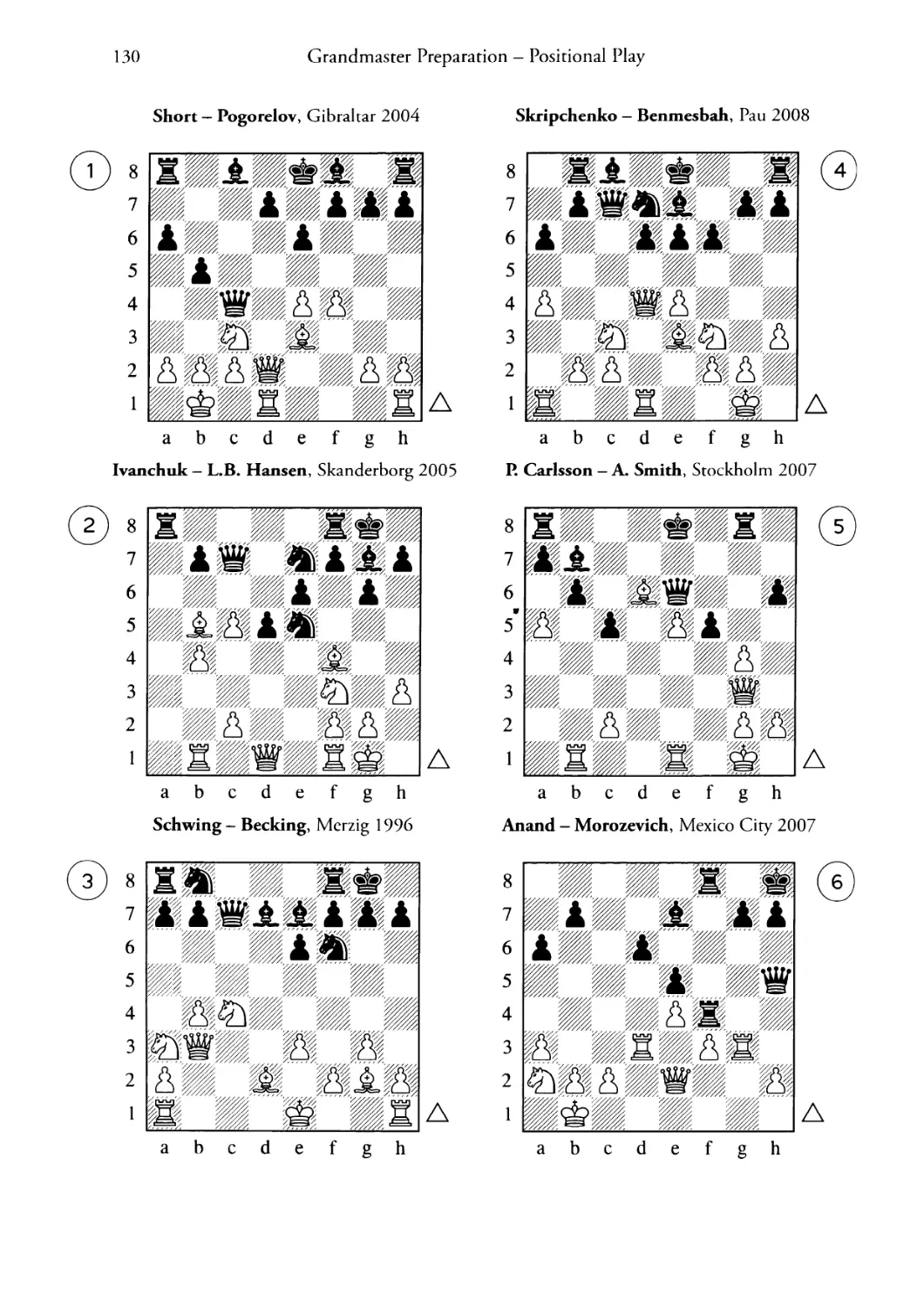
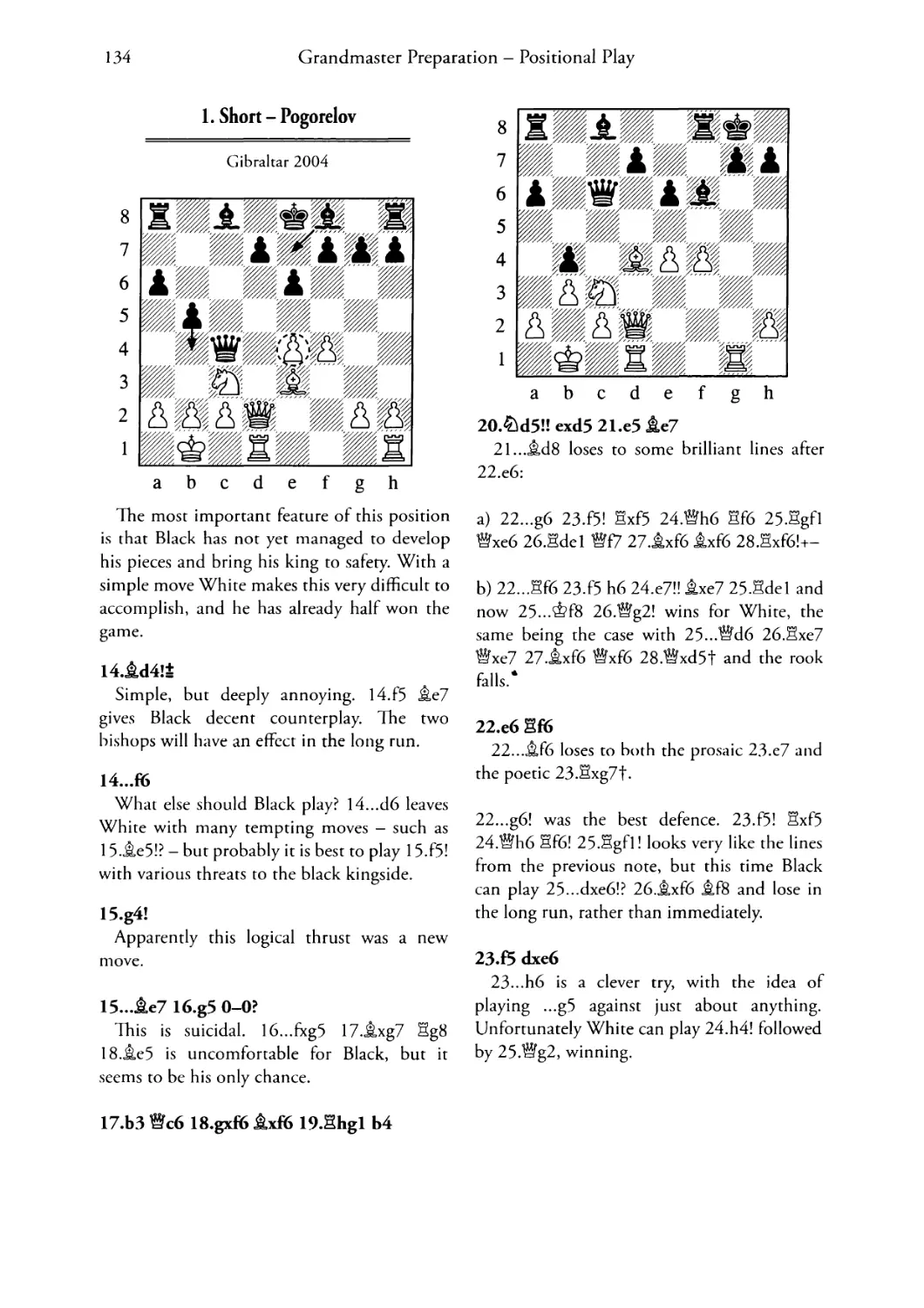
Short — Pogorelov, Gibraltar 2004
Ivanchuk — L.B. Hansen, Skanderborg 2005
Skripchenko — Benmesbah, Pau 2008
P. Carlsson — A. Smith, Stockholm 2007
abcdefgh
abcdefgh
Schwing - Becking, Merzig 1996
abcdefgh
Anand - Morozevich, Mexico City 2007
abcdefgh
Chapter 3 - Prophylaxis
131
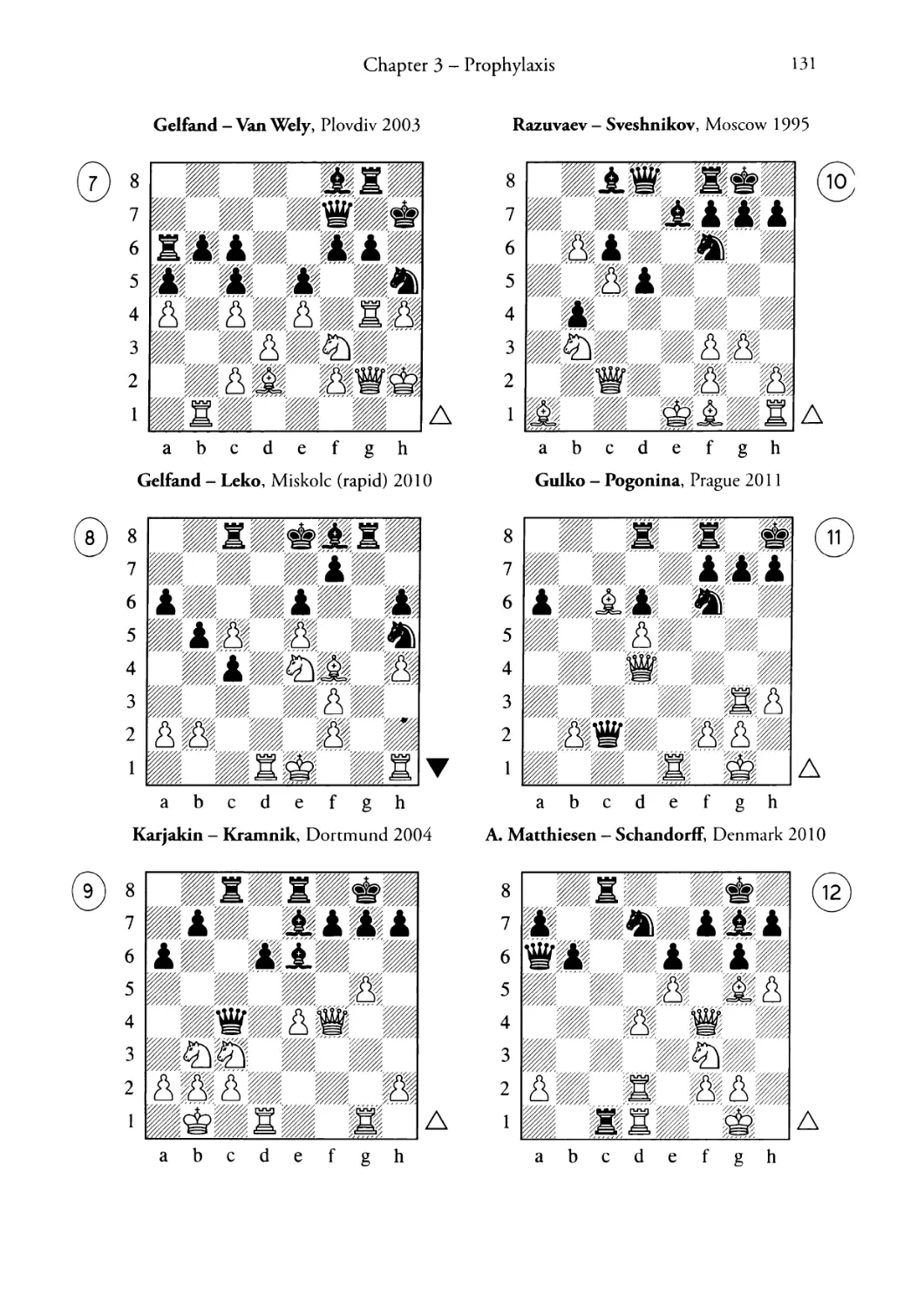
Gelfand - Van Wely, Plovdiv 2003
abcdefgh
Gelfand - Leko, Miskolc (rapid) 2010
Razuvaev - Sveshnikov, Moscow 1995
abcdefgh
abcdefgh
Gulko - Pogonina, Prague 2011
abcdefgh
Karjakin - Kramnik, Dortmund 2004
abcdef gh
A. Matthiesen - Schandorff, Denmark 2010
abcdefgh
132
Grandmaster Preparation — Positional Play
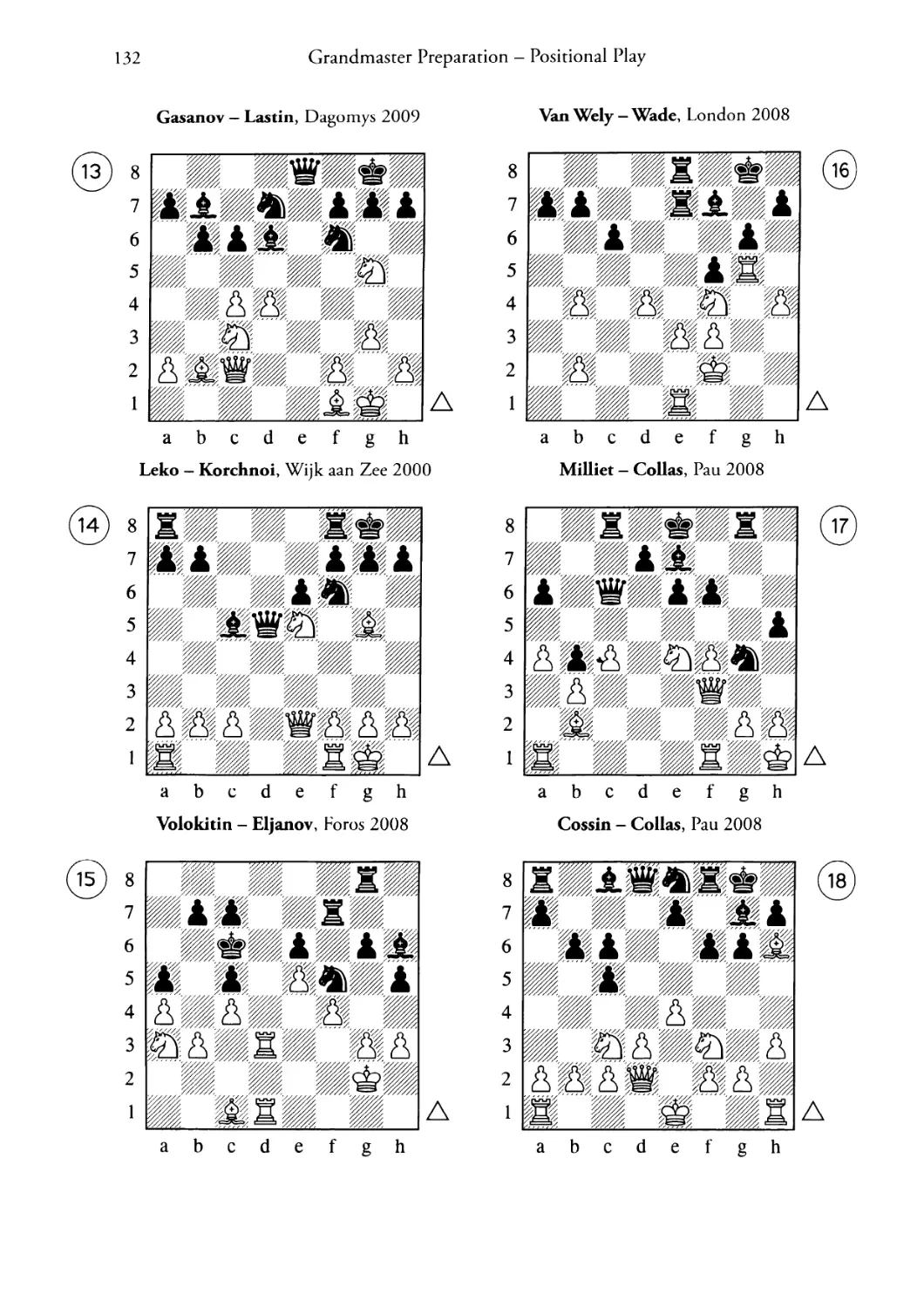
Gasanov — Lastin, Dagomys 2009
abcdefgh
Leko - Korchnoi, Wijk aan Zee 2000
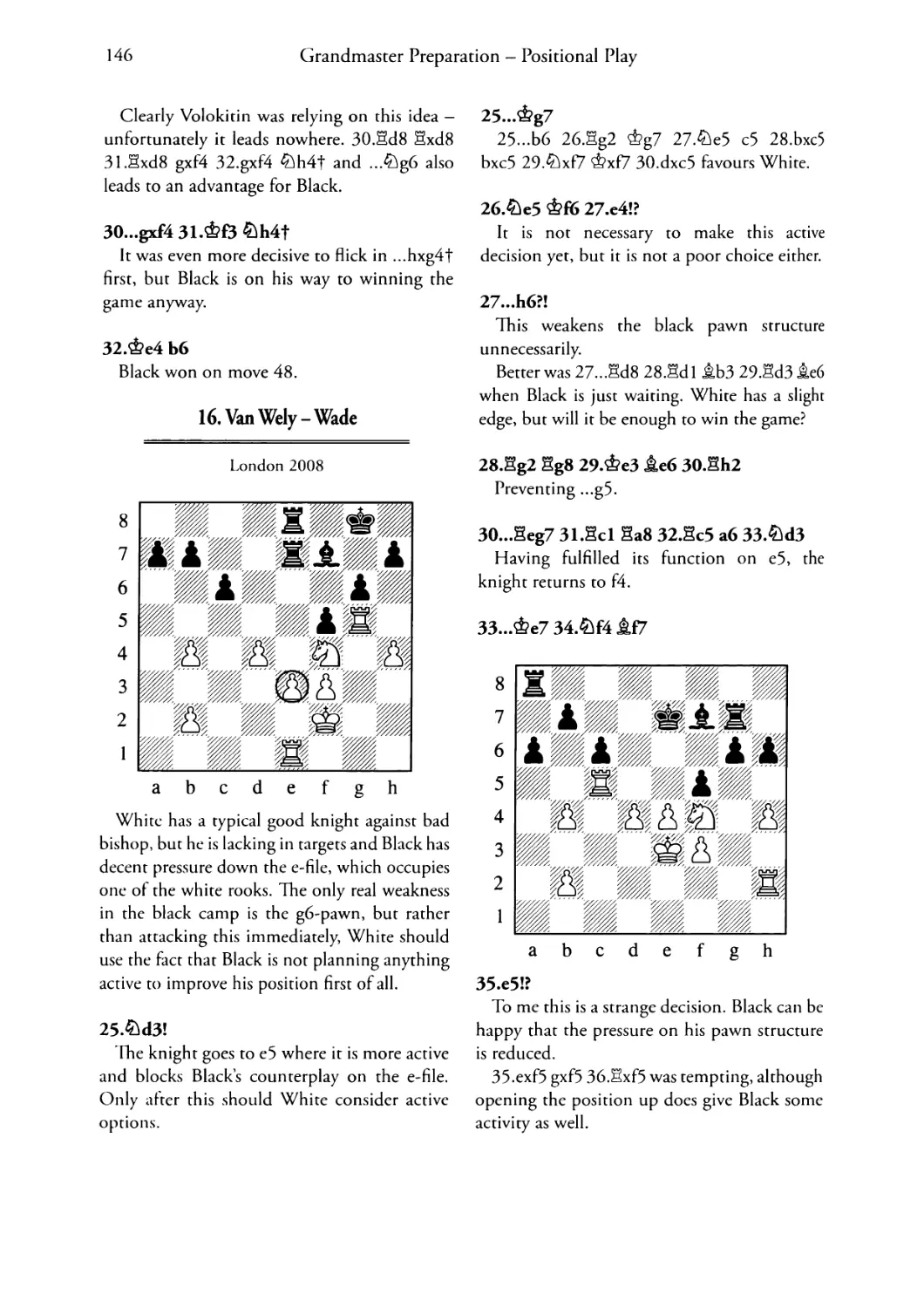
Van Wely — Wade, London 2008
8
7
6
5
4
3
2
1
abcdefgh
Milliet — Gollas, Pau 2008
abcdefgh
Volokitin - Eljanov, Foros 2008
abcdefgh
Cossin - Co lias, Pau 2008
abcdefgh
abcdefgh
Chapter 3 - Prophylaxis
133
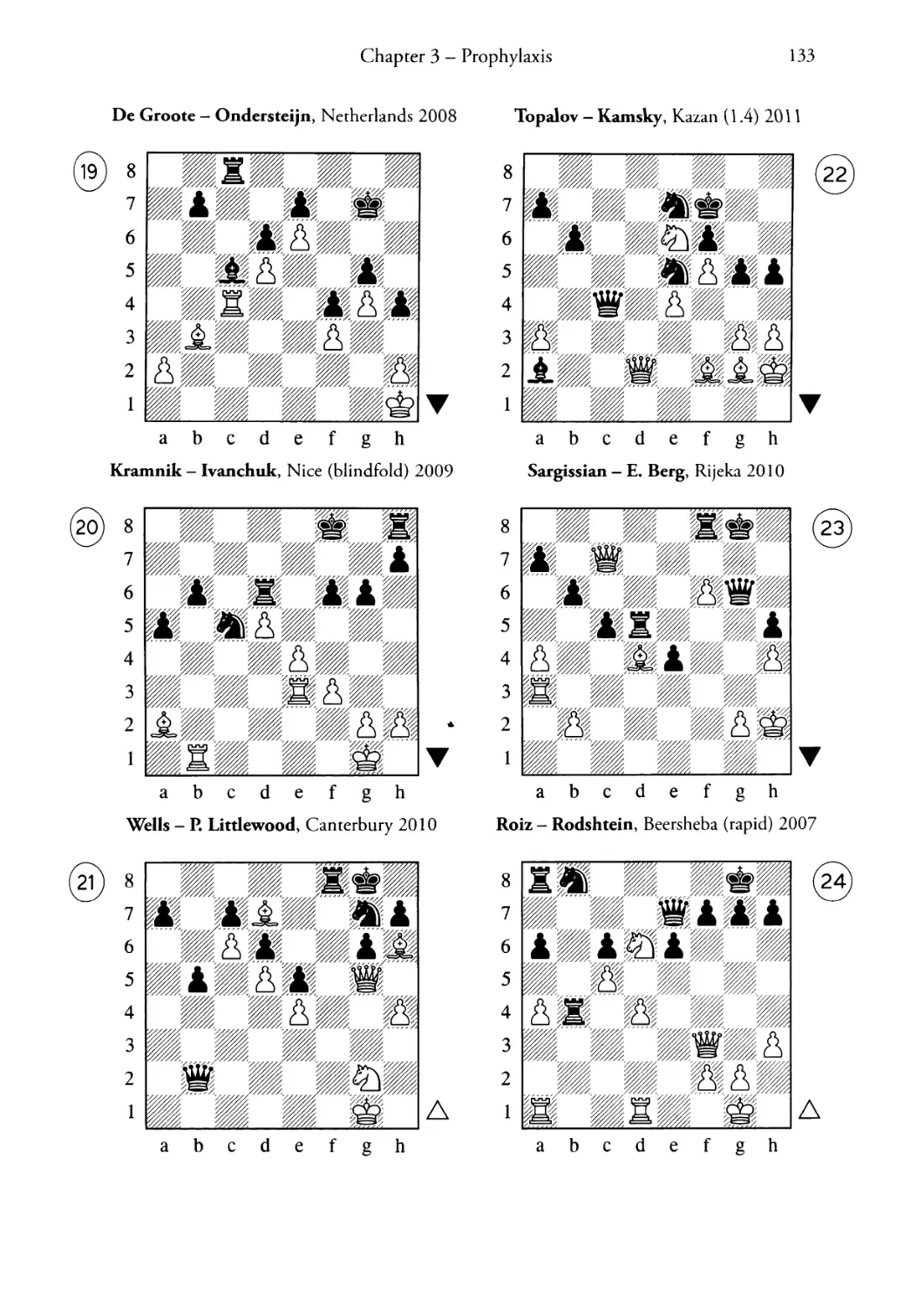
De Groote - Ondersteijn, Netherlands 2008
abcdefgh
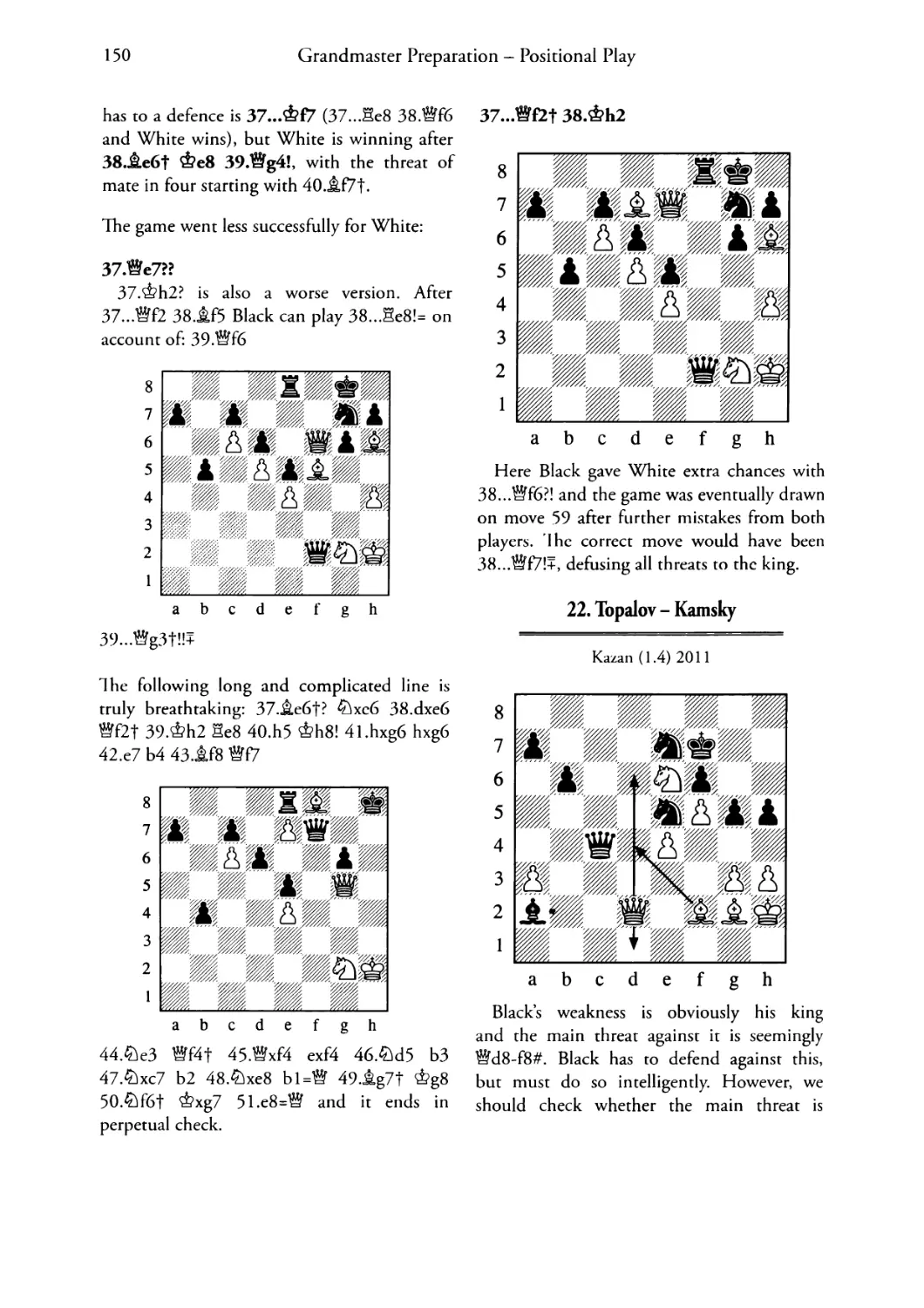
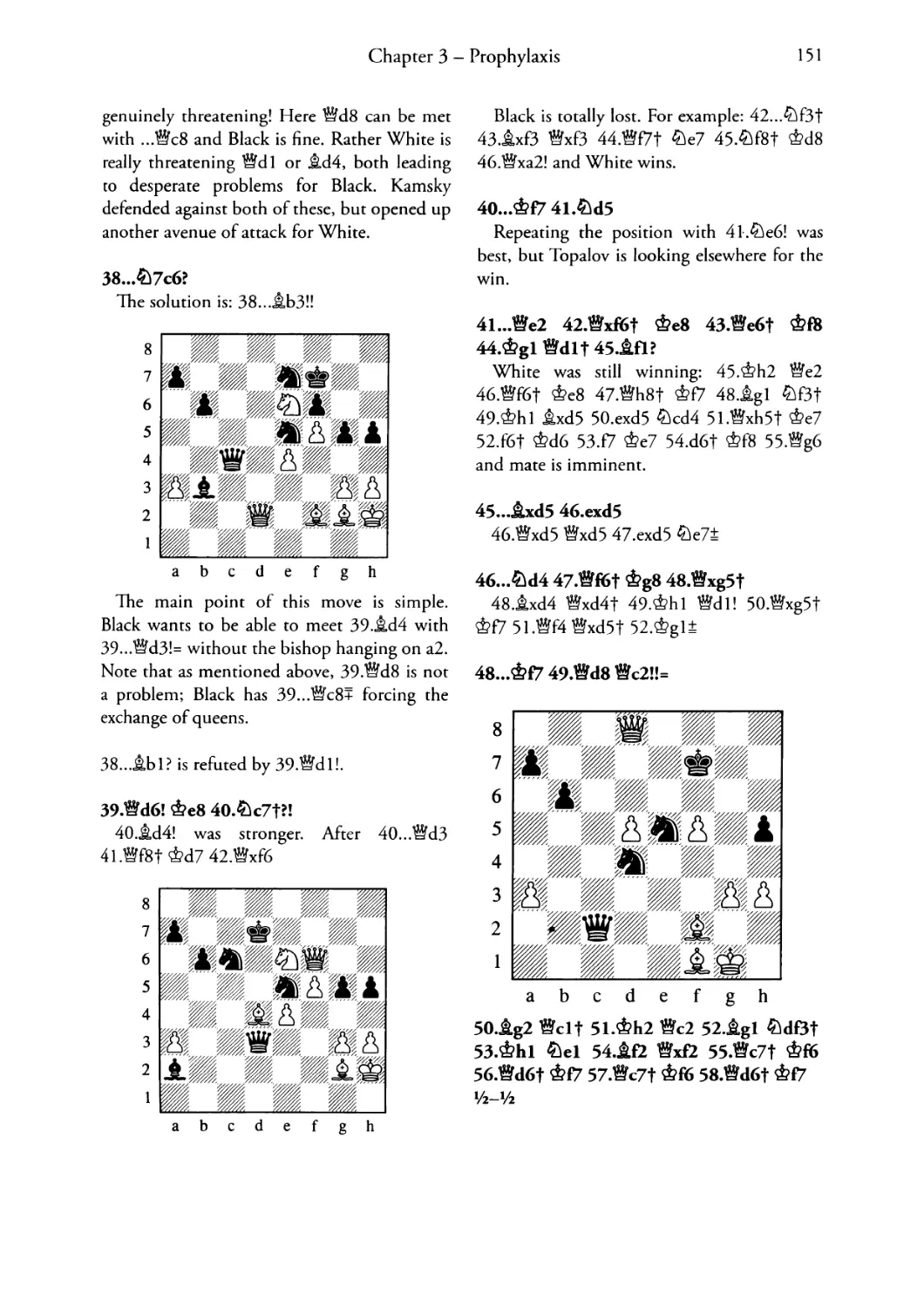
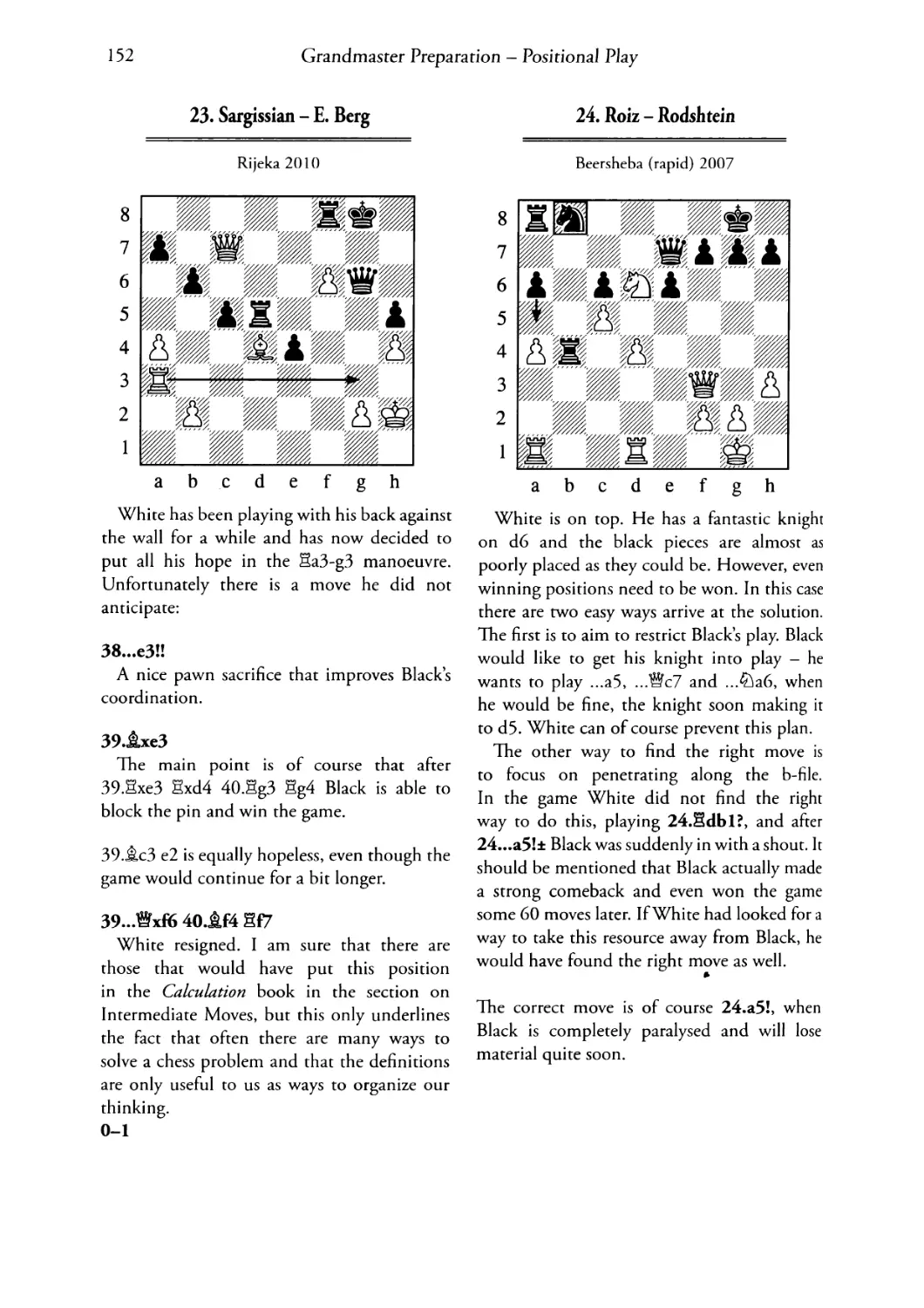
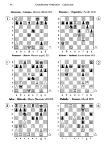
Topalov — Kamsky, Kazan (1.4) 2011
Sargissian — E. Berg, Rijeka 2010
Kramnik - Ivanchuk, Nice (blindfold) 2009
abcdefgh
abcdefgh
Roiz - Rodshtein, Beersheba (rapid) 2007
Wells - P. Littlewood, Canterbury 2010
abcdef gh
8
7
6
5
4
3
2
1
abcdefgh
134
Grandmaster Preparation — Positional Play
1. Short - Pogorelov
Gibraltar 2004
8
7
6
5
4
3
2
1
abcdefgh
abcdefgh
20.Ы5!! exd5 21.e5 Де7
21...JLd8 loses to some brilliant lines after
22.e6:
The most important feature of this position
is that Black has not yet managed to develop
his pieces and bring his king to safety. With a
simple move White makes this very difficult to
accomplish, and he has already half won the
game.
14.&d4!±
Simple, but deeply annoying. 14.f5 JLe7
gives Black decent counterplay. The two
bishops will have an effect in the long run.
14...R5
What else should Black play? 14...d6 leaves
White with many tempting moves - such as
15.^e5!? — but probably it is best to play 15.f5!
with various threats to the black kingside.
15.g4!
Apparently this logical thrust was a new
move.
15...	Де7 16.g5 0-0?
This is suicidal. 16...fxg5 17.Jlxg7 Sg8
18.jLe5 is uncomfortable for Black, but it
seems to be his only chance.
a)	22...g6 23.f5! Hxf5 24.®h6 Sf6 25.§gfl
Wxe6 26.gdel W 27.1xf6 ^xf6 28.Exf6!+-
b)	22...Sf6 23.f5 h6 24.e71! £xe7 25.§del and
now 25...Фй8 26.®g2! wins for White, the
same being the case with 25...®d6 26.Sxe7
Wxe7 27.jbcf6 ®xf6 28.@xd5t and the rook
falls.*
22.e6 gfiS
22...JH6 loses to both the prosaic 23.e7 and
the poetic 23.Sxg7f.
22...g6! was the best defence. 23.f5! Sxf5
24.®h6 Sf6! 25.Sgfl! looks very like the lines
from the previous note, but this time Black
can play 25...dxe6!? 26.jLxf6 JLf8 and lose in
the long run, rather than immediately.
23.f5 dxe6
23...h6 is a clever try, with the idea of
playing ...g5 against just about anything.
Unfortunately White can play 24.h4! followed
by 25.®g2, winning.
17.b3 ®c6 18.gxf6 txffi 19.Bhgl b4
Chapter 3 — Prophylaxis
135
abcdefgh
24.Sxg7f! &xg7 25.®g5t ФГ 26.Sgl to
26...Фе8 27.JLxf6 JLxf6 28.Wxf6 &d7 sees
the king trying to flee, but White wins with
29.§g7t &d6 3O.We7t Фе5 31.f6!, when
there are several lines, all leading to the same
result. One of these is 31...®c3 32.Sg5t &d4
33.§gl and everything is as White would like
it to be.
27.®xffif Фе8 28.Bg8 ®d6 29.fxe6 ®e7
29...j£xe6 3O.Sxf8f! and White wins. t
30>h6 Sb8 31.to @xe6 32.Sxf8t &d7
33.®g7t Феб 34.^e5 Sb7 35.®h8!
1-0
White needs to make the most out of the pin
and to rid himself of his worthless pawn on c2.
This can be done with simple moves:
16	.ФИ1! &7c6
16..T	6 17.c4± does not look much of an
improvement to me.
17	. c4! dxc4?I
This is a bit compliant, although it is fair to
say that Black had no easy solutions available
to him. After 17...§fd8 18.Sel f6 19.cxd5
Sxd5 2O.Wb3 he finds himself pinned in three
directions.
The best option should be to run from the pin,
but after 17...®d8! 18.Лхсб£)хс6 19.b5
abcdefgh
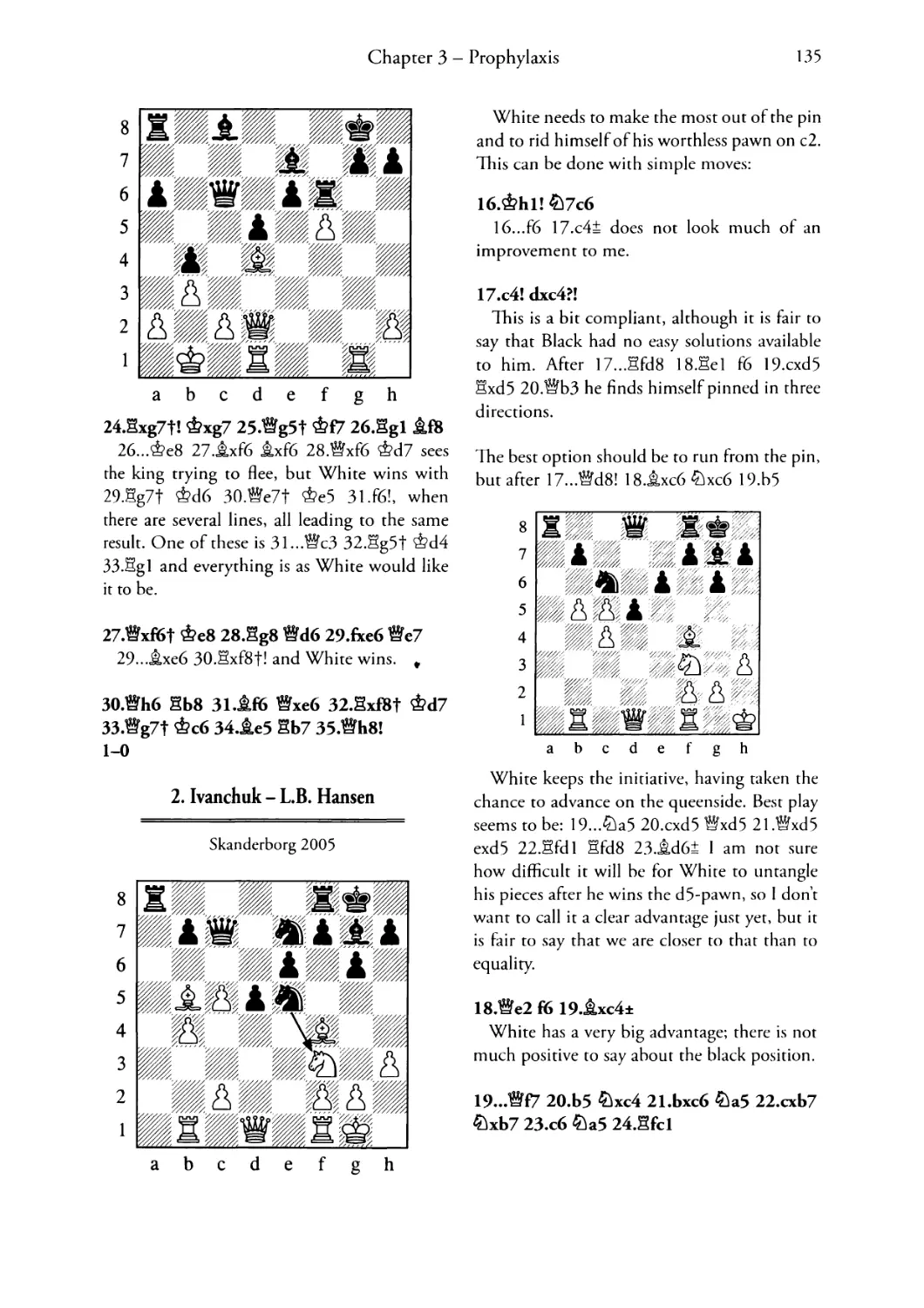
2.	Ivanchuk - L.B. Hansen
Skanderborg 2005
White keeps the initiative, having taken the
chance to advance on the queenside. Best play
seems to be: 19...^a5 20.cxd5 ®xd5 21.®xd5
exd5 22.Sfdl Hfd8 23.JLd6± 1 am not sure
how difficult it will be for White to untangle
his pieces after he wins the d5-pawn, so 1 don’t
want to call it a clear advantage just yet, but it
is fair to say that we are closer to that than to
equality.
18.®e2 ft> 19.Jlxc4±
White has a very big advantage; there is not
much positive to say about the black position.
19...Ш7 2O.b5 £ixc4 21.bxc6 £la5 22.cxb7
^xb7 23.c6 £ia5 24.Sfcl
a b c d e
h
136
Grandmaster Preparation - Positional Play
abcdefgh
24...e5 25.^e3 2>b3 26.Sc3 2ld4 27.&xd4
exd4 28.jkxd4 Sfe8 29.®£3 Sac8 3O.Sbcl
6 31.Ji.xg7 &xg7 32.c7 Se4 33.®d3 ®e7
34.©dl Se6 35.Bd4f ф£7 Зб.Всб Se4
37.®d2 &g7 38.Sd6 Se2 39>d4f &h6
4O.Sd7 Self 41.ФИ2 ®e5t 42.®xe5 Sxe5
43.Sd8
1-0
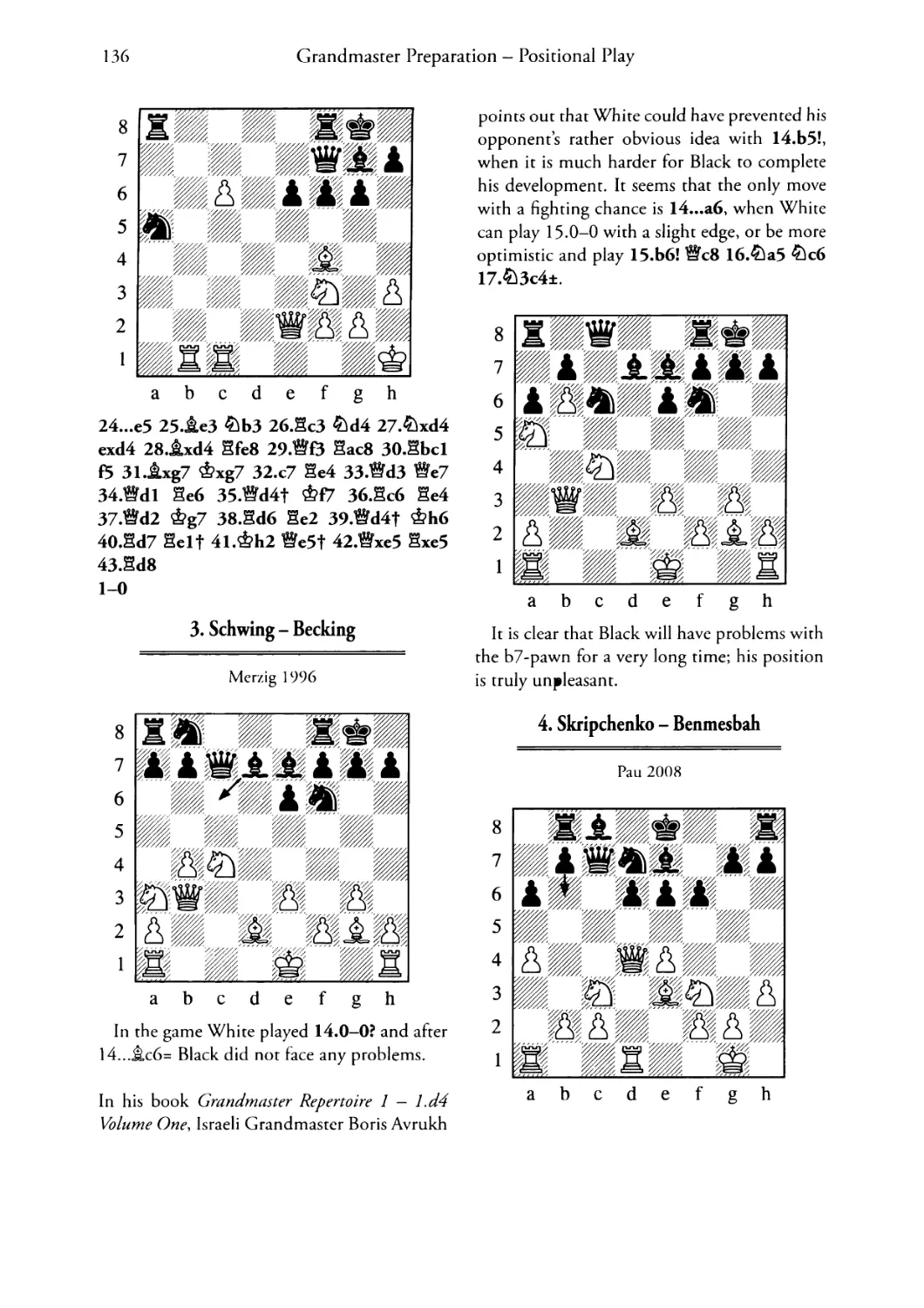
3.	Schwing - Becking
Merzig 1996
abcdefgh
In the game White played 14.0—0? and after
14...jLc6= Black did not face any problems.
In his book Grandmaster Repertoire 1 — l.d4
Volume One, Israeli Grandmaster Boris Avrukh
points out that White could have prevented his
opponents rather obvious idea with 14.b5!,
when it is much harder for Black to complete
his development. It seems that the only move
with a fighting chance is 14...a6, when White
can play 15.0—0 with a slight edge, or be more
optimistic and play 15.b6! ®c8 16.£la5
17.^3c4±.
abcdefgh
It is clear that Black will have problems with
the b7-pawn for a very long time; his position
is truly unpleasant.
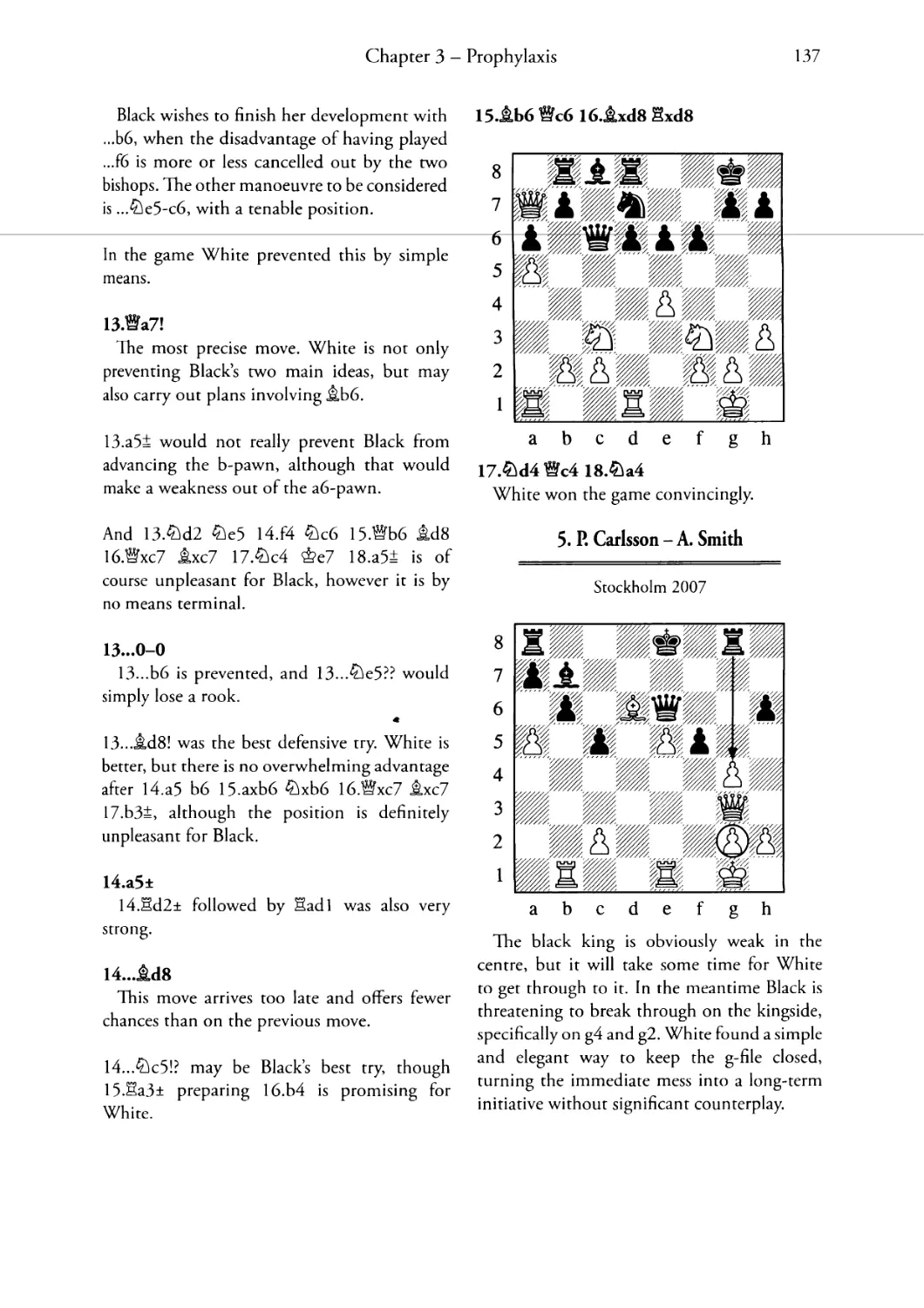
4.	Skripchenko - Benmesbah
Pau 2008
abcdefgh
Chapter 3 — Prophylaxis
137
Black wishes to finish her development with
...b6, when the disadvantage of having played
...f6 is more or less cancelled out by the two
bishops. The other manoeuvre to be considered
is ...£)e5-c6, with a tenable position.
In the game White prevented this by simple
means.
13.Wa7!
The most precise move. White is not only
preventing Black’s two main ideas, but may
also carry out plans involving JLb6.
13.a5± would not really prevent Black from
advancing the b-pawn, although that would
make a weakness out of the a6-pawn.
And 13.Ы2 £e5 14.f4 £k6 15.®b6 ld8
16.®xc7 JLxc7 17.^>c4 Фе7 18,a5± is of
course unpleasant for Black, however it is by
no means terminal.
13...0-0
13...b6 is prevented, and 13...^e5?? would
simply lose a rook.
«
13...JLd8! was the best defensive try. White is
better, but there is no overwhelming advantage
after 14.a5 b6 15.axb6 £ixb6 16.®xc7 Дхс7
17.b3±, although the position is definitely
unpleasant for Black.
14.a5±
14.Hd2± followed by Hadi was also very
strong.
14...<d8
This move arrives too late and offers fewer
chances than on the previous move.
14...£k5!? may be Black’s best try, though
15.Ha3± preparing 16.b4 is promising for
White.
15.ДБ6 ®c6 16.JLxd8 Hxd8
8
7
6
5
4
3
2
1
abcdefgh
17.&d4 ®c4 18.&a4
White won the game convincingly.
5.	P. Carlsson - A. Smith
Stockholm 2007
abcdef gh
The black king is obviously weak in the
centre, but it will take some time for White
to get through to it. In the meantime Black is
threatening to break through on the kingside,
specifically on g4 and g2. White found a simple
and elegant way to keep the g-file closed,
turning the immediate mess into a long-term
initiative without significant counterplay.
138
Grandmaster Preparation — Positional Play
29.h3! frg4 3O.h4!
White has successfully closed the g-file and
is simply winning.
30...®d5 31.axb6?I
Probably 31.e6! was even stronger, as it
would be hard for Black to become active.
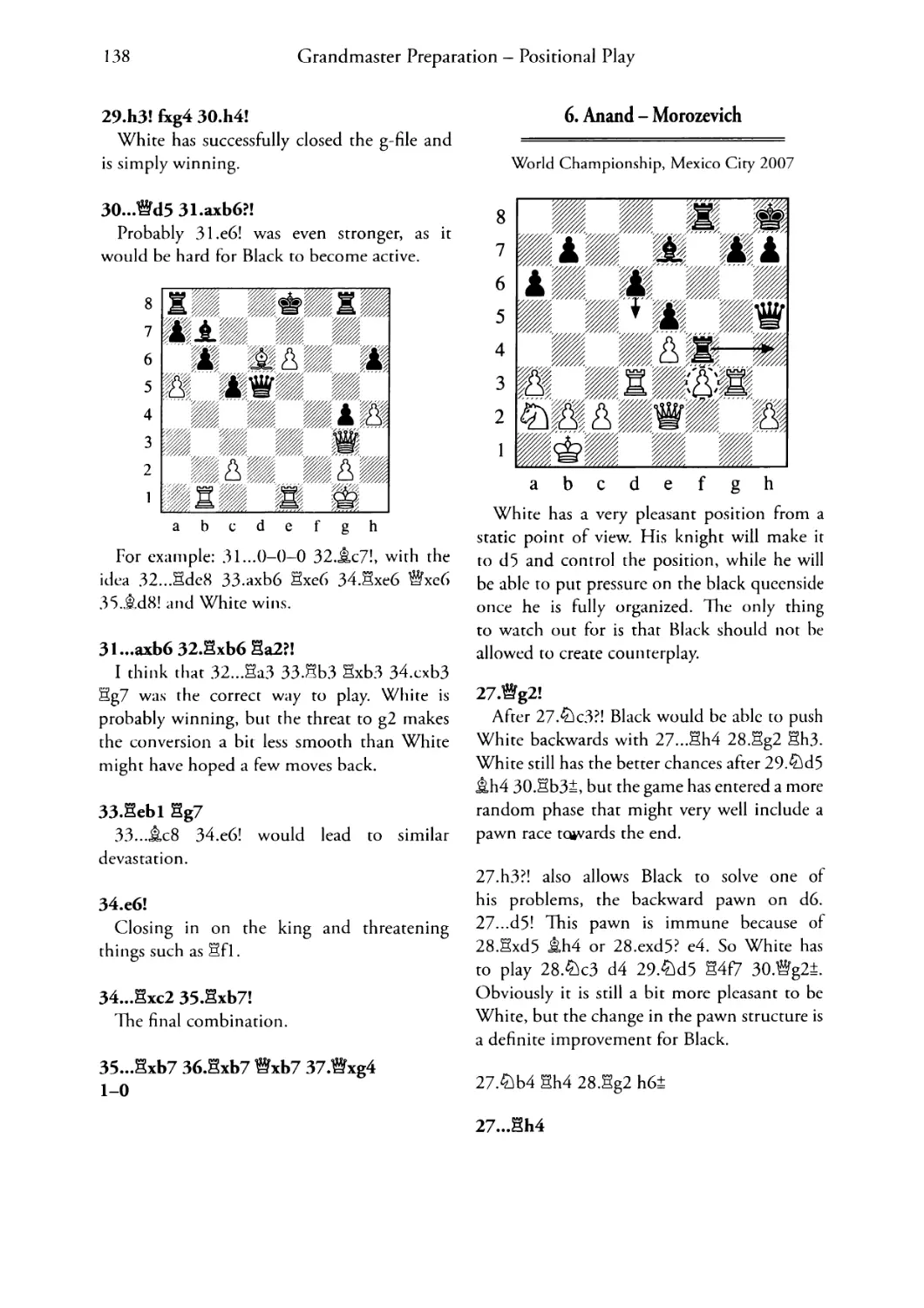
abcdefgh
For example: 31... 0-0-0 32.Hc7!, with the
idea 32...Sde8 ЗЗ.ахЬб Нхеб 34.Sxe6 ®xe6
35.Jld8! and White wins.
31-..axb6 32.Sxb6 Sa2?J
I think that .32...Sa3 ЗЗ.ёЬ.З Sxb3 34.cxb3
Sg7 was the correct way to play. White is
probably winning, but the threat to g2 makes
the conversion a bit less smooth than White
might have hoped a few moves back.
ЗЗ.ЕеЫ Sg7
33...JLc8 34.e6! would lead to similar
devastation.
34.e6!
Closing in on the king and threatening
things such as Sfl.
34...Sxc2 35.Exb7!
The final combination.
35...Sxb7 36.Sxb7 Wxb7 37.Wxg4
1-0
6.	Anand - Morozevich
World Championship, Mexico City 2007
abcdefgh
White has a very pleasant position from a
static point of view. His knight will make it
to d5 and control the position, while he will
be able to put pressure on the black queenside
once he is fully organized. The only thing
to watch out for is that Black should not be
allowed to create counterplay.
27.®g2!
After 27.&c3?! Black would be able to push
White backwards with 27...Sh4 28.Sg2 Sh3.
White still has the better chances after 29.&d5
JLh4 ЗО.ЙЬЗ±, but the game has entered a more
random phase that might very well include a
pawn race towards the end.
27.h3?I also allows Black to solve one of
his problems, the backward pawn on d6.
27-..d5! This pawn is immune because of
28.Sxd5 JLh4 or 28.exd5? e4. So White has
to play 28.^c3 d4 29.^d5 S4f7 30>g2±.
Obviously it is still a bit more pleasant to be
White, but the change in the pawn structure is
a definite improvement for Black.
27. W §h4 28.Sg2 h6±
27...Bh4
Chapter 3 - Prophylaxis
139
Black no longer has any great breaks.
28.h3 ®h6 29.ЕБЗ! b5 30.&b4±
White is in complete control and won the
game on move 56.
7.	Gelfand - Van Wely
Plovdiv 2003
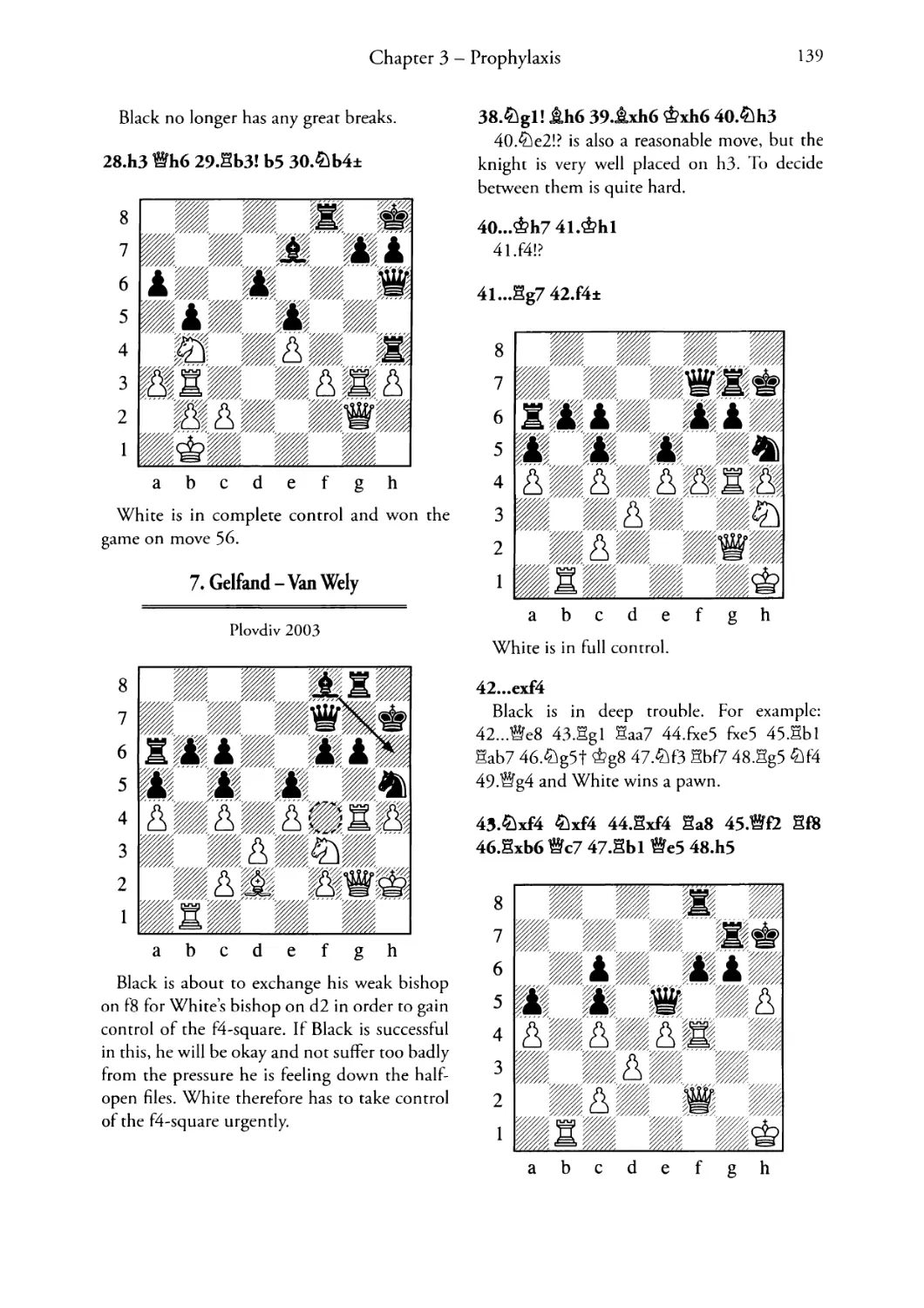
abcdefgh
Black is about to exchange his weak bishop
on 18 for White’s bishop on d2 in order to gain
control of the f4-square. If Black is successful
in this, he will be okay and not suffer too badly
from the pressure he is feeling down the half-
open files. White therefore has to take control
of the f4-square urgently.
38.£lgl! Д116 39.JLxli6 ФхЬб 4O.^h3
4O.£)e2!? is also a reasonable move, but the
knight is very well placed on h3. To decide
between them is quite hard.
40...&h7 41.&hl
41T41?
White is in full control.
42...exf4
Black is in deep trouble. For example:
42„>e8 43.Sgl Saa7 44.fke5 6<e5 45-SbI
Hab7 46.®g5t &g8 47.2T3 Sbf7 48.5g5 2Т4
49.®g4 and White wins a pawn.
43.W4 W4 44.Sxf4 Sa8 45.№ Sft
46.Sxb6 Wc7 47.ЕЫ ®e5 48.И5
140
Grandmaster Preparation — Positional Play
48...gxh5
48...&g8 49.h6 Sgf7 5O.Sfl and White
still has a technical job ahead of him, but the
advantage is close to decisive.
49.E6 ®e8 5O.Wxc5 £h6 51.Bbfl Bg6
52.®e3t &h7 53.®h3 &h6 54.e5 Sgf7
55.®e3t
55.Sgl!
55...&И7 56.®f3
1-0
8.	Gelfand - Leko
Miskolc (rapid) 2010
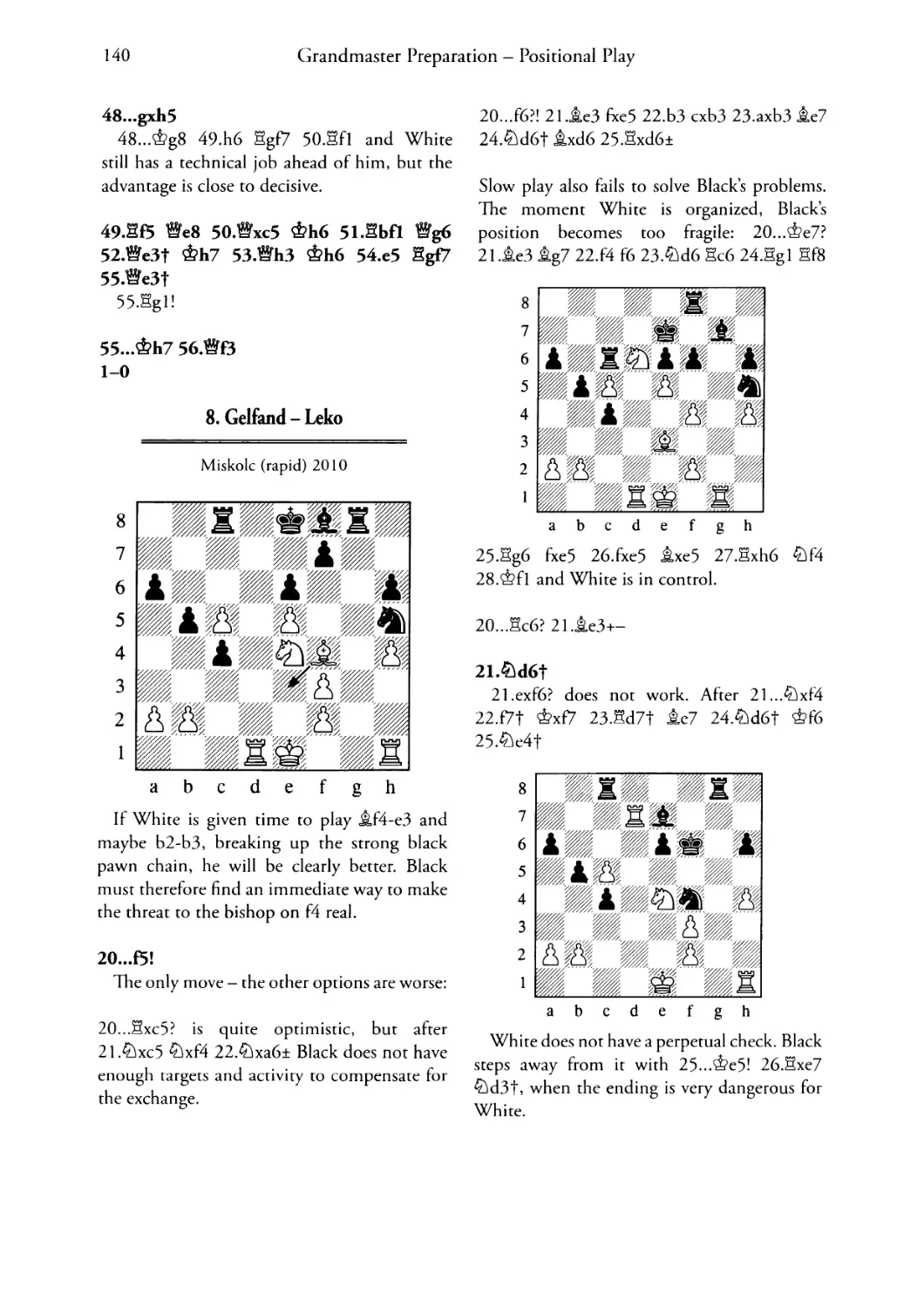
abcdefgh
If White is given time to play j^,f4-e3 and
maybe b2-b3, breaking up the strong black
pawn chain, he will be clearly better. Black
must therefore find an immediate way to make
the threat to the bishop on f4 real.
20...B!
The only move - the other options are worse:
20...§xc5? is quite optimistic, but after
21.£)xc5 ?)xf4 22.£)xa6± Black does not have
enough targets and activity to compensate for
the exchange.
20...f6?! 21.jLe3 fice5 22.b3 cxb3 23.axb3 Де7
24.£>d6f lxd6 25.Sxd6±
Slow play also fails to solve Black’s problems.
The moment White is organized, Blacks
position becomes too fragile: 2О...Фе7?
21.1e3 tg7 22.f4 f6 23.^d6 Sc6 24.Sgl Sf8
abcdefgh
25.Sg6 fxe5 26.fxe5 Лхе5 27.Sxh6 £T4
28.<±>fl and White is in control.
2O...Sc6? 21.1e3+-
21.&d6t
21.exf6? does not work. After 21...^xf4
22.f7t &xf7 23.Sd7t ke7 24.&d6t &f6
25.&e4t
abcdefgh
White does not have a perpetual check. Black
steps away from it with 25...Фе5! 26.Sxe7
£)d3t, when the ending is very dangerous for
White.
Chapter 3 - Prophylaxis
141
21...^xd6 22.cxd6 Sc5 23.ДхЬ6 Sxe5t
24.&d2 &d7=
Black has equalized, although he later lost
the game in 86 moves.
9. Karjakin - Kramnik
Dortmund 2004
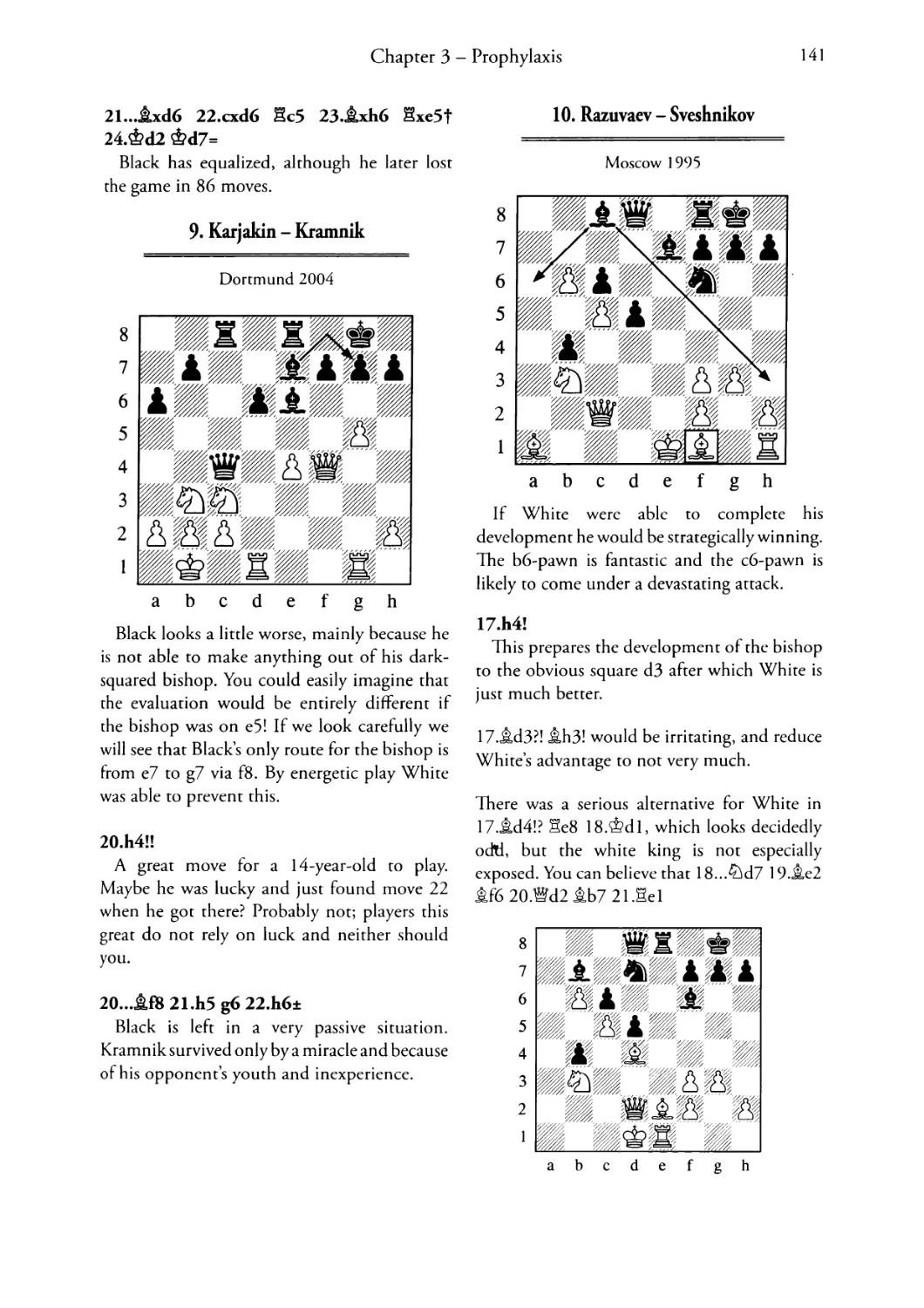
abcdefgh
Black looks a little worse, mainly because he
is not able to make anything out of his dark-
squared bishop. You could easily imagine that
the evaluation would be entirely different if
the bishop was on e5! If we look carefully we
will see that Black’s only route for the bishop is
from e7 to g7 via f8. By energetic play White
was able to prevent this.
2O.h4!l
A great move for a 14-year-old to play.
Maybe he was lucky and just found move 22
when he got there? Probably not; players this
great do not rely on luck and neither should
you.
2O...jkfB 21.h5 g6 22.h6±
Black is left in a very passive situation.
Kramnik survived only by a miracle and because
of his opponent’s youth and inexperience.
10. Razuvaev - Sveshnikov
8
7
6
5
4
3
2
1
Moscow 1995
abcdefgh
If White were able to complete his
development he would be strategically winning.
The b6-pawn is fantastic and the сб-pawn is
likely to come under a devastating attack.
17.h4!
This prepares the development of the bishop
to the obvious square d3 after which White is
just much better.
17dLd3?! JLh3! would be irritating, and reduce
White’s advantage to not very much.
There was a serious alternative for White in
17.JLd4!? Se8 18.£bdl, which looks decidedly
odd, but the white king is not especially
exposed. You can believe that 18...£ld7 19.Ле2
£f6 20.®d2 W 21.Sei
abcdefgh
142
Grandmaster Preparation - Positional Play
would give White great winning chances.
But why have the king on dl, when you can
hide it in safety on gl?
17.^d4®e8 18.jLe2 JLh3!#
17...d4?!
Now the bishop can come to c4 instead of d3.
17...Se8 18.Де2 £)d7 was more normal, but
White has a great advantage. For example:
19.^d4 £f6 20.0-0± ®e7 21.£xf6 Bxe2
22.®xe2 Sxe2 23.^d4 ga2 24.Sel &f8 25.le3!
£>e5 26.&g2 f6 27.£)d4 and it feels as if the
black position is on the verge of a collapse.
18.1с4
Probably White is already winning here.
18...Ы5 19.&xd4 Se8
abcdefgh
20.&fl!
20.0—0 Jlxh4 should be avoided, but luckily
that is not hard.
2O...jkft)	Wxftj 22.jLxd5 cxd5
23.&g2 d4
Desperation, but it makes no difference.
24.8dl Af5 25.WB2 lh3t 26.ФхЬЗ ®xf3
27.®c2 d3 28.®xd3 ®x£2
1-0
11. Gulko - Pogonina
8
7
6
5
4
3
2
1
abcdefgh
Prague 2011
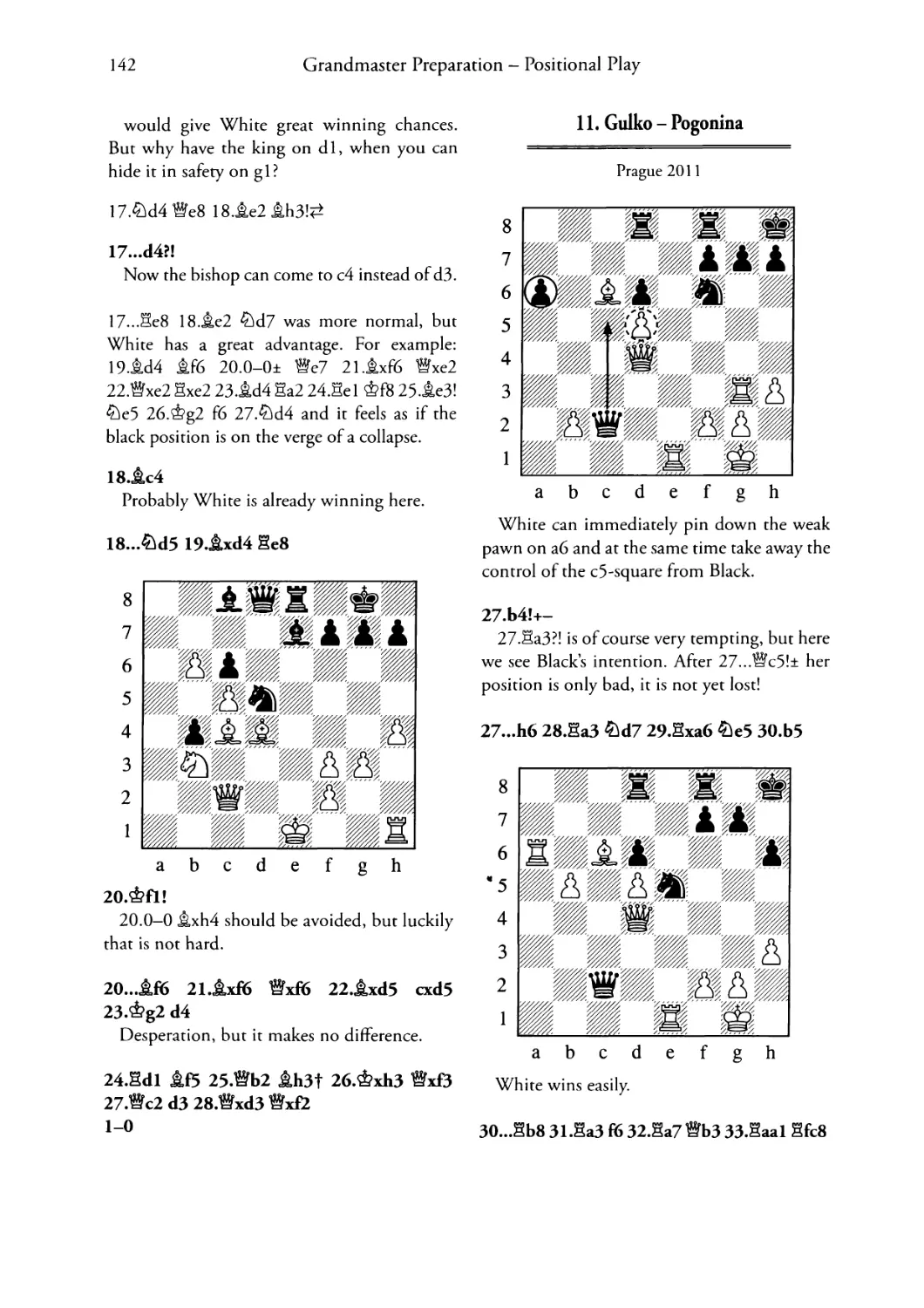
White can immediately pin down the weak
pawn on a6 and at the same time take away the
control of the c5-square from Black.
27.B41+-
27.Sa3?I is of course very tempting, but here
we see Black’s intention. After 27...®c5!± her
position is only bad, it is not yet lost!
27...И6 28.Sa3 &d7 29.Sxa6 £e5 3O.b5
8
7
6
*5
4
3
2
1
abcdefgh
White wins easily.
3O...Sb8 31.Sa3 ft> 32.Sa7 Wb3 33.Saal Sfc8
Chapter 3 — Prophylaxis
143
34.Secl ^xc6 35.bxc6 Sb4 36.Wdl Wxdlf
37.Sxdl Sb5 38.Sa7 Sd8 39.Sd7
1-0
12. A. Matthiesen - Schandorff
Denmark 2010
abcdefgh
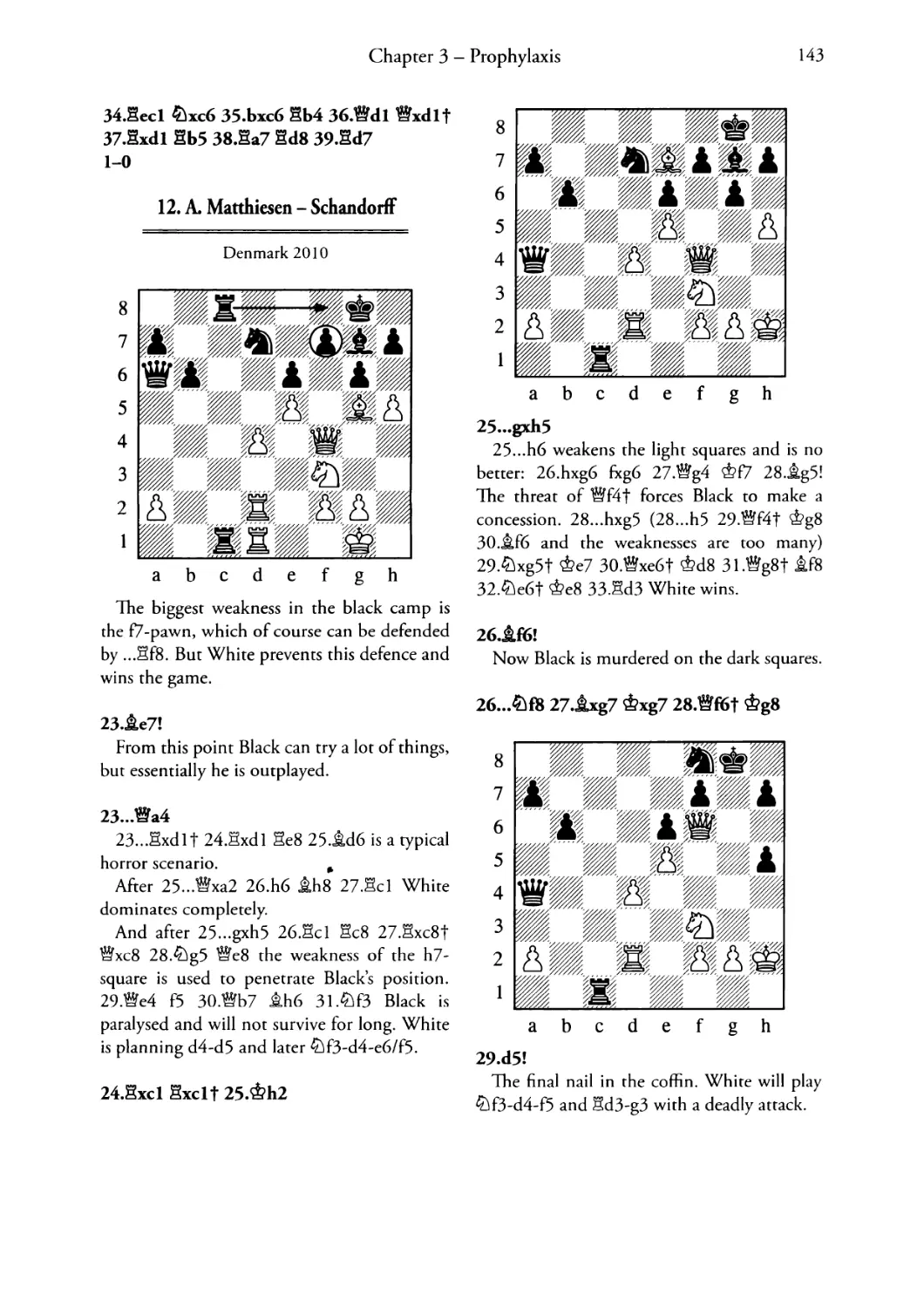
The biggest weakness in the black camp is
the f7-pawn, which of course can be defended
by ...§f8. But White prevents this defence and
wins the game.
23.&e7!
From this point Black can try a lot of things,
but essentially he is outplayed.
23...Wa4
23...Sxdlt 24.Sxdl Se8 25.jkd6 is a typical
horror scenario.	w
After 25...®xa2 26.h6 JLh8 27.Scl White
dominates completely.
And after 25...gxh5 26.Scl Sc8 27.Sxc8t
Bxc8 28.£ig5 Be8 the weakness of the h7-
square is used to penetrate Black’s position.
29.We4 f5 3O.Wb7 Jlh6 31.£if3 Black is
paralysed and will not survive for long. White
is planning d4-d5 and later £)f3-d4-e6/f5.
24.Sxcl Exclt 25.&h2
abcdefgh
25...gxh5
25...h6 weakens the light squares and is no
better: 26.hxg6 fxg6 27.Bg4 Ф(7 28.^.g5!
The threat of Bf4f forces Black to make a
concession. 28...hxg5 (28...h5 29.Wf4t ^g8
30.JH6 and the weaknesses are too many)
29.&xg5t &e7 3O.Wxe6t &d8 31.Bg8t if8
32.£le6t Фев 33.Sd3 White wins.
26.ДК!
Now Black is murdered on the dark squares.
26...^fB 27.&xg7 &xg7 28.Bf6t &g8
abcdefgh
29.d5!
The final nail in the coffin. White will play
f3-d4-f5 and Sd3-g3 with a deadly attack.
144
Grandmaster Preparation — Positional Play
29...exd5 30.Ы4 h4 31.Bd3 &g6 32.®d8f
33.®g5t 34.Wxcl
1-0
13.	Gasanov - Lastin
Dagomys 2009
abcdefgh
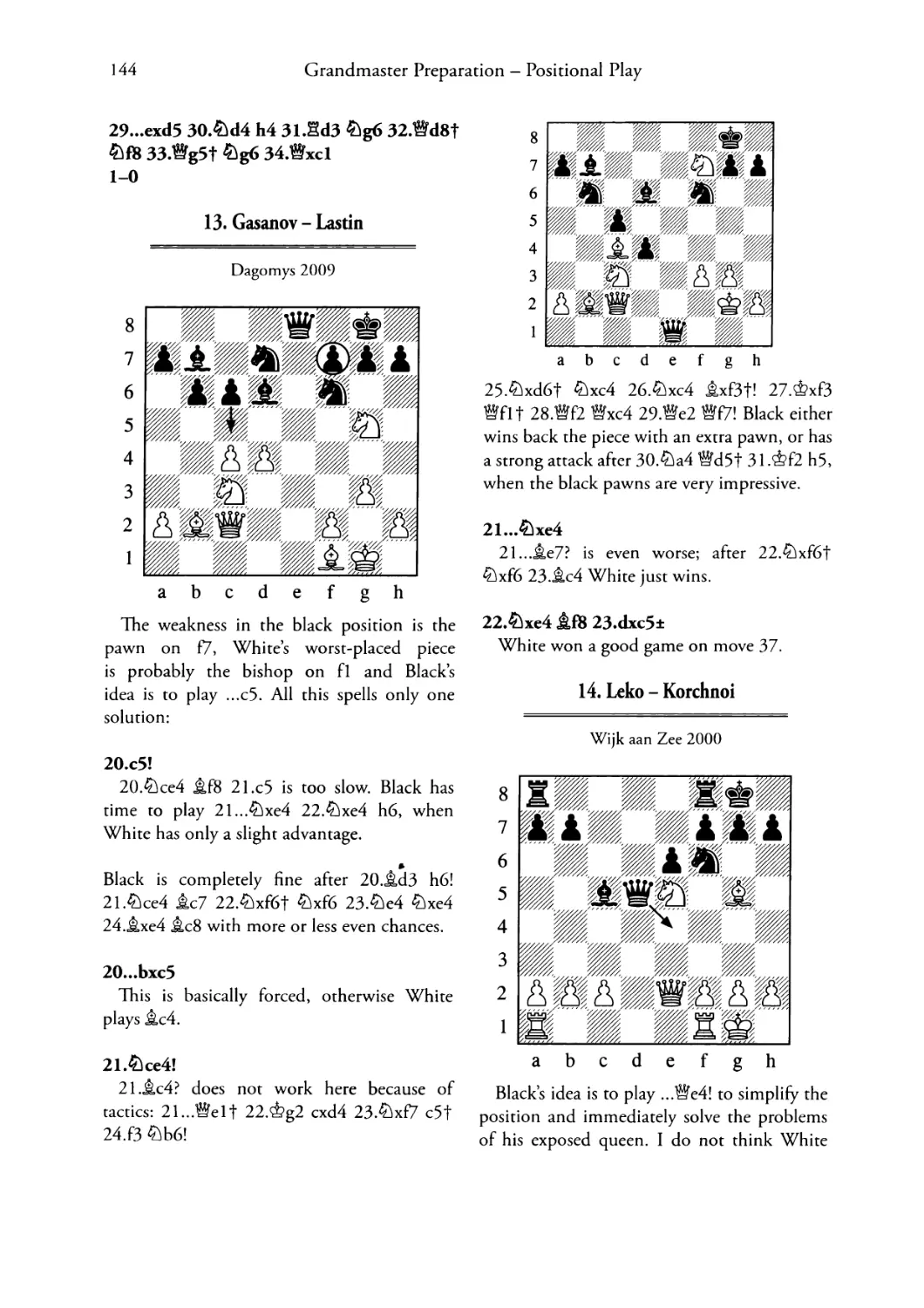
The weakness in the black position is the
pawn on f7, White’s worst-placed piece
is probably the bishop on fl and Black’s
idea is to play ...c5. All this spells only one
solution:
2O.c5!
2O.^ce4 JLf8 21.c5 is too slow. Black has
time to play 21...£)xe4 22.£)xe4 h6, when
White has only a slight advantage.
Black is completely fine after 2O.jld3 h6!
21,£ice4 Дс7 22.£>xf6f £)xf6 23.£)e4 £)xe4
24.JLxe4 jLc8 with more or less even chances.
2O...bxc5
This is basically forced, otherwise White
plays jkc4.
21.^ce4!
21Лс4? does not work here because of
tactics: 21...Welf 22,d?g2 cxd4 23.^xf7 c5t
24.f3 £b6!
abcdefgh
25.£)xd6t £>xc4 26.£)xc4 JLxf3T! 27.'tbxf3
©fit 28.©f2 ©xc4 29.©e2 ®f7! Black either
wins back the piece with an extra pawn, or has
a strong attack after 30.£la4 ©d5t 31 .&f2 h5,
when the black pawns are very impressive.
21...^xe4
21...	Ле7? is even worse; after 22.£)xf6t
£ixf6 23.JLc4 White just wins.
22.^xe4 jLfiJ 23.dxc5±
White won a good game on move 37.
14.	Leko - Korchnoi
Wijk aan Zee 2000
abcdefgh
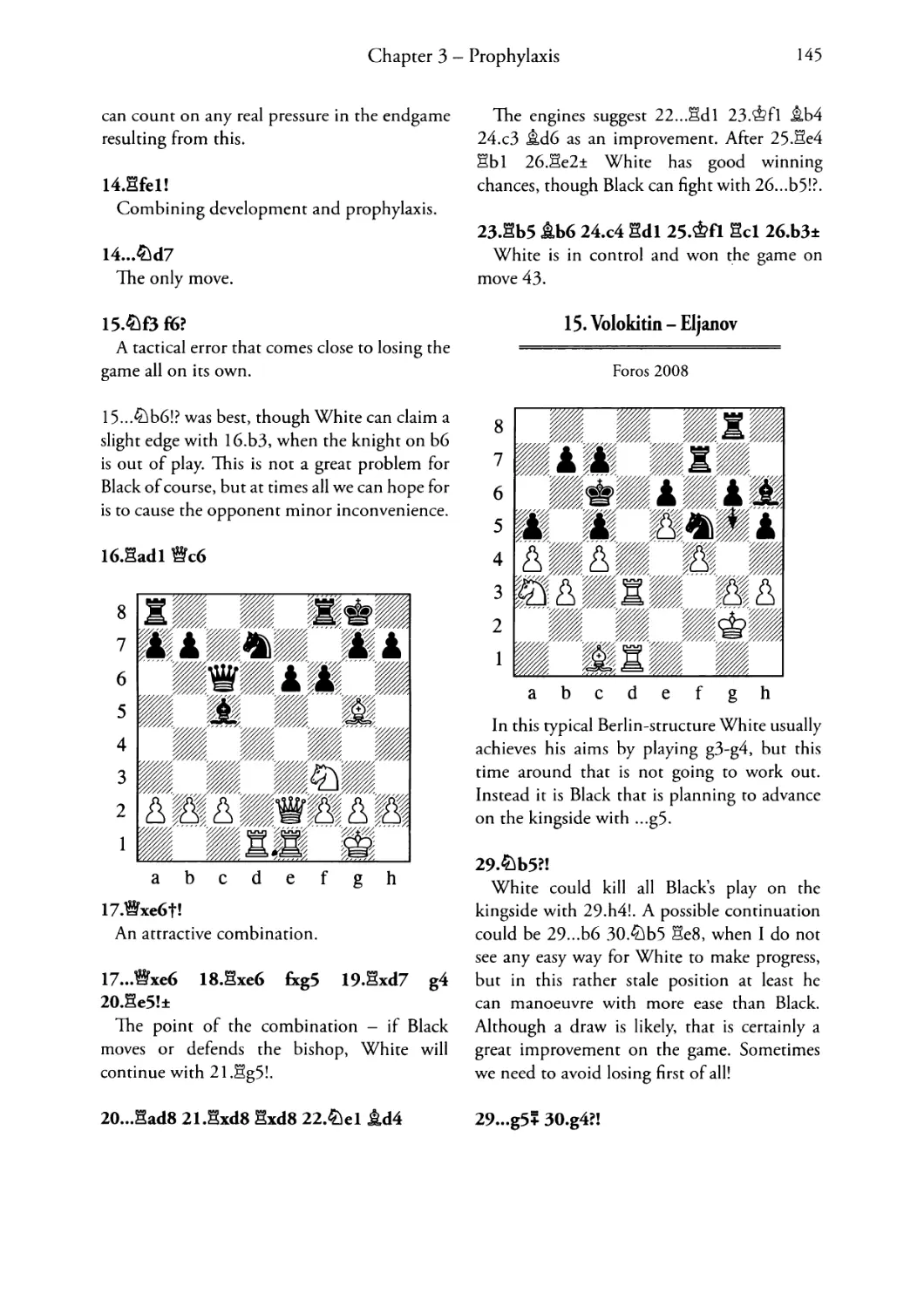
Black’s idea is to play ...©e4! to simplify the
position and immediately solve the problems
of his exposed queen. I do not think White
Chapter 3 - Prophylaxis
145
can count on any real pressure in the endgame
resulting from this.
14.Efel!
Combining development and prophylaxis.
14...	Ы7
The only move.
15ЛШЯ6?
A tactical error that comes close to losing the
game all on its own.
15...^b6!? was best, though White can claim a
slight edge with 16.b3, when the knight on b6
is out of play. This is not a great problem for
Black of course, but at times all we can hope for
is to cause the opponent minor inconvenience.
16.^adl Wc6
abcdefgh
17.®xe6f!
An attractive combination.
17...Wxe6 18.Sxe6 fxg5 19.Sxd7 g4
20.§e5!±
The point of the combination - if Black
moves or defends the bishop, White will
continue with 21 ,Sg5!.
The engines suggest 22...Sdl 23.ФН JLb4
24.c3 Jld6 as an improvement. After 25-йе4
Sbl 26.Se2± White has good winning
chances, though Black can fight with 26...b5!?.
23.Sb5 l,b6 24.c4 Sdl 25.&fl Scl 26.b3±
White is in control and won the game on
move 43.
15.	Volokitin - Eljanov
Foros 2008
abcdef gh
In this typical Berlin-structure White usually
achieves his aims by playing g3-g4, but this
time around that is not going to work out.
Instead it is Black that is planning to advance
on the kingside with ...g5.
29.&Ь5?!
White could kill all Black’s play on the
kingside with 29.h4!. A possible continuation
could be 29...b6 3O.£ib5 Se8, when I do not
see any easy way for White to make progress,
but in this rather stale position at least he
can manoeuvre with more ease than Black.
Although a draw is likely, that is certainly a
great improvement on the game. Sometimes
we need to avoid losing first of all!
2O...Sad8 21.Sxd8 Exd8 22.&el ld4
29...g5+ 3O.g4?I
146
Grandmaster Preparation - Positional Play
Clearly Volokitin was relying on this idea —
unfortunately it leads nowhere. 3O.Ed8 Exd8
31.Exd8 gxf4 32.gxf4 ^h4f and ...£ig6 also
leads to an advantage for Black.
3O...gxf4 31.&B 2di4t
It was even more decisive to flick in ...hxg4t
first, but Black is on his way to winning the
game anyway.
32.Фе4 Ь6
Black won on move 48.
16.	Van Wely-Wade
London 2008
abcdefgh
White has a typical good knight against bad
bishop, but he is lacking in targets and Black has
decent pressure down the e-file, which occupies
one of the white rooks. The only real weakness
in the black camp is the g6-pawn, but rather
than attacking this immediately, White should
use the fact that Black is not planning anything
active to improve his position first of all.
25.&d3!
1Ъе knight goes to e5 where it is more active
and blocks Black’s counterplay on the e-file.
Only alter this should White consider active
options.
25...&g7
25...b6 26.Sg2 &g7 27.^e5 c5 28.bxc5
bxc5 29.£ixf7 Фх£7 30.dxc5 favours White.
26.£le5 &f6 27.e4!?
It is not necessary to make this active
decision yet, but it is not a poor choice either.
27...И6?!
This weakens the black pawn structure
unnecessarily.
Better was 27...Sd8 28.Edl JLb3 29.Ed3 Леб
when Black is just waiting. White has a slight
edge, but will it be enough to win the game?
28.Eg2 Eg8 29.ФеЗ Леб 3O.Eh2
Preventing ...g5.
3O...Eeg7 31.Ecl Ea8 32.Ec5 аб ЗЗ.ЫЗ
Having fulfilled its function on e5, the
knight returns to f4.
33...&e7 34.^f4 ЛГ
abcdefgh
35.e5I?
To me this is a strange decision. Black can be
happy that the pressure on his pawn structure
is reduced.
35.exf5 gxf5 36.Exf5 was tempting, although
opening the position up does give Black some
activity as well.
Chapter 3 - Prophylaxis
147
35...&e6?
This allows a nice sequence.
The more natural 35...g5! was the right
move: 36.hxg5 hxg5 37.^e2 f4f 38.ФГ2 Sd8
and Black looks fully okay.
36.d5! &xd5 37.&xd5t cxd5 38.Sc7|!
White values activity over material.
38...&f8 39.Shc2 Sxc7 4O.Sxc7 Se8
41.&d4 Se7 42.Sc8f <&f7
42...Se8 43.§xe8t Фхе8 44.f4! and the
pawn ending is winning for White.
43.f4Sd7 44.b3
White has serious pressure. Black’s best
chance is probably 44...h5 followed by passive
defence.
44...g5?! 45.hxg5 hxg5 46.fxg5 f4
abcdef gah
extensive analysis can determine whether it is
already too late for him to save the game.
48.e6 Sh7 49.Sf8 &g5 50.&xd5 &g4
51.&d6
1-0
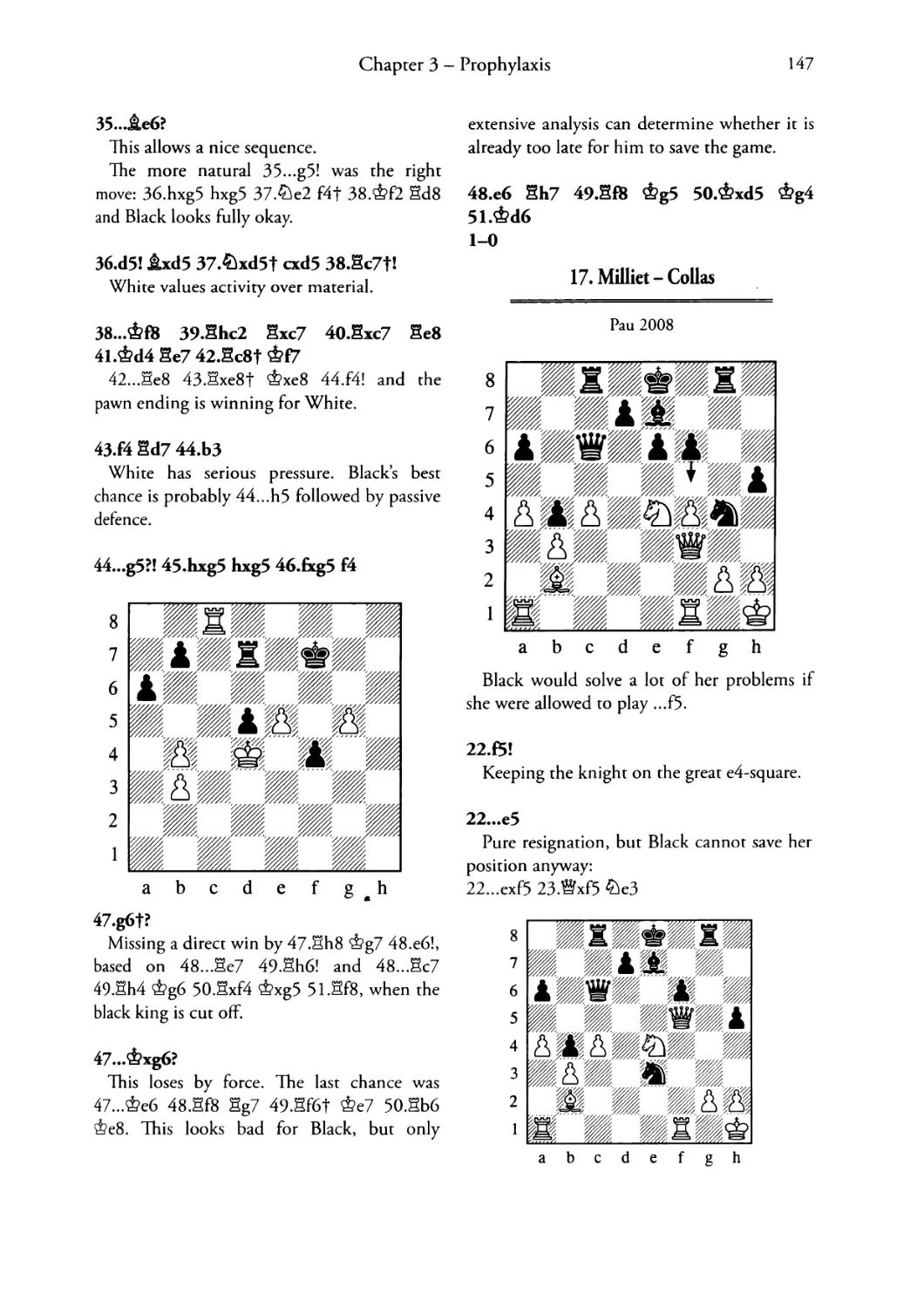
17. Milliet - Collas
Pau 2008
abcdefgh
Black would solve a lot of her problems if
she were allowed to play ...f5.
22.15!
Keeping the knight on the great e4-square.
22...e5
Pure resignation, but Black cannot save her
position anyway:
22...exf5 23.®xf5 £le3
47.g6+?
Missing a direct win by 47.Sh8 &g7 48.e6!,
based on 48...Se7 49.Sh6! and 48...Sc7
49.Sh4 &g6 50.§xf4 &xg5 51 .Sf8, when the
black king is cut off.
47...&xg6?
This loses by force. The last chance was
47...Феб 48.Sf8 Sg7 49.Sf6t Фе7 5O.Sb6
®e8. This looks bad for Black, but only
148
Grandmaster Preparation — Positional Play
This was the obvious tactical reaction. Here
the consequences of 24.^xf6f Wxf6! are not
as clear as White would like, but she has a
more complicated forced win at her disposal:
24.®h7! Sg4
24...Sxg2 loses to 25.JLxf6 JLxf6 26.Sxf6!
Sxh2f 27.&xh2 ^g4t 28.&h3 £)xf6
29.®g6f <&e7 3O.'@g7t and White ends up
with an extra piece.
25.®h8t &f7 26.®xh5t &e6
26...&f8 27.Дх16 and White wins.
27.Sf3 Sxe4
27...Wxe4 28.Exe3! Bxe3 29>d5#
28.Sel
With threats such as ®h3t and Sfxe3, White
is winning.
22..	.d5 was maybe the best chance, but after
23.cxd5 exd5 24.Sac 1 White has a winning
attack all the same.
23.Sadl
White is strategically winning and went on
to win the game in 36 moves.
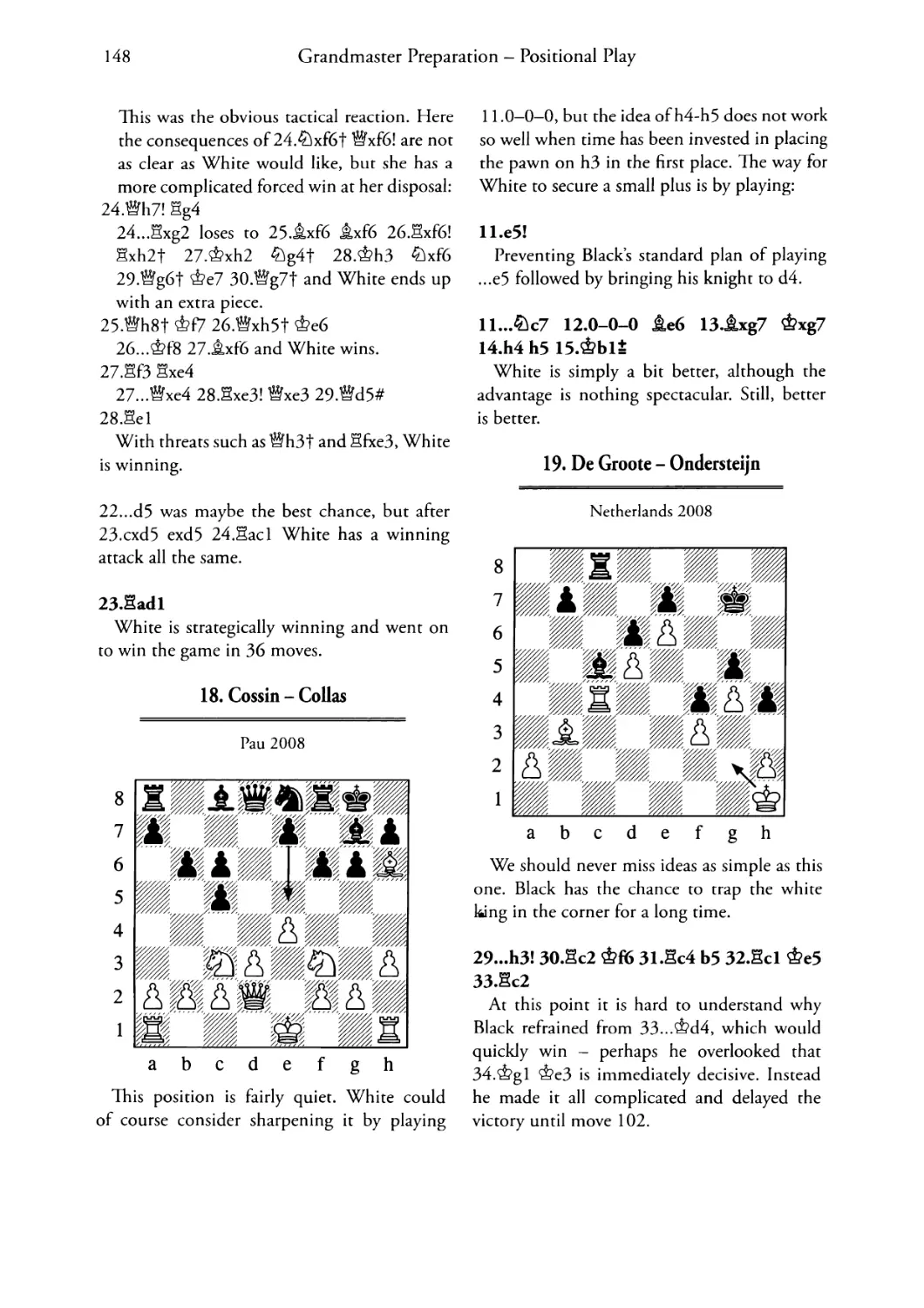
18.	Cossin - Collas
Pau 2008
This position is fairly quiet. White could
of course consider sharpening it by playing
11.0-0-0, but the idea of h4-h5 does not work
so well when time has been invested in placing
the pawn on h3 in the first place. The way for
White to secure a small plus is by playing:
11.	e5!
Preventing Blacks standard plan of playing
...e5 followed by bringing his knight to d4.
Il...	&c7 12.0-0-0 JLe6 13.txg7 &xg7
14.h4 h5 15.ФЫ±
White is simply a bit better, although the
advantage is nothing spectacular. Still, better
is better.
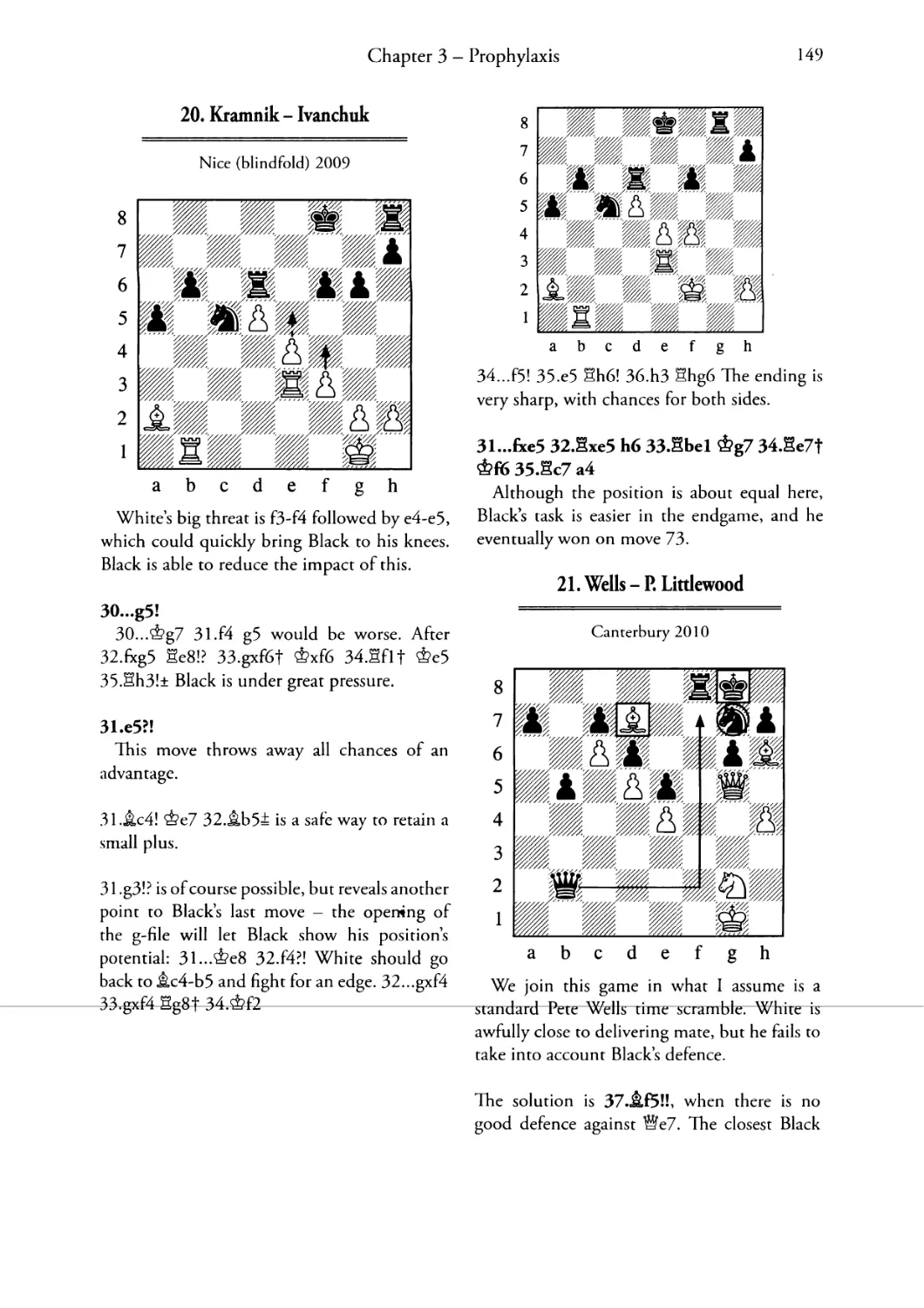
19.	De Groote - Ondersteijn
Netherlands 2008
abcdefgh
We should never miss ideas as simple as this
one. Black has the chance to trap the white
king in the corner for a long time.
29...	h3! 3O.Sc2 &fi6 31.Sc4 b5 32.Ecl Фе5
33.Sc2
At this point it is hard to understand why
Black refrained from 33...(^>d4, which would
quickly win - perhaps he overlooked that
34.<±>gl ФеЗ is immediately decisive. Instead
he made it all complicated and delayed the
victory until move 102.
Chapter 3 — Prophylaxis
149
20.	Kramnik - Ivanchuk
Nice (blindfold) 2009
abcdefgh
White’s big threat is f3-f4 followed by e4-e5,
which could quickly bring Black to his knees.
Black is able to reduce the impact of this.
3O...g5!
30	...^g? 31.(4 g5 would be worse. After
32.fkg5 Se8!? 33.gxf6f &xf6 34.Eflf Фе5
35.Sh3!± Black is under great pressure.
З1.е5?!
This move throws away all chances of an
advantage.
31.	^c4! Фе7 32.M>5± is a safe way to retain a
small plus.
31.	g3! ? is of course possible, but reveals another
point to Black’s last move — the opening of
the g-file will let Black show his position’s
potential: 31...Фев 32.f4?! White should go
back to Дс4-Ь5 and fight for an edge. 32...gxf4
33.gxf4 gg8t 34.Ф12----------------------------
abcdefgh
34..T5! 35.e5 Sh6! 36.h3 Shg6 The ending is
very sharp, with chances for both sides.
31...fxe5 32.Sxe5 h6 33.8bel &g7 34.Se7f
35.Sc7 a4
Although the position is about equal here,
Black’s task is easier in the endgame, and he
eventually won on move 73.
21.	Wells - P. Littlewood
Canterbury 2010
abcdefgh
We join this game in what I assume is a
standard Pete Wells time scramble. White is
awfully close to delivering mate, but he fails to
take into account Black’s defence.
The solution is 37.Jk.f5!!, when there is no
good defence against ®e7. The closest Black
150
Grandmaster Preparation - Positional Play
has to a defence is 37...^?f7 (37...Se8 38.®f6
and White wins), but White is winning after
38.jLe6t Фе8 39.Wg4!, with the threat of
mate in four starting with 4O.^.f7t.
The game went less successfully for White:
37.®e7??
37.&h2? is also a worse version. After
37...®f2 38.jkf5 Black can play 38...Se8!= on
account of: 39.Wf6
abcdefgh
39...Wg3t!!?
The following long and complicated line is
truly breathtaking: 37.Jie6t? £lxc6 38.dxe6
Wf2t 39.&h2 Se8 4O.h5 ФЬ8! 41.hxg6 hxg6
42.e7 b4 43.1f8 №
abcdefgh
44.&e3 Wf4f 45.Wxf4 exf4 46.£d5 b3
47.£xc7 b2 48.^xe8 bl=@ 49.1g7t &g8
5O.£)f6t &xg7 51.e8=W and it ends in
perpetual check.
37...®£2t 38.ФЕ2
abcdefgh
Here Black gave White extra chances with
38...®f6?! and the game was eventually drawn
on move 59 after further mistakes from both
players, lhe correct move would have been
38...Wf7!7, defusing all threats to the king.
22. Topalov - Kamsky
Kazan (1.4) 2011
abcdefgh
Black’s weakness is obviously his king
and the main threat against it is seemingly
®d8-f8#. Black has to defend against this,
but must do so intelligently. However, we
should check whether the main threat is
Chapter 3 — Prophylaxis
151
genuinely threatening! Here Wd8 can be met
with ...®c8 and Black is fine. Rather White is
really threatening Wdl or ld4, both leading
to desperate problems for Black. Kamsky
defended against both of these, but opened up
another avenue of attack for White.
38...&7c6?
The solution is: 38.. .Ib3!!
abcdefgh
The main point of this move is simple.
Black wants to be able to meet 391d4 with
39-..Wd3!= without the bishop hanging on a2.
Note that as mentioned above, 39.Wd8 is not
a problem; Black has 39...Шс8Т forcing the
exchange of queens.
38...1Ы? is refuted by 39.®dl!.
39.Ш6! Фе8 4O.£ic7t?!
40.1d4! was stronger. After 4O...l=fd3
41.®f8t &d7 42.®xf6
abcdefgh
Black is totally lost. For example: 42...^f3t
43.ixf3 ®xf3 44.Wf7t &e7 45.&f8t &d8
46.®xa2! and White wins.
40...&Г 41.Ы5
Repeating the position with 41.^e6! was
best, but Topalov is looking elsewhere for the
win.
41...®e2 42.®xfi6t Фе8 43>e6|
44.&gl Wdlf 45.1ft?
White was still winning: 45.&h2 We2
46.W6f Фе8 47.Wh8t	48.1gl &f3t
49.?bhl lxd5 5O.exd5 ^cd4 51.©xh5t Фе7
52.f6t &d6 53.f7 Фе7 54.d6t &f8 55>g6
and mate is imminent.
45...1xd5 46.exd5
46.Wxd5 Wxd5 47.exd5 2)e7±
46...Ы4 47.Wft>f &g8 48.Wxg5t
48.1xd4 Wxd4t 49.ФЫ Wdl! 5O.Wxg5t
&f7 51.Wf4 Wxd5t 52.<±>gl ±
48...Ф£7 49>d8 Wc2!!=
abcdefgh
50.1g2 ®cl| 51.&И2 @c2 52.1gl £df3t
53.ФЫ &el 54.1f2 Wx£2 55.®c7t
56.@d6f ^f7 57.®c7t &f6 58.Wd6f Ф£7
Уг-Уг
152
Grandmaster Preparation - Positional Play
23. Sargissian - E. Berg
Rijeka 2010
24. Roiz - Rodshtein
ab cdefgh
abcdefgh
White has been playing with his back against
the wall for a while and has now decided to
put all his hope in the Sa3-g3 manoeuvre.
Unfortunately there is a move he did not
anticipate:
38...e3!!
A nice pawn sacrifice that improves Black’s
coordination.
39.JLxe3
The main point is of course that after
39.Sxe3 Sxd4 40.§g3 Sg4 Black is able to
block the pin and win the game.
39.jLc3 e2 is equally hopeless, even though the
game would continue for a bit longer.
39...Wxfi6 4O.tf4 gtf
White resigned. I am sure that there are
those that would have put this position
in the Calculation book in the section on
Intermediate Moves, but this only underlines
the fact that often there are many ways to
solve a chess problem and that the definitions
are only useful to us as ways to organize our
thinking.
0-1
White is on top. He has a fantastic knight
on d6 and the black pieces are almost as
poorly placed as they could be. However, even
winning positions need to be won. In this case
there are two easy ways arrive at the solution.
The first is to aim to restrict Black’s play. Black
would like to get his knight into play - he
wants to play ...a5, ...Wc7 and ...£la6, when
he would be fine, the knight soon making it
to d5. White can of course prevent this plan.
The other way to find the right move is
to focus on penetrating along the b-file.
In the game White did not find the right
way to do this, playing 24.gdbl?, and after
24...a5!± Black was suddenly in with a shout. It
should be mentioned that Black actually made
a strong comeback and even won the game
some 60 moves later. If White had looked for a
way to take this resource away from Black, he
would have found the right move as well.
The correct move is of course 24.a5I, when
Black is completely paralysed and will lose
material quite soon.