/
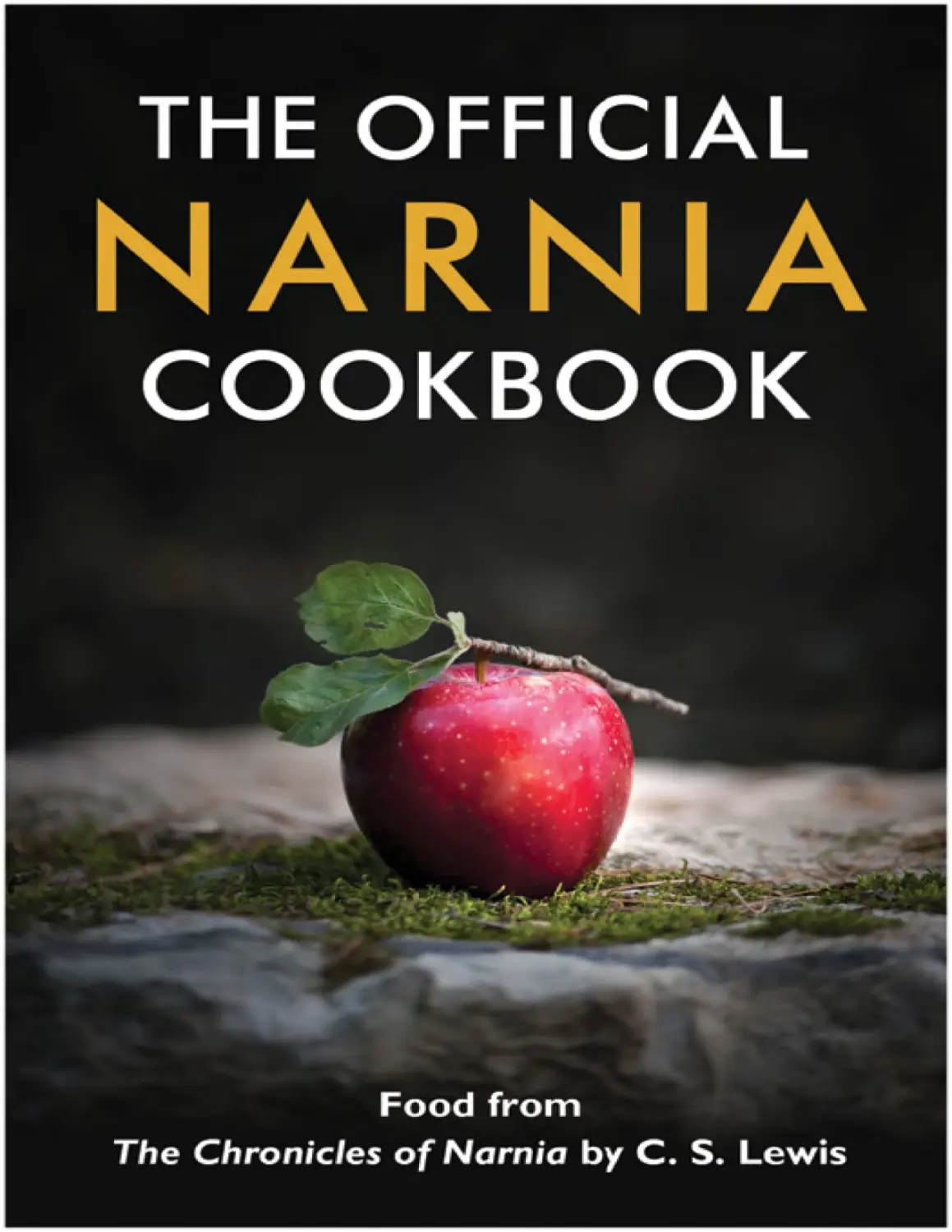


Автор: Lewis C.S.
Теги: fantasy cooking cookbook culinary chronicles of narnia recepies of dishes harpper publisher
ISBN: 0-06-027815-3



Текст
                    CONTENTS

A Word About Safety
Foreword
Mrs. Beaver’s Marmalade Roll-on-the-Run
Breakfast
Porridge
Quick Porridge
Old-fashioned Porridge
Bacon, Eggs, and Mushrooms
Scrambled Eggs and Toast (Mumbled Eggs)
Buttered Eggs
Everyday White Bread
Dried Figs
Stewed Figs
English Omelette
Lunch
Roast Leg of Lamb
Cold Lamb and Green Peas
Mint Sauce
Pigeon Pie
Short Pastry
Meat Pasty
Cold Ham
Vinaigrette
Cold Ham Rolls
Egg and Cheese Sandwiches
Assorted Luncheon Salads
Green Salad with Salad Cream

Tomato Salad with Vinaigrette
Potato Salad
Quick Potato Salad
Apples, Herbs, and Cheese
Afternoon Tea
Boiled Egg
Scotch Eggs
A Lovely Cup of Hot Tea
Hot Sardines on Toast
Sugar-Topped Cake
Sugar Cake Frosting
Oatcakes
Risen Oatcakes
Dinner
Cock-a-Leekie Soup
Mushroom Soup
Traditional Roast Turkey
Chestnut Stuffing
Bread and Herb Stuffing
Giblets
Grilled Loin of Venison
Roast Pheasant
Gravy
Bread Sauce
Lobsters and Salad
Boiled Chicken
Gravy
Stewed Eel
Boiled Ham
Baked Ham
Chicken Breasts Masquerading as Snipe
Cold Poached Salmon
Herbed Mayonnaise
Ember-Roasted Salmon

Fresh Fried Fish
Batter
Chicken Livers Calormene
Boiled Potatoes
Roast Chestnuts
Homestyle Brown Bread
Roast Potatoes
Sausage
Sausage Rolls
Dessert
Lucy’s Roast Apples
Sweetmeats
Chocolate-Covered Hazelnuts
Fruit Truffles
Marmalade Roll
Steamed Pudding
Ginger Fig Pudding
Custard Sauce
Hard Sauce
Mincemeat Pies
Tea Cakes with Lemon Curd Filling
Lemon Curd Filling
Gooseberry Fool
Rhubarb Fool
Toffee
Strawberry Ice Cream
Jelly
Lemon Jelly
Apple Jelly
Mixed Fruit Jelly
Curds
Turkish Delight
A Display of Fresh Fruit
Drinks

Hot Chocolate
In Place of Mead
Milk and Honey
Lemon Squash
Sherbet
Pineapple Sherbet
Strawberry Sherbet
Coffee and Hot Milk
Coffee Calormene
Some Favorite Narnian Menus
About the Contributors
Back Ads
Copyright
About the Publisher

A WORD ABOUT SAFETY

When you work in the kitchen, it is important to be very careful not to cut
or burn yourself. You may need the help of an adult to prepare many of the
foods in this book, especially if you are going to use a sharp knife and
electrical appliances, and work with a hot stove or oven. Be sure an adult is
present with you at all times when you are in the kitchen, ready to cook
these wonderful recipes. By following some simple rules, you will be able
to work safely and have fun!
• If you have long hair, tie it back, and roll up long sleeves carefully.
• Ask an adult for help when using sharp knives or shears and appliances
such as electric mixers, blenders, can openers, etc.
• Pick up knives by the handle, never by the blade.
• Always have an adult handle hot or boiling liquids. Do not fry foods
yourself.
• Use heavy pot holders for handling hot pots and pans on the stove and
baking dishes from the oven.
• Never leave the stove unattended.
• Be sure to ask an adult to light an oven for you, if it is not self-starting.
• Do not ever light matches yourself!
• Be sure to turn off electric appliances such as mixers or blenders before
taking the lids off.
• Never place any electrical item in water.
• Use a plastic cutting board to cut up raw poultry, meat, or fish. Wash the
board with hot soapy water after every use and before using it with

another type of food.
• Never put cooked poultry, fish, or meat on the same board or in the same
container that held the raw meat, unless you have washed the container
well first.
• Don’t use cracked or dirty eggs. They may have been contaminated with
harmful bacteria. Be sure to wash your hands, the equipment, and the
countertop after working with eggs. Avoid eating raw eggs.
• Keep hot foods hot. Raw eggs, fish, poultry, and meat must be cooked
well to kill harmful bacteria. If you have leftovers, put them into covered
containers and refrigerate or freeze them as soon as possible.
• Keep cold foods cold. Foods that are meant to be refrigerated should be
cold when you touch them. Frozen foods should be extremely cold and
hard as a rock. Thaw foods in the refrigerator, not on the countertop.

FOREWORD

This cookbook is about more than just cooking or food. It’s about Narnia
and Jack (C. S. Lewis), the man who wrote The Chronicles of Narnia, and
food and you and me. But mostly it’s about Narnia, food, and fun.
Jack was born in Belfast, Ireland, in 1898. When Jack was a boy,
Belfast was an unhealthy place to live and his parents were very careful
about not letting him and his older brother, Warnie, get cold and wet, so the
boys spent a lot of time indoors. As a result, Jack became quite interested in
what went on in the kitchen. Jack’s mother, Flora, used a book already
famous in those days called The Book of Household Management, by Mrs.
Isabella Beeton, that contained several thousand recipes; and many of
Jack’s favorite dishes originally came from this book. Many years later it
was Jack himself who showed me how to cook things like grilled kippers
(smoked herring), which he had learned from watching the cook in Belfast
all those years before.
Many of the foods Jack preferred might be considered old-fashioned in
today’s world. In the days of his youth, many of the ingredients available
were fresher than those available today. There were no supermarkets or
freezers or even refrigerators, and things like meat, dairy products, fish, and
bread were brought to the house each day by the butchers, milkmen,
fishmongers, and bakers (although many people made their own bread at
home). Vegetables were often grown at home in kitchen gardens just as they
are in Narnia, or if you lived in a town, they were often delivered by a
greengrocer. Old-fashioned foods like those preferred in Narnia are some of
the very best-tasting foods, and quite often the most nutritious as well.
Remember that in those days, as in Narnia to this day, there were no
prepackaged foods or processed foods, no chemicals were added, and no
artificial fertilizers or pesticides were used in growing foods. Fruit and
vegetables might not have looked as beautiful as they do today, but they

tasted better. If you have been to Narnia or if you grow your own vegetables
at home, or if you have relatives or friends who have their own gardens,
you will know the difference in taste between those and the ones from the
supermarket. Free-range eggs are another example. They are rich-tasting,
richly colored eggs, which are always better than those produced in factory
farms.
Back in Jack’s day and also in Narnia, profit was not as important as
people think it to be here in this world. Pride in one’s work or products
played a much higher role in the way people did things. For example, a man
who sold bacon and ham in those days would go to a great deal of trouble to
ensure that his products were the very best they could possibly be. He
would mix up his own special recipe of “pickling brine,” a mixture of salt,
water, sometimes molasses and sugar, a little saltpeter, and his own secret
herbs and spices. It was very important to get the brine absolutely right. He
would then cure the bacon in the brine for ten days or so (depending on the
weather), and then smoke it in his own smokehouse, having carefully
chosen the best wood for his smoke-fire. In England or Ireland, this would
be good dry oak; in America it would be hickory. In Narnia the dwarfs
make the most delicious bacon. People everywhere went to immense
trouble and took great pride in their products.
Jack liked good food and good company. He enjoyed nothing more
than a fine dinner in the company of people whom he liked and respected
and with whom he could enjoy good conversation. As a fellow of a college
at Oxford, Jack was greatly privileged to be able to dine “in hall” at the
college. There he would partake of the excellent cooking that the college
provided, while surrounded by academics and learned men, many of whom
were great conversationalists.
At his home in Oxford, for many years Jack ate very simple foods. But
when he married my mother late in his life, soon his meals rivaled any of
his old college’s. My mother was such an excellent cook, her meals might
have been fine enough to grace the tables at Cair Paravel.
It’s often said that you are what you eat, which perhaps is a bit of a
stretch of the imagination. But it is true that you can find out quite a lot
about people by observing what they eat. Now, in Narnia—that wonderful,
magical place—the foods mentioned are mostly things that Jack himself
liked to eat. Of course there are exceptions, like Man Pies and Marsh-

wiggle and other things eaten by the evil giants and other nasties, which
perhaps it is better not to go into. On the whole, though, Narnian food is
utterly delightful.
What we have done in this book is to take a number of the foods
mentioned in The Chronicles of Narnia and then devise recipes for
preparing them.
As you go through this book and try the recipes, remember that in
Narnia there are no electrical appliances, and we have tried to keep the use
of blenders and other modern appliances to a minimum. We have also had
to substitute for a few things here and there that simply don’t exist in our
world. Pavenders, for example, are a beautiful salt and freshwater fish
found in the rivers and seas of Narnia but not here. We have used salmon
instead, which is the most similar fish this world has to offer.
As you cook these recipes, please be very careful to treat the food and
the utensils with the respect they deserve, and to watch out for hot things
and sharp things. It’s no fun cooking if you or somebody else gets hurt.
Have fun and eat hearty.
—Douglas Gresham

Mrs. Beaver’s Marmalade Roll-on-the-Run
We asked the millions of fans of The Chronicles of Narnia on our Facebook
page to bring the magic of Narnia to life in their own kitchens with the
Narnia Food and Feasts recipe contest 2013. From Edmund’s Turkish
Delight to Mr. Tumnus’s sugar-topped cake, they took inspiration from the
stories, characters, and events of The Chronicles of Narnia and let their
imagination run wild. Here is our winning recipe by Gill Bland.

Mrs. Beaver’s Marmalade Roll-on-the-Run
If you’re being chased by wolves and a white witch, these scone-like rolls
are sturdy enough to be wrapped up and popped into a sack with a packet of
tea so that you can eat them on the go with a hot brew. They are deliciously
sticky and will give you plenty of energy for the journey. If, however, you
are able to take your time, Mrs. Beaver recommends serving them warm
with hot brandy sauce because it’s important to have a taste of Christmas
whenever you can—especially when you’ve lived through years of it being
always winter and never Christmas.
230 g (1 cup) plain flour
5 g (1 tsp.) baking powder
Pinch of salt
30 g (2 tbs.) butter
55 g (1/4 cup) caster or fine sugar
Approximately 140 ml (1/2 cup) milk
Marmalade
Preheat the oven to 450°F/230°C/Gas Mark 8. Put the flour, baking powder,
and salt in a large bowl. Rub in the butter until the mixture resembles bread
crumbs. Add the sugar, mix, then add a little milk at a time, combining until
you have a stiff dough. Press the dough out into a rectangle. Spread the
marmalade over it. Roll up along the longer edge. Using a very sharp knife,

cut into slices about 1 inch (2.5 cm) thick. Place each roll on its side in a
greased muffin tin (this helps hold it together). Bake for 10 to 15 minutes.

Photograph by Gill Bland

BREAKFAST

Breakfast is a word that means “to start eating again after a time spent not
eating anything”—to break one’s fast. Different countries have different
breakfast traditions. In France breakfast is usually a cup of coffee with a
pastry and perhaps a piece of fruit. In Australia and America, steak and
eggs are not uncommon for breakfast. In Ireland or England, as well as in
Narnia, a wide variety of foods are preferred for breakfast. Porridge, for
example, is a common breakfast food. Grilled kippers, fried bacon, eggs,
sausages, black and white puddings, kidneys, and mushrooms have been
popular down through the ages. Of course, we have to remember that in
Narnia there are many different kinds of animals and creatures, and they all
have their own tastes and preferences. While Dwarfs would prepare a
typical fried breakfast, Pattertwig the squirrel would serve a selection of the
lighter nuts. The breakfasts we have in this book are those Narnian
breakfasts that are suitable for Sons of Adam and Daughters of Eve.

PORRIDGE

Porridge originates in Scotland, where the climate is such that oats grow
well. The first porridge was probably made of oats, winnowed to remove
most of the husks, and then bashed with a rock and boiled in water. In
Britain you can still get old-fashioned stone-ground porridge, just as in the
old days when grains were ground between big flat stones in wind- or
water-powered mills. To this day, in parts of Scotland and Narnia, porridge
is eaten with salt, as a savory food. Many of the people of northern Ireland
originally came from Scotland, and Jack sometimes liked his porridge with
salt and sometimes sweet. In Narnia quite a few of the creatures like
porridge—Giants, Dwarfs, Fauns, Centaurs, and others—and because sugar
is imported from Calormen, and there is honey in Narnia and salt from the
sea, they eat their porridge either way.
“And here’s porridge—and here’s a jug of cream—and here’s a spoon.”
—THE HORSE AND HIS BOY

Quick Porridge
4 SERVINGS

2 cups milk
1½ cups water
¼ teaspoon salt
2 cups rolled oats, 5-minute style
1. In a medium saucepan, bring the milk, water, and salt to a boil.
2. Stir in the oats and return to the boil.
3. Lower heat and cook slowly for about 5 minutes, stirring occasionally.

Old-fashioned Porridge
4 SERVINGS
4 cups water
¼ teaspoon salt
1 scant cup steel-cut oats
1. In a medium saucepan, bring the water and salt to a boil.
2. Stir in the oats and return to the boil, continuing to stir for a minute or so.
3. Lower heat and simmer until the oats are tender and the water is
absorbed, adding more water if necessary, about 20–30 minutes.
Either version of porridge should be served hot with milk or cream and
honey and, if you like, a sprinkle of salt. For a delicious change in flavor try
a spoonful of brown sugar or cane syrup.

BACON, EGGS, AND MUSHROOMS

One of the most delicious smells in the entire world is the smell of smoked
bacon frying in a pan on a frosty morning. You can get hungry just thinking
about it. Put in some fresh free-range eggs and it gets even better. Add some
English button mushrooms, and you have a feast almost too good to eat
only at breakfast time. Bacon, eggs, and mushrooms with fresh bread and
butter and a glass of fresh milk is one of my very favorite meals. Jack liked
mushrooms probably more than anything else, and he loved this particular
recipe. In Narnia the Dwarfs are wonderful cooks, and this meal is one their
most favorite dishes.
“It was, in fact, the smell of bacon and eggs and mushrooms all frying in a
pan.”
—THE HORSE AND HIS BOY
PER PERSON:
2 pieces thick sliced bacon
2 white button mushrooms, cleaned, stems trimmed even with base of cap
2 large eggs
2 slices bread, toasted, lightly buttered, and halved diagonally

1. In a nonstick frying pan over medium heat, cook the bacon, turning now
and then, until firm but not crispy. Add the mushrooms and cook until they
are wilted. Push the bacon and mushrooms to one side of the pan, and tilt
the pan so the fat runs down to the other side. Crack the eggs into a saucer
and slide them into the fat, keeping the pan tilted until the eggs are set.
When they are firm enough to stay in place, set the pan flat on the stove,
cover, and cook until the eggs are done.
2. Drain off the excess fat and place on a warmed plate. Serve with the
toast.

SCRAMBLED EGGS AND TOAST (MUMBLED
EGGS)

For a light meal, you can’t beat scrambled eggs. What we have here is the
basic scrambled eggs recipe that has been used for ages and ages all over
Narnia. If you want to get adventurous, you can add a few different herbs
and spices. But be careful—too much garlic or too much chili could ruin the
flavor. Faun Orruns would probably toss in a few finely chopped chives or a
touch of garlic because Fauns have delicate and well-refined tastes, though
they are light eaters. One interesting thing about scrambled eggs is that you
can eat a lot more eggs when they are scrambled than you can if they are
fried or boiled.
Breakfast was scrambled eggs and toast and Eustace tackled it just as if he
had not had a very large supper in the middle of the night.
—THE SILVER CHAIR
PER PERSON:
2 slices firm white or wheat bread, toasted, lightly buttered, and halved
diagonally

2 tablespoons butter
2 large eggs
Salt and pepper to taste
1. Keep the toast warm while preparing the eggs.
2. Warm a nonstick pan and melt the butter over low heat. Break the eggs
into the pan and cook over medium heat, stirring in one direction until the
mixture begins to set.
3. With a wooden spoon, pull the egg mixture away from the sides of the
pan, and stir the eggs just enough to keep from sticking to the pan.
4. When the eggs are cooked but still soft, sprinkle with a little salt and
pepper and turn out onto warm plates. Tuck a triangle of toast on each side
of the eggs and serve while piping hot.

BUTTERED EGGS

It was not such a breakfast as they would have chosen, for Caspian and
Cornelius were thinking of venison pasties, and Peter and Edmund of
buttered eggs and hot coffee.
—PRINCE CASPIAN
6 SERVINGS
6 slices firm white or wheat bread, toasted, lightly buttered, and halved
diagonally
12 large eggs
Salt and pepper
12 tablespoons butter (1½ sticks)
Sprigs of parsley
1. Keep the toast warm while preparing the eggs. Warm the serving plates.
2. Break the eggs into a large bowl, season lightly with salt and pepper, and
beat with a fork until well mixed.
3. Put the butter into a warmed nonstick pan to melt. Do not let it get too
hot. When it is melted, pour in the eggs and cook over low heat. Stir the
eggs constantly in the same direction, breaking up any lumps that form.

4. When the eggs are thick and creamy, remove the pan from the heat and
continue stirring the eggs for a minute. Arrange 2 pieces of toast on each
plate and top with the buttered eggs. Garnish with parsley and serve.

EVERYDAY WHITE BREAD

Almost every country in the world has some form of bread. When Jack
was a child, bread was made in the home. There are two kinds of bread that
Jack loved: yeast bread (as in this recipe) and Irish soda bread, which is
made without yeast. Making bread at home is good fun and, when you get it
right, provides you with beautiful, fresh, rich-tasting loaves. It is also very
healthy because, like Narnia bread, it has no chemical additives. When
making bread, it is best to keep your ingredients, implements, and working
surfaces warm. You should also remember that for best results you must

knead the bread firmly. The only problem with homemade bread is that
people eat it as fast as you can pull it from the oven. In Narnia, it is the
Dwarfs and Fauns who are the best bread makers.
Meanwhile the girls were helping Mrs. Beaver to fill the kettle and lay the
table and cut the bread.
—THE LION, THE WITCH AND THE WARDROBE
3 LOAVES
5 cups unbleached all-purpose Hour, plus more if needed
1 tablespoon salt
6 tablespoons (¾ stick) butter, room temperature
1 packet or 1 tablespoon active dry yeast
1 teaspoon granulated sugar
1 cup lukewarm water (110–115 degrees F)
1 cup lukewarm milk
1. In the bowl of a heavy-duty mixer, combine 5 cups of the flour and the
salt. Cut the butter into small pieces and rub into the flour with your fingers
until well combined.
2. In a cup or small bowl, stir the yeast and sugar into the water until they
dissolve. Let stand for 5 minutes until the mixture is creamy in appearance
and forms small bubbles on top. This is called proofing and shows that the
yeast is active.
3. Use a dough hook on the mixer,* and set the mixer at the lowest speed.
Gradually pour the yeast mixture and milk into the flour, and mix until
combined. Increase speed somewhat and knead the dough for about 5
minutes, adding more flour a tablespoon at a time until the ball of dough
clears the bottom and sides of the bowl. Remove the dough from the bowl.
Clean the bowl and spray with oil, or grease it lightly.
4. Return the dough to the bowl, and turn the dough over a few times to
cover it with oil. Cover the bowl with plastic wrap and a clean dish towel,
and place the bowl in a draft-free place until the dough has doubled in size,
about two hours.

5. Turn the dough out on a lightly floured surface; punch down the dough to
flatten it, cover it with a towel, and let it rest for 10 minutes.
6. Grease three 8" x 4" x 2" loaf pans.
7. Divide the dough into three portions. Knead each portion a few times,
and then form into loaves. Place each loaf in a greased 8" x 4" x 2" loaf pan.
Cover each pan with plastic wrap and towel, and let the dough rise in a
draft-free place until almost doubled in size, about one hour.
8. Preheat the oven to 400 degrees F. Bake the bread for 35–40 minutes or
until browned and hollow sounding when the bottom of the loaf is tapped.
If you have an instant-read thermometer, the interior temperature should be
about 190 degrees F.
This versatile dough may be wrapped in plastic wrap after the first rising
and refrigerated for a day or two, or frozen for later use.
* If kneading by hand, follow steps 1 and 2, using any large bowl for step 1.
After proofing the yeast, gradually add the yeast mixture into the flour and
knead the dough, adding more flour a tablespoon at a time until the ball of
dough clears the bottom and sides of the bowl. Remove the dough to a
lightly floured surface and knead until smooth and elastic, about 5 minutes.
Return the dough to the greased bowl, and continue with step 4.

DRIED FIGS AND STEWED FIGS

While some figs do grow in Narnia, figs mostly come from Archenland
and Calormen. In this world figs are a very popular food and have been for
centuries. They are a rich, sweet, and extremely nutritious fruit. It is said, in
fact, that with dried figs, bread, wine, olives, and olive oil, you could live a
healthy life (though it might be a bit boring). There are two kinds of dried
figs: the dessert fig, which is sugary and very sweet, and the ordinary dried
fig, which doesn’t taste as good but is just as good for you. Stewed figs are
also very nice; they are often eaten for breakfast and are said to be good for
the digestion. In Narnia both sweet and ordinary dried figs are available.
They investigated the saddle-bags and the results were cheering—a meat
pasty, only slightly stale, a lump of dried figs and another lump of green
cheese, a little flask of wine, and some money.
—THE HORSE AND HIS BOY

Dried Figs
Dried figs are delicious eaten alone. They are sugary and very sweet and
quite a satisfying snack. Stuff a fig with a lump of goat cheese for a special
treat.

Stewed Figs

1 pound dried figs, stems removed
Zest of ½ lemon with no white pith attached
3–4" stick cinnamon
¼ cup granulated sugar or to taste
Pinch of salt
1 cup orange juice
Combine all ingredients in a saucepan, and add enough water to cover the
figs by ½". Bring to a boil; then lower heat to a simmer, cover, and cook
until the figs are plump and tender. The cooking time will vary depending
on the dryness of the fruit. Begin checking after 20 minutes by pricking one
with a fork. Cool. These can be served chilled or at room temperature.

ENGLISH OMELETTE

Omelettes can be made with all kinds of things to flavor them. We have
suggested several here, but the variety you can make is limited only by your
own imagination. Narnian omelettes are made with all kinds of fillings and
different kinds of eggs. Wild seagulls’ and wild plovers’ eggs are two tasty
varieties, though, of course, it is always bad manners to serve any egg dish
in the presence of Narnian Talking Birds. Omelettes are often regarded as
breakfast food but can, in fact, be eaten at any time of the day. Experiment
with your omelette recipes by adding spices, such as a touch of curry
powder or some ginger, for example.
“So first of all he has porridge and pavenders and kidneys and bacon and
omelettes and cold ham and toast and marmalade, and coffee and beer.”

—THE SILVER CHAIR
1 SERVING
1 tablespoon water
2 eggs, the yolks separated from the whites
Pinch of salt and white pepper
1 tablespoon butter
ASSORTED FILLINGS:
2 tablespoons grated Cheddar or Cheshire or another flavorful cheese
herbs: 1 tablespoon finely chopped fresh parsley, chives, or dill
onion: 1 tablespoon chopped, sautéed in 1 teaspoon butter until soft and
translucent
mushrooms: 2 tablespoons sliced, cooked in 1 teaspoon butter
1. Preheat broiler.
2. Stir the water and the egg yolks vigorously until well combined. Stir in a
pinch of salt and pepper.
3. Whisk the egg whites until stiff. Gently fold the egg whites into the yolks
until just combined.
4. Over medium heat, melt the butter in an ovenproof omelette pan. Tip the
pan from side to side to coat well with the butter. Pour in the egg mixture.
As the edges set, lift them away from the sides of the pan and let the
uncooked egg run under. When the bottom is well set, put the pan under the
broiler and cook a minute or so to set the top.
5. Remove the pan from the broiler; spread filling over ½ of the omelette.
Run a spatula around the edge of the pan, fold the omelette in half, and slide
out onto a warm plate. Serve piping hot.

LUNCH

Jack was fascinated by words, and the origin of the word lunch is quite
interesting. It probably comes from the Middle English word noneschench
(none meaning “noon” plus schench meaning “drink”), so originally it
seems that lunch would have been a break for a drink in the middle of the
day. Nowadays, of course, we make a meal of it. In some parts of the world
lunch is the main meal of the day, and many people have a big midday meal
on Sundays. At Jack’s Oxford home, The Kilns, lunch was served at one
o’clock in the afternoon and was a relatively light meal. In Narnia lunch
dishes vary according to the season of the year as well as which creatures
are eating it. For Naiads and Dryads, the spirits of waters and trees, lunch
would be very different from that enjoyed by Dwarfs or eagles, for
example. The lunch suggestions we have used here are, naturally enough,
those suitable for us.

ROAST LEG OF LAMB

Roast lamb is one of the most delicious of all meats when properly cooked
and served. A couple of slices of cold leftover lamb served with mint sauce,
hot green peas, and perhaps a few new potatoes is a wonderful lunch. When
new potatoes are boiled, a sprig of mint should be added to the water. Lamb
and mint traditionally go together, and you’ll find they are delicious.
Sheep are very hardy creatures and can live and thrive in country
where cattle could not survive. For this reason lamb became popular in
mountainous and semidesert areas throughout the world. In Archenland,
and throughout the mountains of Scotland, England, Wales, and Ireland, to
this day you will see sheep everywhere. Jack got his taste for lamb from his
childhood in northern Ireland and England. In Narnia lamb is a favorite dish
of the Telmarines.
The Faun trotted in, half dancing, with a tray in its hands which was nearly
as large as itself.
—THE HORSE AND HIS BOY
6 SERVINGS
1 leg of lamb, 7–9 pounds
2 tablespoons honey
2 cloves garlic (or more to taste), slivered
Leaves of 2 sprigs fresh rosemary, chopped, or 1 teaspoon dried

Leaves of 4 sprigs fresh thyme, chopped, or 1 teaspoon dried
Salt and freshly ground black pepper
Mint sauce
1. Preheat the oven to 350 degrees F.
2. Place the leg of lamb in a roasting pan. Brush with a thin coating of
honey. Cut slits in the lamb, and tuck in slivers of garlic and bits of herbs.
3. Scatter any extra garlic and herbs over the lamb; sprinkle with salt and
pepper, and roast uncovered for about 20 minutes per pound.
4. Remove from the oven and allow to sit for 15–20 minutes if serving hot,
in order to make carving easier.
5. Slice the lamb and serve with mint sauce on the side. To serve cold, allow
the meat to cool completely in the refrigerator.
Lamb can also be roasted in a cooking bag, which you can buy in a grocery
store or supermarket. Season as above and place in the bag, following the
manufacturer’s directions for use.

COLD LAMB AND GREEN PEAS

“It’s lovely,” said Lucy, and so it was; an omelette, piping hot, cold lamb
and green peas, a strawberry ice, lemon squash to drink with the meal and
a cup of chocolate to follow.
—THE VOYAGE OF THE DAWN TREADER
6 SERVINGS
12 slices cold roast lamb, or more if desired
2 pounds fresh young peas, shelled, about 1½ cups, or one 10-ounce
package frozen baby peas, thawed
1 teaspoon salt
Sprig of mint
1 tablespoon butter
Salt and freshly ground black pepper to taste
Mint sauce (see recipe below)

1. Arrange the slices of meat on a serving platter.
2. Bring to a boil enough water to just cover the peas. Add the peas, the salt,
and the sprig of mint. Lower heat to a simmer and cook until tender, about 5
minutes for young peas, less for thawed peas.
3. Drain and dress with butter and salt and pepper to taste. Serve hot.
4. Serve the lamb with the mint sauce on the side.

Mint Sauce
1 cup fresh mint leaves
½ cup malt vinegar
¼ cup water
2–3 tablespoons granulated sugar (see note)
Pinch of salt
1. Wash the mint leaves and chop finely.
2. In a small saucepan, combine the vinegar, water, sugar, and salt and bring
to a boil, stirring until the sugar is dissolved. Stir in the mint and simmer for
5 minutes. Taste and adjust seasoning if needed.
3. Serve at room temperature in a small jug with a spoon.
Note: Substitute 3 tablespoons of wildflower honey for the granulated sugar
to add a tangy flavor to the mint.

PIGEON PIE

When I was a boy at The Kilns, there were wild wood pigeons that often
raided our vegetable garden for anything they could find. It soon became
my job to try to keep them under control with a shotgun, and I was a very
proud boy when the cook served a pigeon pie for dinner. Cold pigeon pie is
delicious for lunches too. In country areas of England and Ireland, you can
still get pigeon pie now and then. For America, we have substituted Cornish
game hens, which taste very similar. Narnians don’t have shotguns, and so

Dwarfs and Telmarines hunt with longbows. Shooting a bird on the wing
with an arrow takes a great deal of skill, however, so most castles have their
own dovecotes, in which pigeons are bred for the table. Pigeon pie is
regularly on the menu at Castle Anvard and Cair Paravel.
“Sir, be pleased to take another breast of pigeon, I entreat you.”
—THE SILVER CHAIR
6 SERVINGS
STOCK:
2 Cornish game hens, 2½–3 pounds total
2 quarts water, or enough to cover bones
1 celery rib, cut into large pieces
1 onion, halved
1 carrot, cut into large pieces
½ teaspoon dried thyme
1 bay leaf
2 teaspoons salt
½ teaspoon white pepper
PIE:
2 slices bacon, cut in 1" pieces
1 tablespoon butter
1 onion, chopped
½ pound lean top-round beef, cubed
½ cup burgundy wine
Salt and freshly ground black pepper
½ teaspoon dried marjoram or 1 tablespoon minced fresh parsley
2 hard-boiled eggs
1 recipe short pastry (see recipe below)
2 tablespoons milk
1. Remove the meat of Cornish hens from the bones and skin in pieces as
large as possible and set aside.

2. In a large saucepan, combine the bones and skin with the water, celery,
onion, carrot, thyme, bay leaf, 2 teaspoons salt, and white pepper. Bring to a
simmer and cook, covered, for 1 hour. Strain the stock, discarding the
solids, and set aside. If time permits, refrigerate the stock and remove the
fat. Otherwise skim off as much fat as possible before continuing.
3. Grease a 2-quart casserole and cover the bottom with the bacon.
4. In a nonstick pan, melt the butter and sauté the onion slowly until tender
and translucent. Do not brown. Remove the pan from the heat and sprinkle
the onion over the bacon in the casserole. Return the pan to the stove, raise
the heat, and brown the beef on all sides. Layer the beef over the onion. In
the same pan, brown the meat of the Cornish hens, adding more butter if
necessary, and add it to the casserole.
5. Add the wine to the pan and deglaze it, loosening all bits of beef and
hens. Pour all over the ingredients in the casserole. Add the stock to almost
cover the meats. Sprinkle with salt, pepper, and marjoram or parsley. Peel
and slice the hard-boiled eggs and arrange on top of all.
6. Preheat the oven to 400 degrees F.
7. Roll out the pastry to about ¼" thickness and slightly larger than the top
of the casserole. Cut out a small circle from the center of the dough.
Moisten the rim of the casserole, and fit the pastry over the top, pressing the
pastry firmly to the casserole and crimping decoratively. Brush the pastry
with milk. Leftover dough can be wrapped well and frozen.
8. Bake the pie for 15 minutes; then lower heat to 275 degrees F and bake
for 45 minutes. Remove from the oven and let sit for 10 minutes before
serving.

Short Pastry
2 SINGLE CRUSTS
2 cups all-purpose flour
1 teaspoon granulated sugar
1 teaspoon salt

¾ cup lard, or 12 tablespoons vegetable shortening, cold
5 tablespoons water, plus more as needed
1. Combine the flour, sugar, and salt.
2. With a pastry cutter or knife, cut the shortening into the flour mixture
until it resembles coarse meal.
3. Using a fork, mix in 5 tablespoons of water. Add more water if necessary
to form the dough into a ball. Working the dough as little as possible, form
into a disk. Wrap and refrigerate for 1 hour or until ready to roll out. This
can be frozen for later use.

MEAT PASTY

If you have to go on a long journey on horseback (suppose you were a
messenger for High King Peter or something), there is nothing more
delicious to take in your saddlebags than a meat pasty. They are also very
nutritious and will keep you in the saddle hour after hour. If you do have to
put one in a saddlebag, try wrapping it in fresh grape leaves to keep it moist
and good. I like to eat mine with mustard or a touch of hot chili sauce. It
will be rare indeed to find a traveling Dwarf, Faun, or Centaur without a
few meat pasties to keep him going. Meat pasties are not only good
wayfaring provender but are also a delicious meal to enjoy at home.
The next job, clearly, was to get something to eat and drink.
—THE HORSE AND HIS BOY

10 PASTIES
½ pound lean top-round beef
2 small potatoes, peeled and cut into ¼" cubes, about ¾ cup
1 tablespoon butter
1 clove garlic, minced
1 small onion, chopped, about ¼ cup
2 tablespoons chopped parsley
Salt and pepper
1 recipe short pastry
1 large egg, beaten with 1 tablespoon water
1. Mince the beef with a sharp knife, or cut into cubes and process in a food
processor until very coarsely chopped.
2. In a medium saucepan, bring to a boil enough salted water to barely
cover the potatoes. Add the potatoes, return to the boil, and cook about 10
seconds. Drain and rinse with cold water to stop cooking.
3. In a small frying pan, melt the butter, and add the garlic and onion. Cook
over medium heat until translucent and tender. Do not brown.
4. In a medium-size bowl, combine the meat, potatoes, garlic, onion, and
parsley Add salt and pepper.
5. Preheat the oven to 400 degrees F, and grease a baking sheet.
6. On a lightly floured surface, roll out the pastry to ¼" thickness. Cut out
rounds of dough about 4½" in diameter. Combine scraps of dough, reroll,
and cut. Brush the edges of each round with the egg wash. Divide the filling
among the rounds, making each portion into a well-packed ball. Fold each
pasty into a half round, and seal the edges firmly with your fingers,
stretching dough slightly if necessary. Place the pasties on the baking sheet,
and pierce the top of each pasty with a skewer or fork to let out steam.
7. Bake for 10 minutes. Reduce heat to 325 degrees F, and bake an
additional 30 minutes. Serve immediately or remove to rack to cool.
Meat pasties are delicious at room temperature. After they have cooled,
they may be wrapped and frozen. To serve, thaw and warm slightly in a

microwave or conventional oven.

COLD HAM
A properly cured, well-smoked ham, roasted and glazed, is a delight to the
taste and the eye. People started to eat ham and bacon when they
discovered, way back in the Dark Ages, that if you salted pork and hung it
in the smoke from your cottage fire, it would keep through the winter and
you would have bacon for breakfast and ham for dinner through the long,
cold, dark months. Dwarfs are the best ham curers in Narnia, and because
there are no Talking Pigs it is quite safe to eat ham there.
When the meal (which was pigeon pie, cold ham, salad, and cakes) had
been brought, and all had drawn their chairs up to the table and begun, the
Knight continued.
—THE SILVER CHAIR
PER PERSON:
2 or 3 thick slices leftover boiled ham
1 cup tender lettuce leaves, torn into bite-size pieces
Sprigs of watercress
Mustard or chutney
Vinaigrette (see recipe below)
1. Trim the excess fat from the ham.
2. Arrange the lettuce on a plate and top with slices of meat.
3. Garnish with watercress.
4. Serve with mustard or chutney, and the vinaigrette on the side.

Vinaigrette
4 tablespoons salad oil

2 tablespoons tarragon vinegar
1 tablespoon finely chopped fresh parsley
Salt and pepper to taste
Whisk all ingredients together and serve.

COLD HAM ROLLS

PER PERSON:
1 baguette
1 tablespoon butter
2 slices cold cooked ham
A generous slice of Cheddar cheese
Lettuce leaves
Mayonnaise, mustard, or chutney
Sprigs of watercress or parsley
1. Slice open the baguette lengthwise, leaving one long edge attached.
2. Open flat. Spread with butter and arrange ham, cheese, and lettuce, and
add condiment(s) of choice.

3. Cut in half crosswise, arrange on a plate, and garnish with watercress or
parsley.

EGG AND CHEESE SANDWICHES

Anyone with a large family should get in the habit of keeping fresh hardboiled eggs in the fridge, or in Narnia in any cool place. When people come
into the house, desperate for a snack, you just can’t beat a good egg or egg
and cheese sandwich. Nowadays we almost always eat chicken eggs, but in
the old days many different eggs were eaten; in Narnia they still are.
Seagull eggs, plover eggs, duck eggs, goose eggs, and even turkey eggs are
all eggs that I have eaten. Goose eggs are so big that you have to boil them
for almost fifteen minutes to make them hard-boiled. And if you ever tried
to eat a guinea fowl’s egg, you would need a hammer to break the shell. For
a quick snack at any time, an egg and cheese sandwich is great.
There were two hard-boiled egg sandwiches, and two cheese sandwiches,
and two with some kind of paste in them.

—THE LAST BATTLE
FOR EACH EGG SANDWICH:
1 large egg
1 tablespoon butter
2 slices bread
1 tablespoon mayonnaise
Salt and freshly ground black pepper
1 raw onion, thinly sliced
1 or 2 leaves fresh lettuce
1. Place the egg in a small saucepan and cover with cold water. Bring to a
boil, lower heat to simmer, and cook 7 minutes. Remove the egg from the
hot water, and cool under cold running water. Crack the shell of the egg all
over and peel.
2. Butter 1 slice of bread; spread mayonnaise on the other. Slice the egg and
arrange it on the buttered bread. Sprinkle with salt and pepper and onion.
Top with lettuce, and cover with the second slice of bread. Cut into halves
or quarters.
FOR EACH CHEESE SANDWICH:
1 tablespoon butter
2 slices bread
Mayonnaise, mustard, or chutney
2–3 ounces Cheddar, Cheshire, or other favorite cheese, thinly sliced or
grated
1. Butter one slice of bread. Spread the second with condiment(s) of choice.
2. Arrange the cheese on the buttered bread, and top with the remaining
slice of bread. Cut into halves or quarters.
OTHER SAVORY FILLINGS FOR SANDWICHES:
Canned tuna fish, mixed with chopped capers and mayonnaise

Minced or ground boiled ham, mixed with a little chopped sweet pickle and
mayonnaise
Minced or ground cooked chicken, mixed with chopped walnuts and
mayonnaise
Softened cream cheese and minced smoked salmon, with a little ground
horseradish or some chopped capers
Chopped cooked chicken liver mixed with mashed hard-boiled egg and
softened butter, salt, and pepper

ASSORTED LUNCHEON SALADS

The word salad comes from Old Provencal French salada, a form of the
word salar, meaning “to season with salt,” and indeed a salad without salt is
pretty boring. Today, most salads are lettuce based, with perhaps a few
other green leaf vegetables suitable to be eaten raw. You can make salads
out of all sorts of interesting things: dandelion leaves, tomatoes, and raw
onions, for example. In Narnia very often you will find wild wood sorrel,
fresh young dandelion leaves, and other woodland and meadow herbs in the
salads. There is also a wide variety of salad dressings. Our favorite is an old
family recipe called “Gresham Dressing,” which is a mixture of equal parts
extra virgin olive oil, vinegar, and tomato ketchup. Add salt, pepper,
crushed garlic, a touch of sugar to taste, and, if you like, a little chili, and
mix thoroughly. It’s great!
Before they got into it Shasta dismounted and entered it on foot to buy a
loaf and some onions and radishes.
—THE HORSE AND HIS BOY
6 SERVINGS EACH
6 cups mixed greens, washed, dried, and torn into bite-size pieces: Boston
lettuce, red leaf lettuce, romaine, young spinach leaves, arugula,

watercress, endive, or other seasonal greens such as dandelion
SALAD CREAM:
4 tablespoons heavy cream or evaporated skim milk
1 tablespoon white wine vinegar
½ teaspoon Dijon mustard
1 teaspoon granulated sugar
Pinch of salt

Green Salad with Salad Cream
1. Place the greens in a salad bowl.
2. Whisk together the cream or milk, vinegar, mustard, sugar, and salt.
3. Right before serving, spoon 2 or 3 tablespoons of the salad cream over
the greens; toss lightly. Repeat with additional dressing until leaves are well
coated.

Tomato Salad with Vinaigrette
5 large ripe tomatoes
4 tablespoons finely minced fresh herbs, such as parsley, basil, and mint
VINAIGRETTE:
4 tablespoons extra virgin olive oil
1 tablespoon tarragon vinegar
Salt and freshly ground black pepper to taste
1. Slice the tomatoes and arrange them on a serving platter.
2. Scatter the herbs over the tomatoes.
3. Whisk together the olive oil, vinegar, salt, and pepper, and spoon over all.

Potato Salad

2 pounds potatoes, (about 6 medium potatoes)
1 teaspoon salt
½ cup minced red onion
½ cup chicken broth, warmed
1 egg yolk
6 tablespoons red wine vinegar
6 tablespoons extra virgin olive oil
1 teaspoon salt
A few grinds of black pepper
1. Peel the potatoes and cut into ¼" slices. Put them into a saucepan, cover
with water, and add the salt. Bring to a boil and cook until barely tender.
Drain and place in a bowl with the red onion.
2. Pour the broth over the potatoes, and let stand a few minutes to begin to
absorb broth.
3. Combine the egg yolk*, vinegar, and oil, and pour over the potatoes.
Season with salt and pepper, and mix gently to coat potatoes. Serve warm or
chilled.

Quick Potato Salad
6 medium-size potatoes, cooked, peeled, and cut into ¾" cubes
½ cup finely chopped onion
1 cup mayonnaise
Salt and pepper
3 tablespoons minced fresh parsley or chives
Pour all ingredients over the potato cubes and stir gently. Refrigerate and
serve chilled.
*If you are concerned about salmonella contamination in raw eggs, leave
out the egg yolk and proceed as directed.

APPLES, HERBS, AND CHEESE

For many years through the ages, men (and Dwarfs and others) working in
the fields have needed good nutritious snack foods to keep up their energy

during the long, hard days spent farming the land. The snack needs to be
something you can carry easily in your pocket or lunch bag, and even today
a meal of apples, herbs, and cheese is known in England as a ploughman’s
lunch. I myself have sat down beside the furrows, eaten my ploughman’s
lunch, and given my apple core to the horse. Apples and cheese go very
well together, and a selection of wild herbs adds just an extra tang of flavor.
On a hot summer’s day, outside with the breeze in your hair, there is
nothing better than a ploughman’s lunch washed down with a flask of good
cider.
After lunch, which they had on the terrace (it was cold birds and cold game
pie and wine and bread and cheese) …
—THE HORSE AND HIS BOY
Apples, quartered and dipped into a quart of water containing 1½
tablespoons of lemon juice
Cheeses, including Cheddar, Cheshire, Gloucester, Stilton, or other
favorites
Green and black olives
Herbs, including salad burnet, caraway leaves, fronds of dill and fennel,
young spring dandelion leaves, purslane, sorrel, parsley, and watercress
Edible flowers, such as borage, chive, calendula, sage, thyme, and sweet
violets
Water biscuits, or any selection of your favorite crackers
Arrange bite-size fingers or wedges of cheese on a platter with the olives.
Garnish with herbs and flowers, and serve with apples and water biscuits.

AFTERNOON TEA

In England, as in many other parts of the world, the consumption of food
often has traditions attached to it. When I was a child at The Kilns, we had
breakfast around eight A.M., “elevenses” at eleven, lunch at one P.M.,
afternoon tea at four, dinner at seven, and finally, if we were still hungry,
supper at around ten thirty. Elevenses consisted of a cup of tea and a couple
of cookies, or biscuits as we called them. Afternoon tea was a much more
serious affair and was traditionally divided into two types: tea and high tea.
Tea could be anything from a simple cup of tea and a biscuit to tea, biscuits,
cakes, and maybe even little meat sandwiches. High tea, on the other hand,
would be much more elaborate, consisting of a light meal served with a cup
of tea, and would often be eaten if for some reason one had to miss out on
dinner. The high tea would keep you going until you had the opportunity to
have a rather larger than usual late supper. Narnian high teas are a delicious
mixture of foods. The tea that Mr. Tumnus served to Lucy is a pretty good
example. If you come to England, or to Narnia, it is very likely that
someone will invite you to tea. If they do, you will probably enjoy yourself
very much.

BOILED EGGS AND SCOTCH EGGS

Boiled

eggs are eaten all over the world, and in Narnia, too. Many
different eggs can be used, but these days we mostly use chicken eggs.
Some people like their eggs soft-boiled and some hard-boiled, but the way
they are eaten varies from place to place. In America people tend to peel the
shell off the whole egg and just eat it. In England and Narnia the egg is
usually put into an egg cup, the top chopped off with a knife, and the egg
eaten out of its shell with an egg spoon, though nowadays most people just
use a teaspoon. Scotch eggs are absolutely delicious and filled with protein
and vitamins. Cold Scotch eggs are also used by Dwarfs and others as
easily carried traveling food.
There was a nice brown egg, lightly boiled, for each of them.
—THE LION, THE WITCH AND THE WARDROBE

Boiled Egg
PER PERSON:
1 large egg
1 teaspoon butter
Salt and pepper
1. Place the egg in a saucepan with water to cover. Bring to a gentle boil,
and cook 3 minutes for a soft-boiled egg, 4 minutes to set the white, and 5–
6 minutes to set the egg firmly.
2. Lift the egg from the water, and set wide end up in an egg cup. As you
crack and peel your egg, you may add butter, salt, and pepper to taste.

Scotch Eggs
6 SERVINGS
6 hard-boiled eggs, peeled and chilled
¾ pounds sausage meat
1 uncooked egg
1 cup fresh bread crumbs
Vegetable oil
1. Divide the sausage meat into 6 portions, and press 1 portion around each
cooked egg to cover completely.
2. Beat the uncooked egg; then roll each sausage-covered egg first in the
beaten egg, and then in the bread crumbs.
3. Heat a ½" of oil in a sauté pan. The oil should be hot enough to brown a
1-inch cube of bread in 40–50 seconds. It should not be smoking hot. Add
the eggs, turning them often to brown the meat and cook it thoroughly. If
the oil begins to smoke, reduce heat slightly so the meat cooks completely
while browning on the outside.
4. Drain on paper towels and serve hot.

A LOVELY CUP OF HOT TEA

The traditions of tea drinking go back thousands of years and started in
ancient China. Water had to be boiled to make it healthy, but it didn’t really
taste very good, so they began to put herbs in it, and soon tea leaves were
found to impart a beautiful fragrance and flavor to the hot water. When the
English discovered China, they also discovered tea and took it home with
them. There are many different kinds of tea today, and most are grown in
India, Sri Lanka (Ceylon), and China. The flavor of each tea varies
enormously depending on what variety it is and where it is from. People
take their tea in a number of different ways: Some take it with milk and
some take it with milk and sugar, while others prefer theirs black with
lemon. Tea is very refreshing and satisfying. Jack was a great tea drinker,
preferring good Ceylon teas.
How Aslan provided food for them all I don’t know; but somehow or other
they found themselves all sitting down on the grass to a fine high tea at
about eight o’clock.
—THE LION, THE WITCH AND THE WARDROBE
Cold water

1 teaspoon tea leaves per cup of tea, plus a teaspoonful for the pot
A teapot of suitable size
Granulated sugar
Lemon slices
Cream or milk
1. Fill an empty tea kettle with cold water and bring to a boil.
2. Pour about a cup of boiling water into the teapot; let it heat the pot for a
minute or two, and then discard it.
3. Add the tea leaves to the pot, and pour in a cup of boiling water for each
cup of tea. Place the cover on the teapot, and allow to steep 3–4 minutes, or
until the tea reaches the desired strength.
4. Pour the tea through a tea strainer into a teacup, and serve with sugar,
lemon, cream, or milk. *

* Don’t try to mix milk or cream with lemon in the tea, or it will curdle and
it will be disgusting.

HOT SARDINES ON TOAST

Sardines are little tiny fish very popular in England. They are very tasty
and can be eaten hot or cold. I like them with a dash of hot chili sauce.
Sardines used to be caught in huge numbers off the coast of California. In
Narnia they are commonly caught off the Calormene coast by both the
Calormen and Lone Islands fishing fleets.
That evening after tea the four children all managed to get down to the
beach again and get their shoes and stockings off and feel the sand between
their toes.
—THE LION, THE WITCH AND THE WARDROBE
2 SERVINGS
4 slices bread
Butter
1 tin sardines
Fresh lemon juice
Freshly ground black pepper
1. Toast the bread, and butter lightly.

2. In a small sauté pan, heat the sardines in a little of their own oil.
3. Top the toast with sardines, and sprinkle with a few drops of lemon juice
and a little pepper.

SUGAR-TOPPED CAKE

As you know, there are lots of different cakes that can be sugar frosted.
Mr. Tumnus served the kind that we have included here, though I’m sure he
could make other cakes as well (Fauns are good cooks). I like this cake not
only because it tastes so good, but also because it is very nutritious. One of
the lesser-known uses for a piece of nice cake like this is to fry a slice
(about half an inch thick) in a little butter and have it for breakfast on a cold
winter’s morning. It is a Dwarf’s delight.
And when Lucy was tired of eating, the Faun began to talk. He had
wonderful tales to tell of life in the forest.
—THE LION, THE WITCH AND THE WARDROBE

ONE 8" ROUND CAKE
2¼ cups all-purpose flour
1 teaspoon baking powder
½ teaspoon salt
12 tablespoons (1½ sticks) butter
¾ cup granulated sugar
3 large eggs
½ cup milk
1 cup raisins, chopped
½ cup currants
¼ cup candied orange peel, chopped fine
¼ cup blanched almonds, chopped
Sugar Cake Frosting (see recipe below)
Candied cherries (optional)
1. Preheat the oven to 325 degrees F. Grease an 8" x 2" round pan, and line
the bottom with a circle of parchment paper or waxed paper.
2. Sift together the flour, baking powder, and salt.
3. With an electric mixer or by hand, cream the butter and sugar together
until fluffy. Add the eggs one at a time, beating well after each addition.
4. Add the flour mixture to the butter and sugar alternately with the milk,
beating just until mixed.
5. Fold in the fruit and nuts.
6. Pour the batter into the greased pan.
7. Bake for 1 hour 15 minutes, until nicely browned and quite firm to the
touch.
8. Cool in the pan for 10 minutes. Remove to a rack and cool completely.
Remove the cake from the pan, and frost with sugar cake frosting. Decorate
with candied cherries if desired.

Sugar Cake Frosting

ABOUT 2 CUPS
2 large egg whites*
2 teaspoons white wine vinegar
1 teaspoon lemon juice
Dash salt
2 teaspoons cornstarch
1½ cups confectioners’ sugar, sifted, plus more if needed
1. Beat the egg whites until they form stiff, shiny peaks. Continue to beat
while adding the vinegar, lemon juice, and salt.
2. Sift the cornstarch and sugar together, and beat in gradually until frosting
is of spreading consistency.
*If salmonella is a concern, you may use powdered egg whites,
reconstituted according to package directions.

OATCAKES

Oatcakes go back to the dim Dark Ages in Scotland, where the weather in
many places makes it almost impossible to grow anything but oats. In cold,
damp, misty Scotland, you need good high-energy food, and oatcakes are
perfect. While they are delicious for afternoon tea, they are also good
saddlebag supplies, giving you energy and strength to ride on when you are
sent out on the High King’s business.
As it was now past the middle of the day, they rested with the centaurs and
ate such foods as the centaurs provided—cakes of oaten meal, and apples,
and herbs, and wine, and cheese.
—PRINCE CASPIAN
36 OATCAKES
2 cups all-purpose flour
½ teaspoon salt
1½ teaspoon baking soda

6 tablespoons butter (¾ stick), room temperature
6 tablespoons lard, room temperature
2 cups rolled oats, not instant
½ cup granulated sugar, plus more if needed
4 tablespoons milk
1. Preheat the oven to 400 degrees F. Grease a baking sheet.
2. Sift together the flour, salt, and baking soda.
3. Rub in the butter and lard with your fingers until well combined. The
butter and lard will almost disappear into the flour. Mix in the oats and the
sugar, adding more sugar if desired.
4. Mix in the milk and knead dough until it holds together. Roll out ¼" thick
and cut out small rounds. Place on the greased baking sheet.
5. Bake for 10 minutes until the oatcakes just begin to color. Cool on a rack.

Risen Oatcakes
ABOUT 36 OATCAKES
2 cups rolled oats, not instant
¼ cup lard, melted
1/ cup granulated sugar
3
8 ounces risen white bread dough, about
temperature
1 teaspoon salt

1/
3

of the recipe, at room

1. Oil a large bowl, and grease a baking sheet.
2. Mix the rolled oats, lard, and sugar. Knead the mixture into the bread
dough. Form into a ball, place in the oiled bowl, cover with plastic wrap,
and allow to sit for 30 minutes.
3. Preheat the oven to 400 degrees F. Roll out the dough between sheets of
parchment paper to ¼" thickness or as thin as possible. Cut into 36 squares
and place on the prepared baking sheet. Sprinkle with salt.

4. Bake immediately for 10–12 minutes, until light brown. Remove to rack
to cool.
Serve plain or with cheese or butter. Oatcakes are also delicious served with
honey or strawberry jam topped with a dollop of heavy cream that has been
sweetened with confectioners’ sugar or honey.

DINNER

Dinner is the main meal of the day. At The Kilns it would be served at
seven in the evening and could be either a very simple meal or an elaborate
feast, depending on the occasion. At Cair Paravel things are much the same.
Some dinners are merely family meals with the kings and queens, while
others are full state banquets. The recipes we have selected would be
suitable for either of these kinds of occasions, though turkey, venison, and
pheasant might be for a more formal occasion. In medieval times, as in
Narnia, dinners were often great complicated affairs, lasting for many
hours. A king would want to show off his wealth by providing many
courses of exquisitely prepared food. In Narnia state banquets are a bit more
restrained. Delicious foods are served but not to the extent of ostentation.
Traditionally, throughout the history of the world, wine has been served
with fine food. Narnia is known for its wonderful wines, because Bacchus,
the ancient Greek god of wine, spends quite a lot of his time there and
ensures that all Narnian wines are good wines.
Good Narnian dinners usually consist of three or four courses. Most
begin with soup, followed by the main course (either meat or fish with
vegetables and/or salad), then a dessert, and perhaps finishing off with a cup
of coffee. Some people like to have chocolate or mints at the end of a meal.
I prefer to serve something sharp in flavor, like a sorbet or a small, natural
citrus fruit salad with pieces of orange, lemon, and grapefruit softened by a
sweet, clear Grand Marnier sauce, for example.

I think it would be great fun to have a Narnian dinner party. You could
invite a few friends, tell them to dress up as their favorite Narnian character,
and then serve a Cair Paravel banquet. This next section will give you some
recipe ideas for your party.

COCK-A-LEEKIE SOUP

Leek

soup is a traditional dish in Scotland and Wales. Around the
beginning of the nineteenth century, the Scots started to add a chicken to the
pot for flavor, and that is the way the Narnians like it. The leek is the badge
of Wales, said to have been introduced to that part of Britain by St. David.
For some reason I don’t understand, Narnian, Welsh, and Scottish leeks
seem to have a sharper flavor than those grown in England. Keen gardeners
in England, and perhaps Archenland, have been able to produce gigantic
specimens, up to three feet long and three inches thick. Cock-a-leekie soup

is delicious and contains almost all the nutritional substances you need to
live on. It can be a meal in itself.
The meal—which I suppose we must call dinner, though it was nearer tea
time—was cock-a-leekie soup, and hot roast turkey, and a steamed pudding,
and roast chestnuts, and as much fruit as you could eat.
—THE SILVER CHAIR
8–10 SERVINGS
1 large carrot, about ½ pound
1 white turnip, about ½ pound
1 large onion
6–8 whole cloves
1 bunch leeks, about 2 pounds
1 chicken, 4½–5 pounds
½ cup rice
1 tablespoon salt
1 teaspoon white pepper
12 pitted prunes
Finely chopped fresh parsley for garnish
1. Wash and trim the carrot and turnip; halve and place in a large stock pot.
Peel the loose skin off the onion, wash, halve, and stud each half with
cloves. Add to the pot. Cut the tough green tops off the leeks, and wash
each leaf carefully to remove sand. Add to the pot. Set aside the tender
white bases until step 3.
2. Wash the chicken thoroughly inside and out, and place on top of the
vegetables. Add water to just cover the chicken, 4–5 quarts depending on
the size of the pot. Bring to a boil; then reduce heat, cover, and simmer until
chicken is very tender, about 2 hours. Remove the chicken from the pot.
Strain the broth, discarding solids. If time permits, refrigerate the broth and
chicken overnight or until the fat congeals, and you can remove the solid fat
the next day. Otherwise skim off as much fat as possible, and proceed with
the recipe.

3. Halve the whites of the leeks lengthwise, separate into leaves, and wash
carefully to remove all sand. Slice into ¼" pieces.
4. Return 8 cups of defatted chicken broth to the stockpot, reserving any
extra broth for another use. Bring to a simmer and add the leeks, rice,
seasonings, and prunes. Cook about 20 minutes or until the rice is tender.
5. While the leeks and rice are cooking, remove half of the meat from the
chicken, discarding the fat, bones, and skin. Cut the meat into bite-size
pieces, and add to the soup to reheat. Reserve the remaining chicken for
another use.
6. Taste the soup for seasoning, adding salt and pepper if necessary. Ladle
into individual plates or a tureen and garnish with parsley.

MUSHROOM SOUP

Mushroom soup is another good, rich soup that serves as an excellent first
course for a dinner. Mushrooms have been eaten for thousands of years, but
before you go out and pick any, make sure you know exactly what to pick
and what to avoid, as some mushrooms are deadly poisonous. Narnia has
many species of edible mushrooms, but also quite a few poisonous ones.
The people of the Toadstools, called by the White Witch when summoning
her army, are the evil spirits of poisonous mushrooms, just as Dryads are
the spirits of good trees. Jack loved mushrooms, and this is an excellent
recipe for a delicious mushroom soup.
They progressed up the long dining-hall in a series of bounds or jumps….
When the dish contained anything like soup or stew the result was rather

disastrous.
—THE VOYAGE OF THE DAWN TREADER
6 SERVINGS
1½ pounds fresh mushrooms—field mushrooms or portobello if possible
(see note)
1 tablespoon butter or olive oil
¼ cup chopped shallots
1 teaspoon finely chopped garlic
½ cup dry white wine
8 cups chicken broth
1 cup heavy cream
Salt and white pepper
Pinch of nutmeg
¼ cup finely chopped fresh parsley
2 tablespoons butter (¼ stick), optional
¼ cup dry sherry, optional
1. Clean and slice the mushrooms.
2. In a large pot, heat the butter or oil and sauté the shallots and garlic until
translucent. Do not brown. Add the mushrooms and cook, stirring now and
then, for about 10 minutes.
3. Stir in the wine and chicken broth and bring to a boil. Reduce heat and
simmer for 30 minutes. Remove from heat and allow to cool slightly.
4. In a blender, puree the soup in small batches. Return the soup to the pot.
Stir in the heavy cream.
5. Just before serving, reheat the soup until very hot but not boiling. Season
to taste with salt, pepper, and nutmeg. Swirl in butter, if desired, and ladle
into individual soup plates or a tureen.
6. Sprinkle with parsley and add sherry, if desired.

Note: Be sure you know which varieties of field mushrooms are
nonpoisonous, if you plan to pick them. Otherwise, many supermarkets
package edible field mushrooms.

TRADITIONAL ROAST TURKEY

The turkey, an American bird, was introduced to England during the reign
of Henry VIII. Wild turkeys used to be plentiful in North America. Turkey
has become traditional for Thanksgiving in America and Christmas in
England and America. Today turkeys are raised almost entirely indoors, but
they actually taste much better if they can run free in the woods and fields.
There are two recipes for stuffing here. Both are tasty, but the chestnut
stuffing is much preferred by Narnian folk, particularly the Giants of
Harfang, who have some strange tastes but know how to cook.
“Lie there, your Highness, and I will bring you up a little feast to yourself
in a few moments.”
—THE HORSE AND HIS BOY
8–10 SERVINGS
1 oven-ready turkey, about 12 pounds

Salt and freshly ground pepper
1 lemon
Stuffing; it is common to use two kinds, putting the richer one in the smaller
neck cavity
4 tablespoons (½ stick) butter, softened
1 cup water
Gravy
1. Preheat the oven to 350 degrees F. Oil a roasting pan.
2. Remove the package of giblets from the turkey and set aside. Wash the
turkey thoroughly inside and out with cold water, and pat dry with paper
towels. Season the cavities with salt and pepper. Cut the lemon in half and
rub the cavities with the cut side of one half.
3. Spoon the stuffing into the body of the turkey, filling the cavity but not
packing it too tightly, as stuffing will expand as it cooks. Tuck the legs back
under the flap of skin to close the opening, or secure with skewers and
string. Stuff the neck cavity, and bend the wings back under the turkey to
hold the neck skin closed or skewer and tie. If using two kinds of stuffing,
put the bread stuffing in the large cavity and the chestnut stuffing in the
neck. The remaining bread stuffing can be baked in a buttered casserole
dish during the last 45 minutes or so as the turkey roasts.
4. Place the turkey in the oiled roasting pan. Rub the butter over the skin,
making sure to coat the breastbone, wings, and legs. Squeeze juice from
remaining lemon half over all, and season with salt and pepper.
5. Pour the water into bottom of the pan. Cover the pan with its own lid or a
tent of heavy-duty foil.
6. Roast for 4 hours, or 20 minutes per pound. Remove the lid; baste with
pan juices. Raise the oven temperature to 425 degrees F, and roast until
nicely browned, about 20 minutes more. When the turkey is fully cooked,
an instant-read thermometer inserted into the thickest part of the thigh meat
will read 190 degrees F.
7. Remove the turkey to a warmed platter; tent it with foil and allow it to sit
while you finish the gravy.

The turkey may also be roasted in an oven bag, following the instructions
included with the bag. This shortens the cooking time somewhat.

Chestnut Stuffing
ABOUT 3 CUPS
2 pounds chestnuts
Chicken broth to cover
4 tablespoons (½ stick) butter
¼ teaspoon salt
4 or 5 grindings of pepper
Pinch of ground cinnamon
½ teaspoon granulated sugar

Since chestnuts are seasonal, canned whole unsweetened chestnuts may be
substituted. A 10-ounce can contains about 40 chestnuts, equal to about 1
pound fresh. They have already been peeled and cooked. Drain them,
simmer in chicken broth about 10 minutes, and proceed with step 4.

1. With a sharp knife, cut a cross on the flat side of each chestnut, trying not
to cut into the flesh of the nut.
2. Place the nuts in a pot with the broth and simmer for about 20 minutes.
Lift the nuts from the broth with a slotted spoon and cool slightly.
3. When the chestnuts are cool enough to handle, remove the shell and peel
off the inner skin. Return them to the broth, and simmer 15 to 20 minutes or
until they are tender enough to mash easily.
4. Drain the nuts, reserving the broth, and mash or rice them.
5. Mix in the butter, salt, pepper, cinnamon, and sugar and enough reserved
broth to make a stuffing the consistency of mashed potatoes. Leftover broth
can be used in the gravy.
6. Stuff the turkey just before roasting.

Bread and Herb Stuffing
4 tablespoons (½ stick) butter
1 onion chopped, about 1½ cups
3 ribs celery, sliced
6 cups stale bread cubes or purchased stuffing mix
½ cup milk
1 egg, beaten
½ cup finely chopped fresh parsley
1 tablespoon each chopped fresh sage and thyme leaves, or 1 tablespoon
dried poultry seasoning
Salt and pepper
1. Melt the butter in a sauté pan over medium-low heat. Stir in the onions
and celery and cook until translucent. Do not brown. Transfer to a large
bowl.
2. Add the bread cubes to the bowl, and toss to coat with the butter mixture.
3. Combine the milk and egg and stir into the bread mixture. Mix in the
parsley, sage, and thyme, or poultry seasoning, and add salt and pepper. The
stuffing should be moist but not soggy. Add more milk if necessary.

4. Stuff the turkey just before roasting.

Giblets
1 package of giblets from turkey
2 ribs celery, cut in large pieces
1 large onion, chopped, about ½ cups
1 carrot, washed, cut in large pieces
l teaspoon salt
Chicken broth or water
1. While the turkey is roasting, rinse the giblets carefully. Place all the
ingredients in a saucepan with broth or water to cover.
2. Bring the broth to a boil. Reduce to a simmer, cover pan, and cook for 1
hour. Strain, discarding the vegetables. The meat of the giblets may be
diced finely and added to the stuffing or the gravy if desired.
GRAVY:
4 tablespoons fat from roasting pan drippings
4 tablespoons all-purpose or instant flour
3 cups hot giblet broth, or giblet broth plus chicken broth or liquid from
cooking vegetables
Salt and white pepper
1. Remove 4 tablespoons of fat from the roasting pan and reserve. Drain off
the remaining fat from the roasting pan, leaving the juices and solids in the
pan. Return the fat to the pan. With a wooden spoon, scrape the pan to
loosen bits of meat. Gradually work the flour into the fat in the pan, and
mix until it is a smooth paste.
2. Cook over low heat for 3 or 4 minutes, stirring constantly. Slowly whisk
in hot liquid. Simmer 5 minutes. If gravy becomes too thick, add more
broth or water to thin.
3. Taste for seasoning, and add salt and pepper if necessary. Serve hot with
the roast turkey.

GRILLED LOIN OF VENISON

Venison is a rich, strong meat that hunters often grilled over an open
campfire. One man would see to cooking and tending the fire, while the
others would sharpen their arrowheads and check their bowstrings for the
next day’s hunting. In the Middle Ages in England, the deer that ran free in
the forests were the property of the king, and Robin Hood and his Merrie
Men would get in trouble for taking a deer when they needed one. It is very
important to remember that in Narnia one should never shoot an arrow at a
Talking Deer. There is no excuse for doing so, because the Talking Deer are
bigger than ordinary deer and will soon tell you to leave them alone.
Venison is also delicious when stewed with wine and a couple of plums.
Doctor Cornelius quickly cut up the remains of a cold chicken and some
slices of venison and put them, with bread and an apple or so and a little
flask of good wine, into the wallet which he then gave to Caspian.
—PRINCE CASPIAN

6 SERVINGS
6 strip loin steaks of venison, about 5 ounces each
A few grinds of black pepper
1 tablespoon crushed juniper berries (see note)
1 tablespoon finely-chopped fresh parsley
1 tablespoon finely chopped fresh chives
1 tablespoon finely chopped fresh chervil
4 tablespoons (½ stick) butter, room temperature
½ cup red currant jelly
2 tablespoons port wine
Sprigs of watercress
1. Season the steaks with the pepper and the juniper berries.
2. Combine the parsley, chives, and chervil with the butter. Set aside.
3. In a small saucepan over low heat, melt the jelly with the port and keep
warm.
4. Grill or broil the steaks until rare or medium rare, 3–4 minutes on each
side. Do not overcook.
5. Put the steaks on a warm platter; spread with the herb butter and spoon
the red currant-port sauce over them. Garnish with watercress.
Beef or lamb may be substituted if venison is not available.
Note: Juniper berries can be crushed in a mortar with pestle or can be
placed in a small plastic bag and crushed with a heavy pan.

ROAST PHEASANT

Pheasants are interesting birds. According to Greek myth, they are said to
have been discovered by Jason and the Argonauts on the banks of the river
Phasis near Mount Ararat. Nowadays they are common in almost all the
southern parts of Narnia, and in Europe. While most of you will not be
hunting for your pheasant, you should know that there is some skill in
selecting and preparing a pheasant for the table. First of all, the cock (male)
bird is thought to be superior in flavor to the hen, but if it has long, sharp
spurs on its legs, it is probably too old to eat. Second, for the best flavor the
bird should hang in a cool hunter’s larder for some time before being
dressed. If it is cooked fresh, it will be dry and taste no better than a
chicken.
To sleep under the stars, to drink nothing but well water and to live chiefly
on nuts and wild fruit was a strange experience for Caspian after his bed
with silken sheets in a tapestried chamber at the castle, with meals laid out
on gold and silver dishes.
—PRINCE CASPIAN
6 SERVINGS

3 young pheasants, about 11/3 pounds each
Salt and freshly ground pepper
6 ounces stewing beef
9 slices bacon
Gravy
Bread sauce
Sprigs of watercress
1. If not acquired oven ready, clean, pluck, and singe pheasants that have
hung for 4–5 days.
2. Preheat the oven to 425 degrees F.
3. Wash the pheasants thoroughly inside and out with cold water and pat dry
with paper towels. Season with salt and pepper inside and out.
4. Mince the beef and place a portion inside each bird. This prevents the
bird from drying out. Wrap each bird with 3 strips of bacon, securing each
slice with toothpicks.
5. Roast for 45 minutes. Remove to a heated platter while making the gravy.
6. To serve, cut each bird in half through the breast and backbones with a
sharp knife or poultry shears. Arrange on a serving plate with a portion of
bread sauce, and drizzle with gravy. Garnish with watercress.

Gravy
Butter if necessary
3 tablespoons flour
2 cups chicken broth (or use water in which vegetables have been cooked or
plain water if necessary)
Salt and pepper
1. Measure the fat and pan drippings. Add butter if necessary to total 4
tablespoons.
2. Work the flour into the roasting pan drippings. Cook for 2 or 3 minutes
over low heat.

3. Add the liquid gradually, whisking until the gravy thickens slightly, to
make a fairly thin sauce. Add more liquid if needed. Add salt and pepper to
taste.

Bread Sauce
1 onion, washed
6 whole cloves
2 cups milk
1 teaspoon salt
Pinch of cayenne
¾ cup fine fresh bread crumbs
Pinch of mace
2 tablespoons (¼ stick) butter
1 tablespoon heavy cream
1. Halve the onion and stud each piece with three cloves.
2. In a medium saucepan, bring the milk and salt to a simmer. Add the
onion and pepper, and cook for 5 minutes.
3. Stir in the bread crumbs, cover, and simmer 10 minutes. Remove from
heat until ready to finish.
4. Just before serving, remove the onion. Stir in the mace, butter, and cream.
Taste for seasoning and add salt if desired. Reheat and serve hot.

LOBSTERS AND SALAD

When

I was a boy, I used to go out in lobster-fishing boats off
Pembrokeshire in South Wales, and there I developed a love for boats and
the sea. I still like lobster, too. The lobster is probably the most delicious of
all shellfish, and there are many different kinds. The rock lobster (also
known as the langouste), which is a kind of brownish-yellow color, is one
popular variety, but in my opinion nowhere near as good as the beautiful
dark-blue Atlantic clawed lobster. However, neither of these is anywhere
near as good as the black Tasmanian freshwater lobster, now fairly rare but
once found in any river or stream with a muddy bottom throughout
Tasmania. The lobsters of Narnia are most like those found in the Irish Sea:
deep blue in color until cooked, when, like all lobsters, they turn bright red.
There were lobsters and salad and snipe stuffed with almonds and truffles,
and a complicated dish made of chicken livers and rice and raisins and
nuts, and there were cool melons and gooseberry fools and mulberry fools,
and every kind of nice thing that can be made with ice.
—THE HORSE AND HIS BOY
PER PERSON:
1¼-1½ pounds live lobster
2 tablespoons (¼ stick) butter, melted with 1 teaspoon lemon juice
(optional)

Salad and dressing
1. Bring a very large pot of salted water to a boil, about 1 tablespoon salt
per gallon of water. When the water is at a full rolling boil, plunge the
lobster in headfirst. Return to the boil, lower heat to medium, and cook
uncovered for 7–9 minutes.
2. With long-handled tongs, remove the lobster from the pot to drain. With
kitchen shears, cut the shell open from head to tail on the middle of the
underside. Pry the shell open and remove the stomach sac near the head and
the spongy material along the sides of the body. Remove the dark vein in
the tail, if there is one. Leave in the red lobster coral (the roe) and the green
tomalley (the liver). Crack the claws with a mallet, and serve immediately
with lemon butter, providing a nutcracker and seafood fork or pick to aid in
extracting the meat.
3. To serve chilled, cool and refrigerate the lobster. When ready to serve,
split it from end to end and remove the stomach and intestinal vein but
leave the green tomalley. Crack the claws. Serve as is in the shell, providing
a cracker and pick to aid in extracting the meat. Or pick out the meat, cut it
into bite-size pieces, and incorporate it into the salad.
SALAD:
1 cup mixed salad greens
¼ cup cubed pickled beets
1 hard-boiled egg, chopped
½ tomato, chopped
DRESSING:
2 tablespoons salad oil
1 teaspoon vinegar
1 teaspoon Dijon mustard
½ teaspoon honey
Pinch of salt
1 tablespoon chopped capers

If serving lobster whole, make a side plate of salad greens, beets, egg, and
tomato. If the lobster meat is removed from the shell, arrange the salad on a
larger plate, including the lobster meat. In either case, whisk together the
oil, vinegar, mustard, and honey, and stir in the salt and capers. Serve in a
small jug with a spoon.

BOILED CHICKEN

Chickens are often regarded as the most delicate and easy to digest of all
animal foods. Certainly it is good food for all of us and especially for

anybody who is sick. Narnian Dwarfs would always prepare a chicken to be
absolutely delicious.
But it was a good meal otherwise, with mushroom soup and boiled chickens
and hot boiled ham …
—THE VOYAGE OF THE DAWN TREADER
6 SERVINGS
1 chicken, whole or jointed, about 4 pounds
1 lemon
1 onion, quartered
1 carrot, scrubbed and cut into large pieces
1 tablespoon chopped fresh thyme, or 1 teaspoon dried
1 tablespoon chopped fresh sage or 1 teaspoon dried
1 bay leaf
1 teaspoon salt
8 peppercorns
Water or, for a richer dish, chicken broth
Gravy (see recipe below)
1. Wash the chicken thoroughly inside and out. Cut the lemon in half, and
rub the chicken inside and out with the cut sides of the lemon, squeezing
juice as you rub. Put the lemon halves into the cavity of the bird, or add
them to the pot if the chicken is in pieces. Place the chicken in a pot just
large enough to hold all the ingredients. Add the vegetables and seasonings
and water or broth to cover.
2. Bring to a boil; then lower to a simmer. Cover the pot and cook for 1
hour or until juices run clear when the fleshy part of the thigh is pierced
with a skewer.
3. If serving hot, remove the chicken to a warm platter and keep warm
while making the gravy. To serve cold, allow to cool, then wrap and
refrigerate. Strain hot broth and use for gravy or reserve for another use.

Gravy

2 tablespoons (¼ stick) butter
½ cup all-purpose flour
3 cups defatted broth
Salt and white pepper
1. In a medium saucepan, melt the butter and stir in the flour until
completely combined. Cook, stirring, for 2 minutes. Slowly whisk in the
broth and simmer for 5 minutes.
2. Taste for seasoning, and add salt and pepper as needed. Serve hot.

STEWED EEL

Eels have been eaten for thousands of years all over the world. They can
be found in almost any river, stream, pond, or lake that you can imagine.
They were a favorite food of the Roman emperors and of kings, queens,
nobles, and commoners throughout history. In some parts of England
fishermen can still be seen catching eels in eel traps or eel bobs, just as they
did when the Romans conquered Britain. To this day eels are considered a
great delicacy in many parts of the world. The Marsh-wiggles of Narnia
regard them as the very finest food possible. This is one of their recipes.
“You’ve got to learn that life isn’t all fricasseed frogs and eel pie.”
—THE SILVER CHAIR
6 SERVINGS
2 pounds skinned and boned eel
2 tablespoons (¼ stick) butter
½ cup finely chopped onion
½ cup chopped carrots

1 clove garlic, finely chopped
Salt and pepper
1 bouquet garni (sprigs of fresh parsley and thyme tied together with a bay
leaf)
Strip of lemon zest with no white pith attached
1 cup port wine
Chopped parsley
1. Put the eel in a pot and cover with salted water. Soak for 1 hour. Rinse
and cut the eel into 3" pieces.
2. In a sauté pan, heat the butter and cook the onion, carrots, and garlic until
the onion is tender and translucent. Do not brown.
3. Season the eel with salt and pepper, and add to the pan, along with the
bouquet garni and lemon peel. Pour in the wine and add enough water to
cover the fish. Simmer, covered, for 30 minutes.
4. Remove the eel from the broth. Boil down the cooking broth to reduce by
half. Strain the broth, and return both the broth and the pieces of eel to the
pot. Reheat and serve sprinkled with parsley.

BOILED HAM

Now here is food fit for the finest banqueting tables of Cair Paravel or
Buckingham Palace. If you can find someone who still makes hams in the
old-fashioned way, you are very lucky. An autumn pig, peach fed and then
cured and smoked, will produce the finest food ever devised. In Ireland they
found out centuries ago that you can prepare a delicious ham by boiling it in
a big pot for twenty minutes, taking the pot off the heat and wrapping it up
in blankets or quilts to thoroughly insulate it, and leaving it overnight. If
you have wrapped it up well enough, by the next morning it will be
beautifully cooked and still too hot to touch. When you take it out, it is
ready to be skinned and glazed. Sometimes I put a layer of fresh peach
slices or plum halves on top of my hams before I glaze them. You can pin
them to the ham with toothpicks.
From the roof—that is, from the underside of the deck—hung hams and
strings of onions, and also the men of the watch off-duty in their hammocks.
—THE VOYAGE OF THE DAWN TREADER
15–18 SERVINGS

10–12 pound country smoked ham with bone
1 large onion
8 whole cloves
1 tablespoon sugar
4 bay leaves
1. If the ham has been aged and is quite dry and hard to the touch, soak in
cold water for 24 hours. Most hams now are aged less and can be boiled
immediately.
2. Place the ham in a large pot. Peel the onion, stud it with the cloves, and
add it to the pot with the sugar and bay leaves and enough water to cover
all. Bring to a simmer and cook 20 minutes per pound, or until the bone at
the narrow end of the shank moves easily.
3. If the ham is to be baked and glazed, remove it from the liquid; cut away
the thick skin, leaving a thin coating of fat; and then proceed to glaze and
bake. To serve at room temperature unglazed or chilled, allow the ham to
cool in the liquid, then remove and refrigerate.

To Glaze and Bake Ham:
Whole cloves
1 cup light-brown sugar
½ cup honey
2 tablespoons Dijon mustard
½ teaspoon mace
½–¾ cup orange juice
½ cup dry bread crumbs
Mustard and chutney
1. Preheat the oven to 400 degrees F.
2. Score the fat of the hot ham with a knife into a diamond pattern. Stick a
clove into the center of each diamond.

3. Combine the sugar, honey, mustard, and mace with enough orange juice
to make a creamy mixture. Spread over the scored surface and sprinkle with
bread crumbs.
4. Bake the ham for 30 minutes or until the glaze is set. Remove from the
oven and allow to sit for 20 minutes before slicing.
Serve hot or cold ham with mustard and chutney.

CHICKEN BREASTS MASQUERADING AS
SNIPE

Snipe are a small migratory bird that used to be found all over Europe.
Unfortunately for them, snipe are very delicious to eat, and as a result they
are becoming quite scarce. They are not easy to shoot, however, as years of
being hunted by men with shotguns have taught them to fly like maniacs
and jink all over the sky. The word we use for a man who is an ace shot
with a rifle, sniper, comes from the expertise needed to shoot these birds.
We have substituted pieces of chicken in this recipe, because it is unlikely
that you will be able to get snipe, or at least I hope so, as I think it is time
we left the poor snipe alone. We have also left out the truffles, as you
probably won’t be able to find any of those either (unless, that is, you
happen to live in the Périgord or Magny areas of France and have a pet pig

trained as a truffle hunter). Truffles are wondrous edible fungi that grow
quite deep underground, with no visible sign on the surface of their
presence. Truffles are common in Narnia, and Badgers are renowned for
serving them.
Clouds of birds were constantly alighting in them again—duck, snipe,
bitterns, herons.
—THE SILVER CHAIR
6 SERVINGS
6 boned chicken breast halves with skin. You can ask your butcher to
prepare them this way if you cannot find them in the market.
1 tablespoon butter
¾ cup finely chopped onion
¾ cup chopped mushrooms
½ cup chopped almonds
2½ cups coarse fresh bread crumbs
1 tablespoon finely chopped fresh parsley
1 tablespoon finely chopped fresh thyme leaves, or 1 teaspoon dried
1 egg, beaten
Olive oil
1 tablespoon salt, plus a little extra
1 tablespoon freshly ground pepper, plus a little extra
1. Wash the chicken thoroughly, then carefully remove the skin from each
portion of the chicken, keeping the skin in one piece. Reserve. Place the
meat between sheets of plastic wrap, and with a mallet flatten each piece to
a thin cutlet. Set aside the cutlets and skin.
2. Preheat the oven to 375 degrees F.
3. Melt the butter in a skillet and add the onion. Cook over low heat until
tender and translucent. Do not brown. Add the mushrooms and cook 5
minutes. Remove all to a bowl.
4. Toast the almonds in the oven for 5 minutes. Add to the vegetables. Mix
in the bread crumbs, parsley, and thyme. Add the egg, and mix lightly until

well combined.
5. Divide the stuffing among the chicken cutlets. Fold up the sides of the
chicken around the stuffing and press in place. Place a piece of skin on top
of each “bird” and tuck it around the meat to hold the stuffing inside.
Secure with toothpicks. Brush each with a little oil, season with salt and
pepper, and place in an oiled ovenproof pan.
6. Bake for 1 hour until cooked through and nicely browned. Remove
toothpicks, and serve with pan juices.

COLD POACHED SALMON

The Narnian fish pavender is found in both the sea and rivers of Narnia,
and is a favorite of everybody, from Marsh-wiggles to kings and queens at
Cair Paravel and Castle Anvard. The fish most like the pavender is the
Atlantic salmon, found in the rivers of Scotland and Ireland, so we have
used this fish for our recipe. The name pavender comes from a conversation
that Jack was having with my mother and some friends at the Trout Inn, in
Wolvercote, Oxfordshire. As you sit on the riverside terrace at the Trout,
lots of fish will come and beg to be fed scraps from your lunch. Someone
made a point of telling Jack that they are a fish called “chavender, or
chubb,” so when Jack wanted to name his Narnian fish, it seemed natural to
call them “pavender, or pub.”
There were soups that would make your mouth water to think of, and the
lovely fishes called pavenders.

—THE SILVER CHAIR
6 SERVINGS
1 whole salmon, 4–5 pounds, cleaned and scaled
4 sprigs fresh parsley
4 sprigs fresh dill
1 onion
½ lemon
6 peppercorns
1 bay leaf
2 teaspoons salt
1 cup dry white wine
Slices of lemon
Watercress
Herbed mayonnaise (see recipe below)
1. Choose a pot or roasting pan large enough to hold the salmon. Tuck the
parsley and dill into the cavity of the fish. Place the fish in the pan. Peel and
slice the onion; add to the pan. Squeeze lemon juice from the half lemon
over the fish, and add the squeezed rind to the pan. Add the pepper, bay
leaf, and salt.
2. Pour the wine over the fish, and add water to cover. Bring to a simmer,
and cook 10 minutes per pound, or until the flesh is barely cooked.
3. Remove the fish from the poaching liquid, and allow to cool to room
temperature. Cover with plastic wrap and chill until shortly before serving.
4. To serve, remove the skin from the fish. Garnish the top of the fish with
slices of lemon and surround with watercress. Serve with herbed
mayonnaise.

Herbed Mayonnaise
2 egg yolks*
1 teaspoon dry mustard
¼ teaspoon white pepper

1 teaspoon tarragon vinegar
½ cup olive oil
½ cup canola oil
1 teaspoon lemon juice
1 tablespoon finely chopped fresh parsley
1 teaspoon finely chopped fresh chives
1 teaspoon finely chopped fresh dill
1. In a blender, combine the egg yolks, mustard, white pepper, and vinegar.
2. With the machine running, add the oils drop by drop at first, gradually
adding them in a slow stream as the mixture thickens. Blend in the lemon
juice.
3. Spoon mayonnaise into a bowl and add the herbs. Taste for seasoning and
add as needed.

* When salmonella from raw eggs is a concern, substitute store-bought
mayonnaise and simply add the chopped herbs.

EMBER-ROASTED SALMON

This is another fine way to prepare fish (pavenders if you can get them,
but in this world, salmon is the next best thing). Since the very beginning of
time, all over our world and in Narnia, fish have been roasted in the
glowing coals of open fires. You know what? It is still one of the best ways
to cook fish.
But he cheered up when it came to lighting the fire and showing them how
to roast the fresh pavenders in the embers.
—PRINCE CASPIAN
6 SERVINGS
2 sheets heavy-duty foil
2½ pound fillet of salmon, scaled
2 tablespoons (¼ stick) butter
2 tablespoons chopped fresh dill
Salt and white pepper

6 slices lemon
2 tablespoons dry white wine
1. Preheat a gas or charcoal grill.
2. Stack the foil sheets and place the salmon in the center. Dot the salmon
with the butter and top with the dill; add salt and pepper. Arrange the lemon
slices on the fish. Begin to wrap the foil up around the fish to partially seal
it. Drizzle the wine over all. Seal all edges well.
3. Place on the gas or charcoal grill and cook about 15 minutes, turning
over after 10 minutes. This will result in very rare salmon. Leave over the
fire longer for well done.
The cooking time can be shortened to about 10 minutes by dividing the fish
and other ingredients into 6 packets.

FRESH FRIED FISH

You may remember the scene in The Lion, the Witch and the Wardrobe in
which Mr. Beaver goes out to a hole in the ice and, with his paw, catches
fish that Mrs. Beaver fries up for dinner. If you can build a campfire right
beside a river or lake, catch your fish, clean them, cook them, and eat them,
all within the same hour, you will have eaten fish at its very best. Narnia
doesn’t have our kind of modern technology, so food has to be eaten fresh
through most of the year, just the same as it used to be in our world back in
the Middle Ages.
You can think how good the new-caught fish smelled while they were frying.
—THE LION, THE WITCH AND THE WARDROBE
6 SERVINGS

6 whole brook trout, cleaned, about 8 ounces each
2 eggs
Oil for frying
2 teaspoons salt
4 tablespoons all-purpose flour
1 tablespoon fresh chopped parsley
6 lemon wedges
1. Rinse the fish and dry with paper towels.
2. Beat the eggs with a fork to mix. Slowly heat ½" oil in a heavy skillet. It
will be necessary to use more than one skillet or to cook the fish in more
than one batch.
3. Sprinkle the fish with salt and pat with flour. Dip the fish in the egg wash
to coat, and slide gently into the hot oil. Fry until the first side is golden
brown; then turn over and cook the other side. Cooking time is about 4
minutes per side.
4. Remove the fish from the pan and drain well on paper towels. Serve hot,
garnished with chopped parsley and lemon wedges.
A batter coating may be used instead of the egg wash for a more substantial
crust.

Batter
1½ cups all-purpose flour
3 teaspoons baking powder
1 teaspoon salt
2 eggs
1 cup milk
1. Combine the flour, baking powder, and salt.
2. Beat the eggs until frothy. Stir the milk into the eggs.
3. Add the dry ingredients to the egg-milk mixture and beat until smooth.

4. Dip the flour-coated fillets into the batter and then fry as above.

CHICKEN LIVERS CALORMENE

Calormen is an interesting country. Living in a climate that is much hotter
than Narnia’s, Calormenes can grow all kinds of interesting things that
Narnians can’t. Their country was founded long ago by outlaws, and, living
in this harsh and difficult land, they developed into a cruel and hard
civilization. However, the upper levels of their society, the Tarkaans and
Tarkheenas, tend to be self-indulgent people, and their cooks have had to
think up delicious foods to pamper their nobility. This chicken liver recipe
is an example of their fine cooking.
“Now, princeling,” he said. “Make a good dinner. It will be your last meal
in Tashbaan.”
—THE HORSE AND HIS BOY
6 SERVINGS

FOR THE CHICKEN LIVERS:
1 pound chicken livers
3 tablespoons (3/8 stick) butter, melted
2/ cup fresh bread crumbs, very fine
3
Salt and pepper
FOR THE SAUCE:
2 tablespoons (¼ stick) butter
½ teaspoon onion powder
Dash of cayenne
2 tablespoons Dijon mustard
1 tablespoon tomato ketchup
2 teaspoons Worcestershire sauce
FOR THE RICE:
1 tablespoon butter
1 tablespoon olive oil
1 onion, chopped, about 1 cup
1 cup rice
1 teaspoon ground allspice
2–2 ½ cups chicken broth
¼ cup raisins
Salt and pepper
½ cup pignoli or almonds, toasted
1. Grease a baking sheet.
2. Drain the livers and blot dry with paper towels. The livers are first coated
in the butter, then in the crumbs—the butter helps the crumbs stick to the
livers. Sprinkle with salt and pepper. Arrange on the greased baking sheet
and set aside.
3. To begin the sauce, melt the 2 tablespoons of butter in a small saucepan
and stir in the onion powder, cayenne, mustard, ketchup, and

Worcestershire sauce. Set aside.
4. In a sauté pan over medium heat, melt 1 tablespoon of butter and 1
tablespoon of olive oil. Add the onion and cook until soft and translucent.
Do not brown. Stir in the rice to coat with the oil. Add the allspice and 1
cup of chicken broth. Simmer 5 minutes, and add the raisins and more broth
as the liquid is absorbed. After 18–20 minutes of cooking, the rice should
be tender and moist but not soupy. Add salt and pepper to taste.
5. While the rice is cooking, preheat the broiler, and cook the chicken livers
about 3 minutes on each side.
6. To finish the dish, heat the sauce over low heat. Spoon the rice around the
edge of a warmed platter, and sprinkle with the nuts. Fill the center with the
chicken livers and serve the sauce on the side.

BOILED POTATOES

Potatoes originated in America and were introduced to England and to
Ireland during the reign of Elizabeth I; they soon became part of the staple
diet of the people of both of these countries. There is no better food than the
humble boiled spud, and you will find it on almost every table in Narnia.
Susan drained the potatoes and then put them all back in the empty pot to
dry on the side of the range.
—THE LION, THE WITCH AND THE WARDROBE
6 SERVINGS
6 potatoes of uniform size
1. Wash the potatoes and peel them; then put them in a pot and cover
immediately with cold salted water, 1 teaspoon of salt per quart of water. If

you leave the potatoes out in the air after they are peeled, they will turn
brown.
2. Bring the water to a boil, lower heat, and cook gently for about 15
minutes before testing with a skewer for doneness. Cook until just tender.
3. Drain the potatoes. If not serving immediately, return them to the pot.
Cover the pot with a folded tea towel, and keep the pot in a warm place
until it is time to serve the potatoes.

ROAST CHESTNUTS

In 1954 I was a little American boy sent off to an English boarding school;
the best thing I learned in my entire seven years there was to roast and eat
chestnuts. In winter in England you still see vendors with special wheeled
braziers selling roasted chestnuts. They are delicious.
If you had been there you would probably have known (he didn’t) that he
was seeing oaks, beeches, silver birches, rowans, and sweet chestnuts.
—THE HORSE AND HIS BOY
Chestnuts
Butter
1. With a sharp knife make two slashes in a cross shape across the flat side
of each nut, trying not to cut into the flesh of the nut.
2. Preheat the oven to 350 degrees F.
3. Melt about 1 teaspoon of butter for each cup of nuts. Toss the nuts in the
butter to coat and arrange in 1 layer in a jelly roll pan.
4. Bake for about 30 minutes, until the nuts are tender and the shells can be
removed easily.

If you are roasting nuts over an open fire, use a special chestnut roasting
pan with a long handle. Slash the nuts as above, but do not use butter. Roast
the nuts, shaking the pan constantly, until the meat of the nut can be pierced
with the tip of a sharp knife. Cooking time will vary with the heat of the
fire.

HOMESTYLE BROWN BREAD

While fine white bread might often be served at Cair Paravel and Castle
Anvard, the everyday bread used by most Narnians would be the more
nutritious brown bread. Brown or white soda bread, as it’s called in Ireland,
is a very good food, and any Narnian cook knows how to make it very well.
You will notice it doesn’t contain any yeast, so it is very suitable for anyone
with a yeast intolerance. It also tastes very good.
The very smell of the bread-and-milk he used to have for supper came back
to him.
—THE LAST BATTLE
2 LOAVES
3 cups all-purpose flour
1½ cups whole-wheat flour or American-Irish flour, available in specialty
stores
½ cup rolled oats, not instant
1/ cup steel-cut oats
3
2½ teaspoons baking soda
1/ cup firmly packed light-brown sugar
3
4 tablespoons (½ stick) butter, room temperature

1½ cups buttermilk, plus more if needed
1. Preheat the oven to 425 degrees F. Grease two 8" x 4" x 2" loaf pans.
2. Stir together all dry ingredients.
3. Cut the butter into tiny cubes and add to the dry ingredients, rubbing
them into the flour with your fingertips until the butter has disappeared.
4. Gradually stir in the buttermilk, using 1½ cups to start, adding more if
necessary to make a fairly soft dough. (This will vary with the flour and
humidity day to day.)
5. Turn the dough out on a lightly floured surface and knead a few times.
Divide in two and form into loaves. Place loaves into prepared pans and
bake for 30–35 minutes, until browned and cooked through. Internal
temperature should read 190 degrees F when checked with an instant-read
thermometer.
6. Turn out on a rack to cool completely before slicing.

ROAST POTATOES

Another thing I learned at boarding school was that if you wrap a potato in
a layer of wet clay and toss it into the glowing coals of a campfire, after
about forty minutes, when you take it out and crack off the clay, the potato
inside will be deliciously cooked. Some people don’t even bother with the
clay but just chuck the potato straight into the coals. This results in a thin
layer of black crust around the potato, and that, too, is delicious. Roast
potatoes go very well with roast meat, and this way you can cook both the
meat and the potatoes in the same oven all at the same time. Narnians,
especially Dwarfs, love potatoes and always put some in with anything they
are roasting.
And great mugs of frothy chocolate, and roast potatoes and roast chestnuts,
and baked apples with raisins stuck in where the cores had been, and then
ices just to freshen you up after all the hot things.
—THE SILVER CHAIR
6 SERVINGS
6 potatoes of uniform size

2 tablespoons olive oil
1 tablespoon finely chopped garlic
1 tablespoon chopped fresh rosemary
Salt and freshly ground black pepper
1. Preheat the oven to 400 degrees F.
2. Scrub the potatoes well and cut out any spots. You may peel them or
leave the peel on as desired.
3. In a shallow ovenproof pan large enough to hold the potatoes in one
layer, mix together the oil, garlic, and rosemary. Roll the potatoes in the oil
to coat, and season with salt and pepper.
4. Cover the pan tightly with foil and roast the potatoes for 30 minutes. At
this point they should be firm but pierced easily with a sharp knife. Cooking
time will vary with the size of the potatoes. When barely tender, remove the
foil and return to the oven to brown, about 15 minutes more.

Potatoes can also be roasted in an open fire. Wash and prepare as above.
Roll in herbed oil and wrap each one in a square of heavy-duty foil. Place
the packets in the coals, spreading some embers on top. Turn the packets
every 15 minutes or so. Cooking time will vary with the size of the potatoes
and the heat of the fire. Test by poking a skewer into a potato after about 40
minutes.

SAUSAGE

Sausages and sausage meat were invented in order to use the various little
bits of meat that are too small to be used for anything else. In Narnia, folks
deplore waste, and so for centuries they have been great makers of
sausages. There is a fine art to making good sausages, and every good
butcher has his own secret mixture of herbs and spices. This is a good, basic
recipe.
She had a vague impression of Dwarfs crowding round the fire with frying
pans rather bigger than themselves, and the hissing, and delicious smell of
sausages, and more, and more, and more sausages.
—THE SILVER CHAIR
ABOUT 2 POUNDS, 8–10 PATTIES
1½ pounds lean pork, cubed and very cold
¾–½ pound pork fat, cubed and very cold
1 teaspoon salt
1½ teaspoon ground allspice

1½ teaspoon freshly ground black pepper
1 teaspoon ground dried sage
½ cup dried bread crumbs, very fine
1. In the bowl of a food processor, chop ¼ of the meat and ¼ of the fat
together. Use more or less fat depending upon the leanness of the meat. The
ratio of meat to fat should be about 4 to 1. As each portion is chopped,
place in a mixing bowl.
2. Mix in the salt, allspice, pepper, sage, and bread crumbs by hand. Make a
small patty of about a tablespoon of the mixture; fry it slowly in a small pan
and taste for seasoning, then add more seasoning to the uncooked mixture if
needed. Do not taste the uncooked meat.
3. Form the meat into sausage shapes or patties. In a lightly greased heavy
frying pan, cook the sausage slowly until browned on all sides and cooked
thoroughly.

Sausage Rolls
36 BITE-SIZE OR 12 LARGE PIECES
½ package purchased frozen puff pastry (about ½ pound)
½ pound uncooked sausage meat
1 egg beaten with 1 tablespoon water
1. Bring the pastry to room temperature. Divide it into 3 pieces and roll out
slightly.
2. Preheat the oven to 400 degrees F.
3. Divide the sausage into 3 portions and form a long cylinder of meat down
the length of each sheet of pastry.
4. Paint the edges of each piece of pastry with the egg wash and seal,
pressing firmly to make a long roll.
5. Place the rolls on an ungreased cookie sheet. Cut almost through each
roll to make 4 large or 12 bite-size portions.

6. Bake until the pastry is browned and the sausage is cooked, about 20
minutes. Allow to cool slightly before serving.

DESSERT

In Roman times, long before Narnia was created, enormous expense and
care went into the preparation of hundreds of different kinds of desserts.
Down through the ages of English and Narnian history, chefs and cooks
would take great pride in their skill and artistry in preparing desserts that
not only tasted wonderful but were great pieces of visual art as well. Even
today most chefs like to make their desserts the crowning glory of the
dinner. Dessert recipes nowadays use a wide variety of materials and
flavors and are often very rich. What you serve for dessert should depend
on what you have had in the preceding courses—a light dessert is nice after
a rich main course, and a rich, heavier dessert goes well following a light
main course. You can have a lot of fun with desserts by using your own
skill and imagination. In Narnia desserts tend to be richer in the winter.
Also, just as in this world, winter is a time for hot desserts and puddings
rather than cold ones. The final touch to the dessert course is usually some
kind of candy or sweet fruit.

LUCY’S ROAST APPLES

There are several ways of baking apples, both here and in Narnia, and this
is one of the very best. A nice, sweet baked apple is a really excellent
dessert on a cold winter’s night. If you want to be really posh, just before
you serve the baked apple, pour a little applejack, if you can get it, or fine
brandy over the apple and get a responsible adult to set it on fire. The
alcohol will burn off, leaving a rich flavor behind. It looks very dramatic
and tastes good too.
They tried roasting some of the apples on the ends of sticks.
—PRINCE CASPIAN
6 SERVINGS
6 firm apples; Granny Smiths are the best to use; Rome or McIntosh are
good too.
6 tablespoons brown sugar
6 tablespoons raisins
¼ teaspoon cinnamon
Sweetened whipped cream or vanilla ice cream, optional

1. Preheat the oven to 375 degrees F. Grease a baking dish large enough to
hold the apples.
2. Wash the apples and remove the cores without breaking through the
bottom. Place the apples in the baking dish.
3. Combine the sugar, raisins, and cinnamon and pack into cavities. Pile any
extra filling on top. Pour boiling water around the apples to a depth of ¼".
Cover and bake for 45 minutes or until the apples are tender but still hold
their shape.
4. Remove the apples to a serving dish and boil the juices in the pan until
slightly thickened. Pour over the apples.
5. Serve apples warm or chilled, topping with whipped cream or ice cream,
if desired.

SWEETMEATS

There are many different kinds of sweetmeats, and the word really refers
to what the English call sweets and the Americans call candy. The making
of sweetmeats is an art in itself, and the Calormene people have long been
specialists in this field. Here are a couple of fairly simple recipes.
It was much more crowded than Shasta had expected: crowded partly by the
peasants (on their way to market) who had come in with them, but also with
water sellers, sweetmeat sellers, porters, soldiers, beggars, ragged
children, hens, stray dogs, and barefooted slaves.
—THE HORSE AND HIS BOY

Chocolate-Covered Hazelnuts
ABOUT 25 PIECES
2 cups hazelnuts, shelled
½ pound semisweet chocolate

1. Toast the nuts in a 350 degree F oven for 10 minutes. Remove them to a
tea towel and rub to remove as much skin as possible.
2. Break the chocolate into small pieces and melt them in the top of a
double boiler over simmering water. When completely melted, remove from
heat and stir in the nuts.
3. Using a tablespoon, drop portions of the mixture onto the parchment
paper and allow to cool. Store in a cool place.
These can be made with raisins or with peanuts or walnuts, either whole or
chopped.

Fruit Truffles
ABOUT 36 PIECES
1 cup golden raisins
8 ounces dried apricots
½ teaspoon vanilla extract
½ teaspoon orange extract
1 cup shredded coconut, either sweetened or unsweetened
1. Chop raisins very fine in a food processor. Add the apricots and process
until quite well ground. Add the extracts.
2. Place the coconut on wax paper or a plate. Scoop out the fruit mixture a
teaspoonful at a time and roll in the coconut. Roll each ball firmly between
your hands. Spread a little coconut on a tray and arrange the truffles in one
layer, scattering any extra coconut in between and over the sweets. Wrap
airtight until ready to serve.

MARMALADE ROLL

This is a lovely dessert (called a pudding in England) for a cold winter’s
day, though of course you can eat it at any time, and it is a great favorite of
the Dwarf folk. The Calormenes grow oranges, so they are available in
Narnia for marmalade, but you can use other preserves, like strawberry jam,
just to vary the flavor. This is very nice when served with a sweet
cornstarch sauce or with custard.

And when they had finished the fish, Mrs. Beaver brought unexpectedly out
of the oven a great and gloriously sticky marmalade roll.
—THE LION, THE WITCH AND THE WARDROBE
6–8 SERVINGS
Confectioners’ sugar
1 cup cake flour, sifted before measuring
2 teaspoons baking powder
¼ teaspoon salt
3 large eggs
¼ cup cold water
1 cup granulated sugar
1 teaspoon vanilla
½ cup orange marmalade
1. Line a 10" x 15" x 1" jelly roll pan with buttered parchment paper.
Spread out a tea towel and sprinkle it with confectioners’ sugar. Preheat the
oven to 425 degrees F.
2. Sift together the cake flour, baking powder, and salt.
3. Using an electric mixer, beat the eggs until they thicken slightly and
become lemon colored. Continue to beat while adding the water and the
sugar.
4. With a spatula, fold the dry ingredients into the egg mixture until they
disappear. Stir in the vanilla.
5. Pour into the prepared pan, spreading to the edges. Bake 10–12 minutes,
checking for doneness after 10 minutes. The top of the cake should be light
golden brown and firm to the touch. Remove from the oven.
6. Invert the cake on the tea towel and carefully remove the paper.
Immediately spread all but 2 tablespoons of the marmalade evenly over the
surface of the hot cake. Starting with a long edge and using the tea towel as
a help, roll the cake into a log. It may crack slightly. Spread the reserved
marmalade over the top of the cake and sprinkle with a little confectioners’
sugar. Allow the cake to cool before cutting.

STEAMED PUDDING AND GINGER FIG
PUDDING

Two Narnian favorites. I first encountered steamed pudding at boarding
school and have loved it ever since. It’s really delicious served with maple
syrup, golden syrup (cane syrup), or a custard sauce. You can add chocolate
to the mixture and make a chocolate steamed pudding, which can be served
with a sweet white cornstarch sauce. The plain steamed pudding is
especially good with a sweet chocolate cornstarch sauce. These puddings
are hearty, filling, and very scrumptious.
Edmund couldn’t quite see what they were eating, but it smelled lovely and
there seemed to be decorations of holly and he wasn’t at all sure that he
didn’t see something like a plum pudding.
—THE LION, THE WITCH AND THE WARDROBE

Steamed Pudding
6 SERVINGS
4 tablespoons (½ stick) butter
½ cup granulated sugar
½ cup self-rising flour

Pinch of salt
2 large eggs, beaten
½ teaspoon vanilla extract
2 tablespoons milk
Sauce or topping as desired
1. Butter a 1-quart pudding basin or heatproof bowl, and butter a piece of
parchment paper big enough to cover the bowl.
2. By hand or with an electric mixer, beat the butter until creamy. Beat in
the sugar until the mixture is smooth.
3. Mix the flour and salt together, and add it to the butter and sugar
alternately with the beaten eggs.
4. Stir the vanilla into the milk and mix into the pudding.
5. Spoon the pudding into the prepared bowl or basin, and cover with the
buttered parchment paper and then with foil, securing with a string.
6. Steam the pudding in a steamer or on a saucer above simmering water in
large covered saucepan for 1½ hours, adding more water to the pan as
necessary.
7. Remove the pudding basin from the pan of hot water and cool for 10
minutes. Uncover the pudding; invert the basin over a serving platter and
shake or tap the basin to unmold. Serve warm with desired sauce.

Ginger Fig Pudding
6–8 SERVINGS
½ pound dried figs
1 large egg
1 cup molasses
8 tablespoons (1 stick) butter, melted
1 teaspoon baking soda
2½ cups flour
1 teaspoon salt

1 tablespoon ground ginger
¾ cup water from soaking figs
2 tablespoons finely chopped preserved ginger
Sauce or topping as desired
1. Butter a 1½-quart pudding basin or heatproof bowl and a piece of
parchment paper big enough to cover the top of the bowl.
2. Place the figs in a small bowl and add boiling water to cover. Soak for 10
minutes. Drain, reserving ¾ cup of water. Clip off the stems and chop figs
finely.
3. In a large bowl, beat the egg and stir in the molasses, melted butter, and
baking soda.
4. Sift the flour, salt, and ground ginger, and add to the egg mixture
alternately with the water. Stir in the figs and the preserved ginger.
5. Spoon the pudding into the prepared bowl; cover with the buttered
parchment paper and foil and secure with a string.
6. Steam the pudding in a steamer or on a saucer above simmering water in
a large covered saucepan for 2½ hours, adding additional water to the pan
as necessary.
7. Unmold as in previous recipe.
Appropriate toppings for puddings include golden syrup, custard sauce,
warmed jam, lightly sweetened whipped cream, or hard sauce.

Custard Sauce
ABOUT 2 CUPS
2 cups milk
1 tablespoon cornstarch
2 large eggs
2 tablespoons granulated sugar
1 teaspoon vanilla extract

1. Pour about 2 tablespoons of the milk into a small bowl and stir in the
cornstarch to dissolve.
2. In a small saucepan, beat the eggs and the remaining milk with the sugar;
then cook over medium heat, stirring constantly, until the mixture begins to
bubble around the edges.
3. Stir in the dissolved cornstarch and continue to cook for 1 or 2 minutes as
the custard thickens. Remove from heat.
4. Stir in the vanilla. If not using immediately, cover the surface of the
custard with plastic wrap to prevent a skin from forming.
Custard sauce may be served warm or cold. It becomes thicker when
chilled.

Hard Sauce
ABOUT ¾ CUP
5 tablespoons butter, room temperature
1 cup confectioners’ sugar
1 tablespoon boiling water
½ teaspoon vanilla extract
Using a mixer or by hand, cream the butter and sugar together, and mix in
the water and the vanilla until smooth. Serve at room temperature.
Variation: Substitute 2 teaspoons grated orange rind and 1 tablespoon
orange juice for the water and vanilla.

MINCEMEAT PIES

Often just called mince pies, they are a traditional Christmas dessert in
England. They are very rich and filling, and most children love them. I first
encountered them during Christmas at The Kilns. They are often found on
fine tables in Narnia.
For a heavenly smell, warm and golden, as if from all the most delicious
fruits and flowers of the world, was coming up to them from somewhere
ahead.
—THE MAGICIAN’S NEPHEW
EIGHTEEN 2½" PIES, PLUS 1 FREE-FORM TART
12 tablespoons (1½ sticks) butter
2½ cups all-purpose flour

Pinch of salt
2 tablespoons granulated sugar
2 egg yolks beaten with 2 tablespoons water
2 cups commercially prepared mincemeat, such as Cross & Blackwell
1 tart apple, peeled and chopped
Milk, for brushing the pastry
Superfine sugar
1. Cut the butter into 12 pieces and chill in the freezer for 10 minutes.
2. Combine the flour, salt, and sugar.
3. With a pastry cutter or a knife, cut the pieces of butter into the flour until
the mixture resembles coarse meal.
4. Using a fork, mix in the egg yolks. Gradually add more water as needed
to form workable dough—3–5 tablespoons. Working the dough as little as
possible, form it into a disk. Wrap in plastic wrap and refrigerate 1 hour or
until ready to use.
5. Grease 2 patty pans (nine 2½" cups) or a cookie sheet. Patty pans are
available in cookware specialty stores. Preheat the oven to 400 degrees F.
6. Combine the mincemeat and apple. Divide the pastry into 2 portions.
Refrigerate 1 portion while working with the first. Roll the pastry very thin,
about ⅛" thick. Cut out as many 3" rounds as you can. Place half in the
patty pans or on the cookie sheet. Spoon 1 tablespoon of filling in the center
of each round. Brush the edges with water; top with the remaining rounds
of pastry, and press each with the tines of a fork to seal the edges well.
Repeat with the second portion of the pastry. Brush each pie top lightly with
milk; prick each pie top with a skewer to allow steam to escape and bake
for 15–20 minutes, or until the tops are golden.
7. Remove from the pans to a cooling rack and sprinkle with superfine
sugar.
8. Roll pastry scraps into a thin round; spread the center with the leftover
filling. Fold the edges in to almost meet in the center. Brush the pastry with
milk. Place on a greased baking sheet and bake until golden, about 30
minutes.

TEA CAKES WITH LEMON CURD FILLING

Here is another delicious dessert that is also very good for you, as it is rich
in vitamin C. Lemon curd is also very nice on fresh bread and butter as a
sweet sandwich. Narnians preparing this dessert will have to get their
lemons from the Calormene traders because lemons don’t grow in Narnia.
“Daughter of Eve from the far land of Spare Oom where eternal summer
reigns around the bright city of War Drobe, how would it be if you came
and had tea with me?”
—THE LION, THE WITCH AND THE WARDROBE
12 SERVINGS
4 tablespoons (½ stick) butter, at room temperature
½ cup granulated sugar
2/ cup all-purpose flour
3
1 teaspoon baking powder
Pinch of salt
1 large egg
2/ cup milk
3
½ teaspoon vanilla extract, or grated zest of ½ lemon
Lemon curd (see recipe below)
Confectioners’ sugar

1. Line a 12-cup muffin pan with paper liners. Spray with a nonstick
cooking spray. Preheat the oven to 350 degrees F.
2. Using an electric mixer, beat the butter and granulated sugar until fluffy.
3. Sift together the flour, baking powder, and salt.
4. Beat the egg and combine with the milk and vanilla or lemon zest.
5. Add the dry ingredients and milk mixture to the butter and sugar in
alternate batches, mixing well after each addition.
6. Fill the paper liners halfway with batter and bake for 20 minutes, or until
the centers are firm and the edges begin to color. Remove to a rack to cool.
7. When the cakes are completely cool, remove from the muffin pan and,
using a melon baller or a sharp knife, scoop a sphere out of the top of each
cake. Spoon a dollop of lemon curd into the hole and replace the top. Sift
confectioners’ sugar over the cakes.

Lemon Curd Filling
2 CUPS
2 large lemons
8 tablespoons (1 stick) butter
1 cup granulated sugar
2 large eggs
1. Wash the lemons. Grate the zest first and then squeeze the juice from the
lemons, about ½ cup. Strain out the pits.
2. Place the grated zest, ¼ cup of the lemon juice, the butter, and the sugar
in the top of a double boiler over boiling water. Stir until the butter is
melted and the sugar is dissolved. Cook about 10 minutes more. Set aside
while beating the eggs.
3. Beat the eggs until light and frothy, and add the remaining lemon juice.
Very gradually beat in about ½ the sugar mixture. The mixture will still be
hot, so you must beat it into the eggs very gradually. Then return all to the
double boiler and cook, stirring, until the curd has thickened.

4. Pour the lemon curd into a sterilized* 1 pint jelly jar. Cool and store in
the refrigerator.

*To sterilize a jelly jar, put it on a rack in a large saucepan. The cover of the
jar may be sterilized at the same time. Add water to cover. Bring the water
to a boil, and then simmer 10 minutes. Leave the jar in the water until ready
to fill, then remove with tongs, drain, and fill.

GOOSEBERRY FOOL

The real mystery about gooseberry fool is why it is called fool. I think it
probably comes from the French word fouler which means “to crush,
squash, or trample,” which is very appropriate because you do have to
squash up your gooseberries, rhubarb, or other fruit into a puree to make a
fool. Rich and delicious, this is a very good summer treat. Dryads and
Naiads are particularly fond of this attractive dessert.
There were cool melons and gooseberry fools and mulberry fools, and every
kind of nice thing that can be made with ice.
—THE HORSE AND HIS BOY
6 SERVINGS
1 pound gooseberries, or a 2-pound jar cooked gooseberries
½ cup granulated sugar
¾ cup water
¾ cup heavy cream
Sprigs of fresh mint

1. If using fresh berries, cook with the sugar and water until tender, about
10 minutes. Allow to cool.
2. Drain the cooked berries, either fresh or from a jar, and puree. Strain
through fine mesh. You will have about 1¼ cups of puree.
3. In a separate cool bowl, whip the cream to soft peaks and combine with
the cooled puree. Taste and add additional sugar if needed. Serve garnished
with sprigs of mint.
Variation: Strawberries, raspberries, and blackberries may also be used.
These do not need to be cooked; simply puree the berries, strain, and
combine the puree with an equal amount of whipped cream and sugar to
taste.

Rhubarb Fool
6 SERVINGS
1½ pound rhubarb, with no leaves attached
½ cup water
1 cup sugar
1 cup heavy cream
Ground cinnamon
1. Remove the root ends from the rhubarb and wash. Cut into 1" pieces.
2. Place the rhubarb in a saucepan with the water and sugar; bring to a boil,
and then lower heat and simmer until tender, about 10 minutes. Remove
from heat and allow to cool completely.
3. In a separate cool bowl, whip the cream to soft peaks and combine with
cooled fruit. Serve garnished with a sprinkle of cinnamon.

TOFFEE

Toffee has been a favorite candy of English schoolchildren for longer than
anyone can remember. There are lots of different kinds, but the toffee
Digory planted in Narnia and which grew into a toffee tree is the sort you
can still buy today all over England. When you find yourself on a journey
through the wilds of Narnia and you don’t have any food, a bag of good
toffee will keep you going for a long time. You might even find a toffee
tree.
“Wake up, Digory, wake up, Fledge,” came the voice of Polly. “It has
turned into a toffee tree.”
—THE MAGICIAN’S NEPHEW
ABOUT 2 POUNDS
1 cup granulated sugar
¾ cup dark corn syrup
8 tablespoons (1 stick) butter, melted
1 cup evaporated milk
1 teaspoon vanilla
1. Butter a 9" square pan.
2. In a 5–6 quart saucepan, combine the sugar, syrup, butter, and milk.
Bring to a boil over medium heat, stirring constantly. Continue to cook,
lowering heat if the mixture starts to boil over. Cook until the mixture

reaches 330 degrees F on a candy thermometer. Remove from heat and stir
in the vanilla. Pour into the 9" square pan.
3. Cool in the pan for 20 minutes. Cut into squares and wrap each piece in
parchment paper.

STRAWBERRY ICE CREAM

The term ices was used back in the Victorian era to mean ice cream, while
frozen desserts made without milk or cream were called water ices. This
recipe works with milk or water. Ice cream has become popular all over the
world both as a dessert and sweet snack enjoyed any time of the day. In
Narnia ices are a special treat and are served only as desserts for fine
dinners and banquets. Ices when referring to food always means “ice
cream” in Narnia.
And one tried very hard not to think of drinks—iced sherbet in a palace at
Tashbaan, clear spring water tinkling with a dark earthy sound, cold
smooth milk just creamy enough and not too creamy.

—THE HORSE AND HIS BOY
1½ QUARTS
4 yolks from large eggs
½ cup granulated sugar
Pinch of salt
2 cups half and half
1 cup heavy cream, chilled
1 teaspoon vanilla extract
1 pint strawberries, pureed and chilled (about 1½ cups puree)
1. Beat the egg yolks with the sugar and the salt until the sugar is dissolved.
Stir in the half and half.
2. Transfer the mixture to a saucepan and cook over medium heat, stirring
constantly, until it just begins to boil. It will thicken slightly. Remove from
heat immediately and continue to stir for a minute or two.
3. Strain the custard into a bowl and chill completely.
4. Combine the chilled custard, heavy cream, vanilla, and strawberry puree
in the can of an electric ice cream freezer and freeze, following the
manufacturer’s direcitons. Freezing time will vary from 25 to 50 minutes,
depending upon the temperature of the mixture and the ratio of ice and salt
in the freezer. When the mixture is completely frozen, unplug the freezer
and remove the can of ice cream. Lift out the paddle.
5. If the ice cream is not to be served immediately, stir it and pack it down
in the can. Cover the top with plastic wrap and the lid and store in the
freezer.

JELLY

What they call jelly in England and Narnia is what is called Jell-O in
America. It’s fun to make your own jellies using a variety of different fruits
to flavor them. Jelly is a very old dessert and and is a nutritious food, as
gelatin is almost pure protein. It is obtained from the hooves of cattle and
pigs; the very best gelatin comes from calves’ feet. There is also a kind of
jelly made from seaweed, which is popular in Southeast Asia. Traditionally,
in both Narnia and our world, well-made, good jellies are left to set in
decorative molds so that when you serve them they arrive at the table in
beautiful sculpted shapes. Jelly is a light dessert, excellent for summer
dinners, and a favorite of the Naiads.
But when at last they were both seated after a meal (it was chiefly of the
whipped cream and jelly and fruit and ice sort) in a beautiful pillared room

(which Aravis would have liked better if Lasaraleen’s spoiled pet monkey
hadn’t been climbing about all the time) Lasaraleen at last asked her why
she was running away from home.
—THE HORSE AND HIS BOY

Lemon Jelly
4 SERVINGS
1 envelope unflavored gelatin
1½ cups water
½ cup lemon juice
½ cup granulated sugar
Grated zest of 1 lemon
1. Stir the gelatin into ½ cup of water to soften, about 5 minutes.
2. In a small saucepan, combine the remaining water with the lemon juice
and sugar, and bring to a boil, stirring until the sugar is dissolved.
3. Remove the sugar mixture from heat and stir in the dissolved gelatin until
well combined. Add grated lemon zest.
4. Rinse a 4-cup mold with cold water and shake out. The mold should be
wet but not have any extra water in it. Pour in the jelly and refrigerate until
set, 2 to 4 hours depending on the mold. Metal molds will jell faster;
ceramic molds take longer.
5. To unmold, warm the outside of the mold for 10–15 seconds using a hot,
wet towel or by lowering the mold into a basin of very warm water. Place a
plate upside down over the top of the mold, invert the plate, and shake or
rap the bottom of the mold.
Variation: Other flavored jellies may be made with favorite juices, such as
orange juice, sweetening juices to taste and using 1 envelope of gelatin for
every two cups of liquid.

Apple Jelly

4 SERVINGS
Juice and julienned rind of 1 lemon
1 pound apples, preferably McIntosh, peeled and sliced
1¼ cups water
6 tablespoons granulated sugar, or to taste
1 envelope unflavored gelatin
1. Peel the lemon and cut into julienne strips; then squeeze the juice.
2. Stew the apples with 1 cup of water, the sugar, lemon juice, and rind until
the apples are very tender. Do not drain.
3. Press the apple mixture through a fine metal strainer and return the puree
to the saucepan.
4. In a separate bowl, soften the gelatin in ¼ cup of water. Reheat the apple
puree and stir in the softened gelatin until dissolved. Pour into a 2-cup
mold, rinsed as in basic jelly recipe, and refrigerate until set.

Mixed Fruit Jelly
6 SERVINGS
One 3-ounce can fruit cocktail
Orange juice as needed to measure 1½ cups liquid
1 envelope unflavored gelatin
¼ cup water
1. Drain the fruit, reserving the juice. Measure the juice and add enough
orange juice to measure 1½ cups.
2. In a separate bowl, soften the gelatin in the water.
3. In a saucepan, bring the juice to a boil; stir in the gelatin until dissolved.
Remove from heat and mix in the fruit. Allow to cool to room temperature
in the saucepan, stirring to distribute the fruit evenly, and then pour into the
mold, rinsed as in basic jelly recipe.
4. Refrigerate until set, about 3–4 hours.

CURDS

Curds and whey has always been a favorite among people who keep cows.
The nursery rhyme “Little Miss Muffet” brings this to mind, as she sat
“eating her curds and whey” (the curd is the solid part and the whey is the
liquid). There are several ways of making curds. One method uses rennet,
which is available in packets in many countries. Rennet is used to make a
dessert called junket, a sweet curd usually flavored with vanilla or fruit
juices and sugar. The curd described in this recipe is the kind found in
Narnia. In Italy and Greece, milk is sometimes curdled by using the sap of a
twig from a fig tree. The acids in citrus juices also cause milk to curdle.
This recipe makes the favorite dessert of many Narnian children, whether
they be Human, Faun, Dwarf, Centaur, Naiad or Dryad.
… and gooseberries, redcurrants, curds, cream, milk, and mead.
—THE VOYAGE OF THE DAWN TREADER
4 SERVINGS, ½ CUP EACH
1 tablet rennet, available under the Junket label in the pudding section of
your market

1 tablespoon cold water
1½ cups whole milk
½ cup heavy cream
¼ cup honey
1. Set out 4 dessert bowls.
2. In a separate small bowl, crush the rennet tablet into a powder with the
back of a spoon and dissolve it in the water.
3. In a saucepan, combine the milk, cream, and honey.
4. Over low heat, warm the milk mixture to lukewarm (110 degrees F).
Remove from heat, add the rennet, and stir for 5–10 seconds. Pour into
dessert bowls.
5. Let the dessert stand for 10–15 minutes before moving to the refrigerator
to chill completely, about 2 hours.

TURKISH DELIGHT

Turkish delight is an ancient sweet from the Arabic nations of the world,
where it is called rahat lokhoum, which means “perfumed sweetness.” It
was introduced to England by the explorer, writer, and adventurer Sir
Richard Burton. It soon became a special treat at Christmas time and a part
of the Christmas tradition. The White Witch used it to ensorcell Edmund
because she wanted to make him her slave. Natural Turkish delight (not
magical) is also a Christmas treat in Narnia. It should be eaten fresh and in
small quantities, as it is very rich. Small children (whether Dwarf, Human,
Faun, or Centaur) should be supervised when they are eating it, as it is so
delicious they may just keep eating till it’s all gone, which is the temptation.
He had eaten his share of the dinner, but he hadn’t really enjoyed it because
he was thinking all the time about Turkish Delight.
—THE LION, THE WITCH AND THE WARDROBE
ABOUT 1½ POUNDS
3 envelopes unflavored gelatin

½ cup cold water
½ cup hot water
2½ cups granulated sugar
¼ teaspoon salt
3 tablespoons lemon juice
½ teaspoon lemon extract
About ½ cup confectioners’ sugar, sifted
1. Soften the gelatin in the cold water. Set aside.
2. In a saucepan, bring the hot water and granulated sugar to a boil, stirring
all the while. Lower heat. Add the salt, and stir in the softened gelatin until
completely dissolved. Cook at a simmer for 20 minutes.
3. Remove from heat and let cool for 10 minutes. Stir in the lemon juice and
lemon extract.
4. Rinse a 6" square pan with cold water. The pan should be wet but not
have standing water. (A plastic sandwich box works well.) Pour the mixture
into the pan. Cover with the box lid or plastic wrap and allow to stand in a
cool place overnight.
5. Sift some of the confectioners’ sugar onto a plate. Moisten a knife in very
hot water and run it around the edges of the pan to loosen the candy. Invert
the pan over the plate. It may be necessary to work on the edges a little to
loosen them enough to turn the candy out on top of the sugar. Cut the
square into equal-width strips. Roll each strip in sugar; then cut into cubes.
Roll each cube in additional sugar to coat well.

A DISPLAY OF FRESH FRUIT

I feel fresh fruit is really the best way to end a meal. It looks nice, tastes
good, and is good for you. What you put in your display of fresh fruit will
depend on the season and where you live, though nowadays in America and
England we are very lucky to be able to get all kinds of fruits from all over
the world at almost any time. Some varieties have been bred for looks and
nothing else, and as a result they have almost no flavor. On the other hand,
some of the ugliest-looking fruits taste absolutely superb. Narnian fruits are
all very rich in flavor, because Narnians care more for reality than for
illusion.
… peaches, nectarines, pomegranates, pears, grapes, strawberries,
raspberries—pyramids and cataracts of fruit.
—PRINCE CASPIAN
USE ANY OF THE FRUITS MENTIONED ABOVE OR OTHER SEASONAL FRESH FRUITS
AVAILABLE TO YOU, SUCH AS:
A variety of melons
Pineapples, kiwis, mangoes, bananas, apples
Oranges, tangerines, clementines
FOR GARNISH:
Grape or lemon leaves

Sprigs of mint
A display of fruit can be constructed for a few people or a large party. It can
be designed with whole fruit, which will stay fresh over a good period of
time, or with bite-size portions. Any unpeeled fruit should be washed
carefully before using.
In a bowl or on a platter, group polished apples with a bunch of
bananas and small bunches of grapes. Add tangerines or clementines for
color and a different taste.
For a party, the fruit should be cut into portions that can be picked up
easily or speared with toothpicks. Arrange the fruits in clusters on a large
tray or platter and add mint sprigs or lemon leaves as a garnish. Add a little
container of 3" skewers or decorative party toothpicks to the presentation.

DRINKS

Drinks are a very important part of everyone’s diet. Everybody needs
water. Over the centuries people have discovered all sorts of ways of adding
flavor and also nutrition to water, which is, after all, the basis of all drinks.
Today in this world we have all sorts of flavored drinks (my favorite is Dr
Pepper), but in Narnia only natural ingredients and materials are used. Even
so, their flavored drinks are absolutely delicious. Here are a few recipes to
try.

HOT CHOCOLATE

All who travel the oceans of Narnia or of this world beneath the tall masts
and spreading canvas of sailing vessels find nothing more welcome during
cold night watches than a large mug of hot chocolate. Cocoa, as it is called,
has become a traditional drink in many great navies, both Narnian and
Earthly. A tall ship, a star to steer her by, and a mug of hot cocoa. Who
could ask for more?
“Perhaps something hot to drink?” said the Queen.
—THE LION, THE WITCH AND THE WARDROBE
PER SERVING:
1 tablespoon Dutch process unsweetened cocoa powder
1 heaping tablespoon granulated sugar (or sugar substitute to taste)
2 tablespoons cold water
¼ cup milk
Sweetened whipped cream or a large marshmallow (optional)

1. Mix the cocoa powder and sugar with the water until dissolved.
2. In a small saucepan over medium heat, bring the milk to a boil. As it
begins to boil, whisk in the cocoa mixture. Keep whisking as the cocoa
froths up. Lift the pot off the heat as it rises to prevent the cocoa from
boiling over. Pour into a mug and top with whipped cream or a
marshmallow if desired.

IN PLACE OF MEAD

Mead is an alcoholic drink made out of honey, and was the traditional
banqueting beverage of the Saxon warlords in the days of King Harold and
before. While some people like it, it actually does not taste very nice, so we
have substituted a couple of honey drinks that are very tasty. You can also
put a large teaspoon of honey into a cup of boiling milk and have a
nutritious and delicious drink to take to bed. Narnians make mead from
wild honey, and Fauns and Dwarfs are quite partial to it.
The others liked the mead but Eustace was sorry afterward that he had
drunk any.
—THE VOYAGE OF THE DAWN TREADER

PER PERSON:
1 lemon
1 tablespoon wildflower honey
Squeeze the lemon. You will have about 3 tablespoons of juice. Mix with
the honey and pour into a glass. This may also be poured over ice in a tall
glass and mixed with a little sparkling water.

Milk and Honey
PER PERSON:
1 cup milk
1 or 2 teaspoons wildflower honey
Heat the milk until it just begins to bubble around the edges. Pour into a
mug and stir in honey to taste.

LEMON SQUASH

This is a great drink on a hot day and, in fact, was the origin of all soft
drinks. Strangely, in ancient times lemons, being very sour, were not
considered edible at all. In the Roman Empire they were thought to be
useful only as a medicine to combat the effect of poisonous snakes and
insects. I suppose the lemon did not really come into its own until people
began to think of mixing it with either honey or sugar to cut its acid
sourness. Lemons do have a very advantageous soothing effect on sore
throats and are still used as a medicinal fruit by the Naiad and Dryad
people, while the Calormenes use it more as a sweetened flavor.
The table was bare when they entered, but it was of course a magic table,
and at a word from the old man the tablecloth, silver plates, glasses, and
food appeared.
—THE VOYAGE OF THE DAWN TREADER
5 CUPS SYRUP

3 lemons
4 cups water
2½ cups granulated sugar
1 teaspoon citric acid, available from specialty stores
TO SERVE:
Water, sparkling or uncarbonated
Lemon slices
Sprigs of mint
1. Cut the whole lemons into quarters, remove the seeds, and puree in the
blender with l cup of water.
2. Put the lemon pulp into a saucepan with the remaining water, the sugar,
and citric acid, and bring to a boil, stirring until the sugar is dissolved.
3. Remove from heat. Cool. Strain into a clean bottle, cap, and store in the
refrigerator.
4. To serve, place ice in a tall glass. Add 2 parts water to 1 part lemon base,
or to taste. Garnish with slices of lemon and mint sprigs if desired.

SHERBET

The origin of sherbet can be traced back to the dawn of the Arab nations of
the world, where it was developed as a soothing, fruit-flavored fizzy drink.
Arab people do not believe in alcoholic drinks and prepared sherbets as an
invigorating substitute. They are also especially good in the very hot and
dry environments of the desert, where people get extremely thirsty.
Calormenes drink wine as well as sherbets, but sherbet is a better thirst
quencher than any wine.
He had never even imagined lying on anything so comfortable as that sofa
or drinking anything so delicious as that sherbet.
—THE HORSE AND HIS BOY

Pineapple Sherbet
6–8 SERVINGS
1 fresh pineapple, as sweet and ripe as possible, peeled, cored, and cut into
chunks, about 4½ cups
Juice of 3 lemons, about 9 tablespoons
4 cups canned pineapple juice
Honey or sugar to taste
Sprigs of fresh mint
1. Place 1/3 of the pineapple chunks into the jar of a blender with 1/3 of the
lemon juice and 1/3 of the pineapple juice. Blend until the mixture is as
smooth as possible. Transfer into a covered container.
2. Repeat with the remaining fruit and juice, in two more batches.
3. Taste and add honey or sugar to desired sweetness. Refrigerate.
4. To serve, place some ice in a tall glass. Shake the sherbet well and pour
over the ice. Garnish with a sprig of mint.

Strawberry Sherbet
6–8 SERVINGS
One pint of fresh strawberries, hulled and washed, about 4 cups
2 cups water
Juice of 2 lemons, about 6 tablespoons
Honey or sugar to taste
1. Place 1/3 of the strawberries into the jar of a blender with 1/3 of the lemon
juice and 1/3 of the water. Blend until the mixture is as smooth as possible.
Transfer into a covered container.
2. Repeat with the remaining fruit, juice, and water, in two more batches.
3. Taste and add honey or sugar to desired sweetness. Refrigerate.

4. To serve, place some ice in a tall glass. Shake the sherbet well and pour
over the ice.

COFFEE AND HOT MILK

Coffee beans are not really beans at all. They are berries, bright red when
they are ripe, that are fermented in the sun for a few days and then
gradually dried for about three weeks. After drying, the berries are milled to
separate the berry husk from the seed inside, and that seed is what is known
to us as the coffee bean. Coffee beans are roasted to give them the delicious
aroma and flavor with which we are so familiar. Calormen has the hot sun
needed for drying berries, and the hills south of Tashbaan are a suitable area
for growing coffee.
By the time Shasta had finished his porridge, the Dwarf’s two brothers
(whose names were Rogin and Bricklethumb) were putting the dish of bacon
and eggs and mushrooms, and the coffeepot and the hot milk, and the toast,
on the table.

—THE HORSE AND HIS BOY
PER CUP:
2 tablespoons freshly ground coffee, your own favorite roast
8 ounces (½ cup) fresh cold water
Sugar and milk or cream to taste
Use your favorite method for making coffee. The drip method produces a
particularly pleasing result.
To drip coffee:
1. Preheat the pot with boiling water.
2. Place a gold or paper filter in the holder and scoop in measured drip
grind coffee. Place on top of the heated pot.
3. Pour the proper amount of boiling water over the grounds and allow to
drip through into pot. Remove the filter top and serve the coffee.
Coffee may be transferred to an insulated jug to keep hot. Never reheat or
boil coffee.
To serve:
Heat milk to scalding but do not boil. Pour equal amounts of milk and
coffee into a coffee cup or mug and add sugar to taste. Cream may be used
in place of milk. Whip the cream to very soft peaks and float on top of the
coffee after the beverage is sweetened. A sprinkling of cinnamon or grated
chocolate can be added for flavor.

Coffee Calormene
6 SMALL CUPS
2 cups boiling water
1–6 teaspoons granulated sugar, depending upon desired sweetness
2 tablespoons Turkish coffee

1. Using a Turkish coffeepot or a small saucepan, bring the water and the
sugar to a hard boil. Remove the pot from the heat and stir in the coffee.
2. Return the pot to the heat. The coffee will boil up quickly. Remove it
from the heat for a few seconds until the boiling subsides. Return the pot to
the heat, bring to a boil for a second time, and remove from heat again for a
few seconds. When the coffee simmers down, return to the heat for a third
time. Allow it to come to a final boil and before the grounds settle, pour the
coffee into Turkish coffee cups or espresso cups, spooning a teaspoonful of
foam into each cup.
Note: The grounds of Turkish coffee are a fine powder and settle to the
bottom of each cup. They may be sipped with the coffee or not as you
please.

SOME
FAVORITE
NARNIAN
MENUS

SOME FAVORITE NARNIAN MENUS
Breakfast
BREAKFAST AT CASTLE ANVARD (WINTER)
Porridge
Scrambled eggs and toast
Pot of tea

BREAKFAST WITH THE DWARFS
Bacon, eggs, mushrooms, and sausages
Everyday white bread
Pot of strong tea

TELMARINE BREAKFAST
Stewed figs
English omelette
Everyday white bread
Pot of coffee

Lunch
ARCHENLAND PICNIC
Pigeon pie
Cold ham (served with assorted luncheon salads)
Mead or sherbet

Tea cakes with lemon curd filling

LUNCH AT CAIR PARAVEL
Main Course:
Cold lamb and green peas (served with potato salad)
Dessert:
Gooseberry fool
A selection of fresh fruits
Drinks:
Lemon squash
Sherbet
Coffee

NARNIAN WAYFARER’S LUNCH
Meat pasty
Apples, herbs, and cheese
Mead

Afternoon Tea
TEA WITH MR. TUMNUS
Boiled egg and Scotch eggs
Sardines on toast
Oatcakes
Sugar-topped cake
A lovely cup of hot tea

Dinner
STATE BANQUET AT CAIR PARAVEL

Appetizer:
Mushroom soup
Lobster salad
Main Course:
Boiled and glazed ham
Roast pheasant (served with roast potatoes and a wide variety of
vegetables)
Dessert:
Steamed pudding with hot chocolate sauce
Strawberry Ice Cream
Fresh fruit
Drinks:
Mead, lemon squash, sherbet (grown-ups could drink a white wine with the
fish course, a light red or rosé with the ham, and a sharp dessert wine,
Chateau Coutet de Barsac perhaps, with the dessert)

DINNER WITH GOOD GIANTS (SUITABLE FOR POWERFUL
APPETITES)
Soup:
Cock-a-leekie soup
Appetizer:
Cold poached salmon
Homestyle brown bread
Main Course:
Traditional roast turkey
Grilled loin of venison
Boiled potatoes
Wide variety of vegetables
Salad:
Green salad with salad cream dressing (or Gresham Dressing)
Dessert:
Marmalade roll
Ginger fig pudding

Mincemeat pies
(all served with vanilla custard sauce)
Finisher:
Turkish delight
Sweetmeats
Toffee
Hot chocolate

SUPPER WITH PUDDLEGLUM: A MARSH-WIGGLE MEAL
Appetizer:
Sardines on toast
Main Course:
Fresh fried fish (pavenders for preference; trout will do)
Stewed eel
Boiled potatoes
Salad greens
Dessert:
Mixed fruit jelly with cream
Fresh fruit
Drinks:
Coffee or tea

THE TISROC’S FEAST OF TASH
Appetizer:
Chicken breast masquerading as snipe
Chicken livers Calormene
Dried figs
Main Course:
Roast pheasant
Grilled loin of venison
Roast lamb

Sausage
Boiled rice
Dessert:
Strawberry ice
Fresh fruit
Tea cakes with lemon curd filling
Orange jelly
Drinks:
Lemon squash
Sherbet
Finisher:
Turkish delight
Coffee Calormene

ABOUT THE CONTRIBUTORS

DOUGLAS GRESHAM is C. S. Lewis’s stepson. He is the author of
LENTEN LANDS and functions as a consultant for all the World of
Narnia™ program publications. After many years in Tasmania, Australia,
he now lives in County Carlow, Ireland.
PAULINE BAYNES was first commissioned to illustrate THE LION, THE
WITCH AND THE WARDROBE™ in 1949 and went on to produce
hundreds of wonderful illustrations for the seven books in The Chronicles
of Narnia®. In 1968 she was awarded the prestigious Kate Greenaway
Medal for her outstanding contribution to children’s literature.
MARY KATE MORGAN enjoys cooking, baking, traveling—especially
to Ireland—gardening, and challenging knitting. She lives with her husband
in Saddle River, New Jersey.
Visit www.AuthorTracker.com for exclusive information on your favorite
HarperCollins authors.

Back Ads

Continue the adventure at
Narnia.com,
the official home
of all things Narnia!
Explore, read, listen, and more.

COPYRIGHT

Photograph copyright © Kate Morgan Jackson
Cover design by Rachel Zegar
The publisher gratefully acknowledges the help and support of Elizabeth Stevens at Curtis Brown
Ltd. Her invaluable assistance and advice is greatly appreciated. The publisher would also like to
thank Mary Kate Morgan for her research and culinary expertise in the preparation of these recipes.

Quotations throughout the book are taken from The Chronicles of Narnia®, written by C. S. Lewis:
THE MAGICIAN’S NEPHEW
THE LION, THE WITCH AND THE WARDROBE
THE HORSE AND HIS BOY
PRINCE CASPIAN
THE VOYAGE OF THE DAWN TREADER
THE SILVER CHAIR
THE LAST BATTLE
These quotations are used with the permission of C.S. Lewis Pte. Ltd.
“Narnia,” “The World of Narnia,” and “The Lion, the Witch and the Wardrobe” are trademarks of
C.S. Lewis Pte. Ltd.
“The Chronicles of Narnia” is a U.S. Registered Trademark of C.S. Lewis Pte. Ltd.
The Official Narnia Cookbook: Food from The Chronicles of Narnia by C. S. Lewis
Commentary copyright © 1998 by Douglas Gresham
Recipe collection copyright © 1998 by HarperCollins Publishers
Illustrations copyright © 1998 by HarperCollins Publishers
All rights reserved under International and Pan-American Copyright Conventions. By payment of the
required fees, you have been granted the nonexclusive, nontransferable right to access and read the
text of this e-book on-screen. No part of this text may be reproduced, transmitted, downloaded,
decompiled, reverse-engineered, or stored in or introduced into any information storage and retrieval
system, in any form or by any means, whether electronic or mechanical, now known or hereinafter
invented, without the express written permission of HarperCollins e-books.
Library of Congress Cataloging-in-Publication Data
Gresham, Douglas H., 1945–

The Narnia cookbook : foods from C. S. Lewis’s the Chronicles of Narnia / commentary by Douglas
Gresham ; illustrations by Pauline Baynes.
p.
cm.
Summary: A collection of recipes devised from some of the foods mentioned in the Chronicles of
Narnia, along with a history of the dishes and anecdotes from Lewis’s life.
ISBN 0-06-027815-3
Ebook Edition NOVEMBER 2013 ISBN: 9780007557608
Version: 2013-10-21
1. Cookery — Juvenile literature. 2. Lewis, C. S. (Clive Staples), 1898–1963. Chronicles of Narnia
— Juvenile literature. [1. Cookery. 2. Lewis, C. S. (Clive Staples), 1898–1963. Chronicles of
Narnia.] I. Baynes, Pauline, ill. II. Lewis, C. S. (Clive Staples), 1898–1963. Chronicles of Narnia. III.
Title.
TX652.5.G728 1998
641.5—DC21
98–10657
CIP
AC

First Edition

ABOUT THE PUBLISHER

Australia
HarperCollins Publishers (Australia) Pty. Ltd.
Level 13, 201 Elizabeth Street
Sydney, NSW 2000, Australia
http://www.harpercollins.com.au
Canada
HarperCollins Canada
2 Bloor Street East – 20th Floor
Toronto, ON, M4W, 1A8, Canada
http://www.harpercollins.ca
New Zealand
HarperCollins Publishers (New Zealand) Limited
P.O. Box 1
Auckland, New Zealand
http://www.harpercollins.co.nz
United Kingdom
HarperCollins Publishers Ltd.
77–85 Fulham Palace Road
London, W6 8JB, UK
http://www.harpercollins.co.uk
United States
HarperCollins Publishers Inc.
10 East 53rd Street
New York, NY 10022
http://www.harpercollins.com