/





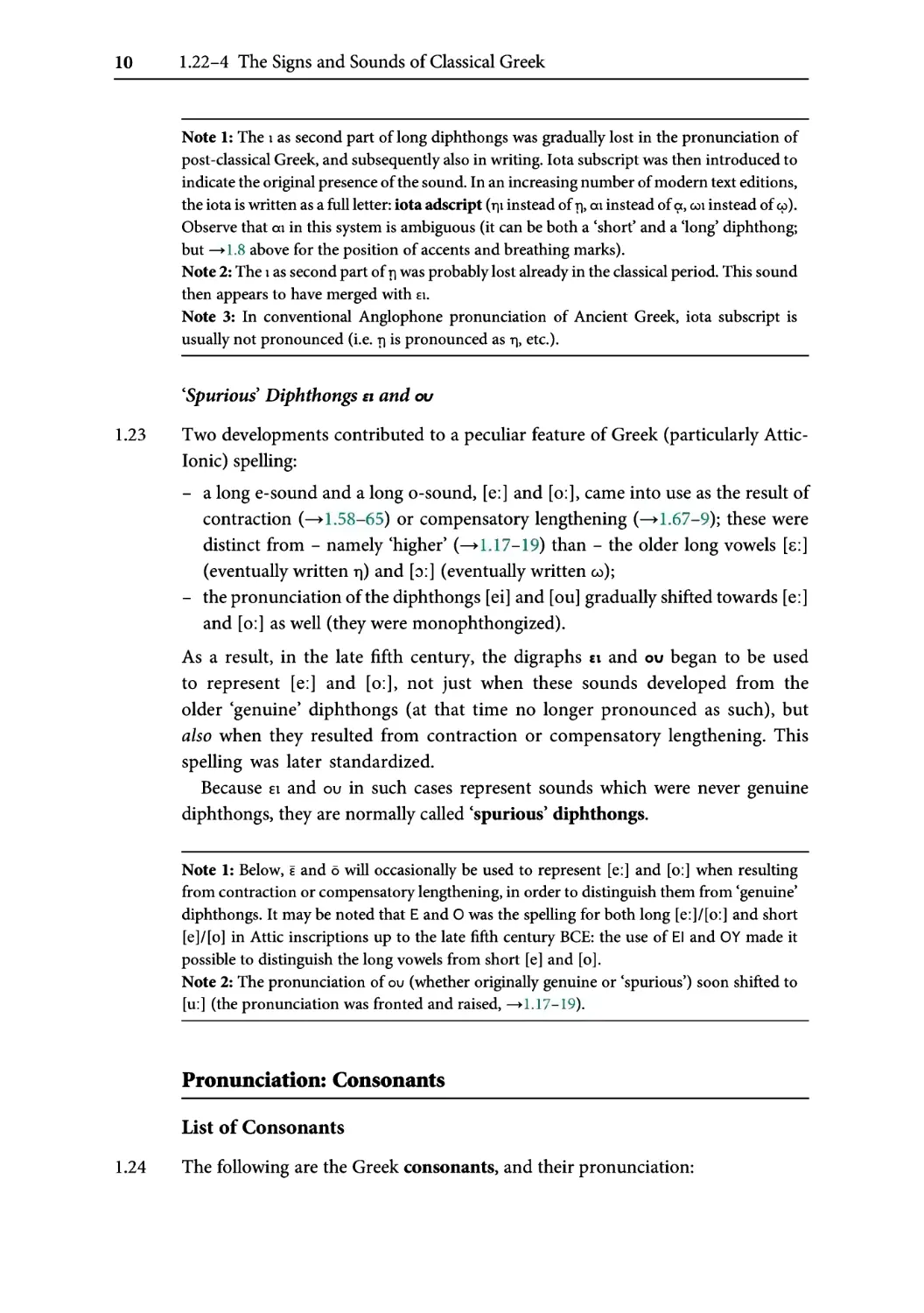
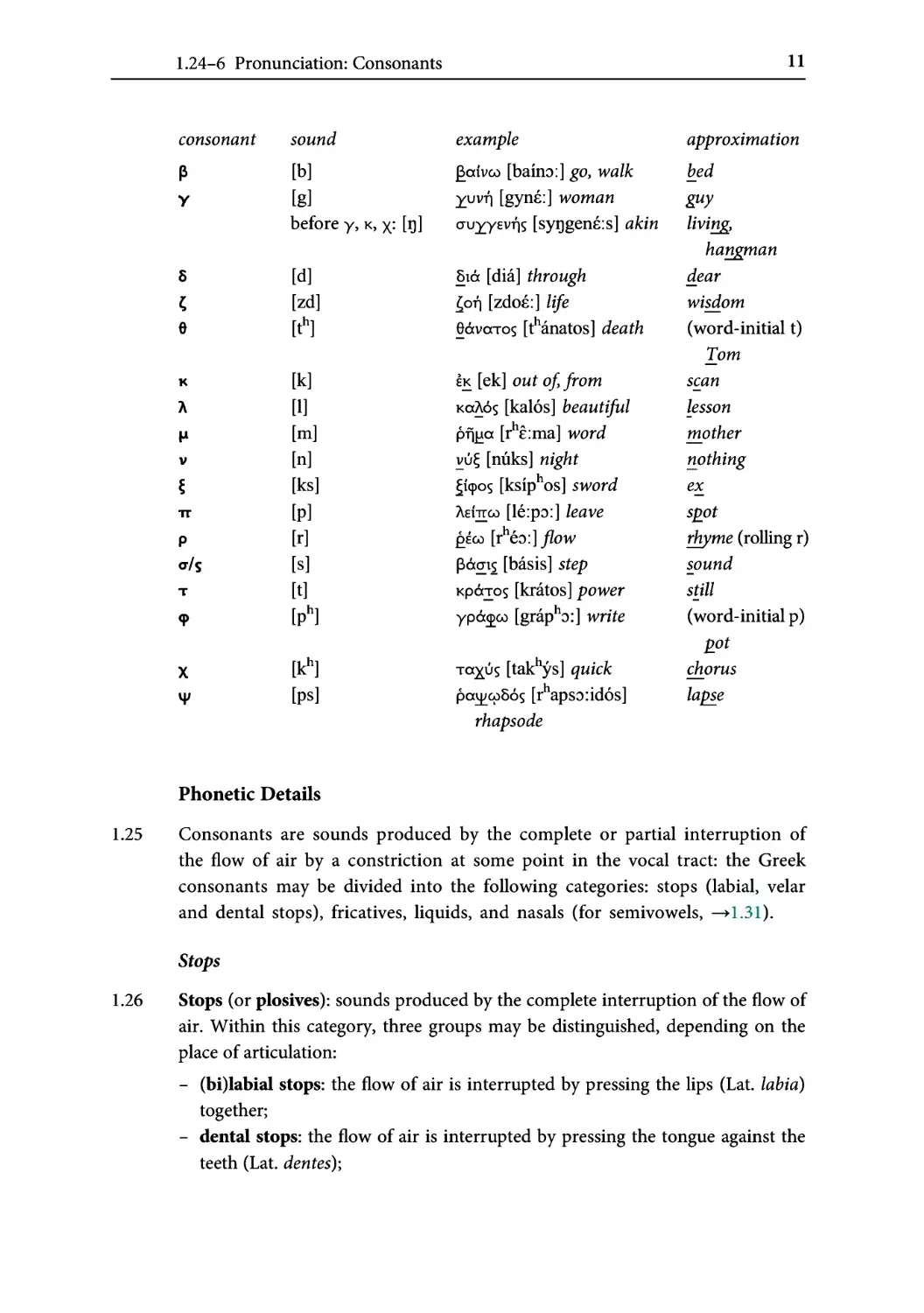
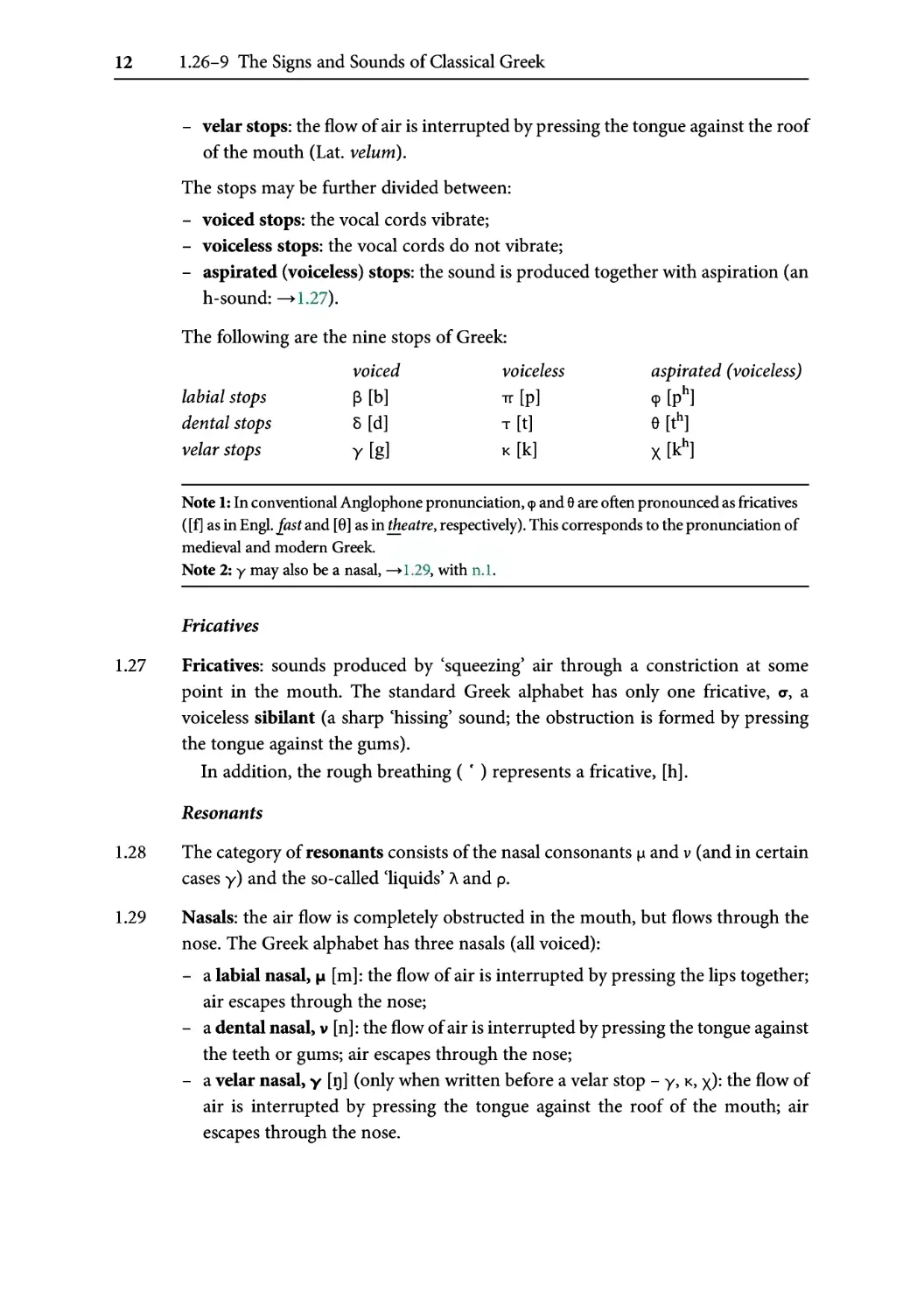
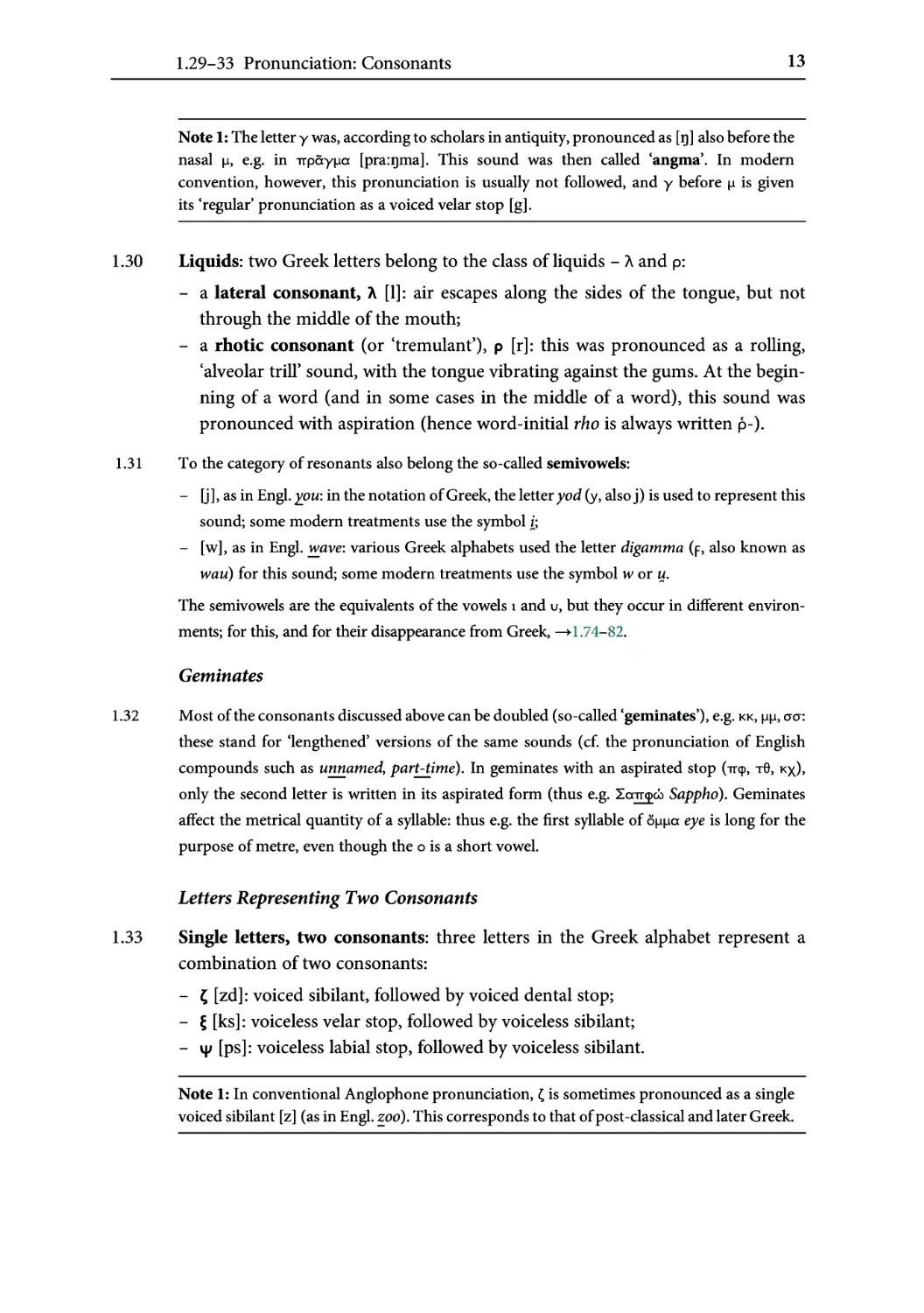
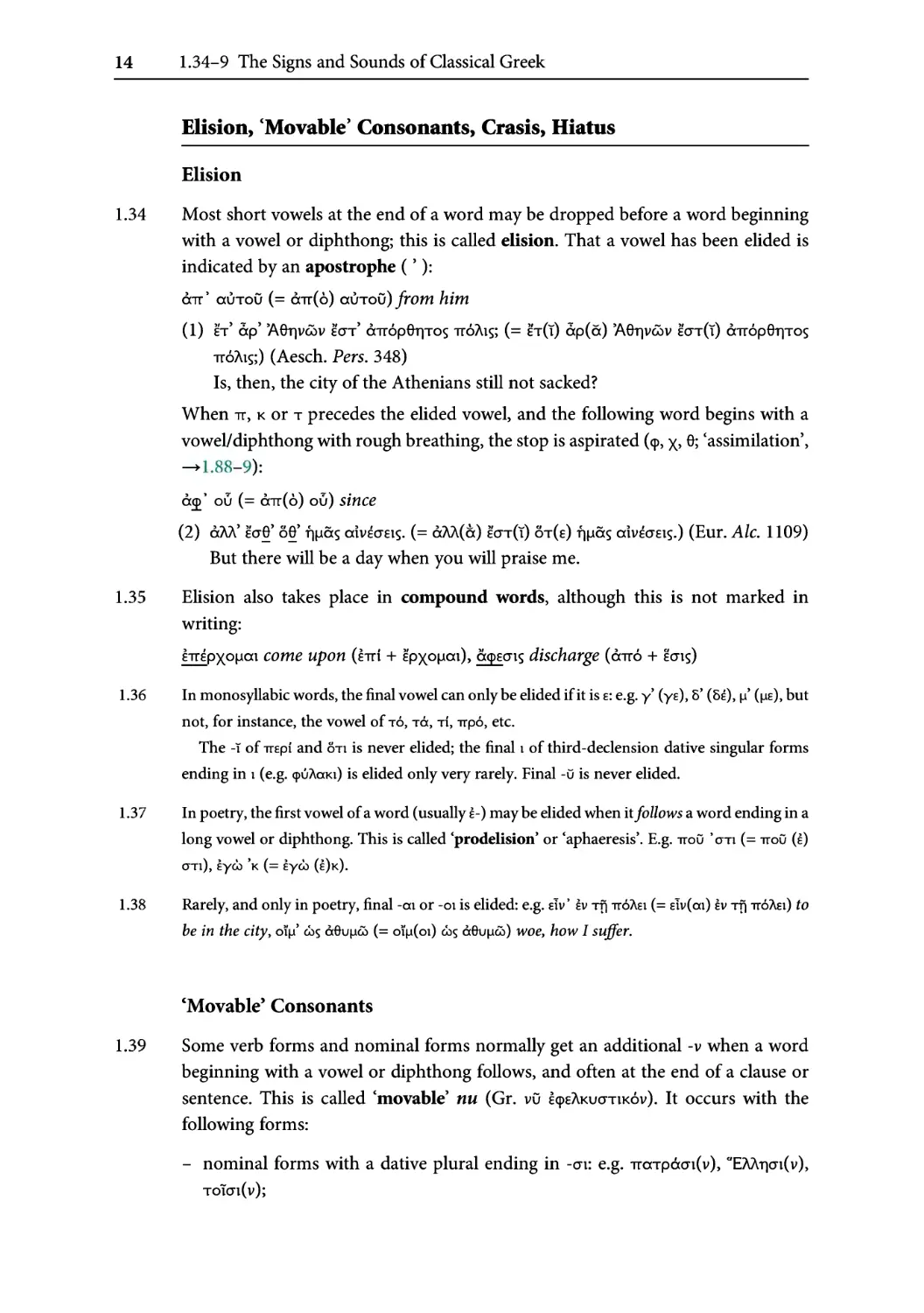
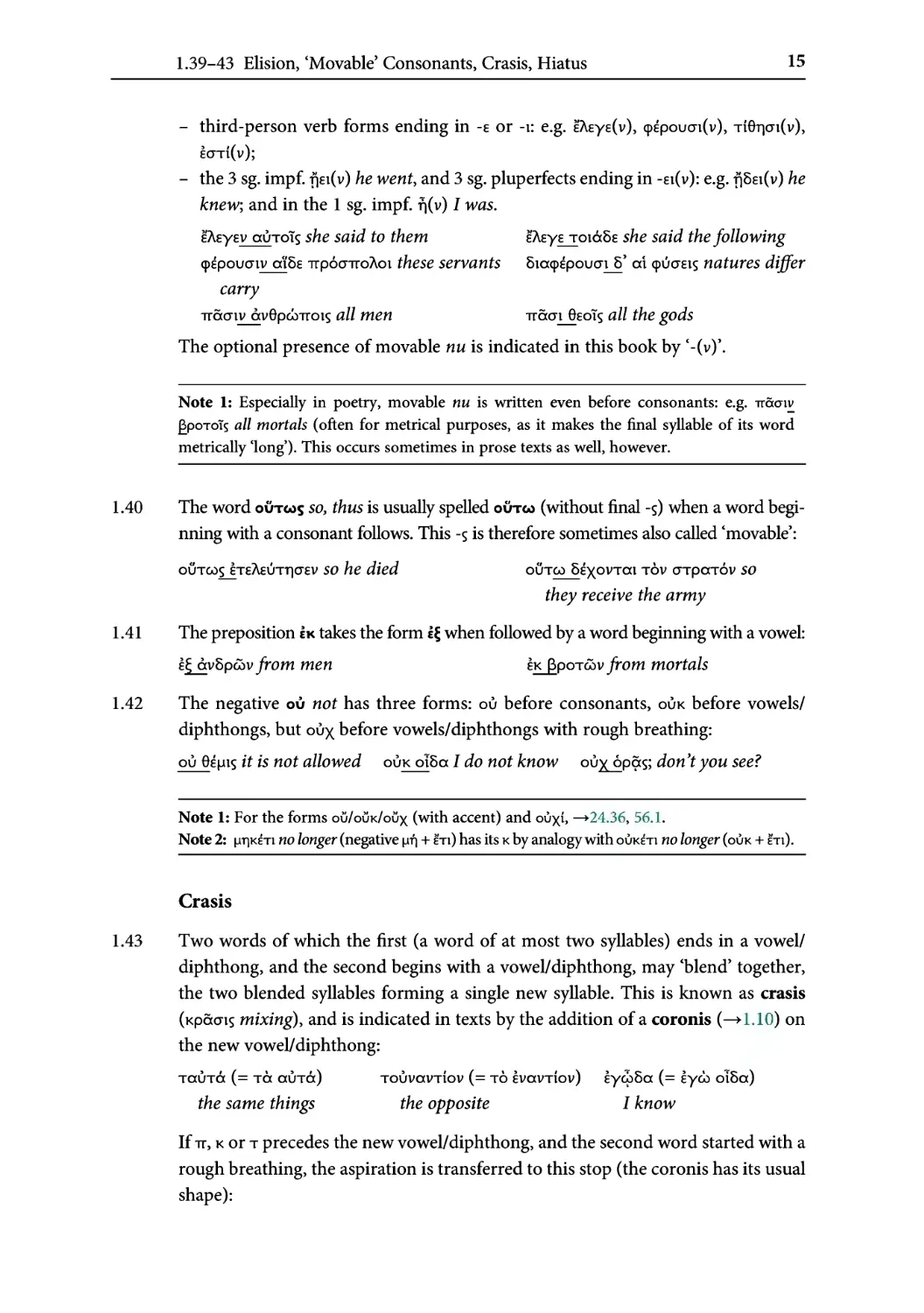
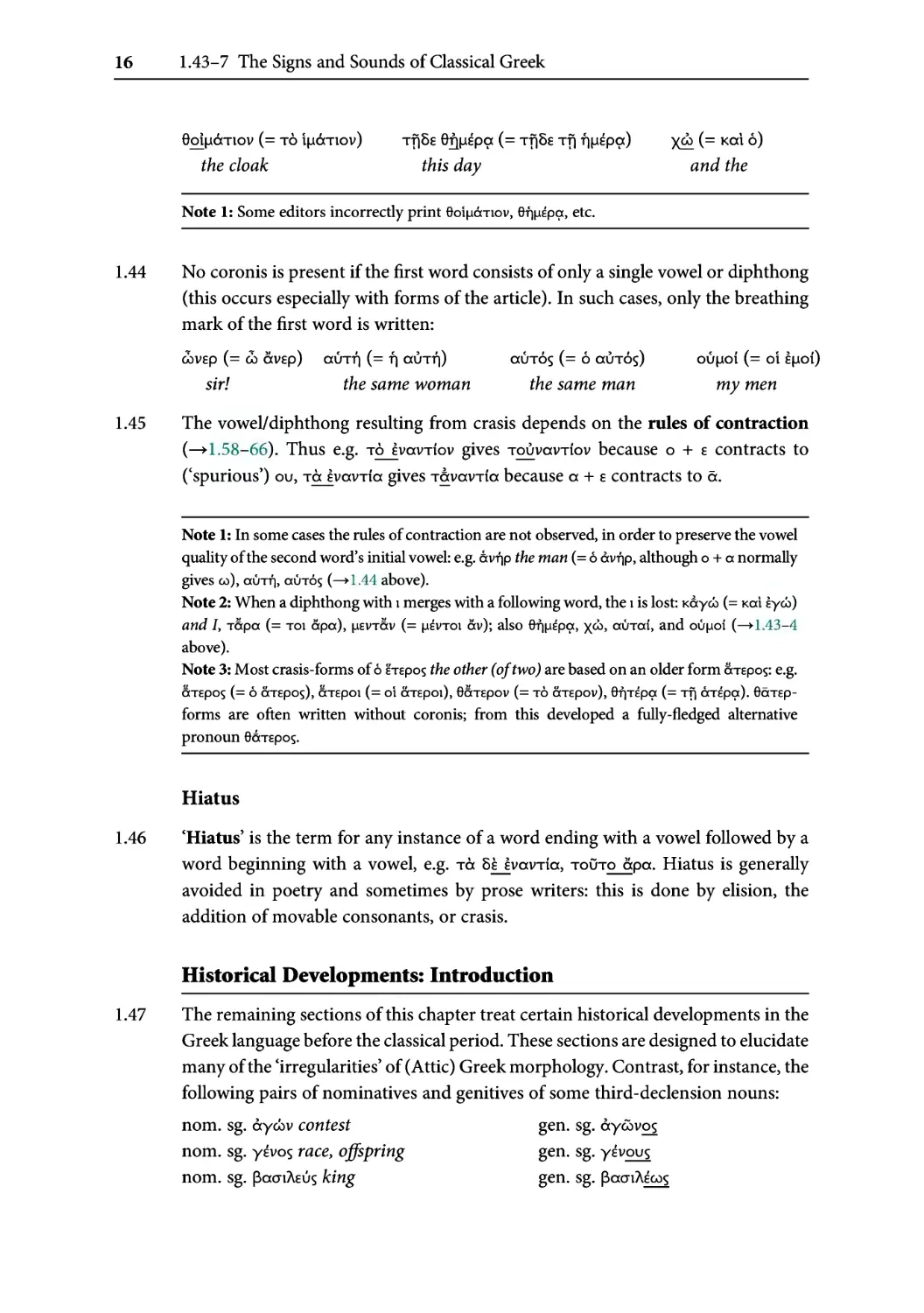
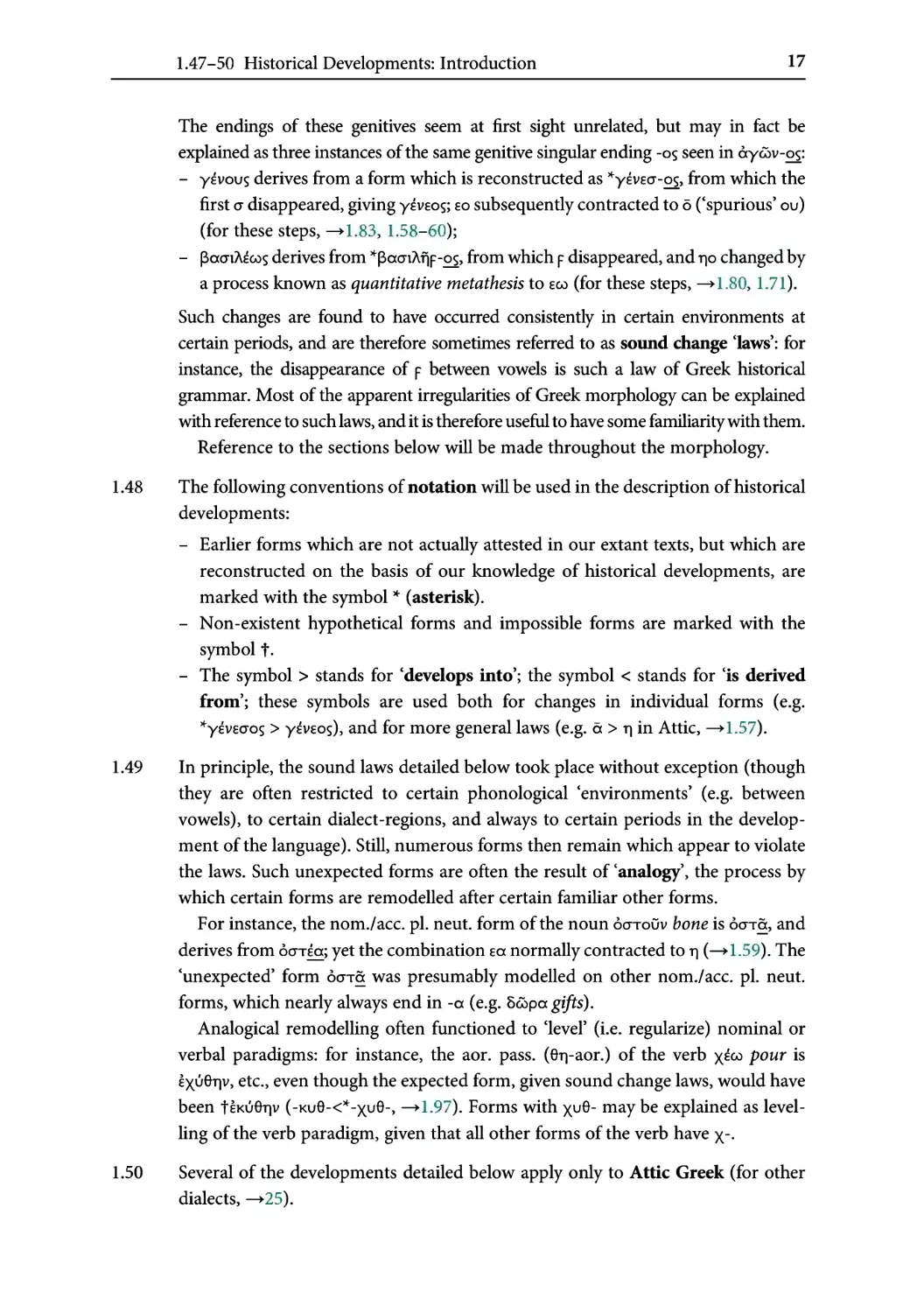

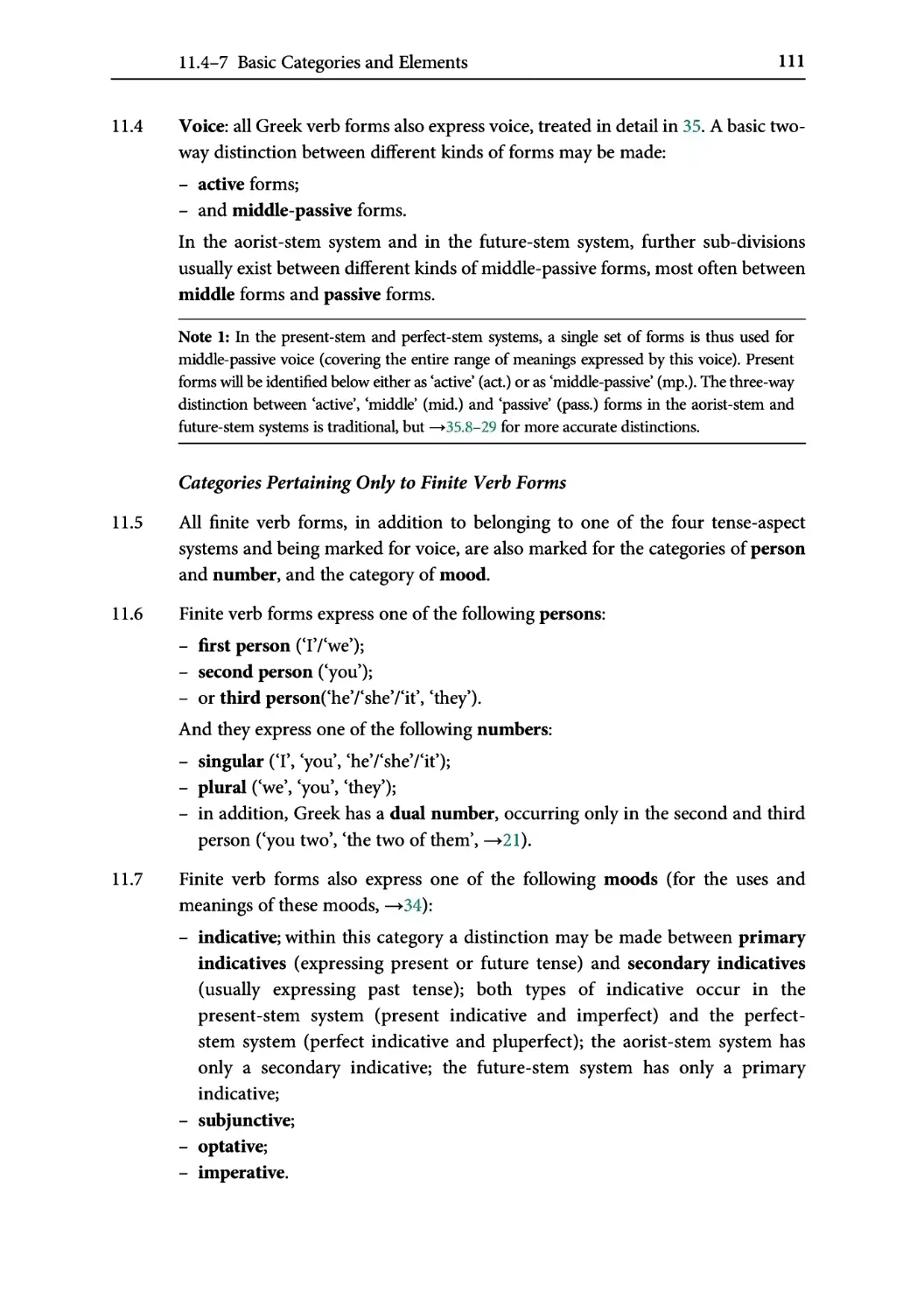
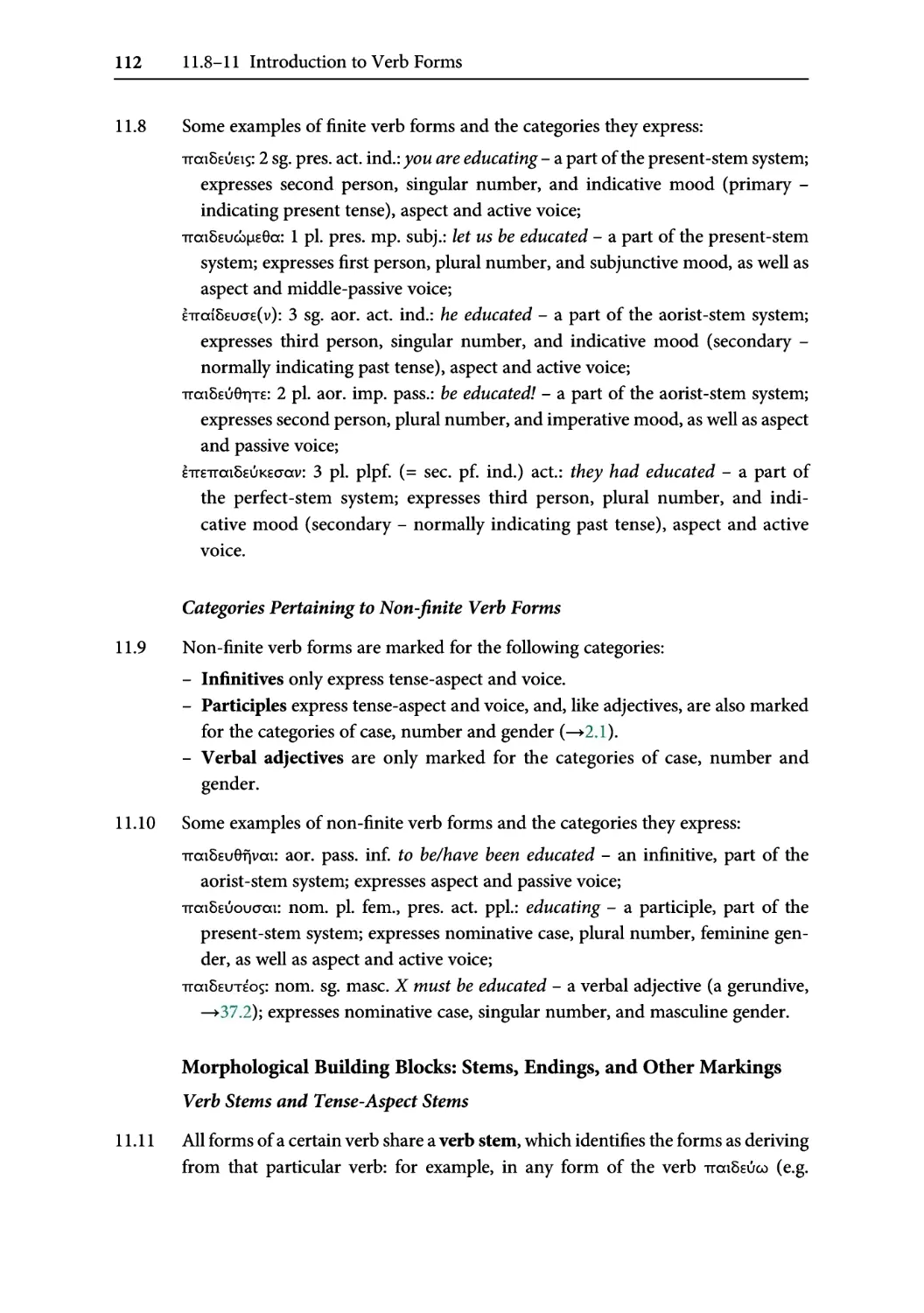
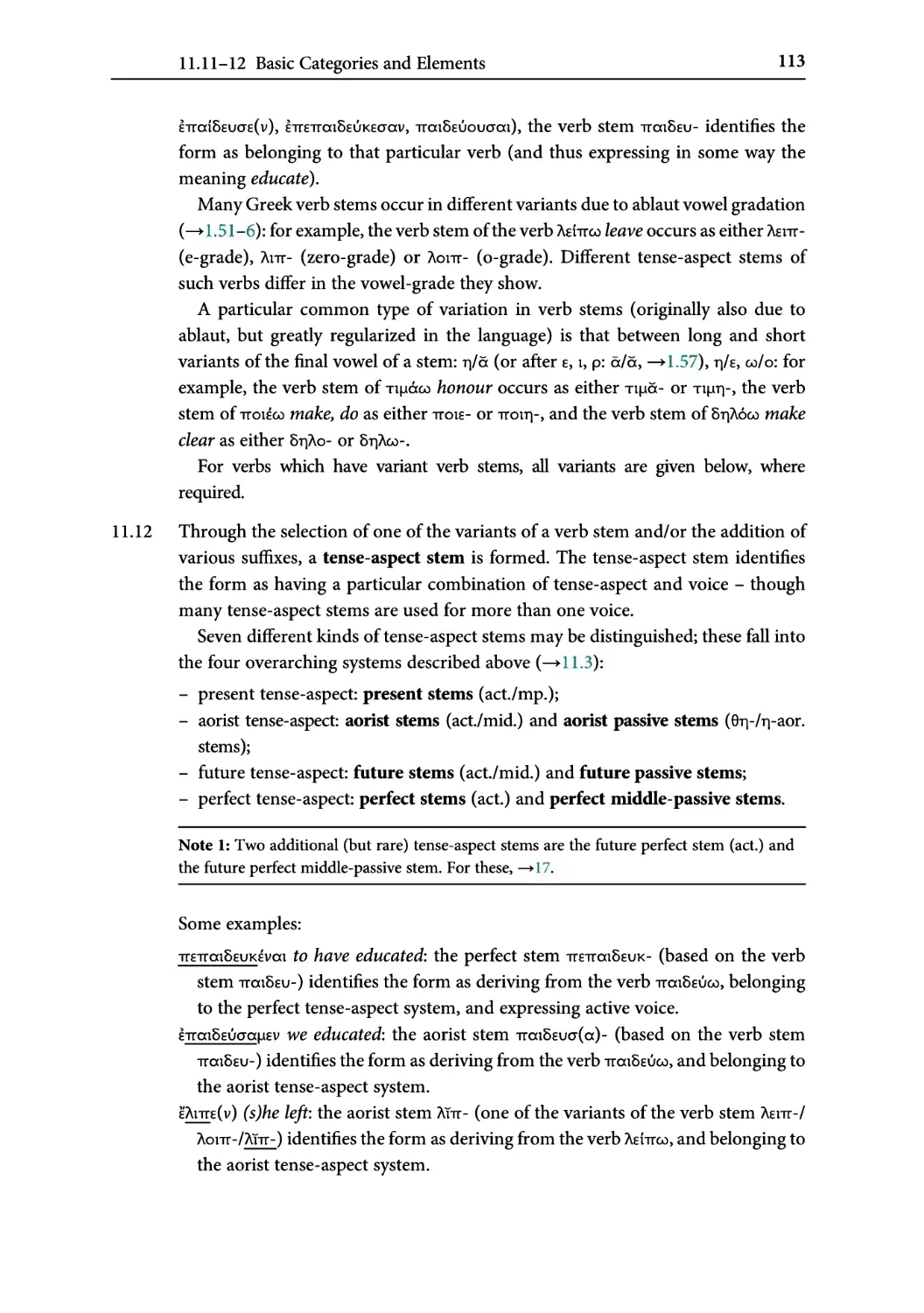
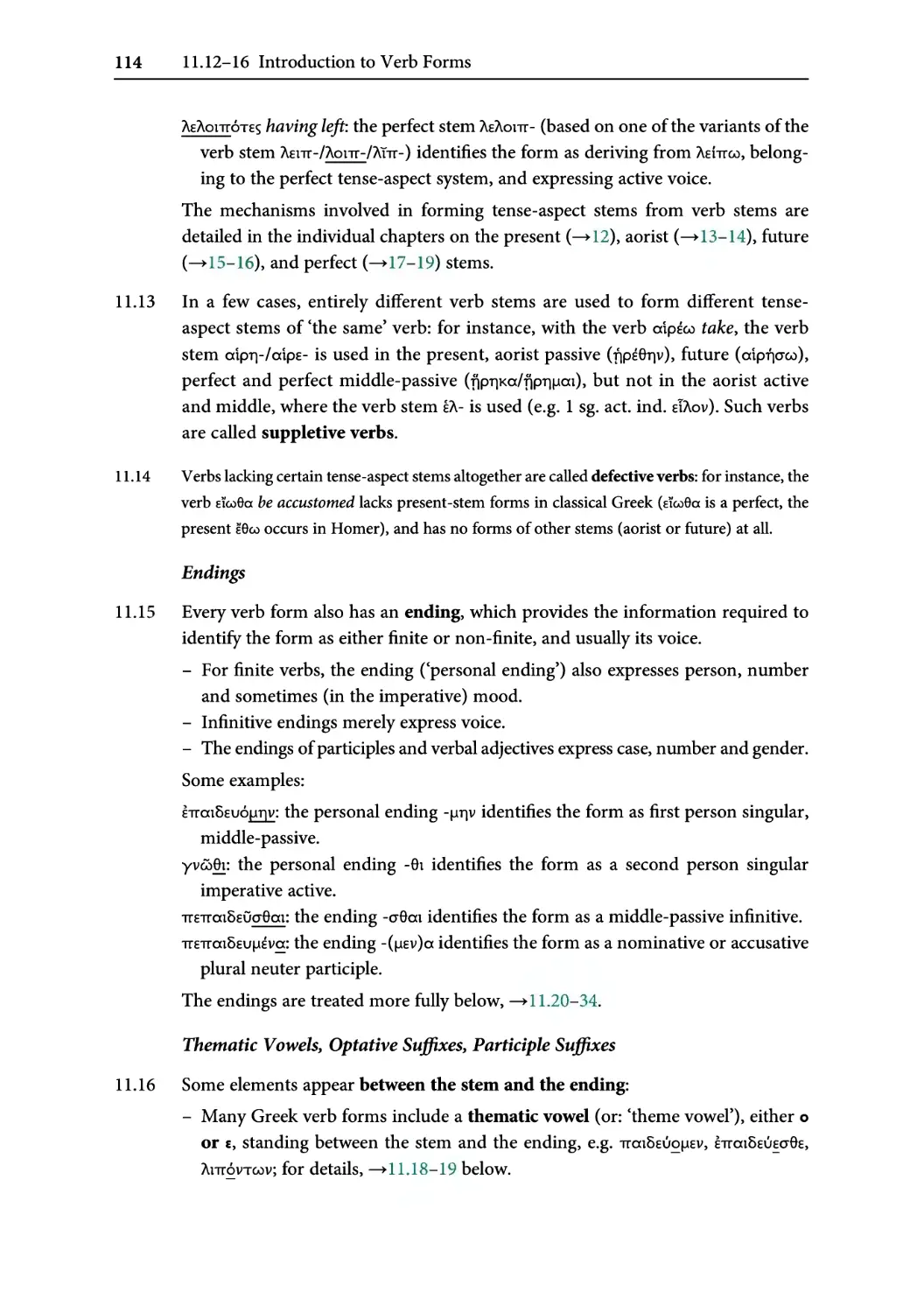
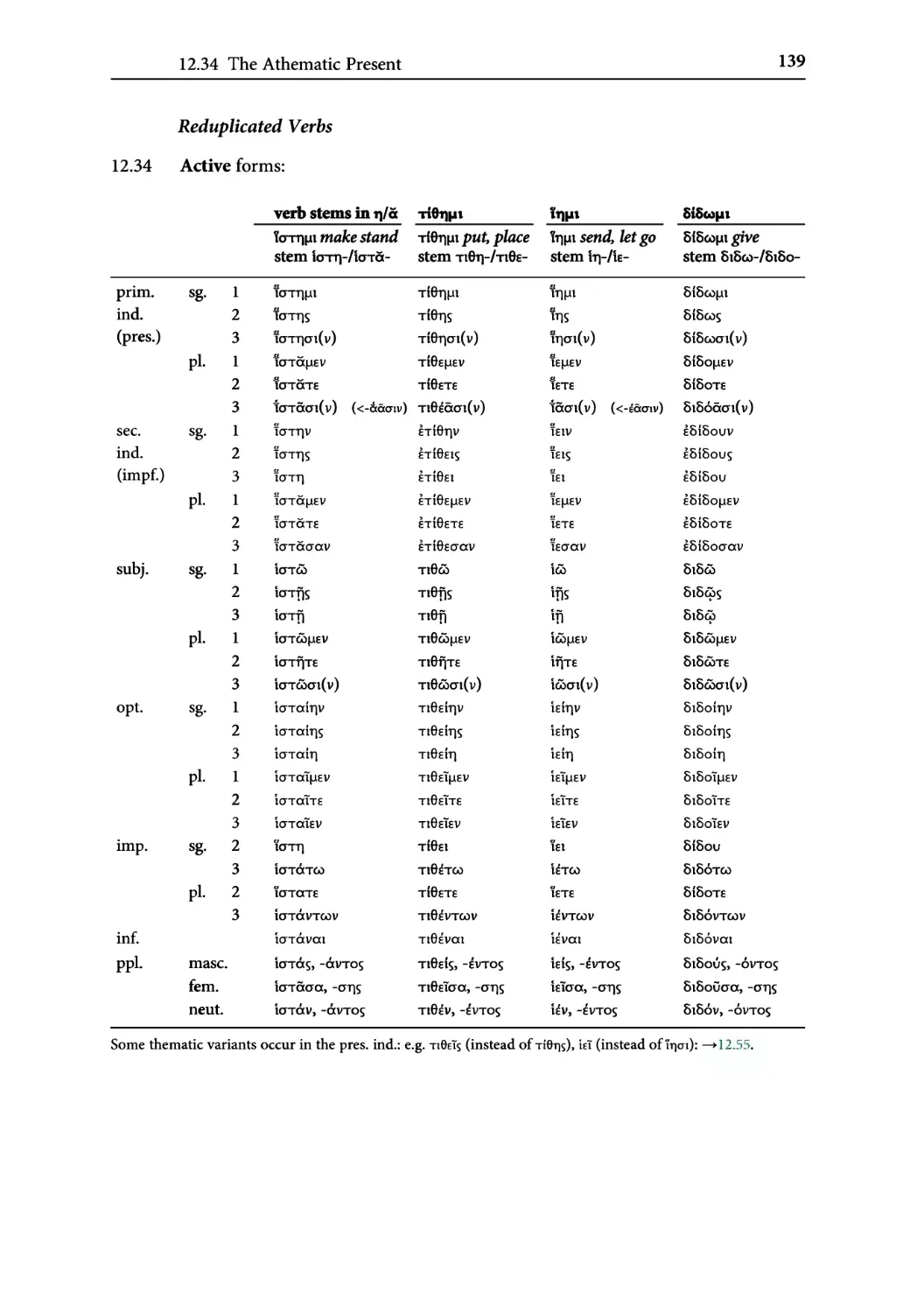
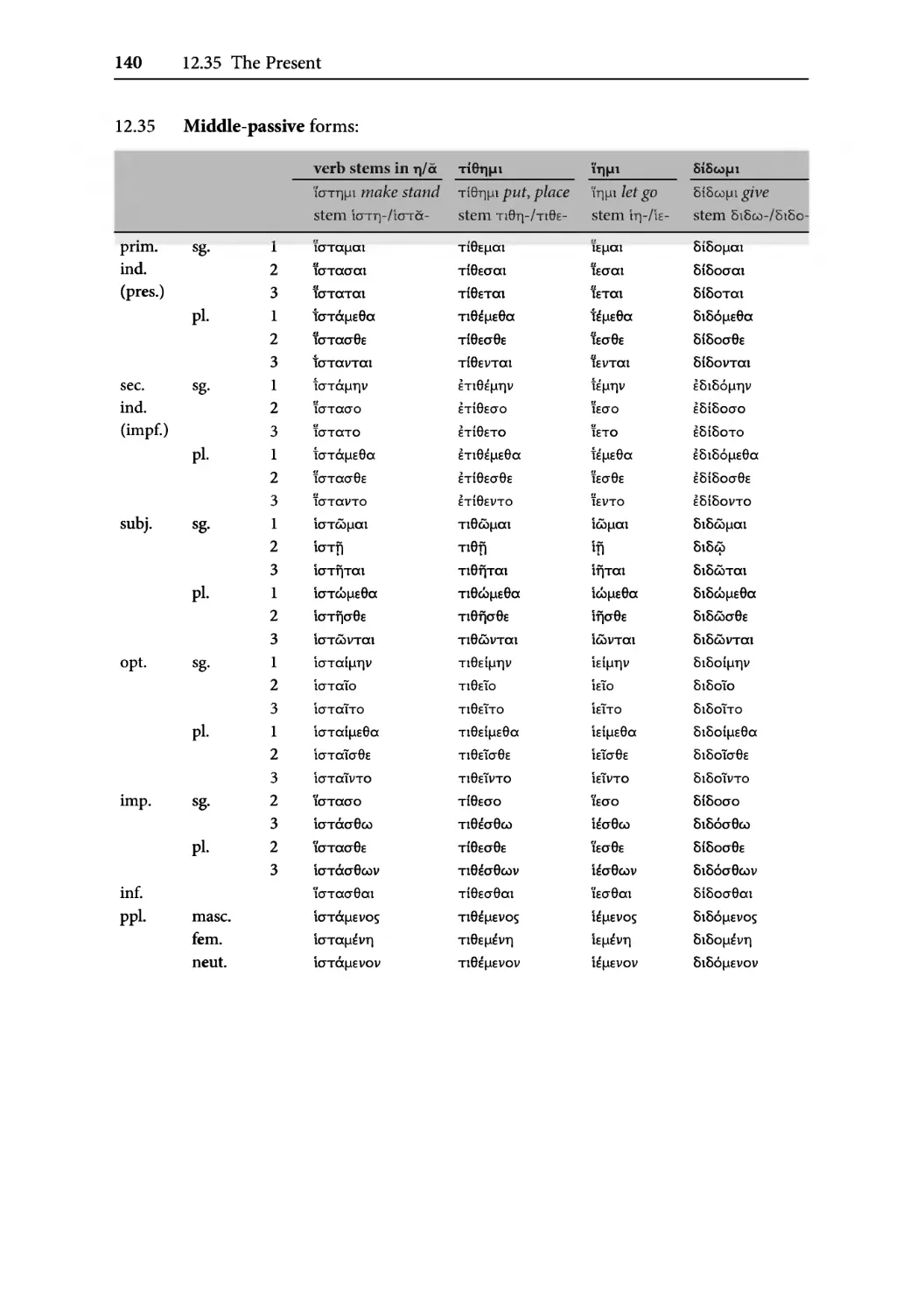
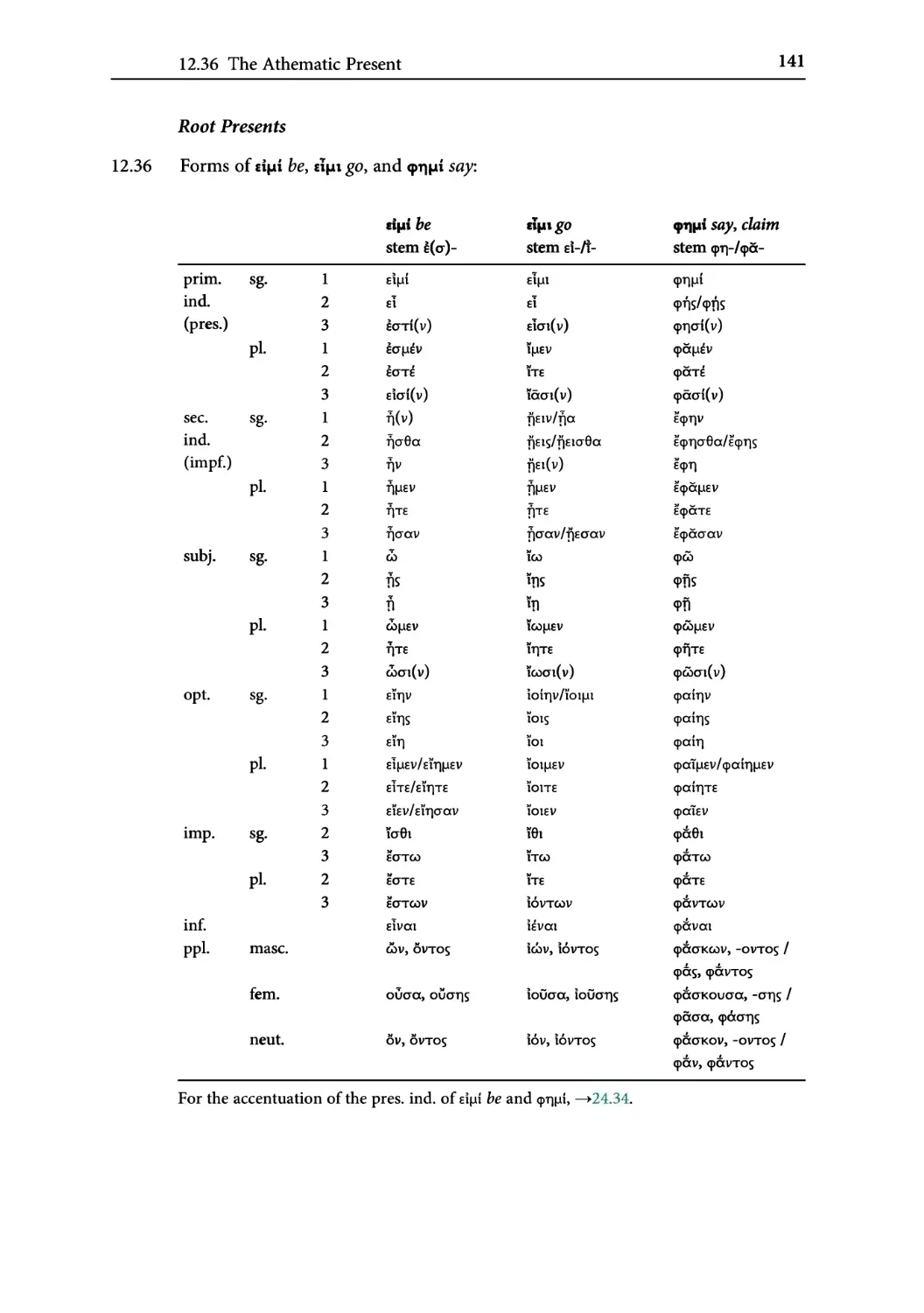
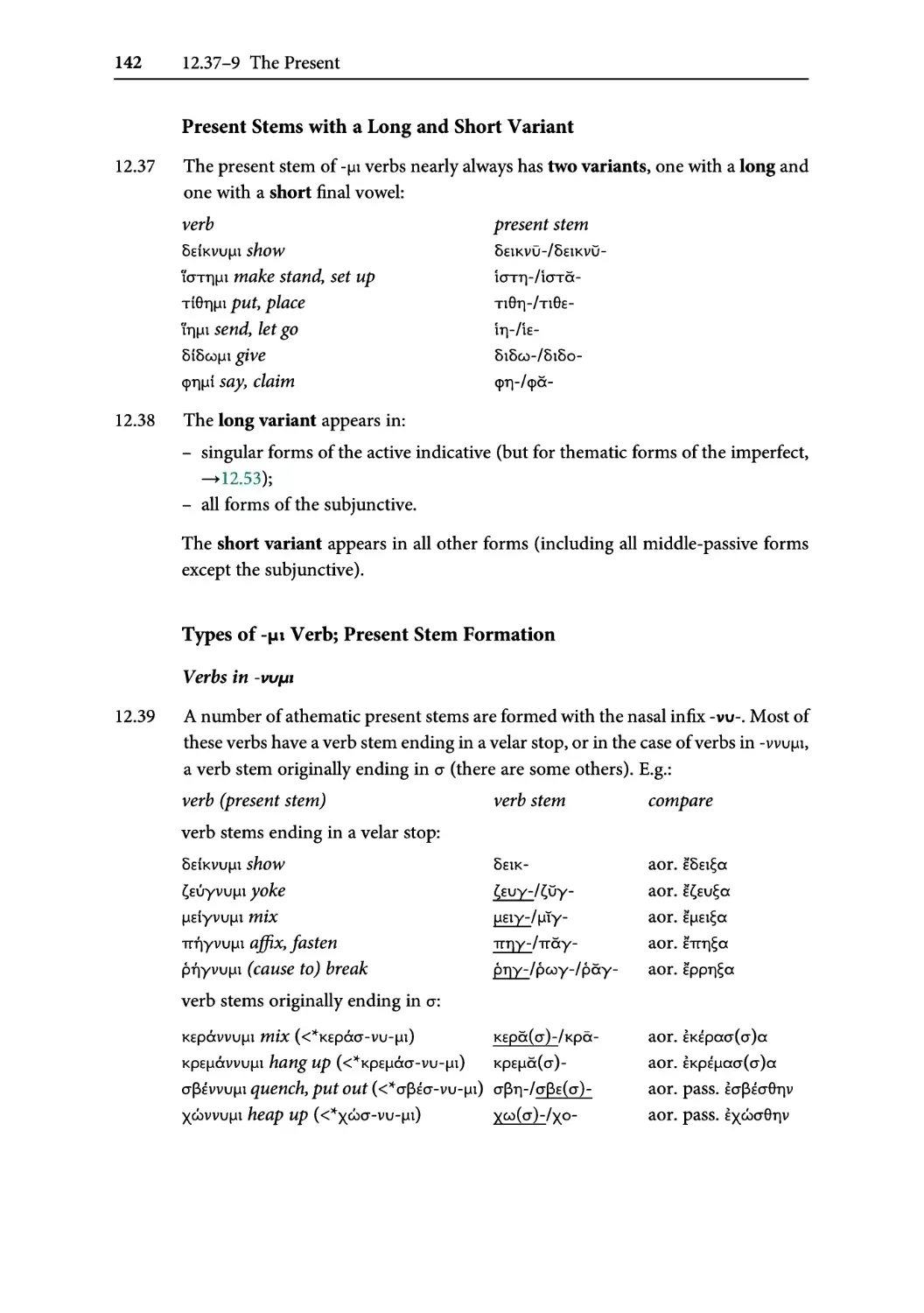
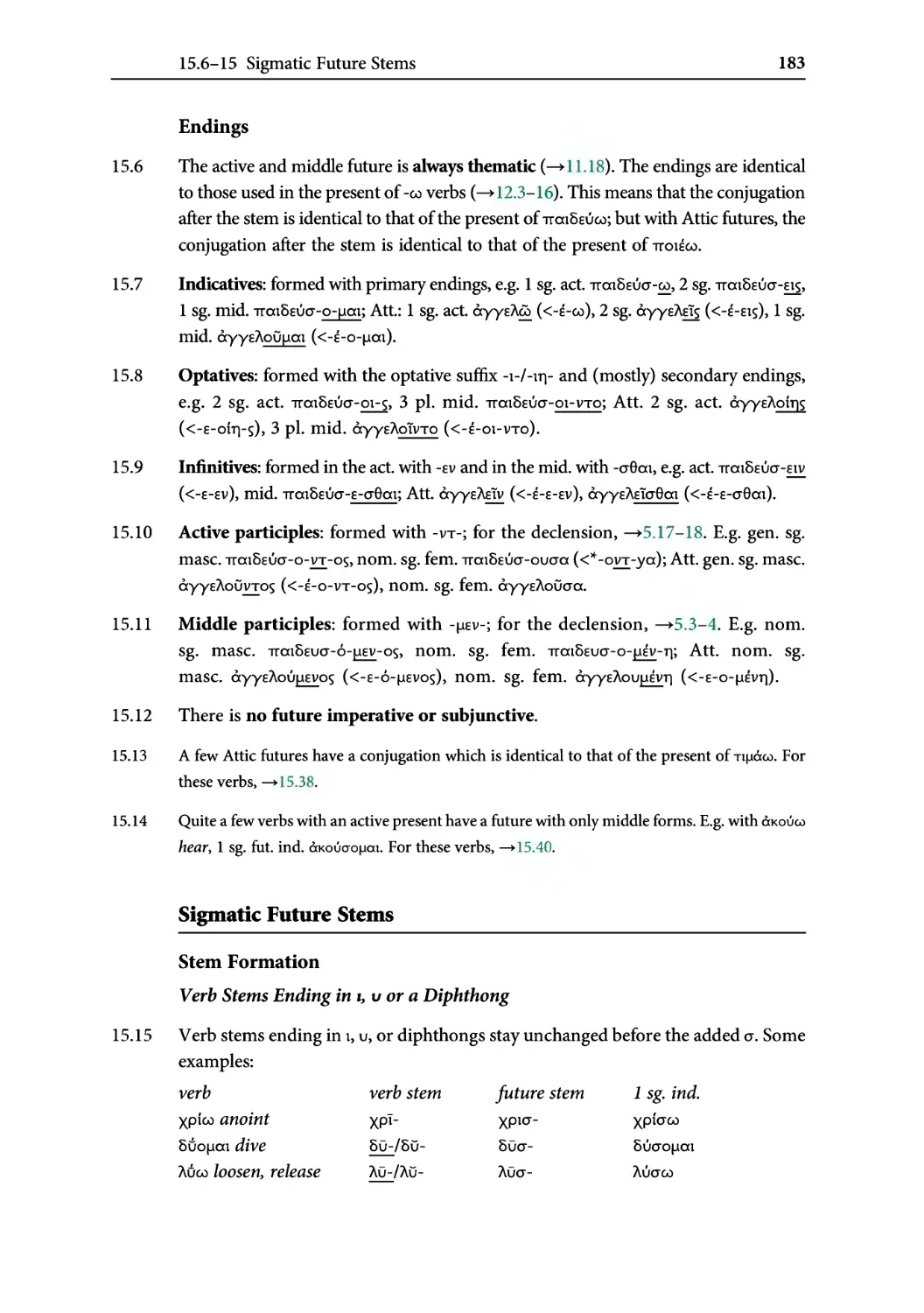
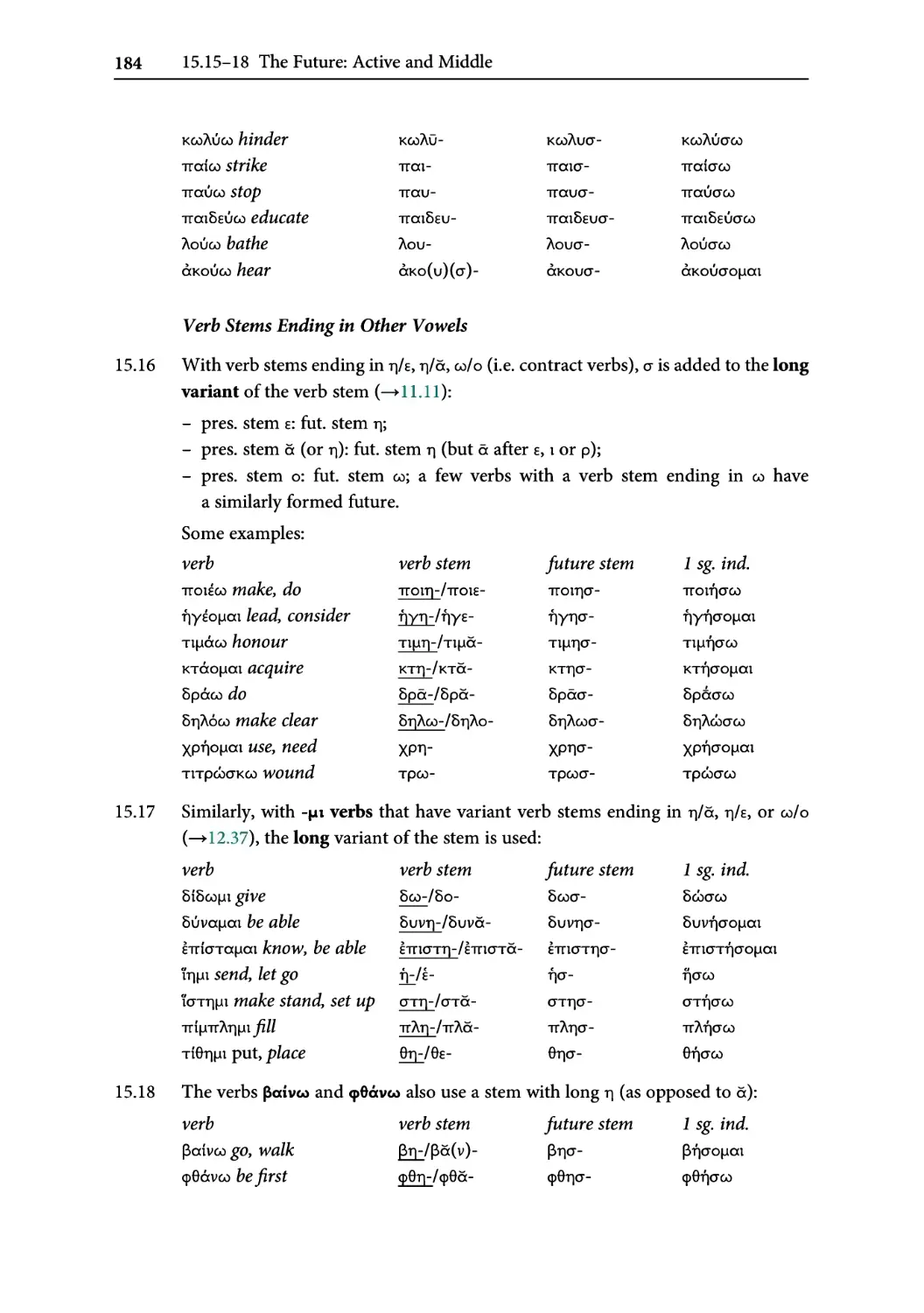
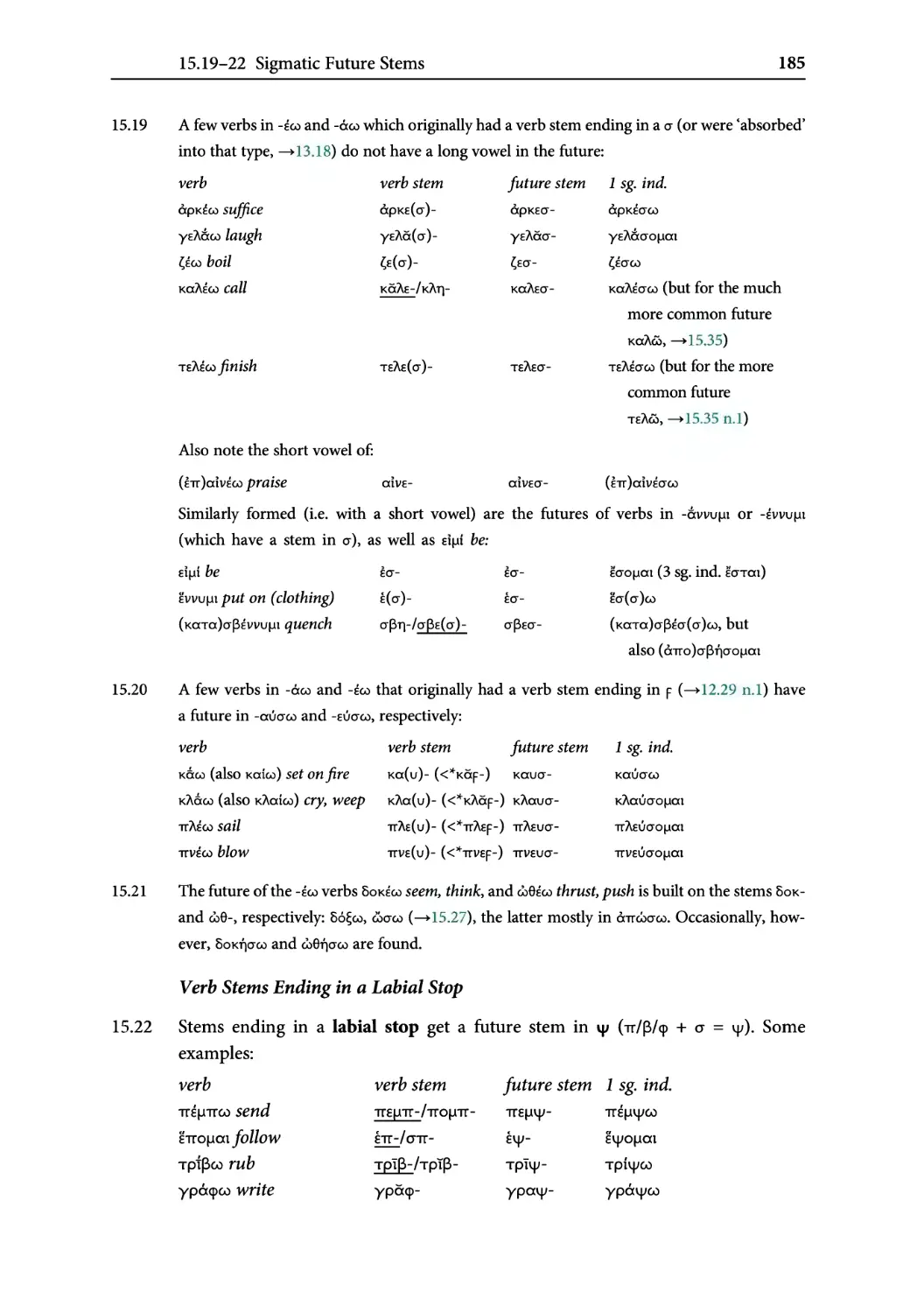
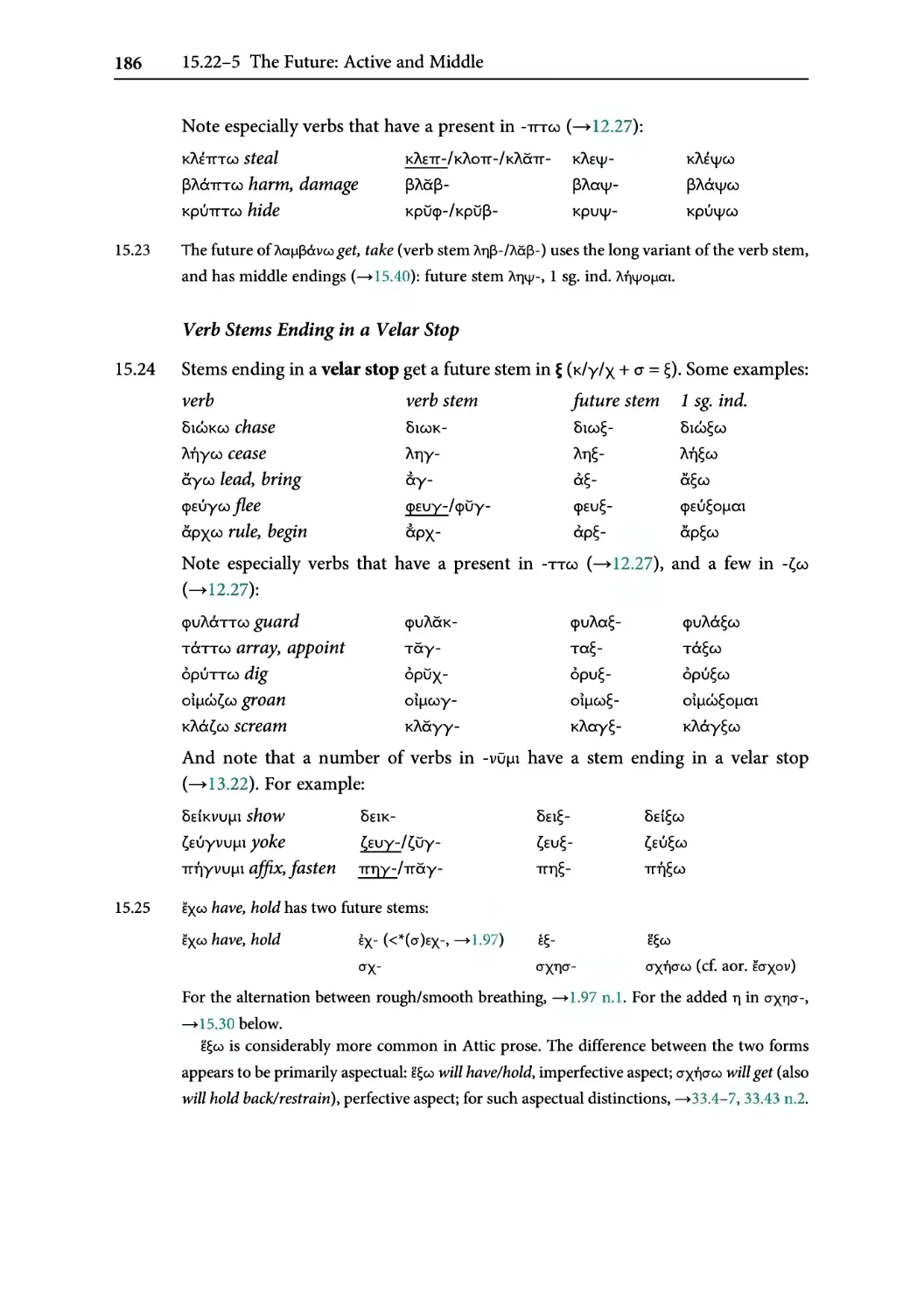
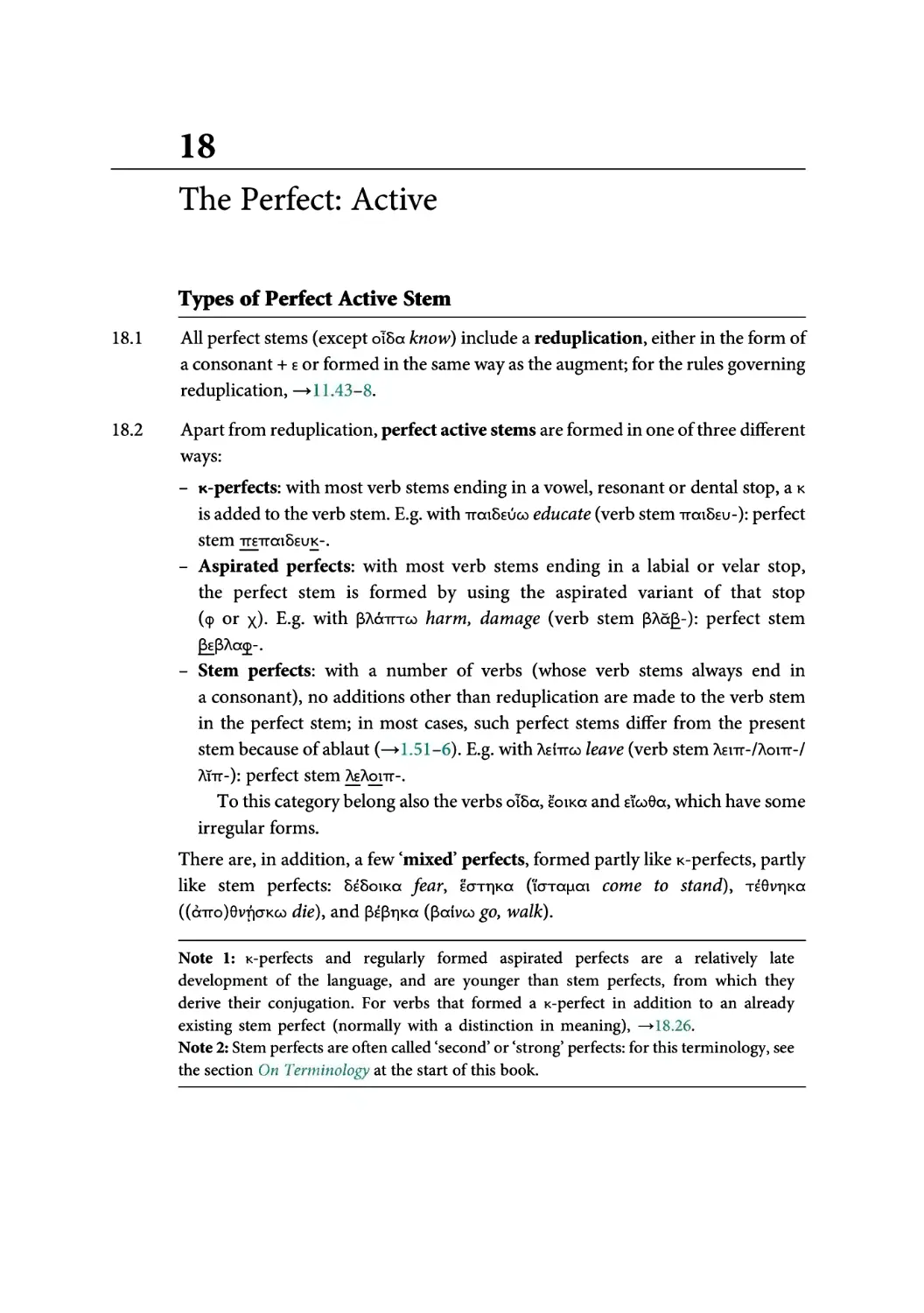
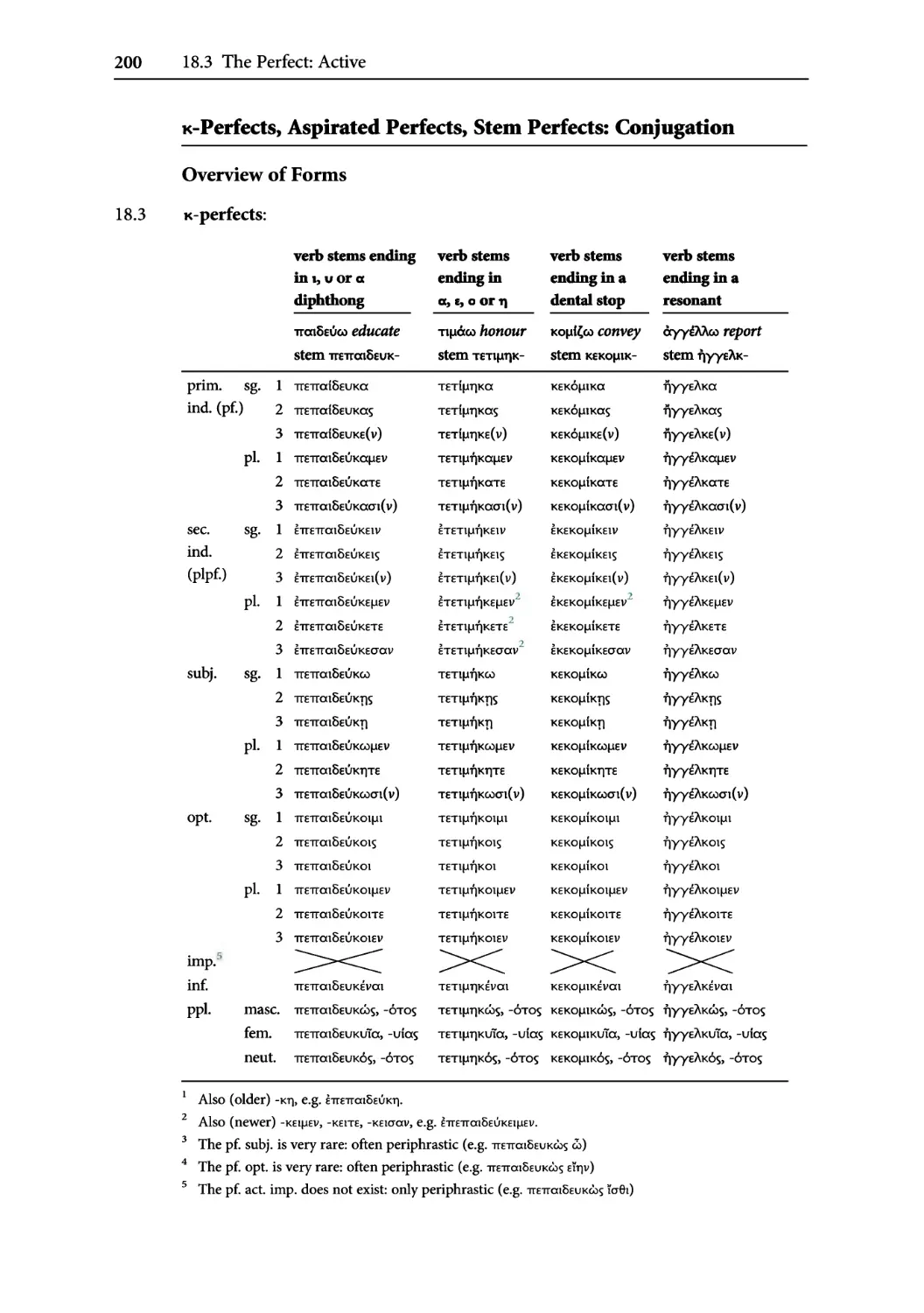
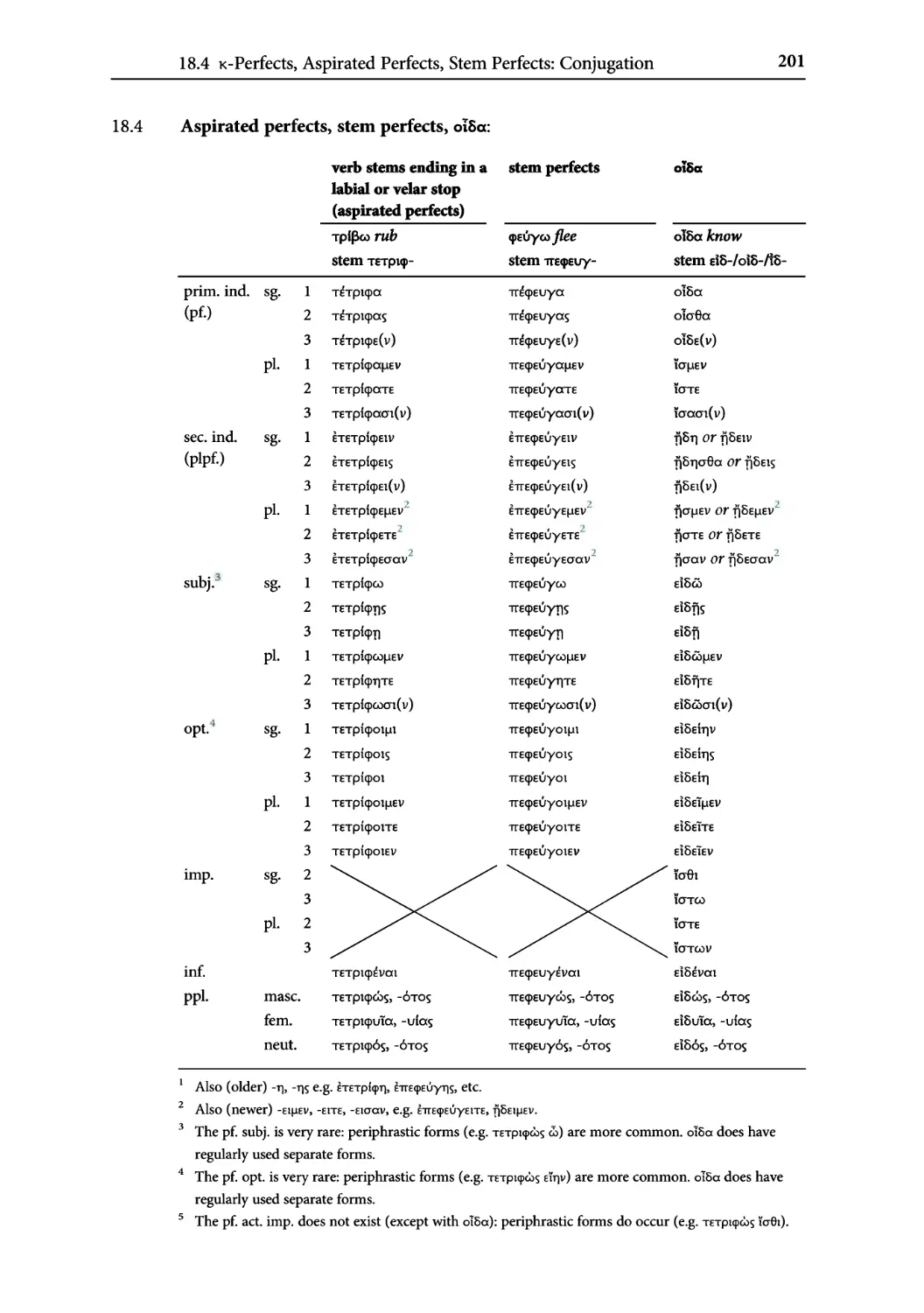

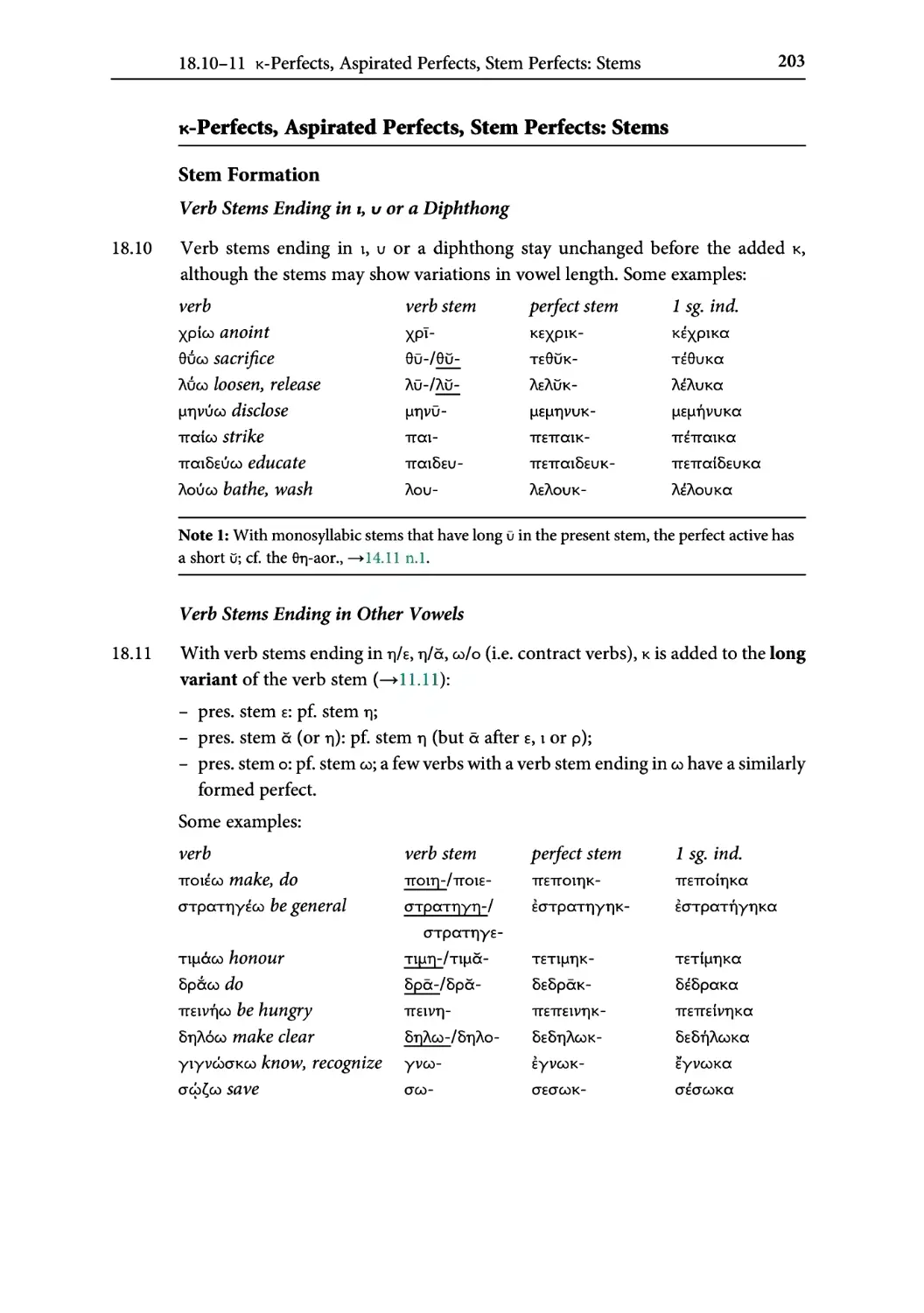
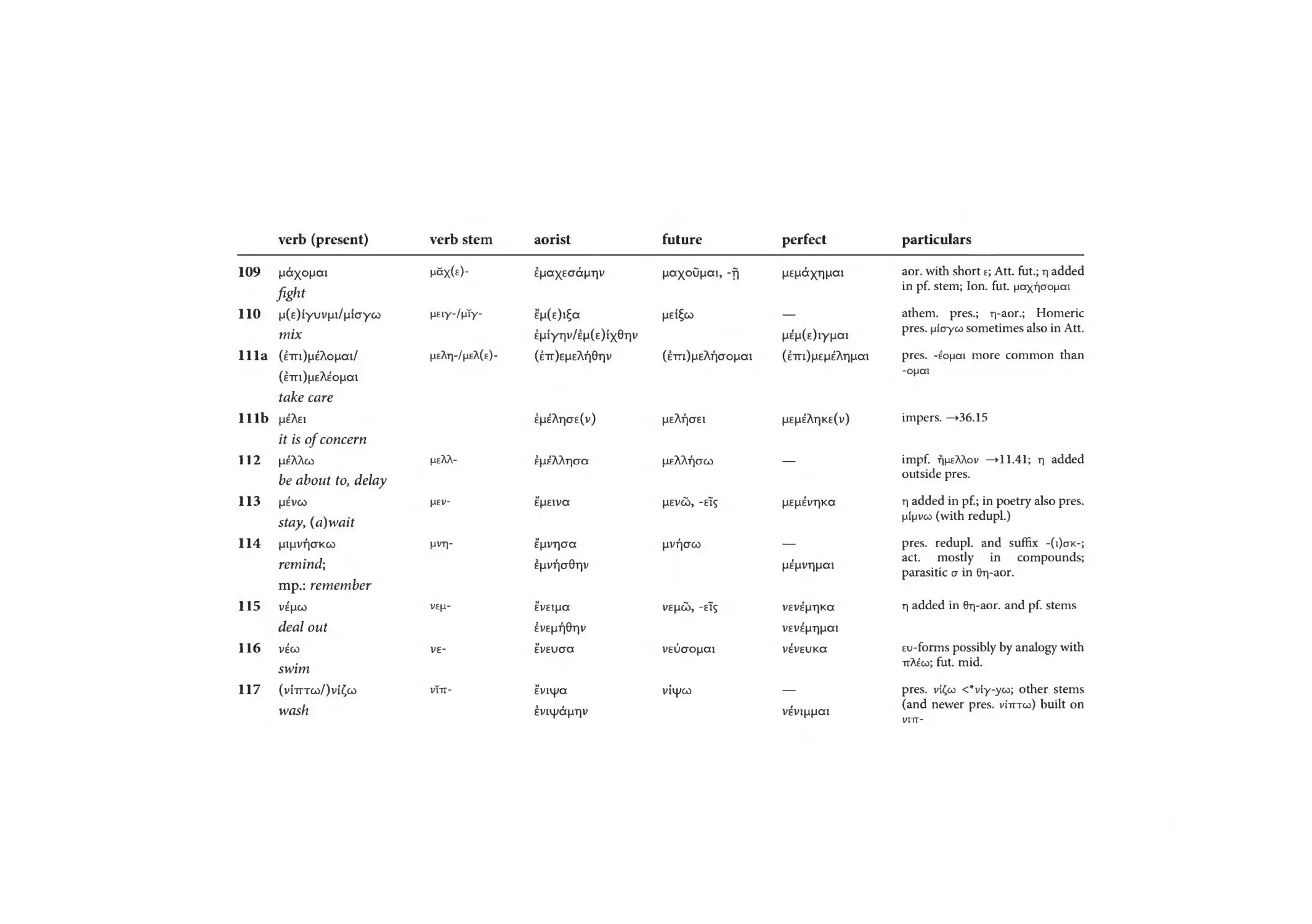
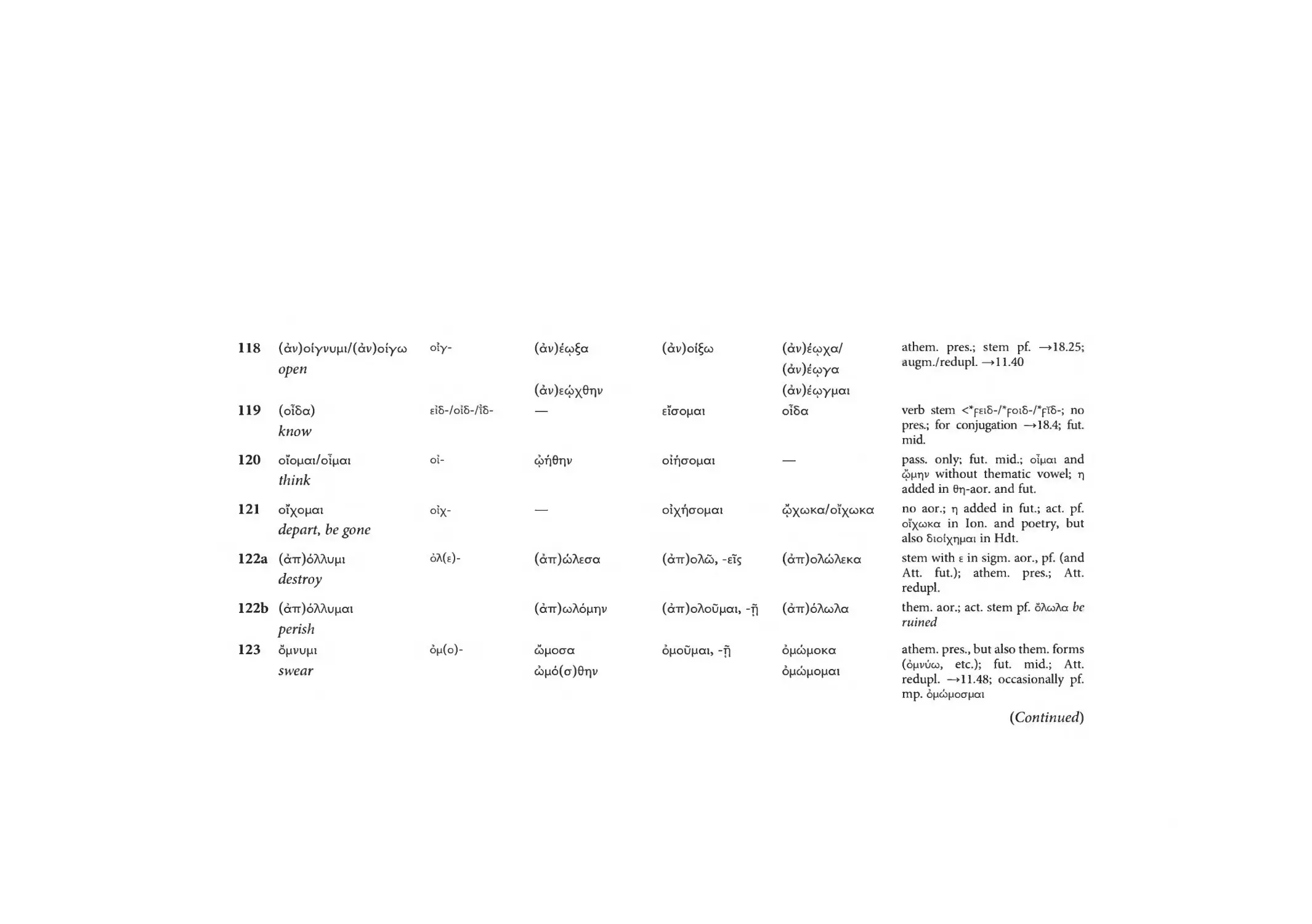
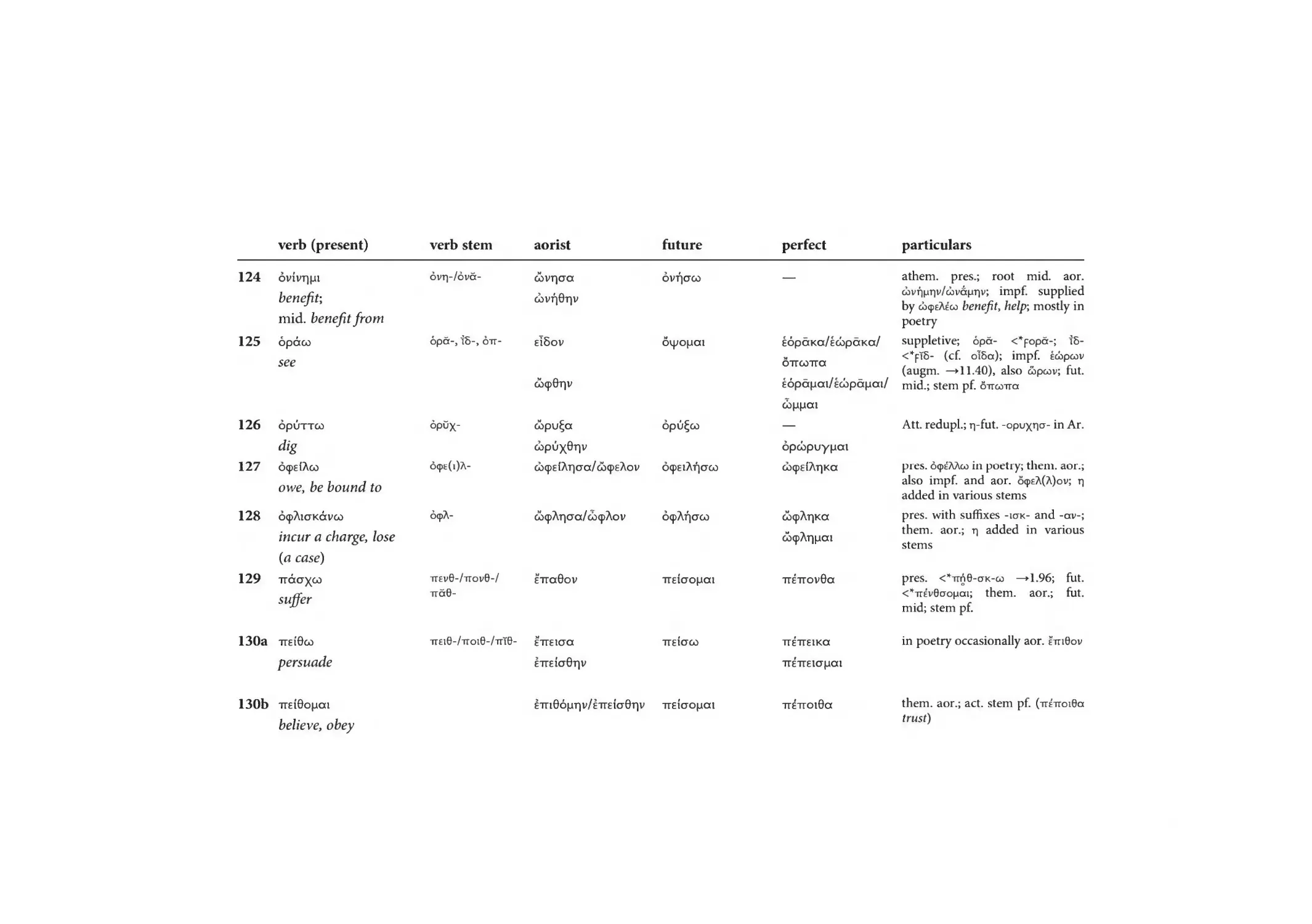
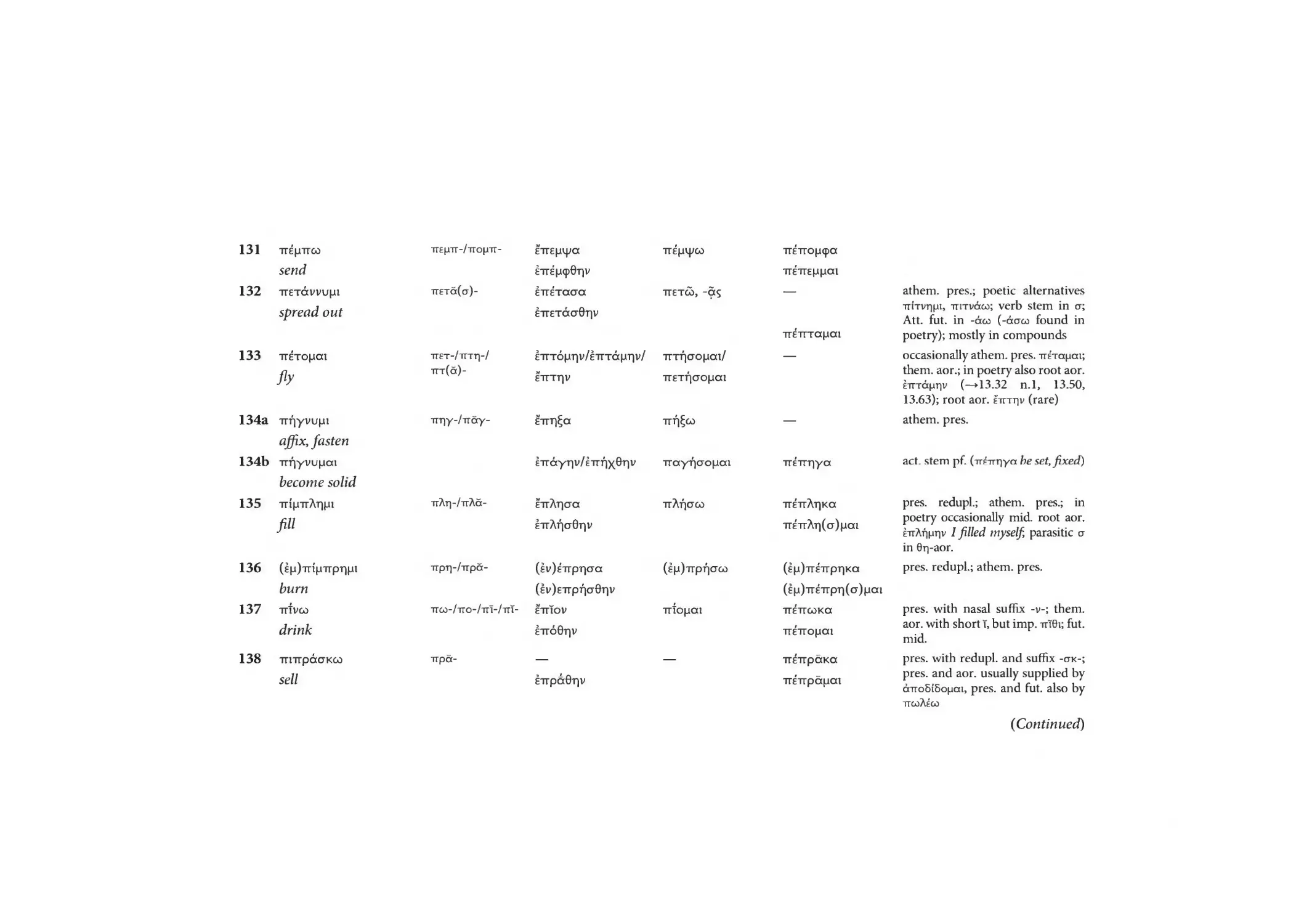
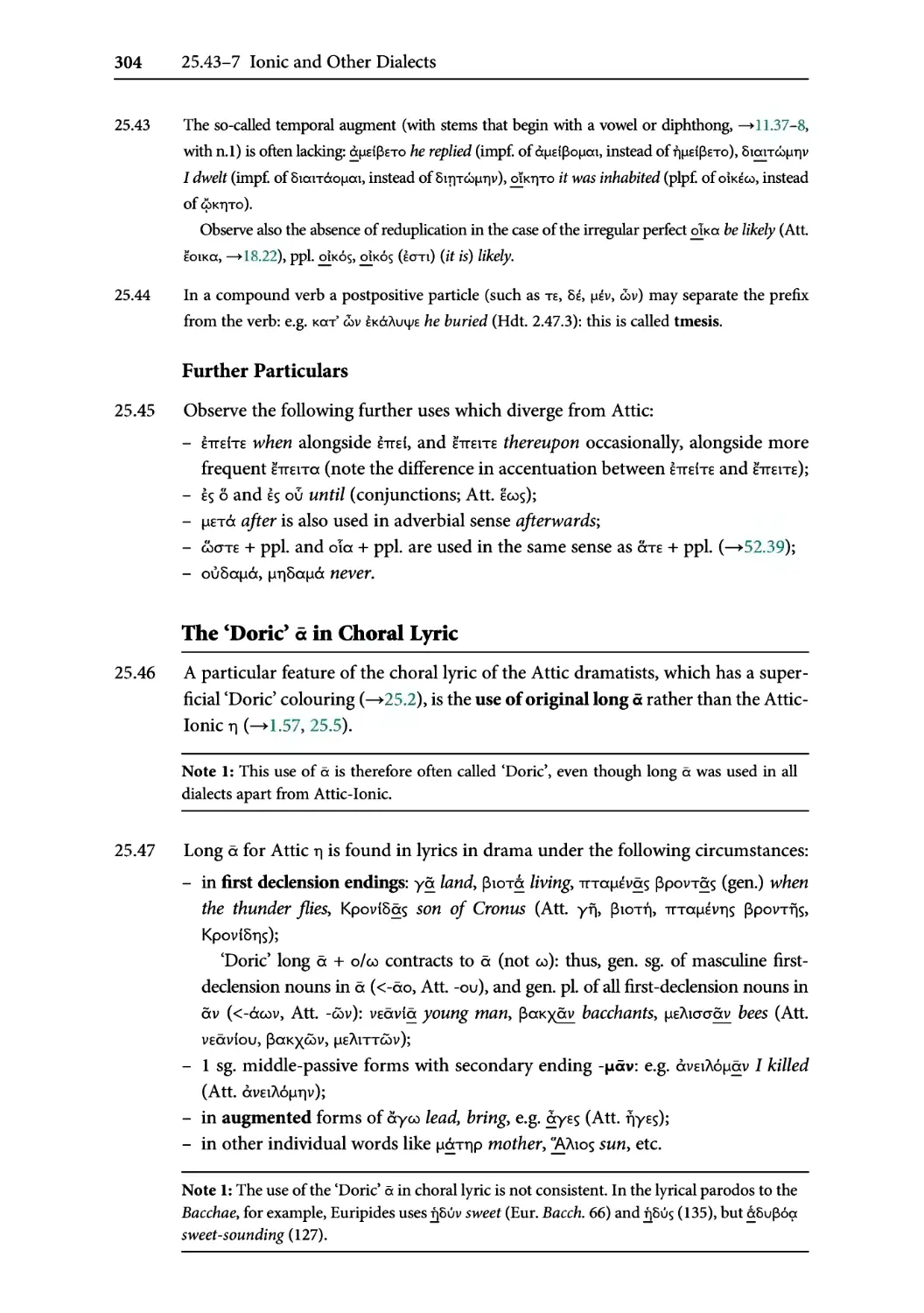


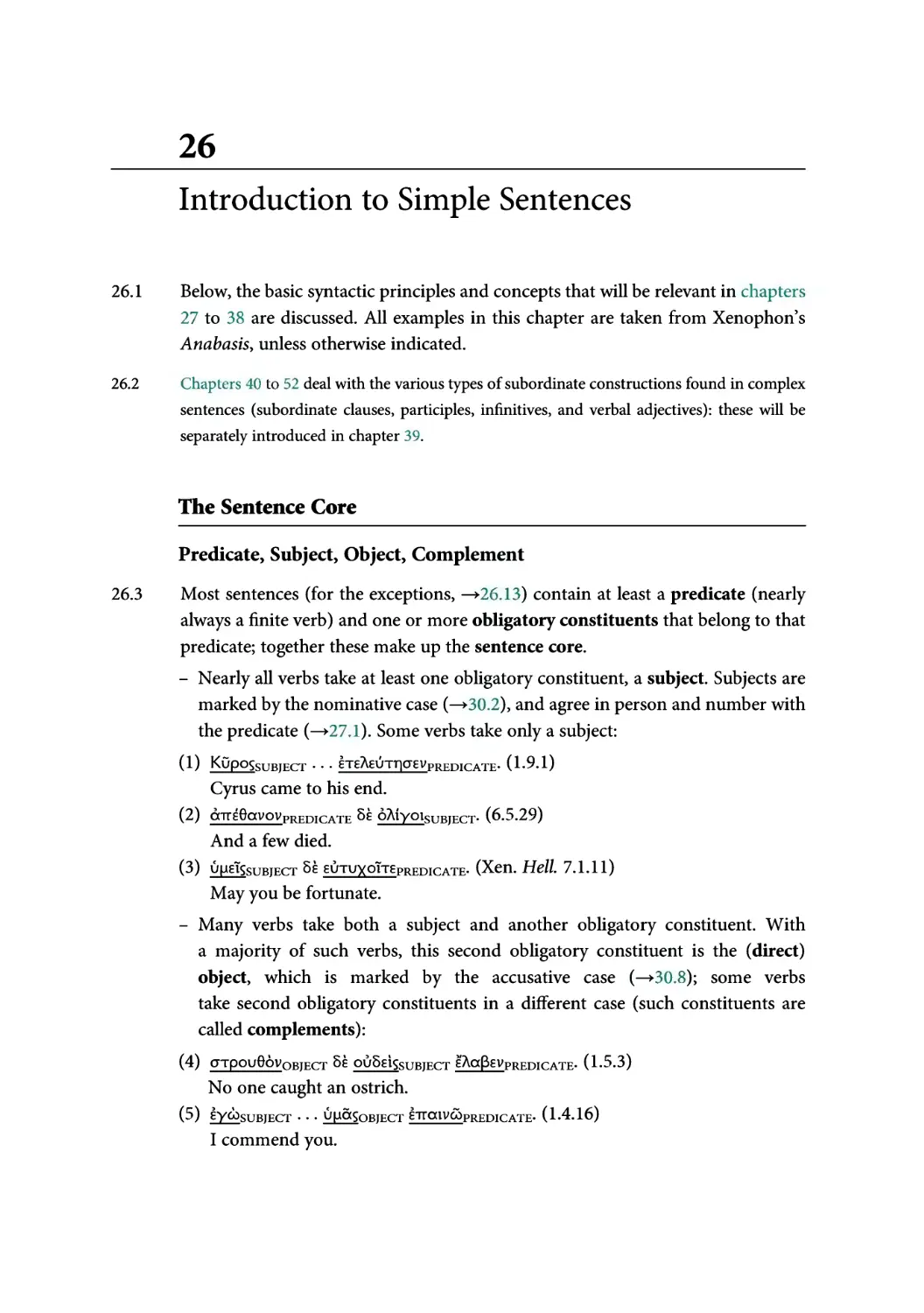
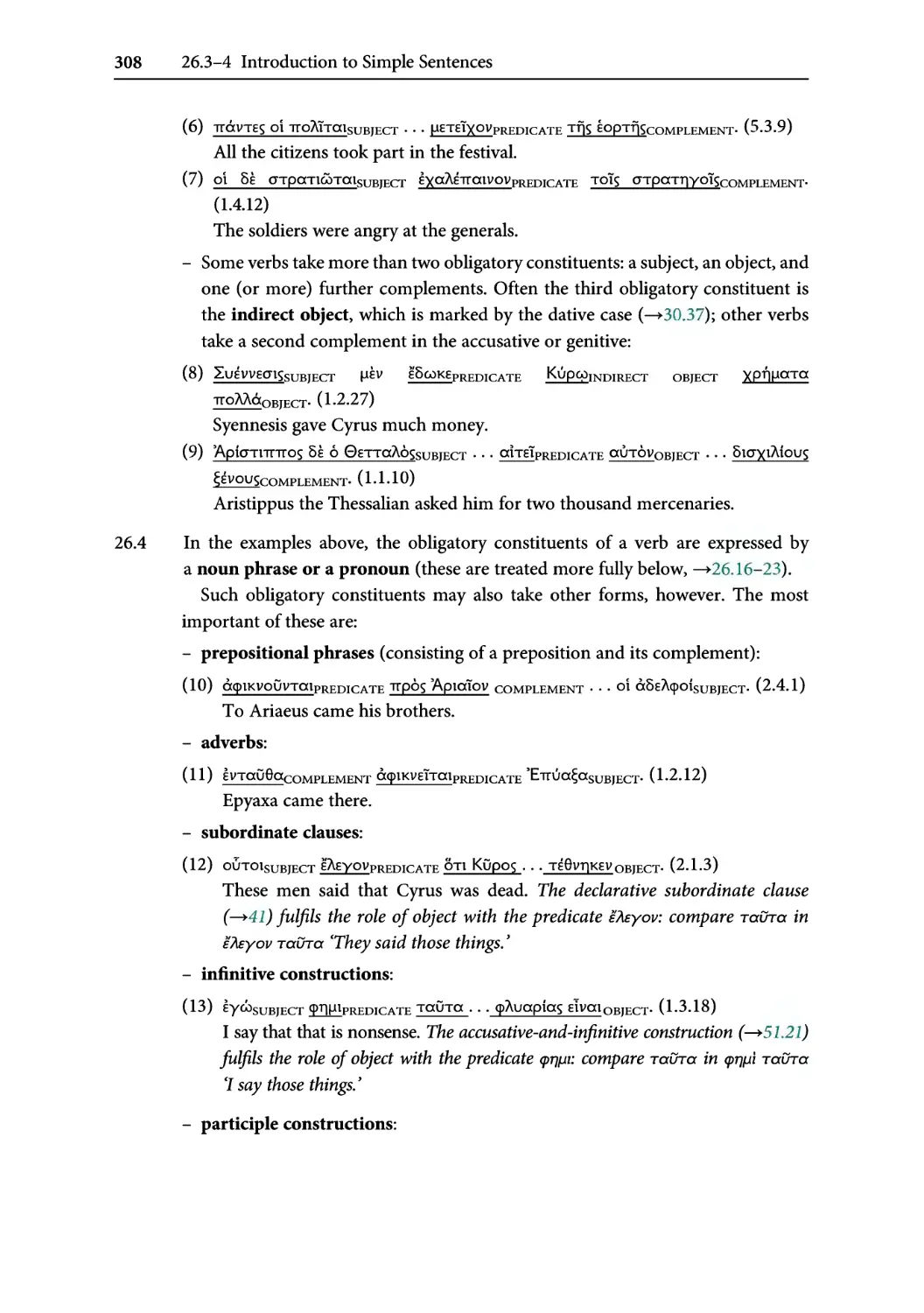
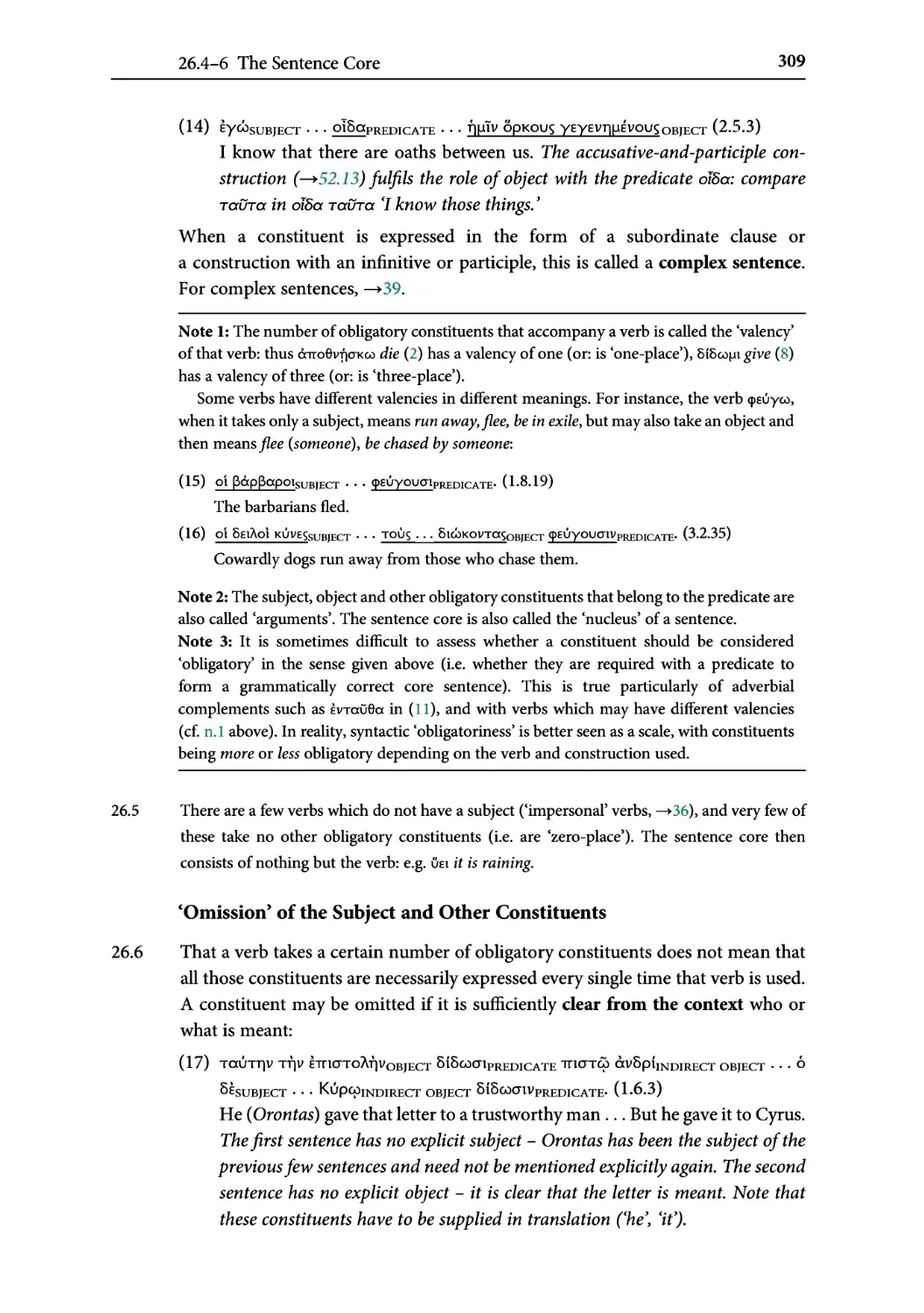
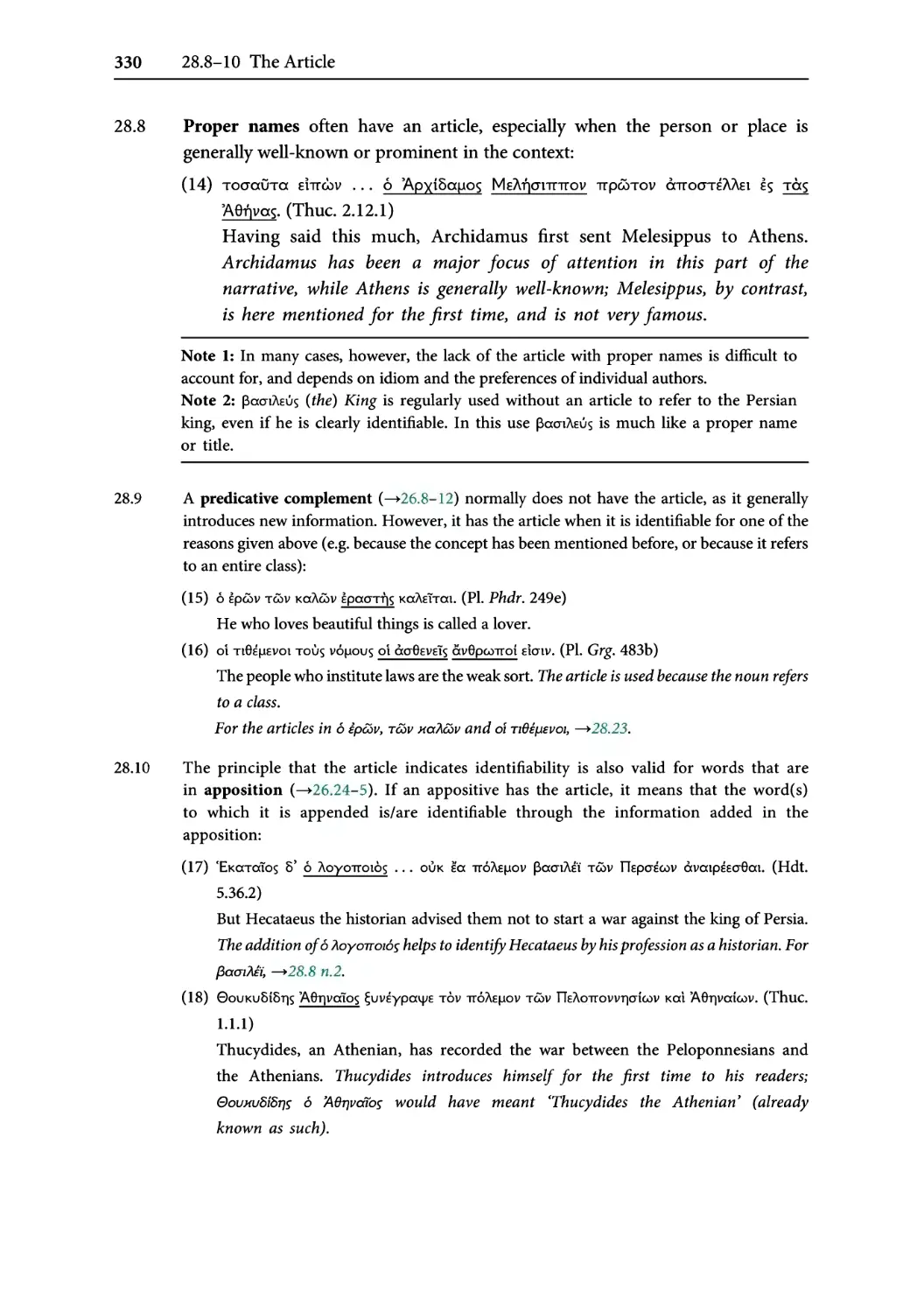
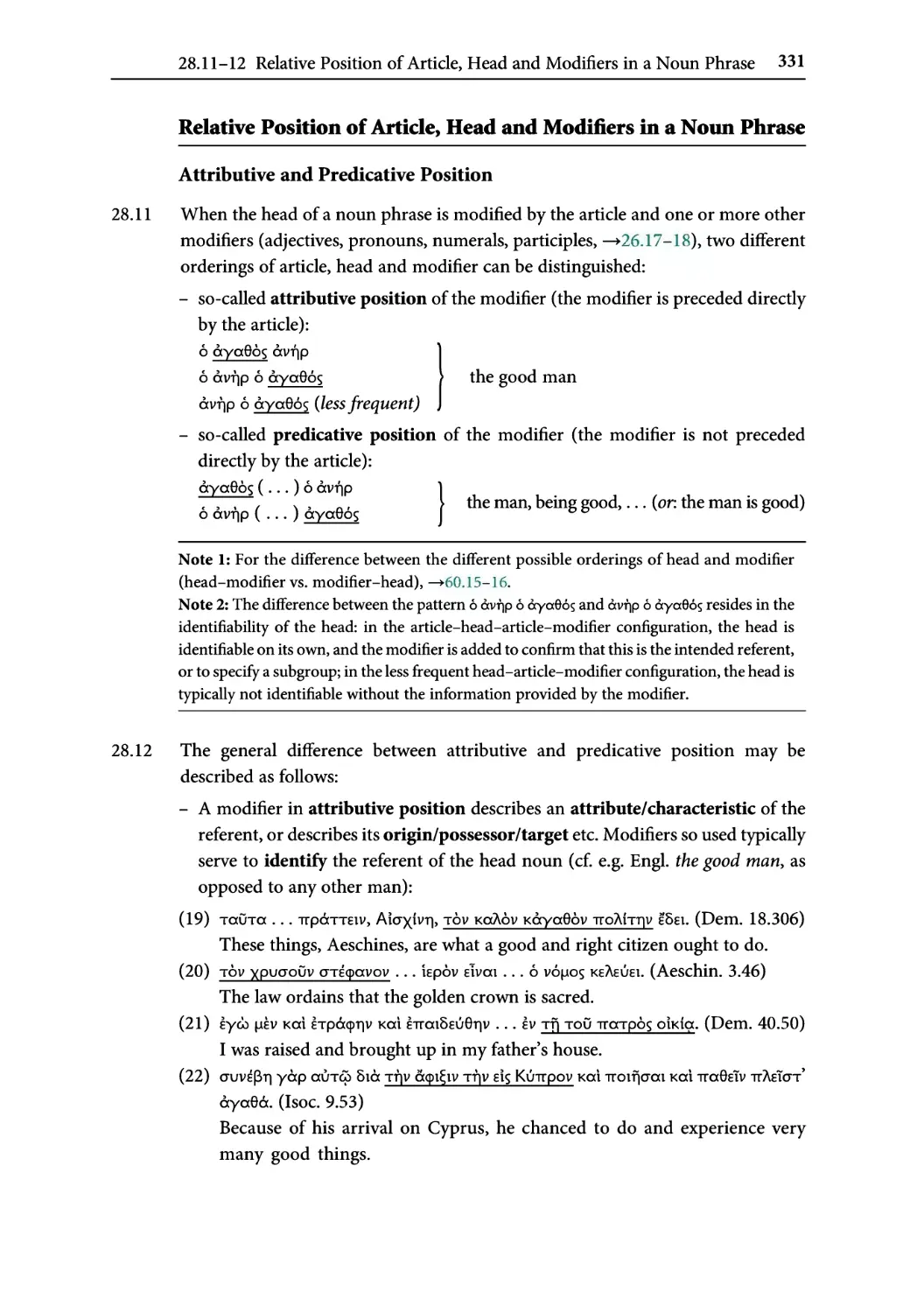
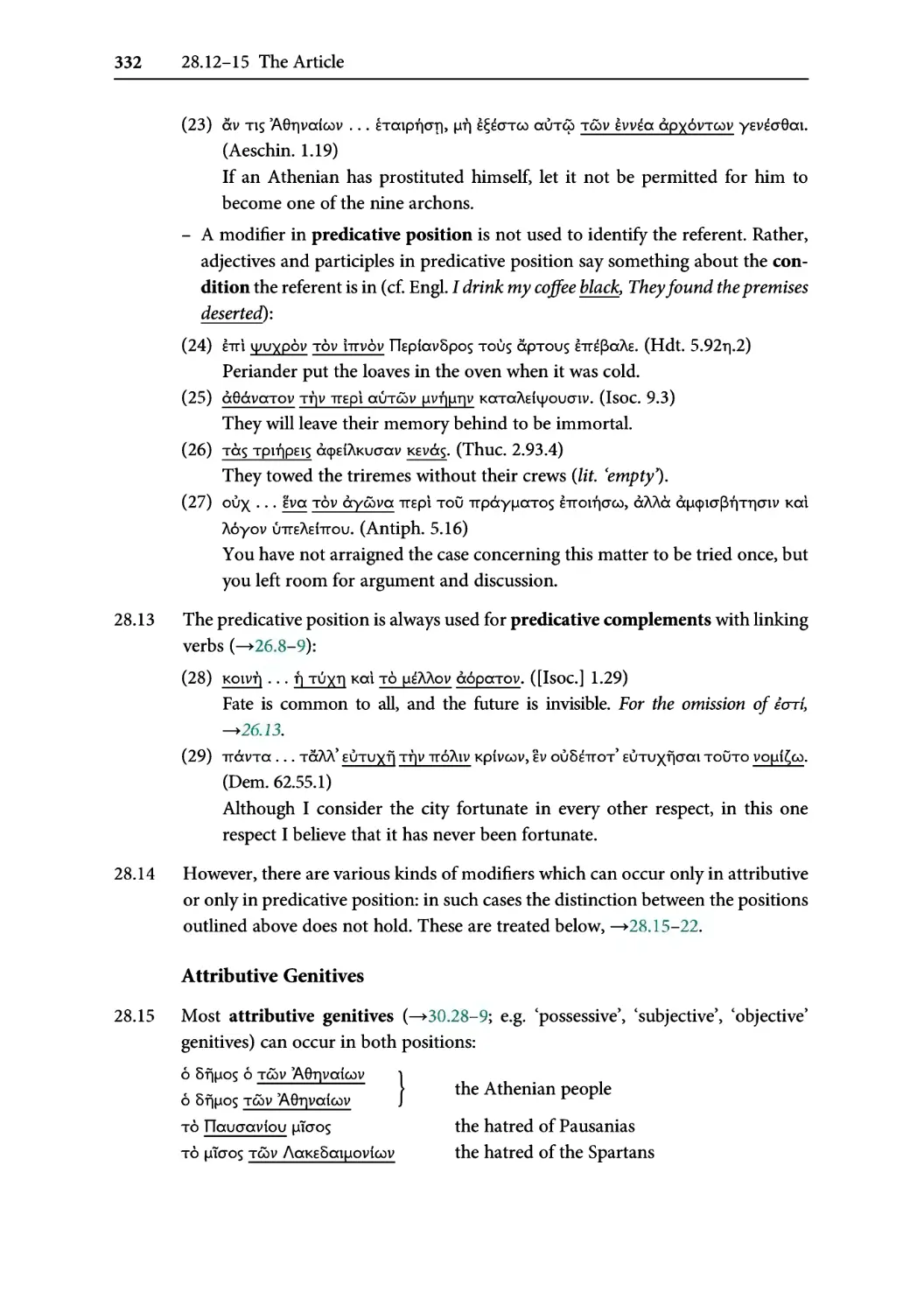
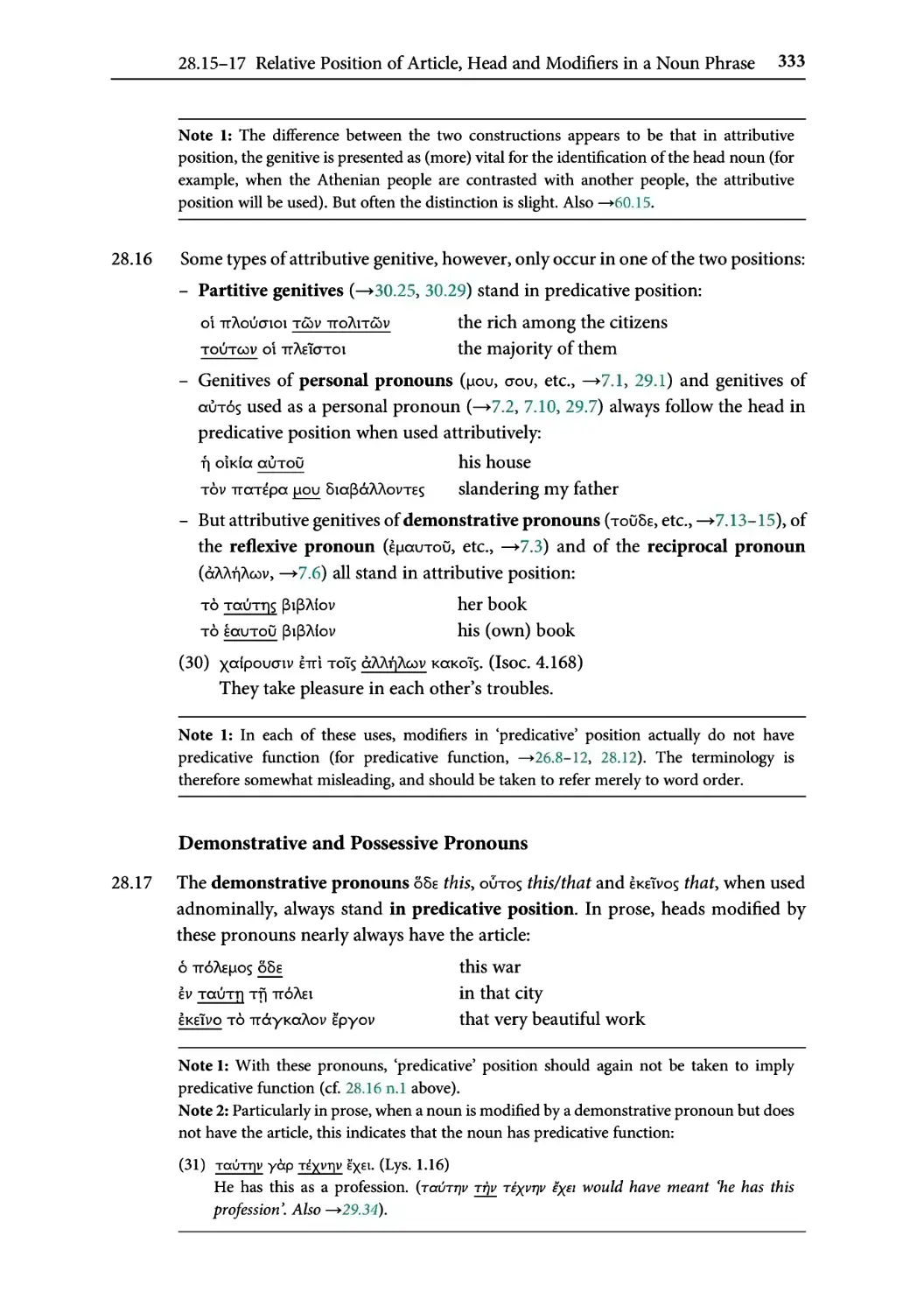
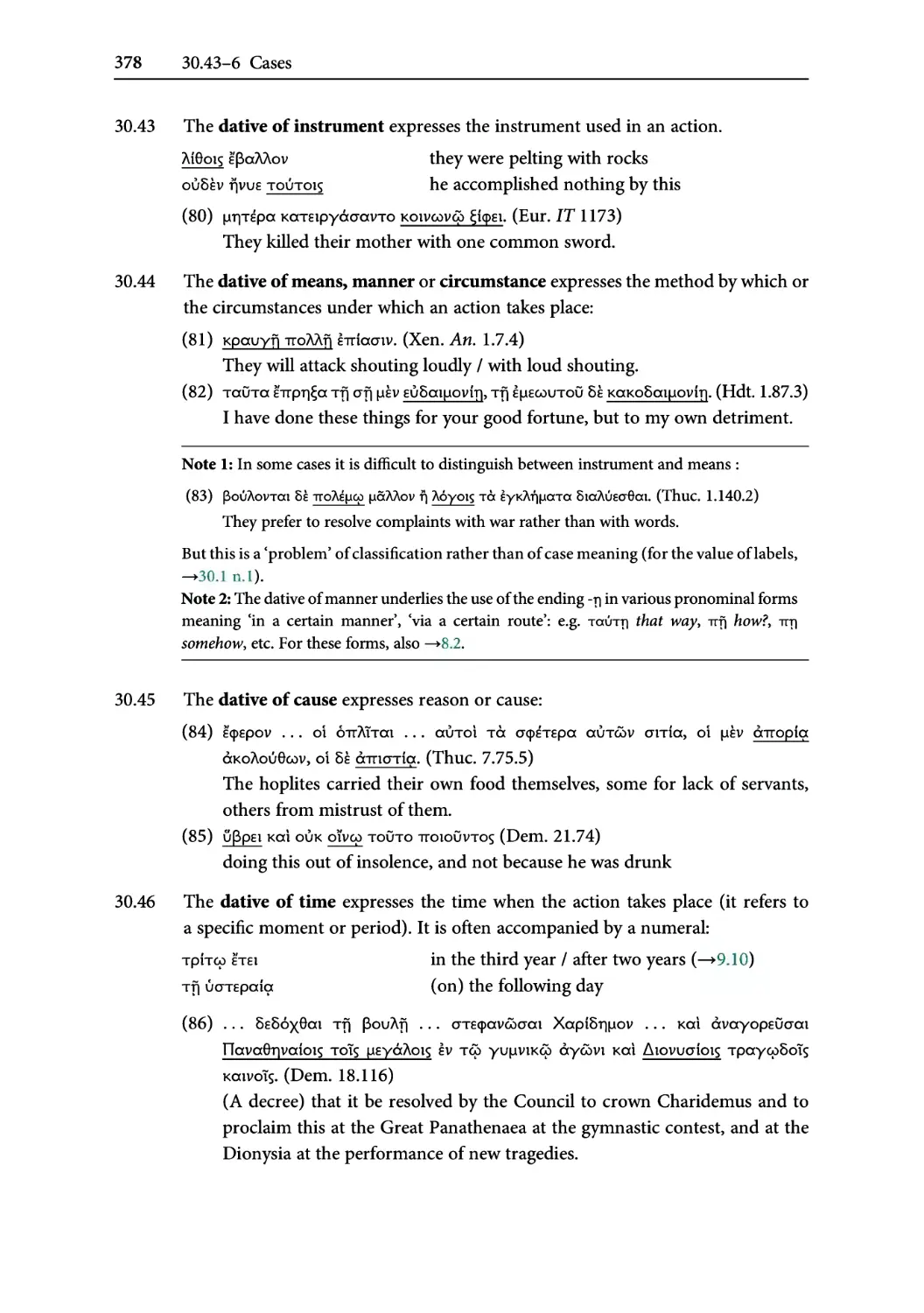
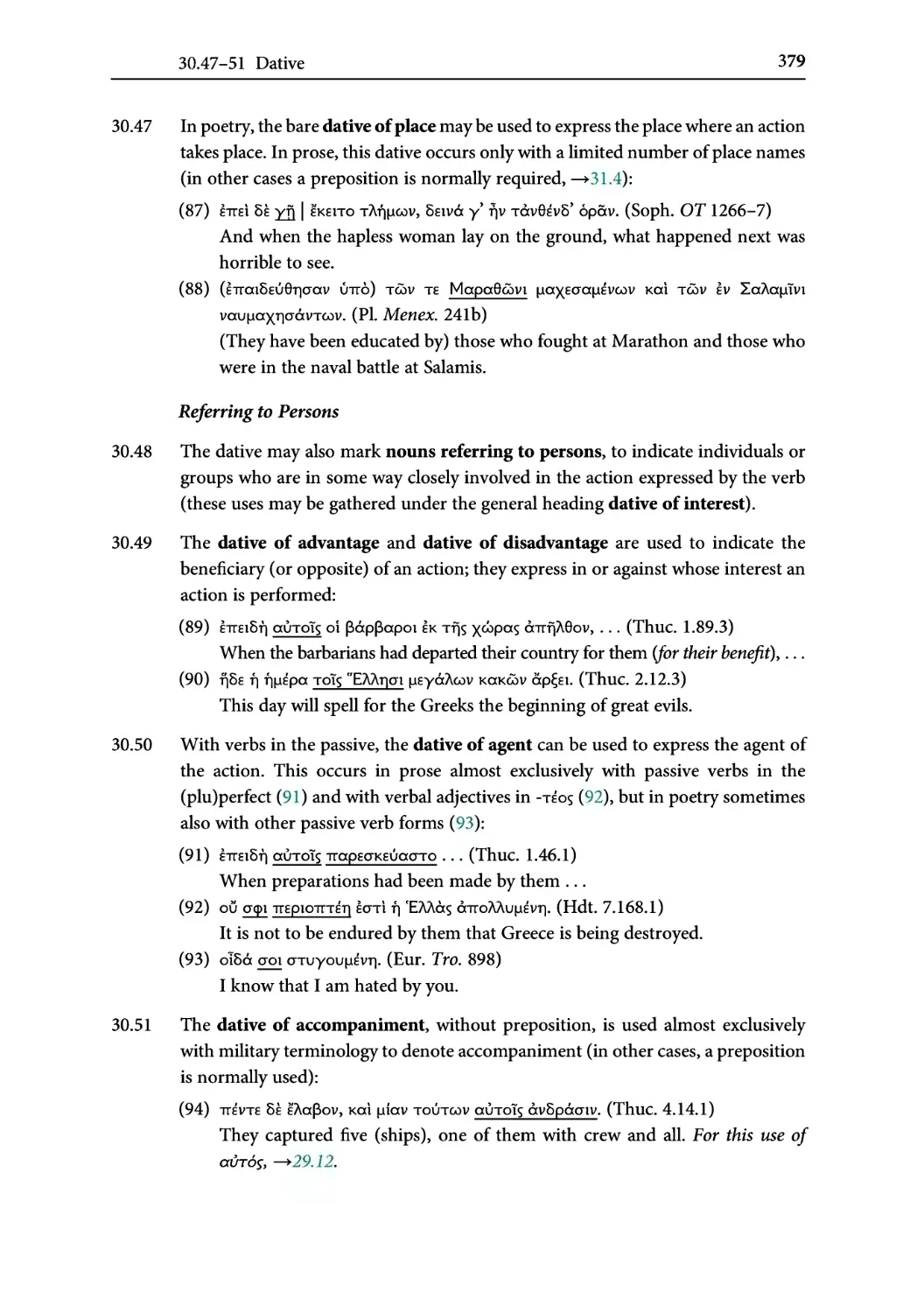
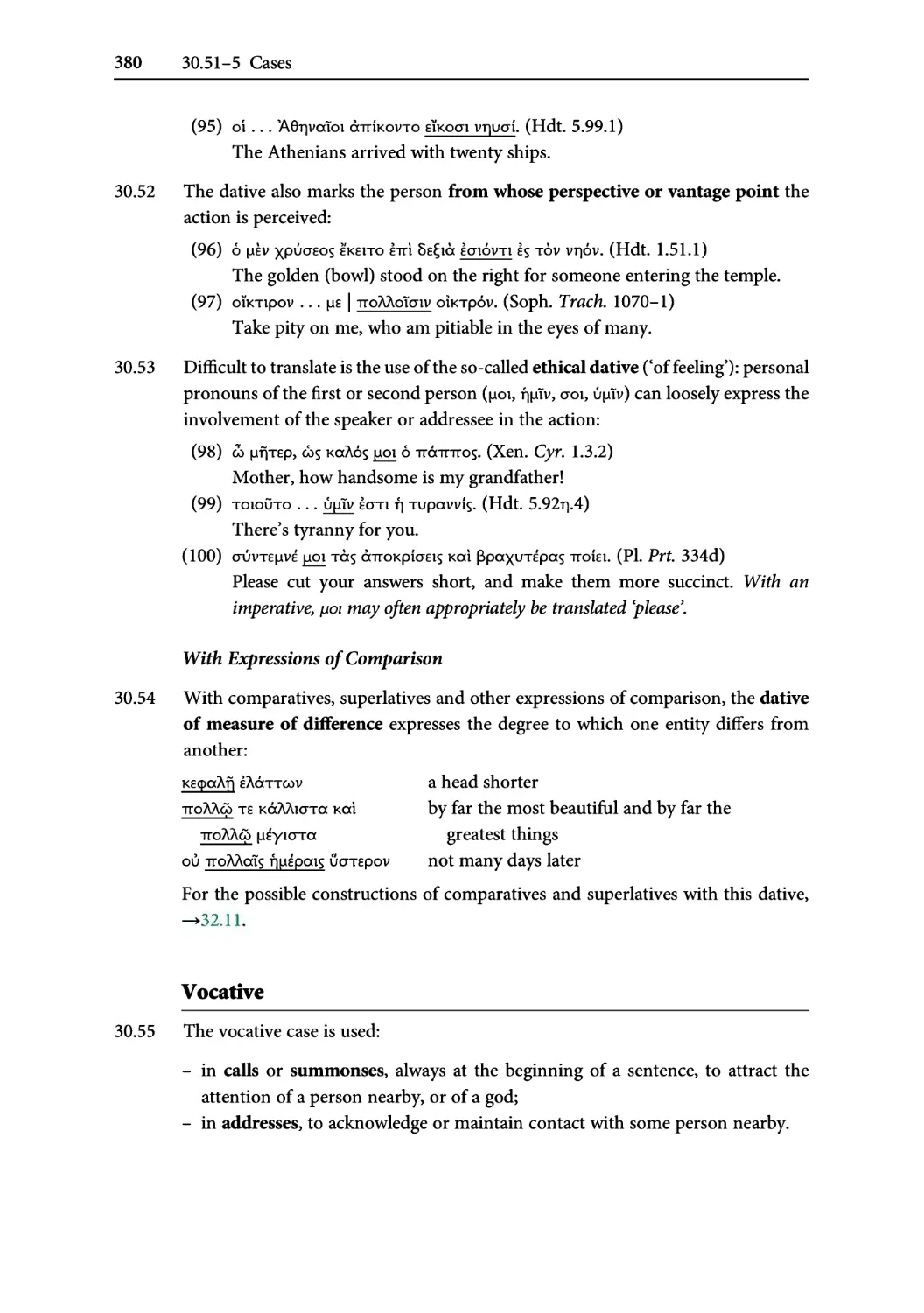
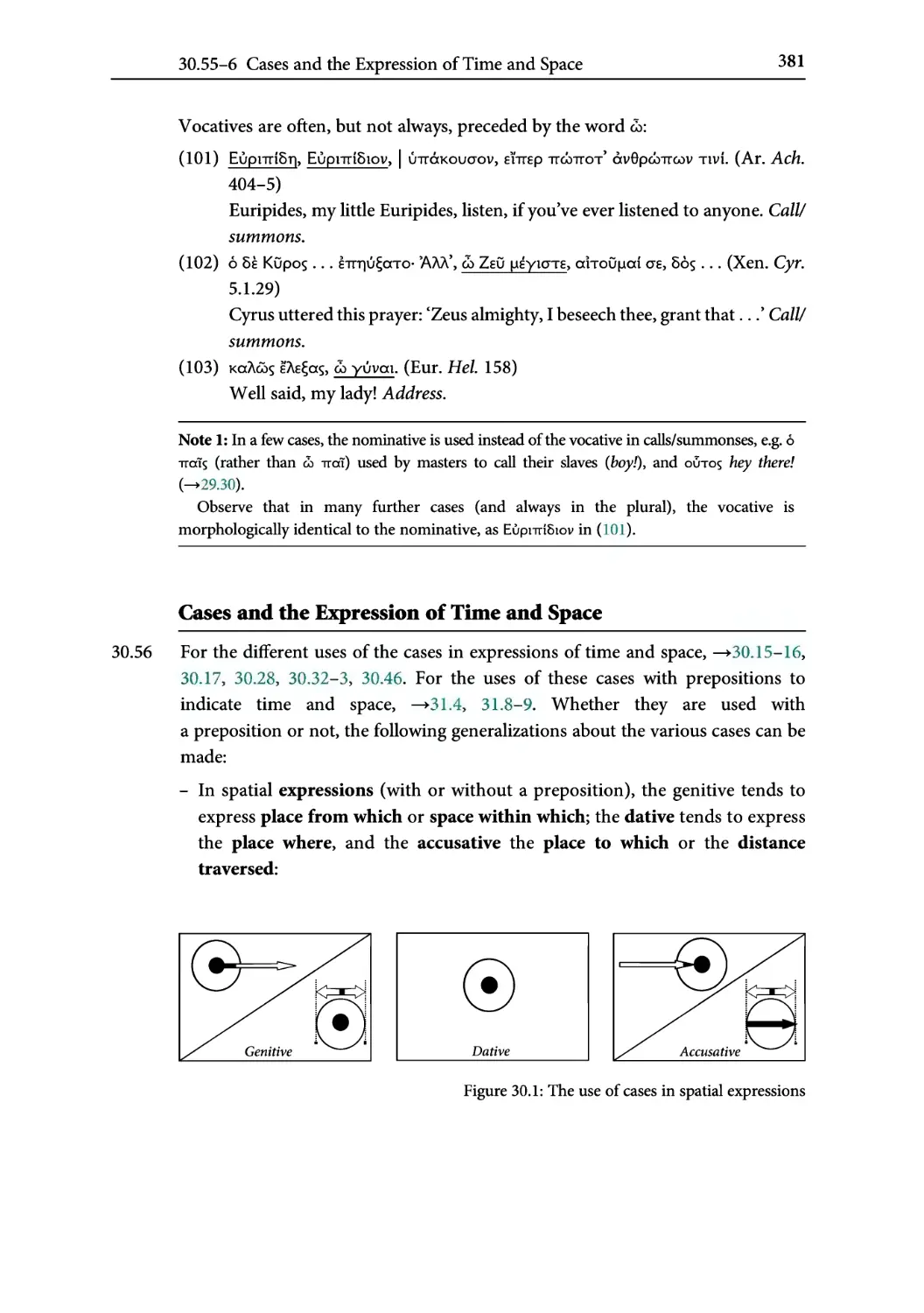
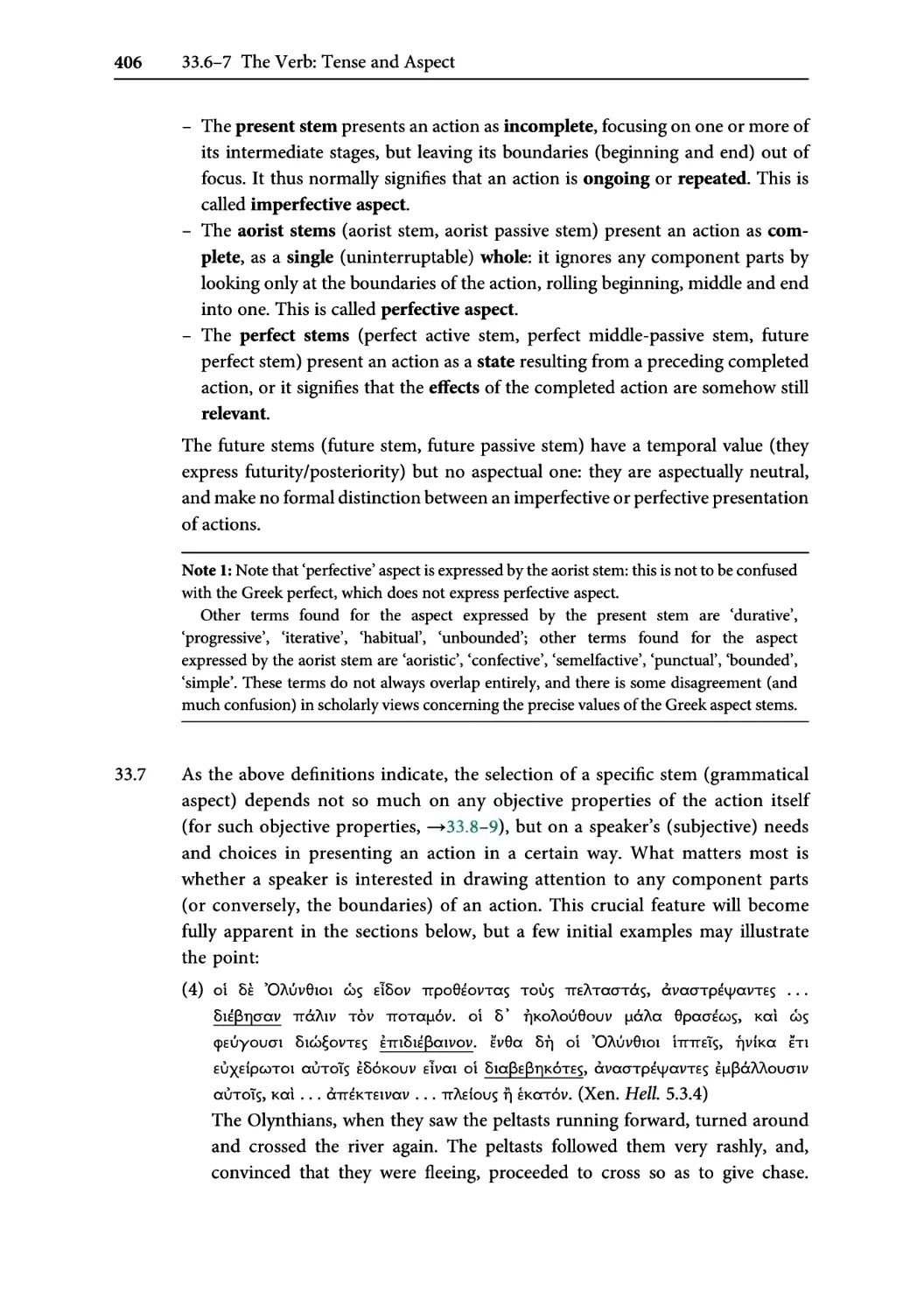
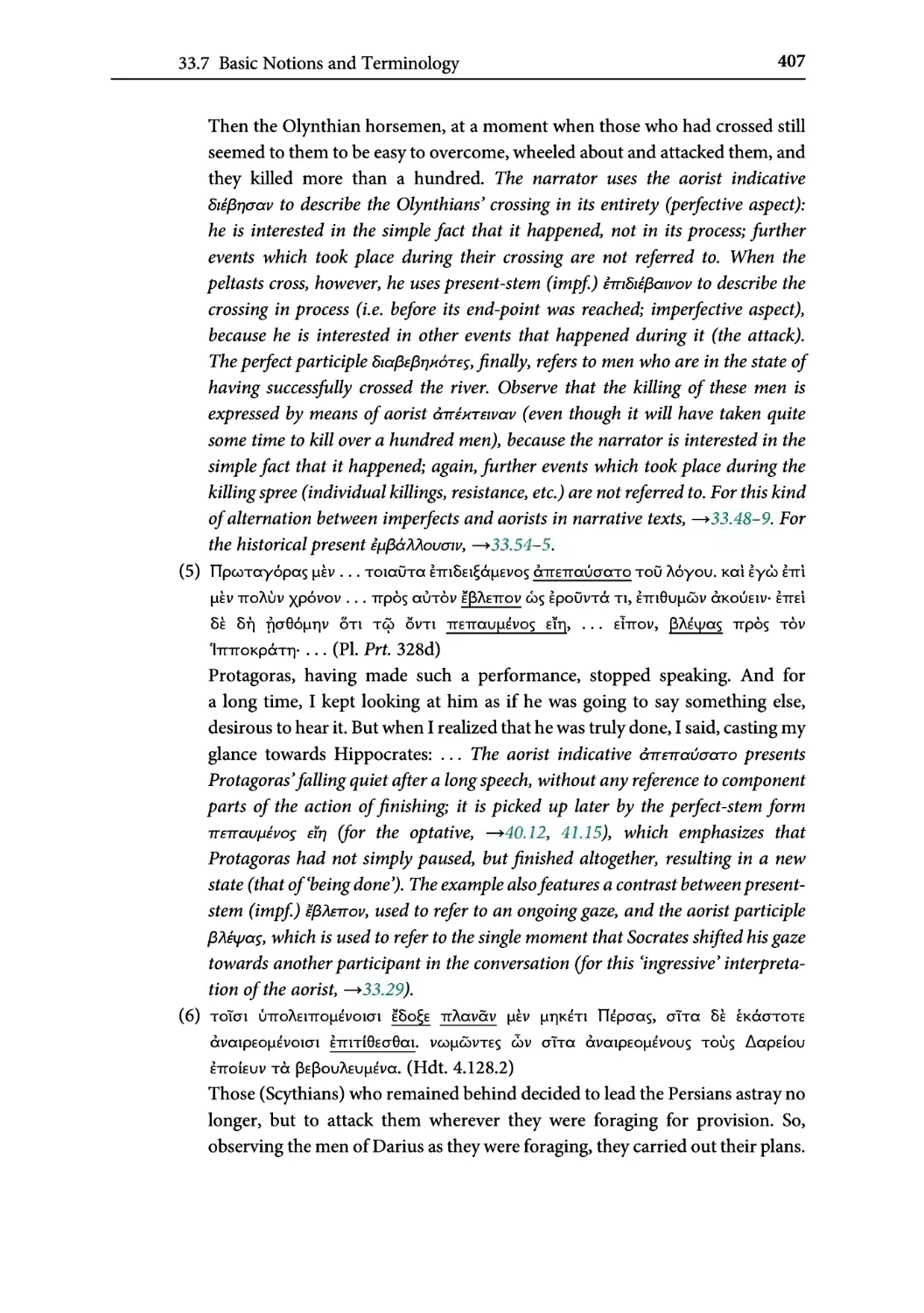
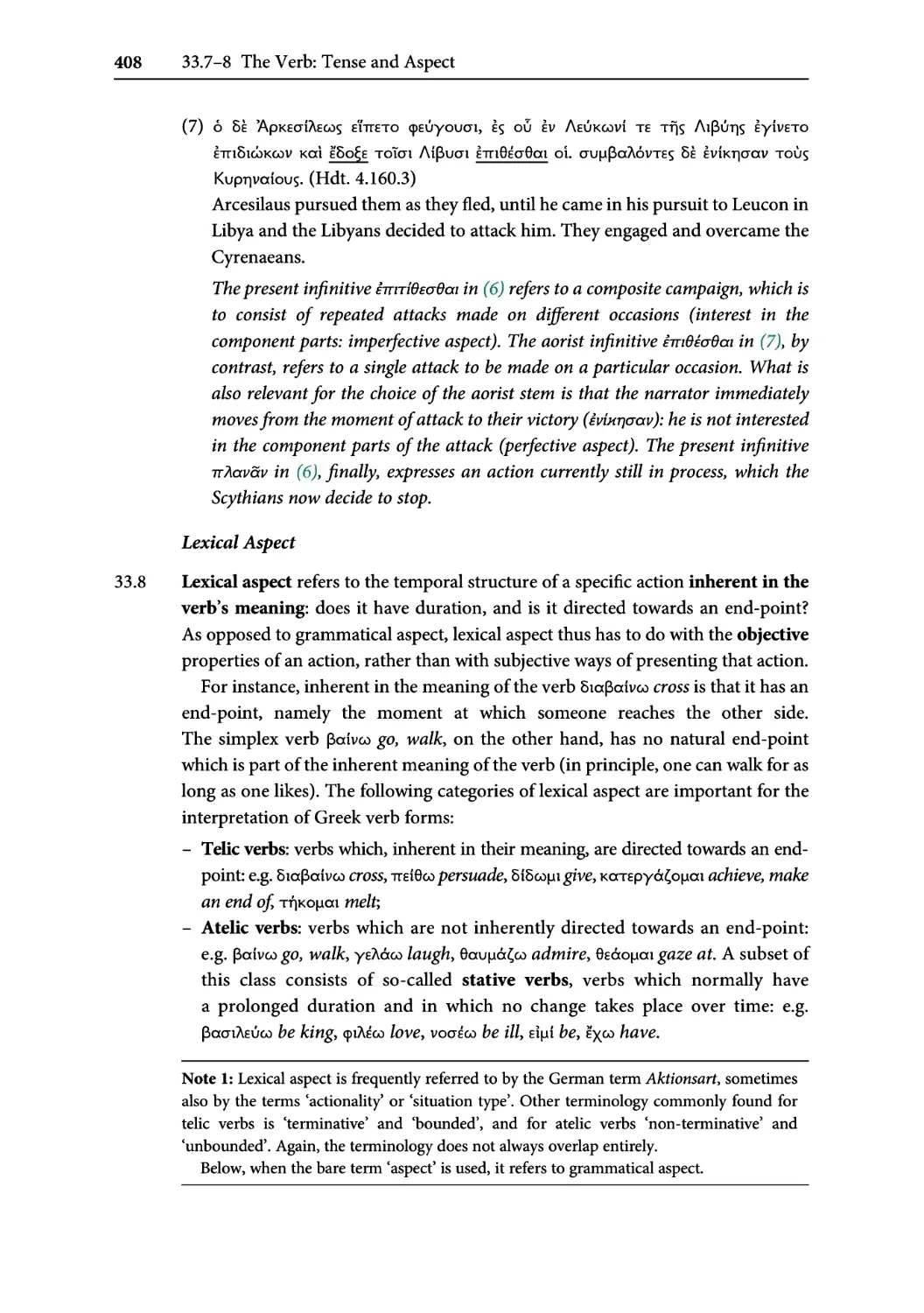
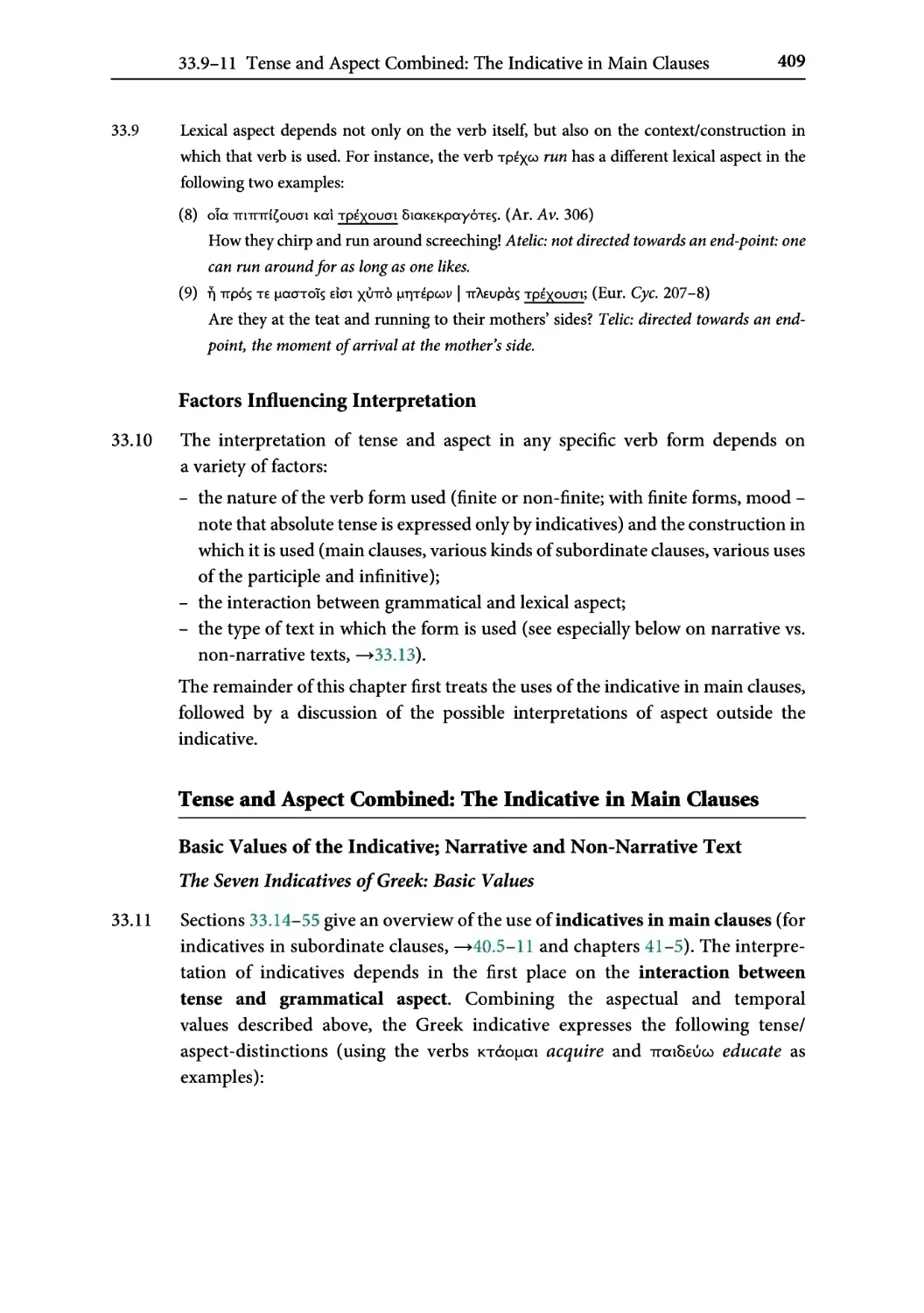
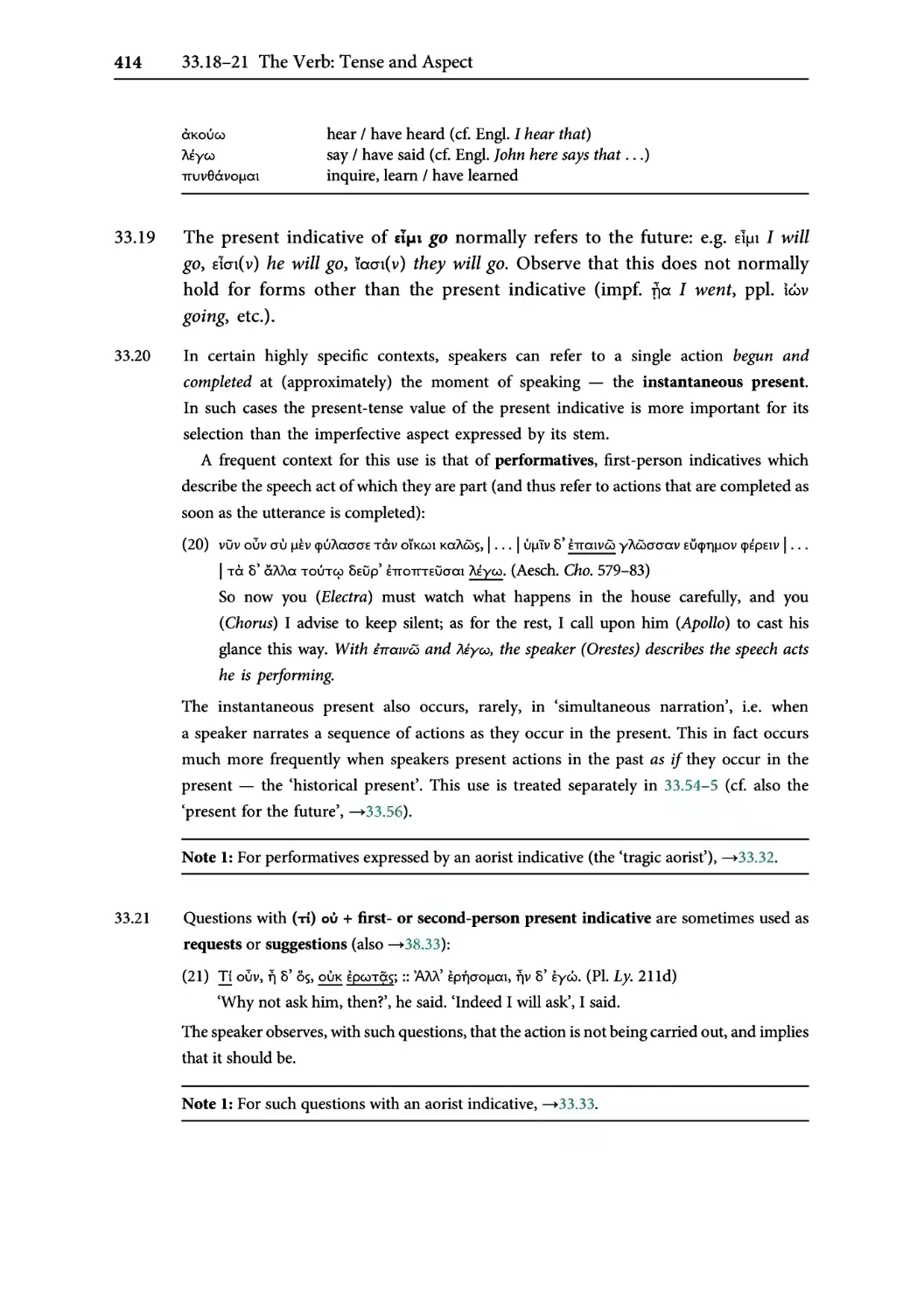
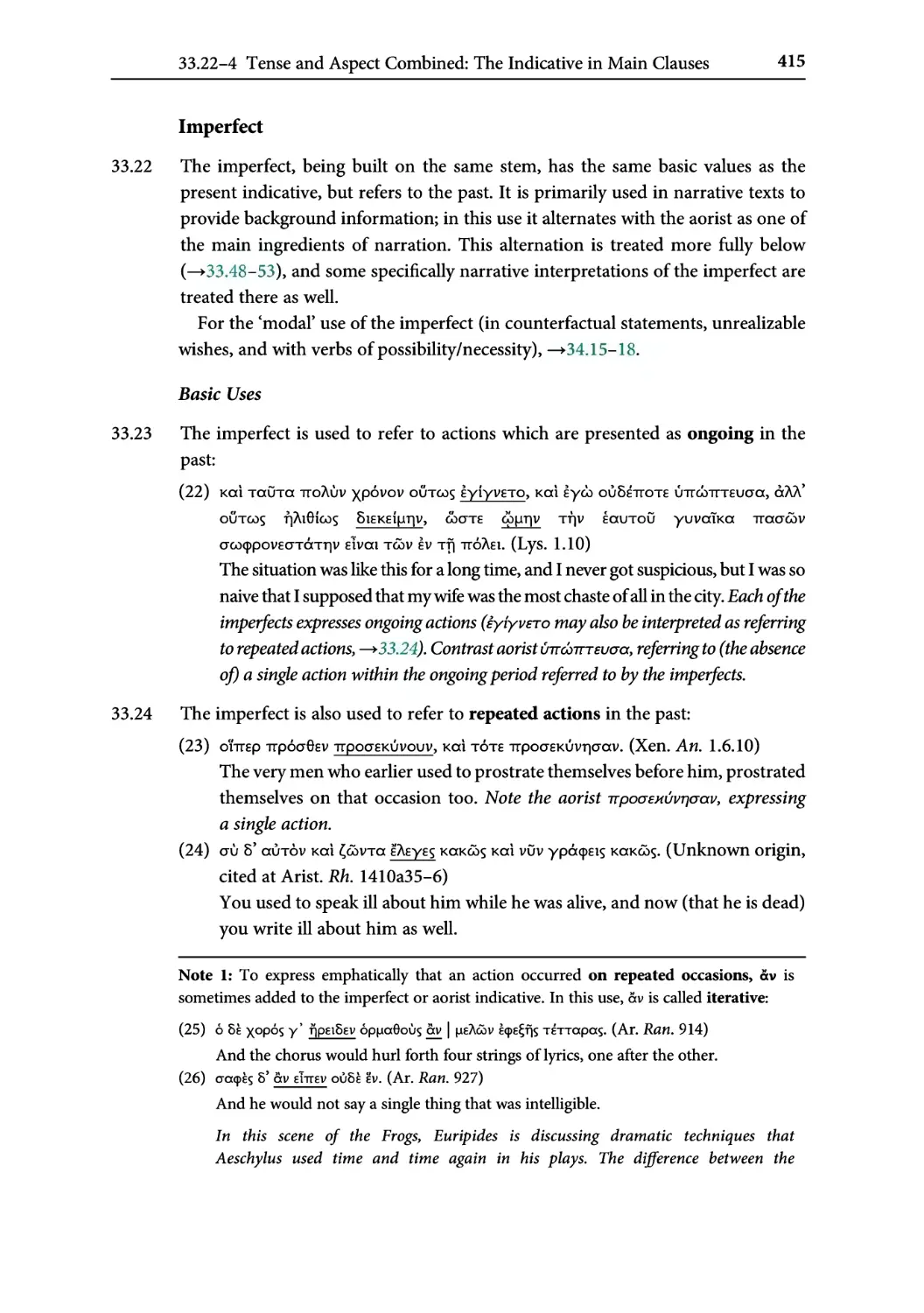
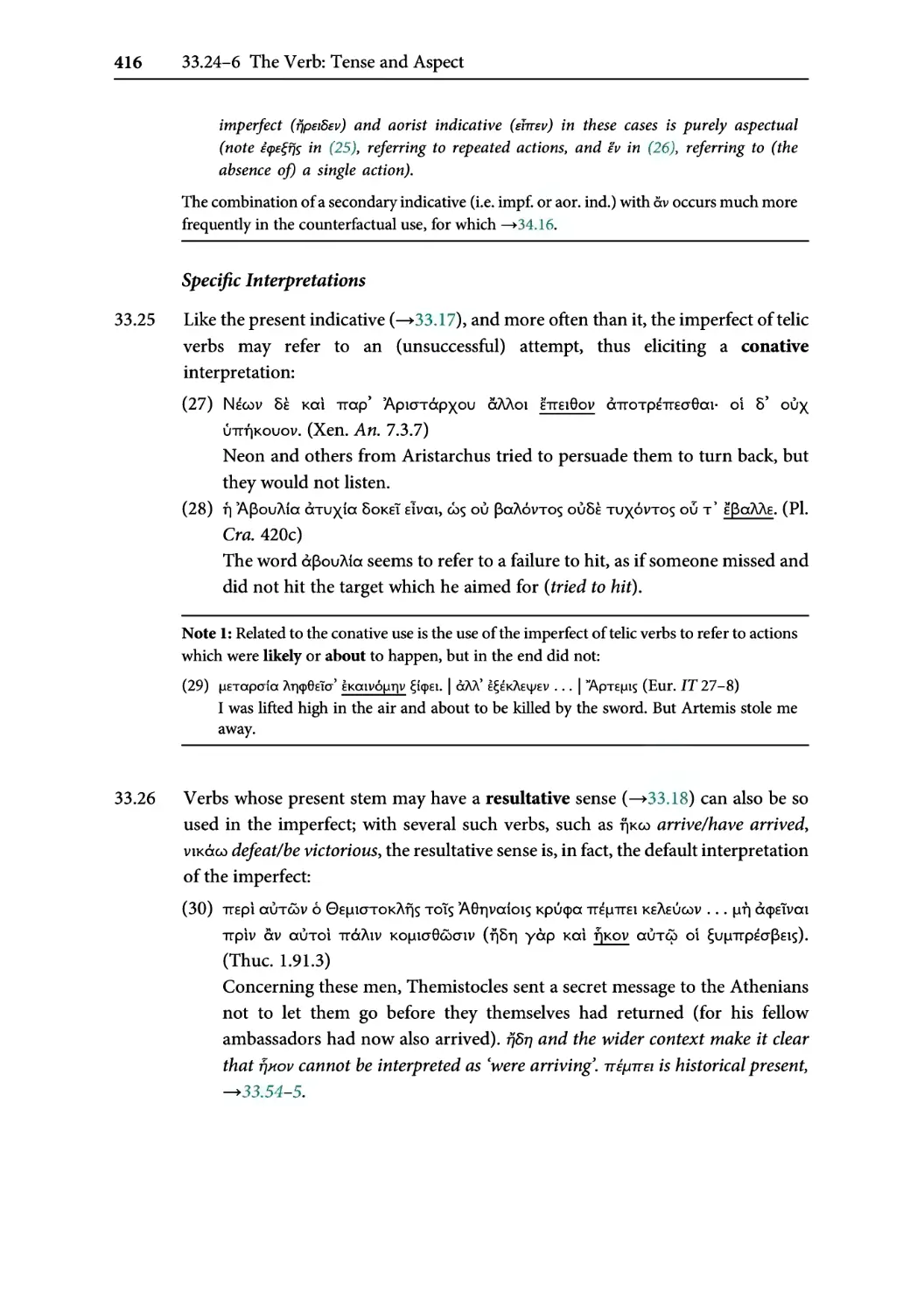
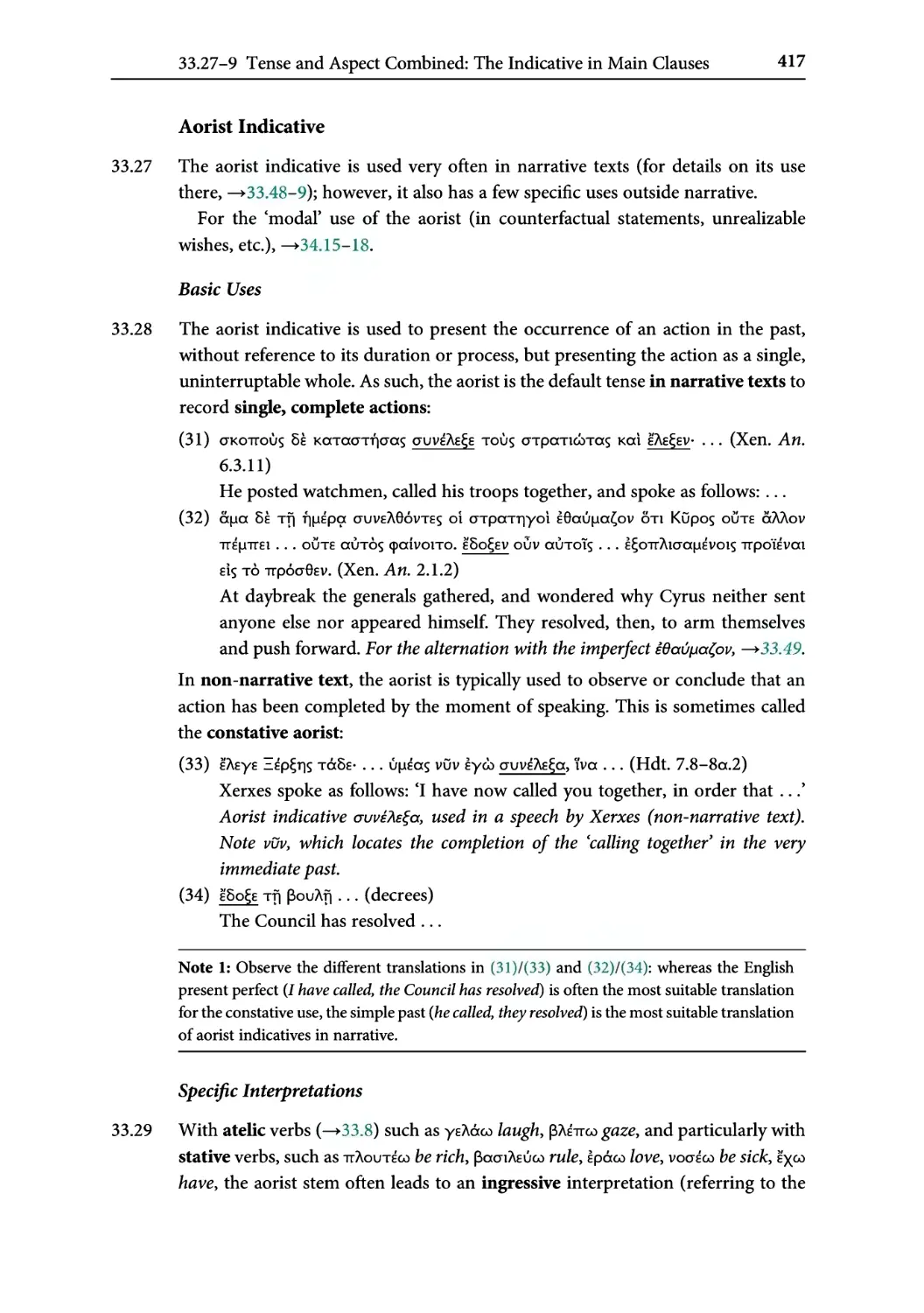

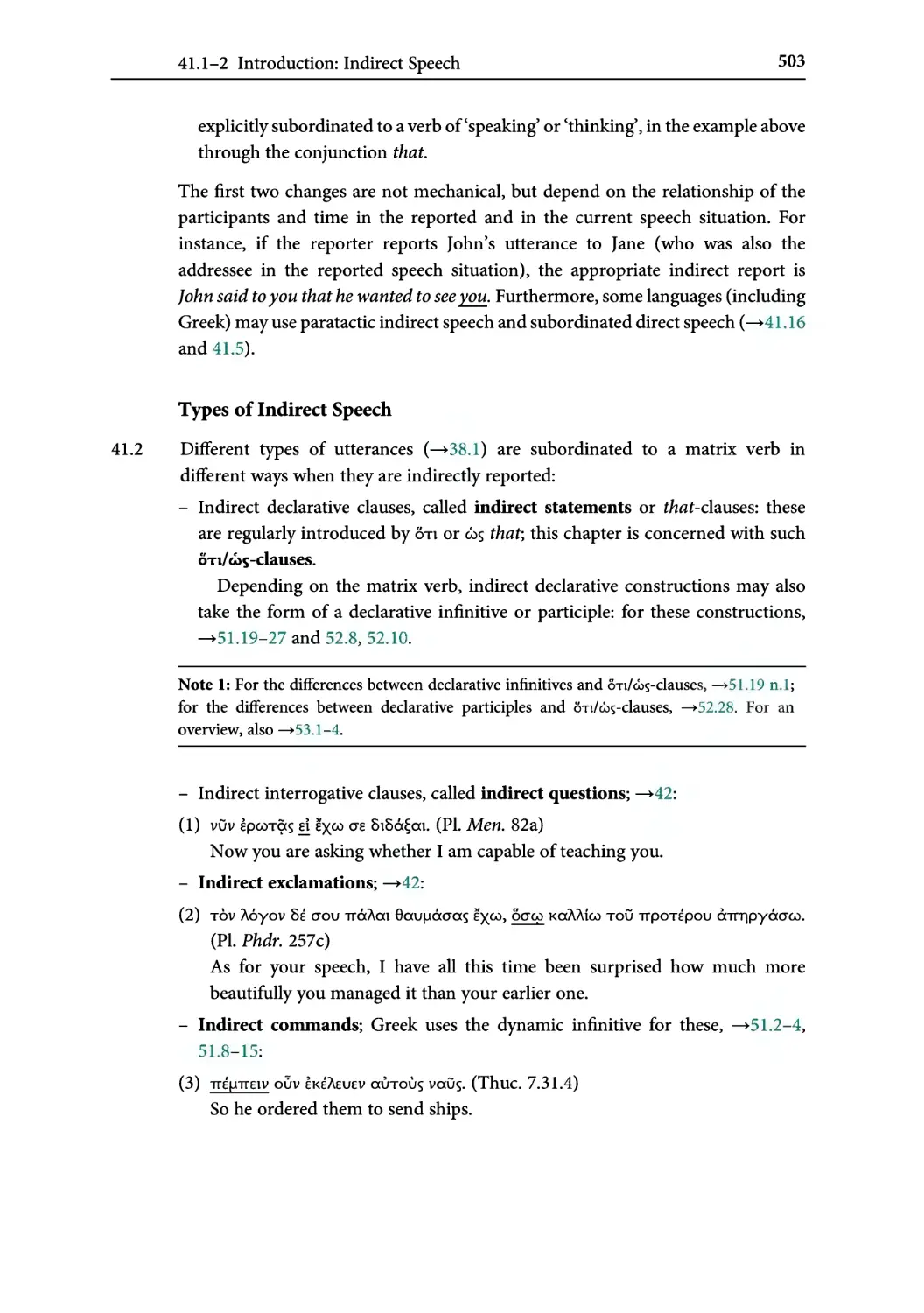
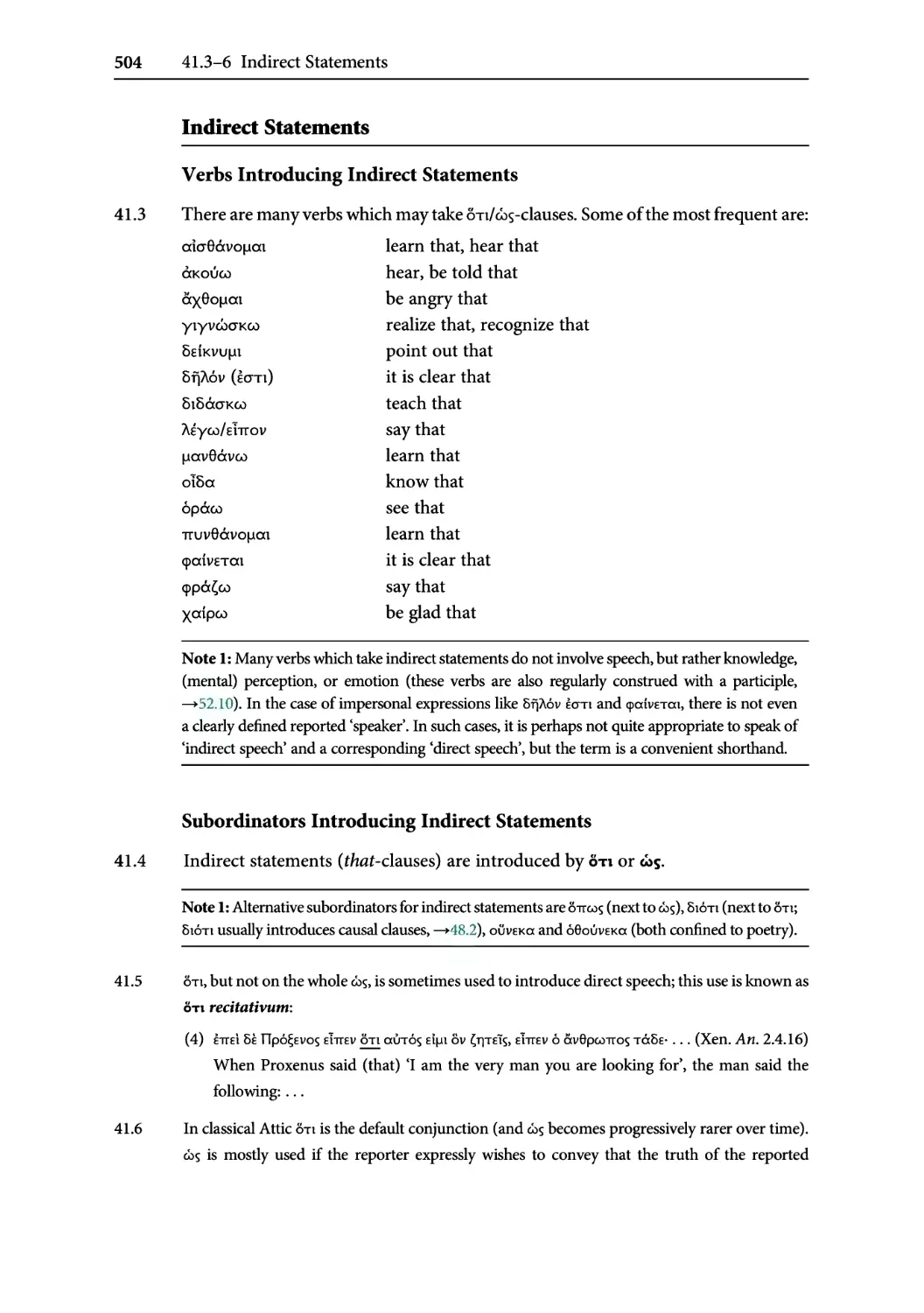
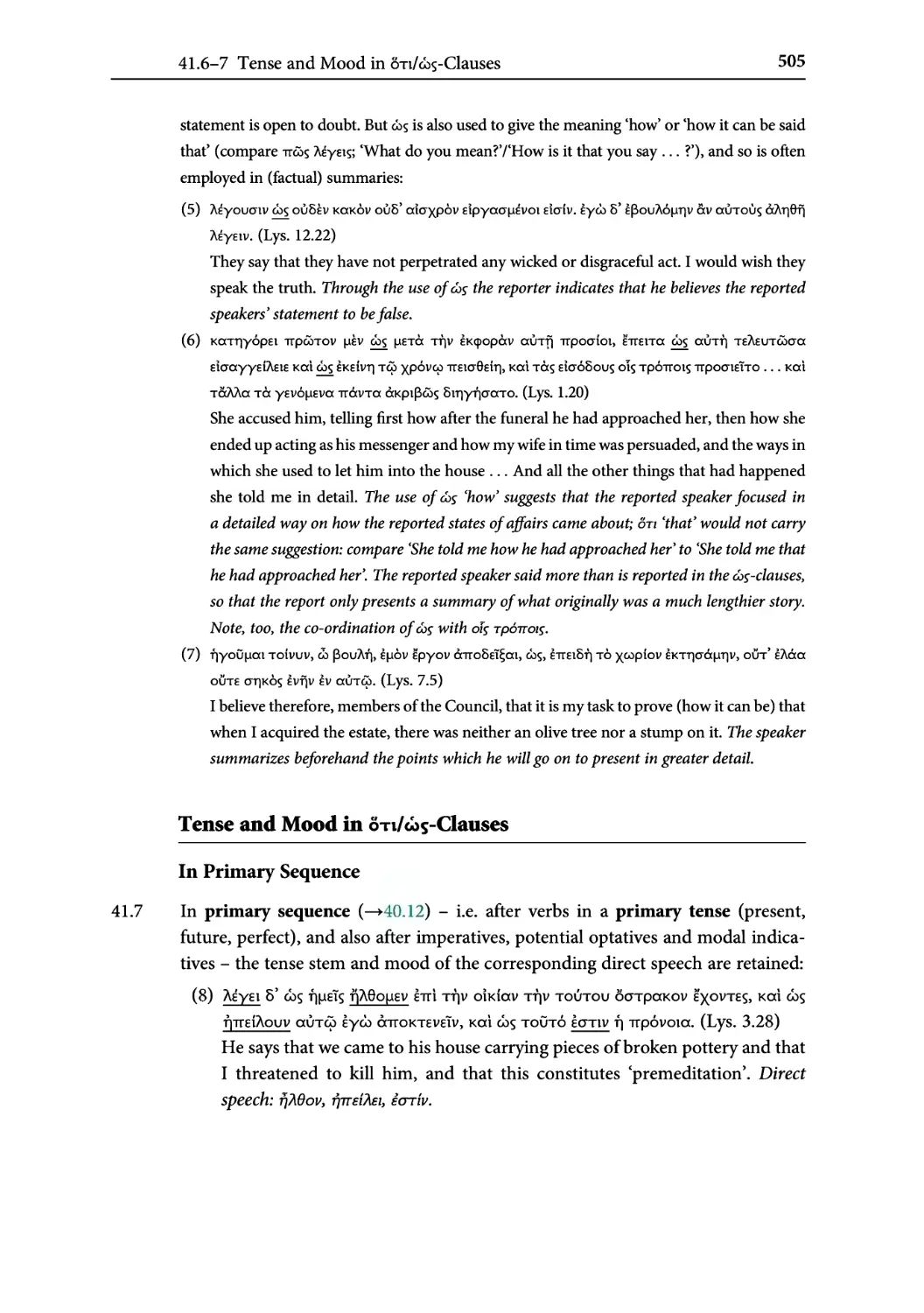
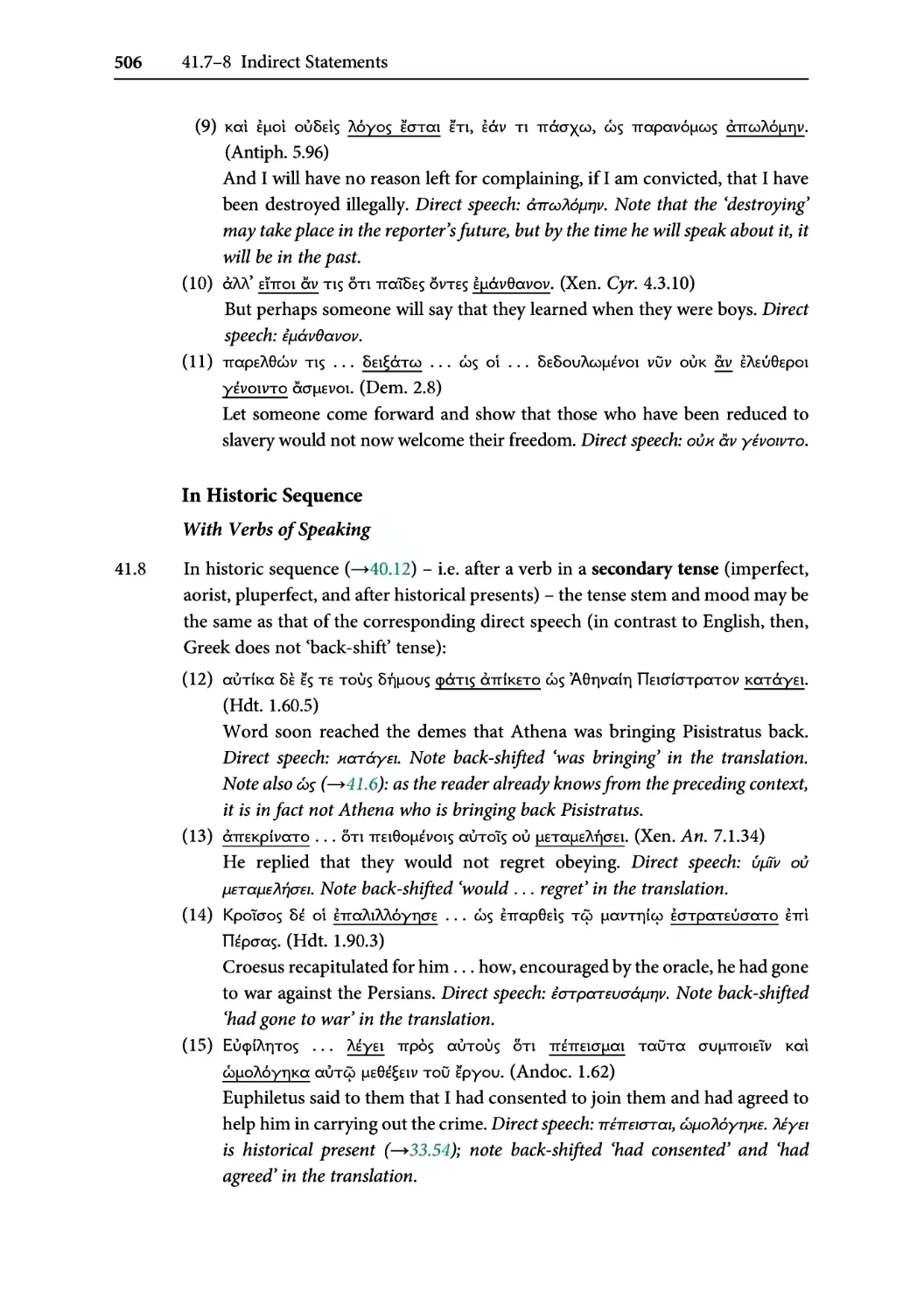
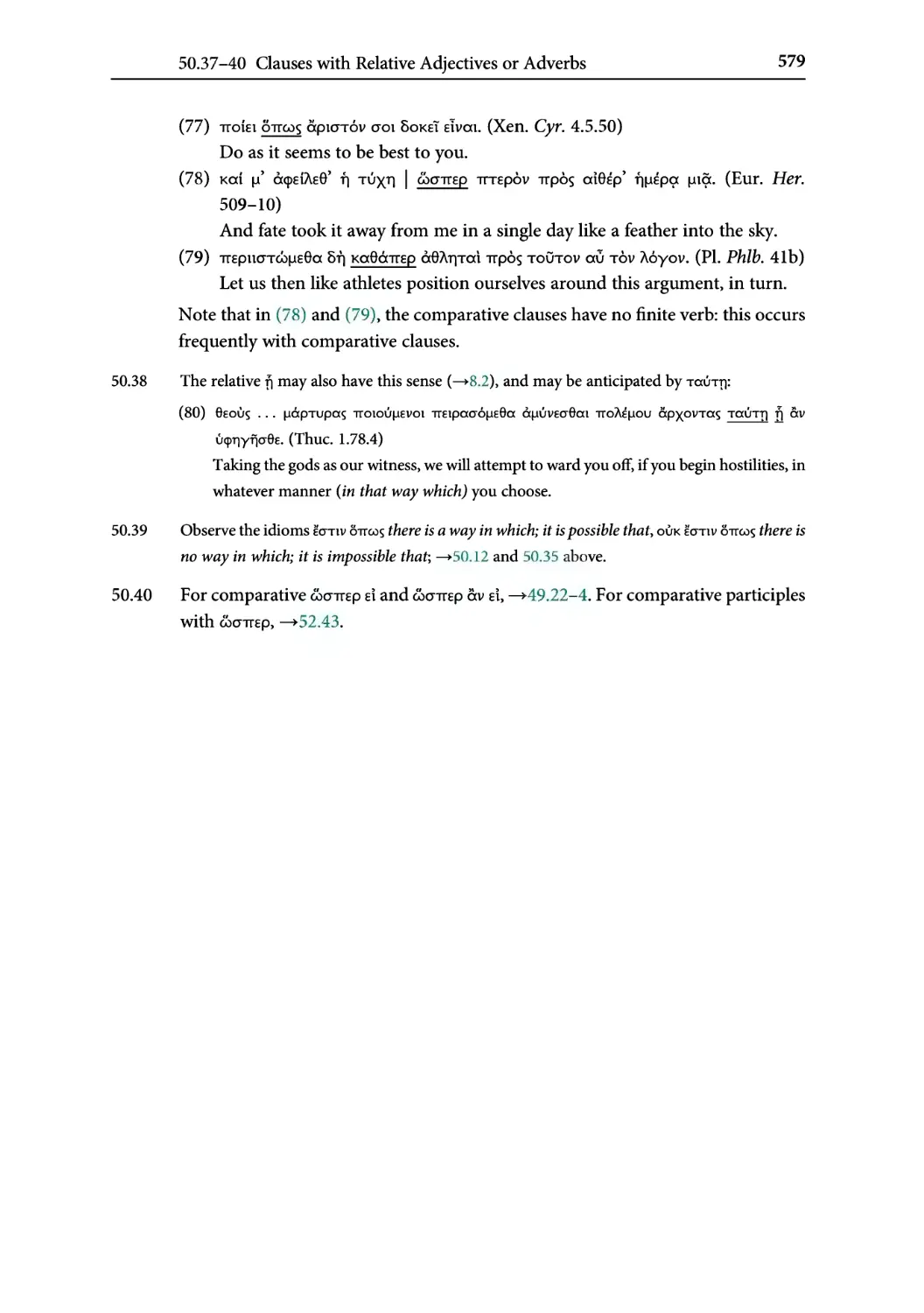
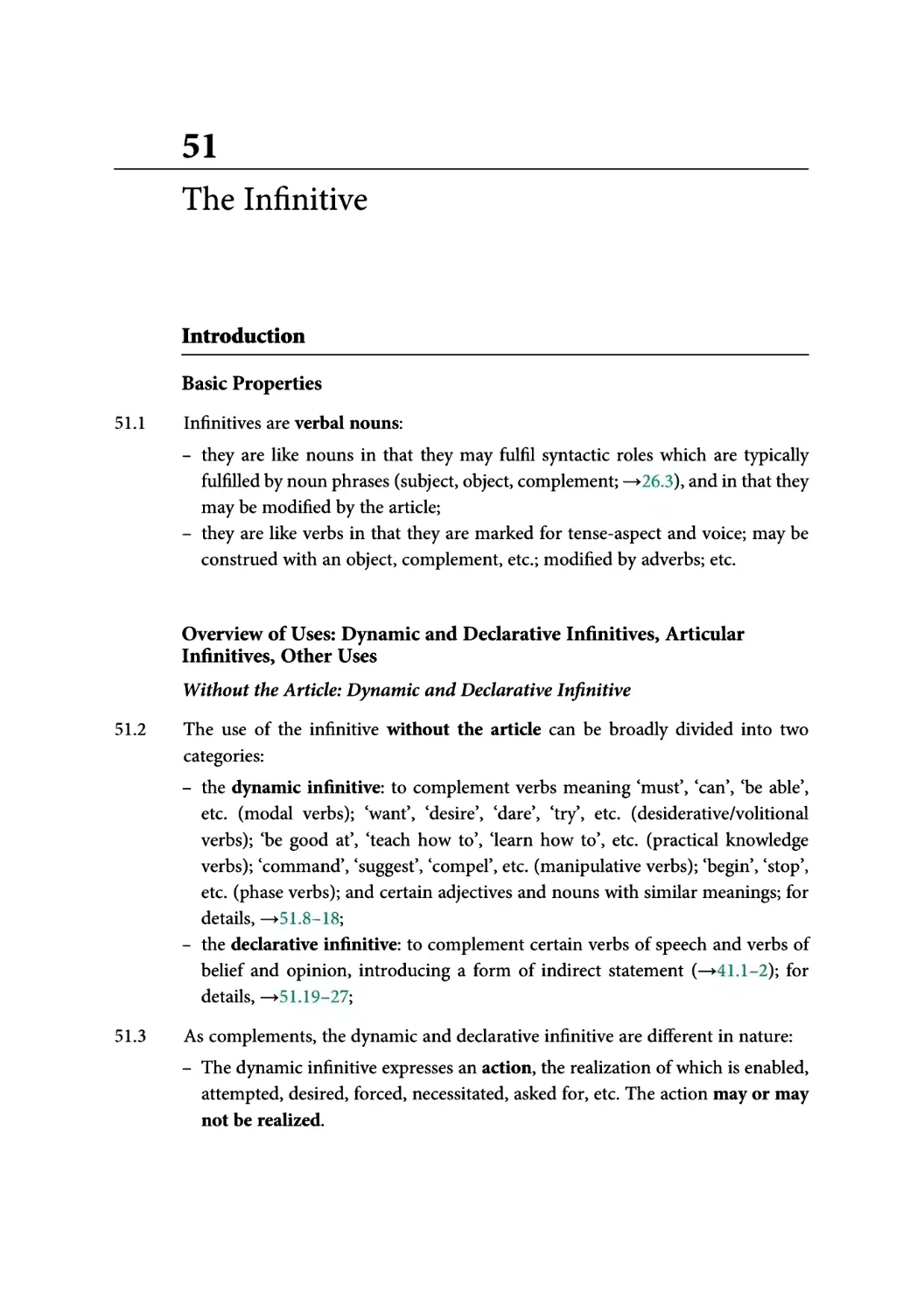
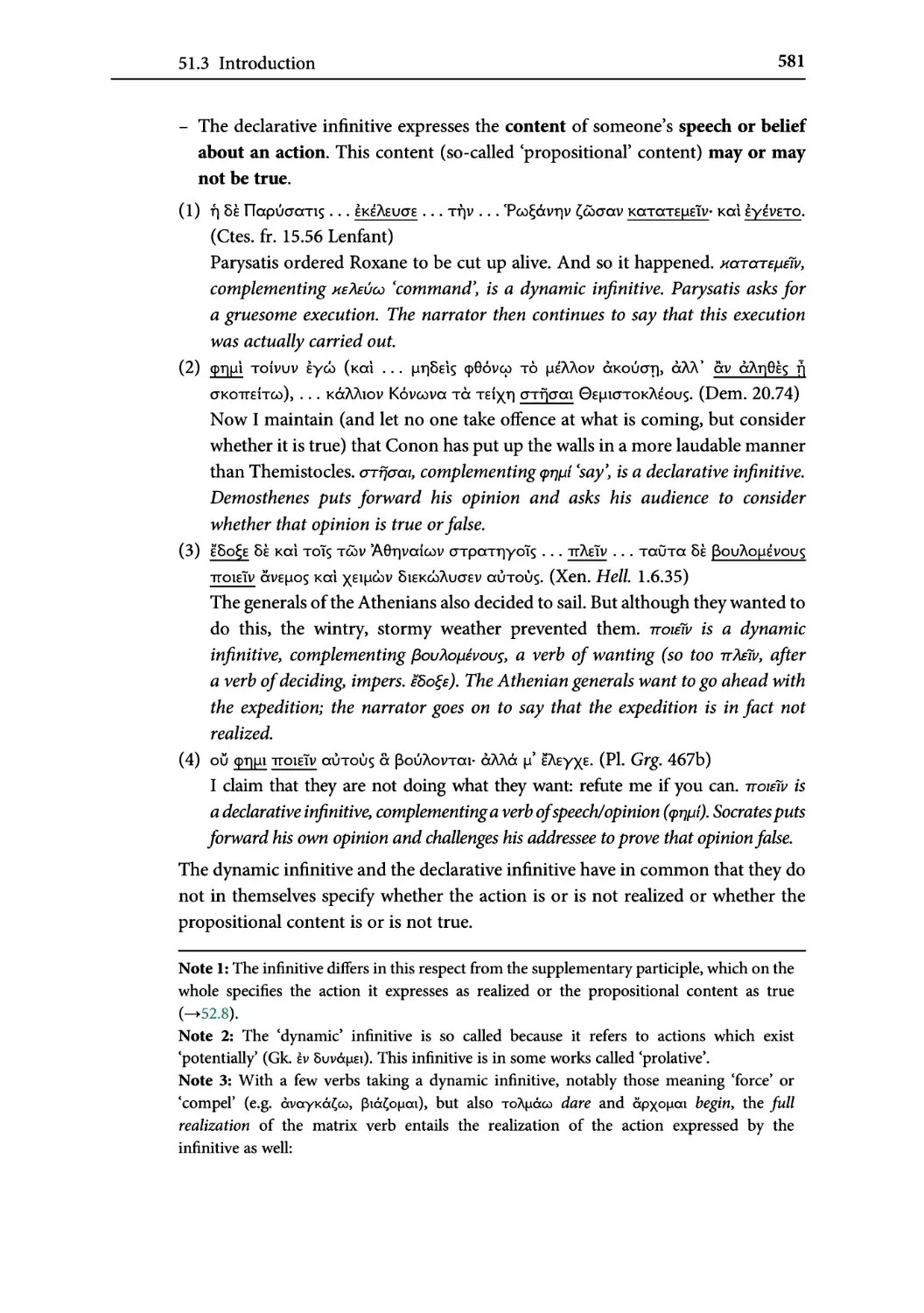
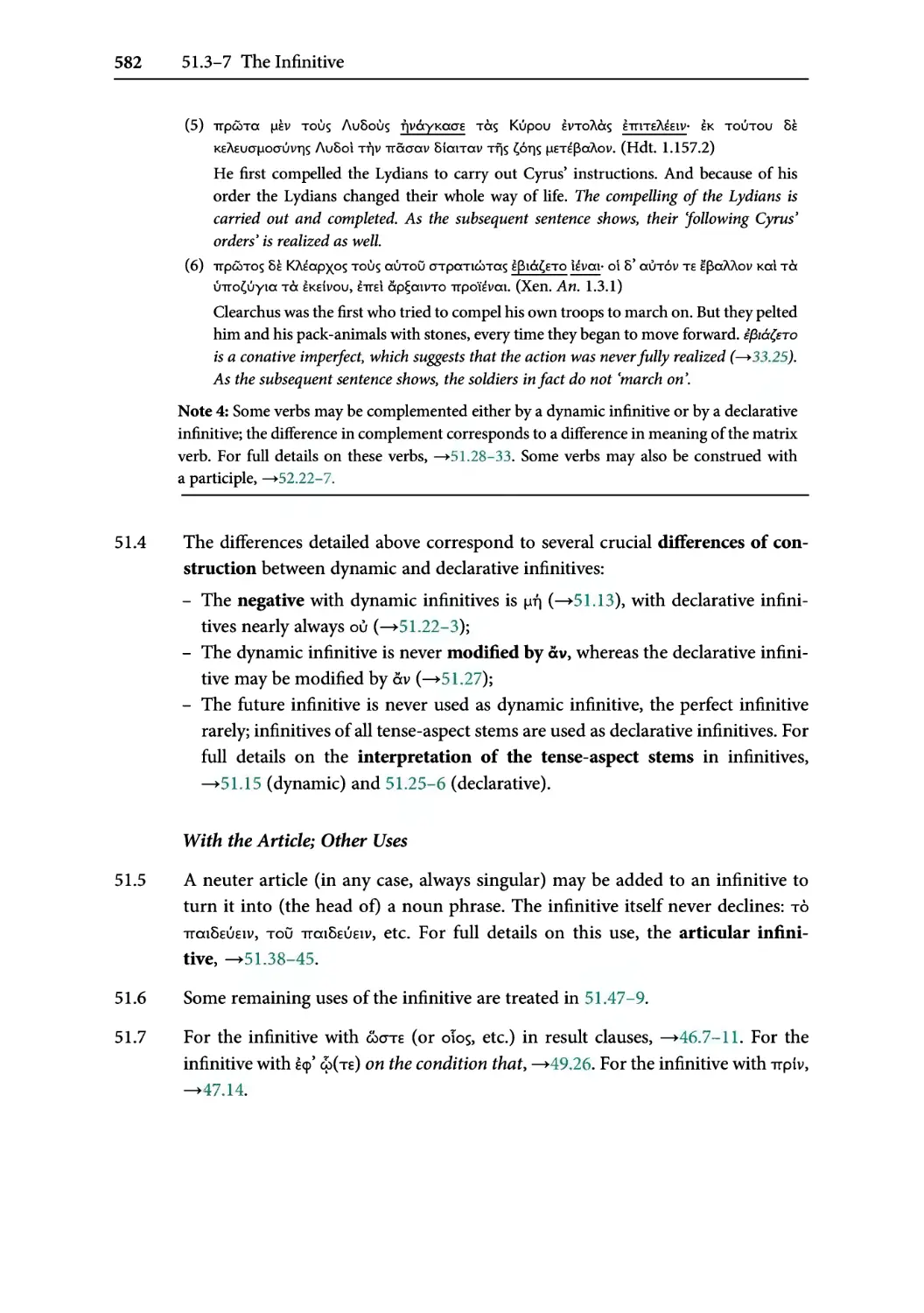
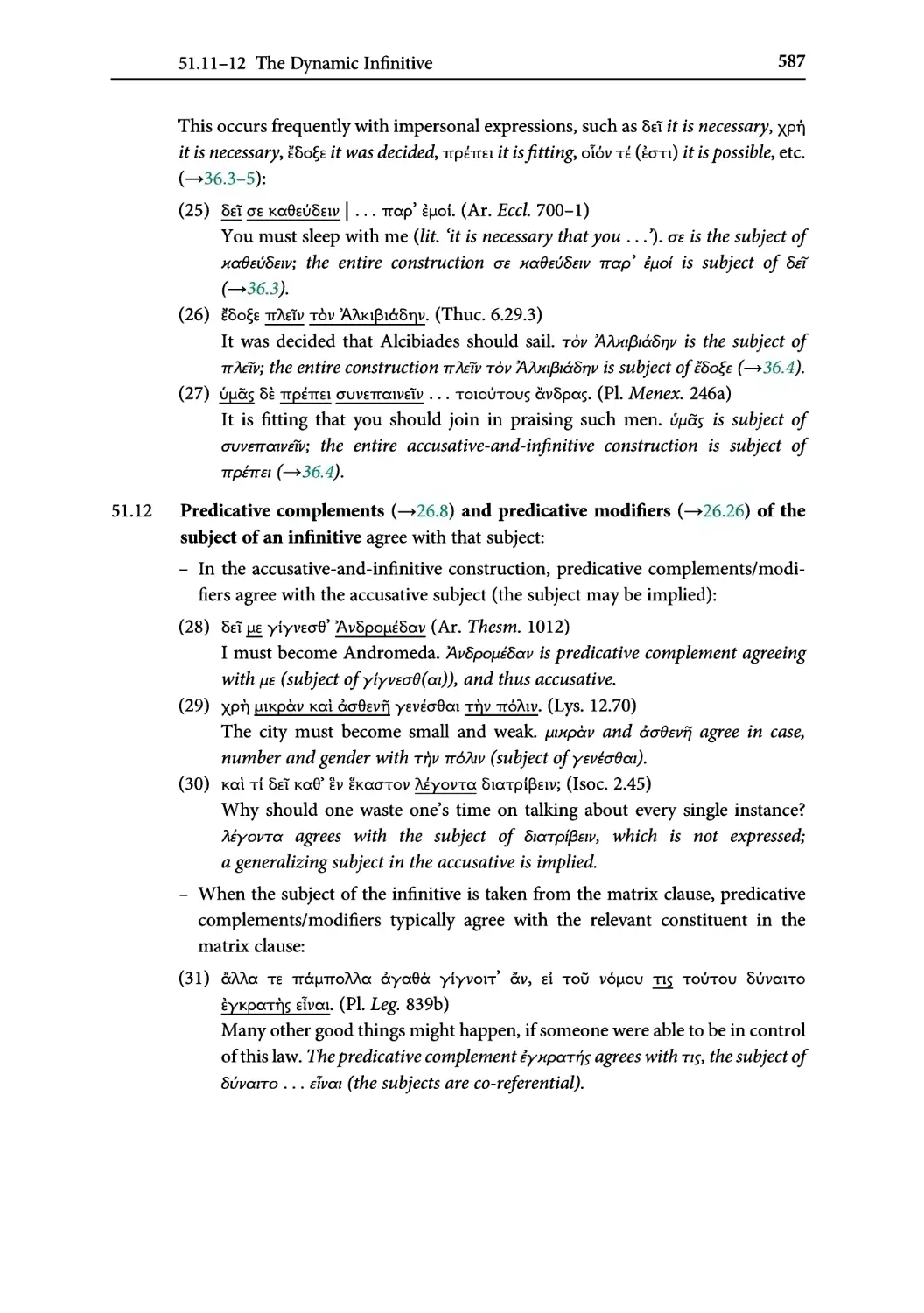
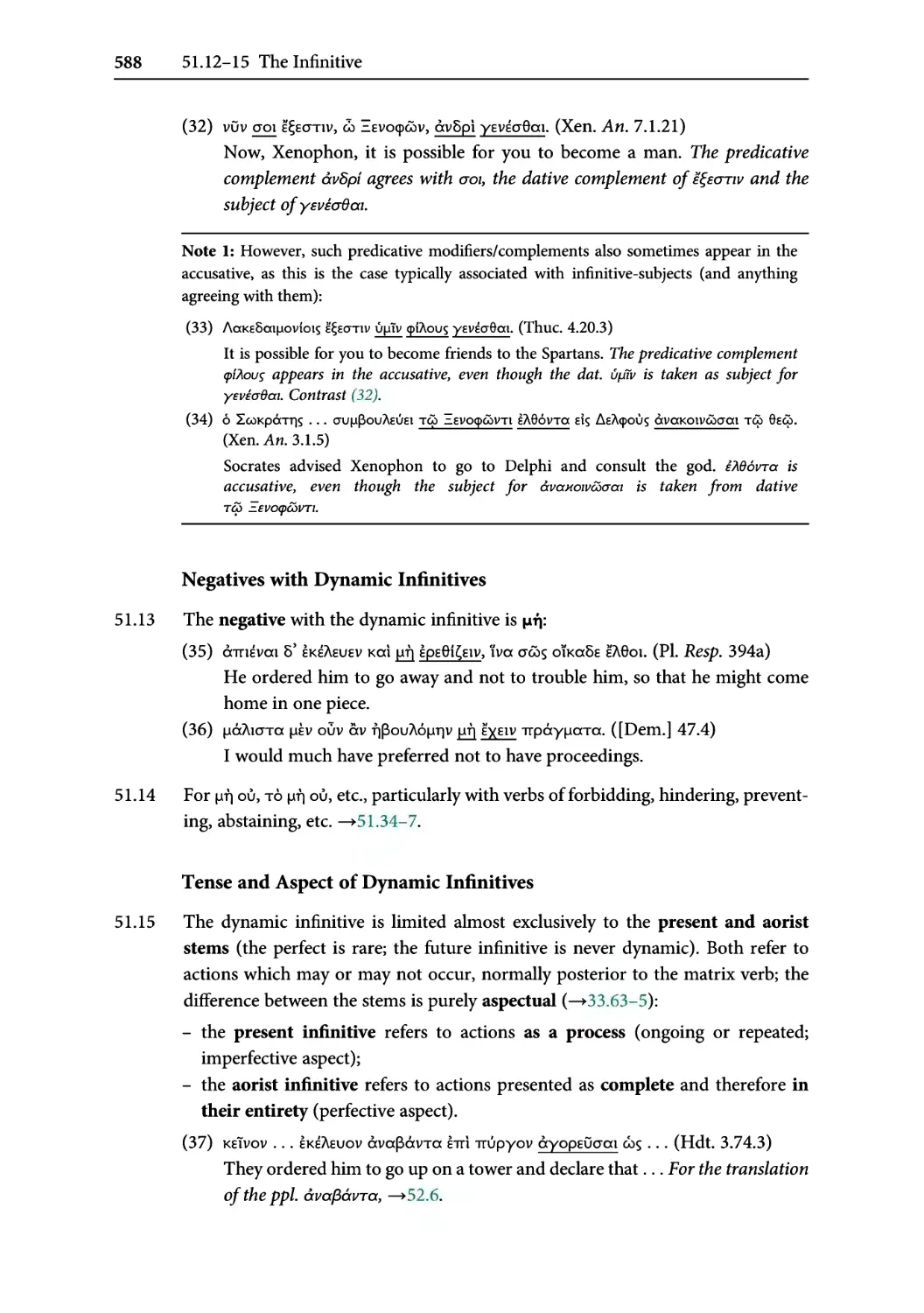
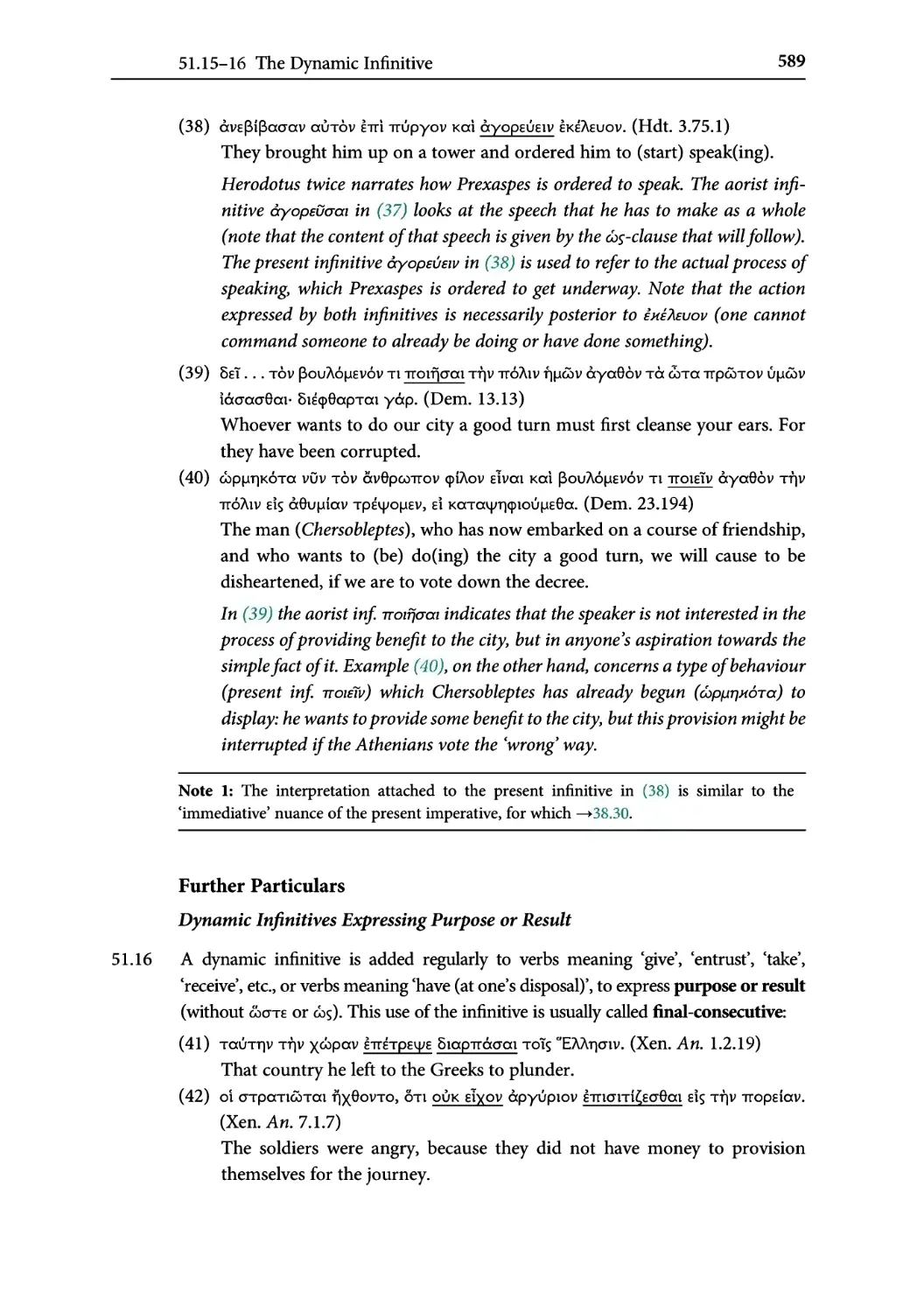
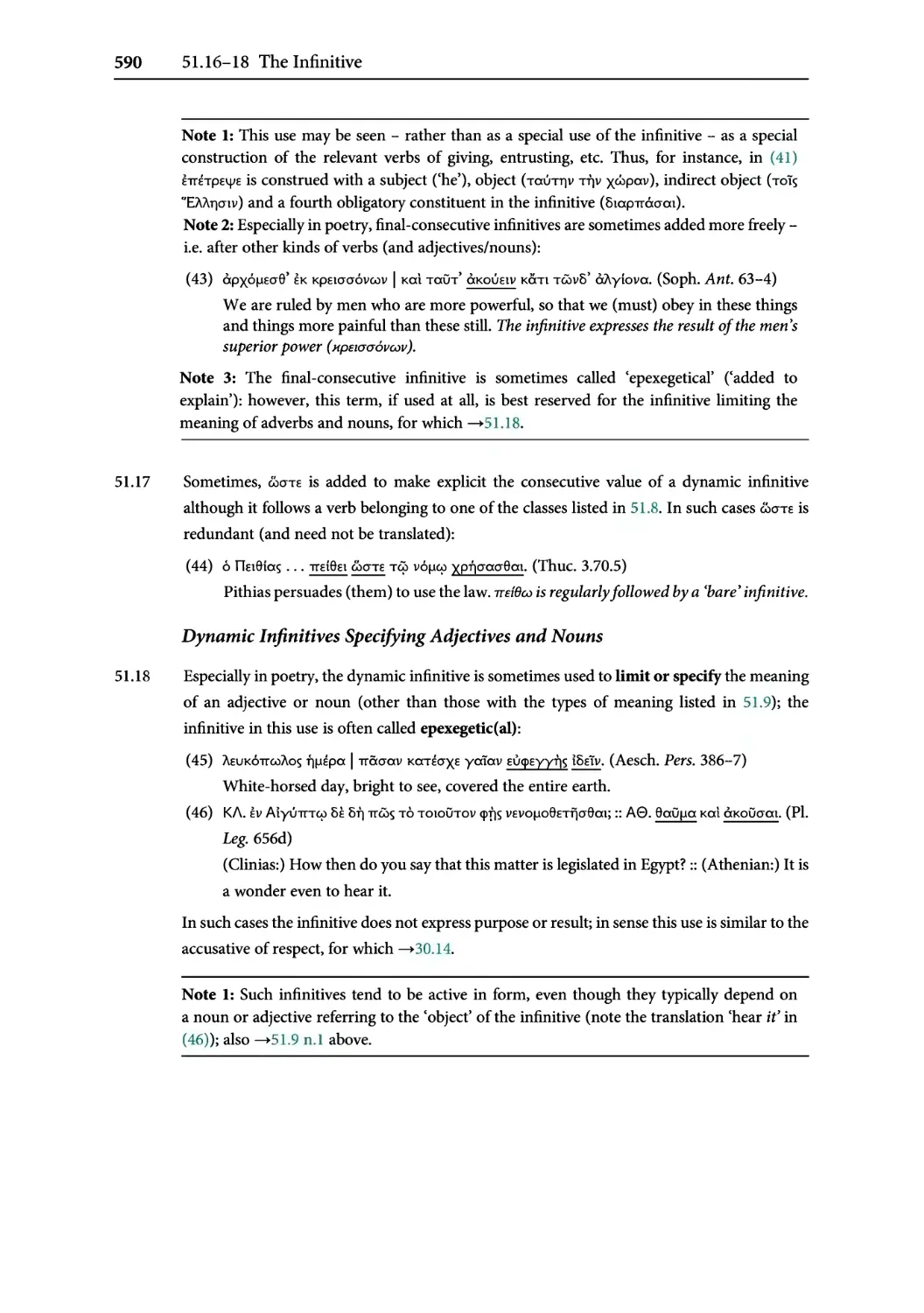
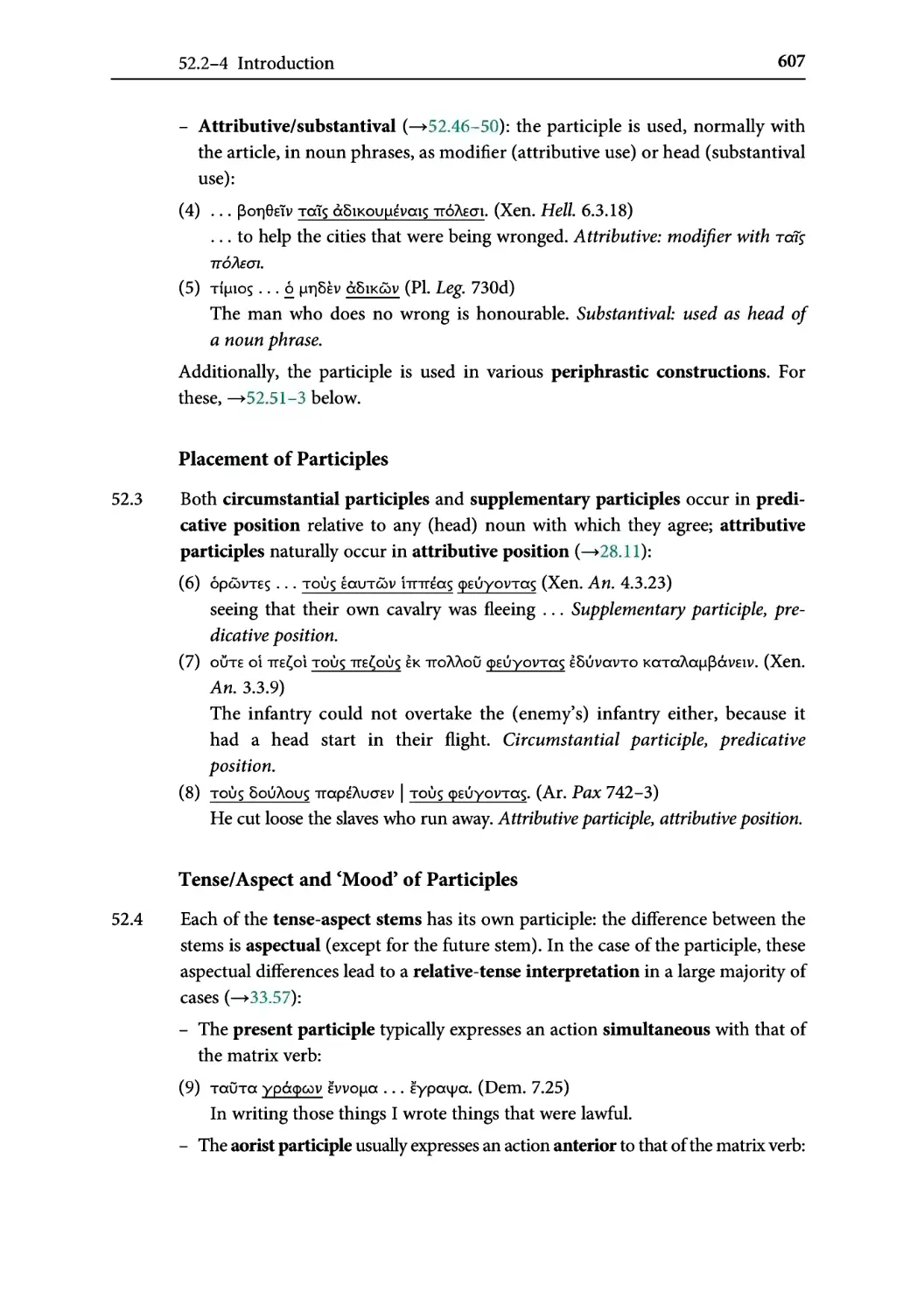
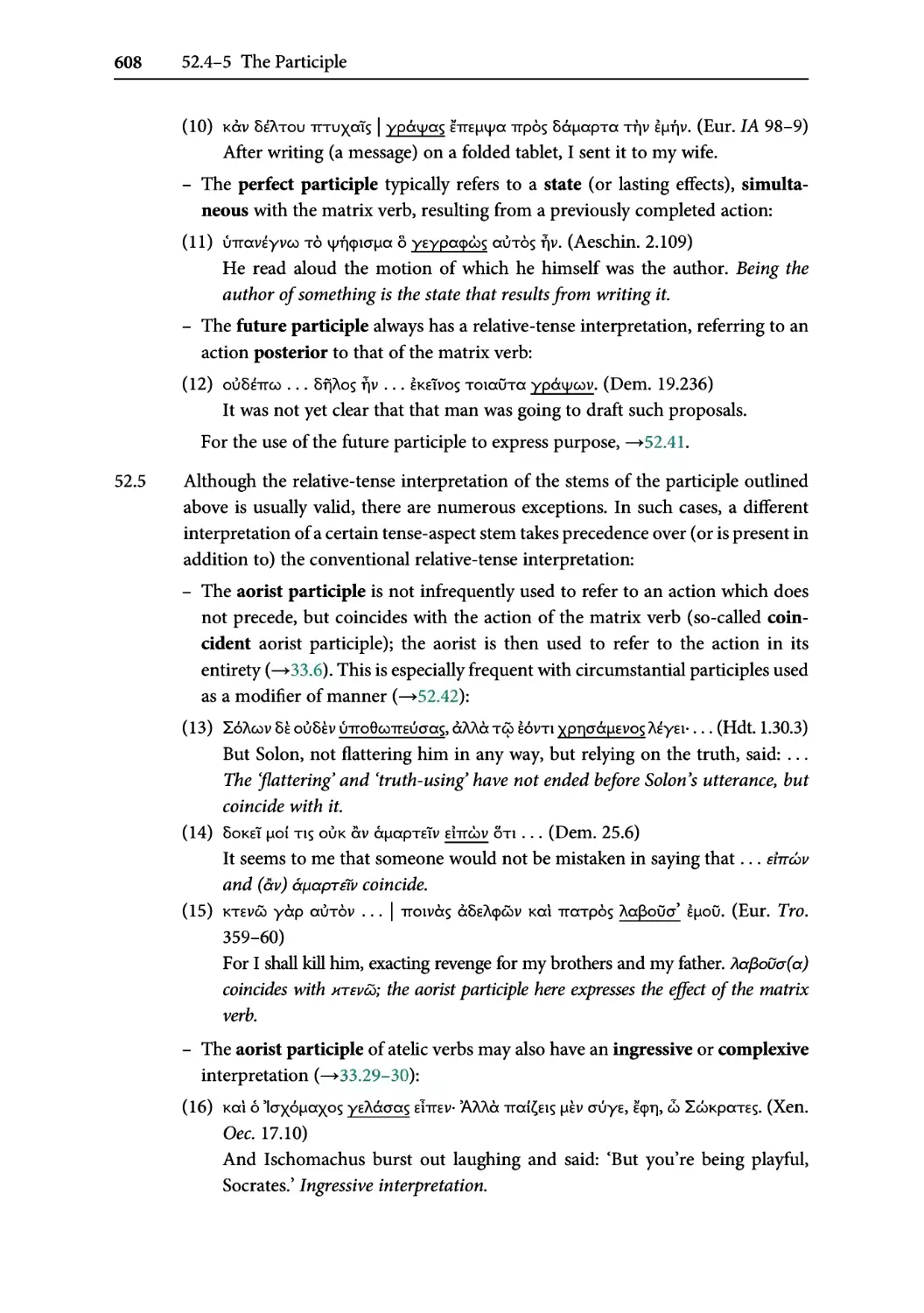
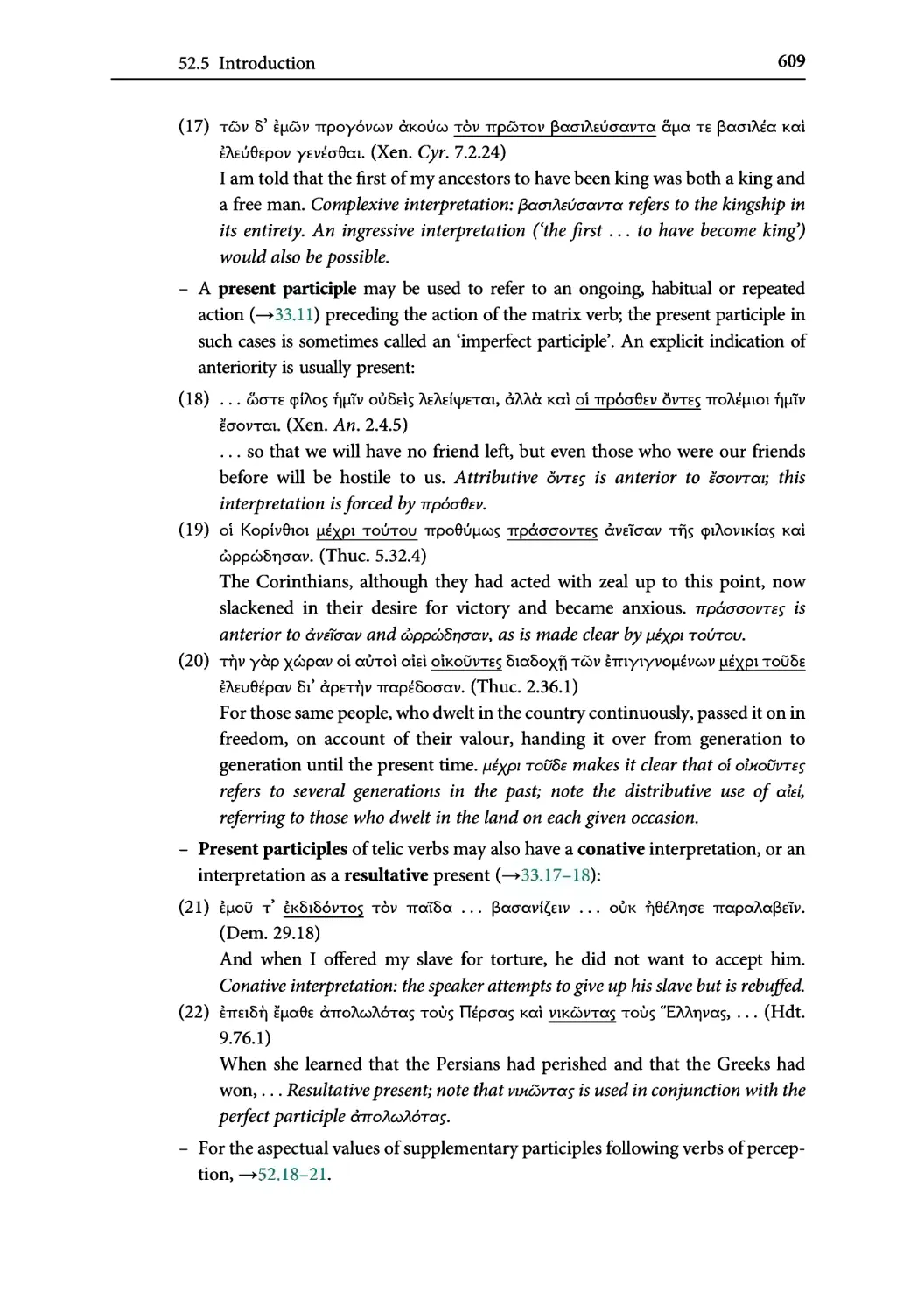
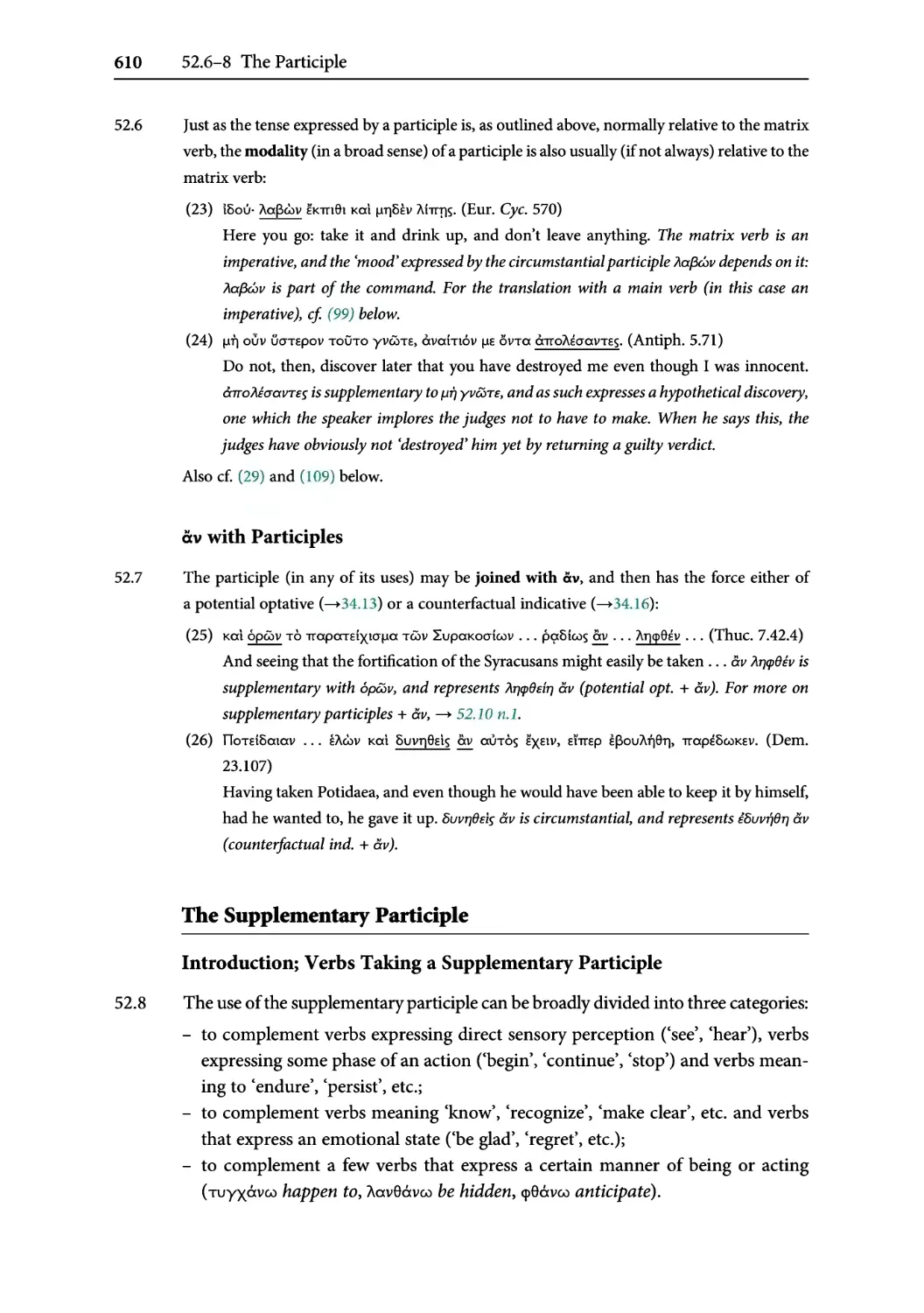
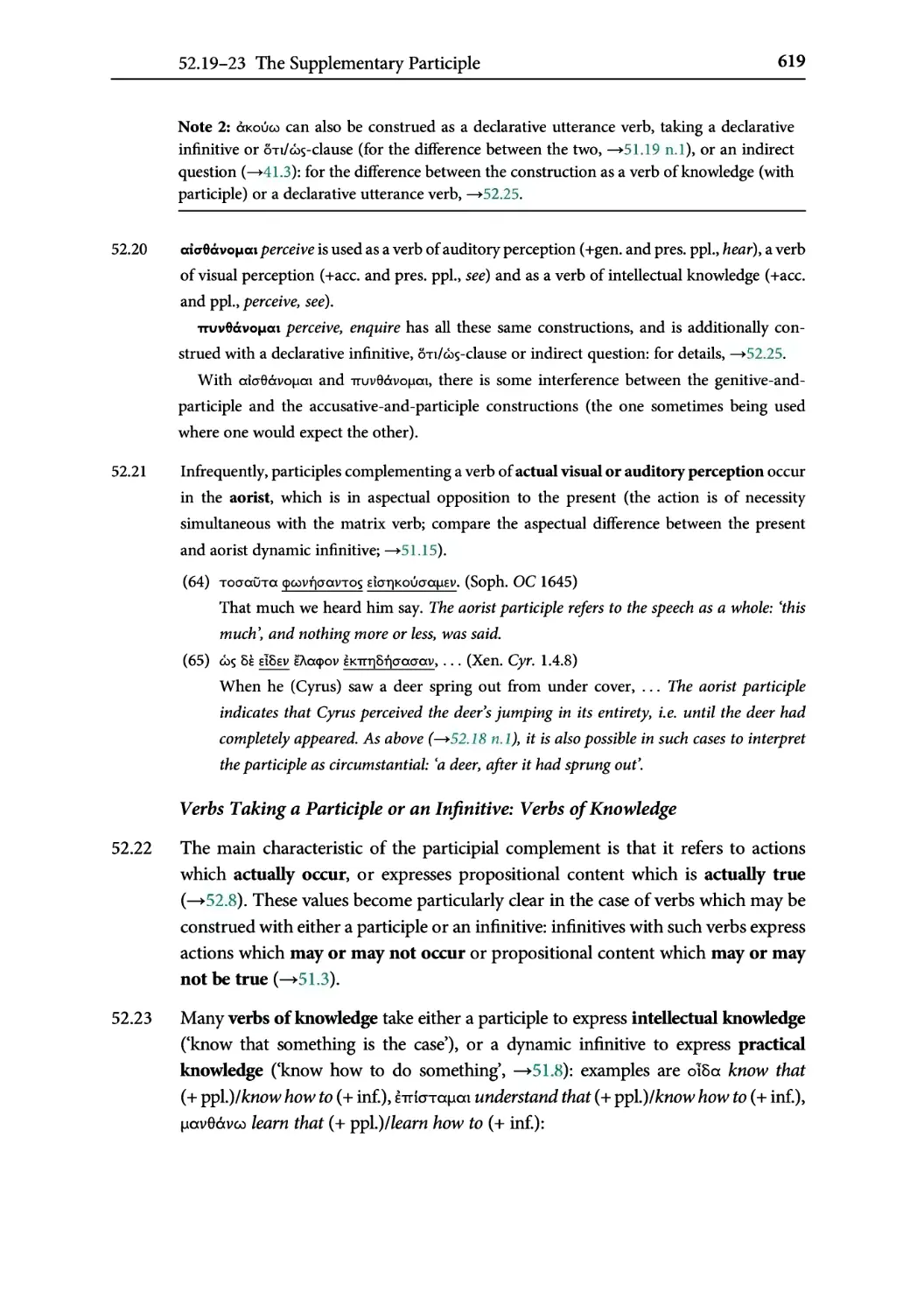
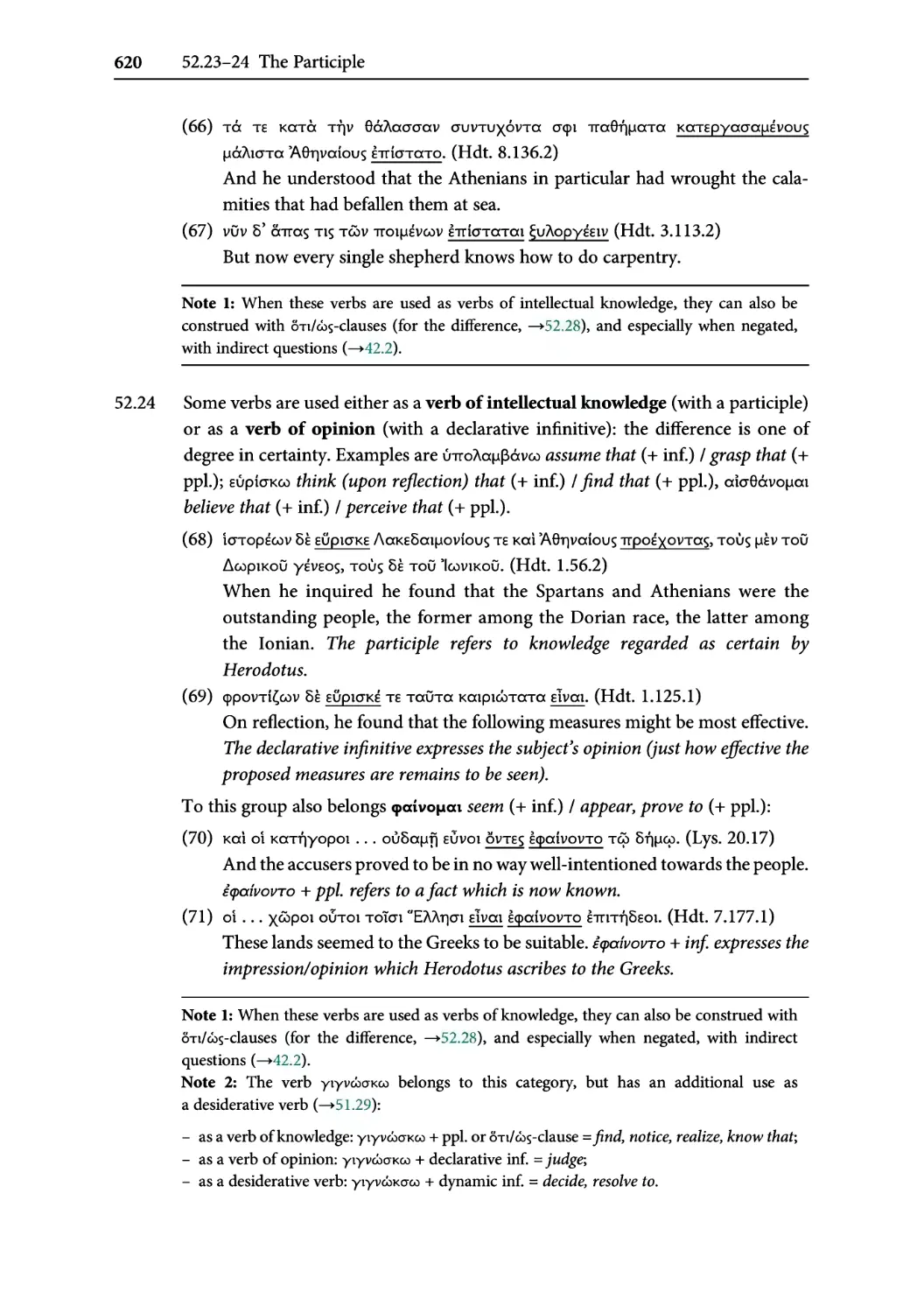
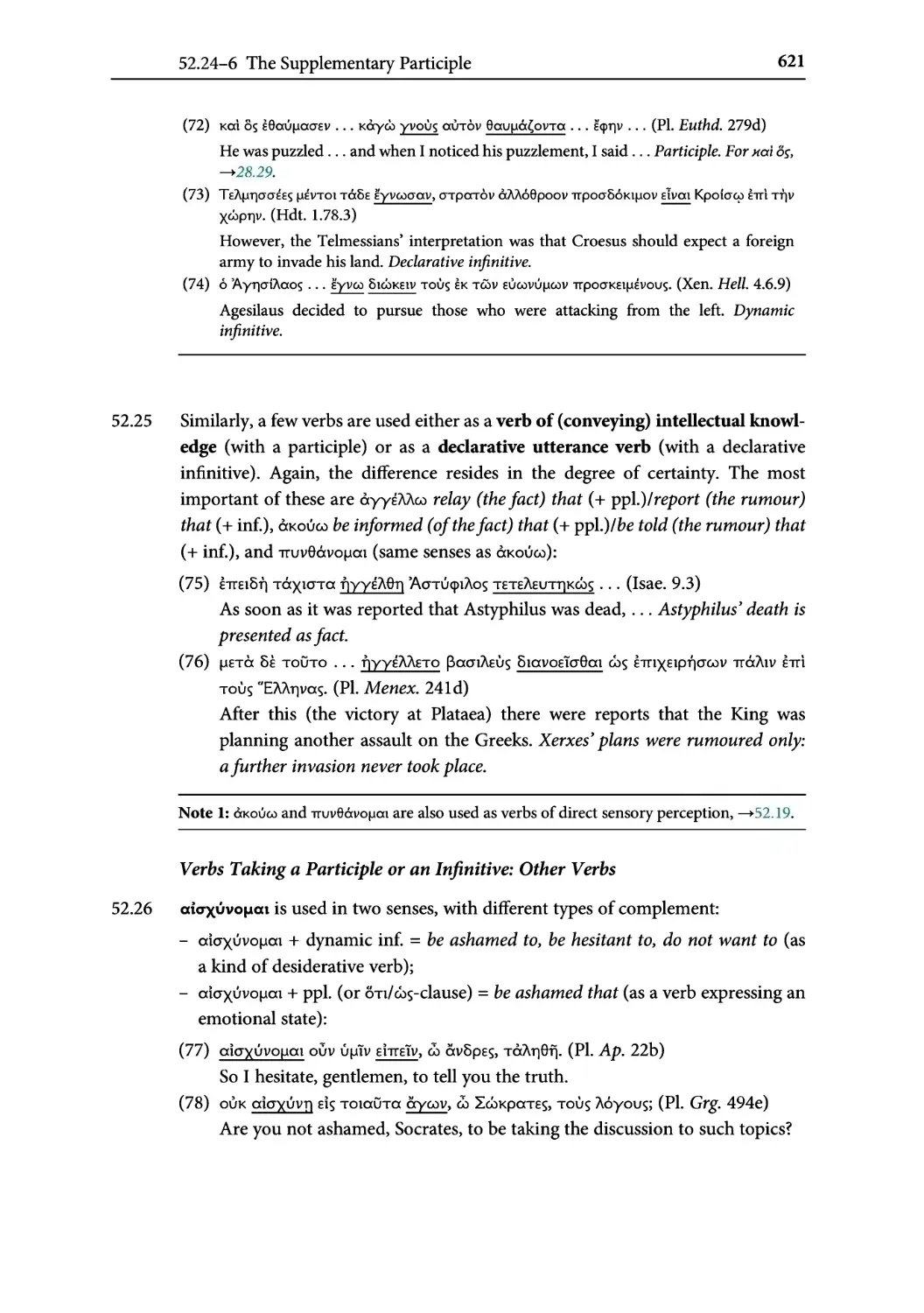
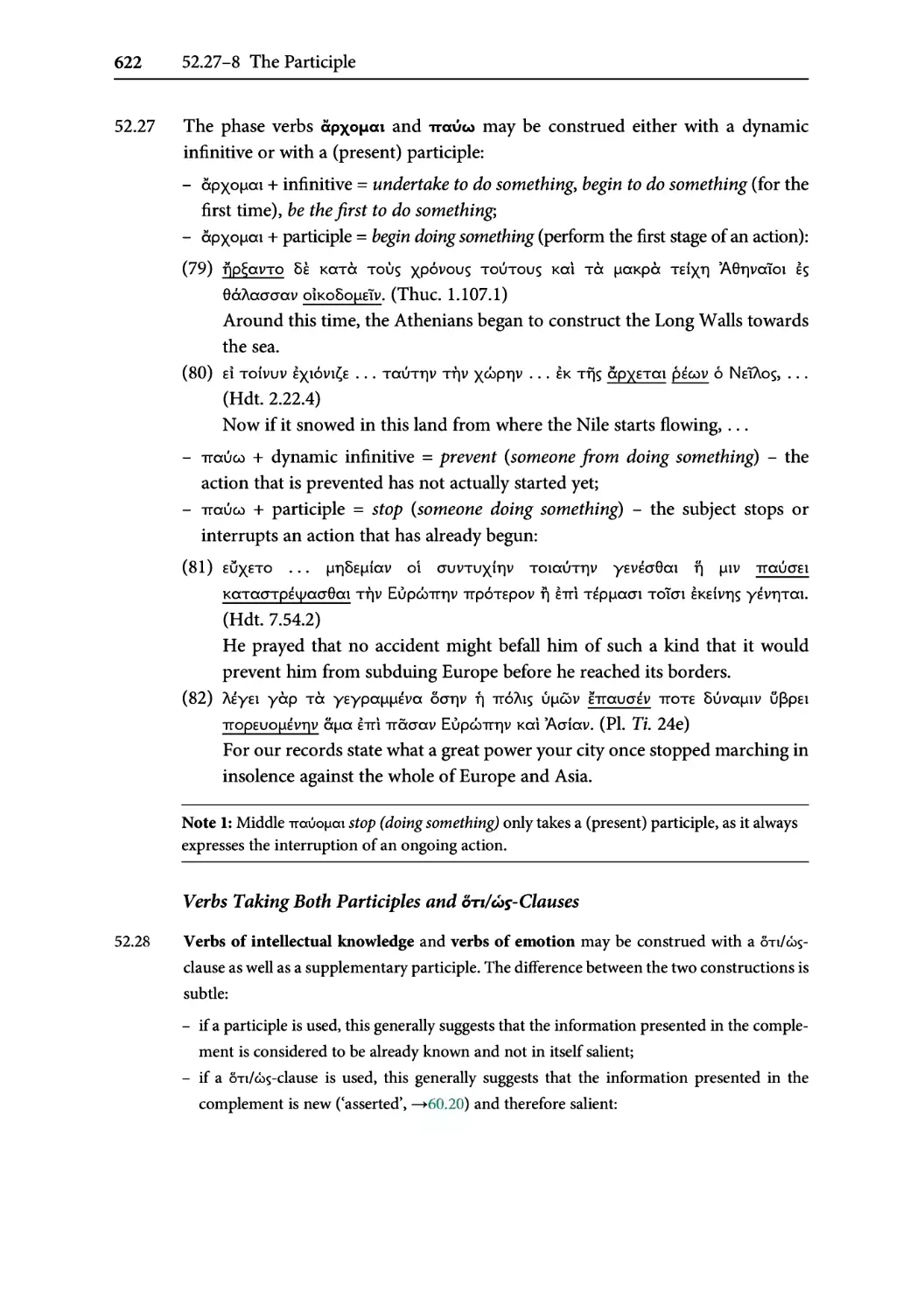


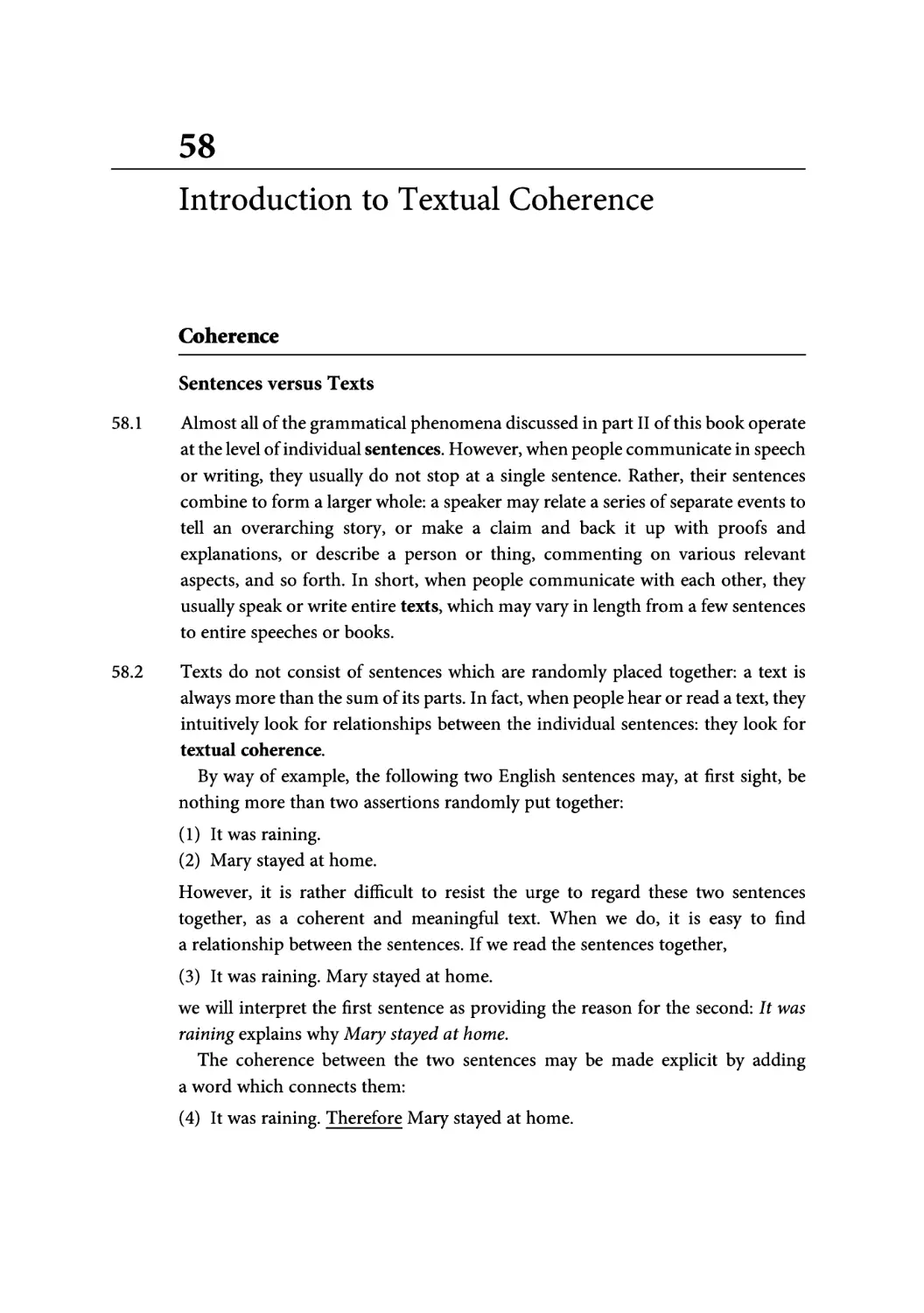
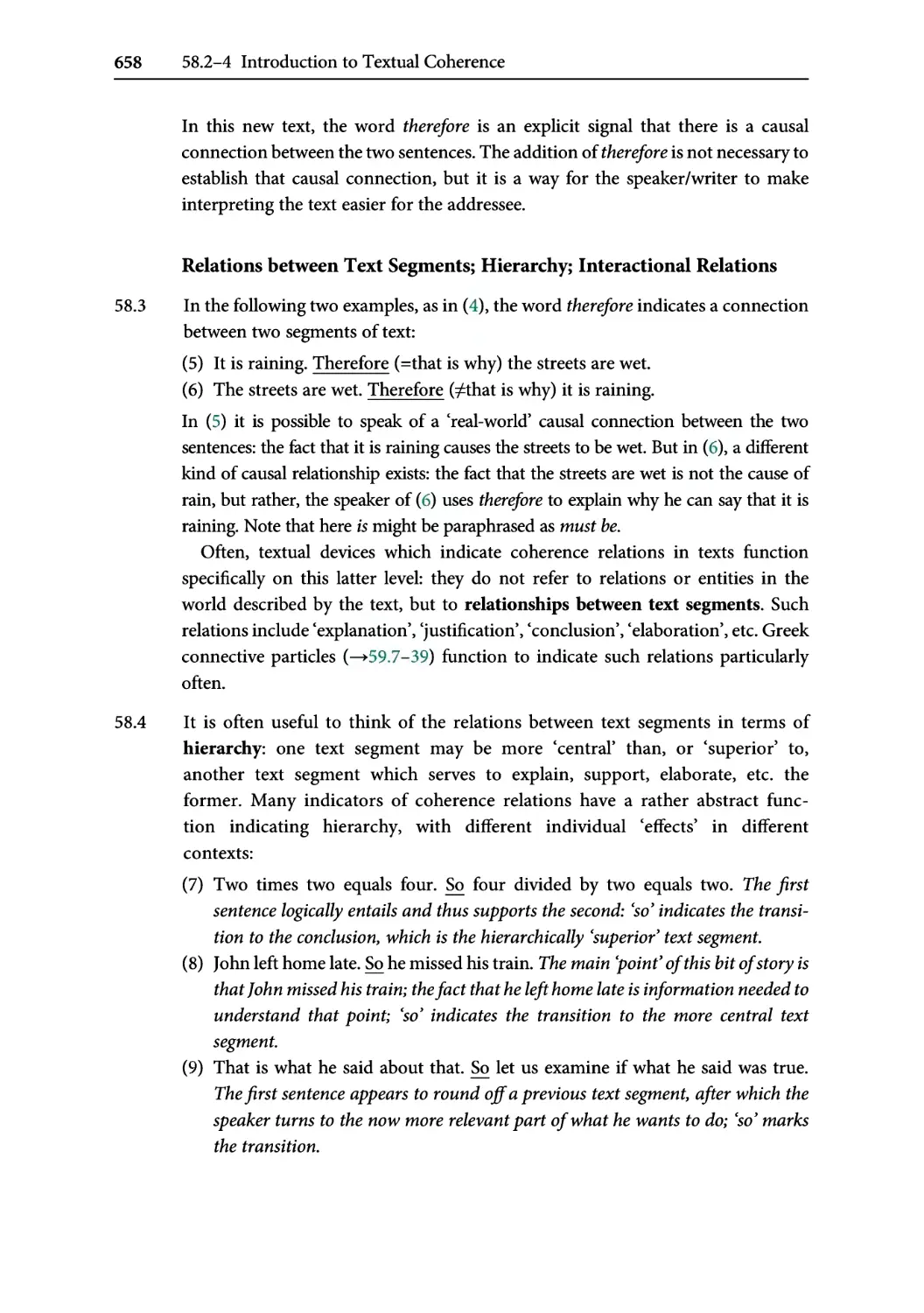
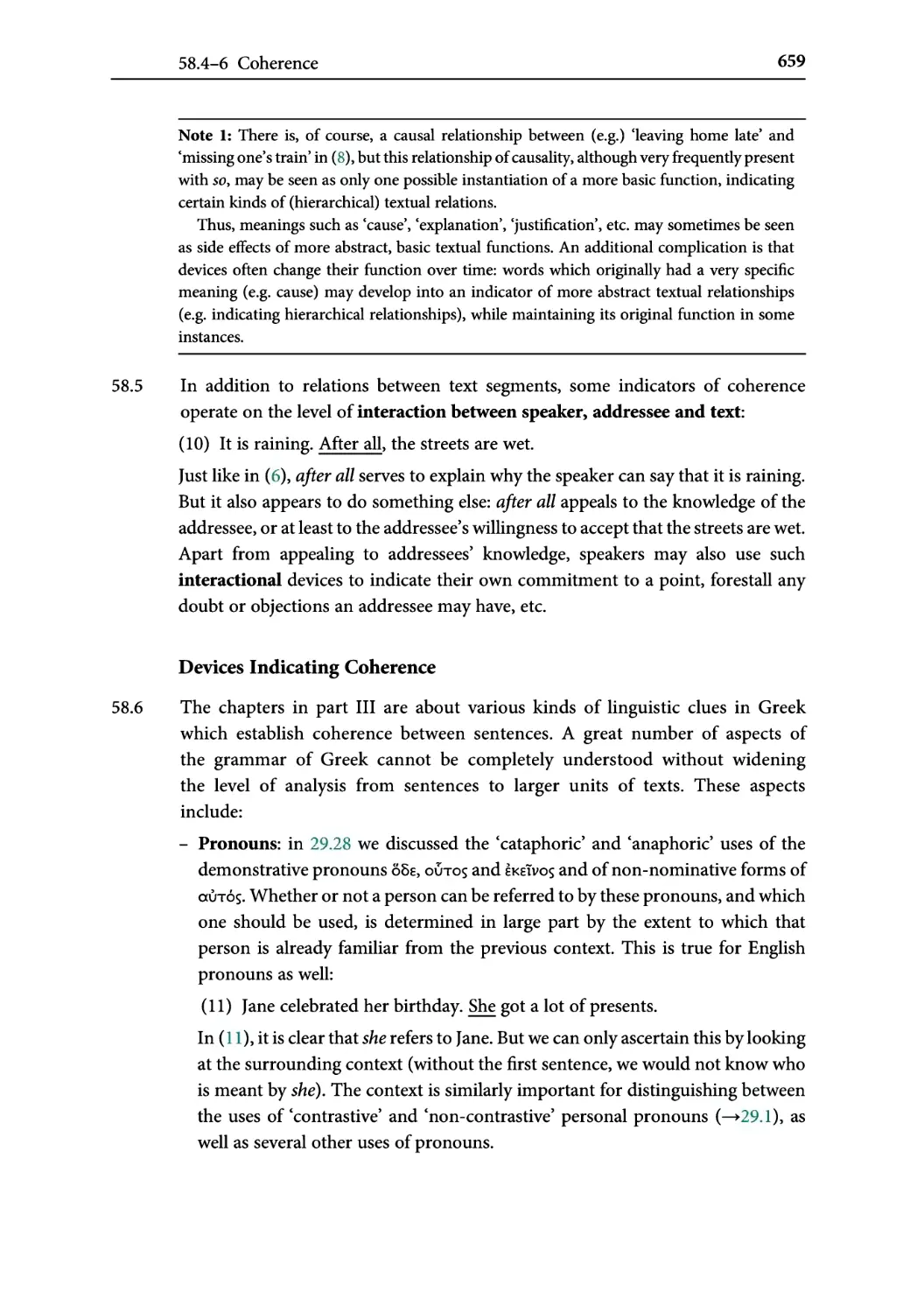
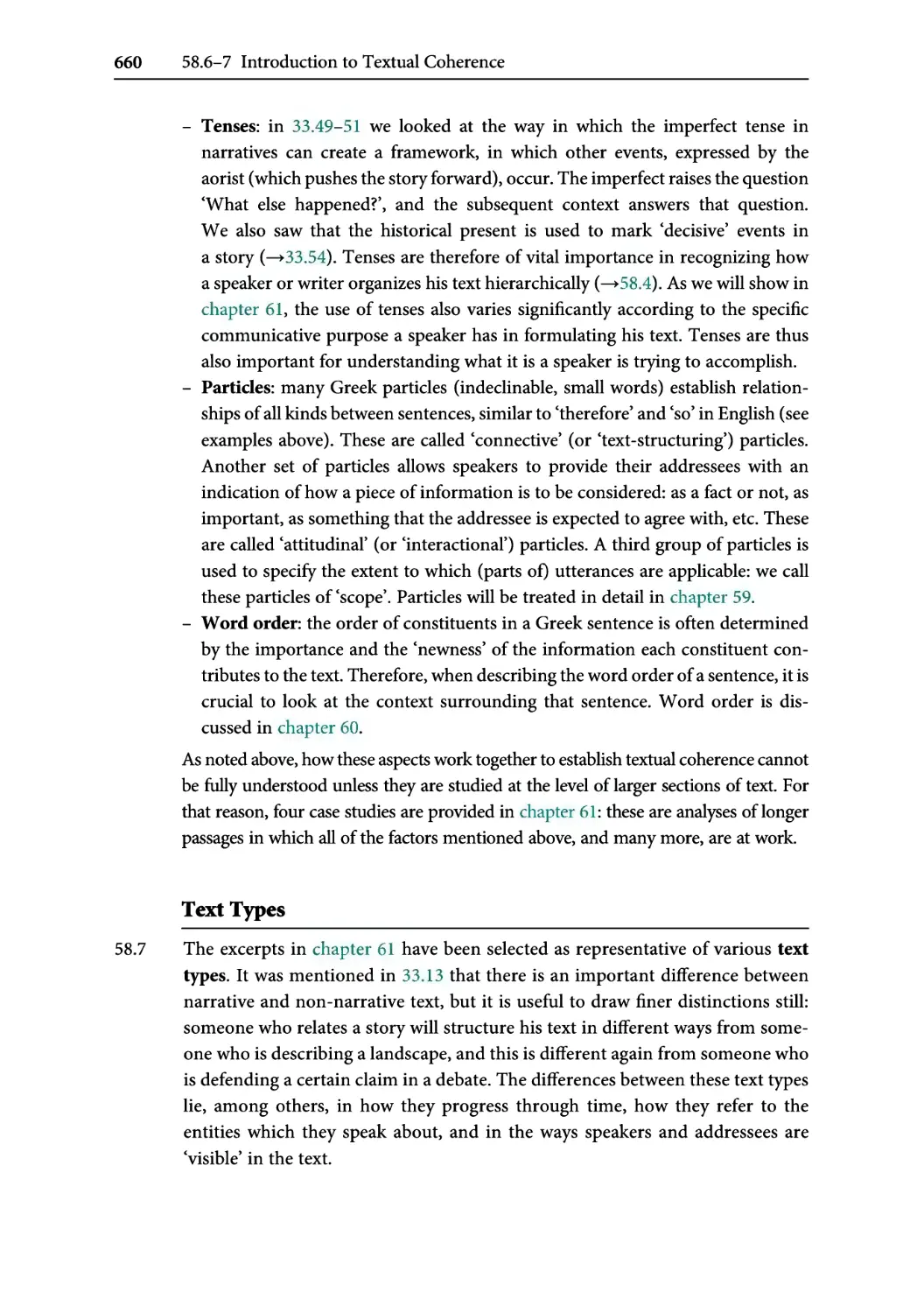
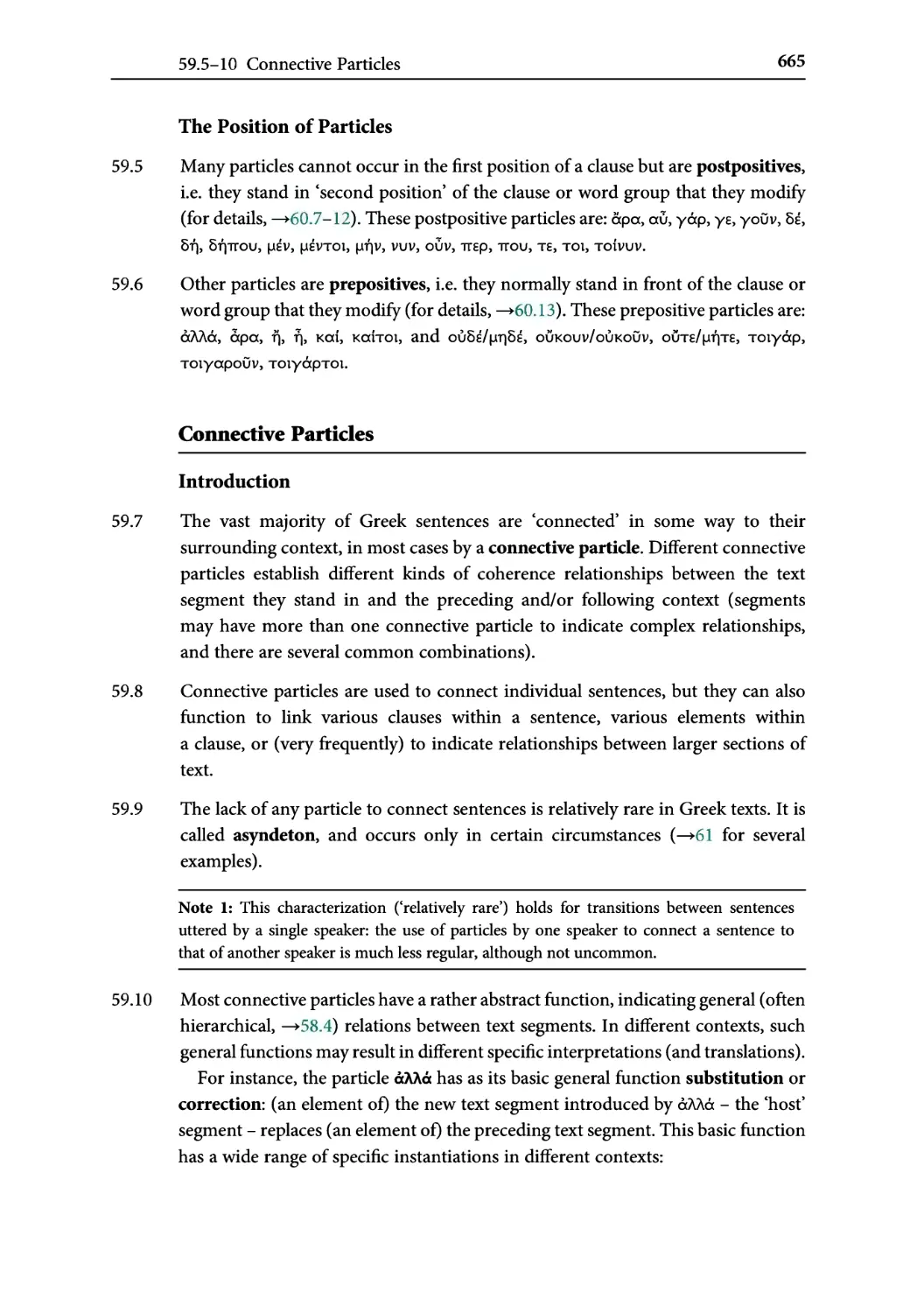
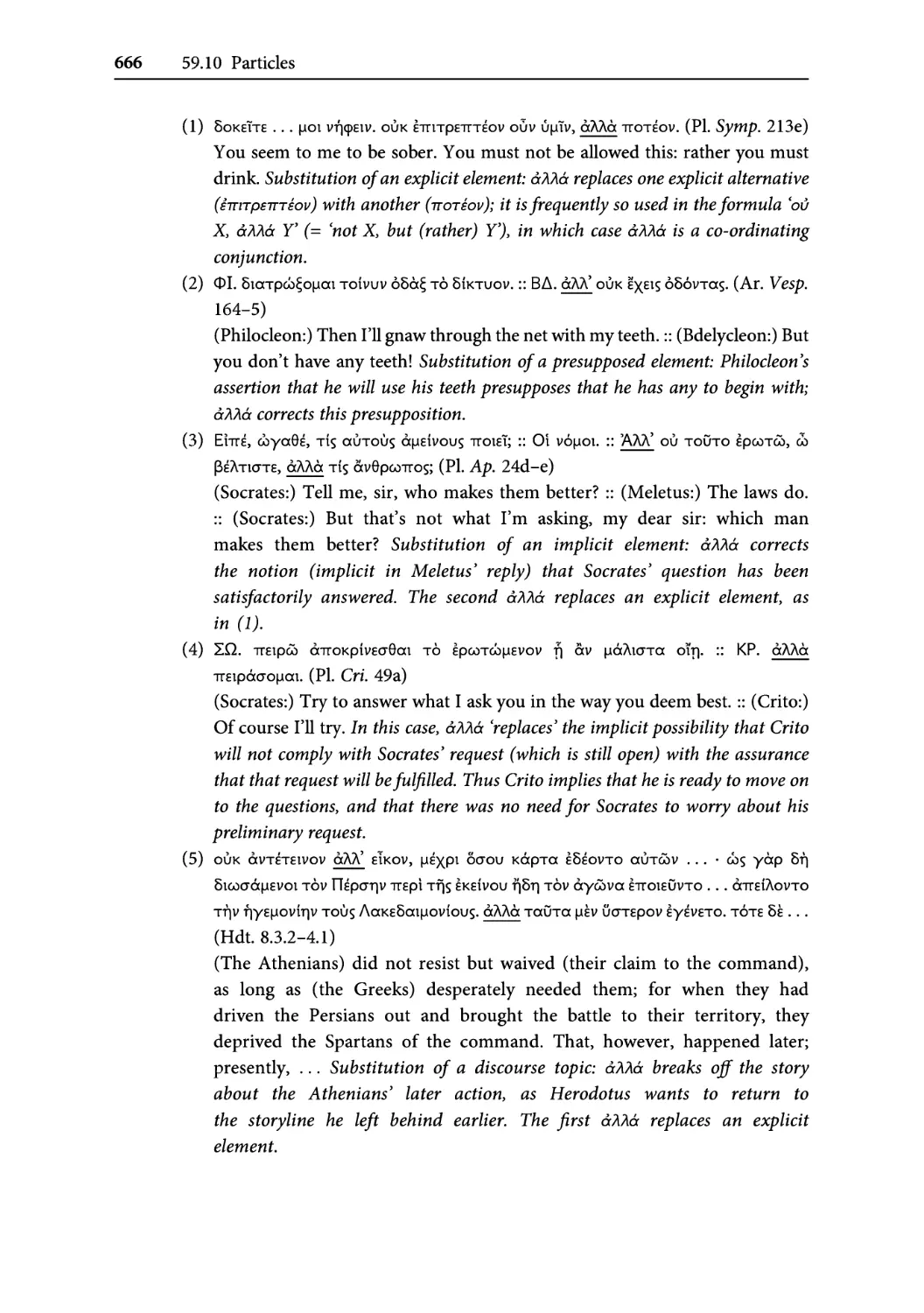
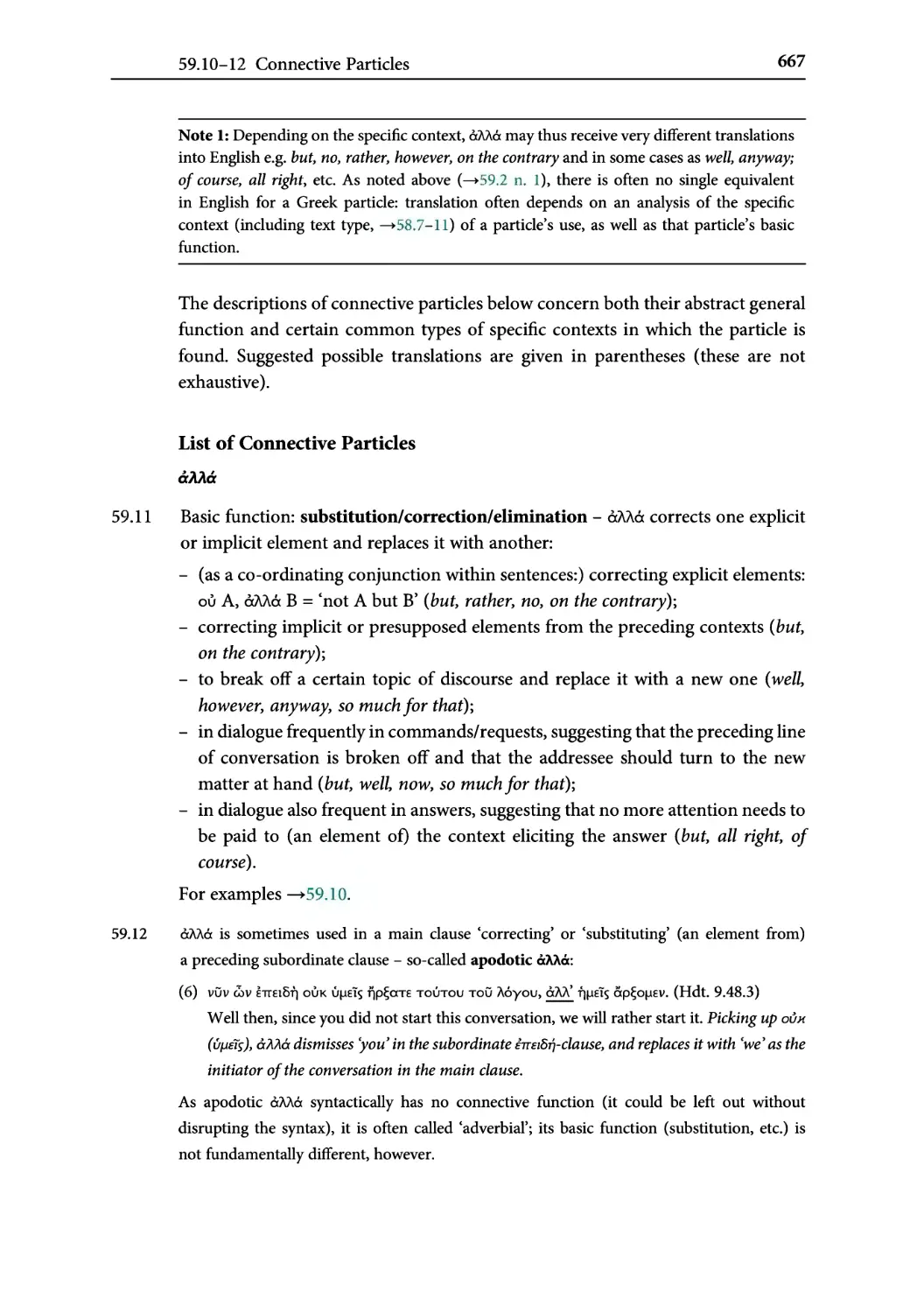
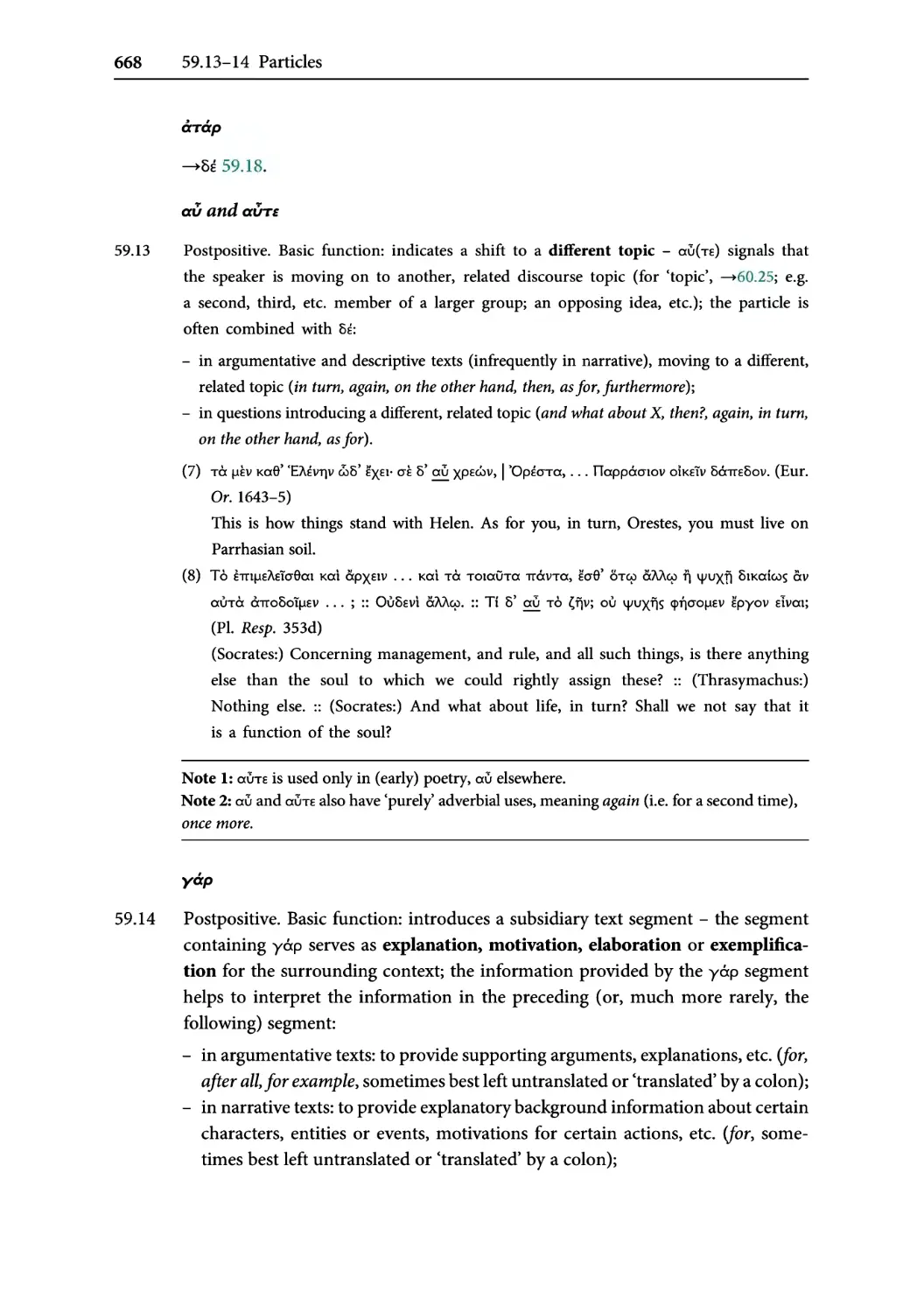


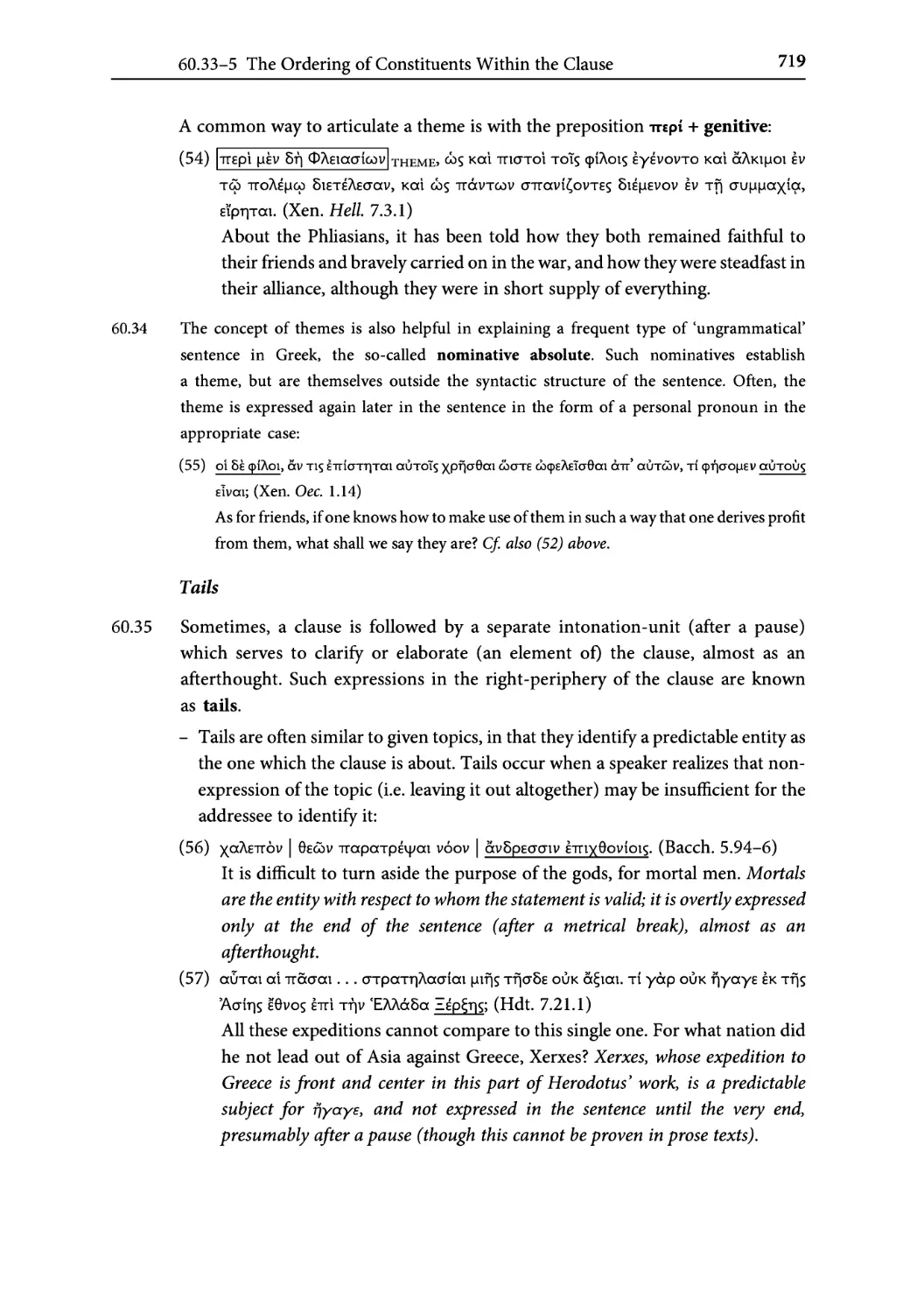
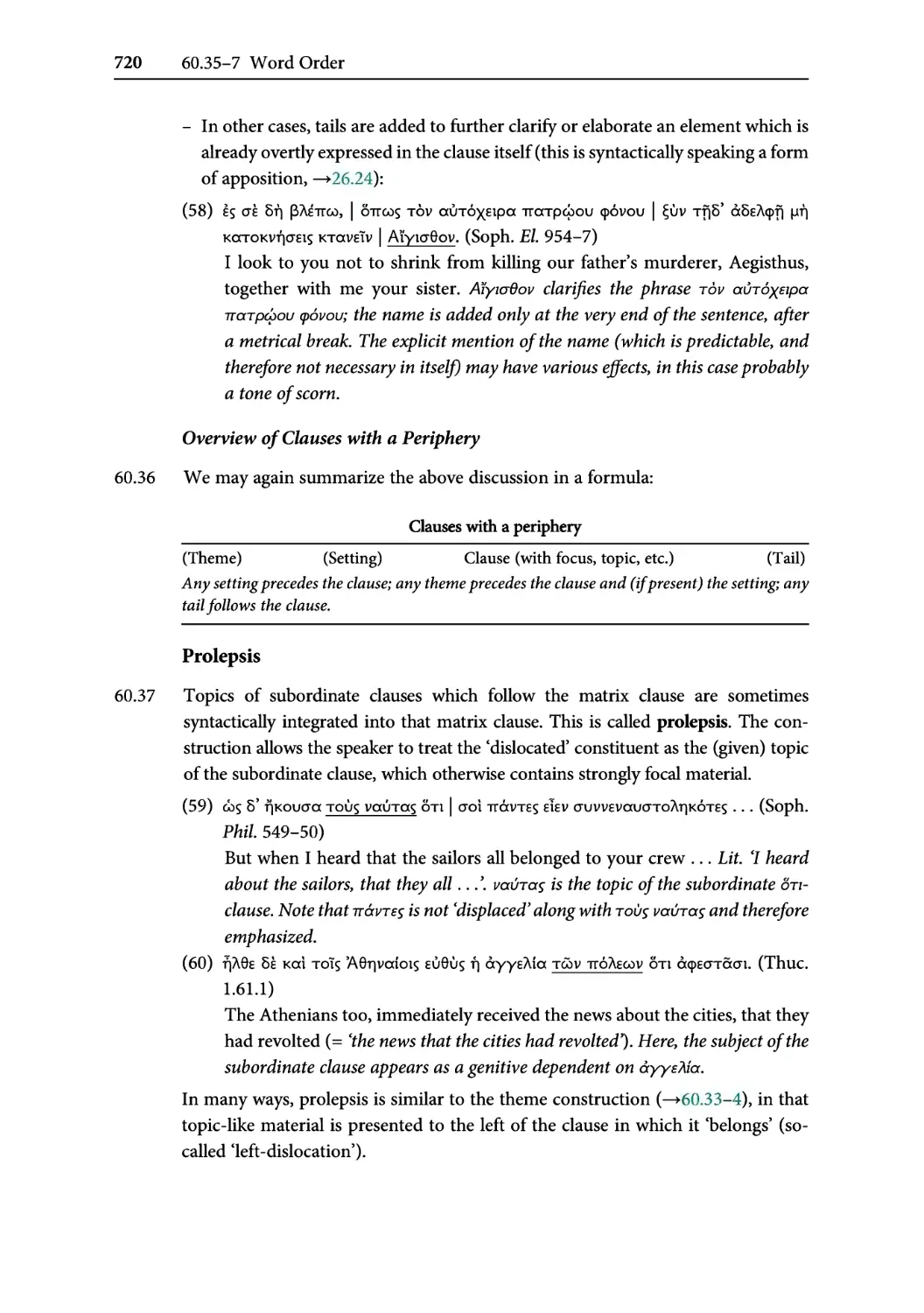
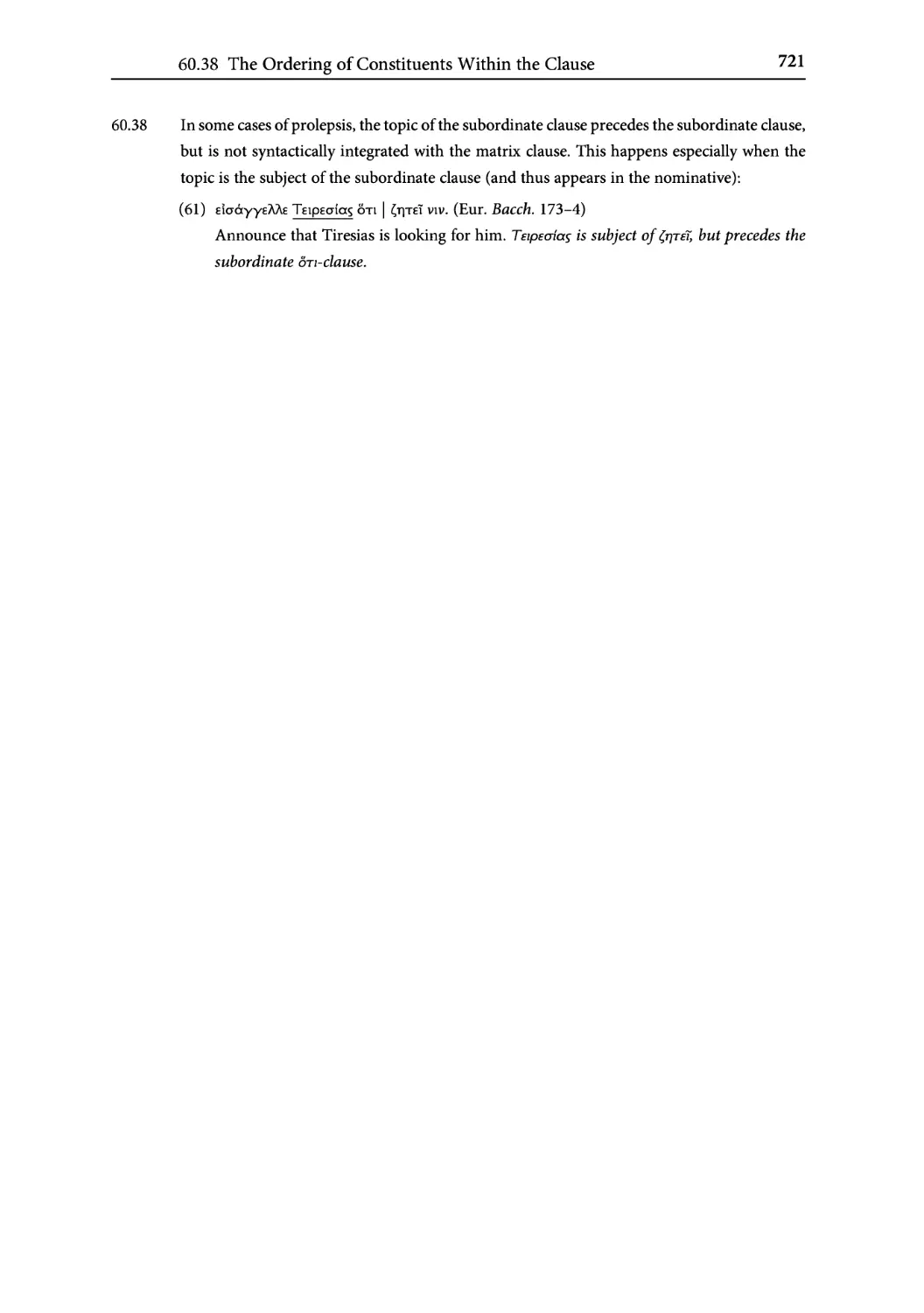
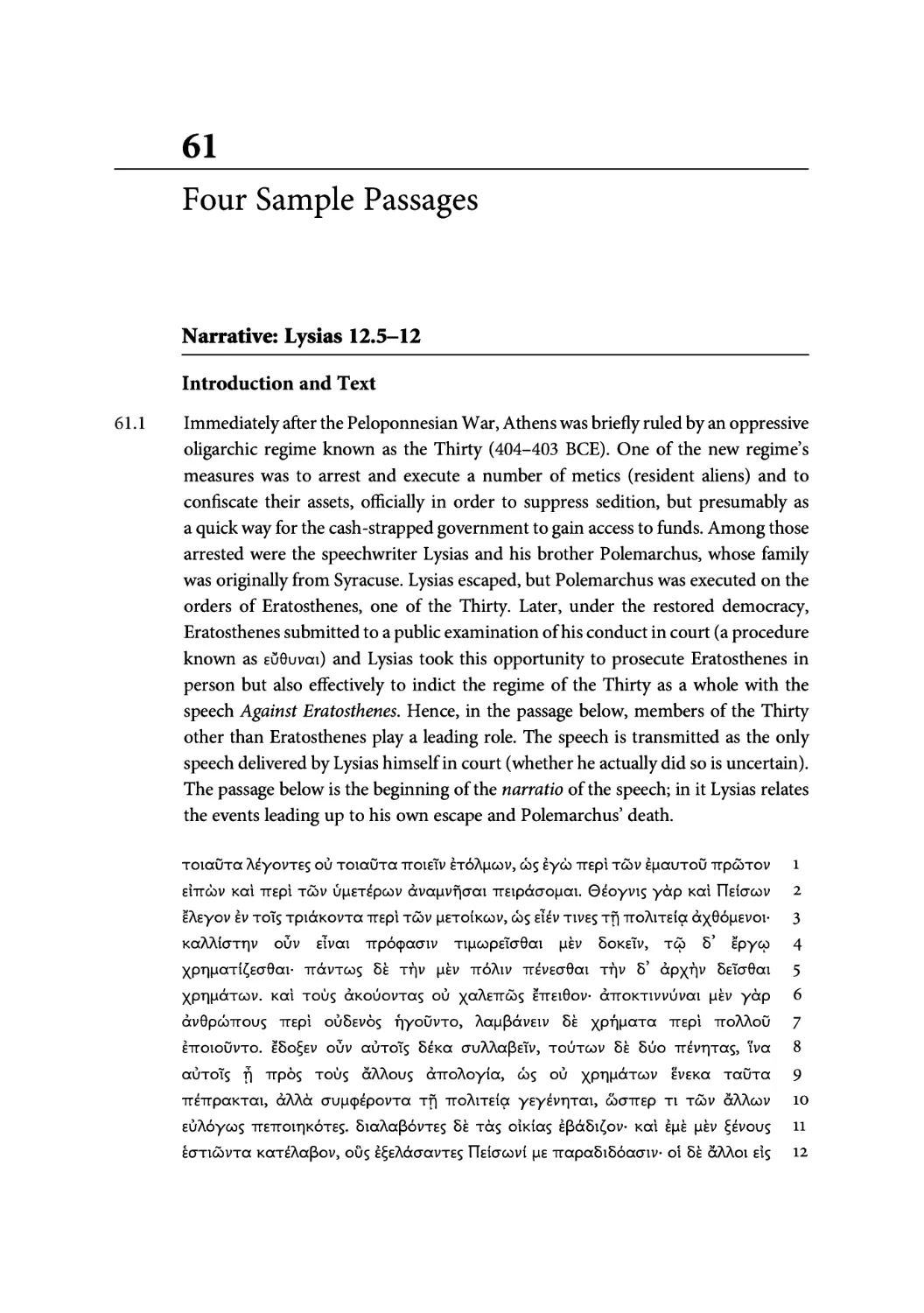

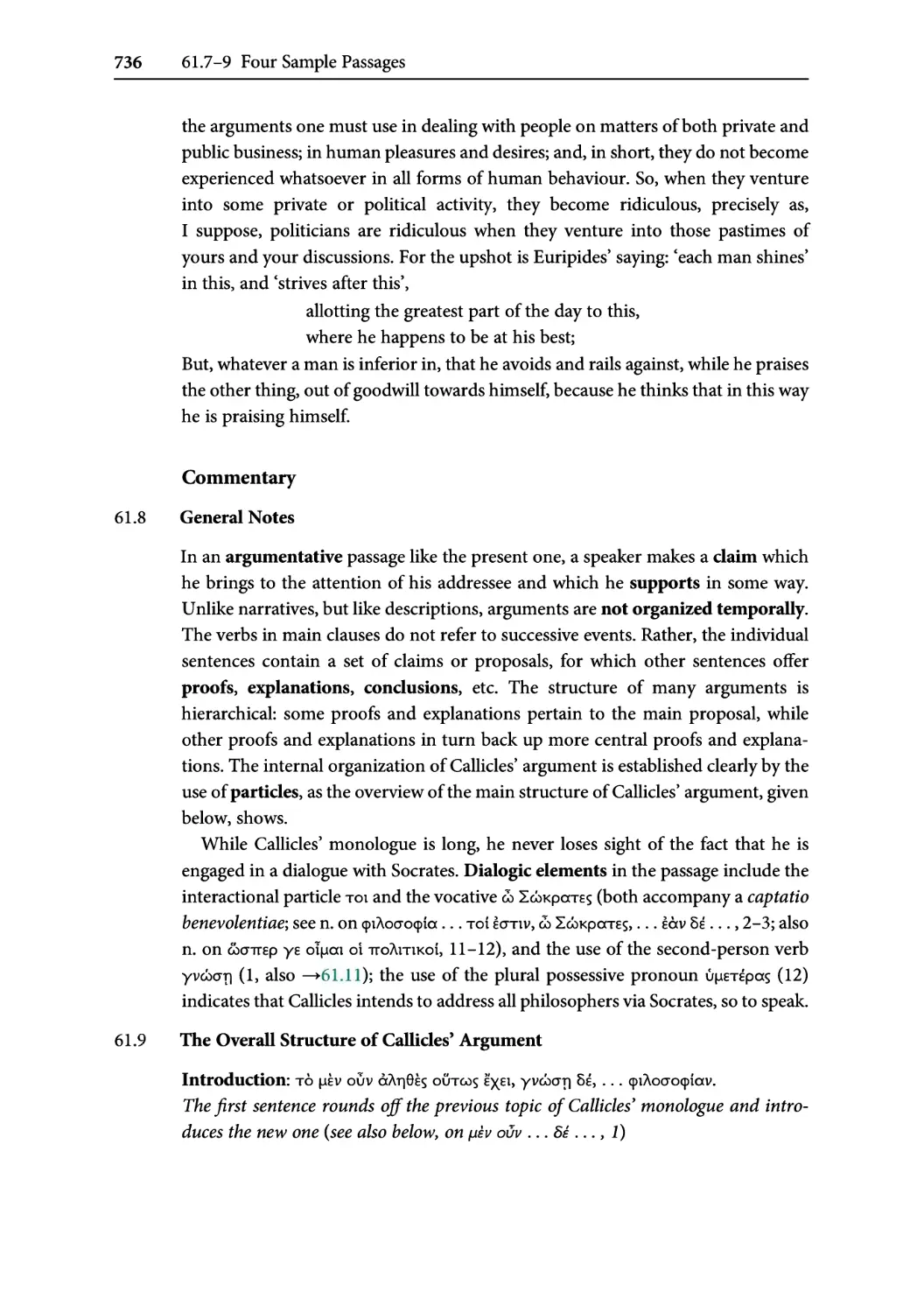
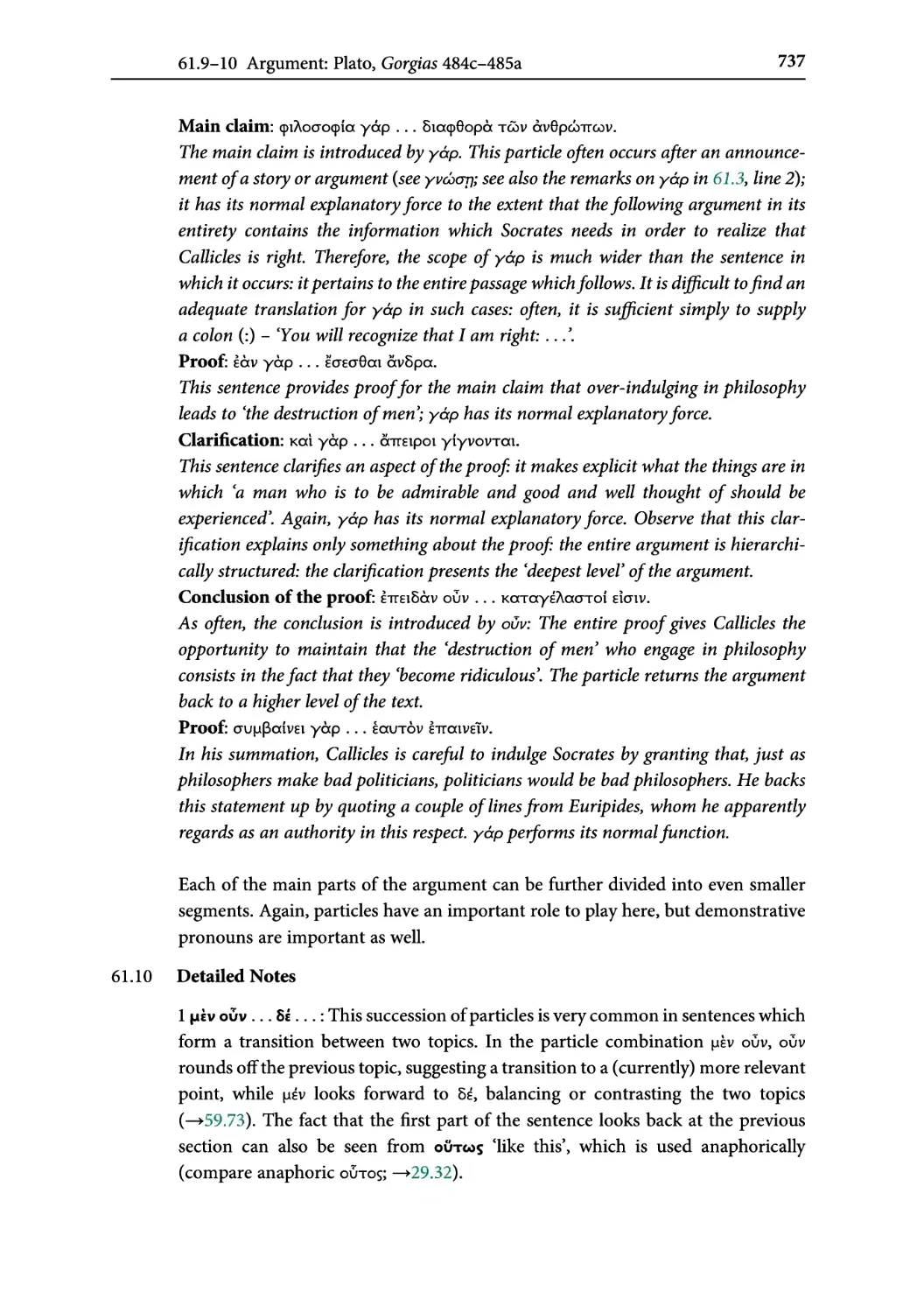
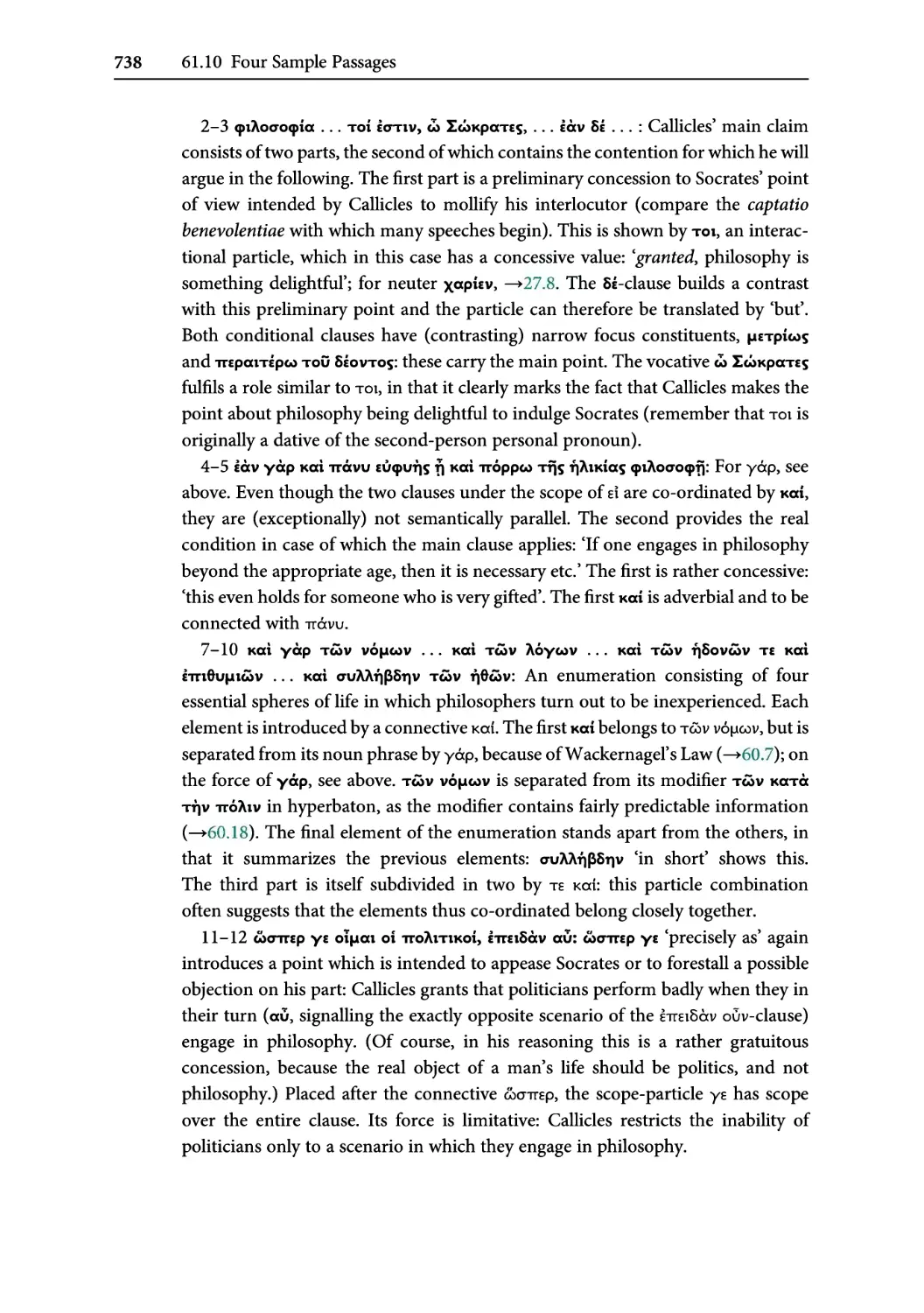
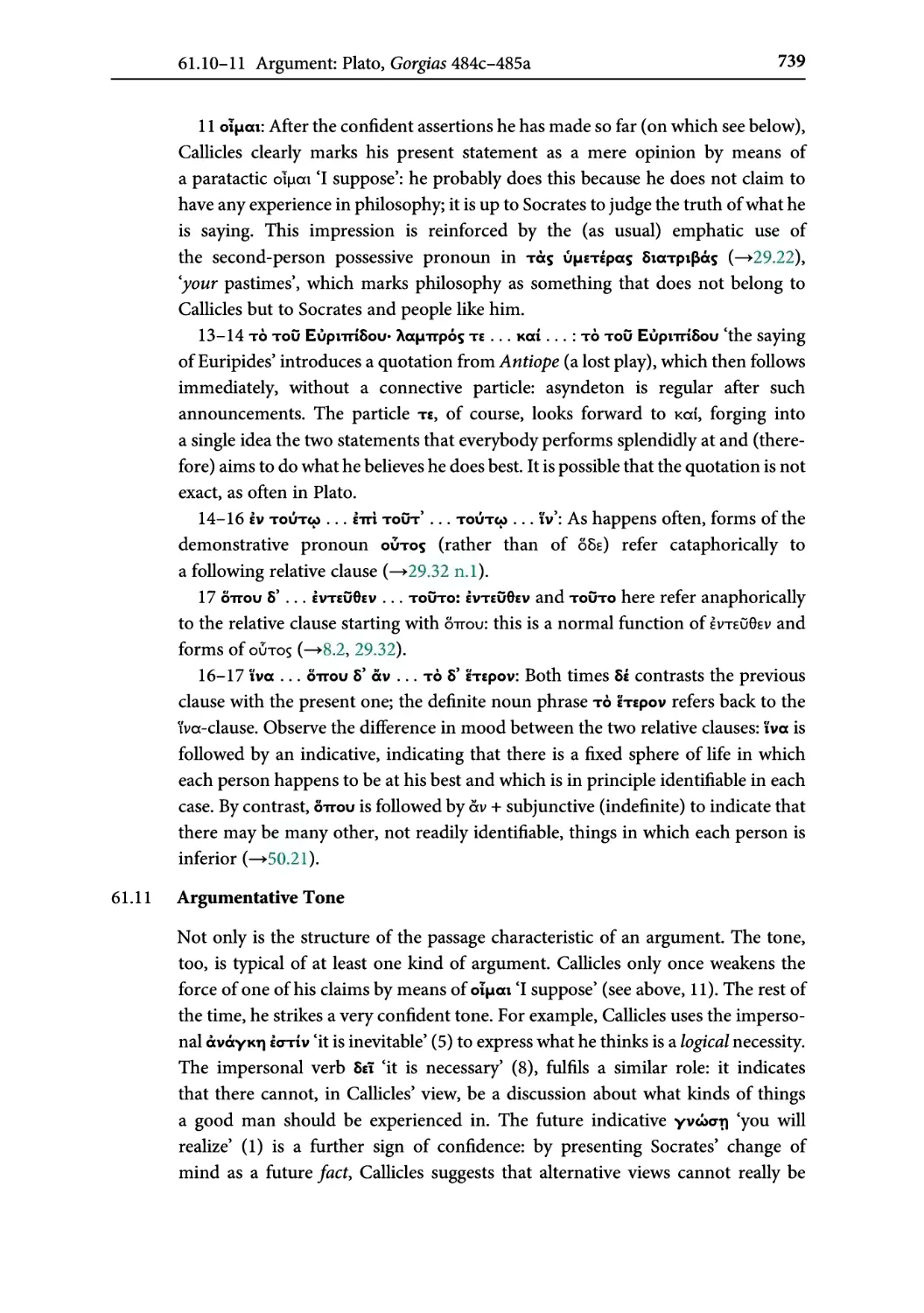



Текст
                    THE CAMBRIDGE GRAMMAR OF
I
Evert van Emde Boas · Albert Rijksbaron
Luuk Huitink · Mathieu de Bakker
\

Cambridge Grammar of Classical Greek
This is the first full-scale reference grammar of classical Greek in English in a
century. The first work of its kind to reflect the significant advances in linguistics
made in recent decades, it offers students, teachers and academics a comprehensive
yet user-friendly treatment. The chapters on phonology and morphology make full
use of insights from comparative and historical linguistics to elucidate the complex
systems of roots, stems and endings. The syntax offers linguistically up-to-date
descriptions of such topics as case usage, tense and aspect, voice, subordinate
clauses, infinitives and participles. An innovative section on textual coherence
treats particles and word order and discusses several sample passages in detail,
demonstrating new ways of approaching Greek texts. Throughout the book
numerous original examples are offered, all with translations and often with
clarifying notes. Clearly laid-out tables, helpful cross-references and full indexes
make this essential resource accessible to users of all levels.
Evert van Emde Boas specializes in the application of modern linguistic and
cognitive approaches to ancient Greek literature. He currently serves as Leventis
Research Fellow in Ancient Greek at Merton College, Oxford. His publications include
a monograph and articles on Greek tragedy, as well as several interdisciplinary studies
on the psychology of theatre audiences. He has previously held various teaching and
research positions at the University of Oxford, the University of Amsterdam, VU
University Amsterdam, the University of Groningen and Leiden University.
Albert Rijksbaron is emeritus professor of Ancient Greek Linguistics at the
University of Amsterdam. His publications include highly acclaimed and widely
used Greek linguistics titles as well as numerous articles. He has edited and co-
edited collaborative works in this field.
LuukHuitinkis currently employed as a postdoctoral research fellow on the ERC
Project 'Ancient Narrative' at Heidelberg University, where he examines the
relationship between ancient rhetoric and cognitive linguistics in order to shed light on
the ancient readerly imagination. He previously was the Leventis Research Fellow in
Ancient Greek at Merton College, Oxford, and held a Spinoza Visiting Fellowship at
Leiden University. He has published on linguistic and narratological topics in
classical and post-classical Greek and is the author of a CUP commentary on
Xenophon's Anabasis III (together with Tim Rood), which is keyed to this grammar.
Mathieu de Bakker is university lecturer at the classics department of the
University of Amsterdam, where he teaches courses on all aspects of ancient
Greek. He has published on the Greek historians and orators and previously
lectured at the University of Oxford.

Cambridge Grammar
of Classical Greek
EVERT VAN EMDE BOAS University of Oxford
ALBERT RIJKSBARON Universiteit van Amsterdam
LUUK HUITINK Universitat Heidelberg
MATHIEU DE BAKKER Universiteit van Amsterdam
CAMBRIDGE
UNIVERSITY PRESS

Cambridge
UNIVERSITY PRESS
University Printing House, Cambridge CB2 8BS, United Kingdom
One Liberty Plaza, 20th Floor, New York, NY 10006, USA
477 Williamstown Road, Port Melbourne, VIC 3207, Australia
4843/24, 2nd Floor, Ansari Road, Daryaganj, Delhi - 110002, India
79 Anson Road, #06-04/06, Singapore 079906
Cambridge University Press is part of the University of Cambridge.
It furthers the University's mission by disseminating knowledge in the pursuit of
education, learning, and research at the highest international levels of excellence.
www.cambridge.org
Information on this title: www.cambridge.org/9780521198608
DOI: 10.1017/9781139027052
© Cambridge University Press 2019
This publication is in copyright. Subject to statutory exception
and to the provisions of relevant collective licensing agreements,
no reproduction of any part may take place without the written
permission of Cambridge University Press.
First published 2019
Printed in the United Kingdom by TJ International Ltd, Padstow Cornwall
A catalogue record for this publication is available from the British Library.
Library of Congress Cataloging-in-Publication Data
Names: Emde Boas, Evert van, 1982- author. | Rijksbaron, Albert, author. |
Huitink, Luuk, 1981- author. | Bakker, Mathieu de, author.
Title: Cambridge grammar of classical Greek / Evert van Emde Boas,
Albert Rijksbaron, Luuk Huitink, Mathieu de Bakker.
Description: Cambridge ; New York: Cambridge University Press, 2017.
Identifiers: LCCN 2017024372 | ISBN 9780521198608
Subjects: LCSH: Greek language - Grammar.
Classification: LCC PA258 .E45 2017 | DDC 488.2421-dc23
LC record available at https://lccn.loc.gov/2017024372
ISBN 978-0-521-19860-8 Hardback
ISBN 978-0-521-12729-5 Paperback
Cambridge University Press has no responsibility for the persistence or accuracy of
URLs for external or third-party internet websites referred to in this publication
and does not guarantee that any content on such websites is, or will remain,
accurate or appropriate.

Contents
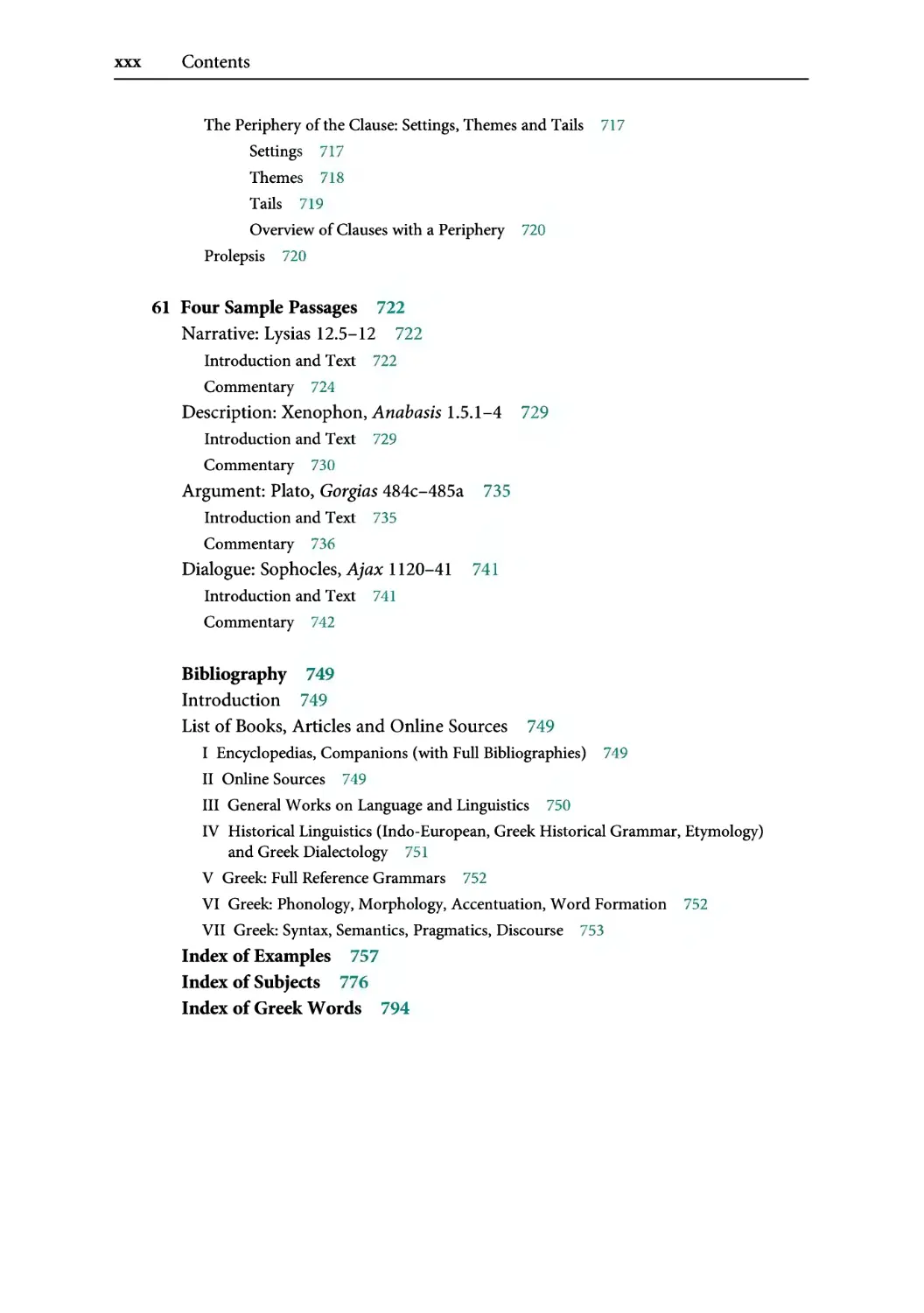
Preface xxxi
On Cs and Gs: History and Aims of the Book xxxi
Conception and Development xxxi
Target Audience and Scope xxxii
Some Principles of Presentation xxxiii
Using CGCG: A Few Points of Guidance xxxiv
Acknowledgements xxxv
Abbreviations, Symbols, Editions xxxviii
Abbreviations Used in This Book xxxviii
Other Symbols xxxix
Texts and Translations of Examples xxxix
On Terminology xl
Problems and Principles xl
Verbal Terminology xli
Tenses, Aspects and Moods xli
On 'First' and 'Second' Aorists and Perfects xlii
PARTI: PHONOLOGY AND MORPHOLOGY 1
1 The Signs and Sounds of Classical Greek 3
Writing: the Alphabet, Accent and Breathing Marks, Punctuation 3
The Alphabet 3
Particulars 4
Accents and Breathings 4
Punctuation 5
Further Diacritical Signs 6
The Alphabet, Breathings, Accents, Punctuation: a Very Brief Historical Overview 6
Pronunciation: Vowels and Diphthongs 7
Vowels 7
Phonetic Details 8
Diphthongs 8
Short Diphthongs 9
Long Diphthongs 9
'Spurious' Diphthongs ει and ou 10
Pronunciation: Consonants 10
List of Consonants 10

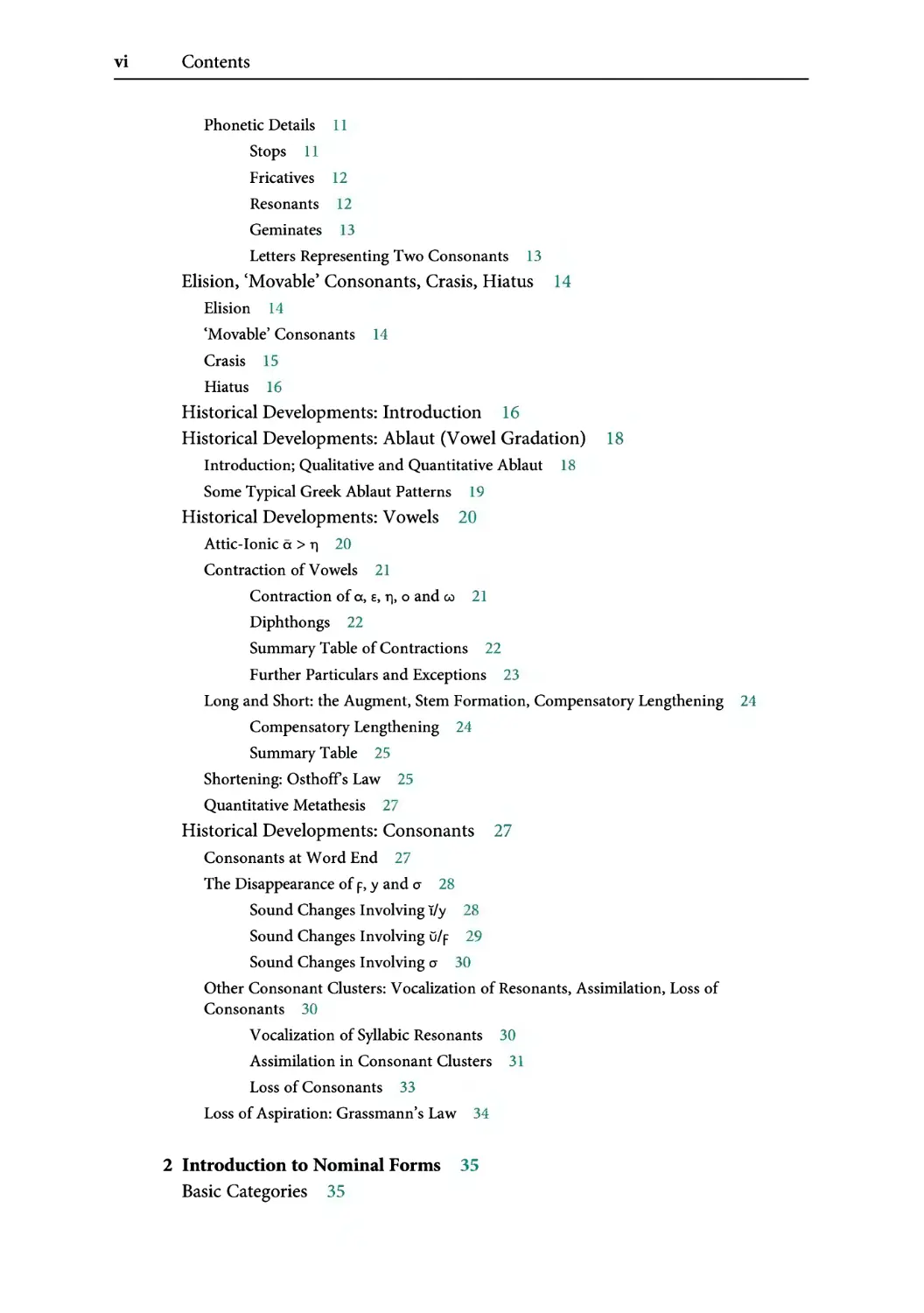
vi Contents
Phonetic Details 11
Stops 11
Fricatives 12
Resonants 12
Geminates 13
Letters Representing Two Consonants 13
Elision, 'Movable' Consonants, Crasis, Hiatus 14
Elision 14
'Movable' Consonants 14
Crasis 15
Hiatus 16
Historical Developments: Introduction 16
Historical Developments: Ablaut (Vowel Gradation) 18
Introduction; Qualitative and Quantitative Ablaut 18
Some Typical Greek Ablaut Patterns 19
Historical Developments: Vowels 20
Attic-Ionic ά > η 20
Contraction of Vowels 21
Contraction of α, ε, η, ο and ω 21
Diphthongs 22
Summary Table of Contractions 22
Further Particulars and Exceptions 23
Long and Short: the Augment, Stem Formation, Compensatory Lengthening 24
Compensatory Lengthening 24
Summary Table 25
Shortening: Osthoffs Law 25
Quantitative Metathesis 27
Historical Developments: Consonants 27
Consonants at Word End 27
The Disappearance of p, y and σ 28
Sound Changes Involving i/y 28
Sound Changes Involving u/p 29
Sound Changes Involving σ 30
Other Consonant Clusters: Vocalization of Resonants, Assimilation, Loss of
Consonants 30
Vocalization of Syllabic Resonants 30
Assimilation in Consonant Clusters 31
Loss of Consonants 33
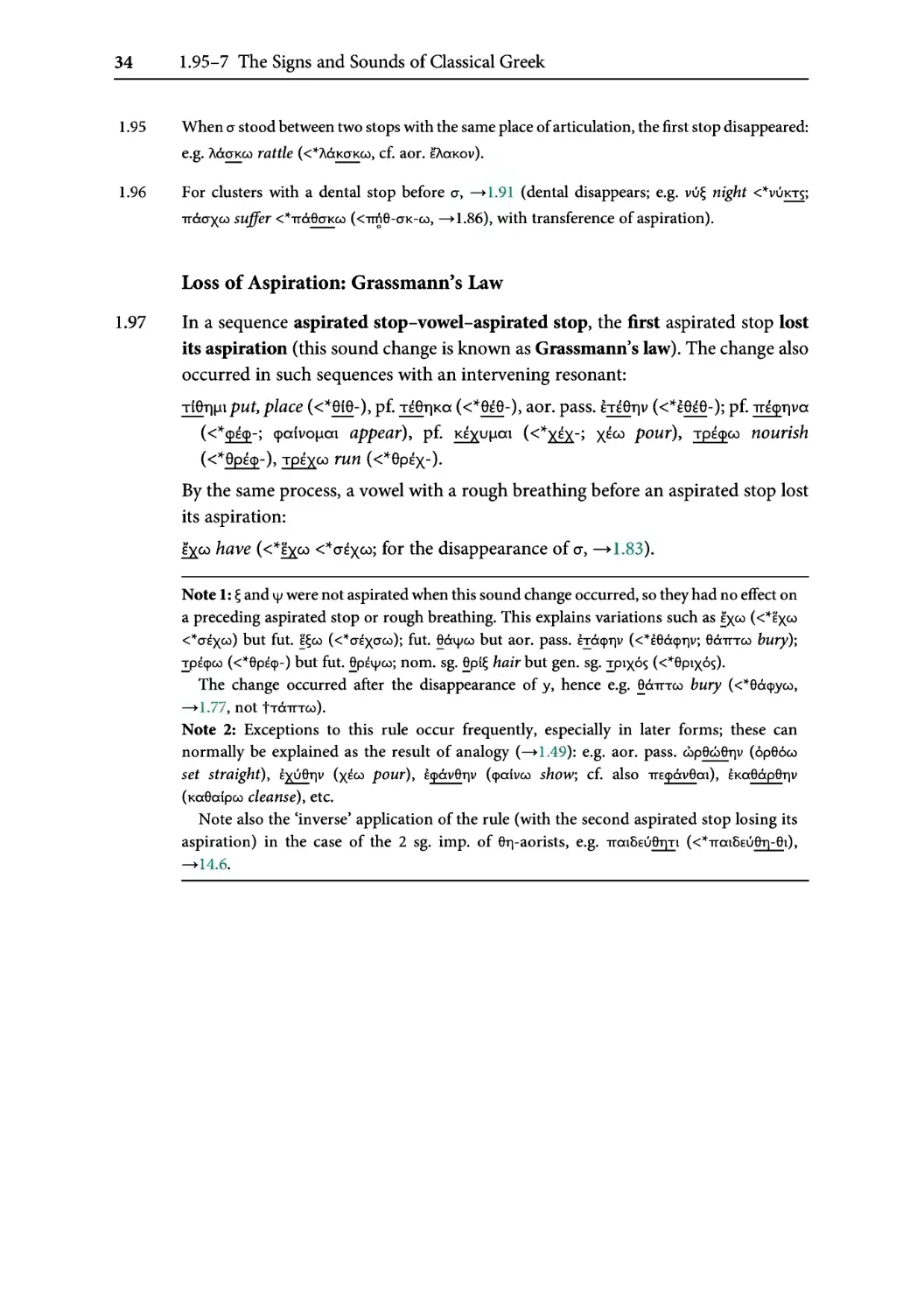
Loss of Aspiration: Grassmann's Law 34
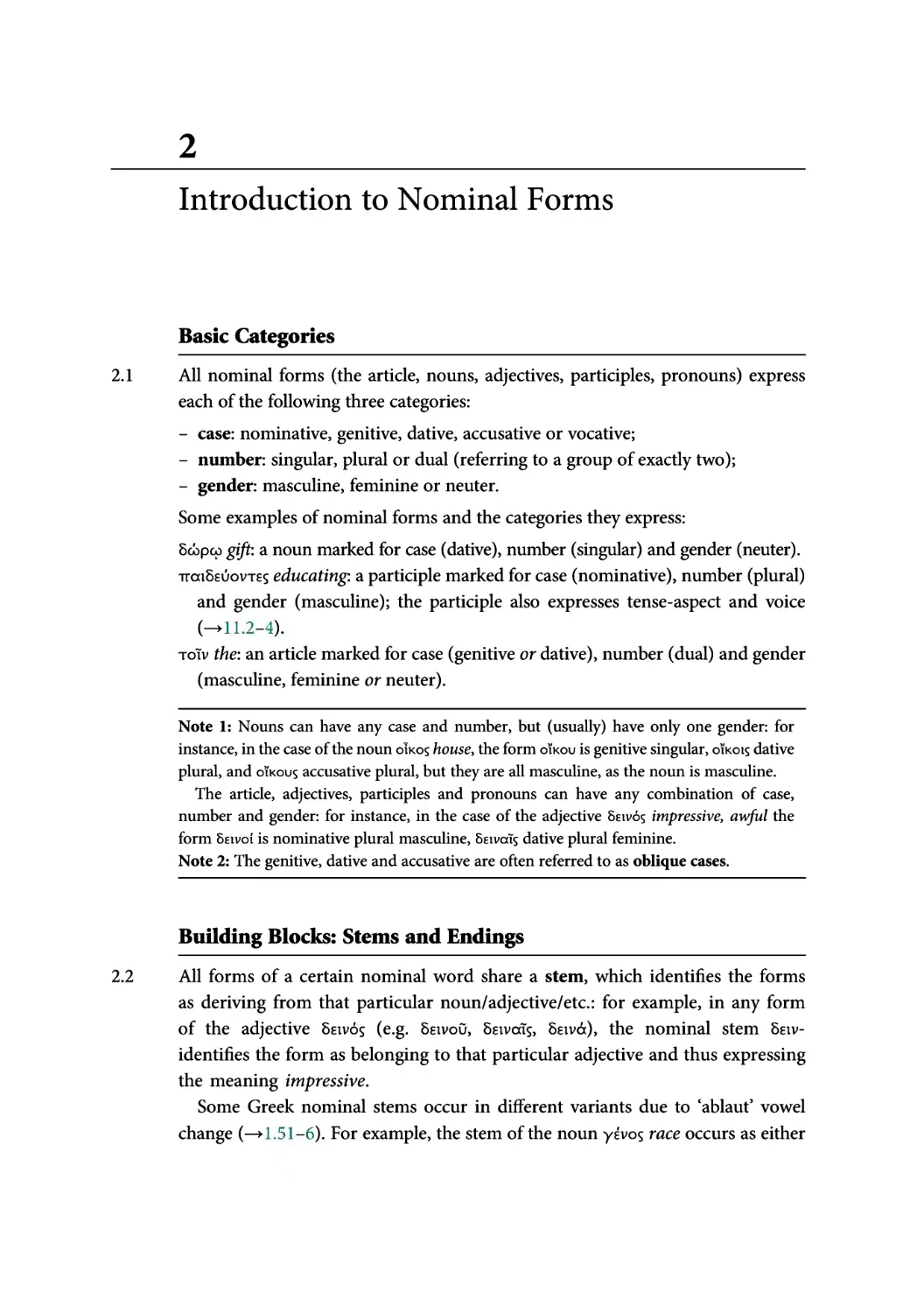
2 Introduction to Nominal Forms 35
Basic Categories 35

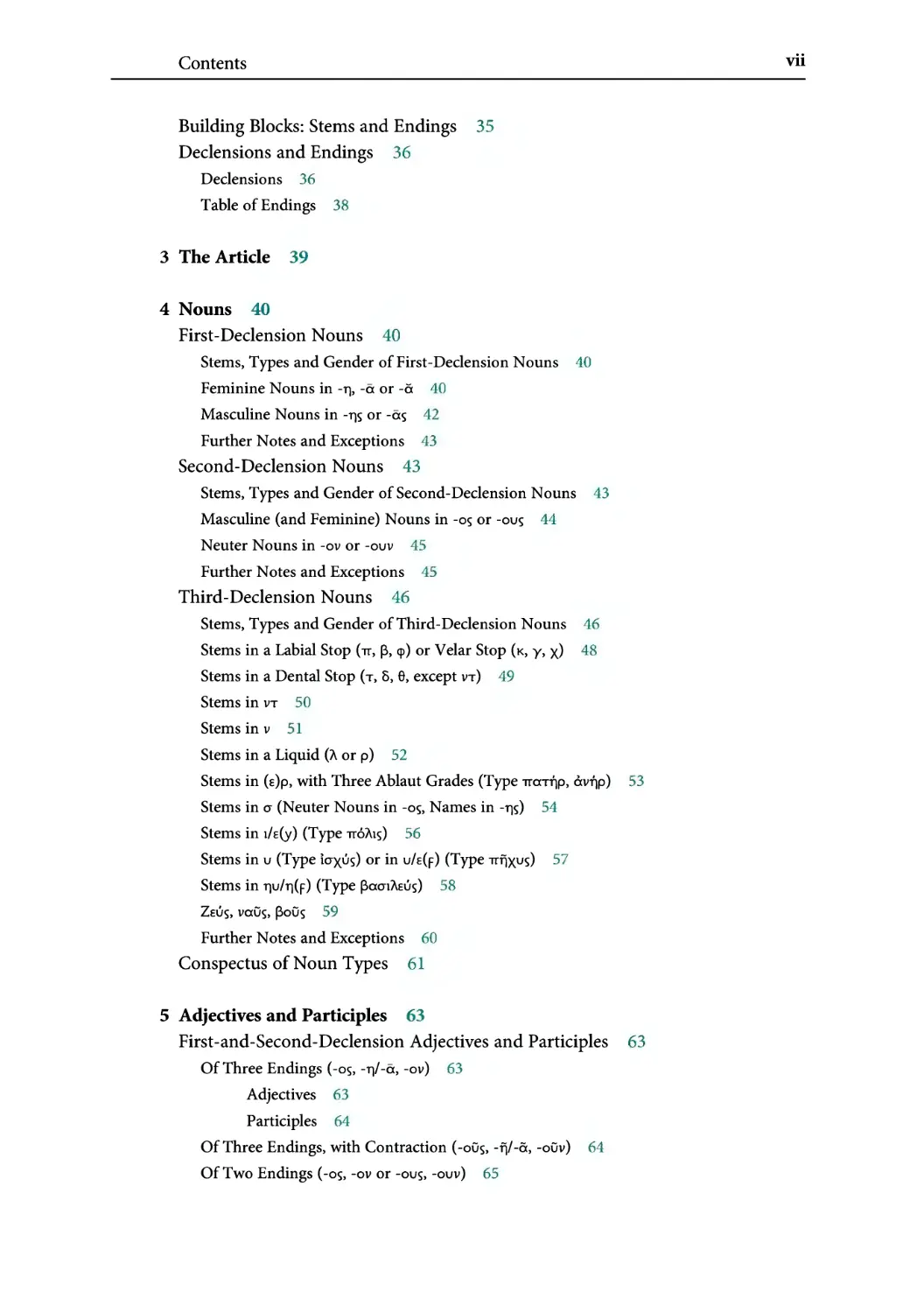
Contents
Vll
Building Blocks: Stems and Endings 35
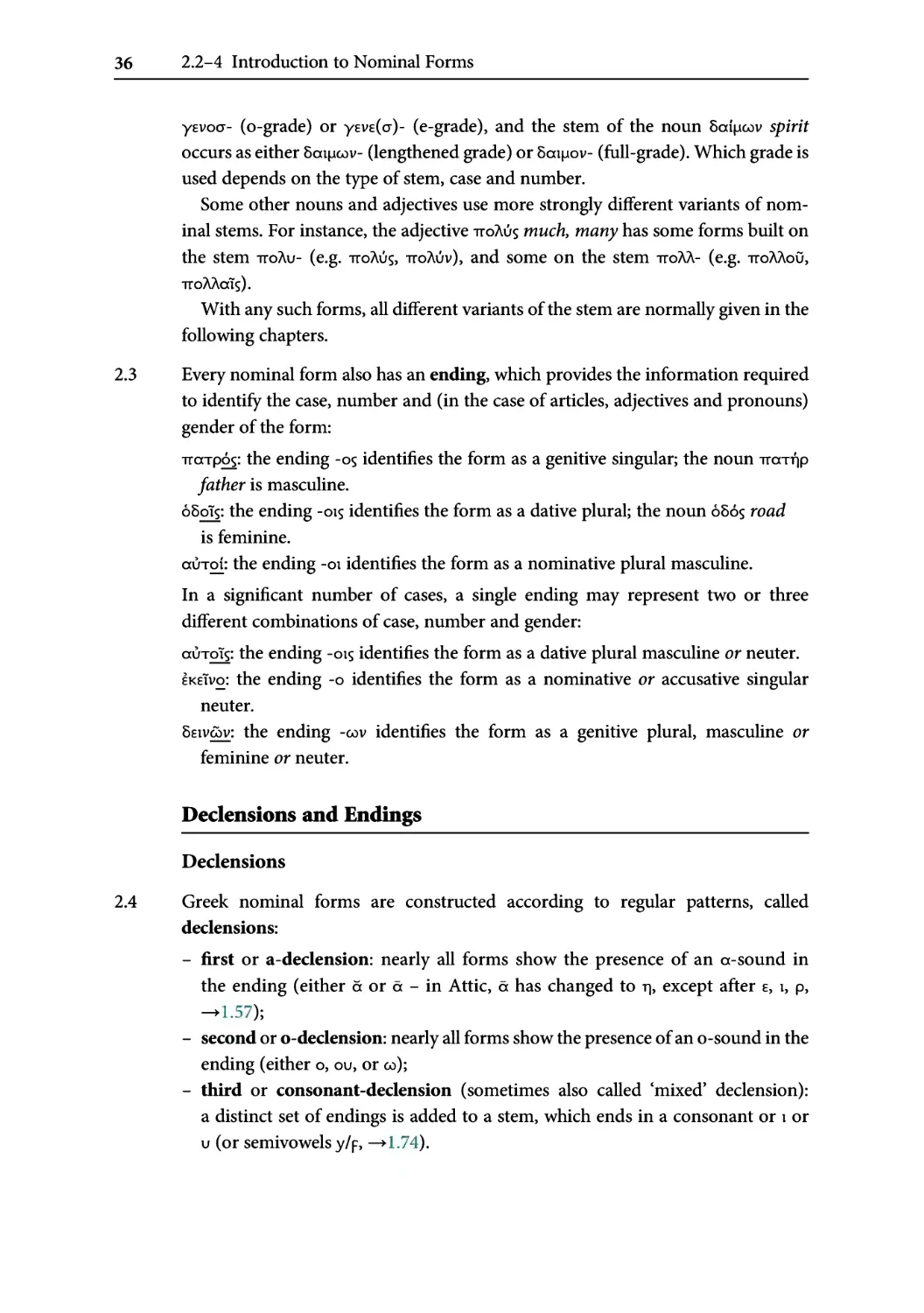
Declensions and Endings 36
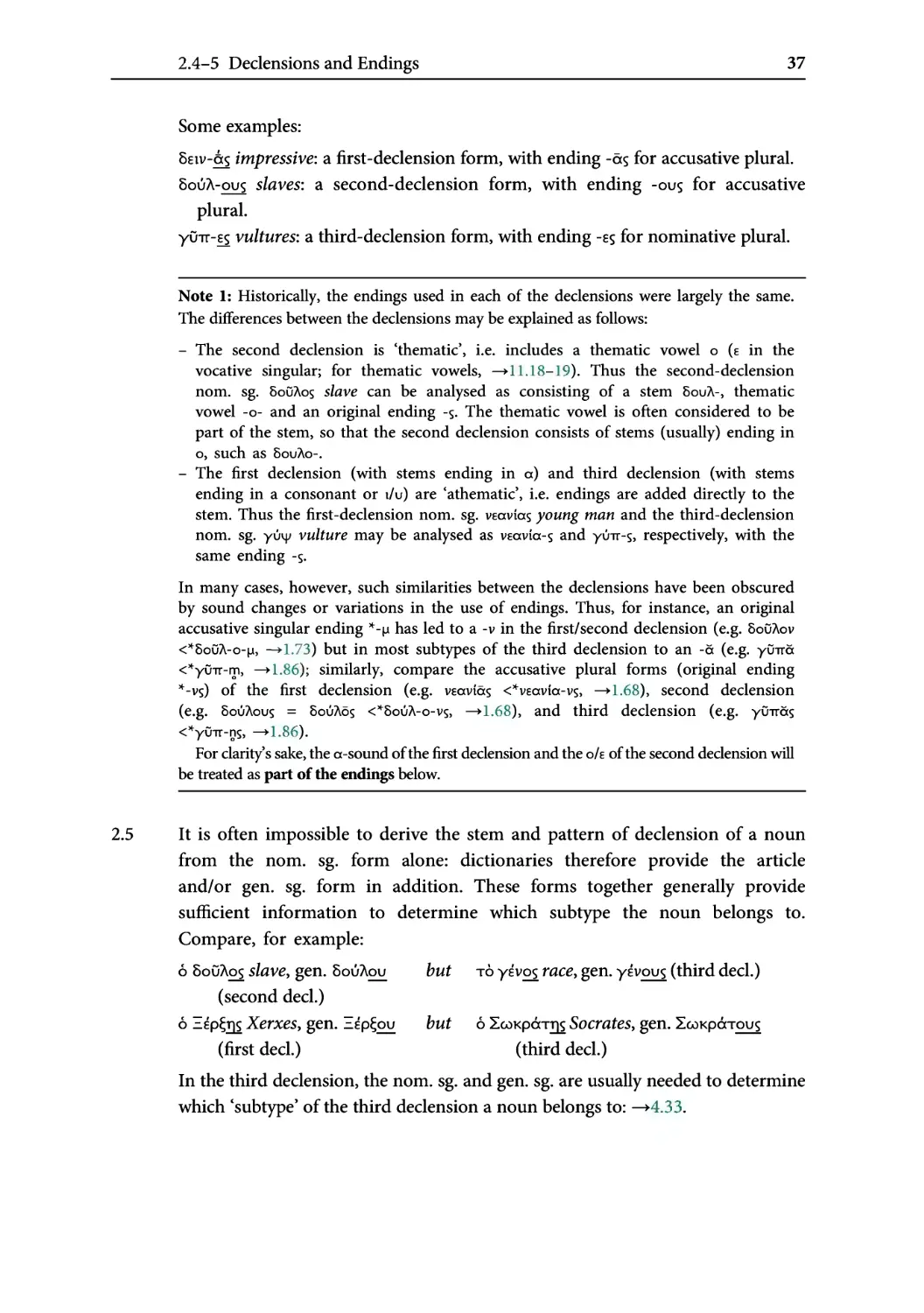
Declensions 36
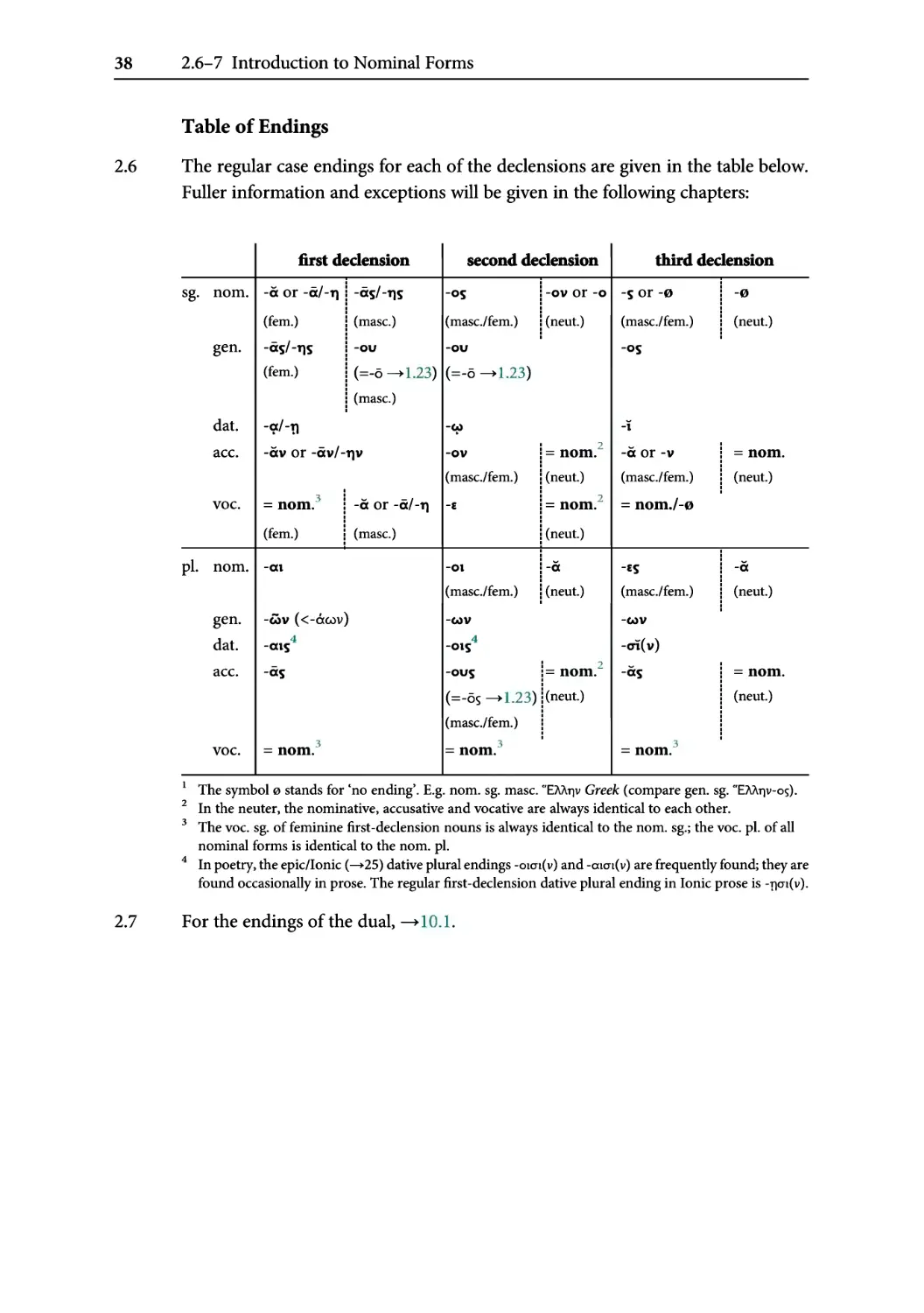
Table of Endings 38
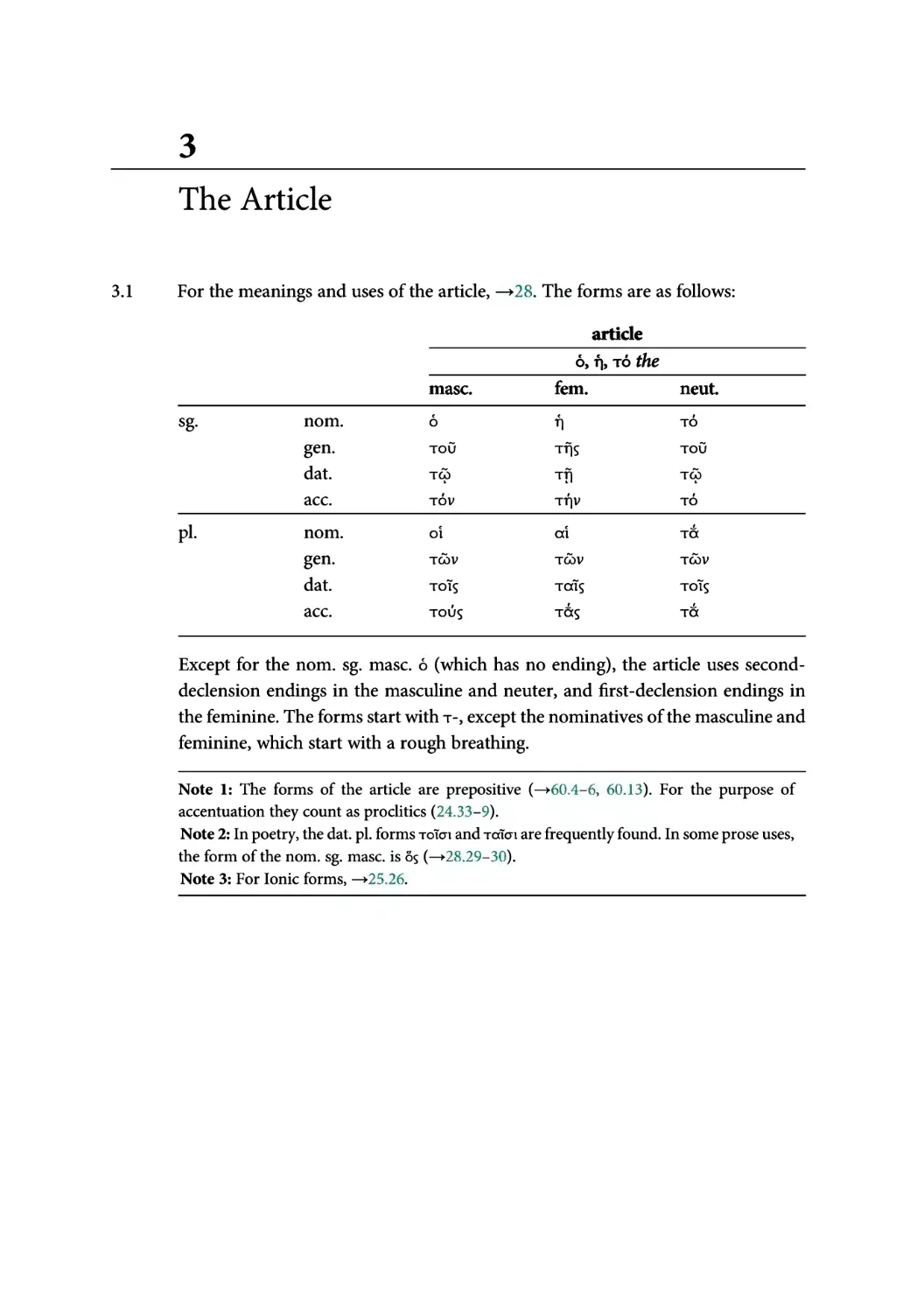
3 The Article 39
4 Nouns 40
First-Declension Nouns 40
Stems, Types and Gender of First-Declension Nouns 40
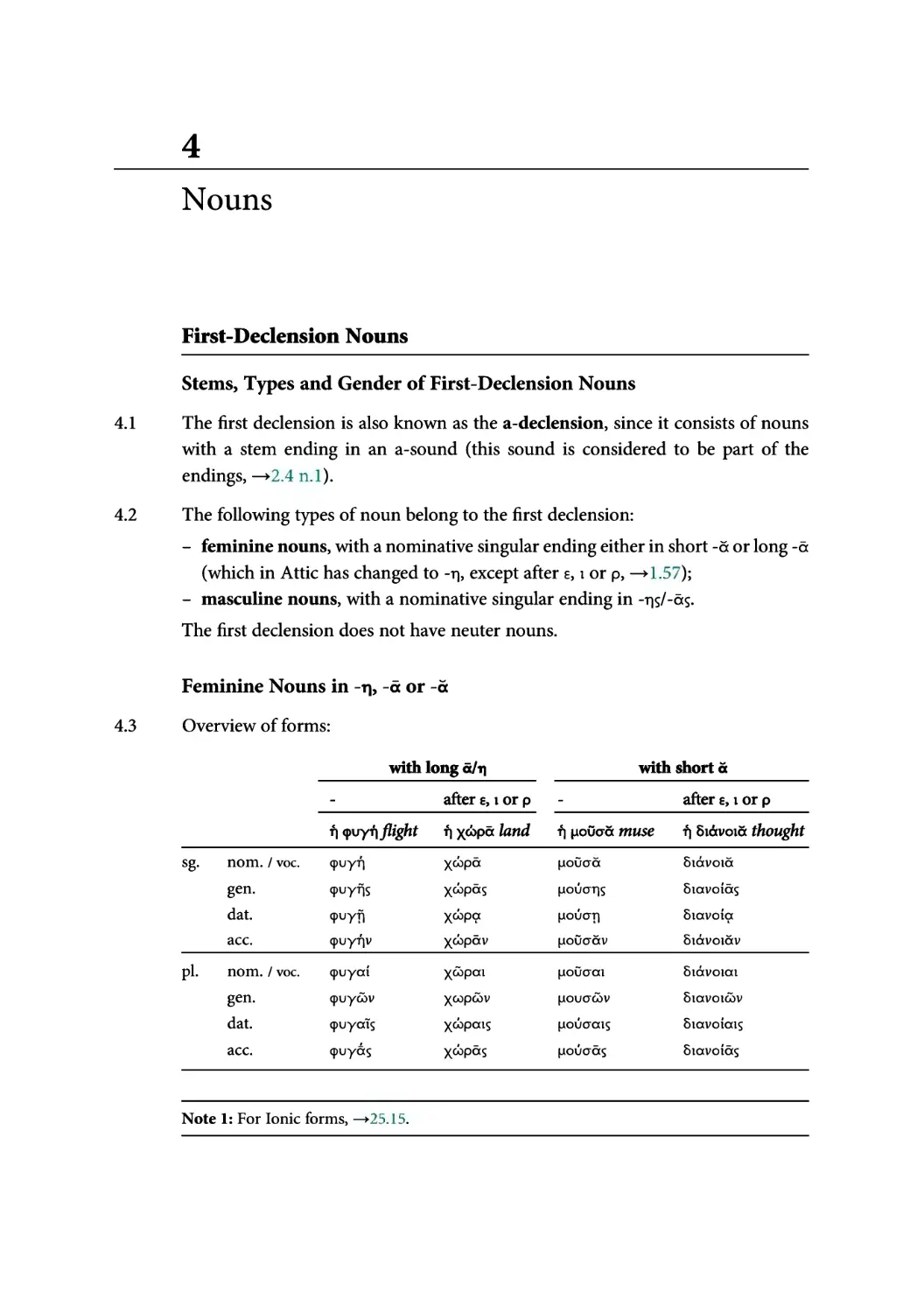
Feminine Nouns in -η, -ά or -ά 40
Masculine Nouns in -ης or -ας 42
Further Notes and Exceptions 43
Second-Declension Nouns 43
Stems, Types and Gender of Second-Declension Nouns 43
Masculine (and Feminine) Nouns in -ος or -ους 44
Neuter Nouns in -ov or -ouv 45
Further Notes and Exceptions 45
Third-Declension Nouns 46
Stems, Types and Gender of Third-Declension Nouns 46
Stems in a Labial Stop (π, β, φ) or Velar Stop (κ, y, χ) 48
Stems in a Dental Stop (τ, δ, θ, except ντ) 49
Stems in ντ 50
Stems in ν 51
Stems in a Liquid (λ or p) 52
Stems in (ε)ρ, with Three Ablaut Grades (Type πατήρ, άνήρ) 53
Stems in σ (Neuter Nouns in -ος, Names in -ης) 54
Stems in i/s(y) (Type πόλις) 56
Stems in υ (Type ισχύς) or in υ/ε(ρ) (Type πήχυς) 57
Stems in ηυ/η(ρ) (Type βασιλεύς) 58
Ζευς, ναΟς, βοΟς 59
Further Notes and Exceptions 60
Conspectus of Noun Types 61
5 Adjectives and Participles 63
First-and-Second-Declension Adjectives and Participles 63
Of Three Endings (-ος, -η/-ά, -ον) 63
Adjectives 63
Participles 64
Of Three Endings, with Contraction (-ους, -ή/-α, -ouv) 64
Of Two Endings (-ος, -ον or -ους, -ouv) 65

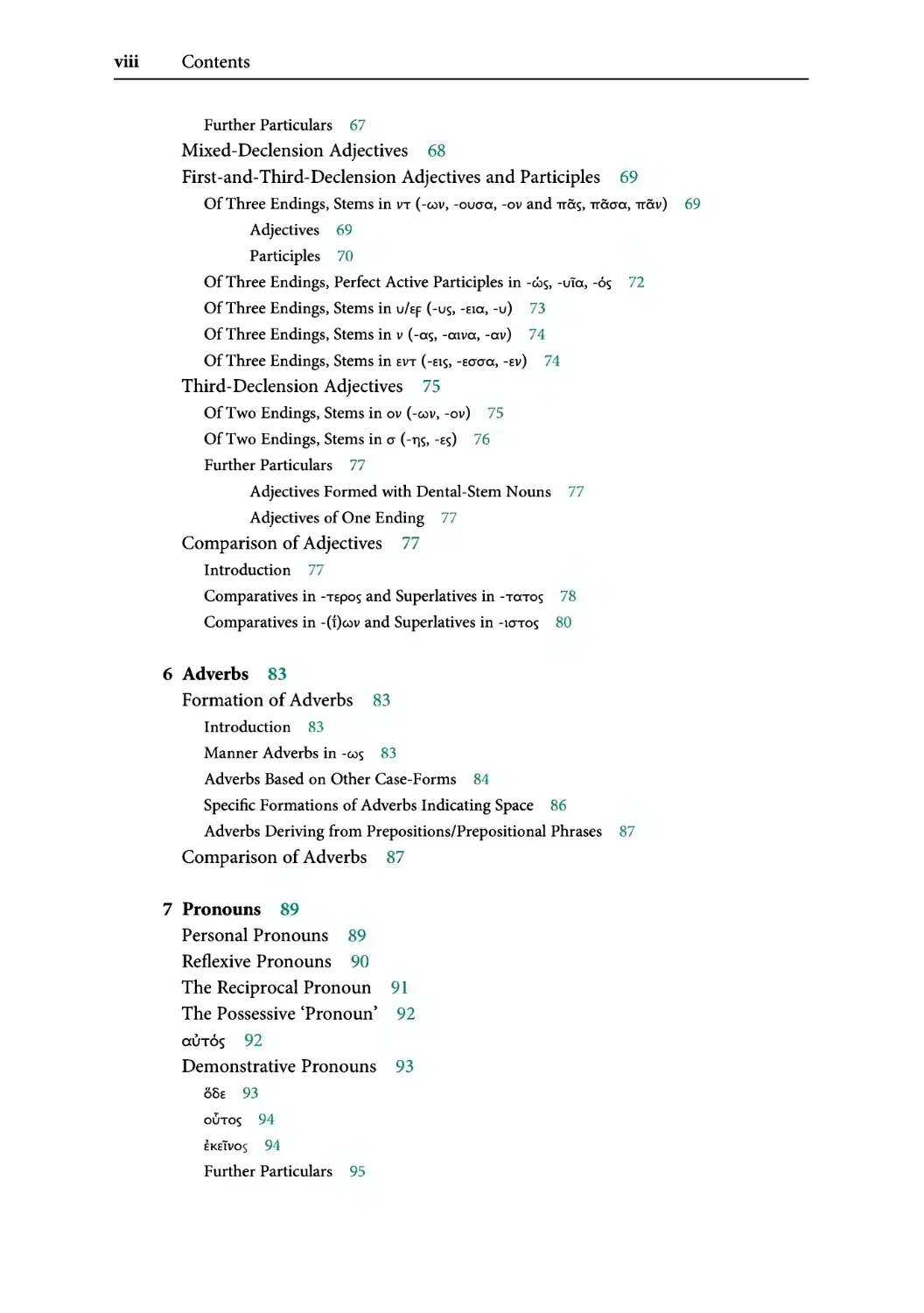
viii Contents
Further Particulars 67
Mixed-Declension Adjectives 68
First-and-Third-Declension Adjectives and Participles 69
Of Three Endings, Stems in ντ (-ων, -ούσα, -ov and πάς, πάσα, πάν) 69
Adjectives 69
Participles 70
Of Three Endings, Perfect Active Participles in -ως, -υΐα, -ός 72
Of Three Endings, Stems in υ/ερ (-υς, -εια, -υ) 73
Of Three Endings, Stems in ν (-ας, -αινα, -αν) 74
Of Three Endings, Stems in εντ (-εις, -εσσα, -εν) 74
Third-Declension Adjectives 75
Of Two Endings, Stems in ov (-ων, -ov) 75
Of Two Endings, Stems in σ (-ης, -ες) 76
Further Particulars 77
Adjectives Formed with Dental-Stem Nouns 77
Adjectives of One Ending 77
Comparison of Adjectives 77
Introduction 77
Comparatives in -τερος and Superlatives in -τατος 78
Comparatives in -(f) ω ν and Superlatives in -ιστός 80
6 Adverbs 83
Formation of Adverbs 83
Introduction 83
Manner Adverbs in -ως 83
Adverbs Based on Other Case-Forms 84
Specific Formations of Adverbs Indicating Space 86
Adverbs Deriving from Prepositions/Prepositional Phrases 87
Comparison of Adverbs 87
7 Pronouns 89
Personal Pronouns 89
Reflexive Pronouns 90
The Reciprocal Pronoun 91
The Possessive 'Pronoun' 92
αυτός 92
Demonstrative Pronouns 93
δδε 93
ούτος 94
εκείνος 94
Further Particulars 95

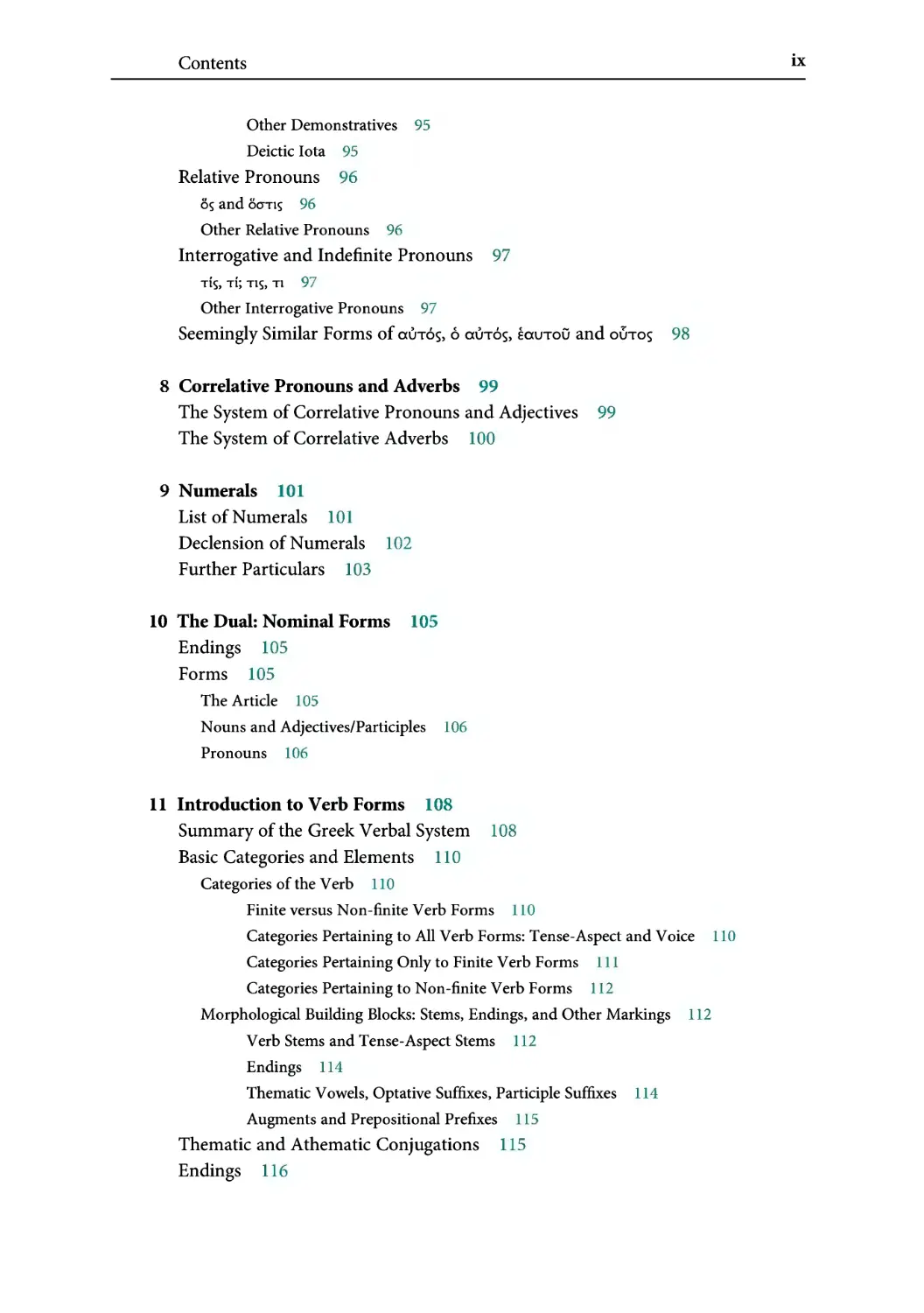
Contents
ιχ
Other Demonstratives 95
Deictic Iota 95
Relative Pronouns 96
δς and όστις 96
Other Relative Pronouns 96
Interrogative and Indefinite Pronouns 97
τίς, τί; τις, τι 97
Other Interrogative Pronouns 97
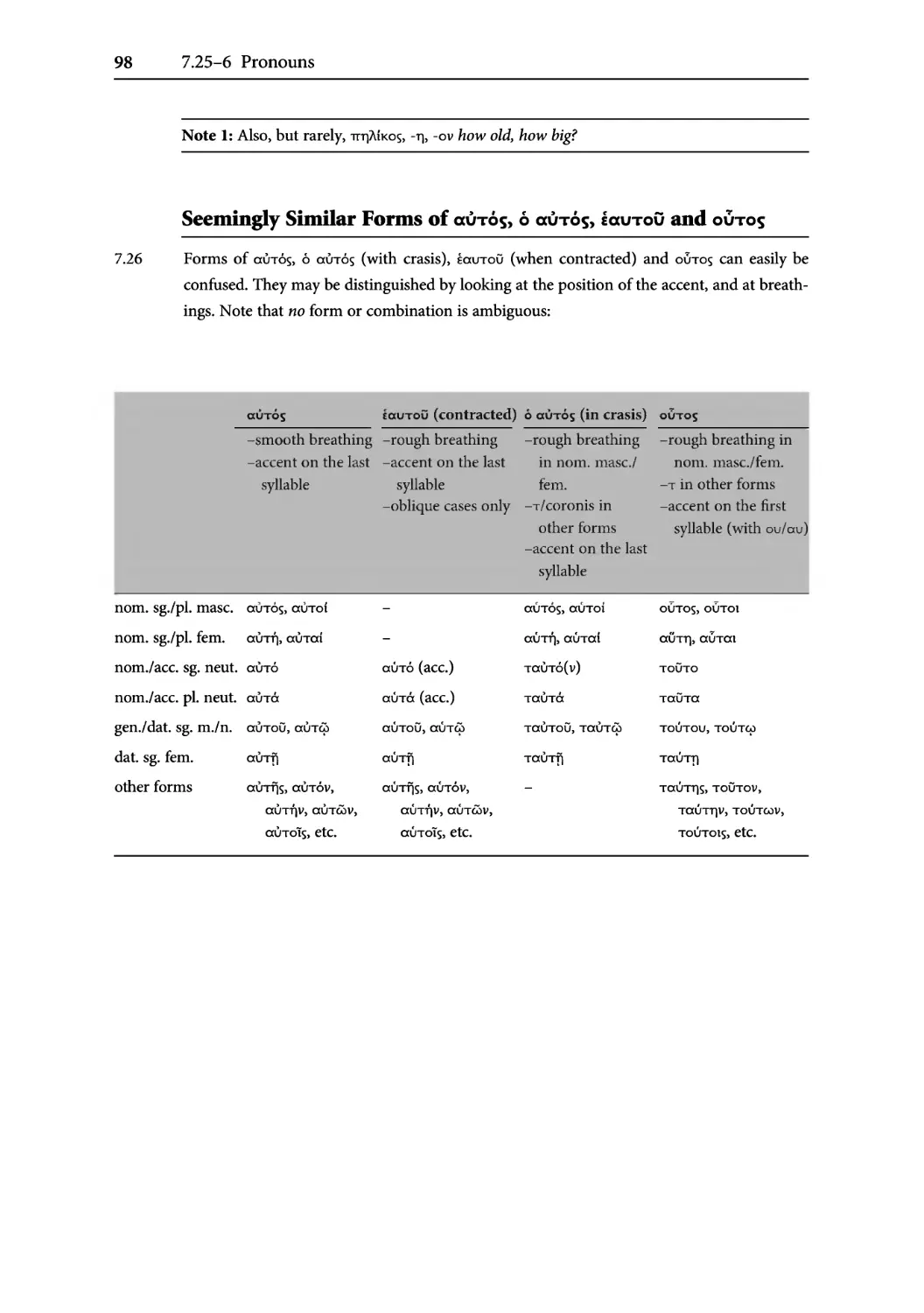
Seemingly Similar Forms of αυτός, ό αυτός, εαυτού and ούτος 98
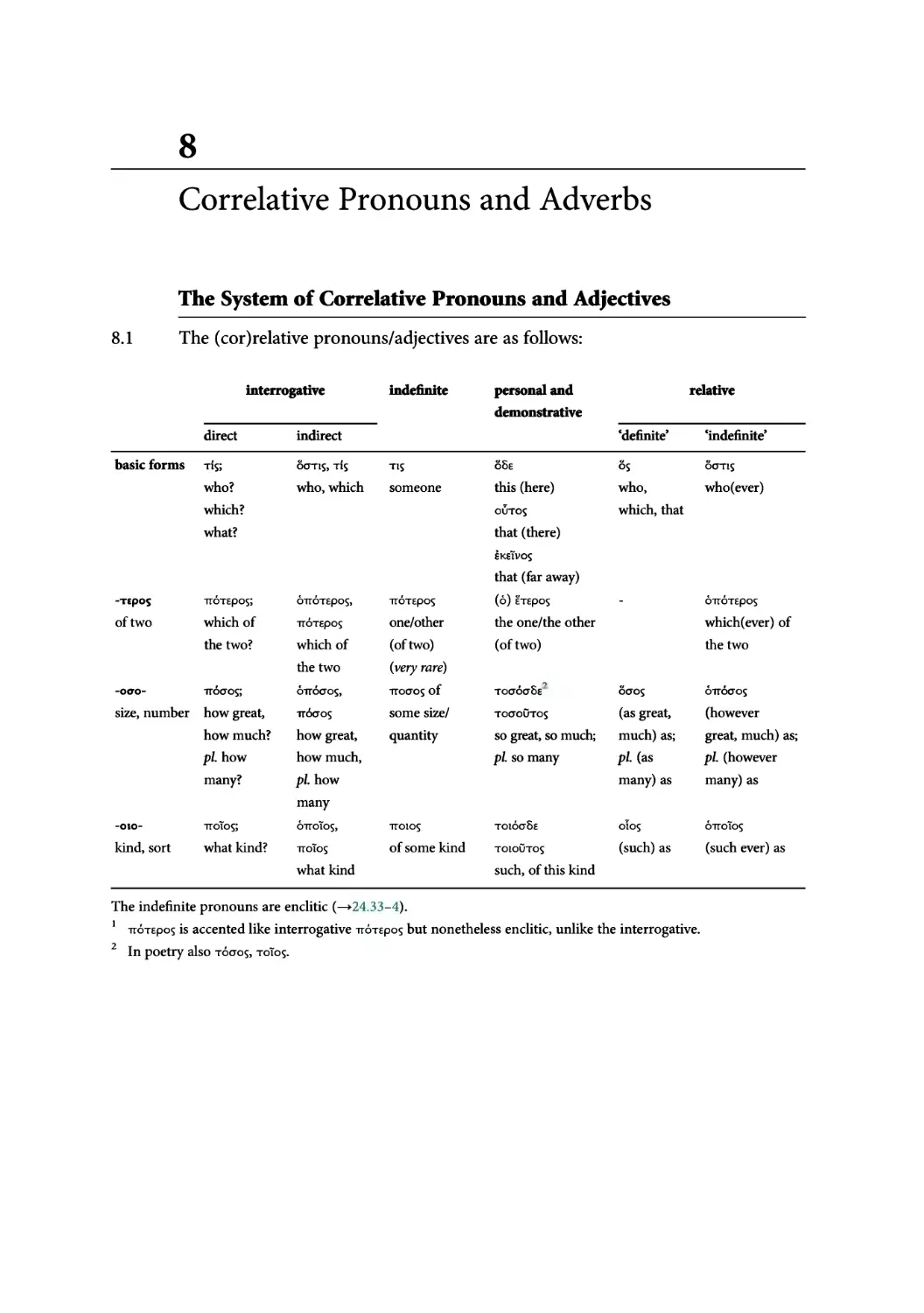
8 Correlative Pronouns and Adverbs 99
The System of Correlative Pronouns and Adjectives 99
The System of Correlative Adverbs 100
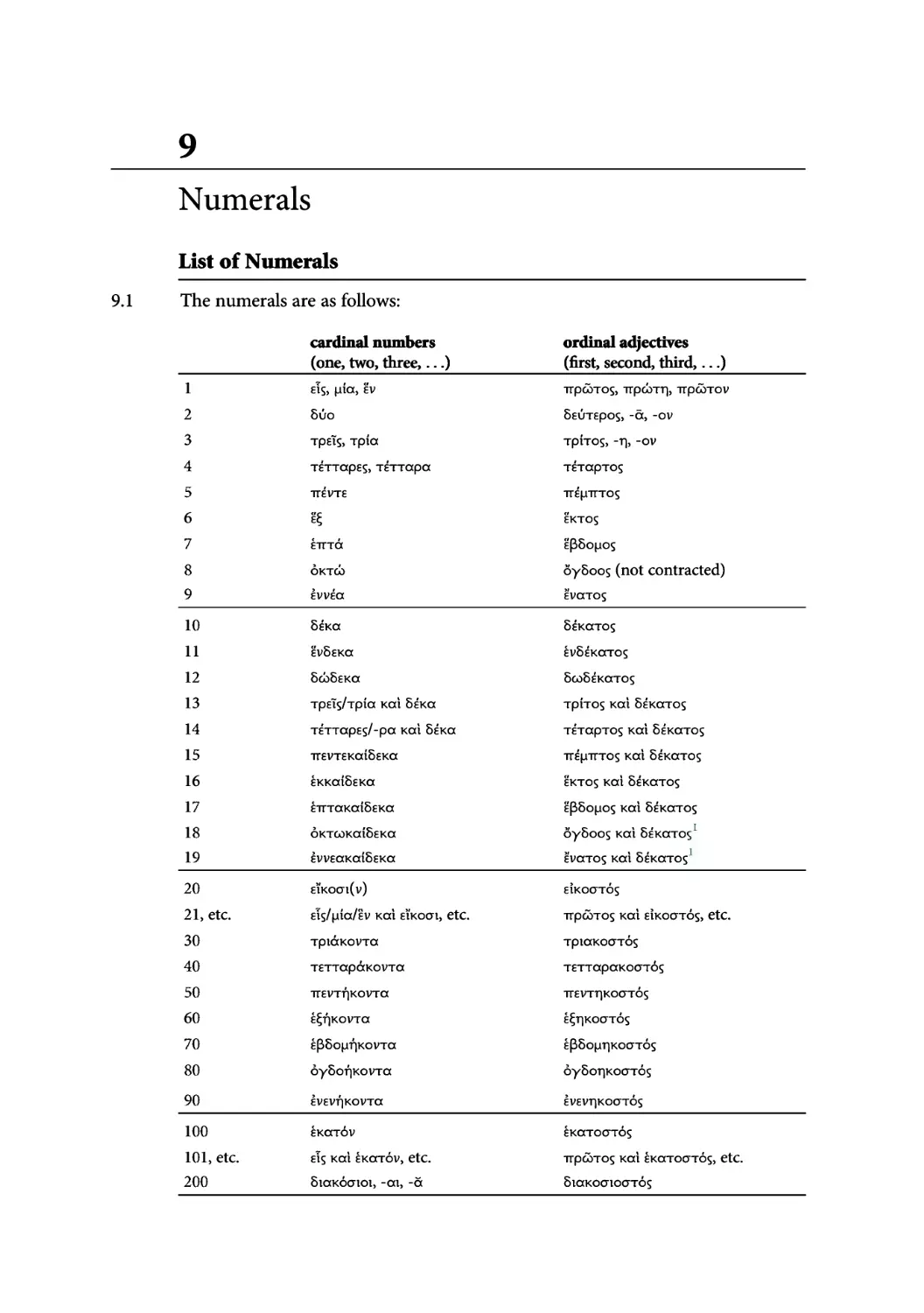
9 Numerals 101
List of Numerals 101
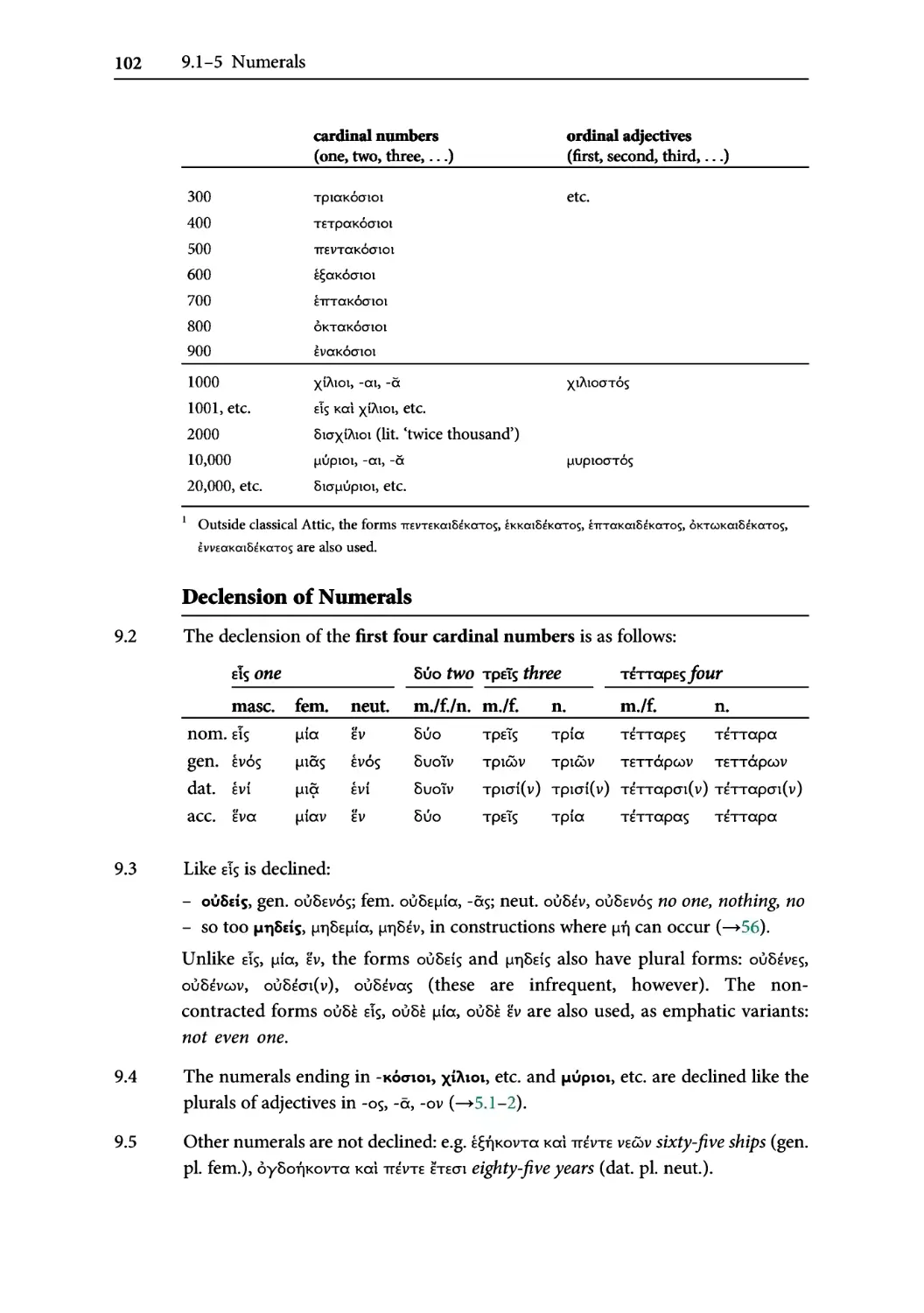
Declension of Numerals 102
Further Particulars 103
10 The Dual: Nominal Forms 105
Endings 105
Forms 105
The Article 105
Nouns and Adjectives/Participles 106
Pronouns 106
11 Introduction to Verb Forms 108
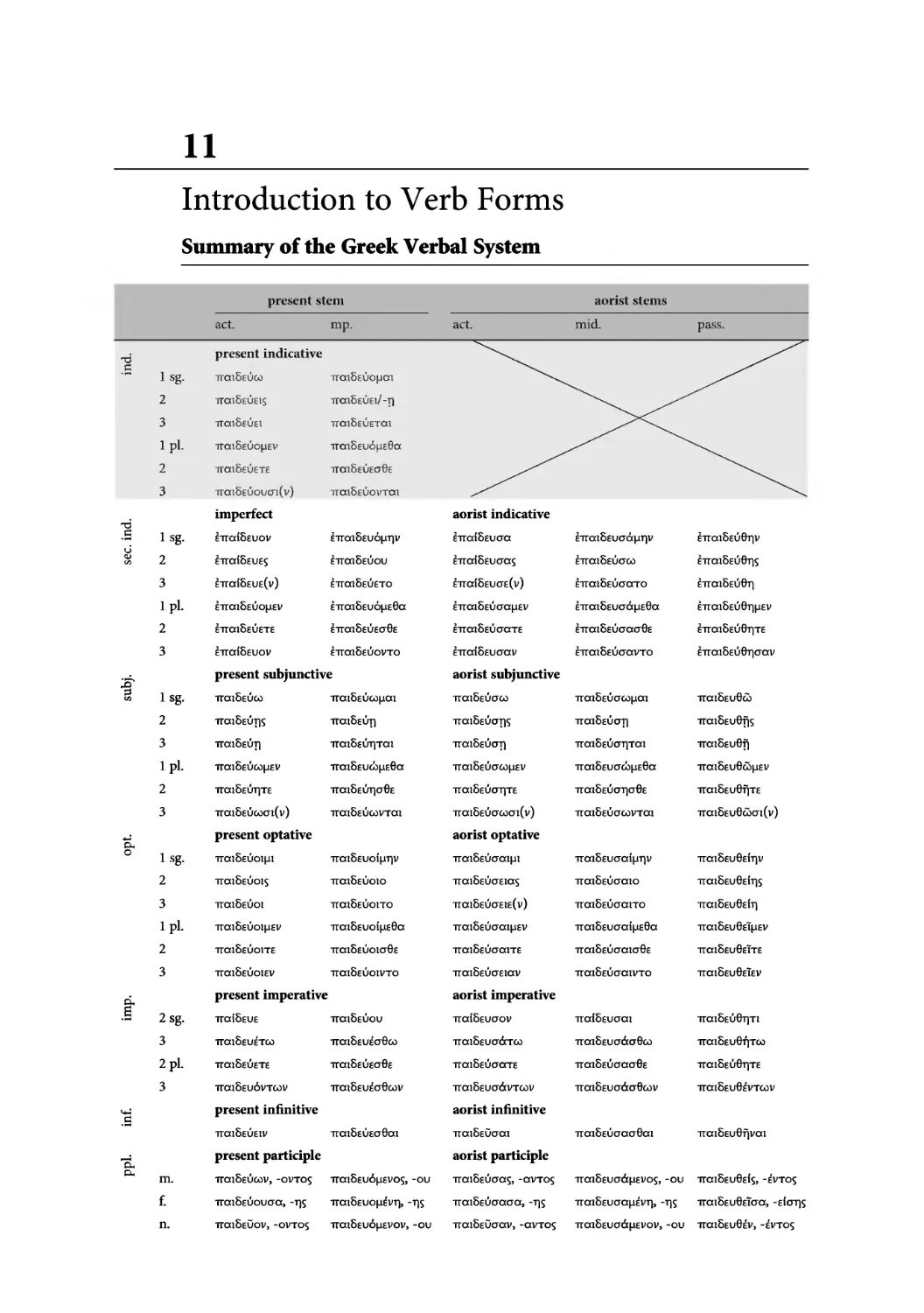
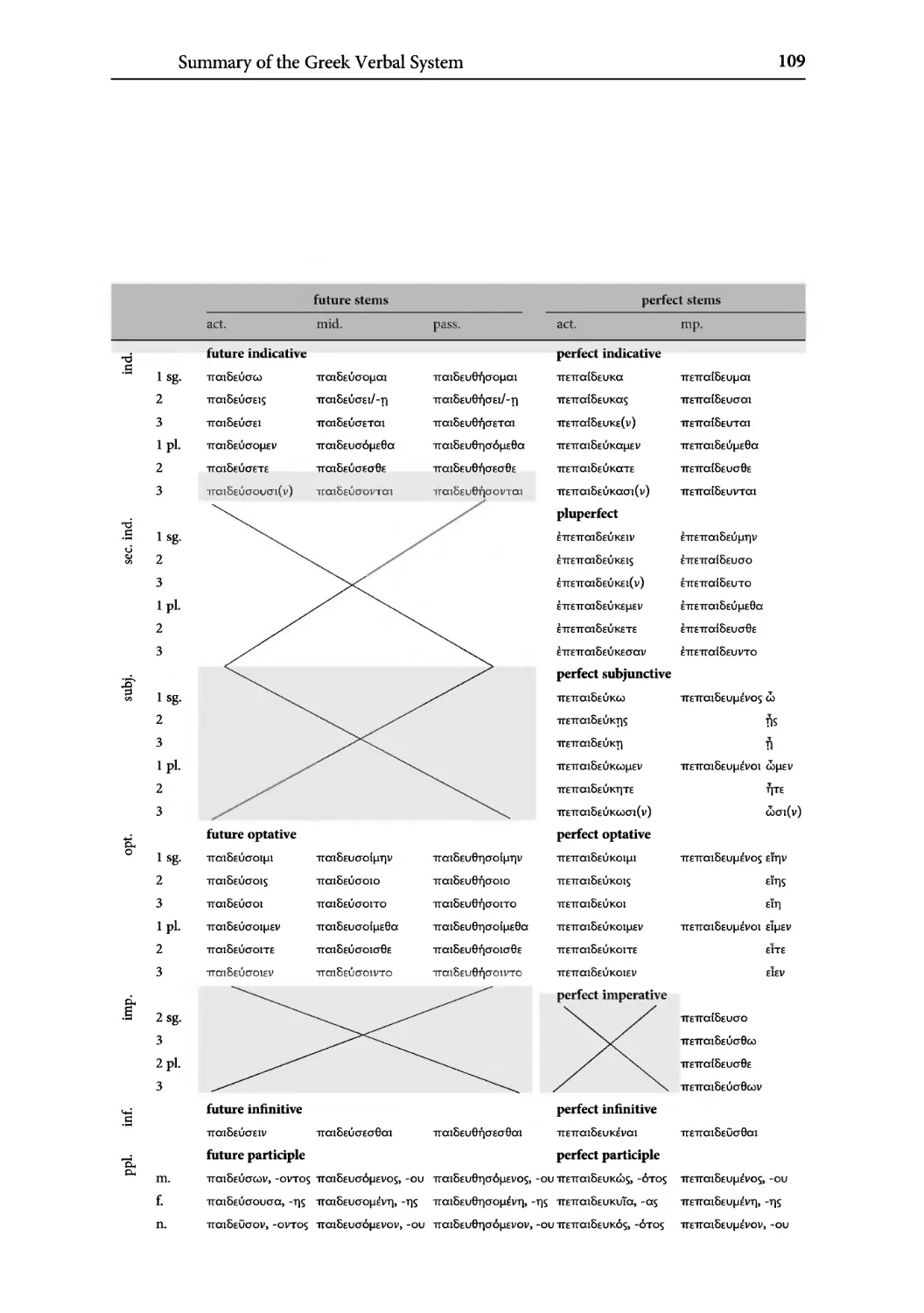
Summary of the Greek Verbal System 108
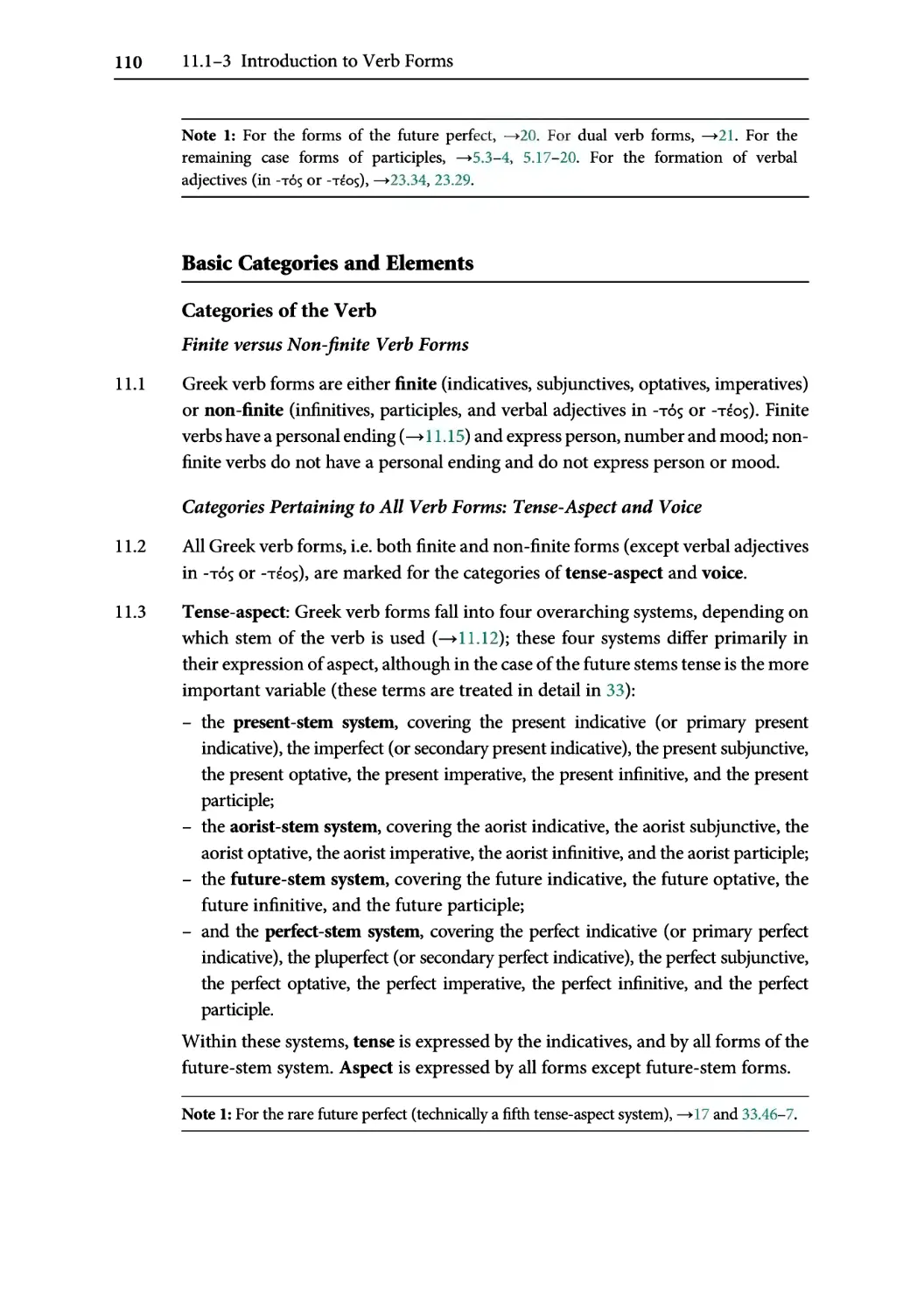
Basic Categories and Elements 110
Categories of the Verb 110
Finite versus Non-finite Verb Forms 110
Categories Pertaining to All Verb Forms: Tense-Aspect and Voice 110
Categories Pertaining Only to Finite Verb Forms 111
Categories Pertaining to Non-finite Verb Forms 112
Morphological Building Blocks: Stems, Endings, and Other Markings 112
Verb Stems and Tense-Aspect Stems 112
Endings 114
Thematic Vowels, Optative Suffixes, Participle Suffixes 114
Augments and Prepositional Prefixes 115
Thematic and Athematic Conjugations 115
Endings 116

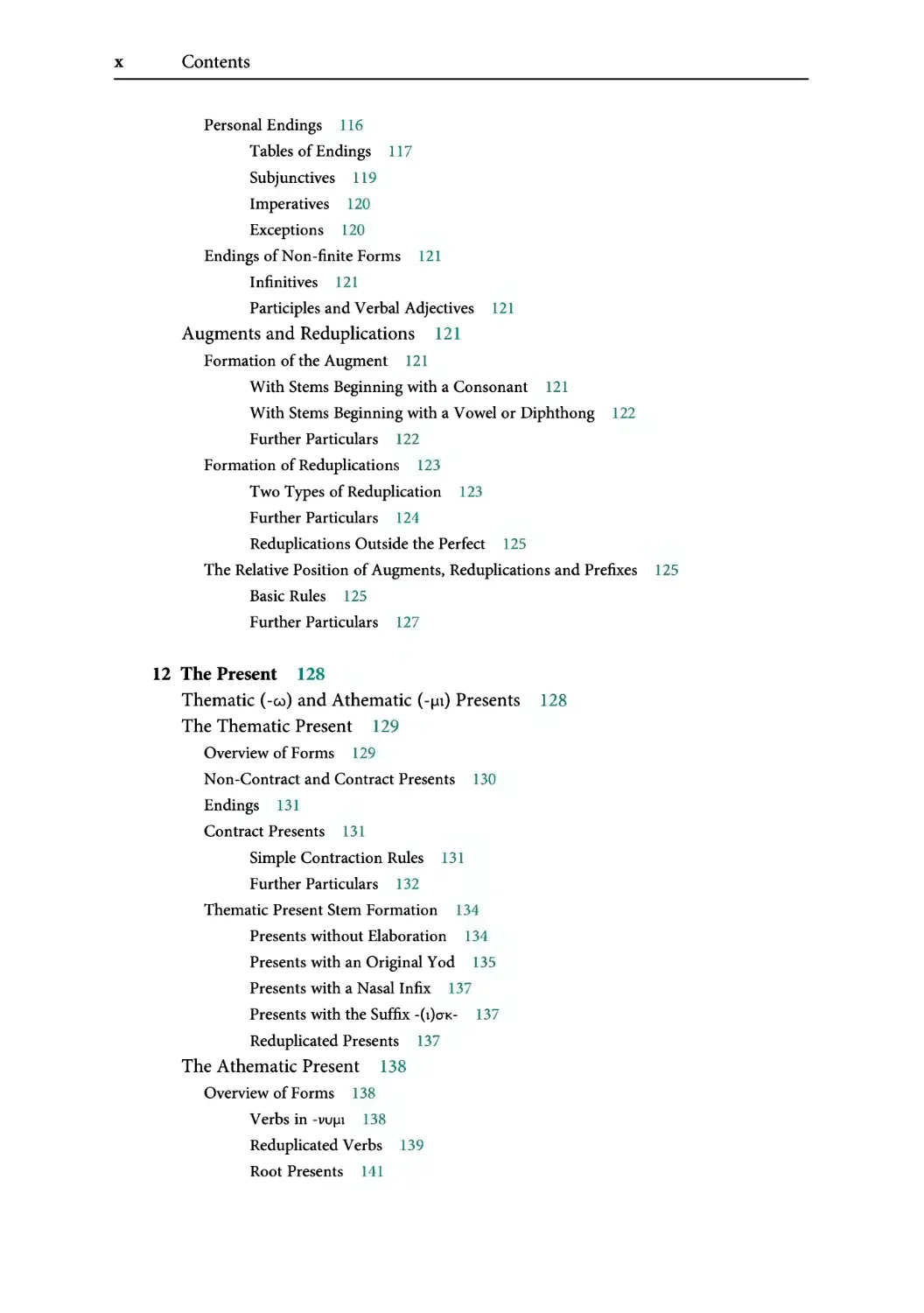
χ Contents
Personal Endings 116
Tables of Endings 117
Subjunctives 119
Imperatives 120
Exceptions 120
Endings of Non-finite Forms 121
Infinitives 121
Participles and Verbal Adjectives 121
Augments and Reduplications 121
Formation of the Augment 121
With Stems Beginning with a Consonant 121
With Stems Beginning with a Vowel or Diphthong 122
Further Particulars 122
Formation of Reduplications 123
Two Types of Reduplication 123
Further Particulars 124
Reduplications Outside the Perfect 125
The Relative Position of Augments, Reduplications and Prefixes 125
Basic Rules 125
Further Particulars 127
12 The Present 128
Thematic (-ω) and Athematic (-μι) Presents 128
The Thematic Present 129
Overview of Forms 129
Non-Contract and Contract Presents 130
Endings 131
Contract Presents 131
Simple Contraction Rules 131
Further Particulars 132
Thematic Present Stem Formation 134
Presents without Elaboration 134
Presents with an Original Yod 135
Presents with a Nasal Infix 137
Presents with the Suffix -(ι)σκ- 137
Reduplicated Presents 137
The Athematic Present 138
Overview of Forms 138
Verbs in -νυμι 138
Reduplicated Verbs 139
Root Presents 141

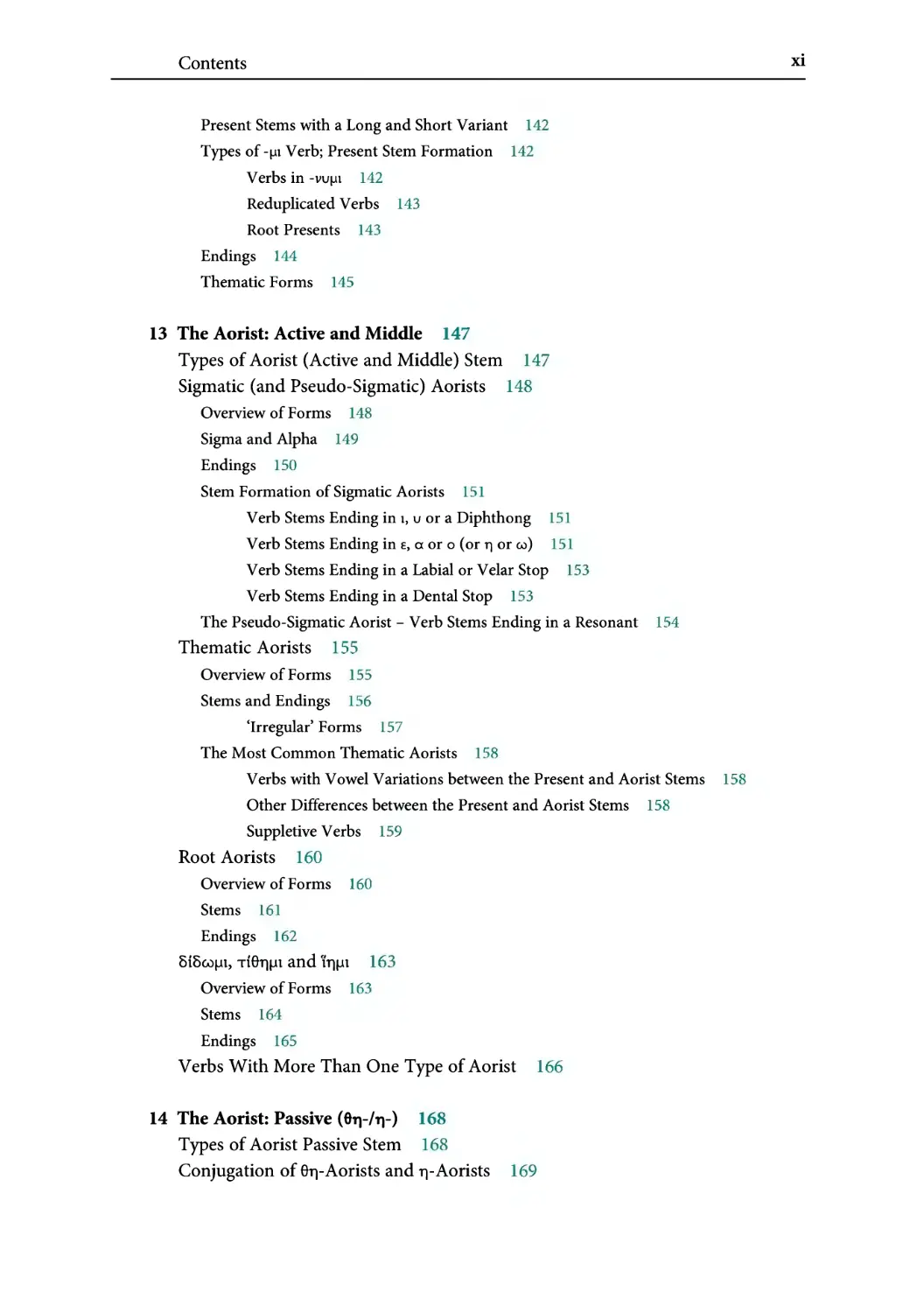
Contents
χι
Present Stems with a Long and Short Variant 142
Types of-μι Verb; Present Stem Formation 142
Verbs in -νυμι 142
Reduplicated Verbs 143
Root Presents 143
Endings 144
Thematic Forms 145
13 The Aorist: Active and Middle 147
Types of Aorist (Active and Middle) Stem 147
Sigmatic (and Pseudo-Sigmatic) Aorists 148
Overview of Forms 148
Sigma and Alpha 149
Endings 150
Stem Formation of Sigmatic Aorists 151
Verb Stems Ending in ι, υ or a Diphthong 151
Verb Stems Ending in ε, α or ο (or η or ω) 151
Verb Stems Ending in a Labial or Velar Stop 153
Verb Stems Ending in a Dental Stop 153
The Pseudo-Sigmatic Aorist - Verb Stems Ending in a Resonant 154
Thematic Aorists 155
Overview of Forms 155
Stems and Endings 156
'Irregular' Forms 157
The Most Common Thematic Aorists 158
Verbs with Vowel Variations between the Present and Aorist Stems 158
Other Differences between the Present and Aorist Stems 158
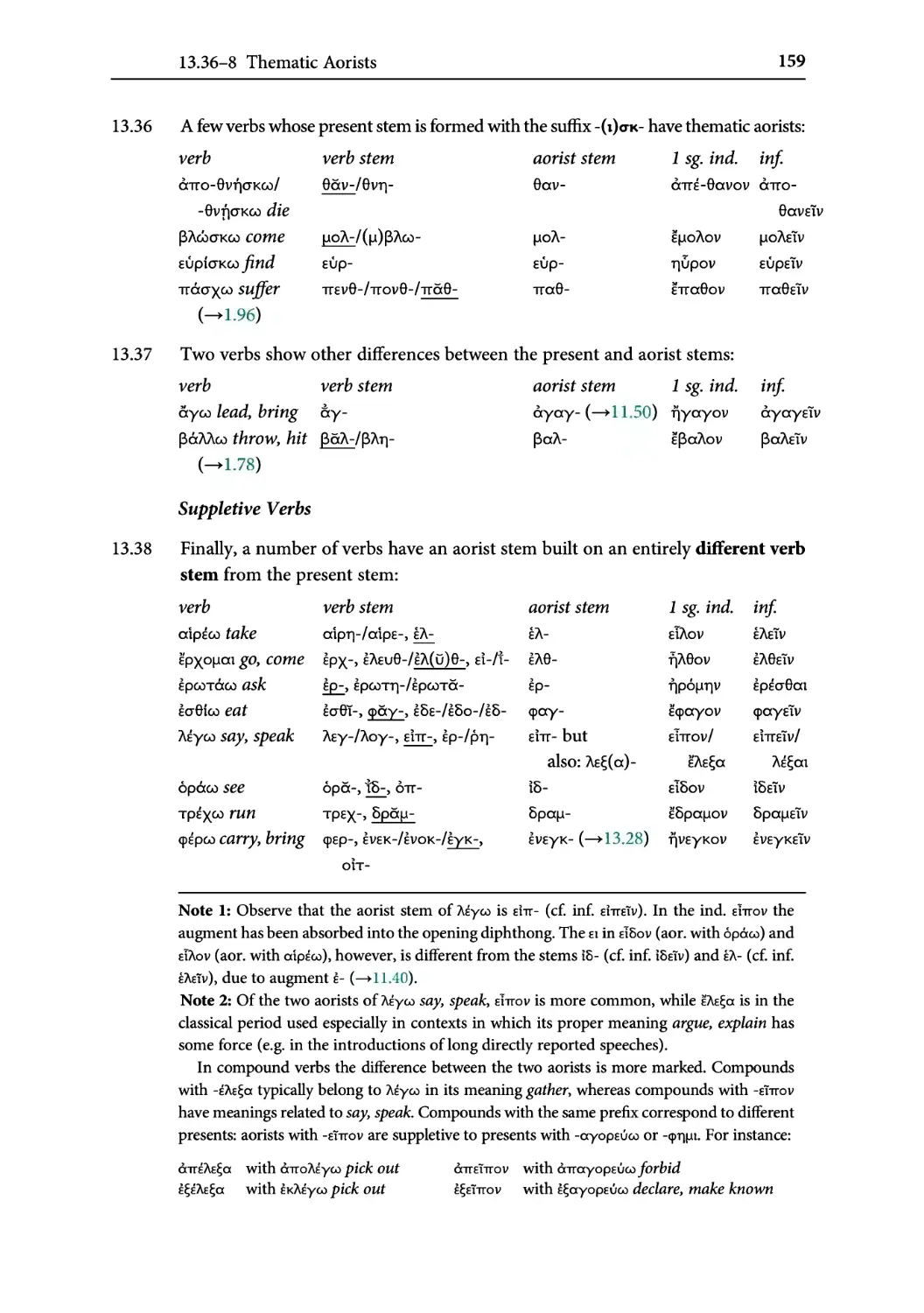
Suppletive Verbs 159
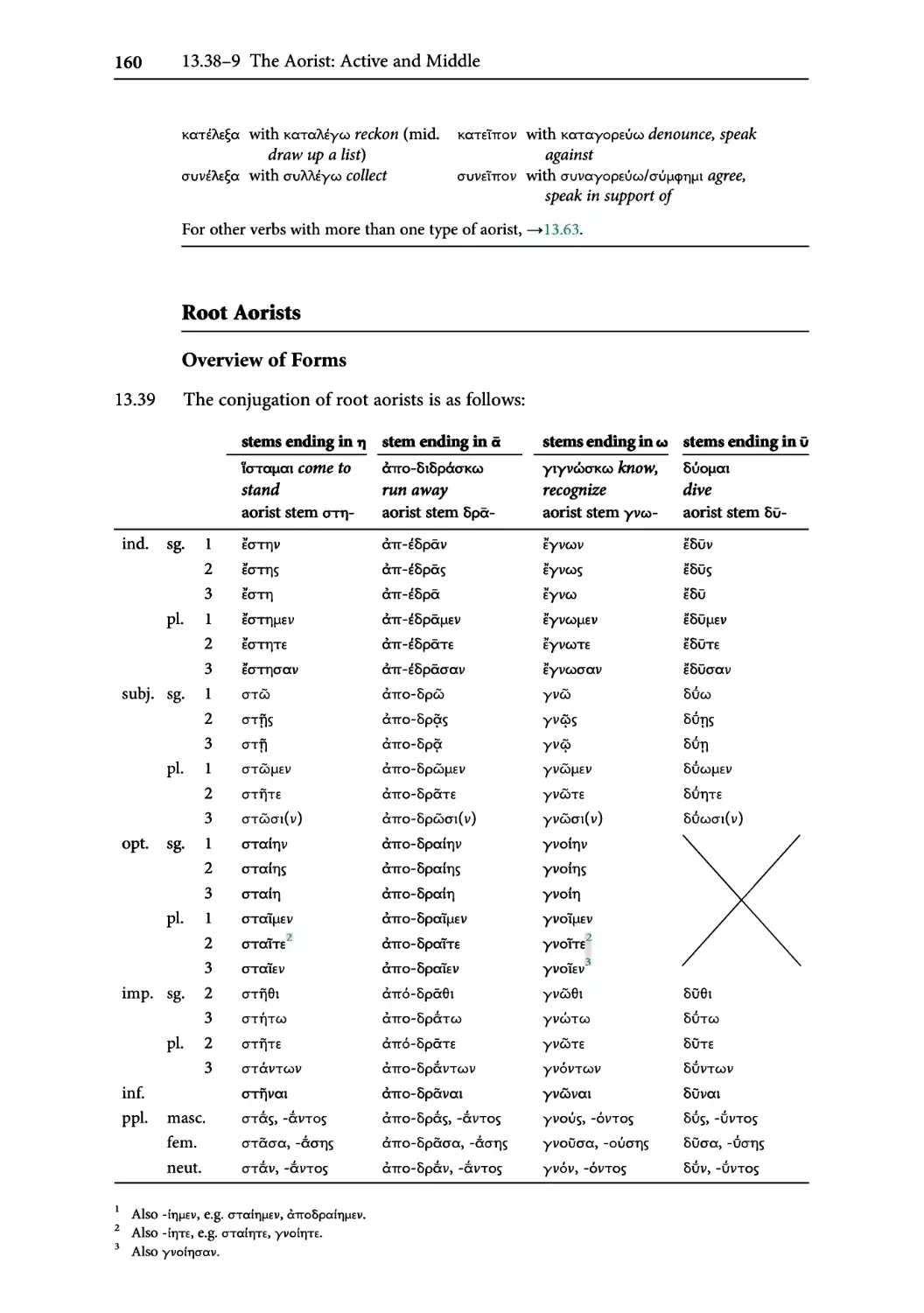
Root Aorists 160
Overview of Forms 160
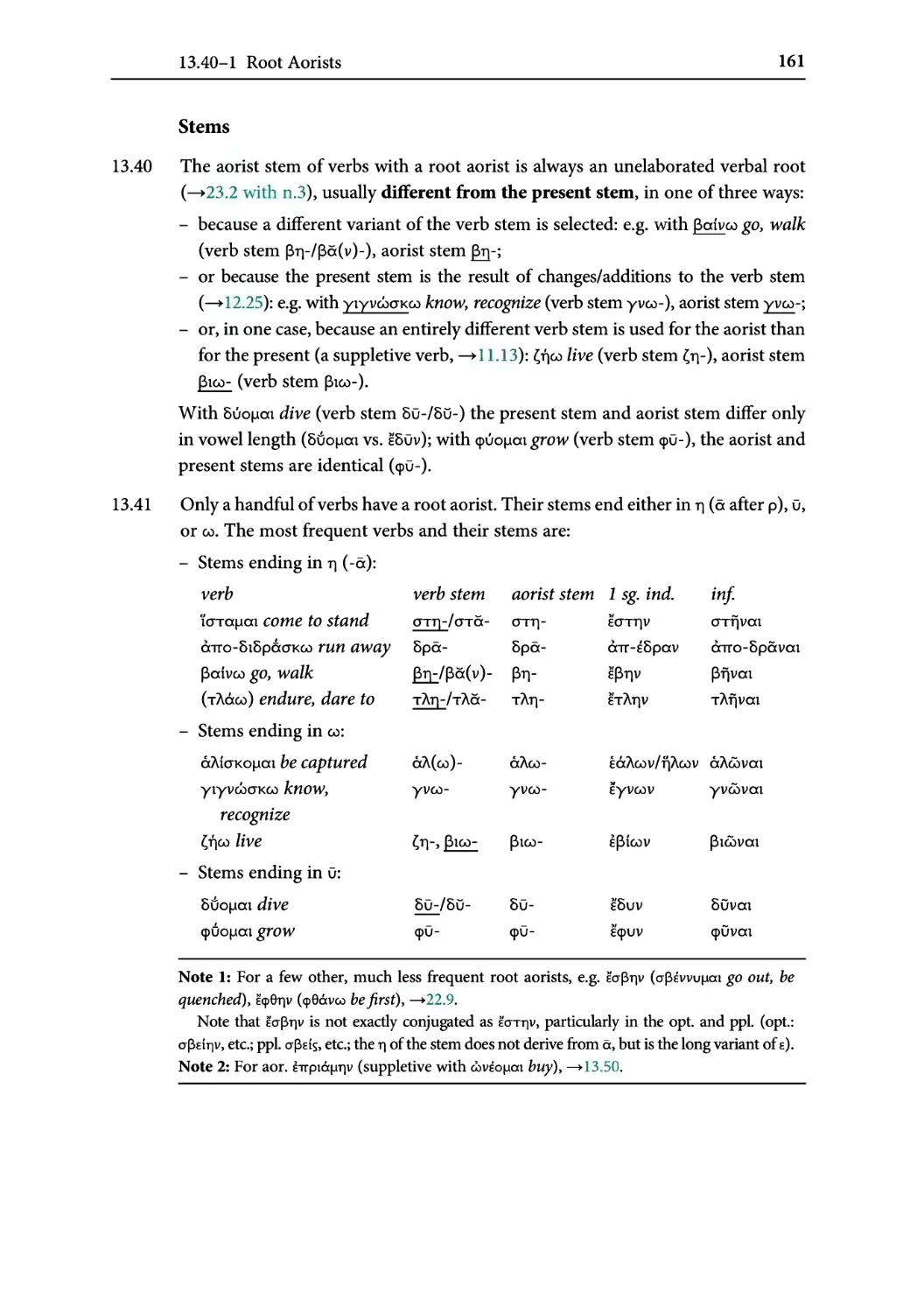
Stems 161
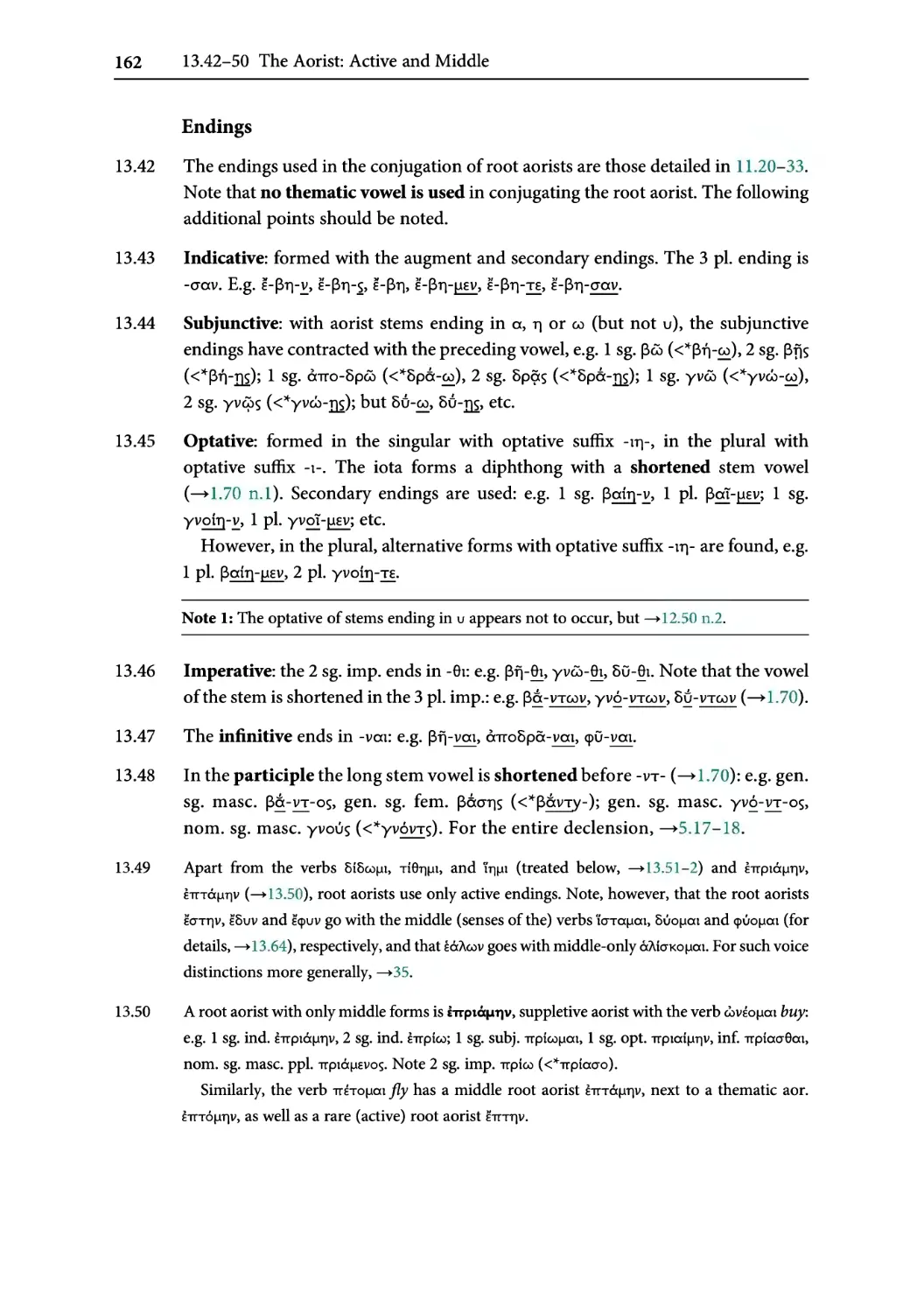
Endings 162
δίδωμι, τίθημι and ϊημι 163
Overview of Forms 163
Stems 164
Endings 165
Verbs With More Than One Type of Aorist 166
14 The Aorist: Passive (θη-/η) 168
Types of Aorist Passive Stem 168
Conjugation of Θη-Aorists and η-Aorists 169

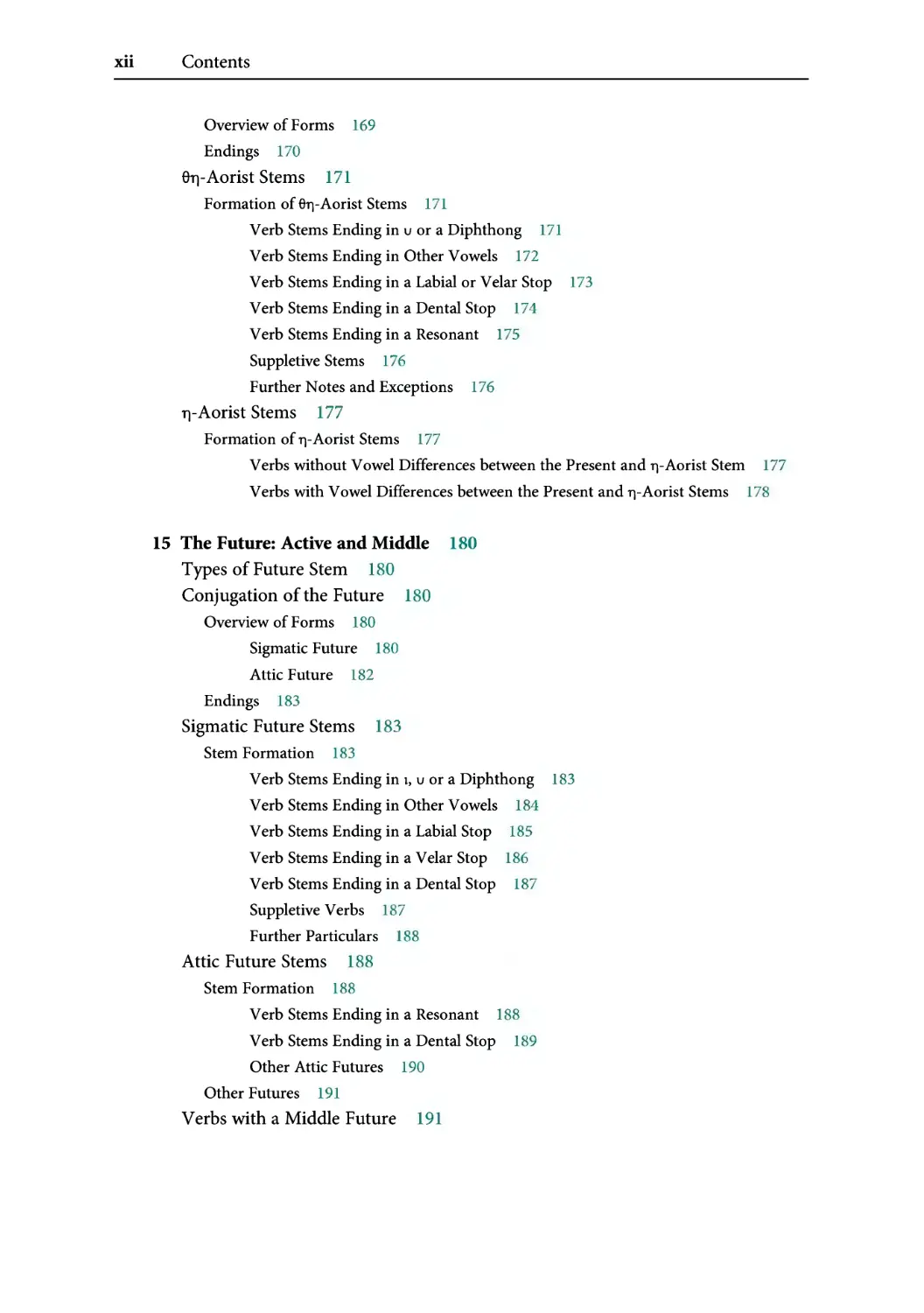
xii Contents
Overview of Forms 169
Endings 170
Θη-Aorist Stems 171
Formation of Θη-Aorist Stems 171
Verb Stems Ending in υ or a Diphthong 171
Verb Stems Ending in Other Vowels 172
Verb Stems Ending in a Labial or Velar Stop 173
Verb Stems Ending in a Dental Stop 174
Verb Stems Ending in a Resonant 175
Suppletive Stems 176
Further Notes and Exceptions 176
η-Aorist Stems 177
Formation of η-Aorist Stems 177
Verbs without Vowel Differences between the Present and η-Aorist Stem 177
Verbs with Vowel Differences between the Present and η-Aorist Stems 178
15 The Future: Active and Middle 180
Types of Future Stem 180
Conjugation of the Future 180
Overview of Forms 180
Sigmatic Future 180
Attic Future 182
Endings 183
Sigmatic Future Stems 183
Stem Formation 183
Verb Stems Ending in ι, υ or a Diphthong 183
Verb Stems Ending in Other Vowels 184
Verb Stems Ending in a Labial Stop 185
Verb Stems Ending in a Velar Stop 186
Verb Stems Ending in a Dental Stop 187
Suppletive Verbs 187
Further Particulars 188
Attic Future Stems 188
Stem Formation 188
Verb Stems Ending in a Resonant 188
Verb Stems Ending in a Dental Stop 189
Other Attic Futures 190
Other Futures 191
Verbs with a Middle Future 191

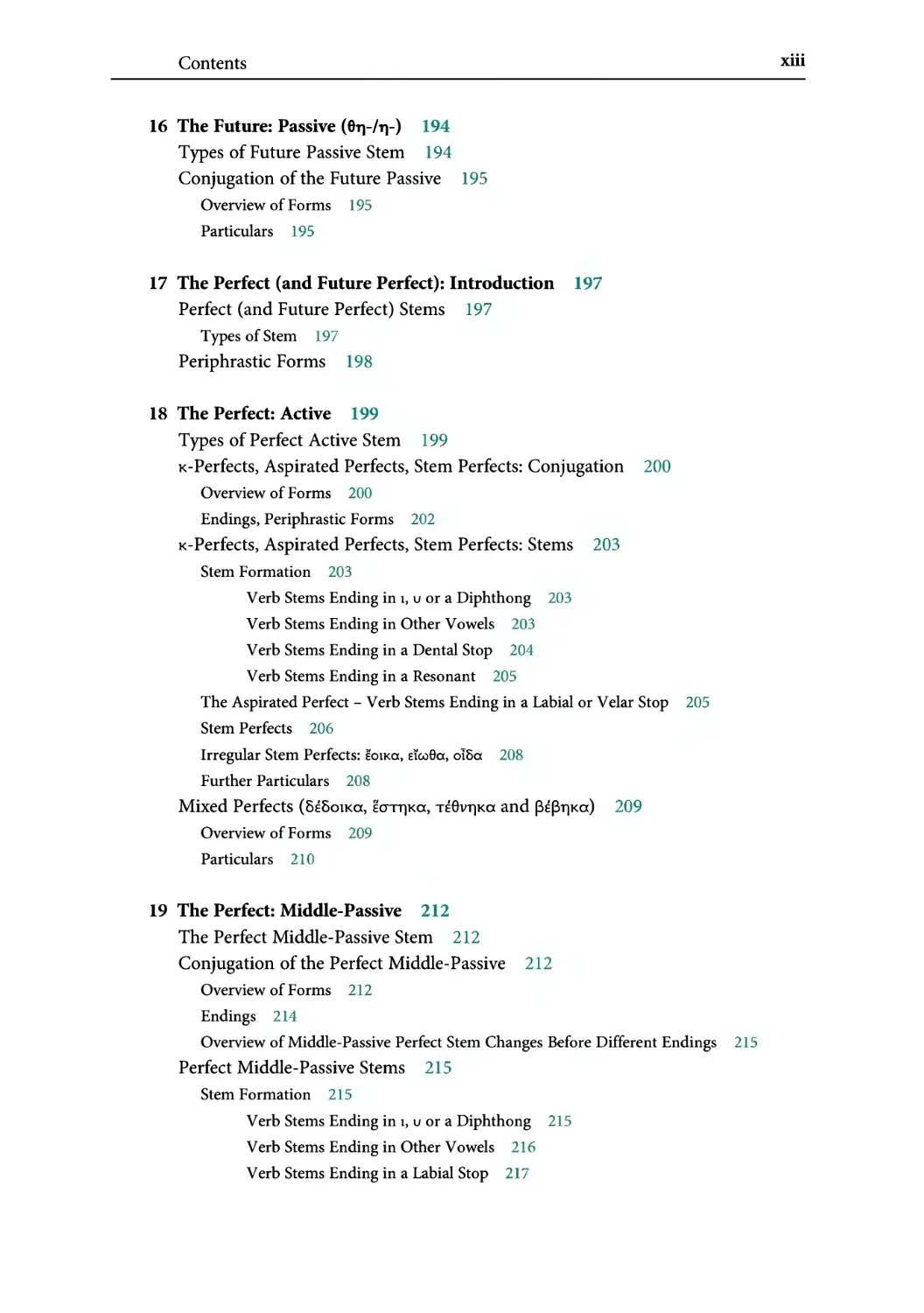
Contents
xiii
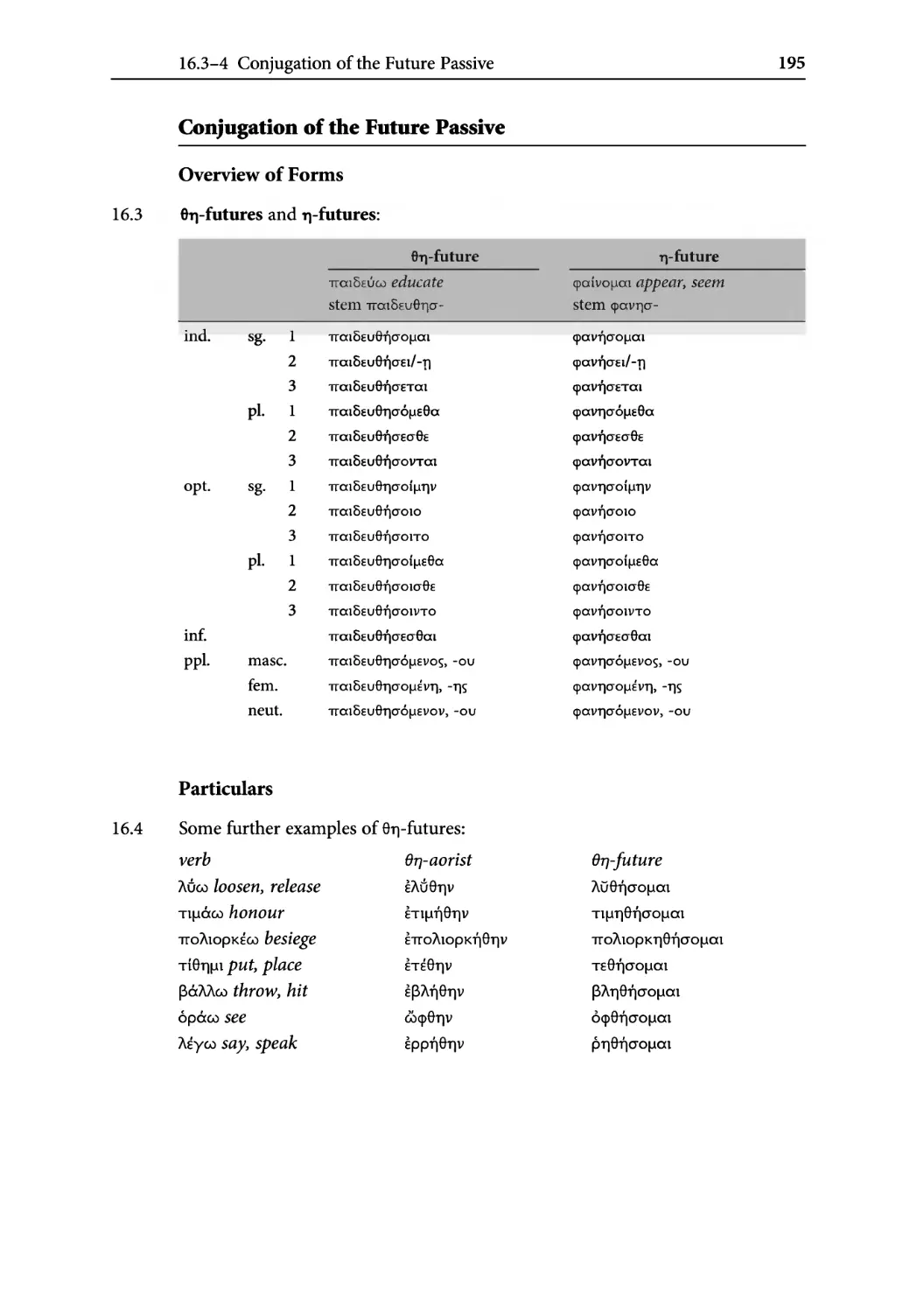
16 The Future: Passive (θη-/η-) 194
Types of Future Passive Stem 194
Conjugation of the Future Passive 195
Overview of Forms 195
Particulars 195
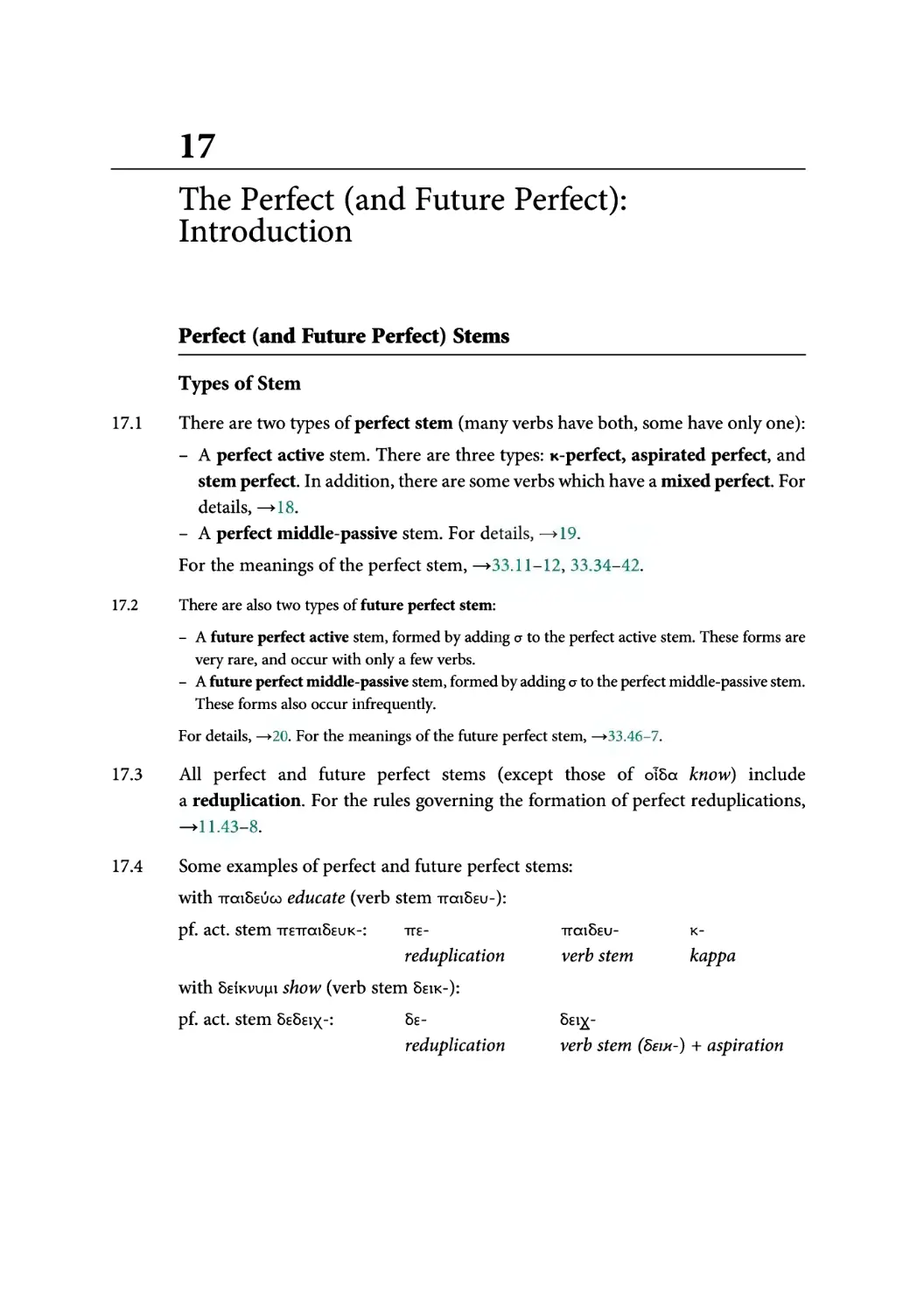
17 The Perfect (and Future Perfect): Introduction 197
Perfect (and Future Perfect) Stems 197
Types of Stem 197
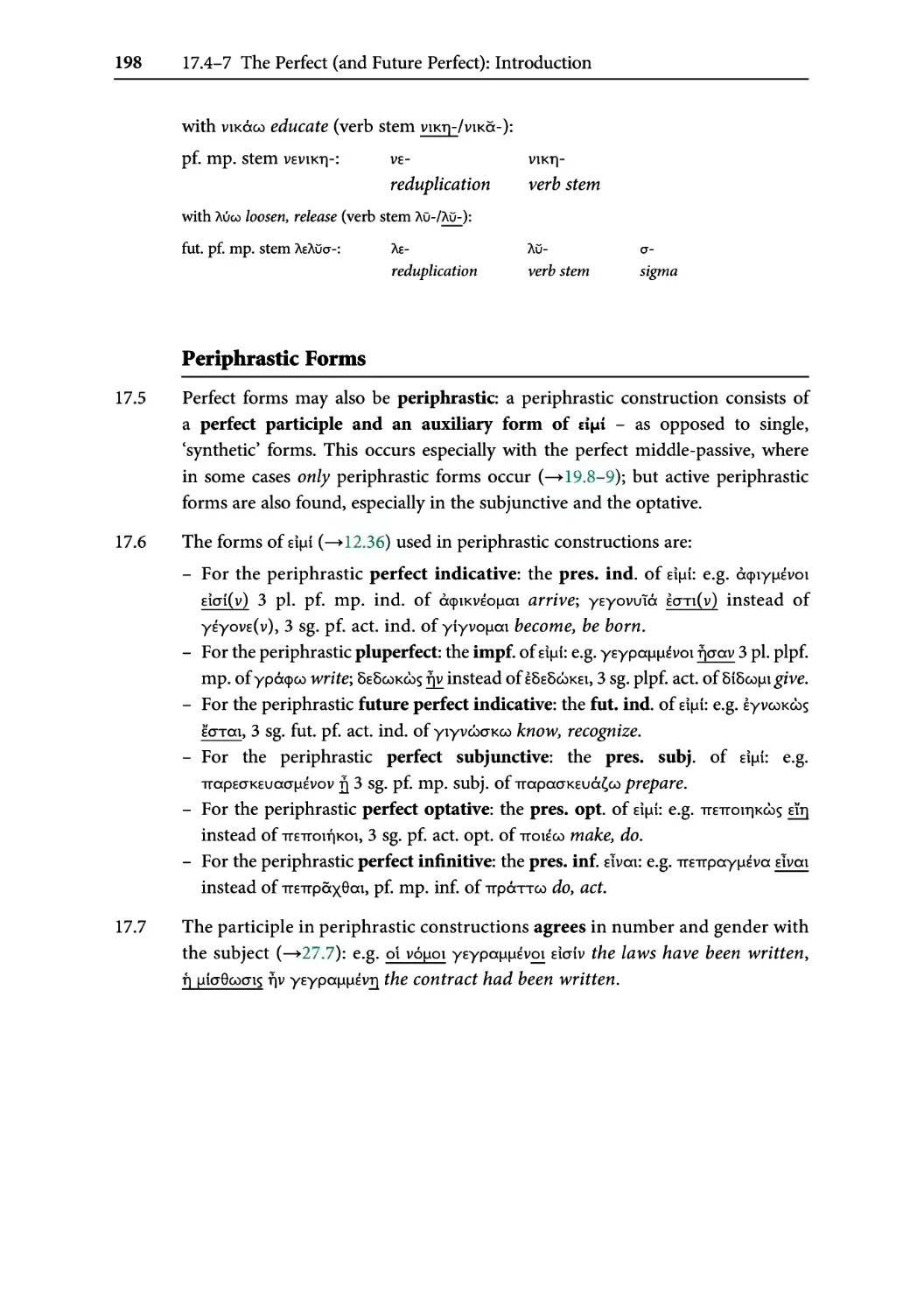
Periphrastic Forms 198
18 The Perfect: Active 199
Types of Perfect Active Stem 199
κ-Perfects, Aspirated Perfects, Stem Perfects: Conjugation 200
Overview of Forms 200
Endings, Periphrastic Forms 202
κ-Perfects, Aspirated Perfects, Stem Perfects: Stems 203
Stem Formation 203
Verb Stems Ending in ι, υ or a Diphthong 203
Verb Stems Ending in Other Vowels 203
Verb Stems Ending in a Dental Stop 204
Verb Stems Ending in a Resonant 205
The Aspirated Perfect - Verb Stems Ending in a Labial or Velar Stop 205
Stem Perfects 206
Irregular Stem Perfects: εοικα, εϊωθα, οΐδα 208
Further Particulars 208
Mixed Perfects (δέδοικα, εστηκα, τέθνηκα and βέβηκα) 209
Overview of Forms 209
Particulars 210
19 The Perfect: Middle-Passive 212
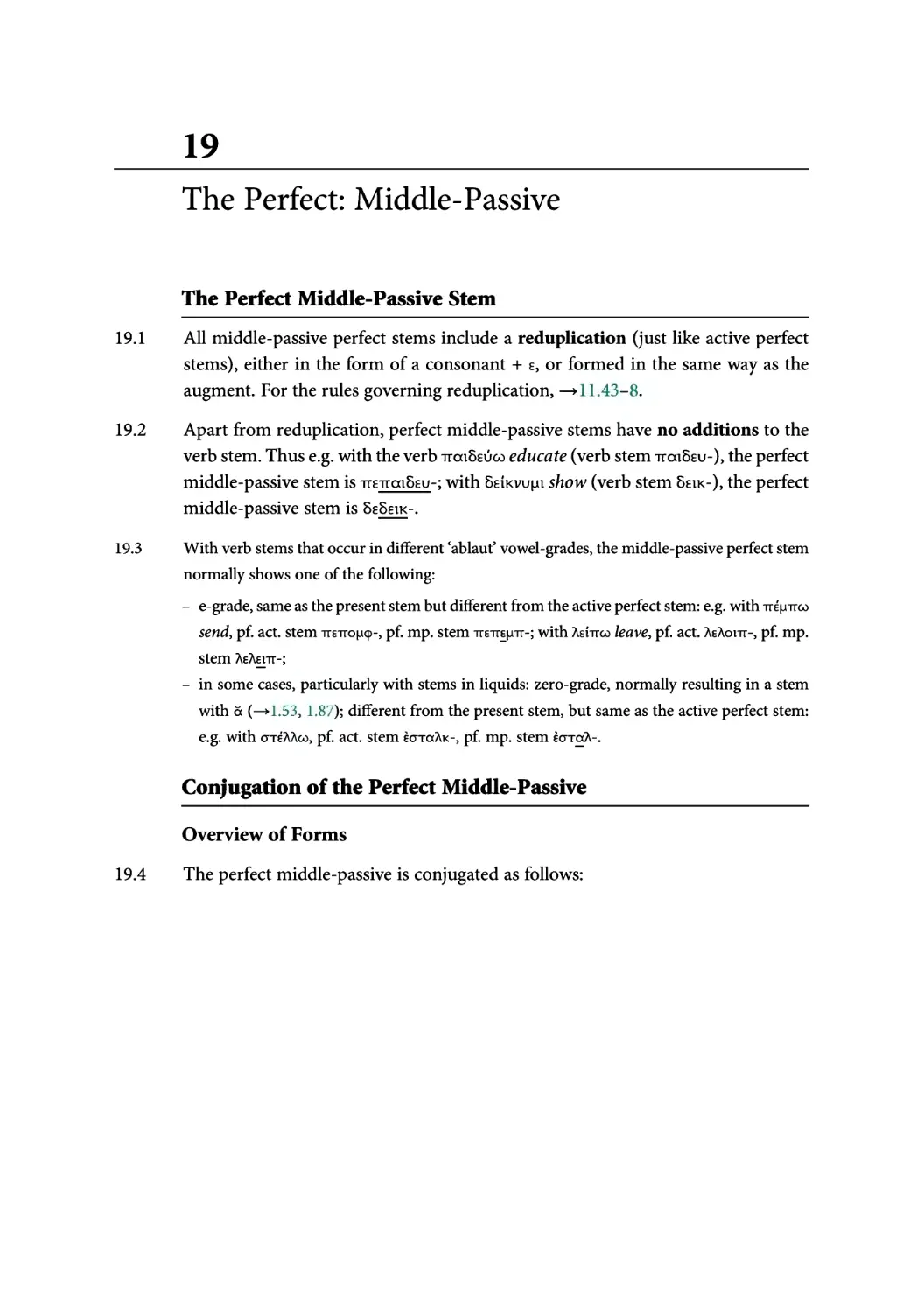
The Perfect Middle-Passive Stem 212
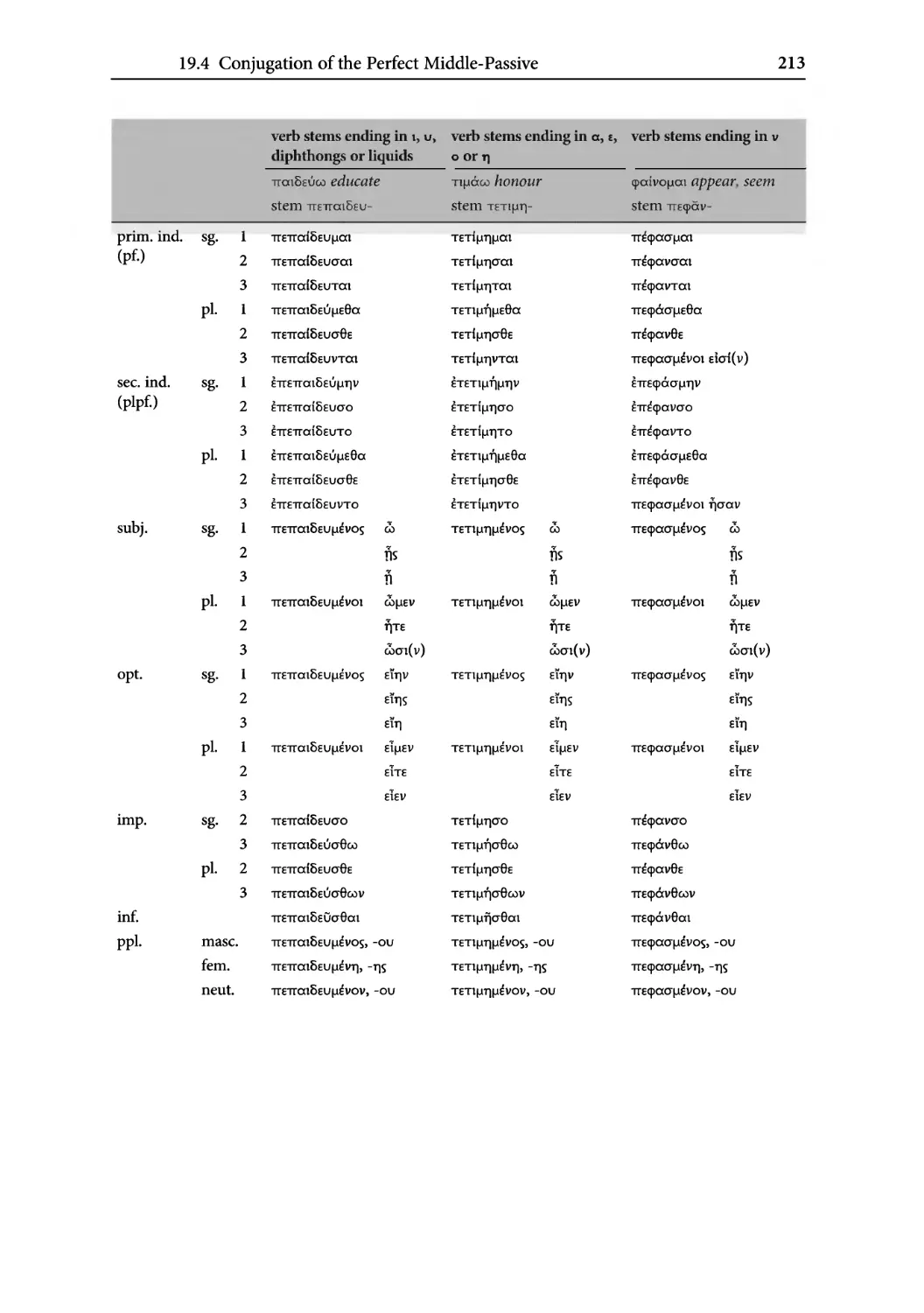
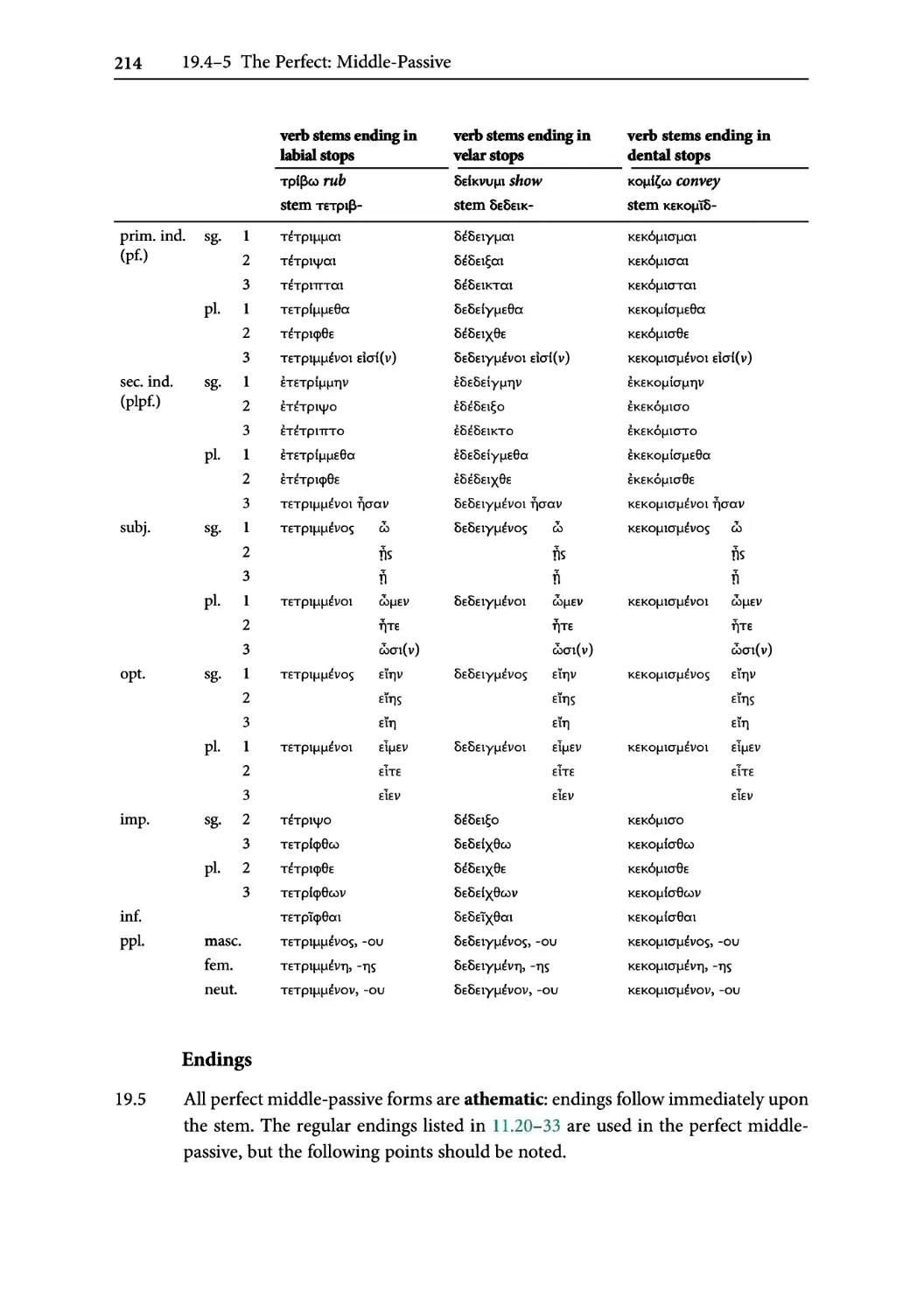
Conjugation of the Perfect Middle-Passive 212
Overview of Forms 212
Endings 214
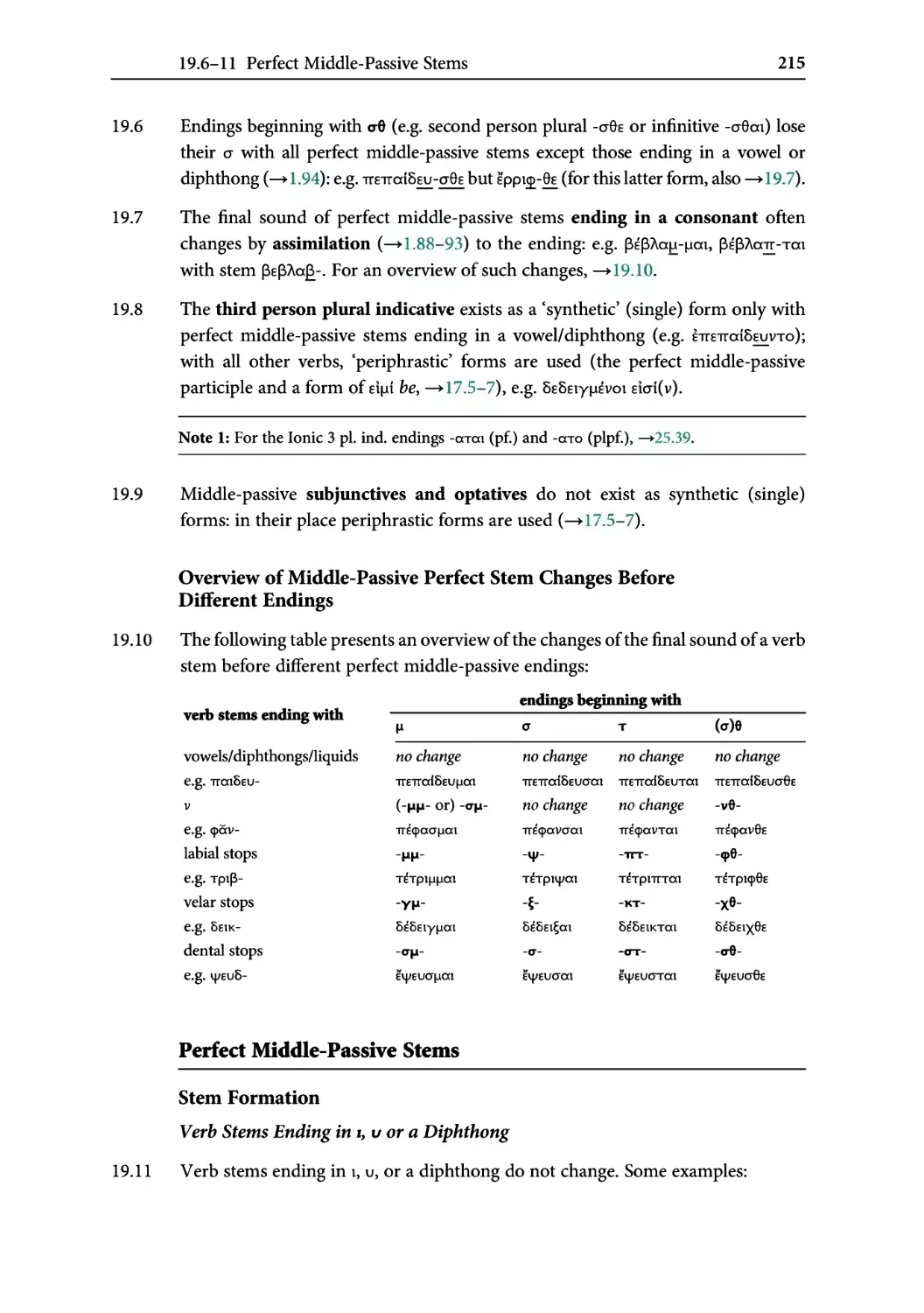
Overview of Middle-Passive Perfect Stem Changes Before Different Endings 215
Perfect Middle-Passive Stems 215
Stem Formation 215
Verb Stems Ending in ι, υ or a Diphthong 215
Verb Stems Ending in Other Vowels 216
Verb Stems Ending in a Labial Stop 217

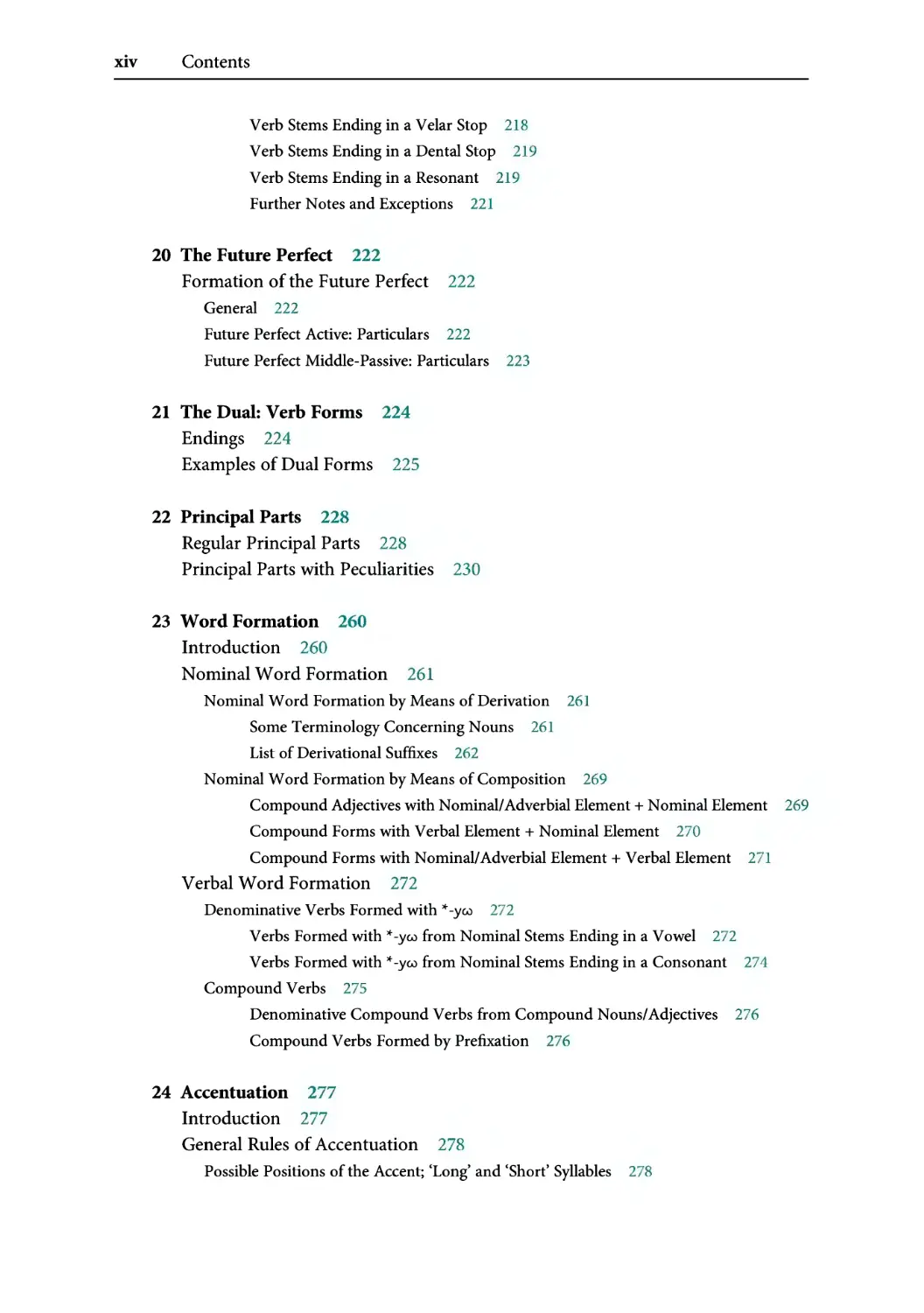
xiv Contents
Verb Stems Ending in a Velar Stop 218
Verb Stems Ending in a Dental Stop 219
Verb Stems Ending in a Resonant 219
Further Notes and Exceptions 221
20 The Future Perfect 222
Formation of the Future Perfect 222
General 222
Future Perfect Active: Particulars 222
Future Perfect Middle-Passive: Particulars 223
21 The Dual: Verb Forms 224
Endings 224
Examples of Dual Forms 225
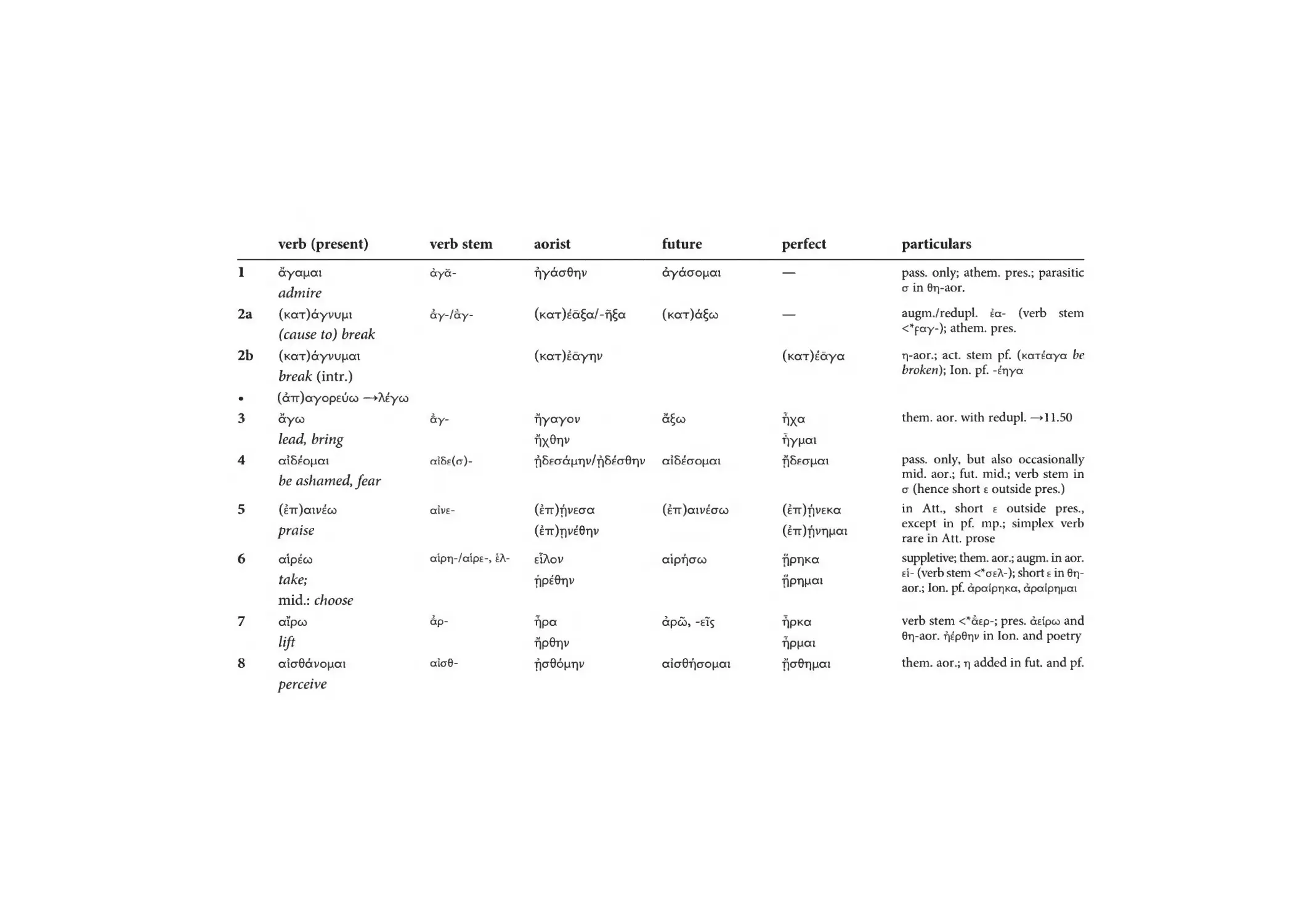
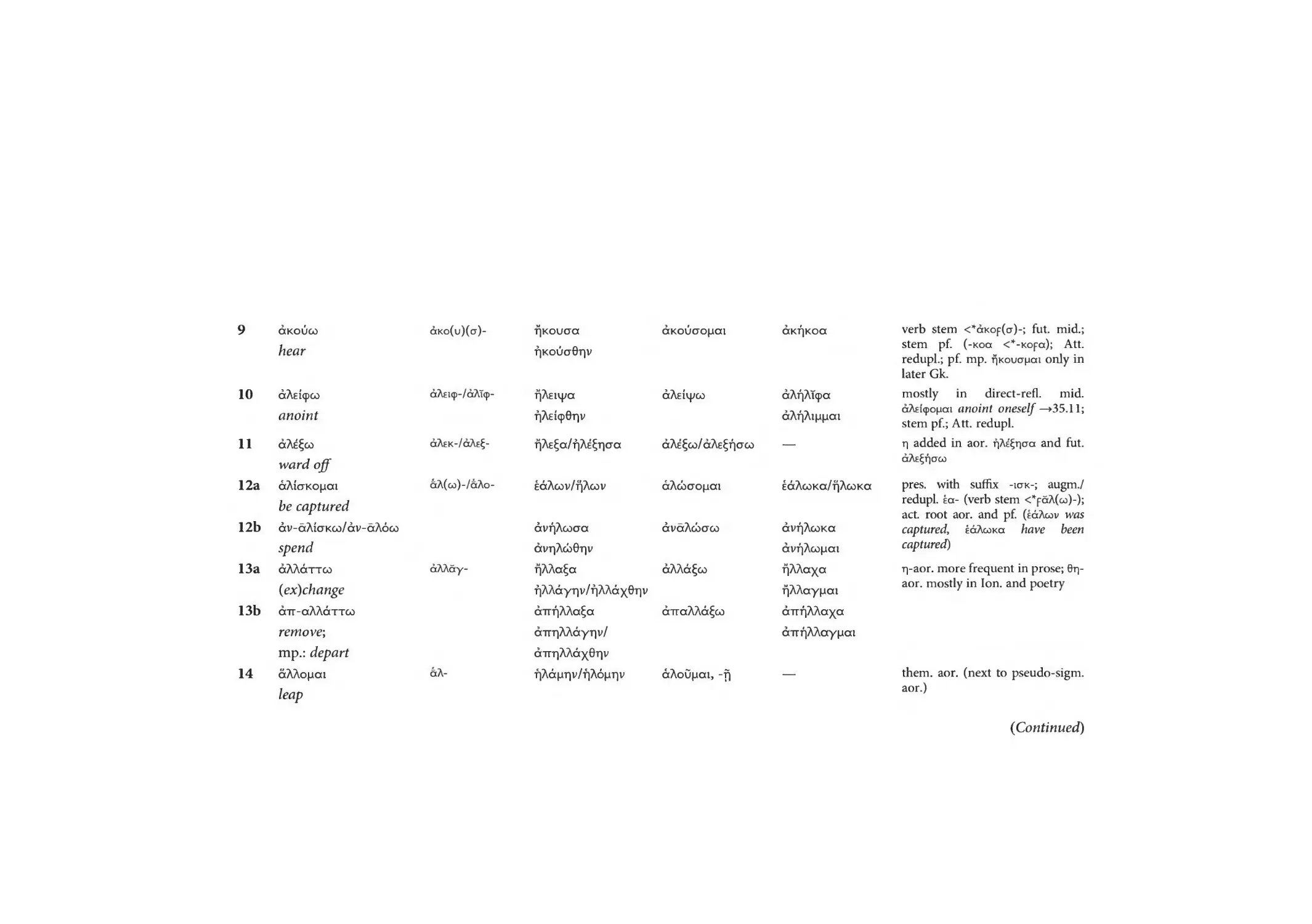
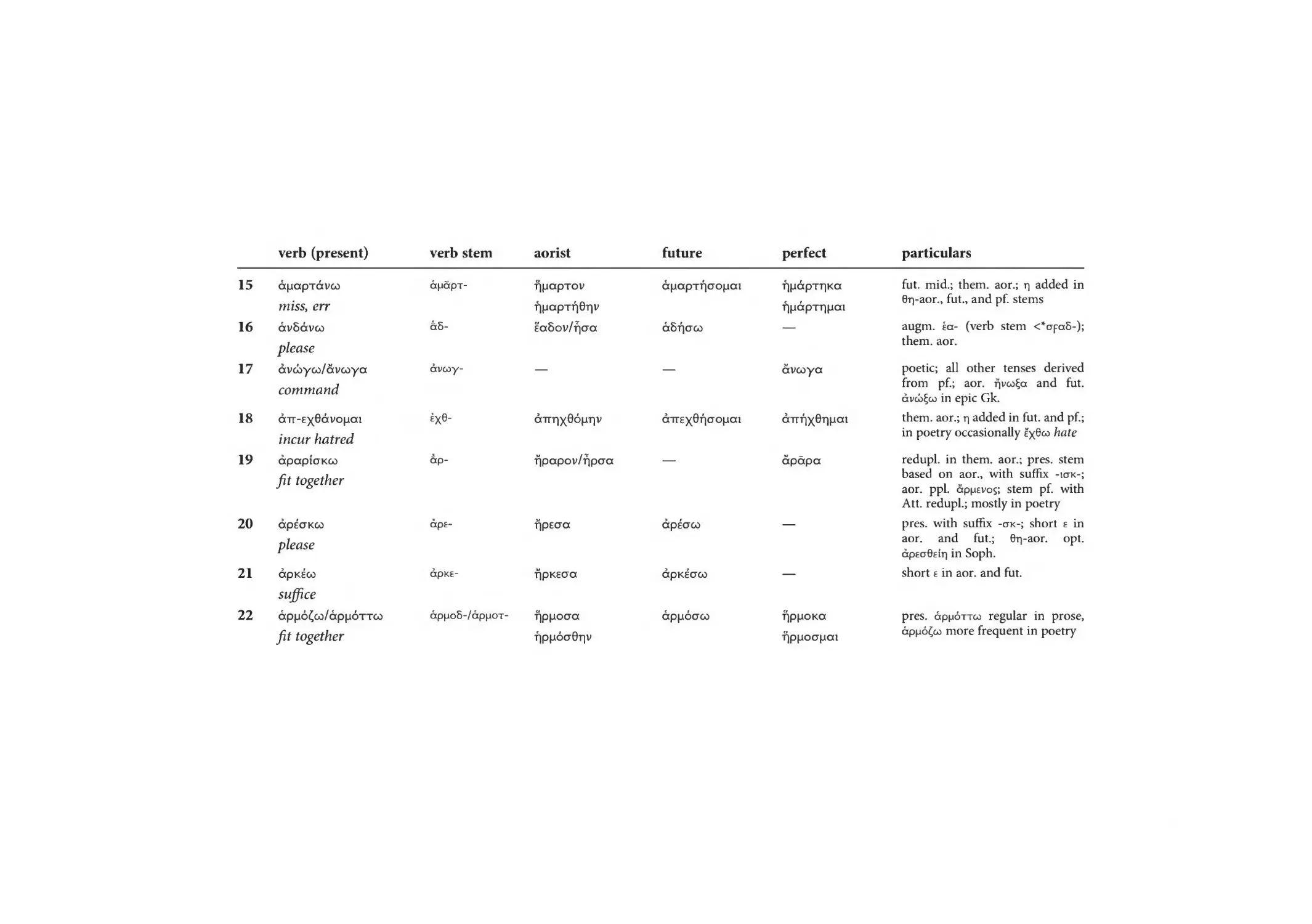
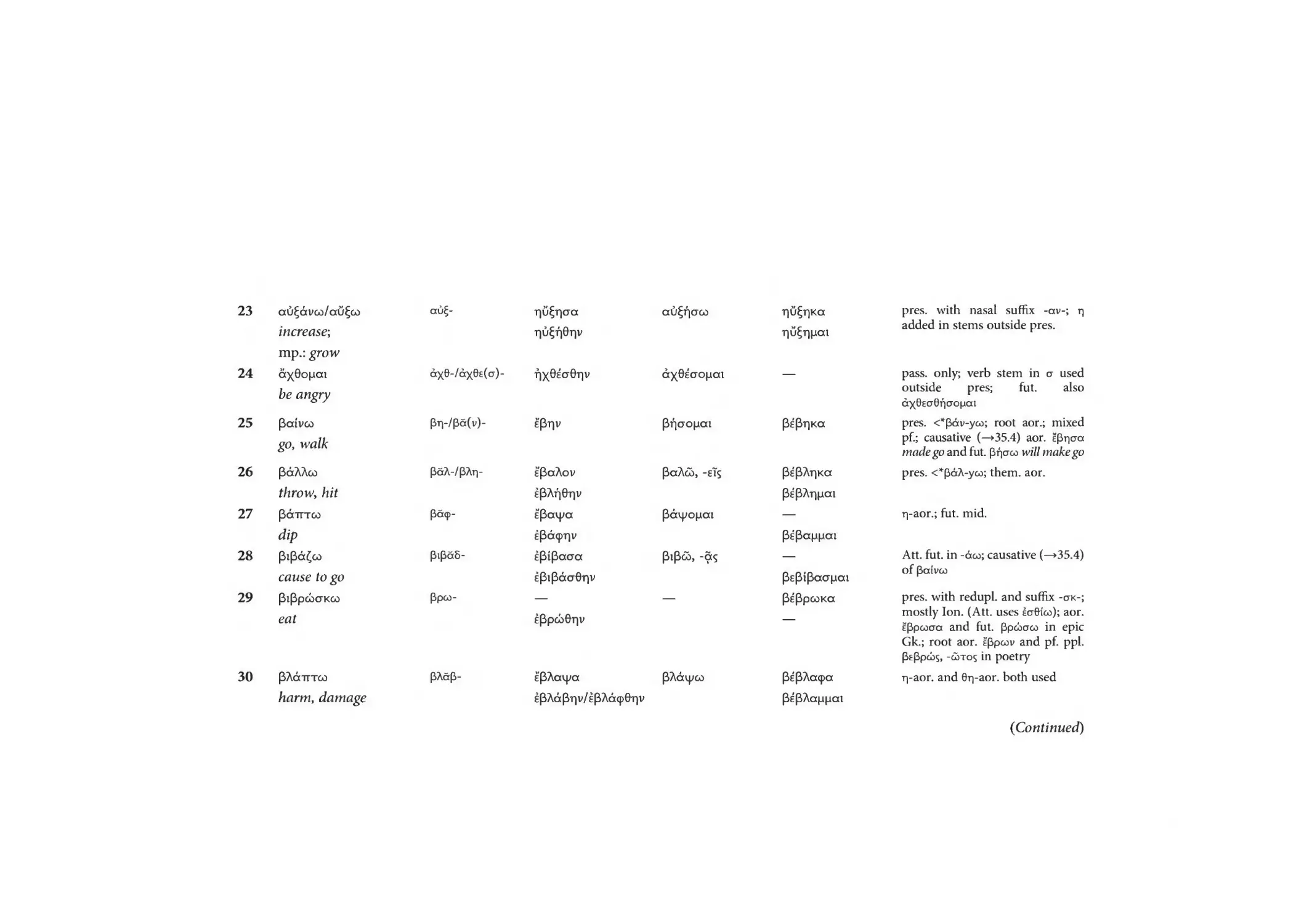
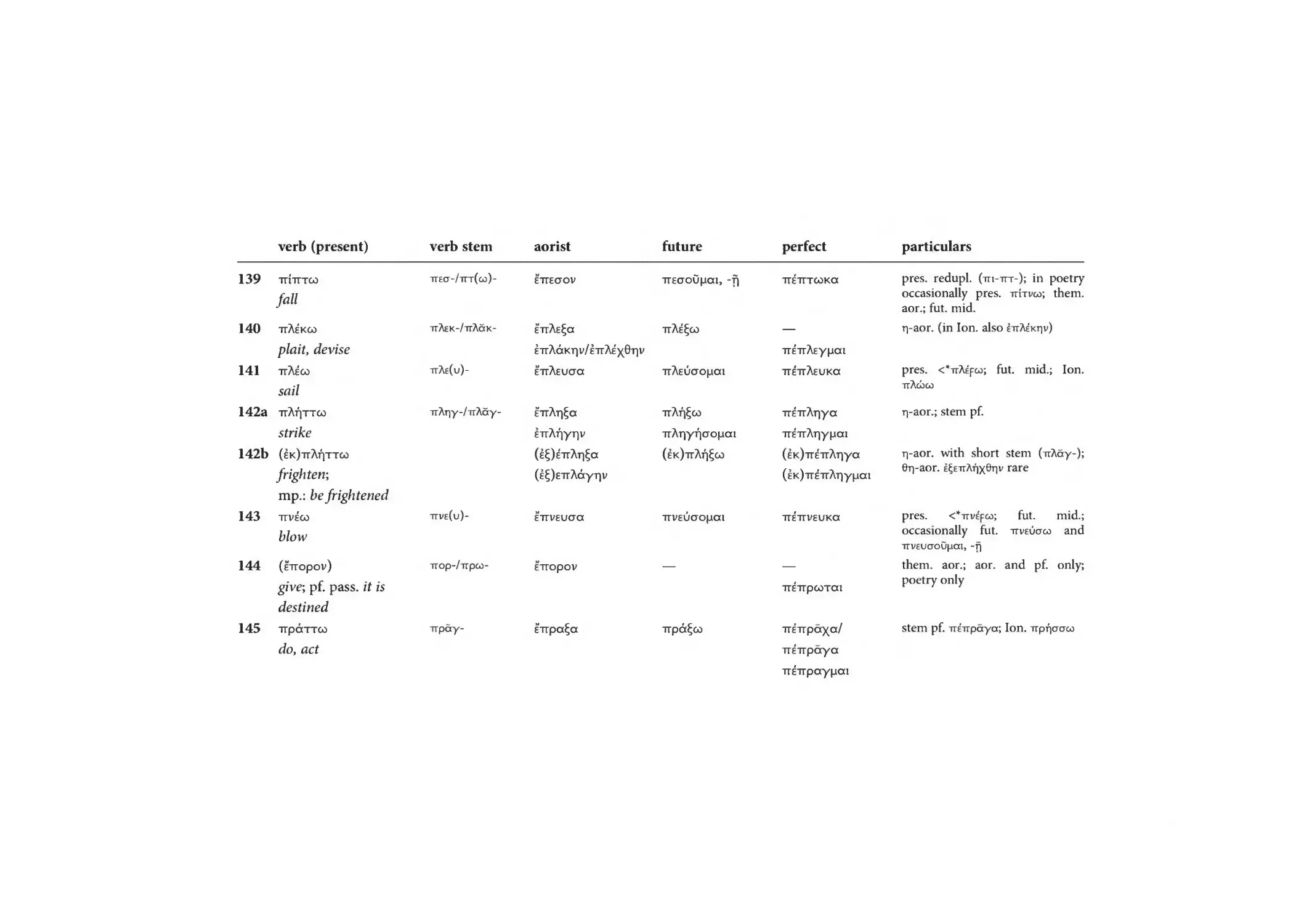
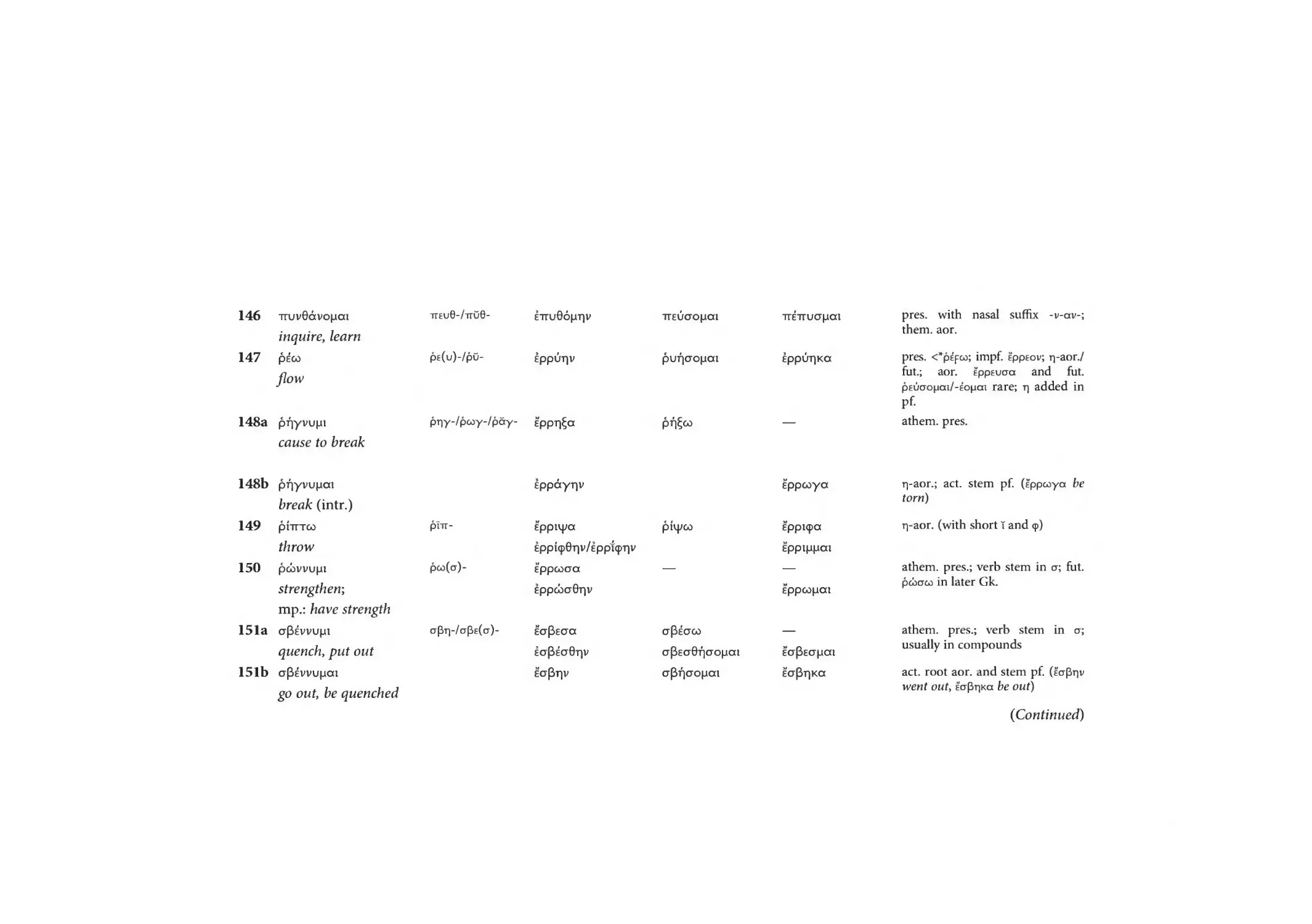
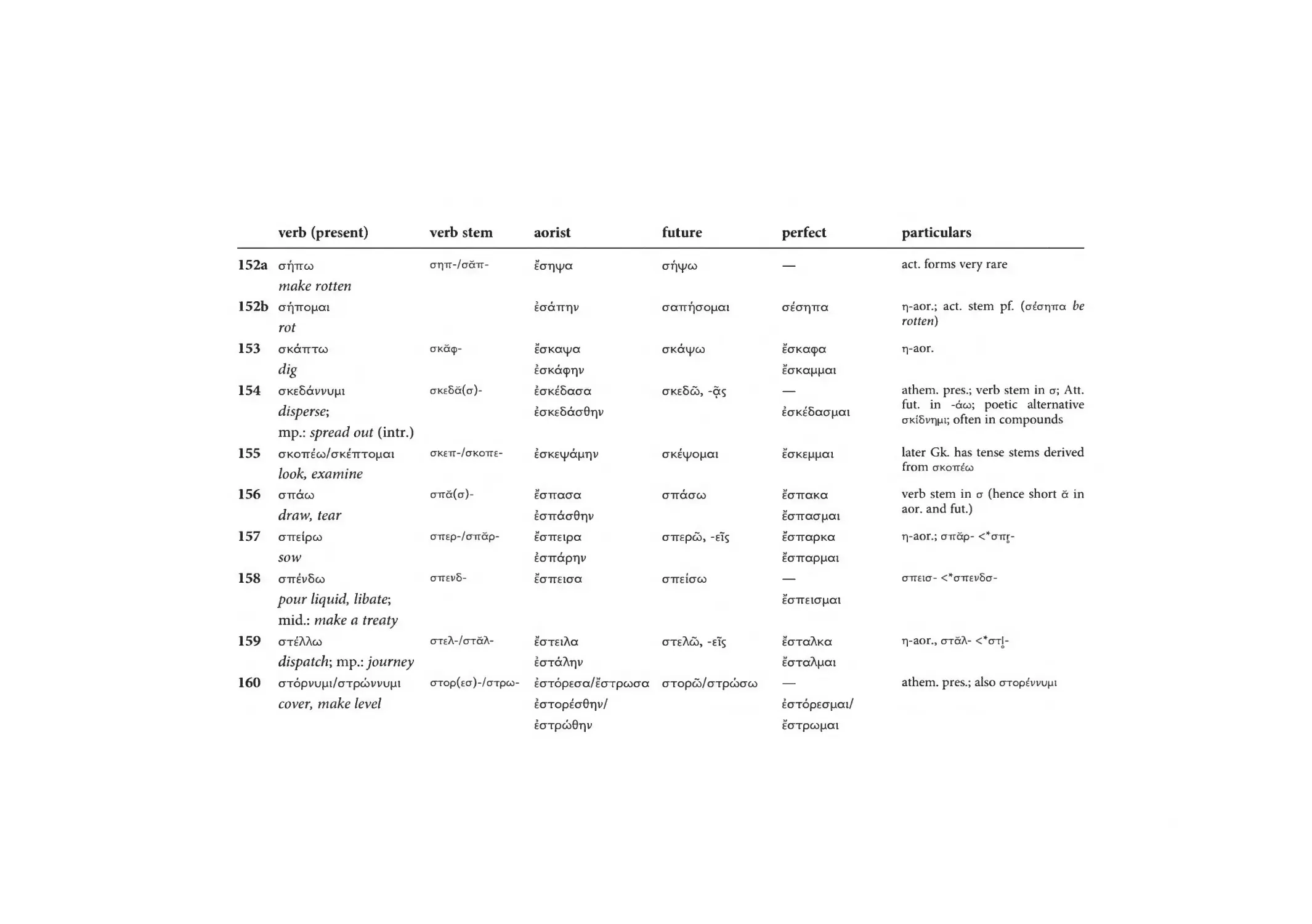
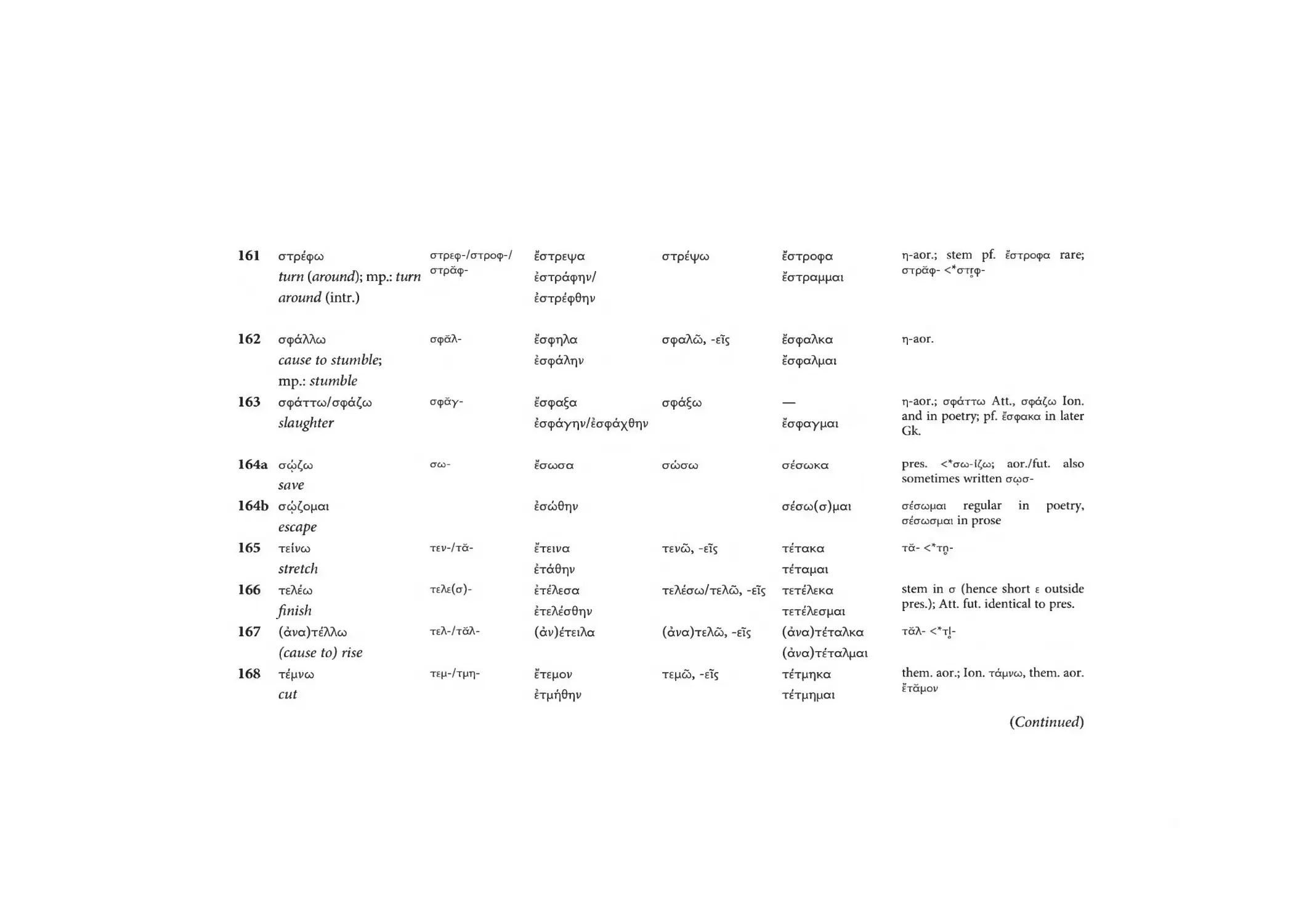
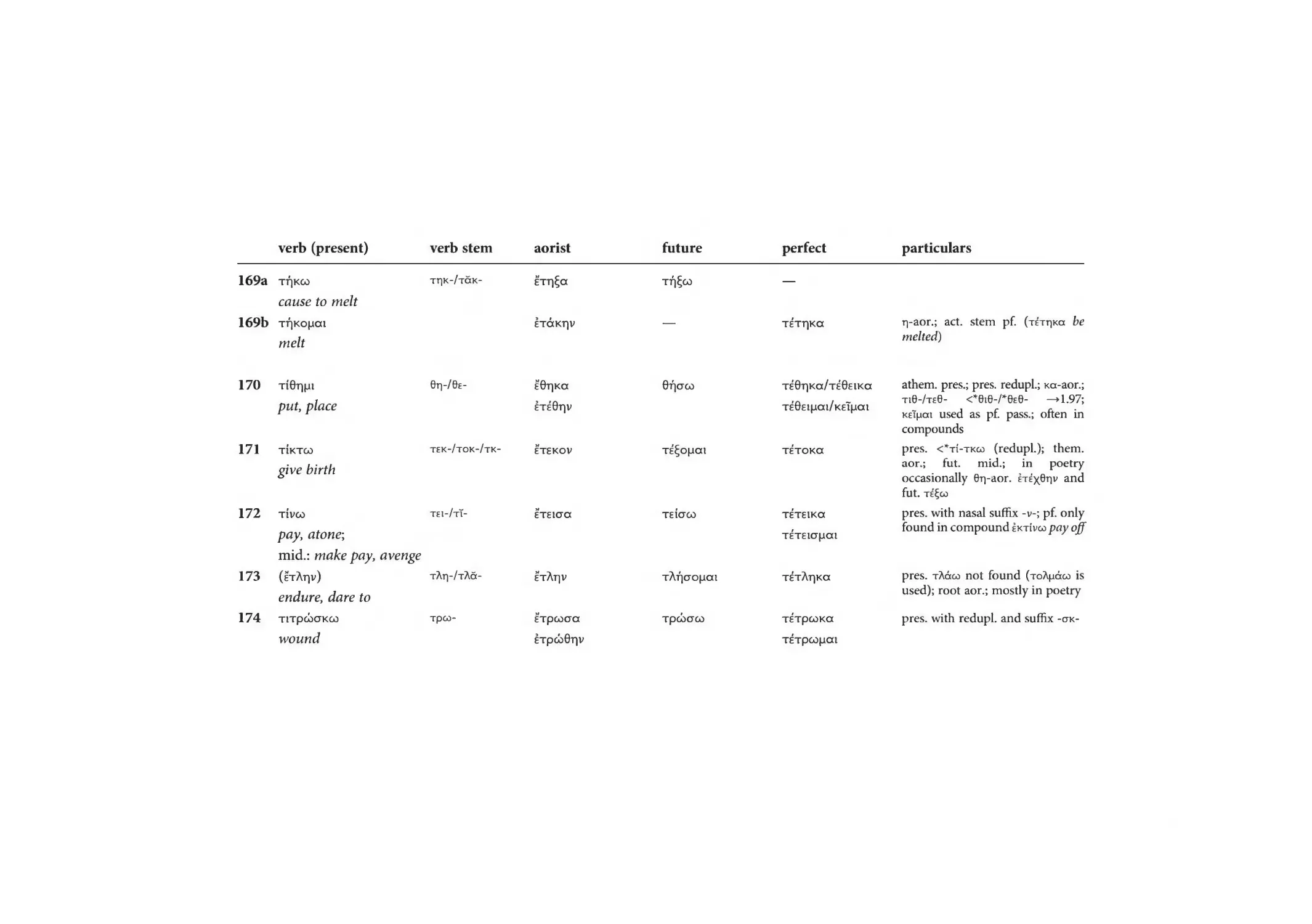
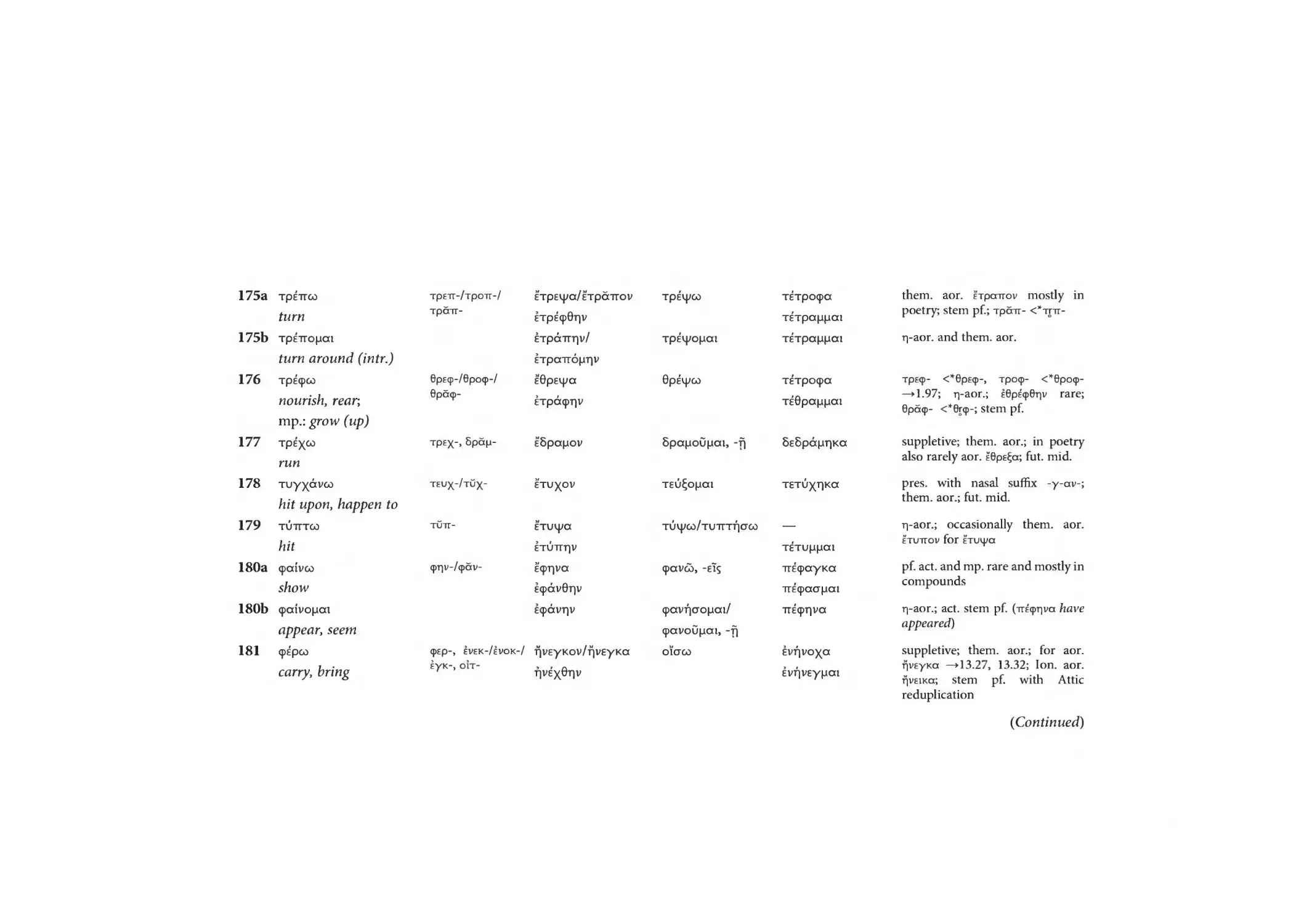
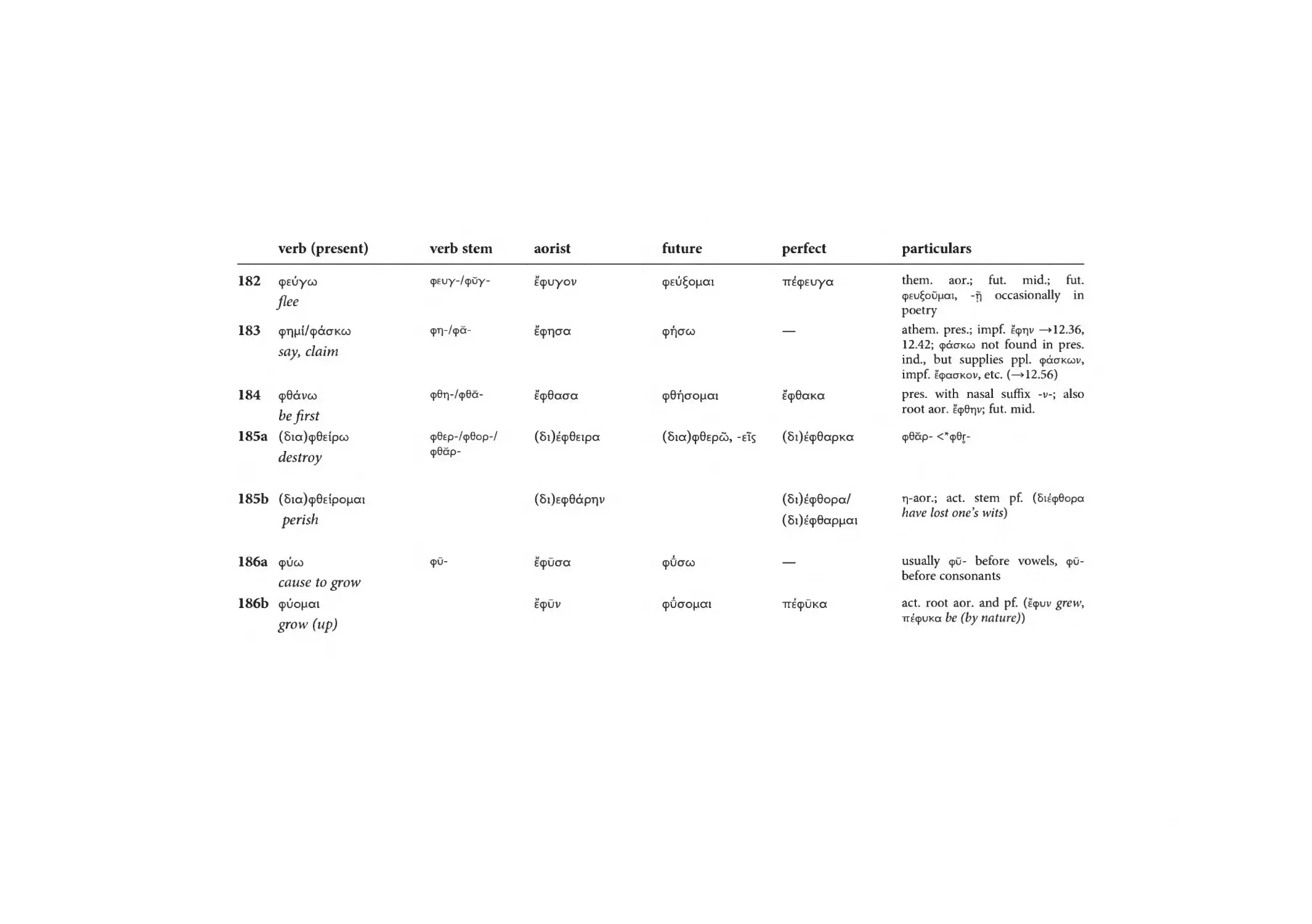
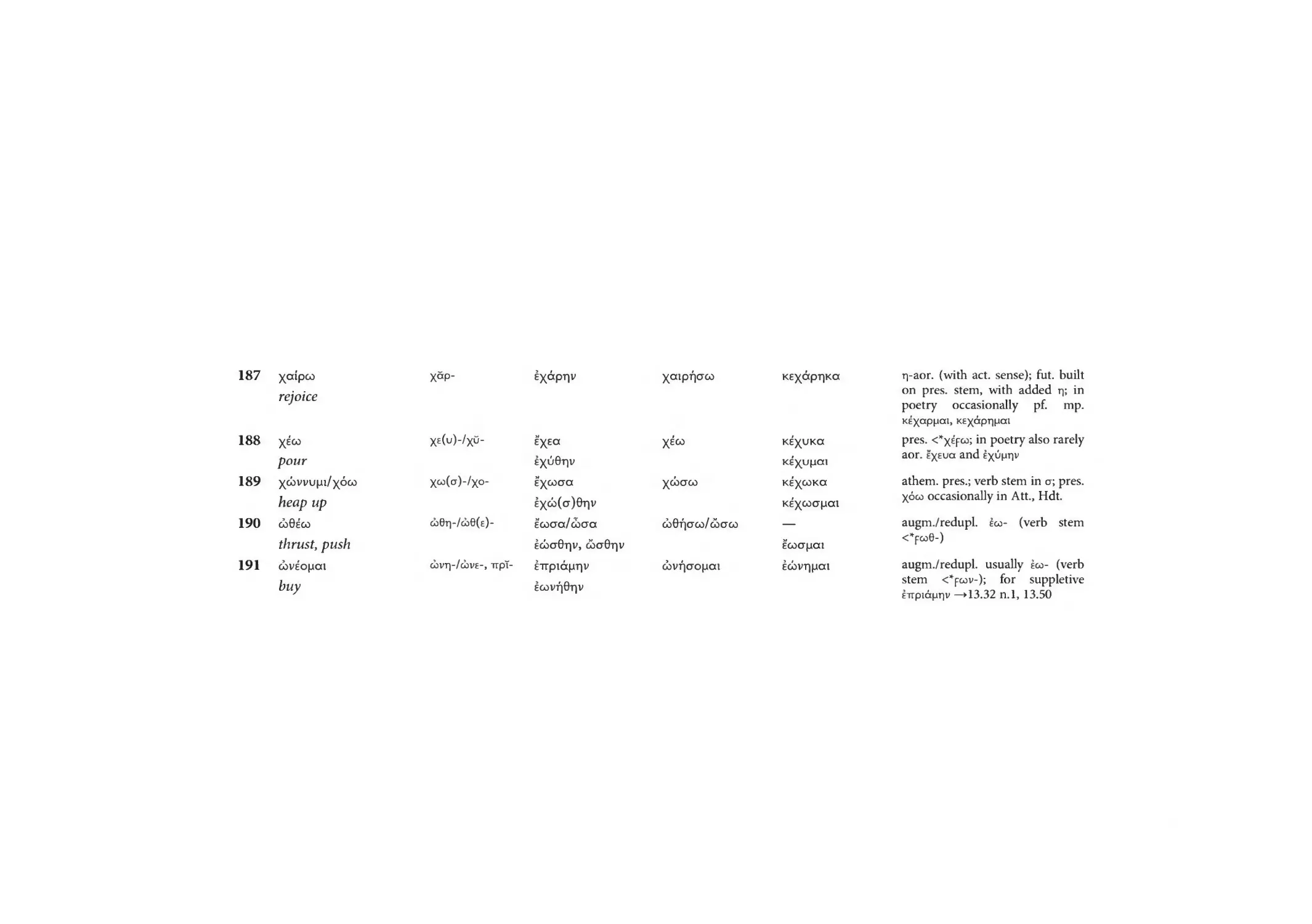
22 Principal Parts 228
Regular Principal Parts 228
Principal Parts with Peculiarities 230
23 Word Formation 260
Introduction 260
Nominal Word Formation 261
Nominal Word Formation by Means of Derivation 261
Some Terminology Concerning Nouns 261
List of Derivational Suffixes 262
Nominal Word Formation by Means of Composition 269
Compound Adjectives with Nominal/Adverbial Element + Nominal Element 269
Compound Forms with Verbal Element + Nominal Element 270
Compound Forms with Nominal/Adverbial Element + Verbal Element 271
Verbal Word Formation 272
Denominative Verbs Formed with *-yco 272
Verbs Formed with *-yco from Nominal Stems Ending in a Vowel 272
Verbs Formed with *-yco from Nominal Stems Ending in a Consonant 274
Compound Verbs 275
Denominative Compound Verbs from Compound Nouns/Adjectives 276
Compound Verbs Formed by Prefixation 276
24 Accentuation 277
Introduction 277
General Rules of Accentuation 278
Possible Positions of the Accent; 'Long' and 'Short' Syllables 278

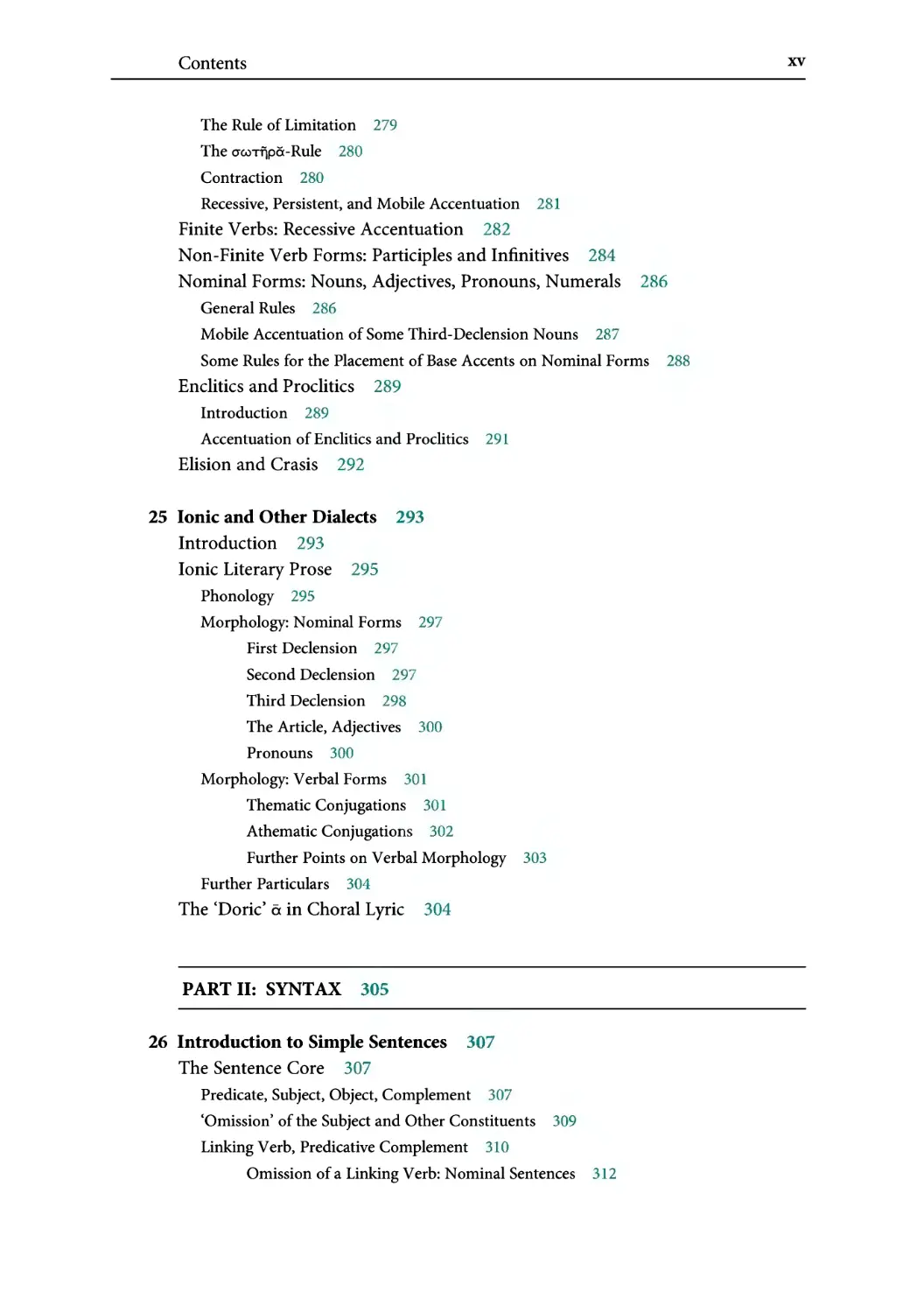
Contents
xv
The Rule of Limitation 279
The σωτήρα-Rule 280
Contraction 280
Recessive, Persistent, and Mobile Accentuation 281
Finite Verbs: Recessive Accentuation 282
Non-Finite Verb Forms: Participles and Infinitives 284
Nominal Forms: Nouns, Adjectives, Pronouns, Numerals 286
General Rules 286
Mobile Accentuation of Some Third-Declension Nouns 287
Some Rules for the Placement of Base Accents on Nominal Forms 288
Enclitics and Proclitics 289
Introduction 289
Accentuation of Enclitics and Proclitics 291
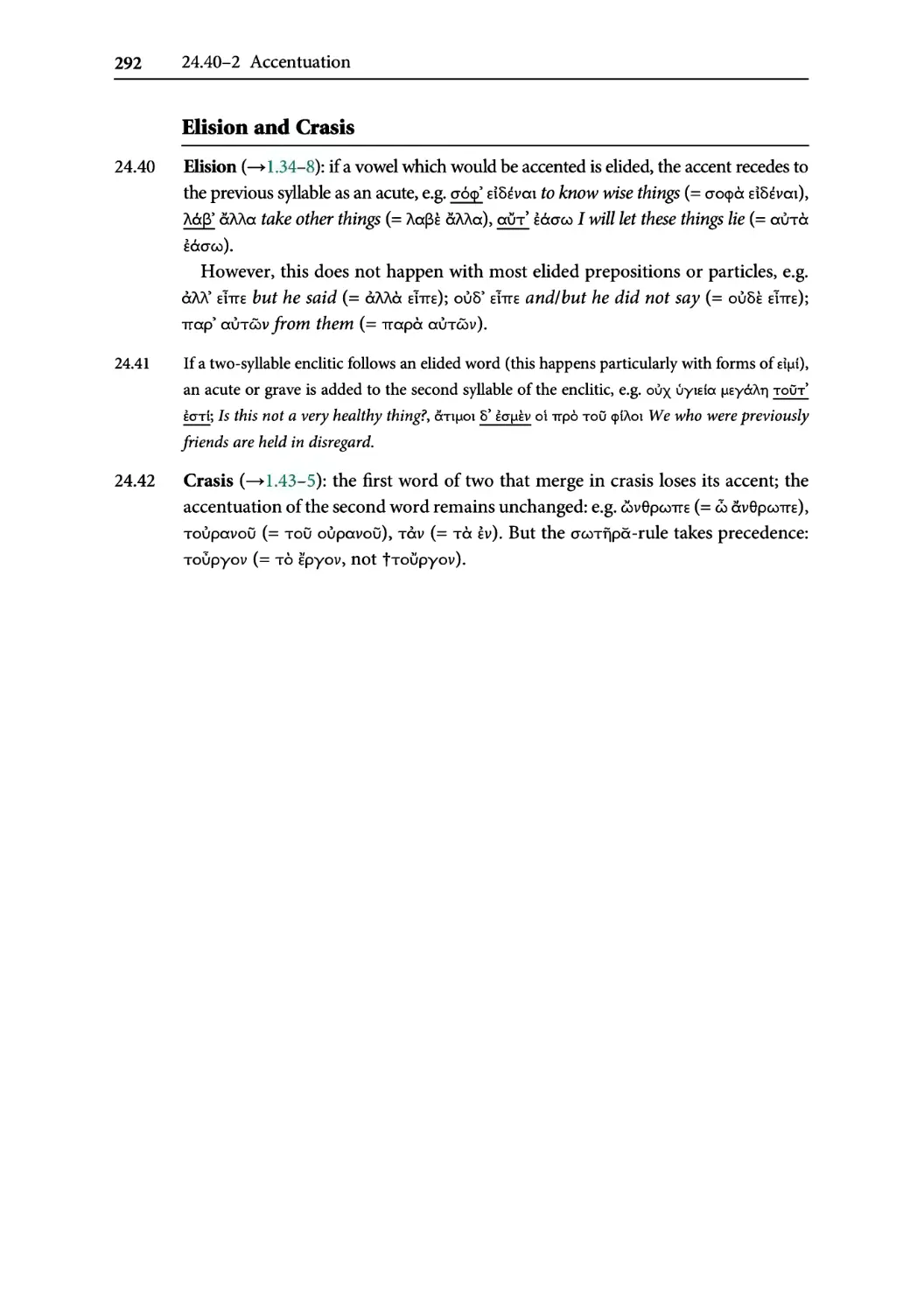
Elision and Crasis 292
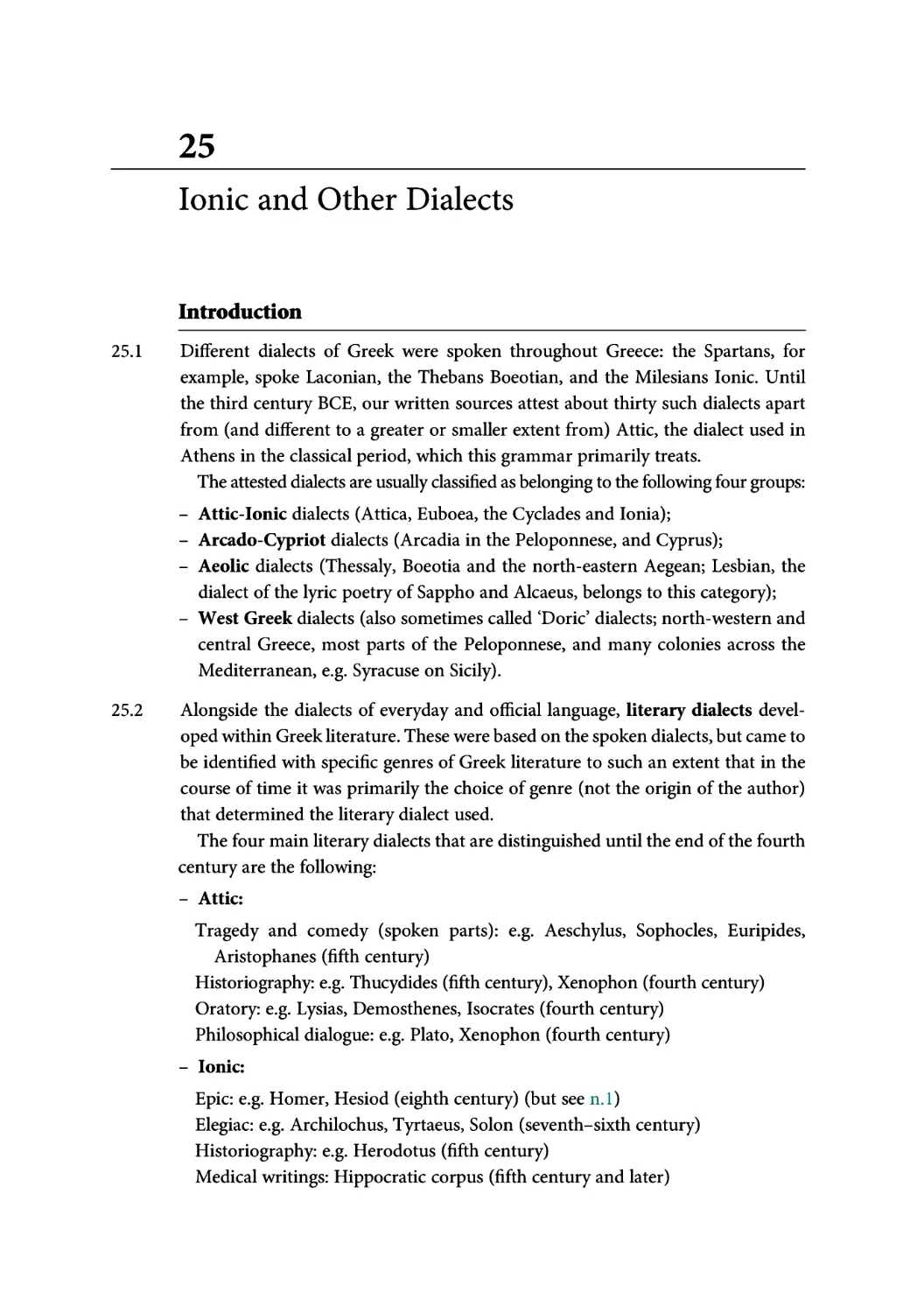
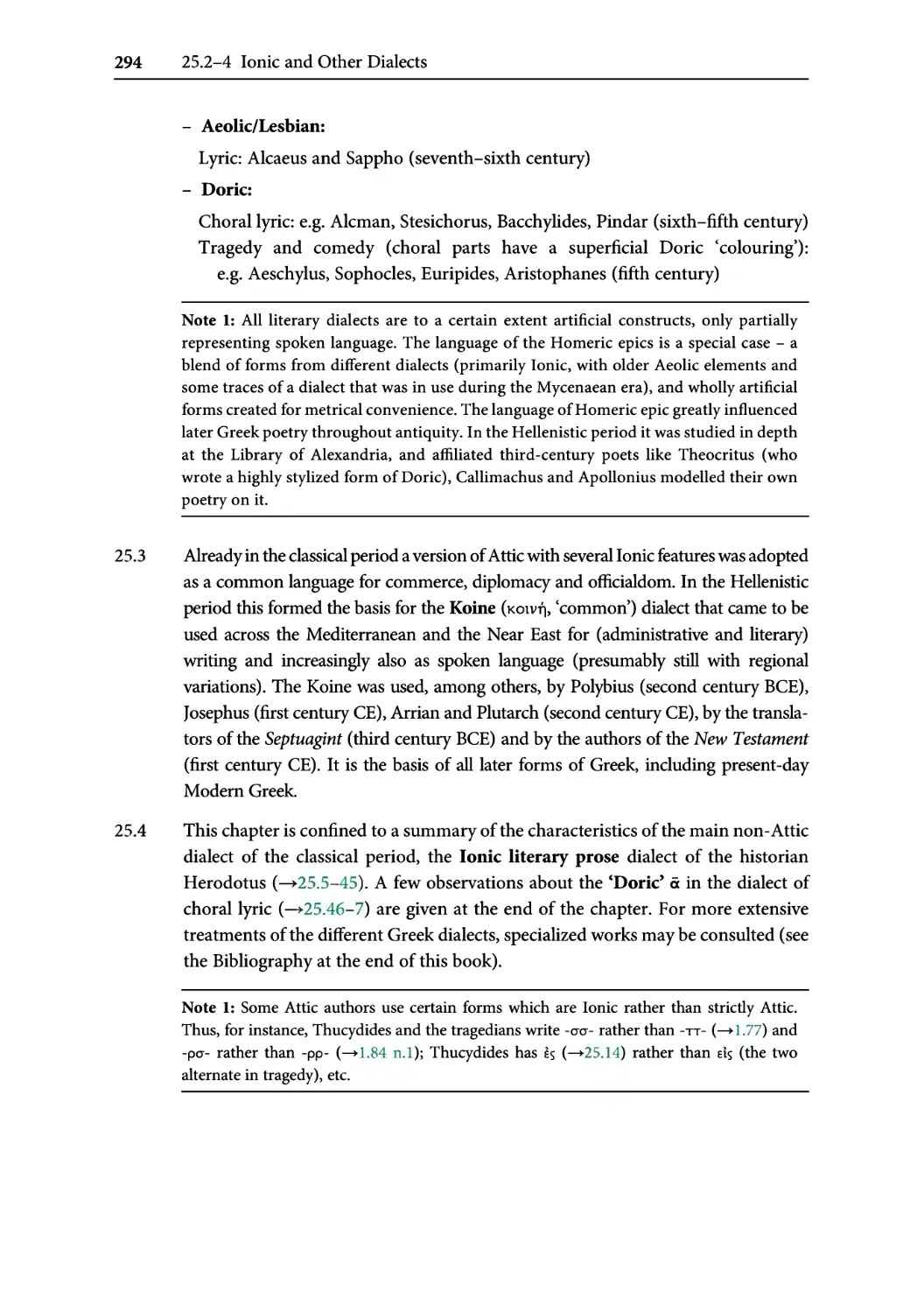
25 Ionic and Other Dialects 293
Introduction 293
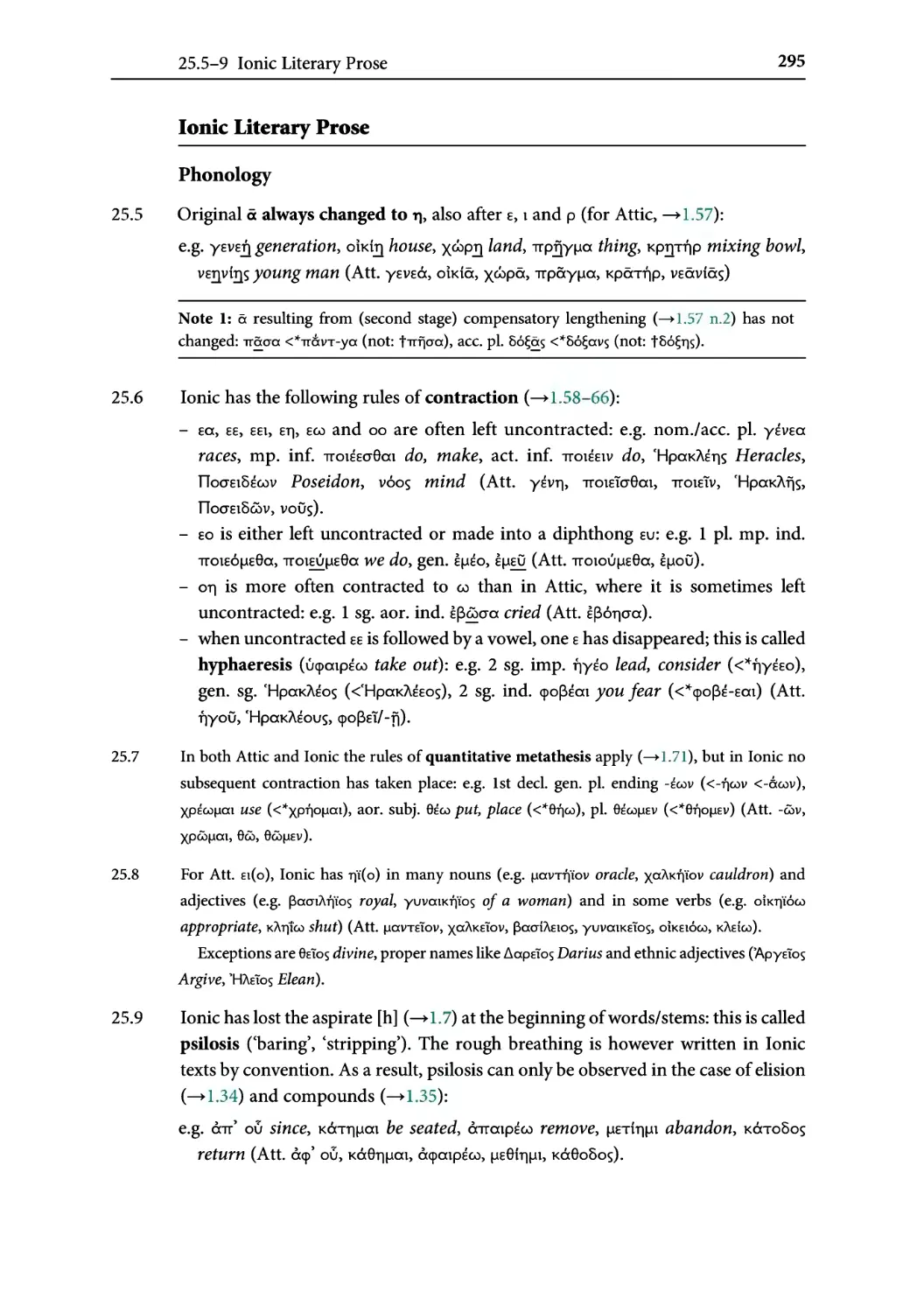
Ionic Literary Prose 295
Phonology 295
Morphology: Nominal Forms 297
First Declension 297
Second Declension 297
Third Declension 298
The Article, Adjectives 300
Pronouns 300
Morphology: Verbal Forms 301
Thematic Conjugations 301
Athematic Conjugations 302
Further Points on Verbal Morphology 303
Further Particulars 304
The 'Doric' ά in Choral Lyric 304
PART II: SYNTAX 305
26 Introduction to Simple Sentences 307
The Sentence Core 307
Predicate, Subject, Object, Complement 307
Omission' of the Subject and Other Constituents 309
Linking Verb, Predicative Complement 310
Omission of a Linking Verb: Nominal Sentences 312

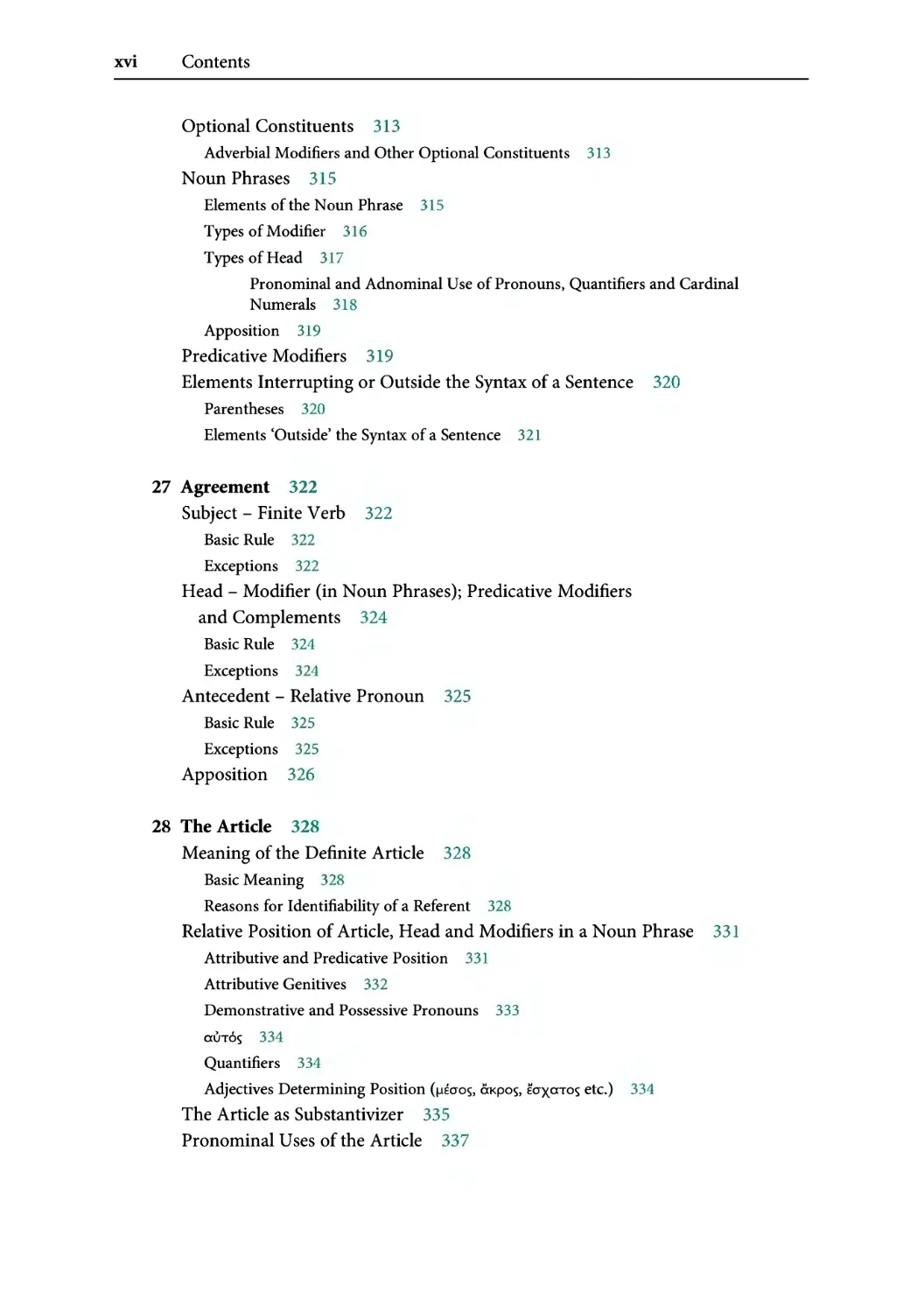
xvi Contents
Optional Constituents 313
Adverbial Modifiers and Other Optional Constituents 313
Noun Phrases 315
Elements of the Noun Phrase 315
Types of Modifier 316
Types of Head 317
Pronominal and Adnominal Use of Pronouns, Quantifiers and Cardinal
Numerals 318
Apposition 319
Predicative Modifiers 319
Elements Interrupting or Outside the Syntax of a Sentence 320
Parentheses 320
Elements Outside' the Syntax of a Sentence 321
27 Agreement 322
Subject - Finite Verb 322
Basic Rule 322
Exceptions 322
Head - Modifier (in Noun Phrases); Predicative Modifiers
and Complements 324
Basic Rule 324
Exceptions 324
Antecedent - Relative Pronoun 325
Basic Rule 325
Exceptions 325
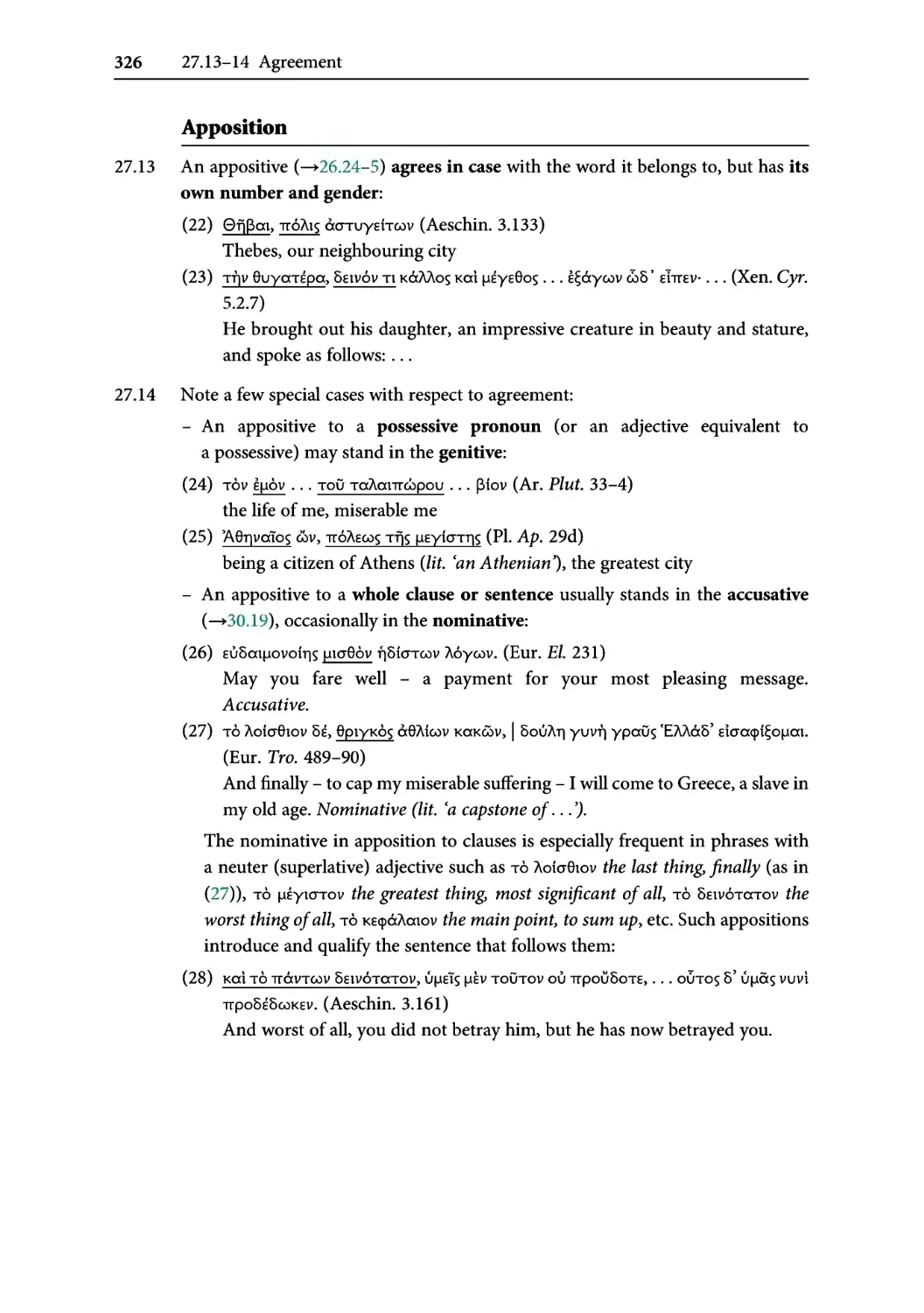
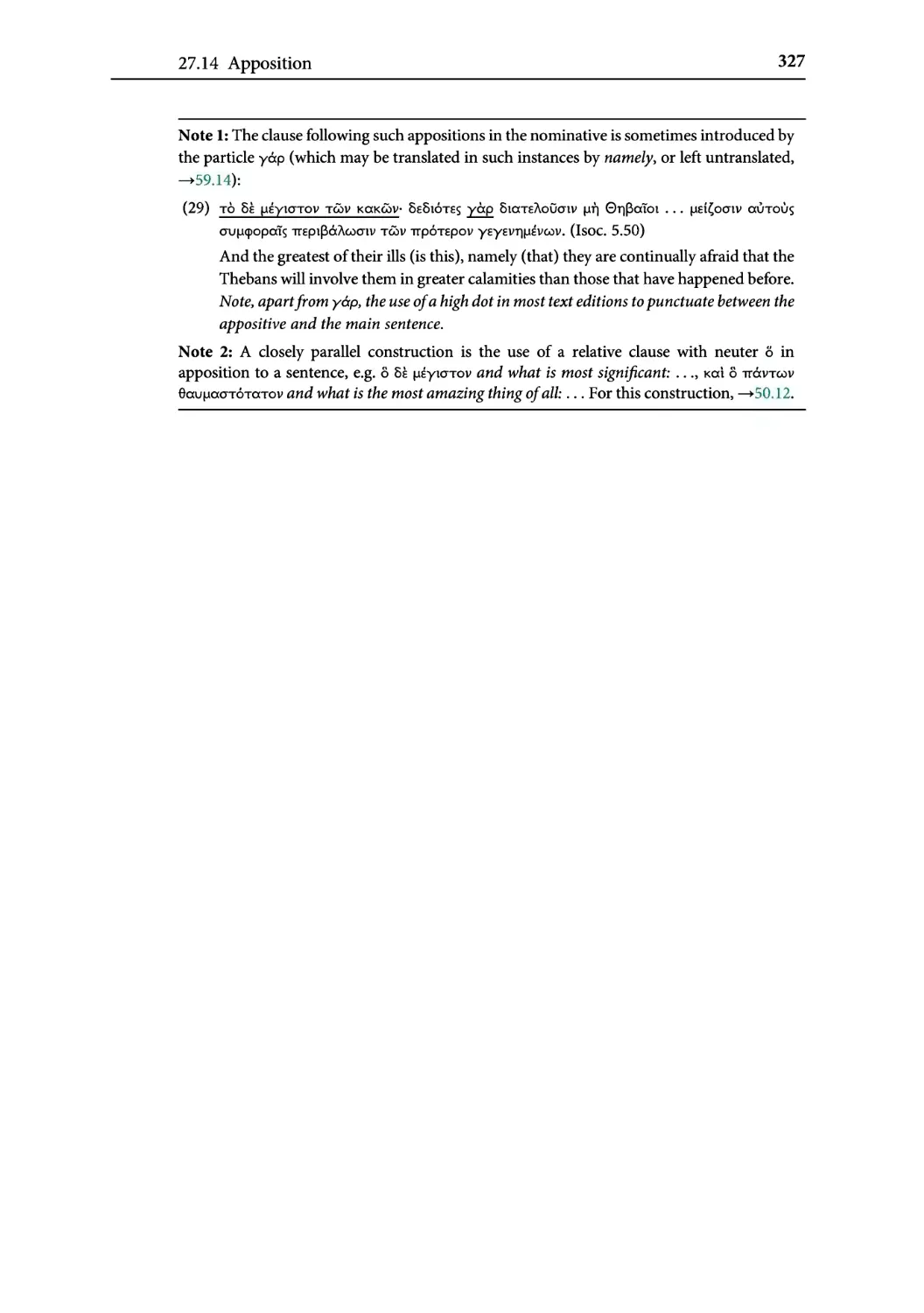
Apposition 326
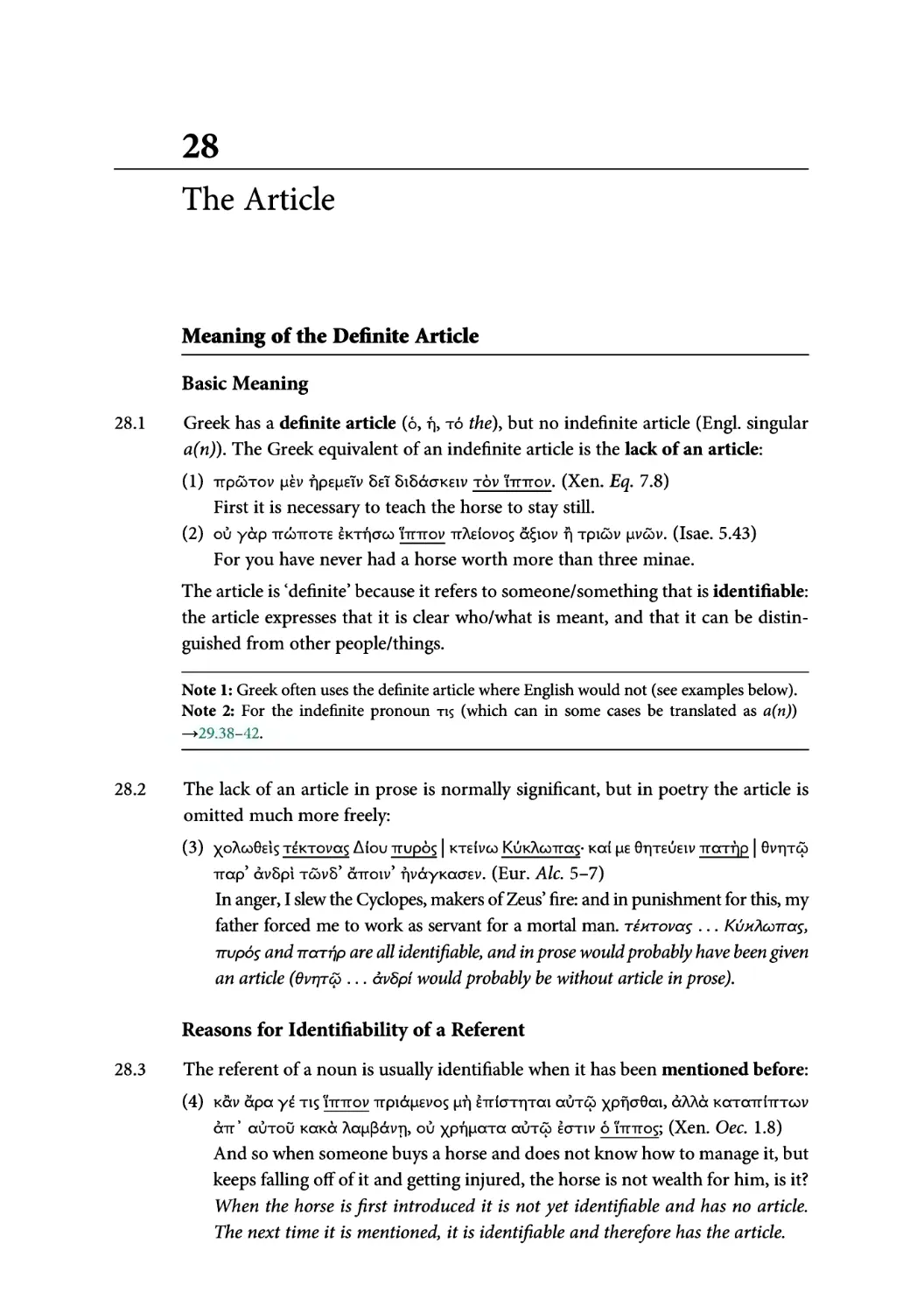
28 The Article 328
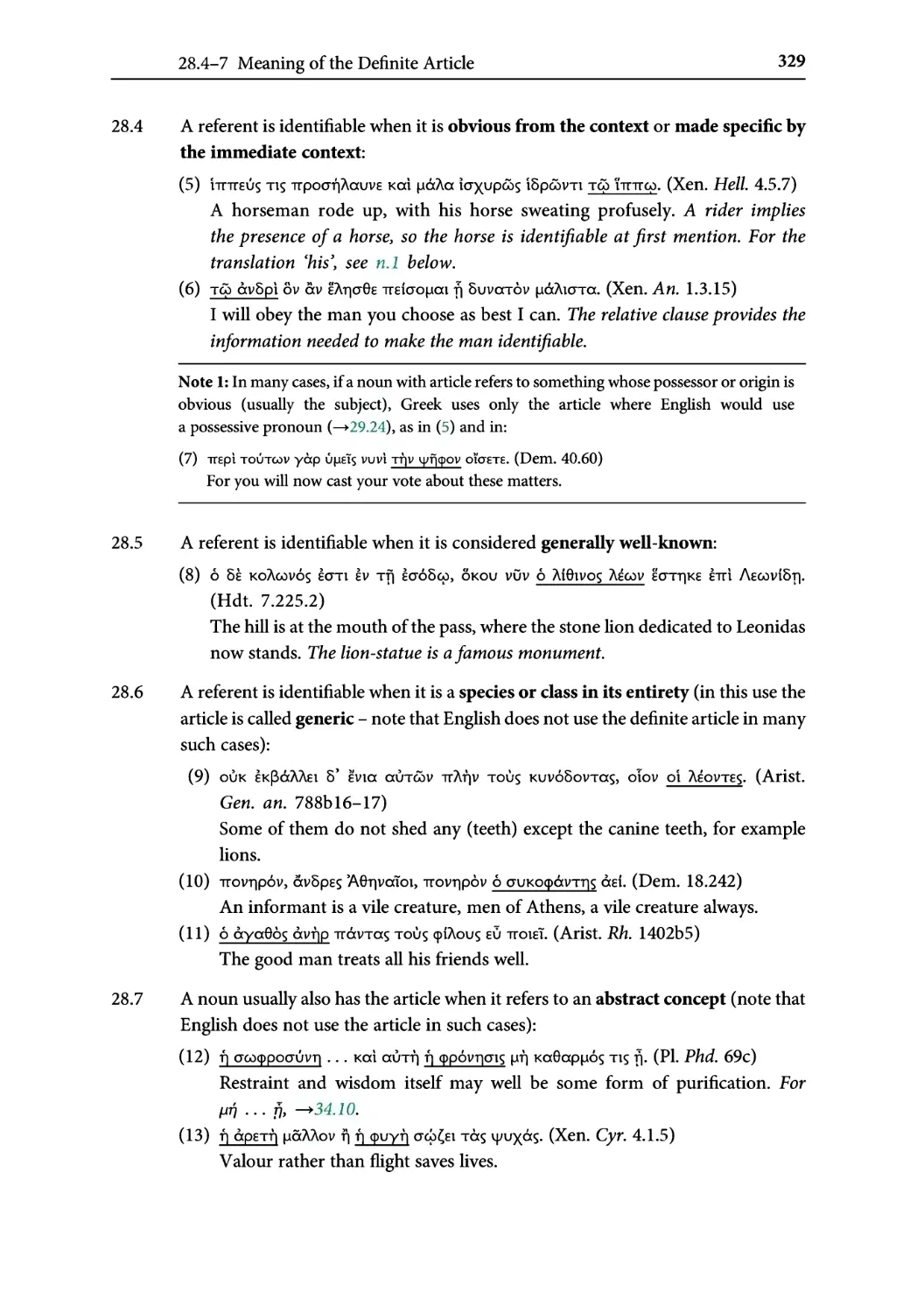
Meaning of the Definite Article 328
Basic Meaning 328
Reasons for Identifiability of a Referent 328
Relative Position of Article, Head and Modifiers in a Noun Phrase 331
Attributive and Predicative Position 331
Attributive Genitives 332
Demonstrative and Possessive Pronouns 333
αυτός 334
Quantifiers 334
Adjectives Determining Position (μέσος, άκρος, έσχατος etc.) 334
The Article as Substantivizer 335
Pronominal Uses of the Article 337

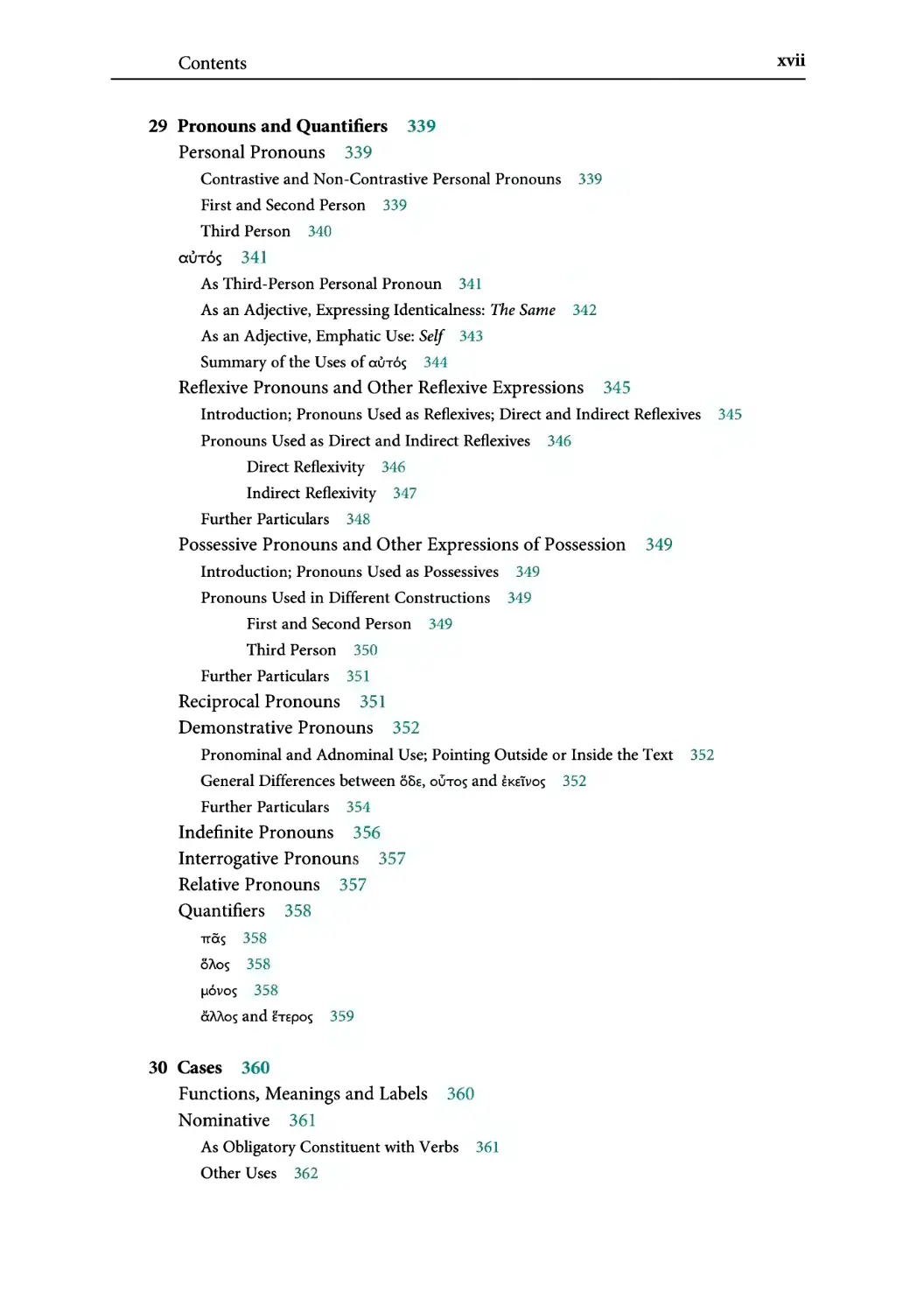
Contents
XVll
29 Pronouns and Quantifiers 339
Personal Pronouns 339
Contrastive and Non-Contrastive Personal Pronouns 339
First and Second Person 339
Third Person 340
αυτός 341
As Third-Person Personal Pronoun 341
As an Adjective, Expressing Identicalness: The Same 342
As an Adjective, Emphatic Use: Self 343
Summary of the Uses of αυτός 344
Reflexive Pronouns and Other Reflexive Expressions 345
Introduction; Pronouns Used as Reflexives; Direct and Indirect Reflexives 345
Pronouns Used as Direct and Indirect Reflexives 346
Direct Reflexivity 346
Indirect Reflexivity 347
Further Particulars 348
Possessive Pronouns and Other Expressions of Possession 349
Introduction; Pronouns Used as Possessives 349
Pronouns Used in Different Constructions 349
First and Second Person 349
Third Person 350
Further Particulars 351
Reciprocal Pronouns 351
Demonstrative Pronouns 352
Pronominal and Adnominal Use; Pointing Outside or Inside the Text 352
General Differences between όδε, ούτος and εκείνος 352
Further Particulars 354
Indefinite Pronouns 356
Interrogative Pronouns 357
Relative Pronouns 357
Quantifiers 358
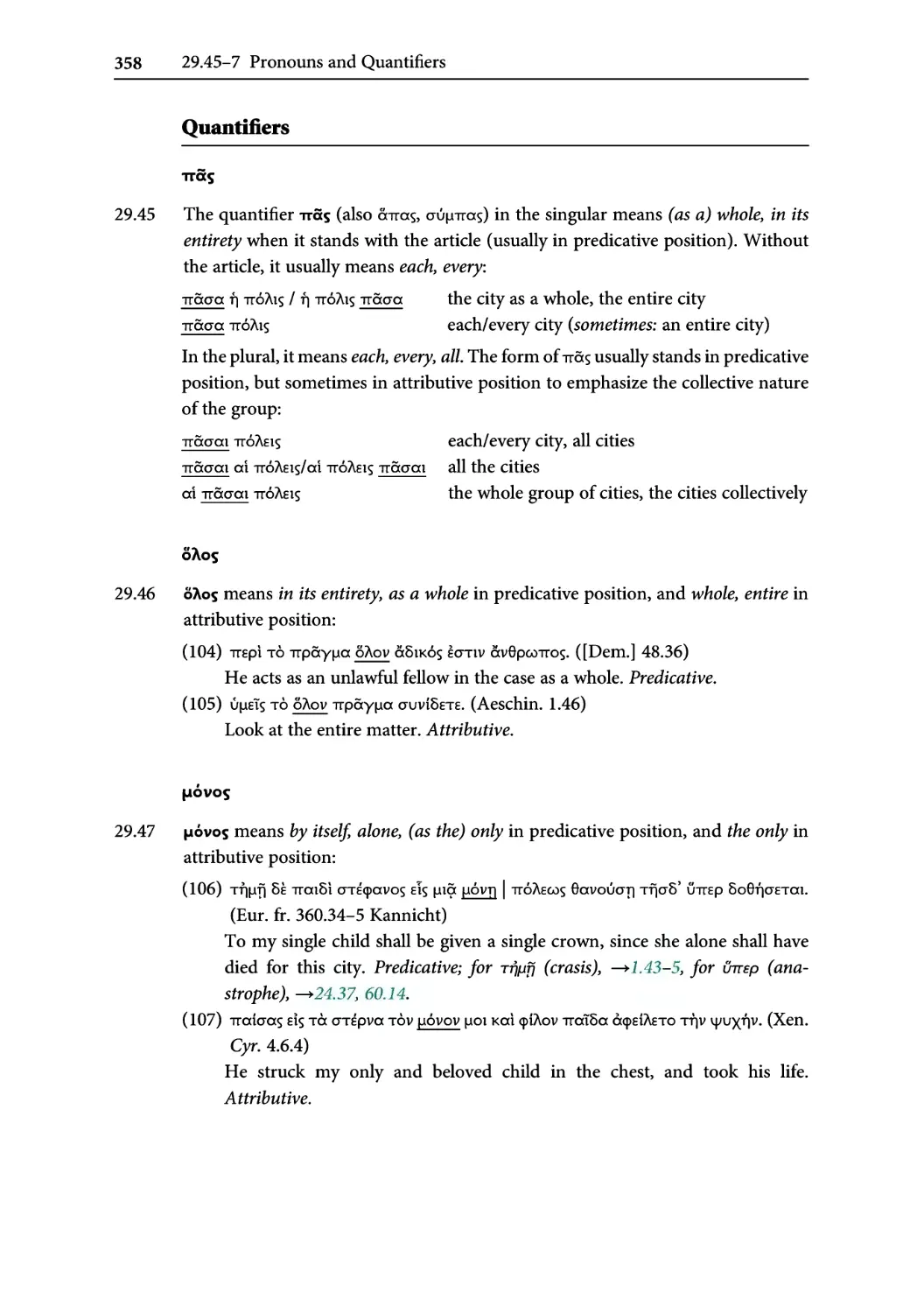
πας 358
όλος 358
μόνος 358
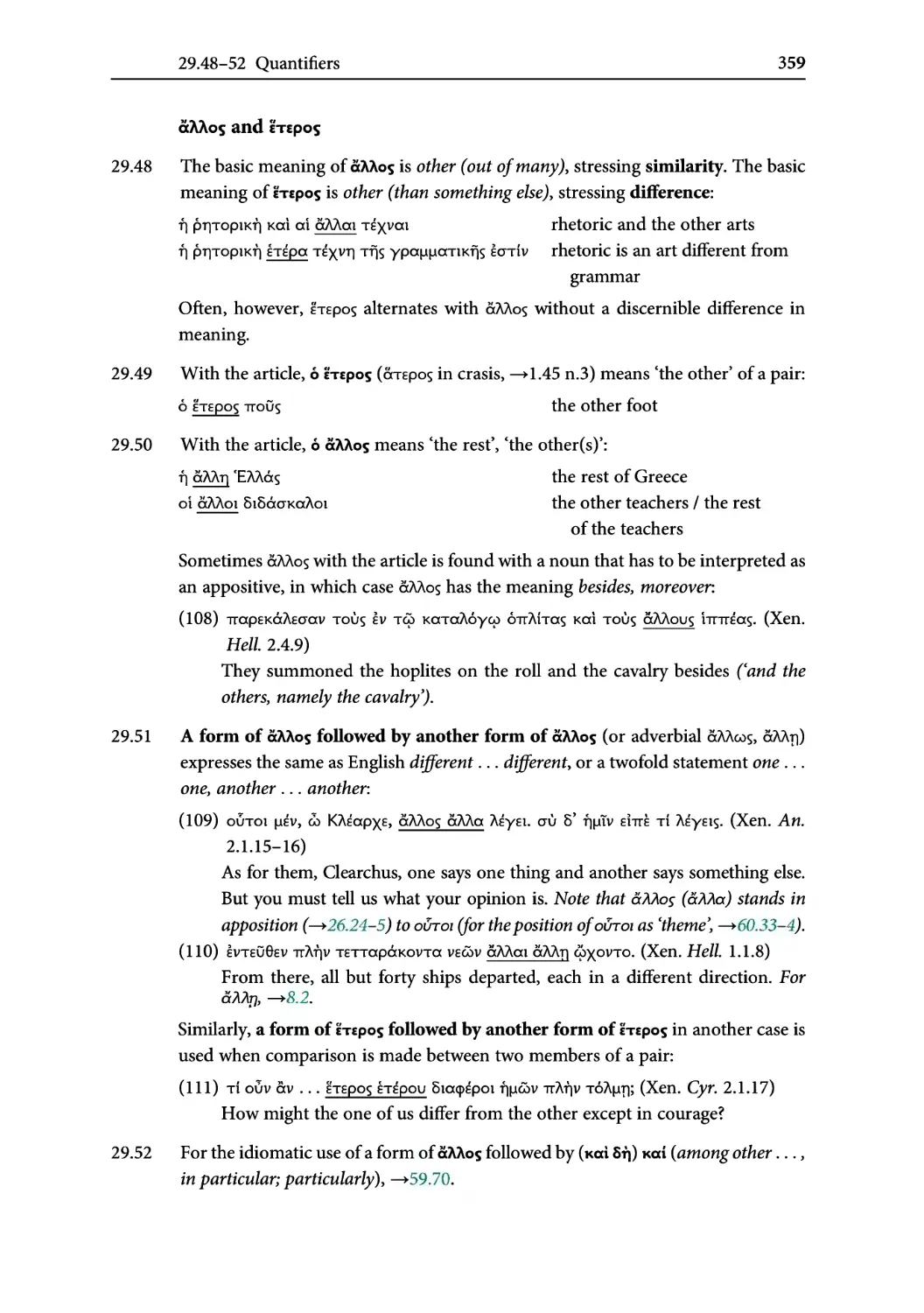
άλλος and έτερος 359
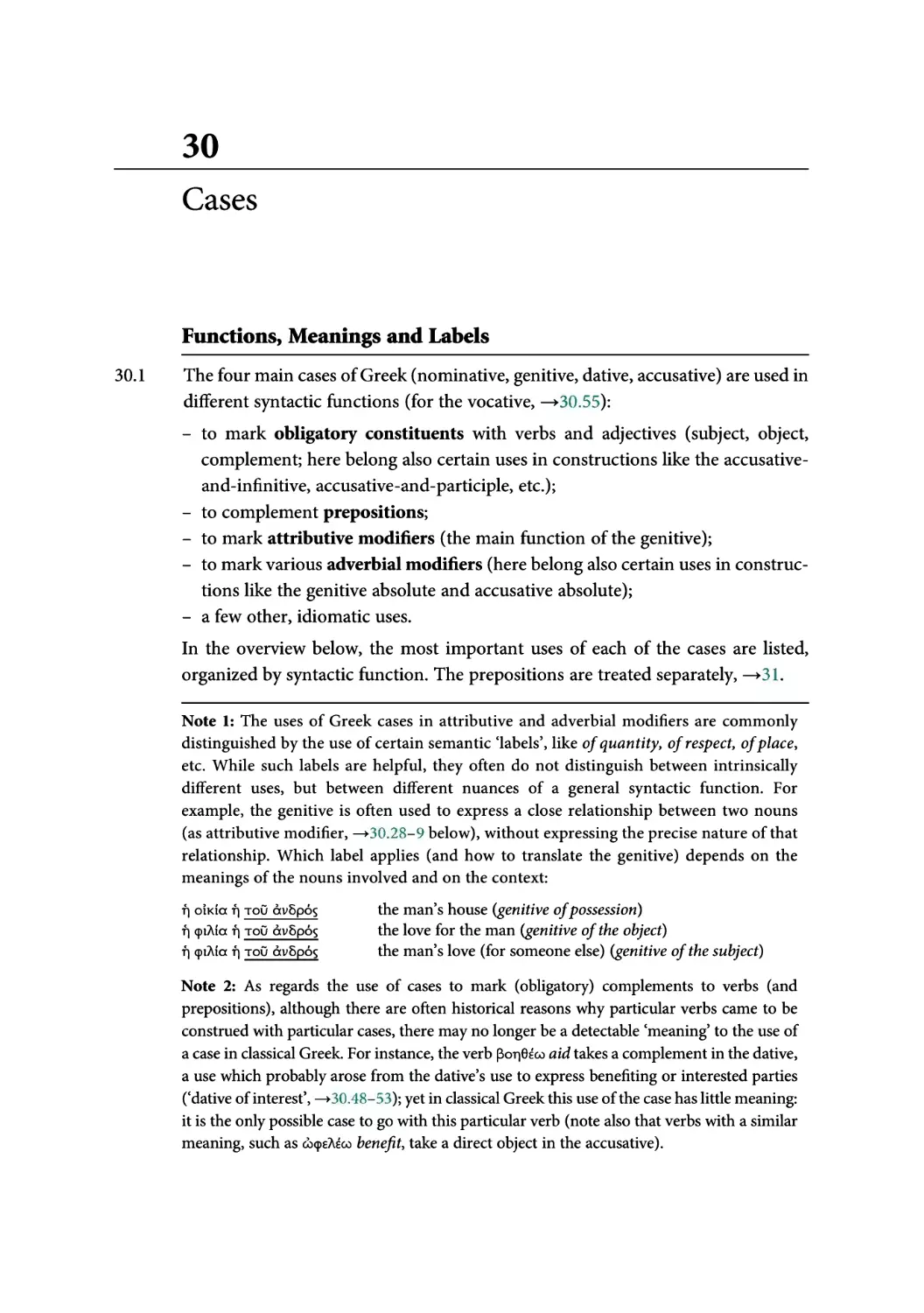
30 Cases 360
Functions, Meanings and Labels 360
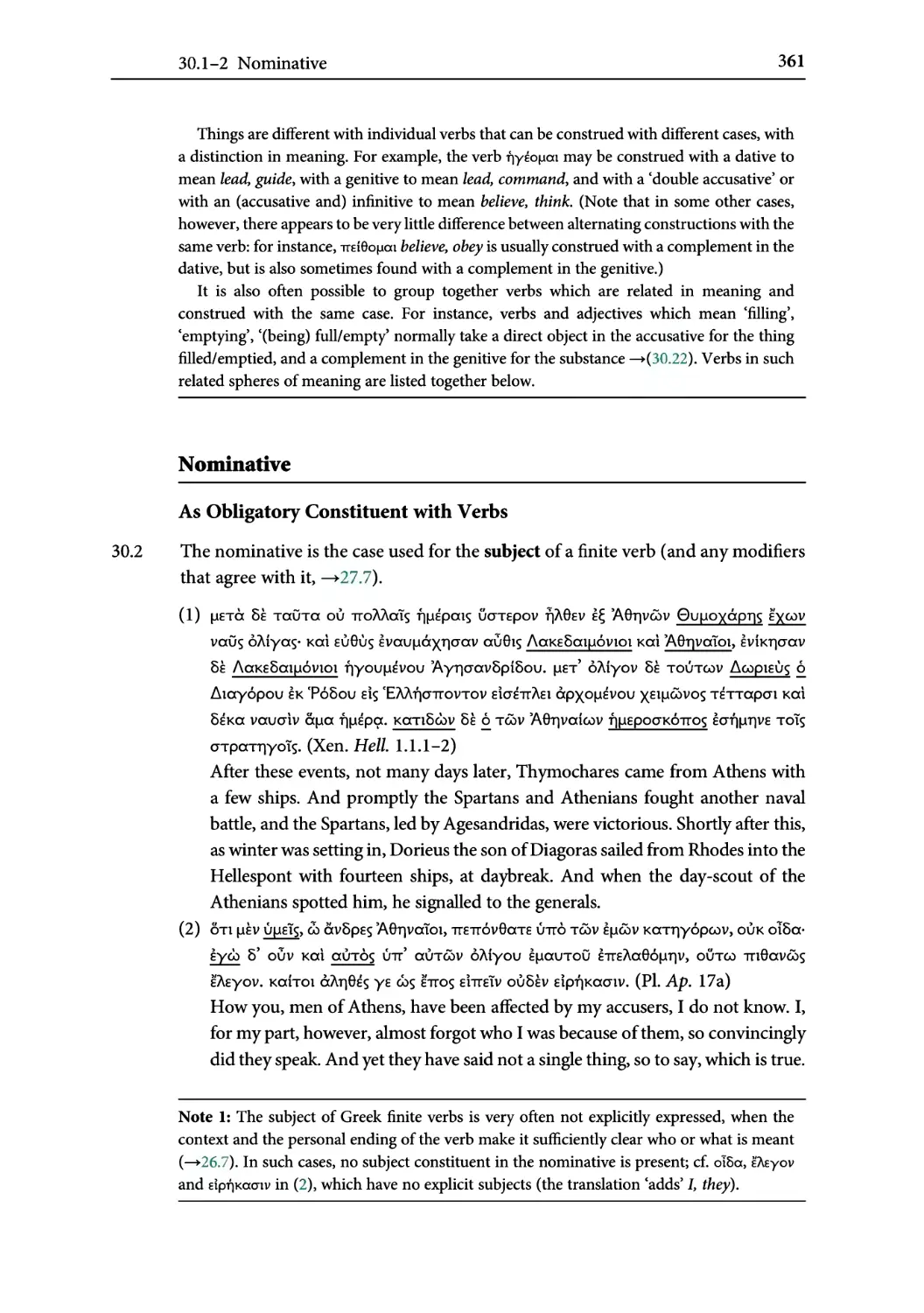
Nominative 361
As Obligatory Constituent with Verbs 361
Other Uses 362

xviii Contents
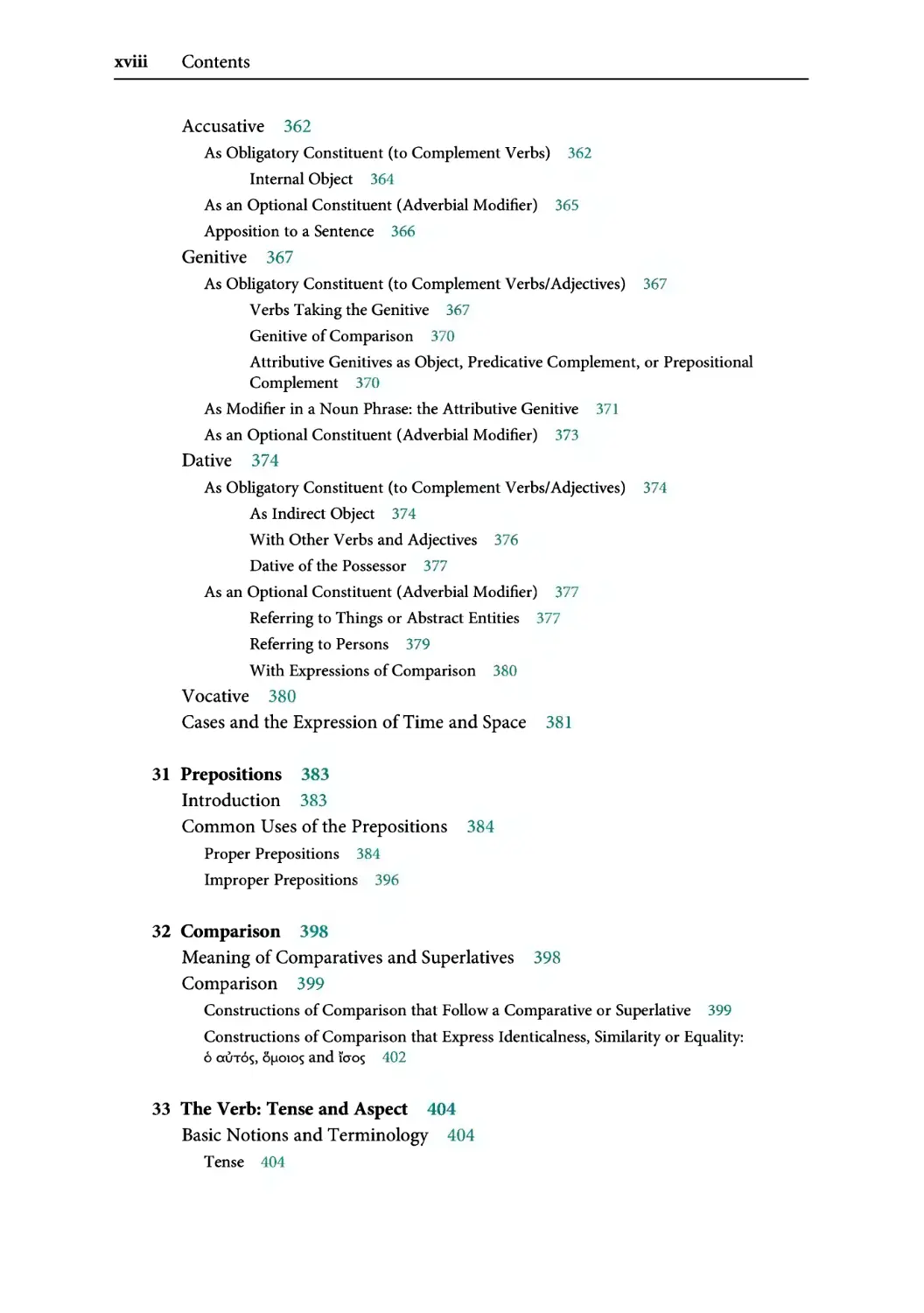
Accusative 362
As Obligatory Constituent (to Complement Verbs) 362
Internal Object 364
As an Optional Constituent (Adverbial Modifier) 365
Apposition to a Sentence 366
Genitive 367
As Obligatory Constituent (to Complement Verbs/Adjectives) 367
Verbs Taking the Genitive 367
Genitive of Comparison 370
Attributive Genitives as Object, Predicative Complement, or Prepositional
Complement 370
As Modifier in a Noun Phrase: the Attributive Genitive 371
As an Optional Constituent (Adverbial Modifier) 373
Dative 374
As Obligatory Constituent (to Complement Verbs/Adjectives) 374
As Indirect Object 374
With Other Verbs and Adjectives 376
Dative of the Possessor 377
As an Optional Constituent (Adverbial Modifier) 377
Referring to Things or Abstract Entities 377
Referring to Persons 379
With Expressions of Comparison 380
Vocative 380
Cases and the Expression of Time and Space 381
31 Prepositions 383
Introduction 383
Common Uses of the Prepositions 384
Proper Prepositions 384
Improper Prepositions 396
32 Comparison 398
Meaning of Comparatives and Superlatives 398
Comparison 399
Constructions of Comparison that Follow a Comparative or Superlative 399
Constructions of Comparison that Express Identicalness, Similarity or Equality:
ό αυτός, όμοιος and ϊσος 402
33 The Verb: Tense and Aspect 404
Basic Notions and Terminology 404
Tense 404

Contents
XIX
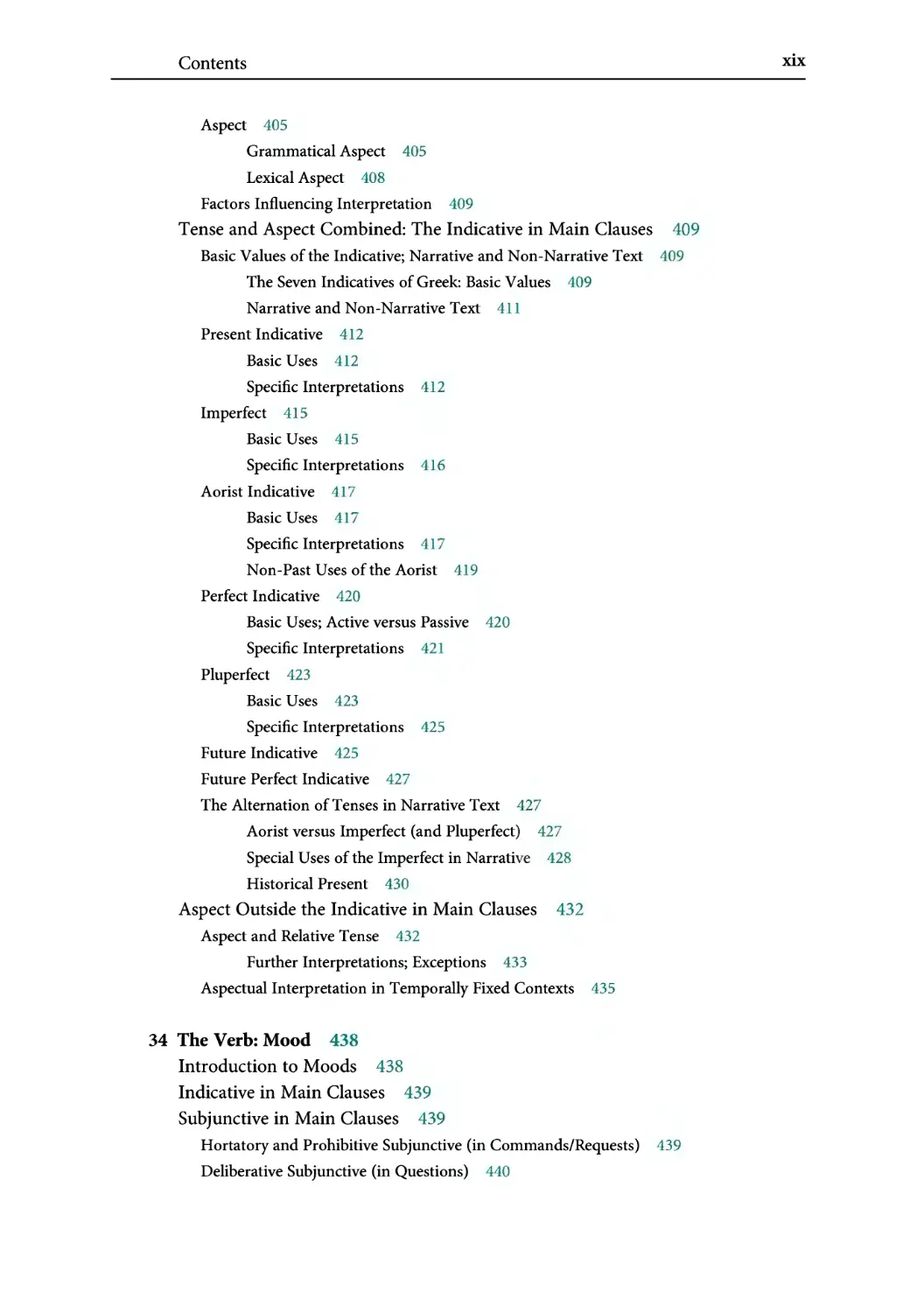
Aspect 405
Grammatical Aspect 405
Lexical Aspect 408
Factors Influencing Interpretation 409
Tense and Aspect Combined: The Indicative in Main Clauses 409
Basic Values of the Indicative; Narrative and Non-Narrative Text 409
The Seven Indicatives of Greek: Basic Values 409
Narrative and Non-Narrative Text 411
Present Indicative 412
Basic Uses 412
Specific Interpretations 412
Imperfect 415
Basic Uses 415
Specific Interpretations 416
Aorist Indicative 417
Basic Uses 417
Specific Interpretations 417
Non-Past Uses of the Aorist 419
Perfect Indicative 420
Basic Uses; Active versus Passive 420
Specific Interpretations 421
Pluperfect 423
Basic Uses 423
Specific Interpretations 425
Future Indicative 425
Future Perfect Indicative 427
The Alternation of Tenses in Narrative Text 427
Aorist versus Imperfect (and Pluperfect) 427
Special Uses of the Imperfect in Narrative 428
Historical Present 430
Aspect Outside the Indicative in Main Clauses 432
Aspect and Relative Tense 432
Further Interpretations; Exceptions 433
Aspectual Interpretation in Temporally Fixed Contexts 435
34 The Verb: Mood 438
Introduction to Moods 438
Indicative in Main Clauses 439
Subjunctive in Main Clauses 439
Hortatory and Prohibitive Subjunctive (in Commands/Requests) 439
Deliberative Subjunctive (in Questions) 440

xx Contents
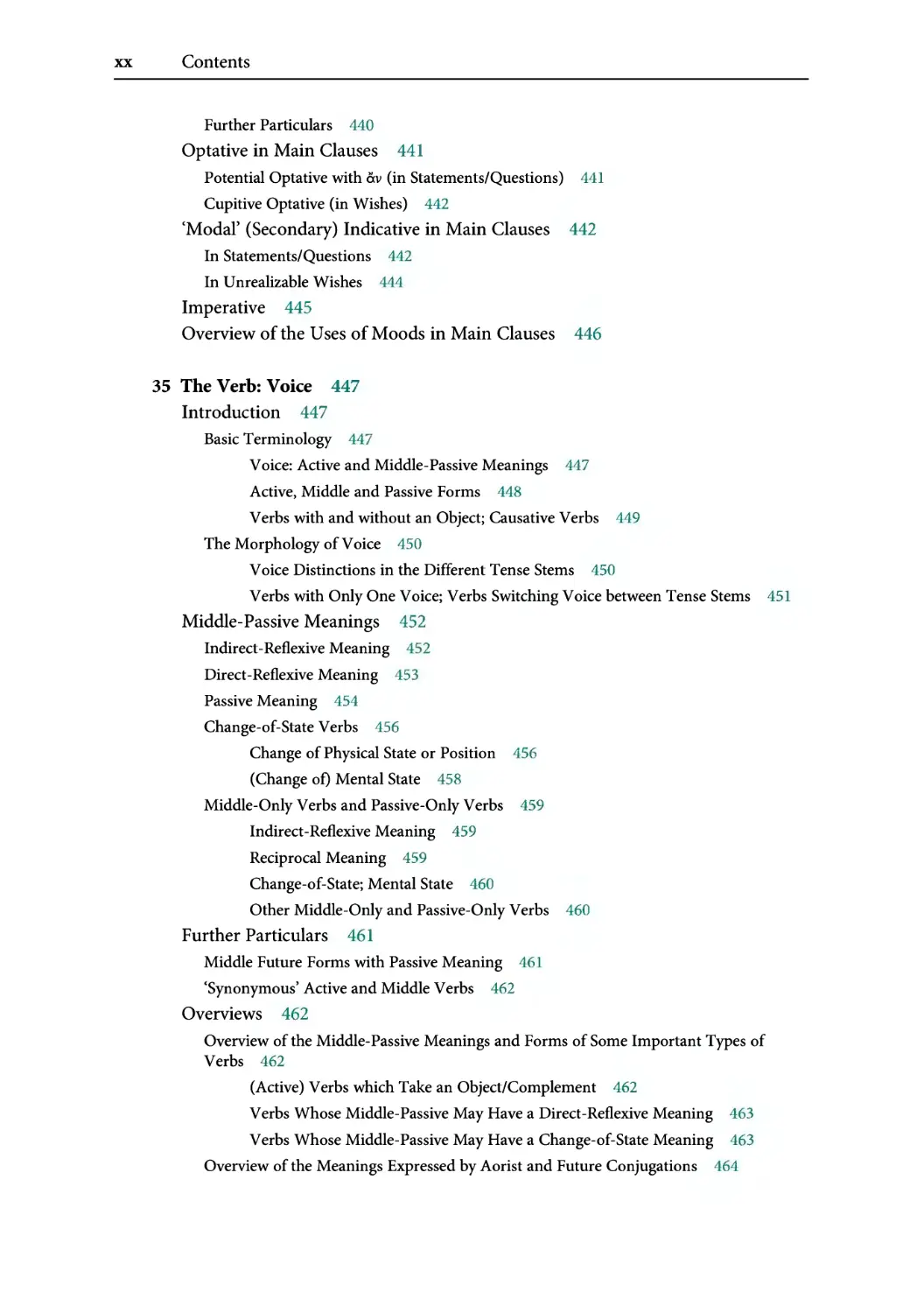
Further Particulars 440
Optative in Main Clauses 441
Potential Optative with αν (in Statements/Questions) 441
Cupitive Optative (in Wishes) 442
'Modal' (Secondary) Indicative in Main Clauses 442
In Statements/Questions 442
In Unrealizable Wishes 444
Imperative 445
Overview of the Uses of Moods in Main Clauses 446
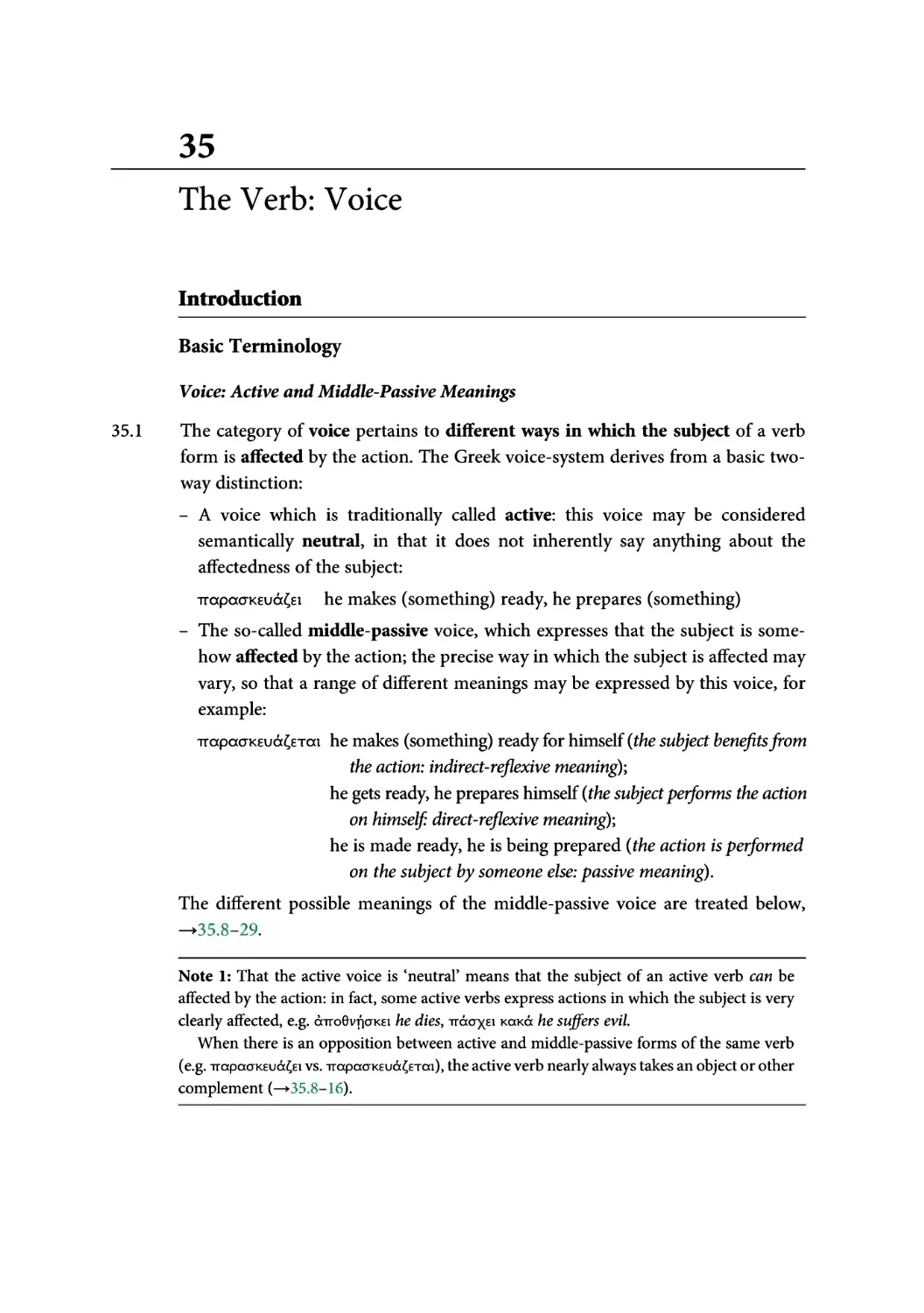
35 The Verb: Voice 447
Introduction 447
Basic Terminology 447
Voice: Active and Middle-Passive Meanings 447
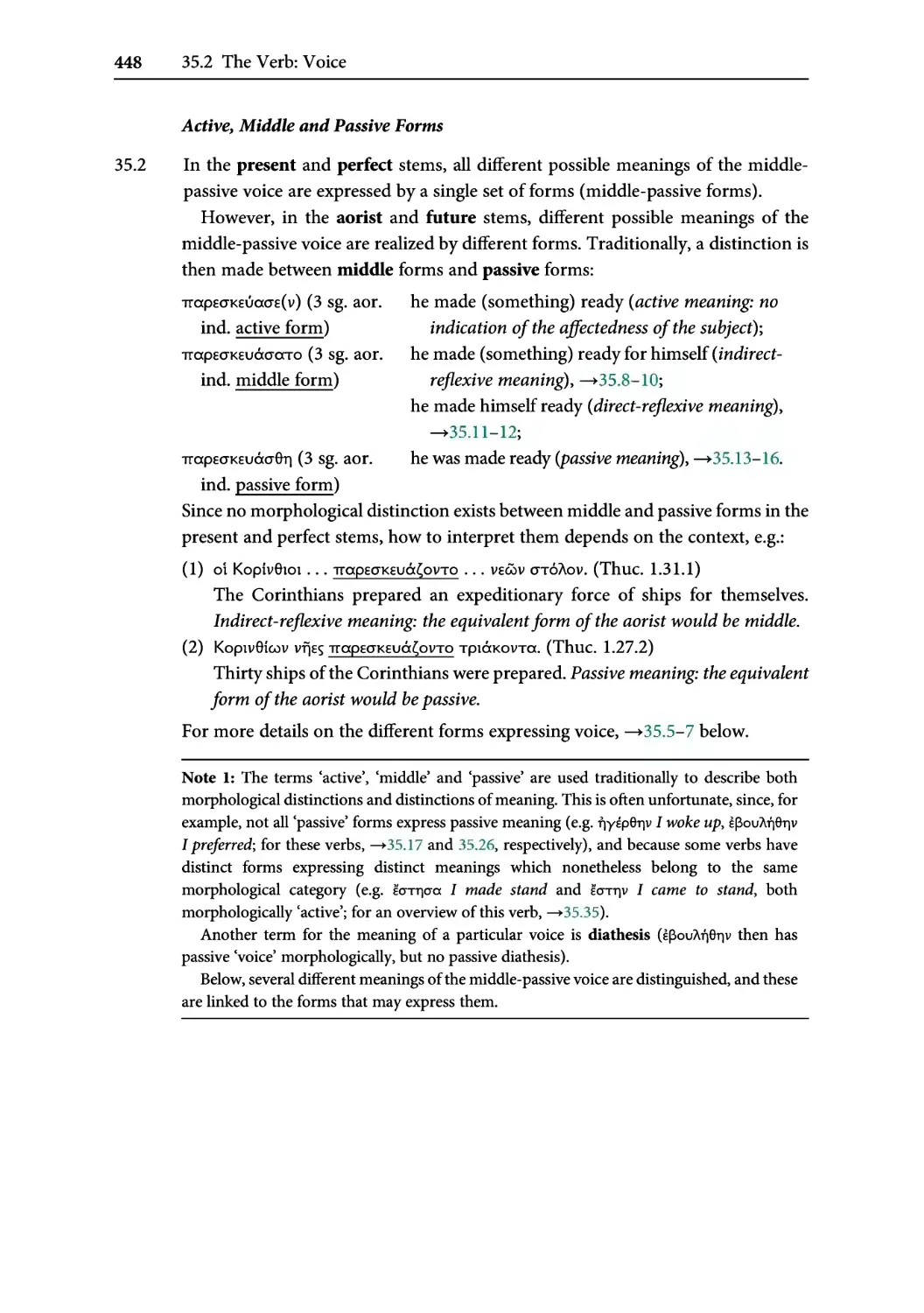
Active, Middle and Passive Forms 448
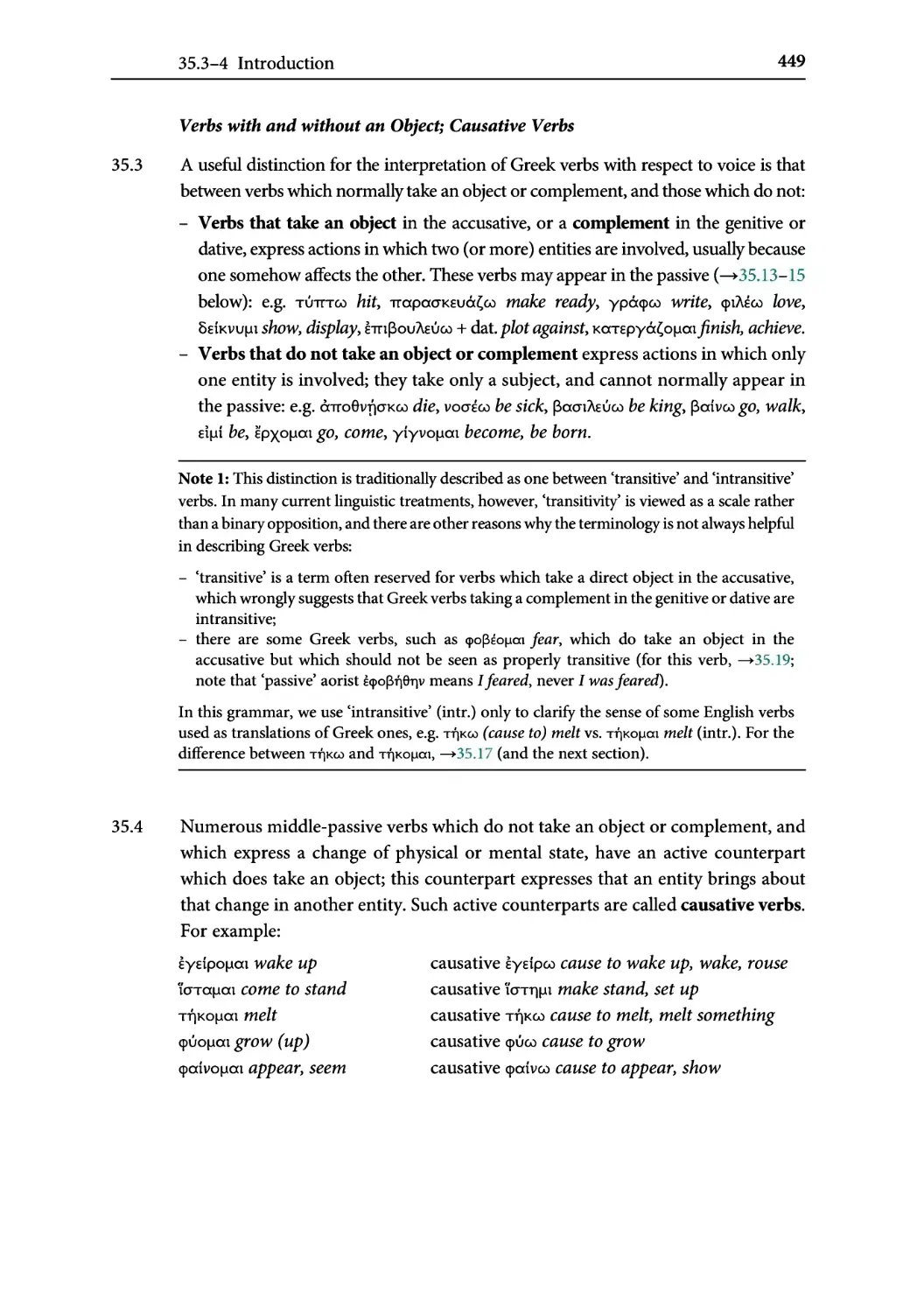
Verbs with and without an Object; Causative Verbs 449
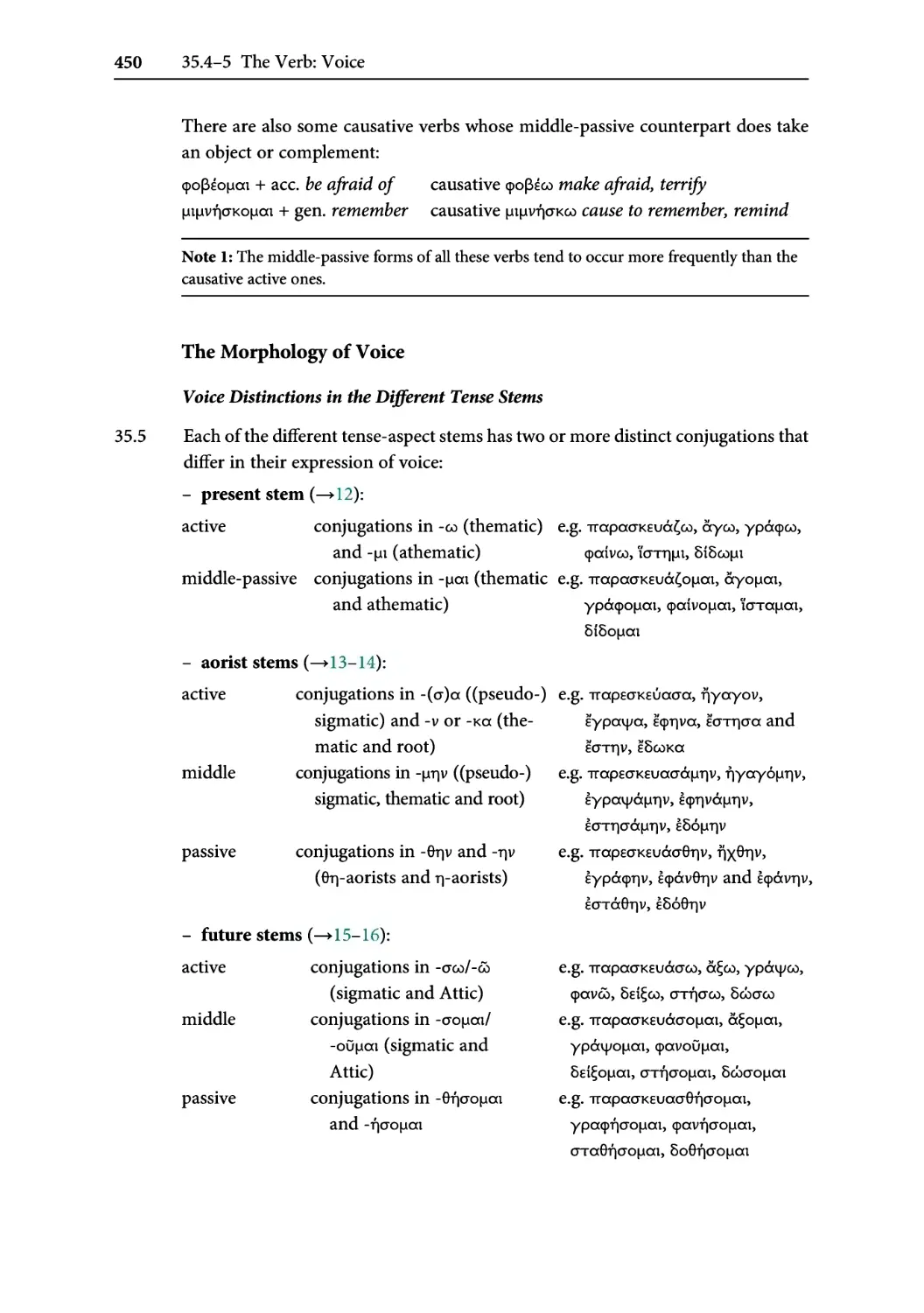
The Morphology of Voice 450
Voice Distinctions in the Different Tense Stems 450
Verbs with Only One Voice; Verbs Switching Voice between Tense Stems 451
Middle-Passive Meanings 452
Indirect-Reflexive Meaning 452
Direct-Reflexive Meaning 453
Passive Meaning 454
Change-of-State Verbs 456
Change of Physical State or Position 456
(Change of) Mental State 458
Middle-Only Verbs and Passive-Only Verbs 459
Indirect-Reflexive Meaning 459
Reciprocal Meaning 459
Change-of-State; Mental State 460
Other Middle-Only and Passive-Only Verbs 460
Further Particulars 461
Middle Future Forms with Passive Meaning 461
'Synonymous' Active and Middle Verbs 462
Overviews 462
Overview of the Middle-Passive Meanings and Forms of Some Important Types of
Verbs 462
(Active) Verbs which Take an Object/Complement 462
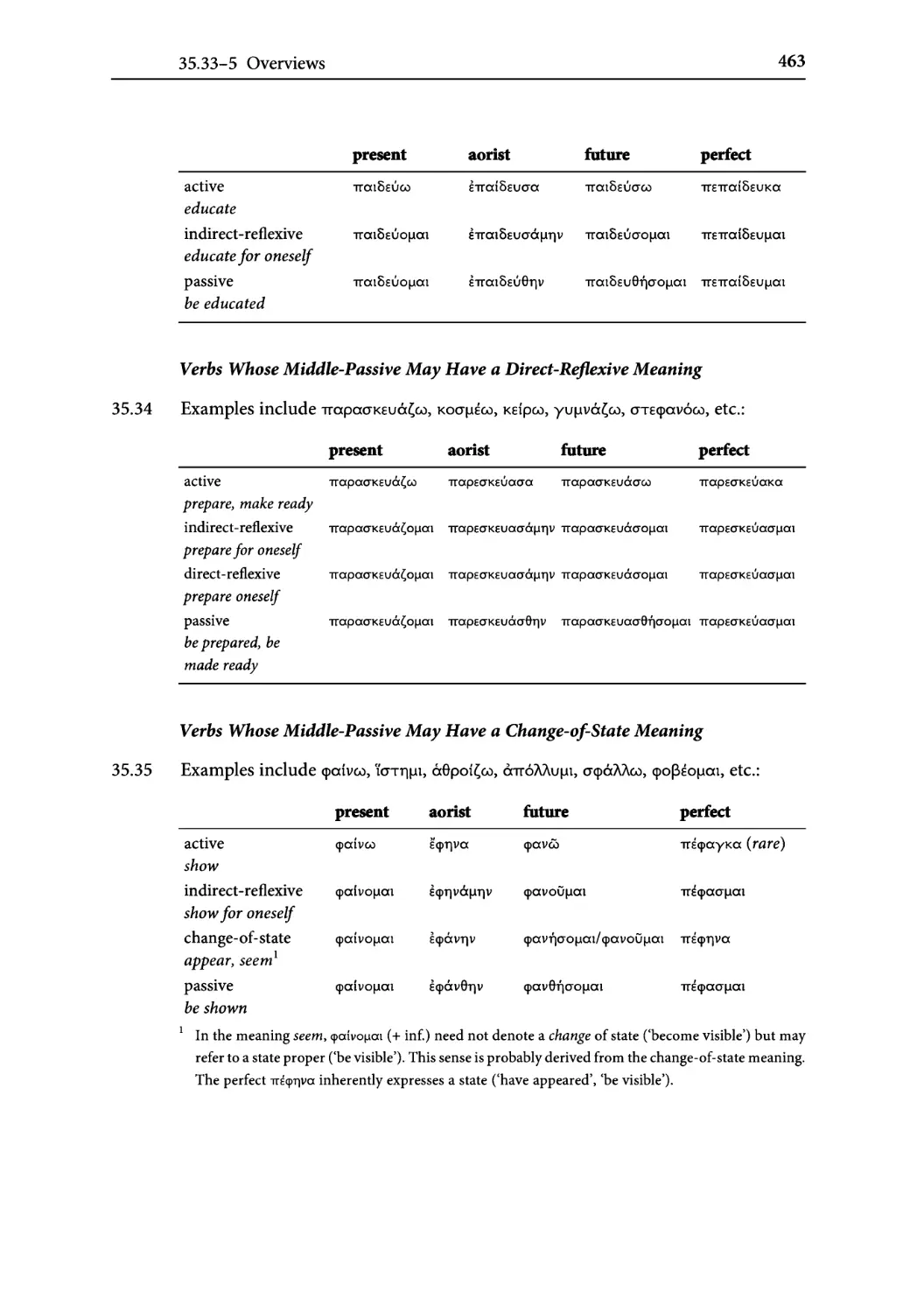
Verbs Whose Middle-Passive May Have a Direct-Reflexive Meaning 463
Verbs Whose Middle-Passive May Have a Change-of-State Meaning 463
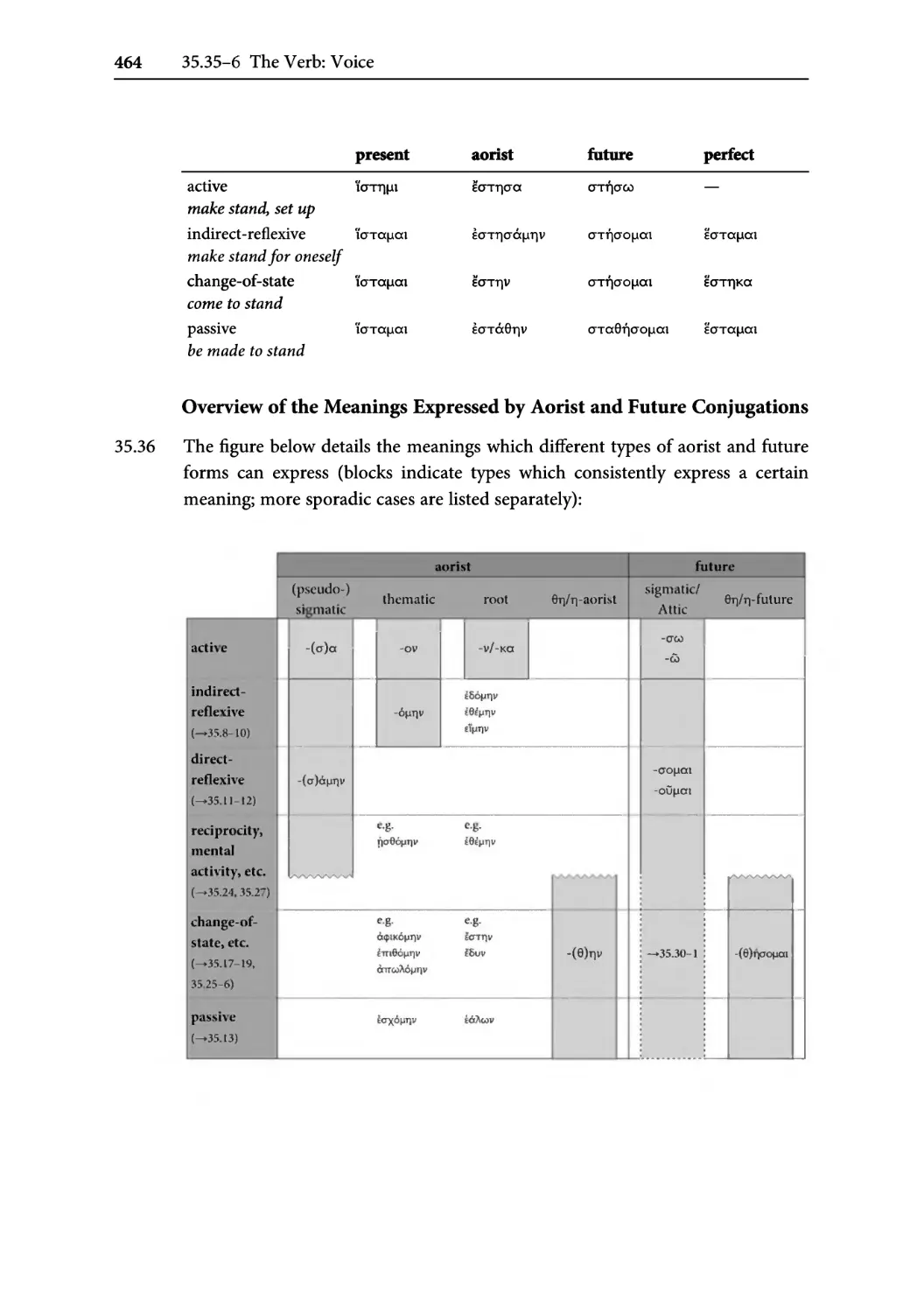
Overview of the Meanings Expressed by Aorist and Future Conjugations 464

Contents
XXI
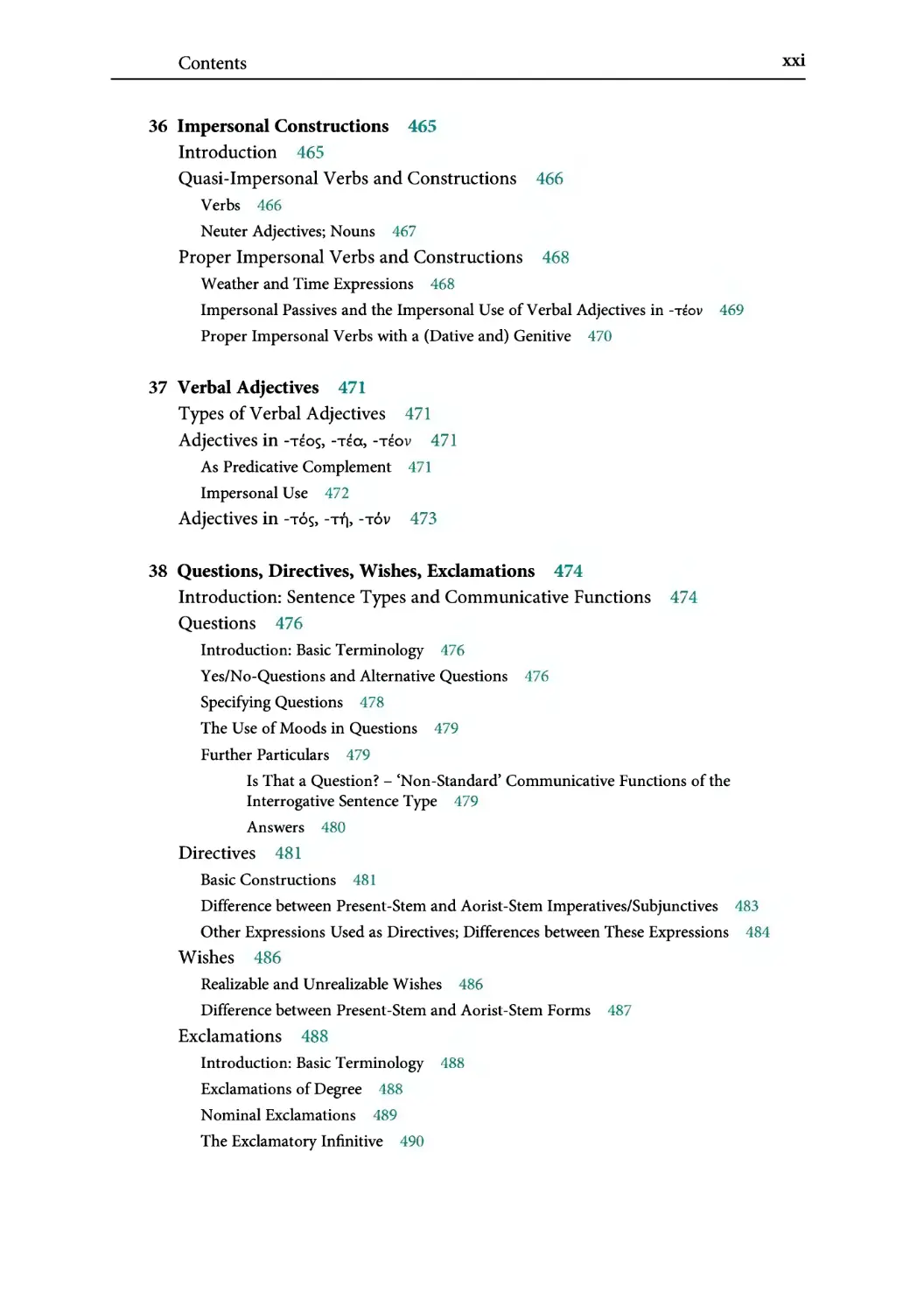
36 Impersonal Constructions 465
Introduction 465
Quasi-Impersonal Verbs and Constructions 466
Verbs 466
Neuter Adjectives; Nouns 467
Proper Impersonal Verbs and Constructions 468
Weather and Time Expressions 468
Impersonal Passives and the Impersonal Use of Verbal Adjectives in -τέον 469
Proper Impersonal Verbs with a (Dative and) Genitive 470
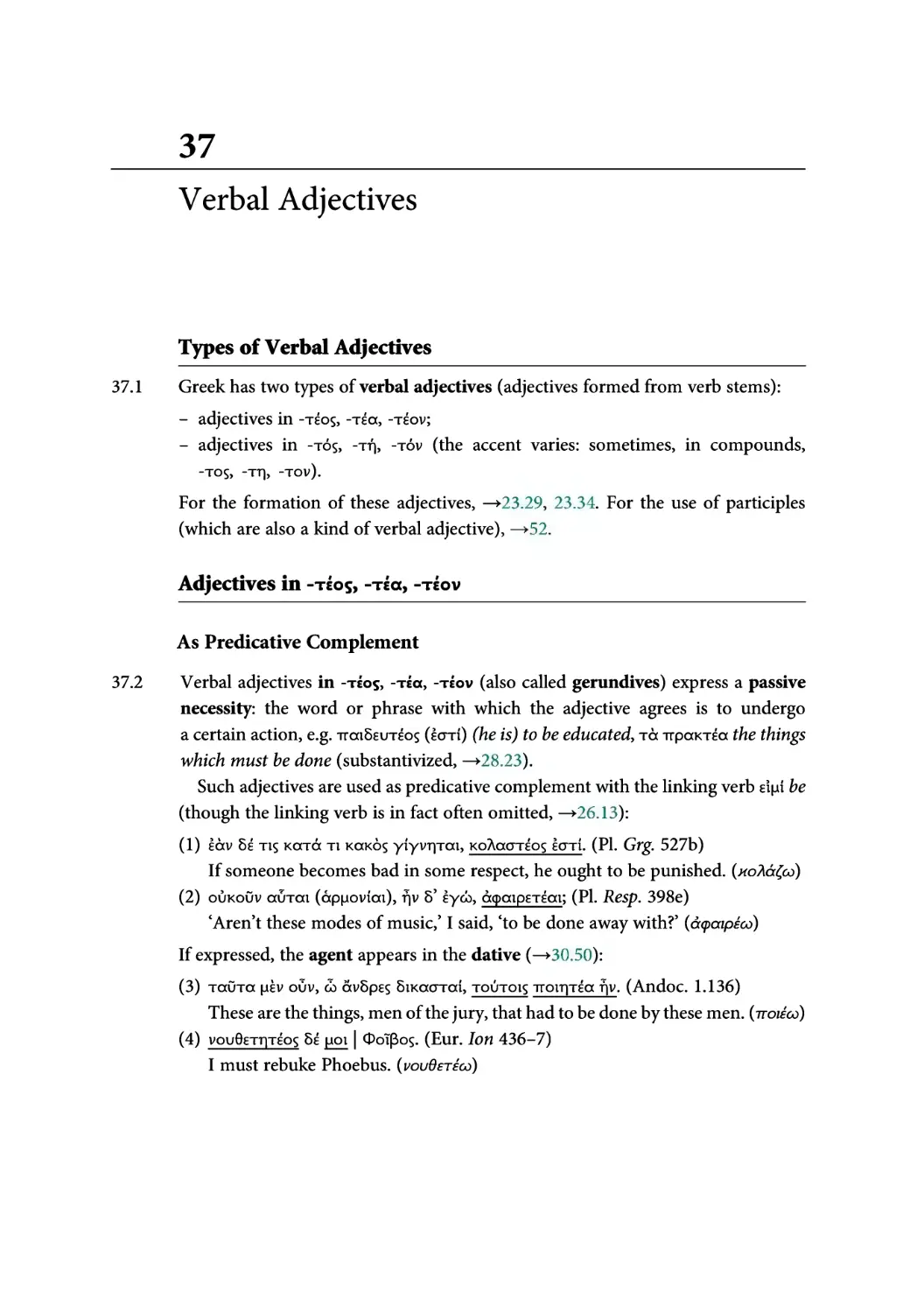
37 Verbal Adjectives 471
Types of Verbal Adjectives 471
Adjectives in -τέος, -τέα, -τέον 471
As Predicative Complement 471
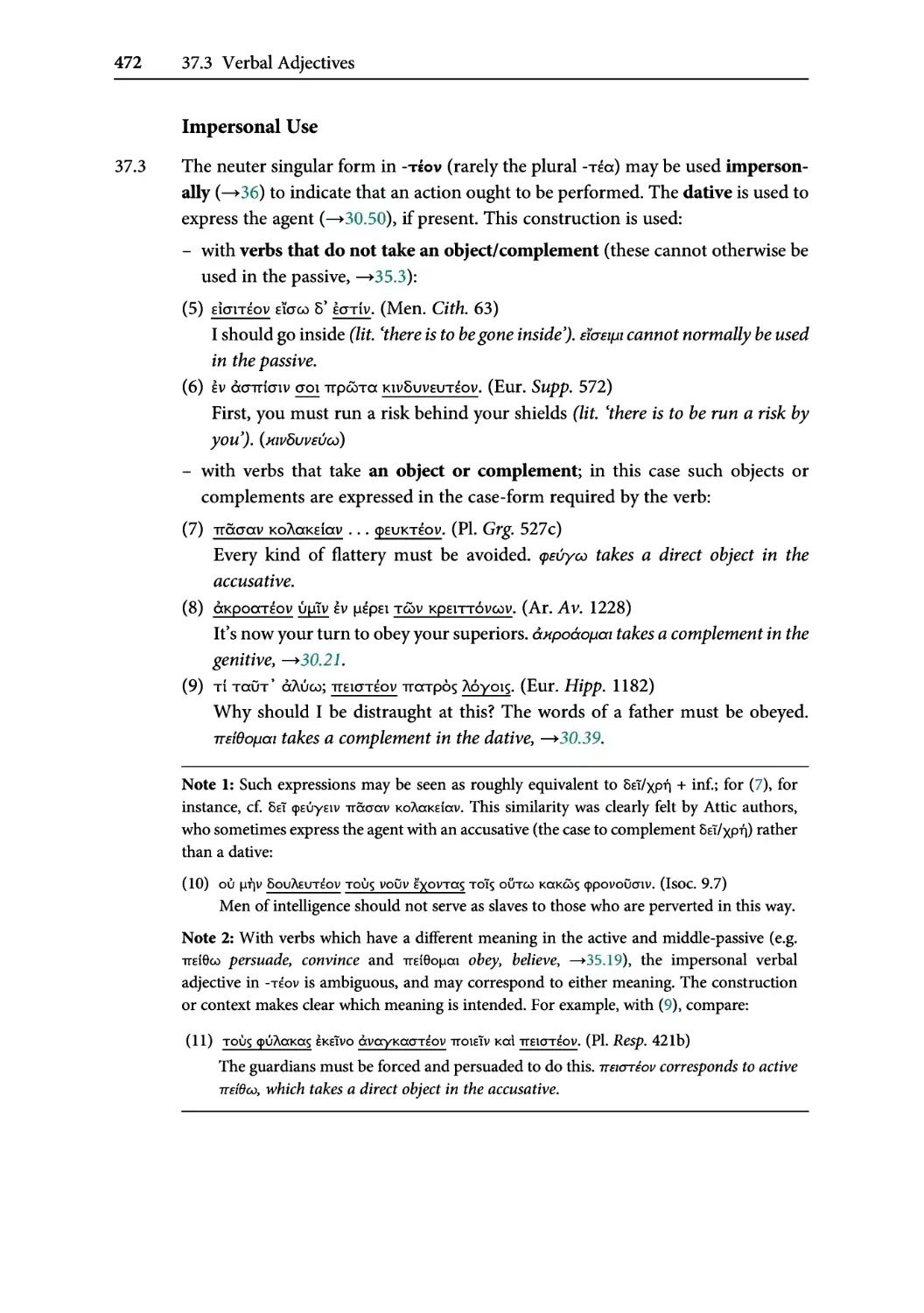
Impersonal Use 472
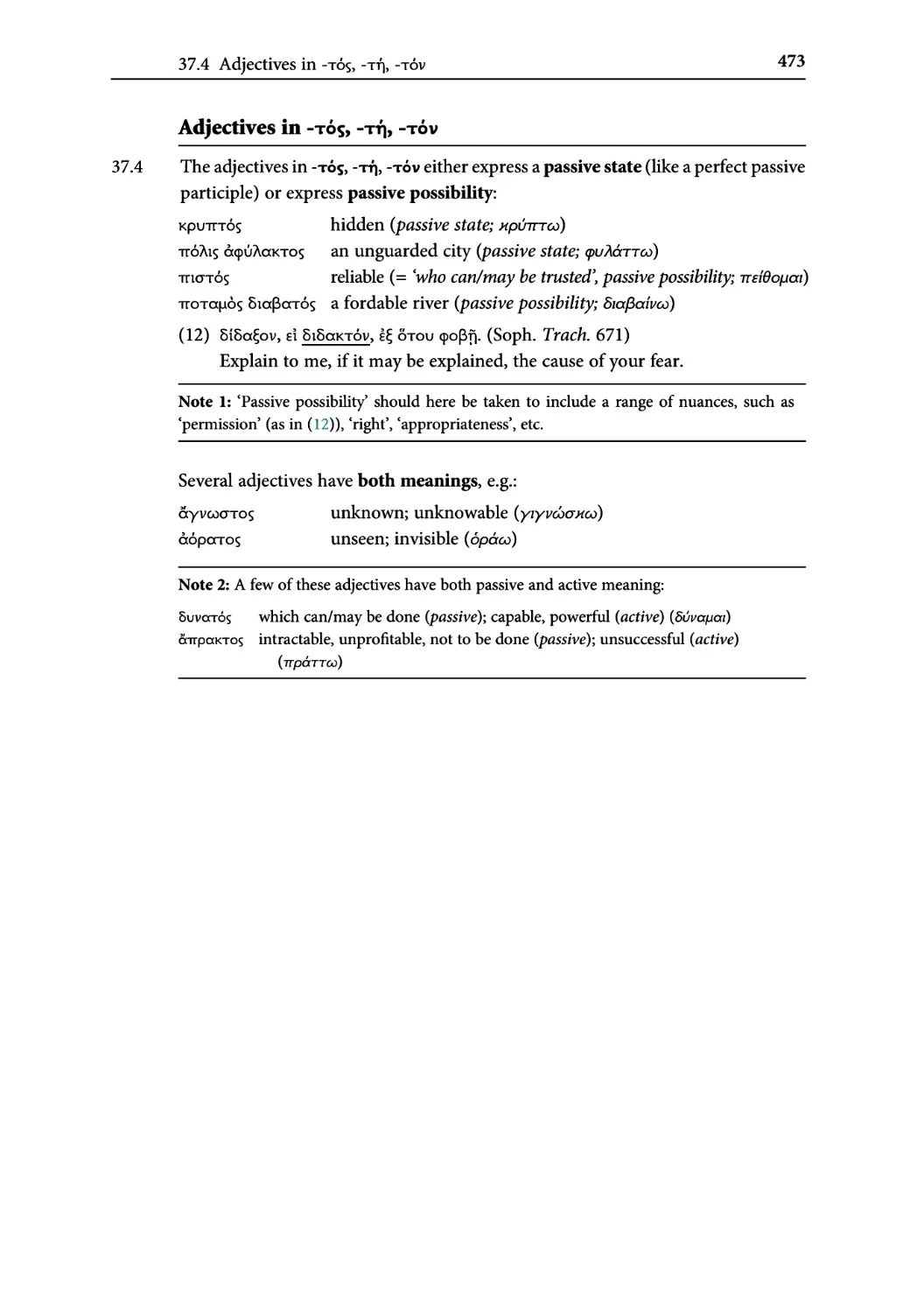
Adjectives in -τός, -τη, -τόν 473
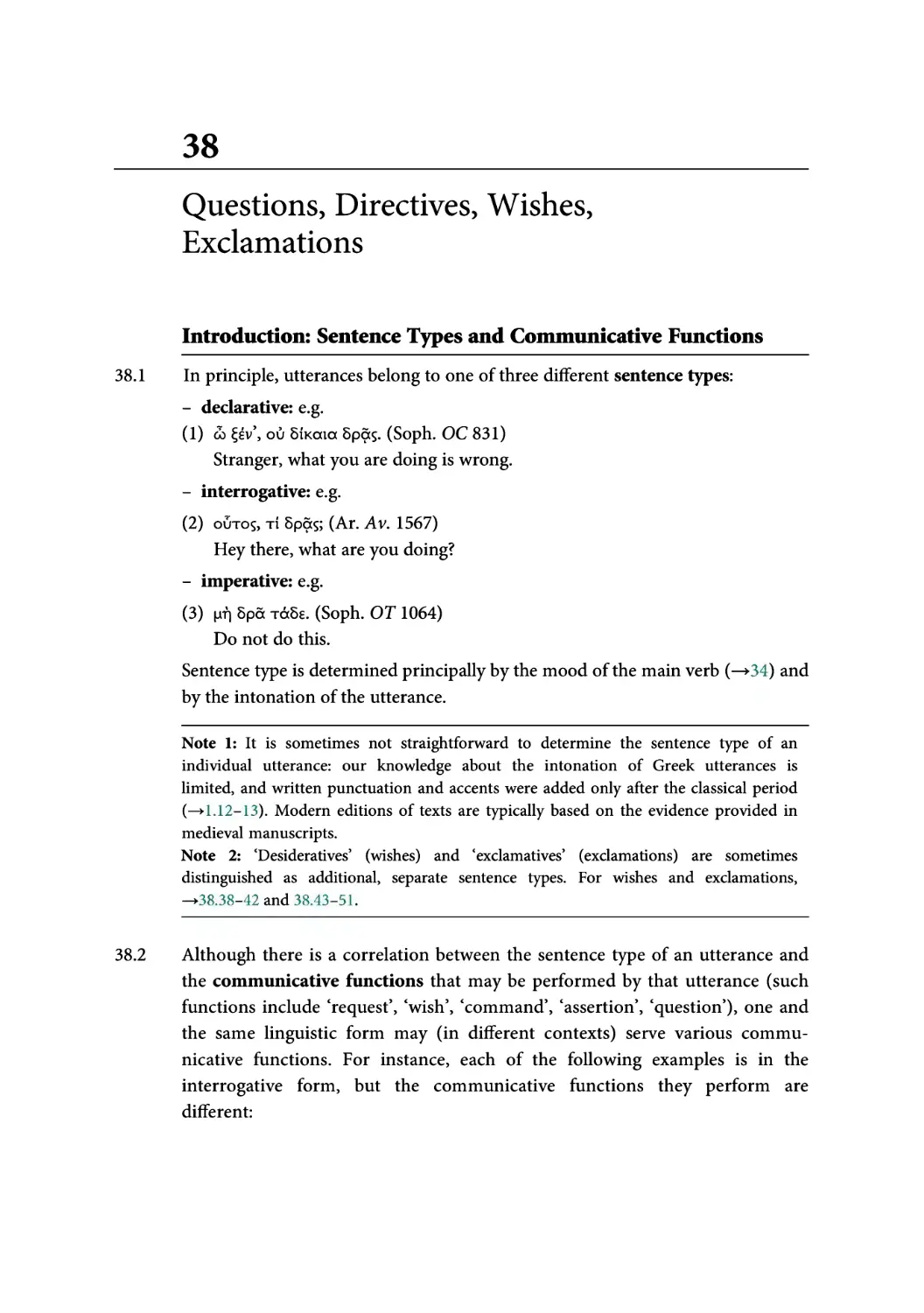
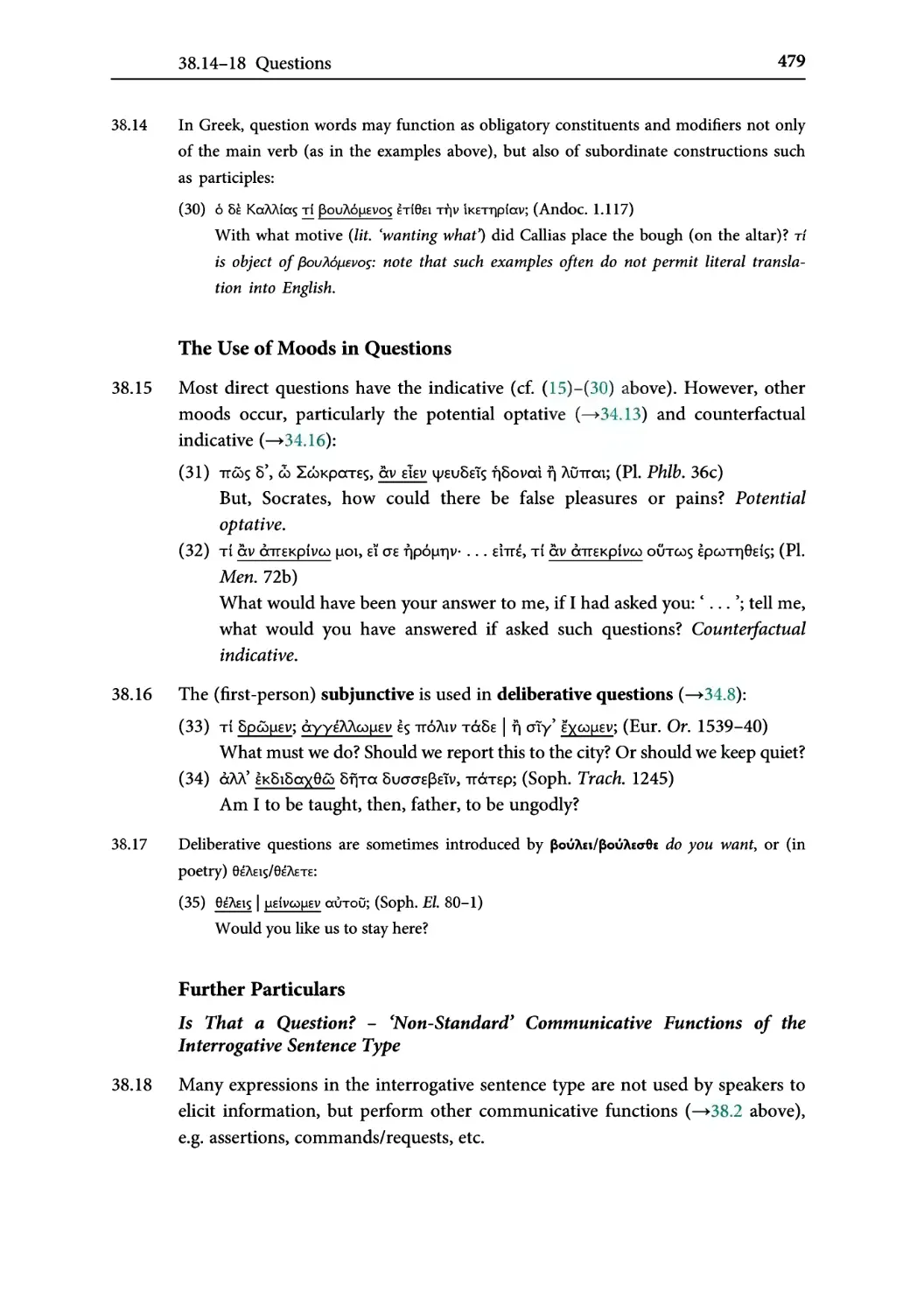
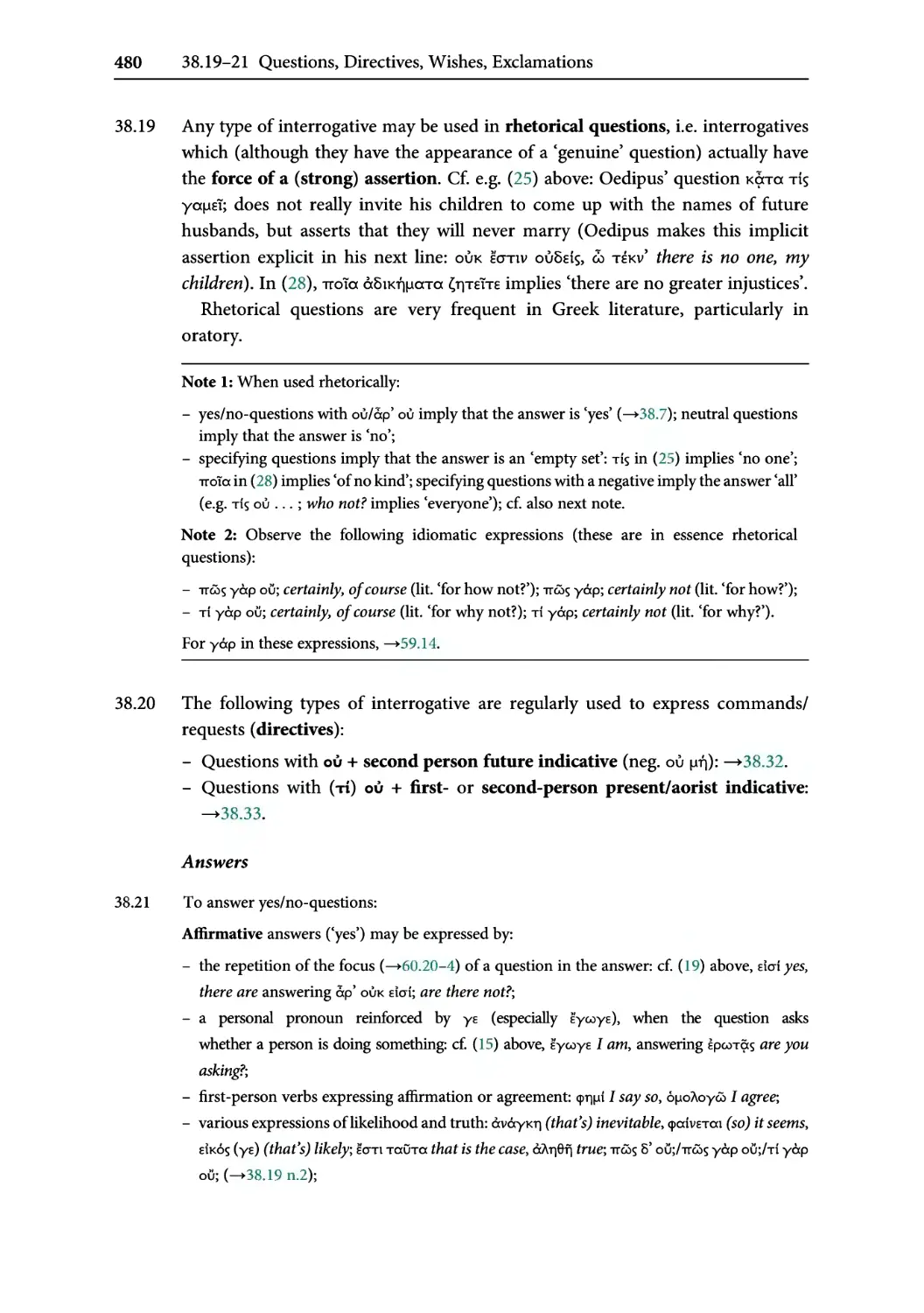
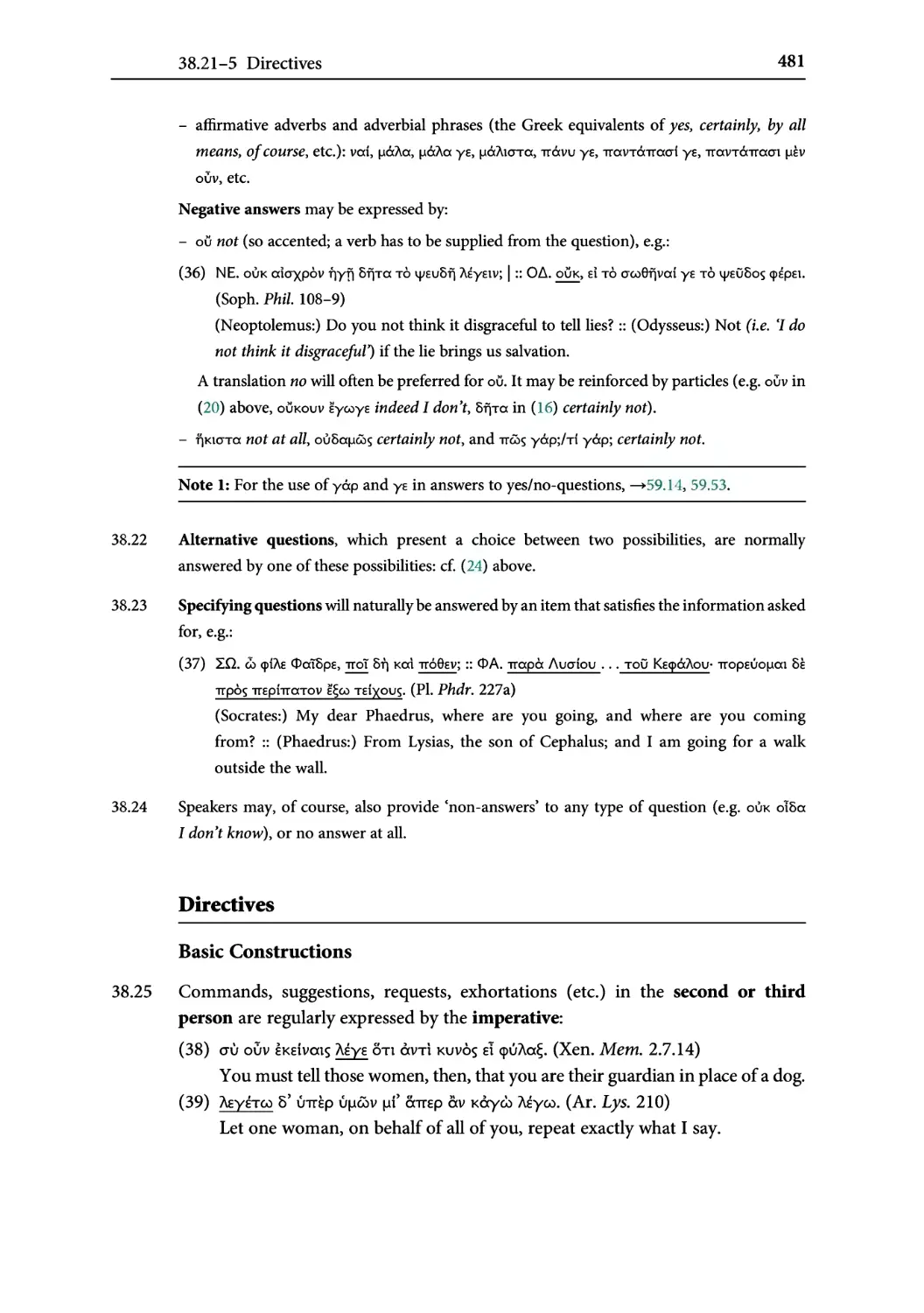
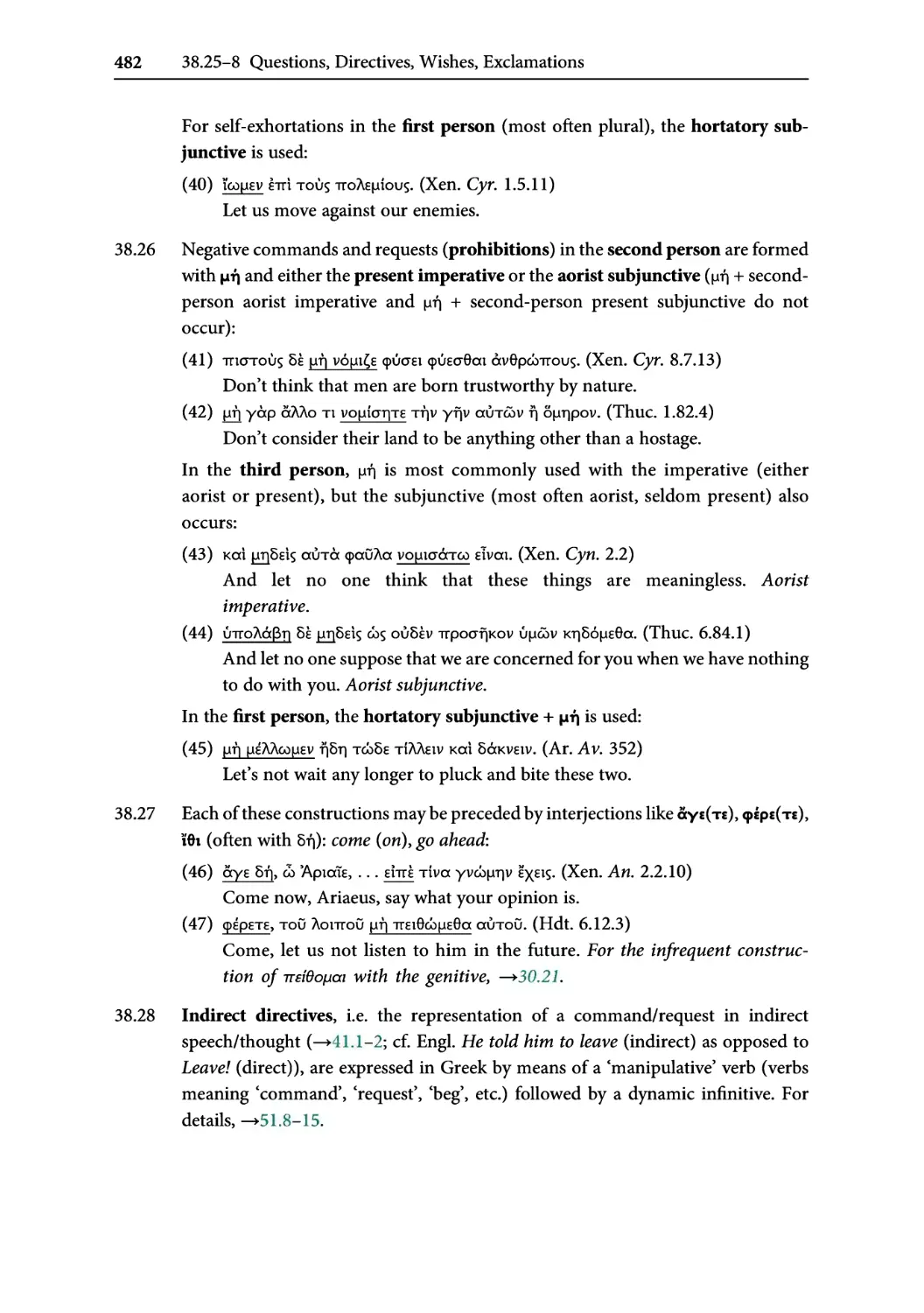
38 Questions, Directives, Wishes, Exclamations 474
Introduction: Sentence Types and Communicative Functions 474
Questions 476
Introduction: Basic Terminology 476
Yes/No-Questions and Alternative Questions 476
Specifying Questions 478
The Use of Moods in Questions 479
Further Particulars 479
Is That a Question? - 'Non-Standard' Communicative Functions of the
Interrogative Sentence Type 479
Answers 480
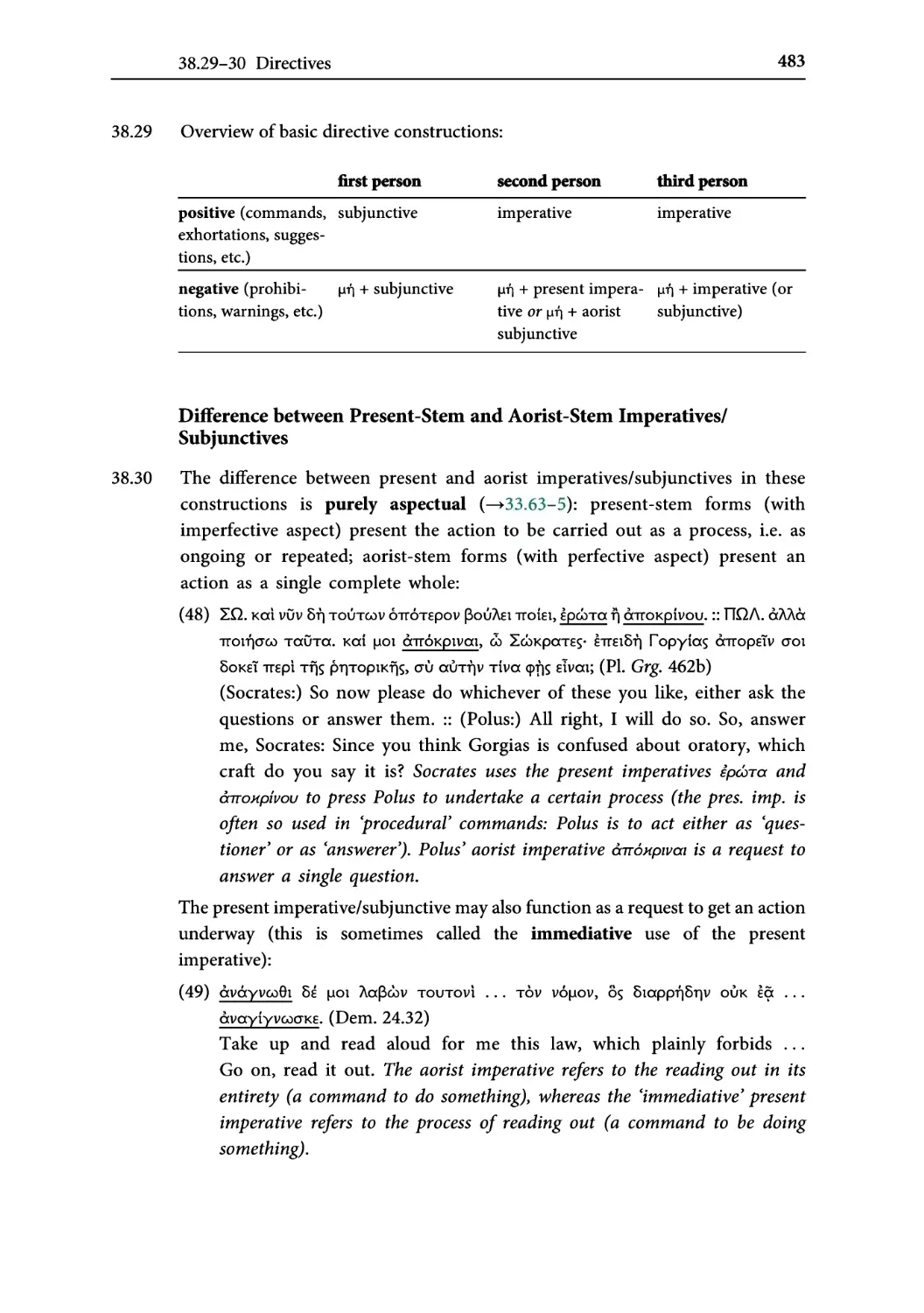
Directives 481
Basic Constructions 481
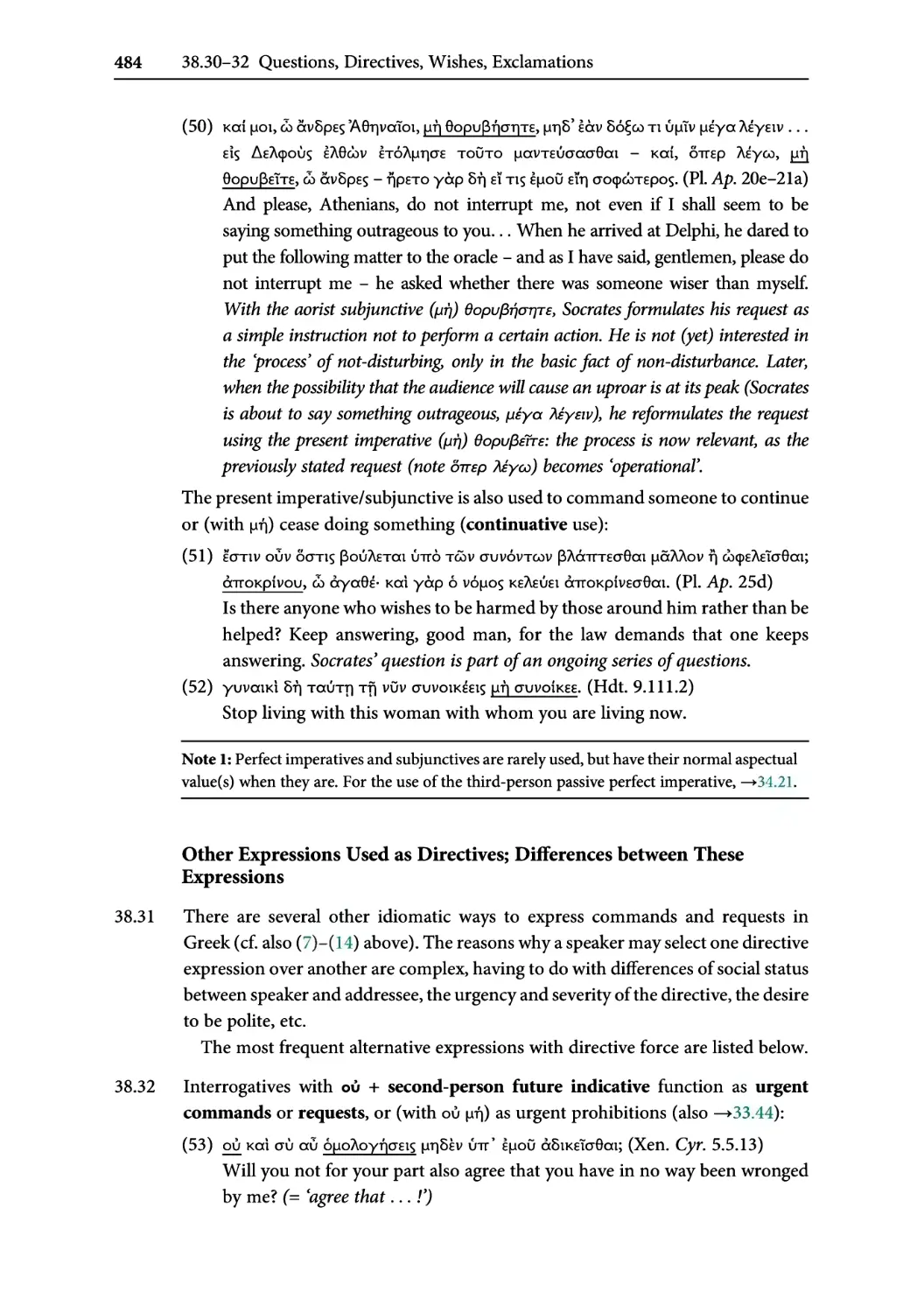
Difference between Present-Stem and Aorist-Stem Imperatives/Subjunctives 483
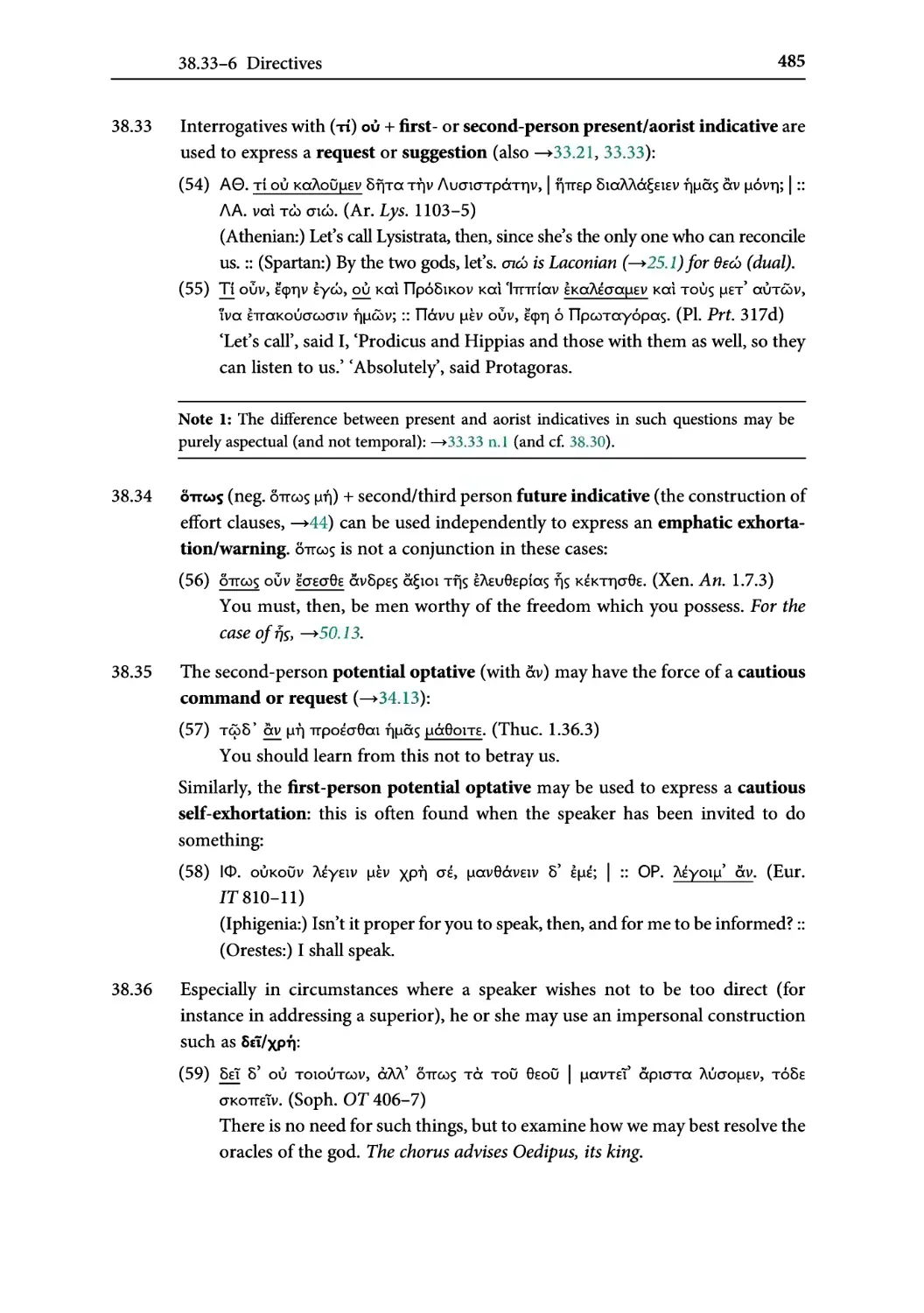
Other Expressions Used as Directives; Differences between These Expressions 484
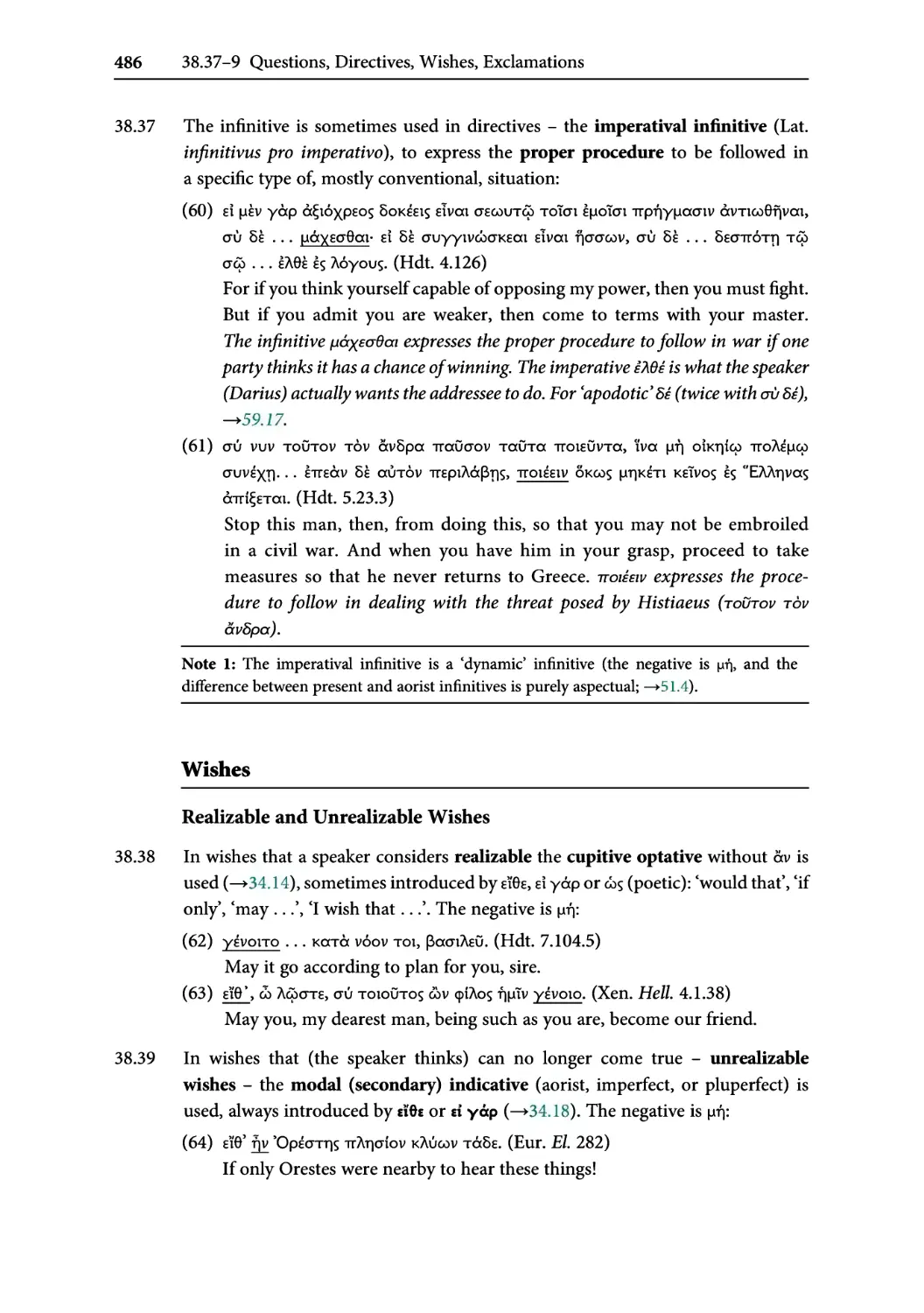
Wishes 486
Realizable and Unrealizable Wishes 486
Difference between Present-Stem and Aorist-Stem Forms 487
Exclamations 488
Introduction: Basic Terminology 488
Exclamations of Degree 488
Nominal Exclamations 489
The Exclamatory Infinitive 490

xxii Contents
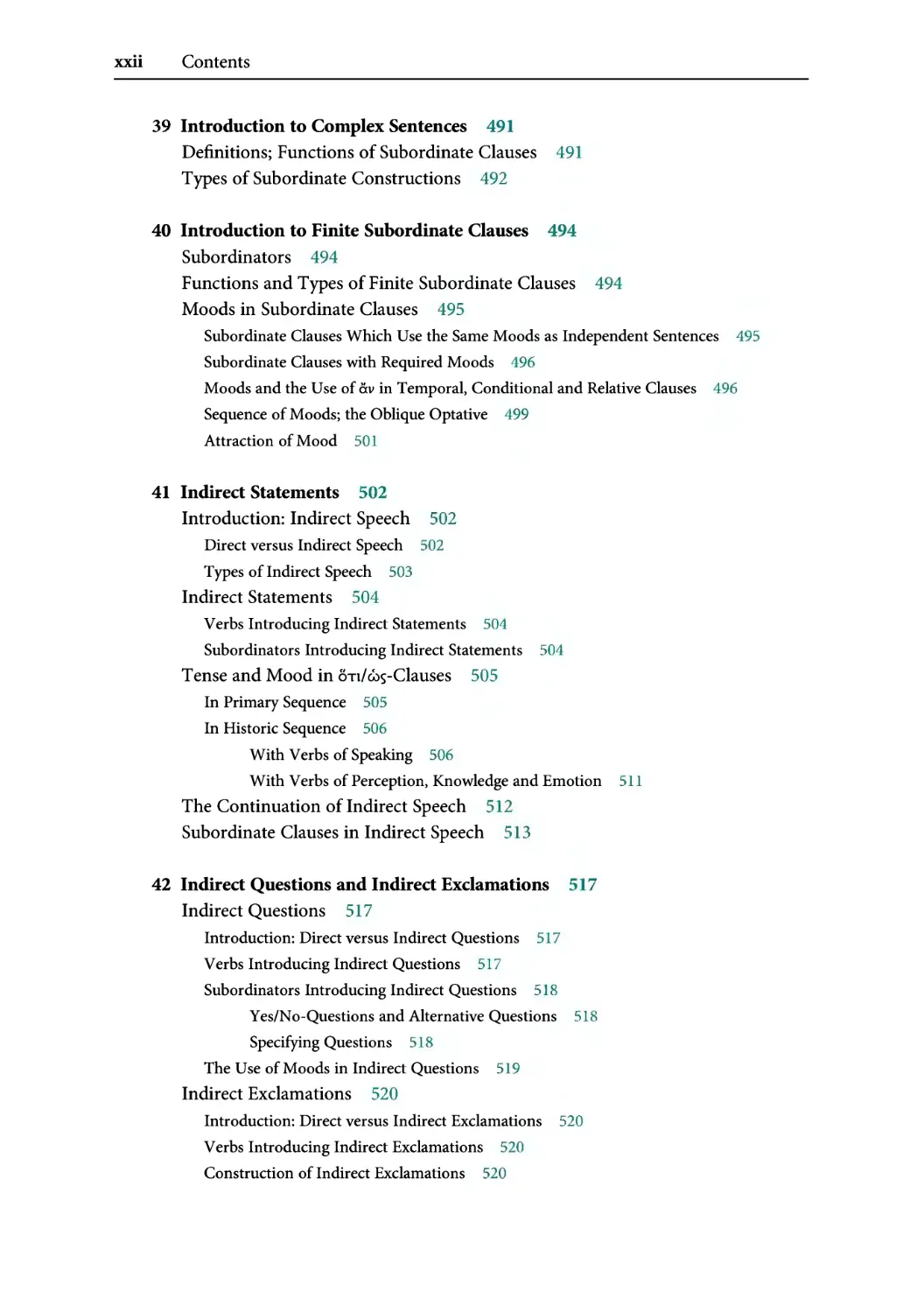
39 Introduction to Complex Sentences 491
Definitions; Functions of Subordinate Clauses 491
Types of Subordinate Constructions 492
40 Introduction to Finite Subordinate Clauses 494
Subordinators 494
Functions and Types of Finite Subordinate Clauses 494
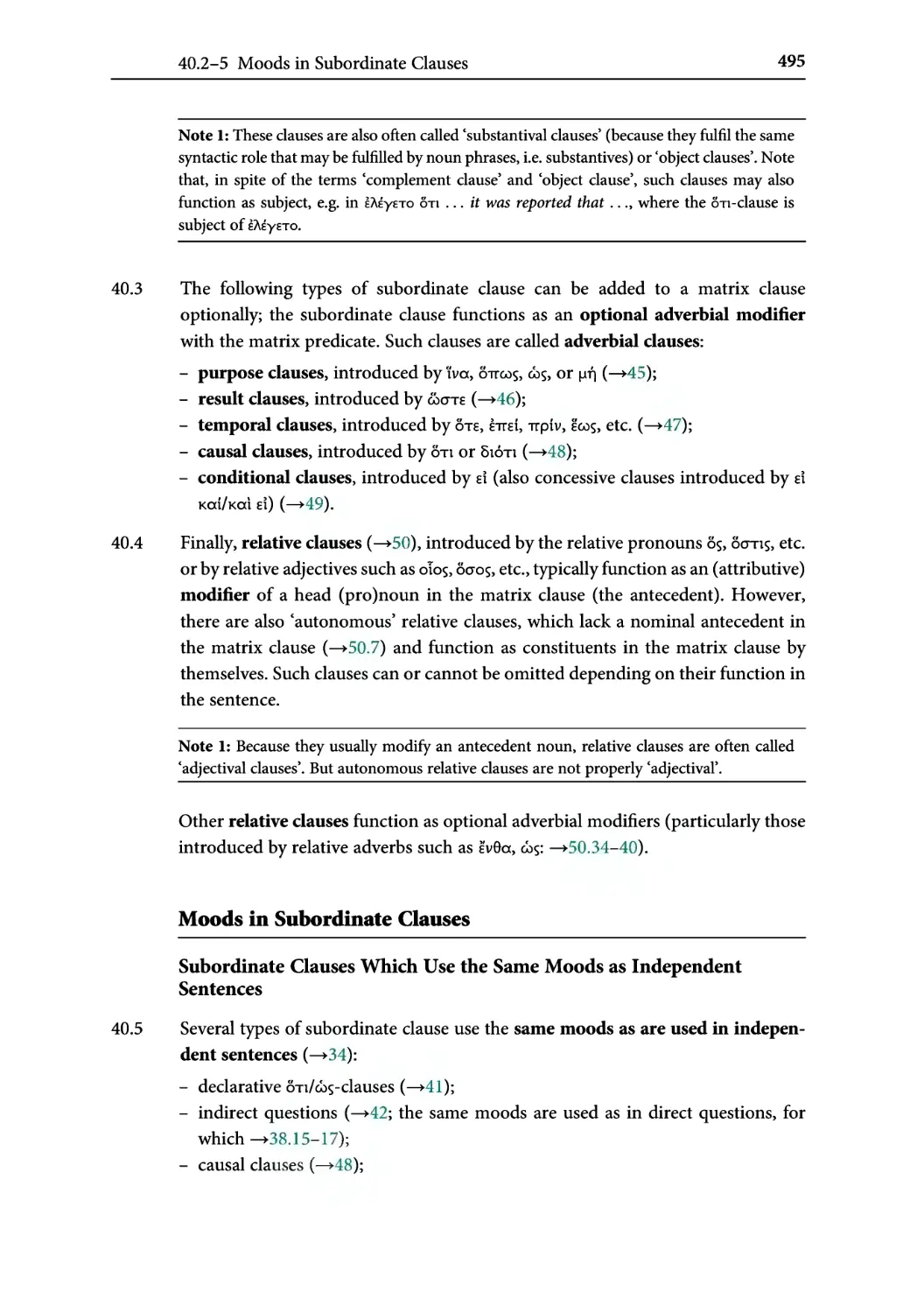
Moods in Subordinate Clauses 495
Subordinate Clauses Which Use the Same Moods as Independent Sentences 495
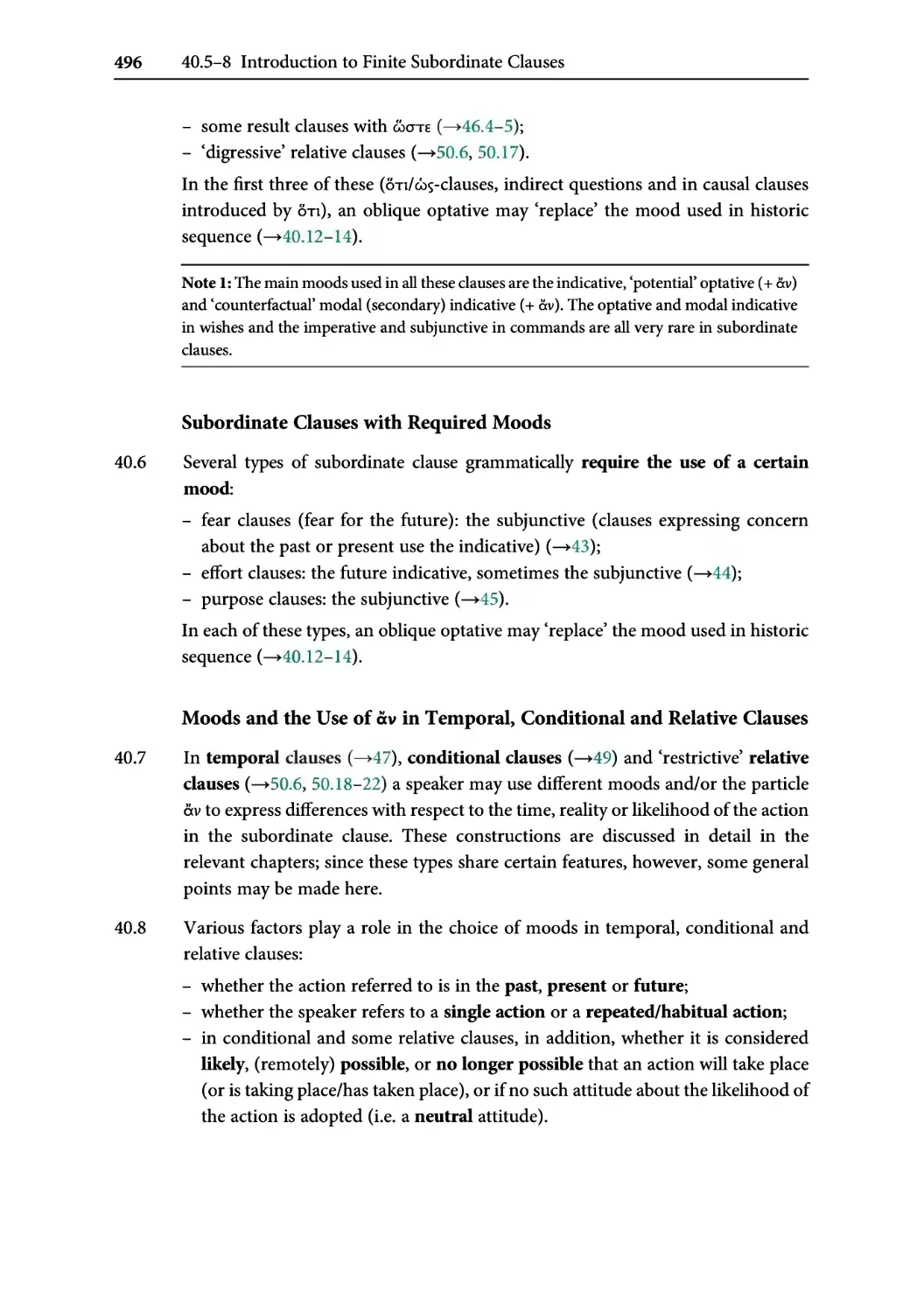
Subordinate Clauses with Required Moods 496
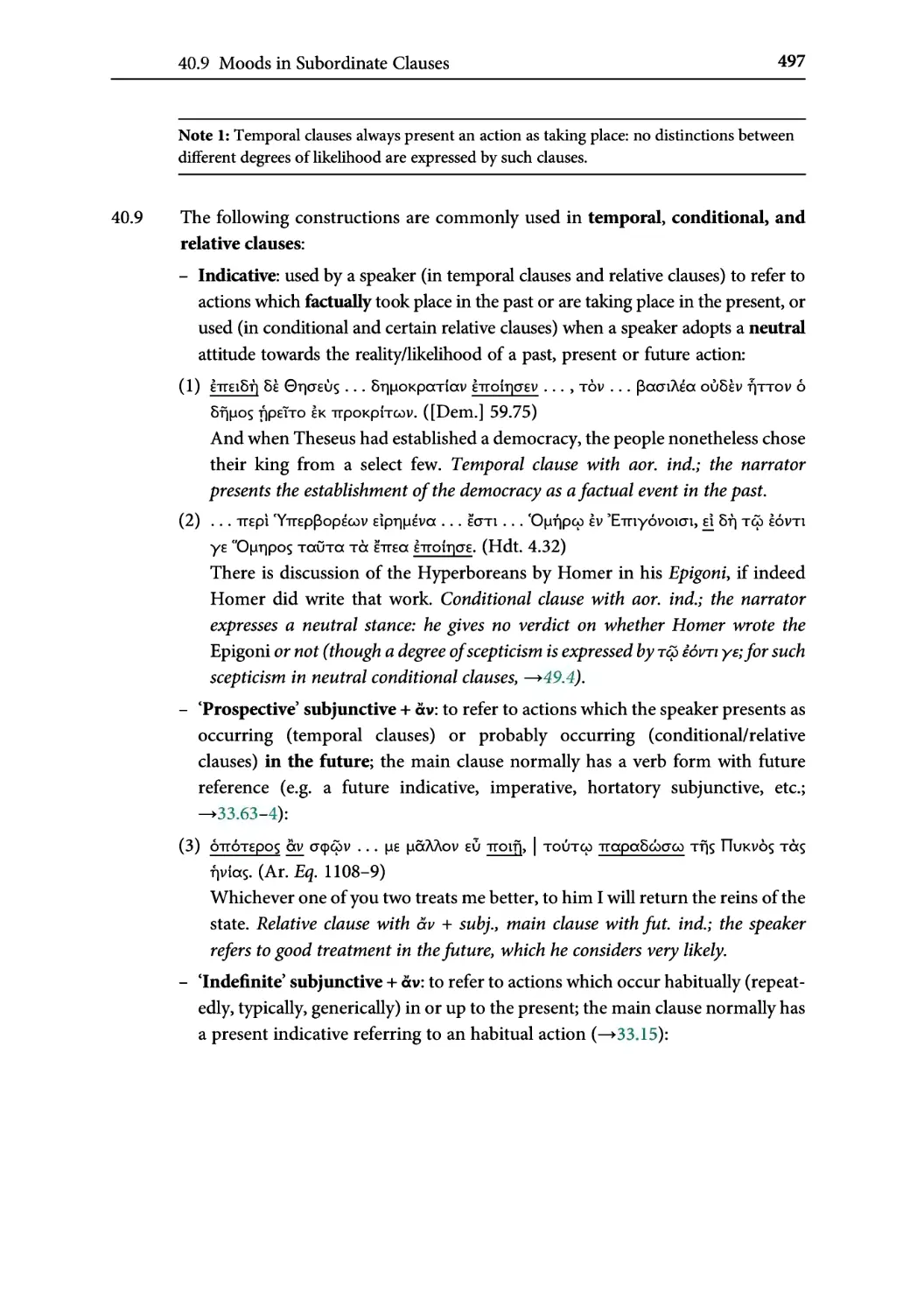
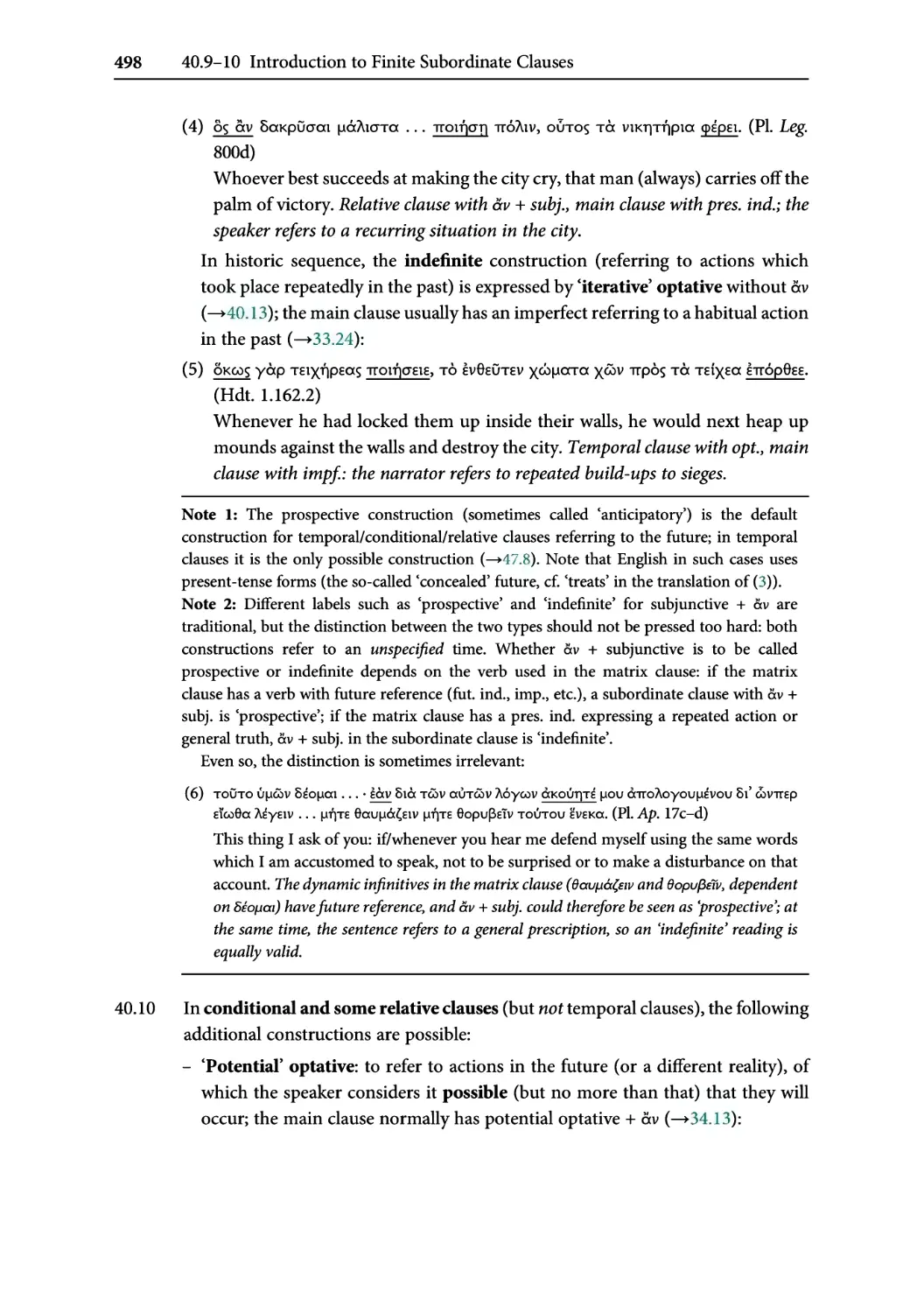
Moods and the Use of αν in Temporal, Conditional and Relative Clauses 496
Sequence of Moods; the Oblique Optative 499
Attraction of Mood 501
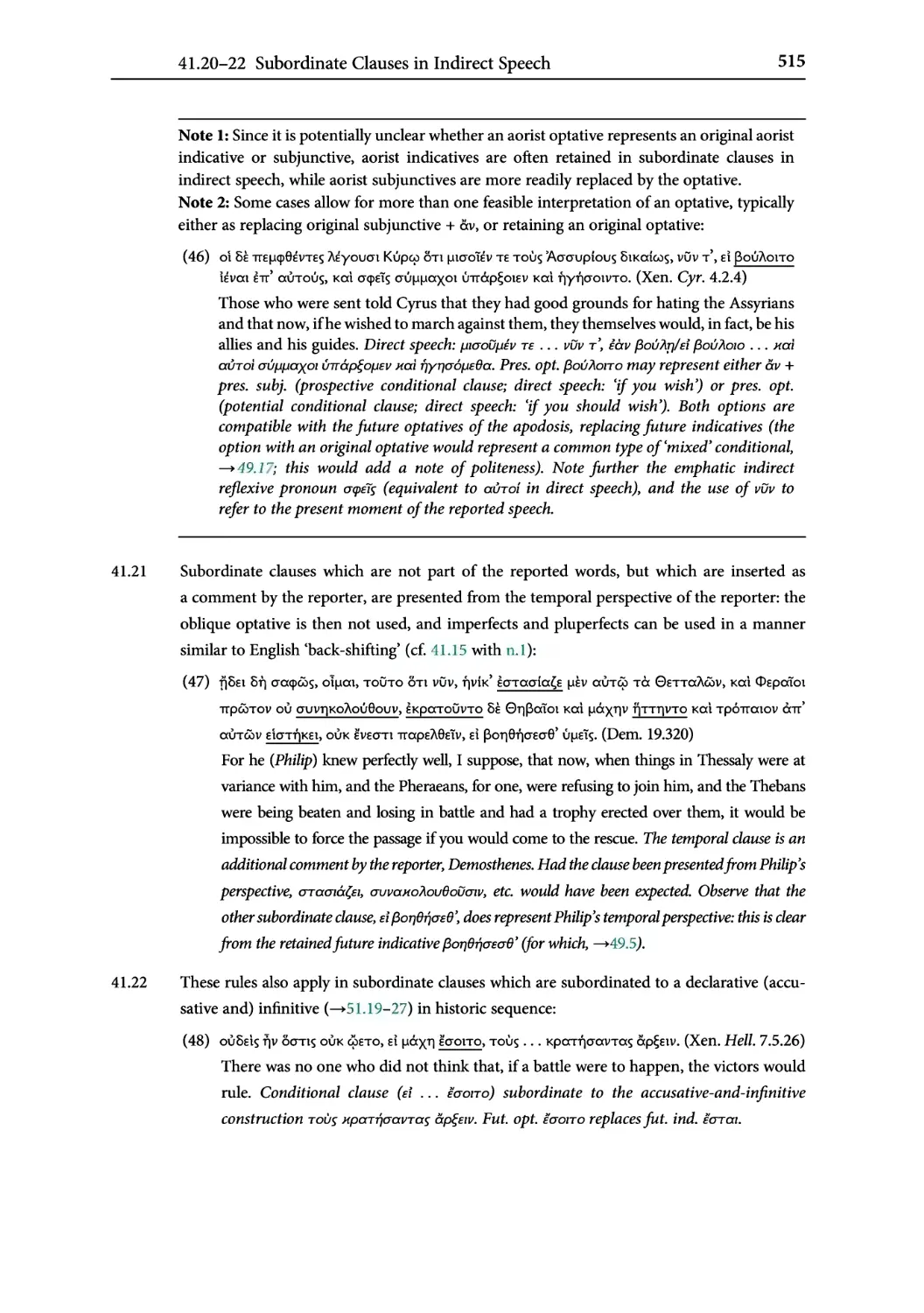
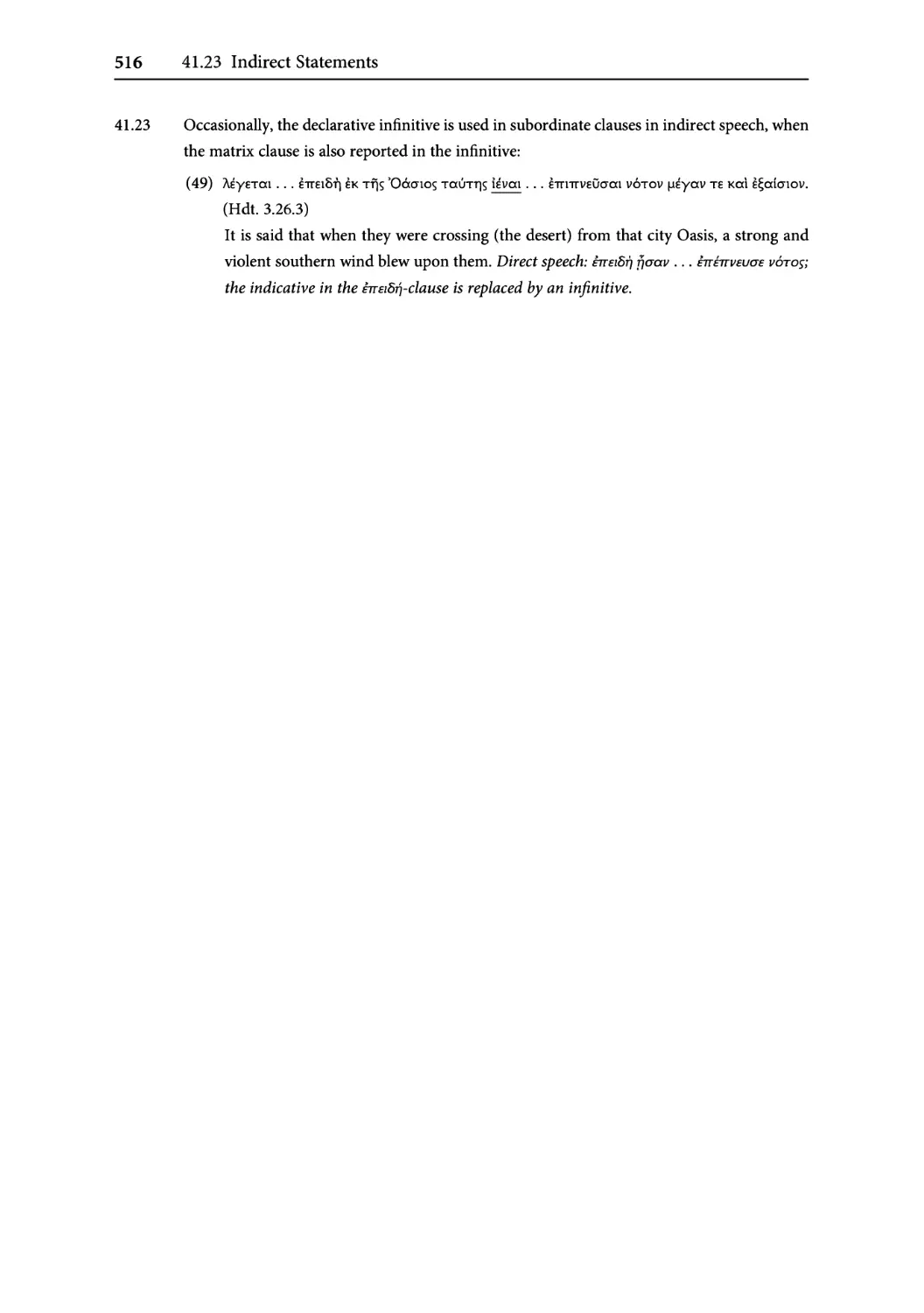
41 Indirect Statements 502
Introduction: Indirect Speech 502
Direct versus Indirect Speech 502
Types of Indirect Speech 503
Indirect Statements 504
Verbs Introducing Indirect Statements 504
Subordinators Introducing Indirect Statements 504
Tense and Mood in δτι/cbs-Clauses 505
In Primary Sequence 505
In Historic Sequence 506
With Verbs of Speaking 506
With Verbs of Perception, Knowledge and Emotion 511
The Continuation of Indirect Speech 512
Subordinate Clauses in Indirect Speech 513
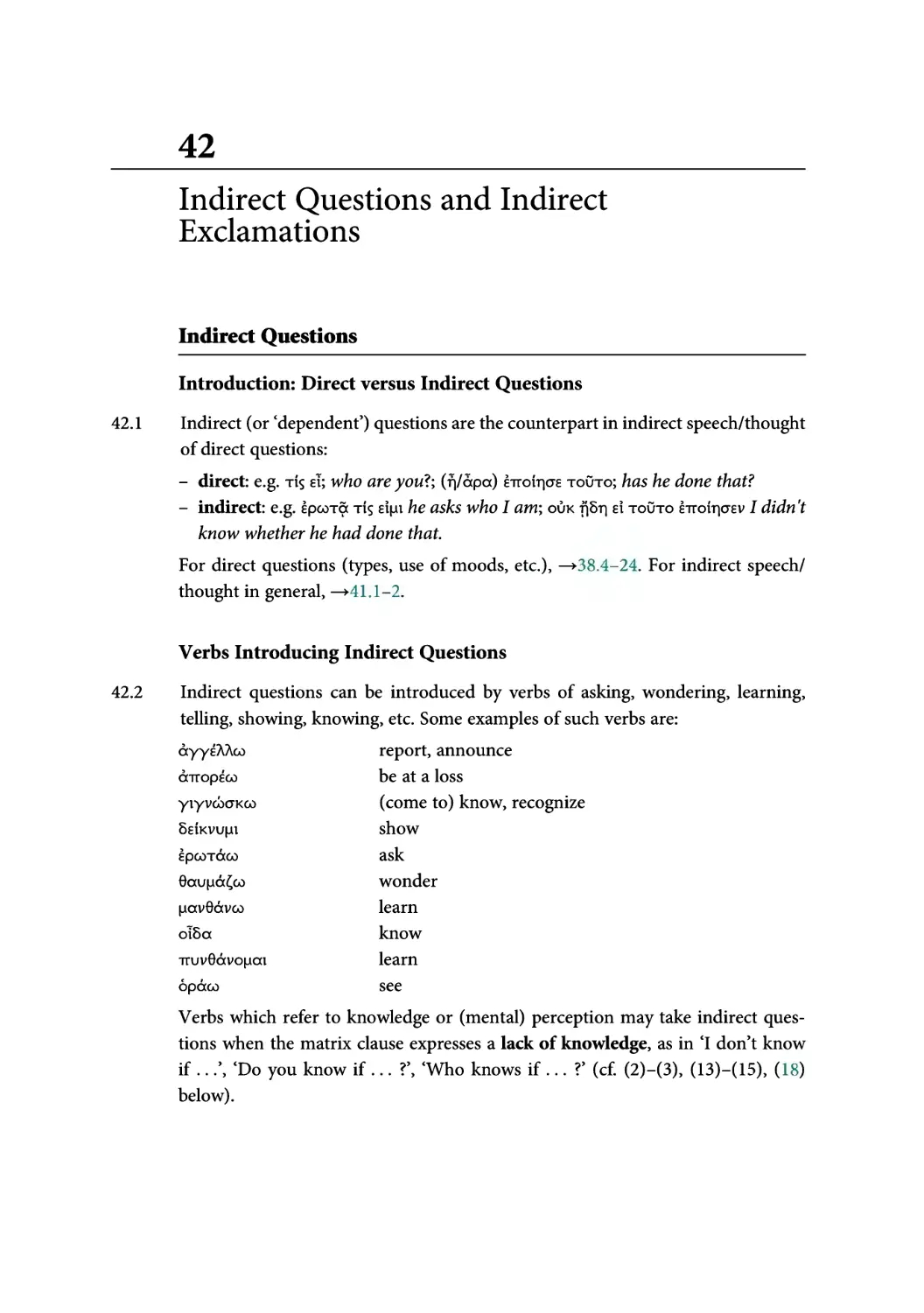
42 Indirect Questions and Indirect Exclamations 517
Indirect Questions 517
Introduction: Direct versus Indirect Questions 517
Verbs Introducing Indirect Questions 517
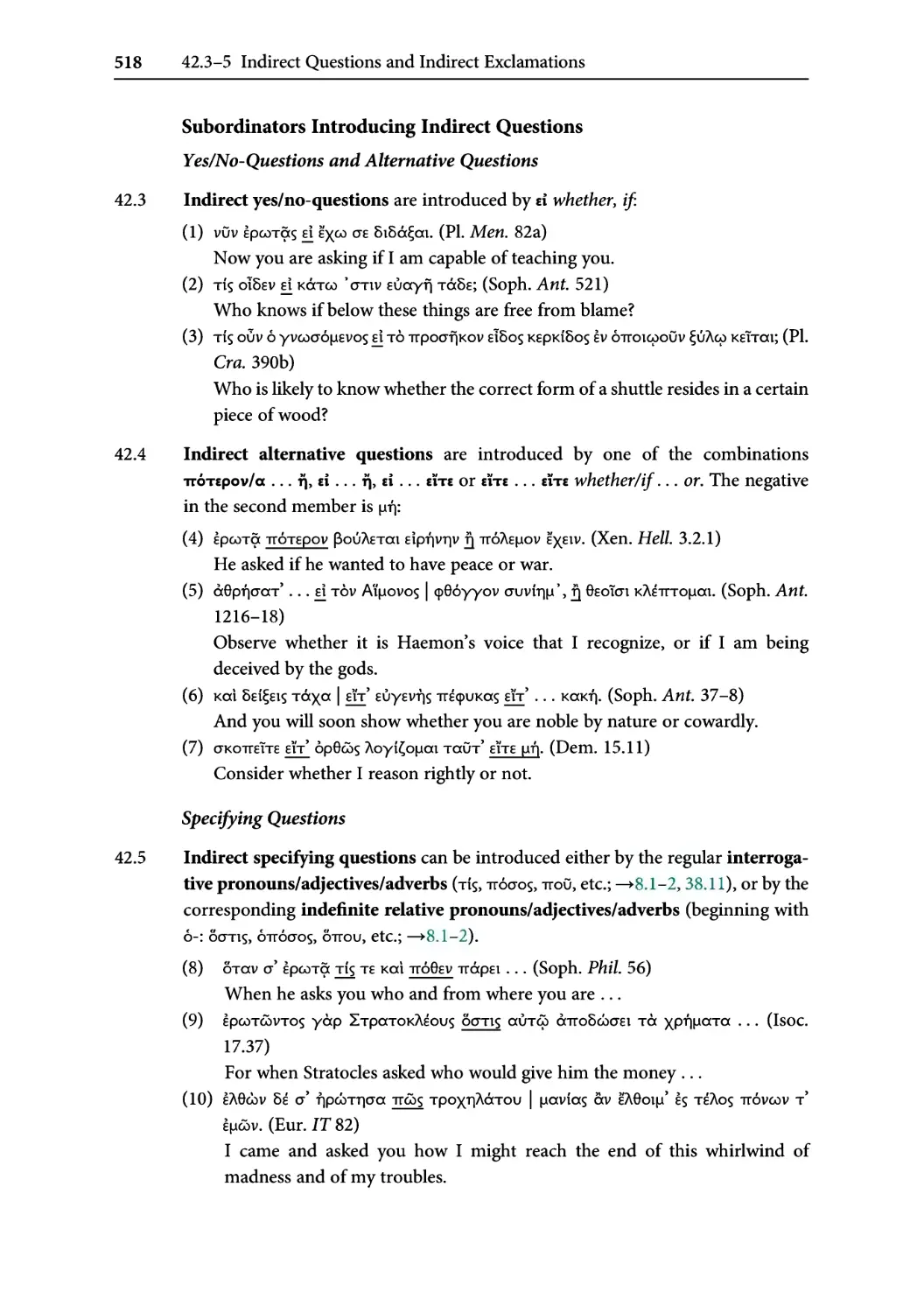
Subordinators Introducing Indirect Questions 518
Yes/No-Questions and Alternative Questions 518
Specifying Questions 518
The Use of Moods in Indirect Questions 519
Indirect Exclamations 520
Introduction: Direct versus Indirect Exclamations 520
Verbs Introducing Indirect Exclamations 520
Construction of Indirect Exclamations 520

Contents
xxiii
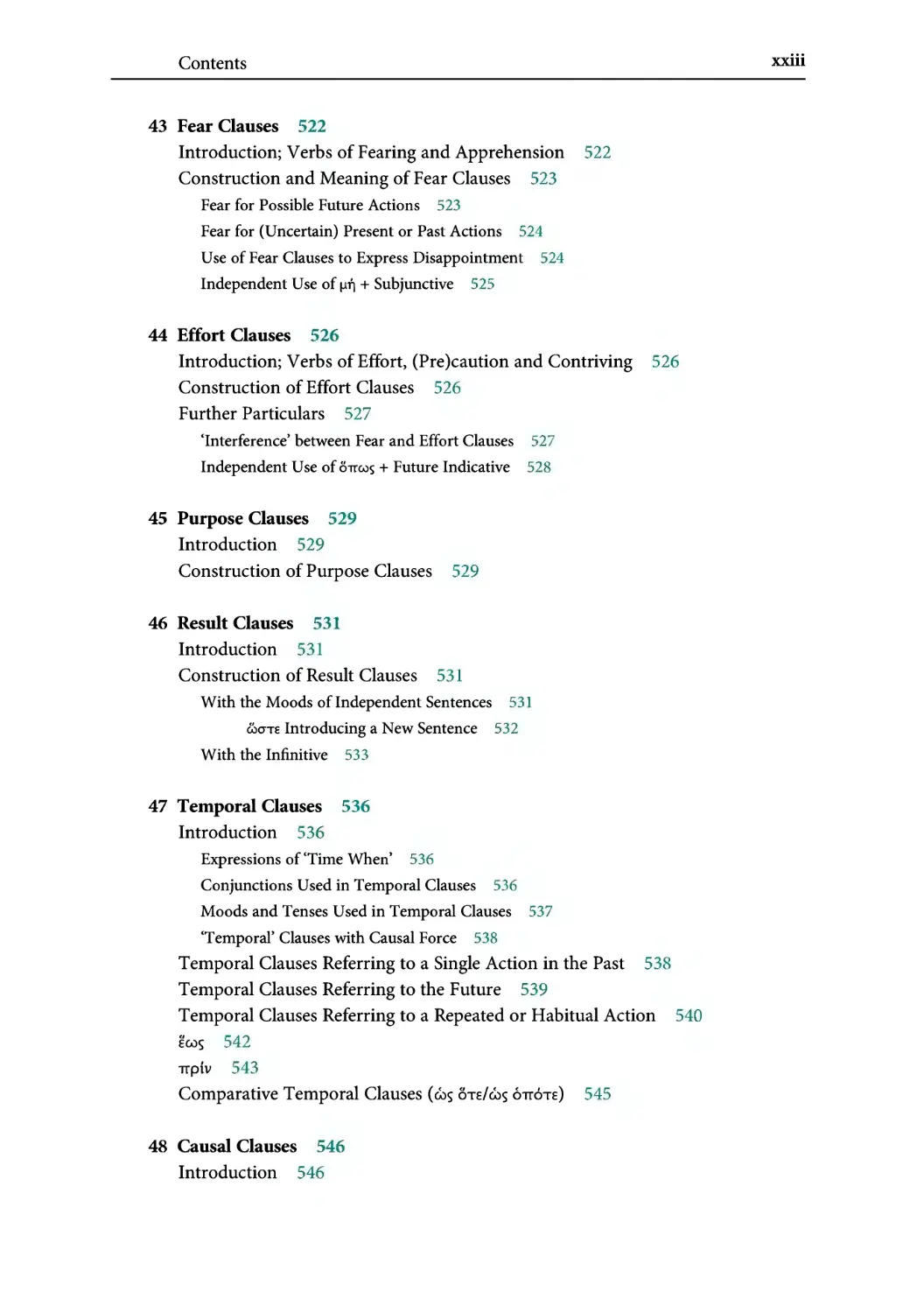
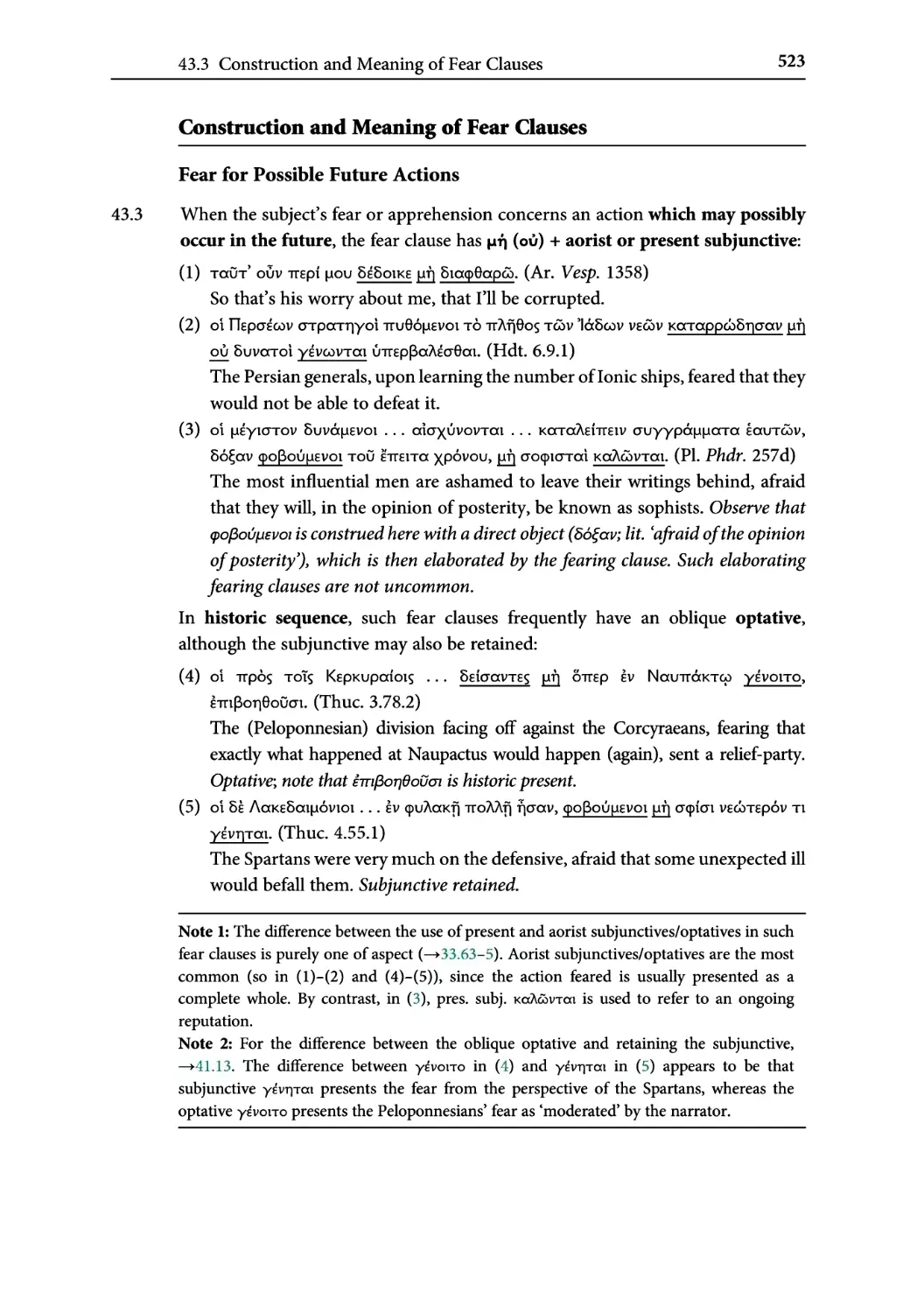
43 Fear Clauses 522
Introduction; Verbs of Fearing and Apprehension 522
Construction and Meaning of Fear Clauses 523
Fear for Possible Future Actions 523
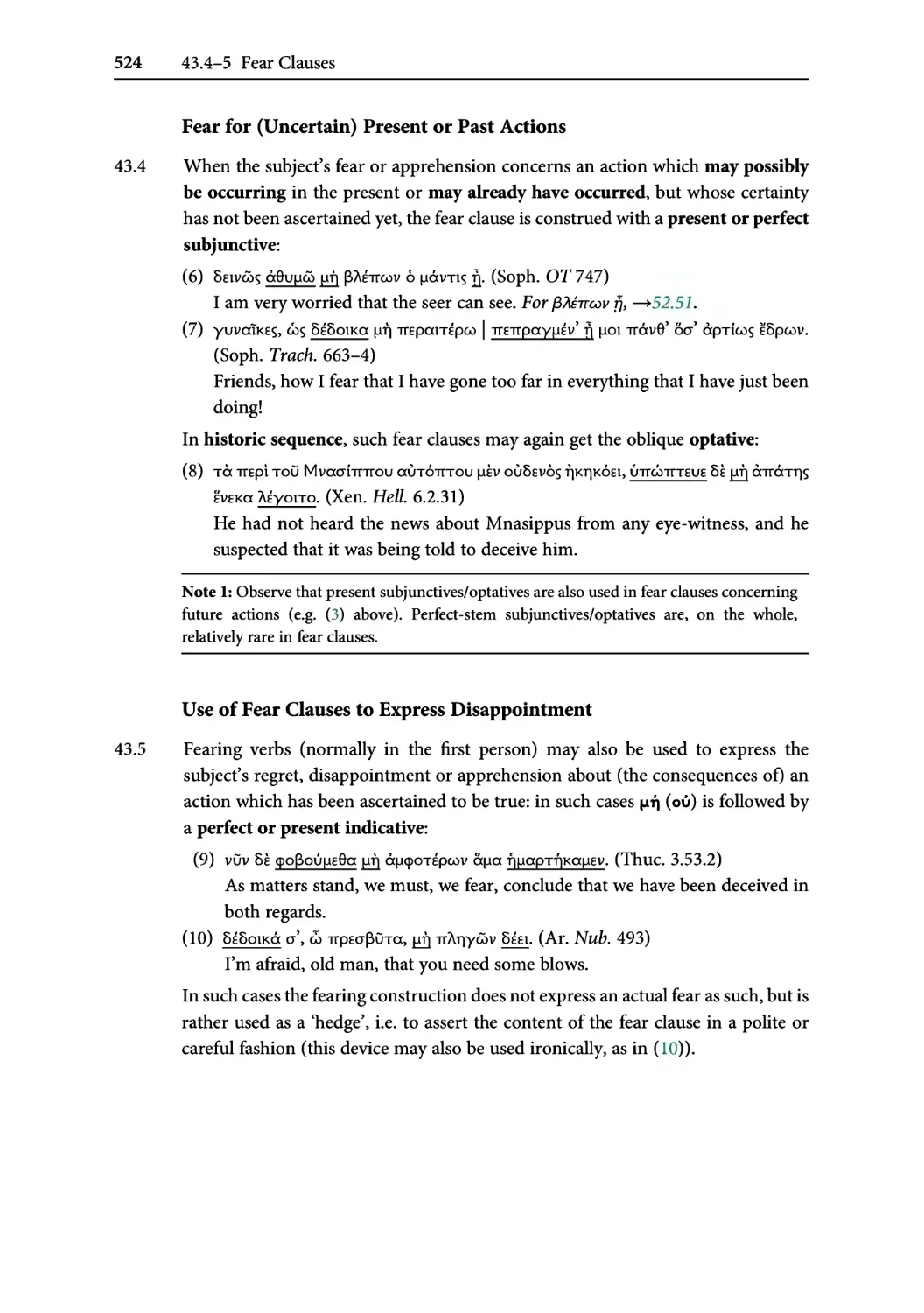
Fear for (Uncertain) Present or Past Actions 524
Use of Fear Clauses to Express Disappointment 524
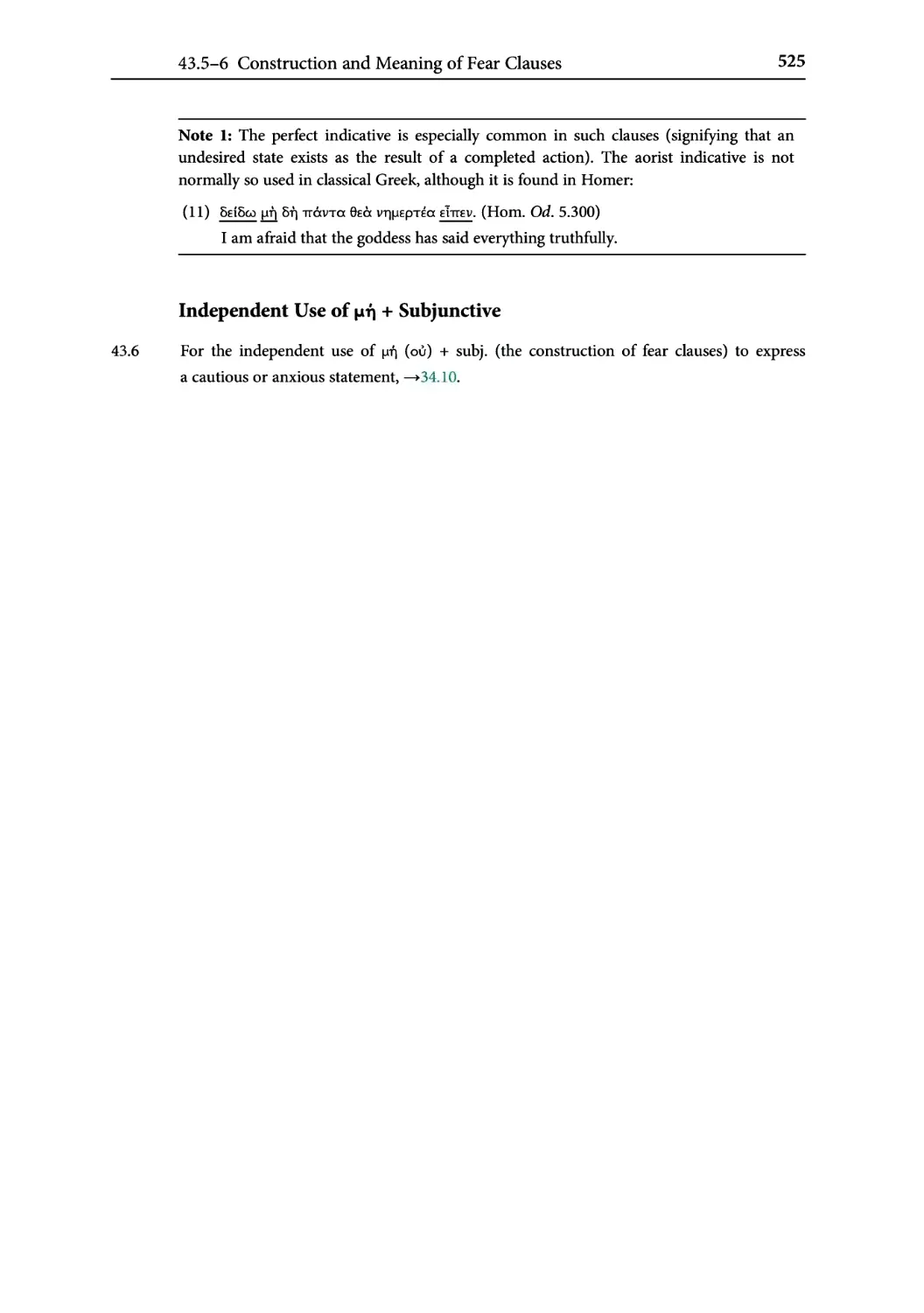
Independent Use of μή + Subjunctive 525
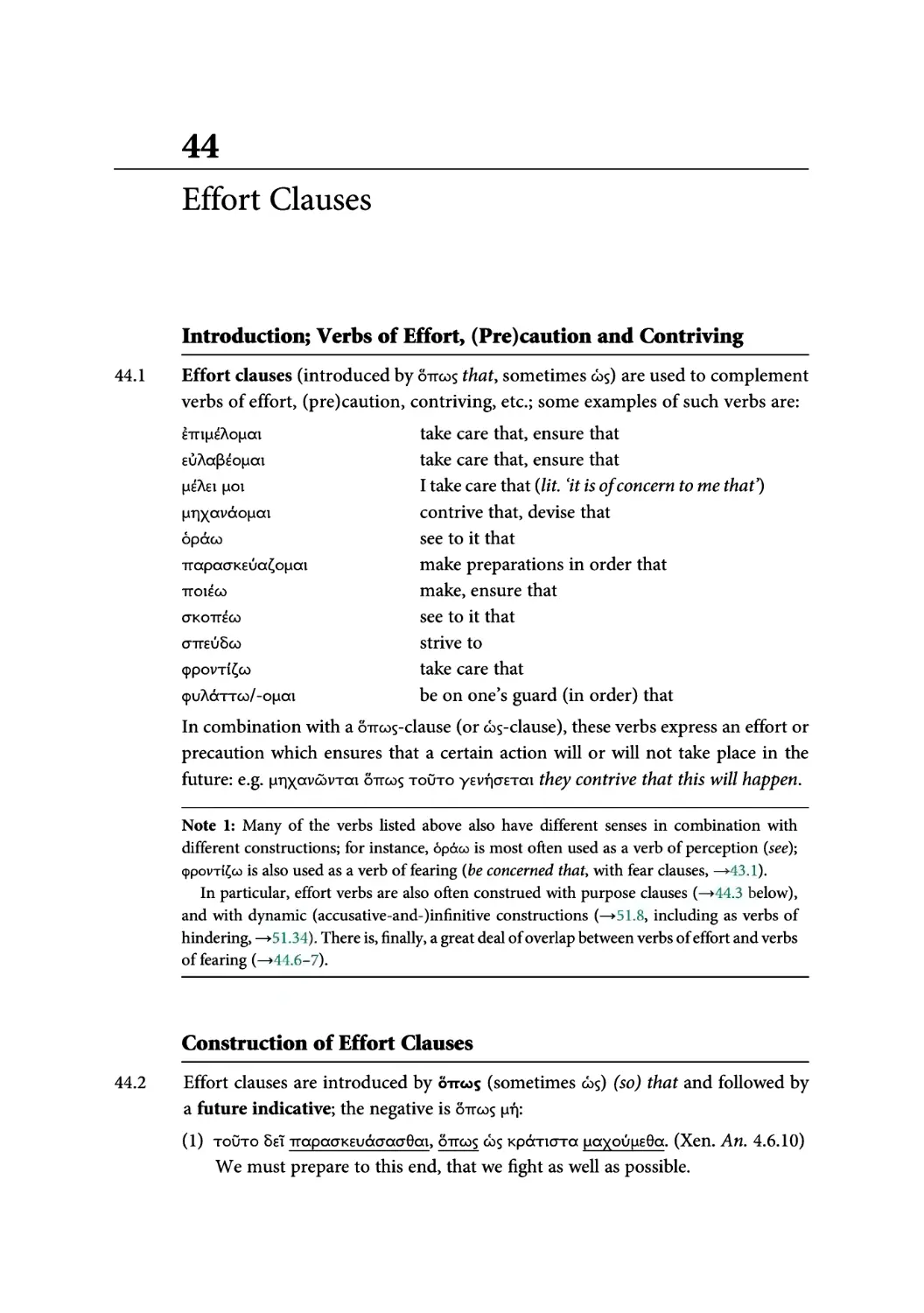
44 Effort Clauses 526
Introduction; Verbs of Effort, (Pre)caution and Contriving 526
Construction of Effort Clauses 526
Further Particulars 527
'Interference' between Fear and Effort Clauses 527
Independent Use of δπως + Future Indicative 528
45 Purpose Clauses 529
Introduction 529
Construction of Purpose Clauses 529
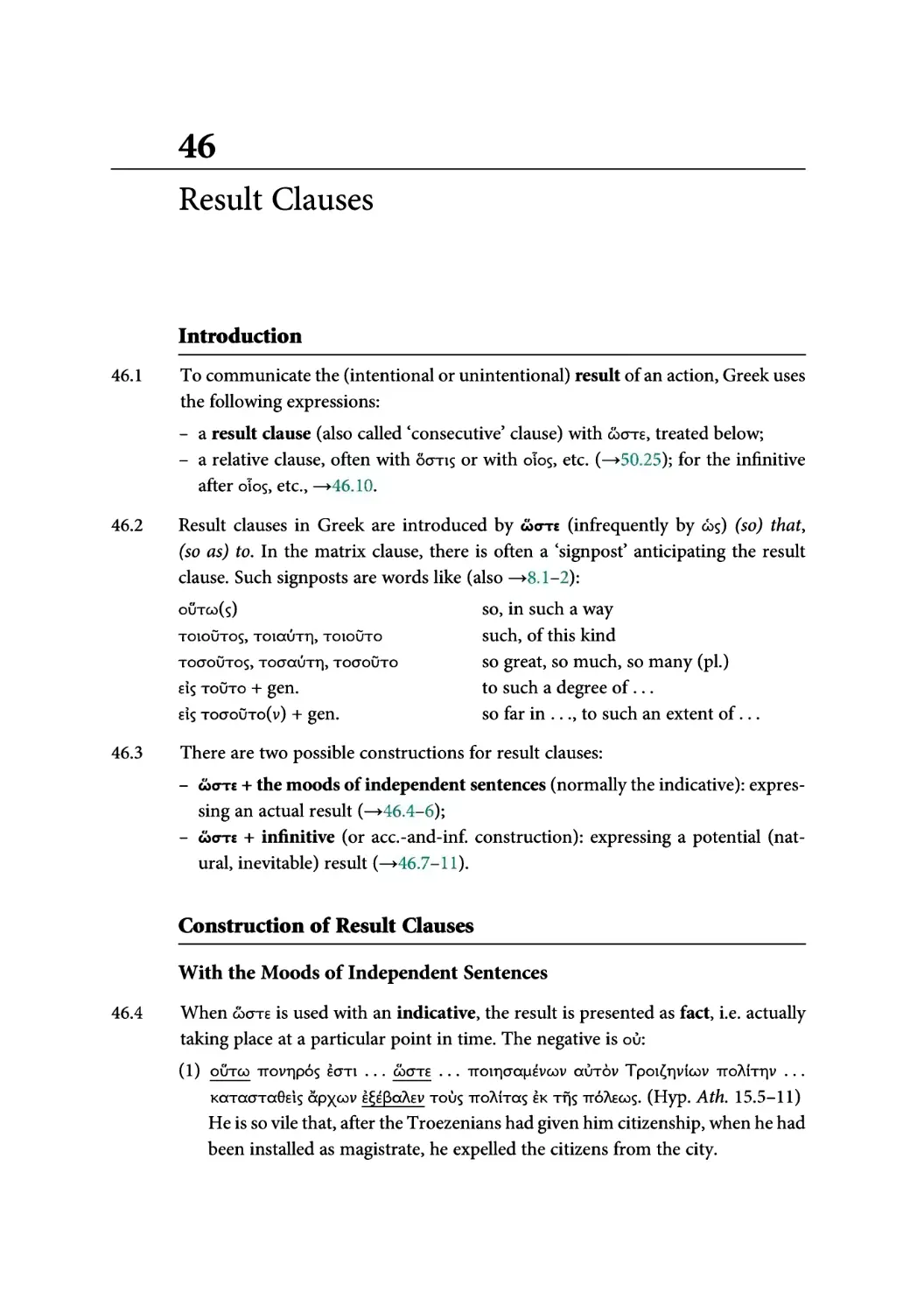
46 Result Clauses 531
Introduction 531
Construction of Result Clauses 531
With the Moods of Independent Sentences 531
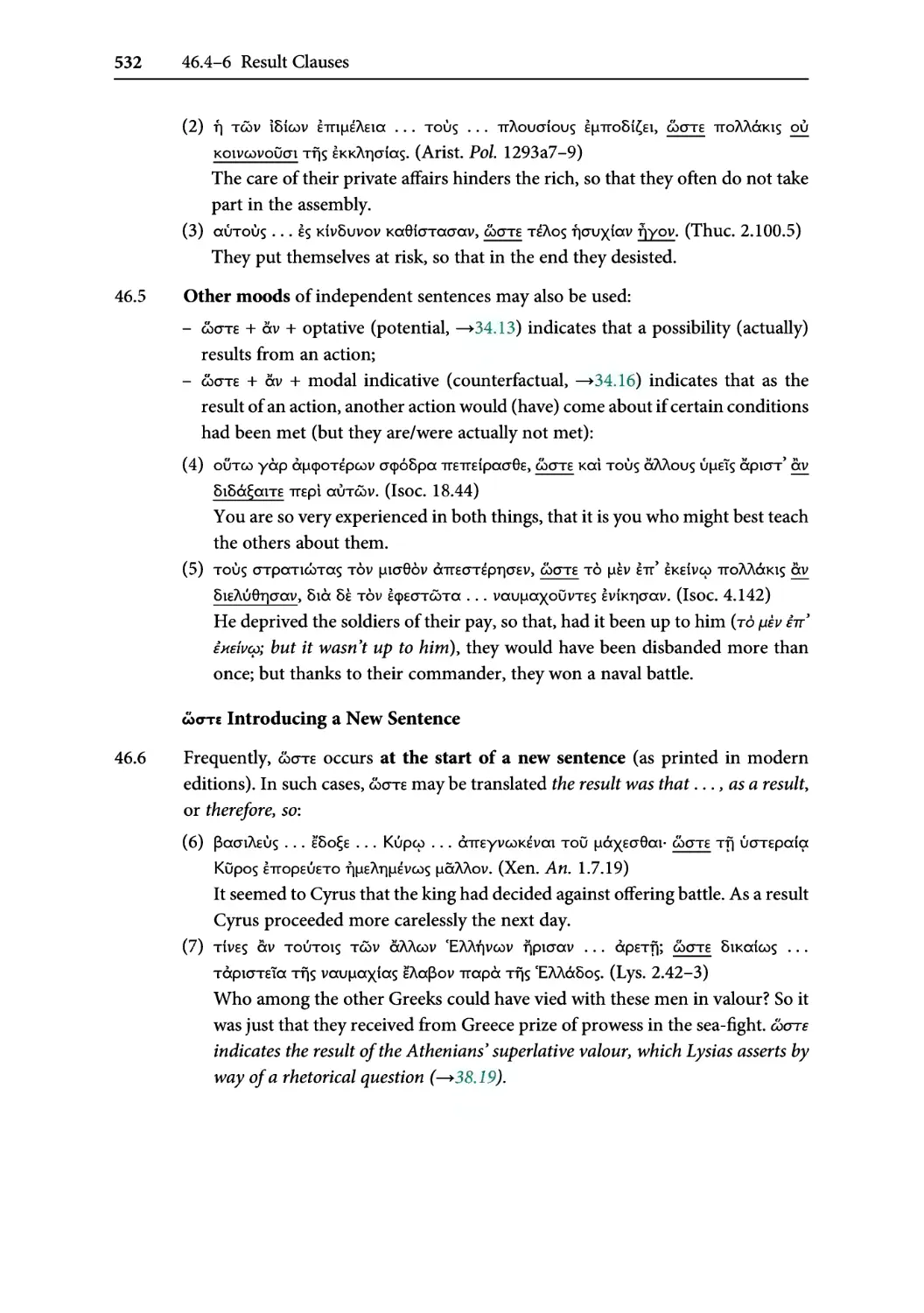
ώστε Introducing a New Sentence 532
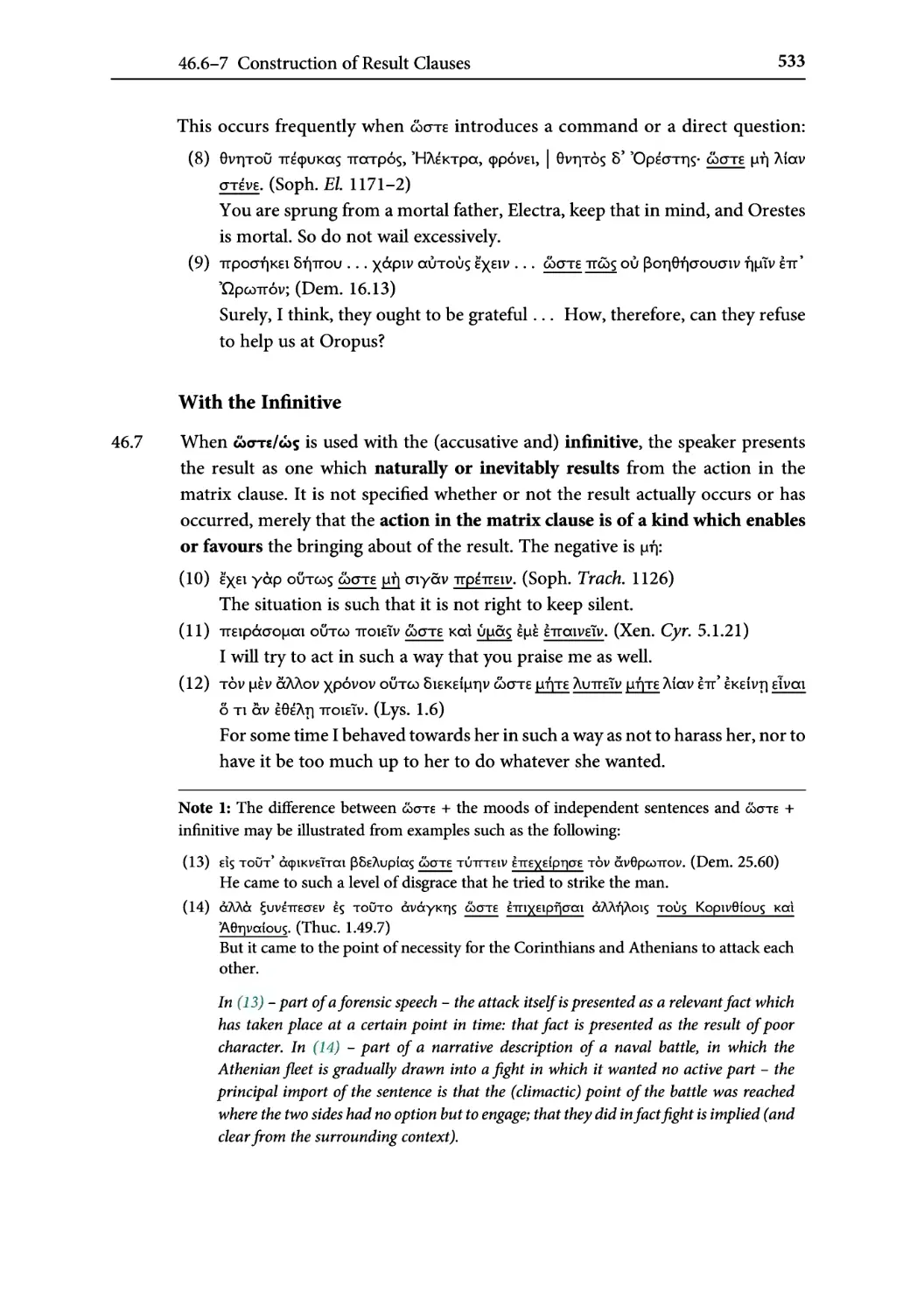
With the Infinitive 533
47 Temporal Clauses 536
Introduction 536
Expressions of'Time When' 536
Conjunctions Used in Temporal Clauses 536
Moods and Tenses Used in Temporal Clauses 537
'Temporal' Clauses with Causal Force 538
Temporal Clauses Referring to a Single Action in the Past 538
Temporal Clauses Referring to the Future 539
Temporal Clauses Referring to a Repeated or Habitual Action 540
I'cos 542
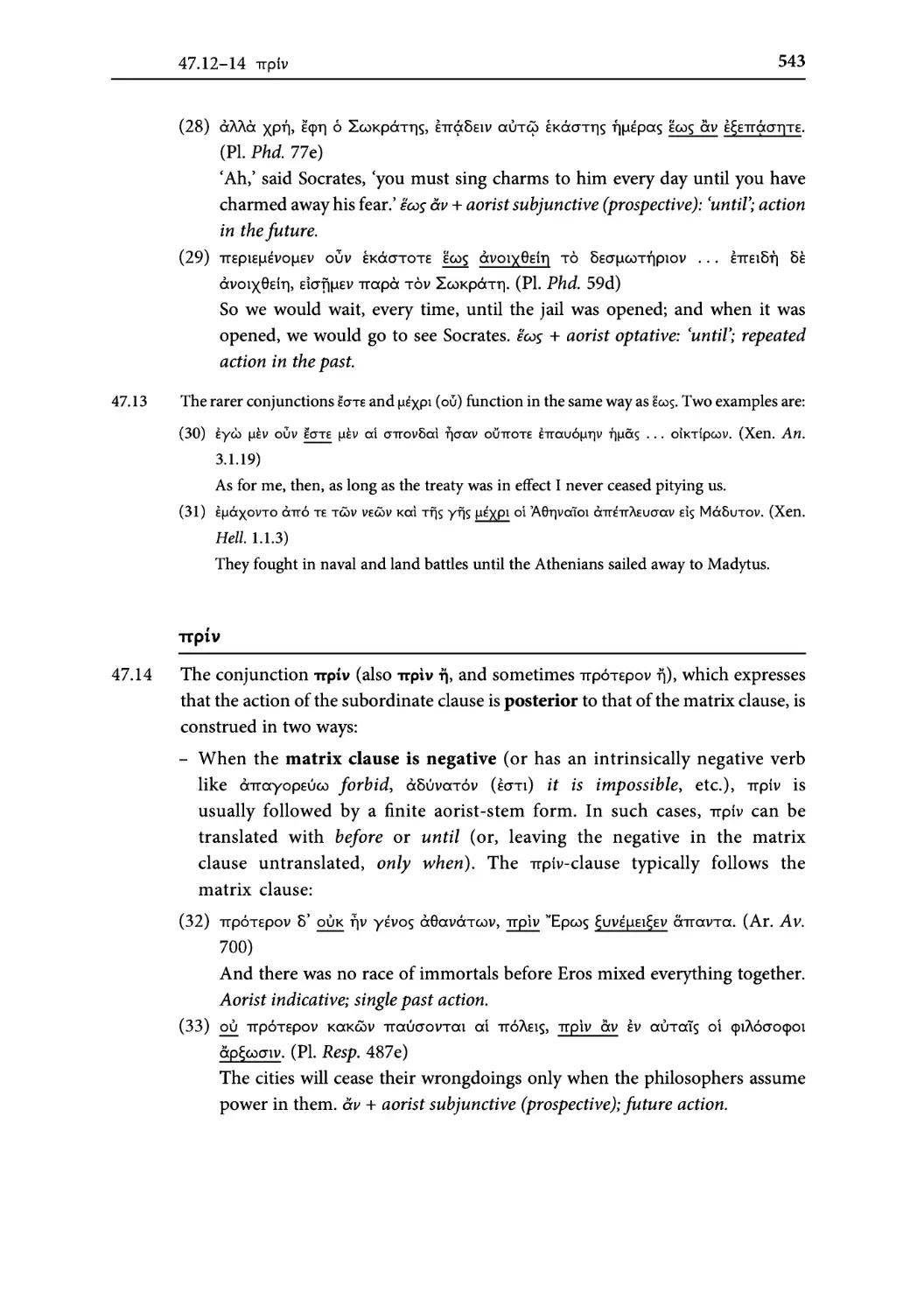
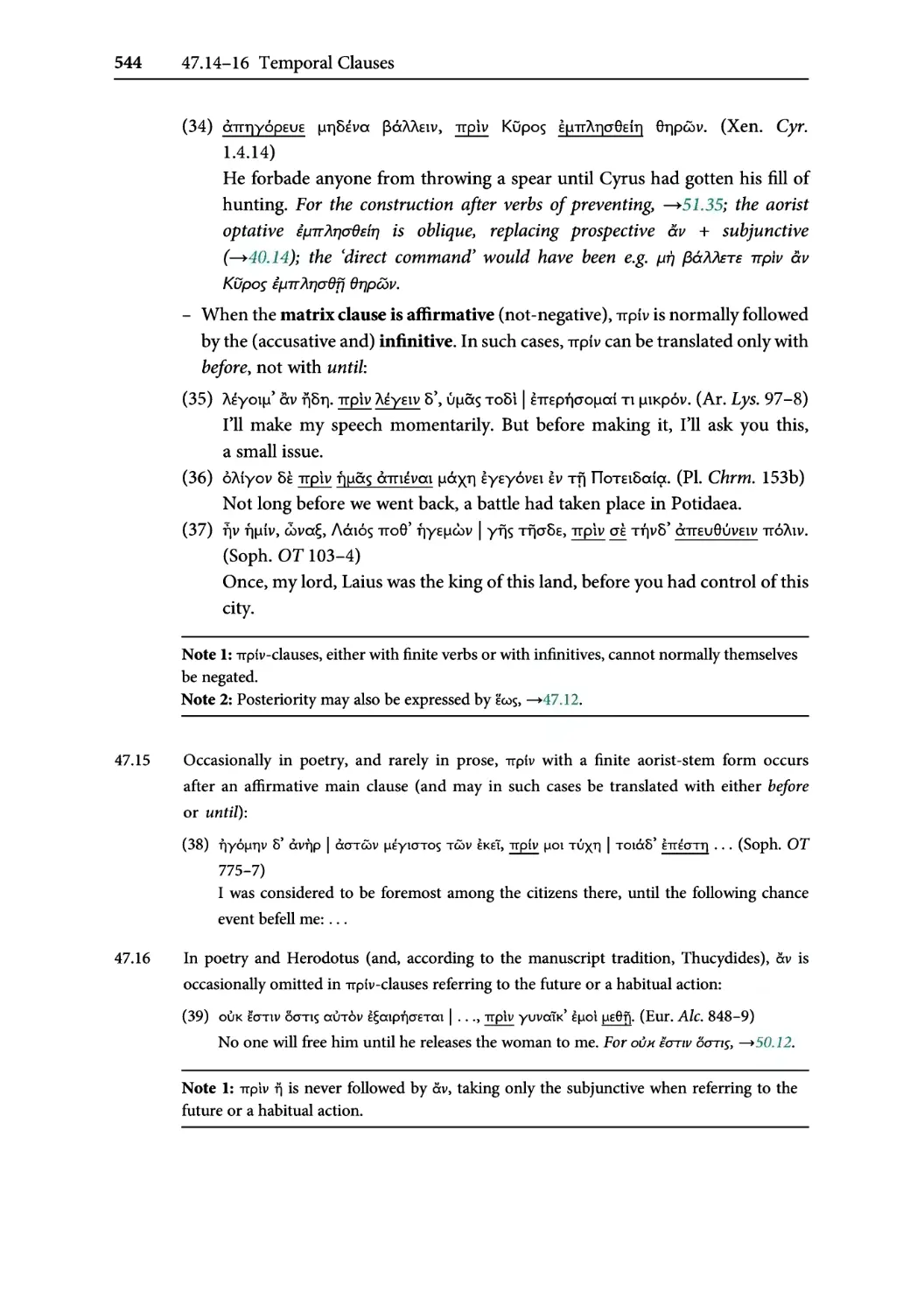
πρίν 543
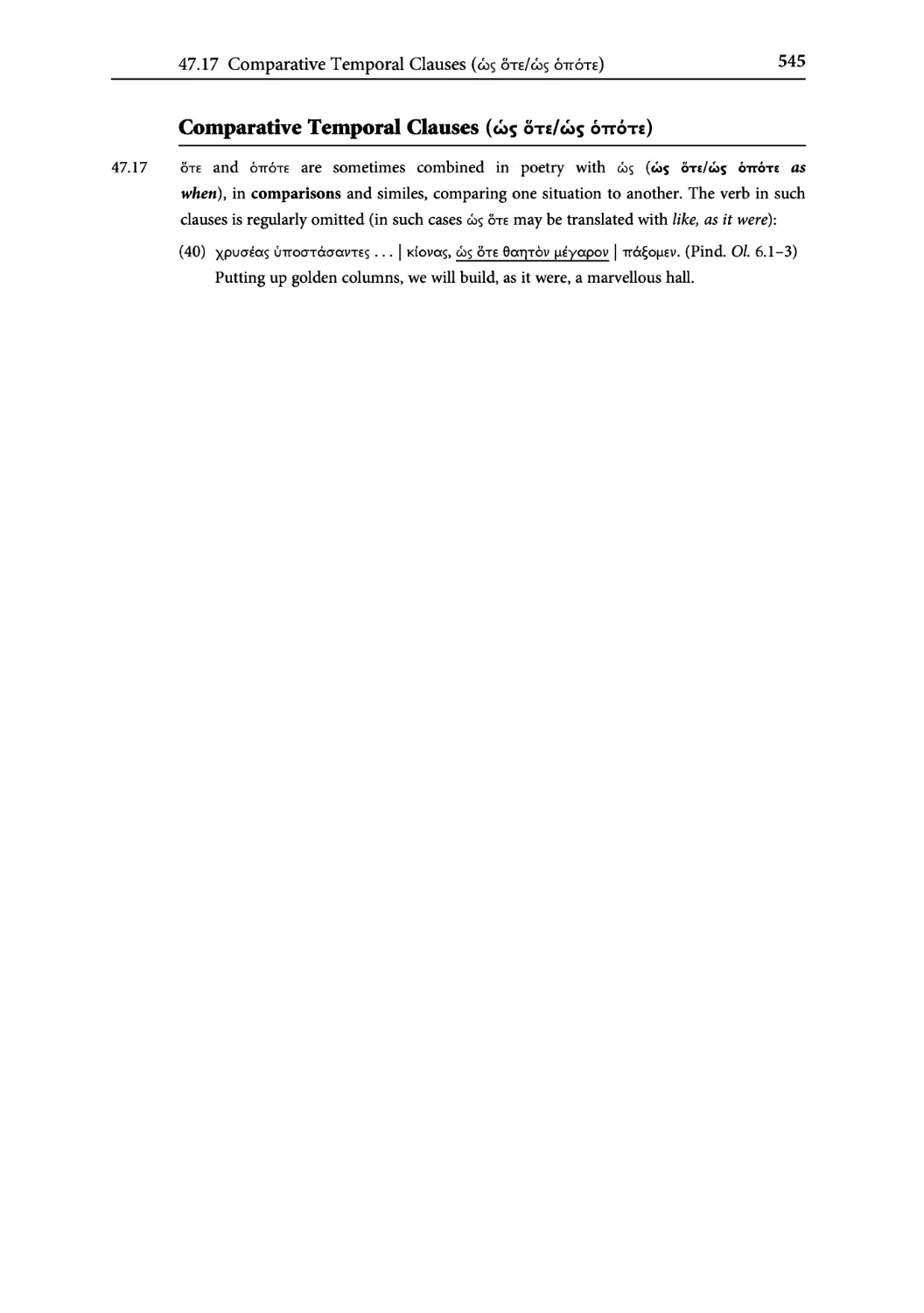
Comparative Temporal Clauses (cos οτε/cbs όποτε) 545
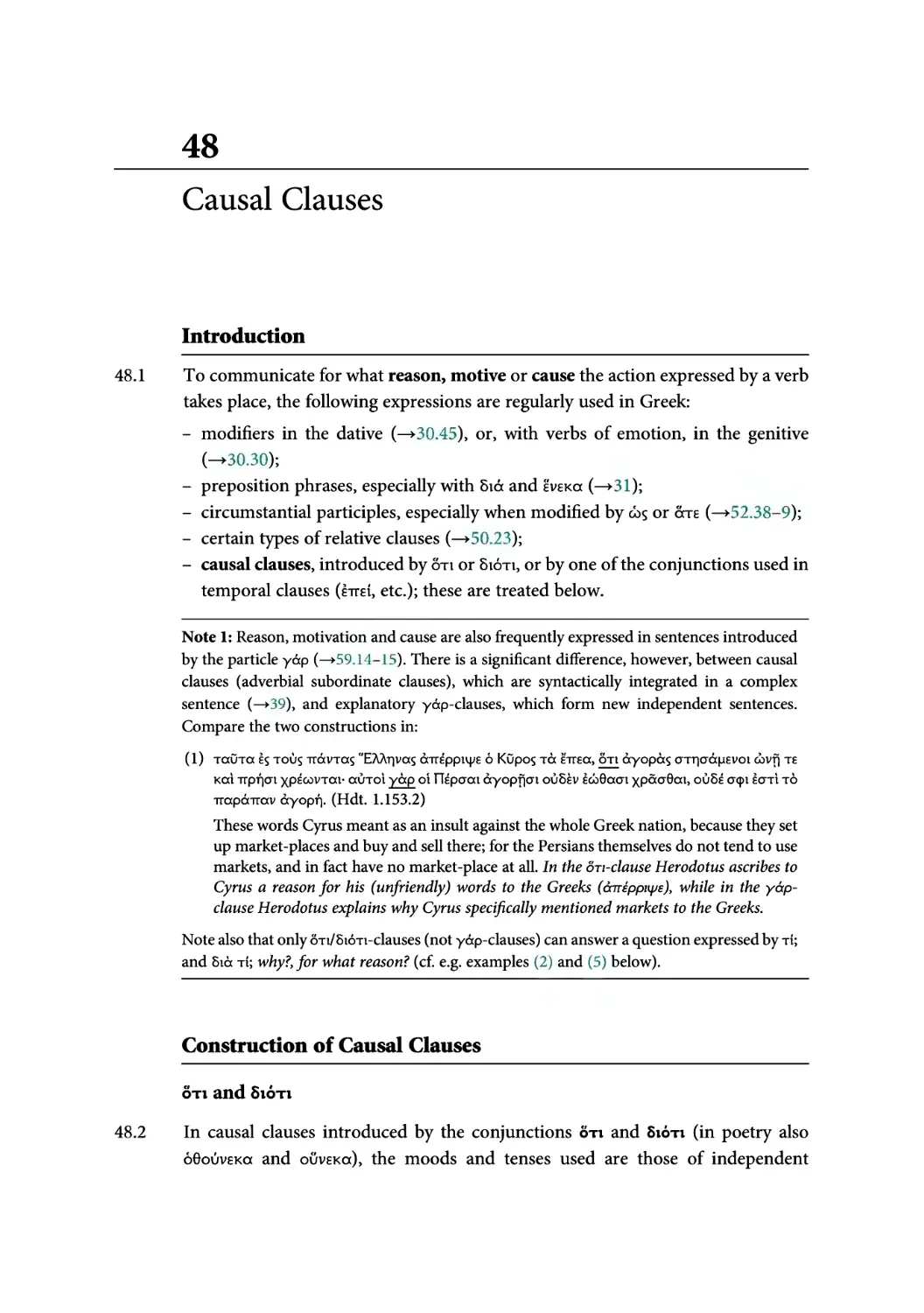
48 Causal Clauses 546
Introduction 546

xxiv Contents
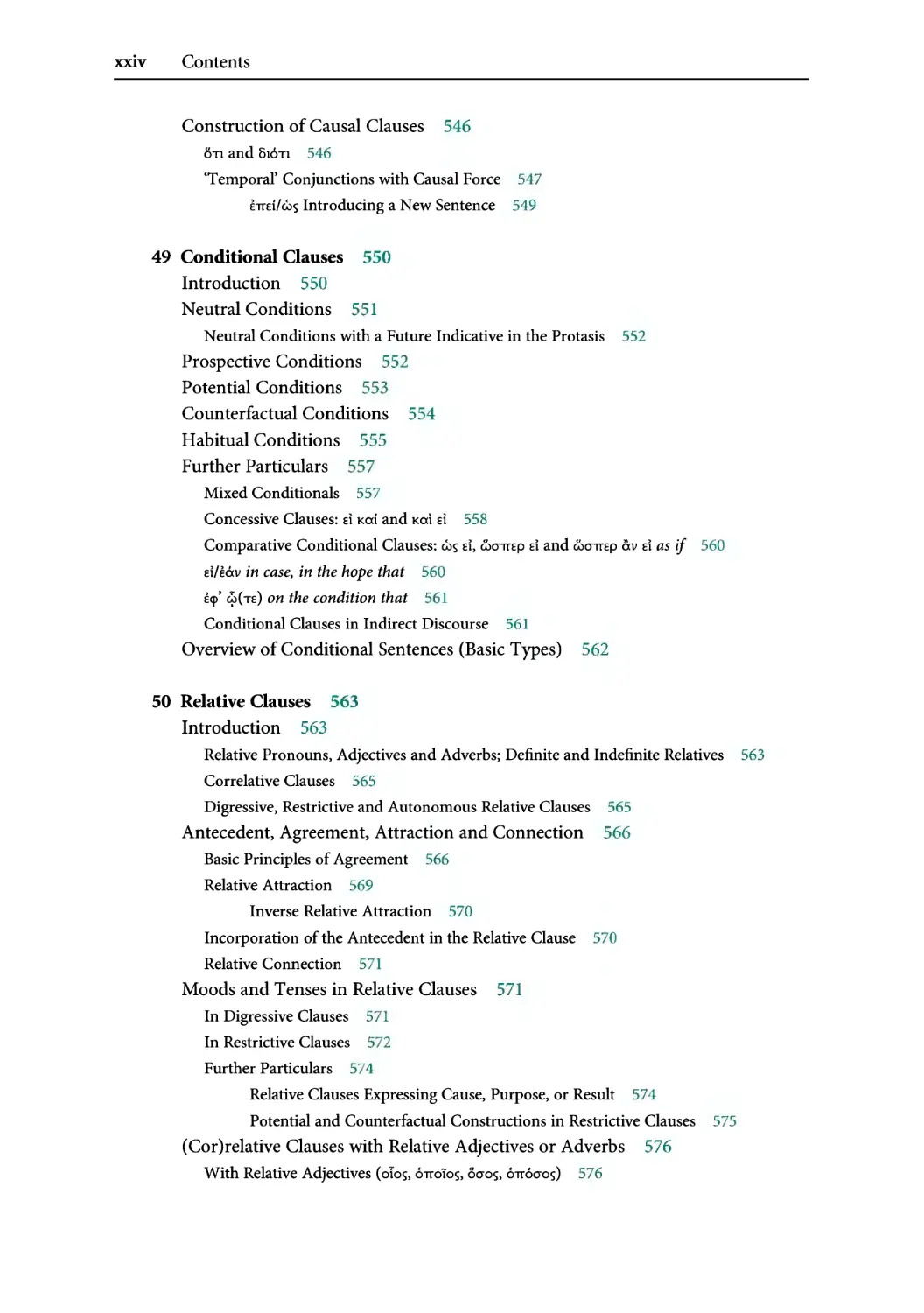
Construction of Causal Clauses 546
ότι and διότι 546
'Temporal' Conjunctions with Causal Force 547
έπεί/ώς Introducing a New Sentence 549
49 Conditional Clauses 550
Introduction 550
Neutral Conditions 551
Neutral Conditions with a Future Indicative in the Protasis 552
Prospective Conditions 552
Potential Conditions 553
Counterfactual Conditions 554
Habitual Conditions 555
Further Particulars 557
Mixed Conditionals 557
Concessive Clauses: ει καί and και ει 558
Comparative Conditional Clauses: ως ει, ώσπερ ει and ώσπερ αν ει as if 560
εΐ/έάν in casey in the hope that 560
εφ' ω(τε) on the condition that 561
Conditional Clauses in Indirect Discourse 561
Overview of Conditional Sentences (Basic Types) 562
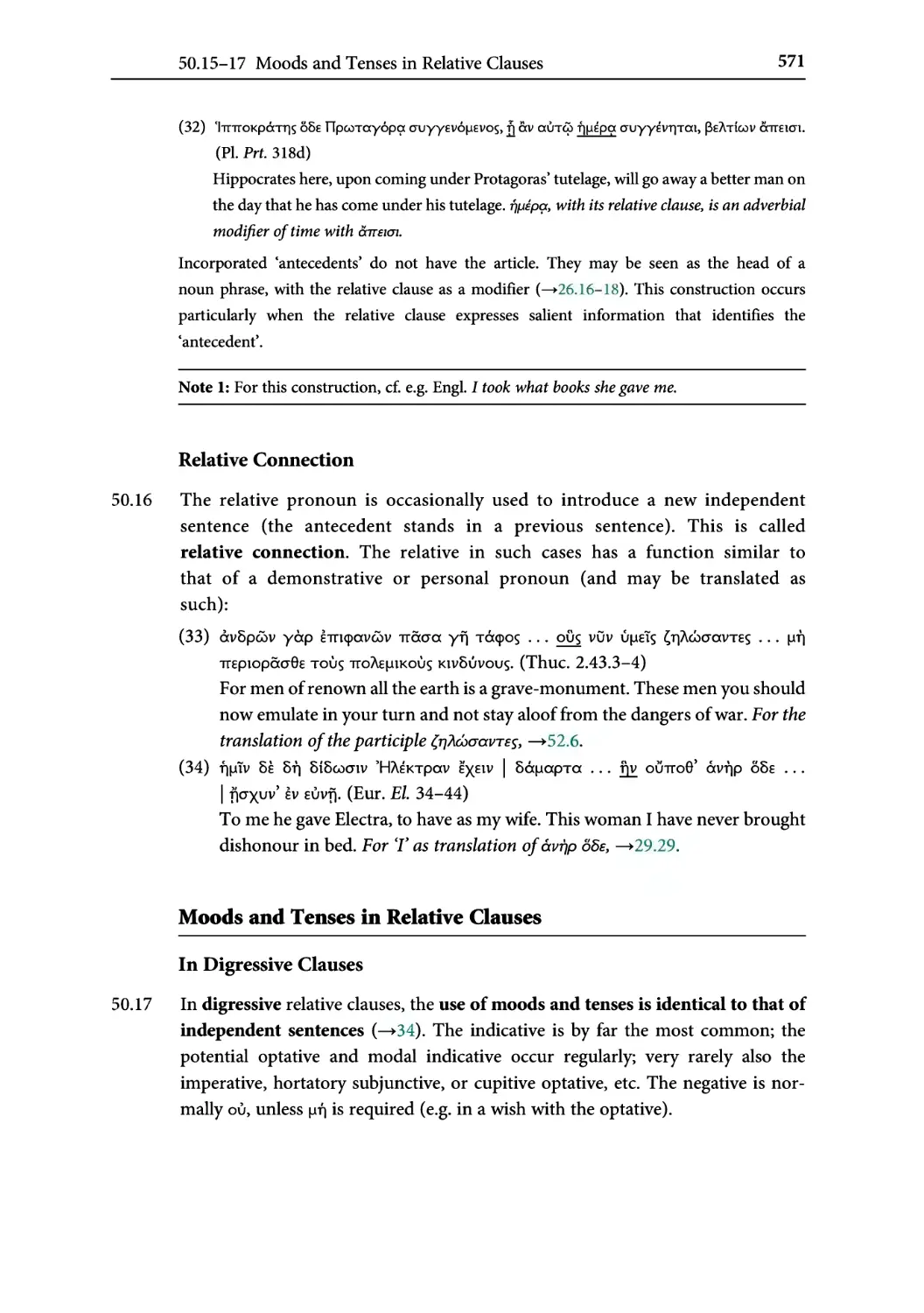
50 Relative Clauses 563
Introduction 563
Relative Pronouns, Adjectives and Adverbs; Definite and Indefinite Relatives 563
Correlative Clauses 565
Digressive, Restrictive and Autonomous Relative Clauses 565
Antecedent, Agreement, Attraction and Connection 566
Basic Principles of Agreement 566
Relative Attraction 569
Inverse Relative Attraction 570
Incorporation of the Antecedent in the Relative Clause 570
Relative Connection 571
Moods and Tenses in Relative Clauses 571
In Digressive Clauses 571
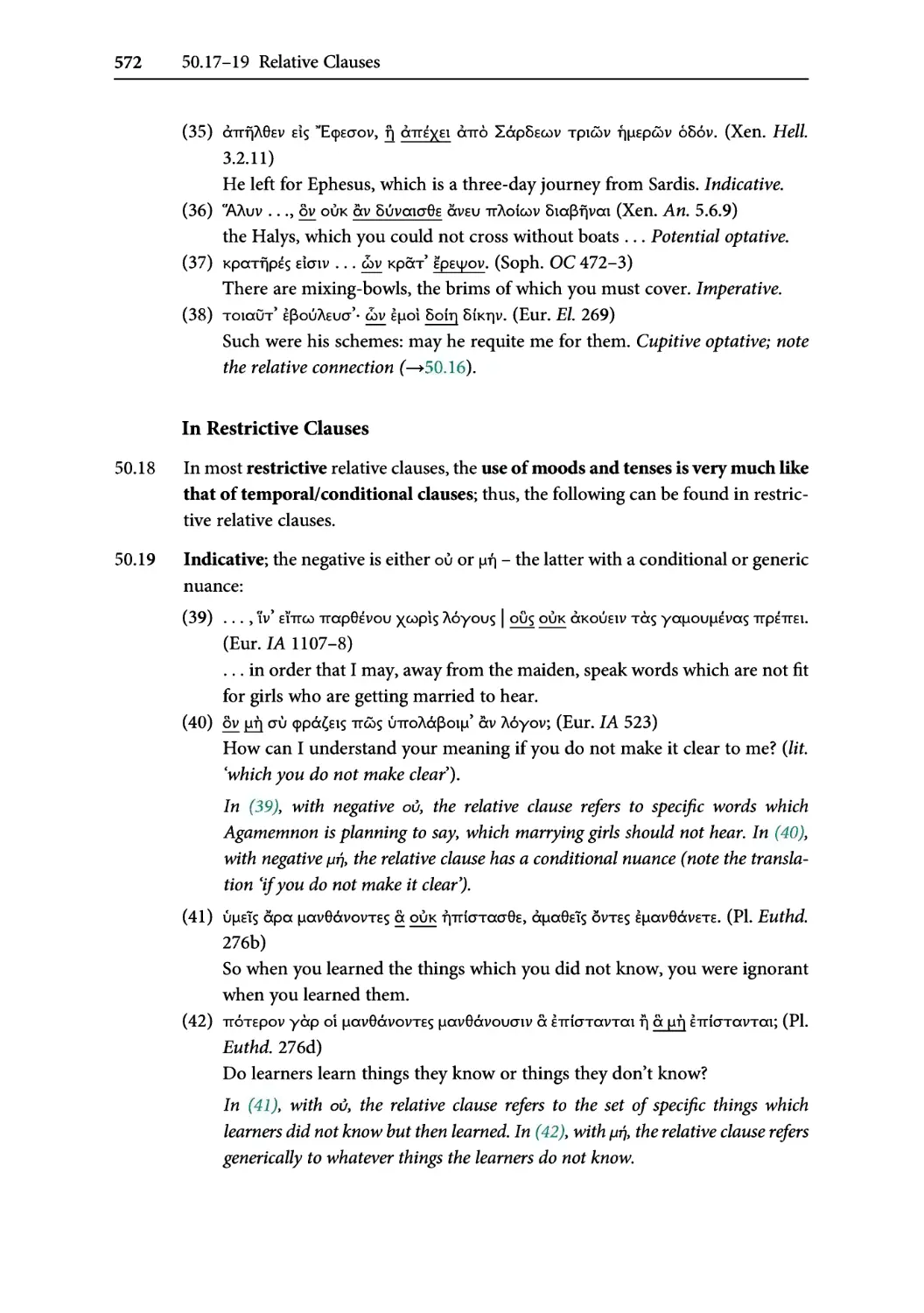
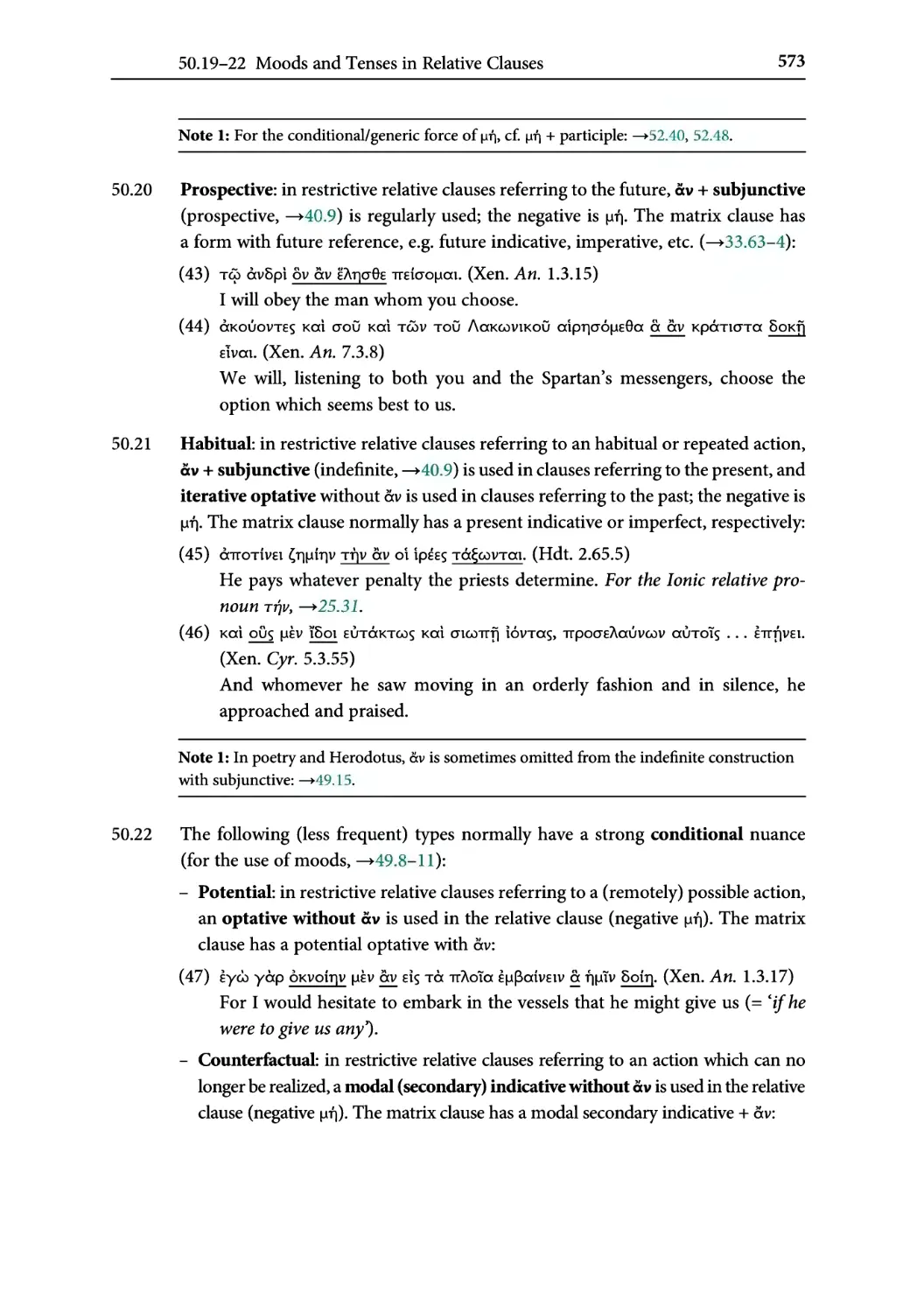
In Restrictive Clauses 572
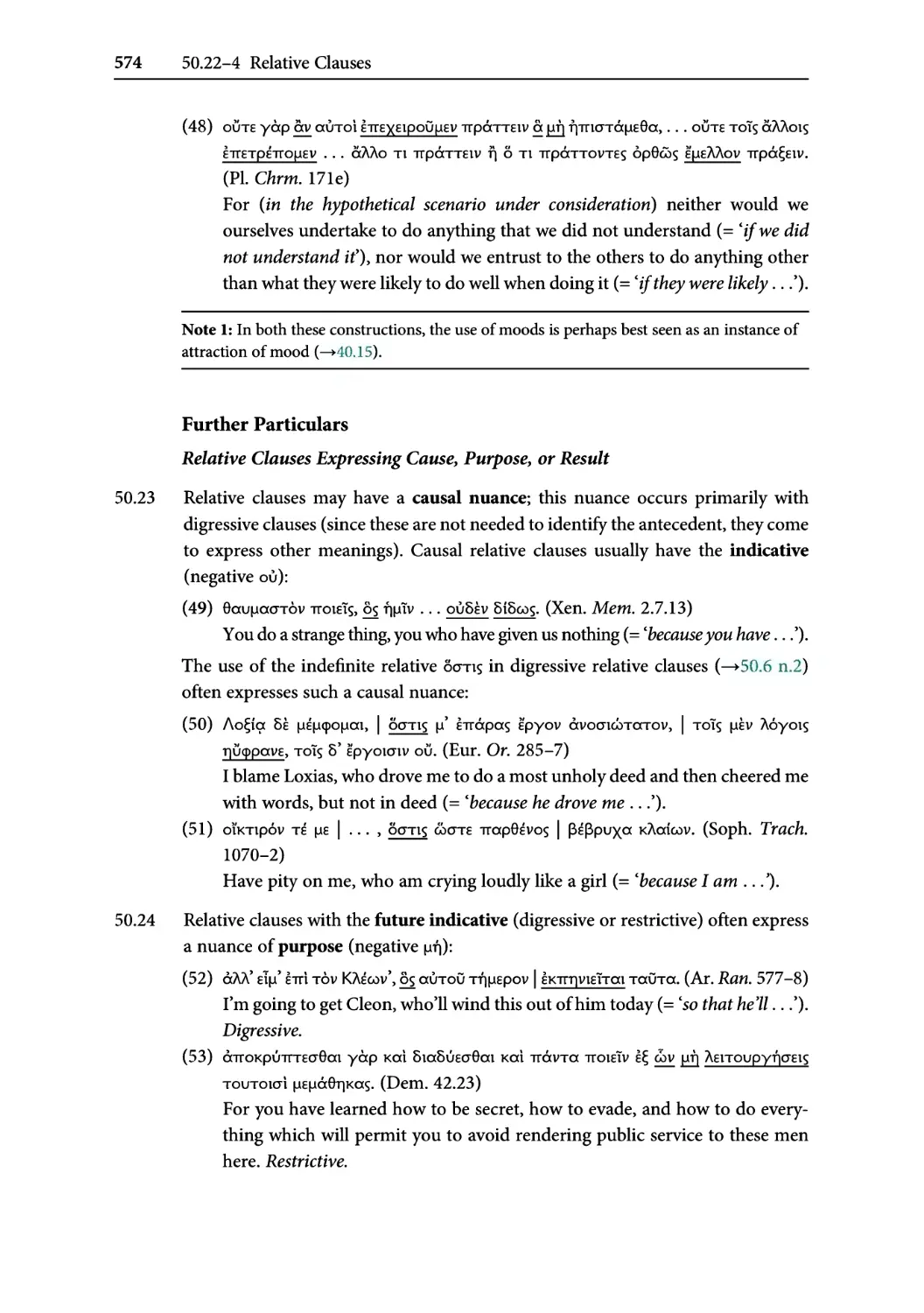
Further Particulars 574
Relative Clauses Expressing Cause, Purpose, or Result 574
Potential and Counterfactual Constructions in Restrictive Clauses 575
(Cor)relative Clauses with Relative Adjectives or Adverbs 576
With Relative Adjectives (οίος, όποιος, δσος, όπόσος) 576

Contents
XXV
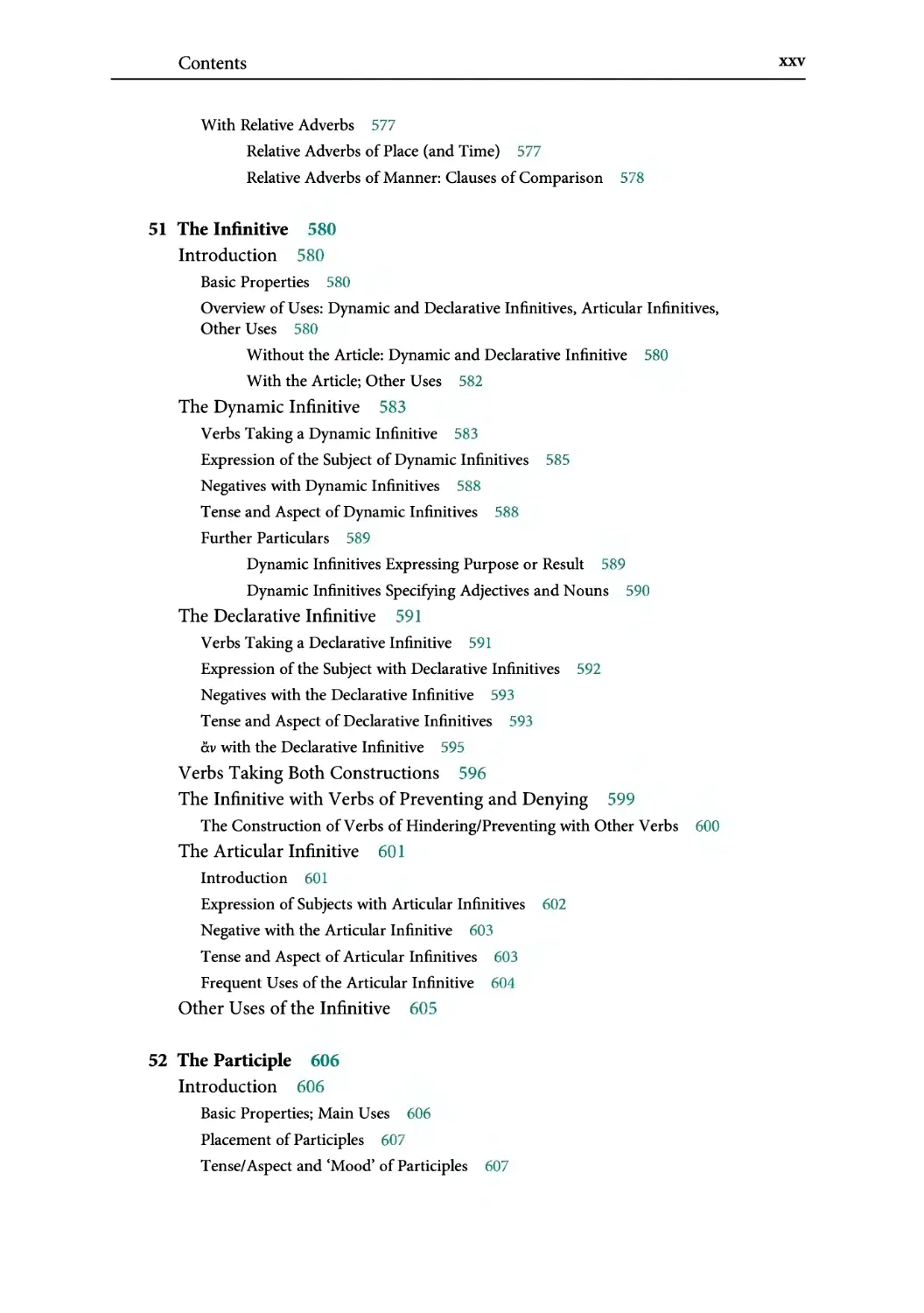
With Relative Adverbs 577
Relative Adverbs of Place (and Time) 577
Relative Adverbs of Manner: Clauses of Comparison 578
51 The Infinitive 580
Introduction 580
Basic Properties 580
Overview of Uses: Dynamic and Declarative Infinitives, Articular Infinitives,
Other Uses 580
Without the Article: Dynamic and Declarative Infinitive 580
With the Article; Other Uses 582
The Dynamic Infinitive 583
Verbs Taking a Dynamic Infinitive 583
Expression of the Subject of Dynamic Infinitives 585
Negatives with Dynamic Infinitives 588
Tense and Aspect of Dynamic Infinitives 588
Further Particulars 589
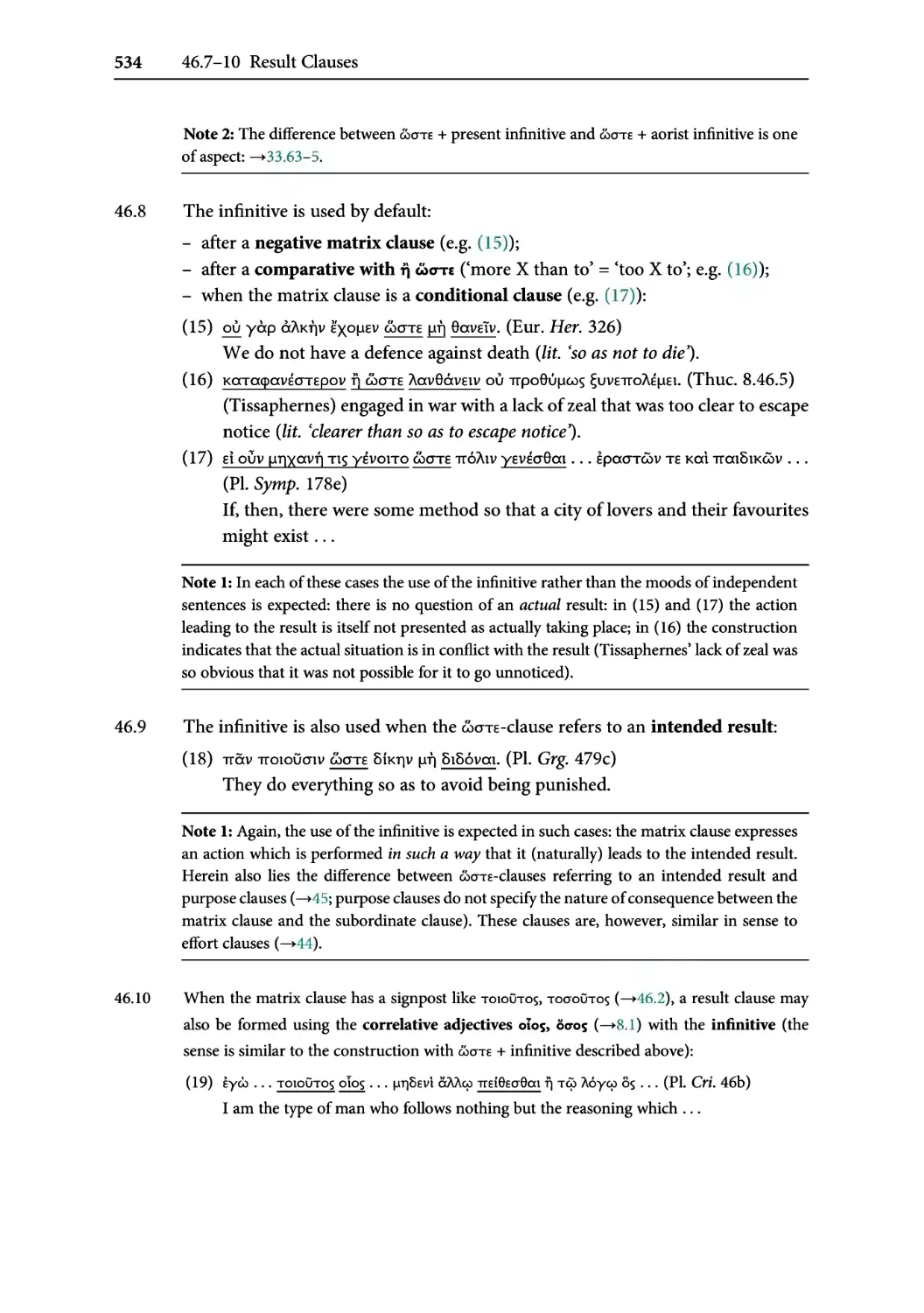
Dynamic Infinitives Expressing Purpose or Result 589
Dynamic Infinitives Specifying Adjectives and Nouns 590
The Declarative Infinitive 591
Verbs Taking a Declarative Infinitive 591
Expression of the Subject with Declarative Infinitives 592
Negatives with the Declarative Infinitive 593
Tense and Aspect of Declarative Infinitives 593
αν with the Declarative Infinitive 595
Verbs Taking Both Constructions 596
The Infinitive with Verbs of Preventing and Denying 599
The Construction of Verbs of Hindering/Preventing with Other Verbs 600
The Articular Infinitive 601
Introduction 601
Expression of Subjects with Articular Infinitives 602
Negative with the Articular Infinitive 603
Tense and Aspect of Articular Infinitives 603
Frequent Uses of the Articular Infinitive 604
Other Uses of the Infinitive 605
52 The Participle 606
Introduction 606
Basic Properties; Main Uses 606
Placement of Participles 607
Tense/Aspect and 'Mood' of Participles 607

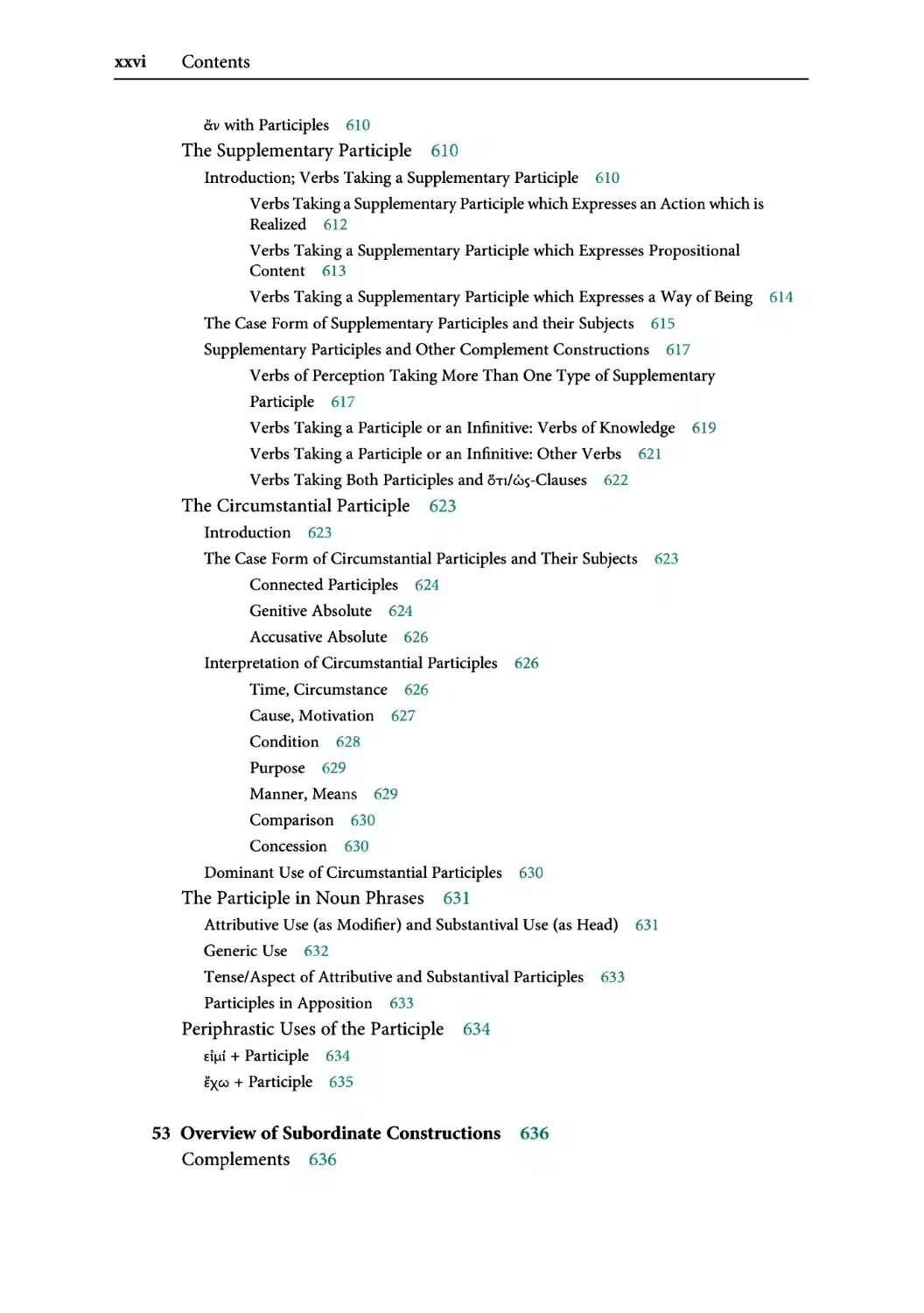
xxvi Contents
άν with Participles 610
The Supplementary Participle 610
Introduction; Verbs Taking a Supplementary Participle 610
Verbs Taking a Supplementary Participle which Expresses an Action which is
Realized 612
Verbs Taking a Supplementary Participle which Expresses Propositional
Content 613
Verbs Taking a Supplementary Participle which Expresses a Way of Being 614
The Case Form of Supplementary Participles and their Subjects 615
Supplementary Participles and Other Complement Constructions 617
Verbs of Perception Taking More Than One Type of Supplementary
Participle 617
Verbs Taking a Participle or an Infinitive: Verbs of Knowledge 619
Verbs Taking a Participle or an Infinitive: Other Verbs 621
Verbs Taking Both Participles and o-n/cbs-Clauses 622
The Circumstantial Participle 623
Introduction 623
The Case Form of Circumstantial Participles and Their Subjects 623
Connected Participles 624
Genitive Absolute 624
Accusative Absolute 626
Interpretation of Circumstantial Participles 626
Time, Circumstance 626
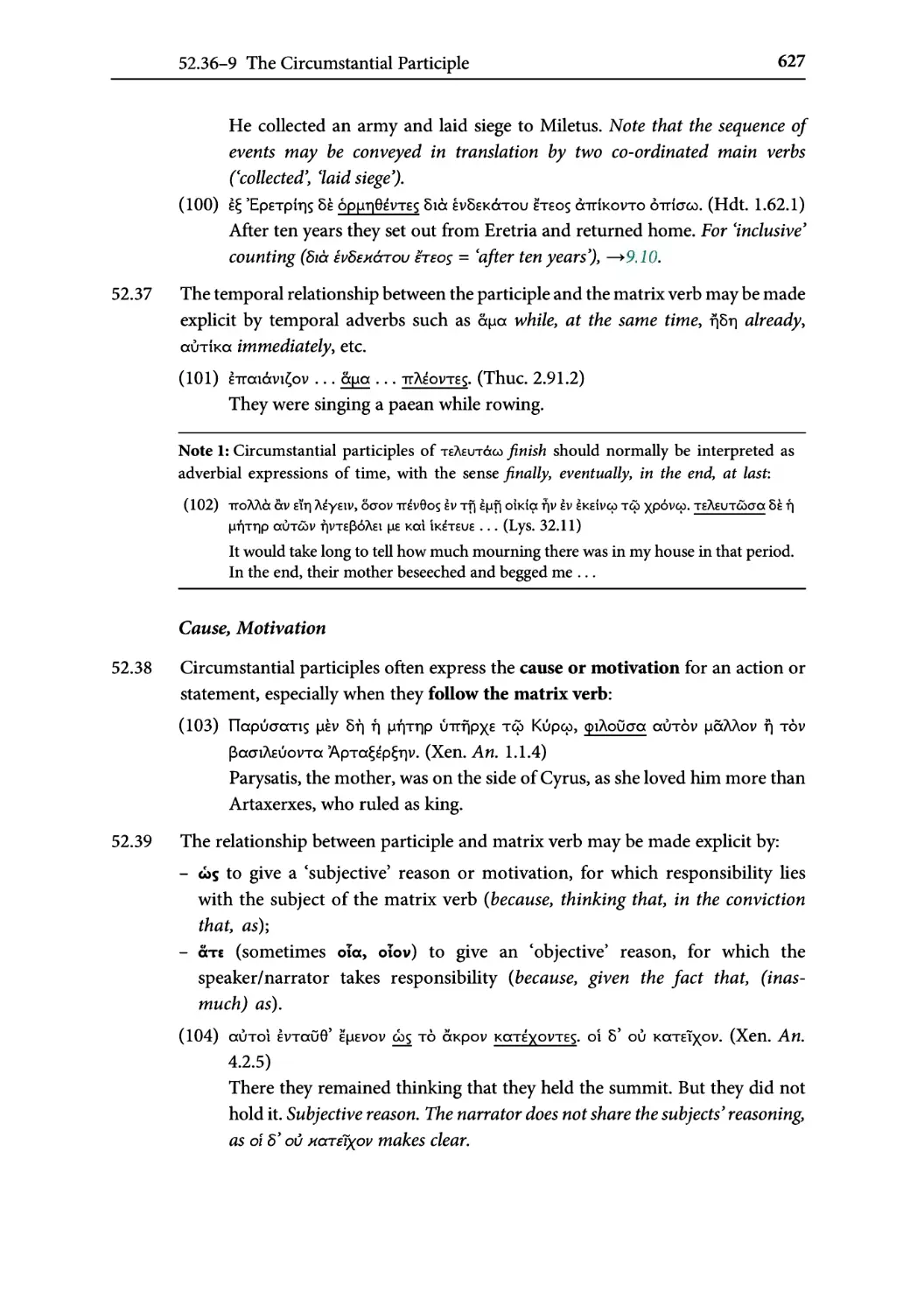
Cause, Motivation 627
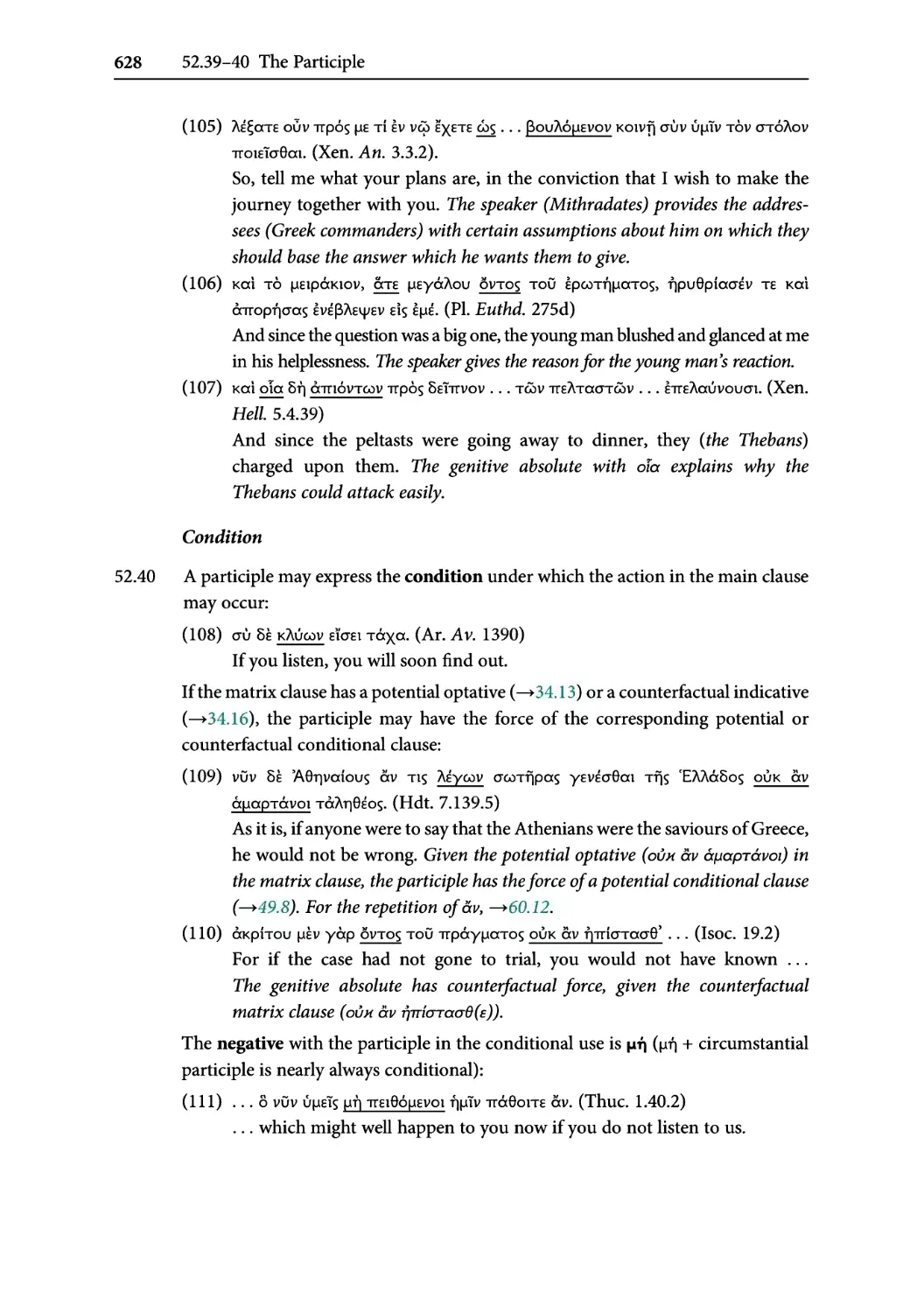
Condition 628
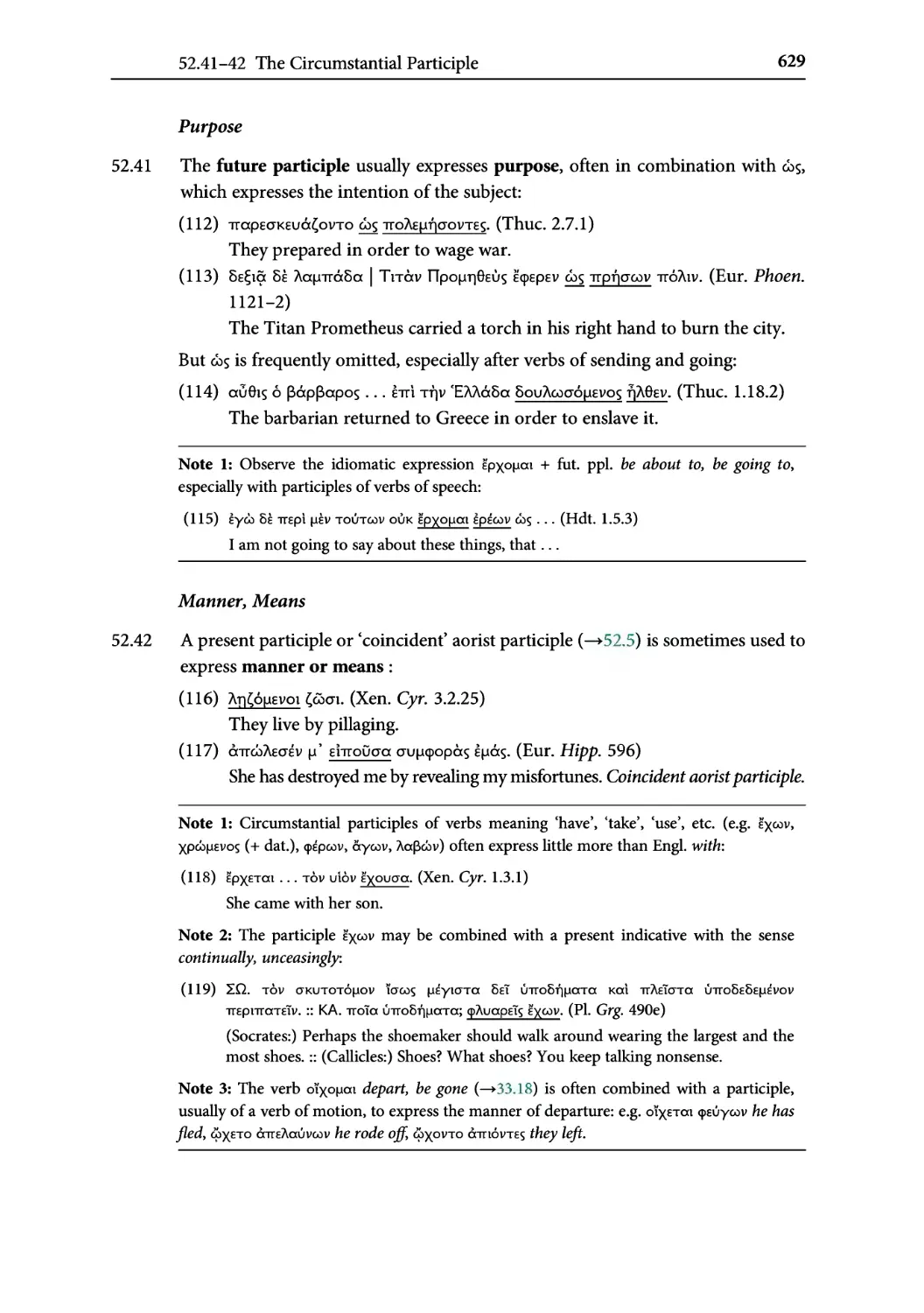
Purpose 629
Manner, Means 629
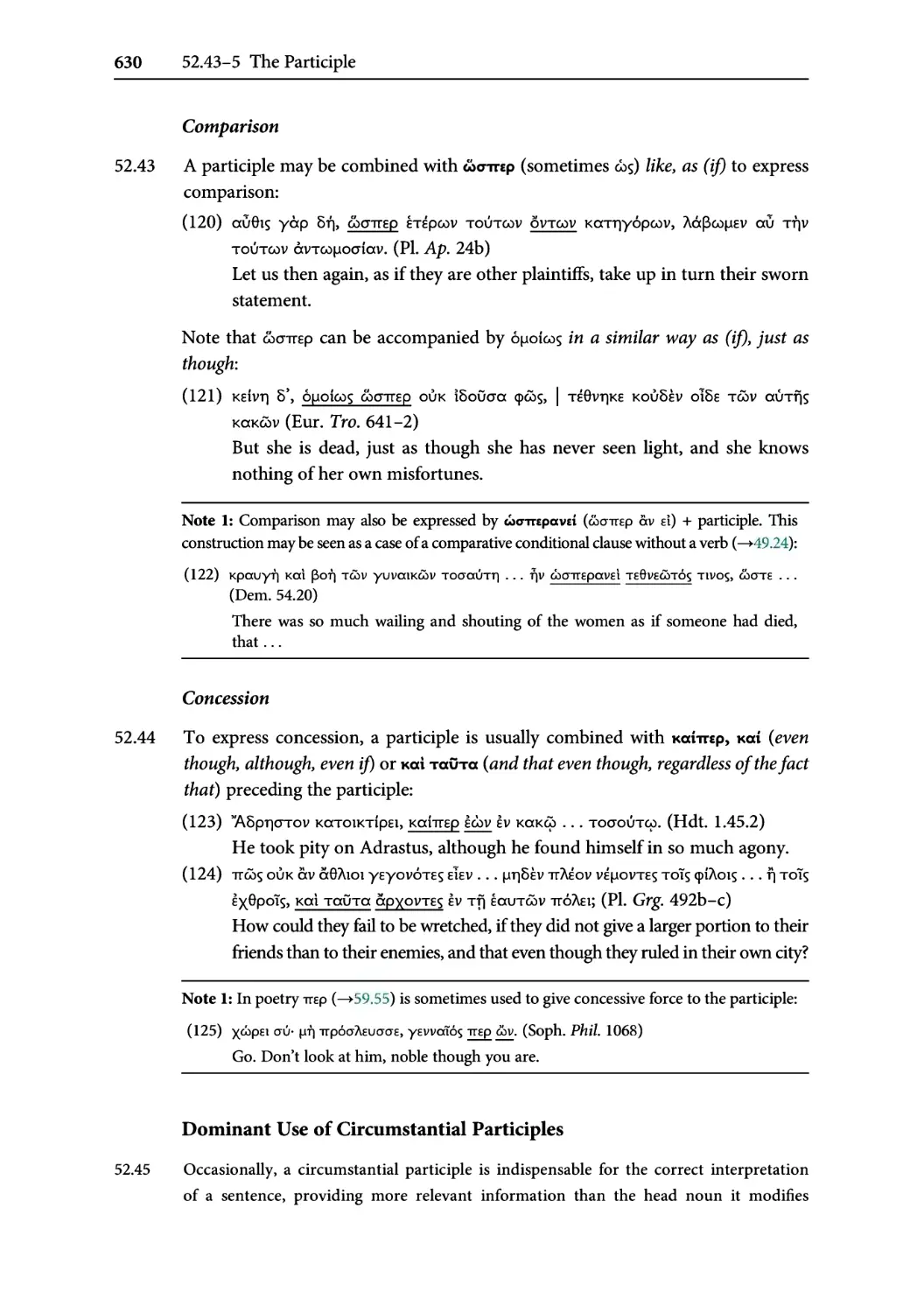
Comparison 630
Concession 630
Dominant Use of Circumstantial Participles 630
The Participle in Noun Phrases 631
Attributive Use (as Modifier) and Substantival Use (as Head) 631
Generic Use 632
Tense/Aspect of Attributive and Substantival Participles 633
Participles in Apposition 633
Periphrastic Uses of the Participle 634
ειμί + Participle 634
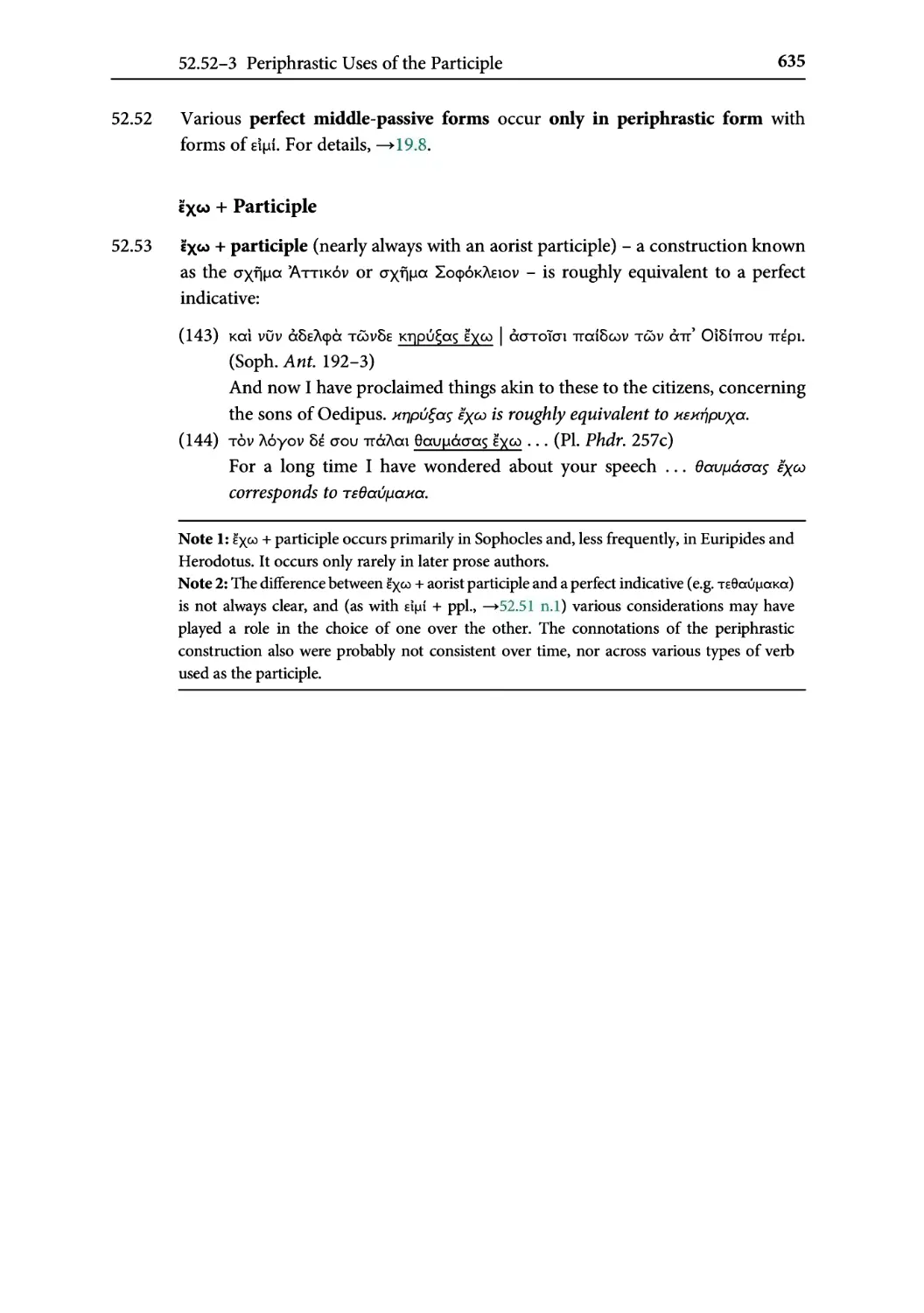
εχω + Participle 635
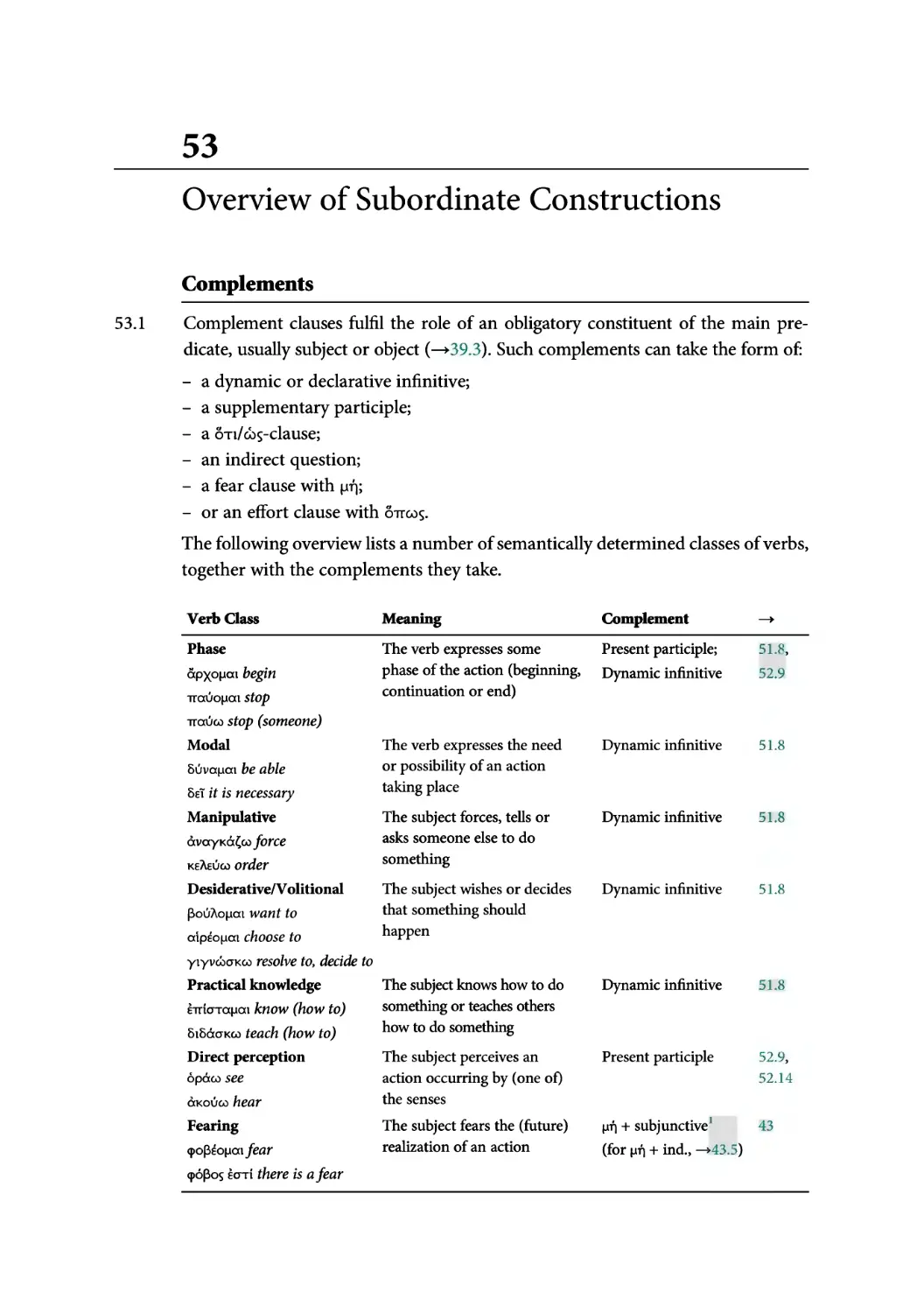
53 Overview of Subordinate Constructions 636
Complements 636

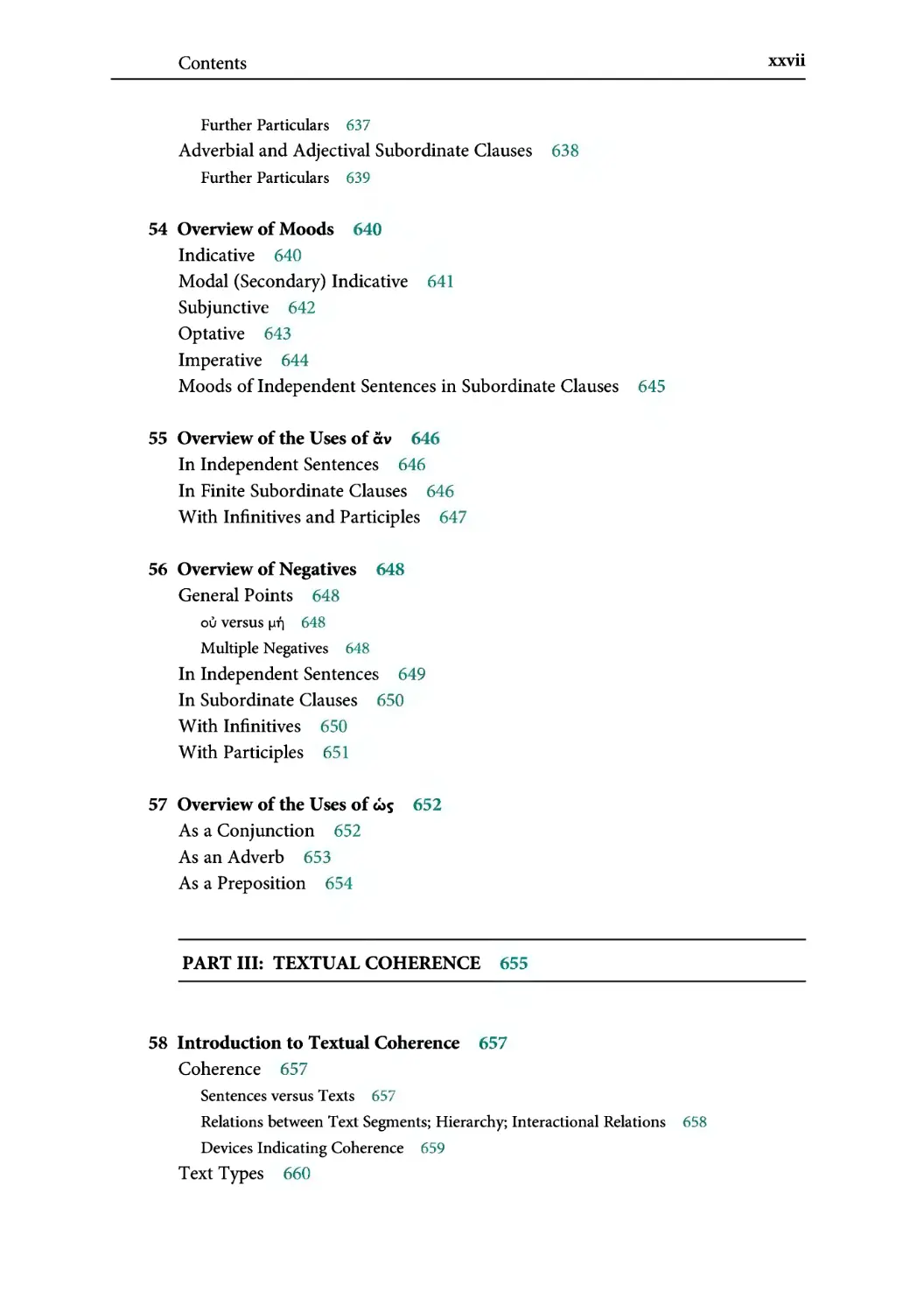
Contents
XXVll
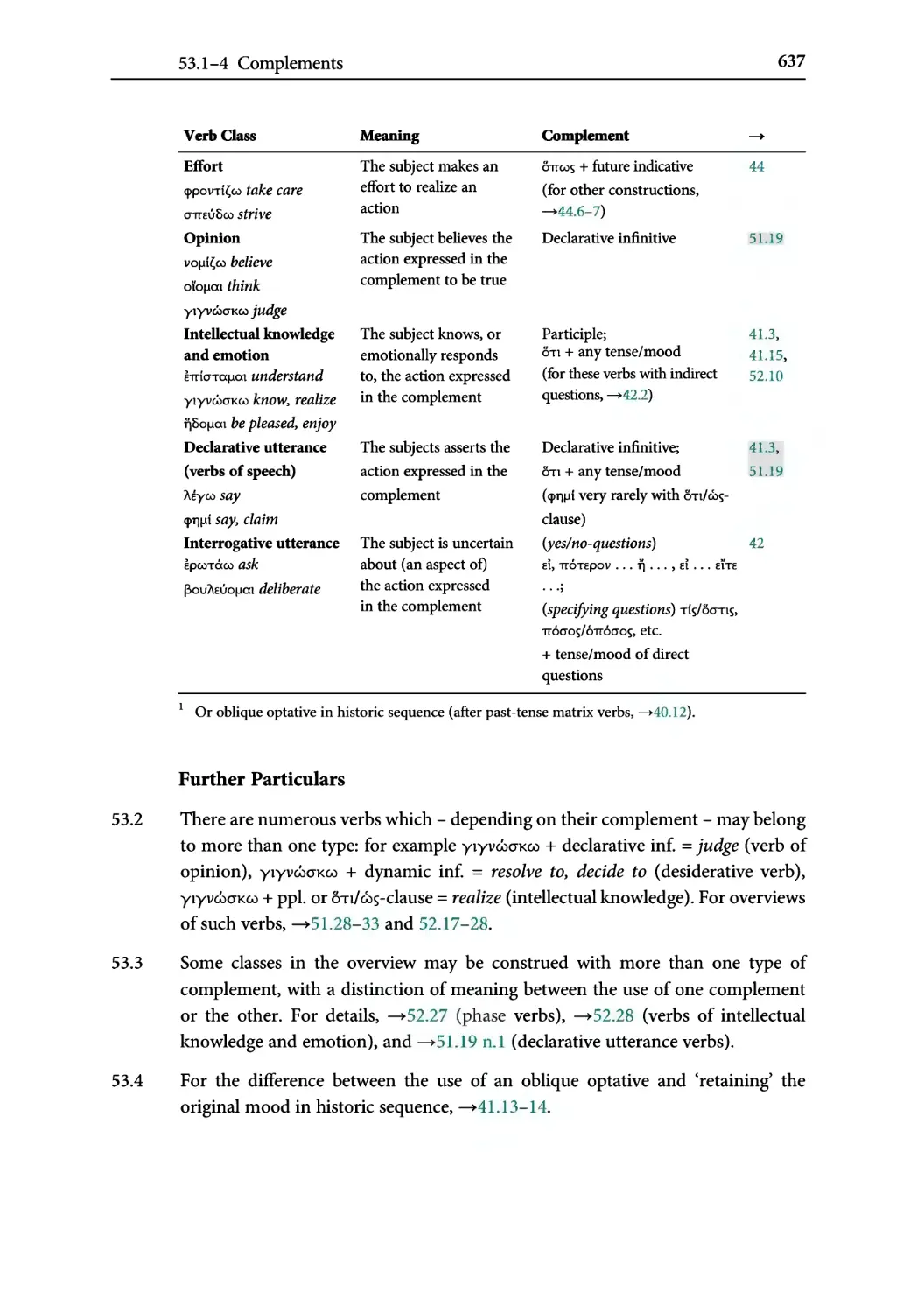
Further Particulars 637
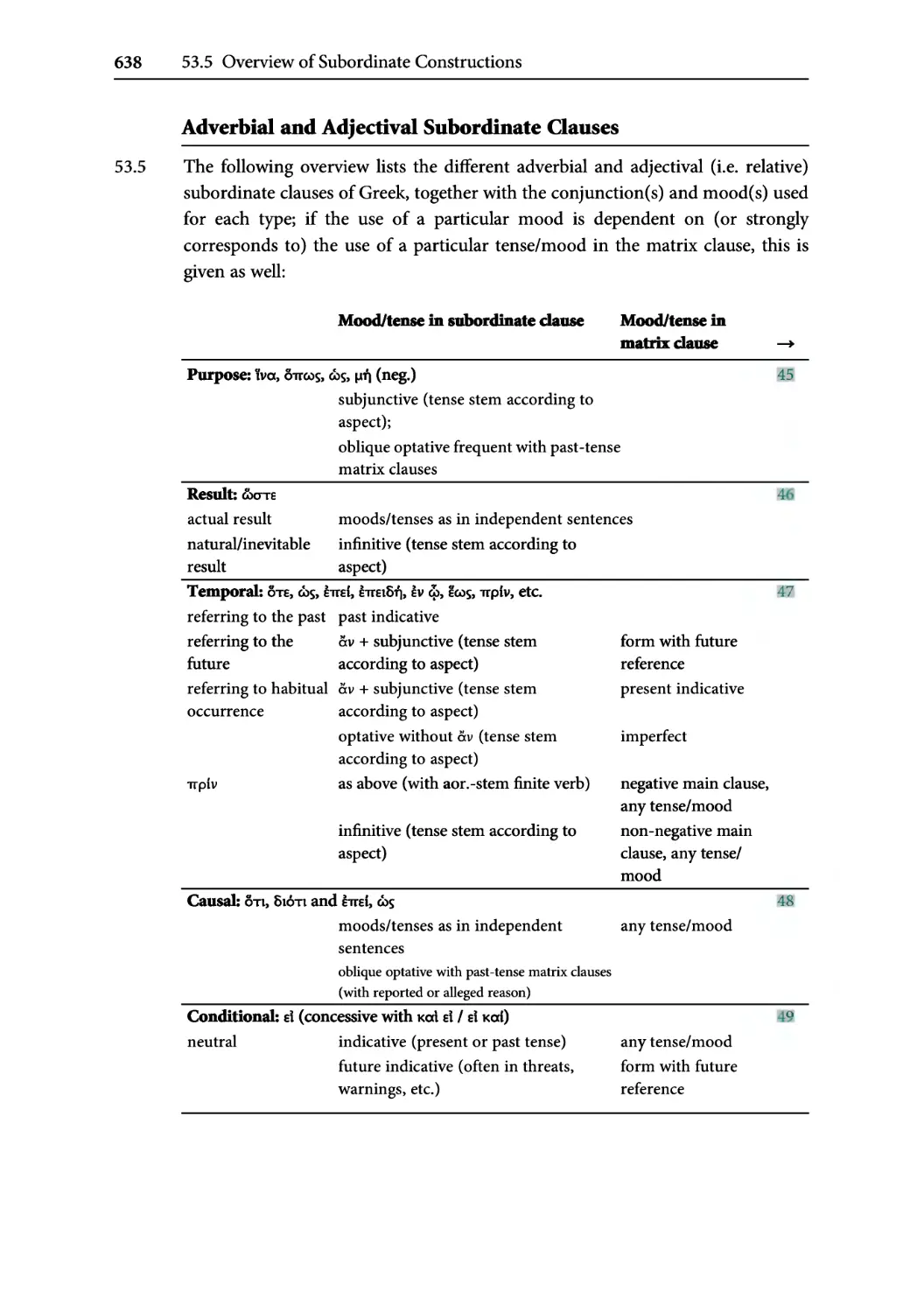
Adverbial and Adjectival Subordinate Clauses 638
Further Particulars 639
54 Overview of Moods 640
Indicative 640
Modal (Secondary) Indicative 641
Subjunctive 642
Optative 643
Imperative 644
Moods of Independent Sentences in Subordinate Clauses 645
55 Overview of the Uses of αν 646
In Independent Sentences 646
In Finite Subordinate Clauses 646
With Infinitives and Participles 647
56 Overview of Negatives 648
General Points 648
ou versus μή 648
Multiple Negatives 648
In Independent Sentences 649
In Subordinate Clauses 650
With Infinitives 650
With Participles 651
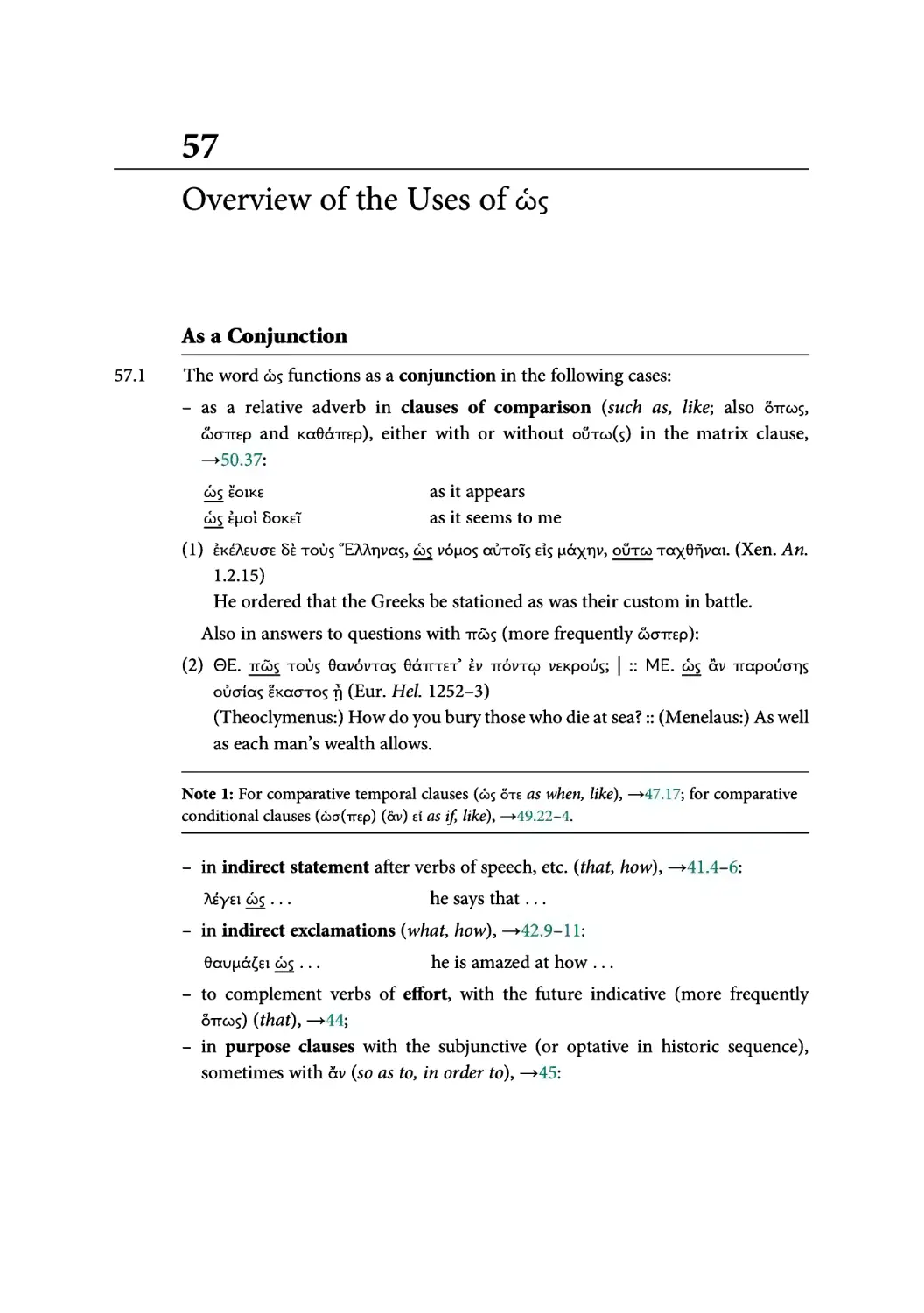
57 Overview of the Uses of ώ$ 652
As a Conjunction 652
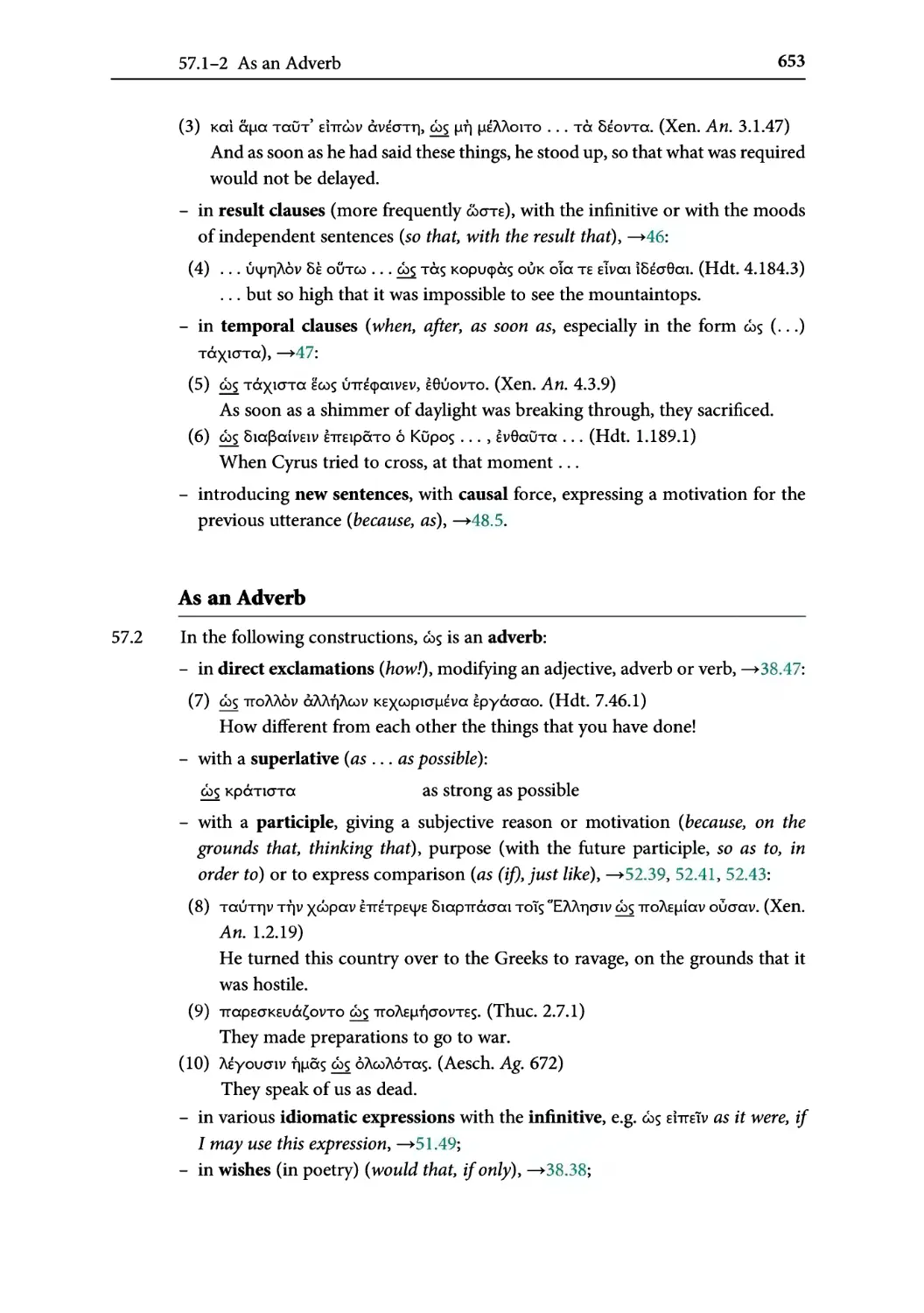
As an Adverb 653
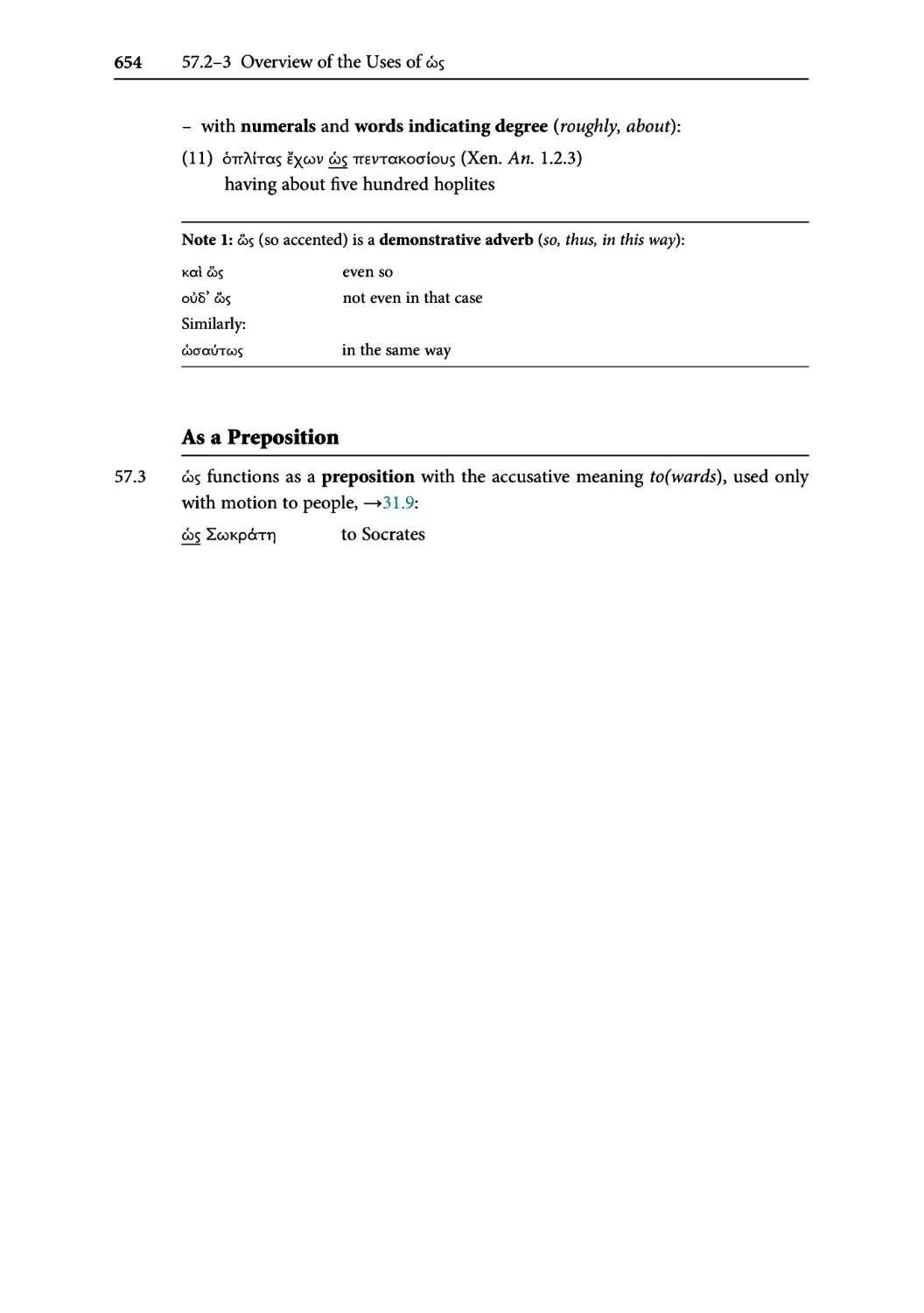
As a Preposition 654
PART III: TEXTUAL COHERENCE 655
58 Introduction to Textual Coherence 657
Coherence 657
Sentences versus Texts 657
Relations between Text Segments; Hierarchy; Interactional Relations 658
Devices Indicating Coherence 659
Text Types 660

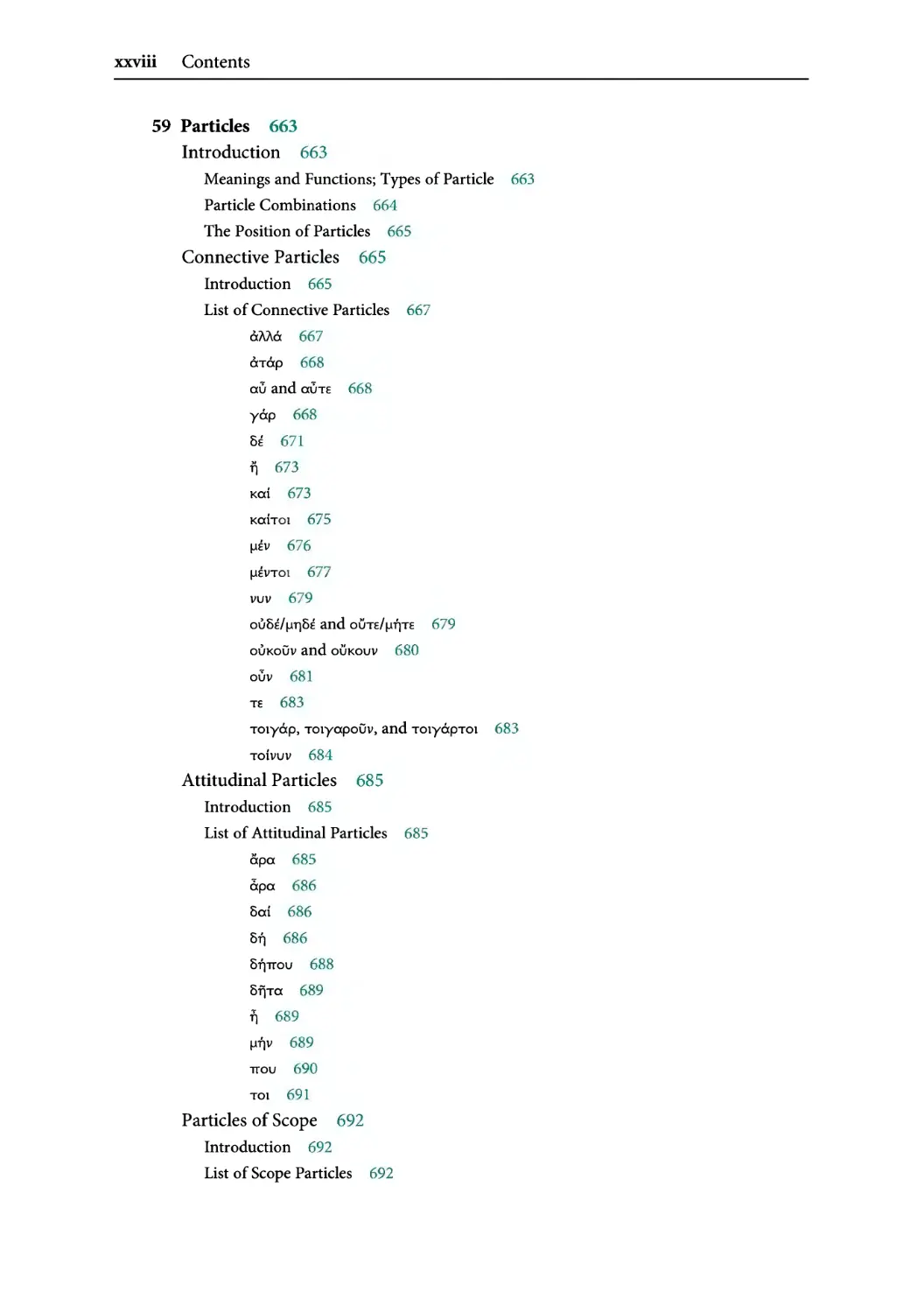
xxviii Contents
59 Particles 663
Introduction 663
Meanings and Functions; Types of Particle 663
Particle Combinations 664
The Position of Particles 665
Connective Particles 665
Introduction 665
List of Connective Particles 667
αλλά 667
άτάρ 668
ecu and αυτέ 668
yap 668
δε 671
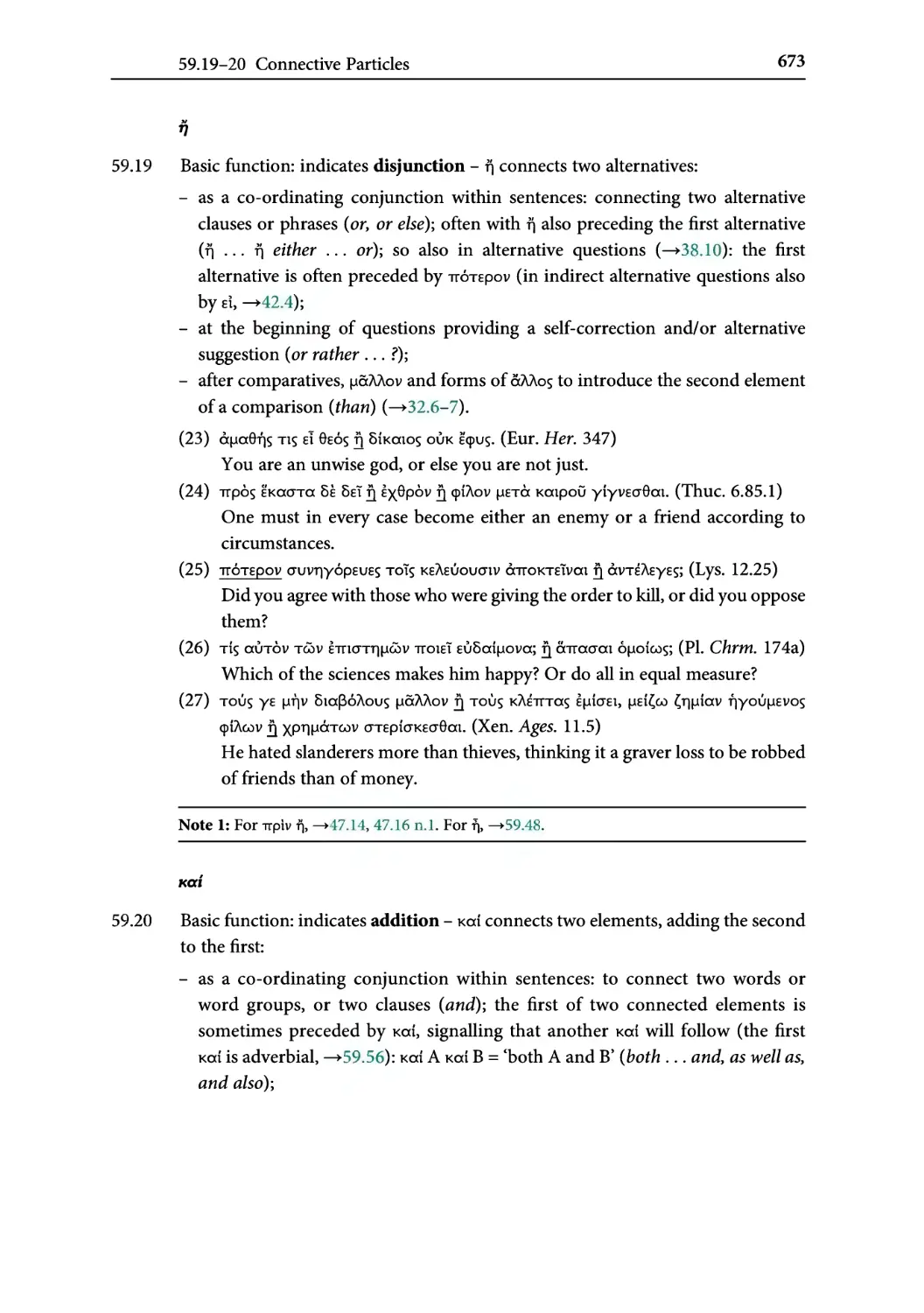
ή 673
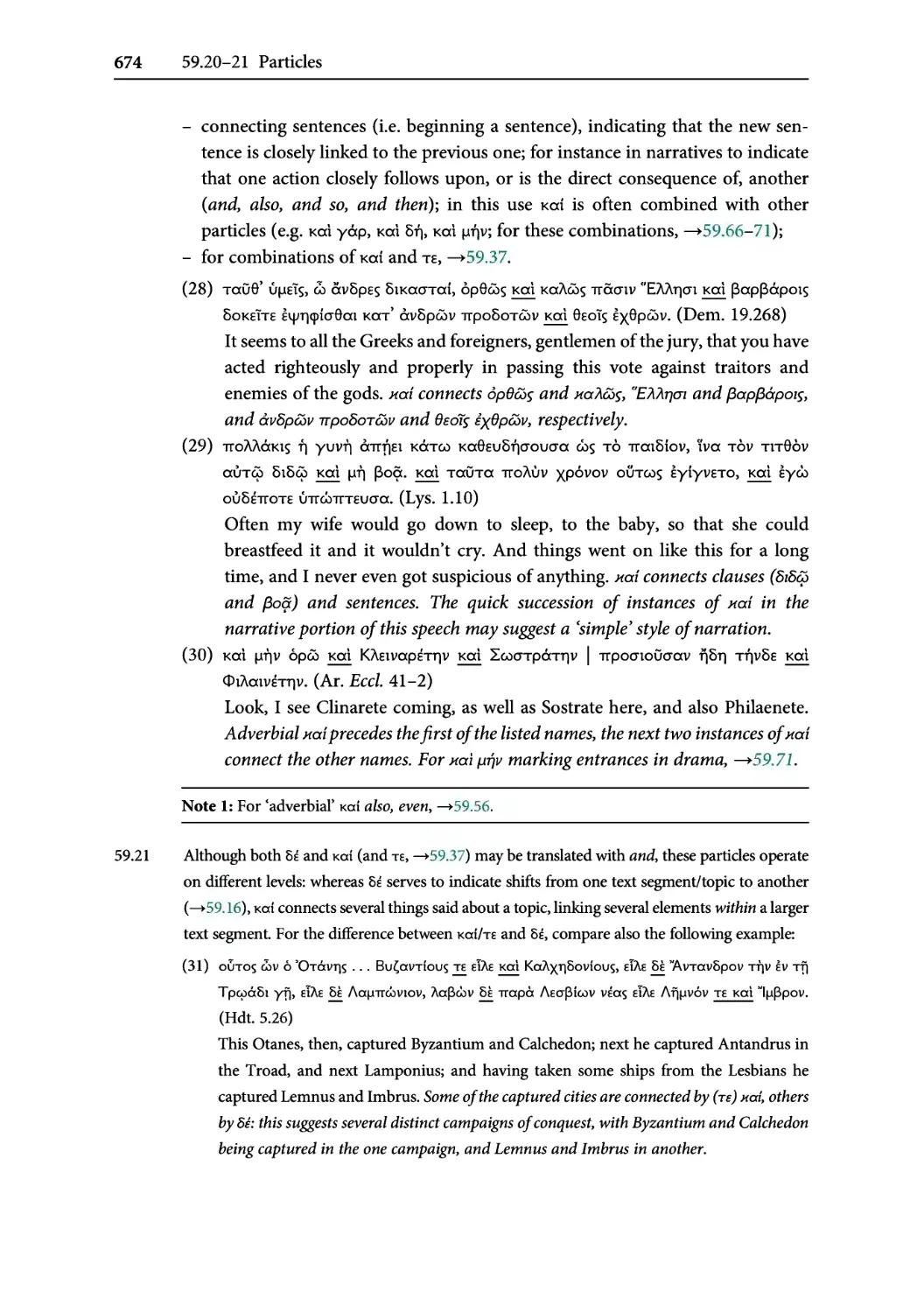
καί 673
καίτοι 675
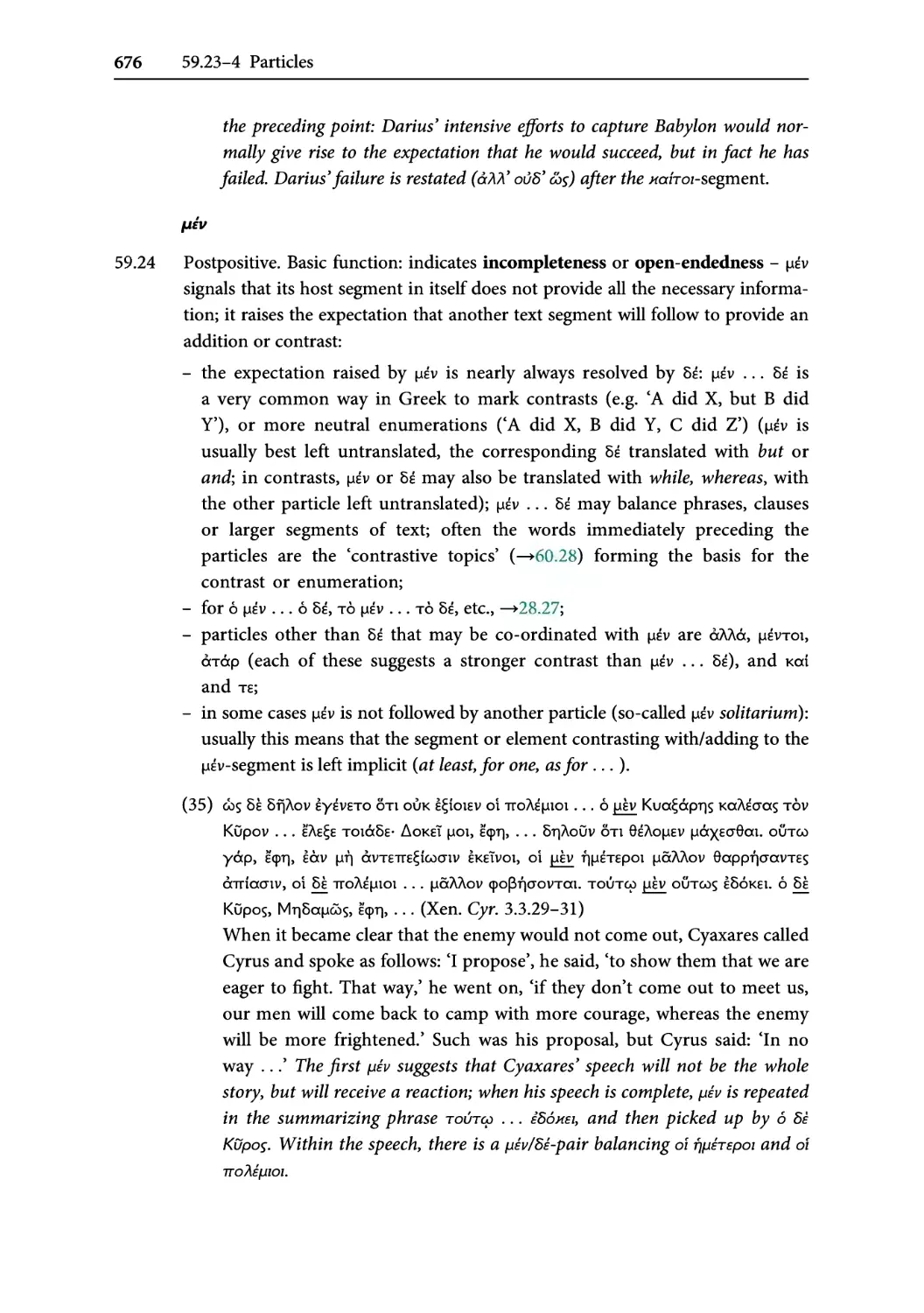
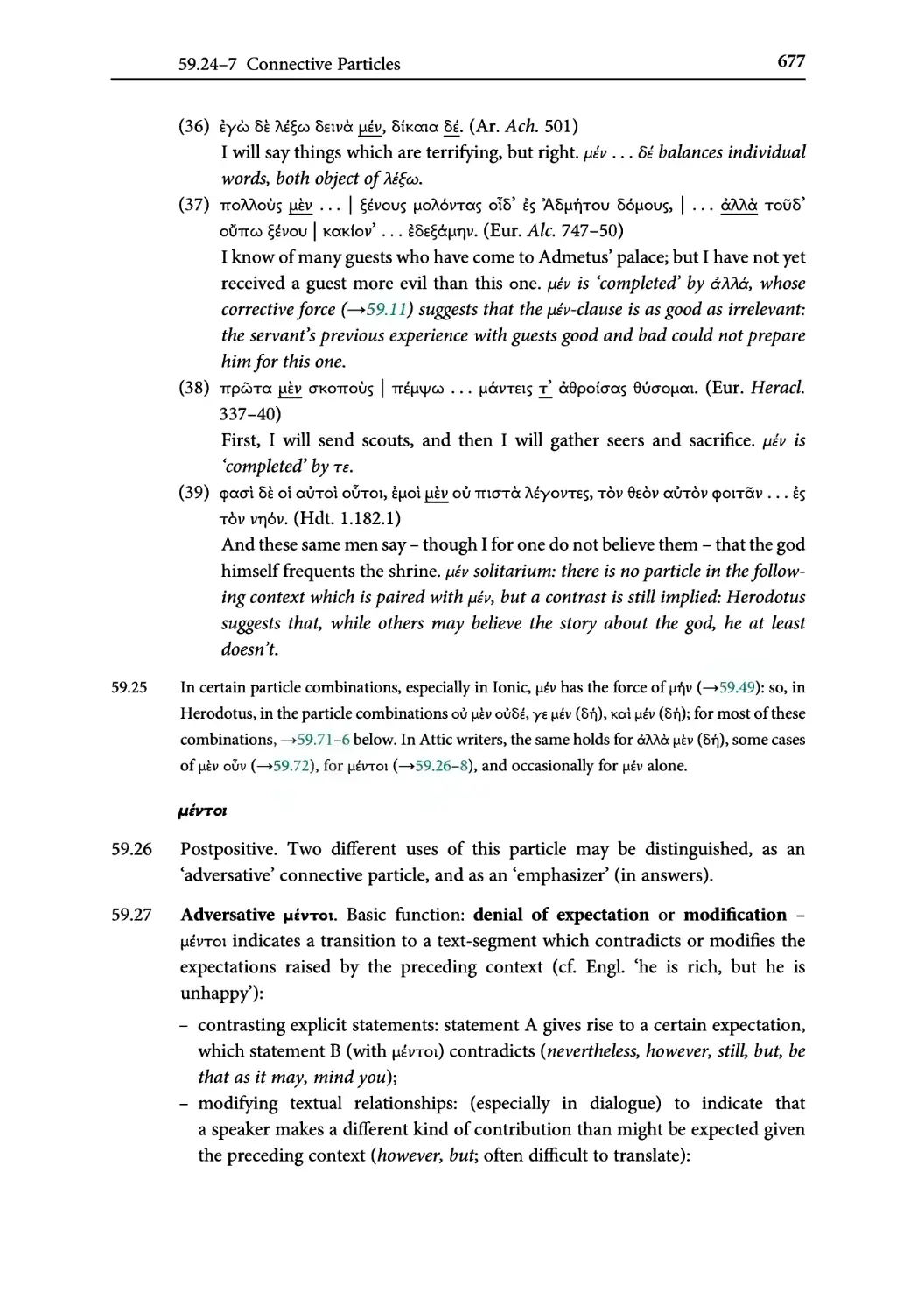
μεν 676
μέντοι 677
νυν 679
ουδέ/μηδέ and ουτε/μήτε 679
ουκοΰν and οΰκουν 680
ουν 681
τε 683
τοιγάρ, τοιγαροΰν, and τοιγάρτοι 683
τοίνυν 684
Attitudinal Particles 685
Introduction 685
List of Attitudinal Particles 685
άρα 685
άρα 686
δαί 686
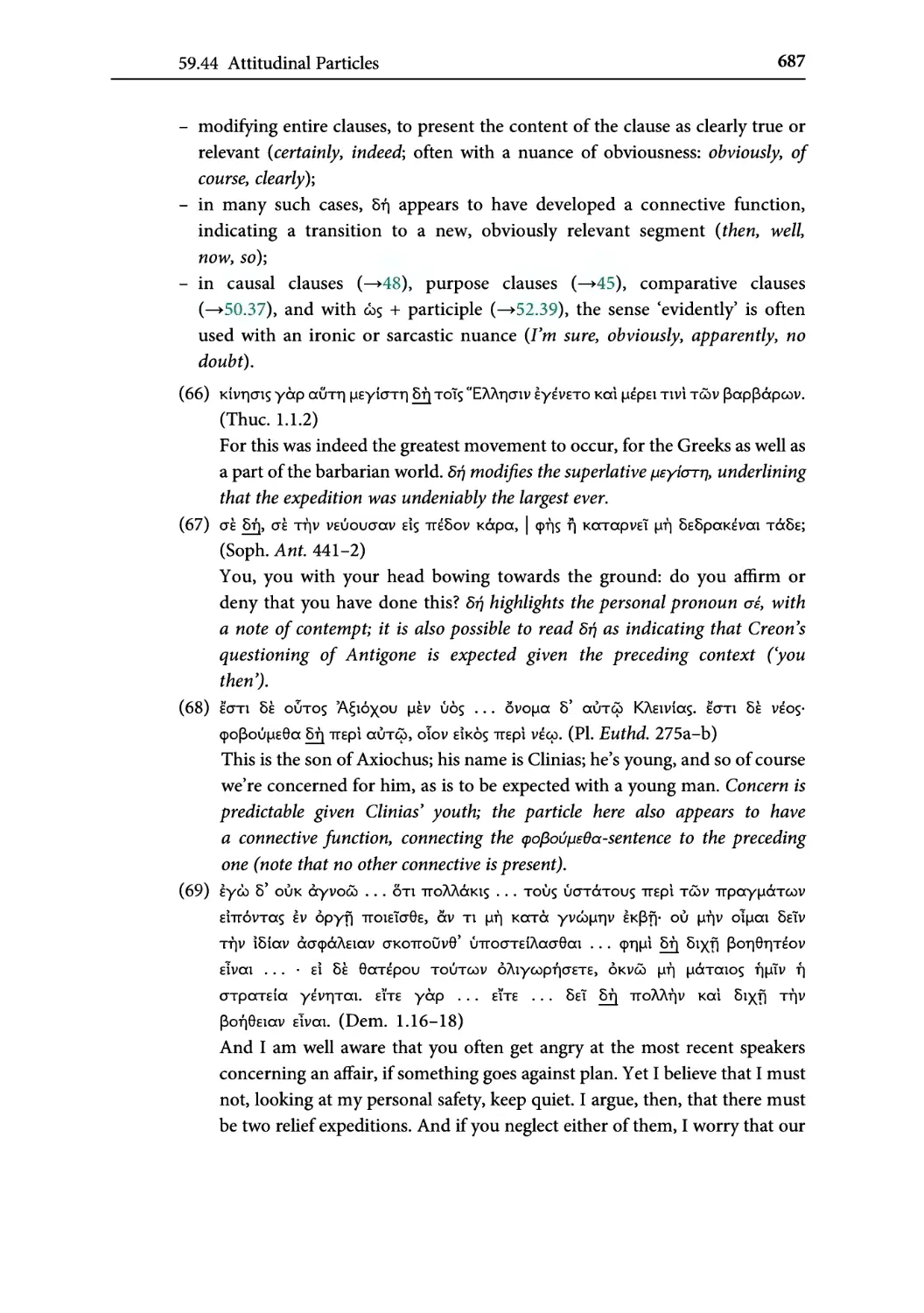
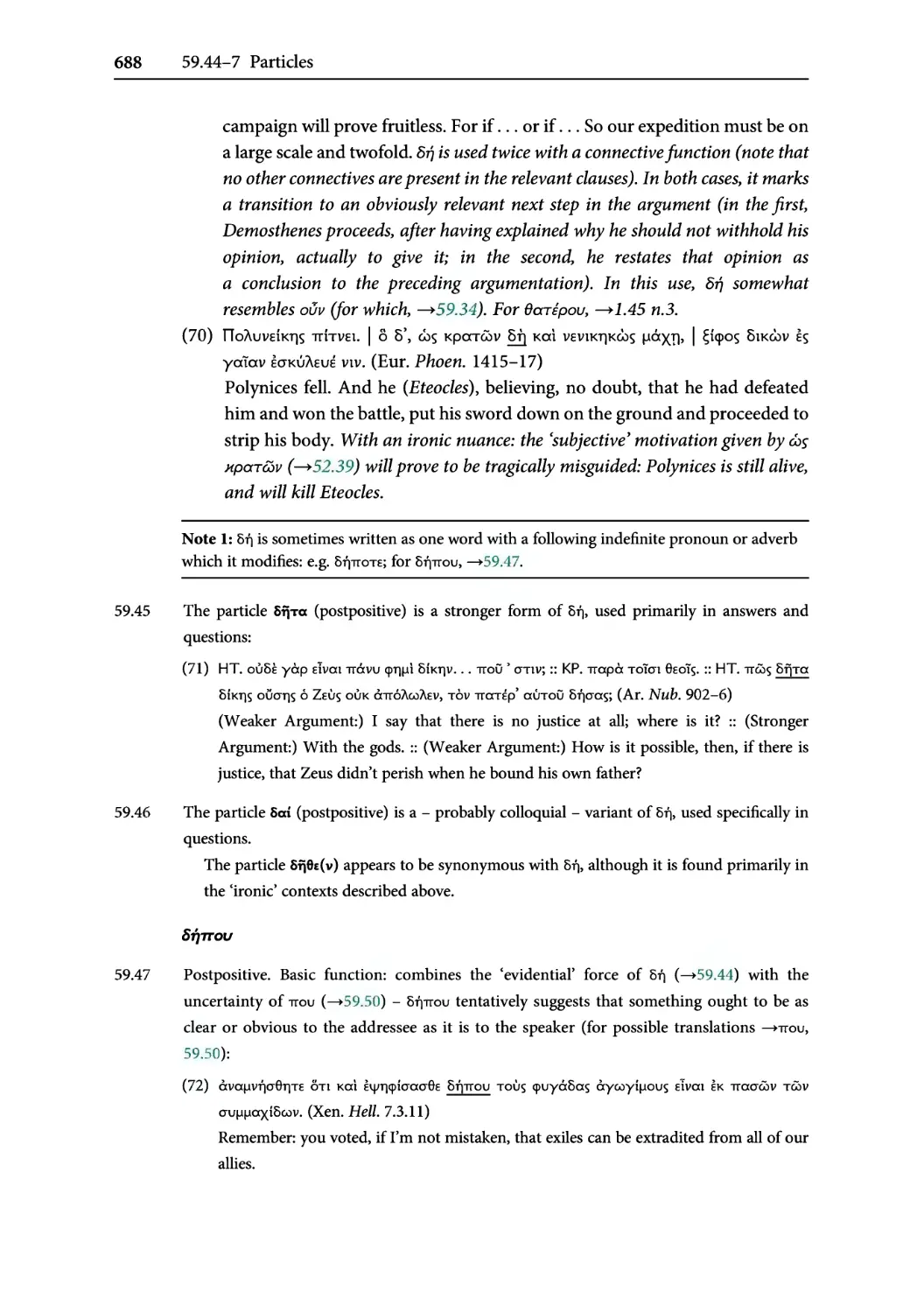
δή 686
δήπου 688
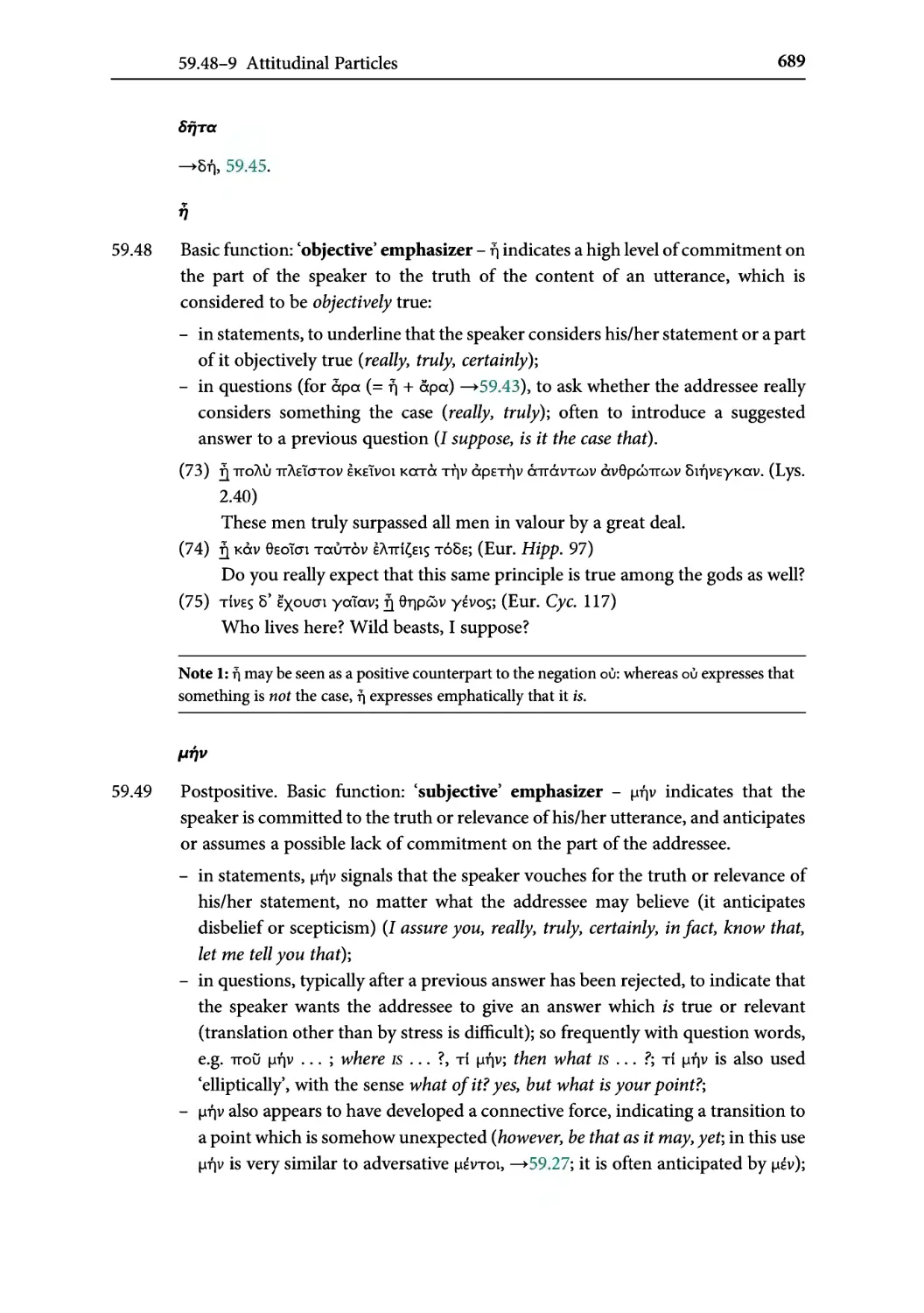
δήτα 689
ή 689
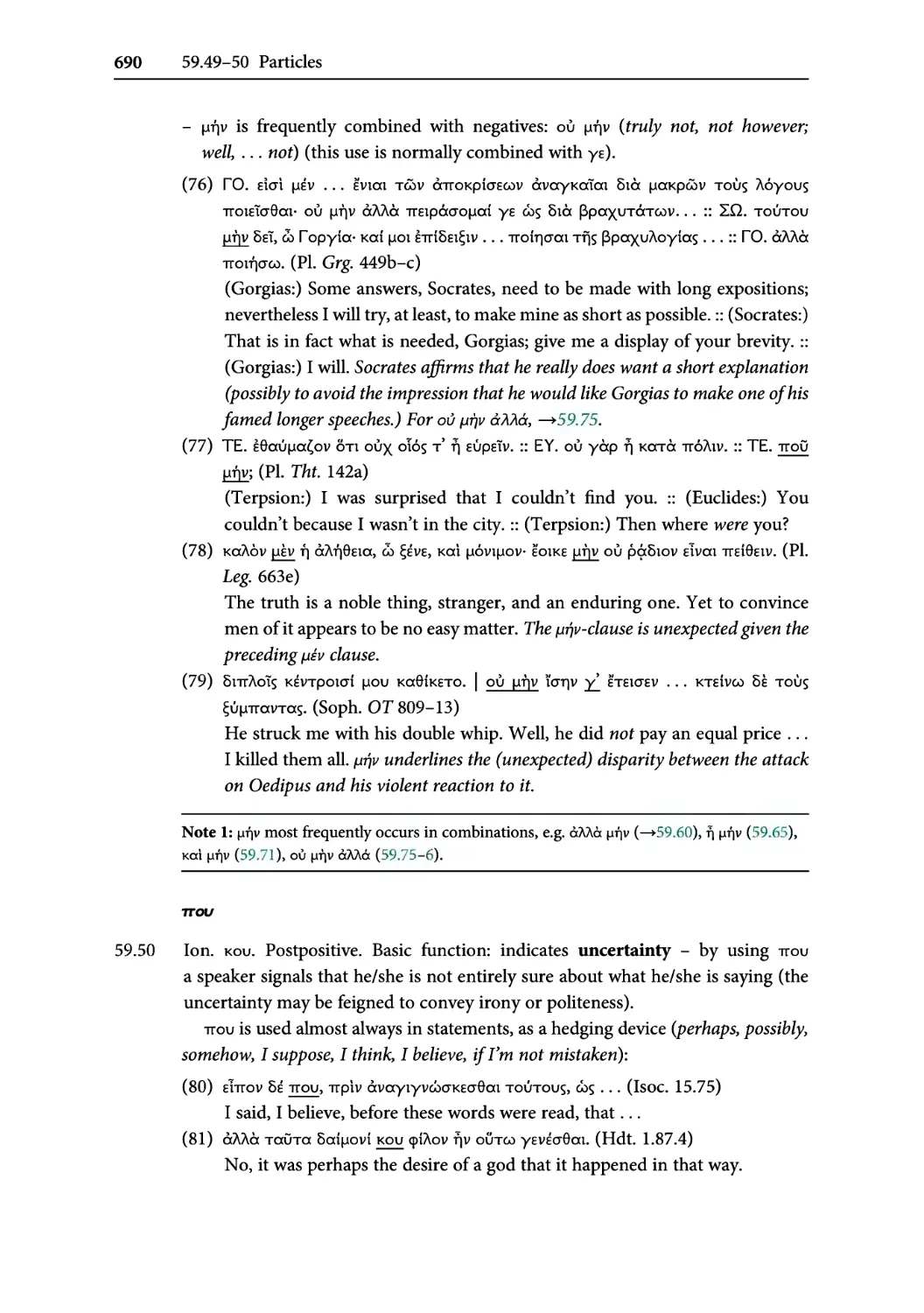
μήν 689
που 690
τοι 691
Particles of Scope 692
Introduction 692
List of Scope Particles 692

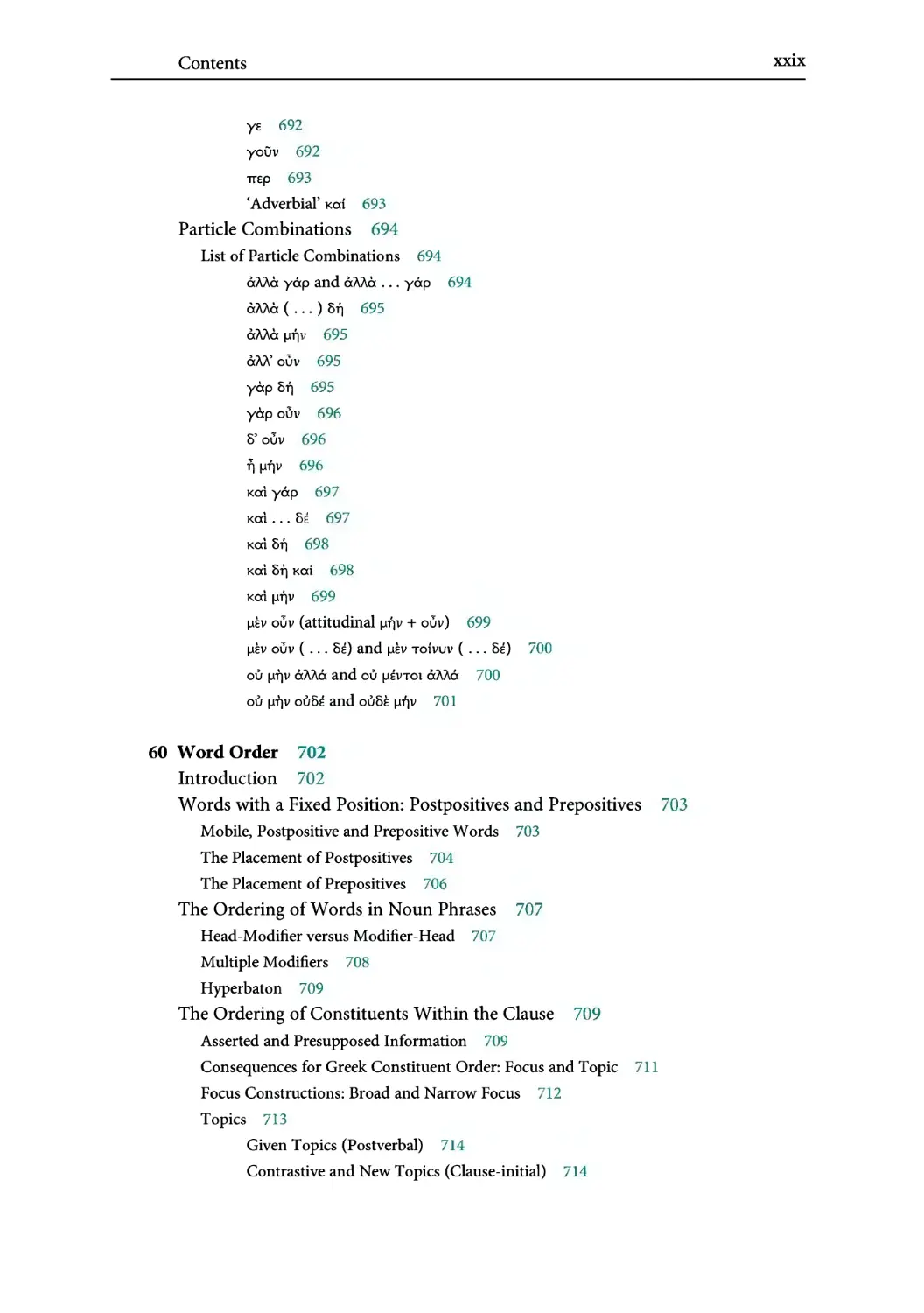
Contents
XXIX
γε 692
youv 692
περ 693
'Adverbial' καί 693
Particle Combinations 694
List of Particle Combinations 694
άλλα yap and αλλά ... yap 694
αλλά (...) δή 695
αλλά μήν 695
αλλ' ουν 695
yap δή 695
yap ουν 696
δ' ουν 696
ή μήν 696
και yap 697
και... δε 697
και δή 698
και δή καί 698
και μήν 699
μεν ουν (attitudinal μήν + ουν) 699
μεν ουν ( ... δε) and μεν τοίνυν ( ... δε) 700
ου μήν αλλά and ου μεντοι αλλά 700
ου μήν ουδέ and ουδέ μήν 701
60 Word Order 702
Introduction 702
Words with a Fixed Position: Postpositives and Prepositives 703
Mobile, Postpositive and Prepositive Words 703
The Placement of Postpositives 704
The Placement of Prepositives 706
The Ordering of Words in Noun Phrases 707
Head-Modifier versus Modifier-Head 707
Multiple Modifiers 708
Hyperbaton 709
The Ordering of Constituents Within the Clause 709
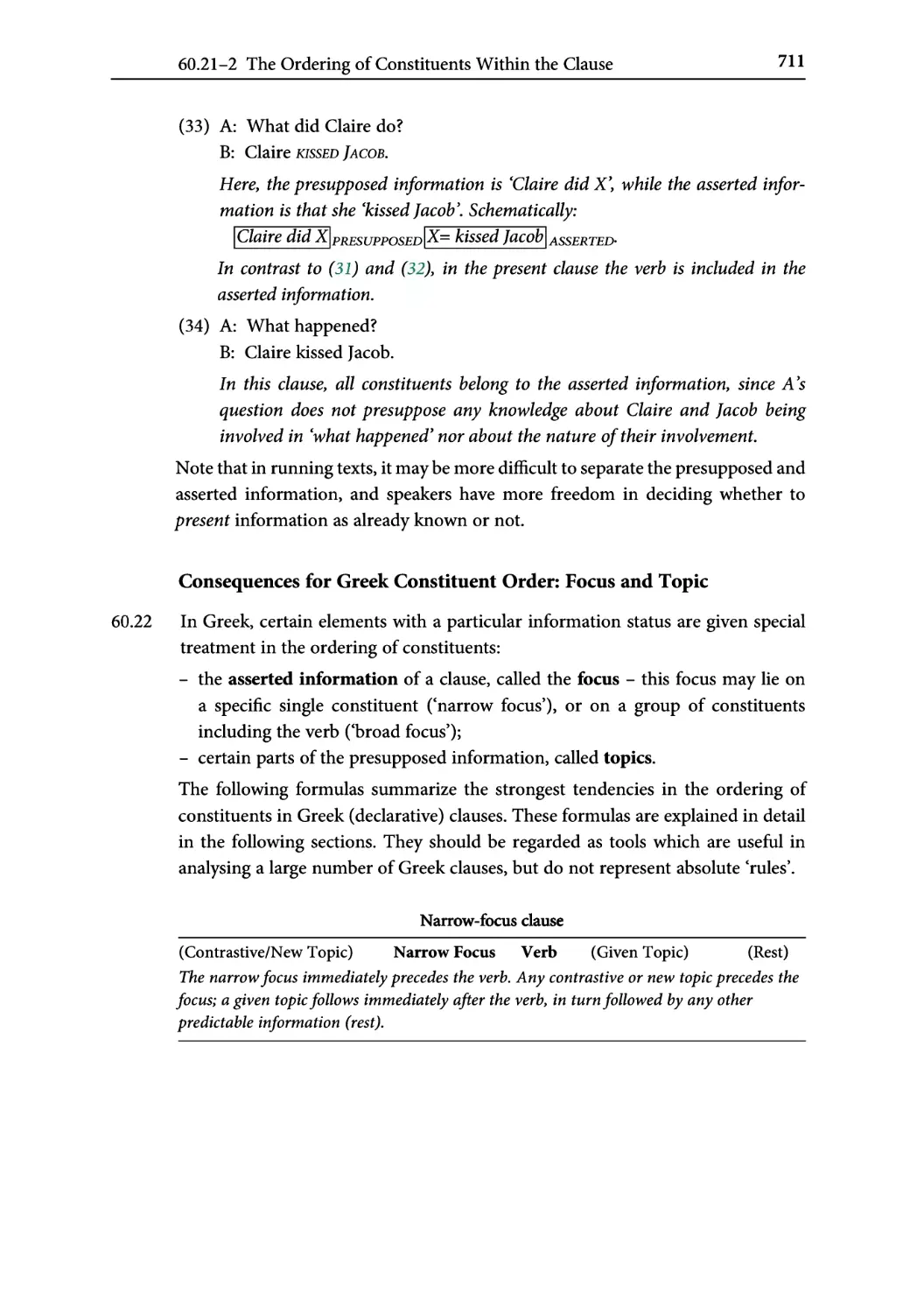
Asserted and Presupposed Information 709
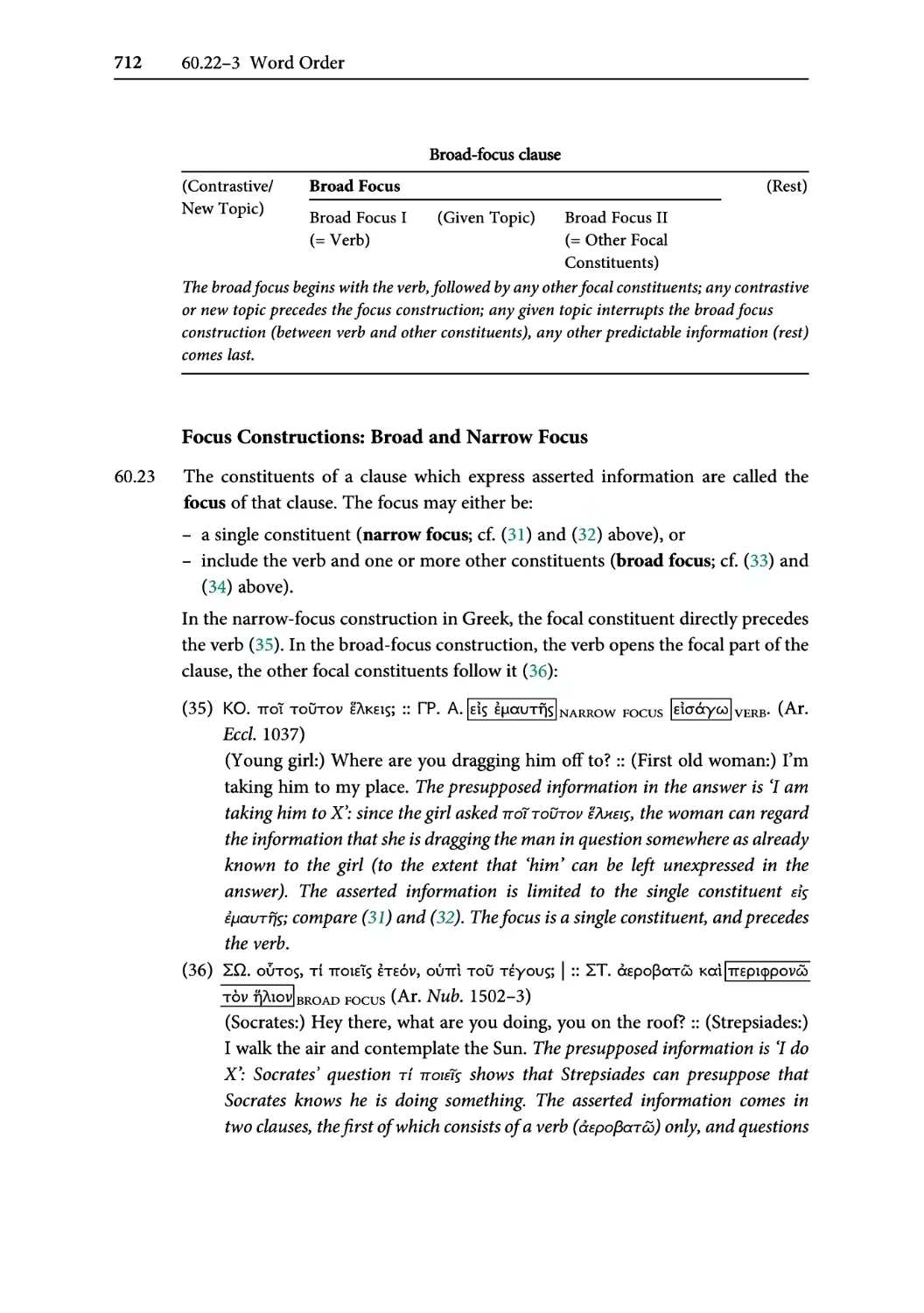
Consequences for Greek Constituent Order: Focus and Topic 711
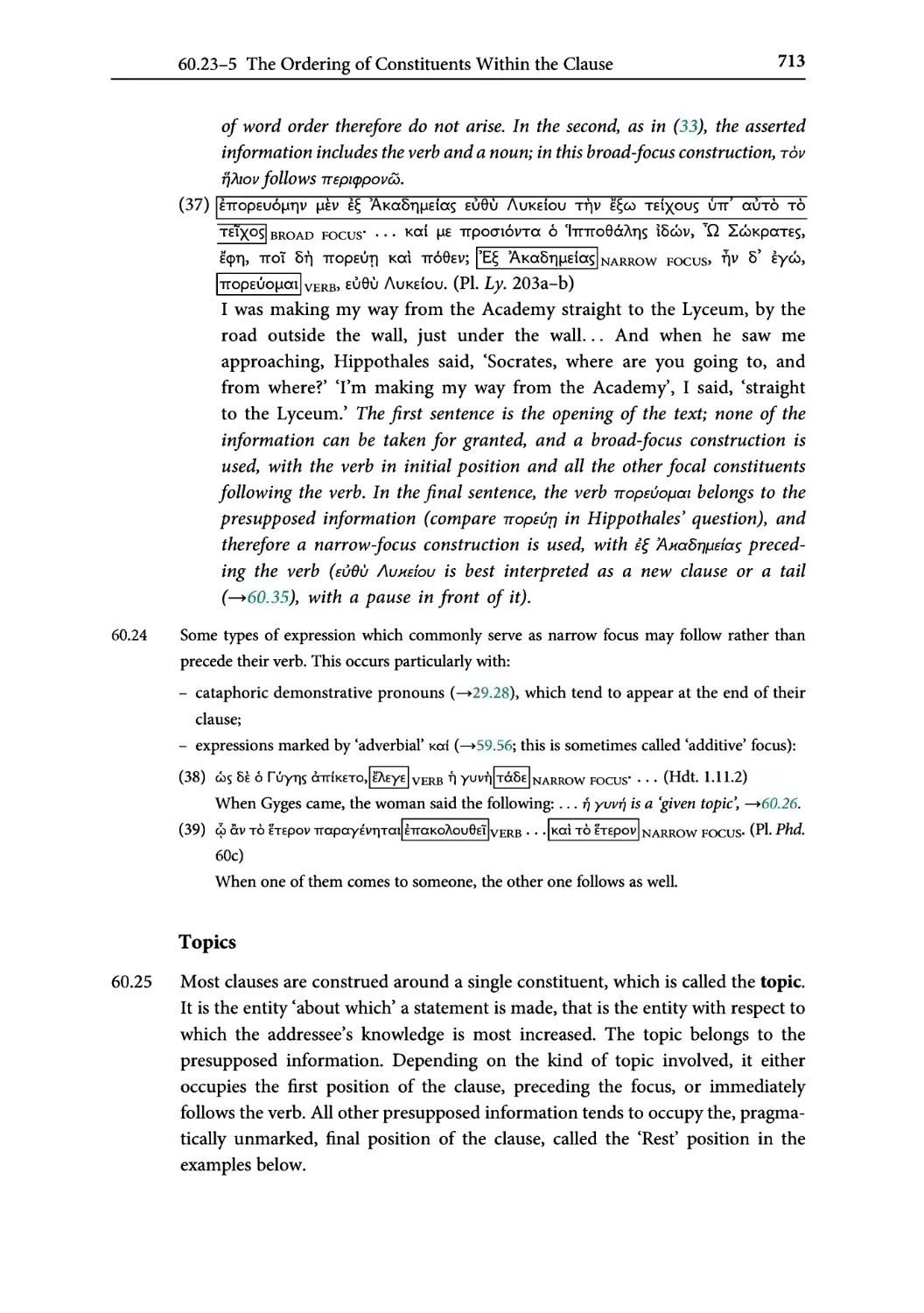
Focus Constructions: Broad and Narrow Focus 712
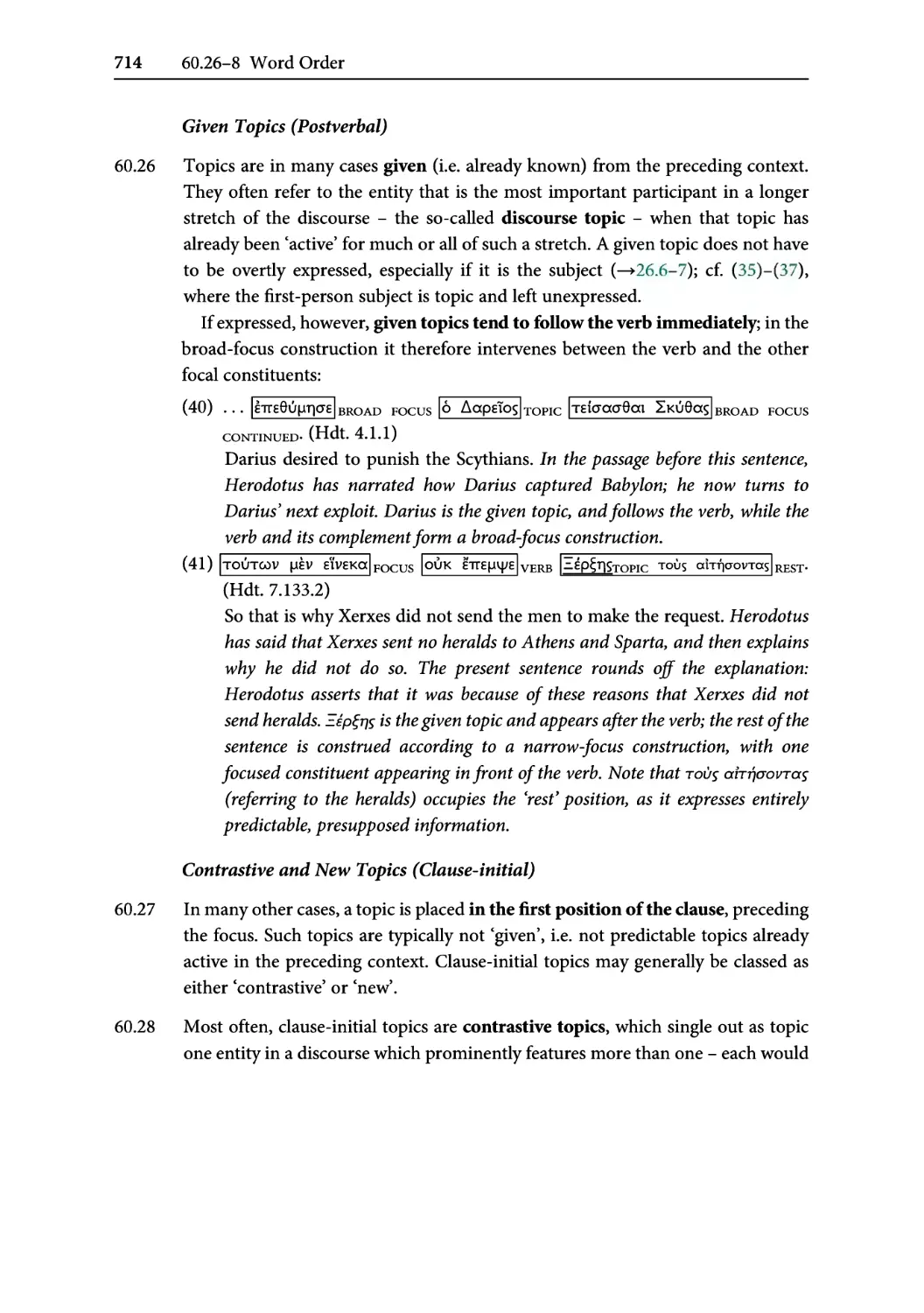
Topics 713
Given Topics (Postverbal) 714
Contrastive and New Topics (Clause-initial) 714

xxx Contents
The Periphery of the Clause: Settings, Themes and Tails 717
Settings 717
Themes 718
Tails 719
Overview of Clauses with a Periphery 720
Prolepsis 720
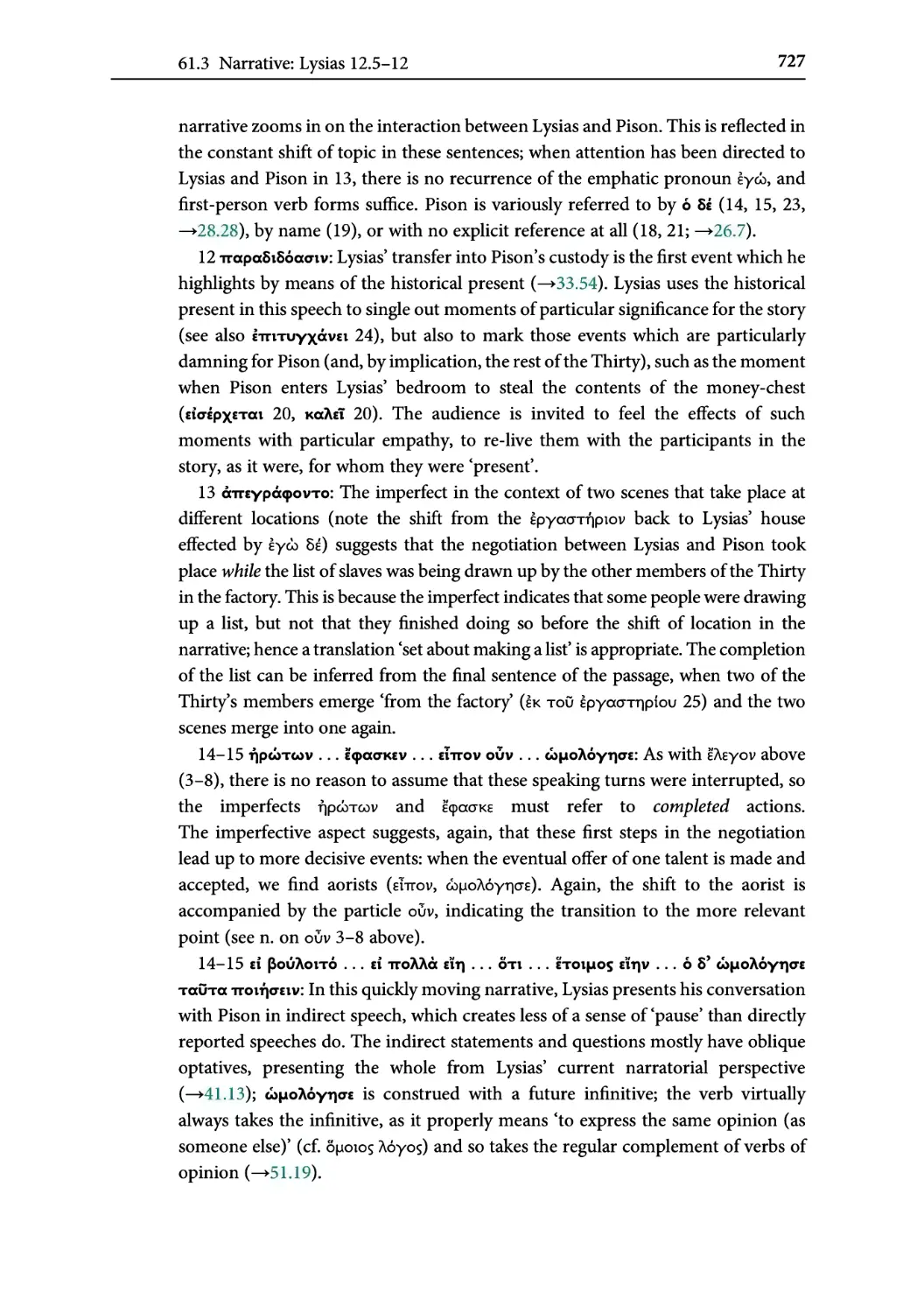
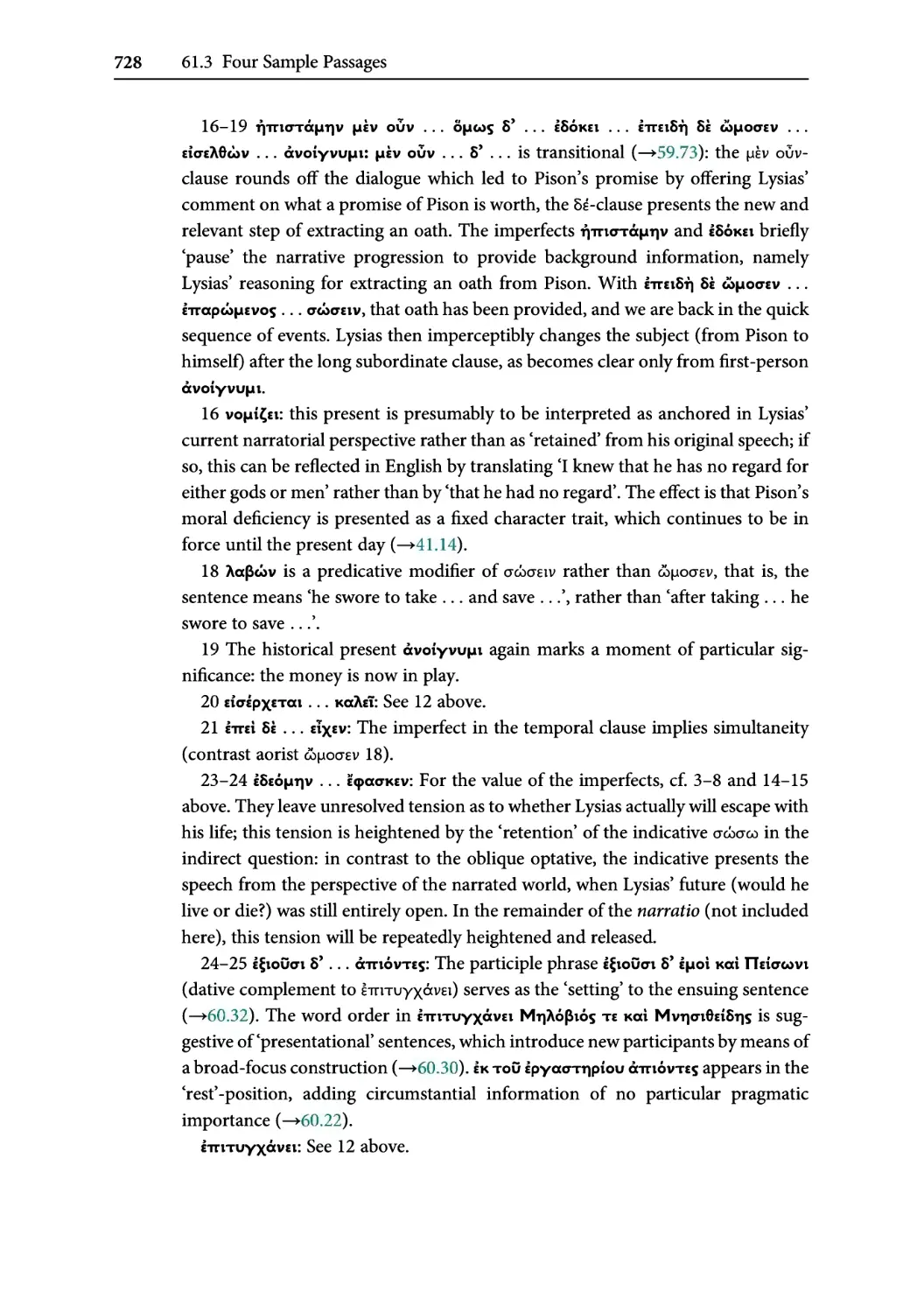
61 Four Sample Passages 722
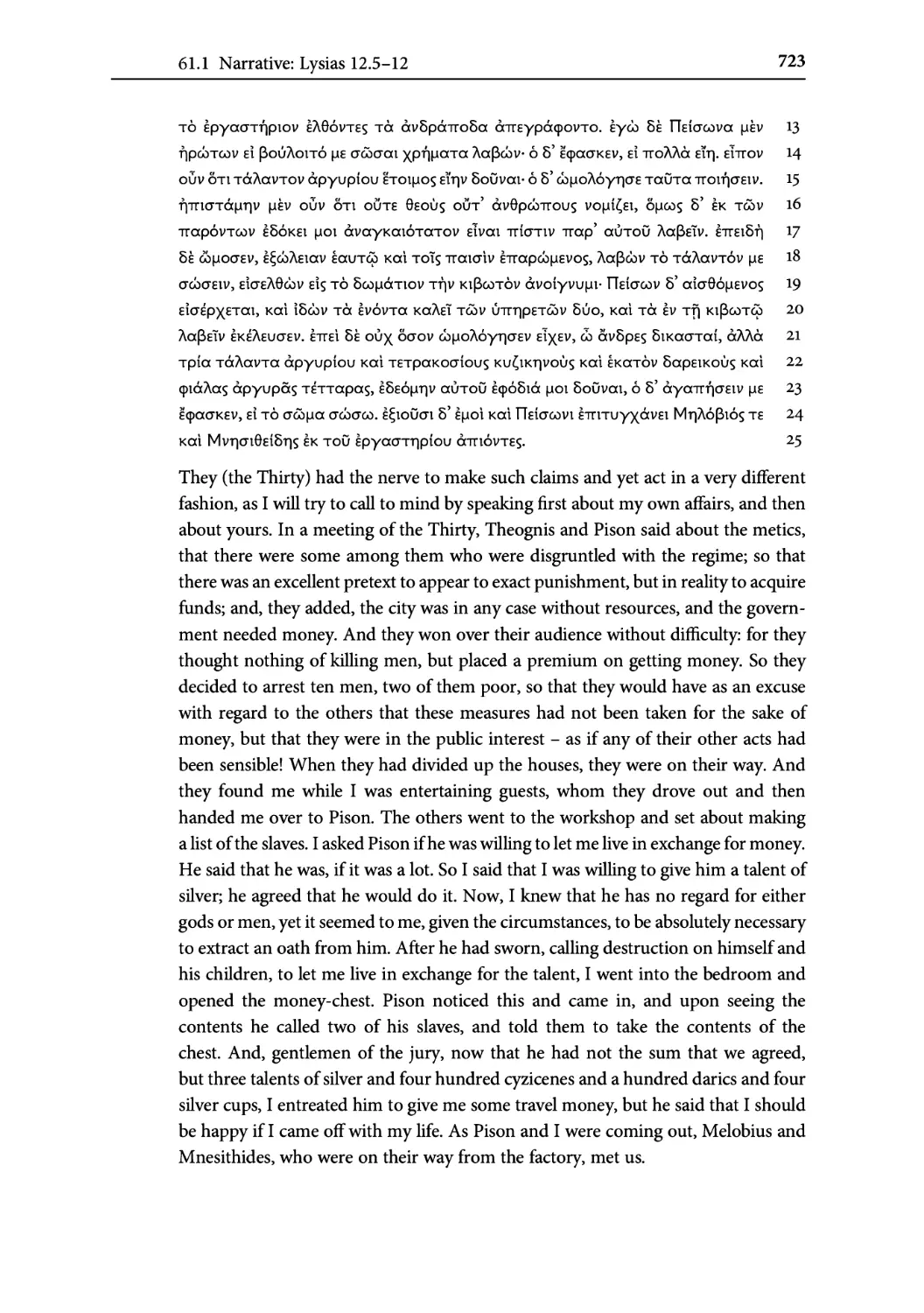
Narrative: Lysias 12.5-12 722
Introduction and Text 722
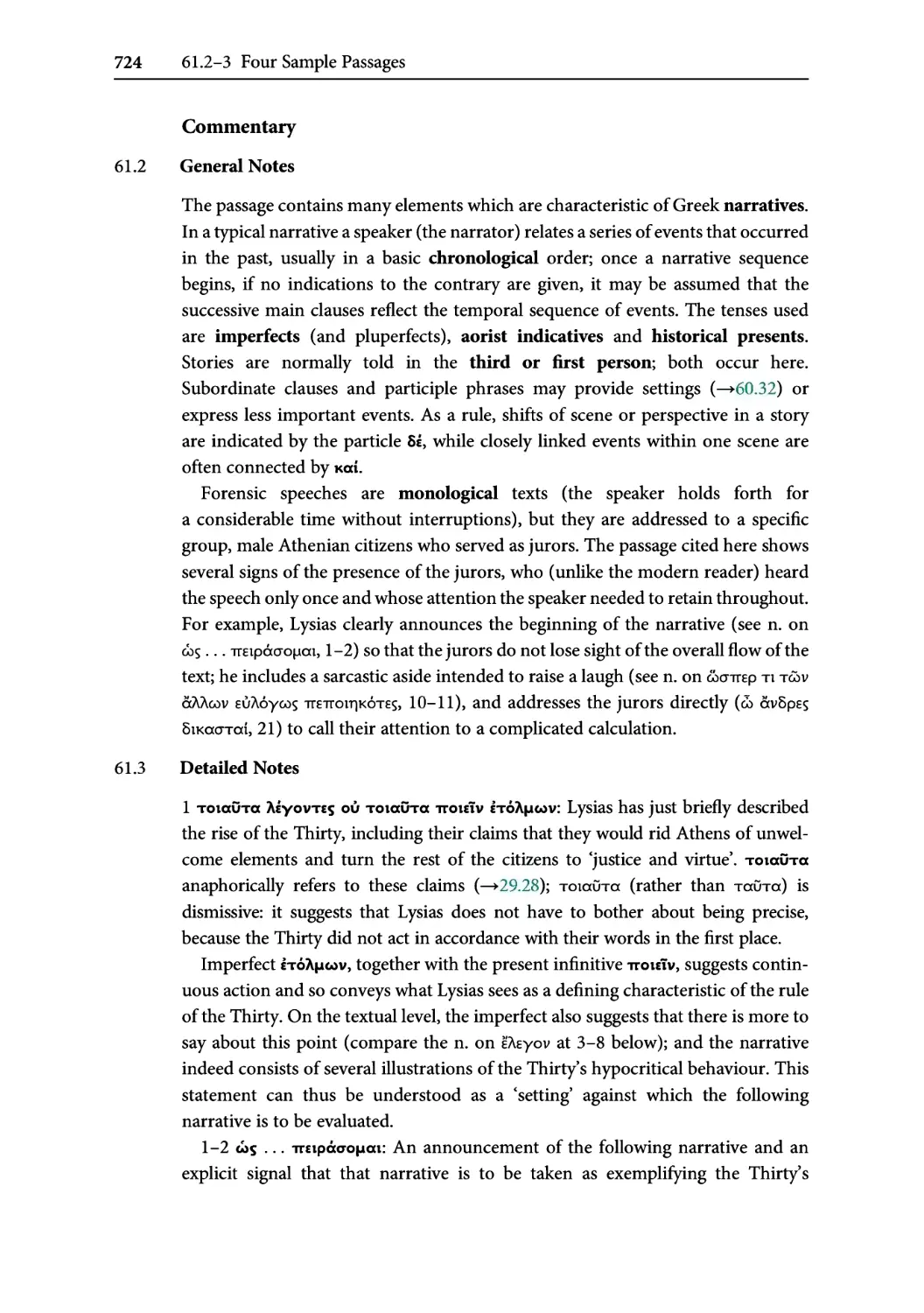
Commentary 724
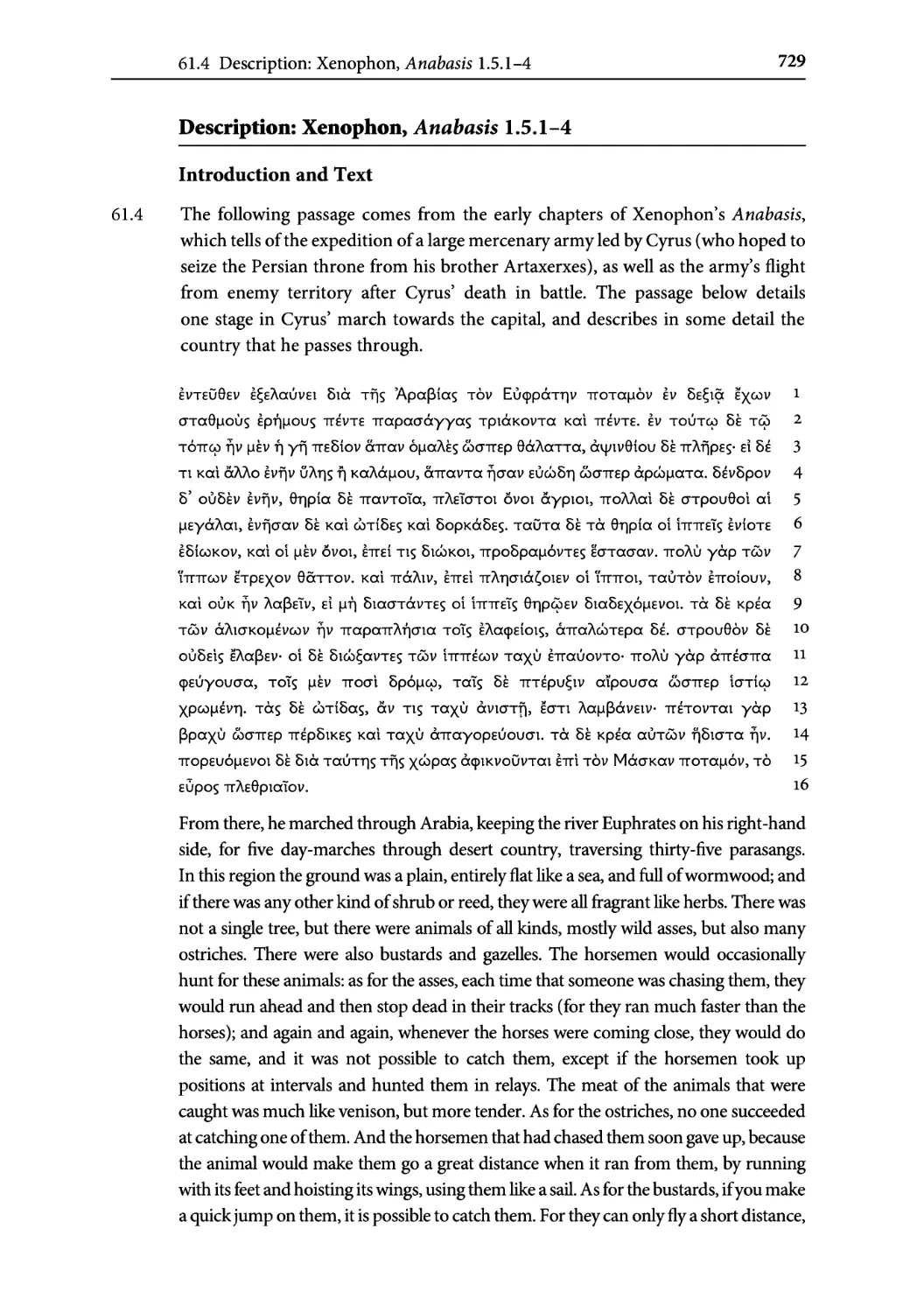
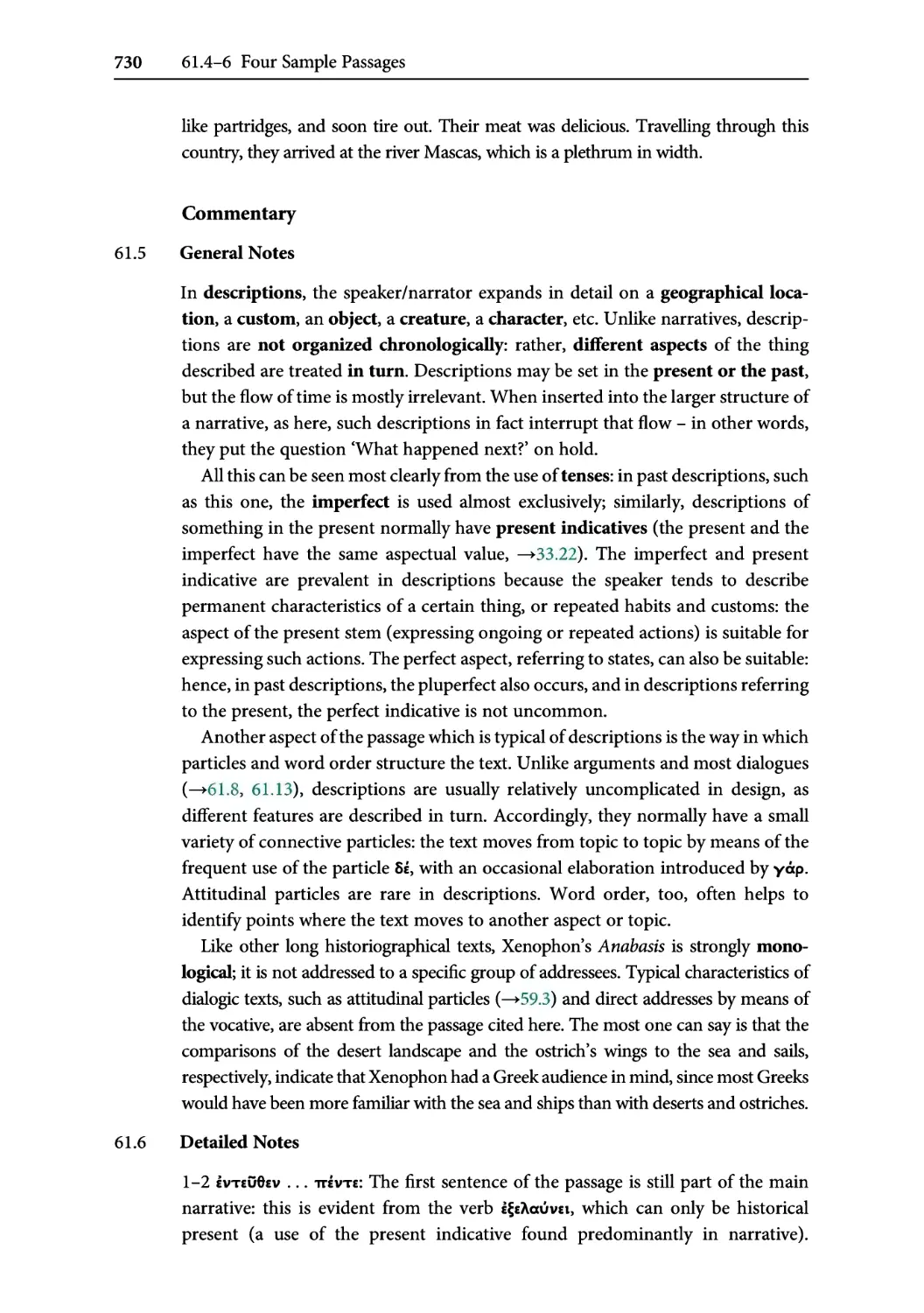
Description: Xenophon, Anabasis 1.5.1-4 729
Introduction and Text 729
Commentary 730
Argument: Plato, Gorgias 484c-485a 735
Introduction and Text 735
Commentary 736
Dialogue: Sophocles, Ajax 1120-41 741
Introduction and Text 741
Commentary 742
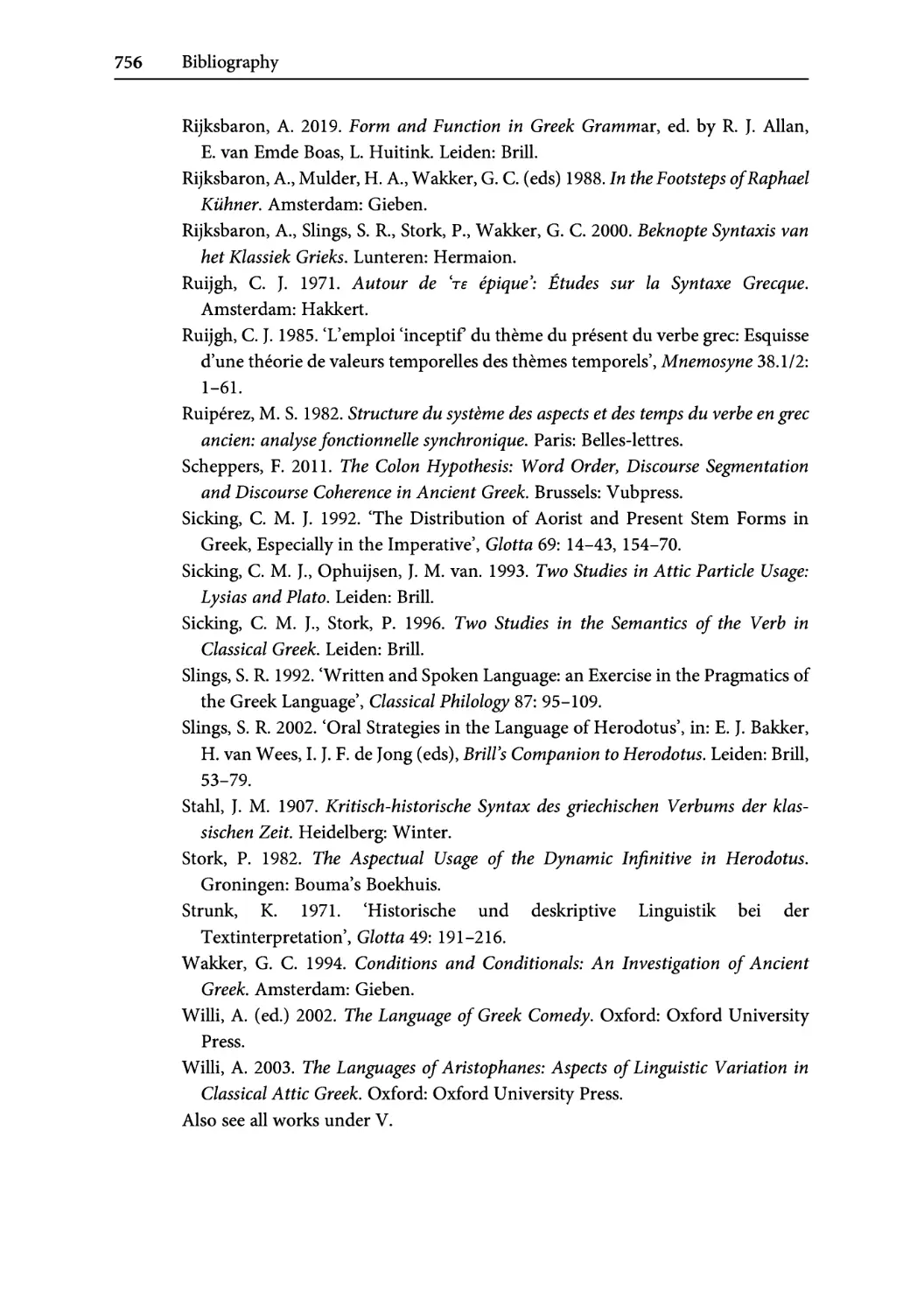
Bibliography 749
Introduction 749
List of Books, Articles and Online Sources 749
I Encyclopedias, Companions (with Full Bibliographies) 749
II Online Sources 749
III General Works on Language and Linguistics 750
IV Historical Linguistics (Indo-European, Greek Historical Grammar, Etymology)
and Greek Dialectology 751
V Greek: Full Reference Grammars 752
VI Greek: Phonology, Morphology, Accentuation, Word Formation 752
VII Greek: Syntax, Semantics, Pragmatics, Discourse 753
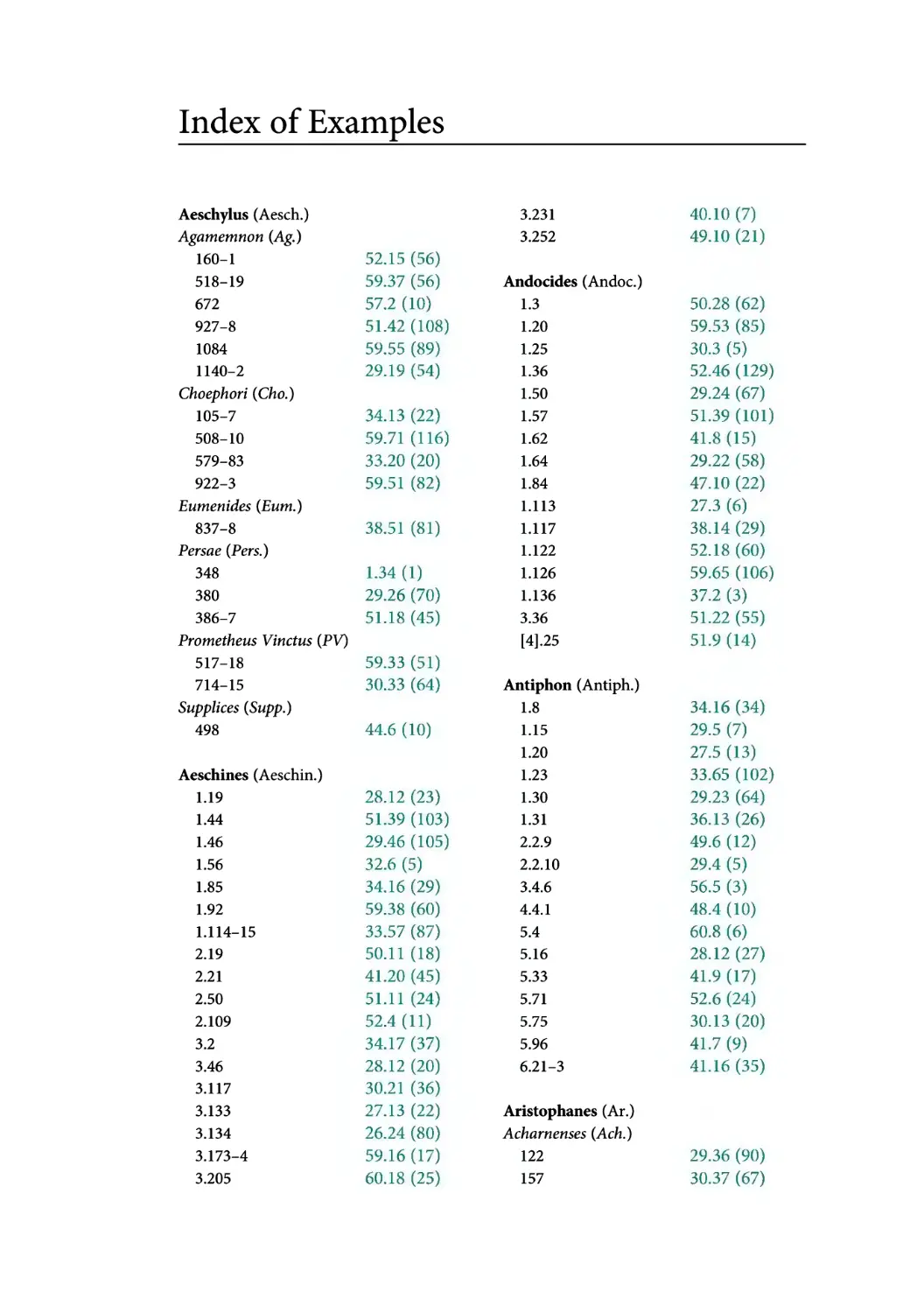
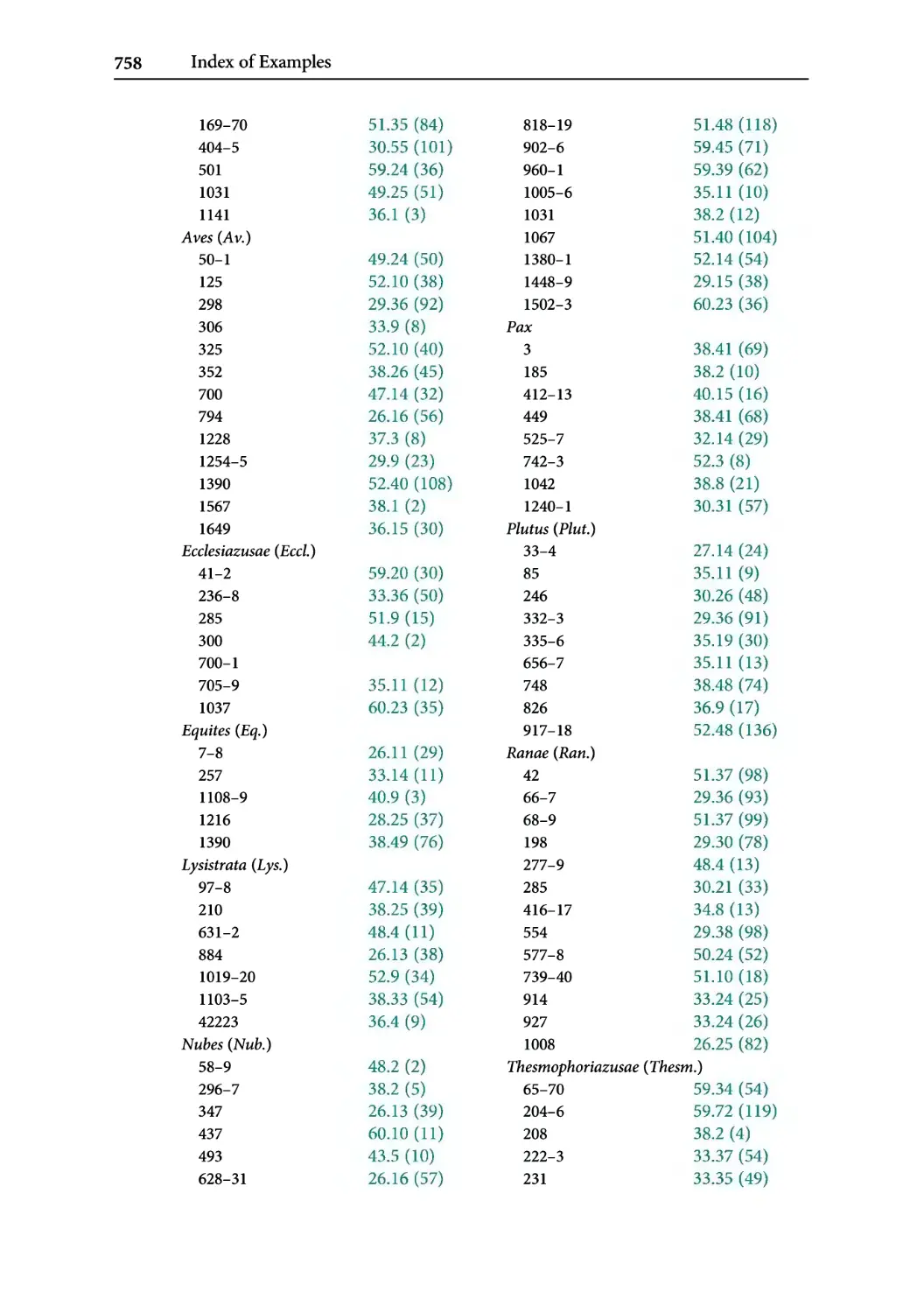
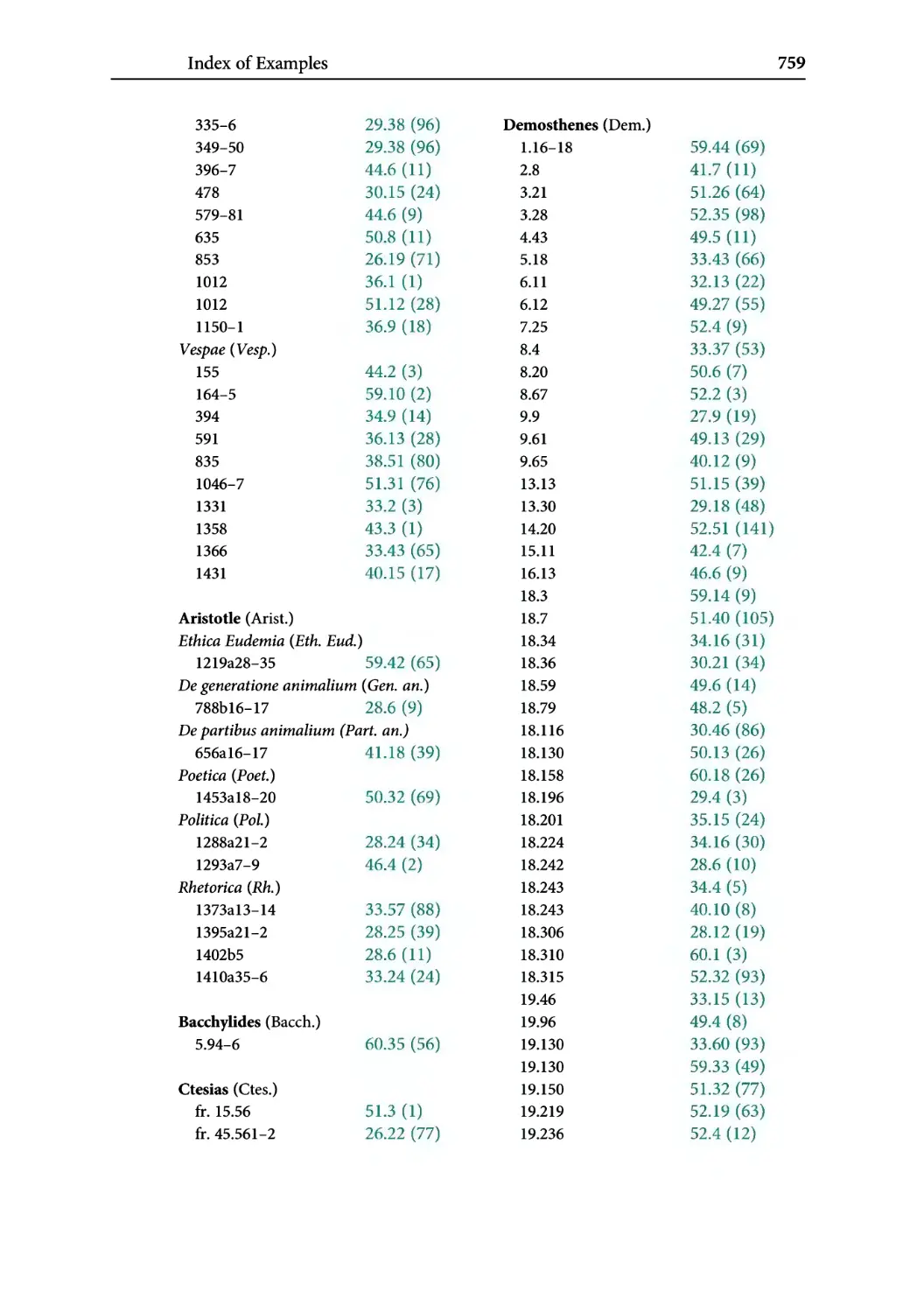
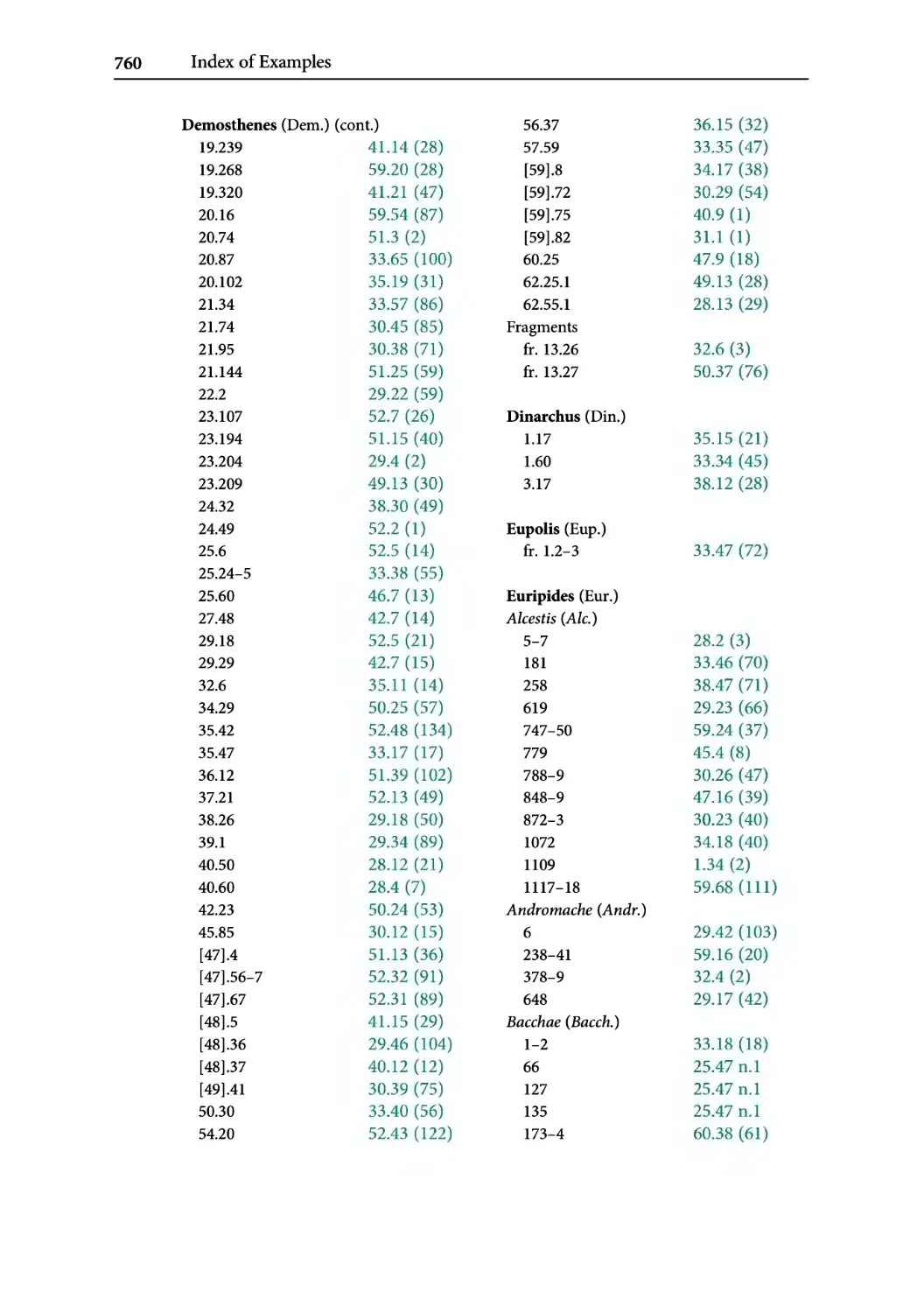
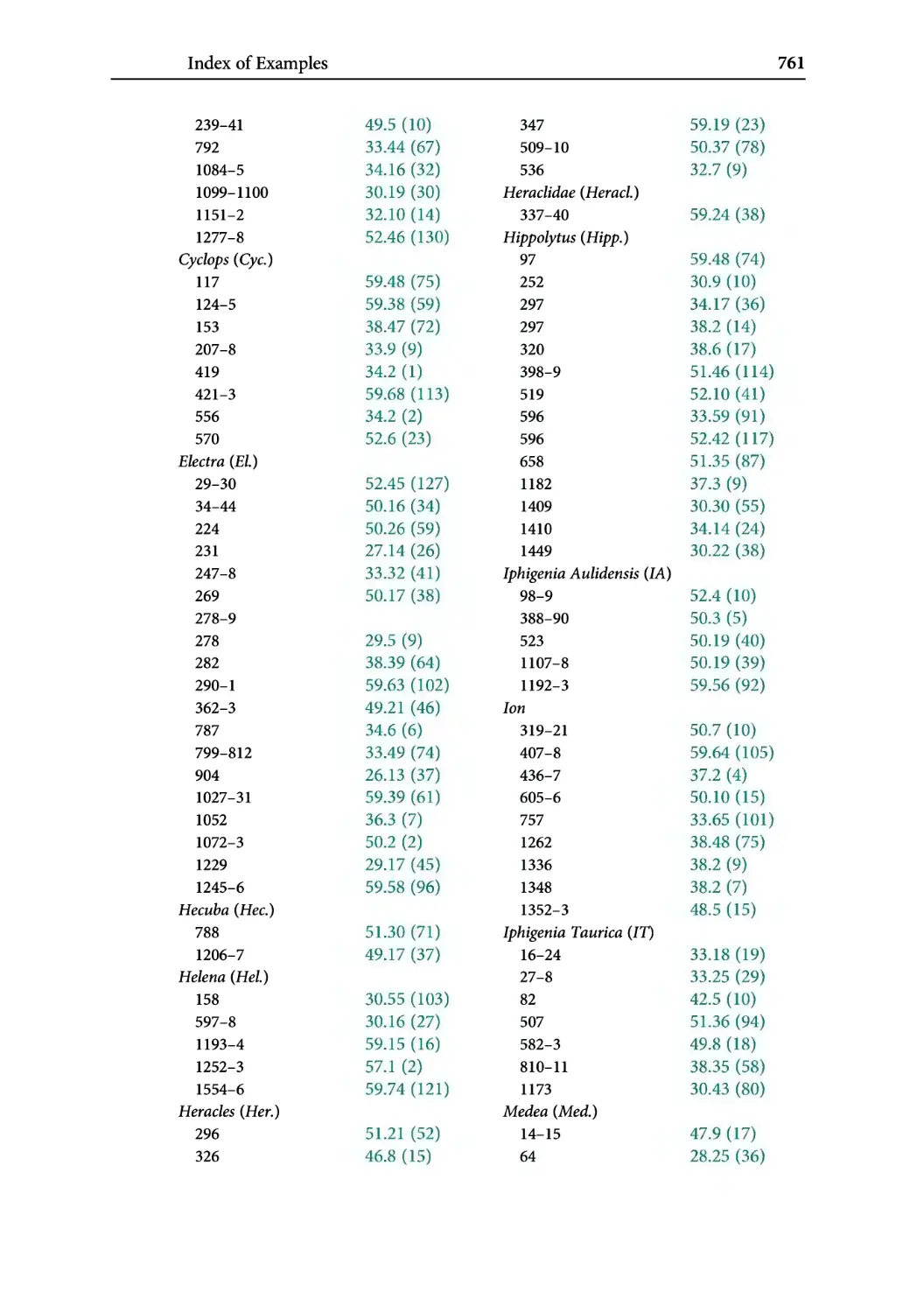
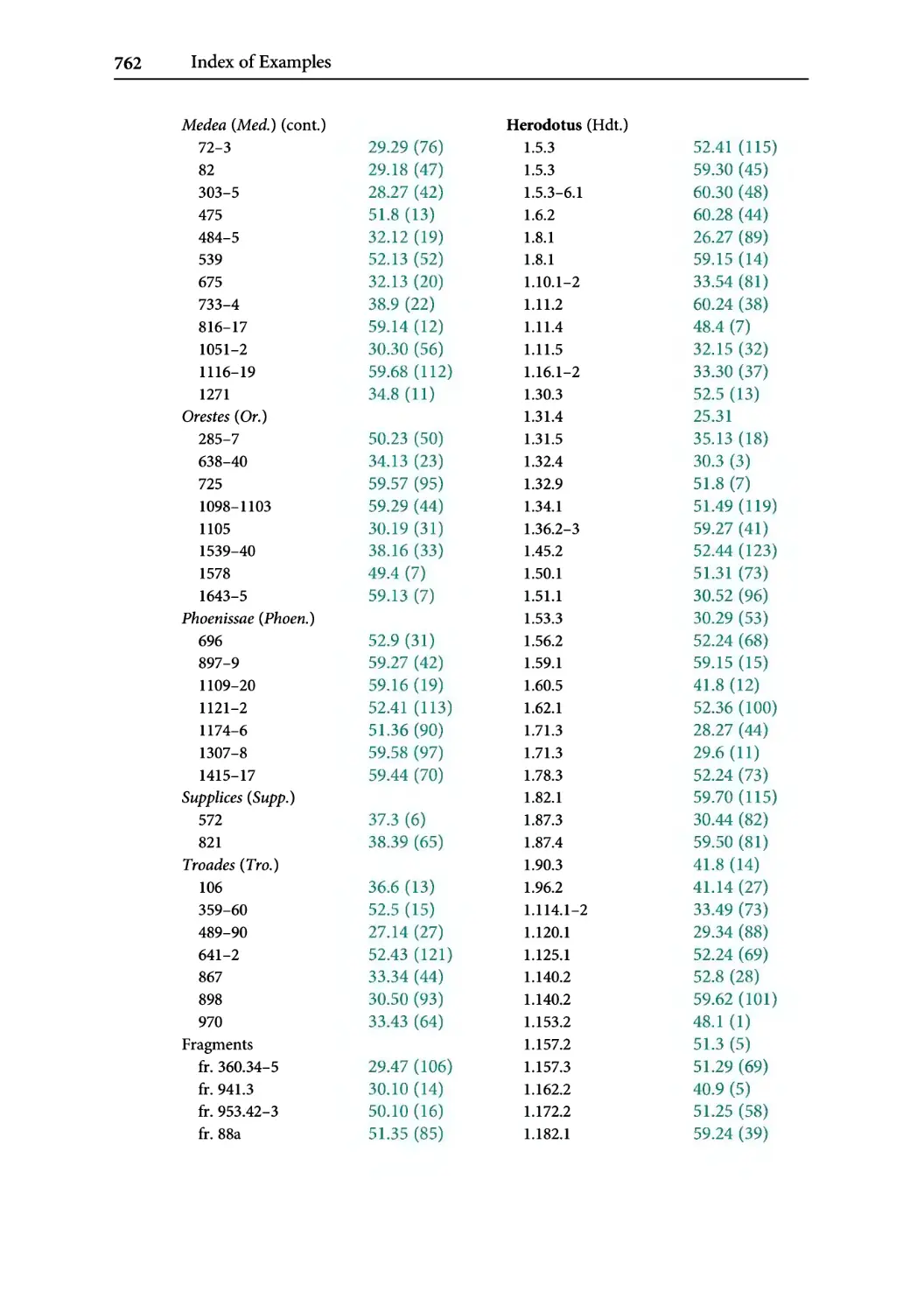
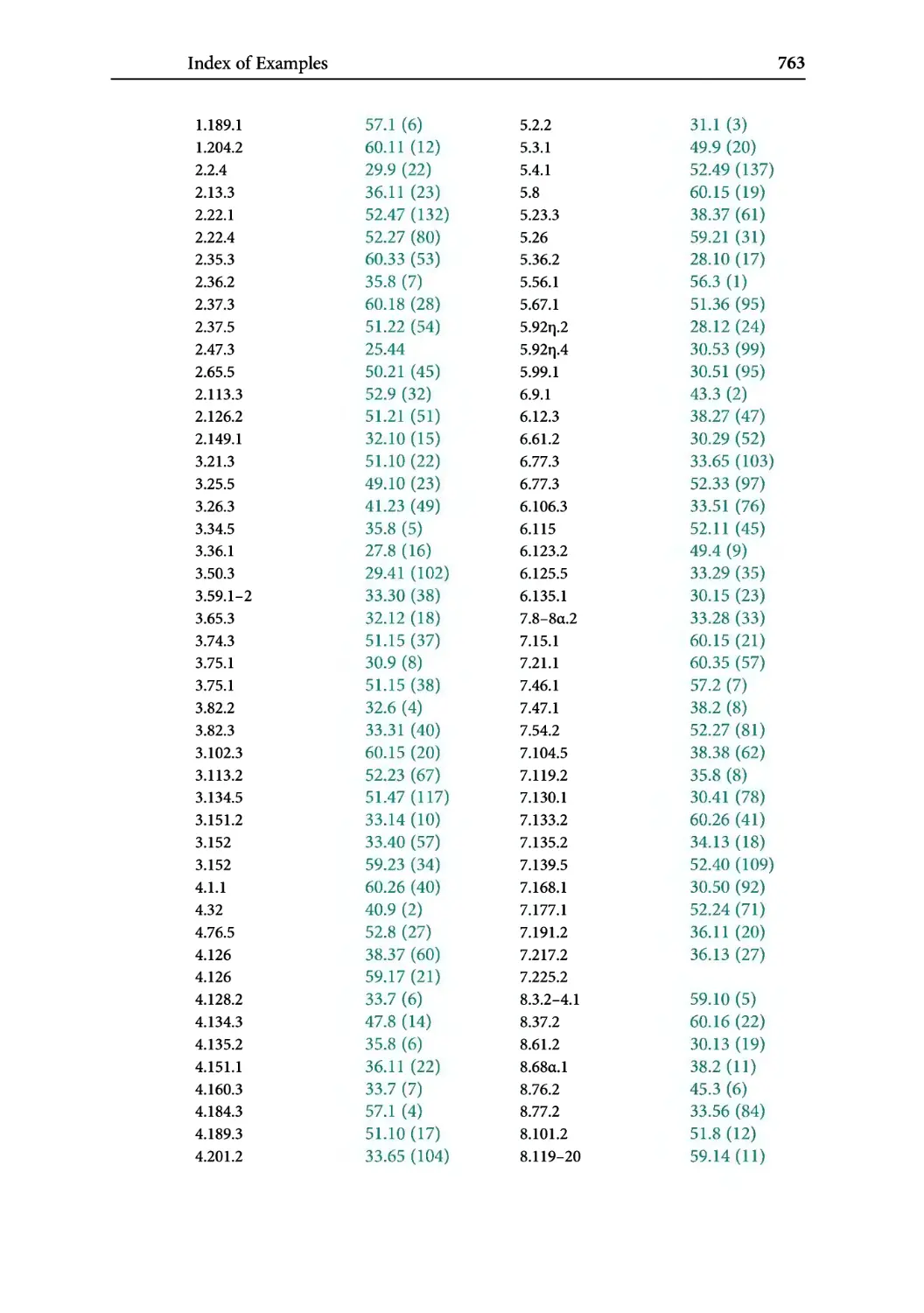
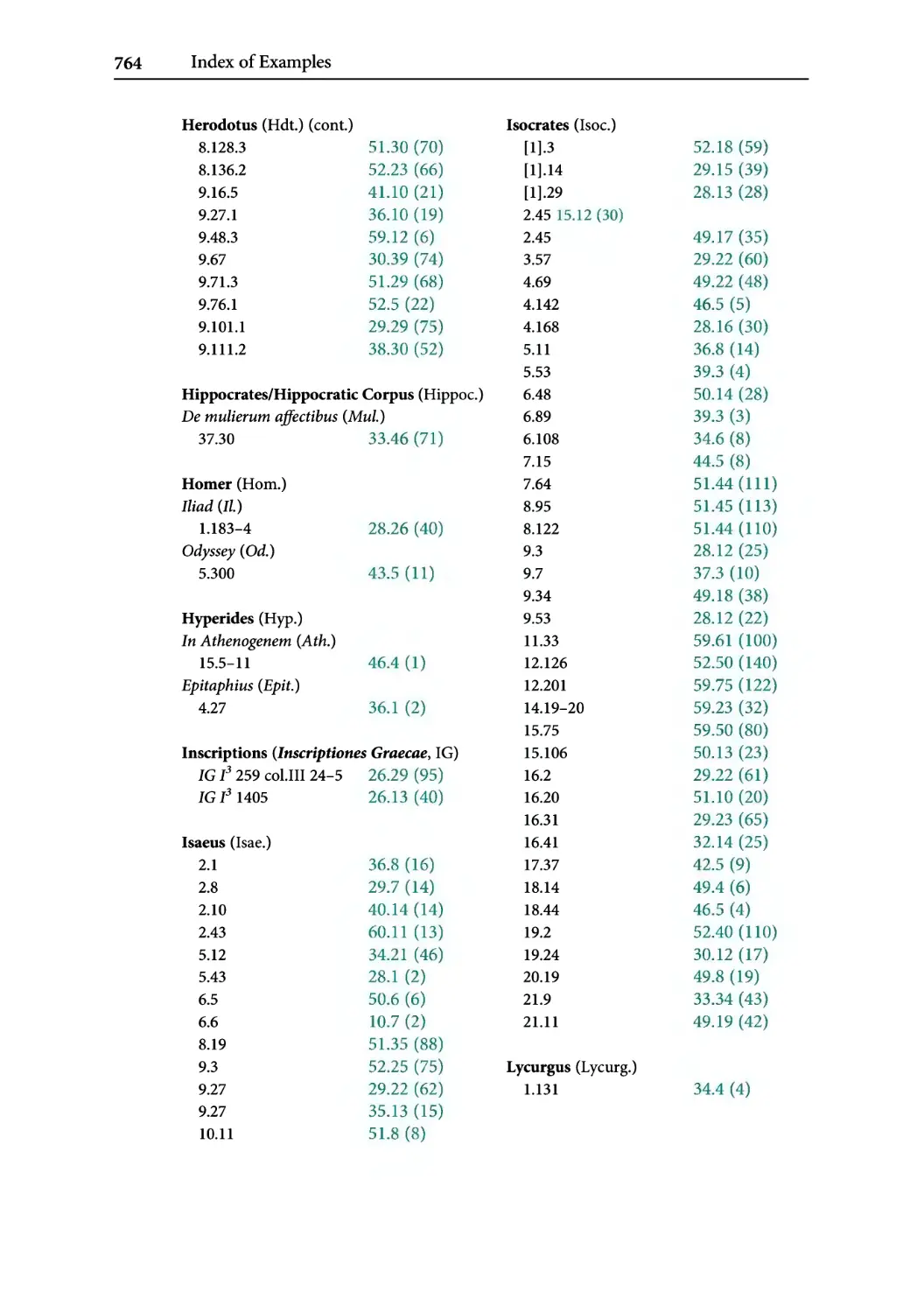
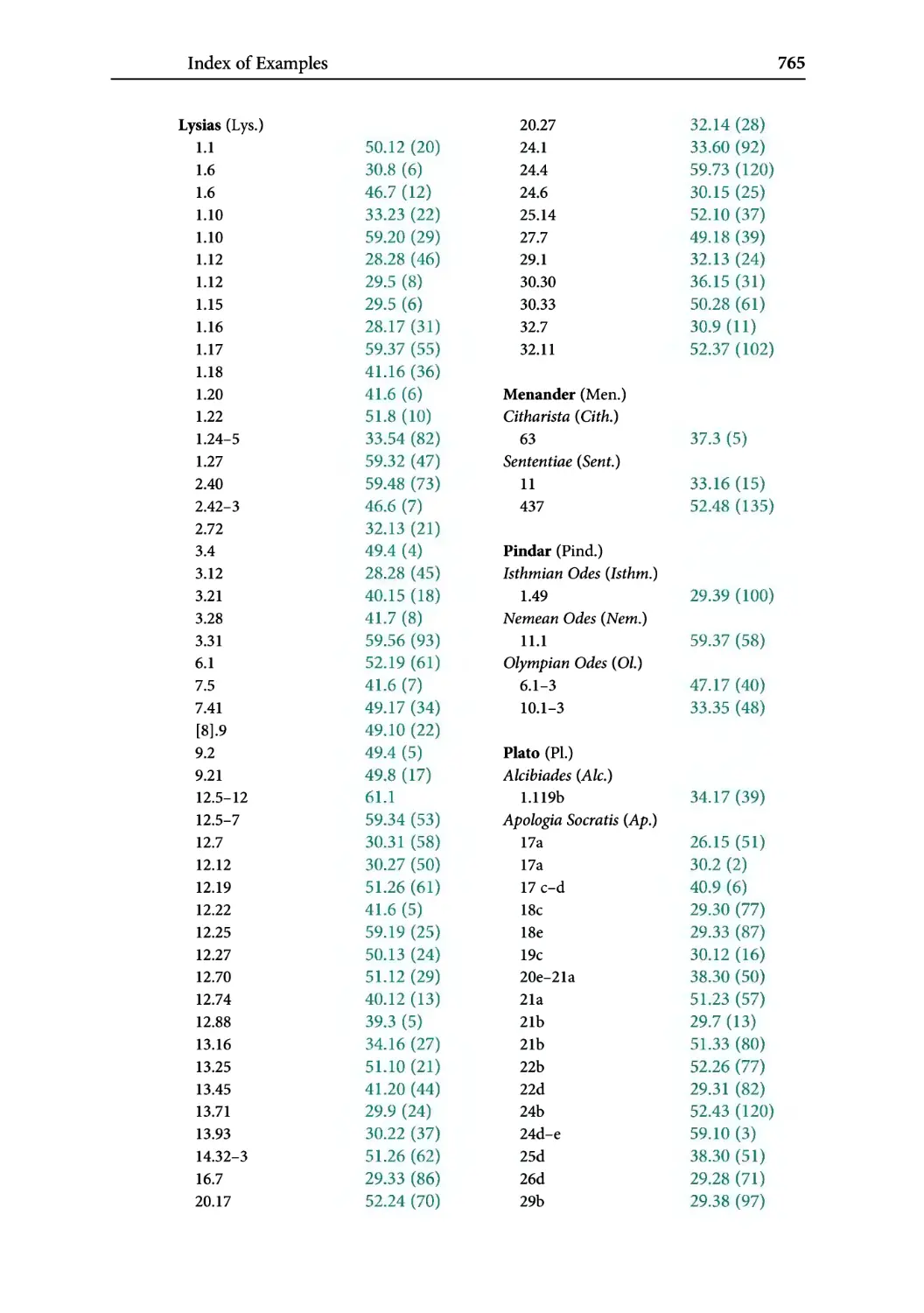
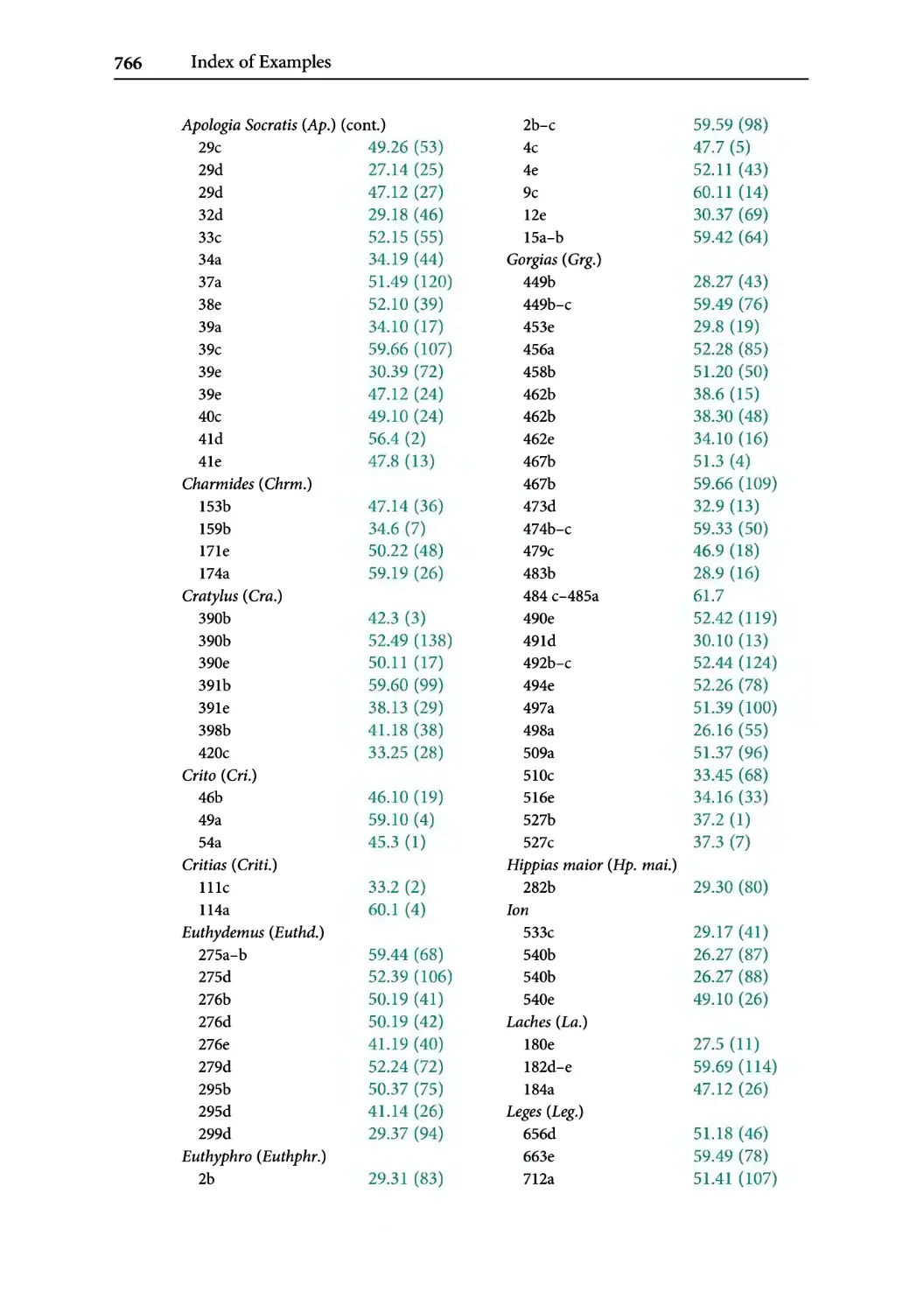
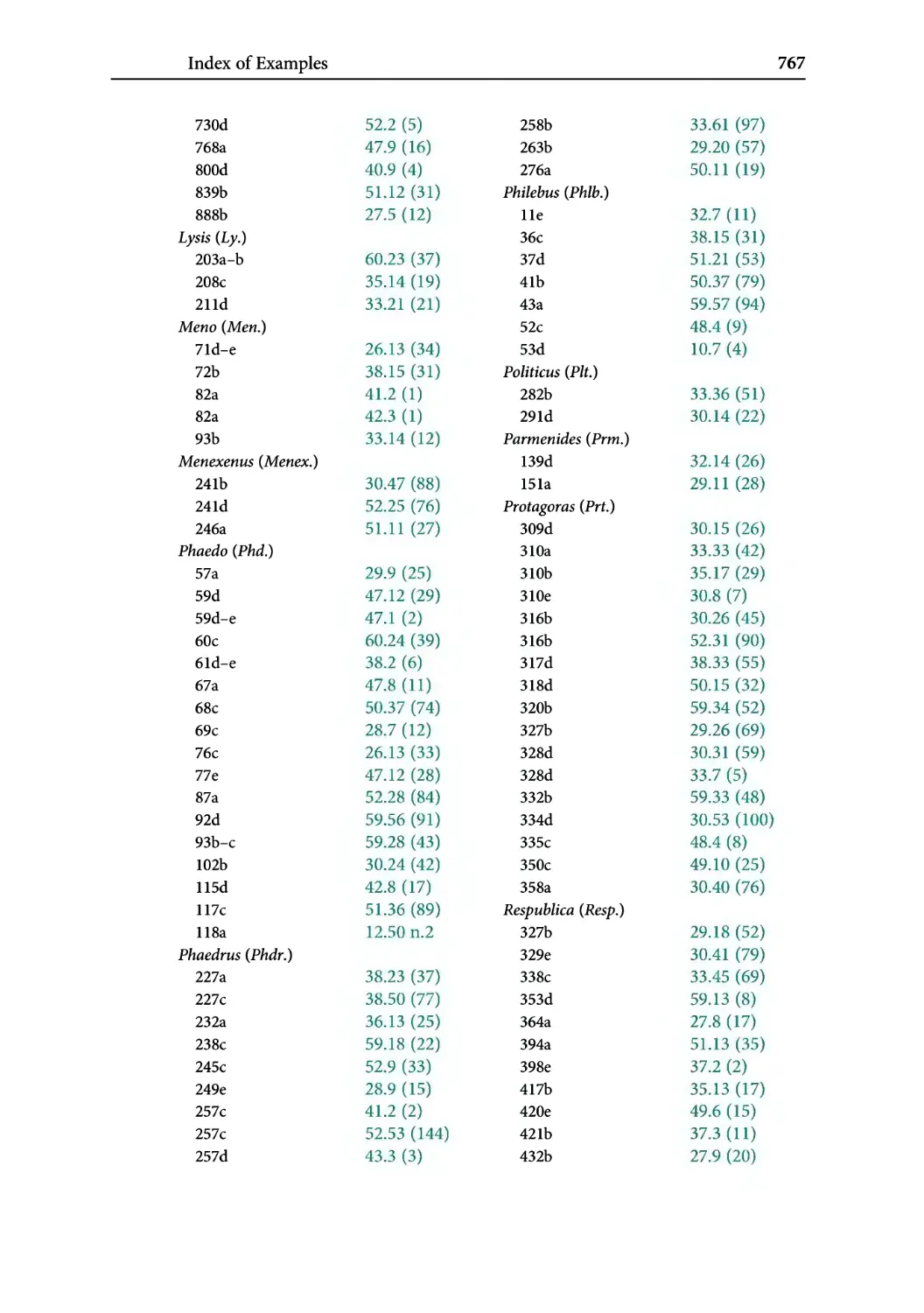
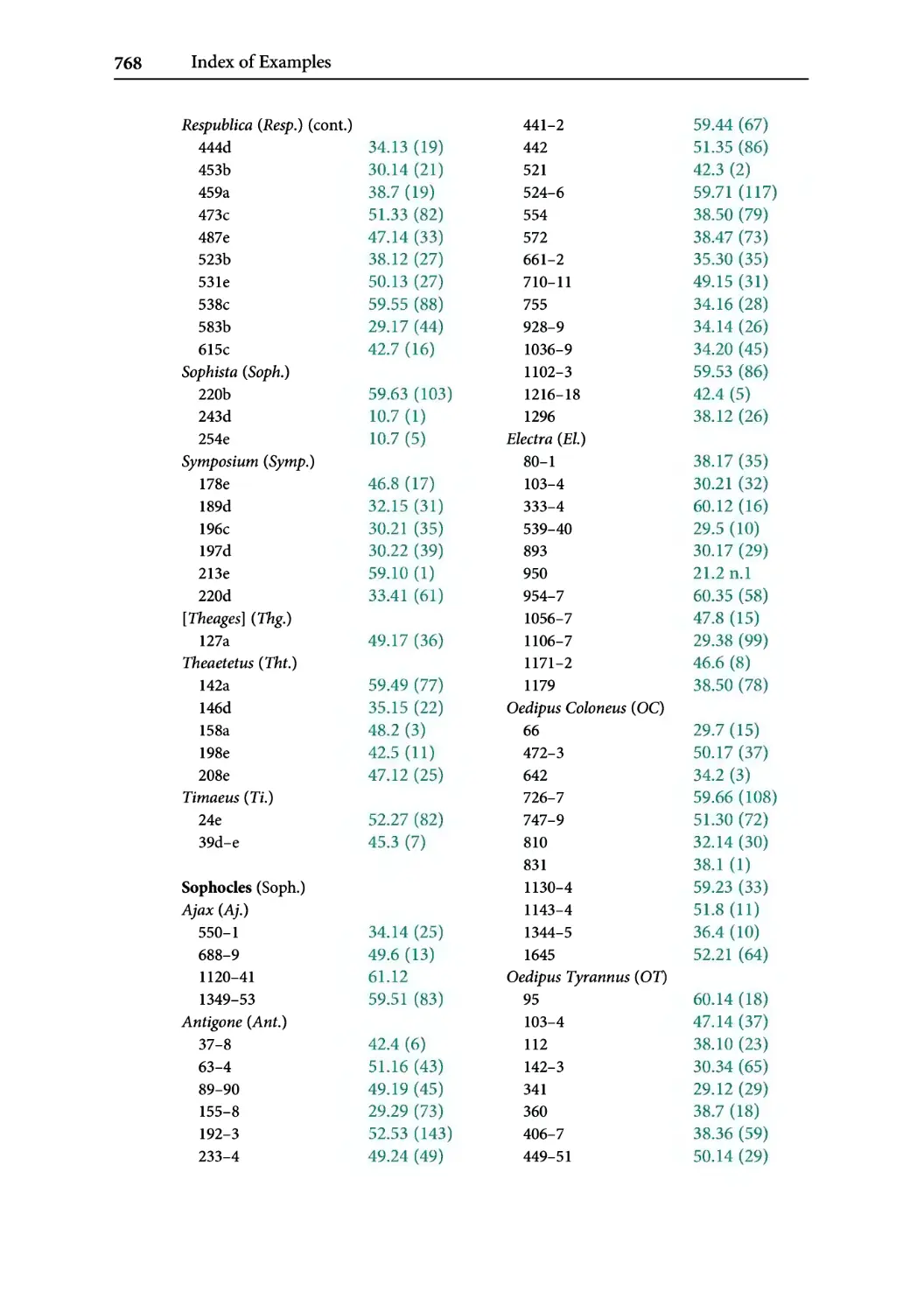
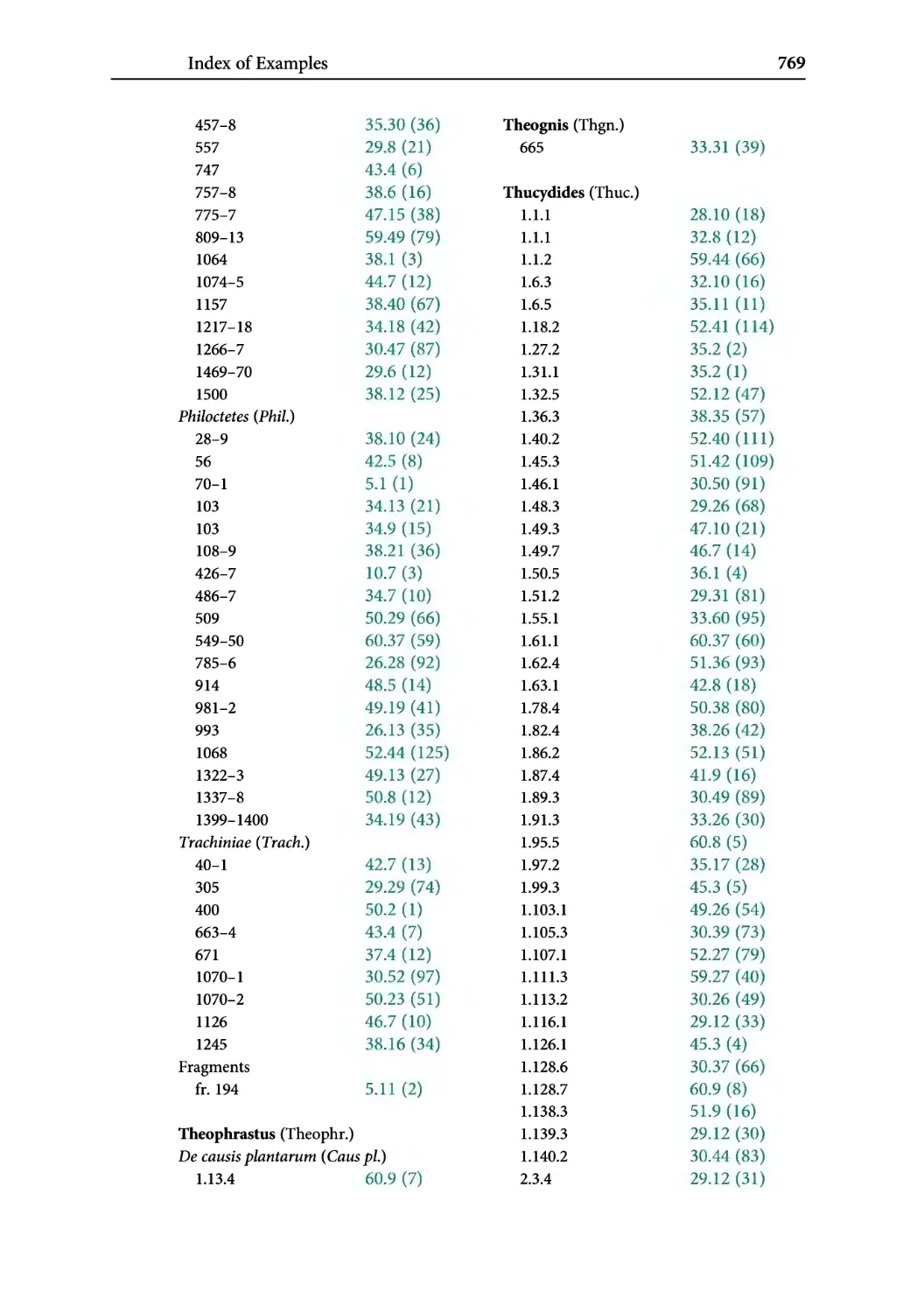
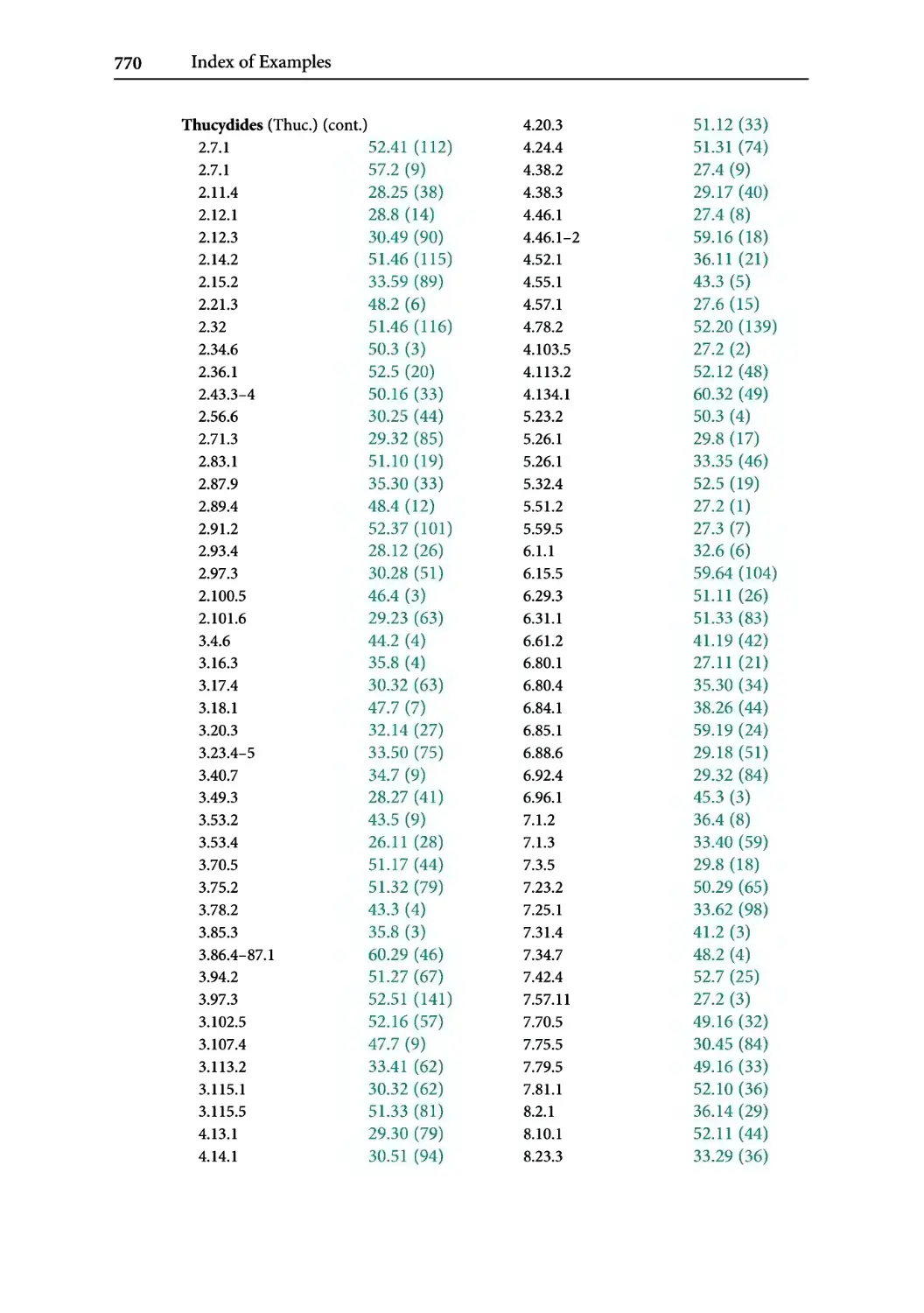
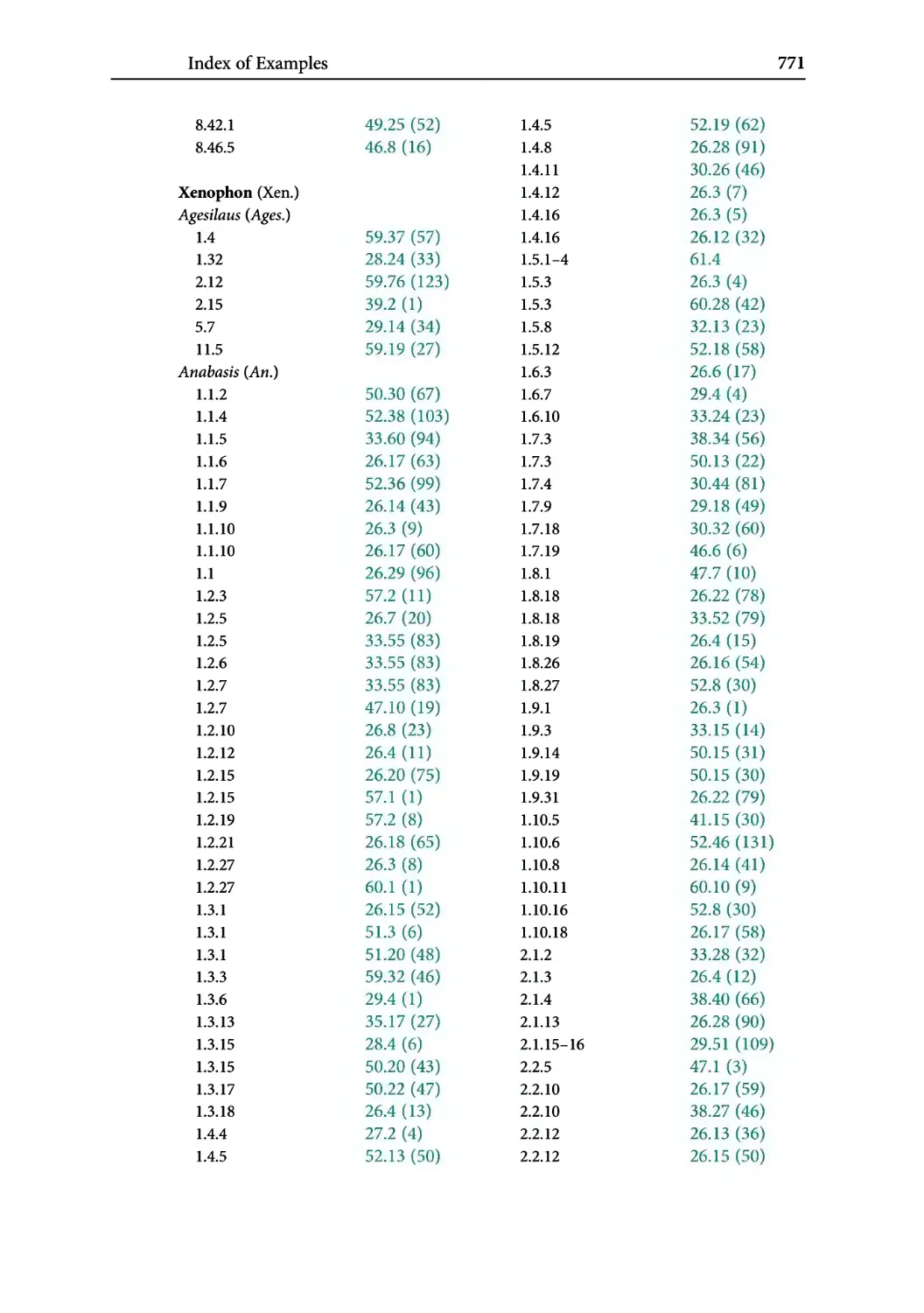
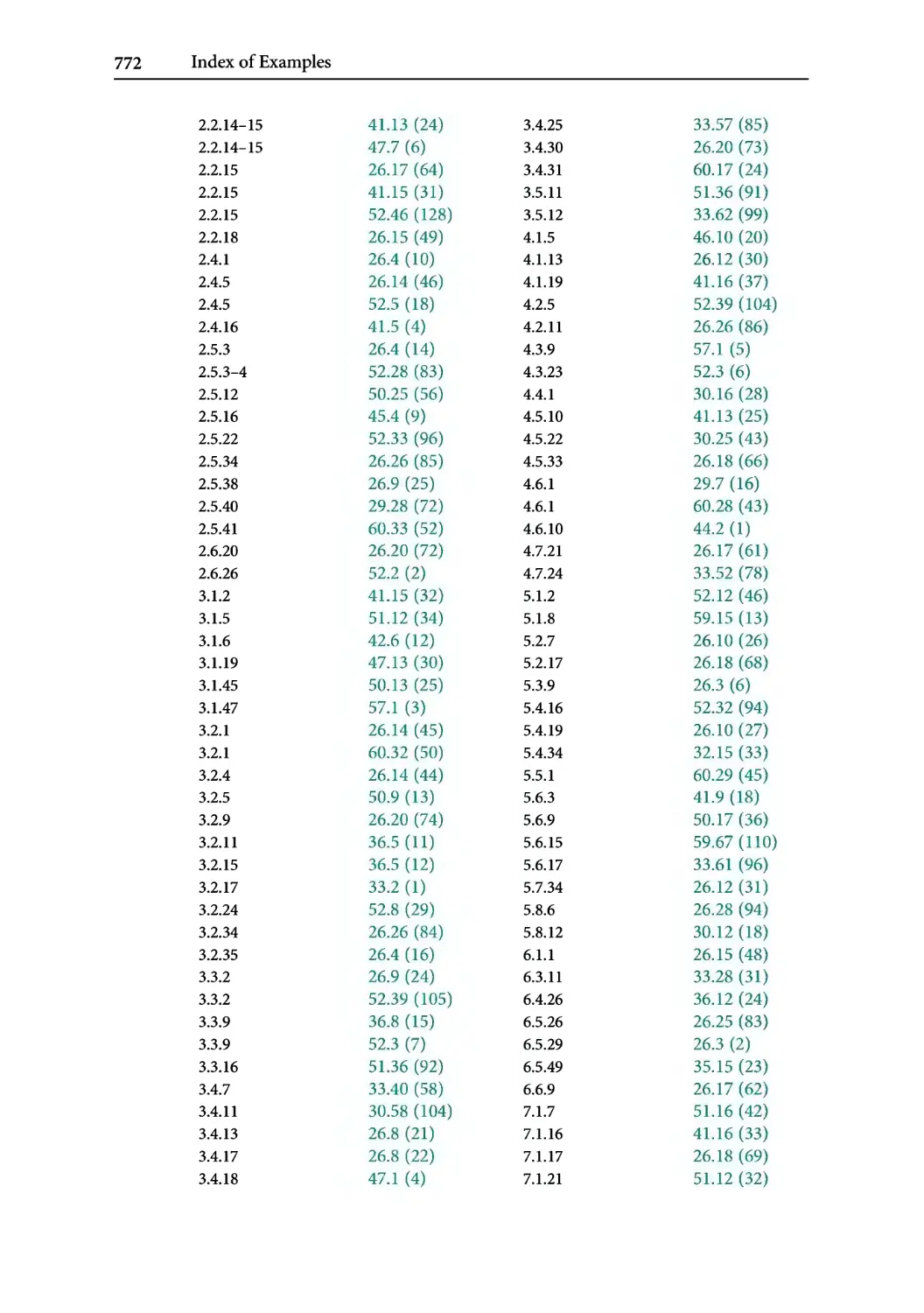
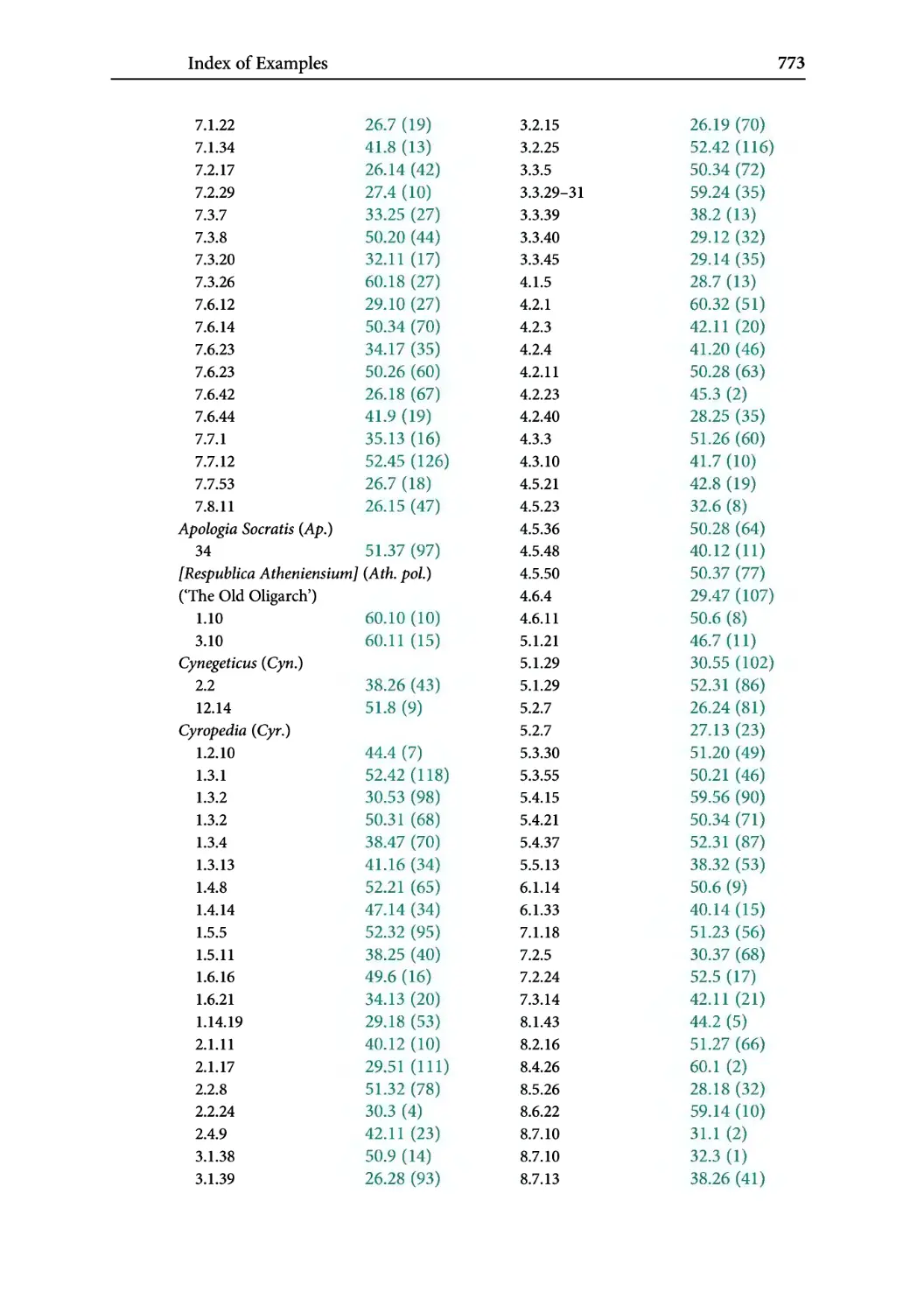
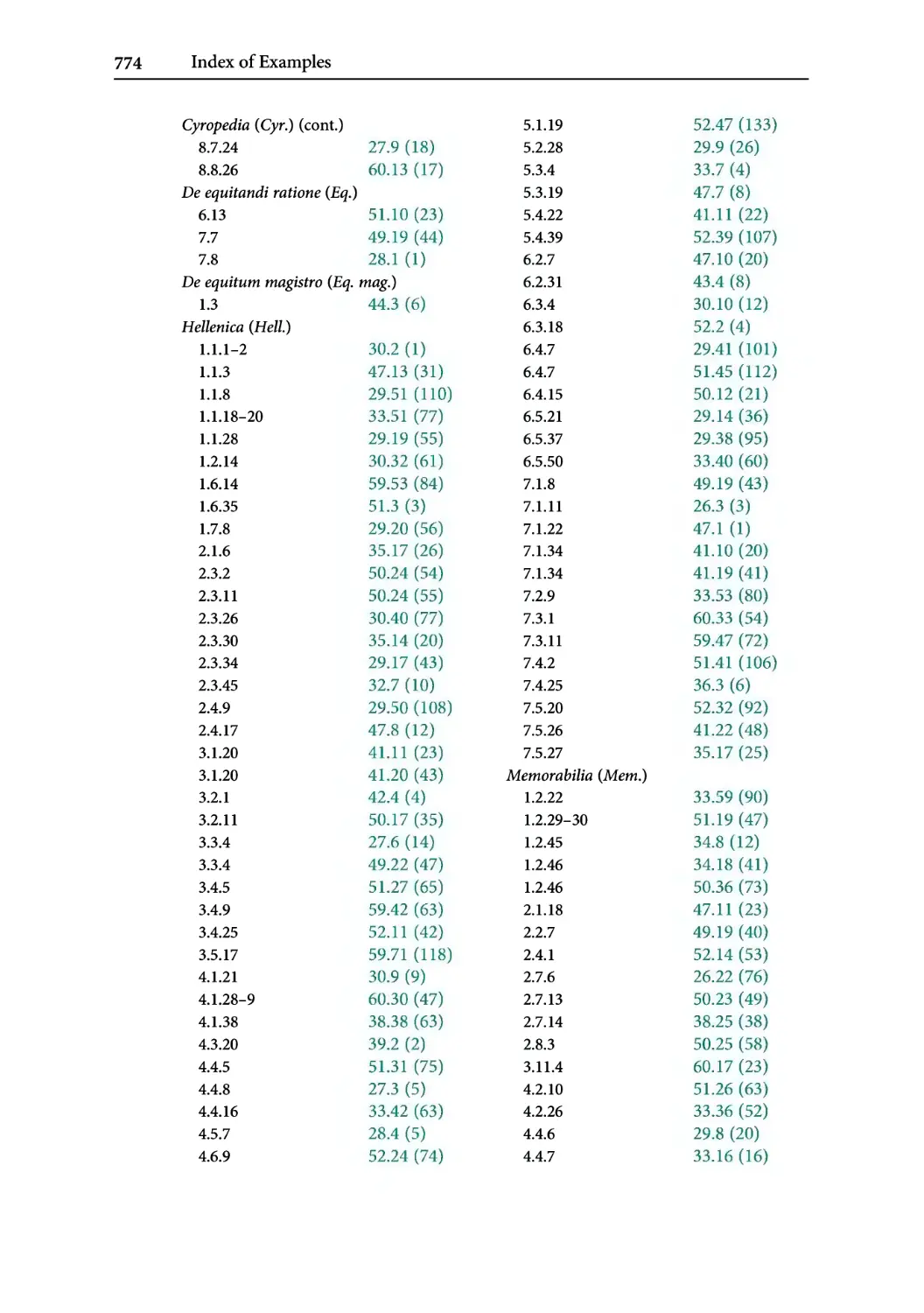
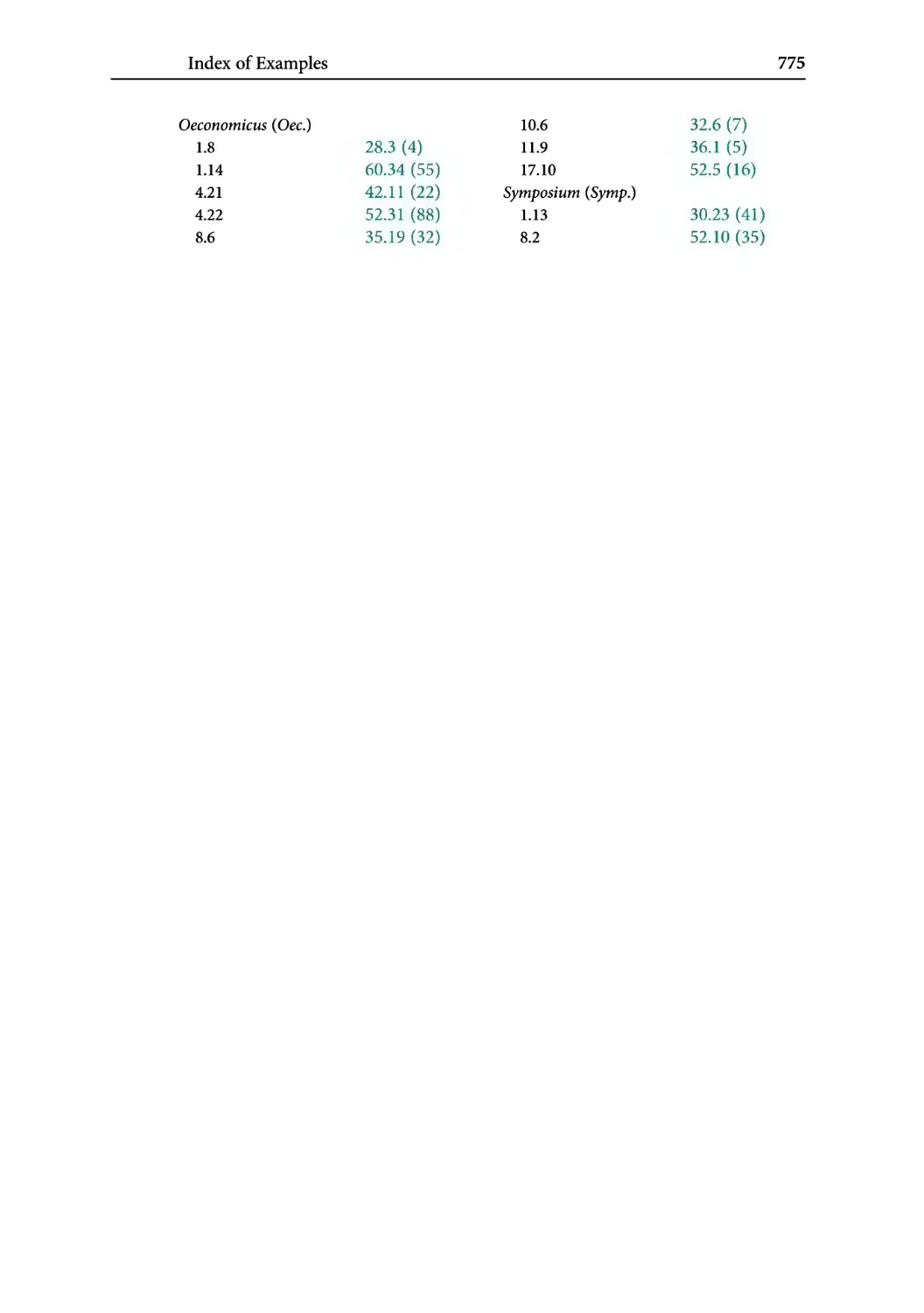
Index of Examples 757
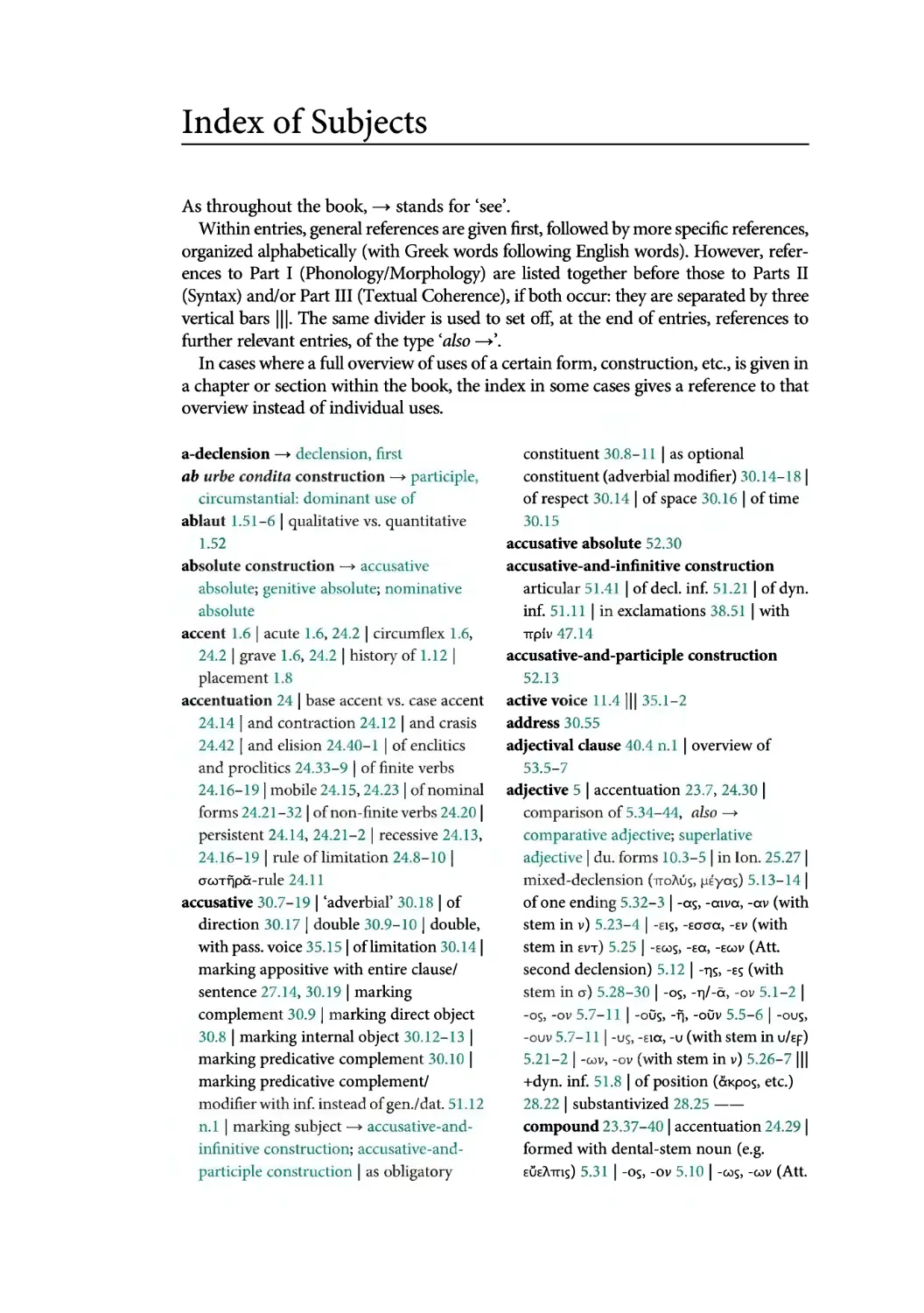
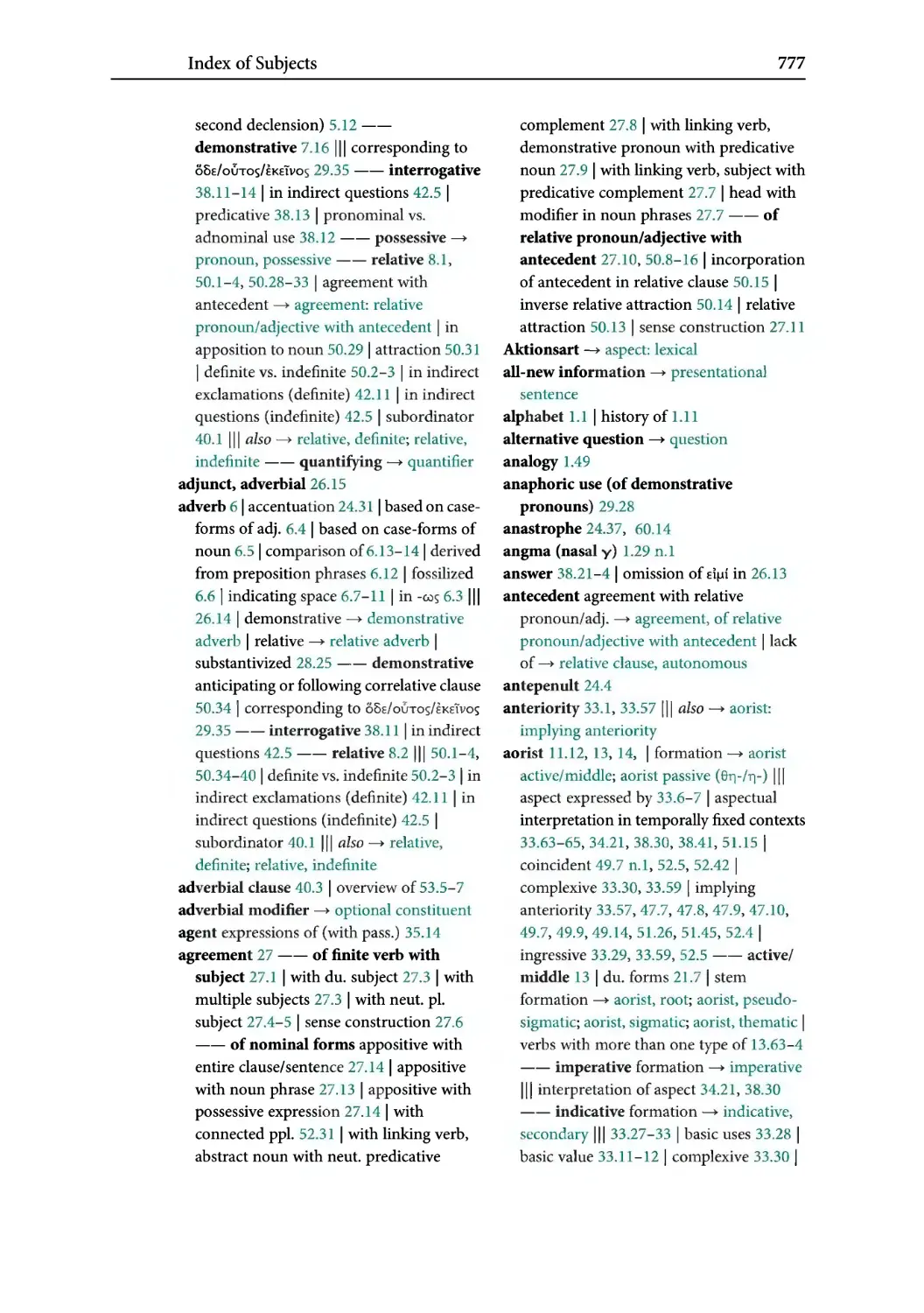
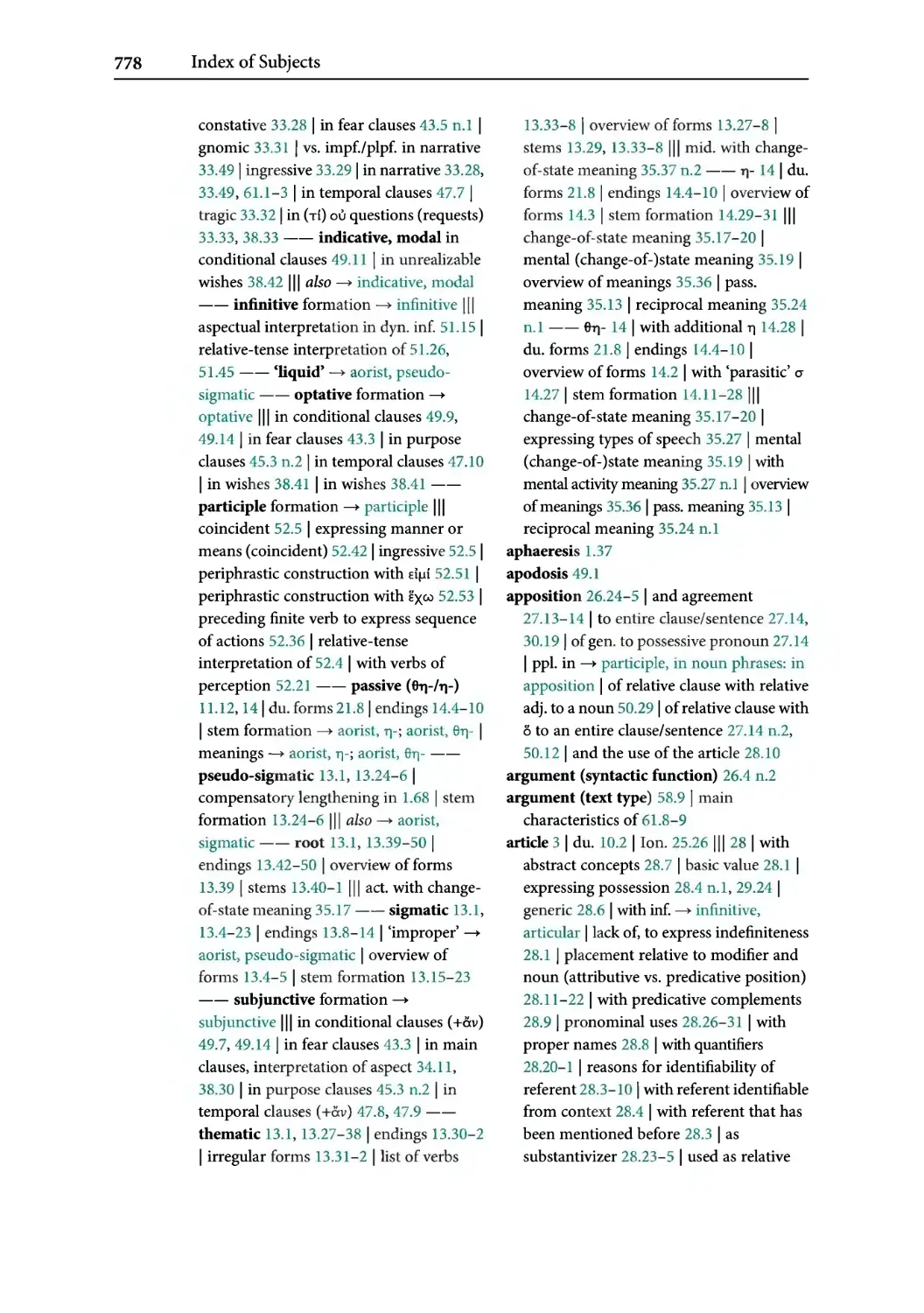
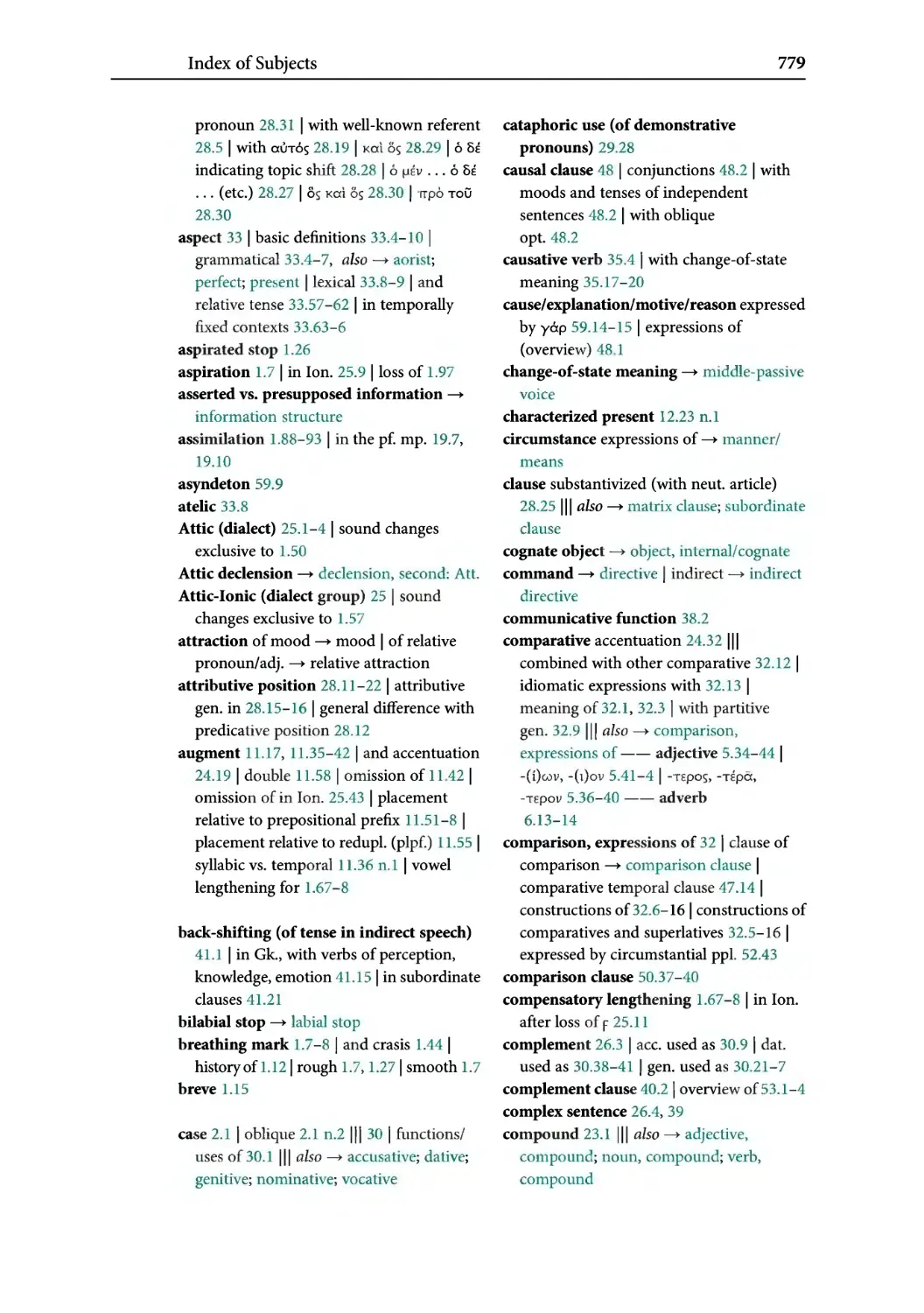
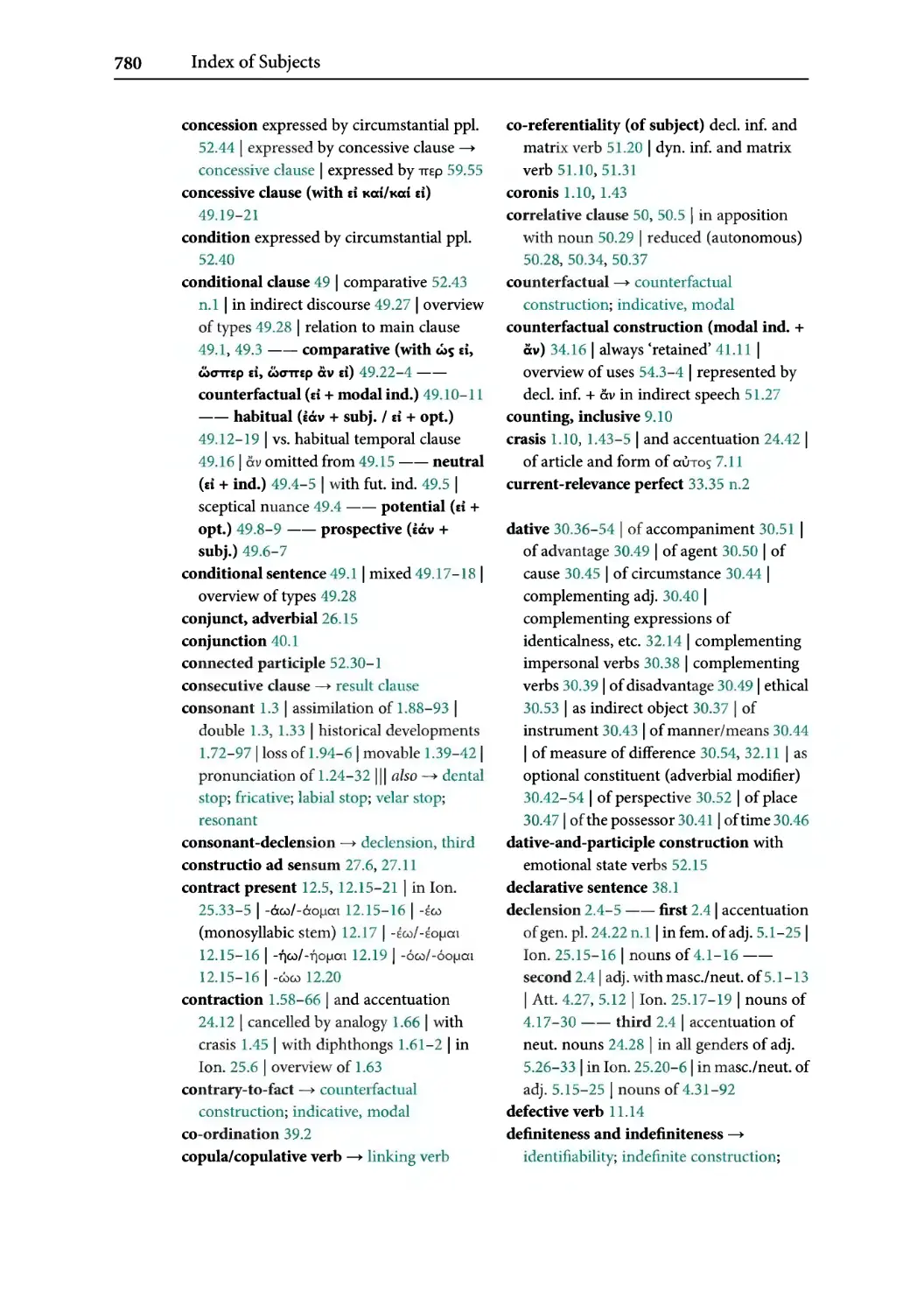
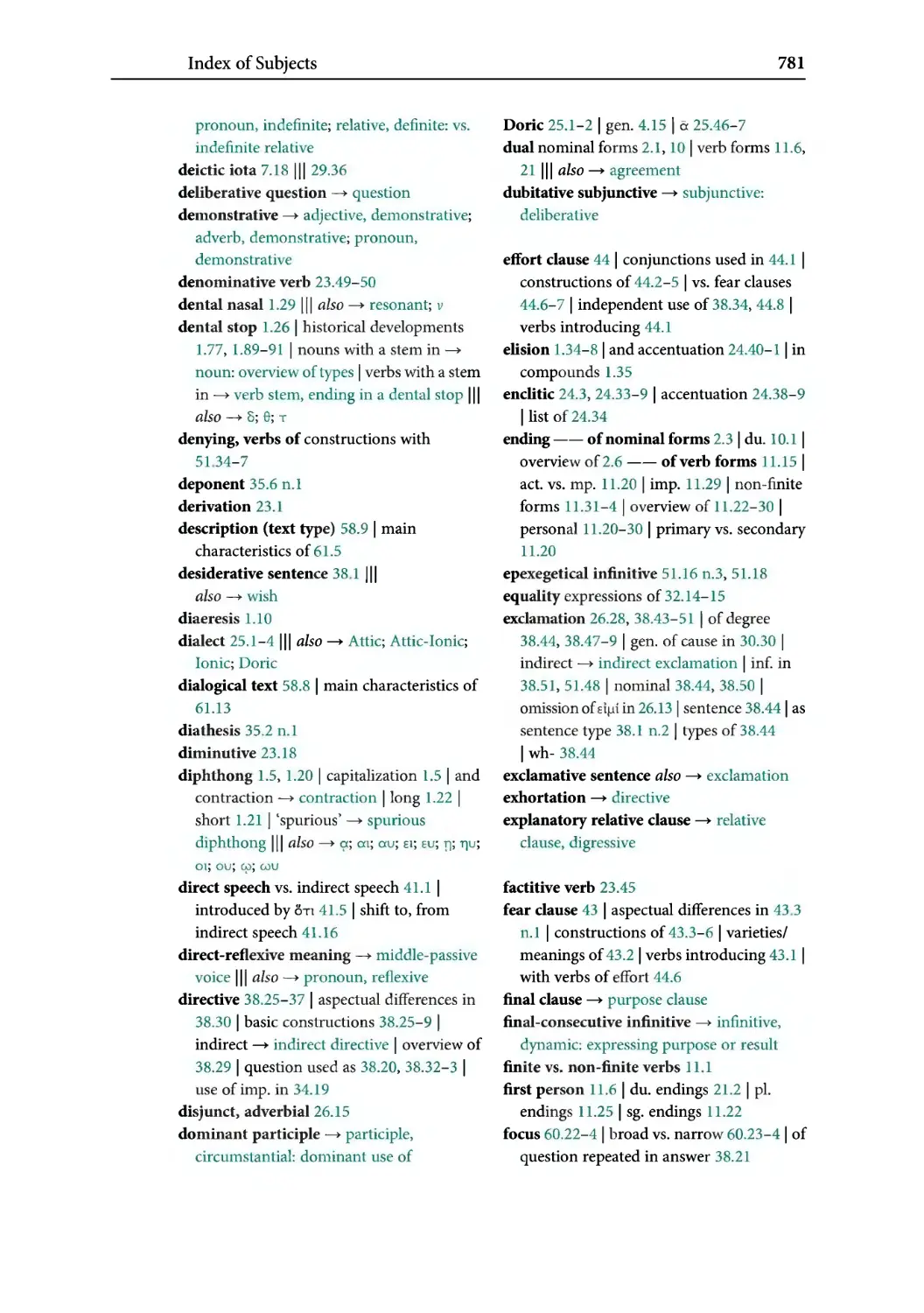
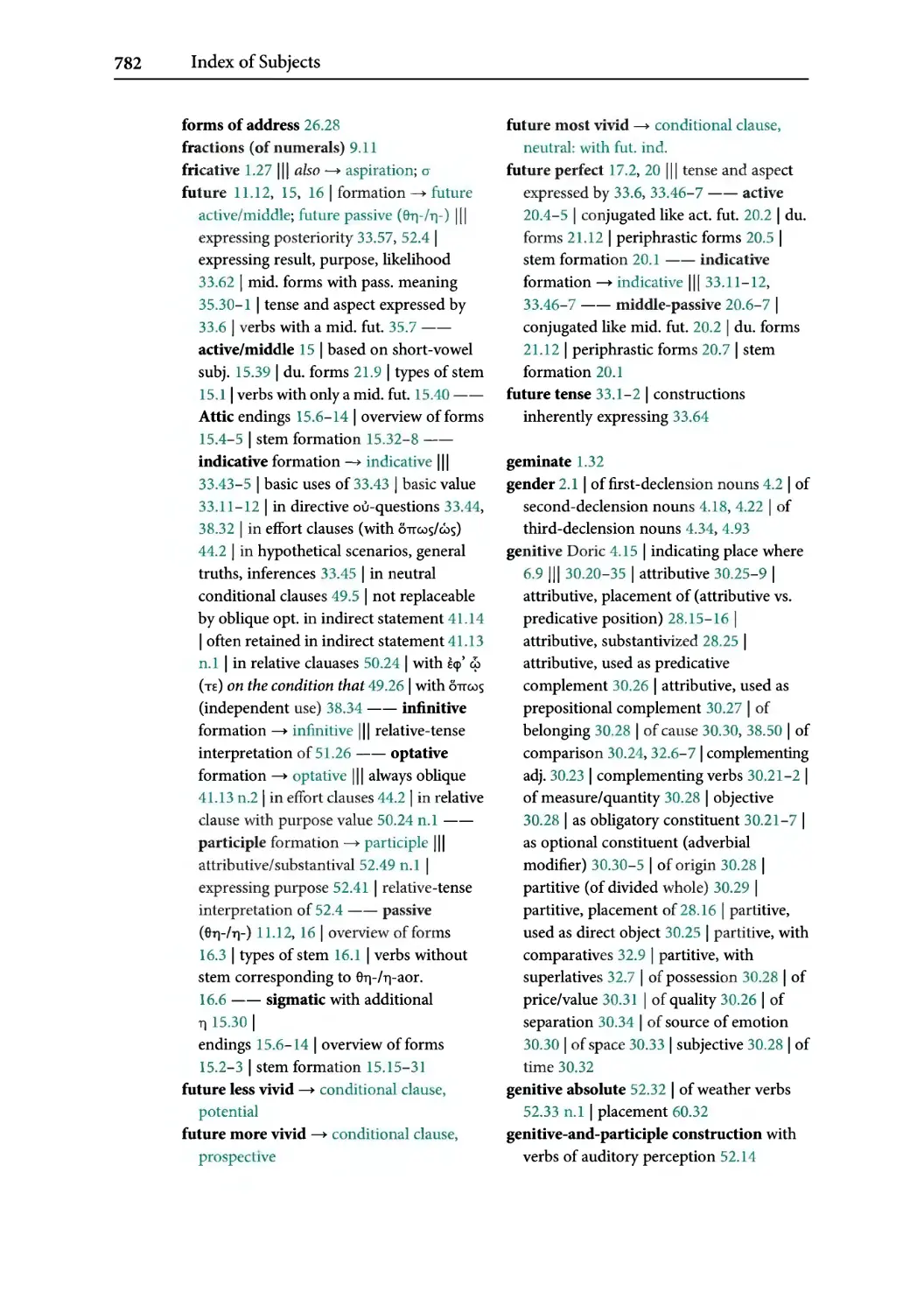
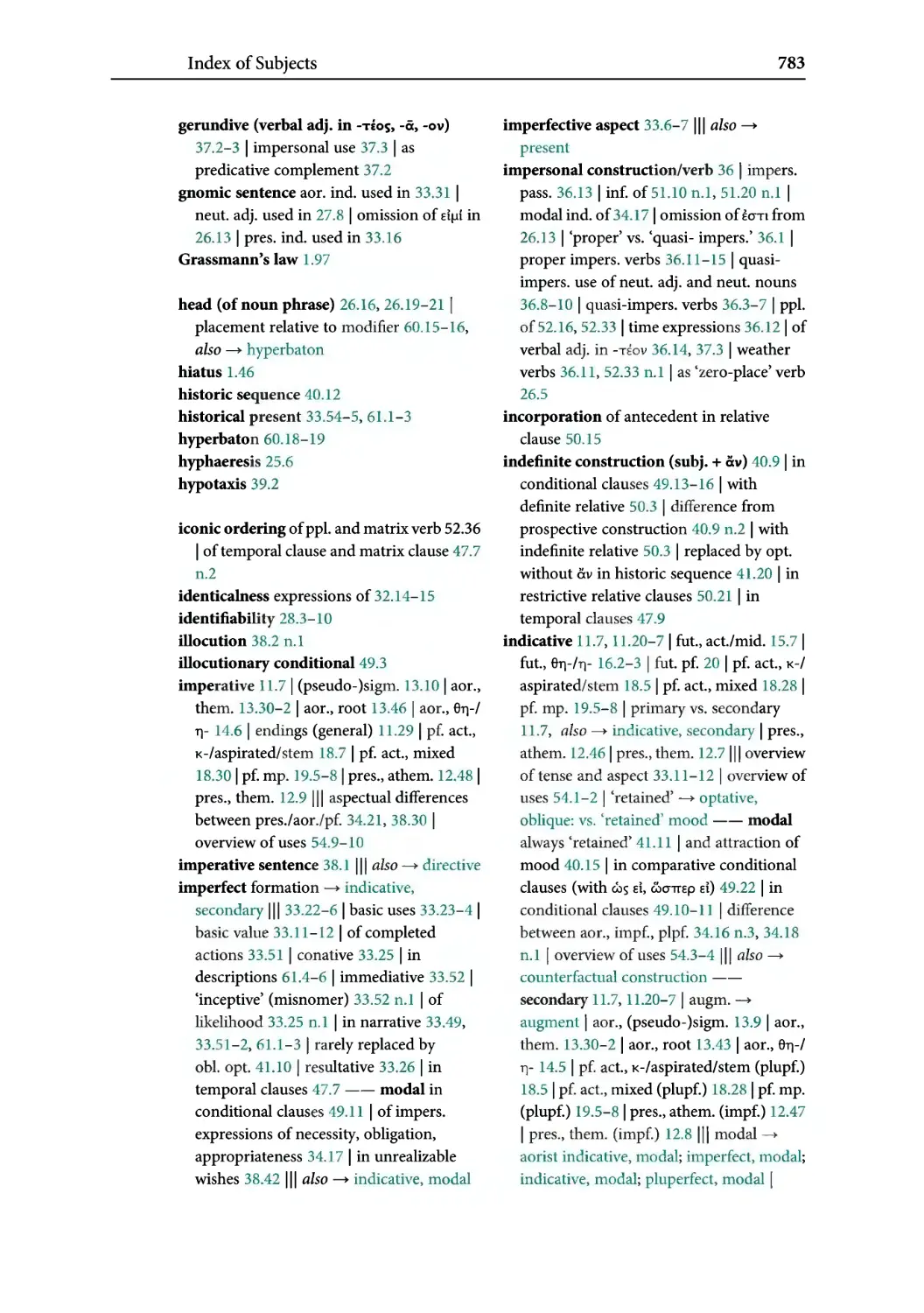
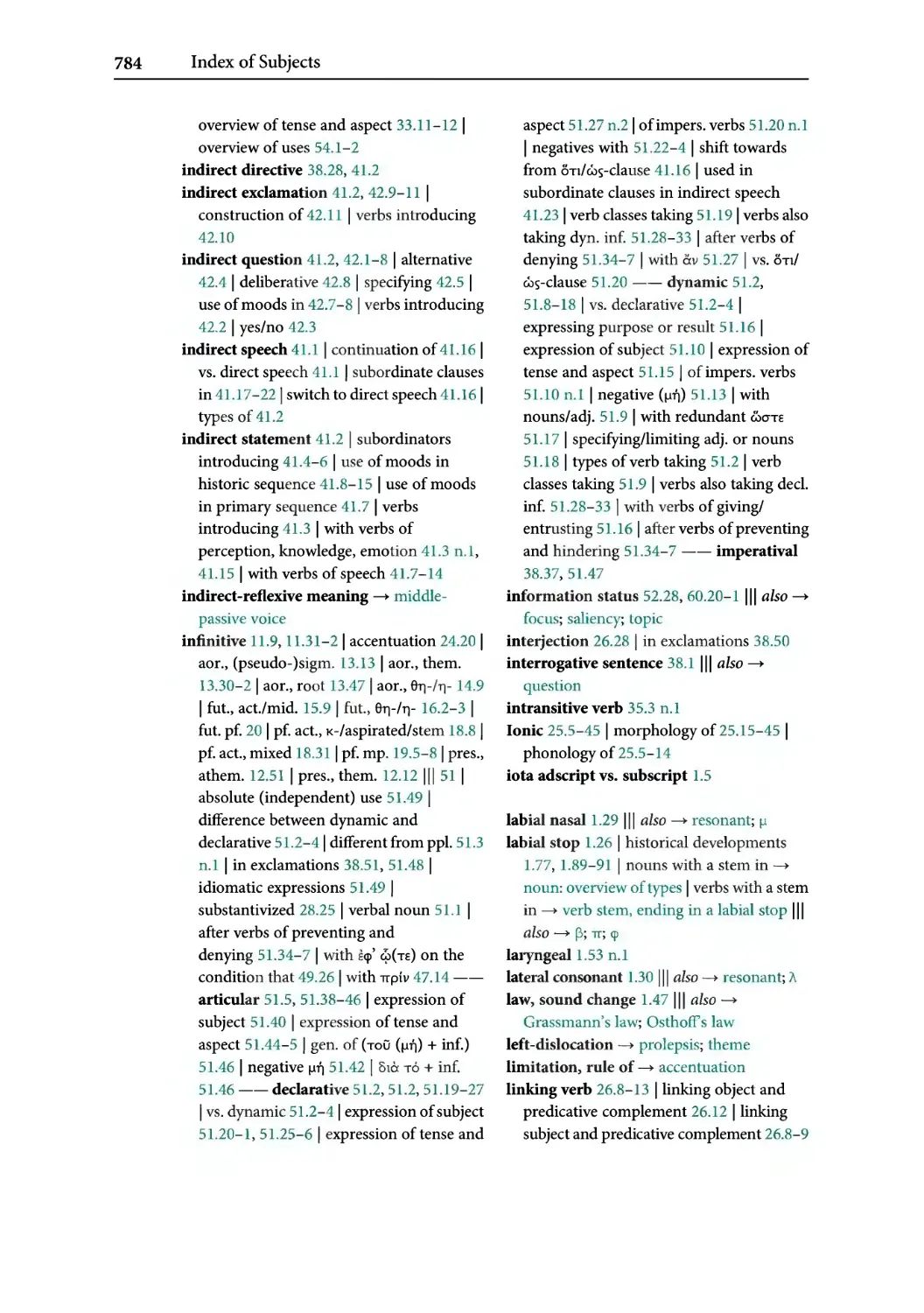
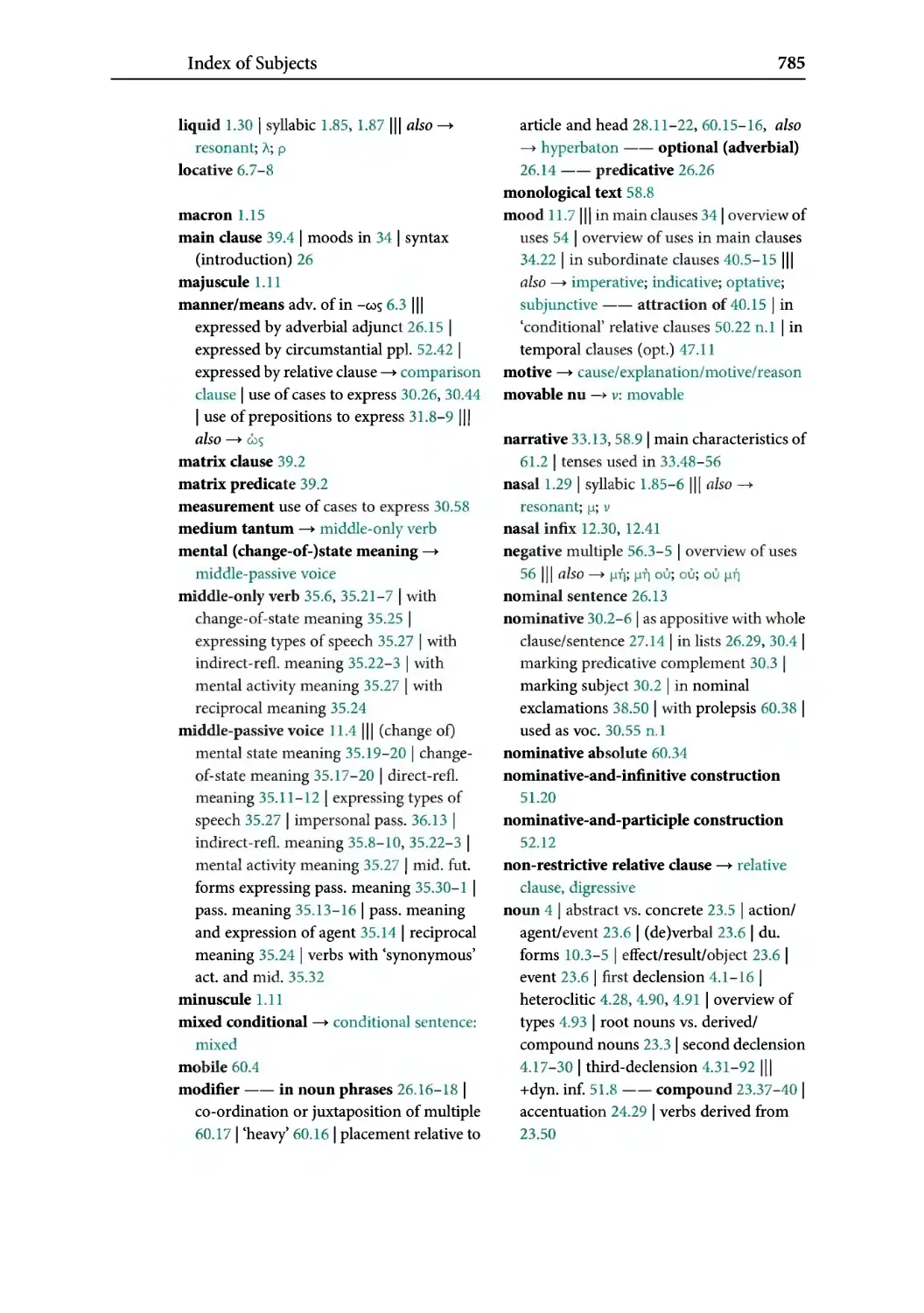
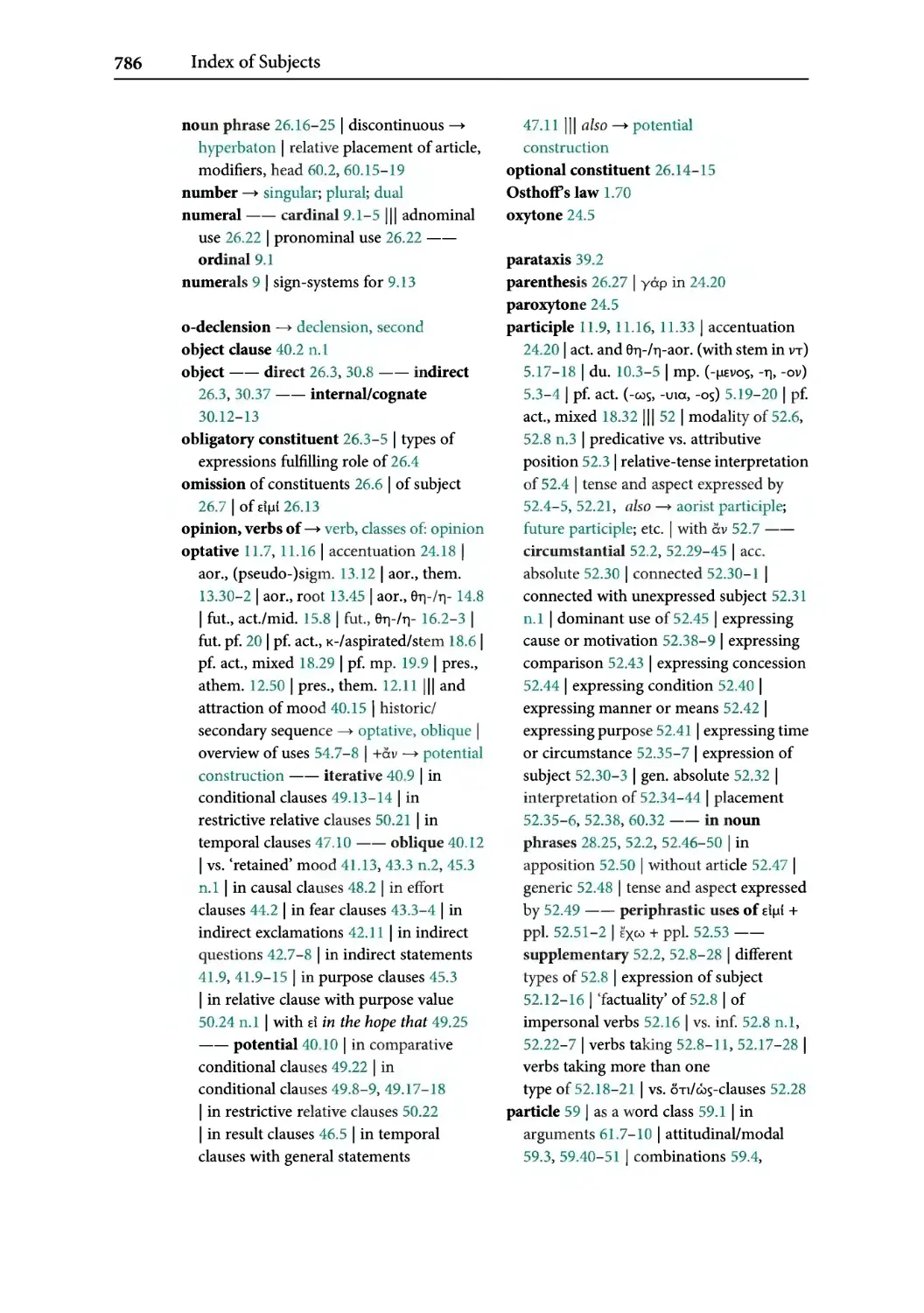
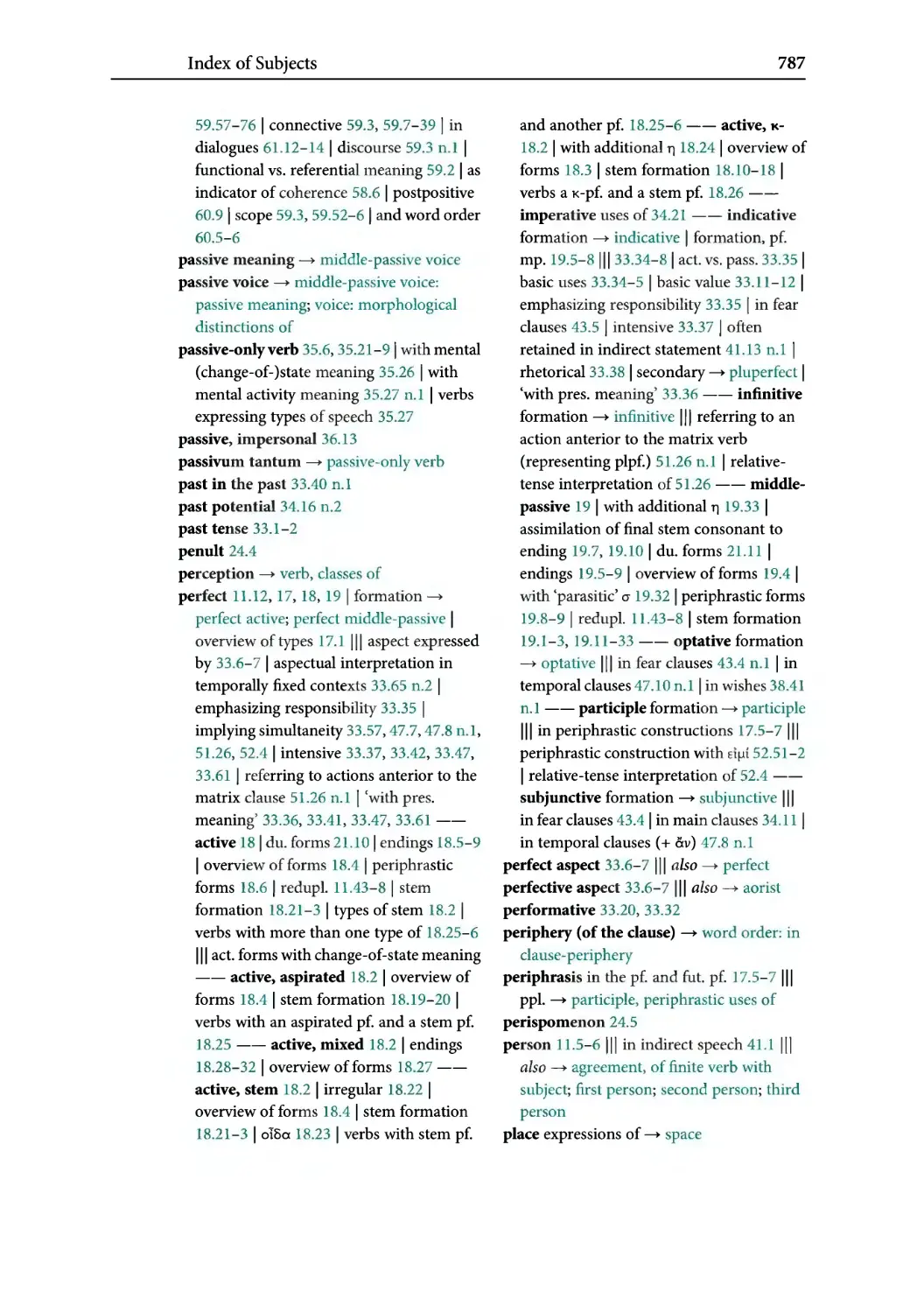
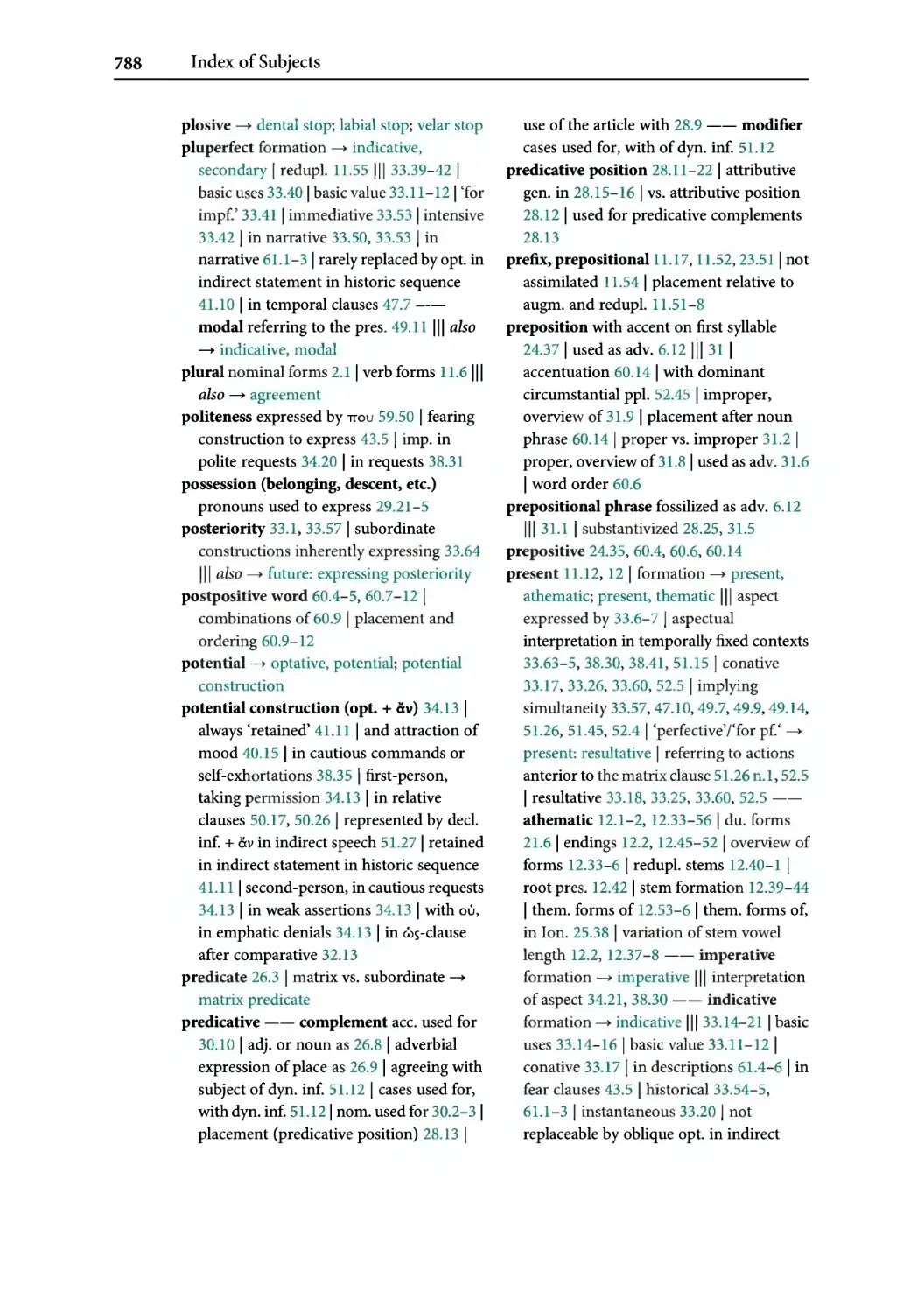
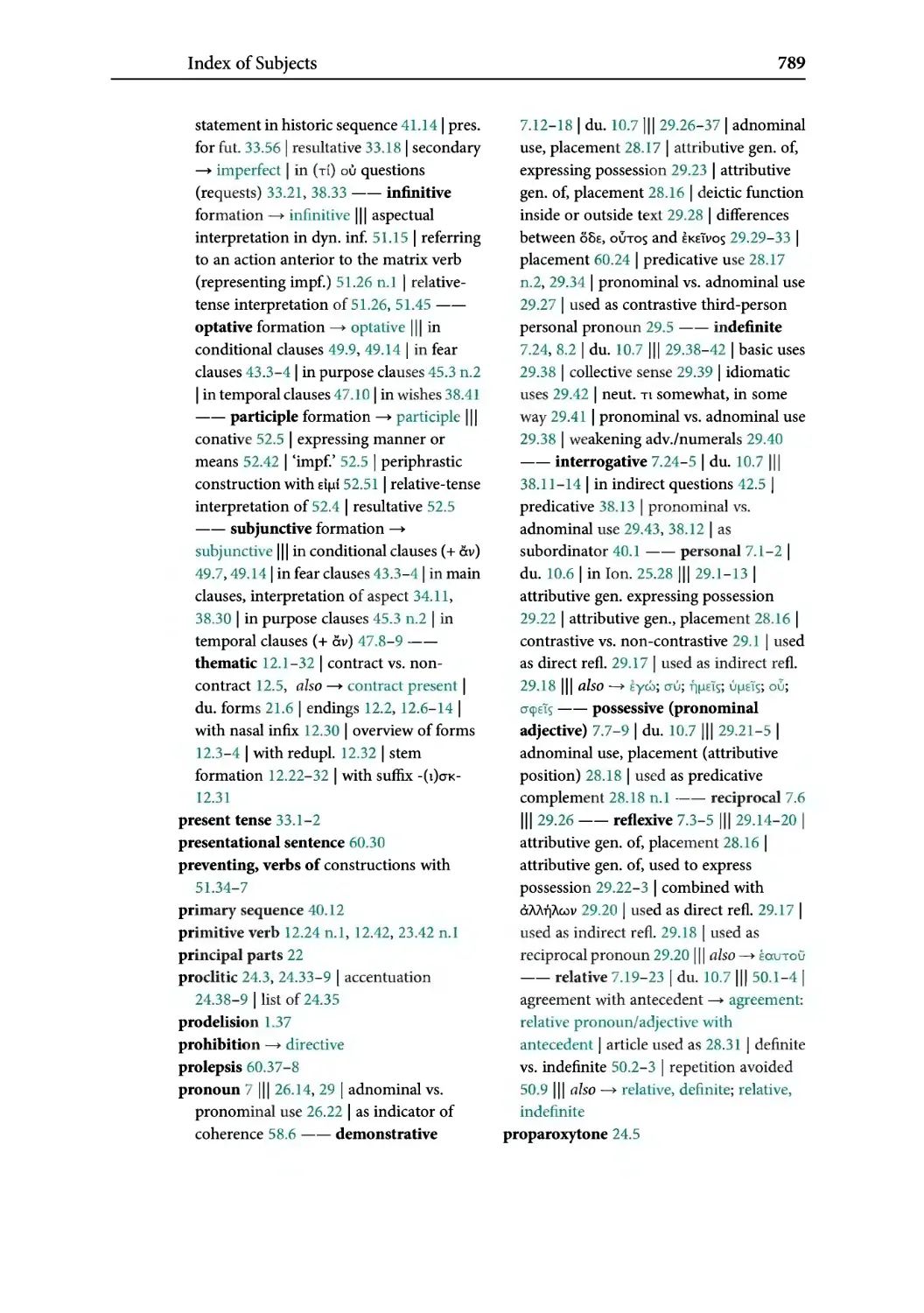
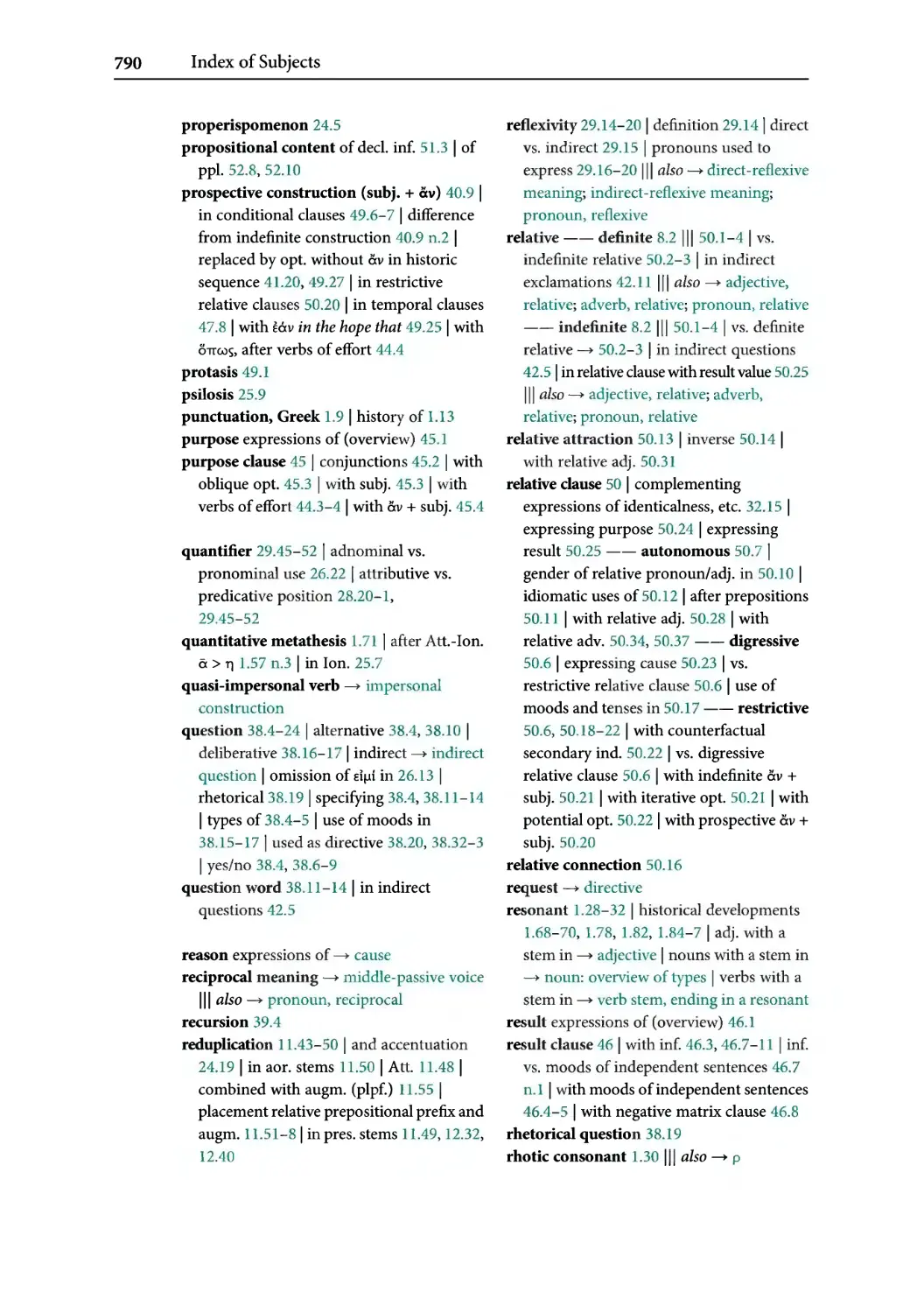
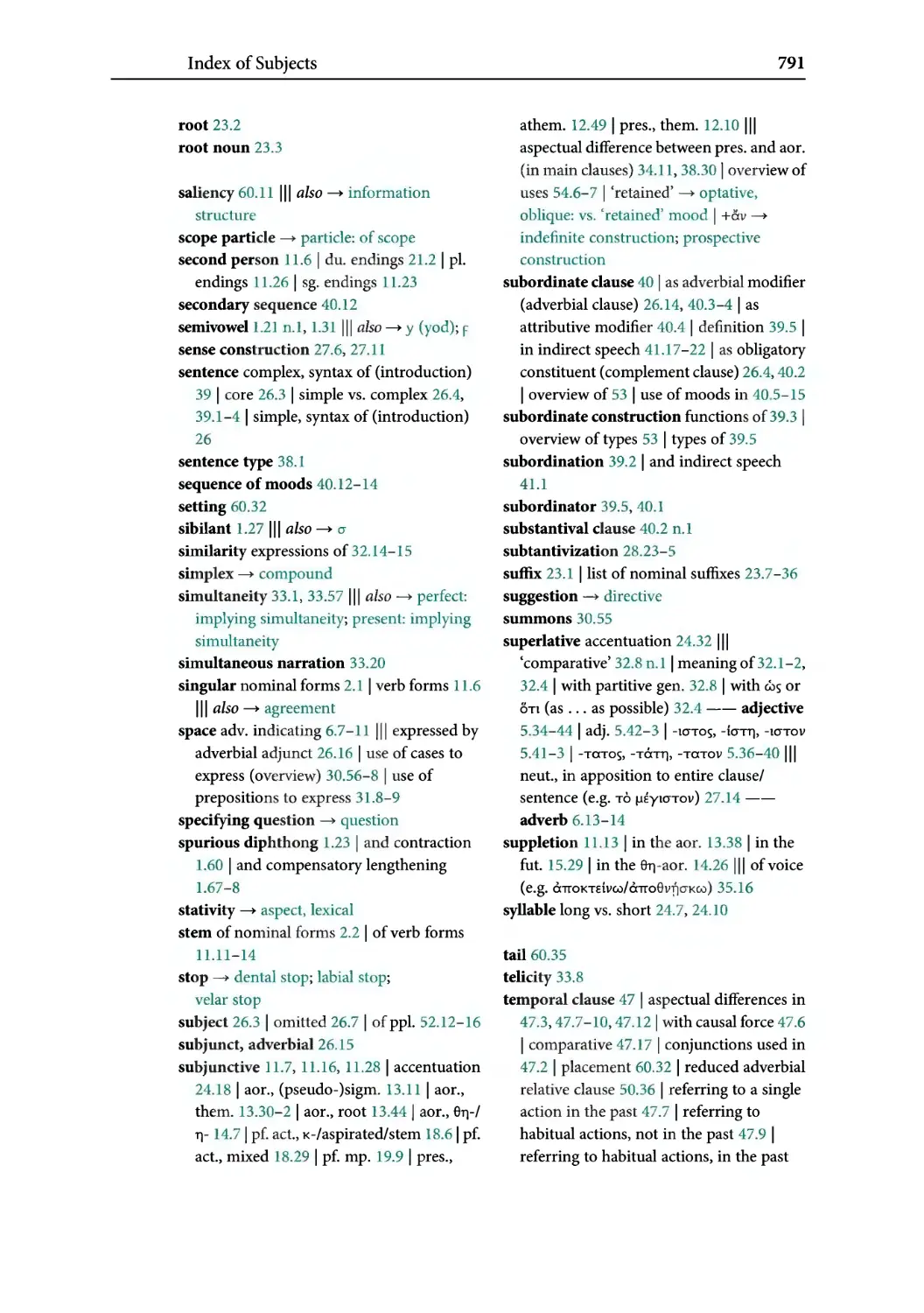
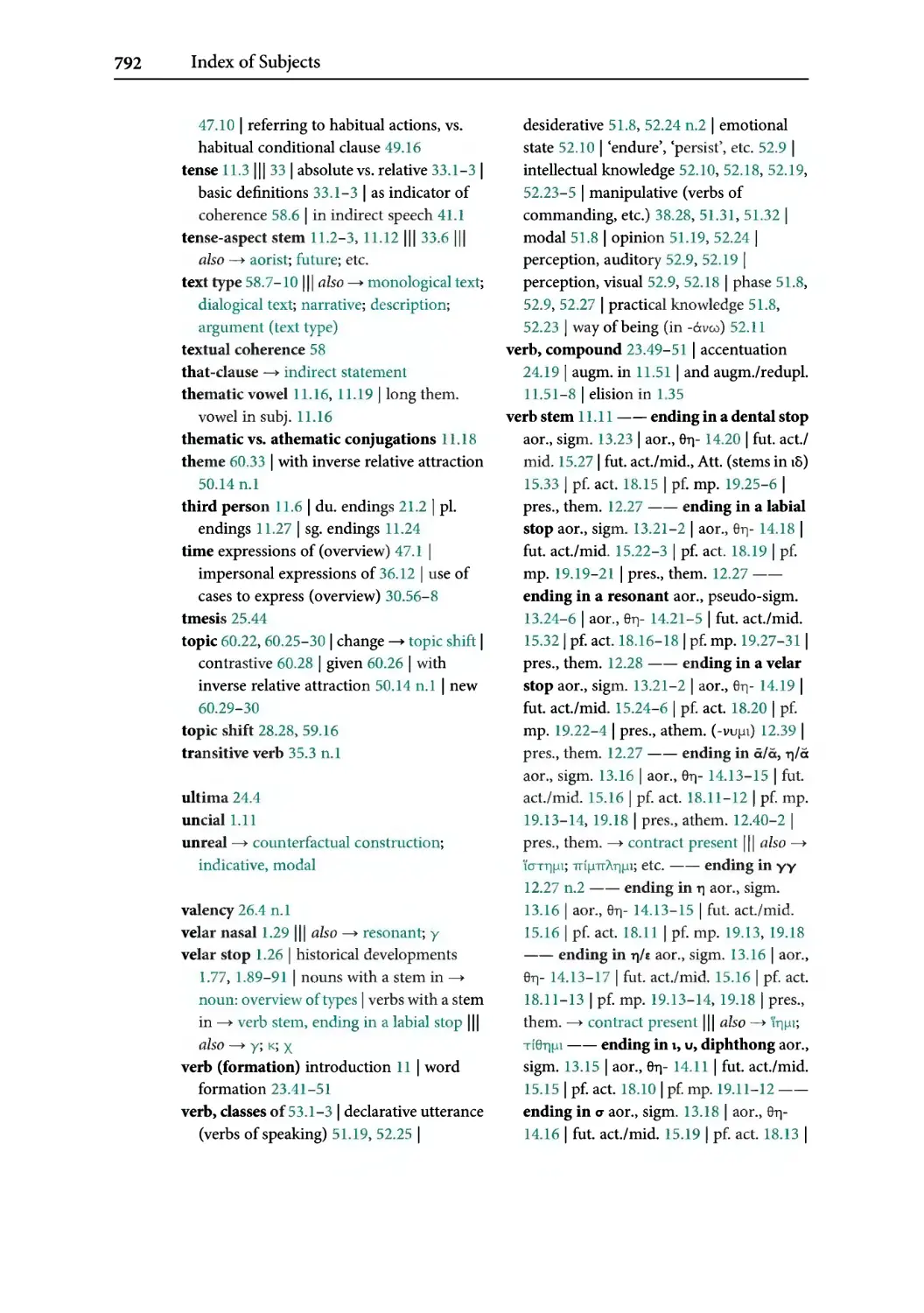
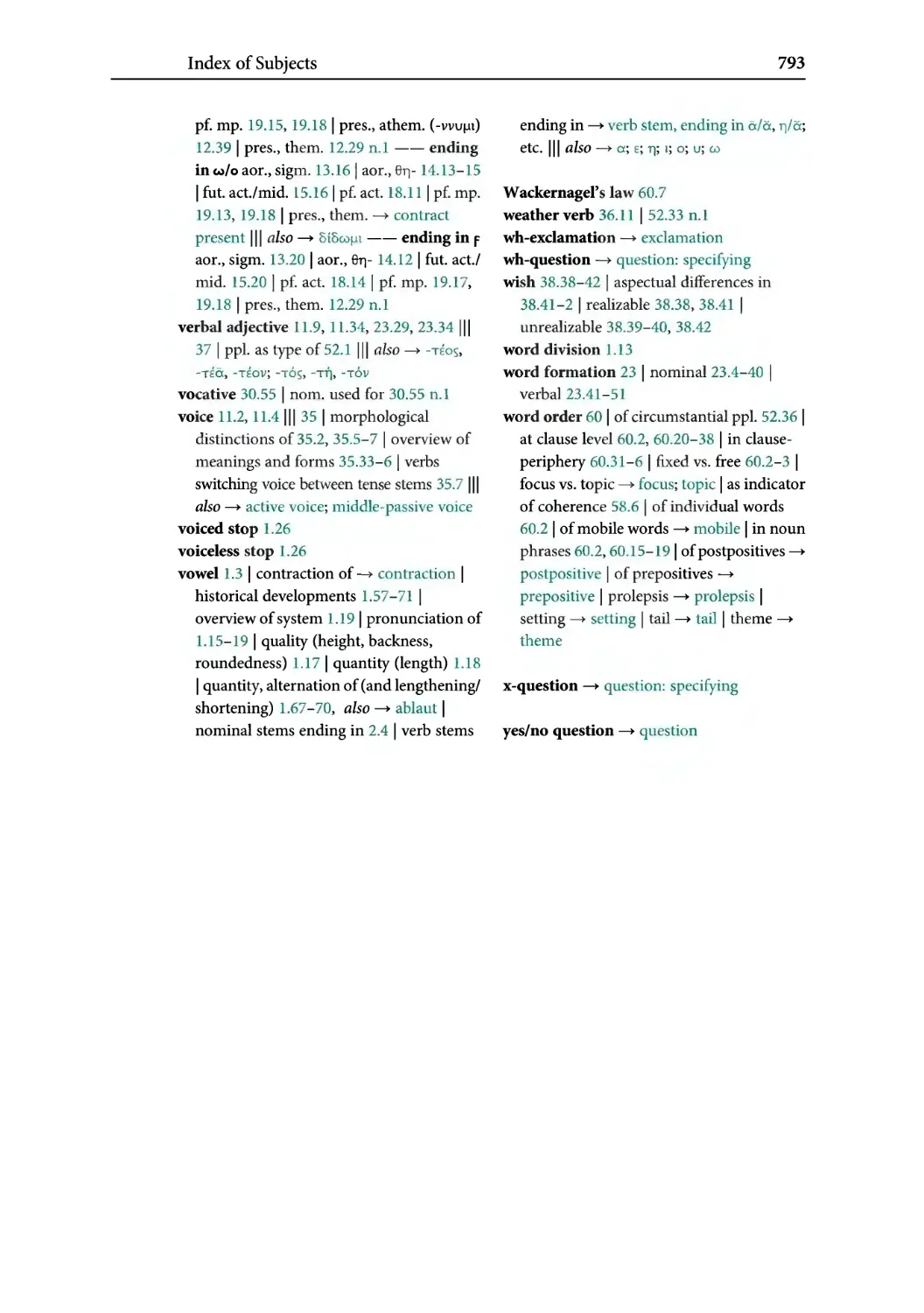
Index of Subjects 776
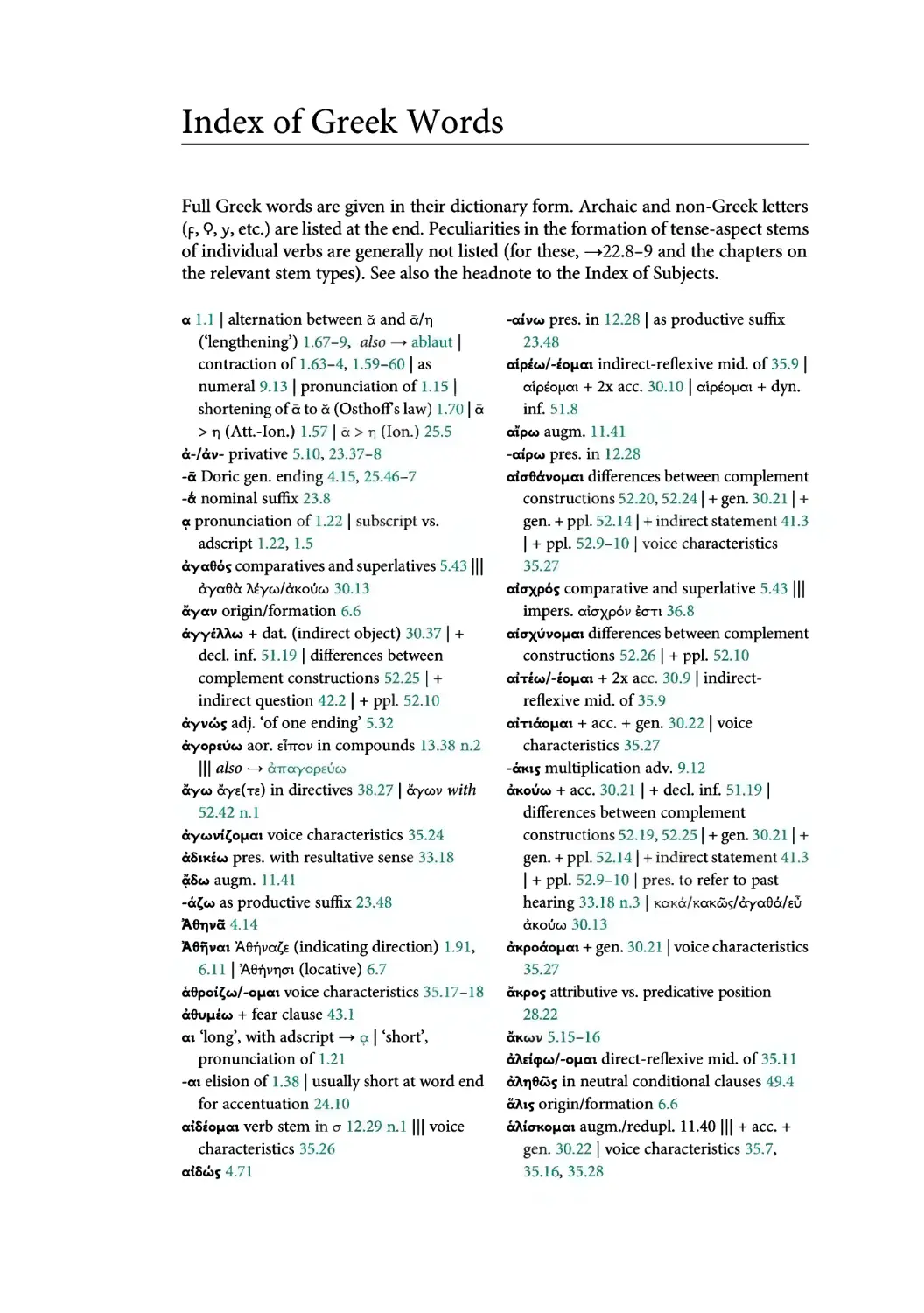
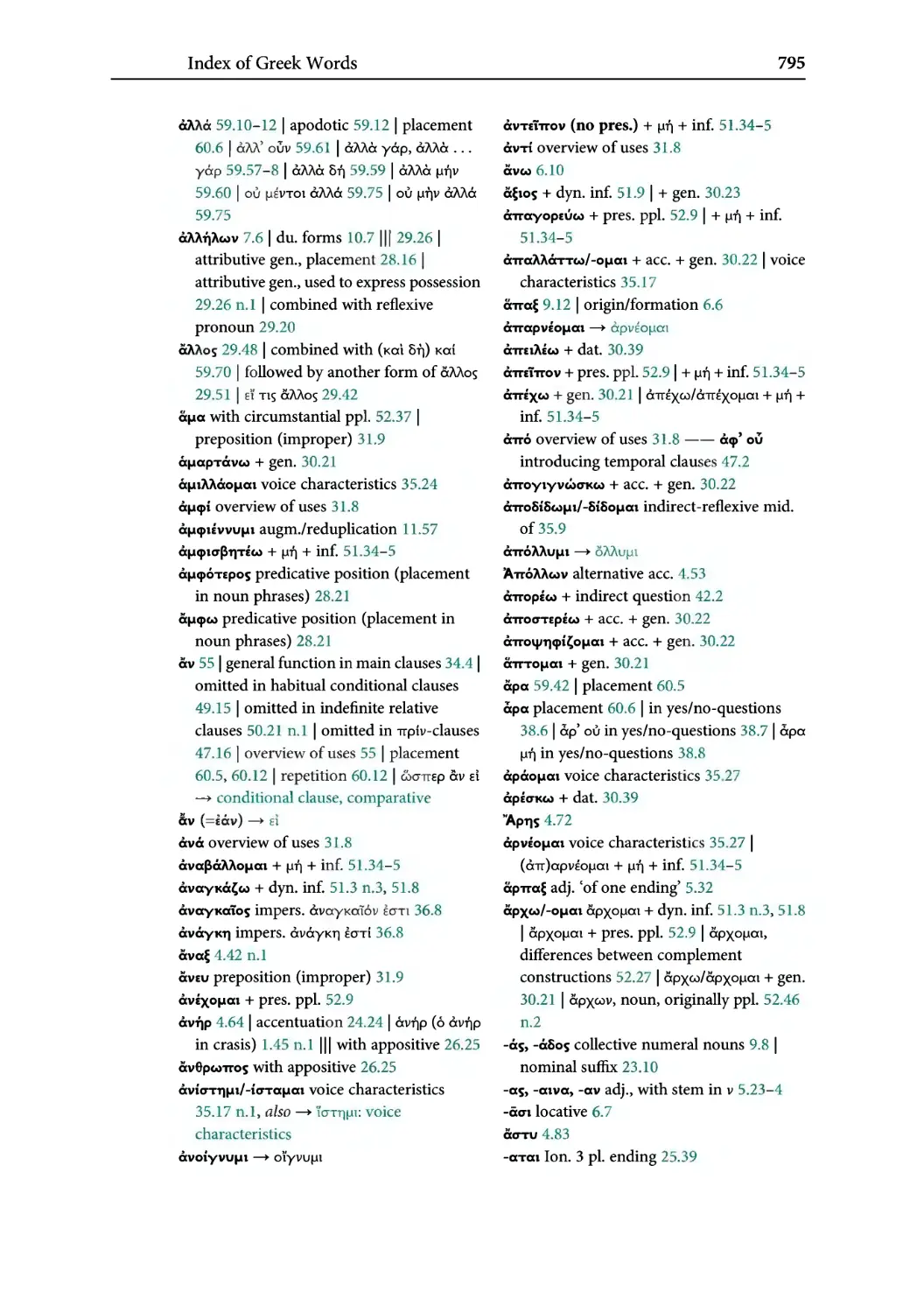
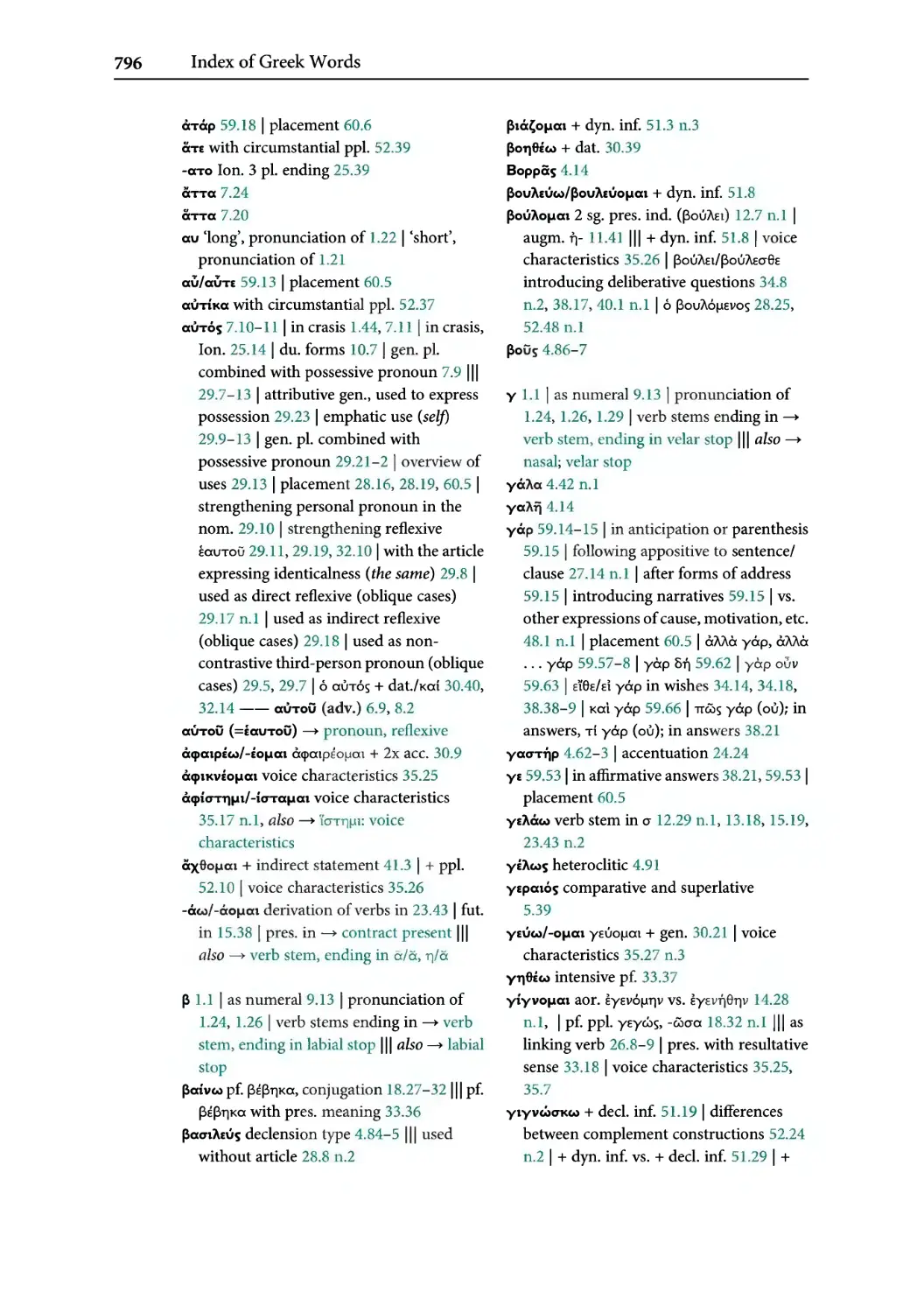
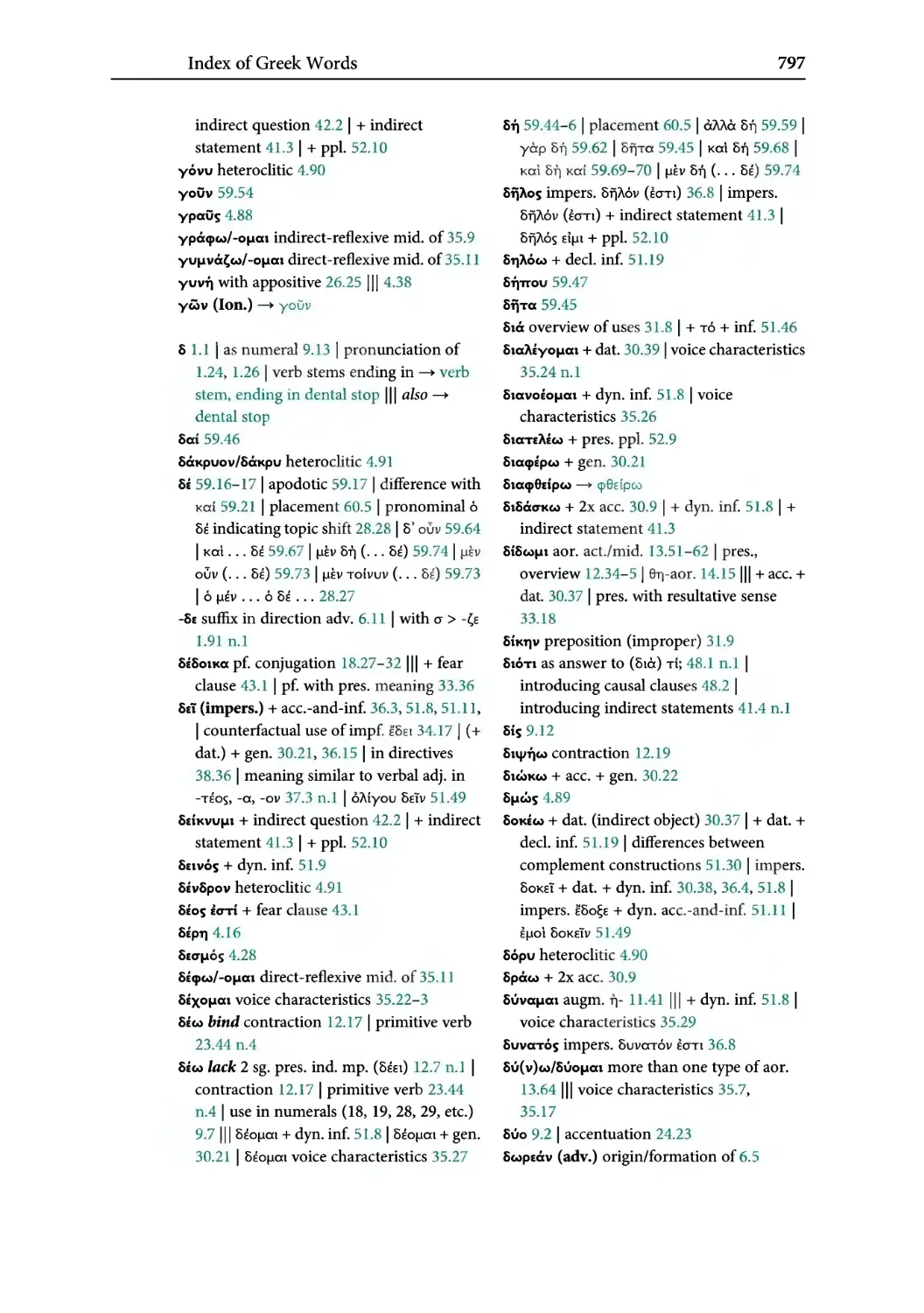
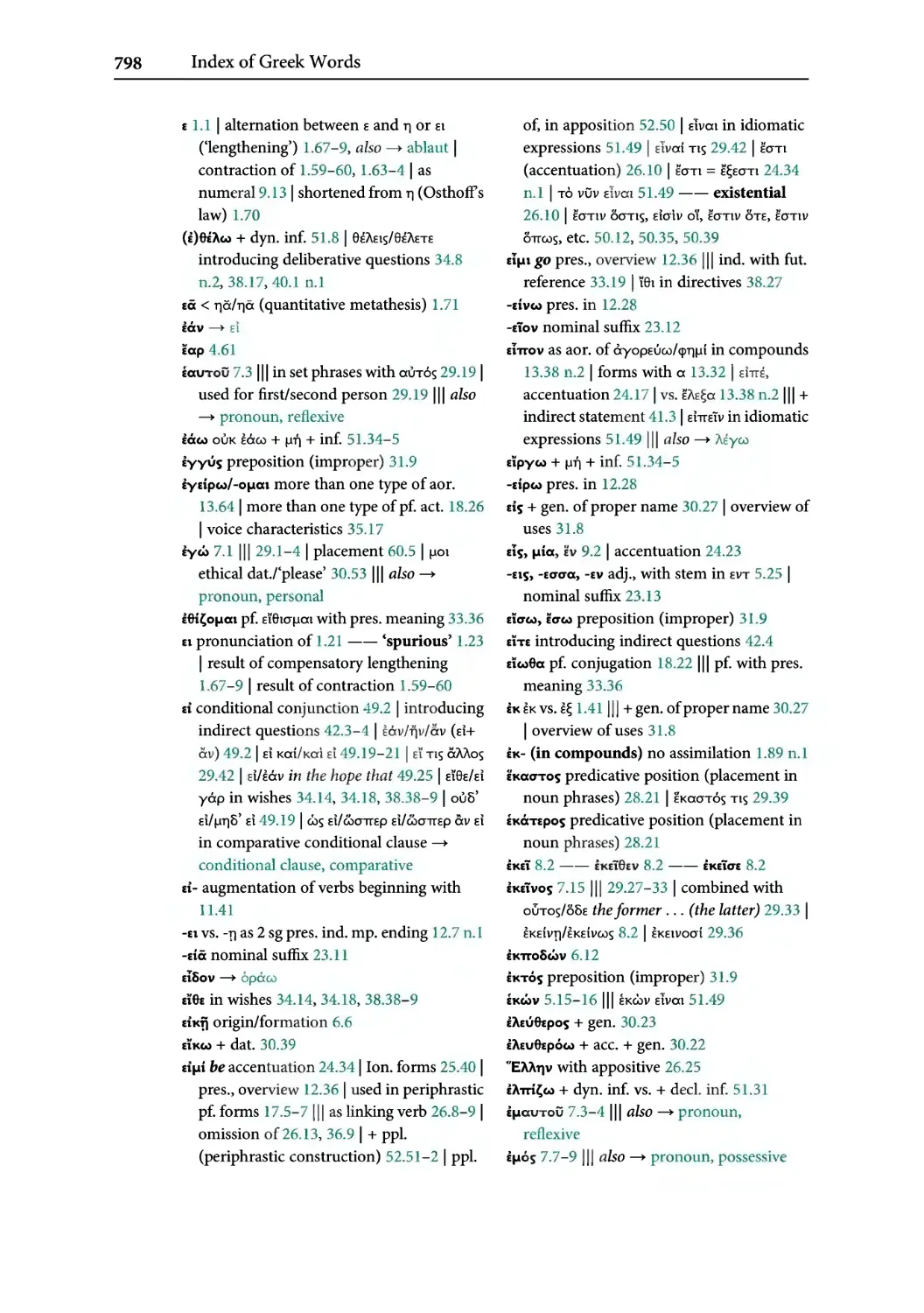
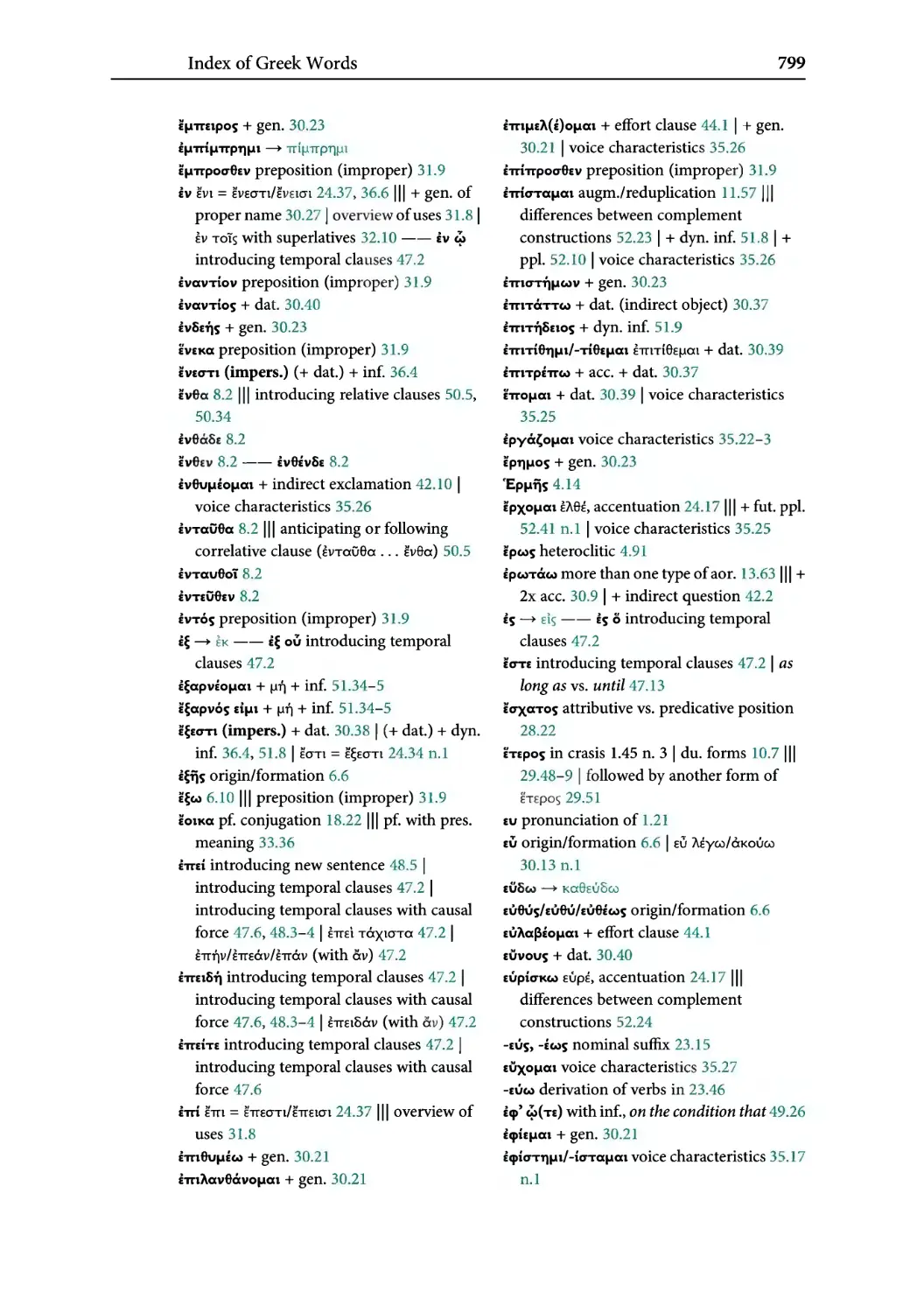
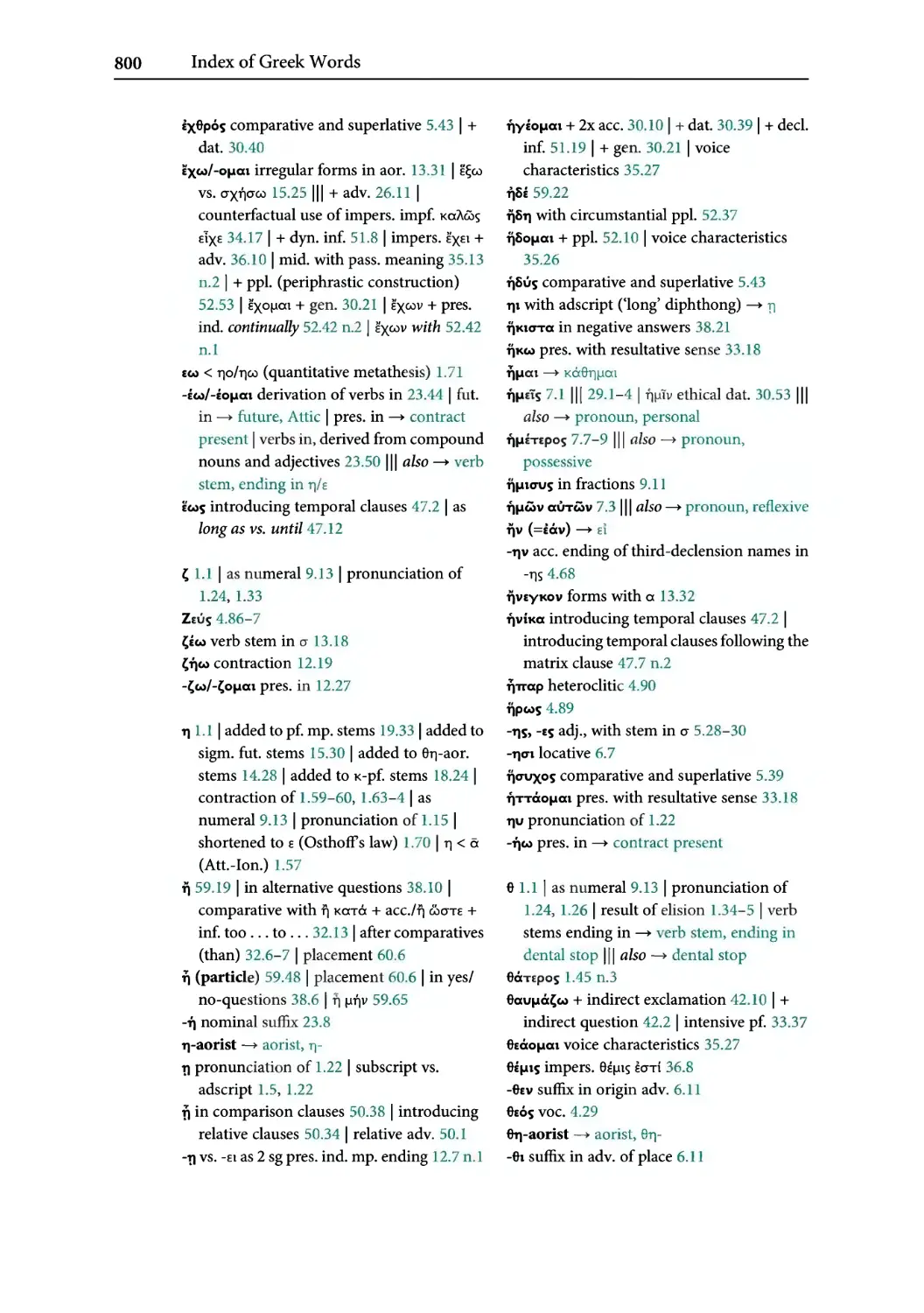
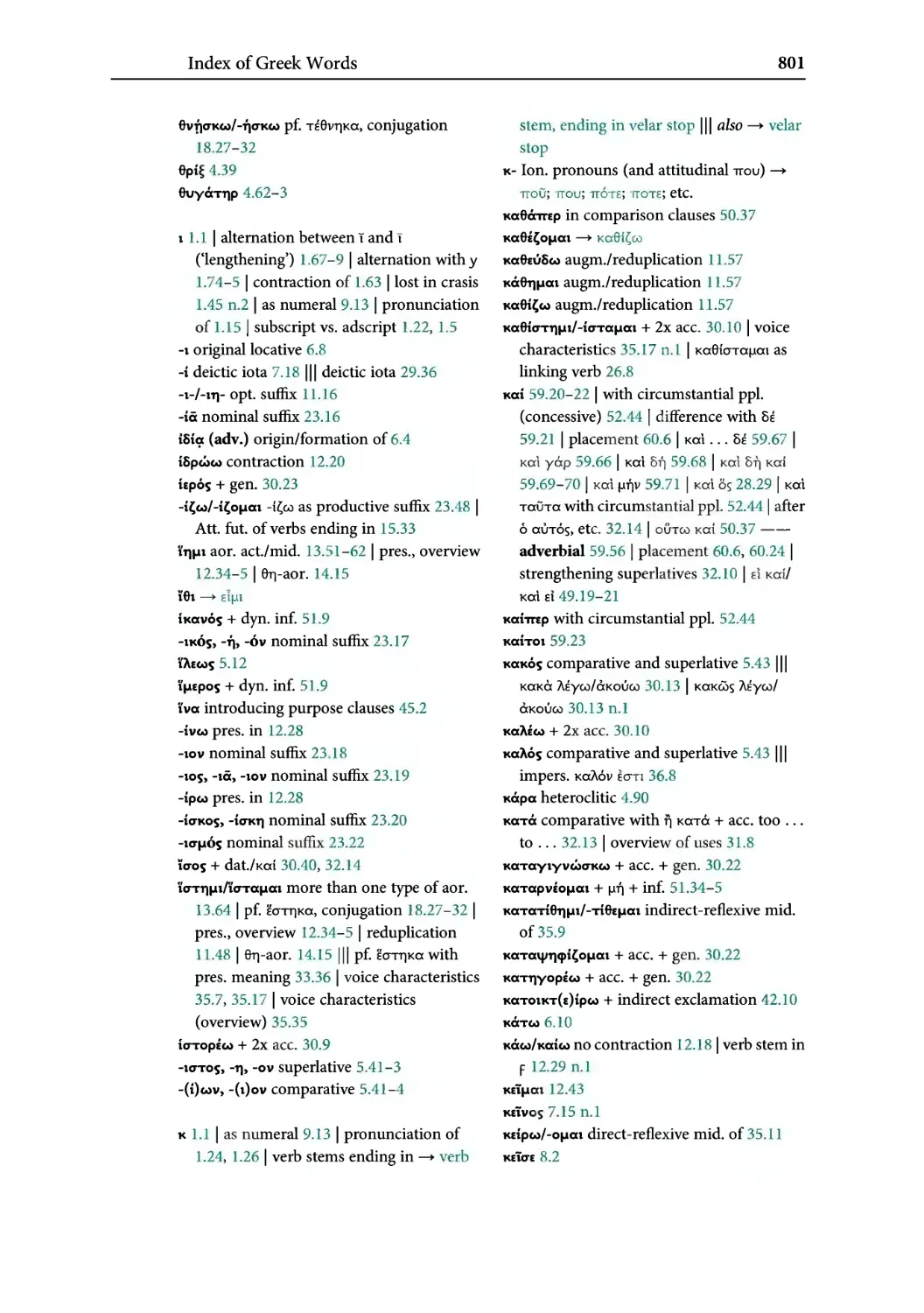
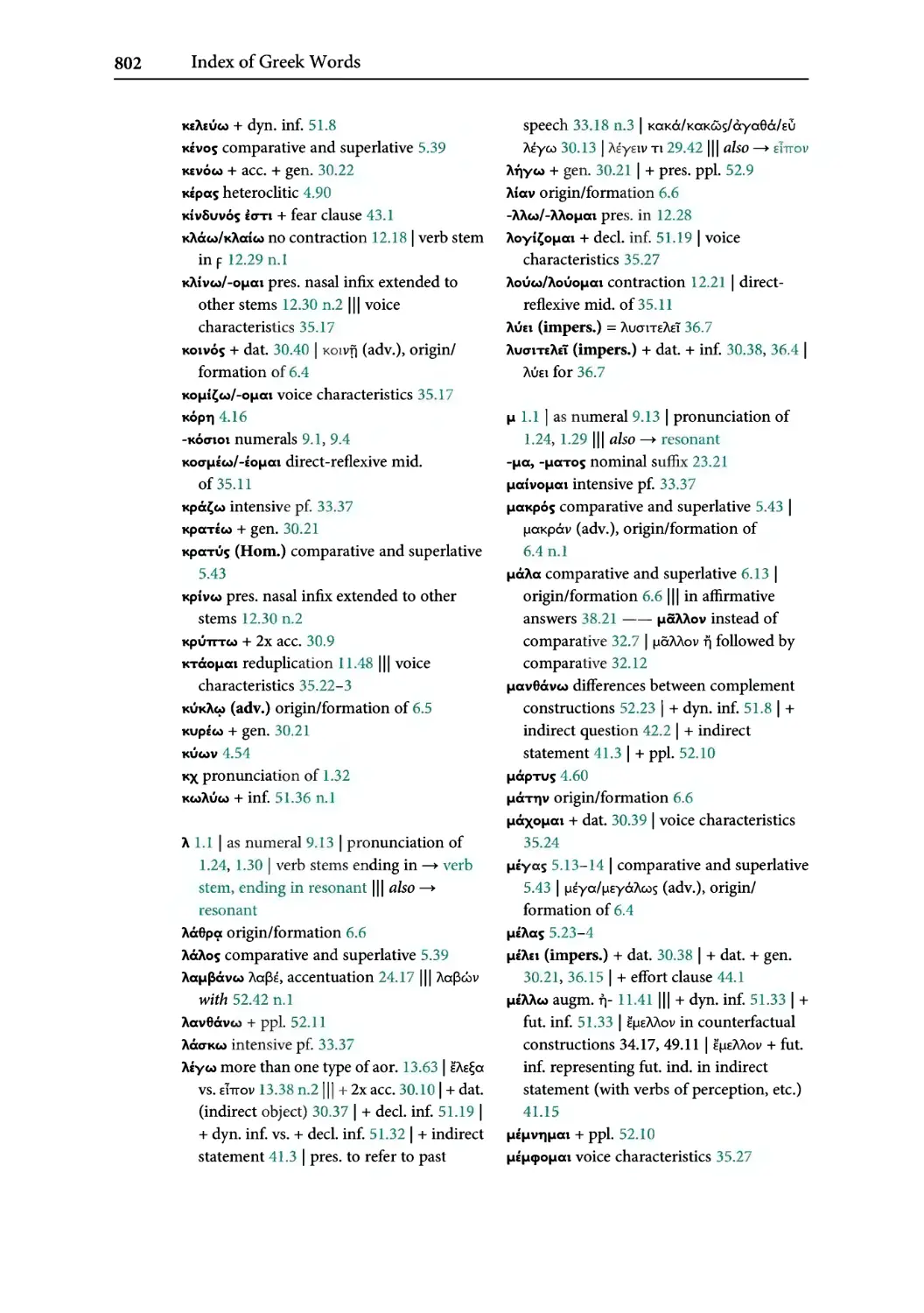
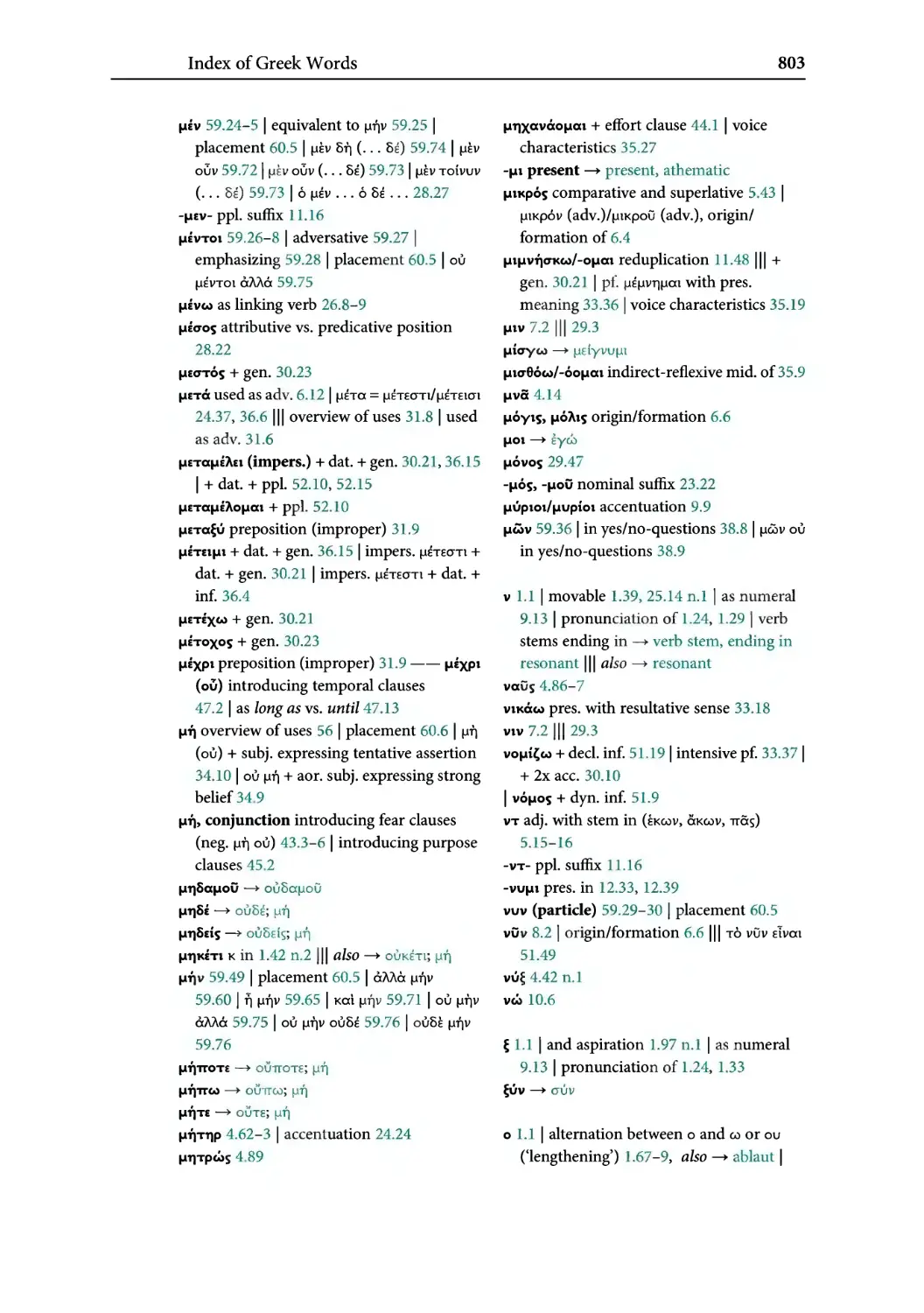
Index of Greek Words 794

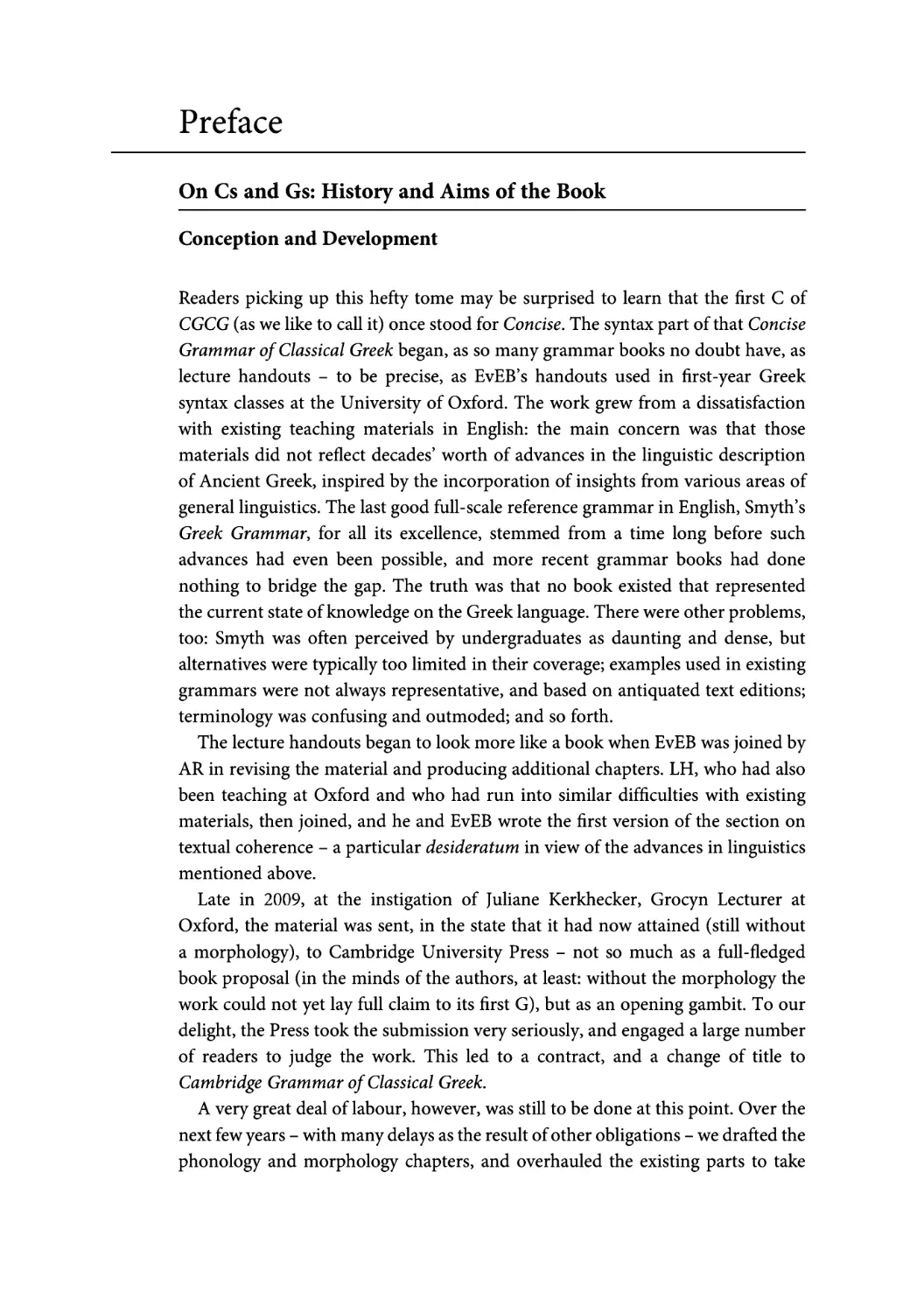
Preface
On Cs and Gs: History and Aims of the Book
Conception and Development
Readers picking up this hefty tome may be surprised to learn that the first C of
CGCG (as we like to call it) once stood for Concise. The syntax part of that Concise
Grammar of Classical Greek began, as so many grammar books no doubt have, as
lecture handouts - to be precise, as EvEB's handouts used in first-year Greek
syntax classes at the University of Oxford. The work grew from a dissatisfaction
with existing teaching materials in English: the main concern was that those
materials did not reflect decades' worth of advances in the linguistic description
of Ancient Greek, inspired by the incorporation of insights from various areas of
general linguistics. The last good full-scale reference grammar in English, Smyth's
Greek Grammar, for all its excellence, stemmed from a time long before such
advances had even been possible, and more recent grammar books had done
nothing to bridge the gap. The truth was that no book existed that represented
the current state of knowledge on the Greek language. There were other problems,
too: Smyth was often perceived by undergraduates as daunting and dense, but
alternatives were typically too limited in their coverage; examples used in existing
grammars were not always representative, and based on antiquated text editions;
terminology was confusing and outmoded; and so forth.
The lecture handouts began to look more like a book when EvEB was joined by
AR in revising the material and producing additional chapters. LH, who had also
been teaching at Oxford and who had run into similar difficulties with existing
materials, then joined, and he and EvEB wrote the first version of the section on
textual coherence - a particular desideratum in view of the advances in linguistics
mentioned above.
Late in 2009, at the instigation of Juliane Kerkhecker, Grocyn Lecturer at
Oxford, the material was sent, in the state that it had now attained (still without
a morphology), to Cambridge University Press - not so much as a full-fledged
book proposal (in the minds of the authors, at least: without the morphology the
work could not yet lay full claim to its first G), but as an opening gambit. To our
delight, the Press took the submission very seriously, and engaged a large number
of readers to judge the work. This led to a contract, and a change of title to
Cambridge Grammar of Classical Greek.
A very great deal of labour, however, was still to be done at this point. Over the
next few years - with many delays as the result of other obligations - we drafted the
phonology and morphology chapters, and overhauled the existing parts to take

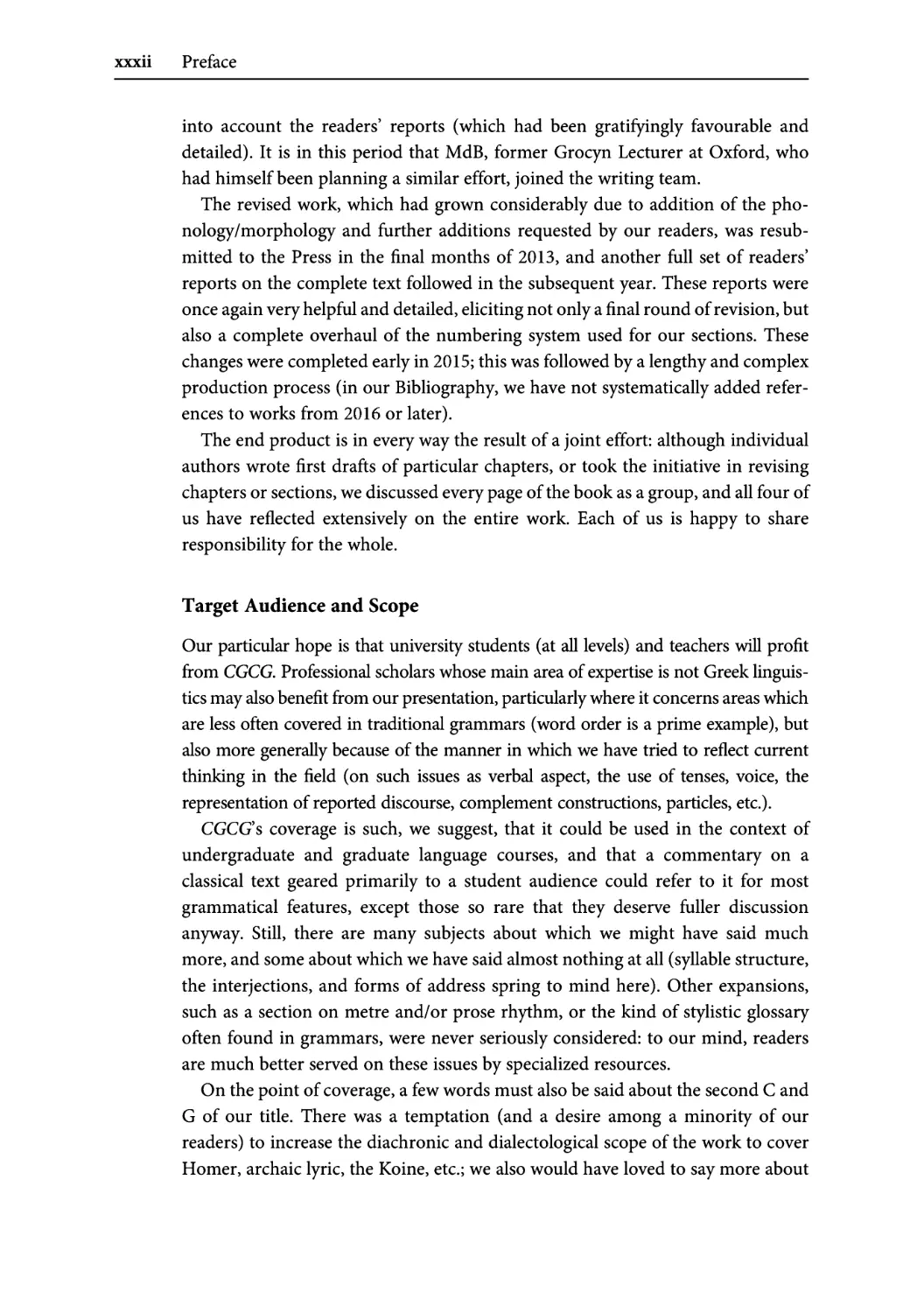
xxxii Preface
into account the readers' reports (which had been gratifyingly favourable and
detailed). It is in this period that MdB, former Grocyn Lecturer at Oxford, who
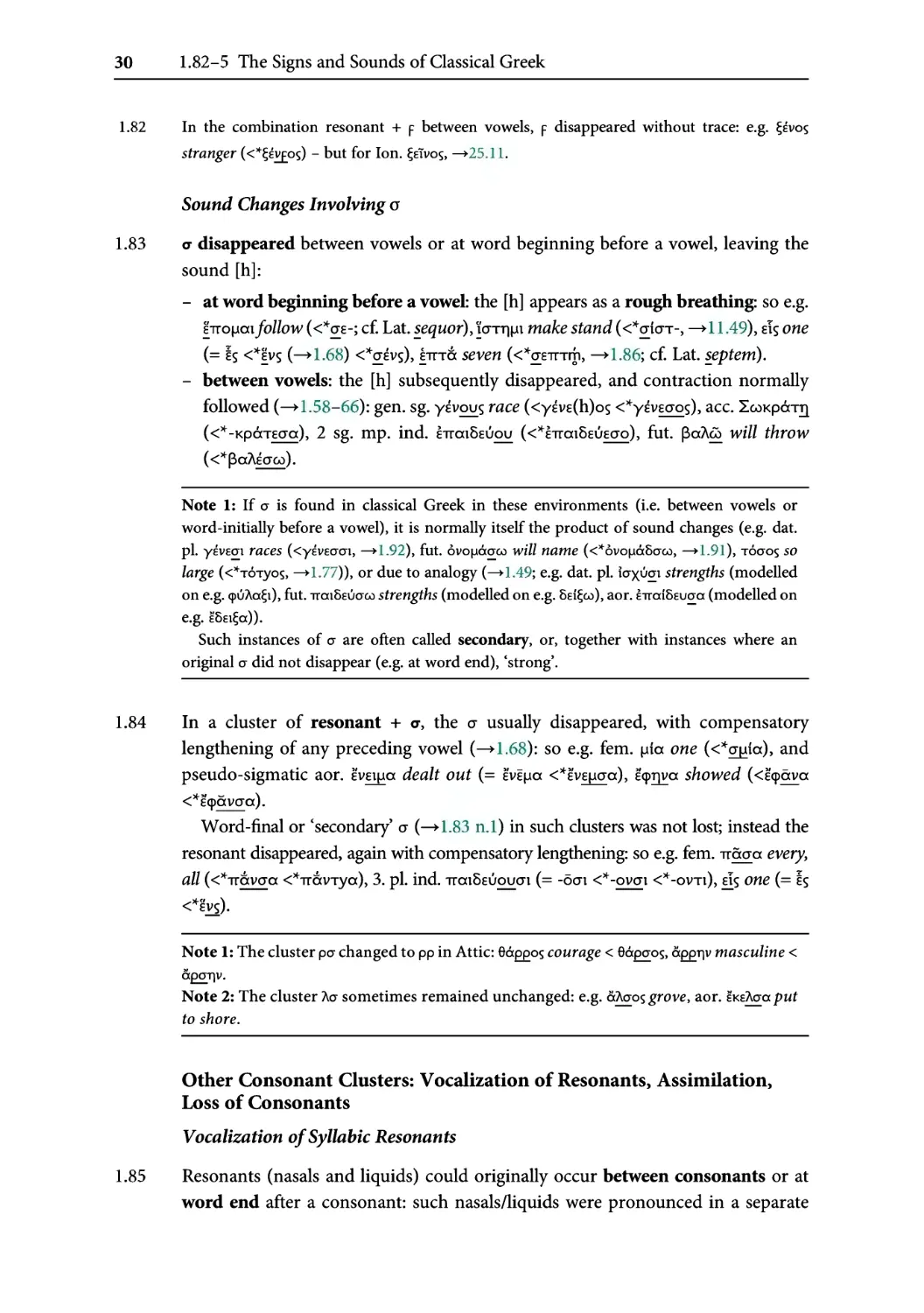
had himself been planning a similar effort, joined the writing team.
The revised work, which had grown considerably due to addition of the
phonology/morphology and further additions requested by our readers, was
resubmitted to the Press in the final months of 2013, and another full set of readers'
reports on the complete text followed in the subsequent year. These reports were
once again very helpful and detailed, eliciting not only a final round of revision, but
also a complete overhaul of the numbering system used for our sections. These
changes were completed early in 2015; this was followed by a lengthy and complex
production process (in our Bibliography, we have not systematically added
references to works from 2016 or later).
The end product is in every way the result of a joint effort: although individual
authors wrote first drafts of particular chapters, or took the initiative in revising
chapters or sections, we discussed every page of the book as a group, and all four of
us have reflected extensively on the entire work. Each of us is happy to share
responsibility for the whole.
Target Audience and Scope
Our particular hope is that university students (at all levels) and teachers will profit
from CGCG. Professional scholars whose main area of expertise is not Greek
linguistics may also benefit from our presentation, particularly where it concerns areas which
are less often covered in traditional grammars (word order is a prime example), but
also more generally because of the manner in which we have tried to reflect current
thinking in the field (on such issues as verbal aspect, the use of tenses, voice, the
representation of reported discourse, complement constructions, particles, etc.).
CGCGs coverage is such, we suggest, that it could be used in the context of
undergraduate and graduate language courses, and that a commentary on a
classical text geared primarily to a student audience could refer to it for most
grammatical features, except those so rare that they deserve fuller discussion
anyway. Still, there are many subjects about which we might have said much
more, and some about which we have said almost nothing at all (syllable structure,
the interjections, and forms of address spring to mind here). Other expansions,
such as a section on metre and/or prose rhythm, or the kind of stylistic glossary
often found in grammars, were never seriously considered: to our mind, readers
are much better served on these issues by specialized resources.
On the point of coverage, a few words must also be said about the second C and
G of our title. There was a temptation (and a desire among a minority of our
readers) to increase the diachronic and dialectological scope of the work to cover
Homer, archaic lyric, the Koine, etc.; we also would have loved to say more about

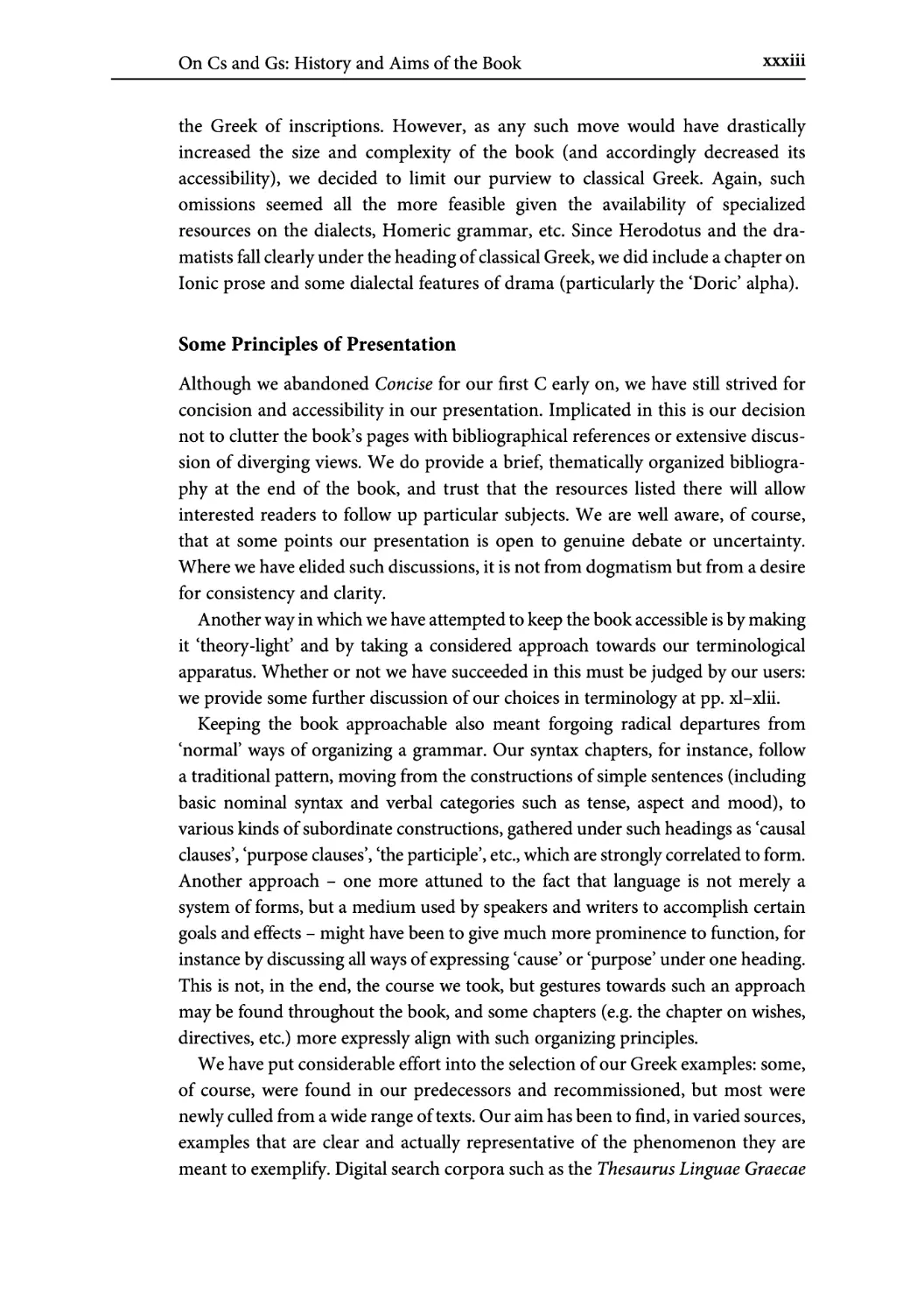
On Cs and Gs: History and Aims of the Book
XXXlll
the Greek of inscriptions. However, as any such move would have drastically
increased the size and complexity of the book (and accordingly decreased its
accessibility), we decided to limit our purview to classical Greek. Again, such
omissions seemed all the more feasible given the availability of specialized
resources on the dialects, Homeric grammar, etc. Since Herodotus and the
dramatists fall clearly under the heading of classical Greek, we did include a chapter on
Ionic prose and some dialectal features of drama (particularly the 'Doric' alpha).
Some Principles of Presentation
Although we abandoned Concise for our first C early on, we have still strived for
concision and accessibility in our presentation. Implicated in this is our decision
not to clutter the book's pages with bibliographical references or extensive
discussion of diverging views. We do provide a brief, thematically organized
bibliography at the end of the book, and trust that the resources listed there will allow
interested readers to follow up particular subjects. We are well aware, of course,
that at some points our presentation is open to genuine debate or uncertainty.
Where we have elided such discussions, it is not from dogmatism but from a desire
for consistency and clarity.
Another way in which we have attempted to keep the book accessible is by making
it 'theory-light' and by taking a considered approach towards our terminological
apparatus. Whether or not we have succeeded in this must be judged by our users:
we provide some further discussion of our choices in terminology at pp. xl-xlii.
Keeping the book approachable also meant forgoing radical departures from
'normal' ways of organizing a grammar. Our syntax chapters, for instance, follow
a traditional pattern, moving from the constructions of simple sentences (including
basic nominal syntax and verbal categories such as tense, aspect and mood), to
various kinds of subordinate constructions, gathered under such headings as 'causal
clauses', 'purpose clauses', 'the participle', etc., which are strongly correlated to form.
Another approach - one more attuned to the fact that language is not merely a
system of forms, but a medium used by speakers and writers to accomplish certain
goals and effects - might have been to give much more prominence to function, for
instance by discussing all ways of expressing 'cause' or 'purpose' under one heading.
This is not, in the end, the course we took, but gestures towards such an approach
may be found throughout the book, and some chapters (e.g. the chapter on wishes,
directives, etc.) more expressly align with such organizing principles.
We have put considerable effort into the selection of our Greek examples: some,
of course, were found in our predecessors and recommissioned, but most were
newly culled from a wide range of texts. Our aim has been to find, in varied sources,
examples that are clear and actually representative of the phenomenon they are
meant to exemplify. Digital search corpora such as the Thesaurus Linguae Graecae

xxxiv Preface
and Perseus under PhiloLogic were of great help in finding suitable material. We
also decided to dispense almost entirely with fabricated sentences, from a
conviction that working with real Greek examples is the best way of learning how to deal
with real Greek texts (and from what we consider a healthy mistrust of our own
ability to produce Greek that would have sounded true to an ancient hearer).
In the phonology/morphology part, too, our presentation of forms is often based
on a fresh examination of the corpus. Some exceptional forms that are often listed in
grammars but do not actually occur in classical Greek have been left out. This is
particularly relevant in the case of our list of principal parts, where we have generally
avoided giving forms which are non-existent (or nearly so) in classical Greek.
While on the topic of the phonology/morphology: we have in those chapters
provided rather more historical information than is now usual in university-level
grammars. Much of what is 'irregular' in Greek forms and paradigms can be
explained with a little historical background, and it is our experience that students
benefit greatly from being provided with such information. It should be stressed
that our aim in this was expressly didactic, not to provide a proper historical
grammar. This is the only excuse we can offer to experts wondering about our
principles of selection (no labiovelars?), or our manner of presentation (e.g. the use
of the Greek alphabet for reconstructed forms, yielding, for instance, such
infelicitous reconstructions as *σεχ- instead of *seg-). Students interested in finding out
more about the historical background of the language are strongly encouraged to
refer to the works on this topic listed in the bibliography.
In the phonology/morphology part we have given indications of vowel quantity
(ά/ά, ϊ/Τ, ϋ/ϋ) where we deemed such indications helpful for the analysis of forms, or
for students' memorization of prevalent patterns (e.g. vowel quantities in endings).
We often give full indications only once within a section, or only when a form or
ending first appears. We have not strived for complete consistency, nor attempted to
replicate the information about individual lexical items available in dictionaries.
Finally, one other point of principle in the morphology has been to analyse forms
explicitly: we find in our teaching that there is a crucial difference between telling a
student that the ace. pi. masc. aor. ppl. act. of παιδεύω is παιδεύσαντας, and
explaining that the form is built up from a sigmatic aorist stem παιδευσ(α)- (itself
the product of regular processes of formation), the participle-suffix -ντ-, and a third-
declension accusative ending -ας. Our aim throughout has been to stimulate the
second, analytical approach to Greek morphology.
Using CGCG: A Few Points of Guidance
The chapters of the book were written so as to be suitable for continuous reading,
yet we recognize that most users of a reference grammar will come to it looking for

Acknowledgements
XXXV
discussion of a particular topic. A detailed table of contents and extensive indexes
should allow for easy navigation to the right place.
We have also included many cross-references throughout the book, so that
related topics or terms may be followed up quickly. In some cases the 'target' of
these references is a (more) complete treatment of a topic which is not (fully)
discussed at the 'source'; in others, a cross-reference is inserted when a
grammatical term or concept is used which users may not know, or which they may wish to
see treated in more detail; we also use cross-references in the discussion of
examples, helping readers with difficult points of grammar. Some readers will
want to follow up more of these cross-references than others: we trust that
individual users will soon develop their own preferences and practices in this
respect.
A difference in type-size represents the difference between sections discussing
features of the language that are more frequent, central, or significant (to our
mind), and those that are less so. Notes are added to sections for further discussion,
exceptions, etc. The general idea is that text in larger type presents the main
features of a particular grammatical topic - those which an undergraduate student
might be expected to know - whereas the notes and smaller-type sections offer
additional information, or features with which students will be confronted when
reading texts, but which they may not be expected to know by heart. Naturally,
when CGCG is used as a teaching resource, instructors will determine for
themselves which material they wish to emphasize.
In the morphology, tables of forms are presented before a paradigm is discussed
in detail. Those looking for nothing but the tables, gathered together in one place,
may find them online, at the book's page on the Cambridge University Press
website.
Acknowledgements
CGCG has been a long time in the making, and over the years many have
contributed to its improvement. Where it falls short the responsibility is of course
ours. It is a genuine pleasure to record here some of the debts we have incurred.
A first word of thanks must go out to the community of scholars working on
Greek linguistics at large. Many of them will see their ideas reflected in these pages,
and although, outside of our bibliography, we do not cite individuals by name (for
reasons outlined above), their contribution in shaping our thinking is no less
significant.
The Cambridge University Press-assigned readers offered generously of their
time (twice!) to comment on a large manuscript in detail. Their general
endorsement has been gratifying, their criticism has sharpened our presentation in many

xxxvi Preface
places, and their corrections have saved us from a large number of mistakes. We
are pleased to be able to mention some of the readers by name: Patrick Finglass
wrote acute comments and was the ideal person to comment on our A/ax-passage;
Helma Dik provided superior input and has continued doing so even after her task
was done; Coulter George deserves a special deal of gratitude for the breadth and
detail of his report.
Benjamin Allgaier, Maurits de Leeuw, Karel Stegeman and David Cohen
checked the text and citation of all of our examples, working with precision and
speed. Mirte Liebregts took on the mammoth task of drafting our Index Locorum
and parts of the other indexes: we are grateful for her diligent efforts.
Juliane Kerkhecker provided early encouragement and was instrumental in
making contact with the Press. Gerry Wakker was intimately involved in early
discussions, and commented on the first draft of the section on textual coherence.
Rutger Allan offered insightful comments on several chapters, and more generally
we have profited from his published work in many places.
At the Press, we would like to thank Michael Sharp as well as our successive
Content Managers, Liz Hanlon, Christina Sarigiannidou, Ross Stewart, and
especially Sarah Lambert. Malcolm Todd, our swift and precise copyeditor, was a
trusted ally during the production phase.
The book uses a specially modified version of the Press's house font for Greek,
Neohellenic. Additional characters were designed by EvEB and by George
Matthiopoulos of the Greek Font Society. For his elegant designs, produced at
very short notice, George has our sincere thanks.
Friends and colleagues at our various institutions offered moral support, and
patience when we were once again preoccupied with work on the grammar. EvEB
wishes to thank, in Oxford, the Faculty of Classics, Corpus Christi College, and
Magdalen College (particularly his colleagues at the Calleva Centre); and in the
Netherlands, the members of the departments of Classics at the University of
Amsterdam, VU University Amsterdam, the University of Groningen, and the
University of Leiden. Each of these institutions provided a welcoming home and a
base of operations on one or more occasions during the years that CGCG was
written. AR is indebted to the Amsterdam Center for Language and
Communication of the Faculty of Humanities of the University of Amsterdam,
which continued to provide material support of various kinds after his retirement.
LH wishes to record a debt of gratitude to the Provost and Fellows of Worcester
College, Oxford, where the work was begun, to the Warden and Fellows of Merton
College, Oxford, where most of it was done, and to the Seminar fur klassische
Philologie of the Ruprecht-Karls-Universitat Heidelberg, where it was finally seen
through; at the last institution Jonas Grethlein in particular has shown great
patience and support. MdB wishes to thank his colleagues from the Classics

Acknowledgements
XXXVll
team at the University of Amsterdam, and Irene de Jong in particular for her
support and encouragement.
Even more patience was shown by our families, who relentlessly supported the
enterprise and cheerfully indulged our nocturnal email exchanges. The four of us
spent many hours in each other's (often digital) company, including evenings and
weekends. We are all too aware that those hours might also have been spent
elsewhere.
Students in Oxford (especially at Merton College), Amsterdam, Groningen and
Leiden have been using pages from the book or earlier versions of the whole for
some time, and have offered their views. To all our students, we owe a great debt. It
is with them in mind that we wrote this book.

Abbreviations, Symbols, Editions
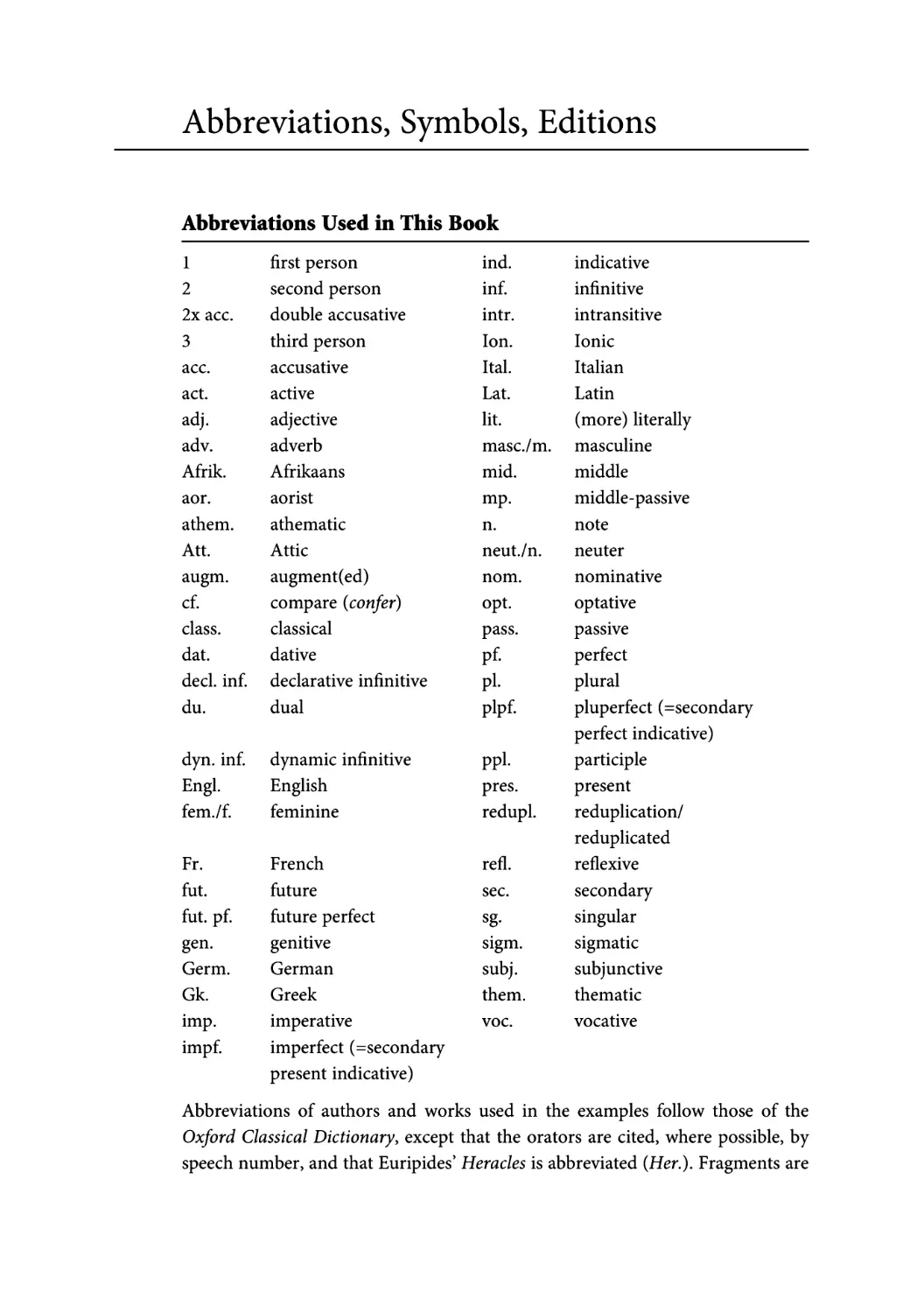
Abbreviations Used in This Book
1
2
2x ace.
3
ace.
act.
adj.
adv.
Afrik.
aor.
athem.
Att.
augm.
cf.
class.
dat.
decl. inf.
du.
dyn. inf.
Engl.
fem./f.
Fr.
fut.
fut. pf.
gen.
Germ.
Gk.
imp.
impf.
first person
second person
double accusative
third person
accusative
active
adjective
adverb
Afrikaans
aorist
athematic
Attic
augment(ed)
compare (confer)
classical
dative
declarative infinitive
dual
dynamic infinitive
English
feminine
French
future
future perfect
genitive
German
Greek
imperative
imperfect (^secondary
present indicative)
ind.
inf.
intr.
Ion.
Ital.
Lat.
lit.
masc./m.
mid.
mp.
n.
neut./n.
nom.
opt.
pass.
pf.
pi.
plpf.
ppl.
pres.
redupl.
refl.
sec.
sg·
sigm.
subj.
them.
voc.
indicative
infinitive
intransitive
Ionic
Italian
Latin
(more) literally
masculine
middle
middle-passive
note
neuter
nominative
optative
passive
perfect
plural
pluperfect (^secondary
perfect indicative)
participle
present
reduplication/
reduplicated
reflexive
secondary
singular
sigmatic
subjunctive
thematic
vocative
Abbreviations of authors and works used in the examples follow those of the
Oxford Classical Dictionary, except that the orators are cited, where possible, by
speech number, and that Euripides' Heracles is abbreviated {Her.). Fragments are

Texts and Translations of Examples
XXXIX
cited (fir.) with the edition from which they (and their numbering) are taken. When
scholarly consensus holds a work to be spurious, this is indicated by square
brackets (e.g. '[Andoc] 4'). For a complete list see the Index of Examples at the
end of the book.
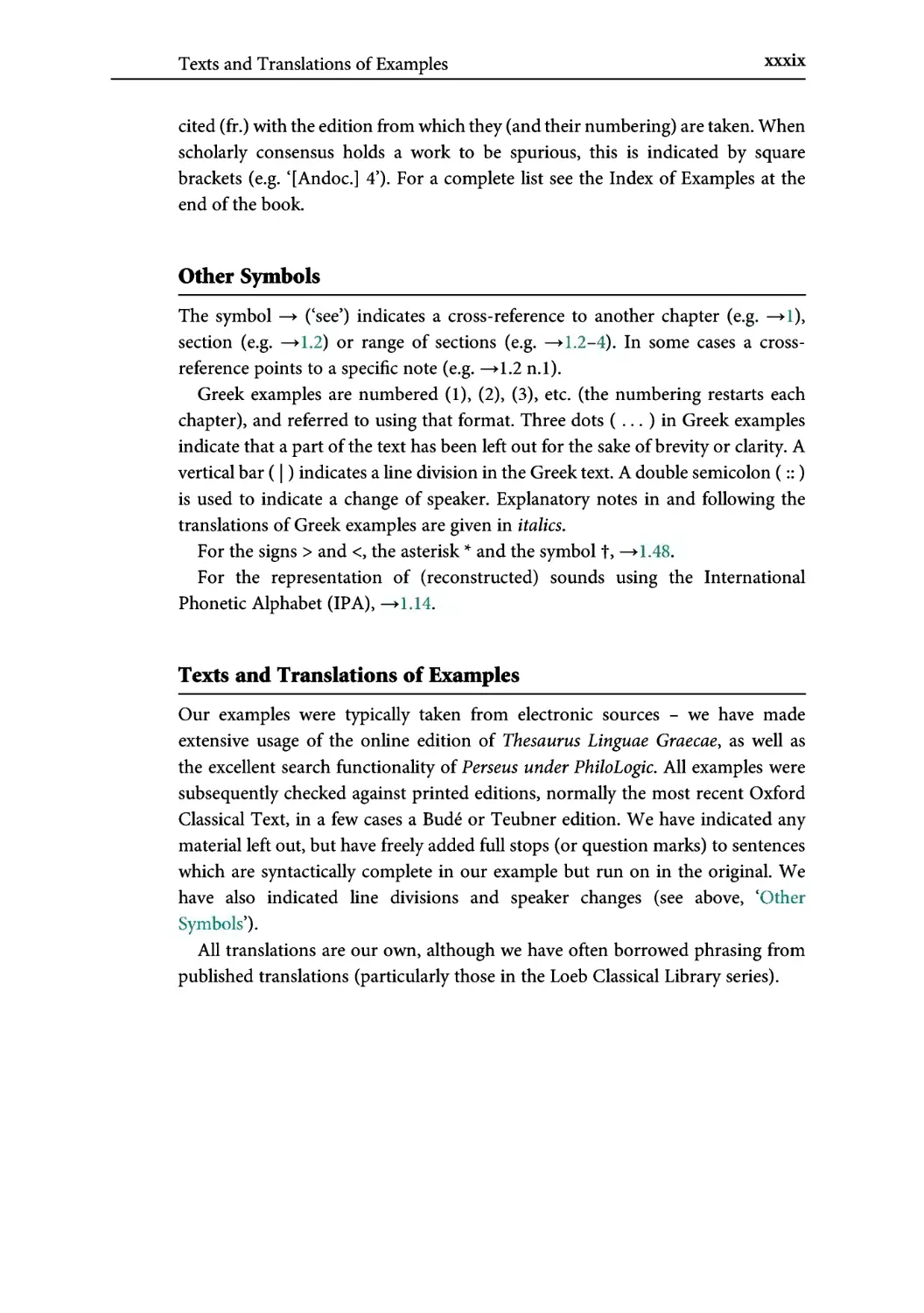
Other Symbols
The symbol —► ('see') indicates a cross-reference to another chapter (e.g. —»1),
section (e.g. —»1.2) or range of sections (e.g. —► 1.2-4). In some cases a cross-
reference points to a specific note (e.g. —»1.2 n.l).
Greek examples are numbered (1), (2), (3), etc. (the numbering restarts each
chapter), and referred to using that format. Three dots (...) in Greek examples
indicate that a part of the text has been left out for the sake of brevity or clarity. A
vertical bar (|) indicates a line division in the Greek text. A double semicolon (::)
is used to indicate a change of speaker. Explanatory notes in and following the
translations of Greek examples are given in italics.
For the signs > and <, the asterisk * and the symbol t, —►1.48.
For the representation of (reconstructed) sounds using the International
Phonetic Alphabet (IPA), —►1.14.
Texts and Translations of Examples
Our examples were typically taken from electronic sources - we have made
extensive usage of the online edition of Thesaurus Linguae Graecae, as well as
the excellent search functionality of Perseus under PhiloLogic. All examples were
subsequently checked against printed editions, normally the most recent Oxford
Classical Text, in a few cases a Bude or Teubner edition. We have indicated any
material left out, but have freely added full stops (or question marks) to sentences
which are syntactically complete in our example but run on in the original. We
have also indicated line divisions and speaker changes (see above, Other
Symbols').
All translations are our own, although we have often borrowed phrasing from
published translations (particularly those in the Loeb Classical Library series).

On Terminology
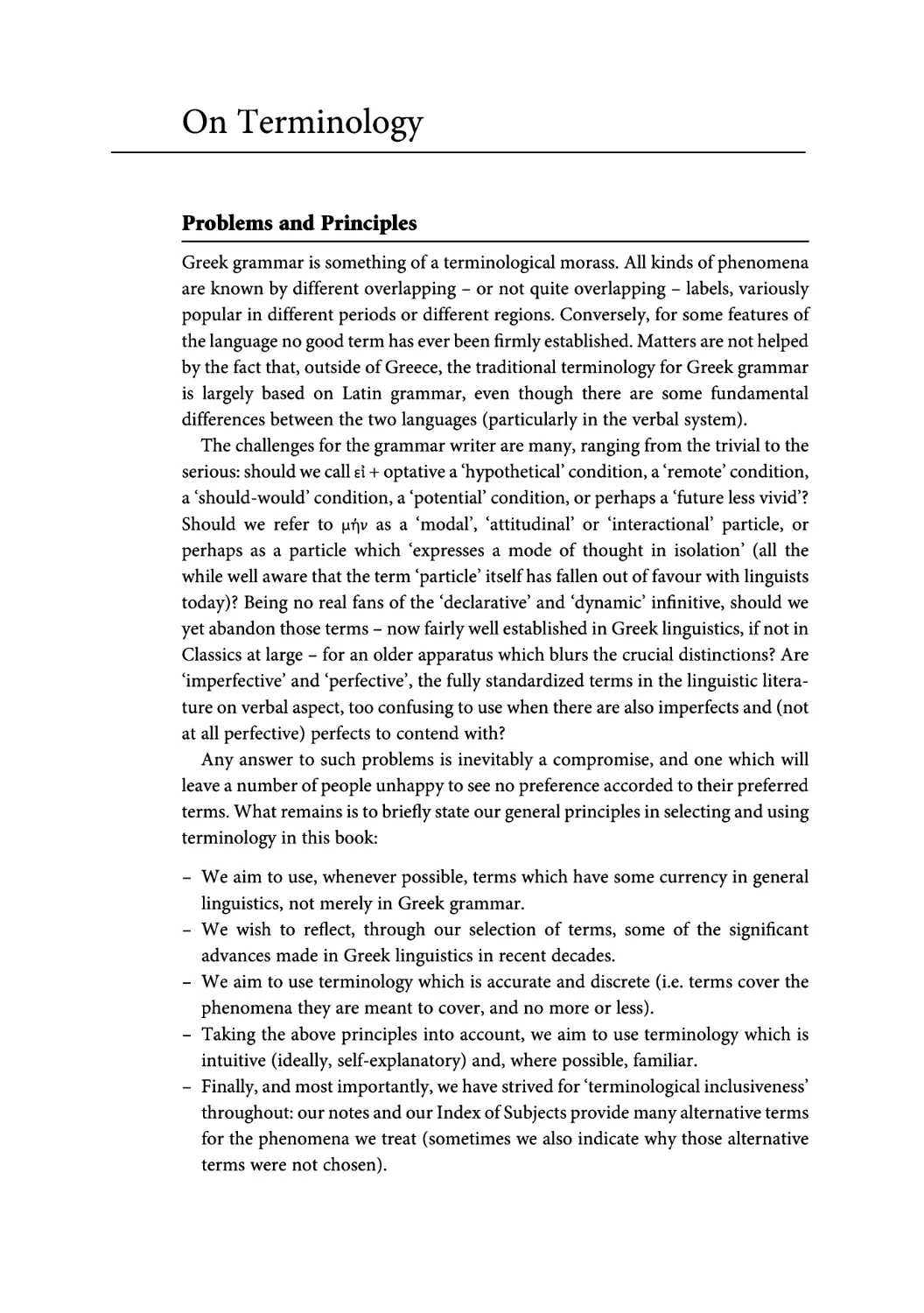
Problems and Principles
Greek grammar is something of a terminological morass. All kinds of phenomena
are known by different overlapping - or not quite overlapping - labels, variously
popular in different periods or different regions. Conversely, for some features of
the language no good term has ever been firmly established. Matters are not helped
by the fact that, outside of Greece, the traditional terminology for Greek grammar
is largely based on Latin grammar, even though there are some fundamental
differences between the two languages (particularly in the verbal system).
The challenges for the grammar writer are many, ranging from the trivial to the
serious: should we call ει + optative a 'hypothetical' condition, a 'remote' condition,
a 'should-would' condition, a 'potential' condition, or perhaps a 'future less vivid'?
Should we refer to μήν as a 'modal', 'attitudinal' or 'interactional' particle, or
perhaps as a particle which 'expresses a mode of thought in isolation' (all the
while well aware that the term 'particle' itself has fallen out of favour with linguists
today)? Being no real fans of the 'declarative' and 'dynamic' infinitive, should we
yet abandon those terms - now fairly well established in Greek linguistics, if not in
Classics at large - for an older apparatus which blurs the crucial distinctions? Are
'imperfective' and 'perfective', the fully standardized terms in the linguistic
literature on verbal aspect, too confusing to use when there are also imperfects and (not
at all perfective) perfects to contend with?
Any answer to such problems is inevitably a compromise, and one which will
leave a number of people unhappy to see no preference accorded to their preferred
terms. What remains is to briefly state our general principles in selecting and using
terminology in this book:
- We aim to use, whenever possible, terms which have some currency in general
linguistics, not merely in Greek grammar.
- We wish to reflect, through our selection of terms, some of the significant
advances made in Greek linguistics in recent decades.
- We aim to use terminology which is accurate and discrete (i.e. terms cover the
phenomena they are meant to cover, and no more or less).
- Taking the above principles into account, we aim to use terminology which is
intuitive (ideally, self-explanatory) and, where possible, familiar.
- Finally, and most importantly, we have strived for 'terminological inclusiveness'
throughout: our notes and our Index of Subjects provide many alternative terms
for the phenomena we treat (sometimes we also indicate why those alternative
terms were not chosen).

Verbal Terminology
xli
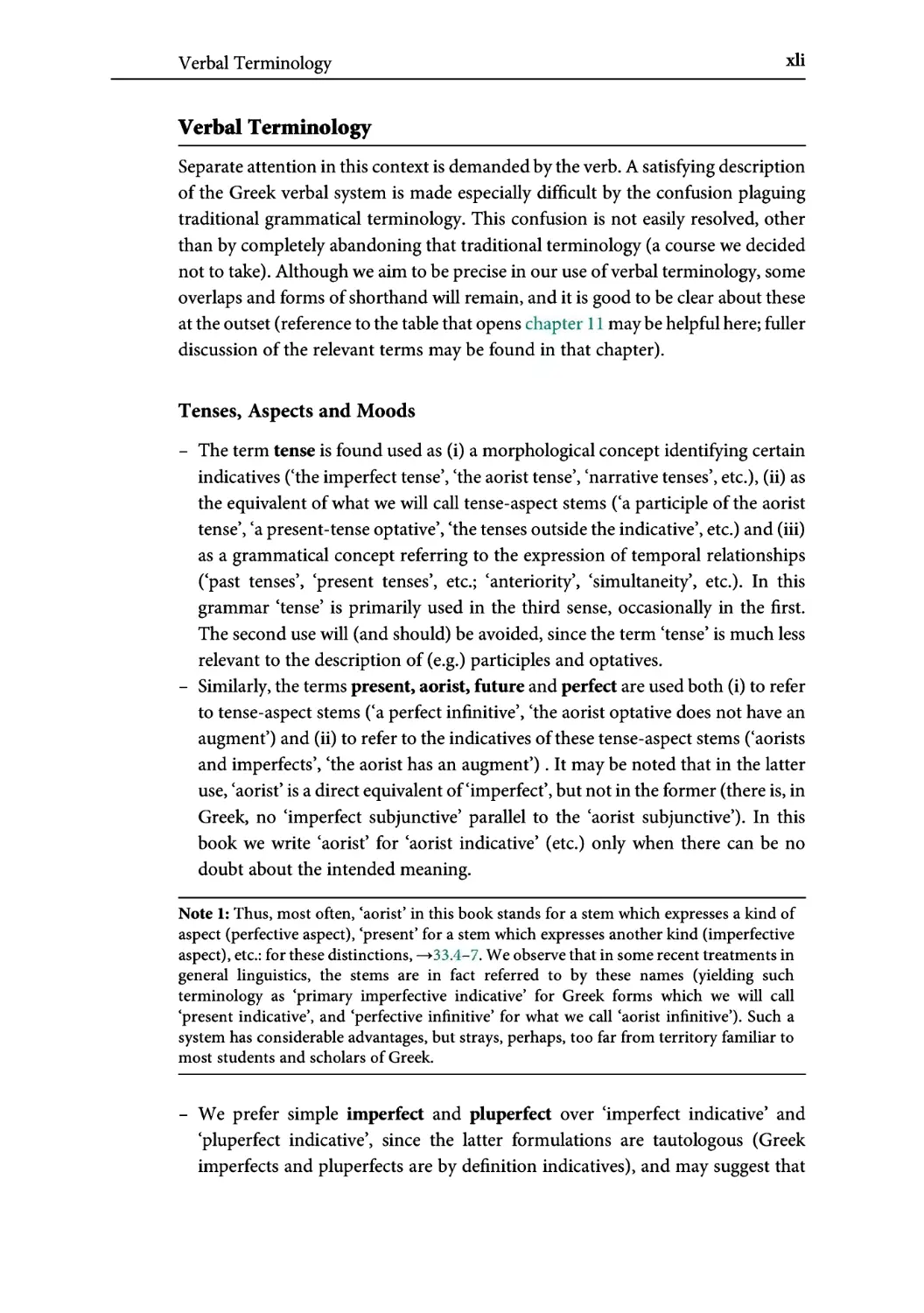
Verbal Terminology
Separate attention in this context is demanded by the verb. A satisfying description
of the Greek verbal system is made especially difficult by the confusion plaguing
traditional grammatical terminology. This confusion is not easily resolved, other
than by completely abandoning that traditional terminology (a course we decided
not to take). Although we aim to be precise in our use of verbal terminology, some
overlaps and forms of shorthand will remain, and it is good to be clear about these
at the outset (reference to the table that opens chapter 11 may be helpful here; fuller
discussion of the relevant terms may be found in that chapter).
Tenses, Aspects and Moods
- The term tense is found used as (i) a morphological concept identifying certain
indicatives ('the imperfect tense', 'the aorist tense', 'narrative tenses', etc.), (ii) as
the equivalent of what we will call tense-aspect stems ('a participle of the aorist
tense', 'a present-tense optative', 'the tenses outside the indicative', etc.) and (Hi)
as a grammatical concept referring to the expression of temporal relationships
('past tenses', 'present tenses', etc.; 'anteriority', 'simultaneity', etc.). In this
grammar 'tense' is primarily used in the third sense, occasionally in the first.
The second use will (and should) be avoided, since the term 'tense' is much less
relevant to the description of (e.g.) participles and optatives.
- Similarly, the terms present, aorist, future and perfect are used both (i) to refer
to tense-aspect stems ('a perfect infinitive', 'the aorist optative does not have an
augment') and (ii) to refer to the indicatives of these tense-aspect stems ('aorists
and imperfects', 'the aorist has an augment'). It may be noted that in the latter
use, 'aorist' is a direct equivalent of'imperfect', but not in the former (there is, in
Greek, no 'imperfect subjunctive' parallel to the 'aorist subjunctive'). In this
book we write 'aorist' for 'aorist indicative' (etc.) only when there can be no
doubt about the intended meaning.
Note 1: Thus, most often, 'aorist' in this book stands for a stem which expresses a kind of
aspect (perfective aspect), 'present' for a stem which expresses another kind (imperfective
aspect), etc.: for these distinctions, —>·33.4-7. We observe that in some recent treatments in
general linguistics, the stems are in fact referred to by these names (yielding such
terminology as 'primary imperfective indicative' for Greek forms which we will call
'present indicative', and 'perfective infinitive' for what we call 'aorist infinitive'). Such a
system has considerable advantages, but strays, perhaps, too far from territory familiar to
most students and scholars of Greek.
- We prefer simple imperfect and pluperfect over 'imperfect indicative' and
'pluperfect indicative', since the latter formulations are tautologous (Greek
imperfects and pluperfects are by definition indicatives), and may suggest that

xlii On Terminology
other variables could go into the indicative 'slot' (which they cannot: there is no
'imperfect subjunctive'). For the definition of the imperfect as 'secondary
present indicative' and the pluperfect as 'secondary perfect indicative', —►11.7.
- We identify only indicatives, subjunctives, optatives and imperatives as moods:
the infinitive and participle should not be classed as such.
On 'First' and 'Second' Aorists and Perfects
Finally, there is a persistent tradition in handbooks to distinguish between 'first'
(or 'weak') and 'second' (or 'strong') forms in the aorist, aorist passive and perfect
stems:
- An aorist stem is called first (or 'weak') when σ is added to the verb stem (e.g.
παιδευσ(α)-), an aorist passive stem when θ is added (e.g. παιδευθη-), a perfect
stem when κ is added (e.g. πεπαιδευκ-).
- Otherwise, forms are second (or 'strong').
We have not followed this use: 'first' and 'second' are, in our view, unhelpful terms
which provide insufficient morphological information (note, for instance, that the
'second' thematic aorist έ-λίπ-ο-μεν has a thematic vowel, whereas 'second' root
aorist ε-γνω-μεν does not; these should not be classed together), and which mis-
leadingly suggest that phenomena which are in fact highly regular (e.g. perfect
active stems ending in χ or φ) are irregular. Instead, we distinguish between three
types of aorist stem (sigmatic, thematic, root; —»13), between two types of aorist
passive stem (θη- and η-; —»14), and between three types of perfect active stem (κ-,
aspirated, stem; —»18).

Parti
Phonology and Morphology

1
The Signs and Sounds of Classical Greek
1.1
1.2
Writing: the Alphabet, Accent and Breathing Marks, Punctuation
The Alphabet
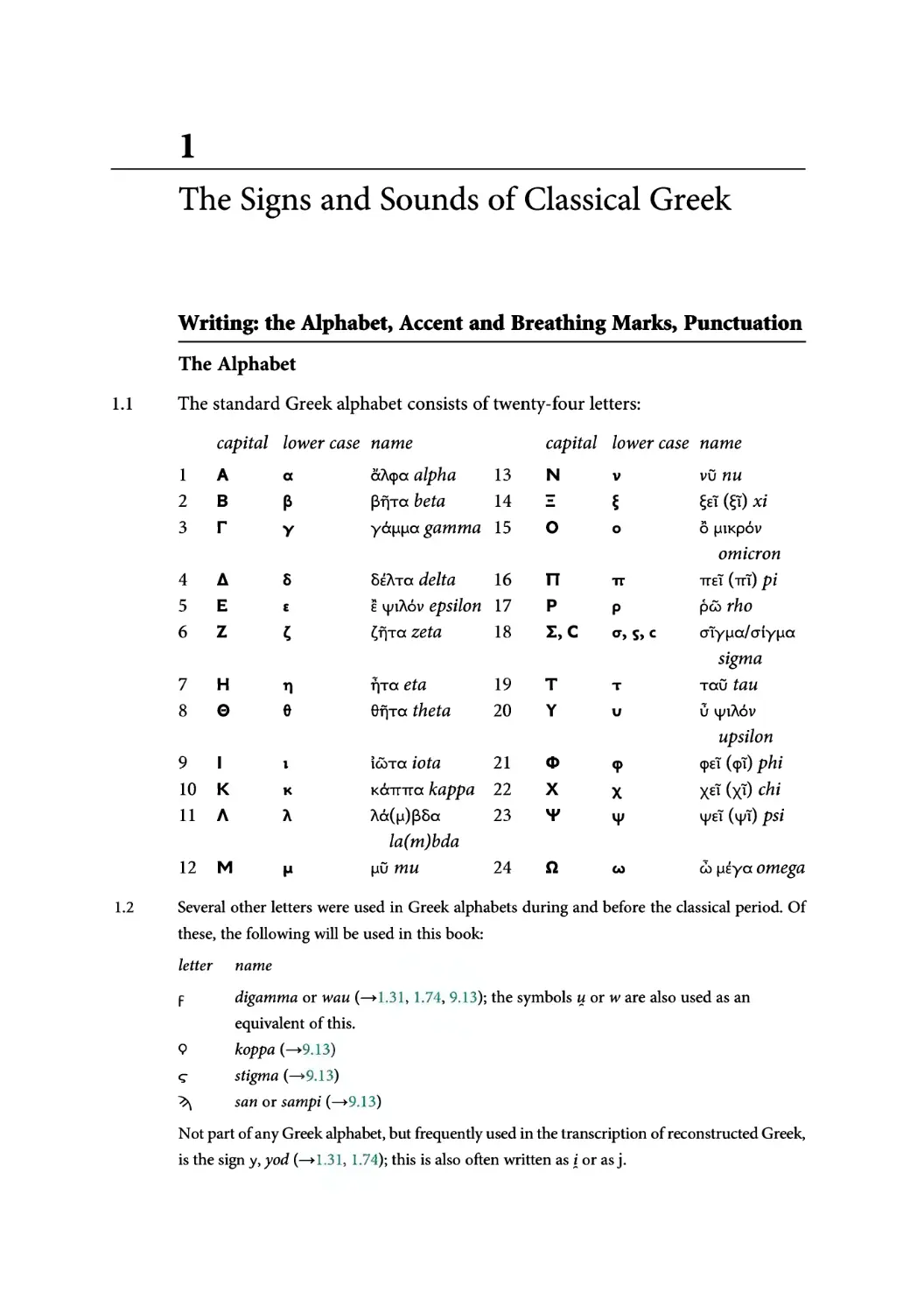
The standard Greek alphabet consists of twenty-four letters:
1
2
3
4
5
6
7
8
9
10
11
12
capital
A
Β
Γ
Δ
Ε
Ζ
Η
Θ
Ι
Κ
Λ
Μ
lower case
α
β
Υ
δ
ε
ζ
η
θ
ι
κ
λ
μ
name
άλφα alpha
βήτα beta
γάμμα gamma
δέλτα delta
ε ψιλόν epsilon
ζήτα zeta
ήτα eta
θήτα theta
ιώτα iota
κόππα kappa
λά(μ)βδα
la(m)bda
μΰ mu
13
14
15
16
17
18
19
20
21
22
23
24
capital
Ν
τ
Ο
π
Ρ
Σ,Ο
τ
Υ
Φ
χ
ψ
Ω
lower case
ν
ξ
ο
π
Ρ
σ> s>c
τ
υ
9
Χ
Ψ
ω
name
νΰ nu
ξεΐ (ξι) χί
δ μικρόν
omicron
πει (πι) pi
ρω rho
σίγμα/σίγμα
sigma
ταυ tau
υ ψιλόν
upsilon
φεΐ (φι) p/iz
χει (χι) c/n
ψεΐ (ψΐ) psi
ώ μέγα omega
Several other letters were used in Greek alphabets during and before the classical period. Of
these, the following will be used in this book:
letter name
ρ digamma or wau (—>Ί.31, 1.74, 9.13); the symbols u or w are also used as an
equivalent of this.
9 koppa (->9.13)
ς- stigma (-^9.13)
^ san or sampi (—»9.13)
Not part of any Greek alphabet, but frequently used in the transcription of reconstructed Greek,
is the sign y, yod (—»1.31, 1.74); this is also often written as i or as j.

4 1.3-8 The Signs and Sounds of Classical Greek
Particulars
1.3 For the pronunciation (and phonetic categorization) of the letters, —»1.14-33. α, ε,
η, ι, ο, υ and ω represent vowels; the other letters represent consonants, apart from
ζ, ξ and ψ, which each represent two consonants.
1.4 Lower case sigma is conventionally written σ in all positions except at the end of a
word, where it is written s: e.g. Σώστρατος, στάσις. Some text editions use so-called
'lunate' sigma C/c in all positions: e.g. CcocTpcrroc, ctocic.
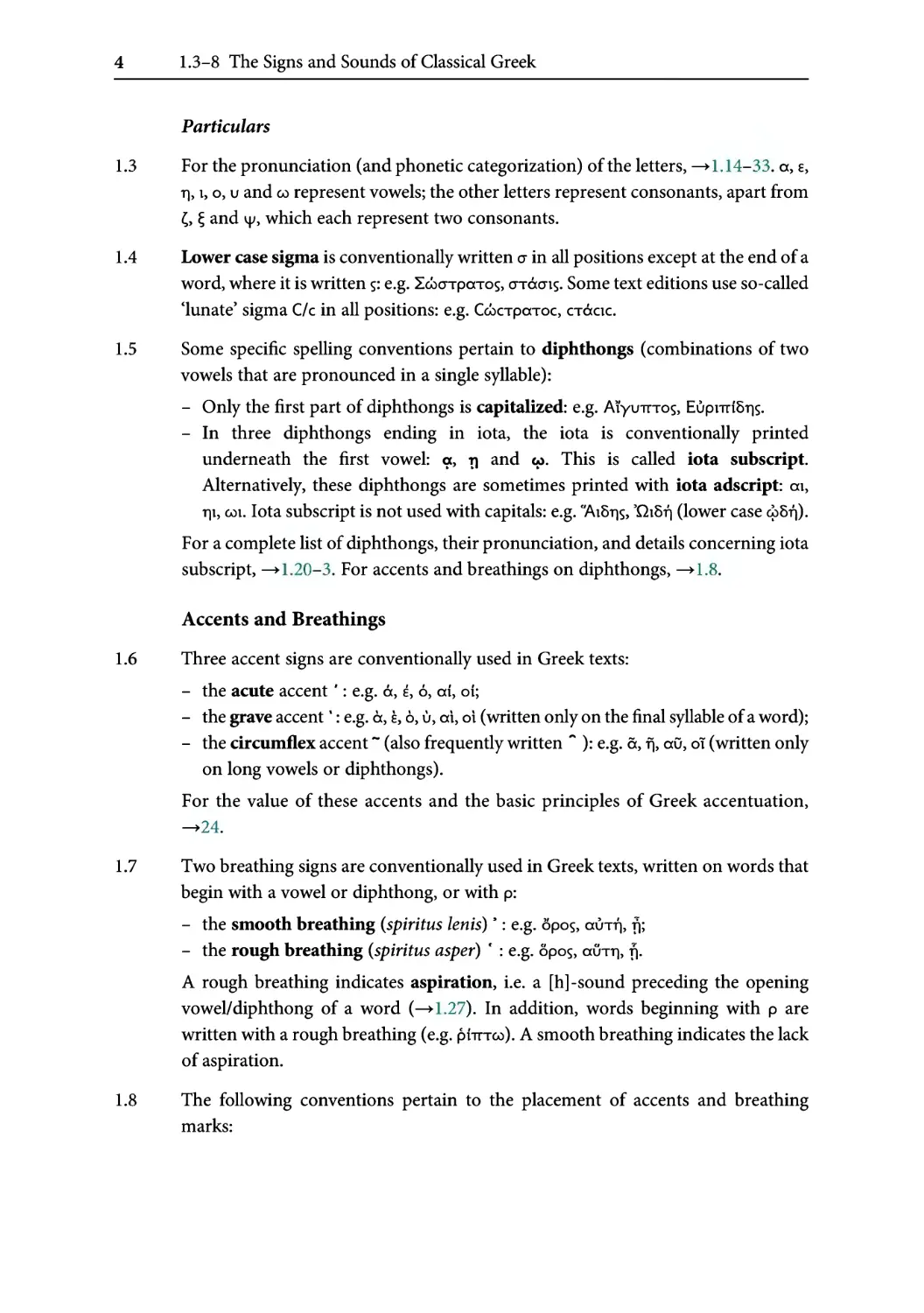
1.5 Some specific spelling conventions pertain to diphthongs (combinations of two
vowels that are pronounced in a single syllable):
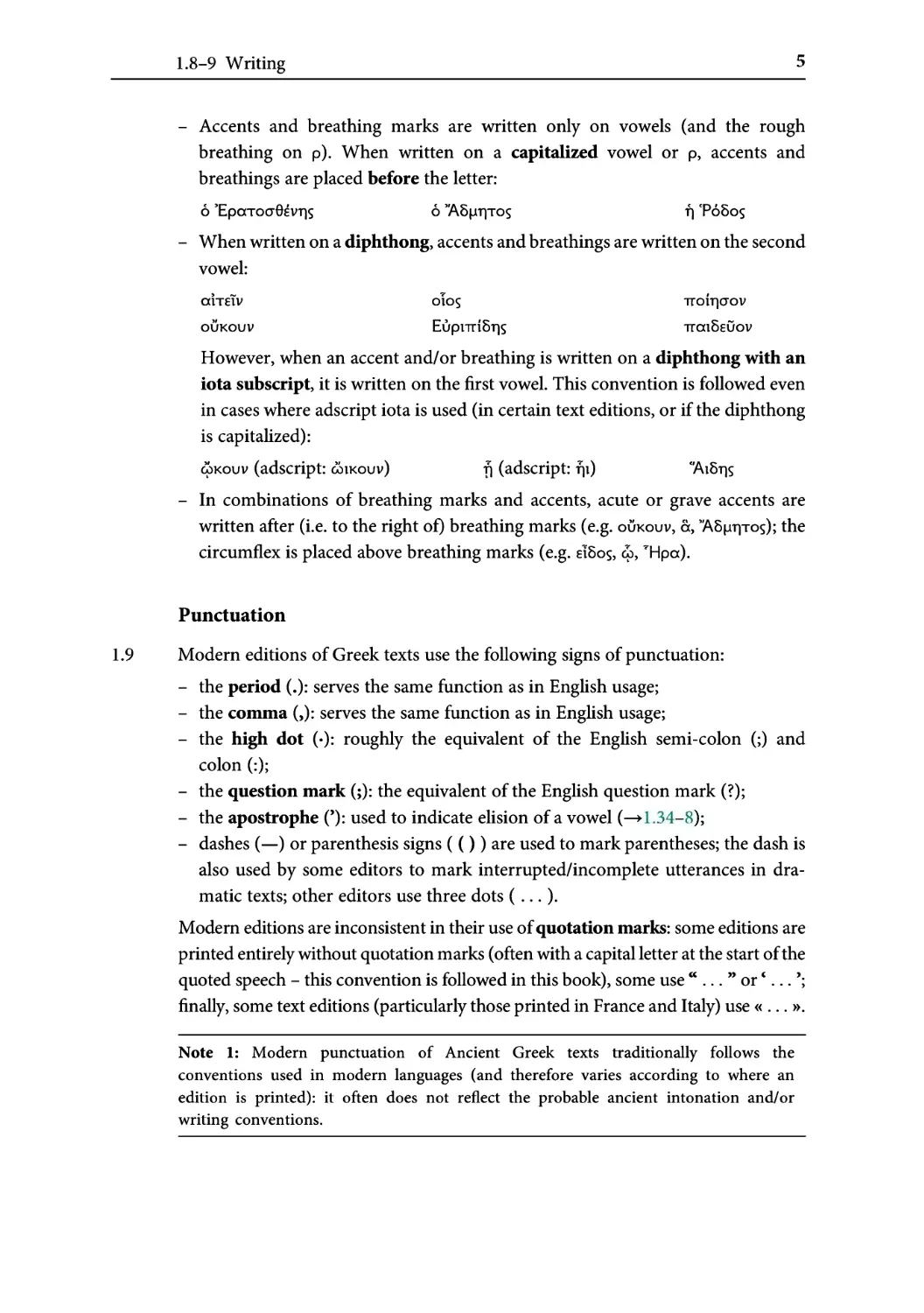
- Only the first part of diphthongs is capitalized: e.g. Αίγυπτος, Ευριπίδης.
- In three diphthongs ending in iota, the iota is conventionally printed
underneath the first vowel: α, η and ω. This is called iota subscript.
Alternatively, these diphthongs are sometimes printed with iota adscript: αι,
ηι, coi. Iota subscript is not used with capitals: e.g. Άιδης, Ώιδή (lower case ωδή).
For a complete list of diphthongs, their pronunciation, and details concerning iota
subscript, —► 1.20-3. For accents and breathings on diphthongs, —»1.8.
Accents and Breathings
1.6 Three accent signs are conventionally used in Greek texts:
- the acute accent ': e.g. ά, έ, ό, αί, οί;
- the grave accent%: e.g. ά, έ, ό, υ, ai, οί (written only on the final syllable of a word);
- the circumflex accent ~ (also frequently written " ): e.g. ά, ή, αΰ, οι (written only
on long vowels or diphthongs).
For the value of these accents and the basic principles of Greek accentuation,
->24.
1.7 Two breathing signs are conventionally used in Greek texts, written on words that
begin with a vowel or diphthong, or with p:
- the smooth breathing (spiritus lenis)': e.g. opos, αυτή, fj;
- the rough breathing (spiritus asper) ' : e.g. opos, αυτή, fj.
A rough breathing indicates aspiration, i.e. a [h]-sound preceding the opening
vowel/diphthong of a word (—»1.27). In addition, words beginning with ρ are
written with a rough breathing (e.g. ρίπτω). A smooth breathing indicates the lack
of aspiration.
1.8 The following conventions pertain to the placement of accents and breathing
marks:

1.8-9 Writing
5
- Accents and breathing marks are written only on vowels (and the rough
breathing on p). When written on a capitalized vowel or p, accents and
breathings are placed before the letter:
ό Ερατοσθένης ό "Αδμητος ή 'Ρόδος
- When written on a diphthong, accents and breathings are written on the second
vowel:
αίτεΐν οίος ποίησον
οϋκουν Ευριπίδης παιδεΰον
However, when an accent and/or breathing is written on a diphthong with an
iota subscript, it is written on the first vowel. This convention is followed even
in cases where adscript iota is used (in certain text editions, or if the diphthong
is capitalized):
φκουν (adscript: ώικουν) fj (adscript: ήι) Άιδης
- In combinations of breathing marks and accents, acute or grave accents are
written after (i.e. to the right of) breathing marks (e.g. οϋκουν, ά, Άδμητος); the
circumflex is placed above breathing marks (e.g. είδος, φ, rHpa).
Punctuation
1.9 Modern editions of Greek texts use the following signs of punctuation:
- the period (.): serves the same function as in English usage;
- the comma (,): serves the same function as in English usage;
- the high dot (·): roughly the equivalent of the English semi-colon (;) and
colon (:);
- the question mark (;): the equivalent of the English question mark (?);
- the apostrophe ('): used to indicate elision of a vowel (—»1.34-8);
- dashes (—) or parenthesis signs (()) are used to mark parentheses; the dash is
also used by some editors to mark interrupted/incomplete utterances in
dramatic texts; other editors use three dots (...).
Modern editions are inconsistent in their use of quotation marks: some editions are
printed entirely without quotation marks (often with a capital letter at the start of the
quoted speech - this convention is followed in this book), some use α ... " or'...';
finally, some text editions (particularly those printed in France and Italy) use «... ».
Note 1: Modern punctuation of Ancient Greek texts traditionally follows the
conventions used in modern languages (and therefore varies according to where an
edition is printed): it often does not reflect the probable ancient intonation and/or
writing conventions.

6 1.10-12 The Signs and Sounds of Classical Greek
Further Diacritical Signs
1.10 Apart from the breathings, accents and punctuation signs listed above, the
following signs are used:
- the diaeresis " : written on the second of two vowels to indicate that they do not
form a diphthong (e.g. δαΐζω, άϋπνος);
- the coronis * (sign identical to a smooth breathing): used to indicate crasis, the
merging of a word ending with a vowel/diphthong and a word beginning with
a vowel/diphthong: e.g. ταύτό (= το αυτό), κατά (= και είτα); for details,
-►1.43-5.
The Alphabet, Breathings, Accents, Punctuation: a Very Brief Historical
Overview
1.11 The Greeks adopted the alphabet from the Phoenicians, presumably in the ninth
century BCE, with the first securely dated inscriptions attested in the eighth century
BCE. The letters of the Phoenician alphabet all represented consonants, but the Greeks
re-assigned the value of some of the letters to represent vowels, and added some letters.
Most of the names of the Greek letters are derived from the Phoenician names.
Early Greek alphabets differed strongly from each other, with respect to both the
inventory and the shape of the symbols. The East-Ionic alphabet (which had some
particular innovations, such as assigning a vowel-sound to the letter H) was
eventually adopted throughout the Greek world; in Athens, it was adopted for
official state documents in 403/402 BCE, although it may have been introduced
earlier for literary works. This is the standardized alphabet given above.
The division between upper and lower case letters is not ancient: small letters
(minuscules) were introduced in the ninth/tenth centuries CE by Byzantine
scholars; the ancient Greeks themselves only wrote in capital letters (majuscules/
uncials). In modern editions, capital letters are conventionally used only at the
beginning of names and sometimes at the beginning of a new sentence, a new
paragraph, a new speech turn (in dialogues), or to mark the beginning of cited
direct speech (the latter convention is followed in this book). Inscriptions are
sometimes printed entirely in capital letters in modern editions.
Note 1: For the use of the letters of the alphabet as numerals, —»9.13.
1.12 Breathing marks and accents were introduced by scholars working in the Library
of Alexandria in the Hellenistic period. The system of accentuation adopted in
modern text editions, although deriving indirectly from these Hellenistic scholars,
is based on treatises by Byzantine scholars.

1.13-15 Pronunciation: Vowels and Diphthongs
7
1.13 The Greeks also did not avail themselves systematically of punctuation or word
divisions (although early inscriptions sometimes used the signs : or: for divisions
between words or word groups). Both were introduced in Byzantine times and
adopted in modern editions.
Pronunciation: Vowels and Diphthongs
1.14 The (reconstructed) pronunciation of sounds in classical Greek in the following
sections is given in the International Phonetic Alphabet (IPA), and with as close an
approximation in English or another modern language as possible. IPA symbols are
given between square brackets (e.g. [a]). Many IPA symbols are predictable and
correspond to standard English usage; some, however, diverge (for these, a guide or the
website of the International Phonetic Association may be consulted). The symbol : in
IPA indicates a long vowel (e.g. [a:]).
Vowels
1.15 The following are the Greek vowels, and their pronunciation. In addition, an
approximation of the classical pronunciation is given in English and/or another
modern language.
sound
[a]
[a:]
[e]
[ε:]
[i]
[i:]
[o]
[y]
[y:]
[*■}
example
yap [gar] for
χώρα [kh6:ra:] land
ψεγω [psego:] rebuke
τ^θος [£:thos] character
ττόλις [polis] city
δελφίνος [delphi:nos] dolphin
ποτέ [pote] once
φύσις [p^sis] nature
μύθος [my:thos] wordy story
Πλάτων [plato:n] Plato
approximation
aha, Germ. Mann, Ital. amare
aha, Ital. amare
fatal, Fr. cle
air, Fr. tete
fancy, Fr. ecrit
(gen.) weed
go, notorious, Germ. Motiv
Fr. lune
Fr. muse, ecluse
more, notorious
Below, to distinguish short and long α, ι and u, the marks ~ (loreve, short) and "
{macron, long) will frequently be used: ά, ϊ, and ϋ are short, ά, Τ and 0 are long, ε and
ο are always short, η and ω are always long.
Note 1: In conventional Anglophone pronunciation of Ancient Greek, ε is usually
pronounced [ε] as in get, η is often (especially in America) pronounced [e:] as in made, ι
is usually pronounced [i] as in win, and ο is often pronounced [r>] as in got.

8 1.16-20 The Signs and Sounds of Classical Greek
1.16
1.17
1.18
1.19
Phonetic Details
Vowels are produced by the uninterrupted flow of air from the vocal cords through
the mouth (as opposed to consonants, which involve a complete or partial
interruption of the air flow, —»1.25).
The quality of a vowel (its sound) is determined by three factors:
- height (or 'openness'): the vertical position of the tongue relative to the roof of
the mouth: for example, ι and υ are 'high' ('close') vowels, because the tongue is
high in the mouth when they are pronounced; α is a low' ('open') vowel;
- backness: the position of the tongue relative to the back of the mouth: for
example, ι is a 'front' vowel, because the tongue is positioned towards the front
of the mouth when it is pronounced; ο is a 'back' vowel; α is a 'central' vowel;
- roundedness: whether the lips are rounded or not: for example, υ and ο are
'rounded' because the lips are rounded when they are pronounced; ι, ε and α are
'unrounded'.
The quantity (length) of a vowel is determined primarily by the duration of its
pronunciation, although there are often changes in quality between long and short
vowels as well. Note that the letters α, ι and υ are used to represent both short and
long vowels. The long equivalent οίε is either η or 'spurious' ει; the long equivalent
of ο is either ω or 'spurious' ou (—»1.23).
Using these variables, the vowel system of classical Attic may be represented as
follows (the outer triangle represents long vowels, the inner triangle short vowels;
rounded vowels are underlined):
front
1 ΰ ·^
Ϊ. U«.
central
back
s
_iy/y-
7-^23) φ high/d°Se
mid
ψ low/open
Diphthongs
Figure 1.1: Vowel triangle: the vowel system of classical Attic
1.20 Greek has thirteen diphthongs, combinations of two vowels that are pronounced in a
single syllable. The second part of a diphthong is always either ι or u. On the basis of
the quantity of the first vowel, a distinction is made between 'short' and 'long'
diphthongs (although the resulting syllable is always long for the purposes of metre
and accentuation, except for final -οι/-αι in certain words; for details —»24.7, 24.10).

1.21-2 Pronunciation: Vowels and Diphthongs
9
Short Diphthongs
1.21 The following are the short diphthongs:
diphthong sound example
καινός [kainos] new
approximation
[aij καινός [Kainosj new high, eye (with short first
vowel)
[e:] (earlier πείθω [pe:tho:] persuade made, Germ. Beet (earlier
[ei])
oi
eight, hey)
λοιπός [loipos] remaining Afrik. rooibos (with short
first vowel)
Ut
ocu
ευ
ου
[yj] μυΐα [myja]/Zy
[au] ταΰρος [tauros] bull
[eu] εύρος [euros] width
[o:] (earlier πους [po:s]foot
[ou], later
[u:])
Fr. huit, hallelu[a
how (with short first vowel)
(no close equivalent
available) a glide from get to
wide; cf. Cockney bell
mode (earlier low, later pool)
Note 1: υ as second part of a diphthong was presumably closer to [u] (as in Engl, do) than to
[y]. Moreover, ι and υ in diphthongs were not pronounced exactly like the equivalent single
vowels, but as sounds approximating 'semivowels' [j] and [w] (as in Engl.^ow and wave); this
was particularly the case when the diphthong preceded a vowel, in which case ι/u was
pronounced as a glide between the vowel sounds (as in Engl, hey you and new wave). For
the semivowels, also —»1.31.
Note 2: ui occurs only before vowels.
Long Diphthongs
1.22 In long diphthongs, if the second part is ι, it is written in most texts under the first
letter (iota subscript):
diphthong sound
a [a:i]
η [ε:ί]
ω [o:i]
ecu [a:u]
ηυ [e:u]
cou [o:u]
example
αδω [a:ido:] sing
κομιδί} [komideii] entirely
τραγωδία [tragoiidia:] tragedy
ταυτό [ta:uto] the same
ηυρον [heiuron] found
έοουτόν [heoiuton] himself
(Ion., ->25.14)
approximation
rye
Fr. appareil
noise (with long first vowel)
how (with long first vowel)
(similar to ευ, but with long
first vowel)
a glide from more to wide;
cf. saw

10 1.22-4 The Signs and Sounds of Classical Greek
Note 1: The ι as second part of long diphthongs was gradually lost in the pronunciation of
post-classical Greek, and subsequently also in writing. Iota subscript was then introduced to
indicate the original presence of the sound. In an increasing number of modern text editions,
the iota is written as a full letter: iota adscript (ηι instead of η, cu instead of α, ωι instead of ω).
Observe that cu in this system is ambiguous (it can be both a 'short' and a 'long' diphthong;
but —»1.8 above for the position of accents and breathing marks).
Note 2: The ι as second part of η was probably lost already in the classical period. This sound
then appears to have merged with ει.
Note 3: In conventional Anglophone pronunciation of Ancient Greek, iota subscript is
usually not pronounced (i.e. r\ is pronounced as η, etc.).
'Spurious' Diphthongs ει and ou
1.23 Two developments contributed to a peculiar feature of Greek (particularly Attic-
Ionic) spelling:
- a long e-sound and a long o-sound, [e:] and [o:], came into use as the result of
contraction (—►!.58-65) or compensatory lengthening (—»1.67-9); these were
distinct from - namely 'higher' (—^1.17-19) than - the older long vowels [ε:]
(eventually written η) and [o:] (eventually written ω);
- the pronunciation of the diphthongs [ei] and [ou] gradually shifted towards [e:]
and [o:] as well (they were monophthongized).
As a result, in the late fifth century, the digraphs ει and ou began to be used
to represent [e:] and [o:], not just when these sounds developed from the
older 'genuine' diphthongs (at that time no longer pronounced as such), but
also when they resulted from contraction or compensatory lengthening. This
spelling was later standardized.
Because ει and ou in such cases represent sounds which were never genuine
diphthongs, they are normally called 'spurious' diphthongs.
Note 1: Below, ε and δ will occasionally be used to represent [e:] and [o:] when resulting
from contraction or compensatory lengthening, in order to distinguish them from 'genuine'
diphthongs. It may be noted that Ε and Ο was the spelling for both long [e:]/[o:] and short
[e]/[o] in Attic inscriptions up to the late fifth century BCE: the use of El and Ο Υ made it
possible to distinguish the long vowels from short [e] and [o].
Note 2: The pronunciation of ou (whether originally genuine or 'spurious') soon shifted to
[u:] (the pronunciation was fronted and raised, —►1.17-19).
Pronunciation: Consonants
List of Consonants
1.24 The following are the Greek consonants, and their pronunciation:

1.24-6 Pronunciation: Consonants
11
consonant
β
y
δ
ζ
e
κ
λ
μ
ν
ξ
π
Ρ
σ/s
τ
9
Χ
Ψ
sound
[b]
[g]
before y, κ, χ: [rj]
[d]
[zd]
[th]
[k]
[1]
[m]
[n]
[ks]
[p]
[r]
[s]
[t]
[ph]
[kh]
[ps]
Phonetic Details
example
βαίνω [baino:] go, walk
γυντ] [gyne:] woman
συγγενής [syrjgeneis] akin
διά [dia] through
ζοή [zdoe:] life
θάνατος [thanatos] death
εκ [ek] out of from
καλός [kalos] beautiful
ρή^α [rhe:ma] word
νύξ [nuks] night
ξίφος [ksiphos] sword
λείπω [le:po:] leave
£>έω [rheo:]flow
βάσις [basis] step
κράτος [kratos] power
γρά^ω [grapho:] write
ταχύς [takhys] quick
ραψωδός [rhapso:idos]
rhapsode
approximation
bed
guy
living,
hangman
dear
wisdom
(word-initial t)
Tom
scan
lesson
mother
nothing
ex
spot
rhyme (rolling r)
sound
still
(word-initial p)
pot
chorus
lapse
1.25 Consonants are sounds produced by the complete or partial interruption of
the flow of air by a constriction at some point in the vocal tract: the Greek
consonants may be divided into the following categories: stops (labial, velar
and dental stops), fricatives, liquids, and nasals (for semivowels, —►1.31).
Stops
1.26 Stops (or plosives): sounds produced by the complete interruption of the flow of
air. Within this category, three groups may be distinguished, depending on the
place of articulation:
- (bi)labial stops: the flow of air is interrupted by pressing the lips (Lat. labia)
together;
- dental stops: the flow of air is interrupted by pressing the tongue against the
teeth (Lat. denies);

12 1.26-9 The Signs and Sounds of Classical Greek
- velar stops: the flow of air is interrupted by pressing the tongue against the roof
of the mouth (Lat. velum).
The stops may be further divided between:
- voiced stops: the vocal cords vibrate;
- voiceless stops: the vocal cords do not vibrate;
- aspirated (voiceless) stops: the sound is produced together with aspiration (an
h-sound: —►1.27).
The following are the nine stops of Greek:
voiced voiceless aspirated (voiceless)
labial stops β [b] π [ρ] φ [ph]
dental stops δ [d] τ [t] θ [th]
velar stops y [g] κ [k] χ [kh]
Note 1: In conventional Anglophone pronunciation, φ and θ are often pronounced as fricatives
([f] as in Engl, fast and [Θ] as in theatre, respectively). This corresponds to the pronunciation of
medieval and modern Greek
Note 2: y may also be a nasal, —»L29, with n.l.
Fricatives
1.27 Fricatives: sounds produced by 'squeezing' air through a constriction at some
point in the mouth. The standard Greek alphabet has only one fricative, σ, a
voiceless sibilant (a sharp 'hissing' sound; the obstruction is formed by pressing
the tongue against the gums).
In addition, the rough breathing ( e ) represents a fricative, [h].
Resonants
1.28 The category of resonants consists of the nasal consonants μ and ν (and in certain
cases y) and the so-called liquids' λ and p.
1.29 Nasals: the air flow is completely obstructed in the mouth, but flows through the
nose. The Greek alphabet has three nasals (all voiced):
- a labial nasal, μ [m]: the flow of air is interrupted by pressing the lips together;
air escapes through the nose;
- a dental nasal, ν [η]: the flow of air is interrupted by pressing the tongue against
the teeth or gums; air escapes through the nose;
- a velar nasal, y [rj] (only when written before a velar stop - y, κ, χ): the flow of
air is interrupted by pressing the tongue against the roof of the mouth; air
escapes through the nose.

1.29-33 Pronunciation: Consonants
13
Note 1: The letter y was, according to scholars in antiquity, pronounced as [rj] also before the
nasal μ, e.g. in πράγμα [pra:rjma]. This sound was then called 'angma'. In modern
convention, however, this pronunciation is usually not followed, and y before μ is given
its 'regular' pronunciation as a voiced velar stop [g].
1.30 Liquids: two Greek letters belong to the class of liquids - λ and p:
- a lateral consonant, λ [1]: air escapes along the sides of the tongue, but not
through the middle of the mouth;
- a rhotic consonant (or 'tremulant'), ρ [r]: this was pronounced as a rolling,
'alveolar trill' sound, with the tongue vibrating against the gums. At the
beginning of a word (and in some cases in the middle of a word), this sound was
pronounced with aspiration (hence word-initial rho is always written p-).
1.31 To the category of resonants also belong the so-called semivowels:
- [j ], as in Engl, γοu: in the notation of Greek, the letter yod (y, also j) is used to represent this
sound; some modern treatments use the symbol /;
- [w], as in Engl, wave: various Greek alphabets used the letter digamma (p, also known as
wau) for this sound; some modern treatments use the symbol w or u.
The semivowels are the equivalents of the vowels ι and u, but they occur in different
environments; for this, and for their disappearance from Greek, —►1.74-82.
Geminates
1.32 Most of the consonants discussed above can be doubled (so-called 'geminates'), e.g. κκ, μμ, σσ:
these stand for 'lengthened' versions of the same sounds (cf. the pronunciation of English
compounds such as unnamedy part-time). In geminates with an aspirated stop (πφ, τθ, κχ),
only the second letter is written in its aspirated form (thus e.g. Σαπφώ Sappho). Geminates
affect the metrical quantity of a syllable: thus e.g. the first syllable of όμμα eye is long for the
purpose of metre, even though the ο is a short vowel.
Letters Representing Two Consonants
1.33 Single letters, two consonants: three letters in the Greek alphabet represent a
combination of two consonants:
- ζ [zd]: voiced sibilant, followed by voiced dental stop;
- ξ [ks]: voiceless velar stop, followed by voiceless sibilant;
- ψ [ps]: voiceless labial stop, followed by voiceless sibilant.
Note 1: In conventional Anglophone pronunciation, ζ is sometimes pronounced as a single
voiced sibilant [z] (as in Engl. zoo). This corresponds to that of post-classical and later Greek.

14 1.34-9 The Signs and Sounds of Classical Greek
Elision, 'Movable' Consonants, Crasis, Hiatus
Elision
1.34 Most short vowels at the end of a word may be dropped before a word beginning
with a vowel or diphthong; this is called elision. That a vowel has been elided is
indicated by an apostrophe ('):
απ' αυτοΰ (= άπ(ό) αυτοΰ) from him
(1) IV άρ' Αθηνών εστ' απόρθητος πόλι$; (= ετ(Τ) άρ(ά) 'Αθηνών εστ(Τ) απόρθητος
πόλις;) (Aesch. Pers. 348)
Is, then, the city of the Athenians still not sacked?
When π, κ or τ precedes the elided vowel, and the following word begins with a
vowel/diphthong with rough breathing, the stop is aspirated (φ, χ, θ; 'assimilation',
-►1.88-9):
αφ' ου (= άπ(ό) ου) since
(2) αλλ' εσθ' όθ' ημάς αίνέσεις. (= άλλ(ά) εστ(Τ) ότ(ε) ημάς αίνέσεις.) (Eur. Ale. 1109)
But there will be a day when you will praise me.
1.35 Elision also takes place in compound words, although this is not marked in
writing:
επέρχομαι come upon (επί + έρχομαι), άφεσις discharge (από + εσις)
1.36 In monosyllabic words, the final vowel can only be elided if it is ε: e.g. y' (γε), δ' (δε), μ' (με), but
not, for instance, the vowel of τό, τά, τί, πρό, etc.
The -ΐ of περί and ότι is never elided; the final ι of third-declension dative singular forms
ending in ι (e.g. φύλακι) is elided only very rarely. Final -u is never elided.
1.37 In poetry, the first vowel of a word (usually ε-) may be elided when it follows a word ending in a
long vowel or diphthong. This is called 'prodelision' or 'aphaeresis'. E.g. που 'στι (= που (ε)
στι), έyώ 'κ (= εγώ (ε)κ).
1.38 Rarely, and only in poetry, final -cu or -οι is elided: e.g. εΐν' εν τη πόλει (= ειν(αι) εν τη πόλει) to
be in the cityy οϊμ' ώς άθυμώ (= οϊμ(οι) ως άθυμώ) woe, how I suffer.
'Movable' Consonants
1.39 Some verb forms and nominal forms normally get an additional -v when a word
beginning with a vowel or diphthong follows, and often at the end of a clause or
sentence. This is called 'movable' nu (Gr. νΰ έφελκυστικόν). It occurs with the
following forms:
- nominal forms with a dative plural ending in -σι: e.g. πατράσι(ν), Έλλησι(ν),
τοΐσι(ν);

1.39-43 Elision, 'Movable' Consonants, Crasis, Hiatus
15
- third-person verb forms ending in -ε or -ι: e.g. ελεγε(ν), φέρουσι(ν), τίθησι(ν),
έστί(ν);
- the 3 sg. impf. ηει(ν) he went, and 3 sg. pluperfects ending in -ει(ν): e.g. ηδει(ν) he
knew; and in the 1 sg. impf. ή(ν) J was.
ελεγεν αυτοΐς she said to them έλεγε τοιάδε she said the following
φέρουσιν αϊδε ττρόσττολοι these servants διαφέρουσι δ* αί φύσεις natures differ
carry
ττάσιν άνθρώττοις all men ττάσι θεοΐς all the gods
The optional presence of movable nu is indicated in this book by '-(v)\
Note 1: Especially in poetry, movable nu is written even before consonants: e.g. πασιν
βροτοΐς all mortals (often for metrical purposes, as it makes the final syllable of its word
metrically 'long'). This occurs sometimes in prose texts as well, however.
1.40 The word outws so, thus is usually spelled οϋτω (without final -s) when a word
beginning with a consonant follows. This -s is therefore sometimes also called 'movable':
ούτως έτελεύτησεν so he died οΰτοο δέχονται τον στρατόν so
they receive the army
1.41 The preposition εκ takes the form εξ when followed by a word beginning with a vowel:
εξ ανδρών from men εκ βροτών from mortals
1.42 The negative ou not has three forms: ou before consonants, ουκ before vowels/
diphthongs, but ούχ before vowels/diphthongs with rough breathing:
ου θέμις it is not allowed ουκ οΐδα J do not know ουχ όρας; don't you see?
Note 1: For the forms ου/οΰκ/ουχ (with accent) and ουχί, —>24.36, 56.1.
Note 2: μηκέτι no longer (negative μή + ετι) has its κ by analogy with ούκέτι no longer (ουκ + ετι).
Crasis
1.43 Two words of which the first (a word of at most two syllables) ends in a vowel/
diphthong, and the second begins with a vowel/diphthong, may 'blend' together,
the two blended syllables forming a single new syllable. This is known as crasis
(κράσις mixing), and is indicated in texts by the addition of a coronis (—►LIO) on
the new vowel/diphthong:
ταύτα (= τα αυτά) τουναντίον (= το εναντίον) έγώδα (= εγώ οΐδα)
the same things the opposite I know
If π, κ or τ precedes the new vowel/diphthong, and the second word started with a
rough breathing, the aspiration is transferred to this stop (the coronis has its usual
shape):

16 1.43-7 The Signs and Sounds of Classical Greek
θοίμάτιον (= το ίμάτιον) τηδε θτ^μερςχ (= τηδε τη ήμέρςχ) χω (= και ό)
the cloak this day and the
Note 1: Some editors incorrectly print θοίμάτιον, θήμερα, etc.
1.44 No coronis is present if the first word consists of only a single vowel or diphthong
(this occurs especially with forms of the article). In such cases, only the breathing
mark of the first word is written:
ώνερ (= ώ άνερ) αύτη (= ή αυτή) αυτός (= ό αυτός) ουμοί (= οί έμοί)
sir! the same woman the same man my men
1.45 The vowel/diphthong resulting from crasis depends on the rules of contraction
(—►1.58-66). Thus e.g. το εναντίον gives τουναντίον because ο + ε contracts to
('spurious') ου, τα εναντία gives τάναντία because α + ε contracts to ά.
Note 1: In some cases the rules of contraction are not observed, in order to preserve the vowel
quality of the second word's initial vowel: e.g. άνήρ the man (= ό άνήρ, although ο + α normally
gives ω), αυτή, αυτός (—»L44 above).
Note 2: When a diphthong with ι merges with a following word, the ι is lost: κάγώ (= και εγώ)
and Iy τάρα (= τοι αρα), μενταν (= μέντοι ocv); also θήμερα, χώ, αυταί, and ουμοί (—► 1.43-4
above).
Note 3: Most crasis-forms of ό έτερος the other (of two) are based on an older form ατερος: e.g.
ατερος (= ό ατερος), ατεροι (= oi ατεροι), θατερον (= το ατερον), θήτέρα (= τη άτέρα). θάτερ-
forms are often written without coronis; from this developed a fully-fledged alternative
pronoun θάτερος.
Hiatus
1.46 'Hiatus' is the term for any instance of a word ending with a vowel followed by a
word beginning with a vowel, e.g. τα δε εναντία, τούτο άρα. Hiatus is generally
avoided in poetry and sometimes by prose writers: this is done by elision, the
addition of movable consonants, or crasis.
Historical Developments: Introduction
1.47 The remaining sections of this chapter treat certain historical developments in the
Greek language before the classical period. These sections are designed to elucidate
many of the 'irregularities' of (Attic) Greek morphology. Contrast, for instance, the
following pairs of nominatives and genitives of some third-declension nouns:
nom. sg. άγων contest gen. sg. αγώνος
nom. sg. γένος race, offspring gen. sg. γένους
nom. sg. βασιλεύς king gen. sg. βασιλέως

1.47-50 Historical Developments: Introduction
17
The endings of these genitives seem at first sight unrelated, but may in fact be
explained as three instances of the same genitive singular ending -os seen in άγών-ος:
- γένους derives from a form which is reconstructed as *γένεσ-ο£, from which the
first σ disappeared, giving γένεος; εο subsequently contracted to δ ('spurious' ou)
(for these steps, —>1.83, 1.58-60);
- βασιλέως derives from *βασιλήρ-os, from which ρ disappeared, and ηο changed by
a process known as quantitative metathesis to εω (for these steps, —»1.80, 1.71).
Such changes are found to have occurred consistently in certain environments at
certain periods, and are therefore sometimes referred to as sound change laws': for
instance, the disappearance of ρ between vowels is such a law of Greek historical
grammar. Most of the apparent irregularities of Greek morphology can be explained
with reference to such laws, and it is therefore useful to have some familiarity with them.
Reference to the sections below will be made throughout the morphology.
1.48 The following conventions of notation will be used in the description of historical
developments:
- Earlier forms which are not actually attested in our extant texts, but which are
reconstructed on the basis of our knowledge of historical developments, are
marked with the symbol * (asterisk).
- Non-existent hypothetical forms and impossible forms are marked with the
symbol t.
- The symbol > stands for 'develops into'; the symbol < stands for Is derived
from'; these symbols are used both for changes in individual forms (e.g.
^γένεσος > γένεος), and for more general laws (e.g. ά > η in Attic, —►1.57).
1.49 In principle, the sound laws detailed below took place without exception (though
they are often restricted to certain phonological 'environments' (e.g. between
vowels), to certain dialect-regions, and always to certain periods in the
development of the language). Still, numerous forms then remain which appear to violate
the laws. Such unexpected forms are often the result of 'analogy', the process by
which certain forms are remodelled after certain familiar other forms.
For instance, the nom./acc. pi. neut. form of the noun όστοΰν bone is όστα, and
derives from όστεα; yet the combination εα normally contracted to η (—»1.59). The
'unexpected' form όστα was presumably modelled on other nom./acc. pi. neut.
forms, which nearly always end in -a (e.g. δώρα gifts).
Analogical remodelling often functioned to 'level' (i.e. regularize) nominal or
verbal paradigms: for instance, the aor. pass, (θη-aor.) of the verb χέω pour is
έχύθην, etc., even though the expected form, given sound change laws, would have
been Ιέκυθην (-κυθ-<*-χυθ-, —»1.97). Forms with χυθ- may be explained as
levelling of the verb paradigm, given that all other forms of the verb have χ-.
1.50 Several of the developments detailed below apply only to Attic Greek (for other
dialects, —»25).

18 1.51-3 The Signs and Sounds of Classical Greek
Historical Developments: Ablaut (Vowel Gradation)
Introduction; Qualitative and Quantitative Ablaut
1.51 In Greek, as in all Indo-European languages, there are often different grades
(variants) of an individual root (for roots, —»23.2): the different grades
have different vowels. The German term Ablaut is normally used for this
alternation.
For instance, the following grades of the root meaning 'father' are found, depending
on the word in which that root is used, and the grammatical case:
πάτερ- e.g. in the voc. sg. πάτερ, nom. pi. πατέρες (normal) e-grade
πατήρ- in the nom. sg. πατήρ father lengthened e-grade
πατορ- e.g. in the gen. sg. άπατόρος, ace. sg. άπατόρα (normal) o-grade
πατωρ- e.g. in the nom. sg. of the adj. άπατώρ fatherless lengthened o-grade
πατρ- e.g. in the gen. sg. πατρός, dat. sg. πατρί zero-grade
Different grades also frequently appear in different tense-aspect stems of a verb
(—►11.11-12), for instance with the verb λείπω leave:
λειπ- e.g. in the pres. ind. λείπω, fut. ind. λείψω diphthong with e-grade
λοιπ- e.g. in the pf. ind. λέλοιπα diphthong with o-grade
λίπ- e.g. in the aor. ind. έ'λιπον no diphthong, zero-grade
Note 1: Indo-European ablaut is the cause of similar variation in English roots, such as drinky
drank, drunk; and blood, bleed.
Note 2: Ablaut is in some older works called 'apophony'.
1.52 Two dimensions of ablaut may be distinguished:
- qualitative ablaut: variation between e-grades and o-grades;
- quantitative ablaut: variation between the zero-grade (or 'weak' grade),
normal grade (or 'strong', 'full' grade), and lengthened grades.
This gives the following possibilities:
e-grade o-grade
normal grade πάτερ άπατόρος
lengthened grade ιταπτρ άπατωρ
zero-grade πατρός
1.53 Often, the ablaut patterns outlined above are not immediately transparent in Greek
variants of a root because historical sound changes and/or subsequent analogical
remodelling have obscured them. For instance:
- Roots with a nasal or liquid consonant often have a zero-grade with ά
(-►1.85-7):

1.53-5 Historical Developments: Ablaut (Vowel Gradation)
19
τρέπω turn
στέλλω dispatch
σπείρω sow
πάσχω suffer, πένθος pain
e-grade
τρεπ-
στελ-
σπερ-
πενθ-
o-grade
τροπ-
στολ-
σπορ-
πονθ-
zero-grade
τράπ- (<*τΓττ-)
στάλ- (<*στΙ-)
σπάρ- (<*σττΐ-)
πάθ- (<*πηθ-)
- The stems of some frequently occurring verbs, which alternate between a long
and a short vowel, are reconstructed as e-grades and zero-grades. For instance:
e-grade zero-grade
δίδωμι give δω- δο-
ΐστημι make stand, set up στη- (<στα-, —»1.57) στα-
τίθημι put, place 0;q- θε-
ΐημι send, let go τ±- ε-
Note 1: The reconstruction of stems such as δω-/δο-, στη-/στά-, etc. involves a series of
consonants called 'laryngeals': for instance, δω-/δο- is reconstructed as *deh3-/*dh3-y στη-/
στα- as *steh2-/*sth2- (where h2 and h3 are symbols for laryngeals). These laryngeals
disappeared from the language very early in its history, but left several traces. For
treatments of laryngeal theory, consult the works on historical grammar listed in the
Bibliography at the end of this book.
Some Typical Greek Ablaut Patterns
1.54 Lengthened grade forms are found primarily in the nominative singular
masculine/feminine of nominal forms of the third declension (—>4.31-92). Contrast e.g.
the following pairs:
lengthened grade normal grade
nom. sg. masc. δαίμων daemon ace. sg. δαίμονα
nom. sg. fern, μτγττρ mother ace. sg. μητέρα
1.55 Many first-declension nouns ending in η/ά (—>4.3-7) and most second-declension
nouns in -os (—»4.19-23) have a stem in the (normal) o-grade:
o-grade contrast:
λόγος word, speech λέγω say, speak, e-grade
στόλος expedition, στολή garment στέλλω dispatch, dress, e-grade
Note 1: Again, this pattern is sometimes obscured by sound changes (frequently involving
laryngeals, —>4.53 n.l above):
φωνή voice (o-grade, φημί say, claim (<φάμί, e-grade, <*bheh2-; cf. 1 pi. φάμεν,
<*bhoh2-) zero-grade, <*bhh2-; cf. στη-/στά-)

20 1.55-7 The Signs and Sounds of Classical Greek
Neuter third-declension nouns in -os (—»4.65-7) and -μα (—»4.40-2) often have a
stem in the e-grade (for ablaut in the endings of neuter nouns in -os, —»4.66).
e-grade contrast:
γένος race, offspring yi-γν-ομαι become, be born (zero-grade), yovos child
(o-grade)
σπέρμα seed έστταρην / was sown (zero-grade, <*σττΐ-), σπόρος
sowing (o-grade)
1.56 Many verbs originally had:
- e-grade in thematic present, future, and sigmatic aorist stems;
- o-grade in perfect active stems;
- zero-grade in thematic aorist, aorist passive, and perfect middle-passive stems.
In the following example, this pattern is retained:
e-grade o-grade zero-grade
τρέπω turn pres. τρέπω pf. τέτροφα them. aor. έτραττόμην (<*τγτγ-)
fut. τρέψω aor. pass, έτραπην
sigm. aor. έτρεψα pf. mp. τέτραμμαι
However, this pattern has often been obscured by subsequent changes or analogical
remodelling (—»1.49).
Historical Developments: Vowels
Attic-Ionic ά > η
1.57 In Attic, long ά was gradually 'raised' to η (for vowel height, —►1.17):
μτρ-ηρ mother (<μάτηρ), φυγτ^/Ζζ^/ιί (<φυγά), νίκτ} victory (<νίκά), δεσπόττ^ master
(<δεσττότάς), fern, δεινή impressive (<δεινά), ΐσττ]μι make stand, set up (<ϊστάμι),
aor. έτίμ;ησα honoured (<έτίμάσα), fut. νικήσω will conquer (<νικάσω).
But this sound change was reversed if ά stood immediately after ε, t or p:
θεά sight, αιτία cause, σοφία wisdom, χώρα land, νεανίας young man, fern, δικαία
just, aor. έδρασα did, fut. άνιάσω will grieve.
Note 1: The change ά > η is peculiar to the Attic-Ionic dialect group. In Ionic, the change to η
took place also after ε, ι or ρ: thus e.g. χώρη, —»25.5.
Note 2: If ά stands in other places than after ε/ι/ρ in Attic, it is itself the result of another
development, usually contraction (e.g. imp. τίμα <*-άε, —► 1.58-66) or compensatory
lengthening (e.g. πας every, all <*πάντς, —»1.68).
Note 3: Quantitative metathesis (—^1.71) took place after this change: thus e.g. gen. sg. νεώς
ship (<*νη(ρ)ός <*νάρός). So too the disappearance of ρ (—>·1.80): thus e.g. κόρη girl (with η
after ρ, <*κόρρη <*κόρρά).

1.58-60 Historical Developments: Vowels
21
Contraction of Vowels
1.58 Contraction is the merging of two vowels, or a vowel and a diphthong, into a single
long vowel or a diphthong. This occurred especially when p, y or σ disappeared
between vowels (—►174-84): e.g. 1 sg. τιμώ / honour (<*-cc(y)co); dat. sg. γένει race
(<*-ε(σ)ι). For a complete overview of possible contractions, see the table below (1.63).
Contraction of α, ε, η, ο and α>
1.59 Contraction of the vowels α, ε, η, ο and co involves two of the main factors
determining vowel quality: height and roundedness (—►1.17-19):
unrounded rounded
high ε (spelling: 'spurious' diphthong ει) δ (spelling: 'spurious' diphthong ou)
ε ο
η ω
low ά, ά
If at least one of the component vowels is (relatively) low, the product will be low; if
at least one of the component vowels is rounded, the product will be rounded
(roughly speaking: α-sounds 'beat' ε-sounds, o-sounds 'beat' everything else). The
product is always a long vowel or a diphthong. Thus e.g.:
- ε + ε (none of the component vowels is rounded or low) > ε (high/unrounded,
long); e.g. 2 pi. ποιείτε (= -Ιτε <-έετε);
- ε + ο (none of the component vowels is low, one is rounded) > δ (high/rounded,
long); e.g. 1 pi. ποιοΰμεν (= -όμεν <-έομεν);
- ο + ο (none of the component vowels is low, both are rounded) > δ (high/
rounded, long); e.g. 1 pi. δηλοΰμεν (= -όμεν <-όομεν);
- α + ο (one of the component vowels is low, one of the component vowels is
rounded) > ω (low, rounded); e.g. 1 pi. τιμώμεν (<-άομεν).
If contraction leads to a low, unrounded product (i.e. contraction of α with ε/η), the
rule is: α first > ά; ε/η first > η. Thus e.g.:
- ε + α (one of the component vowels is low, ε first) > η (low, unrounded); e.g.
nom./acc. pi. neut. γένη (<-εα);
- α + ε (same, but with α first) > ά; e.g. 2 pi. τιμάτε (<-άετε).
Note 1: For the sequences ηά, ηά, ηο, ηό, and ηω, —»1.71.
1.60 Long vowels ε and δ were spelled in classical Greek as 'spurious' diphthongs ει and
ου (—»1.23). Their behaviour in contraction, however, is entirely according to the
rules given above. This means that when these sounds contract with another vowel,
no ι or υ is involved. Thus e.g.:

22 1.60-3 The Signs and Sounds of Classical Greek
- α + spurious ει > ά (not α): e.g. inf. τιμάν (<*-ά-εν);
- ο + spurious ει > spurious ου (= δ): e.g. inf. δηλουν (= -δν <*-ό-εν);
- α + spurious ου > co (not cou): e.g. 2 sg. imp. mp. τιμώ (<*-α-ό).
Diphthongs
1.61 Contraction of a vowel with t/u generally leads to a diphthong: e.g. dat. sg.
πόλει (<*ττόλε(γ)ι), 3 sg. opt. παιδεύοι (-ο-ι).
1.62 When a vowel contracts with a diphthong, the product is a diphthong with the
same ι or υ as its second part; for the first part of the diphthong, the rules given
above apply (so e.g. ε + αι > η, because ε + α > η).
Exception: ο + r\ > οι (e.g. 3 sg. subj. δηλοΐ <*-ο-η).
Note 1: Diphthongs ει, δι and δυ are 'shortened' to regular ει, οι, ου (so e.g. 3 sg. ind. δηλοΐ
<*-ό-ει (ο + ε > δ)).
Note 2: The endings -εις and -ει of 2/3 sg. pres. act. ind. have a 'real' diphthong, but in the
infinitive ending -ειν the diphthong is 'spurious' (contracted from -ε-εν): thus 3 sg. ind. τίμα
(<*-α-ει), but inf. τιμάν (<*-α-έν); 3 sg. ind. δηλοΐ (<*-ο-ει), but inf. δηλουν (= -δν <*-ο-εν).
Summary Table of Contractions
1.63 The principles outlined above lead to the following possibilities for contraction:
first vowel second vowel
ά/α
ε
η
ο
ω
first vowel
α/α ε
α α
η ει (ε)
η ->1.71 η
ω ου (δ)
ω ω
η(ί)
α
ει ©
η
ου (δ)
ω
η
α
η
η
ω
ω
ι
αι/α
ει
ΐΐ
οι
ω
ο
ω
ου (δ)
ω->1.71
ου (δ)
ω
ου (δ)
ω
ου (δ)
ω->1.71
ου (δ)
ω
second vowel (diphthongs)
ω υ
ω αυ
ω ευ
ω —>1.71 ηυ
ω ου
ω ωυ
ά/α
ε
η η η η —frl.71 n/a ω —>1.71
ο
ω
Occasionally, ι or u contracts with a following vowel, generally 'swallowing' it: e.g.
nom. pi. ίχθυες > ιχΰυς fishes, Xftos > Xios Chios.
a
ει
ΊΊ
οι
ω
α
ΐΐ
ΐΐ
οι
ω
(<?)
ΊΊ
η->1.71
n/a
n/a
α
ΐΐ
n/a
n/a
n/a
ω
οι
ω
οι
ω
n/a
n/a
n/a
n/a
n/a
n/a
ω
n/a
ω
ω

1.64-5 Historical Developments: Vowels
23
1.64 Some further examples:
- contraction beginning with a-:
a + ε/spurious ει/η > ά e.g. τίμαε > τίμα; τιμάειν (= -αέν) >
τιμαν; τιμάητε > τιμάτε
α + o/spurious ου/ω > ω e.g. τιμάομεν > τιμωμεν; τιμάου > τιμώ;
τιμάω > τιμώ
α + real ει > α; α + οι > ω e.g. τιμάει > τίμα; τιμάοιμεν > τιμωμεν
- contraction beginning with ε-:
ε + ε/spurious ει > spurious ει e.g. ποίεε > ποίει; ποιέειν (= -εεν) > ποιεΐν
ε + o/spurious ου > spurious ου e.g. ττοιέομαι > ποιούμαι; χρυσέου (= -εδ) >
χρυσού
ε + α>η;ε + αι>η e.g. γένεα > γέντ}; παιδεύεαι > παιδευΐ}.
ε 'dissolves' into ει, οι, η, ω e.g. ττοιέει > ποιεί; ποιέοιμεν > ποιοϊμεν;
ποιέητε > ποιήτε; ποιέω > ποιώ
- contraction beginning with o-:
ο + ε/spurious ει > spurious ου e.g. δήλοε > δήλου; δηλόειν (= -όέν) > δηλουν
ο + α/η/ω > ω e.g. αίδόα > αιδώ; δηλόητε > δηλωτε;
δηλόω > δηλω
ο + ει/οι > οι; ο + η > οι (!) e.g. δηλόει > δηλοϊ; δηλόοιμεν > δηλοϊμεν;
δηλόη > δηλοϊ
- contraction beginning with η- or ω-:
η + ε > η; ω + ε/α > ω e.g. χρήεται > χρτρ-αι; ήρωες > ήρω$ ; ήρωα
> ήρω
η + η>η;ω + οι>ω e.g. ζήη > ζτ^; λαγώοι > λαγω
Further Particulars and Exceptions
1.65 If f disappeared (—»1.80) between ε/η and another vowel, contraction only
occurred if the second vowel was ε/η (or a diphthong with those sounds) as well.
Thus e.g. 3 sg. πλεϊ sails (<*πλέρ-ει), Περικλή Pericles (<*-κλέρ-ης); but 1 pi. πλεομεν
(<*πλε£ομεν), gen. Περικλέους (<*-κλέρ-ό$ <*-κλέρε(σ)ο$).
If p disappeared between other vowels, these did not contract: e.g. pf. άκήκοα
have heard (<*άκήκορα).
Note 1: Even if ρ disappeared between two instances of ε/η, contraction did not occur
consistently: contrast 3 sg. impf. κατέχεε with ενέχει (both <*-έχερε, of the verbs καταχέω
pour down and εγχέω pour in, respectively), and nom. pi. νηες ships with βασιλης kings (both
<*-ήρί*).

24 1.66-8 The Signs and Sounds of Classical Greek
1.66 Frequently, analogy (—»L49) cancels the effects of contraction: e.g. nom./acc. neut.
pi. όστέ-α > οστά bones (not Ιόστή; by analogy with other neut. pi. forms in -a);
nom. fern. pi. μνάαι > μναΐ minae (not Ιμνα; by analogy with other fern. pi. forms in
-αι), nom. fern. pi. χρυσέαι > χρυσαΐ golden (not txpuafj).
Long and Short: the Augment, Stem Formation, Compensatory
Lengthening
1.67 A number of grammatical rules and sound changes cause variants of certain forms
to occur with either a long or a short vowel/diphthong:
- the formation of many verbal and nominal stems: e.g. nom. sg. δαίμων spirit,
contrast gen. sg. δαίμονος; ποιτ]- (e.g. in fut. ποιήσω), contrast ποιε- (pres. stem
of ποιέω make, do);
- the formation of the augment with verbs starting with a vowel or diphthong:
e.g. impf. ;qkouov (ακούω hear); for details, —»11.37-8;
- so-called compensatory lengthening, usually caused by the disappearance
of a consonant in a cluster consisting of resonant + σ/y: e.g. aor. έφτανα
showed (<*ε-φαν-σα).
All of these phenomena are often referred to as lengthening', but the sound
changes underlying them are not the same, and occurred at different moments
in the development of the language (in fact the heading lengthening' is often not
accurate, particularly in the case of stem formation, where the alternation is
typically the result of ablaut, —► 1.51-6). They therefore lead to different results,
especially where it concerns the long counterparts of ά, ε and o. For an overview of
the different results, see the table below (—»1.69).
Compensatory Lengthening
1.68 Compensatory lengthening, most often caused by the disappearance of a
consonant from the cluster nasal/liquid + σ or y, occurs regularly in the following
cases:
- in the pseudo-sigmatic aorist (with verb stems ending in a resonant, —»13.24-6);
e.g. κρίνω judge, verb stem κρΤ(ν)-, aor. έκρινα (<*ε-κρίν-σα); with φαίνω show,
verb stem φην-/φάν-, aor. έφτανα (<*ε-φάν-σα);
- in the present stem of verbs in -είνω/-είρω, -ίνω/-ίρω, and -όνω/-όρω,
e.g. σπείρω sow (= σπερω <*σπέρ-νω), κρίνω judge (<*κρΐν-νω), φόρω mix
(<*φόρ-νω);
- in the dat. pi. masc./neut., the fern., and sometimes the nom. sg. masc. of nominal
ντ-stems (—>4.45-8, 5.15-18), e.g. nom. sg. masc. ppl. δεικνός showing (<*δεικνόνς
<*δεικνόντς), dat. pi. δεικνυσι (<*-υνσι <*-υντσι), fern, δεικνυσα (<*-υνσα
<*-υντγα), but gen. sg. masc. δεικνυντος, dat. δεικνυντι;

1.68-70 Historical Developments: Vowels
25
- in the 3 pi. pres. act. ind. of -ω verbs (thematic, —»11.27, 12.3-7): e.g. 3 pi.
παιδεύουσι educate (= παιδευοσι <*παιδεύονσι), contrast 1 pi. παιδεύομεν;
- in the accusative plural endings of the first and second declensions: τάς
(<*τάνς), τους (= το$ <*τόνς);
- other, incidental, cases, e.g. εις one (= |s <*ενς), contrast gen. ενός; εις (in)to
(= Is <*|vs); ειμί be (= Ιμί <*έσμί), contrast 2 pi. εστέ.
Two stages of compensatory lengthening are distinguished: in the first, σ or y
disappeared and a resonant remained (e.g. έκρινα <*εκρίνσα); in the second, (word-
final or 'secondary', —»1.84) σ remained and a resonant disappeared (e.g. τους <*τόνς).
In Attic, the two stages led to different results in the case of lengthened a, as one
stage occurred before the change ά > η (—»1.57), the other after it; thus first-stage
lengthened ά could subsequently change to η (e.g. έφτανα <*έ'φανα <*εφάνσα), whereas
second-stage ά did not (e.g. τάς <*τάνς).
Note 1: Results such as τάς, τους, and εις originally would have occurred only when these
words were followed by a vowel, but were generalized. Sometimes different dialects/authors
generalized different forms (e.g. Ion. ες).
Note 2: In the dat. pi. of nominal v-stems, the ν seems to disappear without compensatory
lengthening: e.g. with δαίμων spirit (stem δαιμον-), dat. pi. δαίμοσι; with σώφρων prudent
(stem σώφρον-), dat. pi. σώφροσι. This is presumably the result of analogical levelling of
paradigms rather than a regular change: —>4.51 n.l.
Summary Table
1.69 The following table summarizes the different vowel alternations:
(the table on the next page)
Shortening: OsthofFs Law
1.70 Long vowels (ά, η, Τ, ϋ, ω) were shortened (to ά, ε, Τ, ϋ, ο, respectively) when they
were followed by a resonant (μ, ν, λ, ρ) and another consonant. This sound change
is known as Osthoff s Law. Some examples:
gen. sg., ppl. aor. pass, παιδευθεντος (<*-θηντος), gen. pi. παιδευθεντων
(<*-θηντοον); cf. έπαιδεύθτ}ν;
ppl. aor. γνόντες (<*γνωντες), dat. pi. γνοΰσι (= γνόσι <*γνόντσι <*γνωντσι); cf.
εγνων.
To this sound change also belongs the shortening of long diphthongs before a
consonant (or at word end), since the second part of diphthongs (ι, u) counts as a
resonant (cf. y, p, —^1.31). This explains such cases as:
βασιλεύς king (<*-ηυς), voc. sg. βασιλευ (<*-ηυ), cf. nom. pi. βασιλής (<*-ήρες,
-►1.79-80);

\long vowel augmentation/stem formation
short\
vowel \. augmentation stem formation
ά
ε
Τ
ο
ϋ
long vowel
diphthong
η
ά (after ε,
ι or p)
η
Τ
ω
ϋ
unchanged
first part as
above,
second part (i/u)
unchanged
ακούω impf. tjkouov
ερωτάω impf. τρωτών
ΐημι impf. ίην
ονομάζω impf. ώνόμαζον
υβρίζω impf. υβριζον
ήκω impf. ήκον
αίσχύνομαι impf. τμτχυνόμην
ευρίσκω aor. ηυρον
οίκέω impf. ωκουν
τιμάω fut.
τιμτμτω
δράω fut. δράσω
ττοιεω fut.
ποιήσω
—
δηλόω fut.
δηλώσω
—
n/a
n/a
long vowel compensatory lengthening
short^K
vowel N.
ά
ε
Τ
ο
ϋ
long vowel
diphthong
first stage (result: <
resonant remains)
η
ά (after ε, ι or ρ)
'spurious' ει (= ε)
Τ
'spurious' ου (=ό)
ϋ
n/a
n/a
j/y disappears,
stem φαν- aor. έφτανα
(<*εφάνσα)
stem μιαν- aor.
έμίάνα (<*έμίάνσα)
stem μεν- aor. έμεινα
(<*εμενσα)
stem κρΤν- aor. έκρινα
(<*εκρΤνσα)
stem άμυν- aor.
ήμϋνα (<*ήμϋνσα)
second stage (result σ
remains, resonant disappears)
ά dat. pi. Ιστάσι
(<*ίστάντσι)
dat. pi. τιθεισι
(<*τιθεντσι)
Ion. ace. pi. πόλϊς
(<*Trcttivs, ->25.22)
dat. pi. διδοϋσι
(<*διδόντσι)
3 pi. ind. λυουσι
(<*λυονσι)
dat. pi. δεικνΰσι
(<*δεικνυντσι)
Note 1: There are several exceptions to these rules' for the formation of the augment. For details,
-►11.40-1.

1.70-3 Historical Developments: Consonants
27
vaus ship (<*vaus, rather than > νηΰς), dat. pi. ναυσί (<*ναυσί, rather than > νηυσί),
cf. nom. pi. νήες (<*vfjpes).
Note 1: The diphthong formed by the optative marker ι/ιη (—»11.16) is always short, even
when it is added to stems which are otherwise long: e.g. γνοίην, στοαεν, παιδευθεϊμεν (contrast
έ'γνων, εστην, έπαιδεύθην). OsthofFs Law was presumably involved at least in forms whose
endings begin with a consonant (e.g. παιδευθεϊμεν <*παιδευθή-ι-μεν); the reasons for the
short diphthong in some other cases are controversial.
Quantitative Metathesis
1.71 The following changes are referred to as quantitative metathesis (= exchange of
(vowel) quantity):
- When η was followed by long ά or ω, it was shortened in Attic-Ionic (i.e. ηά > εά,
ηω > εω); if it was followed by δ ('spurious' ou), it was shortened and δ changed
to ω (i.e. ηο > εω).
- When η was followed by short ά or o, it was shortened and the second vowel
lengthened to ά or co (i.e. ηά > εά, ηο > εω):
Contraction of the two resulting vowels then took place, unless ρ stood between
them (->1.65).
θέα sight (<*θή(ρ)ά); gen. sg. νεώ temple (<*νη(ρ)ό); gen. pi. βασιλέων kings
(<*βασιλή(ρ)οον), 1 sg. aor. subj. θώ (<θέω <*θήοο), 3 pi. aor. subj. στώσιν (<στέοοσιν
<*στήοοσιν).
ace. sg. βασιλέα (<*βασιλή(ρ)ά); gen. sg. βασιλέως (<*βασιλή(ρ)ος)> nom. sg. νεώς
(<*νη(ρ)ός <*vapos), nom. pi. 'ίλεω favourable (<*Υλη(ρ)οι).
Note 1: The term 'quantitative metathesis' is inaccurate in cases such as θέα, νεώ, etc., as there
is no 'exchange' of vowel length, merely a shortening of the first. Nevertheless, the term tends
to be used for such instances as well.
Historical Developments: Consonants
Consonants at Word End
1.72 Apart from vowels, only ν, ρ and s (including ξ and ψ) can occur at word end.
Note 1: There are two exceptions (both proclitics, —> 24.33-5): the preposition εκ and the
negative ουκ/ου^.
1.73 Other original consonants at word end were lost or changed:
- stops at word end disappeared:
voc. sg. γυναι woman (<*γύναικ, cf. γυναικός), nom. sg. γάλα milk (<*γάλακτ,
cf. γάλακτος);

28 1.73-7 The Signs and Sounds of Classical Greek
voc. sg. παΐ child (<*παΐδ, cf. παιδός), neut. ppl. παιδεΰον (<*-οντ, cf. gen.
παιδεύοντος), 3 pi. impf. έ'φερον carried (<*εφεροντ, cf. Lat.ferebant).
- -μ at word end after a vowel became -v (for -μ at word end after consonants,
-►1.85-6):
neut. εν one (<*σέ^, cf. fern, σ^ία), ace. sg. λυκον ΐνο//"(<*λύκο^, cf. Lat. lupum), 1
sg. impf. εφερον (<*έ'φερο^, cf. Lat.ferebam).
The Disappearance of f, y and σ
1.74 Many peculiarities of Greek morphology are due to the disappearance or change of
the semivowels y and ρ (—»1.31) and the fricative σ at different points in the history
of the language. The most important sound changes involving these consonants
are detailed below.
Semivowel ρ and vowel ϋ are in fact the same sound in different environments (so
e.g. ταχύς quick (nom. sg., zero-grade) between consonants, but *ταχε£ο$ (gen. sg.,
e-grade, > ταχέος between vowels). The same holds for semivowel y and vowel Τ (so
e.g. ttoATs city (nom. sg., zero-grade) between consonants, but *πόλεγες (nom. pi., e-
grade, > πόλεις) between vowels).
Sound Changes Involving i/y
1.75 The vowel t is found:
- Between consonants or at word end after a consonant. So e.g. πόλΤς, voc. πόλΤ.
- Between a vowel and a consonant or at word end after a vowel, forming a
diphthong with the preceding vowel. So e.g. ειμί go, αδω sing (<άείδ-), ωδη song
(<άοίδ-), opt. παιδευοιμι, 3 sg. παιδεύοι.
1.76 When semivowel y stood between vowels, it disappeared without trace; the
vowels then contracted (—»1.58-66): e.g. dat. sg. πόλει (<*■πόλεyι), nom. pi. πόλεις
(= πόλες <*πόλεy-εs), 1 sg. ind. τιμώ (<*T^ayco), nom. τρεις three (= τρες <*τρεγε$).
Note 1: When ι occurs between vowels, i.e. in a diphthong followed by a vowel, this is usually
due to the loss of ρ or σ (e.g. ποιέω do, make <*ποιρε-; τοΐος such <*τόσγος), or analogy (^1.49,
e.g. 2 sg. opt. δοίης (<*δογης), presumably modelled on e.g. 1 pi. δοΐμεν; 1 sg. impf. fjee went,
modelled on forms such as 1 pi. ημεν).
1.77 Stop + y before a vowel had various results:
- Labial stop + y (i.e. πν/φν) > πτ: e.g. βλάπτω harm (<*βλάπνοο), θάπτω bury
(<*θάφνω).
- Voiceless dental or velar stop + y (i.e. Ty/6y, κν/xy) > ττ: e.g. μέλιττα bee
(<*μέλπ7α), κορυττω equip (<*κορυθνω), φυλάττω guard (<*φυλάκνω), όρύττω
dig (<*όρύχγ_ω).

1.77-81 Historical Developments: Consonants
29
But in some cases τγ > σ: e.g. fern, πάσα every, all (<*πάνσα <*πάντγα), τόσος so
large (<*TOTyos).
- Voiced dental or velar stop + y (i.e. 5y or yy) > ζ: e.g. Ζευς (<*Δνευς), νομίζω
believe (<*νομίδνοο); κράζω shout (<*κράγνοο), αζομαι revere (<*άγνομαι).
But also sometimes yy > ττ, e.g. τάττω array (<*τάγνοο), probably by analogy
with voiceless velars.
ττ as the result of these changes is specifically Attic; other dialects, including Ionic, have
σσ, which is also preferred in tragedy, by Thucydides, and in Koine Greek (—»25.10).
1.78 Resonant + y before a vowel also had various results:
- Ay > λλ: e.g. άγγέλλω report (<*άγγέλγω), βάλλω throw (<*βάλγω), άλλος other
(<*co\yos).
- vy/py after cc/o> cctv/ccip, oiv/otp (inversion of the v/p and y): e.g. φαίνω show
(<*φάνγω), μέλαινα black (<*μέλάνγα), καθαιρώ cleanse (<*καθάργω), μοίρα fate
(<*μόρνα).
- vy/py after ε/t/u > ειν/ειρ (= εν/ερ), ϊνΛρ, ϋν/ϋρ (y disappears with compensatory
lengthening (—► 1.68-9) of the vowel before v/p): e.g. κτείνω kill (<*κτενγω),
σπείρα coil (<*σπέρνα), κρίνω judge (<*κρΐνγω), άμυνω defend (<*άμυνγοο),
φυρω mix (<*φυργοο).
Note 1: σγ and py between vowels > y, resulting in a diphthong: e.g. τοΐος such (<*τόσγος),
καίω burn (<*κά£^ω); sometimes the y disappeared, e.g. κάω next to καίω.
Sound Changes Involving ύ/f
1.79 The vowel υ is found:
- Between consonants or at word end after a consonant. So e.g. ταχύς quick,
neut. ταχύ, ace. sg. ίσχυν strength, άστυ town.
- Between a vowel and a consonant or at word end after a vowel, forming a
diphthong with the preceding vowel. So e.g. Ζευς, voc. sg. Ζευ, βοΰς οχ. If the
preceding vowel was long, it was shortened (Osthoffs Law, —►1.70): βασιλεύς
king (<*βασιληύ-ς), ναϋς ship (<*νάΰ-ς).
1.80 In other environments, the semivowel f disappeared:
- At word beginning before a vowel: so e.g. οίκος house (<*£oikos), άναξ lord
(<*£άναξ), έργον work (<*£εργον).
- Between vowels: 1 pi. pres. ind. ττλέομεν sail (<*ττλε£ομεν), gen. sg. Διός Zeus
(<*Ai£c>s). When ρ disappeared between two instances of ε or η, these vowels
usually contracted (—»1.65): Περικλή (<*Περικλέρης), 3 sg. pres. ind. ττλεϊ
(<*πλε£ει), nom. pi. βασιλτ^ (<*βασιλήρες).
1.81 σρ- at word beginning before a vowel disappeared leaving a rough breathing: e.g. ηδύς
(<*σράδύς, cf. Lat. suavis, Engl, sweet), άνδάνω please (<*σρα-).

30 1.82-5 The Signs and Sounds of Classical Greek
1.82 In the combination resonant + ρ between vowels, ρ disappeared without trace: e.g. ξένος
stranger (<*ξέν£ος) - but for Ion. ξεΐνος, —»25.11.
Sound Changes Involving σ
1.83 σ disappeared between vowels or at word beginning before a vowel, leaving the
sound [h]:
- at word beginning before a vowel: the [h] appears as a rough breathing: so e.g.
έπομαι follow (<*σε-; cf. Lat. sequor), ϊστημι make stand (<*σίστ-, —»11.49), εις one
(= Is <*|νς (—»1.68) <*σένς), επτά seven (<*σεπτιτι, —»1.86; cf. Lat. septem).
- between vowels: the [h] subsequently disappeared, and contraction normally
followed (—►1.58-66): gen. sg. γένους race (<γένε(1ι)ος <*γένεσος), ace. Σωκράτη
(<*-κράτεσα), 2 sg. mp. ind. έπαιδεύου (<*έπαιδεύεσο), fut. βάλω will throw
(<*βαλεσω).
Note 1: If σ is found in classical Greek in these environments (i.e. between vowels or
word-initially before a vowel), it is normally itself the product of sound changes (e.g. dat.
pi. γένεσι races (<γένεσσι, —>·1.92), fut. ονομάσω will name (<*όνομάδσω, —>·1.91), τόσος 50
large (<*τότγος, —»1.77)), or due to analogy (—>·1.49; e.g. dat. pi. ΐσχύσι strengths (modelled
on e.g. φύλαξι), fut. παιδεύσω strengths (modelled on e.g. δείξω), aor. έπαίδευσα (modelled on
e.g. έδειξα)).
Such instances of σ are often called secondary, or, together with instances where an
original σ did not disappear (e.g. at word end), 'strong'.
1.84 In a cluster of resonant + σ, the σ usually disappeared, with compensatory
lengthening of any preceding vowel (—»1.68): so e.g. fern, μία one (<*σμία), and
pseudo-sigmatic aor. έ'νειμα dealt out (= ένεμα <*έ'νεμσα), εφηνα showed (<εφάνα
<*εφάνσα).
Word-final or 'secondary' σ (—>1.83 n.l) in such clusters was not lost; instead the
resonant disappeared, again with compensatory lengthening: so e.g. fern, πάσα every,
all (<*πανσα <*πάντγα), 3. pi. ind. παιδεύουσι (= -δσι <*-ονσι <*-οντι), εις one (= ες
<*evs).
Note 1: The cluster ρσ changed to pp in Attic: θάρρος courage < θάρσος, άρρην masculine <
άρσην.
Note 2: The cluster λσ sometimes remained unchanged: e.g. άλσος grovey aor. εκελσα put
to shore.
Other Consonant Clusters: Vocalization of Resonants, Assimilation,
Loss of Consonants
Vocalization of Syllabic Resonants
1.85 Resonants (nasals and liquids) could originally occur between consonants or at
word end after a consonant: such nasals/liquids were pronounced in a separate

1.85-9 Historical Developments: Consonants
31
syllable, and are therefore called 'syllabic resonants'; they are commonly written
m, n, I, r.
Note 1: The pronunciation of such nasals and liquids maybe compared to English examples
such as seventh [sevsn9] and bottle [bt>tsl].
Note 2: The relation between (e.g.) μ and m is identical to that between y and ι, and between ρ
and u: -^1.74.
1.86 In Greek syllabic nasals m and η were Vocalized' to ot:
εκατόν hundred (<*έ-κητόν, cf. Lat. centum), δέκα ten (<*δέκ-ηη, cf. Lat. decern),
όνομα name (<*ό-νομ-η, cf. Lat. nomen).
Note especially the endings -ά/-άς of the ace. sg./pl. of many third-declension
nominal forms (—»2.4 n.l, 2.6), and the zero-grade stem of some verbs (—»L53,1.56):
ace. sg. πόδα/οοί (<*πόδ-ηη, cf. e.g. Lat. pedem), γΰπά vulture (<*yChr-m), cf. e.g.
τόν (<*τόμ, ->1.73);
ace. pi. πόδας (<*πόδ-ης), γΰπάς (<*γϋπ-ης), cf. e.g. τους (<*tovs, —»1.68);
zero-grade stems: aor. pass, έταθην (<*έ-τρ-θην), pf. τέτακα (<*τέ-τη-κα), cf. τείνω
stretch (<*τέν-γω, —>-1.78); aor. επάθον suffered (<ε-πηθ-ον); cf. πένθος grief.
This change also explains the -a of the (pseudo-)sigmatic aorist (—►13.7):
1 sg. aor. act. ind. έδειξα showed (<*ε-δειξ-ιτι; cf. 1 sg. impf. act. εδεικνυν <*-νυ-μ,
-►1.73)
1.87 Syllabic liquids \, r were also vocalized, becoming λά/ρά (or άλ/άρ), respectively:
dat. pi. πατράσι fathers (<*πατ/-σι, cf. gen. sg. πατρ-ός), πλατύς wide (<*πΙτύς).
Note especially the zero-grade stem of some verbs (^1.53, 1.56):
aor. pass, έστράφην (<^έ-σττφ-ην, cf. στρέφω turn), pf. mp. διέφθάρμαι
(<^δι-έ-φθΓ-μαι, cf. διαφθείρω destroy);
aor. pass, έκλαπην (<^έ-κ!π-ην, cf. κλέπτω steal), pf. mp. εστάλμαι (<*ε-στ[μαι, cf.
στέλλω dispatch).
Assimilation in Consonant Clusters
1.88 Assimilation is a common morphological process by which one sound becomes more
like another, nearby sound. In Greek sequences of two consonants, the first often
changed under influence of the second ('regressive assimilation', as in e.g. συλλέγω
collect <συν-λέγω); very rarely the reverse process occurred ('progressive assimilation',
as in e.g. όλλυμι lose <*όλ-νυμι). The most common forms of assimilation are detailed
below.
1.89 Assimilation in clusters of stops:
- A labial or velar stop before a dental stop became voiceless, voiced, or
aspirated (—»1.26) in the same manner as that dental stop: thus the only

32 1.89-91 The Signs and Sounds of Classical Greek
possible combinations are πτ/κτ (voiceless), βδ/γδ (voiced), and φθ/χθ
(aspirated):
3 sg. pf. mp. τέτρπτται (<*τέτριβ-ται, cf. τρίβω rub), aor. pass, έλέχθην
(<*έλέγ-θην, cf. λέγω say), πλέ^δην entwined (<*πλέκ-δην, cf. πλέκω plait).
- A dental stop before another dental stop changed to σ:
aor. pass, έπείσθην (<*έπείθ-θην, cf. πείθω persuade), 3 sg. pf. mp. κεκόμισται
(<*κεκόμιδ-ται, cf. κομιδή attendance), ψεύστης liar (<*ψεύδ-της, cf. ψεύδομαι
lie).
Note 1: The preposition εκ- does not change in compounds, e.g. εκγονος descendant,
έκδίδωμι give up, έκθετος put out.
Note 2: For 'geminates' such as ττ, —>·1.32.
1.90 Assimilation in clusters of stop + nasal:
- Clusters of velar or dental stop with a nasal normally remained unchanged: e.g.
ακμή point, όκνώ shrink from, κεδνός diligent.
However, before μ in the conjugation of the middle-passive perfect, velars
changed to y, dentals to σ (i.e. κμ/χμ > γμ; τμ/δμ/θμ > σμ); this also occurs before
some suffixes such as -μα and -μος (—»23.21-2):
pf. mp. πεφυλα^μαι (<*πεφύλακ-μαι, cf. gen. sg. φύλακοςguard)', δείγμα evidence
(<*δεΐκ-μα, cf. δείκνυμι show)',
pf. mp. πέπεισμαι (<*πέπειθ-μαι, cf. πείθω persuade), ψεΰσμα lie (<*ψεΰδ-μα, cf.
ψεύδομαι lie).
- Labial stops assimilate fully to a following μ (i.e. πμ/βμ/φμ > μμ;); also β ν > μ ν:
pf. mp. τέτρι^μαι (<*τέτριβ-μαι, cf. τρίβω rub); γράμμα writing (<*γράφ-μα, cf.
γράφω write)', σεμνός revered (<*σεβ-νός, cf. σέβομαι revere).
- Nasals before stops got the same place of articulation as the stop (—»1.26,1.29):
the labial nasal μ before a labial stop, dental nasal ν before a dental stop, velar
nasal γ before a velar stop:
συμβάλλω throw together, συντάττω array, συγκαλώ convene (all <συν-). Cf.
also the 'nasal infix' (—►12.30) in verbs like λαμβάνω get, λανθάνω go
unnoticed, λαγχάνω obtain by lot (cf. aor. έ'λαβον, ελαθον, ελαχον).
1.91 Assimilation in clusters of stop + σ:
- A dental stop before σ disappeared without trace:
aor. εψευσα (<*εψευδ-σα, cf. ψεύδω cheat)', fut. πείσω (<*πείθ-σω, cf. πείθω
persuade)', dat. pi. πράγμασι things (<*πράγματ-σι, cf. πράγματος), νύξ night
(<*νύκ-$ <*νύκτ-ς, cf. νυκτός); dat. pi. πάσι all (<*πάνσι (—>1.68) <*πάντ-σι,
cf. παντός).

1.91-4 Historical Developments: Consonants
33
Note 1: With some adverbs of direction in -δε (—►ό.ΙΙ), sibilant σ became voiced
before the voiced dental δ, and the resulting cluster was spelled ζ ([zd], —>4.33): e.g.
Άθήναζε to Athens (<-ασ-δε).
- Labial stop + σ > ψ; velar stop + σ > ξ (this is to some extent a matter of spelling
rather than assimilation):
aor. έτριψα (<*ετριβ-σα, cf. τρίβω rub); fut. γράψω (<*γράφ-σω, cf. γράφω
write); γύψ vulture (<*γύπ-ς, cf. gen. sg. γυττός);
aor. έπλεξα (<*επλεκ-σα, cf. πλέκω plait); fut. τάξω will array (<*τάγ-σω, cf.
ταγή battle line); φυλαξ guard (<*φύλακ-ς, cf. gen. sg. φυλακος).
1.92 A sequence of two sibilants (σ + σ) was simplified to σ: e.g. dat. pi. γένεσι races
(<γένεσ-σι), aor. ε γέλασα laughed (<έγέλασ-σα).
1.93 Assimilation in clusters of liquids and nasals:
- In a sequence of ν before μ, the first nasal assimilated to the second: e.g. εμμένω
abide (<έν-μένω), σύμμαχος ally (<συν-μαχος). However, in the conjugation of
the middle-passive perfect, νμ was sometimes replaced analogically by σμ; this
also occurs before some suffixes such as -μα:
pf. mp. πέφασμαι (*πέφαν-μαι, cf. φαίνω show); μίασμα pollution (*μίαν-μα, cf.
μιαίνω defile); but contrast regularly formed pf. mp. ησχυμμαι (<*ησχυν-μαι,
cf. αίσχυνομαι be ashamed)
- The sequences vp, μρ and μλ were expanded with a transitional sound, a
voiced stop with the same point of articulation (i.e. labial or dental) as the
nasal (—»1.26, 1.28), i.e. νδρ, μβρ, μβλ. At the beginning of a word, the nasal
was lost:
ace. sg. άνδρα man (<*ccv£a (zero-grade), cf. voc. άνερ (e-grade)); βλώσκω come
(<*^λω- (zero-grade), cf. aor. ε-μολ-ον (o-grade)).
Note 1: Exceptions: especially in compounds with συν- and παν-, the nasal often
assimilates fully to the following liquid: e.g. συρρέω flow together (<συν-ρ-), συλλέγω
collect (<συν-λ-), παρρησία freedom of speech (<παν-ρ-).
Loss of Consonants
1.94 In clusters of three or more consonants, one was sometimes lost. This occurs
especially in sequences consonants-consonant in the conjugation of the perfect
middle-passive, where the σ normally disappears:
pf. mp. inf. ήγγέλθαι (<*ήγγέλσθαι; άγγέλλω report), τετράφθαι (<*τετράπθαι
<*τετράπσθαι; τρέπω turn); 2 pi. pf. mp. ind. τέταχθε (<*τέταγθε <*τέταγσθε;
τάττω array).

34 1.95-7 The Signs and Sounds of Classical Greek
1.95 When σ stood between two stops with the same place of articulation, the first stop disappeared:
e.g. λάσκω rattle (<*λάκσκω, cf. aor. ελακον).
1.96 For clusters with a dental stop before σ, —»1.91 (dental disappears; e.g. νύξ night <*νύκτς;
πάσχω suffer <*πάθσκω (<πήθ-σκ-ω, —>·1.86), with transference of aspiration).
Loss of Aspiration: Grassmann's Law
1.97 In a sequence aspirated stop-vowel-aspirated stop, the first aspirated stop lost
its aspiration (this sound change is known as Grassmann's law). The change also
occurred in such sequences with an intervening resonant:
τίθημι put, place (<*θίθ-), pf. τέθηκα (<*θέθ-), aor. pass, έτέθην (<*έθέθ-); pf. πέφηνα
(<*φέφ-; φαίνομαι appear), pf. κέχυμαι (<*χέχ-; χέω pour), τρέφω nourish
(<*θρέφ-), τρέχω run (<*θρέχ-).
By the same process, a vowel with a rough breathing before an aspirated stop lost
its aspiration:
εχω have (<*εχω <*σέχω; for the disappearance of σ, —»1.83).
Note 1: ξ and ψ were not aspirated when this sound change occurred, so they had no effect on
a preceding aspirated stop or rough breathing. This explains variations such as εχω (<*εχω
<*σέχω) but fut. εξω (<*σέχσω); fut. θάψω but aor. pass, έτάφην (<*έθάφην; θάπτω bury);
τρέφω (<*θρέφ-) but fut. θρέψω; nom. sg. θρίξ hair but gen. sg. τριχός (<*θριχός).
The change occurred after the disappearance of y, hence e.g. θάπτω bury (<*θάφγω,
—►1.77, not Ιτάπτω).
Note 2: Exceptions to this rule occur frequently, especially in later forms; these can
normally be explained as the result of analogy (—>·1.49): e.g. aor. pass, ώρθωθην (όρθόω
set straight), έχυθην (χέω pour), έφάνθην (φαίνω show; cf. also πεφάνθαι), έκαθάρθην
(καθαίρω cleanse), etc.
Note also the inverse' application of the rule (with the second aspirated stop losing its
aspiration) in the case of the 2 sg. imp. of θη-aorists, e.g. παιδεύθητι (<*παιδευθη-θι),
-►14.6.

2
Introduction to Nominal Forms
Basic Categories
2.1 All nominal forms (the article, nouns, adjectives, participles, pronouns) express
each of the following three categories:
- case: nominative, genitive, dative, accusative or vocative;
- number: singular, plural or dual (referring to a group of exactly two);
- gender: masculine, feminine or neuter.
Some examples of nominal forms and the categories they express:
δώρω gift: a noun marked for case (dative), number (singular) and gender (neuter),
παιδεύοντες educating: a participle marked for case (nominative), number (plural)
and gender (masculine); the participle also expresses tense-aspect and voice
(—11.2-4).
τοΐν the: an article marked for case (genitive or dative), number (dual) and gender
(masculine, feminine or neuter).
Note 1: Nouns can have any case and number, but (usually) have only one gender: for
instance, in the case of the noun οίκος house, the form οίκου is genitive singular, οΐκοις dative
plural, and οίκους accusative plural, but they are all masculine, as the noun is masculine.
The article, adjectives, participles and pronouns can have any combination of case,
number and gender: for instance, in the case of the adjective δεινός impressive, awful the
form δεινοί is nominative plural masculine, δειναΐς dative plural feminine.
Note 2: The genitive, dative and accusative are often referred to as oblique cases.
Building Blocks: Stems and Endings
2.2 All forms of a certain nominal word share a stem, which identifies the forms
as deriving from that particular noun/adjective/etc.: for example, in any form
of the adjective δεινός (e.g. δεινοΰ, δειναΐς, δεινά), the nominal stem δειν-
identifies the form as belonging to that particular adjective and thus expressing
the meaning impressive.
Some Greek nominal stems occur in different variants due to ablaut' vowel
change (—>1.51-6). For example, the stem of the noun γένος race occurs as either

36 2.2-4 Introduction to Nominal Forms
γενοσ- (o-grade) or γενε(σ)- (e-grade), and the stem of the noun δαίμων spirit
occurs as either δαίμων- (lengthened grade) or δαιμον- (full-grade). Which grade is
used depends on the type of stem, case and number.
Some other nouns and adjectives use more strongly different variants of
nominal stems. For instance, the adjective πολύς much many has some forms built on
the stem πολύ- (e.g. πολύς, πολύν), and some on the stem πολλ- (e.g. πολλοΰ,
πολλαΐς).
With any such forms, all different variants of the stem are normally given in the
following chapters.
2.3 Every nominal form also has an ending, which provides the information required
to identify the case, number and (in the case of articles, adjectives and pronouns)
gender of the form:
πατρός: the ending -ος identifies the form as a genitive singular; the noun πατήρ
father is masculine,
όδοΐς: the ending -οις identifies the form as a dative plural; the noun οδός road
is feminine.
αυτοί: the ending -ot identifies the form as a nominative plural masculine.
In a significant number of cases, a single ending may represent two or three
different combinations of case, number and gender:
αύτοΐς: the ending -οις identifies the form as a dative plural masculine or neuter.
εκείνο: the ending -o identifies the form as a nominative or accusative singular
neuter.
δεινών: the ending -ων identifies the form as a genitive plural, masculine or
feminine or neuter.
Declensions and Endings
Declensions
2.4 Greek nominal forms are constructed according to regular patterns, called
declensions:
- first or a-declension: nearly all forms show the presence of an a-sound in
the ending (either a or a - in Attic, a has changed to η, except after ε, t, p,
-►1.57);
- second or o-declension: nearly all forms show the presence of an o-sound in the
ending (either o, ou, or ω);
- third or consonant-declension (sometimes also called 'mixed' declension):
a distinct set of endings is added to a stem, which ends in a consonant or t or
u (or semivowels y/p, —>1.74).

2.4-5 Declensions and Endings
37
Some examples:
δειν-άς impressive: a first-declension form, with ending -as for accusative plural,
δούλ-ους slaves: a second-declension form, with ending -ους for accusative
plural.
γΰττ-ες vultures: a third-declension form, with ending -ες for nominative plural.
Note 1: Historically, the endings used in each of the declensions were largely the same.
The differences between the declensions may be explained as follows:
- The second declension is 'thematic*, i.e. includes a thematic vowel ο (ε in the
vocative singular; for thematic vowels, —>11.18-19). Thus the second-declension
nom. sg. δούλος slave can be analysed as consisting of a stem δουλ-, thematic
vowel -o- and an original ending -ς. The thematic vowel is often considered to be
part of the stem, so that the second declension consists of stems (usually) ending in
o, such as δούλο-.
- The first declension (with stems ending in a) and third declension (with stems
ending in a consonant or ι/u) are 'athematic', i.e. endings are added directly to the
stem. Thus the first-declension nom. sg. νεανίας young man and the third-declension
nom. sg. γύψ vulture may be analysed as νεανία-ς and γύπ-ς, respectively, with the
same ending -ς.
In many cases, however, such similarities between the declensions have been obscured
by sound changes or variations in the use of endings. Thus, for instance, an original
accusative singular ending *-μ has led to a -v in the first/second declension (e.g. δοΰλον
<*δοΰλ-ο-μ, —»1.73) but in most subtypes of the third declension to an -a (e.g. γΰπά
<*γΰπ-ηη, —»1.86); similarly, compare the accusative plural forms (original ending
*-vs) of the first declension (e.g. νεανίάς <*νεανία-νς, —>·1.68), second declension
(e.g. δούλους = δούλος <*δούλ-ο-νς, —>·1.68), and third declension (e.g. γΰπάς
<*γΰπ-ης, —►1.86).
For clarity's sake, the α-sound of the first declension and the ο/ε of the second declension will
be treated as part of the endings below.
2.5 It is often impossible to derive the stem and pattern of declension of a noun
from the nom. sg. form alone: dictionaries therefore provide the article
and/or gen. sg. form in addition. These forms together generally provide
sufficient information to determine which subtype the noun belongs to.
Compare, for example:
ό δούλος slave, gen. δούλου but το γένος race, gen. γένους (third decl.)
(second decl.)
ό Ξέρξτ]ς Xerxes, gen. Ξέρξου but 6 Σωκράτη Socrates, gen. Σωκράτους
(first decl.) (third decl.)
In the third declension, the nom. sg. and gen. sg. are usually needed to determine
which Subtype' of the third declension a noun belongs to: —>4.33.

38 2.6-7 Introduction to Nominal Forms
Table of Endings
2.6 The regular case endings for each of the declensions are given in the table below.
Fuller information and exceptions will be given in the following chapters:
sg. nom.
gen.
dat.
ace.
voc.
pi. nom.
gen.
dat.
ace.
voc.
first declension
-ά or -ά/-η
(fern.)
-&s/-r\S
(fern.)
-α/-η
-αν or -άν/-
= nom.3
(fern.)
-cts/-r\s
(masc.)
-ou
(=-o->1.23)
(masc.)
ην
-ά or -ά/-η
(masc.)
-ai
-cov (<-άων)
w
-as
= nom.3
second declension
-os
(masc./fem.)
-ou
(=-o->1.23)
-co
-ov
(masc./fem.)
-ε
-οι
(masc./fem.)
-cov
-OS4
-ous
(=-os —1.23)
(masc./fem.)
= nom.3
-ov or -o
(neut.)
= nom.2
(neut.)
= nom.2
(neut.)
-ά
(neut.)
= nom.2
(neut.)
third declension
-S or -0
(masc./fem.)
-os
-ι
-ά or -v
(masc./fem.)
= nom./-0
(masc./fem.)
-cov
-σΐ(ν)
-as
= nom.3
-0
(neut.)
= nom.
(neut.)
-a
(neut.)
= nom.
(neut.)
1 The symbol 0 stands for 'no ending'. E.g. nom. sg. masc. Έλλην Greek (compare gen. sg. Έλλην-os).
2 In the neuter, the nominative, accusative and vocative are always identical to each other.
3 The voc. sg. of feminine first-declension nouns is always identical to the nom. sg.; the voc. pi. of all
nominal forms is identical to the nom. pi.
4 In poetry, the epic/Ionic (—>25) dative plural endings -οισι(ν) and -αισι(ν) are frequently found; they are
found occasionally in prose. The regular first-declension dative plural ending in Ionic prose is -ησι(ν).
2.7 For the endings of the dual, —> 10.1.

3
The Article
3.1 For the meanings and uses of the article, —>28. The forms are as follows:
article
sg·
pi.
nom.
gen.
dat.
ace.
nom.
gen.
dat.
ace.
masc.
ό
τοΰ
τω
τον
ot
των
τοις
τους
ό,
fern.
ή
της
πι
την
at
των
ταΐ$
τας
ή>
τό the
neut.
τό
τοΰ
τω
τό
τά
των
τοις
τα
Except for the nom. sg. masc. ό (which has no ending), the article uses second-
declension endings in the masculine and neuter, and first-declension endings in
the feminine. The forms start with τ-, except the nominatives of the masculine and
feminine, which start with a rough breathing.
Note 1: The forms of the article are prepositive (—>·6(λ4-6, 60.13). For the purpose of
accentuation they count as proclitics (24.33-9).
Note 2: In poetry, the dat. pi. forms τοΐσι and ταΐσι are frequently found. In some prose uses,
the form of the nom. sg. masc. is os (—>·28,29-30).
Note 3: For Ionic forms, —>·25.26.

4
Nouns
First-Declension Nouns
Stems, Types and Gender of First-Declension Nouns
4.1 The first declension is also known as the a-declension, since it consists of nouns
with a stem ending in an a-sound (this sound is considered to be part of the
endings, —>2.4 n.l).
4.2 The following types of noun belong to the first declension:
- feminine nouns, with a nominative singular ending either in short -a or long -a
(which in Attic has changed to -η, except after ε, t or p, —>1.57);
- masculine nouns, with a nominative singular ending in -ης/-άς.
The first declension does not have neuter nouns.
Feminine Nouns in -η, -ά or -ά
4.3 Overview of forms:
with long ά/η with short ά
after ε, ι or ρ - after ε, ι or ρ
ή φυγή flight ή χώρα land ή μοϋσδ muse ή διάνοια thought
nom. / voc.
gen.
dat.
ace.
nom. / voc.
gen.
dat.
ace.
φυγή
φυγής
φυγή
φυγήν
φυγαί
φυγών
φυγαΐς
φυγάς
χωρά
χώρας
χώρα
χωράν
χώραι
χωρών
χώραις
χωράς
μοΰσά
μούσης
μούση
μοΰσάν
μοΰσαι
μουσών
μούσαις
μούσας
διάνοια
διανοίας
διάνοια
διάνοιάν
διάνοιαι
διανοιών
διανοίαις
διανοίας
Note 1: For Ionic forms, —>·25.15.

4.4-7 First-Declension Nouns
41
4.4 Most nouns of the first declension are feminine. There are two main types:
- with a nominative singular in a long -η/-ά: for example ή φυγή flighty ή τύχη
fate, ή νίκη victory, ή αδελφή sister; ή Έλενη Helen; ή χώρα land, ή θεά sight, ή
αιτία cause; ή Ήλεκτρα Electra;
- with a nominative singular in a short a: for example ή μοΰσά muse, ή θάλαττά
sea, ή δόξα opinion; ή διάνοια thought; ή μοίρα fate; ή Ιφιγένεια Iphigenia.
4.5 Endings in the singular (—>2.6):
- Type with long η/ά: long vowel throughout the singular (η, but ά when ε, ι or ρ
precedes):
τύχη: nom. sg. χω£ά: nom. sg.
φυγής: gen. sg. αιτίας: gen. sg.
αδελφή: dat. sg. χώ£α: dat. sg.
νίκην: ace. sg. αιτίάν: ace. sg.
- Type with short a: short vowel in the nominative, accusative and vocative
singular:
θάλαττά: nom. sg. μοΰσά: voc. sg.
διάνοιάν: ace. sg.
- In the other cases in the singular, the endings have either η or (after ε, ι or ρ) long ά:
θαλάττης: gen. sg. διανοίας: gen. sg.
μούση: dat. sg. μοίρα: dat. sg.
4.6 Endings in the plural (—>2.6) are the same in all types:
φυγαί: nom. pi. θαλάτταις: dat. pi.
μοΰσαι: nom. pi. αϊτίαις: dat. pi.
4.7 Observe that there is no distinction in spelling between the endings of the two main types if ε, ι
or ρ precedes (indications of vowel length are not given in standard texts): it is, however, often
possible to determine the length of α from accentuation (e.g. in the case of nom. sg. διάνοια,
—►24.8-9, 24.27), and sometimes from the use of a word in certain metrical positions (for
example if the final syllable occupies a position which must scan short).

42 4.8-12 Nouns
Masculine Nouns in -η$ or -as
4.8 Overview of forms:
nouns in -η$ nouns in -as (after ε, ι or ρ)
ό δεσπότης master ό νεανίάς young man
sg. nom. δεσπότης νεανίάς
gen. δεσπότου νεανίου
dat. δεσπότη νεανία
ace. δεσπότην νεανίάν
voc. δέσποτα νεανία
δεσπόται νεανίαι
δεσποτών νεανιών
δεσπόταις νεανίαις
δέσποτας νεανίάς
Note 1: For Ionic forms, —>·25.16.
4.9 Nouns of the first declension with a nom. sg. in -ς are masculine (most are proper
names or professions): for example ό δεσπότης master, 6 πολίτης citizen, 6 κριτής
judge; 6 Άτρείδης son ofAtreus, 6 Ευριπίδης Euripides, 6 Πέρσης Persian; 6 νεανίάς
young man, 6 ταμίας treasurer; 6 Ξανθιάς Xanthias.
4.10 Masculine nouns of the first declension have the same endings as feminine ones,
with two exceptions:
- the nominative singular ends in -s: contrast e.g. ό κριτής with ή τυχτ[;
- the ending -ου is used in the genitive singular: contrast e.g. του κριτοΰ with της
τύχτ]ς.
Note 1: This genitive ending was presumably formed with the genitive ending -(σ)ο, via
a process -ά(σ)ο > -ηο (^1.57,1.83) > -εω (—»1.71) > -εο (by analogy, —>1.49) > -δ (—>1.58-
60; =-ou). The second-declension ending -ou (itself < -ο(σ)ο), used for many masculine
nouns, may also have directly influenced this formation.
4.11 There are no masculine nouns of the first declension with short a; thus the endings
in the singular are always long (e.g. nom. sg. πολίτης, ace. sg. νεανία ν), except
sometimes in the vocative.
4.12 The voc. sg. is formed as follows:
- with nouns in -της and with the names of races/peoples: -a (e.g. with κριτής, voc. κριτά; with
Πέρσης, voc. Πέρσα);
pi. nom. / voc.
gen.
dat.
ace.

4.12-18 Second-Declension Nouns
43
- with other first-declension nouns in -ηςΛάς, including all proper names in -άδης and -ίδης:
voc. in -η/-ά (e.g. with Άτρείδης, voc. sg. Άτρείδη; with νεανίάς, voc. sg. νεανίά, with Ξανθιάς,
voc. sg. Ξανθιά).
4.13 Proper names in -ης may also belong to the third declension: e.g. ό Σωκράτης (gen. Σωκράτους,
—►4.65-9). All names in -άδης and -ίδης are first-declension.
Further Notes and Exceptions
4.14 A few nouns of the first declension have endings resulting from contraction with ε or a. In a-
contracts the long ά resulting from the contraction is found in all forms. In ε-contracts, the
endings are like those of the type φυγή (—»4.3-7), but with differences in accentuation
(-►24.12):
- α-contracts: ή μνά mina (<*μνά-ά), gen. μνάς, etc.; ή Αθηνά Athena (<Άθηνα(ί)-ά), gen.
Αθηνάς, etc;
- ε-contracts: ή γαλή weasel (<*γαλε-ά), gen. γαλής, etc.; ό Ερμής Hermes (<*Έρμε-άς), gen.
Έρμου, etc.; ό Βορράς north wind (<Βο(ρ)ρε-άς, with ά because of the preceding ρ), etc.
Note that in the ε-contracts, various forms are different from what the rules of contraction
ought to have produced, by analogy with uncontracted first-declension endings (—►1.49): e.g.
nom. pi. γαλαΐ (rather than γαλή <*γαλε-αι).
4.15 Occasionally, a genitive in -ά is used with proper names ending in -άς (the 'Doric' genitive,
—►25.47): e.g. gen. Ευρώτα (with ό Ευρώτας Eurotas), gen. Καλλίά (with ό Καλλίάς Callias).
4.16 ή κόρη girl and ή δερη neck have -η in the sg., even though ρ precedes (originally, ρ intervened:
e.g. κόρη <*κόρρη <*κόρρά, —>1.57 n.3).
Second-Declension Nouns
Stems, Types and Gender of Second-Declension Nouns
4.17 The second declension is also known as the o-declension, since it consists of nouns
with a stem which normally ends in ο (the ο is treated here as part of the endings,
->2.4n.l).
4.18 The following types of noun belong to the second declension:
- masculine (and several feminine) nouns, with a nominative singular ending in
-os (or -ous or -ως);
- neuter nouns, with a nominative singular ending in -ov (or -ouv).

44 4.19-22 Nouns
Masculine (and Feminine) Nouns in -os or -ous
4.19 Overview of forms:
sg·
pi.
Note 1:
nom.
gen.
dat.
ace.
VOC.
nom. / voc.
gen.
dat.
ace.
For Ionic forms,
nouns in -os
ό δούλος slave
δούλος
δούλου
δουλω
δοΰλον
δοΰλε
δούλοι
δούλων
δούλοις
δούλους
-►25.18.
nouns in
ό νους
νους
νου
νω
νουν
νου
ν οι
νών
νοΐς
νους
-ous
mind
(<-o-os)
(<-ό-ου)
(<-ό-ω)
(<-ό-ον)
(<-ό-ε)
(<-ό-οι)
(<-ό-ων)
(<-o-ois)
(<-o-ous)
4.20 Most nouns of the second declension are masculine: these have a nom. sg. in -ος.
E.g. ό δούλος slave, 6 ιατρός physician, 6 πόλεμος war, 6 ποταμός river; 6 Αισχύλος
Aeschylus.
4.21 With a few masculine nouns of the second declension, the vowels of the endings
have contracted (—► 1.58-64) with a preceding ο in the stem. For example ό νους
mind (<νό-ος) and ό εκπλους sailing away (<εκπλο-ος).
4.22 Several nouns of the second declension are feminine. These include:
- ή παρθένος maiden, ή ήπειρος mainland, ή νόσος disease, ή νήσος island, ή οδός
road (and compounds, e.g. ή είσοδος entrance);
- many geographical entities, e.g. ή Αίγυπτος Egypt, ή Κόρινθος Corinth, ή 'Ρόδος
Rhodes;
- most trees and plants, e.g. ή άμπελος vine, ή πλάτανος plane-tree.
They are declined exactly like second-declension masculine nouns:
τής όδοΰ: gen. sg. fern,
ταΐς νήσοις: dat. pi. fern.
A few others occur both as masculine and feminine nouns (these are often called
'common gender' nouns), again with no changes in the declension: ό/ή θεός
god/goddess, ό/ή άνθρωπος man/woman, ό/ή τροφός nurse, etc.:

4.22-7 Second-Declension Nouns
45
του ανθρώπου: gen. sg. masc.
της ανθρώπου: gen. sg. fern.
4.23 There are also nouns with a nominative in -os which belong to the third declension, always
neuter: e.g. το γένος (gen. γένους, —»4.65-7); these should not be confused with second-
declension nouns.
4.24
Neuter Nouns in -ov or -ouv
Overview of forms:
sg·
pi.
nom.
gen.
dat.
ace.
nom.
gen.
dat.
ace.
/ voc.
/ voc.
nouns in
-ον
το δώρον gift
δώρον
δώρου
δώρω
δώρον
δώρα
δώρων
δώροις
δώρα
nouns in
-ουν
το όστοΟν bone
όστοΰν
όστοΰ
όστώ
όστοΰν
οστά
οστών
όστοΐς
οστά
(<-έ-ον)
(<-έ-ου)
(<-έ-ω)
(<-έ-ον)
(<-έ-ων)
(<-£-ois)
Note 1: For Ionic forms, —>·25.18.
4.25 There are many neuter second-declension nouns: for example το άστρον star, το
δεΐπνον meal, το δώρον gift, το ιμάτιον cloak. Note that nominative and accusative
are identical, and that in the plural these end in -ά.
4.26 With a few neuter nouns of the second declension, the vowels of the endings have
contracted (—► 1.58-66) with a preceding ε in the stem. For example το κάνουν
basket (<κανέ-ον) and το όστοΰν bone (<όστε-ον).
Note 1: The ending of the nom./acc. pi. in -ά (οστά) is due to analogy with the a-sound in e.g.
δώρα (—»1.49; regular contraction of-εά would have resulted in -η, cf. e.g. γένη < γενεά, —>·1.59).
Further Notes and Exceptions
4.27 The so-called Attic second declension consists of a few masculine and feminine nouns whose
nominative singular ends in -cos, for example ό νεώς temple, 6 λεώς people, ή έως dawn; ό
Μενέλεως Menelaus. Their endings throughout the declension include ω. These endings are
usually the result of quantitative metathesis (—►Ul):

46 4.27-31 Nouns
nouns in -o>s (Attic second declension)
ό νεώς temple
nom. / voc.
gen.
dat.
ace.
nom. / voc.
gen.
dat.
ace.
νεώς
νεώ
νεφ
νεών
νεφ
νεών
νεφς
νεώς
(<*νηρός)
(<*νηρδ)
(<*νηρω)
(<*νηρόν)
(<*νηροί)
(<*νηρών)
(<*νηροΐ$)
(<*ντ)£Ος)
Also in the Attic declension, but not the result of quantitative metathesis, are a few nouns like ό
λαγώς hare (<*λαγωός), ό κάλως cable (<*κάλωος). The resulting endings are identical to those
of νεώς.
The ace. sg., particularly with nouns of the λαγώς type, sometimes ends in -ω. This is always
the case with εως dawn (originally declined like αιδώς, —»4.71): την εω.
Note 1: The Attic declension is not used consistently in Attic poetry, or in Ionic (—»25.19),
and was not adopted in the Koine; these use e.g. Μενέλαος, λαός, etc. The term * Attic* derives,
in fact, from the contrast with Koine Greek.
Note 2: For the accentuation of forms such as Μενέλεως, —>24.10 n.2.
4.28 Some second-declension nouns have both masculine and neuter forms (such words, following
different patterns of declension, are often called heteroclitic):
- ό δεσμός band, bond, chain has both masculine and plural neuter forms: nom. pi. δεσμά as
well as δεσμοί/δεσμούς (only the masculine forms are used when δεσμοί refers to chains or
bonds used for imprisonment).
- ό σΐτο$ grain has neuter plural forms: nom./acc. pi. τα σΐτα.
- το στάδιον stade has both neuter and masculine plural forms: nom./acc. pi. oi στάδιοι/τούς
σταδίους as well as τα στάδια.
4.29 With θεός god, the nom. sg. is used as voc. sg., rather than a form in -ε: ώ θεός.
4.30 For the declension of το δάκρυον tear, 6 δνειρος dream, 6 σκότος shade and ό υιός son, —>4.91.
Third-Declension Nouns
Stems, Types and Gender of Third-Declension Nouns
4.31 All third-declension nouns have a stem ending in a consonant or ι or υ (or
semivowels y or p).

4.32-4 Third-Declension Nouns
47
4.32 Although the endings used are generally the same throughout the entire declension
(—►2.6, for exceptions see the individual sections below), a number of different
subtypes of the third declension are distinguished: the differences between these
types largely depend on two factors:
- the (type of) consonant, or t/u, in which the stem ends;
- whether or not there is ablaut (^1.51-6) in the stem.
4.33 It is often impossible to derive the stem of a third-declension noun (and thus the
exact pattern of that noun's declension) from the nominative singular alone: the
genitive is required to determine which subtype the noun belongs to. Compare, for
example:
ό άγων contest, gen. αγώνος, but 6 γέρων old man, gen. γέροντος,
stem in ν stem in ντ
ή έλπίς hope, gen. ελπίδος, but ή πόλις city, gen. πόλεως,
stem in δ stem in t
ή κόρυς helmet, gen. κόρυθος, but 6 ϊχθυς/is/z, gen. ιχθύος,
stem in θ stem in u
but 6 πήχυς/orearra, gen. πήχεως,
stem in u, with ablaut
ό σωτήρ saviour, gen. σωτήρος, but 6 πατήρ father, gen. πατρός,
stem in ρ stem in p, with ablaut
For a complete overview of noun types, —>4.93 below.
4.34 Third-declension nouns are masculine, feminine or neuter. Some subtypes occur
only in certain genders, however: see the individual sections below.

48 4.35-9 Nouns
4.35
Stems in a Labial Stop (π, β, φ) or Velar Stop (κ, y, χ)
Overview of forms:
sg·
pi.
nom. / voc.
gen.
dat.
ace.
nom. / voc.
gen.
dat.
ace.
nouns in -ψ
ο γύψ vulture
stem γυττ-
γύψ
γυπός
yum
γύπα
γΰπες
γυπών
γυψί(ν)
γΰπάς
nouns in -ξ
ό φύλαξ guard
stem φυλακ-
φύλαξ
φύλακος
φύλακΤ
φύλακα
φύλακες
φυλάκων
φύλαξϊ(ν)
φύλακας
4.36 Third-declension nouns with a stem ending in a labial or velar stop are either
masculine or feminine: e.g. ό γύψ vulture (γυττ-), ή φλεψ vein (φλεβ-), ό Πελοψ
Pelops (Πελοπ-); ό φύλαξ guard (φυλακ-), ό/ή αιξ goat (aiy-), ή σάλτπγξ trumpet
(σαλτπγγ-), ή θρίξ hair (θριχ-), ό όνυξ claw (όνυχ-).
4.37 Labial + σ = ψ; velar + σ = ξ:
- in the nom. sg.: γύπ-ς> γύψ; φλεβ-ς > φλεψ; όνυχ-ς > όνυξ;
- in the dat. pi.: γυττ-σί> γυψί; φλεβ-σί > φλεψί; όνυχ-σι > όνυξι.
4.38 The noun ή γυνή woman is, apart from its irregularly formed nom. sg., declined according to
this type (stem γυναικ-): gen. sg. γυναικός, dat. pi. γυναιξί, etc.
The voc. sg. is γυναι (<*γύναικ, —>·1.73).
4.39 The stem of θρίξ hair has lost its initial aspiration in all cases where aspirated χ is retained
(—►1.97 n.l): gen. sg. τριχός, dat. τριχί, ace. τρίχα; nom. pi. τρίχες, gen. τριχών, ace. τρίχας; but
nom. sg. θρίξ, dat. pi. θριξί.

4.40-2 Third-Declension Nouns
49
4.40
Stems in a Dental Stop (τ, δ, θ, except ντ)
Overview of forms:
stems in a dental stop
sg. nom.
gen.
dat.
ace.
VOC.
pi. nom. / voc.
gen.
dat.
ace.
nouns in -μα
(always neuter)
τό πράγμα
thing
stem ττραγματ-
ττράγμα
πράγματος
πράγματι
πράγμα
= nom.
πράγματα
πραγμάτων
πράγμασι(ν)
πράγματα
nouns in -is
(with accented
final syllable)
ή έλπίς
expectation
stem ελπιδ-
ελπίς
ελπίδος
ελπίδι
ελπίδα
έλπί
ελπίδες
ελπίδων
ελπίσι(ν)
ελπίδας
nouns in -is
(or -us) (with
unaccented final
syllable)
ή Ipis strife
stem εριδ-
ερις
έριδος
εριδι
έ'ριν
ερι
έριδες
ερίδων
έρισι(ν)
έριδας
other nouns
ή εσθή$ clothing
stem εσθητ-
εσθής
εσθήτος
εσθήτι
εσθήτα
= nom.
εσθήτες
εσθήτων
έσθήσι(ν)
εσθήτας
Note 1: For Ionic forms, —>·25.20.
4.41 Third-declension nouns with a stem ending in a dental stop may be:
- neuter, usually with a stem in ματ: e.g. τό πράγμα thing (πραγματ-), τό σώμα
body (σωματ-), τό όνομα name (όνοματ-);
Note 1: There are a few other neuter nouns with a stem in τ: e.g. τό γόνυ knee (γονατ-), τό
δόρυ spear (δορατ-), τό μέλι honey (μελιτ-), τό ους ear (ώτ-), τό τέρας omen (τερατ-), τό ΰδωρ
water (υδατ-), τό φώς light (φωτ-). Also —>4.90-1.
- feminine: e.g. ή έλττίς expectation (ελπιδ-), ή Ι'ρις strife (έριδ-), ή εσθής clothing
(εσθητ-), ή κακότης baseness (κακοτητ-), ή κόρυς helmet (κορυθ-), ή χάρις
favour, gratitude (χαριτ-); ή 'Άρτεμις Artemis (Άρτεμιδ-);
- occasionally masculine: e.g. ό πους foot (ποδ-); common gender: ό/ή όρνις bird
(όρνιθ-), ό/ή παις child (παιδ-).
4.42 Dental stops disappear without trace before σ (—> 1.91):
- in the nom. sg.: e.g. *ελπίδ-ς > ελπίς;
- in the dat. pi.: e.g. *έλπίδ-σι > ελπίσι; *τέρατ-σι > τερασι.

50 4.42-6 Nouns
Neuter nouns with a stem in ματ have no ending in the nom./acc. sg., and the final
τ is lost (—>T.73): *ττραγματ > πράγμα.
Note 1: ή νύξ night derives from vuk(t)-s (stem νυκτ-, cf. gen. sg. νυκτός); dat. pi. νυξί <
νυκ(τ)-σί. Similarly ό αναξ lord (gen. ανακτος). Also cf. neut. το γάλα milk (stem γαλακτ-,
nom./acc. <*γάλα(κτ), gen. γάλακτος; sg. only).
4.43
4.44
Nouns in -ts (or -us) which do not have the accent on the final syllable of the stem
(i.e. on the t or u) have an accusative singular in -iv (or -uv):
όρνις, gen. όρνιθος ace. opvtv
XOpts, gen. χάρπ-os ace. χάριν
"Αρτεμις, gen. 'Αρτέμιδος ace. "Αρτεμιν
κόρυς, gen. κόρυθος ace. κόρυν
but:
ελττίς, gen. ελπίδος
ace. ελπίδα
The voc. sg. is usually formed without ending and with loss of the final dental: e.g. ώ παΐ
(<*παΐδ, —>·1.73). In other cases it is identical to the nominative.
4.45
Stems in vt
Overview of forms:
sg. nom.
gen.
dat.
ace.
VOC.
pi. nom. / voc.
gen.
dat.
ace.
stems in ντ
ό γίγας giant
stem yiyavT-
yiyas
γίγαντος
γίγάντι
γίγαντα
γίγάν
γίγαντες
γιγάντων
γίγάσι(ν)
γίγαντας
ό γέρων old man
stem γεροντ-
γέρων
γέροντος
γέροντι
γέροντα
γέρον
γέροντες
γερόντων
γέρουσι(ν)
γέροντας
4.46 Third-declension nouns with a stem in vt are masculine: e.g. ό γέρων old man
(γεροντ-), ό γίγας giant (γιγάντ-), ό δράκων serpent (δρακοντ-), ό λέων lion (λεοντ-),
ό οδούς tooth (όδοντ-); ό Ξενοφών Xenophon (Ξενοφωντ-).

4.47-51 Third-Declension Nouns
51
4.47 The combination ντ disappeared before σ, with compensatory lengthening
(-►1.68-9):
- in the nom. sg., when it is formed with -ς: *yiyav-r-s > yiyas; *όδοντ-ς > οδούς
(= οδός); note, however, that some nouns have a nom. sg. ending not in -ς, but
with a long vowel and no τ: e.g. yepcov; δράκων;
- in the dat. pi.: *ydpovr-ai > yepouat (= γέρδσί); *yiyavr-ai > ytyaat.
4.48 The voc. sg. is formed without ending (—»2.6) and without -τ: e.g. ώ yspov.
4.49
Stems in ν
Overview of forms:
stems in ν
sg·
pi.
nom.
gen.
dat.
ace.
VOC.
nom. / voc.
gen.
dat.
ace.
ό ayobv contest
stem aycov-
ayebv
aycovos
aycovi
aycova
= nom.
aycovES
άyώvωv
aycoai(v)
aycovas
(with ablaut)
ό ποιμήν shepherd
stem ποιμεν
ποιμήν
ποιμένος
ποιμένι
ποιμένα
ποιμήν
ποιμένες
ποιμένων
ποιμέσι(ν)
ποιμένας
-/ποιμην-
ό δαίμων spirit
stem δαιμον-/δαιμων-
δαίμων
δαίμονος
δαίμονι
δαίμονα
δαϊμον
δαίμονες
δαιμόνων
δαίμοσι(ν)
δαίμονας
4.50 Third-declension nouns with a stem in ν may be:
- masculine: e.g. ό aycov contest (aycov-), ό δαίμων spirit (δαιμον-), ό δελφίς dolphin
(δελφιν-), ό ήyεμώv guide (ήyεμov-), ό ποιμήν shepherd (ττοιμεν-); ό 'Ayo^^vcov
Agamemnon CAyaμεμvov-), ό "Ελλην Greek (Έλλην-), ό Πλάτων Plato (Πλάτων-);
- in fewer cases, feminine: e.g. ή εικών image (εϊκον-), ή στογών drop (oTayov-),
ή ώδίς childbirth pain (ώδιν-); ή Σαλαμίς Salamis (Σαλαμιν-).
4.51 The final v of the stem has disappeared before σ:
- in the nom. sg. of a few nouns: *δελφίν-ς > δελφίς (gen. δελφίνος), *Σαλαμίν-ς >
Σαλαμίς (gen. Σαλαμίνος); observe, however, that most nouns of this type form
a nom. sg. without an ending (—>2.6), and with a long vowel (—>1.54): e.g. aycov
(stem aycov-); δαίμων (stem δαιμον-);
- in the dat. pi.; there is no compensatory lengthening: e.g. aycooi, δαίμοσι, oTayoai.

52 4.51-6 Nouns
Note 1: The dat. pi. was presumably formed through the process *δαίμη-σι (zero-grade,
—►1.51-3) > *δαίμάσι (η > ά, —>·1.86) > δαίμοσι (analogical levelling of the paradigm, —»1.49,
with ο for a). It is thus more accurate to say that there was, in the dat. pi., never a cluster -νσ-
between vowels which could have resulted in compensatory lengthening. This pattern is
found in all nominal v-stems (adjectives, —»5.24, 5.27; pronouns, —»7.24).
4.52 The voc. sg., without ending (—»2.6), is often identical to the nominative (e.g. ώ Πλάτων, ώ
ποιμήν), although with some nouns a short vowel grade is used: e.g. ώ Άγάμεμνον, ώ δαΐμον, ώ
'Άπολλον (also —>4.53).
4.53 ό Απόλλων Apollo has ace. Άπόλλω next to Απόλλωνα. So too ό Ποσειδών Poseidon, ace. sg.
Ποσειδω next to Ποσειδώνα. Their voc. is 'Άπολλον, Πόσειδον.
4.54 ό κύων dog uses the stem kuv- throughout the rest of its declension (gen. sg. κυνός, dat. sg. κυνί,
etc.), except for the voc. sg. κυον.
Stems in a Liquid (λ or p)
4.55 Overview of forms:
stems in a liquid
nom.
gen.
dat.
ace.
VOC.
nom. / voc.
gen.
dat.
ace.
ό αλς salt
stem άλ-
αλς
αλός
αλί
αλα
—
αλες
άλών
άλσί(ν)
άλας
ό ρήτωρ orator
stem ρητορ-
ρήτωρ
ρήτορος
ρήτορι
ρήτορα
ρήτορ
ρήτορες
ρητόρων
ρήτορσι(ν)
ρήτορας
4.56 Third-declension nouns with a stem ending in a liquid are:
- normally masculine: e.g. ό ρήτωρ orator (ρητορ-), ό κρατήρ mixing bowl
(κρατηρ-), ό σωτήρ saviour (σωτηρ-), ό φώρ thief (φωρ-); ό Έκτωρ Hector
(Έκτορ-). A few feminine nouns occur: e.g. ή κήρ fate (κηρ-), ή χειρ hand
(χειρ-);
- masculine or feminine are ό αλς {grain of) salt, ή αλς sea (άλ-); ό/ή αήρ air
(άερ-); ό/ή αϊθήρ heaven (αϊθερ-);
- two nouns are neuter: το εαρ spring and το -πυρ fire (—>4.61).

4.57-63 Third-Declension Nouns
53
4.57 The nom. sg. is normally without ending. Several nouns of this type have
ablaut in the stem, and then use the lengthened vowel in the nom. sg.
(—►1.54): e.g. αιθιρ (gen. αιθέρος), ρήτωρ (gen. ρήτορος); other nouns have
a long vowel throughout the declension: e.g. κρατήρ (gen. κρατήρος), φώρ
(gen. φωρός).
In αλς, -ς is added to the stem (without change) to form the nom. sg.
4.58 The voc. sg. is formed without ending (—»2.6), normally with a short vowel: ώ ρήτορ, ώ σώτερ,
ώ Έκτορ.
4.59 ή χείρ hand (stem χειρ-, gen. χειρός) has dat. pi. χερσί: this shorter variant of the stem (χερ-) is
found in the other cases as well, especially in poetry.
4.60 ό μάρτυς witness (stem μαρτυρ-, gen. μάρτυρος, dat. μάρτυρι, etc.) has dat. pi. μάρτυσι.
4.61 The neuter nouns το πυρ fire and το εαρ spring occur only in the singular. They are declined
πυρ, πυρός, πυρί, πυρ and εαρ, έαρος (often > ήρος), εαρι (often > ήρι), εαρ.
Stems in (ε)ρ, with Three Ablaut Grades (Type πατήρ, άνήρ)
4.62 Overview of forms:
sg·
pi.
nom.
gen.
dat.
ace.
VOC.
nom. / voc.
gen.
dat.
ace.
type πατήρ
ό πατήρ father
stem πατ(ε)ρ-
πατήρ
πατρός
πατρί
πάτερα
πάτερ
πατέρες
πάτερων
πατράσι(ν)
πατέρας
άνήρ
ό άνήρ man
stem άν(ε)ρ-
άνήρ
ανδρός
άνδρί
άνδρα
άνερ
άνδρες
ανδρών
άνδράσι(ν)
άνδρας
4.63 Four nouns ending in -τηρ - ό πατήρ father, ή μήτηρ mother, ή θυγάτηρ daughter,
ή γαστήρ belly - show three different ablaut variations (—>1 51-2) through their
declension:
- lengthened e-grade in the nom. sg.: e.g. πατήρ, μήτηρ;
- e-grade in the ace. and voc. sg.; nom., gen. and ace. pi.: e.g. πατέρα, Θυγατέρων,
γαστέρας;

54 4.63-6 Nouns
- zero-grade in the gen. and dat. sg., and in the dat. pi., e.g. μητρός, θυγατρός; in
the resulting combination of the dat. pi., *-τρ-σι, the ρ has expanded to pa
(—►1.87): e.g. ττατράσι, γαστράσι.
4.64 ό άνήρ man is similarly declined using three ablaut variations: lengthened grade in
the nom. sg. (άνήρ), e-grade in the voc. sg. (άνερ); however, the zero-grade appears
in all the other cases, where the resulting combination vp has changed to νδρ
(—►1.93): e.g. άνδρί, ανδρών. Note the dat. pi. άνδράσι.
4.65
Stems in σ (Neuter Nouns in -o$, Names in -η$)
Overview of forms:
neuter nouns in -o$
proper names in -r\s
sg. nom.
gen.
dat.
ace.
γένος
γένους
γένει
γένος
(<*-£(q)oS)
(<*-ε(σ)ι)
τό γένος race Σωκράτης Socrates Περικλής Pericles
stem γενοσ-/γενεσ- stem Σωκρατεσ- stem Περικλε(ρ)εσ-
Σωκράτης Περικλής (<*-e(p)t)s)
Σωκράτους (<*-ε(σ)ο$) Περικλέους (<*-έ(ρ)ε(σ)ο$)
Σωκράτει (<*-ε(σ)ι) Περικλεΐ (<*-έ(ρ)ε(σ)ι)
Σωκράτη (<*-ε(σ)α) Περίκλέά (<*-έ(ρ)ε(σ)α)
or Σωκράτην
voc. = nom. Σώκρατες Περίκλεις (<*-e(f)£s)
pi. nom. / voc. γένη (<*-ε(σ)α) — —
gen. γενών (<*-ε(σ)ων)
dat. γένεσι(ν) (<*-εσσι(ν))
aCC. γένη (<*-ε(σ)α)
Note 1: For Ionic forms, —>·25.21.
4.66 Third-declension nouns with a stem ending in σ may be:
- neuter: nouns ending in -ος, with two ablaut variations in the stem, οσ- (used in
nom./acc. sg.) and εσ- (used in all other cases): e.g. τό γένος race (γενεσ-), τό εττος
word (έττεσ-), τό έτος year (έτεσ-), τό κράτος might (κρατεσ-), τό τείχος wall
(τειχεσ-);
- masculine: a number of masculine proper names in -ης, with a stem in εσ-:
e.g. ό Διογένης Diogenes (Διογενεσ-), ό Σωκράτης Socrates (Σωκρατεσ-); also
names in -κλής, with a stem originally ending in ε(ρ)εσ-: e.g. ό Περικλής Pericles
(Περικλε(ρ)εσ-), ό Σοφοκλής Sophocles (Σοφοκλε(ρ)εσ-).
The masculine proper names are built on the same stems as some of the neuter
nouns: Διογένης (γένος), Σωκράτης (κράτος), Περικλής (κλέος fame, <*κλέρος).

4.67-73 Third-Declension Nouns
55
4.67 Between vowels, the σ of the stem has disappeared (—>1.83), and the remaining
vowels have contracted (—► 1.58-66): e.g. gen. sg. Σωκράτους (= -τός) < -εος <
*-εσος; nom./acc. pi. γέντ± < -εα < *-εσα.
In the dat. pi., the combination -εσ-σι has been simplified to -εσι: e.g. γενεσι,
ετεσι < -εσσι.
4.68 Proper names in -ης often get an ace. in -ην (modelled on the first declension): e.g.
τον Σωκράτην, τον Διογενην.
4.69 In the declension of names ending in -κλής, both the σ and the ρ have disappeared
between vowels. After the disappearance of ρ further contraction has occurred in
the nom., dat. and voc. (Περικλής <*-κλερης; Περικλει <*-κλερεσι; Περίκλεις
<*-κλερες), but not in the gen. and ace. (Περικλέους <*-κλερεσος; Περικλεα
<*-κλέρεσα; with ά after ε, —>1.57).
4.70 There are a few neuter nouns with a stem in ασ-: e.g. το γέρας gift of honour, τό γήρας old age,
το κρέας flesh. These are declined as follows: nom./acc. sg. γέρας, gen. γέρως (<*-α(σ)ος), dat.
γέρα (<*-α(σ)ι); nom./acc. pi. γέρα (<*-α(σ)α), gen. γερών (<*-ά(σ)ων), dat. γέρασι (<*-α(σ)
σι).
4.71 To the σ-stems also belong two feminine nouns - ή τριήρη* trireme and ή αιδώς shame. They
are declined as follows:
- τριήρης (properly an adjective with an unexpressed form of ή ναΰς ship): gen. τριήρους, dat.
τριήρει, ace. τριήρη; nom. pi. τριήρεις, gen. τριηρών, dat. τριήρεσι, ace. τριήρεις (for the
declension, cf. αληθής, —>5.28-9);
- αιδώς (sg. only): gen. αΐδοΰς (<*-ό(σ)ος), dat. αΐδοΐ (<*-ό(σ)ι), ace. αιδώ (<*-ό(σ)α).
4.72 ό Άρη$ Ares has gen. 'Άρεως or (poetic) 'Άρεος, dat. 'Άρει, ace. 'Άρη or (poetic) 'Άρεα, voc. "Αρες.
4.73 Proper names ending in -ης may also be of the first declension (—>4.8-13): e.g. ό Ευριπίδης,
gen. Ευριπίδου. But all names in -γένης, -κράτης, -μένης and -σθένης are third-declension.

56 4.74-8 Nouns
Stems in ι/ε(γ) (Type ττόλι$)
4.74 Overview of forms:
sg·
pi.
nom.
gen.
dat.
ace.
VOC.
nom. / voc.
gen.
dat.
ace.
stems in i/c(y]
ή iroAis city
\
stem ΐΓθλι-/ιτολε(γ)-
πόλϊς
πόλεως
πόλε ι
πόλίν
πόλΐ
πόλεις
πόλεων
πόλεσΤ(ν)
πόλεις
(<*-ε(γ)0
(<*-ε(γ)ε5)
(<*-ε(γ)ων)
Note 1: For Ionic forms, —»25.22 (the Ionic paradigm differs strongly from the Attic one).
4.75 Third-declension nouns with a stem ending in ΐ are nearly all feminine: e.g. ή πόλις
city, ή δύναμις power, ή ΰβρις brutality. Many such nouns end in -σις (—>23.27): e.g.
ή ποίησις poetry, ή λυσις release, ή πράξις act. A few nouns are masculine: e.g.
ό μάντις seer, 6 όφις serpent.
These nouns show two ablaut variations in the stem:
- (zero-grade) in ι: in nom., ace. and voc. sg.: e.g. πόλι-ς, ττόλι-ν, πόλι;
- (e-grade) in ey, the y of which disappeared (—> 1.76): in dat. sg. πόλει (<*πόλε^)-ι),
nom. pi. πόλεις (= πόλες <*πόλε^)-ες, with contraction).
4.76 The dat. pi. was probably modelled on the nom. pi., using a stem πόλε-: dat. πόλε-σι.
The ace. pi. also derives from the nom. pi., either directly or building on the stem πόλε-:
ace. πόλεις = πόλες <*πόλε-νς (—»1.68).
The gen. sg. and pi. in -εως/-εων is built on a stem πόλη- (attested in Homer): πόλεως <
πόληος; πόλεων <*πολήων (quantitative metathesis, —►1.71; for the accentuation of πόλεως/
πόλεων, —»24.10 n.2).
4.77 The ι-stem noun οΐς sheep has a declension without ablaut: nom. sg. οΐς (<*ό(ρ)ι-ς) gen. οΐός,
dat. οΐί, ace. οΐν; nom. pi. οίες, gen. οΐών, dat. οΐσι, ace. οΐς (<*ό(ρ)ι-νς).
4.78 A few compound proper names in -πόλις are declined as dental-stem nouns (—>4.40-4; i.e., not
according to the declension of πόλις): so e.g. ό Δικαιόπολις Dicaeopolis, gen. Δικαιοπόλιδος, dat.
Δικαιοπόλιδι, ace. Δικαιόπολιν, voc. Δικαιόπολι.

4.79-82 Third-Declension Nouns
57
Stems in υ (Type ισχύ$) or in υ/ε(ρ) (Type πήχι/s)
4.79 Overview of forms:
stems in υ
(without ablaut) (with ablaut)
ή ισχύς strength 6 ττηχυς forearm
stem ισχύ- stem "π·ηχυ-/ττηχε(ρ)-
sg. nom.
gen.
dat.
ace.
VOC.
pi. nom. / voc.
gen.
dat.
ace.
ισχύς πήχΰς
σχύος πήχεως
ισχύϊ πήχει (<-ε(Ρ)ι)
σχύν πήχΰν
σχύ πήχυ
ισχύες or ισχύς πήχεις (<-ε(ρ)ες)
ισχύων πήχεων (<-έ(ρ)ων)
σχύσι(ν) πήχεσι(ν)
σχύ ς or ϊσχύας πήχεις
Note 1: For Ionic forms, —»25.23.
4.80 Third-declension nouns with a stem ending in u are of two types:
- without ablaut: feminine and a few masculine nouns in -υς, with a gen. in -υος:
e.g. ή ισχύς strength, ή χελυς tortoise, ή Έρινύς Fury; 6 ϊχθΰς/is/z, ό νεκυς corpse.
- (infrequently) with ablaut in the stem (ΰ/ερ, —>1.74): these nouns have a gen. sg.
in -εως and are masculine: e.g. ό -π-ήχυς/orearra, ό πελεκυς axe, 6 ττρέσβυς elder.
4.81 In the type without ablaut, the regular third-declension endings are added to the
stem in u; note ace. sg. ϊσχύ-ν and ace. pi. ϊσχΰς (<*ϊσχύ-νς, —>1.68; ισχύας occurs
sometimes). The nom. pi. is usually ισχύες, but the (contracted) form ισχύς occurs
as well.
Note 1: The quantity of u in this type varies. For instance, of ισχύς, metrical texts attest both
nom. sg. ισχός/acc. sg. ΐσχόν and ϊσχός/ϊσχόν. However, the gen. and dat. regularly have -ΰος,
-ΰι, -ΰων, -ΰσι(ν).
4.82 The type with ablaut corresponds in most of its declension with type ττόλις
(—►4.74-6), since ρ has disappeared in the same place as y there. The irregular
forms in the gen. sg., dat. pi. and ace. pi. were, in fact, probably modelled on the
πόλις-type (the ace. pi. πήχεις may also have been modelled on the nom. pi.).
Note 1: The accentuation of these nouns is also analogous to that of the πόλις-type
(-►24.10 n.2).

58 4.83-5 Nouns
4.83 There is one neuter noun of the type with ablaut, το άστυ town: the rest of the declension is
gen. sg. άστεως, dat. αστει, nomVacc. pi. άστη (<*-ερα), gen. αστεων, dat. αστεσι(ν). For the
accentuation, —>·24.10 n.2.
Stems in ηυ/η(ρ) (Type βασιλεύ*)
4.84 Overview of forms:
nouns ending in -cus
sg·
pi.
nom.
gen.
dat.
ace.
VOC.
nom. / voc.
gen.
dat.
ace.
ό βασιλεύς king
stem βασιλη(ρ)-
βασιλεύς
βασιλέως
βασιλεΐ
βασιλέα
βασιλεΰ
βασιλής
or βασιλείς
βασιλέων
βασιλεΰσι(ν)
βασιλέας
later βασιλείς
(<-tns)
(<-ti(f)os)
(<-ti(f)0
(<-η(ρ)δ)
(<-ηυ)
(<-ri(Fte)
(<-η(ρ)ων)
(<-ηυσι)
(<^(f)°s)
Note 1: For Ionic forms, —»25.24.
4.85 Third-declension nouns ending in -ιύς are all masculine; they are proper names or
indications of profession or geographical origin: e.g. ό βασιλεύς king, 6 ίππεύς
horseman, 6 χαλκεύς metal-worker, 6 Πρωτεύς Proteus, 6 Αχαρνεύς Acharnian
(from the deme Acharnae). The forms of these nouns derive from a stem in ηυ/
ηρ (->1.74, 1.79-80):
- before a consonant (and in the voc. sg.): diphthong ηυ, which was shortened to
ευ (—>1.70): so nom. sg. βασιλεύ-ς, dat. pi. βασιλεΰ-σι.
- before a vowel: ηρ, from which ρ disappeared, followed in many cases by
quantitative metathesis (—>1.71): gen. sg. βασιλέως <*-ηρος; ace. sg. βασιλέα <*-ηρά; gen.
pi. βασιλέων < *-ηρων; ace. pi. βασιλέας <*-ηράς. In two cases contraction has
taken place: dat. sg. βασιλεΐ <*-ήρι (with ει shortened from η); nom. pi. βασιλής
<*-ήρες.
Note 1: A later nom. pi. form βασιλείς, modelled on the ε-forms of the sg. (-εις <*-ε-ες)
gradually replaced the form in -ής from the fourth century onwards. Later an ace. pi. in -εις
was modelled on the new nominative (cf. πόλις, —>4.76).

4.86-8 Third-Declension Nouns
59
Ζεύ$, vaus, βους
4.86 Overview of forms:
Zeus
vaus
Pous
sg. nom.
gen.
dat.
ace.
VOC.
pi. nom.
gen.
dat.
ace.
ό Zeus Zeus
stem
Ζευς
Διός
Δίί
Δία
Δγευ-/Δι(ρ)-
(<*Δνεύς <*Δνηύ$)
(<*AiFoS)
(<*Διρί)
(<*Δίρα)
also Ζήνα
Ζεΰ
—
(<*Δνεΰ)
Note 1: For the Ionic declension of
vaus,
ή vaus ship
stem νάυ
ναΰς
νεώ$
νηΐ
ναΰν
ναΰ
νήες
νεών
ναυσί(ν)
ναΰς
->25.25.
-/va(F)-
(<*vaus)
(<*νηρό$ <*νάρό$)
(<*νηρί <*νάρί)
(<*νάΰν)
(<*vfjp£S <*νάρες)
(<*νηρών <*νάρών)
(<*νάυσί(ν))
ό/ή β<
stem
βοΰς
βοός
βοΐ
βοΰν
βοΰ
βόες
βοών
βουσί
βοΰς
DUS ΟΧΙ COW
βου-/βο(Ρ)-
(<^opoS)
(<*βορί)
(<^op£S)
(<*βορών)
(ν)
4.87 The nouns ό Ζιύς Zeus, ή vaus ship and ό/ή βου$ ox/cow, like nouns in -ευς
(—►4.84-5), had a stem ending in u/p that formed a diphthong with the preceding
vowel before a consonant (and in the voc), but disappeared between vowels
(-►1.74, 1.79-80).
- ό Ζευς in addition shows three ablaut variations in the stem: lengthened grade
*Δγηυ- (in the nom.; ηυ shortened to ευ, —>1.70), normal e-grade *Δγευ-, and
zero-grade *Δι(ρ)-. Apart from the different results of u/p, the declension was
complicated by the change 5y > ζ (—>1.77).
- In the declension of ή ναΰς, the long a of the stem (νάυ-/νάρ-) became short in
those cases where it formed diphthong au (before a consonant), but remained
long in those where ρ disappeared (between vowels). Long ά changed to η
(—►1.57), resulting in quantitative metathesis (—>1.71) in the gen. sg. and gen.
pi. (e.g. νεώ$ < vrps <*νάρό$).
4.88 The declension of ή ypaOs old lady is in origin identical to that of vaus, but Attic forms
differ in various cases because of ρ preceding ά (—>·1.57): nom sg. ypaus, gen. ypaos, dat.
ypai, ace. ypauv, voc. ypau; nom. pi. ypctes, gen. ypacov, dat. ypai/σί, ace. ypaus.

60 4.89-91 Nouns
Further Notes and Exceptions
4.89 There are a few feminine nouns, usually of women's names, with a stem in ooy/oy: e.g. ή Σαπφώ
Sappho, ή πειθώ persuasion. For their declension, see below, and compare the declension of
αιδώς Η4.71).
Very few nouns, all masculine, have a stem in ωρ, e.g. ό ήρως hero, ό μητρώς maternal uncle, 6
δμώς slave. The complete declension is given below. An occasionally occurring gen. sg. in -ω (e.g.
ήρω) is modelled on the Attic second declension (—>4.27):
sg·
pi.
nom.
gen.
dat.
ace.
voc.
nom. / voc.
gen.
dat.
ace.
stems in o(y)/o(y)
ή Σαπφώ Sappho
stem Σαπφο(ν)-
Σαπφώ
Σαπφούς
Σαπφοΐ
Σαπφώ
Σαπφοΐ
—
—
—
—
(<*Σαπφώ(γ))
(<*-o(y)oS)
(<*-o(y)i)
(<*-o(y)a)
stems in ω(ρ)
ό ήρως hero
stem ήρω(ρ)-
ήρως
ήρωος or ήρω
ήρωϊ or ήρω
ήρωα or ήρω
= nom.
ήρωες or ήρως
ηρώων
ήρωσι(ν)
ήρωας or ήρως
(<*ήρω(ρ)ς)
(<*ήρω(ρ)ο$)
(<*ήρω(ρ)ι)
(<*ήρω(ρ)α)
(<*ήρω(ρ)ες)
(<*ήρώ(ρ)ων)
(<*ήρω(ρ)σι)
(<*ήρω(ρ)ας)
4.90 Several third-declension nouns have forms built on different stems (heteroclitic nouns):
- το κέρα* horn has dental-stem and σ-stem forms (—>4.40-4 and cf. σ-stem γέρας, —>4.70):
thus gen. sg. κέρατος or κέρως, dat. sg. κέρατι or κέρα, etc.
- So too ό χρως skin (sg. only, cf. σ-stem αιδώς, —»4.71) gen. χρωτός or χροός (uncontracted),
χρωτί or χροί, ace. χρώτα or χρόα. The dat. sg. χρω also occurs. The σ-stem forms are
poetic.
- το yovu knee and το δόρυ spear have nom./acc. sg. of the u-type (cf. άστυ, —>4.83), but other
forms built on a stem in ατ- (—»4.40-4; e.g. gen. sg. δόρατος, dat. pi. γόνασι).
- το ύδωρ water similarly has a stem in ατ (υδατ-): e.g. gen. sg. ύδατος, dat. ΰδατι.
- So too το ήπαρ liver, gen. ήπατος, dat. ήπατι; and ήμαρ day, gen. ήματος (poetic).
- το κάρα head (poetic) has gen. sg. κρατός, dat. κρατί (but also κάρα), gen. pi. κράτων.
The nom./acc. sg. το κράτα also occurs.
- For ή γυνή, —»4.38.
4.91 Other heteroclitic nouns have both second-declension and third-declension forms:
- ό δνειρος dream (in poetry also το όνειρον) has alternative dental-stem type forms: so e.g. gen.
sg. ονείρου or όνείρατος, etc. The nom./acc. sg. το όναρ also occurs.
- ό ysAcos laughter, gen. γέλωτος is normally declined as a dental stem; in poetry,
'Attic' second-declension ace. sg. γέλων also occurs.

4.91-3 Conspectus of Noun Types
61
- ό Ipcos love, gen. ερω-ros is normally declined as a dental stem; in poetry, second-declension
I'pos, dat. ερω, ace. ερον also occur.
- ό σκότο$ shade, second-declension, also occurs as a neuter third-declension σ-stem noun:
nom./acc. sg. το σκό-ros, gen. σκό-rous, dat. σκότει, etc.
- το δένδρον tree similarly has dat. sg. δενδρει, nom./acc. pi. δενδρη, dat. pi. δενδρεσι next to
δενδρω, δένδρα, δένδρο^.
- ό uios son has, next to its regular second-declension forms, alternative u-stem type forms:
gen. sg. uisOs, dat. υίεΐ; nom. pi. υιέϊς, gen. υίέων, dat. υίέσι, ace. υιέϊς (for these forms, cf. the
declension of ήδύ$, —>·5.21)
- Similarly, το δάκρυον tear has dat. pi. δάκρυσι next to δάκρυο^. NomVacc. sg. δάκρυ is
found in poetry, next to δάκρυον.
4.92 The form ταν (indeclinable) occurs only as a form of address: ώ τάν dear man, good sir.
Conspectus of Noun Types
4.93 Listed below, alphabetically, are the endings of nom. sg. and gen. sg. of most types of
noun (excluding individual exceptions), followed by an indication of the declension
(with subtype), gender, and a reference to the sections above where that type is treated:
nom. sg.
-a
-a
-a
-as
-as
-as
-as
-εύς
-η
-ην
-ην
-ηρ
-ηρ
-(τ)ηρ
gen. sg.
-as
-ης
-as
-ου
-avTos
-6rros
-cos
-έως
-ns
-ηνο$
-6VOS
-ηρο$
-epos
-(t)pos
declension
1
1
1
1
3
3
3
3
1
3
3
3
3
3
(after ε, ι, ρ)
(after ε, ι, ρ)
(after ε, ι, ρ)
ντ-stem
dental-stem
σ-stem
ευ-stem
v-stem
v-stem
liquid-stem
liquid-stem
p-stem with ablaut
gender
fern.
fern.
fern.
masc.
masc.
neut.
neut.
masc.
fern.
masc.
masc. or
masc.
fern.
mostly masc.
masc. or
fern.
section(s)
-►4.3-7
-►4.3-7
-►4.3-7
-►4.8-13
-►4.45-8
-►4.40-2
-►4.70
-►4.84-5
-►4.3-7
-►4.49-52
-►4.49-52
-►4.55-8
-►4.55-8
-►4.62-4

62 4.93 Nouns
nom. sg.
-ns
-ns
-ns
-ns
-is
-Ts
-is
-μα
-ξ
-os
-os
-ov
-ouv
-ous
-ous
-u
-us
-us
"Ψ
-ω
-ων
-ων
-ων
-(τ)ωρ
-cos
-cos
gen. sg.
-SOUS
-n"ros
-ου
-ous
-6COS
-T6osZ-T6osZ-Ttos
-Tvos
-μα-ros
-yosZ-KosZ-Xos
-ou
-ous
-ou
-ou
-ovtos
-ou
-scos
-uos
-6COS
-βο$Ζ-ττο$Ζ-φο$
-ous
-ovos
-ovtos
-covos
-(T)opos
-ω
-coos (or -ω)
declension
3
3
1
3
3
3
3
3
3
2
3
2
2
3
2
3
3
3
3
3
3
3
3
3
2
3
σ-stem
dental-stem
σ-stem
iZe(y)-stem
dental-stem
v-stem
dental-stem
velar-stem
σ-stem
(with contraction)
ντ-stem
(with contraction)
uZs(p)-stem
u-stem
uZs(p)-stem
labial-stem
oy-stem
v-stem
ντ-stem
v-stem
liquid-stem
'Attic
p-stem
gender
masc. proper names
fern, or masc.
masc.
masc. proper names
mostly fern.
mostly fern.
mostly fern.
neut.
masc. or fern.
mostly masc.
neut.
neut.
neut.
masc.
masc.
neut.
mostly masc.
masc.
masc. or fern.
fern.
masc. or fern.
masc.
mostly masc.
masc.
mostly masc.
masc.
section(s)
-►4.65-9
-►4.40-2
-►4.8-13
-►4.65-8
-►4.74-7
-►4.40-4
-►4.49-52
-►4.40-2
-►4.35-7
-►4.19-22
-►4.65-7
-►4.24-6
-►4.24-6
-►4.45-8
-►4.19-22
-►4.83
-►4.79-81
-►4.79-82
-►4.35-7
-►4.89
-►4.49-52
-►4.45-8
-►4.49-53
-►4.55-8
-►4.27
-►4.89

5
Adjectives and Participles
First-and-Second-Declension Adjectives and Participles
5.1
Of Three Endings (-ο$, -η/-α, -
Adjectives
Overview of forms:
sg. nom.
gen.
dat.
ace.
VOC.
pi. nom./voc.
gen.
dat.
ace.
masc.
δεινός
δεινού
δεινω
δεινόν
δεινέ
δεινοί
δεινών
δεινοΐς
δεινούς
-os> -η>
ον)
-ον
δεινός impressive
fern.
δεινή
δεινής
δεινή
δεινήν
= nom.
δεινού
δεινών
δειναΐς
δεινάς
neut.
δεινόν
δεινού
δεινώ
δεινόν
= nom.
δεινά
δεινών
δεινοΐς
δεινά
-os>
masc.
δίκαιος
δικαίου
δικαίω
δίκαιον
δίκαιε
δίκαιοι
δικαίων
δικαίοις
δικαίους
-ά, -ον (after ε, ι, ρ)
δίκαιος just
fern.
δικαία
δικαίας
δικαία
δικαίάν
= nom.
δίκαιαι
δικαίων
δικαίαις
δικαίας
neut.
δίκαιον
δικαίου
δικαίω
δίκαιον
= nom.
δίκαια
δικαίων
δικαίοις
δίκαια
5.2 The most common type of adjective has second-declension forms in the masculine
and neuter, and first-declension forms in the feminine. E.g. δεινός, -ή, -όν
impressive, καλός, -ή, -όν beautiful, ολίγος, -η, -ον little, few, λεπτός, -ή, -ον fine, φίλος, -η,
-ον dear, δίκαιος, -ά, -ον just, αισχρός, -ά, -όν shameful, νέος, -ά, -ον young, new.
These adjectives are declined:
- like δούλος (—>4.19, second declension) in the masculine;
- like φυγή in the feminine, or if ε, ι, or ρ precedes the endings like χωρά (—>4.3,
first declension); the endings of the fern. sg. have a long vowel throughout;
- like δώρον (—>4.24, second declension) in the neuter.
Note 1: But the accentuation does not necessarily correspond to such nouns, depending,
rather, on the 'base accent* of the adjective's nom. sg. masc. (—>24.14); for the accentuation of
the gen. pi. fern., —► 24.22 n.l.

64 5.3-5 Adjectives and Participles
5.3
5.5
Participles
Overview of forms:
-μένος, -μένη, -μενον
pres. mp. ppl. παιδεύω educate
masc.
fern.
neut.
sg·
pi.
nom.
gen.
dat.
ace.
VOC.
nom./voc.
gen.
dat.
ace.
παιδευόμενος
παιδευομενου
παιδευομενω
παιδευόμενον
παιδευόμενε
παιδευόμενοι
παιδευομενων
παιδευομένοις
παιδευομένους
παιδευομενη
παιδευομενης
παιδευομενη
παιδευομενην
= nom.
παιδευόμεναι
παιδευομενων
παιδευομεναις
παιδευομενας
παιδευόμενον
παιδευομενου
παιδευομενω
παιδευόμενον
= nom.
παιδευόμενα
παιδευομενων
παιδευομενοις
παιδευόμενα
5.4 Like δεινός, -ή, -όν are declined all middle-passive participles ending in -μένος,
-μένη, -μενον:
pres. mp. ppl.
aor. mid. ppl.
fut. mid. ppl.
fut. pass. (θη-/η-) ppl.
pf. mp. ppl.
e.g. παιδευόμενος, ποιούμενος, τιμώμενος,
δηλούμενος, δεικνύμενος
e.g. παιδευσάμενος, λαβόμενος, δομένος
e.g. παιδευσόμενος, νεμούμενος
e.g. παιδευθησόμενος, βουλησόμενος
e.g. πεπαιδευμένος, τετριμμένος (note the
different accentuation, —>24.20)
Of Three Endings, with Contraction (-ous, -η/-«> -ouv)
Overview of forms:
-ous, -η, -ouv
χρυσούς gold(en)
-ous, -δ, -ouv (after c, ι, ρ)
αργυρούς silver
masc.
fern.
neut.
masc.
fern.
neut
sg·
pi.
nom
gen.
dat.
ace.
nom
gen.
dat.
ace.
./voc.
./voc.
χρυσούς
χρυσού
χρυσώ
χρυσοΰν
χρυσοϊ
χρυσών
χρυσοΐς
χρυσούς
χρυσή
χρυσής
χρυσή
χρυσήν
χρυσαΐ
χρυσών
χρυσαΐς
χρυσός
χρυσοΰν
χρυσού
χρυσώ
χρυσοΰν
χρυσά
χρυσών
χρυσοΐς
χρυσά
αργύρους
άργυροΰ
άργυρώ
άργυροΰν
άργυροι
αργυρών
άργυροΐς
αργύρους
αργυρά
αργυράς
αργυρά
άργυράν
άργυραΐ
αργυρών
άργυραΐς
αργυράς
άργυροΰν
άργυροΰ
άργυρώ
άργυροΰν
αργυρά
αργυρών
άργυροΐς
αργυρά
Note 1: For Ionic forms, —>·25.27.

5.6-8 First/Second-Declension Adjectives and Participles
65
5.6 In some first-and-second-declension adjectives, the endings are contracted with
a preceding ε or ο in the stem. These are adjectives expressing material, e.g.
χρυσούς, -ή, -οΰν gold(en) (-εο$, -εά, -εον), αργυρούς, -α, -οΰν silver, πορφυρούς,
-α, -οΰν purple; and those expressing multiplication ending in -πλους, e.g. άπλοΰς,
-ή, -οΰν single (-όος, -εά, -όον); διπλούς, -ή, -οΰν double.
These adjectives are declined:
- like νους (—>4.21) in the masculine;
- like φυγή in the feminine, or if ε, t, or ρ precedes the endings like χωρά (—>4.3,
first declension). The endings of the fern. sg. have a long vowel throughout;
- like όστοΰν (—>4.24) in the neuter.
Note 1: Even if the stem has o, the feminine endings are as if contracted with ε: thus άπλοΰς
(-όος), but απλή (-εά).
Note 2: The ending of the nom./acc. pi. neut. in -ά (χρυσά, αργυρά) is due to analogy with
e.g. δεινά (—»1.49; regular contraction of -εά would have resulted in -η, cf. γένη < γενεά,
—►1.59). The same holds for the endings of the feminine (e.g. nom. pi. χρυσαΐ rather than
expected tχρυσή < -έαι).
5.7
Of Two Endings (-os, -ov or -ous, -ouv)
Overview of forms:
sg·
pi.
nom.
gen.
dat.
ace.
VOC.
nom/voc.
gen.
dat.
ace.
-os>
-ov
άδικος unjust
masc. and fern.
άδικος
αδίκου
άδίκω
άδίκω
άδικε
άδικοι
αδίκων
άδίκοις
αδίκους
neut
άδικον
αδίκου
άδίκω
άδικον
= nom.
άδικα
αδίκων
άδίκοις
άδικα
ι
-ous, ■
euvous well
masc. and fern.
εΰνους
εΰνου
εΰνω
εΰνουν
= nom.
ευνοι
εΰνων
εΰνοις
εΰνους
■ουν
-disposed
neut.
εΰνουν
εΰνου
εΰνω
εΰνουν
= nom.
εΰνοα
εΰνων
εΰνοις
εΰνοα
5.8 Some adjectives have no distinct forms for the feminine. With such
adjectives, second-declension forms are used for all three genders, and the
feminine forms are identical to the masculine ones ('of two endings' thus
means one set of forms for the masculine and feminine, and one set for the
neuter). Compare e.g.:

66 5.8-10 Adjectives and Participles
ό άδικος άνήρ the unjust man
τ} άδικος δίκη the unjust trial
το άδικον i'pyov the unjust deed
5.9 Adjectives of two endings are declined:
- like δούλος (—>4.19, second declension) in the masculine and feminine;
- like δώρον (—>4.24, second declension) in the neuter.
A few adjectives of two endings show contraction (e.g. εΰνους, -ouv, well-disposed;
απλούς, -ouv unseaworthy); such adjectives are declined:
- like νους (—>4.19) in the masculine and feminine;
- like όστοΰν (—>4.24) in the neuter; but note that the endings of the nom. and ace.
pi. are not contracted (-οά).
5.10 Adjectives of two endings fall into two groups.
- compound adjectives, formed from two or more distinct components
(—►23.37-40), regularly have two endings:
εν-δοξος, -ov famous
περί-οικος, -ov dwelling round
εΰ-φημος, -ov reverentially silent, well-spoken
θεήλατος, -ov god-driven (θεός, ελαυνω)
Note adjectives with so called privative' a-:
ά-δικος, -ov unjust
α-λογος, -ov without reason
ά-φιλος, -ον friendless
ά-κίνητος, -ov motionless
- a few non-compound adjectives, e.g.:
βάρβαρος, -ov non-Greek
βέβαιος, -ον safe, secure, clear
έρημος, -ov abandoned, uninhabited
ήσυχος, -ov calm
φρόνιμος, -ov thoughtful, careful
χρήσιμος, -ov useful
Note 1: Comparatives and superlatives (—>·5.36-8) of these adjectives are of three
endings: e.g. with άδικος, comparative άδικώτερος, -ά, -ov, with βέβαιος, superlative
βεβαιότατος, -η, -ον.

5.11-12 First/Second-Declension Adjectives and Participles
67
5.11 Adjectives which regularly have three endings sometimes appear as adjectives of two
endings, and vice versa, in specific authors, texts or in individual places. This occurs
frequently in poetry. Thus e.g. with the adjective βέβαιος (usually -ος, -ov):
(1) σοι δ' ομιλία προς τόνδε ... βέβαιος. (Soph. Phil. 70-1)
Your relationship with him is safe. Of two endings, as usual.
(2) αρετής βέβαιοι ... αί κτήσεις μόνης. (Soph. fr. 194 Radt)
Only of valour are the gains safe. Of three endings.
Further Particulars
5.12 A few (first-and-)second-declension adjectives are declined in the masculine and neuter
following the 'Attic' second declension (—>4.27). Of these, only πλέως, -έά, -έων full has
three endings; others, such as ίλεως, -εων favourable, and compound adjectives such as
εκπλεως, -εων completely full, all have two endings. The full declension of these adjectives is
as follows:
s&
pi.
nom
gen.
dat.
ace.
nom
gen.
dat.
ace.
./voc.
./voc.
masc.
ττλέως
ττλέω
ττλέω
ττλέων
ττλέω
ττλέων
ττλέως
ττλέως
-ίως, -ία, -ίων
ττλέωςβίΙΙ
fern.
ττλέά
ττλέάς
ττλέα
ττλέάν
ττλέαι
ττλέων
ττλέαις
ττλέάς
neut.
πλέων
ττλέω
ττλέω
ττλέων
ττλέά
ττλέων
ττλέως
ττλέά
masc.
ϊλεως
ϊλεω
ϊλεω
ϊλεων
ϊλεω
ϊλεων
ϊλεως
ϊλεως
-««S,
-ίων
ίλεως favourable
and fern.
neut.
ϊλεων
ϊλεω
ϊλεω
ϊλεων
ϊλεά
ϊλεων
ϊλεως
ϊλεά
Note 1: For Ionic forms of πλέως, —>25.27.

68 5.13-14 Adjectives and Participles
Mixed-Declension Adjectives
5.13 Overview of forms:
πολύς» πολλή, πολύ
μέγας, μ«γάλη, μέγα
sg·
pi.
Note 1:
nom.
gen.
dat.
ace.
VOC.
nom./voc.
gen.
dat.
ace.
πολύς great, many
masc.
πολύς
πολλοί;
πολλώ
πολύν
= nom.
πολλοί
πολλών
πολλοίς
πολλούς
For Ionic forms (regular
fern.
πολλή
πολλής
πολλή
πολλήν
= nom.
πολλού
πολλών
πολλαϊς
πολλάς
neut.
πολύ
πολλού
πολλώ
πολύ
= nom.
πολλά
πολλών
πολλοίς
πολλά
πολλός, πολλή, πολλόν)
μέγας large, great
masc.
μέγας
μεγάλου
μεγάλω
μέγαν
μεγάλε
μεγάλοι
μεγάλων
μεγάλοις
μεγάλους
, -»25.27.
fern.
μεγάλη
μεγάλης
μεγάλη
μεγάλην
= nom.
μεγάλαι
μεγάλων
μεγάλαις
μεγάλάς
neut.
μέγα
μεγάλου
μεγάλω
μέγα
= nom.
μεγάλα
μεγάλων
μεγάλοις
μεγάλα
5.14 The adjectives πολύ* great, many and μέγας great, large have a mixed declension,
and are built on two different stems:
- The nom. and ace. sg. in the masc. and neut. are third-declension forms built
on the stems πολϋ- and μεγά-; the nom. sg. masc. ends in -ς, the ace. sg. masc. in
-v; the nom./acc. sg. neut. has no ending. So:
nom. sg. masc. πολυ-ς, μεγα-ς
ace. sg. masc. πολύ-v, μεγα-ν
nom./acc. sg. neut. πολύ, μέγα
- All other forms are built on the stems πολλ- and μεγάλ-, and are of the first-and
-second declension type, declined like δεινός (—>5.1). So e.g.:
nom. pi. masc. πολλ-οί, μεγάλ-οι
gen. sg. fern. πολλ-ής, μεγάλ-ης

5.15-16 First/Third-Declension Adjectives and Participles
69
5.15
First-and-Third-Declension Adjectives and Participles
Of Three Endings, Stems in ντ (-ων, -ούσα, -ov and πα$, πάσα, παν)
Adjectives
Overview of forms:
-ων, -ούσα, -ον
πα$> πάσα, παν
εκών willing
πας every, whole, all
masc.
fern.
neut.
masc.
fern.
neut.
sg·
pi.
nom
gen.
dat.
ace.
nom
gen.
dat.
ace.
./voc.
./voc.
εκών ι
έκόντος ι
έκόντΤ i
έκόντά ι
έκόντες i
έκόντων ι
έκοΰσΤ(ν) ι
έκόντάς ι
Ξκοΰσά
=κούσης
=κούση
Ξκοΰσάν
Ξκοΰσαι
=κουσών
=κούσαις
=κούσάς
έκόν
έκόντος
έκόντΤ
έκόν
έκόντά
έκόντων
έκοΰσΤ(ν)
έκόντά
πάς
παντός
πάντί
πάντα
πάντες
πάντων
πάσι(ν)
πάντάς
πάσα
πάσης
πάση
πάσάν
πάσαι
πασών
πάσαις
πάσας
πάν
παντός
πάντί
πάν
πάντα
πάντων
πάσι(ν)
πάντα
5.16 The adjectives εκών willing (έκοντ-), άκων unwilling (άκοντ-) and πα$ whole,
every, all (πάντ-) have a stem ending in vt. They are declined:
- in the masculine: following the third declension, like γέρων or γίγας (—>4.46).
With εκών and άκων the nom. sg. masc. has a long stem-vowel and no final τ (so
εκών with stem έκοντ-). With πάς the ending -ς was added and ντ disappeared
with compensatory lengthening (πάς <*παντς, —>1.68). In the dat. pi. of each of
these adjectives, again, ντ disappeared with compensatory lengthening (έκοΰσι =
έκβσι <*εκόντ-σι; πάσι <*πάντ-σι);
- in the feminine: the suffix *-ya (—>23.9) was added to the stem, resulting in -σα
(<*-vTya, —>1.77) with compensatory lengthening of the preceding vowel
(—►1.68). So e.g. έκοΰσά (<*έκόντ-γά), πάσα (<*πάντ-γά). The resulting forms
are declined following first declension nouns with short a, like μοΰσά (—>4.3);
- in the neuter: the nom./acc. sg. is identical to the stem but has lost the final τ: e.g.
έκόν (<*έκόντ), πάν (<*πάντ, but —>n.l). The nom./acc. pi. ends in -ά. Other
forms are identical to the masc.
Note 1: The long α in the nom./acc. sg. neut. πάν is irregular; it is modelled on other cases
throughout the paradigm, such as (regular) πάς, πάσα (analogy, —>·1.49).

70 5.17 Adjectives and Participles
5.17
Participles
Overview of forms:
-ων, -ούσα, -ον
-ων, -ούσα, -ουν
pres. act. ppl. of παιδεύω educate pres. act. ppl. of ποιεω make, do
fern.
neut.
masc.
fern.
neut.
sg. nom. παιδεύων
gen. παιδεύοντος
dat. παιδεύοντι
ace. παιδεύοντα
παιδεύουσα παιδεΰον
παιδευούσης παιδεύοντος
παιδευούση παιδεύοντι
παιδεύουσαν παιδεΰον
ποιων ποιούσα ποιούν
ποιοΰντος ποιούσης ποιοΰντος
ποιοΰντι ποιούση ποιοΰντι
ποιοΰντα ποιοΰσαν ποιοΰν
pi. nom. παιδεύοντες
gen. παιδευόντων
dat. παιδεύουσι(ν)
ace. παιδεύοντας
παιδεύουσαι παιδεύοντα
παιδευουσών παιδευόντων
παιδευούσαις παιδεύουσι(ν)
παιδευούσας παιδεύοντα
ποιουντες ποιοΰσαι ποιοΰντα
ποιούντων ποιουσών ποιούντων
ποιοΰσι(ν) ποιούσαις ποιοΰσι(ν)
ποιοΰντας ποιούσας ποιοΰντα
-ων, -ωσα, -ων
-ων, -ούσα, -ουν
pres. act. ppl. of τιμάω honour pres. act. ppl. of δηλόω make clear
fern.
neut.
fern.
neut.
sg·
pi.
nom.
gen.
dat.
ace.
nom.
gen.
dat.
ace.
τιμών
τιμώντος
τιμώντι
τιμώντα
τιμώντες
τιμώντων
τιμώσι(ν)
τιμώντας
τιμώσα
τιμώσης
τιμώση
τιμώσαν
τιμώσαι
τιμωσών
τιμώσαις
τιμώσας
τιμών
τιμώντος
τιμώντι
τιμών
τιμώντα
τιμώντων
τιμώσι(ν)
τιμώντα
δηλών
δηλοΰντος
δηλοΰντι
δηλοΰντα
δηλοΰντες
δηλούντων
δηλοΰσι(ν)
δηλοΰντας
δηλοΰσα
δηλούσης
δηλούση
δηλοΰσαν
δηλοΰσαι
δηλουσών
δηλούσαις
δηλούσας
δηλοΰν
δηλοΰντος
δηλοΰντι
δηλοΰν
δηλοΰντα
δηλούντων
δηλοΰσι(ν)
δηλοΰντα
-υξ, -υσα, -υν
-α$, -ασα, -αν
pres. act. ppl. of δείκνυμι show pres. act. ppl. of ϊστημι make stand
fern.
neut.
fern.
neut.
s&
pi.
nom.
gen.
dat.
ace.
nom.
gen.
dat.
ace.
δεικνϋς
δεικνυντος
δεικνυντι
δεικνυντα
δεικνυντες
δεικνυντων
δεικνΰσι(ν)
δεικνυντας
δεικνΰσα
δεικνϋσης
δεικνϋση
δεικνΰσαν
δεικνΰσαι
δεικνϋσών
δεικνύσαις
δεικνύσας
δεικνυν
δεικνυντος
δεικνυντι
δεικνυν
δεικνυντα
δεικνυντων
δεικνΰσι(ν)
δεικνυντα
ίστάς
Ιστάντος
Ιστάντι
ίστάντα
ίστάντες
ίστάντων
ίστάσι(ν)
Ιστάντας
ίστάσα
ίστάσης
ίστάση
ίστάσαν
ίστάσαι
ίστάσών
ίστάσαις
ίστάσας
ίστάν
Ιστάντος
Ιστάντι
Ιστάν
ίστάντα
ίστάντων
ίστάσι(ν)
Ιστάντα

5.17-18 First/Third-Declension Adjectives and Participles
71
sg·
pi.
nom.
gen.
dat.
ace.
nom.
gen.
dat.
ace.
pres. act.
masc.
τιθείς
τιθέντος
τιθεντι
τιθεντα
τιθέντες
τιθεντων
τιθεΐσι(ν)
τιθέντας
-c»S, -«σα,
-έν
ppl. of τίθημι put, place
fern. neut.
τιθεΐσα
τιθείσης
τιθείση
τιθεΐσαν
τιθεΐσαι
τιθεισών
τιθείσαις
τιθείσας
τιθεν
τιθέντος
τιθεντι
τιθεν
τιθεντα
τιθεντων
τιθεΐσι(ν)
τιθεντα
pres.
masc.
διδούς
δίδοντος
διδόντι
δίδοντα
δίδοντες
διδόντων
διδοΰσι(ν)
δίδοντας
-ous, -ούσα,
-όν
act. ppl. of δίδωμι give
fern.
δίδουσα
διδούσης
διδούση
διδοΰσαν
διδοΰσαι
διδουσών
διδούσαις
δίδουσας
neut.
διδόν
δίδοντος
διδόντι
διδόν
δίδοντα
διδόντων
διδοΰσι(ν)
δίδοντα
pres. act. of ειμί be
pres. act. of ειμί go
fut. act.
aor. act., thematic
5.18 All active participles (except perfect active participles in -ως, -υΐα, -ός, —>5.19-20),
and aorist passive (6r)-/r)-aorist) participles, are built on a stem ending in ντ, and
thus follow the pattern of declension of εκών or πας:
- like εκών (with a nom. sg with a long stem-vowel, without τ):
pres. act. of -ω verbs e.g. παιδευων (gen. -οντος), παιδευουσα, παιδεΰον
ών (gen. δντος), ούσα, όν
ιών (gen. ιόντος), ιοΰσα, ιόν
e.g. παιδευσων (gen. -οντος), παιδευσουσα,
παιδεΰσον
e.g. λαβών (gen. -όντος), λαβοΰσα, λαβόν
Note the forms of participles with contraction:
pres. act. of -έω verbs e.g. ποιών (gen. -οΰντος), ποιούσα, ποιούν
pres. act. of -άω verbs e.g. τιμών (gen. -ώντος), τιμώσα, τιμών
pres. act. of -όω verbs e.g. δηλών (gen. -οΰντος), δηλοΰσα, δηλοΰν
fut. act., Attic e.g. νεμών (gen. -οΰντος), νεμοΰσα, νεμοΰν
like πας (with a nom. sg. ending in -ς and compensatory lengthening):
pres. act. of-μι verbs e.g. δεικνυς (gen. -υντος), δεικνΰσα, δεικνυν
e.g. ίστάς (gen. -άντος), ίστασα, ίστάν
διδους (gen. -όντος), δίδουσα, διδόν
τιθείς (gen. -εντός), τιθεΐσα, τιθεν
ίείς (gen. -εντός), ίεΐσα, ίεν
e.g. παιδευσάς (gen. -άντος), παιδευσάσα, παίδευσαν
e.g. δυς (gen. δυντος), δΰσα, δυν
e.g. στάς (gen. -άντος), στασα, στάν
e.g. θείς (gen. -εντός), θεΐσα, θεν
e.g. δους (gen. -όντος), δοΰσα, δόν
e.g. παιδευθείς (gen. -εντός), παιδευθεΐσα, παιδευθεν
e.g. φανείς (gen. -εντός), φανεΐσα, φάνε ν
aor. act., sigmatic
aor. act., root
aor. θη-/η-

72 5.19-20 Adjectives and Participles
Of Three Endings, Perfect Active Participles in -ώ$, -υΐα, -ό$
5.19 Overview of forms:
-ώ$> -υΐα, -os
sg·
pi.
nom.
gen.
dat.
ace.
nom.
gen.
dat.
ace.
masc.
ττετταιδευκώς
ττετταιδευκότος
πεπαιδευκότι
πεπαιδευκότα
πεπαιδευκότες
πεπαιδευκότων
πεπαιδευκόσι(ν)
πεπαιδευκότας
ppl. pf. act. of παιδεύω educate
fern.
πεπαιδευκυΐά
πεπαιδευκυίάς
πεπαιδευκυία
πεπαιδευκυΐάν
πεπαιδευκυΐαι
πεπαιδευκυιών
πεπαιδευκυίαις
πεπαιδευκυίάς
neut.
πεπαιδευκός
πεπαιδευκότος
πεπαιδευκότι
πεπαιδευκός
πεπαιδευκότα
πεπαιδευκότων
πεπαιδευκόσι(ν)
πεπαιδευκότα
5.20 The participle of the perfect active has, in the masculine and neuter, some forms
with a stem in οσ and other forms with a stem in οτ. Feminine forms are built on
a stem in ut. The forms are declined as follows:
- in the masculine: following the third declension; in the nom. sg., the stem in οσ-
is used, without ending, but with lengthened stem-vowel (i.e. -ως), e.g.
πεπαιδευκώς; in all other cases the stem in οτ- is used, e.g. gen. sg.
πεπαιδευκότος, dat. pi. πεπαιδευκόσι (dental τ disappears before -σι);
- in the feminine: following the first declension, type διάνοια (—>4.3, note the ι
preceding the a), hence gen. sg. πεπαιδευκυίας, dat. sg. -υία;
- in the neuter: in the nom./acc. sg. the stem in οσ- is used, without ending (e.g.
πεπαιδευκός); other cases use the stem in οτ-, e.g. nom./acc. pi. πεπαιδευκότα;
gen. and dat. forms are thus identical to the masc.
Note 1: The suffix originally used in these participles was (o-grade) *-ροσ-, with the feminine
based on zero-grade *-ρσ- followed by the suffix *-ya (—»23.9) (*-pa-ya > -υιά). The suffix
*-ροτ- then replaced *-ροσ- in most cases of the masculine and neuter. The resulting
heteroclitic pattern of declension was originally found in stem perfects such as ειδώς,
εΐδυΐα, etc. (οΐδα, —► 18.23) and extended from there (with ρ no longer felt) to later,
regularly formed κ-perfects and aspirated perfects (for these types of perfect stem, —>·18.2).

5.21-2 First/Third-Declension Adjectives and Participles
73
5.21
Of Three Endings, Stems in υ/ερ (-us, -εια, -υ)
Overview of forms:
-us, -«α, -u
sg·
pi.
nom.
gen.
dat.
ace.
VOC.
nom./voc.
gen.
dat.
ace.
masc.
ήδός
ήδέος
ήδεϊ
ήδυν
ήδυ
ήδεΐς
ήδεων
ήδεσΤ(ν)
ήδεΐς
ήδύ$ sweet
fern.
ήδεΐά
ηδείας
ηδεία
ήδεΐά ν
= nom.
ήδεΐαι
ηδειών
ήδείαις
ηδείας
neut.
ήδυ
ήδεος
ήδεϊ
ήδυ
= nom.
ήδεά
ήδεων
ήδεσΤ(ν)
ήδεά
Note 1: For Ionic forms, —>25.27.
5.22 A group of adjectives ending in -υς, -εια, -υ is built on stems with two ablaut
variants ending in zero-grade ΰ or e-grade ερ (for u/p, —>1.79): e.g. ηδύς sweet, βαρύς
heavy, ευρύς wide, οξύς sharp, ταχύς quick.
- in the masculine: following the third declension, similar to πήχυς (—>4.79, but
note the different gen. sg.). The zero-grade stem in υ is used in the nom. and ace.
sg. ήδύ-ς, ήδύ-ν. The other cases use the full e-grade *ήδερ-, the ρ of which
disappeared: gen. sg. ήδε(ρ)ος, gen. pi. ήδε(ρ)ων; there is contraction in the dat.
sg. ήδεϊ (<*ήδε(ρ)ι) and nom. pi. ηδείς (= ήδες <*ήδε(ρ)ες);
Note 1: The forms of the dat. pi. and ace. pi. were presumably built on a stem ήδε-, analogous
to (e.g.) the nom. pi; for this kind of formation, cf. πόλις (—>4.76) and πήχυς (—>4.82).
- in the feminine: the suffix *-ya (—>23.9) was added to the e-grade stem ήδερ-,
producing ήδεΐά (<*ήδέ(ρ)γα). The forms are declined according to the first
declension, like διάνοια (—>4.3, note ι preceding a);
- in the neuter: following the third declension, similar to άστυ (—>4.83, but note
the uncontracted gen. sg. and nom./acc. pi.). The nom./acc. sg. is built on the
zero-grade and has no ending: ηδύ; other cases use the full e-grade. The nom./
ace. pi. ends in -α (ήδεά <*ήδε(ρ)ά, without contraction). Other forms are
identical to the masc.

74 5.23-5 Adjectives and Participles
5.23
Of Three Endings, Stems in ν (-as, -cava, -av)
Overview of forms:
-as> -cava, -av
sg·
pi.
nom.
gen.
dat.
ace.
VOC.
nom./voc.
gen.
dat.
ace.
masc.
μελάς
μέλανος
μελάνι
μέλανα
μέλάν
μελάνες
μελάνων
μέλάσι(ν)
μέλανας
μέλας dark
fern.
μέλαινα
μέλαινης
μελαίνη
μέλαινα
= nom.
μελαιναι
μελαίνων
μελαίναις
μέλαινας
neut
μελάν
μέλανος
μελάνι
μελάν
= nom.
μελάνα
μελάνων
μέλάσι(ν)
μελάνα
5.24 The adjectives μέλας dark (stem μελάν-) and τάλα$ miserable (stem ταλάν-) have
stems ending in v. Their declension is as follows:
- in the masculine: following third-declension v-stems (—>4.49). In the nom. sg.
μέλας and τάλας have the ending -ς, with loss of ν and compensatory lengthening
(μελάς <*μελάνς, —>1.68).
Note 1: The short vowel in the dat. pi. (μέλασι) is presumably the result of analogy, cf. v-stem
forms such as δαίμοσι, —>4.51 n.l.
- in the feminine: the suffix *-ya (—>23.9) was added to the stem, producing
μέλαινα, τάλαινα through inversion (<*τάλανγα, —>1.78);
- in the neuter: the nom./acc. sg. has no ending: μελαν, τάλαν. The nom./acc. pi.
ends in -ά: μέλανα. Other forms are identical to the masc.
Note 2: Also with a stem in ν is the adjective τέρην tender (stem τερεν-). The nom. sg. masc.
τέρην has no ending and a long stem-vowel; the fern, is τέρεινα (= τερενα <*τέρενγα, —>4.78),
gen. τερείνης; neut. τερεν, gen. τερενος. Declined like the masc./neut. of τέρην is αρρην male
(of two endings).
Note 3: There are also adjectives with a stem in ν of two endings (in -ov): —»5.26 below.
Of Three Endings, Stems in εντ (-ει$, -εσσα, -εν)
5.25 A few first-and-third-declension adjectives chiefly found in poetry and meaning rich jm ... or... -
ful have the endings -εις, -εσσα, -εν: e.g. χαρίεις graceful, φωνήεις voiced, δακρυόεις tearful.
The stem of these adjectives ends in ντ, and they are declined in most of the masculine and

5.25-7 Third-Declension Adjectives
75
neuter as in 5,17 above (cf. e.g. τιθείς, τιθέν). In the feminine, however, forms with -εσσ- (known
from epic poetry) are used. The full declension is as follows:
-«S, -εσσα, -cv
sg·
pi.
nom
gen.
dat.
ace.
nom
gen.
dat.
ace.
./voc.
./voc.
masc.
χαρίεις
χαρίεντος
χαρίεντι
χαρίεντα
χαρίεντες
χαριεντων
χαρίεσι(ν)
χαρίεντας
χαρίεις graceful
fern.
χαρίεσσα
χαριέσσης
χαριεσση
χαρίεσσαν
χαρίεσσαι
χαριεσσών
χαριέσσαις
χαριέσσας
ι
neut.
χαρίεν
χαρίεντος
χαρίεντι
χαρίεν
χαρίεντα
χαριεντων
χαρίεσι(ν)
χαρίεντα
5.26
Third-Declension Adjectives
Of Two Endings, Stems in ov (-ων, -ov)
Overview of forms:
-ων, -ov
σώφρων prudent
sg·
pi.
nom.
gen.
dat.
ace.
VOC.
nom./voc.
gen.
dat.
ace.
masc. and fern.
σώφρων
σώφρονος
σώφρονι
σώφρονα
σώφρον
σώφρονες
σωφρόνων
σώφροσι(ν)
σώφρονας
neut.
σώφρον
σώφρονος
σώφρονι
σώφρον
= nom.
σώφρονα
σωφρόνων
σώφροσι(ν)
σώφρονα
5.27 A group of adjectives of two endings (i.e., with no separate forms for the
feminine) have stems ending in ov. E.g. σώφρων prudent (σώφρον-), ευδαίμων
fortunate (ευδαιμον-), μνήμων mindful (μνημον-). Their declension is as
follows:
- in the masculine and feminine: like δαίμων (—>4.49). The nom. sg. uses a long
stem-vowel and no ending (e.g. σώφρων with stem σώφρον-).

76 5.27-30 Adjectives and Participles
- in the neuter: the nom./acc. sg. has no ending, e.g. σώφρον. The nom./acc. pi.
ends in -ά. Other forms are identical to the masc./fem.
Note 1: In the dat. pi. ν disappears without compensatory lengthening (e.g. σώφροσι). For
this type of formation, —>4.51 n.l.
Of Two Endings, Stems in σ (-η$, -ε$)
5.28 Overview of forms:
αληθής true υγιής healthy
sg·
pi.
nom.
gen.
dat.
ace.
VOC.
nom./voc.
gen.
dat.
ace.
masc. and fern.
αληθής
αληθούς
άληθεΐ
αληθή
αληθές
αληθείς
αληθών
άληθέσι(ν)
άληθεϊς
(<-£(a)oS)
(<-ε(σ)ι)
(<-ε(σ)α)
(<-ε(σ)ε5)
(<-έ(σ)ων)
(<-έσσι(ν))
neut.
άληθες
αληθούς
άληθεΐ
άληθες
= nom.
αληθή (<-ι
αληθών
άληθεσι(ν)
αληθή (<-ι
έ(σ)α)
έ(σ)α)
masc. and fern.
υγιής
υγιούς
ύγιεΐ
ύγιά
υγιές
υγιείς
υγιών
ύγιέσι(ν)
υγιείς
neut.
ύγιες
ύγιοΰς
ύγιεϊ
υγιές
= nom.
ύγιά
υγιών
ύγιέσι(ν)
ύγιά
Note 1: For Ionic forms, —»25,27.
5.29 A group of adjectives of two endings in -ης, -ες have stems ending in εσ. E.g. αληθής
true (άληθεσ-), ευγενής well-born (ευγενεσ-), ευκλεής famous (ευκλεεσ-), υγιής
healthy (υγιεσ-). Their declension is as follows:
- in the masculine and feminine: the nom. sg. uses a long stem-vowel and no
ending (e.g. αληθής, stem in other cases άληθεσ-). The other case forms are the
result of contraction (—► 1.58-64) after the σ of the stem disappeared (—>1.83).
Note the ace. pi. in -εις (for which cf. πόλεις, —>4.76);
- in the neuter: the nom./acc. sg. has no ending, e.g. άληθες, ευκλεες. The nom./acc.
pi. ends in -η (contracted from -ε(σ)α). The gen. and dat. sg./pl. are identical to
the masc./fem.
5.30 With adjectives that have ε or ι preceding the εσ of the stem, e.g. ευκλεής, υγιής, the
forms of the ace. sg. masc./fem. and nom./acc. pi. neut. normally do not contract to
-η, but to -a (—>L57): e.g. ευκλεα, υγια (however, υγιή also occurs).

5.31-4 Comparison of Adjectives
77
Further Particulars
Adjectives Formed with Dental-Stem Nouns
5.31 A few third-declension adjectives are compounds (thus of two endings, —>·5.10) formed
with a dental-stem noun as their second part: e.g. εΰελπις hopeful (compounded with
ελπίς, stem έλπϊδ-; gen. ευέλπιδος), άχαρις graceless (compounded with χάρις, stem χαρϊτ-;
gen. άχάριτος), απολις city-less (compounded with πόλις, treated as if from stem πολίδ-;
gen. άπόλιδος; cf. proper names in -πολις, —»4.78).
The forms of such adjectives are largely declined as the relevant nouns (—>4.40; the nom./
ace. pi. neut. ends in -a, e.g. άχάριτα). But the ace. sg. masc. always ends in -iv (—>4.43), the
nom./acc. sg. neut. in -ι (e.g. εΰελπι).
Adjectives of One Ending
5.32 There are also a few other adjectives of two endings with stems ending in a dental stop
(or in some cases another type of consonant). Since no separate neuter forms of these
adjectives are found, they are sometimes called 'of one ending':
πένης poor gen. πένητος άγνώς unknown, ignorant gen. άγνώτος
φυγάς fugitive gen. φυγάδος άρπαξ thieving, raping gen. άρπαγος
Used only in the masculine is εθελοντής, -οΰ volunteer- (first declension, —>4.8). Only used in
the feminine are adjectives in -ίς, gen. -ίδος (third declension, —>4.40), such as Έλληνίς Greek,
συμμαχίς allied.
μάκαρ blessed, gen. μάκαρος, may also be listed here (μάκαρ may be masc./fem./neut.),
although a separate fern, μάκαιρά (<*-ap-ya, —»23.9, 1.78) also occurs in poetry.
5.33 Many of these adjectives are used regularly as nouns (e.g. ό/ή φυγάς fugitive, 6 πένης poor
man, ή Έλληνίς Greek woman).
Comparison of Adjectives
Introduction
5.34 The comparative (expressing greater degree) and superlative (expressing greatest
degree) of adjectives are formed in two different ways:
- most adjectives form comparatives using the suffix -τερο$, -τέρά, -τερον;
corresponding superlatives are formed using the suffix -tcctos, -τάτη, -τατον. E.g.
δικαιότερος more just, fairly just, too just, most just (of two); δικαιότατος most
just, very just;
- a smaller group of adjectives forms comparatives using the suffix -(i)ov- (nom.
-(ί)ων); corresponding superlatives are formed using the suffix -ιστο$, -ίστη,
-ιστον. E.g. κακίων worse, fairly bad, too bad, worst (of two), κάκιστος worst,
very bad.

78 5.35-8 Adjectives and Participles
5.35 For the meanings and uses of comparatives and superlatives, —>32.
Note 1: Apart from by single forms, comparison may also be expressed by the adverb μάλλον
more (itself the comparative form of μάλα very): e.g. μάλλον φίλος dearer.
Similarly, an alternative for the superlative is the use of the adverb μάλιστα most (itself
superlative of μάλα): e.g. μάλιστα φίλος dearest.
Comparatives in -τερο$ and Superlatives in -τατο$
5.36 The comparative degree of most adjectives is formed with the suffix -τερο$, -τέρά,
-τερον, added to the (masculine) stem of the adjective's positive degree (for details
see below). Such comparatives are declined as first-and-second-declension
adjectives, like δίκαιος (—>5.1-2, note -τέρά).
5.37 The superlative degree of these adjectives is formed by adding the suffix -tcctos,
-τάτη, -τατον to the same stem. Such superlatives are declined as first-and-second
-declension adjectives, like δεινός (—>5.2).
5.38 The following individual types may be distinguished:
- For adjectives with a masc. in -os (—>5.1-2, 5.7-10), if the preceding syllable is
long (i.e. its vowel is long or followed by two or more consonants), the
comparative has the form -ότερο$, superlative -otcctos:
positive comparative superlative
δεινός impressive δεινότερος δεινότατος
δίκαιος just δικαιότερος δικαιότατος
ισχυρός strong ισχυρότερος ισχυρότατος
λεπτός fine λεπτότερος λεπτότατος
πικρός painful πικρότερος πικρότατος
- If the preceding syllable is short (i.e. its vowel is short) the comparative has the
form -ώτερο$, superlative -ώτατο$:
άξιος worthy άξΐώτερος άξΐώτατος
Ικανός suitable, sufficient ίκάνωτερος ίκάνωτατος
νέος young νεώτερος νεώτατος
χαλεπός difficult χαλεπώτερος χαλεπώτατος
- Adjectives with a masc. in -as (stem in v, —>5.23-4) have -άντερο*, -ccvtcctos:
μέλας dark μελάντερος μελάντατος
- Adjectives with a masc. in -us (—>5.21-2) have -ύτερο$/-υτατο$ (but for
exceptions, —>5.43 below):
βαρύς heavy βαρύτερος βαρύτατος
βραχύς short βραχύτερος βραχύτατος

5.38-9 Comparison of Adjectives
79
- Adjectives with a masc. in -η$ (—>5.28-30) have -έστερο$/-έστατο$:
αληθής true αληθέστερος αληθέστατος
εύκλεής famous ευκλεεστερος ευκλεεστατος
- Adjectives with a masc. in -ων (—>5.26-7) add -εσ- to the stem, giving
-ονέστερο$/-ονέστατο$:
ευδαίμων fortunate ευδαιμονεστερος ευδαιμονεστατος
σώφρων prudent σωφρονεστερος σωφρονεστατος
- So too, in most cases, adjectives with a contracted masc. in -ous (—>5.5-6,5.7-10),
giving -ούστερο$ (<-οεστερος), -ούστατο$:
άπλοΰς single απλούστερος απλούστατος
but also: άπλοώτερος
ευνους well-disposed εύνούστερος εύνούστατος
- And adjectives with a masc. in -ει$ (—>5.25) also have -έστερο$, -έστατο$:
χαρίεις graceful χαριέστερος χαριεστατος
5.39 The following exceptions may be noted:
- The adjective φίλος dear has comparative and superlative forms without ο: φίλτερος dearer,
φίλτατος dearest (occasionally φιλαίτερος, φιλαίτατος, see below). So too ενερτερος lower\
ενερτατος lowest with oi ενεροι those below (only masc. pi).
- Also without ο are the comparative and superlative of several adjectives ending in -αιος, e.g.:
γεραιός old, grey γεραίτερος γεραίτατος
παλαιός ancient παλαίτερος παλαίτατος
σχολαΐος leisurely σχολαίτερος σχολαίτατος
but also: σχολαιότερος but also: σχολαιότατος
- Some other adjectives also get a comparative and superlative in -αίτερος, -αίτατος, e.g.:
όψιος late όψιαίτερος όψιαίτατος
ήσυχος calm ήσυχαίτερος ήσυχαίτατος
but also: ήσυχώτερος but also: ήσυχώτατος
- κενός empty and στενός narrow (<*κενρός, *στενρός, ^1.82) normally have -ότερος/-ότατος,
even though the preceding syllable is short/open in Attic.
- πένης poor (gen. πένητος) shortens its vowel, giving πενεστερος (<*πενετ-τερος, —>·1.89),
πενεστατος.
- Some adjectives form a comparative in -ίστερος, superlative in -ίστατος: e.g. λάλος babbling,
comparative λαλίστερος, superlative λαλίστατος.

80 5.40-43 Adjectives and Participles
5.40
Some comparatives and superlatives of this type are not based on an adjective, but on
a preposition/adverb or no positive degree whatsoever:
positive comparative
(εκ out) —
(πρό before) πρότερος earlier, before
(υπέρ above) υπέρτερος higher
— ύστερος later
superlative
έσχατος extreme, utmost
πρώτος first
υπέρτατος highest
ύστατος latest
Comparatives in -(t)cav and superlatives in -ιστο$
5.41 Several frequently occurring adjectives form their comparative degree by adding
the suffix -Iov-/-(y)ov- to the adjective's stem (this occurs especially with adjectives
in -us), or to an entirely different stem. For the declension of such comparatives,
—►5.44 below.
5.42 The superlative degree of these adjectives is formed by adding the suffix -ισ-ros,
-ίστη, -ιστον to the same stem. Such superlatives are declined as first-and-second-
declension adjectives of three endings, like δεινός, -ή, -όν (—>5.1-2).
5.43 The following comparatives and superlatives belong to this type:
positive
αγαθός good, strong
11
"
"
(κρατύς strong
(Homer only))
αισχρός ugly
εχθρός hostile
ηδύς sweet
κακός bad, evil
11
"
καλός beautiful
μακρός long
μέγας large, great
comparative
άμείνων
άρείων (poetry only)
βελτΐων
λφων
κρείττων better
αισχΐων
εχθΐων
ήδΐων
κακΐων
but also: κακώτερος (poetry only)
χείρων
ήττων worse
καλλΐων
(μάσσων (<*μάκ-γων,
poet.)
,->1.77),
but normally: μακρότερος
μείζων (Ion. μεζων <*
-►1.77)
μεγ-γων,
superlative
άριστος (see below)
άριστος
βέλτιστος
λωστος
κράτιστος best
αϊσχιστος
εχθιστος
ή δ ιστός
κάκιστος
χείριστος
ήκιστος worst (usually adv.
ήκιστα)
κάλλιστος
μήκιστος
but also: μακρότατος
μέγιστος

5.43-4 Comparison of Adjectives
81
μικρός
small
ολίγος little, few
ελάττων (<*έλάχ-γων, —>1.77)
μείων
but also: μικρότερος
ελάττων (<*έλάχ-γων, —>1.77)
μείων
ήττων less
πολύς great, many πλέων or πλείων
ρόδιος easy ρόων
ταχύς quick θόττων (<*θάχ-γων, —>1.77)
(<*θαχ-, ->1.97)
ελάχιστος
μικρότατος
ελάχιστος
όλίγιστος
ήκιστος least (usually adv.
ήκιστα)
πλείστος
ραστος
τάχιστος
Note 1: The various comparatives and superlatives of αγαθός (each translatable by better and
best) and κακός (each translatable by worse and worst) have different nuances of meaning:
broadly speaking, άρείων/αριστος refer to capability/prowess, βελτΐων/βέλτιστος to (moral)
suitability, λφων/λωστος to usefulness, benefit, χείρων/χείριστος refer to lack of worth,
ήττων/ήκιστος to weakness, άμείνων and κακΐων share the range of meanings of αγαθός
and κακός. These shades of meaning are not always fully clear in individual examples.
5.44 Comparatives in -(τ)ων are declined as third-declension adjectives of two endings
with a stem in ov-, like σώφρων (—>5.26-7; the nom. sg. masc./fem. uses a long
stem-vowel).
In some cases (ace. sg. masc./fem.; nom./acc. pi. masc./fem. and neut.),
alternative forms based on an older suffix *-γοσ- are used more frequently than the ov-
forms (for these forms, cf. αιδώς, —>4.71).
The full declension is as follows:

82 5.44 Adjectives and Participles
-(ί)ων, -(ι)ον
sg·
pi.
nom.
gen.
dat.
ace.
VOC.
nom./voc.
gen.
dat.
ace.
μείζων
masc. and fern.
μείζων
μείζονος
μείζονι
μείζονα
more often μείζω (<*-ο(σ)α)
μείζον
μείζονες
more often μείζους (<*-ο(σ)ε$)
μειζόνων
μείζοσι(ν)
μείζονας
more often μείζους (= nom.)
larger, more
neut
μείζον
μείζονος
μείζονι
μείζον
= nom.
μείζονα
more often μείζω (<*-ο(σ)α)
μειζόνων
μείζοσι(ν)
μείζονα
more often μείζω (<*-ο(σ)α)
Note 1: For the accentuation of this type of comparative, —► 24.32.

6
Adverbs
Formation of Adverbs
Introduction
6.1 Nearly all adverbs derive from original case-forms of an adjective or noun.
- A few of these case endings developed into suffixes specifically used for the
formation of adverbs; chief among these is -cos (an old case-ending -ω, with
a suffix -s); this suffix -cos was freely added (i.e. it was productive) to the stems of
adjectives to create manner adverbs, e.g. adv. ήδεως sweetly, with the adj. ηδύς
sweet. —>6.3.
Less productive, but still widely used, were various endings indicating various
local relationships, e.g. -δε/-σε (indicating place to which), -θεν (indicating place
from which), etc. —►6.7-11.
- In numerous other cases, another case-form came to be used as adverb: in some
instances the derivation was still transparent in classical Greek (as the case-form in
question was still used, e.g. adv. πολύ very, greatly, originally ace. sg. neut. πολύ of
the adj. πολύς great, many); however, in other cases, the original noun/adjective
had gone out of use, and the adverb remained as a fossilized, isolated form. —>6.4-6.
Note 1: Even in the case of adverbs whose derivation was transparent, however, they were
presumably no longer 'felt' to be adjectives; this may be seen most clearly in cases where the
adverb is accented differently from the original adjective form: e.g. σφόδρα very, strongly
(originally ace. pi. neut. σφοδρά of σφοδρός vehement).
6.2 A few adverbs did not originate as case forms of a noun or adjective. Some of these
are treated below. For adverbs formed from (the stems of) pronouns (e.g. πότε,
οπότε, τότε, τήδε, ταύτη), —>8.2. For adverbs formed from numerals (usually in
-ακίς), ->9.12.
Manner Adverbs in -ω$
6.3 The productive adverbial suffix -cos formed primarily adverbs of manner.
The suffix is added directly to the stem.

84 6.3-4 Adverbs
Note 1: This means that the form of these adverbs is nearly identical to the gen. pi. masc. of
the corresponding adjectives, except for the final -ς (in short, replacing -ων in the gen. pi.
masc. with -ως forms the adverb); the parallelism in the formation extends to accentuation.
E.g. with άξιος worthy, adv. άξίως in a worthy manner (cf. gen. pi. αξίων); with καλός beautiful,
fine, noble, adv. καλώς well, nobly (cf. gen. pi. καλών).
Such adverbs are formed from all types of adjectives, and occasionally from
participles.
Formed from adjectives:
άξίως in a worthy manner
άλλως otherwise; in vain
καλώς well, nobly
απλώς simply
πάντως wholly, in every way
αληθώς truly, really
ήδεως sweetly, pleasantly
άφρόνως senselessly
χαριεντως gracefully
Formed from participles:
όντως truly, really, actually
διαφερόντως differently
(άξιος worthy)
(άλλος other)
(καλός beautiful, fine, noble)
(άπλοΰς simple)
(πας all, whole)
(αληθής true)
(ηδύς sweet)
(άφρων senseless)
(χαρίεις graceful)
(ppl. ων, with ειμί be)
(ppl. διαφέρων, with διαφέρω differ)
Note 2: όμως likewise, similarly and όμως nevertheless, still (cf. Engl, all the same) are related
to an adjective όμός one and the same (in classical Greek the adj. όμοιος similar is used instead
of όμός; this has its own, regularly formed adverb, ομοίως in a similar manner).
Note 3: The suffix -ως also functions as an adverbial suffix in its own right, e.g. in:
- the demonstrative manner adverb οΰτως thus, in that way (also οΰτω —>·1.40; this adverb
corresponds to ούτος; note that its formation is not parallel to that of the gen. pi. masc.
τούτων);
- the interrogative adverb πώς; how?, in what way?;
- the relative manner adverb ως (such) as, like.
For these forms, also —»8.2.
Adverbs Based on Other Case-Forms
6.4 Various adverbs derive from other case-forms of adjectives.
- accusative neuter (singular or plural); —>30.18 for the adverbial accusative:
μέγα (also μεγάλως) greatly, very, loudly (μέγας great)
μικρόν a little (μικρός small)
ολίγον
πολλά
a little
a little
often
(ολίγος few, small)
(πολύς large, many)

6.4-6 Formation of Adverbs
85
πολύ much, very (πολύς large, many)
ταχύ (also ταχέως) fast, quickly (ταχύς quick)
Note 1: Also based on an accusative is the adverb μακρά ν far, long (μακρός long; fern., supply
όδόν: a long way; cf. superlative (την) ταχίστην in the quickest possible way, —»6.13 below).
Note 2: For forms in -η, also —»8.2.
- genitive (neuter):
μικρού almost (μικρός small)
ολίγου almost (ολίγος few, small)
- dative (usually feminine: όδω may be supplied; cf. above n.l):
ιδία privately (ϊδιος private)
Koivfj in common, commonly (κοινός communal shared)
πεζή on foot, by land (πεζός on land)
6.5 Some adverbs are based on case-forms of nouns: these are often difficult to
distinguish from particular usages of cases, such as the accusative of the internal
object (—>30.12), accusative of respect (—>30.14) or dative of manner (—>30.44).
τέλος in the end (το τέλος end)
δωρεάν for free, freely (ή δωρεά gift)
κύκλω in a circle, round about (ό κύκλος circle)
σιγή in silence (ή σιγή silence)
6.6 For many adverbs which derive from an original case-form, there is no longer
a corresponding adjective or noun in classical Greek: only the adverb remains as an
isolated, fossilized form. Some examples are (there are many more):
- Originally accusative:
άγαν, λίαν
μάτην
ευ
πάλιν
- Originally genitive:
έξης
- Originally dative:
εική
λάθρα
too, excessively
in vain
well (adverb with αγαθός 'good'; εύς 'good, brave'
occurs in epic)
back, again
in a row, one after the other
randomly
in secret, secretly
Formed with adverbial -ς (cf. -(ω)ς):
άπαξ once
άλις sufficiently

86 6.6-10 Adverbs
μόγις, μόλις with difficulty, hardly, scarcely
ευθύς (also ευθύ, εύθεως) directly, immediately, straight
- Other, in some cases obscure derivations (only a few examples are given):
πελας nearby
μάλα very
πάνυ altogether, completely, very (related to πας)
νυν now
χθες yesterday
Specific Formations of Adverbs Indicating Space
6.7 With place names and a few other nouns of the first declension (in -η/-α), which
have a dative plural in -αις, an older form of the dative plural, in -άσι or -ησι, is still
used as a locative (denoting place where):
Άθήνησι in Athens
Πλαταιασι in Plataea
6.8 There also remain in classical Greek a few fossilized examples of an original
locative in -ι.
οίκοι (at) home
χαμαί on the ground
Πυθοΐ at Delphi
Note 1: This ending is also found in α(ΐ)εί always.
6.9 Some genitives are also used to indicate place where:
αύτοΰ here, there, in this very place (αυτός)
όμοΰ in the same place, together, at once, close at hand (όμός, —>6.3 n.2 above)
6.10 An old instrumental ending -co is used in various adverbs indicating direction,
often related to prepositions:
άνω above, upwards (ανά above)
κάτω below, downwards (κατά below)
ε'ξω (to) outside, away (εξ (away) from)
πόρρω forward
οπίσω backward
Note 1: This ending is also found in οΰπω/μήπω not yeU ου πώποτε/μή πώποτε never yet.

6.11-13 Comparison of Adverbs
87
6.11 Several other suffixes (originally case endings) are used to form spatial modifiers:
- The suffixes -σε and -δε (attached to the accusative) indicate place to which:
πανταχόσε in all directions
όμόσε to the same place
Άθήναζε (<Άθήνασ-δε) to Athens (for ζ, —>J.9I n.l)
οικαδε (to) home
- The suffix -θεν indicates place from where:
πανταχόθεν from every direction
Άθήνηθεν from Athens
οίκοθεν from home
- The suffix -θι indicates (with certain stems only) place where:
άλλοθι elsewhere
άμφοτερωθι on both sides (= in both ways)
αυτόθι (~ αυτοΰ) in that very place
For the use of these suffixes in the system of correlative adverbs, —>8.2.
Adverbs Deriving from Prepositions/Prepositional Phrases
6.12 Finally some adverbs derive from a preposition or prepositional phrase:
- Adverbs deriving from a combination of preposition and noun (for this type of
formation, —>23.38):
εκποδών out of the way (εκ ποδών)
παραχρήμα immediately (παρά χρήμα)
παράπαν altogether, absolutely (παρά παν)
- Many prepositions are used also as adverbs (—>31.6):
μετά thereafter
προς furthermore, besides
- For adverbs such as άνω (άνά), κάτω (κατά), etc., —>6.10 above.
Comparison of Adverbs
6.13 The comparative and superlative degrees of adverbs are identical to the neuter
accusative of the corresponding comparative and superlative adjectives. The ace.
neut. singular of the comparative adjective is used for the comparative adverb; the
ace. neut. plural of the superlative adjective is used for the superlative adverb.
Thus:

88 6.13-14 Adverbs
positive
αληθώς
άξίως
απλώς
άφρόνως
χαριεντως
comparative
άληθέστερον more truly
άξιώτερον in a more worthy
manner
άπλούστερον more simply
άφρονεστερον more senselessly
superlative
αληθέστατα most truly
άξιώτατα in the most worthy
manner
απλούστατα most simply
άφρονέστατα most senselessly
χαριεστατα most gracefully
χαριεστερον more gracefully
The same rules apply to superlative adverbs based on irregular' comparatives and
superlatives (—>5.41-4):
ευ (άγαθώς) άμεινον in a better manner
ήδεως ήδιον more pleasantly
άριστα in the best manner
ήδιστα most pleasantly
μέγιστα most greatly
κάλλιστα most beautifully
ήκιστα least
πλείστα most
τάχιστα most quickly;
also: (την) ταχίστην
(in) the fastest way
Observe that some comparative/superlative adverbs have no directly
corresponding adverb in the positive degree (—>5.40):
μεγάλως, μέγα μείζον more greatly
καλώς κάλλιον more beautifully
ολίγον ήττον less
πολύ πλεΐον more
ταχέως, ταχύ θαττον more quickly
(προ) πρότερον earlier, before
also: το πρότερον the
previous time
— ύστερον later
also: το ύστερον the
next time
πρώτο ν/πρώτα firstly
also: το πρώτον/τά
πρώτα the first time
ύστατον lastly
also: το ύστατον/τά
ύστατα the last time
In some cases, comparative and superlative adverbs are formed from a positive
adverb. Note especially:
μάλα very μάλλον more μάλιστα most
Note 1: A few adverbs, e.g. άλλως and πάντως, due to their meaning, have no comparative
and superlative.
6.14 In addition to the above forms, comparative adverbs in -τέρω$ are fairly frequent. E.g.:
δικαιοτερως more justly (δίκαιος, next to δικαιότερον)
χαλεπωτερως in a more difficult way (χαλεπός, next to χαλεπώτερον)
σωφρονεστερως more prudently (σώφρων, next to σωφρονεστερον)
Superlative adverbs in -τάτως occur infrequently, e.g.:
συντομωτάτως in the most summary fashion (σύντομος, next to συντομώτατα)

7
Pronouns
Personal Pronouns
7.1 For the meanings and uses of the personal pronouns, —>29.1-6. The forms are as
follows:
first person second person
εγώ I, me; ήμεΐς we, us σύ you (sg.); ύμεΐς you (pi.)
nom.
gen.
dat.
ace.
nom.
gen.
dat.
ace.
accented
εγώ
έμοΰ
εμοί
εμε
ήμεϊς
ημών
ήμΐν
ήμας
unaccented
—
μου
μοι
με
accented
σύ (also voc.)
σου
σοί
σε
υμεΐς (also voc.)
υμών
υμΐν
υμάς
unaccented
—
σου
σοι
σε
Note 1: For Ionic forms, —»25.28.
Note 2: The unaccented forms are enclitic (—► 24.33-4).
In poetry some editors follow the ancient grammatical tradition of distinguishing
unaccented forms of the oblique cases of the plural (these have their accent on the first
syllable): ήμων; ήμΐν (or ήμΤν), ήμεας/ήμάς (or ημάς), υμεων/υμων, υμΐν (or υμΐν), υμεας/υμάς (or
υμάς). In poetry, the last syllable -ιν in the dat. pi. often scans short, so that there is indeed
good reason to print ήμιν/υμιν in those cases.
7.2 For the third-person personal pronoun, classical Greek uses primarily oblique forms of αυτός
(—►29.5,29.7). A separate third-person pronoun is almost entirely absent from classical Greek.
However:
- In poetry and Ionic, the form μιν is frequently found as accusative third-person pronoun.
In poetry, viv is also found as accusative singular and plural.
- Forms of an older separate third-person pronoun, still used in Homeric epic, are used in
Attic as indirect reflexives (—>·29.18); in Herodotus they are also used as personal pronoun,
—►25.28. The complete paradigm is (in Attic):

7.2-3 Pronouns
third person
him, her, it; they, them
sg·
pi.
nom.
gen.
dat.
ace.
nom.
gen.
dat.
ace.
accented
—
ou
Ol
ε
σφεΐς
σφών
σφίσι(ν)
σφας
unaccented
—
ού
oi
έ
—
σφων
σφισι(ν)
σφάς
Note 1: For Ionic forms, —»25.28
Note 2: The unaccented forms are enclitic (—► 24.33-4).
Reflexive Pronouns
7.3 For the meanings and uses of the reflexive pronouns, —>29.14-20. The forms of
the 'direct' reflexive pronoun are as follows:
sg·
pi.
nom.
gen.
dat.
ace.
nom.
gen.
dat.
ace.
first
εμαυτοΟ, ■
masc.
—
έμαυτοΰ
έμαυτώ
έμαυτόν
—
ημών αυτών
ήμΐν αύτοΐς
ημάς αυτούς
;Tfe
person
myself, ourselves
fern.
—
εμαυτής
έμαυτη
εμαυτήν
—
ημών αυτών
ήμΐν αύταΐς
ημάς αύτάς
second person
σ(ε)αυτο0,
masc.
—
σ(ε)αυτοΰ
σ(ε)αυτώ
σ(ε)αυτόν
—
υμών αυτών
ύμΐν αύτοΐς
υμάς αυτούς
-fls yourself, yourselves
fern.
—
σ(ε)αυτής
σ(ε)αυτη
σ(ε)αυτήν
—
υμών αυτών
ύμΐν αύταΐς
υμάς αύτάς

7.3-6 The Reciprocal Pronoun
91
third person
sg·
pi.
nom.
gen.
dat.
ace.
nom.
gen.
dat.
ace.
έαυτοΟ,
masc.
—
έαυτοΰ, αύτοΰ
έαυτώ, αύτω
εαυτόν, αυτόν
—
εαυτών, αυτών
σφών αυτών
έαυτοΐς, αυτοϊς
σφίσιν αυτοΐς
εαυτούς, αυτούς
σφάς αυτούς
-fls» -ου himself, herself, itself,
fern.
—
εαυτής, αυτής
εαυτή, αυτή
έαυτήν, αυτήν
—
εαυτών, αυτών
σφών αυτών
έαυταΐς, αυταΐς
σφίσιν αυταΐς
έαυτάς, αύτάς
σφας αυτάς
themselves
neut.
—
έαυτοΰ, αυτοΰ
έαυτώ, αύτω
εαυτό, αυτόν
—
εαυτών, αυτών
έαυτοΐς, αύτοΐς
έαυτά, αυτά
Note 1: There is no nominative of the reflexive pronoun.
Note 2: The genitives έμαυτοΰ, σεαυτοΰ, and έαυτοΰ originally result from crasis of έμέο
αυτοΰ, σεο αυτοΰ and εο αυτοΰ (εο (so found in Homeric epic) = classical Attic ou). The other
cases were generalized from these forms (analogy, —>·1.49), and built on έμ-, σε-, έ-.
7.4 Third-person έαυτοΰ was gradually generalized to the first and second person as well; for
details, -»29.19.
7.5 For the use of the obsolete third-person pronoun ou/ou, οι/oi, ε/έ; σφών/σφων, etc. (—»7.2
above) as 'indirect' reflexive pronoun, —>·29.18.
The Reciprocal Pronoun
7.6 For the uses of the reciprocal pronoun αλλήλων each other,
following forms:
►29.26. It has the
reciprocal pronoun
pi.
nom.
gen.
dat.
ace.
masc.
—
αλλήλων
άλλήλοις
αλλήλους
αλλήλων each other
fern.
—
αλλήλων
άλλήλαις
άλλήλας
neut.
—
αλλήλων
άλλήλοις
άλληλα

92 7.7-10 Pronouns
The Possessive 'Pronoun'
7.7 For the uses of possessive adjectives, —>29.21-5. They are:
7.8
singular
plural
first
second
third
εμος, ε μη, εμον my, mine
σός, σή, σόν your, yours
ημέτερος, -τερά, -τερον our, ours
υμέτερος, -τερά, -τερον your, yours
σφέτερος, -τερά, -τερον their
They are declined like the adjectives in -ος, -η/-α, -ον (—>5.1).
Note 1: The term 'pronoun' for these adjectives is somewhat misleading: they are properly
adjectives, and not used pronominally (—»26.22, although they may, like all adjectives, be
used as head of a noun phrase (—>26.20), e.g. τα έμά my things).
In Attic, there is no third person singular possessive adjective, and for 'plural possession'
σφετερος is relatively infrequent. Instead, the genitive of αυτός, of the reflexive pronoun, or
more rarely, of a demonstrative pronoun is used.
Note 1: σφετερος is properly a form of an older third-person possessive pronoun, which is
still used regularly in Homeric epic. In the singular, its forms are δς/έός, ή/έή, δν/έόν.
7.9 Especially in the plural, the possessive pronouns are occasionally strengthened by a gen. of
αυτός when they are used for 'reflexive' possession: e.g. έμόν αυτής my own, ημέτερος αυτών our
own, σφετέροις αυτών their own, etc.
CCUTOS
7.10
For the meanings
sg. nom.
gen.
dat.
ace.
pi. nom.
gen.
dat.
ace.
and uses of ccutos,
masc.
αυτός
αυτοΰ
αυτώ
αυτόν
αυτοί
αυτών
αυτοΐς
αυτούς
-►29.7-13. The forms
αυτός,
fern.
αυτή
αυτής
αυτή
αυτήν
αυταί
αυτών
αυταΐς
αυτά ς
-ή.
-ό
are as follows:
neut.
αυτό
αυτοΰ
αυτώ
αυτό
αυτά
αυτών
αυτοΐς
αυτά

7.10-13 Demonstrative Pronouns
93
αυτός is declined like the adjectives in -os, -η, -ov, with the exception of nom. and
ace. sg. neut., which is αυτό, using the pronominal ending -o found also with the
article (τό), ούτος (τοΰτο), εκείνος (εκείνο, —»7.14-15).
7.11 Forms of the article ending in a vowel or diphthong frequently coalesce with αύτ-
(crasis, —>1.43-5), as follows:
αυτός = ό αυτός, αυτή = ή αυτή, ταυτό = τό αυτό (but ταυτόν is also found)
ταυτοΰ = τοΰ αυτοΰ, ταυτω = τω αυτω
ταυτή = τή αυτή
αυτοί = οι αυτοί, αύται = at αύται, ταύτα = τα αυτά
Note 1: For Ionic forms in crasis, —>·25.14.
Note 2: Forms of αυτός and ό αυτός (with crasis) are often confused with each other or with
forms of ούτος or έαυτοΰ: for the differences between the forms, —»7.26.
Demonstrative Pronouns
7.12 For the uses of the demonstrative pronouns, —>29.27-37.
7.13
δδε
όδε is declined as follows:
36c
sg·
pi.
nom.
gen.
dat.
ace.
nom.
gen.
dat.
ace.
masc.
δδε
τοΰδε
τωδε
τόνδε
οϊδε
των δε
τοΐσδε
τούσδε
δδε, ήδε, τόδε this (here)
fern.
ήδε
τήσδε
τήδε
τήνδε
αϊδε
τώνδε
ταϊσδε
τάσδε
neut.
τόδε
τοΰδε
τωδε
τόδε
τάδε
τώνδε
τοΐσδε
τάδε
δδε is declined by adding the 'deictic' suffix -δε to the forms of the article
(-3.1):

94 7.14-15 Pronouns
7.14
outos
ούτος is
sg·
pi.
declined as follows:
nom.
gen.
dat.
ace.
nom.
gen.
dat.
ace.
masc.
ούτος
τούτου
τούτω
τούτον
ούτοι
τούτων
τούτος
toutous
ούτος
outos, αΰτη, τοΟτο
fern.
αΰτη
tccuths
ταύτη
ταύτην
αύται
τούτων
ταύτας
ταύτα$
this, that
neut
τοΰτο
τούτου
τούτω
τοΰτο
ταΰτα
τούτων
τούτος
ταΰτα
The endings of outos are those of e.g. outos (i.e. those of adjectives ending in -os, -η,
-ov, but with pronominal ending -o in nomVacc. sg. neut.). With regard to the stem(s)
of the forms, note that:
- they start with τ-, except in the nominatives of the masc. and fern., which start
with a rough breathing (compare the article, —>3.1);
- the stem is (τ)ουτ- or (τ)αυτ- depending on the ending (not the gender): if an
α/η-sound follows, (τ)αυτ- is used; if an o-sound follows, (τ)ουτ- is used. Note
particularly gen. pi. fern, τούτων and nom./acc. pi. neut. ταΰτα.
7.15
ekeivos is declined as
sg. nom.
gen.
dat.
ace.
pi. nom.
gen.
dat.
ace.
follows:
masc.
ekeTvos
εκείνου
εκείνω
εκείνον
εκείνοι
εκείνων
εκείνος
εκείνος
εκείνος
εκείνος that (there)
fern.
εκείνη
εκείνη$
εκείνη
έκείνην
εκεΐναι
εκείνων
εκείνα^
εκείνα$
neut
εκείνο
εκείνου
εκείνω
εκείνο
εκείνα
εκείνων
εκείνος
εκείνα

7.15-18 Demonstrative Pronouns
95
εκείνος is declined like αυτός (—>7.10).
Note 1: εκείνος has an alternative form κείνος, which is used in poetry for metrical reasons,
and occasionally in Herodotus.
Further Particulars
Other Demonstratives
7.16 The following pronominal adjectives are also demonstrative (for details on these,
-8.1):
τοσόσδε, τοσήδε, τοσόνδε of such a size, so great, so much;
plural: so many
τοιόσδε, τοιάδε, τοιόνδε of such a kind/nature/quality, such
τοσούτος, τοσαυτη, τοσούτο or -ov of such a size; so great, so much,
plural: so many
τοιούτος, τοιαύτη, τοιούτο or -ov such (as) ... , of such a kind/quality/nature
Note 1: τοσόσδε and τοιόσδε combine the adjectives τόσος and τοΐος (which are found in
poetry with the same meaning), and the suffix -δε (compare όδε, —»7.13). τοσούτος and
τοιούτος are built from τοσ- and τοι- + ούτος, respectively.
7.17 Less frequent are τηλικόσδε, τηλικήδε, τηλικόνδε so old, so big, and τηλικοΰτος, τηλικαυτη,
τηλικοΰτο(ν) so old, so big.
Deictic Iota
7.18 Forms of demonstrative pronouns, adjectives or adverbs are sometimes expanded
with the suffix -t, usually called the deictic iota. When this suffix is present, the
pronoun is always accented on it. Before the suffix the short vowels α, ε and ο
disappear.
e.g. όδί, τουδί, τωδί, τονδί; ήδί, τοδί; ούτοσί, τουτουι, τουτωί, τουτονί; αυτηΐ, τουτί;
έκεινοσί, έκεινηΐ
For the use of deictic iota and further examples, —>29.36.
Note 1: In comedy, long vowels and diphthongs preceding deictic iota count as short: αυτηί,
τουτόυί, etc.

96 7.19-23 Pronouns
Relative Pronouns
7.19 For the uses of relative pronouns, —>50.
os and 6στι$
7.20 Overview of forms:
ocrris
os, ή, δ who, which, that όστις, ήτις, ότι whoever, anyone who
sg·
nom.
gen.
dat.
ace.
os
OU
Φ
δν
η
r\S
Τ)
ην
ο
ου
φ
δ
masc. fern, neut masc. fern. neut.
δστις ήτις δτι
ούτινος / δτου ήστινος / δτου ούτινος / δτου
φτινι / δτω ήτινι / δτω φτινι / δτω
δντινα ήντινα δτι
pi. nom. οι αϊ α οϊτινες αϊτινες άτινα / άττα
gen. ών ών ών ώντινων / δτων ώντινων / δτων ώντινων / δτων
dat. οΐς αΐς οΐς οΐστισι(ν) / δτοις αΐστισι(ν) / δτοις οΐστισι(ν) / δτοις
ace. ους ας α οΰστινας αστινας άτινα / άττα
The definite' relative pronoun os is declined like (the endings of) αυτός (—>7.10),
beginning with a rough breathing. The 'indefinite' relative pronoun 6στι$ is
formed by adding the appropriate form of the indefinite pronoun τις (—>7.24) to
that of δς.
Note 1: In many text editions the neuter sg. nom and ace. of δστις is printed as δ τι, to
differentiate it from the conjunction δτι that, because.
Note 2: The alternative forms δτου, δτω (indeclinable δ + the alternative genitive and dative
of τις, —>7.24) and αττα (<*α-τγα, —»1.77), are all far more common than regularly formed
ούτινος and φτινι and ατινα. The plural forms ώντινων, δτων and οιστισι(ν), δτοις are rare.
Note 3: For Ionic forms, —>·25.31.
7.21 Forms of δς are frequently followed by the enclitic particle -περ (—>·59.55), and then written as
one word, δσττερ, etc.
7.22 For the use of the article as relative pronoun in poetry, —>·28.31.
Other Relative Pronouns
7.23 Some other pronouns used in relative clauses are (for details on these pronouns,
^8.1):
όττότερος, -ά, -ov (the person of the two ...) that, which
definite δσος, -η, -ον (so much/great...) as, pi: (so many ...) as

7.23-5 Interrogative and Indefinite Pronouns
97
indefinite όττόσος, -η, -ον
definite otos, ota, otov
indefinite όττοΐος, -ά, -ov
(such ...) as, (of such a kind/nature ...) as
Interrogative and Indefinite Pronouns
tis, τι; tis, τι
7.24 For the meanings and uses of interrogative pronouns, —>38.11-14 (direct
questions), 42.5-6 (indirect questions). For the meanings and uses of indefinite
pronouns, —►29.38-42. The forms of the central interrogative pronouns tis and τι, and
the corresponding indefinite pronouns τϊς and τϊ, are as follows:
interrogative pronoun
indefinite pronoun
sg·
pi.
nom.
gen.
dat.
ace.
nom.
gen.
dat.
ace.
τίί,τί
independent who7, what7
as adjecti
masc/fem.
tis
τίνος / του
τίνι / τω
τίνα
τίνες
τίνων
τίσι(ν)
τίνας
ve which7 what7
neut.
τί
τίνος / του
τίνι / τω
τί
τίνα
τίνων
τίσι(ν)
τίνα
independent
as
masc/fem.
τις
tivos / του
τινι / τω
τίνα
TIV6S
τίνων
τισι(ν)
TIVCCS
tis, τι
someone, something
adjective some
neut.
τι
tivos / του
τινι / τω
τι
τίνα / αττα
τίνων
τισι(ν)
τίνα / αττα
They are declined following the third declension, with two endings and a stem
ending in ν (—>5.26)
Note 1: The forms τοΰ/του, τω/τω, etc. occur frequently in both prose and poetry, but are
somewhat less common than tivos/tivos, τίνι/τινι, etc. The form αττα (nom./acc. neut. pi. of
the indefinite pronoun) is much less common than τίνα, and particularly rare in poetry.
Note 2: For the accentuation of these pronouns, —»24.38 n.l.
Note 3: For Ionic forms, —>·25.30.
Other Interrogative Pronouns
7.25 Some other interrogative pronouns are (for details on these pronouns,
iroTEpos, ποτέρα, ττότερον which of the two?
Troaos, πόση, πόσον how great, how much? pi: how many?
ποΐο5, ποία, ποιον what sort/kind of?
,8.1):

98 7.25-6 Pronouns
Note 1: Also, but rarely, πηλίκος, -η, -ον how old, how big?
Seemingly Similar Forms of αυτός, ό αυτός, εαυτού and outos
7.26 Forms of αυτός, ό αυτός (with crasis), έαυτοΰ (when contracted) and ούτος can easily be
confused. They may be distinguished by looking at the position of the accent, and at
breathings. Note that no form or combination is ambiguous:
αυτός
εαυτού (contracted) ό αυτός (in crasis) ούτος
-smooth breathing
-accent on the last
syllable
-rough breathing
-accent on the last
syllable
-oblique cases only
-rough breathing
in nom. masc./
fern.
-τ/coronis in
other forms
-accent on the last
syllable
-rough breathing in
nom. masc./fem.
-τ in other forms
-accent on the first
syllable (with ou/au)
nom. sg./pl. masc. αυτός, αυτοί
nom. sg./pl. fern. αυτή, αύταί
nom./acc. sg. neut. αυτό αυτό (ace.)
nom./acc. pi. neut. αυτά αυτά (ace.)
gen./dat. sg. m./n. αυτοΰ, αύτω αυτοΰ, αύτω
dat. sg. fern. αυτή αύτη
other forms αύτης, αυτόν, αυτής, αυτόν,
αυτήν, αυτών, αυτήν, αυτών,
αύτοΐς, etc. αύτοΐς, etc.
αυτός, αυτοί
αυτή, αύταί
ταυτό(ν)
ταύτα
ταύτοΰ, ταυτώ
ταύτη
ούτος, ούτοι
αύτη, αύται
τοΰτο
ταΰτα
τούτου, τούτω
ταύτη
ταύτης, τούτον,
ταύτην, τούτων,
τούτοις, etc.

8
Correlative Pronouns and Adverbs
The System of Correlative Pronouns and Adjectives
8.1 The (cor)relative pronouns/adjectives are as follows:
basic forms
-τερο$
of two
-οσο-
size, number
-oio-
kind, sort
interrogative
direct
-ris;
who?
which?
what?
πότερος;
which of
the two?
πόσος;
how great,
how much?
pi how
many?
ποίος;
what kind?
indirect
όστις, τις
who, which
όπότερος,
πότερος
which of
the two
όπόσος,
πόσος
how great,
how much,
pi how
many
όποιος,
ποίος
what kind
indefinite
τις
someone
πότερος
one/other
(of two)
(very rare)
πόσος of
some size/
quantity
ποιος
of some kind
personal and
demonstrative
δδε
this (here)
ούτος
that (there)
εκείνος
that (far away)
(ό) έτερος
the one/the other
(of two)
τοσόσδε
τοσούτος
so great, so much;
pi so many
τοιόσδε
τοιούτος
such, of this kind
'definite'
δς
who,
which, that
-
όσος
(as great,
much) as;
pi (as
many) as
οίος
(such) as
relative
'indefinite'
όστις
who(ever)
όπότερος
which(ever) of
the two
όπόσος
(however
great, much) as;
pi (however
many) as
όποιος
(such ever) as
The indefinite pronouns are enclitic (—^24.33-4).
1 πότερος is accented like interrogative πότερος but nonetheless enclitic, unlike the interrogative.
2 In poetry also τόσος, τοΐος.

100 8.2 Correlative Pronouns and Adverbs
The System of Correlative Adverbs
8.2 The (cor)relative adverbs are as follows:
-ou
position
-n
way by
which,
manner
-θεν
separation
-οι
destination
-τε
time when
-cos
manner
interrogative
direct
ποϋ;
where?
πη;
(in) which
way?
how?
πόθεν;
from
where?
ποΐ;
(to) where?
to what
end?
πότε;
when?
πώς;
how?
indirect
οπού, που
where
όπη, πη
(in) which
way; how
πόθεν,
οπόθεν
from where
δποι, ποΐ
(to) where,
to what
end
οπότε, πότε
when
όπως, πώς
how
indefinite
που
somewhere,
anywhere
πη
(in) some
way,
somehow
πόθεν
from some
place or
other
ποι
(to)
somewhere
ποτέ
sometime,
once
πως
somehow
demonstrative
αύτοΰ
on the spot, in
this very place
ενθάδε
here
ενταύθα
εκεί
there
τηδε
ταύτη
έκείντ)
(in) that way,
on that side
ένθεν, ενθένδε
from here
εντεύθεν,
εκείθεν
from there
ενθάδε
(to) here
ένταυθοΐ, ενταύθα
έκεΐσε,
κεΐσε, εκεί
(to) there
νυν
now
τότε, ενταύθα
then, on that
occasion
ώδε
in this way, in
the following way
οΰτως
έκείνως
in that way
relati
'definite'
(ενταύθα ...)
ου, ϊνα, ένθα
(there...)
where
fl
(in the way ...)
in which
ένθεν, όθεν
(the place ...)
from where
oi
(the place ...)
to which
δτε
(the time ...)
when
(οϋτως ...) ώς
(in such a way
...) as
ive
'indefinite*
όπου
(somewhere
...) where
όπτ)
(in some way
...) in which
οπόθεν
(somewhere...)
from where
δποι
(some place ...)
to which
οπότε
(sometime...)
when
όπως
how
The indefinite adverbs are enclitic (—>2433-~4).
The relationship between ένθένδε/έντεϋθεν/έκεΐθεν, ώδε/οϋτως/έκείνως, etc., is similar to that between όδε/ουτος/
εκείνος.
ι
In poetry also ένθα.

9
Numerals
List of Numerals
9.1
The numerals
1
2
3
4
5
6
7
8
9
10
11
12
13
14
15
16
17
18
19
20
21, etc.
30
40
50
60
70
80
90
100
101, etc.
200
are as follows:
cardinal numbers
(one, two, three,...)
εις, μία, εν
δύο
τρεις, τρία
τετταρες, τετταρα
πέντε
?ξ
επτά
οκτώ
εννέα
δέκα
ένδεκα
δώδεκα
τρεΐς/τρία και δέκα
τέτταρες/-ρα και δέκα
πεντεκαίδεκα
έκκαίδεκα
έπτακαίδεκα
όκτωκαίδεκα
έννεακαίδεκα
εΐκοσι(ν)
εις/μία/εν και είκοσι, etc.
τριάκοντα
τετταράκοντα
πεντήκοντα
έξήκοντα
έβδομήκοντα
όγδοήκοντα
ένενήκοντα
εκατόν
εις και εκατόν, etc.
διακόσιοι, -αι, -ά
ordinal adjectives
(first, second, third,...)
πρώτος, πρώτη, πρώτον
δεύτερος, -ά, -ον
τρίτος, -η, -ον
τέταρτος
πέμπτος
έκτος
έβδομος
όγδοος (not contracted)
ένατος
δέκατος
ενδέκατος
δωδέκατος
τρίτος και δέκατος
τέταρτος και δέκατος
πέμπτος και δέκατος
έκτος και δέκατος
έβδομος και δέκατος
όγδοος και δέκατος1
ένατος και δέκατος1
εικοστός
πρώτος και εικοστός, etc.
τριακοστός
τετταρακοστός
πεντηκοστός
εξηκοστός
εβδομηκοστός
όγδοηκοστός
ένενηκοστός
εκατοστός
πρώτος και εκατοστός, etc.
διακοσιοστός

102 9.1-5 Numerals
300
400
500
600
700
800
900
1000
1001, etc.
2000
10,000
20,000, etc.
cardinal numbers
(one, two, three,..
τριακόσιοι
τετρακόσιοι
πεντακόσιοι
εξακόσιοι
επτακόσιοι
οκτακόσιοι
ενακόσιοι
χίλιοι, -αι, -ά
εις και χίλιοι, etc.
δισχίλιοι (lit. 'twice
μύριοι, -αι, -ά
δισμυριοι, etc.
·)
thousand')
ordinal adjectives
(first, second, third,...)
etc.
χιλιοστός
μυριοστός
9.2
Outside classical Attic, the forms πεντεκαιδεκατος, έκκαιδέκατος, έπτακαιδέκατος, όκτωκαιδέκατος,
εννεακαιδέκατος are also used.
Declension of Numerals
The declension of the first four cardinal numbers is as follows:
bis one δύο two τρεις three τέτταρες/οΗΓ
masc. fern. neut. m./f./n. m./f.
n.
m./f.
n.
nom. εις μία εν δυο τρεις τρία τετταρες τετταρα
gen. ενός μιας ενός δυοΐν τριών τριών τεττάρων τεττάρων
dat. ένί μια ένί δυοΐν τρισί(ν) τρισί(ν) τετταρσι(ν) τετταρσι(ν)
ace. ε να μίαν εν δυο τρεις τρία τετταρας τετταρα
9.3 Like εις is declined:
- ουδείς, gen. ουδενός; fern, ουδεμία, -ας; neut. ουδέν, ουδενός no one, nothing, no
- so too μηδείς, μηδεμία, μηδέν, in constructions where μή can occur (—>56).
Unlike εις, μία, εν, the forms ουδείς and μηδείς also have plural forms: ουδενες,
ουδενων, ουδεσι(ν), ουδενας (these are infrequent, however). The non-
contracted forms ουδέ εις, ουδέ μία, ουδέ εν are also used, as emphatic variants:
not even one.
9.4 The numerals ending in -κόσιοι, χίλιοι, etc. and μύριοι, etc. are declined like the
plurals of adjectives in -ος, -ά, -ον (—>5.1-2).
9.5 Other numerals are not declined: e.g. έξήκοντα και πέντε νεών sixty-five ships (gen.
pi. fern.), όγδοήκοντα και πέντε έτεσι eighty-five years (dat. pi. neut.).

9.6-11 Further Particulars
103
Further Particulars
9.6 Complex numbers above 20 may be ordered in two ways:
- in the order units-tens-hundreds-thousands, in which case they must be connected by καί
(in Herodotus also τε καί);
- or, more rarely, in the reverse order, in which case they may but need not be connected by καί:
πέντε και είκοσι or είκοσι (και) πέντε twenty-five
πέντε (τε) και πεντακόσια (neut.) five hundred and five
Also with ordinals: e.g. ετει πεμπτω και τετταρακοστώ in the forty-fifth year.
9.7 Our two-digit numerals ending in 8 or 9 (18, 19, etc.) can also be expressed by means of the
participle of δέω lack + δυοΐν and ενός/μιας, respectively:
δυοΐν δέοντα εΐκοσιν ετη eighteen years (lit 'twenty years lacking two7)
μιας δέουσαι τετταράκοντα νήες thirty-nine ships (lit forty ships lacking one7)
Also with ordinals: e.g. έτος ενός δέον εικοστό ν the nineteenth year (lit. 'the twentieth year
lacking one')
9.8 There are also abstract and collective numeral nouns, ending in -άς, -άδος: e.g. ή δεκάς decade,
ή μυριάς (α number of) ten thousand, μυριάς is frequently used to express large numbers: e.g.
πέντε και είκοσι μυριάδες ανδρών twenty-five ten thousands of men (= 250,000).
9.9 Ancient grammarians made a distinction (in accent) between:
- μύριοι, -αι, -α ten thousand
- μυρίοι, -αι, -α innumerable, countless (also singular, e.g. μυρίον άχθος an endless burden, etc.)
For the oblique cases, however, rules of accentuation usually render this distinction void (e.g.
both have ace. μύριους, —► 24.8-10). In such cases, the context (e.g. the presence of another
numeral) usually clarifies which meaning is meant: τρισχιλίους και μύριους thirteen thousand,
υπέρ μύριους more than ten thousand, ή 'Οδυσσέα ή Σίσυφον ή άλλους μύριους Odysseus or
Sisyphus or countless others.
9.10 Note that Greek counts 'inclusively' from a certain point of orientation, i.e. that point of
orientation is included in the number counted: e.g. τρίτον έτος τουτί two years ago (lit. 'this is
the third year'; for τουτί, —»7.18, 29.36).
9.11 Fractions are expressed e.g. by ήμισυς /ζα//(declined like ηδύς, —>·5.21-2). Some examples:
τάλαντον και ήμισυ one and a half talents
το ήμισυ της όλης μισθώσεως half of the whole rent
τον ήμισυν του χρόνου half of the time (ace.)
τάς ημισείας τών νεών half of the ships (ace.)
Some other expressions: ήμιτάλαντον half a talent; τριτημόριον one third; τρίτον μέρος άνθ'
ήμίσεος one third instead of half, τρίτον ήμιτάλαντον two and a half talents (lit. 'the third half, i.e.
the one between two and three = IVi); Πελοποννήσου τών πέντε τάς δύο μοίρας two fifths of the
Peloponnese (lit. 'the two parts of the five of...')

104 9.12-13 Numerals
9.12 Multiplication is expressed by adverbs and adjectives:
- adverbs: άπαξ once, δίς twice, τρίς three times; all other adverbs are formed with the suffix
-άκις: τετράκις four times, πεντάκις five times, etc. (cf. the adverb πολλάκις often):
τά δις πέντε δέκα εστίν two times five equals ten
- adjectives: either formed with -πλους, -πλή, -πλουν -fold: άπλοΰς single, simple, διπλούς twofold,
double, etc. (for the declension, —»5.5-6); or with -πλάσιος, -ά, -ον: διπλάσιος double, twice as
great/much/many, τριπλάσιος triple, three times as great/much/many, etc.
9.13 The Greeks usually wrote out numbers in full. In manuscripts and inscriptions, two sign-
systems were in use:
- (In inscriptions of the classical period:) a vertical stroke I for one unit, and the initial letter of
words designating certain numbers, e.g. Γ = πέντε = 5, Δ = δέκα = 10, ΔΙ = 11, ψ = πεντάκις
δέκα = 50, Η = εκατόν (Ιηεκατόν) = 100, Χ = χίλιοι = 1000, etc. This system was used especially
to indicate value, weight and measure.
- (In later inscriptions, papyri and manuscripts:) the letters of the alphabet as 'numbers' in
a decimal system; these were often modified by an oblique stroke above and to the right of
the letter for numbers up to and including 999:
a'
1
l'
10
P'
100
β'
2
κ'
20
σ'
200
γ'
3
λ'
30
τ'
300
δ'
4
μ'
40
υ'
400
ε'
5
ν'
50
φ'
500
ς-' or ρ'
6
ξ'
60
Χ'
600
υ
7
ο'
70
Ψ'
700
η'
8
π'
80
ω'
800
θ'
9
9'
90
^
900
(The letters ς- (stigma), ρ (digamma/wau), 9 (koppa), and ^ (sampi), which were no longer in
common use, were introduced into this numeral system to supplement the standardized 24,
insufficient by themselves to write all numbers up to 999.)
The same letters were used with a stroke below and to the left of the letter for numbers
starting with 1000: ,α = 1000, ,β = 2000, etc.
Complex numbers are formed by combining the letter symbols. Only the rightmost letter
(and the leftmost with numbers over 1000) have the stroke:
τιθ' = 319 (any ordering was possible: τθι', θτι', etc.)
,ατιθ' = 1319
Until Hellenistic times, Greek had no letter-symbol for 0 ('zero'; the Hellenistic symbol
was -5"). The corresponding item in written form was ουδέν.

10
The Dual: Nominal Forms
Endings
10.1 Nominal forms of the dual number (referring to groups of exactly two) are formed
in exactly the same manner as the forms treated in the preceding chapters.
The only respect in which they differ is their endings.
The dual endings for the different declensions are as follows:
first declension second declension third declension
nom. -ά -ω -ε
gen. -atv -otv -otv
dat. -atv -otv -otv
ace. -ά -ω -ε
voc. = nom. = nom. = nom.
Forms
The Article
10.2 The forms of the dual article are as follows:
6, ή, τό
masc/fem./neut.
nom. τώ
gen. τοΐν
dat. τοΐν
ace. τώ
Note 1: Occasionally the feminine dual article ταΐν is found, e.g. ταΐν χειροΐν the two hands
(gen./dat). The nom./acc. form τά is not frequently found in Attic; modern editions often
correct it to τώ, although this may not be justified.

106 10.3-7 The Dual: Nominal Forms
10.3
10.4
Nouns and Adjectives/Participles
Examples of first-declension forms:
δυοΐν χώραιν two lands
μόνα νώ λελειμμένα the two of us left all alone (for νώ, see below)
Examples of second-declension forms:
τώ άνθρώττω, τοΐν άνθρώποιν
δυοΐν καλοΐν
τώ παρθένω, τοΐν παρθένοιν
τώ θεώ, τοΐν θεοΐν
10.5 Examples of third-declension forms:
τώ χεΐρε, τοΐν χειροΐν
άμφω τώ πόλεε/τώ ττόλει, άμφοϊν τοΐν
ττολέοιν
τώ φυλακε κωλυοντε
τοΐν τταρόντοιν πραγμάτοιν
δυοΐν νεοΐν έναντίαιν περιπλέοντες
Pronouns
the two men
two good things (neut.)
the two maidens
the two goddesses (Demeter and Kore)
the two hands
both states
the two guards, preventing
the two present problems
sailing around with two ships in different
directions
10.6 The personal pronouns of the first and second person have separate dual forms:
personal pronouns
nom.
gen.
dat.
ace.
first person
the two
νώ
νων
νων
νώ
of us
second person
the two of you
σφώ
σφων
σφων
σφώ
10.7 Examples of other pronouns:
- demonstrative pronouns:
toutoiv τοΐν διαθήκαιν
έκείνω τώ λόγω
τωδι τώ τρίποδε
these two wills
those two arguments
these two tripods here (for -z,
>7A8)

10.7 Forms
107
(1) θερμόν και ψυχρόν ή τινε δυο τοιούτω (Pi. Soph. 243d)
warm and cold, or any such pair of things
- possessive adjectives:
τοΐν ύμετέροιν πολίταιν your two fellow citizens
άφμι τοΐν σοΐν δυσμόροιν παίδοιν about your two unhappy sons
- relative pronouns:
(2) τώ μεν ουν άδελφώ αυτω ω περ εγενεσθην άμφω άπαιδε ετελευτησάτην.
(Isae. 6.6)
The two brothers that were born to him both died childless. For the dual verb
forms εγενεσθην and ετελευτησάτηνy —>21.
(3) δυ' ... τώδ' άνδρ' ελεξας, οιν εγώ | ήκιστ' άν ήθέλησ' όλωλότοιν κλύειν. (Soph.
Phil 426-7)
You have named two men there of whose death I would have least wanted to
hear.
- indefinite/interrogative pronouns:
(4) ΣΩ. εστόν δη τινε δύο ... :: ΠΡ. πώς τούτω και τίνε λέγεις; (PL Phlb. 53d)
(Socrates:) There are two things.:: (Protarchus:) What do you mean? What are
these two? For the dual verb form εστόν, —>21.
- αυτός, άλλος, έτερος, αλλήλων, etc.
άλλήλοιν each other
έκατέρω τώ γένει each of the two races
(5) δύο γένη τινε αύτώ, των μεν τριών άλλω (Pi. Soph. 254e)
two certain classes by themselves, separate from the other three
Note 1: Feminine nom./acc. forms of these pronouns in -a (e.g. τάδε, ταύτα, etc.) are not
normally found in classical Greek. The gen./dat. forms in -αιν do occur (particularly in
Sophocles), but are rare.

11
Introduction to Verb Forms
Summary of the Greek Verbal System
T3
_£
fi
sec
15^
Is
C/5
Oh
Ο
ά,
Β
Ή*
CX,
Isg.
2
3
lpl.
2
3
Isg.
2
3
lpl.
2
3
Isg.
2
3
lpl.
2
3
Isg.
2
3
lpl.
2
3
2sg.
3
2 pi.
3
m.
f.
n.
present stem
act.
present indicative
παιδεύω
παιδεύεις
παιδεύει
παιδεύομεν
παιδεύετε
παιδεύουσι(ν)
imperfect
έπαίδευον
έπαίδευες
έπαίδευε(ν)
έπαιδεύομεν
έπαιδεύετε
έπαίδευον
mp.
παιδεύομαι
παιδεύει/-η
παιδεύεται
παιδευόμεθα
παιδεύεσθε
παιδεύονται
έπαιδευόμην
έπαιδεύου
έπαιδεύετο
έπαιδευόμεθα
έπαιδεύεσθε
έπαιδεύοντο
present subjunctive
παιδεύω
παιδεύης
παιδεύτ)
παιδεύωμεν
παιδεύητε
παιδεύωσι(ν)
present optative
παιδεύοιμι
παιδεύοις
παιδεύοι
παιδεύοιμεν
παιδεύοιτε
παιδεύοιεν
παιδεύωμαι
παιδεύη
παιδεύηται
παιδευώμεθα
παιδεύησθε
παιδεύωνται
παιδευοίμην
παιδεύοιο
παιδεύοιτο
παιδευοίμεθα
παιδεύοισθε
παιδεύοιντο
present imperative
παίδευε
παιδευέτω
παιδεύετε
παιδευόντων
present infinitive
παιδεύειν
present participle
παιδεύων, -οντος
παιδεύουσα, -ης
παιδεΰον, -οντος
παιδεύου
παιδευέσθω
παιδεύεσθε
παιδευέσθων
παιδεύεσθαι
παιδευόμενος, -ου
παιδευομένη, -ης
παιδευόμενον, -ου
act.
aorist indicative
έπαίδευσα
έπαίδευσας
έπαίδευσε(ν)
έπαιδεύσαμεν
έπαιδεύσατε
έπαίδευσαν
aorist subjunctive
παιδεύσω
παίδευσης
παίδευση
παιδεύσωμεν
παιδεύσητε
παιδεύσωσι(ν)
aorist optative
παιδεύσαιμι
παιδεύσειας
παιδεύσειε(ν)
παιδεύσαιμεν
παιδεύσαιτε
παιδεύσειαν
aorist imperative
παίδευσον
παιδευσάτω
παιδεύσατε
παιδευσάντων
aorist infinitive
παιδεΰσαι
aorist participle
παιδεύσας, -αντος
παιδεύσασα, -ης
παίδευσαν, -αντος
aorist stems
mid.
έπαιδευσάμην
έπαιδεύσω
έπαιδεύσατο
έπαιδευσάμεθα
έπαιδεύσασθε
έπαιδεύσαντο
παιδεύσωμαι
παίδευση
παιδεύσηται
παιδευσώμεθα
παιδεύσησθε
παιδεύσωνται
παιδευσαίμην
παιδεύσαιο
παιδεύσαιτο
παιδευσαίμεθα
παιδεύσαισθε
παιδεύσαιντο
παίδευσαι
παιδευσάσθω
παιδεύσασθε
παιδευσάσθων
παιδεύσασθαι
παιδευσάμενος, -ου
παιδευσαμένη, -ης
παιδευσάμενον, -ου
pass.
έπαιδεύθην
έπαιδεύθης
έπαιδεύθη
έπαιδεύθημεν
έπαιδεύθητε
έπαιδεύθησαν
παιδευθώ
παιδευθης
παιδευθη
παιδευθώμεν
παιδευθήτε
παιδευθώσι(ν)
παιδευθείην
παιδευθείης
παιδευθείη
παιδευθεΐμεν
παιδευθεΐτε
παιδευθεΐεν
παιδεύθητι
παιδευθήτω
παιδεύθητε
παιδευθέντων
παιδευθήναι
παιδευθείς, -έντος
παιδευθεΐσα, -είσης
παιδευθέν, -έντος

Summary of the Greek Verbal System
109
-d
.s
t3
G
sec
IS*
Is
W5
Oh
Ο
ά,
<+-■
c
Ή*
ex,
Isg.
2
3
ipl.
2
3
Isg.
2
3
Ipl.
2
3
Isg.
2
3
ipl.
2
3
Isg.
2
3
Ipl.
2
3
2sg.
3
2 pi.
3
m.
f.
n.
act.
future indicative
παιδεύσω
παιδεύσεις
παιδεύσει
παιδεύσομεν
παιδεύσετε
παιδεύσουσι(ν)
future optative
παιδεύσοιμι
παιδεύσοις
παιδεύσοι
παιδεύσοιμεν
παιδεύσοιτε
παιδεύσοιεν
future infinitive
παιδεύσειν
future participle
παιδεύσων, -οντο$
παιδεύσουσα, -ης
παιδεΰσον, -οντος
future stems
mid.
παιδεύσομαι
παιδεύσει/-ΤΊ
παιδεύσεται
παιδευσόμεθα
παιδεύσεσβε
παιδεύσονται
παιδευσοίμην
παιδεύσοιο
παιδεύσοιτο
παιδευσοίμεθα
παιδεύσοισθε
παιδεύσοιντο
παιδεύσεσθαι
παιδευσόμενος,
παιδευσομένη,
παιδευσόμενον,
pass.
παιδευθήσομαι
παιδευθήσει/-ΤΊ
παιδευθήσεται
παιδευθησόμεθα
παιδευβήσεσθε
παιδευθήσονται
παιδευθησοίμην
παιδευθήσοιο
παιδευθήσοιτο
παιδευθησοίμεθα
παιδευθήσοισθε
παιδευθήσοιντο
παιδευθήσεσθαι
-ου παιδευθησόμενος,
-ης παιδευθησομένη, -
-ου παιδευβησόμενον,
perfect stems
act.
perfect indicative
πεπαίδευκα
πεπαίδευκας
πεπαίδευκε(ν)
πεπαιδεύκαμεν
πεπαιδεύκατε
πεπαιδεύκασι(ν)
pluperfect
έπεπαιδεύκειν
έπεπαιδεύκεις
έπεπαιδεύκει(ν)
έπεπαιδεύκεμεν
έπεπαιδεύκετε
έπεπαιδεύκεσαν
perfect subjunctive
πεπαιδεύκω
πεπαιδεύκης
πεπαιδεύκη
πεπαιδεύκωμεν
πεπαιδεύκητε
πεπαιδεύκωσι(ν)
perfect optative
πεπαιδεύκοιμι
πεπαιδεύκοις
πεπαιδεύκοι
πεπαιδεύκοιμεν
πεπαιδεύκοιτε
πεπαιδεύκοιεν
perfect imperative
)Κ^
perfect infinitive
πεπαιδευκέναι
perfect participle
-ου πεπαιδευκώς, -ότος
ης πεπαιδευκυϊα, -ας
-ου πεπαιδευκός, -ότος
mp.
πεπαίδευμαι
πεπαίδευσαι
πεπαίδευται
πεπαιδεύμεθα
πεπαίδευσθε
πεπαίδευνται
έπεπαιδεύμην
έπεπαίδευσο
έπεπαίδευτο
έπεπαιδεύμεθα
έπεπαίδευσθε
έπεπαίδευντο
πεπαιδευμένος ώ
fis
fi
πεπαιδευμένοι ώμεν
ήτε
ώσι(ν)
πεπαιδευμένος εϊην
εϊης
εϊη
πεπαιδευμένοι εΐμεν
είτε
είεν
πεπαίδευσο
πεπαιδεύσθω
πεπαίδευσθε
πεπαιδεύσθων
πεπαιδεΰσθαι
πεπαιδευμένος, -ου
πεπαιδευμένη, -ης
πεπαιδευμένον, -ου

110 11.1-3 Introduction to Verb Forms
Note 1: For the forms of the future perfect, —>20. For dual verb forms, —»21. For the
remaining case forms of participles, —>5.3-4, 5.17-20. For the formation of verbal
adjectives (in -τός or -τεος), —»23.34, 23.29.
Basic Categories and Elements
Categories of the Verb
Finite versus Non-finite Verb Forms
11.1 Greek verb forms are either finite (indicatives, subjunctives, optatives, imperatives)
or non-finite (infinitives, participles, and verbal adjectives in -τός or -τεος). Finite
verbs have a personal ending (—> 11.15) and express person, number and mood; non-
finite verbs do not have a personal ending and do not express person or mood.
Categories Pertaining to All Verb Forms: Tense-Aspect and Voice
11.2 All Greek verb forms, i.e. both finite and non-finite forms (except verbal adjectives
in -τός or -τεος), are marked for the categories of tense-aspect and voice.
11.3 Tense-aspect: Greek verb forms fall into four overarching systems, depending on
which stem of the verb is used (—>11.12); these four systems differ primarily in
their expression of aspect, although in the case of the future stems tense is the more
important variable (these terms are treated in detail in 33):
- the present-stem system, covering the present indicative (or primary present
indicative), the imperfect (or secondary present indicative), the present subjunctive,
the present optative, the present imperative, the present infinitive, and the present
participle;
- the aorist-stem system, covering the aorist indicative, the aorist subjunctive, the
aorist optative, the aorist imperative, the aorist infinitive, and the aorist participle;
- the future-stem system, covering the future indicative, the future optative, the
future infinitive, and the future participle;
- and the perfect-stem system, covering the perfect indicative (or primary perfect
indicative), the pluperfect (or secondary perfect indicative), the perfect subjunctive,
the perfect optative, the perfect imperative, the perfect infinitive, and the perfect
participle.
Within these systems, tense is expressed by the indicatives, and by all forms of the
future-stem system. Aspect is expressed by all forms except future-stem forms.
Note 1: For the rare future perfect (technically a fifth tense-aspect system), —»17 and 33.46-7.

11.4-7 Basic Categories and Elements
111
11.4 Voice: all Greek verb forms also express voice, treated in detail in 35. A basic two-
way distinction between different kinds of forms may be made:
- active forms;
- and middle-passive forms.
In the aorist-stem system and in the future-stem system, further sub-divisions
usually exist between different kinds of middle-passive forms, most often between
middle forms and passive forms.
Note 1: In the present-stem and perfect-stem systems, a single set of forms is thus used for
middle-passive voice (covering the entire range of meanings expressed by this voice). Present
forms will be identified below either as 'active' (act.) or as 'middle-passive' (mp.). The three-way
distinction between 'active', 'middle' (mid.) and 'passive' (pass.) forms in the aorist-stem and
future-stem systems is traditional, but —β5.8-29 for more accurate distinctions.
Categories Pertaining Only to Finite Verb Forms
11.5 All finite verb forms, in addition to belonging to one of the four tense-aspect
systems and being marked for voice, are also marked for the categories of person
and number, and the category of mood.
11.6 Finite verb forms express one of the following persons:
- first person (T/we');
- second person ('you');
- or third person(the7tshe7<it>, 'they').
And they express one of the following numbers:
- singular (T, 'you', 'heV'sheV'it');
- plural ('we', You', 'they');
- in addition, Greek has a dual number, occurring only in the second and third
person ('you two', 'the two of them', —>21).
11.7 Finite verb forms also express one of the following moods (for the uses and
meanings of these moods, —>34):
- indicative; within this category a distinction may be made between primary
indicatives (expressing present or future tense) and secondary indicatives
(usually expressing past tense); both types of indicative occur in the
present-stem system (present indicative and imperfect) and the perfect-
stem system (perfect indicative and pluperfect); the aorist-stem system has
only a secondary indicative; the future-stem system has only a primary
indicative;
- subjunctive;
- optative;
- imperative.

112 11.8-11 Introduction to Verb Forms
11.8 Some examples of finite verb forms and the categories they express:
παιδεύεις: 2 sg. pres. act. ind.: you are educating - a part of the present-stem system;
expresses second person, singular number, and indicative mood (primary -
indicating present tense), aspect and active voice;
παιδευώμεθα: 1 pi. pres. mp. subj.: let us be educated - a part of the present-stem
system; expresses first person, plural number, and subjunctive mood, as well as
aspect and middle-passive voice;
επαίδευσε(ν): 3 sg. aor. act. ind.: he educated - a part of the aorist-stem system;
expresses third person, singular number, and indicative mood (secondary -
normally indicating past tense), aspect and active voice;
παιδευθητε: 2 pi. aor. imp. pass.: be educatedl - a part of the aorist-stem system;
expresses second person, plural number, and imperative mood, as well as aspect
and passive voice;
επεπαιδευκεσαν: 3 pi. plpf. (= sec. pf. ind.) act.: they had educated - a part of
the perfect-stem system; expresses third person, plural number, and
indicative mood (secondary - normally indicating past tense), aspect and active
voice.
Categories Pertaining to Non-finite Verb Forms
11.9 Non-finite verb forms are marked for the following categories:
- Infinitives only express tense-aspect and voice.
- Participles express tense-aspect and voice, and, like adjectives, are also marked
for the categories of case, number and gender (—>2.1).
- Verbal adjectives are only marked for the categories of case, number and
gender.
11.10 Some examples of non-finite verb forms and the categories they express:
παιδευθήναι: aor. pass. inf. to be/have been educated - an infinitive, part of the
aorist-stem system; expresses aspect and passive voice;
παιδευουσαι: nom. pi. fern., pres. act. ppl.: educating - a participle, part of the
present-stem system; expresses nominative case, plural number, feminine
gender, as well as aspect and active voice;
παιδευτεος: nom. sg. masc. X must be educated - a verbal adjective (a gerundive,
—►37.2); expresses nominative case, singular number, and masculine gender.
Morphological Building Blocks: Stems, Endings, and Other Markings
Verb Stems and Tense-Aspect Stems
11.11 All forms of a certain verb share a verb stem, which identifies the forms as deriving
from that particular verb: for example, in any form of the verb παιδεύω (e.g.

11.11-12 Basic Categories and Elements
113
έπαίδευσε(ν), έπεπαιδεύκεσαν, παιδεύουσαι), the verb stem παιδευ- identifies the
form as belonging to that particular verb (and thus expressing in some way the
meaning educate).
Many Greek verb stems occur in different variants due to ablaut vowel gradation
(—►1.51-6): for example, the verb stem of the verb λείπω leave occurs as either λειπ-
(e-grade), λιπ- (zero-grade) or λοιπ- (o-grade). Different tense-aspect stems of
such verbs differ in the vowel-grade they show.
A particular common type of variation in verb stems (originally also due to
ablaut, but greatly regularized in the language) is that between long and short
variants of the final vowel of a stem: η/ά (or after ε, t, ρ: ά/ά, —»1.57), η/ε, co/o: for
example, the verb stem of τιμάω honour occurs as either τιμά- or τιμή-, the verb
stem of ποιέω make, do as either ποιε- or ποιη-, and the verb stem of δηλόω make
clear as either δήλο- or δηλω-.
For verbs which have variant verb stems, all variants are given below, where
required.
11.12 Through the selection of one of the variants of a verb stem and/or the addition of
various suffixes, a tense-aspect stem is formed. The tense-aspect stem identifies
the form as having a particular combination of tense-aspect and voice - though
many tense-aspect stems are used for more than one voice.
Seven different kinds of tense-aspect stems may be distinguished; these fall into
the four overarching systems described above (—►11.3):
- present tense-aspect: present stems (act./mp.);
- aorist tense-aspect: aorist stems (actVmid.) and aorist passive stems (θη-Ζη-aor.
stems);
- future tense-aspect: future stems (act./mid.) and future passive stems;
- perfect tense-aspect: perfect stems (act.) and perfect middle-passive stems.
Note 1: Two additional (but rare) tense-aspect stems are the future perfect stem (act.) and
the future perfect middle-passive stem. For these, —>17.
Some examples:
πεπαιδευκέναι to have educated: the perfect stem πεπαιδευκ- (based on the verb
stem παιδευ-) identifies the form as deriving from the verb παιδεύω, belonging
to the perfect tense-aspect system, and expressing active voice.
έπαιδεύσαμεν we educated: the aorist stem παιδευσ(α)- (based on the verb stem
παιδευ-) identifies the form as deriving from the verb παιδεύω, and belonging to
the aorist tense-aspect system.
ελιπε(ν) (s)he left: the aorist stem λιπ- (one of the variants of the verb stem λειπ-/
λοιπ-/λίπ-) identifies the form as deriving from the verb λείπω, and belonging to
the aorist tense-aspect system.

114 11.12-16 Introduction to Verb Forms
λελοιπότες having left: the perfect stem λελοιπ- (based on one of the variants of the
verb stem λειπ-/λοιπ-/λΤπ-) identifies the form as deriving from λείπω,
belonging to the perfect tense-aspect system, and expressing active voice.
The mechanisms involved in forming tense-aspect stems from verb stems are
detailed in the individual chapters on the present (—»12), aorist (—^13—14), future
(—►15-16), and perfect (—>17-19) stems.
11.13 In a few cases, entirely different verb stems are used to form different tense-
aspect stems of 'the same' verb: for instance, with the verb αίρέω take, the verb
stem αίρη-/αίρε- is used in the present, aorist passive (ήρέθην), future (αίρήσω),
perfect and perfect middle-passive (ηρηκα/ηρημαι), but not in the aorist active
and middle, where the verb stem έλ- is used (e.g. 1 sg. act. ind. είλον). Such verbs
are called suppletive verbs.
11.14 Verbs lacking certain tense-aspect stems altogether are called defective verbs: for instance, the
verb εϊωθα be accustomed lacks present-stem forms in classical Greek (εϊωθα is a perfect, the
present έ'θω occurs in Homer), and has no forms of other stems (aorist or future) at all.
Endings
11.15 Every verb form also has an ending, which provides the information required to
identify the form as either finite or non-finite, and usually its voice.
- For finite verbs, the ending ('personal ending') also expresses person, number
and sometimes (in the imperative) mood.
- Infinitive endings merely express voice.
- The endings of participles and verbal adjectives express case, number and gender.
Some examples:
έπαιδευόμην: the personal ending -μην identifies the form as first person singular,
middle-passive,
γνώθι: the personal ending -θι identifies the form as a second person singular
imperative active,
πεπαιδεΰσθαι: the ending -σθαι identifies the form as a middle-passive infinitive.
πεπαιδευμένα: the ending -(μεν)α identifies the form as a nominative or accusative
plural neuter participle.
The endings are treated more fully below, —»11.20-34.
Thematic Vowels, Optative Suffixes, Participle Suffixes
11.16 Some elements appear between the stem and the ending:
- Many Greek verb forms include a thematic vowel (or: 'theme vowel'), either ο
or ε, standing between the stem and the ending, e.g. παιδεύομεν, έπαιδεύεσθε,
λιπόντων; for details, —►! 1.18-19 below.

11.16-18 Thematic and Athematic Conjugations
115
- Subjunctives are identified by a long thematic vowel, either ω or η, e.g.
παιδεύτ^σθε, λίπωμεν.
- Optatives are identified by the suffix -ι- or in some cases -ιη-, directly preceding
the ending. The t always forms a diphthong (always 'short', —»1.70 n.l) with
either a preceding thematic vowel, e.g. παιδεύοιμι, παιδεύοιεν, or a preceding
stem vowel, e.g. παιδευθεΐμεν, τιθείτ[ν, ισταίμεθα.
- Active participles and aorist passive participles are identified by the suffix - ντ-,
e.g. παιδεύοντος, παιδευθέντων; in several cases ντ is not visible in the form, e.g.
παιδεύουσα (<*παιδεύοντ-γα, —»1.77, 1.68): for the full declensions, —»5.17-18.
However, perfect active participles are identified by -ot- (masc, neut.) or
-ui- (fern.) e.g. λελοιπότας, πεπαιδευκυΐα: for the full declension, —»5.19-20.
- All middle-passive participles except aorist passive participles are identified by
the suffix -μεν-, e.g. πεπαιδευμένον, λπτόμενα.
Augments and Prepositional Prefixes
11.17 Finally, some elements precede the stem:
- Secondary indicatives (imperfect, aorist, pluperfect) include an augment, which
takes the form of an ε directly preceding the stem (e.g. ελιπον), or, if the verb
stem begins with a vowel, that vowel is lengthened (e.g. ώμολόγουν). For details,
-►11.35-42.
- Many compound verbs begin with a prepositional prefix, an original
preposition integrated into the verb form, e.g. εκπαιδεύω, απολείπω (—»23.51). These
prefixes are always the first element of a form, preceding even augments and
reduplications (—► 11.51 -8).
A final consonant of such prefixes often assimilates to the following sound:
e.g. ελ-λείπει but εν-έλιπε (—►11.54). If the prefix ends in a vowel, this
vowel usually drops out before another vowel (elision, —»1.35): e.g. απο-βαίνει but
απ-έρχεται, άφ-ίησι.
Note 1: For reduplications (which are themselves part of the perfect stem), —>11.43-50 below.
Thematic and Athematic Conjugations
11.18 Greek verb forms are either thematic or athematic. Thematic forms include
a thematic vowel (ο/ε, subj. co/η) between the stem and the ending. Athematic
forms do not include a thematic vowel: thus in athematic forms endings are
attached immediately to the stem (only optative or participle suffixes can stand
in between):
- Thematic conjugations: present-stem forms of-co verbs, the present optative of
-νυμι verbs, some imperfects of-μι verbs, aorist forms of the 'thematic' type, all

116 11.18-20 Introduction to Verb Forms
future and future perfect forms, nearly all perfect active optatives. Moreover, as
subjunctives are identified by a long thematic vowel (η/ω), all subjunctives are
thematic.
- Athematic conjugations: present-stem forms of -μι verbs (except subjunctives,
the optative of-νυμι verbs and some imperfects), all aorists of the 'sigmatic' and
'root' types (except subjunctives), all aorist passive forms (except subjunctives),
all perfect forms (except subjunctives and active optatives).
Some examples with the verb δείκνυμι show:
δείκνυ-σι(ν): 3 sg. pres. act. ind., athematic: the ending -σι(ν) is added immediately
to the present stem δεικνυ-;
δεικνύ-οι-μεν: 1 pi. pres. act. opt., thematic: a thematic vowel and optative ι (merged
as diphthong oi) stand between the present stem and the ending -μεν;
δείξ-ε-τε: 2 pi. fut. act. ind., thematic: a thematic vowel stands between the future
stem δειξ- and the ending -τε;
δέδεικ-ται: 3 sg. pf. mp. ind., athematic: the ending -ται follows directly on the
perfect stem δεδεικ-.
Note 1: It is misleading to call verbs as a whole 'thematic' or 'athematic' - for example, future
verb forms (no matter from what verb) are always thematic; perfect middle-passive forms are
always athematic. It is only in the present and in the aorist that a significant distinction exists
between verbs with thematic conjugations and those with athematic conjugations (for the
present: between -co verbs and -μι verbs).
11.19 Which thematic vowel (ε/η or o/co) is used depends on the sound following it:
- ο/ω is used before μ or v, and in the first person singular ending -ω: e.g.
παιδεύω, παιδεύομεν, παιδευόντων, παιδεύωμαι, etc.
- ο is used before the optative suffix -ι-/-ιη- (so in all thematic optatives), forming
a diphthong with the following i: e.g. παιδεύοις, παιδεύοισθε, πεπαιδεύκοι, etc.
- in all other cases, ε/η is used: e.g. παιδεύετε, παιδεύτρ-θε, παίδευε, etc.
Note 1: With the exception of optatives, the division of thematic vowels among persons is
normally 1 sg. o, 2 sg. ε, 3 sg. ε; 1 pi. o, 2 pi. ε, 3 pi. o. This 'rule' is, however, a result of the rules
given above, and there are further exceptions: note e.g. the difference between 3 pi. pres. act.
imp. παιδευόντων (preceding v) and its middle-passive equivalent παιδευεσθων (also 3 pi,
but preceding σ).
Endings
Personal Endings
11.20 The personal endings of finite verb forms are either active or middle-passive, and
either primary or secondary (except for imperatives):

11.20-3 Endings
117
- Active endings are used for all active forms, and for aorist passive forms.
Middle-passive endings are used for all middle and passive forms, apart from
aorist passive forms.
- Primary endings are used for all indicatives referring to the present or future
('primary indicatives'), for all subjunctives, and for a few optatives. Secondary
endings are used for all indicatives referring to the past (those indicatives that
have an augment, 'secondary indicatives'), and for nearly all optatives.
Imperatives have their own set of separate endings.
11.21 The most common forms of these endings are set out in the tables below, with
examples per person/number.
Tables of Endings
11.22 First person singular:
active middle-passive
primary
-ω (them.) -μι (athem.)
secondary
-v
primary
-μαι
secondary
-μην
1 Includes a thematic vowel (ending and thematic vowel have inextricably fused).
Examples:
active, primary: e.g. pres. ind. τταιδεύω, τιμώ (<*-άω), δείκνυα^, eijoi; secondary:
impf. έπαίδευον, έδείκνυν, pres. opt. ττοιοίην, aor. pass, έτταιδεύθην
middle-passive, primary: e.g. pres. ind. παιδεύομαι, δείκνυμαι, δύναμαι; pf. ind.
πεπαίδευμαι; secondary: impf. έπαιδευόμην, plpf. έπεπαιδεύμην, pres. opt.
παιδευοίμην
11.23 Second person singular:
active middle-passive
primary
-sis (them.) -s2 (athem.)
secondary
2
-s
primary
-σαι3
secondary
-σο3
1 Includes a thematic vowel (ending and thematic vowel have inextricably fused).
2 Primary ending originally -σι (still Visible' in pres. ind. ει you are (<*έσ-σί)); the
primary/secondary ending -θα is also sometimes found (e.g. pf. ind. οισθα; impf.
ήσθα).
3 The σ in these endings has usually disappeared between vowels (—> 1.83); see the examples
below.

118 11.23-5 Introduction to Verb Forms
Examples:
active, primary: e.g. pres. ind. παιδεύεις, τιμάς (<*-άεΐ£), δείκνι/s, τίθης; impf.
έπαίδευες, έδείκνυς, aor. ind. έπαίδευσας, pres. opt. παιδεύοις, aor. pass.
έπαιδεύθης
middle-passive, primary: e.g. pres. ind. δείκνυσαι, παιδεύη (<*-εσαι), pf. ind.
πεπαίδευσαι; secondary: impf. έδείκνυσο, έπαιδεύου (<*-εσο), aor. ind.
έπαιδεύσω (<*-σασο), plpf. έπεπαίδευσο, pres. opt. παιδεύοιο (<*-οισο)
11.24 Third person singular:
active middle-passive
primary secondary primary secondary
-ει (them.) -σι(ν)2 (athem.) no ending -ται -το
1 Includes a thematic vowel (ending and thematic vowel have inextricably fused).
2 Originally -τΐ(ν) (still visible in pres. ind. έστί(ν)).
Examples:
active, primary: e.g. pres. ind. παιδεύει, τίμα (<*-άει), δείκνυσι(ν), τίθησι(ν);
secondary: impf. έπαίδευε(ν) (no ending; for movable ν, —»1.39), έδείκνυ (no
ending), pres. opt. παιδεύοι (no ending), aor. pass, έπαιδεύθη (no ending)
middle-passive, primary: e.g. pres. ind. παιδεύεται, δείκνυται, pf. ind. πεπαίδευται;
secondary: impf. έπαιδεύετο, έδείκνυτο, aor. ind. έπαιδεύσατο, plpf έπεπαίδευτο,
pres. opt. παιδεύοιτο
11.25 First person plural:
active middle-passive
primary
-μεν
secondary
-μεν
primary
-μεθά
secondary
-μεθά
1 In poetry, especially in lyric, sometimes -μεσθά.
Examples:
active, primary: e.g. pres. ind. παιδεύομεν, τιμώμεν, δείκνυμεν, έσμέν; secondary:
impf. έπαιδεύομεν, έδείκνυμεν, pres. opt. παιδεύοιμεν, aor. pass, έπαιδεύθημεν
middle-passive, primary: e.g. pres. ind. παιδευόμεθα, δεικνύμεθα, pf. ind.
πεπαιδεύμεθα; secondary: impf. έπαιδευόμεθα, έδεικνύμεθα, aor. ind.
έπαιδευσάμεθα, plpf. έπεπαιδεύμεθα, pres. opt. παιδευοίμεθα

11.26-8 Endings
119
11.26 Second person plural:
active middle-passive
primary
-τε
secondary
-τε
primary
-σθε
secondary
-σθε
Examples:
active, primary: e.g. pres. ind. παιδεύετε, τιμάτε, δείκνυτε, έστε; secondary: impf.
έτταιδεύετε, έδείκνυτε, pres. opt. τταιδεύοιτε, aor. pass, έτταιδεύθητε
middle-passive, primary: e.g. pres. ind. τταιδεύεσθε, δείκνυσθε, pf. ind. ττετταίδευσθε;
secondary: impf. έτταιδεύεσθε, έδείκνυσθε, aor. ind. έτταιδεύσασθε, plpf.
έττετταίδευσθε, pres. opt. τταιδεύοισθε
11.27 Third person plural:
active middle-passive
primary secondary primary secondary
-[ν]σι(ν) (them.) -άσι(ν) (athem.) -ν, -σαν or -εν2 -νται -ντο
1 The first ν in this ending has disappeared, resulting in compensatory lengthening
(—►1.68-9) of the preceding vowel; see the examples below.
2 -εν occurs only in the optative.
Examples:
active, primary: e.g. pres. ind. τταιδεύουσι(ν) (<*-ονσι(ν)), τιμώσι(ν) (<*-άονσι(ν)),
δεικνύάσι(ν); secondary: impf. έτταίδευον, aor. ind. έτταίδευσαν; impf. έδείκνυσαν,
aor. pass, έτταιδεύθησαν; pres. opt. τταιδεύοιεν
middle-passive, primary: e.g. pres. ind. παιδεύονται, δείκνυνται, pf. ind.
ττετταίδευνται; secondary: impf. έτταιδεύοντο, έδείκνυντο, aor. ind.
έπαιδεύσαντο, plpf έττετταίδευντο, pres. opt. τταιδεύοιντο
Subjunctives
11.28 As noted above, all subjunctives are thematic (with a long thematic vowel), and all
have primary endings: thus all subjunctives are formed by adding -ω, -η$> -fl·
-ωμεν, -ητε, -ωσϊ(ν) (act.) or -ωμαι, -η, -ηται, -ώμεθά, -ησθε, -ωνται (mp.) to the
stem, no matter which stem is concerned.
Note 1: 2 sg. mp. -r\ is contracted from -ησαι (see on -σαι above, —>11.23).

120 11.28-30 Introduction to Verb Forms
Examples:
active: e.g. pres. παιδεύω, τιμάς (<*-ar]s), δηλώτε (<*-όητε), δεικνύπ, aor.
παιδεύσωμεν, βάλητε, aor. pass, παιδευθώσι(ν) (<-έωσι(ν), <*-ήωσι(ν), —»1.71)
middle-passive: e.g. pres. παιδεύτ}, δεικνύωνται, aor. τταιδεύσωμαι, θώμεθα
(<θεώμεθα <*θηώμεθα, —>1.71).
Imperatives
11.29 Separate endings are used in the imperative:
active middle-passive
2sg.
3sg.
2 pi.
3 pi.
no ending or -θι or -s
sigmatic aorist: -(σ)ον (—>13 10)
-τω
-τε
2
-ντων
-σο
sigmatic aorist: -(σ)αι (—>13.10)
-σθω
-σθε
-σθων
1 The σ in this ending has often disappeared between vowels (—> 1.83); see the examples below.
2 Later -τωσαν (active) and -σθωσαν (middle-passive).
Examples:
2 sg. active: pres. παίδευε (no ending), τίμα (<*-αε, no ending), δείκνυ (no
ending); pres. ϊσθι, aor. στήθι, aor. pass, (η-aor.) φάνηθι, aor. pass, (θη-aor.)
παιδεύθητι (—»1.97 n.2); aor. δός, σχές; sigm. aor. παίδευσον, pseudo-sigm.
aor. άγγειλον (<*-ελ-σον);
other, active: 3 sg., pres. τταιδευέτω, τιμάτω, δεικνύτω, aor. παιδευσάτω, aor. pass.
παιδευθήτω; 2 pi., pres. παιδεύετε, τιμάτε, aor. pass, παιδεύθητε; 3 pi., pres.
παιδευόντων, aor. παιδευσάντων;
2 sg. middle-passive: pres. παιδεύου (<*παιδεύεσο), τιμώ (<*-άεσο), δείκνυσο; aor.
θοΰ (<*θέσο); sigm. aor. παίδευσαι, pseudo-sigm. aor. αγγειλαι (<*-ελ-σαι);
other, middle-passive: 3 sg., pres. παιδευέσθω, τιμάσθω, δεικνύσθω, aor.
παιδευσάσθω; 2 pi., pres. παιδεύεσθε, τιμάσθε, δείκνυσθε; 3 pi., pres.
παιδευέσθων, aor. παιδευσάσθων.
Note 1: The 2 pi. imperative of any stem is always identical to the 2 pi. indicative, except
for augments: e.g. pres. παιδεύετε (ind/imp.); aor. έπαιδεύσασθε (ίη&)/παιδεύσασθε (imp.).
Exceptions
11.30 Although the endings discussed above are present in most forms, a few exceptions
still remain. In particular, several endings in the perfect and pluperfect active
differ from those given above: —»18.5.

11.31-6 Augments and Reduplications
121
Endings of Non-finite Forms
Infinitives
11.31 The endings of active infinitives are as follows:
- Thematic: -εν; this contracts with the preceding thematic vowel ε to form
-ειν (with 'spurious' ει, —>1.23, 1.59), e.g. παιδεύειν; this may then further
contract with the final vowel of a verb stem: e.g. τιμάν (<*τιμά-ε-εν), δηλοΰν
(<*δηλό-ε-εν).
- Athematic: -ναι (e.g. pres. δεικνύναι, διδόναι, είναι, aor. pass, παιδευθήναι) or
-εναι (e.g. pres. ϊεναι, aor. δοΰναι (<*δόεναι), pf. πεπαιδευκεναι).
The ending in the sigmatic aorist is -(σ)αι: e.g. παιδεΰσαι, γράψαι, άγγεϊλαι
(<*-ελ-σαι).
Note 1: For the differences in accentuation between e.g. aor. act. inf. παιδεΰσαι and aor. mid.
imp. παιδεΰσαι, —> 24.20 n.l.
11.32 The ending of all middle-passive infinitives is -σθαι: e.g. pres. παιδεύεσθαι,
δείκνυσθαι, aor. παιδεύσασθαι, pf. πεπαιδεΰσθαι.
Participles and Verbal Adjectives
11.33 The endings of participles are those of adjectives of the first and third declensions
(-►5.17-20).
11.34 Verbal adjectives (in -τέος, -τέά, -τέον, and in -tos, -τη, -τόν) have endings of the
first and second declensions (—»5.1-2).
Augments and Reduplications
Formation of the Augment
11.35 Secondary indicatives (imperfect, aorist indicative, pluperfect) normally include
an augment, which immediately precedes the stem. The form of the augment is
determined by the initial sound of the (tense-aspect) stem.
With Stems Beginning with a Consonant
11.36 If the stem begins with a consonant, the augment takes the form I-:
παιδεύω educate pres. stem παιδευ- impf. επαίδευον
λύω loosen, release aor. stem λυσ(α)- aor. ind. έλυσα
δίδωμι give aor. stem δω-/δο- aor. έδωκα
βλάπτω harm, damage aor. pass, (η-aor.) stem βλάβη- aor. pass. ind. εβλάβην

122 11.36-40 Introduction to Verb Forms
With stems beginning with p, that ρ is doubled after the augment:
ρίπτω throw pres. stem £ittt- impf. ερριπτον
ρήγνυμι (cause to) break aor. stem £>ηξ(α)- aor. ind. ερρηξα
Note 1: This type of augment is called 'syllabic* (Lat. augmentum syllabicum), because
a syllable is added.
With Stems Beginning with a Vowel or Diphthong
11.37 If the stem begins with a vowel, the augment has the form of the lengthened initial
vowel (-► 1.67-9):
11.38
ά > η άγω lead, bring
ε > η ελπίζω expect
Τ > Τ ικετεύω beg
ο > ω ονομάζω name
ϋ > ϋ υβρίζω abuse
Long vowels stay unchanged:
ήγέομαι lead, guide, consider pres. stem τ^γε-
ώφελέω benefit aor. stem ωφελησ(α)-
aor. stem άγαγ-
pres. stem ελπιζ-
pres. stem ΐκετευ-
aor. stem ονομασ(α)-
aor. stem υβρισ(α)-
aor. ind. ί}γαγον
impf. τ}λπιζον
impf. ΐκέτευον
aor. ind. ωνόμασα
aor. ind. ύβρισα
impf. τ^γούμην
aor. ind. ωφέλησα
Stems beginning with a diphthong lengthen the first part of that diphthong:
αϊτιάομαι accuse aor. stem αιτιασ(α)- aor. ind. ί|τιασάμην
αυξάνω increase pres. stem αυξαν- impf. ηυξανον
aor. stem εικασ(α)- aor. ind. τ^κασα
εικάζω liken
ευρίσκω find
οϊκέω live
aor. stem ευρ-
pres. stem οικε-
aor. ind. rjupov
impf. ωκουν
Note 1: The type of augment described in 11 37-8 is sometimes, somewhat unhelpfully,
called 'temporal' (Lat. augmentum temporale), as it normally causes the initial
vowel/diphthong to be pronounced for a greater amount of time (vowel quantity,
-►1.18).
Further Particulars
11.39 Augments are not part of the stem, and occur only in the secondary indicative:
1 sg. impf. act. ηγον, but 1 sg. pres. act. opt. αγοιμι, pres. act. ppl. nom. sg. masc. ocycov, etc.
1 sg. aor. act. ind. έπαίδευσα, but 1 sg. aor. act. subj. παιδεύσω, aor. act. inf. παιδεΰσαι, etc.
11.40 Augmentation occurred before the disappearance of consonants p, y and σ (—> 1.74-84).
The result of this is that some augments, although originally regularly formed, appear irregular
in classical Greek:
εχω have, hold verb stem έχ-/σχ- (<*σ(ε)χ-) impf. ειχον (<*εεχον <*ε-σεχον); note aor.
ε-σχ-ον)
έάω allow verb stem έά-/έά- (<*σερα-) aor. ειασα (<*έ-σερα-), impf. ειων

11.40-4 Augments and Reduplications
123
εργάζομαι work verb stem spy- (<*ρεΡΥ-) impf. είργαζόμην (<*έ-ρεργ-)
ΐημι send, let go verb stem ή-/έ- (<*γη-/*γε-) aor. pass ειθην (<*έ-γε-)
In some such cases, the original augment seems to have been ή-, resulting (through
quantitative metathesis, —>1.71) in augmented forms beginning with εά- or εω-:
άλίσκομαι be verb stem άλ(ω)- (<*ράλ(ω)-) aor. εάλων (<*ή-ράλ-); cf. e.g. inf.
captured άλώναι; aor. ήλων is also found)
όράω see verb stem όρά- (<*popa-),t6- impf. εώρων (<*ή-ρορ-); also cf.
(<*ριδ-), όπ- aor. είδον (<*έ-ριδ-)
(άν)οίγνυμι open verb stem oiy- (<*poiy-) impf. άν-εωγον (<*-η-ροιγ-);
rarely also ήνοιγον (—> 11.57)
11.41 Observe the following further exceptions:
- Sometimes, stems beginning with a diphthong (especially ει-) are not augmented; stems
beginning with ou- are never augmented:
εικάζω liken pres. stem εικαζ- impf. εικαζον (next to ήκαζον)
ουτάζω stab pres. stem ουταζ- impf. οΰταζον
- With αδω sing, the long diphthong α- (<άει-) is augmented to ή- (<ήει-): e.g. impf. rj6ov.
- With αϊρω lift, the aorist stem dp- (<*άερ-) is augmented to ή-: e.g. 1 sg. ind. ήρα (cf. aor. inf.
άραι, etc.).
- The verbs βούλομαι, δύναμαι and μέλλω are found in fourth century and later Greek with the
augment ή- instead οίε-: ήβουλόμην, ήδυνήθην, ήμελλον, etc.
- The form χρήν it was necessary - originally combined from the noun χρή necessity and the
augmented form ήν there was (—> 12.44) - is often given an extra augment: εχρήν.
11.42 The augment is frequently omitted in epic poetry and occasionally in other poetry; in tragedy
the syllabic augment (—> 11.36 n.l) is sometimes omitted in narrative passages (messenger
speeches, etc.). For the omission of the temporal augment (—> 11.38 n.l) in Herodotus, —>25.43.
Formation of Reduplications
11.43 Perfect stems are formed by the addition of a reduplication to the verb stem.
Reduplications either consist of a consonant + ε, or they are formed exactly like the
augment, depending on the initial sound of the verb stem.
Two Types of Reduplication
11.44 With verb stems beginning
- with a single consonant (except p),
- or with a combination of stop + resonant (μ, ν, λ, ρ):
reduplication = initial consonant + ε:
παιδεύω educate verb stem παιδευ- pf. πεπαίδευκα
λυω loosen, release verb stem λϋ-/λϋ- pf. λελϋκα

124 11.44-7 Introduction to Verb Forms
11.45
11.46
11.47
δίδωμι give verb stem δω-/δο-
γίγνομαι become, be born verb stem γεν(η)-/γον-/γν-
βλάτττω harm, damage verb stem βλάβ-
κλίνω cause to lean verb stem κλϊ(ν)-
With stems beginning with an aspirated stop (θ/φ/χ),
unaspirated, voiceless stop (t/tt/k, —»1.97):
φονεύω murder verb stem ^ονευ-
τίθημι put, place verb stem θη-/θε-
θραύω injure verb stem θραυ(σ)-
pf. δεδωκα
pf. γέγονα, γεγένημαι
pf. βεβλαφα
pf. κεκλϊκα
the reduplication uses the
pf. ττεφόνευκα
pf. τέθηκα
pf. τεθραυσμαι
With verbs whose stem begins
- with p-,
- with two consonants other than stop + resonant (including ζ/ξ/ψ) or στρ-,
- or with a vowel:
reduplication = formed like the augment (—► 11.35-41):
αγω lead, bring
ζητέω seek
ξενόομαι entertain
κτίζω found
όρθόω straighten
στρατηγέω lead
ρίτττω throw
ρήγνυμι (cause to) break verb stem ρηγ-/ρωγ-/ράγ
υβρίζω abuse, maltreat verb stem υβρϊδ-
Further Particulars
verb stem άγ- pf. τ^χα
verb stem £ητη-/ζητε- pf. εζήτηκα
verb stem ξενω-/ξενο- pf. εξένωμαι
verb stem κτΤδ- pf. εκτικα
verb stem ορθω-/όρθο- pf. ωρθωκα
verb stem στρατηγη-Ζστρατηγε- pf. εστρατήγηκα
verb stem ρΐπ- pf. ερρΐφα
pf. ερρωγα
pf. υβρικα
Reduplications, unlike augments, are part of the stem (even when formed like an augment),
and thus occur both in non-finite and in finite forms (all moods):
1 sg. pf. act. ind. εστρατήγηκα, pf. act. ppl. nom. sg. masc. έστρατηγηκώς; contrast e.g. the aor.
equivalents έστρατήγησα (ind., with augment), στρατηγήσας (ppl., no augment)
Reduplication occurred before the disappearance of consonants p, y and σ (—> 1.74-84).
The result of this is that some reduplications, although originally regularly formed, seem
irregular in classical Greek. For example:
ιημι send, let go
αγνυμι break
with λέγω say, speak
μείρομαι obtain by lot
λαμβάνω get, take
Note also:
verb stem ή-/έ- (<*yTi-/*ys-)
verb stem άγ-/αγ- (<*pay-/*pay-)
verb stem έρ-/ρη- (<*ρερ-/*ρρη-)
verb stem μερ-/μορ-/μάρ- (<*σμι;-,
-►1.87)
pf. εικα (<*γένε-)
pf. εάγα (<*ρέράγ-)
pf. εϊρηκα (<*ρερρη-)
pf. εϊμαρται (3 sg.,
<*σεσμΓ-)
verb stem ληβ-/λάβ- (<*σλάβ-Λσλάβ-) pf. ε'ίληφα (<*σεσλάβ-)

11.47-51 Augments and Reduplications
125
11.48
λαγχάνω obtain by lot
συλ-λέγω collect
verb stem ληχ-/λάχ-
verb stem λεγ-/λογ-
pf. ε'ιληχα (ει- by
analogy with ε'ιληφα)
pf. συν-είλεγμαι
(ει- by analogy)
The following further exceptions may be observed:
- The verbs ΐστημι, κτάομαι, μιμνήσκω and πίπτω - though their verb stems begin with two
consonants that are not stop + resonant - get reduplications including the initial consonant:
ΐσταμαι come to stand
μιμνήσκω remind
κτάομαι acquire
πίπτω fall
verb stem στη-/στά-
verb stem μνη-
verb stem κτη-/κτά-
verb stem πεσ-/πτ(ω)-
pf. εστηκα
(<*σεστηκα; —>1.83).
pf. mp. μεμνημαι
pf. κεκτημαι (also εκτημαι)
pf. πεπτωκα
Most verb stems beginning with yv- or γλ- - though their verb stems begin with stop +
resonant - get reduplications formed like the augment:
γιγνώσκω know, recognize verb stem γνω- pf. εγνωκα
γνωρίζω make known verb stem γνωρΐδ- pf. εγνώρικα
A few verb stems beginning with α, ε or ο followed by a single consonant, get a so-called
'Attic* reduplication, by duplicating the vowel and consonant, and lengthening the initial
vowel of the verb stem:
verb stem ακο(υ)(σ)-
verb stem εχερ-/εχορ-/εγρ-
άκούω hear
εγείρομαι wake up,
be woken
δμνυμι swear
with έρχομαι go, come
with φέρω carry, bring
verb stem όμ(ο)-
verb stem έλευθ-/ελ(υ)θ-
verb stem ένεκ-/ενοκ-/έγκ-
pf. άκήκοα
pf. έγήγερμαι, also
έγρήγορα (note έγρ-)
pf. ομωμοκα
pf. έλήλυθα
pf. ενηνοχα
Reduplications Outside the Perfect
11.49 Various present stems show reduplication as well, in this case with ι: e.g. γι-y νώσκω
know, recognize (verb stem γνω-), τί-θημι put, place (verb stem θη-/θε-), ι-στημι
make stand, set up (<*σιστ-, —»1.83; verb stem στη-/στά-).
11.50 Very few verbs have a form of reduplication in the aorist: e.g. with άγω lead, bring, aor. stem.
άγαγ- (verb stem ocy-), aor. ind. ήγαγον; with φέρω carry, bring, aor. stem, ένεγκ- (verb stem
έγκ-), aor. ind. ήνενγκον.
The Relative Position of Augments, Reduplications and Prefixes
Basic Rules
11.51 In compound verbs that include a prepositional prefix, any augment or
reduplication comes after the prefix:

126 11.51-5 Introduction to Verb Forms
προσ-βαίνω go towards impf. προσέβαινον pf. προσβέβηκα
εισ-άγω lead into impf. εϊστ}γον pf. εϊσ^χα
11.52 Prepositional prefixes ending in a vowel drop that vowel before an augment (or
reduplication formed like an augment), except in the case of περί- and προ-. When
προ- is followed by ε, this may contract to πρού- (by crasis, —► 1.43-5; also
sometimes printed πρου- without coronis):
άνα-βαίνω go up impf. άνεβαινον
έπι-βαίνω approach impf. έπεβαινον
άπο-στερέω rob aor. ind. άπεστέρησα pf. ind. άπεστέρηκα
δια-στρέφομαι be distorted aor. ind. διεστράφην pf. ind. διεστραμμαι
but:
περί-βαίνω go around impf. περιεβαινον
προ-σκέπτομαι consider aor. ind. προεσκεψάμην pf. προεσκεμμαι or
beforehand or προύσκεψάμην προϋσκεμμαι
11.53 Before vowels, and hence before an augment (or reduplication formed like an
augment), έκ- becomes έξ- (—»1.41):
εκ-βαίνω go away impf. έξεβαινον
έκ-ρέω flow out aor. ind. έξερρύην pf. έξερρύηκα
11.54 Prefixes whose final consonant assimilates to the first sound of the verb stem in
unaugmented/unreduplicated forms (—►1.90), are used in their non-assimilated
form before an augment (a reduplication starting with a vowel):
έμβαίνω go onto impf. ένέβαινον
εγγράφω write onto impf. ένέγραφον
συρρήγνυμαι break apart aor. ind. συνερράγην pf. ind. συνέρρωγα
συλλέγω collect impf. συνελεγον pf. ind. συνείλοχα
11.55 In the pluperfect, the augment precedes the stem and thus the reduplication:
παιδεύω educate verb stem παιδευ- plpf· έ-πεπαιδεύκειν
(pf. ind. πεπαίδευκα)
θραύω injure verb stem θραυ(σ)- plpf. pass, έ-τεθραύσμην
(pf. ind. τέθραυσμαι)
However, if the reduplication is formed like an augment or otherwise starts with a
vowel, no extra augment is added in the pluperfect:
όρθόω straighten verb stem όρθω-/όρθο- plpf. ωρθώκειν (pf. ind.
ωρθωκα)
στρατηγέω lead verb stem στρατηγη-/ plpf· εστρατηγήκειν
στρατηγέ- (pf. ind.
εστρατήγηκα)
λαμβάνω get, take verb stem ληβ-/λάβ- plpf. ειλήφειν (pf. ind. αληφα)

11.56-8 Augments and Reduplications
127
Further Particulars
11.56 Only compound verbs with prepositional prefixes get the augment between prefix and stem.
Compounds formed from other elements are augmented as normal, e.g. άδικέω act unjustly,
aor. ind. ήδίκησα; δυστυχέω be unfortunate, aor. ind. έδυστύχησα. For such verbs, —>23.50.
11.57 The verbs καθευδω, κάθημαι, καθίζω, and αμφίέννυμι are usually treated as if they were not
compounds, and thus get their augment/reduplication before the prefix:
κάθ-ημαι sit impf. έκαθήμην
καθ-εύδω sleep impf. έκάθευδον (but also καθηΰδον)
καθ-ίζω make sit down, sit down impf. έκάθϊζον (but also κάθϊζον)
άμφι-έννυμι envelop aor. ind. ήμφίεσα
The verb έπίσταμαι is never treated as a compound:
έπίσταμαι know, be able impf. ήπιστάμην
11.58 Some compound verbs take a double augment, i.e. both the prefix and the stem are
augmented. For instance:
άν-έχομαι endure impf. ήνειχόμην, aor. ήνεσχόμην
άμφι-γνοέω be doubtful impf. ήμφεγνόουν, aor. ήμφεγνόησα
άμφισ-βητέω disagree, dispute impf. ήμφεσβήτουν, aor. ήμφεσβήτησα

12
The Present
Thematic (-co) and Athematic (-μι) Presents
12.1 Forms built on the present stem follow either a thematic or an athematic
conjugation.
- The thematic conjugation, comprising all verbs in -ω, is much more common.
With these verbs, a thematic vowel (ε/ο) stands between the present stem and
the endings: e.g. 1 pi. act. ind. τταιδεύ-ο-μεν, 2 pi. τταιδεύ-ε-τε.
- The athematic conjugation comprises all verbs ending in -μι. The endings
follow immediately on the present stem (apart from some exceptions detailed
below): e.g. 1 pi. act. ind. δείκνυ-μεν, 2 pi. δείκνυ-τε.
12.2 Apart from the thematic vowel, there are two important points of distinction
between thematic and athematic presents:
- Endings: the endings of thematic and athematic presents differ:
in the present indicative singular: thematic (including thematic vowels) -co, -εις,
-ει, athematic -μι, -s, -σϊ(ν);
in the present third person plural: thematic (including thematic vowel) -ουσι(ν)
(<*-ονσϊ(ν), —»11.27), athematic -άσϊ(ν);
in the imperfect third person plural: thematic -v, athematic: -σαν;
and in the active infinitive: thematic (including thematic vowel) -ειν (= -εν <*-ε-εν,
—►11.31), athematic -ναι.
Contrast e.g. 2 sg. pres. act. ind. παιδεύεις (thematic) with δείκνυς (athematic);
pres. act. inf. παιδεύειν (thematic) with δεικνύναι (athematic).
- Variation of vowel length in the stem: athematic presents use a stem with
a long vowel in the singular of the present active indicative, the singular of the
imperfect active, and in the subjunctive, but a stem with a short vowel elsewhere.
Contrast e.g. 1 sg./pl. act. ind. λυω/λυομεν (thematic) with δείκνϋμι/δείκνυμεν
(athematic). For details, -►12.37-8.

12.3 The Thematic Present
129
The Thematic Present
12.3
prim.
ind.
(pres.)
sec.
ind.
(impf.)
subj.
opt.
imp.
inf.
ppl.
Overview of Forms
Active forms:
sg.
pi.
sg·
Pl.
sg-
pl.
sg·
pl.
sg-
pl.
1
2
3
1
2
3
1
2
3
1
2
3
1
2
3
1
2
3
1
2
3
1
2
3
2
3
2
3
masc.
fem
.
neut.
verbs in -ω
verbs in -έω
παιδεύω educate ττοιέω make, do
παιδεύω
παιδεύεις
παιδεύει
παιδεύομεν
παιδεύετε
παιδεύουσι(ν)
έπαίδευον
έπαίδευες
έπαίδευε(ν)
έπαιδεύομεν
έπαιδεύετε
έπαίδευον
παιδεύω
παιδεύης
παιδεύπ
παιδεύωμεν
παιδεύητε
παιδεύωσι(ν)
παιδεύοιμι
παιδεύοις
παιδεύοι
παιδεύοιμεν
παιδεύοιτε
παιδεύοιεν
παίδευε
παιδευετω
παιδεύετε
παιδευόντων
παιδευειν
παιδεύων,
-οντος
παιδεύουσα,
-σης
παιδεΰον,
-οντος
ποιώ
ποιείς
ποιεί
ποιοΰμεν
ποιείτε
ποιοΰσι(ν)
έποίουν
έποίεις
έποίει
έποιοΰμεν
έποιεΐτε
έποίουν
ποιώ
ποιής
ποιη
ποιώμεν
ποιήτε
ποιώσι(ν)
ποιοίην
ποιοίης
ποιοίη
ποιοΐμεν
ποιοΐτε
ποιοΐεν
ποίει
ποιείτω
ποιείτε
ποιούντων
ποιειν
ποιών,
-οΰντος
ποιούσα,
-σης
ποιούν,
-οΰντος
(<εω)
(<εεις)
(<εει)
(<εομεν)
(<εετε)
(<εόσι)
(<εον)
(<βες)
(<βε)
(<έομεν)
(<έετε)
(<εον)
(<εω)
(<ετΐς)
(<ετΐ)
(<εωμεν)
(<εητε)
(<εωσι)
(<εοίην)
(<εοίης)
(<εοίη)
(<έοιμεν)
(<έοιτε)
(<έοιεν)
(<εε)
(<εετω)
(<εετε)
(<εόντων)
(<έεν)
(<εων)
(<εόσα)
(<εον)
contract verbs
verbs in -άω
τιμάω honour
τιμώ
τιμάς
τίμα
τιμώμεν
τιμάτε
τιμώσι(ν)
έτίμων
έτίμας
έτίμα
έτιμώμεν
έτιματε
έτίμων
τιμώ
τιμάς
τίμα
τιμώμεν
τιμάτε
τιμώσι(ν)
τιμωην
τιμωης
τιμωη
τιμώμεν
τιμώτε2
τιμώεν
τίμα
τιμάτω
τιμάτε
τιμώντων
τιμάν
τιμών,
-ώντος
τιμώσα,
-σης
τιμών,
-ώντος
(<άω)
(<άεις)
(<άει)
(<άομεν)
(<άετε)
(<άόσι)
(<αον)
(<αες)
(<αε)
(<άομεν)
(<άετε)
(<αον)
(<άω)
(<ans)
(<άτι)
(<άωμεν)
(<άητε)
(<άωσι)
(<αοίην)
(<αοίης)
(<αοίη)
(<άοιμεν)
(<άοιτε)
(<άοιεν)
(<αε)
(<αετω)
(<άετε)
(<αόντων)
(<άεν)
(<άων)
(<άόσα)
(<άον)
verbs in -όω
δηλόω make clear
δηλώ
δηλοις
δήλοι
δηλοΰμεν
δηλοΰτε
δηλοΰσι(ν)
έδήλουν
έδήλους
έδήλου
έδηλοΰμεν
έδηλοΰτε
έδήλουν
δηλώ
δηλοις
δήλοι
δηλώμεν
δηλώτε
δηλώσι(ν)
δηλοίην
δηλοίης
δηλοίη
δηλοϊμεν2
δηλοΐτε2
δηλοΐεν
δήλου
δηλούτω
δηλοΰτε
δηλούντων
δηλοΰν
δηλών,
-οΰντος
δηλοΰσα,
-σης
δηλοΰν,
-οΰντος
(<όω)
(<όεις)
(<όει)
(<όομεν)
(<όετε)
(<όόσι)
(<οον)
(<οες)
(<οε)
(<όομεν)
(<όετε)
(<οον)
(<όω)
(<ons)
(<ότΐ)
(<όωμεν)
(<όητε)
(<όωσι)
(<οοίην)
(<οοίης)
(<οοίη)
(<όοιμεν)
(<όοιτε)
(<όοιεν)
(<οε)
(<οετω)
(<όετε)
(<οόντων)
(<όεν)
(<όων)
(<όόσα)
(<όον)
Also ποιοΐμι/ποιοΐς/ποιοΐ; τιμώμι/τιμώς/τιμώ; δηλοΐμι/δηλοΐς/δηλοΐ.
Also ποιοίημεν/ποιοίητε; τιμώημεν/τιμώητε; δηλοίημεν/δηλοίητε.

130 12.4-5 The Present
12.4 Middle-passive forms:
prim.
ind.
(pres.)
sec.
ind.
(impf.
subj.
opt.
imp.
inf.
ppl.
sg·
pi·
sg·
)
pi.
sg.
pi.
sg·
pi.
sg.
pi.
masc
fern.
neut
1
2
3
1
2
3
1
2
3
1
2
3
1
2
3
1
2
3
1
2
3
1
2
3
2
3
2
3
verbs in -co
παιδεύω educate
παιδεύομαι
παιδεύρ/ει (<*
παιδεύεται
παιδευόμεθα
παιδεύεσθε
παιδεύονται
έπαιδευόμην
έπαιδεύου (<*
έπαιδεύετο
έπαιδευόμεθα
έπαιδεύεσθε
έπαιδεύοντο
παιδεύωμαι
παιδεύπ (<*
παιδεύηται
παιδευώμεθα
παιδεύησθε
παιδεύωνται
παιδευοίμην
παιδεύοιο (<*
παιδεύοιτο
παιδευοίμεθα
παιδεύοισθε
παιδεύοιντο
παιδεύου (<*
παιδευέσθω
παιδεύεσθε
παιδευέσθων
παιδεύεσθαι
παιδευόμενος
παιδευομένη
παιδευόμενον
ε(σ)αι)
-ε(σ)ο)
-η(σ)αι)
-οι(σ)ο)
ε(σ)ο)
verbs in -έω
ποιεω make, do
ποιούμαι
ποιη/εΐ
ποιείται
ποιούμεθα
ποιεΐσθε
ποιούνται
έποιούμην
έποιοΰ
έποιεΐτο
έποιούμεθα
έποιεΐσθε
έποιοΰντο
ποιώμαι
ποηη
ποιήται
ποιώμεθα
ποιήσθε
ποιώνται
ποιοίμην
ποιοΐο
ποιοΐτο
ποιοίμεθα
ποιοΐσθε
ποιοΐντο
ποιου
ποιείσθω
ποιεΐσθε
ποιείσθων
ποιεΐσθαι
ποιούμενος
ποιούμενη
ποιούμενον
(<ε"ομαι)
(<έτ\/έει)
(<έ"εται)
(<εόμεθα)
(<έ"εσθε)
(<έΌνται)
(<εόμην)
(<έδ)
(<έετο)
(<εόμεθα)
(<έεσβε)
(<έοντο)
(<ε"ωμαι)
(<έΐΐ)
(<έηται)
(<εώμεθα)
(<έησθε)
(<έ"ωνται)
(<εοίμην)
(<έοιο)
(<έοιτο)
(<εοίμεθα)
(<έοισβε)
(<έοιντο)
(<έο)
(<εέ"σθω)
(<έ"εσθε)
(<εέ"σθων)
(<έεσβαι)
(<εόμενο$)
(<εομένη)
(<εόμενον)
contract verbs
verbs in -άω
τιμάω honour
τιμώμαι
τίμα
τιμάται
τιμώμεθα
τιμασθε
τιμώνται
έτιμώμην
έτιμώ
έτιμάτο
έτιμώμεθα
έτιμάσθε
έτιμώντο
τιμώμαι
τίμα
τιμάται
τιμώμεθα
τιμασθε
τιμώνται
τιμφμην
τιμώο
τιμώτο
τιμώμεθα
τιμώσθε
τιμώντο
τιμώ
τιμάσθω
τιμασθε
τιμάσθων
τιμάσθαι
τιμώμενος
τιμώμενη
τιμώμενον
(<άομαι)
(<*ϊΐ)
(<άεται)
(<αόμεθα)
(<άεσβε)
(<άονται)
(<αόμην)
(<άό)
(<άετο)
(<αόμεθα)
(<άεσβε)
(<άοντο)
(<άωμαι)
(<*ϊΐ)
(<άηται)
(<αώμεθα)
(<άησβε)
(<άωνται)
(<αοίμην)
(<άοιο)
(<άοιτο)
(<αοίμεθα)
(<άοισθε)
(<άοιντο)
(<άο)
(<αέσθω)
(<άεσβε)
(<αέσθων)
(<άεσθαι)
(<αόμενο$)
(<αομένη)
(<αόμενον)
verbs in -<κ»
δηλόω mah
δηλοΰμαι
δηλοΐ
δηλοΰται
δηλούμεθα
δηλοΰσθε
δηλοΰνται
έδηλούμην
έδηλοΰ
έδηλοΰτο
έδηλούμεθα
έδηλοΰσθε
έδηλοΰντο
δηλώμαι
δηλοΐ
δηλώται
δηλώμεθα
δηλώσθε
δηλώνται
δηλοίμην
δηλοΐο
δηλοΐτο
δηλοίμεθα
δηλοΐσθε
δηλοΐντο
δηλοΰ
δηλούσθω
δηλοΰσθε
δηλούσθων
δηλοΰσθαι
δηλούμενος
δηλούμενη
δηλούμενον
)
? clear
(<όομαι)
(<όΐΐ)
(<όεται)
(<οόμεθα)
(<όεσθε)
(<όονται)
(<οόμην)
(<όό)
(<όετο)
(<οόμεθα)
(<όεσθε)
(<όοντο)
(<όωμαι)
(<όΐΐ)
(<όηται)
(<οώμεθα)
(<όησβε)
(<όωνται)
(<οοίμην)
(<όοιο)
(<όοιτο)
(<οοίμεθα)
(<όοισθε)
(<όοιντο)
(<όό)
(<οέ"σθω)
(<όεσθε)
(<οέ"σθων)
(<όεσθαι)
(<οόμενο$)
(<οομε"νη)
(<οόμενον)
For the ending of the 2 sg. pres. ind. (-r)/-ei), —>12.7 n.l below.
Non-Contract and Contract Presents
12.5 Two types of thematic conjugation can be distinguished, depending on the ending
of the present stem:
- Present stems ending in ι, u, a diphthong or a consonant, e.g. χρίω anoint, λύω
loosen, release, παιδεύω educate, λέγω say, speak. The thematic vowel and
endings follow on the stem.
- Present stems ending in other vowels (typically ε, α, ο), e.g. ττοιέ-ω make, do,
τιμά-ω honour, δηλό-ω make clear. The thematic vowel and endings contract with
the final vowel of the stem: ττοιω, τιμώ, δηλω. These are called contract(ed) verbs.

12.6-15 The Thematic Present
131
Endings
12.6 The endings of thematic present-stem forms are listed in 11.20-33. The forms are
built as follows.
12.7 Present indicative: formed with primary endings: e.g. 1 sg. act. παιδεύ-ω, 2 sg.
τταιδεύ-εις; 1 sg. mp. ιταιδεύ-ο-μαι.
Note the contraction in the 2 sg. mp., e.g. παιδεύη/-ει (<*-ε-(σ)αι), and
compensatory lengthening in the 3 pi. act, e.g. παιδεύουσι(ν) (= -όσιν <*-ο-(ν)σιν).
Note 1: The older (and, given the rules of contraction (—> 1.58-66), expected) form of the 2 sg.
mp. is παιδεύη <*παιδεύ-ε-(σ)αι. But from the fourth century onwards, the pronunciation of η
and ει approximated each other and both were in use. Modern editors differ in what they print.
However, both in modern editions and in ancient sources, it is nearly always βούλει you want,
οϊει you think and δέει you need (for the last form, also —> 12.17).
12.8 Imperfect: formed with the augment, and with secondary endings: e.g. 1 sg. act.
ε-παίδευ-ο-ν, 2 sg. ε-παίδευ-ε-s; l sg. mp. έ-τταιδευ-ό-μην. Note the contraction in
the 2 sg. mp., e.g. έπαιδεύου (= -ό<*-ε-(σ)ο).
12.9 Imperative: the 2 sg. act. has no ending after the thematic vowel: e.g. παίδευ-ε.
Note the 2 sg. mp., e.g. παιδεύου (= -ό<*-ε-(σ)ο).
12.10 Subjunctive: formed with the long thematic vowel of the subjunctive and primary
endings, e.g. 1 pi. act. παιδεύ-ω-μεν, 1 sg. mp. παιδεύ-ω-μαι.
12.11 Optative: formed with the optative suffix -ι-/-ιη- and (mostly) secondary endings,
e.g. 2 sg. act. τταιδεύ-οι-ς, 3 pi. mp. παιδεύ-οι-ντο. Note the 2 sg. mp., e.g. παιδεύοιο
(<*-οι-(σ)ο).
12.12 Active infinitive: formed with -εν, which contracts with the preceding thematic
vowel, e.g. act. τταιδεύ-ειν (<*-ε-εν).
Middle-passive infinitive: formed with -σθαι, e.g. παιδεύ-ε-σθαι.
12.13 Active participle: formed with -ντ-; for the declension, —»5.17-18. E.g. gen. sg.
masc. τταιδεύ-ο-ντ-ος, nom. sg. fern, παιδεύ-ουσα (<*-οντγα).
Middle-passive participle: formed with -μεν-; for the declension, —»5.3-4. E.g.
nom. sg. masc. παιδευ-ό-μεν-ος, nom. sg. fern, τταιδευ-ο-μέν-η.
12.14 The verb οΐομαι think is regularly thematic, but has some forms without the thematic vowel,
particularly 1 sg. pres. ind. οιμαι and 1 sg. impf. ωμην.
Contract Presents
Simple Contraction Rules
12.15 The relevant contraction rules for each type of contract verb may be summarized
as follows (for a more elaborate treatment of contraction, —► 1.58-63):

132 12.15-17 The Present
- with present stems ending in ε:
ε + ε/ε > ει (spurious, = ε)
ε + ο/δ > ου (spurious, = δ)
ε + any other long vowel or diphthong: ε merges with (disappears into) the long
vowel/diphthong
- with present stems ending in a:
a + [e] -sound (ε/ε/η) > ά
a + (genuine) ει or η > a
a + [o]-sound (ο/δ/ω) > co
a + ot > cp
- with present stems ending in o:
ο + ε/ε or ο/δ > ου (spurious, = δ)
ο + η/co > co
ο + (genuine) ει, η or ot > ot
Note 1: Ionic forms of verbs in -έω often do not contract; verbs in -άω are conjugated in
various forms as verbs in -έω. For full details, —>25.33-5.
12.16 The following points should be noted especially:
- Since no t or υ was involved in the formation of spurious diphthongs ει and ou
(—►1.23) in such forms as inf. act. παιδεύειν (<-ε-εν), 2 sg. imp. mp. παιδεύου
(<-ε-σο), fern. ppl. act. παιδεύουσα (<*-ο-ντγα), corresponding forms of the
contract verbs also do not have diphthongs with t/u (also —►LoO, 1.62 n.2): thus
e.g. inf. τιμάν (<-α-ε-εν), δηλοΰν (spurious ου; <-ο-ε-εν); imp. τιμώ (<-α-ε-σο);
ppl. ποιοΰσα (spurious ου; <*-έ-ο-ντγα), τιμώσα (<*-ά-ο-ντνα). But 2/3 sg. pres.
ind. act. παιδεύεις and παιδεύει have genuine diphthongs, and corresponding
contract verb forms also have a genuine diphthong (e.g. τιμάς, δηλοΐ).
- The active optative singular of contract verbs usually has different endings
from those of the non-contract verbs, formed with optative suffix -ιη-. But next
to ποιοίην/ποιοίης/ποιοίη we occasionally find ποιοΐμι, ποιοΐς, ποιοι; next to
τιμφην/τιμφης/τιμφη occasionally τιμωμι/τιμως/τιμω; next to δηλοίην/δηλοίης/
δηλοίη occasionally δηλοΐμι/δηλοΐς/δηλοΐ.
- The active optative plural of contract verbs usually has the same endings as those of
the non-contract verbs. But occasionally we find forms with -ιη- in the first
and second person. Thus next to ποιοΐμεν/ποιοΐτε we find ποιοίημεν/ποιοίητε;
next to τιμωμεν/τιμωτε, we find τιμφημεν/τιμφητε; and next to δηλοΐμεν/δηλοΐτε
we find δηλοίημεν/δηλοίητε.
Further Particulars
12.17 Most verbs with a monosyllabic stem in ε (originally in ερ, —> 12.25 below) only contract if the
result is ει: So, with πλέω sail (<*πλέρω), pres. ind. πλέω, πλεΐς, πλεΐ, πλέομεν, πλεΐτε, πλέουσι
(ν); impf. επλεον, επλεις, etc.; subj. πλέω, πλετ}$> etc.; opt. πλέοιμι, πλέοις (forms with -ιη- do not

12.17-19 The Thematic Present
133
occur); inf. πλεΐν; part, πλέων, πλέουσα, πλέον. Similarly conjugated are e.g. πνέω blow, ρέω
flow, χέω pour and δέω lack, its middle δέομαι ask, need (note the 2nd person singular middle
δεει) and impersonal δει it is necessary (imperfect: έδει; participle: δέον).
However, this conjugation is not followed by δέω bind (<*δέ-γω), which contracts regularly
like ποιέω.
12.18 The verbs κδω (older καίω) set on fire and κλάω (older κλαίω) cry, weep do not contract
(-►12.29).
12.19 There is a small number of verbs whose stem ends in η: ζήω live, διψήω be thirsty, πεινήω be
hungry, χρήομαι use, need. These verbs follow the conjugation of τιμάω, except for the
following contraction rule: η + [e] -sound > η
The paradigm is as follows:
verbs in -ήω/-ήομαι
prim.
ind.
(pres.)
sec.
ind.
(impf.)
subj.
opt.
imp.
inf.
ppl.
sg·
pi.
sg·
pi.
sg·
pi.
sg·
pi.
sg·
pi.
masc.
fern.
neut.
1
2
3
1
2
3
1
2
3
1
2
3
1
2
3
1
2
3
1
2
3
1
2
3
2
3
2
3
active
διψήω be thirsty
διψώ
διψής
διψτί
διψώμεν
διψήτε
διψώσι(ν)
έδίψων
έδίψης
έδίψη
έδιψώμεν
έδιψήτε
έδίψων
διψώ
διψΤΊ$
διψτί
διψώμεν
διψήτε
διψώσι(ν)
διψφην
διψφης
διψφη
διψώμεν
διψώτε
διψώεν
δίψη
διψήτω
διψήτε
διψώντων
διψήν
διψών,
-ώντο$
διψώσα,
-ση*
διψών,
-ώντο$
(<ή-ω)
(<T]-eis)
(<ή-ει)
(<ή-ομεν)
(<ή-ετε)
(<ή-όσιν)
(<η-ον)
(<η-ες)
(<η-β)
(<ή-ομεν)
(<ή-ετε)
(<η-ον)
(<ή-ω)
(<ή-ΐ15>
(<ή-ΐΐ)
(<ή-ωμεν)
(<ή-ητε)
(<ή-ωσι)
(<η-οίην)
(<η-οίης)
(<η-οίη)
(<ή-οιμεν)
(<ή-οιτε)
(<ή-οιεν)
(<η-ε)
(<η-ετω)
(<ή-ετε)
(<η-όντων)
(<ή-ε-εν)
(<ή-ων)
(<ή-όσα)
(<ή-ον)
middle-passive
χρήομαι use, need
χρώμαι
ΧΡΤΊ
χρήται
χρώμεθα
χρήσθε
χρώνται
έχρώμην
έχρώ
έχρήτο
έχρώμεθα
έχρήσθε
έχρώντο
χρώμαι
ΧΡΤΊ
χρήται
χρώμεθα
χρήσθε
χρώνται
χρφμην
χρώο
χρώτο
χρφμεθα
χρώσθε
χρώντο
ΧΡώ
χρήσθω
χρήσθε
χρήσθων
χρήσθαι
χρώμενος
χρωμένη
χρώμενον
(<ή-ομαι)
(<ή-ΐΐ)
(<ή-εται)
(<η-όμεθα)
(<ή-εσθε)
(<ή-ονται)
(<ή-ομην)
(<ή-δ)
(<ή-ετο)
(<η-όμεθα)
(<ή-εσθε)
(<ή-οντο)
(<ή-ωμαι)
(<ή-ΐΐ)
(<ή-ηται)
(<η-ώμεθα)
(<ή-ησθε)
(<ή-ωνται)
(<η-οίμην)
(<ή-οιο)
(<ή-οιτο)
(<η-οίμεθα)
(<ή-οισθε)
(<ή-οιντο)
(<ή-ό)
(<η-εσθω)
(<ή-εσθε)
(<η-εσθων)
(<ή-εσθαι)
(<η-όμενος)
(<η-ομενη)
(<η-όμενον)

134 12.20-4 The Present
12.20 Two verbs have a present stem ending in ω: ίδρώω sweat and piytoto shiver. These verbs
contract to ω (or cp) throughout their conjugation: e.g. 3 sg. act. subj. ριγώ (<-ώ-η), act. inf.
ριγών (<-ώ-ε-εν), dat. sg. masc. ppl. pres. act. Ιδρώντι (<-ώ-οντι). We also find forms of these
verbs, however, which are conjugated in the same way as -όω verbs, and manuscripts sometimes
vary (and ριγέω shiver also occurs).
12.21 In Attic, the verb λούω wash, bathe, deriving from *λορεω, behaves sometimes like an uncon-
tracted verb (e.g. λούει, λούειν, λουόμενοι, λούεσθαι), but in other cases, especially in earlier
authors, shows contraction (e.g. έλοΰμεν, λοΰται, λοΰσθαι, λούμενος).
Thematic Present Stem Formation
12.22 Basic points on the formation of thematic present stems are given in the sections
that follow. The formation of athematic present stems is treated separately,
—►12.39-44. For further details on present stem formation, —»23.41-51.
12.23 In general, a distinction may be made between verbs whose present stem is
unelaborated (i.e. identical to (a variant of) the verb stem), and verbs whose
present stem is formed by the addition of one or more suffixes to the verb stem:
- unelaborated present stems: e.g. παιδεύω educate (verb stem παιδευ-), γράφω
write (verb stem γραφ-), etc.
- present stems with elaborations: e.g. φυλάττω guard (verb stem φυλακ-),
γιγνώσκω recognize (verb stem γνω-).
Note 1: Present stems formed with elaborations are sometimes called 'characterized presents'
(the present stem is characterized by one or more additions to the verb stem). The present stem
of such verbs often differs significantly from all other tense-aspect stems of a verb. Being aware of
the most common elaborations makes it possible to derive the verb stem, and hence other tense-
aspect stems, systematically from the dictionary form (i.e. from the present stem) of a verb.
Presents without Elaboration
12.24 With several verbs, the thematic present stem is simply identical to (a variant of)
the verb stem. Some examples:
verb
γράφω write
δέρω skin
διώκω pursue
λέγω say, speak
λυω loosen, release
παιδεύω educate
πέμπω send
πείθω persuade
τρίβω rub
ψεύδω cheat
verb stem
γράφ-
δερ-/δάρ-
διωκ-
λεγ-/λογ-, εϊπ-,
λϋ-/λϋ-
παιδευ-
πεμπ-/πομπ-
πειθ-/ποιθ-/πϊθ-
τρΤβ-/τρϊβ-
ψευδ-

12.24-7 The Thematic Present
135
Note 1: Most, but not all of these examples can be described as 'primitive verbs', meaning
that the verb stem is itself an unelaborated verbal root: for details on this, —>23.2 with n.3.
12.25 With a few other verbs, the present stem is identical to the (original) verb stem, but part of that
verb stem is no longer visible in the present conjugation due to sound changes. This holds
especially for verbs whose verb stem ended originally in σ or p, both of which disappeared
(—►1.74-84) in the present stem, but are often visible in other tense-aspect stems of the verb.
Some examples:
verb compare
σείω shake <*σείσ-ω aor. pass, έσείσθην; σεισμός earthquake
πλέω sail <*πλέρ-ω aor. έπλευσα
πνέω blow <*πνέρ-ω aor. επνευσα
Note 1: For the effect of the lost ρ on the conjugation of πλέω, —>12.17 above.
Presents with an Original Yod
12.26 To a very large number of verb stems a yod (—► 1.31) was originally added to form the
thematic present stem. This yod has in many cases left traces in the present stem.
12.27 Verb stems ending in a stop:
- Verb stems ending in a voiceless velar or dental stop (κ, χ, τ, θ) have a present
stem in ττ (σσ in Ionic, Koine, tragedy, Thucydides, etc.):
verb (present stem) verb stem + yod compare
φυλάττω guard <*φυλάκ-γω aor. έφύλαξα; φυλακή watch
ταράττω confuse <*ταράχ-γω aor. έτάραξα; ταραχή confusion
έρέττω row <*έρέτ-γω έρέτης rower
πλάττω mould <*πλάθ-γω κοροπλάθος doll-maker
- Verb stems ending in a voiced velar or dental stop (y, δ) have a present stem in ζ:
οιμώζω lament <*οιμώ^-γω οιμωγή lament
ελπίζω hope, expect <*έλπίδ-γω έλπίς, gen. ελπίδος hope, expectation
- Verb stems ending in a labial (π, φ, β), have a present stem in πτ. Some
examples:
τύπτω hit <*τύπ-γω aor. έ'τυπον(/έτυψα)
κρύπτω hide <*κρύ(£-γω κρυφτή secretly
βλάπτω harm, damage <*βλά£-γω βλάβη damage

136 12.27-9 The Present
Note 1: A few verb stems in y do not get ζ, but ττ: for example πράττω do, act <*πράγ-γω
(cf. pf. πέπραγα), and τάττω array, appoint (<*τάγ-γω, cf. ταγός commander). This is
probably due to analogy with stems ending in voiceless velar stops (κ, χ).
Note 2: Verbs with a stem in γγ also often get a stem in ζ, e.g. κλάζω scream <*κλάγγ-γω
(cf. fut. κλάγξω), σαλπίζω sound the trumpet <*σαλπίγγ-γω (cf. ή σάλπιγξ trumpet, gen.
σάλπιγγος). But note φθέγγομαι make a sound (stem φθεγγ-), not formed with yod.
Note 3: The suffixes -ίζω/-άζω became productive in their own right (—>23.48), and therefore
occur often: for example, όπλ-ίζω arm, άναγκ-άζω force, έργ-άζομαι work, perform.
12.28
12.29
Verb stems ending in a resonant:
- Verb stems ending in λ have a present stem in λλ:
verb (present stem) verb stem + yod compare
άγγέλλω report <*άγγέλ-γω fut. άγγελώ
βάλλω throw, hit <*βάλ-γω aor. ε-βαλ-ον
- Yod-presents whose verb stem ends in v/p behave differently depending on the
vowel in front of the resonant. The following rules apply (also —»1.78):
-άνγω > -αίνω; -apyco > -αίρω;
-ένγω > -είνω; -έργω> -είροο;
-ΐνγω > -ίνω; -ΐργω > -Χρω;
-υνγω > -όνω; -υργω > -όροο
Examples:
verb stem + yod compare
fut. φανώ
verb (present stem)
φαίνω show
καθαίρω cleanse
τείνω stretch, tighten
σπείρω sow
κρίνω judge
οικτίρω pity
άμυνω defend
φυρω mix
<*φάν-γω
<*καθαρ-γω
<*τεν-γω
<*σπε£-γω
<*κρίν-γω
<*οικτΐρ-γω
<*άμυν-γω
<*φυρ-γω
fut. καθάρώ
fut. τενώ; adjective άτενής tight
σπέρμα seed
fut. κρϊνώ
fut. οϊκτϊρώ
fut. άμϋνώ
φύρδην mingled up
Most verbs whose present stem ends in a vowel (i.e. contract verbs) also belong to
the yod-presents. In this case yod simply disappeared, paving the way for
contraction. For example: τιμά-ω honour <*τιμά-γω; ποιέ-ω do, make <*ποιρέ-γω.
Note 1: With several such verbs, it is not only yod which has disappeared, but also σ or p.
These may again be visible in other tense-aspect stems (cf. πλέω, —> 12.25), and may result in
other peculiarities in the conjugation. For instance:
γελάω laugh <*γελάσ-γω epic aor. έγέλασσα, hit. γελάσομαι
τελέω finish <*τελέσ-γω aor. pass, έτελέσθην, epic aor. έτέλεσσα
αιδέομαι be ashamed <*αιδέσ-γομαι pf. mp. ηδεσμαι, epic hit. αιδέσσομαι
κάω set on fire <*κάρ-γω aor. εκαυσα, pf. κέκαυκα
To κάω compare κλάω cry, weep-, these verbs also have the form καίω/κλαίω. Note that they
do not contract (—>12.18 above).

12.29-32 The Thematic Present
137
Note 2: With some other verbs, the vowel is the elaboration. For example, δοκέω may be
analysed as δοκ-έ-ω (cf. aor. εδοξα).
Note 3: Many new verbs in -εω were formed after the disappearance of yod: —>23.44,23.50;
their conjugation is identical to older -εω verbs (the conjugation of the -άω, -εω and -όω
types was strongly regularized).
Presents with a Nasal Infix
12.30 Numerous present stems were formed with a nasal infix (-ν-/-αν-/-ν-αν-):
verb (present stem)
τέμ-ν-ω cut
αυξ-άν-ω increase
όφλ-ισκ-άν-ω become a debtor
λα-ν-θ-άν-ω go unnoticed
λα-^-β-άν-ω take
λα-^-χ-άν-co acquire by lot
τυ-^-χ-άν-co hit upon, happen to
also έλα-ύ^ν-ω drive
verb stem
τεμ-/τμη-
αυξ-
όφλ-
ληθ-/λάθ-
ληβ-/λάβ-
ληχ-/λάχ-
τευχ-Λτυ^
έλά-
compare
aor. ε-τεμ-ον
fut. αυξ-ήσω
fut. όφλ-ήσω
aor. ε-λαθ-ον
aor. ε-λαβ-ον
aor. ε-λαχ-ον
aor. ε-τυχ-ον
aor. ήλα-σα
Note 1: For μ/y in λαμβάνω/λα^χάνω, —>1.90.
Note 2: With a few verbs, the nasal suffix is extended to some (but not all) other stems, as if part
of the verb stem: e.g. κρίνω decide, judge (<*κρί-ν-γω, —> 12.28 above), aor. έκρινα (<*ε-κρΐν-σα,
—►13.24), fut. κρίνω (—> 15.32), but Οη-aor. εκρίθη ν, pf. κέκρΐκα, pf. mp. κέκρΐμαι. Similarly
κλίνω cause to lean, aor. έκλινα, hit. κλίνω, η-aor. έκλίνην, but Οη-aor. έκλίθην, pf. κέκλΐκα, pf.
mp. κεκλΐμαι. Also —>18.17, 19.30.
Presents with the Suffix -(ι)σκ-
12.31 A number of presents are formed with the suffix -(ι)σκ-:
verb (present stem) verb stem compare
εύρ-ίσκ-co find ευρ- fut. ευρ-ήσω
όφλ-ισκ-άν-co become a debtor όφλ- fut. όφλ-ήσω
γι-γνώ-σκ-co recognize yvco- aor. ε-yvco-v
πάσχω suffer (<*παθ-σκ-, ^1.96) πενθ-/πονθ-/πάθ- aor. επαθον
Reduplicated Presents
12.32 A number of present stems were formed with a reduplication, consisting of the
first consonant of the verb stem plus t:
verb (present stem) verb stem compare
γι-γνώσκω recognize yvco- aor. ε-yvco-v
γϊ-γνομαι become γεν(η)-/γον-/γν- aor. έ-γεν-όμην
τί-κτω give birth (<*τί-τκ-ω) τεκ-/τοκ-/τκ- aor. ε-τεκ-ον
πί-πτω fall πεσ-/πτ(ω)- aor. ε-πεσ-ον

138 12.33 The Present
The Athematic Present
Overview of Forms
Verbs in -νυμι
12.33 Active and middle-passive forms:
verbs in - νυμι
prim.
ind.
(pres.)
sec.
ind.
(impf.)
subj.
opt.
imp.
inf.
ppl.
sg·
pi.
sg·
pi.
sg·
pi.
sg·
pi.
sg·
pi.
masc.
fern.
neut.
1
2
3
1
2
3
1
2
3
1
2
3
1
2
3
1
2
3
1
2
3
1
2
3
2
3
2
3
active
δείκνϋμι
δείκνϋς
δείκνϋσι(ν)
δείκνϋμεν
δείκνϋτε
δεικνυάσι(ν)
έδείκνϋν
έδείκνϋς
έδείκνϋ
έδείκνΰμεν
έδείκνΰτε
έδείκνΰσαν
δεικνύω
δεικνυης
δεικνόη
δεικνυωμεν
δεικνυητε
δεικνόωσι(ν)
δεικνυοιμι
δεικνυοις
δεικνυοι
δεικνυοιμεν
δεικνυοιτε
δεικνυοιεν
δείκνϋ
δεικνυτω
δείκνϋτε
δεικνυντων
δεικνύναι
δεικνός, -νυντος
δεικνΰσα, -νυσης
δεικνυν, -νυντος
δείκνϋμι show
stem δεικνϋ-/δεικνΰ-
middle-passive
δείκνϋμαι
δείκνϋσαι
δείκνϋται
δεικνυμεθα
δείκνϋσθε
δείκνϋνται
έδεικνυμην
έδείκνΰσο
έδείκνΰτο
έδεικνυμεθα
έδείκνΰσΟε
έδείκνΰντο
δεικνυωμαι
δεικνόη
δεικνυηται
δεικνϋώμεθα
δεικνυησθε
δεικνυωνται
δεικνΰοίμην
δεικνυοιο
δεικνυοιτο
δεικνυοίμεθα
δεικνυοισθε
δεικνυοιντο
δείκνΰσο
δεικνυσθω
δείκνϋσθε
δεικνυσθων
δείκνΰσθαι
δεικνυμενος
δεικνΰμενη
δεικνυμενον
In the active, some thematic variants occasionally occur (—>12.54).

12.34 The Athematic Present
139
12.34
prim.
ind.
(pres.)
sec.
ind.
(impf.)
subj.
opt.
imp.
inf.
ppl.
Reduplicated Verbs
Active forms:
sg·
pi.
sg·
pi.
sg·
pi.
sg·
pi.
sg·
pi.
masc
fern.
neut.
1
2
3
1
2
3
1
2
3
1
2
3
1
2
3
1
2
3
1
2
3
1
2
3
2
3
2
3
verb stems in η/α
ϊστημι mafce ston^
stem ιστη-/ιστα-
κττημι
ιστης
κττησι(ν)
κττάμεν
κττάτε
taTaai(v) (<-αάσιν
ιστην
ιστης
ιστη
ιστάμεν
ιστάτε
ιστάσαν
ίστώ
ιστης
ιστη
ίστώμεν
ίστήτε
ίστώσι(ν)
ίσταίην
ίσταίης
ίσταίη
ίσταΐμεν
ίσταΐτε
Ισταΐεν
ϊστη
ίστάτω
ΐστατε
ίστάντων
Ιστάναι
Ιστάς, -άντος
ίστασα, -σης
ίστάν, -άντος
τίθημι
τίθημι put, place
stem τιθη-/τιθε-
τίθημι
τίθης
τίθησι(ν)
τίθεμεν
τίθετε
) τιθεάσι(ν)
έτίθην
έτίθεις
έτίΟει
έτίθεμεν
έτίΟετε
έτίθεσαν
τιθώ
τιθης
τιθη
τιθώμεν
τιθήτε
τιθώσι(ν)
τιθείην
τιθείης
τιθείη
τιθεΐμεν
τιθεΐτε
τιθεΐεν
τίθει
τιθετω
τίθετε
τιθεντων
τιθεναι
τιθείς, -έντος
τιθεΐσα, -σης
τιθεν, -έντος
_»ημ»
ΐημι send, let go
stem ίη-/ίε-
ιημι
SI
ιης
ιησι(ν)
Κεμεν
SI
ιετε
tdxri(v) (<-εάσιν)
ιειν
ιεις
ιει
ιεμεν
ιετε
ιεσαν
ίώ
ifis
if)
ίώμεν
ίήτε
ίώσι(ν)
ίείην
ίείης
ίείη
ίεΐμεν
ίεΐτε
ίεΐεν
ϊει
ίετω
ιετε
ίέντων
ίέναι
ίείς, -έντος
ίεΐσα, -σης
ίέν, -έντος
δίδωμι
δΐδωμι give
stem διδω-/διδο-
δίδωμι
δίδως
δίδωσι(ν)
δίδομεν
δίδοτε
διδόάσι(ν)
έδίδουν
έδίδους
έδίδου
έδίδομεν
έδίδοτε
έδίδοσαν
διδώ
διδως
δίδω
διδώμεν
διδώτε
διδώσι(ν)
διδοίην
διδοίης
διδοίη
διδοΐμεν
διδοΐτε
διδοΐεν
δίδου
διδότω
δίδοτε
διδόντων
διδόναι
διδούς, -όντος
δίδουσα, -σης
διδόν, -όντος
Some thematic variants occur in the pres. ind.: e.g. τιθεΐς (instead of τίθης), ίεΤ (instead of ϊησι): —► 12.55.

140 12.35 The Present
12.35 Middle-passive forms:
prim.
ind.
(pres.)
sec.
ind.
(impf.)
subj.
opt.
imp.
inf.
ppl.
sg·
pi.
sg·
pi.
sg·
pi.
sg·
pi.
sg·
pi.
masc.
fern.
neut.
1
2
3
1
2
3
1
2
3
1
2
3
1
2
3
1
2
3
1
2
3
1
2
3
2
3
2
3
verb stems in η/ά
ϊστημι raafce sta/?d
stem ίστη-/ιστά-
ϊσταμαι
¥στασαι
¥σταται
Ιστάμεθα
¥στασθε
Ιστανται
ιστάμην
ιστασο
ιστατο
ιστάμεθα
ιστασθε
ισταντο
ίστώμαι
ίστη
ίστήται
ίστώμεθα
ίστήσθε
ίστώνται
ίσταίμην
ίσταΐο
ίσταΐτο
ίσταίμεθα
ίσταΐσθε
ίστάΐντο
ιστασο
ίστάσθω
ιστασθε
ίστάσθων
ϊστασθαι
ιστάμενος
ιστάμενη
ιστάμενο ν
τίθημι
τίθημι p ut, place
stem τιθη-/τιθε-
τίθεμαι
τίθεσαι
τίθεται
τιθέμεθα
τίθεσθε
τίθενται
έτιθεμην
έτίθεσο
ετίθετο
έτιθεμεθα
έτίθεσθε
έτίθεντο
τιθώμαι
τιθη
τιθήται
τιθώμεθα
τιθήσθε
τιθώνται
τιθείμην
τιθεΐο
τιθεΐτο
τιθείμεθα
τιθεΐσθε
τιθεΐντο
τίθεσο
τιθέσθω
τίθεσθε
τιθέσθων
τίθεσθαι
τιθέμενος
τιθεμένη
τιθέμενον
ϊημι
ϊημι let go
stem ίη-/ίε-
ιεμαι
ίεσαι
ίεται
ίέμεθα
ίεσθε
ίενται
Τεμην
ιεσο
ιετο
ίέμεθα
ιεσθε
ιεντο
ίώμαι
ίΐί
ίήται
ίώμεθα
ίήσθε
ίώνται
ίείμην
ίεΐο
ίεΐτο
ίείμεθα
ίεΐσθε
ίεΐντο
ΐεσο
ίέσθω
ΐεσθε
ίέσθων
ϊεσθαι
ίέμενος
ίεμένη
ίέμενον
δίδοομι
δΐδωμι give
stem διδω-/διδο-
δίδομαι
δίδοσαι
δίδοται
διδόμεθα
δίδοσθε
δίδονται
έδιδόμην
έδίδοσο
έδίδοτο
έδιδόμεθα
έδίδοσθε
έδίδοντο
διδώμαι
δίδω
διδώται
διδώμεθα
διδώσθε
διδώνται
διδοίμην
διδοΐο
διδοΐτο
διδοίμεθα
διδοΐσθε
διδοΐντο
δίδοσο
διδόσθω
δίδοσθε
διδόσθων
δίδοσθαι
διδόμενος
διδομένη
διδόμενον

12.36 The Athematic Present
141
Root Presents
12.36 Forms of ειμί be, εϊμι go, and φημί say:
prim.
ind.
(pres.)
sec.
ind.
(impf.)
subj.
opt.
imp.
inf.
ppl.
sg·
pi.
sg·
pi.
sg·
pi.
sg·
pi.
sg·
pi.
masc.
fern.
neut.
1
2
3
1
2
3
1
2
3
1
2
3
1
2
3
1
2
3
1
2
3
1
2
3
2
3
2
3
ειμί be
stem έ(σ)-
ειμί
ει
εστί(ν)
εσμεν
εστέ
εισί(ν)
ή(ν)
ήσθα
ην
ήμεν
ήτε
ήσαν
ώ
fis
fl
ώμεν
ήτε
ώσι(ν)
εϊην
εϊης
εϊη
ειμεν/εϊημεν
εΐτε/εϊητε
εϊεν/εϊησαν
ϊσθι
έστω
εστε
εστων
είναι
ών, όντος
ούσα, οΰσης
δν, δντος
ειμί go
stem εϊ-/ϊ-
εΐμι
ει
εΐσι(ν)
ΐμεν
ΐτε
ΐάσι(ν)
ήειν/ήα
ήεις/ήεισθα
ήει(ν)
ήμεν
ήτε
ήσαν/ήεσαν
ΐω
Yns
in
ΐωμεν
ΐητε
ΐωσι(ν)
Ίοίην/ϊοιμι
i'ois
ϊοι
ϊοιμεν
ϊοιτε
ϊοιεν
ϊθι
ΐτω
ΐτε
ιόντων
Ίεναι
ιών, ιόντος
ιοΰσα, ϊοΰσης
ιόν, ιόντος
φημί say, claim
stem φη-/φα-
φημί
φής/φής
φησί(ν)
φάμεν
φάτε
φάσί(ν)
εφην
εφησθα/εφης
εφη
εφάμεν
εφάτε
εφάσαν
φώ
9Tis
ΦΤί
φώμεν
φήτε
φώσι(ν)
φαίην
φαίης
φαίη
φαΐμεν/φαίημεν
φαίητε
φαΐεν
φάθι
φάτω
φάτε
φάντων
φάναι
φάσκων, -οντος /
φάς, φάντος
φάσκουσα, -σης /
φάσα, φάσης
φάσκον, -οντος /
φάν, φάντος
For the accentuation of the pres. ind. of ειμί be and φημί, —>24.34.

142 12.37-9 The Present
12.37
12.38
Present Stems with a Long and Short Variant
The present stem of -μι verbs nearly always has two variants, one with a long and
one with a short final vowel:
verb
δείκνυμι show
ϊστημι make stand, set up
τίθημι put, place
ϊημι send, let go
δίδωμι give
φημί say, claim
present stem
δεικνϋ-/δεικνϋ-
ίστη-/ιστά-
τιθη-/τιθε-
ίη-/ίε-
διδω-/διδο-
φη-/φά-
The long variant appears in:
- singular forms of the active indicative (but for thematic forms of the imperfect,
-►12.53);
- all forms of the subjunctive.
The short variant appears in all other forms (including all middle-passive forms
except the subjunctive).
12.39
Types of -μι Verb; Present Stem Formation
Verbs in -νυμι
A number of athematic present stems are formed with the nasal infix -vu-. Most of
these verbs have a verb stem ending in a velar stop, or in the case of verbs in -ννυμι,
a verb stem originally ending in σ (there are some others). E.g.:
verb stem
verb (present stem)
verb stems ending in a velar stop:
δείκνυμι show
ζεύγνυμι yoke
μείγνυμι mix
πήγνυμι affix, fasten
ρήγνυμι (cause to) break
verb stems originally ending in σ:
κεράννυμι mix (<*κεράσ-νυ-μι)
κρεμάννυμι hang up (<*κρεμάσ-νυ-μι)
σβέννυμι quench, put out (<*σβέσ-νυ-μι) σβη-/σβε(σ)
χώννυμι heap up (<*χώσ-νυ-μι) χω(σ)-/χο-
δεικ-
ζευγ-/ζΰγ-
μειγ-/μΤγ-
πηγ-/πάγ-
ρηγ-/ρωγ-/ράγ-
κερά(σ)-/κρά-
κρεμά(σ)-
compare
aor. έδειξα
aor. εζευξα
aor. έμειξα
aor. έπηξα
aor. ερρηξα
aor. έκέρασ(σ)α
aor. έκρέμασ(σ)α
aor. pass, έσβέσθην
aor. pass, έχώσθην

12.39-43 The Athematic Present
143
other verbs
όμνυμι swear όμ(ο)- aor. ώμοσα
όλλυμι lose (<*όλ-νυ-μι) ολ(ε)- fut. όλώ
Reduplicated Verbs
12.40 A few important athematic present stems are formed by reduplication (—»12 32
above):
verb (present stem)
t-στημι make stand, set up (<*σί-στάμι)
δί-δωμι give
τί-θημι put, place
Υ-ημι send, let go (<*γί-νημι)
verb stem
στη-/στά-
δω-/δο-
θη-/θε-
ή-/έ-
compare
aor. έστησα
aor. έδωκα
aor. εθηκα
aor. ήκα
12.41 More complex is the formation of πίμπλημι, πίμπρημι, and όνίνημι, which have a nasal infix in
addition to reduplication. They are all conjugated in the present like ϊστημι:
verb (present stem) verb stem compare
πί-μ-πλημι fill πλη-/πλά- aor. επλησα
πί-μ-πρημι burn πρη-/πρά- aor. επρησα
ό-νί-νημι help, benefit όνη-/όνά- aor. ώνησα
Root Presents
12.42 Finally, there are several athematic root presents (or 'primitive verbs'), whose
present stem is an unelaborated verbal root (—»23.2 with n.3):
verb (present stem) verb stem
ειμί be έσ- (ειμί = Ιμί <*έσμί, —»L68)
ειμί go εϊ-/ι-
φημί say, claim φη-/φά-
ήμί say, speak ή-
Note 1: The verb ήμί say occurs primarily in the past-tense forms ή ν J said, ή he/she said,
normally in the speech formulas ήν δ* εγώ and I said and ή δ* os and he said.
12.43 To this category also belong a few verbs with only middle-passive forms (thus only a short-
vowel stem is used in the present conjugation, —> 12.38):
verb (present stem) verb stem
κεΐμαι lie κει-
(κάθ)ημαι sit ή(σ)-
άγαμαι admire, love άγά-
έπίσταμαι know, be able έπιστη-Ζέπιστά-
δύναμαι be able δυνη-/δυνά-
κρεμαμαι hang κρεμά(σ)-

144 12.43-7 The Present
Note 1: κεΐμαι is conjugated like middle-passive δείκνυμαι; the subj. and opt. use the stem κε-,
e.g. 3 sg. subj. κέηται, 3 pi. opt. κέοιντο.
The present/imperfect forms of κεΐμαι serve as the perfect/pluperfect passive of the verb
τίθημι put, place, particularly its compounds: e.g. διατίθημι dispose, put in a certain state-,
διάκειμαι be disposed, be in a certain state.
Note 2: αγαμαι, έπίσταμαι, δύναμαι, and κρέμαμαι are conjugated in the present like ϊσταμαι
(although there are, with δύναμαι, έπίσταμαι and κρέμαμαι, a few differences in accentuation,
e.g. 3 pi. opt. δύναιντο/ίσταΐντο).
Note 3: (κάθ)ημαι is conjugated like middle-passive δείκνυμαι, but with subj. καθώμαι, καθη,
etc.; opt. καθοίμην, etc. The original σ of the stem is visible in 3 sg. impf. καθήστο (next to
έκάθητο, see below).
The present/imperfect forms of κάθημαι sit serve as the perfect/pluperfect of the verb
καθέζομαι sit down.
It is frequently treated as a simplex verb in the imperfect (augment έκαθήμην rather than
καθημην; —>11.58).
The simplex (non-compound) verb ήμαι occurs sometimes in poetry, not in prose.
12.44 Most forms of impersonal χρή it is necessary derive from combinations of the noun χρή
necessity and forms of ειμί be: subj. χρη (<χρή fj), opt. χρείη (<χρή εϊη), inf. χρήναι (<χρή είναι),
part, χρέων (<χρή όν, —>1.71). The imperfect is χρήν (<χρή ήν) or έχρήν (with an additional
augment).
Endings
12.45 The endings of athematic presents are listed in 11.20-33. Present-stem forms of -μι
verbs are built as follows.
12.46 Present indicative: formed with primary endings. E.g. 1 sg. act. δείκνϋ-^, τίθη-^ι, 2
sg. act. δείκνϋ-s, τίθη-s; 1 sg. mp. δείκνΰ-μαι, τίθε-μαι. Note that the σ of the 2 sg. mp.
does not disappear: δείκνϋ-σαι, τίθε-σαι. The root presents have several irregular
forms (see the overview of forms).
Note 1: Occasionally, the σ of the 2 sg. mp. does disappear after a: e.g. δύνα (more regularly
δυνασαι), έττίστα (έπίστασαι).
12.47 Imperfect: formed with the augment, and with secondary endings. E.g. 1 sg. act.
έ-δείκνϋ-ν, 2 sg. act. έ-δείκνϋ-s; l sg. mp. έ-δεικνυ-μην. Note that the σ of the 2 sg.
mp. does not disappear: έ-δείκνϋ-σο. Some singular active forms are thematic,
—►12.53 below. The root presents have several irregular forms (see the overview
of forms).
Note 1: Occasionally, the σ of the 2 sg. mp. does disappear after a, followed by contraction:
e.g. ήπίστω (more regularly ήπίστασο), έδυνω (έδυνασο), ιστω (ιστασο).

12.48-53 The Athematic Present
145
12.48 Imperative: the 2 sg. act. is usually formed without ending (some are thematic),
but the root presents have ϊσθι, ϊθι, φάθι. Other imperatives: e.g. 2 pi. act. δείκνϋ-τε,
2 sg. mp. δείκνΰ-σο.
12.49 Subjunctive: formed with the long thematic vowel of the subjunctive and primary
endings. In reduplicated -μι presents and in κάθημαι, the long thematic vowel
contracts with the preceding (long) vowel: e.g. 1 sg. act. διδώ (<*-ώ-ω), 2 sg. act.
διδως (<*-co-;gs), 1 sg. mp. διδώμαι (<*-ώ-ω-μαι), 2 sg. act. \f\s (<*1t)-t]s)> 2 pi. mp.
ίστήσθε (<*1στή-η-σθε).
Note 1: For the forms built on stems ending in η and with subjunctive long thematic vowel co,
which involve quantitative metathesis, —>1.71: e.g. 1 sg. act. ίώ (<1έω <*1ή-ω), 1 sg. mp.
τιθώμαι (<τιθέωμαι <*τιθή-ω-μαι), 1 pi. act. ίστώμεν (<ίστέωμεν <*1στή-ω-μεν).
12.50 Optative: the optatives of -νυμι verbs, κάθημαι and κεΐμαι are thematic, —► 12.53.
Others are formed with the optative suffix -ιη- in the singular, with optative suffix
-ι- in the plural and all middle-passive forms, and with secondary endings. The iota
forms a diphthong with the preceding short stem vowel. E.g. 1 sg. act. διδοίη-v, 1 pi.
act. διδοΐ-μεν, 1 sg. mp. διδοί-μην; 1 sg. act. τιθείη-ν, 1 pi. act. τιθεΐ-μεν, 1 sg. mp.
τιθεί-μην.
Note 1: In the optative of ειμί be and φημί say, plural forms with -ιη- occur frequently, next to
forms with ι (e.g. εϊημεν next to ειμεν, φαίημεν next to φαΐμεν; 2 pi. φαΐτε does not occur in
classical Greek, perhaps by chance).
Note 2: There is, in classical Greek (as transmitted), one probable case of an athematic
optative of a stem in vu, πηγνΰτο (PL Phd. 118a, with the optative suffix contracted into u).
Homeric Greek has more u-optatives, e.g. δΰμεν (1 pi. aor. opt. of δυομαι dive).
12.51 Active infinitive: formed with -ναι. E.g. act. δεικνυ-ναι. But the inf. of ειμί go ends
in -εναι: ι-εναι.
Middle-passive infinitive: formed with -σθαι. E.g. δείκνϋ-σθαι, κεΐ-σθαι
12.52 Active participle: formed with -ντ-; for the declension, —»5.17-18. E.g. gen. sg.
masc. δεικνό-ντ-ος, nom. sg. fern, δεικνΰσα (<*-όντνα).
Middle-passive participle: formed with -μεν-; for the declension, —»5.3-4. E.g.
nom. sg. masc. δεικνό-μεν-ος, nom. sg. fern, δεικνΰ-μέν-η.
Thematic Forms
12.53 Some forms of -μι verbs are regularly thematic:
- most forms of the singular impf. act. of τίθημι, ϊημι, and δίδωμι: e.g. ϊεις (formed
like έποίεις), έδίδουν (formed like έδήλουν);

146 12.53-6 The Present
- all subjunctives (with long theme vowels): e.g. 1 pi. act. δεικνύωμεν, τιθώμεν (<
τιθέωμεν <*τιθή-ωμεν, —►1.71), ώμεν (< εωμεν);
- all optatives of the verbs in -νυμι, of ειμί go, and of κάθημαι and κεΐμαι: e.g. 2 sg.
act. δεικνύοις, 1 pi. δεικνύοιμεν, 3 pi. ιοιεν, 1 sg. καθοίμην, 3 pi. κέοιντο;
- 2 sg. act. imp. of τίθημι, ϊημι, δίδωμι: e.g. τίθει (formed like ποίει), δίδου (formed
like δήλου);
- participles of ειμί be (with no visible stem in Attic) and ειμί go; e.g. with ειμί, nom.
pi. masc. οντες, nom./acc. pi. neut. όντα; with ειμί, nom. pi. masc. ιόντες, nom./
ace. pi. neut. ιόντα.
Note 1: For the Ionic participle of ειμί (έών, etc.), —>25.40.
12.54 In the active of -νυμι verbs, alternative thematic forms are found next to the regular*
athematic forms, especially from the fourth century onwards: e.g. 3 sg. pres. ind. δεικνύει, 2
sg. imp. δείκνυε, inf. δεικνύειν, nom. sg. masc. act. ppl. δεικνύων, gen. δεικνύοντος.
Note 1: The thematic forms of these verbs are frequent in Ionic, —>25.38.
12.55 Similarly, thematic variants occur of (primarily) second- and third-person forms in the pres.
act. ind. of reduplicated athematic verbs: Ιεΐς, Ιεϊ; τιθεΐς, τιθεΐ; διδοΐς, διδοΐ; ίστας, ίστα (the
thematic alternatives are formed like ποιείς, δηλοΐς, τιμάς, etc.).
Note 1: These forms occur particularly often in Ionic, —>25.38.
12.56 The verb φημί say uses some thematic forms built on the stem φασκ- (for -σκ-, —>12.31):
- in Attic prose, the regular forms of the participle are φάσκων, φάσκοντος, etc. (in poetry and
Ionic prose, φας, φόντος, etc.);
- the imperfect εφασκον, etc. occurs regularly;
- some other forms occur, e.g. 1 sg. opt. φάσκοιμι, 3 pi. subj. φάσκωσιν.

13
The Aorist: Active and Middle
Types of Aorist (Active and Middle) Stem
13.1 Aorist (active and middle) stems are formed in one of three different ways:
- Sigmatic aorists (the most common type): aorist stems are formed by adding
σ (and a, —»13.6-7) to the verb stem. E.g. with παιδεύω educate (verb stem
παιδευ-): aorist stem παιδευσ(α)-, 1 sg. ind. aor. act. έπαίδευσα; with δείκνυμι
show (verb stem δεικ-): aorist stem δει£(α)-, 1 sg. ind. aor. act. έδειξα.
With verb stems ending in a resonant the sigma disappeared with
compensatory lengthening of the vowel preceding the resonant: the so-called 'pseudo-
sigmatic' aorist. E.g. with άγγέ?<λω report (verb stem άγγελ-): aorist stem
άγγειλ(α)- (<*άγγελσα-), 1 sg. ind. aor. act. ήγγειλα; with φαίνω show (verb
stem φαν-): aorist stem φτ]ν(α)- (<*φάνσα-), 1 sg. ind. aor. act. εφηνα.
- Thematic aorists: a group of aorists is formed by adding a thematic vowel and
endings directly to the aorist stem (normally identical to (a variant of) the verb
stem), which ends in a consonant. E.g. with λαμβάνω get, take (verb stem ληβ-/
λάβ-): aorist stem λάβ-, 1 sg. ind. aor. act. ε-λαβ-ο-ν; with λείπω leave (verb stem
λειπ-/λοιπ-/λίπ-): aorist stem λίπ-, 1 sg. ind. aor. act. ε-λιπ-ο-ν.
- Root aorists: a small number of verbs has aorists formed by directly adding endings
to the aorist stem, which always ends in a vowel. E.g. with γιγνώσκω know, recognize
(verb stem γνω-): aorist stem γνω-, 1 sg. ind. aor. act. ε-γνω-ν; withϊσταμαι come to
stand (verb stem στη-/στά-): aorist stem στη-, 1 sg. ind. aor. act. ε-στη-ν.
Note 1: Thus sigmatic aorist stems are formed by an addition (-σα-) to the verb stem, while
in the case of both thematic and root aorists, the stem is usually identical to (a variant of) the
verb stem. The difference between the latter two is that forms of the thematic aorist (stems
usually ending in a consonant) are formed using a thematic vowel, whereas root aorists
(which have stems ending in a vowel) are not: contrast e.g. ε-λιπ-ο-ν with ε-γνω-ν.
Note 2: Sigmatic aorists are often called 'first* or 'weak* aorists; thematic and root aorists are
often called 'second* or 'strong* aorists. For these distinctions, see the section
On Terminology at the start of this book.
13.2 The verbs δίδωμι give, τίθημι put, place and ϊημι send, let go have a distinct
conjugation in the aorist, mostly of the root type but with some peculiarities. —►13.51-62.
13.3 Although most verbs have only one type of aorist, there are a few that have more than one, in some
cases with important distinctions of meaning. For these verbs, —> 13.63-4.

148 13.4 The Aorist: Active and Middle
Sigmatic (and Pseudo-Sigmatic) Aorists
13.4
ind.
subj.
opt.
imp.
inf.
ppl.
Overview of Forms
Active forms:
sg·
pi.
sg·
pi.
sg·
pi.
sg·
pi.
masc
fern.
neut
1
2
3
1
2
3
1
2
3
1
2
3
1
2
3
1
2
3
2
3
2
3
verb stems
ending in ι, υ or a
diphthong
παιδεύω educate
stem παιδευσ(α)-
έπαίδευσα
έπαίδευσας
έπαίδευσε(ν)
έπαιδεύσαμεν
έπαιδεύσατε
έπαίδευσαν
παιδεύσω
παίδευσης
παίδευση
παιδεύσωμεν
παιδεύσητε
παιδεύσωσι(ν)
παιδευσαιμι
παιδεύσειας
παιδεύσειε(ν)2
παιδεύσαιμεν
παιδεύσαιτε
παιδεύσειαν
παίδευσον
παιδευσάτω
παιδεύσατε
παιδευσάντων
παιδεΰσαι
παιδεύσας,
-αντος
παιδεύσασα,
-άσης
παίδευσαν,
-αντος
verb stems
ending in α, ε,
ο or η
τιμάω honour
stem τιμησ(α)-
έτίμησα
έτίμησας
έτίμησε(ν)
έτιμήσαμεν
έτιμήσατε
έτίμησαν
τιμήσω
τίμησης
τιμήση
τιμήσωμεν
τιμήσητε
τιμήσωσι(ν)
τιμήσαιμι
τιμήσειας
τιμήσειε(ν)2
τιμήσαιμεν
τιμήσαιτε
τιμήσειαν
τίμησον
τιμησάτω
τιμήσατε
τιμησάντων
τιμήσαι
τιμήσας,
-αντος
τιμήσασα,
-άσης
τίμησαν,
-αντος
verb stems
ending in a labial or
velar stop
τρίβω rub
stem τριψ(α)-
ετριψα
ετριψας
ετριψε(ν)
έτρίψαμεν
έτρίψατε
έτριψαν
τρίψω
τρίψης
τρίψη
τρίψωμεν
τρίψητε
τρίψωσι(ν)
τρίψαιμι
τρίψειας
τρίψειε(ν)
τρίψαιμεν
τρίψαιτε
τρίψειαν3
τρΐψον
τριψάτω
τρίψατε
τριψάντων
τρΐψαι
τρίψας,
-αντος
τρίψασα,
-άσης
τρΐψαν,
-αντος
verb stems
ending in a
dental stop
κομίζω
convey
stem κομισ(α)-
έκόμισα
έκόμισας
έκόμισε(ν)
έκομίσαμεν
έκομίσατε
έκόμισαν
κομίσω
κομίσης
κομίση
κομίσωμεν
κομίσητε
κομίσωσι(ν)
κομίσαιμι
κομίσειας
κομίσειε(ν)2
κομίσαιμεν
κομίσαιτε
κομίσειαν
κόμισον
κομισάτω
κομίσατε
κομισάντων
κομίσαι
κομίσας,
-αντος
κομίσασα,
-άσης
κόμισαν,
-αντος
verb stems
ending in a
resonant
άγγέλλω report
stem άγγειλ(α)-
ήγγειλα
ήγγειλας
ήγγειλε(ν)
ήγγείλαμεν
ήγγείλατε
ήγγειλαν
άγγειλω
άγγείλτ]ς
άγγείλτι
άγγειλωμεν
άγγειλητε
άγγείλωσι(ν)
άγγείλαιμι
άγγείλειας
άγγείλειείν)9
άγγείλαιμεν
άγγείλαιτε
άγγείλειαν
αγγειλον
άγγειλάτω
άγγειλατε
άγγειλάντων
άγγειλαι
άγγείλας>
-αντος
άγγειλασα,
-άσης
άγγειλαν,
-αντος
Also -σαις, e.g. παιδεύσαις, τιμήσαις, etc.
Also -σαι, e.g. παιδεΰσαι, τρίψαι, etc.
Also -σαιεν, e.g. παιδεύσαιεν, άγγείλαιεν, etc.

13.5-7 Sigmatic (and Pseudo-Sigmatic) Aorists
149
13.5
ind.
subj.
opt.
imp.
inf.
ppl.
Middle forms:
sg·
pi.
sg-
pi.
sg·
pi.
sg-
pi.
masc
fern.
neut
1
2
3
1
2
3
1
2
3
1
2
3
1
2
3
1
2
3
2
3
2
3
verb stems
ending in ι, υ or a
diphthong
παιδεύω educate
stem παιδευσ(α)-
επαιδευσάμην
επαιδεύσω
επαιδεύσατο
επαιδευσάμεθα
επαιδεύσασθε
επαιδεύσαντο
παιδεύσωμαι
παίδευση
παιδεύσηται
παιδευσώμεθα
παιδεύσησθε
παιδεύσωνται
παιδευσαίμην
παιδεύσαιο
παιδεύσαιτο
παιδευσαίμεθα
παιδεύσαισθε
παιδεύσαιντο
παίδευσαι
παιδευσάσθω
παιδεύσασθε
παιδευσάσθων
παιδεύσασθαι
παιδευσάμενος,
-ου
παιδευσαμενη,
-T)S
παιδευσάμενον,
-ου
verb stems
ending in α, ε, ο or η
τιμάω honour
stem τιμησ(α)-
έτιμησάμην
έτιμήσω
έτιμήσατο
έτιμησάμεθα
έτιμήσασθε
έτιμήσαντο
τιμήσωμαι
τίμηση
τιμήσηται
τιμησώμεθα
τιμήσησθε
τιμήσωνται
τιμησαίμην
τιμήσαιο
τιμήσαιτο
τιμησαίμεθα
τιμήσαισθε
τιμήσαιντο
τίμησαι
τιμησάσθω
τιμήσασθε
τιμησάσθων
τιμήσασθαι
τιμησάμενος,
-ου
τιμησαμενη,
~T]S
τιμησάμενον,
-ου
verb stems
ending in a labial or
velar stop
τρίβω rub
stem τριψ(α)-
έτριψάμην
έτρίψω
έτρίψατο
έτριψάμεθα
έτρίψασθε
έτρίψαντο
τρίψωμαι
τρίψη
τρίψηται
τριψώμεθα
τρίψησθε
τρίψωνται
τρίψαίμην
τρίψαιο
τρίψαιτο
τριψαίμεθα
τρίψαισθε
τρίψαιντο
τρΐψαι
τριψάσθω
τρίψασθε
τριψάσθων
τρίψασθαι
τριψάμενος,
-ου
τρίψαμενη,
-W
τριψάμενον,
-ου
verb stems
ending in a
dental stop
κομίζω convey
stem κομισ(α)-
έκομισάμην
έκομίσω
έκομίσατο
έκομισάμεθα
έκομίσασθε
έκομίσαντο
κομίσωμαι
κομίση
κομίσηται
κομισώμεθα
κομίσησθε
κομίσωνται
κομισαίμην
κομίσαιο
κομίσαιτο
κομισαίμεθα
κομίσαισθε
κομίσαΐντο
κόμισαι
κομισάσθω
κομίσασθε
κομισάσθων
κομίσασθαι
κομισάμενος,
-ου
κομισαμενη,
-W
κομισάμενον,
-ου
verb stems
ending in a
resonant
άγγελλω report
stem άγγειλ(α)-
ήγγειλάμην
ήγγείλω
ήγγείλατο
ήγγειλάμεθα
ήγγείλασθε
ήγγείλαντο
άγγε ίλωμαι
άγγείλη
άγγε ίληται
άγγειλώμεθα
άγγείλησθε
άγγε ίλωνται
άγγειλαίμην
άγγείλαιο
άγγείλαιτο
άγγειλαίμεθα
άγγε ίλαισθε
άγγε ίλαι ντο
άγγειλαι
άγγειλάσθω
όγγειλασ^ε
άγγειλάσθω ν
άγγε ίλασθαι
άγγειλάμενος,
-ου
άγγειλαμενη,
-T)S
άγγειλάμενον,
-ου
Sigma and Alpha
13.6 As the name suggests, sigmatic (and pseudo-sigmatic) aorists feature a sigma in the
stem (though this σ has disappeared in the case of pseudo-sigmatic aorists, —»13.24).
13.7 In addition, nearly all forms of the sigmatic aorist have an alpha. This ά goes back to
an original 1 sg. ending *-m (final *-m changed to -ά after consonants (—»1.86),

150 13.7-10 The Aorist: Active and Middle
e.g. ε-δειξ-ά < *ε-δειξ-ιρ; it changed to -v after vowels, —»1.73, contrast e.g.
ε-λαβ-ο-ν < *-o-m). The alpha was then generalized throughout the
conjugation, so that sigmatic aorists in general may be recognized by the combination
σα (or merely ά in the case of pseudo-sigmatic aorists): in essence, the alpha
has become part of the aorist stem. Note, however, that the alpha is absent in
the 3 sg. act. ind. (e.g. έπαίδευσε), the 2 sg. act. imp. (e.g. παίδευσον), all aor.
subjunctives (e.g. 1 sg. mid. παιδεύσωμαι), and some optative forms (e.g. 2 sg.
act. παιδεύσειας). Below, aorist stems are therefore given with the alpha
between parentheses.
Endings
13.8 The endings of (pseudo-)sigmatic aorists differ in some cases from those listed in
11.20-33, particularly in imperative, optative, and infinitive. They are detailed
below.
13.9 The aorist indicative, as a secondary (past-tense) indicative, is formed with the
augment (—►11.35). The endings per person are:
- The 1 sg. act. ind. ends in -a as described above (—►13.7): e.g. έ-παίδευσα,
ήγγειλα.
- All other indicative forms add the regular secondary endings to the stem with
the alpha: e.g. 2 sg. act. ind. έ-παίδευσα-£, 1 pi. act. ind. ήγγείλα-μεν, 1 sg. mid.
ind. έ-παιδευσά-μην, 3 pi. mid. ind. ήγγειλα-ντο. The ending of 3 pi. act. ind. is
-v, e.g. έ-παίδευσα-ν.
However, in the 3 sg. act. ind. the alpha is not used; it ends in -ε(ν): e.g.
έ-παίδευσ-ε(ν), ήγγειλ-ε(ν).
- Note the 2 sg. mid. ind., where the ending -σο has lost its σ, and α and ο have
contracted: e.g. έ-παιδεύσω (<*έ-παιδεύσα-(σ)ο).
Note 1: The 2 sg. mp. does not contract in Ionic, —>25.6, 25.32.
Note 2: Note that the augment is used only in indicatives (contrast e.g. 1 sg. act. ind. επαίδευσα
with 1 sg. act. subj. παιδεύσω, inf. παιδεΰσαι).
13.10 Imperative:
- the 2 sg. act. imp. does not have the alpha and ends in -ov: e.g. παίδευσον,
άγγειλον;
- the 2 sg. mid. imp. ends in -at: e.g. παίδευσαι, άγγειλαι;
- all other imperative forms add regular imperative endings (—►11.29) after the
alpha: e.g. 3 sg. act. imp. άγγειλά-τω, 2 pi. imp. mid. παιδεύσα-σθε.

13.11-16 Sigmatic (and Pseudo-Sigmatic) Aorists
151
13.11 Aorist subjunctives do not have a. The long thematic vowel of the subjunctive and
primary endings are used. E.g. 1 pi. act. subj. παιδεύσ-ω-μεν, 1 sg. mid. subj.
παιδεύσ-ω-μαι, 3 sg. mid. subj. άγγείλ-η-ται.
13.12 Aorist optatives use the optative suffix -t-, which forms a diphthong with the
preceding alpha of the stem (—>11.16); secondary endings are added (—►11.22-7).
E.g. 1 pi. act. opt. άγγείλαι-μεν, 1 sg. mid. opt. παιδευσαί-μην. The 1 sg. act. opt.
uses the primary ending -μι, e.g. παιδεύσαι-μι.
More frequent alternative forms exist for the 2 sg. act. opt. (παιδεύσειας next to
παιδεύσαι-s), 3 sg. act. opt. (παιδεύσειε(ν) next to παιδεύσαι) and 3 pi. act. opt.
(παιδεύσειαν next to παιδεύσαι-εν).
13.13 The active infinitive ends in -at: e.g. παιδεΰσαι, άγγειλαι.
The middle infinitive ends in -σθαι: e.g. παιδεύσα-σθαι, άγγείλα-σθαι.
Note 1: For differences in accentuation between different forms ending in -(σ)αι, —>24.20
n.l.
13.14 Active participles add -ντ- to the stem: e.g. gen. sg. masc. παίδευσα-ντ-ος, gen. sg.
fern, παιδευσάσης (<*-σάντν-). For the entire declension, ^5.17-18.
Middle participles add -μεν- to the stem: e.g. nom. sg. masc. άγγειλά-μεν-ος,
nom. sg. fern, άγγειλα-μέν-η. For the entire declension, —»5.3-4.
Stem Formation of Sigmatic Aorists
Verb Stems Ending in ι, υ or a Diphthong
13.15 Verb stems ending in t, u, or diphthongs stay unchanged before the added σ. Some
examples:
verb
χρίω anoint
κωλύω hinder
παίω strike
παύω stop
παιδεύω educate
ακούω hear
verb stem
ΧΡϊ-
κωλϋ-
παι-
παυ-
παιδευ-
άκο(υ)(σ)-
aorist stem
χρισ(α)-
κωλυσ(α)-
παισ(α)-
παυσ(α)-
παιδευσ(α)
άκουσ(α)-
Verb Stems Ending in ε, a or ο (or η or ω)
13.16 With verb stems ending (in the present) in ε, α or ο (i.e. contract verbs), the aorist
stem is built on the long variant of the verb stem (—►11.11):
- pres. stem ε: aor. stem η;
- pres. stem ά (or η): aor. stem η (but ά after ε, t or p);
1 sg. ind.
έχρισα
έκώλυσα
επαισα
έπαυσα
έπαίδευσα
ήκουσα
inf.
χρΐσαι
κωλΰσαι
παΐσαι
παΰσαι
παιδεΰσαι
άκοΰσαι

152 13.16-20 The Aorist: Active and Middle
13.17
13.18
13.19
13.20
- pres. stem o: aor. stem ω; a few verbs with a verb stem ending in ω have
a similarly formed aorist.
Some examples:
verb
ττοιέω make, do
ήγέομαι lead, consider
τιμάω honour
κτάομαι acquire
δράω do
δηλόω make clear
χρήομαι use, need
τιτρώσκω wound
verb stem
τΓθΓη-/τΓθΐε-
ήγη-/ήγε-
τιμη-Λτιμά-
κτη-/κτά-
δρά-/δρά-
δηλω-/δηλο-
χρη-
τρω-
aorist stem
ποιησ(α)-
ήγησ(α)-
τιμησ(α)-
κτησ(α)-
δράσ(α)-
δηλωσ(α)-
χρησ(α)-
τρωσ(α)-
1 sg. ind.
έττοίησα
ήγησάμην
έτίμησα
έκτησάμην
έδρασα
έδήλωσα
έχρησάμην
έτρωσα
inf.
ττοιήσαι
ήγήσασθαι
τιμήσαι
κτήσασθαι
δράσαι
δηλώσαι
χρήσασθαι
τρώσαι
Similarly, with -μι verbs that have variant verb stems ending in η/ά (—► 12.37-8),
the long variant of the verb stem is used:
ϊστημι make stand, set up στη-/στά- στησ(α)- έστησα στήσαι
ττίμπλημι^ζΖΖ πλη-/πλά- ττλησ(α)- επλησα ττλήσαι
όνίνημι benefit όνη-/όνά- όνησ(α)- ώνησα όνήσαι
Some verbs in -άω and -εω that had a verb stem ending in σ do not have a long vowel in the
aorist (the original σ is visible in the Homeric/epic aorist in -σσα, and often in other tense
stems):
ζέω boil (verb stem ζε(σ)-) aor. έζεσα (<εζεσσα, epic) inf. ζέσαι
τελεω finish (verb stem τελε(σ)-) aor. έτελεσα (<έτέλεσσα, epic) inf. τελεσαι
γελάω laugh (verb stem γελά(σ)-) aor. έγέλάσα (<έγέλάσσα, epic) inf. γελάσαι
In some cases such verbs did not originally have a stem in σ, but were absorbed into this type
by analogy (—>1.49), based on an epic aorist in -σσα:
καλέω call (verb stem κάλε-/κλη-) aor. έκάλεσα (έκάλεσσα, epic) inf. καλέσαι
Verbs in -άννυμι and -έννυμι also had a stem in σ:
κεράννυμι mix (<*κεράσ-νυμι) aor. έκέράσα (<έκέράσσα, epic) inf. κεράσαι
άμφι-έννυμι clothe (<*-εσ-νυμι) aor. ήμφίεσα (<-έσσα, epic) inf. άμφιεσαι
A few other verbs have only a verb stem with a short vowel (and no variant with a long vowel);
these verbs thus have a short vowel in the aorist:
(έπ)αινέω praise (verb stem αίνε-) aor. ηνεσα
άρκεω suffice (verb stem άρκε-) aor. ήρκεσα
inf. αινέσαι
inf. άρκέσαι
A few verbs in -άω and -εω that originally had a verb stem ending in ρ (—>12.25, 12.29 n.l)
have an aorist in -αυσα or -ευσα, respectively:

13.20-3 Sigmatic (and Pseudo-Sigmatic) Aorists
153
κάω (also καίω) set on fire (<*κάργω) aor. έκαυσα (<*έκαρσα) inf. καΰσαι
πλέω sail (<*πλέρω) aor. έπλευσα (<*έπλερσα) inf. πλεΰσαι
πνέω blow (<*πνέρω) aor. έπνευσα (<*έπνερσα) inf. πνεΰσαι
Verb Stems Ending in a Labial or Velar Stop
13.21 Verb stems ending in a labial stop get an aorist stem in ψ(α) (π/β/φ + σ = ψ). Some
examples:
verb
πέμπω send
τρίβω rub
γράφω write
Note especially
βλάπτω harm.
κρύπτω hide
verb stem
πεμπ-/πομπ-
τρΤβ-/τρϊβ-
γράφ-
verbs that have a present
damage
βλάβ-
κρϋφ-/κρϋβ-
aorist stem 1 sg. ind.
πεμψ(α)- έπεμψα
τριψ(α)- έτριψα
γραψ(α)- έγραψα
in -πτω (—>12.27):
βλαψ(α)- έβλαψα
κρυψ(α)- έκρυψα
inf.
πέμψαι
τρΐψαι
γράψαι
βλάψαι
κρύψαι
verb
διώκω chase
λήγω cease
άρχω rule, begin
verb stem
διωκ-
ληγ-
άρχ-
13.22 Verb stems ending in velar stops get an aorist stem in ξ(α) (κ/γ/χ + σ = ξ). Some
examples:
aorist stem 1 sg. ind. inf.
διωξ(α)- έδιωξα διώξαι
λΊΊξ(α)~ έληξα λήξαι
άρξ(α)- ήρξα άρξαι
Note especially verbs that have a present in -ττω, and a few in -ζω (—► 12.27):
φυλάττω guard φυλάκ- φυλαξ(α)- έφύλαξα φυλάξαι
τάττω array, appoint τάγ- ταξ(α)- έταξα τάξαι
οϊμώζω groan οϊμωγ- οϊμωξ(α)- ωμωξα οϊμώξαι
And note that a number of -νυμι verbs have verb stems ending in a velar stop
(—►12.39). For example:
δείκνυμι show δεικ- δειξ(α)- έδειξα δεΐξαι
πήγνυμι affix, fasten πηγ-/πάγ- πηξ(α)- έπηξα πήξαι
Verb Stems Ending in a Dental Stop
13.23 With verb stems ending in a dental stop (τ/δ/θ), that dental stop disappears
before σ in the aorist:
verb verb stem aorist stem 1 sg. ind. inf.
άνύτω complete άνϋ(τ)- άνυσ(α)- ήνυσα άνύσαι
ψεύδομαι lie ψευδ- ψευσ(α)- έψευσάμην ψεύσασθαι
πείθω persuade πειθ-/ποιθ-/πΤΘ- πεισ(α)- έπεισα πεΐσαι

154 13.23-4 The Aorist: Active and Middle
Note especially verbs that have a present in -ζω, and a few in -ττω (—► 12.27):
άρμόζω/άρμόττω
fit together
λογίζομαι count
κομίζω convey
νομίζω believe
έρέττω row
ιτλάττω mould
άρμοδ-/άρμοτ-
λογϊδ-
κομΐδ-
νομϊδ-
έρετ-
πλάθ-
άρμοσ(α)-
λογισ(α)-
κομισ(α)-
νομισ(α)-
ερεσ(α)-
πλασ(α)-
ήρμοσα
άρμόσαι
έλογισάμην λογίσασθαι
έκόμισα
ένόμισα
ήρεσα
έπλασα
κομίσαι
νομίσαι
έρέσαι
πλάσαι
The Pseudo-Sigmatic Aorist - Verb Stems Ending in a Resonant
13.24 With verb stems ending in a resonant (nasal (μ, ν) or liquid (λ, ρ)) consonant, the
sigma of the aorist has disappeared (hence the term 'pseudo-sigmatic' aorist); the
alpha remains. The disappearance of the sigma led to compensatory lengthening
of the vowel preceding the resonant.
E.g. with φαίνω show (verb stem φην-/φάν-): 1 sg. aor. act. ind. έφτανα (<*εφάνα
<*ε-φάν-σα), aor. act. inf. φήναι (<*φάν-σαι).
E.g. with άγγέ?<λω report (verb stem άγγελ-): 1 sg. aor. act. ind. ήγγειλα
(<*ήγγελ-σα), aor. act. inf. άγγεϊλαι (<*άγγέλ-σαι).
Some other examples:
verb
μένω stay, (a)wait
νέμω deal out
δέμω build
verb stem
μεν-
νεμ-
δεμ-
aorist stem
μειν(α)-
νειμ(α)-
δειμ(α)-
1 sg. ind.
έμεινα
ενειμα
εδειμα
inf.
μεΐναι
νεΐμαι
δεΐμαι
Note especially verbs that have a present in -λλω or in -αίνω/-αίρω, -είνω/-είρω,
-ΐνω/-ΐρω, -υνω/-υρω (—► 12.28):
στέλλω dispatch
σφάλλω cause to stumble
άττο-κτείνω kill
μιαίνω stain
καθαιρώ cleanse
άμυνω defend,
succour
κρίνω decide, judge
But note:
αίρω lift
στελ-/στάλ-
σφάλ-
κτεν-/κτον-/κτάν-
μιάν-
καθάρ-
άμϋν-
κρϊ(ν)-
άρ- (<*άερ-)
στειλ(α)-
σφηλ(α)-
κτειν(α)-
μιάν(α)-
καθηρ(α)-
άμϋν(α)-
κρΤν(α)-
άρ(α)-
ε'στειλα
εσφηλα
άπ-έκτεινα
έμίάνα
έκάθηρα
ήμϋνα
ε'κρΤνα
ήρα
στεϊλαι
σφήλαι
άποκτεΐναι
μιάναι
καθήραι
άμΰναι
κρΐναι
άραι

13.25-7 Thematic Aorists
155
13.25 The present stem of these verbs is often different from the verb stem as well, usually due to the
disappearance of y. In some cases, the present and aorist have the same vowel as a result, e.g. with
verb stem κτεν-, pres. άποκτείνω (<*άττοκτέν-γω), aor. άπεκτεινα (<*άπεκτεν-σα): —> 1.68-9.
As a result, the 3 sg. impf. act. and 3 sg. aor. act. ind. of some verbs may be identical: cf. e.g.
impf. άπέκτεινε (<*άπ-έ-κτεν-γε) with aor. άπέκτεινε (<*άτΓ-έ-κτεν-σε).
13.26 This type of stem is sometimes called 'sigmatic aorist improper', or 'liquid first aorist'.
Thematic Aorists
13.27
ind. sg.
pi.
subj. sg.
pi.
opt. sg.
pi.
imp. sg.
pi.
inf.
Overview of Forms
Active forms:
1
2
3
1
2
3
1
2
3
1
2
3
1
2
3
1
2
3
2
3
2
3
ppl. masc.
fern.
neut.
regular forms
λαμβάνω get, take
stem λάβ-
ελαβον
έλαβες
ελαβε(ν)
ελάβομεν
ελάβετε
ελαβον
λάβω
λάβης
λάβη
λάβωμεν
λάβητε
λάβωσι(ν)
λάβοιμι
λάβοις
λάβοι
λάβοιμεν
λάβοιτε
λάβοιεν
λαβε
λαβέτω
λάβετε
λαβόντων
λαβείν
λαβών, -όντος
λαβοΰσα, -ούσης
λαβόν, -όντος
«χω
have, hold
stem σχ-
εσχον
εσχες
εσχε(ν)
εσχομεν
εσχετε
εσχον
σχώ
σΧΤΚ
σχΐί
σχώμεν
σχήτε
σχώσι(ν)
σχοίην
σχοίης
σχοίη
σχοΐμεν
σχοΐτε
σχοΐεν
σΧ^
σχετω
σχετε
σχόντων
σχεΐν
σχών, -όντος
σχοΰσα, -ούσης
σχόν, -όντος
φέρω (mixed thematic/ α-conjugation)
carry, bring
stem ένεγκ(α)-
ήνεγκον or ήνεγκα
ήνεγκας
ήνεγκε(ν)
ήνεγκαμεν
ήνεγκατε
ήνεγκαν
ένεγκω
ένεγκης
ένεγκη
ένεγκωμεν
ένεγκητε
ένεγκωσι(ν)
ενεγκαιμι
ενεγκοις or ενεγκαις
ενεγκοι or ενέγκαι
ενεγκοιμεν or ενεγκαιμεν
ενεγκαιτε
ενεγκοιεν or ενεγκαιεν
έ'νεγκε
ένεγκάτω
ένεγκατε
ένεγκάντων
ενεγκεΐν
ένεγκών, -όντος or ένεγκας, -αντος
ένεγκοΰσα, -ούσης or ένεγκασα, -άσης
ένεγκόν, -όντος or ένεγκαν, -αντος

156 13.28-9 The Aorist: Active and Middle
13.28 Middle forms:
regular forms
λαμβάνω get, take
stem λαβ-
φέρω (α-conjugation)
carry, bring
stem ένεγκ(α)-
ind.
subj.
pi.
sg·
pi.
opt.
imp.
inf.
ppl.
pi.
sg·
pi.
masc.
fern.
neut.
ελαβόμην
ελάβου
ελάβετο
ελαβόμεθα
ελάβεσθε
ελάβοντο
λάβωμαι
λάβη
λάβηται
λαβώμεθα
λάβησθε
λάβωνται
λαβοίμην
λάβοιο
λάβοιτο
λαβοίμεθα
λάβοισθε
λάβοιντο
λαβοΰ
λαβέσθω
λάβεσΟε
λαβέσθων
λαβέσθαι
λαβόμενος, -ου
λαβομένη, -ης
λαβόμενον, -ου
ήνεγκάμην
ήνέγκω
ήνέγκατο
ήνεγκάμεθα
ήνέγκασθε
ήνέγκαντο
ένεγκωμαι
ένεγκη
ένεγκηται
ένεγκώμεθα
ένεγκησθε
ένεγκωνται
ενεγκαίμην
ενεγκαιο
ενεγκαιτο
ενεγκαίμεθα
ενεγκαισθε
ενεγκαιντο
ένεγκοΰ
ένεγκάσθω
ένεγκασθε
ένεγκάσθων
ενεγκασθαι
ένεγκάμενος, -ου
ένεγκαμενη, -ης
ένεγκάμενον, -ου
Stems and Endings
13.29 The aorist stem of verbs with a thematic aorist is always different from the present
stem, in three possible ways:
- because it has a different variant of the verb stem from the present: e.g. with
λείπω (verb stem λειπ-/λοιπ-/λϊπ-): aorist stem λΤπ-;
- because the present stem is the result of changes/additions to the verb stem
(—►12.30): e.g. with λαμβάνω (verb stem ληβ-/λάβ-): aorist stem λάβ-;

13.29-32 Thematic Aorists
157
- in some cases because an entirely different verb stem is used for the aorist than for
the present (suppletive verbs, —»11.13): e.g. with αίρέω (verb stem αίρη-/αίρε-, έλ-):
aorist stem έλ-.
13.30 The endings and thematic vowels used are those listed in 11.18-34, and are thus
exactly the same as those used with the present system of -co verbs (—>12.3—13).
Note that the aorist indicative, a past tense, uses secondary endings (these are thus
the same as those of the imperfect of -co verbs).
E.g. λαμβάνω: act: ind. ελαβον (cf. impf. έλάμβανον), opt. λάβοιμι (pres. opt.
λαμβάνοιμι), imp. λαβε (pres. imp. λάμβανε), ppl. λαβών (pres. ppl. λαμβάνων), etc.
Note 1: Since the endings of thematic aorists are identical to those of the present
system of -co verbs, the only difference between present and aorist forms of these verbs
is in the stem used; this is sometimes only a small difference. Contrast e.g. 1 sg. impf.
act. έ'λειπον with 1 sg. aor. act. ind. ελιπον, and pres. act. inf. λείπειν with aor. act. inf.
λιπεΐν, etc.
Note 2: For differences in accentuation between thematic aorist forms and present-stem
participles and infinitives (e.g. aor. act. inf. λιπεΐν vs. pres. act. inf. λείπειν), —>24.20. For the
accentuation of imperatives such as λαβε and ένεγκοΰ, —>24.17.
'Irregular' Forms
13.31 The verb εχω have, hold has some irregular forms in the aorist (built on the stem
σχ-): 2 sg. aor. act. imp. σχ-έ-s, and sg. aor. opt. σχ-οίη-ν, σχ-οίη-ς, σχ-οίη.
13.32 Several verbs with a thematic aorist nonetheless have forms with α (analogous to
the sigmatic aorist) in their conjugations:
- The aorist of φέρω carry, bring formed with stem ένεγκ-, has a mixed thematic/
α-conjugation; α predominates, particularly in the middle. E.g. 3 pi. aor. act. ind.
ήνεγκαν, 1 sg. aor. act. opt. ένέγκαιμι, etc. See the overview of forms, —»13.27-28.
- In the aorist of λέγω say, speak, formed with stem είττ-, several forms with α are
found alongside thematic ones. Alongside είπον, είπες and imp. εϊπέτω, εΐπετε
also occur: επτά, ειπας, ειπάτω and είπατε. In Herodotus also alongside inf.
ειπείν and ppl. ειπών: inf. ειπαι, ppl. εϊπας, -αντος. Over time, the α-forms of this
aorist gradually replaced the thematic ones.
- In addition, the verb χέωροητ has 1 sg. aor. act. ind. εχεα, with (in compound forms only)
inf. -χέαι, 3 sg. aor. imp. -χεάτω, etc. (These forms derive from a stem *χερ-, e.g. εχεα
<*εχερ-ιτι, cf. Homeric εχευα).
Note 1: For other aorists with an α-conjugation, e.g. έπριάμην, έπτάμην, —>13.50.
The difference with such aorists - root aorists - is that the α in έπριάμην, etc., is
(considered to be) part of the stem, and used consistently throughout the conjugation.

158 13.33-5 The Aorist: Active and Middle
13.33
13.34
13.35
The Most Common Thematic Aorists
Verbs with Vowel Variations between the Present and Aorist Stems
A number of verbs show different ablaut grades (—»1.51-6) in the present and
thematic aorist stems (the zero-grade is normally used in the aorist):
verb
έπομαι follow
εχω have, hold
λείπω leave
πείθομαι believe.
obey
verb stem
έπ-/σπ-
εχ-/£Χι
λειπ-/λοιπ-/λίπ-
πειθ-/ποιθ-/πϊθ-
aorist stem 1 sg. ind.
σπ-
σχ-
λιπ-
πιθ-
έσπόμην
εσχον
ελιπον
έπιθόμην
inf.
σπέσθαι
σχεΐν
λιπεΐν
πιθέσθαι
τρέπομαι turn around (intr.) τρεπ-/τροπ-/τράπ- τραπ-
φεύγω/Zee φευγ-/φΰγ- φυγ-
έτραπόμην τραπέσθαι
εφυγον φυγείν
But several verbs with a reduplicated present stem have the zero-grade in the
present stem, and normal e-grade in the aorist stem:
verb verb stem aorist stem 1 sg. ind. inf.
γί-γν-ομαι become, be born γεν(η)-/γον-/γν- γεν- έγενόμην γενέσθαι
τίκτω give birth (<*τί-τκ-ω) τεκ-/τοκ-/τκ- τεκ- ετεκον τεκεΐν
πί-πτ-ω fall πεσ-/πτ(ω)- πεσ- επεσον πεσεΐν
Other Differences between the Present and Aorist Stems
Several presents formed with a nasal infix (—►12.30) have thematic aorists:
- Verbs ending in -άνω/άνομαι:
verb
αισθάνομαι perceive
άμαρτάνω miss, err
άπ-εχθάνομαι incur hatred
λαγχάνω obtain by lot
λαμβάνω get, take
λανθάνω go unnoticed
μανθάνω learn, understand
πυνθάνομαι inquire, learn
τυγχάνω hit upon, happen to
verb stem
αϊσθ-
άμάρτ-
έχθ-
ληχ-/λάχ-
ληβ-/λάβ-
ληθ-/λάθ-
μαθ-
πευθ-/πϋθ-
1 τευχ-/τΰχ-
Other verbs with a nasal infix:
κάμνω toil, be sick
πίνω drink
τέμνω cut
άφικνέομαι arrive
κάμ-/κμη-
πω-/πο-/
πΐ-/πΤ-
τεμ-/τμη-
ίκ-
aorist stem
αϊσθ-
άμαρτ-
έχθ-
λαχ-
λαβ-
λαθ-
μαθ-
_ πυθ-
τυχ-
καμ-
πϊ-
τεμ-
ίκ-
1 sg. ind.
ήσθόμην
ήμαρτον
inf.
αϊσθέσθαι
άμαρτεΐν
άπηχθόμην άπεχθέσθαι
ελαχον
ελαβον
ελαθον
εμαθον
έπυθόμην
ετυχον
εκαμον
επιον
ετεμον
άφ-ικόμην
λαχεΐν
λαβείν
λαθεΐν
μαθεΐν
πυθέσθαι
τυχεΐν
καμεΐν
πιεΐν
τεμεΐν
άφ-ικέσθαι

13.36-8 Thematic Aorists
159
13.36 A few verbs whose present stem is formed with the suffix -(ι)σκ- have thematic aorists:
13.37
verb stem
θάν-/θνη-
μολ-/(μ)βλω-
εύρ-
πενθ-/πονθ-/ττάθ-
aorist stem
θαν-
μολ-
εύρ-
παθ-
1 sg. ind.
άπέ-θανον
εμολον
ηυρον
επαθον
inf.
άπο-
θανεΐν
μολεΐν
ευρεΐν
τταθεΐν
verb
άπο-θνήσκω/
-θνήσκω die
βλώσκω come
ευρίσκω find
πάσχω suffer
(—1.96)
Two verbs show other differences between the present and aorist stems:
verb verb stem aorist stem 1 sg. ind. inf.
άγω lead, bring ay- ayay- (—»11 50) flyayov ayc^iV
βάλλω throw, hit βάλ-/βλη- βαλ- εβαλον βαλεΐν
(-1.78)
Suppletive Verbs
13.38 Finally, a number of verbs have an aorist stem built on an entirely different verb
stem from the present stem:
verb verb stem
αιρέω take αίρη-/αιρε-, ελ^
έρχομαι go, come έρχ-, έλευθ-/έλ(ΰ)θ-, εϊ-/ΐ-
έρωτάω ask έρ-, έρωτη-/έρωτά-
έσθίω eat έσθΤ-, φάγ-, έδε-/έδο-/έδ-
λέ^ω say, speak λεy-/λoy-, ειπ-, έρ-/ρη-
όράω see ορά-, %-, όπ-
τρέχω run τΡεΧ"> δράμ-
φέρω carry, bring φερ-, ένεκ-/ένοκ-/έγκ-,
ηϊτ-
aorist stem
έλ-
έλθ-
έρ-
cpay-
εϊπ- but
also: λεξ(α)-
ϊδ-
δραμ-
1 sg. ind.
είλον
ήλθον
ήρόμην
§9ayov
ειπον/
ελεξα
ειδον
εδραμον
inf.
έλεΐν
έλθεΐν
έρέσθαι
φayεΐv
ειπείν/
λέξαι
ϊδεΐν
δραμεΐν
έvεyκ- (^13.28) ήvεyκov έvεyκεΐv
Note 1: Observe that the aorist stem of λέγω is ειπ- (cf. inf. ειπείν). In the ind. εϊπον the
augment has been absorbed into the opening diphthong. The ει in εϊδον (aor. with όράω) and
ειλον (aor. with αίρέω), however, is different from the stems ιδ- (cf. inf. ιδεΐν) and έλ- (cf. inf.
έλεΐν), due to augment έ- (—>11.40).
Note 2: Of the two aorists of λέyω say, speak, εϊπον is more common, while ελεξα is in the
classical period used especially in contexts in which its proper meaning argue, explain has
some force (e.g. in the introductions of long directly reported speeches).
In compound verbs the difference between the two aorists is more marked. Compounds
with -ελεξα typically belong to λέyω in its meaning gather, whereas compounds with -εΐπον
have meanings related to say, speak. Compounds with the same prefix correspond to different
presents: aorists with -εΐπον are suppletive to presents with -αyopεύω or -φημι. For instance:
άπέλεξα with απολέσω pick out
εξέλεξα with εκλέγω pick out
άπεΐπον with απαγορεύω forbid
έξεΐπον with έξαyopεύω declare, make known

160 13.38-9 The Aorist: Active and Middle
κατέλεξα with καταλέγω reckon (mid. κατεΐπον with καταγορεύω denounce, speak
draw up a list) against
συνέλεξα with συλλέγω collect συνεΐπον with συναγορευω/σύμφημι agree,
speak in support of
For other verbs with more than one type of aorist, —> 13.63.
Root Aorists
Overview of Forms
13.39 The conjugation of root aorists is as follows:
stems ending in η stem ending in ά stems ending in ω stems ending in ϋ
ind.
subj.
opt.
imp.
inf.
ppl.
sg·
pi.
sg·
pi.
sg·
pi.
sg·
pi.
1
2
3
1
2
3
1
2
3
1
2
3
1
2
3
1
2
3
2
3
2
3
masc.
fern.
neul
ϊσταμαι come to
stand
aorist stem στη-
εστην
εστης
εστη
εστημεν
εστητε
έστησαν
στώ
στης
στη
στώμεν
στήτε
στώσι(ν)
σταίην
σταίης
σταίη
σταΐμεν
σταΐτε
σταΐεν
στήθι
στήτω
στήτε
στάντων
στηναι
στάς, -άντος
στάσα, -άσης
στάν, -άντος
άπο-διδράσκω
run away
aorist stem δρά-
άτΓ-έδράν
άττ-έδράς
άτΓ-έδρά
άτΓ-έδράμεν
άτΓ-έδράτε
άττ-έδράσαν
άττο-δρώ
άπο-δρας
άπο-δρα
άττο-δρώμεν
άπο-δράτε
άπο-δρώσι(ν)
άττο-δραίην
άττο-δραίης
άττο-δραίη
άττο-δραΐμεν
άττο-δραΐτε
άττο-δραΐεν
άπό-δράθι
άττο-δράτω
άπό-δράτε
άπο-δράντων
άττο-δράναι
άπο-δράς, -άντος
άπο-δράσα, -άσης
άπο-δράν, -άντος
γιγνώσκω know,
recognize
aorist stem γνω-
εγνων
εγνως
εγνω
εγνωμεν
εγνωτε
έγνωσαν
γνώ
γνως
γνω
γνώμεν
γνώτε
γνώσι(ν)
γνοίην
γνοίης
γνοίη
γνοΐμεν
γνοΐτε2
γνοΐεν
γνώθι
γνώτω
γνώτε
γνόντων
γνώναι
γνούς, -όντος
γνοΰσα,-ούσης
γνόν, -όντος
δύομαι
dive
aorist stem δο-
εδϋν
εδϋς
εδϋ
εδϋμεν
εδϋτε
εδϋσαν
δόω
δόης
δόη
δόωμεν
δόητε
δόωσι(ν)
\ /
\ /
\ζ
XX
/ \
^
δΰΟι
δυτω
δΰτε
δυντων
δΰναι
δυς, -υντος
δΰσα, -όσης
δυν, -υντος
Also -ίημεν, e.g. σταίημεν, άποδραίημεν.
Also -ίητε, e.g. σταίητε, γνοίητε.
Also γνοίησαν.

13.40-1 RootAorists
161
Stems
13.40 The aorist stem of verbs with a root aorist is always an unelaborated verbal root
(—>23.2 with n.3), usually different from the present stem, in one of three ways:
- because a different variant of the verb stem is selected: e.g. with βαίνω go, walk
(verb stem βη-/βά(ν)-), aorist stem βη-;
- or because the present stem is the result of changes/additions to the verb stem
(—►12.25): e.g. with γιγνώσκω know, recognize (verb stem yvco-), aorist stem yvco-;
- or, in one case, because an entirely different verb stem is used for the aorist than
for the present (a suppletive verb, —»11.13): ζήω live (verb stem ζη-), aorist stem
βιω- (verb stem βιω-).
With δύομαι dive (verb stem δϋ-/δϋ-) the present stem and aorist stem differ only
in vowel length (δύομαι vs. εδυν); with φύομαι grow (verb stem φϋ-), the aorist and
present stems are identical (φϋ-).
13.41 Only a handful of verbs have a root aorist. Their stems end either in η (ά after ρ), ϋ,
or co. The most frequent verbs and their stems are:
- Stems ending in η (-ά):
verb
ϊσταμαι come to stand
άπο-διδράσκω run away
βαίνω go, walk
(τλάω) endure, dare to
- Stems ending in ω:
άλίσκομαι be captured
γιγνώσκω know,
recognize
ζήω live
- Stems ending in u:
δύομαι dive
φύομαι grow
verb stem
στη-/στά-
δρά-
gTt/pa(v)-
τλη-/τλά-
άλ(ω)-
γνω-
Cn-> βιω-
δϋ-/δο-
φϋ-
aorist stem
στη-
δρά-
βη-
τλη-
άλω-
γνω-
βιω-
δϋ-
φϋ-
1 sg. ind.
εστην
άπ-έδραν
εβην
ετλην
έάλων/ήλων
εγνων
έβίων
εδυν
εφυν
inf.
στη ναι
άττο-δράναι
βήναι
τλήναι
άλώναι
γνώναι
βιώναι
δΰναι
φΰναι
Note 1: For a few other, much less frequent root aorists, e.g. εσβην (σβέννυμαι go out, be
quenched), εφθην (φθάνω be first), —>22.9.
Note that εσβην is not exactly conjugated as εστην, particularly in the opt. and ppl. (opt.:
σβείην, etc.; ppl. σβείς, etc.; the η of the stem does not derive from ά, but is the long variant οίε).
Note 2: For aor. έπριάμην (suppletive with ώνεομαι buy), —> 13.50.

162 13.42-50 The Aorist: Active and Middle
Endings
13.42 The endings used in the conjugation of root aorists are those detailed in 11.20-33.
Note that no thematic vowel is used in conjugating the root aorist. The following
additional points should be noted.
13.43 Indicative: formed with the augment and secondary endings. The 3 pi. ending is
-σαν. E.g. ε-βη-ν, ε-βη-s, ε-βη> ε-βη-μεν, ε-βη-τε, ε-βη-σαν.
13.44 Subjunctive: with aorist stems ending in α, η or co (but not u), the subjunctive
endings have contracted with the preceding vowel, e.g. 1 sg. βώ (<*βή-ω), 2 sg. βης
(<*βή-τ]ς); 1 sg. άπο-δρώ (<*δρά-ω), 2 sg. δρας (<*δρά-τ]$); 1 sg. yvco (<*yvco-co),
2 sg. yvcps (<*yvco-T]s); but δυ-co, δυ-rjs, etc.
13.45 Optative: formed in the singular with optative suffix -ιη-, in the plural with
optative suffix -t-. The iota forms a diphthong with a shortened stem vowel
(—►1.70 n.l). Secondary endings are used: e.g. 1 sg. βαίη-ν, 1 pi. βαΐ-μεν; 1 sg.
yvotrj-v, 1 pi. yvoT-μεν; etc.
However, in the plural, alternative forms with optative suffix -ιη- are found, e.g.
1 pi. βαίη-μεν, 2 pi. yvorQ-τε.
Note 1: The optative of stems ending in υ appears not to occur, but —> 12.50 n.2.
13.46 Imperative: the 2 sg. imp. ends in -θι: e.g. βή-θι, yvco-θι, δΰ-θι. Note that the vowel
of the stem is shortened in the 3 pi. imp.: e.g. βα-ντων, yvo-ντων, δυ-ντων (—»1.70).
13.47 The infinitive ends in -vat: e.g. βή-ναι, άποδρά-ναι, φΰ-ναι.
13.48 In the participle the long stem vowel is shortened before -ντ- (—»1.70): e.g. gen.
sg. masc. βα-ντ-os, gen. sg. fern, βάσης (<*βαντν-); gen. sg. masc. yvo-vr-os,
nom. sg. masc. yvous (<*yvcVrs). For the entire declension, —»5.17-18.
13.49 Apart from the verbs δίδωμι, τίθημι, and ιημι (treated below, —>13.51-2) and έπριάμην,
έπτάμην (—> 13.50), root aorists use only active endings. Note, however, that the root aorists
εστην, εδυν and εφυν go with the middle (senses of the) verbs ΐσταμαι, δύομαι and φύομαι (for
details, —> 13.64), respectively, and that έάλων goes with middle-only άλίσκομαι. For such voice
distinctions more generally, —>35.
13.50 A root aorist with only middle forms is έπριάμην, suppletive aorist with the verb ώνέομαι buy:
e.g. 1 sg. ind. έπριάμην, 2 sg. ind. έπρίω; 1 sg. subj. πρίωμαι, 1 sg. opt. πριαίμην, inf. πρίασθαι,
nom. sg. masc. ppl. πριάμενος. Note 2 sg. imp. πρίω (<*πρίασο).
Similarly, the verb πέτομαι fly has a middle root aorist έπτάμην, next to a thematic aor.
έπτόμην, as well as a rare (active) root aorist επτην.

13.51 δίδωμι, τίθημι and ϊημι
163
δίδωμι, τίθημι and ΐημι
Overview of Forms
.51 Active forms:
ind.
subj.
opt.
imp.
inf.
ppl.
sg·
pi.
sg·
pi.
sg·
pi.
sg·
pi.
masc.
fern.
neut.
1
2
3
1
2
3
1
2
3
1
2
3
1
2
3
1
2
3
2
3
2
3
δίδωμι
give
stem δω-/δο-
εδωκα
εδωκας
έδωκε (ν)
εδομεν
εδοτε
εδοσαν
δώ
δως
δω
δώμεν
δώτε
δώσι(ν)
δοίην
δοίης
δοίη
δοΐμεν
δοΐτε
δοΐεν
δός
δότω
δότε
δόντων
δούναι
δούς, -όντος
δοΰσα, -ούσης
δόν, -όντος
τίθημι
put, place
stem θη-/θε-
Ι'θηκα
εθηκας
εθηκε(ν)
ε'θεμεν
έθετε2
έθεσαν3
θώ
θης
θη
Θώμεν
θήτε
θώσι(ν)
θείη ν
θείης
θείη
θεΐμεν
θεΐτε5
θεΐεν
θες
θέτω
θέτε
θεντων
Θεΐναι
θείς, -εντός
θεΐσα, -είσης
θεν, -εντός
__ *ημ*
send, let go
stem ή-/έ-
ήκα
ήκας
ήκε(ν)
εΐμεν
τ 2
είτε
εΐσαν
ώ
fis
fl
ώμεν
ήτε
ώσι(ν)
εΐην
εϊης
εΐη
τ 4
ειμεν
τ S
είτε
τ 6
ειεν
h
ετω
ετε
εντων
είναι
εις, εντός
εΐσα, εϊσης
εν, εντός
1 Also
2 Also,
3 Also
4 Also
5 Also
6 Also
■καμεν, e.g. έδώκαμεν, έθήκαμεν.
-κατε, e.g. έδώκατε, ήκατε.
■καν, e.g. έ'Θηκαν, ήκαν.
■ίημεν, e.g. δοίημεν, θείημεν.
■ίητε, e.g. δοίητε, θείητε.
■ίησαν, e.g. δοίησαν, εϊησαν.

164 13.52-3 The Aorist: Active and Middle
13.52 Middle forms:
δίδω μι
τίθημι
ιημι
ind.
subj.
opt.
imp.
inf.
ppl.
sg·
pi.
sg·
pi.
sg·
pi.
sg·
pi.
masc.
fern.
neut.
1
2
3
1
2
3
1
2
3
1
2
3
1
2
3
1
2
3
2
3
2
3
£i've
stem δω-/δο-
έδόμην
εδου
εδοτο
εδόμεθα
εδοσθε
εδοντο
δώμαι
δω
δώται
δώμεθα
δώσθε
δώνται
δοίμην
δοΐο
δοΐτο
δοίμεθα
δοΐσθε
δοΐντο
δοΰ
δόσθω
δόσθε
δόσθων
δόσθαι
δομένος, -ου
δομένη, -ης
δόμενον, -ου
put, place
stem θη-/θε-
έθεμην
εθου
εθετο
εθεμεθα
εθεσθε
εθεντο
θώμαι
βϋ
θήται
θώμεθα
θήσθε
θώνται
θείμην
θειο
θεΐτο
θείμεθα
θεΐσθε
θεΐντο
θοΰ
θεσθω
θεσθε
θεσθων
θέσθαι
θεμενος, -ου
θεμενη, -ης
θεμενον, -ου
send, let go
stem ή-/έ-
εϊμην
εΐσο
εΐτο
είμεθα
είσθε
εΐντο
ώμαι
fl
ήται
ώμεθα
ήσθε
ώνται
εΐμην
εΐο
εΐτο
είμεθα
είσθε
εΐντο
ου
εσθω
εσθε
εσθων
εσθαι
εμενος, -ου
έμενη, -ης
εμενον, -ου
Stems
13.53 The verbs δίδοομι give (verb stem δω-/δο-), τίθημι put, place (verb stem θη-/θε-)
and ϊημι send, let go (verb stem ή-/έ-) have a distinct conjugation in the aorist:
- Most forms are built on the short variant of the (unelaborated) verb stem, and
follow the root aorist pattern.
- However, a number are built on the long variant of the stem, and formed
differently.

13.54-8 δίδωμι, τίθημι and ϊημι
165
13.54 Observe that these verbs have a middle conjugation in addition to an active one (unlike the
root aorists treated above).
13.55 In prose, the verb τίθημι occurs most often in compound forms (ύποτίθημι, etc.), the verb ΐημι
almost exclusively: their corresponding root aorists, accordingly, also occur most often in
compounds.
Endings
13.56 In the indicative:
- The singular forms of the active are built on the long form of the stem (δω-/Θη-/ή-),
and followed by a kappa and alpha-endings -a, -as, -ε(ν): ε-δω-κα, ε-δω-κας,
ε-δω-κε(ν); ε-θη-κα, ε-θη-κας, ε-θη-κε(ν); ή-κα, ή-κας, ή-κε(ν).
- The plural forms of the active and all forms of the middle are built on the short
form of the stem (δο-/θε-/έ-), and are formed like root aorists, e.g. 1 pi. act.
ε-δο-μεν, 1 sg. mid. έ-δό-μην, 1 pi. mid. έ-δό-μεθα; 1 pi. act. ε-θε-^^εν, 1 sg. mid.
έ-θέ-μην, 1 pi. mid. έ-θέ-μεθα; 1 pi. act. ει-μεν, 1 sg. mid. ει-μην, 1 pi. mid. ει-μέθα.
- However, alternative kappa/alpha-forms are sometimes found for these latter
forms as well, e.g. έ-δώ-καμεν, ε-θη-καν, ή-καντο.
- The second singular middle indicative has lost the σ of the ending -σο
(—►1.83), and the forms have contracted, in the case of εδου (<*ε-δο-(σ)ο)
and εθου (<*ε-θε-(σ)ο), but not in εισο.
Note 1: Observe the different results of augment + stem with ϊημι: sg. ήκα (<*ε-(γ)η-κα) and
εΐμεν (<*ε-(γ)ε-μεν): —>11.40.
13.57 The subjunctive endings contract with the preceding long vowel, sometimes
after quantitative metathesis (—>1.71): e.g. 1 sg. act. δω (<*δώ-ω), 2 sg. act. δως
(<*δώ-τ]£), 1 sg. mid. δώμαι (<*δώ-ω-μαι); 1 sg. act. ώ (<εω <*ή-ω), 2 sg. act. fjs
(<*f|-T]s)> 1 sg. mid. ώμαι (<έ'ωμαι <*ή-ω-μαι).
13.58 Optatives are formed with optative suffix -ιη- in the singular, with optative suffix -i-
in the plural and all middle forms. The iota forms a diphthong with the preceding
short stem vowel. Secondary endings are used. E.g. 1 sg. act. δοίη-ν, 1 pi. act. δοΐ-μεν,
1 sg. mid. δοί-μην; 1 sg. act. θείη-ν, 1 pi. act. θεΐ-μεν, 1 sg. mid. θεί-μην.
In the first- and second-person plural active, alternative forms with optative
suffix -ιη- are found, e.g. 1 pi. θείη-μεν, 2 pi. θείη-τε. See the overview of forms,
-►13.51.
Note 1: Isolated thematic optative forms of these verbs occasionally occur, e.g. προοϊτο (3 sg.
aor. mid. opt. of προίημι send forth), έπιΟοιντο (3 pi. aor. mid. opt. of έπιτίΟημιρι/ί, place on).

166 13.59-64 The Aorist: Active and Middle
13.59 The subjunctive and optative forms differ from the corresponding forms of the present
(—►12.49-50) only by the absence of the present reduplication: compare 2 pi. act. subj. δώτε,
Οήτε, ήτε with present διδώτε, τιθήτε, ίήτε; 3 sg. mid. opt. δοΐτο, Οεΐτο, εΐτο with present διδοΐτο,
τιθεΐτο, ίεΐτο.
13.60 The imperative is built on the short variant of the stem. The second singular active
imperative ends in -ς: δό-s, θέ-s, ε-s-
In all three verbs, the second singular middle imperative lost the σ of its ending
-σο (—»1.83), and the form has contracted: δοΰ (<*δό-(σ)ο), Θοΰ (<*θέ-(σ)ο), ου
(<*ε-ί£)ο)·
13.61 The active infinitive is built on the short variant of the stem, and ends in -ε ναι, the
ε of which contracts with the preceding short vowel: δοΰναι (<*δό-εναι), θεΐναι,
είναι.
The middle infinitive ends in -σθαι as normal: δό-σθαι, θέ-σθαι, ε-σθαι.
13.62 Active participles use the short variant of the stem before the suffix -ντ-: e.g. gen.
sg. masc. θέ-ντ-os, gen. sg. fern, θείσης (<*θέντν-); gen. sg. masc. έ'-ντ-ος, nom. sg.
masc. εις (<*εντς). For the entire declension, —»5.17-18.
Middle participles also use the short variant of the stem before -μεν-: e.g.
nom. sg. masc. θέ-μεν-ος, nom. sg. fern, θε-μέν-η, nom. sg. masc. ε-μεν-ος, nom. sg.
fern, έ-μέν-η. For the entire declension, —»5.3-4.
Verbs with More Than One Type of Aorist
13.63 Most verbs have only one type of aorist, but there are a few exceptions. Typically
the different types of aorist are built on different variants of the verb stem or
different verb stems altogether (suppletion, —»11.13):
verb verb stem aorists
ερωτάω ask έρ-, έρωτη-/έρωτά- sigm.: ήρώτησα them.: (mid.) ήρόμην
λέγω say λεγ-/λογ-, ειπ-, έρ-/ sigm.: ελεξα them.: ειττον (also είπα,
ρη- ->13.32)
(άττο)κτείνω κτεν-/κτον-/κτάν- pseudo-sigm.: them.: έκτανον (in poetry)
kill (άττ)έκτεινα
τρέπω turn τρεπ-/τροπ-/τράπ- sigm.: έτρεψα them.: έτραπον (in
poetry)
πέτομαι fly πετ-/πτη-/πτ(ά)- them.: έπτόμην root: έπτάμην/επτην
13.64 In several other cases, different aorist stems also represent a significant difference
of meaning, especially in the middle (for such differences of voice, —»35, and

13.64 Verbs With More Than One Type of Aorist
167
observe that similar meanings are also often expressed by θη-Ζη-aorists; for fuller
details on these individual verbs, —»22.9):
δύω submerge (verb stem δϋ-/δϋ-)
with act. δύω sigmatic aor. (act.) έδυσα: submerged X
with mp. δύομαι dive root aor. εδυν: dived
εγείρω wake, rouse (verb stem έγερ-/έγορ-/έγρ-)
with act. εγείρω pseudo-sigmatic aor. (act.) ήγειρα: woke X
with mp. εγείρομαι wake up thematic aor. (mid.) ήγρόμην: woke up
(also ήγέρθην, —»35.17 with n.2)
ι'στημι make stand, set up (verb stem στη-/στά-)
with act. ΐστημι sigmatic aor. (act.) έστησα: made X to stand
with mp. ι'σταμαι come to root aor. εστην: came to stand, stood still
stand
πείθω persuade (verb stem πειθ-/ποιθ-/πϊθ-)
with act. πείθω sigmatic aor. (act.) έπεισα: persuaded
with mp. πείθομαι believe, thematic aor. (mid.) έπιθόμην: believed,
obey obeyed (also θη-aor. έπείσθην, —»35.19 with
n.l)
τρέπω turn (verb stem τρεπ-/τροπ-/τράπ-)
with act. τρέπω sigmatic/thematic aor. (act.) ετρεψα/ετραπον:
turned X
with mp. τρέπομαι turn thematic aor. (mid.) έτραπόμην: turned
around (intr.) around (also έτράπην/έτρέφθην, —»35.17
with n.2)
φύω cause to grow (verb stem φϋ-)
with act. φύω sigmatic aor. (act.) εφυσα: caused X to grow
with mp. φύομαι grow (up) root aor. εφυν: grew (up), was born

14
The Aorist: Passive (θη-/η-)
Types of Aorist Passive Stem
14.1 There are two types of stem which are commonly called 'aorist passive':
- stems formed by adding the suffix -θη- to the verb stem, e.g. with παιδεύω
educate (verb stem παιδευ-), aor. pass, stem παιδευθη-; with δείκνυμι show (verb
stem δεικ-), aor. pass, stem δειχθη- (for χθ, —»14.19 below);
- stems formed by adding the suffix -η- to the verb stem, e.g. with γράφω write
(verb stem γράφ-), aor. pass, stem ypacprj-; with βλάπτω harm, damage (verb
stem βλάβ-), aor. pass, stem βλαβί}-.
The common element of both stems, then, is the vowel η. Most verbs have only one
of the two stems, and the aorist in -θη- is the much more common one. Some verbs
have both stems: e.g. with φαίνω show (verb stem φην-/φάν-), φανθτ]- and φαντ^-.
Note 1: The 'passive' aorist has passive meaning only when it is formed from active
and some middle verbs which take an object or complement (—>26.3): e.g. with
παιδεύω educate, έπαιδεύθην was educated-, with δείκνυμι show, έδείχθην was shown;
with αιτιάομαι accuse, ήτιάθην was accused. With other verbs, however, the passive
aorist does not have (or rarely has) passive meaning. Thus with βουλομαι want, prefer,
there is nothing semantically passive about the aorist έβουλήθην wanted. Of the
'passive' aorists formed with -η-, in fact, only a minority (regularly) has passive
meaning. Below, therefore, these aorists are called Όη-aorist' or 'η-aorist', and with
several verbs the meaning of the Θη-Ζη-aorist is added for clarity.
For full details about the meanings and forms of the 'passive' aorist, and the development
of its use in Greek, —>35.

14.2 Conjugation of θη-Aorists and η-Aorists
169
Conjugation of θη-Aorists and
Overview of Forms
14.2 θη-aorists:
ind. sg.
pi.
subj. sg.
pi.
opt. sg.
pi.
imp. sg.
pi.
inf.
1
2
3
1
2
3
1
2
3
1
2
3
1
2
3
1
2
3
2
3
2
3
ppl. masc.
fern.
neut.
verb stems
ending in ι, υ
or a diphthong
παιδεύω
educate
stem παιδευθη-
ετταιδεύθην
ετταιδεύθης
επαιδεύθη
επαιδεύθημεν
επαιδεύθητε
επαιδεύθησαν
τταιδευθώ
τταιδευθης
τταιδευθη
τταιδευθώμεν
παιδευθήτε
παιδευθώσι(ν)
παιδευθείην
τταιδευθείης
παιδευθείη
παιδευθεΐμεν
παιδευθεΐτε
παιδευθεΐεν
παιδεύθητι
παιδευθήτω
παιδεύθητε
παιδευθέντων
παιδευθηναι
παιδευθείς,
-Θέντος
παιδευθεΐσα,
-Θείσης
παιδευθέν,
-Θέντος
verb stems
ending in
; α, ε, ο or η
τιμάω
honour
■ Stem τίμηθη-
ετιμήθην
ετιμήθης
ετιμήθη
ετιμήθημεν
ετιμήθητε
ετιμήθησαν
τιμηθώ
τιμηθης
τιμηθη
τιμηθώμεν
τιμηθήτε
τιμηθώσι(ν)
τιμηθείην
τιμηθείης
τιμηθείη
τιμηθεΐμεν
τιμηθείτε
τιμηθεΐεν
τιμήθητι
τιμηθήτω
τιμήθητε
τιμηθέντων
τιμηθήναι
τιμηθείς,
-θέντος
τιμηθεΐσα,
-θείσης
τιμηθέν,
-θέντος
η-Aorists
verb stems
verb stems
ending in a labial ending in a
or velar stop
δείκνυμι
show
- stem δειχθη-
εδείχθην
εδείχθης
εδείχθη
εδείχθημεν
εδείχθητε
εδείχθησαν
δειχθώ
δειχθης
δειχθη
δειχθώμεν
δειχθήτε
δειχθώσι(ν)
δειχθείην
δειχθείης
δειχθείη
δειχθεΐμεν
δειχθείτε
δειχθεΐεν
δείχθητι
δειχθήτω
δείχθητε
δειχθεντων
δειχθηναι
δειχθείς,
-θέντος
δειχθεΐσα,
-θείσης
δειχθεν,
-θεντος
dental stop
κομίζω
convey
stem κομισθη
εκομίσθην
εκομίσθης
εκομίσθη
εκομίσθημεν
εκομίσθητε
εκομίσθησαν
κομισθώ
κομισθης
κομισθη
κομισθώμεν
κομισθήτε
κομισθώσι(ν)
κομισθείην
κομισθείης
κομισθείη
κομισθεΐμεν
κομισθείτε
κομισθεΐεν
κομίσθητι
κομισθήτω
κομίσθητε
κομισθέντων
κομισθήναι
κομισθείς,
-θεντος
κομισθεΐσα,
-θείσης
κομισθεν,
-θεντος
verb stems
ending in a
resonant
άγγέλλω
report
r stem άγγελθη-
ήΥΥελθην
ήΥΥελθης
ήΥΥελθη
ήΥΥελθημεν
ήΥΥελθητε
ήγγέλθησο:ν
άγγέλϋώ
άγγελθτ)ς
αΥΥελθη
ογγελθώμεν
άγγελθτ)τε
άγγελθώσι(ν)
άγγελθειην
άγγελθειης
άγγελθειη
άγγελΒεϊμεν
άγγελθειτε
άγγελΒεϊεν
άγγελθητι
άγγελθτ)τω
ογγελθητε
ογγελθεντων
άγγελθήναι
άγγελθεις,
-θεντος
άγγελθεΐσο:,
-θείσης
αΥΥελθεν,
-θεντος
Also -θείημεν, -θείητε, -θείησαν, e.g. παιδευθείημεν, παιδευθείητε, παιδευθείησαν.

170 14.3-5 The Aorist: Passive (θη-/η-)
14.3 η-aorists:
η-aorists
ind.
subj.
opt.
imp.
inf.
ppl.
sg·
pi.
sg·
pi.
sg·
pi.
sg·
pi.
masc.
fern.
neut.
1
2
3
1
2
3
1
2
3
1
2
3
1
2
3
1
2
3
2
3
2
3
φαίνω s/ίοιν
stem φανη-
εφάνην
εφάνης
εφάνη
εφάνη μεν
εφάνητε
εφάνησαν
φανώ
φανης
φανη
φανώμεν
φανήτε
φανώσι(ν)
φανείην
φανείης
φανείη
φανεΐμεν
φανείτε
φανεΐεν
φάνηθι
φανήτω
φάνητε
φανεντων
φανήναι
φανείς,
-εντός
φανεΐσα,
-είσης
φανεν,
-εντός
Also -είημεν, -είητε, -είησαν.
Endings
14.4 Θη- and η-aorists have active personal endings (—^11.20).
14.5 Indicatives are formed with the augment (—►11.35-42), and active secondary
endings (—^11.22-7): e.g. 1 sg. έ-παιδεύθη-ν, 2 sg. έ-δείχθη-ς, 2 pi. έ-γράφη-τε, etc.
The ending of 3 pi. ind. is -σαν, e.g. έ-τταιδεύθη-σαν.

14.6-11 θη-Aorist Stems
171
14.6 Imperative: the 2 sg. imp. ends in -Θι: e.g. 2 sg. imp. φάνη-θι, κατακλίνη-θι. With
θη-aorists, however, the ending changes to -τι, e.g. παιδεύθη-τι (instead of
expected t-τηθι <*-θηθι (—»1.97), by analogy with e.g. παιδεύθητε, 2 pi.).
Other imperatives have the regular (active) endings: e.g. 2 pi. παιδεύθη-τε, 3 pi.
φανέ-ντων (<*-ήντων, —>1.70)
14.7 Subjunctives are formed with the long thematic vowel of the subjunctive
(—►11.16) and primary endings; these contract with the η of the stem, sometimes
after quantitative metathesis (—^1.71). E.g. 1 pi. δειχθώμεν (<-θέωμεν <*-θήωμεν), 2
pi. γραφήτε (<*-ήητε).
14.8 Optatives are formed with the optative suffix -ιη- in the singular, with the optative
suffix -ι- in the plural (-ιη- is found occasionally also in the plural). The iota forms
a diphthong with the η of the stem, shortened to ε (—»1.70 n.l). Active secondary
endings are added. E.g. 1 sg. φανείτ]-ν, 1 pi. τταιδευθεΐ-μεν.
14.9 The infinitive ends in -ναι: e.g. λειφθή-ναι.
14.10 Participles add -ντ- to the stem, which is shortened to -(θ)ε- (—►IJO): e.g. gen. sg.
masc. παιδευθέ-ντ-os, gen. sg. fern, γραφείσης (<*-έντν-). For the entire declension,
-►5.17-18.
Οη-Aorist Stems
14.11
Formation of Θη-Aorist Stems
Verb Stems Ending in υ or a Diphthong
Verb stems ending in υ or a diphthong stay unchanged before the added -θη-
(although there may be variations in vowel length). Some examples:
verb
θύω sacrifice
Ιδρύω found, establish
λύω loosen, release
μηνύω reveal make known
παίω strike
παιδεύω educate
λούω bathe
verb stem θη-aor. stem
θϋ-/θϋ-
ίδρϋ-
λϋ-/λϋ-
μηνϋ-
τται-
τταιδευ-
λου-
τϋθη- (->1.97)
ίδρυθη-
λϋθη-
μηνυθη-
παιθη-
παιδευθη-
λουθη-
1 sg. ind.
έτύθην
ιδρύθην
έλύθην
έμηνύθην
έπαίθην
έπαιδεύθην
έλούθην
inf.
τυθήναι
ίδρυθήναι
λυθήναι
μηνυθήναι
τταιθήναι
τταιδευθήναι
λουθήναι
Note 1: With monosyllabic stems which have long υ in the present stem, the Οη-aorist has
a short u. See e.g. θυω, λύω.

172 14.12-15 The Aorist: Passive (θη-/η-)
14.12
14.13
14.14
14.15
The Θη-aorist of κάω/καίω set on fire, which originally had verb stem *κάρ- (—> 12.29), is
έκαύθην. The Θη-aorist of χέω pour (original verb stem *χερ-/χΰ-) is έχυθην.
Verb Stems Ending in Other Vowels
With verb stems ending in η/ε, η/ά, co/o (i.e. contract verbs), -θη- is added to the
long variant of the verb stem (—►11.11):
- pres. stem ε: θη-aor. stem η;
- pres. stem a: θη-aor. stem η (but ά after ε, t or p);
- pres. stem o: θη-aor. stem co; a few verbs with a verb stem ending in co have
a similarly formed θη-aorist.
Some examples:
verb
Ίτοιέω make, do
τιμάω honour
πειράομαι try
αιτιάομαι accuse
άξιόω deem worthy
σώζομαι escape
τιτρώσκω wound
verb stem
τΓθΓη-/ττοιε-
τιμη-Λπμά-
πειρά-/
πειρά -
αϊτιά-/αϊτιά-
άξιω-/άξιο-
σω-
τρω-
θη-aor. stem
ποιηθη-
τιμηθη-
πειράθη-
αϊτιάθη-
άξιωθη-
σωθη-
τρωθη-
1 sg. ind.
έττοιήθην
έτιμήθην
έπειράθην tried
ήτιάθην was
accused
ήξιώθην
έσώθην escaped
έτρώθην
inf.
ποιηθήναι
τιμηθήναι
πειράθήναι
αϊτιάθήναι
άξιωθήναι
σωθήναι
τρωθήναι
The alternation between ά and η also occurs with the passive-only -μι verbs
δύνάμαι have the power (to), be able (to), aor. έδυνήθην was able (also, more rarely,
έδυνάσθην, —► 14.27), and έττίστάμαι know (how to), understand, aor. ήπιστήθην
knew.
With the verbs ϊστημι, τίθημι, ϊημι and δίδωμι, the θη-aorist is built on the short
variant of the stem:
verb
ϊστημι make stand,
set up
τίθημι put, place
ϊημι send, let go
δίδωμι give
verb stem
στη-/στά-
θη-/^
ή-/|ΐ
δω-/δο-
θη-aor. stem 1 sg. ind.
στάθη- έστάθην
τεθη-(—>1.97) έτέθην
έθη- εϊθην (—►
δοθη- έδόθην
11.40)
inf.
σταθήναι
τεθήναι
έθήναι
δοθήναι
Note 1: The simplex forms of ϊημι are rare, especially in prose; the verb normally occurs in
compound forms like άφείθην, παρείθην.

14.16-18 θη-Aorist Stems
173
14.16 Several verbs in -άω and -εω, which have a verb stem ending in a σ (—> 12.29 n.l), retain that σ
before the added Θη:
14.18
verb verb stem
αιδεομαι stand in awe αιδε(σ)-
έ'ραμαι love έρά(σ)-
τελεω finish
θη-aor. stem 1 sg. ind. inf.
αιδεσθη- ήδέσθην stood αιδεσθηναι
in awe
έρασθη- ήράσθην/e/Z in έρασΟήναι
love
τελεσθη- έτελέσθην τελεσθήναι
τελε(σ)-
Also note verbs in -άννυμι and -εννυμι (which have a stem in σ):
κεράννυμι mix κερά(σ)-/κρά- κερασθη- έκεράσθην
σβη-/σβε(σ)-
σβεσθη-
έσβέσθην
κερασθήναι
σβεσθηναι
σβεννυμι quench,
put out
Some verbs which do not have this σ as part of their stem nevertheless have it in their Οη-aorist
(a so-called 'parasitic* σ). So e.g. with γιγνώσκω know, recognize (verb stem yvco-), έγνώσθην.
For these verbs, —> 14.27 below.
14.17 Observe the following further exceptions with verbs in -εω:
verb
αινεω praise
αίρεω take
also mid. αίρέομαι choose
δεω bind
καλεω call summon
ώθεω thrust, push
verb stem
αινε-
αίρη-/αίρε-, έλ-
δη-/^
κάλε-/κλη-
ώθη-/ώθ(ε)-
θη-aor.
αινεθη-
αίρεθη-
δεΟη-
κληθη-
ώσθη- Ι
stem
1 sg. ind. inf.
ήνεθην αινεθηναι
ήρεθην was taken αίρεθήναι
was chosen
έδεθην δεθήναι
έκλήθην κληθηναι
(—»14.20) έώσθην ώσθηναι
Verb Stems Ending in a Labial or Velar Stop
Stems ending in a
verb
λείπω leave
πέμπω send
τρίβω rub
λαμβάνω get, take
labial stop get a θη-aor. stem in φθη (π/β/φ + θη
verb stem θη-aor. stem 1 sg. ind.
λειπ-/λοιπ-/λϊπ- λειφθη-
πεμπ-/πομπ- πεμφθη-
τρΤβ-/τρϊβ- τριφθη-
ληβ-/λάβ- ληφθη-
Note especially verbs that have a present in -πτω
ρίπτω throw
ριπ- ριφθη-
βλάπτω harm, damage βλάβ- βλαφθη-
κρύπτω hide
κρϋφ-/κρϋβ- κρυφθη-
έλείφθην
έπέμφθην
έτρίφθην
έλήφθην
(-►12.27):
έρρίφθην
έβλάφθην
έκρύφθην
> φθη):
inf.
λειφθήναι
πεμφθήναι
τριφθήναι
ληφθήναι
ριφθήναι
βλαφθήναι
κρυφθήναι
Note 1: For the more common η-aorists (with passive meaning) έτρίβην was rubbed (τρίβω),
έβλάβην was harmed (βλάπτω), έρρίφην was thrown (ρίπτω), —> 14.30.

174 14.19-20 The Aorist: Passive (θη-/η-)
14.19 Stems ending in a velar stop get a θη-aor. stem in χθη (κ/γ/χ + θη > χθη):
verb
διώκω chase
αγω lead, bring
λέγω say, speak
διαλέγομαι converse
συλλέγομαι come
together
άρχω rule, begin
verb stem
διωκ-
αγ-
λεγ-/λογ-,
εϊπ-, έρ-/ ρη-
αρχ-
θη-aor. stem
διωχθη-
άχθη-
λεχθη-
άρχθη-
ί 1 sg. ind.
έδιώχθην
ήχθην
έλέχθην
διελέχθην discussed
συνελέχθην came
together
ήρχθην
inf.
διωχθήναι
άχθήναι
λεχθήναι
διαλεχθήναι
συλλεχθήναι
άρχθήναι
Note especially (almost all) verbs that have a present in -ττω/-ττομαι (—► 13.22),
a few in -ζω, and several in -νυμι:
άπαλλάττομαι depart άλλάγ-
τάττω array, appoint τάγ-
όρύττω dig °ρΰχ-
δαΐζω cleave δαϊγ-
δείκνυμι show δεικ-
μ(ε)ίγνυμι mix μειγ-/μϊγ-
Note 1: Besides έλέχθην (λέγω), the aorist έρρήθην (suppletive, —>11.13) occurs frequently
(e.g. έρρήθη it was said).
Note 2: For the more common η-aorists συνελέγην came together (συλλέγομαι), άπηλλάγην
departed (άπ-αλλάττομαι; -ηλλάγην is more frequent in prose, -ηλλάχθην in poetry), έμίγην
was mixed, had intercourse with (μείγνυμι), —> 14.30.
άλλαχθη-
ταχθη-
όρυχθη-
δαϊχθη-
δειχθη-
μ(ε)ιχθη-
άπ-ηλλάχθην
departed
έτάχθην
ώρύχθην
έδαΐχθην
έδείχθην
έμ(ε)ίχθην
άπαλλαχθήναι
ταχθήναι
όρυχθήναι
δαϊχθήναι
δειχθήναι
μ(ε)ιχθήναι
Verb Stems Ending in a Dental Stop
14.20 Stems ending in a dental stop get a θη-aor. stem in
verb verb stem θη-aor. stem
ψεύδομαι err ψευδ- ψευσθη-
ήδομαι enjoy ήδ- ήσθη-
πείθω persuade πειθ-/ποιθ-/πΤΘ- πεισθη-
Note especially most verbs that have a present in
(-►13.23):
κομίζω convey κομϊδ-
νομίζω believe νομϊδ-
λογίζομαι count, λογϊδ-
reckon
άρμόζω/άρμόττω άρμοδ-/άρμοτ-
fit together
πλάττω mould πλάθ-
σθη (τ/δ/θ + θη > σθη, -^1.89):
1 sg. ind. inf.
έψεύσθην erred ψευσθήναι
ήσθην enjoyed ήσθήναι
έπείσθην πεισθήναι
-ζω/-ζομαι, and a few in -ττω
κομισθη-
νομισθη-
λογισθη-
άρμοσθη-
πλασθη-
έκομίσθην
ένομίσθην
έλογίσθην was
counted
ήρμόσθην
έπλάσθην
κομισθήναι
νομισθήναι
λογισθήναι
άρμοσθήναι
πλασθήναι

14.20-25 θη-Aorist Stems
175
Note 1: With ψεύδω cheat, deceive, sigmatic aor. mid. έψευσάμην = lied; Οη-aor. έψεύσθην =
was mistaken, was deceived, erred.
Note 2: Next to έπείσθην was/became persuaded, there is also a thematic middle aorist
έπιθόμην believed, obeyed (—> 13.64). έπείσθην is more regular in prose, and became
progressively more common.
Verb Stems Ending in a Resonant
14.21 Verb stems ending in a resonant (nasal/liquid) stay unchanged before -θη-. Note
especially verbs that have a present in -λλω in -αίνω/-αίρω, -είνω/-είρω, -fvco/-fpco,
-uvco/-upco, (—► 12.28). Some examples:
verb
αισχυνομαι be
ashamed
άγγέΚλω report
τίλλω pluck
atpco lift
εγείρομαι wake up
μιαίνω stain
φαίνω show
verb stem
αϊσχϋν-
άγγελ-
τιλ-
άρ-
έγερ-/έγορ-/
έγρ-
μιάν-
φην-/φάν-
θη-aor. stem
αϊσχϋνθη-
άγγελθη-
τιλθη-
άρθη-
έγερθη-
μιανθη-
φανθη-
1 sg. ind.
ήσχύνθην was
ashamed
τ\γγελΟτ[ν
έτίλθην
ήρθην
ήγέρθην woke up
έμιάνθην
έφάνθην
inf.
αϊσχυνθήναι
άγγελθήναι
τιλθήναι
άρθήναι
έγερθήναι
μιανθήναι
φανθήναι
Note 1: With φαίνω show, έφάνθην = was shown (pass.), η-aor. έφάνην = appeared, seemed
(-►14.30).
Note 2: Next to ήγέρθην (εγείρομαι wake up), there is also a thematic middle aorist ήγρόμην
woke up (—> 13.64). ήγέρθην is normal in prose, and on the whole more common.
14.22
14.23
Observe the aorist passive of τείνω stretch:
τείνω stretch τεν-/τά- (—>1.86) τάθη-
έτάθην
ταθηναι
Some verbs with a present stem ending in a nasal do not have that nasal in the aorist passive (it
was not originally part of the verb stem, but a suffix added in the present stem (—> 12.30), even
though this was sometimes extended to other stems):
κλίνομαι lean κλϊ(ν)- κλϊθη- έκλίθην leaned κλίθήναι
κρίνω pick out, decide κρϊ(ν)- κριθή- έκρίθην κρίθήναι
For the more common η-aorist -εκλίνην leaned (κλίνω, but only in compounds), —> 14.30.
14.24 Numerous verbs with a stem in a nasal or liquid have an η-aorist: —> 14.30. Several other verbs
which have a stem in a nasal or liquid form a Οη-aorist with an extra η intervening between
stem and θη: e.g. with νέμω deal out (verb stem νεμ-), ένεμήθην. For these verbs, —> 14.28.
14.25 The Οη-aor. of ευρίσκω find (verb stem εύρ-, cf. inf. aor. act. εύρ-εΐν), is ηύρέθην.

176 14.26-7 The Aorist: Passive (θη-/η-)
Suppletive Stems
14.26 With a few frequently occurring verbs the stem of the Θη-aor. is wholly unrelated to
that of the present stem (—>-11.13):
verb verb stem θη-aor. stem 1 sg. ind. inf.
λέγω say, speak λεγ-/λογ-, εϊπ-, έρ-/ρη- ρηθη- έρρήθην ρηθήναι
όράω see ορά-, ίδ-, όπ- όφθη- ώφθην όφθήναι
φέρω carry, φερ-> ένεκ-/ένοκ-/έγκ-, ένεχθη- ήνέχθην ένεχθήναι
bring οϊτ-
Note 1: For έλέχθην as alternative to έρρήθην (λέγω), —>14.19 above.
Further Notes and Exceptions
14.27 Numerous verbs with a stem ending in
the Οη-sumx (contrast 14.16, verbs with
vowel-verbs). For instance:
a vowel get a 'parasitic* σ between the verb stem and
a stem ending in an original σ; this σ spread to other
verb
άγαμαι admire
γιγνώσκω know,
recognize
δράω do
δύναμοα be able
έλκω draw, drag
έσθίω eat
κελεύω order
κλαίω/κλάω cry, weep
κλήω/κλείω close
ομνυμι swear
παύω stop
πίμπλημι fill
πίμπρημι burn
σπάω draw, tear
χρήομαι use, need
χρίω anoint
verb stem
άγά-
γνω-
δρά-/δρά-
δυνη-/δυνά-
έλκ(ΰ)-
έσθϊ-, φάγ-,
έδε-/έδο-/έδ-
κελευ-
κλα(υ)-
κλη-/κλει-
μιμνήσκομαι remember μνη-
όμ(ο)-
πλη-/πλά-
πρη-/πρά-
σπά-
χρη-
χρϊ-
θη-aor. stem 1 sg. ind. inf.
άγασθη- ήγάσθην admired άγασθήναι
γνωσθη- έγνώσθην γνωσθηναι
δρασθη-
δυνοκιθη-
έλκυ^Οη-
έδεσθη-
κελευσθη-
κλαυσθη-
κλησθη-/
κλεισθη-
μνησθη-
όμοσθη-
παυσθη-
πλησθη-
πρησθη-
σπασθη-
χρησΟη-
χρισΟη-
έδράσθην δρασθήναι
έδυνάσθην was able δυνασθήναι
είλκύσθην (^11 40) έλκυσΟήναι
ήδέσθην έδεσθήναι
έκελεύσθην
έκλαύσθην
έκλήσθην/
έκλείσθην
έμνήσθην
remembered
ώμόσθην, also
ώμόθην
έπαύσθην, also
έπαύθην
έπλήσθην
έπρήσθην
έσπάσθην
έχρήσθην
έχρίσθην
κελευσθήναι
κλαυσθήναι
κλησθήναι
κλεισθήναι
μνησθήναι
όμοσθήναι
παυσθήναι
πλησθήναι
πρησθηναι
σπασθήναι
χρησθήναι
χρισθήναι
For έδυνήθην, the more frequent alternative to έδυνάσθην (δύναμαι), —>14.14 above.

14.28-30 η-Aorist Stems
177
14.28 Various verbs with stems ending in a consonant have an additional η between the verb stem
and the Οη-sumx. For example:
stems ending in a dental stop:
αμαρτανω mtss, err
stems ending in a resonant:
βούλομαι want, prefer
νέμω deal out
stems ending in ξ or ψ:
αυξάνω, αΰξω increase
εψω boil
Note 1: With γίγνομαι,
αμαρτ-
βουλ-
νεμ-
αυξ-
έψ-
thematic aor.
was born, έγενήθην is much
αμαρτηθη-
βουληθη-
νεμηθη-
αύξηθη-
έψτ}θη-
mid. έγενόμην =
ήμαρτήθην αμαρτηθήναι
έβουλήθην wanted βουληθήναι
ένεμήθην νεμηθήναι
ηύξήθην αυξηθήναι
ήψήθην έψηΟήναι
= became, was born; Οη-aor. έγενήθην =
more frequent in later Greek.
η-Aorist Stems
Formation of η-Aorist Stems
14.29 η-aorists occur only with stems ending in a consonant. The suffix -η- is added
immediately to the verb stem, which may show a different vowel grade from the
present stem (see below).
14.30
Verbs without Vowel Differences between the Present and η-Aorist Stem
The following verbs have the same vowel in the present and η-aorist stems:
verb
βλάπτω harm.
damage
τύπτω hit
κόπτω hit
γράφω write
ρίπτω throw
κρύπτω hide
θάπτω bury
(κατ)άγνυμαι
break (intr.)
άπαλλάττομαι
depart
verb stem
βλάβ-
τϋπ-
κοπ-
γράφ-
ρίπ-
κρΰφ-/κρΰβ-
θάφ-
άγ-/αγ-
άλλάγ-
η-aor. stem
βλαβη-
τυπη-
κοπη-
γραφη-
ρϊφη-
κρυφη-
ταφη- (->1.97)
άγη-
άΤνλαγη-
1 sg. ind.
έβλάβην
έτύπην
έκόπην
έγράφην
έρρίφην
έκρύφην
έτάφην
κατ-εάγην
inf.
βλαβήναι
τυπήναι
κοπήναι
γραφήναι
ριφήναι
κρυφήναι
ταφήναι
καταγήναι
broke (intr.)
άπ-η?νλάγην
departed
άπαΤνλαγήναι

178 14.30-31 The Aorist: Passive (θη-/η-)
πλήττω strike
συλλέγομαι come
together
κατακλίνομαι
recline
σφάλλομαι
stumble
μαίνομαι rage
φαίνομαι appear,
seem
χαίρω rejoice
πληγ-/πλάγ-
λεγ-/λογ-
κλί(ν)-
σφάλ-
μην-/μάν-
φην-/φάν-
χάρ-
πληγη-
λεγη-
κλινη-
σφαλη-
μανη-
φανη-
χαρη-
έπλήγην
συν-ελέγην came
together
κατ-εκλίνην
reclined
έσφάλην
stumbled
έμάνην raged
έφάνην
appeared
έχάρην rejoiced
πληγήναι
συλλεγήναι
κατακλινήναι
σφαλήναι
μανήναι
φανήναι
χαρήναι
Note 1: Many of these verbs also have a Οη-aorist: βλάπτω, θάπτω, ρίπτω, κρύπτω, άλλάττω,
συλλέγω, κλίνω, φαίνω. —> 14.18-19.
Verbs with Vowel Differences between the Present and η-Aorist Stems
14.31 Verbs that have vowel-variation (ablaut, —►LSI) between the present and η-aorist
stems (the η-aorist uses the zero-grade):
verb
ζεύγνυμι yoke
κλέπτω steal
μ(ε)ίγνυμι/μίσγω
ττήγνυμαι become
solid
εκπλήττομαι be
panic-stricken
ρέω flow
ρήγνυμαι break
(intr.)
σπείρω sow
στέλλομαι set out
στρέφομαι turn
around (intr.)
τήκομαι melt
(intr.)
τρέπομαι turn
around (intr.)
verb stem
ζευγ-/ζΰγ-
κλεπ-/κλοπ-/
κλάπ-
μειγ-/μΤγ-
πηγ-/πάγ-
πληγ-/πλάγ-
ρε-/ρΰ-
ρηγ-/ρωγ-/
Ρ«ν-
σπερ-/σπάρ-
στελ-/στάλ-
στρεφ-/στροφ-/
στράφ-
τηκ-/τάκ-
τρεπ-/τροπ-/
τράπ-
η-aor. stem
ζϋγη-
κλάπη-
μϊγη-
πάγη-
πλάγη-
ρϋη-
ράγη-
σπάρη-
στάλη-
στράφη-
τάκη-
τράπη-
1 sg. ind.
έζύγην
έκλάπην
έμίγην
έπάγην became
solid
inf.
ζυγήναι
κλαπήναι
μιγήναι
πα γη ναι
έξ-επλάγην lost my έκπλαγήναι
wits
έρρύην flowed
έρράγην broke
(intr.)
έσπάρην
έστάλην set out
έστράφην turned
around
έτάκην melted
έτράπην turned
around
ρυήναι
ραγήναι
σπαρήναι
σταλήναι
στραφήναι
τακήναι
τραπήναι

14.31 η-Aorist Stems
179
τρέφομαι grow (up) θρεφ-/θροφ-/ τράφη- έτράφην grew (up) τραφήναι
θράφ- (->1-97)
δια-φθείρομαι φθερ-/φθορ-/ φθάρη- δι-εφθάρην φθαρήναι
perish φθάρ- perished
Note 1: Some of these verbs also have Οη-aorists, e.g. έμ(ε)ίχθην (μείγνυμι, —>14.19), έπήχθην
(πήγνυμαι), έστρεφΟην (στρέφομαι), έτρέφθην (τρέπομαι), έθρέφθην (τρέφω, instead of
expected ίέτρέφθην, —>1.97).

15
The Future: Active and Middle
Types of Future Stem
15.1 The future stem of nearly all verbs is sigmatic, i.e. it is formed by adding a σ to the
verb stem:
- Most verbs add this σ immediately to the verb stem: e.g. with παιδεύω educate
(verb stem τταιδευ-), fut. stem παιδευσ-; with δείκνυμι show (verb stem δεικ-), fut.
stem δει§-.
- However, verbs with a stem in a resonant, or with a polysyllabic stem in ιδ- (i.e.
most verbs in -ίζω/-ίζομαι), have a so-called Attic future, formed with an ε and
having lost the sigma: e.g. with άγγέΚλω report (verb stem άγγελ-), fut. stem
άγγελε-; with κομίζω convey (verb stem κομϊδ-), fut. stem, κομιε-.
Note 1: The formation of the sigmatic future stem thus greatly
aorist stem (—>13.15-
verb
παιδεύω educate
τιμάω honour
τρίβω rub
διώκω chase
κολάζω punish
-23). Compare:
verb stem
παιδευ-
τιμη-/τιμά-
τρϊβ-/τρϊβ-
διωκ-
κολάδ-
future stem
παιδευσ-
τιμησ-
τρϊψ-
διωξ-
κολασ-
But the formation of Attic futures diverges from that of
άγγέλλω report
κομίζω convey
άγγελ-
κομϊδ-
άγγελε-
κομιε-
resembles that of the sigmatic
aorist stem
τταιδευσ(α)-
τιμησ(α)-
τρϊψ(α)-
διωξ(α)-
κολασ(α)-
(pseudo-)sigmatic aorists:
άγγειλ(α)-
κομισ(α)-
Conjugation of the Future
Overview of Forms
Sigmatic Future

15.2-3 Conjugation of the Future
181
15.2 Active forms:
ind.
opt.
inf.
ppl.
sg·
pi.
sg·
pi.
1
2
3
1
2
3
1
2
3
1
2
3
masc.
fern.
neut
verb stems ending
in ι, υ or a diphthong
παιδεύω educate
stem τταιδευσ-
παιδεύσω
παιδεύσεις
παιδεύσει
παιδεύσομεν
παιδεύσετε
παιδεύσουσι(ν)
παιδεύσοιμι
παιδεύσοις
παιδεύσοι
παιδεύσοιμεν
παιδεύσοιτε
παιδεύσοιεν
παιδεύσειν
παιδεύσων, -οντος
παιδευσουσα, -ούσης
παιδεΰσον, -οντος
verb stems ending
in α, ε, ο or η
τιμάω honour
stem τιμησ-
τιμήσω
τιμήσεις
τιμήσει
τιμήσομεν
τιμήσετε
τιμήσουσι(ν)
τιμήσοιμι
τιμήσοις
τιμήσοι
τιμήσοιμεν
τιμήσοιτε
τιμήσοιεν
τιμήσειν
τιμήσων, -οντος
τιμήσουσα, -ούσης
τιμήσον, -οντος
verb stems ending
in a labial or velar stop
τρίβω rub
stem τριψ-
τρίψω
τρίψεις
τρίψει
τρίψομεν
τρίψετε
τρίψουσι(ν)
τρίψοιμι
τρίψοις
τρίψοι
τρίψοιμεν
τρίψοιτε
τρίψοιεν
τρίψειν
τρίψων, -οντος
τρίψουσα, -ούσης
τρΐψον, -οντος
verb stems ending
in a dental stop
κολάζω punish
stem κολασ-
κολάσω
κολάσεις
κολάσει
κολάσομεν
κολάσετε
κολάσουσι(ν)
κολάσοιμι
κολάσοις
κολάσοι
κολάσοιμεν
κολάσοιτε
κολάσοιεν
κολάσειν
κολάσων, -οντος
κολάσουσα, -ούσης
κολάσον, -οντος
15.3 Middle forms:
ind.
opt.
inf.
ppl.
sg·
pi.
sg·
pi.
masc
fern.
neut.
1
2
3
1
2
3
1
2
3
1
2
3
verb stems ending
in ι, u or a diphthong
παιδεύω educate
stem παιδευσ-
παιδεύσομαι
παιδεύσει/-η
παιδεύσεται
παίδευσα μέθα
παιδεύσεσθε
παιδεύσονται
παιδευσοίμην
παιδεύσοιο (<*-σοι-σο)
παιδεύσοιτο
παιδευσοίμεθα
παιδεύσοισθε
παιδεύσοιντο
παιδεύσεσθαι
παιδευσόμενος, -ου
παιδευσομένη, -ης
παιδευσόμενον, -ου
verb stems ending
in α, ε, ο or η
τιμάω honour
stem τιμησ-
τιμήσομαι
τιμήσει/-η
τιμήσεται
τιμησόμεθα
τιμήσεσθε
τιμήσονται
τιμησοίμην
τιμήσοιο
τιμήσοιτο
τιμησοίμεθα
τιμήσοισθε
τιμήσοιντο
τιμήσεσθαι
τιμησόμενος, -ου
τιμησομένη, -ης
τιμησόμενον, -ου
verb stems ending
in a labial or velar stop
τρίβω rub
Stem τριψ-
τρίψομαι
τρίψει/-η
τρίψεται
τριψόμεθα
τρίψεσθε
τρίψονται
τριψοίμην
τρίψοιο
τρίψοιτο
τριψοίμεθα
τρίψοισθε
τρίψοιντο
τρίψεσθαι
τριψόμενος,
τριψομένη, ■
τριψόμενον,
-ου
-ης
-ου
verb stems ending
in a dental stop
κολάζω punish
Stem κολασ-
κολάσομαι
κολάσει/-η
κολάσεται
κολασόμεθα
κολάσεσθε
κολάσονται
κολασοίμην
κολάσοιο
κολάσοιτο
κολασοίμεθα
κολάσοισθε
κολάσοιντο
κολάσεσθαι
κολασόμενος, -ου
κολασομένη, -ης
κολασόμενον, -ου

182 15.4-5 The Future: Active and Middle
15.4
Attic Future
Active forms:
ind.
opt.
inf.
ppl.
sg·
pi.
sg·
pi.
masc
fern.
neut.
1
2
3
1
2
3
1
2
3
1
2
3
verb stems endin
άγγέλλω report
Stem όγγελε-
ayyeAco
άγγελεις
άγγελει
άγγελουμεν
άγγελεϊτε
άγγελοΰσι(ν)
άγγελοίην / -οΐμι
άγγελοίη$ / -οΐς
άγγελοίη / -οι
άγγελοΐμεν
άγγελοϊτε
άγγελοΐεν
άγγελειν
αγγέλων,
-OUVTOS
άγγελοΰσα,
-ούσης
άγγελοΰν,
-OUVTOS
I in a resonant
(<-εω)
(<-i«s)
(<-έ«)
(<-ε"ομεν)
(<-ιίετε)
(<-ε"ουσιν)
(<-εοίην)
(<-eoins)
(<-εοίη)
(<-έοιμεν)
(<-έοιτε)
(<-έοιεν)
(<-έ"εεν)
(<-έων)
(<-έοντος)
(<-έουσα)
(•ζ-εούσης)
(<-έον)
(<-έοντος)
polysyllabic verb stems ending in ιδ-
κομίζω convey
stem κομιε-
κομιώ
κομιεΐ$
κομιεΐ
κομιοΰμεν
κομιεΐτε
κομιοΰσι(ν)
κομιοίην
κομιοίης
κομιοίη
κομιοΐμεν
κομιοΐτε
κομιοΐεν
κομιεΐν
κομιών,
-OUVTOS
κομιοΰσα,
-ούσης
κομιοΰν,
-OUVTOS
(<-έω)
(<-&is)
(<-έει)
(<-έομεν)
(<-έετε)
(<-ε"ουσιν)
(<-εοίην)
(<-εοίη5)
(<-εοίη)
(<-έΌιμεν)
(<-έΌιτε)
(<-έΌιεν)
(<-ε"εεν)
(<-έων)
(<-iovros)
(<-έΌυσα)
(•ζ-εοΰσης)
(<-έον)
(<-iovros)
15.5 Middle forms:
ind.
opt.
inf.
ppl.
sg·
pi.
sg·
pi.
masc
fern.
neut.
1
2
3
1
2
3
1
2
3
1
2
3
verb stems ending
άγγέΚΑω report
stem άγγεΤ\&-
άγγελοΰμαι
άγγελεΐ / -fi
άγγελεΐται
άγγελούμεθα
άγγελεΐσθε
άγγελοΰνται
άγγελοίμην
άγγελοΐο
άγγελοΐτο
άγγελοίμεθα
άγγελοΐσθε
άγγελοΐντο
άγγελεΐσθαι
άγγελούμενος, -ου
άγγελουμένη, -ης
άγγελούμενον, -ου
in a resonant
(<-εομαι)
(<-έε(σ)αι)
(<-έεται)
(<-εόμεβα)
(<-έεσβε)
(<-έονται)
(<-εοίμην)
(<-έοι(σ)ο)
(<-έοιτο)
(<-εοίμεβα)
(<-έοισθε)
(<-έοιντο)
(<-έεσβαι)
(<-εόμενο$)
(<-εομένη)
(<-εόμενον)
polysyllabic
verb stems
κομίζω convey
stem κομιε-
κομιοΰμαι
κομιεΐ / -η
κομιεΐται
κομιούμεθα
κομιεΐσθε
κομιοΰνται
κομιοίμην
κομιοΐο
κομίοΐτο
κομιοίμεθα
κομιοΐσθε
κομιοΐντο
κομιεΐσθαι
κομιούμενος,
κομίουμένη,
κομιούμενον,
-ου
-ης
-ου
ending in ιδ-
(<-εομαι)
(<-έε(σ)αι)
(οέεται)
(οεόμεθα)
(<-έεσβε)
(οέονται)
(<-εοίμην)
(<-ε'οι(σ)ο)
(<-ε'οιτο)
(<-εοίμεθα)
(<-ε'οισθε)
(<-ε'οιντο)
(<-έεσβαι)
(•ζ-εόμενος)
(<-εομε'νη)
(<-εόμενον)

15.6-15 Sigmatic Future Stems
183
Endings
15.6 The active and middle future is always thematic (—► 11.18). The endings are identical
to those used in the present of-co verbs (—»12.3-16). This means that the conjugation
after the stem is identical to that of the present of παιδεύω; but with Attic futures, the
conjugation after the stem is identical to that of the present of ποιέω.
15.7 Indicatives: formed with primary endings, e.g. 1 sg. act. τταιδεύσ-ω, 2 sg. παιδεύσ-εις,
1 sg. mid. τταιδεύσ-ο-μαι; Att: 1 sg. act. άγγελώ^ (<-έ-ω), 2 sg. άγγελεις (<-e-8ts)> 1 sg.
mid. άγγελοΰμαι (<-έ-ο-μαι).
15.8 Optatives: formed with the optative suffix -ι-/-ιη- and (mostly) secondary endings,
e.g. 2 sg. act. τταιδεύσ-οι-ς, 3 pi. mid. παιδεύσ-οι-ντο; Att. 2 sg. act. άγγελοίης
(<-ε-οίη-ς), 3 pi. mid. άγγελοΐντο (<-έ-οι-ντο).
15.9 Infinitives: formed in the act. with -εν and in the mid. with -σθαι, e.g. act. παιδεύσ-ειν
(<-ε-εν), mid. παιδεύσ-ε-σθαι; Att. άγγε7\εϊν (<-έ-ε-εν), άγγελεΐσθαι (<-έ-ε-σθαι).
15.10 Active participles: formed with -ντ-; for the declension, —»5.17-18. E.g. gen. sg.
masc. παιδεύσ-ο-ντ-ος, nom. sg. fern, παιδεύσ-ουσα (<*-ovr-ycc); Att. gen. sg. masc.
άγγελούντος (<-έ-ο-ντ-ος), nom. sg. fern, άγγελοΰσα.
15.11 Middle participles: formed with -μεν-; for the declension, —»5.3-4. E.g. nom.
sg. masc. παίδευα-ό-μεν-os, nom. sg. fern, παιδευσ-ο-μέν-η; Att. nom. sg.
masc. άγγελούμενος (<-ε-ό-μενο$), nom. sg. fern, άγγελουμένη (<-ε-ο-μένη).
15.12 There is no future imperative or subjunctive.
15.13 A few Attic futures have a conjugation which is identical to that of the present of τιμάω. For
these verbs, —> 15.38.
15.14 Quite a few verbs with an active present have a future with only middle forms. E.g. with ακούω
hear, 1 sg. fut. ind. άκούσομαι. For these verbs, —> 15.40.
Sigmatic Future Stems
Stem Formation
Verb Stems Ending in ι, υ or a Diphthong
15.15 Verb stems ending in t, u, or diphthongs stay unchanged before the added σ. Some
examples:
verb verb stem future stem 1 sg. ind.
χρίω anoint χρΤ- χρισ- χρίσω
δυομαι dive δϋ-/δΰ- δϋσ- δύσομαι
λυω loosen, release λϋ-/λΰ- λϋσ- λύσω

184 15.15-18 The Future: Active and Middle
κωλύω hinder
παίω strike
παύω stop
παιδεύω educate
λούω bathe
ακούω hear
κωλϋ-
παι-
παυ-
παιδευ-
λου-
άκο(υ)(σ)-
κωλυσ-
παισ-
παυσ-
παιδευσ-
λουσ-
άκουσ-
κωλύσω
παίσω
παύσω
παιδεύσω
λούσω
άκούσομαι
15.16
15.17
15.18
Verb Stems Ending in Other Vowels
With verb stems ending in η/ε, η/ά, ω/ο (i.e. contract verbs), σ is added to the long
variant of the verb stem (—► 11.11):
- pres. stem ε: fut. stem η;
- pres. stem ά (or η): fut. stem η (but ά after ε, ι or ρ);
- pres. stem o: fut. stem ω; a few verbs with a verb stem ending in ω have
a similarly formed future.
Some examples:
verb
ποιέω make, do
ήγέομαι lead, consider
τιμάω honour
κτάομαι acquire
δράω do
δηλόω make clear
χρήομαι use, need
τιτρώσκω wound
verb stem
ποιη-/ποιε-
ήγη-/ήγε-
τιμη-/τιμά-
κτη-/κτά-
δρά-/δρά-
δηλω-/δηλο-
χρη-
τρω-
future stem
ποιησ-
ήγησ-
τιμησ-
κτησ-
δράσ-
δηλωσ-
χρησ-
τρωσ-
1 sg. ind.
ποιήσω
ήγήσομαι
τιμήσω
κτήσομαι
δράσω
δηλώσω
χρήσομαι
τρώσω
Similarly, with -μι verbs that have variant verb stems ending in η/ά, η/ε, or ω/ο
(—►12.37), the long variant of the stem is used:
verb
δίδωμι give
δύναμαι be able
έπίσταμαι know, be able
ϊημι send, let go
ϊστημι make stand, set up
πίμπλημι fill
τίθημι put, place
verb stem
δω-/δο-
δυνη-/δυνά-
έπιστη-/έπιστά-
tj^/e-
στη-/στά-
πλη-/πλά-
^/θε-
future stem
δωσ-
δυνησ-
έπιστησ-
ήσ-
στησ-
πλησ-
θησ-
1 sg. ind.
δώσω
δυνήσομαι
έπιστήσομαι
ήσω
στήσω
πλήσω
θήσω
The verbs βαίνω and φθάνω also use a stem with long η (as opposed to ά):
verb verb stem future stem 1 sg. ind.
βαίνω go, walk βη-/βά(ν)- βησ- βήσομαι
φθάνω be first φθη-/φθά- φθησ- φθήσω

15.19-22 Sigmatic Future Stems
185
15.19
15.20
15.21
A few verbs in -έω and -άω which originally had a verb stem ending in a σ (or were 'absorbed'
into that type, —> 13.18) do not have a long vowel in the future:
verb
άρκέω suffice
γελάω laugh
ζέω boil
καλέω call
τελέω finish
Also note the short vowel of:
(έπ)αίνέω praise
verb stem
άρκε(σ)-
γελά(σ)-
ζε(σ)-
κάλε-/κλη-
τελε(σ)-
αίνε-
future stem
άρκεσ-
γελάσ-
ζεσ-
καλεσ-
τελεσ-
αίνεσ-
1 sg. ind.
αρκέσω
γελάσομαι
ζέσω
καλέσω (but for the much
more common future
καλώ, ->15.35)
τελέσω (but for the more
common future
τελώ, ->15.35 n.l)
(έπ)αίνέσω
Similarly formed (i.e. with a short vowel) are the futures of verbs in -άννυμι or -έννυμι
(which have a stem in σ), as well as ειμί be:
ειμί be έσ- έσ-
εννυμι put on (clothing) έ(σ)- έσ-
(κατα)σβέννυμι quench σβη-/σβε(σ)- σβεσ-
εσομαι (3 sg. ind. εσται)
έσ(σ)ω
(κατα)σβέσ(σ)ω, but
also (άττο)σβήσομαι
A few verbs in -άω and -έω that originally had a verb stem ending in ρ (—> 12.29 n.l) have
a future in -αύσω and -εύσω, respectively:
verb verb stem future stem 1 sg. ind.
κάω (also καίω) set on fire κα(υ)- (<*κάρ-) καυσ- καύσω
κλάω (also κλαίω) cry, weep κλα(υ)- (<*κλάρ-) κλαυσ- κλαυσομαι
πλέω sail ττλε(υ)- (<*πλερ-) πλευσ- πλεύσομαι
πνέω blow πνε(υ)- (<*πνερ-) πνευσ- πνεύσομαι
The future of the -έω verbs δοκέω seem, think, and ώθέω thrust, push is built on the stems δοκ-
and ώθ-, respectively: δόξω, ώσω (—> 15.27), the latter mostly in άπώσω. Occasionally,
however, δοκήσω and ωθήσω are found.
Verb Stems Ending in a Labial Stop
15.22 Stems ending in a labial stop get a future stem in ψ (π/β/φ + σ = ψ). Some
examples:
verb
πέμπω send
έπομαι follow
τρίβω rub
γράφω write
verb stem
πεμπ-/πομπ-
έπ-/σπ-
τρΐβ-/τρΤβ-
γράφ-
future stem 1 sg. ind.
πεμψ- πέμψω
έψ- εψομαι
τρίψ- τρίψω
γραψ- γράψω

186 15.22-5 The Future: Active and Middle
Note especially verbs that have a present in -πτω (—► 12.27):
κλέπτω steal κλεπ-/κλοπ-/κλάπ- κλεψ- κλέψω
βλάπτω harm, damage βλάβ- βλαψ- βλάψω
κρύπτω hide κρϋφ-/κρϋβ- κρυψ- κρύψω
15.23 The future of λαμβάνω get, take (verb stem ληβ-/λάβ-) uses the long variant of the verb stem,
and has middle endings (—► 15.40): future stem ληψ-, 1 sg. ind. λήψομαι.
Verb Stems Ending in a Velar Stop
15.24 Stems ending in a velar stop get a future stem in ξ (κ/γ/χ + σ = ξ). Some examples:
verb
διώκω chase
λήγω cease
άγω lead, bring
φεύγω flee
άρχω rule, begin
verb stem
διωκ-
ληγ-
αγ-
φευγ-/φΰγ-
αρχ-
future stem
διωξ-
ληξ-
άξ-
φευξ-
άρξ-
1 sg. ind.
διώξω
λήξω
άξω
φεύξομαι
άρξω
Note especially verbs that have a present in -ττω (—► 12.27), and a few in -ζω
(-►12.27):
φυλάττω guard φυλάκ- φυλαξ- φυλάξω
τάττω array, appoint τα γ- ταξ- τάξω
όρύττω dig °ρΰχ- όρυξ- όρύξω
οϊμώζω groan οϊμωγ- οϊμωξ- οϊμώξομαι
κλάζω scream κλάγγ- κλαγξ- κλάγξω
And note that a number of verbs in -νϋμι have a stem ending in a velar stop
(—►13.22). For example:
δείκνυμι show δεικ-
ζεύγνυμι yoke ζευγ-/ζΰγ-
πήγνυμι affix, fasten πηγ-/πάγ-
δειξ-
ζευξ-
πηξ-
έξ-
σχησ-
δείξω
ζεύξω
πήξω
εξω
σχήσω (cf. aor. έ'σχον)
15.25 εχω have, hold has two future stems:
εχω have, hold έχ- (<*(σ)εχ-, -^1.97)
σχ-
For the alternation between rough/smooth breathing, —>1.97 n.l. For the added η in σχησ-,
—►15.30 below.
εξω is considerably more common in Attic prose. The difference between the two forms
appears to be primarily aspectual: εξω will have/hold, imperfective aspect; σχήσω will get (also
will hold back/restrain), perfective aspect; for such aspectual distinctions, -^33A-7, 33,43 n.2.

15.26-9 Sigmatic Future Stems
187
15.26 The future of τυγχάνω hit upon, happen to (verb stem τευχ-/τΰχ-) uses the e-grade of the verb
stem, and has middle endings (—> 15.40): future stem τευξ-, 1 sg. ind. τεύξομαι.
Verb Stems Ending in a Dental Stop
15.27 With most stems ending in a dental stop the stop disappears before the σ of the
future (τ/δ/θ + σ = σ, —►1.91); the stems may show vowel and other variations:
verb
άνύτω accomplish
ψεύδομαι lie, cheat
οίδα know
πάσχω suffer
πείθω persuade
πυνθάνομαι inquire,
learn
verb stem
άνϋ(τ)-
ψευδ-
ε!δ-/οιδ-/ιδ-
πενθ-/πονθ-/πάθ-
πειθ-/ποιθ-/πϊθ-
πευθ-/πϋθ-
Note especially verbs that have a present in
άρμόζω/άρμόττω
fit together
παρασκευάζω
prepare, provide
κτίζω found
σχίζω split, cleave
άρμοδ-/άρμοτ-
σκευάδ-
κτϊδ-
σχΤδ-
future stem
άνϋσ-
ψευσ-
εϊσ-
πεισ-
πεισ-
πευσ-
1 sg. ind.
άνυσω
ψεύσομαι
εισομαι
πείσομαι (<*πένθσομαι)
πείσω
πεύσομαι
-ζω (and some in -ττω) (—► 12.27):
άρμοσ-
σκευασ-
κτισ-
σχισ-
αρμόσω
παρασκευάσω
κτίσω
σχίσω
Note 1: πείσομαι can be the future both of middle-passive πείθομαι believe, obey and of
πάσχω suffer.
15.28 Verbs in -ίζω with a verb stem with more than one syllable - unlike κτίζω and
σχίζω, which have a monosyllabic verb stem - have an Attic future: —► 15.33
below.
Suppletive Verbs
15.29 In a few cases the future is built on a different stem from that of the present and/or
other tenses (suppletive verbs, —»13.38):
verb
έρχομαι go, come
όράω see
φέρω carry, bring
verb stem
έρχ-, έλευθ-/έλ(ΰ)θ-,
εϊ-/ι-
όρά-, ίδ-, όπ-
φερ-, ένεκ-/ένοκ-/έγκ-,
future
έλευσ-
όψ-
οϊσ-
stem
1 sg. ind.
έλεύσομαι
δψομαι
οισω

188 15.30-2 The Future: Active and Middle
Further Particulars
15.30 Various verbs with a verb stem ending in a consonant have an additional η between the verb
15.31
stem and the σ of the future. For example:
verb verb stem future stem
άμαρτάνω miss, err άμάρτ- άμαρτησ-
(έ)θέλω be willing (έ)θελ- έθελησ-
εύρίσκω find εύρ- εύρησ-
μανθάνω learn μάΟ- μαθησ-
αισθάνομαι perceive
αισθ-
βούλομαι want, prefer βουλ-
αισθησ-
βουλησ-
1 sg. ind.
άμαρτήσομαι
έθελήσω
ευρήσω
μαθήσομαι
αισθήσομαι
βουλήσομαι
The future of ρέω flow (<*ρέρω, verb stem ρε(ρ)-/ρΰ-) is built on the zero-grade of the stem + η:
ρΰήσομαι. Cf. aor. έρρύην, —> 14.31.
Attic Future Stems
Stem Formation
Verb Stems Ending in a Resonant
15.32 With most verb stems ending in a resonant (nasal (μ, ν) or liquid (λ, ρ)), an ε is
added to the verb stem. Originally, this ε was followed by -σω, -σεις, etc., but in
classical Greek the sigma has disappeared: *-έσω > -έω, which in Attic contracted
to -ώ. This is called the Attic future (or Contract future'). It is conjugated like the
present of contracted verbs in -έω (ποιέω, —»12.3-4).
Note 1: The name 'Attic future* derives from antiquity; it does not refer to a dialect
phenomenon per se (this type of future also occurs in Ionic), but to the fact that this
future is not much used in later Koine Greek
E.g. with άγγέΚλω report (verb stem άγγελ-): future stem άγγελε-, 1 sg. fut. act. ind.
άγγελώ (<άγγελέω <*άγγελέσω), 1 pi. άγγελοΰμεν (<άγγελέομεν), inf. άγγελεΐν,
(<*άγγελέεεν) gen. sg. masc. act. ppl. άγγελοΰντος (<άγγελέοντο$).
E.g. with βάλλω throw, hit (verb stem βάλ-): future stem βαλε-, 1 sg. fut. act. ind.
βαλώ (<βαλέω <*βαλέσω), 1 pi. βαλοΰμεν (<βαλέομεν), inf. βαλεΐν (<βαλέειν), gen.
sg. masc. act. ppl. βαλοΰντος (<βαλέοντο$).
Note 2: The origin of the ε in these futures is a matter of controversy. With βάλλω and some
other verbs, a variant of the verb stem in ε (i.e. βαλε-) can safely be reconstructed; the use of
the ε in the future of this verb may then have been generalized across verb stems ending in
a resonant. However, the ε may also have an independent origin.

15.32-3 Attic Future Stems
189
Other examples:
verb
μένω stay, (a)wait
νέμω deal out
αποθνήσκω die
άπόλλϋμι destroy
τέμνω cut
verb stem
μεν-
νεμ-
θάν-/θνη-
ολ(ε)-
τεμ-/τμη-
Note especially verbs that have a present in
-ΐνω/-ΐρω, -υνω/-υρω (—►
σφάλλω cause to stumble
στέλλω dispatch
φαίνω show
τείνω stretch
άττοκτείνω kill
διαφθείρω destroy
σπείρω sow
κρίνω decide, judge
12.28):
σφάλ-
στελ-/στάλ-
φην-/φάν-
τεν-/τάν-
κτε ν - /κτο ν - /κτά ν -
φθερ-/φθορ-/φθάρ-
σπερ-/σπάρ-
κρϊ(ν)-
future stem
μενε-
νεμε-
θάνε-
όλε-
τεμε-
1 sg. jut. ind.
μενώ (<-έω)
νεμώ (<-έω)
άποθανοΰμαι
(<-έομαι)
άπολώ (<-έω)
τεμώ (<-έω)
-λλω or in -αίνω/-αίρω, -είνω/-είρω,
σφάλε -
στελε-
φάνε-
τενε-
κτενε-
διαφθερε-
σπερε-
κρϊνε-
σφαλώ (<-έω)
στελώ (<-έω)
φανώ (<-έω)
τενώ (<-έω)
άποκτενώ (<-έω)
διαφθερώ (<-έω)
σπερώ (<-έω)
κρϊνώ (<-έω)
Verb Stems Ending in a Dental Stop
15.33 The future in -έω (-ώ) is also found with polysyllabic stems in -ιδ- (i.e. most verbs
in -ίζω/-ίζομαι), without the δ of the verb stem.
E.g. with κομίζω convey (verb stem κομϊδ-): future stem κομιε-, 1 sg. fut. act. ind.
κομιώ (<κομιέω), 1 pi. κομιοΰμεν (<κομιέομεν), inf. κομιεΐν (<κομιέειν), gen. sg. masc.
act. ppl. κομιοΰντος (<κομιέοντος).
The future of such verbs was probably regularly sigmatic at an earlier stage
(κομίσω, with δ disappearing before σ, —► 15.27); after the sigma dropped out
between vowels (—»1.83), the forms were given the same conjugation as other non-
sigmatic (Attic) futures like βαλώ (i.e. as -έω verbs).
Other examples:
verb verb stem future stem
νομίζω believe νομϊδ- νομιε-
βαδίζω walk, go βαδϊδ- βαδιε-
άγωνίζομαι contend άγωνϊδ- άγωνιε-
λογίζομαι reckon λογϊδ- λόγιε-
1 sg. ind.
νομιώ (<-έω)
βαδιοΰμαι (<-έομαι)
άγωνιοΰμαι (<-έομαι)
λογιοΰμαι (<-έομαι)
Note 1: 'Regularly* sigmatic forms of (some) of these verbs also occur, especially in later
Greek, e.g. with ελπίζω hope, expecU fut. ελπίσω next to έλπιώ.
Note 2: The verb καθίζω make sit down, sit down also has a future of the Attic type (καθιώ
<-έω), analogous to other verbs in -ίζω, although its verb stem did not originally end in ιδ
(the stem is ιζ- < reduplicated *σϊ-σδ-).

190 15.34-8 The Future: Active and Middle
Other Attic Futures
15.34 In a few cases an Attic future is built on a different stem from the present or other
tenses (suppletive verbs, —►11.13):
verb verb stem future stem 1 sg. ind.
λέγω say, speak λεγ-/λογ-, εϊττ-, έρ-/ρη- έρε- έρώ (<-έω)
τρέχω run τΡεΧ~> δράμ- δραμε- δραμοΰμαι (<-έομαι)
15.35 There are also a few verbs with a present stem in ε that does not alternate with η, as
in τΓοιέω/τΓοιήσω/έτΓοίησα, but retains the ε in future and aorist active (for these
aorists, —»13.18). In the future this results in forms that are formally identical with
Attic futures, and are usually also called 'Attic':
verb verb stem future stem 1 sg. ind.
καλέω call, summon κάλε-/κλη- κάλε- καλώ (<-έω <*-έσω)
γαμέω marry γάμ(ε)- γάμε- γαμώ (<-έω)
Note 1: τελέω finish has both a future in -σω (—>15.19) and an Attic future, τελώ.
The conjugation of the Attic future τελώ is identical to the present, as is that of
καλώ and γαμώ.
Similarly, in addition to καλώ, the future καλέσω (—»15.19) occasionally occurs.
Some other verbs have an Attic future:
- μάχομαι fight (verb stem μάχ(ε)-), fut. stem μαχε-, 1 sg. ind. μαχοΰμαι (<-έομαι), cf. aor.
έμαχεσάμην;
- πίπτω fall (verb stem πεσ-/πτ(ω)-), fut. stem πέσε-, 1 sg. ind. πεσοΰμαι (<-έομαι);
- καθ-έζομαι sit down (verb stem έδ-), fut. stem έδε-, 1 sg. ind. καθεδοΰμαι (<-έομαι).
The future of δμνυμι swear (verb stem όμ(ο)-) is όμοΰμαι (<*όμόσομαι, cf. aor. ώμοσα). But this
future was reinterpreted as an Attic future in -έομαι: the 3 sg. ind. fut. is όμεΐται.
There are also some verbs with an Attic future in -άω (conjugated like τιμάω, —> 12.3-4). The most
important are:
- έλαύνω drive, ride (verb stem έλα-), fut. stem έλα-, ind. έλώ, έλας, etc., inf. έλάν (cf. aor.
ήλασα);
- verbs in -άννυμι (with a verb stem originally in σ, —>12.39): e.g. σκεδάννυμι scatter, disperse
(verb stem σκεδά(σ)-), fut. stem σκεδά-, ind. σκεδώ, σκεδας, etc., inf. σκεδάν (cf. aor.
έσκέδάσα); so too κρεμάννυμι hang up, fut. ind. κρεμώ, κρέμας, etc.; πετάννυμι spread out,
fut. ind. πετώ, πετάς, etc.
15.36
15.37
15.38

15.39-40 Verbs with a Middle Future
191
Other Futures
15.39 With the verbs έσθίω eat and πίνω drink, the future is formed without sigma or any other kind
of suffix; the future uses a different stem than the present:
verb verb stem future stem 1 sg. ind.
έσθίω eat έσθΤ-, φάγ-, έδε-/έδο-/έδ- έδ- έ'δομαι
πίνω drink πω-/πο-/πΐ- πϊ- πίομαι (forms with
πΤ- also occur)
These futures are conjugated simply as the present middle-passive παιδεύομαι (—>·12.4).
Note 1: These were based on an older form of the subjunctive, using short thematic vowels ο/ε.
Verbs with a Middle Future
15.40 There are numerous verbs with an active present which have only or
predominantly middle forms in the future. These verbs tend to belong to one of a few
specific semantic categories: a list of the most frequent verbs with a middle future,
arranged according to these semantic categories, is given here.
The list is not exhaustive; information about further individual verbs may be
found in dictionaries. Several of the verbs in the list have irregularly formed future
stems; some have suppletive stems. These are treated in more detail in the list of
principal parts, —>22.9.
- Verbs of uttering sounds/speech (and their opposites, of keeping silence):
verb future (1 sg. ind.)
αδω sing ασομαι
βοάω shout, call on βοήσομαι
γελάω laugh γελάσομαι
εγκωμιάζω praise έγκωμιάσομαι (but also εγκωμιάσω)
έπαινέω praise έπαινέσομαι (but also επαινέσω)
ερωτάω ask έρήσομαι (but also ερωτήσω)
οιμώζω groan οιμώξομαι
δμνυμι swear όμοΰμαι, -fj
σιγάω keep silence, be still; keep σιγήσομαι
secret
σιωπάω keep silence, be still; keep σιωπήσομαι
secret

192 15.40 The Future: Active and Middle
Verbs of grasping, taking (in), obtaining, both mentally and physically (and
their opposites, of missing):
ακούω hear
άμαρτάνω miss, err
απολαύω benefit from, enjoy
αρπάζω seize, snatch
βλέπω look, see
γιγνώσκω know, recognize
δάκνω bite
λαγχάνω obtain by lot
λαμβάνω get, take
μανθάνω learn
οιδα know
όράω see
σκοπεω/σκεπτομαι look, examine
τυγχάνω hit upon, happen to
Verbs of taking in food/drink:
βιβρώσκω eat
έσθίω eat
πίνω drink
Verbs of movement:
απαντάω meet, oppose
βαδίζω walk, go
βαίνω go, walk
βλώσκω come
(άπο)διδράσκω run away
διώκω chase
πλέω sail
πίπτω fall
ρέω flow
τρέχω run
φεύγω flee
φθάνω be first
χωρεω give way, go
ακουσομαι
άμαρτήσομαι
άπολαύσομαι
άρπάσομαι (but also άρπάσω)
βλεψομαι (but also βλεψω)
γνώσομαι
δήξομαι
λήξομαι
λήψομαι
μαθήσομαι
εϊσομαι
όψομαι
σκεψομαι
τεύξομαι
βρώσομαι
εδομαι
πίομαι
απαντήσομαι
βαδιοΰμαι, -fj
βήσομαι
μολοΰμαι, -fj
(άπο)δράσομαι
διώξομαι (but also διώξω)
πλεύσομαι
πεσοΰμαι, -fj
ρυήσομαι
δραμοΰμαι, -fj
φεύξομαι
φθήσομαι
χωρήσομαι (but also χωρήσω)
Verbs of bodily conditions and affections:
ειμί be
ζήω/βιόω live
(άπο)θνήσκω die
κάμνω toil, be sick
εσομαι (3 sg. εσται)
βιώσομαι
(άπο)θανοΰμαι, -f\
καμοΰμαι, -fj

15.40 Verbs with a Middle Future
193
πάσχω suffer
πνέω breathe, blow
τίκτω give birth
Verbs expressing various emotions:
δεδοικα / δείδω (Ion.) fear
θαυμάζω wonder, marvel at
σπουδάζω be eager (about)
πεισομαι
πνεύσομαι
τεξομαι (but also τεξω)
δείσομαι (not in Attic)
θαυμάσομαι
σπουδάσομαι

16
The Future: Passive (θη-/η-)
Types of Future Passive Stem
16.1 Based on the aorist passive in -Θην or -ην (—>14) Greek developed a passive'
sigmatic future in -θήσομαι and -ήσομαι, respectively. The stem is formed by
adding a sigma to the 6r)-/r)-aorist stem:
- θη-future (with verbs with a θη-aorist):
e.g. with παιδεύω educate (verb stem παιδευ-, θη-aor. stem παιδευθη-): θη-future
stem παιδευθησ-;
e.g. with δείκνυμι show (verb stem δεικ-, θη-aor. stem δειχθη-): θη-future stem
δειχθησ-.
- η-future (with verbs with an η-aorist):
e.g. with γράφω write (verb stem γράφ-, η-aor. stem γραφή-): η-future stem
γραφησ-;
e.g. with φαίνω show (verb stem φην-/φάν-, η-aor. stem φανη-): η-future stem
φανησ-.
Note 1: The 'passive' future, like the 'passive' aorist, has passive meaning only when it is
formed from active verbs taking an object: e.g. with παιδεύω educate, παιδευθήσομαι I will be
educated-, with δείκνυμι show, δειχθήσομαι I will be shown. With many other verbs it has
a 'change-of-state' meaning: e.g. with φαίνω show, cause to appear, φανήσομαι / will appear,
some other meanings occur with passive-only verbs. For all these features, —»35. Below, the
meaning of the θη-/η-ήι^Γε is added with several verbs for clarity.
On the whole, the meaning of a future 'passive' stem corresponds to that of the aorist
'passive' stem on which it is built.
Note 2: The middle future (—>·15) may also express the meanings expressed by the θη-/η-
future: e.g. τιμήσομαι I will be honoured (passive), φανοϋμαι J will appear (change-of-state
meaning, —>·35.17). With η-aorists with change-of-state meaning in particular, the
corresponding future is often the middle rather than an η-future: e.g. with τρέπομαι turn,
aor. έτράπην I turned around, fut. τρέφομαι I will turn around. For details, also on the
diachronic development of this phenomenon, —>·35.30.
16.2 The conjugation is thematic; the indicative uses primary endings: this means that
the sigma is followed by the endings that are identical to those of the future middle
(—►15.3): -σομαι, -σει/-ση, -σεται, etc.
As with all future stems, there is no imperative or subjunctive.

16.3-4 Conjugation of the Future Passive
195
Conjugation of the Future Passive
Overview of Forms
16.3 θη-futures and η-
ind.
opt.
inf.
ppl.
sg. 1
2
3
pL 1
2
3
sg. 1
2
3
pi. 1
2
3
masc.
fern.
neut.
Particulars
futures:
θη-future
παιδεύω educate
stem παιδευθησ-
τταιδευθήσομαι
παιδευθήσει/-τ|
Ίταιδευθήσεται
τταιδευθησόμεθα
τταιδευθήσεσθε
Ίταιδευθήσονται
τταιδευθησοίμην
τταιδευθήσοιο
τταιδευθήσοιτο
τταιδευθησοίμεθα
τταιδευθήσοισθε
τταιδευθήσοιντο
Ίταιδευθήσεσθαι
τταιδευθησόμενος, -ου
τταιδευθησομενη, -ης
τταιδευθησόμενον, -ου
16.4 Some further examples of θη-futures:
verb
λόω loosen, release
τιμάω
honour
τΓολιορκέω besiege
τίθημι put, place
βάλλω
όράω :
throw, hit
see
λέγω say, speak
θη-aorist
ι έλυθην
έτιμήθην
έπολιορκήθην
έτέθην
έβλήθην
ώφθην
έρρήθην
η-future
φαίνομαι appear, seem
stem φανησ-
φανήσομαι
φανήσει/-η
φανήσεται
φανησόμεθα
φανήσεσθε
φανήσονται
φανησοίμην
φανήσοιο
φανήσοιτο
φανησοίμεθα
φανήσοισθε
φανήσοιντο
φανήσεσθαι
φανησόμενος, -ου
φανησομενη, -ης
φανησόμενον, -ου
θη-future
λΰθήσομαι
τιμηθήσομαι
ΐΓολιορκηθήσομαι
τεθήσομαι
βληθήσομαι
όφθήσομαι
ρηθήσομαι

196 16.5-6 The Future: Passive (θη-/η-)
16.5 Some further examples of η
verb
βλάπτω harm, damage
πλήττω strike
εκπλήττομαι be panic-
stricken
σφάλλομαι stumble
δια-φθείρομαι perish
-futures:
η-aorist
εβλάβην
έπλήγην
έξεπλάγην
έσφάλην
δι-εφθάρην
η-future
βλαβήσομαι
πληγήσομαι
έκπλαγήσομαι will be frightened
σφαλήσομαι will stumble
δια-φθαρήσομαι will perish
16.6 Not all verbs with θη-Ζη-aorists form the corresponding futures. Note in particular
the following two:
βούλομαι want, prefer έβουλήθην βουλήσομαι (middle) will want
πείθομαι believe, obey έπείσθην πείσομαι (middle)
(older: έπιθόμην) will believe, obey
Also —►16.1 n.2.

17
The Perfect (and Future Perfect):
Introduction
Perfect (and Future Perfect) Stems
Types of Stem
17.1 There are two types of perfect stem (many verbs have both, some have only one):
- A perfect active stem. There are three types: κ-perfect, aspirated perfect, and
stem perfect. In addition, there are some verbs which have a mixed perfect. For
details, —>18.
- A perfect middle-passive stem. For details, —>19.
For the meanings of the perfect stem, —>33.11-12, 33.34-42.
17.2 There are also two types of future perfect stem:
- A future perfect active stem, formed by adding σ to the perfect active stem. These forms are
very rare, and occur with only a few verbs.
- A future perfect middle-passive stem, formed by adding σ to the perfect middle-passive stem.
These forms also occur infrequently.
For details, —>20. For the meanings of the future perfect stem, —>33,46-7.
17.3 All perfect and future perfect stems (except those of οΐδα know) include
a reduplication. For the rules governing the formation of perfect reduplications,
-►11.43-8.
17.4 Some examples of perfect and future perfect stems:
with παιδεύω educate (verb stem παιδευ-):
pf. act. stem πεπαιδευκ-: πε- παιδευ- κ-
reduplication verb stem kappa
with δείκνυμι show (verb stem δεικ-):
pf. act. stem δεδειχ-: δε- δειχ-
reduplication verb stem (δεικ-) + aspiration

198 17.4-7 The Perfect (and Future Perfect): Introduction
with νικάω educate (verb stem νικη-/νικά-):
pf. mp. stem νενικη-: νε- νικη-
reduplication verb stem
with λύω loosen, release (verb stem λϋ-/λΰ-):
fut. pf. mp. stem λελΰσ-: λε- λΰ- σ-
reduplication verb stem sigma
Periphrastic Forms
17.5 Perfect forms may also be periphrastic: a periphrastic construction consists of
a perfect participle and an auxiliary form of ειμί - as opposed to single,
Synthetic' forms. This occurs especially with the perfect middle-passive, where
in some cases only periphrastic forms occur (—► 19.8-9); but active periphrastic
forms are also found, especially in the subjunctive and the optative.
17.6 The forms of ειμί (—>12.36) used in periphrastic constructions are:
- For the periphrastic perfect indicative: the pres. ind. of ειμί: e.g. σφιγμένοι
εισί(ν) 3 pi. pf. mp. ind. of άφικνέομαι arrive; γεγονυΐά έστι(ν) instead of
γέγονε(ν), 3 sg. pf. act. ind. of γίγνομαι become, be born.
- For the periphrastic pluperfect: the impf. of ειμί: e.g. γεγραμμένοι ήσαν 3 pi. plpf.
mp. of γράφω write; δεδωκώς ην instead of έδεδώκει, 3 sg. plpf. act. of δίδωμι give.
- For the periphrastic future perfect indicative: the fut. ind. of ειμί: e.g. έγνωκώς
εσται, 3 sg. fut. pf. act. ind. of γιγνώσκω know, recognize.
- For the periphrastic perfect subjunctive: the pres. subj. of ειμί: e.g.
παρεσκευασμένον τ^ 3 sg. pf. mp. subj. of παρασκευάζω prepare.
- For the periphrastic perfect optative: the pres. opt. of ειμί: e.g. πεποιηκώς ειτ}
instead of πεποιήκοι, 3 sg. pf. act. opt. of ποιέω make, do.
- For the periphrastic perfect infinitive: the pres. inf. είναι: e.g. πεπραγμένα είναι
instead of πεπραχθαι, pf. mp. inf. of πράττω do, act.
17.7 The participle in periphrastic constructions agrees in number and gender with
the subject (—>27.7): e.g. oi νόμοι γεγραμμένοι εισίν the laws have been written,
ή μίσθωσις ήν γεγραμμέντ] the contract had been written.

18
The Perfect: Active
Types of Perfect Active Stem
18.1 All perfect stems (except οΐδα know) include a reduplication, either in the form of
a consonant + ε or formed in the same way as the augment; for the rules governing
reduplication, —►11.43-8.
18.2 Apart from reduplication, perfect active stems are formed in one of three different
ways:
- κ-perfects: with most verb stems ending in a vowel, resonant or dental stop, a κ
is added to the verb stem. E.g. with παιδεύω educate (verb stem παιδευ-): perfect
stem πεπαιδευκ-.
- Aspirated perfects: with most verb stems ending in a labial or velar stop,
the perfect stem is formed by using the aspirated variant of that stop
(φ or χ). E.g. with βλάπτω harm, damage (verb stem βλά£-): perfect stem
βεβλα^-.
- Stem perfects: with a number of verbs (whose verb stems always end in
a consonant), no additions other than reduplication are made to the verb stem
in the perfect stem; in most cases, such perfect stems differ from the present
stem because of ablaut (—>1.51-6). E.g. with λείπω leave (verb stem λειπ-/λοιπ-/
λϊπ-): perfect stem λελοιπ-.
To this category belong also the verbs οΐδα, εοικα and εϊωθα, which have some
irregular forms.
There are, in addition, a few 'mixed' perfects, formed partly like κ-perfects, partly
like stem perfects: δέδοικα fear, εστηκα (ϊσταμαι come to stand), τέθνηκα
((άπο)θνήσκω die), and βέβηκα (βαίνω go, walk).
Note 1: κ-perfects and regularly formed aspirated perfects are a relatively late
development of the language, and are younger than stem perfects, from which they
derive their conjugation. For verbs that formed a κ-perfect in addition to an already
existing stem perfect (normally with a distinction in meaning), —> 18.26.
Note 2: Stem perfects are often called 'second' or 'strong' perfects: for this terminology, see
the section On Terminology at the start of this book.

200 18.3 The Perfect: Active
κ-Perfects, Aspirated Perfects, Stem Perfects: Conjugation
Overview of Forms
18.3 κ-perfects:
verb stems ending
in ι, υ or ο
diphthong
παιδεύω educate
stem πεπαιδευκ-
verb stems
ending in
α, ε, ο or η
τιμάω honour
stem τετιμηκ-
verb stems
ending in a
dental stop
κομίζω convey
stem κεκομικ-
verb stems
ending in a
resonant
σγγέΚΚω report
stem ήγγελκ-
pnm. sg.
ind. (pf.)
pi.
sec.
ind.
(plpf.)
sg-
pi.
subj. sg.
opt.
imp/
inf.
ppl.
1 πεπαίδευκα
2 πεπαίδευκας
3 πεπαίδευκε(ν)
1 πεπαιδεύκαμεν
2 πεπαιδεύκατε
3 πεπαιδεύκασι(ν)
1 έπεπαιδεύκειν
2 έπεπαιδεύκεις
3 έπεπαιδεύκει(ν)
1 έπεπαιδεύκεμεν
2 έπεπαιδεύκετε
3 έπεπαιδεύκεσαν
1 πεπαιδεύκω
2 πεπαιδευκ-ης
3 πεπαιδεύκη
ρΐ. 1 πεπαιδεύκωμεν
2 πεπαιδεύκητε
3 πεπαιδεύκωσι(ν)
Sg. 1 πετταιδευκοιμι
2 ττετταιδευκοις
3 πεπαιδεύκοι
ρΐ. 1 πετταιδευκοιμεν
2 πεπαιδεύκοντε
3 πεπαιδεύκοιεν
πεπαιδευκέναι
masc. πεπαιδευκά^, -otos
fern. πεπαιδευκυϊα, -uias
neut. πεπαιδευκό^, -otos
τετιμηκα
τετίμηκα$
τετίμηκε(ν)
τετιμήκαμεν
τετιμήκατε
τετιμήκασι(ν)
έτετιμήκειν
έτετιμήκεις
έτετιμήκει(ν)
έτετιμήκεμεν2
έτετιμήκετε
έτετιμήκεσαν
τετιμήκω
τετιμήκτ^
τετιμήκη
τετιμήκωμεν
τετιμήκητε
τετιμήκωσι(ν)
τετιμήκοιμι
τετιμήκοις
τετιμήκοι
τετιμήκοιμεν
τετιμήκοιτε
τετιμήκοιεν
κεκομικα
κεκόμικας
κεκόμικε(ν)
κεκομίκαμεν
κεκομίκατε
κεκομίκασι(ν)
έκεκομίκειν
έκεκομίκεις
έκεκομίκει(ν)
έκεκομίκεμεν"
έκεκομίκετε
έκεκομίκεσαν
κεκομίκω
κεκομίκτ^
κεκομίκη
κεκομίκωμεν
κεκομίκητε
κεκομίκωσι(ν)
κεκομίκοιμι
κεκομίκοις
κεκομίκοι
κεκομίκοιμεν
κεκομίκοιτε
κεκομίκοιεν
ήγγελκο
ήγγελκα$
ήγγελκε(ν)
ηΥΥελκαμεν
ήγΥελκατε
ήγγέλκασι(ν)
ήγγέλκειν
ήγγέλκεις
ήγγέλκει(ν)
ήγγί!λκεμεν
ηΥΥελκετε
ήγγελκεοαν
ήγγελκού
τ\γγέλκτ\ϊ
τ\γγέλκτ\
ήγγελκούμεν
ήγγέλκΓ|τε
ήγγέλκωσι(ν)
ήγγέλκοιμι
ήγγελκοις
ήγγέλκοι
ήγγελκοιμεν
ήγγελκοιτε
ήγγελκοιεν
τετιμηκεναι κεκομικεναι ήγγελκεναι
τετιμηκώς, -otos κεκομικώ$, -otos ήγγέλκοι, -otos
τετιμηκυϊα, -uias κεκομικυϊα, -uias ήγγελκυϊα} -uias
τετιμηκό^, -otos κεκομικό$, -otos ήγγελκοι, -otos
Also (older) -κη, e.g. έπεπαιδευκη.
Also (newer) -κειμεν, -κειτε, -κεισαν, e.g. επεπαιδεύκειμεν.
The pf. subj. is very rare: often periphrastic (e.g. πεπαιδευκώς ώ)
The pf. opt. is very rare: often periphrastic (e.g. πεπαιδευκώς εϊην)
The pf. act. imp. does not exist: only periphrastic (e.g. πεπαιδευκώς ϊσθι)

18.4 κ-Perfects, Aspirated Perfects, Stem Perfects: Conjugation
201
18.4 Aspirated perfects, stem perfects, οϊδα:
prim. ind.
(pf.)
sec. ind.
(plpf)
subj.3
opt.4
imp.
inf.
ppl.
sg·
pi.
sg·
pi.
sg·
pi.
sg·
pi.
sg·
pi.
1
2
3
1
2
3
1
2
3
1
2
3
1
2
3
1
2
3
1
2
3
1
2
3
2
3
2
3
masc.
fern.
neut
1 Also (older) -η,
-ηςε
verb stems ending in a
labial or velar stop
(aspirated perfects)
τρίβω rub
stem τετριφ-
τέτριφα
τέτριφας
τέτριφε(ν)
τετρίφαμεν
τετρίφατε
τετρίφασι(ν)
έτετρίφειν
έτετρίφεις
έτετρίφει(ν)
έτετρίφεμεν2
έτετρίφετε
έτετρίφεσαν2
τετρίφω
τετρίφη$
τετρίφη
τετρίφωμεν
τετρίφητε
τετρίφωσι(ν)
τετρίφοιμι
τετρίφοις
τετρίφοι
τετρίφοιμεν
τετρίφοιτε
τετρίφοιεν
τετριφέναι
τετριφώ$, -otos
τετριφυΐα, -uias
τετριφό$, -otos
g. έτετρίφη, έττεφεύγης, etc.
stem perfects
φεύγω flee
stem ττεφευγ-
πέφευγα
■πέψΕυγας
πέφευγε(ν)
πεφεύγαμεν
πεφεύγατε
πεφεύγασι(ν)
έττεφεύγειν
έττεφεύγεις
έττεφεύγει(ν)
έττεφεύγεμεν
έττεφεύγετε2
έττεφεύγεσαν
πεφεύγω
πεφεύγτ^
πεφεύγρ
πεφεύγωμεν
πεφεύγητε
πεφεύγωσι(ν)
ττεφεύγοιμι
ττεφεύγοις
ττεφεύγοι
ττεφεύγοιμεν
ττεφεύγοιτε
ττεφεύγοιεν
ττεφευγέναι
πεφευγώς, -otos
πεφευγυΐα, -uias
πεφευγό$, -otos
i^eii ten
οϊδα
οιδα know
stem είδ-/οίδ-/ιδ-
οιδα
οισθα
οιδε(ν)
ΐσμεν
ΐστε
ΐσασι(ν)
ήδη or ήδειν
ήδησθα or ήδεις
ήδει(ν)
ήσμεν or ήδεμεν2
ήστε or ή δετέ
ήσαν or ήδεσαν2
ειδώ
eiSfis
είδη
ειδώμεν
ειδήτε
ειδώσι(ν)
ειδείην
ei6eiT]s
ειδείη
ειδεϊμεν
ειδεϊτε
ειδεϊεν
y^ ϊσθι
ϊστω
ΐστε
\^ ιστών
ειδέναι
ειδώ$, -otos
ειδυΐα, -uias
εϊδός, -otos
The pf. subj. is very rare: periphrastic forms (e.g. τετριφώς ώ) are more common, οιδα does have
regularly used separate forms.
The pf. opt. is very rare: periphrastic forms (e.g. τετριφώς εϊην) are more common, οιδα does have
regularly used separate forms.
The pf. act. imp. does not exist (except with οιδα): periphrastic forms do occur (e.g. τετριφώς ϊσθι).

202 18.4-9 The Perfect: Active
Note 1: ΐσθι (2 sg. pf. imp. of οιδα) is identical to the imperative of ειμί be (—> 12.36); ήσαν
(3 pi. plpf. of οΐδα) is identical to the imperfect of ειμί #o (—►12.36).
18.5
18.6
18.7
18.8
18.9
Endings, Periphrastic Forms
The primary and secondary indicatives (i.e. the pf. ind. and plpf.) have different
sets of endings from those listed in 11,20-33. They are as follows:
primary
secondary
lsg.
2sg.
3sg.
Ipl.
2 pi.
-a
as
-*(v)
-άμεν
(mixed: -μεν)
-άτε
(mixed: -τε)
3 pi.
-ασι(ν)
-ειν
(also, older: -η (<-εα))
«S
(also, older: -ης (<-εας))
-«(ν)
-εμεν
(also, newer: -ειμεν)
(mixed: -μεν)
-ετε
(also, newer: -είτε)
(mixed: -τε)
-εσαν
(also, newer: -εισαν)
(mixed: -σαν)
Pluperfects also have an augment (—>11.35-42, 11.55).
E.g. 1 pi. pf. act. ind. πεπαιδεύκ-αμεν, 1 pi. pf. act. ind. (mixed): δέδι-μεν; 2 sg. plpf.
act. έ-πεπαιδεύκ-εις (older έπεπαιδεύκης).
Perfect active subjunctives and optatives are thematic, and have the usual
endings (resulting in subjunctive -ω, -rjs, -rj, etc.; optative -οιμι, -ois, -οι, etc.). E.g. 2 sg.
act. subj. πεπαιδεύκ-rjs, 3 pi. act. opt. πεπαιδεύκ-οιεν. These forms, however, are
exceedingly rare: often we find periphrastic' forms instead, which use a participle
and forms of ειμί (—>17.5-7).
The perfect active imperative occurs only with a few verbs, —► 18.23, 18.30.
The ending of the perfect active infinitive is -έναι, e.g. πεπαιδευκ-έναι.
Perfect active participles follow the pattern masc. -cos, gen. -otos; fern, -υΐα,
gen. -uias; neut. -os, gen. -otos. E.g. dat. sg. masc. πεπαιδευκότι. For the
entire declension, —>5.19-20.

18.10-11 κ-Perfects, Aspirated Perfects, Stem Perfects: Stems
203
18.10
κ-Perfects, Aspirated Perfects, Stem Perfects: Stems
Stem Formation
Verb Stems Ending in i,uora Diphthong
Verb stems ending in ι, υ or a diphthong stay unchanged before the added κ,
although the stems may show variations in vowel length. Some examples:
verb
χρίω anoint
θόω sacrifice
λόω loosen, release
μηνύω disclose
παίω strike
παιδεύω educate
λούω bathe, wash
verb stem
χρϊ-
θϋ-/θϋ-
λϋ-/λϋ-
μηνϋ-
τται-
παιδευ-
λου-
perfect stem
κεχρικ-
τεθϋκ-
λελϋκ-
μεμηνυκ-
πεπαικ-
πεπαιδευκ-
λελουκ-
1 sg. ind.
κέχρικα
τέθυκα
λέλυκα
μεμήνυκα
ττέτταικα
πεπαίδευκα
λέλουκα
Note 1: With monosyllabic stems that have long υ in the present stem, the perfect active has
a short u; cf. the θη-aor., —>·14.11 n.l.
Verb Stems Ending in Other Vowels
18.11 With verb stems ending in η/ε, η/ά, ω/ο (i.e. contract verbs), κ is added to the long
variant of the verb stem (—>11.11):
- pres. stem ε: pf. stem η;
- pres. stem ά (or η): pf. stem η (but ά after ε, ι or ρ);
- pres. stem o: pf. stem ω; a few verbs with a verb stem ending in ω have a similarly
formed perfect.
Some examples:
verb
ποιέω make, do
στρατηγέω be general
τιμάω honour
δράω do
πεινήω be hungry
δηλόω make clear
γιγνώσκω know, recognize
σώζω save
verb stem
ποιη-/ποιε-
στρατηγη-/
στρατηγέ -
τιμη-/τιμά-
δρά-/δρά-
ττεινη-
δηλω-/δηλο-
γνω-
σω-
perfect stem
πεποιηκ-
έστρατηγηκ-
τετιμηκ-
δεδράκ-
πεπεινηκ-
δεδηλωκ-
έγνωκ-
σεσωκ-
1 sg. ind.
ττεττοίηκα
έστρατήγηκα
τετίμηκα
δέδρακα
πεπείνηκα
δεδήλωκα
ε'γνωκα
σέσωκα

204 18.12-15 The Perfect: Active
18.12 Similarly, with -μι verbs that have variant verb stems ending in η/ά, η/ε or ω/ο
(—►12.37), the long variant of the verb stem is used:
verb verb stem perfect stem 1 sg. ind.
πίμπλημι fill πλη-/πλά- πεπληκ- πέπληκα
τίθημι put, place θη-/θε- τεθηκ-(also τεθεικ-) τέθηκα (also τέθεικα)
δίδωμι^/ve δοο-/δο- δεδωκ- δέδωκα
But the verb ϊημι uses the short verb stem in the perfect:
ϊημι send, let go ή-/^ είκ-(—>11.47) εΐκα
18.13 Some other verbs have a short stem-vowel in the perfect (these verbs usually also have
a short vowel in the aorist and future stems; —►13.18-19, 15.19). For example:
αινέω praise pf. ind. ηνεκα
τελέω finish (verb stem τελε(σ)-) pf. ind. τετέλεκα (note the loss of σ)
δέω bind pf. ind. δέδεκα (but aor. ind. εδησα)
18.14 A few verbs in -άω and -εω that originally had a verb stem ending in ρ (—>·13.20,15.20,19.17)
have a perfect in -αυκα and -ευκα, respectively:
κάω (also καίω) set on fire (<*καργω) pf. ind. κέκαυκα (<*κέκάρκα)
πλέω sail (<*πλέρω) pf. ind. πέττλευκα (<*πέττλερκα)
πνέω blow (<*πνέρω) pf. ind. πέπνευκα (<*πέπνερκα)
Verb Stems Ending in a Dental Stop
18.15 With verb stems ending in a dental stop (τ/δ/θ), that dental stop disappears
before κ in the perfect:
verb verb stem perfect stem 1 sg ind.
άνύτω complete άνϋ(τ)- ήνυκ- ήνυκα
πείθω persuade πειθ-/ποιθ-/πΤΘ- πεπεικ- πέπεικα
Note especially verbs that have a present in -ζω or
άρμόζω/άρμόττω
fit together
κομίζω convey
νομίζω believe
ονομάζω name
πλάττω mould
άρμοδ-/άρμοτ-
κομϊδ-
νομϊδ-
όνομάδ-
πλάθ-
ήρμοκ-
κεκομικ-
νενομικ-
ώνομακ-
πεπλακ-
-ττω (->12.27):
ήρμοκα
κεκόμικα
νενόμικα
ώνόμακα
πέπλακα

18.16-19 κ-Perfects, Aspirated Perfects, Stem Perfects: Stems 205
Verb Stems Ending in a Resonant
18.16 Verb stems ending in a resonant stay unchanged before the added κ. Some
examples (note especially verbs that have a present in -λλω or in -αίνω/-αίρω,
-είνω/-είρω, -όνω/-όρω, —► 12.28):
verb verb stem perfect stem 1 sg. ind.
άγγέΤίΚω report άγγελ- ήγγελκ- ήγγελκα
αϊρω lift άρ- ήρκ- ήρκα
Note that ν before κ is spelled γ ('angina', —>1.29 n.l):
φαίνω show φην-/φάν- ττεφάγκ- ττέφαγκα
Many liquid-stem verbs use the zero-grade variant of the verb stem in the perfect.
This usually results in a stem with ά (—>1.53):
δια-φθείρω destroy φθερ-/φθορ-/φθάρ- δι-εφθάρκ- δι-έφθαρκα
στέλλω dispatch στελ-/στάλ- έστάλκ- εσταλκα
Several other verbs add η between the resonant and κ: for such verbs, —► 18.24.
18.17 Some verbs with a present stem ending in a nasal do not have that consonant in the perfect (it
was not originally part of the verb stem, but a suffix added to the present stem, and then
sometimes extended to other stems; —►12.30 n.2):
18.18
verb verb stem
κλίνω cause to lean κλί(ν)-
κρίνω pick out, decide, judge κρΤ(ν)-
(έκ)τίνω pay, atone τει-/τΤ-
Observe the perfect of τείνω stretch
verb verb stem
τείνω stretch τεν-/τά- (<*τη-
-►1.86)
perfect stem
κεκλϊκ-
κεκρΤκ-
τετεικ-
perfect stem
τετάκ-
1 sg. ind.
κέκλικα
κέκρικα
(έκ)τέτεικα
1 sg. ind.
τέτακα
The Aspirated Perfect - Verb Stems Ending in a Labial or Velar Stop
18.19 With most verb stems that end in a labial stop (π/β/φ), the perfect stem uses the
aspirated version of that labial stop: φ (those with φ remain unchanged). There are
often vowel changes between the perfect stem and other tense stems as well. Some
examples:
- Without vowel change (between the perfect and present stems):
verb verb stem perfect stem 1 sg. ind.
τρίβω rub τρϊβ-/τρΐβ- τετριφ- τέτρϊφα
γράφω write γράφ- γεγρα^- γέγραφα

206 18.19-21 The Perfect: Active
κεκοφ-
έρρίφ-
κεκλο^-
ειλη^- (—
πεπομ^-
τετρο^)-
►11.47)
κεκοφα
ερριφα
κέκλοφα
εΐληφα
πέπομφα
τέτροφα
Note especially verbs that have a present in -πτω (—► 12.27):
κόπτω hit κοπ-
ρίπτω throw ρΤπ-
- With vowel change (often with o, —>1.56):
κλέπτω steal κλεπ-/κλοπ-/κλάπ-
λαμβάνω^βί, take ληβ-/λάβ-
πέμπω send πεμπ-/πομπ-
τρέφω nourish, rear τρεφ-/τροφ-/τράφ-
18.20 Similarly, with most verb stems that end in a velar stop (κ/γ/χ), the perfect stem
uses the aspirated version of that velar stop: χ (those with χ remain unchanged).
Again, there are often vowel changes between the perfect stem and other tense
stems as well. Some examples:
- Without vowel change (between the perfect and present stems):
verb verb stem perfect stem 1 sg. ind.
διώκω chase διωκ- δεδιωχ- δεδίωχα
άγω lead, bring ay- ήχ- ήχα
άρχω begin, rule άρχ- ήρχ- ήρχα
Note especially verbs that have a present in -πω (—► 12.27):
φυλάττω guard φυλάκ- πεφυλαχ- πεφυλαχα
τάττω array, appoint τάγ- τεταχ- τέταχα
Of the -νυμι verbs that have verb stems ending in a velar stop (—► 12.39),
only δείκνυμι has a regular aspirated perfect in classical Greek (for
(άν)οίγνυμι, —»18.25):
δείκνυμι show δεικ- δεδειχ- δέδειχα
- With vowel change (often with o, —>1.56):
λαγχάνω obtain by lot ληχ-/λάχ- είληχ- (—► 11.47) εϊληχα
φέρω carry, bring φερ-, ένεκ-/ένοκ-/έγκ-, οιτ- ένηνοχ- (—>11.48) ένήνοχα
συλ-λέγω gather λεγ-/λογ-, ειπ-, έρ-/ρη- -ειλοχ- συνείλοχα
Stem Perfects
18.21 Stem perfects have a perfect stem which, apart from the reduplication, is identical
to the verb stem. Many of these verbs have vowel change between the perfect stem
and other tense stems (ablaut, —► 1.51-6; the o-grade is frequently used in the
perfect stem). Several active stem perfects correspond to a middle-passive present
(with a 'change-of-state' meaning, —>35.17; the meanings of these perfects are
given below).

18.21 κ-Perfects, Aspirated Perfects, Stem Perfects: Stems
207
The most common stem perfects are the following:
- Without vowel change (between the perfect and present stems):
verb verb stem perfect stem 1 sg. ind.
άττόλλυμαι perish ολ(ε)- όλωλ- (—>11.48) (άπ)όλωλα have perished
πήγνυμαι become πηγ-/πάγ- πεττηγ- πεπηγα be stuck
solid
φεύγω flee φευγ-/φΰγ- πεφευγ- πε'φευγα
- With vowel change (often with o, —>·1.56):
άκο(υ)- άκήκο- (—>11.48) άκήκοα (<*άκηκορα))
(<*άκορ-)
κτεν-/κτον-/ -έκτον- άπε'κτονα
ακούω hear
άττοκτείνω kill
κταν-
γεν(η)-/γον-/ γεγον-
γν-
-εφθορ-
γεγονα be (born)
γίγνομαι become,
be born
διαφθείρομαι perish φθερ-/φθορ-/ -εφθορ- διεφθορα have lost
φθάρ- one s wits
εγείρομαι wake up εγερ-/έγορ-/ έγρηγορ- (—>Τ1.48) εγρήγορα be awake
εγρ-
έρχομαι go, come
λανθάνω go
unnoticed
λείπω leave
μαίνομαι rage
πάσχω suffer
πείθομαι believe.
obey
ρήγνυμαι break
(intr.)
στρέφομαι turn
around
τίκτω give birth
φαίνομαι appear,
seem
ερχ-, ελευθ-/
ελ(ϋ)θ-,
ει-/ί-
ληθ-/λάθ-
λειπ-/λοιπ-/
λίπ-
μην-/μάν-
πενθ-/πονθ-/
πάθ-
έληλυθ-
(^11.48)
λεληθ-
λελοιπ-
μεμην-
πεπονθ-
πειθ-/ποιθ-/πΐθ- πεποιθ-
ρηγ-/ρωγ-/
ράγ-
στρεφ-/
στροφ-/
στράφ-
τεκ-/τοκ-/τκ-
φην-/φάν-
έρρωγ-
έστροφ-
τετοκ-
πεφην-
ελήλυθα have come
λεληθα
λελοιπα
μέμηνα be furious
πεπονθα
πέποιθα believe, trust
ερρωγα be torn
εστροφα have
turned around
τετοκα
πεφηνα have appeared
Note 1: There is no real difference between aspirated perfects and stem perfects if the verb
stem itself ends in a -φ or -χ already. E.g. with γράφω (verb stem γράφ-), pf. ind. γέγραφ-α.

208 18.22-5 The Perfect: Active
Irregular Stem Perfects: εοικα, εϊωθα, οΐδα
18.22 The verbs εοικα be likely and εϊωθα be accustomed, of which no corresponding
presents exist, are conjugated like other stem perfects, except for the following points:
- no subjunctive or optative forms of these verbs occur;
- εοικα has participle εικώς, -ότος (next to έοικώς, -ότος); it has infinitive εικέναι
next to έοικέναι;
- the infinitive of εϊωθα (ειωθέναι) is very rare.
18.23 The verb οΐδα know, of which no corresponding present exists, has an irregular
conjugation, built on the verb stem ειδ-/οιδ-/ιδ- (<*ρειδ-/*ροιδ-/*ρϊδ-):
E.g. 1 sg. pf. ind. οΐδ-α, 2 sg. οΐσθα (<*οιδ-θα, ->1.89), 2 pi. ϊστε (<*ϊδ-τε); 2 sg.
imp. ϊσθι (<*ϊδ-θι); 1 sg. plpf. ηδ-η (ειδ- with augment); inf. ειδ-εναι.
Full forms are given in the overview, —>18.4. Note that unlike most perfects,
οΐδα has imperative forms (as well as subjunctive and optative forms, which are
also absent from many perfects). It behaves in all respects like a present.
Further Particulars
18.24 A number of verbs that in other tenses use a verb stem which ends in a consonant, have
1 sg. ind.
ήμάρτηκα (cf. aor. ήμαρτ-ον)
εσχηκα (cf. aor. ε-σχ-ον)
μεμάβηκα (cf. aor. ε-μαθ-ον)
ηΰρηκα (cf. aor. ηυρ-ον)
μεμένηκα (cf. pres. μέν-ω)
νενέμηκα (cf. pres. νέμ-ω)
ηΰξηκα (cf. pres. αΰξ-ω)
ήψηκα (cf. pres. έψ-ω)
18.25 The verbs άν-oiyco (also: άνοίγνυμι) open and πράττω do, act have both an aspirated perfect
(άνέωχα and πέπράχα, respectively), and a stem perfect (άνέωγα and ττέττράγα,
respectively), ττέττραχα is typically construed with an object (have done something), ττέττραγα with
an adverb (have fared a certain way).
For the reduplication in άνέωχα/άνέωγα, —►11.40.
a perfect stem with an additional η. For
verb
stems ending in a dental or
άμαρτάνω miss, err
εχω have, hold
μανθάνω learn, understand
stems ending in a resonant:
ευρίσκω find
μένω stay, (a) wait
νέμω deal out
stems ending in ξ or ψ:
αυξάνω, αυξω increase
εψω boil
verb stem
velar stop:
άμάρτ-
έχ-/£Χΐ
μάβ-
ευρ-
μεν-
νεμ-
αυξ-
έψ-
example:
perfect stem
ήμαρττ^κ-
έσχτ^κ-
μεμαθηκ-
ηυρηκ-
μεμενηκ-
νενεμηκ-
ηυξηκ-
ήψηκ-

18.26-7 Mixed Perfects (δέδοικα, εστηκα, τέθνηκα and βέβηκα) 209
18.26 Several verbs have both κ-perfect and stem perfect forms. The κ-perfects are a later
development, and tend to have a different meaning, especially if the stem perfects correspond to
a middle-passive present with a 'change-of-state' meaning (for full discussion, —>·35.17):
άπ-όλλυμι destroy (verb stem όλ(ε)-)
with act. άπόλλυμι κ-pf. άττολώλεκα: have destroyed X
with mid. άττόλλυμαι perish stem pf. άττόλωλα: be ruined
δια-φΟείρω destroy (verb stem φ0ερ-/φ0ορ-/φ0άρ-)
with act. διαφθείρω κ-pf. διέφθαρκα and stem pf. διέφθορα: have destroyed X
with mid. διαφθείρομαι perish stem pf. διέφθορα: have lost one's wits, be corrupted
(Homer and late prose only)
εγείρω wake, rouse (verb stem έγερ-/έγορ-/έγρ-)
with act. εγείρω (in later Greek:) κ-pf. έγήγερκα: have woken X
with mid. εγείρομαι wake up stem pf. έγρήγορα: be awake (in later Greek also mp. pf.
(intr.) έγήγερμαι)
φαίνω show (verb stem φην-/φάν-)
with act. φαίνω (rare) κ-pf. πέφαγκα: have shown, have caused X to
appear
with mid. φαίνομαι appear, stem pf. πέφηνα: have appeared
seem
Mixed Perfects (δέδοικα, εστηκα, τέθνηκα and βέβηκα)
Overview of Forms
18.27 The following perfects have some distinct forms:
- δέδοικα fear (verb stem δει-/δοι-/δϊ-; no corresponding present occurs in
classical Greek): perfect stems δεδοικ-/δε(ι)δι-;
- (άπο)Θνήσκω die (verb stem θάν-/θνη-): perfect stems τεθνηκ-/τεθνα- be dead;
- ϊσταμαι come to stand (verb stem στη-/στά-): perfect stems έστηκ-/έστα- standi
- βαίνω go, walk (verb stem βη-/βά(ν)-): perfect stems βεβηκ-/βεβα- stand (firm).
These verbs have regular κ-perfect forms built on the long variant of the stem.
Other forms occur, however, which are built on a short variant of the stem, and use
slightly different endings. The following tables give the most frequently occurring
short-stem forms (note that these perfects, unlike most active perfects described
above, have imperative forms):

210 18.27-8 The Perfect: Active
prim. ind.
(pf.)
sec. ind.
(plpf.)
subj.
opt.
imp.
inf.
ppl.
δεδοικα fear
(no present)
stem δε(ι)δι-
1 pi. δεδιμεν,
2 pi. δέδιτε,
3 pi. δεδίασιν
aho: 1 sg. δέδια,
3 sg. δέδιεν
1 pi. έδέδιμεν,
2 pi. έδεδιτε,
3 pi. έδέδι(ε)σαν
also: sg. έδεδίειν,
έδεδίεις, έδεδίει(ν)
3 sg. δεδίη,
3 pi. δεδίωσι(ν)
—
2 sg. δέδιθι
δεδιέναι
δεδιώς, -ότος
δεδιυΐα, -υίας
δεδιός, -ότος
Particulars
τεθνηκα be dead
(άττο)θνήσκω die
stem τεθνα-
3 pi. τεθνάσι(ν)
3 pi. έτε'Θνασαν
—
1 sg. τεθναίην,
3pl. τεθναΐεν, etc.
2 sg. τέθναθι,
3 sg. τεθνάτω
τεθνάναι
τεθνεώς, -ώτος
τεθνεώσα, -ώσης
τεθνεός, -ώτος
έ'στηκα stand
ϊσταμαι come to stand
stem έστα-
2 pi. έ'στατε,
3 pi. έστασι(ν)
3 pi. έ'στασαν
—
—
2 sg. εσταθι,
3 sg. έστάτω
έστάναι
έστώς, -ώτος
έστώσα, -ώσης
έστώς, -ώτος
βεβηκα stand
(firm)
βαίνω go, walk
stem βεβα-
3 pi. βεβάσι(ν)
—
—
—
—
—
βεβώς, -ώτος
βεβώσα, -ώσης
βεβώς, -ώτος
18.28 In the indicative (perfect and pluperfect):
- Most forms are built on the long form of the stem (δεδοικ-/τεθνηκ-/εστηκ-), and
conjugated like κ-perfects. Thus pf. ind. δεδοικα, δέδοικας, δέδοικε(ν); τεθνηκα,
etc.; εστηκα, etc., plpf. έδεδοίκειν, έδεδοίκεις, έδεδοίκειν; έτεθνήκειν, etc.; έστήκειν,
etc.
- Some forms, however, especially 3 pi. forms, are built on the short form of the stem
(δεδι-/τεθνα-/έστα-): thus. e.g. pf. ind. δέδι-μεν, δέδι-τε, δεδί-ασι(ν); τεθνασι(ν)
(<*τεθνά-ασι); έστασι(ν) (<*έστά-ασι).
However, alternative κ-forms are often found for the short-stem forms as well, e.g.
δεδοίκαμεν, τεθνήκασι(ν), etc.
Note 1: In the pluperfect of εστηκα, κ-forms regularly begin with ει- (with visible augment)
rather than ε-: for example, είστήκη (next to έστήκη), είστήκεσαν (next to έστήκεσαν/εστασαν).

18.29-32 Mixed Perfects (δεδοικα, εστηκα, τεθνηκα and βέβηκα) 211
18.29 Short-stem forms of the subjunctive and optative are rare (the subj. and opt. are
rare altogether), although optative τεθναίην (etc.) does occur occasionally.
18.30 Imperatives (very infrequent) are built on the short variant of the stem.
The second singular active imperative ends in -θι: e.g. δεδι-θι, τεθνα-θι, εστα-θι.
18.31 The infinitive is normally built on the short variant of the stem, and ends in -έναι
(δεδιεναι) or -ναι (τεθνάναι, έστάναι). However, κ-forms are also found alongside
the short-stem forms, e.g. δεδοικεναι, τεθνηκεναι, έστηκεναι, βεβηκεναι.
18.32 The participle is normally built on the short variant of the stem (e.g. δεδιώς, -ότος),
and has some irregular forms:
- with τεθνηκα: masc. τεθνεώς, -άττος; fern, τεθνεωσα, -ώσης; neut. τεθνεός» -£>τος;
- with εστηκα: masc. έστώς, -άττος; fern, έστωσα, -ώσης; neut. έστώς, -ωτος;
- with βεβηκα: masc. βεβώς, -ωτος; fern, βεβωσα, -ώσης; neut. βεβώς, -ωτος.
However, alternative κ-forms are also found alongside the short-stem forms, e.g.
δεδοικώς, τεθνηκώς, έστηκώς, βεβηκώς, etc.
Note 1: The verb γίγνομαι become, be bom occasionally has a similarly formed pf. ppl. in
poetry: γεγώς, fern, γεγώσα.

19
The Perfect: Middle-Passive
The Perfect Middle-Passive Stem
19.1 All middle-passive perfect stems include a reduplication (just like active perfect
stems), either in the form of a consonant + ε, or formed in the same way as the
augment. For the rules governing reduplication, —>11.43-8.
19.2 Apart from reduplication, perfect middle-passive stems have no additions to the
verb stem. Thus e.g. with the verb ιταιδεύω educate (verb stem τταιδευ-), the perfect
middle-passive stem is πεπαιδευ-; with δείκνυμι show (verb stem δεικ-), the perfect
middle-passive stem is δεδεικ-.
19.3 With verb stems that occur in different 'ablaut' vowel-grades, the middle-passive perfect stem
normally shows one of the following:
- e-grade, same as the present stem but different from the active perfect stem: e.g. with πέμπω
send, pf. act. stem πεπομφ-, pf. mp. stem πεπεμπ-; with λείπω leave, pf. act. λελοιπ-, pf. mp.
stem λελειπ-;
- in some cases, particularly with stems in liquids: zero-grade, normally resulting in a stem
with ά (—>1.53, 1.87); different from the present stem, but same as the active perfect stem:
e.g. with στέλλω, pf. act. stem έσταλκ-, pf. mp. stem έσταλ-.
Conjugation of the Perfect Middle-Passive
Overview of Forms
19.4 The perfect middle-passive is conjugated as follows:

19.4 Conjugation of the Perfect Middle-Passive
213
prim. ind.
(pf)
sec. ind.
(plpf)
subj.
opt.
imp.
inf.
ppl.
sg·
pi.
sg·
pi.
sg·
pi.
sg·
pi.
sg·
pi.
1
2
3
1
2
3
1
2
3
1
2
3
1
2
3
1
2
3
1
2
3
1
2
3
2
3
2
3
masc.
fern.
neut
verb stems ending in ι, u,
diphthongs or liquids
παιδεύω educate
stem πεπαιδευ-
πεπαίδευμαι
πεπαίδευσαι
πεπαίδευται
πεπαιδεύμεθα
πεπαίδευσθε
πεπαίδευνται
έπεπαιδεύμην
έπεπαίδευσο
έπεπαίδευτο
έπεπαιδεύμεθα
έπεπαίδευσθε
έπεπαίδευντο
πεπαιδευμένος
πεπαιδευμένοι
πεπαιδευμένος
πεπαιδευμένοι
πεπαίδευσο
πεπαιδεύσθω
πεπαίδευσθε
πεπαιδεύσθων
πεπαιδεϋσθαι
πεπαιδευμένος,
πεπαιδευμένη, -
πεπαιδευμένον,
ώ
ώμεν
ήτε
ώσι(ν)
εϊην
εϊης
εϊη
ειμεν
είτε
ειεν
-ου
T)S
-ου
verb stems ending in α, ε,
ο or η
τιμάω honour
stem τετιμη-
τετίμημαι
τετίμησαι
τετίμηται
τετιμήμεθα
τετίμησθε
τετίμηνται
έτετιμήμην
έτετίμησο
έτετίμητο
έτετιμήμεθα
έτετίμησθε
έτετίμηντο
τετιμημένος
τετιμημένοι
τετιμημένος
τετιμημένοι
τετίμησο
τετιμήσθω
τετίμησθε
τετιμήσθων
τετιμήσθαι
τετιμημένος,
τετίμημένη, -
τετιμημένον,
ώ
fis
fi
ώμεν
ήτε
ώσι(ν)
εϊην
εϊης
εϊη
ειμεν
είτε
ειεν
-ου
Άϊ
-ου
verb stems ending in v
φαίνομαι appear seem
stem πεφάν-
πέφασμαι
πέφανσαι
πέφανται
πεφάσμεθα
πέφανθε
πεφασμένοι εισί(ν)
έπεφάσμην
έπέφανσο
έπέφαντο
έπεφάσμεθα
έπέφανθε
πεφασμένοι ήσαν
πεφασμένος
πεφασμένοι
πεφασμένος
πεφασμένοι
πέφανσο
πεφάνθω
πέφανθε
πεφάνθων
πεφάνθαι
πεφασμένος,
πεφασμένη, -
πεφασμένον,
ώ
fis
fi
ώμεν
ήτε
ώσι(ν)
εϊην
εϊης
εϊη
ειμεν
είτε
ειεν
-ου
T)S
-ου

214 19.4-5 The Perfect: Middle-Passive
prim. ind.
(pf.)
sec. ind.
(plpf)
subj.
opt.
imp.
inf.
ppl.
sg·
pi.
sg·
pi.
sg·
pi.
sg·
pi.
sg·
pi.
1
2
3
1
2
3
1
2
3
1
2
3
1
2
3
1
2
3
1
2
3
1
2
3
2
3
2
3
masc.
fern.
neut.
verb stems ending in
labial stops
τρίβω rub
stem τετριβ-
τέτριμμαι
τέτριψαι
τέτριπται
τετρίμμεθα
τέτριφθε
τετριμμένοι ε
έτετρίμμην
έτέτριψο
έτέτριτττο
έτετρίμμεθα
έτέτριφθε
toi(v)
τετριμμε'νοι ήσαν
τετριμμένος
τετριμμένοι
τετριμμένος
τετριμμε'νοι
τέτριψο
τετρίφθω
τέτριφθε
τετρίφθων
τετρϊφθαι
τετριμμένος,
τετριμμένη, -
τετριμμένον,
ώ
fis
fi
ώμεν
ήτε
ώσι(ν)
εϊην
εϊης
εϊη
ειμεν
είτε
ειεν
-ου
ns
-ου
verb stems ending in
velar stops
δείκνυμι show
stem δεδεικ-
δέδειγμαι
δέδειξαι
δέδεικται
δεδείγμεθα
δέδειχθε
δεδειγμένοι εισί(ν)
έδεδείγμην
έδέδειξο
έδέδεικτο
έδεδείγμεθα
έδέδειχθε
δεδειγμένοι ήσαν
δεδειγμένος
δεδειγμένοι
δεδειγμένος
δεδειγμένοι
δέδειξο
δεδείχθω
δέδειχθε
δεδείχθων
δεδεϊχθαι
δεδειγμένος,
δεδειγμένη, -
δεδειγμένον,
ώ
fis
fi
ώμεν
ήτε
ώσι(ν)
εϊην
εϊης
εϊη
ειμεν
είτε
ειεν
-ου
r\S
-ου
verb stems en
dental stops
κομίζω convey
stem κεκομϊδ-
κεκόμισμαι
κεκόμισαι
κεκόμισται
κεκομίσμεθα
κεκόμισθε
idingin
κεκομισμένοι εισί(ν)
έκεκομίσμην
έκεκόμισο
έκεκόμιστο
έκεκομίσμεθα
έκεκόμισθε
κεκομισμένοι ήσαν
κεκομισμένος
κεκομισμένοι
κεκομισμένος
κεκομισμένοι
κεκόμισο
κεκομίσθω
κεκόμισθε
κεκομίσθων
κεκομίσθαι
κεκομισμένος,
κεκομισμένη, -
κεκομισμένον,
ώ
fis
fi
ώμεν
ήτε
ώσι(ν)
εϊην
εϊης
εϊη
ειμεν
είτε
ειεν
-ου
ns
-ου
Endings
19.5 All perfect middle-passive forms are athematic: endings follow immediately upon
the stem. The regular endings listed in 11.20-33 are used in the perfect middle-
passive, but the following points should be noted.

19.6-11 Perfect Middle-Passive Stems
215
19.6 Endings beginning with σθ (e.g. second person plural -σθε or infinitive -σθαι) lose
their σ with all perfect middle-passive stems except those ending in a vowel or
diphthong (—>1.94): e.g. πετταίδευ-σθε but ερρι^-θε (for this latter form, also —>19.7).
19.7 The final sound of perfect middle-passive stems ending in a consonant often
changes by assimilation (—>1.88-93) to the ending: e.g. βέβλαμ-μαι, βέβλαπ-ται
with stem βεβλα£-. For an overview of such changes, —>19.10.
19.8 The third person plural indicative exists as a Synthetic' (single) form only with
perfect middle-passive stems ending in a vowel/diphthong (e.g. έπεπαίδευντο);
with all other verbs, periphrastic' forms are used (the perfect middle-passive
participle and a form of ειμί be, —>17.5-7), e.g. δεδειγμένοι εισί(ν).
Note 1: For the Ionic 3 pi. ind. endings -αται (pf.) and -ατο (plpf.), —>·25.39.
19.9 Middle-passive subjunctives and optatives do not exist as synthetic (single)
forms: in their place periphrastic forms are used (—> 17.5-7).
Overview of Middle-Passive Perfect Stem Changes Before
Different Endings
19.10 The following table presents an overview of the changes of the final sound of a verb
stem before different perfect middle-passive endings:
endings beginning with
verb stems ending with
(σ)0
vowels/diphthongs/liquids
e.g. παιδευ-
V
e.g. φάν-
labial stops
e.g. τριβ-
velar stops
e.g. δεικ-
dental stops
e.g. ψευδ-
no change
πεπαίδευμαι
(-μμ- or) -σμ-
ττέφασμαι
-μμ-
τέτριμμαι
-γμ-
δέδειγμαι
-σμ-
εψευσμαι
no change
πεπαίδευσαι
no change
ττε'φανσαι
-ψ-
τέτριψαι
ξ
δέδειξαι
-σ-
εψευσαι
no change
πεπαίδευται
no change
ττέφανται
-ΊΤΤ-
τέτριπται
-κτ-
δε'δεικται
-στ-
εψευσται
no change
πεπαίδευσθε
-νΟ-
πέφανθε
-φΟ-
τέτριφθε
-χβ-
δέδειχβε
-σθ-
εψευσθε
Perfect Middle-Passive Stems
Stem Formation
Verb Stems Ending in ι, υ or a Diphthong
19.11 Verb stems ending in ι, u, or a diphthong do not change. Some examples:

216 19.11-14 The Perfect: Middle-Passive
verb
παιδεύω educate
χρίω anoint
λύω loosen, release
κλήω/κλείω close
παύω stop
κρούω strike
verb stem perfect mp. stem 1 sg. ind.
παιδευ- πεπαιδευ-
χρΐ- κεχρι-
λϋ-/λϋ- λελϋ-
κλη-/κλει- κεκλει-
παυ- πεπαυ-
κρου(σ)- κεκρου(σ)-
πεπαίδευμαι
κέχριμαι (also κέχρισμαι, —► 19.32)
λέλϋμαι
κέκλειμαι (also κέκλεισμαι, —► 19.32)
πέπαυμαι
κέκρουμαι, also κέκρουσμαι
Note 1: With monosyllabic stems which have long υ in the present stem, the perfect middle-
passive has a stem with short u; also —»14.11 n.l, 18.10 n.l.
19.12 These verbs add all the endings as normal, including -σθε and -σθαι. There are
'synthetic' forms (—>17.5) for the whole conjugation except subjunctives and
optatives (where periphrastic forms are always used).
19.13
19.14
Verb Stems Ending in Other Vowels
With verb stems ending in η/ε, η/ά, ω/ο (i.e. contract verbs), the long variant of the
verb stem is used (—>11.11):
- pres. stem ε: pf. mp. stem η;
- pres. stem ά (or η): pf. mp. stem η (but ά after ε, ι or ρ);
- pres. stem o: aor. stem ω; a few verbs with a verb stem ending in ω have
a similarly formed perfect middle-passive.
Some examples:
verb
ποιέω make, do
ήγέομαι lead, consider
τιμάω honour
νικάω win
αιτιάομαι accuse
δηλόω make clear
έναντιόομαι oppose
χρήομαι use, need
τιτρώσκω wound
verb stem
ποιη-/ποιε-
ήγη-/ήγε-
τιμη-/τιμά-
νικη-/νικά-
αιτιά-Ζαιτιά-
δηλω-/δηλο-
έναντιω-/έναντιο-
χρη-
τρω-
perfect mp. stem
πεποιη-
ήγη-
τετιμη-
νενικη-
ήτιά-
δεδηλω-
ήναντιω-
κεχρη-
τετρω-
1 sg. ind.
πεποίημαι
ήγημαι
τετίμημαι
νενίκημαι
ήτίάμαι
δεδήλωμαι
ήναντίωμαι
κέχρημαι
τέτρωμαι
With several -μι verbs that have variant verb stems ending in η/ά, η/ε or ω/ο
(—►12.37), the short variant of the verb stem is used in the perfect middle-passive:
verb verb stem perfect mp. stem 1 sg. ind.
ΐστημι make stand, set up στη-/στά- έστα- (—>11.48) εσταμαι
ΐημι send, let go ή-/^ εί- (—>11.47) είμαι
δίδωμι^/ve δω-/δο- δεδο- δέδομαι

19.14-19 Perfect Middle-Passive Stems
217
But πίμπρημι uses the long verb stem in the perfect middle-passive:
πίμττρημι burn ττρη-/ττρά- ττεττρη- ττέττρημαι
And τίθημι has the irregular perfect middle-passive stem τεθεί- (cf. pf. act. τέθεικα,
—►18.12; note, however, that forms of κεΐμαι are often used as the perfect passive of
τίθημι, —>12.43 n.l):
τίθημι put, place θη-/θε- τεθεί- τέθειμαι
19.15 A few verbs in -άω and -έω that originally had a verb stem ending in σ (or were treated as such,
—►13.18) have that σ in the middle-passive perfect (except before endings which themselves
begin with σ):
αϊδεομαι/ear (<*αϊδέσ-(γ)ομαι, —> 12.29 n.l) pf. mp. ind. ηδεσμαι
τελέω finish (<*τελεσ-(γ)ω, —> 12.29 n. 1) pf. mp. ind. τετέλεσμαι (but τετελεσαι <*-εσ-σαι)
Also note verbs in -έννυμι and -άννυμι (which have a stem in σ):
άμφιε'ννυμαι dress oneself (<*-έσνυμαι) pf. mp. ind. ήμφίεσμαι (for the reduplication,
-►11.57)
For εγνωσμαι, πέπρησμαι, etc., which have a 'parasitic' σ, —► 19.32 below.
19.16 (έπ)αινέω praise, which in all other stems uses a short vowel (e.g. aor. ηνεσα, pf. act. ηνεκα, ^15.19,
18.13), has a long stem vowel in the middle-passive perfect: (έπ)ήνημαι.
19.17 A few verbs in -άω (also -αίω) and -εω that originally had a verb stem ending in ρ (—► 13.20,15.20,
18.14) have a middle-passive perfect in -αυμαι and -ευμαι, respectively:
κάω (also καίω) set on fire (<*κάργω) pf. mp. ind. κε'καυμαι (<*κέκάρμαι)
ττλε'ω sail (<*Ίτλέρω) pf. mp. ind. Ίτεττλευμαι (<*πε'ττλερμαι)
ττνε'ω blow (<*Ίτνέρω) pf. mp. ind. ττεττνευμαι (<*πε'ττνερμαι)
19.18 These verbs add all the endings as normal, including -σθε and -σθαι. There are
synthetic forms (—>17.5) for the whole conjugation except subjunctives and
optatives (where periphrastic forms are always used).
Verb Stems Ending in a Labial Stop
19.19 With most verb stems that end in a labial stop (ττ/β/φ), that stop changes before the
first sound of the ending, in the following way:
- labial + μ > μμ: e.g. with τρίβω, verb stem τρΤβ-/τρϊβ-, pf. mp. stem τετριβ-
(both Τ and ϊ are found), 1 sg. pf. mp. ind. τέτριμμαι (<*τέτριβ-μαι), nom.
sg. masc. ppl. τετριμμένος (<*τετριβ-μένος);
- labial + σ > ψ (only -σαι and -σο, for -(σ)θε and -(σ)θαι see below): e.g. 2 sg. pf.
mp. ind. τέτριν^αι, 2 sg. plpf. mp. έτέτριν^ο;
- labial + τ > πτ: 3 sg. pf. mp. ind. τέτριττται (<*τέτριβ-ται);
- labial + θ > φθ (-σθε and -σθαι lose σ): e.g. pf. mp. inf. τετρΐφθαι/τετρίφθαι
(<*τετριβ-(σ)θαι).

218 19.19-22 The Perfect: Middle-Passive
Some examples:
verb
τρίβω rub
γράφω write
λείπω leave
verb stem
τρΤβ-/τρϊβ-
γράφ-
λειπ-/λοιπ-/λϊπ-
Note especially verbs that have a present in
βλάπτω harm, damage
ρίπτω throw
θάπτω bury
βλάβ-
ρΤπ-
θάφ-
perfect mp. stem
τετρΤβ-/τετρϊβ-
γεγραφ-
λελειπ-
. -πτω (->12.27):
βεβλαβ-
έρριπ-
τεθαφ-
1 sg. ind.
τέτριμμαι
γέγραμμαι
λέλειμμαι
βέβλαμμαι
ερριμμαι
τέθαμμαι
19.20 If a stem has a μ preceding the labial consonant, and the ending starts with μ, the resulting
combination μμμ is simplified to μμ: e.g. with πέμπω, pf. mp. stem πεπεμπ-, 1 sg. pf. mp. ind.
πεπεμμαι.
19.21 These verbs always use a periphrastic form in the third person plural indicative
and all subjunctives and optatives, e.g. τετριμμένοι εισίν 3 pi. pf. mp. ind.
Verb Stems Ending in a Velar Stop
19.22 With verb stems that end in a velar stop (κ/γ/χ), that stop changes before the first
sound of the ending, in the following ways:
- velar + μ > γμ: e.g. with δείκνυμι, verb stem δεικ-, 1 sg. pf. mp. inf. δέδειγμαι
(<*δέδεικ-μαι), nom. sg. masc. ppl. pf. mp. δεδειγμένος (<*δεδεικ-μένος);
- velar + σ > ξ (only -σαι and -σο, for -(σ)θε and -(σ)θαι see below): e.g. 2 sg. pf.
mp. ind. δέδειξαι, 2 sg. plpf. mp. έδέδειξο;
- velar + τ > κτ: e.g. with τάττω, verb stem τάγ-, 3 sg. pf. mp. ind. τέτακται
(<*τέταγ-ται);
- velar + θ > χθ (σ is lost from -σθε and -σθαι): e.g. pf. mp. inf. δεδεΐχθαι
(<*δέδεικ-(σ)θαι).
Some examples:
verb verb stem perfect mp. stem 1 sg. ind.
άγω leady bring ay- ήγ- ήγμαι
άρχω begin, rule °ΡΧ~ ήΡΧ" ήρΥΜαι
πλέκω plait, weave πλεκ- πεπλεκ- πέπλεγμαι
Note especially (almost all) verbs that have a present in -ττω/-ττομαι (—► 12.27),
a few in -ζω, and several in -νυμι:
τάττω array, appoint τάγ- τεταγ- τέταγμαι
φυλάττω guard φυλάκ- πεφυλακ- πεφυλαγμαι
αινίττομαι speak in riddles αινϊγ- ήνιγ- ηνιγμαι
δείκνυμι show δεικ- δεδειγ- δέδειγμαι

19.23-7 Perfect Middle-Passive Stems
219
19.23 If a stem has a y preceding the velar consonant, and the ending starts with μ, the resulting
combination γγμ is simplified to γμ: e.g. with ελέγχω test, prove, pf. mp. stem έληλεγχ-
(—►ΙΙ^β), 1 sg. pf. mp. ind. έλήλεγμαι.
19.24 These verbs always use a periphrastic form in the third person plural indicative
and all subjunctives and optatives, e.g. δεδειγμένοι εισίν 3 pi. pf. mp. ind.
Verb Stems Ending in a Dental Stop
19.25 With verb stems ending in a dental stop (τ/δ/θ):
- dental disappears before σ, e.g. 2 sg. pf. mp. ind. Ι'ψευσαι (<*εψευδ-σαι), 2 sg. pf.
imp. mp. Ι'ψευσο (<*Ι'ψευδ-σο);
- or becomes σ itself before other sounds, e.g. 1 sg. pf. mp. ind. εψευσμαι
(<*εψευδ-μαι), 3 sg. εψευσται (<*Ι'ψευδ-ται).
Some examples:
verb verb stem perfect stem 1 sg. ind.
ψεύδομαι lie ψευδ- έψευδ- εψευσμαι
πείθω persuade πειθ-Αττοιθ-Λπ-ΐθ- πεπειθ- πέπεισμαι
Note especially most verbs that have a present in -ζω/-ζομαι, and a few in -ttco
(-►12.27):
αγωνίζομαι contend, fight άγωνΐδ-
κομίζω convey κομϊδ-
άρμόζω/άρμόττω^ϊί together άρμοδ-/άρμοτ-
πλάττω mould, shape πλάθ-
19.26 These verbs always use a periphrastic form in the third person plural indicative
and all subjunctives and optatives, e.g. έψευσμένοι εισίν 3 pi. pf. mp. ind.
Verb Stems Ending in a Resonant
19.27 Verb stems ending in a liquid consonant (λ/ρ) stay unchanged (except for
reduplication) before the endings (e.g. with άγγέλλω, verb stem άγγελ-, 1 sg. pf.
mp. ind. ήγγελ-μαι). Note that σ is lost from the endings -σθε and -σθαι (e.g. with
άγγέλλω, pf. mp. inf. ήγγέλθαι). Note especially verbs that have a present in -λλω
or in -αίρω/-είρω (—>12.28).
ήγωνιδ-
κεκομιδ-
ήρμοτ-
ττεπλαθ-
ήγώνισμαι
κεκόμισμαι
ήρμοσμαι
πέπλασμαι
Some examples:
verb
φυρω mix, defile
άγγέλλω report
ποικίλλω embroider
καθαιρώ cleanse
αϊρω lift
verb stem
φϋρ-
άγγελ-
ποικιλ-
καθάρ-
άρ-
perfect mp. stem
πεφυρ-
ήγγελ-
πεποικιλ-
κεκαθαρ-
ήρ-
1 sg. ind.
ττέφυρμαι
ήγγελμαι
ττεττοίκιλμαι
κεκάθαρμαι
ήρμαι

220 19.27-31 The Perfect: Middle-Passive
19.28
19.29
19.30
19.31
Many liquid-stem verbs use the zero-grade variant of the verb stem in the perfect
middle-passive. This usually results in a stem with ά (—>1.56):
δια-φθείρω destroy
σπείρω sow
στέλλω dispatch
φθερ-/φθορ-/
φθάρ-
σττερ-/σττάρ-
στελ-/στάλ-
δι-εφθαρ-
έσπαρ-
έσταλ-
δι-έφθαρμαι
εσπαρμαι
εσταλμαι
With verb stems ending in ν:
- ν + μ > μμ: e.g. with όξυνω sharpen (verb stem όξϋν-) 1 sg. pf. mp. ind. ώξυμμαι
(<*ώξυν-μαι), nom. sg. masc. ppl. pf. mp. ώξυμμένος (<*ώξυν-μένο$). Most of
these verbs, however, get an irregular perfect mp. stem ending in σ before μ (i.e.
ν + μ gives σμ), notably φαίνω (verb stem φην-/φάν-): 1 sg. pf. mp. ind. πέφασμαι,
nom. sg. masc. ppl. pf. mp. πεφασμένος (σμ was probably imported from dental
stems by analogy, —► 19.25).
- ν stays unchanged before other sounds: e.g. 2 sg. pf. mp. ind. πέφανσαι, pf. mp.
inf. πεφάνθαι. (Note that σ is lost from the endings -σθε and -σθαι).
Some examples:
verb
αισχόνομαι be ashamed
φαίνω show
ήδόνω make pleasant
σημαίνω signify
verb stem
αισχϋν-
φην-/φάν-
ήδϋν-
σημάν-
pf. mp. stem
ήσχυν-
ττεφαν-
ήδυν-
σεσημαν-
1 sg. ind.
ησχυμμαι
πέφασμαι
ήδυσμαι
σεσήμασμαι
Verbs with a stem ending in a resonant always use a periphrastic form in the third
person plural indicative, and all subjunctives and optatives, e.g. ήγγελμένοι εισίν,
ττεφασμενοι εισίν 3 pi. pf. mp. ind.
Some verbs with a present stem ending in ν do not have the nasal in the perfect (it was not
originally part of the verb stem, but a suffix added to the present stem, and then extended to
some other stems; —>·12.30 n.2):
verb verb stem pf. mp. stem 1 sg. ind.
κλίνω cause to lean κλϊ(ν)- κεκλι- κέκλιμαι
κρίνω pick out, decide, judge κρΤ(ν)- κεκρι- κέκριμαι
Observe the perfect middle-passive of τείνω stretch:
τείνω stretch τεν-/τά- τετα-
(<*τη-->1.86)
τεταμαι

19.32-3 Perfect Middle-Passive Stems
221
Further Notes and Exceptions
19.32 Several verbs with verb stems ending in a vowel may get a 'parasitic' σ between stem and
ending in the perfect middle-passive (also often in the aorist passive, —► 14.27). Whether this
parasitic σ is used in a particular verb may vary from author to author, although some verbs
always have it. For example:
pf. mp. stem.
έγνωσ-
είλκυσ-
κεκλει(σ)-
πεπρη(σ)-
σεσω(σ)-
verb
γιγνώσκω know,
έλκω draw, drag
κλήω/κλείω close
ττίμπρημι bum
σώζω save
recognize
verb stem
yvco-
έλκ(υ)-
κλη-/κλει-
πρη-/πρά-
σω-
1 sg. ind.
έ'γνωσμαι
ειλκυσμαι
κεκλειμοα or κέκλεισμαι
ττεπρημαι or ττεπρησμαι
σεσωμαι or σεσωσμαι
19.33 A number of verbs that in other tenses use a verb stem which ends in a consonant have
a middle-passive perfect stem with an additional η (these verbs also have this η in the perfect
active, —>·18.24). For example:
stems ending in a dental or velar stop:
άμαρτάνω miss, err
έ'χω have, hold
μανθάνω learn, understand
stems ending in a resonant:
βούλομαι want, prefer
νέμω deal out
stems ending in ξ or ψ:
αυξάνω, αΰξω increase
εψω boil
άμάρτ-
έχ-/σχ-
μάθ-
βουλ-
νεμ-
αυξ-
έψ-
ήμαρτη-
έσχτι-
μεμαθη-
βεβουλη-
νενεμη-
ηυξη-
ήψη-
ήμάρτημαι (cf. act. ήμάρτηκα)
έ'σχημαι (cf. act. έ'σχηκα)
μεμάθημαι (cf. act. μεμάθηκα)
βεβούλημαι
νενεμημαι (cf. act. νενεμηκα)
ηΰξημαι (cf. act. ηΰξηκα)
ήψημαι (cf. act. ήψηκα)

20
The Future Perfect
Formation of the Future Perfect
General
20.1 The future perfect stems (active and middle-passive) are formed by adding σ to
the relevant perfect stem:
- active: e.g. with (άττο)θνήσκω die (verb stem θάν-/θνη-), perfect active stem
τεθνηκ-: future perfect active stem τεθνηξ-;
- middle-passive: e.g. with γράφω write (verb stem γράφ-), perfect middle-
passive stem γεγραφ-: future perfect middle-passive stem γεγραφ-.
20.2 Active future perfects are conjugated like active futures, e.g. 1 sg. ind. τεθνήξω
/ will be dead, 2 sg. τεθνήξεις, inf. τεθνήξειν, etc. However, more often a periphrastic
construction is used (—>20.5 below).
Middle-passive future perfects are conjugated like middle futures, e.g. 1 sg. ind.
γεγράψομαι, 2 sg. γεγράψει/-η, inf. γεγράψεσθαι, etc. They normally have passive
meaning (γεγράψεται it will have been written).
20.3 For the meanings and uses of the future perfect, —>33.46-7.
Future Perfect Active: Particulars
20.4 The active future perfect is very rare. Regularly formed future perfects are
practically confined to:
- ϊσταμαι come to stand, pf. εστηκα stand, future perfect έστήξω will stand;
- and (άπο)θνήσκω die, be killed, pf. τέθνηκα be dead, future perfect τεθνήξω J will
be dead.
20.5 More often the active future perfect is expressed by a periphrastic construction
(—►17.5-7), which combines the forms of the active perfect participle with forms of
the future of ειμί be (εσομαι, εσει/-η, εσται, etc.). For instance:
with γιγνώσκω know, recognize (pf. εγνωκα): 3 sg. fut. pf. act. ind. έγνωκώς εσται
he will have recognized;

20.5-7 Formation of the Future Perfect
223
20.6
with άφαιρέω take away (pf. άφήρηκα): 1 pi. fut. pf. act. ind. άφηρηκότες έσόμεθα we
will have taken away;
with γίγνομαι become, be born (pf. γέγονα): 3 sg. fut. pf. act. ind. γεγονώς ε'σται he
will have become;
with δίδωμι give (pf. δέδωκα): fut. pf. act. inf. εσεσθαι δεδωκώς to be going to have
given.
Future Perfect Middle-Passive: Particulars
The middle-passive future perfect is more common than the active, although still
rare. Some examples:
verb
pf. mp. stem fut. pf. mp. stem 1 sg. ind.
τιμάω honour
αίρέω take
λείπω leave
κτάομαι acquire
μιμνήσκομαι
remember
παύω stop
λέγω say, speak
τετιμη-
ήρη-
λελειπ-
(κ)εκτη-
μεμνη-
πεπαυ-
ειρη-/λελεγ-
τετιμησ-
ήρησ-
λελειψ-
(κ)εκτησ-
μεμνησ-
πεπαυσ-
ειρησ-/λελεξ-
τετιμήσομαι will have been
honoured
ήρήσομαι will have been chosen
(^35.9)
λελείψομαι will have been left
κεκτήσομαι, έκτήσομαι will
possess
μεμνήσομαι will remember
πεπαυσομαι will have stopped
ειρήσομαι/λελέξομαι will have
been said
Note 1: Perfect middle-passive stems ending in a short vowel lengthen that vowel in the
future perfect, just as in the future active and middle:
δέω bind δεδε- δεδησ- δεδήσομαι
20.7 The middle-passive future perfect may also be expressed by a periphrastic
construction (—>17.5-7), which combines the forms of the middle-passive perfect
participle with forms of the future of ειμί be (ε'σομαι, εσει/-Γ], ε'σται, etc.). For
instance:
with ψεύδομαι lie, be mistaken (pf. εψευσμαι): 3 pi. fut. pf. ind. έψευσμένοι έσονται
they will have lied;
with καταστρέφομαι subdue (pf. κατέστραμμαι): 2 sg. fut. pf. ind. κατεστραμμένος
ε'σει you will have subdued;
with τάττω array, appoint (pf. mp. τέταγμαι): 3 sg. fut. pf. mp. opt. εσοιτο
τεταγμένη (that) it would have been appointed.

21
The Dual: Verb Forms
Endings
21.1 Dual verb forms (verb forms whose subject is a group of exactly two) are formed in
exactly the same way as verb forms treated in the preceding chapters: they use the
same stems, thematic vowels, augment, optative/subjunctive markers, etc.
The only respect in which they differ is their endings.
Like the other endings of the verb (—>11.20-34), dual endings may be divided
between:
- primary endings (used in the indicative present, future and perfect, and in the
subjunctive), secondary endings (used in secondary indicatives - imperfect,
aorist and pluperfect - and in the optative), and imperative endings;
- active endings (used in active forms and forms of the 6r)-/r]-aorist) and middle-
passive endings (used in middle-passive forms).
21.2 Overview of endings:
active middle-passive
primary secondary imperative primary secondary imperative
1 du. — — — (-μεθον) — —
2 du. -τον -τον -τον -σθον -σθον -σθον
3 du. -τον -την -των -σθον -σθην -σθων
The 1 du. middle-passive ending -μεθον is exceedingly rare, e.g. λελείμμεθον (1 du. pf. pass. ind.
λείπω, the two of us have been left; Soph. El 950).
In the second person, the primary, secondary and imperative endings are identical.
-την is also, but rarely and only in poetry, used as a second-person secondary ending.
Note that in the third person middle-passive, the imperative ending of the dual is identical to that of
the plural (->11.29)
21.3 Some further points:
- Thematic dual forms always use the thematic vowel ε or (subj.) η, except in the optative
(always ο before the ι of the opt.);
- Present-stem dual forms of -μι verbs are built on the short variant (—► 12.37) of the stem
(e.g. δίδο-τον, not δίδω-).
21.4 For the endings of dual participles, —► 10.1.

21.5-7 Examples of Dual Forms
225
Examples of Dual Forms
21.5 Examples of dual forms in each of the tense-aspect stems are given below.
21.6 Present stem (—>12):
-ω verbs
φυλάττετον
2/3 du. pres. act. ind. φυλάττω
2 du. pres. act. imp.
έπραττέτην 3 du. impf. act. πράττω
άνηρεΐσθον 2 du. impf. mid. άναιρέω
οπόταν γίγνησθον 2/3 du. pres. mid. subj. γίγνομαι
ευδαιμονοΐτον
ευτυχοίτην
χαίρετον άμφω
έπε'σθων
ζω ντε
ήγουμένω
γιγνομε'ναιν
-μι verbs
προδίδοτον
εστων
παρόντοιν
2 du. pres. act. opt. εύδαιμονε'ω
3 du. pres. act. opt. εύτυχέω
2 du. pres. act. imp. χαίρω
3 du. pres. mid. imp. έπομαι
nom./acc. du. masc./neut. pres.
act. ppl. ζήω
nom./acc. du. masc./neut. pres.
mid. ppl. ήγε'ομαι
gen./dat. du. fern. pres. mid. ppl.
γίγνομαι
2/3 du. pres. act. ind. προδίδωμι
2 du. pres. act. imp.
3 du. pres. act. imp. ειμί
gen./dat. du. masc./neut. pres.
act. ppl. πάρειμι
the two of you/them guard
guard (you two)!
the two of them did, acted
the two of you took up for
yourselves
when the two of you/them become
may you two be happy
may the two of them be successful
greetings to both of you
the two of them must follow
living
leading, considering
becoming
the two of you/them betray
betray (you two)!
the two of them must be
being present
Note 1: εστων and έπέσθων are also 3 pi. imp.: they must be, they must follow (—>21.2 n.3).
21.7 Aorist stem (active and middle, ■
(pseudo-)sigmatic:
,13):
ήρκέσατον 2 du. aor. act. ind. άρκε'ω
ήθελησάτην 3 du. aor. act. ind. έθέλω
ένειμάσθην 3 du. aor. mid. ind. νέμω
φιλήσατόν με 2 du. aor. act. imp. φιλέω
παυσασθον 2 du. aor. mid. imp. παύομαι
άποκτείναντε nom./acc. du. masc./neut. aor.
act. ppl. άποκτείνω
the two of you sufficed
the two of them were willing
the two of them divided between them
kiss me (you two)!
stop (you two)!
having killed

226 21.7-9 The Dual: Verb Forms
thematic:
2 du. aor. act. ind. αποφεύγω
3 du. aor. mid. ind. αίρέω
2/3 du. aor. mid. subj. άγω
απεφυγετον
εΐλέσθην
οπόταν
άγάγησθον
ουκ αν γενοίσθην 3 du. aor. mid. opt. γίγνομαι
έ'λθετον 2 du. aor. act. imp. έρχομαι
λαβομένω nom./acc. du. masc./neut. aor.
mid. ppl. λαμβάνω
root:
έθέσθην
3 du. aor. mid. ind. τίθημι
άνταποδοΐτον 2. du. aor. act. opt. άνταποδίδωμι
με'θετόν με 2. du. aor. act. imp. μεθίημι
διαδύντε nom./acc. du. masc./neut. aor.
act. ppl. διαδύομαι
21.8 Aorist passive stem (θη-Ζη-aorist, —>14):
θη-aorist:
δταν συμμιχθήτον 2/3 du. aor. pass. subj. συμμείγνυμαι
διαλέχθητον 2 du. aor. pass. imp. διαλέγομαι
βασανισθέντοιν gen./dat. du. masc./neut. aor. pass,
ppl. βασανίζω
η-aorist:
δταν συμπαγήτον 2/3 du. aor. pass. subj. συμπήγνυμι
τραφέντε nom./acc. du. masc./neut. aor. pass,
ppl. τρέφω
21.9 Future stem (active and middle, —>15):
sigmatic:
συνοίσετον 2/3 du. fut. act. ind. συμφέρω
προστήσεσθον 2/3 du. fut. mid. ind. προΐσταμαι
έπιδείξοντε nom./acc. du. masc./neut. fut.
act. ppl. έπιδείκνυμι
the two of you escaped
the two of them chose
when the two of you/them lead
(in your/their own interest)
the two of them could not become
come (you two)!
having taken for themselves
the two of them placed in their own
interest
may you two return the favour
let me go (you two)!
having slipped through
whenever the two of you/them are
mixed together
converse (you two)!
having been put to the test
when the two of you/them are
formed
having been reared
the two of you/them will bring
together, benefit
the two of you/them will stand up
before
about to/in order to display

21.9-12 Examples of Dual Forms
227
Attic:
άπολεΐσθον 2/3 du. fut. mid. ind. άπόλλυμαι the two of you/them will
perish, go to ground
άποθανεΐσθον 2/3 du. fut. mid. ind. αποθνήσκω the two of you/them will die
21.10 Perfect active stem (—>18):
κ-perfect:
δεδράκατον 2/3 du. pf. act. ind. δράω the two of you/them have done
aspirated perfect:
μετειλήφατον 2/3 du. pf. act. ind. μεταλαμβάνω the two of you/them have
acquired a share of
stem perfect:
ϊστον 2/3 du. pf. act. ind. οιδα the two of you/them know
2 du. pf. act. imp. know (you two)!
mixed perfect:
τέθνατον 2/3 du. pf. act. ind. (άπο)θνήσκω the two of you/them are dead
έστάτην 3 du. plpf. act. ϊσταμαι the two of them stood
δεδιότε nom./acc. du. masc./neut. being afraid
pf. act. ppl. δέδοικα
21.11 Perfect middle-passive stem (—► 19):
γεγένησθον 2/3 du. pf. mid. ind. γίγνομαι the two of you/them have
become/been born
άφιγμένω έσμέν 1 du. pf. mid. ind. (periphras- the two of us have arrived
tic) άφικνέομαι
άπεστερημένοιν gen./dat. du. masc./neut. pf. having been robbed of
pass. ppl. άποστερέω
Note 1: As with the endings -σθε and -σθαι, the σ of the dual ending -σθον drops out in forms
of perfect middle-passive stems ending in a consonant (^19.6), e.g. άφΐχθον (<*-ΐγ-σθον) 2/3
du. pf. mid. ind. the two of you/them have arrived.
21.12 Future perfect stem (-»20):
έκτετμήσεσθον 2/3 du. fut. pf. pass. ind. έκτε'μνω the two of you/them will have
been cut out

22
Principal Parts
22.1 The principal parts are divided into two lists (numbered consecutively):
- the first contains the principal parts of verbs without irregularities; the listed
verbs may serve as examples of specific types of verb stem;
- the second list contains principal parts with irregularities/peculiarities.
Both lists give the 1 sg. ind. active of the present, aorist, future and perfect stems,
followed by the 1 sg. ind. aorist and perfect passive. Some verbs (as a whole or their
individual tense stems), however, only occur in one voice (e.g. βούλομαι want,
prefer, which is a passive-only verb, —>35.6, 35.26), whereas other verbs are not
found in all tense stems (e.g. άρκέω suffice, which does not occur in the perfect
tense in classical Greek). The future passive is omitted unless it cannot be derived
from the aorist passive.
The lists also include the meaning(s) of the verb, the verb stem(s), and, under
particulars', additional information about irregularities and, where useful,
alternative forms that are found in poetry and/or Ionic prose. Indications of vowel
length ( ~ or ") are given for α, ι and u in the verb stems, and for other verb forms
only if variations in vowel length occur.
A dash (—) indicates that the verb form is very rare or not found in classical
Greek, and therefore not included in the list.
Regular Principal Parts
22.2 The overview below (—>22.3) gives the principal parts of examples of Regular'
verbs, with verb stems ending in:
- u or a diphthong;
- η/ά (or ά/ά), η/ε, co/o: Contract verbs' (—>12.3-5, 12.15-21);
- labial or velar stops (π, β, φ; κ, y, χ);
- dental stops (τ, δ, θ);
- resonants (λ, ρ; μ, ν).
Note 1: The present stem of these verbs was usually formed with a yod (e.g. κρύπτω <*κρύφ-γω,
φυλάττω <*φυλάκ-γω, καθαιρώ <*καθάρ-γω; for details —► 12.26-9); such formations are
considered regular below.

22.2-5 Regular Principal Parts
229
The verbs in the list share the following characteristics:
- a sigmatic aorist in -σα, or, in the case of verb stems ending in a resonant,
a pseudo-sigmatic aorist in -a;
- an aorist passive in -θην (θη-aorist);
- a sigmatic future active in -σω, or, in the case of verbs ending in resonants and in
-ίζω, an Attic future with contracted endings (-co, -εις, etc.);
- a κ-perfect (active) in -κα, or, in the case of verbs ending in labial or velar stops,
an aspirated perfect in -φα or -χα;
- a perfect middle/passive in -μαι.
22.3 Verb stems ending in υ or a diphthong:
22.4
verb (present)
παιδεύω
educate
λόω
loosen, release
verb stem
παιδευ-
λϋ-/λΰ-
aorist
έπαίδευσα
έπαιδευθην
ελϋσα
έλυθην
future
παιδεύσω
λόσω
Verb stems ending in η/ά (or ά/ά), η/ε or ω/ο:
verb (present)
τιμάω
honour
ττοιέω
make, do
δηλόω
make clear
verb stem
τΐμη-/τΐμά-
ποιη-/ποιε-
δηλω-/δηλο-
aorist
έτίμησα
έτιμήθην
έττοίησα
έττοιήθην
ε δήλωσα
έδηλώθην
future
τιμήσω
ποιήσω
δηλώσω
perfect
πεπαίδευκα
πεπαίδευμαι
λέλϋκα
λέλϋμαι
perfect
τετίμηκα
τετίμημαι
πεποίηκα
πεποίημαι
δεδήλωκα
δεδήλωμαι
All stems except the present stem are built on the long variant of the verb stem
(—1.11).
Observe that verb stems ending in εα, ια and pa have long ά in all stems (—>1.57),
e.g. θεάομαι gaze, view, fut. θεασομαι, άνιάω grieve, aor. ήνίασα, δράω do, pf.
δε δράκα.
Note 1: For regular η-contract verbs (e.g. χρήομαι, διψήω, πεινήω) and ω-contract verbs
(e.g. ίδρώω), -»12.19-20.
22.5 Verb stems ending in a labial or velar stop:
verb (present) verb stem aorist future
τρίβω τρΐβ-/τρΤβ- ε'τρίψα τρίψω
rub έτρίφθην
perfect particulars
τέτρϊφα also (more frequent)
τέτριμμαι η-aor. έτρίβην; both
ΐ and Τ found in
pf. mp.

230 22.5-8 Principal Parts
κρύπτω
hide
κρΰφ-/κρΰβ- έκρυψα
έκρύφθην
κρύψω
άρχω
rule, begin
φυλάττω
guard
αρχ-
φυλάκ-
ήρξα
ήρχθην
έφύλαξα
έφυλάχθην
άρξω
φυλάξω
22.6 Verb stems ending in a dental stop:
verb (present) verb stem aorist
ονομάζω όνομάδ- ώνόμασα
name ώνομάσθην
νομίζω νομΤδ- ένόμισα
believe ένομίσθην
22.7 Verb stems ending in a resonant:
verb (present) verb stem aorist
άγγέΤίΚω άγγέλ- ήγγειλα
report ήγγέλθην
καθαιρώ καθάρ- έκάθηρα
cleanse έκαθάρθην
αισχυνω
disgrace
mp. be
ashamed
μιαίνω
stain
αισχυν-
μιάν-
τ)σχυνα
ήσχύνθην
έμίανα
έμιάνθην
— pres. <*κρύφ-γω; also
κέκρυμμαι η-aor. έκρύφην (rare;
in later Gk frequently
έκρύβην); pf. κέκρυφα
only in later Gk
ήρχα
ήργμαι
ττεφύλαχα pres. <*φυλάκ-γω
ττεφύλαγμαι
future perfect particulars
ονομάσω ώνόμακα for -άζω, —»23,48
ώνόμασμαι
νομιώ, -εις νενόμικα pres. <*νομίδ-γω
νενόμισμαι
future perfect particulars
άγγελώ, -εις ήγγελκα pres. <*άγγέλ-γω
ήγγελμαι
καθαρώ, -εις — pres. <*καθάρ-γω;
κεκάθαρμαι pf act. κεκάθαρκα
only in later Gk.
αισχυνώ, — pres. <*αισχύν-γω;
-εις τίσχυμμαι pf. act. ήσχυγκα
only in later Gk.
μιανώ, -εις — pres. <*μιάν-γω;
μεμίασμαι pf. act. μεμίαγκα
only in later Gk.
Principal Parts with Peculiarities
22.8 The principal parts of the most common verbs with peculiarities are listed below
(—►22.9) in alphabetical order.
Note 1: Verbs which rarely occur as simplex (uncompounded) forms are listed alphabetically
under the simplex form, but with the most common prefix added in parentheses (e.g.
(έπ)αινέω praise; simplex αινέω is rare). If the simplex form does not occur at all, the verb
is listed as a compound (e.g. άπ-εχθάνομαι incur hatred; simplex έχθάνομαι does not occur).

22.8-9 Principal Parts with Peculiarities
231
Typical peculiarities are the following:
- changes in vowels between the tense stems due to ablaut, e.g. pres. πέμπω send,
pf. πέπομφα (—»1.51-6);
- tense stems have different etymological derivations (suppletive verbs), e.g. pres.
όράω see, aor. εΐδον (stems όρά- andt5-) (—>-11.13);
- an athematic (-μι) present, e.g. Ljt^yv\j\\\yoke (—>12.33-56);
- a thematic aorist, e.g. aor. ε'βαλον with pres. βάλλω throw, hit (—>13.27-38);
- a root aorist, e.g. aor. I'yvcov with pres. γιγνώσκω know, recognize (—► 13.39-50);
also aorists in -κα, e.g. έδωκα with δίδωμι^/ve (—>13.51-62);
- an aorist passive in -ην (η-aorist), e.g. aor. έγράφτ]ν with γράφω write (—► 14.29-31);
- an unexpected Attic future, e.g. fat. γαμώ, -εις with pres. γαμέω marry (—► 15.34-7);
- an Attic future in -άω, e.g. fut. έλώ, -as with pres. έλαυνω drive, ride (—> 15.38);
- a stem perfect, e.g. pf. άπέκτονα with pres. άποκτείνω kill (—► 18.21-3);
- a mixed perfect, e.g. pf. τέθνηκα, pi. τέθναμεν with (άπο)θνήσκω die (—► 18.27-32);
- the verb is passive-only, e.g. aor. ήσθην, fut. ήσθήσομαι with ήδομαι enjoy
(-►35.6, 35.21-9);
- tense stems are different in voice but not in meaning, e.g. pres. ακούω hear, fat.
άκούσομαι (future middle) / will hear, verbs that have a middle future but no
other anomalies {e.g. διώκω chase, fut. διώξομαι) are not included in the list (for
an overview of the most frequent of these verbs, —► 15.40);
- an (original) stem ending in σ (—► 12.29 n.l) as well as some verbs which were
absorbed' into this type (—► 13.18); the σ is indicated within brackets: e.g. pres.
τελέω finish, verb stem τελε(σ)-;
- a parasitic' σ added to certain tense stems: e.g. pres. μιμνήσκω remind (verb stem
μνη-), θη-aor. έμνήσθην; the parasitic σ is not indicated in the verb stem; verbs
that in one or more stems have a 'parasitic' σ but no other anomalies {e.g. κελεύω
order, θη-aor. pass, έκελεύσθην, pf. mp. κεκέλευσμαι) are not included in the list
(for more examples of verbs that have a 'parasitic' σ, —► 14.27, 19.23);
- vowels are added to certain tense stems, e.g. pres. οφείλω owe, be bound to (verb
stem όφε(ι)λ-), fut. όφειλ^σω (—>12.29 n.2, 14.28, 15.30, 18.24, 19.33);
- 'irregular' formation of the augment or reduplication due to disappearing
consonants, e.g. aor. ειάσα (<*έσέρα-, from έάω allow) (—>11.40);
- a perfect with Attic reduplication, e.g. pf. όμώμοκα (δμνϋμι swear) (—>11.48).
Note 2: Verbs whose active forms have a 'causative' sense, and whose middle-passive forms
(may) express a change of state or a (change of) mental state, are given a separate middle-passive
entry in the list when the latter meaning is expressed by separate aorist, future and/or perfect
forms. Thus e.g. with causative ιστημι make stand, set up, there is a separate entry for (change-of-
state) ΐσταμαι come to stand, because a separate aorist (έ'στην I came to stand) and perfect
(εστηκα I stand) express the change-of-state sense. For details on such verbs, —>·35.4, 35.17-20.
22.9 List of principal parts:

verb (present) verb stem aorist
future perfect particulars
1
2a
2b
•
3
4
5
6
7
8
άγαμαι
admire
(κατ)άγνυμι
(cause to) break
(κατ)άγνυμαι
break (intr.)
(άττ)αγορεύω —*λέγω
άγω
lead, bring
αϊδεομαι
be ashamed, fear
(έττ)αινέω
praise
αίρέω
take;
mid.: choose
αίρω
lift
αισθάνομαι
perceive
ayot-
ccy-/ccy-
ay-
αϊδε(σ)-
αινε-
αίρη-/αίρε-, έλ
otp-
αϊσθ-
ήγάσθην
(κατ)έάξα/-ήξα
(κατ)έάγην
ήγαγον
ήχθην
ήδεσάμην/ήδεσθην
(έττ)ήνεσα
(έΊΓ)πνέθην
εΐλον
ήρέθην
ήρα
ήρθην
ήσθόμην
άγάσομαι
(κατ)άξω
άξω
αΐδεσομαι
(έΊτ)αινέσω
αίρήσω
άρω, -εΐς
αίσθήσομαι
—
(κατ)έάγα
ήχα
ήγμαι
ήδρσμαι
(έττ)ήνεκα
(επ)ήνημαι
ήρηκα
ήρημαι
ήρκα
ήρμαι
ήσθημαι
pass, only; athem. pres.; parasitic
σ in θη-aor.
augm./redupl. έα- (verb stem
<*pccy-); athem. pres.
η-aor.; act. stem pf. (κατεαγα be
broken); Ion. pf. -έηγα
them. aor. with redupl. —* 11.50
pass, only, but also occasionally
mid. aor.; fut. mid.; verb stem in
σ (hence short ε outside pres.)
in Att., short ε outside pres.,
except in pf. mp.; simplex verb
rare in Att. prose
suppletive; them, aor.; augm. in aor.
εί- (verb stem <*σελ-); short ε in θη-
aor.; Ion. pf. άραίρηκα, άραίρημαι
verb stem <*άερ-; pres. άείρω and
θη-aor. ήέρθην in Ion. and poetry
them, aor.; η added in fut. and pf.

9 ακούω άκο(υ)(σ)-
hear
ήκουσα ακουσομαι
ήκούσθην
10 αλείφω
anoint
άλειφ-/άλϊφ-
11 άλεξω άλεκ-/άλεξ-
ward off
12a άλίσκομαι άλ(ω)-/άλο-
be captured
12b άν-άλίσκω/άν-άλόω
spend
13a άλλάττω άλλαγ-
(ex)change
13b άπ-αλλάττω
remove;
mp.: depart
14 άλλομαι αλ-
ήλειψα αλείψω
ήλείφθην
ήλεξα/ήλέξησα άλέξω/άλεξήσω
έάλων/ήλων άλώσομαι
άνήλωσα αναλώσω
άνηλώθην
ήλλαξα αλλάξω
ήλλάγην/ήλλάχθην
άπήλλαξα απαλλάξω
άττηλλάγην/
άττηλλάχθην
ήλάμην/ήλόμην άλοΰμαι, -η
ακήκοα
άλήλϊφα
άλήλιμμαι
έάλωκα/ήλωκα
άνήλωκα
άνήλωμαι
ήλλαχα
ήλλαγμαι
άπήλλαχα
άπήλλαγμαι
verb stem <*άκορ(σ)-; fut. mid.;
stem pf. (-κοα <*-κορα); Att.
redupl.; pf. mp. ήκουσμαι only in
later Gk.
mostly in direct-refl. mid.
αλείφομαι anoint oneself—*35.11;
stem pf.; Att. redupl.
η added in aor. ήλεξησα and fut.
άλεξήσω
pres. with suffix -ισκ-; augm./
redupl. έα- (verb stem <*ραλ(ω)-);
act. root aor. and pf. (έάλων was
captured, έάλωκα have been
captured)
η-aor. more frequent in prose; θη-
aor. mostly in Ion. and poetry
them. aor. (next to pseudo-sigm.
aor.)
(Continued)

verb (present) verb stem aorist
15
16
17
18
19
20
21
22
αμαρτανω
miss, err
άνδάνω
please
άνώγω/άνωγα
command
άττ-εχθάνομαι
incur hatred
άραρίσκω
fit together
αρέσκω
please
άρκέω
suffice
άρμόζω/άρμόττω
fit together
αμάρτ-
άδ-
ccvcoy-
εχθ-
&p-
άρε-
άρκε-
άρμοδ-/άρμοτ-
ήμαρτον
ήμαρτήθην
εαδον/ήσα
"
άττηχθόμην
ήραρον/ήρσα
ήρεσα
ήρκεσα
ηρμοσα
ήρμόσθην
future perfect particulars
άμαρτήσομαι ήμαρτηκα
ήμάρτημαι
άδήσω —
— άνωγα
άπεχθήσομαι άττήχθημαι
— άράρα
αρέσω —
αρκέσω —
αρμόσω ηρμοκα
ήρμοσμαι
fut. mid.; them, aor.; η added in
θη-aor., fut., and pf. stems
augm. έα- (verb stem <*σραδ-);
them. aor.
poetic; all other tenses derived
from pf.; aor. ήνωξα and fut.
άνώξω in epic Gk.
them, aor.; η added in fut. and pf.;
in poetry occasionally εχθω hate
redupl. in them, aor.; pres. stem
based on aor., with suffix -ισκ-;
aor. ppl. άρμενος; stem pf. with
Att. redupl.; mostly in poetry
pres. with suffix -σκ-; short ε in
aor. and fut.; θη-aor. opt.
άρεσθείη in Soph,
short ε in aor. and fut.
pres. άρμόττω regular in prose,
αρμόζω more frequent in poetry

23
24
25
26
27
28
29
30
αύξάνω/αύξω
m crease;
mp.: grow
αχθομαι
be angry
βαίνω
go, walk
βάλλω
f/irow, hit
βάτττω
dip
βιβάζω
Cflwse ίο go
βιβρώσκω
efli
βλάπτω
harm, damage
αύξ-
άχθ-/άχθε(σ)-
βη-/βα(ν)-
βαλ-/βλη-
βαφ-
βιβαδ-
βρω-
βλαβ-
ηΰξησα
ηύξήθην
ήχθεσθην
εβην
εβαλον
έβλήθην
έβαψα
έβάφην
έβίβασα
έβιβάσθην
—
έβρώθην
έβλαψα
έβλάβην/έ(Ι
αυξήσω
άχθε'σομαι
βήσομαι
βαλώ, -εις
βάψομαι
βιβώ, -ας
—
ηΰξηκα
ηΰξημαι
—
βεβηκα
βεβληκα
βεβλημαι
—
βεβαμμαι
—
βεβίβασμαι
βεβρωκα
βλάψω
βεβλαφα
βεβλαμμαι
pres. with nasal suffix -αν-; η
added in stems outside pres.
pass, only; verb stem in σ used
outside pres; fut. also
άχθεσθήσομαι
pres. <*βάν-νω; root aor.; mixed
pf.; causative (—*35.4) aor. εβησα
made go and fut. βήσω will make go
pres. <*βάλ-νω; them. aor.
η-aor.; fut. mid.
Att. fut. in -άω; causative (—*35.4)
of βαίνω
pres. with redupl. and suffix -σκ-;
mostly Ion. (Att. uses εσθίω); aor.
εβρωσα and fut. βρώσω in epic
Gk.; root aor. εβρων and pf. ppl.
βεβρώς, -ώτο$ in poetry
η-aor. and θη-aor. both used
{Continued)

verb (present) verb stem aorist
future perfect particulars
31
32
33
34
35
36
37
38
βλαστάνω
sprout
βλώσκω
come, go
βούλομαι
want, prefer
γαμέω
marry (a woman);
mid: marry (a man)
γελάω
laugh
γηθέω
rejoice
γίγνομαι
become, be born
γιγνώσκω
know, recognize
βλαστ-
μολ-/(μ)βλω-
βουλ-
γαμ(ε)-
γελα(σ)-
γηθ(ε)-
γεν(η)-/γον-/γν-
γνω-
εβλαστον
εμολον
έβουλήθην
εγημα
έγέλασα
έγελάσθην
έγήθησα
έγενόμην/εγενήθην
εγνων
έγνώσθην
βλαστήσω
μολοϋμαι, -τ\
βουλήσομαι
γαμώ, -εις
γελάσομαι
γηθήσω
γενήσομαι
γνώσομαι
βεβλάστηκα
μεμβλωκα
βεβούλημαι
γεγάμηκα
γεγάμημαι
γεγηθα
γεγονα/γεγέ
εγνωκα
έ'γνωσμαι
pres. with nasal suffix -αν-; them,
aor.; η added in fut. and pf. stems
βλ- <*μλ—>1.93; pres. with suffix
-σκ-; them, aor.; fut. mid.; only in
poetry
pass, only; fut. mid.; impf.
ήβουλόμην —>11.41
Att. fut. (identical to pres.)
fut. mid.; verb stem in σ (hence
short α in aor. and fut.)
nearly exclusively pf. (be glad,
-*33.37) in class. Gk.
γεγονα/γεγενημαι pres. redupl.; them, aor.; θη-aor.
and act. pf. (έγενήθην was born,
γεγονα be, have been born); pf.
ppl. γεγώς in poetry —* 18.32 n.l;
Ion. γίνομαι —*25.14
pres. with redupl. and suffix -σκ-;
root aor.; fut. mid.; parasitic σ in
θη-aor. and pf. mp.; Ion. γΐνώσκω
-*25.14

39 γράφω
write
40 δάκνω
bite
41 (δεδοικα)
fear
42 δέρω
skin
43 δεω (/)
bind
44a δεω (π)
/flc/c
44b δει
it is necessary
44c δέομαι
ask, need
45 διδάσκω
teach
46 (άττο)διδράσκω
rtm away
γραφ-
δηκ-/δακ-
δει-/δοι-/δι-
δερ-/δαρ-
δη-/δε-
δε-
διδα(σ)κ-
δρα-
εγραψα
έγράφην
εδακον
έδήχθην
εδεισα
έδειρα
έδάρην
εδησα
έδεθην
εδέησα
εδεησε(ν)
έδεήθην
έδίδαξα
έδιδάχθην
(άττ)εδράν
γράψω
δήξομαι
—
δερώ, -εις
δήσω
δεήσω
γεγραφα
γεγραμμαι
—
δεδηγμαι
δεδοικα
—
δέδαρμαι
δέδεκα
δεδεμαι
δεδεηκα
δεήσει δεδεηκε(ν)
δεήσομαι δεδεημαι
pres. with nasal suffix -v-; them,
aor.; fut. mid.
mixed pf; forms, —* 18.27; fut.
δείσομαι not found in classical Gk.
η-aor.; δαρ- <*δΓ-
pres. <*δέ-γω; short ε in
θη-aor. and pf. stems
pres. <*δερ-ω; η added outside
pres.
impers. —>36.3
διδάξω δεδίδαχα
δεδίδαγμαι
(άττο)δράσομαι (άττο)δεδράκα
pres. redupl. δι- and suffix -σκ-
generalized throughout other
stems
pres. with redupl. and suffix -σκ-;
root aor.; fut. mid.; stem in α after
p; simplex διδράσκω very rare
(Continued)

verb (present) verb stem aorist
future perfect particulars
47 δίδωμι
give
48a δοκέω
seem, think
48b δοκεΐ
it seems (right)
49 δύναμαι
be able
50a δόω
submerge
50b δυομαι
dive
51 έάω
allow
52a εγείρω
wake, rouse
52b εγείρομαι
wake up
• έ'δω —»έσθίω
δω-/δο- έδωκα δώσω
εδόθην
δοκ(ε)- εδοξα δόξω
εδοξε(ν)
δόξει
δυνη-/δυνα-
δϋ-/δϋ-
εά-/έα-
έγερ-/έγορ-
/έγρ-
έδυνήθην
(έδυνάσθην)
έ'δϋσα
έδυθην
εδϋν
εϊάσα
ειάθην
ήγειρα
ήγέρθην
ήγέρθην/ήγρόμην
δυνήσομαι
δύσω
δϋσομαι
έάσω
έγερώ, -εις
—
δεδωκα
δεδομαι
δεδοχα
δεδογμαι
δέδοκται
δεδύνημαι
δέδΰμαι
δέδϋκα
εϊάκα
εϊάμαι
εγρήγορα
pres. redupl.; athem. pres.; κα-aor.
stem δοκέ- used only in pres.; in
poetry sometimes aor. έδόκησα,
fut. δοκήσω, pf. δεδόκηκα
impers. (for uses —*36.4)
pass, only; fut. mid.; athem. pres.;
impf. ήδυνάμην, aor. ήδυνήθην
—>11.41
δύνω also used
act. root aor. and pf. εδυν dived,
δέδυκα be under
augm./redupl. ει- (verb stem
<*σέρα-)
Att. redupl.; act. pf. έγήγερκα only
in later Gk.
them, aor.; act. stem pf. εγρήγορα
be awake; Att. redupl.; pf. mp.
έγήγερμαι only in later Gk.;
ήγρόμην rare

53a (καθ)έζομαι
sit (down)
-έδ-/-τζ-
(έκαθ)εζόμην/
(καθ)εζόμην
53b
54
55a
55b
56
(καθ)ίζω
make sit down,
sit down (intr.)
(έ)θελω
be willing
ειμί
be
εξεστι(ν)/εστι(ν)
it is possible, it is
permitted
ειμί
(έ)θελ-
εκάθισα/-εισα
ηθέλησα
εϊ-/ΐ-
57 (εϊωθα)
be accustomed
ώθ-
(καθ)εδοΰμαι, -η (κάθημαι)
καθιώ, -εϊς
εθελήσω
ήθεληκα
εσομαι
3 sg. εσται
έξεσται/εσται
εϊωθα
<*σεδ-, pres. <*σεδν-, redupl. aor.
<*σε-σδ; them, aor.; pres. κάθημαι
used as pf.; simplex not in prose;
for the augm. —* 11.57
redupl. pres. <*σι-σδ-, with aor.
έκάθισα and fut. derived from the
pres.; for the augm. —>11.57;
simplex ΐζω mainly in poetry,
ϊζομαι in Ion. prose
η added outside pres.
for the conjugation of pres. and
impf., —* 12.36
impers. —*36.4
for the conjugation of pres. and
impf. —* 12.36; —*ερχομαι; pres.
with fut. value
Ion. εωθα; stem pf.; no pres.;
-*18.22
(Continued)

verb (present) verb stem aorist
58
59
60
61a
61b
62
έλαύνω
drive, ride
ελέγχω
test, prove
έλκω
draw, drag
άμφι-έννυμι
clothe with
άμφι-εννυμαι
dress oneself in
(εοικα)
έλα-
έλεγχ-
έλκ(ΰ)-
ί(σ)-
εϊκ-/οίκ-
ήλασα
ήλάθην
ήλεγξα
ήλέγχθην
εϊλκυσα
είλκύσθην
ήμφίεσα
ήμφιεσάμην
be like(ly)
63
64
εττισταμαι
know, be able
έπομαι
follow
έτπστη-/έτπστα- ήτπστήθην
έττ-/στΓ-
εσπομην
future perfect particulars
έλώ, -as έλήλακα
έλήλαμαι
ελέγξω —
έλήλεγμαι
ελξω εϊλκυκα
ειλκυσμαι
άμφίώ, -εις —
άμφιε'σομαι ήμφίεσμαι
(εϊξω) εοικα
εττιστήσομαι
pres. with -uv-; Att. fut. in -άω;
Att. redupl.; pf. mp. έλήλασμαι
rare
Att. redupl.
augm./redupl. εί- (verb stem
<*σελκ-); stems outside pres. and
fut. add υ (Ion. fut. ελκύσω);
parasitic σ in θη-aor. and pf. mp.
verb stem <*ρεσ-; athem. pres.;
augm./redupl. before prefix
—► 11.57; simplex only in poetry,
with fut. έ'σ(σ)ω
<*ρεροικα; stem pf., no pres.; plpf.
εώκη; ppl. εικώς; Ion. οικα
(without redupl.) —*25.43; often
impers. εοικε(ν) it seems, it is
reasonable
pass, only; athem. pres.
εψομαι
middle only; impf. είττόμην with
augm. εί- (<*έσε-)

65
66
67
68
69
70
ερττω
walk, go
έρχομαι
go, come
ερωτάω
fls/ί
έσθίω
eat
(καθ)εύδω
{go to) sleep
ευρίσκω
find
έρτΓ-/έρττυδ-
έρχ-, έλευθ-/
έλ(ϋ)θ-, ει-/ί-
έρ-, έρωτη-/
έρωτά-
έσθΤ-, φαγ-, έδε-/
έδο-/έδ-
εύδ-
εύρ-
εϊρττυσα/ήρψα
ήλθον
ήρώτησα/ήρόμην
ήρωτήθην
εφαγον
ήδεσθην
(έκαθ)εύδησα
ηύρον
ηύρεθην
έ'ρψω —
έλεύσομαι/είμι έλήλυθα
ερωτήσω/ ήρώτηκα
έρήσομαι
ήρώτημαι
εδομαι έδήδοκα
έδήδεσμαι
(καθ)ευδήσω —
ευρήσω ηΰρηκα
ηΰρημαι
augm. εί- (verb stem <*σερττ-); Att.
forms in -υσ- based on pres.
έρττύζω (only in Horn.); mainly in
poetry
suppletive; them. aor. (in poetry
sometimes ήλυθον); stem pf.;
έρχομαι mainly in pres.
indicative, for other forms —*ειμι
go, 12.36
suppletive; them, aor.; Ion. pres.
εΐρομαι, impf. and aor. εϊρόμην
suppletive; them, aor.; fut. mid.;
Att. redupl.; act. εδω rare; in
poetry and Ion. prose pf.
βεβρωκα, βέβρωμαι
impf. εκάθευδον and καθηΰδον; η
added in aor. and fut.; aor. rare in
Att.; simplex mainly in poetry and
Ion. prose
pres. with suffix -ισκ-; them, aor.;
aor. and pf. also εύ- (without
augm./redupl.; εϋρηκα, etc.)
{Continued)

verb (present) verb stem aorist
71a
71b
71c
72
73
74
75
76
77
εχω
have, hold; aor.: get;
mid: be held
άν-έχομαι
endure, bear
ύττισχνεομαι
promise
ζεύγνυμι
yo/ce
ζεω
boil
ζήω
//ve
ζώννυμι
#><*
ήδομαι
enjoy
(κάθ)ημαι
Sit
έχ-/σχ-
ζευγ-/ζϋγ-
ζε(σ)-
ζη-, βΤω-
ζω(σ)-
ήδ-
-ή(σ)-
εσχον
έσχέθην
ήνεσχόμην
ύπεσχόμην
εζευξα
έζύγην
έζεσα
έβίων/έβίωσα
έζωσα
έζώσθην
ήσθην
—
future perfect particulars
εξω/σχήσω εσχηκα
εσχημαι
άνεξομαι —
υττοσχήσομαι ύπέσχημαι
ζεύξω —
εζευγμαι
ζέσω —
βιώσομαι βεβίωκα
βεβίωμαι
ζώσω —
εζωσμαι
ήσθήσομαι —
verb stem <*σ(ε)χ-; pres. έχ- <*έχ-
—*1.97; them, aor.; impf. ειχον
(<*ε-σεχον) —>11.40; aor. imp.
σχες
them, aor.; double augm. and
redupl. —* 11.58; impf. ήνειχόμην
them, aor.; pres. with suffix -νε-
(hence ε-contract)
athem. pres.; occasionally θη-aor.
έζεύχθην
verb stem in σ (hence short ε
outside pres.); θη-aor. εζεσθην
and pf. pass, εζεσμαι in later Gk.
suppletive; pres. βιόω gradually
more frequent; ζήω η-contract;
root aor. έβίων; fut. mid., but
occasionally act. βιώσω
athem. pres.; verb stem in σ
pass, only
athem. pres.; used as pf. to
καθέζομαι; impf. usually
έκαθήμην, —>11.57

78
•
79
80
81
82
•
83
θάπτω
bury
θέλω —*έθέλω
θέω
run
θιγγάνω
touch
(άπο)θνήσκω/-θνήσκω
die
θυω
sacrifice
(καθ)ίζω —>(καθ)έζομαι
ϊημι
send, let go
θαφ-
θε(υ)-
θΐγ-
θάν-/θνη-
θϋ-/θυ-
ή-/έ-
έθαψα
έτάφην
εθευσα
έθΐγον
(άπ)ε'θανον
εθϋσα
έτυθην
ήκα
εϊθην
84 ίλάσκομαι ίλα(σ)-
appease
ίλασάμην
θάψω —
τεθαμμαι
θεύσομαι —
θίξομαι —
(άπο)θανοΰμαι, -η τεθνηκα
θυσω τεθΰκα
τεθΰμαι
ήσω είκα
είμαι
ίλάσομαι —
pres. <*θάφ-γω; ταφ- <*θαφ-,
—>1.97; θη-aor. έθάφθην rare
verb stem <*θερ-; fut. mid.
them, aor.; fut. mid.; mainly in
poetry
θνήσκω <*θνη-ίσκ-ω; ful. mid.;
τεθνηκα be dead; simplex
θνήσκω/θνήσκω only in poetry
τυθη- <*θυθη- -*1.97
verb stem <*γη-/*γε-; pres. <*yiy-
(pres. redupl.); athem. pres.; κα-
aor.; augm./redupl. εί-; in prose
mostly in compounds
pres. ΐλ- <*σΐσλ- (pres. redupl.)
and with suffix -σκ-; long
ϊ generalized in other tenses
(Continued)

verb (present) verb stem aorist
85
86a
86b
87
88
89
90
(άφ)ικνέομαι
arrive
ΐστημι
make stand, set up
ϊσταμαι
come to stand
(κατα)καίνω
kill
καίω/κάω
set on fire
καλέω
call summon
κάμνω
toil, be sick
Tk-
στη-/στα-
κον-/καν-
κα(υ)-
καλε-/κλη-
καμ-/κμη-
(άφ)ϊκόμην
έστησα
έστάθην
εστην
(κατ)ε'κανον
εκαυσα
εκαύθην/έκάην
έκάλεσα
έκλήθην
εκαμον
future perfect particulars
(άφ)ίξομαι
(άφ)ΐγμαι
στήσω —
σταθήσομαι έ'σταμαι
στήσομαι έ'στηκα
(κατα)κανώ, -εις (κατα)κέκονα
κεκαυμαι
καλώ, -εΐς/καλεσω κεκληκα
κεκλημαι
καμοΰμαι, -fj κεκμηκα
them, aor.; pres. with suffix -νε-
(hence ε-contract); simplex
ίκνέομαι mainly in poetry
pres. <*σί-στ- (redupl.), pf.
<*σε-στ-; athem. pres.; in prose
mostly in compounds
act. root aor. and pf. εστην came to
stand, εστηκα stand
them, aor.; stem pf.; καίνω mainly
in poetry; κατακαίνω Doric for
Att. άττοκτείνω (adopted by Xen.)
pres. <*Kap-yco; κάω does not
contract; η-aor. έκάην rare,
mainly in poetry
pres. and Att. fut. are identical;
aor. and fut. καλέσω analogous to
verbs with stem in σ —*13.18
pres. with nasal suffix -v-; them,
aor.; fut. mid.

91
92
93
94
95a
95b
96
97
κειμαι
/ie, be put
κεράννυμι
mix
κλαίω/κλάω
cry, weep
κλέπτω
steal
κλίνω
cflwsc· to lean;
mp.: /efln
κατακλίνομαι
recline
κόπτω
hit
(άνα)κράζω
shout
κεισομαι
κερα(σ)-/κρά-
κλα(υ)-
κλεττ-/κλοτΓ-/
κλαττ-
κλΐ(ν)-
κοττ-
κραγ-/κραγ-
έκέράσα
έκεράσθην/έκράθην
έκλαυσα
έκλαύσθην
έκλεψα
εκλάπην
έκλινα
εκλίθην
κατεκλίνην
έκοψα
εκόπην
(άν)εκράγον
—
κλαύσομαι/
κλάήσω
κλέψω
κλΐνώ, -εις
κατακλΐνήσομαι
κόψω
κεκράξομαι
—
κε'κράμαι/
κεκεράσμαι
κεκλαυκα
κεκλαυ(σ)μαι
κεκλοφα
κέκλεμμαι
κέ κλίκα
κέκλΐμαι
κατακεκλϊμαι
κεκοφα
κεκομμαι
(άνα)κέκράγα
athem. pres.; used as pf. pass, of
τίθημι ->12.43 n.l
verb stem in σ; athem. pres.
pres. <*κλάρ-γω; pres. κλάω does
not contract; fut. mid.; parasitic σ
in θη-aor.
η-aor., in poetry and Ion.
occasionally έκλεφθην; stem pf.;
*κλαττ- <*κ[π-
pres. (<*κλίν-γω) with nasal suffix
-v-, extended to aor., fut.; in
poetry also θη-aor. εκλίνθην
η-aor.; θη-aor. κατεκλίθην also
found
η-aor.
them, aor.; stem pf. κεκραγα
scream, fut. pf. κεκράξομαι used
as regular fut.; pres. rare until
later Gk., which also has aor.
(άν)έκραξα, fut. (άνα)κράξω
(Continued)

verb (present) verb stem aorist
98a κρεμαννυμι
hang up
98b κρέμομαι
hang
99 κρίνω
decide, judge
100 κτάομαι
acquire
101 (άττο)κτείνω
kill
102 λαγχάνω
obtain by lot
κρεμα(σ)- εκρεμασα
εκρεμάσθην
κρΤ(ν)- έκρινα
εκρίθην
κτη-/κτα- έκτησάμην
κτεν-/κτον-/κταν- (άττ)έκτεΐνα/
(άπ)έκτανον
ληχ-Μαχ-
ελαχον
103 λαμβάνω
get, take
ληβ-/λαβ-
ελαβον
έλήφθην
104a λανθάνω
go unnoticed
104b ετπλανθάνομαι
forget
ληθ-/λαθ-
ελαθον
ελήσθην
έπελαθόμην
future perfect particulars
κρεμώ, -as
κρεμήσομαι
κεκρεμασμαι
κρΐνώ, -εις κέκρΐκα
κέ κρίμα ι
κτήσομαι εκτημαι/
(άττο)κτενώ, -εις (άΊτ)εκτονα
λήξομαι
λήψομαι
λήσω
έπιλήσομαι
εϊληχα
εϊληγμαι
εϊληφα
εϊλημμαι
λέληθα
λέλησμαι
έπιλελησμαι
verb stem in σ; athem. pres.; Att.
fut. in -άω; mostly in compounds
athem. pres. (conjugation
analogous to ΐσταμαι)
pres. (<*KpTv-yco) with nasal suffix
-v-, extended to aor., fut.
pf. εκτημαι mainly Ion. and Pi.
stem pf; them. aor. (άττ)εκτανον
in poetry; also athem. άποκτίννυμι
in prose
pres. with nasal suffix -y-ccv-;
them, aor.; fut. mid.; pf with
redupl. εϊ-; in poetry occasionally
pf. λέλογχα
pres. with nasal suffix -μ-αν-;
them, aor.; fut. mid.; redupl. ει-;
pf. mp. λελημμαι in tragedy; in
Hdt. θη-aor. έλάμφθην and pf. act.
λελάβηκα
pres. with nasal suffix -v-ccv-;
them, aor.; stem pf; in poetry
also pres. λήθω, λήθομαι

105a
105b
105c
105d
106
107
108
λέγω
say, speak
δια-λέγομαι
converse
συλ-λέγω
collect; mp: come
together
άττ-αγορεύω
forbid, give up
λείπω
leave
μαίνομαι
rage
μανθάνω
learn, understand
λεγ-Μογ-, εΐττ-,
ερ-/ρη-
άγορευ-, εΐττ-,
έρ-/ρη-
λειπ-/λοιπ-/λΐπ-
μην-/μαν-
μαθ-
ελεξα/είττον
ελέχθην/ερρήθην
δι-ελεχθην/
δι-ελεγην
συνέλεξα
συνελέγην/
συνελεχθην
άττεπτον
άττερρήθην
ελιττον
ελείφθην
έμάνην
εμαθον
λεξω/έρώ, -εις
διαλεξομαι
συλλέξω συνείλοχα
συνείλεγμαι
άττερώ, -εις άπείρηκα
άττείρημαι
λείψω λελοιττα
λέλειμμαι
μανοΰμαι, -η μεμηνα
μαθήσομαι μεμάθηκα
suppletive; them. aor. (for είπα/
επτον —* 13.32; for ελεξα vs. ειπον,
-* 13.38 n.2); redupl. ει- <*ρερΡ"
fut. mid.; fut. διαλεχθήσομαι is
occasionally found
η-aor.
them, aor.; occasionally aor.
άττήγορευσα; simplex verb
αγορεύω proclaim only in pres./
impf. in Att.
them, aor.; stem pf.
η-aor.; in poetry causative
(—>35.4) aor. εμηνα made mad
occasionally; act. stem pf. (μεμηνα
be furious)
pres. with nasal suffix -v-av-;
them, aor.; fut. mid.
(Continued)
ειρηκα
εΐρημαι/λελεγμαι
δι-είλεγμαι

verb (present) verb stem aorist
future perfect particulars
109
110
Ilia
111b
112
113
114
115
116
117
μάχομαι
fight
μ(ε)ίγυνμι/μίσγω
mix
(έτπ)μέλομαι/
(έτπ)μελέομαι
take care
μέλει
it is of concern
μέλλω
be about to, delay
μένω
stay, (a)wait
μιμνήσκω
remind;
mp.: remember
νέμω
deal out
νεω
swim
(νίπτω/) νίζω
wash
μαχ(ε)-
μειγ-/μϊγ-
μελη-/μελ(ε)-
μελλ-
εμαχεσαμην
έ'μ(ε)ιξα
έμίγην/εμ(ε)ίχθην
(έττ)εμελήθην
μαχουμαι, -ή
μεμαχημαι
μείξω —
μεμ(ε)ιγμαι
(έττι)μελήσομαι (έττι)μεμέλημαι
έμέλησε(ν)
ρμρλλησα
έμεινα
εμνησα
έμνήσθην
ενειμα
ένεμήθην
ενευσα
ένιψα
ένιψάμην
μελήσει
μρλλήσω
μενώ, -eTs
μνήσω
νεμώ, -eTs
νεύσομαι
νίψω
μεμέληκε(ι
—
μεμένηκα
—
μέμνημαι
νενεμηκα
νενέμημαι
νένευκα
—
νένιμμαι
aor. with short ε; Att. fut.; η added
in pf. stem; Ion. fut. μαχήσομαι
athem. pres.; η-aor.; Homeric
pres. μίσγω sometimes also in Att.
pres. -έομαι more common than
-ομαι
impers. —*36.15
impf. ήμελλον —*11.41; η added
outside pres.
η added in pf.; in poetry also pres.
μίμνω (with redupl.)
pres. redupl. and suffix -(ι)σκ-;
act. mostly in compounds;
parasitic σ in θη-aor.
η added in θη-aor. and pf. stems
ευ-forms possibly by analogy with
πλέω; fut. mid.
pres. νίζω <*viy-yco; other stems
(and newer pres. νίπτω) built on
VITT-

118 (άν)οίγνυμι/(άν)οίγω oiy-
open
119 (οιδα)
know
120 οΐομαι/οϊμαι
think
121 οΐχομαι
depart, be gone
122a (άττ)όλλυμι
destroy
122b (άττ)όλλυμαι
perish
123 δμνυμι
swear
εϊδ-/οϊδ-/ίδ-
όλ(ε)-
όμ(ο)-
(άν)έωξα
(άν)εφχθην
φήθην
(άττ)ώλεσα
(άττ)ωλόμην
ώμοσα
ώμό(σ)θην
(άν)οίξω
εισομαι
οιησομαι
οιχήσομαι
(άν)έωχα/
(άν)έωγα
(άν)έωγμαι
οιδα
φχωκα/οΐχωκα
athem. pres.; stem pf.
augm./redupl. —*11.40
*18.25;
(άΊτ)ολώ, -εις (άΊτ)ολώλεκα
(άΊτ)ολοΰμαι, -fj (άττ)όλωλα
όμοΰμαι, -fj όμώμοκα
όμώμομαι
verb stem <*ρειδ-/*ροιδ-/*ρΤδ-; no
pres.; for conjugation —>18.4; flit,
mid.
pass, only; fut. mid.; οιμαι and
ωμην without thematic vowel; η
added in θη-aor. and fut.
no aor.; η added in fut.; act. pf.
οϊχωκα in Ion. and poetry, but
also διοίχημαι in Hdt.
stem with ε in sigm. aor., pf. (and
Att. fut.); athem. pres.; Att.
redupl.
them, aor.; act. stem pf. δλωλα be
ruined
athem. pres., but also them, forms
(ομνύω, etc.); fut. mid.; Att.
redupl. —* 11.48; occasionally pf.
mp. όμώμοσμαι
(Continued)

verb (present) verb stem aorist future perfect particulars
124
125
όνίνημι
benefit;
mid. benefit from
όράω
όνη-/όνα-
όρα-, f5-, όπ-
ώνησα
ώνήθην
είδον
126 όρύττω
dig
127 οφείλω
owe, be bound to
128 όφλισκάνω
incur a charge, lose
(a case)
129 πάσχω
suffer
130a πείθω
persuade
ορϋχ-
όφε(ι)λ-
όφλ-
ώφθην
ονήσω
οψομαι
όρύξω
ώρυξα
ώρύχθην
ώφείλησα/ώφελον όφειλήσω
ώφλησα/ώφλον όφλήσω
πενθ-/πονθ-/ επαθον
παθ-
πειθ-/ποιθ-/πϊθ- έπεισα
έπείσθην
έόράκα/έώράκα/
όπωπα
έόράμαι/έώράμαι/
ώμμαι
όρώρυγμαι
ώφείληκα
ώφληκα
ώφλημαι
πε'πονθα
πεπεικα
πε'πεισμαι
athem. pres.; root mid. aor.
ώνήμην/ώνάμην; impf. supplied
by ώφελεω benefit, help; mostly in
poetry
suppletive; όρα- <*ρορα-; ίδ-
<*ρΐδ- (cf. οιδα); impf. έώρων
(augm. —* 11.40), also ώρων; fut.
mid.; stem pf. όπωπα
Att. redupl.; η-fut. -ορυχησ- in Ar.
pies, όφέλλω in poetry; them, aor.;
also impf. and aor. δφελ(λ)ον; η
added in various stems
pres. with suffixes -ισκ- and -αν-;
them, aor.; η added in various
stems
pres. <*πήθ-σκ-ω —>1.96; fut.
<*πένθσομαι; them, aor.; fut.
mid; stem pf.
in poetry occasionally aor. επιθον
130b πείθομαι
believe, obey
έπιθόμην/έπείσθην πείσομαι
πεποιθα
them, aor.; act. stem pf. (πεποιθα
trust)

131 πέμπω
send
132 πετάννυμι
spread out
133 πετομαι
fly
134a πήγνυμι
affix, fasten
134b πήγνυμαι
become solid
135 πίμπλημι
fill
136 (έμ)πίμπρημι
burn
137 πίνω
drink
138 πιπράσκω
sell
πεμπ-/πομπ-
πετα(σ)-
πετ-/πτη-/
πτ(α)-
πηγ-/παγ-
πλη-/πλα-
πρη-Απρα-
ττω-/τΓθ-/τΓΤ-/ττΐ-
επεμψα
έπεμφθην
έπέτασα
έπετάσθην
έπτόμην/έπτάμην/
επτην
έπηξα
επάγην/επήχθην
επλησα
έπλήσθην
(έν)επρησα
(έν)επρήσθην
επΐον
έπόθην
έπράθην
πέμψω
πεπομφα
πε'πεμμαι
πεπταμαι
πτήσομαι/
πετήσομαι
πήξω
παγήσομαι
πλήσω
(έμ)πρήσω
πϊομαι
—
—
—
ττέτττ\γα
πε'πληκα
πεπλη(σ)μαι
(εμ)πέπρηκα
(έμ)πέπρη(σ)μαι
πεπωκα
πε'πομαι
πε'πράκα
πε'πράμαι
athem. pres.; poetic alternatives
πίτνημι, πιτνάω; verb stem in σ;
Att. fut. in -άω (-άσω found in
poetry); mostly in compounds
occasionally athem. pres. πεταμαι;
them, aor.; in poetry also root aor.
επτάμην (->13.32 n.l, 13.50,
13.63); root aor. επτην (rare)
athem. pres.
act. stem pf. (ττρττηγα he set, fixed)
pres. redupl.; athem. pres.; in
poetry occasionally mid. root aor.
έπλήμην I filled myself, parasitic σ
in θη-aor.
pres. redupl.; athem. pres.
pres. with nasal suffix -v-; them.
aor. with short T, but imp. πϊθι; fut.
mid.
pres. with redupl. and suffix -σκ-;
pres. and aor. usually supplied by
αποδίδομαι, pres. and fut. also by
πωλεω
(Continued)

verb (present) verb stem aorist
future perfect particulars
139 πίπτω
fall
140 πλέκω
plait, devise
141 πλέω
sail
142a πλήττω
strike
142b (έκ)πλήττω
frighten;
mp.: be frightened
143 πνέω
blow
144 (επορον)
give; pf. pass, it is
destined
145 πράττω
do, act
πεσ-/πτ(ω)- επεσον
πεσουμαι, -ή
πεπτωκα
πλεκ-/πλακ-
πλε(υ)-
πληγ-/πλαγ-
επλεξα
έπλάκην/επλέχθην
έπλευσα
έπληξα
επλήγην
(έξ)επληξα
(έξ)επλάγην
πλέξω
πλεύσομαι
πλήξω
πληγήσομαι
(εκ)πλήξω
—
πέπλεγμαι
πέπλευκα
πέπληγα
πεπληγμαι
(έκ)πεπληγα
(έκ)πεπληγμαι
ττνε(υ)-
ττορ-/ττρω- επορον
ττραγ-
επραξα
πνευσομαι
πράξω
πεπνευκα
πεπρωται
πεπράχα/
πεπράγα
πεπραγμαι
pres. redupl. (πι-πτ-); in poetry
occasionally pres. πίτνω; them,
aor.; fut. mid.
η-aor. (in Ion. also έπλεκην)
pres. <*πλερω; fut. mid.; Ion.
πλώω
η-aor.; stem pf.
η-aor. with short stem (πλαγ-);
θη-aor. έξεπλήχθην rare
pres. <*πνέρω; fut. mid.;
occasionally fut. πνεύσω and
πνευσοΰμαι, -fj
them, aor.; aor. and pf. only;
poetry only
stem pf. πεπραγα; Ion. πρήσσω

146 ττυνθάνομαι
inquire, learn
147 ρέω
flow
148a ρήγνυμι
cause to break
148b ρήγνυμαι
break (intr.)
149 ρίπτω
throw
150 ρωννυμι
strengthen;
mp.: have strength
151a σβέννυμι
quench, put out
151b σβέννυμαι
go out, be quenched
πευθ-/ττϋθ-
ρε(υ)-/ρϋ-
ρηγ-/ρωγ-/ραγ-
ρϊττ-
ρω(σ)-
σβη-/σβε(σ)-
έττυθόμην
έρρύην
ερρηξα
έρράγην
ερριψα
έρρίφθην/έρρΐφην
ερρωσα
έρρώσθην
εσβεσα
έσβεσθην
εσβην
ττευσομαι
ττεττυσμαι
ρυήσομαι
ερρυηκα
ρήξω
ερρωγα
ρίψω
σβέσω
σβεσθήσομαι
σβήσομαι
ερριφα
ερριμμαι
ερρωμαι
—
εσβεσμαι
έσβηκα
pres. with nasal suffix -ν-αν-;
them. aor.
pres. <*ρέρω; impf. ερρεον; η-aor./
fut.; aor. ερρευσα and flit.
ρεύσομαι/-έομαι rare; η added in
pf.
athem. pres.
η-aor.; act. stem pf. (ερρωγα be
torn)
η-aor. (with short Τ and φ)
athem. pres.; verb stem in σ; fut.
ρώσω in later Gk.
athem. pres.; verb stem in σ;
usually in compounds
act. root aor. and stem pf. (εσβην
went out, εσβηκα be out)
(Continued)

verb (present) verb stem aorist
future perfect particulars
152a
152b
153
154
155
156
157
158
159
160
σήπω
make rotten
σήπομαι
rot
σκάπτω
dig
σκεδάννυμι
disperse;
mp.: spread out (intr.)
σκοπέω/σκέπτομαι
look, examine
σπάω
draw, tear
σπείρω
SOW
σπένδω
pour liquid, libate;
mid.: make a treaty
στέλλω
dispatch; mp.: journey
στόρνυμι/στρώννυμι
cover, make level
σηττ-/σατΓ-
σκαφ-
σκεδα(σ)-
σκεπ-/σκοπε-
σπα(σ)-
σπερ-/σπαρ-
σπενδ-
στελ-/σταλ-
στορ(εσ)-/στρω-
εσηψα
έσάπην
έσκαψα
έσκάφην
έσκέδασα
εσκεδάσθην
έσκεψάμην
έσπασα
έσπάσθην
έσπειρα
έσπάρην
εσπεισα
έστειλα
έστάλην
έστόρεσα/εστρωσα
έστορέσθην/
έστρώθην
σήψω
σαπήσομαι
σκάψω
σκεδώ, -ας
σκέψομαι
σπάσω
σπερώ, -eTs
σπείσω
στελώ, -εις
στορώ/στρώσω
—
σέσηπα
εσκαφα
εσκαμμαι
έσκέδασμαι
εσκεμμαι
εσπακα
εσπασμαι
εσπαρκα
εσπαρμαι
εσπεισμαι
εσταλκα
εσταλμαι
έστόρεσμαι/
εστρωμαι
act. forms very rare
η-aor.; act. stem pf. (σέσηπα be
rotten)
η-aor.
athem. pres.; verb stem in σ; Att.
fut. in -άω; poetic alternative
σκίδνημι; often in compounds
later Gk. has tense stems derived
from σκοπέω
verb stem in σ (hence short α in
aor. and fut.)
η-aor.; σπαρ- <*σπΓ-
σπεισ- <*σπενδσ-
η-aor., σταλ- <*στ|-
athem. pres.; also στορέννυμι

161 στρέφω στρεφ-/στροφ-/ έστρεψα
turn (around); mp.: turn στΡα<Ρ" έστράφην/
around (intr.) εστρέφθην
162
163
164a
164b
165
166
167
168
σφάλλω
cause to stumble;
mp.: stumble
σφάττω/σφάζω
slaughter
σώζω
save
σώζομαι
escape
τείνω
stretch
τελέω
finish
(άνα)τέλλω
(cause to) rise
τέμνω
cut
σφαλ-
σφαγ-
σω-
τεν-/τα-
τελε(σ)-
τελ-/ταλ-
τεμ-/τμη-
εσφηλα
έσφάλην
έσφαξα
εσφάγην/ε<
έσωσα
εσώθην
έτεινα
έτάθην
έτέλεσα
έτελεσθην
(άν)έτειλα
ετεμον
ετμήθην
στρέψω
εστροφα
εστραμμαι
η-aor.; stem pf. εστροφα rare;
στραφ- <*στΓφ-
σφαλώ, -εΐς εσφαλκα
εσφαλμαι
σφάξω
εσφαγμαι
η-aor.; σφάττω Att., σφάζω Ion.
and in poetry; pf. εσφακα in later
Gk.
σώσω σεσωκα
σε'σω(σ)μαι
τενώ, -eTs τετακα
τεταμαι
τελέσω/τελώ, -εις τετέλεκα
τετελεσμαι
(άνα)τελώ, -εϊς (άνα)τεταλκα
(άνα)τεταλμαι
τεμώ, -eTs τετμηκα
τετμημαι
pres. <*σω-ίζω; aor./fut. also
sometimes written σωσ-
σεσωμαι regular
σεσωσμαι in prose
in poetry,
stem in σ (hence short ε outside
pres.); Att. fut. identical to pres.
ταλ- <*τΙ-
them. aor.; Ion. τάμνω, them. aor.
ετάμον
(Continued)

verb (present) verb stem aorist
169a
169b
170
171
172
173
174
τήκω
cause to melt
τήκομαι
melt
τίθημι
put, place
τίκτω
give birth
τίνω
pay, atone;
mid.: make pay, avenge
(ετλην)
endure, dare to
τιτρώσκω
wound
τηκ-/τακ-
θη-/θε-
τεκ-/τοκ-/τκ-
τει-/τΤ-
τλη-/τλα-
τρω-
ετηξα
ετάκην
εθηκα
ετέθην
ετεκον
ετεισα
ετλην
έτρωσα
έτρώθην
future perfect particulars
τήξω —
— τετηκα
θήσω τεθηκα/τεθεικα
τέθειμαι/κεΐμαι
τε'ξομαι τετοκα
τείσω τετεικα
τετεισμαι
τλήσομαι τετληκα
τρώσω τετρωκα
τετρωμαι
η-aor.; act. stem pf. (τετηκα be
melted)
athem. pres.; pres. redupl.; κα-aor.;
τιθ-/τεθ- <*θιθ-/*θεθ- -*1.97;
κεϊμαι used as pf. pass.; often in
compounds
pres. <*τί-τκω (redupl.); them,
aor.; fut. mid.; in poetry
occasionally θη-aor. έτέχθην and
fut. τεξω
pres. with nasal suffix -v-; pf. only
found in compound έκτίνω pay off
pres. τλάω not found (τολμάω is
used); root aor.; mostly in poetry
pres. with redupl. and suffix -σκ-

175a
175b
176
177
178
179
180a
180b
181
τρέπω
turn
τρέπομαι
turn around (intr.)
τρέφω
nourish, rear;
mp.: grow (up)
τρέχω
run
τυγχάνω
hit upon, happen to
τύπτω
hit
φαίνω
show
φαίνομαι
appear, seem
φέρω
carry, bring
τρεττ-/τροτΓ-/
τραττ-
θρεφ-/θροφ-/
θραφ-
τρεχ-, δραμ-
τευχ-/τϋχ-
τΰπ-
φην-/φαν-
φερ-, ένεκ-/ένοκ-
έγκ-, οιτ-
ετρεψα/ετράπον
έτρέφθην
έτράπην/
ετραπόμην
έθρεψα
έτράφην
εδραμον
ετυχον
έτυψα
έτύπην
εφηνα
έφάνθην
έφάνην
/ ήνεγκον/ήνεγκα
ήνέχθην
τρέψω
τρε'ψομαι
θρέψω
δραμοΰμαι, -fj
τεύξομαι
τύψω/τυπτήσω
φανώ, -εις
φανήσομαι/
φανοΰμαι, -η
τετροφα
τετραμμαι
τετραμμαι
τετροφα
τεθραμμαι
δεδράμηκα
τετύχηκα
τετυμμαι
πέφαγκα
πεφασμαι
πεφηνα
ένήνοχα
ένήνεγμαι
them. aor. ετραπον mostly in
poetry; stem pf.; τραπ- <*τγτγ-
η-aor. and them. aor.
τρεφ- <*θρεφ-, τροφ- <*θροφ-
—*1.97; η-aor.; έθρεφθην rare;
θραφ- <*θίφ-; stem pf.
suppletive; them, aor.; in poetry
also rarely aor. εθρεξα; fut. mid.
pres. with nasal suffix -y-ccv-;
them, aor.; fut. mid.
η-aor.; occasionally them. aor.
ετυττον for έτυψα
pf. act. and mp. rare and mostly in
compounds
η-aor.; act. stem pf. (ττεφηνα have
appeared)
suppletive; them, aor.; for aor.
ήνεγκα -* 13.27, 13.32; Ion. aor.
ήνεικα; stem pf. with Attic
reduplication
(Continued)

verb (present) verb stem aorist
182 φεύγω
flee
183 φημί/φάσκω
say, claim
184 φθάνω
be first
185a (δια)φθείρω
destroy
185b (δια)φθείρομαι
perish
186a φύω
cause to grow
186b φύομαι
grow (up)
φευγ-/φΰγ- εφυγον
φη-/φα- εφησα
φθη-/φθα- έφθασα
φθερ-/φθορ-/ (δι)έφθεΐρα
φθαρ-
(δι)εφθάρην
φϋ- εφϋσα
εφυν
future perfect particulars
φεύξομαι ττέφευγα
φήσω —
φθήσομαι εφθακα
(δια)φθερώ, -εις (δι)έφθαρκα
(δι)έφθορα/
(δι)έφθαρμαι
φυσώ —
them, aor.; fut. mid.; fut.
φευξοϋμαι, -η occasionally in
poetry
athem. pres.; impf. εφην —* 12.36,
12.42; φάσκω not found in pres.
ind., but supplies ppl. φάσκων,
impf. εφασκον, etc. (—»12.56)
pres. with nasal suffix -v-; also
root aor. εφθην; fut. mid.
φθαρ- <*<p6r-
η-aor.; act. stem pf. (διέφθορα
have lost one's wits)
usually φΰ- before vowels, <pu-
before consonants
φύσομαι ττέφυκα
act. root aor. and pf. (εφυν grew,
πεφυκα be (by nature))

187 χαίρω
rejoice
188 χεω
pour
189 χώννυμι/χόω
heap up
190 ώθεω
thrust, push
191 ώνέομαι
buy
εχαρην
χε(υ)-/χϋ- εχεα
εχύθην
χω(σ)-/χο- έχωσα
εχώ(σ)θην
ώθη-/ώθ(ε)- εωσα/ώσα
έώσθην, ώσθην
ώνη-/ώνε-, πρΤ- έπριάμην
εωνήθην
χαιρήσω κεχάρηκα
χεω κεχυκα
κεχυμαι
χώσω κεχωκα
κεχωσμαι
ώθήσω/ώσω —
εωσμαι
ώνήσομαι έώνημαι
η-aor. (with act. sense); fut. built
on pres. stem, with added η; in
poetry occasionally pf. mp.
κέχαρμαι, κεχάρημαι
pres. <*χερω; in poetry also rarely
aor. εχευα and έχύμην
athem. pres.; verb stem in σ; pres.
χόω occasionally in Att., Hdt.
augm./redupl. έω- (verb stem
<*ρωθ-)
augm./redupl. usually έω- (verb
stem <*pcov-); for suppletive
έπριάμην —* 13.32 n.l, 13.50

23
Word Formation
Introduction
23.1 Ancient Greek had a wide variety of means to form new words. Two main
processes of word formation may be distinguished:
- Derivation: the addition of suffixes to a root (—>23.2) to derive a new nominal
or verbal form. In English, cf. e.g. singer, writer, driver, formed with the suffix -er
added to a verbal root (sing, write, drive) to form nouns indicating 'someone
(habitually) performing the activity of...' (so-called 'agent nouns', see below);
childish, foolish, formed with the suffix -ish added to nouns (child, fool) to form
adjectives; childishly, foolishly, with -ly to form adverbs from adjectives;
childishness, foolishness, with -ness to form nouns from adjectives indicating 'the
condition of being ...'; etc.
- Composition: the combination of two (or more) nominal or verbal roots to
form a new nominal or verbal form. Compound forms are opposed to simplex
(non-compound) forms.
In English, cf. e.g. sunrise (sun + rise), headache (head + ache)-, washing machine,
car radio, etc.
23.2 The basis for word-forming processes are not words as such, but roots. Thus, the
Greek root κρι- (signifying 'decision', 'judgement') is the base of the derived nouns
ή κρίσις judgement, decisive moment, 6 κριτής judge, το κριτήριον means for judging,
court; of the adjective κριτικός, -ή, -όν critical, judging; and of the verb κρίνω decide,
judge (<*κρί-ν-γω, —► 12.28, 12.30 n.2).
Similarly, the compound noun ό ναυπηγός shipbuilder is composed of the two
roots vau- and πηγ-, also present in the noun ή ναΰς ship and the verb πήγνυμι
affix, fasten.
Note 1: Strictly speaking, nouns such as κρίσις and κριτής combine the root κρι- with the
suffixes -σι-/-σε(γ)- and -τα-, respectively, followed by the nominal case ending -s (itself
originally a suffix). The parts κρισι-/κρισε(γ)- and κριτά- are (nominal) stems. Below, endings
are treated as part of derivational suffixes. For nominal stems and endings, —>2.
Note 2: In addition to derivation and composition (and the introduction of entirely new
words, i.e. new roots), the vocabulary of a language also changes by the addition of new uses
and/or meanings to existing words; these are not discussed here.

23.2-6 Nominal Word Formation
261
Note 3: Although they often overlap, roots may be distinguished from nominal or verbal
stems in that the latter can have elaborations. Thus, the verb stem παιδευ- which serves as the
basis for all forms of the verb παιδεύω educate, and which itself is elaborated in specific
tense-aspect stems, such as aor. παιδευσ(α)-, aor. pass, παιδευθη-, pf. act. πεπαιδευκ-, etc.,
derives from the root παιδ- ('child') and an elaboration -ευ-. In the case of certain types of
verbal conjugation, such as the present of'primitive' verbs (—► 12.24 n.l, 12.42) and root
aorists (^13.40-1), the stem used is an unelaborated root without any kind of suffix (e.g.
root aorist έ'-στη-ν, using the root στη- as aorist stem).
23.3 The greater part of the Greek vocabulary consists of words that are in one way
or another the product of word formation along the lines discussed above. Few
words, in fact, consist of just a root (and case endings, where applicable).
Examples of such root nouns are: ή χείρ handy arm, το πΰρ fire, ή yfj land,
earth, 6 ιχΒϋς fish (with nom. sg. ending -s), ό γυψ vulture (with nom. sg.
ending -ς).
The main suffixes and principles involved in Greek word formation are treated
below. For fuller treatments, the works referenced in the Bibliography at the end of
this book may be consulted.
Nominal Word Formation
Nominal Word Formation by Means of Derivation
23.4 The following sections deal with the derivation of nouns and adjectives: some
specific terminology concerning different kinds of nouns is treated first.
Some Terminology Concerning Nouns
23.5 Abstract nouns refer to ideas, emotions, concepts, etc., not to physical entities; in
English e.g. love, justice, kingship.
Concrete nouns refer to specific entities (typically, but not necessarily,
physical entities which can be observed by the senses), in English e.g. lover,
judge, kingdom.
23.6 (De)verbal nouns are nouns that are derived from a verbal root. Such nouns may
refer, among other things:
- to an action, process or event itself: action/event nouns, in English e.g.
investigation (from the verbal root investigat-), the building of the wall (from the root
build-);
- to the entity performing an action: agent nouns, e.g. investigator, builder;
- to the result or effect of an action: result/effect/object nouns, e.g. dent, scratch,
a stone building.

262 23.7-9 Word Formation
List of Derivational Suffixes
23.7 Below follows a list, in alphabetical order, of the most common suffixes that are
involved in the derivation of nouns and adjectives. The list predominantly
contains suffixes that are found in classical Attic prose and in Herodotus. Some less
frequent suffixes are printed in smaller type.
Note 1: If the accentuation of a particular type of (simplex, i.e. non-compound) derived
noun or adjective is regular (and persistent, —>·24.21), this is usually indicated below (on the
suffix itself or in the accompanying explanation).
Note 2: The suffixes of participles and infinitives are not included systematically in this list;
for their formation, —►ll.lo, 11.31-3. Verbal adjectives in -τέος and -τός, however, are
treated in this chapter: —>23.29, 23.34.
23.8 -ά/-ή (accentuation varies): forms feminine action nouns:
αρχή reign; beginning (άρχω reign, rule; begin)
γραφή writing, indictment (γράφω write, γράφομαι indict)
μ«χη fight(ing) (μάχομαι fight)
θέα seeing, sight (θεάομαι gaze, view)
If the corresponding verb shows e-grade ablaut in the present stem, the noun
usually shows the o-grade (—>1.55):
(δια)φθορά destruction ((δια)φθείρω destroy)
πομπή escort, procession (πέμπω send, conduct)
σπουδή haste, speed (σπεύδω make haste)
τροφή nurture, rearing; nourishment (τρέφω nurture, rear, cause to grow)
but φυγή flight, exile (zero grade) (φεύγω flee, escape)
23.9 *-ycc: frequent suffix forming feminine forms of the following types of adjectives
and participles:
- adjectives in -us (—>5.21-2): e.g. ηδεία sweet (<*ήδέρ-γα; with masc. ηδύς, -έος);
- v-stem adjectives (—>5.23-4): e.g. μέλαινα dark (<*μέλαν-γα; with masc. μέλας,
-avos); also with the adjective μάκαρ blessed (stem in p), poetic μάκαιρα
(<*μάκαρ-γα; —»5.32);
- ντ-stem adjectives/participles (—>5.15-18): πάσα every, all (<*πάντ-γα; with
masc. πας, παντός);
- perfect active participles (—>5.20 n.l).
*-ya also forms feminine counterparts to masculine agent nouns, of different types
(these nouns are all recessive, —>24.27):
- consonant stems: e.g. άνασσα queen, lady (<*άνακ(τ)-γα, cf. masc. άναξ
lord), Φοίνισσα Phoenician woman (cf. masc. Φοίνιξ Phoenician; in later

23.9-15 Nominal Word Formation
263
Greek -ισσα became a frequent suffix in its own right, e.g. βασίλισσα
queen);
- nouns ending in -εύς (—>23.15): e.g. βασίλεια queen (<*βασίληρ-γα, cf. βασιλεύς
king), Ιέρεια priestess (cf. Ιερεύς priest);
- nouns ending in -τήρ (—>23.30): e.g. σώτειρα (female) saviour (<*σώτερ-γα, cf.
σωτήρ saviour).
23.10 -as, -άδος: forms masculine and feminine agent nouns, e.g. φυγάς fugitive, exile (φεύγω flee,
escape), cri Κυκλάδες (νήσοι) the Cyclades ('the encircling islands').
23.11 -είά (Ion. -είη):
- This suffix forms (mostly abstract) action nouns, alongside verbs in -εύω:
παιδεία training and teaching, education (παιδεύω educate)
πολιτεία administration, (form of) government (πολιτεύω, -ομαι be a citizen, govern)
βασιλεία kingdom, monarchy (βασιλεύω be king, rule)
- Also, feminine abstract nouns from third-declension adjectives in -ής were
formed originally in -είά: in Ionic this changed to -είη (—>25.15 n.l), but in
Attic these nouns end in -ειά (they were analogically assimilated to fern, forms
such as ήδεΐά, βασίλεια):
αλήθεια truth(fulness), Ion. άληθείη (αληθής true)
ασέβεια impiety, Ion. άσεβείη (ασεβής impious)
These nouns are recessive (—>24.13, 24.27).
23.12 -εΐον: forms neuter nouns denoting a location, from nominal stems:
καπηλεϊον shop, tavern (κάπηλος dealer)
χαλκεϊον forge, smithy (χαλκεύς (copper)smith)
23.13 -sis, -εσσα, -εν (declension —»5.25): suffix forming adjectives expressing rich in...' or \ . .-ruT;
mainly poetic: e.g. δακρυόεις tearful (δάκρυ/δάκρυον tear), τιμήεις honoured (τιμή honour).
23.14 -sos, -set, -έον: see -ous, —»23.26.
23.15 -sus, -έως (declension —»4.84-5): forms masculine agent nouns, from nominal
stems; the general meaning of -εύς is ' (professionally) occupies himself
with ...':
Ιερεύς priest (Ιερά offerings)
συγγραφεύς prose writer (συγγραφή prose writing)
χαλκεύς (copper)smith (χαλκός copper)

264 23.15-18 Word Formation
Note 1: A few nouns in -εύς are 'primitive', i.e. non-derived agent nouns, e.g. βασιλεύς king,
έρμηνευς interpreter.
Note 2: The suffix -ευς is also found in proper names: Άτρεύς, Άχιλλεύς, 'Οδυσσεύς, Τυδεύς,
etc., and in adjectives indicating geographical origin: Άλικαρνασσεύς from Halicarnassus,
Μεγαρεύς from Megara, Άχαρνεύς from (the deme of) Acharnae.
23.16 -ice: forms abstract nouns denoting qualities or properties, from other nouns or
from adjectives:
ελευθερία freedom, liberty (ελεύθερος free)
ηγεμονία leadership, authority, supremacy (ήγεμών ruler, guide)
σοφία cleverness, wisdom (σοφός wise)
Note 1: Where a corresponding verb exists, forms in -ία may also have action noun or
result noun meaning, e.g. in αδικία unjust act (as well as injustice) (άδικεω act unjustly).
23.17 -ikos, -ή> -όν: productive suffix used to form adjectives from nouns, with the
general meaning 'pertaining to .. .\ often 'skilled in .. .\ 'occupying oneself
with
γραμματικός expert in letters; grammarian (γράμμα letter)
ιππικός of a horse; skilled in riding (ϊππος horse)
ποιητικός capable of making, creative (ποιητής maker, poet)
φυσικός natural, concerning nature, (φύσις nature)
physical
Feminine forms (in -ική) often have the meaning 'the art of ...', with or without
τέχνη added: ή γραμματική (τέχνη) (the art of) grammar, ή ιππική (τέχνη) the art of
horse riding, ή ποιητική (τέχνη) the art of poetry, etc.
23.18 -ιον: forms neuter nouns from nominal roots, with various meanings: 'place
where', 'part of, 'made of. The general meaning is: 'denotes an object or action
related to .. / (cf. -ιος below). These nouns are recessive if they have more than
three syllables (accentuation varies in trisyllabic nouns):
τα Διονύσια festival of Dionysus (Διόνυσος Dionysus)
άργύριον silver coin, money (άργυρος silver)
χρυσίον piece of gold (χρυσός gold)
γυμνάσιον exercise; (gymnastic) school (γυμναστής trainer)
συμπόσιον drinking-party (συμπότης fellow'-drinker)
-ιον is also used as a diminutive suffix: alone, or with enlargements (-άριον, -ίδιον,
-ύλλιον), the suffix forms diminutive nouns, denoting a small specimen or used as
a term of affection or depreciation:

23.18-22 Nominal Word Formation
265
ληκύθιον small oil-flask (λήκυθος oil-flask)
οικίδιον small house (οικία house)
παιδίον small or young child (παις child)
παιδάριον small child (παις child)
έπύλλιον short (epic) poem (έπος word, epic poem)
23.19 -ios, -ιά, -ιον (also -αιος; -ειος, Ion. -ήϊος): forms adjectives from a variety of
nominal roots. The general meaning of the suffix is: 'belonging to ...\ 'pertaining
to .. Λ
πάτριος derived from one's fathers, hereditary (πατήρ father)
αναγκαίος necessary, inevitable (ανάγκη necessity)
δίκαιος lawful, just (δίκη justice)
όμοιος like, resembling (όμός one and the same)
οικείος of the house, personal, private (οίκος house)
23.20 -ίσκο$> -ίσκη: forms diminutive nouns (cf. -ιον, ^23.18), e.g. άνθρωπίσκος little person
(άνθρωπος person), νεανίσκος youth, young man (νεανίας young man), παιδίσκη young girl,
young female slave (παις child, slave).
23.21 -μα, -ματος (declension —>4.40): a frequent suffix which forms neuter effect/result
nouns; often in the form -ημα. As neuter third-declension nouns, they are recessive
(-►24.28):
γράμμα line (drawn), (written) character, letter (γράφω write)
μάθημα (what is learnt) lesson (μανθάνω learn)
πράγμα deed, thing, affair (πράττω do)
χρήμα thing (used); esp. pi. χρήματα (χρήομαι use)
property, goods, money
23.22 -μόϊ, -μου: forms masculine action nouns, particularly from verbs with a stem in
a velar consonant:
διωγμός chase, pursuit (διώκω chase, pursue)
όλολυγμός loud cry (ολολύζω cry out)
The suffix also occurs frequently in the form -σμός with nouns derived from verbs
in -άζω or -ίζω (i.e. with a stem in δ: -δμός > -σμός, —>1.90):
ενθουσιασμός inspiration, frenzy, (ενθουσιάζω be inspired!inspire)
enthusiasm
λογισμός counting, calculation; (λογίζομαι calculate)
reasoning
μηδισμός conspiracy!sympathy (μηδίζω conspire!sym-
with the Persians pathize with the Persians)

266 23.22-25 Word Formation
From the late fifth century onward it was especially frequent in the form -ισμός
(corresponding to verbs in -ίζω), notably in technical terms (from medicine,
philosophy, linguistics, literary and historical studies, etc.):
άττικισμός loyalty to Athens; later: (άττικίζω side with the
Attic style Athenians; later: use Attic)
βαρβαρισμός use of a foreign language (βαρβαρίζω use a foreign language)
(εξοστρακισμός ostracism (όστρακίζω ostracize)
23.23 -os, -ou: forms masculine action nouns. These nouns are normally paroxytone
(—►24.5). If the corresponding verb shows e-grade ablaut in the present stem, the
noun usually shows the o-grade (—>L55):
λόγος reckoning, account; reasoning, speech (λέγω say)
πλοΰς/πλόος sailing, voyage (πλέω sail)
πόνος toil, labour (πένομαι toil, work)
στόλος equipment; journey (στέλλω fit out, dispatch)
τόκος childbirth; offspring (τίκτω, ετεκον give birth)
τρόπος direction, way (of acting, behaving) (τρέπω, -ομαι turn around)
φόρος payment, tribute (φέρω bear, offer, present)
ψόγος blame, censure (ψέγω blame, censure)
23.24 -os, -οΰ: forms masculine agent nouns. If the corresponding verb shows e-grade
ablaut in the present stem, the noun usually shows the o-grade (—>L55):
αοιδός singer (άείδω sing)
σκοπός spy, lookout (σκέπτομαι look, examine)
τροφός feeder, rearer; esp. ή τροφός wet-nurse (τρέφω feed, nourish)
In compounds (also —>23.37-40, and —>24.29 for accentuation):
οικοδόμος architect Chouse-builder') (οίκος house + δέμω build, construct)
23.25 -os, -ους (σ-stem nouns, declension —>4.65): this suffix forms neuter nouns:
- Nouns in -ος are often deverbal, denoting an object or condition involved in the
verbal action:
βέλος missile, arrow (what is thrown) (βάλλω throw)
γένος race, offspring; class (γίγνομαι become, be born)
είδος form (what is seen) (εΐδον (aor.) saw)
ε'πος word (what is said) (εΐπον (aor.) said)
θέρος summer (<heat) (θέρομαι become hot)
πάθος suffering, experience (what (πάσχω, aor. ε'παθον suffer,
is suffered) experience)
ψευδός lie, falsehood (ψεύδομαι lie)

23.25-28 Nominal Word Formation
267
Note 1: In principle, these nouns do not denote a result, which is rather expressed by
nouns in -μα (—>23.21). But the distinction should not be pressed: thus, both πάθος and
πάθημα are used for 'what one suffers' (πάθημα is preferred in technical prose writing,
πάθος in poetry).
- -os is also used in the formation of various other neuter nouns:
αίσχος disgrace, ugliness (cf. αισχρός disgraceful ugly)
εχθος hate (cf. εχθρός hated)
κάλλος beauty (cf. καλός beautiful)
μέγεθος greatness, magnitude (cf. μέγας great, large)
τάχος speed, velocity (cf. ταχύς quick)
These nouns are all recessive, as are all neuter third-declension nouns (—>24.28).
23.26 -oOs, -a, -oOv (contracted from -eos, etc., declension —»5.5; Ion. -έος, -εη, -έον): forms
adjectives of material, e.g. apyupous {of) silver (ocpyupos silver), xpuaous gold(en) (xpuaos
gold).
23.27 -ais, -εως (declension —>4.74): the most productive action noun suffix: it could be
added to virtually any verbal root, especially in the formation of a technical or
scientific vocabulary. Such nouns are feminine, and recessive:
άκρόασις the listening to; also lecture (άκροάομαι listen)
γένεσις generation, coming into being (γίγνομαι become, be born)
κρίσις decision, judgement; critical point (κρίνω decide)
λύσις releasing, solution (λύω release, loosen)
μάθησις (the act of) learning (μανθάνω learn)
ποίησις fabrication, production; poetry (ποιέω make, do)
πράξις doing, act(ion), performance (πράττω make, do, act)
σκέψις examination, consideration (σκέπτομαι look, examine)
Note 1: In principle, these words do not denote a result, which is rather expressed by nouns in
-μα (see above). But the distinction should not be pressed: thus, both ποίηση (*a(n act of)
producing') and ποίημα ('a production') may be used for 'what is made' (there is nonetheless
a difference: ποίημα is a countable noun (cf. Engl, a poem), whereas ποίηση is a mass noun (cf.
Engl, poetry).
23.28 -σύνη: forms a small number of abstract nouns, mostly from adjectives in -ων, -ovos, especially
-φρων and -μων:
σωφροσύνη prudence, self-control (σώφρων prudent)
άπραγμοσυνη easy-goingness (άπράγμων easy-going)
μνημοσύνη mindfulness, memory (μνήμων mindful)
Other nouns were formed by analogy, e.g. δικαιο-σύνη righteousness (δίκαιος just).

268 23.29-33 Word Formation
23.29 -Tsos, -τέα, -τέον: forms verbal adjectives expressing passive necessity (for the use
of these adjectives, —>37.2-3). The suffix is added directly to the verb stem:
παιδευτέος to be educated (παιδεύω educate, verb stem παιδευ-)
γραπτέος to be written (γράφω write, verb stem γραφ-; for πτ
(assimilation), —>1.89)
φυλακτέος to be guarded (φυλάττω guard, verb stem φυλακ-)
κομιστέος to be brought (κομίζω bring, verb stem κομιδ-; for στ, —► 1.89)
With verb stems that have ablaut variants, the full e-grade is typically used; with
verb stems alternating between a long and a short final stem vowel, the long vowel
is used (—>11.11):
φευκτέος to be fled (φεύγω flee, verb stem φευγ-/φϋγ-)
λειπτέος to be left (λείπω leave, verb stem λειπ-/λοιπ-/λϊπ-)
ποιητέος to be done, made (ποιέω do, make, verb stem ποιη-/ποιε-)
τιμητέος to be honoured (τιμάω honour, verb stem τιμη-/τιμά-)
23.30 -τήρ, -τήρος (declension, —>4.55-7): forms masculine agent nouns, especially in dialects other
than Attic. In Attic, -της is preferred, and -τήρ is virtually confined to tragedy, predominantly
in words borrowed from Homer. Some examples are άροτήρ ploughman (άρόω plough), δοτήρ
giver, dispenser (δίδωμι give), σωτήρ saviour (σώζω save). Also in κρατήρ mixing vessel bowl
(κεράννυμι mix).
23.31 -τήριον, -ου: forms concrete nouns denoting instruments and locations; originally formed
from agent nouns in -τήρ and the suffix -ιον (for both, see above); in Attic frequently
corresponding to an agent noun in -τής:
ποτήριον drinking cup (πίνω, βη-aor. έττόβην drink)
δικαστήριον court (ofjustice) (δικαστής judge, member of jury;, cf. δικάζω be a judge)
χρηστήριον oracle (cf. χρήω give an oracle)
23.32 -της, -ου (declension, —>4.8-10; accentuation varies): forms masculine agent
nouns:
θεατής spectator (θεάομαι gaze, view)
κριτής judge (κρίνω decide)
ποιητής maker, poet (ποιέω make)
σοφιστής expert, wise man, sophist (σοφίζομαι be wise, be clever)
υφαντής weaver (υφαίνω weave)
23.33 -της, -τητος (declension, —>4.40-l; accentuation varies): forms feminine abstract
nouns denoting qualities or properties, from adjectives in -ος or -υς; the general
meaning is 'the quality/property of being ...':
κακότης badness, wickedness (κακός bad, wicked)
λευκότης whiteness (λευκός white)

23.33-7 Nominal Word Formation
269
ταύτότης identity (το αυτό the same)
ταχυτής quickness, velocity (ταχύς quick)
23.34 -tos, -τή, -τον: forms verbal adjectives expressing a passive state or passive
possibility (for the use of these adjectives, —»37.4). The formation is directly
analogous to that of adjectives in -τέος (—»23.29 above), with the suffix added
directly to the verb stem:
παιδευτός teachable (παιδεύω educate, verb stem παιδευ-)
φευκτός avoidable (φεύγω flee, verb stem φευγ-/φΰγ-)
ποιητός done, made (ποιέω do, make, verb stem ποιη-/ποιε-)
Note 1: When such adjectives are built on a compound stem, accentuation can vary,
sometimes with a corresponding difference of meaning: e.g. διαλυτός capable of
dissolution, διαλυτός relaxed (δια-λύω dissolve). For accentuation of compound adjectives
more generally, —>24.29.
23.35 -τρον, -ου (accentuation varies): forms concrete deverbal neuter nouns denoting instruments
and locations:
κάτοπτρο ν mirror (καθοράω spot, see)
σκήπτρον staff (σκήπτομαι lean on)
θέατρον theatre (Viewer-place') (θεάομαι gaze, view)
λουτρόν bath (λούω wash, bathe)
23.36 -ών, -ώνος (declension —>4.49; Ion. -εών, -εώνος): forms masculine nouns denoting locations
from nominal roots, e.g. ανδρών, -ώνος mens apartment (άνήρ man), παρθένων, -ώνος
maiden's apartment (παρθένος maiden).
Nominal Word Formation by Means of Composition
Compound Adjectives with Nominal/Adverbial Element + Nominal Element
23.37 The first member in these compounds qualifies the second. The first member may
be the root of a noun or adjective, a numeral, a preposition, or an adverbial prefix
(e.g. δυσ-, ευ-). Some examples:
μεγαλόψυχος high-souled, generous (μέγας great, large, ψυχή soul)
Πολυκράτης Polycrates Chaving (πολύς much, great, κράτος power)
much power')
πενταετής five-year-long (πέντε five, ϊτος year)
ενθεος inspired ('having a (εν in, θεός god)
god within')

270 23.37-39 Word Formation
περίφοβος very frightened ('having exceeding (περί exceeding, φόβος fear)
fear')
δυστυχής unfortunate ('with a bad fate') (δυσ- bad-, ill-, τύχη/ate)
ευμενής well-disposed, kind ('with a good (ευ well, μένος purpose, force)
temper')
To this category belong also adjectives with so-called privative a- (before
consonant) or αν- (before vowel), with the general meaning 'not' (cf. Engl, un-, a-, im-)\
άδικος unjust (ά-, δίκη justice)
αθάνατος immortal (ά-, θάνατος death)
ανάξιος unworthy (αν-, αξία worth, value)
Note 1: δυσ- and ά-/άν- do not exist outside compounds.
Note 2: There are also compound nouns in which the first member qualifies the second
member in this way: ακρόπολις, ή citadel (the highest part of the city; άκρος, πόλις);
σύνδουλος fellow-slave (σύν, δούλος); τρίπους tripod (τρεις, πους).
A few compound nouns have a nominal case form as first member, e.g. Διόσκουροι Zeus'
sons (Διός gen. sg. of Ζευς), Ελλήσποντος Hellespont ('Helle's sea'; "Ελλης gen. sg. of Έλλη).
23.38 A special case is that of compound adjectives, and some nouns, of the type
παράδοξο*. These compounds can be considered nominalizations of prepositional
phrases: παράδοξος incredible, unexpected is the adjectival form of the
prepositional phrase παρά δόξαν contrary to expectation. Some further examples:
εγκέφαλος, ό brain (εν κεφαλ-η in the head)
εκποδών (adverb) out of the way, away (εκ ποδών away from the feet)
έπιχώριος (being) in or of the country, local (έπι χώρα in the country)
σύμφωνος agreeing in sound, harmonious (σύν φωντ) together with the sound)
φρούδος gone, vanished (προ οδού in front of the way)
Note 1: Such adjectives may also be based on noun phrases, e.g. πολυχρόνιος long lasting,
based on πολύν χρόνον for a long time.
Compound Forms with Verbal Element + Nominal Element
23.39 In these compounds the second (nominal) member fulfils the role of object to the
first (verbal) member. The first member ends in:
- o:
λιποτάξιον, τό desertion (λείπω leave, τάξις position)
φιλόσοφος loving wisdom (φιλέω love, σοφία wisdom)
φιλότιμος loving honour, ambitious (φιλέω love, τιμή honour)

23.39-40 Nominal Word Formation
271
Also with elision of o:
μισ-/φιλάνθρωπος hating/loving
mankind
(μισέω hate Ι φιλέω love, άνθρωπος
man, person)
(αίρέω, aor. εΐλον take, πόλις city)
- ε (mainly poetic):
έλέπ(τ)ολις city-destroying
- σι (cf. action nouns in -σις, —»23.27):
λυσιτελής profitable ('paying expenses') (λύω loosen, resolve τέλος payment)
Πεισίστρατος Pisistratus (πείθω persuade, στρατός army)
Compound Forms with Nominal/Adverbial Element + Verbal Element
23.40 To this category belong several groups of nouns and adjectives:
- Agent nouns, and adjectives referring to either the agent or the object of an
action. When such nouns or adjectives refer to the agent, the first
(nominal) part fulfils the role of object or instrument to the second (verbal) part.
The verbal root occurs in the o-grade if it has different ablaut variants
(-►1.55):
δορυφόρος spear-bearer, bodyguard
οικοδόμος (house)builder, architect
στρατηγός commander of an army,
general
λιθοβόλος throwing stones, λιθόβολος
hit by stones
'Ολυμπιονίκης conqueror in the
Olympic games
(δόρυ spear, φέρω bear)
(οίκος house, δέμω build, construct)
(στρατός army, άγω lead)
(λίθος stone, βάλλω throw, hit)
(Όλυμπια Olympia, νικάω win)
Note 1: Compound nouns and adjectives in -ος of this type normally have the accent
on the verbal part (i.e. they are oxytone or paroxytone) when they refer to the agent:
e.g. λιθοβόλος throwing stones, ψυχοπομπός guide of souls, λαιμοτόμος throat-cutting
(but note exceptions such as ηνίοχος rein-holder, 'ίππαρχος commander of horses)-, they
are recessive when they refer to the object: λιθόβολος hit by stones, stoned, λαιμότομος
with throat cut.
- Agent nouns, with a second member formed with the suffix -της (—>23.32):
επιστάτης overseer, one who is set over (έφίσταμαι come to stand over)
νομοθέτης lawgiver (νόμος law, τίθημι put in place)
προδότης traitor (προδίδωμι betray)

272 23.40-3 Word Formation
- Adjectives with passive meaning, from verbal adjectives in -τος (for such
adjectives, —»23.34):
δοριάλωτος taken by the spear, taken (δόρυ spear, άλίσκομαι be taken)
in war
περίρρυτος surrounded with water (περί around, ρέω flow)
σύμμεικτος commingled (συν together, μείγνυμι mix)
ευγνωστος well-known; easily known, (ευ well, γιγνώσκω know, recognize)
easy to know
άβατος impassable; not to be trodden (ά-, βαίνω go)
Verbal Word Formation
23.41 Many of the suffixes involved in the formation of Greek verbs are treated in the
chapters on verbal morphology (—»11 for thematic vowels, the optative suffix, the
augment, reduplication, endings, etc.; and the relevant chapters for suffixes
marking tense-aspect). Below, some further details are given on the processes involved
in the formation of denominative verbs (verbs derived from nominal stems), and
on compound verbs.
Denominative Verbs Formed with *-yc*>
23.42 The suffix *-yo> was used to derive many (present stems of) denominative verbs:
- verbs derived from a nominal stem ending in a vowel (i.e. contract verbs in -έω,
-άω, -όω and -ήω); these verbs were contracted in Attic after the disappearance
of y (->1.76, 12.29);
- verbs derived from a nominal stem ending in a consonant.
Note 1: -co verbs like λέγω, λείπω, πείθω, πέμπω, τρέχω, and many other so-called 'non-
derived' or 'primitive' verbs, are formed without a suffix: thematic vowels/endings follow
directly after the root (—>12.24 n.l).
Verbs Formed with *-y<*)from Nominal Stems Ending in a Vowel
23.43 -άω/-άομαι: from nominal stems in ά/η (i.e. first-declension nouns): e.g. τιμάω
honour (<*-ayco; cf. τιμή honour); the α was shortened in the formation of the
present stem (not elsewhere: e.g. aor. έτίμησα, fut. τιμήσω, pf. τετίμηκα; all with
Att. α > η, —»1.57). Other examples:
νικάω win, be victorious (νίκη victory)
μηχανάομαι contrive by design (μηχανή contrivance, scheme)
θηράω hunt, chase (θήρα hunting, chase)
αιτιάομαι accuse (αιτία cause)

23.43-4 Verbal Word Formation
273
Note 1: There are also a few primitive presents in -άω, where the endings follow directly after
the root e.g. δράω do.
Note 2: A few verbs in -άω derive from σ-stems rather than a stem ending in ά/η, e.g. γελάω
laugh <*γελάσ-γω (—> 12.29 n.l). The σ of the stem has, with such verbs, usually left traces in
other tense stems: e.g. aor. έγέλασα (epic aor. έγέλασσα, —>13.18), fut. γελάσομαι (—> 15.19),
etc.
23.44 -έω/-έομαι:
- <*-έγω, from the e-grade of thematic nominal stems (i.e. second-declension
nouns in ος): e.g. οικέω inhabit (<*(ρ)οικέγω, cf. οίκος house); the stem was
lengthened in other tenses (e.g. aor. φκησα, fut. οικήσω), by analogy with the
-άω type and verbs such as φιλέω (—»n.l below). Some further examples:
κοσμέω order, arrange, adorn (κόσμος order)
νοσέω be ill (νόσος illness)
άριθμέω count (αριθμός number)
There are, however, also numerous denominative verbs in -έω/-έομαι deriving
from other nominal stems, including stems ending in a consonant:
- -έω<*-έσγω, from the stem in εσ of neuter nouns in ος: e.g. τελέω finish
(<*τελεσγω, cf. τέλος end); for such verbs, also —>12.29 n.l;
- other stems: e.g. μαρτυρέω bear witness, give evidence (cf. μάρτυς witness,
gen. μάρτυρ-ος).
Further examples:
μισέω hate (μίσος, -ους hatred)
εύδαιμονέω be prosperous, be happy (ευδαίμων, -όνος happy)
ύπηρετέω serve (υπηρέτης servant)
φωνέω speak out (φωνή voice)
Note 1: Numerous verbs in -έω probably derive from original stative verbs in *-ήγω, built on
the suffix -η- (cf. η-aorists, —>14): e.g. φιλέω love (<*φιλ-ήνω), άλγέω feel pain (<*άλγ-ήνω);
the 'original' η is still visible in aor. έφίλησα, fut. φιλήσω, pf. πεφίληκα, etc. (it was shortened
in the present stem).
Note 2: With a few verbs in -έω deriving from a stem in εσ, such as τελέω finish, the σ of the
original stem has left traces in other tense stems: e.g. aor. έτέλεσα (epic aor. έτέλεσσα,
—►13.18), Οη-aor. έτελέσθην (—>14.16), Attic fut. τελώ (sometimes τελέσω; —>15.19), etc.
But with other such verbs the conjugation is fully like that of the standard -έω type, e.g.
μισέω, aor. έμίσησα, etc.
Note 3: There are also some verbs in -έω that are derived from other verbs; they show
o-ablaut in their stem and have intensive-frequentative meaning: e.g. σκοπέω, -ομαι behold,
consider (σκέπτομαι look, examine)* and φορέω carry habitually (φέρω carry).
Note 4: A few verbs in -έω are primitive (i.e. non-derived); these have always lost p, σ, or y
after ε: e.g. ρέω flow (<*ρέρω), πλέω sail (<*πλέρω), δέω bind (<*δέγω).
Note 5: For -έω forming compound verbs, —>23.50.

274 23.45-8 Word Formation
23.45 -όω/-όομαι: from nominal stems in o. These verbs generally have factitive
meaning (make ...), and are mostly built on (second-declension) adjectives in -ος; e.g.
δηλόω make clear, show, make manifest (<*δηλόγω, cf. δήλος manifest). Some other
examples:
άξιόω think worthy, claim (άξιος worthy)
έλευθερόω set free (ελεύθερος free)
Some are built on nouns in -ος:
δουλόω enslave (δούλος slave, possibly originally an adj.)
στεφανόω (give a) crown (στέφανος crown, garland)
Note 1: Note pairs like factitive δουλόω enslave as against stative δουλεύω be a slave,
23.46 Verbs in -εύω were originally the result of denominative formations in based on
nouns in -εύς (—»4.84-5); later -εύω became a productive suffix in its own right, used
also to form verbs from other noun types. Verbs in -εύω often have stative meaning:
βασιλεύω be king (βασιλεύς king)
αγορεύω speak in public (αγορά marketplace)
δουλεύω be a slave (δούλος slave)
παιδεύω educate (παις child)
Verbs Formed with *-ycufrom Nominal Stems Ending in a Consonant
23.47 When combined with a nominal stem ending in other consonants, the y of the
suffix *-yco led to varying results, for instance:
αρπάζω snatch away, seize <*άρπάγ^ω (cf. άρπαγ-ή seizure)
ελπίζω expect, hope <*έλπίδ-γω (έλπίς, -ίδος hope)
άγγέλλω report, bear a message <*άγγέλ^ω (cf. άγγελ-ος messenger)
παίζω play <*παίδ^ω (παις, παιδός child)
ταράττω stir, trouble <*ταράχ^ω (cf. ταραχή disturbance)
For the sound changes involved, —► 1.77-8; for a fuller overview of these present
stems, -► 12.27-8.
Note 1: There are also verbs in this group which are not denominative, e.g. φράζω point out,
explain (<*φράδ-γω), βαίνω go, walk (<*βάν-γω), φαίνω show (<*φάν-γω).
23.48 Several of these formations resulted in newly productive suffixes:
- The formations in -άζω and -ίζω were the basis for the development of -άζω and
-ίζω as suffixes in their own right, which were used to form a large number of
denominative verbs:

23.48-9 Verbal Word Formation
275
αναγκάζω force (ανάγκη necessity)
γυμνάζω exercise (γυμνός naked)
θαυμάζω marvel at, admire (θαΰμα wonder)
ευδαιμονίζω call/consider happy (ευδαίμων happy)
κουφίζω make light, lighten (κουφός light)
λογίζομαι count, reckon; consider (λόγος reckoning)
έλληνίζω speak/write pure Greek (Έλλην Greek)
νομίζω believe; have as a custom (νόμος law, custom)
υβρίζω abuse, maltreat (ύβρις abuse, brutality)
Note 1: Verbs in -ίζω generally have either 'factitive' meaning ('make X Y'; e.g. κουφίζω), or
meanings having to do with types of behaviour (e.g. έλληνίζω, υβρίζω).
Note 2: Other stems of these verbs are formed as if derived from stems in -ιδ- and -αδ- (that
is to say, the pattern of -ίζω/-άζω verbs was highly regularized): e.g. aor. έθαύμασα, fut.
λογιοΰμαι, pf. mp. ήνάγκασμαι, etc. (for these regular principal parts, —>22.6).
- -aivco: this suffix - originally the result of *-avyco, e.g. ευφραίνω make glad
(<*εύφράνγω, cf. ευφρων) - forms verbs derived from nouns in -μα and certain
adjectives in -ος and -ης:
όνομαίνω name, call by name (όνομα name)
σημαίνω show by a sign, indicate (σήμα sign)
χαλεπαίνω be angry ('make difficulties') (χαλεπός difficult)
υγιαίνω be sound, be healthy (υγιής healthy)
- -όνω: used to form verbs from adjectives in -ύς:
θρασυνω embolden, encourage (θρασυς bold)
ιθύνω make straight, straighten (ίθύς straight)
οξύνω sharpen (οξύς sharp)
Note 3: -ύνω is also found with some nouns in -ος, e.g. αισχύνω disgrace, disfigure (αίσχος
disgrace, disfigurement).
Compound Verbs
23.49 There are two ways of forming compound verbs:
- by forming denominative verbs from compound nouns and adjectives;
- by prefixation of simplex verbs.

276 23.50-1 Word Formation
Denominative Compound Verbs from Compound Nouns/Adjectives
23.50 Several verbs are formed from compound nouns and adjectives (—»23.37-40),
with the suffix -έω:
οίκοδομεω build
στρατηγέω be general
έπιστατέω preside, be in charge
δυστυχέω be unfortunate
φιλοσοφέω love/pursue knowledge
(οικοδόμος architect, builder)
(στρατηγός general)
(επιστάτηςpresident, commander)
(δυστυχής unfortunate)
(φιλόσοφος lover of knowledge)
23.51
Note 1: Some verbs of this type may be construed with a direct object and can also be
passivized: e.g. οίκοδομεω γέφυραν build a bridge, οίκοδομέομαι be built This shows that the
nominal stem of the first member (οίκο-), which denotes the object of the verbal action
(δεμω), was no longer felt as such in compounds such as οίκοδομεω.
Compound Verbs Formed by Prefixation
A very large number of compound verbs are formed by prefixation, i.e. by
prefixing one or more prepositions (preverbs) to a simplex verb or
a denominative verb:
έκ-βαίνω go out of
έμ-βιβάζωρι/£ on board
a ship
κατα-τίθεμαι deposit for
oneself
παρ-οικοδομέω build
συν-εκ-βαίνω go out together
μετ-εμ-βιβάζω transfer to
another ship
παρα-κατα-τίθεμαι deposit
one's property with another
(βαίνω go, walk)
(βιβάζω cause to go)
(τίθεμαι lay down
for oneself)
(οίκοδομεω build)
across
Note 1: Prefixation is the only way in which simplex verbs are compounded.
Note 2: Only compound verbs formed by prefixation are separable by an augment or
reduplication: κατ-ε-τιθέμην, συν-εκ-βε-βηκα, but ε-φιλοσόφουν, πε-φιλοσόφηκα
(denominative compounds); also —>11.56. However, when a denominative verb is formed
from a compound noun which itself includes a preposition (e.g. έπιστατέω preside formed
from επιστάτης president), it is sometimes treated as if it were formed by prefixation (impf.
έπεστάτει).

24
Accentuation
Introduction
24.1 Some familiarity with the basic rules of Ancient Greek accentuation is invaluable
in distinguishing between different grammatical forms (e.g. ποιεί 3 sg. pres. act.
ind., but ποίει 2 sg. pres. act. imp.), or between different words (e.g. ή or, than, but ή
truly, really or 1 sg. impf. of ειμί be; νόμος law, custom but νομός pasture, province).
Below, an overview of the basic rules of Greek accentuation is given. For more
comprehensive studies, see the Bibliography at the end of this book.
Note 1: For conventions regarding the placement of accents on diphthongs and capitals,
-►1.8.
24.2 Ancient Greek was a pitch-accent language. Unlike English or Modern Greek,
words were not pronounced with fixed emphasis (or stress) on one syllable, but
with a variation in pitch (or tone) that was partially fixed and partially dependent
on a word's position in its clause. Written Greek uses three accent signs to indicate
these variations. Two of them are placed on the vowel of a syllable that is marked
for its high pitch:
- The acute accent, e.g. ά, οί (Greek: οξεία προσωδία) marks the syllable with the
highest pitch of the word. It can be written on all short and long vowels and on
diphthongs, e.g. οψ voice, αρα then, γένος race, οδός road, αλήθεια truth, τ^δομαι
J enjoy, πορεύομαι J march.
- The circumflex accent, e.g. ά, οι (Greek: περισπωμένη προσωδία) also marks the
syllable with the highest pitch in the word, but it is only written on long vowels
and diphthongs and indicates that the highest pitch falls on the first part of the
long vowel or diphthong and that the pitch lowers in the second part, e.g. παις
child, slave, ωδε thus, πνεύμα breath, Περικλής Pericles, κακούργος villain, ειμί
J will go.
Note 1: If the highest pitch falls on the second part of the long vowel or diphthong, an
acute accent is used, e.g. πορευώμεθα let us march, ηΰρομεν we found. The circumflex
accent is always placed on the second letter of the diphthong, although it marks the
high pitch of its first part. As a sign, the circumflex results from a fusion of acute and
grave accent. Thus ευ < ευ.

278 24.2-5 Accentuation
- The third accent sign, the grave accent, e.g. a, oi (Greek: βαρεία προσωδία), is
conventionally written in continuous texts to replace an acute accent on the final
syllable of a word if it is followed by a non-enclitic word (for enclitic words and
their accentuation —► 24.34, 24.38 below) without intervening punctuation, e.g.
αυτό το θηρίον αγαθόν και καλόν έστι the wild beast itself is noble and beautiful
(observe that καλόν keeps the acute accent as it is followed by enclitic έστι).
The grave is not used on interrogative τίς and τί, even if followed by a non-
enclitic word.
Note 2: There is no conclusive evidence about the pitch that is indicated by the grave accent
on the last syllable; the most likely possibility is that it indicates that a syllable is pronounced
on a higher pitch than the unaccented syllables of the word, but on a lower pitch than other
accented syllables.
24.3 Greek also has unaccented words (enclitics and proclitics). For the specific rules
applying to their accentuation, —»24.33-9 below.
General Rules of Accentuation
Possible Positions of the Accent; 'Long' and 'Short' Syllables
24.4 Accents can only fall on one of the last three syllables of a word:
- the ultima: the final syllable of a word (χ·χ·χ);
- the penult: the second-to-last syllable of a word (χ·χ·χ);
- the antepenult: the third-to-last syllable of a word (χ·χ·χ).
24.5 The acute may fall on any of the last three syllables of a word. The circumflex
accent may fall only on the ultima or the penult. Thus the following five positions
of the accent are distinguished:
- oxytone: an acute accent on the ultima (χ·χ·χ), e.g. άνήρ, οξύς, επί, τιθείς,
άγαγών, αυτός, ουδείς;
when the accent changes to a grave (—»24.2 above), such words are also called
barytone;
- paroxytone: an acute accent on the penult (x-x-x), e.g. τύχη, παρθένος,
Ευριπίδης, λελειμμένος, δεικνύναι, ένθάδε;
- proparoxytone: an acute accent on the antepenult (χ·χ·χ), e.g. άγαλμα, όσιος,
δίκαιος, βασίλεια, φυόμενος, τέθνηκα, πεντήκοντα, μακρότερος;
- perispomenon: a circumflex accent on the ultima (χ·χ·χ), e.g. Σοφοκλής,
αργυρούς, αληθώς, τιμώ, ποιεΐν, έμαυτώ, ουκοΰν;
- properispomenon: a circumflex accent on the penult (χ·χ·χ), e.g. σήμα, νήες,
πολϊται, τοιούτος, άπήγε, δηλοΰμεν, εκείθεν.

24.6-10 General Rules of Accentuation
279
24.6 The positions on which the accent can fall are further limited by the rule of
limitation (^24.8-10) and the σωτήρα-rule (^24.11).
The position on which the accent does actually fall depends on whether a word
is a verbal form or a nominal form, and is then conditioned by further rules (for
verbs, —»24.16-20; for nominal forms, —»24.21-32).
24.7 Accentuation is determined strongly by the length of the last two syllables of
a word. For the purposes of accentuation:
- a syllable is long if it contains a long vowel or a diphthong;
- a syllable is short if it contains a short vowel (or, in the case of the ultima, -οι or
-αι,->24.10).
For vowel quantity (long/short), —»1.18. The quantity of vowels in nominal and
verbal endings is given in the relevant sections of the morphology (particularly the
tables of endings, —»2.6, 11.22-30). Vowel quantity is also normally given in
dictionaries.
Note 1: The length of a syllable for the purposes of accentuation is not the same as its
metrical quantity or 'weight'. For instance, the first syllables of νύκτα, έργον and τυπτε
are short for the purposes of accentuation because they have a short vowel,
but they count as 'heavy' (or 'long') for metrical purposes because the vowels
are followed by a double consonant (meaning that the syllables end in a consonant:
νυκ-τα, ερ-yov, τυπ-τε).
The Rule of Limitation
24.8 The syllables that can be accented are limited to:
- the last three of a word in the case of the acute accent;
- the last two in the case of the circumflex accent.
Thus Ι^παιδευομενος, 1ιτ\γαγες and Ι^τΐματε are impossible (correct: παιδευόμενος,
τχγαγες and τιμάτε).
24.9 If the ultima of a word is long:
- the acute accent is limited to the last two syllables: Ι^παιδευόμενης, 1"π"όλιτου are
impossible (correct: παιδευομενης, πολίτου);
- the circumflex accent can fall only on the last, long syllable: t σκηνής, tairrois
are impossible (correct: σκηντ^, αύτοις).
24.10 If a word ends in -οι or -at, however, the ultima counts as short. Thus the acute
may fall on the antepenult and the circumflex on the penult, e.g. παιδευόμενοι,
επιτήδειοι, έκοΰσαι, οίοι.
But optative endings -οι and -αι are long. Thus παιδεύοι (not Ήταίδευοι),
βουλευσαι (aor. opt., —»13.12).

280 24.10-12 Accentuation
Note 1: Also long are the endings -οι and -αι of some old locative forms such as οίκοι at home,
and interjections such as αϊαΐ oh!
Note 2: When ω in an ultima results from quantitative metathesis (—>1.71), the accentuation
reflects the state prior to quantitative metathesis (and therefore sometimes appears to violate
the rule of limitation): e.g. πόλεως (gen. sg.) <*πόληος, Μενελεως (nom. sg.) <*Μενέλά(ρ)ος.
The gen. pi. πόλεων is analogous to πόλεως.
Several u-stem nouns (—>4.79-83) received accentuation analogous to the πόλις-type, e.g.
with πήχυς/orearm, gen. sg. πήχεως, gen. pi. πήχεων; with άστυ city, gen. sg. άστεως (gen. pi.
άστεων in (texts of) Pindar; άστεων in later Greek).
The σωτήρα-Rule
24.11 If the following three conditions hold:
- the ultima is short,
- the penult is long, and
- the accent falls on the penult,
then this accent is always circumflex (i.e. the word is properispomenon):
e.g. σωτήρα (contrast σωτήρων), λΰε (contrast λύου), τχγες (contrast ήγου), πολϊτά
(contrast πολίτης), βασιλευσιν (contrast βασιλευσάς), τοσούτος (contrast
τοσουτω).
Note 1: The σωτήρα-rule applies only if it is the penult that carries the accent. Thus, e.g. οίκος
house (gen. sg. οίκου), but άποικος colony (gen. sg. αποίκου).
Note 2: Since final -αι and -οι (except optative endings, —>24.10) count as short, the σωτήρα-
rule also applies with these endings, e.g. πολιται (nom. pi.), δούλοι (nom. pi.).
Note 3: The σωτήρα-rule is also sometimes called the 'properispomenon rule'.
Contraction
24.12 The accentuation of words that contain a long vowel or diphthong which results
from contraction (—»1.58-66) is determined by the position of the accent before
the contraction took place. The following rules apply:
(i) If the accent originally fell on the first vowel involved in the contraction, the
resulting vowel or diphthong is accented with a circumflex: e.g. άε > ά, έα > ή,
έο > ου, άο > ώ.
(ii) If the accent originally fell on the second vowel involved in the contraction,
the resulting vowel or diphthong has the same accent, e.g. αέ > ά, εά > ή, εό >
ου, αό > ώ, εώ > ώ.
(Hi) If neither vowel involved in the contraction contained an accent the resulting
contracted vowel or diphthong is not accented.

24.12-14 General Rules of Accentuation
281
These rules may be illustrated by the sg. of vous mind and the impf. act. and mp. of
the contract verb ποιέω make, do:
uncontracted
νό-ος
νό-ου
νό-co
νό-ον
impf. act.
uncontracted
έ-ποίε-ον
έ-ποίε-ες
έ-ποίε-ε
έ-ποιέ-ομεν
έ-ποιέ-ετε
έ-ποίε-ον
>
>
>
>
>
>
>
>
>
>
contracted
vous (i)
νου (i)
νώ (i)
νουν (i)
contracted
έ-ποίουν (Hi)
έ-ποίεις (Hi)
έ-ποίει (Hi)
έ-ποιοΰμεν (i)
ε-ποιείτε (i)
έ-ποίουν (Hi)
impf. mp.
uncontracted
έ-ποιε-όμην
έ-ποιέ-ου
έ-ποιέ-ετο
έ-ποιε-όμεθα
έ-ποιέ-εσθε
έ-ποιέ-οντο
>
>
>
>
>
>
contracted
έ-ποιουμην (Η)
έ-ποιοΰ (ι)
έ-ποιεΐτο (ι)
έ-ποιουμεθα (ϋ)
έ-ποιεΐσθε (ι)
έ-ποιοΰντο (i)
Note l: The σωτήρά-rule (as applied to the resulting form) takes precedence over these rules,
e.g. κληδοϋχος, not Ικληδούχος (although <*κλ-ρδο-όχος).
Note 2: In compound adjectives ending in -vous (<-voos; εΰνους favourable, κακόνους ill-
disposed) these rules are disregarded, e.g. ευνου (gen. sg.; not tsuvou <*εύνό-ου), ευνων (gen.
pi.; not Ιευνων <*ευνό-ων).
Note 3: If the nominative and accusative dual ending -co is accented, it is always accented with an
acute/grave, regardless of contraction, e.g. νώ {two minds-, <*νόω), ευνώ favourable (nom./acc.
du.).
Note 4: For contraction in optative forms, —>24.18 below.
Recessive, Persistent, and Mobile Accentuation
24.13 Many Greek words, including nearly all finite verb forms, have an accent which falls
on (Recedes to') the earliest syllable possible within the confinements of the rule of
limitation and the rules of contraction. This is called recessive accentuation (for
details, —>24.16 below).
24.14 Non-finite verb forms (participles and infinitives), and many nominal forms
(nouns, adjectives, pronouns, etc.), have a persistent accent, which remains in
place when these words are declined unless it is affected by the rule of limitation,
the σωτήρα-rule or the rules of contraction.
Here, a distinction may be made between base accent and case accent:
- The base accent is provided by the nom. sg. of nouns, and the nom. sg. masc. of
adjectives/participles/pronouns. For instance, base accents are provided by nom. sg.
άνθρωπος many nom. sg. παρθένος maideny and nom. sg. masc. δεινός impressive.
The base accent is placed according to regular patterns in the case of non-finite verb

282 24.14-16 Accentuation
forms (participles and infinitives, —»24.20 below). For nouns, adjectives and
pronouns some patterns can be identified in words of similar morphological or
semantic categories (—»24.25-32 below), but there are many exceptions;
- In the other grammatical cases of these words the accent (case accent) stays on
the same syllable (counted from the beginning of the word) as the base accent,
unless this is prohibited by the rule of limitation, the σωτήρα-rule or the rules of
contraction. For instance, nom. pi. άνθρωποι (same syllable as base accent), but
gen. pi. ανθρώπων (not t ανθρώπων, prohibited by the law of limitation, as final
-ων is long).
Note 1: There is no practical difference between recessive accentuation and persistent
accentuation with words such as άνθρωπος whose base form is proparoxytone.
24.15 Some third-declension nouns have a mobile accent, which alternates between
falling on the ultima and the penult, depending on the case. For details, —>24.23.
Finite Verbs: Recessive Accentuation
24.16 Nearly all finite verb forms are recessive: the accent recedes to the earliest syllable
possible, given the rule of limitation (marked (i) below), the σωτήρα-rule (ii) and
the rules of contraction (Hi).
Note 1: For uncontracted forms, this gives the following possibilities (syllable divisions are
indicated by dots):
- Forms with three syllables or more:
short ultima proparoxytone e.g. λυ-ό-με-θα, λέ-γω-μαι, έ-μεί-να-μεν
long ultima (i) paroxytone e.g. λυ-οί-μην, κω-λυ-ω, δεικ-νό-οις
- Forms with two syllables:
short penult paroxytone e.g. τόπ-τει, τόπ-τε
long penult, long ultima paroxytone e.g. λό-ω, κλτ-νεις, κλαύ-σαι
(aor. opt. act.; opt. -αι = long)
long penult, short ultima (ii) properispomenon e.g. λΰ-ε, κλΐ-νον, κλαΰ-σαι
(aor. inf. act.; inf. -αι = short)
- Forms with one syllable (the accent can, of course, fall only on that syllable):
short oxytone e.g. θες, δός
long perispomenon e.g. ει
The following examples illustrate these principles. Given are the pres. mp. ind. of
παιδεύω educate, the impf. act. of άγω lead, bring, and the pres. mp. ind. of τιμάω
honour.

24.16-19 Finite Verbs: Recessive Accentuation
283
τταιδεύ-ο-μαι (i)
παιδεύ-τ] (<*παιδεύ·
-►1.83, 11.23) (i,
τταιδεύ-ε-ται (i)
τταιδευ-ό-με-θά (i)
τταιδεύ-εσ-θε (i)
παιδεύ-ονται (i)
ε·αι,
iii)
τγγον (i, ii)
η-γες (i, ii)
η·γε (i, ii)
iyyo-μεν (i)
^•γε-τε (i)
τγγον (i, ii)
τιμώμαι (<*τιμά·ο·μαι) (i, ii, Hi)
τίμα (<*τιμά·ει) (i, iii)
τιμάται (<*τιμά·ε·ται) (i, ii, iii)
τιμώμεθά (<*τιμα·ό·με·θά) (i, iii)
τιμασθε (<*τιμά·εσ·θε) (i, ii, iii)
τιμώνται (<*τιμά·ονται) (i, ii, iii)
24.17 The following finite verbs, by way of exception, are not recessive:
- 2 sg. pres. ind. φής/φής (—> 12.36);
- the following five 2 sg. act. imp. forms of thematic aorists: είπε say!, έλθε come!, εύρε find!, ϊδε
see!, λαβε take!;
- all 2 sg. imp. mid. forms of thematic aorists (in -ou), e.g. άπολου perish!, άφικου arrive!,
γενοϋ become!, έλου choose!, έρου ask!;
- χρή it is necessary, impf. (έ)χρήν (not originally verb forms, —>11.41, 12.44).
24.18 The following subjunctive and optative forms are contracted, and are accented accordingly:
- present of contract verbs, e.g. subj. ποιωμεν < ποιέ-ω-μεν, opt. ποιοιο < ποιε-οι-ο; δουλοιντο <
δουλό-οι-ντο;
- present of -μι verbs, e.g. subj. ίστωμαι <*ίστή·ω·μαι, tiOtJs <*τιΟή·τις, ωσι <*ε-ω-σι; opt.
διδοϊμεν <*διδό-ι·μεν, τιΟεισθε <*τι0ε·ι·σ0ε;
- root aorists, e.g. subj. μεθησΟε <*μεθή·η·σθε, γνωμεν <*γνώ·ω·μεν, δώμεθα <*δω·ώ·μεθα; opt.
άφειεν <*άφε-ι-εν;
- Oη-/η-aorists, e.g. subj. λυθώ <*λυθή·ω, φαν^ς <*φανή·τις; opt. λυθείτε <*λυθέ·ι·τε;
- mixed perfects, e.g. subj. έστω <*έστε·ω (ΐσταμαι), and οΐδα know, e.g. subj. εΐδω <*ειδε·ω,
opt. εΐδεΐεν <*εΐδε-ι·εν.
But no contraction takes place in the case of athematic stems ending in ι/u, e.g. ϊω (εΐμι go),
δεικνύω (δείκνυμι), δύωμεν (root aor. of δύομαι dive, —>13.39-41, 13.44), φύωμεν (root aor. of
φύομαι grow (up), —> 13.39-41,13.44). Present subjunctives and optatives of the (middle-only)
-μι verbs δύναμαι be able, έπίσταμαι know, and κρεμαμαι hang are also treated as uncontracted:
e.g. δύνωμαι, έπίσταιντο.
In other optative forms than those listed above, the diphthong formed with the optative
suffix -ι- counts as uncontracted: e.g. παιδεύ-οι-μεν (contrast διδοϊμεν above), τιμή-σαι-σθε
(contrast τιθεΐσθε above).
24.19 Compound verbs are recessive, but the accent cannot fall earlier than a syllable containing an
augment or reduplication:
άπ-άγω carry away e.g. άπηγε (impf.), άπηχε (pf.); contrast pres. imp. άπαγε
παρ-εχω provide e.g. παρείχε (impf.) and παρέσχε (aor.); contrast pres. imp. πάρεχε
If a prefix has two syllables, the accent never recedes before the last syllable of the prefix: e.g.
περίθες (aor. imp. περι-τίθημι put around), άπόδος (aor. imp. άπο-δίδωμι give away).

284 24.20 Accentuation
Non-Finite Verb Forms: Participles and Infinitives
The overview below details the accentuation of participles and infinitives:
- Participles have a persistent accent (—>24.14). The base accent is provided by
the nom. sg. masc. form: other cases (and genders) keep the same accent on the
same syllable (counted from the front of the word), as long as this is not
prohibited by the rule of limitation (marked (i) below), the σωτήρά-rule (ii)
and the rules of contraction (Hi).
- Infinitives (indeclinable forms) normally have the accent on the same syllable as
the base accent of corresponding active participles (this often, but not always,
holds for middle-passive infinitives as well); for details see the table.
active middle-passive
thematic present and future
ppl. nom. sg. masc. (base)
gen. sg. masc/neut.
dat. pi. masc/neut.
nom. sg. fern.
gen. sg. fern.
gen. pi. fern.
nom./acc. sg. neut.
inf.
contract verbs (present)
ppl. nom. sg. masc. (base)
nom. sg. fern.
nom./acc. sg. neut.
inf.
thematic aorist
ppl. nom. sg. masc. (base)
gen. sg. masc/neut.
dat. pi. masc/neut.
nom. sg. fern.
gen. sg. fern.
gen. pi. fern.
nom./acc. sg. neut.
inf.
sigmatic aorist
ppl. nom. sg. masc. (base)
gen. sg. masc/neut.
dat. pi. masc/neut.
nom. sg. fern.
base accent: paroxytone
παιδεύ(σ)ων
παιδεύ(σ)οντος
παιδεύ(σ)ουσι
παιδεύ(σ)ουσα
παιδευ(σ)ούσης (i)
παιδευ(σ)ουσων (<*-άων)
παιδεΰ(σ)ον (Η)
παιδεύ(σ)ειν
τιμών (<*-£ων) (iii)
τιμούσα (<*-άουσά) (ii, iii)
τιμούν (<*-άον) (iii)
τίμα ν (<*-άειν) (iii)
base accent: oxytone
λαβών
λαβόντος
λαβοΰσι (ii)
λαβοΰσά (ii)
λαβούσης
λαβουσοίν (i, iii)
λαβόν
λαβείν (perispomenon)
base accent: paroxytone
παιδεύσάς
παιδεύσαντος
παιδεύσασι
παιδεύσασά
base accent: proparoxytone
παιδευ(σ)όμενος
παιδευ(σ)ομενου (i)
παιδευ(σ)ομενοις (i)
παιδευ(σ)ομενη (i)
παιδευ(σ)ομενης (i)
παιδευ(σ)ομενων (i)
παιδευ(σ)όμενον
παιδεύ(σ)εσθαι
τιμώμενος (<*-αόμενο$)
τιμώμενη (i)
τιμώμενον
τιμασθαι (<*-άεσθαι) (ii, iii)
base accent: proparoxytone
λαβόμενος
λαβομενου (i)
λαβομενοις (i)
λαβομενη (i)
λαβομενης (i)
λαβομενων (i)
λαβόμενον
λαβεσΟαι
base accent: proparoxytone
παιδευσάμενος
παιδευσαμενου (i)
παιδευσαμενοις (i)
παιδευσαμενη (i)
α m)

24.20 Non-Finite Verb Forms: Participles and Infinitives
285
active
middle-passive
inf.
gen. sg. fern,
gen. pi. fern,
nom./acc. sg. neut.
athematic stems (present of
-μι verbs
ppl. nom. sg. masc. (base)
gen. sg. masc./neut.
dat. pi. masc./neut.
nom. sg. fern.
gen. sg. fern.
gen. pi. fern.
nom./acc. sg. neut.
inf.
root aorists
ppl. nom. sg. masc. (base)
gen. sg. masc./neut.
nom. sg. fern.
gen. sg. fern.
nom./acc. sg. neut.
inf.
θη-Ζη-aorists
ppl. nom. sg. masc. (base)
gen. sg. masc./neut.
nom. sg. fern.
gen. sg. fern.
nom./acc. sg.
inf.
perfect
ppl. nom. sg. masc. (base)
gen. sg. masc./neut.
dat. pi. masc./neut.
nom. sg. fern.
gen. sg. fern.
gen. pi. fern.
nom./acc. sg. neut.
inf.
παιδευσόκτης (i)
παιδευσασών (i, iii)
παίδευσαν (ii)
παιδευσαι (ii)
τρεψαι
-μι verbs, root aorist, 0r|-/r|-aorist)
base accent: oxytone
δεικνύς
δεικνύντος
δεικνυσι (ii)
δεικνυσά (ii)
δεικνύσης
δεικνυσοον (i, iii)
δεικνύν
δεικνύναι
base accent: oxytone
δούς
δόντος
δοϋσά (ii)
δούσης
δον
δούναι (ii)
base accent: oxytone
παιδευθείς
παιδευθεντος
παιδευθεΐσά (ii)
παιδευθείσης
παιδευθεν
παιδευθηναι (ii)
base accent: oxytone
πεπαιδευκίός
πεπαιδευκότος
πεπαιδευκόσι
πεπαιδευκυιά (ii)
πεπαιδευκυίάς
πεπαιδευκυιών (i, iii)
πεπαιδευκός
πεπαιδευκεναι
λελυκεναι
παιδευσαμενης (ί)
παιδευσαμενων (ί)
παιδευσάμενον
παιδευσασβαι
τρεψασβαι
base accent: proparoxytone
δεικνύμενος
δεικνυμενου (i)
δεικνυμενοις (i)
δεικνυμενη (i)
δεικνυμενης (i)
δεικνυμενων (i)
δεικνυμενον
δείκνυσβαι
base accent: proparoxytone
δομένος
δομένου (i)
δομένη (ί)
δομένης (ί)
δόμενον
δόσβαι
base accent: paroxytone
πεπαιδευμένος
πεπαιδευμένου
πεπαιδευμενοις
πεπαιδευμένη
πεπαιδευμένης
πεπαιδευμένων
πεπαιδευμενον
πεπαιδευσβαι (ϋ)
λελυσβαι

286 24.20-2 Accentuation
Note 1: Observe the differences in accent between several (pseudo-)sigmatic aorist
forms ending in -σαι:
verb stem ending in a
long vowel/diphthong
two or more one syllable
syllables
2 sg. aor. mid. imp. (reces- βούλευσαι λυσαι
sive; -αι = short)
3 sg. aor. act. opt. (reces- βούλευσαι λυσαι
sive; -αι = long)
aor. act. inf. (not recessive) βούλευσαι λυσαι
verb stem ending in a
short vowel
two or more one syllable
syllables
καλεσαι
καλεσαι
καλεσαι
τρεψαι
τρεψαι
τρεψαι
Nominal Forms: Nouns, Adjectives, Pronouns, Numerals
24.21
24.22
General Rules
Almost all nouns, adjectives and pronouns have a persistent accent (—»24.14).
The nom. sg. provides the (position of the) base accent of nouns; the nom. sg.
masc. form provides the base accent of adjectives. Other cases (and genders) keep
the accent on the same syllable, as long as this is not prohibited by the rule of
limitation (marked (i) below), the σωτήρά-rule (ii) and the rules of contraction (iii).
This principle may be illustrated by the declensions of ό άνθρωπος man, ή
θάλαττά sea, ή χωρά place, and το ρεΰμά current:
sg·
Pl.
nom.
gen.
dat.
ace.
voc.
nom.
gen.
dat.
ace.
ό άνθρωπος
man
άνθρωπος
άνθρωπου (i)
άνθρώπω (i)
ανθρωπον
άνθρωπε
άνθρωποι
ανθρώπων (i)
άνθρώποις (i)
ανθρώπους (i)
ή θάλαττά
sea
θάλαττά
Οαλάττης (i)
θαλάττη (i)
Οάλαττάν
θάλαττά
Οάλατται
Οαλαττών
(<*-άων) (i,
Οαλάτταις (i)
Οαλάττάς (i)
ή χώρα
place
χώρα
χώρας
χώρα
χωράν
χωρά
χωραι (ii)
χωρών (<*-άων)
iii) (i, iii)
χώραις
χωράς
το ρεΰμά
current
ρεΰμά (ii)
ρεύματος
ρεύματι
ρεΰμα (ii)
ρεΰμα (ii)
ρεύματα
ρευμάτων (i)
ρεύμασι
ρεύματα
An additional rule affects nominal forms of the first and second declensions with
a base accent on the ultima: the genitive and dative singular and plural forms of
such words always have a circumflex accent.
This may be illustrated by the declensions of θεός god(dess), the adjectives Ιερός
holy and πολύς much and the article ό, ή, τό:

24.22-3 Nominal Forms: Nouns, Adjectives, Pronouns, Numerals 287
nom.
gen.
dat.
ace.
nom.
gen.
dat.
ace.
θεός god(dess)
θεός
Οεοΰ
θεώ
Οεόν
θεοί
θεών
Οεοΐς
θεούς
Ιερός holy
masc.
Ιερός
Ιεροΰ
1ε ρ&>
Ιερόν
Ιεροί
Ιερών
ίεροΐς
Ιερούς
fern.
Ιερά
ίερας
ίερα
ιεραν
Ιεραί
Ιερών
ίεραΐς
Ιεράς
neut.
Ιερόν
ίεροΰ
Ιεροί
Ιερόν
Ιερά
Ιερών
ίεροΐς
ίερά
nom.
gen.
dat.
ace.
nom.
gen.
dat.
ace.
πολύς much
masc.
πολύς
πολλού
πολλ&>
πολύν
πολλοί
πολλών
πολλοίς
πολλούς
ι
fern.
πολλή
πολλής
πολλΐ]
πολλήν
πολλαί
πολλών
πολλαΐς
πολλάς
neut.
πολύ
πολλού
πολλ&>
πολύ
πολλά
πολλών
πολλοίς
πολλά
ό, ή, τό
masc.
ό
του
t£l
τόν
οί
τών
τοις
τους
fern.
ή
της
Tfi
την
αί
τών
ταΐς
τάς
neut.
τό
του
τ&>
τό
τά
τών
τοις
τά
Note 1: First-declension gen. pi. forms are (in Attic) contracted from -έων (<-ήων <-άων,
—>1,57), and are accordingly always accented -ών (cf. e.g. Οαλαττών next to Οάλαττα,
Οαλάττης; χωρών next to χώρα, etc).
This also holds for the feminine declension of many adjectives and participles, except
when the gen. pi. fern, is identical in form to the masc. and neut.: in such cases, the
accentuation of the masc./neut. is used in the fern, as well: so, e.g. masc./neut. μελάνων and
fern, μελαίνων (distinct forms, fern, accented -ών), but masc./fem./neut. μεγάλων (form and
accent identical in all three genders); participles: masc./neut. παιδευόντων, fern,
παιδευουσών, but masc./fem./neut. παιδευομένων.
Mobile Accentuation of Some Third-Declension Nouns
24.23 With third-declension nominal forms with a monosyllabic stem, the accent of the
genitive and dative falls on the ending (an acute if the ending has a short vowel,
a circumflex if it has a long vowel): so, e.g. the nouns μήν month, χείρ hand, πους
foot. This rule also applies to the inflected cardinals εις one, δύο two and τρεις three:

288 24.23-8 Accentuation
μην month χείρ hand πούς/oof
sg·
pL
sg·
nom.
gen.
dat.
ace.
nom.
gen.
dat.
ace.
nom.
gen.
dat.
ace.
μην
μηνός
μηνί
μηνά
μήνες
μηνών
μησί(ν)
μήνας
εις one
masc.
εις
ενός
ένί
ενα
Χεφ
χειρός
χειρί
χείρα
χειρ**
χειρών
χερσί(ν)
χείρας
fern. neut.
μία
εν
μιας ενός
μια
ένί
μίαν εν
πους
ποδός
ποδί
πόδα
πόδες
ποδών
ποσί(ν)
πόδας
δυο two
δυο
δυοΐν
δυοΐν
δυο
τρεις three
masc./fem.
τρεις
τριών
τρισί(ν)
τρεις
neut.
τρία
τριών
τρισί(ν)
τρία
Note 1: Exceptions to this rule are the gen. pi. of παις child, slave (παίδων) and the gen. and
dat. pi. masc./neut. of πας, πάν every, all (πάντων, πάσιν, but παντός, παντί).
24.24 The noun άνήρ man also has mobile accentuation: άνήρ, ανδρός, άνδρί, άνδρα; άνδρες, ανδρών,
άνδράσι, άνδρας. With the nouns πατήρ father, μήτηρ mother, γαστήρ stomach, θυγάτηρ
daughter, the accent falls on the ending in the gen. and dat. sg, but not in the gen. pi. and dat.
pi. Thus e.g. πατήρ, πατρός, πατρί, πάτερα; πατέρες, πάτερων, πατράσι, πατέρας. For these
nouns, —>4.62-4.
Some Rules for the Placement of Base Accents on Nominal Forms
24.25 The rules that determine the placement of the base accent on nouns and adjectives
with persistent accentuation are complex. Only very limited guidance is given in
the sections below; for more information, specialized reference works may be
consulted (see the Bibliography at the end of this book); the accentuation of some
types of regularly formed nouns and adjectives is also treated in 23.
24.26 Most proper names are recessive, e.g. Πεισίστρατος, Νικίας, Μυρρίνη, Νεαιρά, Πλάτων,
Αριστοτέλης, Διογένης. Note that names in -κλής (Ηρακλής, Σοφοκλής) owe their perispome-
non accent to contraction -κλής < -κλέης.
Exceptions are names ending in -εύς (Άχιλλεύς, Περσεύς, Ζευς) and in -ω (Καλυψώ, Σαπφώ,
Λαμπιτώ), which have acute in nominative and circumflex in vocative (Ζεΰ, Σαπφοΐ).
24.27 Nouns ending in short -a are recessive: αλήθεια truth, γαΐά earth, Οάλαττά sea, δόξα opinion.
24.28 Neuter third-declension nouns are recessive: όνειδος rebuke, όνομα name, πράγμα affair, deed.

24.29-33 Enclitics and Proclitics
289
24.29 Most compound nouns and adjectives are recessive, e.g. σύμβολον symbol token; περίπατος a
walk; άμορφος misshapen, shapeless; πρόδρομος running ahead.
Exceptions are compound adjectives ending in -ής, which are mostly oxytone, e.g. άκλεής
without fame, συμπρεπής befitting, ευτυχής successful.
For the difference in accentuation between such forms as λιθόβολος struck with stones and
λιθοβόλος throwing stones, —>23.40 n.l.
24.30 Many adjectives have an oxytone base accent:
- nearly all non-compound adjectives in -υς, e.g. ταχύς quick, οξύς sharp, ηδύς sweet, βραχύς
short; exceptions are θήλυς feminine and ήμισυς half;
- most adjectives in -ης, many of which are compounds (—>24.29), e.g. αληθής true, υγιής
healthy, ευτυχής successful, ασθενής weak; there are several exceptions, however (e.g. πλήρης
full, εύήθης good-hearted);
- a large number of adjectives in -ος, e.g. αγαθός good, noble, καλός fine, beautiful, ξενικός foreign
(so all adjectives in -ικός), δεινός impressive, αισχρός shameful, ugly (and most other adjectives
in -νος or -ρος); but there are numerous exceptions (e.g. γνώριμος familiar, πλούσιος rich,
δύστηνος wretched, ελεύθερος free; also —>2432).
24.31 Adverbs ending in -ως are accented in the same way as the corresponding adjective's genitive
masculine plural: e.g. αληθώς truly (gen. pi. masc. αληθών), οξέως sharply (gen. pi. masc.
οξέων); for details, —>6.3.
24.32 Comparatives and superlatives are properly recessive in all their forms (there is no base accent,
meaning that the accent may fall further from the end of a form than in the corresponding nom.
sg. masc): e.g. δεινότερος more impressive, δεινότατος most impressive; αληθέστερος more
truthful, αληθέστατος most truthful; άμείνων better (note neut. άμεινον), άριστος best; κακίων
worse (note neut. κάκιον), κάκιστος worst; μείζων greater (neut. μείζον), μέγιστος greatest.
Enclitics and Proclitics
Introduction
24.33 Two groups of words do not have an accent of their own (though they may acquire
one in a sentence):
- enclitics: unaccented words that lean back on' (cf. έγκλίνομαι) the preceding
word and together with this word form a single unit in pronunciation;
- proclitics: words that lean towards' (cf. προκλίνομαι) the following word and
together with this word form a single unit in pronunciation.
Note 1: Enclitics and (unaccented) proclitics were pronounced with a lower pitch than the
accented syllable of the word on which they leaned'.

290 24.34-7 Accentuation
24.34 The following words are enclitic:
- the indefinite pronoun τις and all its forms (τινος/του, τινι/τω, τίνα, τίνων, etc.),
except άττα (—»7.24);
- indefinite adverbs such as πω, που, ποι, πη, ποτέ, πόθεν, ποθι (—»8.2);
- unaccented forms of the personal pronoun (—>7.1-2): μου, μοι, με, σου, σοι, σε, ε,
ου, oi, μιν, νιν, σφε, etc.;
- the particles γε, τε, νυ(ν) (not the adverb νυν), τοι, περ;
- present indicative forms of ειμί be and φημι say, claim except the 2 sg. forms ει
and φής/φής (note that this last form is not recessive, —»24.17).
Note 1: Alongside enclitic 3 sg. έστι he/she/it is, there is a recessive form εστί, used at the start
of the clause, in the 'existential' use there is (—>26.10), it is possible (= εξεστι), and when it
follows ουκ, μή, ει, ως, καί, αλλά or τοΰτο.
24.35 The following words are proclitic:
- the forms of the article that begin with a vowel: ό, ή, oi, αί;
- the prepositions εν, εϊς/ές, έκ/έξ, ως;
- the conjunctions ει and ως;
- the negative ου/ουκ/ουχ.
The following also behave like proclitics, but are always written with an
accent; they are often called prepositives to distinguish them from the proper
proclitics:
- other forms of the article: του, της, τοις, ταΐς, τά, etc.;
- other prepositions: ανά, από, διά, επί, προς, συν/ξυν, υπό, etc.;
- the conjunctions/particles αλλά, καί, ουδέ, μηδέ, έπεί, ή;
- the negative μή.
24.36 The negative ου/ουκ/ουχ has an accented counterpart (ου/ουκ/ουχ) which serves as an
emphatic negative, used when it stands before punctuation, as in πώς yap ou; of course; this
occurs especially in answers (—>38.21).
24.37 Two-syllable prepositions have the accent on the ultima; this normally changes to a grave,
e.g. άπο των νεών away from the ships, περί παίδων about children. However, when the
preposition is placed after the noun which it governs (anastrophe, —>60.14) the accent
recedes to the first syllable, e.g. νεών απο away from the ships, παίδων περί about the
children.
The accent also recedes to the first syllable when a preposition is used instead of
a compound form with έστι or εϊσι, e.g. πάρα = πάρεστι/πάρεισι, ενι = ενεστι/ενεισι, επι =
επεστι/επεισι, μέτα = μετεστι/μέτεισι. This occurs mainly in poetry, and particularly frequently
with the impersonal use of πάρεστι, ενεστι, μέτεστι (—>36.6).

24.38-9 Enclitics and Crasis
291
Accentuation of Enclitics and Proclitics
24.38 The following rules apply to enclitics and the words they follow:
- oxytone word + enclitic: the acute on the preceding word remains in place and
does not change into a grave (χ·χ·χ_ e), e.g. ποιμήν τις a certain shepherd (but ποιμήν
εις one shepherd), ou yap -που for not, I think (but ou yap δή/or not, indeed);
- perispomenon word + enclitic: no change (χ·χ·χ e), e.g. ψ τις άνήρ there was
a certain man, έμου yε οντος at least while I am alive;
- proparoxytone word + enclitic: a second acute is added to the ultima of the
preceding word {χ-χ·χ_ e), e.g. λέαινα τις a certain lioness; άνθρωπος τε and
a man, παιδευουσί τίνες some people educate;
- properispomenon word + enclitic: an acute is added to the ultima of the
preceding word {x-x-x_ e), e.g. οικός τις a {certain) house; δώρόν τε and a gift,
σωτήρα τίνα a certain saviour,
- paroxytone word + monosyllabic enclitic: no change (χ·χ·χ e), e.g. παρθένος τις
a certain maiden, πολέμου yε οντος at least at a time of war;
- paroxytone word + two-syllable enclitic: an acute/grave is added to the second
syllable of the enclitic (χ·χ·χ e-e; τίνων gets a circumflex), e.g. παρθένοι τινές
certain maidens, άλλων τίνων some others, δστις έστι μή κακός whoever is not
base;
- if an enclitic is followed by another enclitic, an auxiliary accent is placed
on the (last syllable of the) first enclitic, e.g. ήσαν τινές ποτέ παρθένοι once
there were certain maidens; τοΰτό γέ μοι δοκεΐ καλόν είναι this, I think, is
beautiful.
Note 1: As these rules show, forms of indefinite (enclitic) τις a certain, some(one) with two
syllables are accented, if at all, on the second syllable (e.g. τινά, τινές, τινών): this allows easy
distinction from two-syllable forms of interrogative τις who?, which? (e.g. τίνα, τίνες, τίνων).
Similarly, when accented at all, indefinite πού somewhere (or the particle πού I suppose), ποτέ
sometime, πή somehow, etc., are always distinct from interrogative που where?, πότε when?, πη
how?, etc.
Only when monosyllabic enclitic τις or τι receive an acute do these forms overlap with
interrogative τίς/τί (always with acute, —>24.2), but context then allows distinction between the
two.
24.39 Proclitics do not affect the accentuation of other words. However, if an unaccented
proclitic is followed by an enclitic, the proclitic gets an acute: e.g. οι τε άνδρες και
γυναίκες the men and women.
Observe that ουτε/μήτε neither, είτε or, εϊπερ if indeed, ώστε so that, so as to,
ώσπερ as if, which are accented according to this rule, are written as one word.
Note that these words appear to violate the σωτήρά-πιΐε; so too certain forms of
δδε: τήνδε, τουσδε, τάσδε.

292 24.40-2 Accentuation
Elision and Crasis
24.40 Elision (—► 1.34-8): if a vowel which would be accented is elided, the accent recedes to
the previous syllable as an acute, e.g. σόφ' ειδέναι to know wise things (= σοφά είδέναι),
λάβ* άλλα take other things (= λαβε άλλα), αυτ' έάσω J will let these things lie (= αυτά
έάσω).
However, this does not happen with most elided prepositions or particles, e.g.
άλλ5 είπε but he said (= άλλα είπε); ούδ5 είπε and/but he did not say (= ουδέ είπε);
παρ5 αυτών from them (= παρά αυτών).
24.41 If a two-syllable enclitic follows an elided word (this happens particularly with forms of ειμί),
an acute or grave is added to the second syllable of the enclitic, e.g. ούχ ύγιεία μεγάλη τοϋτ'
εστί; 7s this not a very healthy thing?, άτιμοι δ* έσμέν οί προ του φίλοι We who were previously
friends are held in disregard.
24.42 Crasis (—► 1.43-5): the first word of two that merge in crasis loses its accent; the
accentuation of the second word remains unchanged: e.g. ώνθρωπε (= ώ άνθρωπε),
τουρανοΰ (= του ουρανού), τάν (= τά εν). But the σωτήρα-rule takes precedence:
τουργον (= το έργον, not 1"roupyov).

25
Ionic and Other Dialects
Introduction
25.1 Different dialects of Greek were spoken throughout Greece: the Spartans, for
example, spoke Laconian, the Thebans Boeotian, and the Milesians Ionic. Until
the third century BCE, our written sources attest about thirty such dialects apart
from (and different to a greater or smaller extent from) Attic, the dialect used in
Athens in the classical period, which this grammar primarily treats.
The attested dialects are usually classified as belonging to the following four groups:
- Attic-Ionic dialects (Attica, Euboea, the Cyclades and Ionia);
- Arcado-Cypriot dialects (Arcadia in the Peloponnese, and Cyprus);
- Aeolic dialects (Thessaly, Boeotia and the north-eastern Aegean; Lesbian, the
dialect of the lyric poetry of Sappho and Alcaeus, belongs to this category);
- West Greek dialects (also sometimes called 'Doric' dialects; north-western and
central Greece, most parts of the Peloponnese, and many colonies across the
Mediterranean, e.g. Syracuse on Sicily).
25.2 Alongside the dialects of everyday and official language, literary dialects
developed within Greek literature. These were based on the spoken dialects, but came to
be identified with specific genres of Greek literature to such an extent that in the
course of time it was primarily the choice of genre (not the origin of the author)
that determined the literary dialect used.
The four main literary dialects that are distinguished until the end of the fourth
century are the following:
- Attic:
Tragedy and comedy (spoken parts): e.g. Aeschylus, Sophocles, Euripides,
Aristophanes (fifth century)
Historiography: e.g. Thucydides (fifth century), Xenophon (fourth century)
Oratory: e.g. Lysias, Demosthenes, Isocrates (fourth century)
Philosophical dialogue: e.g. Plato, Xenophon (fourth century)
- Ionic:
Epic: e.g. Homer, Hesiod (eighth century) (but see n. 1)
Elegiac: e.g. Archilochus, Tyrtaeus, Solon (seventh-sixth century)
Historiography: e.g. Herodotus (fifth century)
Medical writings: Hippocratic corpus (fifth century and later)

294 25.2-4 Ionic and Other Dialects
- Aeolic/Lesbian:
Lyric: Alcaeus and Sappho (seventh-sixth century)
- Doric:
Choral lyric: e.g. Alcman, Stesichorus, Bacchylides, Pindar (sixth-fifth century)
Tragedy and comedy (choral parts have a superficial Doric 'colouring'):
e.g. Aeschylus, Sophocles, Euripides, Aristophanes (fifth century)
Note 1: All literary dialects are to a certain extent artificial constructs, only partially
representing spoken language. The language of the Homeric epics is a special case - a
blend of forms from different dialects (primarily Ionic, with older Aeolic elements and
some traces of a dialect that was in use during the Mycenaean era), and wholly artificial
forms created for metrical convenience. The language of Homeric epic greatly influenced
later Greek poetry throughout antiquity. In the Hellenistic period it was studied in depth
at the Library of Alexandria, and affiliated third-century poets like Theocritus (who
wrote a highly stylized form of Doric), Callimachus and Apollonius modelled their own
poetry on it.
25.3 Already in the classical period a version of Attic with several Ionic features was adopted
as a common language for commerce, diplomacy and officialdom. In the Hellenistic
period this formed the basis for the Koine (κοινή, common) dialect that came to be
used across the Mediterranean and the Near East for (administrative and literary)
writing and increasingly also as spoken language (presumably still with regional
variations). The Koine was used, among others, by Polybius (second century BCE),
Josephus (first century CE), Arrian and Plutarch (second century CE), by the
translators of the Septuagint (third century BCE) and by the authors of the New Testament
(first century CE). It is the basis of all later forms of Greek, including present-day
Modern Greek.
25.4 This chapter is confined to a summary of the characteristics of the main non-Attic
dialect of the classical period, the Ionic literary prose dialect of the historian
Herodotus (—»25.5-45). A few observations about the 'Doric* ά in the dialect of
choral lyric (—»25.46-7) are given at the end of the chapter. For more extensive
treatments of the different Greek dialects, specialized works may be consulted (see
the Bibliography at the end of this book).
Note 1: Some Attic authors use certain forms which are Ionic rather than strictly Attic.
Thus, for instance, Thucydides and the tragedians write -σσ- rather than -ττ- (—>1.77) and
-ρσ- rather than -pp- (—>1.84 n.l); Thucydides has ες (—>25.14) rather than εις (the two
alternate in tragedy), etc.

25.5-9 Ionic Literary Prose
295
Ionic Literary Prose
Phonology
25.5 Original ά always changed to η, also after ε, ι and ρ (for Attic, —»1.57):
e.g. γενεη generation, οίκίη house, χώρη land, πρηγμα thing, κρητήρ mixing bowl,
νεπνίτ^ young man (Att. γενεά, οικία, χώρα, πράγμα, κράτήρ, νεάνίάς)
Note 1: ά resulting from (second stage) compensatory lengthening (—>1.57 n.2) has not
changed: πάσα <*πάντ-γα (not: Ιπήσα), ace. pi. δόξας <*δόξανς (not: Ιδόξης).
25.6 Ionic has the following rules of contraction (—► 1.58-66):
- εα, εε, εει, εη, εω and oo are often left uncontracted: e.g. nom./acc. pi. γένεα
races, mp. inf. ποιέεσθαι do, make, act. inf. ποιέειν do, Ήρακλέης Heracles,
Γίοσειδέων Poseidon, νόος mind (Att. γένη, ποιεΐσθαι, ποιεΐν, Ηρακλής,
Ποσειδών, νους).
- εο is either left uncontracted or made into a diphthong ευ: e.g. 1 pi. mp. ind.
ποιεόμεθα, ποιευμεθα we do, gen. έμέο, έμευ (Att. ποιούμεθα, έμοΰ).
- οη is more often contracted to co than in Attic, where it is sometimes left
uncontracted: e.g. 1 sg. aor. ind. έβωσα cried (Att. έβόησα).
- when uncontracted εε is followed by a vowel, one ε has disappeared; this is called
hyphaeresis (ύφαιρέω take out): e.g. 2 sg. imp. ήγέο lead, consider (<*ήγέεο),
gen. sg. Ήρακλέος (<Ήρακλέεος), 2 sg. ind. φοβέαι you fear (<*φοβέ-εαι) (Att.
ήγοΰ, Ηρακλέους, φοβεΐ/-η).
25.7 In both Attic and Ionic the rules of quantitative metathesis apply (—>1.71), but in Ionic no
subsequent contraction has taken place: e.g. 1st decl. gen. pi. ending -έων (<-ήων <-άων),
χρέωμαι use (<*χρήομαι), aor. subj. Οέω put, place (<*θήω), pi. θέωμεν (<*θήομεν) (Att. -ων,
χρώμαι, Οώ, θώμεν).
25.8 For Att. ει(ο), Ionic has ηϊ(ο) in many nouns (e.g. μαντήϊον oracle, χαλκήϊον cauldron) and
adjectives (e.g. βασιλήϊος royal, γυναικήϊος of a woman) and in some verbs (e.g. οϊκηϊόω
appropriate, κληίω shut) (Att. μαντεΐον, χαλκεΐον, βασίλειος, γυναικείος, οΐκειόω, κλείω).
Exceptions are θειος divine, proper names like Δαρείος Darius and ethnic adjectives (Άργεΐος
Argive, Ήλεΐος Elean).
25.9 Ionic has lost the aspirate [h] (—»L7) at the beginning of words/stems: this is called
psilosis Charing', Stripping'). The rough breathing is however written in Ionic
texts by convention. As a result, psilosis can only be observed in the case of elision
(—►1.34) and compounds (—»1.35):
e.g. ά'τ^■, ou since, κάτημαι be seated, άτταιρέω remove, μετίημι abandon, κάτοδος
return (Att. αφ' ου, κάθημαι, άφαιρέω, μεθίημι, KOOoBos).

296 25.9-14 Ionic and Other Dialects
Note 1: The aspirated stops (0, φ, χ) have not lost aspiration: χώρη (not: 1-κώρη).
Note 2: Because of psilosis, the form κατά can be both conjunction (Att. καθά/καθ' ά just as)
and preposition (Att. κατά)
25.10 Ionic has σσ (<*κγ/*τγ, —>1.77) where Attic has ττ:
e.g. φυλάσσω guard (<*φυλάκ-γω), ήσσων worse (<*ήκ-γων), μέλισσα bee (<*μέλιτ-
ya) (Att. φυλάττω, ήττων, μέλιττά).
Note 1: If Att. ττ is not the result of *κγ/*τγ, Ionic has ττ as well: e.g. in toponyms such as
Αττική Attica, proper names such as Άλυάττης Alyattes, and the loanword άττέλεβος locust.
25.11 The loss of ρ after most consonants (—► 1.80-2) has normally led to compensatory
lengthening (—► 1.68-9) of a preceding vowel:
e.g. ξεινος stranger, guest-friend (<*ξένρος), μουνος alone (<*μόνρος) (Att. ξένος, μόνος).
25.12 Indefinite, interrogative and indefinite relative pronouns have κ- instead of π-:
e.g. κοΰ where?, κου somewhere, δκου where; κότε when?, κοτε once, όκότε when, etc.
(Att. που, που, δπου; πότε, ποτέ, οπότε)
But τίς who?, τις someone and όστις whoever have τ-.
25.13 Assimilation of ρσ to pp (—»1.84 n.l) has not taken place in Ionic: e.g. άρσην male,
masculine, θάρσος courage (Att. άρρην, θάρρος).
25.14 Observe the following further phonological particulars:
- τωυτό the same, έωυτοΰ, -τω himself, etc. (Att. ταυτό, εαυτού, -τω, etc.);
- τρωμα disaster, Θωμά (object of) admiration, θωμάζω admire (Att. τραύμα,
θαΰμα, θαυμάζω);
- gen. sg. βασιλέος king (Att. βασιλέως, —»4.84-5);
- comparatives μεζων bigger, κρεσσων better, stronger (Att., irregularly: μείζων,
κρείττων);
- 1 pi. ind. of οιδα know: ϊδμεν (Att. ϊσμεν);
- γίνομαι become, be born, γϊνώσκω (get to) know (y lost with compensatory
lengthening; Att. γίγνομαι, γΐγνώσκω);
- ων (Att. ouv);
- the ppl. of ειμί be is έών (Att. ων), —»25.40 below;
- ες (in)to (Att. normally: εις);
- ουνομα name, εϊνεκα/εϊνεκεν because, due to (Att. όνομα, ένεκα);
- έπεάν/έπήν (έπεί + αν; Att. normally έπάν);
- ην if (ει + άν; Att. έάν/αν/ήν).
Note 1: Editions of Herodotus do not normally print movable ν (—>1.39) except in quoted
hexameter poetry: e.g. ε'δοξε αυτοΐσι (not εδοξεν), εστί άνθρωπος (not έστιν). Whether or not
Herodotus actually used movable ν is unclear; in any case it is left out in the tables below.

25.15-17 Ionic Literary Prose
297
Morphology: Nominal Forms
First Declension
25.15 Feminine words (—>
4.3-7):
- type φυγή flight, χώρη land (Att.
nom. = voc.
gen.
dat.
ace.
- type δόξα opinion
nom. = voc.
gen.
dat.
ace.
sg
ΧώΡΏ
X^prjs
χώΡΉ
χώρην
sg
δόξα
δόξης
δόξη
δόξάν
φυγή, χώρα):
pi.
χώραι
χωρέων (<*-ήων, Att. -ών)
χώρησι (Att. -ais)
χώρας
pi.
δόξαι
δοξέοον (<*-ήων, Att. -ών)
δόξησι (Att. -αις)
δόξας
Note l: Some abstract nouns of the Att. διάνοια type are in Ionic declined like χώρη: e.g.
άληθείη truth, εύνοίη good will (Att. αλήθεια, εύνοια). Also —>23.11.
25.16 Masculine words, type δεσπότης master (—>4.8-12):
sg. pi.
nom. δεσπότης δεσπόται
gen. δεσπότεοο (<*-ηο, Att. -ου) δεσποτέων (<*-ήων, Att. -ών)
dat. δεσπότη δεσπότησι (Att. -αις)
ace. δεσπότην δέσποτας
voc. δέσποτα = nom.
In Ionic -ης, etc. are also used after ε, ι, ρ (—»25.5): hence ό νεηνίης young man (Att.
νεάνίάς), ό ταμίης treasurer (Att. ταμίας).
Note 1: Some proper names of this category occasionally have a genitive in -εος (Ότάνεος
Otanes) and/or an accusative in -εα (Γύγεα Gyges, Ξέρξεα Xerxes), imported from the third
declension. These forms occur alongside those given above (e.g. Ξέρξηv).
Note 2: Ionic uses ό πολιήτης citizen (Att. πολίτης).
Second Declension
25.17 Types δούλος slave, δώρον gift (—»4.19-26): the dat. pi. ends in -οισι (Att. -οις).

298 25.18-21 Ionic and Other Dialects
25.18 Types νόος mind, όστέον bone (Att. νους, όστοΰν, —»4.19-26): forms are uncon-
tracted (—»25.6 above). E.g.:
sg
nom. νόος (Att. vous)
gen. voou (Att. νου)
dat. vocp (Att. vcp)
ace. voov (Att. νουν)
voc. νόε (Att. νου)
25.19 The Attic second declension (—>4.27) is not consistently used. Both λεώς band, army and older
λαός are found in Herodotus (possibly owing to confusion in the manuscript tradition); νηός
temple is generally preferred over νεώς.
Third Declension
25.20 Stems ending in labial (π, β, φ), velar (κ, y, χ) and dental stops (τ, δ, θ), and
stems ending in ντ, ν, λ, ρ and (ε)ρ (πατήρ father, άνήρ man) display no
differences between Attic and Ionic. For their declensions, —»4.35, 4.40, 4.45,
4.49, 4.55, 4.62. Observe that instead of φυλαξ Ionic uses second-declension ό
φύλακος guard.
Note 1: χάρις favour, gratitude (χαριτ-) and όρνις bird (όρνιθ-) have ace. sg. forms ending in
-v and -α: χάριν and χάριτα; δρνιν and όρνιθα.
25.21 Stems ending in σ (—»4.65-73); type γένος race, Πολύκροτης Poly crates, Ήρακλέης
Heracles-, the endings are uncontracted (—»25.6).
nom.
gen.
dat.
ace.
nom.
gen.
dat.
ace.
voc.
sg
γένος
γένεος (Att. γένους)
γένει (Att. γένει)
γένος
Πολυκράτης
Πολυκράτεος (Att. -κράτους)
Πολυκράτεϊ (Att. -κράτει)
Πολυκράτεα (Att. -κράτη,
Πολυκρατες
-ην)
pi.
γένεα (Att. γένη)
γενεών (Att. γενών)
γένεσι
γένεα (Att. γένη)
Θεμιστοκλέης (Att. -κλής)
Θεμιστοκλέος (<*-κλέεος, hyphaeresis,
—►25.6; Att. -κλέους)
Θεμιστοκλέϊ (<*-κλέεϊ; Att. -κλεΐ)
Θεμιστοκλέά (<*-κλέεα; Att. -κλέά)
Θεμιστόκλεες (Att. -κλεις)
pi.
νόοι (Att. νοΐ)
νόοον (Att. νών)
νόοισι (Att. νοΐς)
νόους (Att. νους)

25.22-5 Ionic Literary Prose
299
25.22 Stems ending in ι (—»4.74-6); type πόλις city; there is no ablaut variation (cf. Att.
οις sheep —>4.77):
nom.
gen.
dat.
ace.
voc.
sg
πόλϊς
πόλϊος (Att. -πόλεως)
πόλϊ (Att. πόλε ι)
πόλϊν
πόλϊ
pi.
πόλϊες (Att. πόλε is)
πολιών (Att. πόλεων)
πόλϊσι (Att. πόλεσι(ν))
πόλϊς (<*-ivs> Att. πόλε is)
= nom.
Note 1: πόλις in modern editions of prose texts (without indication of vowel length) can be
both nom. sg. and ace. pi.
25.23 Stems ending in υ (—»4.79-83); the type without ablaut (ισχύς strength) is declined as
in Attic; the type with ablaut (πήχυς/orearra, άστυ town) has uncontracted endings:
25.24
25.25
sg
nom. ττήχυς
gen. πήχεος (Att. πήχεως)
dat. ττήχεϊ (Att. πήχει)
ace. πήχυν
nom. άστυ
gen. άστεος (Att. άστεως)
dat. άστεϊ (Att. άστει)
ace. άστυ
Stems ending in ευ (type βασιλεύς king,
sg
nom. βασιλεύς
gen. βασιλέος (Att. βασιλέως)
dat. βασιλεϊ (Att. βασιλεΐ)
ace. βασιλέα (Att. βασιλέα)
voc. βασιλεΰ
vaus ship (—>4.86-7):
sg
nom. νηϋς (Att. ναΰς)
gen. νεός (Att. νέως)
dat. νηΐ
ace. νέα (Att. vauv)
pi.
πήχεες (Att. πήχεις)
πήχεων
πήχεσι
πήχεας (Att. πήχεις)
άστεα (Att. άστη)
άστεων
άστεσι
άστεα (Att. άστη)
-►4.84-5):
pi.
βασιλέες (Att. βασιλεΐς/-ής)
βασιλέων
βασιλεΰσι
βασιλέας (Att. βασιλέας, βασιλείς)
= VOC.
pi.
νέες (Att. νήες)
νεών
νηυσί (Att. ναυσί(ν))
νέας (Att. ναΰς)
Zeus Zeus and βοϋ$ οχ are declined as in Attic (—»4.86-7).

300 25.26-8 Ionic and Other Dialects
The Article, Adjectives
25.26
25.27
The article is declined in accordance with the rules given for the first and second
declensions above (—»25.15-18), but the gen. pi. fern, is identical to the masc./neut.
(των). Forms different from the Attic declension (—»3.1) are underlined:
sg. pi.
nom.
gen.
dat.
ace.
masc.
6
τοΰ
τω
τόν
fern.
ή
της
τΐί
τήν
neut.
τό
τοΰ
τω
τό
masc.
oi
των
τοΐσι
τους
fern.
αί
των
τησι
τάς
neut.
τά
των
τοΐσι
τά
Adjectives follow, depending on their patterns of declension (for which, —»5), the
paradigms given above. Some specific points:
- first-and-second-declension adjectives which are contracted in Attic (type
χρυσούς gold(en), —»5.5) are not contracted in Ionic, e.g. dat. pi. masc./neut.
χρυσέοισι (Att. χρυσοΐς), dat. sg. fern, σιδερέη iron (Att. σιδηρά);
- πλέος, πλέη, πλέον full (Att. πλέως, πλέά, πλέων, —»5.12);
- πολλός, πολλή, πολλόν large, many, declined regularly (Att. πολύς, —>5.13-14);
- adjectives ending in -ης (type αληθής true, with a stem in εσ, —»5.28-30) have
uncontracted forms: e.g. άληθέος (Att. αληθούς), άληθέες (Att. αληθείς), etc.;
- adjectives ending in -υς (type ηδύς sweet, with a stem in u/ερ, —»5.21-2) have
uncontracted forms in the masc. and neut., e.g. ήδέες (Att. ηδείς), and the
feminine is declined ηδέα, ήδέης, etc. (Att. ηδεία, ηδείας, etc.).
25.28
Pronouns
Personal
Attic are ι
sg. nom.
gen.
dat.
ace.
pi. nom.
gen.
dat.
ace.
pronouns (accented and unaccented, -
underlined:
first person
εγώ
έμέο (Att. έμοΰ);
μευ, μου
έμοί; μοι
έμέ; με
ημείς, ήμέες
ήμέων (Att. ημών)
ήμΐν
ήμέας (Att. ημάς)
second person
σύ
σέο; σεο, σευ (Att.
σου; σου)
σοί; σοι, τοι
σέ; σε
ύμεΐς, υμέες
υμέων (Att. υμών)
υμΐν
υμέας (Att. υμάς)
»7.1-2); forms different from
third person (for Att, —>7.2)
ευ
οι; oi
μιν
(σφεΐς)
σφέων (Att. σφών); σφεων
σφίσι; σφισι; σφι
σφέας (Att. σφάς); σφεας;
neut. σφέα; σφε, σφεα (no
Att. equivalents)

25.28-33 Ionic Literary Prose
301
Note 1: έ (3 sg. ace, —>7.2) is used in Herodotus only in quoted hexameter poetry.
Note 2: τοι is also used in Herodotus with the force of an attitudinal particle, for which
-►59.51.
25.29 For forms of αυτό* in crasis (τωύτά = τα αυτά; reflexive pronoun έωυτοΰ),
-►25.14.
25.30 Interrogative and indefinite pronouns: apart from the regular third-declension
forms (—»7.24), some second-declension forms are used: gen. sg. τέο/τεΰ, dat. τέω,
gen. pi. τέων, dat. τέοισι.
Hence also indefinite relative pronouns such as δτεο, ότέοισι, etc.
25.31 Relative pronouns: the form of the relative pronoun is identical with the article in
all cases except the nom. sg. masc. os, and with respect to accentuation, the nom.
sg. fern, ή and the nom. pi. masc./fem. οι and αϊ:
sg. pi.
nom.
gen.
dat.
ace.
masc.
os
τοΰ
τω
τόν
fern.
ή
TfjS
ΖΤΊ
τήν
neut.
τό
τοΰ
τω
τό
masc.
οι
των
τοΐσι
τους
fern.
αϊ
των
τησι
τάς
neut.
τά
των
τοΐσι
τά
Example: δούναι το άνθρώπω τυχεΐν άριστον έστι to give what is best for a man to get
(Hdt. 1.31.4)
But when they follow a preposition that can be elided the relative pronouns are
used as in Attic: άντ5 ων (note psilosis: Att. άνθ' ων), έπ5 οΐσι (Att. εφ' οΐσι), παρ5 ην.
Morphology: Verbal Forms
Thematic Conjugations
25.32 Thematic conjugations do not differ much from Attic (παιδεύω, παιδεύεις, etc.).
The 2 sg. middle-passive endings are not contracted: -εαι (<*-εσαι; Att. -ει/η) and
-εο (<*-εσο):
e.g. pres. ind. βούλεαι you want, impf. έπηγγέλλεο you offered, aor. ind. εϊρεο you
asked, aor. ind. έγένεο you became, pres. imp. αιτεο ask! (<αιτέεο, —»25.6) (Att.
βούλει, έπηγγέλλου, ήρου, έγένου, αίτοΰ).
25.33 α-stem contract verbs (Att. type τιμάω honour): usually contracted as in Attic.
Before an ο/ω an uncontracted form may be used with an ε as substitute for a:
e.g. τολμέω J dare (Att. τολμώ <-άω), έφοίτεον they visited (next to έφοίτων <-αον;
so in Att.), έπιτιμεων honouring (Att. επίτιμων <-άων).

302 25.34-7 Ionic and Other Dialects
25.34 ε-stem contract verbs (type ποιέω make, do) are generally left uncontracted
(—►25.6 above), but εο can be contracted to ευ:
present active
sg. 1 ποιέω (Att. ποιώ)
2 ποιέεις (Att. ποιείς)
3 ποιέει (Att. ποιεί)
pi. 1 ποιέομεν/ποιεΰμεν (Att. ποιοΰμεν)
2 ποιέετε (Att. ποιείτε)
3 ποιέουσι/ποιεΰσι (Att. ποιοΰσι)
imperfect active
sg. 1 έποίεον/έποίευν (Att. έποίουν)
2 έποίεες (Att. έποίεις)
3 έποίεε (Att. έποίει)
pi. 1 έποιέομεν/έποιεΰμεν (Att.
έποιοΰμεν)
2 έποιέετε (Att. έποιεΐτε)
3 έποίεον/έποίευν (Att. έποίουν)
Also note:
- optatives sometimes contract after diphthongs: e.g. 1 sg. ποιοιμι, 3 sg. ποιοι (but
uncontracted 3 pi. ποιέοιεν; Att. ποιοΐεν);
- optatives are always uncontracted after consonants: καλέοι, φρονέοιεν (Att.
καλοίη/καλοΐ, φρονοΐεν);
- infinitive: ποιέειν, ποιέεσθαι (Att. ποιεΐν, ποιεΐσθαι);
- participle: ποιέων, ποιέουσα, ποιέον, etc. (Att. ποιών, ποιούσα, ποιούν, etc.); also
attested are forms such as ποιεΰντα, ποιεΰσα.
25.35 o-stem contract verbs (type δηλόω make clear): contracted as in Attic. In some
editions spurious forms like έδικαίευν (= έδικαίουν I thought it right to) and άξιεΰμαι
(= άξιοΰμαι J deem worthy) are found.
25.36 Observe quantitative metathesis (—>1.71, 25.7) and the absence of contraction (—>25.6) in η-
stem contract verb forms like χρεωμαι use (<*χρήομαι, Att. χρώμαι).
Athematic Conjugations
25.37 The 2 sg. middle ending of the sigmatic aorist is not contracted: -αο (<*-ασο, Att. -co):
e.g. έδέξαο you received (δέχομαι), έφθέγξαο you uttered (φθέγγομαι) (Att. έδέξω,
έφθέγξω).
present middle-passive
ποιέομαι/ποιεΰμαι (Att. ποιούμαι)
ποιέαι (with hyphaeresis, —»25.6;
Att. ποιεΐ/-τ])
ποιέεται (Att. ποιείται)
ποιεόμεθα/ποιευμεθα (Att.
ποιούμεθα)
ποιέεσθε (Att. ποιεΐσθε)
ποιέονται/ποιεΰνται (Att.
ποιούνται
imperfect middle-passive
έποιεόμην/έποιευμην (Att. έποιουμην)
έποιέο (with hyphaeresis; Att.
έποιοΰ)
έποιέετο (Att. έποιεΐτο)
έποιεόμεθα/έποιευμεθα (Att.
έποιουμεθα)
έποιέεσθε (Att. έποιεΐσθε)
έποιέοντο/έποιεΰντο (Att. έποιοΰντο)

25.38-42 Ionic Literary Prose
303
25.38 Thematic forms are found in the present and imperfect conjugations of -μι verbs
(for similar forms in Attic, —»12.53-6):
τίθημι put, place: 3 sg. pres. act. ind. τιθει (Att. τίθησι)
δίδωμι give: 2 sg. pres. act. ind. διδοΐς, 3 sg. διδοι (also δίδωσι), 3 pi. διδοΰσι (Att.
δίδως, δίδωσι, διδόασι)
ΐστημι make stand, set up: 3 sg. pres. act. ind. ίστα, 2 sg. pres. act. imp. ϊστα (Att.
ϊστησι, ϊστη)
ΐημι send, let go: 3 sg. pres. act. ind. έξιει (Att. έξίησι)
-νυμι verbs (e.g. δείκνυμι show, ομνυμι swear, ζεύγνυμι yoke): 3 sg. pres. act. ind.
δεικνύει, 3 pi. όμνύουσι, 1 sg. impf. έζευγνυον, 3 sg. έζευγνυε (Att. δείκνυσι,
όμνυάσι, έζευγνυν, έζευγνυ)
25.39 Instead of the 3 pi. middle-passive endings -νται and -ντο, -άται and -άτο (with
vocalized v, —»1.86) are generally used in athematic conjugations (this includes pf.
and plpf. forms which in Attic occur only as periphrastic forms, —»17.5-7, 19.8):
e.g. τιθέαται, κέαται, κεχωρίδαται, κατέαται, ήττιστέατο (Att. τίθενται, κείνται,
κεχωρισμένοι/-αι εισί, κάθηνται, ήττίσταντο).
Note 1: These endings are also used in the optative: βουλοίατο, γενοίατο (Att. βουλοιντο,
γένοιντο).
25.40 ειμί be:
present imperfect
1 sg. ειμί εα (Att. ή(ν))
2 eis (Att. ει) fas (Att. ήσθα)
3 εστί ην
1 pi. είμέν (Att. έσμέν) εαμεν (Att. ήμεν)
2 έστέ εατε (Att. ήτε)
3 εισί ήσαν
subj. 1 sg. εω, 3 pi. εωσι (Att. ω, ώσι(ν))
ρρΐ. έών, έοΰσα, εόν, etc. (Att. ων, ούσα, όν)
25.41 The endings of the aorist passive subjunctive are uncontracted (—>25.6 above): e.g. άπαιρεθεω
I am robbed o/(subj.) (<*-0η-ω, ^>14.7; Att. αφαιρεθώ).
Similarly, note e.g. aor. subj. Οεωμεν let us place (<0ήομεν, Att. Οώμεν).
Further Points on Verbal Morphology
25.42 Herodotus uses imperfects with the iterative suffix -σκ-, always without the augment: εσκε he
was, διαφΟείρεσκε he kept destroying, ποιέεσκον I/they kept doing.

304 25.43-7 Ionic and Other Dialects
25.43 The so-called temporal augment (with stems that begin with a vowel or diphthong, —> 11.37-8,
with n.l) is often lacking: αμείβετο he replied (impf. of αμείβομαι, instead of ήμείβετο), διαιτώμην
I dwelt (impf. of διαιτάομαι, instead of διητώμην), οικητο it was inhabited (plpf. of οίκέω, instead
of ώκητο).
Observe also the absence of reduplication in the case of the irregular perfect οικα be likely (Att.
εοικα, —> 18.22), ppl. οικός, οικός (έστι) (it is) likely.
25.44 In a compound verb a postpositive particle (such as τε, δε, μεν, ων) may separate the prefix
from the verb: e.g. κατ5 ων έκάλυψε he buried (Hdt. 2.47.3): this is called tmesis.
Further Particulars
25.45 Observe the following further uses which diverge from Attic:
- έπείτε when alongside έπεί, and επειτε thereupon occasionally, alongside more
frequent έπειτα (note the difference in accentuation between έπείτε and επειτε);
- Is ο and is ou until (conjunctions; Att. iOos);
- μετά after is also used in adverbial sense afterwards;
- ώστε + ppl. and οία + ppl. are used in the same sense as ατε + ppl. (—»52.39);
- ουδαμά, μηδαμά never.
The 'Doric* ά in Choral Lyric
25.46 A particular feature of the choral lyric of the Attic dramatists, which has a
superficial 'Doric' colouring (—»25.2), is the use of original long ά rather than the Attic-
Ionic η (->1.57, 25.5).
Note 1: This use of ά is therefore often called 'Doric', even though long ά was used in all
dialects apart from Attic-Ionic.
25.47 Long α for Attic η is found in lyrics in drama under the following circumstances:
- in first declension endings: ya land* βιοτα living* πταμένας βροντάς (gen.) when
the thunder flies* Κρονίδας son of Cronus (Att. γή, βιοτή, πταμένης βροντής,
Κρονίδης);
'Doric' long a + o/co contracts to ά (not co): thus, gen. sg. of masculine first-
declension nouns in ά (<-άο, Att. -ου), and gen. pi. of all first-declension nouns in
αν (<-άων, Att. -ών): νεάνία young man* βακχαν bacchants* μελισσαν bees (Att.
νεάνίου, βακχών, μελιττών);
- 1 sg. middle-passive forms with secondary ending -μάν: e.g. άνειλόμαν J killed
(Att. άνειλόμην);
- in augmented forms of άγω lead* bring* e.g. αγες (Att. ήγες);
- in other individual words like μάτηρ mother* ^Άλιος sun* etc.
Note 1: The use of the 'Doric* ά in choral lyric is not consistent. In the lyrical parodos to the
Bacchae, for example, Euripides uses ηδύν sweet (Eur. Bacch. 66) and ηδύς (135), but αδυβόα
sweet-sounding (127).

Part II
Syntax

26
Introduction to Simple Sentences
26.1 Below, the basic syntactic principles and concepts that will be relevant in chapters
27 to 38 are discussed. All examples in this chapter are taken from Xenophon's
Anabasis, unless otherwise indicated.
26.2 Chapters 40 to 52 deal with the various types of subordinate constructions found in complex
sentences (subordinate clauses, participles, infinitives, and verbal adjectives): these will be
separately introduced in chapter 39.
The Sentence Core
Predicate, Subject, Object, Complement
26.3 Most sentences (for the exceptions, —»26.13) contain at least a predicate (nearly
always a finite verb) and one or more obligatory constituents that belong to that
predicate; together these make up the sentence core.
- Nearly all verbs take at least one obligatory constituent, a subject. Subjects are
marked by the nominative case (—»30.2), and agree in person and number with
the predicate (—»27.1). Some verbs take only a subject:
(1) KOpossuBiECT · · · έτελεύτησενρκΕρτΓ,ΑΤΕ· (1.9.1)
Cyrus came to his end.
(2) άπέθανονρκκρτΓΑτκ δε oAtyoiSURTKCT. (6.5.29)
And a few died.
(3) C^issubject δε εύτυχοΐτερκΕριαΑΤΕ· (Xen. Hell 7.1.11)
May you be fortunate.
- Many verbs take both a subject and another obligatory constituent. With
a majority of such verbs, this second obligatory constituent is the (direct)
object, which is marked by the accusative case (—»30.8); some verbs
take second obligatory constituents in a different case (such constituents are
called complements):
(4) στρουθόνρΒΤΕΟΓ δε ou5dsSuBjECT ελαβενΡΚΕριαΑΤΕ· (1.5.3)
No one caught an ostrich.
(5) I^ODsUBJECT · · · HHOSOBJECT ETOIV&predicaTE· (L4.16)
I commend you.

308 26.3-4 Introduction to Simple Sentences
(6) πάντες oi πολπ-aisuBTECT · · · μετεΐχονΡΚΕρι€ΑΤΕ IQiip£IBicoMPLEMENT. (5.3.9)
All the citizens took part in the festival.
(7) oi δε στρατιώταίκυΒΤΕΓτ έχαλέπαινονΡΚΕΌΤΓΑΤΕ τοις στρατηγοΐ$ΓΟΜρΤΚΜΕΝΤ.
(1.4.12)
The soldiers were angry at the generals.
- Some verbs take more than two obligatory constituents: a subject, an object, and
one (or more) further complements. Often the third obligatory constituent is
the indirect object, which is marked by the dative case (—»30.37); other verbs
take a second complement in the accusative or genitive:
(8) Iu|vy^£isSUBjECT μέν |δωκεΡΚΕΕ)Ι€ΑΤΕ KupcpINDIRECT object χρήματα
πολλάρΒίΕοτ· (1.2.27)
Syennesis gave Cyrus much money.
(9) Αρίστιππος δε ό Θετταλός5υΒΤΕσΓ · · · oIuIpredicate outovobject · · · δισχιλίους
^eVOUScOMPLEMENT- (1.1.10)
Aristippus the Thessalian asked him for two thousand mercenaries.
26.4 In the examples above, the obligatory constituents of a verb are expressed by
a noun phrase or a pronoun (these are treated more fully below, —»26.16-23).
Such obligatory constituents may also take other forms, however. The most
important of these are:
- prepositional phrases (consisting of a preposition and its complement):
(10) acpiKvouvTaipREpicATE προς Άριαΐον complement · · · oi άδελς^υΒίΕστ- (2.4.1)
To Ariaeus came his brothers.
- adverbs:
(11) §VTaueaCOMpLEMENT άφικνεΐταιΡΚΕΡ^ΑΤΕ Έπυαξα5υΒτΕσΓ· (1.2.12)
Epyaxa came there.
- subordinate clauses:
(12) outoisubject ITteyovpRRDTCATE δτι Κύρος ... τέθνηκενρΒΤΕΓτ. (2.1.3)
These men said that Cyrus was dead. The declarative subordinate clause
(^>41) fulfils the role of object with the predicate ελεγον: compare ταύτα in
ελεγον ταύτα 'They said those things.'
- infinitive constructions:
(13) §ycoSUBJECT ^BHIpredicate ταύτα ... φλυαρίας είναιqbtect- (1.3.18)
I say that that is nonsense. The accusative-and-infinitive construction (-^51.21)
fulfils the role of object with the predicate φημι: compare ταύτα in φημι ταύτα
Ί say those things/
- participle constructions:

26.4-6 The Sentence Core
309
(14) eycosuBjECT · · · oi§c<predicate · · · ήμΐν όρκους γεγενημένουςοΒίΕΟΓ (2.5.3)
I know that there are oaths between us. The accusative-and-participle
construction (^52.13) fulfils the role of object with the predicate οϊδο: compare
ταύτα in οϊδα ταύτα Ί know those things.'
When a constituent is expressed in the form of a subordinate clause or
a construction with an infinitive or participle, this is called a complex sentence.
For complex sentences, —»39.
Note 1: The number of obligatory constituents that accompany a verb is called the Valency'
of that verb: thus αποθνήσκω die (2) has a valency of one (or: is 'one-place'), bίbωμιgive (8)
has a valency of three (or: is 'three-place').
Some verbs have different valencies in different meanings. For instance, the verb φεύγω,
when it takes only a subject, means run away, flee, be in exile, but may also take an object and
then means flee (someone), be chased by someone:
(15) oJ_gapgapoisUBjECT · · · φεύγουσιΡΚΕΡ^ΑΤΕ· (1.8.19)
The barbarians fled.
(16) oi δειλοί kuvessubiect · · · τους ... 8icokovto:sobiect q^uyouaivPREDICATE. (3.2.35)
Cowardly dogs run away from those who chase them.
Note 2: The subject, object and other obligatory constituents that belong to the predicate are
also called 'arguments'. The sentence core is also called the 'nucleus' of a sentence.
Note 3: It is sometimes difficult to assess whether a constituent should be considered
'obligatory' in the sense given above (i.e. whether they are required with a predicate to
form a grammatically correct core sentence). This is true particularly of adverbial
complements such as ενταύθα in (11), and with verbs which may have different valencies
(cf. n.l above). In reality, syntactic 'obligatoriness' is better seen as a scale, with constituents
being more or less obligatory depending on the verb and construction used.
26.5 There are a few verbs which do not have a subject ('impersonal' verbs, —>36), and very few of
these take no other obligatory constituents (i.e. are 'zero-place'). The sentence core then
consists of nothing but the verb: e.g. υει it is raining.
Omission' of the Subject and Other Constituents
26.6 That a verb takes a certain number of obligatory constituents does not mean that
all those constituents are necessarily expressed every single time that verb is used.
A constituent may be omitted if it is sufficiently clear from the context who or
what is meant:
(17) ταυτην την επιστολήVqbject oi5coaiPREDICATE ττιστω av5piINDIRECT object · · · ο
Sssubject · · · KupcpINDIRECT object Si5coaivPREDICATE. (1.6.3)
He (Orontas) gave that letter to a trustworthy man ... But he gave it to Cyrus.
The first sentence has no explicit subject - Orontas has been the subject of the
previous few sentences and need not be mentioned explicitly again. The second
sentence has no explicit object - it is clear that the letter is meant. Note that
these constituents have to be supplied in translation ('he', 'it').

310 26.7-8 Introduction to Simple Sentences
26.7 The lack of an explicit, separately expressed subject is particularly frequent in
Greek, and constitutes a regular feature of the language. Information about the
subject of a verb is often expressed only by the personal ending of that verb:
(18) λέγει Σεύθης- Άργύριον μεν ουκ εχοο. (7.7.53)
Seuthes said: Ί do not have silver/ The subject (T) is expressed by the first-
person singular ending.
(19) θέσθε τά δπλα εν τάξει. (7.1.22)
Position your weapons in battle order. The subject is expressed by the second-
person plural ending Note that English too, normally omits the subject with
imperatives.
(20) Kupos δε ... ώρμάτο από Σάρδεων· και έξελαυνει δια της Λυδίας. (1.2.5)
Cyrus set off from Sardis. And he marched through Lydia. The subject of
έξελαυνει is expressed by the third-person singular ending; the identity of the
subject, Cyrus, is clear from the preceding context.
In the third person, the omission of the subject is regular if the subject of the
previous sentence is continued, as in (20). If the subject changes, as in (17), an
explicitly expressed subject is normally required.
In the first and second person, explicitly expressed subjects (in the form of the
personal pronouns εγώ, συ, ημείς, υμεΐς) are used only for emphasis or contrast. For
such 'contrastive' pronouns, —»29.1-4.
Note 1: The omission of other elements than the subject (such as the object in (17)) is much
more restricted and infrequent than the lack of an explicitly expressed subject.
Linking Verb, Predicative Complement
26.8 A linking verb (or copulative/copular verb, copula) links' a subject to a nominal
constituent, the so-called predicative complement, which identifies the subject or
assigns a property to it. The predicative complement is usually an adjective which
agrees in case, number and gender with the subject, or a noun which agrees with
the subject in case (—»27.7, 30.3).
Examples of verbs that can function as linking verbs are ειμί be, γίγνομαι become,
καθίσταμαι become, μένω remain, stay, φαίνομαι seem, appear to be, prove to be, etc.
(21) το στράτευμα5υΒΤΕση πάμπολυΡΚΕΡΙοΑΤΐνΕ adjective εφάνηΕΙΝΚΐΝθ verb
(3.4.13)
PREDICATE
The army appeared to be very large, πάμπολυ agrees with το στράτευμα in
case, number and gender.
(22) Ι με γάλαΡΚΕΡΙ€ΑΤΐνΕ adjective I · · · τόξα τά Περσικά5υΒΐΕσΓ
fCTQY_LINKING
. (3.4.17)
PREDICATE V '
The Persian bows are large, μεγάλα agrees with τόξα in case, number and gender.

26.8-12 The Sentence Core
311
(23) τα δε aeAaSuBiECT | ήσανρΝκίΝΟ verb στλεγγίδες ΧρυσαΐΡΚΕΡΙοΑΤΐνΕ
(1.2.10)
PREDICATE
The prizes were golden strigils. στλεγγίδες χρυσοί agrees with τα άθλα in case.
For the plural ήσαν with a neut. pi. subject, —>27.2.
Note 1: Predicative nouns or adjectives are sometimes called 'predicate nouns/adjectives'.
Predicative complements agreeing with a subject are also sometimes called 'subject(ive)
complements'.
26.9 Many linking verbs also occur with an adverbial expression of place or circumstance as their
complement: e.g. ειμί be (somewhere), find oneself (somewhere), γίγνομαι get somewhere, μένω stay
somewhere. In many grammatical treatments, such complements are also seen as predicative
complements:
(24) EvOaSScQMPLEMENT 5' "^LINKING VERB· (3.3.2)
I am here.
(25) Πρόξενος δε και MevcovSUbtect · · · εν μεγάλη t^cqmplement £icrivLINKING verb- (2.5.38)
And Proxenus and Meno are (held) in great esteem.
26.10 The verb ειμί also occurs with only a subject in the meaning exist. In this
Existential' use, the verb usually stands before its subject (—»60.30, cf. 50.12, 50.35). Such
cases can be translated with there is (εστι(ν), so accented, —»24.34 n.l), there are
(είσί(ν)), 'there was' (ην), 'there were' (ήσαν). The verb γίγνομαι also has an
existential use, and then means exist or happen:
(26) εστίρκΕϋΐοΑΤΕ χωρίον χρημάτων πολλών μεστόν5υΒτΕσΓ· (5.2.7)
There is a place filled with many riches.
(27) άγαθόν5υΒΤΕθΓ · · · γεγένηταιΡΚΕρι€ΑΤΕ· (5.4.19)
A good thing has happened.
26.11 As an alternative for the linking verb ειμί + adjective classical Greek frequently uses
εχω + adverb in the meaning to be (in a ... state), e.g.:
(28) χαλεττώς δε έχει ήμΐν προς τοις άλλοις και ή πειθώ. (Thuc. 3.53.4)
In addition to the other things persuading is difficult for us as well.
(29) ΔΗ. ώ κακόδαιμον, πώς έχεις; :: Ν Ι. κακώς, καθάπερ σύ. (Ar. Eq. 7-8)
(Demos:) you wretched one, how are you? :: (Nicias:) I'm not doing well, just
like you.
26.12 Some other verbs link an object to a predicative complement that agrees with that
object (both are accusative). Examples of such verbs are νομίζω consider X (to be) Y,
ήγέομαι consider X (to be) Υ, ποιέω make Χ Υ, αίρέομαι appoint X as Υ (for more
details, —>30.10):
(30) |σχολαίανΡΚΕΡΙ€ΑΤΐνΕ adjective · - · 8"n"0^0UVvERB|PREDICATE την πορείανρΒΤΕΟΤ
τα ύποζύγιαδυΒΐΕσΓ· (4.1.13)
The baggage animals made the journey slow, σχολαίαν agrees with ττ)ν
ττορείαν in case, number, and gender.

312 26.12-13 Introduction to Simple Sentences
(31) | δικαστά$ΡΚΕΡΙ€ΑτινΕ noun | δε τους λοχayou$oBjECT 18"TTOl1^(TaVTOvERE|pREDICATE.
(5.7.34)
As judges they appointed the captains, δικαστάς agrees with τους λοχαγούς in
case.
(32) μηκέτι ^object|KU£OVPREDIcative noun voHJ^verb^^^· (1.4.16)
You must no longer consider me (to be) Cyrus. Kupov agrees with με in case.
Note 1: Predicative complements agreeing with an object are sometimes called 'object(ive)
complements'.
Omission of a Linking Verb: Nominal Sentences
26.13 Frequently, a linking verb such as εστί(ν) or εισί(v) is lacking in a sentence, whose core
then contains only nominal elements. This occurs especially in the following cases:
- with evaluative words, such as χαλεπόν (it is) difficulty ανάγκη (it is) necessary,
εικός (it is) likely, proper, etc.:
(33) Άναμιμνήσκονται άρα ά ποτέ εμαθον; :: ΆνάγκηΡΚΕΡΙοΑΤΕ. (PL Phd. 76c)
(Socrates:) Then they recollect the things they once learned? :: (Simmias:)
Necessarily. Lit: '<it is> a necessity'.
(34) Σω. συ δε αυτός ... Μένων, τί φής άρετήν είναι; ... :: ΜΕ. αλλ' ου
χαλεπόνΡΚκρτΓΑΤΕ> ώ Σώκρατες, enmvSUBJECT. (PL Men. 71d-e)
(Socrates:) But you yourself, Meno, what do you say virtue is?:: (Meno:) Why,
it is not hard to say, Socrates.
- with verbal adjectives in -τέος, -τέα, -τέον (especially in the impersonal use of the
neuter, —>37.3):
(35) ή δ' όδός5υΒτΕσΓ ·π·ορευτέαΡΚΕΡΚ:ΑΤΕ· (Soph. Phil. 993)
The road must be travelled, (lit. 'the road <is> to be travelled1)
(36) τΓορευτέονρκΕΡίοΑΤΕ δ' ήμΐν τους πρώτους σταθμούς. (2.2.12)
We must make the first marches. Impersonal use (lit. 'There <is> to be
travelled by us the first marches'); for this construction, -^37.3.
- in so-called gnomic utterances (proverbs, maxims, etc.), general statements and
exclamations:
(37) δυσάρεστος ημών και φιλόψογοςρκΕϋΐΟΑΤίνΕ adjective "n-oAiSsuBjEcr- (Eur· &·
904)
Our city is peevish and inclined to criticize.
(38) oiovPREDICative adjective το τεκεπ^υΒίεστ· (Ar. Lys. 884)
How momentous is motherhood! Lit: 'What a thing <is> bearing
<children>V

26.13-14 Optional Constituents
313
- in formulaic questions and answers:
(39) είτα τίΡΚΕΕ>ι€ΑΤΕ toutoSUbject; (Ar. Nub. 347)
So what? Lit: 'What <is> this, then?'
- and sometimes more freely:
(40) καλόςρκΕϋΐοΑΤΕ 'ApxiaSsuBjEcr· tfG I3 1405)
Archias is handsome.
Only the present indicative of ειμί be is regularly omitted as linking verb in this way:
other forms such as imperfect ή ν or potential optative εΐη άν (—>34 13) are not
normally omitted.
Optional Constituents
Adverbial Modifiers and Other Optional Constituents
26.14 Many core sentences are elaborated by one or more optional (non-obligatory)
constituents, which can be left out without making the sentence ungrammatical,
and which supplement the sentence core in various ways. Most often such
constituents are adverbial modifiers.
Such optional constituents can be expressed by:
- adverbs:
(41) Τισσαφέρνη$5υΒΐΕστ · · · IhLadverbial modifier συντυγχάνείρκΕϋΐΟΑΤΕ
βασιλεΐοοΜΡΕΕΜΕΝΤ- (1.10.8)
Tissaphernes met the king there. Adverbial modifier of place.
- noun phrases and pronouns (in the accusative, genitive or dative, —»29, 30):
(42) ΞενοφώνδυΒΙΕσΓ ... ωχετοΡΚΕΕ)Ι€ΑΤΕ της vukto$adverbial modifier· (7.2.17)
Xenophon departed during the night. Adverbial modifier of time, expressed by
the genitive, -^30.32.
(43) άλλο δε στράτευμαςυΒίΕΟΓ Qutcoqptional constituent tfuvgAdyETOpREDiCATE εν
Χερρονήσω. (1.1.9)
Another army was being assembled for him in the Chersonese. Constituent
representing the beneficiary/interested party, expressed by the dative, -^30.49.
Such constituents are often taken as indirect objects, but unlike indirect objects
with verbs of giving, etc. (for which —>26.3), they are optional.
- prepositional phrases:
(44) έπι τούτωADvERBiAL modifier Κλεάνωρ ό 'Opxc^viossuBjEcr άνέστηρκΕΟϊΟΑΤΕ·
(3.2.4)
Thereupon, Cleanor the Orchomenian stood up. Adverbial modifier of time.
And in the case of complex sentences, by:

314 26.14-15 Introduction to Simple Sentences
- subordinate clauses:
(45) έπει δε και oi άλλοι στρατιώται auvfjAeovADVERBiAL modifier βνέστηΡΚΕρκ:ΑΤΕ · · ·
Χειρίσοφος ό Λακεδαιμόνιο$5υΒΐΕστ· (3.2.1)
When the other soldiers too had assembled, Chirisophus the Spartan stood up.
The temporal subordinate clause (—>47) serves as an adverbial modifier of time.
- participle constructions (also —»26.26):
(46) και άμα ταύτα ποιουντων ήμcovADVERBIAL modifier ··· 'ApiaiossuBjEcr
άφεστήξείρκΕοιαΑΤΕ· (2.4.5)
And while we are doing that, Ariaeus will have abandoned us. The genitive
absolute construction serves as an adverbial modifier of time.
26.15 Adverbial modifiers operate on different 'levels' of the sentence:
- The adverbial modifiers in examples (41)-(46) express such semantic categories as the place
where, the time when, the circumstance(s) under which, the manner in which, the reasons
because of which, etc., the action expressed by a predicate takes place. Adverbial modifiers
functioning at this level (i.e. those which have scope over (the verb in) the core sentence) are
often called adjuncts.
- Adverbial modifiers may also have scope over a constituent only, modifying nouns,
attributive modifiers, other adverbial modifiers, etc. (such adverbial modifiers are called
subjuncts):
ATTRIBUTIVE MODIFIER
(47) τους ... λοχαγουςΗΕΑϋ τους MaAiaTaADVERBiAL modifier φίλους
(7.8.11)
the captains who were his most intimate friends... μάλιστα, a so-called 'intensifier', modifies
φίλους, which itself is an attributive modifier with λοχαγούς.
(48) έκλώπευονΡΚΕΕ)Ι€ΑΤΕ . . . oi naq>Aayov8SSUBjECT
άποσκεδαννυμενουςοΒίΕΟΓ· (6.1.1)
The Paphlagonians very easily kidnapped the stragglers. The intensifier μόλα modifies ευ,
which itself is an adverbial modifier of manner.
ευ moAccadverbial modifier^ τους
(49) έξεπλάγηρκΕΟϊΟΑΤΕ δε .. · koiadverbial modifier βασιλεύς SUBJECr (2.2.18)
And even the king was terrified, καί, a marker of 'scope1 (-^59.56), modifies βασιλεύς,
which is the subject oj εξεπλάγη.
- Some other adverbial modifiers are, syntactically speaking, more detached, and have scope
over the sentence as a whole, expressing the attitude of the speaker towards the reality or
desirability of the content of his sentence, or his attitude towards the form or style of the
sentence (such modifiers are often called disjuncts):
(50) ioco^adverbial modifier δε καί των επιτηδείων σπανιεΐ. (2.2.12)
Perhaps he will lack supplies as well. The adverb ίσως expresses the speaker's attitude
towards the reality of the content of the sentence.

26.15-16 Noun Phrases
315
(51) αληθές γε ώς έπος ειπείν adverbial modifier ουδέν ειρήκασιν. (PL Ap. 17a)
They have said not a single thing, so to say, which is true. The idiomatic phrase ως έπος
ειπείν (—>51.49) expresses the speaker's (Socrates') attitude towards the form of his
utterance - Socrates signals that his words (specifically ουδέν) should not be taken too
literally.
- Finally, grammars typically recognize a fourth type of adverbial modifier, that of conjuncts,
which indicate how one sentence or larger unit of text relates to its surrounding context, i.e.
which play a role in structuring a text; such forms are treated in this grammar as connective
discourse particles, —>59.7-39:
(52) ενταύθα ε'μεινεν ό Κΰρος και ή στρατιά ημέρας εϊκοσιν· οί γαρ στρατιώται ουκ εφασαν ιεναι
του πρόσω· ύπώπτευον γαρ ήδη επί βασιλέα ιεναι· μισΟωθήναι δε ουκ επί τούτω εφασαν.
(1.3.1)
There Cyrus and the army stayed for twenty days, for the soldiers said that they would not
go on. For they already suspected that they were moving on the king, and they said that
they had not enlisted with that in mind.
Noun Phrases
Elements of the Noun Phrase
26.16 In most of the examples above, constituents take the form of a noun phrase.
A noun phrase consists of (at least) a head, and (possibly) various kinds of
modifiers which are added to the head.
For example, in each of the examples below, a noun phrase with άνδρα as its
head serves as object to a form of όράω see:
(53) |av5paHEArjoEjEcT opcoPREDICATE.
I see a man.
(54) Itovmodifier ανδραΗΕΑΐ3ητΊΤΤ^ όρώΡΚΕΡΙ€ΑΤΕ· (1.8.26)
1 ΙΟ.ο|γλ^1
I see the man.
(55) εν πολεμώ δε ήδη ειδε$ΡΚΕοΐ€ΑΤΕ|ανδ£αΗΕΑο ^iAovModifierLdtc^; (PL Grg. 498a)
1 -JDDJrA^,!
And in war, have you ever seen a cowardly man?
(56) opaPREDICATE |tovMOdifier άνδραΗΕΑΡ της yuvaiKOsMoDiFiEi|ORTFrT· (Ar· A^ 794)
He sees the woman's husband.
(57) ουκ εΐδονΡΚΕΡκ:ΑΤΕ οΰτοος άνδρ'κΕΑΡ άγροικον ... | ουδ* άπορον ουδέ σκαιόν
ου δ' επιλήσμονα | δστις σκαλαθυρμάτι' άττα μικρά μανθάνων | ταΰτ'
έπιλέλησται πριν μαθεΐν^ rT. (Ar. Nub. 628-31)
I have seen no man so boorish, so incapable, so dimwitted, so forgetful that
when he learns petty quibbles he has forgotten them before he has learnt
them. All of the adjectives and the όστις-clause may be seen as modifiers of
άνδρα in a long noun phrase (for this kind of όστις-clause, however, -^50.25).

316 26.17 Introduction to Simple Sentences
Types of Modifier
26.17 The following types of modifier agree with the head in case, number and gender
(-►27.7):
- the definite article (for a full treatment, —>28);
- demonstrative, indefinite, interrogative, and possessive pronouns (for details,
-►29):
(58)
iTaurnsMODiFiER
"HSmodifier ήμεραςΗΕΑΟ
TOUTOmQDIFIER TOmodIFIER
τέλοςκΕΑϋΙέγένετο. (1.10.18)
Such was the ending of this day. ταύτης agrees with ημέρας, τούτο with τέλος.
έχεις περί της πορείας; (2.2.10)
(59) TivaMODiFiER γνώμηνΗΕΑϋ
What opinion do you have concerning the expedition? τίνα agrees with
γνώμην.
- numerals: cardinal numerals such as εις one, δύο two, ordinal numerals such as
πρώτος first, δεύτερος second (for details, —►9); among the ordinals may also be
reckoned adjectives such as άλλος other and έτερος other (for details, —»29.48-
52), λοιπός further, remaining, and several others:
(60) αιτεί αυτόν
5i£xi?0ou£modifier ξενουςΗΕΑ4 (1.1.10)
He asked him for two thousand mercenaries, δισχιλίους agrees with ξένους.
(61) άφικνοΰνται επί το ορός ^modifier zIhUIIImodifier ήμφ«ΗΕΑϋ (4.7.21)
They reached the mountain on the fifth day. πέμπτη agrees with ημέρα.
quantifiers: certain adjectives indicating quantity, such as πολύς much, many,
ολίγος little, few, πάς all, every, έκαστος every, each:
(62) ήρχον δε τότε π^χντ^Μθϋΐρη^ι tcovmodifier ΈλλήνωνΗΕΑϋ ol Λακεδαιμόνιοι.
(6.6.9)
The Spartans ruled over all the Greeks at that time, πάντων agrees with
Ελλήνων.
- (other) adjectives and participles (—^52):
(63) tt)vMOdifier δέ ΈλληνικήνΜΟΡΙΡΙΕΚ δύναμινΗΕΑϋ ήθροιζεν. (1.1.6)
He gathered the Greek force. Adjective; Έλληνικήν agrees with δύναμιν.
(64) ήκονΡΚΕϋΙ€ΑΤΕ · · · pWodifier προπεμφΘέντεςΜορΐρ^ σκοποίΗΕΑϋΙ (2.2.15)
The scouts who had been sent ahead arrived. Participle; προπεμφθέντες agrees
with σκοποί.
Note 1: For the relative ordering of such modifiers, particularly with respect to the article,
-►28.11.
Note 2: Most of these pronouns, numerals and adjectives/participles may also have
a predicative relationship with a noun, either as predicative complement (^>26.8 above) or
as predicative modifier (^>26.26 below).

26.18-20 Noun Phrases
317
26.18 The following types of modifier do not agree with their head:
- attributive genitives: noun phrases/pronouns in the genitive very frequently
serve as modifier in a noun phrase (for details, —»30.28-9):
(65) tomodifier MevcovosMODiFiER στράτευμαΗΕΑϋ · · · έν Κιλικία ην. (1.2.21)
Menon's army was in Cilicia.
(66) έστεφανωμένους του ξηρού χιλοΰΜΟΡΙΡΙΕΚ στεφάνοι$ΗΕΑΕ) (4.5.33)
crowned with wreaths of hay ... Observe that του ξηρού χιλοϋ, as a noun
phrase, has its own internal structure, with a head (χιλου) and modifiers (του,
ξηροϋ).
(67) ώχοντο άπελαύνοντες |εις toMqdifier £Q^tcovModifier στρατόπεδονΗΕΑρ[
(7.6.42)
They rode into their (own) camp.
Note 1: For the relative ordering of such genitives and the article (if present), —>28.15.
Note 2: In several uses, the attributive genitive may also be used as predicative complement;
for details, ->30.26.
adverbs or prepositional phrases:
(68) παίουσιν ...
tous |v5ovModifier άνθρώπουςκΕΑϋ
(5.2.17)
They struck the people (who were) inside.
(69) όρώσι hxx έπι ταΐς πύλαι$ΜορΐΡ^ "π-ράγματαΗΕΑο · (7.1.17)
They saw the things (that were happening) at the gates.
relative clauses (for a full treatment, —»50).
26.19
26.20
Types of Head
The head of a noun phrase is typically a noun, such as άνδρα in (53)-(57); proper
names also belong to this class:
(70) είδε rrovMODiFiER KupovHEApf (Xen. Cyr. 3.2.15)
He saw Cyrus.
(71) πικράvmodifier Ελένηvhead όψει. (Ar. Thesm. 853)
You will see a bitter Helen.
Most of the kinds of modifiers listed above (^26.17-18) may also serve as head,
however, particularly when they are modified by the article (—»28.23):
- adjectives and participles; normally with the article, sometimes with other
modifiers as well:
(72) τοιγαροΰν αυτώ oImodifier μέν καλοί τε και άγαθοίΗΕΑΡ των auvovTCOvMODiFiER
ευνοι ήσαν:
oImodifier δε άδικοΐκΕΑρΙέττεβούλευον. (2.6.20)
For that reason, the good and brave among those in his company were well-
disposed to him, while the unjust plotted against him. Adjectives as head.

318 26.20-22 Introduction to Simple Sentences
(73) πολλοί ... ήσαν ^modifier τετρωμένοιΗΕΑρ[ (3.4.30)
The wounded were many. Participle as head.
- attributive genitives, adverbs and prepositional phrases; always with the
article:
(74) TaMopiFiER των θεώνΗΕΑΡ καλώς εΐχεν. (3.2.9)
The affairs of the gods were in good order.
(75) είχε δε το μεν δεξιόν Μένων Kai|oiMODIFIER συν αύτώΗΕΑΡ|. (1.2.15)
Menon and those with him occupied the right flank.
26.21 In these uses masculine forms/forms with the masculine article refer to men or
mixed groups of people, feminine forms to women, neuter forms to objects,
concepts, etc.:
oi αγαθοί the good men
αϊ άγαθαί the good women
τα αγαθά the good things, benefits
Pronominal and Adnominal Use of Pronouns, Quantifiers and Cardinal
Numerals
26.22 In addition to the types of head treated above, various pronouns and quantifiers
and (occasionally) cardinal numerals can serve as head. For these forms,
a distinction is made between:
- the pronominal use, when the pronoun/quantifier serves as head;
- the adnominal use, when the pronoun/quantifier serves as modifier.
In the pronominal use, such forms typically cannot be modified by the article or
other modifiers (there are exceptions, however); in other words, such pronouns/
quantifiers then function as noun phrases by themselves:
(76) puToiHEAD · · · βαρβάρους ανθρώπους εχουσιν. (Xen. Mem. 2.7.6)
These people keep foreign men (as slaves). Pronominal use.
(77) εχουσι δε outoiModifier ^modifier άνθρωποiHead ανά οκτώ δακτύλους εφ'
έκατέρα χειρί. (Ctes. fr. 45.561-2 Lenfant)
These people have up to eight fingers on each hand. Adnominal use.
(78) και άμα έφθέγξαντο πάντε$ΗΕΑΡ · · .και πάντε$ΗΕΑΡ δε εθεον. (1.8.18)
And at the same time, everyone struck up the war cry ... and next, everyone
was running. Pronominal use.
(79) Ktovj^Smodifier oiModifier περί auTOVMODiHER φίλοίΗΕΑϋ και συντράπεζοίΗΕΑϋ
άπέθανον. (1.9.31)
All his bodyguard of friends and table companions perished. Adnominal use.
Note 1: Personal, reflexive and reciprocal pronouns are used only pronominally (—>29).
Note 2: For so-called 'autonomous' relative clauses (i.e. relative clauses serving as noun
phrases by themselves), —>50.7.

26.23-26 Predicative Modifiers
319
26.23 In the pronominal use, masculine forms refer to men or mixed groups of people,
feminine forms to women, neuter forms to objects, concepts, etc.:
οϊδε these men, these people εις one man
αΐδε these women μία one woman
τάδε these things, this εν one thing
Apposition
26.24 Apposition is the placement of two words or word groups parallel to each other
without any coordinating particle (τε or καί, —»59.20-2, 59.37), with one, the
'appositive' defining or modifying the other. In this way, two noun phrases (each
with their own head), may together serve as a single constituent:
(80) |ή δ* ημετέρα ttoAisHead1> |ή κοινή καταφυγήΗΕΑΡ τοόν Έλλήνοον|
νυν ουκετι
περί της των Ελλήνων ηγεμονίας αγωνίζεται. (Aeschin. 3.134)
Our city, the shared safe haven for the Greeks, is now no longer contending
for the leadership of the Greeks. The combined phrase ή δ' ημετέρα ...
Ελλήνων is subject of αγωνίζεται.
(81) την θυγατέραΗΕΑΠ> δεινόVhead τι κάλλος και μέγεθος ... έξάγων ώδ' ειττεν
(Xen. Cyr. 5.2.7)
He brought out his daughter, an impressive creature in beauty and stature, and
spoke as follows: ... The combined phrase την ... μέγεθος is object of έξάγων.
For agreement in apposition, —»27.13-14.
26.25 Certain nouns denoting age, gender, occupation, status or geographical origin are used in
apposition particularly often in Greek. Among them are άνήρ man, άνθρωπος man/woman,
γυνή woman, "Ελλην Greek, etc.:
(82) άπόκριναί μοι, τίνος ουνεκα χρή θαυμάζειν άνδρα ποιητήν; (Ar. Ran. 1008)
Answer me: why ought someone to be impressed by a poet? άνήρ in such cases does not
permit easy translation.
(83) άλαλάξαντες οί "Ελληνες πελτασται ε'Οεον. (6.5.26)
Raising a shout, the Greek peltasts ran forward.
Vocative forms of άνήρ are frequently so used in (respectful) forms of address (ώ) άνδρες
δικαστού gentlemen of the jury, (ώ) άνδρες πολΐται citizens.
Predicative Modifiers
26.26 Some constituents simultaneously serve as adverbial modifier and to modify the
head of a noun phrase. Such constituents are called predicative modifiers: they
occur in the form of adjectives and especially participles, which agree with their
noun in case, number and gender. For example:

320 26.26-27 Introduction to Simple Sentences
(84) avaaTa$pREDIcATivE modifier · · · ^^predicate -svckpcovSUbtect ' · · · (3.2.34)
Having stood up, Xenophon said: ... The participle ονοστάς agrees with the
subject Ξενοφών in case, number and gender: it describes Xenophon. At the
same time, it serves as an adverbial modifier, describing the circumstances/time
of Xenophon s speech.
(85) oi "EAAtivsssubiect ^ovPREDICate επί τα δπλα ... έκπεπληγμένοιΡΚΕριαΑΤΐνΕ
MODIFIER· (2.5.34)
The Greeks ran to their weapons panic-stricken. The participle εκπεπληγμένοι
agrees with the subject oi "Ελληνες: it describes the Greeks. At the same time, it
serves as an adverbial modifier, describing the manner/circumstances of the Greeks'
running.
(86) προσβάλλουσίρκΕϋϊΟΑΤΕ προς τον λόφον opjHoi£PREDICATIVE modifier τοΐ«
A6xoi$|ADvERBIAL modifier· (4.2.11)
They attacked the hill, with their companies in column. The adjective όρθίοις
agrees with τοις λόχοις: it describes the companies. At the same time, it serves as
an adverbial modifier, describing the manner of the attack.
Note 1: For this so-called 'circumstantial' use of the participle in (84) and (85) (by far its
most frequent use), —>52.29-45.
Note 2: For the position of predicative modifiers relative to their head and the article (if
present), —>28.11.
Elements Interrupting or Outside the Syntax of a Sentence
Parentheses
26.27 Sentences may be interrupted by other sentences - parentheses. These are often
relatively short, and frequently contain some form of comment, as in:
(87) ά πρέπει, οΐμαι εγωγε, άνδρι ειπείν και όποια γυναικί ... (PL Ion 540b)
The things, I imagine, that it befits a man to say, and a woman, ...
(88) άρα όποια άρχοντι, λέγεις, εν θαλάττη χειμαζόμενου πλοίου πρέπει ειπείν, ό
ραψωδός γνώσεται κάλλιον ή ό κυβερνήτης; (PL Ion 540b)
So what sort of thing someone in charge of a storm-tossed vessel at sea should
say the rhapsode, you mean, will know better than the pilot?
Parenthetical sentences or clauses are also used to introduce, beforehand,
important information which relates to the host sentence that is still to come, as in:
(89) ταΰτα νομίζων, ην γάρ oi τών αίχμοφόρων Γυγης ... άρεσκόμενος μάλιστα,
τούτω τω Γύγη ... τα σπουδαιέστερα των πρηγμάτων υπερετίθετο ό
Κανδαύλης. (Hdt. 1.8.1)

26.27-29 Elements Interrupting or Outside the Syntax of a Sentence 321
(Lit.) (Candaules,) believing this - there was among his bodyguard a certain
Gyges, who was his favourite - to this Gyges Candaules entrusted all his most
important secrets. Such preposed parentheses usually do not permit easy
'literal· translation into English. For this use of yap, —>59.15.
Elements Outside' the Syntax of a Sentence
26.28 Some elements stand outside' the sentence, i.e. they are not part of the syntactic
structure of predicates, complements and modifiers. The most important of
these are:
- forms of address (—»30.55):
(90) φιλοσοφώ μεν εοικας, ώ νεανίσκε. (2.1.13)
You resemble a philosopher, young man.
- exclamations, interjections, etc. (also, in answers, vai yes):
(91) άλλα μα τους θεούς ουκ εγωγε αυτούς διώξω. (1.4.8)
But, by the gods, I will not pursue them.
(92) ττατταΐ, φευ, παπαΐ μάλ?, ώ πους, οΐά μ' έργάση κακά. (Soph. Phil. 785-6)
Aiai! Alas! Aiaiai! Oh foot, what evils will you inflict on me!
(93) φευ του ανδρός. (Xen. Cyr. 3.1.39)
Alas for the man! For this use of the genitive, -^30.30.
(94) ενταύθα δη αναγιγνώσκει αυτόν και ήρετο- Ή συ ει ό τον κάμνοντα άγαγών;
Ναι μα Δί', εφη· Συ γαρ ήνάγκαζες. (5.8.6)
At that he recognized him, and asked: 'Are you the one who carried the sick
man?' 'Yes, by Zeus/ he said, Tor you forced me to do so.'
26.29 Some other elements which stand outside the syntactic structure (or rather: have no syntactic
structure) are:
- list entries:
(95) Σπαρτόλιοι : ΗΗ Αίραΐοι : HHH (IG I3 259, col. Ill, 24-5)
Spartolians: 200; Aeraeans: 300. A 'tribute list', inscribed on a stone found in Athens; for
these numerals, —>9.13.
- headings/titles:
(96) Ξενοφώντος Κύρου Αναβάσεως λόγος πρώτος. Δαρείου και Παρυσάτιδος γίγνονται παίδες
δυο... (1.1)
Xenophon's Expedition of Cyrus, Book One. Darius and Parysatis had two children...
Such elements normally appear in the nominative case (however, in (95) the nominatives could
also be interpreted as subjects with an implied verb; give, pay, or the like; note that the genitives
Ξενοφώντος Κύρου Αναβάσεως in (96) are all attributive (Αναβάσεως modifying λόγος; Κυρου
modifying Αναβάσεως; Ξενοφώντος modifying the combined Κύρου Αναβάσεως).

27
Agreement
Subject - Finite Verb
Basic Rule
27.1 Basic rule: a finite verb agrees in person and number with its subject:
ή vaus ανάγεται the ship is setting out (third person singular)
ai vfjes ανάγονται the ships are setting out (third person plural)
ημείς άναγόμεθα we are setting out (first person plural)
Exceptions
27.2 When a subject is neuter plural, the verb is normally singular:
(1) τά έθνη ταύτα τη πόλει πολέμια ην. (Thuc. 5.51.2)
These tribes were hostile to the city.
(2) ού καθεΐτο τείχη ώσπερ νυν. (Thuc. 4.103.5)
The walls did not reach down as they do now.
The plural form of the verb may, however, be used to emphasize that the subject
consists of various individual members:
(3) τοσάδε μεν μετά 'Αθηναίων έθνη έστράτευον. (Thuc. 7.57.11)
So many tribes fought on the side of Athens. This is the conclusion of
a catalogue that mentions each individual tribe.
(4) ήσαν δε ταΰτα δυο τείχη, και το μεν ... , το δε ... (Xen. An. 1.4.4)
These were two walls, and the first ... , whereas the second ... Note the
numeral.
27.3 When the subject is dual, the verb may be either dual or plural. When the subject
consists of a pair, but is grammatically plural, the verb sometimes appears in the dual:
(5) τώ άνδρε ... έγενέσθην φύλακε. (Xen. Hell. 4.4.8)
Both men became guards. Dual subject, dual verb.
(6) ελεξαν γάρ ... δτι αυτώ με τώ θεώ παραγάγοιεν. (Andoc. 1.113)
For they said that the Two Goddesses themselves led me astray. Dual subject,
plural verb.

27.3-6 Subject - Finite Verb
323
(7) των δε Άργείων δύο άνδρες, Θράσυλός τε ... και Άλκίφρων ... , "Αγιδι
διελεγέσθην μη ποιεΐν μάχην. (Thuc. 5.59.5)
Two men belonging to the Argive army, Thrasylus and Alciphron,
urged Agis in a conversation not to bring on a battle. Plural subject,
dual verb.
27A When there are multiple subjects, the verb will normally be plural. Sometimes,
however, especially when the verb precedes a first singular subject, it may be
singular:
(8) Ευρυμέδοον και Σοφοκλής ... άφικόμενοι ες Κέρκυραν έστράτευσαν ... (Thuc.
4.46.1)
After their arrival in Corcyra, Eurymedon and Sophocles made an attack ...
Multiple subjects, plural verb.
(9) έλεγε δε ό Στυφών και οί μετ? αυτού ότι ... (Thuc. 4.38.2)
Styphon said, as did his company, that ... The verb agrees merely with ό
Στυφών, not with the other subject.
(10) πάρειμι και εγώ και ούτος Φρυνίσκος .. . και Πολυκράτης. (Xen. An. 7.2.29)
I am present, and so are this man Phryniscus and Polycrates. The verb agrees
merely with εγώ, not with the other subjects (note that πάρειμι also agrees only
with εγώ in person.
27.5 When there are multiple subjects of different persons and the verb is plural,
the verb will normally be in the first person if a first-person subject is present
and combined with a second- and/or third-person subject, and in the second
person if a second-person subject combines with a third-person subject.
Exceptions to this general rule are, however, fairly frequent:
(11) αεί yap εγώ και ό σος πατήρ έταίρω τε και φίλω ήμεν. (PL La. 180e)
For your father and I always were comrades and friends.
(12) ου συ μόνος ουδέ οί σοι φίλοι πρώτοι και πρώτον ταύτην δόξαν εσχετε ... (PL
Leg. 888b)
You and your friends are not the first and foremost to have taken this as their
view ...
(13) εάν ύμεΐς τε και οί θεοί θέλωσιν (Antiph. 1.20)
if you and the gods wish it so ... One of the subjects is second-person, yet the
verb is third-person.
27.6 The verb may agree in number with the subject in meaning rather than in
grammatical form: this is called the sense construction (Lat. constructio ad
sensum, Gr. κατά σύνεσιν, according to sense'); for example, when the subject
is singular but refers to a collective, the verb may be plural in form:

324 27.6-8 Agreement
(14) τοιαύτα δε άκούσασα ή πόλις ... Άγησίλαον εϊλοντο βασιλέα. (Xen. Hell. 3.3.4)
The city, when it had heard such arguments, elected Agesilaus king.
(15) φρουρά μία των περί την χώραν ... ξυνεσελθεΐν μεν ες το τείχος ουκ ηθέλησαν.
(Thuc. 4.57.1)
One of the district garrisons refused to accompany them inside the city
walls.
Head - Modifier (m Noun Phrases); Predicative Modifiers and
Complements
Basic Rule
27.7 Basic rule: an article, adjective, participle, adnominal pronoun or numeral agrees in
case, number and gender with the head it modifies:
ό σοφός άνήρ the wise man (nom. sg. masc.)
τοις σοφοΐς άνδράσιν the wise men (dat. pi. masc.)
fi γυνή ;q σοφή the wise woman (nom. sg. fern)
τούτων των γυναικών those wise women {gen. pi. fern.)
εις άνήρ one man (nom. sg. masc.)
μία γυνή one woman (nom. sg. fern.)
An adjective, pronoun, etc., functioning as predicative modifier (—»26.26) or
predicative complement (—»26.8-12) similarly agrees with its head/subject in
case, number and gender:
;q γυνή σοφή the woman is wise / the woman, being wise,... (nom. sg.
fern., adjective in predicative position)
Notel: Not all adjectives/pronouns have separate masculine and feminine forms (for
adjectives 'of two endings', —>5.7-ll); this does not mean that the basic rule does not
apply (in άδικος γυνή unjust woman, άδικος is feminine).
Note 2: Only some numerals decline: for indeclinable numerals, —>9.2-5.
Note 3: Other types of modifiers do not agree with their head, particularly attributive
genitives, adverbs and prepositional phrases. For examples, —>26.20.
Exceptions
27.8 A masculine or feminine abstract noun is often construed with a neuter adjective
used as predicative complement ('X is a Y thing'). This occurs especially in
generalizations, gnomic statements, etc.:

27.8-12 Antecedent - Relative Pronoun
325
(16) σοφόν ... ή προμηθίη. (Hdt. 3.36.1)
Foresight is a sensible thing.
(17) καλόν μεν ή σωφροσύνη τε και δικαιοσύνη, χαλεπόν μέντοι και έπίπονον.
(PL Resp. 364a)
Temperance and justness are a beautiful thing, yet difficult and laborious.
27.9 A demonstrative pronoun which serves as subject to a linking verb and predicative
noun ('this is X', 'that is X') may either agree with that noun, or appear in the
neuter:
(18) παρά των προγεγενημένων μανθάνετε· αϋτη yap αρίστη διδασκαλία. (Xen.
Cyr. 8.7.24)
Learn from what happened before, for that is the best source of teaching.
(19) ει δε τις ταύτην ειρήνην ύττολαμβάνει ... (Dem. 9.9)
But if anyone considers that to be peace ...
(20) tout* εστίν ή δικαιοσύνη. (PL Resp. 432b)
This is what we call justice. Neuter subject ('this thing is ...').
Antecedent - Relative Pronoun
Basic Rule
27.10 Basic rule: a relative pronoun agrees in number and gender with its antecedent,
but its case is determined by its syntactical function in the relative clause (for
details, —>50.8):
ή vaus j} ανάγεται the ship which is putting out to sea
singular and feminine as the antecedent, nominative as subject in the relative
clause
ή vaus 2E opas the ship which you see
singular and feminine as the antecedent, accusative as object in the relative
clause
Exceptions
27.11 The sense construction (—»27.6) is frequent with relative pronouns:
(21) ... από Πελοποννήσου παρεσομένης ώφελίας, οι τώνδε κρείσσους εισί (Thuc.
6.80.1)
... as help will come from the Peloponnesians (lit. from the Peloponnese7),
who are stronger than these men.
27.12 For other exceptions, especially Relative attraction', —»50.13-14.

326 27.13-14 Agreement
Apposition
27.13 An appositive (—»26.24-5) agrees in case with the word it belongs to, but has its
own number and gender:
(22) Θήβαι, πόλις άστυγείτων (Aeschin. 3.133)
Thebes, our neighbouring city
(23) την θυγατέρα, δεινόν τι κάλλος και μέγεθος ... έξάγων ώδ' ειπεν·... (Xen. Cyr.
5.2.7)
He brought out his daughter, an impressive creature in beauty and stature,
and spoke as follows: ...
27.14 Note a few special cases with respect to agreement:
- An appositive to a possessive pronoun (or an adjective equivalent to
a possessive) may stand in the genitive:
(24) τον έμόν ... του ταλαίπωρου ... βίον (Ar. Plut. 33-4)
the life of me, miserable me
(25) 'Αθηναίος ών, πόλεως της μεγίστης (PL Ap. 29d)
being a citizen of Athens (lit. 'an Athenian'), the greatest city
- An appositive to a whole clause or sentence usually stands in the accusative
(—►30.19), occasionally in the nominative:
(26) ευδαιμονοίης μισθόν ήδίστων λόγων. (Eur. El. 231)
May you fare well - a payment for your most pleasing message.
Accusative.
(27) το λοίσθιον δέ, θριγκός αθλίων κακών, | δούλη γυνή γραΰς Έλλάδ' είσαφίξομαι.
(Eur. Tro. 489-90)
And finally - to cap my miserable suffering -1 will come to Greece, a slave in
my old age. Nominative (lit. 'a capstone of...').
The nominative in apposition to clauses is especially frequent in phrases with
a neuter (superlative) adjective such as το λοίσθιον the last thing, finally (as in
(27)), το μέγιστον the greatest thing, most significant of all, το δεινότατον the
worst thing of all, το κεφάλαιον the main point, to sum up, etc. Such appositions
introduce and qualify the sentence that follows them:
(28) και το πάντων δεινότατον, υμεΐς μεν τούτον ου προυδοτε,... ούτος δ' υμάς νυνι
προδέδωκεν. (Aeschin. 3.161)
And worst of all, you did not betray him, but he has now betrayed you.

27.14 Apposition
327
Note 1: The clause following such appositions in the nominative is sometimes introduced by
the particle yap (which may be translated in such instances by namely, or left untranslated,
-►59.14):
(29) το δε μ^ιστον των κακών- δεδιότες yap διατελοΰσιν μή Θηβαίοι ... μείζοσιν αυτούς
συμφοραΐς περιβάλωσιν των πρότερον yεyεvημεvωv. (Isoc. 5.50)
And the greatest of their ills (is this), namely (that) they are continually afraid that the
Thebans will involve them in greater calamities than those that have happened before.
Note, apart from yap, the use of a high dot in most text editions to punctuate between the
appositive and the main sentence.
Note 2: A closely parallel construction is the use of a relative clause with neuter δ in
apposition to a sentence, e.g. δ δε με^ιστον and what is most significant: ..., και δ πάντων
Οαυμαστότατον and what is the most amazing thing of all:... For this construction, —>50.12.

28
The Article
Meaning of the Definite Article
Basic Meaning
28.1 Greek has a definite article (ό, ή, τό the), but no indefinite article (Engl, singular
a(n)). The Greek equivalent of an indefinite article is the lack of an article:
(1) πρώτον μεν ήρεμεΐν δει διδάσκειν τον ϊππον. (Xen. Eq. 7.8)
First it is necessary to teach the horse to stay still.
(2) ou yap πώποτε έκτήσω ϊππον πλείονος άξιον ή τριών μνών. (Isae. 5.43)
For you have never had a horse worth more than three minae.
The article is definite' because it refers to someone/something that is identifiable:
the article expresses that it is clear who/what is meant, and that it can be
distinguished from other people/things.
Note 1: Greek often uses the definite article where English would not (see examples below).
Note 2: For the indefinite pronoun τις (which can in some cases be translated as a(n))
-►29.38-42.
28.2 The lack of an article in prose is normally significant, but in poetry the article is
omitted much more freely:
(3) χολωθείς τέκτονας Δίου πυρός | κτείνω Κύκλωπας- καί με θητεύειν πατήρ | θνητώ
παρ' άνδρι τώνδ' άποιν' ήνάγκασεν. (Eur. Ale. 5-7)
In anger, I slew the Cyclopes, makers of Zeus' fire: and in punishment for this, my
father forced me to work as servant for a mortal man. τέκτονας ... Κύκλωπας,
πυρός and πατήρ are all identifiable, and in prose would probably have been given
an article (Θνητω ... άνδρί would probably be without article in prose).
Reasons for Identifiability of a Referent
28.3 The referent of a noun is usually identifiable when it has been mentioned before:
(4) κάν άρα γέ τις ϊππον πριάμενος μη έπίστηται αύτω χρήσθαι, άλλα καταπίπτων
άπ' αύτοΰ κακά λαμβάνη, ού χρήματα αύτω έστιν ό ίππος; (Xen. Oec. 1.8)
And so when someone buys a horse and does not know how to manage it, but
keeps falling off of it and getting injured, the horse is not wealth for him, is it?
When the horse is first introduced it is not yet identifiable and has no article.
The next time it is mentioned, it is identifiable and therefore has the article.

28.4-7 Meaning of the Definite Article
329
28.4 A referent is identifiable when it is obvious from the context or made specific by
the immediate context:
(5) ίππεύς τις προσήλαυνε και μάλα ισχυρώς ίδρώντι τω ΐτπτω. (Xen. Hell. 4.5.7)
A horseman rode up, with his horse sweating profusely. A rider implies
the presence of a horse, so the horse is identifiable at first mention. For the
translation 'his', see η A below.
(6) τω άνδρι δν αν ελησθε πείσομαι ή δυνατόν μάλιστα. (Xen. An. 1.3.15)
I will obey the man you choose as best I can. The relative clause provides the
information needed to make the man identifiable.
Note 1: In many cases, if a noun with article refers to something whose possessor or origin is
obvious (usually the subject), Greek uses only the article where English would use
a possessive pronoun (—>29.24), as in (5) and in:
(7) περί τούτων yap υμεΐς vuvi την ψήφον οϊσετε. (Dem. 40.60)
For you will now cast your vote about these matters.
28.5 A referent is identifiable when it is considered generally well-known:
(8) ό δε κολωνός έστι εν τη έσόδω, δκου νυν ό λίθινος λέων εστηκε επί Λεωνίδη.
(Hdt. 7.225.2)
The hill is at the mouth of the pass, where the stone lion dedicated to Leonidas
now stands. The lion-statue is a famous monument.
28.6 A referent is identifiable when it is a species or class in its entirety (in this use the
article is called generic - note that English does not use the definite article in many
such cases):
(9) ουκ έκβάλλει δ' ενια αυτών πλην τους κυνόδοντας, οίον oi λέοντες. (Arist.
Gen. an. 788M6-17)
Some of them do not shed any (teeth) except the canine teeth, for example
lions.
(10) πονηρόν, άνδρες Αθηναίοι, πονηρόν ό συκοφάντης αεί. (Dem. 18.242)
An informant is a vile creature, men of Athens, a vile creature always.
(11) ό αγαθός άνήρ πάντας τους φίλους ευ ποιεί. (Arist. Rh. 1402b5)
The good man treats all his friends well.
28.7 A noun usually also has the article when it refers to an abstract concept (note that
English does not use the article in such cases):
(12) ή σωφροσύνη ... και αυτή ή φρόνησις μη καθαρμός τις ή. (PL Phd. 69c)
Restraint and wisdom itself may well be some form of purification. For
μή ... fj, -+34.10.
(13) ή αρετή μάλλον ή ή φυγή σώζει τάς ψυχάς. (Xen. Cyr. 4.1.5)
Valour rather than flight saves lives.

330 28.8-10 The Article
28.8 Proper names often have an article, especially when the person or place is
generally well-known or prominent in the context:
(14) τοσαΰτα ειπών ... ό Αρχίδαμος Μελήσιππον πρώτον αποστέλλει ες τάς
'Αθήνας. (Thuc. 2.12.1)
Having said this much, Archidamus first sent Melesippus to Athens.
Archidamus has been a major focus of attention in this part of the
narrative, while Athens is generally well-known; Melesippus, by contrast,
is here mentioned for the first time, and is not very famous.
Note 1: In many cases, however, the lack of the article with proper names is difficult to
account for, and depends on idiom and the preferences of individual authors.
Note 2: βασιλεύς (the) King is regularly used without an article to refer to the Persian
king, even if he is clearly identifiable. In this use βασιλεύς is much like a proper name
or title.
28.9 A predicative complement (—>26.8-12) normally does not have the article, as it generally
introduces new information. However, it has the article when it is identifiable for one of the
reasons given above (e.g. because the concept has been mentioned before, or because it refers
to an entire class):
(15) ό έρών των καλών εραστής καλείται. (PL Phdr. 249e)
He who loves beautiful things is called a lover.
(16) οι τιθέμενοι τους νόμους οι ασθενείς άνθρωποι εϊσιν. (PL Grg. 483b)
The people who institute laws are the weak sort. The article is used because the noun refers
to a class.
For the articles in 6 έρών, τών καλών and οι τιθέμενοι, -^28.23.
28.10 The principle that the article indicates identifiability is also valid for words that are
in apposition (—>26.24-5). If an appositive has the article, it means that the word(s)
to which it is appended is/are identifiable through the information added in the
apposition:
(17) Εκαταίος δ' ό λογοποιός ... ούκ ε'α πόλεμο ν βασιλεϊ των Περσεων άναιρεεσθαι. (Hdt.
5.36.2)
But Hecataeus the historian advised them not to start a war against the king of Persia.
The addition of 6 λογοποιός helps to identify Hecataeus by his profession as a historian. For
βασιλεϊ, -^28.8 n.2.
(18) Θουκυδίδης Αθηναίος ξυνεγραψε τον πόλεμο ν των Πελοποννησίων και Αθηναίων. (Thuc.
1.1.1)
Thucydides, an Athenian, has recorded the war between the Peloponnesians and
the Athenians. Thucydides introduces himself for the first time to his readers;
Θουκυδίδης 6 Αθηναίος would have meant 'Thucydides the Athenian' (already
known as such).

28.11-12 Relative Position of Article, Head and Modifiers in a Noun Phrase 331
Relative Position of Article, Head and Modifiers in a Noun Phrase
Attributive and Predicative Position
28.11 When the head of a noun phrase is modified by the article and one or more other
modifiers (adjectives, pronouns, numerals, participles, —>26.17-18), two different
orderings of article, head and modifier can be distinguished:
- so-called attributive position of the modifier (the modifier is preceded directly
by the article):
ό αγαθός άνήρ 1
ό άνήρ ό αγαθός ) the good man
άνήρ ό αγαθός (less frequent) J
- so-called predicative position of the modifier (the modifier is not preceded
directly by the article):
αγαθός (...) ό άνήρ 1
t , t , ν , > the man, being good,... (or: the man is good)
ο ανηρ (...) αγαθός Ι σ σ σ
Note l: For the difference between the different possible orderings of head and modifier
(head-modifier vs. modifier-head), —>60.15-16.
Note 2: The difference between the pattern ό άνήρ ό αγαθός and άνήρ ό αγαθός resides in the
identifiability of the head: in the article-head-article-modifier configuration, the head is
identifiable on its own, and the modifier is added to confirm that this is the intended referent,
or to specify a subgroup; in the less frequent head-article-modifier configuration, the head is
typically not identifiable without the information provided by the modifier.
28.12 The general difference between attributive and predicative position may be
described as follows:
- A modifier in attributive position describes an attribute/characteristic of the
referent, or describes its origin/possessor/target etc. Modifiers so used typically
serve to identify the referent of the head noun (cf. e.g. Engl, the good man, as
opposed to any other man):
(19) ταΰτα ... πράττειν, Αισχίνη, τον καλόν κάγαθόν πολίτην έδει. (Dem. 18.306)
These things, Aeschines, are what a good and right citizen ought to do.
(20) τον χρυσοΰν στέφανον ... Ιερόν είναι ... ό νόμος κελεύει. (Aeschin. 3.46)
The law ordains that the golden crown is sacred.
(21) εγώ μεν και έτράφην και έπαιδεύθην ... εν τη του πατρός οικία. (Dem. 40.50)
I was raised and brought up in my father's house.
(22) συνέβη yap αύτω δια την άφιξιν την εις Κυπρον και ποιήσαι και παθεΐν πλεΐστ'
αγαθά. (Isoc. 9.53)
Because of his arrival on Cyprus, he chanced to do and experience very
many good things.

332 28.12-15 The Article
(23) αν τις 'Αθηναίων ... έταιρήση, μη έξέστω αύτώ τών εννέα αρχόντων γενέσθαι.
(Aeschin. 1.19)
If an Athenian has prostituted himself, let it not be permitted for him to
become one of the nine archons.
- A modifier in predicative position is not used to identify the referent. Rather,
adjectives and participles in predicative position say something about the
condition the referent is in (cf. Engl. J drink my coffee black. They found the premises
deserted):
(24) έπι ψυχρόν τον ιπνόν Περίανδρος τους άρτους επέβαλε. (Hdt. 5.92η.2)
Periander put the loaves in the oven when it was cold.
(25) άθάνατον την περί αυτών μνήμην καταλείψουσιν. (Isoc. 9.3)
They will leave their memory behind to be immortal.
(26) τάς τριήρεις άφείλκυσαν κενός. (Thuc. 2.93.4)
They towed the triremes without their crews (lit. 'empty1).
(27) ουχ ... ενα τον αγώνα περί του πράγματος έποιήσω, άλλα άμφισβήτησιν και
λόγον ύπελείπου. (Antiph. 5.16)
You have not arraigned the case concerning this matter to be tried once, but
you left room for argument and discussion.
28.13 The predicative position is always used for predicative complements with linking
verbs (->26.8-9):
(28) κοινή ... ή τύχη και το μέλλον άόρατον. ([Isoc] 1.29)
Fate is common to all, and the future is invisible. For the omission of εστί,
-^26.13.
(29) πάντα ... ταλλ' ευτυχή τήν πόλιν κρίνων, εν ουδέποτ' ευτυχήσαι τοΰτο νομίζω.
(Dem. 62.55.1)
Although I consider the city fortunate in every other respect, in this one
respect I believe that it has never been fortunate.
28.14 However, there are various kinds of modifiers which can occur only in attributive
or only in predicative position: in such cases the distinction between the positions
outlined above does not hold. These are treated below, —»28.15-22.
Attributive Genitives
28.15 Most attributive genitives (—»30.28-9; e.g. possessive', Subjective', objective'
genitives) can occur in both positions:
ό δήμος ό των Αθηναίων Ί
co~ ~ ΪΛ Λ , \ the Athenian people
ο δήμος των Αθηναίων J
το Παυσανίου μίσος the hatred of Pausanias
το μίσος των Λακεδαιμονίων the hatred of the Spartans

28.15-17 Relative Position of Article, Head and Modifiers in a Noun Phrase 333
Note 1: The difference between the two constructions appears to be that in attributive
position, the genitive is presented as (more) vital for the identification of the head noun (for
example, when the Athenian people are contrasted with another people, the attributive
position will be used). But often the distinction is slight. Also —>6CU5.
28.16 Some types of attributive genitive, however, only occur in one of the two positions:
- Partitive genitives (—>30.25, 30.29) stand in predicative position:
oi πλούσιοι των πολιτών the rich among the citizens
τούτων oi πλείστοι the majority of them
- Genitives of personal pronouns (μου, σου, etc., —>7.1, 29.1) and genitives of
αυτός used as a personal pronoun (—»7.2, 7.10, 29.7) always follow the head in
predicative position when used attributively:
ή οικία αυτού his house
τον πατέρα μου διαβάλλοντες slandering my father
- But attributive genitives of demonstrative pronouns (τοΰδε, etc., —»7.13-15), of
the reflexive pronoun (έμαυτοΰ, etc., —»7.3) and of the reciprocal pronoun
(αλλήλων, —»7.6) all stand in attributive position:
το ταύτης βιβλίον her book
το εαυτού βιβλίον his (own) book
(30) χαίρουσιν επί τοις αλλήλων κακοΐς. (Isoc. 4.168)
They take pleasure in each other's troubles.
Note 1: In each of these uses, modifiers in 'predicative' position actually do not have
predicative function (for predicative function, —>26.8-12, 28.12). The terminology is
therefore somewhat misleading, and should be taken to refer merely to word order.
Demonstrative and Possessive Pronouns
28.17 The demonstrative pronouns δδε this, outos this/that and εκείνος that, when used
adnominally, always stand in predicative position. In prose, heads modified by
these pronouns nearly always have the article:
ό πόλεμος δδε this war
εν ταύτη ττ\ πόλε ι in that city
εκείνο το πάγκαλον έργον that very beautiful work
Note 1: With these pronouns, 'predicative' position should again not be taken to imply
predicative function (cf. 28.16 n.l above).
Note 2: Particularly in prose, when a noun is modified by a demonstrative pronoun but does
not have the article, this indicates that the noun has predicative function:
(31) ταύτην yap τέχνην έχει. (Lys. 1.16)
He has this as a profession, {ταύτην την_ τέχνψ έχει would have meant 'he has this
profession'. Also -^-29.34).

334 28.18-22 The Article
28.18 The possessive adjectives έμός my, ημέτερος our, etc., normally stand in attributive
position:
ή ε^ιη μήτηρ my mother
προς τους σφετέρους συμμάχους against their allies
συμφέρει τη πόλε ι τη υμετέρα it benefits your city
Note 1: These pronouns may also be used as predicative complements with linking verbs
(—►26.8-10), and then of course stand in predicative position:
(32) και εως μεν αν εγώ ζώ, έμή γίγνεται ή εν Πέρσαις βασιλεία. (Xen. Cyr. 8.5.26)
As long as I live, the Persian throne is mine.
ccutOs
28.19 When used as an adjective, ocutos differs in meaning depending on whether it
stands in attributive or predicative position:
ό άνήρ αυτός / αυτός ό άνήρ the man himself
ό αυτός άνήρ the same man
For details, ->29.7-13.
Quantifiers
28.20 Many quantifiers, such as πάς every, all, whole, δλος whole, in its entirety, etc. may
appear either in attributive or predicative position, with a distinction in meaning.
For details, ->29.45-52.
28.21 The following quantifiers always take predicative position when combined with the
article: έκαστο* each, every, εκάτερο* each (of two), either, άμφω/άμφότερος both:
έκάτερον το πάθος either of the two affections
εκάστη ή παρ' ήμΐν επιστήμη each form of knowledge available to us
άμψω τω πόλεε both cities
Adjectives Determining Position (μέσο$> ακρο$> έσχατο* etc.)
28.22 Adjectives that determine a position, such as μέσος middle, άκρος high, έσχατος
utmost, extreme, have different meanings when in attributive or predicative position:
εν τη μέση αγορά in the middle marketplace (of three or more)
εν μέση τη αγορά in the middle of the marketplace
εις το ορός το άκρον to the high mountain
εις άκρον το όρος to the top of the mountain
εν τη εσχάτη νήσω on the last island
εν εσχάτη τη νήσω at the edge of the island

28.23-5 The Article as Substantivizer
335
The Article as Substantivizer
28.23 When a word (group) other than a noun is modified by the definite article, it is
Substantivized' (i.e. turned into a noun'), and serves as head of a noun phrase
(-►26.16, 26.20-1).
28.24 Depending on the gender of the article, such constructions may refer to men or
people in general (masculine article), to women (feminine article), or to things/
concepts (neuter article):
ό αγαθός the good man oi αγαθοί good men
ή αγαθή the good woman αϊ άγαθαί good women
τό αγαθόν the good thing, goodness τα αγαθά good things, benefits
Alternatively, such constructions may identify a subset from a larger group; the
group may be expressed in the form of a partitive genitive (—»30.25, 30.29) or
supplied from the context:
(33) τους μεν δη ιππέας έδέξαντο oi αγαθοί τοόν Περσών. (Xen. Ages. 1.32)
The elite forces of the Persians stood to face the (charge of) the riders.
(34) ... oi τάς πολιτείας καθιστάντες, οι τε τάς αριστοκρατικός και oi τάς
ολιγαρχικός και πάλιν oi τάς δημοκρατικός ... (Arist. Pol. 1288a21-2)
... those who introduce forms of government, be they those who
introduce aristocratic ones, oligarchic ones, or, again, democratic ones ...
The article functions as substantivizer in all instances in this example
except the first τάς (which modifies πολιτείας).
Note 1: In translation, a relative clause often conveys such senses well: e.g. τα αγαθά the
things that are good, οί σοφοί men who are wise. Also note the translation of oi ...
καθιστάντες in (34).
28.25 The following types of word or phrase are frequently substantivized in this
way:
- Adjectives (the article is often generic, —»28.6):
τό κακόν evil
τό δίκαιον justice
oi πολλοί the many, the masses, the majority
ή δύστηνος the wretched woman
- Participles (in any tense and voice; the article is often generic, —»28.6):
ό έρών the man who loves, the lover
ό βουλόμενος anyone who likes
oi τεθνηκότες the dead
τά γενόμενα the things which have happened, the events

336 28.25 The Article
(35) ... ottcos ώσι και oi ττοιήσοντες ήμΐν τα επιτήδεια. (Xen. Cyr. 4.2.40)
... so that we have people to provide for us as well (lit. 'who will make
provisions').
(36) μετέγνων και τα πρόσθ' ειρημένα. (Eur. Med. 64)
I regret what I have said already (lit. 'what has already been said').
- Adverbs:
oi ένδον the people inside
oi ττέλας those nearby, the neighbours
oi νυν those living today
oi πάλαι the people of long ago, our forebears
το νυν, τά νυν the present moment/period (often used adverbially,
'now3)
το πρότερον the last time, the earlier period, (often used
adverbially', 'previously, —>6.13)
- Prepositional phrases:
oi εν τέλει those in charge, the authorities
oi επί των πραγμάτων those in power (the government)
oi έπ' έμοΰ those in my lifetime, the people of my generation
oi εν τη ηλικία those in the prime of their youth
- Attributive genitives (frequently with a neuter article to indicate 'the affairs
of...'):
oi Ξερξου the soldiers/men of Xerxes
το των Έρμων the affair of the Hermae
τά του γήρως the lot of old age
(37) τά του δήμου φρονεί. (Ar. Eq. 1216)
He favours the people's side.
(38) άδηλα ... τά των πολέμων. (Thuc. 2.11.4)
The events of wars are unpredictable.
- Infinitives, with the neuter article particular' infinitive, —»51.38-46):
το υπό ηδονών άρχεσθαι (the) being led by pleasures, to be led by pleasures
ένικήσαμεν τω λέγειν we have conquered by speaking
- Whole word groups, clauses or sentences, with the neuter article:
(39) λέγω δε δεδημοσιευμένα οίον το γνώθι σαυτόν και το μηδέν άγαν. (Arist. Rh.
1395a21-2)
I am referring to sayings which have become popularized, such as 'Know
thyself and nothing in excess'.
Note 1: The negative with substantivized adjectives, participles, adverbs and prepositional
phrases is μή when the noun phrase has a generic sense: e.g. ό μή είδώς whoever does not
know, but ό ουκ εΐδώς the (specific) man who does not know: —>56.16 n.l.

28.26-8 Pronominal Uses of the Article
337
Pronominal Uses of the Article
28.26 In a few highly specific uses the article has a pronominal function (i.e. serves as
a noun phrase by itself, —»26.16).
Note 1: These uses are remnants from earlier Greek, in which the article had a largely
pronominal function. In Homer, forms of the article are still used nearly exclusively as
a demonstrative pronoun:
(40) την μεν εγώ ... πέμψω. (Horn. II. 1.183-4)
I will send her away.
This use has largely disappeared from classical Greek, but is retained in the specific
expressions treated below.
28.27 Parallel articles combined with the particles μεν and δε (e.g. ό μεν ... ό δέ; —»59.24)
are used to contrast individuals, groups, etc.:
ό μεν ... ό δέ the one (man) ... the other (man) ...; someone ...
someone else ...; the former ... the latter
oi μεν ... oi δέ some... others...; a few... others...; the former... the latter
τό μέν ... το δέ on the one hand ... on the other hand ...; partly ...
partly ... (also: τούτο μέν ... τούτο δέ)
(41) και oi μέν ϋττνον ήροΰντο κατά μέρος, oi δέ ήλαυνον. (Thuc. 3.49.3)
And taking turns, one group went to sleep and the other rowed.
(42) σοφή yap ούσα, τοις μέν είμ' έττίφθονος, ... τοις δ* αυ προσάντης. (Eur. Med.
303-5)
Because I am wise, I am enviable to some, and despicable to others.
(43) άρ' ουν έθελήσαις αν ... διατελέσαι τό μέν ερωτών, τό δ' άττοκρινόμενος; (PL
Grg. 449b)
Would you be willing, then, to keep going, partly by asking questions, partly
by answering them?
(44) τούτο μέν δή, ει νικήσεις, τί σφεας άτταιρήσεαι, τοΐσί γε μή έστι μηδέν; τούτο δέ,
ην νικηθής, μάθε δσα αγαθά άττοβαλέεις. (Hdt. 1.71.3)
If, on the one hand, you conquer them, what will you take from them, who
have nothing? But if, on the other hand, you are defeated, discover how many
good things you will lose. For ει νικήσεις ... ην νικηθης —>49.5-6.
28.28 An article combined with δέ (ό δέ, ή δέ, etc.) at the start of a clause or sentence
indicates a shift from one 'topic' (the person or thing spoken about, usually the
subject, —»59.16) to the next. Usually, the new topic is present in the preceding
sentence. In such cases, ό δέ may be translated by and he, but he, or he, however:
(45) Σίμων δέ ούτοσι και Θεόφιλος ... εΐλκον τό μειράκιον. ό δέ ρίψας τό ίμάτιον
ωχετο φεύγω v. (Lys. 3.12)
Simon here and Theophilus were dragging the boy along. He, however,
flung off his cloak and ran away. The first sentence is about the men

338 28.28-31 The Article
dragging the boy along; it does mention that boy, who is then taken up as
the topic of the new sentence, and referred to by 6 δε.
(46) εγώ την γυναίκα άπιέναι έκέλευον ... ή δετό μεν πρώτον ουκ ήθελε v. (Lys. 1.12)
I was telling my wife to go away, but she, at first, did not want to. The wife,
mentioned in the first sentence, is the topic of the second.
28.29 Much less frequently, topic shift is indicated by και ός (ace. και τόν, fern, και ή, etc.; δς is the
article expanded with -ς characteristic of the nom. sg. masc).
28.30 The article is used similarly in the phrases δς και δς (ace. τόν και τόν, neut. τό και τό, etc.) so and
so, this and that, and in προ τοΰ previously.
28.31 The article is sometimes used in poetry as a relative pronoun:
(47) OP. ή και μετ' αύτοΰ μητερ' άν τλαίης κτανεΐν; | :: Η Λ. ταύτω γε πελεκει τω πατήρ άπώλετο.
(Eur. El. 278-9)
(Orestes:) Would you really dare to kill your mother with him? :: (Electra:) Yes, with the
same axe by which my father perished.

29
Pronouns and Quantifiers
Personal Pronouns
Contrastive and Non-Contrastive Personal Pronouns
29.1 Personal pronouns are used only pronominally (—»26.22-3). They are either accented
or non-accented (for details, —»7.1-2): to an extent, this distinction corresponds to
a contrastive (or: 'emphatic') and a non-contrastive (or: 'unemphatic') function.
The distinctions between these functions are treated below, —»29.4-5, 29.7.
Contrastive: first person: εγώ, έμοΰ, έμοί, έμέ I, me; pi. ημείς, ημών, ήμΐν, ημάς we, us
second person: συ, σου, σοί, σε you; pi. υμεΐς, υμών, υμΐν, υμάς you
Non-contrastive: first person: μου, μοι, με me; ημών, ήμΐν, ημάς us
second person: σου, σοι, σε you; υμών, υμΐν, υμάς you
Attic prose does not use separate personal pronouns of the third person (he, him;
she, her; it), but the oblique cases of αυτός are used as non-contrastive pronouns
(-►7.10, 29.5, 29.7).
Note 1: The oblique cases of the plural do not have distinct forms for non-contrastive functions.
But in poetry some editors follow the ancient grammatical tradition of distinguishing non-
contrastive forms of the oblique cases of the plural: for these forms —>7.1 n.2.
Note 2: The unaccented personal pronouns (μου, etc.) are enclitic (—>24.34). Non-contrastive
plural forms (ημών, etc.) and forms of αυτός used as personal pronoun behave like enclitics for
the purposes of word order (—>60.5).
29.2 The old forms of the third-person personal pronoun (e.g. ou/ou, οΐ/oi; for these forms, —>7.2)
are not used in Attic prose as personal pronouns (they are so used in Herodotus, —>25.28).
These forms do occur as indirect reflexive pronouns (—>29.18 below).
29.3 In tragedy and Herodotus μιν is frequently used as accusative singular personal pronoun of the
third person, —>25.28. viv is also used in tragedy as accusative, singular and plural.
First and Second Person
29.4 For the first- and second-person personal pronouns, the following rules apply:
- When describing the subject: the nominative forms of the personal pronouns
(εγώ, ημείς; συ, ύμεΐς) are mostly used when some form of (contrastive) emphasis
is placed on the subject - i.e. to distinguish it from a different subject, to clarify

340 29AS Pronouns and Quantifiers
the identity of the subject, to emphasize responsibility, etc. When no (contras-
tive) emphasis is needed, the personal endings of the verb form suffice:
(1) έπει ύμεΐς έμοι ou θέλετε πείθεσθαι, εγώ συν ύμΐν εψομαι. (Xen. An. 1.3.6)
Since you do not wish to obey me, I will follow you. Contrastive emphasis.
(2) ούδένες υμών ... μάλλον είσιν αίτιοι, ουδέ γαρ δίκην ετι λαμβάνειν έθελετε παρά
τών άδικουντων. (Dem. 23.204)
No one is more to blame than you. For you no longer wish to punish criminals.
Personal ending only: the subject 'you is taken from the previous sentence, and
requires no emphasis.
- The oblique cases of accented pronouns are used in cases of (contrastive)
emphasis, and after prepositions. The unaccented pronouns are used when
there is no specific emphasis on the pronoun:
(3) τί μάλλον έμοϋ συ ταΰτα κατηγορείς ή έγώ σοϋ; (Dem. 18.196)
Why do you accuse me of these things rather than I you?
(4) και πείσας έ^έ πιστά ... έδωκάς ^οι και έλαβες παρ* έμοΰ; (Xen. An. 1.6.7)
And after you persuaded me, did you pledge me your faith and did you receive it
from me?
(5) ούτω μέν ά κατηγόρηταί μου, πάντα άπιστα έστιν. (Antiph. 2.2.10)
As such, the things of which I stand accused are all unreliable.
Note 1: For the use of the oblique cases of personal pronouns as reflexives (i.e. to refer back
to the subject), ->29.17-18 below.
Third Person
29.5 For third-person pronouns, the following rules apply:
- When describing the subject: a demonstrative pronoun or a nominative of
αυτός (emphatic use, —»29.9) can be used to clarify the identity of the subject
or to provide (contrastive) emphasis. In other cases personal endings suffice:
(6) αϋτη δέ όργιζομένη ... δτι ουκέτι ομοίως έφοίτα ... έφυλαττεν έως έξηΰρεν δ τι
εϊη το αίτιον. (Lys. 1.15)
This woman, angry because (her lover) no longer visited as frequently, waited
until she discovered what the reason for this was. αϋτη (a form of demonstrative
ούτος) is used to clarify the subject.
(7) έλεξεν ... δτι και αυτή άδικοΐτο υπό του πατρός του ημετέρου. (Antiph. 1.15)
She said {personal ending only) that she herself {emphatic use of ούτος, -^29.9)
too was being treated unjustly by our father.

29.5-7 αυτός
341
- In the oblique cases, forms of αυτό* are used as non-contrastive third-person
pronouns (—»29.7); also after prepositions (9). If (contrastive) emphasis is
required, an oblique case of a demonstrative pronoun is used (10):
(8) έκέλευον αυτήν άπιέναι. (Lys. 1.12)
I told her to go away.
(9) ή και μετ? αυτού μητέρ' αν τλαίης κτανεΐν; (Eur. El. 278)
Would you truly dare to kill your mother together with him?
(10) πότερο ν έκείνω παίδες ουκ ήσαν διπλοί, | ους τήσδε μάλλον εικός ή ν θνήσκειν;
(Soph. El. 539-40)
Did he (Menelaus) not have two children, who should in fairness have died
instead of her {Iphigenia)7.
29.6 In Herodotus, and very rarely in Attic (only in the plural), oblique cases of an old third-person
personal pronoun are used (for these forms, —>7.2, 25.28):
(11) ει νικήσεις, τί σφεας άπαιρήσεαι, τοΐσί γε μή εστί μηδέν; (Hdt. 1.71.3)
If you are victorious, of what will you deprive them - they who have nothing?
(12) χερσί ταν θιγώ ν | δοκοΐμ' εχειν σφας. (Soph. OT 1469-70)
When I touch them with my hands, I might seem to have them with me.
ccutos
As Third-Person Personal Pronoun
29.7 The oblique cases of αυτός (αύτοΰ, αυτω, αυτόν, αυτής, etc.) are used as non-
contrastive personal pronouns of the third person (him, her, it; them; etc.;
—►29.5); in this use αυτός is purely pronominal (—»26.22-3).
When used as a third-person pronoun, αυτός always refers back to someone or
something introduced before (anaphoric use):
(13) τί ποτέ λέγει ό θεός, και τί ποτέ αίνίττεται; ... ου γαρ δήπου ψεύδεται γε· ου
γαρ θέμις αυτω. (PL Ap. 21b)
What on earth is the god saying, and what do his riddles mean? For at any rate
he is not lying, I think, since that is not allowed to him.
(14) και ημείς έκελευομεν αυτόν πείθειν αυτήν περί τούτων. (Isae. 2.8)
And we told him to persuade her with regard to those matters, αυτόν refers to
Menecles, the accused, and αυτήν to the sister of the plaintiff.
(15) άρχει τις αυτών, ή 'πι τω πλήθει λόγος; (Soph. OC 66)
Does someone govern them, or does authority rest with the masses? αυτών
refers to the Athenians, the topic of discussion.

342 29.7-8 Pronouns and Quantifiers
(16) και εις την οικίαν αυτού εισεφόρησαν ώς έδυναντο πλείστα. (Xen. An. 4.6.1)
And they carried as much as they could into his house. The attributive
genitive αυτού here expresses possession, -^30.28.
Note 1: Nominative forms of αυτός are not used as a personal pronoun (non-contrastive
third-person he, she, it are typically expressed by the verbal endings, —>29.5).
Note 2: The oblique cases of αυτός normally do not refer back to the subject of the clause (in
that case, a form of the reflexive pronoun is more often used; for full details and exceptions,
-►29.14-20).
As an Adjective, Expressing Identicalness: The Same
29.8 αυτός (in any case) is used as an attributive adjective expressing identicalness: (the)
same. In this use αυτός is always directly preceded by the article, and thus stands
in attributive position (^28.11-12):
(17) yέγραφε δε και ταΰτα ό αυτός Θουκυδίδης Αθηναίος. (Thuc. 5.26.1)
Of this, too, the same Thucydides of Athens is the author.
(18) και τριήρης τη αυτή ήμερα άλίσκεται των Αθηναίων υπό των Συρακοσίων.
(Thuc. 7.3.5)
And on the same day, a trireme of the Athenians was captured by the
Syracusans.
(19) πάλιν δή έπι των αυτών τεχνών λέγωμεν ώνπερ νυνδή. (PL Grg. 453e)
Let us, then, resume our discussion concerning the same arts we spoke of just
now.
Forms of αυτός in this use frequently serve as head of their noun phrase
(—►26.22), e.g. ό αυτός the same man, oi αυτοί the same men/people, τα αυτά the
same things, etc.:
(20) συ δ' ϊσως δια το πολυμαθής είναι περί τών αυτών ουδέποτε τά αυτά λέγεις.
(Xen. Mem. 4.4.6)
And perhaps it is on account of the fact that you are so learned that you never
say the same things about the same things.
Note 1: To express the person or entity to which someone or something is identical, Greek
uses the dative, καί, or a relative clause introduced by a form of όσπερ (as in (19) above). For
details, ->32.14-15.
Note 2: In this use, particularly when αυτός is the head of the noun phrase, the article often
coalesces with the form of αυτός (crasis, —> 1.43-5): αυτός (= ό αυτός), αυτή (= ή αυτή), ταυτά
ταΰτα (= τά αυτά ταΰτα):
(21) και νΰν εθ' αυτός εϊμι τω βουλευματι. (Soph. OT 557)
And even now, I am still of the same mind. Lit 'the same man in mind'.

29.9-12 αυτός
343
As an Adjective, Emphatic Use: Self
29.9 Finally, αυτός (in any case) is used as a predicative adjective stressing the identity
of a person or thing, in opposition to other persons or things: self In such cases
αυτός always stands in predicative position (i.e. not preceded directly by the
article, ->28.11-12):
(22) άκουσας δε και αυτός ό Ψαμμήτιχος έπυνθάνετο οϊτινες ανθρώπων Βεκός τι
καλέουσι. (Hdt. 2.2.4)
When Psammetichus himself had been told as well, he inquired which people
have a word 'bekos\
(23) άνατείνας τώ σκελει διαμηριώ | την Ίριν αυτήν. (Ar. Αν. 1254-5)
I'll spread her two legs and screw Iris herself.
(24) ώς δε αληθή λέγω, αυτό υμΐν το ψήφισμα δηλώσει. (Lys. 13.71)
That I am speaking the truth, the decree itself will make clear to you.
αυτός self also frequently stands on its own in the nominative, agreeing with the
(unexpressed) subject of a verb:
(25) EX. αυτός, ώ Φαίδων, παρεγένου Σωκράτει εκείνη τη ήμερα ή το φάρμακον
ετπεν ... ή άλλου του ήκουσας; :: ΦΑ. αυτός, ώ Έχεκρατες. (PL Phd. 57a).
(Echecrates:) Were you with Socrates yourself, Phaedo, on that day when he
drank the poison ... or did you hear about it from someone else? :: (Phaedo:)
I was there myself, Echecrates.
(26) αυτός σοι ήγήσομαι. (Xen. Hell. 5.2.28)
I will act as your guide myself.
29.10 In some cases personal pronouns in the nominative are strengthened by αυτός:
(27) τοΰτο ... ουκ επεχείρησα ποιεΐν, ώς αυτοί ύμεΐς έπίστασθε. (Xen. An. 7.6.12)
I did not try to do that, as you know for yourselves.
29.11 Forms of αυτός are often combined with reflexive pronouns to emphasize a direct reflexive
relationship (—>29.17):
(28) ούτω μείζον αν και ελαττον εϊη αυτό εαυτού το εν. (PL Prm. 151a)
In this way, the one thing would be both greater and smaller than itself (lit 'the one thing
itself... than itself).
29.12 Some further idiomatic uses of αυτός:
- by itself in itself unaided, alone, bare, very:
(29) ήξει γαρ αυτά. (Soph. OT 341)
For it will happen on its own accord.

29.12-13 Pronouns and Quantifiers
- just, merely:
(30) λεγόντων άλλο μεν ουδέν ών πρότερο ν είώΟεσαν, αυτά δέ τάδε ότι ... (Thuc. 1.139.3)
saying nothing of what they previously used to say, but merely this, that...
- exactly, precisely (with expressions of time or place):
(31) φυλάξαντες ... αυτό το περίορθρον (Thuc. 2.3.4)
waiting for the exact moment of dawn
- with ... and all (with the dative of accompaniment, —>30.51):
(32) εΐπεν ... ήκειν εις τάς τάξεις αυτοΐς στεφάνοις. (Xen. Cyr. 3.3.40)
He told them to come to their posts with crowns and all.
- with/and ... others (with ordinals):
(33) τεσσαράκοντα δέ ναυσί και τεσσαρσι Περικλέους δεκάτου αυτοϋ στρατηγοΰντος
ε ναυμάχησαν. (Thuc. 1.116.1)
They gave battle with forty-four ships, under the command of Pericles (himself) and nine
others (lit. 'himself the tenth3).
Summary of the Uses of ccutos
The following overview lists the main differences between the three basic uses of
αυτός:
as third-person personal expressing identicalness: the emphatic use: self
pronoun: him, her, it, etc. same
oblique cases only
used pronominally (i.e.
as a noun phrase by itself)
all cases
used adnominally, with the
article
often as head of a noun phrase:
e.g. τα αυτά the same things
attributive position, always
directly preceded by the
article:
ό αυτός άνήρ τοϋτο ποιεί the
same man does this
all cases
used adnominally, as
predicative modifier
predicative position:
ό άνήρ αυτός τοϋτο ποιεί the
man does this himself
often by itself in the nom.,
agreeing with an
unexpressed subject: e.g.
αυτός ποιεί ταΰτα he himself
does these things

29.14-15 Reflexive Pronouns and Other Reflexive Expressions
345
Reflexive Pronouns and Other Reflexive Expressions
Introduction; Pronouns Used as Reflexives; Direct and Indirect Reflexives
29.14 Reflexivity is the phenomenon whereby a pronoun is used to 'reflect' (i.e. refer
back or forwards to) another constituent of the sentence or clause, nearly always
the subject:
(34) εκείνον μεν ουδέν επαινώ, έμαυτόν δε ψεγω. (Xen. Ages. 5.7)
I am in no way praising him, I am censuring myself, έμαυτόν refers to the
(unexpressed) first-person subject ο/ψέγω.
(35) oi δε ήττώμενοι άμα εαυτούς τε και τα εαυτών πάντα άποβάλλουσιν. (Xen. Cyr.
3.3.45)
The vanquished throw both themselves and all their possessions away, εαυτούς
and εαυτών refer back to οί ήττώμενοι.
Note 1: Rarely, reflexives refer back to a constituent other than the subject, e.g. the object:
(36) τους μεν Σπαρτιάτας άπέλυσεν οϊκαδε, τους δε περιοίκους άφήκεν επί τάς εαυτών πόλεις.
(Xen. Hell. 6.5.21)
He let the Spartiates go home, and sent the Perioeci to their respective cities, εαυτών
refers back to the object τους περιοίκους.
29.15 A distinction is made between:
- direct reflexivity: pronouns which refer back to an element within the same
clause/construction;
- indirect reflexivity: pronouns in a subordinate construction (subordinate
clauses, infinitive or participle constructions), which refer back to an element
in the main/matrix clause (for subordination, —K39.2, 39.5):
(37) γνώθι σαυτόν.
Know thyself. Direct reflexive: σαυτόν is object of γνώθι, and refers to its
(unexpressed) subject.
(38) ουδέν σε κωλύσει σεαυ|τόν έμβαλεΐν εις το βάραθρον. (Ar. Nub. 1448-9)
Nothing will prevent you from throwing yourself into the pit. Direct reflexive:
σεαυτόν is object of έμβαλεΐν, and refers to its subject (2 sg. taken from σε).
(39) toioutos yiyvou περί tous γονεΪ5, oious αν ευξαιο περί σεαυτόν γενέσθαι tous
σεαυτοΰ παΐδας. ([Isoc] 1.14)
Behave yourself towards your parents such as you would wish your
children to behave themselves towards you. Lit. 'be(come) such as
Indirect reflexives: σεαυτόν and σεαυτοΰ refer back to the subject of ευξαιο,
but syntactically are part of the accusative-and-infinitive construction
γενέσθαι ... παΐδας.

346 29.15-17 Pronouns and Quantifiers
Note 1: Direct reflexive actions can also be expressed by the middle voice, but only with
certain verbs (Verbs of grooming', —>35.11). In other cases a pronoun is required.
The term 'indirect reflexive' is also used for a different phenomenon in connection with
the middle voice, for which —>35.8-9.
29.16 The following pronouns are used in reflexive constructions:
- most widely: the reflexive pronoun (έμαυτοΰ, σεαυτοΰ, έαυτοΰ, ημών αυτών,
etc., ->7.3);
- forms of the obsolete third-person personal pronoun (ου/ού, οΐ/oi, έ'/έ; σφεΐς,
σφών/σφων, etc., —>7.2);
- (oblique cases of) the personal pronoun (μου/έμοΰ, σου/σοΰ, ημών, etc.);
- (oblique cases of) αυτός (αυτοΰ, etc.).
Note 1: A distinction should thus be maintained between 'reflexive pronouns' (a morphological
category, referring to a specific type of pronoun, έμαυτοΰ, etc.) and 'pronouns used in reflexive
constructions' (a syntactic phenomenon). While reflexive pronouns always express reflexivity,
reflexivity is not always necessarily marked by the use of a reflexive pronoun.
Note 2: Reflexive pronouns are frequently used in contexts where English does not use
myself, yourself etc. or my own, his own, etc., especially in the case of attributive genitives (cf.
(35) and (36) above) and indirect reflexives (cf. (39)).
Pronouns Used as Direct and Indirect Reflexives
Direct Reflexivity
29.17 In the direct reflexive use, the reflexive pronoun (έμαυτοΰ, σεαυτοΰ, έαυτοΰ, etc.,
—►7.3) is normally required:
(40) oi δέ ... τα δπλα παρέδοσαν και σφάς αυτούς. (Thuc. 4.38.3)
And they gave up their weapons and surrendered {lit 'gave up ... themselves7),
σφας αυτούς, object of παρέδοσαν, refers back to its subject oi δέ.
(41) εκείνο έμαυτω σύνοιδα, δτι περί Όμηρου κάλλιστ' ανθρώπων λέγω. (PL Ion
533c)
This one thing I know of myself: that I excel all men in speaking on Homer.
έμαυτω refers to the (unexpressed) first-person subject of σύνοιδα.
(42) αισχρά μέν σαυτω λέγεις. (Eur. Andr. 648)
You say things which are shameful to yourself. Reflexive pronoun σαυτω refers
to the (unexpressed) subject of λέγεις.
(43) υμεΐς ουν, έάν σωφρονήτε, ου τούτου αλλ' υμών αυτών φείσεσθε. (Xen. Hell.
2.3.34)
If you are wise, you will not spare this man, but rather yourselves, υμών αυτών
refers to the subject of φείσεσθε, ύμεΐς.

29.17-18 Reflexive Pronouns and Other Reflexive Expressions
347
However, in the first and second person, and in poetry much more freely than in
prose, personal pronouns can be used as direct reflexives:
(44) ώς εγώ δοκώ ux)i των σοφών τίνος άκηκοέναι (PL Resp. 583b)
as I think I have heard from some wise man (lit. Ί seem to me to have heard').
Personal pronoun μοι refers to the subject of δοκώ. δοκώ έμαυτώ is rare, and
used particularly in cases of contrastive emphasis.
(45) φονέας έτικτες αρά σοι. (Eur. El. 1229)
Apparently you bore your own killers. Personal pronoun σοι refers to the
subject of έτικτες. Contrast (42) above.
Note 1: In tragedy, manuscript evidence provides several instances of αυτός being used as
a third-person direct reflexive: these are usually corrected in modern editions to contracted
forms of εαυτού (the difference between e.g. αυτού and αυτού resides only in the breathing
mark (—>7.26), and manuscript evidence is not reliable when it comes to breathings, —►1.7,
1.12). It is possible, however, that such examples are authentic.
Note 2: For combinations of αυτός and εαυτού in direct reflexive contexts: —»29.11, 29.19.
Indirect Reflexivity
29.18 In indirect reflexive contexts, the following pronouns are used:
- In the first and second person, personal pronouns are typically used (the
reflexive pronoun is relatively rare):
(46) ου λόγω αλλ' έργω ... ένεδειξάμην δτι έμοι θανάτου μεν μέλει ... ούδ' ότιοΰν.
(PL Ap. 32d)
I have shown, not only in word but in deed, that I am not in the least
concerned about death. Personal pronoun.
(47) ώ τέκν', άκούεθ' οίος εις υμάς πατήρ; (Eur. Med. 82)
Ο children, do you hear what kind of man your father is toward you? Personal
pronoun.
(48) ου τοις εϊσηγησαμένοις ταΰτ' έττιτιμώ ... αλλ' ύμΐν, ει ταΰθ' Ικανά ύμΐν αύτοΐς
ύττολαμβάνετ' είναι. (Dem. 13.30)
I do not blame those who have introduced these measures, but you, if you
think that these things are sufficient for you. Reflexive pronoun.
- In the third person, the reflexive pronoun occurs regularly:
(49) τταρεκελεύοντο δε αύτώ -πάντες ... μη μάχεσθαι, αλλ' ότπσθεν εαυτών
τάττεσθαι. (Xen. An. 1.7.9)
All urged him not to take part in the fighting, but to take position behind
them, εαυτών refers back to πάντες.
(50) τούτους δ' έάσω, μη με φώσιν κακώς αυτούς λέγειν. (Dem. 38.26)
I shall leave them unmentioned, so that they may not say that I am slandering
them, αυτούς refers back to the subject of φώσιν.

348 29.18-19 Pronouns and Quantifiers
In addition, the forms ου, οι, ε, σφών, etc. (contrastive) and ou, oi, έ, σφων (ηοη-
contrastive) are regularly used as indirect reflexives:
(51) ες την Έγεσταν ττέμψαντες έκέλευον ϊττττους σφίσιν ώς πλείστους ττέμττειν.
(Thuc. 6.88.6)
They sent to Egesta and asked that they send them as many horses as
possible, σφίσιν refers back to the subject of έκέλευον.
(52) κατιδών ... ήμας ... Πολέμαρχος ... έκέλευσε δραμόντα τον τταϊδα ττεριμεΐναί
ε κελεΰσαι. (PL Resp. 327b)
Catching sight of us, Polemarchus ... ordered his boy to run and bid us to wait
for him. ε refers back to Πολέμαρχος; strictly speaking it could also have referred
back to the boy, although the context leaves no doubt about who is meant.
Finally, oblique cases of αυτός are frequently used as third-person indirect
reflexives:
(53) oi δ'... ευθύς άφήσουσι την λείαν, έττειδάν ϊδωσί τινας έτΓ, αυτούς έλαυνοντας.
(Xen. Cyr. 1.4.19)
They will drop their booty as soon as they see anyone charging them, αυτούς
refers back to the subject ο/ϊδωσι.
Note 1: It is difficult to account fully for the difference between the use of these pronouns in
the third-person indirect reflexive. Reflexive pronouns (εαυτού, etc.) are consistently used,
even in the first and second person, when they function as attributive genitives; otherwise,
the use of reflexive pronouns and forms of ou, etc., is particularly prevalent in those cases
where the subordinate construction represents the thoughts, words or intentions of the
subject of the matrix clause (nom. σφεΐς can also be so used; for examples of indirect
reflexives in indirect speech/thought, —»41.9 (16), 41.20 (46)).
After the fifth century αυτός appears to gain ground as a standard form for indirect
reflexives (but for problems of manuscript transmission, —»29.17 n.l).
Further Particulars
29.19 The third-person reflexive pronoun is not infrequently used instead of a first- or second-
person pronoun:
(54) άμ|φι δ' αύτάς Οροεΐς | νόμον ανομον. (Aesch. Ag. 1140-2)
You cry a lawless strain about yourself, αύτ- instead of σ(ε)αυτ-. For a in αύτας,
-^25.46-7.
This occurs regularly in fixed phrases such as αυτός καθ' αυτόν by myself/yourself/himself
αυτός εφ' αυτού by myself 'yvurself/himself "and superlative + αυτός αυτού at his/her/its -est (for
which, -»32.10):
(55) δσας ... ναυμαχίας αυτοί καθ' αυτούς νενικήκατε ... (Xen. Hell. 1.1.28)
All the naval battles that you have won by yourselves ...

29.19-22 Possessive Pronouns and Other Expressions of Possession 349
Again, such instances are sometimes emended in modern text editions: many instances are
probably authentic, however. Especially from the fourth century onwards, the third-person
reflexive pronoun seems to have gradually supplanted the first-person and second-person
reflexive pronouns.
29.20 Reflexive pronouns are not infrequently used to express reciprocal relationships, where one
might expect the reciprocal pronoun αλλήλων (for which —>29.26):
(56) oi συγγενείς συνεισι σφίσιν αυτοΐς. (Xen. Hell. 1.7.8)
Kinsmen join with each other.
The two pronouns may be combined, however, to express a contrast between reflexive and
reciprocal actions:
(57) άμφισβητουμεν άλλήλοις τε και ήμΐν αυτοΐς; (PL Phdr. 263b)
Do we disagree with each other as well as with ourselves?
Possessive Pronouns and Other Expressions of Possession
Introduction; Pronouns Used as Possessives
29.21 Greek uses the following pronouns to express possession, belonging, descent,
origin, etc.:
- possessive pronouns (έμός, -ή, -όν my; σός, -ή, -ovyour (sg.); ημέτερος, -α, -ον our;
υμέτερος, -α, -ον your (pi.); these are properly adjectives, and thus always agree
with their head noun); the plural forms in particular are sometimes combined
with the genitive of αυτός: e.g. ημέτερος αυτών our (own), σφετέρας αυτών their
(own), —>7.7-9;
- the genitive of the non-contrastive personal pronoun (μου, σου, ημών, υμών),
and the genitive of αυτός (αυτοΰ, αυτής, αυτών, used as a non-contrastive third-
person personal pronoun);
- the genitive of the reflexive pronoun (έμαυτοΰ, σεαυτοΰ, εαυτού);
- the genitive of demonstrative pronouns (τούτου, εκείνης, etc.).
Note 1: For the position of each of these pronouns relative to noun and article, —>28.16,
28.18.
Pronouns Used in Different Constructions
First and Second Person
29.22 For the first and second person, the following pronouns are used:

350 29.22-3 Pronouns and Quantifiers
- If the possessor is also the subject of the sentence, the possessive pronoun (έμός,
etc.) is used, or, with emphasis, the genitive of the reflexive pronoun (έμαυτοΰ, etc.).
In the plural, the emphatic combinations ημέτερος αυτών, υμέτερος αυτών occur:
(58) τόν ... τταΐδα τον έμόν τταρέδωκα βασανίσαι. (Andoc. 1.64)
I gave up my slave to be tortured.
(59) αιτιασάμενος ... με ... , τόν πατέρα ώς άττέκτονα εγώ τόν έμαυτού ... , εις
αγώνα κατέστησεν. (Dem. 22.2)
Bringing the accusation against me that I have killed my own father, he has taken
me to court. For the word order, with τόν πατέρα preceding its clause, -^6033.
(60) διδάσκετε τους τταΐδας τους υμετέρους αυτών. (Isoc. 3.57)
Teach your (own) children.
- If the possessor is not the subject of the sentence, the genitive of the non-
contrastive personal pronoun (μου, etc.) or the possessive pronoun (έμός, etc.,
especially when with emphasis) is used:
(61) ττλείω χρόνον διατρίβουσι τόν πατέρα μου διαβάλλοντες. (Isoc. 16.2)
They spend more time slandering my father.
(62) διητατο τrαp, ήμΐν τόν άπαντα χρόνον ό Άστυφιλος και έπαιδευθη υπό του
πατρός του εμού. (Isae. 9.27)
Astyphilus lived in our house the whole time, and was brought up by my father.
Third Person
29.23 For the third person, the following pronouns are used:
- If the possessor is also the subject of the sentence, the genitive of the reflexive
pronoun is used (εαυτού, -ης; αύτοΰ, αυτής). In the plural the form is either
εαυτών or (less commonly) σφέτερος αυτών:
(63) Περδίκκας δε ΰστερον Στρατονίκην την εαυτού άδελφήν δίδωσι Σευθη. (Thuc.
2.101.6)
Afterwards Perdiccas gave his sister Stratonice to Seuthes.
(64) οϊκέτας τους σφετέρους αυτών επικαλούνται μάρτυρας. (Antiph. 1.30)
They call their slaves to witness.
- If the possessor is not the subject of the sentence, the genitive of αυτός is used, or
(less commonly, with emphasis) the genitive of demonstrative pronouns
(εκείνου, etc.):
(65) ό yap πατήρ αυτής Ίππόνικος ... τόν πατέρα τόν έμόν ... κηδεστήν έπεθυμησε
ποιήσασθαι. (Isoc. 16.31)
For her father Hipponicus set his heart upon making my father related to
him by marriage.

29.23-6 Reciprocal Pronouns
351
(66) το ταύτης σώμα τιμασθαι χρεών. (Eur. Ale. 619)
We must honour her body.
Further Particulars
29.24 When the possessor is beyond doubt, Greek often uses no more than the article
(which may then be translated as a possessive pronoun, —»28.4 n.l). This is
especially frequent in cases of 'inalienable' possession:
(67) πρώτον μεν σεαυτόν σώσον, είτα δε τον πατέρα. (Andoc. 1.50)
Save yourself first, and next your father.
29.25 All the possessive expressions treated above may be used with the force of
a subjective or objective genitive (—>>30.28):
φιλία τη |^Q out of my friendship (for someone else) / friendship for me
δια την εκείνων άττιστίαν on account of mistrust for them / their mistrust
Reciprocal Pronouns
29.26 The reciprocal pronoun, used only pronominally, expresses the idea that two or
more persons are simultaneously involved in one and the same action, like
English each other, one another:
(68) ώς δε κατεΐδον αλλήλους, άντιτταρετάσσοντο. (Thuc. 1.48.3)
As soon as they got sight of each other, they arrayed themselves against each
other.
(69) λυσιτελεΐ yap οιμαι ήμΐν ή αλλήλων δικαιοσύνη και αρετή. (Pi. Prt. 327b)
For we profit, I think, from each other's justice and virtue.
Note 1: The reciprocal pronoun does not have a nominative and is always plural. As appears
from example (69), the genitive αλλήλων may also be used as a possessive, in attributive
position (—>28,16).
Note 2: Reciprocal actions can also be expressed in Greek by the middle voice (e.g.
διελέγοντο they conversed with each other, cf. also άντιπαρετάσσοντο in (68); —>·35.24), by
the reflexive pronoun (εκοπτον αυτούς they hit themselves/each other, —»29.20 above) and by
the repetition of nouns:
(70) τάξις δε τάξιν παρεκάλει. (Aesch. Pers. 380)
Line cheered on line.

352 29.27-9 Pronouns and Quantifiers
Demonstrative Pronouns
Pronominal and Adnominal Use; Pointing Outside or Inside the Text
29.27 The three demonstrative pronouns (δδε, outos, έκεΐνο$) may be used pronomin-
ally or adnominally. In the latter case, they normally take the article (in prose), and
stand in predicative position (—>>28.17):
δδε / δδε ό άνήρ this man (here)
ούτος / ούτος ό άνήρ this man
εκείνος / εκείνος ό άνήρ that man (there)
Note 1: Predicative position is in this case not indicative of predicative function.
29.28 Demonstratives have a pointing or deictic function (from δείκνυμι point). They may
either point to someone/thing in the world outside the text, or to a single word or
larger segment of the text itself. When a demonstrative refers to an element in the
text itself it may refer backward to something introduced before (anaphoric use) or
point forward in the text to something about to be introduced (cataphoric use):
(71) και οΰτω καταφρονείς τώνδε και οϊει αυτούς απείρους γραμμάτων είναι
ώστε ...; (PL Ap. 26d)
Do you so despise these gentlemen (here) and think that they are so unversed
in letters that...? τώνδε refers to the judges, men actually present for Socrates*
speech - we might imagine Socrates pointing at them.
(72) ό δε Άριαΐος ειττε- ... έττι τούτοις Ξενοφών τάδε ειττε- ... (Xen. An. 2.5.40)
And Ariaeus said:... In reaction to these words Xenophon spoke as follows:...
The pronouns refer to elements in the text - τούτοις anaphorically to Ariaeus'
speech, and τάδε cataphorically to Xenophon s speech which is to follow.
General Differences between δδε, outos and εκείνο*
29.29 δδε refers to something immediately near/present to the speaker (physically or
mentally). Often one may imagine the speaker pointing at something or someone
nearby: it is used in drama to announce characters coming onstage (73), and can
even refer to the speaker himself (74). When it points to an element within the text,
δδε normally serves to announce something that will follow immediately
(cataphoric use, (75)), or refers to something prominent in the speaker's mind (76):
(73) άλλ' δδε ... βασιλεύς ... χωρεί. (Soph. Ant. 155-8)
But here comes the king.
(74) τησδέ γε ζώσης έτι (Soph. Trach. 305)
while this women still lives (i.e. 'while I still live')

29.29-31 Demonstrative Pronouns
353
(75) και τόδε έτερον συνέπεσε γενόμενον ... (Hdt. 9.101.1)
And in addition the following coincidence occurred:... Cataphoric.
(76) ό μέντοι μΰθος ει σαφής δδε | ουκ οιδα· βουλοίμην δ' αν ουκ είναι τόδε. (Eur.
Med. 72-3)
Yet if this story is true I do not know, but I would wish that this is not the case.
29.30 outos refers to something within the reach of the speaker and/or addressee
(physically or mentally), but not specifically near to the speaker. The reference may
be to something within reach of the addressee, or even to the addressee him/
herself. In oratory, it is often used to point to accusers or defendants present in the
court (77). It is occasionally used in dialogue to address someone ('hey there',
(78)). outos very frequently points in the text, and is then used most often to refer
to something mentioned previously (anaphoric use, (79)):
(77) έπειτα εισιν ούτοι oi κατήγοροι ττολλοι και πολύν χρόνον ήδη κατηγορηκότες.
(PL Αρ. 18c)
Moreover, these accusers are many and have been making their accusations
already for a long time.
(78) outos, τί ποιείς; (Ar. Ran. 198)
Hey there, what are you doing?
(79) ταύτη ν ... τήν ήμέραν και της ύστεραίας μέρος τι προσβολάς ττοιησάμενοι
έττέτταυντο. (Thuc. 4.13.1)
Having continued their efforts for that day (just described) and part of the next,
they were now quiet. Anaphoric.
(80) Γοργίας ... outos 6 Λεοντΐνος σοφιστής . ·. (PL Hp. mat. 282b)
Gorgias, that sophist from Leontini ... A recognisable figure to both speaker
and addressee: the use of ούτος may indicate that the speaker suggests some
'distance' between himself and Gorgias.
29.31 έκεΐνο$ refers to something beyond the reach of the speaker and addressee
(physically or mentally). It may refer to something physically far away (or out of
sight) from both speaker and addressee (81). When εκείνος points within the text, it
usually refers anaphorically to something which has not been mentioned for
a while (or it is used to pick up something which was mentioned before a form
of outos or δδε 'intervened') (82). It may also refer to something that is 'distant' in
other ways: because it is special or unexpected, because it lies in distant memory,
etc. (83):
(81) τοις δε Κερκυραίος ... ουχ έωρώντο ... ττρίν τίνες ϊδόντες ειττον δτι νήες έκεΐναι
έττιττλέουσιν. (Thuc. 1.51.2)
They went unseen by the Corcyraeans, until a few noticed them and said that
there in the distance ships were approaching.

354 29.31-4 Pronouns and Quantifiers
(82) (εδοξέ μοι) αυτών αΰτη ή πλημμέλεια έκείνην την σοφίαν άττοκρύτττειν. (Pi. Αρ.
22d)
This folly (just mentioned) of theirs seemed to me to obscure that wisdom
(mentioned further back in the text). Anaphoric.
(83) γραφήν σε τις, ως εοικε, γέγραπται- ού γαρ εκείνο γε καταγνώσομαι, ως σύ
έτερον. (Pi. Euthphr. 2b)
It seems that someone has brought a suit against you. For of one thing I will
not accuse you, that you have done so against someone else. Cataphoric; εκείνο
appears to emphasize that the content of the ώς-clause (Socrates bringing a suit
against someone else) is unimaginable.
29.32 As a general rule, when referring within the text, outos is the pronoun used
anaphorically (pointing backwards), and δδε the pronoun used cataphorically
(pointing forwards):
ταύτα ειπών ... having said these things ...
... είπε τάδε- ... he said the following: ...
Note 1: There are, however, many exceptions to this rule: ούτος may refer forward (especially
when it introduces a relative clause); δδε may refer backward:
(84) και φιλόπολις ούτος ορθώς ... ος αν εκ παντός τρόπου ... πειραθη αυτήν άναλαβεΐν.
(Thuc. 6.92.4)
That man is truly a patriot, who seeks to recover it (his country) by all means.
(85) τάδε μεν ήμΐν πατέρες οί υμέτεροι εδοσαν. (Thuc. 2.71.3)
These are the things (just described) your ancestors passed on to us. The use of τάδε
rather than ταύτα may emphasize that the things passed on are still relevant for the
speaker and his audience.
29.33 When referring back to two persons/groups/things just mentioned, 'the
former ... the latter' in Greek is represented by 'Iksivos ... ουτο$/6δε' (but also
frequently by ό μεν ... ό δε, —>>28.27):
(86) πολύ αν δικαιότερο ν έκείνοις τοις γράμμασιν ή τούτοις πιστεύοιτε. (Lys. 16.7)
You would be far more justified relying on the former lists than the latter.
(87) ύμεΐς εκείνων πρότερον ήκούσατε κατηγορούντων και πολύ μάλλον ή τώνδε των
ύστερον. (PL Ap. 18e)
You have heard the former make their accusations earlier and with much more
vehemence than these men here who came later. Socrates has just distinguished
two groups among his accusers.
Further Particulars
29.34 The demonstrative pronouns are often used with a noun in a predicative
relationship. In such cases, the noun usually does not have the article; the

29.34-6 Demonstrative Pronouns
355
demonstrative pronoun is used pronominally and functions as subject/object
of the verb. Contrast:
(88) Άρττάγω μεν Αστυάγης δίκην ταύτην έττέθηκε. (Hdt. 1.120.1)
This was the punishment which Astyages inflicted on Harpagus. Predicative
use. More literally, 'Astyages inflicted this as punishment on Harpagus) ταύτην
refers anaphorically to the preceding context, in which Astyages' treatment of
Harpagus was described.
(89) ουδεμία φιλοττραγμοσυντ] ... την δίκην ταύτην έ'λαχον Βοιωτω. (Dem. 39.1)
It was not through any love of litigation that I brought this suit against
Boeotus. Adnominal use. ταύτην expresses the nuance 'just mentioned'.
For the agreement between the pronoun and the noun in such cases, also
-►27.9.
29.35 There are also groups of demonstrative adjectives and adverbs which correspond,
in the ways in which they 'point', to δδε and ούτος (and sometimes εκείνος):
Used like δδε Used like ούτος Used like εκείνος Meaning
τοιόσδε τοιούτος such, of such a kind
τοσόσδε τοσούτος so great (sg.), so many (pi.)
ώδε οϋτω(ς) in this way, so, such
ένθένδε εντεύθεν εκείθεν from here/there
etc. (->8)
Note 1: The placement of τοιούτος and τοσούτος is different from that of ούτος: when they
are used adnominally, they stand in attributive position: e.g. ol τοιούτοι άνδρες such men, τα
τοσαΟτα και τοιαύτα αγαθά so many and such blessings.
These adjectives and adverbs often anticipate or pick up a correlative relative clause
(e.g. τοσούτος ... δσος so large ... as; όσοι ... τοσούτοι so many as ..., so many
(too); —>>50\5) or anticipate a result clause (e.g. τοιούτος ... ώστε such ... that;
-►46.2).
29.36 Forms of demonstrative pronouns, adjectives or adverbs are sometimes expanded
with the deictic suffix -i (—>7.18). In such cases the demonstrative nearly always
refers to something in the world outside the text: deictic iota appears to emphasize
the 'pointing' effect of the pronoun. It is especially frequent in comedy:
(90) όδι δε τίς ττοτ5 εστίν; ου δήττου Στράτων; (Ar. Ach. 122)
And this guy here, who's he? Can't be Straton, can he?
(91) και μην όρώ και Βλεψίδημον τουτονι | ττροσιόντα. (Ar. Plut. 332-3)
And look, there I see Blepsidemus approaching too.
(92) ΠΕ. ουτοσι δε ττηνέλοψ. :: ΕΥ. έκεινηι δε y' άλκυών. (Ar. Αν. 298)
(Pisetaerus:) And that one is a wigeon.:: (Euelpides:) And that one a halcyon.

356 29.36-8 Pronouns and Quantifiers
(93) τοιουτοσι τοίνυν με δαρδάτττει πόθος | Εύριττίδου. (Ar. Ran. 66-7)
Such, I tell you, is the desire for Euripides which is devouring me.
29.37 A relatively frequent idiomatic use of anaphoric ούτος is in the fixed expression και ταυτά (γε)
and ... at that, and ... to boot, and what's more:..., modifying a participle, noun phrase or
adjective:
(94) ΟυκοΟν και χρυσίον, ή δ' δς, αγαθόν δοκεΐ σοι είναι εχειν;:: Πάνυ, και ταϋτά γε πολύ, εφη ό
ΚτήσιτττΓος. (PL Euthd. 299ά)
'Don't you think,' he said, 'that it is a good thing to have gold?' :: 'Certainly,' said
Ctesippus, 'and a lot of it at that.' ταύτα picL· up the idea 'it is good to have gold', to
which Ctesippus adds the additional and specific proviso (for καί and γε, -^59.20, 59.53)
that it should be a lot of gold.
Indefinite Pronouns
29.38 The indefinite pronoun τις any, some, a(n), (a) certain, can be used pronominally
or adnominally. It refers to someone/something that is not identifiable as a specific
individual:
- Normally, τις is used to refer to any of a number of individuals whose specific
identity is unknown or irrelevant:
(95) ημών ... έχει τις κατηγορήσαι ή ώς έττι ττόλιν τινά έστρατεύσαμεν ή ώς χρήματα
τίνων έλάβομεν; (Xen. Hell. 6.5.37)
Can anyone accuse us of attacking some city or taking anyone's possessions?
(96) ει τις έττιβουλεύει τι τω δήμω κακόν | τω των γυναικών ... κακώς άττολέσθαι
τούτον αυτόν κφκίαν | άράσθε. (Ar. Thesm. 335-6, 349-50)
If anyone plans to do any harm to the Women's Commonwealth, pray that he
himself and his house may perish miserably.
(97) ει δή τω σοφώτερός του φαίην είναι, τούτω αν ... (Pi. Ap. 29b)
If I were to claim that I am wiser than anyone in any respect, it would be in this
respect, that... For the forms τω and του, -^7.24.
- Sometimes, τις is used when the speaker does not wish to reveal, or pay
attention to, the identity of a specific individual:
(98) δώσει τις δίκην. (Ar. Ran. 554)
Someone is going to pay for this! The speaker means: 'you re going to pay for
this.
(99) ϊθ', ώ γύναι, δήλωσον εϊσελθοΰσ' δτι | Φωκής ματεύουσ' άνδρες Αϊγισθόν
τίνες. (Soph. El. 1106-7)
Go on, woman, go inside and let it be known that there are certain Phocians
here looking for Aegisthus.

29.39-44 Interrogative Pronouns
357
29.39 The indefinite pronoun can convey a collective sense, where someone is short for
every someone (cf. Germ, man, Fr. on). The combinations πας τις and έκαστος τις in
particular are used with this meaning:
(100) y άστρι δε πάς τις άμύνων λιμό ν αΐανή τέταται. (Pind. Isthm. 1.49)
Everyone is intent on warding off persistent hunger from his belly.
29.40 Forms of τις may be added to adverbs and numerals to weaken their force or make
them less specific:
σχεδόν τι pretty nearly, virtually
όγδοήκοντά τίνες roughly/around/some eighty
29.41 The ace. sg. neut. τι is frequently used in the meaning somehow, somewhat, in
some way:
(101) τταρεθάρρυνε μεν τι αυτούς και ό χρησμός ό λεγόμενος ώς ... (Xen. Hell. 6.4.7)
They were also somewhat encouraged by the oracle which was given, that...
(102) διαλεγομένω τε ου τι ττροσδιελέγετο. (Hdt. 3.50.3)
When spoken to he would not reply in any way.
29.42 Also note the following idiomatic uses:
λέγειν τι to make sense, have a point {lit. 'to say something)
ειναί τις to be someone (of worth, to be reckoned with)
ει τις άλλος if any, if at all; as ... as any
(103) νυν δ', ει τις άλλη, δυστυχεστάτη γυνή. (Eur. Andr. 6)
But as it is I am, if any woman ever was, the most unfortunate woman of all.
Interrogative Pronouns
29.43 The interrogative pronoun τίς who?, which? can be used pronominally or
adnominally:
τίς λέγει τοΰτο; Who says that?
τίς άνήρ λέγει τοΰτο; Which man says that?
For its use in direct and indirect questions, —>38.11—14 and 42.5-6.
Relative Pronouns
29.44 For the use of relative pronouns, ^50.8-16.

358 29.45-7 Pronouns and Quantifiers
Quantifiers
πας
29.45 The quantifier ττα$ (also άπας, συμπάς) in the singular means (as a) whole, in its
entirety when it stands with the article (usually in predicative position). Without
the article, it usually means each, every:
πάσα ή πόλις / ή πόλις πάσα the city as a whole, the entire city
πάσα πόλις each/every city (sometimes: an entire city)
In the plural, it means each, every, all. The form of πάς usually stands in predicative
position, but sometimes in attributive position to emphasize the collective nature
of the group:
πάσαι πόλεις each/every city, all cities
πάσαι αϊ πόλεις/αί πόλεις πάσαι all the cities
αϊ πάσαι πόλεις the whole group of cities, the cities collectively
6λο$
29.46 oAos means in its entirety, as a whole in predicative position, and whole, entire in
attributive position:
(104) περί το πράγμα όλον άδικος έστιν άνθρωπος. ([Dem.] 48.36)
He acts as an unlawful fellow in the case as a whole. Predicative.
(105) υμεΐς το δλον πράγμα συνίδετε. (Aeschin. 1.46)
Look at the entire matter. Attributive.
μόνος
29.47 μόνος means by itself, alone, (as the) only in predicative position, and the only in
attributive position:
(106) τήμη δε παίδι στέφανος εις μια μόνη | πόλεως θανουση τήσδ' ϋπερ δοθήσεται.
(Eur. fr. 360.34-5 Kannicht)
To my single child shall be given a single crown, since she alone shall have
died for this city. Predicative; for τήμη (crasis), -^1.43-5, for ϋπερ (ana-
strophe), -+24.37, 60.14.
(107) παίσας εις τα στέρνα τον μόνον μοι και φίλον παΐδα άφείλετο την ψυχήν. (Xen.
Cyr. 4.6.4)
He struck my only and beloved child in the chest, and took his life.
Attributive.

29.48-52 Quantifiers
359
άλλος and έτερος
29.48 The basic meaning of ocAAos is other (out of many), stressing similarity. The basic
meaning of ετερο$ is other (than something else), stressing difference:
ή ρητορική και αϊ άλλαι τέχναι rhetoric and the other arts
ή ρητορική έτερα τέχνη της γραμματικής εστίν rhetoric is an art different from
grammar
Often, however, έτερος alternates with άλλος without a discernible difference in
meaning.
29.49 With the article, ό έτερος (άτερος in crasis, —»1.45 n.3) means 'the other' of a pair:
ό έτερος πους the other foot
29.50 With the article, ό ocAAos means 'the rest', 'the other(s)':
ή άλλη Ελλάς the rest of Greece
oi άλλοι διδάσκαλοι the other teachers / the rest
of the teachers
Sometimes άλλος with the article is found with a noun that has to be interpreted as
an appositive, in which case άλλος has the meaning besides, moreover:
(108) τταρεκάλεσαν τους εν τω καταλόγω όττλίτας και τους άλλους ΊτΓττέας. (Xen.
Hell 2.4.9)
They summoned the hoplites on the roll and the cavalry besides ('and the
others, namely the cavalry').
29.51 A form of aAAos followed by another form of ocAAos (or adverbial άλλως, άλλη)
expresses the same as English different... different, or a twofold statement one ...
one, another ... another:
(109) ούτοι μεν, ώ Κλέαρχε, άλλος άλλα λέγει, συ δ' ήμΐν εϊττέ τί λέγεις. (Xen. An.
2.1.15-16)
As for them, Clearchus, one says one thing and another says something else.
But you must tell us what your opinion is. Note that άλλος (άλλα) stands in
apposition (-^26.24-5) to ούτοι (for the position of ούτοι as 'theme', -^60.33-4).
(110) εντεύθεν ττλήν τετταράκοντα νεών άλλαι άλλη ωχοντο. (Xen. Hell. 1.1.8)
From there, all but forty ships departed, each in a different direction. For
άλλτ], —>&2.
Similarly, a form of ετερο$ followed by another form of ετερο$ in another case is
used when comparison is made between two members of a pair:
(111) τί ουν άν ... έτερος ετέρου διαφέροι ημών ττλήν τόλμη; (Xen. Cyr. 2.1.17)
How might the one of us differ from the other except in courage?
29.52 For the idiomatic use of a form of aAAos followed by (και δή) καί (among other...,
in particular; particularly), —>>59.70.

30
Cases
Functions, Meanings and Labels
30.1 The four main cases of Greek (nominative, genitive, dative, accusative) are used in
different syntactic functions (for the vocative, ^30.55):
- to mark obligatory constituents with verbs and adjectives (subject, object,
complement; here belong also certain uses in constructions like the accusative-
and-infinitive, accusative-and-participle, etc.);
- to complement prepositions;
- to mark attributive modifiers (the main function of the genitive);
- to mark various adverbial modifiers (here belong also certain uses in
constructions like the genitive absolute and accusative absolute);
- a few other, idiomatic uses.
In the overview below, the most important uses of each of the cases are listed,
organized by syntactic function. The prepositions are treated separately, —>31.
Note 1: The uses of Greek cases in attributive and adverbial modifiers are commonly
distinguished by the use of certain semantic 'labels', like of quantity, of respect, of place,
etc. While such labels are helpful, they often do not distinguish between intrinsically
different uses, but between different nuances of a general syntactic function. For
example, the genitive is often used to express a close relationship between two nouns
(as attributive modifier, —>·30.28-9 below), without expressing the precise nature of that
relationship. Which label applies (and how to translate the genitive) depends on the
meanings of the nouns involved and on the context:
ή οικία ή τοϋ ανδρός the man's house {genitive of possession)
ή φιλία ή τοϋ ανδρός the love for the man {genitive of the object)
ή φιλία ή τοϋ ανδρός the man's love (for someone else) {genitive of the subject)
Note 2: As regards the use of cases to mark (obligatory) complements to verbs (and
prepositions), although there are often historical reasons why particular verbs came to be
construed with particular cases, there may no longer be a detectable 'meaning' to the use of
a case in classical Greek. For instance, the verb βοηθέω aid takes a complement in the dative,
a use which probably arose from the dative's use to express benefiting or interested parties
('dative of interest', —>·30.48-53); yet in classical Greek this use of the case has little meaning:
it is the only possible case to go with this particular verb (note also that verbs with a similar
meaning, such as ώφελέω benefit, take a direct object in the accusative).

30.1-2 Nominative
361
Things are different with individual verbs that can be construed with different cases, with
a distinction in meaning. For example, the verb ήγέομαι may be construed with a dative to
mean lead, guide, with a genitive to mean lead, command, and with a 'double accusative' or
with an (accusative and) infinitive to mean believe, think. (Note that in some other cases,
however, there appears to be very little difference between alternating constructions with the
same verb: for instance, πείθομαι believe, obey is usually construed with a complement in the
dative, but is also sometimes found with a complement in the genitive.)
It is also often possible to group together verbs which are related in meaning and
construed with the same case. For instance, verbs and adjectives which mean 'filling',
'emptying', '(being) full/empty' normally take a direct object in the accusative for the thing
filled/emptied, and a complement in the genitive for the substance —►(30.22). Verbs in such
related spheres of meaning are listed together below.
Nominative
As Obligatory Constituent with Verbs
30.2 The nominative is the case used for the subject of a finite verb (and any modifiers
that agree with it, —>27.7).
(1) μετά δε ταΰτα ου πολλαΐς ήμέραις ύστερον ήλθεν εξ 'Αθηνών θυμοχάρης έχων
ναΰς ολίγας- και ευθύς έναυμάχησαν αύθις Λακεδαιμόνιοι και 'Αθηναίοι, ένίκησαν
δε Λακεδαιμόνιοι ηγουμένου Αγησανδρίδου. μετ' ολίγον δε τούτων Δωριεύς ό
Διαγόρου εκ 'Ρόδου εις ΈλλήστΓοντον εισέττλει αρχομένου χειμώνος τέτταρσι και
δέκα ναυσιν αμα ημέρα, κατιδών δε ό των Αθηναίων ήμεροσκόττος έσήμηνε τοις
στρατηγοΐς. (Xen. Hell. 1.1.1-2)
After these events, not many days later, Thymochares came from Athens with
a few ships. And promptly the Spartans and Athenians fought another naval
battle, and the Spartans, led by Agesandridas, were victorious. Shortly after this,
as winter was setting in, Dorieus the son of Diagoras sailed from Rhodes into the
Hellespont with fourteen ships, at daybreak. And when the day-scout of the
Athenians spotted him, he signalled to the generals.
(2) ότι μεν ύμεΐς, ώ άνδρες Αθηναίοι, ττεττόνθατε ύττό των έμών κατηγόρων, ούκ οιδα·
εγώ δ' ούν και αυτός ύττ' αυτών ολίγου έμαυτοΰ έττελαθόμην, ούτω πιθανώς
ελεγον. καίτοι αληθές γε ως εττος ειπείν ουδέν εϊρήκασιν. (Pi. Ap. 17a)
How you, men of Athens, have been affected by my accusers, I do not know. I,
for my part, however, almost forgot who I was because of them, so convincingly
did they speak. And yet they have said not a single thing, so to say, which is true.
Note 1: The subject of Greek finite verbs is very often not explicitly expressed, when the
context and the personal ending of the verb make it sufficiently clear who or what is meant
(—►26.7). In such cases, no subject constituent in the nominative is present; cf. οιδα, ελεγον
and εϊρήκασιν in (2), which have no explicit subjects (the translation 'adds' J, they).

362 30.3-8 Cases
30.3 Predicative complements with linking verbs (—>>26.8) agree with their subject
(—>27.7), and thus also stand in the nominative:
(3) ττάν έστι άνθρωπος σύμφορη. (Hdt. 1.32.4)
A human being is in every way (a victim of) chance.
Note that adjectives, participles and some numerals agree not only in case
(nominative), but also in number and gender:
(4) ή δ' αρετή ... ου πάνυ δεινή έστιν εν τω τταραυτίκα εική συνετπσττάσθαι. (Xen.
Cyr. 2.2.24)
Virtue is not very clever at drawing people in at first appearance and at
random. Nom. sg. fern.
(5) αϊ μεν μηνύσεις ... ττερι των μυστηρίων ... έγένοντο τέτταρες. (Andoc. 1.25)
The reports regarding the mysteries were four in number. Nom. pi. fern.
Note 1: In the accusative-and-infinitive construction (—►SI.11-12, 51.21, 5L41), and in
various constructions with participles (—>·52.13-15, 52.32), such predicative complements
may of course take other cases than the nominative.
Other Uses
30.4 The nominative is also used in bare lists (—>26.29), including entries in
dictionaries.
30.5 For the nominative used in apposition to a sentence, —>27.14.
30.6 For the use of the nominative as a vocative, —>30.55 n.l.
Accusative
30.7 The accusative is used to complement verbs (its most frequent function), as well as
in various adverbial expressions.
As Obligatory Constituent (to Complement Verbs)
30.8 The accusative is the standard case for the direct object with verbs which take an
object (—>26.3):
(6) γυναίκα ήγαγόμην εις την οΐκίαν. (Lys. 1.6)
I brought a wife into my house.
(7) πάντες τον άνδρα έτταινοΰσιν. (PL Prt. 310e)
Everyone praises the man.
Note 1: Often, a construction with a Greek verb taking a direct object in the accusative is best
rendered into English by means of a prepositional phrase. A few examples:
αισχυνομαι be ashamed of, feel shame for (sometimes + dat.)

30.8-10 Accusative
363
λανθάνω go unnoticed by (—>·52.11)
φοβεομαι be afraid of
φυλάττομαι be on guard against
30.9 Several verbs take a 'double accusative' - a direct object (X) and a complement (Y)
in the accusative:
- verbs meaning 'treat', 'do':
Ίτοιέω do X to Υ (also with adverbs: 'treat Xin a ... way')
δράω do X to Υ (also with adverbs: 'treat Xin a ... way')
- some verbs meaning 'ask', 'demand':
αιτέω ask, demand X from Υ
ερωτάω ask Χ Υ (also with indirect questions, —>42.2)
- some other verbs:
άφαιρέομαι take X from Υ (aho + gen.: 'to take away X (ace.)from Υ (gen.)')
διδάσκω teach X Y, teach Υ to X
κρύπτω hide X from Υ
(8) έλεγε δσα αγαθά Κΰρος Πέρσας ττεττοιήκοι. (Hdt. 3.75.1)
He recounted how many good things Cyrus had done to the Persians.
(9) ό Ήριττττίδας ... αιτεί τον Άγησίλαον όττλίτας ... εις δισχιλίους. (Xen. Hell.
4.1.21)
Herippidas asked Agesilaus for up to two thousand hoplites.
(10) πολλά διδάσκει j/ ό -πολύς βίοτος. (Eur. Hipp. 252)
My long life teaches me many lessons.
(11) Διογείτων την μεν θυγατέρα έκρυπτε τον θάνατον του ανδρός. (Lys. 32.7)
Diogiton kept the death of her husband hidden from his daughter.
Note 1: When such verbs appear in the passive, the object of the active construction is used
as the subject of the passive verb, while the complement (Y) still stands in the accusative; for
details, —>35.15.
30.10 The following verbs (—>26.12) take a direct object (X) and a predicative
complement (Y) that agrees with that object (and thus also stands in the accusative; this,
too, is often called a 'double accusative'):
αίρέομαι appoint/select X to be Υ
ήγέομαι think/consider X to be Υ (+ gen. = 'lead', 'rule; + dat. =
'guide'; + inf. = 'believe')
τίθημι turn X into Y, make Χ Υ
καθιστή μι install, appoint X as Υ
καλέω name/call Χ Υ
λέγω name/call Χ Υ

364 30.10-12 Cases
νομίζω think/consider X to be Υ (+ inf. = 'think', 'believe')
ττοιέω appoint X as Y, make X into Υ
(12) εκείνη yap, όταν μεν πόλεμος η, στρατηγούς ημάς αίρεΐται. (Xen. Hell. 6.3.4)
For whenever there is war, it (the state) appoints us as generals.
(13) ενα εκαστον λέγω αυτόν εαυτού άρχοντα. (Pi. Grg. 49Id)
I call every individual man his own ruler.
(14) τούτον νόμιζε Ζήνα, τόνδ' ήγοΰ θεόν. (Eur. fr. 941.3 Kannicht)
Consider that to be Zeus, and this to be a god.
Note 1: When these verbs are passive, both the subject and the predicative complement
stand in the nominative; for details, —>·35.15.
30.11 The accusative is also used in the accusative-and-infinitive (—>51.11—12, 51.21,
51.41), the accusative absolute (—>52.33) and accusative-and-participle
constructions (—>52.13).
Internal Object
30.12 With verbs that normally do not take a direct object (—>26.3), an 'internal' or
'cognate' object in the accusative can be added to specify the nature of the action.
This accusative is often related in meaning and lexical origin to the verb, and is
usually plural and/or modified by an adjective or pronoun:
(15) πέντε τριήρεις εθελοντής έττιδους ... έτριηράρχησε τριηραρχίας. (Dem. 45.85)
He performed his duties as trierarch by contributing five ships willingly.
(16) έωράτε ... Σωκράτη τινά ... ττολλήν φλυαρίαν φλυαρούντα. (Pi. Ap. 19c)
You have seen that a certain Socrates talks a lot of nonsense {lit. 'drivels a lot
of driveV).
The accusative can be 'cognate' to the verb only in meaning (and not in lexical origin):
(17) εις Αϊγιναν κατοικισάμενος ήσθένησεν ταύτην τήν νόσον εξ ήσττερ απέθανε ν.
(Isoc. 19.24)
When he had settled in Aegina he fell ill with this disease which resulted in his
death.
Note 1: Occasionally, the noun in the accusative is omitted, in which case only an adjective
or pronoun serves as internal object:
(18) τούτον μεν άνέκραγον ώς ολίγας τταίσειεν. (Xen. An. 5.8.12)
They shouted that he had given that man too few blows, ολίγας agrees with an omitted
πληγάς, 'blows) note that παίσειεν also has a direct object, τούτον; for the position of
τούτον, -^60.33.

30.13-15 Accusative
365
30.13 Observe the following idioms, in which κακά/αγαθά is an internal object (and X
marks a direct object, also in the accusative):
κακά/αγαθά λέγω Χ speak ill of X
κακά/αγαθά ακούω be spoken ill of
(19) ό Θεμιστοκλέης κεΐνόν τε και τους Κορινθίους ... κακά έλεγε. (Hdt. 8.61.2)
Themistocles spoke ill of him and of the Corinthians.
Note 1: Similarly, κακώς/ευ λέγω τινά and κακώς/ευ ακούω (with adverbs) mean speak ill/well
of be spoken ill/well of.
(20) ου προδώσω τον πατέρα κακώς άκουοντα εν ύμΐν αδίκως. (Antiph. 5.75)
I will not betray my father, who has a bad reputation among you, undeservedly.
As an Optional Constituent (Adverbial Modifier)
30.14 With active and middle verbs which do not take an object, with passive verbs, and with
adjectives, an accusative of respect or limitation may be added to specify to which
particular element the action or adjective applies fas concerns ...', 'with respect to'):
άλγ ει τους πόδας his feet hurt (lit 'he has a pain with respect to his feet')
(21) διαφέρει γυνή ανδρός την φύσιν. (Pi. Resp. 453b)
Man and woman differ by nature.
(22) τρίτον δε σχήμα πολιτείας ούχ ή του πλήθους αρχή, δημοκρατία τουνομα
κληθεΐσα; (PL Pit 291d)
Isn't the third form of government the rule of the many, called 'democracy' by
name? τουνομα = το όνομα, with crasis, —> 1.43-5.
The accusative of respect is also used with nouns, especially in measurements:
ποταμός εύρος δυο πλέθρων a river two plethra wide (lit. 'in width')
30.15 The accusative of (duration of) time expresses the length of time taken up by an
action. Usually, such accusatives are accompanied by a numeral or an adjective of
quantity (e.g. πολύς, ολίγος):
(23) άπέπλεε ... πολιορκήσας ... εξ και είκοσι ημέρας ... τήν νήσον. (Hdt. 6.135.1)
He sailed away after having laid siege to the island for twenty-six days.
(24) νύμφη μεν ην τρεις ημέρας (Ar. Thesm. 478)
I had been married for three days.
With an ordinal number (without the article), and often with a form of ούτοσί
(—►29.36), this accusative expresses 'how long (since)':
(25) τήν δε μητέρα τελευτήσασαν πέπαυμαι τρέφων τρίτον έτος τουτί. (Lys. 24.6)
I have not been supporting my mother only since her death two years ago
(lit. 'this (as) the third year'; note that Greek counts 'inclusively \ —>9.10).

366 30.15-19 Cases
(26) ET. ώ τί λέγεις; Πρωταγόρας έτπδεδήμηκεν; :: ΣΩ. τρίτην γε ήδη ήμέραν. (Ρΐ.
Prt. 309d)
(Friend:) What news! Protagoras is in town? :: (Socrates:) Yes, already since
the day before yesterday.
30.16 Similarly, the accusative of space is used to express the extent of space or distance
traversed in an action; this accusative is again often accompanied by a numeral
(compare the accusative of duration above):
(27) Μενέλαε,... σε κιγχάνω μόλις, | πάσαν πλανηθείς τήνδε βάρβαρον χθόνα. (Eur.
Hel. 597-8)
Menelaus, I come to you at last, having wandered through all of this
barbarian country.
(28) έπορεύθησαν δια της Αρμενίας πεδίον άπαν και λείους γηλόφους ου μείον ή
πέντε παρασάγγας. (Xen. An. 4.4.1)
They journeyed through Armenia across entirely level country and sloping
hills, no less than five parasangs.
30.17 In poetry only, the bare accusative of direction is sometimes used to express the
place 'to where':
(29) έπει ... ήλθον πατρός άρχαΐον τάφον. (Soph. El. 893)
When I had come to my father's old grave, ...
30.18 Many adverbs derive their form from the neuter accusative of corresponding
adjectives: this is often called the adverbial accusative:
ουδέν in no way
μέγα greatly, loudly
πολύ very, highly, much
πολλά often, frequently
Note 1: These forms are usually best seen as actual adverbs in their own right, not as (e.g.)
modifiers in a noun phrase with the head left implicit. Alongside adverbial accusatives, some
such adjectives (but not e.g. πολύ) also have adverbs formed regularly with the suffix -ως
(—►6.3-4), e.g. μεγάλως.
Note 2: This is the regular process by which adverbs of comparatives and superlatives are
formed: —>·6.13-14.
Apposition to a Sentence
30.19 When an appositive is added to an entire sentence or clause, it normally stands in
the accusative (—>27.14):
(30) αλλαι δε θύρσους ΐεσαν δι' αιθέρος | Πένθεως, στόχον δύστηνον. (Eur. Bacch.
1099-1100)
And other women threw their thyrsus staves through the air at Pentheus,
a woeful aiming.

30.19-21 Genitive
367
(31) Έλένην κτάνωμεν, Μενέλεω λύττην ττικράν. (Eur. Or. 1105)
Let us slay Helen; a sore grief to Menelaus!
Genitive
30.20 The main function of the genitive is at the level of the noun phrase, to mark
attributive modifiers (i.e. expressing various relations between (pro)nouns/noun
phrases). It is also used to mark some required constituents (complements) with
verbs/adjectives, and functions in a few adverbial expressions.
As Obligatory Constituent (to Complement Verbs/Adjectives)
Verbs Taking the Genitive
30.21 The genitive is used to complement, among others, the following verbs:
- some verbs meaning 'begin' or 'end':
άρχω/άρχομαι begin (sometimes + ace; also + ppl. or inf., -^52.27)
λήγω cease from (also + ppl., —>52.9,)
παύομαι cease from (also + ppl, —>52.9,)
- many verbs expressing sensorial or mental processes:
αισθάνομαι
ακροαομαι
ατΓτομαι
γεύομαι
έττιθυμέω
έττιλανθάνομαι
έτπμελ(έ)ομαι
έφίεμαι
μιμνήσκομαι
μέλει μοι (impers.)
μεταμέλει μοι (impers.)
ττείθομαι
φροντίζω
perceive (by ear, the gen. marks the source of
sound; αισθάνομαι + ace. = 'become aware of,
learn) combinations of gen./ace. occur)
hear (the gen. marks the source of sound; ακούω +
ace. = 'be told\ 'hear, e.g. άκουω λόγον 'hear
a story'; combinations of gen.lacc. occur)
listen to, hear (in combinations gen.lace, the gen.
marks the speaking person (i.e. the source of
sound), the ace. the thing said)
grab hold of, touch
taste
long for, desire
forget (sometimes + ace.)
take care of, ensure (also + inf. or effort-clause =
'ensure that\ -^44.1)
strive, long for (also + inf. = 'strive to*)
remember (sometimes + ace.)
... is of concern to me, I care for
I am sorry about, I regret
obey, listen to (rare; much more frequently + dat.)
be concerned about (sometimes + ace.)

368 30.21-2 Cases
- many verbs expressing leading, difference or superiority:
άρχω lead, rule over (sometimes + dat.)
διαφέρω differ from, excel, surpass
ήγέομαι lead (also + dat. = 'guide; + 2xace. = 'consider) +
inf. = 'believe')
κρατέω rule, be master of (also + ace. = 'defeat')
ττεριγίγνομαι be superior to, overcome
προέχω be ahead of, beat, surpass
- many verbs meaning 'take part in', 'meet', 'strive for', and their opposites:
άμαρτάνω miss, mistake, fail (also + ppl. = 'err in)
απέχω be distant from
δει (impers.) there is a lack of,... is needed
δέομαι require, lack, need (also + 2xgen. = 'ask for Xfrom Y')
εχομαι cling to, border on, pertain to
κυρέω hit upon, meet, get, achieve (also + ppl. = 'happen to\
-►cf. 52.11)
μετέχω take part in (sometimes + ace. for the part itself)
μέτεστί μοι (impers.) I have a share in something
τυγχάνω hit upon, meet, get, achieve (also + ppl. = 'happen to\
-►52.11)
(32) αλλ' ου μεν δη | λήξω θρήνων στυγερών τε γόων. (Soph. El. 103-4)
But I will not quit my lamentations and wretched wails.
(33) και μήν αισθάνομαι ψόφου τινός. (Ar. Ran. 285)
Hang on, I'm noticing some sort of sound.
(34) ταΰτα δε ασμένως τινές ήκουον αυτού. (Dem. 18.36)
Some of them were relieved to hear this from him. Note the combination of
ταύτα (ace.) and αυτοϋ (gen.).
(35) είναι γαρ ομολογείται σωφροσύνη το κρατεΐν ηδονών και επιθυμιών. (Pi. Symp.
196c)
It is agreed that self-control is to have control over pleasures and desires.
(36) έμοι έφαίνετο ουδεμιάς παιδείας μετεσχηκώς. (Aeschin. 3.117)
It was clear to me that he had had no share of any education.
30.22 The following verbs take an object in the accusative (X) and a complement in the
genitive (Y):
- verbs meaning 'accuse', 'convict', etc. (ace. for the person accused, etc.; gen. for
the crime or punishment):
αΐτιάομαι accuse X of Υ
διώκω accuse X of Y, charge X with Υ

30.22-3 Genitive
369
Note also:
άλίσκομαι be convicted of Υ
But if the verb begins with κατά- or άπο- the genitive, which syntactically
depends on the preverb, usually expresses the person accused, the ace. expresses
the crime/punishment:
άπογιγνώσκω acquit Υ of X {'adjudicate an accusation (X) away from Y)
άποψηφίζομαι acquit Υ of X, reject the punishment of X for Υ {'vote an
accusation/punishment (X) away from Y)
καταγιγνώσκω condemn, convict Υ of X {'adjudicate an
accusation/punishment (X) against Y)
καταψηφίζομαι condemn, convict Υ of X {'vote an accusation/punishment
(X) against Y)
κατηγορέω accuse Υ of X, bring the charge of X against Υ
- verbs meaning 'remove from', 'rob of, 'free from' etc.:
άπαλλάττω remove/release X from Υ
άποστερέω rob X of Υ
έλευθερόω free X from Υ
παύω make X stop from Υ
- verbs meaning 'fill', 'empty', etc.:
κενόω empty X of Υ
πίμπλημι fill X with Υ
πληρόω fill X with Υ
(37) ει yap άποψηφιεΐσθε Άγοράτου τουτουί ... και εκείνων των ανδρών ... τη
αυτή ψήφω ταύτη θάνατον καταψηφίζεσθε. (Lys. 13.93)
For if you acquit this man Agoratus, you also, by that same vote, are
condemning those men to death.
(38) ου δήτ\ έπεί σε τοϋδ' έλευθερώ φόνου. (Eur. Hipp. 1449)
Not at all, since I absolve you from this murder.
(39) ούτος δε ημάς άλλοτριότητος μεν κενοί, οικειότητος δε πληροί. (PL Symp. 197d)
He {Love) rids us of estrangement, and fills us with intimacy.
30.23 The following adjectives (often related in meaning to the verbs above) are
complemented by a genitive:
άξιος
ελεύθερος
έμπειρος
ενδεής
επιστήμων
έρημος
worth(y of), deserving of
free from
experienced in
lacking in
knowledgeable about
deserted by, lacking in

370 30.23-6 Cases
Ιερός consecrated to
μεστός filled with
μέτοχος (taking/having) part of
πλήρης filled with
(40) ΑΔ. αιαί. :: ΧΟ. πέπονθας α§ι^ αιαγμάτων. (Eur. Ale. 872-3)
(Admetus:) Ai!:: (Chorus:) You have suffered things that are worthy of shouts
ofAi!'
(41) oi παρόντες σπουδής μεν, ώς όρας, μεστοί, γέλωτος δε ϊσως ενδεέστεροι. (Xen.
Symp. 1.13)
The guests, as you can see, are full of seriousness, but perhaps rather lacking
in laughter.
Genitive of Comparison
30.24 The genitive of comparison is used to complement comparatives:
(42) (φής) Σιμμίαν Σωκράτους ... μείζω είναι, Φαίδωνος δε έλάττω. (Pi. Phd. 102b)
You say that Simmias is taller than Socrates, but shorter than Phaedo.
For more details on comparatives and their constructions, —>32.
Attributive Genitives as Object, Predicative Complement, or Prepositional
Complement
30.25 The partitive genitive (—>30.29) is sometimes used in place of a direct object, and
then implies that the action concerns only part of something larger, or a subsection
from a larger group:
(43) Χειρίσοφος πέμπει των εκ τής κώμης σκεψομένους πώς εχοιεν oi τελευταίοι.
(Xen. An. 4.5.22)
Chirisophus sent some of the people from the village, to see how those in the
rear were faring. Note that the participle σκεψομένους agrees with the implied
partial object (one might supply τινας with των εκ της κώμης), τους εκ της
κώμης would have meant '(all) the men from the village*.
(44) τής τε γής ετεμον και αυτό το πόλισμα ειλον. (Thuc. 2.56.6)
They ravaged part of the land and captured the settlement itself.
30.26 Many of the attributive uses of the genitive (—>30.28-9) also occur as predicative
complement with linking verbs:
(45) Ιπποκράτης όδε έστιν μεν τών έπιχωρίων, Απολλοδώρου ύός, οικίας μεγάλης τε
και εύδαίμονος. (Pi. Prt. 316b)
This man Hippocrates is one of the locals, a son of Apollodorus, and belongs
to a great and prosperous house. Partitive genitive and genitive of belonging.

30.26-8 Genitive
371
(46) εντεύθεν έξελαύνει ... έτη τον Εύφράτην ττοταμόν, δντα το εύρος τεττάρων
σταδίων. (Xen. An. 1.4.11)
From there he marched to the river Euphrates, which is four stades in width.
Genitive of quantity.
(47) τον καθ' ήμέραν | βίον λογίζου σόν, τά δ' άλλα της τύχης. (Eur. Ale. 788-9)
Regard this day's life as your own, but the rest as belonging to fate.
Genitive of possession. Note that the possessive pronoun σόν is functionally
equivalent to the genitive της τύχης.
The genitive of quality, used to express a certain characteristic or manner of being,
occurs exclusively in this way:
(48) εγώ δε τούτου του τρόττου πώς ειμ' αεί. (Ar. Plut. 246)
I am always somehow of that disposition.
(49) δσοι της αυτής γνώμης ήσαν (Thuc. 1.113.2)
all who were of the same opinion
30.27 Similarly, attributive uses of the genitive may occur instead of other cases after
certain prepositions (—>31.8 εις, εν); this occurs regularly with εν, εις or εκ + proper
name (in the genitive) to express 'in/to/from someone's house' (frequently with
Αϊδου the house of Hades, i.e. the Underworld):
(50) έκέλευον ... έμέ ... μεθ' αυτών άκολουθεΐν εις Δαμνίττττου. (Lys. 12.12)
They commanded me to follow them to Damnippus' house.
As Modifier in a Noun Phrase: the Attributive Genitive
30.28 The genitive is used particularly within noun phrases, to mark a noun phrase or
pronoun as modifier of a head (—>26.18). Traditionally, many different categories
within this attributive genitive use are distinguished; the most important of these
are given below:
- The genitive of possession or belonging denotes ownership, belonging,
possession, etc.:
ή του πατρός οικία his father's house/the house belonging to his father
την ψυχήν την Σόλωνος Solon's soul
- The genitive of origin denotes the origin, offspring, source, etc. of the head:
ή της Νεαίρας θυγάτηρ Neaera's daughter
τά του Σόλωνος ελεγεία Solon's elegies/the elegies authored by Solon
- With nouns that express an action ('action nouns', —>23.6), the genitive is used
for the subject or object of that action - genitive of the subject (or 'subjective'
genitive) or of the object (or Objective' genitive):

372 30.28-9 Cases
ή μάχη ή των στρατιωτών the soldiers' battle/the battle fought by the
soldiers (of the subject)
ή του τείχους ποίησις the building of the wall (of the object)
6 των πολεμίων φόβος the enemies' fear/the fear felt by the enemies
(of the subject) or the fear for/inspired by
the enemies (of the object) (ambiguous,
the interpretation depends on the context)
- To measure time, space, degree, age, the genitive of quantity or measure can be
used (usually with a numeral):
οκτώ σταδίων τείχος a wall eight stades in length
άνήρ εϊκοσιν ετών a man twenty years of age
Note 1: For expressions of age, a construction with γεγονώς (pf. ppl. of γίγνομαι) and the
accusative of duration (—>·30.15) is more common: e.g. εϊκοσιν έτη γεγονώς twenty years old
(lit. 'having been in existence twenty years').
- Other relations between nouns: material/contents, price/value, elaboration, etc.:
(51) δώρα ... χρυσού τε και αργύρου ττροσεφέρετο. (Thuc. 2.97.3)
Gifts of gold and silver were added.
χιλίων δραχμών δίκην φεύγω Ι am defendant in a lawsuit involving
a thousand drachmas,
το τών Έρμων the affair of the Hermae/concerning the Hermae
γραφή κλοπής a charge of theft
ή Σόλωνος εϊκών the statue of Solon
το της αρετής όνομα the word Virtue'
Note 2: Attributive genitives are frequently used as predicative complement (—»26.8).
Note 3: For the position of attributive genitives relative to the head noun and the article,
-►28.15.
30.29 The partitive genitive (also 'of the divided whole') denotes a whole to which the
head belongs as a part:
oi χρηστοί τών ανθρώπων the good people (lit. 'the good among the people')
πολλοί τών λόγων many of the words
(52) τούτω τω άνδρι ετύγχανε έοΰσα γυνή καλλίστη μακρώ τών εν Σπάρτη
γυναικών. (Hdt. 6.61.2)
This man happened to have by far the most beautiful wife of all women in Sparta.
Note 1: The partitive genitive is frequently used as predicative complement (—»26.8).
Note 2: For the position of partitive genitives relative to the head noun and the article, —>28.16.

30.29-32 Genitive
373
The partitive genitive is often used with the interrogative pronouns ττοΰ, ττοΐ,
πόθεν, and with neuter forms of the demonstrative pronoun ούτος and the
demonstrative adjective τοσούτος:
(53) τίς τε έών και κόθεν της Φρυγίης ήκων έττίστιός μοι έγένεο; (Hdt. 1.35.3)
Who are you, where in Phrygia did you come from, that you are now my
suppliant?
(54) εις τοσούτον ϋβρεως και αναίδειας ήλθεν Στέφανος ουτοσι ... , ώστε ...
([Dem.] 59.72)
This fellow Stephanus reached such a state of brutality and shamelessness,
that he ...
As an Optional Constituent (Adverbial Modifier)
30.30 In sentences which have a verb or other expression of emotion (e.g. admiration,
sorrow, anger, envy, etc.), the genitive of cause or source of emotion may express
the reason for that emotion:
(55) στένω σε ... της αμαρτίας. (Eur. Hipp. 1409)
I bewail you for your error.
This genitive is also used in exclamations (—>38.50), without a verb of emotion:
(56) αλλά της έμής κάκης, | το και ττροσέσθαι μαλθακούς λόγους φρενί. (Eur. Med.
1051-2)
But oh, what cowardice on my part, even to let soft words into my heart.
30.31 In sentences which have a verb meaning 'sell· or 'buy', the price of something
bought or sold may be expressed in the genitive - genitive of price/value:
(57) τη σάλττιγγι τηδε ... | ην έττριάμην δραχμών ποθ' έξήκοντ* εγώ (Ar. Pax.
1240-1)
this bugle, which I once bought for 60 drachmas
Note 1: This genitive is also used, but normally with the preposition περί added, in the fixed
expressions περί πολλού (πλείονος, πλείστου, etc.) ποιε'ομαι/τιμάομαι/ήγε'ομαι value highly
(more highly, most highly) and περί ολίγου (έλάττονος, ελαχίστου, etc.) ποιε'ομαι/τιμάομαι/
ήγεομαι value lightly (more lightly, most lightly):
(58) άποκτιννύναι μεν γαρ ανθρώπους περί ουδενός ήγοϋντο, λαμβάνειν δε χρήματα περί
πολλοϋ έποιοϋντο. (Lys. 12.7)
For they thought nothing of killing men, but placed a premium on getting money.
(59) πολλοϋ γαρ ποιούμαι άκηκοεναι α άκήκοα Πρωταγόρου. (Pi. Prt. 328d)
For I consider it a treat to have heard what I have heard from Protagoras.
30.32 The genitive of time expresses the time within which something takes place; with
some specific nouns, notably νύξ night, θέρος summer and χειμών winter, it can also
express the time when:

374 30.32-7 Cases
(60) βασιλεύς ού μαχεΐται δέκα ημερών. (Xen. An. 1.7.18)
The king will not fight within the next ten days.
(61) αττοδράντες νυκτός ωχοντο εις Δεκέλειαν. (Xen. Hell. 1.2.14)
Running off in the night, they headed for Decelea.
(62) oi δ' εν τη Σικελία Αθηναίοι του αυτού χειμώνος ες τε την Ίμεραίαν άπόβασιν
έτΓοιήσαντο. (Thuc. 3.115.1)
The same winter, the Athenians in Sicily made landing at Himera.
With the article, this genitive can be used distributively to mean Once per ...',
'every ...':
(63) δραχμήν ελάμβανε της ημέρας. (Thuc. 3.17.4)
He earned a drachma per day.
30.33 The genitive of space is sometimes used to express the space within which an
action takes place. This occurs primarily in poetry:
(64) λαιάς δε χειρός ... | οικοΰσι Χάλυβες. (Aesch. PV 714-15)
And on the left hand dwell the Chalubes.
30.34 The genitive of separation is used with verbs of motion to express the place or
entity from which the motion takes place. This use is rare in prose:
(65) άλλ' ώς τάχιστα, παίδες, ύμεΐς μεν βάθρων | ΐστασθε. (Soph. OT 142-3)
But, children, get up from the steps as quickly as possible.
30.35 The genitive is also used in the genitive absolute construction (—>52.32) and the
genitive and participle construction (—>52.14).
Dative
30.36 The main function of the dative is to mark non-obligatory (adverbial) modifiers.
It is also used to mark some required complements with verbs/adjectives.
As Obligatory Constituent (to Complement Verbs/Adjectives)
As Indirect Object
30.37 The dative is used to express the indirect object (Y) with the following types of
verbs (X indicates a direct object in the accusative, where present):
- verbs meaning 'give', 'entrust', etc.:
δίδωμι give X to Υ
επιτρέπω entrust X to Υ
παρέχω entrust X to Y/furnish Υ with X

30.37-8 Dative
375
- verbs meaning 'say', 'tell', 'report', etc. (usually with direct or indirect statement,
-►41.3):
λέγω tell/say to Υ
άγγέλλω convey/report to Υ
- most verbs meaning 'command', 'order', 'advise' etc. (usually together with an
infinitive, —>51.8):
έτπτάττω order/command Υ (to do something)
λέγω tell/command Υ (to do something)
παραγγέλλω convey an order to Υ (to do something)
τταραινέω recommend to Υ (to do something)
- most verbs meaning 'seem', 'appear', etc.:
δοκέω seem (also + inf. (without dat.) = 'think) for the possible
constructions^ —►51.30,)
φαίνομαι appear, seem (for the possible constructions^ —>52 24)
(66) επρασσε δε ταΰτα μετά Γογγύλου του Έρετριώς, ωπερ έττέτρεψε τό τε
Βυζάντιον και τους αιχμαλώτους. (Thuc. 1.128.6)
He did this together with Gongylus of Eretria, to whom he had entrusted
Byzantium and the prisoners.
(67) ειπέ μοι, τουτι τί ην; (Ar. Ach. 157)
Tell me, what was that?
(68) ειττεν αυτοΐς ατπέναι εκ του στρατεύματος ως τάχιστα. (Xen. Cyr. 7.2.5)
He told them to leave the army as soon as possible.
(69) καλώς γέ μοι, ώ Εύθύφρων, φαίνη λέγειν. (Pi. Euthphr. 12e)
You seem to me to be speaking well, Euthyphro.
Note 1: For verbs of speech used as verbs of commanding, —»51,32. Note that κελεύω takes an
accusative-and-infinitive (—►SI. 11-12), not a dative.
30.38 The dative as indirect object complements the following impersonal verbs
(—►36.4-5), usually together with an infinitive (—>51.8) (Y marks the dative):
δοκεΐ it seems (right) to Υ (to do something), Υ decides (to do something)
συμφέρει it profits Υ (to do something)
λυσιτελεΐ it profits Υ (to do something), it is best for Υ (to do something)
μέλει it is of concern to Υ (to do something), Υ cares for (frequently + gen.,
-^36.15)
εξεστι it is possible for Υ (to do something)
πρέπει it is fitting for Υ (to do something)
(70) εδοξεν τω δήμω ... έπαινέσαι ... (inscriptions)
The people have resolved to praise ...

376 30.38-9 Cases
(71) κάλει δη και τον Στρατώνα αυτόν τον τά τοιαύτα πεπονθότα· έστάναι γαρ
έξέσται δήπουθεν αυτω. (Dem. 21.95)
Also call Straton himself, the man who has endured such things. For no doubt
he will be allowed to stand up in court.
With Other Verbs and Adjectives
30.39 The dative is used as first complement with the following verbs (among others):
άττειλέω threaten
αρέσκω please, satisfy {sometimes + ace.)
βοηθέω help, come to the aid of
διαλέγομαι converse with
εϊκω yield, give way to {sometimes combined with gen. of separation,
-+30.34)
επιτίθεμαι apply oneself to, attack
έπομαι follow {also often with prepositions, especially συν + dat. and μετά
+ gen.)
ήγέομαι guide {also + gen. = 'lead) 'rule) + 2x ace. = 'consider) + inf. =
'believe*)
μάχομαι fight against
οργίζομαι get angry at
πείθομαι listen to, believe, obey {rarely + gen.)
πελάζω approach {sometimes + gen.)
πιστεύω trust, believe
πολεμέω make war against
συγγιγνώσκω forgive, pardon {also + ace. = 'acknowledge) 'confess')
συμβουλεύω advise, counsel
φθονέω be envious of, bear ill will to {sometimes combined with gen. of
cause, -+30.30)
χαλεπαίνω be angry at {sometimes with gen. of cause, -+30.30)
χρήομαι use, treat with, be intimate with
(72) τοις δε άποψηφισαμένοις ήδέως αν διαλεχθείην υπέρ του γεγονότος τουτουι
πράγματος. (Pi. Ap. 39e)
I would be happy to discuss this thing that has happened with those who
voted for my acquittal.
(73) νομίζοντες αδυνάτους εσεσθαι Αθηναίους βοηθεΐν τοις Μεγαρεύσιν (Thuc.
1.105.3)
thinking that the Athenians would be unable to come to the Megarians' aid
(74) Βοιωτοί Άθηναίοισι έμαχέσαντο χρόνον επί συχνόν. (Hdt. 9.67)
The Boeotians fought against the Athenians for a long time.
{75) ουδενι χρη των οικείων ουδέ πιστεύεις των σαυτοΰ ουδενί. ([Dem.] 49.41)
You are on good terms with none of your relatives, and trust none of your friends.

30.39-42 Dative
377
Note 1: There are also verbs with similar meanings which take a direct object in the
accusative: e.g. ώφελέω benefit, βλάπτω harm, damage, μισεω hate, ζηλόω envy.
30.40 The following adjectives are complemented by a dative:
ενάντιος opposite, contrary to
ευνους well-disposed towards
εχθρός hostile to, hated by
ϊσος equal to, the same as
κοινός shared with
όμοιος similar to, equal to
φίλος friendly with, loved by
also: 6 αυτός the same as
(76) κοινός ... δη έστω ύμΐν ό λόγος. (Pi. Prt. 358a)
Let our conversation be shared with you.
(77) και εάν τίνα αισθανώμεθα εναντίον τη ολιγαρχία, όσον δυνάμεθα εκποδών
ποιούμεθα. (Xen. Hell. 2.3.26)
And if we discover someone opposed to the oligarchy, we get rid of him, so far
as we have the power.
Note 1: For the constructions of όμοιος, ϊσος and ό αυτός, —>·32.14-15.
Dative of the Possessor
30.41 The dative of the possessor is used to complement 'existential' ειμί and γίγνομαι
(there is, there (be)comes, ^26.10), denoting possession, belonging, or interest:
(78) ... ειρομένου Ξέρξεω ει εστί άλλη έξοδος ες θάλασσαν τω Πηνειω ... (Hdt.
7.130.1)
... when Xerxes asked if the (river) Peneus had any other outlet into the
sea ...
(79) τοις ... ττλουσίοις πολλά παραμύθια φασιν είναι. (Pi. Resp. 329e)
It is said that rich people have much comfort (lit. 'that there are many
comforts for rich people').
As an Optional Constituent (Adverbial Modifier)
Referring to Things or Abstract Entities
30.42 The dative is very frequently used to express optional adverbial modifiers
(—►26.14). It marks nouns referring to things or abstract entities in various
kinds of adverbial modifiers.

378 30.43-6 Cases
30.43 The dative of instrument expresses the instrument used in an action.
λίθοις εβαλλον they were pelting with rocks
ουδέν ήνυε τούτοις he accomplished nothing by this
(80) μητέρα κατειργάσαντο κοινωνώ ξίφει. (Eur. IT 1173)
They killed their mother with one common sword.
30.44 The dative of means, manner or circumstance expresses the method by which or
the circumstances under which an action takes place:
(81) κραυγή πολλή έττίασιν. (Xen. An. 1.7.4)
They will attack shouting loudly / with loud shouting.
(82) ταΰτα έπρηξα τη ση μεν εύδαιμονίη, τη έμεωυτοΰ δε κακοδαιμονίη. (Hdt. 1.87.3)
I have done these things for your good fortune, but to my own detriment.
Note 1: In some cases it is difficult to distinguish between instrument and means :
(83) βούλονται δε πολεμώ μάλλον ή λόγοις τα εγκλήματα διαλύεσθαι. (Thuc. 1.140.2)
They prefer to resolve complaints with war rather than with words.
But this is a 'problem' of classification rather than of case meaning (for the value of labels,
-►30.1 n.l).
Note 2: The dative of manner underlies the use of the ending -r\ in various pronominal forms
meaning 'in a certain manner', Via a certain route': e.g. ταύτη that way, πή how?, πη
somehow, etc. For these forms, also —»8.2.
30.45 The dative of cause expresses reason or cause:
(84) εφερον ... oi όπλϊται ... αυτοί τα σφέτερα αυτών σιτία, οί μεν απορία
ακολούθων, οί δε απιστία. (Thuc. 7.75.5)
The hoplites carried their own food themselves, some for lack of servants,
others from mistrust of them.
(85) ΰβρει και ουκ οϊνω τοΰτο ποιουντος (Dem. 21.74)
doing this out of insolence, and not because he was drunk
30.46 The dative of time expresses the time when the action takes place (it refers to
a specific moment or period). It is often accompanied by a numeral:
τρίτω ετει in the third year / after two years (—>9.10)
ύτ\ ύστεραία (on) the following day
(86) ... δεδόχθαι τη βουλή ... στεφανώσαι Χαρίδημον ... και άναγορεΰσαι
Παναθηναίοις τοις μεγάλοις εν τω γυμνικω άγώνι και Διονυσίοις τραγωδοΐς
καινοΐς. (Dem. 18.116)
(A decree) that it be resolved by the Council to crown Charidemus and to
proclaim this at the Great Panathenaea at the gymnastic contest, and at the
Dionysia at the performance of new tragedies.

30.47-51 Dative
379
30.47 In poetry, the bare dative of place may be used to express the place where an action
takes place. In prose, this dative occurs only with a limited number of place names
(in other cases a preposition is normally required, —>31.4):
(87) έττει δε γτ\ | εκείτο τλήμων, δεινά γ' ην τάνθένδ' όράν. (Soph. OT 1266-7)
And when the hapless woman lay on the ground, what happened next was
horrible to see.
(88) (έτταιδεύθησαν ύττό) των τε Μαραθώνι μαχεσαμένων και των εν Σαλαμΐνι
ναυμαχησάντων. (Pi. Menex. 241b)
(They have been educated by) those who fought at Marathon and those who
were in the naval battle at Salamis.
Referring to Persons
30.48 The dative may also mark nouns referring to persons, to indicate individuals or
groups who are in some way closely involved in the action expressed by the verb
(these uses may be gathered under the general heading dative of interest).
30.49 The dative of advantage and dative of disadvantage are used to indicate the
beneficiary (or opposite) of an action; they express in or against whose interest an
action is performed:
(89) επειδή αυτοΐς oi βάρβαροι εκ της χώρας άττήλθον, ... (Thuc. 1.89.3)
When the barbarians had departed their country for them (for their benefit),...
(90) ήδε ή ήμερα τοις Έλλησι μεγάλων κακών άρξει. (Thuc. 2.12.3)
This day will spell for the Greeks the beginning of great evils.
30.50 With verbs in the passive, the dative of agent can be used to express the agent of
the action. This occurs in prose almost exclusively with passive verbs in the
(plu)perfect (91) and with verbal adjectives in -τέος (92), but in poetry sometimes
also with other passive verb forms (93):
(91) επειδή αύτοΐς τταρεσκεύαστο ... (Thuc. 1.46.1)
When preparations had been made by them ...
(92) ou σφι περιοτττέη εστί ή Ελλάς άττολλυμένη. (Hdt. 7.168.1)
It is not to be endured by them that Greece is being destroyed.
(93) οιδά σοι στυγουμένη. (Eur. Tro. 898)
I know that I am hated by you.
30.51 The dative of accompaniment, without preposition, is used almost exclusively
with military terminology to denote accompaniment (in other cases, a preposition
is normally used):
(94) πέντε δε έ'λαβον, και μίαν τούτων αύτοΐς άνδράσιν. (Thuc. 4.14.1)
They captured five (ships), one of them with crew and all. For this use of
αυτός, -^29.12.

380 30.51-5 Cases
(95) oi ... Αθηναίοι αττίκοντο είκοσι νηυσί. (Hdt. 5.99.1)
The Athenians arrived with twenty ships.
30.52 The dative also marks the person from whose perspective or vantage point the
action is perceived:
(96) ό μεν χρύσεος εκείτο έττι δεξιά έσιόντι ες τον νηόν. (Hdt. 1.51.1)
The golden (bowl) stood on the right for someone entering the temple.
(97) οϊκτιρον ... με | ττολλοΐσιν οΐκτρόν. (Soph. Track. 1070-1)
Take pity on me, who am pitiable in the eyes of many.
30.53 Difficult to translate is the use of the so-called ethical dative ('of feeling'): personal
pronouns of the first or second person (μοι, ήμΐν, σοι, ύμΐν) can loosely express the
involvement of the speaker or addressee in the action:
(98) ώ μήτερ, ώς καλός ^οι ό ιτάιτιτος. (Xen. Cyr. 1.3.2)
Mother, how handsome is my grandfather!
(99) τοιούτο ... ύμΐν έστι ή τυραννίς. (Hdt. 5.92η.4)
There's tyranny for you.
(100) συντέμνε ^οι τάς αποκρίσεις και βραχυτέρας ττοίει. (Pi. Prt. 334d)
Please cut your answers short, and make them more succinct. With an
imperative, μοι may often appropriately be translated 'please*.
With Expressions of Comparison
30.54 With comparatives, superlatives and other expressions of comparison, the dative
of measure of difference expresses the degree to which one entity differs from
another:
κεφαλή έλάττων a head shorter
ττοΛλω τε κάλλιστα και by far the most beautiful and by far the
ττολλω μέγιστα greatest things
ου ττολλαΐς ή με pais ύστερον not many days later
For the possible constructions of comparatives and superlatives with this dative,
-►32.11.
Vocative
30.55 The vocative case is used:
- in calls or summonses, always at the beginning of a sentence, to attract the
attention of a person nearby, or of a god;
- in addresses, to acknowledge or maintain contact with some person nearby.

30.55-6 Cases and the Expression of Time and Space
381
Vocatives are often, but not always, preceded by the word ώ:
(101) Ευριπίδη, Εύρνττίδιον, | ύττάκουσον, εϊττερ -ΓΓώ-πΌτ, ανθρώπων τινί. (Ar. Ach.
404-5)
Euripides, my little Euripides, listen, if youVe ever listened to anyone. Call/
summons.
(102) ό δε Κύρος ... έττηύξατο· Άλλ', ώ Ζεύ μέγιστε, αιτούμαι σε, δός ... (Xen. Cyr.
5.1.29)
Cyrus uttered this prayer: 'Zeus almighty, I beseech thee, grant that.. / Call/
summons.
(103) καλώς ελεξας, ώ γύναι. (Eur. Hel. 158)
Well said, my lady! Address.
Note 1: In a few cases, the nominative is used instead of the vocative in calls/summonses, e.g. ό
παις (rather than ώ παΐ) used by masters to call their slaves (boy!), and ούτος hey there!
(-►29.30).
Observe that in many further cases (and always in the plural), the vocative is
morphologically identical to the nominative, as Εύριπίδιον in (101).
Cases and the Expression of Time and Space
30.56 For the different uses of the cases in expressions of time and space, ^30.15-16,
30.17, 30.28, 30.32-3, 30.46. For the uses of these cases with prepositions to
indicate time and space, —>31.4, 31.8-9. Whether they are used with
a preposition or not, the following generalizations about the various cases can be
made:
- In spatial expressions (with or without a preposition), the genitive tends to
express place from which or space within which; the dative tends to express
the place where, and the accusative the place to which or the distance
traversed:
Figure 30.1: The use of cases in spatial expressions

382 30.56-8 Cases
- In temporal expressions (with or without a preposition), the genitive tends to
express time within which, the dative time when, and the accusative time
during which:
* h^M
Genitive
Figure 30.2: The use of cases in temporal expressions
30.57 Apart from the genitive, dative and accusative, Greek also uses various fossilized
forms (originally case forms) in spatial (and sometimes temporal) expressions: e.g.
οίκοι at home, Άθήνησι in Athens, Άθήνηθεν from Athens, Άθήναζε to Athens. For
details on such forms, —^6.7—11.
30.58 For measurements, Greek normally uses a combination of genitive of
measurement (—»30.28) and accusative of respect (—>30.14), usually with article:
(104) κρη-rris ... το εύρος πεντήκοντα ττοδών και το ϋψος πεντήκοντα (Xen. An.
3.4.11)
a foundation fifty feet wide and fifty feet high
itive
hH
Accusative

31
Prepositions
Introduction
31.1 Greek prepositions can be accompanied by (pro)nominal constituents in the
genitive, dative or accusative. Together with this constituent they form
a prepositional phrase (e.g. εις την πόλιν into the city). These can be used
to indicate spatial, temporal or other, more abstract relationships:
(1) την yap άνθρωπον αποπέμψω εκ της οικίας. ([Dem.] 59.82)
For I will send the woman away, out of my house. Spatial.
(2) υμάς δε, ώ παίδες, ούτως εξ αρχής έπαίδευον. (Xen. Cyr. 8.7.10)
And in this way I educated you, my children, from the beginning.
Temporal.
(3) ταΰτα yap ot ένετέταλτο εκ Δαρείου, Θρηίκην καταστρέφεσθαι. (Hdt. 5.2.2)
For this had been ordered to him by Darius, to conquer Thrace. Abstract,
the prepositional phrase indicates the source/origin of the order expressed
by ένετέταλτο ('by* in the Engl, translation somewhat obscures this
relationship).
31.2 Distinction is made between
- 'proper' prepositions: prepositions that also appear in compound verbs, such as
εκ (cf. e.g. εκβαίνω, εξέρχομαι) and από (cf. e.g. αποβαίνω, απαγγέλλω,
άφίστημι): —>31.8;
- 'improper' prepositions: prepositions that are not used in compound verbs,
such as χωρίς + gen., άμα + dat., ως + ace: these also appear regularly as adverbs
without accompanying constituent: —>31.9.
31.3 Some prepositions are always accompanied by constituents in a single fixed case
(e.g. εκ + gen., εν + dat., εις + ace), whereas others allow a choice between two or
three cases (e.g. διά + gen./acc, παρά + gen./dat./acc.) and differ in meaning
accordingly (—>31.8). Improper prepositions are always accompanied by one fixed
case.

384 31.4-8 Prepositions
31.4 With the spatial senses of prepositions:
- the genitive is frequently used for motion away from something (e.g. εκ + gen. away from,
παρά + gen. from the side of);
- the dative is frequently used for stationary position (e.g. εν + dat. in, at, παρά + dat. at the
side of)-,
- the accusative is normally used for motion towards something (e.g. εις + ace. to(wards),
παρά + acc. to the side of), or motion through a larger area or stretch of space (e.g. παρά +
ace. alongside).
For these values, cf. also the 'genitive of separation' (—>30.34), the 'dative of place' (—>30.47),
and the 'accusative of direction' and the 'accusative of space' (^30.16-17); also ^30.56.
In the other senses of prepositions the contribution of an individual case to the
meaning of a preposition-case combination is frequently more difficult to determine.
In some cases the distinction between the use of one case and another with the same
preposition is very slight.
31.5 Prepositional phrases can be substantivized by the addition of an article, e.g. τα περί Κύρου the
events concerning Cyrus; —>28.25, cf. 26.19-20.
31.6 Many prepositions can also occur without an accompanying constituent, as adverbs; this
is, however, relatively rare in prose, apart from προς furthermore, besides, and μετά
thereafter.
31.7 For the accentuation of the proper prepositions, —>24.37; note especially that prepositions
with two syllables have their accent on the ultima, unless they follow their accompanying
constituent ('anastrophe', ^60.14), are used adverbially, or are used instead of a compound
with έστί(ν)/εΐσί(ν) (e.g. πάρα = πάρεστι/πάρεισι, έ'νι = έ'νεστι/έ'νεισι).
Common Uses of the Prepositions
Proper Prepositions
31.8 The table below gives the most frequent uses of prepositions in classical
Greek. Only 'proper' prepositions are included in the table, listed
alphabetically. Some deviating uses in Ionic (Herodotus) and poetry have been
left out.

31.8 Common Uses of the Prepositions
385
spatial
temporal
abstract/metaphorical
+ genitive
+ dative
(poetry and
Ion.)
+ accusative
around
άμφι πυρ καθήμενοι
sitting around the fire
(with people)
oi άμφι Κΰρον
Cyrus and his followers
άμφι (άμφ')
around, about
άμφιμεσας νύκτας
around midnight
concerning, about
ή δίκη άμφι του πατρός
the trial concerning the father
(cause) about, for the sake of
φοβείται άμφι τη γυναικί
he is afraid for the sake of his wife
concerning, about
εΐναι/εχειν άμφί τι
be occupied /concerned with
something
(with numerals) about
άμφι τους δισχιλίους
about two thousand
άνά (αν*)
+ dative
(poetry)
(position) on, upon
άνά ναυσίν
on their ships
+ accusative (vertical) up along
άνά τον ττοταμόν
up along the river,
upstream
άνά το όρος
up the mountain
(horizontal) spread out over,
across
άνά την χώραν
spread across the country
(distributively)
άν' εκαστον έτος
year by year, yearly
άνά χρόνον
over time
(to express proportion)
άνά λόγον
proportionately
άνά κράτος
with all his might (= 'proportionate to
his strength')
αντί (άντ', άνθ')
+ genitive
in exchange for, instead of
άντι χρημάτων
(in exchange) for money
πολέμιος άντι φίλου
enemy instead of friend
on account of, because of
άντι του;
because of what?, why?

386 31.8 Prepositions
spatial
temporal
abstract/metaphorical
+ genitive (away/originating) from
από των νεών
from the ships
από της θαλάττης
at a distance from the sea
άφ' ίππου μάχεσθαι
fight on horseback
άττό (άπ\ άφ')
Since, from {separation)
άπ' άργης ουκ όπτ° τρόπου
Since the beginning true to character
άφ' ου (conjunction) (origin)
Since καλεΐσθαι άπό τίνος
be named after
από των παρόντων
based on the available means
επράχθη άπ' αυτών ουδέν
nothing was done on their part
+ genitive through
δια του θώρακος
(clean) through the
breastplate
δια (δι*)
through(out),
δια νυκτός
throughout the
night, all night long
δια βίου
his whole life long
long through, via, by means of
δι' έρμηνέως λε'γειν
speak via an interpreter
δι' εαυτού
on his own strength
δια τάχους
with speed
δια χρόνου
after (a period of) time
+ accusative
δι' οργής είναι
be furious
(causal) thanks to, on
account of, because of
δι' άρετήν ένίκησαν
they won because of their
valour
δια ταΰτα
because of this
+ accusative into, to, towards, against
εις ΰδωρ βάλλειν
throw in(to) the water
εις την πόλιν
into the city
εις οΐκίαν εισιέναι
to go into a house
εις Αίγυπτο ν
to/against Egypt
«S (Ion. Is)
up to, until (goal)
εις την τελευτήν εις Αθηναίους άγορεύειν
up to the end speak to Athenians
ες δ (Ionic conjuction) άμαρτάνειν εις τους θεούς
until err against the gods
towards
sis εσπέραν
towards the evening, at
dusk
(specification) as far as .
concerned, in
πρώτος εις πάντα
first in everything

31.8 Common Uses of the Prepositions
387
spatial
temporal
abstract/metaphorical
(with a limited period) for
εϊς "Αιδου εις ένιαυτόν
to the house of Hades for a year
(i.e. to the Underworld; for the gen.,
-►30.27)
is τα άλλα
in other respects
(with numerals) up to, as many as,
close on
εϊς τριάκοντα
as many as thirty
Ικ (εξ before a vowel)
+ genitive (away) from, out (of) from, since
εκ της μάχης εφυγεν
he fled from the battle
εκ δεξιάς / εξ αριστεράς
on the right / on the left
έξ αρχής
from/since the
beginning
εκ τούτου
after that, since that
time
εξ ου (conjunction)
since
(origin) from, (out) of, from within
εκ πατρός αγαθού
from a good father
εκ ξύλου
(made) from wood
εκ των δυνατών
judging from the possibilities
(cause, instrument) on the basis of,
through, by means of, via
εκ θεοπροπίου
on the basis of an oracle
προστετακται εκ μαντείων
it is commanded by way of oracles
(usually stationary) in,
among
εν τη οικία
in the house
εν πάσιν άνθρώττοις
in the presence of all
εν νήσω
on an island
εν τοις οπλοις
armed
εν "Αιδου
in the house of Hades (i.e.
Underworld; for the gen., -
Iv (Ion./poetry also ενΐ)
on,
in the
+30.27)
in, during, on, at
εν μια νυκτί
in one night
εν τούτω τω καιρώ
(with passives) by
τα λεχθέντα έξ 'Αλεξάνδρου
the things said by Alexander
έξ ίσου
equally
(circumstances, manner)
έν τάχει
quickly, in a hurry
έν μέρει
at that crucial moment taking turns
εν τούτω
meanwhile
εν ω (conjunction)
while
έν απορία είναι
be at a loss
έν σοί έστιν
it depends on you
o'i έν τέλει
those in power
+ dative

388 31.8 Prepositions
spatial
temporal
abstract/metaphorical
(with motion, emphasizing the end
point)
έν τη θαλάττη πίπτειν
fall into the sea
+ genitive (stationary) on (top of)
έ'χειν τι επί των ώμων
have something on one's
shoulders
(motion) heading for, in the direction
of
έπ' Αιγύπτου άποπλεΤν
sail off heading for Egypt
mi (hr\ Ιφ*)
during, in the time of (in various expressions)
επ ειρήνης
in peacetime
τα έπ' έμοΰ
the events of my
lifetime
επ εμαυτου
on my own, by myself, independently
o'i έπ'ι των πραγμάτων
those in power
έπ'ι τεττάρων ταχθήναι
be drawn up four deep
(judicial)
έπ'ι πάντων
before all, in the presence
of all
+ dative (near) by, on
επί ποταμω οϊκεΐν
live on a river
το επί θαλασσή τείχος
the wall by the sea
(directly) following on
έπ'ι τούτω
after that, subsequently
(addition)
επί τούτοις
moreover, in addition
(cause)
Οαυμάζειν τινά επί σοφία
to admire someone for their
wisdom
γελάν επί τινι
to laugh at/over someone
(motive, reason, goal)
έπ' ελευθερώσει των Ελλήνων
in order to free the Greeks
(condition)
έπι τούτω
on that condition
εφ' ω (conjunction)
on the condition that
(-^49.26)
(sphere of influence)
έφ' ύμϊν έστιν
it is in your power, it is up to you

31.8 Common Uses of the Prepositions
389
spatial
temporal
abstract/metaphorical
+ accusative (end point) up to, on(to) during, for
έτη τους ίππους έπι πολύν χρόνον
άναβήναι for a long time
climb on the horses, mount
the horses
(goal) towards, against
έπ' 'Αθήνας
towards Athens
εφ' ΰδωρ πεμπειν
send to get water
έπι τους πολεμίους ΐέναι
move against the enemies
{with surfaces) extended over
έπ'ι πασαν Εύρώπην
(extended) all over Europe
{purpose) for
έπ'ι τί ... ;
with what purpose?, why?
(in various expressions)
τό έπ' ε με
as far as I am concerned
ώς έπ'ι τό πολύ
in general, normally
κατά (κατ*, καθ')
+ genitive down from, down toward
κατά του όρους
down from the mountain
under
κατά γης κρύπτειν
hide under the ground
κατά νώτου είναι του πολεμίου
be in the enemy's rear
+ accusative (motion) following, with
κατ' ουρον
following the wind
(downwards motion)
κατά τον ποταμόν
downstream
(with surfaces) spread out
over, everywhere on, across
κατά την άγοράν
in various places across the
market
{distributively) per, every
καθ' ήμέραν
per day, every day
at the time of
κατ' αρχάς
in the beginning
κατ' εκείνον τον χρόνον
(roughly) at/during that
time
against, to the detriment of
λέγειν κατά τίνος
speak against someone
{in a weakened sense) with respect to,
concerning
καθ' απάντων
with respect to everyone
(manner) conforming to,
according to
κατά τους νόμους
according to the laws
κατά δόξαν
as expected
κατά δύναμιν
according to one's means, as
much as possible
κατά κράτος
by force
καθ' εαυτόν
on his own, by himself

390 31.8 Prepositions
spatial
temporal
abstract/metaphorical
(with fixed points) off, near,
opposite
κατά τους "Ελληνας τάττειν
position opposite the Greeks
(distributively)
κατ' έθνη
nation by nation, per nation
καθ' εκαστον
point by point, in detail
κατά μικρόν
little by little
(relation) with respect to, as to
τό κατ' έμε
as to me, as far as it concerns me
μετά (μετ\ μεθ')
+ genitive together with,
accompanied by
μετά των συμμάχων
together with the allies
(accompanying
circumstances)
μετά σπουδής
with haste, hastily
μετά του νόμου
with the law on my side
+ dative
(poetry)
+ accusative
+ genitive
(usually with people) among
μετά μαινάσι
among the maenads
after
μετά τά Μηδικά
after the Persian
wars
μετά ταΰτα
afterwards, after that
μεθ' ήμεραν
by day, during the
day (orig. 'after day
(break)*)
παρά (τταρ')
(origin, with motion, usually
with people) from (the side/
quarter of)
άγγελος παρά βασιλέως ήκει
a messenger has come from
the Persian King
(of rank) after
άριστος μετά τίνα
the best after someone
(origin, usually with people)
from (the side/quarter of)
λαμβάνειν τι παρά τίνος
get something from someone
μανθάνειν τι παρά τίνος
hear/learn something from

31.8 Common Uses of the Prepositions
391
spatial
temporal
abstract/metaphorical
+ dative (usually with people) with, at,
in the presence of
οί παρά σοί
those with you
παρά δικασταΐς
before the jury
(with passives) by
τα λεγόμενα παρά τίνος
the things said by someone
in the eyes of
παρ' έμοί
in my opinion
at the side of, in the service of
στρατηγεϊν παρά Κύρω
be a general in the service of Cyrus
+ accusative (end point, usually with peo- during, throughout (in comparisons) next to,
pie) to, at (the side of)
άφικνεΐσθαι παρά τίνα
arrive at someone's side
πέμττειν παρά τίνα
send to someone
πάρα πάντα τον
χρόνον
all the time,
throughout time
compared to
γελοίος παρ' αυτόν
laughable as compared to him
(exclusion) next to, apart from
ουδέν άλλο παρά ταύτα
nothing other than that
(with verbs meaning 'put',
'position*) next to, with
καθέζεσθαι παρά τίνα
sit down next to someone
(of parallel extent) along,
alongside, beside
παρά τήν ήπειρον πλεΐν
sail alongside the mainland
iTipi (never elided)
contrary to, against, in violation of
παρά τους νόμους
in violation of the laws
+ genitive
(with verbs of competition,
strife, etc.) about, for, over
μάχεσθαι περί πατρίδος
fight for one's home country
(with verbs of fearing and
concern) of, concerning, about
φοβεΐσθαι περί τίνος
be concerned about
someone/something

392 31.8 Prepositions
spatial
temporal
abstract/metaphorical
+ dative (with weapons and clothing)
around
α περί τοις σώμασιν εχουσιν
the clothes they have on
their bodies
+ accusative around
περί την Άττικήν
περιέρχεται
he goes around Attica
περί το στρατόπεδον
φυλακαί ήσαν
around the camp there
were sentries
οί περί Κΰρον
Cyrus and his followers
around
περί τούτους τους
χρόνους
around that time
(with verbs of speaking, etc.)
about, over
βουλεύεσθαι περί της ειρήνης
deliberate about the peace
άκούειν περί τίνος
hear about someone
{relations) in relation to, concerning
τα περί της αρετής
that which concerns virtue
περί πολλοΰ/όλίγου ποιεϊσθαι
consider of great/little importance
(with verbs of fearing and
concern) for, concerning
δεδιότες περί τω χωρίω
afraid for their land
about, with respect to
γνώμην εχειν περί τι/τινα
have an opinion about
something/someone
άμαρτάνειν περί τίνα
err with respect to someone
είναι περί τι
be occupied/concerned with
something
+ genitive in front of
προ των αμαξών
in front of the wagons
προ ποδών
at one's feet
πρό (never elided)
before
πρό τών Μηδικών
before the Persian
wars
πρό του
previously, earlier
in defence of, on behalf of,
for
πρό τών πολιτών μάχεσθαι
fight for the citizens
in preference to
αίρεϊσθαι τι πρό τίνος
prefer something over something

31.8 Common Uses of the Prepositions
393
spatial
temporal
abstract/metaphorical
-rrpos
+ genitive
+ dative
on the side of, facing
το προς εσπέρας τείχος
the wall facing the west
at, near
προς αύτη τη πόλε ι
καθίστανται
they position themselves
near the city itself /right
near the city
from the side of, at the hands of
πάσχε tv προς τίνος
suffer at the hands of
someone
άκούειν προς τίνος
hear from someone
on the side of
προς ημών εστίν
he is on our side
(with passives) by
τό ποιούμενον προς τίνος
the thing done by someone
(in exclamations) by
προς Θεών
by the gods!
(addition) with
προς τούτω, προς τούτοις
moreover, on top of that
είναι προς τινι
be occupied with something
+ accusative (motion) towards, facing
towards
άγειν προς τίνα
bring to someone
άποβλέπειν προς τίνα
look at someone
(hostile) against
πορεύεσθαι, πολεμεΐν
προς τίνα
march against, wage war
against
by, towards
προς εσπεραν
towards dusk
(with verbs of speaking, etc.)
to, addressing
λέγειν προς τό πλήθος
speak to the multitude
(relations) concerning, with
regard to
προς ταύτα
in view of that, with regard to
that
χρήσιμος προς τι
useful with regard to
something

394 31.8 Prepositions
spatial
temporal
abstract/metaphorical
(direction, goal) towards, to
προς άνδρείαν παιδεύεσθαι
be educated/raised to
bravery
λέγειν τι προς χάριν τινός
say something to oblige someone
(comparison) in comparison to,
according to
προς την δύναμιν
according to one's means/ability
κρίνειν προς τι
judge by something
προς βίαν
violently
συν/ξύν
+ dative (together) with, accompanied
by (rare in Att.; usually μετά +
gen.)
πολεμεΐν σΰν τοϊς φυγάσι
wage war together with the exiles
including
δισχίλιαι δραχμαί συν ταΐς
Νικίου
two thousand drachmas
including those of Nicias
(accompanying
circumstances)
συν κραυγή
with a loud scream
σΰν θεω
with god's help
υπέρ
+ genitive (stationary) above
υπέρ των γονάτων
above the knees
υπέρ Άλικαρνησσοΰ μεσόγαια
the hinterland of Halicarnassus
(relative geographical position:
inlandfrom)
in defence of, to protect... ,
on behalf of
υπέρ της πατρίδος
in defence of (his) home
country
άποκρίνεσθαι Οπερ τίνος
answer on someone's behalf
(motion) over
υπέρ των άκρων κατέβαινον
they came down over the hilltops
(cause) about, in order to
χάριν έχειν Οπερ τίνος
be grateful about something
υπέρ του ταΰτα λαβείν
in order to get this

31.8 Common Uses of the Prepositions
395
spatial
temporal
abstract/metaphorical
+ accusative above, beyond
oi υπέρ τον Έλλήσποντον
οΐκούμενοι
those who live beyond the
Hellespont
ύττό (ύττ\ ύφ')
(motion away from) out from under
λαβών βοΰν υπό αμάξης
taking an ox from a wagon
under
τα ύπό γης
the things under the earth
beyond
υπέρ δύναμιν
beyond one's means
υπέρ ελπίδα
beyond expectation
+ genitive
+ dative at tne f°ot °f> under
υπ' Ίλίω
under the walls of Troy (rare in
prose)
(with passives and verbs with
passive meaning, expressing the
agent) by
παιδεύεσθαι υπό τίνος
be raised by someone
πάσχειν τι υπό τίνος
suffer something at the hands
of someone
(with causes)
υπό λιμοΰ άπόλλυσθαι
perish from hunger
(accompanying
circumstance)
υπό σάλπιγγος
at the sound of a trumpet
(subjection, dependence, influence)
ύφ' εαυτω είναι
be in his power
υπό παιδοτρίβη άγαθω
πεπαιδευμένος
educated under a good master
+ accusative (end point) at/tO the foot of, in the course of, during
to under
έστησε το στράτευμα υπό
τον λόφον
he made the army halt at
the foot of the hill
υπο την νύκτα ταυτην
in the course of that night
υπό την ειρήνην
under peacetime
conditions
ύπό νύκτα
under cover of night
(subjection, dependence, influence)
ύπό σφας ποιεΤσθαι
bring under their power
(accompaniment)
ύπό δρχησίν τε και φδήν
acompanied by dance and song

396 31.9 Prepositions
Improper Prepositions
31.9 Unlike the 'proper' prepositions (—>31.2, 31.8), the following 'improper'
prepositions are not used in compound verbs:
άμα + dat. together with {also temporal: 'at the same time with', αμ'
εω, άμ* ήμερα —'at daybreak3)
άνευ + gen. without, apart from
δίκην + gen. in the way of, like
εγγύς + gen. near, close to
εϊσω, εσω + gen. inside
εναντίον + gen. opposite, in the presence of
gen. + ένεκα {also οΰνεκα; because of, owing to, on account of, for the sake of
usually a postposition,
but -+41A n. 1,48.2)
εκτός + gen.
εντός + gen.
εξω + gen.
έττίττροσθεν + gen.
μεταξύ + gen.
μέχρι + gen.
όμοΰ + dat.
ότπσθεν + gen.
ττάροιθε + gen.
outside of, apart from
within {also temporal)
outside of, out {also abstract: εξω φρενών = 'beside his
wits")
in the way of {especially with γίγνομαι, 'get in the way of)
between {also temporal)
up to {also temporal: 'up untiV, μέχρι ου - 'until the
moment that")
together with {also temporal: 'at the same time as*)
behind, at the rear of
in front of, before {also temporal)
gen. + ττελας {commonly near to, alongside
a postposition)
ττερα(ν) + gen.
ττλήν + gen.
πλησίον + gen.
πόρρω, ττρόσω + gen.
further than, beyond, on the other side of {also abstract:
πέρα του μετρίου = 'beyond measure')
except {also with subordinate clauses: πλην ότι =
'except that) πλην ε! = 'except if)
near to
far from, far in {also abstract: πόρρω σοφίας ηκειν - 'to
come jar in wisdom")

31.9 Common Uses of the Prepositions
397
ττρόσθεν, έμπροσθεν + at the front of, before {also temporal)
gen.
gen. + χάριν for the sake of
{postposition)
χωρίς + gen. apart from {also abstract: 'not considering')
ως + ace. to {only with persons, e.g. ως Άλεξανδρον to Alexander)

32
Comparison
Meaning of Comparatives and Superlatives
32.1 The comparative (formed with -τερος or -(ί)ων, —>5.34, 5.36, 5.38-40, 5.41,
5.43-4) expresses the higher degree of the meaning of an adjective, the
superlative (formed with -τατος or -ιστός, —>5.34, 5.37-40, 5.42-4) the
highest degree:
ούτος σοφώτερος Σωκράτους That man is wiser than Socrates (with genitive
of comparison, -^32.6 below)
Σωκράτης σοφώτατος πάντων Socrates is wisest of all (with partitive genitive,
-^32.8 below)
When two entities are compared, the comparative expresses the higher and
thereby automatically the highest degree:
Σωκράτης σοφώτερος ημών Socrates is the wisest of the two of us
δυοΐν (with partitive genitive, -^32.9 below)
32.2 When an element of comparison is absent, the superlative may express a very high
degree (sometimes called the 'dative' use):
Σωκράτης σοφώτατος Socrates is very wise
32.3 The comparative suffix -τερο$ often expresses a contrast between two concepts,
persons, entities or groups, as can be seen in δεξίτερος right vs. αριστερός left, or in
an example like
(1) οΰτως ... ετταίδευον, τους μεν γεραιτέρους -προτιμάν, των δε νεωτέρων
ττροτετιμήσθαι. (Xen. Cyr. 8.7.10)
This is how I raised you, to give preference in honour to the old, and to be
honoured above those who are young.
32.4 When the superlative is preceded by ώ$ (sometimes όπως) or δτι it means as.. .as
possible:
(2) ει μη θήσομαι | ταμ' ως άριστα, φαΰλός ειμί κου σοφός. (Eur. Andr. 378-9)
If I shall not put my things in order as well as possible, I am worthless and not
smart.

32.5-7 Comparison
399
Comparison
32.5 Greek has various constructions that can be used to express the entity to which
someone or something is compared. Distinction should be made between:
- constructions that follow a comparative (cf. e.g. Engl.: better than ... , more
than ...): —>32.6-7;
- constructions that are used to indicate that something is identical, similar
or equal to something else (cf. e.g. Engl.: like ... , just as, similar to):
-►32.14-15.
Note 1: For clauses of comparison (cos-clauses) —>·50.37; for comparative temporal and
conditional clauses (ως δτε-clauses and ώσ(περ) ει-clauses), ^47.17, 49.22-4; for
participles of comparison (with ώσπερ), —»52.43.
Constructions of Comparison that Follow a Comparative or Superlative
32.6 Comparatives are usually construed with a genitive of comparison (—>30.24) or
with ή; in the latter case, the second member of the comparison (after ή) stands in
the same case as the first:
(3) πόλεμος ένδοξος ειρήνης αισχράς αίρετώτερος. (Dem. fr. 13.26 Baiter-Sauppe)
A glorious war is preferable to a shameful peace. Genitive of comparison.
(4) ανδρός ... ενός του αρίστου ουδέν άμεινον αν φανείη. (Hdt. 3.82.2)
Nothing would appear better than the rule of one man, the best one. Genitive of
comparison.
(5) ούτος ό Ήγήσανδρος άφικνεΐται, δν ύμεΐς ϊστε κάλλιον ή εγώ. (Aeschin. 1.56)
This fellow Hegesandrus arrives, whom you know better than I.
(6) ου ττολλω τινι ύττοδεέστερον ττόλεμον άνηροΰντο ή τον ττρός Πελοττοννησίους.
(Thuc. 6.1.1)
They undertook a war not much inferior to that against the Peloponnesians.
For πολλω, -^32.11.
A construction with ή is normally used when the first and second member of the
comparison stand in the genitive or dative (the genitive of comparison is rare in
such cases):
(7) εγώ ... out' αν μίλτου άτττοίμην ήδιον ή σου. (Xen. Oec. 10.6)
I would not touch red lead with more pleasure than (I would touch) you.
(8) σοί τε νυν ετι έχθίονές εισιν ή έμοί. (Xen. Cyr. 4.5.23)
They are now even more hostile to you than to me.
32.7 The same constructions are used when the comparative is expressed by way of
μάλλον (ή) more (than), rather (than):

400 32.7-10 Comparison
(9) το θήλυ γάρ ττως μάλλον οικτρόν άρσένων. (Eur. Her. 536)
For the female sex is in a way more emotional than men. Genitive of
comparison.
(10) oi Λακεδαιμόνιοι -πάση πολιτεία μάλλον άν ή δημοκρατία τπστεύσειαν. (Xen.
Hell. 2.3.45)
The Spartans would trust any constitution more than a democracy.
Comparative with ή.
Note 1: The genitive (of comparison) is also found with verbs that are derived from
comparatives, such as ύστερέω to be later (cf. ύστερος later), πλεονεκτέω have a larger
share (cf. πλείων more), ήττάομαι to be weaker than, be defeated by (cf. ήττων weaker) -
for the genitive as complement with verbs, —>·30.21-2:
(11) ήττώμεθα ... αμφότεροι τοϋ ταϋτα έχοντος βεβαίως βίου. (Pi. Phlb. lie)
We are both defeated by the life that has firm possession of that.
32.8 Superlatives are often combined with a partitive genitive (—>30.29) to express the
group or class within which something is marked as the highest:
ευδαιμονέστατοι των Ελλήνων the most fortunate people of the Greeks
πάντων μέγιστον άλγος the greatest ill of all
Note 1: This use occasionally occurs when the superlative refers to an entity which is not
itself part of the group indicated by the partitive genitive; the genitive is in such cases also
often called 'comparative':
(12) Θουκυδίδης 'Αθηναίος ξυνέγραψε τον πόλεμο ν ... έλπίσας ... εσεσθαι ...
άξιολογώτατον των προγεγενημε'νοον. (Thuc. 1.1.1)
Thucydides from Athens has written a book about the war, as he expected it to be most
noteworthy, more than any of the wars that preceded. The war that Thucydides
describes is not one of those that came before.
32.9 The partitive genitive is also sometimes used with comparatives, especially when
two entities are compared (in which case the comparative marks the highest
degree, —>32.1 above).
(13) δυοΐν γαρ άθλίοιν εύδαιμονέστερος μεν ουκ άν εϊη. (Pi. Grg. 473d)
For among two wretched men there could not be a most fortunate one.
άθλίοιν is dual —>10.1-5.
32.10 Other constructions with superlatives:
- superlatives may be strengthened by 'adverbial' καί (—>·59.56):
(14) οιμαι δ * αυτό και σοφώτατον | Ονητοϊσιν είναι κτήμα τοΐσι χρωμενοις. (Eur. Bacch. 1151-2)
And I think that this is the very most sensible possession for mortals who use it.

32.10-13 Comparison
401
- superlatives may be modified by the fixed expression αυτός (έ)αυτου at his/her/its -est,
indicating that the feature denoted by the adjective is or has been present in the
same entity to various degrees; the superlative then refers to the highest of those
degrees:
(15) ... ή λίμνη ... έουσα βάθος, τη βαθύτατη αυτή έοουτής, πεντηκοντόργυιος. (Hdt. 2.149.1)
... the lake, being, at the point where it is at its deepest, fifty fathoms deep. The lake is less
deep elsewhere.
- in prose (particularly Herodotus, Thucydides and Plato) superlatives are sometimes
combined with the idiomatic expression εν τοις:
(16) εν τοις πρώτοι δε 'Αθηναίοι τον ... σίδηρον κατε'θεντο. (Thuc. 1.6.3)
The Athenians were the first to lay down their sword, εν τοις (lit. 'among them/some')
appears to make explicit that the Athenians were not the only ones to stop carrying
weapons, but that, of those who did, they were the first.
32.11 Both the comparative and the superlative may be modified by an expression of
degree in the dative (dative of measure, —>30.54):
ττολλω άμείνων much better
σωφρονέστατα και ασφαλέστατα μακρω most sensible and safest by far
Note the frequent use of this dative in correlative clauses with (τοσούτω and) δσω
(—►50.5), to express the more ... the more ... :
(17) δσω αν μείζω τούτω δωρήση, τοσούτω μείζω ύττό τούτου αγαθά ττείση. (Xen.
An. 7.3.20)
The greater the gifts you bestow on him, the greater good will you experience
at his hands.
32.12 When two adjectives or adverbs that refer to the same subject or predicate are
compared to each other, they are both comparative, or the first is modified by
μάλλον ή, and the second comparative:
(18) έττοίησα ταχύτερα ή σοφώτερα. (Hdt. 3.65.3)
I acted more quickly than wisely.
(19) εις Ίωλκόν ίκόμην | συν σοί, πρόθυμος μάλλον ή σοφωτέρα. (Eur. Med. 484-5)
I came to Iolcus with you, eager rather than wise.
32.13 Note the following fixed expressions with comparatives:
- comparative with ή ώστε + infinitive (—>46.8), or with ή κατά + accusative:
too ... to ... :
(20) σοφώτερ' ή κατ' άνδρα συμβαλεΐν εττη (Eur. Med. 675)
words too wise for a man to understand

402 32.13-14 Comparison
(21) νεώτεροι εϊσιν ή ώστε είδε ναι οίων πατέρων έστέρηνται. (Lys. 2.72)
They are too young to know of what kind of fathers they have been deprived.
- comparative with ή + comparative cos-clause (—>50.37): too ... to ... (this
occurs particularly when the ώς-clause has a potential optative or counterfactual
secondary indicative):
(22) εστί γαρ μείζω τάκείνων έργα ή ώς τω λόγω τις αν εΐττοι. (Dem. 6.11)
For their achievements are too great for anyone to put them in words (lit.
'greater than that anyone could somehow ...').
(23) εισττηδήσαντες εις τον ττηλόν θάττον ή ώς τις αν ώετο μετεώρους έξεκόμισαν τάς
άμαξας. (Xen. An. 1.5.8)
They jumped into the mud and lifted the wagons on dry land more quickly
than anyone could have thought possible.
- ούδενός έλάττων (also χείρων, ϋστερος, etc.), lit. 'inferior to no one' = better than
ally the best by far:
(24) δ κάμοι δοκεΐ ούδενός ελαττον είναι τεκμήριον τής απογραφής ότι αληθής ούσα
τυγχάνει. (Lys. 29.1)
This seems also to me to be the clearest evidence by far that the declaration
happens to be true.
Constructions of Comparison that Express Identicalness, Similarity or
Equality: ό αυτός, όμοιος and ίσος
32.14 The most common adjectives or pronouns that express identicalness, similarity or
equality are:
- ό αυτός (often with crasis: αυτός, αυτή, ταυτά, —>7.11) the same as
- όμοιος similar toy like
- ϊσος like, equal to
Each of these may be followed by a complement in the dative (—>30.40) or by καί:
(25) φαίνεται γαρ τω δήμω βοηθών, τής αυτής πολιτείας ύμΐν εττιθυμών. (Isoc. 16.41)
He is evidently supporting the people, desiring the same constitution as
you.
(26) ουκ, έττειδάν ταυτόν γενηταί τω τι, εν γίγνεται. (Pi. Prm. 139d)
Whenever a thing becomes the same as any thing, it does not become one.
(27) κλίμακας έττοιήσαντο ϊσας τω τείχει των πολεμίων. (Thuc. 3.20.3)
They made ladders for themselves that were equal (in height) to the wall of
the enemy.
(28) ταυτά ύμΐν συνέφερε και τοις εκεί. (Lys. 20.27)
The same happened to you as to the people there.

32.14-15 Comparison
403
(29) οίον δε ττνεΐς ... | :: μών ουν δμοιον και γυλιοΰ στρατιωτικού; (Ar. Pax 525-7)
How wonderful do you smell! :: Not then, I take it, like the smell of a soldier's
knapsack? γυλιοΰ στρατιωτικού is genitive of belonging (^>3028) with an
omitted 'smelV.
(30) ου δήθ' δτω γε νους ίσος και σοι πάρα. (Soph. OC 810)
Certainly not for a man who has a mind equal to yours. For the accentuation
and position of πάρα, -^>24.37, 36.6.
32.15 After the same expressions (especially after ό αυτός) a relative clause with -ττερ (e.g.
δσττερ) is also regularly found, sometimes with 'adverbial' καί also, too following
the relative pronoun:
(31) ή γαρ πάλαι ημών φύσις ούχ αύτη ην ήττερ νυν. (PL Symp. 189d)
For our original nature was not the same as our present one.
(32) εκ του αύτοϋ ... χωρίου ή ορμή εσται όθενττερ και εκείνος έμέ έττεδεξατο
γυμνήν. (Hdt. 1.11.5)
The attack will take place from the same spot as the one from which that man
displayed me naked.
(33) μόνοι τε όντες δμοια εττραττον άττερ αν μετ' άλλων όντες. (Xen. An. 5.4.34)
When they were alone, they behaved just as if they were with others (lit. 'they
did similar things as (they would do) if they had been with others').

33
The Verb: Tense and Aspect
Basic Notions and Terminology
Tense
33.1 Tense concerns the location of an action in time relative to some other moment.
A distinction can be made between absolute tense and relative tense:
- Absolute tense concerns the location of an action in the past, present or future,
relative to the moment of speaking:
The Greeks burned Troy. past
The Greeks are burning Troy. present
The Greeks will burn Troy. future
- Relative tense concerns the location of an action in time relative to another
temporal reference point given in the context, either prior to that reference
point (anteriority), at the same time as that reference point (simultaneity), or
after it (posteriority):
We arrived when the Greeks had burned anterior to a moment in the past
Troy.
We arrived when the Greeks were burning simultaneous with a moment in
Troy. the past
By the time we arrive, the Greeks will anterior to a moment in the future
have burned Troy.
The Greeks said that they would burn posterior to a moment in the past
Troy.
33.2 The indicatives of the Greek verb, when used in main clauses, express absolute
tense:
- the present indicative and perfect indicative refer to the present (i.e. the
moment of speaking);
- the imperfect, aorist indicative and pluperfect refer to the past (these are
'secondary' indicatives (—>11.7), and have secondary endings (—>11.20-7) and
an augment (—> 11.35-42));
- the future indicative and future perfect indicative refer to the future:

33.2-6 Basic Notions and Terminology
405
imperfect
present indicative future indicative
aorist indicative c
perfect indicative future perfect indicative
pluperfect
past moment of speaking future
Figure 33.1: Absolute tense expressed by indicatives
(1) oi Άριαίου ττρόσθεν συν ήμΐν ταττόμενοι νυν άφεστήκασιν. (Xen. An. 3.2.17)
Ariaeus' men, although they previously used to line up alongside us, have now
deserted us. Pf ind. referring to the present; note νυν.
(2) τότε ... πεδία πλήρη yfjs ττιείρας έκέκτητο, και ττολλήν εν τοις δρεσιν ϋλην ειχεν.
(PL Criti. 111c)
At that time, (the country) possessed plains full of rich soil, and had much
forestland in the mountains. Plpf. and impf. referring to the past; note τότε.
(3) ή μην συ δώσεις αυριον τούτων δίκη v. (Ar. Vesp. 1331)
I swear, you'll pay for this tomorrow. Fut. ind.y referring to the future; note
αυριον.
33.3 Outside main clauses, indicatives frequently receive a relative-tense interpretation
in addition to, or instead of, an absolute-tense interpretation (—>33.57-62 below).
Moods other than the indicative (i.e. the subjunctive, optative and imperative)
and non-finite forms of the verb (infinitives, participles and verbal adjectives), do
not inherently express tense, but only aspect. Their aspectual value, however, may
lead to a relative-tense interpretation (—>33.57-62 below).
Aspect
Grammatical Aspect
33.4 Grammatical aspect (usually simply called 'aspect') concerns the way in which
an action is presented or regarded, particularly with respect to its internal
composition: it can be presented as a single and complete whole (an action in
its entirety), without any separate component parts of the action being
envisaged, or as incomplete (an action that is ongoing or repeated, that can
conceivably be interrupted), with several component parts being envisaged.
Note that what matters is not whether an action has component parts, but
whether the speaker is interested in presenting these component parts as
relevant.
33.5 With the exception of the future-tense forms (see below) all Greek verb forms
express aspect.
33.6 The tense-aspect stems of the Greek verb express three different aspectual values:

406 33.6-7 The Verb: Tense and Aspect
- The present stem presents an action as incomplete, focusing on one or more of
its intermediate stages, but leaving its boundaries (beginning and end) out of
focus. It thus normally signifies that an action is ongoing or repeated. This is
called imperfective aspect.
- The aorist stems (aorist stem, aorist passive stem) present an action as
complete, as a single (uninterruptable) whole: it ignores any component parts by
looking only at the boundaries of the action, rolling beginning, middle and end
into one. This is called perfective aspect.
- The perfect stems (perfect active stem, perfect middle-passive stem, future
perfect stem) present an action as a state resulting from a preceding completed
action, or it signifies that the effects of the completed action are somehow still
relevant.
The future stems (future stem, future passive stem) have a temporal value (they
express futurity/posteriority) but no aspectual one: they are aspectually neutral,
and make no formal distinction between an imperfective or perfective presentation
of actions.
Note 1: Note that 'perfective' aspect is expressed by the aorist stem: this is not to be confused
with the Greek perfect, which does not express perfective aspect.
Other terms found for the aspect expressed by the present stem are 'durative',
'progressive', 'iterative', 'habitual', 'unbounded'; other terms found for the aspect
expressed by the aorist stem are 'aoristic', 'confective', 'semelfactive', 'punctual', 'bounded',
'simple'. These terms do not always overlap entirely, and there is some disagreement (and
much confusion) in scholarly views concerning the precise values of the Greek aspect stems.
33.7 As the above definitions indicate, the selection of a specific stem (grammatical
aspect) depends not so much on any objective properties of the action itself
(for such objective properties, ^33.8-9), but on a speaker's (subjective) needs
and choices in presenting an action in a certain way. What matters most is
whether a speaker is interested in drawing attention to any component parts
(or conversely, the boundaries) of an action. This crucial feature will become
fully apparent in the sections below, but a few initial examples may illustrate
the point:
(4) oi δε Όλύνθιοι ώς ειδον ττροθέοντας τους ττελταστάς, άναστρέψαντες ...
διέβησαν πάλιν τον ττοταμόν. oi δ' ήκολούθουν μάλα θρασέως, και ώς
φεύγουσι διώξοντες έτπδιέβαινον. ένθα δη oi Όλύνθιοι νπττεΐς, ήνίκα ετι
εύχείρωτοι αύτοΐς εδόκουν είναι oi διαβεβηκότες, άναστρέψαντες εμβάλλουσιν
αυτοΐς, και ... άττέκτειναν ... ττλείους ή εκατόν. (Xen. Hell. 5.3.4)
The Olynthians, when they saw the peltasts running forward, turned around
and crossed the river again. The peltasts followed them very rashly, and,
convinced that they were fleeing, proceeded to cross so as to give chase.

33.7 Basic Notions and Terminology
407
Then the Olynthian horsemen, at a moment when those who had crossed still
seemed to them to be easy to overcome, wheeled about and attacked them, and
they killed more than a hundred. The narrator uses the aorist indicative
διέβησαν to describe the Olynthians* crossing in its entirety (perfective aspect):
he is interested in the simple fact that it happened, not in its process; further
events which took place during their crossing are not referred to. When the
peltasts cross, however, he uses present-stem (impf) επιδιέβαινον to describe the
crossing in process (i.e. before its end-point was reached; imperfective aspect),
because he is interested in other events that happened during it (the attack).
The perfect participle διαβεβηκότες, finally, refers to men who are in the state of
having successfully crossed the river. Observe that the killing of these men is
expressed by means of aorist άπέκτειναν (even though it will have taken quite
some time to kill over a hundred men), because the narrator is interested in the
simple fact that it happened; again, further events which took place during the
killing spree (individual killings, resistance, etc.) are not referred to. For this kind
of alternation between imperfects and aorists in narrative texts, -^33.48-9. For
the historical present εμβάλλουσιν, -^33.54-5.
(5) Πρωταγόρας μεν ... τοιαύτα έτπδειξάμενος άττετταύσατο του λόγου, και εγώ έττι
μεν ττολυν χρόνον ... ττρός αυτόν εβλεττον ως έροΰντά τι, έτπθυμών άκουειν· έττει
δε δη ήσθόμην ότι τω όντι ττετταυμένος εΐη, ... ειττον, βλέψας ττρός τον
ΊτΓττοκράτη· ... (Pi. Prt. 328d)
Protagoras, having made such a performance, stopped speaking. And for
a long time, I kept looking at him as if he was going to say something else,
desirous to hear it. But when I realized that he was truly done, I said, casting my
glance towards Hippocrates: ... The aorist indicative άπεπαυσατο presents
Protagoras'falling quiet after a long speech, without any reference to component
parts of the action of finishing; it is picked up later by the perfect-stem form
πεπαυμένος εϊη (for the optative, -^40.12, 41.15), which emphasizes that
Protagoras had not simply paused, but finished altogether, resulting in a new
state (that of'being done'). The example also features a contrast between present-
stem (impf.) εβλεττον, used to refer to an ongoing gaze, and the aorist participle
βλέψας, which is used to refer to the single moment that Socrates shifted his gaze
towards another participant in the conversation (for this 'ingressive*
interpretation of the aorist, -^33.29).
(6) τοΐσι ύττολειττομένοισι εδοξε ττλανάν μεν μηκέτι Πέρσας, σΐτα δε εκάστοτε
άναιρεομένοισι έτπτίθεσθαι. νωμώντες ων σΐτα άναιρεομένους τους Δαρείου
έττοίευν τα βεβουλευμένα. (Hdt. 4.128.2)
Those (Scythians) who remained behind decided to lead the Persians astray no
longer, but to attack them wherever they were foraging for provision. So,
observing the men of Darius as they were foraging, they carried out their plans.

408 33.7-8 The Verb: Tense and Aspect
(7) ό δε Άρκεσίλεως εϊττετο φεύγουσι, ες ου εν Λευκωνί τε της Λιβύης έγίνετο
έττιδιώκων και εδοξε τοΐσι Λίβυσι έττιθέσθαι οί. συμβαλόντες δε ένίκησαν τους
Κυρηναίους. (Hdt. 4.160.3)
Arcesilaus pursued them as they fled, until he came in his pursuit to Leucon in
Libya and the Libyans decided to attack him. They engaged and overcame the
Cyrenaeans.
The present infinitive επιτίθεσθαι in (6) refers to a composite campaign, which is
to consist of repeated attacks made on different occasions (interest in the
component parts: imperfective aspect). The aorist infinitive επιθέσθαι in (7), by
contrast, refers to a single attack to be made on a particular occasion. What is
also relevant for the choice of the aorist stem is that the narrator immediately
moves from the moment of attack to their victory (ένίκησαν): he is not interested
in the component parts of the attack (perfective aspect). The present infinitive
πλαναν in (6), finally, expresses an action currently still in process, which the
Scythians now decide to stop.
Lexical Aspect
33.8 Lexical aspect refers to the temporal structure of a specific action inherent in the
verb's meaning: does it have duration, and is it directed towards an end-point?
As opposed to grammatical aspect, lexical aspect thus has to do with the objective
properties of an action, rather than with subjective ways of presenting that action.
For instance, inherent in the meaning of the verb διαβαίνω cross is that it has an
end-point, namely the moment at which someone reaches the other side.
The simplex verb βαίνω go, walk, on the other hand, has no natural end-point
which is part of the inherent meaning of the verb (in principle, one can walk for as
long as one likes). The following categories of lexical aspect are important for the
interpretation of Greek verb forms:
- Telic verbs: verbs which, inherent in their meaning, are directed towards an end-
point: e.g. διαβαίνω cross, πείθω persuade, δίδωμι^/ve, κατεργάζομαι achieve, make
an end of, τήκομαι melt;
- Atelic verbs: verbs which are not inherently directed towards an end-point:
e.g. βαίνω go, walk, γελάω laugh, θαυμάζω admire, θεάομαι gaze at. A subset of
this class consists of so-called stative verbs, verbs which normally have
a prolonged duration and in which no change takes place over time: e.g.
βασιλεύω be king, φιλέω love, νοσέω be ill, ειμί be, εχω have.
Note 1: Lexical aspect is frequently referred to by the German term Aktionsart, sometimes
also by the terms 'actionality' or 'situation type'. Other terminology commonly found for
telic verbs is 'terminative' and 'bounded', and for atelic verbs 'non-terminative' and
'unbounded'. Again, the terminology does not always overlap entirely.
Below, when the bare term 'aspect' is used, it refers to grammatical aspect.

33.9-11 Tense and Aspect Combined: The Indicative in Main Clauses 409
33.9 Lexical aspect depends not only on the verb itself, but also on the context/construction in
which that verb is used. For instance, the verb τρέχω run has a different lexical aspect in the
following two examples:
(8) οία τΓίττττίζουσι και τρέχουσι διακεκραγότες. (Ar. Αν. 306)
How they chirp and run around screeching! Atelic: not directed towards an end-point: one
can run around for as long as one likes.
(9) ή προς τε μαστοΐς εισι χυπό μητέρων | πλευράς τρέχουσι; (Eur. Cyc. 207-8)
Are they at the teat and running to their mothers' sides? Telia directed towards an end-
pointy the moment of arrival at the mother's side.
Factors Influencing Interpretation
33.10 The interpretation of tense and aspect in any specific verb form depends on
a variety of factors:
- the nature of the verb form used (finite or non-finite; with finite forms, mood -
note that absolute tense is expressed only by indicatives) and the construction in
which it is used (main clauses, various kinds of subordinate clauses, various uses
of the participle and infinitive);
- the interaction between grammatical and lexical aspect;
- the type of text in which the form is used (see especially below on narrative vs.
non-narrative texts, —>33.13).
The remainder of this chapter first treats the uses of the indicative in main clauses,
followed by a discussion of the possible interpretations of aspect outside the
indicative.
Tense and Aspect Combined: The Indicative in Main Clauses
Basic Values of the Indicative; Narrative and Non-Narrative Text
The Seven Indicatives of Greek: Basic Values
33.11 Sections 33.14-55 give an overview of the use of indicatives in main clauses (for
indicatives in subordinate clauses, —>40.5-ll and chapters 41-5). The
interpretation of indicatives depends in the first place on the interaction between
tense and grammatical aspect. Combining the aspectual and temporal
values described above, the Greek indicative expresses the following tense/
aspect-distinctions (using the verbs κτάομαι acquire and παιδεύω educate as
examples):

410 33.11 The Verb: Tense and Aspect
- The present indicative expresses an action, located at the moment of speaking
(i.e. in the present), that is presented as ongoing or repeated:
κτώμαι I am acquiring / I (habitually) acquire
παιδεύω I am educating / I (habitually) educate
- The imperfect (or 'secondary present indicative') expresses an action, located in
the past, that is presented as ongoing or repeated:
έκτώμην I was acquiring / I (habitually) acquired
έπαίδευον I was educating / I (habitually) educated
- The aorist indicative expresses an action, located in the past, presented as
a complete whole:
έκτησάμην I acquired / I have acquired (for these translations,
-►33.28 with n.l)
έπαίδευσα I educated/ I have educated
- The future indicative expresses an action (either as a single occurrence or as
ongoing/repeated), located in the future:
κτήσομαι I will acquire / I will be acquiring
παιδεύσω I will educate / I will be educating
- The perfect indicative expresses a state, located at the present, that is the result
of a completed action; or it expresses that the effects of the completed action are
still in some way relevant at the present:
κέκτημαι I possess (< I have acquired)
πεπαίδευκα I have educated / I am responsible for the education of
(-►33.34-5 below)
- The pluperfect (or 'secondary perfect indicative') expresses a state, located
in the past, that is the result of a completed action; or it expresses that the
effects of the completed action are in some way relevant at the moment in
the past:
έκεκτήμην I possessed (< I had acquired)
έπεπαιδεύκειν I had educated / I was responsible for the education of
- The (rare) future perfect indicative expresses a state, located in the
future, that is the result of a completed action; or it expresses that the
effects of the completed action are in some way relevant at the moment in
the future:
κεκτήσομαι I will possess (< I will have acquired)

33.12-13 Tense and Aspect Combined: The Indicative in Main Clauses 411
33.12 The following table provides an overview of the seven indicatives:
present
past
future
imperfective aspect
(present stem)
present indicative
κτώμαι
imperfect
έκτώμην
perfective aspect
(aorist stem)
—
aorist indicative
έκτησάμην
future indicative
κτήσομαι
perfect-stem aspect
perfect indicative
κεκτημαι
pluperfect
εκεκτήμην
future perfect indicative
κεκτήσομαι
Note 1: As this table shows, there is no designated form referring to the present which
expresses perfective aspect. The need for such a form is in fact limited, since speakers
normally refer to actions occurring in the present only when they are (still) ongoing at
the moment of speaking. There are, however, exceptions in highly specific kinds of
context: for these exceptions, —>·33,20, 33.32-3, 33.54-6.
Narrative and Non-Narrative Text
33.13 The type of text in which an indicative (in a main clause) is used is often
significant in interpretation. A (rough) distinction may be drawn here between
narrative and non-narrative text:
- Narrative text is storytelling: it relates (usually in chronological order)
a sequence of actions that took place in the (real or fictive) past, and how they
are related to each other. It normally contains a mix of imperfects/pluperfects
and aorist indicatives together with less frequent historical presents. Examples:
historical accounts, mythological tales, narrationes in oratory, messenger
speeches in tragedy, etc.
- Non-narrative text is everything else. Main verbs will normally be
indicatives of the present, aorist, perfect and future stems, with other moods used
apart from the indicative. Examples: most dialogue in tragedy/comedy,
philosophical discussions, arguments, general descriptions of habits and
customs, etc.
Note 1: Narrative and non-narrative passages can come in quick succession or mixed
together. A clear distinction between the two is not always possible. For further discussion
of'text types' and more extensive examples, ^58.7-10, 61.
The use of indicatives in narrative is treated in detail in 33.48-55, including some
phenomena which are peculiar to narrative contexts.

412 33.14-17 The Verb: Tense and Aspect
Present Indicative
Basic Uses
33.14 The present indicative refers to actions that occur at the moment of speaking.
By virtue of its imperfective aspect (incomplete), it is used by default to refer to
actions which are ongoing at the moment of speaking:
(10) τί κάτησθε, ώ Πέρσαι, ένθαΰτα; (Hdt. 3.151.2)
Why are you sitting there, Persians?
(11) παραβοηθεΐθ', ως ύπ' ανδρών τύπτομαι ξυνωμοτών. (Ar. Eq. 257)
Help me: I'm being roughed up by conspirators!
Note 1: The ongoing action referred to by the present indicative may have begun long before
the moment of speaking, and an expression of duration is sometimes added:
(12) ει διδακτόν έστιν αρετή πάλαι σκοττοϋμεν. (Pi. Men. 93b)
We have long been investigating whether virtue is something that can be taught.
Observe that Engl here prefers a present perfect ('have been investigating').
33.15 The present indicative is also used to refer to repeated or habitual actions; the
habit is in effect at the moment of speaking:
(13) ούτος μεν yap ύδωρ, εγώ δε οινον πίνω. (Dem. 19.46)
For this man tends to drink water, whereas I normally drink wine.
(14) πάντες yap oi των αρίστων Περσών παίδες επί ταΐς βασιλέως θύραις
παιδεύονται. (Xen. An. 1.9.3)
For all the sons of the Persian aristocracy are educated at the King's
palace.
33.16 The present indicative may be used to refer to general or timeless truths which are
continuously in effect (also —>33.31 for the 'gnomic' aorist):
(15) άγει δε προς φως την άλήθειαν χρόνος. (Men. Sent. 11)
Time brings the truth to light.
(16) τα δις πέντε δέκα εστίν. (Xen. Mem. 4.4.7)
Two times five is ten.
Specific Interpretations
33.17 With telic verbs such as πείθω persuade, δίδωμι give, βάλλω throw, hit, the present
stem may refer to an (unsuccessful) attempt, because it indicates that the end-point
of the action has so far not been reached (imperfective aspect). This is called the
conative interpretation of the present:

33.17-18 Tense and Aspect Combined: The Indicative in Main Clauses 413
(17) ταΰτ' εστίν, ώ Λάκριτε, ά τουτουσι πείθεις. (Dem. 35.47)
This is the opinion, Lacritus, of which you are trying to persuade these men.
Present indicative.
Note 1: The notion of'attempt' is an interpretation (rather than an inherent feature of the
present), relying on context and the combination of imperfective grammatical aspect and
telic lexical aspect. As such, it is not limited to the present indicative, but available for any
present-stem form of the relevant verbs. For the conative imperfect, —»33.25. For other
forms, —>·33.60.
33.18 With a number of specific verbs (all telic), the present stem may refer to the
ongoing result of an action as well as to the action itself. This resultative use
occurs particularly with the following verbs:
άδικέω be unjust, treat unjustly / have treated unjustly
δίδωμι give / have given
γίγνομαι be born / be a descendant
ήκω arrive / have arrived, be present
ήττάομαι suffer a defeat / be vanquished
νικάω defeat / be victorious, have defeated
οϊχομαι depart / be gone
τίκτω give birth / be parent
φεύγω flee / be in exile
(18) ήκω Διός τταΐς τήνδε Θηβαίαν χβόνα | Διόνυσος. (Eur. Bacch. 1-2)
I, Dionysus, son of Zeus, have come to this Theban land. Dionysus is already
in Thebes, so 'am arriving is not a possible translation for ήκω.
(19) λέγει Κάλχας τάδε· ... Άγάμεμνον, ... παΐδ' ... ση Κλυταιμήστρα δάμαρ |
τίκτει ... ην χρή σε βΰσαι. (Eur. IT 16-24)
Calchas spoke as follows: 'Agamemnon, your wife Clytaemestra has borne
a child, whom you must sacrifice/ Interpreting τίκτει as 'is giving birth' is
impossible (Iphigenia was clearly already born), λέγει is historical present,
-^33.54-5.
Note 1: This use is sometimes called 'present for perfect' or 'perfective present', as the
present stem resembles the perfect stem in this use (this 'perfective' label should not be
confused with perfective aspect).
Other present-stem forms of these specific verbs may also be resultative: for the imperfect,
—►33.26; for other forms, ^·33.60.
Note 2: οϊχομαι depart, begone, when used with resultative meaning, is often combined with
a participle expressing the manner of departure: —»52,42 n.3.
Note 3: Similar, but not exactly the same, is the use of the present indicative of some verbs of
hearing, learning, saying, etc., to refer to the content of an earlier speech or message. For
instance:

414 33.18-21 The Verb: Tense and Aspect
ακούω hear / have heard (cf. Engl. J hear that)
λέγω say / have said (cf. Engl. John here says that...)
πυνθάνομαι inquire, learn / have learned
33.19 The present indicative of εϊμι go normally refers to the future: e.g. ειμί I will
go, εισι(ν) he will go, ϊασι(ν) they will go. Observe that this does not normally
hold for forms other than the present indicative (impf. fja I went, ppl. ιών
going, etc.).
33.20 In certain highly specific contexts, speakers can refer to a single action begun and
completed at (approximately) the moment of speaking — the instantaneous present.
In such cases the present-tense value of the present indicative is more important for its
selection than the imperfective aspect expressed by its stem.
A frequent context for this use is that of performatives, first-person indicatives which
describe the speech act of which they are part (and thus refer to actions that are completed as
soon as the utterance is completed):
(20) νυν ουν συ μεν φύλασσε τάν οϊκωι καλώς, |... | υμΐν δ' επαινώ γλώσσαν εϋφημον φερειν |...
| τα δ' άλλα τούτω δευρ' έποπτευσαι λέγω. (Aesch. Cho. 579-83)
So now you (Electra) must watch what happens in the house carefully, and you
(Chorus) I advise to keep silent; as for the rest, I call upon him (Apollo) to cast his
glance this way. With επαινώ and λέγω, the speaker (Orestes) describes the speech acts
he is performing.
The instantaneous present also occurs, rarely, in 'simultaneous narration', i.e. when
a speaker narrates a sequence of actions as they occur in the present. This in fact occurs
much more frequently when speakers present actions in the past as if they occur in the
present — the 'historical present'. This use is treated separately in 33.54-5 (cf. also the
'present for the future', —>·33.56).
Note 1: For performatives expressed by an aorist indicative (the 'tragic aorist'), —»33.32.
33.21 Questions with (τί) ou + first- or second-person present indicative are sometimes used as
requests or suggestions (also —»38.33):
(21) Ti ouv, ή δ' δς, ουκ έρωτας; :: Άλλ' ερήσομαι, ην δ' εγώ. (Pi. Ly. 21 Id)
'Why not ask him, then?', he said. 'Indeed I will ask', I said.
The speaker observes, with such questions, that the action is not being carried out, and implies
that it should be.
Note 1: For such questions with an aorist indicative, —>·33.33.

33.22-4 Tense and Aspect Combined: The Indicative in Main Clauses 415
Imperfect
33.22 The imperfect, being built on the same stem, has the same basic values as the
present indicative, but refers to the past. It is primarily used in narrative texts to
provide background information; in this use it alternates with the aorist as one of
the main ingredients of narration. This alternation is treated more fully below
(—►33.48-53), and some specifically narrative interpretations of the imperfect are
treated there as well.
For the 'modal' use of the imperfect (in counterfactual statements, unrealizable
wishes, and with verbs of possibility/necessity), —>34.15-18.
Basic Uses
33.23 The imperfect is used to refer to actions which are presented as ongoing in the
past:
(22) και ταΰτα πολύν χρόνον οΰτως έγίγνετο, και εγώ ούδέττοτε ύττώΊΓτευσα, αλλ'
οϋτως ήλιθίως διεκείμην, ώστε ωμην την εαυτού γυναίκα πασών
σωφρονεστάτην είναι τών εν τη ττόλει. (Lys. 1.10)
The situation was like this for a long time, and I never got suspicious, but I was so
naive that I supposed that my wife was the most chaste of all in the city. Each of the
imperfects expresses ongoing actions (έγίγνετο may also be interpreted as referring
to repeated actions, -^33.24). Contrast aorist ΰπώπτευσα, referring to (the absence
of) a single action within the ongoing period referred to by the imperfects.
33.24 The imperfect is also used to refer to repeated actions in the past:
(23) οΐττερ ττρόσθεν ττροσεκυνουν, και τότε ττροσεκυνησαν. (Xen. An. 1.6.10)
The very men who earlier used to prostrate themselves before him, prostrated
themselves on that occasion too. Note the aorist προσεκυνησαν, expressing
a single action.
(24) συ δ' αυτόν και ζώντα έλεγες κακώς και νυν γράφεις κακώς. (Unknown origin,
cited at Arist. Rh. 1410a35-6)
You used to speak ill about him while he was alive, and now (that he is dead)
you write ill about him as well.
Note 1: To express emphatically that an action occurred on repeated occasions, ocv is
sometimes added to the imperfect or aorist indicative. In this use, αν is called iterative:
(25) ό δε χορός γ' ήρειδεν όρμαθους αν | μελών εφεξής τετταρας. (Ar. Ran. 914)
And the chorus would hurl forth four strings of lyrics, one after the other.
(26) σαφές δ' αν εΐπεν ουδέ εν. (Ar. Ran. 927)
And he would not say a single thing that was intelligible.
In this scene of the Frogs, Euripides is discussing dramatic techniques that
Aeschylus used time and time again in his plays. The difference between the

416 33.24-6 The Verb: Tense and Aspect
imperfect (ήρειδεν) and aorist indicative (επτεν) in these cases is purely aspectual
(note εφεξής in (25), referring to repeated actions, and εν in (26), referring to (the
absence of) a single action).
The combination of a secondary indicative (i.e. impf. or aor. ind.) with αν occurs much more
frequently in the counterfactual use, for which —>·34.16.
Specific Interpretations
33.25 Like the present indicative (—>33.17), and more often than it, the imperfect of telic
verbs may refer to an (unsuccessful) attempt, thus eliciting a conative
interpretation:
(27) Νέων δε και Trap' Άριστάρχου άλλοι εττειθον άττοτρέττεσβαι· οί δ' ουχ
ύττήκουον. (Xen. An. 73.7)
Neon and others from Aristarchus tried to persuade them to turn back, but
they would not listen.
(28) ή Αβουλία ατυχία δοκεΐ είναι, ως ου βαλόντος ουδέ τυχόντος ου τ' εβαλλε. (Ρΐ.
Cra. 420c)
The word αβουλία seems to refer to a failure to hit, as if someone missed and
did not hit the target which he aimed for (tried to hit).
Note 1: Related to the conative use is the use of the imperfect of telic verbs to refer to actions
which were likely or about to happen, but in the end did not:
(29) μεταρσία ληφθεΐσ' εκαινόμην ξίφει. | αλλ' έξεκλεψεν ... | "Αρτεμις (Eur. IT 27-8)
I was lifted high in the air and about to be killed by the sword. But Artemis stole me
away.
33.26 Verbs whose present stem may have a resultative sense (—>33.18) can also be so
used in the imperfect; with several such verbs, such as ήκω arrive/have arrived,
νικάω defeat/be victorious, the resultative sense is, in fact, the default interpretation
of the imperfect:
(30) ττερι αυτών ό Θεμιστοκλής τοις Άθηναίοις κρυφά ττέμττει κελεύων ... μη άφεΐναι
πριν αν αυτοί πάλιν κομισθώσιν (ήδη γαρ και ήκον αυτω οί ξυμττρέσβεις).
(Thuc. 1.91.3)
Concerning these men, Themistocles sent a secret message to the Athenians
not to let them go before they themselves had returned (for his fellow
ambassadors had now also arrived), ήδη and the wider context make it clear
that ήκον cannot be interpreted as 'were arriving*, πέμπει is historical present,
-^33.54-5.

33.27-9 Tense and Aspect Combined: The Indicative in Main Clauses 417
Aorist Indicative
33.27 The aorist indicative is used very often in narrative texts (for details on its use
there, —>>33.48-9); however, it also has a few specific uses outside narrative.
For the 'modal' use of the aorist (in counterfactual statements, unrealizable
wishes, etc.), —>34.15-18.
Basic Uses
33.28 The aorist indicative is used to present the occurrence of an action in the past,
without reference to its duration or process, but presenting the action as a single,
uninterruptable whole. As such, the aorist is the default tense in narrative texts to
record single, complete actions:
(31) σκοπούς δε καταστήσας συνέλεξε τους στρατιώτας και ελεξεν· ... (Xen. An.
6.3.11)
He posted watchmen, called his troops together, and spoke as follows: ...
(32) άμα δε ττί ήμερα συνελθόντες oi στρατηγοί έθαύμαζον ότι Κΰρος ούτε άλλον
πέμπει ... ούτε αυτός φαίνοιτο. εδοξεν ουν αυτοΐς ... έξοττλισαμένοις ττροϊέναι
εις το ττρόσθεν. (Xen. An. 2.1.2)
At daybreak the generals gathered, and wondered why Cyrus neither sent
anyone else nor appeared himself. They resolved, then, to arm themselves
and push forward. For the alternation with the imperfect έθαυμαζον, -^33.49.
In non-narrative text, the aorist is typically used to observe or conclude that an
action has been completed by the moment of speaking. This is sometimes called
the constative aorist:
(33) έλεγε Ξέρξης τάδε- ... υμέας νυν εγώ συνέλεξα, ίνα ... (Hdt. 7.8-8α.2)
Xerxes spoke as follows: CI have now called you together, in order that
Aorist indicative συνέλεξα, used in a speech by Xerxes (non-narrative text).
Note νυν, which locates the completion of the 'calling together' in the very
immediate past.
(34) εδοξε τη βουλή ... (decrees)
The Council has resolved ...
Note 1: Observe the different translations in (31)/(33) and (32)/(34): whereas the English
present perfect (J have called, the Council has resolved) is often the most suitable translation
for the constative use, the simple past (he called, they resolved) is the most suitable translation
of aorist indicatives in narrative.
Specific Interpretations
33.29 With atelic verbs (—»33.8) such as γελάω laugh, βλέπω gaze, and particularly with
stative verbs, such as ττλουτέω be rich, βασιλεύω rule, έράω love, νοσέω be sick, εχω
have, the aorist stem often leads to an ingressive interpretation (referring to the

418 33.29-30 The Verb: Tense and Aspect
beginning of a state; observe that perfective aspect is concerned with the
'boundaries' of an action, —>>33.4-6):
(35) καί oi πάντα τε εκείνα διδοΐ και ττρός έτέροισί μιν δωρέεται ... οΰτω μεν
έττλούτησε ή οικίη αυτή μεγάλως. (Hdt. 6.125.5)
And he gave all those things to him and in addition gifted him with others.
In this way, that family became very wealthy, διδοΐ and δωρέεται are historical
presents, —>33.54-5 below; for προς, -^31.6.
(36) άττοβάντες τους άντιστάντας μάχη νικήσαντες τήν ττόλιν εσχον. (Thuc. 8.23.3)
They disembarked, defeated those who met them in battle, and gained
possession of the city.
Note 1: The ingressive interpretation is not limited to the indicative, but available for
any aorist-stem form of the relevant verbs. For non-indicative forms, —»33.59; cf. also
βλεψας in (5).
33.30 The aorist of such verbs can, however, also be used as an expression of an entire
period (viewed as a complete whole from beginning to end, without any interest
in its component parts). This is the so-called complexive (or 'concentrating')
use of the aorist. Typically, an expression of the duration of the action is
included:
(37) 'Άρδυος δε βασιλευσαντος ενός δέοντα ττεντήκοντα ετεα έξεδέξατο Σαδυάττης 6
'Άρδυος, και έβασίλευσε ετεα δυώδεκα, Σαδυάττεω δε Άλυάττης. ούτος δε
Κυαξάρη τε τω Δηιόκεω άττογόνω έττολέμησε. (Hdt. 1.16.1-2)
When Ardys had ruled for forty-nine years, his son Sadyattes assumed the
throne, and he ruled for twelve years. Alyattes then took over the throne
from Sadyattes. He made war against Cyaxares, the descendent of Deioces.
Herodotus details a succession of rulers, presenting some basic narrative facts
about their exploits. In the case of Sadyattes, Herodotus uses the aorist
εβασίλευσε to relate the simple fact of his kingship (with its duration), without
going into any of the events that occurred during that period.
(38) αυτοί δε Κυδωνίην τήν έν Κρήτη έκτισαν ... έμειναν δ' έν ταύτη και
εύδαιμόνησαν έττ> ετεα πέντε. (Hdt. 3.59.1-2)
They themselves settled in Cydonia on Crete. They stayed there and
prospered for five years.
Note 1: The complexive interpretation is, again, not limited to the indicative, but available
for any aorist-stem form (for instance, βασιλεύσαντος in (37) is an example of a complexive
aorist participle).

33.31-3 Tense and Aspect Combined: The Indicative in Main Clauses 419
Non-Past Uses of the Aorist
33.31 The aorist is sometimes used in non-narrative text to express general
tendencies, habits, procedures, etc. In this use the aorist does not seem to refer to the
past: it is called the gnomic aorist (γνώμη saying, maxim; also 'generic'
aorist):
(39) και σώφρων ήμαρτε. (Thgn. 665)
Even a wise man makes mistakes.
(40) εν δε όλιγαρχίτ) ... στάσιες έγγίνονται, εκ δε των στασίων φόνος- εκ δε του
φόνου απέβη ες μουναρχίην. (Hdt. 3.82.3)
In an oligarchy, factions tend to occur, and from these factions arises
bloodshed; and from the bloodshed, the result is a shift towards
monarchy.
Note 1: The gnomic aorist occurs with telic verbs (—»33.8); it is not normally used with
stative verbs, like εχω have, βασιλεύω be king, etc. For truly 'timeless' truths the present
indicative is used (—>·33.16).
33.32 In answers and reactions in tragic and comic dialogue, the first-person aorist indicative is
sometimes used with verbs that refer to the performance of speech acts, such as όμνυμι swear,
επαινεω praise, οιμώζω bewail, lament This use of the aorist indicative in performatives is
known as the tragic aorist (or 'dramatic aorist', 'instantaneous aorist'):
(41) εγημάμεσθ\ ώ ξεΐνε, Οανάσιμον γάμον. | :: φμοοξ' άδελφόν σόν. (Eur. El. 247-8)
I have entered into a deathly marriage, stranger.:: I lament your brother!
Note 1: The use of the aorist indicative for performatives, which are by definition
perfective (by uttering the act, it is complete), makes sense given the lack of a present-
tense perfective form in the tense/aspect framework of classical Greek (—»33.12 n.l):
the aorist is chosen for its aspectual value, in spite of its tense. Performatives may,
however, also be expressed by the present indicative (—>·33.20). The co-existence of
these two uses suggests that either tense (pres. ind.) or aspect (aor. ind.) could be
emphasized. Note, however, that the tragic aorist is confined to a few specific genres
(tragedy and comedy): variables such as register and metre may also have played
a role.
33.33 Questions introduced by τί ου and with a first- or second-person aorist indicative are
sometimes used as requests or suggestions (also —>38.33):
(42) ET. τί ουν ου διηγήσοο ήμΐν την συνουσίαν, ει μη σε τι κωλύει...;:: ΣΩ. πάνυ μεν ουν. (PL
Prt 310a)
(Friend:) Let me have the story of your gathering, then, if nothing prevents you. ::
(Socrates:) Certainly.

420 33.33-5 The Verb: Tense and Aspect
Note 1: For such questions expressed by the present indicative, —»33.21. The aorist
indicative in this use may suggest that the action should already have been carried out
('Why haven't you... ?'), in which case it is not really a non-past use. Alternatively, as with
the tragic aorist (—»33.32 n.l), the aorist may be used purely for its aspectual value and in
spite of its tense.
Perfect Indicative
Basic Uses; Active versus Passive
33.34 The perfect indicative signifies that an action has been completed in the past and
that the effects of that action are in some way relevant in the present; frequently it
expresses a more or less permanent state in the present which exists as the result
of a completed action in the past:
(43) ετι δε χρήματα μεν ολίγα, φίλους δε πολλούς κέκτηται. (Isoc. 21.9)
As of now he possesses little money, but many friends (< has acquired).
(44) κείνος μεν ouv δέδωκε συν θεοΐς δίκην. (Eur. Tro. 867)
That man, with the gods' help, has paid the penalty, κείνος refers to Paris, who
is now dead - his punishment for taking Helen.
(45) oi νόμοι ... ττερι ... των δωροδοκουντων δυο μόνον τιμήματα ττεττοιήκασιν,
ή θάνατον ... ή δεκαττλοΰν ... το τίμημα των δώρων. (Din. 1.60)
The laws have prescribed only two forms of punishment concerning those
involved with bribery: either the death penalty, or a fine amounting to the
bribe tenfold. The penalties prescribed by law have relevance to the case in
hand.
33.35 Especially with telic verbs, active forms of the perfect are often used to emphasize
the responsibility of the subject for the state that has resulted from a past action
(they are particularly frequent in oratory):
(46) γέγραφε δε και ταΰτα ό αυτός Θουκυδίδης Αθηναίος. (Thuc. 5.26.1)
Of this, too, the same Thucydides of Athens is the author (< has written).
(47) ό δε πάντων δεινότατον oi συνεστηκότες ττεττοιήκασιν (καί... μηδεις ύττολάβη
δυσκόλως, εάν τους ήδικηκότας έμαυτόν πονηρούς όντας επιδεικνύω) ...
(Dem. 57.59)
And the worst of all things that the conspirators have on their conscience
(< have done) (and let no one be offended if I show that the people who have
done me wrong are villains) ...
Passive forms of the perfect stem, on the other hand, usually indicate that the
subject is in the state resulting from the action completed upon it. The emphasis in

33.35-6 Tense and Aspect Combined: The Indicative in Main Clauses 421
such cases is not so much on the responsibility of the agent of the action, but on the
current state of the subject:
(48) τον Όλυμτπονίκαν άνάγνωτέ μοι | Άρχεστράτου τταΐδα, ττόθι φρενός | εμάς
γέγραττται. (Pind. ΟΙ. 10.1-3)
Read me the name of the Olympic champion, the son of Archestratus, where
it is etched firmly in my heart (< has been written).
(49) μΰ μΰ. :: τί μυζεις; πάντα ττεττοίηται καλώς. (Ar. Thesm. 231)
Muuh! muuh! :: What are you muuh-ing about? It's all done, well and good
(< everything has been done nicely).
Note 1: The perfect indicative is a present tense, referring to the moment of speaking (—»33.2).
Note that it has no augment, it uses primary endings (in the middle passive e.g. -μαι, -σαι, etc.;
for the active endings, —+18.5), and, if followed by subordinate clauses, these are not in
secondary sequence (—>40.12, cf. (45)). The balance between these two components (present
and past reference) varies: while a resulting state in the present is often the main focus, in other
cases there is greater focus on the past action, the completion of which is presented as
particularly relevant at the moment of speaking - the so-called 'current-relevance perfect'.
Examples such as (44), (45) and (47) are sometimes classed under this heading.
Note 2: Differences of nuance between active and passive perfects are, of course, not
restricted to the indicative. Observe, for instance, the implication of responsibility present
in active ήδικηκότας in (47).
Specific Interpretations
33.36 A number of specific Greek verbs, when they occur in the perfect stem, express an
ongoing state without any clear reference to an (inferable) preceding action, and
therefore function much like present-stem forms. These are sometimes called
perfects with present meaning (but they do not differ in a real sense from other
perfects). For instance:
ττέφυκα be (by nature) (φύομαι grow, be born)
μέμνημαι remember (μιμνήσκομαι call to mind; the
present is rare until later Greek)
ττέττοιθα trust, have confidence in (πείθομαι obey, believe)
εϊθισμαι be accustomed to (εθίζομαι become accustomed to)
βέβηκα stand (firm) (βαίνω goy walk)
εστηκα stand (ΐσταμαι come to stand)
A number of verbs occur (at least in classical Greek) only in the perfect stem, and
do not have a corresponding present stem. Such verbs may be considered
functionally equivalent to presents in nearly all respects:
οιδα know
δέδοικα fear

422 33.36-7 The Verb: Tense and Aspect
εοικα be likely, be proper, appear
εϊωθα be used to, be accustomed to
These normally have the pluperfect as their only past indicative (but note aor.
εδεισα with δέδοικα).
(50) γυνή ... ούκ αν έξαττατηθείη ποτέ· | αύται γάρ εισιν έξαττατάν ειθισμέναι. (Ar.
Eccl. 236-8)
A woman will not easily be deceived: they themselves are used to deceiving.
(51) της δη ταλασιουργικής δύο τμήματα έστον, και τούτοιν έκάτερον άμα δυοΐν
ττεφύκατον τέχναιν μέρη. (Pi. Pit. 282b)
There are two parts to woolworking, and of these each is a part of two
arts at once. Note that ττεφύκατον is coordinated with pres. ind. έστον
(duals, —>21).
(52) oi μέν γάρ ειδότες εαυτούς τά τε επιτήδεια έαυτοΐς ϊσασι και διαγιγ νώσκουσιν ά
τε δύνανται και ά μή. (Xen. Mem. 4.2.26)
For those who know themselves, know what things are good for them and
recognize what they can and cannot do. Note that ισασιν is coordinated with
pres. ind. διαγιγνώσκουσιν.
Note 1: The 'present-like' sense of these perfects is not limited to perfect indicatives: cf. e.g.
ειδότες in (52), which similarly expresses a state without reference to an (inferable) preceding
action. For pluperfects, —>·33.41. For other forms, —>·33.61.
The four verbs δέδοικα, έοικα, εϊωθα and (especially) οΐδα, occur with some frequency in
the subjunctive, optative, and imperative. With other verbs, forms of these moods of the
perfect stem are typically very rare (except the somewhat more frequent pf. imp. pass.,
—►34.21). With these four verbs, such forms are functionally equivalent to present-stem
subjunctives, optatives, and imperatives.
33.37 With atelic verbs (^33.8), such as φοβέομαι be afraid, θαυμάζω be in awe, admire,
νομίζω believe, the perfect stem often gives rise to a so-called intensive
interpretation (marking an extreme degree of the state). Again, there seems to be no
clear reference to an (inferable) preceding action with these perfects. For
instance:
γέγηθα be delighted (γηθέω be pleased; rare in the
present)
μέμηνα be raging mad (μαίνομαι rage)
νενόμικα be convinced (νομίζω believe)
ττεφόβημαι be terrified (φοβέομαι be afraid)
σεσιώττηκα maintain complete silence (σιωπάω be silent)
τεθαύμακα be very surprised, admire (θαυμάζω wonder, admire)
greatly

33.37-40 Tense and Aspect Combined: The Indicative in Main Clauses 423
The perfect is also so used with some verbs that refer to various ways of making
sound:
λέληκα shriek (λάσκω cry)
κέκραγα scream (κράζω shout, rare in the present)
(53) πολλά δε θαυμάζων των ειωθότων λέγεσθαι Trap' υμΐν, ουδενός ήττον, ώ άνδρες
Αθηναίοι, τεθαύμακα, δ και πρώην τινός ήκουσα εϊττόντος εν τη βουλή.
(Dem. 8.4)
Although I am often surprised about the speeches that are usually
delivered before you, men of Athens, I am positively astounded, more
than at anything else, at what I heard someone say in the Council the
other day.
(54) τί κέκραΥας; έμβαλώ σοι ττάτταλον, | ην μη σιωπάς. (Ar. Thesm. 222-3)
What are you screaming about? I'll put a peg in you, if you don't shut up.
Note 1: The intensive interpretation is, again, not limited to the perfect indicative, but
available for any perfect-stem form. For intensive pluperfects, —»33.42; for other forms,
-►33.61.
33.38 The perfect indicative is occasionally used, especially after conditional clauses, for
actions that have not actually occurred yet: these are thereby presented as already
having had effect. This is sometimes referred to as the rhetorical (use of the) perfect,
or the 'perfect for future perfect':
(55) τους νόμους ουν δει τηρεΐν ... ποιεΐν τους άει δικάζοντας υμών ... ει δε μη, λέλυται πάντα,
άνέωκται, συγκέχυται. (Dem. 25.24-5)
It is necessary that those of you who sit on a jury, protect the laws. If you don't,
everything is dissolved, broken up, thrown into confusion (< has been dissolved, has
been opened, has been mixed together).
Pluperfect
33.39 The pluperfect is used primarily in narrative text, where (like the imperfect) it
serves to provide background information (—>>33.50). Being built on the same stem
as the perfect indicative, it has the same basic values, but refers to the past rather
than the present.
Basic Uses
33.40 The pluperfect expresses that at a moment in the past a state existed as the result of
a previous action, or that the effects of a previous action were still in force and
relevant at that moment in the past:

424 33.40 The Verb: Tense and Aspect
(56) λογίσασθαι δ' ήθελον αυτώ καθ' εκαστον ... οΰτω γάρ μοι ακριβώς
έγέγρατττο, ώστ' ου μόνον αυτά μοι τάναλώματα έγέγρατττο, άλλα και δττοι
άνηλώθη. (Dem. 50.30)
I was ready to reckon everything up for him item by item. For I had such an
accurate account to hand that not only the expenditures themselves stood
recorded, but also what they had been spent on. The pluperfects refer to the
state of being written down, and provide relevant background information.
Note the contrast with the aorist άνηλώθη, which does not refer to a state
resulting from the expenditure.
(57) 6 Δαρείος τε ήσχαλλε και ή στρατιή πάσα ου δυνατή έοΰσα έλεΐν τους
Βαβυλώνιους, καίτοι πάντα σοφίσματα και πάσας μηχανάς έττεττοιήκεε ές
αυτούς Δαρείος. (Hdt. 3.152)
Darius was bitter, as was his entire army, about being unable to seize Babylon.
And yet Darius had tried every possible trick and device against them. The
pluperfect emphasizes the ongoing effects for Darius of his previous failed
attempts.
Note 1: Unlike the English (and Latin) pluperfect, the Greek pluperfect does not necessarily
express a 'past in the past' ('John came back to class. He had been ill the week before': the
Engl, pluperfect here is a relative tense, expressing anteriority to 'came'). This is because the
pluperfect, like other Greek indicatives in main clauses, expresses absolute tense. To express
past in the past, Greek can use any of the three past tenses (aorist, imperfect and pluperfect),
with their normal aspectual values: it is the context which warrants an interpretation as
past in the past:
(58) ενταύθα πόλις ην έρημη ... · φκουν δ' αυτήν το παλαιόν Μήδοι. (Xen. An. 3.4.7)
There lay an abandoned city: in the past, Medes had lived/used to live there. The impf.
expresses an ongoing action in the past; the adverb το παλαιόν locates it in a more remote
past than that of the previous sentence (ήν).
(59) τους ... Ίμεραίους έπεισαν ... τοις εκ των νεών τών σφετε'ρων ναύταις ... όπλα
παρασχεΐν. τάς yap ναυς άνείλκυσαν εν Ιμέρα. (Thuc. 7.1.3)
They persuaded the Himeraeans to supply weapons for the seamen from their vessels.
For they had beached their ships at Himera. The aor. ind. expresses a complete action
anterior to the action of the preceding sentence (έπεισαν); note the particle γάρ which
signals that the new sentence provides explanatory information (taking a step back in the
historical chronology), —*59.14.
(60) σπανιώτερα τα επιτήδεια ήν· τα μεν yap άνήλοοτο, τα δε διήρπαστο. (Xen. Hell. 6.5.50)
The supplies were more scarce: some of them had been consumed, others had been
plundered. The plpf forms express states in the past resulting from a previously
completed action (the states themselves are in fact simultaneous with ήν); note again the
particle yap.

33.41-3 Tense and Aspect Combined: The Indicative in Main Clauses 425
Specific Interpretations
33.41 Perfects with a 'present-like' sense normally use the pluperfect as their regular past tense
('pluperfect for imperfect'):
(61) έφύλαττον αυτόν ει και την νύκτα έστήξοι. ό δε είστήκει μέχρι εως έγενετο και ήλιος άνεσχεν.
(PL Symp. 220d)
They watched him to see if he would actually stay standing through the night, too. And he
stood there until dawn came and the sun came up. είστήκει expresses the state of standing
in the past, without reference to a preceding 'coming to stand*. For thefut. pf opt. έστήξοι,
-^20.4 (form), 42.7 {use of the opt.).
(62) ϊδών δ' ό κήρυξ τα δπλα ... έθαύμαζε το πλήθος- ου yap ήδει το πάθος. (Thuc. 3.113.2)
When the herald saw the arms, he was amazed at their number. For he did not know
about the disaster, όϊδα has no present-stem forms.
33.42 Like the perfect indicative (—>·33.37), pluperfects of certain atelic verbs may also be
intensive:
(63) έξω ... oi των Άρκάδων όπλΐται παντάπασιν ουκ άντεξήσαν· οϋτω τους πελταστάς
έπεφόβηντο. (Xen. Hell. 4.4.16)
The Arcadian hoplites did not come out to meet them at all. Such overwhelming fear did
they feel for the peltasts. Intensive pluperfect.
Future Indicative
33.43 The future indicative presents the realization of some action in the future as
(virtually) certain (more so than, for example, the 'potential' optative, —>34.13).
Depending on the context, the future indicative can be used for various
communicative purposes, such as predictions, statements of intention, announcements,
promises, threats, suggestions, etc.:
(64) τήνδε δείξω μη λέγουσαν ένδικα. (Eur. Tro. 970)
I will show that this woman is not speaking justly. Announcement
(65) ούτοι καταπροίξει ... τοΰτο δρω v. (Ar. Vesp. 1366)
You won't get away with this behaviour. Threat.
(66) Θηβαίοι δ' εχουσι μεν ... άττεχθώς, ετι δ' έχθροτέρως σχήσουσιν. (Dem. 5.18)
The Thebans are hostile, and will become more hostile still. Prediction. For
εχω + adv., -^26.11. For σχήσω vs. εξω, -^15.25.
Note 1: Future actions may also be expressed by μέλλω + infinitive: —>·51.33.
Note 2: The future indicative is normally aspect-neutral, i.e. it may refer both to a single
action seen as an uninterruptable whole, or to an action presented as ongoing or repeated in
the future. For exceptions, —>·15.25, 35.30.

426 33.44-45 The Verb: Tense and Aspect
33.44 The second-person future indicative may be used in questions introduced by ou,
with the force of an urgent command; prohibitions have ου μή:
(67) ου μή φρενώσεις μ', άλλα δέσμιος φυγών | σώση τόδ'; (Eur. Bacch. 792)
Do not lecture me; rather, now that you have escaped from prison, hold
on to that.
For this use, also —>38.32.
Note 1: To express a strong command or exhortation, the future indicative is also sometimes
used with όπως (μή). This is the construction of 'effort clauses' (—>44), but used in main
clauses. For this use, —>·38.34.
33.45 The future indicative predominantly refers to an action that is situated in the 'actual' future
relative to some other moment (in main clauses, the moment of speaking), as in (64)-(67).
The future indicative may, however, also be used to express:
- hypothetical scenarios and general truths (cf. Engl. If A is larger than Β, Β will be smaller
than A; Oil will float on water);
- inferences (cf. Engl. That'll be the postman).
In such cases the realization of the action does not necessarily lie in the future; rather, the sense
underlying the use of the future indicative is that the truth of the statement will be
ascertainable at some future moment (if reasoning is followed to its logical conclusion, or if evidence
becomes available):
(68) λείπεται δη εκείνος μόνος ... φίλος τω τοιούτω, ός αν όμοήθης ών .. . ούτος μέγα εν
ταύτη τη πόλει δυνήσεται, τούτον ουδείς χαίρων αδικήσει, ούχ οϋτως έχει; (PL Grg.
510c)
The only possible friend that remains for such a man (a tyrant) is whoever shares his
temper. That man will have great power in that city, and no one will wrong him with
impunity. Isn't that right? This passage concludes a section of a (hypothetical) argument
about how someone can avoid being wronged. The future indicative presents the
conclusion as the logical outcome of the argument. Note the assent-seeking question ούχ ούτως
έχει; (with a present indicative), by which Socrates asks his interlocutor to confirm that the
reasoning holds.
(69) 'Άκουε δη, ή δ' ός. Φημί yap εγώ είναι το δίκαιον ουκ άλλο τι ή το του κρείττονος συμφέρον,
άλλα τί ουκ επαινείς; αλλ' ουκ έθελήσεις. Έάν μάθω γε πρώτον, εφην, τί λέγεις· νυν γαρ
οΰπω οΐδα. (PL Resp. 338c)
'So listen', he said. Ί claim that justice is nothing other than what is beneficial for
the stronger. Why aren't you applauding my claim? Well, I suppose you won't
want to.' 'Yes I do', I said, 'if only I learn first what it is that you mean. For I don't
know that yet now.' On the basis of their preceding conversation, Thrasymachus
draws an inference about Socrates' unwillingness to agree with him. Socrates
challenges that inference in his reply.

33.46-9 Tense and Aspect Combined: The Indicative in Main Clauses 427
Future Perfect Indicative
33.46 The (rare) future perfect indicative serves as the future tense of the perfect stem, and
expresses that a resulting state will exist, or that the effects of a completed action will be
relevant at some point in the future:
(70) σε δ' άλλη τις γυνή κεκτήσεται. (Eur. Ale. 181)
Some other woman will have you (< will have acquired).
(71) ταύτα δκως σοι προ των έπιμηνίων ήμερη μιή πρόσθεν πεποιήσεται. (Hippoc. Mul.
37.30)
Make sure that you have completed this treatment one day before menstruation (< will
have been done by you). For strong commands expressed by όπως (Ion. όκως, -+25.12) +
fut. (pf.) ind.y -+38.34.
33.47 Specific interpretations of the perfect stem ('present-like', intensive, —>·33.36-7) may also be
attached to the future perfect (in any of its forms, not only the indicative):
(72) ήν τ' ϊδη λύκο ν, | κεκράξεται. (Eup. fr. 1.2-3 Kock)
When he sees a wolf, he will cry out. Intensive with a verb of making sound (κράζω,
-►33.37J.
The Alternation of Tenses in Narrative Text
33.48 Narrative text normally consists of a mix of aorist indicatives, imperfects,
pluperfects and historical present indicatives, and within narrative each of
these tenses performs specific roles. The following sections discuss this
division of labour. For an extended example of narrative with discussion,
-►61.1-3.
Aorist versus Imperfect (and Pluperfect)
33.49 Aorist indicatives and imperfects are the main tenses of Greek narrative; both
tenses locate an action in the past, but they differ aspectually. Imperfects, by
suggesting that the actions they express are incomplete (imperfective aspect),
typically do not 'push a story forward': rather they are used to 'set the stage' or
to create a background/framework in which main events take place which do
move the story forward. These main events, in turn, appear in the aorist
indicative:

428 33.49-51 The Verb: Tense and Aspect
(73) και δτε δη ην δεκαετής ό παις, πρήγμα ες αυτόν τοιόνδε γενόμενον έξέφηνέ μιν·
έπαιζε εν τη κώμη ... μετ' άλλων ήλίκων εν όδώ. και οι παίδες παίζοντες εϊλοντο
έωυτών βασιλέα είναι τούτον δη τον του βουκόλου έπίκλησιν παΐδα. ό δε
αυτών διέταξε τους μεν οικίας οϊκοδομέειν ... (Hdt. 1.114.1-2)
Now when the boy (Cyrus) was ten years old, the following occurrence revealed
him for what he was. He was playing outdoors in the village with others of his age.
The boys in their games chose to be their king this one who was supposed to be the
son of the cowherd. Then he assigned some of them to the building of houses.
The imperfect έπαιζε 'sets the stage' for the events that take place (it forms the
background against which the rest of the story is presented). The aorists εϊλοντο
and διέταξε are used to narrate the events that move the story along while the
children were playing (note the present participle παίζοντες 'while they were
playing', implying simultaneity with εϊλοντο; -^33.57). Note further the aorist
έξέφηνε, which summarizes the entire story by way of announcement (an imperfect
here would have suggested that the revealing' served as background to other
actions).
(74) δμώες προς έργον πάντες ϊεσαν χέρας· | οί μεν σφαγείο ν εφερον, οί δ' ήρον κανά,
| άλλοι δε πυρ άνηπτον άμφί τ' έσχάραις | λέβητας ώρθουν· πάσα δ' έκτύπει
στέγη. | ... εκ κανοΰ δ' ελών | Αίγισθος όρθήν σφαγίδα, μοσχείαν τρίχα | τεμών
εφ' άγνόν πυρ εθηκε δεξιά. (Eur. El. 799-812)
The slaves all applied their hands to the work. Some brought a sacrificial bowl,
others took up baskets, while others kindled fire and set cauldrons around the
hearth: the whole house was clattering with the sound. And Aegisthus took
from a basket a long straight knife, and cutting off some of the calf s hair laid it
with his right hand on the sacred fire. A long series of imperfects (here
abbreviated) paints a scene which forms the background against which the main events
of the sacrifice, starting with the aorist εθηκε, take place.
33.50 Like the imperfect, the pluperfect often sketches the background circumstances
under which main actions take place:
(75) φθάνουσι τών Πλαταιών και οί ύστατοι διαβάντες την τάφρον, χαλεπώς δε και
βιαίως· κρύσταλλος τε γάρ έπεπήγει ου βέβαιος εν αυτή ώστ' έπελθεΐν,... και ή
νυξ ... ύπονειφομένη πολύ το ύδωρ ... έπεποιήκει. (Thuc. 3.23.4-5)
Even the last of the Plataeans managed to cross the ditch in time, although
with difficulty and effort. For ice had formed on it, not firm enough to walk
on, and the snow that had fallen in the night had made the water deep.
φθάνουσι is historical present, -^33.54-5.
Special Uses of the Imperfect in Narrative
33.51 In its 'stage-setting' use, the imperfect of telic verbs may refer to actions which
have clearly reached their end-point by the time the next action in a narrative

33.51-52 Tense and Aspect Combined: The Indicative in Main Clauses 429
occurs. In such cases, the aspect of the present stem suggests that the action and its
effects are not yet complete, and the imperfect thus directs attention towards the
consequences of the action. This occurs particularly often with verbs of speech
and verbs of commanding, when a reaction to a speech or command is expected:
(76) ό μεν δη σφι τα εντεταλμένα άπήγγελλε, τοΐσι δε εαδε μεν βοηθέειν
Άθηναίοισι ... (Hdt. 6.106.3)
So he delivered the message with which he had been charged, and they
decided to come to the Athenians' aid. The reason for the use of the impf is
obviously not that the narrator is interested in something else that happened
during the delivery of the message, and the narrator immediately moves on to
what happened after it (contrast (4) and (73)-(74)); rather, the imperfect
suggests that with άπήγγελλε, this 'episode* of the narrative is not yet complete,
and focuses attention on the reaction to the message.
(77) εκείθεν δε τη ύστεραία επλεον oi Αθηναίοι έττι Κύζικον. οί δε Κυζικηνοι των
Γίελοποννησίων και Φαρναβάζου εκλιπόντων αυτήν έδέχοντο τους Αθηναίους-
Αλκιβιάδης δε μείνας αύτοΰ εϊκοσιν ημέρας και χρήματα πολλά λαβών παρά
των Κυζικηνών, ουδέν άλλο κακόν έργασάμενος εν τή πόλει άπέπλευσεν εις
Γίροκόννησον. (Xen. Hell 1.1.18-20)
From there (Proconnesus) the Athenians (with Alcibiades) sailed on the
next day against Cyzicus. The Cyzicenes, now that the Peloponnesians
and Pharnabazus had evacuated the city, admitted them. There
Alcibiades stayed for twenty days, and obtained a great deal of money
from the Cyzicenes, but without doing any further harm in the city, he
sailed back to Proconnesus. The use of the imperfects επλεον and έδέχοντο
each direct the reader's attention to the sequel: what happened at Cyzicus?
What happened when the Cyzicenes admitted the Athenians? The aorist
άπέπλευσεν rounds off the episode. The value 'incomplete' of the imperfect
and the value 'complete' of the aorist in such a case pertain to a unit of
discourse rather than to a single action.
33.52 With atelic verbs, the imperfect in narrative may refer to an action in process
immediately following on another action; this use is sometimes called immedia-
tive (or the 'imperfect of consecutive action'):
(78) και τάχα δη άκούουσι βοώντων των στρατιωτών Θάλαττα θάλαττα και
παρεγγυώντων. ένθα δη εθεον πάντες. (Xen. An. 4.7.24)
And soon they heard the soldiers shouting 'The sea! The sea!', and passing the
word around. And then everyone was running.
Note 1: The terms 'inceptive' or 'inchoative' are sometimes used in grammars for this use of
the imperfect, but they are misleading. Although the beginning of the action is implied (and
the translation began to/proceeded to ... sometimes works), the imperfect expresses the

430 33.52-4 The Verb: Tense and Aspect
action in process rather than its starting point: indeed, the use of the imperfect implies that
there was no clear dividing line between this and the preceding action (cf. Engl, no sooner
had ... than ...). To refer to the beginning of an action, Greek may use άρχομαι + ppl./inf.
(—►52.27) or the ingressive aorist (—>·33.29). The difference between such uses is clear in the
following example:
(79) ώς δε πορευομενων έξεκυμαινέ τι της φάλαγγος, το υπολειπόμενον ήρξατο δρόμω θεΐν· και
αμα έφθέγξαντο πάντες οίον τω Ένυαλίω έλελίζουσι, και πάντες δε εθεον. (Xen. An.
1.8.18)
When a part of the phalanx swerved out as they went, the part that was left
behind began to run. And at the same time, everyone struck up the war cry
which they raise to Enyalius. And next, they were all running, άρχομαι + inf.
explicitly indicates that one part of the phalanx began (i.e. was the first) to run; the
ingressive aorist έφθέγξαντο refers to the initial onset of the Greeks* war cry; next,
the immediative imperfect έθεον puts the reader in the middle of the all-out charge
that followed.
33.53 The pluperfect may be similarly used, even to refer to main events in a narrative. It then
suggests that an action was accomplished completely in a very brief period, as if the resulting
state existed almost immediately:
(80) έπει δ' άπαξ ήρξαντο υπείκειν, ταχύ δη πάσα ή ακρόπολις έρημος των πολεμίων
έγεγένητο. (Xen. Hell. 7.2.9)
Once they had begun to give way, the whole acropolis had before long become free of
enemies.
Historical Present
33.54 The present indicative is used occasionally to highlight decisive or crucial
events in a narrative, often those that definitively change the situation in the
narrated world; in effect, this so-called historic(al) present (or 'narrative
present') makes it seem as if an action that occurred in the past occurs in
the present and is, therefore, all the more urgent. It occurs nearly exclusively
with telic verbs (thus verbs such as ειμί be, κεΐμαι lie, are not normally used as
historical presents):
(81) τταρήν και ή γυνή. έσελθοΰσαν δε και τιθεΐσαν τα εΐματα έθηεΐτο ό Γύγης. ώς δε
κατά νώτου έγένετο ϊούσης της γυναικός ες την κοίτην, ύττεκδυς έχώρεε εξω. και
ή γυνή έττορα μιν έξιόντα. (Hdt. 1.10.1-2)
The woman appeared as well. Gyges saw her come in and undress. And, as the
woman was getting into bed and her back was turned to him, he slipped away
and was on his way out. And the woman spotted him leaving. The historical
present έττορα marks the pivotal moment in the story that will have dramatic
consequences for the woman, her husband the king, and his bodyguard Gyges.

33.54-6 Tense and Aspect Combined: The Indicative in Main Clauses 431
(82) ώσαντες δε την θύραν του δωματίου οι μεν πρώτοι εϊσιόντες ετι ειδομεν αυτόν
κατακείμενον παρά τη γυναικί, οι δ' ύστερον εν τη κλίνη γυμνόν έστηκότα. εγώ
δ', ώ άνδρες, πατάξας καταβάλλοο αυτόν. (Lys. 1.24-5)
And pushing in the door of the bedroom, the first of us to go in saw him still
lying with my wife, and those who came in later saw him standing naked on
the bed. And I, gentlemen, gave him a blow and struck him down.
The speaker's violent reaction to the man he catches in bed with his wife is
expressed in the historical present.
Note 1: The imperfective aspect of the present stem appears to play no role in the historical
present, which usually presents actions as complete. For this, —>·33.20.
For other examples of the historical present cf. (4), (19), (30), (35), (75), (85), and
especially —>61.1-3.
33.55 Authors make a fairly individual use of the historical present. In some texts it is not so much
used at dramatic turns, but rather to 'punctuate' a narrative, dividing it up into separate
sections by highlighting each new step:
(83) Κΰρος ... ώρματο από Σάρδεων· και έξελαυνει δια της Λυδίας έξελαυνει δια Φρυγίας ...
εντεύθεν έξελαυνει ... εις Κελαινάς (Xen. An. 1.2.5, 1.2.6, 1.2.7, etc.)
Cyrus set forth from Sardis; and he marched through Lydia ... He marched through
Phrygia ... From there he marched to Celaena. The historical present έξελαυνει here
introduces each successive new stage in Cyrus' march.
Note 1: This use may be similar to the use of the English simple present in summaries and
chapter headings (e.g. Henry Fielding, Tom Jones, Book 5, chapter 7, In which Mr Allworthy
appears on a Sick-Bed). The reason for the use of a present tense in such cases appears to be
that the information is presented as accessible at any time. On this analysis, this use is in fact
closer to the 'timeless' use of the present indicative (—»33.16) than to the historical present of
33.54.
33.56 Just as the present indicative may be used to present past actions as if they occur in the present,
it may also be used to present actions in the future as if they take place in the present. This
present for the future occurs particularly in the language of oracles and prophecies: the future
is seen as taking place in front of the prophet's eyes:
(84) τότ' ελεύθερον Ελλάδος ήμαρ | ευρύοπα Κρονίδης επάγει και πότνια Νίκη. (Hdt. 8.77.2)
At that time, far-seeing Zeus and mighty Victory shall bring the day of freedom for
Greece. The conclusion of an oracle, as reported by Herodotus.

432 33.57 The Verb: Tense and Aspect
Aspect Outside the Indicative in Main Clauses
Aspect and Relative Tense
33.57 Greek verb forms, other than those of the future stem, do not inherently express
relative tense. However, in a number of subordinate constructions, anteriority or
simultaneity is conventionally implied by the use of a form of a certain tense-
aspect stem, by virtue of the aspect expressed by that form. Aspect tends to lead to
a relative-tense interpretation when there is a clear, fixed point of reference given
by the verb in the matrix clause:
- with finite verb forms (indicatives, subjunctives and optatives) in temporal
clauses (—>47), causal clauses (—>48), conditional clauses (—>49), and relative
clauses (—>50);
- with the oblique optative in indirect speech and thought (—>41.9); time
relative to the moment of speech/thought);
- with the declarative infinitive (—>51.25-6; time relative to the moment of
speech/thought);
- with participles (—>52.4).
In such cases:
- present-stem forms, by virtue of their imperfective aspect ('not-complete'),
tend to suggest that the action is not-complete relative to the action in the
matrix clause (normally the main verb, —>39.2-4), i.e. they imply
simultaneity;
- perfect-stem forms, too, by referring to an ongoing state or ongoing effects
(resulting from a preceding action), imply simultaneity;
- aorist-stem forms, by virtue of their perfective aspect ('complete'), tend to
suggest that the action is complete relative to the action in the matrix clause,
i.e. they imply anteriority;
- future forms always express posteriority.
Note 1: For the temporal interpretation of the indicative in indirect speech/thought and
indirect perception/knowledge/emotion, —>41.8, 41.10, 41.14, 41.15.
Some examples:
(85) έπει δε πορευόμενοι εκ του πεδίου άνέβησαν έπι τον πρώτον γήλοφον και
κατέβαινον ... , ενταύθα έπιγίγνονται οί βάρβαροι. (Xen. An. 3.4.25)
And when, during their march out of the plain, they had ascended onto the first
hill and were descending it, at that moment the foreigners attacked them.
The main verb έπιγίγνονται (a historical present, -^33.54) refers to an action in
the past; in the temporal clause introduced by έττεί, aor. ind. άνέβησαν is anterior
to that action, impf. (i.e. present-stem) κατέβαινον is simultaneous with it.

33.57-9 Aspect Outside the Indicative in Main Clauses
433
(86) χρή δε, δταν μεν τιθήσθε τους νόμους, όποιοι τινές εϊσιν σκοπεΐν, έπειδάν δε
θήσθε, φυλάττειν και χρήσθαι. (Dem. 21.34)
When you are instituting the laws, you should carefully look at what sort of
laws they are, but once you have instituted them, you should safeguard
them and abide by them. The present subjunctive τιθήσθε expresses the
institution of the laws in process, i.e. as an action simultaneous with
σκοπεΐν; the aorist subjunctive θήσθε in the second temporal clause is anterior
to φυλάττειν and χρήσθαι (procedures to be followed once the laws have been
put in place).
(87) όμόσας μή λαβείν δώρα μηδέ λήψεσθαι ... εϊληφώς ήλέγχθη ... είκοσι μνας.
(Aeschin. 1.114-15)
Although he had sworn that he neither had taken bribes nor would take
them, it was proven that he was guilty of accepting twenty minae.
The declarative infinitives λαβείν (aor.) and λήψεσθαι (fut.) refer to actions
which are anterior and posterior, respectively, to the moment of swearing
(όμόσας). The aor. ppl. όμόσας itself implies that the action of promising took
place before ήλέγχθη.
(88) (άδικοΰσι) τους ή πεποιηκότας κακώς ή βουληθέντας ή βουλομένους ή
ποιήσοντας. (Arist. Rh. 1373al3-14)
They commit crimes against those who are responsible for mistreating them,
or those who have intended to do so, or those who are intending to do so, or
who are about to do so. The participles all refer to actions whose time is relative
to that of άδικοΰσι: respectively simultaneous (πεποιηκότας; for the translation,
-^33.35), anterior (aor. βουληθέντας), simultaneous (pres. βουλομένους) and
posterior (fut. ποιήσοντας).
Further Interpretations; Exceptions
33.58 The relative-tense interpretation which attaches to the forms listed above is
a conventional one, but not a necessary one. In many cases, a choice of a specific
tense stem leads to interpretations in addition to, or other than, that of a relative-
tense relationship to the matrix verb. Some examples of such 'exceptions' are given
below; for further discussion and examples, —>51.26 with n.l (declarative
infinitives) and 52.4-5 (participles).
33.59 Rather than implying anteriority (only), aorist-stem forms may be ingressive
(—►33.29) or complexive (-»33.30):
(89) επειδή δε Θησευς έβασίλευσε, ... διεκόσμησε τήν χώραν. (Thuc. 2.15.2)
When Theseus had become king, he organized the country. Aorist indicative
in temporal clause with ingressive interpretation; note that the implication of
anteriority still holds.

434 33.59-60 The Verb: Tense and Aspect
(90) πολλοί yap και χρημάτων δυνάμενοι φείδεσθαι πριν έραν, έρασθέντες ουκέτι
δύνανται. (Xen. Mem. 1.2.22)
Many, after all, who are able to be careful with their money before they love,
after falling in love are no longer able to do so. Ingressive aorist participle.
Again, the implication of anteriority still holds.
Participles, in particular, sometimes express an action which is not anterior to that
of the matrix verb, but overlaps with it entirely (from beginning to end). This is
called the coincident use of the aorist participle:
(91) απώλεσε ν μ' ειπούσα συμφοράς εμάς. (Eur. Hipp. 596)
She has destroyed me by speaking of my troubles. Both actions (σπώλεσεν and
ειπούσα) coincide and are presented in their entirety.
For more examples of coincident aorist participles, —>52.5.
33.60 Present-stem forms may, rather than being simultaneous (only), refer to actions
which are presented as ongoing or repeated, invite a conative interpretation
(—►33.17) or, with certain verbs, be resultative (—>33.18):
(92) πρότερον yap ουκ έχων πρόφασιν έφ' ης του βίου λόγον δοίην, νυνι δια τούτον
εϊληφα. (Lys. 24.1)
For although in the past I had no excuse on account of which I could
give an account of my life, I have got one now, because of this man.
Present participle referring to an ongoing action anterior to the matrix
verb (note πρότερον, which rules out a simultaneous interpretation, and
νυν). The participle in such cases is sometimes called an 'imperfect
participle'.
(93) τίνας ουν εύχάς ύπολαμβάνετ' εΰχεσθαι τοις θεοΐς τον Φίλιππον, δτ' έσπενδεν, ή
τους Θηβαίους; (Dem. 19.130)
What prayers do you suppose Philip made to the gods, when he made his
libation, or the Thebans? The present infinitive presents an action which is
anterior to the matrix verb ύπολαμβάνετε, as is shown by ory έσπενδεν.
It presents the action of praying as a process (note that Demosthenes, through
τίνας εύχάς, appears to ask about its constituent parts). A corresponding direct
speech would have impf. ηΰχετο.
(94) όστις δ' άφικνεΐτο των παρά βασιλέως προς αυτόν πάντας ούτω διατιθεις
άπεπέμπετο ώστε αυτω μάλλον φίλους είναι ή βασιλεΐ. (Xen. An. 1.1.5)
Whoever came to him from the king, he always treated all of them in such
a way that they were more devoted to him than to the king, and then sent
them away. Present participle referring to a repeated action, διατιθείς is not
necessarily simultaneous with άπεπέμπετο.

33.60-3 Aspect Outside the Indicative in Main Clauses
435
(95) ούτω μεν έκάτεροι νικάν ήξίουν. (Thuc. 1.55.1)
In this way, both sides claimed victory. Declarative infinitive with resultative
meaning ('that they had won'), specific to the verb νικάω.
33.61 Perfect-stem forms of some verbs may be 'present-like' (—>33.36) or intensive
(—►33.37), in addition to indicating simultaneity:
(96) ό δε Σιλανός δεδιώς μη γένηται ταΰτα ... εκφέρει εις το στράτευμα λόγον ότι...
(Xen. An. 5.6.17)
Silanus, afraid that this might happen, carried a report to the camp, that...
'Present-like' perfect participle.
(97) ΣΩ. ουκοΰν εάν μεν ούτος έμμένη, γεγτβώς απέρχεται εκ του θεάτρου ό
ποιητής· εάν δε έξαλειφθή ... πενθεί αυτός τε και οί εταίροι. :: ΦΑ. και μάλα. ::
ΣΩ. δήλόν γε δτι ουχ ώς ύπερφρονοΰντες του επιτηδεύματος, αλλ' ώς
τεθαυμακότες. (PL Phdr. 258b)
(Socrates:) Isn't it the case that if this motion is carried, the author leaves the
theatre greatly pleased, but if it is stricken, he himself and his friends are
aggrieved? :: (Phaedrus:) Certainly :: (Socrates:) Obviously not because they
look down on the pursuit, but because they greatly admire it. Intensive perfect
participles.
33.62 Finally, future-stem forms always express posteriority, but may have additional
nuances such as result, purpose, or likelihood, particularly in relative clauses and
participles (also -»50.24-5, 52.41, 52.49 n.l):
(98) και αυτών μία μεν ες Γίελοπόννησον ωχετο, πρέσβεις άγουσα οϊπερ τά ...
σφέτερα φράσουσιν δτι εν έλπίσιν εϊσί. (Thuc. 7.25.1)
One of these (ships) went to the Peloponnese, carrying ambassadors who
were to describe the hopeful state of their affairs. The future indicative in
a relative clause expresses purpose.
(99) τοις στρατηγοΐς το μεν ενθύμημα χαρίεν έδόκει είναι, το δ' έργον αδύνατον·
ήσαν γάρ οί κοολύσοντες πέραν πολλοί Ιππείς, οι ευθύς τοις πρώτοις ουδέν αν
έπέτρεπον τούτων ποιεΐν. (Xen. An. 3.5.12)
It seemed to the generals that the plan was appealing but impossible in
practice; for there were people on the other side (of the river) who would
stop them, many horsemen, who would immediately prevent even the first
comers from carrying out any part of the plan. The future participle (with
article) expresses likelihood/ability.
Aspectual Interpretation in Temporally Fixed Contexts
33.63 There are many constructions, both in main and subordinate clauses, which have
a fixed temporal reference, in particular an absolute or relative future reference.
For instance, an imperative like 'Close the door' necessarily expresses an action

436 33.63-5 The Verb: Tense and Aspect
which is located in the future (the door is not closed yet at the moment of
speech). An expression of purpose such as 'He closed the door in order to have
privacy' necessarily refers to a situation (having privacy) which is located after
the action expressed in the matrix verb (closing the door; for the term 'matrix
verb', ->39.2-4).
33.64 In Greek, the following constructions necessarily refer to the future:
- the imperative (—>34.19);
- hortatory subjunctive, prohibitive subjunctive, and deliberative subjunctive
(-►34.6-8);
- the optative in realizable wishes (—»34.14);
- (usually) the potential optative (—>34.13).
The following subordinate constructions refer to actions which are for the most
part posterior to that of the matrix verb:
- (most) fear clauses (—>43);
- effort clauses (—>44);
- purpose clauses (—>45);
- (most) result clauses (—>46);
- most dynamic infinitives (after verbs meaning 'command', 'want', etc., —>51.8-17).
33.65 In each of these constructions, both present-stem and aorist-stem forms may
be used (perfect-stem forms are considerably more rare). As the temporal
reference of the verb form used in such constructions is predetermined by
the construction itself, the different stems are in aspectual opposition only.
The choice for one form or the other depends on the speaker's subjective
choices in presenting an action as complete or incomplete, given various
possible connotations of these two aspects (repeated vs. single actions, general
procedures vs. specific instances, ongoing/interruptable processes vs. unin-
terruptable actions, etc., as well as interpretations such as 'conative', 'ingres-
sive', 'complexive', etc.):
(100) σκοπείτε δη και λογίσασθ' εν ύμΐν αυτοΐς, ει ... (Dem. 20.87)
Consider the case and decide for yourselves, whether ... The jurors are
invited to engage in a process of deliberation (present imperative) and then to
reach a single, definitive conclusion (aorist imperative).
(101) εϊττοομεν ή σιγώμεν; (Eur. Ion 757)
Should we speak up or keep quiet? Deliberative subjunctives, both referring to
a possible action in the future: the aorist subjunctive ειττωμεν expresses a single
action presented as a complete whole, namely a single utterance the speaker
could make which would irrevocably interrupt the continuous silence (present
subjunctive σιγώμεν).

33.65-6 Aspect Outside the Indicative in Main Clauses
437
(102) δεήσεται δ' υμών ούτος μεν υπέρ της μητρός ... όπως δίκην μη δω ... ·
εγώ δ' υμάς υπέρ του πατρός τουμοΰ τεθνεώτος αιτούμαι, όπως παντι
τρόπω δω· ύμεΐς δε, όπως διδώσι δίκην οι άδικοΰντες, τούτου γε ένεκα και
δικασται έγένεσθε και έκλήθητε. (Antiph. 1.23)
This man will plead with you, on behalf of his mother, so that she may not be
punished. But I ask you, for the sake of my dead father, that she may by all
means be punished. And you have become and been called judges for this very
reason: so that wrongdoers may be punished. Subjunctives in purpose clauses
(introduced by όπως, -^45.2-3). The speaker twice uses the aorist subjunctive
(δίκην) δω to refer to a single, concrete instance of punishment, without regard
for the process or duration of these instances. However, he uses the present
subjunctive διδώσι δίκην to refer to the punishment that criminals should face in
general (as a repeated procedure, with no regard to its end-point).
(103) και δη σφι προς ταΰτα εδοξε τω κήρυκι των πολεμίων χράσθαι, δόξαν δε σφι
έποίευν τοιόνδε· όκως ό Σπαρτιήτης κήρυξ προσημαίνοι τι Λακεδαιμονίοισι,
έποίευν και οί Άργεΐοι τώυτό τοΰτο. (Hdt. 6.77.3)
Therefore, in the face of this they decided to make use of the enemies' herald,
and they carried out their decision in the following way: whenever the
Spartiate herald signalled anything to the Spartans, the Argives did the same.
(104) αμα ήμερη δέ ες λόγους προεκαλέετο τους Βαρκαίους. οί δέ άσπαστώς
ύπήκουσαν, ες ό σφι εαδε όμολογίη χρήσασθαι. τήν δέ όμολογίην έποιεΰντο
τοιήνδε τινά, ... (Hdt. 4.201.2)
When day came, he invited the Barcaeans to talks. They readily consented,
(and they talked) until they decided to come to an agreement.
The agreement they made was something like this,...
The present infinitive χράσθαι in (103) refers to a line of conduct, to be carried out
in repeated actions. The aorist infinitive χρήσασθαι in (104) by contrast, receives
an ingressive interpretation, in that it refers to the reaching of an agreement.
Also cf. (6)-(7) above.
Note 1: Observe that, despite the fact that these constructions normally have a future/
posterior reference, future stem forms are not used. The main exception are 'effort clauses',
which also necessarily have a posterior time reference, but are construed with a future
indicative (or optative); —>44. For the use of the future infinitive after ελπίζω hope, expect,
ύπισχνέομαι promise, and δμνυμι swear, state under oath, —»51.31.
Note 2: Perfect-stem forms are rare in each of these constructions, apart from forms of verbs
which typically occur only in the perfect stem (such as οΐδα; —»33.36). When perfect forms do
appear, the stem has its typical aspectual value(s), for which —>33.6-7, 33.34-5. For the
perfect imperative, also —»34.21.
33.66 For further discussion and examples, —>38.30 (imperatives and subjunctives in
commands), 38.41 (wishes), 51.15 (dynamic infinitives).

34
The Verb: Mood
Introduction to Moods
34.1 A distinction should be drawn between moods as they are used in main clauses
and moods which are grammatically required in various types of subordinate
clause. The moods used in subordinate clauses are treated in 40.5-16 and in the
relevant chapters, 41-50. An overview of all uses of moods is provided in 54.
34.2 The various moods of the Greek verb are used in main clauses to express different
communicative functions (for more on this, —>38) and different attitudes on the part
of the speaker towards an action, in terms of its reality or desirability. For example:
(1) καλόν το πώμα δαιτι προς καλή δίδοος. (Eur. Cyc. 419)
You offer me a fine drink on top of a fine meal, δίδως = 2 sg. pres. indicative act:
the speaker states, asserts that the addressee is giving.
(2) πλέων δε τον σκύφον δίδου μόνον. (Eur. Cyc. 556)
Just give me the cup when it is full, δίδου = 2 sg. pres. imperative act: the
speaker orders the addressee to give.
(3) ώ Ζεΰ, διδοίης τοΐσι τοιουτοισιν ευ. (Soph. OC 642)
Zeus, may you provide such men well, διδοίης = 2 sg. pres. optative act: the
speaker wishes, hopes that the addressee may give.
34.3 The nuances expressed by an individual mood in a main clause depend on various
factors:
- the type of sentence in which the verb stands (declarative, interrogative,
directive, —>38.1);
- the presence of the modal particle αν (—>34.4);
- the presence of a negative (ου, μή);
- the person of the verb (first, second, third);
- the tense/aspect of the verb;
- other contextual factors.
34.4 Several of the Greek moods may be combined with the modal particle αν. The precise
function of this particle varies depending on the mood with which it is combined
(for an overview, —>55). In main clauses, the basic function of constructions with αν is
to qualify the likelihood of the realization of the action. For example:

34.4-7 Indicative in Main Clauses
439
(4) τοσούτω δ' αν δικαιότερον ούτος άποθάνοι των εκ των στρατοπέδων
φευγόντων. (Lycurg. 1.131)
This man would die that much more justly than those who have deserted the
camp. Optative + av; potential construction, -^34.13; it is (still) possible that the
action will occur.
(5) ει το και το έποίησεν άνθρωπος ούτοσί, ουκ αν άπέθανεν. (Dem. 18.243)
If this man had done this or that, he would not have died. Indicative + av\
counter/actual construction, -^34.16; it is no longer possible for the action to be
undone, i.e. not to occur.
Note 1: αν is not combined with the primary indicative, imperative, or future optative. For
subj. + ocv in subordinate clauses, —»40.7-9; for inf. + ocv, —»5L27; for ppl. + ocv, —»52.7.
Indicative in Main Clauses
34.5 The indicative is used in statements and assertions of fact (or expressions of
belief presented as fact), and questions about facts, concerning actions in the past,
present or future. For details of the use of the different tenses of the indicative,
—►33.11-55. For the indicative used in interrogatives to express requests,
commands or suggestions (ou + second-person fut. ind.; (τί) ου + first- or second-
person pres./aor. ind.), —>38.32-3.
For the 'modal indicative' (in counterfactual statements and unrealizable
wishes), ->34.15-18.
Subjunctive in Main Clauses
Hortatory and Prohibitive Subjunctive (in Commands/Requests)
34.6 Hortatory subjunctive: in the first person (usually plural), the subjunctive is used
both in positive commands and negative commands (with μη):
(6) αλλ' ϊοομεν ες δόμους. (Eur. El. 787)
But let us go into the palace.
(7) ϊδοομεν δη ει τι λέγουσιν. (PI. Chrm. 159b)
Let us see if there is something in what they say.
(8) και jotj ττεριίδοομεν ύβρισθεΐσαν την Λακεδαίμονα. (Isoc. 6.108)
And let us not overlook the fact that Sparta has been humiliated.
34.7 Prohibitive subjunctive: in the second, and occasionally the third, person, to
express a prohibition the aorist subjunctive with μη is used (not the aor. imp.; in
the present stem prohibitions are expressed by μη + imp., —>38.26):
(9) jotj ούν προδόται γένησθε υμών αυτών. (Thuc. 3.40.7)
Do not, then, become traitors to your own cause.

440 34.7-11 The Verb: Mood
(10) άλλα ±ri± μ άφης | έρημο v. (Soph. Phil. 486-7)
No, don't leave me behind alone.
Deliberative Subjunctive (in Questions)
34.8 The deliberative (or 'dubitative') subjunctive: first-person subjunctives are used
in questions, to express doubt about what action to take (in specifying questions,
—►38.4), or whether or not to proceed with a certain action (in yes/no-questions
and alternative questions, —>38.4). The negative is μή:
(11) οϊμοι, τί δράσω; ττοΐ φύγω μητρός χέρας; (Eur. Med. 1271)
Woe, what should I do? Where should I flee from my mother's hands?
(12) ττότερον βίαν φώμεν ή ^tj φώμεν είναι; (Xen. Mem. 1.2.45)
Are we to call this violence, or aren't we?
Note 1: The deliberative subjunctive is also used in indirect questions, —>42.8.
Note 2: In dialogue, deliberative subjunctives are sometimes introduced by βούλει/βούλεσθε
or θέλεις do you want...; in such cases the speaker asks the addressee whether he/she should
do something:
(13) βούλεσθε δήτα κοινή | σκώψωμεν Άρχέδημον; (Ar. Ran. 416-17)
If you want, shall we make fun of Archedemus together?
Further Particulars
34.9 The combination ου μή + subjunctive expresses an emphatic denial, a strong belief that
something will not be the case:
(14) kou μή ποτέ σου παρά τάς κάννας ουρήσω μηδ' άποπάρδω. (Ar. Vesp. 394)
And I'll never ever piss or fart on your fence.
(15) ου μή πίθηται. (Soph. Phil. 103)
He will certainly not obey.
34.10 The combination μή + subjunctive (the construction of fear clauses, —>43) is sometimes used
in independent sentences to express an anxious, cautious or tentative assertion (negative μή
ου). This occurs primarily in Plato:
(16) ^ή άγροικότερον J το αληθές ειπείν. (Pi. Grg. 462e)
I suspect it's too rude to tell the truth.
(17) άλλα μή ου tout' r\ χαλεπόν, ώ άνδρες, θάνατον έκφυγεΐν, άλλα πολύ χαλεπώτερον
πονηρίαν. (PL Ap. 39a)
But, gentlemen, the difficult thing is perhaps not to escape death; rather it may be much
more difficult to escape wickedness.
34.11 The difference between the use of present and aorist subjunctives in each of the constructions
above is purely one of aspect, —>·33.63-5, 38.30. The perfect subjunctive is rarely used in these

34.11-13 Optative in Main Clauses
441
constructions (but the perfect has its normal aspectual value(s) when it is, e.g. μεμνώμεθα let us
remember, hortatory pf. subj.).
34.12 In classical Greek (unlike in Homer) the subjunctive is not used together with ocv in main clauses,
only in subordinate clauses. For the uses of ocv + subjunctive in subordinate clauses, —»40.7-9.
Optative in Main Clauses
Potential Optative with αν (in Statements/Questions)
34.13 The optative with άν is used to indicate that the realization of an action is possible:
the potential construction. This construction is used to express a range of nuances:
- to describe actions that might hypothetically occur, or to make a weak
assertion (i.e. to state something more cautiously than with the indicative):
(18) ει δοίητε ύμέας αυτούς βασιλέϊ ... έκαστος αν ύμέων άρχοι γης Ελλάδος δόντος
βασιλέος. (Hdt. 7.135.2)
Should you deliver yourselves to the king, each of you would rule over land in
Greece at the bequest of the king. For the combination with ει + opt. —>49.8-9.
(19) αρετή μεν άρα, ώς εοικεν, ύγίειά τέ τις άν εΐη και κάλλος και ευεξία ψυχής. (PL
Resp. 444d)
Virtue, then, would - as it appears - be a kind of health and beauty and good
condition of the soul.
(20) γνοίης δ' αν δτι τοΰθ' ούτως έχει. (Xen. Cyr. 1.6.21)
You might/could/may acknowledge that this is so.
- the negative potential optative (with ού) expresses an emphatic negation: it is
not even possible that the action could occur:
(21) προς βίαν δ' ούκ άν λάβοις. (Soph. Phil. 103)
You can never take him by force.
- the second-person potential optative can express a cautious command or
request; the first-person potential optative can indicate that someone cautiously
takes permission to do something, or complies with an order or request:
(22) λέγοις άν ει τι τώνδ' έχεις ύττέρτερον. | :: ... | λέξω, κελεύεις γάρ, τον εκ φρενός
λόγον. (Aesch. Cho. 105-7)
If you have a better way than this, please explain it (lit. 'you might say it3).::
I will voice my inmost thoughts, since you bid me to. Note κελεύεις, which
makes clear that the potential optative is felt to be a request.
(23) ME. λέγ· ....:: OP. λέγοιμ' άν ήδη. (Eur. Or. 638-40)
(Menelaus:) Speak ... :: (Orestes:) I will go ahead and speak, then.
Note imperative λέγ\ to which λέγοιμ άν is a reaction.
Note 1: The difference between the use of present, aorist and (much less frequently) perfect
optatives in the potential construction is purely aspectual, —»33.63-5.

442 34.14-16 The Verb: Mood
Cupitive Optative (in Wishes)
34.14 The optative without άν is used in wishes (cupitive optative), often with είθε, ει
yap or ώς. The negative is μη:
(24) εϊ γαρ γενοίμην, τέκνον, αντί σου νεκρός. (Eur. Hipp. 1410)
May I die (lit. 'become a corpse') in your place, child.
(25) ώ παΐ, γένοιο πατρός ευτυχέστερος, | τα δ' αλλ' όμοιος. (Soph. Aj. 550-1)
Child, I wish that you become more fortunate than your father, but equal in
all other respects.
(26) μη πλείω κακά | ττάθοιεν. (Soph. Ant. 928-9)
May they suffer no more evil.
Note 1: For an overview of constructions used to express various kinds of wishes, —>·38.38-42.
Note 2: The difference between the use of present and aorist optatives in wishes is purely
aspectual, —>·33.63-5.
The perfect optative is rarely used in wishes, but has its normal aspectual value(s) when it
is (e.g. τεθναίην I wish I were dead).
'Modal' (Secondary) Indicative in Main Clauses
34.15 The secondary indicative - i.e. the indicative of past tenses (with an augment):
imperfect, aorist or pluperfect - is used in various constructions, some with άν and
some without, to express counterfactual actions (or 'contrary-to-fact', 'unreal').
The indicative in these uses is called modal.
In Statements/Questions
34.16 The secondary indicative with αν is used in statements or questions to indicate
that an action would occur or would have occurred under certain conditions
which are/were not met. The conditions may be expressed by a conditional εϊ-
clause (—>49.10), a participle (—>52.40), an adverb, or left unexpressed:
(27) έπραξαν άν ταΰτα, εϊ μη ύπ' Άγοράτου τουτουι άπώλοντο. (Lys. 13.16)
They would have done these things, if they had not been destroyed by this
man Agoratus (but they have been).
(28) εϊ μή πατήρ ήσθ\ ειπον άν σ' ουκ ευ φρονεΐν. (Soph. Ant. 755)
If you were not my father (but you are\ I would say that you are out of your mind.
(29) και μή γενομένης μεν κρίσεως περί του πράγματος έάλοο άν. (Aeschin. 1.85)
Even if there had not been a trial about the matter (but there is a trial), he
would have been convicted.
(30) τότε δε αυτό το πράγμα άν έκρίνετο εφ' αύτοΰ. (Dem. 18.224)
At that time, the matter would be judged on its own merits.
With a negative (ou), this construction expresses that (even) if certain conditions
were/had been met, the action would not occur/have occurred:

34.16-17 'Modal' (Secondary) Indicative in Main Clauses
443
(31) μη κατηγορήσαντος Αισχίνου μηδέν έξω της γραφής ουδ' αν εγώ λόγον ουδένα
έποιούμην έτερον. (Dem. 18.34)
If Aeschines had not gone beyond the written indictment in his accusation
(but he has), I would not be making a single other argument.
(32) σίγησε δ* αϊθήρ ... θηρών δ* ουκ αν ήκουσας βοήν. (Eur. Bacch. 1084-5)
The air fell silent, and you would not have heard the shout of wild animals (if
you had been there, but you weren't).
Note 1: The term 'counterfactual' should not be taken to mean that the action expressed by the
indicative + αν is itself necessarily contrary to reality: in the case of (29), for instance, the accused
does in fact get convicted; in (32), the addressee in fact did not hear the shouts of animals. Rather,
the conditions under which the action would have occurred are contrary to fact.
In most cases, however, it is implied that the action expressed by indicative + ocv is itself
also contrary to fact: this is the case, for instance, in (27) (they did in fact not succeed), (30)
(the matter was in fact not decided on its own merits), and (31) (Demosthenes is in fact
digressing). In some cases, by extension, the counterfactual construction is used to argue that
the conditions under which the action would have occurred must be contrary to fact, since
the action expressed by the indicative + ocv did not occur:
(33) καίτοι ούτοι, ει ήσαν άνδρες αγαθοί, ώς συ φής, ουκ αν ποτέ ταΰτα επασχον. (PL Grg.
516e)
And yet these men, if they had been good men - as you claim - would never have suffered
these things (but they did suffer those things, so they cannot have been good men).
Note 2: Examples such as (32) are often considered a distinct type (the so-called 'past potential')
in grammars - a translation with 'could/might (not)' is possible. This occurs most often in cases
with a generic or second-person subject, and in questions (e.g. τί αν έποίησεν; what could he have
done?). There is no real difference between such cases and other counterfactual statements: the
conditions under which a certain action would or could occur are not realized.
Note 3: The difference between the imperfect and the aorist indicative in this construction is one
of aspect. In practice, the aorist indicative usually refers to something which would have happened
in the past (cf. (27), (29), (32), but contrast (28)), while the imperfect usually refers to something
which would be occurring in the present (cf. (31)), less frequently in the past (cf. (30), (33)).
The pluperfect indicative is much less frequently used, but tends to refer to a state which
would exist in the present under certain counterfactual conditions:
(34) μή yap όμολογούντων των άνδραπόδων ουτός τ' ευ εΐδώς αν άπελογεΐτο ... και ή μήτηρ
αυτοΰ άπήλλακτο αν ταύτης της αιτίας. (Antiph. 1.8)
If the slaves had denied this, he would be mounting his defence based on sure
knowledge, and his mother would be clear (would (already) have been cleared) of this charge.
34.17 In some types of statement with a counterfactual nuance, ocv is omitted:
- The imperfect of impersonal verbs expressing necessity, obligation, or
appropriateness (e.g. έδει, (έ)χρήν, καλώς είχε, etc.) can be used without αν
to indicate that an action contrary to the one occurring is or was
required:

444 34.17-18 The Verb: Mood
(35) έδει τα ενέχυρα τότε λαβείν. (Xen. An. 7.6.23)
We ought to have taken the fortified positions then (but we didn't).
(36) ειεν, τί σιγάς; ουκ έχρήν σιγαν, τέκνον. (Eur. Hipp. 297)
Well now, why do you keep silent? You shouldn't be silent, my child (butyou are).
- The first-person imperfect έβουλόμην J would want/would have wanted is normally
used without άν, referring to a desire for an action which does not/did not occur:
(37) έβουλόμην ... την βουλήν τους πεντακόσιους ... υπό των έφεστηκότων ορθώς
διοικεΐσθαι- (Aeschin. 3.2)
I would wish that the Council of the Five Hundred were properly conducted
by those who preside over them (but it isn't).
- The imperfect of μέλλω be about/going to (+ inf., —>51.33) can be used without
αν to refer to an action bound or likely to happen in a given counterfactual
scenario:
(38) ετι δε και ή έτερα θυγάτηρ ανέκδοτος εμελλεν εσεσθαι* τις γαρ άν ποτέ ...
ελαβεν άπροικον; ([Dem.] 59.8)
Moreover, his other daughter would have been likely to remain unmarried. For
who would ever have taken a woman without a dowry?
Note 1: In the first two of these uses, the necessity/obligation (ε'δει, (έ)χρήν, etc.) or desire
(έβουλόμην) itself does/did exist, but its 'target' is/was not realized: in (35) the fortified
positions were not taken, in (36) Phaedra is silent; in (37) the Council is not properly
presided over.
When imperfects such as ε'δει are themselves combined with αν, this indicates that the
necessity or obligation itself does/did not exist (i.e. these are regular' counterfactuals):
(39) ει μεν που ήσαν πεπαιδευμένοι, έδει αν τον έπιχειροΰντα αυτοΐς άνταγωνίζεσθαι... ΐέναι
ώς έπ' άθλητάς. (PL Ale. 1.119b)
I suppose that if they were well-educated, anyone attempting to contend against them
would need to go as if against athletes (but they aren't well-educated, so there's no need).
Note 2: Observe that these uses may refer to counterfactual scenarios either in the present, as
in (36)-(37), or the past, as in (35) and (38).
In Unrealizable Wishes
34.18 The secondary indicative is used without αν, but always together with either εϊθε or
ει yap, to express unrealizable wishes (for something desirable that can no longer
occur, also —>38.39, with n.l). The negative is μή:
(40) εϊ γαρ τοσαύτην δυναμιν ειχον. (Eur. Ale. 1072)
Would that I had such power (but I don't).
(41) εϊθε σοι, ώ Γίερίκλεις, τότε συνεγενόμην. (Xen. Mem. 1.2.46)
If only, Pericles, I had met you then (but I didn't).

34.18-20 Imperative
445
(42) εϊθε σ' είθε σε | μήττοτ' εϊδόμαν. (Soph. OT 1217-18)
Would, would that I had never seen you (but I did). For ειδόμαν (= ειδόμην),
-^25.46-7.
Note 1: The distinction between aorist indicatives and imperfects in such wishes is one of
aspect. In practice, the aorist indicative is used in unrealizable wishes about the past, as in
(41)-(42), the imperfect usually in wishes about the present, as in (40), sometimes in wishes
about the past. The pluperfect seems not to be used in unrealizable wishes.
Note 2: Unrealizable wishes may also be expressed by a form of ώφελον + inf. For this
construction and all other possible constructions of wishes, —>·38.38-42.
Imperative
34.19 The imperative mood is used in second- or third-person directives (commands,
requests, etc.). The negative (for prohibitions) is μή:
(43) ταΰτά μοι πράξον, τέκνον, | και μή βράδυνε. (Soph. Phil. 1399-1400)
Do this for me, child, and do not delay.
(44) λεγέτω ει τι Ι'χει τοιούτον. (PL Ap. 34a)
Let him say if he has something of that nature.
In second-person prohibitions, the imperative is used only in the present stem (the
prohibitive subjunctive is used for prohibitions with the aorist stem, —>38.26): thus
|μή ττοίησον (with aor. imp.) is not used.
34.20 The imperative can express a variety of nuances: peremptory commands, polite
requests, suggestions, etc. Such nuances depend on the content of the directive and
on the context in which it is uttered (the relative authority/status of the speaker
and addressee, their relationship, the level of imposition on the addressee inherent
in the requested action, etc.). The Greek imperative is thus not inherently impolite.
In some cases, the nuance expressed by an imperative is not properly directive:
- in expressions of (often sarcastic) concession or resignation:
(45) έξημττόλημαι κάκττεφόρτισμαι πάλαι. | κερδαίνετ* ... ει βουλεσθε ... | τάφω δ'
εκείνον ουχί κρύψετε. (Soph. Ant. 1036-9)
I have long been sold out and traded away. Well, go on making your profit, if
you want: you will not bury him!
- in greetings (specifically imperatives of χαίρω: χαίρε/χαίρετε hello/goodbye,
χαιρετώ farewell to him, etc.) and curses (e.g. βάλλ' ες κόρακας go to hell!).
Also ->38.2.
Note 1: For an overview of constructions used to express commands, directions,
exhortations, etc., and for the differences between such constructions, —>·38.25-37.

446 34.21-22 The Verb: Mood
34.21 The difference between present and aorist imperatives is purely one of aspect, —>·33.63-5, 38.30.
The perfect imperative occurs infrequently, except with a few isolated verbs (ϊσθι with οΐδα
know, μέμνησο with μεμνημαι remember), and in the third person passive. The perfect has its
normal aspectual value(s) in the imperative:
(46) άλλα περί μεν τούτων τοσαΰτά μοι ειρήσθω· πάλιν δ' έπάνειμι δθεν άπέλιπον. (Isae. 5.12)
But concerning these topics, this much must suffice (let this much have been said): I will
now return to where I left off. The perfect refers to a completed state.
Overview of the Uses of Moods in Main Clauses
34.22 The following table gives a summary of the uses described above:
mood
meanings / uses
indicative
subjunctive
optative - αν
+ άν
modal - άν
(secondary)
indicative + άν
imperative
negative
statements and questions about present, past and ou
future
'hortatory': first person exhortations μή
'prohibitive': second person prohibitions, with μή,
aorist only
'deliberative': first person doubtful questions
emphatic denials with ου μή
doubtful assertions with μή
'cupitive' in wishes μή
'potential' in statements and questions of ou
possibility, cautious assertions
unrealizable wishes (with εϊθε or ει yap) ou
'counterfactual' statements and questions ou
impf. of impersonal verbs (έδει, etc.): unfulfilled necessity, etc.
έβουλόμην J would (have) want(ed)
εμελλον J would (have) be(en) going/likely to
second and third person commands and prohibitions μή
(second person prohibitions: pres. imp. only)

35
The Verb: Voice
Introduction
Basic Terminology
Voice: Active and Middle-Passive Meanings
35.1 The category of voice pertains to different ways in which the subject of a verb
form is affected by the action. The Greek voice-system derives from a basic two-
way distinction:
- A voice which is traditionally called active: this voice may be considered
semantically neutral, in that it does not inherently say anything about the
affectedness of the subject:
παρασκευάζει he makes (something) ready, he prepares (something)
- The so-called middle-passive voice, which expresses that the subject is
somehow affected by the action; the precise way in which the subject is affected may
vary, so that a range of different meanings may be expressed by this voice, for
example:
παρασκευάζεται he makes (something) ready for himself {the subject benefits from
the action: indirect-reflexive meaning
he gets ready, he prepares himself {the subject performs the action
on himself: direct-reflexive meaning);
he is made ready, he is being prepared {the action is performed
on the subject by someone else: passive meaning).
The different possible meanings of the middle-passive voice are treated below,
-►35.8-29.
Note 1: That the active voice is 'neutral* means that the subject of an active verb can be
affected by the action: in fact, some active verbs express actions in which the subject is very
clearly affected, e.g. αποθνήσκει he dies, πάσχει κακά he suffers evil.
When there is an opposition between active and middle-passive forms of the same verb
(e.g. παρασκευάζει vs. παρασκευάζεται), the active verb nearly always takes an object or other
complement (—>·35.8-16).

448 35.2 The Verb: Voice
Active, Middle and Passive Forms
35.2 In the present and perfect stems, all different possible meanings of the middle-
passive voice are expressed by a single set of forms (middle-passive forms).
However, in the aorist and future stems, different possible meanings of the
middle-passive voice are realized by different forms. Traditionally, a distinction is
then made between middle forms and passive forms:
τταρεσκεύασε(ν) (3 sg. aor. he made (something) ready {active meaning: no
ind. active form) indication of the affectedness of the subject),
τταρεσκευάσατο (3 sg. aor. he made (something) ready for himself {indirect-
ind. middle form) reflexive meaning), —>35.8-10;
he made himself ready {direct-reflexive meaning),
-►35.11-12;
τταρεσκευάσθη (3 sg. aor. he was made ready {passive meaning), —>35.13-16.
ind. passive form)
Since no morphological distinction exists between middle and passive forms in the
present and perfect stems, how to interpret them depends on the context, e.g.:
(1) ot Κορίνθιοι ... παρεσκευάζοντο ... νεών στόλον. (Thuc. 1.31.1)
The Corinthians prepared an expeditionary force of ships for themselves.
Indirect-reflexive meaning: the equivalent form of the aorist would be middle.
(2) Κορινθίων νήες παρεσκευάζοντο τριάκοντα. (Thuc. 1.27.2)
Thirty ships of the Corinthians were prepared. Passive meaning: the equivalent
form of the aorist would be passive.
For more details on the different forms expressing voice, —>35.5-7 below.
Note 1: The terms 'active', 'middle' and 'passive' are used traditionally to describe both
morphological distinctions and distinctions of meaning. This is often unfortunate, since, for
example, not all 'passive' forms express passive meaning (e.g. ήγέρθην I woke up, έβουλήθην
I preferred-, for these verbs, —»35.17 and 35.26, respectively), and because some verbs have
distinct forms expressing distinct meanings which nonetheless belong to the same
morphological category (e.g. έστησα I made stand and εστην I came to stand, both
morphologically 'active'; for an overview of this verb, —>·35.35).
Another term for the meaning of a particular voice is diathesis (έβουλήθην then has
passive 'voice' morphologically, but no passive diathesis).
Below, several different meanings of the middle-passive voice are distinguished, and these
are linked to the forms that may express them.

35.3-4 Introduction
449
Verbs with and without an Object; Causative Verbs
35.3 A useful distinction for the interpretation of Greek verbs with respect to voice is that
between verbs which normally take an object or complement, and those which do not:
- Verbs that take an object in the accusative, or a complement in the genitive or
dative, express actions in which two (or more) entities are involved, usually because
one somehow affects the other. These verbs may appear in the passive (—>35.13-15
below): e.g. τύπτω hit, παρασκευάζω make ready', γράφω write, φιλέω love,
δείκνυμι show, display, έτηβουλεύω + dat. plot against, κατεργάζομαι finish, achieve.
- Verbs that do not take an object or complement express actions in which only
one entity is involved; they take only a subject, and cannot normally appear in
the passive: e.g. αποθνήσκω die, νοσέω be sick, βασιλεύω be king, βαίνω go, walk,
ειμί be, έρχομαι go, come, γίγνομαι become, be born.
Note 1: This distinction is traditionally described as one between 'transitive' and 'intransitive'
verbs. In many current linguistic treatments, however, 'transitivity' is viewed as a scale rather
than a binary opposition, and there are other reasons why the terminology is not always helpful
in describing Greek verbs:
- 'transitive' is a term often reserved for verbs which take a direct object in the accusative,
which wrongly suggests that Greek verbs taking a complement in the genitive or dative are
intransitive;
- there are some Greek verbs, such as φοβέομαι fear, which do take an object in the
accusative but which should not be seen as properly transitive (for this verb, —»35.19;
note that 'passive' aorist έφοβήθην means I feared, never I was feared).
In this grammar, we use 'intransitive' (intr.) only to clarify the sense of some English verbs
used as translations of Greek ones, e.g. τήκω (cause to) melt vs. τήκομαι melt (intr.). For the
difference between τήκω and τήκομαι, —»35.17 (and the next section).
35.4 Numerous middle-passive verbs which do not take an object or complement, and
which express a change of physical or mental state, have an active counterpart
which does take an object; this counterpart expresses that an entity brings about
that change in another entity. Such active counterparts are called causative verbs.
For example:
εγείρομαι wake up causative εγείρω cause to wake up, wake, rouse
ϊσταμαι come to stand causative ϊστημι make stand, set up
τήκομαι melt causative τήκω cause to melt, melt something
φύομαι grow (up) causative φύω cause to grow
φαίνομαι appear, seem causative φαίνω cause to appear, show

450 35.4-5 The Verb: Voice
There are also some causative verbs whose middle-passive counterpart does take
an object or complement:
φοβέομαι + ace. be afraid of causative φοβέω make afraid, terrify
μιμνήσκομαι + gen. remember causative μιμνήσκω cause to remember, remind
Note 1: The middle-passive forms of all these verbs tend to occur more frequently than the
causative active ones.
The Morphology of Voice
Voice Distinctions in the Different Tense Stems
35.5 Each of the different tense-aspect stems has two or more distinct conjugations that
differ in their expression of voice:
- present stem (—>12):
active conjugations in -co (thematic) e.g. παρασκευάζω, άγω, γράφω,
and -μι (athematic) φαίνω, ϊστημι, δίδωμι
middle-passive conjugations in -μαι (thematic e.g. παρασκευάζομαι, άγομαι,
and athematic) γράφομαι, φαίνομαι, ϊσταμαι,
δίδομαι
- aorist stems (—>13-14):
active
middle
passive
conjugations in -(σ)α ((pseudo-) e.g. παρεσκεύασα, ήγαγον,
sigmatic) and -v or -κα
(thematic and root)
conjugations in -μην ((pseudo-)
sigmatic, thematic and root)
conjugations in -θην and -ην
(θη-aorists and η-aorists)
- future stems (—► 15-16):
active conjugations in -σω/-ώ
(sigmatic and Attic)
middle conjugations in -σομαι/
-οΰμαι (sigmatic and
Attic)
passive conjugations in -θήσομαι
and -ήσομαι
έγραψα, εφηνα, έστησα and
εστην, έδωκα
e.g. παρεσκευασάμην, ήγαγόμην,
έγραψάμην, έφηνάμην,
έστησάμην, έδόμην
e.g. παρεσκευάσθην, ήχθην,
έγράφην, έφάνθην and έφάνην,
έστάθην, έδόθην
e.g. παρασκευάσω, άξω, γράψω,
φανώ, δείξω, στήσω, δώσω
e.g. παρασκευάσομαι, άξομαι,
γράψομαι, φανοΰμαι,
δείξομαι, στήσομαι, δώσομαι
e.g. παρασκευασθήσομαι,
γραφήσομαι, φανήσομαι,
σταθήσομαι, δοθήσομαι

35.5-7 Introduction
451
- perfect stems (—>18-19):
active conjugations in -a (kappa, e.g. παρεσκεύακα, ήχα, γέγραφα, πέφηνα
aspirated, mixed) and πέφαγκα, δέδειχα, εστηκα, δέδωκα
middle-passive conjugation in -μοα e.g. παρεσκεύασμαι, ήγμαι, γέγραμμαι,
πέφασμαι, δέδειγμαι, εσταμαι, δέδομαι
Note 1: As these examples show, the voice system of some verbs is very complex: ϊστημι has
two morphologically 'active* aorists and a total of four different aorists (έστησα, ε'στην,
έστησάμην, έστάθην); φαίνω has four different aorists too (ε'φηνα, έφηνάμην, έφάνην, έφάνθην),
as well as two morphologically 'active' perfects (πέφαγκα, πέφηνα). For an overview of these
specific verbs, —>·35.35.
Verbs with Only One Voice; Verbs Switching Voice between Tense Stems
35.6 Some verbs have only one morphological voice: for instance, άσθενέω be weak,
έθέλω be willing, have only active forms.
Verbs with only middle-passive forms (much more frequent than verbs with
only active forms) may be further distinguished with respect to the type of
conjugation they have in the aorist (and future):
- Middle-only verbs {media tantum): verbs that have middle forms in the aorist
(and future), e.g. ήγέομαι lead, guide, consider (aor. ήγησάμην), κτάομαι acquire
(aor. έκτησάμην), μηχανάομαι contrive (aor. έμηχανησάμην).
- Passive-only verbs {passiva tantum): verbs that have only passive forms in the
aorist (and future), e.g. βούλομοα want, prefer (aor. έβουλήθην), δύναμαι be able
(aor. έδυνήθην), φοβέομαι be afraid (aor. έφοβήθην).
For more details on middle-only verbs and passive-only verbs, —>35.21-9 below.
Note 1: Middle-only and passive-only verbs are often grouped together and then called
'deponent' verbs (a term borrowed from Latin grammar): it is useful, however, to distinguish
between the two categories, since they tend to express different kinds of meanings.
Note 2: Several passive-only verbs do have middle forms in the future (but are still referred to
in this grammar as 'passive-only'): for examples, —»35.31
35.7 Many verbs switch voice between tense stems. Note in particular the following
groups:
- A large number of active verbs of moving, acquiring, perceiving and saying have
a corresponding middle future, e.g. βαίνω go, walk (fut. βήσομαι), φεύγω flee
(fut. φεύξομαι), λαμβάνω get, take (fut. λήψομαι), όράω see (fut. όψομαι); cf. also
ειμί be (fut. εσομαι). For a fuller list of such verbs, —► 15.40.
- The verbs άλίσκομαι be captured, φύομαι grow, ϊσταμαι come to stand and δύομαι
dive have corresponding active root aorists (—► 13.39-50) έάλων was captured, εφυν

452 35.7-8 The Verb: Voice
grew, εστην came to stand, and εδυν dived. These verbs also have corresponding
active perfects ήλοοκα, ττέφυκα, εστηκα, and δέδυκα. For details, —>35.17, 35.28.
Note 1: Apart from άλίσκομαι, each of these verbs has an active causative counterpart: φύω
cause to grow, ΐστημι make stand, set up, δύ(ν)ω submerge, with a corresponding sigmatic
aorist: ε'φυσα, έστησα, έδυσα.
- Several other active perfects (usually of the 'stem' type, —► 18.21) correspond to
middle-passive forms in other tenses: e.g. pf. πέφηνα (φαίνομαι appear, seem), pf.
άπόλοολα (άττόλλυμαι perish), pf. ττέττοιθα (πείθομαι believe, obey), pf. γέγονα
(γίγνομαι become, be bom). For details, —>35.17 with n.3.
- Some suppletive verbs (—>11.13) use different voices in their different verb
stems: thus e.g. middle-passive έρχομαι go, come has active aorist ήλθον, active
ερωτάω ask has middle aorist ήρόμην (in Attic), etc.
Middle-Passive Meanings
Indirect-Reflexive Meaning
35.8 With most verbs whose active forms take an object, middle-passive forms can be used -
also with an object - to indicate that the subject has a special interest in (i.e. benefits
from) the action expressed by the verb. This meaning is called indirect-reflexive.
Indirect-reflexive meaning is expressed in the aorist and future by middle forms
(i.e. aorist -μην, future -μαι).
Contrast the following pairs of examples:
(3) πλοία και επικούρους παρασκευασάμενοι διέβησαν ες την νήσον. (Thuc. 3.85.3)
Having procured ships and allies they crossed over to the island. Middle.
(4) ναυτικόν παρεσκεύαζον δτι πέμψουσιν ες την Λέσβον. (Thuc. 3.16.3)
They prepared a fleet to send it to Lesbos. Active.
The middle παρασκευασάμενοι in (3) indicates that the subject has prepared the
ships and allies for their own benefit - they will use them; the active παρεσκεύαζον
in (4) does not express whether the subject especially benefited or not (the subject is
here preparing the fleet for someone else).
(5) ou yap κώ τοί έστι υιός οίον σε εκείνος κατελίπετο. (Hdt. 3.34.5)
For you do not have a son yet such as he has left you. Middle.
(6) κατέλιπε δε τους τε όνους και τους άσθενέας της στρατιής. (Hdt. 4.135.2)
He left behind the asses and those of the army who were weakened. Active.
The middle καταλείπομαι is used in the context of dynastic succession, as in (5).
The royal family benefits from the birth of a son which may guarantee its
continuation. In other contexts active καταλείπω is used, as in (6).

35.8-11 Middle-Passive Meanings
453
(7) από όλυρέων ποιεϋνται σιτία. (Hdt. 2.36.2)
They make food from a coarse grain. Middle.
(8) ot αστοί αλευρά τε και άλφιτα έττοίευν. (Hdt. 7.119.2)
The townspeople made wheat and barley meal. Active.
The food prepared in (7) is used by the subject of ποιεϋνται themselves; the food in
(8) is made by the townspeople for the Persian king.
Note 1: Indirect-reflexive meaning is usually easily recognizable by the presence of a direct
object, as in (3), (5) and (7).
35.9 Observe the specific meaning of the indirect-reflexive middle with verbs such as:
active middle
αίρέω take αίρέομαι choose
αιτέω ask, demand αιτέομαι beg
άποδίδωμι give back αποδίδομαι sell
γράφω write γράφομαι indict
μισθόω let, hire out μισθόομαι rent (for oneself)
τιμωρέω avenge, help (+ dat.) τιμωρεομαι take revenge on (+ ace.)
τίνω pay, atone τίνομαι make pay, avenge, punish
χράω give an oracle χράομαι consult an oracle
Note also that compounds of τίθημι and ΐημι occur frequently in the indirect-reflexive middle,
often with specific meanings: e.g. κατατίθεμαι deposit, lay aside (κατατίθημι put down),
προσίεμαι admit, accept, allow (προσίημι let near). For other compounds of ϊημι, τίθημι and
ϊστημι, —»35.17 nn.1-2, 35.27 n.3.
35.10 Passive forms of these verbs normally have passive meaning: e.g. έποιήθην was done, έφυλάχθην
was guarded. In some cases, passive forms express the passive variant of a particular indirect-
reflexive meaning: note particularly αίρεω take, middle αίρέομαι choose (aor. είλόμην), passive
αίρέομαι be taken or (more often) be chosen (aor. ήρεθην).
The perfect middle-passive of these verbs may, like the present, express both indirect-
reflexive and passive meaning: e.g. πεποίημαι have done for one's own benefit (indirect-
reflexive) or have been done (passive): the passive sense is much more common.
Direct-Reflexive Meaning
35.11 Primarily with verbs that denote a habitual physical treatment, like λούω bathe,
κείρω cut hair, κοσμέω adorn, αλείφω anoint - so-called verbs of grooming -
the middle-passive voice may indicate that the subject applies the action to himself:
direct-reflexive meaning. A few other verbs whose middle-passive voice may have
direct-reflexive meaning are παρασκευάζω prepare, γυμνάζω train, στεφανόω
crown, τάττω array, δέφω knead (the middle δέφομαι means masturbate).

454 35.11-13 The Verb: Voice
Direct-reflexive meaning is expressed in the aorist and future by middle forms
(i.e. aorist -(σ)αμην, future -σομαι/-οΰμαι).
(9) ουκ έλούσατ' εξ ότουπερ έγένετο. (Ar. Plut. 85)
He hasn't bathed since he was born.
(10) υπό ταΐς μορίαις άποθρέξει | στεφανοοσάμενος καλάμω λεπτω. (Ar. Nub.
1005-6)
You'll run races beneath the olive trees, having crowned yourself with fine reeds.
(11) μετά του γυμνάζεσθαι ήλείψαντο. (Thuc. 1.6.5)
In the course of their exercise they anointed themselves.
(12) τοις αϊσχροΐς | έψήφισται προτέροις βινεΐν, | υμάς δε τέως ... εν τοις ττροθύροισι
δέφεσθαι. (Ar. Eccl. 705-9)
It's been decreed that the ugly ones get to fuck first, while you have to jerk off
in the doorway in the meantime.
Active forms of these verbs (which take an object) indicate that the action is
performed on someone other than the subject:
(13) πρώτον μεν αυτόν επί θάλατταν ήγομεν, | επειτ' έλοΰμεν. (Ar. Plut. 656-7)
First we took him to the sea, then we bathed him.
Note 1: The middle of verbs that do not belong to this limited set of verbs cannot normally
express direct-reflexive meaning: when the subject performs the action on himself this is
expressed by means of a reflexive pronoun (έμαυτόν, etc.). Thus παιδεύεται cannot mean he
educates himself, λύεται cannot mean he releases himself (instead, this would be παιδεύει
εαυτόν, λύει εαυτόν). For example:
(14) ρίπτει αυτόν εις την θάλατταν. (Dem. 32.6)
He throws himself into the sea.
35.12 Middles such as κείρομαι, παρασκευάζομαι, etc. may also have indirect-reflexive meaning,
for which —>35.8 above; this is the only possible interpretation when these verbs are
construed with a direct object, as e.g. in (1) and (3). Passive forms of these verbs express
passive meaning: e.g. έλούθην was bathed, έκοσμήθην was adorned, παρεσκευάσθην was
made ready, έστεφανώθην was crowned. The perfect middle-passive of these verbs may,
like the present, express all three meanings, e.g. παρεσκεύασμαι have prepared X (for one's
own benefit) (indirect-reflexive), have prepared oneself (direct-reflexive), have been
prepared (passive).
Passive Meaning
35.13 Passive meaning occurs only with verbs which take an object in the accusative, or
sometimes with verbs that take a complement in the genitive or dative, —>30.21,
30.39. The middle-passive voice in this case expresses that an action is performed

35.13-14 Middle-Passive Meanings
455
on the subject by someone else. The object/complement in an active construction
serves as subject in the passive construction.
Passive meaning is expressed in the aorist and future by passive forms, usually
by θη-aorists, sometimes by η-aorists.
(15) και δνητατο παρ' ήμΐν τον άπαντα χρόνο ν ό Άστύφιλος και έτταιδεύθη ύπό του
πατρός του έμοΰ. (Isae. 9.27)
Astyphilus lived in our house the whole time, and was brought up by my
father, παιδεύω takes a direct object in the accusative: compare ό πατήρ ό εμός
έπαίδευσε τον Άστύφιλον cmy father educated Astyphilus*.
(16) at δε κώμαι αύται ήσαν δεδομέναι υπό Σεύθου Μηδοσάδη. (Xen. An. 7.7.1)
These villages had been given to Medosades by Seuthes. δίδωμι takes a direct
object in the accusative: compare ταύτας τάς κώμας εδεδώκει ΣεύΘης Μηδοσάδΐ]
'Seuthes had given these villages to Medosades*.
(17) έπιβουλευόμενοι διάξουσι πάντα τον βίο v. (PL Resp. 417b)
They will pass their entire life being plotted against, επιβουλεύω takes
a complement in the dative: compare έπιβουλεύει αύτοίς 'he plots against them.
Note 1: η-aorists with passive meaning include άττηλλάγην was removed (άπαλλάττω
remove; άπηλλάχθην also occurs, —>35.17), έβλάβην was damaged (βλάπτω harm,
damage), έγράφην was written (γράφω write), έδάρην was flayed (δέρω skin), έκόπην was
struck (κόπτω hit), έρρίφην was thrown (ρίπτω throw; έρρίφθην also occurs), έτύπην was hit
(τύπτω hit).
The vast majority of passive aorists are θη-aorists.
Note 2: The middle aorist of εχω have, hold and its compounds may also have passive
meaning:
(18) oi νεηνίαι ούκέτι άνέστησαν, άλλ' έν τέλει τούτω εσχοντο. (Hdt. 1.31.5)
The young men did not rise again, but ended their lives like this (lit. 'were held in this
end1).
35.14 The agent (the entity controlling the action) of a passive verb is often not
expressed; it may, however, be expressed by:
- υπό (sometimes παρά, προς or εκ) + genitive:
(19) ή δεινό ν ... ελεύθερον όντα ύπό δούλου άρχεσθαι. (PL Ly. 208c)
It is really terrible as a free man to be commanded by a slave. Also cf.
(15)-(16).
- a dative of agent (—>30.50), usually with perfect passives and adjectives in -τέος:
(20) άναμνήσω υμάς τά τούτω πεπραγμένα. (Xen. Hell. 2.3.30)
I will remind you of the things that have been done by him.

456 35.15-17 The Verb: Voice
35.15 Some active verbs take both an object and another complement in the accusative
('double accusative', —>30.9), e.g. ερωτάω τινά τι ask something of someone, αϊτέω
τινά τι demand something of someone. When such verbs are put in the passive, the
object ('someone') is used as the subject of the passive verb, the second
complement still stands in the accusative:
(21) έτελεύτησεν ου ... τον δήμο ν αιτήσας δωρεάς. (Din. 1.17)
He died without having asked the people for gifts. Active, object and
complement in the accusative.
(22) εν αιτηθείς πολλά δίδως. (PL Tht. 146d)
Although you were asked for one thing, you give many. Passive, with εν as
complement in the accusative.
However, with verbs that take an object and a predicative complement (—>30.10),
both constituents are put in the nominative when the verb is passive:
(23) Ιφικράτη ν στρατηγό ν ειλοντο. (Xen. An. 6.5.49)
They appointed Iphicrates general. Active, object and predicative complement
in the accusative.
(24) ήγεμών δε και κύριος ήρέθη Φίλιππος απάντων. (Dem. 18.201)
Philip was appointed leader and master of all. Passive, subject and predicative
complement in the nominative.
35.16 A few active verbs which do not take an object may also serve as the passive to different verbs
(suppletion, —>-11.13): αποθνήσκω die, be killed (passive of άποκτείνω kill); φεύγω flee, be
prosecuted (passive of διώκω prosecute); εκπίπτω fall out, be banished (passive of έκβάλλω
throw out, banish). Note also middle-only άλίσκομαι be captured (passive of e.g. οάρέω take).
These verbs are construed as other passives (e.g. with ύπό + gen. to express the agent).
Change-of-State Verbs
Change of Physical State or Position
35.17 Verbs that express a change of (physical) state by a spontaneous process, a change
of body position or change of position of a group are often middle-passive. These
verbs usually have active causative counterparts. The most common verbs of this
type are:
Active causative
αθροίζω gather someone/thing
άπαλλάττω remove
δύ(ν)ω cause to dive, submerge
εγείρω wake, rouse
ϊστημι make stand, set up
κλίνω cause to lean
κομίζω convey
Middle-passive
αθροίζομαι
gather, get together
άπαλλάττομαι depart
δύομαι
εγείρομαι
ϊσταμαι
κλίνομαι
κομίζομαι
dive
wake up
come to stand
lean, recline
journey, travel

35.17 Middle-Passive Meanings
457
(ά-π-)όλλυμοα
ττήγνυμαι
πορεύομαι
ρήγνυμαι
στέλλομαι
στρέφομαι
συλλέγομαι
σφάλλομαι
σώζομαι
τήκομαι
τρέπομαι
τρέφομαι
φαίνομαι
φύομαι
perish
be fixed, become solid
travel
burst, break
set out, journey
turn around
gather, come together
stumble, err
get to safety, escape
melt
turn around (intr.)
grow (up)
appear, seem
grow (up)
(άπ)όλλυμι destroy, lose
ί πήγνυμι
πορεύω
ρήγνυμι
στέλλω
στρέφω
συλλέγω
σφάλλω
σώζω
τήκω
τρέπω
τρέφω
φαίνω
φύω
affix, fasten
make go, convey
(cause to) break, shatter
dispatch, send
turn someone/thing around
gather someone/thing, collect
cause to stumble
save, make safe
cause to melt
turn someone/thing around
cause to grow, nourish, rear
cause to appear, show
cause to grow, bring forth, beget
Note 1: Observe the specific meaning of various compounds of ΐστημι: άνίσταμαι stand up (to
speak) (άνίστημι make stand up), άφίσταμαι come to stand at a remove, revolt (άφίστημι set at
a remove, incite to revolt), καθίσταμαι acquire a position (καθίστημι install, set down),
έφίσταμαι come to stand at, gain charge ο/(έφίστημι make stand at, put in charge of), etc.
Change-of-state verbs usually have passive forms in the aorist (θη-Ζη-aorists) and
future. A significant number of η-aorists belongs to this category. E.g. άπηλλάγην
departed (also άπηλλάχθην), έπορεύθην travelled, έστάλην set out, συνελέγην
gathered, έσφάλην stumbled, έσώθην escaped, έτάκην melted, έφάνην appeared, seemed.
However, the verbs ϊσταμαι come to stand (ΐστημι), δύομαι dive (δύ(ν)ω) and
φύομαι grow (up) (φύω) have corresponding active root aorists: εστην came to
stand, εδυν dived, εφυν grew (up).
Note 2: In some cases a thematic middle aorist occurs to express this meaning: e.g. άπωλόμην
perished (άπόλλυμαι), ήγρόμην woke up (εγείρομαι; next to ήγέρθην), έτραπόμην turned
around (τρέπομαι; next to έτράπην/έτρέφθην).
To this category also belong compounds such as επιτίθεμαι attack, apply oneself to
(έπιτίθημι set against, impose) and (έφ)ίεμαι hasten towards, long for ((έφ)ίημι let go
towards): these have middle root aorist forms, e.g. έπεθέμην attacked.
Some of these verbs have corresponding active perfects (normally of the 'stem'
type, —► 18.21): e.g. έγρήγορα be awake, εστηκα stand, δλωλα have perished, be
dead, πέφηνα have appeared.
Note 3: Such perfect forms express the state resulting from the spontaneous process, change
of (body) position, etc.: for instance, being awake (έγρήγορα) is the state resulting from
waking up (εγείρομαι), standing (εστηκα) is the state resulting from coming to stand
(ϊσταμαι).

458 35.17-19 The Verb: Voice
(25) ουδέτεροι ουδέν πλέον έχοντες έφάνησαν ή πριν την μάχην γενέσθαι. (Xen.
Hell 7.5.27)
Neither party turned out to have anything more than before the battle
occurred. For φαίνομαι + ppl, —>52.10; for ουδέτεροι ουδέν, —>56.4.
(26) oi Χΐοι και oi άλλοι σύμμαχοι συλλεγέντες εις Έφεσον έβουλεύσαντο ... πέμπειν
εις Λακεδαίμονα πρέσβεις. (Xen. Hell. 2.1.6)
The Chians and other allies, having gathered in Ephesus, resolved to send
emissaries to Sparta.
(27) εκ δέ τούτου άνίσταντο oi μέν εκ του αυτομάτου, λέξοντες ά έγίγνωσκον. (Xen.
An. 1.3.13)
After this some stood up on their own initiative, in order to say what they
were thinking.
(28) και της αρχής άπόδειξιν έχει της των Αθηναίων εν οΐω τρόπω κατέστη. (Thuc.
1.97.2)
And (my discussion) can show of the empire of the Athenians in what way it
acquired its power.
(29) Ώ Σώκρατες, έφη, έγρήγορας ή καθευδεις; (PL Prt. 310b)
'Socrates/ he said, 'are you awake or are you sleeping?'
35.18 The active (causative) counterparts of most of these verbs may themselves have middle-
passive forms which express indirect-reflexive or passive meaning. This results in highly
complex voice systems: thus αθροίζομαι may mean get together (change-of-state, aor.
ήθροίσθην) but also either gatherfor oneself (indirect-reflexive, aor. ήθροισάμην) or be gathered
together (passive, aor. ήθροίσθην). For the cases of ΐσταμαι come to stand and φαίνομαι appear,
seem —»35.35 below.
(Change of) Mental State
35.19 To the category of change-of-state verbs also belong several verbs which express
a (change of a) certain mental state. These verbs tend to take an object or
complement in the middle-passive; they also have active causative counterparts.
Examples are:
Middle-passive Active causative
μιμνήσκομαι + gen. call to mind, remember μιμνήσκω remind, call to mind
οργίζομαι + dot. be(come) angry οργίζω make angry
πείθομαι + dot. believe, obey πείθω convince, persuade
φοβέομαι + ace. be(come) afraid φοβέω make afraid, terrify
These verbs have passive aorists: έμνήσθην remembered, ώργίσθην was angry,
έπείσθην believed, obeyed, έφοβήθην was afraid.

35.19-24 Middle-Passive Meanings
459
(30) τίνι τρόπω | Χρεμύλος ττεπλούτηκ' έξαττίνης; ου πείθομαι. (Ar. Plut. 335-6)
How has Chremulus got rich all of a sudden? I don't believe it.
(31) καί μοι μηδέν όργισθης- ουδέν yap φλαΰρον έρώ σε. (Dem. 20.102)
And don't get angry with me: for I will not say anything offensive about you.
(32) τις δέ ουκ αν πολέμιος φοβηθείη ϊδών διηυκρινημένους όπλίτας; (Xen. Oec. 8.6)
And what enemy would not be afraid on seeing carefully arranged hoplites?
Note 1: πείθομαι also has a thematic middle aorist which expresses this meaning: έπιθόμην
believed, obeyed (next to έπείσθην, which is more frequent in later Greek). In addition, it has
an active perfect, πέποιθα believe (next to πέπεισμαι, more frequent in prose).
35.20 The passive forms of these verbs may also express passive meaning: e.g. aor. έπείσθην was
persuaded, έφοβήθην was made afraid; pf. πέπεισμαι be convinced/persuaded.
Middle-Only Verbs and Passive-Only Verbs
35.21 Middle-only verbs and passive-only verbs can express any of the meanings treated
above, as well as various similar meanings (the basic meaning of 'subject-
affectedness' is relevant in each case).
Middle-only verbs belong to categories which use middle aorist and future
forms (e.g. indirect-reflexive meaning, —>35.8 above), passive-only verbs mostly
belong to categories which use passive aorist and future forms (e.g. change-of-state
verbs, —>35.17-19 above).
Indirect-Reflexive Meaning
35.22 Some middle-only verbs express indirect-reflexive meaning (the subject benefits
from the action). Examples are:
δέχομαι - έδεξάμην accept
εργάζομαι - ειργασάμην achieve, work
κτάομαι - έκτησάμην acquire
ώνέομαι buy (with suppletive aor. έττριάμην)
35.23 These middle-only verbs may also get passive forms to express passive meaning: έκτήθην was
acquired, εϊργάσθην was achieved, έωνήθην was bought. The perfect middle-passive may have
both senses: e.g. εϊργασμαι have achieved/be achieved, έώνημαι have bought/be bought.
Reciprocal Meaning
35.24 Some middle-only verbs indicate that the subject is (part of) a group of which the
members perform an action on each other: reciprocal meaning (this is similar to

460 35.24-7 The Verb: Voice
direct-reflexive meaning, —>35.11). Some of these verbs take a complement in the
dative. Examples are:
αγωνίζομαι - ήγωνισάμην fight, struggle
μάχομαι - έμαχεσάμην fight against (+ dat.)
άμιλλάομαι - ήμιλλησάμην contend with (+ dat.), strive
Note 1: The verb άμιλλάομαι strive, contend also has passive aorist ήμιλλήθην strove (more
frequent in classical Greek). The verb διαλέγομαι converse, which can be grouped under this
header, uses only passive aorists διελέχθην/διελέγην conversed.
Change-of-State; Mental State
35.25 Some middle-only verbs express a change of state or position (—>35.17):
άφικνέομαι - άφικόμην arrive
γίγνομαι - έγενόμην become, be born (later also aor. εγενήθην 'was born)
act. stem pf. γέγονα, later also mid. pf. γεγένημαι)
έπομαι - έσπόμην follow
έρχομαι go, come (with suppletive active aor. ηλθον)
οϊχομαι depart (no aor., jut. οιχήσομαι)
ττέτομαι - έπτμόμην fly
35.26 Passive-only verbs usually belong to the category of mental (change-of-)state
verbs (—>35.19). Examples are:
αϊδέομαι - ήδέσθην be ashamed, respect (+ ace.)
άχθομαι - ήχθέσθην be angry with/about (+ dat, also with ppl.)
βούλομαι - έβουλήθην want, prefer
διανοέομαι - διενοήθην think, suppose, intend
ένθυμέομαι - ένεθυμήθην ponder (+ ace.)
έπιμελ(έ)ομαι - έπεμελήθην take care of (+ gen., also with effort clause)
έπίσταμαι - ήπιστήθην know, be able
ήδομαι - ήσθην be glad, be happy about (+ dat.)
οϊ(ο)μαι - φήθην think
Note 1: Classical Greek also has an active causative counterpart ήδω make glad
corresponding to ήδομαι, developed in post-Homeric Greek, but never widely used.
Other Middle-Only and Passive-Only Verbs
35.27 Remaining verbs generally belong to one of the following groups:

35.27-30 Further Particulars
461
- Verbs of intentional or unintentional mental activity (the subject is affected
mentally or emotionally), notably verbs of perception: e.g. (intentional)
άκροάομαι listen to, ήγέομαι believe, consider, θεάομαι gaze at, view admiringly,
λογίζομαι reckon, calculate, μηχανάομαι devise, plan, σκέπτομαι look, examine,
τεκμαίρομαι judge from signs; (unintentional) αισθάνομαι perceive, notice,
όσφραίνομαι smell;
- Verbs that express certain types of speech: άράομαι pray, αιτιάομαι accuse,
άρνέομαι refuse, deny, δέομαι ask, beg, εύχομαι pray, μέμφομαι censure,
όλοφύρομαι lament, ύπισχνέομαι promise.
These verbs are nearly all middle-only (i.e. have (sigmatic) middle aorist and
future forms: e.g. έσκεψάμην examined, έθεασάμην viewed, έλογισάμην
calculated, ήτιασάμην accused, έμεμψάμην censured). The verbs δέομαι and άρνέομαι,
however, are passive-only (with θη-aorists έδεήθην asked, ήρνήθην refused).
Note 1: From the fourth century onwards, more passive forms are found in these meanings
(the θη-aorist was 'gaining ground' in the development of the language): e.g. ώσφράνθην
smelled, έλογίσθην calculated.
Note 2: μέμφομαι also occurs as a verb expressing a mental state in the meaning blame, be
angry at, and then takes the corresponding passive aorist έμέμφθην blamed.
Note 3: There are also some active verbs whose middle-passive counterparts express these
types of meaning: e.g. γεύω have (someone) taste (something), γεύομαι taste (perception);
τίθημι make X into Υ, τίθεμαι regardX as Υ (mental activity); with ποιέω make, the idiom περί
πολλοΰ/όλίγου ποιέομαι value highly/little (mental activity); συμβουλεύω give counsel,
συμβουλεύομαι ask counsel (type of speech).
In some cases an active causative verb was developed in a later period to correspond to
one of these middle-only or passive-only verbs, e.g. όσφραίνω cause to smell, θεάω cause to
see; these are rare.
35.28 The verb άλίσκομαι be captured (with active root aorist έάλων, and active perfect
έάλωκα/ήλωκα) is passive in meaning.
35.29 The passive-only verb δύναμαι be able (aor. έδυνήθην, έδυνάσθην) is difficult to
classify.
Further Particulars
Middle Future Forms with Passive Meaning
35.30 In classical Greek (especially in poetry), middle future forms frequently have passive or change-of-
state/mental state meaning. In these meanings, there is sometimes an aspectual distinction between
the use of the future middle and the future passive: the future middle (built on the aspect-neutral
future stem, —>·33.6), can be used for ongoing or repeated actions, whereas the future passive (built
on an aorist stem in θη/η (+ σ, —>16.1) is used for actions presented as a complete whole.

462 35.30-3 The Verb: Voice
(33) ήν δε τις αρα και βουληθη, κολασθήσεται τη πρεπούση ζημία, οί δε αγαθοί τιμήσονται τοις
προσήκουσιν άθλοις της αρετής. (Thuc. 2.87.9)
Should, then, someone choose to go on doing so (misbehaving), he shall be punished
with the appropriate penalty, while the brave shall be honoured with the appropriate
rewards of valour. The αγαθοί will be continuously (or each individually) held in esteem,
as opposed to the wrongdoers who will be punished once.
(34) και ει καταστρέφονται ήμας Αθηναίοι, ταΐς μεν ύμετέραις γνώμαις κρατήσουσι, τω δ'
αυτών ονόματι τιμηθήσονται. (Thuc. 6.80.4)
And if the Athenians subdue us, they will be victorious due to your decisions, but
they will meet with honour in their own name. The bestowing of honour on the
Athenians for their putative victory is presented as a single, complete whole.
(35) εν τοις yap οϊκείοισιν δστις εστ' άνήρ | χρηστός, φανεΐται καν πόλει δίκαιος ών. (Soph. Ant.
661-2)
The man who is good in family matters, will be seen to be just in the city as well.
A generic/repeated action.
(36) φανήσεται δε παισί τοις αύτοΰ ξυνών | αδελφός αυτός και πατήρ. (Soph. OT 457-8)
He (Oedipus) will turn out to live together with his own children, the same man both as
brother and as father. A single moment will bring the truth to light.
This aspectual difference apparently disappeared in about the fourth century, when futures in
-(θ)ησομαι became more prominent.
35.31 Similarly, many passive-only verbs have (only) middle futures until (at least) the fourth
century: e.g. βούλομαι want, prefer, aor. έβουλήθην, fut. βουλήσομαι; έπίσταμαι know, be
able, aor. ήπιστήθην, fut. έπιστήσομαι; δέομαι ask, need, aor. έδεήθην, fut. δεήσομαι; άχθομαι
be angry, aor. ήχθέσθην, fut. άχθέσομαι (also άχθεσθήσομαι); etc.
'Synonymous' Active and Middle Verbs
35.32 A few verbs have approximately the same meaning in the active and middle voice:
e.g. βουλεύω/βουλεύομαι consider, deliberate, όρμάω/όρμάομαι set out, start, get in
motion (but ορμάω can also be causative, cause to move), πολιτεύοο/πολιτεύομαι be/
act as a citizen. In some cases which form is chosen depends on the individual
preference of an author.
Overviews
Overview of the Middle-Passive Meanings and Forms of Some Important
Types of Verbs
(Active) Verbs which Take an Object/Complement
35.33 Examples include παιδεύω, λύω, τιμάω, δηλόω, ποιέω, and most other verbs taking
an object.

35.33-5 Overviews
463
active
educate
indirect-reflexive
educate for oneself
passive
be educated
present
παιδεύω
παιδεύομαι
παιδεύομαι
aorist
future
έπαίδευσα παιδεύσω
perfect
πεπαίδευκα
επαιδευσάμην παιδεύσομαι πεπαίδευμαι
έπαιδεύθην παιδευθήσομαι πεπαίδευμαι
Verbs Whose Middle-Passive May Have a Direct-Reflexive Meaning
35.34 Examples include παρασκευάζω, κοσμέω, κείρω, γυμνάζω, στεφανόω, etc.:
present aorist future perfect
active
prepare, make ready
indirect-reflexive
prepare for oneself
direct-reflexive
prepare oneself
passive
be prepared, be
made ready
παρασκευάζω παρεσκεύασα παρασκευάσω
παρεσκευακα
παρασκευάζομαι παρεσκευασάμην παρασκευάσομαι παρεσκεύασμαι
παρασκευάζομαι παρεσκευασάμην παρασκευάσομαι παρεσκεύασμαι
παρασκευάζομαι παρεσκευάσθην παρασκευασθήσομαι παρεσκεύασμαι
Verbs Whose Middle-Passive May Have a Change-of-State Meaning
35.35 Examples include φαίνω, ϊστημι, αθροίζω, άπόλλυμι, σφάλλω, φοβέομαι, etc.:
present aorist future perfect
φαίνω
active
show
indirect-reflexive
show for oneself
change-of-state φαίνομαι
εφηνα
φανώ
φαίνομαι έφηνάμην φανοΰμαι
πεφαγκα (rare)
πέφασμαι
φανήσομαι/φανοΰμαι πεφηνα
φανθήσομαι πέφασμαι
εφανην
appear, seem*
passive φαίνομαι έφάνθην
be shown
In the meaning seem, φαίνομαι (+ inf.) need not denote a change of state ('become visible') but may
refer to a state proper ('be visible'). This sense is probably derived from the change-of-state meaning.
The perfect πεφηνα inherently expresses a state ('have appeared', 'be visible').

464 35.35-6 The Verb: Voice
present
aorist
future
perfect
active ϊστημι
make stand, set up
indirect-reflexive ΐσταμαι
make stand for oneself
change-of-state ΐσταμαι
come to stand
passive
be made to stand
ΐσταμαι
έστησα
στήσω
εστησαμην στήσομαι εσταμαι
εστην στήσομαι εστηκα
έστάθην σταθήσομαι εσταμαι
Overview of the Meanings Expressed by Aorist and Future Conjugations
35.36 The figure below details the meanings which different types of aorist and future
forms can express (blocks indicate types which consistently express a certain
meaning; more sporadic cases are listed separately):
acti\e
indirect-
reflexive
(—35.8-10)
direct-
reflexive
(— 35.M-I2)
reciprocity,
mental
activity, etc.
(—35.24,35.2")
passive
(-35.13)
(pscudo-)
si niatic
-<σ)α
aorist
thematic root
-(σ)άμην
ήσθόμην
Ισχόμην
ίθέμην
Ιάλων
θη/η-aorist
future
sigmatic/
Attic
θη/η-future
-ov
-όμην
-ν/-κσ
III
change-of-
state, etc.
(—35.17-19,
35 25-6)
e.g.
όφικόμηυ
ΐπιθόμην
οπτωλόμην
e.g.
Ιστην
?δυν
-(θ)ην
-σω
-ώ
-σομαι
-οΰμσι
—35.30-1
-
-(θ)ησομοι
-

36
Impersonal Constructions
Introduction
36.1 Impersonal verbs have no subject in the normal sense. Such verbs always appear in
the third person singular (and, if marked for gender, neuter). They can be further
divided in the following categories:
- 'Quasi-impersonal' verbs, for which an (accusative and) infinitive or
subordinate clause functions as the subject; for details, —>36.3-10 below. For example:
(1) δει με γίγνεσθ' Άνδρομέδαν. (Ar. Thesm. 1012)
I must become Andromeda (lit. 'It is necessary that I become Andromeda*).
The accusative-αηά-infinitive construction με γίγνεσθαι Άνδρομέδαν serves as
subject of δει.
(2) πρόδηλόν εστίν δτι παίδες όντες καλώς έπαιδεύθησαν. (Hyp. Epit. 4.27)
It is evidently clear that when they were children they were well educated.
The δτι-clause serves as subject of πρόδηλόν εστίν; note that πρόδηλόν is neuter.
- 'Proper' impersonal verbs, which have no subject at all. This group is virtually
limited to weather terms, expressions of time, and 'impersonal passive'
constructions; for details, —>36.11-15 below. For example:
(3) νείφει. βαβαιάξ. (Ar. Ach. 1141)
It's snowing. Blast! Weather term.
(4) ήδη δε ην όψέ και έπεπαιάνιστο αυτοΐς ως ες επίπλουν. (Thuc. 1.50.5)
It was already late and the paean had been sung by them as if for the attack.
Time expression and impersonal passive; lit. 'there had been paean-singing'.
Some proper impersonal verbs do not have a subject, but do take other obligatory
constituents:
(5) και πάνυ y' ... μέλει μοι τούτων ών έρωτας. (Xen. Oec. 11.9)
I am indeed very concerned about the things about which you ask. Impersonal
μέλει 'there is concern takes complements in the dative (person to whom there is
concern) and in the genitive (thing about which there is concern).

466 36.1-4 Impersonal Constructions
Note 1: English impersonal verbs use the so-called 'dummy pronoun' it, e.g. It, is raining.
With English quasi-impersonal verbs it 'anticipates' the subordinate construction, e.g. 7i is
clear that he is coming (cf. That he is coming is clear.)
36.2 For infinitives of impersonal constructions, —>51.10 n. 1, 51.20 n. 1. For participles
of impersonal constructions (especially the accusative absolute construction),
-►52.16, 52.33.
Quasi-Impersonal Verbs and Constructions
Verbs
36.3 The following common quasi-impersonal verbs take an (accusative-and-)
infinitive construction as their subject (—>51.11):
δει (με) + inf. it is necessary (for me) to, I must/ought
χρή (με) + inf. it is necessary (for me) to, I must/ought
(6) τί δει ημάς, ώ άνδρες, μάχεσθαι; (Xen. Hell. 7.4.25)
Why, men, must we fight?
(7) γυναίκα yap χρή πάντα συγχοορεΐν πόσει. (Eur. El. 1052)
A woman must accede to her husband in everything.
Note 1: δει is also construed (as a proper impersonal verb) with a genitive in the meaning
there is a need for (something); —β6.15 below.
36.4 The following quasi-impersonal verbs take an (accusative and) infinitive as
subject, and frequently also a complement in the dative:
δοκεΐ (μοι) + inf. it seems a good idea (to me), I decide
εξεστί/πάρεστί (μοι) + inf. it is possible/permitted (for me), I can
μέτεστί (μοι) + inf. it is my nature, I am capable
πρέπει (μοι) + inf. it is fitting/becoming (for me), it suits (me)
προσήκει (μοι) + inf. it is fitting/becoming (for me), it suits (me)
συμβαίνει (μοι) + inf. it happens (to me)
συμφέρει (μοι) + inf. it is of use (to me), it is advantageous (for me)
λυσιτελεΐ (μοι) + inf. it is profitable (for me)
ενεστί (μοι) + inf. it is in my power, I am able
(8) και εδοξεν αυτοΐς επί της Ιμέρας πλεΐν. (Thuc. 7.1.2)
They decided to sail for Himera.

36.4-8 Quasi-Impersonal Verbs and Constructions
467
(9) μή σκυθρώπαζ', ώ τέκνον. | ου yap πρέπει σοι τοξοποιεΐν τάς όφρΰς. (Ar.
Lys. 7-8)
Don't frown, child. It doesn't suit you to knit your eyebrows.
The simplex εστί (so accented) is often used instead of έξεστι it is possible:
(10) και ταΰτα ... εστί μοι | κομττεΐν. (Soph. OC 1344-5)
And I can boast these things.
36.5 With some of these verbs, there sometimes appears to be little difference between their
construction with a dative complement and the construction with an accusative-and-
infinitive:
(11) άγαθοΐς τε υμΐν προσήκει είναι. (Xen. An. 3.2.11)
It is fitting for you to be brave.
(12) υμάς προσήκει ... άμείνονας ... είναι. (Xen. An. 3.2.15)
It is fitting for you to be braver (more literally: 'it is fitting that you be braver').
36.6 Especially in poetry, bare prepositions are sometimes used instead of forms compounded with
impersonal εστί: thus e.g. πάρα (so accented, —>24.37) for πάρεστι, μετά for μέτεστι, ενι for
ενεστι:
(13) τι yap ου πάρα μοι μελέα στενάχειν; (Eur. Tro. 106)
For why is it not permitted for me, unhappy one, to wail?
36.7 In poetry, the form λύει is sometimes used instead of λυσιτελεΐ.
Neuter Adjectives; Nouns
36.8 The neuter singular of many adjectives is used with a third-person singular form
of ειμί be in quasi-impersonal constructions, taking an (accusative-and-)infinitive
construction or ότι-clause. For example:
αισχρόν έστι it is shameful
άναγκαΐόν έστι it is necessary
δήλόν έστι it is clear
δυνατόν έστι it is possible
καλόν έστι it is good, honourable
οιόν τέ έστι it is possible
φανερόν έστι it is clear
χαλεπόν έστι it is difficult
Some nouns are similarly used in quasi-impersonal constructions. For example:
ανάγκη εστί it is necessary
θέμις εστί it is right, proper
(14) χαλεπόν έστι περί την αυτήν ύπόθεσιν δύο λόγους άνεκτώς ειπείν. (Isoc. 5.11)
It is difficult to make two speeches about the same topic in a tolerable fashion.

468 36.8-11 Impersonal Constructions
(15) ττολυ yap ουχ οιόν τε ην από του άλλου στρατεύματος διώκειν. (Xen. An. 3.3.9)
For it was not possible to make a pursuit far away from the rest of the army.
For άλλος meaning 'rest (qf)\ -^29.50.
(16) έμοι ανάγκη έστι πολλή βοηθεΐν τω ... πατρί. (Isae. 2.1)
It is absolutely necessary for me to help my father.
36.9 With such adjectives and nouns εστί is very often omitted (—>26.13):
(17) δήλον ότι των χρηστών τις ... ει. (Ar. Plut. 826)
It is clear that you are one of the good men.
(18) ου θέμις εϊσοραν | όργια σεμνά. (Ar. Thesm. 1150-1)
It is not proper to look on the holy rites.
36.10 The adverb corresponding to these adjectives may be used in the impersonal construction έχει
+ adverb it is ..., the impersonal counterpart of the construction εχω + adv. (for which
—►26.11). For example:
(19) άναγκαίως ήμΐν έχει δηλώσαι προς ύμέας ... (Hdt. 9.27.1)
It is necessary for us to make clear to you ...
Proper Impersonal Verbs and Constructions
Weather and Time Expressions
36.11 Weather verbs such as the following are used impersonally:
ΰει it rains / it is raining
άστράπτει there is lightning
νείφει it snows / it is snowing
χειμάζει there is a storm
βροντά there is a thunderstorm
σείει there is an earthquake
(20) ημέρας ... έχείμαζε τρεις. (Hdt. 7.191.2)
It stormed for three days.
(21) του αυτοΰ μηνός ισταμένου εσεισεν. (Thuc. 4.52.1)
In the early part of the same month there was an earthquake.
Note 1: Such verbs also appear with a god as subject: ϋει ό θεός the god sends rain/it rains,
εσεισεν ό θεός the god shook the earth/there was an earthquake.
Note 2: These verbs sometimes take the place where it rains, snows, etc. as their object. This
construction may, in turn, be put in the passive, with the place as subject:
(22) επτά δε έτέων μετά ταΰτα ουκ υε την θήρην. (Hdt. 4.151.1)
For seven years after this there was no rain in Thera.
(23) ΰεται πάσα ή χώρη των Ελλήνων. (Hdt. 2.13.3)
There is rain everywhere in the land of the Greeks (lit. 'the entire Greek land is rained
upon').

36.11-14 Proper Impersonal Verbs and Constructions
469
Note 3: Somewhat similar to weather verbs (and regularly treated as impersonal verbs) are
some instances of third-person verbs referring to procedural actions whose subject is an
unspecified person to be supplied from the context, e.g. σαλπίζει the trumpet sounds (lit. '(the
trumpeter) sounds the trumpet'), έκήρυξε a proclamation was made (lit. '(the herald)
proclaimed'), έσήμηνε the signal was given (lit. '(the appointed person) gave the signal').
36.12 Some expressions of time use an impersonal form of ειμί be:
όψέ έστι it is late
(24) ήδη ... άμφί ηλίου δυσμάς tjv. (Xen. An. 6.4.26)
It was already around sunset.
Impersonal Passives and the Impersonal Use of Verbal Adjectives in -τέον
36.13 Occasionally, a third-person singular passive form without a subject is used of
verbs which do not take an object (—>35.3) or which take a complement in the
genitive or dative. Such impersonal passives occur particularly with the perfect
passive; the agent may be expressed in the dative (—eO.SO):
(25) ουκ άλλως αυτοΐς ττεπόνηται. (PL Phdr. 232a)
Their labour has not been in vain (lit. 'there has been laboured by them').
(26) έμοι ... βεβοήθηται τω τεθνεώτι και τω νόμω. (Antiph. 1.31)
I have lent my aid to the dead man and to the law (lit. 'there has been given aid
by me'), βοηθάω takes a complement in the dative (^30.39).
Note 1: More commonly (with verbs that do take an object), a subject for such passive forms
can be supplied from the context, or occurs in the form of a subordinate construction:
(27) κατά δε τοΰτο του όρεος έφύλασσον, ώς και πρότερόν μοι δεδήλωται, Φωκεων χίλιοι
όπλΐται. (Hdt. 7.217.2)
At that part of the mountain, as I have said before, a thousand Phocian hoplites stood
guard (lit. 'as (it) has been made clear by me*).
(28) έψήφισται τους άδικοΰντας τοΐσι δικασταΐς παραδοΰναι. (Ar. Vesp. 591)
It has been decided to hand over the culprits to the judges. The infinitive παραδοΰναι
serves as subject to έψήφισται.
36.14 To this category belongs also the impersonal use of neuter adjectives in -τέον:
(29) ουκ άττοστατέον ετι του πολέμου ... αλλ' έθελοντι ιτέον επί τους Αθηναίους.
(Thuc. 8.2.1)
We should no longer stand aside from the war, but willingly go against the
Athenians (lit. 'there should no longer be stood aside\ 'there should be gone11).
For details on this construction, —>37.3.

470 36.15 Impersonal Constructions
Proper Impersonal Verbs with a (Dative and) Genitive
36.15 The following impersonal verbs take a complement in the genitive (—>30.21),
usually combined with a complement in the dative for the person involved:
δει (μοί) τίνος there is a need (for me) for something, I need
μέτεστί μοί τίνος I have a share in something
μέλει μοί τίνος I care for something, something is of concern to me
μεταμελει μοί τίνος I am sorry about something, I regret
προσήκει μοί τίνος something pertains/belongs to me, I have something
to do with something
(30) τών γαρ πατρώων ούδ' άκαρή μέτεστί σοι. (Ar. Αν. 1649)
You have not even the smallest claim to your father's possessions.
(31) νυν τοίνυν ύμΐν μεταμελησάτω τών πεπραγμένων. (Lys. 30.30)
So now you ought to regret the things you have done.
(32) πάνυ άπλοΰν έστιν διαγνώναι ύμΐν υπέρ ταύτης της δίκης, και ουδέν δει λόγων
πολλών. (Dem. 56.37)
It is very simple for you to come to a verdict concerning this suit, and there is
no need for a long exposition. Note that ουδέν is an adverbial accusative
(^30.18, lit. 'there is in no way a need'); it is often so used with δέί(similarly δέί
τι, 'there is in some way a need').
Note 1: δει is also construed with an (accusative and) infinitive, —»36.3 above.
Note 2: μέλει μοι is also construed with an effort clause (όπως + fut. ind.), —»44.
Note 3: μεταμελει + dat. is also construed with a participle (dative-and-participle
construction, —>·52.15), sometimes with a δτι-clause (—>4L3-15).

37
Verbal Adjectives
Types of Verbal Adjectives
37.1 Greek has two types of verbal adjectives (adjectives formed from verb stems):
- adjectives in -τέος, -τέα, -τέον;
- adjectives in -τός, -τη, -τόν (the accent varies: sometimes, in compounds,
-τος, -τη, -τον).
For the formation of these adjectives, —>23.29, 23.34. For the use of participles
(which are also a kind of verbal adjective), —>52.
Adjectives in -τέο$> -τέα, -τέον
As Predicative Complement
37.2 Verbal adjectives in -τέο$, -τέα, -τέον (also called gerundives) express a passive
necessity: the word or phrase with which the adjective agrees is to undergo
a certain action, e.g. τταιδευτέος (εστί) (he is) to be educated, τα πρακτέα the things
which must be done (substantivized, —>28.23).
Such adjectives are used as predicative complement with the linking verb ειμί be
(though the linking verb is in fact often omitted, —>26.13):
(1) εάν δέ τις κατά τι κακός γίγνηται, κολαστέος εστί. (PL Grg. 527b)
If someone becomes bad in some respect, he ought to be punished, (κολάζω)
(2) ουκοΰν αύται (άρμονίαι), ην δ' εγώ, αφαιρετέοι; (PL Resp. 398e)
'Aren't these modes of music/ I said, 'to be done away with?' (άφαιρέω)
If expressed, the agent appears in the dative (—>30.50):
(3) ταΰτα μεν ουν, ώ άνδρες δικασταί, τούτοις ττοιητέα ην. (Andoc. 1.136)
These are the things, men of the jury, that had to be done by these men. (ττοιέω)
(4) νουθετητέος δέ \xo\ | Φοίβος. (Eur. Ion 436-7)
I must rebuke Phoebus, (νουθετέω)

472 37.3 Verbal Adjectives
Impersonal Use
37.3 The neuter singular form in -τέον (rarely the plural -τέα) may be used
impersonally (—>36) to indicate that an action ought to be performed. The dative is used to
express the agent (—>30.50), if present. This construction is used:
- with verbs that do not take an object/complement (these cannot otherwise be
used in the passive, —>35.3):
(5) εϊσιτέον εισω δ' εστίν. (Men. Cith. 63)
I should go inside (lit. 'there is to begone inside'), εισειμι cannot normally be used
in the passive.
(6) εν άσττίσιν σοι πρώτα κινδυνευτέον. (Eur. Supp. 572)
First, you must run a risk behind your shields (lit. 'there is to be run a risk by
you), {κινδυνεύω)
- with verbs that take an object or complement; in this case such objects or
complements are expressed in the case-form required by the verb:
(7) ττάσαν κολακείαν ... φευκτέον. (PL Grg. 527c)
Every kind of flattery must be avoided, φεύγω takes a direct object in the
accusative.
(8) άκροατέον ύμΐν εν μέρει τοόν κρειττόνων. (Ar. Αν. 1228)
It's now your turn to obey your superiors, άκροάομαι takes a complement in the
genitive, -^30.21.
(9) τί ταΰτ' άλύω; πειστέον πατρός λόγοις. (Eur. Hipp. 1182)
Why should I be distraught at this? The words of a father must be obeyed.
πείθομαι takes a complement in the dative, -^30.39.
Note 1: Such expressions may be seen as roughly equivalent to δεΐ/χρή + inf.; for (7), for
instance, cf. δει φεύγειν πασαν κολακείαν. This similarity was clearly felt by Attic authors,
who sometimes express the agent with an accusative (the case to complement δεΐ/χρή) rather
than a dative:
(10) ου μην δουλευτέον τους νουν έχοντας τοις οϋτω κακώς φρονοΰσιν. (Isoc. 9.7)
Men of intelligence should not serve as slaves to those who are perverted in this way.
Note 2: With verbs which have a different meaning in the active and middle-passive (e.g.
πείθω persuade, convince and πείθομαι obey, believe, —>·35.19), the impersonal verbal
adjective in -τέον is ambiguous, and may correspond to either meaning. The construction
or context makes clear which meaning is intended. For example, with (9), compare:
(11) τους φύλακας εκείνο άναγκαστέον ποιεΐν και πειστέον. (PL Resp. 421b)
The guardians must be forced and persuaded to do this, -πειστέον corresponds to active
πείθω, which takes a direct object in the accusative.

37.4 Adjectives in -τός, -τη, -τόν
473
Adjectives in -tos, -τή, -τόν
37.4 The adjectives in -tos, -τή, -τόν either express a passive state (like a perfect passive
participle) or express passive possibility:
κρυπτός hidden (passive state; κρύπτω)
ττόλις αφύλακτος an unguarded city (passive state; φυλάττω)
πιστός reliable (= 'who can/may be trusted', passive possibility; πείθομαι)
ποταμός διαβατός a fordable river (passive possibility; διαβαίνω)
(12) δίδαξον, ει διδακτόν, εξ ότου φοβη. (Soph. Track. 671)
Explain to me, if it may be explained, the cause of your fear.
Note 1: 'Passive possibility' should here be taken to include a range of nuances, such as
'permission' (as in (12)), right', 'appropriateness', etc.
Several adjectives have both meanings, e.g.:
άγνωστος unknown; unknowable (γιγνώσκω)
αόρατος unseen; invisible (όράω)
Note 2: A few of these adjectives have both passive and active meaning:
δυνατός which can/may be done (passive); capable, powerful (active) (δύναμαι)
άπρακτος intractable, unprofitable, not to be done (passive); unsuccessful (active)
(πράττω)

38
Questions, Directives, Wishes,
Exclamations
Introduction: Sentence Types and Communicative Functions
38.1 In principle, utterances belong to one of three different sentence types:
- declarative: e.g.
(1) ώ ξέν', ου δίκαια δρας. (Soph. OC 831)
Stranger, what you are doing is wrong.
- interrogative: e.g.
(2) ούτος, τι δρας; (Ar. Av. 1567)
Hey there, what are you doing?
- imperative: e.g.
(3) μή δρα τάδε. (Soph. OT 1064)
Do not do this.
Sentence type is determined principally by the mood of the main verb (—>34) and
by the intonation of the utterance.
Note 1: It is sometimes not straightforward to determine the sentence type of an
individual utterance: our knowledge about the intonation of Greek utterances is
limited, and written punctuation and accents were added only after the classical period
(—►1.12-13). Modern editions of texts are typically based on the evidence provided in
medieval manuscripts.
Note 2: 'Desideratives' (wishes) and 'exclamatives' (exclamations) are sometimes
distinguished as additional, separate sentence types. For wishes and exclamations,
-►38.38-42 and 38.43-51.
38.2 Although there is a correlation between the sentence type of an utterance and
the communicative functions that may be performed by that utterance (such
functions include 'request', 'wish', 'command', 'assertion', 'question'), one and
the same linguistic form may (in different contexts) serve various
communicative functions. For instance, each of the following examples is in the
interrogative form, but the communicative functions they perform are
different:

38.2 Introduction
475
(4) ΕΥ. τί ούν; ποιήσεις ταΰτα;:: ΑΓ. μη δόκει γε σύ. (Ar. Thesm. 208)
(Euripides:) So what's your answer? Will you do this? :: (Agathon:) Don't you
count on it. Interrogative ποιήσεις τούτο; is used in a question, a genuine
request for information, which is answered by Agathon.
(5) ου μή ... ποιήσεις απερ oi τρυγοδαίμονες ούτοι; | αλλ' ευφήμει. (Ar. Nub.
296-7)
Don't do what these poor-devil poets do, but speak words of good omen.
Interrogative ου μή ... ποιήσεις ...; (lit. 'won't you refrain from doing ... V)
expresses a command; -^38.32.
(6) ϊσως και μάλιστα πρέπει μέλλοντα έκεΐσε άποδημεΐν διασκοπεΐν ... περί της
αποδημίας της εκεί ... · τί γαρ άν τις και ποιοι άλλο εν τω μέχρι ηλίου δυσμών
χρόνω; (PL Phd. 61d-e)
Perhaps, in fact, it is most fitting to investigate living there (in the Underworld),
since I am about to go and live there. For what else might someone do in the time
until sunset? τί ον τις ποιοι is phrased as a question, but used to assert something
('there is nothing else that we can do') - this is a 'rhetorical· question (—>38.19).
Conversely, different linguistic forms may serve similar communicative functions.
For instance, each of the following examples serves as a request or command to
someone to speak (for the different nuances of each of these constructions,
-►38.31-7):
(7) λέγε, πέραινε σους λόγους. (Eur. Ion 1348)
Speak, finish what you were saying. Present imperative.
(8) φέρε τοΰτό μοι άτρεκέως είπε. (Hdt. 7.47.1)
Come, tell me this truthfully. Aorist imperative.
(9) τί σοί ποτ' Ι'στ' δνομ'; ουκ έρεΐς; (Ar. Pax 185)
What on earth is your name? Won't you speak? Interrogative with ou + future
indicative.
(10) λέγοις άν· ευ νους δ' ουσ' έρεΐς δσ' άν λέγης. (Eur. Ion 1336)
Please speak: you will say whatever you say kindly. Potential optative.
(11) ειπείν μοι προς βασιλέα, Μαρδόνιε, ως εγώ τάδε λέγω. (Hdt. 8.68α.1)
Tell the king for me, Mardonius, these things as I say them. Imperatival
infinitive.
(12) δει σε λέγειν τι καινόν. (Ar. Nub. 1032)
You must say something new. δει + accusative + infinitive (declarative
sentence type).
(13) αυτοΐς ... ύμας κελεύω λέγειν. (Xen. Cyr. 3.3.39)
I bid you to speak to them, κελεύω + accusative + infinitive (declarative
sentence type).
(14) τί σιγάς; ουκ έχρήν σιγαν, τέκνον. (Eur. Hipp. 297)
Why are you silent? You shouldn't be silent, child. Interrogative, followed by
'modal· εχρην (—>34.17; declarative sentence type).

476 38.2-6 Questions, Directives, Wishes, Exclamations
Note 1: The technical term for the communicative function of an utterance (as distinct from
sentence type) is tillocution> or 'illocutionary force'.
Note 2: For examples of the imperative mood used to express non-directive communicative
functions, —>34.20.
38.3 This chapter treats:
- the basic forms of questions, and some of the communicative uses to which the
Greek interrogative sentence type may be put (—>38.4-24);
- the basic constructions used for directives (commands, requests, exhortations,
etc.), and some other constructions used to perform similar communicative
functions (—>38.25-37);
- the different constructions used in wishes (—>38.38-42);
- some points about exclamations (—>38.43-51).
Questions
Introduction: Basic Terminology
38.4 There are two main types of questions:
- Questions that are answered by yes or no: 'yes/no-questions' - cf. Are whales
fish? A subset of this type consists of questions that give two (or more)
alternatives to choose from: 'alternative questions' or 'double questions' - cf. Are
whales fish or mammals?
- Questions that are answered by specifying one or more persons, things, places, etc.
(or 'no one', 'nothing', etc.). Such questions are commonly known as 'wh-questions'
(as they are, in English, usually introduced by a 'wh-word', such as who?, when?,
why? etc.), or as 'specifying questions': cf. What kind of animal are whales?
38.5 For indirect/dependent questions, i.e. the representation of questions in indirect
speech/thought (cf. Engl. He asked what kind of animal whales are), —>42.1-8.
Yes/No-Questions and Alternative Questions
38.6 Questions may be introduced by various particles. Yes/no-questions introduced
by αρα (—>59.43) or ή (—>59.48) are neutral: they do not explicitly expect or desire
a particular answer:
(15) ΣΩ. άρα έρωτας ήντινα τέχνη ν φημι είναι;:: ΠΩ. ϊγωγε. (PL Grg. 462b)
(Socrates:) Do you ask me what kind of art I claim it (rhetoric) to be? ::
(Polus:) Yes, I do.

38.6-10 Questions
477
(16) 01. f^ καν δόμοισι τυγχάνει τανΰν παρών; | :: ΙΩ. ου δήτ\ (Soph. OT 757-8)
(Oedipus:) Does he happen to be in the house now? :: (Iocasta:) Certainly not.
Frequently, no particle at all is used to introduce a neutral yes/no-question:
(17) Θησεύς τι ν5 ήμάρτηκεν ες σ' άμαρτίαν; (Eur. Hipp. 320)
Has Theseus committed some wrong against you?
38.7 By using a question introduced by ου, αρ' ού, or ουκουν (—>59.33), a speaker
signals that he expects or desires the answer to be 'yes' (cf. in English the similar
use of the negative, of a negative 'tag question', or surely):
(18) ουχί ξυνήκας πρόσθεν; (Soph. OT 360)
Did you not understand me before? / You understood me before, didn't
you? / Surely you understood me before?
(19) Πρώτον μεν αυτών τούτων, καίπερ όντων γενναίων, άρ' ουκ εισί τίνες ...
άριστοι;:: Εισίν. (PL Resp. 459a)
(Socrates:) In the first place, among these men themselves, even though they
are noble, are there not some who are the best?:: (Glaucon:) Indeed there are.
38.8 By starting a question with μη (seldom άρα μη) or μών, a speaker signals that he is
reluctant to accept a positive answer as true, often to convey apprehension or
surprise (cf. Engl, really?, surely not?, or the use of a positive 'tag question'):
(20) 'Αλλά jtq αρχιτέκτων βούλει γενέσθαι; ... Ουκουν Ι'γωγ', εφη. (Xen. Mem.
4.2.10)
'But you don't want to become an architect, do you?' / 'But surely you don't
want to become an architect?' 'Indeed I don't,' he said.
(21) ιδού, πάρειμι. μών έπισχεΐν σοι δοκώ; (Ar. Pax 1042)
Look, here I am. You don't think I've taken long, do you?
38.9 Occasionally, questions are introduced by μών ου, indicating that the speaker is reluctant to
accept a negative answer as true:
(22) ΑΙ. μών ου πέποιθας; ή τί σοι το δυσχερές; | :: ΜΗ. πέποιθα. (Eur. Med. 733-4)
(Aegeus:) Surely you do not distrust me? Or what is your difficulty? :: (Medea:) I do trust
you.
38.10 Alternative questions in Greek have ή or between the parts that make up the
question. They can be (but do not have to be) introduced by πότερον/πότερα
(which marks the question as an alternative one, and cannot be translated):
(23) ττότερα δ' εν οϊκοις, τ] ' ν άγροΐς ό Λάιος, | τ] yfjs έττ' άλλης τωδε συμπίπτει φόνω;
(Soph. ΟΤΙ 12)
Did Laius fall to this murder in the house, in the fields, or on other ground?
(24) ΟΔ. άνωθεν f[ κάτωθεν; ... :: NE. τόδ' έξυπερθε. (Soph. Phil 28-9)
(Odysseus:) Above you, or beneath you? :: (Neoptolemus:) Here, above me.

478 38.11-13 Questions, Directives, Wishes, Exclamations
Specifying Questions
38.11 Specifying questions in Greek are introduced by a question word - an
interrogative pronoun, adjective or adverb (these begin with τ- or π-, —>8.1-2). The most
common are:
τίς; / τί; who?, what?; which?
τί; / δια τί; why?
πότερος; who of the two?; which ... of the two?
πόσος; how large? (sg.); how many? (pi.)
ποίος; what sort of?
που; where?
ποΐ; to where?
πόθεν; from where?
πότε; when?
πώς; how?
πη; along which route?, in what way?, how?
Note 1: Observe the accentuation of these question words: τίς who?, what?; which? (always
with acute, —»24.2) as opposed to indefinite τις some(one), a(n), (a) certain, πότε when? as
opposed to indefinite ποτέ sometime, etc. For details, —»24.38 n.l.
Note 2: Ionic forms begin with κ- rather than π-: κώς, κότε, etc. (—>25.12).
38.12 Interrogative pronouns and adjectives can be used pronominally (independently,
as a noun) or adnominally (modifying a noun): —>26.22-3.
(25) κατά τίς γαμεΐ; (Soph. OT 1500)
And then who will marry you? Pronominal.
(26) τίς με πότμος ετι περιμένει; (Soph. Ant. 1296)
What fate still awaits me? Adnominal: τίς modifies πότμος, agreeing with it in
case, number and gender.
(27) Ου πάνυ, ην δ' εγώ, έτυχες ου λέγω. Ποία μην, Ι'φη, λέγεις; (PL Resp. 523b)
'You have quite missed my meaning/ I said. 'What kind of things do you
mean?', he asked. Pronominal.
(28) και ποΐ* αδικήματα ζητεΐθ' έτερα μείζω των εϊρημένων άκοΰσαι; (Din. 3.17)
And what kind of other injustices, greater still than those which have already been
said, are you seeking to hear about? Adnominal: ποΐ(ο) modifies αδικήματα.
38.13 Interrogative pronouns and adjectives also frequently occur in a predicative relationship with
a noun (cf. the similar use of demonstrative pronouns, —»29.34):
(29) άλλα ποια ταϋτα λέγεις; (PL Cra. 39 le)
But what sort of instances are you referring to? ποια is predicative with ταύτα: lit. 'you are
referring to these instances (being) of what sort?*.

38.14-18 Questions
479
38.14 In Greek, question words may function as obligatory constituents and modifiers not only
of the main verb (as in the examples above), but also of subordinate constructions such
as participles:
(30) ό δε Καλλίας τί βουλόμενος έτίθει την ίκετηρίαν; (Andoc. 1.117)
With what motive (lit. 'wanting what*) did Callias place the bough (on the altar)? τί
is object of βουλόμενος: note that such examples often do not permit literal
translation into English.
The Use of Moods in Questions
38.15 Most direct questions have the indicative (cf. (15)-(30) above). However, other
moods occur, particularly the potential optative (—»34.13) and counterfactual
indicative (—>34.16):
(31) πώς δ', ώ Σώκρατες, αν ειεν ψευδείς ήδοναι ή λΰτται; (PL Phlb. 36c)
But, Socrates, how could there be false pleasures or pains? Potential
optative.
(32) τί αν άττεκρίνω μοι, ει σε ήρόμην· ... ειπέ, τί αν άττεκρίνω ούτως ερωτηθείς; (PL
Men. 72b)
What would have been your answer to me, if I had asked you:'...'; tell me,
what would you have answered if asked such questions? Counterfactual
indicative.
38.16 The (first-person) subjunctive is used in deliberative questions (—>34.8):
(33) τί δρώμεν; άγγέλλωμεν ες ττόλιν τάδε | ή σ\γ εχωμεν; (Eur. Or. 1539-40)
What must we do? Should we report this to the city? Or should we keep quiet?
(34) αλλ' έκδιδαχθώ δήτα δυσσεβεΐν, πάτερ; (Soph. Track. 1245)
Am I to be taught, then, father, to be ungodly?
38.17 Deliberative questions are sometimes introduced by βούλει/βούλεσθε do you want, or (in
poetry) Θέλεις/Θέλετε:
(35) θέλεις | μείνωμεν αύτοΰ; (Soph. El. 80-1)
Would you like us to stay here?
Further Particulars
Is That a Question? - 'Non-Standard' Communicative Functions of the
Interrogative Sentence Type
38.18 Many expressions in the interrogative sentence type are not used by speakers to
elicit information, but perform other communicative functions (—>38.2 above),
e.g. assertions, commands/requests, etc.

480 38.19-21 Questions, Directives, Wishes, Exclamations
38.19 Any type of interrogative may be used in rhetorical questions, i.e. interrogatives
which (although they have the appearance of a 'genuine' question) actually have
the force of a (strong) assertion. Cf. e.g. (25) above: Oedipus' question κατά τις
γαμεΐ; does not really invite his children to come up with the names of future
husbands, but asserts that they will never marry (Oedipus makes this implicit
assertion explicit in his next line: ουκ εστίν ουδείς, ω τέκν' there is no one, my
children). In (28), ποία αδικήματα ζητείτε implies 'there are no greater injustices'.
Rhetorical questions are very frequent in Greek literature, particularly in
oratory.
Note 1: When used rhetorically:
- yes/no-questions with ού/άρ' ου imply that the answer is 'yes' (—»38.7); neutral questions
imply that the answer is 'no';
- specifying questions imply that the answer is an 'empty set': τίς in (25) implies 'no one';
ποια in (28) implies 'of no kind'; specifying questions with a negative imply the answer 'all'
(e.g. τίς ου ...; who not? implies 'everyone'); cf. also next note.
Note 2: Observe the following idiomatic expressions (these are in essence rhetorical
questions):
- πώς yap ou; certainly, of course (lit. 'for how not?'); πώς yap; certainly not (lit. 'for how?');
- τί yap ou; certainly, of course (lit. 'for why not?); τί yap; certainly not (lit. 'for why?').
For yap in these expressions, —»59.14.
38.20 The following types of interrogative are regularly used to express commands/
requests (directives):
- Questions with ou + second person future indicative (neg. ου μή): —>38.32.
- Questions with (τί) ου + first- or second-person present/aorist indicative:
-►38.33.
Answers
38.21 To answer yes/no-questions:
Affirmative answers ('yes') may be expressed by:
- the repetition of the focus (—►60.20-4) of a question in the answer: cf. (19) above, uoiyes,
there are answering άρ' ουκ εΐσί; are there not?;
- a personal pronoun reinforced by ye (especially εγωγε), when the question asks
whether a person is doing something: cf. (15) above, I'ycoys I am, answering έρωτας are you
asking?-,
- first-person verbs expressing affirmation or agreement: φημί I say so, ομολογώ I agree-,
- various expressions of likelihood and truth: avay^ {that's) inevitable, φαίνεται (so) it seems,
εικός (γε) {that's) likely, εστί ταΰτα that is the case, αληθή true, πώς δ' οΰ;/πώς yap οΰ;/τί yap
οΰ;(-β8.19η.2);

38.21-5 Directives
481
- affirmative adverbs and adverbial phrases (the Greek equivalents of yes, certainly, by all
means, of course, etc.): ναί, μάλα, μάλα γε, μάλιστα, πάνυ γε, παντάπασί ye, παντάπασι μεν
ουν, etc.
Negative answers may be expressed by:
- ou not (so accented; a verb has to be supplied from the question), e.g.:
(36) NE. ουκ αϊσχρόν ήγη δήτα το ψευδή λέγειν; | :: ΟΔ. ουκ, ει το σωθήναί yε το ψευδός φέρει.
(Soph. Phil. 108-9)
(Neoptolemus:) Do you not think it disgraceful to tell lies? :: (Odysseus:) Not (i.e. Ί do
not think it disgraceful') if the lie brings us salvation.
A translation no will often be preferred for ou. It may be reinforced by particles (e.g. ouv in
(20) above, οΰκουν εγωγε indeed I don't, δήτα in (16) certainly not).
- ήκιστα not at all, ουδαμώς certainly not, and πώς γάρ;/τί yap; certainly not.
Note 1: For the use of yap and yε in answers to yes/no-questions, —>69.14, 59.53.
38.22 Alternative questions, which present a choice between two possibilities, are normally
answered by one of these possibilities: cf. (24) above.
38.23 Specifying questions will naturally be answered by an item that satisfies the information asked
for, e.g.:
(37) ΣΩ. ώ φίλε Φαιδρέ, ποΐ δη και πόθεν; :: ΦΑ. παρά Λυσίου ... του Κεφάλου· πορεύομαι δε
προς περίπατον εξω τείχους. (PL Phdr. 227a)
(Socrates:) My dear Phaedrus, where are you going, and where are you coming
from? :: (Phaedrus:) From Lysias, the son of Cephalus; and I am going for a walk
outside the wall.
38.24 Speakers may, of course, also provide 'non-answers' to any type of question (e.g. ουκ οΐδα
I don't know), or no answer at all.
Directives
Basic Constructions
38.25 Commands, suggestions, requests, exhortations (etc.) in the second or third
person are regularly expressed by the imperative:
(38) συ ουν έκείναις λέγε δτι αντί κυνός ει φύλαξ. (Xen. Mem. 2.7.14)
You must tell those women, then, that you are their guardian in place of a dog.
(39) λεγέτοο δ' υπέρ υμών μί' απερ αν κάγώ λέγω. (Ar. Lys. 210)
Let one woman, on behalf of all of you, repeat exactly what I say.

482 38.25-8 Questions, Directives, Wishes, Exclamations
For self-exhortations in the first person (most often plural), the hortatory
subjunctive is used:
(40) ιοομεν επί τους πολεμίους. (Xen. Cyr. 1.5.11)
Let us move against our enemies.
38.26 Negative commands and requests (prohibitions) in the second person are formed
with μή and either the present imperative or the aorist subjunctive (μή + second-
person aorist imperative and μή + second-person present subjunctive do not
occur):
(41) πιστούς δε μή νόμιζε φύσει φύεσθαι ανθρώπους. (Xen. Cyr. 8.7.13)
Don't think that men are born trustworthy by nature.
(42) μή yap άλλο τι νομίσητε τήν γήν αυτών ή δμηρον. (Thuc. 1.82.4)
Don't consider their land to be anything other than a hostage.
In the third person, μή is most commonly used with the imperative (either
aorist or present), but the subjunctive (most often aorist, seldom present) also
occurs:
(43) και μηδεις αυτά φαΰλα νομισάτοο είναι. (Xen. Cyn. 2.2)
And let no one think that these things are meaningless. Aorist
imperative.
(44) ύπολάβη δε μηδεις ώς ουδέν προσήκον υμών κηδόμεθα. (Thuc. 6.84.1)
And let no one suppose that we are concerned for you when we have nothing
to do with you. Aorist subjunctive.
In the first person, the hortatory subjunctive + μή is used:
(45) μή μέλλω μεν ήδη τώδε τίλλειν και δάκνειν. (Ar. Αν. 352)
Let's not wait any longer to pluck and bite these two.
38.27 Each of these constructions may be preceded by interjections like αγε(τε), φέρε(τε),
ϊθι (often with δή): come (on), go ahead:
(46) άγε δή, ώ Άριαΐε, ... εϊπέ τίνα γνώμην έχεις. (Xen. An. 2.2.10)
Come now, Ariaeus, say what your opinion is.
(47) φέρετε, του λοιπού μή πειθώ μέθα αυτοΰ. (Hdt. 6.12.3)
Come, let us not listen to him in the future. For the infrequent
construction of πείθομαι with the genitive, -^30.21.
38.28 Indirect directives, i.e. the representation of a command/request in indirect
speech/thought (—>41.1-2; cf. Engl. He told him to leave (indirect) as opposed to
Leave! (direct)), are expressed in Greek by means of a 'manipulative' verb (verbs
meaning 'command', 'request', 'beg', etc.) followed by a dynamic infinitive. For
details, ->51.8-15.

38.29-30 Directives
483
38.29 Overview of basic directive constructions:
first person second person third person
positive (commands, subjunctive
exhortations,
suggestions, etc.)
negative (prohibi- μή + subjunctive
tions, warnings, etc.)
imperative
μή + present
imperative or μή + aorist
subjunctive
imperative
μή + imperative (or
subjunctive)
Difference between Present-Stem and Aorist-Stem Imperatives/
Subjunctives
38.30 The difference between present and aorist imperatives/subjunctives in these
constructions is purely aspectual (—>33.63-5): present-stem forms (with
imperfective aspect) present the action to be carried out as a process, i.e. as
ongoing or repeated; aorist-stem forms (with perfective aspect) present an
action as a single complete whole:
(48) ΣΩ. και νυν δη τούτων όττότερον βούλει ποίει, ερώτα ή άττοκρίνου.:: ΠΩΛ. άλλα
ποιήσω ταΰτα. καί μοι άπόκριναι, ώ Σώκρατες- επειδή Γοργίας άπορεΐν σοι
δοκεΐ περί της ρητορικής, συ αυτήν τίνα φής είναι; (PL Grg. 462b)
(Socrates:) So now please do whichever of these you like, either ask the
questions or answer them. :: (Polus:) All right, I will do so. So, answer
me, Socrates: Since you think Gorgias is confused about oratory, which
craft do you say it is? Socrates uses the present imperatives ερώτα and
άττοκρίνου to press Polus to undertake a certain process (the pres. imp. is
often so used in 'procedural' commands: Polus is to act either as
'questioner' or as 'answerer'). Polus' aorist imperative άττόκριναι is a request to
answer a single question.
The present imperative/subjunctive may also function as a request to get an action
underway (this is sometimes called the immediative use of the present
imperative):
(49) άνάγνωθι δε μοι λαβών τουτονί ... τον νόμον, δς διαρρήδην ουκ έα ...
αναγίγνωσκε. (Dem. 24.32)
Take up and read aloud for me this law, which plainly forbids ...
Go on, read it out. The aorist imperative refers to the reading out in its
entirety (a command to do something), whereas the 'immediative' present
imperative refers to the process of reading out (a command to be doing
something).

484 38.30-32 Questions, Directives, Wishes, Exclamations
(50) καί μοι, ώ άνδρες Αθηναίοι, μη θορυβήσητε, μηδ' εάν δόξω τι ύμΐν μέγα λέγειν ...
εις Δελφούς έλθών έτόλμησε τοΰτο μαντεύσασθαι - καί, όπερ λέγω, μη
θορυβείτε, ώ άνδρες - ήρετο γάρ δη ει τις έμοΰ εϊη σοφώτερος. (PL Ap. 20e-21a)
And please, Athenians, do not interrupt me, not even if I shall seem to be
saying something outrageous to you... When he arrived at Delphi, he dared to
put the following matter to the oracle - and as I have said, gentlemen, please do
not interrupt me - he asked whether there was someone wiser than myself.
With the aorist subjunctive (μή) θορυβήσητε, Socrates formulates his request as
a simple instruction not to perform a certain action. He is not (yet) interested in
the 'process' of not-disturbing, only in the basic fact of non-disturbance. Later,
when the possibility that the audience will cause an uproar is at its peak (Socrates
is about to say something outrageous, μέγα λέγειν), he reformulates the request
using the present imperative (μή) Θορυβείτε: the process is now relevant, as the
previously stated request (note όπερ λέγω) becomes 'operational*.
The present imperative/subjunctive is also used to command someone to continue
or (with μή) cease doing something (continuative use):
(51) εστίν ουν όστις βούλεται υπό των συνόντων βλάπτεσθαι μάλλον ή ώφελεΐσθαι;
άττοκρίνου, ώ αγαθέ· και γάρ ό νόμος κελεύει άττοκρίνεσθαι. (PL Ap. 25d)
Is there anyone who wishes to be harmed by those around him rather than be
helped? Keep answering, good man, for the law demands that one keeps
answering. Socrates' question is part of an ongoing series of questions.
(52) γυναικι δη ταύτη τη νυν συνοικέεις μή συνοίκεε. (Hdt. 9.111.2)
Stop living with this woman with whom you are living now.
Note 1: Perfect imperatives and subjunctives are rarely used, but have their normal aspectual
value(s) when they are. For the use of the third-person passive perfect imperative, —»34.21.
Other Expressions Used as Directives; Differences between These
Expressions
38.31 There are several other idiomatic ways to express commands and requests in
Greek (cf. also (7)-(14) above). The reasons why a speaker may select one directive
expression over another are complex, having to do with differences of social status
between speaker and addressee, the urgency and severity of the directive, the desire
to be polite, etc.
The most frequent alternative expressions with directive force are listed below.
38.32 Interrogatives with ού + second-person future indicative function as urgent
commands or requests, or (with ου μή) as urgent prohibitions (also —>33.44):
(53) ου και συ αυ ομολογήσεις μηδέν υπ' έμοΰ άδικεΐσθαι; (Xen. Cyr. 5.5.13)
Will you not for your part also agree that you have in no way been wronged
by me? (= 'agree that...!')

38.33-6 Directives
485
38.33 Interrogatives with (τί) ου + first- or second-person present/aorist indicative are
used to express a request or suggestion (also —>33.21, 33.33):
(54) ΑΘ. τί ου καλοϋμεν δήτα την Λυσιστράτην, | ήττερ διαλλάξειεν ήμας αν μόνη; | ::
ΛΑ. ναι τώ σιώ. (Ar. Lys. 1103-5)
(Athenian:) Let's call Lysistrata, then, since she's the only one who can reconcile
us.:: (Spartan:) By the two gods, let's, σιώ is Laconian (-^25.1) for Θεώ (dual).
(55) Τί ουν, εφην εγώ, ου και Γίρόδικον και Ίτππαν έκαλέσαμεν και τους μετ' αυτών,
'ίνα έττακούσωσιν ημών;:: Πάνυ μεν ουν, εφη ό Πρωταγόρας. (PL Prt. 317d)
'Let's call', said I, 'Prodicus and Hippias and those with them as well, so they
can listen to us.' 'Absolutely', said Protagoras.
Note 1: The difference between present and aorist indicatives in such questions may be
purely aspectual (and not temporal): —»33,33 n.l (and cf. 38.30).
38.34 ottcos (neg. όπως μη) + second/third person future indicative (the construction of
effort clauses, —>44) can be used independently to express an emphatic
exhortation/warning, ottcos is not a conjunction in these cases:
(56) ottcos ουν εσεσθε άνδρες άξιοι της ελευθερίας ης κέκτησθε. (Xen. An. 1.7.3)
You must, then, be men worthy of the freedom which you possess. For the
case off\s> —>50.13.
38.35 The second-person potential optative (with άν) may have the force of a cautious
command or request (—>34.13):
(57) τωδ' αν μη ττροέσθαι ημάς μάθοιτε. (Thuc. 1.36.3)
You should learn from this not to betray us.
Similarly, the first-person potential optative may be used to express a cautious
self-exhortation: this is often found when the speaker has been invited to do
something:
(58) ΙΦ. ουκοΰν λέγειν μεν χρή σε, μανθάνειν δ' έμέ; | :: ΟΡ. λέγοιμ' άν. (Eur.
IT 810-11)
(Iphigenia:) Isn't it proper for you to speak, then, and for me to be informed?::
(Orestes:) I shall speak.
38.36 Especially in circumstances where a speaker wishes not to be too direct (for
instance in addressing a superior), he or she may use an impersonal construction
such as δεϊ/χρή:
(59) δει δ' ου τοιούτων, αλλ' όπως τα του θεοΰ | μαντεΐ' άριστα λύσομεν, τόδε
σκοπεΐν. (Soph. OT 406-7)
There is no need for such things, but to examine how we may best resolve the
oracles of the god. The chorus advises Oedipus, its king.

486 38.37-9 Questions, Directives, Wishes, Exclamations
38.37 The infinitive is sometimes used in directives - the imperatival infinitive (Lat.
infinitivus pro imperative), to express the proper procedure to be followed in
a specific type of, mostly conventional, situation:
(60) ει μεν yap άξιόχρεος δοκέεις είναι σεωυτω τοΐσι έμοΐσι ττρήγμασιν άντιωθήναι,
συ δε ... μάχεσθαι· ει δε συγγινώσκεαι είναι ήσσων, συ δε ... δεσπότη τω
σω... έλθέ ες λόγους. (Hdt. 4.126)
For if you think yourself capable of opposing my power, then you must fight.
But if you admit you are weaker, then come to terms with your master.
The infinitive μάχεσθαι expresses the proper procedure to follow in war if one
party thinks it has a chance of winning. The imperative έλθέ is what the speaker
(Darius) actually wants the addressee to do. For 'apodotic δε (twice with συ δε),
-+59.17.
(61) σύ νυν τούτον τον άνδρα τταΰσον ταΰτα ποιεΰντα, ϊνα μη οϊκηίω πολεμώ
συνεχή... έπεάν δε αυτόν περιλάβης, ττοιέειν δκως μηκέτι κείνος ες Έλληνας
άττίξεται. (Hdt. 5.23.3)
Stop this man, then, from doing this, so that you may not be embroiled
in a civil war. And when you have him in your grasp, proceed to take
measures so that he never returns to Greece, ττοιέειν expresses the
procedure to follow in dealing with the threat posed by Histiaeus (τούτον τον
άνδρα).
Note 1: The imperatival infinitive is a 'dynamic' infinitive (the negative is μή, and the
difference between present and aorist infinitives is purely aspectual; —>·51.4).
Wishes
Realizable and Unrealizable Wishes
38.38 In wishes that a speaker considers realizable the cupitive optative without αν is
used (—>34.14), sometimes introduced by είθε, ει yap or ως (poetic): 'would that', 'if
only', 'may ...', Ί wish that.. Λ The negative is μή:
(62) γένοιτο ... κατά νόον τοι, βασιλεΰ. (Hdt. 7.104.5)
May it go according to plan for you, sire.
(63) εϊθ', ώ λωστε, σύ τοιούτος ων φίλος ήμΐν γένοιο. (Xen. Hell. 4.1.38)
May you, my dearest man, being such as you are, become our friend.
38.39 In wishes that (the speaker thinks) can no longer come true - unrealizable
wishes - the modal (secondary) indicative (aorist, imperfect, or pluperfect) is
used, always introduced by εϊθε or ει yap (—>34.18). The negative is μή:
(64) ει'Θ' ην Όρέστης πλησίον κλύων τάδε. (Eur. El. 282)
If only Orestes were nearby to hear these things!

38.39-42 Wishes
487
(65) είθε με Καδμείων εναρον στίχες εν κονίαισιν. (Eur. Supp. 821)
Would that the ranks of the Cadmeans had laid me in the dust, εναρον is an
unaugmented aorist (of ενσίρω 'slay').
Note 1: Unrealizable wishes do not express hope for the realization of an action, but rather
serve as a regretful or resigned comment on a situation which can no longer be altered.
38.40 Unrealizable wishes may also be expressed by a form of the imperfect ώφελον +
infinitive (lit: J ought to have, I owed ...).
(66) ώφελε ... Κΰρος ζην. (Xen. An. 2.1 A)
If only Cyrus were alive.
(67) όλέσθαι δ' ώφελον τηδ' ήμερα. (Soph. OT 1157)
Would that I had perished that day.
Note 1: ει yap ώφελον/ώφελεν can stand on its own, meaning If only!; the thing longed for in
such instances is clear from the context.
Difference between Present-Stem and Aorist-Stem Forms
38.41 The difference between aorist and present optatives in realizable wishes is one of
aspect (—>33.63-5): present-stem optatives (with imperfective aspect) regard an
action as ongoing/repeated, aorist optatives (with perfective aspect) regard an
action in completion, as a single whole.
(68) ληφθείς y' υπό ληστών έσθίοι κριθάς μόνας. (Ar. Pax 449)
May he be captured by bandits and eat only barley.
(69) και μήποτ' αυτής μαζαν ήδίω φάγοι. (Ar. Pax 3)
And may it never eat a tastier cake than that one.
In (68), the chorus use a present optative to emphasize the habitual/ongoing duress
that they wish the subject to suffer from. In (69), the speaker is talking about
a single and discrete action of cake-eating as appears from the use of the aorist.
Note 1: The perfect optative is very rarely used in wishes, but has its normal aspectual
value(s) when it is (e.g. τεθναίην I wish I were dead).
Note 2: The 'immediative' and 'continuative' nuances described above for the present
imperative (—>·38.3υ) may occasionally be detected in the present optative.
38.42 Similarly, in unrealizable wishes, the difference between imperfects and aorist
indicatives (or with ώφελον, present and aorist infinitives) is aspectual. In practice,
unrealizable wishes about the present use present-stem forms (impf., pres. inf.: cf.
(64) and (66) above), while unrealizable wishes referring to the past normally use
aorist-stem forms (aor. ind., aor. inf.: cf. (65) and (67)). Also —>34.18 n. 1.

488 38.43-7 Questions, Directives, Wishes, Exclamations
Exclamations
Introduction: Basic Terminology
38.43 Exclamatory sentences express a speaker's strong emotion (surprise,
indignation, anger, happiness, etc.) towards an action, person or thing. In principle,
any sentence can be an exclamation (this is signalled in English by an
exclamation mark - e.g. Alice did a great job! - but no exclamation mark is
used in standard Greek texts). However, special sentence types, whose form
indicates that an exclamation is being expressed, can also be used (in English,
for instance, by means of an inverted word order: Did Alice ever do a great
job!).
38.44 Several types of exclamation need to be distinguished:
- Exclamations of degree or wh-exclamations (cf. Engl. What a great job!):
In Greek, such exclamations are expressed by means of the definite relative
adjectives and adverbs (οίος, δσος, ως, etc.);
- Nominal exclamations (cf. Engl. Great job!): In Greek, such exclamations are
expressed by means of the nominative or genitive case;
- Sentence exclamations (cf. Engl. Did Alice do a great job!): To the extent that
such exclamations are expressed through a special construction in Greek, the
infinitive is used (—>38.51).
38.45 Exclamatory sentences in Greek are often accompanied by vocatives and/or
interjections (φευ, οϊμοι, etc.).
38.46 For indirect exclamations, i.e. the representation of exclamations in indirect
discourse (cf. Engl. He was amazed at what a cool car John drove), —>42.9-ll.
Exclamations of Degree
38.47 With exclamations of degree, the speaker expresses his/her surprise or emotion at
the fact that a situation or thing has in some respect (quality, quantity, etc.)
exceeded his expectations. To express this type of exclamation, Greek uses the
definite relative adjectives (οίος, όσος, etc.; —>8.1). The adjective may modify
a noun (adnominal use) or be used pronominally (—>26.22-3):
(70) ώ πάππε, δσα πράγματα έχεις εν τω δείπνω, ει ανάγκη σοι επί πάντα τα
λεκάρια ταΰτα διατείνειν τάς χείρας και άπογεύεσθαι τούτων των παντοδαπών
βρωμάτων. (Xen. Cyr. 1.3.4)
Oh grandfather, how many troubles you have at dinner, if you have to stretch
out your arms to all those dishes and have to taste of all those different kinds
of food! όσα modifies πράγματα, agreeing with it in case, number and gender.

38.47-50 Exclamations
489
(71) ώ δύσδαιμον, οία ττάσχομεν. (Eur. Ale. 258)
My unhappy wife, what (lit. 'what kind of) things we suffer! οία is used
pronominally, as the object of πάσχομεν.
The relative manner adverb ώς how is used to qualify either adjectives (or
adverbs) or verbs (with the latter it expresses the remarkable degree to which an
action is carried out):
(72) ττατταιάξ, cbg καλήν οσμή ν έχει. (Eur. Cyc. 153)
My oh my! What a beautiful smell it has!
(73) ώ φίλταθ' ΑΙμον, ως σ' ατιμάζει πατήρ. (Soph. Ant. 572)
My dearest Haemon, how your father dishonours you!
38.48 The definite relative adjectives may be used predicatively (cf. the similar use of interrogative
adjectives and demonstrative pronouns, —>·38.13, 29-34):
(74) δσην έχεις την δυναμιν, ώναξ δέσποτα. (Ar. Plut. 748)
How great is the power you wield, lord my master! δσψ is used predicatively with την
δύναμιν (note the article), the object of έχεις.
(75) οϊαν εχιδναν τήνδ* εφυσας. (Eur. Ion 1262)
What a viper is this woman you have begotten! oiav εχιδναν is used predicatively with
τήνδ\ the object of£q>uaas.
These examples differ subtly from (70)-(71). In (74), for instance, the exclamation only
concerns the predicative part; one could paraphrase the sentence as 'you wield power and
how great is it!* By contrast, in (70) the exclamation concerns the whole expression όσα
πράγματα έχεις.
38.49 Exclamations of degree frequently omit a verb:
(76) ώ Ζεΰ πολυτίμηθ', ώς καλαί. (Ar. Eq. 1390)
Ο much-honoured Zeus, what beautiful women!
Nominal Exclamations
38.50 Nominal exclamations express a speaker's surprise or emotion about a person or
thing. They can be expressed by the nominative case (often with the interjection ώ
added) or by the genitive of cause (—>30.30). With the latter construction an
interjection (such as φευ, οιμοι or ώμοι) is virtually always present (interjections are
a direct expression of grief/indignation/etc., to which the genitive is then added to
convey the cause of that grief/indignation/etc.):
(77) ΦΑ. γέγραφε yap δη ό Λυσίας ττειρώμενόν τίνα των καλών, ουχ υπ' έραστοΰ δε,
αλλ' αυτό δη τοΰτο και κεκόμψευται ... :: ΣΩ. ώ γενναίος. (PI. Phdr. 227c)
(Phaedrus:) For Lysias represents one of the beautiful boys as being seduced,
but not by a lover. That's the clever thing about it.:: (Socrates:) O, noble man!
Note the accentuation of the interjection ώ (not 'vocative* ώ).

490 38.50-51 Questions, Directives, Wishes, Exclamations
(78) οιμοι ταλαίνης άρα τήσδε συμφοράς. (Soph. El. 1179)
Ah, so sad, then, is this misfortune! More literally 'Alas, then, for this
misfortune/
Note 1: With interjections such as οϊμοι, the genitive of cause is used to refer to the second
and third person; to refer to him/herself, the speaker uses the nominative:
(79) οϊμοι τάλαινα. (Soph. Ant. 554)
Ah, poor me!
The Exclamatory Infinitive
38.51 The infinitive is used in exclamations to express surprise or indignation at the
very fact that a certain situation obtains. The subject, if present, is expressed in
the accusative (accusative-and-infinitive construction, —>51.21):
(80) βάλλ' ες κόρακας, τοιούτο vt τρέφειν κύνα. (Ar. Vesp. 835)
Damn it to hell! Oh that anyone would keep such a dog!
(81) ε^ιε παθεΐν τάδε, | φευ, ε^ιε τταλαιόφρονα κατά τε yav οϊκεΐν. (Aesch. Eum.
837-8)
That I should have been treated so - ah! - and that I, old and wise as I am,
should live under the earth!

39
Introduction to Complex Sentences
Definitions; Functions of Subordinate Clauses
39.1 In chapter 26, an account was given of simple sentences, which are structured
around a single predicate and several obligatory and optional constituents. When
a sentence contains more than one predicate, we speak of complex sentences.
39.2 Predicates can combine to form complex sentences either
- by co-ordination (also 'parataxis', lit.: 'placement next to');
- or by subordination (also 'hypotaxis', lit.: 'placement under').
In subordination, one predicate is 'superior' to another in the structure of the
sentence, in that the subordinate predicate fulfils a syntactic role with its
superordinate predicate:
(1) τότε μεν ουν ... έδεπτνηττοιήσαντο και έκοιμήθησαν. (Xen. Ages. 2.15)
Then they took dinner and went to sleep. Co-ordination - two main clauses
are co-ordinated by καί.
(2) τότε μεν ουν ... δειπνηττοιησάμενοι έκοιμήθησαν. (Xen. Hell. 4.3.20)
Then, having taken dinner, they went to sleep. Subordination - the subordinate
predicate, which here takes the form of a participle (δειπνηποιησάμενοι), fulfils
the role of predicative modifier (-^26.26) with the superordinate predicate
έκοιμήθησαν.
Superordinate predicates such as έκοιμήθησαν in (2) will be called matrix
predicates below; the clauses in which such predicates stand will be called matrix
clauses.
39.3 Subordinate predicates may fulfil all syntactic roles which nominal elements can
fulfil. Thus they maybe an obligatory constituent of the matrix predicate (subject,
object, complement), an optional constituent with that predicate (adverbial
modifier, predicative modifier) or, in the case of many relative clauses and
participles, a modifier within a noun phrase.
(3) ττόλεμον ... οιμαι ττροσήκειν ήμΐν ύττομένειν. (Isoc. 6.89)
I think that it is fitting for us to endure war. The infinitive construction
consisting of ττροσήκειν and everything that depends on it fulfils the role of object

492 39.3-5 Introduction to Complex Sentences
(an obligatory constituent) with the main predicate οϊμαι; in turn, the infinitive
construction πόλεμον ύπομένειν fulfils the role of subject (again an obligatory
constituent) with προσήκειν.
(4) καλλίστην yap μάχην νικήσαντες και δόξαν εξ αυτής μεyίστηv λαβόντες ... ουδέν
βέλτιον πράττουσιν. (Isoc. 5.53)
For although they won a splendid victory and acquired a very great reputation
from it, they are no better off. The two co-ordinated participle constructions
fulfil the role of predicative modifiers in the clause centred around πράττουσιν.
(5) εκείνοι δε, ους ούτοι απώλεσαν,... πέρας έχουσι τής παρά των εχθρών τιμωρίας.
(Lys. 12.88)
But those men, whom these men have killed, are beyond getting satisfaction
from their enemies. The relative clause ους ... απώλεσαν fulfils the role of
attributive modifier with εκείνοι, a constituent of the matrix clause centred
around the predicate εχουσι.
39.4 Examples (3) and (4) make clear that co-ordination and subordination are recursive
processes: subordinate predicates can themselves have further subordinate predicates, or be
coordinated with other subordinate predicates. Schematically, the hierarchical structure of the
examples can be rendered as follows:
■► ττροσήκειν ήμιν
> ► ττόλεμον ... ύττομένειν
(4) ουδέν βέλτιον ττράττουσιν
... νικήσαντες ... λαβόντες ... « '
Note that in (3) προσήκει ν is the matrix predicate of the infinitive construction πόλεμο ν
ύπομένειν. Thus there is a difference between the terms 'matrix predicate/clause' and 'main
predicate/clause': the latter term refers only to the 'outermost' matrix clause, in which all
subordinate constructions are embedded (e.g. οΐμαι in (3)).
Types of Subordinate Constructions
39.5 As the examples given above show, Greek displays three major types of
subordination, defined in terms of the verb form of the subordinate predicate:
- infinitives (e.g. (3));
- participles (e.g. (2) and (4));
- finite clauses (e.g. (5)), which contain a subordinator (conjunction, relative
pronoun, etc.) and finite verb (with a personal ending).
(3) οΐμαι
I

39.5 Types of Subordinate Constructions
493
Note 1: Just as predicates may determine the case of the nominal constituents in a simple
sentence (e.g. παιδεύω educate takes an object in the accusative, but βοηθέω aid takes
a complement in the dative), so matrix predicates often pose constraints on the expression
of tense, mood and other features of the subordinate predicate.
In (4), for instance, a choice of οΐμαι think predetermines the selection of an infinitive for
the object, because this verb always takes an infinitive (and not a 6-n/cos-clause or participle,
—►51.19 with n.l); the same restriction exists for προσήκειν (—>51.8).
In (2), the participle is built on the aorist stem, implying that the 'taking dinner'
temporally preceded the 'going to sleep': the matrix predicate functions as the temporal
anchor for the subordinate predicate (—»33.57). Furthermore, the participle agrees with the
subject of the matrix predicate.
Although all these forms involve strategies of subordination, the term subordinate
clause is usually reserved for the last category. In the structure of this book, too, we
first treat different kinds of finite subordinate clauses (40-50), while the syntax of
the infinitive and of the participle are treated separately in 51 and 52.
An overview of the various subordinate constructions is given in 53.

40
Introduction to Finite Subordinate Clauses
Subordinators
40.1 The following types of subordinators introduce Greek finite subordinate clauses:
- conjunctions (δτι, ώς, ει, δτε, έπεί, διότι, μη, etc.);
- relative pronouns (δς, ή, δ; δστις, etc.), relative adjectives (οίος, δσος; δποιος,
δποσος, etc.), or relative adverbs (ένθα, ώς; δπως, etc.);
- in indirect questions, interrogative pronouns (τίς, etc.), or indefinite relative
pronouns (δστις, etc.).
Note 1: Greek finite subordinate clauses always have a subordinator, in contrast to English,
where such subordinators may sometimes be left out (contrast He said that I was clever with
He said I was clever; The man that/whom I saw was ugly with The man I saw was ugly).
The only exception in Greek is the use of the subjunctive after second-person βούλει/
βούλεσθε or θελεις/θελετε, for which —»34.8 n.2,38.17. (This is perhaps best seen as a case of
coordination, rather than subordination, however.)
Functions and Types of Finite Subordinate Clauses
40.2 The following types of subordinate clause function as obligatory constituents
with certain kinds of matrix predicates: the subordinate clause functions as subject
or object with the matrix predicate (and the subordinate clause therefore cannot be
left out). Such clauses are called complement clauses:
- declarative subordinate clauses (indirect statement), introduced by δτι or ώς
(-4D;
- indirect questions, introduced by ει / πότερον ... ή / είτε ... είτε, interrogative
pronouns/adjectives/adverbs (τις, πόσος, που, etc.), or indefinite relative
pronouns/adjectives/adverbs (όστις, όπόσος, δπου, etc.); and indirect
exclamations, introduced by definite relative adjectives or adverbs (δσος, ώς, etc.)
(-42);
- fear clauses, introduced by μή (—>43);
- effort clauses, introduced by δπως (—>44).

40.2-5 Moods in Subordinate Clauses
495
Note 1: These clauses are also often called 'substantival clauses' (because they fulfil the same
syntactic role that may be fulfilled by noun phrases, i.e. substantives) or 'object clauses'. Note
that, in spite of the terms 'complement clause' and 'object clause', such clauses may also
function as subject, e.g. in έλεγετο ότι ... it was reported that..., where the δτι-clause is
subject of έλεγετο.
40.3 The following types of subordinate clause can be added to a matrix clause
optionally; the subordinate clause functions as an optional adverbial modifier
with the matrix predicate. Such clauses are called adverbial clauses:
- purpose clauses, introduced by tvcc, δπως, ώς, or μη (—>45);
- result clauses, introduced by ώστε (—>46);
- temporal clauses, introduced by δτε, έπεί, πριν, εως, etc. (—>47);
- causal clauses, introduced by δτι or διότι (—>48);
- conditional clauses, introduced by ει (also concessive clauses introduced by ει
καί/και ει) (—>49).
40.4 Finally, relative clauses (—>50), introduced by the relative pronouns δς, όστις, etc.
or by relative adjectives such as οίος, όσος, etc., typically function as an (attributive)
modifier of a head (pro)noun in the matrix clause (the antecedent). However,
there are also 'autonomous' relative clauses, which lack a nominal antecedent in
the matrix clause (—>50.7) and function as constituents in the matrix clause by
themselves. Such clauses can or cannot be omitted depending on their function in
the sentence.
Note 1: Because they usually modify an antecedent noun, relative clauses are often called
'adjectival clauses'. But autonomous relative clauses are not properly 'adjectival'.
Other relative clauses function as optional adverbial modifiers (particularly those
introduced by relative adverbs such as ένθα, ώς: —>50.34-40).
Moods in Subordinate Clauses
Subordinate Clauses Which Use the Same Moods as Independent
Sentences
40.5 Several types of subordinate clause use the same moods as are used in
independent sentences (—>34):
- declarative δτι/ώς-clauses (—>41);
- indirect questions (—>42; the same moods are used as in direct questions, for
which ->38.15-17);
- causal clauses (—»48);

496 40.5-8 Introduction to Finite Subordinate Clauses
- some result clauses with ώστε (—>46.4-5);
- 'digressive' relative clauses (—>50.6, 50.17).
In the first three of these (δτι/cbs-clauses, indirect questions and in causal clauses
introduced by ότι), an oblique optative may 'replace' the mood used in historic
sequence (—>40.12-14).
Note 1: The main moods used in all these clauses are the indicative, 'potential* optative (+ αν)
and 'counterfactual* modal (secondary) indicative (+ ocv). The optative and modal indicative
in wishes and the imperative and subjunctive in commands are all very rare in subordinate
clauses.
Subordinate Clauses with Required Moods
40.6 Several types of subordinate clause grammatically require the use of a certain
mood:
- fear clauses (fear for the future): the subjunctive (clauses expressing concern
about the past or present use the indicative) (—>43);
- effort clauses: the future indicative, sometimes the subjunctive (—>44);
- purpose clauses: the subjunctive (—>45).
In each of these types, an oblique optative may 'replace' the mood used in historic
sequence (—>40.12-14).
Moods and the Use of αν in Temporal, Conditional and Relative Clauses
40.7 In temporal clauses (—>47), conditional clauses (—>49) and 'restrictive' relative
clauses (—>50.6, 50.18-22) a speaker may use different moods and/or the particle
ocv to express differences with respect to the time, reality or likelihood of the action
in the subordinate clause. These constructions are discussed in detail in the
relevant chapters; since these types share certain features, however, some general
points may be made here.
40.8 Various factors play a role in the choice of moods in temporal, conditional and
relative clauses:
- whether the action referred to is in the past, present or future;
- whether the speaker refers to a single action or a repeated/habitual action;
- in conditional and some relative clauses, in addition, whether it is considered
likely, (remotely) possible, or no longer possible that an action will take place
(or is taking place/has taken place), or if no such attitude about the likelihood of
the action is adopted (i.e. a neutral attitude).

40.9 Moods in Subordinate Clauses
497
Note 1: Temporal clauses always present an action as taking place: no distinctions between
different degrees of likelihood are expressed by such clauses.
40.9 The following constructions are commonly used in temporal, conditional, and
relative clauses:
- Indicative: used by a speaker (in temporal clauses and relative clauses) to refer to
actions which factually took place in the past or are taking place in the present, or
used (in conditional and certain relative clauses) when a speaker adopts a neutral
attitude towards the reality/likelihood of a past, present or future action:
(1) επειδή δε Θησευς ... δημοκρατίαν έποίησεν ... , τον ... βασιλέα ουδέν ήττον ό
δήμος ήρεΐτο εκ προκρίτων. ([Dem.] 59.75)
And when Theseus had established a democracy, the people nonetheless chose
their king from a select few. Temporal clause with aor. ind.; the narrator
presents the establishment of the democracy as a factual event in the past.
(2) ... περί Ύπερβορέων ειρημένα ... εστί ... Όμήρω εν Έπιγόνοισι, ει δή τω έόντι
γε Όμηρος ταΰτα τα έπεα έποίησε. (Hdt. 4.32)
There is discussion of the Hyperboreans by Homer in his EpigonU if indeed
Homer did write that work. Conditional clause with aor. ind.; the narrator
expresses a neutral stance: he gives no verdict on whether Homer wrote the
Epigoni or not (though a degree of scepticism is expressed by τω έόντι ye;for such
scepticism in neutral conditional clauses, —>49.4).
- 'Prospective' subjunctive + αν: to refer to actions which the speaker presents as
occurring (temporal clauses) or probably occurring (conditional/relative
clauses) in the future; the main clause normally has a verb form with future
reference (e.g. a future indicative, imperative, hortatory subjunctive, etc.;
-►33.63-4):
(3) όπότερος αν σφων ... με μάλλον ευ ποιή, | τούτω παραδώσω της Πυκνός τάς
ήνίας. (Ar.Eq. 1108-9)
Whichever one of you two treats me better, to him I will return the reins of the
state. Relative clause with av + subj., main clause with fut. ind.; the speaker
refers to good treatment in the future, which he considers very likely.
- Indefinite' subjunctive + αν: to refer to actions which occur habitually
(repeatedly, typically, generically) in or up to the present; the main clause normally has
a present indicative referring to an habitual action (—>33.15):

498 40.9-10 Introduction to Finite Subordinate Clauses
(4) og αν δακρΰσαι μάλιστα ... ποιήση πόλιν, ούτος τα νικητήρια φέρει. (PI. Leg.
800d)
Whoever best succeeds at making the city cry, that man (always) carries off the
palm of victory. Relative clause with av + subj., main clause withpres. ind.; the
speaker refers to a recurring situation in the city.
In historic sequence, the indefinite construction (referring to actions which
took place repeatedly in the past) is expressed by 'iterative' optative without αν
(—►40.13); the main clause usually has an imperfect referring to a habitual action
in the past (—>33.24):
(5) QKcog yap τειχήρεας ποιήσειε, το ένθεΰτεν χώματα χών προς τα τείχεα έπόρθεε.
(Hdt. 1.162.2)
Whenever he had locked them up inside their walls, he would next heap up
mounds against the walls and destroy the city. Temporal clause with opt., main
clause with impf.: the narrator refers to repeated build-ups to sieges.
Note 1: The prospective construction (sometimes called 'anticipatory') is the default
construction for temporal/conditional/relative clauses referring to the future; in temporal
clauses it is the only possible construction (—>47.8). Note that English in such cases uses
present-tense forms (the so-called 'concealed' future, cf. 'treats' in the translation of (3)).
Note 2: Different labels such as 'prospective' and 'indefinite' for subjunctive + αν are
traditional, but the distinction between the two types should not be pressed too hard: both
constructions refer to an unspecified time. Whether ocv + subjunctive is to be called
prospective or indefinite depends on the verb used in the matrix clause: if the matrix
clause has a verb with future reference (fut. ind., imp., etc.), a subordinate clause with ocv +
subj. is 'prospective'; if the matrix clause has a pres. ind. expressing a repeated action or
general truth, ocv + subj. in the subordinate clause is 'indefinite'.
Even so, the distinction is sometimes irrelevant:
(6) τοΰτο υμών δέομαι... · εάν δια των αυτών λόγων άκούητέ μου άττολογουμένου δι' ώνπερ
εΐωθα λέγειν ... μήτε θαυμάζει ν μήτε θορυβεΐν τούτου ένεκα. (PL Ap. 17c-d)
This thing I ask of you: if/whenever you hear me defend myself using the same words
which I am accustomed to speak, not to be surprised or to make a disturbance on that
account. The dynamic infinitives in the matrix clause (θαυμάζειν and θορυβεΐν, dependent
on δέομαι) have future reference, and av + subj. could therefore be seen as 'prospective) at
the same time, the sentence refers to a general prescription, so an 'indefinite* reading is
equally valid.
40.10 In conditional and some relative clauses (but not temporal clauses), the following
additional constructions are possible:
- 'Potential' optative: to refer to actions in the future (or a different reality), of
which the speaker considers it possible (but no more than that) that they will
occur; the main clause normally has potential optative + αν (—>34.13):

40.10-12 Moods in Subordinate Clauses
499
(7) ει μεν τις τών τραγικών ποιητών ... ποιήσειεν εν τραγωδία τον Θερσίτην υπό
τών Ελλήνων στεφανούμενον, ουδείς αν υμών υπομείνειεν. (Aeschin. 3.231)
If some tragic poet should portray Thersites in a tragedy being crowned by the
Greeks, none of you would abide it. Conditional clause with opt, main clause
with av + opt.; the speaker refers to a possible (but not very likely) plot of a tragedy.
- 'Counterfactual' modal (secondary) indicative: to refer to actions in the
present or past, which the speaker considers no longer possible; the main clause
normally has counterfactual modal indicative + αν (—>34.16):
(8) ει το και το έποίησεν άνθρωπος ούτοσί, ουκ αν άπέθανεν. (Dem. 18.243)
If this man had done this or that, he would not have died. Conditional clause
with secondary ind.y main clause with av + secondary ind.: the doing of'this or
that' is presented as no longer possible. For το και τό, -^28.30.
40.11 The following table summarizes the possible constructions:
Temporal, Conditional and Relative Clauses
construction/meaning
factual/neutral:
prospective:
indefinite:
(in historic sequence:)
subordinate clause
indicative
subjunctive + αν
subjunctive + ocv
'iterative' optative without ocv
matrix clause
any tense/mood
future indicative, etc.
present indicative, etc.
imperfect
Conditional and Relative Clauses (only)
construction/meaning
potential:
counterfactual:
subordinate clause
optative (without ocv)
secondary indicative (without αν)
matrix clause
optative + ocv
secondary indicative + αν
Sequence of Moods; the Oblique Optative
40.12 In many (but not all) types of subordinate clause, the use of moods may be affected
by the tense (—>33.1-2) of the matrix clause:
- if the verb in the matrix clause is in a non-past tense (present, perfect, future) -
this is called primary sequence - the use of moods is normally not affected;
- if the verb in the matrix clause is in a past tense (imperfect, aorist,
pluperfect) - this is called historic (or secondary) sequence - a so-called
oblique optative is regularly used in the subordinate clause, 'replacing' the
mood that would be used in primary sequence, although that 'original'
mood may also be 'retained'; the tense stem is always unchanged.

500 40.12-14 Introduction to Finite Subordinate Clauses
For example:
(9) ... δ ... δέδοικ' εγώ μη πάθηθ' ύμεις. (Dem. 9.65)
... which I am afraid you might suffer.
(10) εδεισα μη ... πάθοιτέ τι. (Xen. Cyr. 2.1.11)
I was afraid that you might suffer something.
(11) πολύν μεν φόβον ήμΐν παρείχετε μη τι πάθητε. (Xen. Cyr. 4.5.48)
You gave us much fear that you might suffer something.
In (9), in primary sequence (after pf ind. δέδοικ(α)), the subjunctive πάθητ(ε) is
used in a fear clause (—>43.3). In (10), in historic sequence (after aor. ind. εδεισα),
the oblique aor. optative πάθοιτε replaces an aor. sub). Finally, in (11), in historic
sequence (after impf. παρείχετε), the aor. sub), πάθητε is retained.
(12) λέγει ότι παρά του αυτοΰ ανθρώπου έχει το άργύριον. ([Dem.] 48.37)
He says that he has got the money from his own slave.
(13) είπε ... ότι παρασπόνδους υμάς εχοι. (Lys. 12.74)
He said that he held you to be oathbreakers.
In (12), in primary sequence (after pres. ind. λέγει), the indicative έχει is
a standard mood in a declarative δτι-clause (-^41.7); in (13), in historic sequence
(after aor. ind. είπε), the oblique pres. optative εχοι replaces a pres. ind.
Note 1: Thus, unlike English, Greek does not normally have a sequence of tenses with 'back-
shifting' (compare He says that he has, He said that he had; for fuller discussion, —>41.1), only
a sequence of moods. For exceptions, —>41.15.
Note 2: It is often said that in historic sequence the 'original' tense or mood is either
'retained' or 'replaced' by an oblique optative of the same tense stem. Such formulations
are a didactic convenience and occasionally used in this grammar. However, they should not
be taken to reflect what speakers actually consciously do, nor should it be inferred that the
oblique optative is a more marked or unexpected construction. In most contexts, the oblique
optative is the more common, even default, option (—>41.13 n.l, 45.3).
In historic sequence, there is a nuanced difference between retaining the original
mood and using the oblique optative. For detailed discussion and examples of this
difference in various types of subordinate clause, —>41.13-14,43.3 n.2,45.3 n.l, 48.2.
40.13 Indefinite subordinate clauses (—>40.9) in historic sequence always use the
iterative optative (without αν; in primary sequence, they have αν + subjunctive): thus
there is no choice in such cases between using the optative and retaining an
original mood.
40.14 If a subordinate clause in historic sequence that may take the oblique optative
itself has another subordinate clause, that subordinate clause too may (but does
not have to) take the optative:

40.14-15 Moods in Subordinate Clauses
501
(14) έσκόττει ό Μενεκλής δττως ... εσοιτο αυτώ όστις ζώντα ... γηροτροφήσοι.
(Isae. 2.10)
Menecles wondered how he might have someone to attend to him while still
alive. Relative clause (όστις ... γηροτροφήσοι) subordinate to an indirect
question (όπως ... αύτω), which is itself subordinate to έσκόττει; jut. opt.
εσοιτο 'replaces* jut. ind. εσται; jut. opt. γηροτροφήσοι replaces jut. ind.
γηροτροφήσει. For relative clauses with a jut. ind., -^50.24.
In such clauses, prospective/indefinite αν + subjunctive is replaced (if not retained)
by optative without αν:
(15) ήττείλησε τη γυναικι δτι ει μη βούλοιτο έκοΰσα, άκουσα ποιήσοι ταΰτα. (Xen.
Cyr. 6.1.33)
He threatened the woman that if she did not choose it willingly, she would do
these things against her will. Conditional clause (ει ... εκουσα) subordinate to
a declarative δτι-clause (δτι ... ταύτα), itselj subordinate to ήττείλησε: jut. opt.
ποιήσοι replaces jut. ind. ποιήσει; pres. opt. βούλοιτο replaces pres. sub),
βούληται + αν.
Attraction of Mood
40.15 In subordinate clauses modifying a matrix clause with a potential optative + αν (—>34 13) or
a cupitive optative (—>34.14), the finite verb in the subordinate clause sometimes also appears in
the optative (rather than in another, 'expected' mood): the action is thus presented as part of the
possible or wished-for scenario. This phenomenon is known as attraction of mood. For example:
(16) βούλοιντ' αν ήμας ττάντας έξολωλέναι, | ϊνα τάς τελετάς λάβοιεν αυτοί των θεών. (Ar. Pax
412-13)
They'd want us all annihilated, so they could take over the rites of the gods themselves.
Purpose clauses with ίνα normally take the subjunctive (^>45.3); here, the optative λάβοιεν is
used instead, as the mood attracts to that of potential βούλοιντ' αν.
(17) ερδοι τις ην έκαστος είδείη τέχνη v. (Ar. Vesp. 1431)
May everyone perform the craft that he is knowledgeable of. The optative είδείη is attracted
to cupitive ερδοι: the relative clause introduced by ήν would otherwise have taken indefinite av
+ subj.
Attraction of mood also occurs in subordinate clauses modifying matrix clauses with
a counterfactual modal (secondary) indicative (—>34.15-18). In such clauses the verb in the
subordinate clause is a secondary indicative. For example:
(18) έβουλόμην δ' αν, ώ βουλή, Σίμωνα την αυτήν γνώμη ν έμοι έ'χειν, ϊν' αμφοτέρων ημών
άκούσαντες τάληθη ραδίως έγνωτε τα δίκαια. (Lys. 3.21)
I would have preferred, Council, for Simon to have the same intention as myself, so that you
might have easily come to a just verdict after hearing the truth from both sides. Purpose
clauses with ίνα take the subjunctive (or optative in historic sequence): in this case the
secondary indicative is found, attracted to counterfactual έβουλόμην αν.

41
Indirect Statements
Introduction: Indirect Speech
Direct versus Indirect Speech
41.1 A reporter may represent speech (or thought) in one of two forms:
- Direct: 'John said to Jane: "I want to see you.'"
- Indirect: 'John said to Jane that he wanted to see her.'
Direct speech conveys the impression that John's words are reported in the same
form in which he spoke them (whether John actually said anything of the sort is an
open question). Indirect speech conveys the impression that the reported words
are given from the perspective of the reporter, necessitating certain changes to
their original form. These changes include:
- Indications of grammatical person: in direct speech, person indications
(I, you, he) are oriented on the perspective (or 'deictic centre') of the person
whose words are reported. In the first example John and Jane are referred to
by first-person J and second-person you respectively, evoking the roles of
speaker and addressee which John and Jane fulfilled in the reported speech
situation. In indirect speech, such indications are oriented on the reporter's
perspective. In the second example both John and Jane are referred to by
third-person pronouns {he, her) from the perspective of the reporter, as
John and Jane are not the speaker and addressee of the current speech
situation.
- Tense: in direct speech tense is oriented on the temporal perspective of the
person whose words are reported. In the first example, the present tense
want is used, expressing the idea that the moment of 'wanting (to see Jane)'
was in the present for John when he spoke. In indirect speech tense is
oriented on the temporal perspective of the reporting speaker: in
the second example, the past tense wanted expresses the idea that the
moment of 'wanting to see Jane' is in the reporter's past. This operation is
called the back-shifting of tense.
- Subordination vs. co-ordination: direct speech is not explicitly subordinated to
a verb of 'speaking' or 'thinking': the syntactic relationship between the two
clauses is best thought of as paratactic (—>39.2). By contrast, indirect speech is

41.1-2 Introduction: Indirect Speech
503
explicitly subordinated to a verb of'speaking' or 'thinking', in the example above
through the conjunction that.
The first two changes are not mechanical, but depend on the relationship of the
participants and time in the reported and in the current speech situation. For
instance, if the reporter reports John's utterance to Jane (who was also the
addressee in the reported speech situation), the appropriate indirect report is
John said to you that he wanted to see you. Furthermore, some languages (including
Greek) may use paratactic indirect speech and subordinated direct speech (—>41.16
and 41.5).
Types of Indirect Speech
41.2 Different types of utterances (—>38.1) are subordinated to a matrix verb in
different ways when they are indirectly reported:
- Indirect declarative clauses, called indirect statements or f/zaf-clauses: these
are regularly introduced by δτι or ως that; this chapter is concerned with such
oTi/ws-clauses.
Depending on the matrix verb, indirect declarative constructions may also
take the form of a declarative infinitive or participle: for these constructions,
-►51.19-27 and 52.8, 52.10.
Note 1: For the differences between declarative infinitives and o-n/cos-clauses, —>51.19 n.l;
for the differences between declarative participles and oTi/cos-clauses, —>·52.28. For an
overview, also —>·53.1-4.
- Indirect interrogative clauses, called indirect questions; —>42:
(1) νυν έρωτας ει εχω σε διδάξαι. (PL Men. 82a)
Now you are asking whether I am capable of teaching you.
- Indirect exclamations; —>42:
(2) τον λόγον δε σου πάλαι θαυμάσας εχω, δσω καλλίω του προτέρου άπηργάσω.
(PL Phdr. 257c)
As for your speech, I have all this time been surprised how much more
beautifully you managed it than your earlier one.
- Indirect commands; Greek uses the dynamic infinitive for these, —>51.2-4,
51.8-15:
(3) πέμπειν ουν έκέλευεν αυτούς ναΰς. (Thuc. 7.31.4)
So he ordered them to send ships.

504 41.3-6 Indirect Statements
Indirect Statements
Verbs Introducing Indirect Statements
41.3 There are many verbs which may take o-n/cbs-clauses. Some of the most frequent are:
αισθάνομαι
ακούω
άχθομαι
γιγνώσκω
δείκνυμι
δήλόν (έστι)
διδάσκω
λέγω/εΐπον
μανθάνω
οΐδα
όράω
πυνθάνομαι
φαίνεται
φράζω
χαίρω
learn that, hear that
hear, be told that
be angry that
realize that, recognize that
point out that
it is clear that
teach that
say that
learn that
know that
see that
learn that
it is clear that
say that
be glad that
Note 1: Many verbs which take indirect statements do not involve speech, but rather knowledge,
(mental) perception, or emotion (these verbs are also regularly construed with a participle,
—►52.10). In the case of impersonal expressions like δήλόν εστί and φαίνεται, there is not even
a clearly denned reported 'speaker'. In such cases, it is perhaps not quite appropriate to speak of
'indirect speech' and a corresponding 'direct speech', but the term is a convenient shorthand.
Subordinators Introducing Indirect Statements
41.4 Indirect statements (f/zaf-clauses) are introduced by δτι or ώ$.
Note 1: Alternative subordinators for indirect statements are όπως (next to ώς), διότι (next to ότι;
διότι usually introduces causal clauses, —»48.2), οϋνεκα and όθούνεκα (both confined to poetry).
41.5 ότι, but not on the whole ώς, is sometimes used to introduce direct speech; this use is known as
δτι recitativum:
(4) έπει δε Πρόξενος είπε ν ότι αυτός εΐμι όν ζητείς, είπε ν ό άνθρωπος τάδε· ... (Xen. An. 2.4.16)
When Proxenus said (that) Ί am the very man you are looking for', the man said the
following:...
41.6 In classical Attic ότι is the default conjunction (and ώς becomes progressively rarer over time),
ώς is mostly used if the reporter expressly wishes to convey that the truth of the reported

41.6-7 Tense and Mood in 6-ri/cos-Clauses
505
statement is open to doubt. But ώς is also used to give the meaning 'how' or 'how it can be said
that* (compare πώς λέγεις; 'What do you mean?7'How is it that you say ... ?'), and so is often
employed in (factual) summaries:
(5) λέγουσιν ως ουδέν κακόν ουδ' αΐσχρόν ειργασμένοι είσίν. εγώ δ' έβουλόμην αν αυτούς αληθή
λέγειν. (Lys. 12.22)
They say that they have not perpetrated any wicked or disgraceful act. I would wish they
speak the truth. Through the use of ώς the reporter indicates that he believes the reported
speakers* statement to be false.
(6) κατηγορεί πρώτον μεν ως μετά τήν έκφοράν αυτή προσίοι, έπειτα ως αυτή τελευτώσα
εισαγγείλειε και ως εκείνη τω χρόνω πεισθείη, και τάς εισόδους οίς τρόποις προσιεΐτο ... και
ταλλα τα γενόμενα πάντα ακριβώς διηγήσατο. (Lys. 1.20)
She accused him, telling first how after the funeral he had approached her, then how she
ended up acting as his messenger and how my wife in time was persuaded, and the ways in
which she used to let him into the house ... And all the other things that had happened
she told me in detail. The use ο/ώς 'how' suggests that the reported speaker focused in
a detailed way on how the reported states of affairs came about; ότι 'that* would not carry
the same suggestion: compare 'She told me how he had approached her' to 'She told me that
he had approached her*. The reported speaker said more than is reported in the ώς-clauseSy
so that the report only presents a summary of what originally was a much lengthier story.
Note, too, the co-ordination of ώς with οΐς τρόποις.
(7) ήγοΰμαι τοίνυν, ώ βουλή, εμόν έργον άποδεΐξαι, ως, επειδή το χωρίον εκτησάμην, οϋτ' έλάα
οϋτε σηκός ένήν έν αυτώ. (Lys. 7.5)
I believe therefore, members of the Council, that it is my task to prove (how it can be) that
when I acquired the estate, there was neither an olive tree nor a stump on it. The speaker
summarizes beforehand the points which he will go on to present in greater detail.
Tense and Mood in oTi/cos-Clauses
In Primary Sequence
41.7 In primary sequence (—>40.12) - i.e. after verbs in a primary tense (present,
future, perfect), and also after imperatives, potential optatives and modal
indicatives - the tense stem and mood of the corresponding direct speech are retained:
(8) λέγει δ* ώς ήμεΐς ήλθομεν επί τήν οικίαν τήν τούτου όστρακον έχοντες, και ώς
ήπείλουν αυτω εγώ άποκτενεΐν, και ώς τοΰτό έστιν ή πρόνοια. (Lys. 3.28)
He says that we came to his house carrying pieces of broken pottery and that
I threatened to kill him, and that this constitutes 'premeditation'. Direct
speech: ήλθον, ήττείλει, εστίν.

506 41.7-8 Indirect Statements
(9) και έμοί ουδείς λόγος εσται ετι, εάν τι πάσχω, ώς παρανόμως άπωλόμην.
(Antiph. 5.96)
And I will have no reason left for complaining, if I am convicted, that I have
been destroyed illegally. Direct speech: άπωλόμην. Note that the 'destroying'
may take place in the reporter's future, but by the time he will speak about it, it
will be in the past.
(10) αλλ' εΐποι αν τις ότι παίδες όντες έμάνθανον. (Xen. Cyr. 4.3.10)
But perhaps someone will say that they learned when they were boys. Direct
speech: έμάνθανον.
(11) παρελθών τις ... δειξάτω ... ως oi ... δεδουλωμε'νοι νυν ουκ αν ελεύθεροι
γένοιντο άσμενοι. (Dem. 2.8)
Let someone come forward and show that those who have been reduced to
slavery would not now welcome their freedom. Direct speech: ουκ αν γένοιντο.
In Historic Sequence
With Verbs of Speaking
41.8 In historic sequence (—>40.12) - i.e. after a verb in a secondary tense (imperfect,
aorist, pluperfect, and after historical presents) - the tense stem and mood may be
the same as that of the corresponding direct speech (in contrast to English, then,
Greek does not 'back-shift' tense):
(12) αυτίκα δε ες τε τους δήμους φάτις άπίκετο ως Άθηναίη Γίεισίστρατον κατάγει.
(Hdt. 1.60.5)
Word soon reached the demes that Athena was bringing Pisistratus back.
Direct speech: κατάγει. Note back-shifted (was bringing' in the translation.
Note also ώς (-^41.6): as the reader already knows from the preceding context,
it is in fact not Athena who is bringing back Pisistratus.
(13) άπεκρίνατο ... δτι πειθομε'νοις αυτοΐς ου μεταμελήσει. (Xen. An. 7.1.34)
He replied that they would not regret obeying. Direct speech: ΰμΐν ου
μεταμελήσει. Note back-shifted 'would ... regret' in the translation.
(14) Κροίσος δε oi έπαλιλλόγησε ... ώς έπαρθείς τω μαντηίω έστρατεύσατο επί
Πέρσας. (Hdt. 1.90.3)
Croesus recapitulated for him ... how, encouraged by the oracle, he had gone
to war against the Persians. Direct speech: έστρατευσάμην. Note back-shifted
'had gone to war' in the translation.
(15) Ευφίλητος ... λέγει προς αυτούς δτι πέπεισμαι ταΰτα συμποιεΐν και
ώμολόγηκα αυτω μεθε'ξειν του έργου. (Andoc. 1.62)
Euphiletus said to them that I had consented to join them and had agreed to
help him in carrying out the crime. Direct speech: πέπεισται, ώμολόγηκε. λέγει
is historical present (-^33.54); note back-shifted 'had consented' and 'had
agreed' in the translation.

41.9-10 Tense and Mood in oTi/cos-Clauses
507
41.9 Alternatively, the oblique optative is used instead of the indicative mood of the
verb in direct speech; the tense-aspect stem stays the same:
(16) εΐττον δτι σφίσι μεν δοκόΐεν άδικεΐν οί Αθηναίοι. (Thuc. 1.87.4)
They said that they thought the Athenians did them wrong. Direct speech: ήμΐν
δοκοΰσι. The present indicative is replaced by a present optative. Note that first-
person ήμΐν is replaced by the indirect reflexive third-person pronoun σφίσι
(-^29.18).
(17) έλεγε ν δτι πεισθείη υπό τούτων έμοΰ καταψεύδεσθαι. (Antiph. 5.33)
He said that he had been persuaded by these men to lie about me. Direct
speech: επείσθην. The aorist indicative is replaced by an aorist optative.
(18) εΐττεν ώς τον Γίαφλαγόνα φίλον ποιήσοιντο. (Xen. An. 5.6.3)
He said that they would make the Paphlagonian their friend. Direct speech:
ποιησόμεθα. The future indicative is replaced by a future optative.
(19) έπέστελλον ... και άλλοι πολλοί τω Ξενοφώντι ώς διαβεβλημένος εϊη. (Xen. An.
7.6.44)
Many others also sent word to Xenophon, that he had been slandered. Direct
speech: διαβέβλησαι. The perfect indicative is replaced by a perfect optative (in
the usual periphrastic form, —>19.9).
41.10 In principle, the present optative replaces both the present indicative and
imperfect, and the perfect optative both the perfect indicative and pluperfect.
In practice, however, the confusion which this could cause is avoided, in that
the imperfect and pluperfect are only very occasionally replaced by an
optative:
(20) είχε γαρ λέγειν και δτι μόνοι των Ελλήνων βασιλεΐ συνεμάχοντο εν Γίλαταιαΐς,
και δτι ΰστερον ουδεπώποτε στρατεύσαιντο επί βασιλέα. (Xen. Hell. 7.1.34)
For he could state both that they alone among the Greeks had fought on the
side of the king at Plataea, and that they had never since undertaken
a campaign against the king. Direct speech: και συνεμαχόμεθα ... και ...
ουδεπώποτε εστρατευσάμεθα. Note that while the imperfect is retained, the
aorist indicative is replaced by an aorist optative.
(21) ταΰτα μεν του Όρχομενίου Θερσάνδρου ήκουον, και τάδε προς τούτοισι, ώς
αυτός αυτίκα λέγοι ταΰτα προς ανθρώπους πρότερον ή γενέσθαι εν Γίλαταιησι
την μάχην. (Hdt. 9.16.5)
This is what I heard from Thersander of Orchomenus, and he added to it
that he himself had immediately told the story to others, before the battle
of Plataea took place. Direct speech έ'λεγον, not λέγω (the optative,
unusually, replaces an imperfect). Note πρότερον ή γενέσθαι εν Πλαταιησι την
μάχην, which shows that the whole clause belongs to the past with respect to
ήκουον.

508 41.11-12 Indirect Statements
41.11 Potential optatives (+ αν, —>34.13) and counterfactual modal indicatives (+ αν,
—►34.16-17) are always retained in indirect speech:
(22) άπελογοΰντο ώς ουκ αν ποτέ οϋτω μώροι ήσαν ώς ... (Xen. Hell. 5.4.22)
They pleaded that they would never have been so foolish as to ... Direct
speech: ουκ άν ήμεν.
(23) πέμψας προς τον Δερκυλίδαν εΐπεν δτι ελθοι αν εις λόγους, ει όμηρους λάβοι.
(Xen. Hell 3.1.20)
He (Midias) sent to Dercylidas and said that he would meet to negotiate with
him, if he could first take hostages. Direct speech: ελθοιμι άν.
41.12 The possibilities for tense and mood in indirect statements in δτι/ώς-clauses after
a secondary tense are set out in the following table:
Tense/Mood
Direct
Speech Direct
Indirect
pres. ind. ό Σωκράτης επιστολήν γράφει
Socrates is writing a letter
impf. ό Σωκράτης επιστολήν έγραφε
Socrates was writing a letter
fut. ind. ό Σωκράτης επιστολήν γράψει
Socrates will write a letter
aor. ind. ό Σωκράτης επιστολήν έγραψε
Socrates wrote a letter
pf. ind. ό Σωκράτης επιστολήν γέγραφε
Socrates is the writer of a letter
plpf. ό Σωκράτης επιστολήν εγεγράφει
Socrates was the writer of a letter
opt. + άν ό Σωκράτης επιστολήν γράψειεν άν
Socrates may write a letter
ind. + άν ό Σωκράτης επιστολήν έγραψε ν άν
Socrates would have written a letter
εΐπεν ότι ό Σωκράτης επιστολήν γράφει / γράφοι
(pres. ind./opt.)
He said that Socrates was writing a letter
(Socrates was writing while the reported speaker
spoke)
ειπεν δτι ό Σωκράτης επιστολήν έγραφε (/γράφοι)
(impf. I pres. opt. (rarely))
He said that Socrates had been writing a letter
(Socrates was writing before the reported speaker
spoke)
εΐπεν δτι ό Σωκράτης επιστολήν γράψει / γράψοι
(fut. ind/opt.)
He said that Socrates would write a letter
ειπεν δτι ό Σωκράτης επιστολήν έγραψε /γράψειε
(aor. ind./opt.)
He said that Socrates had written a letter
εΐπεν δτι ό Σωκράτης επιστολήν γέγραφε / γεγράφοι
(pf ind. /opt.)
He said that Socrates was the writer of a letter
ειπεν δτι ό Σωκράτης επιστολήν εγεγράφει
(/γεγράφοι)
(plpf I pf opt. (rarely))
He said that Socrates had been the writer of a letter
εΐπεν δτι ό Σωκράτης επιστολήν γράψειεν άν
(opt. + άν)
He said that Socrates might write a letter
ειπεν δτι ό Σωκράτης επιστολήν εγραψεν άν
(ind. + άν)
He said that Socrates would have written a letter

41.13 Tense and Mood in δτι/ώς-Clauses
509
41.13 In those cases in which the reporter has a choice, there is a nuanced difference
between retaining the mood of direct speech in historic sequence and using the
oblique optative:
- The oblique optative signals that the reporter presents everything from his own
temporal perspective: he puts himself between the original speaker and the
addressee, emphasizing his role as mediator.
- The use of the mood of the corresponding direct speech presents the content of
the speech emphatically from the perspective of the reported speaker. As such,
the construction functions as a distancing device: it may suggest that the
reporter believes the reported words to be false or otherwise inappropriate, or
that the reported words were of particular importance in the reported speech
situation (crucial to the reported speaker and to the addressee) and less
important in the current speech situation.
Such nuances are especially clear in instances in which both constructions are used
in single reports:
(24) ετι δε άμφί δείλην εδοξαν πολεμίους όράν Ιππέας ... εν ω δε ώπλίζοντο ήκον
λέγοντες οί προπεμφθέντες σκοποί δτι ουχ ιππείς εισιν, αλλ' υποζύγια νέμοιντο.
(Xen. An. 2.2.14-15)
While it was still late in the afternoon, they thought they saw enemy
horsemen ... While they were arming themselves, the scouts who had
been sent ahead said that they were not enemy horsemen, but yoke-
animals grazing there. The part of the message of particular importance
to the soldiers is that which corrects their expectations: contrary to what
they believedy the animals they saw were not enemy horsemen (but yoke-
animals).
(25) ό δ' έρμηνεύς είπε περσιστί δτι παρά βασιλέως πορεύονται προς τον σατράπην.
αί δε άπεκρίναντο δτι ουκ ενταύθα εΐη, αλλ' απέχει δσον παρασάγγην. (Xen.
An. 4.5.10)
The interpreter said in Persian that they (the Greeks) were on their way from
the king to the satrap. The women answered that he wasn't there, but was
about a parasang away. The interpreter tells a 'white lie' to some local women
to find out the satrap's whereabouts (the Greeks are not actually on their way
to him} but trying to avoid him) - the reporter does not take responsibility for
πορεύονται προς τον σατράπην. The most salient part of the women's answer is
not their assertion about where he is not (the Greeks had suspected that he was
not there; hence they took this route)} but their assertion that he is only
a parasang away.

510 41.13-14 Indirect Statements
Note 1: The optative is the more common construction throughout classical prose
(discounting indicatives which cannot easily be replaced by the optative; —»41.14),
although there are differences between individual authors. However, the future and perfect
optative are both rare forms and the indicative of these tenses is more often retained than
that of the present and aorist. Furthermore, the oblique optative rapidly disappeared from
common use after ca. 300 BCE.
Note 2: The future optative is used almost exclusively as oblique optative in indirect speech
contexts (although it also occurs in effort clauses, —>44.2).
41.14 Not all present indicatives in historic sequence are readily replaced by the optative. If the
speaker/narrator wishes to stress that a reported state of affairs obtained in the reported
speaker's past and continues to obtain in the present, the optative is not usually found. For
such indirect statements, it is not quite correct to say that the present indicative from the
corresponding direct speech has been retained: tense is oriented on the reporter's 'now'. Note
that in English, too, the tense is normally not 'back-shifted' under these circumstances (cf. the
translations of (26)-(27)):
(26) κάγώ εγνων αυτόν δτι μοι χαλεπαίνοι διαστέλλοντι τα λεγόμενα ... άνεμνήσθην ουν του
Κόννου, δτι μοι κάκεΐνος χαλεπαίνει εκάστοτε δταν αυτω μη ύπείκω, επειτά μου ήττον
επιμελείται ως άμαθους όντος. (Pi. Euthd. 295d)
I realized that he (Euthydemus) was angry with me for making distinctions in his
phrases ... I remembered that Connus, too, becomes angry with me every time I do
not give in to him and that afterwards he devotes less attention to me because he believes
that I am stupid. Euthydemus is no longer angry with Socrates when the latter reports his
anger. By contrast, Connus*getting angry and (not) paying attention are habitual actions
(note εκάστοτε and the indefinite), which continue to the present time. Note that the
reason for the alternation of the indicative and optative in this example is different from
that in examples such as (24)-(25).
(27) ταύτα ... εποίεε, επισταμένος δτι τω δικαίω το άδικον πολεμιόν εστί. (Hdt. 1.96.2)
These things ... he did, understanding that injustice is the enemy of justice. The δτι-
clause contains a generalization which is always valid, including at the reporter's time; for
this use of the present indicative, —>·33.16.
The future indicative also occasionally pertains to the reporter's future, and not only to that of
the reported speaker:
(28) τούτο ... ό τιθεις τον νόμον ειδεν, δτι τούτων μεν ουδείς εΐσεται τον έαυτω κεχαρισμενον
υμών, οί θεοί δε εΐσονται και το δαιμόνιον τον μη τα δίκαια ψηφισάμενον. (Dem. 19.239)
This... is what the legislator saw, that not one of these men will know which one of you has
done him a favour, but that the gods and the divine will know whoever casts an unrighteous
vote. The procedure under discussion (secret voting) is still in place and, as τούτων shows
(-^29.30), what matters to Demosthenes is the current trial, the outcome of which depends on
the jurors* future voting.

41.15 Tense and Mood in oxi/cbs-Clauses
511
With Verbs of Perception, Knowledge and Emotion
41.15 With verbs of perception, knowledge and emotion in a secondary tense, Greek on the whole
uses the same constructions of δτι/ώς-clauses as after verbs of speaking: either the tense stem
and mood of the corresponding direct speech are used, or the oblique optative:
(29) ούτος ό Κόμων έτελεύτησεν άπαις ... και ην πρεσβύτερος δτε έτελεύτα. και έγώ επειδή
ήσθόμην δτι ούχ οίος τέ εστίν περιγενεσθαι... ([Dem.] 48.5)
This man Comon died childless and was quite old when he died. And when I became
aware that he was not able to recover,... Pres. ind. retained ('direct speech': ουχ οϊός τέ
έστιν περιγενεσθαι).
(30) έπει δ' ησθοντο οι μεν Έλληνες δτι βασιλεύς συν τω στρατεύματι έν τοις σκευοφόροις
ειη ... (Xen. An. 1.10.5)
When the Greeks became aware that the king was in their baggage train with his
forces, ... Oblique optative ('direct speech*: βασιλεύς εν τοις σκευοφόροις εστί).
However, a third construction is also possible, which resembles the 'back-shifting' of tenses
found in English: present and perfect indicatives of the original direct speech are represented
by imperfects and pluperfects, and future indicatives are represented by εμελλον + future
infinitive. This construction is not used after verbs of speaking, but it is the only construction
of δτι/ώς-clauses after όράω/ειδον 'see':
(31) και ευθύς έγνωσαν πάντες δτι εγγύς που έστρατοπεδεύετο βασιλεύς. (Xen. An. 2.2.15)
And immediately everybody realized that the king was camping somewhere nearby.
'Direct speech*: στρατοπεδεύεται 'he is camping*.
(32) εν πολλή δη απορία ήσαν oi Έλληνες, εννοούμενοι ... δτι επι ταΐς βασιλέως θύραις
ήσαν, ... άγοράν δε ουδείς ετι παρέξειν εμελλεν ... προυδεδώκεσαν δε αυτούς και οί συν
Κύρω άναβάντες βάρβαροι, μόνοι δε καταλελειμμένοι ήσαν. (Xen. An. 3.1.2)
The Greeks were naturally in great perplexity, reflecting that they were at the King's gates,
that no one would provide them with a market any longer, that the barbarians who had
made the upward march with Cyrus had also betrayed them, and that they were left on
their own. 'Direct speech*: ήσαν for έσμέν 'we are', παρέξειν εμελλεν for παρέξει 'he will
provide', προυδεδώκεσαν for προδέδώκασιν 'they are traitors', καταλελειμμένοι ήσαν for
καταλελείμμεθα 'we are left'.
Note 1: In this construction, the indirect statements are not presented as thoughts of the
subject of the main clause, but as independent facts from the reporter's temporal perspective,
on which the subject of the matrix verb reflects. By contrast, the use of the indicative of the
corresponding 'direct speech' (29) or of the optative (30) after verbs of perception,
knowledge and emotion has the effect that the reported statement is presented as a mental
content which occurred to the subject of the matrix clause in the past.
Note 2: For the use of participles with verbs of perception, knowledge and emotion, —>·52.10,
with further discussion at 52.17-28.

512 41.16 Indirect Statements
The Continuation of Indirect Speech
41.16 Indirect speech often consists of more than one sentence. Reporters have several
ways of indicating that the indirect speech extends over more than one
statement:
- To each new sentence a new verb of speaking can be added; forms of φημί with
a declarative infinitive (—>51.19-27) are particularly frequent:
(33) oi δε στρατιώται εκοπτον τάς πύλας και ελεγον δτι άδικώτατα πάσχοιεν
έκβαλλόμενοι είς τους πολεμίους- κατασχίσειν τε τάς πύλας εφασαν, ει μη
έκόντες άνοίξουσιν. (Xen. An. 7.1.16)
The soldiers were beating on the gates and kept saying that it was most
unjust that they were being thrown out into enemy territory. And they
said that they would smash down the gates, if they would not
voluntarily open them.
- A shift from a δτι/ώς-clause to a declarative infinitive can also take place
without an inserted εφη:
(34) ή δε άπεκρίνατο δτι βούλοιτο μεν άπαντα τώ πατρι χαρίζεσθαι, άκοντα μέντοι
τον παΐδα χαλεπόν είναι νομίζειν καταλιπεΐν. (Xen. Cyr. 1.3.13)
She answered that she wished to please her father in everything, but that
she believed it was difficult to leave her son behind if he did not want
her to.
- Since the oblique optative is a clear marker of indirect speech, its use can
indicate that a report continues beyond a single sentence:
(35) ελεξα δτι τον μεν νόμον ου δικαίως μου προκαθισταίη Φιλοκράτης ...
διαβάλλων εις το δικαστήριον ... ά μέντοι ... διαβάλλοι, ραδίως
έξελεγχθήσοιτο ψευδόμενος- εΐεν γάρ oi συνειδότες πολλοί ... και εΐπόν ...
ταΰτα εν τώ δικαστηρίω. (Antiph. 6.21-3)
I said that Philocrates had no right to place legal impediments in my way, by
slandering me before the court; that, however, concerning the content of his
slander, it would be easy to prove that he was lying. After all, there were many
witnesses. This was what I told the court.
- Another frequent way of continuing reported speech is by switching from
indirect to direct speech, with or without an inserted εφη:
(36) ελεγον δτι εγώ πάντα εϊην πεπυσμένος τά γιγνόμενα εν τη οικία· Σοι ουν, εφην,
εξεστι δυοΐν όπότερον βούλει έλέσθαι, ... (Lys. 1.18)
I said that I had heard all about what was happening in my home. Therefore',
I continued, 'two options are open to you, whichever you want, .. Λ

41.16-19 Subordinate Clauses in Indirect Speech
513
(37) έπει δε άφίκοντο έπι σταθμόν, ευθύς ώσπερ εΐχεν ό Ξενοφών έλθών προς τον
Χειρίσοφον ήτιάτο αυτόν δτι ουχ υπέμεινεν, αλλ' ήναγκάζοντο φεύγοντες αμα
μάχεσθαι. Και νυν δύο καλώ τε κάγαθώ άνδρε τέθνατον και οϋτε άνελέσθαι ούτε
θάψαι έδυνάμεθα. (Xen. An. 4.1.19)
When they reached a staging area, Xenophon immediately went, without
further ado, to Chirisophus and reproached him for not waiting, but forcing
them to fight and retreat at the same time. 'And now, two great men are dead
and we could not collect their bodies and bury them/
Subordinate Clauses in Indirect Speech
41.17 Reported sentences in indirect speech (whether they are statements, interroga-
tives, commands or exclamations) can have their own subordinate clauses. In the
corresponding direct speech, these would be subordinate clauses to the main
clause. In English, cf.:
- Direct: 'John said to Jane: "I want to see you as soon as I arrive/"
- Indirect: 'John said to Jane that he wanted to see her as soon as he arrived/
In Greek, the use of moods in such subordinate clauses is largely similar to that
described above (—>41.7-15), with a few further points of note.
41.18 In primary sequence, all subordinate verbs retain the tense stem and mood of the
corresponding direct speech (—>41.7):
(38) λέγουσιν ώς, έπειδάν τις αγαθός ών τελευτήση, μεγάλην μοΐραν και τιμήν έχει.
(PL Cra. 398b)
They say that, when someone who is good dies, he enjoys great esteem and
honour. Direct speech: έπειδάν ... τελευτήστ), ... έχει (habitual temporal
clause with av + subjunctive, —>47.9).
(39) λέγουσιν, δτι ει σαρκώδης rjv, μακροβιώτερον αν ην το γένος. (Arist. Part. an.
656al6-17)
They say that, if it were more fleshy, the species would live longer. Direct
speech: ει ... r\v, ... αν ην (counter/actual conditional clause with a modal
secondary indicative, -^49.10).
41.19 In historic sequence, all tense stems and moods may be retained (—>41.8).
Alternatively, indicatives may be replaced by an oblique optative of the same
tense stem (—>11.9), with the exception of the imperfect and pluperfect
(-►41.10).

514 41.19-20 Indirect Statements
(40) άπεκρίνατο δτι μανθάνοιεν oi μανθάνοντες α ουκ έπίσταιντο. (PL Euthd. 276e)
He answered that learners learned things which they did not understand.
Direct speech: μανθάνουσι ... σ ουκ επίστανται. The present indicative in the
relative clause is replaced by a present optative.
(41) είχε yap λέγειν ... ως Λακεδαιμόνιοι δια τοΰτο πολεμήσειαν αύτοΐς, ότι ουκ
έθελήσαιεν μετ' Αγησιλάου έλθεΐν έπ' αυτόν ουδέ θΰσαι έάσαιεν αυτόν εν Αυλίδι
τή Άρτέμιδι. (Xen. Hell 7.1.34)
For he (Pelopidas) was able to explain how the Spartans had waged war
against them, because they had not been prepared to go with Agesilaus
against him and had refused to let him make sacrifices to Artemis in Aulis.
Direct speech: έττολέμησαν ήμΐν, δτι ουκ ήθελήσαμεν ... ουδέ ... ειάσαμεν.
The aorist indicatives of the causal clause are replaced by aorist optatives.
41.20 In historic sequence, modal secondary indicatives and all optatives remain
unchanged (—>41.11). But subjunctives (in any use) may be replaced by the
optative; if αν was required for the subjunctive, it disappears:
(43) έδόκει... ει μή έφθασαν δή αυτοί... ξυλλαβόντες τους άνδρας, προδοθήναι αν ή
πόλις. (Thuc. 6.61.2)
It seemed that, if they themselves had not first arrested the men, the city
would have been betrayed. Direct speech: ει μή έφθάσαμεν ... προυδόθη άν.
The aorist indicative, required by the counter/actual conditional (^49.10), is
retained.
(43) ειπον ότι άπίοιεν άν, ει σφίσιν άσφάλειαν μετά των όπλων άπιοΰσι διδοΐεν.
(Xen. Hell. 5.4.11)
They said that they would withdraw, if they (the Thebans) were to allow them
safe passage with their weapons while withdrawing. Direct speech: άπίοιμεν άν
ει άσφάλειαν διδοΐτε. The optative required by the potential conditional
(^>49.8) is retained in indirect speech.
(44) ήλπιζον υπό των σφετέρων αυτών παίδων γηροτροφηθέντες, επειδή
τελευτήσειαν τον βίον, ταφήσεσθαι. (Lys. 13.45)
They imagined that they would be taken care of by their own children in their
old age and, when they died, that they would be buried by them. Direct speech:
επειδάν τελευτήσωμεν..., ταφησόμεθα. άν + aorist subjunctive, required by the
temporal clause referring to the future (-^47.8), is replaced by an aorist
optative, without άν.
(45) Κίμωνος εϊπόντος ότι φοβοΐτο μή δικαιολογούμενος περί γένοιτο ημών ό
Φίλιππος ... (Aeschin. 2.21)
And when Cimon said that he was afraid that Philip would get the better of us
in pleading his cause ... Direct speech: φοβούμαι μή περιγένηται. The aorist
subjunctive, required by the construction of verbs of fearing in primary
sequence (-^433) is replaced by an optative.

41.20-22 Subordinate Clauses in Indirect Speech
515
Note 1: Since it is potentially unclear whether an aorist optative represents an original aorist
indicative or subjunctive, aorist indicatives are often retained in subordinate clauses in
indirect speech, while aorist subjunctives are more readily replaced by the optative.
Note 2: Some cases allow for more than one feasible interpretation of an optative, typically
either as replacing original subjunctive + αν, or retaining an original optative:
(46) oi δε πεμφθέντες λε'γουσι Κύρω δτι μισοΐέν τε τους Άσσυρίους δικαίως, νυν τ', ει βούλοιτο
ϊέναι έπ* αυτούς, και σφεΐς σύμμαχοι ύπάρξοιεν και ήγήσοιντο. (Xen. Cyr. 4.2.4)
Those who were sent told Cyrus that they had good grounds for hating the Assyrians
and that now, if he wished to march against them, they themselves would, in fact, be his
allies and his guides. Direct speech: μισουμέν τε ... νυν τ\ εάν βούλρ/ει βούλοιο ... και
ούτοι σύμμαχοι ύπάρξομεν και ήγησόμεθα. Pres. opt. βούλοιτο may represent either αν +
pres. sub), {prospective conditional clause; direct speech: 'if you wish') or pres. opt.
(potential conditional clause; direct speech: 'if you should wish'). Both options are
compatible with the future optatives of the apodosis, replacing future indicatives (the
option with an original optative would represent a common type of'mixed* conditional
—>49.1~; this would add a note of politeness). Note further the emphatic indirect
reflexive pronoun σφεΐς (equivalent to αυτοί in direct speech), and the use of νυν to
refer to the present moment of the reported speech.
41.21 Subordinate clauses which are not part of the reported words, but which are inserted as
a comment by the reporter, are presented from the temporal perspective of the reporter: the
oblique optative is then not used, and imperfects and pluperfects can be used in a manner
similar to English 'back-shifting' (cf. 41.15 with n.l):
(47) ηδει δή σαφώς, οιμαι, τούτο δτι νυν, ήνίκ* εστασίαζε μεν αύτώ τα Θετταλών, και Φεραΐοι
πρώτον ού συνηκολούθουν, εκρατοϋντο δε Θηβαίοι και μάχη ν ήττηντο και τρόπαιο ν απ'
αυτών είστήκει, ούκ ενεστι παρελθεΐν, ει βοηθήσεσθ* ύμεΐς. (Dem. 19.320)
For he (Philip) knew perfectly well, I suppose, that now, when things in Thessaly were at
variance with him, and the Pheraeans, for one, were refusing to join him, and the Thebans
were being beaten and losing in battle and had a trophy erected over them, it would be
impossible to force the passage if you would come to the rescue. The temporal clause is an
additional comment by the reporter; Demosthenes. Had the clause been presented from Philip's
perspective, στασιάζει, συνακολουθουσιν, etc. would have been expected. Observe that the
other subordinate clause, ειβοηθήσεθ', does represent Philip's temporal perspective: this is clear
from the retained future indicative βοηθήσεσθ' (for which, —»49.5j.
41.22 These rules also apply in subordinate clauses which are subordinated to a declarative
(accusative and) infinitive (—►51.19-27) in historic sequence:
(48) ούδεις ην δστις ούκ ωετο, ει μάχη εσοιτο, τους ... κρατήσαντας άρξειν. (Xen. Hell. 7.5.26)
There was no one who did not think that, if a battle were to happen, the victors would
rule. Conditional clause (ει ... εσοιτο) subordinate to the accusative-and-infinitive
construction τους κρατήσαντας άρξειν. Put. opt. εσοιτο replaces fut. ind. εσται.

516 41.23 Indirect Statements
41.23 Occasionally, the declarative infinitive is used in subordinate clauses in indirect speech, when
the matrix clause is also reported in the infinitive:
(49) λέγεται ... επειδή εκ της Όάσιος ταύτης ϊέναι . .. έπιπνεΰσαι νότον μεγαν τε και έξαίσιον.
(Hdt. 3.26.3)
It is said that when they were crossing (the desert) from that city Oasis, a strong and
violent southern wind blew upon them. Direct speech: επειδή fjaav ... έπέπνευσε νότος;
the indicative in the έπειδή-clause is replaced by an infinitive.

42
Indirect Questions and Indirect
Exclamations
Indirect Questions
Introduction: Direct versus Indirect Questions
42.1 Indirect (or 'dependent') questions are the counterpart in indirect speech/thought
of direct questions:
- direct: e.g. tis ει; who areyou?; (ή/άρα) έποίησε τοΰτο; has he done that?
- indirect: e.g. έρωτα tis ειμί he asks who I am; ουκ ηδη ει τοΰτο έποίησεν / didn't
know whether he had done that.
For direct questions (types, use of moods, etc.), —>38.4-24. For indirect speech/
thought in general, —>41.1-2.
Verbs Introducing Indirect Questions
42.2 Indirect questions can be introduced by verbs of asking, wondering, learning,
telling, showing, knowing, etc. Some examples of such verbs are:
άγγέλλω report, announce
άπορέω be at a loss
γιγνώσκω (come to) know, recognize
δείκνυμι show
ερωτάω ask
θαυμάζω wonder
μανθάνω learn
οΐδα know
πυνθάνομαι learn
όράω see
Verbs which refer to knowledge or (mental) perception may take indirect
questions when the matrix clause expresses a lack of knowledge, as in Ί don't know
if .. .', 'Do you know if ... ?\ 'Who knows if ... V (cf. (2)-(3), (13)-(15), (18)
below).

518 42.3-5 Indirect Questions and Indirect Exclamations
Subordinators Introducing Indirect Questions
Yes/No-Questions and Alternative Questions
42.3 Indirect yes/no-questions are introduced by ει whether, if:
(1) νυν έρωτας ει έχω σε διδάξαι. (PL Men. 82a)
Now you are asking if I am capable of teaching you.
(2) τίς οΐδεν ει κάτω 'στιν ευαγή τάδε; (Soph. Ant. 521)
Who knows if below these things are free from blame?
(3) tis ουν ό γνωσόμενος ει το προσήκον είδος κερκίδος εν όποιωοΰν ξύλω κείται; (PL
Cra. 390b)
Who is likely to know whether the correct form of a shuttle resides in a certain
piece of wood?
42.4 Indirect alternative questions are introduced by one of the combinations
ττότερον/α ... ή, ει ... ή, ει ... είτε or είτε ... είτε whether/if... or. The negative
in the second member is μή:
(4) έρωτα πότερον βούλεται ειρήνην f[ πόλεμον εχειν. (Xen. Hell. 3.2.1)
He asked if he wanted to have peace or war.
(5) άθρήσατ' ... ει τον Αϊμονος | φθόγγον συνίημ', f[ θεοΐσι κλέπτομαι. (Soph. Ant.
1216-18)
Observe whether it is Haemon's voice that I recognize, or if I am being
deceived by the gods.
(6) και δείξεις τάχα | επ;' ευγενής πέφυκας err' ... κακή. (Soph. Ant. 37-8)
And you will soon show whether you are noble by nature or cowardly.
(7) σκοπείτε εΐτ' ορθώς λογίζομαι ταΰτ' είτε μή. (Dem. 15.11)
Consider whether I reason rightly or not.
Specifying Questions
42.5 Indirect specifying questions can be introduced either by the regular
interrogative pronouns/adjectives/adverbs (τίς, πόσος, που, etc.; —>8.1-2, 38.11), or by the
corresponding indefinite relative pronouns/adjectives/adverbs (beginning with
ό-: δστις, όπόσος, δπου, etc.; —>8.1-2).
(8) δταν σ' έρωτα τις τε και πόθεν πάρει ... (Soph. Phil. 56)
When he asks you who and from where you are ...
(9) έρωτώντος γαρ Στρατοκλέους δστις αυτω αποδώσει τα χρήματα ... (Isoc.
17.37)
For when Stratocles asked who would give him the money ...
(10) έλθών δέ σ' ήρώτησα πώς τροχηλάτου | μανίας αν έλθοιμ' ές τέλος πόνων τ'
έμών. (Eur. IT 82)
I came and asked you how I might reach the end of this whirlwind of
madness and of my troubles.

42.5-8 Indirect Questions
519
(11) τοΰτο δη άρτι ήρώτων, δπως χρή τοΐς όνόμασι χρώμενον λέγειν περί αυτών.
(PL Tht. 198e)
This, then, was my question just now, in what terms one should speak about
them (lit. 'using terms in which way it is necessary to speak about them').
42.6 As in direct questions (—>·38.14), question words may function as obligatory constituents and
modifiers not only of the finite verb, but also of subordinate constructions such as participles:
(12) έλθών δ* ό Ξενοφών επήρετο τον Άπόλλω τίνι αν θεών θυων και ευχόμενος κάλλιστα και
άριστα ελθοι την όδόν. (Xen. An. 3.1.6)
Xenophon went and asked Apollo to which of the gods he should offer and pray in order
to best and most successfully complete the journey (lit. 'offering and praying to which of
the gods3), τίνι is indirect object with θύων and ευχόμενος.
The Use of Moods in Indirect Questions
42.7 In indirect questions, the same sequence of moods is used as in oTi/cbs-clauses of
indirect statement (—>41.7-14): tense and mood are unchanged (relative to the
corresponding direct question) with a matrix clause which has a non-past tense
(primary sequence):
(13) κείνος δ' δπου | βέβηκεν ουδείς οΐδε. (Soph. Trach. 40-1)
No one knows where that man has gone. Direct question: που βέβηκεν;
(14) εγώ μεν ουκ οΐδ' δπως αν τις σαφέστερον έπιδείξειεν. (Dem. 27.48)
I for my part do not know how someone could show it more clearly. Direct
question: πώς άν έπιδείξειεν;
The oblique optative of the same tense stem may (but does not have to) be used in
a past-tense environment (historic sequence):
(15) τον Μιλύαν δ' ούδ' δστις εστίν ουδείς ηδει. (Dem. 29.29)
As for Milyas, not a single person even knew who he was. Original mood
retained; direct question: τίς έστιν; For the double negative ουδ'... ουδείς, -^56.4.
(16) εφη ... παραγενέσθαι έρωτωμένω έτέρω υπό έτερου δπου ειτ] Άρδιαΐος ό μέγας.
(PL Resp. 615c)
He said that he had been present when one was asked by another where
Ardiaeus the Great was. Oblique optative; direct question: που έστιν;
Note 1: For the difference between the use of the oblique optative as opposed to retaining the
original mood, —»41.13-14.
42.8 The exact same rules hold for deliberative questions (—>34.8, 38.16): in primary
sequence, the deliberative subjunctive is retained, in historic sequence the optative
may be used:

520 42.8-11 Indirect Questions and Indirect Exclamations
(17) και έρωτα δη πώς με θάτττη. (PL Phd. 115d)
And he asks how he is to bury me. Primary sequence; direct question: πώς σε
Θάπτω;
(18) ό Άριστευς ... ήπόρησε ... όποτέρωσε διακινδύνευση χωρήσας. (Thuc. 1.63.1)
Aristeus was at a loss as to which direction he should risk taking. Historic
sequence, with retained subjunctive; direct question: ποτέρωσε διακινδυνεύσω;
(19) ουχ ώς επιθυμούντες της εξόδου ή ρωτήσατε ει έξίοιτε. (Xen. Cyr. 4.5.21)
It was not out of desire for the expedition that you asked whether you should
go on the expedition. Historic sequence, with oblique optative; direct question:
εξίωμεν;
Indirect Exclamations
Introduction: Direct versus Indirect Exclamations
42.9 Indirect (or 'dependent') exclamations are the counterpart in indirect speech/
thought of direct exclamations:
- direct: e.g. oios έστι What a man he is!
- indirect: e.g. θαυμάζω oios έστι / am amazed at what a man he is.
For direct exclamations, —>38.43-51. For indirect speech/thought in general,
-►41.1.
Note 1: Only exclamations of degree have an identifiable construction in indirect speech/
thought - there is no separate construction for nominal exclamations and sentence
exclamations (for these categories, —β8.44).
Verbs Introducing Indirect Exclamations
42.10 Indirect exclamations are used in particular to complement verbs which refer
to the expression of emotions, such as θαυμάζω express surprise/admiration and
κατοικτείρω/-ίρω feel/show pity, and after verbs which refer to a process of
reflection, such as ένθυμέομαι reflect.
Construction of Indirect Exclamations
42.11 Indirect exclamations of degree are introduced in the same way as their direct
counterparts, by the definite relative adjectives or adverbs (oios, oaos, etc.; cbs).
They follow the constructions of indirect statements (—>41.7-14): in primary
sequence, tenses and moods of the corresponding direct exclamations are used; in
historic sequence the optative may be used. The negative is ou:

42.11 Indirect Exclamations
521
(20) έννοηθέντες δε οΐά τε πάσχουσιν υπό των Άσσυρίων ... ταΰτα ένθυμουμένοις
εδοξεν αύτοΐς νυν καλόν είναι άποστήναι. (Xen. Cyr. 4.2.3)
But as they reflected what (terrible) things they suffered at the hands of the
Assyrians ... - when they reflected on these matters, they thought now was
the right time to revolt. Direct exclamation: οία πάσχομεν.
(21) ό μεν δη ταΰτ' ειπών άπήει, κατοικτίρων την τε γυναίκα οϊου ανδρός στέροιτο
και τον άνδρα οϊαν γυναίκα καταλιπών ουκέτ' όψοιτο. (Xen. Cyr. 7.3.14)
When he had said this, he left, feeling pity for the woman, thinking of what
a husband she was robbed, and for the man, reflecting what a woman he left
and would never see again. Direct exclamation: οίου ανδρός στερείται... οιαν
γυναίκα καταλιπών ούκέτ* δψεται.
(22) έθαύμαζεν ... ό Λύσανδρος ως καλά μεν τά δένδρα ειη. (Xen. Oec. 4.21)
Lysander expressed his admiration at how beautiful the trees were. Direct
exclamation: ώς καλά τά δένδρα εστί.
Note l: Indirect exclamations should be distinguished from indirect questions (—>42.1-8
above), introduced by the interrogative pronouns/adverbs (πώς, etc.) or the indefinite
relative pronouns/adverbs (όπως, etc.). Compare to (22):
(23) ίσως ... θαυμάζεις συ πώς εγώ άνήλωκα σου αυτούς τρε'φοντος. (Xen. Cyr. 2.4.9)
Perhaps you wonder how I have spent money on them while you maintained them.
In (22), θαυμάζω is followed by an indirect exclamation and means 'express admiration
at something) in (23), it is followed by an indirect question and means 'wonder about
something*.

43
Fear Clauses
Introduction; Verbs of Fearing and Apprehension
43.1 Subordinate fear clauses, introduced by μή that (negative μή ου), may complement
verbs of fearing, apprehension, anxiety, suspicion, etc. Some examples of such
verbs are:
δέδοικα fear, be afraid that
φοβέομαι be afraid that
δέος εστί there is a fear that
κίνδυνος έστι there is danger/risk that
φόβος εστί there is a fear that
άθυμέω be anxious that
φροντίζω be worried that
υποπτεύω suspect that, be concerned that
43.2 In combination with a fear clause, these verbs may express:
- fear/apprehension that an action will occur in the future: μή (ου) is followed by
an aor./pres. subjunctive or, in historic sequence, optative; e.g. φοβούμαι μή
τοΰτο ποιήση / am afraid that he may do that;
- fear/apprehension that it will prove in the future that an action is currently
taking place or has already taken place: μή (ου) is followed by a pres./pf.
subjunctive or, in historic sequence, optative; e.g. φοβούμαι μή τοΰτο ποιή
/ am afraid that he may (prove to) be doing that;
- disappointment/apprehension concerning (the consequences of) an action
whose reality has already been ascertained (i.e. about facts): μή (ου) is followed
by a pf./pres. indicative; e.g. φοβούμαι μή τοΰτο ποιεί / am afraid that he is doing
that (i.e. he is, I fear, doing that).
Note that, in these constructions, μή should generally be translated that (i.e. not
with a negative).
Note 1: Several of the verbs listed above also have different senses in combination with
different constructions. For instance, φοβουμαι/ear may, with varying senses, be followed by
a dynamic infinitive ('be afraid to do something'), indirect questions (e.g. 'doubt whether'),
prepositional phrases (e.g. with περί 'be afraid for'), a direct object ('be afraid of), etc.
There is, in particular, a great deal of overlap between verbs of fearing and verbs of effort
(—►44.6-7, also for the use of verbs of effort with fear clauses).

43.3 Construction and Meaning of Fear Clauses
523
Construction and Meaning of Fear Clauses
Fear for Possible Future Actions
43.3 When the subject's fear or apprehension concerns an action which may possibly
occur in the future, the fear clause has μή (ου) + aorist or present subjunctive:
(1) ταΰτ' ουν περί μου δέδοικε μή διαφθαρώ. (Ar. Vesp. 1358)
So that's his worry about me, that I'll be corrupted.
(2) oi Γίερσεων στρατηγοί πυθόμενοι το πλήθος των Ίάδων νεών καταρρώδησαν μή
ου δυνατοί γένωνται υπερβαλέσθαι. (Hdt. 6.9.1)
The Persian generals, upon learning the number of Ionic ships, feared that they
would not be able to defeat it.
(3) oi μέγιστον δυνάμενοι ... αισχύνονται ... καταλείπειν συγγράμματα εαυτών,
δόξαν φοβούμενοι του έπειτα χρόνου, \π\ σοφισται καλώνται. (PL Phdr. 257d)
The most influential men are ashamed to leave their writings behind, afraid
that they will, in the opinion of posterity, be known as sophists. Observe that
φοβούμενοι is construed here with a direct object (δόξαν; lit. 'afraid of the opinion
of posterity'), which is then elaborated by the fearing clause. Such elaborating
fearing clauses are not uncommon.
In historic sequence, such fear clauses frequently have an oblique optative,
although the subjunctive may also be retained:
(4) oi προς τοις Κερκυραίος ... δείσαvτεs μή όπερ εν Ναυπάκτω γένοιτο,
έπιβοηθοΰσι. (Thuc. 3.78.2)
The (Peloponnesian) division facing off against the Corcyraeans, fearing that
exactly what happened at Naupactus would happen (again), sent a relief-party.
Optative; note that έπιβοηθοΰσι is historic present.
(5) oi δε Λακεδαιμόνιοι ... εν φυλακή πολλή ήσαν, φοβούμενοι μή σφίσι νεώτερόν τι
γένηται. (Thuc. 4.55.1)
The Spartans were very much on the defensive, afraid that some unexpected ill
would befall them. Subjunctive retained.
Note 1: The difference between the use of present and aorist subjunctives/optatives in such
fear clauses is purely one of aspect (—>·33.63-5). Aorist subjunctives/optatives are the most
common (so in (l)-(2) and (4)-(5)), since the action feared is usually presented as a
complete whole. By contrast, in (3), pres. subj. καλώνται is used to refer to an ongoing
reputation.
Note 2: For the difference between the oblique optative and retaining the subjunctive,
—►41.13. The difference between γένοιτο in (4) and γένηται in (5) appears to be that
subjunctive γένηται presents the fear from the perspective of the Spartans, whereas the
optative γένοιτο presents the Peloponnesians' fear as 'moderated* by the narrator.

524 43.4-5 Fear Clauses
Fear for (Uncertain) Present or Past Actions
43.4 When the subject's fear or apprehension concerns an action which may possibly
be occurring in the present or may already have occurred, but whose certainty
has not been ascertained yet, the fear clause is construed with a present or perfect
subjunctive:
(6) δεινώς άθυμώ μη βλέπων ό μάντις £. (Soph. OT 747)
I am very worried that the seer can see. For βλέπων f\, -^52.51.
(7) γυναίκες, ώς δέδοικα μη περαιτέρω | πεπραγμέν' ή μοι πάνΟ' δσ' άρτίως εδρών.
(Soph. Track 663-4)
Friends, how I fear that I have gone too far in everything that I have just been
doing!
In historic sequence, such fear clauses may again get the oblique optative:
(8) τα περί του Μνασίππου αυτόπτου μεν ουδενός ήκηκόει, ύπώπτευε δε \η\ απάτης
ένεκα λέγοιτο. (Xen. Hell. 6.2.31)
He had not heard the news about Mnasippus from any eye-witness, and he
suspected that it was being told to deceive him.
Note 1: Observe that present subjunctives/optatives are also used in fear clauses concerning
future actions (e.g. (3) above). Perfect-stem subjunctives/optatives are, on the whole,
relatively rare in fear clauses.
Use of Fear Clauses to Express Disappointment
43.5 Fearing verbs (normally in the first person) may also be used to express the
subject's regret, disappointment or apprehension about (the consequences of) an
action which has been ascertained to be true: in such cases μή (ου) is followed by
a perfect or present indicative:
(9) νυν δε φοβούμεθα μή αμφοτέρων αμα ήμαρτήκαμεν. (Thuc. 3.53.2)
As matters stand, we must, we fear, conclude that we have been deceived in
both regards.
(10) δέδοικα σ', ώ πρεσβΰτα, ±π\ πληγών δέει. (Ar. Nub. 493)
I'm afraid, old man, that you need some blows.
In such cases the fearing construction does not express an actual fear as such, but is
rather used as a 'hedge', i.e. to assert the content of the fear clause in a polite or
careful fashion (this device may also be used ironically, as in (10)).

43.5-6 Construction and Meaning of Fear Clauses 525
Note 1: The perfect indicative is especially common in such clauses (signifying that an
undesired state exists as the result of a completed action). The aorist indicative is not
normally so used in classical Greek, although it is found in Homer:
(11) δείδω μη δη πάντα θεά νημερτέα είπε v. (Horn. Od. 5.300)
I am afraid that the goddess has said everything truthfully.
Independent Use of μή + Subjunctive
43.6 For the independent use of μή (ου) + subj. (the construction of fear clauses) to express
a cautious or anxious statement, —»34.10.

44
Effort Clauses
Introduction; Verbs of Effort, (Pre)caution and Contriving
44.1 Effort clauses (introduced by δπως that, sometimes ως) are used to complement
verbs of effort, (pre)caution, contriving, etc.; some examples of such verbs are:
έπιμέλομαι take care that, ensure that
ευλαβέομαι take care that, ensure that
μέλει μοι I take care that {lit. 'it is of concern to me that')
μηχανάομαι contrive that, devise that
όράω see to it that
παρασκευάζομαι make preparations in order that
ποιέω make, ensure that
σκοπέω see to it that
σπεύδω strive to
φροντίζω take care that
φυλάττω/-ομαι be on one's guard (in order) that
In combination with a δπως-οίαυβε (or cbs-clause), these verbs express an effort or
precaution which ensures that a certain action will or will not take place in the
future: e.g. μηχανώνται δπως τοΰτο γενήσεται they contrive that this will happen.
Note 1: Many of the verbs listed above also have different senses in combination with
different constructions; for instance, όράω is most often used as a verb of perception (see);
φροντίζω is also used as a verb of fearing (be concerned that, with fear clauses, —>43.1).
In particular, effort verbs are also often construed with purpose clauses (—>44.3 below),
and with dynamic (accusative-and-)infinitive constructions (—>·51.8, including as verbs of
hindering, —>·51.34). There is, finally, a great deal of overlap between verbs of effort and verbs
of fearing (—>44.6-7).
Construction of Effort Clauses
44.2 Effort clauses are introduced by δπω$ (sometimes ως) (so) that and followed by
a future indicative; the negative is δπως μή:
(1) τοΰτο δεΐ παρασκευάσασθαι, δπως ως κράτιστα μαχούμεθα. (Xen. An. 4.6.10)
We must prepare to this end, that we fight as well as possible.

44.2-6 Further Particulars
527
(2) δρα δ' δπως ώθήσομεν τούσδε ... εξ άστεως. (Ar. Eccl. 300)
See to it that we expel these men from the city.
(3) φύλαττέ θ' δπως μή την βάλανον έκτρώξεται. (Ar. Vesp. 155)
And take care that he doesn't eat the bolt-pin.
The future indicative is normally retained in historic sequence (—>40.12),
although the future optative also occurs (rarely):
(4) επρασσον δπως τις βοήθεια ήξει. (Thuc. 3.4.6)
They were trying to ensure that some form of help would come.
(5) έπεμελεΐτο δε δπως μήτε άσιτοι μήτε άποτοί ποτέ εσοιντο. (Xen. Cyr. 8.1.43)
He took care that they would never be without food or drink.
44.3 Effort clauses are similar in sense to purpose clauses (with δπως/ώς/ϊνα + subj./
opt.; —>45.2-3). Indeed, verbs of effort are fairly often construed with a purpose
clause with δπως/ώς (but not ϊνα), i.e. followed by a subjunctive rather than
a future indicative. This is especially frequent in Xenophon:
(6) έπιμελητέον ... δπως τρέφωνται oi ίπποι. (Xen. Eq. mag. 1.3)
Care must be taken that the horses are fed.
44.4 Occasionally, such clauses are construed with δπω$ (μή) αν + subjunctive; the use of αν +
subjunctive (prospective, —>40.9, cf. 45.4) may suggest that it is considered very likely that the
objective aimed at will occur:
(7) και αυτός τε θήρα και των άλλων επιμελείται δπως αν θηρώσιν. (Xen. Cyr. 1.2.10)
He takes part in the hunt himself and ensures that the others hunt as well.
44.5 After verbs such as σκοπεω and φροντίζω, it is sometimes difficult to distinguish effort clauses
from indirect questions (δπως may then also be the counterpart of πώς how?; —>42.5):
(8) ημείς ... ουδέν φροντίζομεν, ουδέ σκοποϋμεν δπως έπανορθώσομεν αυτήν. (Isoc. 7.15)
We do not give it any thought, nor do we see to it that we put it (the city) right. Or, as an
indirect question: 'consider how we will put the city right*.
Further Particulars
'Interference' between Fear and Effort Clauses
44.6 Not infrequently, verbs of effort are construed with fear clauses (with μή + subjunctive/
optative). The fear or apprehension concerning a future or present action expressed by such
fear clauses (—»43.3) is combined with the matrix predicate's meaning, i.e. 'strive to ensure
that something feared may not happen' or 'strive to ascertain that something feared is not
happening'. In such cases μή may be translated that not, for fear that, lest:

528 44.6-8 Effort Clauses
(9) ... ίνα Ι σκοπήτε ... μη και προσπέση | ύμΐν ... πράγμα δεινόν και μέγα. (Ar. Thesm.
579-81)
... so that you watch out that some great danger doesn't actually happen to you. Aor.
subj.: fear for a future action.
(10) φύλαξαι μη θράσος τέκη φόβον. (Aesch. Supp. 498)
Be on your guard lest audacity breed fear. Aor. subj.: fear for a future action.
(11) υποβλέπουσ' ήμας σκοποϋνταί τ' ευθέως | μη μοιχός ένδον f\ τις άποκεκρυμμένος. (Ar.
Thesm. 396-7)
They look at us suspiciously, and right away start checking to make sure that there isn't
a lover hidden inside. Pf subj.: fear for a present state.
Note 1: In examples such as (9) and (10) it is sometimes also possible to interpret the
construction as a purpose clause (with μή + subj.), for which —>44.3.
44.7 Conversely, verbs of fearing are occasionally construed with effort clauses (with δπως μή + fut.
ind.):
(12) δέδοιχ' δπως | μη 'κ της σιωπής τήσδ' άναρρήξει κακά. (Soph. OT 1074-5)
I fear that sorrows will break forth from this silence.
Note 1: This construction may imply that the subject of the fearing verb intends to make an
effort to avert the thing feared.
Independent Use of 6πω$ + Future Indicative
44.8 For the independent use of δπως (μή) + fut. ind. (the construction of effort clauses)
to express a strong command, —>38,34.

45
Purpose Clauses
Introduction
45.1 To communicate the (intentional) purpose of an action, Greek can use the
following expressions:
- a purpose clause (also called 'final' clause), treated below;
- a future participle, frequently combined with ως (—>52.41);
- a relative clause with a future indicative (—>50.24);
- certain prepositional phrases (e.g. επί + dat; —>31).
Note 1: Greek, unlike English, does not normally use the infinitive to express purpose.
However, an infinitive with purpose-value may occur after verbs of going, giving or taking:
-►51.16-17.
For εάν + subj. or ει + opt. expressing purpose (in the hope that), —>49.25. For ώστε-clauses
expressing an intended result, —»46.9.
Construction of Purpose Clauses
45.2 Greek purpose clauses are introduced by ϊνα, ottws and sometimes ώ$ in order
that, in order to, so that, (so as) to.
Negative purpose clauses are introduced by ϊνα μή, δπως μή, ως μή and
occasionally by μή alone: in order that not, etc., to prevent/avoid that.
Note 1: In poetry, the conjunction δφρα is occasionally used in purpose clauses.
45.3 In primary sequence, the mood in purpose clauses is the subjunctive:
(1) των παίδων ένεκα βούλει ζην, ίνα αυτούς έκθρέψης και παίδευσης; (PL Cri. 54a)
Do you wish to live for the children's sake, so that you may raise and educate them?
(2) πορεύεσθε έμπροσθεν, δπως ... λανθάνωμεν ότι πλείστον χρόνον. (Xen. Cyr.
4.2.23)
You must march in front of us, in order that we may go undetected for as long
as possible.
(3) διενοοΰντο τάς προσβάσεις ... φυλάσσειν, δπως μή ... λάθωσι σφάς άναβάντες
oi πολέμιοι. (Thuc. 6.96.1)
They decided to guard the access routes (of the mountain), to prevent the
enemy from ascending it unnoticed by them.

530 45.3-4 Purpose Clauses
In historic sequence, purpose clauses frequently use the oblique optative
(—►40.12), although the subjunctive may also be retained:
(4) έττρεσβεύοντο ... προς τους Αθηναίους εγκλήματα ποιούμενοι, δπως σφίσιν δτι
μεγίστη πρόφασις etq του πολεμεΐν. (Thuc. 1.126.1)
Making complaints, they sent messengers to the Athenians, in order to have as
great an excuse for waging war as possible. Oblique optative.
(5) oi πλείους αυτών, ϊνα μη απ' οίκου ώσι, χρήματα έτάξαντο άντι των νεών. (Thuc.
1.99.3)
The majority of them, to avoid being away from home, furnished money
instead of ships. Retained subjunctive.
Note 1: For the difference between the optative and the retained subjunctive, —>41.13.
The difference between εϊη in (4) and ώσι in (5) appears to be that the subjunctive ώσι
presents the intention from the perspective of the subject of the matrix clause (the narrator
takes no responsibility for their motives), whereas the optative εϊη presents the purpose of an
action as 'moderated* by the narrator.
In examples where the subjunctive and optative are used next to each other, the subjunctive
tends to highlight the purpose more immediately relevant for the subject of the verb:
(6) τώνδε δε εΐνεκα άνήγον τάς νέας, ϊνα δη τοΐσι Έλλησι μηδέ φυγείν έξη, αλλ* ... δοΐεν τίσιν
των έπ' Άρτεμισίω αγωνισμάτων. (Hdt. 8.76.2)
They put out their ships for the following reason, that it would not be possible for the
Greeks to escape, but that they would be punished for their achievements off
Artemisium. The 'retained* subjunctive έξι) presents the purpose which is most
immediately relevant for the subject; the optative δοΐεν presents a secondary purpose.
The subjunctive is also used in cases where the original purpose is still valid at the moment of
speaking (—>41.14):
(7) τούτων έ'νεκα έγεννήθη τών άστρων δσα ... έσχεν τροπάς, ινα τόδε ως όμοιότατον rj τω
τελέω ... ζφω. (PL Ti. 39d-e)
For these reasons were generated all those stars which turned themselves around, in
order that this (universe) would be as similar as possible to the perfect creature.
The purpose for the design of the universe is still valid in the speaker's present.
Note 2: The difference between the use of present and aorist subjunctives/optatives in
purpose clauses is one of aspect (—>·33.63-5). For instance, in (3) the aor. subj. λάθωσι
expresses an action in its entirety (the enemy is not to escape notice at all), whereas the pres.
subj. λανθάνωμεν in (2) expresses an action in process (note δτι πλείστον χρόνο ν).
45.4 After ottcos or ως (but not ϊνα), purpose clauses sometimes have αν + subjunctive:
(8) δεΰρ' ελθ', όπως αν και σοφώτερος γένη. (Eur. Ale. 779)
Come here, so that you may become wiser still.
(9) ως δ' αν μάθης ... άντάκουσον. (Xen. An. 2.5.16)
So that you might learn, listen to me in turn.
Note 1: This is the prospective use of αν + subj. (—>40.9), and a prospective nuance may be
present: the purpose is presented as something which very likely will occur.

46
Result Clauses
Introduction
46.1 To communicate the (intentional or unintentional) result of an action, Greek uses
the following expressions:
- a result clause (also called 'consecutive' clause) with ώστε, treated below;
- a relative clause, often with όστις or with οίος, etc. (—>50.25); for the infinitive
after oios, etc., —>46.10.
46.2 Result clauses in Greek are introduced by ώστε (infrequently by ως) (so) that,
(so as) to. In the matrix clause, there is often a 'signpost' anticipating the result
clause. Such signposts are words like (also —>8.1-2):
οϋτω(ς) so, in such a way
τοιούτος, τοιαύτη, τοιούτο such, of this kind
τοσούτος, τοσαύτη, τοσούτο so great, so much, so many (pi.)
εις τοΰτο + gen. to such a degree of...
εις τοσοΰτο(ν) + gen. so far in ..., to such an extent of...
46.3 There are two possible constructions for result clauses:
- ώστε + the moods of independent sentences (normally the indicative):
expressing an actual result (—>46.4-6);
- ώστε + infinitive (or acc.-and-inf. construction): expressing a potential
(natural, inevitable) result (—>46.7-ll).
Construction of Result Clauses
With the Moods of Independent Sentences
46.4 When ώστε is used with an indicative, the result is presented as fact, i.e. actually
taking place at a particular point in time. The negative is ou:
(1) ούτω πονηρός έστι ... ώστε ... ποιήσαμε νων αυτόν Τροιζηνίων πολίτη ν ...
κατασταθείς άρχων έξέβαλεν τους πολίτας εκ της πόλεως. (Hyp. Ath. 15.5-11)
He is so vile that, after the Troezenians had given him citizenship, when he had
been installed as magistrate, he expelled the citizens from the city.

532 46.4-6 Result Clauses
(2) ή των ιδίων επιμέλεια ... τους ... πλουσίους εμποδίζει, ώστε πολλάκις ου
κοινωνοΰσι της εκκλησίας. (Arist. Pol. 1293a7-9)
The care of their private affairs hinders the rich, so that they often do not take
part in the assembly.
(3) αυτούς ... ες κίνδυνον καθίστασαν, ώστε τέλος ήσυχίαν ήγον. (Thuc. 2.100.5)
They put themselves at risk, so that in the end they desisted.
46.5 Other moods of independent sentences may also be used:
- ώστε + αν + optative (potential, —>34.13) indicates that a possibility (actually)
results from an action;
- ώστε + αν + modal indicative (counterfactual, —>34.16) indicates that as the
result of an action, another action would (have) come about if certain conditions
had been met (but they are/were actually not met):
(4) οΰτω yap αμφοτέρων σφόδρα πεπείρασθε, ώστε και τους άλλους υμεΐς άριστ' αν
διδάξαιτε περί αυτών. (Isoc. 18.44)
You are so very experienced in both things, that it is you who might best teach
the others about them.
(5) τους στρατιώτας τον μισθόν άπεστέρησεν, ώστε το μεν έπ' έκείνω πολλάκις αν
διελύθησαν, διά δε τον έφεστώτα ... ναυμαχοΰντες ένίκησαν. (Isoc. 4.142)
He deprived the soldiers of their pay, so that, had it been up to him (το μεν επ'
έκείνω; but it wasn't up to him), they would have been disbanded more than
once; but thanks to their commander, they won a naval battle.
ώστε Introducing a New Sentence
46.6 Frequently, ώστε occurs at the start of a new sentence (as printed in modern
editions). In such cases, ώστε maybe translated the result was that..., as a result,
or therefore, so:
(6) βασιλεύς ... εδοξε ... Κύρω ... άπεγνωκέναι του μάχεσθαι· ώστε τη υστεραία
Κΰρος έπορεύετο ήμελημένως μάλλον. (Xen. An. 1.7.19)
It seemed to Cyrus that the king had decided against offering battle. As a result
Cyrus proceeded more carelessly the next day.
(7) τίνες άν τούτοις των άλλων Ελλήνων ήρισαν ... άρετη; ώστε δικαίως ...
τάριστεΐα της ναυμαχίας ελαβον παρά της Ελλάδος. (Lys. 2.42-3)
Who among the other Greeks could have vied with these men in valour? So it
was just that they received from Greece prize of prowess in the sea-fight, ώστε
indicates the result of the Athenians' superlative valour, which Lysias asserts by
way of a rhetorical question (^38.19).

46.6-7 Construction of Result Clauses
533
This occurs frequently when ώστε introduces a command or a direct question:
(8) θνητού πέφυκας πατρός, Ήλεκτρα, φρόνει, | θνητός δ' Όρέστης- ώστε μη λίαν
στένε. (Soph. El. 1171-2)
You are sprung from a mortal father, Electra, keep that in mind, and Orestes
is mortal. So do not wail excessively.
(9) προσήκει δήπου ... χάριν αυτούς εχειν ... ώστε πως ου βοηθήσουσιν ήμΐν έπ'
Ώρωπόν; (Dem. 16.13)
Surely, I think, they ought to be grateful... How, therefore, can they refuse
to help us at Oropus?
With the Infinitive
46.7 When ώστε/ώς is used with the (accusative and) infinitive, the speaker presents
the result as one which naturally or inevitably results from the action in the
matrix clause. It is not specified whether or not the result actually occurs or has
occurred, merely that the action in the matrix clause is of a kind which enables
or favours the bringing about of the result. The negative is μη:
(10) έχει yap οΰτως ώστε μη σιγάν πρέπειν. (Soph. Track. 1126)
The situation is such that it is not right to keep silent.
(11) πειράσομαι οΰτω ποιεΐν ώστε και υμάς έμέ έπαινεΐν. (Xen. Cyr. 5.1.21)
I will try to act in such a way that you praise me as well.
(12) τον μεν άλλον χρόνον οΰτω διεκείμη ν ώστε μήτε λυπεΐν μήτε λίαν έπ' εκείνη είναι
δ τι αν έθέλη ποιεΐν. (Lys. 1.6)
For some time I behaved towards her in such a way as not to harass her, nor to
have it be too much up to her to do whatever she wanted.
Note 1: The difference between ώστε + the moods of independent sentences and ώστε +
infinitive may be illustrated from examples such as the following:
(13) εις tout' άφικνεΐται βδελυρίας ώστε τύπτειν επεχείρησε τον άνθρωπον. (Dem. 25.60)
He came to such a level of disgrace that he tried to strike the man.
(14) αλλά ξυνέπεσεν ες τούτο ανάγκης ώστε επιχειρήσαι άλλήλοις τους Κορινθίους και
Αθηναίους. (Thuc. 1.49.7)
But it came to the point of necessity for the Corinthians and Athenians to attack each
other.
In (13) -part of a forensic speech - the attack itself is presented as a relevant fact which
has taken place at a certain point in time: that fact is presented as the result of poor
character. In (14) - part of a narrative description of a naval battle, in which the
Athenian fleet is gradually drawn into a fight in which it wanted no active part - the
principal import of the sentence is that the (climactic) point of the battle was reached
where the two sides had no option but to engage; that they did in fact fight is implied (and
clear from the surrounding context).

534 46.7-10 Result Clauses
Note 2: The difference between ώστε + present infinitive and ώστε + aorist infinitive is one
of aspect: ^33.63-5.
46.8 The infinitive is used by default:
- after a negative matrix clause (e.g. (15));
- after a comparative with ή ώστε ('more X than to' = 'too X to'; e.g. (16));
- when the matrix clause is a conditional clause (e.g. (17)):
(15) ou yap αλκή ν έχομε ν ώστε μη θανεΐν. (Eur. Her. 326)
We do not have a defence against death (lit. 'so as not to die').
(16) καταφανέστερο ν ή ώστε λανθάνειν ου ττροθυμως ξυνεπολέμει. (Thuc. 8.46.5)
(Tissaphernes) engaged in war with a lack of zeal that was too clear to escape
notice (lit. 'clearer than so as to escape notice').
(17) ει ουν μηχανή τις γένοιτο ώστε πόλιν γενέσθαι... εραστών τε και παιδικών ...
(PL Symp. 178e)
If, then, there were some method so that a city of lovers and their favourites
might exist...
Note 1: In each of these cases the use of the infinitive rather than the moods of independent
sentences is expected: there is no question of an actual result: in (15) and (17) the action
leading to the result is itself not presented as actually taking place; in (16) the construction
indicates that the actual situation is in conflict with the result (Tissaphernes* lack of zeal was
so obvious that it was not possible for it to go unnoticed).
46.9 The infinitive is also used when the ώστε-clause refers to an intended result:
(18) πάν ποιου σι ν ώστε δίκη ν μη διδόναι. (PL Grg. 479c)
They do everything so as to avoid being punished.
Note 1: Again, the use of the infinitive is expected in such cases: the matrix clause expresses
an action which is performed in such a way that it (naturally) leads to the intended result.
Herein also lies the difference between ώστε-clauses referring to an intended result and
purpose clauses (—>45; purpose clauses do not specify the nature of consequence between the
matrix clause and the subordinate clause). These clauses are, however, similar in sense to
effort clauses (—>44).
46.10 When the matrix clause has a signpost like τοιούτος, τοσούτος (—»46.2), a result clause may
also be formed using the correlative adjectives οϊο$, οσο$ (—>·8.1) with the infinitive (the
sense is similar to the construction with ώστε + infinitive described above):
(19) έγώ ... τοιοϋτος οίος ... μηδενι αλλω ττείθεσθαι ή τω λόγω δς ... (PL Cri. 46b)
I am the type of man who follows nothing but the reasoning which ...

46.10-11 Construction of Result Clauses
535
This sometimes occurs without a preceding form of τοιούτος, etc.:
(20) έλείπετο της νυκτός δσον σκοταίους διελθεΐν το πεδίον. (Xen. An. 4.1.5)
So much of the night remained that they could cross the plain in the dark.
The use of the infinitive distinguishes such result clauses from correlative clauses introduced
by οίος, όσος with a finite verb (for which ^50.28), giving them an unambiguous result
meaning.
46.11 For the redundant use of ώστε with obligatory infinitives after verbs such as πείθω, —»51.17.

47
Temporal Clauses
Introduction
Expressions of 'Time When'
47.1 To communicate when an action takes place, Greek can use the following
expressions:
- a prepositional phrase with temporal meaning (—>31):
(1) μετά ταύτα ... oi Θηβαίοι ... άπήλθον οϊκαδε. (Xen. Hell. 7Λ.22)
After this, the Thebans went home.
- a temporal adverb;
- a dative or genitive used as an adverbial modifier of time (—>30.32> 30.46,30.56):
(2) και δη και τότε πρωαίτερον συνελέγημεν- τη γαρ προτεραία επειδή έξήλθομεν
εκ του δεσμωτηρίου εσπέρας, ... (PL Phd. 59d-e)
And on that occasion we gathered at an earlier hour. For on the day before,
when we had left the prison in the evening,...
- a connected participle or genitive absolute expressing a temporal relation
(-►52.35-7)
(3) ταΰτ' άκουσα ντε s oi στρατηγοί ... άπήλθον. (Xen. An. 2.2.5)
Having heard this, the generals left.
- a subordinate temporal clause (treated below):
(4) έπει κατεστρατοπεδεύοντο oi "Ελληνες ... , άπήλθον oi βάρβαροι. (Xen. An.
3.4.18)
When the Greeks were setting up camp, the foreigners withdrew.
Note 1: For impersonal expressions of time, e.g. όψε έστι it is late, —>·36.12.
Conjunctions Used in Temporal Clauses
47.2 Temporal clauses are introduced by one of the following subordinating
conjunctions:
έπεί, επειδή (Ion. έπείτε) after, when; now that
cbs after, when

47.2-5 Introduction
537
δτε when, after; now that
οπότε when(ever); now that
έπεί/ώς τάχιστα as soon as
ήνίκα at the moment that, (exactly) when
έ'ως so long as or until
μέχρι (ου) so long as or until
εστε so long as or until
πρίν (ή) before or until
πρότερο ν ή before
εν ω while
ες ο until
έξ/άφ' ου since
When followed by αν, the conjunctions έπεί, επειδή, ότε and οπότε become, by
crasis (—>1.43-5), έπήν/έπεάν/έπάν, έπειδάν, όταν and οπόταν.
Note 1: Combinations such as εν ω, consisting of a preposition and a relative pronoun
('while' < 'during (the time) that') were fossilized to such an extent that they may be seen as
individual conjunctions (note that they are never separated: we find e.g. εν ω δε, not εν δε ω).
Moods and Tenses Used in Temporal Clauses
47.3 Different kinds of temporal relations are expressed in Greek not only by the
selection of different conjunctions, but also by the selection of different tense-
aspect stems for the verb in the temporal clause. For instance:
έπεί + impf. when but έπεί + aor. ind. after, when (—>47.7)
έ'ως αν + pres. subj. so long as but έ'ως άν + aor. subj. until (—>47.12)
47.4 The use of moods (and the negative) in temporal clauses varies according to the
nature of the temporal relationship between the subordinate and matrix clause.
There are three main types:
- temporal clauses referring to (a single action in) the past, with a secondary (i.e.
past-tense) indicative, negative ou; —>47.7;
- temporal clauses referring to the future, with subjunctive + άν (prospective),
negative μη; —>47.8;
- temporal clauses referring to a repeated/habitual action: such clauses have
subjunctive + άν (indefinite) if the temporal clause refers to the present or
future, or an iterative optative (without άν) if the temporal clause refers to the
past; the negative is μή; —>47.9-11.
47.5 The conjunction πρίν can be followed both by finite verb forms in various moods
and by an infinitive; —>47.14-16 below.

538 47.6-7 Temporal Clauses
'Temporal' Clauses with Causal Force
47.6 In non-narrative contexts (—>33.13), clauses introduced by έπεί, επειδή, έπείτε, δτε
and (more rarely) οπότε and ώς are also used with causal meaning: now that, as,
since.
When they are so used, the moods and tenses used are those of independent
sentences. The negative is ou. These clauses are treated separately in 48.3-5.
Note 1: The use of an indicative with present reference (pres. ind., pf. ind.) with any of these
conjunctions generally indicates that the clause has a causal sense. Such clauses are thus not
treated in this chapter.
Temporal Clauses Referring to a Single Action in the Past
47.7 Temporal clauses referring to a single action in the past use a secondary (i.e. past-
tense) indicative: aorist, imperfect, or pluperfect; the negative is ou. The matrix
clause may have any past tense or, rarely, a present tense. The difference between
the tenses of the subordinate clause is aspectual; in temporal clauses, there is nearly
always an implication of relative tense (—>33.57). Generally:
- the imperfect, by presenting the action of the subordinate clause as incomplete,
suggests that the action of the subordinate clause is going on at the same time as
that of the matrix clause (simultaneity);
- (more rarely) the pluperfect, by referring to an ongoing state (resulting from
a previously completed action), suggests that that state exists at the same time as
the action of the matrix clause (simultaneity);
- the aorist indicative, by presenting the action of the subordinate clause as
complete, suggests that the action of the subordinate clause precedes that of
the matrix clause (anteriority):
(5) ως έγεωργοΰμεν εν ττ\ Νάξω, έθήτευεν έκεΐ παρ' ήμΐν. (PL Euthphr. 4c)
When we were farmers on Naxos, he was a labourer for us there. Imperfect,
simultaneous.
(6) Άριαΐος ... έθωρακίζετο και oi συν αυτω. εν ω δε ώπλίζοντο ήκον ... οί
προπεμφθέντες σκοποί. (Xen. An. 2.2.14-15)
Ariaeus put on his breastplate and so did those who were with him. While they
were arming themselves, however, the scouts returned. Imperfect,
simultaneous.
(7) επειδή ου προυχώρει f) προσεδέχοντο, άπήλθον έπ' Άντίσσης. (Thuc. 3.18.1)
When it was not turning out for them as they expected, they left for Antissa.
Imperfect, simultaneous.

47.7-8 Temporal Clauses Referring to the Future
539
(8) έβδομάιος αφ' ου έκαμε ν έ'ξω του Ιεροΰ έτελεύτησε. (Xen. Hell. 5.3.19)
On the seventh day after he had fallen sick, he died outside the sanctuary.
Aorist, anterior.
(9) έπει δε παρεσκεύαστο άμφοτέροις, ήσαν ες χείρας. (Thuc. 3.107.4)
As soon as everything was prepared on both sides, they were locked in battle.
Pluperfect Chad been prepared by both sides'); the resulting state is presented as
simultaneous with fjaav (for the 'immediative interpretation of this impf.,
-+33.52).
Note 1: Temporal clauses with a negative (such as (7)) often have a causal connotation.
Note 2: In narrative texts, clauses with conjunctions meaning when, after (έπεί, επειδή,
έπείτε, ώς, δτε, οπότε, ήνίκα) or while (έν ω) usually precede the matrix clause (as in (5)-(9)),
whereas clauses with ες δ until follow the matrix clause. Such sentences exhibit a so-called
'iconic' ordering: what came first is presented first, what came last, last. (Another factor
influencing initial placement is the frequent function of temporal clauses as 'setting', for
which -»60.32).
Particularly ήνίκα-clauses, however, may also follow the matrix clause, in which case the
temporal clause generally expresses the more important action, and often includes an idea of
delay or surprise:
(10) και ήδη ... ήν άμφι άγοράν πλήθουσαν ..., ήνίκα Πατηγύας ... προφαίνεται. (Xen. An.
1.8.1)
It was already about full-market time, when Pategyas appeared. Note that the ήνίκα-
clause is construed, unusually, with the historical present (προφαίνεται); the historical
present is rare in subordinate clauses.
Temporal Clauses Referring to the Future
47.8 Temporal clauses referring to the future always have ocv + subjunctive
(prospective, —>40.9); the negative is μή. The matrix clause has either a future indicative or
another verb with future reference (e.g. imperative, hortatory subjunctive, etc.;
-►33.63-4).
The difference between the use of present and aorist subjunctives is aspectual,
typically implying relative tense (as above in 47.7):
- ocv + present subjunctive (imperfective aspect) normally suggests that the
action in the temporal clause is situated at the same time as the action in the
main/matrix clause (simultaneity);
- ocv + aorist subjunctive (perfective aspect) normally suggests that the action in
the temporal clause is situated before the action in the main/matrix clause
(anteriority):

540 47.8-9 Temporal Clauses
(11) και εν ώ αν ζώμεν, οΰτως, ώς εοικεν, έγγυτάτω έσόμεθα του ειδέναι ... (PL
Phd. 67a)
And while we live, we will, it seems, be nearest to knowing in the following
way ... Future indicative in the matrix clause; the present subjunctive implies
simultaneity.
(12) έξάρξω μεν ουν εγώ ήνίκ' αν καιρός £ παιάνα. (Xen. Hell. 2.4.17)
I will strike up the paean when the time is right. Future indicative in the
matrix clause; the present subjunctive implies simultaneity.
(13) tous ύεΐς μου, έπειδάν ήβήσωσι, τιμωρήσασθε, ώ άνδρες. (PL Ap. 41e)
Gentlemen, you must punish my sons when they have grown up. Imperative
in the matrix clause; the aorist subjunctive implies anteriority.
(14) νυν ών μοι δοκέει, έπεάν τάχιστα νυξ έπέλθη ... άπαλλάσσεσθαι. (Hdt. 4.134.3)
So now it seems best to me to depart as soon as night has fallen. The dynamic
infinitive άπαλλάσσεσθαι has future reference; the aorist subjunctive implies
anteriority.
Note 1: Perfect-stem subjunctives (other than of οιδα) are infrequently used in such clauses;
when they do occur the perfect has its normal aspectual value (^33.6, 33.34-7), which in
temporal clauses typically implies simultaneity:
(15) δταν yap εν κακοΐς | ήδη βεβήκης, ταμ* επαινέσεις επη. (Soph. El. 1056-7)
Eventually, when you find yourself in trouble, you will approve of my words. Future
indicative in the matrix clause; the perfect subjunctive (referring to an ongoing state)
implies simultaneity.
Note 2: Greek does not normally use a future indicative in temporal clauses referring to
the future (for causal clauses with fut. ind., —>483 with n.l; for conditional clauses,
-►49.5).
Note 3: Observe that English typically uses a present-stem form (a 'concealed future') in
temporal clauses referring to the future (e.g. live in the translation of (11), is in (12)).
Temporal Clauses Referring to a Repeated or Habitual Action
47.9 Temporal clauses referring to a repeated or habitual action in the present or
future have αν + subjunctive (indefinite, —>40.9); the negative is μή. The matrix
clause contains a generalized statement, usually in the present indicative.
The difference between aorist and present subjunctives is aspectual, normally
with an implication of relative tense (as above):
(16) oi yap αδικούμενοι -πάντες εισίν, οπόταν tis την πόλιν άδικη. (PL Leg. 768a)
Everyone is being wronged whenever someone wrongs the city. Present
indicative in the matrix clause; the present subjunctive implies simultaneity.

47.9-10 Temporal Clauses Referring to a Repeated or Habitual Action
541
(17) μεγίστη γίγνεται σωτηρία, | δταν γυνή προς άνδρα ^fj διχοστατή. (Eur. Med.
14-15)
It is the greatest source of safety, when a woman is not at odds with her
husband. Present indicative in the matrix clause; the present subjunctive
implies simultaneity.
(18) ήνίκ' άν ουν ό άγων ελθη του πολέμου, πάς τις ευχερώς εαυτόν σώζει. (Dem.
60.25)
Whenever, then, the test of war has arrived, everyone handily saves himself.
Present indicative in the matrix clause; the aorist subjunctive implies
anteriority.
47.10 When the temporal clause refers to the past, it has an iterative optative (without
άν). The matrix clause normally has an imperfect, sometimes a pluperfect.
The difference between the aorist and present optatives is aspectual, normally
with an implication of relative tense (as above):
(19) έθήρευεν άπό ίππου, οπότε γυμνάσαι βούλοιτο εαυτόν τε και τους ίππους.
(Xen.An. 1.2.7)
He used to hunt on horseback whenever he wanted to give himself and his
horses exercise. Imperfect in the matrix clause; the present optative implies
simultaneity.
(20) έπι τω λιμένι, οπότε μή χειμών κωλύοι, έφώρμει. (Xen. Hell. 6.2.7)
He put up a blockade {lit. 'anchored*) at the mouth of the harbour, whenever
a storm did not prevent it. Imperfect in the matrix clause; the present optative
implies simultaneity.
(21) επειδή γαρ προσβάλοιεν άλλήλοις, ου ραδίως άπελύοντο υπό τε του πλήθους
και όχλου τών νεών. (Thuc. 1.49.3)
Each time they had charged each other, it was not easy to untangle them, due
to the multitude and throng of ships. Imperfect in the matrix clause; the aorist
optative implies anteriority.
Note 1: Perfect subjunctives/optatives (other than of οΐδα) are not frequently used in such
clauses; when they do occur the perfect stem has its normal aspectual value, which in
temporal clauses typically implies simultaneity:
(22) τους δε παραδιδομένους νόμους δοκιμασάτω πρότερον ή βουλή και οι νομοθέται οί
πεντακόσιοι ους οί δημόται εϊλοντο, έπειδάν όμωμόκωσιν. (Andoc. 1.84)
The laws which are handed over shall be scrutinized beforehand by the Council and
the five hundred Lawgivers elected by the Demes, when they are under
oath. The imperative δοκιμασάτω is a general instruction: the condition of being
sworn in (έπειδάν όμωμόκωσιν, perfect subjunctive) is simultaneous with δοκιμασάτω.

542 47.11-12 Temporal Clauses
47.11 In general statements, the optative (without ccv) is infrequently used in temporal clauses which
do not refer to the past:
(23) ό ... εκών πεινών φάγοι αν οπότε βούλοιτο. (Xen. Mem. 2.1.18)
He who is hungry willingly may eat whenever he wants.
This occurs especially when the main clause has a potential optative with αν, as in (23)
(cf. 'potential' conditional clauses, —>49.8; such cases may be seen as instances of attraction
of mood, ->40.15).
έ'ως
47.12 The conjunction εω$ can mean either as long as or until. The interpretation
depends on the aspectual value of the (subordinate) verb it is found with:
- With a verb form expressing incompleteness (present indicative, imperfect/
pluperfect, αν + present subjunctive, present optative), εω$ = as long as,
indicating that the action of the matrix clause is simultaneous with, and
conditional upon, the action in the temporal clause;
- With a verb form expressing completeness (aorist indicative, ocv + aorist
subjunctive, aorist optative), εω$ = until, expressing that the action of the matrix
clause reaches its end when the action in the subordinate clause takes place.
The έ'ως-clause typically follows the matrix clause.
Some examples:
(24) ουδέν yap κωλύει διαμυθολογήσαι προς αλλήλους εως έξεστιν. (PL Ap. 39e)
For nothing prevents us from chatting with each other as long as it is possible.
εως + present indicative: 'as long as'; single present action.
(25) εως δε άφειστήκη πόρρωθεν, έφαίνετό τί μοι λέγεσθαι. (PL Tht. 208e)
As long as I was standing at a distance, it seemed to me that there was
something in the discussion, εως + pluperfect: 'as long as) single past action;
for the idiom λέγω τ/, -^29.42.
(26) έφίει το δόρυ δια της χειρός, εως άκρου του στύρακος άντελάβετο. (PL La.
184a)
He let the spear slip through his hand until he gripped it by the butt-end of
the shaft, εως + aorist indicative: 'until) single past action.
(27) εωσπερ αν εμπνέω και οΐός τε ώ, ου μη παύσωμαι φιλοσόφων. (PL Ap. 29d)
As long as I am breathing and able, I will certainly not stop practising
philosophy, εως αν + present subjunctive (prospective): 'as long as) action
(continuing) in the future; for ου μή + subj., —>34.9.

47.12-14 πρίν
543
(28) αλλά χρή, εφη ό Σωκράτης, έπάδειν αύτώ εκάστης ημέρας εως αν έξεπάσητε.
(PL Phd. 771)
'Ah,' said Socrates, 'you must sing charms to him every day until you have
charmed away his fear.' εως αν + aorist subjunctive (prospective): 'until'; action
in the future.
(29) περιεμένομεν ουν εκάστοτε εως άνοιχθείη το δεσμωτήριον .. . επειδή δε
άνοιχθείη, εΐσημεν παρά τον Σωκράτη. (PL Phd. 59d)
So we would wait, every time, until the jail was opened; and when it was
opened, we would go to see Socrates, εως + aorist optative: 'until'; repeated
action in the past.
47.13 The rarer conjunctions εστε and μέχρι (ου) function in the same way as εως. Two examples are:
(30) έγώ μεν ουν εστε μεν αί σπονδαι ήσαν οΰποτε έπαυόμην ήμας ... οϊκτίρων. (Xen. An.
3.1.19)
As for me, then, as long as the treaty was in effect I never ceased pitying us.
(31) έμάχοντο από τε τών νεών και της γης μέχρι οί 'Αθηναίοι απέπλευσαν εις Μάδυτον. (Xen.
Hell. 1.1.3)
They fought in naval and land battles until the Athenians sailed away to Madytus.
πρίν
47.14 The conjunction πρίν (also πριν ή, and sometimes πρότερον ή), which expresses
that the action of the subordinate clause is posterior to that of the matrix clause, is
construed in two ways:
- When the matrix clause is negative (or has an intrinsically negative verb
like απαγορεύω forbid, αδύνατον (έστι) it is impossible, etc.), πρίν is
usually followed by a finite aorist-stem form. In such cases, πρίν can be
translated with before or until (or, leaving the negative in the matrix
clause untranslated, only when). The πρίν-clause typically follows the
matrix clause:
(32) πρότερον δ' ουκ ην γένος αθανάτων, πριν "Ερως ξυνέμειξεν άπαντα. (Ar. Αν.
700)
And there was no race of immortals before Eros mixed everything together.
Aorist indicative; single past action.
(33) ou πρότερον κακών παύσονται αί πόλεις, πρίν άν εν αύταΐς οί φιλόσοφοι
άρξωσιν. (PI. Resp. 487e)
The cities will cease their wrongdoings only when the philosophers assume
power in them, av + aorist subjunctive (prospective); future action.

544 47.14-16 Temporal Clauses
(34) άττηγόρευε μηδένα βάλλειν, πριν Κΰρος έμπλησθείη θηρών. (Xen. Cyr.
1.4.14)
He forbade anyone from throwing a spear until Cyrus had gotten his fill of
hunting. For the construction after verbs of preventing, -^51.35; the aorist
optative έμπλησθείη is oblique, replacing prospective av + subjunctive
(-^40.14); the 'direct command' would have been e.g. μη βάλλετε πριν αν
Κύρος εμπλησθη θηρών.
- When the matrix clause is affirmative (not-negative), πρίν is normally followed
by the (accusative and) infinitive. In such cases, πρίν can be translated only with
before, not with until:
(35) λέγοιμ' αν ήδη. πριν λέγειν δ', υμάς τοδι | έπερήσομαί τι μικρόν. (Ar. Lys. 97-8)
Γ11 make my speech momentarily. But before making it, I'll ask you this,
a small issue.
(36) ολίγον δε πριν ημάς άπιέναι μάχη έγεγόνει εν τη Γίοτειδαία. (PL Chrm. 153b)
Not long before we went back, a battle had taken place in Potidaea.
(37) ήν ήμίν, ώναξ, Λάιος ποθ' ήγεμών | γης τήσδε, πριν σε τήνδ' άπευθύνειν πόλιν.
(Soph. OT 103-4)
Once, my lord, Laius was the king of this land, before you had control of this
city.
Note 1: πρίν-clauses, either with finite verbs or with infinitives, cannot normally themselves
be negated.
Note 2: Posteriority may also be expressed by εως, —»47.12.
47.15 Occasionally in poetry, and rarely in prose, πρίν with a finite aorist-stem form occurs
after an affirmative main clause (and may in such cases be translated with either before
or until):
(38) ήγόμην δ* άνήρ | αστών μέγιστος των εκεί, πρίν μοι τύχη | τοιάδ* επέστη ... (Soph. OT
775-7)
I was considered to be foremost among the citizens there, until the following chance
event befell me:...
47.16 In poetry and Herodotus (and, according to the manuscript tradition, Thucydides), 6cν is
occasionally omitted in πρίν-clauses referring to the future or a habitual action:
(39) ουκ εστίν δστις αυτόν έξαιρήσεται | ..., πριν γυναΐκ* έμοι μέθη. (Eur. Ale. 848-9)
No one will free him until he releases the woman to me. For ουκ εστίν όστις, -^50.12.
Note 1: πριν ή is never followed by ocv, taking only the subjunctive when referring to the
future or a habitual action.

47.17 Comparative Temporal Clauses (ώς δτε/ώς οπότε)
545
Comparative Temporal Clauses (ώς δτε/ώς οπότε)
47.17 δτε and οπότε are sometimes combined in poetry with ώς (ώ$ 6τε/ώ$ οπότε as
when), in comparisons and similes, comparing one situation to another. The verb in such
clauses is regularly omitted (in such cases ώς δτε may be translated with like, as it were):
(40) χρυσέας ύποστάσαντες ... | κίονας, ώς δτε θαητόν μέγαρον | πάξομεν. (Pind. ΟΙ. 6.1-3)
Putting up golden columns, we will build, as it were, a marvellous hall.

48
Causal Clauses
Introduction
48.1 To communicate for what reason, motive or cause the action expressed by a verb
takes place, the following expressions are regularly used in Greek:
- modifiers in the dative (—>30.45), or, with verbs of emotion, in the genitive
(-►30.30);
- preposition phrases, especially with διά and ένεκα (—>31);
- circumstantial participles, especially when modified by ώς or ατε (—>52.38-9);
- certain types of relative clauses (—>50.23);
- causal clauses, introduced by δτι or διότι, or by one of the conjunctions used in
temporal clauses (έπεί, etc.); these are treated below.
Note 1: Reason, motivation and cause are also frequently expressed in sentences introduced
by the particle yap (—»59.14-15). There is a significant difference, however, between causal
clauses (adverbial subordinate clauses), which are syntactically integrated in a complex
sentence (—»39), and explanatory yap-clauses, which form new independent sentences.
Compare the two constructions in:
(1) ταύτα ες τους πάντας Έλληνας απέρριψε ό Κύρος τα επεα, δτι άyopάς στησάμενοι ώνρ τε
και πρήσι χρεωνται· αυτοί yap oi Περσαι ayop-pai ουδέν έώθασι χράσθαι, ουδέ σφι έστι το
παράπαν ayopr). (Hdt. 1.153.2)
These words Cyrus meant as an insult against the whole Greek nation, because they set
up market-places and buy and sell there; for the Persians themselves do not tend to use
markets, and in fact have no market-place at all. In the δτι-clause Herodotus ascribes to
Cyrus a reason for his (unfriendly) words to the Greeks (απέρριψε), while in the yap-
clause Herodotus explains why Cyrus specifically mentioned markets to the Greeks.
Note also that only δτι/διότι-clauses (not yap-clauses) can answer a question expressed by τί;
and δια τί; why?, for what reason? (cf. e.g. examples (2) and (5) below).
Construction of Causal Clauses
δτι and διότι
48.2 In causal clauses introduced by the conjunctions δτι and διότι (in poetry also
όθούνεκα and οΰνεκα), the moods and tenses used are those of independent

48.2-3 Construction of Causal Clauses
547
declarative sentences (—>34). The indicative is by far the most common mood;
counterfactual indicatives (+ αν) and potential optatives (+ αν) also occur.
The negative is ou:
(2) ΘΕ. δια τί δήτα κλαύσομαι; | :: ΣΤ. ότι των παχειών ένετίθεις θρυαλλίδων. (Ar.
Nub. 58-9)
(Servant:) Why then will I be punished? :: (Strepsiades:) Because you were
putting in one of the thick wicks.
(3) όκνώ ειπείν δτι ουκ εχω τί λέγω, διότι μοι νυνδή έπέπληξας ειπόντι αυτό. (PL
Tht. 158a)
I hesitate to admit that I don't know what to say, because youVe scolded me
just now when I said that.
(4) οϊ τ' Αθηναίοι ένόμιζον ήσσάσθαι ότι ου πολύ ενικών. (Thuc. 7.34.7)
The Athenians thought themselves vanquished, because they were not
decidedly victorious. Note that in this example it is the narrator who provides, as an
independent fact, the reason for the Athenians' thinking, i.e. the δτι-clause does
not present the Athenians' own explanation for the loss they believed themselves
to have suffered (contrast (6) below, and^>41.21). For the translation of present-
stem ήσσάσθαι and ενίκων, -^33.18.
(5) τί ποτ' ουν ... των έμοι πεπραγμένων ουχί μέμνηται; ότι των αδικημάτων αν
έμέμνητο των αυτοΰ. (Dem. 18.79)
Why on earth, then, doesn't he mention the things done by me? Because he
would have been reminded of his own unlawful deeds (if he had mentioned
them, but he didn't).
In historic sequence (when the verb in the main clause is imperfect, aorist or
pluperfect) the oblique optative (—>40.12) may also be used in a causal clause,
when the reason is reported or alleged:
(6) τον Γίερικλέα ... έκάκιζον ότι στρατηγός ων ουκ έπεξάγοι. (Thuc. 2.21.3)
They abused Pericles on the ground that, although he was their general, he did
not lead them out.
'Temporal' Conjunctions with Causal Force
48.3 The temporal conjunctions έπεί, επειδή, ότε and (less frequently) οπότε are also
used with causal force. This occurs specifically in non-narrative text (—>33.13).
The subordinate clause most often refers to the present: moods used are those of
independent sentences, i.e. present indicative, perfect indicative, 'constative' aorist
indicative, but also future indicative, potential optative (+ άν) and counterfactual
modal (secondary) indicative (+ αν).

548 48.3-4 Causal Clauses
Note 1: Observe that the moods used in such clauses do not normally occur in 'proper'
temporal clauses (—>47.4), but are the same as those used in δτι/διότι-clauses treated above.
48.4 When such a clause precedes its matrix clause, it expresses cause or reason; the
matrix clause regularly has a form with future reference (fut. ind., imp., etc.;
-►33.63-4):
(7) έπεί με αναγκάζεις δεσπότεα τον έμόν κτείνειν ουκ έθέλοντα, φέρε ακούσω ...
(Hdt. 1.11.4)
Now that you are compelling me to slay my master against my will, please let
me hear ... Pres. ind. in the επεί-clause; hortatory sub), in the main clause.
(8) νυν δε επειδή ουκ έθέλεις και έμοί τις ασχολία έστιν ... εΐμι. (PL Prt. 335c)
But now, since you do not want to and I have an obligation, I'm off. Pres. ind.
in the επειδή-clause; εϊμι in the main clause has future reference (^33.19).
(9) δτε ... διακεκρίμεθα χωρίς τάς τε καθαράς ήδονάς και τάς ... ακάθαρτους ...,
προσθώμεν ... (PL Phlb. 52c)
Now that we have a distinction between the pure and the impure pleasures,
let us add ... Pf ind. in the δτε-clause; hortatory subj. in the main clause.
(10) έπει δε τάδε άκινδυνότερα έδοξεν είναι, ήμΐν ... άπολογητέον. (Antiph. 4.4.1)
But since we have decided that this is the safer course of action, we must
conduct the defence. 'Constative' aor. ind. (-^33.28) in the επεί-clause;
άπολογητέον in the main clause has future reference.
When such a clause with έπεί or επειδή follows its matrix clause, it nearly
always expresses the motivation for making the preceding utterance, ως is
also so used:
(11) αλλ' έμοΰ μεν ου τυραννεύσουσ', έπει φυλάξομαι | και φορήσω το ξίφος. (Ar. Lys.
631-2)
But they won't control me, since I'll be on guard and bear my sword. Fut.
ind.
(12) Λακεδαιμόνιοι... άκοντας προσάγουσι τους πολλούς ές τον κίνδυνον, έπει ουκ
αν ποτέ ένεχείρησαν ήσσηθέντες παρά πολύ αύθις ναυμαχεΐν. (Thuc. 2.89.4)
The Spartans lead the majority into danger against their will, since they would
never have ventured to fight at sea again after having been defeated very
severely (if they hadn't been forced, but they were). Counterfactual modal
secondary ind. + av.
(13) προϊέναι βέλτιστα νων, | ως ούτος ό τόπος έστιν ου τα θηρία | τα δείν' εφασκ'
εκείνος. (Ar. Ran. 277-9)
We'd better move on, as this is the place where that man said there are
terrifying creatures. Pres. ind.

48.5 Construction of Causal Clauses
549
έπεί/ώς Introducing a New Sentence
48.5 When used to provide a motivation for the preceding utterance, έπεί and ως
regularly introduce a new sentence (as printed in modern editions), and may
occur after a change of speaker:
(14) τί ποτέ λέγεις, ώ τέκνον; ως ου μανθάνω (Soph. Phil. 914)
What on earth are you saying, child? For I do not understand.
(15) Ιω. μητρός τάδ' ήμΐν εκφέρεις ζητήματα; |:: ΠΡ. έπεί γ* ό δαίμων βούλεται. (Eur.
Ion 1352-3)
(Ion:) Are you laying out the means to find my mother here? :: (Priestess:)
Yes, since the god wants it.

49
Conditional Clauses
Introduction
49.1 A conditional sentence consists of:
- a subordinate conditional clause (the protasis): 'If Achilles is shot in the
heel, ../;
- a matrix clause (the apodosis):'... (then) he will die.'
The whole of the conditional sentence expresses that the realization of the action
in the matrix clause depends on the realization of the action in the subordinate
clause.
By using different types of conditional sentences, speakers can indicate their
assessment of the likelihood/factuality of the condition's fulfilment. In English,
cf. e.g.:
(1) 'If Achilles has (in fact) been shot in the heel, he will die/ A 'neutral· or 'open
condition: no indication of likelihood/factuality.
(2) 'If Achilles were to be shot in the heel, he would die/ A 'remote' or future
hypothetical· condition: fulfilment is possible (in the future), but no more than
that.
(3) 'If Achilles had been shot in the heel, he would have died/
A 'counterfactual·, 'unfulfilled', or 'past hypothetical· condition: fulfilment
is no longer possible.
Along such lines, Greek has a complex system of five basic types of conditional
clauses: neutral, prospective, potential, counterfactual and habitual conditions.
Each type expresses a different attitude of the speaker towards the likelihood of the
condition in the protasis being fulfilled. Different moods and tenses are used in
each of the different types.
49.2 Greek conditional clauses are introduced by εί. If εί is joined with αν, it becomes
εάν, ην or αν through crasis (—► 1.43-5). The negative in the protasis is nearly
always μή.
49.3 The definition of conditional sentences given above, that the realization of the action in the
apodosis depends on the realization of the action in the protasis, holds for a majority of

49.3-4 Neutral Conditions
551
conditional sentences, but not for all. In some conditional sentences, the protasis specifies
a condition on the truth or relevance of (putting forward) the apodosis:
- truth: e.g. If my sources are correct, Achilles has died. Achilles' death does not depend on the
correctness of the speaker's sources; the truth of the statement Achilles has died, however,
does (and Achilles may still be alive);
- relevance: e.g. If you re interested: Achilles has died. Again, Achilles' death does not depend on
the addressee's interest, nor does the truth of the statement Achilles has died (Achilles is in fact
dead); the condition pertains to whether or not the utterance of that statement is itself relevant
or of interest to the addressee.
The latter type of conditional clause is often called an 'illocutionary condition'; such
conditions function as an adverbial disjunct (—>·26.15).
An example in Greek of the former type (truth) is (9) below; examples of the latter type
(relevance) are (7) and (37).
Neutral Conditions
49.4 In neutral conditions, the speaker gives no indication of the likelihood of the
realization of the action in the protasis. The speaker simply puts forward that 'if it
is true that X' or 'if it is the case that X\ 'then Y\
Neutral conditions have ύ + indicative in the protasis; any mood and tense may
be used in the apodosis.
(4) άξιώ δε, ώ βουλή, ει μεν αδικώ, μηδεμιάς συγγνώμης τυγχάνειν. (Lys. 3.4)
I do not ask, Council, to meet with any forgiveness if I am guilty.
(5) ει... υμάς οϊονται... υπό τών διαβολών πεισθέντας καταψηφιεΐσθαί μου, ουκ αν
θαυμάσαιμι. (Lys. 9.2)
If they think that you, having been persuaded by slander, will convict me, that
would not surprise me.
(6) ει μεγάλ' εγκαλώ ν όλίγ' έπράξατο, ου ... τοΰτο τεκμήριόν έστιν ώς ή δίαιτα ου
γέγονεν. (Isoc. 18.14)
If, when he was making enormous demands he exacted only little, this is not
evidence that there was no arbitration.
(7) μέλλω κτενεΐν σου θυγατέρ', ει βούλη μαθεΐν. (Eur. Or. 1578)
I intend to kill your daughter, if you care to know.
The use of a neutral condition often implies a degree of scepticism on the
speaker's part, which may be made explicit by adding a phrase like (ώς) αληθώς
really, truly:
(8) ει γαρ τις ώς αληθώς χαίρει τη ειρήνη, τοΐς στρατηγοΐς, ών κατηγοροΰσιν
άπαντες, χάριν αυτής έχέτω. (Dem. 19.96)
For if anyone is truly pleased with the peace, let him be thankful for it to the
generals whom everyone is accusing.

552 49.4-6 Conditional Clauses
(9) Άλκμεωνίδαι δε έμφανέως ήλευθέρωσαν, ει δή ουτοί γε άληθέως ήσαν οί τήν
Γίυθίην άναπείσαντες προσημαίνειν Λακεδαιμονίοισι έλευθεροΰν τάς 'Αθήνας.
(Hdt. 6.123.2)
Clearly the Alcmeonids set (the city) free, if it is in fact true that they were the
ones who persuaded the Pythia to indicate to the Spartans that they should free
Athens.
Neutral Conditions with a Future Indicative in the Protasis
49.5 In the case of a neutral condition with a future indicative, the apodosis often
carries a connotation of unpleasantness, undesirability, etc. Conditionals with
the future indicative are therefore often found in threats, appeals, warnings,
etc.:
(10) ει δ' αυτόν εϊσω τήσδε λήψομαι χθονός, | παύσω κτύπου ντα θύρσον άνασείοντά
τε | κόμας, τράχηλον σώματος χωρίς τεμών. (Eur. Bacch. 239-41)
But if I catch him within this land, I will make him stop making noise
with the thyrsus and shaking his hair by severing his head from his
body.
(11) δτι γε ου στήσεται, δήλον, ει μή τις κωλύσει. (Dem. 4.43)
That he will not desist unless someone stops him, that much is clear.
Note 1: In many grammars, conditions with ει + future indicative in the protasis are
called 'future most vivid' conditions or 'emotional future' conditions, because they
are often found in threats, etc. Such terms are not always applicable, however:
the value of the indicative is really no different than in other neutral conditions,
although this value lends itself well for contexts of scepticism, threat, etc. (the
speaker indicates simply that the action in the apodosis (e.g. punishment,
destruction) will follow if the condition in the protasis is fulfilled, leaving it to the
addressee to assess the likelihood of that fulfilment). For other 'loaded' uses of the
future indicative, —>·33.43.
Prospective Conditions
49.6 Prospective conditions are by far the most common type of conditionals referring
to the future. By using this type of condition, the speaker presents fulfilment of the
condition as very well possible/likely: 'If X happens - and I consider it very well
possible that it will, then Υ will happen/
Note 1: This type of condition is often called 'future more vivid' or 'future open' in
grammars.

49.6-8 Potential Conditions
553
Prospective conditions in Greek have εάν + subjunctive (prospective, —>40.9) in
the protasis, and a verb form with future reference (e.g. future indicative,
imperative, hortatory subjunctive; —>33.63-4) in the apodosis.
(12) εάν δε νυν καταληφθείς αποθάνω, ανόσια ονείδη τοΐς παισιν υπολείψω.
(Antiph. 2.2.9)
If I am now taken into custody and die, I will leave shameful disgrace to my
children. Future indicative in the apodosis.
(13) Τεύκρω ... , τ]ν μόλη, σημήνατε | μέλειν μεν ημών. (Soph. Aj. 688-9)
If Teucer comes, tell him to take care of me. Imperative in the apodosis.
(14) καί με μηδεις ύπολάβη άπαρτάν τον λόγον της γραφής, εάν εις Έλληνικάς
πράξεις ... έμπέσω. (Dem. 18.59)
And let no one suppose that I am separating my argument from the
indictment, if I touch upon Greek affairs. Prohibitive subjunctive in the apodosis.
In this example av + sub), might also be taken as indefinite, —>40.9 n.2.
(15) αν σοι πειθώμεθα, ούτε ό γεωργός γεωργός εσται οίίτε ό κεραμεύς κεραμεύς. (PL
Resp. 420e)
If we obey you, the farmer will not be a farmer, nor the potter a potter. Future
indicative in the apodosis.
(16) r[v... χρόνον τινά μέλλης εν τω αυτω μένειν, υγιεινού πρώτον δεΐ στρατοπέδου
μη άμελήσαι. (Xen. Cyr. 1.6.16)
If you are going to remain in the same place for some time, your first concern
must be a clean place to camp. δεΐ+ inf. has future reference.
Note 2: Note that in the translations above, the English conditional clauses typically have
a simple present (a so-called 'concealed* future).
49.7 The difference between the use of present and aorist subjunctives is aspectual,
typically implying relative tense relationships (—>33.57). As a rule:
- αν + aorist subjunctive implies anteriority, as in (12)-(13);
- αν + present subjunctive implies simultaneity, as in (15)-(16).
Note 1: As always, such implications of relative tense are typical (holding in a majority of
cases), but not necessary. For instance, in examples such as (14), and perhaps also (12), the
aorist subjunctive seems to refer to a 'coincident* action. For discussion, —►33.58-62.
Potential Conditions
49.8 Potential conditions also refer to the future (although a future which is
considered less likely to occur), or refer to a hypothetical possibility. The speaker
considers fulfilment of the condition possible, but no more than that. It is usually

554 49.8-10 Conditional Clauses
implied that the condition is only remotely relevant: 'If X should/were to happen,
Υ would happen/ 'If X happened, Υ would happen/
Note 1: This type of condition is variously called 'future less vivid', 'should-would' or 'future
remote' condition in grammars.
Potential conditions have ει + optative in the protasis and άν + optative (potential
construction, —>34.13) in the apodosis.
(17) παραχθείς δε υπό τώνδε ει αδίκως άλοίην, άποδραίην αν. (Lys. 9.21)
But if, summoned by them, I were to be unjustly convicted, I would run away.
(18) θέλοις αν, ει σώσαιμί σ\ άγγεϊλαί τί μοι | προς "Apyos έλθών τοΐς έμοΐς έκεΐ φίλοις;
(Eur. IT 582-3)
Would you be willing, if I saved you, to go to Argos and convey a message to
my friends there?
(19) υμάς yap αν αυτούς άτιμάζοιτ' ει τοιαύτα γιγνώσκοιτε περί των πολιτών.
(Isoc. 20.19)
For you would be paying disrespect to yourselves, should you have such an
opinion about the citizen population.
(20) ει δε υπ' ενός άρχοιτο ή φρονέοι κατά τώυτό, άμαχόν τ' αν επ] και πολλω
κράτιστον πάντων έθνέων κατά γνώμην την έμήν. (Hdt. 5.3.1)
If they were ruled by one man, or united in purpose, they would be invincible
and by far the strongest of all races, in my opinion.
49.9 The difference between the use of present and aorist optatives is aspectual;
typically relative-tense relationships are implied. As a rule:
- ει + aorist optative implies anteriority, as in (17)—(18);
- ει + present optative implies simultaneity, as in (19)-(20).
Counterfactual Conditions
49.10 Counterfactual conditions indicate that the speaker considers the fulfilment of
a present or past condition impossible or no longer possible: 'If X were true, Υ
would be true (but X isn't true)' or 'If X had happened, Υ would have happened
(but X didn't happen)/
Note 1: This type of condition is variously called 'unfulfilled', 'unreal* or 'hypothetical' in
grammars.
Counterfactual conditions have ει + modal (secondary) indicative in the protasis
and modal (secondary) indicative + αν (—>34.16) or a counterfactual construction
without άν (—>34.17) in the apodosis.

49.10-12 Habitual Conditions
555
(21) ϊσαι αϊ ψήφοι αυτώ έγένοντο- ει δε μία ψήφος μετέπεσεν, υπερώριστ' αν.
(Aeschin. 3.252)
The votes cast over him were tied; and if a single vote had gone the other way,
he would now be banished (but it didn't go the other way).
(22) και ταΰτα ει μεν ήπίστουν, έξελέγχειν αν έζήτουν. ([Lys.] 8.9)
And if I disbelieved these things, I would seek to test them (but I don't
disbelieve them).
(23) ει ... ό Καμβύσης έγνωσιμάχεε και άπήγε οπίσω τον στρατόν, ... ^ν αν άνήρ
σοφός- (Hdt. 3.25.5)
If Cambyses had relented and led his army back, he would have been a wise
man (but he didn't give up).
(24) ου γαρ εσθ' όπως ουκ ήναντιώθη αν μοι το ειωθός σημεΐον, ει ^tq τι εμελλον εγώ
αγαθόν πράξειν. (PL Ap. 40c)
For the familiar sign would absolutely have stopped me, if something good were
not about to happen to me (but it is about to). For ου yap εσθ'όπως ουκ, -^50.39.
(25) ει γάρ με τότε ήρου, εΐπον αν ότι ... (PL Prt. 350c)
If you had asked me then, I would have said that...
(26) αλλ' ει σ' εγώ ήρόμην· ... τί αν μοι άπεκρίνω; (PL Ion 540e)
But if I asked you ...; how would you answer me?
49.11 The difference between modal imperfects, pluperfects and aorist indicatives is
aspectual. In practice, however:
- the aorist indicative usually refers to something which would have happened in
the past, as in (21), (24) and (25); but contrast (26), where aor. ήρόμην and
άπεκρίνω are used to refer to a single question-and-answer pair in a hypothetical
(unreal) scenario;
- the imperfect usually refers to a something which would be occurring in the
present, as in (22); so too the (rare) pluperfect, as in (21); less frequently they
refer to the past, as in (23); imperfect εμελλον, together with the infinitive
(—►51.33), may also refer to a counterfactual future scenario, as in (24);
- observe that the protasis and apodosis may refer to different times, as in (21) and
(24).
For further examples, —>34.16 n.3.
Habitual Conditions
49.12 Using a habitual condition, speakers indicate that a recurring action is dependent
on something else happening, in other words, that one repeated or habitual action
leads to another: 'If ever (~ whenever) X happens, then Υ happens/ Different
constructions are used for present and past habitual conditions.
Note 1: This type of condition is variously called 'indefinite', 'generic' or 'general'.

556 49.13-16 Conditional Clauses
49.13 Habitual conditions referring to the present have άν + subjunctive (indefinite,
—>40.9) in the protasis and typically have a present indicative (expressing
a repeated action or a general fact) in the apodosis:
(27) εάν ... νουθετή tis ευνοία λέγων, | στυγεΐς. (Soph. Phil. 1322-3)
If someone admonishes you, speaking with good intentions, you detest him.
(28) αιτιάσθε δε πολλάκις έξαπατάν υμάς αυτούς, εάν μη πάνθ' δν άν υμεΐς τρόπον
βούλησθε γένηται. (Dem. 62.25.1)
But you often accuse someone of deceiving you, whenever everything does
not go the way you want.
Habitual conditions referring to the past have (iterative) optative without αν in
the protasis and an imperfect (or pluperfect) in the apodosis:
(29) των δε πολλών ει tis αϊσθοιτο, έσίγα και κατεπέπληκτο. (Dem. 9.61)
And if ever anyone among the common people learned of it, he would keep
silent and be in terror.
(30) υμΐν δε, ει τι δεοισθε, χρήματα υπήρχε κοινή πλείστα των πάντων Ελλήνων.
(Dem. 23.209)
And you had, if ever you lacked something, funds surpassing all Greeks in
your treasury.
Note 1: Observe that the construction of habitual conditional clauses is, in the subordinate
clause, identical to that of prospective conditions (εάν + subj.; —>49.6) or, when referring to
the past, to potential conditions (ει + opt., —>49.8). It is only with reference to the matrix
clause that it is possible to determine which type of subordinate clause is at issue.
49.14 The difference between the use of present and aorist subjunctives/optatives is
aspectual, typically implying relative tense relationships:
- άν + aorist subjunctive/optative implies anteriority, as in (28) and (29);
- άν + present subjunctive/optative implies simultaneity, as in (27) and (30).
49.15 In poetry and Herodotus, άν is sometimes omitted (ει + subj. is used):
(31) αλλ* άνδρα, κει τις f\ σοφός, το μανθάνειν | πόλλ* αισχρόν ουδέν. (Soph. Ant. 710-11)
But there is no shame in a man learning much, even if he is someone wise. For και ει (κει
by crasis), -^-49.19-21. άνδρα is subject with (το) μανθάνειν, —>51.41.
49.16 The difference between habitual conditional clauses and habitual temporal clauses (—»47.9-
10) is sometimes difficult to grasp. The protasis of a habitual condition refers to something
that sometimes occurs and other times does not occur (the apodosis applies only in the cases
that it does occur); habitual temporal clauses, on the other hand, refer simply to something
which takes place more than once. In general, both may be translated with whenever:

49.16-17 Further Particulars
557
(32) επειδή δε προσμείξειαν, οί επιβάται ... επειρώντο ταΐς αλλήλων ναυσιν έπφαίνειν. (Thuc.
7.70.5)
And whenever they (the ships) came close the marines tried to board each other's ships.
(33) ει μεν επίοιεν oi 'Αθηναίοι, υπεχώρουν, ει δ' άναχωροΐεν, επεκειντο. (Thuc. 7.79.5)
If the Athenians attacked, they (the Syracusans) would retreat, and if they (the
Athenians) withdrew from battle, they (the Syracusans) would press upon them.
The habitual temporal clause in (32) refers to a type of fighting that took place more than
once during the naval battle between Athenians and Syracusans. The habitual conditional
clauses in (33) refer to Athenian actions in battle that cannot take place simultaneously: if
the one action (attacking) occurs, the other (withdrawing) does not The apodosis in each
case describes the Syracusan military response depending on the action undertaken by the
Athenians.
Further Particulars
Mixed Conditionals
49.17 Although most examples from Greek texts follow the prototypes above, there are
also many mixed conditionals where a protasis and an apodosis from different
types are used together. The protasis and apodosis separately have the senses
outlined above. Some possible combinations are:
- Neutral protasis with future indicative, potential apodosis:
(34) πάντων yap άθλιώτατος αν γενοίμην, ει cpuyas αδίκως καταστήσομαι. (Lys.
7.41)
I would become the most unfortunate of all men, if I am to be driven into
exile unjustly
- Potential protasis, future indicative in the apodosis:
(35) δλως yap ει 'θέλοιμεν σκοπεΐν τάς φύσεις τάς των ανθρώπων, εύρήσομεν τους
πολλούς αυτών ούτε τών σιτίων χαίροντας. (Isoc. 2.45)
For should we wish to examine the nature of men as a whole, we shall find
that most of them do not take pleasure in food.
- Potential protasis, non-future indicative in the apodosis:
(36) ει yap σύ μοι έθέλοις συνεΐναι, έξαρκεΐ και ουδένα άλλον ζητώ. ([PL] Thg. 127a)
For should you be willing to take me on, that is enough, and I seek no other.
(37) ό χρυσός, ει βούλοιο τάληθή λέyειv, | έκτεινε τον έμόν παΐδα και κέρδη τα σά.
(Eur. Hec. 1206-7)
For if you were willing to speak the truth: it was gold, and your profit, that
killed my child. On this example, also -^49.3.
Various other combinations occur.

558 49.18-19 Conditional Clauses
49.18 Occasionally, two different types of protasis are found in quick succession, referring to
different possible outcomes which are presented with different degrees of likelihood:
(38) ει μεν ουν προς εκαστον αυτών τάς πράξεις τάς Ευαγόρου παραβάλλοιμεν ... ,
οΰτ' αν ό χρόνος τοις λεγομένοις άρκέσειεν· ην δε προελόμενοι τους
ευδοκιμωτάτους .. . σκοπώμεν . .. , πολύ ... συντομώτερον διαλεχθησόμεθα
περί αυτών. (Isoc. 9.34)
If we were to compare the deeds of Evagoras with those of each of them, the
time would not suffice for the telling. But if we select the most illustrious of
these rulers and perform our examination, our discussion will be much more
brief. Potential condition (ει + optative), referring to the less likely (and by
implication less desirable) course of action, followed by a prospective condition
(r\v + sub).), referring to the more likely one.
(39) ώστ' ει μεν άποψηφιεΐσθε τούτων, ουδέν δεινόν δόξει αυτοΐς είναι ... εκ τών
υμετέρων ώφελεΐσθαι· εάν δε καταψηφισάμενοι θανάτου τιμήσητε, ... τους . ..
άλλους κοσμιωτέρους ποιήσετε ή νυν εΐσι. (Lys. 27.7)
Therefore, if you acquit these men, they will think that making a profit at your
expense is in no way dangerous; but if you condemn them and sentence them
to death, you will make the rest more orderly than they are now. Neutral
condition (with a connotation of undesirability: εί + fut. ind.) referring to the
verdict the speaker does not hope for, followed by a prospective condition (εάν +
sub).) referring to the verdict the speaker wants.
Concessive Clauses: ει καί and και ει
49.19 Conditional clauses introduced by και εί or εί ( ... ) και even if are known as
concessive clauses, and express an exceptional or unlikely condition. The realization
of the action of the apodosis is presented as contrary to expectation given the
realization of the action in the protasis, yet in the end not affected by that realization.
All types of conditional occur, and the use of moods and tenses is as described
above. The negative counterpart of such clauses is expressed by ούδ* εΐ/μηδ' ει not
even if. The apodosis may have δμως all the same, nevertheless, to emphasize the
contrast between protasis and apodosis.
(40) άλλα τοι ει και πάντα ταΰτα πεποίηκε και άλλα τούτων πολλαπλάσια, ουδείς
άν δύναιτο αυτής άνασχέσθαι την χαλεπότητα. (Xen. Mem. 2.2.7)
Yet let me tell you: even if she has done all these things, and far more besides,
still no one could put up with her vile temper. Neutral condition.
(41) τοΰτο μεν, | ούδ' ην θέλη, δράσει ποτ'. (Soph. Phil. 981-2)
That he will never do, even if he wishes to. Prospective condition.
(42) ει και τον άλλον χρόνον εϊθιστο συκοφαντεΐν, τότ* άν έπαύσατο. (Isoc. 21.11)
Even if he had been accustomed to bring slanderous accusations in former
times, he would have given up the practice then. Counterfactual condition.

49.19-21 Further Particulars
559
(43) της yfjs κρατούντες και ει θαλάττης εϊργοιντο, δύναιντ' αν καλώς διαζήν. (Xen.
Hell 7.1.8)
With control over the land, they could live comfortably even if they should be
cut off from the sea. Potential condition.
Note 1: For this adverbial use of καί, and ουδέ as its negative counterpart, —>·59.56.
Note 2: Not all instances of και ει or ει καί are concessive: in some cases of καί εί, καί is simply
a coordinating conjunction: and ifi
(44) οϋτω yap άν πονεΐν τε ετι μάλλον δύναιτο και ει ελκοι τις αυτόν ή ώθοίη ήττον αν
σφάλλοιτο. (Xen. Eq. 7.7)
For in this way, (the horse) will be able to last longer, and if someone drags or pushes it,
he will stumble less quickly.
And in some cases of εί (...) καί, καί has narrow scope over a single element of the subordinate
clause: if... as well; ifi also ...; ifi in fact...:
(45) AN. αλλ* οιδ* άρέσκουσ* οΐς μάλισθ* άδεΐν με χρή. | :: Ι Σ. ει και δυνήση y'·. (Soph. Ant.
89-90)
(Antigone:) But I know that I am pleasing those whom I must please above all. ::
(Ismene:) If you will in fact be able to. καί has scope over δυνήση only.
49.20 The difference between και εί and εί καί may be described as follows:
- καί εί (where καί has scope over the entire εΐ-clause) tends to emphasize that the action in
the apodosis will be realized, may be realized, would have been realized (etc.), in spite of
any unfavourable conditions, including the (extreme) one given in the protasis - thus,
(43) could be paraphrased They will live comfortably - even if they are cut off from
the sea.'
- εί καί (where καί has scope over the predicate or another element within the εί-clause) puts
focus on the action in the protasis, often to emphasize its unlikely nature - thus, example
(40) could be paraphrased 'Even if she has done all those things (which is unusual/unlikely/
exceptional), no one could stand her.'
In practice, however, the difference is often very slight, καί εί is, on the whole, the more
frequent of the two combinations.
49.21 In some cases an indicative in the protasis expresses an action whose realization is
presupposed - i.e. that action is not presented as in doubt. In such cases εί καί and καί εί may be
translated although, even though:
(46) και yap ει πένης εφυν, | οϋτοι τό y' ήθος δuσyεvές παρέξομαι. (Eur. El. 362-3)
Even though I am poor, I will show that my character is not ill-bred. The speaker is
poor.
Such concessive relationships are more commonly expressed by καίπερ + ppl., for which
-►52.44.

560 49.22-5 Conditional Clauses
Comparative Conditional Clauses: ώς ει, ώσπερ ει and ώσπερ αν ει as if
49.22 To compare an action with another, hypothetical one (cf. Engl, as if, like), Greek
may combine ει with comparative ως or ώσπερ (for which, —>50.37), often with αν
added: ώς ει, ώσπερ ει, ώσπερ άν ει.
Such clauses normally take an optative (potential conditional clauses, —>49.8) or
a modal (secondary) indicative (counterfactual conditional clauses, —>49.10):
(47) ώ Άγησίλαε, ώσπερ ει εν αυτοΐς εϊημεν τοΐς πολεμίοις, οϋτω μοι σημαίνεται.
(Xen. Hell 3.3.4)
Agesilaus, it is as if we were in the very midst of the enemies that a sign is
given to me.
(48) προς μόνους τους προγόνους τους ημετέρους συμβαλόντες ομοίως διεφθάρησαν
ώσπερ αν ει προς απαντάς ανθρώπους έπολέμησαν. (Isoc. 4.69)
Fighting against only our forefathers, they perished as if they had waged war
against all of mankind.
Note 1: For participles with ώσπερ (with a comparative interpretation), —»52.43.
49.23 ώς ει, ώσπερ ει and ώσπερ άν ει are often written as one word: ώσεί, ώσπερεί, ώσπερανεί.
49.24 ώσεί, ώσπερεί and ώσπερανεί (written together or apart) are frequently found without a finite
verb in the conditional clause:
(49) αλλ* ουν εύνοια y* αυδώ, | μάτηρ ώσεί τις πιστά. (Soph. Ant. 233-4)
Well, I speak with good intent, like a mother whom you can trust.
(50) χώ κολοιός ουτοσι | άνω κέχηνεν ώσπερεί δεικνύς τί μοι. (Ar. Αν. 50-1)
And the jay here is craning its neck and opening its beak as if showing me something or
other, χώ = και 6 by crasis, -^-1.43-5.
ει/εάν in case, in the hope that
49.25 Clauses with εάν + subjunctive or (in past contexts) with ή + (oblique) optative
sometimes have a force similar to that of purpose clauses, best translated in the
hope that. Such clauses normally follow their main clause:
(51) ϊθ', άντιβολώ σ', ί]ν πως κομίσωμαι τώ βόε. (Ar. Ach. 1031)
Come, I'm begging you, in the hope that I may retrieve my two oxen.
(52) έπέπλει ουν ... προς την Σύμην ..., ει πως περιλάβοι... τάς ναΰς. (Thuc. 8.42.1)
So he sailed in the direction of Syme, in the hope that he might in some way
intercept the ships.
Such instances cannot really be called 'conditional' clauses: the fulfilment, truth or
appropriateness of the main clause does not depend on the fulfilment of the action
in the subordinate clause.

49.25-7 Further Particulars
561
Note 1: This fact (that there is no relation of dependence between main clause and
subordinate clause) makes it relatively straightforward to distinguish this type of εΐ-clause
from 'genuine* conditional clauses. Note that example (52), in a narrative past tense, can
easily be distinguished as well from conditions on the truth or appropriateness of the matrix
clause (for which —>49.3 above), although it is feasible that this use is an extension of the
latter type.
Note 2: The use of moods in such clauses is fundamentally the same as in purpose
clauses (—>45.3-4; subjunctive or, in past contexts, optative). The difference between
purpose clauses with ΐνα/δπως/ώς and this type appears to be that the use of the
conditional conjunction (εί/έάν) explicitly indicates that the realization of the action
hoped for is uncertain, and not controlled by the subject of the verb in the matrix
clause.
εφ' ώ(τε) on the condition that
49.26 A separate type of clause expressing conditionality is introduced by εφ* ω or εφ* ώτε
on the condition that (for επί + dat. with conditional force, —>31.8). Such clauses
usually have an infinitive (sometimes the future indicative). The negative is μή.
(53) άφίεμέν σε, επί τούτω μέντοι, εφ' ωτε μηκέτι ... φιλοσοφείν (PL Ap. 29c)
We are letting you go; on the condition, however, that you will no longer be
a philosopher.
(54) ξυνέβησαν ... εφ* ω έξίασιν εκ Πελοποννήσου υπόσπονδοι και μηδέποτε
έπιβήσονται αυτής. (Thuc. 1.103.1)
They made an agreement on the condition that they would leave the
Peloponnese bound by a treaty and never enter it again, έξίασιν, formally
a present-tense form, is functionally a future indicative, -^33.19.
Conditional Clauses in Indirect Discourse
49.27 When an entire conditional sentence is reported as indirect speech or thought after
a verb of speaking/thinking/etc. in a past tense (historic sequence), the oblique
optative may be used, both in the protasis and in the apodosis; if the optative
replaces subjunctive + άν in the protasis, αν is dropped:
(55) ήγεΐτ' ουν, ει μεν υμάς ελοιτο, φίλους επί τοΐς δικαίοις αίρήσεσθαι. (Dem. 6.12)
So he thought that if he chose you, he would choose friends, based on justice.
Direct speech: εάν αυτούς ελωμαι, φίλους επι τοις δικαίοις αίρήσομαι.
The oblique optative is not used in the case of counterfactual conditionals or
potential conditionals. For further details, —>41.19-22.

562 49.28 Conditional Clauses
Overview of Conditional Sentences (Basic Types)
49.28 The following overview lists the basic types of conditional sentence described above:
neutral
prospective
potential
past
protasis
ει + past
ind.
ει τούτο
έττοίησε
If he has
done that
apodosis
any tense/
mood
κολασθήσε-
ται
he will be
punished.
present
protasis
ει + pres.
ind.
ει τούτο
ποιεί
If he is
doing that
apodosis
any tense/
mood
κολασθήσε-
ται
he will be
punished.
future
protasis
ει + fut.
ind.
ει τούτο
ποιήσει
apodosis
any tense/
mood
κολασθήσε-
ται
If he is to do he will be
that
Often used in
ings, etc.
εάν + subj.
εάν τοΰτο
ποίηση
If he does
that
ει + opt.
ει τούτο
ποιήσειε
punished.
l threats, warn-
fut. ind./
etc.
κολασθήσε-
ται
he will be
punished.
αν + opt.
κολασθείη
άν
If he were to he would be
do that punished.
counter-
factual
ει + aor. ind. αν + aor.
ind.
ει + impf. αν + impf.
ει τούτο
έποίησεν
If he had
done that
εκολάσθη
ει τούτο
έποίει
If he were
doing that
εκολάζετο
αν
he would be
punished.
he would
have been
punished.
The difference between aor. ind. and impf. is aspectual: the
past-present distinction indicated here is a rule of thumb
only.
habitual
ει + opt. impf.
ει τούτο εκολάζετο
ποιήσειεν
If he did that he would
always be
punished.
εάν + subj.
εάν τούτο
ποίηση
If he does
that
pres. ind.
κολάζεται
he is
punished.

50
Relative Clauses
50.1
Introduction
Relative Pronouns, Adjectives and Adverbs; Definite and Indefinite
Relatives
Relative clauses are introduced by one of the following relative
pronouns/adjectives/adverbs:
Definite
Pronouns
os
Adjectives
οίος
δσος
Adverbs
ένθα, ου
ένθεν, δθεν
ένθα, οι
τ
ΐΐ
ως
Indefinite
δστις
όποιος
όπόσος
δπου
οπόθεν
δποι
δπη
δπως
who(m), which, that
such as, of the kind that
as great, much (sg.)/many (pi.) as (often best
translated by 'all who(m)')
where
from where
to where
along which/where, by which/where, as, like, in
the way of
as, like, in the way of
Note 1: For the forms of the relative pronoun in Ionic, ^25.31. For the use of the article as
relative pronoun in poetry, —»28.31.
Note 2: The indefinite pronouns, adjectives and adverbs are also used in indirect questions
(—►42.5); οίος and όσος are also used in direct and indirect exclamations (—»38.47-9,42.9-11)
and in result clauses (—»46.10). όπως is also used in effort clauses (—>44) and purpose clauses
(—►45). For other uses of ώς, —^57.
50.2 As a general rule:
- the definite relative is used when the relative clause refers to a specific
(identifiable) entity; when there is an antecedent (a word or phrase in the matrix clause
to which the relative refers) it will often have the article;

564 50.2-3 Relative Clauses
- the indefinite relative is used when the relative clause refers to an unspecific
(unidentifiable, generic) entity, i.e. when the relative could refer to any of
a number of entities or when the precise referent is unknown; when there is
an antecedent it will usually not have the article.
(1) τίς ή γυνή δήτ' εστίν rjv ήκεις άγων; (Soph. Trach. 400)
Who, then, is the woman with whom you have come here? A specific woman is
meant; note the use of the article with the antecedent, —>28.1.
(2) γυνή δ' απόντος ανδρός ήτις εκ δόμων | ες κάλλος άσκεΐ, διάγραφ' ως ουσαν
κακήν. (Eur. El. 1072-3)
A woman who, when her husband is away from home, concerns herself with
beauty, write her off as no good. A certain type of woman, not a specific woman
is meant; note the lack of article with the antecedent. For the theme construction
(nominative absolute), -^60.34.
50.3 The distribution between δς and όστις is, however, not always easy to account for:
- Note particularly that in relative constructions with indefinite subjunctive + αν or iterative
optative (—»50.21 below), the definite relative is more common:
(3) έπειδάν δε κρύψωσι γη, άνήρ ήρημένος υπό της πόλεως, ός αν ... αξιώσει προήκη, λέγει έπ*
αύτοΐς έπαινο ν τον πρέποντα. (Thuc. 2.34.6).
After they have buried (the fallen), a man elected by the state, who is pre-eminent in
reputation, pronounces the appropriate eulogy over them. The relative pronoun does not
refer to a specific person (the speaker changes yearly), and the antecedent has no article, yet the
definite relative pronoun is used.
Indefinite όστις αν + subj. does occur, suggesting that even extreme cases should be taken
into account (whoever at all...):
(4) και ήν τίνες ες την 'Αθηναίων γήν ΐωσι πολέμιοι ... , ώφελεΐν Λακεδαιμονίους Αθηναίους
τρόπω ότω αν δύνωνται ϊσχυροτάτω. (Thuc. 5.23.2)
And if enemy forces invade Athenian territory, (the treaty states that) the Spartans must
come to the Athenians' aid in whatever most effective manner they can.
- Conversely, όστις is sometimes used to refer to a very specific person or thing, with
a definite antecedent:
(5) εγώ ... | μαίνομαι; συ μάλλον, όστις άπολέσας κακόν λέχος | άναλαβεΐν θέλεις. (Eur. ΙΑ
388-90)
Am I mad? No, you are, who after losing an evil wife are seeking to take her back.
For the nuances that όστις-clauses typically have in such cases, —»50.6 n.2 and 50.23.

50.4-6 Introduction
565
50.4 The definite relative may be compounded with ττερ (δσπερ exactly who),
expressing identity. The <indefiniteness> of an indefinite relative may be emphasized by
adding ποτέ (όστις ποτέ whoever).
Note 1: For ouv added to indefinite relatives to express universality, —»59.35.
Correlative Clauses
50.5 Relative pronouns, adjectives and adverbs are frequently anticipated or followed
by a demonstrative pronoun, adjective or adverb in the matrix clause. For instance:
Matrix clause Relative clause
ούτος δσ(τις) that man ... who
τοιούτος οίος such ... as
τοσούτος δσος so great/many... as
ενταύθα ένθα there ... where
οϋτω(ς) ώς such... as
Such clauses are called correlative clauses. For the full system of correlative
pronouns, adjectives and adverbs, —>8.
Clauses introduced by relative adjectives and adverbs (where correlation is
particularly frequent) are treated more fully below, —>50.27-40.
Digressive, Restrictive and Autonomous Relative Clauses
50.6 Two types of relative clause may be distinguished:
- Restrictive (or 'determinative') relative clauses: the information in the relative
clause serves to identify the antecedent, or limit it to a certain subset:
(6) τω Φιλοκτήμονι εκ μεν της γυναικός ή συνώκει ουκ ην παιδίον ουδέν. (Isae. 6.5)
Philoctemon had no child by the woman he was living with. The relative clause
helps to identify the antecedent: without it, it is unclear to which woman the
speaker refers.
(7) πότερ' αν βούλοιο τούτους τους στρατιώτας ους Διοπείθης νυν έχει ...
ευθενεΐν ... , ή ... διαφθαρήναι; (Dem. 8.20)
Would you want those soldiers that Diopithes now has to thrive, or to be
destroyed? The relative clause limits the group of soldiers to a specific subset.
The use of moods and tenses in restrictive relative clauses is similar to that in
temporal/conditional clauses (—>50.18-22 below).
- Digressive (or 'non-restrictive', 'explanatory') relative clauses: the relative
clause gives additional information that is not required to identify or specify
the antecedent. In other words, the antecedent still refers to the same entity if the
relative clause is left out:

566 50.6-8 Relative Clauses
(8) ... έξηρηκότες ... την Σουσίδα γυναίκα, ή καλλίστη δη λέγεται εν τη Ασία γυνή
γενέσθαι, ... (Xen. Cyr. 4.6.11)
... having selected the lady of Susa, who is said to have been the most beautiful
woman in Asia,... The relative clause is not required to identify the - apparently
well-known - lady of Susa, but provides additional information about her.
(9) στέγαι ... εισιν ... ουδέ τω δήμω των στρατιωτών, ων άνευ ήμεΐς ουκ αν
δυναίμεθα στρατεύεσθαι. (Xen. Cyr. 6.1.14)
There is also no shelter for the rank and file of the soldiers, without whom we
would not be able to wage war. The relative clause does not identify, or
determine a subset of the soldiers.
Digressive relative clauses are particularly common with proper names. The use
of moods and tenses in digressive relative clauses is similar to that of
independent sentences (—>50.17 below).
Note 1: In English, restrictive relative clauses normally do not stand between commas;
digressive clauses normally do (contrast the two relative clauses in The animal that you see
here is a whale, which is a kind of mammal). Only restrictive clauses can use that as a relative
pronoun (cf. 'the soldiers that Diopithes has' in the translation of (7)) or omit a pronoun
altogether (cf. 'the woman he was living with* in (6)).
Note 2: As it is a defining feature of digressive relative clauses that they refer to an identifiable
entity (in that the antecedent of the clause is identifiable even without the relative clause), the
indefinite relatives όστις, όποιος, etc. are in principle not suitable to be used in digressive
clauses. Nevertheless, they do occasionally occur in such clauses, and then nearly always have
a causal nuance (for details, ^50.23).
50.7 A special type of restrictive relative clause is the so-called autonomous relative
clause, which has no antecedent:
(10) ΙΩ. ή δ' έθρεψε με :: ΚΡ. τίς;...:: ΙΩ. Φοίβου προφήτιν μητέρ' ώς νομίζομεν. (Eur.
Ion 319-21)
(Ion:) The woman who raised me - :: (Creusa:) Who was she? :: (Ion:)
A prophetess of Phoebus; I regard her as my mother.
Note 1: In translation, an antecedent (e.g. the woman' in (10)) often needs to be supplied for
autonomous relative clauses; grammars often treat autonomous relative clauses as instances
of the 'omission* of an antecedent.
Antecedent, Agreement, Attraction and Connection
Basic Principles of Agreement
50.8 The relative pronoun oa(-ns) and the relative adjectives (o-rr)oaos and (o-rr)oios:
- agree in gender and number with their antecedent,
- but their case is determined by their syntactic function in the relative clause:

50.8-10 Antecedent, Agreement, Attraction and Connection
567
(11) δδ' εστίν άνήρ δν λέγεις. (Ar. Thesm. 635)
This is the man to whom you are referring. Masc. sg. in agreement with άνήρ,
ace. as object of λέγεις, άνήρ = 6 άνήρ (crasis, —>1.45 n.lj.
(12) άνήρ παρ' ήμΐν έστιν,... | Έλενος άριστόμαντις, ος λέγει... (Soph. Phil. 1337-8)
There is a man with us, Helenus, an exceptionally gifted prophet, who says ...
Masc. sg. in agreement with άνήρ, nom. as subject of λέγει.
Note 1: The relative pronoun is sometimes formed according to the meaning rather than the
grammatical form of its antecedent. For this construction 'according to sense* (Gr. κατά
σύνεσιν), —>27.11 (also cf. 27.6).
50.9 Greek generally avoids the use of repeated relative pronouns in successive clauses
referring to the same antecedent, especially if the case of the relative pronoun would be
different in the different clauses. Instead, subsequent clauses referring to the same
antecedent either have no relative pronoun of their own, or use a form of αυτός or
a demonstrative pronoun in the appropriate case:
(13) Άριαΐος δέ, δν ημείς ήθέλομεν βασιλέα καθιστάναι, και εδώκαμεν και ελάβομεν πιστά ..., και
ούτος ... ήμας ... κακώς ποιεΐν πειράται. (Xen. An. 3.2.5.)
And Ariaeus, whom we were willing to install as king and with whom we exchanged
pledges, even he is trying to cause us harm. Only the single relative pronoun 6v (ace; object
of καθιστάναι) is used; the following clause εδώκαμεν και ελάβομεν πιστά is not given one of
its own (something like μεθ' ού may be supplied; observe the translation 'with whom*). Also
note that Άριαΐος δε ... is a theme constituent (-^>60.33)y picked up by 'resumptive* ούτος
(cf. (29) below and 59.15 (14)); this makes it clear that the main clause proper begins only
with καθϊ ούτος.
(14) που δή εκείνος εστίν ό άνήρ ος συνεθήρα ήμΐν και σύ μοι μάλα έδόκεις θαυμάζειν αυτόν. (Xen.
Cyr. 3.1.38)
Where, then, is that man, who used to hunt with us and whom, I think, you admired greatly?
'The man' is subject in the relative clause (nom. 6ς\ but would be object in the subsequent
clause (dependent on θαυμάζειν): instead of a second relative pronoun, αυτόν is used.
50.10 In the case of autonomous relative clauses, masculine (or feminine) relatives
usually refer to individuals or groups of people, neuter pronouns to 'things'; the
case is again determined by the function in the relative clause:
(15) οα τάς πόλεις έ'χουσι ... | τοΐς άνθαμίλλοις εισι πολεμιώτατοι. (Eur. Ion
605-6)
Those who hold cities are most hostile to their competitors. Masc. pronoun,
referring to people; nom. as subject of εχουσι; the clause as a whole is subject ofεiσί.
(16) συ μεν βία | πράξεις α βούλει. (Eur. fr. 953.42-3 Kannicht)
You will do what you want by force. Neut. pronoun, referring to things or
actions.

568 50.11-12 Relative Clauses
50.11 Autonomous relative clauses occur particularly frequently after prepositions. The preposition
may then function either in the relative clause, or in the matrix clause:
(17) ουκ εχω, ώ Σώκρατες, δπως χρή προς α λέγεις εναντιουσθαι. (PL Cra. 390e)
I don't know how to argue against what you are saying, Socrates, προς functions in the
matrix clause (i.e. depends on εναντιουσθαι), while the autonomous relative clause
complements προς: cf. εναντιουσθαι προς ταύτα α λέγεις 'argue with the things that you are
saying*.
(18) και κάλει προς ους εξεμαρτύρησεν. (Aeschin. 2.19)
And call those before whom he made the deposition, προς functions in the relative
clause (i.e. depends on εξεμαρτύρησεν); the autonomous relative clause, including the
preposition, serves as object: cf κάλει τούτους, προς ους εξεμαρτύρησεν 'call those
before whom he made the deposition*.
50.12 Observe the following idiomatic uses of autonomous relative clauses:
- Autonomous relative clauses with the neuter pronoun δ, and typically with
a superlative adjective, can stand in apposition to an entire clause or sentence, e.g.
δ δε πάντων δεινότατον and what is the worst thing of all: ..., και δ πάντων
θαυμαστότατον and the thing that is most amazing of all: ...; εστί is nearly always
omitted from such clauses (cf. 'what is the worst thing'). For this use, compare the
closely parallel use of phrases with the neuter article, e.g. το δεινότατον (—»27.14):
(19) δ δε μέγιστον τεκμήριον· Δήμος γαρ ό Πυριλάμπους ... (Lys. 19.25)
But the strongest piece of evidence is this: Demus, son of Pyrilampes,... Lit. 'but what is
the strongest evidence,...'. Note the use of yap (for which —>27.14 n.l), which cannot easily
be translated.
- Autonomous relative clauses are sometimes used in combination with a third-person form
of'existential' ειμί (—»26,10): εστίν δστις someone (there is someone who), είσίν οι some (there
are some who), etc., and with the negative ουκ εστίν δστις no one (there is no one who):
(20) ουκ αν εΐη δστις ουκ έπί τοις γεγενημένοις άγανακτοίη. (Lys. 1.1)
Everyone would be angry (lit. 'there would not be anyone who would not be angry1) at what
has happened. For the use of the optative, -^50.22.
The construction was heavily fossilized, so that εστί could be used even with the
plural (εστίν οι, εστίν ων, etc., some), and even in past or future contexts (in spite of
present-tense εστίν):
(21) ... αίσθανόμενοι δε τους συμμάχους πάντας μεν άθύμως έχοντας προς το μάχεσθαι, εστί δε
ους αυτών ουδέ άχθομενους τω γε γένη μένω ... (Xen. Hell. 6.4.15)
... and observing that all the allies were unenthusiastic about fighting, and that some of
them were not even displeased about what had happened... εστί... ους does not refer to
the present (this example comes from a stretch of narrative); the accusative is due to the
accusative-and-participle construction following αίσθανόμενοι, -^52.13; note also how the
phrase as a whole has its own attributive genitive αυτών.

50.13 Antecedent, Agreement, Attraction and Connection
569
Relative Attraction
50.13 An exception to the rules of agreement is the so-called attraction of the
relative. The relative nearly always takes on the same case as its antecedent if
(and only if):
- the relative clause is restrictive;
- a form of δς, οίος or δσος (but not their indefinite forms) is object in its relative
clause, internal object, or subject of an infinitive, i.e. when an accusative is expected;
- the antecedent is in the genitive or dative:
(22) όπως ουν εσεσθε άνδρες άξιοι της ελευθερίας rjs κέκτησθε. (Xen. An. 1.7.3)
You must, then, be men worthy of the freedom which you possess. Object of
κέκτησθε, but genitive under the influence of της ελευθερίας which is genitive
complement with άξιοι.
Attraction also occurs in autonomous relative clauses, i.e. when the genitive or
dative antecedent is not expressed:
(23) ήν δ' έπιδειχθη ... πολίτης ών ... τοιούτος οίος ουδείς άλλος ων ήμεΐς ϊσμεν,...
(Isoc. 15.106)
If he is shown to be a citizen such as no other of the men (that) we know,...
Object with ϊσμεν, but genitive under the influence of the construction of the
matrix clause: ουδείς άλλος is construed with a partitive genitive. The relative
clause is autonomous.
(24) τίνα yap εικός ήν ήττον ταΰτα υπηρετήσαι ή τον άντειπόντα οις εκείνοι
έβούλοντο πραχθήναι; (Lys. 12.27)
For who was less likely to receive such orders than the man who had spoken
against what they wanted to be done? Subject of the infinitive πραχθήναι
(accusative-and-infinitive construction expected with έβούλοντο), but dative
under the influence of άντειπόντα (which takes a dative complement).
The relative clause is, again, autonomous.
Relative attraction occurs particularly frequently after prepositions, often in
autonomous clauses:
(25) επαινώ σε εφ' οις λέγεις. (Xen. An. 3.1.45)
I praise you for what you say. Object of λέγεις, but dative after έπί.
(26) ταΰτα μεν ουν έάσω, απ' αυτών δε ων αυτός βεβίωκεν άρξομαι. (Dem.
18.130)
Those things, then, I will leave alone, but I will begin with precisely the
ways in which he himself has conducted his life. Internal object
(—►30.12,) of βεβίωκεν, but genitive after από; αυτών modifies the entire
relative clause.

570 50.13-15 Relative Clauses
Note 1: Very rarely, relative attraction occurs when a nominative or dative (rather than an
accusative) is 'expected' in the relative clause:
(27) ολίγοι ων εγώ έντετύχηκα (PL Resp. 53 le)
a few of those that I have encountered; a dative is 'expected* with έντετύχηκα, but
a genitive is used under the influence of the construction of the matrix clause (partitive
genitive modifying ολίγοι).
Inverse Relative Attraction
50.14 In some cases an antecedent preceding its relative clause attracts to the case of the relative
following it (rather than appearing in the case expected for its syntactic function). This is
known as inverse attraction:
(28) πολιτείαν δ' οΐαν είναι χρή παρά μόνοις ήμΐν εστίν. (Isoc. 6.48)
And a form of government such as it ought to be exists only with us. πολιτείαν is subject of
εστίν, so the expected case for it would be nominative; instead, it attracts to the accusative
case ofo'iav (ace. with είναι χρή).
(29) τον άνδρα τοϋτον, ον πάλαι | ζητείς ... | ..., ουτός εστίν ένθάδε. (Soph. OT 449-51)
This man, for whom you have long been looking, is here, τον άνδρα τούτον is subject of
εστίν, but attracts to accusative 6v (object of ζητείς). Note the resumptive pronoun ούτος,
which picks up τον άνδρα τούτον and is in the expected case.
Note 1: Inverse attraction occurs only with nouns whose expected case is nominative
(primarily with subjects of passive verbs, verbs which do not take an object, or with ειμί be,
as in (28)-(29)) or accusative. It occurs only with constituents functioning as 'theme' or
'topic' in their clause (—►60.25-9, 60.33); the rest of the clause always follows the relative
clause.
Incorporation of the Antecedent in the Relative Clause
50.15 Sometimes the word that 'should* be antecedent is incorporated into a relative clause.
The case of this 'antecedent* is identical to that of the relative pronoun (as determined by
the rules above; attraction is not unusual):
(30) ει δε τίνα όρφη ... κατασκευάζοντα ... ης άρχοι χώρας ... (Xen. An. 1.9.19)
If he saw that a man was organizing the country over which he ruled ... The relative
clause is object with κατασκευάζοντα; the genitive is complement with άρχοι.
(31) τούτους ... άρχοντας έττοίει ης κατεστρέφετο χώρας. (Xen. An. 1.9.14)
He appointed them as rulers of the territory which he was subduing. With relative
attraction: object with κατεστρέφετο, but genitive as attributive modifier of άρχοντας.

50.15-17 Moods and Tenses in Relative Clauses
571
(32) Ιπποκράτης δδε Πρωταγόρα συγγενόμενος, f\ αν αυτώ ημέρα συγγένηται, βελτίων άπεισι.
(PL Prt. 318d)
Hippocrates here, upon coming under Protagoras' tutelage, will go away a better man on
the day that he has come under his tutelage, ήμερα, with its relative clause, is an adverbial
modifier of time with άπεισι.
Incorporated 'antecedents' do not have the article. They may be seen as the head of a
noun phrase, with the relative clause as a modifier (^26.16-18). This construction occurs
particularly when the relative clause expresses salient information that identifies the
'antecedent'.
Note 1: For this construction, cf. e.g. Engl. J took what books she gave me.
Relative Connection
50.16 The relative pronoun is occasionally used to introduce a new independent
sentence (the antecedent stands in a previous sentence). This is called
relative connection. The relative in such cases has a function similar to
that of a demonstrative or personal pronoun (and may be translated as
such):
(33) ανδρών γαρ επιφανών πάσα γη τάφος ... ους νυν υμεΐς ζηλώσαντες ... μη
περιοράσθε τους πολεμικούς κινδύνους. (Thuc. 2.43.3-4)
For men of renown all the earth is a grave-monument. These men you should
now emulate in your turn and not stay aloof from the dangers of war. For the
translation of the participle ζηλώσαντες, —>52.6.
(34) ήμΐν δε δη δίδωσιν Ήλεκτραν εχειν | δάμαρτα ... rjv οΰποθ' άνήρ δδε ...
| ήσχυν' εν ευνη. (Eur. El 34-44)
To me he gave Electra, to have as my wife. This woman I have never brought
dishonour in bed. For Τ as translation of άνήρ δδε, —>29.29.
Moods and Tenses in Relative Clauses
In Digressive Clauses
50.17 In digressive relative clauses, the use of moods and tenses is identical to that of
independent sentences (—>34). The indicative is by far the most common; the
potential optative and modal indicative occur regularly; very rarely also the
imperative, hortatory subjunctive, or cupitive optative, etc. The negative is
normally ou, unless μη is required (e.g. in a wish with the optative).

572 50.17-19 Relative Clauses
(35) άπήλθεν εις Έφεσον, ή απέχει από Σάρδεων τριών ημερών όδόν. (Xen. Hell.
3.2.11)
He left for Ephesus, which is a three-day journey from Sardis. Indicative.
(36) "Αλυν ..., ov ουκ αν δύναισθε άνευ πλοίων διαβήναι (Xen. An. 5.6.9)
the Halys, which you could not cross without boats ... Potential optative.
(37) κρατήρες εισιν ... ων κράτ' ερεψον. (Soph. OC 472-3)
There are mixing-bowls, the brims of which you must cover. Imperative.
(38) τοιαΰτ' έβούλευσ'· ων έμοι δοίη δίκην. (Eur. El. 269)
Such were his schemes: may he requite me for them. Cupitive optative; note
the relative connection (—>50.16).
In Restrictive Clauses
50.18 In most restrictive relative clauses, the use of moods and tenses is very much like
that of temporal/conditional clauses; thus, the following can be found in
restrictive relative clauses.
50.19 Indicative; the negative is either ou or μή - the latter with a conditional or generic
nuance:
(39) ..., V ειπώ παρθένου χωρίς λόγους | ους ουκ άκούειν τάς γαμουμένας πρέπει.
(Eur. Μ 1107-8)
... in order that I may, away from the maiden, speak words which are not fit
for girls who are getting married to hear.
(40) ov ^ή συ φράζεις πώς υπολάβοιμ' αν λόγον; (Eur. ΙΑ 523)
How can I understand your meaning if you do not make it clear to me? (lit.
'whichyou do not make clear).
In (39), with negative ou, the relative clause refers to specific words which
Agamemnon is planning to say, which marrying girls should not hear. In (40),
with negative μή, the relative clause has a conditional nuance (note the
translation 'if you do not make it clear').
(41) υμεΐς άρα μανθάνοντες α ουκ ήπίστασθε, αμαθείς δντες έμανθάνετε. (PL Euthd.
276b)
So when you learned the things which you did not know, you were ignorant
when you learned them.
(42) πότερον γαρ oi μανθάνοντες μανθάνουσιν α έπίστανται ή α μή έπίστανται; (PL
Euthd. 276d)
Do learners learn things they know or things they don't know?
In (41), with ou, the relative clause refers to the set of specific things which
learners did not know but then learned. In (42), with μή, the relative clause refers
generically to whatever things the learners do not know.

50.19-22 Moods and Tenses in Relative Clauses
573
Note 1: For the conditional/generic force of μή, cf. μή + participle: —>52A0t 52.48.
50.20 Prospective: in restrictive relative clauses referring to the future, άν + subjunctive
(prospective, —>40.9) is regularly used; the negative is μή. The matrix clause has
a form with future reference, e.g. future indicative, imperative, etc. (—>33.63-4):
(43) τω άνδρι δν άν ελησθε πείσομαι. (Xen. An. 1.3.15)
I will obey the man whom you choose.
(44) άκούοντες και σου και των του Λακωνικού αίρησόμεθα α άν κράτιστα δοκή
είναι. (Xen. An. 7.3.8)
We will, listening to both you and the Spartan's messengers, choose the
option which seems best to us.
50.21 Habitual: in restrictive relative clauses referring to an habitual or repeated action,
άν + subjunctive (indefinite, —>40.9) is used in clauses referring to the present, and
iterative optative without άν is used in clauses referring to the past; the negative is
μή. The matrix clause normally has a present indicative or imperfect, respectively:
(45) άποτίνει ζημίην την άν oi Ιρέες τάξωνται. (Hdt. 2.65.5)
He pays whatever penalty the priests determine. For the Ionic relative
pronoun την, -^2531.
(46) και ους μεν ϊδοι ευτάκτως και σιωπή ιόντας, προσελαύνων αυτοΐς ... έπήνει.
(Xen. Cyr. 5.3.55)
And whomever he saw moving in an orderly fashion and in silence, he
approached and praised.
Note 1: In poetry and Herodotus, αν is sometimes omitted from the indefinite construction
with subjunctive: —>49.15.
50.22 The following (less frequent) types normally have a strong conditional nuance
(for the use of moods, —>49.8-ll):
- Potential: in restrictive relative clauses referring to a (remotely) possible action,
an optative without άν is used in the relative clause (negative μή). The matrix
clause has a potential optative with άν:
(47) εγώ yap όκνοίην μεν αν εις τα πλοΐα έμβαίνειν α ήμΐν δοίη. (Xen. An. 1.3.17)
For I would hesitate to embark in the vessels that he might give us (= 'if he
were to give us any").
- Counterfactual: in restrictive relative clauses referring to an action which can no
longer be realized, a modal (secondary) indicative without άν is used in the relative
clause (negative μή). The matrix clause has a modal secondary indicative + άν:

574 50.22-4 Relative Clauses
(48) ούτε yap αν αυτοί έπεχειροΰμεν πράττειν α \π\ ήπιστάμεθα,... ούτε τοΐς άλλοις
έπετρέπομεν ... άλλο τι πράττειν ή δ τι πράττοντες ορθώς εμελλον πράξειν.
(PL Chrm. 171e)
For (in the hypothetical scenario under consideration) neither would we
ourselves undertake to do anything that we did not understand (= 'if we did
not understand if), nor would we entrust to the others to do anything other
than what they were likely to do well when doing it (= 'if they were likely...').
Note 1: In both these constructions, the use of moods is perhaps best seen as an instance of
attraction of mood (—>40,15).
Further Particulars
Relative Clauses Expressing Cause, Purpose, or Result
50.23 Relative clauses may have a causal nuance; this nuance occurs primarily with
digressive clauses (since these are not needed to identify the antecedent, they come
to express other meanings). Causal relative clauses usually have the indicative
(negative ou):
(49) θαυμαστόν ποιείς, ος ήμΐν ... ουδέν δίδως. (Xen. Mem. 2.7.13)
You do a strange thing, you who have given us nothing (= 'becauseyou have...').
The use of the indefinite relative δστις in digressive relative clauses (—>50.6 n.2)
often expresses such a causal nuance:
(50) Λοξία δε μέμφομαι, | δστις μ' έπάρας έργον άνοσιώτατον, | τοΐς μέν λόγοις
ηϋφρανε, τοΐς δ' έργοισιν ου. (Eur. Or. 285-7)
I blame Loxias, who drove me to do a most unholy deed and then cheered me
with words, but not in deed (= 'because he drove me ...').
(51) οϊκτιρόν τέ με | ... , δστις ώστε παρθένος | βέβρυχα κλαίων. (Soph. Trach.
1070-2)
Have pity on me, who am crying loudly like a girl (= 'because I am .. /)·
50.24 Relative clauses with the future indicative (digressive or restrictive) often express
a nuance of purpose (negative μή):
(52) αλλ' εΐμ' επί τον Κλέων', ος αυτοΰ τήμερον | έκπηνιεΐται ταΰτα. (Ar. Ran. 577-8)
I'm going to get Cleon, who'll wind this out of him today (= 'so that he'll...').
Digressive.
(53) άποκρύπτεσθαι γαρ και διαδύεσθαι και πάντα ποιεΐν εξ ων ^tj λειτουργήσεις
τουτοισι μεμάθηκας. (Dem. 42.23)
For you have learned how to be secret, how to evade, and how to do
everything which will permit you to avoid rendering public service to these men
here. Restrictive.

50.24-6 Moods and Tenses in Relative Clauses
575
Note 1: The future indicative may be used even after a past tense matrix verb: this
construction is similar to indirect statement, suggesting that the relative clause expresses
the intentions/thoughts underlying the action of the matrix clause; indeed, the oblique future
optative typical of indirect statement (—»41.13 η. 2) is sometimes found in this type of relative
clause.
(54) εδοξε τω δήμω τριάκοντα άνδρας έλεσθαι, οι τους · ·. νόμους συγγράψουσι, καθ* ους
ττολιτεύσουσι. (Xen. Hell. 2.3.2)
The people decided to elect thirty men to codify the laws according to which they were
to govern. Future indicatives after a past tense (εδοξε).
(55) oi δε τριάκοντα ήρέθησαν ... έφ' ωτε συγγράψαι νόμους, καθ* οϋστινας πολιτεύσοιντο.
(Xen. Hell. 2.3.11)
And the thirty were elected on the condition that they would codify laws according to
which they were to govern. Oblique future optative.
50.25 Relative clauses with the indicative which follow their matrix clause may also have
the nuance of a result clause; such clauses are often anticipated by οΰτως, τοιούτος
etc. in the matrix clause (cf. result clauses, —>46.2). The indefinite relative δστις
occurs frequently in such clauses; the negative is ou:
(56) τίς οϋτω μαίνεται δστις ου βούλεταί σοι φίλος είναι; (Xen. An. 2.5.12)
Who is so mad that he doesn't wish to be your friend?
(57) τί ουκ αν πράξειεν ό τοιούτος, δστις γράμματα λαβών μη άπέδωκεν ορθώς και
δικαίως; (Dem. 34.29)
What would he not do, the kind of man that has taken letters and not related
them in due and proper course?
Nuances of purpose and result may be combined when a matrix clause with
τοιούτος, etc. is followed by a relative clause with a future indicative:
(58) κρεΐττόν έστιν ... τοΐς τοιούτοις τών έργων έπιτίθεσθαι, α και πρεσβυτέρω
γενομένω επαρκέσει. (Xen. Mem. 2.8.3)
It is better to take up such types of work as will sustain you even after you
have grown older (= 'to sustain ...').
Note 1: For the use of οίος, δσος, etc. with an infinitive in result clauses, —>46.10.
Potential and Counterfactual Constructions in Restrictive Clauses
50.26 As well as in digressive clauses (—>50.17 above), potential optative + αν (negative
ou) and counterfactual modal indicative + άν (negative ou) also occur in
restrictive relative clauses:

576 50.26-8 Relative Clauses
(59) ουκ εσθ' δτου θίγοιμ' αν ένδικώτερον. (Eur. El. 224)
There is no one whom I might touch with more right. Autonomous (i.e.
restrictive), potential optative + av.
(60) προς ταΰτα δη ακούσατε α εγώ ουκ αν ποτέ εΐπον τούτου εναντίον, ει μη μοι
παντάπασιν αγνώμονες έδοκεΐτε είναι. (Xen. An. 7.6.23)
In reply to this, listen to words which I would never have spoken to that man's
face, if you did not seem to me to be utterly senseless. Autonomous (i.e.
restrictive), counter/actual ind. + av.
(Correlative Clauses with Relative Adjectives or Adverbs
50.27 The use of moods and tenses in (cor)relative clauses introduced by relative
adjectives or adverbs is identical to that in relative clauses introduced by relative
pronouns, as described above.
With Relative Adjectives (οΐο$> όποιο*, 6σο$> όττόσο$)
50.28 The relative adjectives oios, οποίος, oaos, and δποσος are frequently anticipated (or
followed) in the matrix clause by an 'antecedent' in the form of a demonstrative
adjective (τοιούτος, τοσούτος, etc.):
(61) ουδείς τοσαΰτα αγαθά ττεττοίηκε την πόλιν δσα ούτος ήδίκηκεν. (Lys. 30.33)
No one has done so much good for the city as this man has done it harm.
(62) δίκαιοι έστε και υμεΐς περί τούτων τοιαύτην εχειν την γνώμην οϊανπερ και αυτοί
περί αυτών εσχον. (Andoc. 1.3)
You too are right to pass such a verdict on them as they passed on themselves.
However, such clauses are also frequently reduced (i.e. autonomous), occurring
without a demonstrative in the matrix clause:
(63) οϋτω δη έξήλθον σχεδόν άπαντες και oi Μήδοι πλην δσοι συν Κυαξάρη ετυχον
σκηνοΰντες. (Xen. Cyr. 4.2.11)
The result was that nearly all came out, even the Medes, except all those who
(as many as) happened to be encamped together with Cyaxares.
(64) έ'καιον οΐς τοΰτο έργον ην όπόσων μη αυτοί έδέοντο. (Xen. Cyr. 4.5.36)
Those whose task this was burned whatever (as many things as) they did not
need themselves. Both the subject and object of έκαιον are expressed by
autonomous relative clauses (subject: οΐς ... ην, object: όπόσων έδέοντο).
Note 1: Only when they are preceded by a demonstrative, as in (61)-(62) can the relative
adjectives οΐος/δσος be translated with as (with the demonstratives being translated with
such ... y as much ... y as many ..., etc.): in other cases the translation required for the
relative is respectively such as, as much as, as many as, etc., as in (63)-(64).

50.29-34 Clauses with Relative Adjectives or Adverbs
577
50.29 Clauses with a relative adjective also frequently stand in apposition (—>26.24) to
a noun, which serves as its antecedent:
(65) και εκ μεν του πρώτου άλόντος χαλεπώς οί άνθρωποι, δσοι και ες τα πλοΐα και
όλκάδα τινά κατέφυγον, ες το στρατόπεδον έξεκομίζοντο. (Thuc. 7.23.2)
The men from the first (fort) that was taken, as many of them as had been able
to take flight on board boats and merchant ships, had difficulty reaching the
camp. The δσοι-clause stands in apposition to οι άνθρωποι.
(66) ... αθλ\ οία μηδεις των έμών τύχοι φίλων. (Soph. Phil. 509)
... pains, such as none of my friends may suffer. Note the cupitive optative in
a digressive relative clause.
50.30 Plural forms of όσος and όπόσος are frequently anticipated by a form of πας:
(67) στρατηγόν δε αυτόν απέδειξε πάντων δσοι ες Καστωλου πεδίον αθροίζονται. (Xen. An.
1.1.2)
He appointed him commander of all those who gather in the plain of Castolus.
Note 1: These forms (with or without an anticipating form of πας) are often best translated
with all who, everything that, etc. - cf. also the translations of (63)-(64) above.
50.31 Relative attraction (—>·50.13) occurs in correlative clauses with relative adjectives as well:
(68) Μήδων ... όσων έώρακα ... ό έμός πάππος κάλλιστος. (Xen. Cyr. 1.3.2)
Of all the Medes that I have seen, my grandfather is the most handsome. Object of
έώρακα, but genitive under the influence of Μήδων.
50.32 The neuter forms οίον and οία are often used adverbially, in which case they can well be
translated with for example, for instance, such as:
(69) νυν δε περί ολίγας οικίας αί κάλλισται τραγωδίαι συντίθενται, οίον περί Άλκμεωνα και
Οίδίπουν και Όρεστην ... (Arist. Poet. 1453al8-20)
But as it is, the best tragedies are composed about only a few families; for example about
Alcmeon, Oedipus, Orestes,...
50.33 For the use of (τοσουτω ...) όσω, as a dative of measure with comparatives, to express the
more ... the more, —>·32.11. For the use of οίος, όσος, etc. with an infinitive in result clauses,
-►46.10.
With Relative Adverbs
Relative Adverbs of Place (and Time)
50.34 Correlative clauses introduced by adverbs of place (ου, έ'νθα, οι, δθεν, f), etc.; δπου,
δποι, etc. —>8) may be anticipated or followed by a demonstrative adverb:

578 50.34-7 Relative Clauses
(70) τί ουν εγώ ενταύθα ήδίκησα άγαγών υμάς ένθα πάσιν ύμΐν έδόκει; (Xen. An.
7.6.14)
What injustice, then, did I commit by leading you where (there, where) you all
decided to go?
But such clauses are more often reduced (i.e. autonomous, without a preceding
demonstrative adverb):
(71) άξω υμάς ένθα το πράγμα έγένετο. (Xen. Cyr. 5.4.21)
I will take you to (the place) where the event took place.
(72) έθήρα δπουπερ έπιτυγχάνοιεν θηρίοις. (Xen. Cyr. 3.3.5)
He hunted wheresoever they came upon animals. Note the iterative optative,
-+50.12.
50.35 Autonomous correlative clauses of this type can be used together with 'existential* εστίν
(—►50.12 above): εστίν ου there is a place where, somewhere, εστίν δτε there is a time when,
sometimes.
50.36 Temporal clauses introduced by δτε/όπότε (—»47) are in essence also adverbial correlative
clauses of time, usually 'reduced*. Their correlative nature may be seen most clearly in cases
where they are anticipated or followed by τότε, for instance:
(73) εϊθε σοι, ώ Περίκλεις, τότε συνεγενόμην οτε δεινότατος έαυτου ήσθα. (Xen. Mem. 1.2.46)
Ah, Pericles, if only I had met you at the time when you were at your cleverest. For έαυτου,
-+29.19.
Relative Adverbs of Manner: Clauses of Comparison
50.37 Clauses of comparison are introduced by the relative adverbs ως, δπως, ώσπερ,
and καθάπερ (just) as, (in such a way) as. They are sometimes preceded or followed
by outco(s) (καί) thus, in this/that/such a way (also), so (too):
(74) Πάνυ, εφη, έχει οϋτως ώς λέγεις. (PL Phd. 68c)
'It is indeed just as you say/ he said. For έχει + adv., —^26.11 and 36.10.
(75) οϋτω γαρ ποιήσω δπως αν συ κελεύης- (PI. Euthd. 295b)
I will act in such a way as you command. Prospective subjunctive + av.
(76) ώσπερ οίνος κιρνάται τοΐς των πινόντων τρόποις, οϋτω και φιλία τοΐς των
χρωμένων ήθεσιν. (Dem. fr. 13.27 Baiter-Sauppe)
Just as wine is mixed with the customs of those who drink it, thus also
friendship is mixed with the characters of those who enjoy it.
However, most clauses of comparison are reduced (i.e. autonomous, without
a preceding outco(s)): only the entity with which someone or something is
compared is expressed. The relative adverbs can in such cases also be translated with as,
like:

50.37-40 Clauses with Relative Adjectives or Adverbs
579
(77) ποίει δπως άριστον σοι δοκεΐ είναι. (Xen. Cyr. 4.5.50)
Do as it seems to be best to you.
(78) καί μ' άφείλεθ' ή τύχη | ώσπερ πτερόν προς αιθέρ' ήμερα μια. (Eur. Her.
509-10)
And fate took it away from me in a single day like a feather into the sky.
(79) περιιστώμεθα δη καθάπερ άθληται προς τούτον αυ τον λόγον. (PL Phlb. 41b)
Let us then like athletes position ourselves around this argument, in turn.
Note that in (78) and (79), the comparative clauses have no finite verb: this occurs
frequently with comparative clauses.
50.38 The relative fj may also have this sense (—>·8.2), and may be anticipated by ταύτη:
(80) θεούς ... μάρτυρας ποιούμενοι πειρασόμεθα άμύνεσθαι πολέμου άρχοντας ταύτη η άν
ύφηγήσθε. (Thuc. 1.78.4)
Taking the gods as our witness, we will attempt to ward you off, if you begin hostilities, in
whatever manner (in that way which) you choose.
50.39 Observe the idioms εστίν όπως there is a way in which; it is possible thaU ούκ εστίν δπως there is
no way in which; it is impossible that; —>·50.12 and 50.35 above.
50.40 For comparative ώσπερ ει and ώσπερ άν ει, —>49.22-4. For comparative participles
with ώσπερ, —>52.43.

51
The Infinitive
Introduction
Basic Properties
51.1 Infinitives are verbal nouns:
- they are like nouns in that they may fulfil syntactic roles which are typically
fulfilled by noun phrases (subject, object, complement; —>26.3), and in that they
may be modified by the article;
- they are like verbs in that they are marked for tense-aspect and voice; may be
construed with an object, complement, etc.; modified by adverbs; etc.
Overview of Uses: Dynamic and Declarative Infinitives, Articular
Infinitives, Other Uses
Without the Article: Dynamic and Declarative Infinitive
51.2 The use of the infinitive without the article can be broadly divided into two
categories:
- the dynamic infinitive: to complement verbs meaning 'must', 'can', 'be able',
etc. (modal verbs); 'want', 'desire', 'dare', 'try', etc. (desiderative/volitional
verbs); 'be good at', 'teach how to', 'learn how to', etc. (practical knowledge
verbs); 'command', 'suggest', 'compel', etc. (manipulative verbs); 'begin', 'stop',
etc. (phase verbs); and certain adjectives and nouns with similar meanings; for
details, —>51.8-18;
- the declarative infinitive: to complement certain verbs of speech and verbs of
belief and opinion, introducing a form of indirect statement (—>41.1-2); for
details, ->51.19-27;
51.3 As complements, the dynamic and declarative infinitive are different in nature:
- The dynamic infinitive expresses an action, the realization of which is enabled,
attempted, desired, forced, necessitated, asked for, etc. The action may or may
not be realized.

51.3 Introduction
581
- The declarative infinitive expresses the content of someone's speech or belief
about an action. This content (so-called 'propositional' content) may or may
not be true.
(1) ή δε Παρύσατις ... έκέλευσε ... την ... 'Ρωξάνην ζώσαν κατατεμεΐν· και έγένετο.
(Ctes. fr. 15.56 Lenfant)
Parysatis ordered Roxane to be cut up alive. And so it happened, κατατεμεΐν,
complementing κελεύω 'command', is a dynamic infinitive. Parysatis asks for
a gruesome execution. The narrator then continues to say that this execution
was actually carried out.
(2) φημι τοίνυν εγώ (και ... μηδείς φθόνω το μέλλον άκουση, αλλ' αν αληθές ή
σκοττείτω), ... κάλλιον Κόνωνα τα τείχη στήσαι Θεμιστοκλέους. (Dem. 20.74)
Now I maintain (and let no one take offence at what is coming, but consider
whether it is true) that Conon has put up the walls in a more laudable manner
than Themistocles. στήσαι, complementing φημί 'say', is a declarative infinitive.
Demosthenes puts forward his opinion and asks his audience to consider
whether that opinion is true or false.
(3) έδοξε δε και τοις των Αθηναίων στρατηγοΐς ... ττλεΐν ... ταΰτα δε βουλομένους
ττοιεΐν άνεμος και χειμών διεκώλυσεν αυτούς. (Xen. Hell. 1.6.35)
The generals of the Athenians also decided to sail. But although they wanted to
do this, the wintry, stormy weather prevented them, ττοιέϊν is a dynamic
infinitive, complementing βουλομένους, a verb of wanting (so too πλέϊν, after
a verb of deciding, impers. εδοξε). The Athenian generals want to go ahead with
the expedition; the narrator goes on to say that the expedition is in fact not
realized.
(4) ου φημι ττοιεΐν αυτούς α βουλονται· άλλα μ' έλεγχε. (PI. Grg. 467b)
I claim that they are not doing what they want: refute me if you can. ττοιέϊν is
a declarative infinitive, complementing a verb of speech/opinion (φημί)· Socrates puts
forward his own opinion and challenges his addressee to prove that opinion false.
The dynamic infinitive and the declarative infinitive have in common that they do
not in themselves specify whether the action is or is not realized or whether the
propositional content is or is not true.
Note 1: The infinitive differs in this respect from the supplementary participle, which on the
whole specifies the action it expresses as realized or the propositional content as true
(^52.8).
Note 2: The 'dynamic* infinitive is so called because it refers to actions which exist
'potentially' (Gk. εν δυνάμει). This infinitive is in some works called 'prolative'.
Note 3: With a few verbs taking a dynamic infinitive, notably those meaning 'force' or
'compel' (e.g. αναγκάζω, βιάζομαι), but also τολμάω dare and άρχομαι begin, the full
realization of the matrix verb entails the realization of the action expressed by the
infinitive as well:

582 51.3-7 The Infinitive
(5) πρώτα μεν τους Λυδους ήνάγκασε τάς Κύρου έντολάς έπιτελέειν· εκ τούτου δε
κελευσμοσύνης Λυδοι την πάσαν δίαιταν της ζόης μετεβαλον. (Hdt. 1.157.2)
He first compelled the Lydians to carry out Cyrus* instructions. And because of his
order the Lydians changed their whole way of life. The compelling of the Lydians is
carried out and completed. As the subsequent sentence shows, their 'following Cyrus1
orders' is realized as well
(6) πρώτος δε Κλέαρχος τους αύτοΰ στρατιώτας έβιάζετο ιεναι· οί δ' αυτόν τε εβαλλον και τα
υποζύγια τα εκείνου, έπε! άρξαιντο προϊέναι. (Xen. An. 1.3.1)
Clearchus was the first who tried to compel his own troops to march on. But they pelted
him and his pack-animals with stones, every time they began to move forward, έβιάζετο
is a conative imperfect, which suggests that the action was never fully realized (-^33.25).
As the subsequent sentence shows, the soldiers in fact do not 'march on.
Note 4: Some verbs may be complemented either by a dynamic infinitive or by a declarative
infinitive; the difference in complement corresponds to a difference in meaning of the matrix
verb. For full details on these verbs, —>51.28-33. Some verbs may also be construed with
a participle, —>52.22-7.
51.4 The differences detailed above correspond to several crucial differences of
construction between dynamic and declarative infinitives:
- The negative with dynamic infinitives is μή (—»51.13), with declarative
infinitives nearly always ou (—»51.22-3);
- The dynamic infinitive is never modified by αν, whereas the declarative
infinitive may be modified by αν (—»51.27);
- The future infinitive is never used as dynamic infinitive, the perfect infinitive
rarely; infinitives of all tense-aspect stems are used as declarative infinitives. For
full details on the interpretation of the tense-aspect stems in infinitives,
—►51.15 (dynamic) and 51.25-6 (declarative).
With the Article; Other Uses
51.5 A neuter article (in any case, always singular) may be added to an infinitive to
turn it into (the head of) a noun phrase. The infinitive itself never declines: το
τταιδευειν, τοΰ τταιδευειν, etc. For full details on this use, the articular
infinitive, ->51.38-45.
51.6 Some remaining uses of the infinitive are treated in 51.47-9.
51.7 For the infinitive with ώστε (or olos, etc.) in result clauses, —>46.7-ll. For the
infinitive with εφ' ω(τε) on the condition that, —»49.26. For the infinitive with ττρίν,
-►47.14.

51.8 The Dynamic Infinitive
583
The Dynamic Infinitive
Verbs Taking a Dynamic Infinitive
51.8 The following classes of verbs take a dynamic infinitive as their complement:
Note 1: Many of the verbs below also have different constructions, in which case they no
longer belong to the specific class under which they are listed below. For instance, the verb
μανθάνω is used as a verb of practical knowledge (learn (how) to) taking a dynamic infinitive,
but also as a verb of intellectual knowledge (learn that), in which case it takes a supplementary
participle (—^.lO) or a 6-n/cos-clause (—>41.3).
For an overview of verbs belonging to different classes taking either a dynamic or
a declarative infinitive, —>51.28-32. For verbs taking either an infinitive or a participle, —>52.
22-7. For a complete overview of different classes of verb and the type of complements they
take, ->53.
- Modal verbs - the verb expresses the need or possibility of an action taking
place, e.g.:
δει it is necessary to
δύναμαι be able to
έ'ξεστι it is possible to, it is permitted to (+ dat.)
έχω can, be able to
προσήκει it is fitting to
χρή it is necessary to
(7) σκοττέειν δέ χρή παντός χρήματος τήν τελευτήν. (Hdt. 1.32.9)
It is necessary to examine the end of every thing.
(8) ουδ' ... νόμον έξουσι δεΐξαι καθ' δν έξήν αυτω ταΰτα πράξαι. (Isae. 10.11)
And they will not be able to produce a law according to which it was allowed
for him to do these things.
- Verbs of practical knowledge - the subject learns, teaches, or knows how to do
something, e.g.:
διδάσκω teach (how) to, instruct how to
έπίσταμαι know how to
μανθάνω learn (how) to
(9) παίδευσις ... καλή διδάσκει χρήσθαι νόμοις και λέγειν περί των δικαίων. (Xen.
Cyn. 12.14)
A good education teaches (a man) to observe laws and to speak about what is
right.

584 51.8 The Infinitive
- Desiderative/volitional verbs - the subject intends, wishes or resolves that an
action should be realized, e.g.:
αίρεομαι choose to
βουλεύω/βουλεύομαι deliberate, resolve to
βούλομαι want to, prefer to
διανοεομαι decide to, intend to
δοκεΐ it seems right to, it is decided to (+ dat; —»36.4, 51.30)
έθέλω be willing to, wish to
σπουδάζω make haste to, strive to
(10) πρώτον δε διηγήσασθαι βούλομαι τά πραχθεντα τη τελευταία ήμερα. (Lys.
1.22)
First I want to go through the things which happened on the last day.
(11) ού γάρ λόγοισι τον βίο ν σπουδάζομεν | λαμπρόν ποεΐσθαι μάλλον ή τοις
δρώμενοι*. (Soph. OC 1143-4)
It is not in words that I strive to give my life renown, so much as it is by my
deeds.
- Verbs of ordering, forcing, manipulating - the subject forces, tells or asks
someone else to do something, e.g.:
αίτέω ask to, require to
αναγκάζω force to, compel to
δέομαι ask to, require to
κελεύω command to, bid to
πείθω persuade to
(12) κελεύει με Μαρδόνιος μένοντα αύτοΰ πειράσθαι της Πελοποννήσου. (Hdt.
8.101.2)
Mardonius commands me to stay here and make an attempt on the
Peloponnese.
Note 2: To this category belong also verbs of preventing, hindering, etc.; for these, —>51.34-7.
Note 3: For verbs of speaking (e.g. λέγω) used as verbs of ordering, ^>51.32.
- Some phase verbs - the verb expresses some phase of the action (beginning or
end), e.g.:
άρχομαι begin to, be the first to
παύω stop/prevent (someone from doing something)
(13) εκ των δε πρώτων πρώτον άρξομαι λέγειν. (Eur. Med. 475)
I will begin my speech at the very beginning.
Note 4: These and other phase verbs are (more) regularly construed with a participle
(—►52.9); for the difference between the two constructions, —>52.27.

51.9-10 The Dynamic Infinitive
585
51.9 The dynamic infinitive is also used to complement certain adjectives and nouns
with meanings similar to those listed above, i.e. expressing ability, possibility,
need, desire, etc. Some examples:
Adjectives
άξιος worth (y)
δεινός good at, skilful, impressive
επιτήδειος suitable
ικανός competent, adequate, capable
οιός τε capable
ρόδιος easy to
Nouns
ώρα (εστί) it is time to (+ pres. inf.)
ίμερος a desire to
σχολή leisure to, the opportunity to
νόμος the law (commands that), it is customary to
(14) εξ αυτών δε τούτων επιδείξω αυτόν έπιτηδειότερον τεθνάναι μάλλον ή
σωζεσθαι. ([Andoc] 4.25)
Based on these very things, I will show that he is more fit to be dead than to
survive.
(15) ώρα προβαίνειν, ώνδρες, ήμΐν έστι. (Ar. Eccl. 285)
It is time, gentlemen, for us to come forward.
Note 1: The constituent to which such an adjective belongs can be supplied with the
infinitive as its subject (as in (14), where 'he' is subject of τεθνάναι/σώζεσθαι) or as its
object (as in (16)). In either case, the infinitive tends to be active:
(16) ήν ... ό Θεμιστοκλής ... άξιος θαυμάσαι. (Thuc. 1.138.3)
Themistocles was worthy of admiration (i.e. 'to be admired'). Themistocles can be
supplied as object to θαυμάσαι.
Expression of the Subject of Dynamic Infinitives
51.10 The subject of a dynamic infinitive is not separately expressed when it is already
given as an obligatory constituent of the matrix verb governing the infinitive:
- as its subject (when the subjects of the infinitive and its matrix-verb are
'co-referential'):
(17) και τέσσερας ππτους συζευγνύναι παρά Λιβύων οί Έλληνες μεμαθήκασι. (Hdt.
4.189.3)
And the Greeks have learned how to yoke four horses from the Libyans.
The subject of the infinitive is the same as that of μεμαθήκασι, i.e. οι "Ελληνες.

586 51.10-11 The Infinitive
This is always the case with verbs meaning 'begin to', 'be able to', 'know how to',
'be willing/strive to', or with passive forms of verbs meaning 'force', 'command',
etc.:
(18) πώς yap ουχί γεννάδας, | όστις γε ττίνειν οιδε και βινεΐν μόνον; (Ar. Ran.
739-40)
Of course he's a gentleman: all he knows is how to drink and fuck. The subject
of the infinitives is co-referential with the subject of oxbe (όστις).
(19) ήναγκάσθησαν ... ναυμαχήσαι ττρός Φορμίωνα. (Thuc. 2.83.1)
They were compelled to make a naval attack upon Phormio. The subject of
ναυμαχήσαι is co-referential with the subject of passive ήναγκάσθησαν.
- as its object or complement:
(20) έπεισε μεν Τισσαφέρνη ν μη παρέχειν χρήματα Λακεδαιμόνιος. (Isoc. 16.20)
He persuaded Tissaphernes not to give money to the Spartans. Τισσαφέρνη]/ is
object of έπεισε, and serves as subject of παρέχειν.
(21) έδέοντο αυτοϋ τταντί τρόπω άττελθεΐν Άθήνηθεν. (Lys. 13.25)
They asked him to leave Athens at all costs, αύτοϋ is a complement in the
genitive with έδέοντο (-^30.21); it serves as subject of the infinitive άπελθεΐν.
(22) βασιλεύς ό Αιθιόπων συμβουλεύει τω Περσέων βασιλέϊ ... έπ' Αιθίοπας ...
στρατεύεσθαι. (Hdt. 3.21.3)
The king of the Ethiopians counsels the king of the Persians to attack the
Ethiopians, τω ... βασιλέϊ is a complement in the dative with συμβουλεύει
(^30.39); it serves as subject of στρατεύεσθαι.
Note 1: Naturally, dynamic infinitives of impersonal verbs (—>36) also do not have an
explicitly expressed subject (as they have no subject at all):
(23) πολλάκις έξεργάζεται ών μεταμέλειν ανάγκη. (Xen. Eq. 6.13)
He often does what it is necessary to regret, μεταμέλειν is a dynamic infinitive
representing impersonal μεταμέλει + gen. (-^36.15); the inf. depends on ανάγκη.
51.11 If the subject of the dynamic infinitive is not expressed as an obligatory
constituent of the matrix verb, it is separately expressed in the accusative:
this is called the accusative-and-infinitive construction (or accusative
plus infinitive', accusative with infinitive,; Lat. accusativus cum infinitivo,
Acl):
(24) άμα δ' έκέλευεν άναγνοοσθήναι το ψήφισμα του δήμου. (Aeschin. 2.50)
At the same time he called for the decree of the people to be read, το ψήφισμα
is subject of άναγνωσθήναι, the entire accusative-and-infinitive construction is
object of έκέλευεν; note that it is impossible in this case to take το ψήφισμα as
object of έκέλευεν (one cannot give instructions to a decree).

51.11-12 The Dynamic Infinitive
587
This occurs frequently with impersonal expressions, such as δει it is necessary, χρή
it is necessary, έ'δοξε it was decided, πρέπει it is fitting, οιόν τε (έστι) it is possible, etc.
(-►36.3-5):
(25) δει σε καθεύδειν | ... παρ' έμοί. (Ar. Eccl. 700-1)
You must sleep with me {lit. 'it is necessary that you .. ,7). σε is the subject of
καθεύδειν; the entire construction σε καθεύδειν παρ' έμοί is subject of δει
(^>36.3).
(26) εδοξε πλεΐν τον Άλκιβιάδην. (Thuc. 6.29.3)
It was decided that Alcibiades should sail, τον Άλκιβιάδην is the subject of
πλεΐν; the entire construction πλεΐν τον Άλκιβιάδην is subject of εδοξε (-^>36A).
{11} υμάς δε πρέπει συνεπαινεΐν ... τοιούτους άνδρας. (PL Menex. 246a)
It is fitting that you should join in praising such men. υμάς is subject of
συνεπαινεΐν; the entire accusative-and-infinitive construction is subject of
πρέπει (—>36.4).
51.12 Predicative complements (—>26.8) and predicative modifiers (—»26.26) of the
subject of an infinitive agree with that subject:
- In the accusative-and-infinitive construction, predicative
complements/modifiers agree with the accusative subject (the subject may be implied):
(28) δει ^ γίγνεσθ' Άνδρομέδαν (Ar. Thesm. 1012)
I must become Andromeda. Άνδρομέδαν is predicative complement agreeing
with με (subject of γίγνεσθ(αι)), and thus accusative.
(29) χρή μικράν και ασθενή γενέσθαι τήν πόλιν. (Lys. 12.70)
The city must become small and weak, μικράν and ασθενή agree in case,
number and gender with την πόλιν (subject of γενέσθαι).
(30) και τί δει καθ' εν εκαστον λέγοντα διατρίβειν; (Isoc. 2.45)
Why should one waste one's time on talking about every single instance?
λέγοντα agrees with the subject of διατρίβειν, which is not expressed;
a generalizing subject in the accusative is implied.
- When the subject of the infinitive is taken from the matrix clause, predicative
complements/modifiers typically agree with the relevant constituent in the
matrix clause:
(31) άλλα τε πάμπολλα αγαθά γίγνοιτ* άν, ει του νόμου τις τούτου δύναιτο
εγκρατής είναι. (PL Leg. 839b)
Many other good things might happen, if someone were able to be in control
of this law. The predicative complement εγκρατής agrees with τις, the subject of
δύναιτο ... είναι (the subjects are co-referential).

588 51.12-15 The Infinitive
(32) νυν σοι εξεστιν, ώ Ξενοφών, άνδρί γενέσθαι. (Xen. An. 7.1.21)
Now, Xenophon, it is possible for you to become a man. The predicative
complement άνδρί agrees with σοι, the dative complement of εξεστιν and the
subject of γενέσθαι.
Note 1: However, such predicative modifiers/complements also sometimes appear in the
accusative, as this is the case typically associated with infinitive-subjects (and anything
agreeing with them):
(33) Λακεδαιμόνιοι^ εξεστιν υμΐν φίλους γενέσθαι. (Thuc. 4.20.3)
It is possible for you to become friends to the Spartans. The predicative complement
φίλους appears in the accusative, even though the dat. ύμΐν is taken as subject for
γενέσθαι. Contrast (32).
(34) ό Σωκράτης ... συμβουλεύει τω Ξενοφώντι έλθόντα εις Δελφούς άνακοινώσαι τω θεω.
(Xen. An. 3.1.5)
Socrates advised Xenophon to go to Delphi and consult the god. έλθόντα is
accusative, even though the subject for άνακοινώσαι is taken from dative
τω Ξενοφώντι.
Negatives with Dynamic Infinitives
51.13 The negative with the dynamic infinitive is μή:
(35) άτπέναι δ' έκελευεν και uij έρεθίζειν, ϊνα σώς οΐκαδε έ'λθοι. (PL Resp. 394a)
He ordered him to go away and not to trouble him, so that he might come
home in one piece.
(36) μάλιστα μεν ουν αν ήβουλόμην uij εχειν πράγματα. ([Dem.] 47.4)
I would much have preferred not to have proceedings.
51.14 For μή ου, το μή ου, etc., particularly with verbs of forbidding, hindering,
preventing, abstaining, etc. —»51.34-7.
Tense and Aspect of Dynamic Infinitives
51.15 The dynamic infinitive is limited almost exclusively to the present and aorist
stems (the perfect is rare; the future infinitive is never dynamic). Both refer to
actions which may or may not occur, normally posterior to the matrix verb; the
difference between the stems is purely aspectual (—»33.63-5):
- the present infinitive refers to actions as a process (ongoing or repeated;
imperfective aspect);
- the aorist infinitive refers to actions presented as complete and therefore in
their entirety (perfective aspect).
(37) κεΐνον ... έκελευον άναβάντα επί ττυργον άγορεϋσαι cos · · · (Hdt. 3.74.3)
They ordered him to go up on a tower and declare that... For the translation
oftheppl. άναβάντα, —>52.6.

51.15-16 The Dynamic Infinitive
589
(38) άνεβίβασαν αυτόν επί irupyov και άγορευειν έκελευον. (Hdt. 3.75.1)
They brought him up on a tower and ordered him to (start) speak(ing).
Herodotus twice narrates how Prexaspes is ordered to speak. The aorist
infinitive ογορευσοι in (37) looks at the speech that he has to make as a whole
(note that the content of that speech is given by the ώς-clause that will follow).
The present infinitive άγορευειν in (38) is used to refer to the actual process of
speaking, which Prexaspes is ordered to get underway. Note that the action
expressed by both infinitives is necessarily posterior to έκελευον (one cannot
command someone to already be doing or have done something).
(39) δει... τον βουλόμενόν τι ττοιήσαι την ττόλιν ημών αγαθόν τα ώτα πρώτον υμών
ιάσασθαι· διέφθαρται γάρ. (Dem. 13.13)
Whoever wants to do our city a good turn must first cleanse your ears. For
they have been corrupted.
(40) ώρμηκότα νυν τον άνθρωπον φίλον είναι και βουλόμενόν τι ποιεΐν αγαθόν την
πόλιν εις άθυμίαν τρεψομεν, ει καταψηφιουμεθα. (Dem. 23.194)
The man (Chersobleptes), who has now embarked on a course of friendship,
and who wants to (be) do(ing) the city a good turn, we will cause to be
disheartened, if we are to vote down the decree.
In (39) the aorist inf. ποιήσοι indicates that the speaker is not interested in the
process of providing benefit to the city, but in anyone's aspiration towards the
simple fact of it. Example (40), on the other hand, concerns a type of behaviour
(present inf. ποιεΐν) which Chersobleptes has already begun (ώρμηκότα) to
display: he wants to provide some benefit to the city, but this provision might be
interrupted if the Athenians vote the 'wrong' way.
Note 1: The interpretation attached to the present infinitive in (38) is similar to the
'immediative' nuance of the present imperative, for which ^>38.30.
Further Particulars
Dynamic Infinitives Expressing Purpose or Result
51.16 A dynamic infinitive is added regularly to verbs meaning 'give', Entrust', 'take',
deceive', etc., or verbs meaning 'have (at one's disposal)', to express purpose or result
(without ώστε or cbs). This use of the infinitive is usually called final-consecutive:
(41) ταυτην την χώραν επέτρεψε διαρττάσαι τοις Έλλησιν. (Xen. An. 1.2.19)
That country he left to the Greeks to plunder.
(42) oi στρατιώται ήχθοντο, δτι ουκ ειχον άργύριον έττισιτίζεσθαι εις την ττορείαν.
(Xen. An. 7.1.7)
The soldiers were angry, because they did not have money to provision
themselves for the journey.

590 51.16-18 The Infinitive
Note 1: This use may be seen - rather than as a special use of the infinitive - as a special
construction of the relevant verbs of giving, entrusting, etc. Thus, for instance, in (41)
επέτρεψε is construed with a subject ('he'), object (ταύτην τήν χώραν), indirect object (τοις
Έλλησιν) and a fourth obligatory constituent in the infinitive (διαρπάσαι).
Note 2: Especially in poetry, final-consecutive infinitives are sometimes added more freely -
i.e. after other kinds of verbs (and adjectives/nouns):
(43) άρχόμεσθ' εκ κρεισσόνων | και ταυτ' άκούειν κάτι τώνδ' άλγίονα. (Soph. Ant. 63-4)
We are ruled by men who are more powerful, so that we (must) obey in these things
and things more painful than these still. The infinitive expresses the result of the men's
superior power (κρεισσόνων).
Note 3: The final-consecutive infinitive is sometimes called 'epexegetical' ('added to
explain'): however, this term, if used at all, is best reserved for the infinitive limiting the
meaning of adverbs and nouns, for which —►SI. 18.
51.17 Sometimes, ώστε is added to make explicit the consecutive value of a dynamic infinitive
although it follows a verb belonging to one of the classes listed in 51.8. In such cases ώστε is
redundant (and need not be translated):
(44) ό Πειθίας ... πείθει ώστε τω νόμω χρήσασθαι. (Thuc. 3.70.5)
Pithias persuades (them) to use the law. πείθω is regularly followed by a 'bare' infinitive.
Dynamic Infinitives Specifying Adjectives and Nouns
51.18 Especially in poetry, the dynamic infinitive is sometimes used to limit or specify the meaning
of an adjective or noun (other than those with the types of meaning listed in 51.9); the
infinitive in this use is often called epexegetic(al):
(45) λευκόπωλος ήμερα | πάσαν κατέσχε γαΐαν ευφεγγής ιδεΐν. (Aesch. Pers. 386-7)
White-horsed day, bright to see, covered the entire earth.
(46) ΚΛ. εν Αϊγυπτω δε δή πώς το τοιούτον φής νενομοθετήσθαι;:: ΑΘ. θαύμα και άκοϋσαι. (PL
Leg. 656d)
(Clinias:) How then do you say that this matter is legislated in Egypt? :: (Athenian:) It is
a wonder even to hear it.
In such cases the infinitive does not express purpose or result; in sense this use is similar to the
accusative of respect, for which —>30.14.
Note 1: Such infinitives tend to be active in form, even though they typically depend on
a noun or adjective referring to the 'object' of the infinitive (note the translation 'hear it' in
(46)); also —>51.9 n.l above.

51.19 The Declarative Infinitive
591
The Declarative Infinitive
Verbs Taking a Declarative Infinitive
51.19 The declarative (accusative and) infinitive is used in indirect discourse (—»41 1)
after verbs of opinion and verbs of believing, and after certain verbs of speech:
- verbs of opinion and believing, e.g.:
γιγνώσκω judge that
λογίζομαι reckon that, guess that
νομίζω believe that
ήγεομαι believe that, be of the opinion that
οϊομαι/οΤμαι think that
πιστεύω believe that, trust that
ύττολαμβάνω assume that, grasp that
ύττοτττεύω suspect that
To this group belong also verbs meaning 'seem', i.e. verbs relating to the belief or
opinion of someone other than the subject:
φαίνομαι seem (+ dat.;for the difference with φαίνομαι + ppl, —»52.24)
δοκεω seem (+ dat.;for other constructions of δοκέω/δοκε% —»51.30)
- declarative utterance verbs, i.e. verbs of speech, e.g.:
άγγέΤϊλω report that, announce that
ακούω hear (in the sense be told that)
δηλόω make clear that
λέγω say that
φημί say that, claim that
For verbs of denying, —>51.34-6.
Note 1: Verbs of speech, apart from φημί, more regularly take a δτι/ώς-clause.
The declarative infinitive occurs for the most part when it does not represent an actual
utterance, but an opinion or a rumour (in other words, when the verb is used more as a verb
of opinion). The infinitive frequently occurs in this way with ακούω (in the sense be told) and
λέγω (especially with the forms λέγουσι they say and λέγεται it is said), but much less
frequently with εΐπον. The infinitive is the standard construction with φημί (δτι/ώς-clauses
are very rare with this verb), because the verb usually means claim (rather than utter), and
with πείθω convince (for this verb, —>·51.32):
(47) Κριτίαν ... απέτρεπε φάσκων άνελεύθερόν τε είναι και ου πρέπον ... τον έρώμενον ...
προσαιτεΐν ώσπερ τους πτωχούς ... του δε Κριτίου τοΐς τοιούτοις ουχ υπακούοντος
ουδέ άποτρεπομένου, λέγεται τον Σωκράτην άλλων τε πολλών παρόντων και του
Ευθυδήμου ειπείν δτι υικόν αυτω δοκοίη πάσχειν ό Κριτίας. (Xen. Mem. 1.2.29-30)
He tried to restrain Critias by saying that it was mean and unbecoming to
approach one's beloved like a beggar. But when Critias paid no heed to such
words and was not restrained, it is said that Socrates said, in the presence of

592 51.19-21 The Infinitive
Euthydemus and many others, that he thought that Critias had the sentiments of
a pig. φάσκων, followed (as almost always) by an infinitive, refers to a general claim
Socrates made about what is and what is not fitting; λέγεται, followed by an
infinitive (ειπείν), refers to a rumour about Socrates; ειπείν itself followed by α δτι-
clause, refers to a single utterance made by Socrates.
Expression of the Subject with Declarative Infinitives
51.20 When the subject of the infinitive and the matrix verb governing it are the same
(when they are co-referential), the subject of the infinitive is not separately
expressed:
(48) υττώτΓτευον yap ήδη επί βασιλέα ιεναι. (Xen. An. 1.3.1)
For they already suspected that they were on their way to attack the king.
(49) ό Άσσυριος εις την χώραν ... έμβαλεΐν άγγέλλεται. (Xen. Cyr. 5.3.30)
It is reported that the Assyrian will invade the country. Note the passive: lit.
'The Assyrian is reported
Any predicative complements or modifiers with the subject (which must agree
with the subject) naturally also occur in the nominative (the nominative-and-
infinitive construction):
(50) άλλα φημι μεν εγωγε, ώ Σώκρατες, και αυτός τοιούτος είναι οίον συ υφηγη.
(PL Grg. 458b)
But, Socrates, I myself too claim that I am the sort of man you are suggesting.
Note 1: Naturally, declarative infinitives of impersonal verbs (—>36) also do not have an
explicitly expressed subject (as they have no subject at all): so e.g. the frequent phrase οιμαι
δεΐν (+ accusative-and-infinitive) I think that it is necessary ..., with δεΐν representing
impersonal δει in the indirect discourse construction dependent on οΐμαι.
51.21 In the vast maj ority of cases, the subj ect of a declarative infinitive is not the same as
that of the matrix verb: in this case, the subject is separately expressed in the
accusative (accusative-and-infinitive construction):
(51) εκ τούτων δε των λίθων έ'φασαν την πυραμίδα οίκοδομηθήναι την εν μέσω των
τριών έστηκυΐαν. (Hdt. 2.126.2)
They said that the pyramid standing in the middle of the three had been built
from these stones, την πυραμίδα... την... έστηκυΐαν is subject of οίκοδομηθήναι;
the entire accusative-and-infinitive construction complements εφασαν.
(52) ήξειν νομίζεις τταΐδα σον γαίας υττο; (Eur. Her. 296)
Do you think your son will return from beneath the earth? παΐδα σον is subject
of ήξειν; the entire accusative-and-infinitive construction complements νομίζεις.
Any predicative complements or modifiers with the subject of the infinitive (which
must agree with the subject) naturally also occur in the accusative:

51.21-5 The Declarative Infinitive
593
(53) ττονηράν μεν φήσομεν ούτω γίγνεσθαι δόξαν, ττονηράν δε και ήδονήν; (PL Phlb.
37d)
Shall we say that in this way opinion becomes bad, and that pleasure becomes
bad as well? πονηράν agrees with δόξαν and ήδονήν, respectively, the subjects of
γίγνεσθαι.
Negatives with the Declarative Infinitive
51.22 The negative with the declarative infinitive is normally ού (as it would be in
corresponding direct statements):
(54) κυάμους ... oi... ίρέες ουδέ όρέοντες ανέχονται, νομίζοντες ου καθαρόν ειναί μιν
όσττριον. (Hdt. 2.37.5)
The priests cannot bear even to see beans, believing that it is not a clean kind
of legume. Corresponding direct speech: ού καθαρών εστί.
(55) και νυν ήδη τινές λέγουσιν ου γιγνώσκειν τάς διαλλαγάς αϊτινές εισι. (Andoc.
3.36)
And now already, some are saying that they do not understand what the point
of the treaty is. Corresponding direct speech: ού γιγνώσκομεν.
51.23 However, μή is sometimes used with the declarative infinitive when it corresponds
to an emphatic declaration (often in oracles):
(56) πάντες έροϋσι το λοιπόν μηδέν είναι κερδαλεώτερον αρετής. (Xen. Cyr. 7.1.18)
Everyone will say in the future that nothing is more profitable than valour.
(57) ήρετο γαρ δή ει τις έμοΰ εϊη σοφώτερος. άνεΐλεν ουν ή Πυθία μηδένα σοφώτερον
είναι. (PL Ap. 21a)
So he asked if anyone was wiser than I am. The Pythia responded that no one
was wiser.
This use of μή is fully regular with verbs such as ελπίζω expect, υπισχνέομαι promise
and όμνυμι swear, —►51.31.
51.24 For μή ου, το μή ου, etc. with verbs of denying, —»51.34-6.
Note 1: With φημί, when the verb is used to refer to an opinion/claim that something is not
the case, the negative most often is attached to the matrix verb (φημί) rather than the
infinitive. In other words: ου φημι = claim that not, deny that.
Tense and Aspect of Declarative Infinitives
51.25 The infinitive of all tense-aspect stems can be used as declarative infinitive: which
stem is used depends on the tense-aspect of the form that would have been used in
a corresponding direct statement (i.e. the speech or thought which the infinitive
construction represents, —»41.1):

594 51.25-6 The Infinitive
(58) εφασαν έκβάλλειν τους ξεινικους θεούς. (Hdt. 1.172.2)
They said that they were expelling the foreign gods. Present infinitive
έκβάλλειν represents present indicative εκβάλλομεν ('we are expelling') from
a corresponding direct speech.
(59) τούτους δε φασιν ... τους Πεισιστράτου παΐδας έκβαλεΐν. (Dem. 21.144)
They say that it is these men who expelled the sons of Pisistratus. Aorist
infinitive εκβαλεΊν represents aorist indicative εξέβαλον ('they expelled') in
a corresponding direct speech.
51.26 In practice, this means that the various tense-aspect stems typically get a relative-
tense interpretation (—»33.57):
- The present infinitive typically expresses an action which is simultaneous with
that of the verb of speech/belief/opinion:
(60) oi άλλοι τούτον τον χρόνον ... έδόκουν ... ττροσκτασθαί τι. (Xen. Cyr. 4.3.3)
During that period the others seemed to be gaining something.
Corresponding 'direct speech': pres. ind. προσκτώνται.
- The future infinitive always expresses an action which is posterior to that of the
verb of speech/belief/opinion:
(61) ... έχοντες ... ετπττλα και Ιμάτια γυναικεία δσα ούδεττώττοτε ώοντο κτήσεσθαι.
(Lys. 12.19)
... having more furniture and women's clothing than they ever thought they
would get. Corresponding direct speech: jut. ind. κτησόμεθο.
- The aorist infinitive typically expresses an action which is anterior to that of
the verb of speech/belief/opinion:
(62) τολμά ... λέγειν ... υμάς ... ταΰτα ττοιήσαντας ... τιμήν παρά ττάσιν
άνθρώττοις κτησασθαι. (Lys. 14.32-3)
He has the temerity to claim that you, by doing these things, have won
recognition among all men. Corresponding direct speech: aor. ind.
εκτήσαντο/εκτήσασθε.
- The perfect infinitive typically expresses a state (or lasting effects),
simultaneous with that of the verb of speech/belief/opinion, resulting from a previous,
completed action:
(63) και γαρ τα Όμηρου σε φασιν έ'ττη πάντα κεκτήσθαι. (Xen. Mem. 4.2.10)
And in fact, they tell me that you possess a complete copy of Homer.
Corresponding direct speech: pf. ind. κέκτησοι.
Note 1: There are occasional exceptions to the relative-tense interpretation outlined above
(also —>33.58-62): in particular, the present declarative infinitive is sometimes used to refer
to habitual actions preceding the verb of speech/belief/opinion - i.e. when direct speech
would have the imperfect:

51.26-7 The Declarative Infinitive
595
(64) και τους επί των προγόνων ημών λέγοντας ακούω ... τούτω τω εθει... χρήσθαι. (Dem.
3.21)
And as a matter of fact, I hear that speakers who lived at the time of our forebears used
this custom. Corresponding direct speech: impf. εχρώντο; the action referred to by
χρήσθαι is anterior to that of ακούω. This interpretation is required given the presence
of the temporal modifier έπϊ των προγόνων, which refers to the past.
Similarly, the perfect infinitive may be used when direct speech would have the pluperfect.
6tv with the Declarative Infinitive
51.27 The declarative infinitive may be modified by αν, and then has a potential sense
(corresponding to a potential optative, —»34.13) or a counterfactual sense
(corresponding to a counterfactual modal indicative, —»34.16):
(65) οιμαι αν σε ταΰτα διαττραξάμενον άττοττΑεΐν, ει βουλοιο. (Xen. Hell. 3.4.5.)
I think that you could sail off having accomplished these things, should you
want to. av ... άποπλέΐν represents άποπλέοις av (potential opt. + av) in direct
speech (note the 'potential' conditional clause ει βούλοιο).
(66) και ττόσα αν ήδη οϊει μοι χρήματα είναι, ει συνελεγον χρυσίον ώσττερ συ
κελεύεις; (Xen. Cyr. 8.2.16)
And how much money do you think I would have already, if I were amassing
gold as you're telling me to do? (But Ym not.) av ... είναι represents r)v av
(counterfactual ind. + av) in direct speech (note the counterfactual conditional
clause ει συνελεγον).
Note 1: In the absence of explicit clues like the conditional clauses in (65) and (66), context
must determine whether αν + declarative inf. represents a potential or a counterfactual
construction:
(67) oi δε Άκαρνάνες ήξίουν Δημοσθένη ... άποτειχίζειν αυτούς, νομίζοντες ραδίως γ αν
έκπολιορκήσαι και πόλεως αίει σφίσι πολέμιας άπαλλαγήναι. (Thuc. 3.94.2)
The Acarnanians urged Demosthenes to build a wall around them {the Leucadians),
believing that they might easily win the place by siege, and be rid of a city continually
hostile to them, αν έκπολιορκήσαι και... άπαλλαγήναι can in this case only represent
potential έκπολιορκήσαιμεν αν and άπαλλαγεΐμεν αν 'we may easily win the city by siege\
'we may be rid) a counterfactual interpretation is impossible.
Note 2: Note that the tense-aspect stem of the infinitive is identical to that of the direct speech it
represents: in (65) present-stem άποπλέΐν represents present optative άποπλέοις, in (66)
present-stem είναι represents imperfect (i.e. present-stem) ήν, in (67) the aorist infinitives
έκπολιορκήσαι and άπαλλαγήναι represent aorist optatives έκπολιορκήσαιμεν and
άπαλλαγεΐμεν.

596 51.28-30 The Infinitive
Verbs Taking Both Constructions
51.28 A number of verbs can be followed either by a dynamic or by a declarative
infinitive. With such verbs, there is a distinction in meaning between the two
constructions (the verbs belong to different classes depending on how they are
construed). The most important ones are given below.
Note 1: For verbs which may be construed with an infinitive or a participle, —»52.22-7.
51.29 γαγνώσκω:
- with a declarative inf. = judge that (verb of opinion);
- with a dynamic inf. = resolve to, decide to (desiderative verb):
(68) έγνωσαν oi τταραγενόμενοι Σιταρτιητεων Άριστόδημον ... έργα άττοδέξασθαι
μεγάλα. (Hdt. 9.71.3)
The Spartiates that were there judged that Aristodemus had achieved great
feats. Declarative aorist infinitive; corresponding direct speech: σπεδέξστο.
(69) oi δε Κυμαΐοι έγνωσαν συμβουλής ττέρι ες θεόν άνοΐσαι τον εν Βραγχίδησι. (Hdt.
1.157.3)
The Cymaeans resolved to appeal to the god at Branchidae as to what counsel
they should take. Dynamic aorist infinitive.
Note 1: For γιγνώσκω + ppl. realize that (and other possible constructions), —>52.24 n.2.
51.30 δοκέ go:
- as an impersonal verb (δοκεΐ/εδοξε/δεδοκται), with a dynamic infinitive (and
a dative complement) = it seems good to (someone) to (do something) > it is
resolved/decided; someone (dat.) decides to (do something) (desiderative verb);
- as a verb with personal forms (e.g. δοκώ), with a declarative infinitive (and
a dative complement) = seem (to someone) to > someone thinks that... (verb of
(engendering) belief);
- as a verb with personal forms (e.g. δοκώ), with a declarative (accusative and)
infinitive = think, deem (verb of belief):
(70) τοΐσι δε στρατηγοΐσι έτπλεξαμενοισι το βυβλίον ... εδοξε μη καταττλήξαι
Τιμόξεινον ττροδοσίη. (Hdt. 8.128.3)
The generals, having read the letter, decided not to condemn Timoxenus with
the charge of treason. Impersonal verb with dative complement (τόίσι
στρατηγοΐσι) and a dynamic infinitive (καταπληξαι): note the negative μη
and the aspectual interpretation of the aorist stem.

51.30-2 Verbs Taking Both Constructions
597
(71) ει μεν δσιά σοι παθεΐν δοκώ ... (Eur. Hec. 788)
If you think that I (lit. 'if I seem to you to7) have experienced things that are
sanctioned by the gods ... Personal form with a dative complement and
a declarative infinitive. Corresponding direct speech: εποθον.
(72) ... , την εγώ ... | ουκ αν ποτ' ες τοσούτον αικίας ττεσεΐν | εδοξ*. (Soph. OC
747-9)
... , of whom I thought that she could never fall to such a depth of misery.
εδοξ(ο) is a personal form with a declarative accusative-and-infinitive.
Corresponding direct speech: ουκ αν πέσοι. Note the negative ουκ and the use
of av (potential). For the relative pronoun την, -^28.31.
51.31 ελπίζω hope, expect, ύττισχνέομαι promise and ομνυμι swear, state under oath are
followed:
- regularly, by a declarative infinitive - most often with the future infinitive:
ελπίζω = expect that (verb of belief), ύττισχνέομαι = promise that (declarative
utterance verb), ομνυμι = swear that (declarative utterance verb);
- sometimes, by a dynamic infinitive - only when the subjects of the infinitive and
matrix verb are co-referential (—»51.10): ελπίζω = expect, plan to (desiderative
verb), υπισχνεομαι = promise to (desiderative/manipulative verb), ομνυμι =
swear to (desiderative/manipulative verb).
Either way, the infinitive with these verbs always has negative μή:
(73) ... έλπίζων τον θεό ν μάλλον τι τουτοισι άνακτήσεσθαι. (Hdt. 1.50.1)
... expecting that with such things he would win the god over even more.
Declarative future infinitive.
(74) το 'Ρήγιον ήλπιζον πεζή τε και ναυσιν έφορμοΰντες ραδίως χειρώσασθαι. (Thuc.
4.24.4)
They expected to capture Rhegium without difficulty, investing it both by
land and by sea. Dynamic aorist infinitive.
(75) υπισχνοϋντο μηδέν χαλεπόν αυτούς πείσεσθαι. (Xen. Hell. 4.4.5)
They promised that they would suffer no harm. Declarative future infinitive;
note the negative.
Note 1: Observe that if such a verb is followed by an accusative-and-infinitive construction,
it must be interpreted as a declarative infinitive:
(76) όμνυσιν ... | μη πώποτ' άμείνον' επη τούτων κωμωδικά μηδέν* άκοΰσαι (Ar. Vesp.
1046-7)
He swears... that no one has ever heard any comic poetry better than that. Declarative
aorist infinitive.
51.32 Several verbs of speaking (i.e. declarative utterance verbs), especially λεγω/ειπον,
but normally not φημί, can also be construed as verbs of commanding (i.e.

598 51.32-3 The Infinitive
manipulative verbs) with a dynamic infinitive: thus λέγω + declarative inf. or ότι/
cbs-clause = say that; λέγω + dat. + dynamic inf. = tell (someone) to.
(77) τούτοις ελεγον ττλεΐν την ταχίστη ν εφ' Ελλησπόντου. (Dem. 19.150)
I told them to sail for the Hellespont as quickly as possible.
(78) εΐττον μηδένα των όπισθεν κινεΐσθαι. (Xen. Cyr. 2.2.8)
I gave instructions that no one of those behind should make a move, μηδένα
(note the negative with a dynamic infinitive) is subject-accusative of κινεΐσθαι
(the person to whom the command was addressed would have been expressed
in the dative).
To this group also belongs πείθω + ace. + declarative (accusative and) infinitive =
convince someone that (something is the case) (declarative utterance verb); πείθω +
ace. + dynamic infinitive = persuade someone to (do something) (manipulative
verb):
(79) οί δε του δήμου προστάται πείθουσιν αυτόν πέντε μεν ναΰς των αυτοΰ σφίσι
καταλιπεΐν ... , ϊσας δε αυτοί πληρώσαντες εκ σφών αυτών ξυμπέμψειν. (Thuc.
3.75.2)
The leaders of the people persuaded him to leave them five of his ships and
they convinced him that they on their part would man and send with him an
equal number of their own ships. In this unusual example, πείθουσιν is
followed first by a dynamic infinitive (καταλιπεΐν), and then immediately by
a declarative (nominative-plus-)infinitive (αύτοϊ... ξυμπέμψειν; corresponding
direct speech: ξυμπέμψομεν).
51.33 μέλλω be about/going/likely to, plan to, wait to, delay may be construed with:
- a future infinitive (very regularly):
(80) μέλλω ... υμάς διδάξειν όθεν μοι ή διαβολή γέγονεν. (PL Ap. 21b)
I am going to tell you what the source of the prejudice against me is.
(81) Σοφοκλέα δε ... επί των πλειόνων νεών άποπέμψειν εμελλον. (Thuc. 3.115.5)
As for Sophocles, they were going to send him out with the main body of the
fleet.
- a dynamic infinitive (μέλλω + pres. inf. is common, and means be about to;
μέλλω + aor. inf. is rare, and normally has a connotation of inevitability - be
doomed to):
(82) Σκόπει δε ό μέλλω λέγειν. :: Λέγε, εφη. (PL Resp. 473c)
<Examine what I am about to say.':: 'Go ahead and speak,' he said.
(83) και εν τω παρόντι καιρώ, cos ήδη εμελλον μετά κινδύνων αλλήλους άπολιπεΐν,
μάλλον αυτούς έσήει τα δεινά ή ότε έψηφίζοντο πλεΐν. (Thuc. 6.31.1)
And in the present moment, when they were set to leave each other amidst
their dangers, the magnitude of it entered upon them more than when they
had been voting to sail.

51.34-5 The Infinitive with Verbs of Preventing and Denying
599
The Infinitive with Verbs of Preventing and Denying
51.34 Some common verbs meaning prevent', binder', 'forbid', abstain from', etc. and
verbs meaning 'dispute', 'deny', etc. are:
Preventing/hindering/abstaining/etc. Denying/disputing/etc.
αναβάλλομαι delay άντιλεγω/άντεΐπον contradict, dispute
απαγορεύω forbid άμφισβητεω dispute
άπεΐπον {no present) forbid (άπ-/έξ-/κατ-)άρνεομαι deny
άπεχομαι refrain/abstain from εξαρνός ειμί deny
απέχω prevent
εϊργω prevent, cut off from
ουκ έάω forbid
φυλάττομαι beware of
Note 1: For κωλύω prevent, hinder and τταύω prevent, hinder·, -^5136 n.l.
Note 2: Another common construction meaning 'deny* is ου φημι say that not, deny that
(—►51.24 n.l); this is, however, not construed according to the rules given below, but always
with a declarative (accusative and) infinitive.
51.35 The most common construction with such verbs is μή + infinitive (verbs of
preventing, hindering, etc.: + dynamic infinitive; verbs of denying, etc.: +
declarative infinitive). The negative in Greek conveys the 'not-occurring' of the action (in
being prevented or denied); in English translation, μή normally cannot be
translated as a negative:
(84) αλλ' απαγορεύω μή ποιεΐν έκκλησίαν | τοις Θραξί περί μισθού. (Ar. Ach. 169-70)
But I forbid having a meeting of parliament about paying wages to the
Thracians. Dynamic infinitive.
(85) τον νουν τ άπείργει μή λέγειν ά βούλεται. (Eur. fr. 88a Kannicht)
He prevents his mind from speaking what it wants. Dynamic infinitive.
(86) φής, ή καταρνή μή δεδρακέναι τάδε; (Soph. Ant. 442)
Do you admit or do you deny that you are responsible for these acts?
Declarative infinitive.
When a verb of preventing, hindering or denying is itself negated, it is followed by
μή ού (neither negative can be translated as such):
(87) ουκ αν ποτ' εσχον μή ου τάδ' έξειπεΐν πατρί. (Eur. Hipp. 658)
I would never have refrained from divulging this to my father. Dynamic
infinitive; negated verb of preventing.
(88) των δε φρατέρων ουδείς άντεΐπεν ουδ* ήμφεσβήτησε μή ουκ αληθή ταΰτα είναι.
(Isae. 8.19)
No one of the phratry denied or disputed that these things were true.
Declarative infinitive; negated verb of denying.

600 51.36-7 The Infinitive
51.36 Some other constructions that are more or less common with such verbs:
- το μή + infinitive, or, when the matrix verb itself is negated, το μή ου + inf. (for
the article, —>51.38-9):
(89) και ημών oi πολλοί... οιοί τε ήσαν κατέχειν το μή δακρυειν, ώς δε ... (PL Phd.
117c)
And most of us had been able to refrain from crying, but when ...
(90) έκόμττασε, | μηδ' αν το σεμνόν ττΰρ νιν ειργαθεΐν Διός | το μή ου ... έλεΐν ττόλιν.
(Eur. Phoen. 1174-6)
He boasted that not even the holy flame of Zeus could prevent him from
taking the city.
- similarly, in the genitive, του μή or του μή ου + inf.:
(91) πάς γαρ ασκός δυ* άνδρας εξει τοϋ μή καταδϋναι. (Xen. An. 3.5.11)
For each wineskin will prevent two men from going under.
- sometimes, with ώστε μή + inf.:
(92) ει μελλοιμεν τούτους εϊργειν ώστε μή δυνασθαι βλάπτειν ημάς πορευομενους ...
(Xen. An. 3.3.16)
If we should plan to prevent them from being able (lit. 'so that they are
unable') to harm us on our way ... For the redundant use of ώστε, —»51.17.
- sometimes, with a bare infinitive (i.e. without μή):
(93) ολίγους επί Όλυνθου άποπεμπουσιν, όπως εϊργοοσι τους εκείθεν έπιβοηθεΐν.
(Thuc. 1.62.4)
They sent a few men to Olynthus, to prevent the people there from coming to
aid.
Note 1: The verbs κωλύω prevent, hinder and παύω prevent, hinder are usually construed
with a bare infinitive - observe that παύω is much more frequently construed as a 'phase'
verb with a participle (make someone stop doing something; —>52.9):
(94) χάριν δε δούναι τήνδε κωλύει τί σε; (Eur. IT 507)
What hinders you from giving me this favour?
(95) ραψωδούς έπαυσε εν Σικυώνι άγωνίζεσθαι τών Όμηρείων έπεων εΐνεκα. (Hdt. 5.67.1)
He prevented rhapsodes from holding contests at Sicyon because of the Homeric
poems.
The Construction of Verbs of Hindering/Preventing with Other Verbs
51.37 Several verbs (or nouns/adjectives), which are by themselves not verbs of
hindering or preventing, have meanings very similar to such verbs when followed by
μή + dynamic infinitive: e.g. δυναμαι μή + inf. be able not to is similar in sense to
abstain from. Accordingly, there is a great deal of overlap between the construction
of verbs of hindering/denying and other verbs followed by μή.

51.37-8 The Articular Infinitive
601
In particular, when such a matrix verb is itself negated, the negative with the
dynamic infinitive is frequently μή ου (one of these negatives must often be
translated):
(96) ουδείς οϊός τ* εστίν άλλως λέγων μή ου καταγελαστος είναι. (PL Grg. 509a)
No one is able not to sound ridiculous when claiming otherwise.
(97) εγώ μεν δή κατανοών του ανδρός τήν τε σοφίαν και τήν γενναιότητα ούτε μή
μεμνήσθαι δυναμαι αυτοΰ ούτε μεμνημενος μή ουκ έτταινεΐν. (Xen. Ap. 34)
When I consider the man's wisdom and nobility, I cannot help but remember
him, and praise him when I remember him (lit. 'lam not able not to praise him).
Note 1: The use of μή ου in such cases is by no means consistent: bare μή is often found after
a negated matrix verb:
(98) ούτοι μα τήν Δήμητρα δυναμαι μη γελάν. (Ar. Ran. 42)
By Demeter, I can't help laughing (lit. Ί am not able not to laughy)\
Also note μή μεμνήσθαι (not μή ου μεμνήσθαι) in (97).
Note 2: The alternative constructions given above also occur, e.g. το μή ου:
(99) κουδείς γέ μ' αν πείσειεν ανθρώπων το μή ουκ | έλθεΐν έπ' εκείνον. (Ar. Ran. 68-9)
And no one could persuade me not to go to him.
The Articular Infinitive
Introduction
51.38 The neuter singular article, functioning as a tsubstantivizer, (—>28.23-5), may be
added to an infinitive, turning it, together with its complements/modifiers, into
(the head of) a noun phrase. This is called the articular infinitive.
The articular infinitive can appear in any case, but only the article changes form:
e.g. τό τταιδευειν, του τταιδευειν, τω τταιδευειν, το τταιδευειν.
Note 1: The articular infinitive is often best translated into English by a gerund, e.g. to
παιδευειν educating. For other possible translations, see of the examples below.
Note 2: Articular infinitives, although substantivized, retain all their verbal characteristics.
For instance:
- they have voice and tense-aspect; for details, —>51.44-5;
- they can take objects/complements in the case normally required by the verb: contrast e.g.
τό παΐδας παιδευειν educating children (object, ace.) with ή παίδων παίδευσις the education
of children (objective gen.); for the expression of subjects with articular infinitives, —>51.
40-1;
- they can be modified by adverbs: e.g. τό καλώς παιδευειν educating well.

602 51.39-41 The Infinitive
51.39 The articular infinitive can be used like any other noun phrase, i.e. as a subject,
object, or complement of verbs; as an attributive modifier (in the genitive); to
complement prepositions; etc. For example:
(100) ουκ αρα το χαίρειν εστίν ευ ττράττειν. (PL Grg. 497a)
So enjoying oneself is not to fare well. Nominative as subject of εστίν.
(101) ... το ζην περί πλείονος ποιησάμενοι του καλώς άποθανεΐν. (Andoc. 1.57)
... placing a higher value on living than on dying well, το ζην is accusative
as object of ποιησάμενοι, του ... άποθανεΐν genitive of comparison after
πλείονος.
(102) πολλά δ' αν τις έ'χοι ... έπιδεικνυναι σημεία του τούτον συκοφαντεΐν. (Dem.
36.12)
One could show many proofs that this man is committing slander.
Accusative-and-infinitive construction (^>5L41) in the genitive, as
attributive modifier of σημείο.
(103) ου λίαν εγωγε μέγα έργον είναι νομίζω το κατηγορεΐν. (Aeschin. 1.44)
I do not consider the accusation to be too great a task. Accusative as subject
of είναι.
For an overview of some particularly frequent uses of the articular infinitive,
-►51.46.
Expression of Subjects with Articular Infinitives
51.40 Articular infinitives are regularly expressed without a subject:
- to refer to an action in general (i.e. when no specific subject is intended): cf.
examples (100), (101) and (103) above;
- when the subject of the infinitive is identical to a constituent of the matrix clause
(typically the subject):
(104) και την Θέτιν y' έ'γημε δια το σοοφρονεΐν ό Πηλευς. (Ar. Nub. 1067)
And Peleus married Thetis on account of his being prudent. Peleus (the
subject of the matrix clause) is understood as the subject of σωφρονέϊν.
In this case any predicative modifiers/complements take the case of the relevant
constituent in the matrix clause (typically the nominative):
(105) εκ του -πρότερος λέγειν ό διώκων ισχύει. (Dem. 18.7)
The prosecutor is strong due to his being the first to speak. Nominative
πρότερος agrees with ό διώκων.
51.41 In some cases the infinitive has its own subject, which is expressed in the
accusative (accusative-and-infinitive construction); any predicative modifiers/
complements naturally also occur in the accusative:

51.41-5 The Articular Infinitive
603
(106) ηυρισκον ουδέν μείον Λακεδαιμονίου ή σφίσιν αγαθόν το Αρκάδας μη
προσδεΐσθαι Θηβαίων. (Xen. Hell. 7.4.2)
They found that it was no less a benefit for the Spartans than for themselves
that the Arcadians should not require the help of the Thebans.
The accusative Αρκάδος is subject of προσδεΐσθαι. For σφίσιν, -^29.18.
(107) και έτπδεδείχθω ... χαλεττόν δν το ττόλιν ευνομον γίγνεσθαι. (PL Leg. 712a)
And let it count as proven that it is difficult for a city to become well-
governed. The accusative ττόλιν is subject oj γίγνεσθαι, the predicative
complement ευνομον agrees with ττόλιν (εΰνομος is of two endings, —>5.7-10).
Negative with the Articular Infinitive
51.42 The negative with the articular infinitive is μή:
(108) το μή κακώς φρονεΐν | θεοΰ μεγιστον δώρον. (Aesch. Ag. 927-8)
Not to have one's mind go astray is the greatest gift from the god.
(109) ... του μή λυειν ένεκα τάς σττονδάς. (Thuc. 1.45.3)
... for the sake of not breaking the treaty.
51.43 For το μή (ου) + inf. and του μή (ου) + inf. after verbs of preventing, hindering or
denying, —»51.36.
Tense and Aspect of Articular Infinitives
51.44 In the articular use, like in the dynamic use, the difference between present and
aorist infinitives is often purely aspectual:
(110) ... ειδότες ... εν τω ττοιήσαι την ττόλιν ευδαίμονα τους χρηστούς των
ττονηρών διαφέροντας ... (Isoc. 8.122)
... knowing that good (leaders) differ from bad ones in making the city
prosperous ...
(111) τίς ουκ οιδε ... τους μεν δημοτικούς καλουμένους έτοιμους όντας ότιοΰν
ττάσχειν υπέρ του μή ττοιεΐν το ττροσταττόμενον. (Isoc. 7.64)
Who is unaware that 'the people's party', as it was called, was ready to suffer
anything for the sake of not doing what was ordered?
In (110), τω ποιήσαι (aor.) expresses the action of making the city prosperous as
a complete whole (i.e. without reference to its process); the overall evaluation of
good leadership depends on leaders having this trait or not. In (111), υπέρ του...
ποιεΐν (pres.) expresses an ongoing consistent posture of defiance.
51.45 However, when an articular infinitive is used to refer to an action which is actually
taking place or has actually taken place (at a specific time and place), the tense-aspect
stem of the infinitive often also leads to an interpretation of relative tense (—»33.57):

604 51.45-6 The Infinitive
- the aorist infinitive typically expresses actions anterior to the action of the
matrix clause;
- the present infinitive typically expresses actions simultaneous with the matrix
clause:
(112) ... το των παρθένων ... μνήμα, αϊ λέγονται δια το βιασθήναι υπό
Λακεδαιμονίων τινών άποκτεΐναι εαυτός. (Xen. Hell. 6.4.7)
... the memorial for the maidens, of whom it is said that they killed
themselves on account of their having been raped by some Spartans.
The aorist infinitive in το βιασθήναι refers to an action preceding the maidens'
suicide.
(113) ουχ οιόν τ' έστιν ειπείν τούτον τον λόγον, ως ημείς μεν δια το δημοκρατεΐσθαι
κακώς έχρησόμεθα τοις πρόγμασιν. (Isoc. 8.95)
The following claim cannot be made, that we managed our affairs poorly on
account of our having a democratic constitution. The present infinitive in to
δημοκρατεΐσθαι refers to an ongoing form of government, simultaneous with
εχρησάμεθα.
Frequent Uses of the Articular Infinitive
51.46 The articular infinitive, as noted above, can be used like any other noun phrase (as
subject, object, etc.). It occurs particularly often in the following uses:
- the dative of the articular infinitive and δια τό + infinitive are frequently used
as instrumental or causal modifiers:
(114) την ανοιαν ευ φέρειν | τω σοοφρονεΐν νικώσα προυνοησόμην. (Eur. Hipp.
398-9)
My intention was to bear this madness nobly, overcoming it by means of
self-control.
(115) χαλεπώς δε αυτοΐς δια τό αιει ειοοθέναι τους πολλούς εν τοις άγροΐς διαιτάσθαι
ή άνόστασις έγίγνετο. (Thuc. 2.14.2)
But because most of them had been used to living in the fields, their
evacuation grieved them.
- the genitive of the articular infinitive, especially with the negative (i.e. του μή +
inf.), is sometimes used with purpose value:
(116) έτειχίσθη δε και Αταλάντη ... του μή ληστάς ... κακουργεΐν την Ευβοιαν.
(Thuc. 2.32)
Atalanta, too, was fortified, so that pirates could not plunder Euboea.
- for τό μή (ου) + inf. and του μή (ου) + inf. after verbs of preventing, hindering or
denying, —»51.36.

51.47-9 Other Uses of the Infinitive
605
Other Uses of the Infinitive
51.47 The infinitive is occasionally used independently in commands (the imperatival
infinitive):
(117) συ δε μοι επί την Ελλάδα στρατεύεσθαι. (Hdt. 3.134.5)
You must undertake an expedition against Greece.
For details, —>38.37.
51.48 The infinitive is infrequently used in exclamations:
(118) Tfjs μωρίας, | τον Δία νομίζειν όντα τηλικουτονί. (Ar. Nub. 818-19)
What madness! To believe in Zeus, at your age!
For details, —>38.51.
51.49 Finally, the infinitive is used in some idiomatic expressions, for instance:
cbs (έ'ττος) ειπείν so to say, if I may use this expression, as it were,
practically {often with forms of πας, 'practically
everyone', ουδείς, 'practically no one7)
(cbs) συνελόντι ειπείν in short, to be brief, to cut to the chase, if I may be
brief
τό σύμπαν ειπείν in short, in any case
ολίγου δεΐν almost, practically
ε μοι δοκεΐν it seems to me
cbs είκάσαι it seems/appears, so far as one might guess
εκών είναι voluntarily, willingly, intentionally
τό νυν είναι for the time being
In each of these expressions, the infinitive is used absolutely, i.e. not dependent on
a verb, adjective, etc.:
(119) έλαβε εκ θεοΰ νέμεσις μεγάλη Κροΐσον, ως είκάσαι, δτι ένόμισε έωυτόν είναι
ανθρώπων απάντων όλβιώτατον. (Hdt. 1.34.1)
A great vengeance from the god fell on Croesus, so far as one might guess,
because he considered himself to be most blessed of all men.
(120) πεπεισμαι εγώ εκών είναι μηδενα άδικεΐν ανθρώπων. (PL Ap. 37a)
I am convinced that I do not wrong anyone intentionally.

52
The Participle
Introduction
Basic Properties; Main Uses
52.1 Participles are verbal adjectives:
- they are like adjectives in that they are marked for case, number and gender, and
follow the rules of agreement (—»27.7);
- they are like verbs in that they are marked for tense-aspect and voice, and may be
construed with an object, complement, etc.; modified by adverbs; etc.
Note 1: For verbal adjectives in -τός or -τεος, —>37.
52.2 The uses of participles may be grouped under three headings:
- Supplementary (—»52.8-28): the participle is used as an obligatory constituent
with verbs:
(1) δλην άδικων φανήσεται την ττόλιν. (Dem. 24.29)
He will prove to be doing wrong to the city as a whole, δλην άδικων ... την
ττόλιν is a complement of φανήσεται.
- Circumstantial (—»52.29-45): the participle is added as an optional constituent
to clauses to express a circumstance, cause, condition, motivation, purpose, etc.
It either agrees with a constituent of the clause (connected use) or is added with
its own subject in the genitive (genitive absolute):
(2) φίλος ... έβούλετο είναι τοις μέγιστα δυναμένοις, ϊνα άδικων μη διδοίη δίκην.
(Xen. An. 2.6.26)
He wanted to befriend those who yielded most power, so that he would not be
punished if he did wrong, αδικών is a predicative modifier agreeing with the
subject of διδοίη Che'): it can be left out without making the clause Ίνα μη διδοίη
δίκην ungrammatical. It expresses a condition ('if).
(3) αυτοί δ' ου δύνανται... ήσυχίαν αγειν ουδενός αυτούς άδικοϋντος. (Dem. 8.67)
They themselves cannot keep quiet, even though no one is wronging them.
ουδενός αυτούς άδικουντος is an optional constituent added in the genitive
absolute construction (for details, —>52.32), expressing a concession ('even
though').

52.2-4 Introduction
607
- Attributive/substantival (—»52.46-50): the participle is used, normally with
the article, in noun phrases, as modifier (attributive use) or head (substantival
use):
(4) ... βοηθεΐν ταΐς άδικουμέναις ττόλεσι. (Xen. Hell. 6.3.18)
... to help the cities that were being wronged. Attributive: modifier with τοις
ττόλεσι.
(5) τίμιος ... ό μηδέν άδικων (PL Leg. 730d)
The man who does no wrong is honourable. Substantival: used as head of
a noun phrase.
Additionally, the participle is used in various periphrastic constructions. For
these, —»52.51-3 below.
Placement of Participles
52.3 Both circumstantial participles and supplementary participles occur in
predicative position relative to any (head) noun with which they agree; attributive
participles naturally occur in attributive position (—>28.11):
(6) όρώντες ... τους εαυτών πτττέας φεύγοντας (Xen. An. 4.3.23)
seeing that their own cavalry was fleeing ... Supplementary participle,
predicative position.
(7) ούτε oi πεζοί τους πεζούς εκ ττολλοΰ φεύγοντας έδύναντο καταλαμβάνειν. (Xen.
An. 3.3.9)
The infantry could not overtake the (enemy's) infantry either, because it
had a head start in their flight. Circumstantial participle, predicative
position.
(8) τους δούλους τταρελυσεν | τους φεύγοντας. (Ar. Pax 742-3)
He cut loose the slaves who run away. Attributive participle, attributive position.
Tense/Aspect and 'Mood' of Participles
52.4 Each of the tense-aspect stems has its own participle: the difference between the
stems is aspectual (except for the future stem). In the case of the participle, these
aspectual differences lead to a relative-tense interpretation in a large majority of
cases (—»33.57):
- The present participle typically expresses an action simultaneous with that of
the matrix verb:
(9) ταΰτα γράφων έννομα ... έγραψα. (Dem. 7.25)
In writing those things I wrote things that were lawful.
- The aorist participle usually expresses an action anterior to that of the matrix verb:

608 52.4-5 The Participle
(10) καν δέλτου πτυχαΐς | γράψας έπεμψα irpos δάμαρτα την έμήν. (Eur. ΙΑ 98-9)
After writing (a message) on a folded tablet, I sent it to my wife.
- The perfect participle typically refers to a state (or lasting effects),
simultaneous with the matrix verb, resulting from a previously completed action:
(11) ύπανέγνω το ψήφισμα δ γεγραφώς αυτός ην. (Aeschin. 2.109)
He read aloud the motion of which he himself was the author. Being the
author of something is the state that results from writing it.
- The future participle always has a relative-tense interpretation, referring to an
action posterior to that of the matrix verb:
(12) ουδέττω ... δήλος ην ... εκείνος τοιαύτα γράψων. (Dem. 19.236)
It was not yet clear that that man was going to draft such proposals.
For the use of the future participle to express purpose, —»52.41.
52.5 Although the relative-tense interpretation of the stems of the participle outlined
above is usually valid, there are numerous exceptions. In such cases, a different
interpretation of a certain tense-aspect stem takes precedence over (or is present in
addition to) the conventional relative-tense interpretation:
- The aorist participle is not infrequently used to refer to an action which does
not precede, but coincides with the action of the matrix verb (so-called
coincident aorist participle); the aorist is then used to refer to the action in its
entirety (—»33.6). This is especially frequent with circumstantial participles used
as a modifier of manner (—»52.42):
(13) Σόλων δε ουδέν ύποθωπεύσας, άλλα τω έόντι χρησάμενος λέγει·... (Hdt. 1.30.3)
But Solon, not flattering him in any way, but relying on the truth, said: ...
The 'flattering' and 'truth-using have not ended before Solon s utterance, but
coincide with it.
(14) δοκεΐ μοί τις ουκ αν άμαρτεΐν εΐττών ότι ... (Dem. 25.6)
It seems to me that someone would not be mistaken in saying that... ειπών
and (άν) άμαρτεΐν coincide.
(15) κτενώ γαρ αυτόν ... | ττοινάς αδελφών και πατρός λαβοϋσ' έμοΰ. (Eur. Tro.
359-60)
For I shall kill him, exacting revenge for my brothers and my father, λοβουσ(ο)
coincides with κτενώ; the aorist participle here expresses the effect of the matrix
verb.
- The aorist participle of atelic verbs may also have an ingressive or complexive
interpretation (—>33.29-30):
(16) και ό Ίσχόμαχος γελάσας ειπεν· Άλλα παίζεις μέν συγε, έφη, ώ Σώκρατες. (Xen.
Oec. 17.10)
And Ischomachus burst out laughing and said: 'But you're being playful,
Socrates.' Ingressive interpretation.

52.5 Introduction
609
(17) των δ' έμών προγόνων ακούω τον πρώτον βασιλεύσαντα αμα τε βασιλέα και
ελεύθερον γενέσθαι. (Xen. Cyr. 7.2.24)
I am told that the first of my ancestors to have been king was both a king and
a free man. Complexive interpretation: βασιλεύσαντα refers to the kingship in
its entirety. An ingressive interpretation ('the first ... to have become king)
would also be possible.
- A present participle may be used to refer to an ongoing, habitual or repeated
action (—»33.11) preceding the action of the matrix verb; the present participle in
such cases is sometimes called an 'imperfect participle*. An explicit indication of
anteriority is usually present:
(18) ... ώστε φίλος ήμΐν ουδείς λελείψεται, άλλα και οι ττρόσθεν όντες πολέμιοι ήμΐν
έσονται. (Xen. An. 2.4.5)
... so that we will have no friend left, but even those who were our friends
before will be hostile to us. Attributive όντες is anterior to έσονται; this
interpretation is forced by πρόσθεν.
(19) oi Κορίνθιοι μέχρι τούτου προθύμως πράσσοντες άνεϊσαν της φιλονικίας και
ώρρώδησαν. (Thuc. 5.32.4)
The Corinthians, although they had acted with zeal up to this point, now
slackened in their desire for victory and became anxious, πράσσοντες is
anterior to άνεϊσαν and ώρρώδησαν, as is made clear by μέχρι τούτου.
(20) την γαρ χώραν oi αύτοι αιει οίκοϋντες διάδοχη τών έπιγιγνομένων μέχρι τοϋδε
έλευθέραν δι* άρετήν παρέδοσαν. (Thuc. 2.36.1)
For those same people, who dwelt in the country continuously, passed it on in
freedom, on account of their valour, handing it over from generation to
generation until the present time, μέχρι τούδε makes it clear that oi οικοΰντες
refers to several generations in the past; note the distributive use of αιεί,
referring to those who dwelt in the land on each given occasion.
- Present participles of telic verbs may also have a conative interpretation, or an
interpretation as a resultative present (—»33.17-18):
(21) έμοΰ τ' εκδίδοντος τον παΐδα ... βασανίζειν ... ούκ ηθέλησε παραλαβεΐν.
(Dem. 29.18)
And when I offered my slave for torture, he did not want to accept him.
Conative interpretation: the speaker attempts to give up his slave but is rebuffed.
(22) επειδή έμαθε άπολωλότας τους Πέρσας και νικώντας τους "Ελληνας, ... (Hdt.
9.76.1)
When she learned that the Persians had perished and that the Greeks had
won,... Resultative present; note that νικώντας is used in conjunction with the
perfect participle άπολωλότας.
- For the aspectual values of supplementary participles following verbs of
perception, ^52.18-21.

610 52.6-8 The Participle
52.6 Just as the tense expressed by a participle is, as outlined above, normally relative to the matrix
verb, the modality (in a broad sense) of a participle is also usually (if not always) relative to the
matrix verb:
(23) ιδού· λαβών εκπιθι και μηδέν λίπης. (Eur. Cyc. 570)
Here you go: take it and drink up, and don't leave anything. The matrix verb is an
imperative, and the 'mood3 expressed by the circumstantial participle λαβών depends on it:
λαβών is part of the command. For the translation with a main verb (in this case an
imperative), cf. (99) below.
(24) μή ouv ύστερον τοΰτο γνώτε, άναίτιόν με όντα άπολέσαντες. (Antiph. 5.71)
Do not, then, discover later that you have destroyed me even though I was innocent.
άπολέσαντες is supplementary to μή γνώτε, and as such expresses a hypothetical discovery,
one which the speaker implores the judges not to have to make. When he says this, the
judges have obviously not 'destroyed' him yet by returning a guilty verdict.
Also cf. (29) and (109) below.
6tv with Participles
52.7 The participle (in any of its uses) may be joined with αν, and then has the force either of
a potential optative (—>34.13) or a counterfactual indicative (—>·34.16):
(25) και όρων το παρατείχισμα τών Συρακοσίων ... ραδίως αν ... ληφθέν ... (Thuc. 7.42.4)
And seeing that the fortification of the Syracusans might easily be taken ... άν ληφθέν is
supplementary with ορών, and represents ληφθείη αν (potential opt. + av). For more on
supplementary participles + av, —* 52.10 n.l.
(26) Ποτείδαιαν ... ελών και δυνηθείς αν αυτός εχειν, εϊπερ έβουλήθη, παρέδωκεν. (Dem.
23.107)
Having taken Potidaea, and even though he would have been able to keep it by himself,
had he wanted to, he gave it up. δυνηθείς αν is circumstantial, and represents έδυνήθη αν
(counterfactual ind. + av).
The Supplementary Participle
Introduction; Verbs Taking a Supplementary Participle
52.8 The use of the supplementary participle can be broadly divided into three categories:
- to complement verbs expressing direct sensory perception ('see', 'hear'), verbs
expressing some phase of an action ('begin', Continue', 'stop') and verbs
meaning to 'endure', 'persist', etc.;
- to complement verbs meaning 'know', 'recognize', 'make clear', etc. and verbs
that express an emotional state ('be glad', 'regret', etc.);
- to complement a few verbs that express a certain manner of being or acting
(τυγχάνω happen to> λανθάνω be hidden, φθάνω anticipate).

52.8 The Supplementary Participle
611
The supplementary participles with the first and second of these groups are
different in nature (—»51.3 for a similar distinction between the dynamic and
declarative infinitive):
- with the first group, the participle expresses an action, the realization of which is
seen, heard, stopped, begun, endured, etc.;
- with the second group, the participle expresses the propositional content of
someone's knowledge of, or emotional response to, an action.
All supplementary participles have in common that they specify that the action is
actually realized or that the propositional content is true:
(27) και των τις Σκυθεων ... έσήμηνε τω βασιλέϊ Σαυλίω· ό δε και αυτός άτπκόμενος
ώς είδε τον Άνάχαρσιν ττοιεϋντα ταΰτα, τοξευσας αυτόν άττεκτεινε. (Hdt.
4.76.5)
One of the Scythians told the king, Saulius. And when he came to the scene in
person and saw Anacharsis doing this, he shot and killed him. ποιεΰντα refers
to an action actually taking place, which is perceived visually by Saulius when
he arrives on the scene.
(28) μάγους μεν yap άτρεκεως οιδα ταΰτα ττοιέοντας- έμφανεως yap δη ττοιεΰσι.
(Hdt. 1.140.2)
I know with certainty that the Magi do this. For they do it out in the open.
ποιέοντας expresses the content of Herodotus'knowledge, which he presents as
fact.
Note 1: The participle differs in this respect from dynamic and declarative infinitives, which
do not specify the actions they express as realized or the propositional content they express
as true (—►SO).
Note 2: Some verbs may be complemented by both kinds of participle; the difference
in complement corresponds to a difference in meaning of the matrix verb. For
details, ->52.18-20.
Note 3: The factuality expressed by a participle may (but need not) be cancelled if the matrix
verb itself is not realized, counterfactual, etc. (for this modal dependency, —>52.6):
(29) και ήμΐν y' αν οΐδ' ότι τρισάσμενος ταυτ' έττοίει, ει έώρα ημάς μένειν κατασκευαζόμενους.
(Xen. An. 3.2.24)
And, surely, he would be three times more willing to do these things for us, if he saw us
make preparations to stay. The speaker, using a counterfactual conditional (-^49.10),
imagines what would happen if the Persian king saw the Greeks making preparations to
settle in the kings country. The king is not described as actually seeing anything, nor, as
the previous context shows, are the Greeks actually making preparations to stay.
(30) Κύρος δε αυτός ... απέθανε ... ου ... ηδεσαν αυτόν τεθνηκότα. (Xen. An. 1.8.27,1.10.16)
And Cyrus himself perished ... They did not know that he was dead. Xenophon first
reports that Cyrus is among the fallen of the battle ofCunaxa; several sections later he
mentions that some of his soldiers did not know that Cyrus had died. The factuality of the
participle τεθνηκότα is not affected by the negation of ηδεσαν.

612 52.9 The Participle
Verbs Taking a Supplementary Participle which Expresses an Action which is
Realized
52.9 With the following verbs, a supplementary participle expresses an action which is
realized:
- verbs of direct sensory perception - the subject perceives an action occurring
(almost exclusively with pres. ppl.):
αισθάνομαι perceive, hear (+ gen.), see (+ ace; -^52.20)
ακούω hear (+ gen.; -^52.14)
όράω see
ττυνθάνομαι perceive, hear, see
- so-called phase verbs - the verb expresses some phase of the action (beginning,
continuation or end), e.g. (only with pres. ppl.):
άρχομαι begin
διατελεω continue, go on
λήγω stop, cease
παύω stop (someone (ace.) from doing something)
παύομαι stop, cease
To this category also belong verbs meaning endure, persist, allow, give up:
ανέχομαι endure, bear
απαγορεύω give up
άπεΐπον (no present) get tired of, fail to
περιοράω allow, permit, stand idly by while
(31) όρώ γαρ αυτόν προς δόμους στείχοντ* έμούς. (Eur. Phoen. 696)
For I see him coming to my halls. Verb of sensory perception.
(32) ό νόμος ούτος διατελέει έών όμοιος το μέχρι έμεΰ απ' αρχής. (Hdt. 2.113.3)
This law has continued to be the same from its beginning to my time. Phase
verb.
(33) μόνον δή το αυτό κινούν, ατε ούκ άπολεΐπον εαυτό, ουποτε λήγει κινούμενον.
(PL Phdr. 245c)
Only that which moves itself, given that it never leaves itself, never ceases to
move. Phase verb.
(34) νυν δ' ouv ou σε περιόψομαι | γυμνό ν όνθ* οϋτως. (Ar. Lys. 1019-20)
But right now, I won't permit you to be naked like this. Verb in the group
'endure', etc.
Note 1: Verbs of perception are also often used as verbs of knowledge: —>52.18-19.

52.10 The Supplementary Participle
613
Verbs Taking a Supplementary Participle which Expresses Propositional
Content
52.10 With the following verbs, the supplementary participle expresses the propositional
content of someone's knowledge of, or emotional reaction to, an action:
- verbs of intellectual knowledge - the subject learns, discovers, knows or
understands that something is the case:
οιδα know that
έττίσταμαι understand that
γιγνώσκω know that, recognize that, realize that, find that
μανθάνω learn that
μεμνημαι remember that
αισθάνομαι learn that, find that, become aware of the fact that (+ ace,
-^52.20)
ακούω learn (by being told) that (+ ace, —>52.19)
όράω see that, acknowledge that
ττυνθάνομαι learn that, realize that, be told that
To this category also belong verbs meaning make it clear that, it is clear
that, be clear: the subject in this case conveys knowledge that something is
the case:
άγγέλλω report that (for άγγέλλω + inf., -^52.25)
δείκνυμι make it clear that
δήλος ειμί be clearly, it is clear that I am (doing something)
φαίνομαι be clearly, be obviously, prove/turn out to be (doing
something)
φανερός ειμί be clearly, it is clear that I am (doing something)
- Verbs expressing an emotional state - the subject has a certain emotional
attitude to the fact that something is the case:
αισχυνομαι be ashamed that
άχθομαι be displeased that, be annoyed that
ήδομαι enjoy, be pleased that
μεταμελομαι regret that
μεταμελει μοι regret that (impers.)
χαίρω rejoice, enjoy, be pleased that
(35) Χαρμίδην δε τόνδε οιδα πολλούς μεν έραστάς κτησάμενον. (Xen. Symp. 8.2)
I know that Charmides here has won many lovers. Verb of intellectual
knowledge.
(36) ως ή τε ήμερα έγενετο και έγνωσαν τους Αθηναίους άττεληλυθότας, ... (Thuc.
7.81.1)
When day broke and they found that the Athenians had gone, ... Verb of
intellectual knowledge.

614 52.10-11 The Participle
(37) ttcos άν φανερώτερον ή οϋτως ψευδόμενους άττοδείξαιμι τους κατηγόρους; (Lys.
25.14)
How might I prove more clearly than this that the claimants are lying? Verb of
intellectual knowledge ('make clear that').
(38) άριστοκρατεΐσθαι δήλος ει ζητών. (Ar. Αν. 125)
You're obviously / it's clear that you're looking to live in an aristocracy. Verb
of intellectual knowledge ('be clear').
(39) ούτε νυν μοι μεταμέλει ούτως άττολογησαμένω. (PL Ap. 38e)
And I do not now regret having defended myself this way. Verb expressing an
emotional state.
(40) XO. και δεδρακας τοΰτο τουργον;:: ΕΠ. και δεδρακώς γ' ήδομαι. (Ar. Αν. 325)
(Chorus:) And have you done this? :: (Hoopoo:) Yes, and f m pleased I have.
Verb expressing an emotional state.
Note 1: Of the verbs that can take a supplementary participle, only this group can take
a participle with άν (άν + ppl. in such cases represents a potential or counterfactual
construction, —>52.7):
(41) πάντ' αν φοβηθεΐσ* ϊσθι. (Eur. Hipp. 519)
Know that you would be afraid of anything, άν φοβηθέΐσ(α) is supplementary with ϊσθι,
and represents potential φοβηθείης άν, 'you would be afraid\
For a similar distinction between verbs which can and cannot take an infinitive with
άν, —►SI.4. άν occurs more often with circumstantial than with supplementary
participles.
Note 2: Many of these verbs may also be followed by different constructions, e.g. a δτι/ώς-
clause or an infinitive. For the differences between these constructions, ^>52.22-8.
Note 3: With verbs expressing an emotional state, it is sometimes difficult to assess whether
one is dealing with a supplementary participle or a circumstantial participle; thus, in (40), for
instance, we could also translate having done it, I am happy (with δεδρακώς taken as
a circumstantial participle).
Verbs Taking a Supplementary Participle which Expresses a Way of Being
52.11 The following three verbs express a certain way of being or acting and are
complemented by a participle:
τυγχάνω happen to (do something), (do) as it happens
λανθάνω go unnoticed (by someone {ace.) in doing something), be hidden
φθάνω be earlier (than someone {ace.) in doing something), anticipate
(42) δτε δ* αυτή ή μάχη έγενετο, Τισσαφέρνης έν Σάρδεσιν έτυχε ν ων. (Xen. Hell.
3.4.25)
And when this battle occurred, Tissaphernes happened to be in Sardis.

52.11 -12 The Supplementary Participle
615
(43) ου φοβη δικαζόμενος τω ττατρί δπως μή αυ συ άνόσιον πράγμα τυγχάνης
πράττων; (PL Euthphr. 4e)
Are you not afraid that you are the one who, as it happens, is behaving
impiously by prosecuting your father? For όπως μή in fear clauses,
-^44.7.
(44) παρεσκευάζοντο ευθύς όπως μή λήσουσιν αυτούς αί νήες ... άφορμηθεΐσαι.
(Thuc. 8.10.1)
Straight away they made preparations so that the ships would not set out
without their notice.
(45) περιεπλεον Σουνιον, βουλόμενοι φθήναι τους Αθηναίους άττικόμενοι ες το άστυ.
(Hdt. 6.115)
They sailed around Sunium, because they wanted to arrive at the city before
the Athenians.
When these verbs are construed with a participle, they may be seen as a kind of
auxiliary verb: the participle expresses the main action, while the -άνω verb
qualifies the action in some way.
Note 1: Observe that with λανθάνω, the participle is commonly translated as a main verb,
with λανθάνω + ace. translated with unnoticed by X, with X unawares^ etc. (or alternatively,
the object may be translated as subject: X does not notice that Υ...).
With φθάνω, too, the participle is commonly translated as main verb, and φθάνω + ace.
with before X: note the translation arrive before the Athenians in (45).
Note 2: For οϊχομαι + ppl. (a construction also commonly listed under this heading),
-►52.42 n.3.
The Case Form of Supplementary Participles and their Subjects
52.12 If the subjects of the matrix verb and the supplementary participle are the same
(i.e. are co-referential), the participle (and any predicative complement or
modifier) agrees with the subject, and therefore typically stands in the nominative
(nominative-and-participle construction):
(46) εγώ ... άπείρηκα ... συσκευαζόμενος και βαδίζων και ... (Xen. An. 5.1.2)
I, for my part, am tired of packing up and walking, and ...
(47) επειδή ... αδύνατοι όρώμεν όντες ... περιγενεσθαι ... (Thuc. 1.32.5)
Now that we see that we are unable to prevail...
(48) ετυχον ... εν ttj άγορα όττλϊται καθευδοντες. (Thuc. 4.113.2)
Hoplites happened to be sleeping in the marketplace.
Note 1: This is always the case with phase verbs (except παύω when it takes an object), with
φαίνομαι, δήλος ειμί, etc., and with λανθάνω, τυγχάνω, and φθάνω.

616 52.13-15 The Participle
52.13 If the subjects of the participle and the matrix verb are different, the subject of
the participle is generally expressed separately in the accusative, and the
participle - agreeing with its subject - also appears in the accusative (accusative-and-
participle construction):
(49) βούλομαι δεΐξαι αυτόν ψευδόμενον. (Dem. 37.21)
I propose to demonstrate that he is lying.
(50) αλλ* έττεί ήκουσε Κϋρον εν Κιλικία οντά, ... (Xen. Απ. 1.4.5)
But when he learned that Cyrus was in Cilicia, ...
(51) τους ξυμμάχους ... ου ττεριοψόμεθα αδικούμενους. (Thuc. 1.86.2)
We will not tolerate our allies being wronged.
Any predicative complements or modifiers with the subject of the participle (i.e.
words which agree with the subject) naturally also occur in the accusative:
(52) πάντες δε σ[ ησθοντ* ουσαν "Ελληνες σοφήν (Eur. Med. 539)
All the Greeks have learned that you are clever, σοφήν agrees with σ(ε), subject
of ουσαν.
52.14 But when verbs of hearing (ακούω, αισθάνομαι) are used to express direct
auditory perception, a supplementary participle and its subject are expressed in
the genitive (genitive-and-participle construction):
(53) ήκουσα ... αυτοϋ και περί φίλων διαλεγομένου. (Xen. Mem. 2.4.1)
I heard him have a conversation about friendship as well.
(54) δστις ... σ' εξέθρεψα, | αισθανόμενός σου πάντα τραυλίζοντος ... (Ar. Nub.
1380-1)
I, the one who raised you, listening to all your baby-talk ...
Note 1: Contrast the uses of ακούω in (53) (direct perception) and (50) (intellectual
knowledge) above. For this difference, also —>52.19.
52.15 Finally, with some verbs, a supplementary participle and its subject are expressed in the dative
(dative-and-participle construction): this occurs with χαίρω enjoy', and with certain
impersonal verbs: e.g. μεταμελει μοι + ppl. I regret (cf. (39) above), φίλον εστί μοι + ppl. it is pleasing
for me that I, etc.
(55) χαίρουσιν έξεταζομένοις τοΐς οίομένοις μεν είναι σοφοΐς, ουσι δ* ου. (PL Ap. 33c)
They enjoy it when those who think they are wise, but are not, are examined.
The participle εξεταζόμενοις and its subject (the entire phrase τοις... ου) are in the dative;
note that the subject consists of two contrasting substantially used participles (οιομένοις
and ούσι, both modified by τοις); the predicative complement (είναι) σοφοΐς also agrees
with these datives, χαίρω is more commonly construed with επί + dat. + ppl
(56) Ζευς, όστις ποτ' εστίν, ει τόδ' αυ|τω φίλον κεκλημένω, ... (Aesch. Ag. 160-1)
Zeus, whoever he is, if in fact it is pleasing for him to be called that,...

52.16-18 The Supplementary Participle
617
52.16 The supplementary participle of impersonal verbs takes the form of the accusative neuter
singular (cf. the 'accusative absolute', —>52.33):
(57) Ευρύλοχος δε και oi μετ' αυτοΰ ώς ήσθοντο ... αδύνατον όν την πάλιν βία έλεΐν,
άνεχώρησαν ... ες την Αιολίδα. (Thuc. 3.102.5)
When Eurylochus and those in his company found that it was impossible to capture the
city by force, they withdrew to Aeolis. αδύνατον όν is the participle of impersonal
αδύνατον εστί; it is a complement of ήσθοντο.
Supplementary Participles and Other Complement Constructions
52.17 A number of verbs which can be complemented by a certain type of supplementary
participle can also take various other kinds of complement constructions.
Verbs of Perception Taking More Than One Type of Supplementary Participle
52.18 Verbs of visual perception, such as όράω see, are not only used to refer to the
visual perception of an action, but are also frequently used to refer to intellectual
knowledge/understanding (cf. Engl. / see your point, in which no actual visual
perception is involved):
- when used as verbs of visual perception, such verbs are complemented by
a participle expressing the action perceived; the participle occurs almost exclusively
in the present stem (because the action is necessarily ongoing when it is perceived);
- when used as verbs of intellectual knowledge, they are complemented by
a participle expressing the propositional content of the knowledge; the participle
occurs in any stem (with the usual relative-tense implication; —>52.4):
(58) είδε Κλέαρχο ν διελαυνοντα. (Xen. An. 1.5.12)
He saw Clearchus riding through. Present participle; εϊδε denotes visual
perception.
(59) όρώ δε και την τυχην ήμΐν συλλαμβάνουσαν και τον παρόντα καιρόν
συναγοονιζόμενον. ([Isoc] 1.3)
And I see that luck is on our side, too, and that the present circumstances are
in league with us. Present participles (simultaneous with ορώ); ορώ denotes
intellectual understanding.
(60) επειδή δ* ουδ* cos άνευ αγώνος έώρα έσόμενα τα πράγματα,... (Andoc. 1.122)
But when he realized that even so matters would not be settled without
a trial, ... Future participle (posterior to έώρα); έώρα denotes intellectual
understanding.
Note 1: With examples of visual perception, such as (58), the subject of the participle
is always an entity which can itself be visually perceived. This makes it possible to
interpret the participle as circumstantial: 'He saw Clearchus, while he was riding.' With

618 52.18-19 The Participle
examples of intellectual knowledge, this is not necessarily the case: note that one
cannot actually visually perceive 'luck' or 'the present circumstances' in (59) or 'the
matters' in (60).
Note 2: When used in their 'intellectual knowledge' sense, verbs of visual perception can also
be complemented by a ότι/ώς-clause (—>52.28).
52.19 Similarly, verbs of auditory perception, such as ακούω hear, can be used not only
to refer to the actual auditory perception of an action, but also to refer to the
transmission of factual information, and then means 'learn', 'be told (a fact)' (cf.
Engl. / hear that Julia has performed well in her job, in which no auditory
perception of Julia working is involved):
- when used as verbs of auditory perception, such verbs are complemented by
a genitive-and-participle construction (—>52.14); the participle occurs nearly
exclusively in the present (because the perceived action is necessarily ongoing
when it is perceived);
- when used as verbs of (acquiring) knowledge, they are complemented by an
accusative-and-participle construction expressing the propositional content of
the information; all tenses of the participle are used, with the usual relative-tense
implication (—>52.4):
(61) και ταΰτα πολλοί ημών ήκουον του ίεροφάντου λέγοντος. (Lys. 6.1)
And many of us heard the priest say these things. Present participle in the
genitive; ήκουον denotes auditive perception.
(62) Άβροκόμας δε ... έττεί ήκουσε Κϋρον εν Κιλικία οντά, άναστρέψας εκ Φοινίκης
παρά βασιλέα άπήλαυνεν (Xen. An. 1.4.5)
When it was made known to Abrocomas that Cyrus was in Cilicia, he turned
about from his journey from Phoenicia and marched off to the king. Present
participle (simultaneous with ήκουσε) in the accusative; ήκουσε means 'learn
(from being told)\
(63) προειδότες και προακηκοότες παρά τούτων και τους συμμάχους άπολουμένους
και Θηβαίους ισχυρούς γενησομένους ... (Dem. 19.219)
Having foreknowledge and having been warned by these men that your allies
would be ruined and that the Thebans would gain strength, ... Future
participles (posterior to προακηκοότες) in the accusative; προακηκοότες
means to 'be reliably informed' (note its coordination with a verb of knowledge,
προειδότες).
Note 1: With examples of actual auditory perception, it is possible to interpret the
participle as circumstantial: e.g. in (61) 'We heard the priest (genitive of the source of
sound), while he was speaking.' With examples of the acquisition of knowledge, such
as (62), this is impossible: it is not suggested that Cyrus makes any audible noise in
Cilicia.

52.19-23 The Supplementary Participle
619
Note 2: ακούω can also be construed as a declarative utterance verb, taking a declarative
infinitive or o-n/cos-clause (for the difference between the two, —►SI. 19 n.l), or an indirect
question (—>41.3): for the difference between the construction as a verb of knowledge (with
participle) or a declarative utterance verb, —>52.25.
52.20 αισθάνομαι perceive is used as a verb of auditory perception (+gen. and pres. ppl., hear), a verb
of visual perception (+acc. and pres. ppl., see) and as a verb of intellectual knowledge (+acc.
and ppl., perceive, see).
πυνθάνομαι perceive, enquire has all these same constructions, and is additionally
construed with a declarative infinitive, 6-ri/cos-clause or indirect question: for details, —>52.25.
With αισθάνομαι and πυνθάνομαι, there is some interference between the genitive-and-
participle and the accusative-and-participle constructions (the one sometimes being used
where one would expect the other).
52.21 Infrequently, participles complementing a verb of actual visual or auditory perception occur
in the aorist, which is in aspectual opposition to the present (the action is of necessity
simultaneous with the matrix verb; compare the aspectual difference between the present
and aorist dynamic infinitive; —►Sl.lS).
(64) τοσαΰτα φωνήσαντος εισηκουσαμεν. (Soph. OC 1645)
That much we heard him say. The aorist participle refers to the speech as a whole: 'this
much\ and nothing more or less, was said.
(65) ώς δε εΐδεν ελαφον έκπηδήσασαν, ... (Xen. Cyr. 1.4.8)
When he (Cyrus) saw a deer spring out from under cover, ... The aorist participle
indicates that Cyrus perceived the deer's jumping in its entirety, i.e. until the deer had
completely appeared. As above (^52.18 n.l), it is also possible in such cases to interpret
the participle as circumstantial: (a deer, after it had sprung out\
Verbs Taking a Participle or an Infinitive: Verbs of Knowledge
52.22 The main characteristic of the participial complement is that it refers to actions
which actually occur, or expresses propositional content which is actually true
(—►52.8). These values become particularly clear in the case of verbs which may be
construed with either a participle or an infinitive: infinitives with such verbs express
actions which may or may not occur or propositional content which may or may
not be true (—>51.3).
52.23 Many verbs of knowledge take either a participle to express intellectual knowledge
('know that something is the case'), or a dynamic infinitive to express practical
knowledge ('know how to do something', —>5L8): examples are οιδα know that
(+ pp\)lknow how to (+ inf.), έττίσταμαι understand that (+ pp\.)lknow how to (+ inf.),
μανθάνω learn that (+ ppl.)/learn how to (+ inf.):

620 52.23-24 The Participle
(66) τά τε κατά την θάλασσαν συντυχόντα σφι παθήματα κατεργασαμένους
μάλιστα Αθηναίους έττίστατο. (Hdt. 8.136.2)
And he understood that the Athenians in particular had wrought the
calamities that had befallen them at sea.
(67) νυν δ' άπας τις των ποιμένων έπίσταται ξυλοργέειν (Hdt. 3.113.2)
But now every single shepherd knows how to do carpentry.
Note 1: When these verbs are used as verbs of intellectual knowledge, they can also be
construed with ότι/cos-clauses (for the difference, —>52.28), and especially when negated,
with indirect questions (—>42.2).
52.24 Some verbs are used either as a verb of intellectual knowledge (with a participle)
or as a verb of opinion (with a declarative infinitive): the difference is one of
degree in certainty. Examples are ύπολαμβάνω assume that (+ inf.) / grasp that (+
ppl.); ευρίσκω think (upon reflection) that (+ inf.) I find that (+ ppl.)> αισθάνομαι
believe that (+ inf.) / perceive that (+ ppl.)·
(68) ίστορέων δε εΰρισκε Λακεδαιμονίους τε και Αθηναίους προέχοντας, τους μεν του
Δωρικού γένεος, τους δε του Ιωνικού. (Hdt. 1.56.2)
When he inquired he found that the Spartans and Athenians were the
outstanding people, the former among the Dorian race, the latter among
the Ionian. The participle refers to knowledge regarded as certain by
Herodotus.
(69) φροντίζων δε εύρισκε τε ταΰτα καιριώτατα είναι. (Hdt. 1.125.1)
On reflection, he found that the following measures might be most effective.
The declarative infinitive expresses the subject's opinion (just how effective the
proposed measures are remains to be seen).
To this group also belongs φαίνομαι seem (+ inf.) / appear, prove to (+ ppl.):
(70) και oi κατήγοροι ... ουδαμη ευνοι 6 ντε ς έφαίνοντο τω δήμω. (Lys. 20.17)
And the accusers proved to be in no way well-intentioned towards the people.
έφαίνοντο + ppl. refers to a fact which is now known.
(71) oi ... χώροι ούτοι τοΐσι Έλλησι είναι έφαίνοντο έπιτήδεοι. (Hdt. 7.177.1)
These lands seemed to the Greeks to be suitable, έφαίνοντο + inf. expresses the
impression/opinion which Herodotus ascribes to the Greeks.
Note 1: When these verbs are used as verbs of knowledge, they can also be construed with
δτι/ώς-clauses (for the difference, -^52.28), and especially when negated, with indirect
questions (—>42.2).
Note 2: The verb γιγνώσκω belongs to this category, but has an additional use as
a desiderative verb (—►SI.29):
- as a verb of knowledge: γιγνώσκω + ppl. or OTi/cos-clause =find, notice, realize, know that;
- as a verb of opinion: γιγνώσκω + declarative inf. = judge;
- as a desiderative verb: γιγνώκσω + dynamic inf. = decide, resolve to.

52.24-6 The Supplementary Participle
621
(72) και δς έθαύμασεν ... κάγώ γνους αυτόν θαυμάζοντα ... εφην ... (PL Euthd. 279d)
He was puzzled... and when I noticed his puzzlement, I said... Participle. For και 6ς,
-^28.29.
(73) Τελμησσεες μεντοι τάδε έγνωσαν, στρατόν άλλόθροον προσδόκιμον είναι Κροίσω έπι τήν
χώρην. (Hdt. 1.78.3)
However, the Telmessians* interpretation was that Croesus should expect a foreign
army to invade his land. Declarative infinitive.
(74) ό 'Αγησίλαος ... εγνω διώκε ι ν τους εκ τών ευωνύμων προσκείμενους. (Xen. Hell. 4.6.9)
Agesilaus decided to pursue those who were attacking from the left. Dynamic
infinitive.
52.25 Similarly, a few verbs are used either as a verb of (conveying) intellectual
knowledge (with a participle) or as a declarative utterance verb (with a declarative
infinitive). Again, the difference resides in the degree of certainty. The most
important of these are άγγέΤϊλω relay (the fact) that (+ ppl.)/report (the rumour)
that (+ inf.), ακούω be informed (of the fact) that (+ ppl.)/be told (the rumour) that
(+ inf.), and ττυνθάνομαι (same senses as ακούω):
(75) επειδή τάχιστα τγγγέλϋτ[ Άστύφιλος τετελευτηκώς ... (Isae. 9.3)
As soon as it was reported that Astyphilus was dead, ... Astyphilus' death is
presented as fact.
(76) μετά δε τοΰτο ... ήγγέλλετο βασιλεύς διανοεΐσθαι ως έττιχειρήσων ττάλιν έττι
tous Έλληνας. (PL Menex. 24Id)
After this (the victory at Plataea) there were reports that the King was
planning another assault on the Greeks. Xerxes' plans were rumoured only:
a further invasion never took place.
Note 1: ακούω and ττυνθάνομαι are also used as verbs of direct sensory perception, —>52.19.
Verbs Taking a Participle or an Infinitive: Other Verbs
52.26 αισχύνομαι is used in two senses, with different types of complement:
- αισχύνομαι + dynamic inf. = be ashamed to, be hesitant to, do not want to (as
a kind of desiderative verb);
- αισχύνομαι + ppl. (or oTi/cbs-clause) = be ashamed that (as a verb expressing an
emotional state):
(77) αισχύνομαι ouv ύμΐν ειττεΐν, ώ άνδρες, τάληθή. (PL Ap. 22b)
So I hesitate, gentlemen, to tell you the truth.
(78) ούκ αισχύνη εις τοιαύτα άγων, ώ Σώκρατες, τους λόγους; (PL Grg. 494e)
Are you not ashamed, Socrates, to be taking the discussion to such topics?

622 52.27-8 The Participle
52.27 The phase verbs άρχομαι and παύω may be construed either with a dynamic
infinitive or with a (present) participle:
- άρχομαι + infinitive = undertake to do something, begin to do something (for the
first time), be the first to do something;
- άρχομαι + participle = begin doing something (perform the first stage of an action):
(79) ήρξαντο δε κατά τους χρόνους τούτους και τα μακρά τείχη Αθηναίοι ες
θάλασσαν οικοδομεΐν. (Thuc. 1.107.1)
Around this time, the Athenians began to construct the Long Walls towards
the sea.
(80) ει τοίνυν έχιόνιζε ... ταύτη ν την χώρην ... εκ της άρχεται ρέων ό Νείλος, ...
(Hdt. 2.22.4)
Now if it snowed in this land from where the Nile starts flowing, ...
- παύω + dynamic infinitive = prevent {someone from doing something) - the
action that is prevented has not actually started yet;
- παύω + participle = stop {someone doing something) - the subject stops or
interrupts an action that has already begun:
(81) εΰχετο ... μηδεμίαν oi συντυχίην τοιαύτην γενέσθαι ή μιν παύσει
καταστρέψασθαι την Εύρώπην πρότερον ή επί τέρμασι τοΐσι εκείνης γένηται.
(Hdt. 7.54.2)
He prayed that no accident might befall him of such a kind that it would
prevent him from subduing Europe before he reached its borders.
(82) λέγει γάρ τά γεγραμμενα δσην ή πόλις υμών επαυσέν ποτέ δύναμιν υβρει
πορευομένην άμα έπι πάσαν Εύρώπην και Άσίαν. (Ρ1. 77. 24e)
For our records state what a great power your city once stopped marching in
insolence against the whole of Europe and Asia.
Note 1: Middle παύομαι stop (doing something) only takes a (present) participle, as it always
expresses the interruption of an ongoing action.
Verbs Taking Both Participles and ότι/ώς-Clauses
52.28 Verbs of intellectual knowledge and verbs of emotion may be construed with a δτι/ώς-
clause as well as a supplementary participle. The difference between the two constructions is
subtle:
- if a participle is used, this generally suggests that the information presented in the
complement is considered to be already known and not in itself salient;
- if a 6-ri/cos-clause is used, this generally suggests that the information presented in the
complement is new ('asserted', —►όΟ^Ο) and therefore salient:

52.28-30 The Circumstantial Participle
623
(83) λέγει ό Κλέαρχος τάδε· Έγώ, ώ Τισσαφέρνη, οΐδα μεν ήμΐν όρκους γεγενημένους και
δεξιάς δεδομένος μή άδικήσειν αλλήλους· φυλαττόμενον δε σε τε όρώ ώς πολεμίους ήμας
... έπεί δε σκοπών ου δύναμαι ούτε σε αΐσθέσθαι πειρώμενον ήμας κακώς ποιεΐν εγώ τε
σαφώς οΐδα δτι ήμεΐς γε ουδέ έπινοοϋμεν τοιούτον ουδέν, έδοξέ μοι εις λόγους σοι έλθεΐν.
(Xen. An. 2.5.3-4)
Clearchus said the following: 'Tissaphernes, I am well aware that we have sworn under
oath and pledged that neither of us will initiate hostilities against the other, but I see that
you are taking the kinds of precautions against us that you would against enemies.
However, my investigations have produced no evidence that you are trying to injure us
and I know for sure that we have no such scheme in mind either. So I wanted to talk things
over with you* Clearchus first reminds Tissaphernes of the oaths they have sworn (ppl); this
L· but a preliminary point, and one with which Tissaphernes is, of course, familiar. Next,
Clearchus assures Tissaphernes that the Greeks are not plotting against him (δτι-clause): this
L· the main point Clearchus wishes to make, and it L· newsworthy for Tissaphernes.
(84) τί ouv ... έτι άπιστεΐς, επειδή όρας αποθανόντος του ανθρώπου τό γε άσθενέστερον έτι ον;
(PL Phd. 87a)
Why, then, do you still disbelieve, when you see that after a man has died, the weaker
part (the soul) still exists?
(85) και όταν γέ τις αΐρεσις ή ... όρας ότι οί ρήτορες εΐσιν οί συμβουλεύοντες και οι νικώντες τάς
γνώμας. (PL Grg. 456a)
And when there is an election, you see that it is the orators who offer the advice and
whose advice carries the day.
In (84), the fact that the soul continues its existence after the body dies has been established
in the preceding discussion (όράω + ppl). In (85), the speaker wishes, at this point in the
discussion, to establish it as a fact that orators are influential in elections (όράω + δτι-
clause).
The Circumstantial Participle
Introduction
52.29 The circumstantial participle is an optional constituent, added to a clause to
express time, cause, motivation, condition, purpose, etc. (which interpretation is
relevant depends on context and the use of certain adverbs, —>52.34-44).
The Case Form of Circumstantial Participles and their Subjects
52.30 The subject of a circumstantial participle is:
- either identical to a constituent of the matrix clause: the participle is then
connected to that constituent (agreeing with it in case, number and gender);

624 52.30-32 The Participle
- or not a constituent of the matrix clause: the subject is then added separately,
and together with the participle stands in the genitive case - the so-called
genitive absolute construction.
Circumstantial participles of impersonal verbs appear in the accusative singular
neuter: the accusative absolute construction.
Connected Participles
52.31 When the subject of the participle is a constituent of the matrix clause, the
participle is connected to that constituent as a predicative modifier (—>26.26),
agreeing with it in case, number and gender:
(86) ό δε Κϋρος ταΰτα άκουσας έπηυξατο· ... (Xen. Cyr. 5.1.29)
Cyrus, upon hearing these things, uttered this prayer:... ό Κύρος is
nominative as subject of έπηυξατο; άκουσας agrees with it in case, number and gender.
(87) άκούσαντι ταΰτα τω Kupco έ'δοξεν άξια επιμελείας λέγειν. (Xen. Cyr. 5.4.37)
Upon hearing these things, it seemed to Cyrus that he (Gadatas) was saying
things worthy of consideration, τω Κύρω is dative complement of έδοξεν;
άκούσαντι agrees with it in case, number and gender.
(88) (λέγεται) ... άκουσαντα ... ταΰτα τον Κΰρον ήσθήναί τε και ειπείν ... (Xen.
Oec. 4.22)
It is said that Cyrus, upon hearing these things, was glad, and said ... τον
Kupov is accusative as subject ο/ήσθήναι (accusative and infinitive); άκουσαντα
agrees with it in case, number and gender.
Note 1: Participles may agree with a subject which is not explicitly expressed (-^26.7):
(89) άκουσας δε του ίστρου ότι ουδέν έτι εϊη ή άνθρωπος, πάλιν έτερους μάρτυρας
παραλαβών την τε άνθρωπον επέδειξα ώς εΐχεν. ([Dem.] 47.67)
Upon hearing from the doctor that the woman's condition was hopeless, I again
gathered further witnesses and showed them what condition she was in. Both
άκουσας and παραλαβών agree with the first-person subject of επέδειξα.
(90) άκουσας δέ ου έ'νεκα ήλθομεν, αυτός σκέψαι. (PL Prt. 316b)
Hear why we have come and then decide for yourself, άκουσας agrees with the second-
person subject of the imperative σκέψαι. For the translation of the aorist participle
preceding an imperative, -^52.6.
Genitive Absolute
52.32 When the subject of the participle is not a constituent of the matrix clause,
it must be expressed separately. In this case, both the participle and its
subject are added in the genitive case. This is called the genitive absolute
construction:

52.32 The Circumstantial Participle
625
(91) τα δ* εκ της άλλης οικίας έξέφερον σκεύη, άτταγορευούσης της γυναικός μη
ατττεσθαι αυτοΐς. ([Dem.] 47.56-7)
They carried away the furniture from the rest of the house, even though my
wife forbade them to touch it. Since the wife is not a constituent of the clause
τα δ' εκ της άλλης οικίας έξέφερον σκεύη, the participle forbidding cannot be
connected to a form of γυνή already present in that clause. Instead, both are
added in the genitive case.
(92) ττροθύμως ... έλευκοΰντο οί ίτπτεΐς τα κράνη κελεύοντος εκείνου. (Xen. Hell.
7.5.20)
The horsemen eagerly painted their helmets white at his {Epaminondas')
command. Epaminondas is not a constituent of the clause έλευκοΰντο οί ιππείς τα
κράνη: the pronoun referring to him and the participle are added in the genitive.
(93) ούτως ουν εχόντων τούτων τη φύσει, ττρός τους ττρό έμαυτοΰ νΰν έγώ κρίνωμαι
και θεωρώμαι; μηδαμώς. (Dem. 18.315)
Given, then, that these things are so by nature, am I now to be judged and
examined in comparison to my predecessors? Certainly not! The subject of the
initial genitive absolute ('these things') is not a constituent of the remainder of
the sentence.
Note 1: Observe the following exceptions and special cases:
- Occasionally, when the subject of a genitive absolute may be easily supplied from the
context, it is not expressed:
(94) εϊττοντο δ' αυτοΐς και των Ελλήνων τινές ... οί δε πολέμιοι προσιόντων τέως μεν
ήσύχαζον. (Xen. An. 5.4.16)
Some Greeks were following them. And the enemy forces kept quiet for a while as
they {the Greeks) were drawing near. The subject of προσιόντων is the Greeks, but this
is not separately expressed by a genitive noun (e.g. των Ελλήνων) or pronoun (e.g.
αυτών).
- Infrequently, the subject of a genitive absolute is used as a constituent of the matrix clause;
this occurs primarily when the genitive absolute precedes that clause (in essence, the
construction begins one way, and is modified midway through the sentence):
(95) οΰτω δή δεξαμένου του Κύρου οι... γεραίτεροι αίροΰνται αυτόν άρχοντα. (Xen. Cyr.
1.5.S)
When Cyrus had accepted (the invitation) in this way, the elders elected him
general. Since Cyrus (αυτόν) is object of αίροΰνται, the genitive absolute construction
is, strictly speaking, ungrammatical (the construction δεξάμενον τον Κυρον αίροΰνται
άρχοντα is possible). The use of the genitive absolute suggests that it is a separate unit.

626 52.33-6 The Participle
Accusative Absolute
52.33 Circumstantial participles of impersonal verbs cannot agree with a subject (since
they have no subject, —>36.1). Such participles are expressed in the accusative
singular neuter form: this is called the accusative absolute construction:
(96) τί δη υμάς εξόν άπολεσαι ουκ επί τοΰτο ήλθομεν; (Xen. An. 2.5.22)
Why then, when it was possible to kill you, did we not proceed to do so? εξόν
is accusative absolute of impersonal έξεστι 'it is possible'.
(97) και δή σφι προς ταΰτα έ'δοξε τω κήρυκι των πολεμίων χράσθαι, δόξαν δε σφι
έποίεον τοιόνδε- (Hdt. 6.77.3)
In reaction to this, they decided to use the enemies' herald; and when they
had reached this decision, they went about it in the following way:... δόξαν is
(aorist) accusative absolute of impersonal έ'δοξε 'it was decided' (^>5L30) and
it takes its regular dative complement (σφι). δόξαν picks up the preceding εδοξε.
Note 1: But impersonal weather terms which can take a god as subject (—>36.11 n.l)
sometimes occur in the genitive absolute, without an explicitly expressed subject: e.g.
ΰοντος when it is/was raining^ βροντήσαντος when a thunderstorm has come on.
Interpretation of Circumstantial Participles
52.34 How a circumstantial participle should be interpreted (as expressing time, cause,
motivation, etc.) depends on the context, and on certain adverbs and/or particles
which may appear with the participle. It is not always possible, and certainly not
necessary, to limit the interpretation of a circumstantial participle to one of the
possibilities outlined below.
Time, Circumstance
52.35 Circumstantial participles are often naturally interpreted as expressing the time
when (or circumstances under which) the action in the matrix clause takes place.
This is especially the case when the participle precedes the matrix verb (often as
'setting, —►60.32):
(98) οΰς δ' εν τω πολεμώ συμμάχους έκτησάμεθα, ειρήνης οΰσης άπολωλεκασιν
ούτοι. (Dem. 3.28)
Those whom we gained as allies during the war, these men have lost in
peacetime. The parallelism with εν τω πολεμώ encourages the temporal interpretation.
52.36 An aorist participle preceding a finite verb is very often used to express a sequence
of actions (particularly in narrative text, —>58.9; the order ppl.-verb is iconic',
-►47.7 n.2):
(99) συλλέξας στράτευμα έπολιόρκει Μίλητον. (Xen. An. 1.1.7)

52.36-9 The Circumstantial Participle
627
He collected an army and laid siege to Miletus. Note that the sequence of
events may be conveyed in translation by two co-ordinated main verbs
('collected3, laid siege').
(100) εξ Έρετρίης δε όρμηθέντες δια ενδεκάτου έ'τεος άττίκοντο οπίσω. (Hdt. 1.62.1)
After ten years they set out from Eretria and returned home. For 'inclusive'
counting (δια ενδεκάτου ετεος = 'after ten years'), —*9.10.
52.37 The temporal relationship between the participle and the matrix verb may be made
explicit by temporal adverbs such as αμα while, at the same time, ήδη already,
αύτίκα immediately, etc.
(101) έπαιάνιζον ... άμα ... πλέοντες. (Thuc. 2.91.2)
They were singing a paean while rowing.
Note 1: Circumstantial participles of τελευτάω finish should normally be interpreted as
adverbial expressions of time, with the sense finally, eventually, in the end, at last:
(102) πολλά αν ε'ίη λέγειν, δσον πένθος εν τη έμη οικία ην εν έκείνω τω χρόνω. τελευτώσα δε ή
μήτηρ αυτών ήντεβόλει με και Ικέτευε ... (Lys. 32.11)
It would take long to tell how much mourning there was in my house in that period.
In the end, their mother beseeched and begged me ...
Cause, Motivation
52.38 Circumstantial participles often express the cause or motivation for an action or
statement, especially when they follow the matrix verb:
(103) Παρυσατις μεν δη ή μήτηρ υπήρχε τω Κύρω, φιλούσα αυτόν μάλλον ή τον
βασιλεύοντα Άρταξέρξην. (Xen. An. 1.1.4)
Parysatis, the mother, was on the side of Cyrus, as she loved him more than
Artaxerxes, who ruled as king.
52.39 The relationship between participle and matrix verb may be made explicit by:
- ώ$ to give a Subjective' reason or motivation, for which responsibility lies
with the subject of the matrix verb {because, thinking that, in the conviction
that, as);
- ατε (sometimes otoc, otov) to give an objective* reason, for which the
speaker/narrator takes responsibility (because, given the fact that,
(inasmuch) as).
(104) αυτοί ένταΰθ' έ'μενον ως το άκρον κατέχοντες, οί δ' ου κατεΐχον. (Xen. An.
4.2.5)
There they remained thinking that they held the summit. But they did not
hold it. Subjective reason. The narrator does not share the subjects' reasoning,
as οι δ' ου κατεΐχον makes clear.

628 52.39-40 The Participle
(105) λέξατε ουν προς με τί εν νώ έχετε ώς ... βουλόμενον κοινή συν υμΐν τον στόλον
ττοιεΐσθαι. (Xen. An. 3.3.2).
So, tell me what your plans are, in the conviction that I wish to make the
journey together with you. The speaker (Mithradates) provides the
addressees (Greek commanders) with certain assumptions about him on which they
should base the answer which he wants them to give.
(106) και το μειράκιον, άτε μεγάλου όντος του ερωτήματος, ήρυθρίασέν τε και
άττορήσας ένέβλεψεν εις έμε. (PL Euthd. 275d)
And since the question was a big one, the young man blushed and glanced at me
in his helplessness. The speaker gives the reason for the young man's reaction.
(107) και οια δη άτπόντων ττρός δείπνο ν ... των ττελταστών ... έττελαυνουσι. (Xen.
Hell. 5.4.39)
And since the peltasts were going away to dinner, they (the Thebans)
charged upon them. The genitive absolute with οία explains why the
Thebans could attack easily.
Condition
52.40 A participle may express the condition under which the action in the main clause
may occur:
(108) συ δε κλύων εϊσει τάχα. (Ar. Αν. 1390)
If you listen, you will soon find out.
If the matrix clause has a potential optative (—>34.13) or a counterfactual indicative
(—►34.16), the participle may have the force of the corresponding potential or
counterfactual conditional clause:
(109) νυν δε Αθηναίους αν τις λέγων σωτήρας γενέσθαι της Ελλάδος ουκ αν
άμαρτάνοι τάληθέος. (Hdt. 7.139.5)
As it is, if anyone were to say that the Athenians were the saviours of Greece,
he would not be wrong. Given the potential optative (ουκ αν άμαρτάνοι) in
the matrix clause, the participle has the force of a potential conditional clause
(^49.8). For the repetition ofav, —>60.12.
(110) άκριτου μεν γαρ όντος του πράγματος ουκ αν ήττίστασθ' ... (Isoc. 19.2)
For if the case had not gone to trial, you would not have known ...
The genitive absolute has counterfactual force, given the counterfactual
matrix clause (ουκ αν ήπίστασθ(ε)).
The negative with the participle in the conditional use is μή (μή + circumstantial
participle is nearly always conditional):
(111) ... δ νυν υμεΐς μή ττειθόμενοι ήμΐν ττάθοιτε άν. (Thuc. 1.40.2)
... which might well happen to you now if you do not listen to us.

52.41-42 The Circumstantial Participle
629
Purpose
52.41 The future participle usually expresses purpose, often in combination with cbs,
which expresses the intention of the subject:
(112) παρεσκευάζοντο cb$ πολεμήσοντες. (Thuc. 2.7.1)
They prepared in order to wage war.
(113) δεξιά δε λαμπάδα | Τιτάν Προμηθεύς έφερε ν ως πρήσοον πόλιν. (Eur. Phoen.
1121-2)
The Titan Prometheus carried a torch in his right hand to burn the city.
But cbs is frequently omitted, especially after verbs of sending and going:
(114) αύθις ό βάρβαρος ... επί την Ελλάδα δουλοοσόμενος ήλθεν. (Thuc. 1.18.2)
The barbarian returned to Greece in order to enslave it.
Note 1: Observe the idiomatic expression έρχομαι + fut. ppl. be about to, be going to,
especially with participles of verbs of speech:
(115) εγώ δε περί μεν τούτων ουκ έρχομαι έρέων ώς ... (Hdt. 1.5.3)
I am not going to say about these things, that...
Manner, Means
52.42 A present participle or 'coincident' aorist participle (—>52.5) is sometimes used to
express manner or means :
(116) ληζόμενοι ζώσι. (Xen. Cyr. 3.2.25)
They live by pillaging.
(117) απώλεσε ν μ' ειπούσα συμφοράς εμάς. (Eur. Hipp. 596)
She has destroyed me by revealing my misfortunes. Coincident aorist participle.
Note 1: Circumstantial participles of verbs meaning 'have', 'take', 'use', etc. (e.g. έχων,
χρώμενος (+ dat.), φέρων, άγων, λαβών) often express little more than Engl, with:
(118) έρχεται ... τον uiov έχουσα. (Xen. Cyr. 1.3.1)
She came with her son.
Note 2: The participle έχων may be combined with a present indicative with the sense
continually, unceasingly:
(119) ΣΩ. τον σκυτοτόμον ίσως μέγιστα δει υποδήματα και πλείστα ύποδεδεμενον
περιπατεΐν. :: ΚΑ. ποΐα υποδήματα; φλυαρείς έχων. (PL Grg. 490e)
(Socrates:) Perhaps the shoemaker should walk around wearing the largest and the
most shoes.:: (Callicles:) Shoes? What shoes? You keep talking nonsense.
Note 3: The verb οϊχομαι depart, be gone (—>33.18) is often combined with a participle,
usually of a verb of motion, to express the manner of departure: e.g. οϊχεται φεύγων he has
fled, ωχετο άπελαύνων he rode off, ωχοντο άπιόντες they left.

630 52.43-5 The Participle
Comparison
52.43 A participle may be combined with ώσπερ (sometimes cbs) like, as (if) to express
comparison:
(120) αύθις yap δη, ώσττερ έτερων τούτων όντων κατηγόρων, λάβωμεν αυ την
τούτων άντωμοσίαν. (PL Ap. 24b)
Let us then again, as if they are other plaintiffs, take up in turn their sworn
statement.
Note that ώσπερ can be accompanied by ομοίως in a similar way as (if), just as
though:
(121) κείνη δ', ομοίως ώσττερ ούκ ιδοΰσα φως, | τεθνηκε κούδέν οιδε των αυτής
κακών (Eur. Tro. 641-2)
But she is dead, just as though she has never seen light, and she knows
nothing of her own misfortunes.
Note 1: Comparison may also be expressed by ώσπερανεί (ώσπερ αν ει) + participle. This
construction may be seen as a case of a comparative conditional clause without a verb (—>49.24):
(122) κραυγή και βοή των γυναικών τοσαύτη ... ην ώσπερανεί τεθνεώτός τίνος, ώστε ...
(Dem. 54.20)
There was so much wailing and shouting of the women as if someone had died,
that...
Concession
52.44 To express concession, a participle is usually combined with καίπερ, καί (even
though, although, even if) or και ταύτα (and that even though, regardless of the fact
that) preceding the participle:
(123) "Αδρηστον κατοικτίρει, καίττερ έών εν κακω ... τοσούτω. (Hdt. 1.45.2)
He took pity on Adrastus, although he found himself in so much agony.
(124) ttcos ούκ αν άθλιοι γεγονότες ειεν ... μηδέν πλέον νέμοντες τοις φίλοις ... ή τοις
έχθροΐς, και ταύτα άρχοντες εν τη εαυτών ττόλει; (PI. Grg. 492b-c)
How could they fail to be wretched, if they did not give a larger portion to their
friends than to their enemies, and that even though they ruled in their own city?
Note 1: In poetry περ (^>59.55) is sometimes used to give concessive force to the participle:
(125) χώρει σύ· μή πρόσλευσσε, γενναίος περ ών. (Soph. Phil. 1068)
Go. Don't look at him, noble though you are.
Dominant Use of Circumstantial Participles
52.45 Occasionally, a circumstantial participle is indispensable for the correct interpretation
of a sentence, providing more relevant information than the head noun it modifies

52.45-6 The Participle in Noun Phrases
631
(syntactically speaking). The participle, together with its noun, serves as obligatory
constituent (and as such, the participle is not syntactically 'optional'). This is called the
dominant use of the participle:
(126) έλύπει αυτόν ή χώρα πορθουμένη. (Xen. An. 7.7.12)
The fact that the country was being ravaged grieved him (lit. 'the country being ravaged
grieved him'). The entirety of ή χώρα πορθουμένη, not merely ή χώρα, is subject of έλύπει.
The interpretation as a dominant participle is facilitated by the fact that a country
cannot normally cause grief.
In essence, such constructions are nominalized clauses: ή χώρα πορθουμένη in (126)
represents ή χώρα πορθεϊται the country is being ravaged in nominal form (in the nom. as subject of
έλύπει).
Dominant participle constructions are also often used to complement prepositions:
μετά Σόλωνα οίχόμενον after Solon's departure
επί Θεοφίλου άρχοντος during the archonship of Theophilus
(127) ες μεν yap άνδρα σκήψιν εΐχ' όλωλότα, | παίδων δ' εδεισε μή φθονηθείη φόνω. (Eur. El.
29-30)
For with respect to the death of her husband she had an excuse {lit. 'with respect to her
husband, being dead, she had an excuse), but she feared that she would be despised for
the murder of her children.
Note 1: The construction is also sometimes called the ab urbe condita construction,
after the comparable Latin construction (ab urbe condita = 'from the founding of the
city').
The Participle in Noun Phrases
Attributive Use (as Modifier) and Substantival Use (as Head)
52.46 The participle can be used with an article in noun phrases, either as a modifier
(attributive use) or as head (substantival use):
oi νόμοι oi κείμενοι the standing laws (attributive, modifier with νόμοι)
τα παρόντα πράγματα the present circumstances (attributive, modifier
with πράγματα)
oi απόντες the absent ones, absentees, those who are/were
absent (substantival, used as head)
τα αεί παρόντα the circumstances at any given time (substantival,
used as head)
(128) εν ω δε ώπλίζοντο ήκον ... oi προπεμφθέντες σκοποί. (Xen. An. 2.2.15)

632 52.46-8 The Participle
While they were arming, the scouts who had been sent ahead returned.
Attributive, modifier with σκοποί.
(129) ελεγον ως εϊη τα έργα τα γεγενημένα ουκ ολίγων ανδρών αλλ* έττί τη του
δήμου καταλύσει. (Andoc. 1.36)
They claimed that the acts which had been committed were not those of
a few men, but were intended to overthrow the democracy. Attributive,
modifier with έργα.
(130) ΚΑ. τίνος πρόσωπον δήτ' έν άγκάλαις έχεις; | :: ΑΓ. λέοντος, ώς γ έφασκον αί
θηρώμεναι. (Eur. Bacch. 1277-8)
(Cadmus:) Whose head, then, are you carrying in your arms? :: (Agaue:)
That of a lion, or so the hunting women said, at least. Substantival.
(131) ... αναλάβω ν ... τους έν τη μάχη προς τους "Ελληνας αυτομολήσαντας. (Xen.
An. 1.10.6)
... having picked up those who had defected to the Greeks during the battle.
Substantival. Observe that the participle is itself modified by έν τΐ\ μάχτ] προς
τους "Ελληνας.
Note 1: For the position of the participle relative to the article (and the head noun),
-►28.11-12, 28.25.
Note 2: Some substantially used participles developed into nouns: e.g. ό άρχων chief,
magistrate (cf. άρχω rule).
52.47 Occasionally, attributive/substantival participles occur without an article:
(132) ... φαμένη τον Νείλο ν ρέειν από τηκομένης χιόνος. (Hdt. 2.22.1)
... claiming that the Nile flows from melting snow. Attributive, modifier with χίονος.
(133) επλει δώδεκα τριήρεις έχων επί πολλάς ναυς κεκτημένους. (Xen. Hell. 5.1.19)
He sailed with twelve triremes against men who had many ships. Substantival.
Generic Use
52.48 When the article is used with a participle (especially with present participles), it
often has generic value (—»28.6), with the sense 'whoever .. Λ The negative in this
case is μή:
(134) πώς αν γενοιντο πονηρότεροι άνθρωποι ... του παιδεύοντος τα τοιαύτα;
(Dem. 35.42)
How could there be men more wicked than whoever teaches such things?
(135) ό μή γαμών άνθρωπος ουκ έχει κακά. (Men. Sent. 437)
An unmarried man has no troubles.
Note 1: The participle of βουλομαι want is used generically particularly often: ό βουλόμενος
anyone who likes, any chance person:

52.48-50 The Participle in Noun Phrases
633
(136) ΣΥ. κατηγορεί δε τίς; | :: ΔΙ. ό βουλόμενος. :: ΣΥ. οΰκουν εκείνος εϊμ* εγώ; (Ar. Plut.
917-18)
(Sycophant:) And who's the accuser? :: (Just Man:) Any volunteer.:: (Sycophant:) I'm it!
Tense/Aspect of Attributive and Substantival Participles
52.49 The aspectual distinctions between different tense stems (—»52.4-5) are fully
relevant for attributive and substantival participles.
- Such distinctions typically result in an interpretation of relative tense (—»33.57);
for instance, -π-ροττεμφθέντες in (128) above is anterior to ήκον, θηρώμεναι in
(130) is simultaneous with έ'φασκον, γεγενημενα in (129) refers to a state
simultaneous with εϊη;
- Not infrequently, however, other connotations of aspect are equally or more
relevant (also —»33.58):
(137) Τραυσοί ... κατά δε τον γινόμενόν σφι και άττο γινόμενο ν ττοιεΰσι τοιάδε- τον
μεν γενόμενον ... όλοφυρονται, ... τον δ* άττογενόμενον παίζοντες τε και
ήδόμενοι γη κρυτττουσι. (Hdt. 5.4.1)
The Trausi behave as follows with respect to those who are born and those
who die. When a child is born they lament it, but when someone dies they
bury him with celebration and gladness. The present participles γινόμενοι/
and άττογινόμενον refer to repeated births and deaths ('every time someone is
bornldies'), while the aoristparticiples γενόμενον and άττογενόμενον single out
an individual birth or death to discuss what happens in such cases ('the one
who is born/who has died').
Note 1: The future participle with the article can be used to refer to an identifiable
group or class of people who intend, are intended and/or are able and likely to carry
out an action:
(138) τίς ουν ό γνωσόμενος ει το προσήκον είδος κερκίδος εν όποιωουν ξυλω κείται; ό
ποιήσας, ό τεκτων, ή ό χρησόμενος ό υφαντής; (PL Cra. 390b)
Who is likely to know whether the correct form of a shuttle resides in a certain piece
of wood? The person who made it, the carpenter, or the one who is to use it, the
weaver?
Participles in Apposition
52.50 Attributive participles may also occur in apposition to a noun (phrase). This
occurs particularly frequently with the participle of ειμί be, often in apposition to
a proper name.

634 52.50-1 The Participle
(139) ήγον δε και άλλοι Θεσσαλών αυτόν και εκ Λαρίσης Νικονίδας Περδίκκα
επιτήδειος ων. (Thuc. 4.78.2)
Other Thessalians escorted him as well, among them Niconidas from
Larissa, who was a friend of Perdiccas. Περδίκκα επιτήδειος ων stands in
apposition to Νικονίδας.
Note 1: As the participle in such cases does not stand in attributive position relative to the
head noun and the article, context must determine whether a participle is to be interpreted as
being in apposition or as a circumstantial participle (i.e. as standing in predicative position).
In some cases both interpretations are possible:
(140) Έριχθόνιος ... παρά Κέκροπος άπαιδος δντος αρρένων παίδων ... τήν βασιλείαν
παρέλαβεν. (Isoc. 12.126)
Erichthonius took over the kingship from Cecrops, who was without male children.
As translated, the participle is interpreted as being in apposition; it is also possible to
translate 'because he was without male children' (circumstantialparticiple).
Periphrastic Uses of the Participle
ειμί + Participle
52.51 In ειμί + participle (usually present or perfect, less frequently aorist), the
combined phrase is roughly equivalent to a finite form of the same verb (and in the
same tense-aspect stem):
(141) ... όπως, αν μεν υμΐν εκατόν δέη τριηρών, τήν .. . δαπάνην έξήκοντα τάλαντα
συντελή ... αν δε διακοσίων, τριάκοντα ... J τάλαντα τήν δαπάνην
συντελοϋντα. (Dem. 14.20)
... so that, if you need a hundred triremes, sixty talents will cover the cost,
but if you need two hundred, thirty talents will cover the cost. f\ συντελοϋντα
corresponds roughly topres. sub), συντελη, which is in fact used earlier in the
sentence.
(142) oi δε Αιτωλοί (βεβοηθηκότες yap ήδη ήσαν επί το Αιγίτιον) προσέβαλλον τοις
Αθηναίοι*. (Thuc. 3.97.3)
But the Aetolians (since by this time they had come to the rescue of
Aegition), attacked the Athenians, βεβοηθηκότες ήσαν corresponds to
εβεβοηθήκεσαν.
Note 1: There are various reasons why authors may have used a periphrastic construction
with ειμί instead of a synthetic form, including possible slight differences of meaning,
considerations of word order, metrical constraints (in poetry), register, variation, etc.
The considerations involved were probably not consistent over time, nor across tense
stems or types of verb used for the participle.

52.52-3 Periphrastic Uses of the Participle
635
52.52 Various perfect middle-passive forms occur only in periphrastic form with
forms of ειμί. For details, —»19.8.
εχω + Participle
52.53 εχω + participle (nearly always with an aorist participle) - a construction known
as the σχήμα Άττικόν or σχήμα Σοφόκλειον - is roughly equivalent to a perfect
indicative:
(143) και νυν άδελφά τώνδε κηρυξας εχω | άστοΐσι παίδων των απ* Οιδίπου περί.
(Soph. Ant. 192-3)
And now I have proclaimed things akin to these to the citizens, concerning
the sons of Oedipus, κηρύξος εχω is roughly equivalent to κεκήρυχα.
(144) τον λόγον δε σου πάλαι θαυμάσας εχω ... (PL Phdr. 257c)
For a long time I have wondered about your speech ... θουμάσος εχω
corresponds to τεθουμοκο.
Note 1: εχω + participle occurs primarily in Sophocles and, less frequently, in Euripides and
Herodotus. It occurs only rarely in later prose authors.
Note 2: The difference between εχω + aorist participle and a perfect indicative (e.g. τεθαύμακα)
is not always clear, and (as with ειμί + ppl., —>52.51 n.l) various considerations may have
played a role in the choice of one over the other. The connotations of the periphrastic
construction also were probably not consistent over time, nor across various types of verb
used as the participle.

53
Overview of Subordinate Constructions
Complements
53.1 Complement clauses fulfil the role of an obligatory constituent of the main
predicate, usually subject or object (—»39.3). Such complements can take the form of:
- a dynamic or declarative infinitive;
- a supplementary participle;
- a δτι/cbs-clause;
- an indirect question;
- a fear clause with μή;
- or an effort clause with όπως.
The following overview lists a number of semantically determined classes of verbs,
together with the complements they take.
Verb Class
Meaning
Complement
Phase
άρχομαι begin
παύομαι stop
παύω stop (someone)
Modal
δύναμαι be able
δει it is necessary
Manipulative
αναγκάζω force
κελεύω order
Desiderative/Volitional
βούλομαι want to
αίρεομαι choose to
γιγνώσκω resolve to, decide to
Practical knowledge
έπίσταμαι know (how to)
διδάσκω teach (how to)
Direct perception
όράω see
ακούω hear
Fearing
φοβέομαι fear
φόβος εστί there is a fear
The verb expresses some
phase of the action (beginning,
continuation or end)
The verb expresses the need
or possibility of an action
taking place
The subject forces, tells or
asks someone else to do
something
The subject wishes or decides
that something should
happen
The subject knows how to do
something or teaches others
how to do something
The subject perceives an
action occurring by (one of)
the senses
The subject fears the (future)
realization of an action
Present participle; 51.8,
Dynamic infinitive 52.9
Dynamic infinitive 51.8
Dynamic infinitive 51.8
Dynamic infinitive 51.8
Dynamic infinitive 51.8
Present participle 52.9,
52.14
μή + subjunctive1 43
(for μή + ind., —*43.5)

53.1-4 Complements
637
Verb Class
Meaning
Complement
Effort
φροντίζω take care
σπεύδω strive
Opinion
νομίζω believe
οϊομαι think
yiy νώσκω judge
Intellectual knowledge
and emotion
έττίσταμαι understand
γιγνώσκω know, realize
ήδομαι be pleased, enjoy
Declarative utterance
(verbs of speech)
λέγω say
φημί say, claim
Interrogative utterance
ερωτάω ask
βουλεύομαι deliberate
The subject makes an
effort to realize an
action
The subject believes the
action expressed in the
complement to be true
The subject knows, or
emotionally responds
to, the action expressed
in the complement
The subjects asserts the
action expressed in the
complement
The subject is uncertain
about (an aspect of)
the action expressed
in the complement
όπως + future indicative
(for other constructions,
-►44.6-7)
Declarative infinitive
44
51.19
Participle; 41.3,
δτι + any tense/mood 41.15,
(for these verbs with indirect 52.10
questions, —*42.2)
Declarative infinitive;
δτι + any tense/mood
(φημί very rarely with δτι/ώς-
clause)
(yes/no-questions)
ει, ττότερον ... ή ... , εϊ ... εϊτε
• · ·>
(specifying questions) τίς/δστις,
ττόσος/όττόσος, etc.
+ tense/mood of direct
questions
41.3,
51.19
42
Or oblique optative in historic sequence (after past-tense matrix verbs, —»40.12).
Further Particulars
53.2 There are numerous verbs which - depending on their complement - may belong
to more than one type: for example γιγνώσκω + declarative inf. = judge (verb of
opinion), γιγνώσκω + dynamic inf. = resolve to, decide to (desiderative verb),
γιγνώσκω + ppl. or δτι/ώς-clause = realize (intellectual knowledge). For overviews
of such verbs, ->51.28-33 and 52.17-28.
53.3 Some classes in the overview may be construed with more than one type of
complement, with a distinction of meaning between the use of one complement
or the other. For details, —»52.27 (phase verbs), —»52.28 (verbs of intellectual
knowledge and emotion), and —►51.19 n.l (declarative utterance verbs).
53.4 For the difference between the use of an oblique optative and 'retaining' the
original mood in historic sequence, —►41.13-14.

638 53.5 Overview of Subordinate Constructions
Adverbial and Adjectival Subordinate Clauses
53.5 The following overview lists the different adverbial and adjectival (i.e. relative)
subordinate clauses of Greek, together with the conjunction(s) and mood(s) used
for each type; if the use of a particular mood is dependent on (or strongly
corresponds to) the use of a particular tense/mood in the matrix clause, this is
given as well:
Mood/tense in subordinate clause
Mood/tense in
matrix clause
Purpose: ϊνα, δπω$, ώ$, μή (neg.) 45
subjunctive (tense stem according to
aspect);
oblique optative frequent with past-tense
matrix clauses
Result: ώστε
actual result
natural/inevitable
result
moods/tenses as in independent sentences
infinitive (tense stem according to
aspect)
Temporal: δτε, ώ$, επεί, επειδή, εν φ, εω$, πρίν, etc.
referring to the past past indicative
referring to the αν + subjunctive (tense stem
future according to aspect)
referring to habitual αν + subjunctive (tense stem
occurrence according to aspect)
optative without ocv (tense stem
according to aspect)
πρίν as above (with aor.-stem finite verb)
infinitive (tense stem according to
aspect)
47
form with future
reference
present indicative
imperfect
negative main clause,
any tense/mood
non-negative main
clause, any tense/
mood
any tense/mood
Causal: ότι, διότι and επεί, ώ$
moods/tenses as in independent
sentences
oblique optative with past-tense matrix clauses
(with reported or alleged reason)
Conditional: εϊ (concessive with και εϊ / εϊ καί)
neutral indicative (present or past tense) any tense/mood
future indicative (often in threats, form with future
warnings, etc.) reference
48

53.5-7 Adverbial and Adjectival Subordinate Clauses
639
Mood/tense in subordinate clause
Mood/tense in
matrix clause
prospective αν + subjunctive (tense stem
according to aspect)
potential optative without ocv (tense stem
according to aspect)
counterfactual modal (secondary) indicative
without ocv
(aor./impf./plpf. according to aspect)
habitual ocv + subjunctive (tense stem
according to aspect)
optative without ocv (tense stem
according to aspect)
A protasis (subordinate clause) and apodosis (main clause) from two different types are often
combined ('mixed conditionals').
(Correlative: os (etc.), όστις (etc.), ένθα, ως, etc. 50
digressive moods/tenses as in independent sentences
restrictive moods/tenses as in temporal and
conditional clauses;
counterfactual αν + sec. ind. and potential ocv +
opt. are possible
The future indicative can be used in relative clauses with purpose value; past or present indicatives are used
with causal value or result value (often after όστις).
form with future
reference
αν + optative (tense
stem according to
aspect)
άν + modal
(secondary) indicative
(aor./impf./plpf.
according to aspect)
present indicative
imperfect, pluperfect
Further Particulars
53.6 For the difference between the use of an oblique optative and detaining' the
subjunctive in purpose clauses, —>45.3 n.l.
53.7 For attraction of mood (i.e. subordinate clauses taking on the mood of their matrix
clauses), overriding the use of moods as detailed in the table, —^O.IS.

54
Overview of Moods
Indicative
54.1 Indicative in main clauses:
use negative —►
in statements and questions about present, past and future ou 34.5
ποιοϋσι ταΰτα they are doing that
τί ττοιοϋσιν; what are they doing?
ou + second-person fut. ind. expressing an urgent command (ού) μή 38.32
ου ποιήσεις ταϋτα; won t you do that? I do that!
(τί) ού + first- or second-person pres./aor. ind. expressing a request or suggestion (ou) 38 33
τί ουκ εποιήσαμεν ταϋτα; why don't we do that?
ottcos + fut. ind. expressing a strong command μή 38.34
δπως ποιήσεις ταύτα (make sure you) do thatl
54.2 Indicative in subordinate clauses:
use negative —►
in fear clauses expressing disappointment about a present or past fact, with μή + pres. ou 43.5
or pf. ind.
δέδοικα μή πεποιήκασι ταϋτα Ι fear that they have done that
in effort clauses (depending on a verb of effort), with ottcos (cos) + fut. μή 44.2
ind.
δρα δπως ποιήσουσι ταύτα see to it that they do that
in temporal clauses to refer to a single action in the past ou 47.7
δτε ταΰτα εποίησαν, ηυτύχουν when they had done that, they prospered
in neutral conditional clauses, with ει μή 49.4
ει ταΰτα ποιοϋσιν ευτυχουσιν if they do that they prosper
in neutral conditional clauses, with ει + fut. ind. (esp. in threats, μή 49.5
warnings, etc.)
ει ταΰτα ποιήσουσιν άποθανοΰνται if they do that they will die
in restrictive relative clauses ού/μή 50.19
επαινώ ταΰτα α ποιοϋσιν I praise the things which they are doing
in (digressive) relative clauses with causal force ou 50 23

54.2-4 Modal (Secondary) Indicative
641
use negative —►
μή θορυβήσητε, οι ουδέν λέγουσιν don't make noise, you who speak nonsense
in relative clauses with purpose force, with fut. ind. oO 50.24
σύλλεγε άνδρας οϊ ταϋτα ποιήσουσιν gather men to do that (who will do that)
in relative clauses with result force ou 50.25
ουδείς οΰτω μάχεται δστις ουκ άποθανεϊν εθέλει no one fights in such a way that he is not
willing to die
for indirect statements, indirect questions, result clauses, causal clauses, digressive
relative clauses, —>54.11
Modal (Secondary) Indicative
54.3 Modal indicative in main clauses:
αν use negative —►
+ αν in counterfactual statements and questions ou 34.16
εποίησαν αν ταύτα they would (have) do(ne) that (but didn't)
- αν in unrealizable wishes, with είθε, ει yap μή 34.18
είθε εποίησαν ταΰτα would that they had done that (but they
haven't)
imperfect of impersonal verbs expressing unfulfilled necessity ou 34.17
έδει αυτούς ποιεΐν/ποιήσαι ταύτα they should do/have done
that (but don't/didn't)
imperfect εβουλόμην I would (have) like(d)y εμελλον I would (have) be(en) oO 34 17
likely to
54.4 Modal indicative in subordinate clauses:
αν use negative —►
+ άν in relative clauses referring to a counterfactual action ou 50.17,50.26
επαινώ ταΰτα α άν εποίησαν I praise the things which they would have
done (but didn't)
for indirect statements, indirect questions, result clauses, causal
clauses, digressive relative clauses, ^54! 11
- αν in counterfactual conditional clauses (main clause: μή 49.10
modal (secondary) indicative with ocv)
ει ταϋτα εποίησαν ηυτύχουν αν if they had done that they
would prosper (but they didn't)
in restrictive relative clauses with a counterfactual conditional μή 50.22
force (main clause: modal (secondary) indicative with άν)
επήνεσεν αν ταΰτα α εποίησαν he would have praised the things they
would have done (i.e. if they had done them, but they didn't)
through attraction of mood μή 40.15

642 54.5-6 Overview of Moods
Subjunctive
54.5 Subjunctive in main clauses:
use
negative
in first-person exhortations (hortatory) μή 34.6
ποιώμεν ταΰτα let us do that
in second-person prohibitions, (prohibitive) with μή, aor. subj. only μή 34.7
μή ποίησης ταύτα don't do that
in first-person doubtful questions (deliberative) μή 34.8
τί ττοιώμεν; what should we do?
in emphatic denials with ου μή ου μή 34 9
ου μή ποιήσω ταύτα I will certainly not do that
in doubtful assertions with μή (μή) οΟ 34.10
μή ούχ οΰτω$ εχη I suspect that is not the case
54.6 Subjunctive in subordinate clauses:
use
negative
in fear clauses (depending on a verb of fearing) referring ou 43.3
to the future, with μή
δεδοικα μη ποιήσωσι ταύτα I fear that they do that
in fear clauses (depending on a verb of fearing) referring to an oO 43.4
uncertain present or past action, with μή
δεδοικα μή πεποιήκωσι ταΰτα I fear that they may have done that
in purpose clauses, with ϊνα, δπως, ως (also sometimes μή 45.3, 44.3
in effort clauses with δπως, ως)
απέρχονται ινα ποιήσωσιν ταύτα they are leaving in
order to do that
+ αν in prospective temporal, conditional and restrictive μή 40.9, 47.8,
relative clauses referring to (single) actions in the 49.6, 50.20
future (main clause: fut. ind., imp., etc.)
όταν/εάν ταΰτα ποιήσωσιν ευτυχήσουσιν when/if they
do that they will prosper
επαινέσω ταΰτα α αν ποιήσωσιν I will praise the things
which they do (i.e. if they do them)
in indefinite temporal, conditional and restrictive μή 40.9, 47.9,
relative clauses referring to a non-past habitual/repeated 49.13, 50.21
action (main clause: pres. ind.)
δταν/έάν ταΰτα ποιήσωσιν ευτυχοΰσιν whenever/if ever
they do that they prosper
ος αν ταΰτα ποιή ευτυχεί whoever does that prospers

54.6-8 Optative
643
use negative —►
occasionally in purpose clauses (also in effort clauses) with 6πω$, ώ$; μή 45.5, 44.4
prospective αν + subj.
απέρχονται όποος αν ποιήσωσι ταϋτα they are leaving in order to do that
Optative
54.7 Optative in main clauses:
αν use negative —►
-αν in realizable wishes Ccupitive'), often with εϊθε, ει yap, ως μή 34.14
(εϊθε) ποιοίης ταύτα may you do that
+ αν potential optative: ου 34.13
- in statements and questions about possible actions
ττοιοΐεν αν ταΰτα they may/might/could do that
- (with a negative) in emphatic negations
ου ττοιοΐεν αν ταΰτα they could/would not do that
- in cautious commands, permissions, etc.
ττοιοίης αν ταΰτα pleasey do that
54.8 Optative in subordinate clauses:
αν use negative —►
- αν iterative optative: in temporal, conditional and restrictive μή 40.9, 47.10,
relative clauses referring to a habitual/repeated action in 49.13, 50.21
the past (main clause: imperfect)
δτε/εΐ ταΰτα ποιήσειαν ηυτυχουν whenever/if ever they
did that they prospered
os ταΰτα ποιοίη ηυτυχει whoever did that prospered
in potential conditional clauses (main clause: potential μή 49.8
optative with αν)
ει ταΰτα ττοιοΐεν ευτυχοΐεν αν if they were to do that they
may/could/might prosper
in restrictive relative clauses with a potential conditional value (main μή 50.22
clause: potential optative with άν)
έπαινέσαιμ' άν ταύτα α ποιήσειαν I would praise the things which they do
(i.e. if they should do them)

644 54.8-10 Overview of Moods
αν use negative —►
in historic sequence an oblique optative can be used in: 40.12
- indirect statements (δτι/ώς) ου 41.9
ελεγον οτι ττοιοΐεν ταΰτα they said that they were doing that
- indirect questions (also to replace deliberative subj.) ou 42.7
ήροντο τί ποιοΐεν they asked what they did/should do
- fear clauses (frequently) (μή) ου 43.3
έφοβούμην μη ττοιήσειαν ταΰτα I feared that they would
do that
- effort clauses (rarely) with fut. opt. μή 44.2
έττεμέλοντο δττως ττοιήσοιεν ταΰτα they took care that
they did that
- purpose clauses (frequently) μή 45.3
άττήλθον ινα ποιοΐεν ταΰτα they left in order to do that
- causal clauses, to refer to an alleged/reported reason ou 48.2
έγράφοντο αυτόν διότι τους νέους διαφθείρειε they sued
him on the grounds that he spoilt the youth
- also in subordinate clauses within subordinate clauses 40.14, 41.19
(where αν + subj. is replaced by opt. without αν),
particularly subordinate clauses within indirect speech
ελεγον ότι ευτυχήσοιεν δτε/ει ταΰτα ποιήσειαν they said
that they would prosper when/if they did that
through attraction of mood μή 40.15
for the (rare) use of the cupitive optative in subordinate clauses, —»54.11
+ αν in relative clauses referring to a possible action ou 50.17, 50.26
επαινώ ταύτα α αν ποιήσειαν I praise the things which they might do
for indirect statements, indirect questions, result clauses, causal clauses,
digressive relative clauses, —»54.11
Imperative
54.9 Imperative in main clauses:
use negative —►
in second- and third-person commands, requests, etc. 34.19-20
ποίει ταύτα do that
ποιείτω ταύτα let him do that
in second-person prohibitions with μή, (pres. imp. only) μή 34.19-20
μη ποίει ταΰτα don't do that / stop doing that
54.10 For the (rare) use of the imperative in subordinate clauses, —»54.11.

54.11 Moods of Independent Sentences in Subordinate Clauses 645
Moods of Independent Sentences in Subordinate Clauses
54.11 In indirect statements (δτι/cbs-clauses; —>41.7-15), indirect questions (—»42.7-8),
result clauses (not with the inf., —»46.4-6), causal clauses (—»48.2-3), and in
digressive relative clauses (—»50.17) the moods of independent sentences are
used (although imperatives, hortatory/prohibitive subjunctives and cupitive
optatives are all rare).
The oblique optative can be used in historic sequence in some of these types
(indirect speech, indirect questions, causal clauses).

55
Overview of the Uses of άν
In Independent Sentences
55.1 The uses of άν in independent sentences:
main clause
(corresponding subordinate
clause)
with optative potential construction (—>34.13): corresponding conditional/relative
(pres./aor./pf.) in statements/questions about a clauses usually have optative without άν
possible action, cautious requests, (->40.io)
etc.
ποίησειαν αν ταύτα ει πλούσιοι γένοιντο.
They would/might/could do that if they should become rich.
with secondary counterfactual construction
indicative (->34.15 17):
(impf./aor./plpf.) hi statements/questions about an
action that would have occurred
under certain circumstances which
were/are not realized
εποίησαν αν ταΰτα
They would have done that
iterative άν (—>33.24 n.l): referring to
repeated actions in the past
εποίησαν άν ταΰτα
They used to do that.
corresponding conditional/relative
clauses usually have secondary indicative
without άν (^40.10)
εϊ πλούσιοι ήσαν
if they were rich (but they were not).
In Finite Subordinate Clauses
55.2 The uses of άν in subordinate clauses:
subordinate clause
corresponding matrix clause
with subjunctive prospective construction
(pres./aor./pf.) (—>40.9):
in temporal, conditional and relative
clauses referring to the future
verb form with future reference (fut. ind.,
imp., subj., —>33.63-4)

55.2-3 With Infinitives and Participles
647
subordinate clause
corresponding matrix clause
εαν ποιήσωσι ταύτα
If they (will) do that
the prospective construction is sometimes
used in purpose clauses (—>45.4), and in
effort clauses (—>44.4)
indefinite construction (—>40.9):
in temporal, conditional and
relative clauses referring to a
repeated, typical action
εάν ποιήσωσι ταύτα
Whenever they do that
πλούσιοι γενήσονται
they will become rich.
present indicative (or other verb form
referring to a repeated, typical action)
πλούσιοι γίγνονται
they become rich.
with optative
(pres./aor./pf.)
with secondary
indicative
(impf./aor./plpf)
potential construction: in subordinate
clauses that use the moods of main clauses
(—►40.5), and sometimes in restrictive
relative clauses (—>50.26)
counterfactual construction: in
subordinate clauses that use the moods of main
clauses (—>40.5), and sometimes in
restrictive relative clauses (—>50.26)
With Infinitives and Participles
55.3 The uses of αν with infinitives and participles:
with infinitive with declarative infinitives (in indirect speech/thought, —»51.27),
(pres./aor./pf.) representing either:
- a potential construction:
οΐει αυτούς τοΰτο αν ποιήσαι, ει πλούσιοι γένοιντο;
Do you think that they could/might/would do that, if they should become
rich7.
- or a counterfactual construction:
οΐει αυτούς τοΰτο αν ποιήσαι, ει πλούσιοι ήσαν;
Do you think that they would have done that, if they had been rich7
with participle with the participle in any use (but not with all types of supplementary
(pres./aor./pf.) participle, and only sometimes with circumstantial participles),
representing either a potential optative or a counterfactual indicative (—>52.7,
52.10 n.l)

56
Overview of Negatives
General Points
56.1
56.2
ou versus μη
The distinction between two different negatives in Greek, ou and μή, extends
throughout their use in various compound forms:
ou
ούτε... ούτε
ουδέ
ουδείς
ουδαμοΰ
ουττοτε / ου .
OUTTCO / OU . . .
ουκετι / ου ..
.. ττοτε
TTCO
. ετι
μη
μήτε ... μήτε
μηδέ
μηδείς
μηδαμοΰ
μήττοτε / μή ... ττοτε
μήττω / μή .. . ττω
μηκετι / μή ... έτι
not
neither ... nor; not... and not
and not; but not; not even
no one / nothing
nowhere
never
not yet (in poetry also: in no way,)
no longer
Before vowels, ou takes the form ουκ; before vowels with rough breathing, ουχ
(—►1.42). The form οΰ/οΰκ/ουχ (with accent) is used primarily in answers
(—►38.21). There is also an intensive, emphatic form, ουχί.
The distinction between the two negatives is, broadly speaking, as follows:
- ou is the neutral negative, expressing that something is factually not the case
(or, in questions, asking whether it is not). It contradicts or denies: ουκ έστι
ταΰτα that is not true.
- μή is the subjective negative, expressing something about what is desired or
hoped. It rejects and deprecates: μή έστω ταΰτα let that not be true.
There are, however, several specific uses of μή which do not easily fall under this
definition (->56.6-17).
Multiple Negatives
56.3 If there are two or more negatives in one clause, they cancel each other if (and only if):
- the second negative is simple, i.e. not a compound form;
- both negatives belong to the same predicate:

56.3-8 In Independent Sentences
649
(1) ουδείς ανθρώπων άδικων τίσιν ουκ αποτίσει. (Hdt. 5.56.1)
No man will not get punishment for being unjust. (= 'Everyone who is unjust
will be punished.) the second negative is simple and both negatives belong to the
same predicate, so they cancel each other.)
56 A If the second negative is a compound, it intensifies the first (only one should be
translated as negative):
(2) ουκ εστίν άνδρί άγαθω κακόν ουδέν. (PL Ap. 4Id)
Nothing evil (at all) happens to a good man. The second negative is a compound
form, so it strengthens the first.
56.5 Negatives belonging to different predicates or phrases keep their force:
(3) ου δια το μη άκοντίζειν ουκ έ'βαλον αυτόν. (Antiph. 3.4.6)
It was not because they did not throw (lit. 'not because of the not-throwing1)
that they did not hit him. The first ou modifies the prepositional phrase δια ...
ακοντίζει]/, μή modifies ακοντίζει]/, the second ουκ modifies εβαλον: the suggestion
is 'it was not for a lack of trying that they missed him.
In Independent Sentences
56.6 In statements, ou and its compounds are used with:
- the indicative;
- the potential optative with αν (—»34.13);
- the modal (secondary) indicative with αν (counterfactual, —»34.16); also the
'modal' use of imperfects like έ'δει/(έ)χρήν (—>34.17).
Note 1: The combination ου μή + (aor.) subj. expresses an emphatic denial, a strong belief
that something will not be the case (—>34.9).
Note 2: The combination μή (ου) + subj. expresses a doubtful assertion (—^.lO).
56.7 In negative wishes, negative adhortations, prohibitions, etc., μή and its
compounds are used with:
- the imperative or aorist subjunctive (in prohibitions) (—»34.19, 34.7);
- the first-person (or third-person) subjunctive (in negative adhortations) (—»34.6);
- the cupitive optative without αν (in negative wishes) (—»34.14).
56.8 In questions:
- when introducing a yes/no-question, ου/ουκοϋν signals that the answer yes is
expected: 'isn't it the case that...?', 'it is the case that..., isn't it?', 'surely ... ?'
(—38.7);

650 56.8-11 Overview of Negatives
- μή/μών is used in yes/no-questions to indicate that the speaker is reluctant to
accept a positive answer as true: 'is it really the case that...?', 'it isn't the case
that..., is it?', 'surely not... V (->38.8);
- in specifying questions (—^38.11-14), ou is used.
In Subordinate Clauses
56.9 In the following types of subordinate clause, ou is used:
- declarative cbs/o-n-clauses (indirect speech) (—»41) and indirect questions/
exclamations (—*42);
- fear clauses (note that the subordinator in these clauses is μή that) (—»43);
- result clauses (ώστε) with the moods of independent sentences (actual result)
(-►46.4-6);
- temporal clauses referring to the past (έπεί, δτε, etc.) (—»47.7);
- causal clauses (ότι, διότι; έττεί, etc.) (—»48);
- digressive relative clauses (os, etc.), some restrictive relative clauses, relative
clauses with causal or result force, relative clauses with potential opt. + αν or
counterfactual modal ind. + αν (—>50.17, 50.19, 50.23, 50.25-6).
56.10 In the following types of subordinate clause, μή is used:
- effort clauses (δττως) (—»44);
- purpose clauses (ινα, όττως, ώς; μή is also used on its own) (—»45);
- result clauses (ώστε) with the infinitive (likely/natural result) (—>46.7-ll);
- temporal clauses referring to the future or to repeated/habitual occurrences
(-►47.8-11);
- conditional clauses (ει) and concessive clauses (ει καί/καί ει) (—»49);
- most restrictive relative clauses (os, etc.), relative clauses with the force of
purpose-clauses (—>50.18-22, 50.24).
Note 1: Restrictive relative clauses with the indicative have μή when the clause has
conditional or generic force: —>·50.19.
With Infinitives
56.11 The negative with the dynamic infinitive (to complement verbs) is μή (—>51.13).
Note 1: When a verb that takes a dynamic infinitive is itself negated, the negative with the
infinitive is often μή ου, —►51.37.

56.12-17 With Participles
651
56.12 The negative with the declarative infinitive (used in indirect speech) is nearly
always ού (—»51.22; for exceptions, —»5L23).
56.13 μή is always used with verbs of denying (+ decl. inf.) and verbs of preventing,
forbidding, etc. (+ dyn. inf.). When a verb of denying or preventing, etc. is itself
negated, it is followed by μή ου (—>51.34-6).
56.14 The articular infinitive (with the article) has negative μή (—>51.42).
With Participles
56.15 With the supplementary participle (used to complement verbs, e.g. τυγχάνω,
οιδα, χαίρω), the negative is ού.
56.16 The participle in noun phrases has:
- ού when it refers to a specific entity: ό ου βαίνων the (specific) man who is not
walking;
- μή when it refers to an entire species or class (generic', —»52.48): ό μή βαίνων =
whatever man is not walking.
Note 1: This same 'generic' use of μή is also common with nouns and with substantivized
adjectives: oi μή πλούσιοι whoever are not rich (i.e. the non-rich); ό μή ιατρός whoever is not
a doctor; and with restrictive relative clauses with the indicative, -^50.19.
56.17 The circumstantial participle (connected/genitive absolute) usually has ού, but μή
when the participle has a conditional nuance (—»52.40).

57
Overview of the Uses of cos
As a Conjunction
57.1 The word cbs functions as a conjunction in the following cases:
- as a relative adverb in clauses of comparison (such as, like; also όπως,
ώσττερ and καθάττερ), either with or without outco(s) in the matrix clause,
-►50.37:
cbs έ'οικε as it appears
cbs εμοί δοκεΐ as it seems to me
(1) έκελευσε δε tous Έλληνο^, cos νόμος outoTs eis μάχην, outgo ταχθήναι. (Xen. An.
1.2.15)
He ordered that the Greeks be stationed as was their custom in battle.
Also in answers to questions with ttcos (more frequently ώσττερ):
(2) Θ Ε. ttcos tous θανόντος θάτττετ' εν ττόντω νεκρου$; | :: ME. cos αν παρούσης
ουσίας ixaaTos η (Eur. Hel. 1252-3)
(Theoclymenus:) How do you bury those who die at sea?:: (Menelaus:) As well
as each man's wealth allows.
Note 1: For comparative temporal clauses (ως δτε as when, like), —>47.17; for comparative
conditional clauses (ώσ(περ) (αν) ει as if, like), —>49.,22-4.
- in indirect statement after verbs of speech, etc. (that, how), —»41.4-6:
λέγει cos ... he says that...
- in indirect exclamations (what, how), —>42.9-ll:
θαυμάζει cos ... he is amazed at how ...
- to complement verbs of effort, with the future indicative (more frequently
ottcos) (that), —»44;
- in purpose clauses with the subjunctive (or optative in historic sequence),
sometimes with αν (so as to, in order to), —>45:

57.1-2 As an Adverb
653
(3) και αμα ταΰτ* ειπών ανέστη, cos μη μελλοιτο ... τα δέοντα. (Xen. An. 3.1.47)
And as soon as he had said these things, he stood up, so that what was required
would not be delayed.
- in result clauses (more frequently ώστε), with the infinitive or with the moods
of independent sentences (so that, with the result that), —>46:
(4) ... υψηλό ν δε οϋτω ... cos τάς κορυφάς ουκ οία τε είναι ιδέσθαι. (Hdt. 4.184.3)
... but so high that it was impossible to see the mountaintops.
- in temporal clauses (when, after, as soon as, especially in the form cbs (...)
τάχιστα), —»47:
(5) cos τάχιστα εως ύττεφαινεν, έθυοντο. (Xen. An. 4.3.9)
As soon as a shimmer of daylight was breaking through, they sacrificed.
(6) cos διαβαίνειν έττειράτο ό Κΰρος ... , ένθαΰτα ... (Hdt. 1.189.1)
When Cyrus tried to cross, at that moment...
- introducing new sentences, with causal force, expressing a motivation for the
previous utterance (because, as), —»48.5.
As an Adverb
57.2 In the following constructions, cbs is an adverb:
- in direct exclamations (how!), modifying an adjective, adverb or verb, —»38.47:
(7) cos ιτολλόν αλλήλων κεχωρισμενα έργάσαο. (Hdt. 7.46.1)
How different from each other the things that you have done!
- with a superlative (as ... as possible):
cbs κράτιστα as strong as possible
- with a participle, giving a subjective reason or motivation (because, on the
grounds that, thinking that), purpose (with the future participle, so as to, in
order to) or to express comparison (as (if), just like), —»52.39, 52.41, 52.43:
(8) ταύτην την χώραν έττετρεψε διαρττάσαι toTs "Ελλησιν cos ττολεμίαν ουσαν. (Xen.
An. 1.2.19)
He turned this country over to the Greeks to ravage, on the grounds that it
was hostile.
(9) τταρεσκευάζοντο cos ττολεμήσοντε5· (Thuc. 2.7.1)
They made preparations to go to war.
(10) λεγουσιν ήμο^ cos όλωλότα5· (Aesch. Ag. 672)
They speak of us as dead.
- in various idiomatic expressions with the infinitive, e.g. cos ειπείν as it were, if
I may use this expression, —»51.49;
- in wishes (in poetry) (would that, if only), —»38.38;

654 57.2-3 Overview of the Uses of cos
- with numerals and words indicating degree {roughly, about):
(11) όπλίτας έ'χων cos πεντακόσιους (Xen. An. 1.2.3)
having about five hundred hoplites
Note 1: cos (so accented) is a demonstrative adverb {so, thus, in this way):
και cos even so
ουδ' cos not even in that case
Similarly:
ωσαύτως in the same way
As a Preposition
57.3 cbs functions as a preposition with the accusative meaning to(wards)> used only
with motion to people, —>31.9:
cos Σωκράτη to Socrates

Part III
Textual Coherence

58
Introduction to Textual Coherence
Coherence
Sentences versus Texts
58.1 Almost all of the grammatical phenomena discussed in part II of this book operate
at the level of individual sentences. However, when people communicate in speech
or writing, they usually do not stop at a single sentence. Rather, their sentences
combine to form a larger whole: a speaker may relate a series of separate events to
tell an overarching story, or make a claim and back it up with proofs and
explanations, or describe a person or thing, commenting on various relevant
aspects, and so forth. In short, when people communicate with each other, they
usually speak or write entire texts, which may vary in length from a few sentences
to entire speeches or books.
58.2 Texts do not consist of sentences which are randomly placed together: a text is
always more than the sum of its parts. In fact, when people hear or read a text, they
intuitively look for relationships between the individual sentences: they look for
textual coherence.
By way of example, the following two English sentences may, at first sight, be
nothing more than two assertions randomly put together:
(1) It was raining.
(2) Mary stayed at home.
However, it is rather difficult to resist the urge to regard these two sentences
together, as a coherent and meaningful text. When we do, it is easy to find
a relationship between the sentences. If we read the sentences together,
(3) It was raining. Mary stayed at home.
we will interpret the first sentence as providing the reason for the second: It was
raining explains why Mary stayed at home.
The coherence between the two sentences may be made explicit by adding
a word which connects them:
(4) It was raining. Therefore Mary stayed at home.

658 58.2-4 Introduction to Textual Coherence
In this new text, the word therefore is an explicit signal that there is a causal
connection between the two sentences. The addition of therefore is not necessary to
establish that causal connection, but it is a way for the speaker/writer to make
interpreting the text easier for the addressee.
Relations between Text Segments; Hierarchy; Interactional Relations
58.3 In the following two examples, as in (4), the word therefore indicates a connection
between two segments of text:
(5) It is raining. Therefore (=that is why) the streets are wet.
(6) The streets are wet. Therefore (^that is why) it is raining.
In (5) it is possible to speak of a 'real-world' causal connection between the two
sentences: the fact that it is raining causes the streets to be wet. But in (6), a different
kind of causal relationship exists: the fact that the streets are wet is not the cause of
rain, but rather, the speaker of (6) uses therefore to explain why he can say that it is
raining. Note that here is might be paraphrased as must be.
Often, textual devices which indicate coherence relations in texts function
specifically on this latter level: they do not refer to relations or entities in the
world described by the text, but to relationships between text segments. Such
relations include Explanation', justification', 'conclusion', 'elaboration', etc. Greek
connective particles (—»59.7-39) function to indicate such relations particularly
often.
58.4 It is often useful to think of the relations between text segments in terms of
hierarchy: one text segment may be more 'central' than, or 'superior' to,
another text segment which serves to explain, support, elaborate, etc. the
former. Many indicators of coherence relations have a rather abstract
function indicating hierarchy, with different individual 'effects' in different
contexts:
(7) Two times two equals four. So four divided by two equals two. The first
sentence logically entails and thus supports the second: 'so' indicates the
transition to the conclusion, which is the hierarchically 'superior' text segment.
(8) John left home late. So he missed his train. The main 'point' of this bit of story is
that John missed his train; the fact that he left home late is information needed to
understand that point; 'so' indicates the transition to the more central text
segment.
(9) That is what he said about that. So let us examine if what he said was true.
The first sentence appears to round off a previous text segment, after which the
speaker turns to the now more relevant part of what he wants to do; 'so' marks
the transition.

58.4-6 Coherence
659
Note 1: There is, of course, a causal relationship between (e.g.) 'leaving home late' and
'missing one's train' in (8), but this relationship of causality, although very frequently present
with so, may be seen as only one possible instantiation of a more basic function, indicating
certain kinds of (hierarchical) textual relations.
Thus, meanings such as 'cause', 'explanation', 'justification', etc. may sometimes be seen
as side effects of more abstract, basic textual functions. An additional complication is that
devices often change their function over time: words which originally had a very specific
meaning (e.g. cause) may develop into an indicator of more abstract textual relationships
(e.g. indicating hierarchical relationships), while maintaining its original function in some
instances.
58.5 In addition to relations between text segments, some indicators of coherence
operate on the level of interaction between speaker, addressee and text:
(10) It is raining. After all, the streets are wet.
Just like in (6), after all serves to explain why the speaker can say that it is raining.
But it also appears to do something else: after all appeals to the knowledge of the
addressee, or at least to the addressee's willingness to accept that the streets are wet.
Apart from appealing to addressees' knowledge, speakers may also use such
interactional devices to indicate their own commitment to a point, forestall any
doubt or objections an addressee may have, etc.
Devices Indicating Coherence
58.6 The chapters in part III are about various kinds of linguistic clues in Greek
which establish coherence between sentences. A great number of aspects of
the grammar of Greek cannot be completely understood without widening
the level of analysis from sentences to larger units of texts. These aspects
include:
- Pronouns: in 29.28 we discussed the Cataphoric' and 'anaphoric' uses of the
demonstrative pronouns δδε, ούτος and εκείνος and of non-nominative forms of
αυτός. Whether or not a person can be referred to by these pronouns, and which
one should be used, is determined in large part by the extent to which that
person is already familiar from the previous context. This is true for English
pronouns as well:
(11) Jane celebrated her birthday. She got a lot of presents.
In (11), it is clear that she refers to Jane. But we can only ascertain this by looking
at the surrounding context (without the first sentence, we would not know who
is meant by she). The context is similarly important for distinguishing between
the uses of'contrastive' and 'non-contrastive' personal pronouns (^29.1), as
well as several other uses of pronouns.

660 58.6-7 Introduction to Textual Coherence
- Tenses: in 33.49-51 we looked at the way in which the imperfect tense in
narratives can create a framework, in which other events, expressed by the
aorist (which pushes the story forward), occur. The imperfect raises the question
'What else happened?', and the subsequent context answers that question.
We also saw that the historical present is used to mark 'decisive' events in
a story (—»33.54). Tenses are therefore of vital importance in recognizing how
a speaker or writer organizes his text hierarchically (—»58.4). As we will show in
chapter 61, the use of tenses also varies significantly according to the specific
communicative purpose a speaker has in formulating his text. Tenses are thus
also important for understanding what it is a speaker is trying to accomplish.
- Particles: many Greek particles (indeclinable, small words) establish
relationships of all kinds between sentences, similar to 'therefore' and 'so' in English (see
examples above). These are called 'connective' (or 'text-structuring') particles.
Another set of particles allows speakers to provide their addressees with an
indication of how a piece of information is to be considered: as a fact or not, as
important, as something that the addressee is expected to agree with, etc. These
are called 'attitudinal' (or 'interactional') particles. A third group of particles is
used to specify the extent to which (parts of) utterances are applicable: we call
these particles of 'scope'. Particles will be treated in detail in chapter 59.
- Word order: the order of constituents in a Greek sentence is often determined
by the importance and the 'newness' of the information each constituent
contributes to the text. Therefore, when describing the word order of a sentence, it is
crucial to look at the context surrounding that sentence. Word order is
discussed in chapter 60.
As noted above, how these aspects work together to establish textual coherence cannot
be fully understood unless they are studied at the level of larger sections of text. For
that reason, four case studies are provided in chapter 61: these are analyses of longer
passages in which all of the factors mentioned above, and many more, are at work.
Text Types
58.7 The excerpts in chapter 61 have been selected as representative of various text
types. It was mentioned in 33.13 that there is an important difference between
narrative and non-narrative text, but it is useful to draw finer distinctions still:
someone who relates a story will structure his text in different ways from
someone who is describing a landscape, and this is different again from someone who
is defending a certain claim in a debate. The differences between these text types
lie, among others, in how they progress through time, how they refer to the
entities which they speak about, and in the ways speakers and addressees are
'visible' in the text.

58.8-9 Text Types
661
58.8 A first important distinction that may be made between various kinds of texts is
that between monological texts and dialogical texts:
- In monological texts, a single speaker/writer controls the 'flow' of the text,
stringing together sentences to construct a longer story, argument, etc.
- In dialogical texts, two or more interlocutors together build a text, exchanging
facts, opinions and instructions and often trying to convince or persuade each
other. Dialogical texts are often characterized (at least more so than monological
texts) by a wide variety of moods and tenses, by the frequent occurrence of
attitudinal particles (—»59.40), and by the use of the first and second person.
Although the distinction monologue vs. dialogue appears straightforward, it is
actually better to see 'monologicar and 'dialogical' as opposite ends on a scale.
In dialogues, individual speakers may expand in long speeches which seem almost
monological; conversely, even a very long speech or treatise by a single speaker or
author can show the presence of an addressee (e.g. a speech addressed to a specific
audience, a letter to a friend), which can influence how a text is constructed and
presented.
58.9 Secondly, we can distinguish between various uses to which a text can be put: to
tell a story, to describe an object or characterize a person, to provide information,
to persuade, etc. More or less in line with such functions, we discuss here three
text types that occur frequently in Greek literature: narrative, description
and argument (the list is not exhaustive; various other text types may be
distinguished):
- In a narrative, a speaker relates a series of successive events, typically in the past.
Normally (excepting flashbacks and flash-forwards), the events are related in
chronological order, which means that many finite verbs in main clauses push
the narrative forward in time, although through the choice of tenses and the
frequent use of subordinate clauses a speaker may also indicate background
events. Usually, a narrative features a limited number of characters, who
are referred to repeatedly, but in different ways. The speaker may or may
not be a participant in the story: narratives can be told in the first or the third
person.
- A description of a person or thing, by contrast, does not usually progress
through time; rather, the speaker discusses several aspects of the person/thing
in turn, resulting in an enumeration of these aspects. Although descriptions may
be set either in the present or the past, the flow of time plays no part in them,
which normally results in the consistent use of the same tense (present or
imperfect) throughout a descriptive passage. The order in which the individual
items are treated often depends on spatial considerations (e.g. a description may
'zoom in', getting ever more detailed, or describe an object from top to bottom,

662 58.9-11 Introduction to Textual Coherence
or vice versa). Because various aspects are discussed, new entities are often
introduced throughout the text.
- In an argumentative text, a speaker makes one or more claims which he backs
up with proofs, explanations, etc. Often, claims in arguments are meant to have
a general validity, resulting in the frequent use of the present tense. An argument
often has a complex hierarchical structure, which involves a varied set of
connective particles. Since arguments are meant to convince or persuade
someone, there may be frequent signs of the addressee to whom the argument is
directed, e.g. in the form of second-person verbs and attitudinal particles.
58.10 The four passages treated in chapter 61 exemplify some of the many different
possible combinations of forms (monological, dialogical) and functions (narrative,
descriptive, argumentative, etc.) that are found in texts. It should be observed that
texts seldom correspond simply to the generalizations made above, and that they
are very often mixed. Descriptions, for example, are often part of a larger narrative;
a narrative, in turn, may support a claim by providing an example of the
applicability of that claim, and thus be rather argumentative; and so forth. The four
'representative' samples discussed in 61 are, as such, by no means examples of
'pure' narrative, description, etc.
Note 1: The notions of different text types presented above should be seen as distinct from,
but not wholly unrelated to, genres (epic, tragedy, comedy, lyric, historiography,
philosophical dialogue, etc.). Any genre may feature various different text types, although
certain types tend to proliferate in certain genres: historiography primarily consists of
narrative and descriptive material, philosophical dialogues are rich in argumentative text,
etc.
58.11 In chapter 61, we attempt to elucidate the manifold factors which are at work in
making our four sample passages into organized, meaningful texts: an interplay
between not only the features mentioned above (pronouns, tenses, word order and
particles), but many other grammatical features as well. Cross-references to the
relevant sections of the grammar will be made throughout.

59
Particles
Introduction
Meanings and Functions; Types of Particle
59.1 Particles are usually considered a class separate from adverbs, conjunctions and
interjections (οιμοι, εα, ε ε, etc.), even though there is a considerable overlap
between these classes. It is indeed almost impossible to draw clear boundaries
between particles and adverbs, or between particles and conjunctions.
Note 1: The connective particles καί, αλλά, τε and ή are, in fact, often unambiguously used as
co-ordinating conjunctions.
The dividing line between particles and adverbs is particularly blurry since particles can
typically be described, in terms of their syntactic function, as adverbial modifiers operating
on different levels of the sentence, i.e. as disjuncts, conjuncts and occasionally as subjuncts;
for these terms, ^26.15.
In some treatments, certain lexical items are considered to belong in some of their uses to
one class, and in others to another (e.g. ecu, which is sometimes treated as an adverb,
sometimes as a connective particle).
The words classed as particles do share some formal characteristics:
- they are short words (mostly one or two syllables) that are never declined, and
normally not derived (—»23.1);
- they are either postpositive or prepositive (—»60.5-6).
59.2 Particles often have no 'meaning' in the same way that words like οικία house,
σοφία wisdom, βαίνειν walk, or ανδρείος courageous have meaning. Such words
refer to entities, actions, relationships or properties in the world described by a text
('referential meaning'). Particles, rather, have a functional meaning: they indicate
how certain parts of the text itself relate to each other, or how the text relates to the
attitudes and expectations of the speaker and the addressee (—»58.3-5).
Note 1: Because they have a (often rather abstract) functional meaning rather than a referential
meaning, and because there is not always an English word with the exact same function, there is
often no one-to-one equivalent for a particular Greek particle in English translation. The same
basic function of a particle may, in different contexts and/or text types (^58.7-11), lead to
different interpretations, which in turn lead to different possible translations.

664 59.2-4 Particles
It is sometimes difficult to determine what the exact function of a Greek particle is,
especially because such functions may also change and become more diffuse over time.
Furthermore, there is not always scholarly consensus about the function of an individual
particle.
59.3 Particles may be subdivided among the following categories, each treated
separately below:
- connective (or 'text-structuring') particles, which function (primarily) to
indicate relationships between (the content of) text segments: αλλά, αΰ, yap, δε, ή,
καί, καίτοι, μεν, μέντοι, νυν, ουδε/μηδέ, οΰκουν/οΰκοΰν, ουν, ουτε/μήτε, τε, τοιγάρ,
τοιγαροΰν, τοιγάρτοι and τοίνυν (—►59.7-39);
- attitudinal (also: 'modal' or 'interactional') particles, which function
(primarily) to indicate a speaker's attitude towards the content of his/her utterance, or
his/her anticipation of the addressee's attitude towards that content: άρα, άρα,
δη, δήπου, ή, μην, που, and τοι (—»59.40-51);
- particles of scope, which determine the applicability of an utterance's content to
a particular element: γε, youv, so-called 'adverbial' καί, and περ (—»59.52-6).
Note 1: In several cases particles (may) have both a connective and an attitudinal function,
and sometimes it is difficult to draw a clear distinction between the two: such particles are
discussed under the heading of 'connective particles' below if their use is considered to
prevent asyndeton (for which —»59.9; connective δή and μην are, however, treated together
with their attitudinal uses: —>59.44, 59.49). Connective particles and attitudinal particles
together are often called 'discourse particles'.
Note 2: This chapter does not treat the particle αν, for which —>55.
Particle Combinations
59.4 Particles very frequently occur in combinations: e.g. αλλά μην, μεν ουν, και δη, ή
μήν. It is not always possible to reduce the function of these particle combinations
to the sum of their individual parts, as certain (relatively) fixed combinations have
acquired specific uses. Such particle combinations are treated separately below,
-►59.57-76.
Some particle combinations are so fixed that they were probably not 'felt'
as separate particles in their use, and are indeed conventionally written as one
word, e.g. καίτοι (καί + τοι), μέντοι (μεν + τοι), τοίνυν (τοι + νυν), δήπου (δη +
που): these are treated below as single particles; all others are treated as
combinations.
There are also frequent combinations of particles with negatives, also
traditionally written as one word: e.g. ουδέ, οΰτε, ουκοΰν. These are also treated as single
particles below.

59.5-10 Connective Particles
665
The Position of Particles
59.5 Many particles cannot occur in the first position of a clause but are postpositives,
i.e. they stand in 'second position' of the clause or word group that they modify
(for details, —►60.7-12). These postpositive particles are: άρα, ecu, yap, ye, youv, δε,
δή, δήπου, μεν, μέντοι, μην, νυν, ουν, περ, που, τε, τοι, τοίνυν.
59.6 Other particles are prepositives, i.e. they normally stand in front of the clause or
word group that they modify (for details, —►60.13). These prepositive particles are:
αλλά, άρα, ή, ή, καί, καίτοι, and ουδε/μηδέ, ουκουν/ουκοΰν, οΰτε/μήτε, Totyap,
Totyapouv, TOtyapTOt.
Connective Particles
Introduction
59.7 The vast majority of Greek sentences are 'connected' in some way to their
surrounding context, in most cases by a connective particle. Different connective
particles establish different kinds of coherence relationships between the text
segment they stand in and the preceding and/or following context (segments
may have more than one connective particle to indicate complex relationships,
and there are several common combinations).
59.8 Connective particles are used to connect individual sentences, but they can also
function to link various clauses within a sentence, various elements within
a clause, or (very frequently) to indicate relationships between larger sections of
text.
59.9 The lack of any particle to connect sentences is relatively rare in Greek texts. It is
called asyndeton, and occurs only in certain circumstances (—»61 for several
examples).
Note 1: This characterization ('relatively rare') holds for transitions between sentences
uttered by a single speaker: the use of particles by one speaker to connect a sentence to
that of another speaker is much less regular, although not uncommon.
59.10 Most connective particles have a rather abstract function, indicating general (often
hierarchical, —»58.4) relations between text segments. In different contexts, such
general functions may result in different specific interpretations (and translations).
For instance, the particle άλλα has as its basic general function substitution or
correction: (an element of) the new text segment introduced by άλλα - the 'host'
segment - replaces (an element of) the preceding text segment. This basic function
has a wide range of specific instantiations in different contexts:

666 59.10 Particles
(1) δοκεΐτε ... μοι νήφειν. ουκ έπιτρεπτέον ου ν ύμΐν, αλλά ποτέον. (PL Symp. 213e)
You seem to me to be sober. You must not be allowed this: rather you must
drink. Substitution of an explicit element: αλλά replaces one explicit alternative
(έπιτρεπτέον) with another (ποτέον); it is frequently so used in the formula Όύ
Χ, αλλά Υ' (= 'not X, but (rather) Υ'), in which case άλλα is a co-ordinating
conjunction.
(2) ΦΙ. διατρώξομαι τοίνυν όδάξ το δίκτυον.:: ΒΔ. αλλ' ουκ έχεις οδόντας. (Ar. Vesp.
164-5)
(Philocleon:) Then I'll gnaw through the net with my teeth.:: (Bdelycleon:) But
you don't have any teeth! Substitution of a presupposed element: Philocleon s
assertion that he will use his teeth presupposes that he has any to begin with;
άλλα corrects this presupposition.
(3) Ειπέ, ώγαθέ, τίς αυτούς άμείνους ποιεΐ; :: Οί νόμοι. :: Άλλ' ου τοΰτο ερωτώ, ώ
βέλτιστε, άλλα τίς άνθρωπος; (PL Ap. 24d-e)
(Socrates:) Tell me, sir, who makes them better? :: (Meletus:) The laws do.
:: (Socrates:) But that's not what I'm asking, my dear sir: which man
makes them better? Substitution of an implicit element: άλλα corrects
the notion (implicit in Meletus' reply) that Socrates' question has been
satisfactorily answered. The second άλλα replaces an explicit element, as
in (I).
(4) ΣΩ. πειρώ άποκρίνεσθαι το έρωτώμενον ή αν μάλιστα οϊη. :: ΚΡ. άλλα
πειράσομαι. (PL Cri. 49a)
(Socrates:) Try to answer what I ask you in the way you deem best. :: (Crito:)
Of course I'll try. In this case, άλλα 'replaces' the implicit possibility that Crito
will not comply with Socrates' request (which is still open) with the assurance
that that request will be fulfilled. Thus Crito implies that he is ready to move on
to the questions, and that there was no need for Socrates to worry about his
preliminary request.
(5) ουκ άντέτεινον άλλ' εικον, μέχρι όσου κάρτα έδέοντο αυτών ... · ώς γάρ δη
διωσάμενοι τον Πέρσην περί της εκείνου ήδη τον αγώνα έποιεΰντο ... άπείλοντο
την ήγεμονίην τους Λακεδαιμονίους, άλλα ταΰτα μεν ΰστερον έγένετο. τότε δε ...
(Hdt. 8.3.2-4.1)
(The Athenians) did not resist but waived (their claim to the command),
as long as (the Greeks) desperately needed them; for when they had
driven the Persians out and brought the battle to their territory, they
deprived the Spartans of the command. That, however, happened later;
presently, ... Substitution of a discourse topic: άλλα breaks off the story
about the Athenians' later action, as Herodotus wants to return to
the storyline he left behind earlier. The first άλλα replaces an explicit
element.

59.10-12 Connective Particles
667
Note 1: Depending on the specific context, αλλά may thus receive very different translations
into English e.g. but, no, rather, however, on the contrary and in some cases as well, anyway;
of course, all right, etc. As noted above (—>59.2 n. 1), there is often no single equivalent
in English for a Greek particle: translation often depends on an analysis of the specific
context (including text type, ^58.7-11) of a particle's use, as well as that particle's basic
function.
The descriptions of connective particles below concern both their abstract general
function and certain common types of specific contexts in which the particle is
found. Suggested possible translations are given in parentheses (these are not
exhaustive).
List of Connective Particles
αλλά
59.11 Basic function: substitution/correction/elimination - άλλα corrects one explicit
or implicit element and replaces it with another:
- (as a co-ordinating conjunction within sentences:) correcting explicit elements:
ου Α, άλλα Β = 'not A but B' (but, rather, no, on the contrary);
- correcting implicit or presupposed elements from the preceding contexts (but,
on the contrary);
- to break off a certain topic of discourse and replace it with a new one (well,
however, anyway, so much for that);
- in dialogue frequently in commands/requests, suggesting that the preceding line
of conversation is broken off and that the addressee should turn to the new
matter at hand (but, well, now, so much for that);
- in dialogue also frequent in answers, suggesting that no more attention needs to
be paid to (an element of) the context eliciting the answer (but, all right, of
course).
For examples ^59.10.
59.12 άλλα is sometimes used in a main clause 'correcting' or 'substituting' (an element from)
a preceding subordinate clause - so-called apodotic αλλά:
(6) νυν ών επειδή ουκ υμεΐς ήρξατε τούτου του λόγου, άλλ' ημείς άρξομεν. (Hdt. 9.48.3)
Well then, since you did not start this conversation, we will rather start it. Picking up ουκ
(ύμέΐς), αλλά dismisses 'you* in the subordinate έπειδή-clause, and replaces it with 'wey as the
initiator of the conversation in the main clause.
As apodotic άλλα syntactically has no connective function (it could be left out without
disrupting the syntax), it is often called 'adverbial'; its basic function (substitution, etc.) is
not fundamentally different, however.

668 59.13-14 Particles
άτάρ
-►δε 59.18.
ecu and αυτέ
59.13 Postpositive. Basic function: indicates a shift to a different topic - αυ(τε) signals that
the speaker is moving on to another, related discourse topic (for 'topic', —>60.25; e.g.
a second, third, etc. member of a larger group; an opposing idea, etc.); the particle is
often combined with δε:
- in argumentative and descriptive texts (infrequently in narrative), moving to a different,
related topic (in turn, again, on the other hand, then, as for, furthermore);
- in questions introducing a different, related topic (and what about X, then?, again, in turn,
on the other hand, as for).
(7) τα μεν καθ' Έλένην ώδ' έχει· σε δ' αυ χρεών, | Όρέστα,... Παρράσιον οικεΐν δάττεδον. (Eur.
Or. 1643-5)
This is how things stand with Helen. As for you, in turn, Orestes, you must live on
Parrhasian soil.
(8) To έττιμελεΐσθαι και άρχειν ... και τα τοιαύτα πάντα, εσθ' δτω αλλω ή ψυχή δικαίως αν
αυτά άττοδοΐμεν ... ; :: Ούδενί αλλω. :: Τί δ' αυ το ζην; ου ψυχής φήσομεν έργον είναι;
(PL Resp. 353d)
(Socrates:) Concerning management, and rule, and all such things, is there anything
else than the soul to which we could rightly assign these? :: (Thrasymachus:)
Nothing else. :: (Socrates:) And what about life, in turn? Shall we not say that it
is a function of the soul?
Note 1: αυτέ is used only in (early) poetry, αυ elsewhere.
Note 2: αυ and αυτέ also have 'purely' adverbial uses, meaning again (i.e. for a second time),
once more.
γαρ
59.14 Postpositive. Basic function: introduces a subsidiary text segment - the segment
containing yap serves as explanation, motivation, elaboration or
exemplification for the surrounding context; the information provided by the yap segment
helps to interpret the information in the preceding (or, much more rarely, the
following) segment:
- in argumentative texts: to provide supporting arguments, explanations, etc. (for,
after all, for example, sometimes best left untranslated or 'translated' by a colon);
- in narrative texts: to provide explanatory background information about certain
characters, entities or events, motivations for certain actions, etc. (for,
sometimes best left untranslated or 'translated' by a colon);

59.14-15 Connective Particles
669
- in dialogue, yap can be used by one speaker to connect his/her utterance to that
of another (especially in answers to questions: the answer 'yes' or 'no' is often
implicit in the use of yap, which then provides an explanation for that answer)
(yes/no, for; (you say that) because);
- in dialogue also often in certain short idiomatic questions:
■πώς yap ου; / τί yap ou; of course, naturally, how could it not?
■πώς yap; / τί yap; of course not, how could that be?
ou yap; isn't that the case?
Examples:
(9) ου περί των ϊσων αγωνίζομαι- ου γάρ έστιν ϊσον νΰν έμοί της παρ* υμών εύνοιας
διαμαρτεΐν και τούτω μη έλεΐν την γραφή v. (Dem. 18.3)
I am not contesting this suit on equal footing. For at present it is not the same
for me to lose your goodwill as it is for him not to win the verdict. The yap-
clause explains the preceding claim.
(10) τον μεν άμφι τον χειμώνα χρόνον διήγεν εν Βαβυλώνι επτά μήνας- αυτή γάρ
άλεεινή ή χώρα. (Xen. Cyr. 8.6.22)
In the winter season he spent seven months in Babylon, for that country has
a warm climate. Explanatory background information in a narrative.
(11) άλλ* ό μεν, ώς και πρότερόν μοι εϊρηται, όδω χρεωμένος άμα τω άλλω στρατω
άπενόστησε ες τήν Άσίην. μέγα δε και τάδε μαρτύριον- φαίνεται γαρ Ξέρξης εν
τή οπίσω κομιδή άπικόμενος ες 'Άβδηρα. (Hdt. 8.119-20)
No, as I have said before, he travelled back to Asia via the road, together
with the rest of his army. And the following is convincing proof for this: it
turns out that Xerxes visited Abdera during his retreat, yap introduces
information (Xerxes' visit to Abdera, which is on the land route, not the
sea route, to Persia) which functions as the supporting evidence which
Herodotus has announced (τόδε μαρτύριον). Note that yap is 'translated'
with a colon here.
(12) XO. άλλα κτανεΐν σον σπέρμα τολμήσεις, γύναι; | :: ΜΗ. ούτω γαρ αν μάλιστα
δηχθείη ττόσις. (Eur. Med. 816-17)
(Chorus:) But will you dare to kill your offspring, woman? :: (Medea:) Yes, as
that way my husband may be injured most severely. Medea gives an
affirmative answer and provides an explanation for it.
59.15 Although yap typically introduces a segment which supports or explains (only) the preceding
text (as in each of the examples above), yap is also sometimes used in anticipation of
information still to come. The speaker breaks off a line of reasoning or narrative in order to
provide information which will be required to understand what follows. In this use, the γάρ-
segment in fact sometimes interrupts a sentence (parenthesis, —>26.27):

670 59.15 Particles
(13) ετι τοίνυν ακούσατε και τάδε. επί λείαν γαρ υμών έκπορεύσονταί τίνες, οϊομαι ουν
βέλτιστον είναι... (Xen. An. 5.1.8)
Now, listen as well to this further advice. Some of you will go out to plunder.
I think, then, that this is our best course of action: ... Before proceeding to give
the advice he has announced, the speaker provides background information in the
light of which the advice is to be seen as relevant. Note that when he resumes his
'main* line of reasoning, i.e. the advice itself he marks the transition with ούν (for
which ->59.34).
(14) ό Κανδαύλης ... ένόμιζέ oi είναι γυναίκα ττολλόν ττασέων καλλίστην. ώστε δε ταύτα
νομίζων - ην γάρ οι τών αιχμοφόρων Γύγης .. · άρεσκόμενος μάλιστα - τούτω τω Γύγη
και τα σπουδαιέστερα τών πρηγμάτων ύπερετίθετο ό Κανδαύλης και δη και το είδος της
γυναικός ύπερετταινέων. (Hdt. 1.8.1)
Candaules believed that his wife was the most beautiful of all by far. So as he believed
this - and here I should add that there was among his bodyguard a certain Gyges, who
was his favourite - to this Gyges, Candaules entrusted his most intimate secrets,
including praising his wife's beauty. The yap-segment introduces Gyges, who will be one of the
main figures in the following narrative. The yap-segment is used parenthetically,
intervening between ώστε δε ταύτα νομίζων and τούτω τω Γύγγι, which picks up the interrupted
sentence and the narrative where it left off (observe the 'resumptive* use of τούτω, and the
repeated subject 6 Κανδαύλης).
In some cases in narrative texts γάρ introduces an entire embedded narrative which serves as
background information:
(15) το μεν Άττικόν κατεχόμενον ... έπυνθάνετο ό Κροίσος ύπό Πεισιστράτου του Ίττττοκράτεος
τούτον τον χρόνον τυραννεύοντος Αθηναίων. Ίττττοκράτεϊ γάρ έόντι ιδιώτη και θεωρέοντι
τα Όλύμττια τέρας έγενετο μέγα. (Hdt. 1.59.1)
Croesus learned that the Attic people were held subjugated by Pisistratus, son of
Hippocrates, who at that time ruled the Athenians. A great marvel had befallen
Hippocrates when he was a private citizen visiting the Olympic games, yap introduces
an embedded narrative which provides the necessary background information about
Hippocrates and Pisistratus; it will go on for five chapters, after which the main story
about Croesus is picked up again.
Parenthetical γάρ is also regularly used after forms of address (vocatives), intervening
between the addressee and the remainder of an utterance to explain why that utterance
is directed at that particular addressee, or why that particular form of address has been
chosen:
(16) ώ δεστΓοτ' - ήδη γάρ τόδ' ονομάζω σ' έπος - | όλωλα. (Eur. Hel. 1193-4)
Lord, for by this name I address you now, I am destroyed! Note that yap is not really
anticipatory in this case (it explains the form of address, not όλωλα); the degree to which
yap following a form of address is anticipatory varies.

59.16 Connective Particles
671
Si
59.16 Postpositive. Basic function: δε indicates a shift to a new, distinct, text segment,
often with a change of topic (for 'topic', —»60.25); δε is one of the commonest
particles in Greek texts to connect clauses and/or sentences:
- in moving to a new point, a new argument, a new topic for discussion,
or another aspect of a certain larger topic (and, now, next; with a new
topic: as for ..., as regards ...; in contrasts: but; often best left
untranslated);
- in narrative: in moving to a new step in the story, shifting to a different
character, etc. (and, now, next; and as for ..., and as regards ...; in contrasts:
but; often best left untranslated);
- frequently in combination with a preceding μεν (—»59.24; for ό μεν ... ό δε, το
μεν ... το δε, etc., —»28.27);
- in dialogue, idiomatic τί δε; what now?, how so?; also τί δε Χ; and what ofX7.;
- for ό δε resuming a topic, —»28.28.
(17) τον βίον ουκ εκ των ιδίων προσόδων πορίζεται, αλλ' εκ των υμετέρων κινδύνων,
προς δ^ εύγνωμοσύνην και λόγου δύναμιν πώς πέφυκε; δεινός λέγειν, κακός
βιώναι. (Aeschin. 3.173-4)
He provides for himself not from his private means but from your risk. Now
as for his good judgement and his power of speech, what kind of man is he?
Impressive in words, infamous in life! Aeschines moves on to a new topic for
discussion: δε marks the shift.
(18) κατά δε τον αυτόν χρόνον ... Ευρυμεδων και Σοφοκλής ... άφικόμενοι ες
Κερκυραν έστράτευσαν ... επί τους εν τω όρει της Ίστώνης Κερκυραίων
καθιδρυμένους ... προσβαλόντες δε το μεν τείχισμα ειλον, οί δε άνδρες
καταπεφευγότες ... ξυνεβησαν. (Thuc. 4.46.1-2)
In the same period Eurymedon and Sophocles, having arrived at
Corcyra, attacked the Corcyraeans established on mount Istone. They
attacked the fortification and captured it; the men, having escaped,
accepted terms. The first δε marks a shift in the narrative to another
episode in Thucydides' narrative about the year 425 BCE; the next stage
in that episode, the capture of the fortification, is again indicated by δε;
the topic of the narrative then shifts (with δε) to the Corcyraeans who flee
and surrender.
(19) ες δε Προιτίδας | πύλας έχώρει ... | ό μάντις 'Αμφιάραος ... Ώγύγια δ^ ες
πυλώμαθ' Ίππομεδων άναξ | εστειχ' ... Όμολωσιν δε τάξιν είχε προς πύλαις |
Τυδεύς. (Eur. Phoen. 1109-20)
Towards the Proetean gates came the prophet Amphiaraus. To the
Ogygian gates marched lord Hippomedon ... At the Homoloean gates

672 59.16-18 Particles
Tydeus had his post. A messenger relates which attacker attacked
which Theban gate: each new section about a gate/attacker is marked
by δέ.
(20) AN. νέα πέφυκας και λέγεις αισχρών πέρι. | :: ΕΡ. συ δ^ ου λέγεις γε, δρας δε μ* εις
όσον δύνα. | :: ΑΝ. ουκ αυ σιωπή Κύττριδος άλγήσεις περί; | :: ΕΡ. τί δ*; ου
γυναιξί ταΰτα πρώτα πανταχοΰ; (Eur. Andr. 238-41)
(Andromache:) You are young and speak of shameful things. :: (Hermione:)
And you do not speak of them, but you do them to me as much as you can.::
(Andromache:) Will you not suffer over your marriage in silence? ::
(Hermione:) What? Are these things not of principal importance to women
everywhere? The first δ' marks a shift from Hermione to Andromache;
the second from speaking to doing, τί δ' is a surprised question, normally
immediately followed by another question. For δύνα (an alternative form for
δύνασαι), —► 12.46 n.l.
Note 1: For the difference between δε and καί, —► 59.21.
59.17 Similarly to αλλά (—>59.12), δε is sometimes used to set off a main clause from a subordinate
clause which precedes it - so-called apodotic δέ:
(21) ει δέ συγγινώσκεαι είναι ήσσων, συ δε ... δεσπότη τω σω ... έλθέ ες λόγους. (Hdt.
4.126)
But if you admit that you are weaker, then come to terms with your master.
The second δέ marks the main clause as 'distinct* from the subordinate conditional
clause, emphasizing its importance. Note that unlike the first δέ (following ει),
the second δέ does not connect sentences, and could easily be left out without
disrupting the syntax.
As with apodotic αλλά, the particle syntactically has no connective function in this use, and is
therefore often called 'adverbial'; its basic function (introducing a distinct segment of text) is
not fundamentally different, however.
59.18 The particle άτάρ is very similar in function to δέ, although the 'break* suggested by άτάρ is
often a bit stronger than by δέ. It is usually found in contexts where δέ cannot be used, e.g.
together with vocatives (often at the beginning of a new speaking turn). It may have been
colloquial in tone:
(22) άτάρ, ώ φίλε Φαιδρέ, δοκώ τι σοί ... θείον πάθος ττεττονθέναι; (PL Phdr. 238c)
Well, my dear Phaedrus, do I seem to you to be divinely inspired? Socrates has just
finished a speech meant to surpass the eloquence ofLysias. άτάρ is used (together with the
vocative) to signal the break from the speech itself to its evaluation.

59.19-20 Connective Particles
673
*7
59.19 Basic function: indicates disjunction - ή connects two alternatives:
- as a co-ordinating conjunction within sentences: connecting two alternative
clauses or phrases (or, or else); often with ή also preceding the first alternative
(ή ... ή either ... or); so also in alternative questions (—»38.10): the first
alternative is often preceded by πότερον (in indirect alternative questions also
by ει, ->42.4);
- at the beginning of questions providing a self-correction and/or alternative
suggestion (or rather ... ?);
- after comparatives, μάλλον and forms of άλλος to introduce the second element
of a comparison (than) (—»32.6-7).
(23) άμαθης τις ει θεός η δίκαιος ουκ εφυς. (Eur. Her. 347)
You are an unwise god, or else you are not just.
(24) προς έκαστα δε δεΐτ} έχθρόν τ} φίλον μετά καιροΰ γίγνεσθαι. (Thuc. 6.85.1)
One must in every case become either an enemy or a friend according to
circumstances.
(25) πότερον συνηγόρευες τοΐς κελεύουσιν άποκτεΐναι Τ} άντέλεγες; (Lys. 12.25)
Did you agree with those who were giving the order to kill, or did you oppose
them?
(26) τίς αυτόν των επιστημών ποιεΐ ευδαίμονα; Τ] άπασαι ομοίως; (PL Chrm. 174a)
Which of the sciences makes him happy? Or do all in equal measure?
(27) τους γε μην διαβόλους μάλλον f[ τους κλέπτας έμίσει, μείζω ζημίαν ηγούμενος
φίλων τ[ χρημάτων στερίσκεσθαι. (Xen. Ages. 11.5)
He hated slanderers more than thieves, thinking it a graver loss to be robbed
of friends than of money.
Note 1: For πριν ή, ->-17.14, 47.16 n.l. For ή, ->59.48.
59.20 Basic function: indicates addition - καί connects two elements, adding the second
to the first:
- as a co-ordinating conjunction within sentences: to connect two words or
word groups, or two clauses (and); the first of two connected elements is
sometimes preceded by καί, signalling that another καί will follow (the first
καί is adverbial, —>>59.56): καί Α καί Β = 'both A and B' (both ... and, as well as,
and also);

674 59.20-21 Particles
- connecting sentences (i.e. beginning a sentence), indicating that the new
sentence is closely linked to the previous one; for instance in narratives to indicate
that one action closely follows upon, or is the direct consequence of, another
(and, also, and so, and then); in this use καί is often combined with other
particles (e.g. και γάρ, και δή, και μήν; for these combinations, —>59.66-71);
- for combinations of καί and τε, —»59.37.
(28) ταΰθ* υμεΐς, ώ άνδρες δικασταί, ορθώς και καλώς πάσιν Έλλησι και βαρβάροις
δοκεΐτε έψηφίσθαι κατ* ανδρών προδοτών και θεοΐς εχθρών. (Dem. 19.268)
It seems to all the Greeks and foreigners, gentlemen of the jury, that you have
acted righteously and properly in passing this vote against traitors and
enemies of the gods, καί connects ορθώς and καλώς, "Ελλησι and βαρβάροις,
and ανδρών προδοτών and Θεοΐς εχθρών, respectively.
(29) πολλάκις ή γυνή άπήει κάτω καθευδήσουσα ώς το παιδίον, ϊνα τον τιτθόν
αυτώ διδώ και μή βοα. και ταΰτα πολύν χρόνον ούτως έγίγνετο, και εγώ
ουδέποτε υπώπτευσα. (Lys. 1.10)
Often my wife would go down to sleep, to the baby, so that she could
breastfeed it and it wouldn't cry. And things went on like this for a long
time, and I never even got suspicious of anything, καί connects clauses (διδώ
and βοα) and sentences. The quick succession of instances of καί in the
narrative portion of this speech may suggest a 'simple' style of narration.
(30) και μήν όρώ και Κλειναρετην και Σωστράτην | προσιοΰσαν ήδη τήνδε και
Φιλαινέτην. (Ar. Eccl. 41-2)
Look, I see Clinarete coming, as well as Sostrate here, and also Philaenete.
Adverbial καί precedes the first of the listed names, the next two instances of καί
connect the other names. For και μήν marking entrances in drama, —>59.71.
Note 1: For 'adverbial' καί also, even, —>59.56.
59.21 Although both δε and καί (and τε, —>59.37) may be translated with and, these particles operate
on different levels: whereas δε serves to indicate shifts from one text segment/topic to another
(—►59.16), καί connects several things said about a topic, linking several elements within a larger
text segment. For the difference between καί/τε and δε, compare also the following example:
(31) ούτος ών ό Ότάνης ... Βυζαντίους τε ειλε και Καλχηδονίους, ειλε δε "Αντανδρον την εν τη
Τρωάδι γη, ειλε δε Λαμπώνιον, λαβών δε παρά Λεσβίων νέας ειλε Λήμνόν τε και Ίμβρον.
(Hdt. 5.26)
This Otanes, then, captured Byzantium and Calchedon; next he captured Antandrus in
the Troad, and next Lamponius; and having taken some ships from the Lesbians he
captured Lemnus and Imbrus. Some of the captured cities are connected by (τε) καί, others
by δε: this suggests several distinct campaigns of conquest, with Byzantium and Calchedon
being captured in the one campaign, and Lemnus and Imbrus in another.

59.22-3 Connective Particles
675
59.22 The particle ήδέ (and) connects only elements within sentences; in the classical period it is
found only in tragic and lyric poetry.
καίτοι
59.23 Basic function: indicates a transition to a text segment which adds information
(καί) which is worthy of note (τοι) in light of the preceding context - καίτοι invites
a reconsideration of what the speaker has just said:
- introducing objections (often in the form of a rhetorical question); the καίτοι-
segment shows that (an element in) the preceding context is to be rejected (but,
and yet, (although)-,
- introducing background information in narrative or argumentative texts:
the information in the καίτοι-segment gives rise to expectations which are
contradicted by the preceding information (cf. Engl, 'he is unhappy, even
though he is rich'; this is the inverse of 'denial of expectation', for which cf.
μέντοι, —»59.27) {and yet, even though, (al)though, and that despite the fact
that):
(32) εις τοΰτ* άναισχυντίας έληλύθασιν, ώστε ... της ... των άλλων δουλείας αυτούς
κυρίους καθιστάσιν. καίτοι τίς ουκ αν μισήσειε την τούτων πλεονεξίαν, οι των
μεν ασθενέστερων άρχειν ζητοΰσι; (Isoc. 14.19-20)
They (the Thebans) have reached such a point of shamelessness that they give
themselves the right to impose slavery upon everybody else. And yet who
would not detest the greed of these people, who seek to rule the weaker?
The rhetorical question (implying 'everyone detests the Thebans' greed')
formulates an objection to the Thebans' behaviour.
(33) καί μοι χέρ', ώναξ, δεξιάν δρεξον, ως | ψαύσω .. . | καίτοι τί φωνώ; πώς σ*
αν άθλιος γεγως | θιγεΐν θελήσαιμ' ανδρός ω τίς ουκ έ'νι | κηλίς; (Soph. OC
1130-4)
Give me your right hand, lord, so I may touch it. Yet what am I saying? How
could I, wretch that I've become, want you to touch a man in whom every
defilement is found? Oedipus raises an objection to his own request: given his
state, that request seems misguided. For the accentuation of ενι (=ενεστι),
-^24.37; for τίς ουκ ενι κηλίς;, -^38.19 n.L
(34) ό Δαρεΐός τε ήσχαλλε και ή στρατιή πάσα ου δυνατή έοΰσα έλεΐν τους
Βαβυλώνιους, καίτοι πάντα σοφίσματα και πάσας μηχανάς έπεποιήκεε ές
αυτούς Δαρείος· αλλ' ουδ' ώς έδύνατο έλεΐν σφεας. (Hdt. 3.152)
Darius and the entire army were upset because they were incapable of
conquering the Babylonians. This despite the fact that Darius had tried
every trick and every device against them; but even so, he could not conquer
them, καίτοι introduces background information which stands in contrast to

676 59.23-4 Particles
the preceding point: Darius' intensive efforts to capture Babylon would
normally give rise to the expectation that he would succeed, but in fact he has
failed. Darius'failure is restated (αλλ* οι/δ' ώς) after the χσζτοζ-segment.
μεν
59.24 Postpositive. Basic function: indicates incompleteness or open-endedness - μεν
signals that its host segment in itself does not provide all the necessary
information; it raises the expectation that another text segment will follow to provide an
addition or contrast:
- the expectation raised by μεν is nearly always resolved by δε: μεν ... δε is
a very common way in Greek to mark contrasts (e.g. CA did X, but Β did
Y'), or more neutral enumerations (CA did Χ, Β did Y, C did Ζ') (μεν is
usually best left untranslated, the corresponding δε translated with but or
and; in contrasts, μεν or δε may also be translated with while, whereas, with
the other particle left untranslated); μεν ... δε may balance phrases, clauses
or larger segments of text; often the words immediately preceding the
particles are the 'contrastive topics' (—»60.28) forming the basis for the
contrast or enumeration;
- for ό μεν ... ό δε, το μεν ... το δε, etc., —»28.27;
- particles other than δε that may be co-ordinated with μεν are αλλά, μέντοι,
άτάρ (each of these suggests a stronger contrast than μεν ... δε), and καί
and τε;
- in some cases μεν is not followed by another particle (so-called μεν solitarium):
usually this means that the segment or element contrasting with/adding to the
μέν-segment is left implicit (at least, for one, as for ...).
(35) cbs δε δήλον έγένετο δτι ουκ έξίοιεν οι πολέμιοι ... ό ^ιεν Κυαξάρης καλέσας τον
Κΰρον ... ελεξε τοιάδε- Δοκεΐ μοι, εφη, ... δηλοΰν δτι θέλομεν μάχεσθαι. outgo
yap, εφη, εάν μη άντεπεξίοοσιν εκείνοι, οί ^ιεν ημέτεροι μάλλον θαρρήσαντες
άπίασιν, οί δε πολέμιοι ... μάλλον φοβήσονται. τούτω ^ιεν ούτως έδόκει. ό δε
Κΰρος, Μηδαμώς, εφη, ... (Xen. Cyr. 3.3.29-31)
When it became clear that the enemy would not come out, Cyaxares called
Cyrus and spoke as follows: Ί propose', he said, 'to show them that we are
eager to fight. That way,' he went on, 'if they don't come out to meet us,
our men will come back to camp with more courage, whereas the enemy
will be more frightened.' Such was his proposal, but Cyrus said: 'In no
way ...' The first μέν suggests that Cyaxares' speech will not be the whole
story, but will receive a reaction; when his speech is complete, μέν is repeated
in the summarizing phrase τούτω ... έδόκει, and then picked up by ό δε
Κΰρος. Within the speech, there is a μέν/δέ-pair balancing oi ημέτεροι and oi
πολέμιοι.

59.24-7 Connective Particles
677
(36) εγώ δε λέξω δεινά μεν, δίκαια δε. (Ar. Ach. 501)
I will say things which are terrifying, but right, μεν ... δε balances individual
words, both object of λέξω.
(37) πολλούς ^ιεν ... | ξένους μολόντας οιδ* ες Αδμήτου δόμους, | ... αλλά τοΰδ*
ουτΓοο ξένου | κακίον* ... έδεξάμην. (Eur. Ale. 747-50)
I know of many guests who have come to Admetus' palace; but I have not yet
received a guest more evil than this one. μεν is 'completed' by αλλά, whose
corrective force (—>59.11) suggests that the μέν-clause is as good as irrelevant:
the servant's previous experience with guests good and bad could not prepare
him for this one.
(38) πρώτα ^ιεν σκοπούς | πέμψω ... μάντεις χ_ άθροίσας θύσομαι. (Eur. Heracl.
337-40)
First, I will send scouts, and then I will gather seers and sacrifice, μεν is
'completed' by τε.
(39) φασι δε oi αυτοί ούτοι, έμοι ^ιεν ου πιστά λέγοντες, τον θεόν αυτόν φοιτάν ... ες
τον νηόν. (Hdt. 1.182.1)
And these same men say - though I for one do not believe them - that the god
himself frequents the shrine, μεν solitarium: there is no particle in the
following context which is paired with μεν, but a contrast is still implied: Herodotus
suggests that, while others may believe the story about the god, he at least
doesn't.
59.25 In certain particle combinations, especially in Ionic, μεν has the force of μην (—>59.49): so, in
Herodotus, in the particle combinations ου μεν ουδέ, γε μεν (δή), και μεν (δή); for most of these
combinations, —>59.71-6 below. In Attic writers, the same holds for αλλά μεν (δή), some cases
of μεν ουν (—>59.72), for μέντοι (—>59.26-8), and occasionally for μεν alone.
μέντοι
59.26 Postpositive. Two different uses of this particle may be distinguished, as an
'adversative' connective particle, and as an 'emphasized (in answers).
59.27 Adversative μέντοι. Basic function: denial of expectation or modification -
μέντοι indicates a transition to a text-segment which contradicts or modifies the
expectations raised by the preceding context (cf. Engl, 'he is rich, but he is
unhappy):
- contrasting explicit statements: statement A gives rise to a certain expectation,
which statement Β (with μέντοι) contradicts (nevertheless, however, still, but, be
that as it may, mind you);
- modifying textual relationships: (especially in dialogue) to indicate that
a speaker makes a different kind of contribution than might be expected given
the preceding context (however, but; often difficult to translate):

678 59.27-8 Particles
(40) και ευθύς ... Is Οινιάδας έστράτευσαν και έπολιόρκουν, ου μέντοι εΐλόν γε, αλλ*
απεχώρησαν έπ' οίκου. (Thuc. 1.111.3)
And straight away they attacked Oeniadae and besieged it; they did not,
however, capture it, but departed for home. The mention of a siege gives rise
to the expectation that the city will be captured; the μέντοι-segment explicitly
denies that expectation.
(41) άτπκόμενοι παρά τον Κροΐσον ... άγγελοι ελεγον τάδε- Ώ βασιλεΰ, ...
προσδεόμεθά σευ τον παΐδα και λογάδας νεηνίας και κύνας συμπέμψαι
ήμΐν ... Κροίσος δε ... έλεγε σφι τάδε- Παιδός μεν πέρι τοΰ έμοΰ μη μνησθήτε
έ'τι· ου γάρ άν υμΐν συμπέμψαιμι· ... Λυδών μέντοι λογάδας και το κυνηγέσιον
πάν συμπέμψοο. (Hdt. 1.36.2-3)
Messengers came to Croesus and said: 'Sire, we beg you to send your son and
a hunting party with dogs to accompany us.' But Croesus said to them:
'Do not mention my son again: I will not send him with you. But as for
Lydian huntsmen, I will send you some, together with a complete hunting
outfit.' Croesus' first rejection may have given rise to the expectation that he
would reject the entire request: μέντοι contradicts this. Note that in this example
(παιδός) μεν is 'completed* by μέντοι.
(42) KP. μεΐνον, τί φεύγεις;:: TE. ή τύχη σ\ άλλ* ουκ εγώ. | :: ΚΡ. φράσον ττολίταις και
πόλει σοοτηρίαν. | :: ΤΕ. βούλη συ μέντοι κουχι βούληση τάχα. (Eur. Phoen.
897-9)
(Creon:) Wait, why are you fleeing? :: (Tiresias:) Fortune is fleeing you, not
I.:: (Creon:) Tell me what can save the citizens and their city.:: (Tiresias:) You
want this now; soon enough you will not want it. Creon s request to Tiresias to
explain what might save the city raises the expectation of an answer. Tiresias
circumvents that expectation (μέντοι) and enigmatically states that Creon will
not want to know about σωτηρία at all.
Note 1: Although αλλά, καίτοι and μέντοι are all three 'adversative', there is a difference
between them: whereas, in Ά άλλα Β', Β replaces A (A is falsified, —>59.11-12), in Ά καίτοι Β'
(—►59.23) as well as in Ά Β μέντοι', both A and Β are valid, but one counters expectations
raised by the other.
59.28 Emphasizing μέντοι. Basic function: indicates that the speaker is committed to the truth or
relevance of his statement, no matter what the addressee might expect (—»59.49, μην) and
brings that commitment home to the addressee (—>59.51, τοι) - this use of μέντοι is virtually
confined to answers, usually assenting:
(43) Λέγεται ψυχή ή μεν νουν τε εχειν ... , ή δε άνοιαν ... και ταύτα αληθώς λέγεται;:: 'Αληθώς
μέντοι. (PL Phd. 93b-c)
(Socrates:) It is said that one soul possesses sense, another folly ... And is it true what
they say? :: (Simmias:) Most certainly it is. Simmias confirms the correctness of αληθώς in
Socrates* question.

59.29-32 Connective Particles
679
1/1/1/
59.29 Basic function: indicates a transition to a new text segment which proceeds from
the preceding text segment (cf. ouv below): in Attic νυν is used almost exclusively
in commands and requests in dialogue, where it indicates that the directive flows
naturally from the preceding context (then, so):
(44) ΠΥ. ες κοινούς λόγους | ελθοομεν, ώς 3w Μενέλεως συνδυστυχτ). | :: OP. co φίλτατ\
ει γαρ τοΰτο κατθάνοιμ' ϊδών. | :: ΠΥ. τπθοΰ νυν, άνάμεινον δε φασγάνου τομάς.
| :: ΟΡ. μενώ, τον έχθρόν ει τι τιμωρήσομαι. |:: ΠΥ. σίγα νυν· ώς γυναιξί πιστεύω
βραχύ. (Eur. Or. 1098-1103)
(Pylades:) Let us agree on a plan for how Menelaus may share in suffering.::
(Orestes:) Dearest friend, would that I might die having seen that. ::
(Pylades:) Listen to me then, and delay the strokes of your sword. ::
(Orestes:) I will wait to see if I can take revenge on my enemy in some
way. :: (Pylades:) Hush then! I do not have much confidence in women.
In both instances, vuv indicates that Pylades'instructions follow from Orestes'
preceding utterances.
Note 1: The postpositive (—►oO.S) particle vuv (with short u) is to be distinguished from the
adverb vuv now (with long ϋ). In some cases in poetry, enclitic vuv has a long u for metrical
reasons (it is then accented vuv in some editions). The enclitic particle is found as vu in epic
and in dialect inscriptions.
59.30 In Herodotus, vuv is often used in contexts where Attic would use ouv, especially in the
combination μεν vuv ... δε (for μεν ouv ... δε, —>59.73):
(45) ταύτα μεν vuv Πέρσαι τε και Φοίνικες λέγουσι. εγώ δε περί μεν τούτων ουκ έρχομαι έρέων ως
οϋτως ή άλλως κως ταύτα έγένετο. (Hdt. 1.5.3)
This, then, is what the Persians and Phoenicians say. As for me, I will not venture
to say about these things that they happened this way or that. For έρχομαι + fut.
ppl, ->52.41 n.L
ουδε/μηδε and ούτε/μήτε
59.31 ουδέ/μηδέ is the negative of καί (—>>59.20); it is used only after a preceding negative:
ου Χ ουδέ Υ = 'not X; and not Y* {and not, but not, nor), but also —»59.32 n.l.
59.32 ουτε/μήτε is the negative of τε (—»59.37): οίίτε Χ ούτε Υ = 'neither X nor Υ*
{neither ... nor, and not).
(46) ... μύριους έδωκε δαρεικούς· ους εγώ λαβών ουκ εις το ίδιον κατεθέμην έμοί ουδέ
καθηδυπάθησα, αλλ* εις υμάς έδαπάνοον. (Xen. An. 1.3.3)
He gave me ten thousand darics. Having received them, I did not set them
aside for private use, nor did I squander them, but I spent them on you.

680 59.32-3 Particles
(47) ... ούτε σίδηρον ούτε ξύλον ούτε άλλο ουδέν έχων, φ τους εισελθόντας αν
ήμύνατο. (Lys. 1.27)
... having neither a sword, nor a stick, nor anything else, with which he could
have defended himself against those who came in.
Note 1: For ουδέ/μηδέ not even (as the negative of adverbial καί), —>59.56 below; in this use,
ουδέ/μηδέ need not be preceded by another negative.
Note 2: For the contexts in which ou and μή are used, —>56.
ουκοϋν and ουκοϋν
59.33 Both these particles combine the negative ou with the connective particle ouv
(—►59.34): the difference between the two is that in ουκοϋν the negative has its
normal negative force, whereas in ουκοϋν it functions as a question word, the
emphasis being on ouv:
- ουκοϋν introduces yes/no questions; the negative has its usual force of indicating
that a positive answer is expected (—>>38.7), and ouv serves its regular function of
'getting to the point' (isn't it the case, then?; not, therefore?);
- ουκοϋν is also occasionally used in statements and directives (this use probably
derives from its use in questions); the negative here has no force, and the particle
is very similar to simple ouv (then, so, well, therefore);
- ουκοϋν is used in questions, with emphasis on the negative, expressing doubt
that the addressee will really answer 'no' to the question (is it really the case that
not..., then?; so ... not?);
- ουκοϋν is also, but infrequently, used in statements (particularly in negative
answers), again with emphasis on the negative (not... , then); typically
combined with γε (not... at any rate).
(48) Τουναντίον άρα έστιν το άφρόνως πράττειν τω σωφρόνως;:: έφη.:: Ουκοϋν τα
μέν άφρόνως πραττόμενα αφροσύνη πράττεται, τα δέ σωφρόνως σωφροσύνη;::
ώμολόγει. (PL Prt. 332b)
'Acting immoderately, then, is the opposite of acting wisely?':: He said that it
was.:: 'Isn't it the case, then, that immoderate acts are performed due to a lack
of moderation, and moderate acts due to moderation?':: He agreed, ουκοϋν
introducing a yes/no question.
(49) τίνας ouv ευχάς ύπολαμβάνετ' εύχεσθαι τοΐς θεοΐς τον Φίλιππον ... ; άρ' ου
κράτος πολέμου ... διδόναι...; ουκοϋν ταΰτα συνηύχετο ούτος και κατηράτο
τη πατρίδι. (Dem. 19.130)
What prayers do you suppose Philip made to the gods? For them to give him
victory in war, wouldn't you think? Well, this man joined in this prayer, and
cursed his fatherland, ούκοΰν in a statement, indicating a transition to
Demosthenes' central point: Aeschines was ill-intentioned towards Athens.
Forap'ou, —>38.7.

59.33-4 Connective Particles
681
(50) ΣΩ. δρα ουν ει έθελήσεις ... διδόναι ελεγχον άττοκρινόμενος τα ερωτώμενα, εγώ
γαρ δη οιμαι και ε με και σε και τους άλλους ανθρώπους το άδικεΐν τοΰ
άδικεΐσθαι κάκιον ήγεΐσθαι ... :: ΠΩ. πολλοΰ γε δεΐ, αλλ' ουτ* εγώ ούτε συ
ουτ* άλλος ουδείς.:: ΣΩ. ουκουν άποκρινη;:: ΠΩ. πάνυ μεν ουν. (PL Grg. 474b-c)
(Socrates:) See if you want to be examined by answering my questions.
I believe that both I and you and everyone else thinks that it is worse to
commit an injustice than it is to suffer one. :: (Polus:) Far from it: on the
contrary, that isn't true for me, for you, or for anyone else. :: (Socrates:)
So you won't answer? :: (Polus:) To be sure I will. Polus' answer leads Socrates
to surmise (-ouv) that he does not (ουκ-) want to answer his questions: he asks if
that is really the case.
(51) XO. τούτων άρα Ζευς έστιν ασθενέστερος; | :: ΠΡ. ουκουν αν έκφύγοι ^ε την
πεπρωμένη v. (Aesch. PV. 517-18)
(Chorus:) Are you saying that Zeus is weaker than they? :: (Prometheus:)
There is no way, at any rate, in which he may escape what has been fated.
Emphatic ουκουν ... γε in a negative answer.
Note 1: Editors vary greatly in printing ουκουν or ουκουν, and in punctuating sentences with
ουκουν as questions or statements. As accents are later additions (—►1.12), there is no sure
way of knowing which variant is authentic in each case.
ouv
59.34 Ion. ων. Postpositive. Basic function: ouv indicates a transition to more to-the-
point, crucial or relevant information, and indicates that the preceding context
should be seen as preliminary/explanatory to its host segment:
- in argumentative texts: indicating a transition from arguments/premises to
a conclusion or summary (so, then, therefore; the point is that);
- in narratives: indicating a transition to the main, foregrounded storyline after
a segment with background narrative (now, so, then, well);
- in dialogue (often in questions), to indicate that the point the speaker makes, the
question the speaker asks, etc., is the main thing the speaker wants to convey or
ask, given the preceding context (so, now, well then, therefore);
- in dialogue: τί ουν; so what?, what, then?
(52) και ... πάμπολλους έ'χω λέγειν, οι αυτοί αγαθοί όντες ουδένα πώποτε βελτίω
εποίησαν ... εγώ ουν, ώ Πρωταγόρα, εις ταΰτα αποβλέπων ουχ ήγοΰμαι
διδακτόν είναι άρετήν. (PL Prt. 320b)
And I can tell you of many, who, although they were themselves good, never
made anyone any better. Therefore, Protagoras, considering these matters
I do not think that virtue is something that can be taught, ouv marks the

682 59.34-6 Particles
transition from Socrates' arguments (of which only one is printed in the
example) to the conclusion validated by those arguments.
(53) ot τριάκοντα ... φάσκοντες χρήναι των αδίκων καθαράν ποιήσαι την πάλιν ...
ου τοιαΰτα ποιεΐν έτόλμων ... Θεογνις γαρ και Πείσων ελεγον ... περί των
μετοίκων, cos ειεν τίνες τη πολιτεία άχθόμενοι· καλλίστην ουν είναι πρόφασιν
τιμωρεΐσθαι μεν δοκεΐν, τω δ* έργω χρηματίζεσθαι· ... εδοξεν ουν αυτοΐς δέκα
συλλαβεΐν. (Lys. 12.5-7)
The Thirty, although they said that they needed to cleanse the city of
criminals, dared to behave in a very different fashion. For Theognis and
Pison said concerning the metics, that there were some who were
disgruntled with the regime; so that there was an excellent pretext to
appear to exact punishment, but in reality to acquire funds. So they
decided to arrest ten of them. The second ouv marks a transition (back)
to the main narrative line, rounding off a stretch of explanatory
background material (introduced by yap) which details the deliberations
leading up to the Thirty's decision. The first ouv connects two parts of
Theognis' and Pison's argument: the preliminary assertion that they have
opposition among the resident aliens leads up to the relevant point - their
proposal to use them as an excuse for income-gathering. For this passage,
also —>61.1-3.
(54) ΕΥ. Αγάθωνα μοι δεΰρ' έκκάλεσον ... | :: ΘΕ. μηδέν ίκέτευ'· αυτός γαρ έξεισιν
τάχα· | και γάρ μελοποιεΐν άρχεται· χειμώνος ουν | όντος κατακάμπτειν τάς
στροφάς ου ράδιον, | ην μη προίη θύρασι ... | :: ΕΥ. τί ουν εγώ δρω; :: ΘΕ.
περίμεν', ως εξέρχεται. (Ar. Thesm. 65-70)
(Euripides:) Call out Agathon for me. :: (Servant:) No need to beg: he'll
come out himself soon enough. In fact, he's beginning to compose - the
point being that since it's winter, it's not easy for him to mould his
couplets unless he comes outside. :: (Euripides:) So what should I do? ::
(Servant:) Wait here: he's coming out. The servant's point that Agathon
is beginning to compose is not very helpful in itself; the transition to the
relevant point (that this means that he will come out) is indicated by ouv.
Euripides then wants the servant to answer the point which matters for
him (what he should do in order to speak to Agathon); ouv marks the
relevant question.
59.35 ouv is sometimes added to indefinite relative pronouns/adjectives to express universality;
such pronouns/adjectives usually do not introduce (cor)relative clauses, but are used as
indefinite pronouns: όστισοΟν anybody who(so)ever> ότιουν anything whatsoever, όποσοιοΟν
however many, etc.
59.36 For the use of μών (= μή ουν), —>38.8.

59.37-8 Connective Particles
683
τε
59.37 Postpositive. Basic function: indicates addition (cf. καί above):
- as a co-ordinating conjunction within sentences: τε follows the word it connects
to the preceding context: Χ Υ τε = 'X and Υ* (and, as well as);
- τε is also very commonly used to signal that something is the first in an
enumeration, in which case καί or another τε follows it: Χ τε και Υ = 'X and
Υ'; Χ τε Υ τε = 'Χ and Υ* (the first τε is typically not translated; and, both ... and,
as well as).
(55) εν έκείντ) τη νυκτί έψόφει ή μέταυλος θύρα ..., δ ουδέποτε έγενετο, έ'δοξε τε μοι
ή γυνή έψιμυθιώσθαι. (Lys. 1.17)
That night the inner doors made a sound, which had never happened, and
my wife seemed to me to have put on make-up.
(56) too μέλαθρα βασιλέων, φίλαι στέγαι, | σεμνοί τε θάκοι, δαίμονες τ[ αντήλιοι ...
(Aesch.Ag. 518-19)
Hail, halls of kings - dear roofs, and blessed thrones, and gods who face the
sun ...
(57) άξιον έπαινέσαι τήν τε πατρίδα και το γένος αυτοΰ. (Xen. Ages. 1.4)
It is worth praising his fatherland and descent.
Note 1: In tragic and lyric poetry only (in the classical period), τε is sometimes used to
introduce a general truth. In this use the particle is called epic τε; it is especially found in
digressive relative clauses (^50,6):
(58) παΐ'Ρέας» α τε πρυτανεία λέλογχας, Εστία, ... (Pind. Ν em. 11.1)
Daughter of Rhea, to whom city halls have been allotted, Hestia,...
Note 2: Observe the idiom οιός τε (ειμί) (be) able to, (be) capable of.
τοιγάρ, τοιγαροϋν, and τοιγάρτοι
59.38 Basic function: indicates consequence - these (infrequent) particles combine
a demonstrative element τοι- (cf. τοιόσδε, τοιούτος) with γάρ (whose meaning here is
unclear); their function is to indicate a transition to a text segment whose content follows
from the preceding context.
τοιγάρ typically occurs in answers, τοιγαροϋν and τοιγάρτοι usually in continuous
argumentative or narrative texts (therefore, hence, thus, that is why).
(59) ΣΙ. Βρόμιου δε πώμ' εχουσιν, αμπέλου ροάς; | :: ΟΔ. ήκιστα- τοιγάρ άχορον οικουσι χθόνα.
(Eur. Cyc. 124-5)
(Silenus:) Do they possess Dionysus' drink, that flows from the vine?:: (Odysseus:) Not at
all! Hence the land they dwell in knows no dancing.

684 59.38-9 Particles
(60) εξ ών αυτοί συνίσασι και έξητάκασι, την ψήφον φέρουσι. τοιγάρτοι διατελεί τούτο το
συνέδριον ευδοκιμούν εν τη πόλει. (Aeschin. 1.92)
They cast their verdict based upon what they themselves know and have examined. That
is why this court continues to be reputable in the city.
Note 1: τοιγάρ is mainly found in epic and tragedy, never in Attic prose, which rather uses
(more forceful) τοιγαρουν and τοιγάρτοι.
τοίνυν
59.39 Postpositive. Basic function: indicates a transition to a newly relevant, to-the-
point text segment (νυν, cf. ouv, —»59.29-30, 59.34), and stresses the importance
or relevance for the addressee of that new point (τοι, —»59.51):
- in argumentative texts, in transitions to an important new point or an important
conclusion (well, then, so, now; I'll have you know, then);
- in dialogue, indicating that the statement, question or command uttered by the
speaker is to the point and should be of particular note to the addressee (then, so,
well); the reasons why the addressee should take note vary: e.g. because he/she
has asked for it (very well, then), because it implies a criticism of him/her (might
I point out, then), etc.;
- τοίνυν is rare in narrative.
(61) νΰν δ* ουνεχ* Ελένη μάργος ην ... | τούτων εκατι πάΐδ' έμήν διώλεσεν. | επί
τοΐσδε τοίνυν καίπερ ήδικημένη | ουκ ήγριώμην ουδ* αν εκτανον πόσιν. (Eur. El.
1027-31)
As it was, because Helen was lewd, for that reason he killed my child. Now, in
response to this, although I had been wronged, I was not spiteful, nor would
I have killed my husband. Clytaemestra moves on to a new point in her argument:
she was initially forgiving towards Agamemnon; this is something she particularly
wants to point out to her addressee, her vindictive daughter Electra.
(62) XO. την σαυτοΰ φύσιν είπε. | :: ΚΡ. λέξω τοίνυν. (Ar. Nub. 960-1)
(Chorus:) Tell us about your nature. :: (Better Argument:) Very well then,
I will speak. Since the Chorus has asked for the exposition, Better Argument
implies that his speech is of particular interest to them.
Note 1: The difference between τοίνυν and the more neutral ouv is the former's attitudinal
nuance: τοίνυν, in addition to indicating that its host segment presents to-the-point
information, also conveys the notion that this information is of particular interest or
importance for the addressee.

59.40-42 Attitudinal Particles
685
Attitudinal Particles
Introduction
59.40 The particles άρα, άρα, δή, δήπου, ή, μήν, τοι and που (also μέντοι, καίτοι and
τοίνυν described above) play a role in managing the attitudes and beliefs that
speaker and addressee have towards what is said. By using these particles,
speakers can signal that their utterance should be interpreted in a specific way,
or they can anticipate what the addressee might or should think about it. These
particles are by far the hardest to translate, and the definitions' below are by no
means certain.
Note 1: Similar devices in English are perhaps, surely, really, apparently, you know, obviously,
etc.
59.41 These particles normally have no connective function, but there are some
exceptions (notably άρα and δή).
List of Attitudinal Particles
άρα
59.42 Postpositive. Basic function: indicates that the speaker, in view of the preceding
context, cannot but make the contribution he/she is making (often to his/her
surprise or displeasure):
- in statements (apparently, it seems, then, so, in that case, if this is granted); often
in conclusions, signalling that the conclusion follows necessarily (often
surprisingly) from the preceding context;
- commonly with the imperfect or aorist when a speaker retrospectively realizes
that something was the case (apparently, it seems, then, so, as it turns out);
- in questions, to indicate that the question is necessarily brought on by the
context (so, then, in that case);
- in later usage, the particle occasionally appears to develop a connective function,
linking sentences.
(63) βαρέως δε φέρων τή ατιμία ... επτεν- Ώ Άγησίλαε, μειοΰν μεν άρα σύγε τους
φίλους ήπίστω. (Xen. Hell 3.4.9)
And not bearing his disgrace well, he said: 'It seems that you, at any rate,
Agesilaus, knew how to humiliate your friends.' άρα + imperfect to mark
a surprising realization in hindsight.
(64) ΣΩ. τί... άν εϊη ... τά παρ' ημών δώρα τοΐς θεοΐς;:: ΕΥ. τί... άλλο ή τιμή τε και
γέρα καί ... χάρις; :: ΣΩ. κεχαρισμένον άρα εστίν, ώ Ευθύφρων, το δσιον, αλλ'
ουχί ώφέλιμον ουδέ φίλον τοΐς θεοΐς; :: ΕΥ. οιμαι ϊγωγε πάντων γε μάλιστα

686 59.42-4 Particles
φίλον. :: ΣΩ. τοΰτο άρ^ εστίν αυ, ώς έ'οικε, το δσιον, το τοΐς θεοΐς φίλον. (PL
Euthphr. 15a-b)
(Socrates:) What would our gifts to the gods be? (Euthyphro:) What else than
honour and praise and gratitude? :: (Socrates:) So holiness is gratifying, but
not beneficial or precious to the gods? :: (Euthyphro:) I do think that it is,
above all, precious. :: (Socrates:) In that case, again, it would seem that
holiness is what is precious to the gods. The first άρα introduces a question
which suggests the inevitable conclusion of the preceding discussion.
The second similarly introduces a hypothesis which is inescapable given the
preceding line of thought (note ώς some).
(65) δήλον ... τής αρετής ένεργειαν τής ψυχής άριστον είναι, ην δε και ή ευδαιμονία
το άριστον, εστίν άρα ή ευδαιμονία ψυχής αγαθής ενέργεια. (Arist. Eth. Eud.
1219a28-35)
It is clear that the activity of excellence is the greatest good of the spirit. And
happiness was also the greatest good: so happiness is the activity of a good
spirit, άρα here also appears to have developed a connective function, as no
other connective is present.
άρα
59.43 ή (—>59.48) + άρα (—>59.42), used specifically in yes/no-questions. For its use,
-►38.6.
Sai
-►δη 59.46.
δή
Note 1: δή has a particularly wide range of uses. Its basic function is difficult to ascertain, and
the subject of considerable scholarly debate.
59.44 Postpositive. Basic function: δή indicates that the speaker considers (and invites
the addressee to consider) the text segment or word (group) which it modifies as
evident, clear or precise:
- following individual words or word groups: δή in such cases indicates that the word
or word group in question is entirely or evidently applicable (in fact, actually, very,
precisely, indeed, or translated by emphasis); the particle is so used particularly with
adjectives/adverbs expressing quantity, size, frequency, intensity, etc.; with
superlatives; with δήλος; and with certain types of pronouns (in this use δή might more
properly be considered a particle of scope, for which —»59.52);

59.44 Attitudinal Particles
687
- modifying entire clauses, to present the content of the clause as clearly true or
relevant (certainly, indeed; often with a nuance of obviousness: obviously, of
course, clearly);
- in many such cases, δη appears to have developed a connective function,
indicating a transition to a new, obviously relevant segment (then, well,
now, so);
- in causal clauses (—>48), purpose clauses (—>45), comparative clauses
(—►50.37), and with cos + participle (—»52.39), the sense 'evidently' is often
used with an ironic or sarcastic nuance (Vm sure, obviously, apparently, no
doubt).
(66) κίνησις yap αΰτη μεγίστη δτ^ τοΐς Έλλησιν έγενετο και μέρει τινι των βαρβάρων.
(Thuc. 1.1.2)
For this was indeed the greatest movement to occur, for the Greeks as well as
a part of the barbarian world, δή modifies the superlative μεγίστη, underlining
that the expedition was undeniably the largest ever.
(67) σε δί}, σε την νεύουσαν εις πέδον κάρα, | φής ή καταρνεΐ μη δεδρακέναι τάδε;
(Soph. Ant. 441-2)
You, you with your head bowing towards the ground: do you affirm or
deny that you have done this? δή highlights the personal pronoun σε, with
a note of contempt; it is also possible to read δή as indicating that Creons
questioning of Antigone is expected given the preceding context {'you
then).
(68) εστί δε ούτος Άξιόχου μεν ύός ... όνομα δ* αυτω Κλεινίας. εστί δε νέος·
φοβούμεθα δτ^ περί αύτω, οίον εικός περί νέω. (PL Euthd. 275a-b)
This is the son of Axiochus; his name is Clinias; he's young, and so of course
we're concerned for him, as is to be expected with a young man. Concern is
predictable given Clinias' youth; the particle here also appears to have
a connective function, connecting the φοβούμεθα-sentence to the preceding
one (note that no other connective is present).
(69) εγώ δ' ουκ αγνοώ ... δτι πολλάκις ... τους ύστατους περί τών πραγμάτων
ειπόντας εν όργη ποιεΐσθε, αν τι μη κατά γνώμην έκβή· ού μην οιμαι δεΐν
την ιδίαν άσφάλειαν σκοποΰνθ' ύποστείλασθαι ... φημι δτ^ διχη βοηθητέον
είναι ... · ει δε θατέρου τούτων ολιγωρήσετε, όκνώ μη μάταιος ήμΐν ή
στρατεία γένηται. εϊτε γαρ ... εϊτε ... δεΐ δτ^ πολλήν και διχη την
βοήθειαν είναι. (Dem. 1.16-18)
And I am well aware that you often get angry at the most recent speakers
concerning an affair, if something goes against plan. Yet I believe that I must
not, looking at my personal safety, keep quiet. I argue, then, that there must
be two relief expeditions. And if you neglect either of them, I worry that our

688 59.44-7 Particles
campaign will prove fruitless. For if... or if... So our expedition must be on
a large scale and twofold, δή is used twice with a connective function (note that
no other connectives are present in the relevant clauses). In both cases, it marks
a transition to an obviously relevant next step in the argument (in the first,
Demosthenes proceeds, after having explained why he should not withhold his
opinion, actually to give it; in the second, he restates that opinion as
a conclusion to the preceding argumentation). In this use, δή somewhat
resembles ouv (for which, -^5934). For θατέρου, -^1.45 n.3.
(70) Πολυνείκης ττίτνει. | δ δ\ ώς κρατών δτ] και νενικηκώς μάχτ], | ξίφος δικών ες
γαΐαν έσκύλευε vtv. (Eur. Phoen. 1415-17)
Polynices fell. And he (Eteocles), believing, no doubt, that he had defeated
him and won the battle, put his sword down on the ground and proceeded to
strip his body. With an ironic nuance: the 'subjective' motivation given by ώς
κρατών (—>52.39) will prove to be tragically misguided: Polynices is still alive,
and will kill Eteocles.
Note 1: δή is sometimes written as one word with a following indefinite pronoun or adverb
which it modifies: e.g. δήποτε; for δήπου, —>59.47.
59.45 The particle δητα (postpositive) is a stronger form of δή, used primarily in answers and
questions:
(71) HT. ουδέ yap είναι πάνυ φημι δίκην... που ' στιν;:: ΚΡ. παρά τοΐσι θεοΐς. :: ΗΤ. πώς δητα
δίκης οϋσης ό Ζευς ουκ άπόλωλεν, τον πάτερ' αυτού δήσας; (Ar. Nub. 902-6)
(Weaker Argument:) I say that there is no justice at all; where is it? :: (Stronger
Argument:) With the gods. :: (Weaker Argument:) How is it possible, then, if there is
justice, that Zeus didn't perish when he bound his own father?
59.46 The particle δαί (postpositive) is a - probably colloquial - variant of δή, used specifically in
questions.
The particle δήθε(ν) appears to be synonymous with δή, although it is found primarily in
the 'ironic' contexts described above.
δήπου
59.47 Postpositive. Basic function: combines the 'evidential' force of δή (—>59.44) with the
uncertainty of που (—>59.50) - δήπου tentatively suggests that something ought to be as
clear or obvious to the addressee as it is to the speaker (for possible translations —>που,
59.50):
(72) άναμνήσθητε ότι και έψηφίσασθε δήπου τους φυγάδας αγώγιμους είναι εκ πασών τών
συμμαχίδων. (Xen. Hell. 7.3.11)
Remember: you voted, if I'm not mistaken, that exiles can be extradited from all of our
allies.

59.48-9 Attitudinal Particles
689
δήτα
-►δη, 59.45.
r
59.48 Basic function: 'objective' emphasizer - ή indicates a high level of commitment on
the part of the speaker to the truth of the content of an utterance, which is
considered to be objectively true:
- in statements, to underline that the speaker considers his/her statement or a part
of it objectively true (really, truly, certainly);
- in questions (for άρα (= ή + άρα) —»59.43), to ask whether the addressee really
considers something the case (really, truly); often to introduce a suggested
answer to a previous question (J suppose, is it the case that).
(73) τ} πολύ πλείστον εκείνοι κατά την άρετήν απάντων ανθρώπων διήνεγκαν. (Lys.
2.40)
These men truly surpassed all men in valour by a great deal.
(74) τ} κάν θεοΐσι ταύτόν ελπίζεις τόδε; (Eur. Hipp. 97)
Do you really expect that this same principle is true among the gods as well?
(75) τίνες δ* έ'χουσι γαΐαν; χ\ θηρών γένος; (Eur. Cyc. 117)
Who lives here? Wild beasts, I suppose?
Note 1: ή may be seen as a positive counterpart to the negation ou: whereas ou expresses that
something is not the case, ή expresses emphatically that it is.
μην
59.49 Postpositive. Basic function: Subjective' emphasizer - μην indicates that the
speaker is committed to the truth or relevance of his/her utterance, and anticipates
or assumes a possible lack of commitment on the part of the addressee.
- in statements, μην signals that the speaker vouches for the truth or relevance of
his/her statement, no matter what the addressee may believe (it anticipates
disbelief or scepticism) (J assure you, really, truly, certainly, in fact, know that,
let me tell you that);
- in questions, typically after a previous answer has been rejected, to indicate that
the speaker wants the addressee to give an answer which is true or relevant
(translation other than by stress is difficult); so frequently with question words,
e.g. που μην ... ; where is ... ?, τί μην; then what is ... ?; τί μην is also used
'ellipticahy, with the sense what of it? yes, but what is your point?;
- μην also appears to have developed a connective force, indicating a transition to
a point which is somehow unexpected (however, be that as it may, yet; in this use
μην is very similar to adversative μεντοι, —»59.27; it is often anticipated by μεν);

690 59.49-50 Particles
- μην is frequently combined with negatives: ου μην (truly not, not however;
well, ... not) (this use is normally combined with ye).
(76) ΓΟ. εισί μεν ... έ'νιαι των αποκρίσεων ccvayKaTat δια μακρών τους λόγους
ποιεΐσθαι- ου μην άλλα πειράσομαί yε cos δια βραχυτάτων... :: ΣΩ. τούτου
μην δεΐ, ώ Topyta- καί μοι έπίδειξιν ... ποίησαι της βpaχuλoyίas ... :: ΓΟ. άλλα
ποιήσω. (Pi. Grg. 449b-c)
(Gorgias:) Some answers, Socrates, need to be made with long expositions;
nevertheless I will try, at least, to make mine as short as possible.:: (Socrates:)
That is in fact what is needed, Gorgias; give me a display of your brevity. ::
(Gorgias:) I will. Socrates affirms that he really does want a short explanation
(possibly to avoid the impression that he would like Gorgias to make one of his
famed longer speeches.) For ου μήν αλλά, -^59.75.
(77) TE. έθαύμαζον δτι ουχ οίος τ* ή εύρεΐν. :: ΕΥ. ou yap ή κατά πόλιν. :: ΤΕ. ποϋ
μήν; (PL Tht. 142a)
(Terpsion:) I was surprised that I couldn't find you. :: (Euclides:) You
couldn't because I wasn't in the city.:: (Terpsion:) Then where were you?
(78) καλόν ^ιεν ή αλήθεια, ώ ξένε, και μόνιμον· εοικε μήν ου ράδιον είναι πείθειν. (PL
Leg. 663e)
The truth is a noble thing, stranger, and an enduring one. Yet to convince
men of it appears to be no easy matter. The μήν-clause is unexpected given the
preceding μεν clause.
(79) διπλοΐς κέντροισί μου καθίκετο. | ου μήν ϊσην γ_ ετεισεν ... κτείνω δε τους
ξύμπαντας. (Soph. OT 809-13)
He struck me with his double whip. Well, he did not pay an equal price ...
I killed them all. μήν underlines the (unexpected) disparity between the attack
on Oedipus and his violent reaction to it.
Note 1: μήν most frequently occurs in combinations, e.g. αλλά μήν (^59.60), ή μήν (59.65),
και μήν (59.71), ου μήν άλλα (59.75-6).
59.50 Ion. κου. Postpositive. Basic function: indicates uncertainty - by using που
a speaker signals that he/she is not entirely sure about what he/she is saying (the
uncertainty may be feigned to convey irony or politeness).
που is used almost always in statements, as a hedging device (perhaps, possibly,
somehow, I suppose, I think, I believe, ifVm not mistaken)-.
(80) ειπον δε που, πριν avaytyvcoa^a6at τούτους, cos ... (Isoc. 15.75)
I said, I believe, before these words were read, that...
(81) άλλα ταΰτα δαίμονί κου φίλον ην ούτω yεvέσθαt. (Hdt. 1.87.4)
No, it was perhaps the desire of a god that it happened in that way.

59.50-51 Attitudinal Particles
691
Note 1: This use of που probably derives from its meaning as an indefinite adverb
somewhere.
Note 2: που is sometimes used in questions, particularly in certain combinations: ου που;
(don't tell me that... ; questions about things which the speaker hopes are not true), οΰ τί
που; (surely ... not... ?; questions about things which the speaker cannot believe are true),
and ή που (7 suppose that... ?; questions about things which the speaker believes are true,
but does not want to state too firmly).
59.51 Postpositive. Basic function: serves to bring an utterance to the specific attention
of the addressee (τοι was originally a dative of the second-person pronoun):
- most often in statements, especially in dialogue (mark you, note, I'll have you
know, you know, know that-, sometimes best translated only by emphasis); the
reasons why a point is brought to the specific attention of the addressee vary
greatly: e.g. to boast, to threaten, correct or criticize, to compliment, to
persuade, to point out that a generalization is specifically applicable to the
addressee, etc.);
- often with the negative, οΰτοι;
- sometimes in a command, wish or question, to point out that it has specific
relevance for the addressee.
(82) ΚΛ. κτενεΐν εοικας, ώ τέκνον, την μητέρα. | :: ΟΡ. συ τοι σεαυτήν, ουκ εγώ,
κατακτενεΐς. (Aesch. Cho. 922-3)
(Clytaemestra:) It appears, child, that you are about to kill your mother. ::
(Orestes:) It is you who will kill yourself, not I. Orestes uses τοι to drive home
the point that Clytaemestra is responsible for her own demise (correcting her
preceding utterance).
(83) ΟΔ. μή χαΐρ', Άτρείδη, κέρδεσιν τοΐς μή καλοΐς. | :: ΑΓ. τόν τοι τύραννον ευσεβεΐν
ου ράδιον. | :: ΟΔ. αλλ' ευ λέγουσι τοΐς φίλοις τιμάς νέμειν. | :: ΑΓ. κλυειν τόν
έσθλόν άνδρα χρή των εν τέλει. | :: ΟΔ. παΰσαι· κρατείς τοι των φίλων νικώμενος.
(Soph. Aj. 1349-53)
(Odysseus:) Do not, son of Atreus, take pleasure in unjust profits. ::
(Agamemnon:) It is not easy, I'll have you know, for a ruler to behave
piously.:: (Odysseus:) But easy enough to treat friends who give good advice
with respect.:: (Agamemnon:) A good man should listen to those in power.::
(Odysseus:) Give up: you still have power, you know, when you surrender to
friends. Agamemnon s τοι points out that the generalization about kings and
good behaviour is relevant here, and that Odysseus' request is thus
unreasonable. Odysseus'τοι is designed to help persuade Agamemnon that he can accede
to it anyway.

692 59.52-4 Particles
Particles of Scope
Introduction
59.52 The particles γε, youv, καί (negative ουδέ) and περ are particles that delimit the
scope or applicability of a certain statement. A speaker can use these particles to
signal that what he/she says is applicable 'at least in the case of X', 'even in the case
of X' or 'precisely in the case of X\
List of Scope Particles
59.53 Postpositive. Basic function: expresses concentration/limitation - γε focuses
attention on the word or phrase it follows (or sometimes the clause as a whole),
and limits the applicability of the content of the utterance to at least or {more)
precisely that specific element:
- emphasizing words, phrases or clauses {at least, when it comes to, to be precise,
often best translated by means of stress);
- in dialogue, at the beginning of a speaking turn, γε is used to pick up the
previous speaker's syntax but focus it on a specific element {to be precise); in
answers to yes/no questions, the answer yes or no is often implied.
(84) ουκ εφη έαυτοΰ γε_ άρχοντος ουδέν' αν Ελλήνων εις το εκείνου δυνατόν
άνδραποδισθήναι. (Xen. Hell. 1.6.14)
He said that, at least while he was commander, no Greek would be reduced to
slavery, as far as was in his power.
(85) και μεν δη τοΰτό γε_ έπίστασθε πάντες, δτι έσώθην και εγώ και ό έμός πατήρ.
(Andoc. 1.20)
And if there is one thing which you all know, it is that I and my father survived.
(86) KP. δοκεΐπαρεικαθεΐν;:: ΧΟ. δσον γ, άναξ, τάχιστα. (Soph. Ant. 1102-3)
(Creon:) Do you think that I should give way? :: (Chorus:) Yes, my lord, with
all speed.
Note 1: Certain combinations with γε are sometimes written as one word (e.g. σύγε,
καίτοιγε); this is regularly the case with εγωγε I (at least), (εγώ + γε; note the shift of
accent; dat. εμοιγε, also with accent shift).
youv
59.54 Ion. γών. Postpositive. A combination of γε and ouv, γουν modifies an utterance which
elaborates (ouv, —>59.34) upon (part of) the preceding utterance by restricting its applicability
(γε, —>59.53) {at least, at any rate). It is often used in sentences which provide the 'minimal
evidence' or the 'minimal applicability' for a preceding statement:

59.54-6 Particles of Scope
693
(87) παρά μεν yap έκείνοις μείζων έστιν ό του με'λλοντος φόβος της παρούσης χάριτος, παρά δ'
υμΐν άδεώς αν λάβη τις εχειν υπήρχε τον youv άλλον χρόνον. (Dem. 20.16)
For in those communities the fear of tomorrow outweighs the favour of today, but in
your city it was possible for a man to keep what he wins without fear of loss, at any rate in
time past, τον youv άλλον χρόνον limits the applicability of the positive description of the
city at least to 'time past*.
Note 1: The negative counterpart of youv is οϋκουν ... yε, for which —>59.33.
περ
59.55 Postpositive. Basic function: expresses exclusive limitation - περ limits the applicability of an
utterance's content to exactly and only the word (group) it follows.
- in classical Greek περ is common only in combination with relatives (όσπερ precisely who),
with ει (if and only if precisely if), and in the combination καίπερ (used with
participles—» 52.44);
- in earlier Greek poetry (e.g. Homer, Hesiod, Aeschylus), περ is used on its own, with
concessive force (especially with predicative modifiers (—>26.26), particularly participles)
(even though even if).
(88) ΓΤάντ', εφη, λέγεις οιαπερ αν γένοιτο. (PL Resp. 538c)
He said: 'You describe everything exactly as it may occur.'
(89) μένει το θείον δουλία περ εν φρενί. (Aesch. Ag. 1084)
The divine power remains in the mind, even though it (the mind) is enslaved, δουλία
(adj.) is a predicative modifier with φρενί.
'Adverbial' καί
59.56 Basic function: expresses addition/extension - καί signals that the applicability of
an utterance also extends to the word or phrase following it:
- marking additions which exceed a certain comparable or expected level (also,
too, even, as well);
- marking the highest point on a scale (even, also, indeed, too); for this use with
participles (even though), —»52.44; or marking the lowest point on a scale (at all,
even, so much as).
(90) βουλόμενος δε και αυτός λαμπρόν τι ποιήσαι ... καταθεΐ. (Xen. Cyr. 5.4.15)
And wanting also himself to do something illustrious, he ran off.
(91) έρρήθη yap που ούτως ημών είναι ή ψυχή και πριν εις σώμα άφικεσθαι ...
(PL Phd. 92d)
For it was said, I think, that our soul, even before it enters the body, is of the
following nature ...

694 59.56-8 Particles
(92) τίς δε και προσβλεψεται | παίδων σ\ V αυτών προσεμενος κτάνης τινά; (Eur.
ΙΑ 1192-3)
Which of your children will so much as look at you, when you've conceded to
killing one of them?
The negative is ουδέ/μηδέ (also not, not even, not so much as, not at all):
(93) τούτω μεν ουδέ διελέγετο, αλλ' έμίσει πάντων ανθρώπων μάλιστα.
(Lys. 3.31)
He did not even exchange words with that man, but hated him above all.
Particle Combinations
List of Particle Combinations
άλλα yap and άλλα ... yap
59.57 A speaker breaks off (αλλά, —»59.11) a line of reasoning or narrative, often in mid-
speech, and explains why (yap, —>59.14) (but enough about this, for...; but why go
on? for ...; but as a matter of fact... ):
(94) ΠΡ. δοκοΰσί γε ου φαυλως λέγειν. :: ΣΩ. πώς γαρ αν, μη φαΰλοί γε όντες; άλλα
γαρ υπεκστήναι τον λόγον έπιφερόμενον τοΰτον βούλομαι. (PL Phlb. 43a)
(Protarchus:) They appear to speak with some weight. :: (Socrates:)
Of course, they are weighty persons. But as a matter of fact I would prefer
to dodge this line of reasoning that is advancing upon us. For πώς yap,
-+38.19 n.2; 59,14.
(95) αλλ' εισορώ γαρ ... | Πυλάδην δρομώ στείχοντα, Φωκέων άπο, | ήδεΐαν όψιν.
(Eur. Or. 725)
But I must stop, for I see Pylades ... coming at a run from Phocis, a welcome
sight. For the appositive ήδεΐαν όψιν, -+27.14.
59.58 Observe that in the examples above, αλλά γάρ and αλλά ... γάρ are combinations used in
a single clause (i.e. with a single predicate). Next to this 'simple' use, the particles also occur,
with the same general sense, in 'complex' form, i.e. separately in two clauses, each with their
own predicate. In such cases the γάρ-clause is parenthetical:
(96) Φοίβος δε, Φοίβος - αλλ', άναξ γάρ έστ' έμός, | σιγώ. (Eur. El 1245-6)
And Phoebus, Phoebus ... No, I hold my tongue, for he is my lord, αλλ* introduces the
σιγώ-clause, yap introduces the clause with έστ\
Occasionally, in poetry, the particles are not separated when αλλά γάρ is so used (i.e. each with
their own clause):

59.58-62 Particle Combinations
695
(97) αλλά γαρ Κρέοντα λεύσσω ... | προς δόμους στείχοντα, παύσω ... γόους. (Eur. Phoen.
1307-8)
But I see Creon coming to the palace, so I will cease from my laments. Strictly speaking,
αλλά introduces the παύσω-clause and yap the λεύσσω-clause; this use may be seen as
a contamination of the 'simple' and the 'complex* uses.
άλλα ( ... ) δη
59.59 Introduces a text-segment that corrects or replaces an element of the preceding
discourse (αλλά, —>59.11), while indicating that the new utterance is plainly relevant or
obvious (δή, —>59.44):
(98) ούκ εννοώ, ώ Σώκρατες· αλλά δή τίνα γραφήν σε γε'γραπται; (PL Euthphr. 2b-c)
I don't remember him, Socrates; but which indictment has he brought against you then?
The identity of the accuser having turned out to be a dead end, Euthyphro breaks off that
line of discussion and naturally passes on to the indictment.
άλλα μήν
59.60 Introduces a text-segment that corrects (implications of) earlier information (αλλά, —>59.11),
while the speaker vouches for the correctness and relevance of his/her utterance (μην, —»59.49)
(but, I can assure you; yet it is clear that; well don't worry, etc.):
(99) ΣΩ. ούκουν το μετά τούτο χρή ζητεϊν, εϊπερ επιθυμείς ειδεναι, ήτις ποτ' αυ έστιν αυτού ή
όρθότης. :: ΕΡ. άλλα μήν επιθυμώ γε ειδεναι. :: ΣΩ. Σκόπει τοίνυν. (PL Cra. 391b)
(Socrates:) Then our next task is to try to find out, if you care to know, what kind of
correctness, in turn, that is. :: (Hermogenes:) To be sure I care to know. :: (Socrates:)
Then investigate, αλλά reacts to the εϊπερ-clause, and corrects the implication that
Hermogenes might be unwilling; μήν underlines his commitment.
άλλ* ουν
59.61 Corrects or dismisses the preceding information (αλλά, —>59.11) in favour of
information which is considered more relevant (ouv, —»59.34) {be that as it may,
anyhow, at any rate)-, frequently 'apodotic' (—>>59.12, αλλά) after a conditional
clause:
(100) επειτ' ει και τυγχάνομεν αμφότεροι ψευδή λέγοντες, άλλ* ουν εγώ μεν τούτοις
κέχρημαι τοΐς λόγοις, οισπερ χρή τους έτταινοΰντας. (Isoc. 11.33)
Further, even if both of us happen to be wrong, I, at any rate, have used only
such arguments as authors of eulogies must use.
γαρ δη
59.62 δή (—>59.44) may lend a nuance of certainty or obviousness to the explanation/motivation
given by yap (—>59.14):

696 59.62-5 Particles
(101) Μάγους · · · άτρεκεως οιδα ταύτα ττοιέοντας- έμφανέως γαρ δη ττοιευσι. (Hdt. 1.140.2)
I know with certainty that this is the practice of the Magi, since they do this where all
can see it. δή expresses the idea that the explanation of the statement 7 know with
certainty* is uncontroversial.
γαρ ouv
59.63 Offers an explanation/motivation of the preceding text segment (γάρ, —>59.14) in more
relevant terms (ouv, —>59.34) {actually, as a matter of fact, that is to say, what I mean by
that is):
(102) οϊμοι, τόδ' οίον ειττας- αϊσθησις γαρ ouv | και των θυραίων ττημάτων δάκνει βροτούς. (Eur.
El. 290-1)
Ah, what a thing you have said! I mean, knowing about afflictions, even those of
outsiders, is hurtful for mortals.
Note 1: Sometimes, ouv in this combination seems merely to indicate that the information in
the explanation is inferable from the preceding context; with this use of ouv, the combination
occurs frequently as a formula in answers:
(103) ΞΕ. και του πτηνού μεν γε'νους πάσα ήμΐν ή θήρα λέγεται πού τις όρνιθευτική. :: Θ Ε.
Λέγεται γαρ ouv. (PL Soph. 220b)
(Stranger:) And as for the hunting of winged creatures, as a whole we call it fowling,
I suppose.:: (Theaetetus) Yes, as a matter of fact, we do.
& ouv
59.64 The preceding information is abandoned (δε, indicating a shift, —»59.16) in favour
of a point which is considered more relevant (ouv, —»59.34) at the particular
juncture (be that as it may, however that may be, anyhow) (cf. αλλ' ouv, —»59.61):
(104) τότε δ' ouv παρελθών τοΐς Άθηναίοις παρήνει τοιάδε. (Thuc. 6.15.5)
However that may be, he now came forward and gave the following advice
to the Athenians. This follows on a digression about Alcibiades and the
Athenians' prior views of him.
(105) ουκ ήξίοοσε τοΰ θεοΰ ττρολαμβάνειν | μαντεύμαθ'· εν δ' ουν ενττεν· ... (Eur. Ion
407-8)
He did not think it right to anticipate the god's prophecies. Be that as it may,
one thing he did say: ...
ή μην
59.65 Very strong emphasizer, used by the speaker to affirm both the objective (ή, —>59.48) and
subjective (μην, —► 59.49) truth of the utterance; it is used especially in oaths, strong
predictions, etc. (truly, most certainly, I affirm that):

59.65-7 Particle Combinations
697
(106) λαβόμενος του βωμού ώμοσεν ή μην μη ειναί οι υίόν άλλον μηδέ yεvεσθαι πώποτε, ει μη
Ίππόνικον εκ της Γλαυκωνος θιτ^ατρός. (Andoc 1.126)
Taking hold of the altar he swore that he most certainly had no son, nor had he ever had
one, other than Hipponicus, by the daughter of Glaucon.
και yap
59.66 The values of καί (—»59.20, 59.56) and yap (—»59.14) may be combined in various
ways:
- most often, in continuous discourse, introducing additional information (καί)
which has explanatory force (yap) (and as matter of fact, in point of fact,
indeed):
(107) τό δε δή μετά τοΰτο επιθυμώ υμΐν χρησμωδήσαι, ώ καταψηφισάμενοί μου· και
yap ειμί ήδη ένταΰθα εν φ μάλιστα άνθρωποι χρησμωδοΰσιν,... (PL Ap. 39c)
And as for the next point, I wish to prophesy to you, you who have
condemned me; and as a matter of fact I am now at the time in which
men most prophesy,...
- in continuous discourse, with yap introducing an explanation/motivation, and
'adverbial' καί (for also, for even):
(108) θάρσει, παρέσται· και yap ει ydpcov εγώ, | τό τήσδε χώρας ου yεyήpακε
σθένος. (Soph. OC 726-7)
Do not be afraid, it shall be there! For even if I am old, the strength of this
land has not grown aged. For και ει, -^49.19-20.
- in answers in dialogues, with yap expressing assent, and 'adverbial' καί (yes, ...
too):
(109) ΠΩ. ουκ άρτι ώμολο^εις ποιεΐν α δοκεΐ αύτοΐς βέλτιστα είναι ...;:: ΣΩ. και
yap νΰν c^oAoyco. (PL Grg. 467b)
(Polus:) Did you not admit just now that they do what they think best? ::
(Socrates:) Yes, and I admit it now too.
και ... δε
59.67 Introduces new, closely related information (καί, —>59.20), which nevertheless is somehow
distinct from the preceding context (δε, —>59.16) (and on the other hand, and furthermore,
and ... as well):
(110) . .. Ξενοφώντι, όρώντι ... πελταστάς πολλούς και τοξότας και σφενδονήτας και ιππέας
δε ..., καλόν ... έδόκει είναι... (Xen. An. 5.6.15)
... as Xenophon's eyes rested upon a great body of peltasts, bowmen, slingers,
and horsemen as well ... , it seemed to him that it was a fine thing ... The last
item (και ιππέας δε) is set off from the rest: it is the only group of soldiers which is
mounted.

698 59.68-70 Particles
και δη
59.68 Typical uses:
- in dialogue in drama, και δή draws attention to the fact that an action is actually
taking place before the eyes of speaker and addressee; so used, it frequently
signals that an order is carried out (there you are, see), or marks the occurrence
of an event or the entrance of a character on the stage {see here, and look):
(111) HP. τόλμα προτεΐναι χεΐρα και θιγεΐν ξένης.:: ΑΔ. και δη προτείνω. (Eur. Ale.
1117-18)
(Heracles:) Have the courage to hold out your hand and touch the stranger.::
(Admetus:) There, I'm holding it out. και δή signals that an order is carried out.
(112) φίλαι, πάλαι ... | καραδοκώ τάκεΐθεν οι προβήσεται. | και δή δεδορκα τόνδε
των Ιάσονος | στείχοντ' οπαδών. (Eur. Med. 1116-19)
Friends, for a long time I have been waiting to see how matters in that
quarter will turn out. And look, here I see one of Jason's servants coming.
και δή marks the arrival of a character.
- in a narrative, adding new information (καί, —»59.20) and asking the addressee
to visualize the action reported (δή, —»59.44) {and seel, lol, and there he ...):
(113) άλλην έδωκα κύλικα, γιγνώσκων δτι | τρώσει νιν οίνος και δίκη ν δώσει τάχα. |
και δή προς ώδάς ειρπ\ (Eur. Cyc. 421-3)
I gave him another cup, knowing that wine would be his undoing and he
would soon pay the penalty. And lo! he fell to singing.
και δή καί
59.69 Very common in Herodotus and Plato. Adds an extra piece of information (καί...
καί and also, —»59.20), and singles out the addition (δή, —»59.44) {and specifically,
and in particular, and above all):
(114) αλλ' ε'στι μεν, ώ Νικία, χαλεπόν λέγειν περί ότουοΰν μαθήματος ως ου χρή
μανθάνειν· πάντα γαρ έπίστασθαι αγαθόν δοκεΐ είναι, και δή και το όπλιτικόν
τοΰτο, ει μεν έστιν μάθημα, ... (PL La. 182d-e)
But it is difficult, Nicias, to say of anything that can be learnt that it ought
not to be learnt; for it seems good to know all things. And take specifically
this skill at arms, if it is something that can be learnt...
59.70 (και δή) και frequently follows on a form of άλλος, singling out one specific entity
from a larger group {other(s) ... and in particular; above all):
(115) I's τε δή ων τάς άλλας έπεμπε συμμαχίας και δή και ες Λακεδαίμονα. (Hdt.
1.82.1)
He sent messengers to his other allies, and in particular to Sparta.

59.71-2 Particle Combinations
699
και μην
59.71 The speaker adds information (καί, ^59.20), and indicates that he/she vouches for
the correctness or relevance of the addition, even if the addressee may not expect it
(μην, ->59.49).
- in dialogue, often in favourable reactions to e.g. a request or order (certainly, all
right, well then):
(116) OP. άκου'· υπέρ σοΰ τοιάδ' έστ' όδύρματα, | αυτός δέ σώζη τόνδε τιμήσας
λόγον. | :: ΧΟ. και μην άμεμφή τόνδ' έτείνατον λόγον. (Aesch. Cho. 508-10)
(Orestes:) Hear us; they are for your sake, such laments as these, and
by respecting our words you gain security for yourself. (Chorus:)
Well, the two of you certainly cannot be blamed for addressing him
at length.
- in drama, to signal the (unexpected or unannounced) entrance on the stage
of a new character (look here, see, here is; contrast και δη, which can mark
the entrance of a character without the connotation of unexpectedness,
-►59.68):
(117) KP. κάτω νυν έλθοΰσ', εϊ φιλητεον, φίλει | κείνους- έμοΰ δέ ζώντος ουκ άρξει
γυνή. | :: ΧΟ. και μην προ πυλών ήδ' Ισμήνη. (Soph. Ant. 524-6)
(Creon:) Then go below and love them, if you must! But as long as
I live a woman will not rule. :: (Chorus:) See, here before the gates is
Ismene.
- moving to a new step in argumentative or narrative texts (but, and, now, well,
and in fact):
(118) oi μέν δη Θηβαίοι ... παρεσκευάζοντο ώς άμυνούμενοι, οί δ' Αθηναίοι ά>ς
βοηθήσοντες. και μην οί Λακεδαιμόνιοι ουκετι έμελλον, άλλα Παυσανίας ...
έπορεύετο εις την Βοιοοτίαν. (Xen. Hell. 3.5.17)
So the Thebans made preparations for defending themselves, and the
Athenians for aiding them. And in fact the Spartans did not longer delay,
but Pausanias marched into Boeotia. μην confirms that the Boeotians and
Athenians were justified in making preparations: the Spartans definitely were
a threat.
μεν ouv (attitudinal μην + ouv)
59.72 The speaker vouches for the correctness or relevance of his/her utterance (μην, —>59.49; for μεν
in this use, —>59.25), and indicates that it is presented in more relevant terms (ouv, —>59.34);
the combination is used specifically in dialogue, in corrective answers/reactions, improving or
enlarging on what precedes (you'll mean, you should say, Vd rather say, rather); in Plato,
sometimes simply in assenting answers (indeed):

700 59.72-5 Particles
(119) ΑΓ.. .δοκών γυναικών έργα νυκτερήσια | κλέπτειν ... :: ΚΗ. ιδού γε κλε'πτειν· νή Δία,
βινεΐσθαι μεν ουν. (Ar. Thesm. 204-6)
(Agathon:) ... because Γ11 seem to be stealing the women's nocturnal business. ::
(Inlaw:) 'Stealing' my ass: you mean 'being fucked', by Zeus!
μεν ouv ( ... δε) and μεν τοίνυν ( ... δε)
59.73 These combinations indicate a transition to a more to-the-point, relevant text
segment (ούν/τοίνυν, —►59.34, 59.39); the transition occurs in two stages (μεν ...
δε, —»59.24), with the relevant new step presented in the δε-segment; the μεν-
clause typically presents a summary or rounding-off of the preceding stretch of
text:
(120) περί μεν ουν τούτων τοσαΰτά μοι ειρήσθω- υπέρ ων δε μοι προσήκει λέγειν, cos
αν οιόν τε δια βραχυτάτων έρώ. (Lys. 24.4)
Concerning these things, then, let as much as I have said suffice; as for the
things about which it is fitting for me to speak, I will speak as briefly as
possible. The μέν-clause rounds off the preface of this speech, δε starts the
narrative section; ouv indicates that the speaker is transitioning to the
currently most relevant point (the narrative). Note that ouv has scope over the
entire μέν-δέ structure, not merely the μέν-clause.
59.74 Similarly, μεν δή ( ... δε): indicates a transition to an obviously relevant text
segment (δή, —»59.44), occurring in two stages (μεν/δε, —»59.24); the μεν-clause
sometimes contains a summary or rounding-off of the preceding stretch of text:
(121) και τάλλα μεν δή ραδίως εσω νεώς | έθεμεθα κουφίζοντα· ταύρειος δε πους | ουκ
ήθελ* ορθός σανίδα προσβήναι κάτα. (Eur. Hel. 1554-6)
Now, the other victims we easily put on the ship, as they were light; but the
bull's hoofs did not want to go forward along the plank, δή again appears to
have scope over the entire μέν-δέ structure, introducing the crucial phase in the
narrative about the bull.
ου μην άλλα and ου μέντοι άλλα
59.75 The speaker asserts strongly, and against expectations raised by the preceding context (μην,
—>59.49/μεντοι, —>59.27) that nothing other is the case than that (ou ... αλλά, —>·59.11) {and
yet... nothing but...; still, ... absolutely ...).
(122) έδυσχερανε μεν έπ' ουδενί τών γεγραμμένων, έπήνεσε δ' ώς δυνατόν μάλιστα,... · ου μην
άλλα φανερός ην ουχ ήδεως έχων επί τοις περί Λακεδαιμονίων είρημενοις. (Isoc. 12.201)
He did not complain about any part of what I had written, but praised it in the strongest
possible terms: and yet he was plainly nothing but displeased about what had been said
about the Spartans. Note that ou μην αλλά here 'completes' μεν.

59.76 Particle Combinations
701
ου μήν ουδέ and ουδέ μήν
59.76 The speaker asserts strongly, and against the expectations raised by the preceding context
(μήν, —>59.49) that something is also not the case ((ou)... ουδέ, -^59.56)(nor, yet; nor, indeed;
not... either, indeed, ...)
(123) και κραυγή μεν ουδεμία παρήν, ου μήν ουδέ σιγή, φωνή δε τις ην τοιαύτη οϊαν οργή τε και
μάχη παράσχοιτ' αν. (Xen. Ages. 2.12)
There was no shouting, nor yet was there silence, but there was the strange sort of sound
which rage and battle may produce.

60
Word Order
Introduction
60.1 A consideration of some randomly chosen sentences containing the verb εδωκε( v)
raises many questions about the order in which the words appear:
(1) μετά δε ταΰτα έπει συνεγενοντο άλλήλοις, Συέννεσις μεν εδοοκε Κύρω χρήματα
πολλά εις την στρατιάν, Κΰρος δε έκείνω δώρα α νομίζεται παρά βασιλεΐ τίμια.
(Xen. An. 1.2.27)
When they met afterwards, Syennesis gave Cyrus much money for the
expedition, and Cyrus gave him gifts which are considered tokens of honour at the
royal court.
(2) εκ δε τούτου πολλά και καλά εδοοκε δώρα τω Ύστάσπα, δπως τή παίδι πεμψειε.
(Xen. Cyr. 8.4.26)
Then he gave many beautiful gifts to Hystaspes to send to the young woman.
(3) και εδοοκεν ό παρελθών χρόνος πολλάς αποδείξεις άνδρι καλώ κάγαθώ. (Dem.
18.310)
And the past period offered many opportunities to an upstanding man.
(4) έκάστορ δε αρχήν πολλών ανθρώπων και τόπον πολλής χώρας εδοοκεν. (PL Criti.
114a)
And to each he gave leadership over many men and large tracts of land.
60.2 Word order in these sentences can be considered on several levels:
- The position of certain types of individual words is relatively fixed. All articles
appear in front of their nouns: (1) τήν στρατιάν, (2) τώ Ύστάσπα, (3) ό
παρελθών χρόνος. Prepositions appear in front of the noun phrase they modify:
(1) μετά ταΰτα, εις τήν στρατιάν, παρά βασιλεΐ; (2) εκ τούτου. In (1), (2) and (4)
the connective particle δε is the second word of the sentence, but καί in (3) is the
first word of the sentence.
- Within noun phrases, it is more difficult to spot regularities. In some cases, we
find the order modifier-head (noun): (3) ό παρελθών χρόνος, πολλάς αποδείξεις,
(4) πολλών ανθρώπων, πολλής χώρας. In other cases, however, we find the
order head-modifier: (1) χρήματα πολλά, (3) άνδρι καλώ τε κάγαθώ, (4) αρχήν
πολλών ανθρώπων, τόπον πολλής χώρας. In one case, finally, the modifier and
the head noun are separated by an intervening word: (2) πολλά και καλά έδωκε
δώρα.

60.2-6 Words with a Fixed Position: Postpositives and Prepositives 703
- At the level of the sentence or clause, with regard to the order of constituents,
such as Subject (S), Object (O), Indirect Object (IO) and Verb (V), many
different orderings are possible: (1): S-V-IO-O (Συέννεσις έδωκε Kupcp
χρήματα); (2): V-O-IO (έδωκε δώρα τω Ύστάσπα); (3): V-S-O-IO (εδωκεν ό
χρόνος αποδείξεις άνδρί); (4): IO-O-V (έκάστω αρχήν και τόπον εδωκεν) - in
short, syntactic function does not seem to be the main factor determining
constituent order.
60.3 The principles which govern word order on all these levels, except the first one, are
not fully understood. However, the assertion, often made in grammars, that Greek
word order is more or less 'free' is not true; even if much remains uncertain,
a number of tendencies can be observed.
Words with a Fixed Position: Postpositives and Prepositives
Mobile, Postpositive and Prepositive Words
60.4 Most Greek words may occur at the beginning, at the end or in the middle of
a clause; such words are referred to as mobile. Others, however, have a more fixed
position. These are known as postpositives and prepositives.
60.5 Postpositive words attach themselves to the preceding word. From this it follows
that postpositive words may not normally occur as the first word of a clause.
The most important postpositive words are:
- many connective particles: ecu, yap, δε, μεν, μεντοι, νυν (not νΰν, a mobile word),
ουν, τε, τοίνυν;
- many attitudinal particles: άρα, δη, μην, που, τοι;
- the scope particles γε, περ;
- the modal particle αν;
- non-contrastive personal pronouns: μοι, σοι, με, σε, etc.; also ου, οι, ε (μιν in
Herodotus), σφοον, etc.;
- non-nominative forms of αυτός (when they function as third-person personal
pronouns);
- indefinites like τις (not τις), ποτέ (not πότε), που (not ποΰ), etc.
60.6 Prepositive words attach themselves to the following word. From this it follows
that prepositive words may be the first word of a clause, but usually not the last.
The most important prepositive words are:
- articles (ό, ή, τό, etc.);
- prepositions (άμφί, ανά, αντί, etc.);

704 60.6-9 Word Order
- some connective particles, like αλλά, άτάρ, ή, καί (also in its adverbial use
(—►59.56), ουδέ, ούτε, τοίγαρ;
- the attitudinal particles άρα (= ή άρα) and ή;;
- subordinators (έπεί, δτε, δτι, ως, etc.);
- relative pronouns (δς, ή, δ);
- negatives (ου, μη).
The Placement of Postpositives
60.7 Postpositive words tend to occur after the first word of the sentence, clause or
word group they belong to, that is, in second position; this rule is known as
Wackernagel's Law. Depending on several factors 'second position' may mean
slightly different things in different contexts:
60.8 Depending on the size of the unit over which they have scope, connective and
scope-particles occur in the second position of a sentence, clause or word group:
(5) έλθών δε ες Λακεδαίμονα των ^ιεν ιδία προς τίνα αδικημάτων ηυθύνθη, τα δε
μέγιστα απολύεται μη άδικεΐν. (Thuc. 1.95.5)
When he arrived in Sparta, he was censured for the wrongs he had privately
committed against certain people, but was pronounced innocent of the gravest
charges. The first δε connects the entire sentence to the preceding context; but
this sentence is itself divided up into two contrasting clauses, each featuring
a text-structuring particle (μεν ... δε) in second position.
(6) εικός γαρ έν άνδράσι ^ε άγαθοΐς και άνευ της αιτήσεως την άκρόασιν ύπάρχειν
τοις φεύγουσιν. (Antiph. 5.4)
For amidst good men, at least, it is likely that the defendants receive a hearing even
without asking for it. yap connects the entire sentence to the preceding context; the
scope-particle γε appears in the second position of the noun phrase to which it lends
emphasis (with εν άνδράσι being treated as a single, indissoluble unit), -^60.10.
60.9 The first word of a clause may be followed by more than one postpostive. The
standard order of postpositives in such cases is as follows: 'forward-linking'
connective particles (especially μέν, and often τε) > 'backward-linking' connective
particles (δέ, γάρ, ouv, etc.) > other particles > indefinite pronouns > personal pronouns:
(7) άλογία μέν γάρ δη τις φαίνεται διά τούτων. (Theophr. Caus. pi. 1.13.4)
For because of these reasons, then, there appears to be a certain incongruity.
(8) ει ouv τί σε τούτων αρέσκει ... (Thuc. 1.128.7)
If one of these things pleases you ...
Note that the author's preference for the standard order in (7) causes τις to be
separated from άλογία, the noun it modifies; for the same reason, in (8)

60.9-11 Words with a Fixed Position: Postpositives and Prepositives 705
indefinite τι is separated from its modifier τούτων by σε. For the accent on τι,
-+24.38 η. 1.
60.10 Postpositives frequently do not follow the first word (as in (9)), but the first
constituent of a clause, which often consists of a prepositive and a mobile word
(as in (10)). The first constituent is then treated as a single, indissoluble unit,
effectively as a single word:
(9) ot δ' αυ βάρβαροι ουκ έδεχοντο. (Xen. An. 1.10.11)
But the barbarians once more did not wait for them. The constituent oi
βάρβαροι is broken up by the two postpositives δ'au.
(10) των δούλων δ* αυ και των μετοίκων πλείστη εστίν Άθήνησιν ακολασία. ([Xen.]
Ath.pol. 1.10)
Then again, among slaves and immigrants the lack of restraint is greatest in
Athens. Here, the constituent των δούλων is treated as one, indissoluble unity
and the postpositives δ'αΰ follow it.
While postpositive particles (especially connective ones) often intervene between
two members of the first constituent, indefinites and personal pronouns seldom do
(αν also only very rarely):
(11) ή yap ανάγκη ^ε πιέζει. (Ar. Nub. 437)
For necessity presses me down. The connective particle yap breaks up the
constituent ή ανάγκη (also cf. δ' αυ in (9) above), but the personal pronoun με
follows it.
60.11 The placement of other postpositives (especially personal pronouns) is complicated by several
conflicting tendencies:
- First, such postpositives tend to cluster together after the first word or constituent of
a sentence. As a result, words which syntactically go closely together may be widely
separated (12).
- Secondly, however, there is a tendency to distribute postpositives over the sentence,
dividing up the sentence into more or less syntactically recognizable clauses and word
groups (13):
(12) πολλά τε yap μιν και μεγάλα τά έπαείροντα και έττοτρύνοντα ην. (Hdt. 1.204.2)
For the reasons that impelled and encouraged him were many and great.
(13) και ου μόνον ταϋτ' εστί τά ποιοϋντά με άγωνίζεσθαι τον αγώνα τούτον. (Isae. 2.43)
And these are not the only things which impel me to engage in this lawsuit.
In (12), postpositive μιν, the object of the participles έπαείροντα και έποτρυνοντα, appears in
the first available position of the entire sentence (after other postpositives); in (13), by
contrast, the participle phrase τά ποιουντα ... τούτον functions as a separate 'clause', as
can be seen from the fact that postpositive με appears after the first constituent of that clause.
- Thirdly, it is possible for postpositive obligatory constituents with verbs to be placed after
their verb:

706 60.11-13 Word Order
(14) τούτου μεν άφίημί σε. (Pi. Euthphr. 9c)
From this point I absolve you. σε appears straight after the verb of which it is the object
(instead of after μεν, which would also have been possible).
- Fourthly, postpositives may be placed after the most salient word or constituent of
a sentence:
(15) δοκουσι δε 'Αθηναίοι και τουτό |οοι ουκ ορθώς βουλεύεσθαι, δτι... ([Xen.] Ath. pol. 3.10)
The Athenians seem to me to be wrong in this respect, too, that...
60.12 The placement of αν:
- With optatives (potential construction) and secondary indicatives (counterfactual), αν is
occasionally repeated, found first in second position of the sentence or clause, and then
again more closely with the verb:
(16) ώστ' αν, ει σθένος | λάβοιμι, δηλώσαιμ' αν of αυτοΐς φρονώ. (Soph. El. 333-4)
The result is that, if I could find the strength, I would make clear what are my feelings
toward them.
- In subordinate clauses with άν and the subjunctive, άν usually directly follows the
subordinator: δς αν, δστις άν (also δ τι άν), δπως άν, but connective particles may
intervene (δς yap άν, δ τι δ' άν, —►60.9). However, several temporal conjunctions and
the conditional conjunction ει occur in obligatory crasis with άν (έπεάν/έπάν, έπειδάν,
δταν, οπόταν, έά ν/ή ν/α ν), and in these cases connective particles do not intervene
(έπειδάν δε, δταν γάρ).
The Placement of Prepositives
60.13 Prepositive words usually occupy the first position in the sentence, clause or word
group (for example a noun phrase) over which they have scope.
(17) και ουδείς έ'τι άνευ Ελλήνων εις πόλεμον καθίσταται, ούτε δταν άλλήλοις
πολεμώσιν οΰτε δταν οι Έλληνες αυτοΐς άντιστρατεύωνται· άλλα και προς
τούτους έγνώκασι μεθ* Ελλήνων τους πολέμους ποιεΐσθαι. (Xen. Cyr.
8.8.26)
And no one goes to war anymore without the help of Greeks, neither when
they are at war with each other nor when the Greeks launch an expedition
against them. But even against them they realize that they can conduct
their wars only with the help of Greeks. The connective particles καί and
άλλα occur in the first position of the sentences which they connect, οΰτε ...
οΰτε ... precede the temporal clauses which they negate, and both examples
of δταν (= δτε άν) occupy the first position in the subordinate temporal
clauses they introduce. All articles precede their nouns, and all prepositions
precede the nouns which they modify. Adverbial καί has scope over the word
group προς τούτους.

60.14-15 The Ordering of Words in Noun Phrases
707
60.14 Sometimes, especially in poetry, prepositions are placed after the noun phrase
they modify (anastrophe). When this happens, their accent recedes to the first
syllable if possible (—>24.37):
(18) λέγοιμ' αν οΓ ήκουσα τοϋ θεοϋ πάρα. (Soph. OT 95)
I may as well tell you what I have heard from the god.
In Attic prose, this construction is limited to περί + genitive (e.g. τούτων πέρι
about these things, τίνος πέρι; about what?)
The Ordering of Words in Noun Phrases
Head-Modifier versus Modifier-Head
60.15 Modifiers in a noun phrase may either follow or precede their head (for these
terms, —>26.16): ό άνήρ outos or ούτος ό άνήρ that man; (ή) δικαία γυνή or (ή) γυνή
(ή) δικαία the/a just woman; 6 των Άθηναΐοον δήμος or ό δήμος (ό) των Αθηναίων the
people of the Athenians, etc.
The differences between the orders modifier-head and head-modifier are
by no means always clear. On the whole, however, head-modifier is the most
common and 'neutral' order, while the order modifier-head is used to convey
that the modifier contains particularly salient information (i.e. the modifier is
emphasized). Modifiers can be salient if they are contrastive, unexpected or
particularly informative.
(19) ταφαι δε τοΐσι ευδαίμοσι αυτών εισι αϊδε· τρεΐς μεν ημέρας προτιθεΐσι τον
νεκρόν. (Hdt. 5.8)
The burial rites of the more prosperous among them {the Thracians) are as
follows: they lay out the corpse for three days. That funeral rites should
include laying out the corpse for a certain number of days is not surprising;
what is peculiar to the rites of the described Thracians is that they lay out the
corpse for three (τρεις) days. The position of the modifier in front of the head
noun suggests that this is the most important information within the noun
phrase.
(20) επί δή ταύτην την ψάμμον στέλλονται ες τήν ερημον οί Ινδοί, ζευξάμενος
έκαστος καμήλους τρεΐς ... αϊ γάρ σφι κάμηλοι ίππων ουκ ήσσονες ες
ταχύτητα εϊσι, χωρίς δε άχθεα δυνατώτεραι πολλόν φέρειν. (Hdt. 3.102.3)
It is for this sand that the Indians set forth into the desert, each first
yoking three camels. For their camels are as fast as horses, and much
better able to carry loads besides. Since Herodotus goes on to explain why
the Indians use camels instead of horses, it appears that καμήλους provides

708 60.15-17 Word Order
the most important and surprising information (a reader might wonder
'camels?!'); the fact that they yoke three (τρεις) camels is not treated as the
more relevant piece of information.
(21) Άρτάβανε, εγώ το παραυτίκα μεν ουκ έσοοφρόνεον εϊπας ες σε μάταια επεα
χρηστής εϊνεκα συμβουλής. (Hdt. 7.15.1)
Artabanus, I was initially out of my mind when I said foolish words in reply
to useful advice, μάταια and χρήστης are contrastive, and both precede their
noun.
60.16 Modifiers of considerable length (also called 'heavy modifiers') have a tendency to follow
their head, even if they provide salient information:
(22) έπιγίνεταί σφι τερεα ετι μέζονα τοϋ πριν γενομένου τέρεος. (Hdt. 8.37.2)
Then there happened a miracle still greater than the miracle that had happened
before.
Multiple Modifiers
60.17 If a head has multiple modifiers, they can either precede or follow the head, but it
is also possible that some precede and others follow. The ordering is determined by
the same pragmatic principle of saliency described above. Furthermore, multiple
modifiers may be either co-ordinated or juxtaposed:
- If co-ordinated, each modifier separately qualifies the head, and co-ordinating
particles like καί, τε καί, etc. may (but do not have to) intervene between the
modifiers; cf. Engl, great and old books or great, old books, i.e. 'books which are
great and old':
(23) ό Σωκράτης όρων ... θεραπαίνας πολλάς και ευειδεΐς ... (Xen. Mem. 3.11.4)
Socrates, seeing many and good-looking maids, ... Co-ordination: Socrates
sees many maids, all of whom are good-looking. The possibility that there were
also less good-looking maids is not implied..
- If juxtaposed, the first modifier qualifies both the head and the other modifiers,
and co-ordinating conjunctions are always absent; cf. Engl, great old books, i.e.
Old books which are great':
(24) και άμα επιτήδεια πολλά ειχον, άλευρα, οινον, κριθάς ϊπποις συμβεβλημένος
πολλάς. (Xen. An. 3.4.31)
They also had many provisions, flour, wine, and much barley stored as fodder
for horses. Juxtaposition: the barley that had been stored as fodder for horses
was a large amount (there may have been other kinds of barley, for example the
kind usually sown to provide barley for the next harvest). For the attributive
participle συμβεβλημένος without article, -^52.47.

60.18-20 The Ordering of Constituents Within the Clause
709
Hyperbaton
60.18 In the examples given so far, the noun phrases are continuous, in that no words
other than postpositives intervene between the modifier and the head. However,
many noun phrases are discontinuous, in that mobile words intervene between
the modifier and the head. This phenomenon is called hyperbaton. Two types can
be distinguished:
- Hyperbaton with the modifier preceding the head; this type involves strong
emphasis on the modifier:
(25) αλλ' ουδέν έχων δίκαιον ειπείν έτερων παρεμβολή πραγμάτων εις λήθην υμάς
βούλεται της κατηγορίας έμβαλεΐν. (Aeschin. 3.205)
But since he has nothing just to say, he wishes, by the insertion of extraneous
matters, to shock you into forgetting the charge.
(26) μή τοίνυν λέγετε ... ως υφ* ενός τοιαΰτα πέπονθεν ή Ελλάς ανθρώπου. (Dem.
18.158)
Do not say, then, that Greece has suffered such things because of one man.
- Hyperbaton with the head preceding the modifier; this type does not involve
emphasis: some additional information about the head is given, which is either
predictable or not particularly relevant:
(27) εισήλθεν άνήρ Θραξ ϊππον έχων λευκόν. (Xen. An. 7.3.26)
There arrived a Thracian man with a white horse.
Alternatively, the head may be topical (—>60.22), while the modifier adds new
information.
(28) έσθήτα δέ φορέουσι oi ίρέες λινέην μούνην. (Hdt. 2.37.3)
The priests wear only linen clothes (or: 'As for their clothes, the priests only
wear linen ones').
60.19 The most important syntactic restriction on hyperbaton is that at least one of the
constituents interrupting a discontinuous noun phrase must be the constituent on
which that noun phrase depends. For instance, in (25) έτερων ... πραγμάτων is
a modifier of παρεμβολή; in (27) ΐππον ... λευκόν is object of έχων; in (28) έσθήτα ...
λινέην μούνην is object of φορέουσι.
The Ordering of Constituents Within the Clause
Asserted and Presupposed Information
60.20 In English, constituent order is a syntactic phenomenon: whether a constituent is
Subject (S), Object (O), Verb (V), etc. determines its position in the clause:

710 60.20-21 Word Order
(29) Johns likesy Julie0.
(30) Julies hatesv JohnG.
In both sentences, the constituents could only be placed in the order given
(assuming that John is doing the liking and Julie the hating), because the rules
of English constituent order usually require the subject of a main clause to
stand in front of the verb, and the object after it.
Greek constituent order, on the other hand, is not primarily a syntactic
phenomenon. Instead, the ordering of constituents depends on their information status:
a constituent's position in the clause is determined largely by how new and
important the information which it adds to the context is (in English, information
status is mostly expressed by intonation).
60.21 Not every part of a clause uttered in spoken or written communication is
equally informative. In fact, successful communication depends on a speaker's
ability to estimate the amount of relevant knowledge the addressee already
possesses and to increase that knowledge by adding or linking new information
to already-known information. Already-known information is called
presupposed, added information asserted. The difference can be made clear by
considering the following question/answer pairs:
(31) A: Whom did Claire kiss?
B: Claire kissed Jacob.
The presupposed information in B's answer is 'Claire kissed X'; as A asked
whom Claire kissed, Β can regard the information that Claire kissed someone
as already known to the addressee. The asserted information is 'Jacob', as this
part of the answer increases A's knowledge. Schematically:
Claire kissed X\presupposed
\X= Jacob
ASSERTED-
In English, 'Jacob' receives a stress accent. Indeed, 'Jacob', uttered by itself would
be a sufficient answer to the question (and is in fact more common in real-life
situations). Alternatively, a cleft construction may be used in English, i.e. 'It was
Jacob whom Claire kissed.'
(32) A: Who kissed Jacob?
B: Claire kissed Jacob.
This is the mirror image of (31). Here, the presupposed information is 'X kissed
Jacob', and the asserted information is 'Claire'. Schematically:
X kissed Jacob\pREsupposED\X= Claire
ASSERTED-
In English, 'Claire' receives a stress accent, and would again be a sufficient (and
common) answer uttered by itself (cf also the cleft construction 'It was Claire who
kissed Jacob.').

60.21-2 The Ordering of Constituents Within the Clause
711
(33) A: What did Claire do?
B: Claire kissed Jacob.
Here, the presupposed information is 'Claire did X\ while the asserted
information is that she 'kissed Jacob \ Schematically:
Ί ASSERTED-
Claire did X\presupposed\X= kissed Jacobl
In contrast to (31) and (32), in the present clause the verb is included in the
asserted information.
(34) A: What happened?
B: Claire kissed Jacob.
In this clause, all constituents belong to the asserted information, since A's
question does not presuppose any knowledge about Claire and Jacob being
involved in 'what happened' nor about the nature of their involvement.
Note that in running texts, it maybe more difficult to separate the presupposed and
asserted information, and speakers have more freedom in deciding whether to
present information as already known or not.
Consequences for Greek Constituent Order: Focus and Topic
60.22 In Greek, certain elements with a particular information status are given special
treatment in the ordering of constituents:
- the asserted information of a clause, called the focus - this focus may lie on
a specific single constituent ('narrow focus'), or on a group of constituents
including the verb ('broad focus');
- certain parts of the presupposed information, called topics.
The following formulas summarize the strongest tendencies in the ordering of
constituents in Greek (declarative) clauses. These formulas are explained in detail
in the following sections. They should be regarded as tools which are useful in
analysing a large number of Greek clauses, but do not represent absolute 'rules'.
Narrow-focus clause
(Contrastive/New Topic) Narrow Focus Verb (Given Topic) (Rest)
The narrow focus immediately precedes the verb. Any contrastive or new topic precedes the
focus; a given topic follows immediately after the verb, in turn followed by any other
predictable information (rest).

712 60.22-3 Word Order
Broad-focus clause
(Contrastive/ Broad Focus (Rest)
Ρ Broad Focus I (Given Topic) Broad Focus II
(= Verb) (= Other Focal
Constituents)
The broad focus begins with the verb, followed by any other focal constituents; any contrastive
or new topic precedes the focus construction; any given topic interrupts the broad focus
construction (between verb and other constituents), any other predictable information (rest)
comes last
Focus Constructions: Broad and Narrow Focus
60.23 The constituents of a clause which express asserted information are called the
focus of that clause. The focus may either be:
- a single constituent (narrow focus; cf. (31) and (32) above), or
- include the verb and one or more other constituents (broad focus; cf. (33) and
(34) above).
In the narrow-focus construction in Greek, the focal constituent directly precedes
the verb (35). In the broad-focus construction, the verb opens the focal part of the
clause, the other focal constituents follow it (36):
(35) KO. ποΐ τοΰτον έλκεις; :: ΓΡ. Α.|ε!$ έμαυτής|ΝΑΚΚ€^ FOCus |ε!σάγω|νΕΚΒ. (Ar.
Eccl. 1037)
(Young girl:) Where are you dragging him off to? :: (First old woman:) I'm
taking him to my place. The presupposed information in the answer is Ί am
taking him to X': since the girl asked ποΐ τούτον έλκεις, the woman can regard
the information that she is dragging the man in question somewhere as already
known to the girl (to the extent that 'him' can he left unexpressed in the
answer). The asserted information is limited to the single constituent εις
εμαυτής; compare (31) and (32). The focus is a single constituent, and precedes
the verb.
(36) ΣΩ. ούτος, τί ποιείς έτεόν, ούπί τοΰ τέγους; | :: ΣΤ. άεροβατώ και|περιφρονώ
τον ήλιον|broad focus (Ar. Nub. 1502-3)
(Socrates:) Hey there, what are you doing, you on the roof? :: (Strepsiades:)
I walk the air and contemplate the Sun. The presupposed information is Ί do
Xy: Socrates' question τί ποιείς shows that Strepsiades can presuppose that
Socrates knows he is doing something. The asserted information comes in
two clauses, the first of which consists of a verb (άεροβατώ) only, and questions

60.23-5 The Ordering of Constituents Within the Clause
713
of word order therefore do not arise. In the second, as in (33), the asserted
information includes the verb and a noun; in this broad-focus construction, τον
ήλιο ν follows περιφρο νώ.
(37) Ιέττορευόμην μεν εξ Άκαδημείας ευθύ Λυκείου την εξοο τείχους υπ' αυτό το
τεΐχο$| broad focus' · · · κ°ύ με ττροσιόντα ό Ίπποθάλης ιδών, Ώ Σώκρατες,
εφη, ποΐ δη πορεύη και πόθεν; |Έξ Άκαδημεία$|narrow focus» ήν δ' εγώ,
πορεύομαι
verb> εύθυ Λυκείου. (PL Ly. 203a-b)
I was making my way from the Academy straight to the Lyceum, by the
road outside the wall, just under the wall... And when he saw me
approaching, Hippothales said, 'Socrates, where are you going to, and
from where?' Tm making my way from the Academy', I said, 'straight
to the Lyceum.' The first sentence is the opening of the text; none of the
information can be taken for granted, and a broad-focus construction is
used, with the verb in initial position and all the other focal constituents
following the verb. In the final sentence, the verb πορεύομαι belongs to the
presupposed information (compare πορεύτ] in Hippothales' question), and
therefore a narrow-focus construction is used, with εξ Άκαδημείας
preceding the verb (ευθύ Λυκείου is best interpreted as a new clause or a tail
(^>60.35), with a pause in front of it).
60.24 Some types of expression which commonly serve as narrow focus may follow rather than
precede their verb. This occurs particularly with:
- cataphoric demonstrative pronouns (—»29.28), which tend to appear at the end of their
clause;
- expressions marked by 'adverbial' καί (—>59.56; this is sometimes called 'additive' focus):
(38) ώς δε ό Γυγης άπίκετο,| έλεγε |VERB ή γυνή|τάδε|ΝΑκκ<^ focus' · · · (Hdt. 1.11.2)
When Gyges came, the woman said the following:... ή γυνή is a 'given topic, -^60.26.
(39) ώ αν το έτερον παράγενηται| £TraKoAoi^i|yERB · · .|και το έτερον | narrow focus· (PL Phd.
60c)
When one of them comes to someone, the other one follows as well.
Topics
60.25 Most clauses are construed around a single constituent, which is called the topic.
It is the entity 'about which' a statement is made, that is the entity with respect to
which the addressee's knowledge is most increased. The topic belongs to the
presupposed information. Depending on the kind of topic involved, it either
occupies the first position of the clause, preceding the focus, or immediately
follows the verb. All other presupposed information tends to occupy the,
pragmatically unmarked, final position of the clause, called the 'Rest* position in the
examples below.

714 60.26-8 Word Order
Given Topics (Postverbal)
60.26 Topics are in many cases given (i.e. already known) from the preceding context.
They often refer to the entity that is the most important participant in a longer
stretch of the discourse - the so-called discourse topic - when that topic has
already been 'active' for much or all of such a stretch. A given topic does not have
to be overtly expressed, especially if it is the subject (—>26.6-7); cf. (35)-(37),
where the first-person subject is topic and left unexpressed.
If expressed, however, given topics tend to follow the verb immediately; in the
broad-focus construction it therefore intervenes between the verb and the other
focal constituents:
(40) ... |έπεθύμησε | broad focus \o Δαρείος| topic |τείσασθαι Σκύθας
BROAD FOCUS
continued· (Hdt. 4.1.1)
Darius desired to punish the Scythians. In the passage before this sentence,
Herodotus has narrated how Darius captured Babylon; he now turns to
Darius' next exploit. Darius is the given topic, and follows the verb, while the
verb and its complement form a broad-focus construction.
(41) |toutcov μεν εϊνεκα|ΡΟ€υ5 |ούκ έπεμψε]verb |Ξέρξη$ΤΟΡΙ€ tqus αΙτήσοΐΓτα$|κΕΏ·-
(Hdt. 7.133.2)
So that is why Xerxes did not send the men to make the request. Herodotus
has said that Xerxes sent no heralds to Athens and Sparta, and then explains
why he did not do so. The present sentence rounds off the explanation:
Herodotus asserts that it was because of these reasons that Xerxes did not
send heralds. Ξέρξης is the given topic and appears after the verb; the rest of the
sentence is construed according to a narrow-focus construction, with one
focused constituent appearing in front of the verb. Note that τους αιτήσοντας
(referring to the heralds) occupies the West' position, as it expresses entirely
predictable, presupposed information.
Contrastive and New Topics (Clause-initial)
60.27 In many other cases, a topic is placed in the first position of the clause, preceding
the focus. Such topics are typically not 'given', i.e. not predictable topics already
active in the preceding context. Clause-initial topics may generally be classed as
either 'contrastive' or 'new*.
60.28 Most often, clause-initial topics are contrastive topics, which single out as topic
one entity in a discourse which prominently features more than one - each would

60.28 The Ordering of Constituents Within the Clause
715
be a feasible topic and the contrastive topic makes it clear who/what the clause is
actually about:
(42) |στρουθόν]topic δε|ουδείς]]
NARROW FOCUS
έλαβε ν I verb- (Xen. An. 1.5.3)
An ostrich, however, nobody managed to catch. This sentence is part of
a passage in which Xenophon lists several animals encountered in a plain
through which the army is marching, and then recounts how the soldiers
hunted each of them. In this sentence, he discusses the ostrich, which is the
contrastive topic. The fact that nobody could catch one is the asserted
information, in a narrow-focus construction.
(43)
τον μεν ηγεμόνα
παραδίδωσι Χειρισόφω
BROAD FOCUS»
τους δε οϊκέτας
καταλείπει τω κωμάρχω|ΒΚΟΑΡ focus» πλην τοΰ υίοΰ τοΰ άρτι
ήβάσκοντος-
topic δε [Πλεισθένει Άμφπτολίτη
δίδωσι
81 φυλά
,αττειν
]rest- (Xen. Ah. 4.6.1)
The guide he handed over to Chirisophus, but the other members of the family
he left for the village-chief, except for his son, who was just reaching puberty.
Him he gave to Plisthenes of Amphipolis to guard. Xenophon is describing how
he dealt with the family of one of the army's guides. Xenophon('he') is himself the
given topic and left unexpressed. The various members of the family head their
clauses as contrastive topics. In the first two clauses, we have broad-focus
constructions: both the fact that Xenophon gave up his prisoners and the identity
of the recipients are asserted. By the time we reach the final clause, a narrow-
focus construction is used: the identity of the recipient, Plisthenes, is new and
asserted, but every reader can expect a verb of 'giving' by now. Also, given the
context and the verb δίδωσι, the information contributed by φυλάττειν is largely
predictable, and it hence appears in the rest-position.
The slot of contrastive topics may also be occupied by verbs; in such cases, the
(narrow) focus follows the verb:
(44) outos ό Κροίσος βαρβάρων πρώτος ... τους μεν κατεστρέψατο Ελλήνων ... ,
τους δε φίλους προσεποιήσατο. [κατεστρέψατο|topic μένρωνάς τε και Αΐολέας
και Δωριέας τους εν τη Ασίη
φίλους δε προσεποιήσατο
Λακεδαιμονίους focus· (Hdt. 1.6.2)
This Croesus was the first of the foreigners to have subjugated some of the
Greeks, and made allies of others. He subjugated the Ionians, Aeolians and
Dorians who live in Asia, and he made the Spartans his allies. After naming
Croesus as the first to subjugate Greek peoples or ally himself to them, Herodotus
elaborates on both these methods: each of the clauses is 'about' one of the methods
mentioned in the previous sentence, and as such the relevant verb is topic in each
case. The asserted information in both cases consists of the peoples to which the
approach was applied, so the objects of the verb are focus. Note that the whole

716 60.28-30 Word Order
60.29
60.30
phrase φίλους προσεποιήσατο here takes the position of the verb (= topic): the two
words express a single idea and thus go closely together filling up a single 'slot'.
In other cases, a clause-initial topic placed in the first position of the clause is not
explicitly contrasted with one or more other topics in the surrounding discourse,
and is thus not 'contrastive' in a strict sense. However, such topics still identify one
entity (to the exclusion of others) as the one which the clause is about. Since such
topics have typically not been 'active' in the immediately preceding context
(contrast given topics), they may be called new topics; they are nevertheless
treated as part of the presupposed information. Often, they activate an entity as
discourse topic for a longer stretch of discourse:
(45) |άφικνοϋνται εις Χάλυβας]broad focus· |ουτοι|ΤΟρΙ€ |ολίγοι|narrow focus τε
ήσαν
υπήκοοι των Μοσσυνοίκοον
ό βίος
ήν τοις
ττλείστοις αυτών από σιδηρείας|broad focus· (Xen. An. 5.5.1)
They came to the Chalybes. These people were few in number and subject to
the Mossynoecians, and most of them gained their livelihood from iron-
working. Xenophon describes a people which his army came across. When the
Chalybes are named initially, they are focal material. With ούτοι, they are then
taken up as new topic (a single mention as focus is typically not enough to allow
a participant given topic status) - this is a very frequent use of the anaphoric
(—>29.30) pronoun. When Xenophon next 'zooms in to their way of life, ό βίος
is suitable for use as a new topic.
(46) και το θέρος έτελεύτα. |τοϋ δ* έπιγιγνομενου χειμώνος
ή νόσος
το δεύτερον
επεπεσε
τοις Άθηναίοις|ΚΕ5Τ. (Thuc. 3.86.4-87.1)
And the summer came to an end. In the following winter, the plague struck
the Athenians a second time. The clause (preceded by a setting, for which
-^60.32) begins with ή νόσος as topic. The plague has not been mentioned for
some time (not since the first time it struck), but is 'reactivated' as discourse
topic in this clause. The fact that it strikes for the second time is the asserted
information (το δεύτερον is focus), whereas the fact that it strikes the
Athenians is predictable and unmarked.
When new participants are introduced into a text for the very first time ('all-new'), they are
often not suitable to be the topic of the clause in which they are introduced, as they do not
easily allow themselves to be presented as 'presupposed' information. Normally,
presentational sentences have a broad-focus construction: they start with the verb and then introduce
the new participant as focal information:
(47) Άγησιλάω μεν δη ... ουδέν έγένετο βαρυτερον εν τη στρατεία. ήν δε τις Άπολλοφάνης
Κυζικηνός, δς και Φαρναβάζω έτυγχανεν εκ παλαιού ξένος ών και Άγησιλάω κατ' εκείνον

60.30-32 The Ordering of Constituents Within the Clause
717
τον χρόνον έξενώθη. ούτος ουν είπε προς τον Άγησίλαον ώς οϊοιτο συναγαγεΐν αυτώ αν εις
λόγους περί φιλίας Φαρνάβαζον. (Xen. Hell. 4.1.28-9)
And nothing happened during the campaign which was more distressing to
Agesilaus. Now there was a certain Apollophanes of Cyzicus, who, as it happened,
was an old friend of Pharnabazus and at some point during that time had become
a friend of Agesilaus as well. This man, then, said to Agesilaus that he thought he
could get Pharnabazus to meet with him concerning friendly relations. Xenophon
uses a presentational clause with a broad-focus construction to introduce
Apollophanes, a new participant, into the narrative. Immediately after this
introduction, Apollophanes is made the new topic of the next clause, with ούτος; for this use of
ούτος, cf (45) above.
Occasionally, however, the new participant is immediately promoted to the function of
topic - i.e. presented as presupposed information - and then appears in the first position of
the clause:
(48) τον δε οιδα αυτός πρώτον ύπάρξαντα αδίκων έργων ες τους Έλληνας, τούτον σημήνας
προβήσομαι ες το πρόσω του λόγου ... Κροίσος ην Λυδός μεν γένος, ... (Hdt.
1.5.3-6.1)
And the man I know to have started with unjust acts against the Greeks, that
man I will single out and continue my story. Croesus was a Lydian by birth ...
Herodotus here introduces Croesus into the narrative, but he is nonetheless given
the function of topic on his first appearance. The choice of this construction, rather
than ψ Κροίσος may indicate that Herodotus supposes that his audience already
knows Croesus.
The Periphery of the Clause: Settings, Themes and Tails
60.31 Often, a clause is preceded or followed by material which is, strictly speaking,
outside the clause proper. Such material may be divided between:
- in the so-called left-periphery of the clause (preceding the clause itself): settings
(very common) and themes;
- in the right-periphery of the clause (following the clause): tails.
Settings
60.32 Many Greek sentences start with one or more items of background information,
which appear before the clause itself and which provide a setting for that clause or
the entire following stretch of a text. Such settings detail the circumstances, place
or time in which the following actions take place. Settings typically take the form of
a circumstantial participle/genitive absolute, a temporal clause, or another kind of
adverbial modifier:

718 60.32-3 Word Order
(49) |έν δε τώ έπιόντι χειμώνι|setting τα μεν Αθηναίων και Λακεδαιμονίων ησύχαζε
διά την έκεχειρίαν. (Thuc. 4.134.1)
The following winter, the affairs between the Athenians and the Spartans
were calm, on account of the armistice. The adverbial modifier έν δε τω έπιόντι
χειμώνι is setting, preceding the topic τα μεν ... Λακεδαιμονίων.
(50) Ι έπει δε και oi άλλοι στρατιώται συνήλθον| setting? ανέστη πρώτος μεν
Χειρίσοφος ό Λακεδαιμόνιος. (Xen. An. 3.2.1)
When the other soldiers had come together as well, Chirisophus the Spartan
stood up first. The subordinate temporal clause is the setting for the ensuing
debate scene. Note that the word order within the setting-clause follows the
same principles as those outlined above: (και) οι άλλοι στρατιώται is a narrow
focus preceding its verb.
(51) |πράττοντος δε τοϋ Κύρου ταϋτα| setting θείως πως άφικνοΰνται από Ύρκανίων
άγγελοι. (Xen. Cyr. 4.2.1)
While Cyrus was doing these things, messengers came from the Hyrcanians
as if by divine intent. A setting in the form of a genitive absolute. Note again
that the setting has its own internal principles of constituent ordering, with του
Κόρου following the verb form (as a given topic), and the predictable ταύτα in
rest position.
Themes
60.33 Many sentences establish a topic for a stretch of discourse by placing it in the
left-periphery of a sentence. This happens especially when an entity has not
been mentioned for a while. While such themes are not always easy to
distinguish from contrastive/new topics, they are nonetheless different.
In particular, themes form their own 'intonation unit' (i.e. there is a pause
between them and the clause proper), and they precede the setting (while
topics follow it; cf. (46) and (49)):
(52) |Πρόξενο$ δε και Μένων|ΤΗΕΜΕ>|έ"πείπερ εισιν υμέτεροι μεν εύεργέται, ημέτεροι δε
στρατηγοί| setting? πέμψατε αυτούς δεΰρο. (Xen. An. 2.5.41)
As for Proxenus and Meno: since they are your benefactors and our generals,
you should send them here. Note that Πρόξενος και Μένων precede the setting.
The fact that they are not part of the clause proper can also be seen from the fact
that there they are referred to again, by means of the anaphoric pronoun
αυτούς.
(53) |ούρέουσι|ΤΗΕΜΕ |αί μεν γυναΐκες^οΝΤί^τινΕ topic [όρθαί]focus» |oi δε
άνδρες|contrastive topic [κατήμενοϊ]FOcus· (Hdt. 2.35.3)
As for the way that they {the Egyptians) urinate, the women do so standing,
the men sitting down. In this case the verb ούρέουσι is theme, as is clear from
the position of μέν {indicating that ai starts the clause proper).

60.33-5 The Ordering of Constituents Within the Clause
719
A common way to articulate a theme is with the preposition περί + genitive:
(54) |περί μεν δη Φλειασίων|ΤΗΕΜΕ> ώς και πιστοί τοΐς φίλοις έyέvovτo και άλκιμοι εν
τω πολεμώ διετέλεσαν, και ώς πάντων σπανίζοντες διέμενον εν τη συμμαχία,
εϊρηται. (Xen. Hell. 7.3.1)
About the Phliasians, it has been told how they both remained faithful to
their friends and bravely carried on in the war, and how they were steadfast in
their alliance, although they were in short supply of everything.
60.34 The concept of themes is also helpful in explaining a frequent type of 'ungrammaticar
sentence in Greek, the so-called nominative absolute. Such nominatives establish
a theme, but are themselves outside the syntactic structure of the sentence. Often, the
theme is expressed again later in the sentence in the form of a personal pronoun in the
appropriate case:
(55) oi δε φίλοι, αν τις έπίστηται αυτοΐς χρήσθαι ώστε ώφελεϊσθαι απ' αυτών, τί φήσομεν αυτούς
είναι; (Xen. Oec. 1.14)
As for friends, if one knows how to make use of them in such a way that one derives profit
from them, what shall we say they are? Cf. also (52) above.
Tails
60.35 Sometimes, a clause is followed by a separate intonation-unit (after a pause)
which serves to clarify or elaborate (an element of) the clause, almost as an
afterthought. Such expressions in the right-periphery of the clause are known
as tails.
- Tails are often similar to given topics, in that they identify a predictable entity as
the one which the clause is about. Tails occur when a speaker realizes that non-
expression of the topic (i.e. leaving it out altogether) may be insufficient for the
addressee to identify it:
(56) χαλεπόν | θεών παρατρέψαι νόον | άνδρεσσιν έπιχθονίοις. (Bacch. 5.94-6)
It is difficult to turn aside the purpose of the gods, for mortal men. Mortals
are the entity with respect to whom the statement is valid; it is overtly expressed
only at the end of the sentence (after a metrical break), almost as an
afterthought.
(57) αύται αί πάσαι... στρατηλασίαι μιής τήσδε ουκ άξιαι. τί yap ουκ ήγαγε εκ της
Άσίης έθνος επί την Ελλάδα Ξέρξης; (Hdt. 7.21.1)
All these expeditions cannot compare to this single one. For what nation did
he not lead out of Asia against Greece, Xerxes? Xerxes, whose expedition to
Greece is front and center in this part of Herodotus' work, is a predictable
subject for ήγαγε, and not expressed in the sentence until the very end,
presumably after a pause (though this cannot be proven in prose texts).

720 60.35-7 Word Order
- In other cases, tails are added to further clarify or elaborate an element which is
already overtly expressed in the clause itself (this is syntactically speaking a form
of apposition, —>26.24):
(58) ες σε δη βλέπω, | δπως τον αυτόχειρα πατρώου φόνου | ξυν τηδ' αδελφή μη
κατοκνήσεις κτανεΐν | Αϊγισθον. (Soph. El. 954-7)
I look to you not to shrink from killing our father's murderer, Aegisthus,
together with me your sister. Αϊγισθον clarifies the phrase τον αυτόχειρα
πατρώου φόνου; the name is added only at the very end of the sentence, after
a metrical break. The explicit mention of the name (which is predictable, and
therefore not necessary in itself) may have various effects, in this case probably
a tone of scorn.
Overview of Clauses with a Periphery
60.36 We may again summarize the above discussion in a formula:
Clauses with a periphery
(Theme) (Setting) Clause (with focus, topic, etc.) (Tail)
Any setting precedes the clause; any theme precedes the clause and (if present) the setting; any
tail follows the clause.
Prolepsis
60.37 Topics of subordinate clauses which follow the matrix clause are sometimes
syntactically integrated into that matrix clause. This is called prolepsis. The
construction allows the speaker to treat the 'dislocated' constituent as the (given) topic
of the subordinate clause, which otherwise contains strongly focal material.
(59) cbs δ* ήκουσα τους ναύτας ότι | σοι πάντες ειεν συννεναυστοληκότες ... (Soph.
Phil. 549-50)
But when I heard that the sailors all belonged to your crew ... Lit. Ί heard
about the sailors, that they all.. .\ ναύτας is the topic of the subordinate δτι-
clause. Note that πάντες is not 'displaced' along with τους ναύτας and therefore
emphasized.
(60) ήλθε δε και τοΐς Άθηναίοις ευθύς ή αγγελία των πόλεων δτι άφεστάσι. (Thuc.
1.61.1)
The Athenians too, immediately received the news about the cities, that they
had revolted (= 'the news that the cities had revolted1). Here, the subject of the
subordinate clause appears as a genitive dependent on αγγελία.
In many ways, prolepsis is similar to the theme construction (—>60.33-4), in that
topic-like material is presented to the left of the clause in which it 'belongs' (so-
called 'left-dislocation').

60.38 The Ordering of Constituents Within the Clause
721
60.38 In some cases of prolepsis, the topic of the subordinate clause precedes the subordinate clause,
but is not syntactically integrated with the matrix clause. This happens especially when the
topic is the subject of the subordinate clause (and thus appears in the nominative):
(61) εϊσάγγελλε Τειρεσίας δτι | ζητεί νιν. (Eur. Bacch. 173-4)
Announce that Tiresias is looking for him. Τειρεσίας is subject of ζητεί, but precedes the
subordinate δτι-clause.

61
Four Sample Passages
Narrative: Lysias 12.5-12
Introduction and Text
61.1 Immediately after the Peloponnesian War, Athens was briefly ruled by an oppressive
oligarchic regime known as the Thirty (404-403 BCE). One of the new regime's
measures was to arrest and execute a number of metics (resident aliens) and to
confiscate their assets, officially in order to suppress sedition, but presumably as
a quick way for the cash-strapped government to gain access to funds. Among those
arrested were the speechwriter Lysias and his brother Polemarchus, whose family
was originally from Syracuse. Lysias escaped, but Polemarchus was executed on the
orders of Eratosthenes, one of the Thirty. Later, under the restored democracy,
Eratosthenes submitted to a public examination of his conduct in court (a procedure
known as εύθυναι) and Lysias took this opportunity to prosecute Eratosthenes in
person but also effectively to indict the regime of the Thirty as a whole with the
speech Against Eratosthenes. Hence, in the passage below, members of the Thirty
other than Eratosthenes play a leading role. The speech is transmitted as the only
speech delivered by Lysias himself in court (whether he actually did so is uncertain).
The passage below is the beginning of the narratio of the speech; in it Lysias relates
the events leading up to his own escape and Polemarchus' death.
τοιαΰτα λέγοντες ου τοιαΰτα ποιεΐν έτόλμων, ως εγώ περί των έμαυτοΰ πρώτον ι
ειπών και περί τών υμετέρων άναμνήσαι πειράσομαι. Θέογνις γαρ και Πείσων 2
ελεγον εν τοΐς τριάκοντα περί τών μετοίκων, ως ειέν τίνες τη πολιτεία άχθόμενοι· 3
καλλίστην ουν είναι πρόφασιν τιμωρεΐσθαι μεν δοκεΐν, τω δ' έργω 4
χρηματίζεσθαι· πάντως δε την μεν πόλιν πένεσθαι την δ' αρχήν δεΐσθαι 5
χρημάτων, και τους άκουοντας ου χαλεπώς επειθον· άποκτιννυναι μεν γαρ 6
ανθρώπους περί ουδενός ήγοΰντο, λαμβάνειν δε χρήματα περί πολλοΰ 7
έποιοΰντο. εδοξεν ουν αυτοΐς δέκα συλλαβεΐν, τούτων δε δύο πένητας, ϊνα 8
αυτοΐς ή προς τους άλλους απολογία, ώς ου χρημάτων ένεκα ταΰτα 9
πεπρακται, άλλα συμφέροντα τή πολιτεία γεγενηται, ώσπερ τι τών άλλων 10
ευλόγως πεποιηκότες. διαλαβόντες δε τάς οικίας έβάδιζον· και έμέ μεν ξένους 11
έστιώντα κατέλαβον, ους έξελάσαντες Πείσωνί με παραδιδόασιν· οί δε άλλοι εις 12

61.1 Narrative: Lysias 12.5-12
723
το έργαστήριον έλθόντες τα άνδράποδα άπεγράφοντο. εγώ δε Πείσωνα μεν 13
ήρώτων ει βούλοιτό με σώσαι χρήματα λαβών· ό δ' εφασκεν, ει πολλά εΐη. ειπον Η
ουν δτι τάλαντον αργυρίου έτοιμος εϊην δοΰναι· ό δ' ώμολόγησε ταΰτα ποιήσειν. 15
ήπιστάμην μεν ουν δτι οΰτε θεούς οΰτ' ανθρώπους νομίζει, όμως δ' εκ των ΐ6
παρόντων έδόκει μοι άναγκαιότατον είναι πίστιν παρ' αυτοΰ λαβείν, επειδή V
δε ώμοσεν, έξώλειαν έαυτω και τοΐς παισιν έπαρώμενος, λαβών το τάλαντον με ΐ8
σώσειν, εισελθών εις το δωμάτιον τήν κιβωτόν άνοίγνυμι· Πείσων δ' αϊσθόμενος 19
εισέρχεται, και ιδών τα ενόντα καλεΐ των υπηρετών δύο, και τα εν τη κιβωτω 20
λαβείν έκέλευσεν. έπει δε ουχ όσον ώμολόγησεν ειχεν, ώ άνδρες δικασταί, αλλά 21
τρία τάλαντα αργυρίου και τετρακόσιους κυζικηνους και εκατόν δαρεικους και 22
φιάλας αργυράς τέτταρας, έδεόμην αυτοΰ εφόδια μοι δοΰναι, ό δ' άγαπήσειν με 23
εφασκεν, ει το σώμα σώσω. έξιοΰσι δ' έμοι και Πείσωνι επιτυγχάνει Μηλόβιός τε 24
και Μνησιθείδης εκ τοΰ εργαστηρίου άπιόντες. 25
They (the Thirty) had the nerve to make such claims and yet act in a very different
fashion, as I will try to call to mind by speaking first about my own affairs, and then
about yours. In a meeting of the Thirty, Theognis and Pison said about the metics,
that there were some among them who were disgruntled with the regime; so that
there was an excellent pretext to appear to exact punishment, but in reality to acquire
funds; and, they added, the city was in any case without resources, and the
government needed money. And they won over their audience without difficulty: for they
thought nothing of killing men, but placed a premium on getting money. So they
decided to arrest ten men, two of them poor, so that they would have as an excuse
with regard to the others that these measures had not been taken for the sake of
money, but that they were in the public interest - as if any of their other acts had
been sensible! When they had divided up the houses, they were on their way. And
they found me while I was entertaining guests, whom they drove out and then
handed me over to Pison. The others went to the workshop and set about making
a list of the slaves. I asked Pison if he was willing to let me live in exchange for money.
He said that he was, if it was a lot. So I said that I was willing to give him a talent of
silver; he agreed that he would do it. Now, I knew that he has no regard for either
gods or men, yet it seemed to me, given the circumstances, to be absolutely necessary
to extract an oath from him. After he had sworn, calling destruction on himself and
his children, to let me live in exchange for the talent, I went into the bedroom and
opened the money-chest. Pison noticed this and came in, and upon seeing the
contents he called two of his slaves, and told them to take the contents of the
chest. And, gentlemen of the jury, now that he had not the sum that we agreed,
but three talents of silver and four hundred cyzicenes and a hundred darics and four
silver cups, I entreated him to give me some travel money, but he said that I should
be happy if I came off with my life. As Pison and I were coming out, Melobius and
Mnesithides, who were on their way from the factory, met us.

724 61.2-3 Four Sample Passages
Commentary
61.2 General Notes
The passage contains many elements which are characteristic of Greek narratives.
In a typical narrative a speaker (the narrator) relates a series of events that occurred
in the past, usually in a basic chronological order; once a narrative sequence
begins, if no indications to the contrary are given, it may be assumed that the
successive main clauses reflect the temporal sequence of events. The tenses used
are imperfects (and pluperfects), aorist indicatives and historical presents.
Stories are normally told in the third or first person; both occur here.
Subordinate clauses and participle phrases may provide settings (^60.32) or
express less important events. As a rule, shifts of scene or perspective in a story
are indicated by the particle δε, while closely linked events within one scene are
often connected by καί.
Forensic speeches are monological texts (the speaker holds forth for
a considerable time without interruptions), but they are addressed to a specific
group, male Athenian citizens who served as jurors. The passage cited here shows
several signs of the presence of the jurors, who (unlike the modern reader) heard
the speech only once and whose attention the speaker needed to retain throughout.
For example, Lysias clearly announces the beginning of the narrative (see n. on
cbs ... πειράσομαι, 1-2) so that the jurors do not lose sight of the overall flow of the
text; he includes a sarcastic aside intended to raise a laugh (see n. on ώσττερ τι των
άλλων ευλόγως πεττοιηκότες, 10-11), and addresses the jurors directly (ω άνδρες
δικαστού, 21) to call their attention to a complicated calculation.
61.3 Detailed Notes
1 τοιαύτα λέγοντε$ ού τοιαύτα ττοιεΐν έτόλμων: Lysias has just briefly described
the rise of the Thirty, including their claims that they would rid Athens of
unwelcome elements and turn the rest of the citizens to 'justice and virtue', τοιαύτα
anaphorically refers to these claims (—>29.28); τοιαΰτα (rather than ταΰτα) is
dismissive: it suggests that Lysias does not have to bother about being precise,
because the Thirty did not act in accordance with their words in the first place.
Imperfect έτόλμων, together with the present infinitive ποιεΐν, suggests
continuous action and so conveys what Lysias sees as a defining characteristic of the rule
of the Thirty. On the textual level, the imperfect also suggests that there is more to
say about this point (compare the n. on ελεγον at 3-8 below); and the narrative
indeed consists of several illustrations of the Thirty's hypocritical behaviour. This
statement can thus be understood as a 'setting* against which the following
narrative is to be evaluated.
1-2 a>s · · · πειράσομαι: An announcement of the following narrative and an
explicit signal that that narrative is to be taken as exemplifying the Thirty's

61.3 Narrative: Lysias 12.5-12
725
mendacious actions. The aspectual value of the aorist infinitive άναμνήσαι
dependent on πειράσομαι suggest that the following story as a whole (the product of
Lysias' act of 'calling to mind') will permit the jurors to conclude that the Thirty
'said one thing, but did quite another'.
2 yap: This particle often introduces entire narratives (—>>59.14), especially when
preceded by a speaker's announcement of his intent to relate a story for a certain
purpose, yap then makes explicit that the narrative indeed serves that purpose
(and thus serves as 'supporting' information to the announcement): in this case
Lysias uses yap to imply that his narrative will prove that the Thirty were lying
scoundrels, precisely as he said he would.
3-8 ελεγον ... και... ού χαλεπώ$ επειθον ... έ'δοξεν ου ν αύτοΐ$: The imperfects
ελεγον and επειθον refer to actions that reach their end-point before the next
action occurs; there is no reason to suppose that Theognis' and Pison's speeches
were interrupted, and the persuasion referred to by επειθον was obviously
successful (a 'conative' interpretation (—»33.25) is ruled out by ού χαλεπώ*)· Such
imperfects, which refer to actions that are in themselves 'complete' and advance
narrative time, nevertheless present those actions as the background to what
follows, raising the question 'what happened next?' The local function of the
imperfect to refer to 'incomplete' actions is expanded into a global, textual
function: the information presented in the text segment as a whole is as yet 'incomplete'
(—>33.51). As such, these imperfects raise suspense, suggesting that more
important consequences will soon follow. And indeed, the discussion among the Thirty
leads to a decision, expressed by the aorist έ'δοξεν, and marked by the particle ouv,
which indicates a transition to the main story line (—>>59.34). It is this decision
which sets the rest of the action in motion. The sequence of two imperfects and an
aorist thus conveys a sense of climax.
2-3 Θέογνι$ ... και Πείσω ν ελεγον εν τοΐ$ τριάκοντα περί των μετοίκων, ώ$
Theognis and Pison are here introduced into the discourse, but since they were
known members of the Thirty, they immediately appear as the topic of the
sentence (followed by a broad-focus construction beginning with the verb), rather
than being more elaborately introduced in a presentational sentence (—►60.30).
The content of their speech is presented in the oas-clause (indirect statement), but
this clause is preceded by a theme/topic constituent (περί των μετοίκων); this is
similar to 'prolepsis', even if syntactically more firmly integrated into the
matrix clause (l^yov) by the preposition περί (for περί in 'left-dislocated' material,
-M50.33).
3-5 ελεγον ... ώς εΐέν τινε$ ... καλλίστην ouv είναι πρόφασιν ... πάντω$ δε την
μεν πόλιν πένεσθαι την δ' αρχήν δεΐσθαι ... : The indirect statement begins with
a cbs-clause with oblique optative (εϊεν); the use of ώς (rather than δτι) is suggestive
of Theognis' and Pison's specious argumentation (—>41.6), while the continuation
of the report with accusative-and-infinitive constructions (the preferred

726 61.3 Four Sample Passages
complement for verbs of opinion; —^51.19 n.l) squarely ascribes the responsibility
for what is said to them. The particles (ouv ... δε... μεν ... δ') are embedded in the
indirect statements, and articulate Theognis' and Pison's line of reasoning rather
than that of Lysias.
6-8 άποκτιννύναι μεν yap ... ήγουντο, λαμβάνειν δε ... έποιουντο: yap marks
this sentence as explanatory of the preceding ou χαλεπώς. The infinitives (together
with their objects) are contrastive topics (—>60.28; note μεν ... δε); περί ούδένος
and περί πολλού are narrow focus constituents (—»60.23; for the idiom, —>>30.31
n.l). The present infinitives suggest multiple acts of 'killing' and 'seizing' (note
άποκτιννύναι from athematic άποκτίννυμι, which exists alongside thematic
άποκτείνοο).
8-10 ϊνα ... ή ... απολογία, ώς ... πέπρακται, άλλα ... γεγένηται: Another
indirect statement depends on απολογία: again (see n. on cos 3-5 above), cos maybe
suggestive of the falseness of the Thirty's excuse. This may also underlie the
retention of the subjunctive f\ in the purpose clause, and the perfect indicatives
πέπρακται/γεγένηται in the cbs-clauses (rather than optatives), presenting the
purpose and content of the excuse entirely from the perspective of the Thirty
(and hence not that of Lysias): —>41.13, 45.3 n.l.
10-11 ώσπερ τι των άλλων ευλόγως πεποιηκότε$: A sarcastic aside on the part
of Lysias, indicated by ώσπερ with a participle, meaning 'as if (—>62.43). Lysias
scoffs at the fact that the Thirty suddenly feel the need to come up with excuses,
even though they are responsible for carrying out other bad measures without
further ado. For the 'responsibility' nuance of the perfect, —»33.35.
11 διαλαβόντες ... έβάδιζον: The narrative shifts gears as we leave the meeting
and start moving; Lysias will soon be involved in the action himself. From this
point on the narrative generally consists of shorter clauses, and a greater use of
preposed aorist participles (such as διαλαβόντε$ here; also έξελάσαντε$ 12, έλθόντε$
13, είσελθών 19, αίσθόμενο$ 19, ιδών 20) to narrate events in a sequence (such
aorist participles will have an anterior interpretation, describing an action
preceding the action in matrix clauses).
After the sequence ελεγον ... εδοξεν (3-8), έβάδιζον starts off a new sequence of
events. The imperfect again suggests that this is a preliminary (background) action
which will lead up to more central events that take place at Lysias' house.
As a corollary of this scene-shifting function, imperfects like έβάδιζον are often
said to be 'immediative' (—»33.52): the Thirty had divided the houses of the ten
selected metics among themselves and were on their way without further ado.
11-15 και έμέ μεν ... οι δε άλλοι ... εγώ 8έ ... ό 8' ... εΐπον ...όδ'...: When
the members of the Thirty (as well as our narrative) arrive at Lysias' house, there is
an initial flurry of activity, with our attention moving back and forth between
Lysias and the assailants, and between the house and the weapons factory (owned
by Lysias' family) to which everyone but Pison and Lysias moves. After that, the

61.3 Narrative: Lysias 12.5-12
727
narrative zooms in on the interaction between Lysias and Pison. This is reflected in
the constant shift of topic in these sentences; when attention has been directed to
Lysias and Pison in 13, there is no recurrence of the emphatic pronoun εγώ, and
first-person verb forms suffice. Pison is variously referred to by ό δε (14, 15, 23,
—►28.28), by name (19), or with no explicit reference at all (18, 21; —>26.7).
12 τταραδιδόασιν: Lysias' transfer into Pison's custody is the first event which he
highlights by means of the historical present (—»33.54). Lysias uses the historical
present in this speech to single out moments of particular significance for the story
(see also επιτυγχάνει 24), but also to mark those events which are particularly
damning for Pison (and, by implication, the rest of the Thirty), such as the moment
when Pison enters Lysias' bedroom to steal the contents of the money-chest
(εισέρχεται 20, καλεί 20). The audience is invited to feel the effects of such
moments with particular empathy, to re-live them with the participants in the
story, as it were, for whom they were 'present*.
13 άττεγράφοντο: The imperfect in the context of two scenes that take place at
different locations (note the shift from the έργαστήριον back to Lysias' house
effected by εγώ δε) suggests that the negotiation between Lysias and Pison took
place while the list of slaves was being drawn up by the other members of the Thirty
in the factory. This is because the imperfect indicates that some people were drawing
up a list, but not that they finished doing so before the shift of location in the
narrative; hence a translation 'set about making a list' is appropriate. The completion
of the list can be inferred from the final sentence of the passage, when two of the
Thirty's members emerge 'from the factory' (εκ τοΰ εργαστηρίου 25) and the two
scenes merge into one again.
14-15 ήρώτων ... έφασκεν ... εΐπον οΰν ... ώμολόγησε: As with ελεγον above
(3-8), there is no reason to assume that these speaking turns were interrupted, so
the imperfects ήρώτοον and εφασκε must refer to completed actions.
The imperfective aspect suggests, again, that these first steps in the negotiation
lead up to more decisive events: when the eventual offer of one talent is made and
accepted, we find aorists (εΐπον, ώμολόγησε). Again, the shift to the aorist is
accompanied by the particle ouv, indicating the transition to the more relevant
point (see n. on ouv 3-8 above).
14-15 ει βουλοιτό ... εί πολλά εϊη ... δτι ... έτοιμος εϊην ... ό δ' ώμολόγησε
ταύτα ποιήσειν: In this quickly moving narrative, Lysias presents his conversation
with Pison in indirect speech, which creates less of a sense of 'pause' than directly
reported speeches do. The indirect statements and questions mostly have oblique
optatives, presenting the whole from Lysias' current narratorial perspective
(—>41.13); ώμολόγησε is construed with a future infinitive; the verb virtually
always takes the infinitive, as it properly means 'to express the same opinion (as
someone else)' (cf. όμοιος λόγος) and so takes the regular complement of verbs of
opinion (—►51.19).

728 61.3 Four Sample Passages
16-19 ήπιστάμην μεν ου ν ... όμως δ' ... έδόκει ... επειδή δε ώμοσεν ...
εισέλθω ν ... άνοΐγνυμι: μεν ουν ... δ' ... is transitional (—►59.73): the μεν ουν-
clause rounds off the dialogue which led to Pison's promise by offering Lysias'
comment on what a promise of Pison is worth, the δε-clause presents the new and
relevant step of extracting an oath. The imperfects ήπιστάμην and έδόκει briefly
'pause' the narrative progression to provide background information, namely
Lysias' reasoning for extracting an oath from Pison. With επειδή δε ώμοσεν ...
έπαρώμενος ... σώσειν, that oath has been provided, and we are back in the quick
sequence of events. Lysias then imperceptibly changes the subject (from Pison to
himself) after the long subordinate clause, as becomes clear only from first-person
άνοΐγνυμι.
16 νομίζει: this present is presumably to be interpreted as anchored in Lysias'
current narratorial perspective rather than as 'retained' from his original speech; if
so, this can be reflected in English by translating Ί knew that he has no regard for
either gods or men' rather than by 'that he had no regard'. The effect is that Pison's
moral deficiency is presented as a fixed character trait, which continues to be in
force until the present day (—>41.14).
18 λαβών is a predicative modifier of σώσειν rather than ώμοσεν, that is, the
sentence means 'he swore to take ... and save ...', rather than 'after taking ... he
swore to save
19 The historical present άνοΐγνυμι again marks a moment of particular
significance: the money is now in play.
20 εισέρχεται ... καλεί: See 12 above.
21 έπεί δε ... είχε ν: The imperfect in the temporal clause implies simultaneity
(contrast aorist ώμοσεν 18).
23-24 έδεόμην ... εφασκεν: For the value of the imperfects, cf. 3-8 and 14-15
above. They leave unresolved tension as to whether Lysias actually will escape with
his life; this tension is heightened by the 'retention' of the indicative σώσω in the
indirect question: in contrast to the oblique optative, the indicative presents the
speech from the perspective of the narrated world, when Lysias' future (would he
live or die?) was still entirely open. In the remainder of the narratio (not included
here), this tension will be repeatedly heightened and released.
24-25 έξιουσι δ' ... άπιόντε$: The participle phrase έξιουσι δ' έμοί και Πεΐσωνι
(dative complement to επιτυγχάνει) serves as the 'setting' to the ensuing sentence
(—►60.32). The word order in επιτυγχάνει Μηλόβιό$ τε και Μνησιθείδη* is
suggestive of'presentational' sentences, which introduce new participants by means of
a broad-focus construction (—►60.30). έκ του εργαστηρίου άπιόντε$ appears in the
'rest'-position, adding circumstantial information of no particular pragmatic
importance (—►60.22).
επιτυγχάνει: See 12 above.

61.4 Description: Xenophon, Anabasis 1.5.1-4
729
Description: Xenophon, Anabasis 1.5.1-4
Introduction and Text
61.4 The following passage comes from the early chapters of Xenophon's Anabasis,
which tells of the expedition of a large mercenary army led by Cyrus (who hoped to
seize the Persian throne from his brother Artaxerxes), as well as the army's flight
from enemy territory after Cyrus' death in battle. The passage below details
one stage in Cyrus' march towards the capital, and describes in some detail the
country that he passes through.
έντεΰθεν έξελαύνει δια της 'Αραβίας τον Ευφράτην ποταμόν εν δεξιά έχων ι
σταθμούς έρημους πέντε παρασάγγας τριάκοντα και πέντε, έν τούτω δε τω 2
τόπω ην μεν ή γη πεδίον άπαν ομαλές ώσπερ θάλαττα, αψινθίου δέ πλήρες· ει δέ 3
τι και άλλο ένήν ύλης ή καλάμου, άπαντα ήσαν ευώδη ώσπερ αρώματα, δένδρον 4
δ' ουδέν ένήν, θηρία δέ παντοία, πλείστοι όνοι άγριοι, πολλαί δέ στρουθοί αί 5
μεγάλαι, ένησαν δέ και ώτίδες και δορκάδες. ταΰτα δέ τά θηρία οί ίππεΐς ενίοτε 6
έδίωκον, και οί μέν όνοι, έπεί τις διώκοι, προδραμόντες έστασαν. πολύ γάρ των 7
ίππων έτρεχον θάττον. και πάλιν, έπεί πλησιάζοιεν οί ίπποι, ταυτόν έποίουν, 8
και ουκ ήν λαβείν, ει μή διαστάντες οί ίππεΐς θηρωεν διαδεχόμενοι, τά δέ κρεα 9
των αλισκομενων ήν παραπλήσια τοΐς έλαφείοις, άπαλώτερα δέ. στρουθον δέ 10
ουδείς έλαβεν· οί δέ διώξαντες των ιππέων ταχύ έπαύοντο· πολύ γάρ άπέσπα n
φευγουσα, τοΐς μέν ποσί δρόμω, ταΐς δέ πτέρυξιν αϊρουσα ώσπερ ίστίω 12
χρωμένη. τάς δέ ώτίδας, άν τις ταχύ άνιστή, έστι λαμβάνειν· πέτονται γάρ 13
βραχύ ώσπερ πέρδικες και ταχύ απαγορευουσι. τά δέ κρεα αυτών ήδιστα ήν. 14
πορευόμενοι δέ δια ταύτης τής χώρας άφικνοΰνται έπί τον Μάσκαν ποταμόν, το 15
εύρος πλεθριαΐον. ι6
From there, he marched through Arabia, keeping the river Euphrates on his right-hand
side, for five day-marches through desert country, traversing thirty-five parasangs.
In this region the ground was a plain, entirely flat like a sea, and full of wormwood; and
if there was any other kind of shrub or reed, they were all fragrant like herbs. There was
not a single tree, but there were animals of all kinds, mostly wild asses, but also many
ostriches. There were also bustards and gazelles. The horsemen would occasionally
hunt for these animals: as for the asses, each time that someone was chasing them, they
would run ahead and then stop dead in their tracks (for they ran much faster than the
horses); and again and again, whenever the horses were coming close, they would do
the same, and it was not possible to catch them, except if the horsemen took up
positions at intervals and hunted them in relays. The meat of the animals that were
caught was much like venison, but more tender. As for the ostriches, no one succeeded
at catching one of them. And the horsemen that had chased them soon gave up, because
the animal would make them go a great distance when it ran from them, by running
with its feet and hoisting its wings, using them like a sail. As for the bustards, if you make
a quick jump on them, it is possible to catch them. For they can only fly a short distance,

730 61.4-6 Four Sample Passages
like partridges, and soon tire out. Their meat was delicious. Travelling through this
country, they arrived at the river Mascas, which is a plethrum in width.
Commentary
61.5 General Notes
In descriptions, the speaker/narrator expands in detail on a geographical
location, a custom, an object, a creature, a character, etc. Unlike narratives,
descriptions are not organized chronologically: rather, different aspects of the thing
described are treated in turn. Descriptions may be set in the present or the past,
but the flow of time is mostly irrelevant. When inserted into the larger structure of
a narrative, as here, such descriptions in fact interrupt that flow - in other words,
they put the question 'What happened next?' on hold.
All this can be seen most clearly from the use of tenses: in past descriptions, such
as this one, the imperfect is used almost exclusively; similarly, descriptions of
something in the present normally have present indicatives (the present and the
imperfect have the same aspectual value, —»33.22). The imperfect and present
indicative are prevalent in descriptions because the speaker tends to describe
permanent characteristics of a certain thing, or repeated habits and customs: the
aspect of the present stem (expressing ongoing or repeated actions) is suitable for
expressing such actions. The perfect aspect, referring to states, can also be suitable:
hence, in past descriptions, the pluperfect also occurs, and in descriptions referring
to the present, the perfect indicative is not uncommon.
Another aspect of the passage which is typical of descriptions is the way in which
particles and word order structure the text. Unlike arguments and most dialogues
(—►61.8, 61.13), descriptions are usually relatively uncomplicated in design, as
different features are described in turn. Accordingly, they normally have a small
variety of connective particles: the text moves from topic to topic by means of the
frequent use of the particle δε, with an occasional elaboration introduced by yap.
Attitudinal particles are rare in descriptions. Word order, too, often helps to
identify points where the text moves to another aspect or topic.
Like other long historiographical texts, Xenophon's Anabasis is strongly mono-
logical; it is not addressed to a specific group of addressees. Typical characteristics of
dialogic texts, such as attitudinal particles (—>59.3) and direct addresses by means of
the vocative, are absent from the passage cited here. The most one can say is that the
comparisons of the desert landscape and the ostrich's wings to the sea and sails,
respectively, indicate that Xenophon had a Greek audience in mind, since most Greeks
would have been more familiar with the sea and ships than with deserts and ostriches.
61.6 Detailed Notes
1-2 εντεύθεν ... πέντε: The first sentence of the passage is still part of the main
narrative: this is evident from the verb έξελαύνει, which can only be historical
present (a use of the present indicative found predominantly in narrative).

61.6 Description: Xenophon, Anabasis 1.5.1-4
731
The historical present, as often in Xenophon, 'punctuates' the narrative by
highlighting the main episodes of Cyrus' march: in this way, the historical present
segments the narrative into units corresponding to the various stages of the march
(-►33.55).
The adverb εντεύθεν serves as setting, followed immediately by a lengthy broad-
focus construction (—>>60.23) which begins with the verb (έξελαύνει) and covers the
location (Arabia), duration (five days) and geographical extent (thirty-five
parasangs) of this stage of the march: this word order is typical for many marches
in the Anabasis; it is not unlike 'presentational sentences' (—►oCOO and 61.3, n. on
24-25).
2-6 εν τούτω ... δορκάδε$: Xenophon now breaks off his narrative to give an
extensive description of the country he has just mentioned in the previous
sentence. The description falls into two parts: first, a purely 'geographical' description
of the plant-life and the animals that populated the area, as they were found by the
army (2-6); second, a digression on the repeated, mostly unsuccessful attempts by
the army at hunting those animals for food (6-14). In the first section, all of the
verbs (ην, 3; ένήν, 4; ήσαν, 4; ένήν, 5; ένησαν, 6) are imperfect forms of ειμί be:
Xenophon is simply listing all the plants and animals that could be found in the
country.
2-3 εν τούτω δε τω τόπω: The pronoun τούτω is used anaphorically (—»29.32)
to refer to the location just mentioned, which is taken up and repeated as the
setting (—>>60.32) for the entire following description. Using the particle δε,
Xenophon marks this off as a new, distinct section of the text.
3-6 ήν μεν ή yfj πεδίον ... αψινθίου δε ... δένδρον δ'... θηρία δε: The position of
the verb ήν is a strong signal that a description begins here: ήν is placed initially in the
clause (μεν makes it clear that this clause starts with ήν; the preceding words are
a setting), which suggests that this is a 'presentational' sentence (—►60.30): 'what
there was' in the country is what this section will be about; but it turns out that ήν is
actually a linking verb with the words ή yfj πεδίον: 'the ground was a plain'.
Xenophon goes on to mention several aspects of the country: its shape, the type
of low growth that could be found, the lack of trees, and the animals that populate
it. These individual aspects are enumerated by means of the particles μεν ... δε...
δ' ... δε, and in each case the new, contrastive topic is placed initially in the clause,
except in the case of ένησαν δε και ώτίδες και δορκάδε$, where Xenophon opts for
a presentational sentence.
4 άπαντα ήσαν ευώδη: The plural verb with a neuter plural subject emphasizes
that each individual species of plant-life was fragrant (—»27.2).
5-6 θηρία δε παντοία ... πλείστοι ... μεγάλαι: Because it follows a negated
clause (δένδρον δ' ουδέν ένήν), the particle δε is here best translated by 'but',
although this is a matter of translation into English rather than an actually different
'meaning' of δε (which merely signals a shift of topic).

732 61.6 Four Sample Passages
The whole phrase πλείστοι... μεγάλαι stands in apposition to the words θηρία
παντοία. The apposition serves to further define and specify the general 'animals
of all kinds' (->26.24).
In the configuration of στρουθοί αί μεγάλαι the adjective provides additional
information necessary to identify the particular type of στρουθός meant -
a στρουθός is a sparrow; only with the adjective μεγάλη added does it mean 'ostrich'
(-►28.11 n.2).
6 ένησαν δε και ώτίδε$: In the particle combination δε καί, the first particle is
a connective particle (here simply to be translated 'and', or left untranslated), and
καί is an adverbial particle of scope ('also'; —>>59.56).
6-14 ταύτα δε τά θηρία ... ήδιστα ην: The second section of Xenophon's
description concerns the attempts at hunting the animals which he has just
mentioned. As this section takes up the army and their actions, it is in some
ways more integrated into the narrative than the preceding geographical
description (this section resembles narrative more, although the organization of the text is
still not chronological: the hunt is described animal by animal, which may not
reflect the order they were actually hunted in). Again, imperfects proliferate
(έδίωκον, 7; έ'στασαν, 7 (see n. below); έ'τρεχον, 8; έποίουν, 8; ην, 9; ην, 10;
έπαυοντο, 11; άπέσπα, 11; ην, 14), although there is also a single aorist (έ'λαβεν,
11) and an interesting series of presents (13-14). Other than in the first section,
these imperfects mostly express repeated actions, which is made clear by the
temporal adverbs ενίοτε (6) and πάλιν (8) and the temporal clauses with iterative
optatives (—>47.10), έπεΐ τι$ διώκοι (7), έπεί πλησιάζοιεν (8).
After a brief introductory sentence (ταύτα ... έδίωκον, 6-7), Xenophon talks
about each of the various animals that were hunted in turn. In each case, the animal
in question comes first in its sentence (καί οί μεν όνοι, 7; στρουθόν δε, 10; τά$ δε
ώτΐδα$, 13), marking it as a contrastive topic or theme, and the sequence is
segmented by μεν ... δε... δε. In the case of the two species of which some animals
were actually caught, Xenophon also elaborates on the taste of the meat (τά δε κρέα,
9 and 14).
6 ταύτα δε τά θηρία: The anaphoric pronoun ταΰτα is again used to pick up an
element from the preceding context and use it as basis for the following digression
(compare τούτω above, 2). The particle δε serves merely to mark the break between
this section and the last.
7 ... έδίωκον, καί οί μεν όνοι: Xenophon starts off the series of animals with
καί ... μεν, where μεν anticipates the following instances of δε, and καί is used
because the whole sequence is part of the same 'item' as the verb έδίοοκον.
We may compare the force of καί here with that of'and' in an English paraphrase:
'As for these animals, the horsemen at times chased them and the outcome was
that... :'

61.6 Description: Xenophon, Anabasis 1.5.1-4
733
The first time the asses were mentioned (5), there was no article with όνοι. From
that first mention onwards, the asses are identifiable, and the article oi is therefore
used here. Compare the use of τάς (13, but see the n. there).
7 έπεΐ τι$ διώκοι: The optative, in a temporal clause referring to a repeated or
habitual action in the past, is highly suitable for descriptive passages such as this
one. The aspect of the present optative yields a relative-tense interpretation
(simultaneity, —»33.57): 'each time that someone was chasing them, .. Λ
The subordinate clause follows the theme οί μεν όνοι (^60.33).
7 προδραμόντε$ εστασαν: The pluperfect εστασαν, as the past tense of perfect
εστηκα, suggests the immediate and complete realization of the action of coming to
a standstill (—»33.53): the asses stopped dead in their tracks. At the same time,
given the iterative optative δίοοκοι (see above), εστασαν does refer to a repeated
action. The order of participle and verb is significant: when a participle in the aorist
precedes the main verb, this suggests a temporal sequence (—>>52.35-6): first, the
asses run away, and then they stand still at a distance from the riders; compare the
order of θηρωεν διαδεχόμενοι below (9).
7-8 πολύ yap ... θαττον: yap here has its normal explanatory function, serving
to explain how it was possible that the asses kept getting away from the horsemen.
8 και πάλιν, έπεί πλησιάζοιεν οί ϊπποι, ταύτόν έποΐουν: The repeated failure of
the horsemen in the hunt is underlined by πάλιν and ταύτόν, as well as by the
imperfect έποίουν and the temporal clause with the optative. The connection with
καί shows that this sentence should be seen as part of the same cycle of failed
attempts (και πάλιν is almost 'and again and again').
9 και ούκ ην λαβείν: The imperfect ην cannot (by virtue of the meaning of the
verb 'to be') be interpreted as expressing a repeated action: rather, the imperfect (of
an ongoing action) signals that it was consistently impossible to catch any of the
asses; ην stands for έξήν (of εξεστι it is possible).
9 εί μη διαστάντε$ οί ίππεΐ$ θηρωεν διαδεχόμενοι: This negative conditional
clause ('unless') actually details how, in the end, the horsemen were able to catch
some of the asses. The optative θηρωεν is again used to express a repeated action in
the past - the negative in such conditional clauses is slightly unusual, but here
necessary to balance out the negative in the previous clause (ουκ ήν).
The ordering of participles around the main verb is again significant. Again, the
aorist participle preceding the main verb (διαστάντε$) suggests a temporal
sequence: first they positioned themselves, then they hunted. The present
participle following the main verb (διαδεχόμενοι), however, says something about the
manner in which they executed their hunt.
9-10 τά δε κρέα των άλισκομένων ήν παραπλήσια τοΐ$ έλαφεΐοι$> άπαλώτερα
δε: With the preceding conditional clause implying that some asses were actually
caught, Xenophon goes on to talk about the meat of those that were (των
άλισκομένων, present participle referring to multiple asses). The new topic is set

734 61.6 Four Sample Passages
apart by δε; the second δε marks a contrast (without a preceding μεν, which is not
always required).
10-11 στρουθόν δε ούδεί$ έ'λαβεν: The next animal species that Xenophon
discusses is again introduced by putting it upfront in the sentence, connected
by the particle δε.
The aorist ελαβεν, in this passage dominated by imperfects, may seem slightly
surprising, but is suitable because of the negative ούδεΐ$ (no one completed the
action of capturing an ostrich: the complete failure is presented, almost by way of
retrospective summation, in the aorist). ούδεΐ$ is the narrow focus of this
sentence, immediately preceding the verb, and following the contrastive topic
στρουθόν.
11 οί δε διώξαντες ... πολύ yap άπέσπα: Even though, at πολύ yap, the subject
changes here from the chasing horsemen to the ostrich (the subject of άπέσπα, in
the singular because it refers to a typical ostrich in one of the army's attempts), the
latter subject does not need to be separately expressed. This is common in Greek
when the subject is still prominently On the mind' (a given topic), especially when
there is no chance of confusion (as here).
13-14 τά$ δε ώτΐδας, αν ... άνιστή, εστί λαμβάνειν πέτονται ...
άπαγορευουσι: In his treatment of the last species of animal (again placed first
in the sentence as theme, connected by δε, and followed by a subordinate clause)
Xenophon, who is also the author of a short treatise on hunting, suddenly shifts to
the present tense and a conditional clause using άν (= εάν) + subjunctive (habitual
use in the present, —>49.13). These verbs cannot be historical present: rather, they
express general truths, and as a result, this section reads much like a textbook on
hunting.
It is likely that the article τά$ with ώτίδας ought to be read as a generic article
(—►28.6; the rest of the section steers our interpretation this way), although readers
who first come across it will naturally think that it is used to refer back to the
bustards mentioned before.
14 τά δε κρέα αυτών ήδιστα ην: With the imperfect ην, we briefly return to the
description in the past, ή ν expresses the taste of the meat as it was perceived by the
hunters at the time.
15 πορεύαμενοι δε διά ταύτη$ τ% χώρα$ άφικνουνται ... : The country just
described is taken up anaphorically by ταύτης της χώρας, and the army's travel
through it is presented as backdrop for the next phase of the narrative (the whole
phrase πορεύαμεvot δε δια ταύτης της χώρας is setting). The verb άφικνουνται,
historical present (and as such a definitive sign that the narrative has been
resumed) is again the beginning of a broad-focus construction (cf. 1-2 above).

61.7 Argument: Plato, Gorgias 484c-485a
735
Argument: Plato, Gorgias 484c-485a
Introduction and Text
61.7 The following passage is part of Callicles' great monologue (pfjais) in Plato's
Gorgias, which is a philosophical discussion presented like a play, with several
speakers taking turns. In his monologue, Callicles proposes a radical alternative to
Socrates' philosophical views: philosophical nit-picking only results in rules and
laws which are intended to constrain the men with real abilities; in political life, in
which every man should participate, there is no room for the philosopher's
morality. In the present section he maintains that Socrates would also be of that
opinion, if only he would give up philosophy. Philosophy, he argues, may
be a useful part of the education of young men, but once a man becomes politically
active, it will only blur his good judgement.
το μεν ουν αληθές οΰτως έχει, γνώση δε, άν έπι τα μείζω έλθης έάσας ήδη ι
φιλοσοφίαν. φιλοσοφία yap τοί έστιν, ώ Σώκρατες, χαρίεν, άν τις αυτοΰ 2
μετρίως άψηται εν τη ηλικία· εάν δε περαιτέρω τοΰ δέοντος ένδιατρίψη, 3
διαφθορά των ανθρώπων, εάν yap και πάνυ ευφυής ή και πόρρω της 4
ηλικίας φιλοσοφή, ανάγκη πάντων άπειρον γεγονέναι έστιν ών χρή 5
έμπειρον είναι τον μέλλοντα καλόν κάγαθόν και ευδόκιμον έσεσθαι άνδρα. 6
και γάρ των νόμων άπειροι γίγνονται των κατά τήν πόλιν, και των λόγων 7
οις δεΐ χρώμενον όμιλεΐν εν τοΐς συμβολαίοις τοΐς άνθρώποις και ιδία και 8
δημοσία, και των ηδονών τε και επιθυμιών τών ανθρώπειων, και συλλήβδην 9
τών ηθών παντάπασιν άπειροι γίγνονται. έπειδάν ουν έλθωσιν εις τίνα ιδίαν ίο
ή πολιτικήν πράξιν, καταγέλαστοι γίγνονται, ώσπερ γε οιμαι οί πολιτικοί, 11
έπειδάν αυ εις τάς υμετέρας διατριβάς έλθωσιν και τους λόγους, 12
καταγέλαστοι εισιν. συμβαίνει γάρ το τοΰ Ευριπίδου· λαμπρός τέ έστιν 13
έκαστος έν τούτω, και έπι τοΰτ' επείγεται, 14
νέμων το πλείστον ημέρας τούτω μέρος, 15
ϊν' αυτός αυτοΰ τυγχάνει βέλτιστος ών· ι6
όπου δ' άν φαΰλος ή, έντεΰθεν φεύγει και λοιδορεί τοΰτο, το δ' έτερον έπαινεΐ, YJ
ευνοία τή έαυτοΰ, ηγούμενος οΰτως αυτός εαυτόν έπαινεΐν. ι8
This is the truth of the matter, and you will recognize it if you finally abandon
philosophy and move on to the more important things. Mind you, Socrates,
philosophy is a delightful thing, if one touches upon it in moderation at the right
age; but if one wastes more time on it than one should, it destroys people. For even
if one is very gifted by nature, but engages in philosophy beyond the appropriate
time of life, he will inevitably turn out to be inexperienced in everything in which
a man who intends to be admirable and good and well thought of should be
experienced. For such people do not become experienced in the laws of the city; in

736 61.7-9 Four Sample Passages
the arguments one must use in dealing with people on matters of both private and
public business; in human pleasures and desires; and, in short, they do not become
experienced whatsoever in all forms of human behaviour. So, when they venture
into some private or political activity, they become ridiculous, precisely as,
I suppose, politicians are ridiculous when they venture into those pastimes of
yours and your discussions. For the upshot is Euripides' saying: 'each man shines'
in this, and 'strives after this',
allotting the greatest part of the day to this,
where he happens to be at his best;
But, whatever a man is inferior in, that he avoids and rails against, while he praises
the other thing, out of goodwill towards himself, because he thinks that in this way
he is praising himself.
Commentary
61.8 General Notes
In an argumentative passage like the present one, a speaker makes a claim which
he brings to the attention of his addressee and which he supports in some way.
Unlike narratives, but like descriptions, arguments are not organized temporally.
The verbs in main clauses do not refer to successive events. Rather, the individual
sentences contain a set of claims or proposals, for which other sentences offer
proofs, explanations, conclusions, etc. The structure of many arguments is
hierarchical: some proofs and explanations pertain to the main proposal, while
other proofs and explanations in turn back up more central proofs and
explanations. The internal organization of Callicles' argument is established clearly by the
use of particles, as the overview of the main structure of Callicles' argument, given
below, shows.
While Callicles' monologue is long, he never loses sight of the fact that he is
engaged in a dialogue with Socrates. Dialogic elements in the passage include the
interactional particle τοι and the vocative ώ Σώκρατες (both accompany a captatio
benevolentiae; see n. on φιλοσοφία ... τοί έστιν, ώ Σώκρατες,... εάν δε ..., 2-3; also
η. on ώσπερ γε οιμαι οι πολιτικοί, 11-12), and the use of the second-person verb
γνώση (1, also —►ol.ll); the use of the plural possessive pronoun υμετέρας (12)
indicates that Callicles intends to address all philosophers via Socrates, so to speak.
61.9 The Overall Structure of Callicles' Argument
Introduction: το μεν ουν αληθές ούτως έχει, γνώση δε, ... φιλοσοφίαν.
The first sentence rounds off the previous topic of Callicles' monologue and
introduces the new one {see also below, on μεν ouv ... δε ..., 1)

61.9-10 Argument: Plato, Gorgias 484c-485a
737
Main claim: φιλοσοφία yap ... διαφθορά των ανθρώπων.
The main claim is introduced by yap. This particle often occurs after an
announcement of a story or argument {see γνώσχ\; see also the remarks on yap in 61.3, line 2);
it has its normal explanatory force to the extent that the following argument in its
entirety contains the information which Socrates needs in order to realize that
Callicles is right. Therefore, the scope of yap is much wider than the sentence in
which it occurs: it pertains to the entire passage which follows. It is difficult to find an
adequate translation for yap in such cases: often, it is sufficient simply to supply
a colon (:) - You will recognize that I am right:
Proof: εάν yap ... εσεσθαι άνδρα.
This sentence provides proof for the main claim that over-indulging in philosophy
leads to 'the destruction of men; yap has its normal explanatory force.
Clarification: και yap ... άπειροι yiyvovTai.
This sentence clarifies an aspect of the proof: it makes explicit what the things are in
which 'a man who is to he admirable and good and well thought of should be
experienced'. Again, yap has its normal explanatory force. Observe that this
clarification explains only something about the proof: the entire argument is
hierarchically structured: the clarification presents the 'deepest leveV of the argument.
Conclusion of the proof: επειδάν ouv ... KaTaydAaa-roi είσιν.
As often, the conclusion is introduced by ούν: The entire proof gives Callicles the
opportunity to maintain that the 'destruction of men who engage in philosophy
consists in the fact that they 'become ridiculous'. The particle returns the argument
back to a higher level of the text.
Proof: συμβαίνει yap ... εαυτόν επαινεΐν.
In his summation, Callicles is careful to indulge Socrates by granting that, just as
philosophers make bad politicians, politicians would be bad philosophers. He backs
this statement up by quoting a couple of lines from Euripides, whom he apparently
regards as an authority in this respect, yap performs its normal function.
Each of the main parts of the argument can be further divided into even smaller
segments. Again, particles have an important role to play here, but demonstrative
pronouns are important as well.
61.10 Detailed Notes
1 μεν ouv ... δε ...: This succession of particles is very common in sentences which
form a transition between two topics. In the particle combination μεν ouv, ouv
rounds off the previous topic, suggesting a transition to a (currently) more relevant
point, while μεν looks forward to δε, balancing or contrasting the two topics
(—►59.73). The fact that the first part of the sentence looks back at the previous
section can also be seen from outcos 'like this', which is used anaphorically
(compare anaphoric outos; —»29.32).

738 61.10 Four Sample Passages
2-3 φιλοσοφία ... τοί έστιν, ώ Σώκρατες, ... εάν δέ ... : Callicles' main claim
consists of two parts, the second of which contains the contention for which he will
argue in the following. The first part is a preliminary concession to Socrates' point
of view intended by Callicles to mollify his interlocutor (compare the captatio
benevolentiae with which many speeches begin). This is shown by τοι, an
interactional particle, which in this case has a concessive value: 'granted, philosophy is
something delightful'; for neuter χαρίεν, —»27.8. The δε-clause builds a contrast
with this preliminary point and the particle can therefore be translated by 'but'.
Both conditional clauses have (contrasting) narrow focus constituents, μετρίως
and περαιτέρω του δέοντο$: these carry the main point. The vocative ώ Σώκρατες
fulfils a role similar to τοι, in that it clearly marks the fact that Callicles makes the
point about philosophy being delightful to indulge Socrates (remember that τοι is
originally a dative of the second-person personal pronoun).
4-5 εάν yap και πάνυ ευφυής ή και πόρρω τ% ηλικίας φιλοσοφή: For yap, see
above. Even though the two clauses under the scope of ει are co-ordinated by και,
they are (exceptionally) not semantically parallel. The second provides the real
condition in case of which the main clause applies: 'If one engages in philosophy
beyond the appropriate age, then it is necessary etc' The first is rather concessive:
'this even holds for someone who is very gifted'. The first και is adverbial and to be
connected with πάνυ.
7-10 και yap των νόμων ... και των λόγων ... και τών ηδονών τε και
επιθυμιών ... και συλλήβδην τών ηθών: An enumeration consisting of four
essential spheres of life in which philosophers turn out to be inexperienced. Each
element is introduced by a connective καί. The first και belongs to των νόμων, but is
separated from its noun phrase by yap, because of Wackernagel's Law (—►60.7); on
the force of yap, see above, των νόμων is separated from its modifier των κατά
τήν πόλιν in hyperbaton, as the modifier contains fairly predictable information
(—►60.18). The final element of the enumeration stands apart from the others, in
that it summarizes the previous elements: συλλήβδην 'in short' shows this.
The third part is itself subdivided in two by τε καί: this particle combination
often suggests that the elements thus co-ordinated belong closely together.
11-12 ώσπερ γε οΐμαι οί πολιτικοί, έπειδάν αυ: ώσπερ γε precisely as' again
introduces a point which is intended to appease Socrates or to forestall a possible
objection on his part: Callicles grants that politicians perform badly when they in
their turn (αυ, signalling the exactly opposite scenario of the εττειδάν ouv-clause)
engage in philosophy. (Of course, in his reasoning this is a rather gratuitous
concession, because the real object of a man's life should be politics, and not
philosophy.) Placed after the connective ώσττερ, the scope-particle yε has scope
over the entire clause. Its force is limitative: Callicles restricts the inability of
politicians only to a scenario in which they engage in philosophy.

61.10-11 Argument: Plato, Gorgias 484c-485a
739
11 οιμαι: After the confident assertions he has made so far (on which see below),
Callicles clearly marks his present statement as a mere opinion by means of
a paratactic οιμαι Ί suppose': he probably does this because he does not claim to
have any experience in philosophy; it is up to Socrates to judge the truth of what he
is saying. This impression is reinforced by the (as usual) emphatic use of
the second-person possessive pronoun in τάς υμετέρα* διατριβά* (—»29.22),
'your pastimes', which marks philosophy as something that does not belong to
Callicles but to Socrates and people like him.
13-14 το του Ευριπίδου* λαμπρός τε ... καί... : το του Ευριπίδου 'the saying
of Euripides' introduces a quotation from Antiope (a lost play), which then follows
immediately, without a connective particle: asyndeton is regular after such
announcements. The particle τε, of course, looks forward to καί, forging into
a single idea the two statements that everybody performs splendidly at and
(therefore) aims to do what he believes he does best. It is possible that the quotation is not
exact, as often in Plato.
14-16 εν τούτω ... έπι tout' ... τούτω ... ϊν': As happens often, forms of the
demonstrative pronoun outos (rather than of δδε) refer cataphorically to
a following relative clause (—»29.32 n.l).
17 οπού δ' ... εντεύθεν ... τούτο: εντεύθεν and touto here refer anaphorically
to the relative clause starting with ottou: this is a normal function of εντεύθεν and
forms of outos (—»8.2, 29.32).
16-17 i'vcc ... ottou δ' αν ... to δ' έτερον: Both times δε contrasts the previous
clause with the present one; the definite noun phrase το έτερον refers back to the
ϊνα-clause. Observe the difference in mood between the two relative clauses: i'vcc is
followed by an indicative, indicating that there is a fixed sphere of life in which
each person happens to be at his best and which is in principle identifiable in each
case. By contrast, ottou is followed by αν + subjunctive (indefinite) to indicate that
there may be many other, not readily identifiable, things in which each person is
inferior (—>50.21).
61.11 Argumentative Tone
Not only is the structure of the passage characteristic of an argument. The tone,
too, is typical of at least one kind of argument. Callicles only once weakens the
force of one of his claims by means of οιμαι Ί suppose' (see above, 11). The rest of
the time, he strikes a very confident tone. For example, Callicles uses the
impersonal ανάγκη εστίν 'it is inevitable' (5) to express what he thinks is a logical necessity.
The impersonal verb δει 'it is necessary' (8), fulfils a similar role: it indicates
that there cannot, in Callicles' view, be a discussion about what kinds of things
a good man should be experienced in. The future indicative γνώση 'you will
realize' (1) is a further sign of confidence: by presenting Socrates' change of
mind as a future fact, Callicles suggests that alternative views cannot really be

740 61.11 Four Sample Passages
maintained once he has finished his exposition. To 'feel' the force of these features
of Callicles' language, it is helpful to envisage possible alternatives: instead of 'it is
inevitable' he might have said Ί think it is the case' and instead of'you will realize',
he might have said 'perhaps you will realize' (γνοίης αν, a potential optative).
The result would be a more modestly proposed argument.
Perhaps the most important contribution to the confident tone is made by the use
of indicatives in main clauses, which express what the speaker regards as facts.
Almost all of these are in the present tense, and express timeless or habitual actions,
things which are always the case (or so Callicles believes). Accordingly, the
conditional and temporal clauses take the form of έάν/έπειδάν + subjunctive. In
accordance with this, Callicles talks about people in general (tis, 2; των ανθρώπων, 4), or
about classes of people (τον μέλλοντα ... άνδρα, 6; οί πολιτικοί, 11); these noun
phrases have a generic article.
Callicles not only reinforces his point through grammatical means, but also
through the use of expressive vocabulary. Thus, it is apparent that he has
clear ideas about what occupations are suitable for an adult man: he refers to
politics as τα μείζω 'the bigger things' (1) - note that the definite article
implies that it is recognized by everybody that politics is more important than
philosophy - while philosophy is called χαρίεν 'something delightful' (2) -
note the somewhat condescending use of the neuter; later on it is referred to
as αί ύμέτεραι διατριβαί (12). Although this word is often used for
'discussions', there is more than a hint of its other meaning 'pastimes' here. Finally,
'engaging in philosophy' is referred to by the verb ενδιατρίβω 'waste one's
time' (3). Instead, one should only 'touch upon it in moderation' (μετρίω*
αψηται, 3).
Finally, Plato often appears to make an effort to make his writing resemble
spoken language. Spoken language is often a bit more 'sloppy', redundant and less
grammatical than written language, but Plato's Greek is usually clear and easy to
follow. In the present passage, the influence of spoken language is apparent in the
repetition of άπειροι γίγνονται (7 and 10), which is triggered by the long sentence
of which these words form the predicate: by the time Callicles gets to των ηθών, he
foresees that his addressees may have forgotten by now that the genitive depends
on άπειροι γίγνονται, and for this reason he repeats it. A further sign of the
influence of spoken language is the transition from the singular tis 'someone' (2;
it is the subject of αψηται, ένδιατρίψη, fj, φιλοσοφη and γεγονένοα), to the plurals
άττειροι γίγνονται, ελθωσιν and καταγέλαστοι γίγνονται. The change is readily
understandable, once we realize that tis stands for anybody who pursues
philosophy beyond the right period of life, in other words, for an entire class of people.
The co-ordination of two semantically non-equivalent ει-clauses noted in the
comments above (4-5) may be a further colloquial feature.

61.12 Dialogue: Sophocles, Ajax 1120-41
741
Dialogue: Sophocles, Ajax 1120-41
Introduction and Text
61.12 In Sophocles' Ajax, the eponymous hero, having lost his mind and having tried
unsuccessfully to kill the leaders of the Greek army before Troy as they lay asleep,
commits suicide. Ajax's madness is the result of his losing a contest over the weapons
of the slain Achilles: the contest, in the end, was decided by vote, and Odysseus was
declared winner and given the splendid weaponry. The second part of the play is
concerned with the burial of Ajax: in the scene below, Ajax' half-brother Teucer and
his sworn enemy Menelaus engage in an angry discussion about this burial.
Menelaus, whom Teucer holds personally responsible for Ajax' defeat in the
deciding vote, denies Ajax a proper burial in light of the crimes he has committed. Teucer
disputes this fervently, leading Menelaus to resort to outright insults.
ME.
TEY.
ME.
TEY.
ME.
TEY.
ME.
TEY.
ME.
TEY.
ME.
TEY.
ME.
TEY.
ME.
TEY.
ME.
TEY.
ME.
TEY.
ME.
TEY.
M.
T.
M.
T.
ό τοξότης εοικεν ου σμικρόν φρονεΐν.
ου yap βάναυσον την τέχνην έκτησάμην.
μέγ' άν τι κομπάσειας, άσπίδ' ει λάβοις.
κάν ψιλός άρκέσαιμι σοί y' ώπλισμένω.
ή γλωσσά σου τον θυμόν ώς δεινόν τρέφει.
ξυν τω δικαίω yap μέγ' εξεστιν φρονεΐν.
δίκαια yap τόνδ' ευτυχεΐν κτείναντά με;
κτείναντα; δεινόν y' ειπας, ει και ζης θανών.
θεός yap έκσώζει με, τωδε δ' οϊχομαι.
μη νυν άτιμα θεούς, θεοΐς σεσωμένος.
εγώ yap άν ψεξαιμι δαιμόνων νόμους;
ει τους θανόντας ουκ έας θάτττειν παρών.
τους y' αυτός αυτοΰ πολεμίους· ου yap καλόν.
ή σοι yap Αϊας πολέμιος προυστη ποτέ;
μισοΰντ' έμίσει· και συ τοΰτ' ήπίστασο.
κλέπτης yap αυτοΰ ψηφοποιός ηυρέθης.
εν τοις δικασταΐς κουκ έμοι τόδ' έσφάλη.
πόλλ' άν καλώς λάθρα συ κλέψειας κακά.
τοΰτ' εις άνίαν τουπος έρχεται τινι.
ου μάλλον, ώς εοικεν, ή λυπήσομεν.
εν σοι φράσω· τόνδ' έστιν ουχί θαπτέον.
άλλ' άντακούση τοΰθ' εν, ώς τεθάψεται.
The archer, it seems, has little modesty.
Indeed not, for I did not acquire it as a lowly art
1120
1121
1122
1123
1124
1125
1126
1127
1128
1129
1130
1131
1132
1133
1134
1135
1136
1137
1138
1139
1140
1141
Your boast would be great indeed if you got a shield!
Even unarmed, I would be a match for you with
your weapons.

742 61.12-13 Four Sample Passages
M. How brash does your mouth make your heart!
T. Yes, for when someone has justice on his side, he may be bold.
M. Are you saying it was just for him to get away with murdering me?
T. Murdering? You make quite a claim, if you still live having been killed.
M. I live because a god is my saviour: as far as this man is concerned,
I am gone.
T. Well then, stop dishonouring the gods, if you are saved by them.
M. You dare say that I would disparage the precepts of the gods?
T. If you are here to forbid the burying of the dead.
M. The dead who are my own enemies: for that is not good.
T. So you state that Ajax ever stood up to you as an enemy?
M. He hated me as I hated him: you, too, knew that.
T. Yes, because you were found out to have robbed him in the voting.
M. That misfortune befell him on account of the judges, not on
account of me.
T. You could put a good face on many a despicable act, as long as you
did them in secret.
M. Someone is going to regret saying that!
T. No more, it seems, than I shall cause regret.
M. I will tell you one thing: this man is not to be buried.
T. But you will hear only this in reply, that he shall lie in his grave.
Commentary
61.13 General Notes
The text type is on the whole that of argument: both Menelaus and Teucer make a
number of claims and seek to support them. However, this heated stichomythia (a
form of dramatic dialogue in which characters speak in alternating lines), quickly
degenerates into the kind of shouting match to which notions of a sustained and
coherent text type are perhaps less relevant.
Rather, the text is interesting for our purposes particularly for its many dialogic
elements: there are many first- and second-person verb forms and pronouns; the
use of tenses alternates primarily between presents, futures and aorists; there is
variety in the use of moods (the imperative is rare outside dialogue); there is a
greater incidence of interactional particles than in other text types (and other
particles are sometimes employed in different fashion, see especially the notes on
yap below); and finally, sentences generally do not have very complex syntax (that
is to say, there is little stacking of subordinate clauses, circumstantial participles,
etc.). With regard to syntax, this dialogue also contains examples of a feature

61.13-14 Dialogue: Sophocles, Ajax 1120-41
743
common to stichomythia, namely the borrowing' of one speaker's syntax by the
other (see the nn. on 1131-2 below).
61.14 Detailed Notes
In addition to comments on the structure and coherence of the text, some
attention in the notes below will be devoted to an analysis of Menelaus' and Teucer's
rhetorical tactics', since the way the speakers organize their utterances cannot be
seen independently from such considerations.
1120: A line dripping with sarcasm and disdain, ό τοξότη* is an insult both
because Menelaus uses the third person (he may direct this speech to the chorus,
which is present on stage, and pretend to ignore Teucer, who is nevertheless clearly
meant to hear it), and because it emphasizes Teucer's low status (archers fought at
a greater distance from the enemy than shield-bearing hoplites, and were
considered of lower rank as a consequence). With εοικεν ού σμικρόν φρονεΐν, Menelaus is
deliberately, sarcastically circumspect in his description of Teucer, saying that he
'seems' to be 'not modest': Teucer's speech preceding this passage in fact conveys
his attitude towards Menelaus clearly enough. The double negative inherent in ού
σμικρόν is called litotes', a form of euphemism, which suggests here that Teucer's
behaviour should normally be modest.
1121: In dialogue, yccp often has a less obvious explanatory force than it would
in monological arguments, narratives or descriptions, because it may be used by
one speaker to connect his utterance to that of another. It is used to pick up an idea
of the previous speaker, on which the current speaker elaborates. Its function is
therefore really the same as in other contexts: it introduces a unit of text that
elaborates the current line of discussion (—»59.14). In many cases, such as here and
in 1125,1128, and 1135, it may be translated 'yes, for', 'indeed, because', etc. (here,
Teucer uses the device to transform Menelaus' insult into a badge of honour).
Note the ordering of adjective, article and noun in βάναυσον την τέχνην
(predicative placement of the adjective, —>28.11-12): Teucer is saying that archery,
in his case, is not of low status at all (refuting the implication of Menelaus' τοξότης).
The aorist έκτησάμην, as often in non-narrative text, is used simply to observe
that an action is completed (Teucer looks back at the time of his becoming an
archer in retrospect, —»33.28).
1122: The 'potential' conditional sentence (ει + opt. in the protasis, opt. + αν in
the apodosis, —»49.8) is used by Menelaus to some rhetorical effect: he both
underlines the extent to which Teucer is being brazen (the gist is: 'if you're this
arrogant when you're not even of high status, what would you be like if you were?'),
but also subtly points out that Teucer's acquiring a shield is only a remote
possibility.
άσττίδ', the topic of the conditional clause ει λάβοις is taken out of its clause and
preposed, a form of prolepsis (—»60.37): the implied sense is more or less 'Your

744 61.14 Four Sample Passages
boast would be great indeed with a shield, if you actually were to get one' (with
λάβοις focus of the subordinate clause).
1123: Teucer again retorts by taking up Menelaus' point and turning it on its
head: even (καί in κάν) if he weren't to acquire a shield, he would still be able to take
on Menelaus, regardless of status. He also adds the threat of violence: whereas
shields and weapons up to this point have primarily been expressions of status,
here Teucer suggests that they might actually use them.
The particle ye (σοί y') limits and focuses Teucer's boast on Menelaus
specifically: 'you I can take any day, even without weapons' (—>59.53).
1124: A contemptuous exclamation (with ώ$, —»38.47; ώς is a prepositive,
—>60.13, which is here delayed until the word it goes with most closely, δεινόν).
Naturally, exclamations are usually not connected to the surrounding context by a
particle (asyndeton, —»59.9): a connective particle would be at odds with the
impromptu character of an exclamation.
1125: Teucer takes up Menelaus' point (using the particle yap, see note on
1121), ignoring the sarcasm of his exclamation: he has good reason to be bold.
With ξυν τω δικαία), Teucer here introduces, as new topic (—►60.29), a crucial term
into the dialogue (το δίκαιον), and pivots the discussion to the question of whether
Ajax should be buried (as 'justice' demands).
1126: Menelaus takes up the issue of justice (δίκαια is in topic position), but is
unwilling to yield the point that it is on the side of Teucer and Ajax. In a rhetorical
question, he presents his own, different view of what is just.
The question is introduced by yap: in yes/no questions, this particle may be
used to interrogate the premises and/or hypotheses of the other speaker: 'are you
saying that because ... ?', 'do you mean to say that ... ?' (again, the particle
elaborates on the utterance of the previous speaker, cf. 1121 above). In rhetorical
questions like the present example, this leads to the interpretation that the speaker
subverts the premises of the other speaker (in other words, Menelaus is implying
that for Teucer to say that, his concept of justice must be wrong). The particle
functions similarly in 1130 and 1133.
Menelaus can use the pronoun τόνδ' because the dead body of Ajax is actually
lying on stage. We may imagine the actor pointing towards the corpse at this point
(-►29.29).
The conventional relative-tense interpretation of the aorist participle κτείναντα
(—►52.4) collides, of course, with the fact that the 'dead person' is speaking. This is
pointed out by Teucer (see note on 1127), after which Menelaus is forced to qualify
it in 1128.
1127: κτείναντα is a direct citation of Menelaus' word in the previous line,
picked up to question its validity, y' concentrates Teucer's point on the word
δεινόν, the narrow focus of this sentence: we can do little more in translation than

61.14 Dialogue: Sophocles, Ajax 1120-41
745
provide emphasis. The aorist εϊττα$ (an alternative form to είπες; —►13.32) is used
simply because Menelaus' relevant utterance is completed.
και is here a scope particle (^59.56), extending the applicability of the word (fjs
beyond what might be expected (You actually (still) live, having died').
1128: For yap see the note on 1121; here it 'picks up' ζ-ps- The present οϊχομαι
here, as often, is resultative (it means 'be gone' rather than 'go away', —»33.18); the
present έκσώζει here (and elsewhere) works the same way fa god has saved me' or
'is my saviour'). The particle δ' contrasts Ajax (again referred to by a form of δδε)
with the god: no μεν precedes.
1129: Teucer latches on to Menelaus' comment about a god to again bring
the topic of conversation back to the burial. His imperative μη άτιμα is
connected to the preceding context by means of the particle νυν (—»59.29),
which expresses that the command flows naturally from what came before
(the mention of a god).
The aspect of άτιμα (present imperative) is significant: Teucer suggests that
Menelaus has been dishonouring the gods by not letting him bury Ajax, and that he
should cease his opposition (—>3830); a translation 'stop dishonouring the gods' is
better than 'don't dishonour the gods'.
1130: Menelaus seems not to grasp what Teucer is accusing him of, and objects
in general to the notion that he could ever be disrespectful towards divine νόμοι.
The potential optative άν ψέξαιμι is stronger than an indicative would be:
Menelaus denies not only that he is disparaging divine precepts, but that he ever
could (the rhetorical question implies ουκ άν ψεξαιμι, a strong denial; —►34.13). For
the use of yap, see the note on 1126.
1131: Teucer here comes to the crux of his argument: burying Ajax is just. His
contribution consists only of a subordinate clause, not a syntactically complete
sentence. This is possible because he borrows' syntax from Menelaus: Teucer's
conditional clause is latched onto the sentence which Menelaus has just spoken (as
such it cannot be connected by a particle). The use of ούκ instead of the expected μή
(—►49.3) indicates that Teucer presents this line as a statement rather than as a
genuine condition.
The participle παρών is probably added to place responsibility squarely with
Menelaus: as a general of the army, and being present at the site of the corpse, he is
personally responsible if the burial does not go through.
1132: Menelaus, too, borrows syntax from his opponent: the accusative tous
πολεμίους is object with θάπτειν from 1131, which does not need to be expressed
again. By the use of the limitative particle y' (—»59.53), Menelaus limits Teucer's
general tous βάνοντας to the specific case of his own enemies: one can forbid burial
when it concerns one's own πολέμιοι, since burying them is not a morally correct
thing (ou yap καλόν).

746 61.14 Four Sample Passages
αυτό* αύτου is a set phrase, used in every person. Although it is
impossible to be sure as to whether the second form should be αύτοΰ rather than
reflexive αύτοΰ (for which —»29.11), the phrase is well attested with a smooth
breathing in the manuscripts of Greek tragic texts, and most recent editions
indeed print αύτοΰ.
1133: Teucer detects a hole in Menelaus' argument, and calls him out on it. For
Menelaus' argument to hold water, Ajax must have been πολέμιος (this word
suggests actual violent conflict, rather than just emotional dislike) to Menelaus
(note accented σοί \oyou\ —»29.4). In a strongly suggestive question, Teucer asks
whether this was truly the case. The particle yap questions the underlying premise
of Menelaus' statement (see 1126 and 1130 above), and this is reinforced by ή fis it
really the case that ... ?' —»59.48); in this way, the two particles together mark
(indignant) surprise.
The aorist προΰστη (= προ-εστη, —»11.52) is regular with the indefinite ποτέ:
Teucer asks whether a single occurrence of Ajax engaging in conflict with
Menelaus ever took place.
1134: Menelaus has to retreat from the word πολέμιος, but tries to deflect
Teucer's question by pointing out that he must have been all too aware that
there was an abiding mutual hatred between the two men. The strength of that
hatred is reinforced by the imperfect έμίσει (expressing an ongoing action in the
past, —»33.23) and by the doubling of forms of the verb μισεω (which underscores
the reciprocity), καί should probably be read adverbially (You too'), ήπίστασο is
imperfect rather than present, as Menelaus refers to the fact that Teucer was aware
of Ajax's and Menelaus' mutual hatred while Ajax was alive.
1135: Teucer cannot now refrain from bringing up the proverbial elephant
in the room, and, with yap (see 1125 and 1128), provides the reason for Ajax'
hatred of Menelaus: he is held responsible for Ajax' loss in the contest over
the weapons of Achilles (decided, in the end, by a vote). Teucer here uses the
word κλέπτη*: an outright accusation that Menelaus kept Ajax from what was
rightfully his. αύτου is an objective genitive (—»30.28), signifying the person
robbed (note that the verb κλέπτω governs an accusative of the person
robbed). The adjective ψηφοποιό* (which occurs only here in Greek
literature; the meaning is uncertain, either lasting a vote' or 'tampering with
votes') is added in apposition (—»26.24) as further elaboration of how exactly
Menelaus was a κλέπτης.
1136: Menelaus deflects responsibility for Ajax' loss of the weapons to the panel
of judges which held the vote: a more respectable version of the story than the vote-
tampering which Teucer seems to suggest took place. The pronoun τόδ' is used
here because the affair surrounding Achilles' weapons is now prominent in
Menelaus' mind (—»29.29).

61.14 Dialogue: Sophocles, Ajax 1120-41
747
1137: Teucer denies that Menelaus did not cause Ajax' loss of Achilles' weapons.
He ascribes to him the ability to 'put a fair face' on all kinds of criminal actions he
commits without being noticed. The focus of the sentence is λάθρα. The use of the
potential optative άν ... κλέψεια* (—►34.13) gives the sentence a wider applicability
than just the particular case under discussion: Teucer suggests that Menelaus is still
ready to put this ability into action and has probably done so on several occasions
in the past.
1138-9: In these lines, the conversation finally breaks down entirely: both
speakers utter threats, although both do so in an indirect way. Menelaus
formulates his threat in a general way, by saying τινι rather than σοι, and he
distances himself from the responsibility for the threat by making Teucer's
previous utterance the subject of έρχεται: not Ί will hit you', but 'what you just
said will hit you'. Teucer weakens the strong force of the future indicative
λυττήσομεν (which presents as a future fact what is actually a mere prediction;
—►33.43) by adding ώ$ εοικεν, 'it seems'. He also leaves out any mention of the
person that will be hurt. It is difficult to say why such indirect threats are more
sinister (in effect, more threatening) than direct threats, but presumably it is
because by not taking responsibility for a threat one suggests that the
potentially violent outcome is beyond one's control and therefore all the more
dangerous.
τούτο ... touttos (= τό ettos by crasis, —»1.43) refers anaphorically to Teucer's
entire previous utterance. The present έρχεται is best interpreted as an action
currently in progress: Menelaus is already losing control.
1140: Menelaus uses, in εν σοι φράσω, a future indicative to announce a
statement which immediately follows. Such announcements indicate that the
following statement is of great importance and should be given special heed.
Note, in this connection, the use of the pronoun σοι, which appeals directly to
Teucer. The statement is appended without connective particles (asyndeton),
which is regular when a statement provides the content of an announcement
just made.
The impersonal expression εστίν ... θατττέον (—»37.3) is reminiscent of legal
language: Menelaus speaks with all the authority of a king, who does not deign to
address individual subjects. As in previous instances (1126, 1128), τόνδε refers to
the body which is present on stage.
1141: The particle αλλ' (—►59.11) conveys Teucer's rejection of Menelaus' order
and its replacement by a diametrically opposed intention on his part; a translation
'no, on the contrary' is suitable.
άντακούση can be regarded as a passive of αντιλέγω refute, contradict; again, the
clause announces an important statement, which here takes the form of a cbs-
clause.

748 61.14 Four Sample Passages
The future perfect τεθάψεται (—»33.46) is an instance of one-upmanship by
Teucer over Menelaus: not only will Ajax be buried, he will rest in a grave once and
for all. The future perfect emphasizes the state which will result from burying him.
Note how Teucer echoes Menelaus' order in that he, too, uses a passive
formulation, excluding himself as the agent of the burying. Again, this may suggest that the
act of burying Ajax is outside any individual's control, and thus inevitable.

Bibliography
Introduction
Full-scale bibliographies of work on Greek linguistics can be found both online
and in print (see I—II below). Therefore the bibliography printed in this book can
be brief: we have not aimed at exhaustiveness, but merely to give an indication of
the intellectual and scholarly background to CGCG.
Sections I—II list some large-scale reference works and online sources with
full(er) bibliographies, which may be consulted by anyone interested in following
up individual topics in more detail. Also listed are a few other useful online
sources. Sections III—IV list works in the fields of general and historical linguistics
which have helped shape our approach to Greek grammar. Sections V-VII list
those books and articles on ancient Greek whose influence is visible, we believe, in
major parts of CGCG, or which helped form our ideas in other important ways.
Note 1: The focus in the bibliography below is, then, on linguistics and Greek grammar.
Naturally, we have also relied much on the wealth of learning assembled in general dictionaries,
notably Liddell-Scott-Jones, and specialized lexica, as well as in commentaries written on the
works from which our examples are taken. These are not individually mentioned below.
Note 2: In the case of edited collections containing more than one relevant article/chapter,
we have listed the volumes as a whole rather than the individual pieces in them.
List of Books, Articles and Online Sources
I Encyclopedias, Companions (with Full Bibliographies)
Bakker, E. J. (ed.) 2010. A Companion to the Ancient Greek Language. Maiden:
Blackwell.
Giannakis, G. K. (ed.) 2013. Encyclopedia of Ancient Greek Language and
Linguistics. Leiden: Brill.
Meier-Briigger, M. 1992. Griechische Sprachwissenschaft, 2 vols. Berlin: De Gruyter.
II Online Sources
(Note: no full web addresses are given below, as these may change; the resources are
in any case more easily found by way of a search engine.)
Online Bibliographies:
- A Bibliography of Ancient Greek Linguistics (by M. Buijs)
- Oxford Bibliographies Online: Ancient Greek Language (by S. Colvin)
- Linguistic Bibliographies Online (Brill): Ancient Greek (by M. Janse)

750 Bibliography
Text Databases and Search Tools:
- Perseus Digital Library
- Perseus Under PhiloLogic
- Thesaurus Linguae Graecae
Encyclopedias, Companions
Of the resources listed under section I above, Bakker 2010 and Giannakis 2013
have online versions, to which many institutions provide access.
Ill General Works on Language and Linguistics
Brown, G., Yule, G. 1983. Discourse Analysis. Cambridge: Cambridge University
Press.
Bybee, J., Perkins, R., Pagliuca, W. 1994. The Evolution of Grammar: Tense, Aspect
and Modality in the Languages of the World. Chicago: University of Chicago
Press.
Comrie, B. 1976. Aspect: An Introduction to the Study of Verbal Aspect and Related
Problems. Cambridge: Cambridge University Press.
Comrie, B. 1985. Tense. Cambridge: Cambridge University Press.
Cristofaro, S. 2003. Subordination. Oxford: Oxford University Press.
Dahl, O. 1985. Tense and Aspect Systems. Oxford: Blackwell.
Dahl, O. (ed.) 2000. Tense and Aspect in the Languages of Europe. Berlin: De
Gruyter.
Dik, S. C. 1997. The Theory of Functional Grammar, 2nd ed., 2 vols, ed.
K. Hengeveld. Berlin: De Gruyter.
Givon, T. 2001. Syntax: An Introduction. Amsterdam: Benjamins.
Gussenhoven, C, Jacobs, H. 2013. Understanding Phonology, 3rd ed. London:
Routledge.
Haspelmath, M., Sims, A. D. 2010. Understanding Morphology, 2nd ed. London:
Routledge.
Horn, L. R., Ward, G. (eds) 2004. The Handbook of Pragmatics. Maiden: Blackwell.
Kroon, C. H. M. 1995. Discourse Particles in Latin: A Study o/nam, enim, autem,
vero, and at. Amsterdam: Gieben.
Ladefoged, P. 2001. Vowels and Consonants: An Introduction to the Sounds of
Languages. Maiden: Blackwell.
Lambrecht, K. 1994. Information Structure and Sentence Form: Topic, Focus, and
the Mental Representations of Discourse Referents. Cambridge: Cambridge
University Press.
Levinson, S. C. 1983. Pragmatics. Cambridge: Cambridge University Press.
Lyons, J. 1977. Semantics. Cambridge: Cambridge University Press.
Lyons, J. 1995. Linguistic Semantics: An Introduction. Cambridge: Cambridge
University Press.

Bibliography
751
Mey, J. L. 2001. Pragmatics: An Introduction. Oxford: Blackwell.
Palmer, F. R. 1994. Grammatical Roles and Relations. Cambridge: Cambridge
University Press.
Palmer, F. R. 2001. Mood and Modality, 2nd ed. Cambridge: Cambridge University
Press.
Quirk, R., Greenbaum, S., Leech, G. N., Svartvik, J. 1985. A Comprehensive
Grammar of the English Language. London: Longman.
Roulet, E., Filliettaz, L., Grobet, A. 2001. Un modele et un instrument d?analyse de
Vorganisation du discours. Bern: Lang.
Smith, C. S. 2003. Modes of Discourse: The Local Structure of Texts. Cambridge:
Cambridge University Press.
Sperber, D., Wilson, D. 1995. Relevance: Communication and Cognition, 2nd ed.
Oxford: Blackwell.
IV Historical Linguistics (Indo-European, Greek Historical Grammar,
Etymology) and Greek Dialectology
Beekes, R. S. P., Beek, L. van. 2010. Etymological Dictionary of Greek. Leiden: Brill.
Beekes, R. S. P., Vaan, M. A. C. de. 2011. Comparative Indo-European Linguistics:
An Introduction. Amsterdam: Benjamins.
Buck, C. D. 1955. The Greek Dialects, 2nd ed. Chicago: University of Chicago Press.
Chantraine, P. 1961. Morphologie historique du grec. Paris: Klincksieck.
Chantraine, P. 1968-80. Dictionnaire etymologique de la langue grecque. Paris:
Klincksieck.
Colvin, S. 2007. A Historical Greek Reader: Mycenaean to the Koine. Oxford:
Oxford University Press.
Colvin, S. 2014. A Brief History of Ancient Greek. Chichester: Wiley-Blackwell.
Fortson, B. W. I. 2004. Indo-European Language and Culture: An Introduction.
Maiden: Blackwell.
Frisk, H. 1960-72. Griechisches etymologisches Worterbuch. Heidelberg: Winter.
Gary Miller, D. 2014. Ancient Greek Dialects and Early Authors: Introduction to the
Dialect Mixture in Homer, with Notes on Lyric and Herodotus, Berlin: De
Gruyter.
Horrocks, G. C. 2010. Greek: A History of the Language and its Speakers, 2nd ed.
Maiden: Wiley-Blackwell.
Kolligan, D. 2007. Suppletion una Defektivitat im griechischen Verbum. Bremen:
Hempen.
Meier-Brugger, M., Fritz, M., Mayrhofer, M. 2003. Indo-European Linguistics.
Berlin: De Gruyter.
Palmer, L. 1996. The Greek Language, new ed. Norman: University of Oklahoma
Press.

752 Bibliography
Rix, Η. 1976. Historische Grammatik des Griechischen: Laut- una Formenlehre.
Darmstadt: Wissenschaftliche Buchgesellschaft.
Schmitt, R. 1991. Einfiihrung in die griechischen Dialekte, 2nd ed. Darmstadt:
Wissenschaftliche Buchgesellschaft.
Sihler, A. L. 1995. New Comparative Grammar of Greek and Latin. Oxford: Oxford
University Press.
Threatte, L. 1980-96. The Grammar of Attic Inscriptions. Berlin: De Gruyter.
V Greek: Full Reference Grammars
Bornemann, E., Risch, E. 1978. Griechische Grammatik. Frankfurt: Diesterweg.
Kuhner, R., Blass, F. 1890/1892. Ausfuhrliche Grammatik der griechischen Sprache
(vol. 1: Elementar- und Formenlehre). Hanover: Hahnsche Buchhandlung (repr.
2015 Darmstadt: Wissenschaftliche Buchgesellschaft).
Kuhner, R., Gerth, B. 1898/1904. Ausfuhrliche Grammatik der griechischen Sprache
(vol. 2: Satzlehre). Hanover: Hahnsche Buchhandlung (repr. 2015 Darmstadt:
Wissenschaftliche Buchgesellschaft).
Schwyzer, E. 1934-71. Griechische Grammatik: Auf der Grundlage von Karl
Brugmanns griechischer Grammatik, 4 vols, rev. A. Debrunner. Munich: Beck.
Smyth, H. W. 1956. Greek Grammar, rev. G.M. Messing. Cambridge, Mass:
Harvard University Press.
VI Greek: Phonology, Morphology, Accentuation, Word Formation
Aitchison, J. 1976. 'The Distinctive Features of Ancient Greek', Glotta 54:
173-201.
Allen, W. S. 1968. Vox Graeca: A Guide to the Pronunciation of Classical Greek.
Cambridge: Cambridge University Press.
Chantraine, P. 1933. La formation des noms en grec ancien. Paris: Klincksieck.
Devine, A. M., Stephens, L. D. 1994. The Prosody of Greek Speech. New York:
Oxford University Press.
Duhoux, Y. 2000. Le verbe grec ancien: Elements de morphologie et de syntaxe
historique, 2nd ed. Louvain-la-Neuve: Peeters.
Lejeune, M. 1972. Phonetique historique du mycenien et du grec ancien. Paris:
Klincksieck.
Probert, P. 2003. A New Short Guide to the Accentuation of Ancient Greek. Bristol:
Bristol Classical Press.
Probert, P. 2006. Ancient Greek Accentuation: Synchronic Patterns, Frequency
Effects, and Prehistory. Oxford: Oxford University Press.
Also from section IV above: Beekes & van Beek 2010, Chantraine 1961, 1968-80,
Rix 1976, Threatte 1980-96, and all works under V.

Bibliography
753
VII Greek: Syntax, Semantics, Pragmatics, Discourse
Aerts, W. 1965. Periphrastica: An Investigation into the Use of είναι and εχειν as
Auxiliaries or Pseudoauxiliaries in Greek from Homer up to the Present Day.
Amsterdam: Hakkert.
Allan, R. J. 2003. The Middle Voice in Ancient Greek: A Study in Polysemy.
Amsterdam: Gieben.
Allan, R. J. 2010. 'The Infinitivus Pro Imperativo in Ancient Greek: The Imperatival
Infinitive as an Expression of Proper Procedural Action', Mnemosyne 63.2:
203-28.
Allan, R. J. 2014. 'Changing the Topic: Topic Position in Ancient Greek Word
Order', Mnemosyne 67.2: 181-213.
Allan, R. J., Buijs, M. (eds) 2007. The Language of Literature: Linguistic Approaches
to Classical Texts. Leiden: Brill.
Amigues, S. 1977. Les subordonnees finales par όπως en attique classique. Paris:
Klincksieck.
Bakker, E. J. (ed.) 1997. Grammar as Interpretation: Greek Literature in its
Linguistic Contexts. Leiden: Brill.
Bakker, S. J. 2002. 'Futura Zonder Toekomst', Lampas 35.3: 199-214.
Bakker, S. J. 2009. The Noun Phrase in Ancient Greek: A Functional Analysis of the
Order and Articulation ofNP Constituents in Herodotus. Leiden: Brill.
Bakker, S. J., Wakker, G C. (eds) 2009. Discourse Cohesion in Ancient Greek.
Leiden: Brill.
Bakker, W. F. 1966. The Greek Imperative: An Investigation into the Aspectual
Differences between the Present and Aorist Imperatives in Greek Prayer from
Homer up to the Present Day. Amsterdam: Hakkert.
Bary, C. 2012. 'The Ancient Greek Tragic Aorist Revisited', Glotta 88: 31-53.
Basset, L. 1979. Les emplois periphrastiques du verbe grec μέλλειν. Lyon: Maison de
l'Orient.
Bentein, K. 2012. 'Verbal Periphrasis in Ancient Greek: A State of the Art', Revue
Beige de Philologie et d'Histoire 90: 5-56.
Bers, V. 1984. Greek Poetic Syntax in the Classical Age. New Haven: Yale University
Press.
Biraud, M. 1991. La determination du nom en grec classique. Nice: Association des
publications de la Faculte des lettres de Nice.
Boel, G de. 1988. Goal Accusative and Object Accusative in Homer: A Contribution
to the Theory of Transitivity. Brussels: AWLSK.
Buijs, M. 2005. Clause Combining in Ancient Greek Narrative Discourse:
The Distribution of Subclauses and Participial Clauses in Xenophons Hellenica
and Anabasis. Leiden: Brill.

754 Bibliography
Chanet, A.M. 1979. 'ecos et irpiv en grec classique', Revue des etudes grecques 92:
166-207.
Chantraine, P. 1926. Histoire du parfait grec. Paris: Champion.
Crespo, E. et al. 2003. Sintaxis delgriego clasico. Madrid: Gredos.
Crespo, E. et al. (eds) 2003. Word Classes and Related Topics in Ancient Greek.
Louvain-la-Neuve: Peeters.
Cristofaro, S. 1996. Aspetti sintattici e semantici delle frasi completive in greco
antico. Florence: Nuova Italia.
Denizot, C. 2011. Donner des ordres en grec ancien: etude linguistique des formes de
Vinjonction. Mont-Saint-Aignan: Publications des universites de Rouen et du
Havre.
Denniston, J. D. 1954. The Greek Particles, 2nd ed., rev. K. J. Dover. London:
Duckworth.
Devine, A. M., Stephens, L. D. 2000. Discontinuous Syntax: Hyperbaton in Greek.
New York: Oxford University Press.
Dickey, E. 1996. Greek Forms of Address: From Herodotus to Lucian. Oxford:
Oxford University Press.
Dik, H. J. M. 1995. Word Order in Ancient Greek: A Pragmatic Account of Word
Order Variation in Herodotus. Amsterdam: Gieben.
Dik, H. J. M. 2007. Word Order in Greek Tragic Dialogue. Oxford: Oxford
University Press.
Dover, K. J. 1997. The Evolution of Greek Prose Style. Oxford: Clarendon.
Fanning, Β. Μ. 1990. Verbal Aspect in New Testament Greek. Oxford: Clarendon.
Fournier, H. 1946. Les verbes 'dire' en grec ancien. Paris: Klincksieck.
George, C. H. 2005. Expressions of Agency in Ancient Greek. Cambridge:
Cambridge University Press.
George, C. H. 2014. Expressions of Time in Ancient Greek. Cambridge: Cambridge
University Press.
George, C. H. 2016. Verbal Aspect and the Greek Future: εξω and αχήσω',
Mnemosyne 69.4: 597-627.
Gildersleeve, B. 1900-11. Syntax of Classical Greek from Homer to Demosthenes,
with the co-operation of C. W. E. Miller. New York: American Book Company.
Goodwin, W. W. 1889. Syntax of the Moods and Tenses of the Greek Verb. London:
Macmillan & Co.
Guiraud, C. 1962. La phrase nominate en grec d'Homere a Euripide. Paris:
Klincksieck.
Hettrich, H. 1976. Kontext una Aspekt in der altgriechischen Prosa Herodots.
Gottingen: Vandenhoeck und Ruprecht.
Humbert, J. 1960. Syntaxe grecque, 3rd ed. Paris: Klincksieck.

Bibliography
755
Jacquinod, Β. (ed.) 1994. Cas etpropositions engrec ancien: contraintes syntaxiques
et interpretations semantiques. Saint-Etienne: Publications de l'Universite de
Saint-Etienne.
Jacquinod, B. (ed.) 1999. Les completives en grec ancien. Saint-Etienne: Publications
de l'Universite de Saint-Etienne.
Jacquinod, B., Lallot, J. (eds) 2000. Etudes sur Vaspect chez Platon. Saint-Etienne:
Publications de l'Universite de Saint-Etienne.
Jong, I. J. F. de, Rijksbaron, A. (eds) 2006. Sophocles and the Greek Language:
Aspects of Diction, Syntax and Pragmatics. Leiden: Brill.
Kahn, C. 2003. The Verb "Be" in Ancient Greek, with a new introd. essay.
Indianapolis: Hackett.
Kurzova, H. 1968. Zur syntaktischen Struktur des griechischen: Infinitiv una
Nebensatz. Amsterdam: Hakkert.
Lallot, J., Rijksbaron, Α., Jacquinod, B., Buijs, M. (eds) 2011. The Historical Present
in Thucyaides: Semantics and Narrative Function. Leiden: Brill.
Lamers, H., Rademaker, A. 2007. Talking About Myself: A Pragmatic Approach to
the Use of Aspect Forms in Lysias 12.4-19', Classical Quarterly 57.2: 458-76.
Lloyd, M. A. 1999. 'The Tragic Aorist', Classical Quarterly 49.1: 24-45.
Matic, D. 2003. 'Topic, Focus, and Discourse Structure: Ancient Greek Word
Order', Studies in Language 27'.3: 573-633.
Monteil, P. 1963. La phrase relative en grec ancien. Paris: Klincksieck.
Moorhouse, A. C. 1959. Studies in the Greek Negatives. Cardiff: University of Wales
Press.
Moorhouse, A. C. 1982. The Syntax of Sophocles. Leiden: Brill.
Muchnova, D. 2011. Entre conjunction, connecteur etparticule: le cas de επεί en grec
ancien. Etude syntaxique, semantique etpragmatique. Prague: Karolinum.
Nijk, A. A. 2013. 'The Rhetorical Function of the Perfect in Classical Greek',
Philologus 157.2: 237-62.
Oguse, A. 1962. Recherches sur le participe circonstanciel en grec ancien. Paris:
Klincksieck.
Ophuijsen, J. M. van, Stork, P. 1999. Linguistics into Interpretation: Speeches of War
in Herodotus VII5 & 8-18. Leiden: Brill.
Probert, P. 2015. Early Greek Relative Clauses. Oxford: Oxford University Press.
Rijksbaron, A. 1976. Temporal and Causal Conjunctions in Ancient Greek: With
Special Reference to the Use of επεί and ώς in Herodotus. Amsterdam: Hakkert.
Rijksbaron, A. 1991. Grammatical Observations on Euripides' Bacchae.
Amsterdam: Gieben.
Rijksbaron, A. (ed.) 1997. New Approaches to Greek Particles. Amsterdam: Gieben.
Rijksbaron, A. 2002. The Syntax and Semantics of the Verb in Classical Greek:
An Introduction, 3rd ed. Amsterdam: Gieben (repr. 2006 University of Chicago
Press).

756 Bibliography
Rijksbaron, A. 2019. Form and Function in Greek Grammar, ed. by R. J. Allan,
E. van Emde Boas, L. Huitink. Leiden: Brill.
Rijksbaron, Α., Mulder, Η. Α., Wakker, G. C. (eds) 1988. In the Footsteps of Raphael
Kuhner. Amsterdam: Gieben.
Rijksbaron, Α., Slings, S. R., Stork, P., Wakker, G. C. 2000. Beknopte Syntaxis van
het Klassiek Grieks. Lunteren: Hermaion.
Ruijgh, C. J. 1971. Autour de 'τε epique: Etudes sur la Syntaxe Grecque.
Amsterdam: Hakkert.
Ruijgh, C. J. 1985. 'L'emploi 'inceptif du theme du present du verbe grec: Esquisse
d'une theorie de valeurs temporelles des themes temporels', Mnemosyne 38.1/2:
1-61.
Ruiperez, M. S. 1982. Structure du systeme des aspects et des temps du verbe en grec
ancien: analyse fonctionnelle synchronique. Paris: Belles-lettres.
Scheppers, F. 2011. The Colon Hypothesis: Word Order, Discourse Segmentation
and Discourse Coherence in Ancient Greek. Brussels: Vubpress.
Sicking, C. M. J. 1992. 'The Distribution of Aorist and Present Stem Forms in
Greek, Especially in the Imperative', Glotta 69: 14-43, 154-70.
Sicking, C. M. J., Ophuijsen, J. M. van. 1993. Two Studies in Attic Particle Usage:
Lysias and Plato. Leiden: Brill.
Sicking, C. M. J., Stork, P. 1996. Two Studies in the Semantics of the Verb in
Classical Greek. Leiden: Brill.
Slings, S. R. 1992. 'Written and Spoken Language: an Exercise in the Pragmatics of
the Greek Language', Classical Philology 87: 95-109.
Slings, S. R. 2002. Oral Strategies in the Language of Herodotus', in: E. J. Bakker,
H. van Wees, I. J. F. de Jong (eds), Brill's Companion to Herodotus. Leiden: Brill,
53-79.
Stahl, J. M. 1907. Kritisch-historische Syntax des griechischen Verbums der klas-
sischen Zeit. Heidelberg: Winter.
Stork, P. 1982. The Aspectual Usage of the Dynamic Infinitive in Herodotus.
Groningen: Bouma's Boekhuis.
Strunk, K. 1971. 'Historische und deskriptive Linguistik bei der
Textinterpretation', Glotta 49: 191-216.
Wakker, G. C. 1994. Conditions and Conditionals: An Investigation of Ancient
Greek. Amsterdam: Gieben.
Willi, A. (ed.) 2002. The Language of Greek Comedy. Oxford: Oxford University
Press.
Willi, A. 2003. The Languages of Aristophanes: Aspects of Linguistic Variation in
Classical Attic Greek. Oxford: Oxford University Press.
Also see all works under V.

Index of Examples
Aeschylus (Aesch.)
Agamemnon (Ag)
160-1
518-19
672
927-8
1084
1140-2
Choephori (Cho.)
105-7
508-10
579-83
922-3
Eumenides (Eum.)
837-8
Persae (Pers.)
348
380
386-7
Prometheus Vinctus (PV)
517-18
714-15
Supplices (Supp.)
498
Aeschines (Aeschin.)
1.19
1.44
1.46
1.56
1.85
1.92
1.114-15
2.19
2.21
2.50
2.109
3.2
3.46
3.117
3.133
3.134
3.173-4
3.205
52.15 (56)
59.37 (56)
57.2 (10)
51.42 (108)
59.55 (89)
29.19 (54)
34.13 (22)
59.71 (116)
33.20 (20)
59.51 (82)
38.51 (81)
1.34 (1)
29.26 (70)
51.18 (45)
59.33 (51)
30.33 (64)
44.6 (10)
28.12 (23)
51.39 (103)
29.46 (105)
32.6 (5)
34.16 (29)
59.38 (60)
33.57 (87)
50.11 (18)
41.20 (45)
51.11 (24)
52.4 (11)
34.17 (37)
28.12 (20)
30.21 (36)
27.13 (22)
26.24 (80)
59.16 (17)
60.18 (25)
3.231
3.252
Andocides (Andoc.)
1.3
1.20
1.25
1.36
1.50
1.57
1.62
1.64
1.84
1.113
1.117
1.122
1.126
1.136
3.36
[4].25
Antiphon (Antiph.)
1.8
1.15
1.20
1.23
1.30
1.31
2.2.9
2.2.10
3.4.6
4.4.1
5.4
5.16
5.33
5.71
5.75
5.96
6.21-3
Aristophanes (Ar.)
Acharnenses (Ach.)
122
157
40.10 (7)
49.10 (21)
50.28 (62)
59.53 (85)
30.3 (5)
52.46 (129)
29.24 (67)
51.39 (101)
41.8(15)
29.22 (58)
47.10 (22)
27.3 (6)
38.14 (29)
52.18 (60)
59.65 (106)
37.2 (3)
51.22 (55)
51.9 (14)
34.16 (34)
29.5 (7)
27.5 (13)
33.65 (102)
29.23 (64)
36.13 (26)
49.6 (12)
29.4 (5)
56.5 (3)
48.4 (10)
60.8 (6)
28.12 (27)
41.9 (17)
52.6 (24)
30.13 (20)
41.7 (9)
41.16 (35)
29.36 (90)
30.37 (67)

758 Index of Examples
169-70
404-5
501
1031
1141
Aves (Av.)
50-1
125
298
306
325
352
700
794
1228
1254-5
1390
1567
1649
Ecclesiazusae (Eccl.)
41-2
236-8
285
300
700-1
705-9
1037
Equites (Eq.)
7-8
257
1108-9
1216
1390
Lysistrata (Lys.)
97-8
210
631-2
884
1019-20
1103-5
42223
Nubes (Nub.)
58-9
296-7
347
437
493
628-31
51.35 (84)
30.55 (101)
59.24 (36)
49.25 (51)
36.1 (3)
49.24 (50)
52.10 (38)
29.36 (92)
33.9 (8)
52.10 (40)
38.26 (45)
47.14 (32)
26.16 (56)
37.3 (8)
29.9 (23)
52.40 (108)
38.1 (2)
36.15 (30)
59.20 (30)
33.36 (50)
51.9(15)
44.2 (2)
35.11 (12)
60.23 (35)
26.11 (29)
33.14(11)
40.9 (3)
28.25 (37)
38.49 (76)
47.14 (35)
38.25 (39)
48.4(11)
26.13 (38)
52.9 (34)
38.33 (54)
36.4 (9)
48.2 (2)
38.2 (5)
26.13 (39)
60.10(11)
43.5 (10)
26.16 (57)
818-19
902-6
960-1
1005-6
1031
1067
1380-1
1448-9
1502-3
Pax
3
185
412-13
449
525-7
742-3
1042
1240-1
Plutus (Plut.)
33-4
85
246
332-3
335-6
656-7
748
826
917-18
Ranae (Ran.)
42
66-7
68-9
198
277-9
285
416-17
554
577-8
739-40
914
927
1008
Thesmophoriazusae
65-70
204-6
208
222-3
231
51.48(118)
59.45 (71)
59.39 (62)
35.11 (10)
38.2 (12)
51.40 (104)
52.14(54)
29.15 (38)
60.23 (36)
38.41 (69)
38.2 (10)
40.15 (16)
38.41 (68)
32.14 (29)
52.3 (8)
38.8 (21)
30.31 (57)
27.14(24)
35.11 (9)
30.26 (48)
29.36 (91)
35.19 (30)
35.11 (13)
38.48 (74)
36.9 (17)
52.48 (136)
51.37(98)
29.36 (93)
51.37 (99)
29.30 (78)
48.4 (13)
30.21 (33)
34.8 (13)
29.38 (98)
50.24 (52)
51.10(18)
33.24 (25)
33.24 (26)
26.25 (82)
• (Thesm.)
59.34 (54)
59.72(119)
38.2 (4)
33.37 (54)
33.35 (49)

Index of Examples
759
335-6
349-50
396-7
478
579-81
635
853
1012
1012
1150-1
Vespae (Vesp.)
155
164-5
394
591
835
1046-7
1331
1358
1366
1431
Aristotle (Arist.)
29.38 (96)
29.38 (96)
44.6(11)
30.15 (24)
44.6 (9)
50.8 (11)
26.19 (71)
36.1 (1)
51.12 (28)
36.9 (18)
44.2 (3)
59.10 (2)
34.9 (14)
36.13 (28)
38.51 (80)
51.31 (76)
33.2 (3)
43.3 (1)
33.43 (65)
40.15 (17)
Ethica Eudemia (Eth. Eud.)
1219a28-35
59.42 (65)
De generatione animalium (Gen. an.)
788bl6-17
28.6 (9)
De partibus animalium (Part, an.)
656al6-17
Poetica (Poet.)
1453al8-20
Politica (Pol.)
1288a21-2
1293a7-9
Rhetorica (Rh.)
1373al3-14
1395a21-2
1402b5
1410a35-6
Bacchylides (Bacch.)
5.94-6
Ctesias (Ctes.)
fr. 15.56
fr. 45.561-2
41.18 (39)
50.32 (69)
28.24 (34)
46.4 (2)
33.57 (88)
28.25 (39)
28.6(11)
33.24 (24)
60.35 (56)
51.3 (1)
26.22 (77)
Demosthenes (Dem.)
1.16-18
2.8
3.21
3.28
4.43
5.18
6.11
6.12
7.25
8.4
8.20
8.67
9.9
9.61
9.65
13.13
13.30
14.20
15.11
16.13
18.3
18.7
18.34
18.36
18.59
18.79
18.116
18.130
18.158
18.196
18.201
18.224
18.242
18.243
18.243
18.306
18.310
18.315
19.46
19.96
19.130
19.130
19.150
19.219
19.236
59.44 (69)
41.7(11)
51.26 (64)
52.35 (98)
49.5(11)
33.43 (66)
32.13 (22)
49.27 (55)
52.4 (9)
33.37 (53)
50.6 (7)
52.2 (3)
27.9 (19)
49.13 (29)
40.12 (9)
51.15 (39)
29.18 (48)
52.51 (141)
42.4 (7)
46.6 (9)
59.14 (9)
51.40 (105)
34.16 (31)
30.21 (34)
49.6 (14)
48.2 (5)
30.46 (86)
50.13 (26)
60.18 (26)
29.4 (3)
35.15 (24)
34.16 (30)
28.6 (10)
34.4 (5)
40.10 (8)
28.12 (19)
60.1 (3)
52.32 (93)
33.15 (13)
49.4 (8)
33.60 (93)
59.33 (49)
51.32 (77)
52.19 (63)
52.4 (12)

760 Index of Examples
Demosthenes (Dem
19.239
19.268
19.320
20.16
20.74
20.87
20.102
21.34
21.74
21.95
21.144
22.2
23.107
23.194
23.204
23.209
24.32
24.49
25.6
25.24-5
25.60
27.48
29.18
29.29
32.6
34.29
35.42
35.47
36.12
37.21
38.26
39.1
40.50
40.60
42.23
45.85
[47].4
[47] .56-7
[47] .67
[48].5
[48].36
[48].37
[49] .41
50.30
54.20
.) (cont.)
41.14 (28)
59.20 (28)
41,21 (47)
59.54 (87)
51.3 (2)
33.65 (100)
35.19 (31)
33.57 (86)
30.45 (85)
30.38 (71)
51.25 (59)
29.22 (59)
52.7 (26)
51.15 (40)
29.4 (2)
49.13 (30)
38.30 (49)
52.2 (1)
52.5 (14)
33.38 (55)
46.7(13)
42.7 (14)
52.5 (21)
42.7 (15)
35.11 (14)
50.25 (57)
52.48 (134)
33.17 (17)
51,39 (102)
52.13 (49)
29.18 (50)
29.34 (89)
28.12 (21)
28.4 (7)
50.24 (53)
30.12 (15)
51.13 (36)
52.32 (91)
52.31 (89)
41.15 (29)
29.46 (104)
40.12 (12)
30.39 (75)
33.40 (56)
52.43 (122)
56.37
57.59
[59].8
[59] .72
[59] .75
[59] .82
60.25
62.25.1
62.55.1
Fragments
fr. 13.26
fr. 13.27
Dinarchus (Din.)
1.17
1.60
3.17
Eupolis (Eup.)
fr. 1.2-3
Euripides (Eur.)
Alcestis (Ale.)
5-7
181
258
619
747-50
779
788-9
848-9
872-3
1072
1109
1117-18
Andromache (Andr.)
6
238-41
378-9
648
Bacchae (Bacch.)
1-2
66
127
135
173-4
36.15 (32)
33.35 (47)
34.17 (38)
30.29 (54)
40.9 (1)
31.1(1)
47.9 (18)
49.13 (28)
28.13 (29)
32.6 (3)
50.37 (76)
35.15 (21)
33.34 (45)
38.12 (28)
33.47 (72)
28.2 (3)
33.46 (70)
38.47 (71)
29.23 (66)
59.24 (37)
45.4 (8)
30.26 (47)
47.16 (39)
30.23 (40)
34.18 (40)
1.34 (2)
59.68(111)
29.42 (103)
59.16 (20)
32.4 (2)
29.17 (42)
33.18 (18)
25.47 n.l
25.47 n.l
25.47 n.l
60.38 (61)

Index of Examples
761
239-41
792
1084-5
1099-1100
1151-2
1277-8
Cyclops (Cyc.)
117
124-5
153
207-8
419
421-3
556
570
Electra (El.)
29-30
34-44
224
231
247-8
269
278-9
278
282
290-1
362-3
787
799-812
904
1027-31
1052
1072-3
1229
1245-6
Hecuba (Hec.)
788
1206-7
Helena (Hel.)
158
597-8
1193-4
1252-3
1554-6
Heracles (Her.)
296
326
49.5 (10)
33.44 (67)
34.16 (32)
30.19 (30)
32.10 (14)
52.46 (130)
59.48 (75)
59.38 (59)
38.47 (72)
33.9 (9)
34.2 (1)
59.68(113)
34.2 (2)
52.6 (23)
52.45 (127)
50.16 (34)
50.26 (59)
27.14 (26)
33.32 (41)
50.17 (38)
29.5 (9)
38.39 (64)
59.63 (102)
49.21 (46)
34.6 (6)
33.49 (74)
26.13 (37)
59.39 (61)
36.3 (7)
50.2 (2)
29.17 (45)
59.58 (96)
51.30 (71)
49.17 (37)
30.55 (103)
30.16 (27)
59.15 (16)
57.1 (2)
59.74 (121)
51.21 (52)
46.8 (15)
347
509-10
536
Heraclidae (HeracL)
337-40
Hippolytus (Hipp.)
97
252
297
297
320
398-9
519
596
596
658
1182
1409
1410
1449
Iphigenia Aulidensis (IA)
98-9
388-90
523
1107-8
1192-3
Ion
319-21
407-8
436-7
605-6
757
1262
1336
1348
1352-3
Iphigenia Taurica (IT)
16-24
27-8
82
507
582-3
810-11
1173
Medea (Med.)
14-15
64
59.19 (23)
50.37 (78)
32.7 (9)
59.24 (38)
59.48 (74)
30.9 (10)
34.17 (36)
38.2 (14)
38.6 (17)
51.46(114)
52.10 (41)
33.59 (91)
52.42(117)
51.35 (87)
37.3 (9)
30.30 (55)
34.14 (24)
30.22 (38)
52.4 (10)
50.3 (5)
50.19 (40)
50.19 (39)
59.56 (92)
50.7 (10)
59.64 (105)
37.2 (4)
50.10 (15)
33.65 (101)
38.48 (75)
38.2 (9)
38.2 (7)
48.5 (15)
33.18(19)
33.25 (29)
42.5 (10)
51.36 (94)
49.8 (18)
38.35 (58)
30.43 (80)
47.9 (17)
28.25 (36)

762 Index of Examples
Medea (Med.) (cont.) Herodotus (Hdt.)
72-3
82
303-5
475
484-5
539
675
733-4
816-17
1051-2
1116-19
1271
Orestes (Or.)
285-7
638-40
725
1098-1103
1105
1539-40
1578
1643-5
Phoenissae (Phoen.)
696
897-9
1109-20
1121-2
1174-6
1307-8
1415-17
Supplices (Supp.)
572
821
Troades (Tro.)
106
359-60
489-90
641-2
867
898
970
Fragments
fr. 360.34-5
fr. 941.3
fr. 953.42-3
fr. 88a
29.29 (76)
29.18 (47)
28.27 (42)
51.8(13)
32.12 (19)
52.13 (52)
32.13 (20)
38.9 (22)
59.14(12)
30.30 (56)
59.68(112)
34.8 (11)
50.23 (50)
34.13 (23)
59.57 (95)
59.29 (44)
30.19 (31)
38.16 (33)
49.4 (7)
59.13 (7)
52.9 (31)
59.27 (42)
59.16 (19)
52.41 (113)
51.36 (90)
59.58 (97)
59.44 (70)
37.3 (6)
38.39 (65)
36.6 (13)
52.5 (15)
27.14 (27)
52.43 (121)
33.34 (44)
30.50 (93)
33.43 (64)
29.47 (106)
30.10 (14)
50.10(16)
51.35 (85)
1.5.3
1.5.3
1.5.3-6.1
1.6.2
1.8.1
1.8.1
1.10.1-2
1.11.2
1.11.4
1.11.5
1.16.1-2
1.30.3
1.31.4
1.31.5
1.32.4
1.32.9
1.34.1
1.36.2-3
1.45.2
1.50.1
1.51.1
1.53.3
1.56.2
1.59.1
1.60.5
1.62.1
1.71.3
1.71.3
1.78.3
1.82.1
1.87.3
1.87.4
1.90.3
1.96.2
1.114.1-2
1.120.1
1.125.1
1.140.2
1.140.2
1.153.2
1.157.2
1.157.3
1.162.2
1.172.2
1.182.1
52.41 (115)
59.30 (45)
60.30 (48)
60.28 (44)
26.27 (89)
59.15 (14)
33.54 (81)
60.24 (38)
48.4 (7)
32.15 (32)
33.30 (37)
52.5 (13)
25.31
35.13 (18)
30.3 (3)
51.8(7)
51.49(119)
59.27 (41)
52.44 (123)
51.31 (73)
30.52 (96)
30.29 (53)
52.24 (68)
59.15 (15)
41.8(12)
52.36 (100)
28.27 (44)
29.6 (11)
52.24 (73)
59.70(115)
30.44 (82)
59.50 (81)
41.8 (14)
41.14 (27)
33.49 (73)
29.34 (88)
52.24 (69)
52.8 (28)
59.62 (101)
48.1 (1)
51.3 (5)
51.29(69)
40.9 (5)
51.25 (58)
59.24 (39)

Index of Examples
763
1.189.1
1.204.2
2.2.4
2.13.3
2.22.1
2.22.4
2.35.3
2.36.2
2.37.3
2.37.5
2.47.3
2.65.5
2.113.3
2.126.2
2.149.1
3.21.3
3.25.5
3.26.3
3.34.5
3.36.1
3.50.3
3.59.1-2
3.65.3
3.74.3
3.75.1
3.75.1
3.82.2
3.82.3
3.102.3
3.113.2
3.134.5
3.151.2
3.152
3.152
4.1.1
4.32
4.76.5
4.126
4.126
4.128.2
4.134.3
4.135.2
4.151.1
4.160.3
4.184.3
4.189.3
4.201.2
57.1 (6)
60.11 (12)
29.9 (22)
36.11 (23)
52.47 (132)
52.27 (80)
60.33 (53)
35.8 (7)
60.18 (28)
51.22 (54)
25.44
50.21 (45)
52.9 (32)
51.21 (51)
32.10 (15)
51.10 (22)
49.10 (23)
41.23 (49)
35.8 (5)
27.8 (16)
29.41 (102)
33.30 (38)
32.12 (18)
51.15 (37)
30.9 (8)
51.15 (38)
32.6 (4)
33.31 (40)
60.15 (20)
52.23 (67)
51.47(117)
33.14(10)
33.40 (57)
59.23 (34)
60.26 (40)
40.9 (2)
52.8 (27)
38.37 (60)
59.17 (21)
33.7 (6)
47.8 (14)
35.8 (6)
36.11 (22)
33.7 (7)
57.1 (4)
51.10(17)
33.65 (104)
5.2.2
5.3.1
5.4.1
5.8
5.23.3
5.26
5.36.2
5.56.1
5.67.1
5.92η.2
5.92η.4
5.99.1
6.9.1
6.12.3
6.61.2
6.77.3
6.77.3
6.106.3
6.115
6.123.2
6.125.5
6.135.1
7.8-8α.2
7.15.1
7.21.1
7.46.1
7.47.1
7.54.2
7.104.5
7.119.2
7.130.1
7.133.2
7.135.2
7.139.5
7.168.1
7.177.1
7.191.2
7.217.2
7.225.2
8.3.2-4.1
8.37.2
8.61.2
8.68α. 1
8.76.2
8.77.2
8.101.2
8.119-20
31.1 (3)
49.9 (20)
52.49 (137)
60.15 (19)
38.37 (61)
59.21 (31)
28.10 (17)
56.3 (1)
51.36 (95)
28.12 (24)
30.53 (99)
30.51 (95)
43.3 (2)
38.27 (47)
30.29 (52)
33.65 (103)
52.33 (97)
33.51 (76)
52.11 (45)
49.4 (9)
33.29 (35)
30.15 (23)
33.28 (33)
60.15 (21)
60.35 (57)
57.2 (7)
38.2 (8)
52.27 (81)
38.38 (62)
35.8 (8)
30.41 (78)
60.26 (41)
34.13 (18)
52.40 (109)
30.50 (92)
52.24 (71)
36.11 (20)
36.13 (27)
59.10 (5)
60.16 (22)
30.13 (19)
38.2(11)
45.3 (6)
33.56 (84)
51.8(12)
59.14(11)

764 Index of Examples
Herodotus (Hdt.) (cont.)
8.128.3
8.136.2
9.16.5
9.27.1
9.48.3
9.67
9.71.3
9.76.1
9.101.1
9.111.2
Hippocrates/Hippocratk
51.30 (70)
52.23 (66)
41.10(21)
36.10 (19)
59.12 (6)
30.39 (74)
51.29 (68)
52.5 (22)
29.29 (75)
38.30 (52)
: Corpus (Hippoc.)
De mulierum affectibus (Mul.)
37.30
Homer (Horn.)
Iliad (II)
1.183-4
Odyssey (Od.)
5.300
Hyperides (Hyp.)
In Athenogenem (Ath.)
15.5-11
Epitaphius (Epit)
4.27
33.46 (71)
28.26 (40)
43.5(11)
46.4 (1)
36.1 (2)
Inscriptions (Inscriptiones Graecae, IG)
IG f 259 colill 24-5
IG I3 1405
Isaeus (Isae.)
2.1
2.8
2.10
2.43
5.12
5.43
6.5
6.6
8.19
9.3
9.27
9.27
10.11
26.29 (95)
26.13 (40)
36.8 (16)
29.7 (14)
40.14 (14)
60.11 (13)
34.21 (46)
28.1 (2)
50.6 (6)
10.7 (2)
51.35 (88)
52.25 (75)
29.22 (62)
35.13 (15)
51.8 (8)
Isocrates (Isoc.)
[1].3
[1].14
[1].29
2.45 15.12 (30)
2.45
3.57
4.69
4.142
4.168
5.11
5.53
6.48
6.89
6.108
7.15
7.64
8.95
8.122
9.3
9.7
9.34
9.53
11.33
12.126
12.201
14.19-20
15.75
15.106
16.2
16.20
16.31
16.41
17.37
18.14
18.44
19.2
19.24
20.19
21.9
21.11
Lycurgus (Lycurg.)
1.131
52.18 (59)
29.15 (39)
28.13 (28)
49.17 (35)
29.22 (60)
49.22 (48)
46.5 (5)
28.16 (30)
36.8 (14)
39.3 (4)
50.14 (28)
39.3 (3)
34.6 (8)
44.5 (8)
51.44(111)
51.45(113)
51.44(110)
28.12 (25)
37.3 (10)
49.18 (38)
28.12 (22)
59.61 (100)
52.50 (140)
59.75 (122)
59.23 (32)
59.50 (80)
50.13 (23)
29.22 (61)
51.10 (20)
29.23 (65)
32.14(25)
42.5 (9)
49.4 (6)
46.5 (4)
52.40(110)
30.12 (17)
49.8 (19)
33.34 (43)
49.19 (42)
34.4 (4)

Index of Examples
765
Lysias (Lys.)
1.1
1.6
1.6
1.10
1.10
1.12
1.12
1.15
1.16
1.17
1.18
1.20
1.22
1.24-5
1.27
2.40
2.42-3
2.72
3.4
3.12
3.21
3.28
3.31
6.1
7.5
7.41
[8].9
9.2
9.21
12.5-12
12.5-7
12.7
12.12
12.19
12.22
12.25
12.27
12.70
12.74
12.88
13.16
13.25
13.45
13.71
13.93
14.32-3
16.7
20.17
50.12 (20)
30.8 (6)
46.7 (12)
33.23 (22)
59.20 (29)
28.28 (46)
29.5 (8)
29.5 (6)
28.17(31)
59.37 (55)
41.16 (36)
41.6 (6)
51.8 (10)
33.54 (82)
59.32 (47)
59.48 (73)
46.6 (7)
32.13 (21)
49.4 (4)
28.28 (45)
40.15 (18)
41.7 (8)
59.56 (93)
52.19 (61)
41.6 (7)
49.17 (34)
49.10 (22)
49.4 (5)
49.8 (17)
61.1
59.34 (53)
30.31 (58)
30.27 (50)
51.26 (61)
41.6 (5)
59.19 (25)
50.13 (24)
51.12 (29)
40.12 (13)
39.3 (5)
34.16 (27)
51.10 (21)
41.20 (44)
29.9 (24)
30.22 (37)
51.26 (62)
29.33 (86)
52.24 (70)
20.27
24.1
24.4
24.6
25.14
27.7
29.1
30.30
30.33
32.7
32.11
Menander (Men.)
Citharista (Cith.)
63
Sententiae (Sent.)
11
437
Pindar (Pind.)
Isthmian Odes (Isthm.)
1.49
Nemean Odes (Nem.)
11.1
Olympian Odes (01.)
6.1-3
10.1-3
Plato (PL)
Alcibiades (Ale.)
1.119b
Apologia Socratis (Ap.)
17a
17a
17c-d
18c
18e
19c
20e-21a
21a
21b
21b
22b
22d
24b
24d-e
25d
26d
29b
32.14 (28)
33.60 (92)
59.73 (120)
30.15 (25)
52.10 (37)
49.18 (39)
32.13 (24)
36.15 (31)
50.28 (61)
30.9(11)
52.37 (102)
37.3 (5)
33.16 (15)
52.48 (135)
29.39 (100)
59.37 (58)
47.17 (40)
33.35 (48)
34.17 (39)
26.15 (51)
30.2 (2)
40.9 (6)
29.30 (77)
29.33 (87)
30.12 (16)
38.30 (50)
51.23 (57)
29.7(13)
51.33 (80)
52.26 (77)
29.31 (82)
52.43 (120)
59.10 (3)
38.30 (51)
29.28 (71)
29.38 (97)

766 Index of Examples
Apologia Socratis (Ap.) (cont.)
29c
29d
29d
32d
33c
34a
37a
38e
39a
39c
39e
39e
40c
41d
41e
Charmides (Chrm.)
153b
159b
171e
174a
Cratylus (Cm.)
390b
390b
390e
391b
391e
398b
420c
Crito (Cri.)
46b
49a
54a
Critias (Criti.)
111c
114a
Euthydemus (Euthd.)
275a-b
275d
276b
276d
276e
279d
295b
295d
299d
Euthyphro (Euthphr.)
2b
49.26 (53)
27.14 (25)
47.12 (27)
29.18 (46)
52.15 (55)
34.19 (44)
51.49 (120)
52.10 (39)
34.10 (17)
59.66 (107)
30.39 (72)
47.12 (24)
49.10 (24)
56.4 (2)
47.8 (13)
47.14 (36)
34.6 (7)
50.22 (48)
59.19 (26)
42.3 (3)
52.49 (138)
50.11 (17)
59.60 (99)
38.13 (29)
41.18 (38)
33.25 (28)
46.10 (19)
59.10 (4)
45.3 (1)
33.2 (2)
60.1 (4)
59.44 (68)
52.39 (106)
50.19 (41)
50.19 (42)
41.19 (40)
52.24 (72)
50.37 (75)
41.14 (26)
29.37 (94)
29.31 (83)
2b-c
4c
4e
9c
12e
15a-b
Gorgias (Grg.)
449b
449b-c
453e
456a
458b
462b
462b
462e
467b
467b
473d
474b-c
479c
483b
484 c-485a
490e
491d
492b-c
494e
497a
498a
509a
510c
516e
527b
527c
Hippias maior (Hp. mat.)
282b
Ion
533c
540b
540b
540e
Laches (La.)
180e
182d-e
184a
Leges (Leg.)
656d
663e
712a
59.59 (98)
47.7 (5)
52.11 (43)
60.11 (14)
30.37 (69)
59.42 (64)
28.27 (43)
59.49 (76)
29.8 (19)
52.28 (85)
51.20 (50)
38.6 (15)
38.30 (48)
34.10 (16)
51.3 (4)
59.66 (109)
32.9 (13)
59.33 (50)
46.9 (18)
28.9 (16)
61.7
52.42(119)
30.10 (13)
52.44 (124)
52.26 (78)
51.39 (100)
26.16 (55)
51.37 (96)
33.45 (68)
34.16 (33)
37.2 (1)
37.3 (7)
29.30 (80)
29.17(41)
26.27 (87)
26.27 (88)
49.10 (26)
27.5 (11)
59.69(114)
47.12 (26)
51.18 (46)
59.49 (78)
51.41 (107)

Index of Examples
767
730d
768a
800d
839b
888b
Lysis (Ly.)
203a-b
208c
211d
Meno (Men.)
71d-e
72b
82a
82a
93b
Menexenus (Menex.)
241b
241d
246a
Phaedo (Phd.)
57a
59d
59d-e
60c
61d-e
67a
68c
69c
76c
lit
87a
92d
93b-c
102b
115d
117c
118a
Phaedrus (Phdr.)
227a
227c
232a
238c
245c
249e
257c
257c
257d
52.2 (5)
47.9 (16)
40.9 (4)
51.12 (31)
27.5 (12)
60.23 (37)
35.14(19)
33.21 (21)
26.13 (34)
38.15 (31)
41.2 (1)
42.3 (1)
33.14 (12)
30.47 (88)
52.25 (76)
51.11 (27)
29.9 (25)
47.12 (29)
47.1 (2)
60.24 (39)
38.2 (6)
47.8 (11)
50.37 (74)
28.7 (12)
26.13 (33)
47.12 (28)
52.28 (84)
59.56 (91)
59.28 (43)
30.24 (42)
42.8 (17)
51.36 (89)
12.50 n.2
38.23 (37)
38.50 (77)
36.13 (25)
59.18 (22)
52.9 (33)
28.9 (15)
41.2 (2)
52.53 (144)
43.3 (3)
258b
263b
276a
Philebus (Phlb.)
lie
36c
37d
41b
43a
52c
53d
Politicus (Pit.)
282b
291d
Parmenides (Prm.)
139d
151a
Protagoras (Prt.)
309d
310a
310b
310e
316b
316b
317d
318d
320b
327b
328d
328d
332b
334d
335c
350c
358a
Respublica (Resp.)
327b
329e
338c
353d
364a
394a
398e
417b
420e
421b
432b
33.61 (97)
29.20 (57)
50.11 (19)
32.7 (11)
38.15 (31)
51.21 (53)
50.37 (79)
59.57 (94)
48.4 (9)
10.7 (4)
33.36 (51)
30.14 (22)
32.14 (26)
29.11 (28)
30.15 (26)
33.33 (42)
35.17 (29)
30.8 (7)
30.26 (45)
52.31 (90)
38.33 (55)
50.15 (32)
59.34 (52)
29.26 (69)
30.31 (59)
33.7 (5)
59.33 (48)
30.53 (100)
48.4 (8)
49.10 (25)
30.40 (76)
29.18 (52)
30.41 (79)
33.45 (69)
59.13 (8)
27.8 (17)
51.13 (35)
37.2 (2)
35.13 (17)
49.6 (15)
37.3(11)
27.9 (20)

768 Index of Examples
Respublica (Resp.) (cont.)
444d
453b
459a
473c
487e
523b
531e
538c
583b
615c
Sophista (Soph.)
220b
243d
254e
Symposium (Symp.)
178e
189d
196c
197d
213e
220d
[Theages] (Thg.)
127a
Theaetetus (Tht.)
142a
146d
158a
198e
208e
Timaeus (77.)
24e
39d-e
Sophocles (Soph.)
Ajax (Aj.)
550-1
688-9
1120-41
1349-53
Antigone (Ant.)
37-8
63-4
89-90
155-8
192-3
233-4
34.13 (19)
30.14 (21)
38.7(19)
51.33 (82)
47.14 (33)
38.12 (27)
50.13 (27)
59.55 (88)
29.17 (44)
42.7 (16)
59.63 (103)
10.7 (1)
10.7 (5)
46.8 (17)
32.15 (31)
30.21 (35)
30.22 (39)
59.10 (1)
33.41 (61)
49.17 (36)
59.49 (77)
35.15 (22)
48.2 (3)
42.5(11)
47.12 (25)
52.27 (82)
45.3 (7)
34.14 (25)
49.6 (13)
61.12
59.51 (83)
42.4 (6)
51.16 (43)
49.19 (45)
29.29 (73)
52.53 (143)
49.24 (49)
441-2
442
521
524-6
554
572
661-2
710-11
755
928-9
1036-9
1102-3
1216-18
1296
Electra (El.)
80-1
103-4
333-4
539-40
893
950
954-7
1056-7
1106-7
1171-2
1179
Oedipus Coloneus (OC)
66
472-3
642
726-7
747-9
810
831
1130-4
1143-4
1344-5
1645
Oedipus Tyrannus (OT)
95
103-4
112
142-3
341
360
406-7
449-51
59.44 (67)
51.35 (86)
42.3 (2)
59.71 (117)
38.50 (79)
38.47 (73)
35.30 (35)
49.15 (31)
34.16 (28)
34.14 (26)
34.20 (45)
59.53 (86)
42.4 (5)
38.12 (26)
38.17 (35)
30.21 (32)
60.12 (16)
29.5 (10)
30.17(29)
21.2 n.l
60.35 (58)
47.8 (15)
29.38 (99)
46.6 (8)
38.50 (78)
29.7 (15)
50.17 (37)
34.2 (3)
59.66 (108)
51.30 (72)
32.14(30)
38.1 (1)
59.23 (33)
51.8(11)
36.4 (10)
52.21 (64)
60.14 (18)
47.14 (37)
38.10 (23)
30.34 (65)
29.12 (29)
38.7 (18)
38.36 (59)
50.14 (29)

Index of Examples
769
457-8
557
747
757-8
775-7
809-13
1064
1074-5
1157
1217-18
1266-7
1469-70
1500
Philoctetes (Phil)
28-9
56
70-1
103
103
108-9
426-7
486-7
509
549-50
785-6
914
981-2
993
1068
1322-3
1337-8
1399-1400
Trachiniae (Track.)
40-1
305
400
663-4
671
1070-1
1070-2
1126
1245
Fragments
fr. 194
35.30 (36)
29.8 (21)
43.4 (6)
38.6 (16)
47.15 (38)
59.49 (79)
38.1 (3)
44.7 (12)
38.40 (67)
34.18 (42)
30.47 (87)
29.6 (12)
38.12 (25)
38.10 (24)
42.5 (8)
5.1 (1)
34.13 (21)
34.9 (15)
38.21 (36)
10.7 (3)
34.7 (10)
50.29 (66)
60.37 (59)
26.28 (92)
48.5 (14)
49.19 (41)
26.13 (35)
52.44 (125)
49.13 (27)
50.8 (12)
34.19 (43)
42.7 (13)
29.29 (74)
50.2 (1)
43.4 (7)
37.4 (12)
30.52 (97)
50.23 (51)
46.7 (10)
38.16 (34)
5.11 (2)
Theophrastus (Theophr.)
De causis plantarum (Caus pi.)
1.13.4 60.9 (7)
Theognis (Thgn.)
665 33.31 (39)
Thucydides (Thuc.)
1.1.1
1.1.1
1.1.2
1.6.3
1.6.5
1.18.2
1.27.2
1.31.1
1.32.5
1.36.3
1.40.2
1.45.3
1.46.1
1.48.3
1.49.3
1.49.7
1.50.5
1.51.2
1.55.1
1.61.1
1.62.4
1.63.1
1.78.4
1.82.4
1.86.2
1.87.4
1.89.3
1.91.3
1.95.5
1.97.2
1.99.3
1.103.1
1.105.3
1.107.1
1.111.3
1.113.2
1.116.1
1.126.1
1.128.6
1.128.7
1.138.3
1.139.3
1.140.2
2.3.4
28.10 (18)
32.8 (12)
59.44 (66)
32.10 (16)
35.11 (11)
52.41 (114)
35.2 (2)
35.2 (1)
52.12 (47)
38.35 (57)
52.40(111)
51.42 (109)
30.50 (91)
29.26 (68)
47.10 (21)
46.7 (14)
36.1 (4)
29.31 (81)
33.60 (95)
60.37 (60)
51.36 (93)
42.8 (18)
50.38 (80)
38.26 (42)
52.13 (51)
41.9 (16)
30.49 (89)
33.26 (30)
60.8 (5)
35.17 (28)
45.3 (5)
49.26 (54)
30.39 (73)
52.27 (79)
59.27 (40)
30.26 (49)
29.12 (33)
45.3 (4)
30.37 (66)
60.9 (8)
51.9 (16)
29.12 (30)
30.44 (83)
29.12 (31)

770 Index of Examples
Thucydides (Thuc.) (cont.)
2.7.1
2.7.1
2.11.4
2.12.1
2.12.3
2.14.2
2.15.2
2.21.3
2.32
2.34.6
2.36.1
2.43.3-4
2.56.6
2.71.3
2.83.1
2.87.9
2.89.4
2.91.2
2.93.4
2.97.3
2.100.5
2.101.6
3.4.6
3.16.3
3.17.4
3.18.1
3.20.3
3.23.4-5
3.40.7
3.49.3
3.53.2
3.53.4
3.70.5
3.75.2
3.78.2
3.85.3
3.86.4-87.1
3.94.2
3.97.3
3.102.5
3.107.4
3.113.2
3.115.1
3.115.5
4.13.1
4.14.1
52.41 (112)
57.2 (9)
28.25 (38)
28.8 (14)
30.49 (90)
51.46(115)
33.59 (89)
48.2 (6)
51.46(116)
50.3 (3)
52.5 (20)
50.16 (33)
30.25 (44)
29.32 (85)
51.10(19)
35.30 (33)
48.4(12)
52.37 (101)
28.12 (26)
30.28 (51)
46.4 (3)
29.23 (63)
44.2 (4)
35.8 (4)
30.32 (63)
47.7 (7)
32.14 (27)
33.50 (75)
34.7 (9)
28.27 (41)
43.5 (9)
26.11 (28)
51.17 (44)
51.32 (79)
43.3 (4)
35.8 (3)
60.29 (46)
51.27 (67)
52.51 (141)
52.16 (57)
47.7 (9)
33.41 (62)
30.32 (62)
51.33 (81)
29.30 (79)
30.51 (94)
4.20.3
4.24.4
4.38.2
4.38.3
4.46.1
4.46.1-2
4.52.1
4.55.1
4.57.1
4.78.2
4.103.5
4.113.2
4.134.1
5.23.2
5.26.1
5.26.1
5.32.4
5.51.2
5.59.5
6.1.1
6.15.5
6.29.3
6.31.1
6.61.2
6.80.1
6.80.4
6.84.1
6.85.1
6.88.6
6.92.4
6.96.1
7.1.2
7.1.3
7.3.5
7.23.2
7.25.1
7.31.4
7.34.7
7.42.4
7.57.11
7.70.5
7.75.5
7.79.5
7.81.1
8.2.1
8.10.1
8.23.3
51.12 (33)
51.31 (74)
27.4 (9)
29.17 (40)
27.4 (8)
59.16 (18)
36.11 (21)
43.3 (5)
27.6 (15)
52.20 (139)
27.2 (2)
52.12 (48)
60.32 (49)
50.3 (4)
29.8 (17)
33.35 (46)
52.5 (19)
27.2 (1)
27.3 (7)
32.6 (6)
59.64 (104)
51.11 (26)
51.33 (83)
41.19 (42)
27.11 (21)
35.30 (34)
38.26 (44)
59.19 (24)
29.18 (51)
29.32 (84)
45.3 (3)
36.4 (8)
33.40 (59)
29.8 (18)
50.29 (65)
33.62 (98)
41.2 (3)
48.2 (4)
52.7 (25)
27.2 (3)
49.16 (32)
30.45 (84)
49.16 (33)
52.10 (36)
36.14 (29)
52.11 (44)
33.29 (36)

Index of Examples
771
8.42.1 49.25 (52)
8.46.5 46.8 (16)
Xenophon (Xen.)
Agesilaus (Ages.)
1.4 59.37 (57)
1.32 28.24 (33)
2.12 59.76 (123)
2.15 39.2 (1)
5.7 29.14 (34)
11.5 59.19(27)
Anabasis (An.)
.1.2
.1.4
.1.5
.1.6
.1.7
.1.9
.1.10
.1.10
.1
.2.3
.2.5
.2.5
.2.6
.2.7
.2.7
.2.10
.2.12
.2.15
.2.15
.2.19
.2.21
.2.27
.2.27
.3.1
.3.1
.3.1
.3.3
.3.6
.3.13
.3.15
.3.15
.3.17
.3.18
.4.4
.4.5
50.30 (67)
52.38 (103
33.60 (94)
26.17 (63)
52.36 (99)
26.14 (43)
26.3 (9)
26.17 (60)
26.29 (96)
57.2 (11)
26.7 (20)
33.55 (83)
33.55 (83)
33.55 (83)
47.10 (19)
26.8 (23)
26.4(11)
26.20 (75)
57.1 (1)
57.2 (8)
26.18 (65)
26.3 (8)
60.1 (1)
26.15 (52)
51.3 (6)
51.20 (48)
59.32 (46)
29.4 (1)
35.17 (27)
28.4 (6)
50.20 (43)
50.22 (47)
26.4 (13)
27.2 (4)
52.13 (50)
1.4.5
1.4.8
1.4.11
1.4.12
1.4.16
1.4.16
1.5.1-4
1.5.3
1.5.3
1.5.8
1.5.12
1.6.3
1.6.7
1.6.10
1.7.3
1.7.3
1.7.4
1.7.9
1.7.18
1.7.19
1.8.1
1.8.18
1.8.18
1.8.19
1.8.26
1.8.27
1.9.1
1.9.3
1.9.14
1.9.19
1.9.31
1.10.5
1.10.6
1.10.8
1.10.11
1.10.16
1.10.18
2.1.2
2.1.3
2.1.4
2.1.13
2.1.15-16
2.2.5
2.2.10
2.2.10
2.2.12
2.2.12
52.19 (62)
26.28 (91)
30.26 (46)
26.3 (7)
26.3 (5)
26.12 (32)
61.4
26.3 (4)
60.28 (42)
32.13 (23)
52.18 (58)
26.6 (17)
29.4 (4)
33.24 (23)
38.34 (56)
50.13 (22)
30.44 (81)
29.18 (49)
30.32 (60)
46.6 (6)
47.7 (10)
26.22 (78)
33.52 (79)
26.4 (15)
26.16 (54)
52.8 (30)
26.3 (1)
33.15 (14)
50.15 (31)
50.15 (30)
26.22 (79)
41.15 (30)
52.46 (131)
26.14 (41)
60.10 (9)
52.8 (30)
26.17 (58)
33.28 (32)
26.4 (12)
38.40 (66)
26.28 (90)
29.51 (109)
47.1 (3)
26.17 (59)
38.27 (46)
26.13 (36)
26.15 (50)

772 Index of Examples
2.2.14-15
2.2.14-15
2.2.15
2.2.15
2.2.15
2.2.18
2.4.1
2.4.5
2.4.5
2.4.16
2.5.3
2.5.3-4
2.5.12
2.5.16
2.5.22
2.5.34
2.5.38
2.5.40
2.5.41
2.6.20
2.6.26
3.1.2
3.1.5
3.1.6
3.1.19
3.1.45
3.1.47
3.2.1
3.2.1
3.2.4
3.2.5
3.2.9
3.2.11
3.2.15
3.2.17
3.2.24
3.2.34
3.2.35
3.3.2
3.3.2
3.3.9
3.3.9
3.3.16
3.4.7
3.4.11
3.4.13
3.4.17
3.4.18
41.13 (24)
47.7 (6)
26.17 (64)
41.15(31)
52.46 (128)
26.15 (49)
26.4(10)
26.14 (46)
52.5 (18)
41.5 (4)
26.4(14)
52.28 (83)
50.25 (56)
45.4 (9)
52.33 (96)
26.26 (85)
26.9 (25)
29.28 (72)
60.33 (52)
26.20 (72)
52.2 (2)
41.15 (32)
51.12 (34)
42.6(12)
47.13 (30)
50.13 (25)
57.1 (3)
26.14 (45)
60.32 (50)
26.14 (44)
50.9 (13)
26.20 (74)
36.5(11)
36.5 (12)
33.2 (1)
52.8 (29)
26.26 (84)
26.4 (16)
26.9 (24)
52.39 (105)
36.8 (15)
52.3 (7)
51.36 (92)
33.40 (58)
30.58 (104)
26.8 (21)
26.8 (22)
47.1 (4)
3.4.25
3.4.30
3.4.31
3.5.11
3.5.12
4.1.5
4.1.13
4.1.19
4.2.5
4.2.11
4.3.9
4.3.23
4.4.1
4.5.10
4.5.22
4.5.33
4.6.1
4.6.1
4.6.10
4.7.21
4.7.24
5.1.2
5.1.8
5.2.7
5.2.17
5.3.9
5.4.16
5.4.19
5.4.34
5.5.1
5.6.3
5.6.9
5.6.15
5.6.17
5.7.34
5.8.6
5.8.12
6.1.1
6.3.11
6.4.26
6.5.26
6.5.29
6.5.49
6.6.9
7.1.7
7.1.16
7.1.17
7.1.21
33.57 (85)
26.20 (73)
60.17 (24)
51.36 (91)
33.62 (99)
46.10 (20)
26.12 (30)
41.16 (37)
52.39 (104)
26.26 (86)
57.1 (5)
52.3 (6)
30.16 (28)
41.13 (25)
30.25 (43)
26.18 (66)
29 J (16)
60.28 (43)
44.2 (1)
26.17(61)
33.52 (78)
52.12 (46)
59.15 (13)
26.10 (26)
26.18 (68)
26.3 (6)
52.32 (94)
26.10 (27)
32.15 (33)
60.29 (45)
41.9 (18)
50.17 (36)
59.67(110)
33.61 (96)
26.12 (31)
26.28 (94)
30.12 (18)
26.15 (48)
33.28 (31)
36.12 (24)
26.25 (83)
26.3 (2)
35.15 (23)
26.17 (62)
51.16 (42)
41.16 (33)
26.18 (69)
51.12 (32)

Index of Examples
773
7.1.22
7.1.34
7.2.17
7.2.29
7.3.7
7.3.8
7.3.20
7.3.26
7.6.12
7.6.14
7.6.23
7.6.23
7.6.42
7.6.44
7.7.1
7.7.12
7.7.53
7.8.11
Apologia Socratis (Ap.)
34
26.7 (19)
41.8 (13)
26.14 (42)
27.4 (10)
33.25 (27)
50.20 (44)
32.11 (17)
60.18 (27)
29.10 (27)
50.34 (70)
34.17 (35)
50.26 (60)
26.18 (67)
41.9 (19)
35.13 (16)
52.45 (126)
26.7 (18)
26.15 (47)
51.37 (97)
[Respublica Atheniensium] (Ath. pol.)
('The Old Oligarch')
1.10
3.10
Cynegeticus (Cyn.)
2.2
12.14
Cyropedia (Cyr.)
1.2.10
1.3.1
1.3.2
1.3.2
1.3.4
1.3.13
1.4.8
1.4.14
1.5.5
1.5.11
1.6.16
1.6.21
1.14.19
2.1.11
2.1.17
2.2.8
2.2.24
2.4.9
3.1.38
3.1.39
60.10 (10)
60.11 (15)
38.26 (43)
51.8 (9)
44.4 (7)
52.42(118)
30.53 (98)
50.31 (68)
38.47 (70)
41.16 (34)
52.21 (65)
47.14 (34)
52.32 (95)
38.25 (40)
49.6 (16)
34.13 (20)
29.18 (53)
40.12 (10)
29.51 (111)
51.32 (78)
30.3 (4)
42.11 (23)
50.9 (14)
26.28 (93)
3.2.15
3.2.25
3.3.5
3.3.29-31
3.3.39
3.3.40
3.3.45
4.1.5
4.2.1
4.2.3
4.2.4
4.2.11
4.2.23
4.2.40
4.3.3
4.3.10
4.5.21
4.5.23
4.5.36
4.5.48
4.5.50
4.6.4
4.6.11
5.1.21
5.1.29
5.1.29
5.2.7
5.2.7
5.3.30
5.3.55
5.4.15
5.4.21
5.4.37
5.5.13
6.1.14
6.1.33
7.1.18
7.2.5
7.2.24
7.3.14
8.1.43
8.2.16
8.4.26
8.5.26
8.6.22
8.7.10
8.7.10
8.7.13
26.19 (70)
52.42 (116)
50.34 (72)
59.24 (35)
38.2 (13)
29.12 (32)
29.14 (35)
28.7 (13)
60.32 (51)
42.11 (20)
41.20 (46)
50.28 (63)
45.3 (2)
28.25 (35)
51.26 (60)
41.7(10)
42.8 (19)
32.6 (8)
50.28 (64)
40.12 (11)
50.37 (77)
29.47 (107)
50.6 (8)
46.7(11)
30.55 (102)
52.31 (86)
26.24 (81)
27.13 (23)
51.20 (49)
50.21 (46)
59.56 (90)
50.34 (71)
52.31 (87)
38.32 (53)
50.6 (9)
40.14 (15)
51.23 (56)
30.37 (68)
52.5 (17)
42.11 (21)
44.2 (5)
51.27 (66)
60.1 (2)
28.18 (32)
59.14 (10)
31.1 (2)
32.3 (1)
38.26 (41)

774 Index of Examples
Cyropedia (Cyr.) (cont.)
8.7.24
8.8.26
De equitandi ratione (Eq.]
6.13
7.7
7.8
De equitum magistro (Eq.
1.3
Hellenica (Hell.)
1.1.1-2
1.1.3
1.1.8
1.1.18-20
1.1.28
1.2.14
1.6.14
1.6.35
1.7.8
2.1.6
2.3.2
2.3.11
2.3.26
2.3.30
2.3.34
2.3.45
2.4.9
2.4.17
3.1.20
3.1.20
3.2.1
3.2.11
3.3.4
3.3.4
3.4.5
3.4.9
3.4.25
3.5.17
4.1.21
4.1.28-9
4.1.38
4.3.20
4.4.5
4.4.8
4.4.16
4.5.7
4.6.9
27.9 (18)
60.13 (17)
I
51.10 (23)
49.19 (44)
28.1 (1)
mag.)
44.3 (6)
30.2 (1)
47.13 (31)
29.51 (110)
33.51 (77)
29.19 (55)
30.32 (61)
59.53 (84)
51.3 (3)
29.20 (56)
35.17 (26)
50.24 (54)
50.24 (55)
30.40 (77)
35.14 (20)
29.17 (43)
32.7(10)
29.50 (108)
47.8 (12)
41.11 (23)
41,20 (43)
42.4 (4)
50.17 (35)
27.6 (14)
49.22 (47)
51.27 (65)
59.42 (63)
52.11 (42)
59.71 (118)
30.9 (9)
60.30 (47)
38.38 (63)
39.2 (2)
51.31 (75)
27.3 (5)
33.42 (63)
28.4 (5)
52.24 (74)
5.1.19
5.2.28
5.3.4
5.3.19
5.4.22
5.4.39
6.2.7
6.2.31
6.3.4
6.3.18
6.4.7
6.4.7
6.4.15
6.5.21
6.5.37
6.5.50
7.1.8
7.1.11
7.1.22
7.1.34
7.1.34
7.2.9
7.3.1
7.3.11
7.4.2
7.4.25
7.5.20
7.5.26
7.5.27
Memorabilia (Mem.)
1.2.22
1.2.29-30
1.2.45
1.2.46
1.2.46
2.1.18
2.2.7
2.4.1
2.7.6
2.7.13
2.7.14
2.8.3
3.11.4
4.2.10
4.2.26
4.4.6
4.4.7
52.47 (133)
29.9 (26)
33.7 (4)
47.7 (8)
41.11 (22)
52.39 (107)
47.10 (20)
43.4 (8)
30.10 (12)
52.2 (4)
29.41 (101)
51.45(112)
50.12 (21)
29.14 (36)
29.38 (95)
33.40 (60)
49.19 (43)
26.3 (3)
47.1 (1)
41.10 (20)
41.19 (41)
33.53 (80)
60.33 (54)
59.47 (72)
51.41 (106)
36.3 (6)
52.32 (92)
41.22 (48)
35.17 (25)
33.59 (90)
51.19 (47)
34.8 (12)
34.18 (41)
50.36 (73)
47.11 (23)
49.19 (40)
52.14 (53)
26.22 (76)
50.23 (49)
38.25 (38)
50.25 (58)
60.17 (23)
51.26 (63)
33.36 (52)
29.8 (20)
33.16 (16)

Index of Examples
775
Oeconomicus (Oec.)
1.8 28.3 (4)
1.14 60.34 (55)
4.21 42.11(22)
4.22 52.31 (88)
8.6 35.19 (32)
10.6 32.6 (7)
11.9 36.1 (5)
17.10 52.5 (16)
Symposium (Symp.)
1.13 30.23 (41)
8.2 52.10 (35)

Index of Subjects
As throughout the book, —> stands for 'see'.
Within entries, general references are given first, followed by more specific references,
organized alphabetically (with Greek words following English words). However,
references to Part I (Phonology/Morphology) are listed together before those to Parts II
(Syntax) and/or Part III (Textual Coherence), if both occur: they are separated by three
vertical bars |||. The same divider is used to set off, at the end of entries, references to
further relevant entries, of the type 'also —>\
In cases where a full overview of uses of a certain form, construction, etc., is given in
a chapter or section within the book, the index in some cases gives a reference to that
overview instead of individual uses.
a-declension —> declension, first
ab urbe condita construction —> participle
circumstantial: dominant use of
ablaut 1.51—6 | qualitative vs. quantitative
1.52
absolute construction —> accusative
absolute; genitive absolute; nominative
absolute
accent 1.6 | acute 1.6, 24.2 | circumflex 1.6,
24.2 | grave 1.6, 24.2 | history of 1.12 |
placement 1.8
accentuation 24 | base accent vs. case accent
24.14 | and contraction 24.12 | and crasis
24.42 [ and elision 24.40-1 | of enclitics
and proclitics 24.33-9 | of finite verbs
24.16-19 | mobile 24.15,24.23 | of nominal
forms 24.21-32 | of non-finite verbs 24.20 |
persistent 24.14, 24.21-2 | recessive 24.13,
24.16-19 | rule of limitation 24.8-10 |
σωτήρα-rule 24.11
accusative 30.7-19 | 'adverbial* 30.18 | of
direction 30.17 | double 30.9-10 | double,
with pass, voice 35.15 | of limitation 30.14 |
marking appositive with entire clause/
sentence 27.14, 30.19 | marking
complement 30.9 | marking direct object
30.8 | marking internal object 30.12-13 |
marking predicative complement 30.10 |
marking predicative complement/
modifier with inf. instead of gen./dat. 51.12
n.l | marking subject —> accusative-and-
infinitive construction; accusative-and-
participle construction | as obligatory
constituent 30.8-11 | as optional
constituent (adverbial modifier) 30.14-18 |
of respect 30.14 | of space 30,16 | of time
30,15
accusative absolute 52.30
accusative-and-infinitive construction
articular 51.41 | of decl. inf. 51.21 | of dyn.
inf. 51.11 | in exclamations 38.51 | with
πρίν 47.14
accusative-and-participle construction
52.13
active voice 11.4 ||| 35.1-2
address 30.55
adjectival clause 40.4 n.l | overview of
53.5-7
adjective 5 | accentuation 23.7, 24.30 |
comparison of 5.34-44, also —>
comparative adjective; superlative
adjective | du. forms 10.3-5 | in Ion. 25.27 |
mixed-declension (πολύς, μέγας) 5.13-14 |
of one ending 5,32-3 | -ας, -αινα, -αν (with
stem in v) 5.23-4 | -εις, -εσσα, -εν (with
stem in εντ) 5.25 | -εως, -εα, -εων (Att.
second declension) 5.12 | -ης, -ες (with
stem in σ) 5.28-30 | -ος, -η/-ά, -ον 5.1-2 |
-ος, -ον 5.7-11 | -οΰς, -ή, -οΰν 5.5-6 | -ους,
-ouv 5.7-11 | -υς, -εια, -υ (with stem in υ/ερ)
5.21-2 | -ων, -ov (with stem in v) 5.26-7 |||
+dyn. inf. 51.8 | of position (άκρος, etc.)
28.22 | substantivized 28.25
compound 23.37-40 | accentuation 24.29 |
formed with dental-stem noun (e.g.
εϋελπις) 5.31 | -ος, -ον 5.10 | -ως, -ων (Att.

Index of Subjects
777
second declension) 5.12
demonstrative 7.16 ||| corresponding to
δδε/ουτος/έκεΐνος 29.35 interrogative
38.11-14 | in indirect questions 42.5 |
predicative 38.13 | pronominal vs.
adnominal use 38.12 possessive —>
pronoun, possessive relative 8.1,
50.1-4, 50.28-33 | agreement with
antecedent —> agreement: relative
pronoun/adjective with antecedent ] in
apposition to noun 50.29 | attraction 50.31
| definite vs. indefinite 50.2-3 | in indirect
exclamations (definite) 42.11 | in indirect
questions (indefinite) 42.5 | subordinator
40.1 HI also —> relative, definite; relative,
indefinite quantifying —> quantifier
adjunct, adverbial 26.15
adverb 6 | accentuation 24.311 based on case-
forms of adj. 6.4 | based on case-forms of
noun 6.5 | comparison of 6.13-14 | derived
from preposition phrases 6.12 | fossilized
6.6 | indicating space 6.7-11 | in -ως 6.3 |||
26.14 | demonstrative —► demonstrative
adverb | relative —► relative adverb |
substantivized 28.25 demonstrative
anticipating or following correlative clause
50.34 | corresponding to δδε/ουτος/έκεΐνος
29.35 interrogative 38.11 | in indirect
questions 42.5 relative 8.2 ||| 50.1-4,
50.34-40 | definite vs. indefinite 50.2-3 | in
indirect exclamations (definite) 42.11 | in
indirect questions (indefinite) 42.5 |
subordinator 40.1 ||| also —> relative,
definite; relative, indefinite
adverbial clause 40.3 | overview of 53.5-7
adverbial modifier —> optional constituent
agent expressions of (with pass.) 35.14
agreement 27 of finite verb with
subject 27.1 | with du. subject 27.3 | with
multiple subjects 27.3 | with neut. pi.
subject 27,4-5 | sense construction 27.6
of nominal forms appositive with
entire clause/sentence 27.14 | appositive
with noun phrase 27.13 | appositive with
possessive expression 27.14 | with
connected ppl. 52.31 | with linking verb,
abstract noun with neut. predicative
complement 27,8 | with linking verb,
demonstrative pronoun with predicative
noun 27.9 | with linking verb, subject with
predicative complement 27.7 | head with
modifier in noun phrases 27.7 of
relative pronoun/adjective with
antecedent 27.10, 50.8-16 | incorporation
of antecedent in relative clause 50.15 |
inverse relative attraction 50.14 | relative
attraction 50.13 | sense construction 27.11
Aktionsart —> aspect: lexical
all-new information —► presentational
sentence
alphabet 1.1 | historyofl.il
alternative question —> question
analogy 1.49
anaphoric use (of demonstrative
pronouns) 29.28
anastrophe 24.37, 60.14
angma (nasal y) 1.29 n.l
answer 38.21-4 | omission of ειμί in 26.13
antecedent agreement with relative
pronoun/adj. —► agreement, of relative
pronoun/adjective with antecedent | lack
of —> relative clause, autonomous
antepenult 24.4
anteriority 33.1, 33.57 [|| also —> aorist:
implying anteriority
aorist 11.12, 13, 14, | formation —> aorist
active/middle; aorist passive (θη-/η-) |||
aspect expressed by 33.6-7 | aspectual
interpretation in temporally fixed contexts
33.63-65, 34.21, 38.30, 38.41, 51.15 |
coincident 49.7 n.l, 52.5, 52.42 |
complexive 33.30, 33.59 | implying
anteriority 33.57, 47.7, 47.8, 47.9, 47.10,
49.7, 49.9, 49.14, 51.26, 51.45, 52.4 |
ingressive 33.29, 33.59, 52.5 active/
middle 13 | du. forms 21.7 | stem
formation —► aorist, root; aorist, pseudo-
sigmatic; aorist, sigmatic; aorist, thematic |
verbs with more than one type of 13.63-4
imperative formation —> imperative
HI interpretation of aspect 34.21, 38.30
indicative formation —► indicative,
secondary ||| 33.27-33 | basic uses 33.28 |
basic value 33.11-12 | complexive 33,30 |

778 Index of Subjects
constative 33.28 | in fear clauses 43.5 n.l |
gnomic 33.31 | vs. impf./plpf. in narrative
33.49 | ingressive 33.29 | in narrative 33.28,
33.49, 61.1-3 | in temporal clauses 47.7 |
tragic 33.32 | in (τί) ου questions (requests)
33.33, 38.33 indicative, modal in
conditional clauses 49.11 | in unrealizable
wishes 38.42 ||| also —> indicative, modal
infinitive formation —> infinitive | [ |
aspectual interpretation in dyn. inf. 51.15 |
relative-tense interpretation of 51.26,
51.45 'liquid* —> aorist, pseudo-
sigmatic optative formation —►
optative ||| in conditional clauses 49.9,
49.14 | in fear clauses 43.3 | in purpose
clauses 45.3 n.2 | in temporal clauses 47.10
| in wishes 38.41 | in wishes 38.41
participle formation —> participle |||
coincident 52.5 | expressing manner or
means (coincident) 52.42 | ingressive 52.5 |
periphrastic construction with ειμί 52.51 |
periphrastic construction with εχω 52.53 |
preceding finite verb to express sequence
of actions 52.36 | relative-tense
interpretation of 52.4 | with verbs of
perception 52.21 passive (βη-/η-)
11.12,14 | du. forms 21.8 | endings 14.4-10
| stem formation —► aorist, η-; aorist, θη- |
meanings —> aorist, η-; aorist, θη
pseudo-sigmatic 13.1, 13.24-6 |
compensatory lengthening in 1.68 | stem
formation 13.24-6 ||| also —► aorist,
sigmatic root 13.1, 13.39-50 |
endings 13.42-50 | overview of forms
13.39 [ stems 13.40-1 [|| act. with change-
of-state meaning 35.17 sigmatic 13.1,
13.4-23 | endings 13.8-14 | 'improper' —►
aorist, pseudo-sigmatic | overview of
forms 13.4-5 | stem formation 13.15-23
subjunctive formation —►
subjunctive ||| in conditional clauses (+ocv)
49.7, 49.14 | in fear clauses 43.3 | in main
clauses, interpretation of aspect 34.11,
38.30 | in purpose clauses 45.3 n.2 | in
temporal clauses (+άν) 47.8, 47.9
thematic 13.1, 13.27-38 | endings 13.30-2
| irregular forms 13.31-2 | list of verbs
13.33-8 | overview of forms 13.27-8 |
stems 13.29, 13.33-8 ||| mid. with change-
of-state meaning 35.37 n.2 η- 14 | du.
forms 21.8 | endings 14.4-10 | overview of
forms 14.3 | stem formation 14.29-31 |||
change-of-state meaning 35.17-20 |
mental (change-of-)state meaning 35.19 |
overview of meanings 35.36 | pass,
meaning 35.13 | reciprocal meaning 35.24
n.l βη- 14 | with additional η 14.28 |
du. forms 21.8 | endings 14.4-10 |
overview of forms 14.2 | with 'parasitic' σ
14.27 | stem formation 14.11-28 |||
change-of-state meaning 35.17-20 |
expressing types of speech 35.27 | mental
(change-of-)state meaning 35.19 | with
mental activity meaning 35.27 n.l | overview
of meanings 35.36 | pass, meaning 35.13 |
reciprocal meaning 35.24 n.l
aphaeresis 1.37
apodosis49.1
apposition 26.24-5 | and agreement
27.13-14 | to entire clause/sentence 27.14,
30.19 | of gen. to possessive pronoun 27.14
| ppl. in —> participle, in noun phrases: in
apposition | of relative clause with relative
adj. to a noun 50.29 | of relative clause with
δ to an entire clause/sentence 27.14 n.2,
50.12 | and the use of the article 28.10
argument (syntactic function) 26.4 n.2
argument (text type) 58.9 ] main
characteristics of 61.8-9
article 3 | du. 10.2 | Ion. 25.26 ||| 28 | with
abstract concepts 28.7 | basic value 28.1 |
expressing possession 28.4 n.l, 29.24 |
generic 28.6 | with inf. —> infinitive,
articular | lack of, to express indefiniteness
28.1 | placement relative to modifier and
noun (attributive vs. predicative position)
28.11-22 | with predicative complements
28.9 | pronominal uses 28.26-31 | with
proper names 28.8 | with quantifiers
28.20-1 | reasons for identifiability of
referent 28.3-10 | with referent identifiable
from context 28.4 | with referent that has
been mentioned before 28.3 | as
substantivizer 28.23-5 | used as relative

Index of Subjects
779
pronoun 28.31 | with well-known referent
28.5 | with αυτός 28.19 | και δς 28.29 | ό δε
indicating topic shift 28.28 | ό μεν ... ό δε
... (etc.) 28.27 | os και δς 28.30 | προ του
28.30
aspect 33 | basic definitions 33.4-10 |
grammatical 33.4-7, also —> aorist;
perfect; present | lexical 33.8-9 | and
relative tense 33.57-62 | in temporally
fixed contexts 33.63-6
aspirated stop 1.26
aspiration 1.7 | in Ion. 25.9 | loss of 1.97
asserted vs. presupposed information —►
information structure
assimilation 1.88-93 | in the pf. mp. 19.7,
19.10
asyndeton 59.9
atelic 33.8
Attic (dialect) 25.1-4 | sound changes
exclusive to 1.50
Attic declension —> declension, second: Att.
Attic-Ionic (dialect group) 25 | sound
changes exclusive to 1.57
attraction of mood —> mood | of relative
pronoun/adj. —> relative attraction
attributive position 28.11-22 | attributive
gen. in 28.15-16 | general difference with
predicative position 28.12
augment 11.17, 11.35-42 | and accentuation
24.19 | double 11.58 | omission of 11 42 |
omission of in Ion. 25.43 | placement
relative to prepositional prefix 11.51-8 |
placement relative to redupl. (plpf.) 11.55 |
syllabic vs. temporal 11.36 n.l | vowel
lengthening for 1.67-8
back-shifting (of tense in indirect speech)
41.1 | in Gk., with verbs of perception,
knowledge, emotion 41.15 | in subordinate
clauses 41.21
bilabial stop —> labial stop
breathing mark 1.7-8 | and crasis 1.44 |
history of 1.12 | rough 1.7,1.27 | smooth 1.7
breve 1.15
case 2.1 | oblique 2.1 n.2 ||| 30 | functions/
uses of 30.1 HI also —> accusative; dative;
genitive; nominative; vocative
cataphoric use (of demonstrative
pronouns) 29.28
causal clause 48 | conjunctions 48.2 | with
moods and tenses of independent
sentences 48.2 | with oblique
opt. 48.2
causative verb 35.4 | with change-of-state
meaning 35.17-20
cause/explanation/motive/reason expressed
by yap 59.14-15 | expressions of
(overview) 48 1
change-of-state meaning —> middle-passive
voice
characterized present 12.23 n.l
circumstance expressions of —> manner/
means
clause substantivized (with neut. article)
28.25 HI also —> matrix clause; subordinate
clause
cognate object —> object, internal/cognate
command —> directive | indirect —> indirect
directive
communicative function 38.2
comparative accentuation 24.32 |||
combined with other comparative 32.12 |
idiomatic expressions with 32,13 |
meaning of 32.1, 32.3 | with partitive
gen. 32.9 ||| also —► comparison,
expressions of adjective 5.34-44 |
-(ί)ων, -(ι)ον 5.41-4 | -τερος, -τερά,
-τερον 5.36-40 adverb
6.13-14
comparison, expressions of 32 | clause of
comparison —> comparison clause |
comparative temporal clause 47.14 |
constructions of 32.6-16 | constructions of
comparatives and superlatives 32.5-16 |
expressed by circumstantial ppl. 52.43
comparison clause 50.37-40
compensatory lengthening 1.67-8 | in Ion.
after loss of ρ 25.11
complement 26.3 | ace. used as 30.9 | dat.
used as 30.38-41 | gen. used as 30.21-7
complement clause 40.2 | overview of 53.1-4
complex sentence 26.4, 39
compound 23.1 ||| also —► adjective,
compound; noun, compound; verb,
compound

780 Index of Subjects
concession expressed by circumstantial ppl.
52.44 | expressed by concessive clause —►
concessive clause | expressed by περ 59.55
concessive clause (with ει καί/καί ει)
49.19-21
condition expressed by circumstantial ppl.
52.40
conditional clause 49 | comparative 52.43
n.l | in indirect discourse 49.27 | overview
of types 49.28 | relation to main clause
49.1, 49.3 comparative (with ώ$ ει,
ώσττερ ει, ώσπερ αν ει) 49.22-4
counterfactual (ει + modal ind.) 49.10-11
habitual (εάν + subj. / ει + opt.)
49.12-19 I vs. habitual temporal clause
49.16 | αν omitted from 49.15 neutral
(ει + ind.) 49.4-5 | with fut. ind. 49.5 |
sceptical nuance 49.4 potential (ει +
opt.) 49.8-9 prospective (εάν +
subj.) 49.6-7
conditional sentence 49.1 | mixed 49.17-18 |
overview of types 49.28
conjunct, adverbial 26.15
conjunction 40.1
connected participle 52.30-1
consecutive clause —> result clause
consonant 1.3 | assimilation of 1.88-93 |
double 1.3, 1.33 | historical developments
1.72-97 | loss of 1.94-6 | movable 1.39-42 |
pronunciation of 1.24-32 ||| also —► dental
stop; fricative; labial stop; velar stop;
resonant
consonant-declension —> declension, third
constructio ad sensum 27.6, 27.11
contract present 12.5, 12.15-21 | in Ion.
25.33-5 | -άω/-άομαι 12.15-16 | -έω
(monosyllabic stem) 12.17 | -έω/-έομοα
12.15-16 | -ήω/-ήομοα 12.19 | -όω/-όομαι
12.15-16 j -ώω 12.20
contraction 1.58-66 | and accentuation
24.12 | cancelled by analogy 1.66 | with
crasis 1.45 | with diphthongs 1.61-2 | in
Ion. 25.6 | overview of 1.63
contrary-to-fact —> counteifactual
construction; indicative, modal
co-ordination 39.2
copula/copulative verb —> linking verb
co-referentiality (of subject) decl. inf. and
matrix verb 51.20 | dyn. inf. and matrix
verb 51.10, 51.31
coronis 1.10, 1.43
correlative clause 50, 50.5 | in apposition
with noun 50.29 | reduced (autonomous)
50.28, 50.34, 50.37
counterfactual —► counterfactual
construction; indicative, modal
counterfactual construction (modal ind. +
άν) 34.16 | always 'retained' 41.11 |
overview of uses 54.3-4 | represented by
decl. inf. + άν in indirect speech 51.27
counting, inclusive 9.10
crasis 1.10, 1.43-5 | and accentuation 24.42 |
of article and form of αύτος 7.11
current-relevance perfect 33.35 n.2
dative 30.36-54 | of accompaniment 30.51 |
of advantage 30.49 | of agent 30.50 | of
cause 30.45 | of circumstance 30.44 |
complementing adj. 30.40 |
complementing expressions of
identicalness, etc. 32.14 | complementing
impersonal verbs 30,38 | complementing
verbs 30.39 | of disadvantage 30.49 | ethical
30.53 | as indirect object 30.37 | of
instrument 30.43 | of manner/means 30.44
| of measure of difference 30.54, 32.11 | as
optional constituent (adverbial modifier)
30.42-54 | of perspective 30.52 | of place
30.471 of the possessor 30.411 of time 30.46
dative-and-participle construction with
emotional state verbs 52.15
declarative sentence 38.1
declension 2.4-5 first 2.4 | accentuation
of gen. pi. 24.22 n.l | in fern, of adj. 5.1-25 |
Ion. 25.15-16 | nouns of 4.1-16
second 2.4 | adj. with masc./neut. of 5.1-13
| Att. 4.27, 5.12 | Ion. 25.17-19 | nouns of
4.17-30 third 2.4 | accentuation of
neut. nouns 24.28 | in all genders of adj.
5.26-33 | in Ion. 25.20-61 in masc./neut. of
adj. 5.15-25 | nouns of 4.31-92
defective verb 11.14
definiteness and indefiniteness —►
identifiability; indefinite construction;

Index of Subjects
781
pronoun, indefinite; relative, definite: vs.
indefinite relative
deictic iota 7.18 ||| 29.36
deliberative question —> question
demonstrative —► adjective, demonstrative;
adverb, demonstrative; pronoun,
demonstrative
denominative verb 23.49-50
dental nasal 1.29 |[| also —► resonant; ν
dental stop 1.26 | historical developments
1.77, 1.89-91 | nouns with a stem in —>
noun: overview of types | verbs with a stem
in —> verb stem, ending in a dental stop 111
also —> δ; θ; τ
denying, verbs of constructions with
51 34-7
deponent 35.6 n.l
derivation 23.1
description (text type) 58.9 | main
characteristics of 61.5
desiderative sentence 38 1 111
also —> wish
diaeresis 1.10
dialect 25.1-4 ||| also —► Attic; Attic-Ionic;
Ionic; Doric
dialogical text 58.8 | main characteristics of
61.13
diathesis 35.2 n.l
diminutive 23.18
diphthong 1.5, 1.20 | capitalization 1.5 | and
contraction —» contraction | long 1.22 |
short 1.21 ] 'spurious* —> spurious
diphthong |[| also —> α; αι; αυ; ει; ευ; η; ηυ;
οι; ου; ω; cou
direct speech vs. indirect speech 41.1 |
introduced by ότι 41.5 | shift to, from
indirect speech 41.16
direct-reflexive meaning —> middle-passive
voice 111 also —■» pronoun, reflexive
directive 38.25-37 | aspectual differences in
38.30 | basic constructions 38.25-9 |
indirect —> indirect directive | overview of
38.29 | question used as 38.20, 38.32-3 |
use of imp. in 34.19
disjunct, adverbial 26.15
dominant participle —> participle,
circumstantial: dominant use of
Doric 25.1-2 | gen. 4.15 | ά 25.46-7
dual nominal forms 2.1,10 | verb forms 11.6,
21 HI also —> agreement
dubitative subjunctive —> subjunctive:
deliberative
effort clause 44 | conjunctions used in 44.1 |
constructions of 44.2-5 | vs. fear clauses
44.6-7 | independent use of 38.34, 44.8 |
verbs introducing 44.1
elision 1.34-8 | and accentuation 24.40-11 in
compounds 1.35
enclitic 24.3, 24.33-9 | accentuation 24.38-9
| list of 24.34
ending of nominal forms 2.3 | du. 10.11
overview of 2.6 of verb forms 11.15 |
act. vs. mp. 11.20 | imp. 11.29 | non-finite
forms 11.31-4 | overview of 11.22-30 |
personal 11.20-30 | primary vs. secondary
11.20
epexegetical infinitive 51.16 n. 3, 51.18
equality expressions of 32.14-15
exclamation 26.28, 38.43-51 | of degree
38.44, 38.47-9 | gen. of cause in 30.30 |
indirect —> indirect exclamation | inf. in
38.51, 51.48 | nominal 38.44, 38.50 |
omission of ειμί in 26.13 | sentence 38.44 | as
sentence type 38.1 n.2 | types of 38.44
| wh- 38.44
exclamative sentence also —> exclamation
exhortation —> directive
explanatory relative clause —> relative
clause, digressive
factitive verb 23.45
fear clause 43 | aspectual differences in 43 3
n.l | constructions of 43.3-6 | varieties/
meanings of 43.2 | verbs introducing 43.1 |
with verbs of effort 44.6
final clause —> purpose clause
final-consecutive infinitive —> infinitive,
dynamic: expressing purpose or result
finite vs. non-finite verbs 11.1
first person 11.6 | du. endings 21.2 | pi.
endings 11.25 | sg. endings 11.22
focus 60.22-4 | broad vs. narrow 60.23-4 | of
question repeated in answer 38.21

782 Index of Subjects
forms of address 26.28
fractions (of numerals) 9.11
fricative 1.27 ||| also —* aspiration; σ
future 11.12, 15, 16 | formation —> future
active/middle; future passive (θη-/η-) |[|
expressing posteriority 33.57, 52.4 |
expressing result, purpose, likelihood
33.62 | mid. forms with pass, meaning
35.30-1 | tense and aspect expressed by
33.6 | verbs with a mid. fut. 35.7
active/middle 15 | based on short-vowel
subj. 15.39 | du. forms 21.9 | types of stem
15.11 verbs with only a mid. fut. 15.40
Attic endings 15.6-14 | overview of forms
15.4-5 | stem formation 15.32-8
indicative formation —> indicative 111
33.43-5 | basic uses of 33.43 | basic value
33.11-12 | in directive ou-questions 33.44,
38.32 | in effort clauses (with δττως/ώς)
44.2 | in hypothetical scenarios, general
truths, inferences 33.45 | in neutral
conditional clauses 49.5 | not replaceable
by oblique opt. in indirect statement 41.14
| often retained in indirect statement 41.13
n.l | in relative clauases 50.24 | with εφ' ω
(τε) on the condition that 49.26 | with δπως
(independent use) 38.34 infinitive
formation —> infinitive 111 relative-tense
interpretation of 51.26 optative
formation —> optative 111 always oblique
41.13 n.2 | in effort clauses 44.2 | in relative
clause with purpose value 50.24 n.l
participle formation —> participle |||
attributive/substantival 52.49 n.l |
expressing purpose 52.41 | relative-tense
interpretation of 52.4 passive
(θη-/η-) 11.12, 16 | overview of forms
16.3 | types of stem 16.1 | verbs without
stem corresponding to 0n-/r|-aor.
16.6 sigmatic with additional
η 15.30 |
endings 15.6-14 | overview of forms
15.2-3 | stem formation 15.15-31
future less vivid —> conditional clause,
potential
future more vivid —> conditional clause,
prospective
future most vivid —> conditional clause,
neutral: with fut. ind.
future perfect 17.2, 20 ||| tense and aspect
expressed by 33.6, 33.46-7 active
20.4-5 | conjugated like act. fut. 20.2 | du.
forms 21.12 | periphrastic forms 20.5 |
stem formation 20.1 indicative
formation —> indicative ||[ 33.11-12,
33.46-7 middle-passive 20.6-7 |
conjugated like mid. fut. 20.2 | du. forms
21.12 | periphrastic forms 20.7 | stem
formation 20.1
future tense 33.1-2 | constructions
inherently expressing 33.64
geminate 1.32
gender 2.1 | of first-declension nouns 4.2 | of
second-declension nouns 4.18, 4.22 | of
third-declension nouns 4.34, 4.93
genitive Doric 4.15 | indicating place where
6.9 HI 30.20-35 | attributive 30.25-9 |
attributive, placement of (attributive vs.
predicative position) 28.15-16 |
attributive, substantivized 28.25 |
attributive, used as predicative
complement 30.26 | attributive, used as
prepositional complement 30.27 | of
belonging 30.28 | of cause 30.30, 38.50 | of
comparison 30.24,32.6-7 | complementing
adj. 30.23 | complementing verbs 30.21-2 |
of measure/quantity 30.28 | objective
30.28 | as obligatory constituent 30.21-7 |
as optional constituent (adverbial
modifier) 30.30-5 | of origin 30.28 |
partitive (of divided whole) 30.29 |
partitive, placement of 28.16 | partitive,
used as direct object 30.25 | partitive, with
comparatives 32.9 | partitive, with
superlatives 32.7 | of possession 30.28 | of
price/value 30.31 | of quality 30.26 | of
separation 30.34 | of source of emotion
30.30 | of space 30.33 | subjective 30.28 | of
time 30.32
genitive absolute 52.32 | of weather verbs
52.33 n.l | placement 60.32
genitive-and-participle construction with
verbs of auditory perception 52.14

Index of Subjects
783
gerundive (verbal adj. in -τέο$> -ά, -ον)
37.2-3 I impersonal use 37.3 | as
predicative complement 37.2
gnomic sentence aor. ind. used in 33.31 |
neut. adj. used in 27.8 | omission of ειμί in
26.13 | pres. ind. used in 33.16
Grassmann's law 1.97
head (of noun phrase) 26.16, 26.19-21 |
placement relative to modifier 60.15-16,
also —► hyperbaton
hiatus 1.46
historic sequence 40.12
historical present 33.54-5, 61.1-3
hyperbaton 60.18-19
hyphaeresis 25.6
hypotaxis 39.2
iconic ordering of ppl. and matrix verb 52.36
| of temporal clause and matrix clause 47.7
n.2
identicalness expressions of 32.14-15
identifiability 28.3-10
illocution 38.2 n.l
illocutionary conditional 49.3
imperative 11.7 | (pseudo-)sigm. 13.10 | aor.,
them. 13.30-2 | aor., root 13.46 | aor., βη-/
η- 14.6 I endings (general) 11.29 | pf. act,
κ-/aspirated/stem 18.7 | pf. act., mixed
18.30 | pf. mp. 19.5-8 | pres., athem. 12.48 |
pres., them. 12.9 ||| aspectual differences
between pres./aor./pf. 34.21, 38.30 |
overview of uses 54.9-10
imperative sentence 38.1 ||| also —> directive
imperfect formation —► indicative,
secondary ||| 33.22-6 | basic uses 33.23-4 |
basic value 33.11-12 | of completed
actions 33.51 | conative 33.25 | in
descriptions 61.4-6 | immediative 33.52 |
'inceptive' (misnomer) 33.52 n.l | of
likelihood 33.25 n.l | in narrative 33.49,
33.51-2, 61.1-3 | rarely replaced by
obi. opt. 41.10 | resultative 33.26 | in
temporal clauses 47.7 modal in
conditional clauses 49.11 | of impers.
expressions of necessity, obligation,
appropriateness 34.17 | in unrealizable
wishes 38.42 ||| also —> indicative, modal
imperfective aspect 33.6-7 ||| also —>
present
impersonal construction/verb 36 | impers.
pass. 36.13 | inf. of 51.10 n.l, 51.20 n.l |
modal ind. of 34.17 | omission of έστι from
26.13 | 'proper' vs. 'quasi- impers.' 36.1 |
proper impers. verbs 36.11-15 | quasi-
impers. use of neut. adj. and neut. nouns
36.8-10 | quasi-impers. verbs 36.3-7 | ppl.
of 52.16, 52.33 | time expressions 36.12 | of
verbal adj. in -τέον 36.14, 37.3 | weather
verbs 36.11, 52.33 n.l | as 'zero-place' verb
26.5
incorporation of antecedent in relative
clause 50.15
indefinite construction (subj. + αν) 40.9 | in
conditional clauses 49.13-16 | with
definite relative 50.3 | difference from
prospective construction 40,9 n.2 | with
indefinite relative 50.3 | replaced by opt.
without αν in historic sequence 41.20 | in
restrictive relative clauses 50.21 | in
temporal clauses 47.9
indicative 11.7,11.20-7 | fut, act/mid. 15.7 |
fut, θη-/η- 16.2-3 | fut. pf. 20 | pf. act, κ-/
aspirated/stem 18.5 | pf. act, mixed 18.28 |
pf. mp. 19.5-8 | primary vs. secondary
11.7, also —► indicative, secondary | pres.,
athem. 12.46 | pres., them. 12.7 ||| overview
of tense and aspect 33.11-12 | overview of
uses 54.1-2 | 'retained' —► optative,
oblique: vs. 'retained' mood modal
always 'retained' 41.11 | and attraction of
mood 40.15 | in comparative conditional
clauses (with ως ει, ώσπερ ει) 49.22 | in
conditional clauses 49.10-11 | difference
between aor., impf., plpf. 34.16 n.3, 34.18
n.l [ overview of uses 54.3-4 ||| also —>
counterfactual construction
secondary 11.7, 11.20-7 | augm. —>
augment | aor., (pseudo-)sigm. 13.9 | aor.,
them. 13.30-2 | aor., root 13.43 | aor., βη-/
η- 14.5 I pf. act, K-/aspirated/stem (plupf.)
18.5 | pf. act., mixed (plupf.) 18.28 | pf. mp.
(plupf.) 19.5-8 | pres., athem. (impf.) 12.47
| pres., them, (impf.) 12.8 ||| modal —>
aorist indicative, modal; imperfect, modal;
indicative, modal; pluperfect, modal [

784 Index of Subjects
overview of tense and aspect 33.11-12 |
overview of uses 54.1-2
indirect directive 38.28, 41.2
indirect exclamation 41.2, 42.9-11 |
construction of 42.11 | verbs introducing
42.10
indirect question 41.2, 42.1-8 | alternative
42.4 | deliberative 42.8 | specifying 42.5 |
use of moods in 42.7-8 | verbs introducing
42.2 | yes/no 42.3
indirect speech 41.1 | continuation of 41.16 |
vs. direct speech 41.1 | subordinate clauses
in 41.17-22 ] switch to direct speech 41.16 |
types of 41.2
indirect statement 41.2 | subordinators
introducing 41.4-6 | use of moods in
historic sequence 41.8-15 | use of moods
in primary sequence 41.7 | verbs
introducing 41.3 | with verbs of
perception, knowledge, emotion 41.3 n.l,
41.15 | with verbs of speech 41.7-14
indirect-reflexive meaning —> middle-
passive voice
infinitive 11.9,11.31-2 | accentuation 24.20 |
aor., (pseudo-)sigm. 13.13 | aor., them.
13.30-2 | aor., root 13.47 | aor., θη-/η-14.9
| fut., act/mid. 15.9 | fut, θη-/η- 16.2-3 |
fut. pf. 20 | pf. act, K-/aspirated/stem 18.8 |
pf. act, mixed 18.311 pf. mp. 19.5-8 | pres.,
athem. 12.51 | pres., them. 12.12 ||| 51 |
absolute (independent) use 51.49 |
difference between dynamic and
declarative 51.2-41 different from ppl. 51.3
n.l | in exclamations 38.51, 51.48 |
idiomatic expressions 51.49 |
substantivized 28.25 | verbal noun 51.1 |
after verbs of preventing and
denying 51.34-7 | with εφ' ω(τε) on the
condition that 49.26 | with πρίν 47.14
articular 51.5, 51.38-46 | expression of
subject 51.40 | expression of tense and
aspect 51.44-5 | gen. of (του (μή) + inf.)
51.46 | negative μή 51.42 | διά τό + inf.
51.46 declarative 51.2, 51.2, 51.19-27
| vs. dynamic 51.2-4 | expression of subject
51.20-1, 51.25-6 | expression of tense and
aspect 51.27 n.2 | of impers. verbs 51.20 n.l
| negatives with 51.22-4 | shift towards
from o-n/cos-clause 41.16 | used in
subordinate clauses in indirect speech
41.23 | verb classes taking 51.19 | verbs also
taking dyn. inf. 51.28-33 | after verbs of
denying 51.34-7 | with αν 51.27 | vs. ότι/
cbs-clause 51.20 dynamic 51.2,
51.8-18 | vs. declarative 51.2-4 |
expressing purpose or result 51.16 |
expression of subject 51.10 | expression of
tense and aspect 51.15 | of impers. verbs
51.10 n.l | negative (μή) 51.13 | with
nouns/adj. 51.9 | with redundant ώστε
51.17 | specifying/limiting adj. or nouns
51.18 | types of verb taking 51.2 | verb
classes taking 51.9 | verbs also taking decl.
inf. 51.28-33 | with verbs of giving/
entrusting 51.16 | after verbs of preventing
and hindering 51.34-7 imperatival
38.37, 51.47
information status 52.28, 60.20-1 ||| also —►
focus; saliency; topic
interjection 26.28 | in exclamations 38.50
interrogative sentence 38.1 ||| also —>
question
intransitive verb 35.3 n.l
Ionic 25.5-45 | morphology of 25.15-45 |
phonology of 25.5-14
iota adscript vs. subscript 1.5
labial nasal 1.29 ||| also —► resonant; μ
labial stop 1.26 | historical developments
1.77, 1.89-91 | nouns with a stem in —>
noun: overview of types | verbs with a stem
in —> verb stem, ending in a labial stop 111
also —> β; π; φ
laryngeal 1.53 n.l
lateral consonant 1.30 ||| also —* resonant; λ
law, sound change 1.47 ||| also —»
Grassmann's law; OsthofFs law
left-dislocation —* prolepsis; theme
limitation, rule of —► accentuation
linking verb 26,8-13 | linking object and
predicative complement 26.12 | linking
subject and predicative complement 26.8-9

Index of Subjects
785
liquid 1.30 | syllabic 1.85, 1.87 ||| also -►
resonant; λ; ρ
locative 6.7-8
macron 1.15
main clause 39.4 | moods in 34 | syntax
(introduction) 26
majuscule 1.11
manner/means adv. of in -ως 6.3 |||
expressed by adverbial adjunct 26.15 |
expressed by circumstantial ppl. 52.42 |
expressed by relative clause —> comparison
clause | use of cases to express 30.26, 30.44
| use of prepositions to express 31.8-9 |||
also —> ώς
matrix clause 39.2
matrix predicate 39.2
measurement use of cases to express 30.58
medium tantum —> middle-only verb
mental (change-of-) state meaning —►
middle-passive voice
middle-only verb 35.6, 35.21-7 | with
change-of-state meaning 35.25 |
expressing types of speech 35.27 | with
indirect-refl. meaning 35.22-3 | with
mental activity meaning 35.27 | with
reciprocal meaning 35.24
middle-passive voice 11.4 ||| (change of)
mental state meaning 35.19-20 | change-
of-state meaning 35.17-20 | direct-refl
meaning 35.11-12 | expressing types of
speech 35.27 | impersonal pass. 36.13 |
indirect-refl. meaning 35.8-10, 35.22-3 |
mental activity meaning 35.27 | mid. fut.
forms expressing pass, meaning 35.30-1 |
pass, meaning 35.13-16 | pass, meaning
and expression of agent 35.14 | reciprocal
meaning 35.24 | verbs with 'synonymous'
act. and mid. 35.32
minuscule 1.11
mixed conditional —> conditional sentence:
mixed
mobile 60.4
modifier in noun phrases 26.16-18 |
co-ordination or juxtaposition of multiple
60.17 | 'heavy' 60.16 | placement relative to
article and head 28.11-22, 60.15-16, also
—> hyperbaton optional (adverbial)
26.14 predicative 26.26
monological text 58.8
mood 11.7 HI in main clauses 34 | overview of
uses 54 | overview of uses in main clauses
34.22 | in subordinate clauses 40.5-15 |||
also —> imperative; indicative; optative;
subjunctive attraction of 40.15 | in
'conditional' relative clauses 50.22 n.l | in
temporal clauses (opt.) 47.11
motive —> cause/explanation/motive/reason
movable nu —* v: movable
narrative 33.13, 58.9 | main characteristics of
61.2 | tenses used in 33.48-56
nasal 1.29 | syllabic 1.85-6 ||[ also ->
resonant; μ; ν
nasal infix 12.30, 12.41
negative multiple 56.3-5 | overview of uses
56 HI also —> μή; μη ου; ου; ου μη
nominal sentence 26.13
nominative 30.2-6 | as appositive with whole
clause/sentence 27.14 | in lists 26.29, 30.4 |
marking predicative complement 30 3 |
marking subject 30.2 | in nominal
exclamations 38.50 | with prolepsis 60.38 |
used as voc. 30.55 n.l
nominative absolute 60.34
nominative-and-infinitive construction
51.20
nominative-and-participle construction
52.12
non-restrictive relative clause —> relative
clause, digressive
noun 4 | abstract vs. concrete 23.5 | action/
agent/event 23.6 | (de)verbal 23.6 | du.
forms 10.3-5 | effect/result/object 23.6 |
event 23.6 | first declension 4,1-16 |
heteroclitic 4.28, 4.90, 4.91 | overview of
types 4.93 | root nouns vs. derived/
compound nouns 23.3 | second declension
4.17-30 | third-declension 4.31-92 |||
-ι-dyn. inf. 51.8 compound 23.37-40 |
accentuation 24.29 | verbs derived from
23.50

786 Index of Subjects
noun phrase 26.16-25 | discontinuous —►
hyperbaton | relative placement of article,
modifiers, head 60.2, 60.15-19
number —> singular; plural; dual
numeral cardinal 9.1-5 ||| adnominal
use 26.22 | pronominal use 26.22
ordinal 9.1
numerals 9 | sign-systems for 9.13
o-declension —► declension, second
object clause 40.2 n. 1
object direct 26.3, 30.8 indirect
26.3, 30.37 internal/cognate
30.12-13
obligatory constituent 26,3-5 | types of
expressions fulfilling role of 26.4
omission of constituents 26.6 | of subject
26.7 | of ειμί 26.13
opinion, verbs of —> verb, classes of: opinion
optative 11.7, 11.16 | accentuation 24.18 |
aor., (pseudo-)sigm. 13.12 | aor., them.
13.30-2 | aor., root 13.45 | aor., θη-/η- 14.8
| fut., act/mid. 15.8 | fut., θη-/η- 16.2-3 |
fut. pf. 20 | pf. act, K-/aspirated/stem 18.6 |
pf. act, mixed 18.29 | pf. mp. 19.9 | pres.,
athem. 12.50 | pres., them. 12.11 ||| and
attraction of mood 40.15 | historic/
secondary sequence —> optative, oblique [
overview of uses 54.7-8 | +άν —> potential
construction iterative 40 9 | in
conditional clauses 49.13-14 | in
restrictive relative clauses 50.21 | in
temporal clauses 47.10 oblique 40.12
| vs. 'retained' mood 41.13, 43.3 n.2, 45.3
n.l | in causal clauses 48.2 | in effort
clauses 44.2 | in fear clauses 43.3-4 | in
indirect exclamations 42.11 | in indirect
questions 42.7-8 | in indirect statements
41.9, 41.9-15 | in purpose clauses 45.3
| in relative clause with purpose value
50.24 n.l | with ει in the hope that 49.25
potential 40 10 | in comparative
conditional clauses 49.22 | in
conditional clauses 49.8-9, 49.17-18
| in restrictive relative clauses 50.22
| in result clauses 46.5 | in temporal
clauses with general statements
47.11 HI also —► potential
construction
optional constituent 26.14-15
OsthofFs law 1.70
oxytone 24.5
parataxis 39.2
parenthesis 26.27 | γάρ in 24.20
paroxytone 24.5
participle 11.9, 11.16, 11.33 | accentuation
24.20 | act. and 0n-/n-aor. (with stem in ντ)
5.17-18 | du. 10.3-5 | mp. (-μένος, -η, -ον)
5.3-4 | pf. act. (-ως, -υια, -os) 5.19-20 | pf.
act, mixed 18.32 ||| 52 | modality of 52.6,
52.8 n.3 | predicative vs. attributive
position 52.3 | relative-tense interpretation
of 52.4 | tense and aspect expressed by
52.4-5, 52.21, also —> aorist participle;
future participle; etc. [ with αν 52.7
circumstantial 52.2, 52.29-45 | ace.
absolute 52.30 | connected 52.30-1 |
connected with unexpressed subject 52.31
n.l | dominant use of 52.45 | expressing
cause or motivation 52.38-9 | expressing
comparison 52.43 | expressing concession
52.44 | expressing condition 52.40 |
expressing manner or means 52.42 |
expressing purpose 52.41 | expressing time
or circumstance 52.35-7 | expression of
subject 52.30-3 | gen. absolute 52.32 |
interpretation of 52.34-44 | placement
52.35-6, 52.38, 60.32 in noun
phrases 28.25, 52.2, 52.46-50 | in
apposition 52.50 | without article 52.47 |
generic 52.48 | tense and aspect expressed
by 52.49 periphrastic uses of ειμί +
ppl. 52.51-2 | εχω + ppL 52.53
supplementary 52.2, 52.8-28 | different
types of 52.8 | expression of subject
52.12-16 | 'factuality' of 52.8 | of
impersonal verbs 52.16 | vs. inf. 52.8 n.l,
52.22-7 | verbs taking 52.8-11, 52.17-28 |
verbs taking more than one
type of 52.18-21 | vs. 6-ri/cbs-clauses 52.28
particle 59 | as a word class 59.1 | in
arguments 61.7-10 | attitudinal/modal
59.3, 59.40-51 | combinations 59.4,

Index of Subjects
787
59.57-76 | connective 59.3, 59.7-39 | in
dialogues 61.12-14 | discourse 59.3 n.l |
functional vs. referential meaning 59.2 | as
indicator of coherence 58.6 | postpositive
60.9 | scope 59.3, 59.52-6 | and word order
60.5-6
passive meaning —> middle-passive voice
passive voice —> middle-passive voice:
passive meaning; voice: morphological
distinctions of
passive-only verb 35.6,35.21-91 with mental
(change-of-)state meaning 35.26 | with
mental activity meaning 35.27 n.l | verbs
expressing types of speech 35.27
passive, impersonal 36.13
passivum tantum —»■ passive-only verb
past in the past 33.40 n.l
past potential 34.16 n.2
past tense 33.1-2
penult 24.4
perception —> verb, classes of
perfect 11.12, 17, 18, 19 | formation —>
perfect active; perfect middle-passive |
overview of types 17.1 ||| aspect expressed
by 33.6-7 | aspectual interpretation in
temporally fixed contexts 33.65 n.2 |
emphasizing responsibility 33.35 |
implying simultaneity 33.57,47.7,47.8 n.l,
51.26, 52.4 | intensive 33.37, 33.42, 33.47,
33.61 | referring to actions anterior to the
matrix clause 51.26 n.l | 'with pres.
meaning' 33.36, 33.41, 33.47, 33.61
active 18 | du. forms 21.10 | endings 18.5-9
| overview of forms 18.4 | periphrastic
forms 18.6 | redupl. 11.43-8 | stem
formation 18.21-3 | types of stem 18.2 |
verbs with more than one type of 18.25-6
111 act. forms with change-of-state meaning
active, aspirated 18.2 | overview of
forms 18.4 | stem formation 18.19-20 |
verbs with an aspirated pf. and a stem pf.
18.25 active, mixed 18.2 | endings
18.28-32 | overview of forms 18.27
active, stem 18.2 | irregular 18.22 |
overview of forms 18.4 | stem formation
18.21-3 | οΐδα 18.23 | verbs with stem pf.
and another pf. 18.25-6 active, κ-
18.2 | with additional η 18.24 | overview of
forms 18.3 | stem formation 18.10-18 |
verbs a κ-pf. and a stem pf. 18.26
imperative uses of 34.21 indicative
formation —► indicative | formation, pf.
mp. 19.5-8 HI 33.34-8 | act. vs. pass. 33.35 |
basic uses 33.34-5 | basic value 33.11-12 |
emphasizing responsibility 33.35 [ in fear
clauses 43.5 | intensive 33.37 | often
retained in indirect statement 41.13 n.l |
rhetorical 33.38 | secondary —> pluperfect |
'with pres. meaning' 33.36 infinitive
formation —> infinitive ||| referring to an
action anterior to the matrix verb
(representing plpf.) 51.26 n.l | relative-
tense interpretation of 51.26 middle-
passive 19 | with additional η 19.33 |
assimilation of final stem consonant to
ending 19.7, 19.10 | du. forms 21.11 |
endings 19.5-9 | overview of forms 19.4 |
with 'parasitic' σ 19.32 | periphrastic forms
19.8-9 | redupl. 11.43-8 | stem formation
19.1-3, 19.11-33 optative formation
—> optative ||| in fear clauses 43.4 n.l | in
temporal clauses 47.10 n.l | in wishes 38.41
n.l participle formation —> participle
HI in periphrastic constructions 17.5-7 |||
periphrastic construction with ειμί 52.51-2
| relative-tense interpretation of 52.4
subjunctive formation —> subjunctive |||
in fear clauses 43.4 | in main clauses 34.111
in temporal clauses (+ άν) 47.8 n.l
perfect aspect 33.6-7 ||| also —> perfect
perfective aspect 33.6-7 ||| also —> aorist
performative 33.20, 33.32
periphery (of the clause) —> word order: in
clause-periphery
periphrasis in the pf. and flit. pf. 17.5-7 |||
ppl. —> participle, periphrastic uses of
perispomenon 24.5
person 11.5-6 ||| in indirect speech 41.1 |||
also —> agreement, of finite verb with
subject; first person; second person; third
person
place expressions of —> space

788 Index of Subjects
plosive —► dental stop; labial stop; velar stop
pluperfect formation —> indicative,
secondary | redupl. 11.55 ||| 33.39-42 |
basic uses 33.40 | basic value 33.11-12 | 'for
impf.' 33.41 | immediative 33.53 | intensive
33.42 | in narrative 33.50, 33.53 | in
narrative 61.1-3 | rarely replaced by opt. in
indirect statement in historic sequence
41.10 | in temporal clauses 47.7
modal referring to the pres. 49.11 ||| also
—> indicative, modal
plural nominal forms 2.11 verb forms 11.6 |||
also —> agreement
politeness expressed by που 59.50 | fearing
construction to express 43.5 | imp. in
polite requests 34.20 | in requests 38.31
possession (belonging, descent, etc.)
pronouns used to express 29.21-5
posteriority 33.1, 33.57 | subordinate
constructions inherently expressing 33.64
HI also —> future: expressing posteriority
postpositive word 60.4-5, 60.7-12 |
combinations of 60.9 | placement and
ordering 60.9-12
potential —* optative, potential; potential
construction
potential construction (opt. + αν) 34.13 |
always 'retained' 41.11 | and attraction of
mood 40.15 | in cautious commands or
self-exhortations 38.35 | first-person,
taking permission 34.13 | in relative
clauses 50.17, 50.26 | represented by decl.
inf. + αν in indirect speech 51.27 | retained
in indirect statement in historic sequence
41.111 second-person, in cautious requests
34.13 | in weak assertions 34.13 | with ού,
in emphatic denials 34.13 | in <£>s-clause
after comparative 32.13
predicate 26.3 | matrix vs. subordinate —►
matrix predicate
predicative complement ace. used for
30.10 | adj. or noun as 26.8 | adverbial
expression of place as 26.9 | agreeing with
subject of dyn. inf. 51.12 | cases used for,
with dyn. inf. 51.12 | nom. used for 30.2-3 |
placement (predicative position) 28.13 |
use of the article with 28.9 modifier
cases used for, with of dyn. inf. 51.12
predicative position 28.11-22 | attributive
gen. in 28,15-16 | vs. attributive position
28.12 | used for predicative complements
28,13
prefix, prepositional 11.17,11.52,23.51 | not
assimilated 11.54 | placement relative to
augm. and redupl. 11.51-8
preposition with accent on first syllable
24.37 | used as adv. 6.12 HI 31 |
accentuation 60.14 | with dominant
circumstantial ppl. 52.45 | improper,
overview of 31.9 | placement after noun
phrase 60.14 | proper vs. improper 31.2 |
proper, overview of 31.8 | used as adv. 31.6
| word order 60.6
prepositional phrase fossilized as adv. 6.12
HI 31.1 | substantivized 28.25, 31.5
prepositive 24.35, 60.4, 60.6, 60.14
present 11.12, 12 | formation —► present,
athematic; present, thematic ||| aspect
expressed by 33.6-7 | aspectual
interpretation in temporally fixed contexts
33.63-5, 38.30, 38.41, 51.15 | conative
33.17, 33.26, 33.60, 52.5 | implying
simultaneity 33.57, 47.10, 49.7, 49.9, 49.14,
51.26, 51.45, 52.4 | 'perfectiveTfor pf.' -►
present: resultative | referring to actions
anterior to the matrix clause 51.26 n. 1,52.5
| resultative 33.18, 33.25, 33.60, 52.5
athematic 12.1-2, 12.33-56 | du. forms
21.6 | endings 12.2, 12.45-52 | overview of
forms 12.33-6 | redupl. stems 12.40-1 |
root pres. 12.42 | stem formation 12.39-44
| them, forms of 12.53-6 | them, forms of,
in Ion. 25.38 | variation of stem vowel
length 12.2, 12.37-8 imperative
formation —> imperative ||| interpretation
of aspect 34.21, 38.30 indicative
formation —> indicative ||| 33.14-21 | basic
uses 33.14-16 | basic value 33.11-12 |
conative 33.17 | in descriptions 61.4-6 | in
fear clauses 43.5 | historical 33.54-5,
61.1-3 | instantaneous 33.20 | not
replaceable by oblique opt. in indirect

Index of Subjects
789
statement in historic sequence 41.14 | pres.
for flit. 33.56 | resultative 33.18 | secondary
—> imperfect | in (τί) ού questions
(requests) 33.21, 38.33 infinitive
formation —> infinitive ||| aspectual
interpretation in dyn. inf. 51.15 | referring
to an action anterior to the matrix verb
(representing impf.) 51.26 n.l | relative-
tense interpretation of 51.26, 51.45
optative formation —► optative 111 in
conditional clauses 49.9, 49.14 | in fear
clauses 43.3-4 | in purpose clauses 45.3 n.2
| in temporal clauses 47.10 | in wishes 38.41
participle formation —> participle 111
conative 52.5 | expressing manner or
means 52.42 | 'impf.' 52.5 | periphrastic
construction with ειμί 52.51 | relative-tense
interpretation of 52.4 | resultative 52.5
subjunctive formation —►
subjunctive ||| in conditional clauses (+ αν)
49.7,49.14 | in fear clauses 43.3-4 | in main
clauses, interpretation of aspect 34.11,
38.30 | in purpose clauses 45.3 n.2 | in
temporal clauses (+ άν) 47.8-9
thematic 12.1-32 | contract vs. non-
contract 12.5, also —> contract present |
du. forms 21.6 | endings 12.2, 12.6-14 |
with nasal infix 12.30 | overview of forms
12.3-4 | withredupl. 12.32 | stem
formation 12.22-32 | with suffix -(ι)σκ-
12.31
present tense 33.1-2
presentational sentence 60.30
preventing, verbs of constructions with
51.34-7
primary sequence 40.12
primitive verb 12.24 n.l, 12.42, 23.42 n.l
principal parts 22
proclitic 24.3, 24.33-9 | accentuation
24.38-9 | list of 24.35
prodelision 1.37
prohibition —> directive
prolepsis 60.37-8
pronoun 7 ||| 26.14, 29 [ adnominal vs.
pronominal use 26.22 | as indicator of
coherence 58.6 demonstrative
7.12-18 | du. 10.7 ||| 29.26-37 | adnominal
use, placement 28.17 | attributive gen. of,
expressing possession 29.23 | attributive
gen. of, placement 28.16 | deictic function
inside or outside text 29.28 | differences
between δδε, outos and εκείνος 29.29-33 |
placement 60.24 | predicative use 28.17
n.2, 29.34 | pronominal vs. adnominal use
29.27 | used as contrastive third-person
personal pronoun 29.5 indefinite
7.24, 8.2 | du. 10.7 ||| 29.38-42 | basic uses
29.38 | collective sense 29.39 | idiomatic
uses 29.42 | neut. τι somewhat, in some
way 29.41 | pronominal vs. adnominal use
29.38 | weakening adv./numerals 29.40
interrogative 7.24-5 | du. 10.7 |||
38.11-14 | in indirect questions 42.5 |
predicative 38.13 | pronominal vs.
adnominal use 29.43, 38.12 | as
subordinator 40.1 personal 7.1-2 |
du. 10.6 | in Ion. 25.28 ||| 29.1-13 |
attributive gen. expressing possession
29.22 | attributive gen., placement 28.16 |
contrastive vs. non-contrastive 29.1 | used
as direct refl. 29.17 | used as indirect refl.
29.18 HI also —> έγώ; σύ; ήμεΐς; ύμεΐς; ου;
σφεΐς possessive (pronominal
adjective) 7.7-9 | du. 10.7 ||| 29.21-5 |
adnominal use, placement (attributive
position) 28.18 | used as predicative
complement 28.18 n.l reciprocal 7.6
HI 29.26 reflexive 7.3-5 ||| 29.14-20 |
attributive gen. of, placement 28.16 |
attributive gen. of, used to express
possession 29.22-3 | combined with
αλλήλων 29.20 | used as direct refl. 29.17 |
used as indirect refl. 29.18 | used as
reciprocal pronoun 29.20 [|| also —> εαυτοΰ
relative 7.19-23 [ du. 10.7 ||| 50.1-4 |
agreement with antecedent —> agreement:
relative pronoun/adjective with
antecedent | article used as 28.31 | definite
vs. indefinite 50.2-3 | repetition avoided
50.9 HI also —> relative, definite; relative,
indefinite
proparoxytone 24.5

790 Index of Subjects
properispomenon 24.5
propositional content of decl. inf. 51.3 | of
ppl. 52.8,52.10
prospective construction (subj. + αν) 40.9 |
in conditional clauses 49.6-7 | difference
from indefinite construction 40.9 n.2 |
replaced by opt. without αν in historic
sequence 41.20, 49.27 | in restrictive
relative clauses 50.20 | in temporal clauses
47.8 | with εάν in the hope that 49.25 | with
δπως, after verbs of effort 44.4
protasis 49.1
psilosis 25.9
punctuation, Greek 1.9 | history of 1.13
purpose expressions of (overview) 45.1
purpose clause 45 | conjunctions 45.2 | with
oblique opt. 45.3 | with subj. 45.3 | with
verbs of effort 44.3-4 | with αν + subj. 45.4
quantifier 29.45-52 | adnominal vs.
pronominal use 26.22 [ attributive vs.
predicative position 28.20-1,
29.45-52
quantitative metathesis 1.71 | after Att.-Ion.
ά>η 1.57 n.3 | in Ion. 25.7
quasi-impersonal verb —> impersonal
construction
question 38.4-24 | alternative 38.4, 38.10 |
deliberative 38.16-17 | indirect —► indirect
question | omission of ειμί in 26.13 |
rhetorical 38.19 | specifying 38.4, 38.11-14
| types of 38.4-5 | use of moods in
38.15-17 | used as directive 38.20, 38.32-3
| yes/no 38.4, 38.6-9
question word 38.11-14 | in indirect
questions 42.5
reason expressions of —► cause
reciprocal meaning —> middle-passive voice
HI also —> pronoun, reciprocal
recursion 39.4
reduplication 11.43-50 | and accentuation
24.19 | in aor. stems 11.50 | Art. 11.48 |
combined with augm. (plpf.) 11.55 |
placement relative prepositional prefix and
augm. 11.51-8 | in pres. stems 11.49,12.32,
12.40
reflexivity 29.14-20 | definition 29.14 | direct
vs. indirect 29.15 | pronouns used to
express 29.16-20 ||| also —> direct-reflexive
meaning; indirect-reflexive meaning;
pronoun, reflexive
relative definite 8.2 ||| 50.1-4 | vs.
indefinite relative 50.2-3 | in indirect
exclamations 42.11 ||| also —► adjective,
relative; adverb, relative; pronoun, relative
indefinite 8.2 ||| 50.1-4 | vs. definite
relative —> 50.2-3 | in indirect questions
42.5 | in relative clause with result value 50.25
HI also —> adjective, relative; adverb,
relative; pronoun, relative
relative attraction 50.13 | inverse 50.14 |
with relative adj. 50.31
relative clause 50 | complementing
expressions of identicalness, etc. 32.15 |
expressing purpose 50.24 | expressing
result 50.25 autonomous 50.7 |
gender of relative pronoun/adj. in 50.10 |
idiomatic uses of 50.12 | after prepositions
50.11 | with relative adj. 50.28 | with
relative adv. 50.34, 50.37 digressive
50.6 | expressing cause 50.23 | vs.
restrictive relative clause 50.6 | use of
moods and tenses in 50.17 restrictive
50.6, 50.18-22 | with counterfactual
secondary ind. 50.22 | vs. digressive
relative clause 50.6 | with indefinite άν +
subj. 50.21 | with iterative opt. 50.21 | with
potential opt. 50.22 | with prospective άν +
subj. 50.20
relative connection 50.16
request —> directive
resonant 1.28-32 | historical developments
1.68-70, 1.78, 1.82, 1.84-7 | adj. with a
stem in —> adjective | nouns with a stem in
—■> noun: overview of types | verbs with a
stem in —► verb stem, ending in a resonant
result expressions of (overview) 46.1
result clause 46 | with inf. 46.3,46.7-11 | inf.
vs. moods of independent sentences 46,7
n.l | with moods of independent sentences
46.4-5 | with negative matrix clause 46.8
rhetorical question 38.19
rhotic consonant 1.30 ||| also —> p

Index of Subjects
791
root 23.2
root noun 23.3
saliency 60.11 ||| also —> information
structure
scope particle —> particle: of scope
second person 11.6 | du. endings 21.2 | pi.
endings 11.26 | sg. endings 11.23
secondary sequence 40.12
semivowel 1.21 n.l, 1.31 ||| disomy (yod);ρ
sense construction 27.6, 27.11
sentence complex, syntax of (introduction)
39 | core 26.3 | simple vs. complex 26.4,
39.1-4 | simple, syntax of (introduction)
26
sentence type 38.1
sequence of moods 40.12-14
setting 60.32
sibilant 1.27 ||| also —► σ
similarity expressions of 32.14-15
simplex —► compound
simultaneity 33.1, 33.57 ||| also —» perfect:
implying simultaneity; present: implying
simultaneity
simultaneous narration 33.20
singular nominal forms 2.11 verb forms 11.6
111 also —> agreement
space adv. indicating 6.7-11 ||| expressed by
adverbial adjunct 26.16 | use of cases to
express (overview) 30.56-8 | use of
prepositions to express 31.8-9
specifying question —> question
spurious diphthong 1.23 | and contraction
1.60 | and compensatory lengthening
1.67-8
stativity —> aspect, lexical
stem of nominal forms 2.2 | of verb forms
11.11-14
stop —> dental stop; labial stop;
velar stop
subject 26.3 | omitted 26.7 | of ppl. 52.12-16
subjunct, adverbial 26.15
subjunctive 11.7, 11.16, 11.28 | accentuation
24.18 | aor., (pseudo-)sigm. 13.11 | aor.,
them. 13.30-2 | aor., root 13.44 | aor., βη-/
η-14.7 I pf. act., κ-/aspirated/stem 18.6 | pf.
act, mixed 18.29 | pf. mp. 19.9 | pres.,
athem. 12.49 | pres., them. 12.10 |||
aspectual difference between pres. and aor.
(in main clauses) 34.11, 38.30 | overview of
uses 54.6-7 | 'retained' —> optative,
oblique: vs. 'retained' mood | +άυ —>
indefinite construction; prospective
construction
subordinate clause 40 | as adverbial modifier
(adverbial clause) 26.14, 40.3-4 | as
attributive modifier 40.4 | definition 39.5 |
in indirect speech 41.17-22 | as obligatory
constituent (complement clause) 26.4,40.2
| overview of 53 | use of moods in 40 5-15
subordinate construction functions of 39.3 |
overview of types 53 | types of 39.5
subordination 39.2 | and indirect speech
41.1
subordinator 39.5, 40.1
substantival clause 40.2 n.l
subtantivization 28.23-5
suffix 23.1 | list of nominal suffixes 23.7-36
suggestion —» directive
summons 30.55
superlative accentuation 24.32 |||
'comparative' 32.8 n.l | meaning of 32.1-2,
32.4 | with partitive gen. 32.8 | with ως or
ότι (as ... as possible) 32.4 adjective
5.34-44 | adj. 5.42-3 | -ιστός, -ίστη, -ιστον
5.41-3 Ι -τατος, -τάτη, -τατον 5.36-40 |||
neut, in apposition to entire clause/
sentence (e.g. το μέγιστον) 27.14
adverb 6.13-14
suppletion 11.13 | in the aor. 13.38 | in the
fut. 15.29 | in the θη-aor. 14.26 ||| of voice
(e.g. άποκτείνω/άττοθνήσκω) 35.16
syllable long vs. short 24.7, 24.10
tail 60.35
telicity 33.8
temporal clause 47 | aspectual differences in
47.3,47.7-10,47.12 | with causal force 47.6
| comparative 47.17 | conjunctions used in
47.2 | placement 60.32 | reduced adverbial
relative clause 50.36 | referring to a single
action in the past 47.7 | referring to
habitual actions, not in the past 47.9 |
referring to habitual actions, in the past

792 Index of Subjects
47.10 | referring to habitual actions, vs.
habitual conditional clause 49.16
tense 11.3 ||| 33 | absolute vs. relative 33.1-3 |
basic definitions 33.1-3 | as indicator of
coherence 58.6 | in indirect speech 41.1
tense-aspect stem 11.2-3, 11.12 ||| 33.6 |||
also —* aorist; future; etc.
text type 58.7-10 ||| also —► monological text;
dialogical text; narrative; description;
argument (text type)
textual coherence 58
that-clause —► indirect statement
thematic vowel 11.16, 11.19 | long them.
vowel in subj. 11.16
thematic vs. athematic conjugations 11.18
theme 60.33 | with inverse relative attraction
50.14 n.l
third person 11.6 | du. endings 21.2 | pi.
endings 11.27 | sg. endings 11.24
time expressions of (overview) 47.1 |
impersonal expressions of 36.12 | use of
cases to express (overview) 30.56-8
tmesis 25.44
topic 60.22, 60.25-30 | change —► topic shift |
contrastive 60.28 | given 60.26 | with
inverse relative attraction 50.14 n.l | new
60.29-30
topic shift 28.28, 59.16
transitive verb 35.3 n.l
ultima 24.4
uncial 1.11
unreal —> counterfactual construction;
indicative, modal
valency 26.4 n.l
velar nasal 1.29 ||| also —> resonant; y
velar stop 1.26 | historical developments
1.77, 1.89-91 | nouns with a stem in —►
noun: overview of types | verbs with a stem
in —> verb stem, ending in a labial stop |||
also —> y; κ; χ
verb (formation) introduction 11 | word
formation 23.41-51
verb, classes of 53.1-3 | declarative utterance
(verbs of speaking) 51.19, 52.25 |
desiderative 51.8, 52.24 n.2 | emotional
state 52.10 | 'endure', 'persist*, etc. 52.9 |
intellectual knowledge 52.10, 52.18, 52.19,
52.23-5 | manipulative (verbs of
commanding, etc.) 38.28, 51.31, 51.32 |
modal 51.8 | opinion 51.19, 52.24 |
perception, auditory 52.9, 52.19 [
perception, visual 52.9, 52.18 | phase 51.8,
52.9, 52.27 | practical knowledge 51.8,
52.23 ] way of being (in -άνω) 52.11
verb, compound 23.49-51 | accentuation
24.19 | augm. in 11.51 | and augm./redupl.
11.51-8 | elision in 135
verb stem 11.11 ending in a dental stop
aor., sigm. 13.23 | aor., βη- 14.20 | fut. act./
mid. 15.27 | fut. act/mid., Att. (stems in ιδ)
15,33 | pf. act. 18.15 | pf. mp. 19.25-6 |
pres., them. 12.27 ending in a labial
stop aor., sigm. 13.21-2 | aor., θη- 14.18 |
fut. act/mid. 15.22-3 | pf. act. 18.19 | pf.
mp. 19.19-21 | pres., them. 12.27
ending in a resonant aor., pseudo-sigm.
13.24-6 | aor., θη- 14.21-5 | fut. act/mid.
15,32 | pf. act. 18.16-18 | pf. mp. 19.27-311
pres., them. 12.28 ending in a velar
stop aor., sigm. 13.21-2 | aor., Θη- 14.19 |
fut. act/mid. 15.24-6 | pf. act. 18.20 | pf.
mp. 19.22-4 | pres., athem. (-νυμι) 12.39 |
pres., them. 12.27 ending in ά/ά, η/ά
aor., sigm. 13.16 | aor., Θη- 14.13-15 | fiat,
act/mid. 15.16 | pf. act. 18.11-12 | pf. mp.
19.13-14, 19.18 | pres., athem. 12.40-2 |
pres., them. —► contract present |[| also —>
ϊστημι; πΐμττλημι; etc. ending in yy
12.27 n.2 ending in η aor., sigm.
13.16 | aor., Θη- 14.13-15 | fut. act/mid.
15.16 | pf. act. 18.11 | pf. mp. 19.13, 19.18
ending in η/ε aor., sigm. 13.16 | aor.,
Θη- 14.13-17 | fut. act./mid. 15.16 | pf. act.
18.11-13 | pf. mp. 19.13-14, 19.18 | pres.,
them. —> contract present ||| also —* Ί'ημι;
τίθημι ending in ι, u, diphthong aor.,
sigm. 13.15 | aor., θη- 14.11 | fut. act/mid.
15.15 | pf. act. 18.10 | pf. mp. 19.11-12
ending in σ aor., sigm. 13.18 | aor., θη-
14.16 | fut. act/mid. 15.19 | pf. act. 18.13 |

Index of Subjects
793
pf. mp. 19.15, 19.18 | pres., athem. (-ννυμι)
12.39 | pres., them. 12.29 n.l ending
in ω/ο aor., sigm. 13.16 | aor-,θη-14.13-15
| fut. act/mid. 15.16 | pf. act. 18.11 | pf. mp.
19.13, 19.18 | pres., them. —> contract
present 111 also —> δίδωμι ending in f
aor., sigm. 13.20 | aor., θη- 14.12 | fut. act./
mid. 15.20 | pf. act. 18.14 | pf. mp. 19.17,
19.18 | pres., them. 12.29 n.l
verbal adjective 11.9, 11.34, 23.29, 23.34 |||
37 | ppl. as type of 52.1 ||| also —> -τεος,
-τέά, -τέον; -τός, -τη, -τόν
vocative 30.55 | nom. used for 30.55 n.l
voice 11.2, 11.4 HI 35 | morphological
distinctions of 35.2, 35.5-7 | overview of
meanings and forms 35.33-6 | verbs
switching voice between tense stems 35.7 |||
also —> active voice; middle-passive voice
voiced stop L26
voiceless stop 1.26
vowel 1.3 | contraction of —» contraction |
historical developments 1.57-71 |
overview of system 1.19 | pronunciation of
1.15-19 | quality (height, backness,
roundedness) 1.17 | quantity (length) 1.18
| quantity, alternation of (and lengthening/
shortening) 1.67-70, also —> ablaut |
nominal stems ending in 2.4 | verb stems
ending in —► verb stem, ending in α/ά, η/α;
etc. 111 also —> α; ε; η; ι; ο; υ; ω
WackernageFs law 60.7
weather verb 36.11 | 52.33 n.l
wh-exclamation —> exclamation
wh-question —> question: specifying
wish 38.38-42 | aspectual differences in
38.41-2 | realizable 38.38, 38.41 |
unrealizable 38.39-40, 38.42
word division 1.13
word formation 23 | nominal 23.4-40 |
verbal 23.41-51
word order 60 | of circumstantial ppl. 52.36 |
at clause level 60.2, 60.20-38 | in clause-
periphery 60.31-6 | fixed vs. free 60.2-3 |
focus vs. topic —> focus; topic | as indicator
of coherence 58.6 | of individual words
60.2 | of mobile words —> mobile | in noun
phrases 60.2,60.15-19 | of postpositives —►
postpositive | of prepositives —>
prepositive | prolepsis —> prolepsis |
setting —> setting | tail —> tail | theme —►
theme
x-question —> question: specifying
yes/no question —> question

Index of Greek Words
Full Greek words are given in their dictionary form. Archaic and non-Greek letters
(p, 9, y, etc.) are listed at the end. Peculiarities in the formation of tense-aspect stems
of individual verbs are generally not listed (for these, —>22.8-9 and the chapters on
the relevant stem types). See also the headnote to the Index of Subjects.
α 1.1 | alternation between ά and ά/η
('lengthening') 1.67-9, also —> ablaut |
contraction of 1.63-4, 1.59-60 | as
numeral 9.13 | pronunciation of 1.15 |
shortening of ά to ά (OsthofFs law) 1.70 | ά
> η (Att-Ion.) 1.57 | ά > η (Ion.) 25,5
ά-/άν- privative 5.10, 23.37-8
-ά Doric gen. ending 4.15, 25.46-7
-a nominal suffix 23.8
α pronunciation of 1.22 | subscript vs.
adscript 1.22, 1.5
αγαθός comparatives and superlatives 5.43 |||
αγαθά λέγω/ακούω 30.13
cxyav origin/formation 6.6
άγγέλλω + dat. (indirect object) 30.37 | +
decl. inf. 51.19 | differences between
complement constructions 52.25 | +
indirect question 42.2 | + ppl 52.10
άγνώς adj. 'of one ending' 5.32
αγορεύω aor. ειπον in compounds 13.38 n.2
HI also —> απαγορεύω
άγω άγε(τε) in directives 38.27 | άγων with
52.42 n.l
αγωνίζομαι voice characteristics 35.24
άδικέω pres. with resultative sense 33.18
άδω augm. 11.41
-άζω as productive suffix 23.48
Άθηνδ4.14
Αθήναι Μήναζε (indicating direction) 1.91,
6.11 | Μήνησι (locative) 6.7
άθροίζω/-ομαι voice characteristics 35.17-18
άθυμέω + fear clause 43.1
αι 'long', with adscript —> α | 'short',
pronunciation of 1.21
-αι elision of 1.38 | usually short at word end
for accentuation 24.10
αιδέομαι verb stem in σ 12.29 n.l ||| voice
characteristics 35.26
αιδώ* 4.71
-αίνω pres. in 12.28 | as productive suffix
23.48
αίρέω/-έομαι indirect-reflexive mid. of 35.9 |
αίρεομαι + 2x ace. 30.10 | αίρεομαι + dyn.
inf. 51.8
αίρω augm. 11.41
-αίρω pres. in 12.28
αισθάνομαι differences between complement
constructions 52.20, 52.24 | + gen. 30.211 +
gen. + ppl. 52.14 | + indirect statement 41.3
| + ppl. 52.9-10 | voice characteristics
35.27
αισχρός comparative and superlative 5.43 |||
impers. αΐσχρόν έστι 36.8
αίσχύνομαι differences between complement
constructions 52.26 | + ppl. 52.10
αίτέω/-έομαι + 2x ace. 30.9 | indirect-
reflexive mid. of 35.9
αίτιάομαι + ace. + gen. 30.22 | voice
characteristics 35.27
-άκις multiplication adv. 9.12
ακούω + ace. 30.21 | + decl. inf. 51.19 |
differences between complement
constructions 52.19, 52.25 | + gen. 30.211 +
gen. + ppl. 52.14 | + indirect statement 41.3
| + ppl. 52.9-10 | pres. to refer to past
hearing 33.18 n.3 | κακά/κακώς/άγαβά/ευ
ακούω 30.13
άκροάομαι + gen. 30.21 | voice characteristics
35.27
άκρος attributive vs. predicative position
28.22
άκων 5.15-16
άλείφω/-ομαι direct-reflexive mid. of 35.11
αληθώς in neutral conditional clauses 49,4
άλις origin/formation 6.6
άλίσκομαι augm./redupl. 11.40 ||| + ace. +
gen. 30.22 | voice characteristics 35.7,
35.16, 35.28

Index of Greek Words
795
αλλά 59.10-12 | apodotic 59.12 | placement
60.6 | αλλ' ouv 59.61 | άλλα yap, άλλα ...
yap 59.57-8 | άλλα δη 59.59 | άλλα μην
59.60 Ι ου μεντοι άλλα 59.75 | ου μην άλλα
59.75
αλλήλων 7.6 | du. forms 10.7 ||| 29.26 |
attributive gen., placement 28.16 |
attributive gen., used to express possession
29.26 n.l | combined with reflexive
pronoun 29.20
άλλος 29.48 | combined with (και δη) καί
59.70 I followed by another form of άλλος
29.51 | εϊ τις άλλος 29.42
άμα with circumstantial ppl. 52.37 |
preposition (improper) 31.9
άμαρτάνω + gen. 30.21
άμιλλάομαι voice characteristics 35.24
άμφί overview of uses 31.8
άμφιέννυμι augm./reduplication 11.57
άμφισβητέω + μη + inf. 51.34-5
άμφότερος predicative position (placement
in noun phrases) 28.21
άμφω predicative position (placement in
noun phrases) 28.21
αν 55 | general function in main clauses 34.4 |
omitted in habitual conditional clauses
49.15 | omitted in indefinite relative
clauses 50.21 n.l | omitted in πρίν-clauses
47.16 | overview of uses 55 | placement
60.5, 60.12 | repetition 60.12 | ώσττερ άν ει
—> conditional clause, comparative
αν (=έάν) —> ει
ανά overview of uses 31.8
αναβάλλομαι + μη + inf. 51.34-5
αναγκάζω + dyn. inf. 51.3 n.3, 51.8
αναγκαίος impers. άναγκαΐόν εστί 36.8
ανάγκη impers. ανάγκη εστί 36.8
άναξ 4.42 n.l
άνευ preposition (improper) 31.9
ανέχομαι + pres. ppl. 52.9
άνήρ 4.64 I accentuation 24.24 | άνήρ (ό άνήρ
in crasis) 1.45 n.l ||| with appositive 26.25
άνθρωπος with appositive 26.25
άνίστημι/-ίσταμαι voice characteristics
35.17 n.l, also —> ϊστημι: voice
characteristics
άνοίγνυμι —> οΐγνυμι
άντεΐπον (no pres.) + μη + inf. 51.34-5
αντί overview of uses 31.8
άνω 6.10
άξιος + dyn. inf. 51.9 | + gen. 30.23
απαγορεύω + pres. ppl. 52.9 | + μη + inf.
51.34-5
άπαλλάττω/-ομαι + ace. + gen. 30.22 | voice
characteristics 35.17
άπαξ 9.12 | origin/formation 6.6
άπαρνέομαι —> άρνεομαι
άπειλέω + dat. 30.39
άπεΐπον + pres. ppl. 52.9 | + μη + inf. 51.34-5
απέχω + gen. 30.21 | άπέχω/άπέχομαι + μη +
inf. 51.34-5
άπό overview of uses 31.8 άφ* ου
introducing temporal clauses 47.2
άπογιγνώσκω + ace. + gen. 30.22
άποδίδωμι/-8ίδομαι indirect-reflexive mid.
of 35.9
άπόλλυμι —> ολλυμι
Απόλλων alternative ace. 4.53
άπορέω + indirect question 42.2
άποστερέω + ace. + gen. 30.22
άποψηφίζομαι + ace. + gen. 30.22
άπτομαι + gen. 30.21
άρα 59.42 | placement 60.5
άρα placement 60.6 | in yes/no-questions
38.6 | άρ' ου in yes/no-questions 38.7 | άρα
μή in yes/no-questions 38.8
άράομαι voice characteristics 35 27
αρέσκω + dat. 30.39
"Αρης 4.72
άρνεομαι voice characteristics 35.27 |
(άπ)αρνέομαι + μη + inf. 51.34-5
άρπαξ adj. 'of one ending' 5.32
άρχω/-ομαι άρχομαι + dyn. inf. 51.3 n.3, 51.8
| άρχομαι + pres. ppl. 52.9 | άρχομαι,
differences between complement
constructions 52.27 | άρχω/άρχομαι + gen.
30.21 | άρχων, noun, originally ppl. 52.46
n.2
-άς, -άδος collective numeral nouns 9.8 |
nominal suffix 23.10
-ας, -αινα, -αν adj., with stem in ν 5.23-4
-άσι locative 6.7
άστυ 4.83
-αται Ion. 3 pi. ending 25.39

796 Index of Greek Words
άτάρ 59.18 | placement 60.6
άτε with circumstantial ppl. 52.39
-ατο Ion. 3 pi. ending 25.39
άττα 7.24
αττα 7.20
ecu 'long', pronunciation of 1.22 | 'short',
pronunciation of 1.21
αυ/αυτε 59.13 | placement 60.5
αυτίκα with circumstantial ppl. 52.37
αυτός 7.10-11 | in crasis 1.44, 7.11 | in crasis,
Ion. 25.14 | du. forms 10.7 | gen. pi.
combined with possessive pronoun 7.9 |||
29.7-13 | attributive gen., used to express
possession 29.23 | emphatic use (self)
29.9-13 | gen. pi. combined with
possessive pronoun 29.21-2 | overview of
uses 29.13 | placement 28.16, 28.19, 60.5 |
strengthening personal pronoun in the
nom. 29.10 | strengthening reflexive
έαυτοΰ 29.11, 29.19, 32.10 | with the article
expressing identicalness (the same) 29.8 |
used as direct reflexive (oblique cases)
29.17 n.l | used as indirect reflexive
(oblique cases) 29.18 | used as non-
contrastive third-person pronoun (oblique
cases) 29.5, 29.7 | ό αυτός + dat/καί 30.40,
32.14 αυτού (adv.) 6.9, 8.2
αυτού (=έαυτου) —> pronoun, reflexive
άφαιρέω/-έομαι άφαιρεομοα + 2χ ace. 30.9
άφικνέομαι voice characteristics 35.25
άφίστημι/-ίσταμαι voice characteristics
35.17 n.l, also —> ϊστημι: voice
characteristics
άχθομαι + indirect statement 41.3 | + ppl.
52.10 [ voice characteristics 35.26
-άω/-άομαι derivation of verbs in 23.43 | fut.
in 15.38 | pres. in —> contract present |||
also —> verb stem, ending in ά/ά, η/ά
β 1.1 I as numeral 9.13 | pronunciation of
1.24, 1.26 | verb stems ending in —> verb
stem, ending in labial stop ||| also —> labial
stop
Ραίνωpf. βεβηκα, conjugation 18.27-32 ||| pf.
βεβηκα with pres. meaning 33.36
βασιλεύς declension type 4.84-5 ||| used
without article 28.8 n.2
βιάζομαι + dyn. inf. 51.3 n.3
Ροηθέω + dat. 30.39
Βορράς 4.14
βουλεύω/βουλεύομαι + dyn. inf. 51.8
βούλομαι 2 sg. pres. ind. (βούλει) 12.7 n.l |
augm. ή- 11.41 ||| + dyn. inf. 51.8 | voice
characteristics 35.26 | βούλει/βούλεσθε
introducing deliberative questions 34.8
n.2, 38.17, 40.1 n.l | ό βουλόμενος 28.25,
52.48 n.l
βοϋς 4.86-7
y 1.1 | as numeral 9.13 | pronunciation of
1.24, 1.26, 1.29 | verb stems ending in —►
verb stem, ending in velar stop ||| also —>
nasal; velar stop
γάλα 4.42 n.l
γαλή 4.14
yap 59.14-15 | in anticipation or parenthesis
59.15 | following appositive to sentence/
clause 27.14 n.l | after forms of address
59.15 | introducing narratives 59.15 | vs.
other expressions of cause, motivation, etc.
48.1 n.l | placement 60.5 | αλλά γάρ, αλλά
... yap 59.57-8 | yap δη 59.62 | yap ouv
59.63 | εϊθε/εΐ yap in wishes 34.14, 34.18,
38.38-9 | και yap 59,66 | ττώς yap (ou); in
answers, τί yap (ou); in answers 38.21
γαστήρ 4.62-3 | accentuation 24.24
yt 59.53 | in affirmative answers 38.21, 59.53 |
placement 60.5
γελάω verb stem in σ 12.29 n.l, 13.18, 15.19,
23.43 n.2
γέλως heteroclitic 4.91
γεραιός comparative and superlative
5.39
γεύω/-ομαι yεύoμαι + gen. 30.21 | voice
characteristics 35.27 n.3
γηθέω intensive pf. 33.37
γίγνομαι aor. έγενόμην vs. έγενήθην 14.28
n.l, | pf. ppl. γεγώς> -ώσα 18.32 n.l ||| as
linking verb 26.8-9 | pres. with resultative
sense 33.18 | voice characteristics 35.25,
35.7
γιγνώσκω + decl. inf. 51.19 | differences
between complement constructions 52.24
n.2 | + dyn. inf. vs. + decl. inf. 51.29 | +

Index of Greek Words
797
indirect question 42.2 | + indirect
statement 41.3 | + ppl. 52.10
yovu heteroclitic 4.90
yoOv 59.54
ypccOs 4.88
νράφω/-ομαι indirect-reflexive mid. of 35.9
γυμνάζω/-ομαι direct-reflexive mid. of 35.11
γυνή with appositive 26.25 ||| 4.38
γών (Ion.) —> youv
δ 1.1 | as numeral 9.13 | pronunciation of
1.24, 1.26 | verb stems ending in —> verb
stem, ending in dental stop ||| also —>
dental stop
δαί 59.46
δάκρυο ν/δάκρυ heteroclitic 4.91
δε 59.16-17 I apodotic 59.17 | difference with
καί 59.21 | placement 60.5 | pronominal ό
δε indicating topic shift 28.28 | δ' ουν 59.64
| και... δε 59.67 | μεν δη (... δε) 59.74 | μεν
ουν (... δε) 59.73 | μεν τοίνυν (.. . δέ) 59.73
| ό μεν ... ό δε ... 28.27
-δε suffix in direction adv. 6.11 | with σ > -ζε
1.91 n.l
δέδοικα pf. conjugation 18.27-32 ||| + fear
clause 43.1 | pf. with pres. meaning 33.36
δει (impers.) + acc.-and-inf. 36.3, 51.8,51.11,
| counterfactual use of impf. έδει 34.17 | (+
dat.) + gen. 30.21, 36.15 | in directives
38.36 | meaning similar to verbal adj. in
-τέος, -α, -ον 37.3 n.l | ολίγου δεΐν 51.49
δεΐκνυμι + indirect question 42.2 | + indirect
statement 41.3 | + ppl. 52.10
δεινός + dyn. inf. 51.9
δένδρον heteroclitic 4.91
δέος εστί + fear clause 43.1
δέρη 4.16
δεσμός 4.28
δέφω/-ομαι direct-reflexive mid. of 35.11
δέχομαι voice characteristics 35.22-3
δέω bind contraction 12.17 | primitive verb
23.44 n.4
δέω lack 2 sg. pres. ind. mp. (δέει) 12.7 n.l |
contraction 12.17 | primitive verb 23.44
n.4 | use in numerals (18, 19, 28, 29, etc.)
9.7 ||| δέομαι + dyn. inf. 51.8 | δέομαι + gen.
30.21 | δέομαι voice characteristics 35.27
δή 59.44-6 | placement 60.5 | αλλά δή 59.59 |
yap δή 59.62 | δήτα 59.45 | και δή 59.68 |
και δή καί 59.69-70 | μεν δή (... δέ) 59.74
δήλος impers. δήλόν (έστι) 36.8 | impers.
δήλο ν (έστι) + indirect statement 41.3 |
δήλος εΐμι + ppl. 52.10
δηλόω + decl. inf. 51.19
δήπου 59.47
δήτα 59.45
διά overview of uses 31.8 | + τό + inf. 51.46
διαλέγομαι + dat. 30.39 | voice characteristics
35.24 n.l
διανοέομαι + dyn. inf. 51.8 | voice
characteristics 35.26
διατελέω + pres. ppl. 52.9
διαφέρω + gen. 30.21
διαφθείρω —> φθείρω
διδάσκω + 2x ace. 30.9 | + dyn. inf. 51.8 | +
indirect statement 41.3
δίδωμι aor. act./mid. 13.51-62 | pres.,
overview 12.34-5 | θη-aor. 14.15 ||| + ace. +
dat. 30.37 | pres. with resultative sense
33.18
δίκην preposition (improper) 31.9
διότι as answer to (διά) τί; 48.1 n.l |
introducing causal clauses 48.2 |
introducing indirect statements 41.4 n.l
δίς9.12
διψήω contraction 12.19
διώκω + ace. + gen. 30.22
δμώς 4.89
δοκέω + dat. (indirect object) 30.37 | + dat. +
decl. inf. 51.19 | differences between
complement constructions 51.30 | impers.
δοκεΐ + dat. + dyn. inf. 30.38, 36.4, 51.8 |
impers. εδοξε + dyn. acc.-and-inf. 51.11 |
έμοΐ δοκεΐν 51.49
δόρυ heteroclitic 4.90
δράω + 2x ace. 30.9
δύναμαι augm. ή- 11.41 [|| + dyn. inf. 51.8 |
voice characteristics 35.29
δυνατός impers. δυνατόν έστι 36.8
δύ(ν)ω/δύομαι more than one type of aor.
13.64 HI voice characteristics 35.7,
35.17
δύο 9.2 | accentuation 24.23
δωρεάν (adv.) origin/formation of 6.5

798 Index of Greek Words
ε 1.1 | alternation between ε and η or ει
('lengthening') 1.67-9, also —► ablaut |
contraction of 1.59-60, L63-4 | as
numeral 9.13 | shortened from η (OsthofFs
law) 1.70
(έ)βέλω + dyn. inf. 51.8 | θέλεις/θέλετε
introducing deliberative questions 34.8
n.2, 38.17,40.1 n.l
εά < ηά/ηά (quantitative metathesis) 1.71
εάν —> ει
εαρ 4.61
έαυτοΰ 7.3 111 in set phrases with αυτός 29.19 |
used for first/second person 29.19 ||| also
—> pronoun, reflexive
έάω ουκ έάω + μη + inf. 51.34-5
lyyus preposition (improper) 31.9
έγείρω/-ομαι more than one type of aor.
13.64 | more than one type of pf. act. 18.26
| voice characteristics 35.17
7.1 HI 29.1-4 | placement 60.5 | μοι
ethical dat/'please' 30.53 ||| also —>
pronoun, personal
εθίζομαι pf. εϊθισμαι with pres. meaning 33.36
ει pronunciation of 1.21 'spurious' 1.23
| result of compensatory lengthening
L67-9 | result of contraction 1.59-60
ει conditional conjunction 49.2 | introducing
indirect questions 42.3-4 | εάν/ήν/αν
(είπαν) 49.2 Ι ει καί/καΐ ει 49.19-21 | ει τις άλλος
29,42 | εΐ/έάν in the hope that 49.25 | εϊθε/εΐ
yap in wishes 34.14, 34.18, 38.38-9 | ουδ'
εϊ/μηδ' ει 49.19 | ώς εϊ/ώσττερ εί/ώσττερ άν ει
in comparative conditional clause —►
conditional clause, comparative
ει- augmentation of verbs beginning with
11.41
-ει vs. -r\ as 2 sg pres. ind. mp. ending 12.7 n. 1
-είά nominal suffix 23.11
εΐδον —> όράω
εϊβε in wishes 34.14, 34.18, 38.38-9
είκη origin/formation 6.6
εϊκω + dat. 30.39
ειμί be accentuation 24.34 | Ion. forms 25.40 |
pres., overview 12.36 | used in periphrastic
pf. forms 17.5-7 ||| as linking verb 26.8-9 |
omission of 26.13, 36.9 | + ppl.
(periphrastic construction) 52.51-2 | ppl.
of, in apposition 52.50 | είναι in idiomatic
expressions 51.49 | εΐναί τις 29,42 | εστί
(accentuation) 26.10 | εστί = εξεστι 24.34
n.l | το νυν είναι 51.49 existential
26.10 | εστίν όστις, εΐσίν οι, εστίν δτε, εστίν
οττως, etc. 50.12, 50.35, 50.39
εΐμι^ο pres., overview 12.36 ||| ind. with fut.
reference 33.19 | ϊθι in directives 38.27
-είνω pres. in 12.28
-εΐον nominal suffix 23.12
εϊττον as aor. of άyoρεύω/φημί in compounds
13.38 n.2 | forms with α 13.32 | είπε,
accentuation 24.17 | vs. ελεξα 13.38 n.2 ||| +
indirect statement 41.3 | ειπείν in idiomatic
expressions 51.49 ||| also —> λέγω
εϊργω + μη + inf. 51.34-5
-είρω pres. in 12.28
εί$ + gen. of proper name 30.27 | overview of
uses 31.8
εϊ$, μία, εν 9.2 | accentuation 24.23
-ει$> -εσσα, -εν adj., with stem in εντ 5.25 |
nominal suffix 23.13
εϊσω, εσω preposition (improper) 31.9
εϊτε introducing indirect questions 42.4
εϊωβα pf. conjugation 18.22 ||| pf. with pres.
meaning 33.36
εκ εκ vs. εξ 1.411|| +gen. of proper name 30.27
| overview of uses 31.8
εκ- (in compounds) no assimilation 1.89 n.l
έκαστο* predicative position (placement in
noun phrases) 28.21 | έκαστος τις 29.39
έκάτερος predicative position (placement in
noun phrases) 28.21
εκεί 8.2 εκείθεν 8.2 έκεΐσε 8.2
εκείνο* 7.15 ||| 29.27-33 | combined with
ουτος/δδε the former ... (the latter) 29.33 |
έκείνη/έκείνως 8.2 | έκεινοσί 29.36
εκποδών 6.12
Iktos preposition (improper) 31.9
εκών 5.15-16 ||| εκών είναι 51.49
ελεύθερος + gen. 30.23
έλευθερόω + ace. + gen. 30.22
Έλλην with appositive 26,25
ελπίζω + dyn. inf. vs. + decl. inf. 51.31
εμαυτου 7.3-4 ||| also —> pronoun,
reflexive
εμόξ 7.7-9 ||| also —► pronoun, possessive

Index of Greek Words
799
έμπειρος + gen. 30,23
έμπίμπρημι —> ττίμπρημι
έμπροσθεν preposition (improper) 31.9
εν ενι = ενεστι/ενεισι 24.37, 36.6 ||| + gen. of
proper name 30.27 ] overview of uses 31.8 |
εν τοις with superlatives 32.10 εν ω
introducing temporal clauses 47.2
εναντίον preposition (improper) 31.9
εναν-rios + dat. 30.40
ενδεής + gen. 30.23
ένεκα preposition (improper) 31.9
ενεστι (impers.) (+ dat.) + inf. 36.4
ενβα 8.2 ||| introducing relative clauses 50.5,
50.34
ένθάδε 8.2
ενβεν 8.2 ενβένδε 8.2
ένβυμέομαι + indirect exclamation 42.10 |
voice characteristics 35.26
ενταΟβα 8.2 ||| anticipating or following
correlative clause (ενταύθα ... ένθα) 50.5
ένταυβοΐ 8.2
εντεύθεν 8.2
Ivtos preposition (improper) 31.9
εξ —> εκ εξ ου introducing temporal
clauses 47.2
έξαρνέομαι + μη + inf. 51.34-5
εξαρνός ειμί + μη + inf. 51.34-5
εξεστι (impers.) + dat. 30.38 | (+ dat.) + dyn.
inf. 36.4, 51.8 Ι εστί = εξεστι 24.34 n.l
εξή$ origin/formation 6.6
εξω 6.10 ||| preposition (improper) 31.9
εοικα pf. conjugation 18.22 ||| pf. with pres.
meaning 33.36
έπεί introducing new sentence 48.5 |
introducing temporal clauses 47.2 |
introducing temporal clauses with causal
force 47.6, 48.3-4 | επεί τάχιστα 47.2 |
έττήν/έττεάν/έττάν (with άν) 47.2
επειδή introducing temporal clauses 47.2 |
introducing temporal clauses with causal
force 47.6, 48.3-4 | έττειδάν (with άν) 47.2
έπείτε introducing temporal clauses 47.2 |
introducing temporal clauses with causal
force 47.6
επί επι = εττεστι/εττεισι 24.37 ||| overview of
uses 31.8
έπιβυμέω + gen. 30.21
έπιλανβάνομαι + gen. 30.21
έπιμελ(έ)ομαι + effort clause 44.1 | + gen.
30.21 | voice characteristics 35,26
έπίπροσβεν preposition (improper) 31.9
έπίσταμαι augm./reduplication 11.57 |||
differences between complement
constructions 52.23 | + dyn. inf. 51.8 | +
ppl. 52.10 | voice characteristics 35.26
επιστήμων + gen. 30.23
έπιτάττω + dat. (indirect object) 30.37
επιτήδειο* + dyn. inf. 51.9
έπιτίβημι/-τίβεμαι επιτίθεμαι + dat. 30.39
επιτρέπω + ace. + dat. 30.37
έπομαι + dat. 30.39 | voice characteristics
35.25
εργάζομαι voice characteristics 35.22-3
έρημος + gen. 30.23
Έρμή$4.14
έρχομαι έλθέ, accentuation 24.17 ||| + fut. ppl.
52.41 n.l | voice characteristics 35.25
ερω$ heteroclitic 4.91
ερωτάω more than one type of aor. 13.63 ||| +
2x ace. 30.9 | + indirect question 42.2
is —> εις is 6 introducing temporal
clauses 47.2
εστε introducing temporal clauses 47.2 | as
long as vs. until 47.13
έσχατο* attributive vs. predicative position
28.22
ετερο$ in crasis 1.45 n. 3 | du. forms 10.7 |||
29.48-9 | followed by another form of
έτερος 29.51
ευ pronunciation of 1.21
ευ origin/formation 6.6 | ευ λέγω/ακούω
30.13 n.l
εϋδω —» καθεύδω
ευβύ$/ευθύ/ευθέω$ origin/formation 6.6
ευλαβέομαι + effort clause 44.1
εΰνου* + dat. 30.40
ευρίσκω εύρε, accentuation 24.17 |||
differences between complement
constructions 52.24
-8Us, -έω$ nominal suffix 23.15
εύχομαι voice characteristics 35.27
-εύω derivation of verbs in 23.46
έφ' ω(τε) with inf., on the condition that 49.26
έφίεμαι + gen. 30.21
έφίστημι/-ίσταμαι voice characteristics 35.17
n.l

800 Index of Greek Words
εχθρός comparative and superlative 5.43 | +
dat. 30.40
εχω/-ομαι irregular forms in aor. 13.31 | εξω
vs. σχήσω 15.25 ||| + adv. 26.11 |
counterfactual use of impers. impf. καλώς
είχε 34.17 I + dyn. inf. 51.8 | impers. έχει +
adv. 36.10 | mid. with pass, meaning 35.13
n.2 | + ppl. (periphrastic construction)
52.53 | εχομαι + gen. 30.21 | έχων + pres.
ind. continually 52.42 n.2 | έχων with 52.42
n.l
εω < ηο/ηω (quantitative metathesis) 1.71
-έω/-έομαι derivation of verbs in 23.44 | fut.
in —> future, Attic | pres. in —► contract
present | verbs in, derived from compound
nouns and adjectives 23.50 ||| also —> verb
stem, ending in η/ε
εω$ introducing temporal clauses 47.2 | as
long as vs. until 47.12
ζ 1.1 | as numeral 9.13 | pronunciation of
1.24, 1.33
Z£us 4.86-7
ζέω verb stem in σ 13.18
ζήω contraction 12.19
-ζω/-ζομαι pres. in 12.27
η 1.1 | added to pf. mp. stems 19.33 | added to
sigm. fut. stems 15,30 | added to Θη-aor.
stems 14.28 | added to κ-pf. stems 18.24 |
contraction of 1.59-60, 1.63-4 | as
numeral 9.13 | pronunciation of 1.15 |
shortened to ε (OsthofFs law) 1.70 | η < ά
(Att-Ion.) 1.57
ή 59.19 I in alternative questions 38.10 |
comparative with ή κατά + acc./ή ώστε +
inf. too ... to ... 32.13 | after comparatives
(than) 32.6-7 | placement 60.6
ή (particle) 59.48 | placement 60.6 | in yes/
no-questions 38,6 | ή μην 59.65
-ή nominal suffix 23.8
η-aorist —» aorist, η-
η pronunciation of 1.22 | subscript vs.
adscript 1.5, 1.22
ή in comparison clauses 50.38 | introducing
relative clauses 50.34 | relative adv. 50.1
-η vs. -ει as 2 sgpres. ind. mp. ending 12.7 n.l
ήγέομαι + 2x ace. 30.10 | + dat. 30.39 | + decl.
inf. 51.19 | + gen. 30.21 | voice
characteristics 35.27
ήδέ 59.22
ήδη with circumstantial ppl. 52.37
ήδομαι + ppl. 52,10 | voice characteristics
35.26
ήδύ$ comparative and superlative 5.43
ηι with adscript ('long' diphthong) —> r\
ήκιστα in negative answers 38.21
ήκω pres. with resultative sense 33.18
ήμαι —y κάθημαι
ήμεΐς 7.1 ||[ 29.1-4 | ήμϊν ethical dat. 30.53 |||
also —> pronoun, personal
ήμέτεροξ 7.7-9 ||| also —» pronoun,
possessive
ήμισυς in fractions 9.11
ημών αυτών 7.3 111 also —* pronoun, reflexive
ήν (=έάν) —► ει
-ην acc. ending of third-declension names in
-ης 4.68
ήνεγκον forms with α 13.32
ή νίκα introducing temporal clauses 47.2 |
introducing temporal clauses following the
matrix clause 47.7 n.2
ήπαρ heteroclitic 4.90
ήρως 4.89
-η$> -ε$ adj., with stem in σ 5.28-30
-ησι locative 6.7
ήσυχο* comparative and superlative 5.39
ήττάομαι pres. with resultative sense 33.18
ηυ pronunciation of 1.22
-ήω pres. in —► contract present
β 1.1 | as numeral 9.13 | pronunciation of
1.24, 1.26 | result of elision 1.34-5 | verb
stems ending in —► verb stem, ending in
dental stop 111 also —» dental stop
βάτερο* 1.45 n.3
θαυμάζω + indirect exclamation 42.10 | +
indirect question 42.2 | intensive pf. 33.37
βεάομαι voice characteristics 35.27
Θέμι$ impers. Θέμις εστί 36.8
-βεν suffix in origin adv. 6.11
βε05 voc. 4.29
βη-aorist —> aorist, Θη-
-βι suffix in adv. of place 6.11

Index of Greek Words
801
βνήσκω/-ήσκω pf. τέθνηκα, conjugation
18.27-32
βρίξ 4.39
θυγάτηρ 4.62-3
ι 1.1 I alternation between Τ and ϊ
('lengthening') 1.67-9 | alternation with y
1.74-5 | contraction of 1.63 | lost in crasis
1.45 n.2 | as numeral 9.13 | pronunciation
of 1.15 ] subscript vs. adscript 1.22, 1.5
-ι original locative 6.8
-i deictic iota 7.18 ||| deictic iota 29.36
-ι-/-ιη- opt. suffix 11.16
-ία nominal suffix 23.16
ιδία (adv.) origin/formation of 6.4
ίδρώω contraction 12.20
ίερό$ + gen. 30.23
-ίζω/-ίζομαι -ίζω as productive suffix 23.48 |
Att. fut. of verbs ending in 15.33
ϊημι aor. act/mid. 13.51-62 | pres., overview
12.34-5 | θη-aor. 14.15
ϊθι —> εΐμι
ικανός + dyn. inf. 51.9
-ikos> -ή, -όν nominal suffix 23.17
ίλεως 5.12
ίμερος + dyn. inf. 51.9
ϊνα introducing purpose clauses 45.2
-ίνω pres. in 12.28
-ιόν nominal suffix 23 18
-ιός, -ιά, -ιον nominal suffix 23.19
-ίρω pres. in 12.28
-ίσκο$, -ίσκη nominal suffix 23.20
-ισμό$ nominal suffix 23.22
ϊσο* + dat./Kai 30.40, 32.14
ϊστημι/ϊσταμαι more than one type of aor.
13.64 | pf. εστηκα, conjugation 18.27-32 |
pres., overview 12.34-5 | reduplication
11.48 | θη-aor. 14.15 ||| pf. εστηκα with
pres. meaning 33.36 | voice characteristics
35.7, 35.17 | voice characteristics
(overview) 35.35
ίστορέω + 2x ace. 30.9
-ιστο$, -η, -ον superlative 5.41-3
-(ί)ων, -(ι)ον comparative 5.41-4
κ 1.1 | as numeral 9.13 | pronunciation of
1.24, 1.26 | verb stems ending in —> verb
stem, ending in velar stop 111 also —> velar
stop
κ- Ion. pronouns (and attitudinal που) —►
τγοΟ; που; πότε; ποτέ; etc.
καβάπερ in comparison clauses 50.37
καβέζομαι —► καθίζω
καβεύδω augm./reduplication 11.57
κάβημαι augm./reduplication 11.57
καθίζω augm./reduplication 11.57
καβίστημι/-ίσταμαι + 2χ ace. 30.10 | voice
characteristics 35.17 n.l | καθίσταμαι as
linking verb 26.8
καί 59.20-22 | with circumstantial ppl.
(concessive) 52.44 | difference with δε
59.21 | placement 60.6 | και... δε 59.67 |
και yap 59.66 | και δή 59.68 | και δη καί
59.69-70 Ι καί μην 59.71 | και ός 28.29 | και
ταύτα with circumstantial ppl. 52.44 | after
ό αυτός, etc. 32.14 | οϋτω καί 50.37
adverbial 59.56 | placement 60.6, 60.24 |
strengthening superlatives 32.10 | ει καί/
και ει 49.19-21
καίπερ with circumstantial ppl. 52.44
καίτοι 59.23
κακός comparative and superlative 5.43 |||
κακά λέγω/ακούω 30.13 | κακώς λέγω/
ακούω 30.13 n.l
καλέω + 2χ ace. 30.10
καλό$ comparative and superlative 5.43 |||
impers. καλόν εστί 36.8
κάρα heteroclitic 4.90
κατά comparative with ή κατά + ace. too ...
to ... 32.13 I overview of uses 31.8
καταγι·/νώσκω + ace. + gen. 30.22
καταρνέομαι + μη + inf. 51.34-5
κατατίβημι/-τίβεμαι indirect-reflexive mid.
of 35.9
καταψηφίζομαι + ace. + gen. 30.22
κατηγορέω + ace. + gen. 30.22
κατοικτ(ε)ίρω + indirect exclamation 42.10
κάτω 6.10
κάω/καίω no contraction 12.18 | verb stem in
F 12.29 n.l
κεΐμαι 12.43
κεΐνοξ 7.15 n.l
κείρω/-ομαι direct-reflexive mid. of 35.11
κεΐσε 8.2

802 Index of Greek Words
κελεύω + dyn. inf. 51.8
κένος comparative and superlative 5.39
κενόω + ace. + gen. 30.22
κέρας heteroclitic 4.90
κίνδυνος έστι + fear clause 43.1
κλάω/κλαίω no contraction 12.18 | verb stem
in ρ 12.29 η. 1
κλίνω/-ομαι pres. nasal infix extended to
other stems 12.30 n.2 ||| voice
characteristics 35.17
κοινός + dat. 30.40 | κοινρ (adv.), origin/
formation of 6.4
κομίζω/-ομαι voice characteristics 35.17
κόρη 4.16
-κόσιοι numerals 9.1, 9.4
κοσμέω/-έομαι direct-reflexive mid.
of 35.11
κράζω intensive pf. 33.37
κρατέω + gen. 30.21
κρατύς (Horn.) comparative and superlative
5.43
κρίνω pres. nasal infix extended to other
stems 12.30 n.2
κρύπτω + 2x ace. 30.9
κτάομαι reduplication 11.48 ||| voice
characteristics 35.22-3
κύκλω (adv.) origin/formation of 6.5
κυρέω + gen. 30.21
κύων 4.54
κχ pronunciation of 1.32
κωλύω + inf. 51.36 n.l
λ 1.1 | as numeral 9.13 | pronunciation of
1.24, 1.30 | verb stems ending in —► verb
stem, ending in resonant 111 also —>
resonant
λάβρα origin/formation 6.6
λάλος comparative and superlative 5.39
λαμβάνω λαβε, accentuation 24.17 ||| λαβών
with 52.42 n.l
λανθάνω + ppl. 52.11
λάσκω intensive pf. 33.37
λέγω more than one type of aor. 13.63 | ελεξα
vs. εΐπον 13.38 n.2 ||| + 2x ace. 30.10 | + dat.
(indirect object) 30.37 | + decl. inf. 51.19 |
+ dyn. inf. vs. + decl. inf. 51.32 | h- indirect
statement 41.3 | pres. to refer to past
speech 33.18 n.3 | κακά/κακώς/άγαθά/ευ
λέγω 30.13 | λέγειν τι 29.42 ||| also -► είττον
λήγω + gen. 30.21 | + pres. ppl. 52.9
λίαν origin/formation 6.6
-λλω/-λλομαι pres. in 12.28
λογίζομαι + decl. inf. 51.19 | voice
characteristics 35.27
λούω/λούομαι contraction 12.21 | direct-
reflexive mid. of 35.11
λύει (impers.) = λυσιτελεΐ 36.7
λυσιτελεΐ (impers.) + dat. + inf. 30.38, 36.4 |
λύει for 36.7
μ 1.1 | as numeral 9.13 | pronunciation of
1.24, 1.29 HI also -► resonant
-μα, -ματος nominal suffix 23.21
μαίνομαι intensive pf. 33.37
μακρός comparative and superlative 5.43 |
μακράν (adv.), origin/formation of
6.4 n.l
μάλα comparative and superlative 6.13 |
origin/formation 6.6 \\\ in affirmative
answers 38.21 μάλλον instead of
comparative 32.7 | μάλλον ή followed by
comparative 32.12
μανθάνω differences between complement
constructions 52.23 | + dyn. inf. 51.8 | +
indirect question 42.2 | + indirect
statement 41.3 | + ppl. 52.10
μάρτυς 4.60
μάτην origin/formation 6.6
μάχομαι + dat. 30.39 | voice characteristics
35.24
μέγας 5.13-14 | comparative and superlative
5.43 | μεγα/μεγάλως (adv.), origin/
formation of 6.4
μέλας 5.23-4
μέλει (impers.) + dat. 30.38 | + dat. + gen.
30.21, 36.15 | + effort clause 44.1
μέλλω augm. ή- 11.41 ||| + dyn. inf. 51.33 | +
fut. inf. 51.33 | εμελλον in counterfactual
constructions 34.17, 49.11 | εμελλον + fut.
inf. representing fut. ind. in indirect
statement (with verbs of perception, etc.)
41.15
μέμνημαι + ppl. 52.10
μέμφομαι voice characteristics 35.27

Index of Greek Words
803
μεν 59.24-5 | equivalent to μην 59.25 |
placement 60.5 | μεν δή (... δέ) 59.74 | μεν
ouv 59.72 Ι μεν ouv (... δε) 59.73 | μεν τοίνυν
(... δέ) 59.73 Ι ό μεν ... ό δέ ... 28,27
-μεν- ppl. suffix 11.16
μέντοι 59.26-8 | adversative 59.27 |
emphasizing 59.28 | placement 60.5 | ου
μέντοι αλλά 59.75
μένω as linking verb 26.8-9
μέσος attributive vs. predicative position
28.22
μεστός + gen. 30.23
μετά used as adv. 6.12 | μέτα = μέτεστι/μέτεισι
24.37, 36.6 ||| overview of uses 31.8 | used
as adv. 31.6
μεταμέλει (impers.) + dat. + gen. 30.21, 36.15
| +dat. +ppl. 52.10, 52.15
μεταμέλομαι + ppl. 52.10
μεταξύ preposition (improper) 31.9
μέτειμι + dat. + gen. 36.15 | impers. μέτεστι +
dat. + gen. 30.21 | impers. μέτεστι + dat. +
inf. 36.4
μετέχω + gen. 30.21
μέτοχο* + gen. 30.23
μέχρι preposition (improper) 31.9 μέχρι
(ου) introducing temporal clauses
47.2 | as long as vs. until 47.13
μή overview of uses 56 | placement 60.6 | μή
(ου) + subj. expressing tentative assertion
34.10 | ου μή + aor. subj. expressing strong
belief 34 9
μή, conjunction introducing fear clauses
(neg. μή ου) 43.3-6 | introducing purpose
clauses 45 2
μηδαμοΟ —> ούδαμου
μηδέ —> ουδέ; μή
μηδείς —> ουδείς; μή
μηκέτι κ in 1.42 n.2 ||| also —> ουκέτι; μή
μήν 59.49 | placement 60.5 | άλλα μήν
59.60 | ή μήν 59.65 | και μήν 59.71 | ου μήν
άλλα 59.75 | ου μήν ουδέ 59.76 | ουδέ μήν
59.76
μήττοτε —> οΰποτε; μή
μήττω —> οΰττω; μή
μήτε —> οΰτε; μή
μήτηρ 4.62-3 | accentuation 24.24
μητρώς 4 89
μηχανάομαι + effort clause 44.1 | voice
characteristics 35.27
-μι present —> present, athematic
μικρός comparative and superlative 5.43 |
μικρόν (adv.)^iKpou (adv.), origin/
formation of 6.4
μιμνήσκω/-ομαι reduplication 11.48 ||| +
gen. 30.21 | pf. μέμνημαι with pres.
meaning 33.36 | voice characteristics 35.19
μιν 7.2 HI 29.3
μίσγω —> μείγνυμι
μισβόω/-όομαι indirect-reflexive mid. of 35.9
μνα 4.14
μό·/ΐ5, μόλΐ5 origin/formation 6.6
μοι —> εγώ
μόνος 29ΑΊ
-μ05, -μοΟ nominal suffix 23.22
μύριοι/μυρίοι accentuation 9.9
μών 59.36 | in yes/no-questions 38.8 | μών ου
in yes/no-questions 38.9
ν 1.1 I movable 1.39, 25.14 n.l | as numeral
9.13 | pronunciation of 1.24, 1.29 | verb
stems ending in —> verb stem, ending in
resonant ||| also —> resonant
vaOs 4.86-7
νικάω pres. with resultative sense 33.18
viv 7.2 HI 29.3
νομίζω + decl. inf. 51.19 | intensive pf. 33.37 |
+ 2xacc. 30.10
| νόμος + dyn. inf. 51.9
ντ adj. with stem in (έκων, άκων, πάς)
5.15-16
-ντ- ppl. suffix 11.16
-νυμι pres. in 12.33, 12.39
νυν (particle) 59.29-30 | placement 60.5
vOv 8.2 | origin/formation 6.6 \\\ το νυν είναι
51.49
νύξ 4.42 n.l
νώ 10.6
ξ 1.1 I and aspiration 1.97 n.l | as numeral
9.13 | pronunciation of 1.24, 1.33
ξύν —> συν
ο 1.1 I alternation between ο and ω or ou
('lengthening') 1.67-9, also —> ablaut |

804 Index of Greek Words
contraction of 1.59-60, 1.62-4 | as
numeral 9.13 | pronunciation of 1.15 |
shortened from ω (OsthofFs law) 1.70
ό, ή, τό —► article
δ τι ότι vs. δ τι 7.20 n.l
δδε 7.13 HI combined with εκείνος (the former
...) the latter 29.33 | main uses 29.29 |
typically cataphoric when referring within
texts 29.32
όθεν introducing relative clauses
50.34
όθούνεκα introducing causal clauses (in
poetry) 48.2 | introducing indirect
statements (in poetry) 41.4 n.l
οι pronunciation of 1.21
οι introducing relative clauses 50.34
-οι elision of 1.38 | usually short at word end
for accentuation 24.10
οϊα with circumstantial ppl. 52.39
οιγνυμι/οιγω augm./redupl. 11.40 | pf.
-έωχα/-έωγα 18.25
οϊδα overview of forms 18.4 | pf. conjugation
18.23 | differences between complement
constructions 52.23 | + indirect question
42.2 | + indirect statement 41.3 | pf. with
pres. meaning 33.36 | + ppl. 52.10
οϊκοι locative 6.8
οϊμοι in exclamations 38.50
οϊομαι/οϊμαι 2 sg. pres. ind. (οϊει) 12.7 n.l |
forms without them, vowel 12.14 ||| + decl.
inf. 51.19 | voice characteristics 35.26
oios 7.23, 8.1 ||[ adverbial οίον/οία for
example 50.32 | in exclamations of degree
38.47-8 | impers. οΐόν τε έστι 36.8 | impers.
οΐόν τε έστι + acc.-and-inf. 51.11 |
introducing indirect exclamations 42.11 |
introducing relative clauses 50.28, 50.5 |
introducing result clauses with inf. 46.10 |
relative adj. 50.1 | οίο ν/οία with
circumstantial ppl. 52.39 | οίος τε (εΐμι) +
dyn. inf. 51.9
ois 4.77
οϊχομαι with ppl. expressing manner of
departure 52.42 n.3 | pres. with resultative
sense 33.18 | voice characteristics 35.25
oAiyos comparatives and superlatives 5.43 |
ολίγον (adv.), origin/formation of 6.4 |
ολίγου (adv.), origin/formation of 6.4 |||
ολίγου δεΐν 51.49
δλλυμι/δλλυμαι more than one type of pf. act.
18.26 HI voice characteristics 35.17 | voice
characteristics 35.7
όλο* 29.46
όλοφύρομαι voice characteristics 35.27
ομνυμι + dyn. inf. vs. + decl. inf. 51.31
όμοιος + dat/καί 32.14 | + dat. 30.40 | ομοίως
(adv.), origin/formation 6.3 n.2 | ομοίως
(adv.), combined with comparative
circumstantial ppl. 52.43
όμολογέω in affirmative answers 38.21
όμοΟ 6.9 HI preposition (improper) 31.9
όμώς/ομως origin/formation 6.3 n.2
όνειρο* heteroclitic 4.91
δπη 8.2 HI introducing indirect questions
42.5 | relative adv. 50.1
όπισθεν preposition (improper) 31,9
οπίσω 6.10
οπόθεν relative adv. 50.1
δποι 8.2 HI introducing indirect questions
42.5 | introducing relative clauses 50.34 |
relative adv. 50.1
όποιο* 7.23, 8.1 ||| introducing indirect
questions 42.5 | introducing relative
clauses 50.28 | relative adj. 50.1
όπόσο* 7.23, 8.1 ||| anticipated by πας 50.30 |
introducing indirect questions 42.5 |
introducing relative clauses 50.28 | relative
adj. 50.1
οπότε 8.2 ||| anticipated by τότε 50.36 |
introducing indirect questions 42.5 |
introducing temporal clauses 47.2, 47.6,
48.3-4 | ως οπότε in comparative temporal
clauses 47.17
όπότερο* 7.23
όπου 8.2 HI introducing indirect questions
42.5 | introducing relative clauses 50.34 |
relative adv. 50.1
όπω$ 8.2 ||| in comparison clauses 50.37 |
conjunction in indirect statements 41.4 n.l
| in effort clause (with fut. ind.) —> effoit
clause | + fut. ind. in exhortations
(independent use) 38.34 | introducing
indirect questions 42.5 | introducing
purpose clauses 45.2 | relative adv. 50,1

Index of Greek Words
805
όράω augm./redupl. 11.40 | ϊδέ, accentuation
24.17 mi + effort clause 44.1 | + indirect
question 42.2 | + indirect statement 41.3 |
with indirect statement (historic sequence)
41.15 | + ppl. 52.9-10
όρνίζω/-ομαι + dat. 30.39 | voice
characteristics 35.19
os, ή, δ relative pronoun 7.20, 8.1 | as form of
article —> article ||| relative pronoun 50.1 |
vs. όστις —> definite relative: vs. indefinite
relative 111 also —* pronoun, relative;
relative clause
-os, -η/-ά, -ον adj. 5.1-2
-os, -ov adj., of two endings 5.7-11
-os, -ou nominal suffix 23.23
-os, -oO nominal suffix 23.24
-os, -ous nominal suffix 23.25
oaos 7.23, 8.1 ||| anticipated by πάς 50,30 |
(dat. of measure) τοσούτω ... όσω the
more . ..the more ... 32.11 | in
exclamations of degree 38.47-8 |
introducing indirect exclamations 42.11 |
introducing relative clauses 50.5, 50.28 |
introducing result clauses with inf. 46.10 |
pronominal vs. adnominal use 38.47 |
relative adj. 50.1
δσπερ 7.21 ||| after ό αυτός, etc. 32.15
δσ-ns 7.20, 8.1 ||| introducing indirect
questions 42.5 | introducing relative clause
with result value 50.25 | introducing
relative clauses 50.5 | relative pronoun 50.1
| όστις ποτέ 50.4
όσφραΐνομαι voice characteristics 35.27 n.3
δτε anticipated by τότε 50.36 | introducing
temporal clauses 47.2 | introducing
temporal clauses with causal force 47.6,
48.3-4 | όταν (with αν) 47.2 | ώς ότε in
comparative temporal clauses 47.17
δτι ι not elided 1.36 ||| as answer to (διά) τί;
48.1 n.l | introducing causal clauses 48.2 |
introducing indirect statements 41.4-6 |
'recitativum' (introducing direct speech)
41.5 | with superlative (as ... as possible)
32.4 | vs. ώς in indirect statements 41.6
ou pronunciation of 1.21 'spurious' 1.23
| result of compensatory lengthening
1,67-9 | result of contraction 1.59-60
ou forms (ουκ, ουχ, ουχί) 1.42 | accentuation
(ou vs. ou) 24.36 HI overview of uses 56 |
placement 60.6 | ou in negative answers
38.21 | ου μέντοι αλλά 59.75 | ου μη + subj.
in emphatic denials 34.9 | ου μην άλλα
59.75 Ι ου μην ουδέ 59.76
ou (adv.) introducing relative clauses 50.34
ou/ou (third-person pronoun) 7.2 | used as
reflexive pronoun 7.5 111 not used in Att. as
personal pronoun 29.2 | used as reflexive
pronoun 29.18 | placement 60.5
ou- augmentation of verbs beginning with
11.41
ουδαμοΟ 56.1
ουδαμώς in negative answers 38.21
ουδέ 56.1, 59.31 | ου μην ουδέ 59.76 | ουδ' ει
49.19 Ι ουδέ μην 59.76
ouSfis 9.3 | ουδέν as numeral 9.13 ||| 56.1 |
ουδένος έλάττων/χείρων/etc. 32.13
ουκέτι 56.1
ουκοΟν 59.33 | in yes/no-questions 38.7
οϋκουν 59.33
ουν 59.34-6 | with indefinite relative
pronouns/adj. (όστισουν, etc.) 59.35 |
placement 60.5 | αλλ' ουν 59.61 | yap ouv
59.63 | δ' ουν 59.64 | μεν ουν 59.72 | μεν ουν
(... δέ) 59.73
οΰνεκα introducing causal clauses 48.2 |
introducing indirect statements 41.4 n.l, |
also —► ένεκα
οΰττοτε 56.1
outtco 56.1
-oOs, -ή/-α, -ουν nominal suffix 23.26 | adj.
5.5-6
-ous, -ovv adj., of two endings 5.7-11
οΰτε 56.1, 59.32 | placement 60.6
outos 7.14 | anticipating or following
correlative clause (ούτος ... όστις) 50.5 |
combined with εκείνος (the former ...) the
latter 29.33 | main uses 29.30 | typically
anaphoric when referring within texts
29.32
outco(s) 8.2 | movable ς 1.40 | origin/
formation 6.3 n.3 | anticipating or
following comparison clauses (οϋτως ...
ώς/όπως/ώσπερ) 50.37 | anticipating or
following correlative clauses (οϋτως ...

806 Index of Greek Words
ώς) 50.5 | anticipating relative clauses with
result value 50.25 | anticipating result
clauses (οϋτω(ς) ... ώστε) 46.2 | οϋτω καί
50.37
ουχ —» ού
οφείλω ώφελον —> ώφελον
δφρα introducing purpose clauses
45.2 n.l
οψιος comparative and superlative 5.39
-όω/-όομαι derivation of verbs in 23.45 | pres.
in —> contract present 111 also verb stem,
ending in co/o
π 1.1 | as numeral 9.13 | pronunciation of
1.24, 1.26 | verb stems ending in —► verb
stem, ending in labial stop 111 also —> labial
stop
παιδεύω/-ομαι voice characteristics
(overview) 35.33
παλαιός comparative and superlative 5.39
πάλιν origin/formation 6.6
παν- assimilating to following consonant
1.93 n.l
παντάπασι in affirmative
answers 38.21
πάνυ origin/formation 6.6 | in affirmative
answers 38.21
παρά πάρα = πάρεστι/πάρεισι 24.37 |||
overview of uses 31.8 | πάρα = πάρεστι/
πάρεισι 36.6
παραγγέλλω + dat. (indirect object) 30.37
παράδοξος compound type 23.38
παραινέω + dat. (indirect object) 30.37
παράπαν origin/formation 6.12
παρασκευάζω/-ομαι + effort clause 44.1 |
voice characteristics (overview) 35.34 |
voice characteristics 35.2, 35.11
παραχρήμα origin/formation 6.12
πάρεστι (impers.) + dat. + inf. 36,4
παρέχω + ace. + dat. 30.37
πάροιθε preposition (improper) 31.9
πας 5.15-16 HI 29.45
πατήρ 4,62-3 | accentuation 24.24
παύω/-ομαι + gen. 30.21 | + pres. ppl. 52.9 | +
ace. + gen. 30.22 | differences between
complement constructions 52.27 | + dyn.
inf. 51.8 | + inf. 51.36 n.l | + pres. ppl. 52.9
πεζός πεζή (adv.), origin/formation of
6.4
πείβω/-ομαι more than one type of aor. 13,64
| έπιθόμην vs. έπείσθην 14.20 n.2 ||| + dyn.
inf. vs. + decl. inf. 51.32 | pf. πεποιθα with
pres. meaning 33.36 | voice characteristics
35.19 | πείθομαι + dat. 30.39 | πείθομαι +
gen. 30.21
πειθώ (noun) 4.89
πεινήω contraction 12.19
πελάζω + dat. 30.39
πέλας origin/formation 6.6 ||| preposition
(improper) 31.9
πένης adj. 'of one ending' 5.32 | comparative
and superlative 5.39
περ 59.55 | with circumstantial ppl. 52.44 n.l
| placement 60.5 | in relative clauses after ό
αυτός, etc. 32.15 | δσπερ —> δσττερ
πέρα(ν) preposition (improper) 31.9
περί ι not elided 1.36 ||| overview of
uses 31.8 | in themes 60.33 | περί following
gen. in Att. prose 60.14
περιγίγνομαι + gen. 30.21
περιοράω + pres. ppl. 52.9
πέτομαι more than one type of aor. 13.64 |||
voice characteristics 35.25
πη (indefinite) 8.2 ||| originally dat. of
manner 30.44 n.2 πή (interrogative)
8.2 HI originally dat. of manner
30.44 n.2 | introducing indirect questions
42.5
πήγνυμι/πήγνυμαι voice characteristics
35.17
πηλίκος 7.25 n.l
πίμπλημι + ace. + gen. 30.22
πίπτω reduplication 11.48
πιστεύω + dat. 30.39 | + decl. inf. 51.19
-πλάσιος, -α, -ον 9.12
Πλαταιδσι locative 67
πλέω contraction 12.17 | primitive verb
23.44 n.4
πλέως 5.12
πλην preposition (improper) 31.9
πλήρης + gen. 30.23
πληρόω + ace. + gen. 30.22
πλησίον preposition (improper) 31.9
-πλους, -πλή, -πλουν 9.12

Index of Greek Words
807
πόθεν (indefinite) 8.2 πόθεν
(interrogative) 8.2 ||| introducing indirect
questions 42.5
ποι (indefinite) 8.2 ποΐ (interrogative)
8.2 HI introducing indirect questions 42.5
ποιέω + 2x ace. 30.9-10 | + effort clause 44.1 |
περί πολλοΟ/όλίγου ποιέομαι 35.27
ποΐο$ 7.25
πολεμέω + dat. 30.39
πόλι* declension type 4.74-8
πολύ$ 5.13-14 I comparative and superlative
5.43 | πολλά (adv.), origin/formation of 6.4
| πολύ (adv.), origin/formation of 6.4
πορεύω/-ομαι voice characteristics 35.17
πόρρω 6.10 ||| preposition (improper) 31.9
πόσο$ 7.25
ποτέ (indefinite) 8.2 ||| placement 60.5 |
όστις ποτέ 50.4 πότε (interrogative)
8.2 HI introducing indirect questions 42.5
πότερα/πότερον in alternative questions
38.10 | introducing indirect questions 42.4
πότερο$ 7.25
που (indefinite) 8.2 ||| placement 60.5
ποΟ (interrogative) 8.2 ||| introducing
indirect questions 42.5
που (particle) 59,50 | placement 60.5
πράττω πέπραχα vs. πέπραγα 18.25
πρέπω impers. πρέπει + acc.-and-inf.
construction 51.11 | impers. πρέπει + dat.
+ inf. 30.38, 36.4
πρίν constructions used with 47.14 |
introducing temporal clauses 47.2 | πριν ή
47.14,47.2
πρό overview of uses 31.8 | προ του 28.30
προέχω + gen. 30.21
πρό$ used as adv. 6.12 ||| overview of uses
31.8 | used as adv. 31.6
προσήκει (impers.) + dat. + inf. / + acc.-and-
inf. 36.4, 51.8
πρόσθεν preposition (improper)
31.9
προσίημι/-ίεμαι indirect-reflexive mid. of
35.9
πρόσω preposition (improper) 319
πρότερον, πρώτον 6.13 πρότερον ή
constructions used with 47.13 |
introducing temporal clauses 47.2
-πτω/-πτομαι pres. in 12.27
Πυθοΐ locative 6.8
πυνθάνομαι differences between
complement constructions 52.20 |
differences between complement
constructions 52.25 | + indirect question
42.2 | + indirect statement 41.3 | + ppl.
52.9, 52.10 | pres. to refer to past learning
33.18 n.3
πυρ 4.61
πφ pronunciation of 1.32
πω$ (indefinite) 8.2 πώ$
(interrogative) 8,2 | origin/formation 6.3
n.3 HI introducing indirect questions 42 5 |
ττώς γάρ (ου); in answers 38.21
ρ 1.1 | as numeral 9.13 | pronunciation of
1.24, 1.30 | verb stems ending in —> verb
stem, ending in resonant | ρσ > pp in Att.
1.84 n.l HI also —> resonant
ράδιο* comparative and superlative 5.43 ||| +
dyn. inf. 51.9
ρέω contraction 12.17 | primitive verb 23.44
n.4
ρήγνυμι/ρήγνυμαι voice characteristics
35.17
ριγώω contraction 12.20
ρρ/ρσ ρσ > pp in Att. 1.84 n.l | Ion. ρσ
25.13 HI ρσ used by some Att. authors 25.4
n,l
σ 1.1 | lost between two consonants 1.94-5 |
as numeral 9.13 | pronunciation of 1.24,
1.27 | verb stems ending in —► verb stem,
ending in σ | c (lunate) 1.4 [ σ vs. s 1.4 | σ <
σσ 1.92 disappearance of 1.74,
1.83-4 | and augmentation 11.40, 11.47 |
resulting in contraction 1.58
'parasitic' in the pf. mp. 19.32 | in θη-aor.
14.27
-σ(α)- aor. formation 13.6-7, also —► aorist,
sigmatic; aorist, pseudo-sigmatic
Σαπφώ 4.89
-σε suffix in direction adv. 6.11
σ(ε)αυτοΟ 7.3 ||| also —> pronoun, reflexive
σιγή σιγή (adv.), origin/formation of 6.5
-σι$, -εω$ nominal suffix 23.27

808 Index of Greek Words
oitos 4.28
σιωπάω intensive pf. 33.37
-σκ- iterative suffix in Hdt. 25.42
σκέπτομαι voice characteristics 35.27
σκοπέω —► σκέπτομαι | + effort clause
44.1 | intensive-frequentative of σκέπτομαι
23.44 n.3
σκό-ros heteroclitic 4.91
σός 7.7-9 ||| also —» pronoun, possessive
σπεύδω + effort clause 44.1
σπουδάζω + dyn. inf. 51.8
σσ/ττ development 1.77 | σσ for ττ in some
Att. authors 25.4 n.l | σσ for (Art.) ττ in
Ion. 25.10
στάδιον 4.28
στέλλω/-ομαι voice characteristics 35 17
στενό* comparative and superlative 5.39
στεφανόω/-όομαι direct-reflexive mid. of
35.11
στρέφω/-ομαι voice characteristics 35.17
σύ 7.1 HI 29.1-4 | placement 60.5 | σοι ethical
dat. 30.53 [|| also —> pronoun, personal
συγγιγνώσκω + dat. 30.39
συλλέ·/ω/-ομαι voice characteristics 35.17
συμβαίνω impers. συμβαίνει + dat. + inf. 36.4
συμβουλεύω/-ομαι + dat. 30.39 | voice
characteristics 35.27 n.3
συμφέρω impers. συμφέρει + dat. 30.38 |
impers. συμφέρει + dat. + inf. 36.4
συν overview of uses 31.8
συν- (in compounds) assimilating to
following consonant 1.93 n.l
συνελόντι ειπείν 51.49
-σύνη nominal suffix 23.28
σφάλλω/-ομαι voice characteristics
35.17
σφεΤς 7.2 ||| personal pronoun in Hdt. (and
Att.) 29.6
σφέτεροξ 7.7-9
σφόδρα origin/formation 6.1 n.l
σφώ 10.6
σφων placement 60 5
σφών αυτών 7.3, | —► pronoun, reflexive
σχήμα Άττικόν/σχήμα Σοφόκλειον
52.53
σχολαΐο$ comparative and superlative 5.39
σχολή + dyn. inf. 51.9
σώζω/-ομαι voice characteristics 35.17
σωτήρα-rule —► accentuation
τ 1.1 | as numeral 9.13 | pronunciation of
1.24, 1.26 | verb stems ending in —> verb
stem, ending in dental stop 111 also —►
dental stop
TaAas 5.23-4
ταν indeclinable 4.92
-totos, -τάτη, -τατον superlative 5.36-40
τάττω/-ομαι direct-reflexive mid.
of 35.11
-τάτω$ superlative adv. 6.14
ταύτη 8.2 HI 30.44 n.l | anticipating
comparison clause 50.38
ταχύ$ comparative and superlative 5.43 |
ταχύ/ταχέως (adv.), origin/formation of
6.4 | (την) ταχίστη ν (adv.) 6.13 | (την)
ταχίστην (adv.), origin/formation of 6.4
n.l
τε 59.37 | placement 60.5
τεκμαίρομαι voice characteristics 35.27
τελευτάω circumstantial ppl. of 52.37 n.l
τελέω verb stem in σ 12.29 n.l, 13.18, 14.16,
15.19, 23.44 n.2
-τέο$> -α, -ov (verbaladj.) formation 23.29 |||
impers. -τέον, omission of ειμί with 26.13 |
impers. use 36.14, 37.3 | as predicative
complement 37.2
τέρην 5.24 n,2
-τερο5, -α, -ov comparative 5.36-40
-τέρω$ comparative adv. 6.14
τέτταρε$ 9.2
τήδε 8.2
τήκω/-ομαι voice characteristics 35.17
τηλικόσδε 7.17
τηλικοΟτος 7.17
-τήρ, -τήρο$ nominal suffix 23.30
-τήριον, -ου nominal suffix 23.31
-τη$> -ου nominal suffix 23.32
-τη$, -τητο$ nominal suffix 23.33
τθ pronunciation of 1.32
τίθημι aor. act/mid. 13.51-62 | pres.,
overview 12.34-5 | θη-aor. 14.15 ||| + 2x
ace. 30.10
τίκτω pres. with resultative sense
33.18

Index of Greek Words
809
τιμωρέω/-έομαι indirect-reflexive mid. of
35.9
τίνω/-ομαι indirect-reflexive mid. of 35.9
τις (indefinite) 7.24, 8.1 | vs. τις
(accentuation) 24.38 n.l ||| placement 60,5
| ει τις άλλος 29.42 | εΐναΐ τις 29.42 | λέγειν τι
29.42 HI also —► pronoun, indefinite
τίς (interrogative) 7.24, 8.1 | vs. τις
(accentuation) 24.38 n.l ||| introducing
indirect questions 42.5 | τί yap (ou); in
answers 38.21 ||| also —> pronoun,
interrogative
το μή after verbs of preventing and denying
51.36
toi 59.51 | placement 60.5
τοιγάρ 59.38 | placement 60.6
TOiyapoGv 59,38
TOiyapTOi 59.38
τοίνυν 59.39 | placement 60.5 | μεν τοίνυν
(... δε) 59.73
τοΐος 8.1
τοιόσδε 7.16, 8.1
toioOtos 7.16, 8.1 ||| anticipating or
following correlative clause (τοιούτος ...
οίος) 50.5, 50.28 | anticipating relative
clause with result value 50.25 | anticipating
result clauses (τοιούτος ... ώστε) 46.2
τολμάω + dyn. inf. 51.3 n. 3
-tos, -τή, -τόν (verbal adj.) formation 23.34 |
uses 34 4
τόσος 8.1
τοσόσδε 7.16, 8.1
τοσούτος 7.16, 8.1 ||| anticipating or
following correlative clause (τοσούτος ...
δσος) 50.28, 50.5 | anticipating result
clauses (τοσούτος ... ώστε) 46.2 | dat. of
measure τοσούτω ... δσω the more .. .the
more ... 32.11 | ες τοσούτο ... ώστε 46.2
τότε 8.2
τοΟ μή (ου) after verbs of preventing and
denying 51.36
τρεις accentuation 24.23 | 9.2
τρέττω/-ομαι more than one type
of aor. 13.63-4 ||| voice characteristics
35.17
τρέφω/-ομαι voice characteristics 35.17
τριήρης 4.71
τρις 9.12
-τρον, -ou nominal suffix 23.35
-ττω/-ττομαι pres. in 12.27
τυγχάνω + gen. 30.21 | + ppl. 52.11
υ 1.1 | alternation between ΰ and ϋ
('lengthening') 1.67-9 | alternation with ρ
1.74, 1.79-80 | contraction of 1.63 | not
elided 1.36 | as numeral 9.13 |
pronunciation of 1.15 | shortening
of 0 to ϋ (OsthofFs law) 1.70
ΰδωρ heteroclitic 4.90
ui pronunciation of 1.21
uios heteroclitic 4.91
υμεΐς 7.1 ||| 29.1-4 | ύμΐν ethical dat. 30.53 |||
also —> pronoun, personal
υμέτερος 7.7-9 |[| also —> pronoun, possessive
υμών αυτών 7.3 ||| also —> pronoun, reflexive
-ύνω pres. in 12.28 | as productive suffix
23.48
υπέρ overview of uses 31.8
υττισχνέομαι + dyn. inf. vs. + decl. inf. 51.311
voice characteristics 35.27
ύπό overview of uses 31.8
απολαμβάνω + decl. inf. 51.19 | differences
between complement constructions 52.24
ύποπτεύω + decl. inf. 51.19 | + fear clause
43.1
-ύρω pres. in 12.28
-us, -εια, -υ adj., with stem in υ/ερ 5.21-2
ύστερον, ϋστατον 6.13
Φ 1.1 I as numeral 9.13 | pronunciation of
1.24,1.26 | result of elision 1.34-5 | verb
stems ending in —> verb stem, ending in
labial stop ||| also —> labial stop
φαίνω/-ομαι more than one type of pf. act.
18.26 HI φαίνεται + indirect statement 41.3
| φαίνομαι + dat. (indirect object) 30.37 |
φαίνομαι + dat. + decl. inf. 51.19 | φαίνομαι
+ ppl. 52.10 | φαίνομαι as linking verb 26.8 |
φαίνομαι, differences between complement
constructions 52.24 | voice characteristics
35.7, 35.17 | voice characteristics
(overview) 35.36

810 Index of Greek Words
φανερός impers. φανερόν έστι 36.8 | φανερός
εΐμι + ppl. 52.10
φάσκω —> φημί
φέρω aor. act./mid. —> ήνεγκον ||| φέρε/φέρετε
in directives 38.27 | φέρων with 52.42 n.l
φεΟ in exclamations 38.50
φεύγω pres. with resultative sense 33.18
φημί accentuation 24.17, 24.34 | forms built
on stem φασκ-12.56 | pres., overview 12.36
HI in affirmative answers 38.211 + decl. inf.
51.19 | ou φημι + decl. inf. 51.34 n.2
φθάνω + ppl. 52.11
φβείρω/-ομαι more than one type of pf. act.
18.26
φβονέω + dat. 30.39
φίλος comparative and superlative 5.39 ||| +
dat. 30.40 | impers. φίλον εστί + dat. + ppl.
52.15
φοβέω/-έομαι + fear clause 43.1 | intensive pf.
33.37 | voice characteristics 35.19
φόβος εστί + fear clause 43.1
φορέω intensive-frequentative of φέρω 23.44
n.3
φράζω + indirect statement 41.3
φροντίζω + effort clause 44 1 | + fear clause
43.1 | + gen. 30.21
φυγάς adj. 'of one ending' 5.32
φυλάττω/-ομαι φυλάττομαι + effort clause
44.1 | φυλάττομαι + μη + inf. 51.34-5
φύω/-ομαι more than one type of aor.
13.64 HI pf. πέφυκα with pres. meaning
33.36 | voice characteristics 35.17,
35.7
χ 1.1 | as numeral 9.13 | pronunciation of
1.24, 1.26 | result of elision 1.34-5 | verb
stems ending in —> verb stem, ending in
velar stop ||| also —> velar stop
χαίρω + indirect statement 41.3 | + ppl. 52.10
χαλεπαίνω + dat. 30.39
χαλεποί impers. χαλεττόν έστι 36.8
χαμαί locative 6.8
χάριν preposition (improper) 31.9
χειρ 4.59
χέω contraction 12.17
χθέ$ origin/formation 6.6
χίλιοι 9.1, 9.4
χόω —> χώννυμι
χρή accentuation 24.23 | χρήν/έχρήν
(augm.) 11.41 ||| + acc.-and-inf. (dyn.)
36.3, 51.8, 51.11 [ counterfactual use of
impf. (έ)χρήν 34.17 | in directives 38.36 |
meaning similar to verbal adj. in -τέος, -α,
-ov 37.3 n.l
χρήομαι contraction 12.19 | + dat. 30.39 |
indirect-reflexive mid. 35.9 | χρώμενος with
52.42 n.l
χρώ$ heteroclitic 4.90
χωρί$ preposition (improper) 31.9
ψ 1.1 | and aspiration 1,97 n.l | as
numeral 9.13 | pronunciation
of 1.24, 1.33
ψεύδω έψεύσθην vs. έψευσάμην
14.20 n.l
ω 1.1 | contraction of 1.59-60, 1.63-4 | as
numeral 9.13 | pronunciation
of 1.15 | shortened to ο (Osthoffs
law) 1.70
ώ in nominal exclamations 38.50
-ω suffix in direction adv. 6.10
-ω present —> present, thematic
ω pronunciation of 1.22 | subscript vs.
adscript 1.22, 1.5
ώδε 8.2
ωι 'long' diphthong, with adscript —> ω
ώμοι in exclamations 38.50
ών (Ion.) —> ouv
-ων, -ov adj., with stem in ν 5.26-7
-ών, -ώνο$ nominal suffix 23.36
ώνέομαι voice characteristics 35.22-3
ώρα (εστί) + dyn. inf. 51.9
ώ$ origin/formation 6.3 n.3 ||| overview of
uses 571 vs. ότι in indirect statements 41.6 |
ώς εϊ, ώσεί —> conditional clause,
comparative | ως οτε/όπότε —> temporal
clause, comparative | ώς (έπος) ειπείν 51.49
Ι ώς εΐκάσαι 51.49 | ώς συνελόντι ειπείν
51.49 | ώς τάχιστα 47.2
-ω$ manner adv. in 6.3
-ω$, -ων adj., Att. second declension 5.12
ώσπερ with circumstantial ppl. 52.43 | in
comparison clauses 50.37 | ώσπερ ει/

Index of Greek Words
811
ώσττερ αν ει —► conditional clause,
comparative | ώσπερανεί with
circumstantial ppl. 52.43 n.l
ώστε comparative with ή ώστε + inf.
too ... to ... 32.13 | introducing a new
sentence 46.4 | introducing result clauses
46.2 | redundant (with dyn. inf.) 51.17 |
with άν + modal ind. 46.5 | with άν + opt.
46.5 | ή ώστε 46.8 | ώστε μή after verbs of
preventing and denying 51.36
ώφελον in unrealizable wishes 38.40
-ώω pres. in —> contract present
f (digamma) 1.2, 1.31 | as numeral 9.13 |
verb stems ending in —> verb stem, ending
in ρ disappearance of 1.79-82 | at end
of verb stem (pres.) 12.25 | and
augmentation 11.40 | after change ά > η
1.57 n.3 | in Ion., with compensatory
lengthening 25.11 | and reduplication
11.47 | resulting in contraction 1.58, 1.65
y (yod) 1.2, 1.31 disappearance of
1.74-8 | and augmentation 11.40, 11.47 |
resulting in contraction 1.58 | them. pres.
stem formation 12.26-9
*-ycc nominal suffix 23.9
*-yco verbal suffix 23.42-8
ζ (stigma) 1.2 | as numeral 9.13
"^ (sampi) 1.2 | as numeral 9.13
9 (koppa) 1.2 | as numeral 9.13
I (vocalic) 1.85, 1.87
m (vocalic) 1.85-6
n (vocalic) 1.85-6
r (vocalic) 1.85, 1.87