/





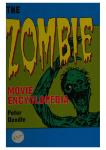

Текст
                    film

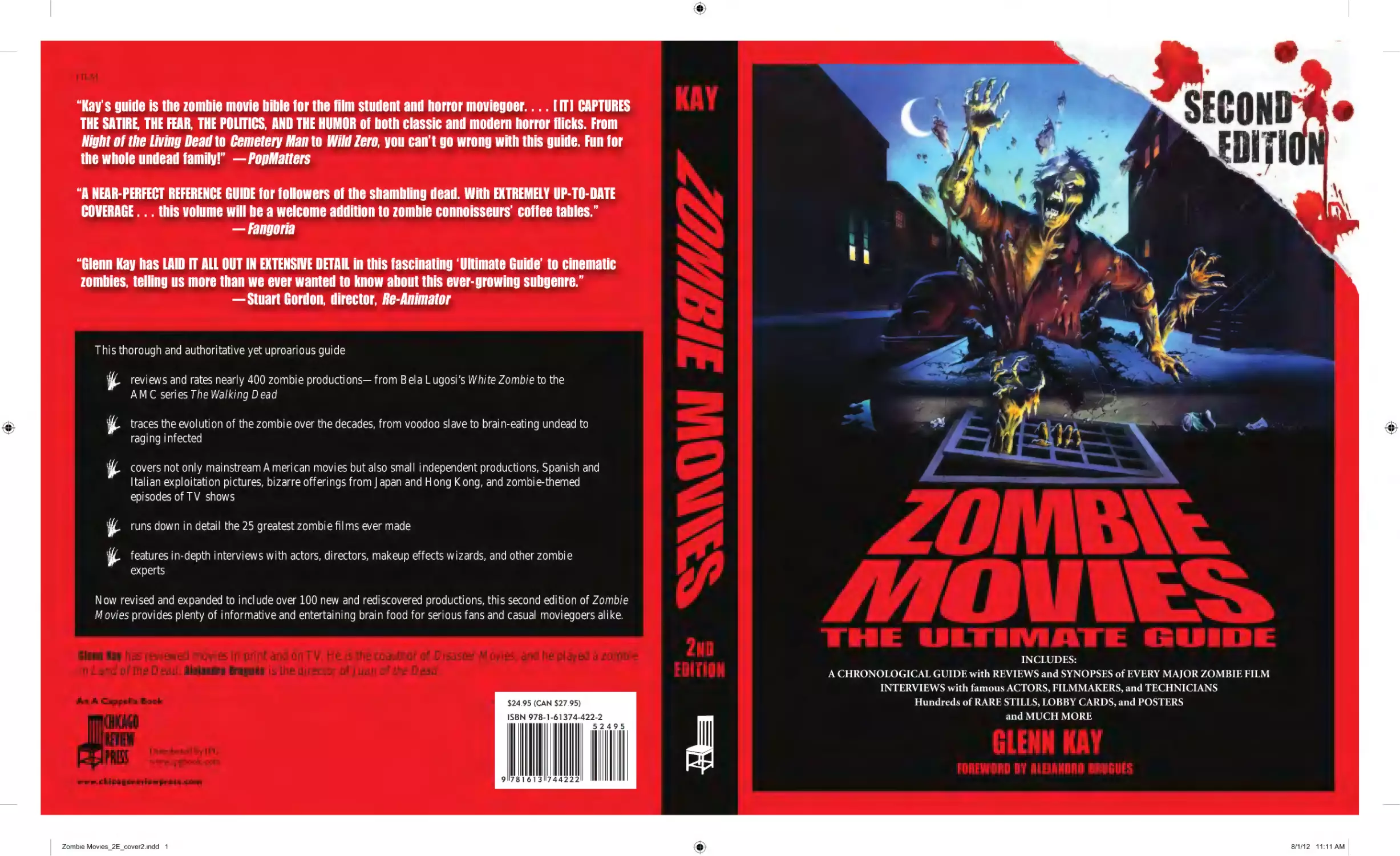
“Kay’s guide is the zombie movie bible for the film student and horror moviegoer. . . . [ IT] captures
the satire, the fear, the politics, and the humor of both classic and modern horror flicks. From
Night of the Living Dead to Cemetery Man to Wild Zero, you can’t go wrong with this guide. Fun for
the whole undead family!” —PopMatters

KAY

“A near-perfect reference guide for followers of the shambling dead. With extremely up-to-date
coverage . . . this volume will be a welcome addition to zombie connoisseurs’ coffee tables.”

—Fangoria
“Glenn Kay has laid it all out in extensive detail in this fascinating ‘Ultimate Guide’ to cinematic
zombies, telling us more than we ever wanted to know about this ever-growing subgenre.”

—Stuart Gordon, director, Re-Animator

This thorough and authoritative yet uproarious guide
reviews and rates nearly 400 zombie productions—from Bela Lugosi’s White Zombie to the
AMC series The Walking Dead
traces the evolution of the zombie over the decades, from voodoo slave to brain-eating undead to
raging infected
covers not only mainstream American movies but also small independent productions, Spanish and
Italian exploitation pictures, bizarre offerings from Japan and Hong Kong, and zombie-themed
episodes of TV shows
runs down in detail the 25 greatest zombie films ever made
features in-depth interviews with actors, directors, makeup effects wizards, and other zombie
experts
Now revised and expanded to include over 100 new and rediscovered productions, this second edition of Zombie
Movies provides plenty of informative and entertaining brain food for serious fans and casual moviegoers alike.
Glenn Kay has reviewed movies in print and on TV. He is the coauthor of Disaster Movies, and he played a zombie
in Land of the Dead. Alejandro Brugués is the director of Juan of the Dead.
An A Cappella Book

2 nd

Edition

Includes:
A chronological guide with reviews and synopses of every major zombie film
Interviews with famous actors, filmmakers, and technicians
Hundreds of rare stills, lobby cards, and posters
and much more

GLENN KAY
FOREWORD BY Alejandro BruguÉs

Zombie Movies_2E_cover2.indd 1

8/1/12 11:11 AM

00 (i-x) zombies_frontmatter_2E_Zombies 7/30/12 6:08 PM Page i

Second edition
Glenn Kay

An A Cappella Book

00 (i-x) zombies_frontmatter_2E_Zombies 7/30/12 6:08 PM Page ii

If you have any questions or comments, you may
contact the author at zombiethebook2012@gmail.com.
The Library of Congress has cataloged the first edition as follows:
Kay, Glenn.
Zombie movies : the ultimate guide / Glenn Kay.—1st ed.
p. cm.
Includes bibliographical references and index.
ISBN 978-1-55652-770-8
1. Zombie films—History and criticism. I. Title.
PN1995.9.Z63K39 2008
791.43′675—dc22
2008021414

Cover design: Jonathan Hahn
Interior design: Scott Rattray
Additional layout: Jonathan Hahn
Movie rating illustrations: Greg Hyland
Cover image: © Richard Hescox
Copyright © 2008, 2012 by Glenn Kay
Foreword copyright © 2012 by Alejandro Brugués
All rights reserved
Published by Chicago Review Press, Incorporated
814 North Franklin Street
Chicago, Illinois 60610
ISBN 978-1-61374-422-2
Printed in the United States of America
5 4 3 2 1

00 (i-x) zombies_frontmatter_2E_Zombies 7/30/12 6:08 PM Page iii

Contents
Foreword by Alejandro Brugués

1
2
3
4
5

v |

Origins 1

Acknowledgments

8

The 1930s: The Zombie Film’s Beginnings 5
The 1940s: Laughing at the Zombies . . . and an
Early End? 13

9

The 1950s: The Drive-In, the Atom Bomb, and
the Radioactive Zombie 23
The 1960s: The Weird, Wild Psychedelic Era and
the Reinvention of the Zombie 35

The 1970s: Spanish Zombies, Satire, and
Blaxploitation 59

The 1980s: Italy Reigns and the Horror Boom
Explodes . . . and Fizzles 101
Interview: Antonella Fulci 115
Interview: Greg Nicotero 134

Introduction

ix

The 1990s: The End of the Zombie—and a
Resurrection in Video Games and on DVD 183

The 2000s: Viral Infections, the Fast-Moving
Zombie, and a Renaissance in Undead Cinema 219
Interview: Colin Geddes 223
Interview: John Migliore 242
Interview: Jennifer Baxter 257
Adventures Undercover as a Zombie on
Land of the Dead! 261
Interview: Andrew Currie 275
Interview: Gaslight Studio 302
Interview: Bruce McDonald 311
Interview: Jaume Balagueró and
Paco Plaza 327
The Highest-Grossing Zombie Films of All
Time 360

Some of the Weirdest/Funniest/Most
Disturbing Things I’ve Seen in Zombie
Films 81

7

|

Interview: Tom Savini 189
Interview: Stuart Conran 197

Know Your Monsters! 50

6

vii

10 The 2010s: The Zombies Hit Prime Time

363

Upcoming Zombie Flicks 390

11

The Greatest Zombie Films Ever Made 393

Appendix: Zombieless Zombie Movies 417 | Bibliography
Index of Film Titles 429 | Index of Directors 436

427

00 (i-x) zombies_frontmatter_2E_Zombies 7/30/12 6:08 PM Page iv

00 (i-x) zombies_frontmatter_2E_Zombies 7/30/12 6:08 PM Page v

Foreword

Watching zombie films has been a pleasure my

entered film school I decided to rewatch the films I
used to watch as a kid, since those were the ones
that made me a film lover. So while my friends
watched Bergman and Tarkovsky, I was trying to
find some of those zombie films.
With most of them I couldn’t even remember
the title; I had only flashes: zombies walking the
Manhattan Bridge, a severed head still moving on a
doctor’s tray, zombies walking in a shopping mall . . .
all the images we zombie film lovers are so familiar
with. I made it my mission in life to see those films
again and organize those memories. I like to believe
that’s how I found Romero, Fulci, Stuart Gordon,
Peter Jackson, and many others. But the truth is that
I found them as a kid, among all the other films my
crooked uncle would bring me. I think Romero and
company would prefer it that way.
I still live in Cuba, so I haven’t yet finished this
mission. It’s easier now to get my hands on zombie
films, but not as many as I would want to. And
then one day Glenn Kay asked me to write a foreword to his book. What’s his book about? Zombie
films. The ultimate guide.
At first I couldn’t help but raise my eyes to
heaven and ask God, “Really? Now? After all the
trouble I’ve gone through all these years?” And if

whole life. Now, finding them hasn’t always been so
easy.
I grew up in Cuba in the late 1970s and early
’80s, not the ideal time and place to find anything,
really. I remember I was lucky to be the first of my
friends to have a VCR and a color TV instead of a
Soviet black-and-white one, and I had an uncle
who would regularly supply me with films. All our
friends eagerly awaited his visits. As far as I can
remember, he was the only one who brought us
films, and he wasn’t really a film lover. I can’t recall
what he was doing at the time, but I don’t think it
was anything legal. The point is, he usually brought
action films, martial arts movies, comedies, porn (I
just remembered that and realized I have to call my
father about it after I’m done with this foreword) . . .
and horror films. And strangely enough it wasn’t
the porn that caught us but the horror films. Particularly the ones with zombies.
As I remember my childhood, time didn’t exist.
You didn’t know if you were watching old films or
new ones, and you didn’t care. You only cared about
the gore and the scares, and they pretty much
shaped me into who I am. I believe that as a filmmaker you shouldn’t betray who you are, so when I

v

00 (i-x) zombies_frontmatter_2E_Zombies 7/30/12 6:08 PM Page vi

that wasn’t enough, I opened the book at a random
page and the film I saw was The Ghost Breakers, a
Bob Hope parody zombie film set in Cuba with
political overtones.
Just like the one I made.
What I said to God then won’t be in this foreword, because it’s the kind of thing only a child
raised in Cuba in the 1970s would say to Him. But
after that first impact, I realized I should be happy

vi

Foreword

that zombies are now stronger than ever. And that
this book is a miracle and that new generations
won’t have to go through all the troubles I had to to
enjoy this marvelous subgenre.
Glenn Kay already did it for all of us.
Now read, enjoy, and watch those films, as I
will.
I just realized I have a lot of catching up to do.
ALeJANDRo BRUGUéS

00 (i-x) zombies_frontmatter_2E_Zombies 7/30/12 6:08 PM Page vii

Acknowledgments

Thanks to the following for their contributions, support, and encouragement:
Malina Bakowski
Forrest J. Ackerman
Chris Alexander
Sean Armstrong
Jaume BalaguerÓ
Jennifer Baxter
Thorsten Benzel
(www.classic-movieposters.de)
Chris Bridges
Joe Bob Briggs
John Brooks
Alejandro Brugués
Stuart Conran
Andrew Currie
Brad Darch
Diabolik DVD (www.diabolikdvd.com)
Alberto Farina
Antonella Fulci
Colin Geddes

Kyle Glencross
Stuart Gordon
Rod Gudino
Greg Hyland
Iain Kay
Sharon Kay
Bruce McDonald
John Migliore
Neil Morrill
Thea Munster
Greg Nicotero
Paco Plaza
Chris Roe
Michael Rose
Santo Street (SantoStreet.com)
Tom Savini
Scott Sudeyko
Kelly Wheaton

And, of course, thanks to all the directors, producers, writers, performers, and
technicians who created so many incredible zombie films!

vii

00 (i-x) zombies_frontmatter_2E_Zombies 7/30/12 6:08 PM Page viii

00 (i-x) zombies_frontmatter_2E_Zombies 7/30/12 6:08 PM Page ix

Introduction

My interest in zombie films began in my early
teenage years. It wasn’t just that zombies were scary
(though they were, of course, and that’s always a
plus). Most horror film villains didn’t do much
more than terrify the audience—mostly by jumping
out of a dark corner. But depending on the movie
(and on the particular pained expression on the
performer’s face), a zombie could also be heroic,
tragic, or funny. And zombie films could examine a
variety of different issues and themes. They might
explore how ordinary people react to extreme situations, or deal with the disturbing psychological
implications of confronting a dead loved one. In
some movies zombies were a threatening mob
standing in for the majority, metaphorically forcing
conformity on the few human stragglers left
behind. Some filmmakers used these flicks to send
a message about the misuse of science; some even
took an environmentalist slant. Dawn of the Dead
(1978) served as a biting satire of consumerism.
I was intrigued to learn that movies this cool,
featuring rampaging zombies, could also be intelligent critiques. There were horror movies that made
a person smarter for having watched them? As I
grew older and revisited classic horror titles that

had scared me as a wide-eyed kid, it became abundantly clear: yes, there is often much more to zombie films than meets—or revolts—the eye.
This depth and diversity is what fascinates me
the most about the zombie subgenre, and it’s something I hope you’ll see reflected in Zombie Movies:
The Ultimate Guide. I’ve tried to include reviews of
every zombie film that I could find, but a small
number of minor omissions may upset a few fanatics. There are too many shorts and independently
produced shot-on-video offerings for me to catalog
them all, but I’ve mentioned the most notable
efforts. I’ve also provided, as an appendix, a guide to
zombieless zombie movies such as Invasion of the
Body Snatchers (1956) and Rabid (1977)—they aren’t
really zombie movies, but they come pretty close.
Hopefully, you’ll find this book funny too.
There are books out there that take a formal and
deadly serious approach to the subgenre, even
going so far as to intricately analyze the mise-enscène of Jean Rollin or Jess Franco flicks. Having
made and worked on a few short films, and having
visited a few Hollywood sets, I’ve noticed that few
of the artists behind the camera are reading the
works of film theorists André Bazin and Christian

ix

00 (i-x) zombies_frontmatter_2E_Zombies 7/30/12 6:08 PM Page x

Metz. They’re more interested in making the best,
most coherent film they can under strapped circumstances. These flicks are outrageous at times,
and it’s silly not to at least acknowledge it and have
a little fun with their eccentricities.
But when all is read and chewed on, what I
hope to have done is provide a comprehensive look
at the zombie film from as many different perspectives as possible—not only my own, as a reviewer
enjoying the films through the decades and as a
witness to and a participant in the making of a film
(George A. Romero’s 2005 effort Land of the
Dead ), but also the perspectives of the directors,
makeup effects artists, actors, and hard-core fans
who kindly agreed to be interviewed for this book.
And perhaps I’ll even pass on a few new tidbits
about zombie films that you may not have known
previously.
I’ll also share my personal take on the quality
of the films in question. My ratings system is as
follows:

Highly Recommended: The absolute best in
zombie films.

Recommended: Solid, entertaining pictures
that should satisfy viewers.
At Your Own Risk: You may appreciate some
of these, but don’t count on a classic.

x

Introduction

Avoid at All Costs: Unless you’re a serious
fan, you don’t need to see these.

So Bad It’s Good: Great stuff for fans of bad
cinema.
You’ll probably disagree with some of my
assessments and with some of the selections on my
list of “The Greatest Zombie Films ever Made.”
When researching the book, I asked a few celebrities in the horror and sci-fi world what their
favorite undead flicks were, and I always got a different response. Joe Bob Briggs, hands down the
best drive-in movie critic and satirist out there,
prefers the voodoo-inspired titles such as Bela
Lugosi’s classic White Zombie (1932) and Wes
Craven’s The Serpent and the Rainbow (1988). Rue
Morgue magazine editor Rod Gudino is big on the
atmospheric studio film I Walked with a Zombie
(1943) and Day of the Dead (1985), the third entry
in Romero’s hugely popular Dead series. Strangest
of all, when asked what his favorite title was, legendary sci-fi horror authority Forrest J. Ackerman
chose the much-maligned 1945 horror comedy
Zombies on Broadway (although he did smile and
wink mischievously as he said it, so I don’t quite
know if I was supposed to take him seriously).
I’m sure you have your own personal favorites
and unique reasons for loving them. That’s why
being a zombie movie fan is so much fun.

01 (001-058) zombies_01-05_2E_Zombies 7/30/12 5:58 PM Page 1

1

Origins

What is a zombie film? How do you know if

locals) and named it Santo Domingo. Sometime
later the French took control. They were noted for
shipping slaves directly from Africa to work on
their plantations. Conditions and the treatment of
slaves were sickeningly poor, with landowners opting to maximize profits by working them to death,
literally. However, these slaves brought with them
their own religious customs, which they continued
to develop and expand on in their new home country. Of particular note was their practice of vodou.
Belief in vodou helped support the enslaved
people in their struggle, the vodou gods protecting
them from their so-called owners. As common
spiritual beliefs grew among slaves, a society arose.
Dances, animal sacrifices, and the beating of drums
became a part of the culture. Within the community, leaders and experts gained influence, further
honing the use of ritual chants, poisons, and potion
making.
Through the use of these potions and rituals, a
vodou priest, or bokor, was believed to be able to

you’re watching one? It’s not as simple a question
as it might at first seem, because what constitutes a
zombie has changed over the years and continues
to evolve. Recent films such as 28 Days Later
(2002) and Dawn of the Dead (2004) have broadened the definition beyond the walking dead to
include still-living characters infected with an
incurable disease that extinguishes their personalities and turns them into bloodthirsty killers. Even
the classic conception of the zombie, as a corpse
that rises from the grave to feed on the flesh of the
living—or at the very least slaughter them—
became the standard only after the release of the
classic 1968 horror film Night of the Living Dead.
The zombie’s beginnings can be traced back
much further still, to the beautiful but troubled
country of Haiti. A Caribbean paradise filled with
fruit and fertile soil for farming, Haiti was introduced to the European world by the Spanish, who
declared the land theirs (much to the chagrin of

1

01 (001-058) zombies_01-05_2E_Zombies 7/30/12 5:58 PM Page 2

invoke supernatural powers. One such power was
the ability to reanimate a dead human body. The
resulting creature was known as a zombi, and it was
characterized by slow mannerisms, low intelligence,
and a lack of willpower or a soul. (In reality, zombis
weren’t really dead people at all, simply persons
who had been drugged and who then arose from a
comatose state.) Often, zombis were believed to be
under the control of the person who had caused
them to rise from the grave.
In 1791 slaves in the northern part of the country reportedly invoked vodou to seize control of an
even greater prize—their own destinies. In a massive uprising led by Haitian general Toussaint
L’Ouverture, they violently rebelled against the
wealthy French plantation owners. A famous local
legend has it that the unrest was preceded by a
vodou ceremony at Bois Caïman that united the
participants against the government’s continued
proslavery stance. Their forces clashed with colonial
armies sent to quash the unrest; the slaves were victorious. The French administration announced that
it would finally abolish slavery in Haiti.
In 1802, however, Napoleon Bonaparte sent
more military forces into the colony, a clear attempt
by the French to reestablish slavery. While his soldiers initially made inroads, Haitian nationalists
fought back and met with victory once again. By
1804 the country had won its independence from
France and become the Republic of Haiti, the first
black republic in history. The success of the slave
revolution inspired similar rebellions in such
nations as the United States and Brazil. But Haiti’s
troubles were far from over.
Leaders came and went during the next hundred years, and over time the country sank deeper
into depression, debt, and chaos. Many leaders were

2

Zombie Movies: The Ultimate Guide

assassinated, and five presidents violently rose and
fell between 1910 and 1915. The last, Gen. Vilbrun
Guillaume Sam, had perhaps the most tragic
impact. His political opponent, Rosalvo Bobo, criticized the leader’s dealings with the U.S. government and began to influence others within
Guillaume Sam’s administration. The fearful president began executing potential threats to his power,
even going so far as to have 167 political prisoners
killed. When word spread, Haitian citizens
revolted, turning into an unruly mob. Gen. Guillaume Sam was taken from his palace and publicly
torn to pieces, which were scattered and put on triumphant display.
This gruesome scene may have led to the birth
of the zombie movie, since the death of Guillaume
Sam brought Haiti into the American consciousness. The U.S. government was concerned about
Bobo’s unfriendly stance toward the United States
and frightened by the distant possibility that German forces could easily invade the unstable nation
(World War I had begun a year earlier), so in 1915
the U.S. occupation of Haiti began.
The occupiers found a situation far more complicated than initially anticipated, and their presence did little to calm it. While U.S. forces were
responsible for overseeing construction of roads
and telephone cables, medical care, and educational
programs, their treatment of the locals bred deep
bitterness. Naturally, the citizens resented being
occupied. The Americans, in turn, exhibited racist
attitudes toward black and mixed-race Haitians,
and many of the well-educated locals were treated
with disdain. Most horrific of all, U.S. forces
declared it a public duty for each and every Haitian
to be subject to unpaid labor on a chain gang,
enforced by armed guards who were permitted to

01 (001-058) zombies_01-05_2E_Zombies 7/30/12 5:58 PM Page 3

shoot anyone who refused to participate. For
Haitians this was little better than the slavery their
revolutionary forces had fought to terminate more
than one hundred years previous.
Nationalist sentiment erupted once again in
guerrilla warfare and bloodshed. A major uprising
in 1918 was extinguished by the U.S. Marines, who
in the process killed over two thousand revolutionaries. Yet another tragic event occurred in 1929,
when U.S. Marines opened fire on more than ten
Haitian demonstrators, killing them. U.S. forces
finally pulled out of the country in 1934. (Ironically, during their stay the U.S. military had trained
locals in warfare. It wasn’t long before future leaders
would decide to extend their terms of office and
enforce their positions with military might.)
During their stay in Haiti, many U.S. soldiers
and their families had been disturbed not only by
the violence but also by the locals’ late-night vodou
practices. When they returned to the United
States, they brought back stories of rituals, potions,
and the reanimation of dead subjects; the highly
exaggerated tales were devoured by curious Americans, who eventually adjusted the spelling of vodou
and zombi into the now common (and more phonetic) voodoo and zombie.
One story in particular fed the imaginations of
the American public: the 1929 book The Magic
Island by William Seabrook. Seabrook was an
occultist (and alcoholic) who had found success
traveling to various parts of the world and publishing exaggerated accounts of witchcraft and
satanism. Written after a trip to Haiti, The Magic
Island supposedly details Seabrook’s real-life
encounters with the walking dead. The section
dealing with zombies is titled “Black Sorcery,” and
it largely deals with a story a local told to Seabrook.

According to the storyteller, groups of pitiful zombies would toil the Haitian fields in broad daylight,
cattlelike, working harder and faster than other,
still-living groups. When they took a break, the
zombies would eat bland, flavorless food. The local
described them literally as dead people who had
been taken from the grave to serve the person who
brought them back. Readers would be further
alarmed by Seabrook’s own descriptions of the
voodoo practitioners responsible for zombies as
“blood-maddened” and “sex-maddened” and by his
claim that he visited the supposed zombies and
confirmed their authenticity. It is only in the last
paragraph of the section that Seabrook all too
briefly suggests that drugs causing a lethargic coma
may have been responsible for the zombies’ condition. He follows it up by citing an odd Haitian law
stating that the burial of a live person qualifies as
murder, regardless of whether the victim is later
revived.
No one seemed all that interested in exploring
the logic behind the undead phenomenon; shocked
and titillated readers made The Magic Island a success. It wasn’t long before the media began circulating more stories about supposedly very real dead
humans wandering about.
At about the same time, another American
author, H. P. Lovecraft, dabbled in fictional tales of
the dead come to life. Lovecraft was never hugely
popular during his lifetime, but he was well
respected by other writers. He wrote many stories
that would eventually influence filmmakers and
screenwriters and, in the coming decades, inspire
many more zombie films. The serial Herbert West:
Reanimator (1922) is among the most notable, a
Frankenstein-like tale (a parody of Mary Shelley’s
1818 work, according to the author) that becomes
Origins

3

01 (001-058) zombies_01-05_2E_Zombies 7/30/12 5:58 PM Page 4

more horrific and disturbing than its inspiration.
After the character of West raises a corpse from
the dead, the creature turns violent and in a fit of
rage races around attempting to kill everyone he
encounters. Later in the series, the mad Dr. West is
actually disemboweled by the undead. Lovecraft
would also pen short stories such as 1925’s In the
Vault, in which an undertaker’s feet break through a
coffin lid and his ankles are bitten by the coffin’s
rather disturbed resident, and 1928’s Cool Air, about
an undead doctor who keeps himself preserved and
functioning thanks to a very refrigerated apartment—that is, until the AC goes on the fritz.
In the 1930s, as the film business in the United
States was booming and audiences flocked to see
movies with striking visuals set in new and exotic
countries, the occult mysteries of Haiti became a
popular subject. The Emperor Jones (1933) tells the
story of a railway porter who finds himself in Haiti,
learns witchcraft, makes himself ruler of the country, and goes power mad—until the citizens revolt
and hunt him down. Ouanga (1936), a.k.a. Love
Wanga, and its remake, The Devil’s Daughter
(1939), a.k.a. Pocomania, were filmed on location in
Jamaica (the location substituted for many features
set in Haiti). In The Devil’s Daughter, a young
American woman (Ida James) inherits a plantation
in Haiti only to discover that her villainous,
voodoo-practicing half sister (Nina Mae McKinney) would rather take the property for herself.
As a result of sensationalist reporting and Hollywood’s need to exaggerate for entertainment’s
sake, the concept of voodoo had been radically

4

Zombie Movies: The Ultimate Guide

altered. In Haitian tradition, vodou was a spiritual
practice; the word itself may have simply meant
“spirit.” In many media representations, however,
voodoo became an evil power akin to black magic.
As the public’s interest in Haiti dissipated, these
dark, supernatural elements—zombies in particular—retained their allure, and zombie-themed films
ended up taking center stage.
But the Haitian influence on the zombie subgenre has never truly faded. Given the tragic and
brutal history of Haiti, can it be any surprise that
there seems to be so much more going on in a typical zombie flick than in the usual horror movie?
Naturally, many scholars have put a political spin
on the zombie itself; James B. Twitchell has suggested that the zombie may represent the fantasies
of the black slave rising up in revolt against his
white occupiers. To be sure, Haitian history is inexorably linked to the idea of an abused, mistreated
segment of the population being controlled, only to
eventually rise up against its so-called master—and
whether intentionally or not, that theme has been
repeated time and time again in the fictional zombie films that followed. (Likewise, in many of the
films the military and government have little success in quelling the rebellions.)
Of course, these aren’t the only parallels one can
glean from zombie pictures. But Haiti is truly
where it all began, and the country’s deep, fascinating history is perhaps the main source for the significant political and social commentary of many of
the best zombie movies.

01 (001-058) zombies_01-05_2E_Zombies 7/30/12 5:58 PM Page 5

2

The 1930s:
The Zombie
Film’s
Beginnings

In the early 1930s a series of low-budget horror

getting the zombie movie off to a rollicking start.
But throughout the decade, none of the major studios—not even the horror specialists at Universal—
took note of the subgenre’s potential. The zombie,
it seemed, was considered a second-rate monster
when compared with more-established spooky
characters; it would appear in only a few titles
before the decade’s end.
Few of these early titles shared White Zombie’s
authenticity. They simply borrowed the concept of
a man returning from the dead as a plot twist or
mixed zombie mythology with genres popular at
the time, like science fiction. Hollywood was
already elaborating on, exaggerating, expanding,
and confusing the history of our undead friends
and foes. But on a positive note, at least some of
these films were entertaining.

flicks made it to cinema screens. Their producer
and distributor, Universal Pictures, was thought of
as a B-level studio (in comparison with MetroGoldwyn-Mayer, RKO, and Paramount), but it
achieved tremendous success with its horror
lineup, which included such classics as Dracula
(1931), starring Bela Lugosi, and director James
Whale’s masterpiece Frankenstein (1931), featuring Boris Karloff. Horror pictures were all the
rage, so why not take aspects of Haitian culture
and religion that the public had heard so much
about and apply them to the lucrative classic monster formula?
The first attempt, 1932’s White Zombie, was a
surprisingly authentic representation of the zombie’s Haitian origins. It was also a box office hit,

5

01 (001-058) zombies_01-05_2E_Zombies 7/30/12 5:58 PM Page 6

White Zombie (1932)
The first zombie movie starred infamous Hungarian overactor Bela Lugosi in a sinister, scenerychewing role equal to his turn in Dracula. Unlike
that earlier film, White Zombie was not a part of the
Universal horror cycle; it was filmed independently
by the Halperin brothers, a sibling producer/director team attempting to cash in on the monster
movie craze. Inspired by the Broadway play Zombie

Poster art for the classic “love story” (?!) White Zombie.
© United Artists

6

Zombie Movies: The Ultimate Guide

(of which little is known; it opened and closed in a
mere twenty-one days), they decided to alter the
story significantly and create their own horror film.
Lugosi met with the producers in early 1932.
His negotiations to star in Frankenstein had fallen
through shortly after the release of Dracula in February 1931. While Dracula was a huge hit,
Frankenstein was an even bigger box office draw,
and Lugosi reportedly did not want to repeat the
mistake of turning down an important role. He
agreed to star in White Zombie for a figure reported
by various sources at somewhere between $500 and
$800—flat. (For the rest of his career, he would
agree to take whatever parts he was offered, however ridiculous.)
The film’s budget was $50,000, a healthy sum
of money but not quite in the league of the budget
for a large-scale Universal horror film (The Mummy
was filmed that same year for $192,000). Yet all of
the money—and more—is evident on-screen. The
Halperins wisely stretched their funds by redressing
large existing sets from films like Dracula. In addition, a lot of credit for the film’s look may be due to
Arthur Martinelli, a well-respected cinematographer who had already shot more than forty films
before working on White Zombie.
Lugosi stars as Murder (!), the owner of a plantation (if you want to call it that—his cliffside
estate appears to have more in common with Dracula’s castle than a Haitian farm). Using drugs,
Lugosi zombifies the locals—and whomever
crosses him—transforming them into mindless
muscle who slave on his plantation or assist him
with sinister deeds. His services are soon requested
by a wealthy local (Robert Frazer) who wants to
steal the affections of the new fiancée (Madge Bellamy) of a visiting friend ( John Harron). The idea

01 (001-058) zombies_01-05_2E_Zombies 7/30/12 5:58 PM Page 7

proud of his work in the film
and quite happy with the end
result, in spite of his meager
pay. However, this didn’t stop
him from expressing his
resentment of the producers,
who apparently enjoyed a
return of more than $8 million from the film during
Lugosi’s lifetime.)
The critics’ disdain is
really too bad, because over
seventy years White Zombie
has proven itself to be ahead
Bela Lugosi leads his overattended dinner guests to the door in White Zombie. © United Artists
of its time and in many ways
superior to Dracula—particularly in its visionary
that a creepy character named Murder might take
technical wizardry. Although it was an independent
advantage of the situation never occurs to Frazer,
production lacking the experience Universal had
but it’s just as well. As expected, Lugosi twists the
churning out its horror series, director Victor
plot to his own ends, leaving Frazer and other cast
Halperin’s film ranks with James Whale’s classics.
members aghast, their eyes popping out of their
heads in disbelief and outrage. The zombie makeup Watch for camera tricks such as a Dutch tilt early
is minimal, the servants appearing pale with darker in the film (in which the camera is tilted to give
the staggering hillside zombies a more menacing
circles around the eyes; their wild hairdos and
wide-eyed expressions do most of the work to con- appearance) and great use of a superimposition of
an extreme close-up of Lugosi’s eyes. The sound
vince audiences of their condition.
mix is startling: loud creaks and jarring screams are
Although White Zombie was highly profitable,
many critics responded poorly to the finished prod- used effectively to jolt viewers. The Halperins used
camera position, camera movement, and sound in
uct, complaining about poor acting. While pernew ways to excite the viewer.
formers Harron, Frazer, and Bellamy are weak,
If the film carries a bad reputation in some cirmodern viewers will find them little more dated
cles, it is largely because at one time it was difficult
than their contemporaries. And maybe they were
to give the film the second look it deserved. The
trying to keep up with Bela Lugosi. Critics chasindependent production was mired in legal distised Lugosi for his long-pause-ridden, over-thetop (of the mountains and into outer space) turn as putes; for years the film was available only in deteriorated prints—if it was available at all. Who
the zombie master, but what did they expect after
could contradict the original critics’ assessments
having seen the Hungarian’s hammy performance
when they couldn’t see the film for themselves?
in Dracula? (It seems that Lugosi himself was
The 1930s: The Zombie Film’s Beginnings

7

01 (001-058) zombies_01-05_2E_Zombies 7/30/12 5:58 PM Page 8

used zombies to look at a soldier’s loss of individuality, but that’s not what this film is about.
Instead, it deals with an officer in the French
army (Dean Jagger) and his rather self-obsessed
fiancée (Dorothy Stone). Although she agrees to
wed Jagger, she swoons over Jagger’s best friend
(Robert Noland), using her future husband “to
Revolt of the Zombies (1936)
excite his [Noland’s] jealousy.” Her obsession
makes for some very uncomfortable social events.
The public was significantly less enthusiastic about
Using the line “A woman in love can justify anyRevolt of the Zombies, the Halperins’ follow-up to
thing,” Stone dumps the heartbroken Jagger to wed
the successful White Zombie (1932). Unfortunately,
Noland. Too bad she wasn’t paying much attention
Bela Lugosi was not involved with the sequel,
to her ex’s work: the power-hungry and underalthough sharp viewers will note that the film
standably bitter officer devotes himself to learning
superimposes stock shots of his eyes over the film’s
minimal voodoo sequences. Set in Angkor, Cambo- the secrets of creating zombies from a Cambodian
priest. Before long, Jagger masters
the process (by burning some
incense, slapping his forehead with
his fist, and barking commands!)
and uses his findings to control the
will of a large army. Most important, he wills away his romantic
competition and steals back his exfiancée, apparently because this is
all he can really think of to do with
his incredible new power.
Unlike with White Zombie, the
Halperins didn’t have an
entertaining lead like Bela Lugosi,
and they were unable to secure and
reuse impressive sets from other
A stiff and awkwardly staged struggle from the lackluster sequel Revolt of the Zombies.
© Academy Pictures Distributing Corporation
features or hire a cinematographer
of the quality of Arthur Martinelli. The screenplay,
dia, (though certainly not shot anywhere near
by an uncredited writer, is poorly written and
there) during World War I, the plot concerns
overly verbose. There are a couple of interesting
designs for using hypnosis or mental telepathy on
camera setups, including a strangely eerie shot of a
soldiers to fight the war. It certainly could have
fearless zombie army marching toward the camera
been an interesting concept, particularly if it had
Today it is possible—and preferable—to avoid the
poor-quality public domain copies floating around
out there in favor of a restored edition. There is no
excuse not to form one’s own opinion and no reason to apologize for singing White Zombie’s praises.

8

Zombie Movies: The Ultimate Guide

01 (001-058) zombies_01-05_2E_Zombies 7/30/12 5:58 PM Page 9

in front of a rear-projected battlefield, but the
The Walking Dead (1936)
inventive uses of motion, light, and sound that
Who would have thought that one of the earliest
Victor Halperin pioneered in White Zombie are
zombie films could also be classified as a crime
otherwise nowhere to be found. There’s no
flick? While Universal continued to profit from its
experimentation here, only dull composition and
horror movies, Warner Bros. was gaining a reputaflatly lit shots of yakking characters in a by-thetion for projects with crime and gangster elements,
numbers plot. Nothing even remotely scary is
like the James Cagney pictures The Public Enemy
going on here (apart from the bad acting).
Because Halperin’s second
zombie film was so unimpressive, rumors have circulated
that Bela Lugosi had a hand
in directing White Zombie and
that his lack of involvement in
Revolt of the Zombies is the
reason for its aesthetic failure.
But one wonders: if that is the
case, why didn’t Lugosi lend
his expertise to any other filmmakers, similarly elevating the
dozens of terrible films he
appeared in during his remaining years? And one eventually
concludes that even with a
crew as talented as the one on
White Zombie, little more
Boris Karloff’s zombie wanders out for a nighttime stroll in The Walking Dead. © Warner Bros.
could have been made of this
(1931) and Lady Killer (1933). Eager for a genreutterly routine follow-up. Like the victims of
mixing project, the studio hired Frankenstein (1931)
zombie hypnosis, it simply lacks any distinctive
star Boris Karloff to appear in five Warner Bros.
personality.
films. Their first attempt was a strange crime/madAfter one last feature, producer Edward
scientist/zombie hybrid titled The Walking Dead.
Halperin decided not to make any more pictures
Karloff stars as John Ellman, a sweet, simple,
with his brother. It must have been far too difficult
musically inclined, down-on-his-luck parolee who
to compete with the majors. Sadly, Victor would
is convicted of the murder of a court judge and
collect only a few more directing credits—on lowexecuted. Of course, he is not responsible; he was
budget pictures, mostly for the independent studio
set up by his attorney and the governor, who are
PRC—before fading into obscurity.
The 1930s: The Zombie Film’s Beginnings

9

01 (001-058) zombies_01-05_2E_Zombies 7/30/12 5:58 PM Page 10

a zombie vulnerability that
wouldn’t become common until
reintroduced by George A.
Romero in his 1968 classic
Night of the Living Dead. END
OF SPOILER.
The film itself is terrific, so
filled with fascinating characters, rapidly delivered dialogue,
and constantly intertwining
subplots that the pace never
lets up until the surprising
finale. It is clear a great deal of
time went into the gorgeous
cinematography, which makes
considerable use of window
shades and banisters to create a
Seeing a physician is even more complicated when you’re already dead, in The Walking
prison bar shadow motif. The
Dead. © Warner Bros.
use of Dutch camera tilts, also
racketeers trying to cover their tracks after sending featured in White Zombie (1932), adds an eerie
menace to Karloff ’s staggering zombie sequences.
a hit man to murder the judge. The condemned
There are also some amusing moments and some
man returns from the grave to seek out his
wonderfully elaborate deaths. Those who appreciate
tormentors and find out why he was framed (he
political subtext in their zombie films will also note
also enjoys playing the piano for public audiences,
that the picture spotlights the corruption of
terrifying the crooks in the process). In addition,
authority figures, a problem at the time in many
he’s tortured by his reanimator, a scientist more
major metropolises, most notably Chicago.
interested in learning the secrets of the afterlife
The film garnered praise from critics upon its
than in seeing to the well-being of his patient.
release and awaits a well-deserved rediscovery; it has
Karloff is quite likable in this, one of his best
only recently been released to DVD as part of a set
roles, his pale expression and sunken eyes filled
with sadness and exasperation. He portrays the first called Karloff & Lugosi Horror Classics. Sadly, this
was the only horror picture to result from Karloff ’s
truly sympathetic zombie, one who just wants
answers and doesn’t want to kill. SPOILER WARNING: deal with Warner Bros. Over the next several years,
Though it can only be assumed that this is by com- the director of The Walking Dead, Michael Curtiz,
would direct some of the best films ever made,
plete coincidence, zombie fans might be interested
including The Adventures of Robin Hood (1938),
to discover that this is the first picture in which a
Casablanca (1942), and White Christmas (1954).
zombie is killed by a bullet to the base of the skull,

10

Zombie Movies: The Ultimate Guide

01 (001-058) zombies_01-05_2E_Zombies 7/30/12 5:58 PM Page 11

kid sign some kind of legal release document before
starting the procedure, because it’s interrupted by
This Columbia picture features Boris Karloff as Dr. the very panicky Doran and her police escort, who
arrest the doctor for murder. After a series of scenes
Savaard, a man obsessed with developing a mechamore reminiscent of the classic 1957 film Twelve
nized heart that will advance organ replacement
Angry Men (or in this case, nine angry men and
and (according to the logic of the film, at least)
three women) than a horror show, Karloff is senrestore life to the dead. The specifics of the device
tenced to hang. Thankfully, the doctor has science
are unimportant; the doctor’s lab features a large
on his side, and soon, aside from a little rope burn
box for the body and a glass pumping mechanism
visible around the neck, he’s as good as new,
with bubbling fluids and lots of catheter tubes, and
undead, and on the warpath.
these seem to do the trick. When young med stuBefore long, many of the people involved in the
dent Bob (Stanley Brown) offers himself as the first
case are invited to a secret meeting under false prehuman recipient of an artificial heart, Karloff is
tenses. They discover they are locked in Karloff ’s
thrilled. Unfortunately, Brown’s girlfriend (Ann
Doran) is not; she fears the procedure will kill him, booby-trapped manor, pawns for the now mad but
still very chatty doctor, who delivers commentary
despite Brown’s insistence that “there’s nothing to
via a speaker system while bumping them off.
be panicky about.” Karloff really should’ve had the
Sadly, this great setup
ends rather abruptly
and doesn’t quite reach
a payoff that will excite
modern audiences,
leaving this otherwise
well-made thriller ripe
for a more fully developed remake.
Karloff, of course,
delivers another winning performance as
the frustrated doctor,
and his views come
across as particularly
sympathetic in light of
more recent medical
advancements. He also
delivers a great speech
Sociable zombie Dr. Savaard (Boris Karloff) throws a dinner party with tasty treats in The Man They
Could Not Hang. © Columbia Pictures Corp.
at his sentencing in

The Man They Could Not Hang (1939)

The 1930s: The Zombie Film’s Beginnings

11

01 (001-058) zombies_01-05_2E_Zombies 7/30/12 5:58 PM Page 12

which he condemns the judge, jury, and prosecutor
as the real murderers and promises retribution by a
higher power. One thing’s for sure: nobody wants
Boris Karloff threatening him! The Man They
Could Not Hang was the first in a series of similar
scientist-gone-mad films, such as The Man with
Nine Lives (1940) and Before I Hang (1940), that
Karloff would star in for Columbia Pictures.

Brief Reviews
The Scotland Yard Mystery (1933)
In this dull, long-forgotten UK film, a greedy scientist (Gerard du Maurier) puts characters into a
zombielike catatonic state and then claims that the
still-living victims have had heart attacks—all in

12

Zombie Movies: The Ultimate Guide

order to collect on some insurance policies. Also
known as The Living Dead.

J’accuse! (1938)
This well-regarded, politically charged French war
film was directed by Abel Gance, who also helmed
the classic 1927 film Napoléon. The story was originally filmed by Gance on a smaller scale in 1919;
that silent version is extraordinarily difficult to
locate and features spirits rather than the reanimated dead. While the original serves as a comment on the brutality of World War I, the even
more impressive remake was produced in the
shadow of the impending Second World War and
follows a war veteran/scientist who raises dead soldiers from all European nations that fought in the
previous world war to mount a peace protest.

01 (001-058) zombies_01-05_2E_Zombies 7/30/12 5:58 PM Page 13

3

The 1940s:
Laughing at
the Zombies
. . . and an
Early End?

As Universal Pictures continued to roll out one
horror film after another, and theaters also played
host to comedic takes on the genre like 1940’s The
Ghost Breakers, it seemed all too clear that horror
was reaching a saturation point. At the same time,
movie attendance in general was down and studio
profits had shrunk, some of the long-lasting effects
of the Great Depression of the 1930s. And when
U.S. involvement in World War II sent Americans
back into movie theaters (if for no other reason
than to see newsreels on the war), attendees consisted mostly of young children and women—
hardly the traditional audience for horror. Major
studios began to lose interest in the genre, and the

number of horror titles slowly tapered off. This was
especially bad news for zombie films, which had
been scarce even during horror’s height.
It fell to the small independent studios to pick
up the slack. Companies such as Monogram, PRC,
and Republic were generally referred to in the
trade press as “Poverty Row” studios because of
their small size and lack of production funds.
These bargain-basement studios couldn’t afford to
make elaborate, daring, and adventurous genre
titles. Their horror efforts had to be told on a
smaller scale, shot in fewer days, and staffed with
less seasoned performers and crews. They were also
reluctant to risk their limited funds on anything

13

01 (001-058) zombies_01-05_2E_Zombies 7/30/12 5:58 PM Page 14

unproven. It was perhaps inevitable that as the
smaller studios took the reins, the quality and
inventiveness of horror pictures diminished
considerably.
Nevertheless, several lower-budget films took a
chance on zombies as their movie monsters—in a
few cases trying to tie them in with the war looming across the sea. The decade’s only hit zombie
film was one of the few major studio productions:
RKO’s I Walked with a Zombie (1943). However,
after RKO’s horror comedy follow-up Zombies on
Broadway (1945) failed, and comedic shorts like
Get Along Little Zombie (1946) made laughingstocks of the walking dead, the zombie film was all
but dead for the remainder of the decade—perhaps
its longest absence in cinema history.

The Ghost Breakers (1940)
Comedian Bob Hope would be the first actor to
play opposite a zombie for laughs in this entertaining and hugely successful comedy. The story had
been filmed twice before, in 1914 and 1922, as The
Ghost Breaker, but this was the first version that
featured a parody of the 1930s-style zombie.
Unlike the earlier films, this flick is set in Cuba,
where apparently zombies are so prevalent that a
local explains them away without a hint of fear.
George Marshall directs, and Hope stars as the
amusingly named Lawrence Lawrence Lawrence,
who accompanies Paulette Goddard to her haunted
(aren’t they always?) ancestral estate in the hopes of
recovering a treasure. Noble Johnson is the bald
zombie who lives in a nearby shack with his
mother.
In a well-delivered but unusual joke, the plight
of the zombie is described as, “You see them some-

14

Zombie Movies: The Ultimate Guide

Paulette Goddard poses with the real star of The Ghost Breakers,
known only as the Zombie (Noble Johnson). © Paramount Pictures

times, walking around blindly with dead eyes, following orders, not knowing what they do, not caring,” to which Hope replies, “You mean, like
Democrats?” (Democrat Franklin Roosevelt was
president at the time; Hope was a Republican.)
Even in a lighthearted zombie comedy, politics
can’t help but rear its head.
While the film is dated and sometimes uncomfortable in its political incorrectness—especially its
characterization of Hope’s black servant (Willie
Best)—there are a couple of effectively eerie scenes,
and Hope and Goddard are excellent. Anthony
Quinn also appears in not one but two roles, and
classic movie fans will discover many laughs. While

01 (001-058) zombies_01-05_2E_Zombies 7/30/12 5:58 PM Page 15

dress shirt and bow tie and also has Nazi connections. (Made prior to U.S. involvement in World
War II, the film dances around the specifics of his
allegiances—an effort by the producers to avoid
alienating any foreign markets.) The doctor conducts elaborate experiments, using hypnosis to create “sombies” (in his words) and holding voodoo
ceremonies in his basement while wearing an oversized African mask and cape. He has a fetching
niece (Patricia Stacey) who is suspicious of her
uncle’s command of zombie servants—including
his wife.
King of the Zombies (1941)
The microscopic budget doesn’t allow for much
zombie makeup—just a bit of black on the cheeks
King of the Zombies was a dull attempt by the
to highlight the bones. Those under Victor’s comPoverty Row studio Monogram to cash in on the
mand attempt to sell their condition by walking
new zombie subgenre. Our two heroes (Dick Purstiffly in a line with their shoulders raised.
cell and John Archer) search for a missing admiral
Beyond the cheapness of the production and a
in the “Bay-hay-mahs,” only to crash near the
sluggish pace, there’s also some politically incorrect
estate of a severe Austrian doctor (Henry Victor)
who enjoys walking around in a swanky robe with a material here—even more than in The Ghost Breakers (1940). One of the white
heroes has a black servant
(Mantan Moreland) who exists
solely to look confused, act terrified, and provide comic relief
by bugging his eyes out at every
opportunity. At least he’s a talented performer, and he not
only manages to get more
screen time than either of the
forgettable leads but also is by
far the most likable character in
the film. Another black character, the elderly Tahama
(Madame Sul-Te-Wan), is
given little to do except hunch
Actor Dick Purcell asks to have his head examined after agreeing to star in King of the Zombies. © Monogram Pictures Corporation
over a bubbling brew and make
some younger movie enthusiasts may not be fans of
Bob Hope, this is as funny as he has ever been.
Johnson’s mama’s-boy zombie spends much of
his screen time wandering slowly toward camera
and poses only a brief threat. He does, however,
sport more elaborate makeup than any of his cinematic predecessors—prosthetics covering the entire
head, rather than pasty white makeup on the
face—making him one of the more impressive and
frightening zombies of his day.

The 1940s: Laughing at the Zombies . . . and an Early End?

15

01 (001-058) zombies_01-05_2E_Zombies 7/30/12 5:58 PM Page 16

terse pronouncements in fractured English. Unfortunately, the racial stereotypes leave an ugly impression, particularly when other films of the period
like I Walked with a Zombie (1943) were more sensitive in their portrayal of black characters.
Believe it or not, the role of the evil Austrian
doctor was initially offered to Bela Lugosi, who did
not take it owing to previous commitments (or
maybe he just read the script). But even Lugosi
wouldn’t have been able to save King of the Zombies
from its stinker status.

character who moonlights as a brilliant scientist, has
revived the murder victims and is keeping them in a
cellar beneath the basement.
There are only a couple of zombie scenes, but
they’re effectively creepy; the hungry, hidden-inshadow zombies moan and reach up from the
depths. As low-budget films go, this is at least
heads above such titles as King of the Zombies
(1941). It isn’t embarrassing, moves quickly, and for
Lugosi fans is not a chore to sit through. Not
exactly a strong recommendation, but for this
period in Lugosi history, it’s practically a rave.

Bowery at Midnight (1942)
Bowery at Midnight was different from other
Monogram cheapies in that a legitimate star of
sorts was secured to play the lead: Bela Lugosi.
(Actually, Lugosi’s career was already beginning to
hit the skids, and this picture would not be his last
Poverty Row film.) He plays a man who leads a
double—no, triple—life as a psychology professor,
manager of a Bowery soup kitchen and homeless
shelter, and, of course, a criminal mastermind.
However, his plans are for gangland-style criminal
activities; the zombie angle is merely an afterthought.
Lugosi hires any goons, thugs, or mobster types
who frequent his soup kitchens (they must make
great soup there) and takes them through a series of
secret panels into his roomy secret crime headquarters. Once there, Lugosi manipulates them into
committing offenses for him, then has them killed.
Strangely enough, they are buried in the basement
with grave markers, to incriminate Lugosi should
anyone enter! It’s pretty silly stuff, and things get
more ridiculous when it is revealed very late in the
film that Lugosi’s assistant (Lew Kelly), an Igor-like

16

Zombie Movies: The Ultimate Guide

Tommy guns, soup kitchens, Bela Lugosi, and zombies! Bowery at
Midnight fuses it all in true B movie fashion. © Astor Pictures
Corporation

01 (001-058) zombies_01-05_2E_Zombies 7/30/12 5:58 PM Page 17

Some wild ideas for advertising from the publicity booklet for Bowery at Midnight.

I Walked with a Zombie (1943)
I Walked with a Zombie marks one of the few occasions when a major studio attempted a quality
zombie film. Thank goodness for Val Lewton,
RKO’s department head for B movie horror films
(at the time, those costing less than half a million
dollars)—Lewton decided it was worth investing a
comparably large budget in a zombie film. Curiously enough, the title was decided on first and
then the story was developed around it. Popular
Cat People (1942) director Jacques Tourneur was
hired to direct; he was renowned for creating
atmosphere with moody and imaginative lighting,
and this film is no exception.

© Astor Pictures Corporation

Lewton described I Walked with a Zombie as a
horror take on Jane Eyre. It stars Frances Dee as
Betsy Connell, a nurse who travels to Antigua to
care for the wife of wealthy plantation owner Paul
Holland (Tom Conway). Of course, it is revealed
that the wife is, in fact, some sort of zombie. When
the friendly nurse meets the husband of the zombie wife, he’s rude, short, and stiff with her, proclaiming against a gorgeously lit backdrop, “There’s
no beauty here!” No doubt impressed by his unappealing behavior, she falls for him immediately.
In a plotline straight out of an episode of Days
of Our Lives, it is revealed that a tragedy has
befallen the family: apparently, Conway’s brother
had been involved romantically with his wife. The
The 1940s: Laughing at the Zombies . . . and an Early End?

17

01 (001-058) zombies_01-05_2E_Zombies 7/30/12 5:58 PM Page 18

tance. Darby Jones, who plays
the tall lead zombie, makes a
striking impression, particularly
when photographed in silhouette against the sugarcane
fields. Tourneur makes direct
reference to voodoo culture and
does his best not to exploit the
religion for cheap thrills.
Like other Val Lewton
productions of the period, the
picture was very profitable. It
met with generally good
reviews (as always, there are
exceptions), and some critics
noted that the film was partic-

Darby Jones makes an impression as one of the
most memorable zombies in film history in I
Walked with a Zombie. © RKO Radio Pictures

locals enjoy singing embarrassing
songs around town about the
doomed relationship, filling Dee in
on all the sordid details. As the film
progresses, more horror elements are
introduced, and there are some subtly chilling sequences toward the
finale.
Hard-core horror fans might be
turned off by the standard romantic
Oops, hope this doesn’t give away the ending. From the climax of I Walked with a
plot and lack of action. But the gorZombie. © RKO Radio Pictures
geous cinematography more than
ularly scary because of what it suggested with its
makes up for it, creating a dark tone, particularly
moody lighting as opposed to what it explicitly
during a sequence in which Dee wanders through
showed. In the end, this title easily stands as the
the tall, dangerous sugarcane fields toward an asbest of the 1940s.
yet-unseen voodoo ceremony in the audible dis-

18

Zombie Movies: The Ultimate Guide

01 (001-058) zombies_01-05_2E_Zombies 7/30/12 5:58 PM Page 19

and perform cardiac surgery on them. After each
transfusion, the “ghoul” returns briefly to a normal
state, unaware of his undead actions, before he once
“Great Caesar’s ghost!” Eventually, Universal Picagain withers (via a simple cutaway) and falls back
tures did get around to mounting its own zombie
under the doctor’s control.
production, but it chose to avoid using the word
What is Zucco’s goal? World domination, one
zombie in the film’s title. The story, in the Frankenstein vein, follows mad scientist Dr. Morris (George would obviously think, but in an unintentional
echo of Revolt of the Zombies (1936), it’s someZucco) as he discovers that he can murder people
and control their corpses using an ancient Egyptian thing much simpler and more ridiculous. Zucco
poison gas. When he gases one of his students, Ted wants to make advances on Bruce’s girl, a performer with what would be considered by today’s
(David Bruce), the unfortunate pupil’s corpse
standards a unique singing talent. Murder and
returns to life, looking especially gaunt with dry,
mutilation are odd ways to
impress a woman, but, oh
well, apparently that’s what
happens to scientists who
have spent too much time
in the lab. Things go completely haywire in the
finale, when the enraged,
withered zombie interrupts
a public performance by
his ex-girlfriend (thankfully sparing us all an
extended musical number)
and reveals Zucco’s plot.
The film’s best and
most beautifully shot
moments are the graverobbing scenes, in which
Zucco and Bruce skulk
The Mad Ghoul proves that landscaping is not an ideal profession for a zombie. © Universal Pictures
around cemetery plots
withered skin and what appears to be a serious case bathed in shadows and fog. All things considered, this is a well-produced, amiable lower-tier
of bed head. Even worse, he’s under the complete
horror effort, although it got little support from
control of Zucco. The only problem is that Bruce
Universal on its initial release and was quickly
now needs human hearts to survive, so Zucco
forgotten.
makes him dig up the graves of the recently dead

The Mad Ghoul (1943)

The 1940s: Laughing at the Zombies . . . and an Early End?

19

01 (001-058) zombies_01-05_2E_Zombies 7/30/12 5:58 PM Page 20

Revenge of the Zombies (1943)
Revenge of the Zombies, also known as The Corpse
Vanished in the United Kingdom, was another
Monogram quickie (perhaps cobbled together after
the success of I Walked with a Zombie earlier in the
year), this one starring horror veteran John Carradine. He plays, naturally, a mad doctor studying
zombiism in an attempt to develop an unstoppable
army of the living dead, ready to fight a war for . . .
you guessed it: the Third Reich. One of his early
test subjects is his reanimated wife, who, just as she

did when she was alive, resists his commands. The
thin plot is set in motion by the arrival of the wife’s
brother, who is investigating what has happened to
his sibling’s body.
Fans of King of the Zombies (1941), if there are
any, will note the presence of Mantan Moreland
and Madame Sul-Te-Wan, both of whom play virtually the same roles as they did in the earlier
film—Moreland’s character even possesses the same
name, Jeff. Carradine adds a bit of the class and
professionalism that King sorely lacks, but to little
avail. Revenge of the Zombies is really just a bunch of

A Nazi scientist (John Carradine, second from left) and his zombie cohorts ponder the creation of a new anatomical skeleton for the lab
in Revenge of the Zombies. © Monogram Pictures Corporation

20

Zombie Movies: The Ultimate Guide

01 (001-058) zombies_01-05_2E_Zombies 7/30/12 5:58 PM Page 21

put). The impressive cast was reason enough for
many to sit through a bare-bones Poverty Row picture, but ultimately they would find it a forgettable
effort. Lugosi plays yet another mad doctor, and
here he wants to raise his dead wife by invoking
“Ramboona,” whatever that might be (the word is
repeatedly uttered during what is obviously not an
authentic voodoo ritual). Zucco plays the resident
voodoo master, who performs the ceremonies in a
ridiculous headdress.
To achieve his goal, Lugosi has Zucco give out
bad directions to young women and then corners
Voodoo Man (1944)
them in his mansion, where his experiments leave
This Monogram Pictures effort starred not one but woman after woman in a pale zombie stupor. It’s
not the greatest plan, since the authorities would
three horror icons: Bela Lugosi, John Carradine,
surely have noted several disappearances in the
and George Zucco of 1943’s The Mad Ghoul (OK,
same part of town, but it doesn’t matter—Lugosi’s
Zucco’s pushing it, but that’s still three bigger
names than you’ll find in most of Monogram’s out- evil designs are thwarted when his next victim
(Louise Currie) picks up a
handsome love interest
(Tod Andrews) on the
way to the mansion (it
seems he inexplicably let
his car run out of gas).
John Carradine, in a
thankless role as the doctor’s dim-witted lackey,
bears a striking resemblance to Adrien Brody of
2002’s The Pianist. At
least Carradine gets to
play the bongo drums.
His facial contortions
manage to outdo even
Lugosi’s; the rampant
overacting among the
Have fun figuring out who’s a zombie and who’s just mugging for the camera in this image
leads is one of the uninfrom Voodoo Man. © Monogram Pictures Corporation/Banner Productions
talking heads trying to solve an obvious mystery
that is spoiled for the viewer early on, when Carradine explains his entire plot to an accomplice.
The movie also reflects an attitude common to
the period, the notion that the walking dead alone
weren’t meaty enough to sustain a feature. Interestingly, the studios felt compelled to use zombies as
subplots in larger stories, which often involved
Nazi spies, mad doctors, mobsters, and ridiculous
schemes to take over the world.

The 1940s: Laughing at the Zombies . . . and an Early End?

21

01 (001-058) zombies_01-05_2E_Zombies 7/30/12 5:58 PM Page 22

tentional joys that make this film at least partially
endurable.

Zombies on Broadway (1945)
After the success of I Walked with a Zombie (1943),
RKO must have thought a parody of its hit film
would be a surefire winner. But this attempt, also
known as Loonies on Broadway, promised much more
than it delivered. In fact, it was one of the biggest
commercial missteps in zombie movie history.
Bela Lugosi plays, ahem, a mad doctor practiced in the art of creating zombies. But the real
stars of the film are Abbott and Costello wannabes
Wally Brown and Alan Carney, who play sketchy
press agents hoping to publicize the opening of a
new nightclub with a novel gimmick: an authentic
zombie. Their desperate search for such a creature
takes them from the fictional International
Museum in New York City to the nonexistent
Caribbean island of San Sebastian, where Lugosi
resides. Unfunny shenanigans follow, clearly influenced by the likes of The Ghost Breakers (1940).
Lugosi himself appears in only a couple of
scenes, and Darby Jones, star zombie of I Walked
with a Zombie, appears in a thankless, nonspeaking
zombie role. The film does have one thing going
for it—a comical monkey, who at one point even
mimics a zombie—but this is not enough to sustain
laughs for a full sixty-nine minutes. Even more
tragic, at no point is there a musical number featuring dancing zombies.

22

Zombie Movies: The Ultimate Guide

Naturally, the film was not as successful as
expected, and as a result RKO ended its cinematic
relationship with the zombie. In 1948 the studio
would be taken over by famed entrepreneur Howard
Hughes. It would struggle with financial problems
caused by box office failures and cost overruns
before finally closing its doors in the late 1950s.

Brief Reviews
The Face of Marble (1946)
Another Monogram cheapie, featuring John Carradine as a loony doctor trying to raise the dead. His
skills, however, aren’t nearly as effective as those of
his maid (Rosa Rey), who uses her voodoo powers
to brainwash and control Carradine’s wife (Claudia
Drake).

Get Along Little Zombie (1946)
This comedy short from Columbia Pictures is hard
to track down today, but in its time it would play in
front of a major feature, reducing the zombie to little more than an opening act for more popular
material. Comedian Hugh Herbert is a real estate
agent trying to show a house to prospective buyers,
despite the fact that it’s inhabited by a zombie.
Like King of the Zombies (1941), the short features
a talented but stereotyped black performer, Dudley
Dickerson, whose character exists solely to look
terrified, overact, and make modern audiences
uncomfortable.

01 (001-058) zombies_01-05_2E_Zombies 7/30/12 5:58 PM Page 23

4

The 1950s:
The Drive-In,
the Atom
Bomb,and the
Radioactive
Zombie

By the 1950s World War II had ended, America’s
industry was booming, and automobiles were
zooming off assembly lines. Many of those autos
were speeding directly to the drive-in theater,
which had been invented in the early 1930s and
enjoyed great success in the 1940s but by now had
become a full-blown phenomenon. It may seem
surprising today, but in 1951 audience attendance
was higher at drive-ins than at indoor theaters.
The drive-in was—and is, if you can find one
that’s still running—essentially an open field with a

screen at one end and a projection booth and
refreshment stand somewhere near the center. A
family could drive right onto the land, park their
car, and enjoy an inexpensive night out watching
movies. At the drive-in, the moviegoing experience
became a social activity; if they weren’t interested in
the film being shown, kids could jump around the
on-site playgrounds, and older moviegoers could
chatter among themselves without disturbing other
patrons. But filmgoers often did have to endure
unintelligible sound, less-than-sharp image quality,

23

01 (001-058) zombies_01-05_2E_Zombies 7/30/12 5:58 PM Page 24

and the whims of Mother Nature; an exciting climax might be disrupted by a fog bank rolling
across the screen.
Perhaps because of the inferior quality of the
presentation, major studios were unimpressed with
the drive-in gimmick, and they expended little
effort distributing their movies to outdoor venues.
The task of booking films (often for a large fee) fell
to the drive-in owners themselves, who were usually enterprising locals looking for a way to get
involved in the film industry. However, the majors’
standoffishness had an effect they didn’t anticipate:
drive-in owners began turning to the more affordable independent studios for their fare. The enduring success of the drive-in leveled the playing field
for the independents, and by the late 1950s just
about anyone with an interest in moviemaking and
a bit of money could shoot a film and get it shown
to a paying audience—even if the self-appointed
filmmaker had no business being behind a camera.
The growing independents and the major studios alike were wise to another industry development: by the mid-1950s teenagers had become a
dominant moviegoing audience. Thanks to the
thriving economy, teens had allowance money or a
part-time job and often the use of their parents’
automobile. Meanwhile, television was becoming
more commonplace, and adults felt more comfortable simply staying at home to be entertained. As a
result, films began skewing to a decidedly younger
audience, with varying success. Virtually every horror or sci-fi concept would be milked, altered, and
adapted for a teenage audience who would not be
as critically discerning as their parents (if they paid
attention to the film at all, and not just to their
dates). Studios large and small were producing a lot
of bad films quickly and cheaply.

24

Zombie Movies: The Ultimate Guide

And, of course, zombie movies were caught up
in the surge, and the zombie itself was altered in so
many ways that it barely resembled the original
voodoo servant. Much of the evolution was
inspired by the tumultuous events of the era: the
atomic bomb had been dropped during World War
II, the cold war had begun between the United
States and Russia, and both nations had turned
their attention toward the possibility of exploring
outer space. To movie producers, modern anxieties
presented new ways to terrify adolescent audiences.
They began to incorporate exaggerated atomic
scares and alien menaces into zombie movies and
other horror flicks.
By the time the decade ended, outrageous,
teenage-driven movies had hit their stride. It was
great news for horror film fans—and even better
news for those who liked terrible movies. If viewed
today in the right frame of mind, almost all of
these pictures have a certain nostalgic charm, a
naivete and a slapdash quality that can be enormously entertaining.

Scared Stiff (1953)
Attempting to recapture the success of the 1940
comedy The Ghost Breakers, Paramount released the
unimpressive remake Scared Stiff, which features the
hot comedy team of Dean Martin and Jerry Lewis.
Ghost Breakers director George Marshall returned,
shooting on many of the same sets and at times
even borrowing establishing shots from the earlier
film (before the advent of home video, filmmakers
could get away with reusing footage, betting that
audiences would never notice). Marshall even managed to include a cameo by Ghost Breakers star Bob
Hope (and Bing Crosby, too, for good measure).

01 (001-058) zombies_01-05_2E_Zombies 7/30/12 5:58 PM Page 25

The story line is identical, and Martin and
Lewis end up in the exact same situations as Hope
did in the original, but scenes are stretched out to
allow ample screen time for two major stars. Also
contributing to the film’s hefty 108-minute run-

Creature with the Atom Brain (1955)

Directed by soon-to-be zombie movie three-peater
Edward L. Cahn, this film reflects the early influence of atomic bomb anxiety on sci-fi horror flicks.
It also features mobsters, for some
reason. Our villain is Frank Buchanan
(Michael Granger), a gangster newly
released from prison with a vendetta
against those who locked him away.
As is common in the zombie subgenre, he is in collusion with a German, possibly ex-Nazi scientist
(Gregory Gaye), who wears a beekeeping outfit while experimenting
with radioactive emanations, in the
hopes of resurrecting the recently
deceased. Through an elaborately
goofy series of brain implants, the
dead will become creatures “with
atom rays of superhuman strength
Now that’s scary! Dean Martin, Lizabeth Scott, and Jerry Lewis overreact to lessthan-threatening terrors in Scared Stiff. © Paramount Pictures
that cannot be killed by bullets”; the
first zombie bears this out by smashing a window,
ning time are musical numbers by Dean Martin
snapping the spine of his first victim, and taking
and Carmen Miranda. By the time Martin and
Lewis finally arrive at the haunted mansion
and see the zombie, it’s quite a disappointment. The creature has on barely a speck of
makeup; he looks like a regular Joe who was
pulled off the street and set before the camera—without being given an opportunity to
comb his hair.
Scared Stiff is clearly inferior when viewed
back-to-back with The Ghost Breakers, though
you may still find it amusing if you enjoy the
slapstick of Jerry Lewis. Since most readers of
this book are probably fans of zombies and
Even with a giant scar, this zombie has no trouble surprising an unobservant victim in Creature with the Atom Brain. © Columbia Pictures
not Lewis, it might be best to avoid it.
The 1950s: The Drive-In, the Atom Bomb, and the Radioactive Zombie

25

01 (001-058) zombies_01-05_2E_Zombies 7/30/12 5:58 PM Page 26

heads. This includes Denning, who at one point gets
into a car with a zombie and underreacts considerably when the car veers into oncoming traffic only
moments later. Denning is also a man of the era; he
ignores his wife, except when she demands to know
what is happening, at which point he amusingly
responds, “The only time my wife
talks is when I’m ready to go to
sleep.” The creatures themselves
have an interesting habit of always
breaking a window to enter a location rather than using the convenient nearby door.
But it is a lot of fun for 1950s
sci-fi horror fans, especially during
the climax, when a seven-man
army of the dead karate-chops its
way through a fight sequence with
military and police forces outside
the villain’s lab. And Creature with
the Atom Brain at least pays a
Pooped zombies take a permanent snooze after a run-in with the U.S. Air Force in Creaslight homage to the zombie-slave
ture with the Atom Brain. © Columbia Pictures
conventions of earlier films like
White Zombie (1932) by having one of the creatures
“Get in the automobile. . . . Get in the automobile.
turn on the master and finish him off.
. . . The automobile! . . . Get inside!”).
Good thing police lab director Chet Walker
(Richard Denning) is on the case, spending almost
Quatermass 2 (1957)
no time whatsoever in his lab and instead chasing
down the mobster, the scientist, and their creature
Quatermass 2, also known as Enemy from Space, was
army. Denning even enlists the help of the U.S. Air a classy effort from the United Kingdom’s Hammer
Force to help him track the killer. (Wouldn’t they
Film Productions. It was the second film to feature
have better things to do than assist in a murder
the popular sci-fi character Professor Quatermass,
investigation?)
who got his start in British television serials. In this
Hilarious moments in this entertainingly preouting, alien invaders are intent on taking over the
posterous concoction include the inability of many
world, so they commandeer a government facility to
characters to identify the undead, even when they
produce food for their legions. Unlike most aliens,
have large surgical scars running across their forethese invaders arrive on Earth in a vaporous form.
several bullets without pause. Gaye and Granger
control their undead helpers via microphone and
track their progress over a monitor, but the dimwitted zombies are not particularly responsive; their
masters spend most of the movie slowly repeating
their orders, with growing frustration (for instance:

26

Zombie Movies: The Ultimate Guide

01 (001-058) zombies_01-05_2E_Zombies 7/30/12 5:58 PM Page 27

controlled facility. The scenes were shot on location
at a Shell oil refinery, but with its metallic domes
and pipes, it looks almost like another world.
Most disturbing is a scene that has little to do
with zombies per se but, rather, a government official who tours the facility with Quatermass. He
ends up discovering the aliens’
toxic food supply and meets a
grisly, goo-covered fate. Clearly,
these aliens like their food hot
and spicy.
The aliens’ hidden threat
was inspired thematically by
the communist paranoia of the
1950s, also exploited in such
films as 1956’s Invasion of the
Body Snatchers (although in
that case the threat is technically not zombies but alien
copies of human beings). Horror and sci-fi fans would agree
that the zombie films of this
“Don’t go in there!” An unfortunate victim meets a grisly fate in Quatermass 2. © United
era didn’t come much better.
They spit themselves out of meteorites like firecrackers and take over the nervous systems of
nearby humans, leaving behind an ugly, blood-filled
scar so the possessed can be easily identified by
audiences (in black and white the nasty wound
doesn’t have as much of a graphic impact). It isn’t

Artists/Hammer Film Productions

long before down-on-his-luck scientist Bernard
Quatermass (Brian Donlevy) is on the case, suspecting that the military personnel who populate the
strange facility have come under alien control.
The possessed—referred to as “zombies” by village locals—are little more than gas-mask-wearing
soldiers with machine guns, but they have no trouble firing their weapons on the innocent public or
sacrificing their lives for the alien cause. Their willingness to shoot anyone, even at unexpected
moments, adds tension, and director Val Guest
manages to create some truly grim, creepy moments
with stark and bleak photography of the alien-

Voodoo Island (1957)
United Artists might have thought it was onto
something new by combining Haitian zombie lore
with elements of Polynesian culture and legend,
but the end result is this boneheaded Boris Karloff
film, which is completely ludicrous and factually
inaccurate. There are certain similarities between
the two belief systems. Hawaii’s ancient tribal
religion included numerous gods, and dead
ancestors were believed to protect, guide, and
sometimes possess the living. But while some of

The 1950s: The Drive-In, the Atom Bomb, and the Radioactive Zombie

27

01 (001-058) zombies_01-05_2E_Zombies 7/30/12 5:58 PM Page 28

the earliest Polynesian tribes did perform sacrificial
ceremonies, in the past two hundred years none of
their practices have included murder or been in any
way terrifying. So in Voodoo Island, exaggerations
and creative liberties abound.
Karloff stars as a skeptic who investigates an
uncharted Polynesian island after a resort developer
returns from a visit in a condition consistent with
being a zombie. Of course, it’s the result of a tribe
upset at the development plans. They possess the
visitors by using voodoo dolls, and they cause carnivorous plants in the jungle to attack them. As a result,
there are scenes in which the actors must scream and

While the pro-enviroment, antidevelopment
message is welcome, it is unfortunate that all that
the filmmakers could extrapolate from the fascinating history of the region was goofy-looking killer
foliage. The film was largely forgotten, and despite
featuring a stumbling zombie or two, it probably
deserved to be.

Zombies of Mora Tau (1957)

Edward L. Cahn, director of Creature with the Atom
Brain (1955), returned to the subgenre with Zombies of Mora Tau, also known as The Dead That Walk
in the United Kingdom. The movie
found few fans upon its release, and
over the years not many more
joined them. Too bad, because on a
purely campy level, this drive-in B
movie is quite enjoyable. Of course,
factually it has things all wrong; the
Haitian origins of voodoo and
zombies have been completely lost.
This story of the waterlogged
undead is set near an estate in
“Africa”—or a studio backlot standing in for Africa. In this picture
apparently the continent is swarming with zombies.
“Do I really look like this?” Serious questions are raised in the silly Hawaiian-set zombie
The flick begins with a humorflick Voodoo Island. © United Artists
ously ineffective hit-and-run accishake branches around as the heavy, limp plant bulbs dent scene. The driver is so unfazed about a zombie
standing in the middle of the road that he simply
attached to the ends bounce off them with loud
runs the corpse over and continues on. His passenthuds. The climax is particularly abrupt. SPOILER
ger is Jan Peters (Autumn Russell), on the way to
WARNING: Karloff ’s character simply admits that he
now believes in voodoo and is told in perfect English visit Grandma. She seems shocked by the goingson, so her doddering windbag of a grandmother
by the suddenly disinterested tribal leader, “I think
(Marjorie Eaton) explains: For near fifty years,
all of you may go now.” END OF SPOILER.

28

Zombie Movies: The Ultimate Guide

01 (001-058) zombies_01-05_2E_Zombies 7/30/12 5:58 PM Page 29

very slowly. As hilarious as this might sound, it is
actually excitingly surreal. The characters also roam
around graveyards and crypts, leading to numerous
action sequences. The zombies are strong but particularly sluggish, so most of the characters have to
scream for long periods of time or unwisely
attempt to physically fight them off to be in any
real danger. At one point a character exclaims that
there is “a whole flock of them chasing us!” If anyone has ever wondered how
to refer to a large number
of zombies, the question is
finally answered.
SPOILER WARNING: In
the hysterical climax,
Grandma explains that the
diamonds will be lost forever and therefore the curse
lifted if they’re scattered at
sea. She then takes the jewels in her palm, drops them
in a foot of water inches
from the shore, and
declares them gone. Watch
for Palmer’s less-thanA group of zombies take a refreshing dip in Zombies of Mora Tau. © Columbia Pictures
enthusiastic reaction to
winning the girl but losing the treasure. It’s pricemother, she wants to destroy the diamonds forever
to lift the zombie curse, much to the chagrin of Jeff less. END OF SPOILER. Zombies of Mora Tau is silly,
(Gregg Palmer), a diver and ship captain with eyes
fast-paced goofiness, great for watching with
for the jewels—and for Russell.
friends. And one can safely say that it marks the
In an enormously entertaining sequence,
first time the undead were ever used in an aquatic
Palmer dives beneath the sea to visit the shipwreck, setting, a noteworthy achievement.
where he finds himself wrestling underwater zombies. This effect is . . . interestingly achieved on a
The Thing That Couldn’t Die (1958)
set, by combining a backdrop of a ship, a fan moving seaweed, a lens filter, bubbles shooting out of
This stupefying entry tells the story of a psychic
the diver’s helmet, and the zombie extras gesturing
young woman, Jessica (Carolyn Kearney), who feels
numerous expeditions have come to the area
searching for diamonds from a sunken vessel. All
members of the expeditions have died, have been
buried nearby, and have become zombies guarding
the diamonds. One wonders why the granddaughter hasn’t heard this story before—and why she’s so
willing to laugh it off as an old wives’ tale after seeing another zombie submerge himself in the water
outside her bedroom window. As for her grand-

The 1950s: The Drive-In, the Atom Bomb, and the Radioactive Zombie

29

01 (001-058) zombies_01-05_2E_Zombies 7/30/12 5:58 PM Page 30

world.” He finally achieves his
first two goals in an amusing
sequence set in the farmhouse
living room, in which a headless body in tattered rags rises
from its coffin to reunite with
its chatty noggin. SPOILER
WARNING: Anyone holding out
for exciting zombie carnage or
some flames of hell will be very
disappointed, however, when
the newly resurrected satanist
decides to lecture the farmers
instead of kill them and is dispatched rather abruptly via a
talisman by the otherwise clueless participants. END OF
A headless zombie rises (presumably to tickle people to death) in The Thing That Couldn’t
SPOILER. Amazingly enough,
Die. © Universal Pictures
this hilariously lowball effort
an “evil” wind and follows an “evil” force to a ranch, was released by major player Universal Pictures.
where she finds the severed head of an “evil”
sixteenth-century satanist. It isn’t long before
Invisible Invaders (1959)
everyone at the farm (viewers included) tires of
hearing how “evil” everything is and starts comAs shocking as it may sound, United Artists’ Invisipletely ignoring her warnings. Still, Kearney isn’t as ble Invaders follows a plotline similar to that of Ed
irritating as the disembodied satanist head, which
Wood’s Plan 9 from Outer Space, released the same
pontificates like an untalented and foppish Shakeyear (see below). It’s a very low-budget offering
spearian thespian. The “evil” cranium is carefully
(though higher-budget than any Ed Wood picture)
placed in interesting positions in the frame—such
with enough wonky ideas to keep fans of Plan 9
as on a tree branch and in a window—to avoid
and Zombies of Mora Tau (1957) in stitches.
complex special effects shots (although the filmDirected by Edward L. Cahn, who also helmed
makers do resort to a few bad effects when the
Mora Tau and Creature with the Atom Brain (1955),
head ends up in a hatbox).
this third attempt features Revenge of the Zombies
The villain spends most of the movie hypnotiz- (1943) star John Carradine in a brief cameo as an
ing farmhands into mindless slaves so that he can
undead scientist, and it stars another genre vet, John
find the coffin containing his body, reassemble
Agar. The story is out-of-control silly from the gethimself, and “spread the flames of hell around the
go: aliens are planning to (unsurprisingly) take over

30

Zombie Movies: The Ultimate Guide

01 (001-058) zombies_01-05_2E_Zombies 7/30/12 5:58 PM Page 31

looking gun that can separate the alien
invaders from their human cadaver hosts.
Protecting the scientists is Agar’s army major,
whose response to almost any encounter with
people outside the core group of characters is
to shoot them dead. It turns out to be an
effective strategy. The dialogue is hokey and
the scientific drawing-room scenes go on and
on, but Cahn manages some good zombie
shots and, like many other filmmakers of this
sci-fi horror period, maintains a fun, cheeseball tone. Of Cahn’s three zombie efforts,
Mora Tau and Creature are preferable simply
because they’re even more outrageous and
unusual—nothing here compares to Mora
Tau’s zombies attempting to look like they’re
walking underwater—but fans of cheese will
also get a kick out of this attempt.
A man, dressed like some kind of atomic
age beekeeper, attempts to incapacitate
a defenseless zombie in Invisible Invaders.
© United Artists

the world—this time by possessing the dead (mostly balding
businessmen in dirty suits and
ties, it seems). While the aliens
appear to be intelligent and
organized enough to mount an
effective assault, they do make
several questionable decisions.
For one, they choose to
announce their attack plans to
the general public . . . over the
loudspeakers at sporting events.
Immediately, a group of scientists are given the task of
inventing a large, ridiculous-

This zombie finally puts an end to sportscasters’ annoying color commentary in Invisible
Invaders. © United Artists

The 1950s: The Drive-In, the Atom Bomb, and the Radioactive Zombie

31

01 (001-058) zombies_01-05_2E_Zombies 7/30/12 5:58 PM Page 32

from a low-budget crowd-pleaser, invested $60,000
in Wood’s grand plan to edit Lugosi’s final scenes
into an epic tale of an alien/zombie attack. (The
Shot in 1956 under the title Grave Robbers from
making of the film is chronicled in Tim Burton’s
Outer Space and finally released to a select few
fantastic 1994 biopic Ed Wood, which for anyone
screens in 1959, Plan 9 from Outer Space has the
reading who hasn’t seen it should immediately be
dubious distinction of being widely considered the
obtained and viewed.) It’s sad to think that during
worst film of all time. And yes, it is a zombie film.
the last days of his life the oncefamous Lugosi was struggling to
make ends meet and taking work
from a man who could rarely get
his B movies distributed—but in a
strange way he couldn’t have picked
a more memorable final project.
While the end result is laughable,
there’s something unique, strangely
appealing, and oddly sweet about
Plan 9.
The dialogue is awkward and
ridiculous (including gems like “I’m
muzzled by army brass!”), and
everything about the production is
A zombie (Tor Johnson) attempts to explain seat belt regulations to a terrified passenlow rent, but unlike many of the
ger in Plan 9 from Outer Space. © Distributors Corporation of America, Inc.
similarly themed pictures produced
by independent filmmakers, Wood’s film has a disPlan 9 deals with the resurrection of the dead—or,
tinct style (or anti-style) that is eminently appealas the “alien” ruler portrayed by John “Bunny”
Breckinridge puts it, “long-distance electrodes shot ing and entirely unforgettable. There’s more science
into the pineal and pituitary glands of recent dead.” fiction than horror, but zombie fanatics will find
Ed Wood regular Tor Johnson rising awkwardly
Director Ed Wood was a filmmaker of great
from the grave, stumbling slowly, and strangling
imagination whose minuscule budgets could never
victims on the fakest-looking cemetery set ever creaccommodate what he visualized in his head. He
ated. And like the best of the zombie subgenre, the
was never able to break into the Hollywood mainmovie features a political subtext about humanstream, but he did become friends with horror legkind’s arrogance and “stupid minds,” albeit a hapend Bela Lugosi, and he shot the last known
hazard, forced, and ludicrous one. Best of all, Plan 9
footage of the actor before his death in 1956. Plan
juggles so many characters, settings, and situations
9 was born when Baptist ministers, hoping to
with such slapdash abandon that there never is a
finance their own biblical films with the profits

Plan 9 from Outer Space (1959)

32

Zombie Movies: The Ultimate Guide

01 (001-058) zombies_01-05_2E_Zombies 7/30/12 5:58 PM Page 33

A zombie (Tor Johnson) considers the cost of dry-cleaning his suit
in Plan 9 from Outer Space. © Distributors Corporation of America, Inc.

dull moment. As shocking as it may seem to the
cineasts and zombie fans that look down on Mr.
Wood, Plan 9 from Outer Space is, in its own special
way, one of the most memorable zombie film experiences out there.

Teenage Zombies (1959)
Made in 1957 but according to some sources not
inflicted on most audiences until 1959, this film is
perhaps the greatest example of the kind of homemade production that would never have made it to
the big screen had drive-ins not broadened the
marketplace. Its quality manages to pale even in
comparison with an Ed Wood picture. Teenage
Zombies stars no one in particular and was written,

produced, and directed by Jerry Warren, a former
actor who had become a wealthy, if not very wellrespected, filmmaker. He was known for preselling
his projects to distributors based on their outrageous titles—like 1956’s Man Beast, 1964’s Face of
the Screaming Werewolf, and 1966’s The Wild World
of Batwoman—and then making the films on shoestring budgets once his profit was secured. Warren
would also purchase Mexican films, reedit them
and insert new scenes with American actors, and
release them to unsuspecting U.S. audiences. Suffice it to say, he was not interested in quality.
Teenage Zombies begins in a cafe/teen hangout
that appears to be lit by giant floodlights. Its young
denizens have the typical concerns of youth, such as
whether they should go horseback riding or go
waterskiing in the boat owned by teen lead Reg
(Don Sullivan). Exactly what teenager owns and
drives a large motorboat? After some debate, the
kids decide to go waterskiing and meet up with
horseback enthusiast Morrie ( Jay Hawk) later.
Before long the four teens have landed Reg’s boat
on an island, where they witness Ivan (Chuck
Niles) stumbling across the grounds, zombie slave
to an evil female scientist (Katherine Victor). Victor
likes to dress formally, and when working she simply throws her lab coat over her evening gown.
After their boat disappears, the two boys in the
group venture into her house and discover her
extremely well-stocked kitchen. They ignore Victor’s offers of soda pop and sandwiches—and, of
course, her warning that no one can ever leave the
island. At no point is the question raised that if this
is true, where did she get the soft drinks and food?
The boys and their dates are taken hostage,
enemy spies arrive on the island, and the truth is
finally revealed: Victor is working for villainous

The 1950s: The Drive-In, the Atom Bomb, and the Radioactive Zombie

33

01 (001-058) zombies_01-05_2E_Zombies 7/30/12 5:58 PM Page 34

Twister gone horribly wrong. Why Sullivan didn’t just beat everyone up at the
first sign of danger and go off horseback
riding instead is anyone’s guess. Viewers
won’t get a chance to speculate; they’ll
be too busy picking their jaws up off the
floor at the asinine climax. SPOILER
WARNING: The zombie gorilla discovers
the antidote and takes down the
remaining bad guys, saving the kids the
difficulty of staging yet another protracted fisticuffs scene. Once again, the
zombie—in this case, the simian zombie—turns on its surprised master. END
Yep, it’s cinema’s first zombified gorilla (this is not a joke), from Teenage Zombies. OF SPOILER.
© Governor Films
There are a lot of long, dry patches
in which nothing happens, but the film is among
parties on a gaseous drug that will turn the United
States into a land of mindless worker zombies. In a Warren’s most entertaining efforts, and connoisconfusing and unnecessary extra step, the conspira- seurs of the worst in cinema may appreciate seeing
a zombie gorilla or a producer’s living room subtors plan on dumping the “gas” into the rivers and
bing for the Pentagon. The 2004 documentary The
other water supplies of the nation. Meanwhile,
50 Worst Movies Ever Made features this title
Hawk, our horseback-riding pal, searches in desprominently.
peration, because apparently he’s the only one in
town who gives a rat’s ass about finding
his missing friends (guess their families
don’t want them back). Before long, the
gas is tested on a gorilla. Yes, a gorilla . . .
or at least a man in a gorilla suit. At this
point viewers may be tempted to believe
that they are hallucinating, but no, this
event really happens.
The female teens are then turned into
pale-faced zombies, although given their
performances it’s hard to see a difference.
The boys break out of their cells, save the
girls, and beat up the spies in an awkward After getting a dose of her own medicine, an evil scientist (Katherine Victor)
grows just as stupefied as the viewers of Teenage Zombies. © Governor Films
fight scene that looks like a game of

34

Zombie Movies: The Ultimate Guide

01 (001-058) zombies_01-05_2E_Zombies 7/30/12 5:58 PM Page 35

5

The 1960s:
The Weird,
Wild Psychedelic
Era and the
Reinvention
of the Zombie

As the 1960s began, independent horror productions had begun to really take hold, and in a few
short years the era of the teenage exploitation film
reached its peak. It was almost as if young people
were the only audience at the local drive-in.
(Indeed, the popularity of drive-ins was leveling off
and would begin a slow, continual decline as the
decade progressed.) As teenage interests changed,
so did the zombie movie. On the one hand, sci-fi
was losing its hold over the subgenre. On the other,

classic monsters were no longer considered frightening (perhaps because quick-and-dirty producers
lacked the talent to make them scary). The zombies
of the psychedelic ’60s became weirder, more outrageous—often downright goofy.
Thankfully, by the end of the decade the subgenre would set itself on a new course with perhaps the most important zombie film of all time,
1968’s Night of the Living Dead. Its release would
forever change the rules of the zombie picture, not

35

01 (001-058) zombies_01-05_2E_Zombies 7/30/12 5:58 PM Page 36

only cementing zombies’ primary identity as the
dead returned to life but also introducing ghoullike characteristics into their personalities, including the consumption of human flesh as their meal
of choice.

police deputy. As incredible as it sounds, Adamson
was responsible for directing a zombie film, 1972’s
Blood of Ghastly Horror, that somehow managed to
be vastly inferior to this title! Sadly, those curious
about The Cape Canaveral Monsters will have to
wait; it currently remains unavailable on DVD.

The Cape Canaveral Monsters (1960)
The Curse of the Doll People (1961)

A minor effort in the 1950s communist paranoia
mold. It was directed by Phil Tucker, infamous for
This comically strange film was originally produced
the 1953 bomb Robot Monster, considered by some
for Mexican audiences as Muñecos infernales and
to be one of the worst films ever made (the monster later released in the United States as The Curse of
of the title was a man in a gorilla suit wearing a
the Doll People and Devil Doll Men. It involves a
robot head). The Cape Canaveral Monsters stars
wildly impractical curse placed on Mexican vacaKatherine Victor (who also portrayed the villainess
tioners who steal a voodoo idol while traveling in
in 1959’s Teenage Zombies) and involves aliens who
Haiti. Soon after they return home, the tourists and
attempt to halt the advancing U.S. space program
their families find themselves being hunted by a
by taking over the bodies at the scene of a car accivoodoo master, his very conspicuous zombie serdent. It’s a pretty grisly accident too: the lead female vant named Staloon (whom the villain himself
zombie’s makeup features numerous facial cuts, while the undead
man has to comically deal with a
severed arm that keeps falling off.
Still, this doesn’t stop him from
using his other arm to operate an
absurdly large ray gun. Not exactly
the best bodies to use to subtly
infiltrate a military installation.
Though not as ineptly made as
Robot Monster, this is all cut-rate
stuff, full of plot holes, bad acting,
and a few unintentional laughs
thanks to the aliens, who bicker
like a married couple. Of note to
B movie fans is the presence of
future bad movie auteur Al
The villain of The Curse of the Doll People finally finds some friends who won’t make fun
Adamson in an acting role as a
of his haircut. © Azteca Films

36

Zombie Movies: The Ultimate Guide

01 (001-058) zombies_01-05_2E_Zombies 7/30/12 5:58 PM Page 37

describes to others as “weird, but
very helpful”), and a number of
killer dolls.
The giant zombie Staloon has
an interesting look, his long husk of
a face eerily creviced, but the titular
characters are another matter. The
evil dolls, when active, are actually
played by dwarf actors, who wear
plastery masks of the faces of their
previous victims (supposedly,
through voodoo magic the murdered souls have been transplanted
into the dolls, which take on their
facial characteristics). The expres“Let me give you a neck massage.” The Jonas zombie (Clyde Kelly) attempts to grasp a
sionless killers just end up looking
victim in The Dead One. © Mardi Gras Productions, Inc.
like the marionettes of Thunderbirds
gone homicidal. The survivors eventually use a cru- zombie flicks to be released in color. The other is
cifix, the power of Catholicism, and fire to thwart
Dr. Blood’s Coffin (see below), and it’s hard to know
the voodoo-practicing villain in his underground
which one officially hit cinemas first. Before the era
lair (which features a giant disco ball).
of simultaneous wide releases, a few prints would
Although it includes a few impressive Dutch
slowly make their way across the country to unimtilts, Doll People is otherwise a strictly by-thepressed audiences, and which full-color zombie you
numbers exercise that must have elicited more gigsaw first would simply have depended on where
gles than gasps on its release. Those interested can
you lived.
now seek out this lost title in the Crypt of Terror
Writer, director, and producer Barry Mahon
DVD series, as part of a Mexican horror double
spent much of his career making “nudie” films with
feature with Night of the Bloody Apes (1969). The
such winning titles as P.P.S.: Prostitutes Protective
DVD features both the Mexican and the American Society (1966), Run Swinger Run! (1967), and The
cuts of the film; the U.S. version is twelve minutes
Diary of Knockers McCalla (1968), but this early
shorter and excises a lot of the more unnecessary
horror effort showed a little more restraint. The
early drawing-room scenes.
beginning will certainly horrify, as newlyweds John
and Linda (played by John MacKay and Linda
Ormond) take an unnecessarily long trip to BourThe Dead One (1961)
bon Street in New Orleans and watch a seemingly
endless string of performers—all to pad the runFrom a historical perspective, the most noteworthy
ning time by twenty full minutes.
thing about this title is that it’s one of the first two
The 1960s: The Weird,Wild Psychedelic Era and the Reinvention of the Zombie

37

01 (001-058) zombies_01-05_2E_Zombies 7/30/12 5:58 PM Page 38

Once the movie actually begins, MacKay arrives disturbing is the negative stereotypes of black men.
They all come across as frightening, ritualat a bayou plantation he has become eligible to
performing, zombie-raising threats to the more
inherit as the result of his recent marriage. Living
“cultured” leads.
there is his creepy cousin Monica (Monica Davis;
After its appropriately brief run at drive-in theare you noticing a trend with the first names?), who
aters, prints of this film began to vanish. Until very
is fearful of losing her claim to the land. Using
recently it was thought to have been lost, but it was
voodoo practices gleaned from the Creoles, Davis
rediscovered and is now available on DVD under
and the plantation workers raise the very greenthe title Blood of the Zombie.
looking carcass of her dead brother Jonas (Clyde
Kelly) to murder her cousin’s wife, which will prevent the land transfer from occurring. Also along
Dr. Blood’s Coffin (1961)
for the ride is a showgirl named Bella Bella the
Belly Dancer (Darlene Myrick), whom MacKay
One of the first two color zombie films (see The
agrees to board at the residence. It’s amusing to
Dead One, above), this endeavor stars Kieron
watch the bride’s pleasant cheerfulness during what Moore as the appropriately named Dr. Blood. After
must be the worst honeymoon ever, as her groom
he’s booted from his graduate studies in Austria
first takes her to some questionable establishments, (it’s always a big warning sign in these movies
then invites a dancer to
stay with them, and eventually allows his wife to be
attacked by a walking
corpse.
The most interesting
aspect of the film may be
Kelly’s stumbling zombie,
who is easily the snappiest
dresser in the film as he
wanders the grounds in a
full tuxedo. The green
zombie makeup over his
face and hands shows
some decay (his fingers
look thin and decimated),
but in truth there’s nothing remotely scary about
him or the film. The only
Dr. Blood (Kieron Moore) looks mildly annoyed as the zombie slave strangles his romantic interest
thing that might qualify as in Dr. Blood’s Coffin. Guess there won’t be a second date. © United Artists

38

Zombie Movies: The Ultimate Guide

01 (001-058) zombies_01-05_2E_Zombies 7/30/12 5:58 PM Page 39

when a doctor is expelled from a Swiss or Austrian no doubt be displeased by the distinct lack of zombie activity. It isn’t until the final four minutes of
medical school), he takes up practice with his
the film that a brown, flaky-skinned man with
father (Ian Hunter) in a quaint seaside village near
decaying cheeks (he doesn’t look half bad) rises and
Plymouth, England. The village is so quaint that
attacks the leads. It’s all pretty lame stuff. Director
most of its drunken residents stand around in the
Sidney J. Furie, who hasn’t stopped working since,
streets and converse while holding large glass beer
would graduate to direct the Iron Eagle film series
mugs in their hands. It isn’t long before the
drinkers start disappearing and the authorities start and Superman IV: The Quest for Peace (1987).
asking questions.
The not-so-good doctor has stolen supplies out
Santo vs. the Zombies (1962) and its
of his father’s office and built a makeshift lab in a
Mexican wrestling/zombie follow-ups
dank mining cave. But unlike most mad scientists,
our Dr. Blood is quite a sociable and charming guy.
In Mexico, professional wrestling, or luche libre, was
Not only does he effectively allay the village’s suspi- and still is a major draw (it would even inspire the
cions, but he is a ladies’ man to boot—so much of
U.S. comedy hit Nacho Libre in 2006), and the most
one that the movie is mostly devoted to a cheeseball famous Mexican wrestler of all time was El Santo,
love story subplot involving the doctor and widwhose name translates simply to “The Saint.” His
owed nurse Linda (Hazel Court). Although he
fame in his homeland would well eclipse the poputakes his love to an eerie cave, stares at her with
larity of famous U.S. wrestlers like Hulk Hogan in
crazy eyes, and suggests that
they could live inside the cavern “for all eternity,” she seems
head over heels in love with
him. Perhaps she’s persuaded
by his syrupy proclamation,
backed by a sweeping orchestral score, that “I worked
everything out, but I hadn’t
bargained for you!”
Viewers likely will not
have bargained for the deadly
slow pace, which is padded
with endless long takes of
Moore hurrying not so
quickly through the countryside to and from his lab. And These zombies seem more interested in unmasking El Santo than in staggering around.
zombie fans in particular will © Filmadora Panamericana
The 1960s: The Weird,Wild Psychedelic Era and the Reinvention of the Zombie

39

01 (001-058) zombies_01-05_2E_Zombies 7/30/12 5:58 PM Page 40

their early-1980s prime, and it wasn’t long before
Santo became an almost mythic figure. For twenty
years starting in the early 1960s, he starred in nearly
sixty films, facing off against a variety of oddball
creatures and horror film icons. To an outsider’s
eyes, all of these movies are ridiculous but highly
entertaining.
Their low-rent goofy charm is obvious: El
Santo must maintain his busy wrestling schedule
(several matches are shown in their lengthy
entirety) while moonlighting as a crime fighter.
Just like Batman, Santo has a lab and a television
hookup to communicate with city officials. It’s
up to Santo to solve the mystery and unmask the
culprit (of course, the villains also wear hoods to
disguise their identities). There’s nothing quite
like seeing Santo in full costume, including a
cape and shiny silver mask, racing down a street
in a sports car, jumping out of his vehicle, and
body-slamming a bad guy—or just conversing
nonchalantly with characters who take no notice
of his bizarre garb.
Santo contra los zombies was one of the earliest
Santo titles and the first of his many cinematic
exploits to be distributed in the United States, as
Santo vs. the Zombies or Invasion of the Zombies. In
this particular chapter, a nefarious character is raising the dead in order to rob jewelry stores. These
zombies are tough; they seem perfectly healthy, and
despite having the appearance of Merry Men extras
who walked off the set of The Adventures of Robin
Hood, they cannot be stopped by bullets. They also
display their strength in the ring; one of Santo’s
obligatory matches is against an opponent who has
been turned into a zombie.
Zombies were a popular subject throughout
Santo’s film series. In some of the most memorable

40

Zombie Movies: The Ultimate Guide

zombie-related efforts, he teams up with wrestling
pal Blue Demon to again face the undead, first in
Santo and Blue Demon Against the Monsters (1968)
and again in Santo & Blue Demon vs. Dr. Frankenstein (1974). Blue Demon also joined forces with
famous Mexican magician Zovek to face even more
zombies in Land of the Dead (1970), which has
earned quite a reputation as “the Plan 9 of zombie
films”—an especially strange designation considering that Plan 9 (1959) is a zombie film. Part of the
reason may be that costar Zovek died during production in an unrelated accident. Blue Demon
rushed in (hopefully in a sports car) to take his
place in the film, and additional, unconvincing
scenes were shot to help the filmmakers cut around
Zovek’s character.
By no means are Santo vs. the Zombies and its
numerous follow-ups quality cinema, but for cult
midnight-movie fans, they’re fun little pictures that
capture a major phenomenon otherwise unknown
in this part of the world, Mexican wrestling.

Tales of Terror (1962)
Hollywood B movie producer/director Roger Corman found his niche by creating a series of more
serious, classier period horror films, like The Fall of
the House of Usher (1960). Tales of Terror was
another Corman hit, an entertaining anthology film
featuring three adaptations of the works of Edgar
Allan Poe. The final segment, “The Facts in the
Case of M. Valdemar,” stars horror veteran Vincent
Price as Valdemar, a terminal patient who agrees to
be hypnotized at the moment of death in order to
forestall the inevitable. Unfortunately, his hypnotist,
Carmichael (Basil Rathbone), takes advantage of
the situation, leaving Price in a darkened state

01 (001-058) zombies_01-05_2E_Zombies 7/30/12 5:58 PM Page 41

period in his career, Franco produced movies he
would later describe in many publications as
“museum pieces.” By “museum pieces” he must have
meant films with passable acting, a coherent narrative, and decent cinematography.
Also known as El secreto del Dr. Orloff, The
Brides of Dr. Jekyll, Dr. Jekyll’s Mistresses, The Secret
of Dr. Orloff, and a million
other titles over the years, Dr.
Orloff ’s Monster is technically
a sequel to the earlier The
Awful Dr. Orloff (1962). It
concerns the experiments of
the lead character, the portly
Dr. Jekyll—bet you thought
he was going to be named
Dr. Orloff! (In the English
dub of the film he’s assigned
an even more inappropriate
and inexplicable name: Dr.
Fisherman.) The doctor
(Marcelo Arroita-Jáuregui)
has created a pale, expressionless zombie named
In this behind-the-scenes still, Vincent Price is prepped for his return from death in Tales
Andros (Hugo Blanco) who
of Terror. © MGM
lives in a showcase booth in
the doctor’s lab and resembles a late-1950s beatnik
in a jet-black turtleneck and jacket. Blanco can be
Dr. Orloff’s Monster (1964)
controlled like a dog with high-frequency sound
waves, and at night the doctor sends him out to
Jess Franco, a.k.a. Jesus Franco, is a Spaniard who
rampage and terrify the locals. In Franco’s world,
over the course of his career has directed almost
two hundred films. His movies are something of an rampages involve the zombie watching women
acquired taste due to his tendency to include rather slowly undress for minutes on end before throttling
them to death.
explicit sex scenes. But compared with his later
When Arroita-Jáuregui’s niece Melissa (Agnès
efforts, Franco’s first zombie opus, the French/
Spaak) arrives to collect her inheritance, she slowly
Spanish production Dr. Orloff ’s Monster, is almost
(in fact, way too slowly) begins to notice everyone’s
unrecognizable as one of his films. In this early
between life and death. He does so to collect information on the afterlife and, in classic evildoer style,
make some moves on Price’s wife. Naturally, Price
eventually rises from the dead to take revenge, with
what appears to be chocolate pudding covering his
face. It’s a fun, well-realized segment that relies
more on suspense than shock value.

The 1960s: The Weird,Wild Psychedelic Era and the Reinvention of the Zombie

41

01 (001-058) zombies_01-05_2E_Zombies 7/30/12 5:58 PM Page 42

Maybe Andros (Hugo Blanco) should consider writing some beatnik poetry instead of going on a killing rampage in Dr. Orloff’s
Monster. © Eurocineac

odd behavior. She is perplexed by the mute
Blanco—likely because he bears a striking resemblance to her late father and stands over her as she
sleeps with a longing look in his eyes. Spaak eventually figures out that Blanco is, in fact, her dad, murdered by the mad doctor for having an affair with
the now perpetually drunk Mrs. Jekyll (Luisa Sala).
While it’s all pretty laughable and not remotely
scary, on a technical level the film actually looks
quite good. It features some nicely subtle camera
moves and effective black-and-white photography,
including shots of the zombie Blanco walking
slowly down shadowed and narrow passageways.
As a zombie film it won’t appeal to any but the

42

Zombie Movies: The Ultimate Guide

most devout fans of the subgenre, but as a
historical curiosity it may be worth a look, if only
so that horror fans can see, with some surprise, that
Jess Franco actually showed early promise as a
filmmaker.
More Dr. Orloff films would follow (the
remainder even featuring the titular Dr. Orloff in
the lead role!), some not even directed by Franco.
These efforts chronicled the doctor’s attempts to
reanimate his dead mother, among others, but the
films would be of declining interest to zombie fans
as the decades passed, and none matched the, well,
passable quality of this, the highest-profile Dr.
Orloff film.

01 (001-058) zombies_01-05_2E_Zombies 7/30/12 5:58 PM Page 43

I Eat Your Skin (1964)

terrible model and a firecracker explosion. With bad
effects, horrible dialogue, and a Muzak-inspired
score, this concoction is fascinating, and like so
many other films of the 1960s, it’s almost entertaining in a so-bad-it’s-good way.

“Why is this island called Voodoo Island?” asks
dense swinger/novelist/man of action Tom Harris
(William Joyce) in this goofball flick, a bizarre
James Bond–influenced horror movie hybrid. Originally titled Voodoo Blood Bath and also known as
The Incredibly Strange Creatures Who
Zombie, this ultra-low-budget oddity was not actuStopped Living and Became Mixed-Up
ally released to theaters until the 1970s, when the
Zombies!!? (1964)
producer of the vampire flick I Drink Your Blood
The word strange in the title doesn’t begin to cover
(1970) bought it and released the films together as
it. This is the totally unique, unfiltered vision of
a double bill.
one Ray Dennis Steckler, who took the auteur theMiami fills in for the Caribbean as the
film desperately tries to capture a Dr. No and
Goldfinger feel, throwing a zombie into the
role of henchman to a power-hungry madman. As for the hero, despite Joyce’s best
efforts, he displays little of Sean Connery’s
charm. Think that first query is the only
dense question he asks? Just wait until he ferrets out the facts by blurting such subtleties
as “I’ve heard a rumor that there’s an army of
the walking dead on this island. Is there any
truth to that?” or until he successfully
romances women with come-ons like “What
part of heaven did you fly down from?”
For gore hounds, there is no flesh eaten
and almost no gore, except for an impressive
decapitation via machete (well, it’s impressive
considering they had no money for the
effect). The main zombie seems inspired by
Darby Jones in I Walked with a Zombie
(1943), but he looks silly; he appears to be
wearing a mud-covered facial mask, and his
eyes look like oversized Ping-Pong balls with
Subtle. . . . This image alone should give you an idea of what you’re in for if
irises drawn on. The climax, which involves
you watch The Incredibly Strange Creatures. © Fairway International Pictures/
the island being destroyed, is achieved using a Morgan-Steckler Productions
The 1960s: The Weird,Wild Psychedelic Era and the Reinvention of the Zombie

43

01 (001-058) zombies_01-05_2E_Zombies 7/30/12 5:58 PM Page 44

The movie also stars Ray
Dennis Steckler, under the
pseudonym Cash Flagg. He is
decent as a disaffected California
youth, and his scenes with buddy
Harold (played by Atlas King,
who speaks with a very thick
European accent that is never
accounted for) are the film’s most
naturalistic and entertaining.
(Well, they’re entertaining because
King seems to have a gigantic
tidal wave of hair cresting on top
of his forehead.) Flagg falters
during the scenes in which his
character is hypnotized, because
he tends to bug his eyes out
ridiculously.
How about those zombies,
though? You’ll see only four, at the
climax of the film, when they mercifully interrupt a musical number.
They’re really more akin to hypnotized mutants, but perhaps they
earn the title of zombie through the
ten minutes of mayhem they cause.
He must have really hated that tie. More nonsense from The Incredibly Strange CreaCheesy, no-budget, camp movie
tures. © Fairway International Pictures/Morgan-Steckler Productions
fans should find something here to
enjoy—there’s plenty of goofy stuff to amuse, strange
ory of filmmaking to a new level, combining his
cuts, and a fantastically bizarre dream sequence that
love of lounge acts, musicals, humor, and horror to
could have been inspired by Ed Wood’s Glen or
startling effect. Filmed in “Terrorama” on a budget
Glenda (1953). All others should run for the hills.
of only $38,000, the movie billed itself as the first
The most incredible aspect of The Incredibly
monster film/musical! It features numerous lounge
Strange Creatures is the breadth of talent that
acts throughout, many of which wouldn’t have
labored behind the scenes. The cowriter (the film
lasted ten seconds on The Gong Show—but here,
was written!!?) was Robert Silliphant, brother to
for better or worse, Steckler presents them in all
screenwriter Stirling Silliphant, whose resume
their kitschy glory.

44

Zombie Movies: The Ultimate Guide

01 (001-058) zombies_01-05_2E_Zombies 7/30/12 5:58 PM Page 45

includes the Hollywood hit In the Heat of the Night
(1967) and the 1974 disaster classic The Towering
Inferno (pick up my previous book Disaster Movies
[Chicago Review Press, 2006] for more on the latter). Working behind the camera were awardwinning directors of photography László Kovács
and Vilmos Zsigmond, later responsible for shooting, between the two of them, such films as Easy
Rider (1969), Five Easy Pieces (1970), Deliverance
(1972), Close Encounters of the Third Kind (1977),
and The Deer Hunter (1978). Not that you’ll be
able to tell, since the print of the film used for the
DVD appears to have been stomped on repeatedly
and dragged through a pile of dirt.

The Earth Dies Screaming (1965)
The Earth Dies Screaming is an effective UK studio
effort that echoes 1959’s Invisible Invaders. Set in a
remote English village, the film features a small
group of characters struggling to survive after a gas
attack kills most of the population. When American pilot Jeff (Willard Parker) finds the British
survivors and becomes their leader (presumably the
studio was trying to appease U.S. distributor Twentieth Century Fox), things get increasingly ridiculous. The aliens appear as faceless jokers in space
suits and giant glass helmets; while lumbering
around, they try to kill off the survivors by simply
touching them with their gloved hands. Then,
more important, the dead human townsfolk rise
from the streets as an army of evil undead slaves,
menacing the cast by staggering extremely slowly
(even for a zombie film). Their sluggishness may be
due to the fact that they can’t see with the whites of
their eyes, since their pupils and irises disappear
after they’re resurrected.

Typographically challenged poster art—check the spelling of star
Willard Parker’s name, lower left—for The Earth Dies Screaming.
© Twentieth Century Fox

Interestingly enough, the undead go down surprisingly easily, usually with one gunshot. The
space-suited villains, on the other hand, can be vanquished only by hitting them with cars at high
speeds (the survivors eventually find a more scientific way of stopping them, thus preventing the
destruction of several nice vehicles). SPOILER
WARNING: The big twist in the film occurs when it
is revealed that the invaders are, in fact, not just
aliens but alien robots (or “row-butts,” as Parker
likes to call them). One wonders why machines
would need space helmets, but it isn’t really important. END OF SPOILER.
This is enjoyable, goofball stuff with a bit too
much yapping but on the whole an OK pace for
this type of film. The acting is good, especially considering that the cast had to act as if the villains

The 1960s: The Weird,Wild Psychedelic Era and the Reinvention of the Zombie

45

01 (001-058) zombies_01-05_2E_Zombies 7/30/12 5:58 PM Page 46

were menacing aliens and not just crew members
wearing silly-looking space suits. The film also features some genuinely creepy shots of bodies lying in
the streets. The whited-out eyes help the zombies
appear more menacing than usual, and there’s a
good scene featuring the undead as they pursue the
female lead (Virginia Field) through a hotel. Anyone expecting the Earth to actually “die screaming”
may be disappointed, but fans of Invisible Invaders
will definitely get a kick out of this one.

The Frozen Dead (1966)
Relatively unknown, this flick stars Dana Andrews
as a Nazi scientist working undercover in Great

Britain. (One wonders why zombie filmmakers
seem compelled to return to the Nazi angle years
after the fall of Hitler’s regime—you’ll read about it
again and again in the chapters to come.) His mission: to revive the corpses of important German
officials frozen following World War II, twelve of
whom reside in full Nazi regalia in his basement
lab (it must have been a real pain to get them
through customs). Unfortunately, his efforts result
only in brain-dead zombies, one of whom is particularly violent and irritable. The zombies have minimal makeup, featuring gray skin tones and, of
course, messy hair.
Trouble arises when the scientist’s unknowing
niece (Anna Palk) arrives from the United States;

“Good zombies!” The undead are let out for their daily walk in The Frozen Dead.

46

Zombie Movies: The Ultimate Guide

© Warner Bros./Seven Arts

01 (001-058) zombies_01-05_2E_Zombies 7/30/12 5:58 PM Page 47

They never should have used the limbs of arm wrestlers for their
experiments. Some severed body parts go bonkers in The Frozen
Dead. © Warner Bros./Seven Arts

her father just happens to be the aforementioned
crabby zombie. Palk has crossed the pond for a
visit with her best friend (Kathleen Breck), but the
friend is quickly dispatched and decapitated.
Andrews hooks Breck’s shaved, bluish head up to
wires (a makeup effect that clearly didn’t work) and
forces her to telepathically move some severed
arms attached to a wall with electrodes. The unfortunate actor makes the most of her part, grumpily
grunting and screaming in anguish before enacting
her revenge by using her power to take control of
zombie limbs, the zombies themselves, and even
her still-living friend Palk.

Who wouldn’t want to be locked in a real refrigerator to promote The Frozen Dead? Another whacked-out publicity idea sure to sell the
movie. © Warner Bros./Seven Arts

The 1960s: The Weird,Wild Psychedelic Era and the Reinvention of the Zombie

47

01 (001-058) zombies_01-05_2E_Zombies 7/30/12 5:58 PM Page 48

The story moves very slowly—particularly since
the niece is attempting to unravel a mystery that
was revealed to the audience in the opening
scenes—but some viewers will enjoy its bizarre,
cheesy spirit. Alas, it’s currently unavailable on
video or DVD.

The Plague of the Zombies (1966)

Cornish village (filmed on an impressive studio
backlot that was also used for the 1966 Hammer
production The Reptile), where the local doctor
(Brook Williams) sends for his old teacher, Dr.
Forbes (Andre Morell), after a series of unexplained
deaths. It isn’t long before the sinister Carson
becomes a suspect. He owns a nearby mine that is
certainly in need of inexpensive, mindless workers
to do his bidding. He also has a tendency to slice
people with glass shortly before they die unexpectedly. The “mystery” goes on a little too long, mostly
because, once again, the unknown threat is no mystery to anyone who plunked down their money to
see a movie called The Plague of the Zombies.
Like other Hammer films, this one is a bit
stuffy, and its story format—young doctor is unable
to diagnose illness and calls in the help of an old
instructor who takes charge and vanquishes the
threat—mimics the plot of such Hammer classics
as the Peter Cushing/Christopher Lee tale Horror

This title was the first attempt by the United Kingdom’s famed Hammer Film Productions to create
an authentic zombie story. Its previous zombie
flick, Quatermass 2 (1957), had been more of a
hybrid sci-fi effort, but by the mid-1960s Hammer
had found its calling with a series of period Dracula
and Frankenstein features and had developed a
highly successful formula for straight horror. Hammer trademarks include heavy dialogue, tea sipping,
and the characters’ initial refusal to believe that
anything remotely supernatural could be occurring.
On the other hand, Hammer
was also known for shooting in
vibrant color and shocking
audiences with its liberal use of
bright red blood.
Somewhat surprisingly, The
Plague of the Zombies gets much
of the history reasonably right,
fashioning a tale around a
wealthy British landowner,
Squire Clive Hamilton ( John
Carson), who, having traveled
the Caribbean, returns from
Haiti with some voodoo drummers in tow and a vast knowledge of zombie voodoo
Flaming zombie action from The Plague of the Zombies!
practices. The story begins in a Productions

48

Zombie Movies: The Ultimate Guide

© Twentieth Century Fox/Hammer Film

01 (001-058) zombies_01-05_2E_Zombies 7/30/12 5:58 PM Page 49

of Dracula (1958). But it’s refreshing to see an actor
in his late fifties playing a heroic role, and director
John Gilling does reward the viewer with a tense
and exciting climax at the villain’s burning estate
and a fantastic dream sequence in which the dead
villagers rise from their graves. It’s also worth
watching for an effective scene in which the wife of
one of the central characters returns from the dead,
only to be decapitated by a shovel in full view of
her shocked, grief-stricken husband.
Roy Ashton’s zombie effects are excellent. The
main zombie is a menacing threat with sunken eyes
and cheekbones, sharply angled eyebrows, and rotten, pointy teeth that accent his imposing build.
The effects are a welcome improvement over most
previous titles, which were content simply to give
their zombie actors a pale complexion. All in all,
this is a solid picture with a few great scenes that
pays homage to predecessors like White Zombie
(1932).
The Plague of the Zombies would become an
international hit, influencing horror cinema
halfway around the world (see chapter 6). But
despite its power, success, and influence, it would
be one of the last traditional zombie movies
filmed—before a new interpretation of the zombie
changed things forever.

Night of the Living Dead (1968)
In October 1968 an independent film—the first
feature ever produced in Pittsburgh, Pennsylvania—began to slowly make its way around the
country. It told the story of a diverse group of survivors trapped inside a farmhouse by a rampaging
horde of the living dead. The creatures were never
referred to as zombies, but the movie’s influence on

An original ad for the George A. Romero classic Night of the Living
Dead. © Image Ten

the subgenre cannot be overemphasized. Night of
the Living Dead forever redefined what it means to
be a zombie.
The film was produced by Image Ten Corporation, a company made up of employees from a production house in the Pittsburgh area that specialized
in television commercials. Image Ten wanted to pursue a film project, and after numerous discussions it
decided on an idea by cofounder George A.
Romero, who had cut his teeth directing and editing
numerous commercials. Romero’s story was inspired
by the 1954 Richard Matheson novel I Am Legend,

The 1960s: The Weird,Wild Psychedelic Era and the Reinvention of the Zombie

49

01 (001-058) zombies_01-05_2E_Zombies 7/30/12 5:58 PM Page 50

Know Your Monsters!
Worried
Worried that
that you
you may
may be
be attacked
attacked by
by aa zomzombie?
bie? Well,
Well, before
before you
you plan
plan your
your defensive
defensive stratstrat-

deceased
deceased persons—and,
persons—and, more
more significantly,
significantly, his
his
personality
personality is
is very
very different
different from
from the
the average,
average,

egy,
egy, it’s
it’s essential
essential to
to be
be sure
sure that
that what
what is
is
lurking
lurking behind
behind you
you is
is indeed
indeed one
one of
of the
the walkwalk-

brainless
brainless zombie.
zombie. He
He doesn’t
doesn’t like
like listening
listening to
to
authority
authority or
or blindly
blindly obeying
obeying his
his creator’s
creator’s comcom-

ing
ing dead,
dead, or
or you
you may
may end
end up
up trying
trying to
to destroy
destroy
the
the brain
brain of
of aa monster
monster that
that can
can be
be killed
killed only
only

mands.
mands. Literate,
Literate, intelligent,
intelligent, and
and philosophical,
philosophical,
he
he is
is most
most interested
interested in
in making
making some
some sense
sense of
of

with
with an
an ancient
ancient incantation.
incantation. Since
Since itit can
can be
be difdifficult
ficult at
at times
times to
to differentiate
differentiate between
between aa zomzom-

his
his mixed-up
mixed-up identity
identity and
and befriending
befriending those
those
who
who will
will accept
accept him
him as
as he
he is.
is. And
And his
his violent
violent

bie
bie flick
flick and
and aa movie
movie about
about another
another type
type of
of
monster,
monster, the
the following
following list
list defines
defines the
the various
various

outbursts
outbursts come
come not
not from
from aa hunger
hunger for
for flesh
flesh
but
but from
from the
the eruption
eruption of
of his
his nasty
nasty temper.
temper. IfIf

fiends
fiends and
and notes
notes their
their differences.
differences. It
It could
could just
just
save
save your
your life!
life!

you
you stay
stay on
on his
his good
good side
side and
and give
give him
him aa wide
wide
berth,
berth, he’s
he’s relatively
relatively harmless.
harmless.

FRANKENSTEIN’S
FRANKENSTEIN’S MONSTER:
MONSTER: Mary
Mary Shelley’s
Shelley’s
famous
famous creation
creation was
was introduced
introduced to
to readers
readers in
in

GHOSTS:
GHOSTS: The
The disembodied
disembodied soul
soul or
or spirit
spirit of
of aa
dead
dead person
person (or
(or animal,
animal, perhaps)
perhaps) that
that remains
remains

her
her 1818
1818 novel
novel Frankenstein
Frankenstein and
and adapted
adapted to
to
the
screen
in
Universal
Picture’s
1931
film
of
the screen in Universal Picture’s 1931 film of

bound
bound to
to the
the mortal
mortal coil.
coil. When
When visible,
visible, ghosts
ghosts
generally
appear
as
cloudy
white
shapes
generally appear as cloudy white shapes that
that

the
the same
same name.
name. Without
Without aa doubt,
doubt, the
the picture’s
picture’s
success
success influenced
influenced early
early zombie
zombie cinema,
cinema,

closely
closely resemble
resemble their
their living
living form.
form. References
References
to
to ghosts
ghosts can
can be
be found
found in
in texts
texts from
from as
as far
far

inspiring
inspiring several
several filmmakers
filmmakers to
to attribute
attribute zomzombie
menaces
to
mad
European
scientists.
bie menaces to mad European scientists. At
At

back
back as
as ancient
ancient Egypt
Egypt (they
(they are
are shown
shown in
in the
the
Book
of
the
Dead,
a
funerary
text
that
features
Book of the Dead, a funerary text that features

first
first glance,
glance, Frankenstein’s
Frankenstein’s monster
monster does
does seem
seem
quite
quite similar
similar to
to his
his undead
undead cousins;
cousins; he’s
he’s hulkhulk-

illustrations
illustrations of
of the
the souls
souls of
of dead
dead persons
persons in
in the
the
afterlife).
afterlife). In
In more
more recent
recent literature
literature and
and film,
film,

ing,
ing, lumbering,
lumbering, and
and prone
prone to
to violence,
violence, and
and like
like
the
zombie
he’s
often
used
in
fiction
to
illusthe zombie he’s often used in fiction to illus-

the
the appearance
appearance of
of aa ghost
ghost is
is often
often aa result
result of
of
some
injustice:
the
spirit
of
the
dead
person
some injustice: the spirit of the dead person

trate
trate the
the dangers
dangers of
of science
science run
run amok.
amok. But
But he’s
he’s
not
not exactly
exactly aa reanimated
reanimated corpse,
corpse, having
having been
been

can’t
can’t rest
rest unless
unless the
the party
party responsible
responsible (often
(often
the
the ghost’s
ghost’s killer)
killer) is
is punished.
punished. Unfortunately
Unfortunately

assembled
assembled from
from the
the body
body parts
parts of
of several
several

for
for ghosts,
ghosts, while
while their
their spirits
spirits are
are allowed
allowed to
to

50

Zombie Movies: The Ultimate Guide

01 (001-058) zombies_01-05_2E_Zombies 7/30/12 5:58 PM Page 51

remain
remain in
in the
the living
living world,
world, they
they generally
generally can’t
can’t
hurt
hurt aa person
person directly.
directly. Although
Although aa few
few ghosts
ghosts

MUMMIES:
MUMMIES: While
While fiction
fiction involving
involving reanimated
reanimated
mummies
mummies first
first appeared
appeared in
in the
the works
works of
of

possess
possess the
the power
power to
to move
move inanimate
inanimate objects
objects
to
startle
and/or
injure
their
tormentors,
to startle and/or injure their tormentors, most
most

nineteenth-century
nineteenth-century authors
authors like
like Sir
Sir Arthur
Arthur
Conan
Doyle,
the
creature
really
struck
Conan Doyle, the creature really struck aa chord
chord

must
must rely
rely purely
purely on
on atmosphere.
atmosphere. Often,
Often, they
they
will
will nag
nag aa person
person into
into madness
madness or,
or, ifif they
they are
are

with
with audiences
audiences of
of the
the day
day in
in the
the 1932
1932 UniverUniversal
sal Pictures
Pictures horror
horror classic
classic The
The Mummy.
Mummy. A
A mum
mum--

really
really good
good at
at what
what they
they do,
do, create
create realistic
realistic
apparitions
and
frighten
their
victim
apparitions and frighten their victim to
to death.
death.

my
my is
is aa dead
dead person
person with
with dried,
dried, centuries-old
centuries-old
skin,
covered
in
rotten
and
presumably
skin, covered in rotten and presumably smelly
smelly

In
In some
some movies,
movies, the
the ghost
ghost leaves
leaves clues
clues that
that
will
will lead
lead to
to the
the guilty
guilty party
party but
but must
must rely
rely on
on

bandages.
bandages. He
He is
is often
often an
an Egyptian
Egyptian pharaoh
pharaoh of
of
great
great importance,
importance, and
and Egyptian
Egyptian mythology
mythology

an
an honest
honest but
but clueless
clueless person
person to
to solve
solve the
the
mystery
so
that
its
soul
can
ascend
and
mystery so that its soul can ascend and itit may
may

frequently
frequently plays
plays aa part
part in
in his
his tale—for
tale—for
instance,
those
who
open
his
instance, those who open his tomb
tomb may
may be
be

rest
rest in
in peace.
peace.

afflicted
afflicted with
with aa deadly
deadly curse.
curse. In
In the
the Universal
Universal
film
film and
and the
the majority
majority of
of its
its imitators,
imitators, the
the

GHOULS:
GHOULS: These creeps share two elements in
common
common with
with today’s
today’s zombies:
zombies: they
they can
can often
often

mummy
mummy is
is raised
raised from
from the
the dead
dead by
by an
an ancient
ancient
scroll.
Once
awake,
he
uses
magical
powers
scroll. Once awake, he uses magical powers to
to

be
be found
found in
in graveyards,
graveyards, and
and they
they like
like to
to eat
eat
flesh.
flesh. The
The only
only difference
difference is
is that
that they’re
they’re not
not

restore
restore his
his youth
youth and
and intelligence,
intelligence, all
all so
so that
that
he
he may
may seek
seek out
out the
the reincarnation
reincarnation of
of his
his

dead!
dead! Ghouls
Ghouls originated
originated in
in Arabic
Arabic folklore
folklore as
as
demons
with
the
power
to
turn
themselves
demons with the power to turn themselves

princess.
princess. But
But while
while he
he may
may only
only be
be looking
looking for
for
aa date,
he
shouldn’t
be
underestimated.
Unlike
date, he shouldn’t be underestimated. Unlike

into
into hyenas,
hyenas, stalk
stalk children,
children, rob
rob graves,
graves, and
and eat
eat
the
the dead.
dead. As
As the
the centuries
centuries passed,
passed, all
all the
the

zombies,
zombies, the
the mummy
mummy is
is aa sharp-minded
sharp-minded foe,
foe,
and
and those
those who
who mess
mess with
with him
him are
are sure
sure to
to be
be

supernatural
supernatural aspects
aspects were
were forgotten,
forgotten, and
and by
by
the
time
the
fiction
of
H.
P.
Lovecraft
popularthe time the fiction of H. P. Lovecraft popular-

outsmarted
outsmarted and
and meet
meet aa grisly
grisly fate—unless
fate—unless
they
can
track
down
the
scroll
they can track down the scroll bearing
bearing the
the

ized
ized the
the ghoul
ghoul in
in the
the early
early twentieth
twentieth century,
century,
the
the term
term applied
applied to
to any
any sort
sort of
of chap
chap who
who

appropriate
appropriate counterspell
counterspell and
and thwart
thwart his
his elaboelaborate
rate wedding
wedding plans.
plans.

enjoyed
enjoyed robbing
robbing graves
graves or
or took
took part
part in
in acts
acts of
of
cannibalism.
While
many
consider
modern-day
cannibalism. While many consider modern-day
ghouls
ghouls to
to be
be an
an ugly,
ugly, mean,
mean, and
and often
often grim
grim
lot,
lot, the
the good
good news
news is
is that
that they
they are
are just
just regular
regular
people
people who
who can
can be
be killed
killed relatively
relatively easily.
easily.

POD
POD PEOPLE:
PEOPLE: These
These alien
alien replicas
replicas of
of human
human
beings
beings were
were first
first made
made popular
popular by
by Jack
Jack
Finney’s
Finney’s serialized
serialized novel
novel The
The Body
Body Snatchers
Snatchers
(1954),
in
which
an
extraterrestrial
(1954), in which an extraterrestrial force
force

The 1960s: The Weird,Wild Psychedelic Era and the Reinvention of the Zombie

51

01 (001-058) zombies_01-05_2E_Zombies 7/30/12 5:58 PM Page 52

grows
grows duplicate
duplicate copies
copies of
of people
people inside
inside overoversized
sized pea
pea pods.
pods. The
The duplicates,
duplicates, called
called pod
pod peopeo-

creature.
creature. Infected
Infected humans
humans initially
initially experience
experience fluflulike
like symptoms,
symptoms, but
but after
after some
some time
time the
the virus
virus

ple,
ple, eliminate
eliminate the
the originals
originals and
and take
take over
over their
their
lives,
lives, with
with the
the intent
intent of
of eventually
eventually replacing
replacing the
the

causes
causes inflammation
inflammation in
in the
the brain,
brain, resulting
resulting in
in
paralysis
paralysis for
for some
some and
and delirium
delirium in
in others.
others. IfIf not
not

entire
entire human
human species.
species. In
In Finney’s
Finney’s novel,
novel, the
the pod
pod
people
people live
live for
for five
five years
years before
before the
the aliens
aliens leave
leave

treated
treated quickly,
quickly, the
the condition
condition is
is fatal.
fatal. In
In the
the ficfictional
tional world,
world, storytellers
storytellers often
often use
use the
the term
term rabies
rabies

the
the conquered
conquered planet
planet behind
behind and
and move
move to
to the
the
next,
next, but
but subsequent
subsequent movie
movie adaptations
adaptations suggest
suggest

to
to add
add an
an element
element of
of realism
realism to
to their
their frightening
frightening
tales,
tales, but
but they
they usually
usually play
play very
very fast
fast and
and loose
loose

no
no short
short life
life cycle
cycle for
for the
the menace.
menace. Pod
Pod people
people
look
look and
and sound
sound normal
normal but
but lack
lack emotion
emotion and
and

with
with the
the facts.
facts. In
In movies
movies like
like Rabid
Rabid (1977),
(1977), rabiesrabiesinfected
infected parties
parties act
act normally
normally and
and intelligently—
intelligently—

don’t
don’t seem
seem to
to get
get worked
worked up
up much;
much; at
at times,
times,
they
they react
react in
in an
an inappropriately
inappropriately muted
muted manner
manner

and
and then
then turn
turn mad
mad at
at aa moment’s
moment’s notice,
notice, biting
biting
and
and sucking
sucking the
the blood
blood of
of others.
others. They
They die
die instaninstan-

to
to things
things occurring
occurring around
around them.
them. They
They also
also seem
seem
to
to possess
possess one
one group
group consciousness.
consciousness. They’re
They’re

taneously
taneously afterward,
afterward, but
but their
their victims
victims contract
contract the
the
condition.
condition. In
In the
the 2007
2007 film
film II Am
Am Legend,
Legend, human
human

pretty
pretty reserved
reserved and
and rational,
rational, sometimes
sometimes going
going so
so
far
far as
as to
to try
try to
to convince
convince resistant
resistant humans
humans that
that

civilization
civilization has
has collapsed
collapsed thanks
thanks to
to aa virus
virus with
with
“rabieslike”
“rabieslike” symptoms,
symptoms, which
which include
include an
an increased
increased

they
they would
would be
be better
better off
off quietly
quietly going
going to
to sleep
sleep
and
and not
not fighting
fighting back.
back. In
In later
later remakes,
remakes, they
they

tendency
tendency toward
toward violence
violence and
and rapid
rapid hair
hair loss.
loss.
Some
Some of
of the
the infected
infected live
live on
on for
for years,
years, attacking
attacking

muster
muster aa piercing
piercing scream
scream to
to alert
alert others
others to
to the
the
presence
presence of
of aa human
human in
in their
their midst.
midst. Because
Because of
of

others
others and
and potentially
potentially passing
passing on
on the
the virus
virus
through
through bites
bites and
and scratches.
scratches. In
In the
the real
real world,
world,

their
their effectively
effectively subtle
subtle world
world domination
domination plot,
plot,
pod
pod people
people spread
spread quickly
quickly and
and are
are difficult
difficult to
to

there
there has
has never
never been
been aa recorded
recorded case
case of
of humanhumanto-human
to-human rabies
rabies transmission
transmission through
through saliva.
saliva. But
But

stamp
stamp out.
out. The
The best
best bet
bet is
is to
to kill
kill all
all pod
pod persons
persons
by
by any
any means
means available
available and,
and, most
most important,
important, use
use

ifif you
you encounter
encounter aa rabid
rabid sicko
sicko like
like those
those in
in the
the
movies,
movies, odds
odds are
are they’ll
they’ll just
just want
want to
to chomp
chomp on
on

fire
fire to
to destroy
destroy all
all pods
pods and
and pod
pod fields.
fields.

you
you quickly,
quickly, infect
infect you,
you, and
and then
then move
move on.
on. As
As with
with
ghouls,
ghouls, they’re
they’re ordinary
ordinary people,
people, so
so your
your best
best

RABID
RABID SICKOS:
SICKOS: This
This is
is the
the one
one type
type of
of creature
creature on
on
this
this list
list that
that you
you might
might actually
actually stand
stand aa chance
chance of
of

defense
defense would
would be
be to
to avoid
avoid the
the infected
infected until
until they
they
are
are cured
cured or
or run
run and
and hide
hide until
until they
they die
die from
from its
its

encountering.
encountering. Real
Real rabies
rabies is
is an
an infectious
infectious disease
disease
that
that is
is found
found primarily
primarily in
in animals
animals but
but can
can be
be transtrans-

horrible
horrible effects.
effects. Better
Better yet,
yet, just
just wear
wear aa bite-proof
bite-proof
chain
chain mail
mail suit
suit of
of armor
armor so
so that
that you
you can
can go
go about
about

ferred
ferred to
to humans
humans ifif they’re
they’re bitten
bitten by
by an
an infected
infected

your
your daily
daily business
business in
in confidence.
confidence.

52

Zombie Movies: The Ultimate Guide

01 (001-058) zombies_01-05_2E_Zombies 7/30/12 5:58 PM Page 53

VAMPIRES:
VAMPIRES: These
These folkloric
folkloric blood
blood drinkers
drinkers origioriginated
nated in
in eastern
eastern Europe
Europe and
and were
were first
first popularized
popularized

the
the Living
Living Dead,
Dead, the
the term
term came
came to
to describe
describe aa walkwalking
ing corpse
corpse devoid
devoid of
of intelligence
intelligence that
that was
was not
not

in
in 1819
1819 in
in John
John Polidori’s
Polidori’s book
book The
The Vampyre.
Vampyre. But
But
their
their modern-day
modern-day traits
traits were
were not
not officially
officially staked
staked

under
under any
any person’s
person’s control.
control. This
This new
new zombie
zombie was
was
often
often rotting,
rotting, or
or purple
purple or
or blue
blue in
in color,
color, and
and itit

out
out until
until 1897,
1897, when
when Bram
Bram Stoker
Stoker published
published DracDracula.
ula. In
In the
the book,
book, vampires
vampires are
are deceased
deceased but
but concon-

would
would frequently
frequently feast
feast on
on the
the living.
living. Different
Different
films
films have
have since
since embraced
embraced different
different zombie
zombie traits:
traits:

tinue
tinue to
to function;
function; they
they require
require the
the blood
blood of
of living
living
victims
victims to
to sustain
sustain themselves.
themselves. Since
Since Stoker’s
Stoker’s time
time

some
some zombies
zombies specifically
specifically enjoy
enjoy eating
eating brains,
brains,
some
some prefer
prefer flesh,
flesh, while
while others
others don’t
don’t show
show much
much

vampires
vampires have
have most
most frequently
frequently been
been portrayed
portrayed as
as
romantic,
romantic, black-cape-wearing
black-cape-wearing smooth
smooth talkers
talkers

interest
interest in
in either,
either, preferring
preferring to
to serve
serve their
their masters
masters
like
like the
the zombies
zombies of
of old.
old. Very
Very recently,
recently, thanks
thanks to
to 28
28

known
known to
to romance
romance the
the ladies
ladies and
and then
then suck
suck their
their
blood
blood after
after piercing
piercing the
the skin
skin with
with their
their sharp
sharp

Days
Days Later
Later (2002)
(2002) and
and Dawn
Dawn of
of the
the Dead
Dead (2004),
(2004), the
the
zombie
zombie has
has evolved
evolved further.
further. Unlike
Unlike the
the traditional
traditional

fangs
fangs or
or long
long fingernails.
fingernails. Often,
Often, the
the bites
bites infect
infect
the
the victims
victims with
with aa vampire
vampire virus,
virus, turning
turning them
them

shuffling
shuffling corpses,
corpses, some
some zombies
zombies are
are now
now capable
capable
of
of moving
moving very
very fast;
fast; some
some aren’t
aren’t even
even corpses
corpses at
at

into
into undead
undead bloodsuckers
bloodsuckers as
as well.
well. These
These creatures
creatures
can
can survive
survive only
only in
in the
the darkness
darkness and
and must
must seek
seek

all.
all. Like
Like rabid
rabid sickos,
sickos, these
these zombies
zombies are
are living
living
humans
humans infected
infected with
with aa virus—but
virus—but the
the zombie
zombie

shelter
shelter from
from sunlight
sunlight during
during the
the day.
day. Additionally,
Additionally,
they
they usually
usually have
have supernatural
supernatural powers
powers that
that enable
enable

infection
infection is
is incurable,
incurable, and
and itit transforms
transforms its
its victims
victims
into
into the
the same
same mindless,
mindless, soulless
soulless creatures
creatures seen
seen in
in

them
them to
to turn
turn into
into bats,
bats, rats,
rats, or
or wolves.
wolves. A
A stake
stake
through
through the
the heart
heart and
and exposure
exposure to
to sunlight
sunlight are
are

the
the zombie
zombie films
films of
of decades
decades past
past (only
(only now
now fast
fast
moving).
moving). Regardless
Regardless of
of what
what type
type of
of zombie
zombie you
you

the
the most
most common
common ways
ways of
of killing
killing them.
them.

encounter,
encounter, you
you want
want to
to avoid
avoid being
being bitten
bitten or
or
killed
killed ifif you
you can,
can, since
since you
you will
will likely
likely be
be devoured
devoured

ZOMBIES:
ZOMBIES: In
In early
early zombie
zombie tales
tales based
based on
on Haitian
Haitian
folklore,
folklore, these
these creatures
creatures were
were mindless,
mindless, soulless,
soulless,

or
or come
come back
back as
as aa soulless,
soulless, personality-free
personality-free fleshflesheater
eater yourself.
yourself. Most
Most modern-day
modern-day zombies
zombies can
can be
be

slow-moving
slow-moving corpses
corpses that
that had
had been
been raised
raised from
from
the
the dead
dead to
to do
do the
the bidding
bidding of
of aa voodoo
voodoo master,
master,

killed
killed ifif their
their brains
brains are
are destroyed,
destroyed, impairing
impairing their
their
inexplicably
inexplicably restored
restored motor
motor functions.
functions.

sorcerer,
sorcerer, or
or scientist.
scientist. After
After the
the 1968
1968 film
film Night
Night of
of

The 1960s: The Weird,Wild Psychedelic Era and the Reinvention of the Zombie

53

01 (001-058) zombies_01-05_2E_Zombies 7/30/12 5:58 PM Page 54

an excellent tale that revolves around the lone survivor of a vampiric plague. The survivor scavenges
the city during the day and boards himself into his
home every night to avoid the vampires’ evening
onslaughts. Romero borrowed the survivalist angle
for the film, which he would also direct.
His monsters, on the other hand, drew their
inspiration from another source. They were modeled not after vampires, nor even zombies in the
traditional sense, but after ghouls. Although originally, in Arabic mythology, a ghoul was a demonic
shape-shifter that fed on the flesh of the dead, over
time it evolved into a decidedly nonsupernatural
creature that robs graves or eats human flesh. Night
of the Living Dead imbues its title characters with
ghoulish characteristics, adding a healthy dose of
realism that previous zombie films had sorely
lacked. Its zombies are not controlled by a mad scientist or a voodoo master; instead, they follow their
own will, moving as a group toward one simple and
most horrifying purpose: food. These new zombies
are cannibals, living off the flesh of the living (and
occasionally bugs, for extra gross-out effect). If a
person dies, he or she simply rises and continues
the search for flesh. The living dead are disturbing,
scarred, grotesque looking, and extremely hungry.
The movie is graphic—zombies are seen gorging on intestines (sheep intestines filled with water
were used in a few shots). It is bleak—while the
characters take refuge in the isolated, claustrophobic farmhouse near a cemetery, newscasts report
that the dead have risen up across the eastern
seaboard, offering no reasons for or solutions to the
problem. (One science fiction–influenced suggestion, that radiation from a Venus space probe
caused the phenomenon, is briefly mentioned but
wisely never elaborated on.) If the film had been

54

Zombie Movies: The Ultimate Guide

released by a major studio, the vagueness of the
conceit, the helplessness of the situation, and the
liberal use of violence would never have been
allowed. Thankfully, Continental Pictures, the
eventual distributor of the film, was unconcerned; it
did not even feel the need to apply for a rating
from the Motion Picture Association of America
(MPAA). ( John Russo, cowriter of the screenplay,
has speculated that the film would not even have
qualified for an R rating, given scenes like the one
in which a little girl cannibalizes her parents.)
Even with all of this gruesomeness, the film
would not have had such an impact if it had not
also been well made. Only $60,000 was available
for production, but filmmakers were able to defer
some payments until the film had been released,
raising the effective budget to $114,000. Even that
amount would have been small enough to hinder
most filmmakers, but Romero stretched his funds
by setting the action in a small, claustrophobic
location and casting unknown local actors. The
performers, led by Duane Jones as Ben, are better
than one might expect from a tiny production, particularly for this type of film. And because Romero
gives the viewer enough time with the characters
early on, essentially trapping him or her in the
farmhouse with the actors, the viewer gets to know
and identify with them. When the characters begin
to turn on one another and the paranoia rises, the
viewer shares their anxiety. Since none of the performers are stars, there is also no way for first-time
viewers to know who, if anyone at all, is going to
survive.
The film is shot up close and personal, and the
camera never leaves the primary location; at times
it almost feels like a newsreel documentary. The
still photography montage used during the closing

01 (001-058) zombies_01-05_2E_Zombies 7/30/12 5:58 PM Page 55

eerily echoes in its effective newscast
segments. Characters listen anxiously to
the TV and radio broadcasts, complete
with suspiciously evasive comments
from government officials. Viewers saw
parallels between the wartime government of the United States and the government in Night, which is shown to be
ineffectual in protecting its people.
The film was originally shot as
Night of the Flesh Eaters, but the name
had to be changed after the producers
learned that the original title was
taken. However, as a result of the lateness of this decision, new promotional
materials and prints of the film failed
to include the copyright notice; this
oversight placed the film into the public domain. The filmmakers lost a great
deal of money over the years from
video companies that sold unauthorized, poor-quality prints of the film.
Looks like Johnny (Russell Streiner) isn’t going to get much help from his sister
during a zombie attack in Night of the Living Dead. © Image Ten
Initially, however, the filmmakers
enjoyed tremendous success. The public came in
credits looks like a disturbing collection of
droves, more than exceeding expectations. While
grotesque newspaper photos. Elsewhere in the
some reviewers, including Variety, were harsh, conmovie, while the camera doesn’t move a lot,
demning the film’s new standard of violence as
Romero creates excitement in other ways. The
moody lighting and unique angles never let up, and immoral and disgusting, many critics appreciated
the purpose behind the bloodshed. The Village Voice
the editing style is very fast and punchy for its day,
and the Los Angeles Times raved, and compliments
with more and quicker cuts than in the film’s contemporaries. It must have been an exhausting, terri- came from an even more unexpected source, normally squeamish film critic Rex Reed, who boasted,
fying experience for audiences of the late 1960s.
“If you want to see what turns a B movie into a
Night of the Living Dead also connected with
classic . . . don’t miss Night of the Living Dead.”
audiences on a political level. In 1968 the United
Variety, perhaps begrudgingly, reported that the
States was embroiled in the Vietnam War, which
film was one of the top grossers for both 1969 and
many Americans opposed. The war was brought
1970. In the coming years, because of the lack of
home to them by the nightly news, which the film
The 1960s: The Weird,Wild Psychedelic Era and the Reinvention of the Zombie

55

01 (001-058) zombies_01-05_2E_Zombies 7/30/12 5:58 PM Page 56

Night of the Living Dead broke numerous taboos (sometimes all in the same shot) and presented the dead as flesheaters for the first time. © Image Ten

home video, the demand to see the picture in theaters was so strong that midnight screenings of the
classic became commonplace. Yes, Night of the Living Dead was at least partially responsible for the
invention of the midnight movie.
Had Night of the Living Dead not hit it big, it is
entirely possible that the zombie film would have
gone on as it had in years past—covering the same
silly ground and eventually dying out or at best
remaining marginalized. Future filmmakers would
certainly have been less eager to combine horror
with social commentary. George A. Romero and
his crew changed the rules. They made zombies not
only scary again but also important characters in
cinema.

56

Zombie Movies: The Ultimate Guide

Brief Reviews
Thriller: “The Incredible Doktor
Markesan” (1962)
In this episode of the television anthology series
Thriller, a straitlaced Boris Karloff plays zombie
master to a verbose group of the living dead. His
costar is Dick York, who would later become
famous as the first Darrin on the television series
Bewitched.

War of the Zombies (1964)
Think The Incredibly Strange Creatures Who
Stopped Living and Became Mixed-Up Zombies!!?

01 (001-058) zombies_01-05_2E_Zombies 7/30/12 5:58 PM Page 57

you can locate it, it’s good for a quick laugh but
not much else.

Dr. Terror’s House of Horrors (1965)

The battle seems to be going well for the zombies in War of the
Zombies. © American International Pictures/Astral Films

This anthology film from Amicus Productions
features a zombie . . . hand. In one segment, an
art critic (Christopher Lee) has the tables turned
on him by an artist (Michael Gough). After
running the artist down with his vehicle in a fit
of anger, Lee is stalked by the late Gough’s severed hand. Amicus would go on to produce a
higher-profile anthology movie, 1972’s Tales from
the Crypt.

(1964) was a weird movie?
How about this Italian
gladiator flick featuring a
Roman zombie army? War
of the Zombies, also known
as Roma contro Roma, was
only one among literally
dozens of sword and sandal
movies produced by Italy
and Spain during this
period—others included
Hercules Against the Moon
Men (1964)—but it set
itself apart by throwing
zombies into the mix. It
stars John Barrymore Jr. as
Give Christopher Lee a hand for his horrified expression in Dr. Terror’s House of Horrors.
Aderbad, a villain who uses © Paramount Pictures
magic and a giant idol to
raise an army of dead soldiers. Naturally, he wants
Terror-Creatures from the Grave (1965)
to rule the world; he also wants to kill Gaius
(Ettore Manni), a heroic, somewhat dense, and
A forgettable Italian effort that, like Dr. Terror’s
badly dubbed gladiator. As expected, things don’t
House of Horrors (1965), briefly features an undead
go well for Barrymore or his zombie soldiers. If
hand. Also known as 5 tombe per un medium.
The 1960s: The Weird,Wild Psychedelic Era and the Reinvention of the Zombie

57

01 (001-058) zombies_01-05_2E_Zombies 7/30/12 5:58 PM Page 58

Perhaps considering the image too shocking to hang above the concession stand, a theater owner has censored it by adding underwear to a victim of the mad doctor (Alberto Candeau) of The Deadly Organ.
© Cinematografica Pelimex

The Deadly Organ (1967)
In this Argentine drive-in title, also known as
Placer sangriento, a masked “love drug killer”
(Alberto Candeau) chases young women around on
a beach and injects them with heroin. Once they’re
under the influence, he makes lousy music on his
pipe organ, and the women dance for long periods
and become his dancing zombie slaves. If he really
wanted to see women dancing, he could have just
gone to a club. Expect endless, dull scenes of the
villain playing with his organ (that didn’t come out
right).

Dr. Terror’s Gallery of Horrors (1967)
This anthology picture, also known as Gallery of
Horror, stars John Carradine and Lon Chaney Jr.

58

Zombie Movies: The Ultimate Guide

In the segment “Monster Raid,” a man overdoses
on an experimental drug but returns from the
grave as a zombie, then avenges his death by murdering his philandering wife and her lover. In
“Spark of Life,” Lon Chaney Jr. attempts to revive
a cadaver. Sadly, this is among the worst anthologies ever made, a bargain-basement production
that was quickly forgotten.

Dr. Satan Versus Black Magic (1968)
Yet another Mexican monster effort, also known as
Dr. Satán y la magia negra. It features the charmingly named Dr. Satan, who returns from hell
(apparently, hell is full of doctors’ offices and medical practitioners with cool surnames) on an
alchemical quest to turn metal into gold. It also
briefly features some female zombies.

02 (059-182) zombies_06-07_2E_Zombies 7/30/12 6:01 PM Page 59

6

The 1970s:
Spanish
Zombies,
Satire, and
Blaxploitation

By the 1970s the zombie film had resurfaced,
reborn. The beginning of the decade saw a definite
influx of movies inspired by Night of the Living
Dead (1968)—serious horror flicks devoted to
straight-faced shock (and at times, unintentional
schlock). In the United States, Hollywood directors
were growing more powerful, and as a result
cinema—even zombie cinema—was becoming
more daring and socially conscious.
For instance, the decade saw the emergence of
the black exploitation, or blaxploitation, film,
which tackled such issues as racism and urban
crime with uncommon directness—if not subtlety.
The blaxploitation movement began with the
modestly budgeted smash hit Shaft (1971). It fea-

tured Richard Roundtree as an outspoken (and
quite witty) black detective who fights the white
Mafia and other forces suppressing his urban community. It wasn’t long before the formula was
mixed with popular horror elements in films such
as Blacula (1972), Blackenstein (1973), and Scream
Blacula Scream (1973). Zombie blaxploitation
efforts quickly followed.
Meanwhile, in Europe, another form of cinematic exploitation was on the rise. European
exploitation films sought to attract several different
markets into theaters by infusing horror stories
with overt sexuality. They reflected not only loosening European attitudes toward sex (which may
seem sexist by today’s standards) and the lure of a

59

02 (059-182) zombies_06-07_2E_Zombies 7/30/12 6:01 PM Page 60

growing adult film market but also Europe’s greater
Let’s Scare Jessica to Death (1971)
appreciation for nonlinear, nonnarrative art films.
The press book for this atmospheric low-budget
The results were often bizarre, but they were also
production may have described its villains as vamenormously successful. And as the influence of
pires, but anyone who saw these slow-moving,
Night of the Living Dead extended across the
bandaged, pale-faced country bumpkins in action
Atlantic, European filmmakers began adding
would conclude that they were nothing less than
numerous zombie-themed titles to their growing
library of exploitation films.
The horror market was becoming increasingly international, and
British-based Hammer Film Productions achieved particular success
in Commonwealth countries. In the
British colony of Hong Kong, Hammer films like 1966’s The Plague of
the Zombies screened regularly. The
studio developed a relationship with
a Hong Kong producing team, the
Shaw Brothers, with whom it would
coproduce future films. In turn, this
partnership would help breed a
legion of Hong Kong horror movie
fans. Even India, known more for its
Bollywood musicals, generated a
horror film industry of its own in
the 1970s as a result of the local success of such features as The Plague of
the Zombies and Spanish director
Amando de Ossorio’s Blind Dead
films.
By the late 1970s the colossal
worldwide success of George A.
Romero’s Dawn of the Dead (1978)
would open the floodgates and
spawn dozens of imitators from
every country imaginable in the
1980s.
Follow the directions, and Jessica just might scare you to death! © Paramount Pictures

60

Zombie Movies: The Ultimate Guide

02 (059-182) zombies_06-07_2E_Zombies 7/30/12 6:01 PM Page 61

Another victim (Kevin O’Connor) is caught and killed by the zombies of Let’s Scare Jessica to Death. Maybe his enormous mane of 1970s
hair slowed him down. © Paramount Pictures

good old-fashioned zombies. Zohra Lampert stars
as Jessica, a woman who plans to recover from a
nervous breakdown by relocating to a creaky lakeside house in a blue-tinged village on an island off
the coast of Connecticut. Arriving with her husband (Barton Heyman) and a family friend (Kevin
O’Connor), she meets Emily (Mariclare Costello),
a young squatter living in the house. In the spirit of
the era, instead of calling the police and throwing
her out, they not only invite her to stay but also

allow her to play bad folk tunes on her acoustic
guitar and conduct an after-dinner séance using a
Ouija board. Soon Costello is making moves on
the married Heyman, frustrating the single O’Connor’s advances, and threatening Lampert’s fragile
sanity, culminating in murders and murder
attempts, with the creepy locals eventually getting
in on the act.
This is actually an effective movie that pays
unusually careful attention to an often forgotten
The 1970s: Spanish Zombies, Satire, and Blaxploitation

61

02 (059-182) zombies_06-07_2E_Zombies 7/30/12 6:01 PM Page 62

but nonetheless important element of the
horror film: sound design. The subtle,
thumping score is punctuated by unexpected and jarring musical stings. Most
effectively, as Lampert fears for her sanity, her thoughts are given voice, mixed
with strange noises, threatening whispers, and the eerie echo of the other
actors’ background dialogue. When this
technique is combined with extreme
close-ups of Lampert, it ends up locking
viewers inside the lead character’s
buzzing (sometimes literally) head. This,
in turn, gives director John D. Hancock
license to become increasingly more surreal and dreamlike as events turn sinister.
Is everything being shown and heard
actually real, or is it simply the rambling
imaginations of a broken mind? The film
offers no concrete answers, and it doesn’t
need to.
The zombies are pale but otherwise
appear normal; their odd behavior and a
small scar are the only giveaways. Today’s
younger zombie audiences may balk at
the film’s restraint and subtlety, but few
will deny its ability to create an unsetHere’s how to scare up some box office business for Let’s Scare Jessica to Death.
tling atmosphere. Lampert’s performance © Paramount Pictures
is convincing, and the close of the movie
features some effective scare scenes, including a
Psychomania (1971)
zombie rising from the bottom of a cove and a
rowboat attack, which should satisfy those looking
This hilarious, bizarrely entertaining British profor something different, or at least “retro” scary.
duction, also known as The Death Wheelers, plays
Although it was a marginal and quickly forgotten
like a cross between Night of the Living Dead
release in 1971, the film became a late-night televi- (1968) and A Clockwork Orange (1971). The main
sion staple and developed an appreciative cult
characters are thuggish members of a motorcycle
following.
gang called the Living Dead who spend their days

62

Zombie Movies: The Ultimate Guide

02 (059-182) zombies_06-07_2E_Zombies 7/30/12 6:01 PM Page 63

cause more chaos and
death, just for the hell
of it. He soon encourages his biker buddies
to join him. The overthe-top suicide scenes,
oddly enough, are
some of the film’s
most entertaining and
spectacular (the stunt
bikers perform some
impressive feats).
The movie suggests that Henson is
lashing out because he
needs to free himself
from the constraints
of the establishment,
but such a serious
Zombie bikers put on a show at the dirt track in Psychomania. © British Broadcasting Corporation
point seems at odds
with the almost parodic tone of the rest of the film.
terrorizing stuffy Brits by knocking over shopping
Americans didn’t see this oddity until 1974, and it’s
carts and making raspberry noises at passersby.
definitely a lesser-known title, but it has developed
That is, until their leader, Tom (Nicky Henson, in
a small cult following. And for good reason: it is
the Malcolm McDowell role), discovers that his
hilarious, never boring, and at times surprisingly
Satan-worshipping mother has uncovered the
entertaining.
secret to eternal life. After a bizarre sequence
involving apparitions of a frog floating in the mirror, Henson realizes that if he wishes hard enough
The Snake People (1971)
and commits suicide, he’ll come back as an immortal, unstoppable zombie! Sound unusual? You bet!
The Snake People, also known as La muerte viviente
Henson’s funeral is one of the strangest, silliest
and Isle of the Snake People, was a Boris Karloff
scenes in this strange, silly movie; his rigor mortis–
vehicle reminiscent of Bela Lugosi’s later cheaphardened corpse is buried sitting on his motorcycle, ies. Echoing Lugosi’s posthumous turn in Plan 9
while a well-wisher croons a sappy folk song.
from Outer Space (1959), Karloff shot his few
Before long, Henson is back, looking good as new
scenes in California in 1968, and they were then
as a healthy, chatty zombie. Unlike the standard
inserted into footage shot much later in Mexico by
flesh-eating undead, our antihero’s only goal is to
director Juan Ibáñez for Azteca Films. By the time
The 1970s: Spanish Zombies, Satire, and Blaxploitation

63

02 (059-182) zombies_06-07_2E_Zombies 7/30/12 6:01 PM Page 64

gling, whip-brandishing
midget) appear to be competing in a bad acting competition, and the dubbing of the
Mexican actors is terrible. The
few zombies in bad clay
makeup don’t enhance the proceedings, and the film’s opening
narration does much to display
the filmmakers’ lack of knowledge about the origins of
voodoo and zombies: “During
many centuries in many parts
of the world, various diabolical
rites and ceremonies have been
practiced in homage to various
sinister gods. Voodoo . . . conDry skin is a serious problem for the undead cast of The Snake People. © Azteca Films/Columbia
sists mostly of black magic and
Pictures
the cult of death . . . [and] is
supposed to be able to revive the dead.” There are
Columbia Pictures released The Snake People (and
some tasteless moments as well, as when one of the
three other films Karloff had shot simultaneously),
characters makes advances toward a female zombie,
he had been dead for more than two years. Suronly to be beaten away with a cane by Karloff
prised viewers may have thought they were seeing
(shades of Lugosi whipping Tor Johnson in Ed
the great actor rise from the grave. Perhaps that is
Wood’s 1955 flick Bride of the Monster). The fact
why the actor accepted the role; at the time he was
that it was released after Romero’s Night of the Livsuffering from severe back pain, leg trouble, and
ing Dead (1968) only highlights its inferiority and
failing lungs, and he may have thought it fitting
datedness. If only Karloff could have returned like
that a zombie picture would be one of his final
his character in The Walking Dead (1936) and prefilms. Between shots, the actor spent most of his
vented this trash from reaching cinema screens!
time confined to a wheelchair, but he continued to
work right up until his demise in February 1969.
Sadly, The Snake People is a cheap-looking exerTombs of the Blind Dead (1971)
cise padded out to a tediously unnecessary ninety
minutes. Villainous Karloff has little to do but
Amando de Ossorio directed this Spanish producshow off his ridiculous wardrobe, which makes him tion, also known as The Blind Dead and La noche del
resemble fried chicken franchiser Colonel Sanders. terror ciego. It exemplifies the European horror
Meanwhile, the rest of the cast (including a gigfilms of the 1970s and the extreme levels of vio-

64

Zombie Movies: The Ultimate Guide

02 (059-182) zombies_06-07_2E_Zombies 7/30/12 6:01 PM Page 65

When the zombies themselves are on-screen,
lence, sex, and general kinkiness to which they
however, de Ossorio manages to create some susaspired. Still, nothing here is more eye-popping
penseful scenes. The risen Templars are unique crethan the fashion sense; viewers may find it difficult
ations, beautifully grotesque skeleton-like beings
to pay attention to the plot when the characters
who wear hoods and ride on undead horses in
move through it wearing polka-dot bikinis, purple
search of blood. The eyeless hunters move slowly,
suits, and the loudest ties ever created.
following their victims’ screams—or, if the hunted
The film takes liberties not only with Haitian
have the presence of mind to keep quiet, their heartzombie legends but also with the history of the
beats. The accompanying soundtrack falls silent,
Knights Templars, a real-life order of knights from
then returns with loud yells, to startling effect.
the Middle Ages. Here the Templars are devilThe film is also beautifully shot, a fact that is
worshipping villains who seek eternal life by sacrihighlighted during the memorably bleak and chillficing young females and drinking their blood.
Once the disapproving townspeople discover their activities, the knights are hanged
and left out for the crows to
peck out their eyes. A thousand years later, three travelers—Betty (Lone Fleming),
Virginia (María Elena
Arpón), and Roger (César
Burner)—are journeying
through the countryside by
rail when Arpón unexpectedly
hops off the train and stumbles upon the Templars’ resting place. Their dried corpses
rise to attack her—and anyone else who tries to find her. Boarding a train without a ticket is an offense punishable by death in Tombs of the Blind Dead.
One would think that this © Interfilme/Plata Films S.A.
ing slow-motion climax on board a train. If there is
premise could provide some terrifying moments,
but there’s very little tension. The pacing is incredi- one reason to see the film, it’s for this incredible
three-minute sequence, in which the Knights Tembly slow, far below what is necessary to establish
plars follow some escapees onto a passing train and
mood. What little story there is involves a strange
butcher every man, woman, and child on board
love triangle among the photogenic leads, and all
(including a visibly upset young extra). This disthe characters spend far too much time hitting on
turbing finale shocked audiences and helped Tombs
one another.
The 1970s: Spanish Zombies, Satire, and Blaxploitation

65

02 (059-182) zombies_06-07_2E_Zombies 7/30/12 6:01 PM Page 66

of the Blind Dead become a huge hit in Spain and a
cult item in the United States.
Although there is much to respect in the film, a
modern viewer can’t help but question its sleazy
tone. Macho ideals and sexism abound. In one
moment of dubious taste, a male character roughly
rapes one of the female leads. In another, a flashback to the Templars’ time among the living, a
young woman is stripped, tortured, and sliced open
before the knights suck the blood from her veins.
Such scenes seem designed more to indulge some
bizarre fetish fantasy than to frighten or provoke
thought. Male fantasies also drive the film’s perfunctory lesbian subplot, which is just an excuse to
cut to soft-focus dream sequences of beautiful
women in lingerie rolling around in bed. While
restraint is rarely a virtue in zombie films, it might
have been appropriate for de Ossorio to have
pulled back.
Cult cinema critics have come to the director’s
defense, noting that many European horror films of
the era made a point of dealing openly with sexual,
political, and religious themes considered shocking
at the time. They suggest that in the Blind Dead
series (there would be three sequels), the Spanish
Templars represent the forces of the old world
reacting to the debauchery and immorality of
youth. One wonders at the appropriateness of that
analogy, however, since the “old world” reacts by
ripping off the debauched young people’s clothes.
The larger point can definitely be argued, and
there’s nothing wrong with a filmmaker who
chooses to make an exploitation film or a viewer
who chooses to watch it. It is a bit much, however,
to defend this particular effort as an artistic statement. It may be an interesting film that pushed
boundaries, but it makes no political statements

66

Zombie Movies: The Ultimate Guide

and offers no meaningful comments on sexual liberation; the sex it does present is rarely dealt with
in a mature or realistic fashion. Low-budget films
like Tombs of the Blind Dead frequently heightened
the sex and violence not to make a point but simply
to get noticed. In a way, these films are as formulaic
as the pictures they claim to be breaking from stylistically—they pander just as much, only to a different, slightly hornier target audience.

Blood of Ghastly Horror (1972)
For those who crave the absolute worst in cinema,
Al Adamson is a name that can always be counted
on. By the 1970s the director’s made-for-drive-in
titles earned him a reputation as a modern-day Ed

The tag line states the obvious in this poster art for Blood of
Ghastly Horror. © Independent International Pictures Corp.

02 (059-182) zombies_06-07_2E_Zombies 7/30/12 6:01 PM Page 67

Wood . . . only worse. According to a recent DVD
interview with writer and friend Samuel M. Sherman, Adamson knew how he was regarded and was
actually trying to make terrible movies. But it’s a
questionable claim. Anyone who has seen Dracula
vs. Frankenstein (1971) or Brain of Blood (1972)
knows that these films are not just bad but truly
inept, with absolutely no redeeming features to
make them worth sitting through.
Adamson’s lone effort in the zombie subgenre
was the confused Blood of Ghastly Horror—known
as The Man with the Synthetic Brain on TV, where
it actually aired before finding its way to the drivein theaters. After a brief, dimly lit strangling
involving an amateurishly made-up blue-green
Frankenstein-like zombie, the case is assigned to
two smug, overly dramatic “homocide” cops. (Oops!
Adamson wasn’t big on spelling either.) For no
apparent reason, Sergeant Cross (Tommy Kirk)
immediately and correctly assumes that the strangling is related to a similar event years earlier—an
excuse for the filmmakers to randomly insert
footage from the 1965 Adamson crime caper Psycho a Go-Go. In the end, this old footage makes up
at least half of the film’s running time.
Adamson tries to connect the two films’ completely alien plotlines by the loosest of threads,
revealing that the man responsible for the current
zombie attacks is none other than the revengeseeking scientist father of the main crook in the
earlier film, who apparently has been turned into a
mind-controlled zombie crook with an artificial
brain by another scientist, Dr. Vanard ( John Carradine). The film conveys this information through
flashbacks within flashbacks and clumsy dialogue
scenes. In fact, Adamson shoots all of the new dialogue bits in extreme close-up (you can see every

crater on the faces of the no-name actors) to hide
the fact that the police “homocide” department is in
reality someone’s living room.
Yes, this movie is among the worst in cinema;
to suggest that Adamson is a successor to Ed
Wood would be an insult to Mr. Wood. Sadly, in
1995 Adamson garnered more publicity than his
obscure films ever did when he was gruesomely
murdered. In a bizarre series of events that could
have mirrored one of his films, he was killed and
entombed in cement in his own home and had his
identity briefly stolen. His murderer was sentenced
to twenty-five years to life in prison in 2000 by a
California jury.

Children Shouldn’t Play with Dead
Things (1972)
While by no means a classic, this low-budget
American drive-in flick was a pleasant surprise.
Shot in Florida and set on a secluded island, the
plot deals with a group of actors rehearsing near a
graveyard for inspiration. When cowriter/star Alan
Ormsby suggests performing a ceremony to raise
the dead, his unimpressed compatriots humor him,
thinking it a joke. Of course, the dead soon rise and
attack the living. (In spite of its title, there are no
actual children in the film, unless you think that
college students qualify.)
Children has the flaws of any low-budget feature: simple shots with a single point of focus, awkward framing, too many scenes made up of wide
master shots, and obvious lighting sources behind
trees. The story is really silly and slowly paced, and
some of the performances are, well . . . lousy. Most
amusing is Ormsby, who perhaps stands out simply
because of his amazingly garish striped pants and
The 1970s: Spanish Zombies, Satire, and Blaxploitation

67

02 (059-182) zombies_06-07_2E_Zombies 7/30/12 6:01 PM Page 68

ascot. He’s like Fred from the Scooby-Doo cartoon
series, except intellectual, ineffective, and obnoxiously hilarious, spouting absurd criticisms like
“The dead are losers!”
Nevertheless, the film is a little more successful
than one might expect, due to its odd assortment of
characters, humor, and surprises and to a few truly
eerie moments. The first zombie attack, built up
with cuts between the actors and a smoky cemetery,
is genuinely tense. This sequence features one of
the few false scares in zombie cinema that is reasonably effective! And the long panning shot of the
zombies rising from their graves toward the end is
brilliantly unnerving. Director Bob Clark was obvi-

ously influenced by Night of the Living Dead
(1968), and he displays a considerable amount of
skill despite the film’s $70,000 budget. Naturally,
the movie turned a profit—how could it not make
money with a budget that small?

Neither the Sea nor the Sand (1972)

This little-seen UK effort is a bizarre zombie
film/soap opera hybrid that combines human decay
with melodrama, pontification, and declarations of
eternal love. While a film’s initial reviews should
always be taken with a grain of salt, Neither the Sea
was universally panned by critics and audiences
alike, and it quickly dropped off the face
of the earth. The Time Out Film Guide
even listed it among the worst of the
decade.
The slim story is based on a hit book
by Gordon Honeycombe, and while it
may have worked as a dark romantic fantasy on the printed page, it is impossible
to take seriously in filmic translation.
When Anna (Susan Hampshire) bumps
into Hugh (Michael Petrovitch) while
vacationing, it’s love at first sight. Hampshire’s character is unaccountably
attracted by Petrovitch’s gloomy
demeanor, his reluctance to speak, and his
tendency to stare blankly off camera. He
enjoys taking her to burial mounds and
waxing philosophical, and he subjects her
to the most dimly lit, uncomfortable dinner ever with his stuffy brother (Frank
Finlay). She in turn is more than happy
to abandon her husband back home, and
A confused zombie looks off camera for direction in Children Shouldn’t Play with
Dead Things. © Geneni Film Distributors
when Petrovitch surprisingly and without

68

Zombie Movies: The Ultimate Guide

02 (059-182) zombies_06-07_2E_Zombies 7/30/12 6:01 PM Page 69

warning states, “I want to make love to you in Scotland!” she jumps at the offer.
But bonny Scotland proves less than romantic
when our male lead dies of heart failure on a Scottish beach. Good thing he promised never to abandon his true love; he soon returns from the dead
and their relationship continues. Hampshire’s initial
lack of concern over her boyfriend’s revival is not as
improbable as it might seem, in part because as a
zombie Petrovitch displays a gloomy demeanor, a
reluctance to speak, and a tendency to stare blankly
off camera. Things turn sour quickly, however, as
decay becomes a factor and Petrovitch’s brother
becomes convinced that the dead man is possessed
by the devil. Eventually, Hampshire decides on a
personal sacrifice so that she and her zombie love
can profess their eternal, undying love forever!
To be fair, the movie does feature some pretty
and suggestively bleak scenery of the UK’s Channel
Islands, specifically Jersey (which is actually much
closer to France than to England proper). But ulti-

mately, the film’s pace is far too slow, and the story
often lacks sufficient drama or conflict. In addition,
its score is unintentionally amusing; it occasionally
disrupts the serious tone with inappropriate peppiness. In general, this overwrought effort just seems
to have taken itself far too gravely.

Tales from the Crypt (1972)

Tales from the Crypt, a well-received anthology film
from England’s Amicus Productions, was based on
the popular 1950s comic book of the same name.
The Tales from the Crypt comic was published by
EC Comics, which escaped financial collapse in the
1950s by shifting its product from educational
comics for kids to gorgeously drawn horror tales in
vibrant color. The tales’ twist endings usually
adhered to a strict moral code—and a biting sense
of black humor—in which a villainous character
would be punished for his or her sins with an elaborate comeuppance. Director Freddie Francis’s film
version follows the same format
in its five segments, all of which
are excellent. The zombie-themed
segment, “Poetic Justice,” is a
highlight of both the film and the
zombie subgenre.
“Poetic Justice” introduces
Arthur Grimsdyke (Peter Cushing, Van Helsing from Hammer
Film Productions’ 1958 classic
Horror of Dracula), a kindly old
widower who spends his free time
tending to his dogs and entertaining the local children. Across the
street, upper-crust snobs James
A romantic zombie (Michael Petrovitch) enjoys some sunbathing on the beach in the
overbaked Neither the Sea nor the Sand. © Tigon British Film Productions
and his father Edward Elliott (the
The 1970s: Spanish Zombies, Satire, and Blaxploitation

69

02 (059-182) zombies_06-07_2E_Zombies 7/30/12 6:01 PM Page 70

Who wants a hug? Peter Cushing reaches for the camera in Tales from the Crypt.

© Twentieth

way, and Cushing’s revenge
from beyond the grave is
certainly worth the wait.
The segment is well acted,
and while it’s not particularly graphic, the gray,
skeletal, eyeless zombie
makeup by Roy Ashton is
excellent, an improvement
over his already superior
work on The Plague of the
Zombies (1966). And for
those interested in British
social issues, “Poetic Justice” also offers a small
glimpse into UK class
consciousness.

Century Fox

deliciously evil Robin Phillips and David
Markham) look down on their working-class
neighbor. Phillips wants him removed, claiming
that his presence “ruins the neighborhood, depreciates the value of our property!” Before long, he has
concocted a plan to rid the neighborhood of the
old man by emotionally torturing him. He convinces the community that Cushing is a slob,
arranges for his dogs to be removed, gets him fired
from his job, and suggests inappropriate motives
for his interest in children. Finally, Phillips forges
insulting Valentine’s Day cards from the other
neighbors, driving Cushing to suicide.
Cushing is extremely sympathetic as the sadsack widower (the actor himself had recently lost
his wife, and the sadness he exhibits on camera is
reportedly very genuine). Readers need not worry
about his tormentor, however, since anyone familiar
with the comic will realize that payback is on the

70

Zombie Movies: The Ultimate Guide

Horror Express (1973)
This UK/Spanish coproduction stars some true
heavyweights, including Peter Cushing, Christopher Lee, and Telly Savalas as the nastiest, most illtempered train captain ever committed to film.
Savalas has a good excuse, though. A frozen, zombielike creature has been loaded onto his transSiberian express and has begun thawing. Its brown,
rotting mug appears similar to that of famous cinematic killer Jason Voorhees from late entries of the
Friday the 13th series, and it strangles people while
absorbing their brains with its glowing red eyes.
(The victims’ eyes, meanwhile, turn white and bleed
profusely.)
Pretty soon the monster is transferring its evil
consciousness into other bodies, jumping from one
train passenger to the next and making it all the

02 (059-182) zombies_06-07_2E_Zombies 7/30/12 6:01 PM Page 71

from the same cloth as Phantom of the Paradise
(1974) or The Rocky Horror Picture Show (1975),
although the result is less impressive. Perhaps that’s
why few today remember it. Robin Askwith, who
bears a strange resemblance to Mick Jagger, stars as
musician/songwriter Jason Jones. After an argument with his band during a bad heavy-metal
musical number, Askwith decides to
take a country holiday, and Horror
Hospital ’s campiness really kicks
into gear. It seems his chosen retreat
is merely a front for evil scientist
Dr. Storm (played by veteran actor
Michael Gough), who performs
something similar to a lobotomy on
his youthful guests, turning them
into zombies whom he commands
via control panel.
Surprisingly, Gough uses his
switches and knobs to make the
zombies work out in tight clothing
at a gymnasium on his estate. At
least he’s a doctor who’s concerned
A lengthy rest in ice has done little for the disposition of a thawed zombie in Horror
Express. © Astral Films
about his zombies’ health! His servant Frederick (Skip Martin) is a dwarf with a
While not a flesh-eating zombie tale, this is
still a fun little film, helped by its excellent cast and great voice (Martin must have gotten a lot of
voice-over work in his day) who overacts bizarrely
atypical concept. Interested parties should seek out
and threatens Askwith by delivering such helpful
the best possible copy, because the film is currently
advice as “Don’t forget to brush your teeth!” with as
in the public domain, and numerous companies
much menace as he can muster while keeping a
have released DVD versions of horrendous quality.
straight face.
Currently the best choice is the widescreen BluAny attempts to escape the hospital are met by
ray/DVD combo set from MPI Home Video.
Gough’s less-than-threatening army of zombie bikers, who walk around the hallways wearing their
Horror Hospital (1973)
crash helmets. Although we are meant to believe
that they are numerous, there are never more than
This bizarre UK zombie opus, also known by the
two bikers on-screen in any given shot. Fleeing
misleading title Computer Killers, seems to be cut
harder to pinpoint who the killer is. The prim and
proper Cushing and Lee are naturally aghast, and
they trade barbs with each other while trying to
solve the mystery. By the climax we have learned
that the now pontificating villain is, in fact, from
another galaxy, and he raises all of his deceased victims for a final attack.

The 1970s: Spanish Zombies, Satire, and Blaxploitation

71

02 (059-182) zombies_06-07_2E_Zombies 7/30/12 6:01 PM Page 72

captives also have to contend with Gough’s car,
which is equipped with a large blade that decapitates any fool who doesn’t have the good sense to
veer out of the vehicle’s path when it approaches.
And there’s a rubbery-looking burned-up monster
that may be hiding the hospital’s greatest secret
(though it’s still pretty easy to figure out).
Of course, there’s no way that any of this was
meant to be taken seriously (one hopes), but
despite its outrageousness, the flick may be a little
too self-aware to be all that funny. It lumbers along
slowly, and it is strange to watch young Askwith
and his cohorts act terrified when they could easily
grab and throttle the invalid Dr. Storm, thereby

that it was too horrifying to show any more
footage. That may have been the case, but not in
the way the trailers imply. In any event, the oddity
known as Horror Hospital was quickly forgotten
among the other wild and crazy, antiauthority, nonconformity films of the late 1960s and early 1970s.

Messiah of Evil (1973)

This U.S.-produced oddity, also known as Dead
People and Revenge of the Screaming Dead, was certainly a head-scratcher. What little plot there is
concerns the daughter of an eccentric artist who
visits a seaside village in an attempt to locate her
missing father. She finds his
diaries and an audiotape and eventually learns that the town is populated with pasty but otherwise
normal-looking zombies.
Messiah was produced and
directed in California by Willard
Huyck and Gloria Katz, who only
months later would be greeted
with acclaim for writing a much
higher-profile film, American Graffiti (1973). How does this film
fare in comparison? It’s slow and
choppy, and important plot points
are never properly clarified. The
Captives attempt a dramatic escape while the rest of the cast take a nap during the clilead characters’ motivations are
max of Horror Hospital. © Anthony Balch Films
never explained in a satisfying
manner (particularly those of the male lead, played
ending his zombie control. For those interested in
by Michael Greer, who describes himself as a “colblood and guts, the decapitations are amusingly
lector of old legends” and who travels around with
presented, but they’re so comical and unrealistic
multiple girlfriends). The titular Messiah of Evil
that they’re hardly shocking. Still, at the time of its
isn’t clearly defined, nor is the process by which
release, the film’s trailers showed only the briefest
townspeople become zombies (their eyes seem to
glimpse of a single shot from the film, advertising

72

Zombie Movies: The Ultimate Guide

02 (059-182) zombies_06-07_2E_Zombies 7/30/12 6:01 PM Page 73

bleed profusely first). There are a few allusions to
cults and to Vietnam, and there’s some artistic pretentiousness in the overall presentation. Perhaps
most hilarious is the fact that had any of the characters bothered to read the father’s diary or listen to
his tape through to the end, they would have
known immediately what they were up against.

memorable scene was likely responsible for the
film’s brief reissue following the success of Dawn of
the Dead (1978) later in the decade, since it unintentionally gives off the same mundane consumerist
vibe that Dawn plays with deliberately. As loose as
this connection may be, Messiah was even rereleased
using Dawn of the Dead ’s famous tag line, prompting quick legal action. The promotional copy line
was promptly pulled, and in the years since, this
oddity has justly faded into obscurity.

Return of the Blind Dead (1973)

Pure terror from the writers of American Graffiti! Ironically, no one
did remember Messiah of Evil, a very odd take on the zombie flick.
© International Cinefilm Corp.

However, the real stars of the film, the zombies,
are more compellingly portrayed. In the film’s finest
bit, a victim is chased through a supermarket and
eaten in one of the aisles. (Gore fans beware: the
flesh-eating is implied rather than shown.) This

In Spain the success of Tombs of the Blind Dead
(1971) inspired a quick sequel from director
Amando de Ossorio. Return of the Blind Dead, also
known as Return of the Evil Dead and El ataque de
los muertos sin ojos, is less a follow-up than a complete reenvisioning. Even the history of the evil
Knights Templars is completely altered. It’s a different film that just happens to also feature undead
Templars and an unnecessary flashback in which a
young woman is stripped and tortured. Thankfully,
this bigger production is more action packed, entertaining, and just plain goofy than its predecessor.
The setting moves to a village celebrating the
five-hundredth anniversary of the Templars’ execution. It’s hard to imagine anyone celebrating the day
their ancestors interrupted a ritual sacrifice and, on
a whim, decided to burn out the eyes of those
responsible, but these people do. Anyway, the
anniversary is to culminate in singing, dancing, and
a fireworks display. Fireworks expert Jack (Tony
Kendall) shows up, oozing machismo with a cigarette dangling precariously from his mouth. He’s
ready to win back the love of old flame Vivian
(Esperanza Roy) and pick some fights with the
The 1970s: Spanish Zombies, Satire, and Blaxploitation

73

02 (059-182) zombies_06-07_2E_Zombies 7/30/12 6:01 PM Page 74

unpleasant authority figures. There’s
an ineffectual governor ( Juan
Cazalilla), who is more interested in
sleeping with his secretary/girlfriend
than in helping anyone, and the sinister Mayor Duncan (Fernando
Sancho). Even more entertaining is
Howard (Frank Brana), the mayor’s
assistant/henchman, who seems to
be attempting a broad Ricardo
Montalbán impersonation.
In comparison with the original
film, Return moves at a pretty fast
clip. The Templars are introduced
early, and there’s an elaborate and
dangerous-looking scene in which
the townspeople battle the horseriding corpses. The Englishlanguage dubbing is hysterically bad,
but that doesn’t mean there aren’t
any chills. When the horror scenes
begin and there is no dialogue, de
Ossorio effectively uses slow
motion, sound design, and an eerie
monk chant to create dread. There’s
a particularly tense, creepy sequence
in which our hero attempts to
retrieve a little girl on the street
“Pardon me, but do you know the way to Lisbon?” Check out the nifty poster art for
amid the knights. The film also feaReturn of the Blind Dead. © Belén Films/Ancla Century Films
tures a nifty decapitation by sword,
severed
limbs,
and
lots of blood. Not to be outdone
locals. Luckily for Roy, Kendall arrives just as the
Knights Templars rise to get their revenge! In a plot by the Templars, two human characters stage an
incredible brawl, which ends with the bad guy
development clearly inspired by Night of the Living
being punched so hard that he finds himself
Dead (1968), much of the film takes place inside a
impaled on a nearby spear! This is no classic, but it
church where the survivors board themselves in.
is a slicker, faster, punchier Blind Dead film that
This time, de Ossorio manages to satirize the
met with great box office success in its homeland.
Spanish political system by including several

74

Zombie Movies: The Ultimate Guide

02 (059-182) zombies_06-07_2E_Zombies 7/30/12 6:01 PM Page 75

France) other than the obvious: it
stinks. Also known as La rebelión
de las muertos, it has all the earmarks of a slapdash low-budget
production, including day-fornight photography (an annoying
process by which a dark filter is
placed on the camera to supposedly disguise the fact that night
scenes are being filmed in the
middle of the day), lousy zombie
makeup, outrageously bad acting,
an uninteresting story, and a
sleep-inducing pace. Naschy plays
an East Indian guru suspected of
The zombified Templars take gang muggings to new levels of terror in the enjoyable
using voodoo to manipulate and
Return of the Blind Dead. © Belén Films/Ancla Century Films
murder in his quest for immortality. Highlights
include the on-camera beheading of a real chicken
Vengeance of the Zombies (1973) and
(the only graphic bit, and a tasteless one at that)
other Paul Naschy zombie terrors
and a laughable white-faced zombie with thick
black eyebrows and a mustache who bears a strikWhen the name Paul Naschy appears across a
ing resemblance to Groucho Marx.
movie screen, it is never a sign of excellence. It is
Not content to leave it at just one zombie film,
the stage name of Spanish actor/writer/producer/
Naschy also appeared in a small role in the Italdirector Jacinto Molina, who made a name for
ian/Spanish coproduction The Hanging Woman
himself by appearing in several no-budget horror
(1973), also known as Return of the Zombies and La
efforts that eventually found their way around the
orgia de los muertos. This one’s a period piece set in
world in various dubbed forms. Considered by
a small village in Scotland; it involves a cult of devil
some to be a Spanish Lon Chaney Jr., he would
worshippers and a walking army of the undead.
make several films a year, the stories revolving
around Naschy as a werewolf, mummy, or whatever Naschy plays Igor, an idiot gravedigger with a penchant for necrophilia. It was cut from the same
horror monster was popular at the time. His werewolf films, considered his best efforts, were so pop- moldy cloth and likely bored the hell out of viewers
who expected, well, something decent.
ular that they spawned a series of ten titles.
Horror Rises from the Tomb (1973) was Paul
Little is known about the production of
Naschy’s third lowball effort of the year. It featured
Vengeance of the Zombies (not to be confused with
Naschy as a fifteenth-century satanist who is
1973’s Voodoo Black Exorcist, a rotten mummy
decapitated, but not before laying a death curse on
movie that was released under the same title in
The 1970s: Spanish Zombies, Satire, and Blaxploitation

75

02 (059-182) zombies_06-07_2E_Zombies 7/30/12 6:01 PM Page 76

resume. Too often his films cater
to the lowest common denominator, and his philosophy of shooting alternate versions for different
audiences reeks of profiteering.
Not to mention that the acting is
often atrocious, the pacing languid, and attempts at story horrendous. So while Virgin is
considered by a few hard-core
horror enthusiasts to be an artful
masterpiece, it is unlikely you’ll be
able to sit through it!
Although Franco has released
cuts featuring additional gore and
An impatient Paul Naschy (center) demands some fresh zombies be dug up in the slowhard-core pornography, the most
moving Horror Rises from the Tomb. © AVCO Embassy Pictures
common version of Virgin is simply boring. It’s stupefying, in fact, since many shots
his brother (also played by Paul Naschy) and
are repeated ad nauseam, presumably to create a
twentieth-century descendant Hugo (um, Paul
Naschy). The evil Paul Naschy’s head is found, and dreamlike state for its lead character, a young
after it returns to youthful life three zombies arrive woman (Christina von Blanc) visiting an estate to
attend the reading of her late father’s will. She has
to terrorize modern-day Paul Naschy. The watervarious dreams in which she peeks around doors to
logged zombies do little to make themselves
see couples having sex or drinking blood, or witappear threatening, other than looking naturally
gaunt with simple white makeup and bloodstained nesses a woman in a red nighty rolling around on
the floor in a most nonerotic manner. Occasionally
shirts. Naschy dispatches them quickly with fire in
she has visions of badly made-up zombies rising
this tedious effort. It seems that Naschy and
from beneath a pile of leaves. End of story. Perhaps
zombies just didn’t mix.
this is a nonnarrative art piece meant to suggest the
inner desires of a youth on the verge of womanA Virgin Among the Living Dead (1973)
hood. But more-focused (if zombieless) art films
like Alain Resnais’s Last Year at Marienbad (1961)
A prime example of how lame European exploitation films of the 1970s could be is this French/Ital- are vastly superior to Jess Franco’s movies. In the
1980s one of the many releases for U.S. audiences
ian flick directed by Jesus Franco, also known as
added footage from the stinker Zombie Lake (1981)
Jess Franco. While Franco’s Dr. Orloff ’s Monster
by Jean Rollin, another terrible filmmaker discussed
(1964) was reserved by the filmmaker’s standards,
in detail later in the book.
this effort is more in tune with the rest of his

76

Zombie Movies: The Ultimate Guide

02 (059-182) zombies_06-07_2E_Zombies 7/30/12 6:01 PM Page 77

The Blind Dead 3 (1974)
Spaniard Amando de Ossorio directed yet another
go-round with the Knights Templars in this second
sequel, also known as The Ghost Galleon, Ghost Ships
of the Blind Dead, and El buque maldito. Unfortunately, the third time was not the charm; this film
is easily the worst of the series. This time, the
knights sail the seas in a ghost ship, attacking
passersby in the misty night. De Ossorio himself
has claimed that he wasn’t happy with the effects;
the vessel looks like someone pulled a miniature
model ship out of a display bottle and filmed it.
Watch for a hilariously atrocious series of shots in
which crates fall to the bottom of what is supposed
to be the sea.
The plot, if one can call it a plot, involves fashion models, beautiful but lacking in any personality,
who stage an ill-conceived publicity stunt and get
lost at sea. They have to contend with some nasty,
sleazy types, and in the de Ossorio tradition view-

ers have to contend with another tasteless rape
scene. Before long the models and their friends
find the ghost ship and become victims of the
Templars. The film features a few atmospheric
interior ship sets and some good footage of the
Templars rising from the sea, and the zombies look
great as always, but every event—from the searching of the ship and the rising of the Templars to
the death scenes and stock footage sequences—is
so protracted that the viewer loses interest. Paint
dries faster than this film moves.

Deathdream (1974)

Director Bob Clark found success with his 1972
effort Children Shouldn’t Play with Dead Things and
caught the interest of the film’s Canadian distributors, Quadrant Films, who wanted to get out of
film distribution and into film production. The
company hired Clark to direct the $235,000 Deathdream, also known as Dead of Night; the result was
a significant step up in quality
from his debut.
Deathdream was written by
Children’s cowriter and star Alan
Ormsby, and this film used many
of the same crew members. Their
work here is technically more
sophisticated, including more confident and interesting use of pans
and racking focus. A Vietnam War
flashback cleverly uses slow motion
and a chillingly muffled soundtrack to shock the audience with
the sudden but slow death of a soldier in close-up. This soldier, Andy
The undead crew of this ship aren’t about to be threatened by a mutiny in The Blind
(Richard Backus), miraculously
Dead 3. © Belén Films/Ancla Century Films
The 1970s: Spanish Zombies, Satire, and Blaxploitation

77

02 (059-182) zombies_06-07_2E_Zombies 7/30/12 6:01 PM Page 78

dog in front of his father ( John
Marley from The Godfather [1972]),
raising more than a few suspicions
about a number of recent disappearances in the area. The now suspicious, combative father becomes
alienated from the defensive mother
(Lynn Carlin), and the pictureperfect family disintegrates into
loud arguments and alcohol abuse.
While the zombie virus never
spreads to others in this story, one
undead family member is more than
enough to terrify.
Given the low budget, the zombie effects are excellent. At first,
Backus is simply costumed in oversized clothes to make him appear
gaunt. As the film progresses, his
condition worsens, and makeup
appliances are added to give him a
withered look. This advances until
cheekbones are visible. But there’s
Latecomers get some bad news in this poster art for Deathdream, a.k.a. Dead of Night. nothing scarier than the actor’s
© Night Walk Limited and Company
expressions when he attacks with
teeth clenched. Some creepy highlights include a
turns out to be alive. He returns to his initially
tense late-night visit to the local doctor and an
overjoyed family, but aloof and outcast, he spends
awkward date gone murderously wrong. In the end
much of his time creeping out both them and the
no explanations are given for the zombie soldier’s
audience by rocking in a chair in the shadows of a
darkened attic. When the soldier does interact with return, other than the metaphorical antiwar logic:
no soldier is the same once he experiences combat,
his loved ones, Clark employs close-up angles of
and families are always changed by the veteran’s
Backus in order to distance him from everyone,
horrifying ordeal. Bob Clark would go on to make
and it works brilliantly. The shots jar the viewer
such hugely successful cult films as Black Christmas
with Backus’s empty yet sinister gaze.
(1974) and to direct the holiday classic A Christmas
As the bizarre behavior of the war veteran
Story (1983), but Deathdream remains one of his
becomes more pronounced, the once happy family
creepiest and most thought-provoking works.
begins to dissolve. Backus coolly kills the family

78

Zombie Movies: The Ultimate Guide

02 (059-182) zombies_06-07_2E_Zombies 7/30/12 6:01 PM Page 79

Garden of the Dead (1974)
This American cheapie has nothing to do with
botanists. The movie is set in the most low-security
prison in the United States, where guards allow
convicts to exit the grounds for romantic interludes
and keep the main prison gate locked with a single
chain and padlock. Inmates who don’t have wives
or girlfriends spend their days making formaldehyde. Many turn out to be formaldehyde fume
addicts, placing garden hoses to their noses and
breathing up the fumes while making silly faces for
the camera (poor actors—one hopes that the
relentless smoke sniffing didn’t cause any health
problems years later). When the inmates are killed
during a failed prison escape, it is the formaldehyde
fumes that revive them. While most viewers understand that formaldehyde does not work that way, it
wouldn’t be much of a zombie film unless the
inmates rose from the dead, went on a rampage,
and murdered their oppressors. The zombies look
silly, with dark green greasepaint faces and black
rings around their eyes. They don’t eat flesh and
can be killed easily, but they certainly like to swing
pickaxes and shovels around.
The movie is fascinating in the way it awkwardly shifts character focus. Early on, an honest,
heroic prisoner looks to be the lead, but he is then
stabbed and sidelined for the remainder of the
movie. Later, another gruff character takes charge,
only to meet a grim end, before a prison guard
becomes the center of the filmmakers’ attention. It’s
almost as if the producers weren’t sure who the
hero should be and were making things up as they
went along.
What the film does have going for it are a fast
pace and short running time (the flick flies by at

just under an hour) and a continual onslaught of
zombie attacks as the undead inmates attempt to
break back into the prison to kill their prey (once
again a film is obviously inspired by the zombie
siege in Night of the Living Dead [1968]). It’s all
incredibly silly, campy stuff. Strangely enough, its
look is retro enough to convince many viewers that
it was made in the 1960s, though it is considerably
more entertaining than most pictures from that
era. There’s even a moment of genuine creepiness
when a trailer park resident finds her camper surrounded by zombies, all staring at her through a
window. But what exactly do zombies and rioting
inmates have to do with gardens? Naming the film
Penitentiary of the Dead just would’ve made too
much sense.

The House of Seven Corpses (1974)
In this Utah-shot effort, a film crew visits a spooky
mansion to film an even duller horror movie than
the one they’re actually in. They learn from the old
caretaker ( John Carradine, star of 1943’s Revenge of
the Zombies) that there were seven brutal murders
in the house in years past—and a bonus grave
holding someone unknown. The obnoxious and
disagreeable visitors cause history to repeat itself
when they discover an authentic Tibetan Book of
the Dead and begin reading passages from it.
This is another slow movie, in which a concept
more appropriate for an anthology has been
stretched out to feature-film length. As a result, the
characters go about shooting their movie for the
first sixty minutes of The House of Seven Corpses
before the mystery carcass rises from his grave and
attacks the living. Maybe attacks isn’t the right word,
because the dead guy stumbles around the enormous
The 1970s: Spanish Zombies, Satire, and Blaxploitation

79

02 (059-182) zombies_06-07_2E_Zombies 7/30/12 6:01 PM Page 80

While heroine Lorena
( Janee Michelle) appears
concerned, she never even
mentions the geographic
anomaly as the relatives
arrive for the funeral of
Grandma Christophe.
Maybe they are too busy
wondering how a pudgy,
mustached white dude
(Victor French) could be
related to their family
(come to think of it, I
wondered the same thing).
Even worse, their late
matriarch’s butler ( Jean
One of the slowest-moving zombies in film history attempts to scare viewers in The House of
Seven Corpses. © International Amusements Corp.
Durand) is a practicing
voodoo master who intends to kill off all the relamansion so slowly that he would seem incapable of
tions and inherit the estate himself.
catching anything. Fortunately for this walking
The murders themselves are very tame and
corpse, the other characters accidentally shoot one
bloodless, and the only moment of interest comes
another in the dark (it’s explained that the mansion
just moments from the end of the film. SPOILER
is blindingly dark, although it’s so brightly lit that
the actors’ confusion is rendered all the more hilariWARNING: It’s at this point that the voodoo master
ous) and trip and fall all over the place, making it
raises good old grandma from the grave. The thin,
easy for even a garden slug to pounce on them. And
undead, gray-skinned granny still looks quite sweet.
the climactic surprise twist, which identifies the
All the filmmakers can do to provide some superzombie as one of the film-within-a-film’s cast mem- natural menace is turn on an offscreen fan to blow
bers, makes no sense whatsoever.
her white frizzy hair around. Unfortunately for
Durand, she promptly turns on her new master and
throws the killer out of a window to his death. In
The House on Skull Mountain (1974)
less than a minute, she waddles off and the credits
roll. END OF SPOILER. Not a very exciting climax,
This Twentieth Century Fox blaxploitation title
features a slow, voodoo-heavy story in which a
folks. Naturally, both critics and horror fans reacted
small group of distantly related members of the
poorly, and Fox quickly allowed this title to fade
Christophe family visit their ancestral home
into anonymity. However, it was recently released
perched on a mountain with an enormous skull
on DVD, so curious parties will have the opportucarved into its face. (How’s that for a bad omen!)
nity to judge for themselves.

80

Zombie Movies: The Ultimate Guide

02 (059-182) zombies_06-07_2E_Zombies 7/30/12 6:01 PM Page 81

Some of the Weirdest/Funniest/Most
Disturbing Things I’ve Seen in Zombie Films
LET
LET SLEEPING
SLEEPING CORPSES
CORPSES LIE
LIE (1974),
(1974), BURIAL
BURIAL
GROUND
GROUND (1981),
(1981), BEYOND
BEYOND RE-ANIMATOR
RE-ANIMATOR
(2003):
(2003): In
In these
these films,
films, zombies
zombies attack
attack human
human
characters
characters by
by ripping
ripping or
or biting
biting off
off their
their nipnipples.
ples. Ouch!
Ouch!

BEYOND
BEYOND RE-ANIMATOR
RE-ANIMATOR (2003):
(2003): A
A zombie
zombie rat
rat
battles
battles aa severed,
severed, zombified
zombified part
part of
of the
the male
male
anatomy—and,
anatomy—and, even
even more
more amazingly,
amazingly, seems
seems
to
to actually
actually lose
lose to
to the
the vicious
vicious pecker.
pecker. It’s
It’s weird
weird
beyond
beyond words.
words.

ZOMBIE
ZOMBIE (1979):
(1979): The
The horrifying
horrifying splintersplinterthrough-the-eye
through-the-eye shot
shot remains
remains an
an indelible
indelible
image.
image. But
But the
the stunning
stunning undersea
undersea battle
battle
between
between zombie
zombie and
and aa live
live shark
shark will
will likely
likely
never
never be
be attempted
attempted again.
again.

REVENGE
REVENGE OF
OF THE
THE LIVING
LIVING DEAD
DEAD GIRLS
GIRLS (1987):
(1987): A
A
zombie
bites
off
a
very
sensitive
part
of
the
zombie bites off a very sensitive part of the
male
male anatomy.
anatomy. At
At least
least it
it doesn’t
doesn’t come
come to
to life
life
on
its
own
later.
on its own later.

TEENAGE
TEENAGE ZOMBIES
ZOMBIES (1959):
(1959): A
A zombie
zombie gorilla!
gorilla!
He
He looks
looks just
just like
like aa normal
normal gorilla
gorilla .. .. .. but
but
slower.
slower. Not
Not as
as exciting
exciting as
as you
you would
would think
think but
but
nonetheless
nonetheless bizarre.
bizarre.

ZOMBIE
ZOMBIE LAKE
LAKE (1981),
(1981), MR.
MR. VAMPIRE
VAMPIRE (1985),
(1985), II
WAS
WAS A
A TEENAGE
TEENAGE ZOMBIE
ZOMBIE (1987),
(1987), DEATH
DEATH
BECOMES
HER
(1992):
Some
examples
BECOMES HER (1992): Some examples of
of zomzombies
bies ignoring
ignoring the
the living
living and
and fighting
fighting with
with each
each
other!
other!

KING
KING OF
OF THE
THE ZOMBIES
ZOMBIES (1941),
(1941), REVENGE
REVENGE OF
OF
THE
THE ZOMBIES
ZOMBIES (1943),
(1943), CREATURE
CREATURE WITH
WITH THE
THE
ATOM
ATOM BRAIN
BRAIN (1955),
(1955), THE
THE FROZEN
FROZEN DEAD
DEAD
(1966),
(1966), SHOCK
SHOCK WAVES
WAVES (1977),
(1977), OASIS
OASIS OF
OF THE
THE
ZOMBIES
ZOMBIES (1981),
(1981), ZOMBIE
ZOMBIE LAKE
LAKE (1981),
(1981), HARD
HARD
ROCK
ROCK ZOMBIES
ZOMBIES (1985),
(1985), BRAINDEAD
BRAINDEAD (1992),
(1992),
OUTPOST
OUTPOST (2008),
(2008), BLOOD
BLOOD CREEK
CREEK (2009),
(2009), DEAD
DEAD
SNOW
SNOW (2009):
(2009): Oddly
Oddly enough,
enough, all
all of
of these
these films
films
(among
(among many
many others)
others) feature
feature Nazis
Nazis promiprominently.
nently. Why
Why so
so many
many zombie
zombie films
films return
return to
to
this
this subject
subject remains
remains aa mystery.
mystery.

HARD
HARD ROCK
ROCK ZOMBIES
ZOMBIES (1985):
(1985): A
A hungry
hungry zombie
zombie
eats
eats himself
himself all
all up.
up.
BIO-ZOMBIE
BIO-ZOMBIE (1998):
(1998): In
In aa bizarre
bizarre scene
scene aa
lovelorn
lovelorn zombie
zombie sushi
sushi chef
chef rescues
rescues the
the
woman
woman of
of his
his dreams
dreams from
from aa rampaging
rampaging mob
mob
of
of his
his own
own kind.
kind. Strangely,
Strangely, it
it appears
appears as
as
though
though he
he is
is eaten
eaten raw
raw by
by the
the zombies
zombies for
for his
his
efforts,
efforts, even
even though
though he
he is
is already
already one
one of
of the
the
undead.
undead.

The 1970s: Spanish Zombies, Satire, and Blaxploitation

81

02 (059-182) zombies_06-07_2E_Zombies 7/31/12 2:35 PM Page 82

SUGAR
SUGAR HILL
HILL (1974):
(1974): Zombie
Zombie rubdown!
rubdown! An
An evil
evil
henchman,
henchman, the
the amusingly
amusingly named
named “Fabulous,”
“Fabulous,”
enjoys
enjoys aa massage.
massage. Then
Then he
he turns
turns over
over to
to disdiscover
cover that
that he’s
he’s being
being worked
worked on
on by
by aa bloodbloodthirsty
thirsty army
army of
of the
the undead.
undead.
QUATERMASS
QUATERMASS 22 (1957),
(1957), NEON
NEON MANIACS
MANIACS (1986),
(1986),
ZOMBIE
ZOMBIE 4:
4: AFTER
AFTER DEATH
DEATH (1988),
(1988), LAND
LAND OF
OF THE
THE
DEAD
DEAD (2005),
(2005), GRINDHOUSE:
GRINDHOUSE:“PLANET
“PLANET TERTERROR”
ROR” (2007),
(2007), DAY
DAY OF
OF THE
THE DEAD
DEAD (2008):
(2008): Armies
Armies
of
of the
the undead
undead indeed!
indeed! Zombies
Zombies get
get smart
smart and
and
learn
learn how
how to
to fire
fire machine
machine guns!
guns!
DEAD
DEAD HEAT
HEAT (1988),
(1988), DEAD
DEAD MEAT
MEAT (2004):
(2004): Killer
Killer
zombie
zombie animals!
animals! In
In Dead
Dead Heat
Heat aa zombie
zombie pig
pig
attacks
attacks Joe
Joe Piscopo,
Piscopo, followed
followed by
by aa gutted
gutted cow
cow
from
from aa meat
meat locker;
locker; Dead
Dead Meat
Meat features
features yet
yet
another
another hungry
hungry zombie
zombie cow.
cow.
I,I, ZOMBIE:
ZOMBIE: A
A CHRONICLE
CHRONICLE OF PAIN
PAIN (1998):
(1998): The
The
zombie
zombie movie
movie obsession
obsession with
with the
the schlong
schlong concontinues
tinues in
in this
this film,
film, in
in which
which aa recently
recently
deceased
deceased man
man masturbates
masturbates with
with horrifying
horrifying
results.
results.
SARS
SARS WARS:
WARS: BANGKOK
BANGKOK ZOMBIE
ZOMBIE CRISIS
CRISIS (2004):
(2004):
A
A police
police detective
detective lectures
lectures and
and interrogates
interrogates aa
headless
headless zombie
zombie that
that is
is still
still shooting
shooting blood
blood
out
out of
of its
its neck
neck where
where its
its cranium
cranium used
used to
to be.
be.

82

Zombie Movies: The Ultimate Guide

MANIAC
MANIAC COP
COP 3:
3: BADGE
BADGE OF
OF SILENCE
SILENCE (1993):
(1993): It’s
It’s
hardly
hardly worth
worth the
the time,
time, but
but any
any smokers
smokers who
who
wait
wait until
until the
the end
end will
will see
see aa cigarette
cigarette lit
lit by
by aa
flaming
flaming zombie
zombie appendage.
appendage.
SHANKS
SHANKS (1974),
(1974), SUGAR
SUGAR HILL
HILL (1974):
(1974): Murder
Murder
committed
committed by
by undead
undead chickens!
chickens!
BRAINDEAD
BRAINDEAD (1992):
(1992): Pretty
Pretty much
much all
all of
of BrainBraindead
dead is
is notably
notably bizarre,
bizarre, but
but one
one image
image in
in parparticular
ticular is
is more
more than
than difficult
difficult to
to forget:
forget: the
the
literal
literal ingestion
ingestion and
and rebirth
rebirth of
of the
the hero
hero
through
through his
his disgustingly
disgustingly mutated
mutated mother’s
mother’s
womb
womb and
and out
out her
her birth
birth canal!
canal!
GRINDHOUSE:
GRINDHOUSE: “PLANET
“PLANET TERROR”
TERROR” (2007):
(2007): An
An
amorous
amorous zombie
zombie (played
(played by
by Quentin
Quentin TaranTarantino)
tino) watches
watches as
as his
his manhood
manhood melts
melts before
before his
his
eyes,
eyes, dripping
dripping in
in gooey,
gooey, cringe-inducing
cringe-inducing
lumps
lumps between
between the
the Oscar
Oscar winner’s
winner’s legs.
legs.
DIARY
DIARY OF
OF THE
THE DEAD
DEAD (2008):
(2008): A
A deaf
deaf Amish
Amish
farmer
farmer goes
goes nutzoid,
nutzoid, using
using dynamite
dynamite and
and aa
scythe
scythe in
in some
some very
very creative
creative ways
ways on
on numernumerous
ous unlucky
unlucky zombies.
zombies.
BLOOD
BLOOD CREEK
CREEK (2009):
(2009): A
A zombie
zombie horse
horse breaks
breaks
through
through aa kitchen
kitchen window
window and
and tears
tears the
the flesh
flesh
of
of an
an unsuspecting
unsuspecting victim!
victim!

02 (059-182) zombies_06-07_2E_Zombies 7/30/12 6:01 PM Page 83

Let Sleeping Corpses Lie (1974)
While few could have predicted it at the time, this
Spanish/Italian effort, also known as The Living
Dead at Manchester Morgue, Don’t Open the Window, and Non si deve profanare il sonno dei morti,
foreshadowed the types of blood-drenched Italian
zombie movies that would become prevalent in
the 1980s. Director Jorge Grau admitted in an
interview that his producers simply wanted a
Night of the Living Dead (1968) knockoff, but one
filmed in color. Grau did his best to add more
realism to the fantastical story and even studied
autopsy photographs to mimic the look of real
cadavers. His hard work paid off, making this film

the most effective and disturbing Spanish production of the period.
But there’s subtext too; Let Sleeping Corpses Lie
makes its ecological message clear early on. The
film opens with an effective montage of English
locations, featuring garbage, grimy smokestacks,
steam rising from the cooling towers of a nuclear
plant, and, most frightening of all, a naked, ugly
local streaking through the streets. While one of the
alternate titles suggests that the story takes place in
the city of Manchester, that is not in fact the case;
our grouchy hero George (Ray Lovelock) and his
romantic interest Edna (Cristina Galbó) actually
end up stranded in the small town of Windermere.

An elderly zombie awakens from her daily nap to cause havoc in Let Sleeping Corpses Lie.

© Flaminia Produzioni Cinematografiche/Star Films S.A.

The 1970s: Spanish Zombies, Satire, and Blaxploitation

83

02 (059-182) zombies_06-07_2E_Zombies 7/30/12 6:01 PM Page 84

It isn’t long before the pair come face-to-face with a zombie film history. The climactic hospital carnage
is the nastiest sequence; in one scene a secretary has
very recently deceased local bum.
The zombie problem is due to the government’s her chest torn right off, and in another an ax is
driven into the forehead of a shocked doctor. The
Agriculture Department, specifically the Experimental Section, which is developing a new machine film’s earnest tone becomes downright bleak, leading to a grisly and shocking close that any serious
that uses ultrasonic waves and radiation to control
zombie fan will get a kick out of. The film was a
insects and other primitive forms of life. In spite of
success in Spain, and it remains a popular cult item
Lovelock’s protestations (he can’t help but lodge
worldwide.
some sort of protest with anyone he comes into
contact with), the machine is tested and winds up
resurrecting the dead. Of course, no one believes
Shanks (1974)
Lovelock, and as the bodies and zombies pile up
he must prove his innocence to a less-thanHere’s an idea: why not hire world-renowned mime
understanding inspector (Arthur Kennedy) who
Marcel Marceau to star in a zombie film? It’ll play
won’t listen to him because of his “long hair and
out like a modern fairy tale, in which Marceau, a
faggot clothes.” The inspector is not exactly a
deaf-mute puppeteer named Malcolm, assists a
charmer, folks.
mad scientist who happens to live in a gloomy,
While it takes some time to get going, Let
Dracula-esque castle near the mute’s home village.
Sleeping Corpses Lie really becomes effective in its
The scientist, who bears a striking resemblance to
second half. In one standout sequence, Lovelock
Mark Twain, also will be played by Marceau!
and Galbó investigate a picturesque mountaintop
Marceau’s Malcolm will learn to control the dead
crypt. After discovering that the occupants have returned to life, the two
scramble to escape—only to find that
they must now contend with a cemetery full of zombies. Things get pretty
ugly from this point on.
The zombies moan loudly, their
hollowed, echoed groans making for a
chilling sound effect. This group of living dead tear apart their victims, ripping out their intestines and eating
them in full view. Such images were
disturbing enough in black and white,
but the use of color makes for some of
the most gruesome and disturbing
Marcel Marceau manipulates his zombie helper for yuks in the oddball flick
Shanks. © Paramount Pictures
imagery ever seen up to this point in

84

Zombie Movies: The Ultimate Guide

02 (059-182) zombies_06-07_2E_Zombies 7/30/12 6:01 PM Page 85

As one might guess, the tone of this highly
unusual flick is confused, veering between fantasy
and childlike slapstick comedy before a complete
shift toward nastiness in the final act, which
includes the attempted rape and eventual murder of
a young child. The “wacky” comedy is beaten into
the heads of brave viewers with a highly inappropriate score from the otherwise excellent composer
Alex North. The brassy music was, amazingly
enough, nominated for an Academy Award.
Marceau is quite likable in
the lead role, and his supporting
mimes (Tsilla Chelton and
Philippe Clay) are impressive as
well. As the shuffling undead
characters, Chelton and Clay are
able to milk a great deal of
laughter out of their herky-jerky
movements in early scenes, such
as an amusing trip to the general
store. But Castle would have
been wise to develop his concept
further, rather than hanging a
series of mime performance
sketches around the minimal
story of a sweet outcast taking
Yes, this film was nominated for an Academy Award. From the motion picture Shanks.
revenge. There’s a deadly slow
© Paramount Pictures
period roughly halfway through
the film in which there is no threat and no immimount Pictures film directed by William Castle.
nent danger to the protagonists, and the viewer
Castle was a famed B movie director/producer
wonders why the film is still running. The eventual
most known for his horror films of the late 1950s
biker threat is bizarrely fixating but completely out
and early 1960s, including The House on Haunted
of left field. It’s almost as if this movie wants to do
Hill (1959), 13 Ghosts (1960), and I Saw What You
everything and appeal to every possible demoDid (1965). He later produced the upscale Roman
graphic, mixing cute kids and broad comedy with
Polanski horror classic Rosemary’s Baby (1968); its
adult situations and bizarre deaths—yet at the same
success must have helped Castle entice the French
time it almost seems designed to alienate whatever
mime to his latest project.
and manipulate them using a scientific instrument
that looks like a PlayStation controller. He can take
revenge on his evil stepsister and drunken brotherin-law, turn them into zombies, and then hold dinner parties and perform shows with the undead for
the children he regularly entertains. Then, during
the last act, a gang of drunken bikers can show up
for a battle!
While it may seem ridiculous to just about
everyone, this is the actual plot of Shanks, a Para-

The 1970s: Spanish Zombies, Satire, and Blaxploitation

85

02 (059-182) zombies_06-07_2E_Zombies 7/30/12 6:01 PM Page 86

nightclub as well! When Diana Hill (Marki Bey),
a.k.a. Sugar (as one character puts it, “ ’cause her
look is sweet as sugar!”), finds her Club Haiti manager/boyfriend beaten to death by white gangsters,
she enlists the assistance of an old voodoo practitioner to help raise Baron Samedi (Don Pedro Colley). This cigar-chomping character has the very
cool title Lord of the Undead, and he agrees to
raise an army of zombies for Bey.
Adapting a well-documented period of history
to its urban setting, the movie presents its zombies
as the well-preserved bodies of slaves brought from
Guinea to work plantations in the United States
Sugar Hill (1974)
and buried in the swamps hundreds of years ago.
Makeup effects by Hank Edds give them a unique
In American International Pictures’ Sugar Hill,
look; they’re covered in spiderwebs and shackles
filmmakers crafted a racially charged, urbanwith bulbous silver eyes. Before long Bey is decked
themed story typical of the blaxploitation genre:
out in an Elvis-style jumpsuit and screaming to vilracist white mobsters take on an attractive, spiritlains, “Hey, whitey! You and your punk friends
raising, zombie-controlling black woman fighting
killed my man!”
not only for revenge but to establish a successful
There is some political subtext
present here, but viewers just
wanting a good time can enjoy the
film on its own horror film merits.
Nasty mobsters are decapitated
with machetes, and voodoo is used
to command a severed chicken
claw to come alive and attack a
villain. It’s all great stuff, well shot
with some interesting low angles
and cut at a quick pace.
In a subplot, local cop and
romantic interest Valentine
(Richard Lawson) tries to find the
source of the murders by factchecking at the local voodoo
A trio of zombie hit men get ready for action in Sugar Hill. © American International Pictures
museum. He’s a likable character,
audience it draws in. Shanks may prove fascinating,
however, to those who don’t balk at its surreal,
trippy tone. And zombie fans will find that it does
feature one of the strangest deaths (involving a
chicken) ever witnessed in a zombie film.
Despite the movie’s pedigree, Paramount was
baffled by the results, and the film wasn’t given wide
distribution. It was quickly forgotten and remains an
oddity, at present unavailable on DVD. In addition,
it was the last film William Castle directed before
passing on in 1977. Shanks a lot, Bill.

86

Zombie Movies: The Ultimate Guide

02 (059-182) zombies_06-07_2E_Zombies 7/30/12 6:01 PM Page 87

Antonio Calvo, who overacts
and often bugs out his eyes),
the young and understandably
skittish Lucy (Sandra
Mozarowsky), and a downright hysterical virgin ( Julia
Saly, credited as Julie James)
about to be sacrificed to
appease the Templar zombies.
Poor company at dinner parties, one would think. Of
course, Petit won’t stand for
virgin sacrifice, and soon he
must contend with the
undead, unappeased Knights
Templars—not to mention the
Valentine (Richard Lawson, center) shows the cast how to dress in style in Sugar Hill.
angry townspeople, justifiably
© American International Pictures
upset because their violent
deaths
are
now
virtually
assured.
but viewers may be distracted by his impeccable
There’s plenty of action in this one, including
fashion sense; it’s as if he chose to seek out the
stabbings, a live victim thrown off a cliff, and some
loudest clothing imaginable. It just adds to the
nasty killings courtesy of those bitter knights. De
charm of what is a very enjoyable addition to the
Ossorio picked a beautifully scenic yet creepy
zombie subgenre.
locale, and the pacing is much better this time out;
the plot is fairly straightforward, and the suspense
The Blind Dead 4 (1975)
builds through the final attack scenes. They include
another thrilling, Night of the Living Dead
Also known as Night of the Seagulls and La noche
(1968)–inspired sequence in which our heroes are
de las gaviotas, this final film in Spanish director
Amando de Ossorio’s Blind Dead series was one of backed farther and farther inside their barricaded
house as the Templars break their way in, moving
its better entries and a fitting end to the exploits
of its ancient skeletal villains. After the obligatory closer and closer. There are some nifty visuals,
including a nice, disorienting scene shot through
Knights Templars/buxom woman bondage scene,
several of the house’s mirrors.
a doctor and his wife (Victor Petit and Maria
As for the Templars, they appear as bony and
Kosti) arrive at a small seaside fishing village filled
haunting as always, although their motivations are
with the rudest locals imaginable. No doubt
again entirely different than they were in the
regretting the move, Petit finds that his only
previous episodes. Overall, however, the film is an
friends in town are the village idiot Teddy ( José
The 1970s: Spanish Zombies, Satire, and Blaxploitation

87

02 (059-182) zombies_06-07_2E_Zombies 7/30/12 6:01 PM Page 88

The village idiot (José Antonio Calvo) drops by for a visit and nearly (and understandably) gets knocked out
for his troubles in The Blind Dead 4. © Ancla Century Films

artistic success, one of the most coherent entries in
the series, and the fastest moving.

The Child (1977)
Hot on the heels of the smash hit Carrie (1976),
The Child involves a young housekeeper (Laurel
Barnett) who arrives to take care of a bratty girl
(Rosalie Cole) with psychic powers and zombie
friends, to whom she gives stray kittens (to eat, one
assumes). In return, the undead kill the people who
get on her nerves—by hiding under stairwells and
grasping at their ankles. Whoever heard of a bashful zombie who tripped people to their deaths?
The thanks for this one go to none other than
soft-core pornography producer Harry Novak,
responsible for such no-budget winners as Behind

88

Zombie Movies: The Ultimate Guide

Locked Doors (1968) and Booby Trap (1970). The
Child, also known as Zombie Child, is a simple,
thankfully nonpornographic horror movie, one of
Novak’s last and most restrained efforts before he
disappeared into deserved insignificance. Still, it’s a
chore to endure because Harry and director Robert
Voskanian’s idea of scaring the audience is, for
instance, to show nothing but a character walking
along a wooded path and then crank up the sound
of the wind blowing to deafening levels. Not
exactly thrilling stuff.
The zombies do come alive in the last act for a
final assault, looking like men covered in papiermâché masks painted black. The film manages to
generate some interest with a decent makeup effect
of a victim’s half-torn-up face, but it’s too little too
late. The blaringly loud stock music seems to be

02 (059-182) zombies_06-07_2E_Zombies 7/30/12 6:01 PM Page 89

Poster art for the oddity The Child, relatively upscale fare from
Harry Novak, the producer of not-so-classic films like 1974’s Sexual Kung Fu in Hong Kong. © Panorama Films

thrown in at random, and there’s a general incoherence to the story. Poorly lit (it’s too dark to see
what’s going on at times), badly edited, and ineptly
produced, this film was made to be forgotten. Any
potential viewers’ ears will thank them for taking a
pass. All the same, it is still the best movie Novak
ever made.

Shock Waves (1977)
Shot in 1975 but not released until two years later,
this flick brought back the old concept of evil Nazi
zombies on a rampage. Yet this extremely low-

budget zombie sleeper somehow manages to rise
somewhat above both its rickety premise and its
budgetary constraints. Director Ken Wiederhorn
creates an effective atmosphere of dread and
obtains decent performances from veterans (including Peter Cushing from Horror Express [1973] and
John Carradine from Revenge of the Zombies
[1943]), leads (Luke Halpin), and newcomers
(Brooke Adams) alike.
A group of tourists set sail with a grouchy captain, played with eccentricity by the, well, eccentric
Carradine. After winding up stranded on a nearby
island, the castaways find an old hotel inhabited by
Cushing. We soon learn that Cushing’s character is
. . . yep, a Nazi scientist stranded with a group of test
subjects: undead, “invincible” Nazi soldiers. How
they ended up on an island in Florida is anyone’s
guess, but in the grand scheme of things it isn’t
important. It seems these angry SS zombies are big
on drowning their victims—really big. Shock Waves
may set a record for the number of people murdered
by drowning in a feature film. In fact, it becomes
kind of amusing, since characters seem to always
find ways of ending up near water. Swimming pools
and even fish tanks all end up in the mix.
The film builds tension interestingly. Once the
zombies appear, the director holds on them. They
move, slowly rising and walking through the water,
in full uniform, never expressing any emotion.
There are some absolutely creepy shots of the soldiers appearing from beneath the water—and in
one sequence, from behind a doorway—moving
toward their victims and sending shivers down the
viewer’s spine. The living dead look pale and withered, yet the highlight of the design is in the costuming, namely, the large black goggles that hide
their eyes and give them a cool, inhuman menace.
The 1970s: Spanish Zombies, Satire, and Blaxploitation

89

02 (059-182) zombies_06-07_2E_Zombies 7/30/12 6:01 PM Page 90

Sure, the film isn’t a masterpiece. It was shot on
16 mm film and then blown up to 35 mm for theatrical distribution, which lowers image quality; at
times the photography is horribly grainy, especially
during several dark sequences. One can occasionally
see the actors holding their breath as they’re being
attacked and pulled underwater by the zombies.
And the story perhaps takes a little too long to get

Dawn of the Dead (1978)

In this hugely successful, blood-drenched follow-up
to Night of the Living Dead (1968), director George
A. Romero and his collaborators do the living dead
right, arguably surpassing the brilliance on display
in Romero’s original zombie classic. As the sequel
opens, zombies have thrown the United States into
chaos; leaders ineffectually debate
defense tactics on television while
cities are literally overrun. Peter and
Roger (Ken Foree and Scott H.
Reiniger) are two SWAT team
members who know they can’t stop
the overwhelming, consuming menace, so they decide to flee to safety.
With Stephen and Francine (David
Emge and Gaylen Ross), they commandeer a news helicopter and fly
to a well-stocked shopping mall,
where they barricade themselves in
with an endless supply of weapons,
clothes, food, video games, and
A zombie wades in anticipation of some unsuspecting victims in Shock Waves.
tepees (yes, tepees!). As the weeks
© Joseph Brenner Associates, Inc.
and months pass, the survivors forto the action. But such flaws are merely the obvious get about the zombies and become complacent and
eventually bored in their privileged, solitary exislimits of low-budget production—and the climax
tence within the mall. Their cozy world comes to
certainly does its best to make up for them.
an end when marauding bikers decide to loot the
Alan Ormsby, makeup artist on Shock Waves,
mall, and Emge’s overwhelming desire to protect
also played one of the leads and cowrote the 1972
what he feels are his rightful possessions leads to
zombie flick Children Shouldn’t Play with Dead
the rampaging return of the forgotten zombies
Things. He also wrote Deathdream (1974), another
waiting outside.
unusual but effective zombie flick. Director
The scope of the story is impressively grand
Wiederhorn later returned to the undead subgenre
given the film’s surprisingly low budget: $1.5 milby directing Return of the Living Dead Part II
lion. (Producer Richard Rubinstein has since
(1988). Zombie flicks were obviously a big part of
claimed that the filmmakers actually shot the
their careers.

90

Zombie Movies: The Ultimate Guide

02 (059-182) zombies_06-07_2E_Zombies 7/30/12 6:01 PM Page 91

actors, which prevents audiences
from guessing who will survive.
Everything is up in the air, and
the unexpected can, and often
does, happen.
In both films, Romero is
clearly interested in mirroring the
issues of the time, but Dawn
cloaks this commentary in black
humor. The director and his crew
have characterized the movie on
DVD commentary tracks as
something of a satirical romp:
playing off the mall setting, it
establishes the zombies as mind“Sorry, we’re closed.” An undead nun laments missing a big sale in Dawn of the Dead.
© The MKR Group, Inc.
less “consumers” who take their
movie for only $500,000 and inflated the budget to need so far that they must feed on human flesh.
Still, while Dawn does feature a heavy heaping of
help sell the movie abroad.) In the opening scenes,
satire, it is also a scary movie, with numerous suswe see tenements and city streets overrun with
penseful and creepy sequences. There’s nothing
zombies, large groups of farmers hunting the
humorous about the escalating ghetto confrontaundead across the countryside, and a mall filled
inside and out with hundreds of
walking corpses—an astonishing
logistical feat in the days before
CGI effects!
As in Night of the Living Dead,
Romero doesn’t move the camera
much, but he creates a dynamic,
suspenseful pace through rapid editing. The variety of angles and the
quick cuts of brutality (graphic
shots of exploding heads and tearing flesh) never obscure the action
occurring on-screen, but they do
leave an unsettling impression on
the first-time viewer. Like Night,
Stephen (David Emge) claims that the elevator is out of service, but voracious conthe film also lacks familiar name
sumers pay no heed in the classic Dawn of the Dead. © The MKR Group, Inc.
The 1970s: Spanish Zombies, Satire, and Blaxploitation

91

02 (059-182) zombies_06-07_2E_Zombies 7/30/12 6:01 PM Page 92

filmmakers chose to find a distributor that would
release the film unrated. Sadly, this meant turning
down the offers of many major studios, including
Warner Bros. United Film Distribution picked up
the rights and released the film with a now famous
bit of dialogue serving as the tag line: “When there
is no room in hell, the dead will walk the earth.”
The film earned rave reviews from many major
critics and met with enormous success, going on to
gross more than $55 million worldwide.
Dawn of the Dead was
particularly big in Europe,
and it had perhaps its
greatest impact in Italy.
While half of the film’s
budget came from independent investors, the
other half was put up by
Italian film producer
Claudio Argento. The
producer is the brother of
horror filmmaker Dario
Argento (famous for such
pulp shockers as Deep Red
[1975] and the terrifyingly supernatural Suspiria
Zombies moving outside the Monroeville Mall entrance in Dawn of the Dead. © The MKR Group, Inc.
[1977]), who was apparently such a fan of Night of the Living Dead that he
zombie or the zombie that walks around with an
convinced his brother to invest in Romero’s followIV needle in his arm. Viewers will marvel at what
up. Claudio Argento bankrolled the project in
must be a record number of bullet squib hits in a
horror film, and they will cringe in delight at flesh- exchange for all non-English distribution rights
and several other stipulations. He insisted that the
eating, exploding heads, helicopter blade decapitascore be composed by the Italian band Goblin, with
tions, machetes and screwdrivers shoved into faces,
and disembowelments featuring real cow intestines. whom he had previously worked, and that some
alterations be made for the non-English-language
With all of Savini’s gory makeup effects, it
would have been difficult to get the film released in version, which would contain more gory action and
less dialogue. Argento knew his target audience;
the United States with an R rating. Instead, the
tions, and while the climax features an amusing
“let’s throw pies in the zombie’s faces” bit, it’s otherwise so tense and seemingly hopeless that viewers
have little to laugh about.
Makeup man Tom Savini’s zombies look great
(with the rare exception of a few overly blue-tinged
ones), and the filmmakers enhance their impact by
giving individual zombie extras their own distinct
actions or costumes. It’s an inspired choice; audiences can scan backgrounds for the Hare Krishna

92

Zombie Movies: The Ultimate Guide

02 (059-182) zombies_06-07_2E_Zombies 7/30/12 6:01 PM Page 93

what. Inside, you won’t find the Brown
Derby Luv Pub, only the same storefronts as in any other mall—EB
Games, Foot Locker, the Gap. A few
small areas remain pristine: the tiny
pond, fountain, and bench where zombies once stumbled; some familiar escalators; JC Penney. Anyone who expects
a prominent dedication plaque or some
other sign of the mall’s pride in its cinematic history will be sorely disappointed, and I’m told that mall
employees (particularly security staff )
are reluctant to discuss the issue—
probably because they’re annoyed by the
unwanted attention from the cameraclicking horror hounds that sometimes
drop by. Even so, the familiar geography will provoke some mental images,
and many fans will jump at the chance
to buy one of the many well-stocked
copies of Dawn of the Dead at the very
location where it was filmed.
Currently, several different cuts of
the film are available: the initial U.S.
The entrance to the Monroeville Mall as it exists today. Photo by Glenn Kay
theatrical release, the Italian release
(named Zombi, the Italian word for
zombie), and a third, extended version initially
when the recut film was released in Italy (before it
marketed as a director’s cut on its home video
even hit cinema screens in the United States), it
debut. First-time viewers should really seek out the
became a huge success, and it inspired a whole run
U.S. theatrical cut, the best of the three versions.
of zombie films from Italian filmmakers.
The extended version’s additions are interesting but
Dawn has also inspired many zombie fans to
unnecessary, while the Italian cut feels a bit too
make a pilgrimage of sorts to the Monroeville
Mall, the real-life shopping complex in Pittsburgh, slim. Romero got it perfect the first time. Fans who
Pennsylvania, where much of the movie was filmed. want more background information on this classic
Even today, parts of the rear exterior are still recog- should seek out Paul R. Gagne’s book on Romero,
The Zombies That Ate Pittsburgh.
nizable, though other features have changed someThe 1970s: Spanish Zombies, Satire, and Blaxploitation

93

02 (059-182) zombies_06-07_2E_Zombies 7/30/12 6:01 PM Page 94

Early on, the runny lesion effects are disturbing.
But as the film progresses and the makeup gets
more elaborate, the effects grow increasingly
As the European exploitation market rose to
uneven—until eventually the infected just look like
prominence in the 1970s, struggling French direcpeople caked in purple and blue foundation.
tor Jean Rollin teamed up with a noted adult film
Jean Rollin’s compositions and pacing can at
producer to shoot several horror films with “sexy”
best be described as minimalist and deliberate. The
erotic overtones. While many of Rollin’s horror
exterior locations successfully convey a desolate,
films veer uncomfortably toward soft-core pornogclosed-off environment, and the film itself is one of
raphy, The Grapes of Death is one of the least
the director’s faster-paced efforts, but it is still
skewed—and one of the most professionally made.
deadly slow by today’s standards. Part of the probIn a French village, the local wine has been
laced with a pesticide that turns those who drink it lem may also be the repetitive structure of the
story. Pascal discovers survivor
after survivor, typically a goodlooking young woman who some
minutes later will display her
breasts and be murdered violently—though not necessarily in
that order. (One of the shapely
ladies she encounters is played by
Brigitte Lahaie, who was already
enjoying an established career in
the adult film industry.) The format only changes as the film
approaches its creepy finale.
In this ultimately mediocre
title, Rollin’s ability to generate
After yet another helping of stale bread and flat wine, an infected Frenchman takes
scares was as good as it would
extreme measures in The Grapes of Death. © Films A.B.C.
ever be. As the years went on,
unfortunately, he continued making lesser, more
into zombies covered in bloody, pus-filled lesions.
“erotic” titles instead of further developing his comOf course, who in this Gallic community doesn’t
mand of the language of film.
drink? A visiting woman (Marie-Georges Pascal)
must avoid the infected as she travels through the
countryside in search of refuge.
Zombie (1979)
The zombies are more like those of later films
like 28 Days Later (2002): incurably diseased,
By the late 1970s the Italian tradition of copycat
brain-dead, and violent but not officially dead.
pictures had existed for some time. American epics

The Grapes of Death (1978)

94

Zombie Movies: The Ultimate Guide

02 (059-182) zombies_06-07_2E_Zombies 7/30/12 6:01 PM Page 95

Zombi 2, as though it were
actually a sequel to Dawn.
(Aside from the walking
undead, it has no story or character connection to Romero’s
original.)
Lucio Fulci, a trusted and
effective B-list director, was
happy to oversee the project.
While he was essentially hired
to copy Dawn of the Dead (even
some of the dialogue is identical, such as when a character
awkwardly reworks Dawn’s
famous tag line into “When
the earth spit out the dead,
Yes, it’s the notorious splinter-in-the-eyeball sequence from Zombie that would disgust
they will come back to suck the
audiences worldwide. © Variety Film
blood of the living”), Fulci
himself
stated
that
his
zombies were inspired by
like The Ten Commandments (1956) inspired the
many Italian sword and sandal pictures of the early another classic of the subgenre, Jacques Tourneur’s
1960s, and later that decade Hollywood’s clean-cut I Walked with a Zombie (1943). Their metaphorical
significance also differs from that of Dawn’s
westerns were reenvisioned as Italy’s ultraviolent
spaghetti westerns. So when the cannibalistic zom- undead: whereas Romero’s nonsupernatural zombie
shoppers deliberately satirize the banality of conbie mayhem of George A. Romero’s Dawn of the
sumerism, Fulci’s zombies are purely fantastical
Dead (1978) hit cinema screens in Italy under the
creatures with more traditional—and probably
title Zombi, there was no stopping the copycats.
unintentional—racial overtones. In Zombie,
Extreme violence was a way to stand out, and Italian horror filmmakers did their very best to one-up Caribbean locals return from the dead to chomp on
the flesh of a disbelieving white doctor (Richard
their American competitors.
Johnson) and a group of tourists, including a New
While Dario and Claudio Argento, Dawn’s
York reporter (Ian McCulloch). The film refers to
Italian backers, would not personally pursue a
follow-up, other Italian filmmakers were more than the history of voodoo and zombies in the
Caribbean, although nothing accounts for their hiswilling to capitalize on their success. Zombie was
torically inaccurate cannibalistic tendencies.
the first attempt. In fact, thanks to a legal loophole
Then again, without the added gore that fleshthat allowed the nation’s filmmakers to slap a
eating provides, there wouldn’t be much of a movie.
sequel number on an existing film name and call it
The story is threadbare, the acting stiff, and the
a new title, this knockoff is known in Italy as
The 1970s: Spanish Zombies, Satire, and Blaxploitation

95

02 (059-182) zombies_06-07_2E_Zombies 7/30/12 6:01 PM Page 96

texture), but the gore is relentless. You’ll see it all
here: exploding bullet squibs, torn flesh, even the
incredible wood-splinter-in-the-eye scene, guaranteed to make the first-time viewer wince. And most
incredible is what must be one of the most dangerous cinematic stunts ever attempted: an underwater
fight scene between a zombie and a real, live shark.
The zombie grasps the shark and struggles with it,
attempting to bite it, before the shark tears off a
(fake) limb! Other positives include the impressive
widescreen cinematography and
some great shots of zombies
stumbling around Manhattan.
Zombie was a resounding
success during its release in
Italy, where it grossed roughly
614 million lira (about $740,000
U.S. according to the exchange
rate in 1979), easily recouping
its budget of 410 million lira
(about $490,000 U.S.). Subsequently, it garnered a huge fan
following worldwide. It is particularly popular in Great
Britain (where it is known as
Zombie Flesh Eaters), and a few
Our heroes go to work on some pasty-faced flesh-eaters in Zombie. © Variety Film
British horror critics claim that
it’s superior to Dawn of the Dead. They often argue
viewer from the characters. You do not care about
that it’s simply gorier, and that it lacks Dawn’s “disanyone, and the only suspense you feel is in the
tracting” subtext—but their preference is probably
amusement of anticipating how graphically their
also influenced by the film’s outlaw status in the
deaths will be presented.
United Kingdom. In the 1980s the ConservativeBut oh, do they die! This flick’s singular purrun British Parliament cracked down on graphic,
pose is to disgust, and it earns its place in zombie
film history simply for its audacious and impressive violent movies like Zombie and its Italian horror
effects sequences. The makeup effects, by Giovanni ilk; these “video nasties” were censored and at times
outright banned. As with everything that the
Corridori, are of varying quality (clay was often
public is forbidden to see, the film took on an
mixed with makeup to achieve the strange skin
dubbing distracting. Unfortunately, European filmmakers of the period tended not to use “sync
sound”—that is, they didn’t record dialogue at the
same time they shot the action on camera. Sync
sound was difficult to record and slowed down production; since the actors were of varied nationalities
and spoke many different languages anyway, they
were all allowed to do their dialogue in their own
language and the lines were rerecorded later. Still,
in Zombie the bad dubbing really distances the

96

Zombie Movies: The Ultimate Guide

02 (059-182) zombies_06-07_2E_Zombies 7/30/12 6:01 PM Page 97

additional level of danger and excitement for
British viewers. And while their enthusiasm is
commendable, their proclamations of its genius are
overstated. Zombie is not a superior film to Dawn
of the Dead. It’s just simply—and literally—a
bloody good time.

Brief Reviews

own drive-in, and it was eventually purchased and
shelved by a U.S. distributor. Books on zombie lore
have stated that this title is forever gone, but there
are a few copies scattered among collectors. The
movie is not fondly remembered, but parties interested in learning more can check out the book They
Came from Within: A History of Canadian Horror
Cinema (Arbeiter Ring, 2004) by Caelum Vatnsdal,
which provides a detailed account of this rare film.

Escape (1971)

The Legend of the 7 Golden Vampires (1974)

This American made-for-TV movie features John
Vernon and stars Christopher George as a magician turned private detective who uses his powers
of illusion to foil the plot of a mad scientist (is
there any other kind of scientist?) played by Avery
Schreiber. Schreiber plans on taking over the world
with what he calls “human robots”—that is, zombies. Sound stupid? You betcha!

This boisterous, action-packed, and very likable
Hammer/Shaw Brothers coproduction briefly features horseback-riding zombielike creatures, which
have skeleton faces and, strangely, a long mane of
hair in spite of not having scalps. Regardless, they
ultimately lose against the kung fu–fighting leads.
(Sadly, star Peter Cushing does not partake in the
kung fu, but he does have a tussle with Dracula
himself.)

Night of the Sorcerers (1973)
Also known as La noche de los brujos, this Spanish
film from Blind Dead creator Amando de Ossorio
follows a group of lovely women through the
African jungle (well, Spain standing in for the
African jungle). Over the course of the film they
deal with vampires, witches, and voodoo. Incoherent, ridiculously over the top, and decidedly sleazy
in every imaginable way, this title is only for fans of
the worst in cinema.

Corpse Eaters (1974)
A long-thought-lost effort produced for peanuts
($36,000 according to the Internet Movie Database) by a drive-in owner in Sudbury, Ontario, to
once again cash in on the Night of the Living Dead
(1968) craze. The producer screened the opus at his

The Swamp of the Ravens (1974)
Shot in Ecuador and also known as El pantano de
los cuervos, this Spanish production deals with a
mad doctor trying to resurrect the dead in the
swamps. He doesn’t really succeed, and the best
undead action anyone will see is a poorly realized
zombie hand attack.

The Dead Don’t Die (1975)
How’s that for a head-scratching title? This amusing television drama was written by Robert Bloch
(author of the 1959 novel Psycho) and features
George Hamilton as a man investigating the death
of his brother, whom he believes was framed and
executed for a crime he didn’t commit. Veteran
actor and Oscar winner Ray Milland turns out to
The 1970s: Spanish Zombies, Satire, and Blaxploitation

97

02 (059-182) zombies_06-07_2E_Zombies 7/30/12 6:01 PM Page 98

be the voodoo zombie master responsible; “The
dead are my children!” he bafflingly insists. It’s
probably a little tame for today’s viewers—or the
viewers of 1975, for that matter—but this oldfashioned TV movie does feature a creepy scene in
which a body rises from its coffin in a funeral
home and attempts to throttle Hamilton.

The Devil’s Cross (1975)
Also known as Cross of the Devil and La cruz del diablo, this low-budget, forgotten, out-of-print Spanish
effort boasts a high pedigree, including direction by
John Gilling (1966’s The Plague of the Zombies)—
this would be the last feature film he helmed. It features a sect of devil worshippers and, briefly, some
zombies in the Blind Dead mold. Those who have
seen it consider it uninspired and unimpressive.
Even more off-putting, it was written by none other
than Paul Naschy, who in 1973 had starred in three
less-than-stellar zombie titles of his own.

Frozen Scream (1975)
This forgettable little oddity is almost totally nonsensical and features hilariously inappropriate narration that would be more suited to an infomercial.
Yet another mad scientist, with a lab in the basement of the film producer’s house, creates an army
of hooded, undead zombies by attaching a computer chip to the necks of his subjects; the device
looks just like a sticker when filmed up close. His
goal, of course, is to take over the world; no one
ever asks these people what they intend to do once
the world is theirs. Every element is truly amateurish, from the wooden acting to the lousy photography to the terrible score and the hilariously bad
band during a party scene. It may supply a few
laughs to bad-movie fans.

98

Zombie Movies: The Ultimate Guide

Return of the Chinese Boxer (1975)
Also known as Return of the One Armed Boxer and
Shen quan da zhan kuai qiang shou, this early Hong
Kong effort chronicles the late-nineteenth-century
adventures of a patriotic Chinese kung fu fighter
(Yu Wang). When Japanese warlords attempt to
invade his country, he thwarts their efforts by fighting every tough guy the villains send his way. At
one point this includes three bizarre long-haired
zombies (light on makeup) who after having their
arms dislocated, can spin the appendages around
and back into their sockets. While very skimpy on
actual zombie content, the film features some of
the best martial arts fight scenes of the 1970s.

The Wicked Caresses of Satan (1975)
Also known as Devil’s Kiss and La perversa caricia de
Satán, this long-lost title features a dwarf, a zombie
maid, and a mad doctor reanimating corpses in a
castle. The everything-but-the-kitchen-sink tone
may remind one of Horror Hospital (1973), but this
time the humor is unintentional.

Black Magic II (1976)
This sequel to a zombieless 1975 film was originally released in Hong Kong as Gou hun jiang tou,
and it found its way to the United States in 1981
under the title Revenge of the Zombies. The
extremely strange (and very sleazy) Shaw Brothers
picture tells the story of an ancient, nasty wizard
(Lieh Lo). How nasty is he? Well, he enjoys hypnotizing women and drinking their breast milk to
keep himself eternally young. He keeps the dead
bodies of his female victims in his basement and
drives large nails into the tops of their heads to
turn them into photogenic zombie slaves. When

02 (059-182) zombies_06-07_2E_Zombies 7/30/12 6:01 PM Page 99

the nails are removed, their bodies rapidly decompose, the undead spell broken. The spike concept is
interesting, but this less-than-scary, slow-moving
exploitation flick is really just an excuse to parade
half-naked women across the screen.

Dark Echo (1977)
This Austrian/Yugoslavian, German-language
effort was also known as Dark Echoes and Deep
Echo, and from the few who have been able to find
a copy, it has received some praise for its betterthan-average undead underwater stunt work. It was
directed by famed stuntman George Robotham.

Naked Lovers (1977)

(as opposed to, well, fully clothed lovers) are zombies raised from the dead by aliens.

Io zombo, tu zombi, lei zomba (1979)
The notion of the Italian zombie sex comedy began
and died with this effort, in which some popular
Italian comedians attempt to get some laughs out
of the growing zombie craze. The goofball comics
try to seduce a big-breasted model, but some of
them are turned into zombies. Less successful critically and commercially than other sex-comedy
films of its time, it sank like a stone and remains
unseen outside of its homeland (and barely seen
within, not even having mustered an Italian DVD
release).

In this French soft-core horror film, also known as
La fille à la fourrure, the eponymous naked lovers

The 1970s: Spanish Zombies, Satire, and Blaxploitation

99

02 (059-182) zombies_06-07_2E_Zombies 7/30/12 6:01 PM Page 100

02 (059-182) zombies_06-07_2E_Zombies 7/30/12 6:01 PM Page 101

7

The 1980s:
Italy Reigns
and the
Horror Boom
Explodes . . .
and Fizzles

As 1980 arrived the intelligent, political fare of
famed auteur directors such as Francis Ford Coppola, Martin Scorsese, and Hal Ashby was giving
way to a simpler and more commercial style of
filmmaking. With the grand success of Star Wars
(1977) and other films aimed at younger audiences,
the 1980s, like the late 1950s and early 1960s, was
all about pleasing the teenager. And just like the
kids of decades past, the 1980s teenager wanted
horror films. At the same time, the home video
market was blossoming, opening up a lucrative new
way for even the lowest-budget horror producers to

distribute their films. As a result, in the 1980s more
zombie movies were created than at any other
point in the subgenre’s history.
Most of the films came from two major
sources, the United States and Italy. The Italian
films arrived from a concentrated group of filmmakers that did not include big-budget horror
directors like Dario Argento (whose 1979 film
Inferno tallied up a massive 1.5 billion lira—
roughly $1.8 million U.S.—at the Italian box
office). As Argento and his fellow A-listers continued to avoid the zombie subgenre, it fell to B-lister

101

02 (059-182) zombies_06-07_2E_Zombies 7/30/12 6:01 PM Page 102

horror movies such as Friday the 13th [1980] that
Lucio Fulci and C- to F-listers such as Umberto
featured knife-wielding maniacs like Jason, but it
Lenzi, Claudio Fragasso, Bruno Mattei, and Joe
was soon applied by undiscriminating critics to just
D’Amato to tackle the living dead.
about any horror film released.) But no trend so
In the United States everyone from the major
enormous could last for very long. As adult watchstudios to the small independent production comdog groups began to complain about the levels of
panies discovered that one could quickly reap a
violence depicted in these films and the MPAA
profit with zombie movies and other horror films.
The trade paper Variety even reported that in 1981, ratings board began to crack down, a more pernicious problem went largely unnoted: the fact that
60 percent of all domestic releases and half of the
many of these films were hurried and terribly profifty highest-grossing films were horror movies.
duced. By the end of the decade, the market was
Horror would remain a powerfully commercial
saturated with repetitious, poor-quality producgenre in the United States for the majority of the
tions, and audience interest faded, until there was
decade.
almost nothing left for the famished zombie.
On the other side of the globe, another horror
explosion was under way. Hong Kong had eagerly
imported Hammer horror flicks for many years, but
Cannibal Apocalypse (1980)
the first homemade release to have a major impact
was the 1980 hit Encounter of the Spooky Kind,
While no classic, this Italian gorefest, also known
directed by Hong Kong film star and kung fu mas- as Apocalypse domani, Asphalt-Kannibalen, and
ter Sammo Hung. While Hung is more commonly Invasion of the Fleshhunters, is infinitely more enterassociated with incredible martial arts action, he is also the
man largely responsible for
introducing local filmmakers to
the horror genre. His films
combined Western horror
monsters with Chinese traditions and created an entirely
new kind of horror film—and
even a new breed of zombie—
for the Far East cinema world.
Back in the United States,
it was a wonderfully trashy
period in cinematic history and
a special time for horror fans—
the era of the “slasher” film.
A man reels from a shotgun blast (or is it the smell of the sewer?) during the climax of Canni(The term initially referred to
bal Apocalypse. © José Frade Producciones Cinematográficas S.A.

102

Zombie Movies: The Ultimate Guide

02 (059-182) zombies_06-07_2E_Zombies 7/30/12 6:01 PM Page 103

taining than such contemporaries
as Hell of the Living Dead (1980).
Cannibal Apocalypse was directed
by Antonio Margheriti and stars
John Saxon as an ill-fated Vietnam veteran with some serious
war trauma in his past: he watched
some pals in a prison camp resort
to cannibalism. When an old war
buddy arrives in town and starts
chewing flesh off a woman’s neck
in a movie theater, things really
get out of hand. Apparently, this
form of cannibalism is provoked
by a rabieslike viral infection;
when people (and in some cases
rats) are bitten, they too turn into
raging flesh-eaters!
In the nastiest on-screen bit, a
cannibal slices the flesh off a victim with an angle grinder, leaving
the realm of good taste far in the
distance. The film benefits from
the casting of a good actor like
Saxon and authentic Atlanta
locales, but it’s all pretty silly. Its
most interesting gimmick is its
attempt to meld cannibal film,
zombie flick, and virus picture all
into one.

Undead children are too much for even local law enforcement to handle in The Children.
© Albright Films

The Children (1980)
Taking its inspiration from real-life newspaper
headlines like the partial meltdown at Three Mile
Island and nuclear disaster films like The China
Syndrome (1979), this low-budget, cheeseball

American effort attempted to fuse growing nuclear
fears with the none-too-realistic subject of zombies. The results were decidedly more laugh inducing than thought provoking. The trouble begins
when a school bus filled with kids passes through a
giant radiation cloud released by a local nuclear
power plant. Without much explanation, the kids
vanish. It already sounds pretty dopey—but then
The 1980s: Italy Reigns and the Horror Boom Explodes . . . and Fizzles

103

02 (059-182) zombies_06-07_2E_Zombies 7/30/12 6:01 PM Page 104

the little ones return as smiling, black-fingernailed
zombies. The children only want a hug, but when
they get their arms around an adult, yellow smoke
spills out and the huggee is fried to a crisp. The
grown-ups generally come off as odd, unappealing,
and unheroic, until the town sheriff (Gil Rogers)
and one of the fathers (Martin Shakar) get

A zombie child tries to look menacing without limbs in The Children.

104

Zombie Movies: The Ultimate Guide

involved. Rogers and Shakar end up trapped inside
Shakar’s home and discover that the only way to
finish off the rapscallions is to sever their hands
with a sharp instrument.
The film is slowly plotted and amateurish, but
it’s helped by a competent score from Harry Manfredini, composer for the Friday the 13th series, that
sounds like it was produced
moments after recording some
musical stings for Jason
Voorhees. (In other words, it’s
just like every other soundtrack
this guy has ever recorded.)
There is also something chilling
about watching as these grinning little kids murder their parents and the adult characters
dismember them in retaliation—
at one point, a child takes a
shotgun blast to the chest after
murdering the protagonist’s
healthy son. The climax in particular is quite disturbing and
tense. (Still, it’s all tastefully
done for a film of this period,
and most of the violence
befalling the children is kept
offscreen.) With a bigger
budget, The Children could actually be updated effectively into a
truly upsetting film, but given
the political incorrectness of the
subject matter, this is unlikely to
ever happen. In the end, despite
its disturbing potential, this film
is pretty ridiculous and was
quickly forgotten.
© Albright Films

02 (059-182) zombies_06-07_2E_Zombies 7/30/12 6:01 PM Page 105

City of the Living Dead (1980)

airhole, he swings a pickax down into the casket.
It’s a sudden and unexpected jolt (one that’ll make
anyone laugh out loud) to see a close-up in which
the ax head smashes through the coffin and almost
drives itself into MacColl’s skull.
Of course, there’s also plenty of gruesomeness.
Characters are best advised not to even be in the
vicinity of this film’s zombies, since just looking at
the zombie priest causes one character’s eyeballs to

City of the Living Dead, also known as The Gates of
Hell and Paura nella città dei morti viventi, was one
of Italian director Lucio Fulci’s better efforts. It was
reportedly influenced by the works of author H. P.
Lovecraft; in fact, most of it takes place in a town
named after the titular setting of Lovecraft’s “The
Dunwich Horror.” Unlike Lovecraft’s prose, however, City of the Living Dead is
handled with no subtlety whatsoever. Filmed with an Italian
crew entirely in New York City,
it stars Christopher George,
Fulci favorite Catriona MacColl (credited as Katriona
MacColl), and a lot of Italian
actors (including future zombie
film director Michele Soavi).
The story begins when a priest
hangs himself in a churchyard
cemetery, opening a gate to hell
and allowing the dead to return
and murder the living in the
most creatively vicious ways
The cast regrets a trip into the city’s zombie-infested catacombs in City of the Living Dead.
possible. A New York reporter © Dania Film/Medusa Distribuzione/National Cinematografica
bleed profusely and makes her vomit up all of her
(George) teams up with a psychic medium (MacColl) to close the gate before it permanently affixes intestines. The zombies also appear to love
squeezing the brains of their victims. Flesh is torn
itself open.
(though not eaten), it rains maggots, and in an
While the acting and dubbing are still as awkincredibly disgusting, nonsensical, non-zombieward as ever, Fulci creates some jarring and effecrelated moment, a drill press is used on an
tive scenes, and the countdown to Armageddon
unfortunate person’s head. There’s also a tense
raises the stakes and adds tension. As always, the
climax set in the catacombs underneath a church
terror sequences with the least dialogue work best.
that leads to a surprising end for one of the leads.
There’s a very suspenseful bit early on, in which
Fans baffled by the film’s confusing final shot
George must rescue MacColl from being buried
should note that, yes, we’re supposed to believe that
alive in a cemetery plot; in his haste to create an
The 1980s: Italy Reigns and the Horror Boom Explodes . . . and Fizzles

105

02 (059-182) zombies_06-07_2E_Zombies 7/30/12 6:01 PM Page 106

A zombie priest with serious skin problems might want to ask for directions to the nearest pharmacy in City of the Living Dead.

© Dania

Film/Medusa Distribuzione/National Cinematografica

the character pictured is a zombie. There isn’t
much meaningful subtext here, but it is all in good
fun. In Italy, City of the Living Dead was even more
successful than Zombie (1979), grossing 765
million lira (approximately $894,000 U.S.).

Encounter of the Spooky Kind (1980)
and other early Hong Kong “zombie” films
The Hong Kong horror explosion began with
Sammo Hung’s Encounter of the Spooky Kind, also
known as Gui da gui. The director created not only

106

Zombie Movies: The Ultimate Guide

one of the best horror films ever produced in the
region but one of its biggest hits as well, by bridging his love of Hammer horror, kung fu, screwball
comedy, and Hong Kong tradition. Elements of
Chinese culture were incorporated into the film’s
zombielike villain, a corpse that has been resurrected with Taoist spells and that, instead of walking or staggering, hops like a bunny. This “hopping
vampire” would become one of the most common
figures in Hong Kong horror.
Encounter may not be a traditional zombie or
vampire flick, but it is still energetic, exciting, and

02 (059-182) zombies_06-07_2E_Zombies 7/30/12 6:01 PM Page 107

hilarious. Hung stars as a round, tough pedicab
driver who becomes understandably terrified after
facing a vampire/zombie, tripping, falling, and
fighting it with a series of moves that would make
any ballet dancer’s head spin. Unfortunately, that’s
only the beginning of his problems, since Tam (Ha
Wong), the high-ranking lover of Hung’s cheating
wife, suddenly locks the tubby hero away in a dungeon. Wong hires a sorcerer to kill our hero, and
the action moves through prisons and funeral
homes before a spectacular, fireball-shooting climactic battle on wooden posts high above the vil-

as The Bride with White Hair (1993) and Freddy vs.
Jason (2003). And from South Korea came Goeshi
(1981), also known as Strange Dead Bodies, which
features corpses resurrected by a radio transmission
(its story bears a striking resemblance to 1974’s Let
Sleeping Corpses Lie).

The Fog (1980)

While not a standard zombie film—its makers all
insist that it is a ghost story—this title is worthy of
mention since its menacing, single-minded villains
stagger about not unlike the living
dead. It’s also worthy of praise. In
this $1 million follow-up to his horror classic Halloween (1978), director
John Carpenter weaves a suspenseful
tale of angry spirits seeking revenge
from deep within a glowing fog
bank. A century ago the residents of
the seaside town of Antonio Bay led
a ship of lepers into the rocks and
stole all of their gold, but now
they’ve returned as waterlogged
ghosts/zombies. What little is seen
of the slow-moving, maggotdripping sailors looks realistic and
Sammo Hung takes an elbow from a kung fu–practicing vampire/zombie in Encounter
creepy thanks to makeup effects by
of the Spooky Kind. © Bo Ho Film Company Ltd./Golden Harvest Company
Rob Bottin; their eyes glow red
courtesy of Dean Cundey’s gorgeous photography.
lage square. The vampire/zombie makeup is
These villains don’t eat flesh, but they do grasp vicprimitive (clay is used to give a hard, bony, rotten
tims and slice throats from within the mist. They
texture to the dead) but effective.
surround a radio DJ (Adrienne Barbeau) in a
This entertaining film’s influence would soon
thrilling scene atop a lighthouse and raid a local
lead to other zombie-flavored regional efforts: The
Trail (1981), also known as Chase Ghost Seven Pow- church where several of the main characters
(including Jamie Lee Curtis, Hal Holbrook, Janet
ers and Jui gwai chat hung, was directed by Ronny
Yu, who would go on to direct such horror favorites Leigh, and Tom Atkins) are trapped.
The 1980s: Italy Reigns and the Horror Boom Explodes . . . and Fizzles

107

02 (059-182) zombies_06-07_2E_Zombies 7/30/12 6:01 PM Page 108

through. In this Italian film a
large industrial refinery stands in
for a chemical plant in New
Guinea that accidentally releases
a deadly virus. The infection
creates a horde of hungry, bluetinged zombies who must be
stopped by a not-so-convincing
team of super antiterrorist
commandos and a story-driven
reporter (Margit Evelyn
Newton). If this doesn’t seem to
make much sense, don’t worry,
because neither does the rest of
the film. The commandos are
saddled with amazing dialogue
Jamie Lee Curtis decides to get a bit of fresh air and pays the consequences in The Fog.
© MGM

The Fog works simply because Carpenter fills
his tale with talented actors and attends expertly to
mood. He builds the tension through long takes
scored with threatening low-hum music and allows
situations to develop before startling viewers with
sudden jolts. This technique makes even the mundane scary, as in one lengthy sequence featuring
static, desolate shots of the small town at midnight.
Carpenter’s efforts impressed audiences to the tune
of $21 million in domestic box office receipts. A
god-awful remake followed in 2005 that completely dispensed with the zombie angle, making
the killers into ghostly spirits by way of bad
computer-generated effects.

Hell of the Living Dead (1980)
Hell of the Living Dead, also known as Virus and
Night of the Zombies, is at the very least hell to sit

108

Zombie Movies: The Ultimate Guide

Classes are canceled after this discovery in Hell of the Living Dead.
© Beatrice Film S.r.l./Films Dara

02 (059-182) zombies_06-07_2E_Zombies 7/30/12 6:01 PM Page 109

This actor picked the wrong place to pose for the film crew in Hell of the Living Dead.

(“It’s hot as a horse’s ass at fly time here, and I
don’t like the heat!”), while Newton’s journalist
spends a significant portion of the film nude in an
attempt to win the confidence of local tribespeople.
Considerable stock footage of authentic New
Guinea aborigines pads the overlong running time.
When a naked actor attempts to interact with
documentary footage of a tribe shot on different
film stock, the results are inevitably less than
coherent.
Director Bruno Mattei was a C-list horror
filmmaker who got his start in the adult film
industry, and it shows. Shot composition is lazy (in
certain cuts within scenes, the background changes
from daytime to night), the pacing is slow, the dialogue is awful, and members of the cast are allowed
to seriously overact. The characters react in totally

© Beatrice Film S.r.l./Films Dara

unconvincing ways to the threat around them; at
one point, a character stands still and screams while
zombies approach, allowing them time to get a
good grip and start digging in.
What this title does having going for it are a
few moments of excessive gore. Highlights include
a head being blown apart and a hand that reaches
in through the mouth of a victim and tears off her
tongue and pops out her eyeballs. In spite of the
buckets of blood being spilled—and the pig entrails
used for intestines—none of it looks remotely real;
a pricked finger would result in a geyser of blood in
this film. In an interview, Mattei explained that his
inspiration was 1978’s Dawn of the Dead (he even
borrowed some of Goblin’s score from that film)
but that he wanted a lighter, less serious tone. The
vibe he created, however, is sleazy.

The 1980s: Italy Reigns and the Horror Boom Explodes . . . and Fizzles

109

02 (059-182) zombies_06-07_2E_Zombies 7/30/12 6:01 PM Page 110

contagious, raving, blood-drinking maniacs who
take on the appearance of zombies and can be
killed only by a blow to the brain.
Viewers may find themselves laughing immediately, during the opening sequence set at an airport. When a mysterious plane lands, reporter/hero
Dean Miller (Hugo Stiglitz) stands slack-jawed as
ax-wielding zombies (looking like marshmallows
that have been roasted over a campfire) rush out of
Nightmare City (1980)
the plane and run around slicing up people and
shooting them with machine guns. Just how did
Often confused with Lucio Fulci’s City of the Livthese infected maniacs manage to fly the plane to
ing Dead (1980), this Italian/Spanish/Mexican
effort—also known as City of the Walking Dead and its destination? Ultimately, it doesn’t matter,
because it’s anarchy from
this point forward; the
action moves to a TV studio, where a zombie raid
interrupts the cheesiest
workout program ever aired.
How the infected made it
through the city, into the
production building, and
onto the show’s set before
being noticed is anyone’s
guess. Extras both living
and dead mug incessantly
for the camera, and there
An infected man shows off his cutlery collection to a guest in Nightmare City. © Dialchi Film/Lotus
are some hilariously overInternational Film
baked attempts at subtext.
When a character reflects on the situation as being
Incubo sulla città contaminate—was an outrageous,
“part of the vital cycle of the human race,” hero
whacked-out, and, let’s face it, amusingly stupid
Stiglitz retorts, “Words!” Perhaps the most amazentry in 1980’s very brief trend of nuclear disasing guffaw occurs during the climax of the film at
ter/zombie movies. (The Children was the only
the top of a roller-coaster circuit, where several
other effort.) To be fair, technically the threat in
this movie is living people who have been contami- amusing surprises occur, one involving a fake
dummy of a cast member plummeting and bouncnated following a nuclear accident. This accident,
ing off the girders below.
like all nuclear disasters, turns regular folk into
Interestingly enough, the excessive violence was
designed to appeal not just to Italians but also to
audiences in Japan, a growing market for gory horror films. This may explain why Hell of the Living
Dead became moderately profitable, proving that
the public couldn’t get enough of the undead,
regardless of how stupid the product was.

110

Zombie Movies: The Ultimate Guide

02 (059-182) zombies_06-07_2E_Zombies 7/30/12 6:01 PM Page 111

On the 2002 Anchor Bay DVD
release, director Umberto Lenzi
waxes overly philosophical. He
states emphatically that the movie
is not a zombie film but a radiation
sickness movie, with a hint of an
antinuclear, antimilitary message
and only “an element of fantasy”
(it’s more than an element, pal).
Viewers will also learn that he had
run-ins with his producer and was
not happy with the casting of
Stiglitz (who would be?). He also
draws parallels between his film
and the outbreak of the AIDS
virus. Lenzi can think whatever he
wants, but audiences know better.
Sure, there is an antimilitary
message, but the tone of this flick is
way too silly to take seriously for
even the briefest of moments. No
matter who he had cast in the film,
not much would have turned out
differently.
Not that that’s a bad thing.
Nightmare City is not a good movie,
but it is a ridiculously goofy guilty
pleasure with a couple of genuine
surprises.

Nothing could possibly prepare the world for the horror . . . of sitting through Toxic
Zombies (titled Bloodeaters in this poster). © CM Productions

Toxic Zombies (1980)
The U.S.-produced Toxic Zombies, also known as
Forest of Fear and Bloodeaters (which really doesn’t
make much sense; shouldn’t it be Blooddrinkers?),
certainly has a no-budget, amateurish air about it,
especially when only two minutes pass before its

first gratuitous nude scene. The loopy plot involves
a group of young, murderous hippie dope growers
who kill two federal officers “disguised” as hunters
and have the untested government herbicide
DROMAX dropped on their operation in retaliation. This turns the disagreeable kids into undead
disagreeable kids wielding machetes and hungry
The 1980s: Italy Reigns and the Horror Boom Explodes . . . and Fizzles

111

02 (059-182) zombies_06-07_2E_Zombies 7/30/12 6:01 PM Page 112

appetites. Thank goodness that local Forest
Zombi Holocaust (1980)
Department official Cole (Charles McCrann, who
One of the more notorious Italian zombie films of
also directed) is around to save the day. Unfortuthe early 1980s, this blood- and boob-filled opus
nately for him, he’s on a fishing trip with a whiny
was directed by Marino Girolami and reportedly
wife (Beverly Shapiro) and an obnoxious half
filmed on some of the same sets used for Lucio
brother (Phillip Garfinkel, bearing some resemblance in the hair department to musician Art Gar- Fulci’s Zombie (1979). When body parts start disappearing from a New York City hospital, actors
funkel). In a hilarious early sequence, the spouses
Ian McCulloch (the star of Zombie) and Alexandra
get into an argument in which they slowly rip
Delli Colli are hot on the trail, which eventually
hunks of fabric off what must be the poorestleads them to a mad neurosurgeon who performs
quality shirts ever made. And every viewer will be
operations out of a less-than-sterile shack in the
begging for the half brother to be wiped out after
he performs one of the poorest and most offensive
impressions of a Chinese person ever filmed. At least he
does die appropriately when
he is beaten over the head
repeatedly with a rock.
The acting and dialogue
are hilarious, particularly
when, between zombie
attacks, McCrann attempts
to come to grips with what
has happened by exclaiming,
“It’s all so fantastic!” The
zombie makeup effects are
basic (greasepaint circles
under eyes and a few lesions
on the face) and cheap look- These lobotomized patients decide to take a stroll against their mad doctor’s orders in Zombi
ing. The film does try to rise Holocaust. © Dania Film/Aquarius Productions
Caribbean—and, of course, his zombie creations.
above the silliness, with a surprisingly grim climax
and some Romero-style criticism of top-secret gov- Colli, who cannot act, spends most of the movie
reacting inappropriately or removing her clothing,
ernment agencies, but it is all so buffoonish that it
while both leads spend much of their screen time
can really be enjoyed only on that level. Look for
actor John Amplas, a regular of George A. Romero fleeing a separate, nonzombie threat. Girolami
apparently decided that zombies alone weren’t
films, in a cameo role.

112

Zombie Movies: The Ultimate Guide

02 (059-182) zombies_06-07_2E_Zombies 7/30/12 6:01 PM Page 113

the uncut version has become available on DVD in
enough to sustain audience interest, so he threw
the United States only within the last few years.
some cannibalistic natives into the already ridicuIn Italy, the film grossed 300 million lira,
lous story.
slightly more than $350,000 U.S., resulting in a
The zombie makeup supposedly involved clay
tidy profit for its producers. Regardless, Zombi
and latex, and it looks like it. In the film’s gory
highlight, McCulloch pushes a zombie’s fleshy face Holocaust is a bad movie; for Italian zombie gore
fans only.
into a running motorboat propeller. If you’re wondering how the effect was done, watch the bonus
features on the special edition DVD and you’ll find
The Beyond (1981)
out . . . that no one remembers. Interestingly
enough, it is later revealed that these zombies aren’t Over time, Italian director Lucio Fulci’s bizarre,
really zombies but scarred and lobotomized
bleak tour de force The Beyond (also known as
patients from the doctor’s cruel experiments—
Seven Doors of Death and E tu vivrai nel terrore:
which renders the earlier face-mashing scene sad
L’aldilà) has amassed a large and dedicated followand disturbing. Even more strangely, when the
ing. According to the director, the film was
natives finally turn on the doctor, they end up candesigned to communicate the idea that life itself is
nibalizing his patients. In essence, the natives eat
a nightmare but our only sanctuary is to remain in
the “zombies”!
this world, because what lies beyond it is worse.
Crossing the line into questionable taste on
Producer Fabrizio De Angelis described the project
many levels, this one was heavily
edited for its 1982 release in
America, which incorporated
unrelated footage from an unfinished, unreleased film shot by
Document of the Dead (1985) and
Street Trash (1987) director Roy
Frumkes. The U.S. version was
released under the title Dr.
Butcher, M.D., adding to the long
list of titles various distributors
have assigned it over the years
(including Zombie Holocaust,
Island of the Last Zombies, Queen
of the Cannibals, and a moniker
soon to be borrowed by every
lowball filmmaker, Zombi 3).
A zombie offers hair-care advice to an inconsolable client (Katherine MacColl) in The
Beyond. © Fulvia Film
Like many films of this period,
The 1980s: Italy Reigns and the Horror Boom Explodes . . . and Fizzles

113

02 (059-182) zombies_06-07_2E_Zombies 7/30/12 6:01 PM Page 114

The movie is chock-full
of bizarre characters. There’s
Martha (Veronica Lazar), a
sour, creepy maid who hangs
around in the hotel’s flooded
basement; an employer with
any sense would let her go
five minutes after meeting
her. There’s also Arthur
(Gianpaolo Saccarola), a
slow, lumbering servant who
is in a perpetual state of
sweat and likes to go
through MacColl’s dresser
drawers. Considering the
“I think we made a wrong turn.” Stars Katherine MacColl and David Warbeck accidentally pass
hotel’s strange, off-putting
through a portal to hell in The Beyond. © Fulvia Film
staff, not to mention its dim
passages and grimy walls, a one-star rating of “shitmore succinctly, as a simple showcase of nightmarhole” from the Auto Club’s hotel guide seems
ish scenarios—and little more. He’s certainly right
about having filmed a nightmare. The Beyond barely guaranteed.
But it’s best not to dwell on such literal conhas any narrative to speak of, and it contains many
cerns, because The Beyond works best as a sort of
elements that are completely illogical, but it is sucperverse experimental art film. When the actors are
cessful in weaving a surreal, dreamlike spell in an
flapping their gums, the dubbing does little to
atmosphere of dread. It’s a completely unique and
make the characters convincing, but when the eerie
disturbing motion picture.
When star Catriona MacColl (now being cred- visuals and mind-bending action starts, viewers will
ited as Katherine MacColl) inherits an old hotel in soon realize that there’s no telling what will happen
next; suspense is amplified tremendously. Fulci
Louisiana (where the majority of the film was
holds on eerie landscapes, like a desolate highway
shot), she discovers that somewhere beneath it lies
surrounded by nothing but water or bodies lying
one of the seven doors to hell. Not one to let this
still on morgue tables. Even the unintentionally
fact diminish the value of her property, MacColl
vacant expressions of the actors become somewhat
begins renovating the dilapidated establishment.
disconcerting.
Unfortunately, the doorway is opened by an
The film is also one of Fulci’s most shockingly
unlucky plumber and evil begins to invade the
violent titles, with wonderful effects by Giannetto
world! David Warbeck plays a local doctor who
De Rossi. They include numerous eye gougings,
tries to help MacColl after tending to the injured
some glass impalings, scenes of sulphuric acid
renovator.

114

Zombie Movies: The Ultimate Guide

02 (059-182) zombies_06-07_2E_Zombies 7/30/12 6:01 PM Page 115

INTERVIEW:
Antonella Fulci
The late, great Lucio Fulci is no longer with us, so thank
goodness that his daughter Antonella is such an
impressive authority on her father and his work. I was
very fortunate to have the opportunity to ask her a few
questions about the man behind Zombie, The
Beyond, and so many other films.
With the exception of only a couple titles in the
thriller/horror vein, Mr. Fulci mostly directed
comedies and westerns up until 1979. How did
he find himself hired to direct the gruesome
Zombie?
Initially, Zombie was supposed to be directed by
Enzo G. Castellari, but he had to quit the project for
some reason. Fabrizio De Angelis, the producer,
needed someone capable of directing a film entirely
based on special effects, which is a hard task, in a

few weeks and with a low budget. My father, with
his long experience in every genre, seemed an
excellent substitute.
How was the incredible shark attack sequence in
Zombie filmed?
They filmed it in Santo Domingo. I wasn’t there, but
I’ve been told that they were more worried about
the makeup of the zombie stunt man, afraid that it
might melt underwater, than about the real sharks
that roamed free in that area. They hired a shark
trainer who brought the big one you see in the
movie. My father, animalist at heart, said he felt bad
for the poor old fish, who was often punched by the
trainer to keep it calm for the shooting.
What kind of budgets was he given to work with
on his films, in comparison with American horror
films and other Italian productions? How long
were the shooting schedules?

A foolish victim participates in a game of hide-and-seek in Lucio Fulci’s
undead opus Zombie. © Variety Film

About seven to eight weeks at most. I
think that his highest budget was less
than half a million dollars. If you think
about it, probably the lack of funds
was a positive factor because it
unleashed the imagination of artisans
like my father and proved the talent of
makeup artists like Giannetto De Rossi,
Maurizio Trani, and all the wonderful
people who created dreams (or nightmares) with a handful of clay, a ton of
passion, and only a hotel room as an
improvised effects lab. It’s quite fascinating, especially in the CGI era we’re
now living in.

The 1980s: Italy Reigns and the Horror Boom Explodes . . . and Fizzles

115

02 (059-182) zombies_06-07_2E_Zombies 7/30/12 6:01 PM Page 116

Mr. Fulci had an eye for setting up suspenseful
sequences. His frequent use of extreme close-ups
reminds me in a way of Sergio Leone’s westerns.
What were Mr. Fulci’s cinematic influences and
inspirations?
Although he was a huge film fanatic, I don’t think he
was inspired by any of his favorite filmmakers while
shooting his horror films (at least in a conscious
way), because he often had to deal with poorly written and plotless screenplays that without a very personal touch would result in a tasteless gorefest of
butchery. Let’s give his master cinematographer Sergio Salvati all the honors he deserves, for being my
dad’s imaginative “third eye” for so many years.
The Beyond features many haunting camera
angles and locations. How did he manage to
shoot the scene on the bridge [in which the main
character encounters a young blind woman,
alone, on the Lake Pontchartrain Causeway outside New Orleans] with nothing visible for miles
around? How did he manage to get such strikinglooking lighting and camera compositions in
such a short time?
I always thought that my father and Sergio Salvati
were kind of telepathic. Nowadays, every time I see
directors checking the current shot on a monitor, I
remember that my dad and Sergio didn’t need one
at all. Maybe that’s why their images still look so
fresh after decades, proving once more how the
human perceptions prevail over a machine’s.
Like in the scene you mention, where you see
how the natural light of the Pontchartrain bridge at
dawn may look spooky, and how evocative (and
somehow apocalyptic) the image of a blind girl can
be, if watched with a creative eye. If you think that
the bridge, actually, is the main way of escaping from

116

Zombie Movies: The Ultimate Guide

the city if something bad happens, that scene seems
even more meaningful.
I’m only glad that my father isn’t here to see
what the hurricane did to his beloved New Orleans.
You can’t imagine how much he enjoyed being
there, anytime he could.
Many of Mr. Fulci’s zombie films are frightening
and feature shocking imagery. Was there any criticism of the level of violence in the films at the
time of their release, and did he have to respond
to any criticism?
Not really, although he hated critics as a category, so
whatever they said about any film, he disagreed. His
films were always treated very badly by the critics,
but audiences loved them, at least for the short time
they were shown in Italian theaters before being
exported here and there.
He learned that Zombie had found such great
success in the United States by reading Variety. I
remember that he said, “God bless Jerry Gross” (the
American distributor) and went back to looking for
movie gossip, his all-time favorite thing to read in
that newspaper.
Several of his films were heavily cut for their
release in other countries. Here in North America,
it’s only recently that we’ve been able to see his
films uncut. Was it frustrating for him to have his
films altered for worldwide release?
He didn’t have control of that. Prior to the Internet,
it was almost impossible to know where and how
those films were released, so he was absolutely
unaware of the cuts.
In Italy it’s still hard to see even a half-decent
uncut copy of Don’t Torture a Duckling (1972), a good
film that’s literally had two entire key scenes amputated for the version seen on TV.

02 (059-182) zombies_06-07_2E_Zombies 7/30/12 6:01 PM Page 117

Zombi 3 (1988) seems to have had a rough production. What difficulties did Mr. Fulci
encounter?
His liver was seriously injured, and the hot, humid
weather of the Philippine Islands was a bad fit for an
ill man. Plus, the budget was ridiculous, even for a
little zombie film, and the producers, as far as I
know, were not very honest. That’s why he left the
set and came back home without finishing it.
[Bruno] Mattei and [Claudio] Fragasso did the rest.
He never recognized it as his own work. He hated it.
A Cat in the Brain, or Un gatto nel cervello (1990),
was a very unusual film. Did Mr. Fulci feel there
was any truth to the subtext of the story, in
which he played a film director whose violent
movies caused violent behavior in the real
world?
That film is a parody, and for me it’s hard to recognize my father in it. To be honest, I must say that it’s
one of my least favorite movies of his because I see
it as a lost chance. If the purpose was to joke about
what people seemed to think about him, why make
it so artificial and even use clips of horrible films that
weren’t even made by him? It could have been a
great experiment, but in my opinion it didn’t work,
except for the wonderful ending shot on our boat,
named Perversion, the only scene that explains what
kind of ironic message the film would have had if
not for its many flaws.
Which of his zombie films was Mr. Fulci most
pleased with? Which zombie film do you think is
his best?
I think he loved them all, because he had a lot of fun
doing them. He was really satisfied by the atmosphere of The House by the Cemetery (1981), which I

guess was his personal favorite, and by Zombie—
not to mention the joy he felt, as I said, every time
he could shoot a film in New Orleans, like The
Beyond.
As for me, I’m totally for Zombie, with a little
crush on The Beyond due to the mark used for the
“symbol of Eibon” in the film, which was inspired by
an old, little tattoo I still have on my wrist, but that’s
another story.
What do you think people find so fascinating
about zombie films?
I’ll tell you what I always say when someone asks me
why Zombie is still so popular: because it’s the perfect film to watch with a couple of friends, a couple
of beers, and a joint. It may scare you, but in a funny
way. You could easily print “satisfaction guaranteed”
on every copy without being wrong.
A few years ago I went to a festival in Naples and
was delighted to see Zombie in an overcrowded theater that never stopped laughing, applauding, and
screaming. Most of them were kids who weren’t even
born when Zombie was released, but they seemed to
be having the greatest fun ever. My father would
have loved to see that, I’m sure.
I also think that the zombie archetype is very versatile, and easy to transform into a metaphor for the
times we’re living in, like in the wonderful Night of the
Living Dead (the 1968 original, of course) or in Joe
Dante’s masterpiece episode of Masters of Horror,
“Homecoming” (2005).
Those two cinematic jewels show how being
undead sometimes means being eternal, like the
injustices of our world. Nothing kills you anymore,
but your flesh is vulnerable. What better metaphor
for people of all ages?

The 1980s: Italy Reigns and the Horror Boom Explodes . . . and Fizzles

117

02 (059-182) zombies_06-07_2E_Zombies 7/30/12 6:01 PM Page 118

Terror and Le notti del terror. The movie concerns a
burning through flesh, and a tarantula attack that
group of moronic partygoers at an isolated estate
ends with the phony-looking critters exposing
ridiculously large fangs and digging their teeth into who are put in danger when the dead arise from an
Etruscan tomb at an archaeological dig nearby.
their incapacitated victim. But the highlight is the
film’s climax, in which Warback and MacColl must Everything unfolds fairly predictably: the ladies
strip naked early on, make out with some sleazyshoot their way out of a hospital filled with gorelooking dudes, and later get eaten by zombies.
drenched, rampaging zombies, many of whom are
No viewer will be expecting Shakespeare, of
characters who died violently earlier in the movie.
course, and the storyless story and bad acting are
The sequence features a famously disturbing shot
par for the course with projects like these. But
of a young zombie taking an exaggeratedly large
bullet hole to its head. This alarming finale is what director Andrea Bianchi additionally chooses to
shoot his film in a dull, pedestrian manner.
makes The Beyond so, well . . . special.
Unfortunately, Fulci himself didn’t
see things that way. The director
often told the press that the
hospital sequence was his least
favorite in the movie. He hated it,
and shot it only to make the project
more attractive to distributors in
Germany.
Ironically, the film wasn’t even
picked up by the demanding German distributors, but it was successful enough in Italy to keep Fulci
working (it grossed 675 million lira,
more than Fulci’s Zombie [1979],
but equal to only about $590,000
After a late night of flesh-eating, a group of zombies take to the garden in the awful
Burial Ground. © Esteban Cinematografica
U.S. thanks to a less favorable
exchange rate), and it quickly became a cult item
Moments that might have been interesting if they
worldwide. It was even rereleased to movie theaters were cut shorter are stretched out to agonizing
in 1998 by Rolling Thunder Pictures, the distribulengths to pad the running time. There isn’t one
tion arm of genre fan Quentin Tarantino.
iota of suspense or terror, and you won’t care about
or like any of the characters. Later scenes inside the
estate are so dark it’s difficult to tell what is being
Burial Ground (1981)
shown. Bianchi even lingers too long on the
pathetic zombie makeup—allowing you to get a
Among the toughest Italian zombie flicks to sit
good look at the rubber, foam, and clay.
through is Burial Ground, also known as Night of

118

Zombie Movies: The Ultimate Guide

02 (059-182) zombies_06-07_2E_Zombies 7/30/12 6:01 PM Page 119

The film is most often remembered for its taste- story centers on a lost Egyptian tomb and the treasure seekers who hope to hoard its gold. Their
lessly bizarre Oedipal subplot (actually the only subleader, Rick (Barry Sattels), looks utterly comical in
plot in this turkey). An amorous mother
his wife-beater and giant ascot, and he labors less
(Mariangela Giordano) has sex in the presence of
than subtly to convince others that there is nothing
her young son (Peter Bark), one of the creepiest,
of interest at the site. Indiana Jones he ain’t. The
oddest-looking kids ever captured on film. Not that
Bark was actually a kid; he was, in fact, an adult with hunters are immediately warned by a toothless old
woman who roams the hot desert; vying for a place
dwarfism playing a child. And, to the great discomfort of viewers, all his character does
during the deadly slow attack scenes
is make sexual advances toward his
oblivious mother. When he turns into
a zombie, things get even stranger. It
ends in a famously notorious shot in
which Bark suckles and chews on his
screen mother’s breast. Truth be told,
this bit of nastiness is one of the reasons why Bark was cast; Italian law
would not allow child actors to appear
in any nude scenes.
Bark and his subplot may sound
perversely entertaining, but don’t be
Some zombies look for deals in an Egyptian market in Dawn of the Mummy.
fooled. The film doesn’t have a point © Harmony Gold
of any kind other than to duplicate
the success of Lucio Fulci’s hits. As with most pho- in the overacting hall of fame, she waves her arms
tocopies, each progressive copy of a copy sees the
and screams that the tomb must be closed because
quality drop substantially. The film closes with a
of “the curse!”
misspelled quote about the “Profecy of the Black
Naturally, before Salvo and his friends can
Spider” and “nigths of terror.” Quality stuff, huh?
locate the booty, they are interrupted—by a group
of passing fashion models looking for a good photo
shoot location! The models invite themselves inside
Dawn of the Mummy (1981)
the newly opened tomb. Clearly not thrilled that
their resting place has been disturbed by bad Italian
This Frank Agrama–directed Italian/Egyptian
actors, the mummy in question and some of his
effort is a hilarious treat for gore fans, featuring
undead buddies rise and eat most of the cast. And
creatures who have more in common with fleshwho can blame them? All the human characters in
eating zombies than with the standard shrewd and
this movie are idiotic.
calculating Egyptian mummies. The ridiculous
The 1980s: Italy Reigns and the Horror Boom Explodes . . . and Fizzles

119

02 (059-182) zombies_06-07_2E_Zombies 7/30/12 6:01 PM Page 120

The Lucio Fulci–esque mummies display their
zombielike tendencies most clearly during a fantastically graphic climax in a market square. At
this point the creatures become surprisingly animated; they run around, beat up the locals, tear out
their intestines, and feast on them. The story, dialogue, and performances are so absurd that the
film’s extremely violent bits are more amusing than
tasteless. And the mummy makeup is surprisingly
excellent: naturally thin actors are wrapped in
dirty, bloody rags with sections of dried flesh
exposed. Make no mistake—Dawn of the Mummy
is truly a bad movie, but it is also a hilarious one
that has left more than a few Italian zombie movie
fans in stitches.

Dead & Buried (1981)
A surprisingly thrilling independent production
(with a healthy budget from the Guinness beer
company that Fangoria magazine quoted at $6 million), this film successfully transplanted oldfashioned Caribbean-style zombies into a seemingly incongruous setting: a Norman Rockwell–like
New England town. The film, written by Dan
O’Bannon (who had previously scripted the 1979
creature hit Alien) and Ronald Shusett, introduces
audiences to Sheriff Dan Gillis ( James Farentino),
who has to deal with an extraordinary problem—
any visitor who comes to town ends up meeting a
violent death at the hands of several of the locals,
who even go so far as to photograph their victims
during the act. Even stranger, the victims return to
life as residents, who behave as if nothing ill has
befallen them.
An elderly, quirky, and somewhat creepy mortician ( Jack Albertson) helps Farentino with the

120

Zombie Movies: The Ultimate Guide

A local cop (James Farentino) thinks twice about breaking for
lunch after visiting a crime scene in Dead & Buried. © AVCO Embassy
Pictures

case, but things get increasingly tough as more
townspeople get involved. The situation becomes
really disconcerting when the sheriff finds books on
witchcraft and voodoo in his schoolteacher wife’s
drawer and discovers that she’s been giving her students lessons in the occult. In keeping with the
film’s traditional view of its subject matter, she even
makes reference to a tribe in central Peru who were
under the complete control of a voodoo master.
The film contains several great scares for firsttime viewers, one of which is an all-time chair
jumper. In addition, as he explains in the DVD
release’s special features, director Gary Sherman
uses subtle, odd, and voyeuristic camera moves to
create an unsettling feeling—as when the camera is

02 (059-182) zombies_06-07_2E_Zombies 7/30/12 6:01 PM Page 121

they definitely are cruel. They douse one victim
with gasoline and light him on fire, brutally slash
another one’s face and throat, shoot acid into a
man’s nostrils, and plunge a hypodermic needle into
an unfortunate fellow’s eye. The needle gag is one
of makeup man Stan Winston’s most cringeworthy achievements, and, in fact, all of the film’s
effects are excellent—with the exception of the acid
murder. According to the director, his financiers
required him to shoot extra gore to compete with
the other graphic pictures
being released at the time,
and Winston was unavailable when the acid scene
was reshot. As a result, it’s
poorly executed and looks
terribly phony.
According to Sherman’s DVD commentary
track, his European distributor demanded additional changes to his
original cut. The order of
events was shifted around,
and several important
tracking shots (long single
takes featuring a moving
camera) were shortened.
These changes were supMalpractice reaches new lows in this squirm-inducing scene from Dead & Buried. © AVCO Embassy
Pictures
posedly intended to make
the film more commercial, but Dead & Buried was
climax in an unexpected manner. Just when the
final twist is revealed and all seems to be explained, only a minor success when it was released in the
United States by AVCO Embassy. Sadly, all copies
the writers add a brilliant second surprise that
of the director’s original cut were destroyed, so
should floor many viewers. It’s a great ending to a
viewers will have to settle for the altered version.
solidly entertaining picture.
Thankfully, for better or worse the alterations are
The zombies of Dead & Buried look like perfairly seamless.
fectly normal townsfolk and don’t eat flesh, but
dollied (smoothly pushed on tracks to a different
position) in the middle of a shot filmed from inside
Farentino’s truck. Locations are atmospherically
foggy, and the film is saturated in a bluish tint,
which makes the vibrant red color all the more
shocking when blood is spilled. All of the performances are excellent (including a small part from
Robert Englund, Freddy Krueger in the Nightmare
on Elm Street series), and Sherman builds up the
suspense quite nicely, resolving the zombie-filled

The 1980s: Italy Reigns and the Horror Boom Explodes . . . and Fizzles

121

02 (059-182) zombies_06-07_2E_Zombies 7/30/12 6:01 PM Page 122

ance. And so he emerges every so often to violently
claim a victim and leave an awful mess behind on
the floor for others to clean.
The House by the Cemetery, also known as Quella
The scariest thing in this film isn’t the walking
villa accanto al cimitero, was Lucio Fulci’s quick
corpse of Dr. Freudstein but, rather, MacColl’s son,
follow-up to The Beyond (1981) and the last zomplayed by Giovanni Frezza in an irritating imperbie film of his most prolific filmmaking period. It
sonation of little Danny Torrance (Danny Lloyd)
once again stars Catriona (or Katherine) MacColl,
from The Shining (1980). Actually, the child actor
as a mother who moves with her family to a small
probably isn’t to blame for the character’s inapprocommunity in New England. After an amusing
priate dubbed-in voice,
which is likely that of an
adult female. (In older films
it was common for grown
women to redub prepubescent characters, because it
saved the filmmakers from
having to work with children
in a cramped studio for
hours on end.)
Although Fulci himself
counted House among his
personal favorites, it is one of
his lesser efforts. It does
include some entertaining
scenes, but for a Fulci film its
pace is slow, its story is plot
Lucio Fulci brings us one of the brainiest zombies ever in The House by the Cemetery. © Fulvia Film
heavy (even though most of
the plot points it raises are never resolved), and it
opening, MacColl quickly realizes that she and her
features only one real zombie. In fact, it was Fulci’s
family aren’t alone in their new home. Yes, this is a
least successful zombie picture at the Italian box
haunted house flick, but don’t expect any ghostly
office (its gross sank to 265 million lira, approxiwhispering and fluttering curtains. Expect murmately $230,000 U.S.), and even today its appeal is
dered corpses to spring to life and kill people in
limited to serious Fulci aficionados. After the film’s
gory, Fulci-esque fashion. It turns out that the
disappointing release, the director moved on to
house’s deceased former resident, the mad surgeon
other subject matter; his next title was the slasher
Dr. Freudstein (Giovanni De Nava), is hidden in
the basement; he needs blood to maintain his won- film The New York Ripper (1982). He would not
return to the zombie subgenre for quite some time.
derful pulpy skin tone and generally gooey appear-

The House by the Cemetery (1981)

122

Zombie Movies: The Ultimate Guide

02 (059-182) zombies_06-07_2E_Zombies 7/30/12 6:01 PM Page 123

Kiss Daddy Goodbye (1981)
Also released as Revenge of the Zombie, this flick
tells the story of two psychic siblings, played by
real-life sister and brother Nell Regan and Patrick
Regan III. They use their incredible telekinetic
abilities mostly to perform routine tasks like putting away groceries—until their mustached father is
murdered by a biker gang who’ve invaded his hot
tub. The kids raise Dad from the dead (his face is
simply caked in white makeup to give him a

corpselike appearance), then use him to enact
revenge on the thugs and take the two of them on
day trips to the beach.
The child actors give bad performances, especially when they seem to be looking off camera for
coaching from their real-life father—the film’s
director, Patrick Regan. Meanwhile, the adult characters, including an inept sheriff (late-1950s
singing sensation Fabian) and a clueless social
worker (The Texas Chain Saw Massacre [1974] star
Marilyn Burns), combine their characters’ brainpower to figure out just what’s going on . . . and fail
miserably. What is perhaps most amazing about
this movie is its brown, grainy, dated look, which
makes one wonder if there hasn’t been some mistake with the copyright date. Are we absolutely
sure the film wasn’t made in 1971?

Zombie Lake (1981)

Two siblings with psychic powers (Nell Regan and Patrick Regan
III) attempt in vain to look menacing in Kiss Daddy Goodbye.
© Pendragon Film

Codirected by Jean Rollin and Julian de Laserna
(under a single fake name, “J. A. Lazer”), this effort
lowered the bar for questionable taste among subgenre fans and may hold the record for the most
nudity in a nonpornographic zombie film. Like so
many zombie movies before it, Zombie Lake centers
what little story it has on a group of undead Nazi
soldiers, who in this case were killed and dumped
into a “Lake of the Damned” in the quaint French
countryside, only to emerge years later in search of
vengeance. In a particularly absurd subplot, there’s
also a sympathetic Nazi zombie who is trying to
reunite with his daughter. The makeup is atrocious
(the zombies look as if they’ve been covered in
green paint), the acting is terrible (including a
hammy cameo from Rollin himself ), and the
sound mix is one of the worst ever recorded for a
The 1980s: Italy Reigns and the Horror Boom Explodes . . . and Fizzles

123

02 (059-182) zombies_06-07_2E_Zombies 7/30/12 6:01 PM Page 124

feature film. Perhaps most hilarious is an unnecessary “love scene”
between two characters in the
middle of the movie that lasts for
well over five minutes! That’s
long enough for you to take a
quick phone call, make a sandwich, and return without missing
anything.
Though the film was
extremely low budget, Rollin and
de Laserna somehow found the
resources to acquire military vehicles, let off a few explosions, and,
most impressively, rent an underwater camera. Several sequences
take place beneath the surface of
The absolute best zombie-coming-out-of-a-grave shot ever, from Creepshow.
© Warner Bros.
the “lake”—but they were obviously filmed in a swimming pool. Most offensively, loving homage to the EC horror comics of the
having obtained the means to film underwater, the
1950s, a collection of five brief, darkly humorous
directors simply had their female cast swim around tales of horror written by famed horror novelist
naked and positioned the camera to shoot up
Stephen King. Two segments, “Father’s Day” and
between their legs. Classy stuff. Rollin in particular “Something to Tide You Over,” prominently feaseems to have regressed as a filmmaker; he had
ture zombies. Unlike Romero’s Dead series, they
delivered some effective sequences in The Grapes of
contain no political or social allegory other than
Death (1978), but in this picture he demonstrated
the simple morality of the comics: do wrong and
that even with decent technology, he was more
something even worse will happen to you.
interested in lingering on female anatomy than
In “Father’s Day,” the wrongdoers are the
telling a story well. If there were a jail for bad film- wealthy, pompous Grantham family, one of whom
makers, Jean Rollin would join Joe D’Amato and
murdered their vicious patriarch, Nathan
Jess Franco as one of the first to be incarcerated.
Grantham ( Jon Lormer). On the anniversary of his
violent death, they greet a new member of the family (played by Ed Harris, who during the course of
Creepshow (1982)
the episode performs one of the most hilarious and
unusual dance moves ever committed to film), and
This eye-popping anthology film from George A.
they relate the sordid tale of how they covered up
Romero is a brilliant yet underrated effort. Like
Tales from the Crypt (1972) before it, Creepshow is a Lormer’s murder. On cue, the deceased rises from

124

Zombie Movies: The Ultimate Guide

02 (059-182) zombies_06-07_2E_Zombies 7/30/12 6:01 PM Page 125

the grave to exact revenge, in what is flat out the
best zombie-coming-out-of-a-grave shot in film
history. Tom Savini’s effects work is exemplary; the
worm-covered zombie looks like a moving skeleton
held together with clumps of soil. From this point
on it’s a blast, as the rotting patriarch knocks off
family members with great creativity (including an
impressive neck twisting). Apparently, all he really
wants is some dessert, since he constantly repeats,
“Where’s my cake?”
“Something to Tide You Over” features Airplane! (1980) star Leslie Nielsen as a video-obsessed
nut who buries his wife (Dawn of the Dead [1978]
star Gaylen Ross, in a brief cameo) and her lover
(Ted Danson) up to their necks in sand on the
beach and dares them to see how long they can hold
their breath when the tide comes in. Savini’s
makeup work once again shines, as seaweed-covered
zombies with puckered skin eventually make their
way back from the sea to Nielsen’s beach house.
As with Romero’s previous movies, Creepshow’s
production crew and shooting locations were
almost all based in Pittsburgh. But this time he cast
not only his little-known regulars but also many
recognizable actors, who leaped at the chance to
work with the now famous director. Romero felt
that since the length of each segment was limited, a
known and experienced actor was necessary to
quickly involve viewers in the stories. It works well;
the cast members completely immerse themselves
in their roles, maintaining straight-faced performances despite the craziness around them and
hooking the audience into each individual tale. All
of it is gorgeously filmed by cinematographer
Michael Gornick, who uses extreme colors to give
the film the look of a comic book. Also impressive
is the animation work: Many shots are framed like

comics panels, and between stories the animation
skims over pages and ads. Watching the film is like
flipping through an old EC Comics title.
After a Cannes screening, the film was quickly
picked up for distribution by Warner Bros.
Warner’s domestic wide release of the film grossed
over $20 million—well in excess of its $7 million
budget. Audience response was generally favorable,
although some critics were a bit put off by the lessthan-complex subject matter. However, those who
can enjoy the simple pleasures of Creepshow will
likely find it not only a zombie favorite but a great
horror film in general.

Kung Fu from Beyond the Grave (1982)
Kung Fu Zombie (see the next entry) was a big
enough hit in Hong Kong to inspire a sequel that
today is most easily found in the dollar bins of your
local supermarket. But for a dollar, this title sure
does deliver. Kung Fu from Beyond the Grave, also
known as Yin ji, is set during the annual ghost festival, when the gates of Hades open and the dead
freely walk the earth. (In Fulci films, it takes the
dead a lot more time and effort to return from the
netherworld.) The slimmest of plots begins when
the young hero of the first film (Billy Chong) is paid
a visit by the ghost of his murdered father, who
demands revenge on the evil Kam Tai Fu (Lieh Lo).
Chong immediately packs a suitcase and then proceeds to get into a kung fu fight with almost every
character he encounters. When he finds Lo, he
threatens the villain with mutilation if he doesn’t
commit suicide in atonement for his crimes. Not
exactly the most subtle way to influence the bad guy.
The film’s scene stealer is Lo’s evil wizard (Sai
Aan Dai), an overacting, face-contorting henchman

The 1980s: Italy Reigns and the Horror Boom Explodes . . . and Fizzles

125

02 (059-182) zombies_06-07_2E_Zombies 7/30/12 6:01 PM Page 126

Billy Chong brings some zombie pals to help him rough up a thug in Kung Fu from Beyond the Grave.

decked out in a banana-yellow costume and cape.
The action may be even more frantic than in the
original, and it reaches a surreal height when Chong
uses magic found in a spell book to raise a fighting
force of four hopping undead assassins. Without
warning, the wizard summons his own reinforcements: some long-tongued fighters and finally
Count Dracula himself! The dubbing is also hilarious, including a particularly funny final line from
Dai’s character that must have been improvised by

126

Zombie Movies: The Ultimate Guide

© The Eternal Film Company

the voice talent. Also watch for a great climactic
fight in which the combatants seem eager to throw
themselves into open coffins after being kicked or
punched. Viewers who enjoyed Kung Fu Zombie will
enjoy this equally insane follow-up as well.

Kung Fu Zombie (1982)
This most aptly titled Hong Kong horror flick, also
known as Wu long tian shi zhao ji gui, is sometimes

02 (059-182) zombies_06-07_2E_Zombies 7/30/12 6:01 PM Page 127

around twenty feet in the air, the kind of movie in
which a father’s refusal to let his son go out will
culminate in an elaborate fight sequence. The pacing is so relentless, and the tone shifts from action
to comedy to horror with such manic energy that
it’s hard to keep up with it all. The camera work
itself is also dizzying;
like many Hong Kong
films, Kung Fu Zombie
features quick zooms
(also prevalent in Italian
zombie cinema) and for
certain segments uses a
technique called “undercranking.” An undercranked camera shoots a
couple frames per second fewer than the normal twenty-four. When
the film is played back
for audiences, things are
subtly sped up, making it
appear as though the
frantic action is even
more frantic. And, of
A game of zombie Twister goes wrong in the bizarre Kung Fu Zombie. © The Eternal Film Company
course, the ridiculous
English-language dubbing only makes the comedy all the funnier. Put all
to recruit a Taoist priest to raise hopping vampires
these elements together, and Kung Fu Zombie is a
who will kill his enemy. Things go horribly wrong
real hoot!
when the decrepit yet surprisingly animated vampire/zombies accidentally kill the criminal instead.
The criminal’s ghost vows revenge yet again. When
Revenge of the Dead (1983)
the picky spirit finally finds a suitable body to possess, he too returns from the afterworld and engages “We’ve stumbled across a K-Zone!” No, it’s not
Chong in some incredible kung fu action!
about a group of shoppers finding fantastic deals at
This is one of those kung fu films in which
a fraction of brand-name prices but about an
everyone knows martial arts and can jump and fly
archaeological team that finds an area so mysteribaffling but always hilarious. As near as it can be
determined, the film is about a vicious criminal (Kei
Ying Jeng, credited as Cheng Ka Ying) who seeks
revenge after a young man (Billy Chong) foils his
attempt at a robbery and gets him arrested. Naturally, the criminal decides the best course of action is

The 1980s: Italy Reigns and the Horror Boom Explodes . . . and Fizzles

127

02 (059-182) zombies_06-07_2E_Zombies 7/30/12 6:01 PM Page 128

ously fertile that if a person is buried there, he or
she returns to life. Such is the plot of this Italian
zombie flick, also known as Zeder, which stands out
a little by actually trying to generate suspense and
not completely repulsing its audience (not that
there’s anything wrong with repulsion). The atypical tone may be due to director Pupi Avati, a fairly
prestigious Italian filmmaker known more for subtle dramatic films than for horror fare. But was
Avati successful in frightening audiences?
Well, to a degree. Unlike some of its contemporaries (1981’s Burial Ground . . . blech!), Revenge
manages a few moments of dread, including a chilling scene in which undead hands reach out of the
soil to grasp an Italian Ernest Borgnine look-alike.
Most of the chills, amazingly enough, come from
video cameras displaying a feed of a large, pale, bald
guy in a suit, lying still. He doesn’t move, but the
expectation more than raises goose bumps. Go figure. Don’t worry though; by the end he does rise,
break through some floorboards, and . . . well, he
just kind of walks away. But before that happens,
viewers will have to wait through some hilariously
mundane sequences while a boomingly loud, overthe-top score attempts to bloody unsuspecting
eardrums. The Bernard Herrmann–esque music
blares as characters leave an airport and ride a taxi
to a board meeting. Thrilling, isn’t it?
All the same, this unusually subdued film
grossed an acceptable 334 million lira in Italy
(approximately $220,000 U.S., as the value of Italian
currency continued to fall), and with its occasionally
frightening tone and passable performances, it may
hold some appeal for obsessive zombie fans. But a
word of warning to viewers: The outstanding artwork for the video release features zombies pulling
themselves through cement sidewalks and out of a

128

Zombie Movies: The Ultimate Guide

sewer grate on a city street. There are no zombies
who look like this in the film, nor does any horror
sequence in the movie take place in the city, nor has
there ever been an instance in any zombie film in
which a zombie punches his or her way up through
a city sidewalk. Who knows—maybe it’s a
“K-Zone” that audiences didn’t get to see?

Thriller music video (1983)
In the early 1980s the only craze bigger than the
horror film was also directed at teenagers: the
music video. Visual images set to music had been
around since the beginning of film, but only now
were brief, music-driven films reaching a mass
audience. It was all thanks to the 1981 launch of
MTV, a cable station originally devoted to presenting music videos twenty-four hours a day. These
videos served as miniature promos, presenting
songs to a wide television audience and marketing
the artists who performed them—particularly those
considered visually appealing by the standards of
the day (which at this point often meant they
sported a ridiculously large mane or bouffant of
hair). An impressive video from a talented director
could even sell buyers on a less-than-stellar song.
So imagine what the medium could do for a performer at the peak of his powers—the most popular recording artist of the period, Michael Jackson.
Jackson teamed up with John Landis, the talented director of An American Werewolf in London
(1981), and the two plotted to create the biggest,
most elaborate music video ever. The project’s
budget was $800,000—more than that of many
horror films at the time—and the result was
Thriller, a fourteen-minute opus filled with dancing
zombies and featuring incredible undead makeup

02 (059-182) zombies_06-07_2E_Zombies 7/30/12 6:01 PM Page 129

One of the best music videos ever produced—if not the best—was the zombie-packed
Thriller. © Optimum Productions/MCA Universal

by Academy Award–winner
Rick Baker. Baker was given free
rein with his effects, and he took
full advantage, creating zombies
at differing levels of decay. In
fact, the shots of his zombies
rising from their graves are
downright creepy. Fans will be
amused to note that there’s even
a zombie bearing a striking
resemblance to Tor Johnson
from Plan 9 from Outer Space
(1959).
Sure, the results are surreal,
and in retrospect Jackson often
comes across as unintentionally
funny. At one point he even
states that he’s “not like other
guys,” and in Making Michael
Jackson’s Thriller, included on the
VHS release, many female fans
amusingly claim that he is the
sexiest man they’ve ever seen.
But it was a different time—and
Thriller is an impressive short
even today. The dance scenes are
well choreographed, and who
could help but love a video that
features horror film star Vincent
Price rapping nuggets like “The
foulest stench is in the air / The
funk of forty thousand years!”
Thriller is one of the best presentations of its kind—if not the
best. It’s the ultimate document
of the 1980s, when music videos
truly ruled the airwaves.

The 1980s: Italy Reigns and the Horror Boom Explodes . . . and Fizzles

129

02 (059-182) zombies_06-07_2E_Zombies 7/30/12 6:01 PM Page 130

Night of the Comet (1984)
This pleasant surprise for zombie fans was released
without much fanfare, but it eventually found its
niche on cable and home video. Writer/director
Thom Eberhardt had been responsible for the
minor zombie film Sole Survivor (1983), and he
was a big fan of the sci-fi and horror B movies of
the 1950s and early 1960s. His unique concept for
another zombie movie emerged after he talked to a
pair of adolescent actresses about how they envi-

Poster art for the entertaining Night of the Comet, sure to arouse
interest with its mysterious images. © MGM

sioned the end of the world. As a result, Night of
the Comet is similar to the 1983 teen-centered hit
Valley Girl—only with zombies!
The film’s apocalyptic story plays out like the
teenage fantasy that inspired it, never too serious, or

130

Zombie Movies: The Ultimate Guide

even particularly realistic. While the entire world is
out witnessing the passing of a comet, bummed-out
movie usher Reggie Belmont (Catherine Mary
Stewart) misses the show and ends up spending the
night inside her theater’s projection booth. The next
day, she finds that all of the city’s citizens have been
reduced to dust, with the exception of her plucky,
machine-gun-toting cheerleader sister (Kelli
Maroney); a potential boyfriend; and a few looting
stragglers who are slowly turning into scarred, whiteeyed madmen by a zombielike infection. Naturally,
the girls are immune to the zombie plague.
The film’s biggest plus is the hilarious banter
between its characters. In one memorable
exchange, Stewart justifies carrying heavy artillery
by commenting, “The MAC-10 submachine gun
was practically designed for housewives.” While the
teens could easily have become annoying, Eberhardt never quite pushes them into obnoxiousness.
Even a well-armed, villainous New Wave teen is
funny to watch as he openly jokes about his madness and his apathy toward killing the sisters.
The film is never graphic, but it does contain
some scarred zombies and, in a dream sequence, a
neon-lit traffic cop with runny flesh. And while it
runs out of stream in its last twenty or thirty minutes when a sinister government organization
enters the picture, it remains a high-quality zombie
product, guaranteed to give viewers plenty of
laughs, the occasional chill, and an exaggerated
look at what appears through today’s eyes to be a
very dated decade.

Cemetery of Terror (1985)
This Mexican entry, also known as Cementerio del
terror and Zombie Apocalypse, was directed by Rubén

02 (059-182) zombies_06-07_2E_Zombies 7/30/12 6:01 PM Page 131

“This sounds interesting,” says one of the others,
and before long they have committed several criminal offenses, including breaking into the morgue
and swiping the body of Parcero, whom they proceed to resurrect.
The undead Parcero looks silly, soaked to the
bone in his clothes, with frizzy hair and a gray
complexion. But in the first half of the movie, the
violence he perpetrates is amusingly gory, on par
with second-tier Italian efforts. He rips throats and
impales teens with axes after peering around trees
and coming at his victims from behind (he’s a
sneaky zombie). During one hilarious kill, he
swipes at the face of a victim, and the man stands
still, looking confused, blood pouring down his
face. Underacting considerably, the victim reacts
only when his stomach is slashed completely open,
entrails spilling out.
Things take a strange
turn, however, when a group
of young trick-or-treating
children show up (one is
wearing an oversized white
jacket with Michael Jackson’s giant mug printed on
the back). They seem much
more adept at evading not
just Parcero but a whole
cemetery full of zombies
(the prosthetic-covered
corpses look more frightening than the lead villain).
After driving around in his
car aimlessly for most of the
film, Stiglitz finally arrives
to try to put a stop to the
Dumb kids raise the body of a satanic killer and then act surprised when they get violently killed
ridiculousness. He fails, to
in Cemetery of Terror. © Dynamic Films/Producciones Torrente S.A.
Galindo Jr., who helmed a lot of low-budget Mexican drive-in fare (including a couple of the films in
the 1970s that featured Mexican wrestling star El
Santo). Cemetery of Terror owes its inspiration
mostly to Lucio Fulci and the Italian zombie flicks
of the early 1980s; it even features Hugo Stiglitz,
the “star” of Nightmare City (1980). This time, a
sweaty, underdressed Stiglitz plays a cop haunted by
nightmares of satanic killer Devlon ( José Gómez
Parcero), whom he shot dead in the line of duty. In
the meantime, a group of teenage girls look forward
to attending a “jet set party” (whatever the hell that
is) and become quite grouchy when they discover
their boyfriends have instead taken them to an
abandoned yet inexplicably well-lit house in the
middle of a cemetery. Baffled by the girls’ less-thanenthusiastic response, one of the boys finds a book
of satanic rites and suggests stealing a dead body.

The 1980s: Italy Reigns and the Horror Boom Explodes . . . and Fizzles

131

02 (059-182) zombies_06-07_2E_Zombies 7/30/12 6:01 PM Page 132

no one’s surprise. Still, those who enjoy the lesser
Italian titles of the 1980s might get a laugh or two
out of this movie as well.

Day of the Dead (1985)

sanctuary in an underground mine/military base
under the rule of megalomaniacal soldier Rhodes
( Joe Pilato), who is so outrageously evil he’s almost
likable. The soldiers are frustrated by their dwindling numbers, while the scientists, led by the
overly stern Sarah (Lori Cardille), are angry at the
army’s impatience and lack of support for their
ultimately misguided experiments. The only
rational characters in the film are a pair of helicopter pilots (Terry Alexander and Jarlath Conroy)

After the massive success of Night of the Living
Dead (1968) and Dawn of the Dead (1978), George
A. Romero’s third Dead film was expected to be his
final word on the subject, an elaborate and actionfilled finale to the series. Set in
Florida, the original story was to
revolve around a new civilization
being formed in a giant island
fortress. Residents would use
hydrofoils as a means of transport,
train their own zombie attack
forces, and navigate a complex
political system involving the military, the scientific community, and
the masses. But this original script
would never be filmed as written.
For the first time in the zombie
series, Romero’s complicated con- Zombies break through the compound gates and create chaos in Day of the Dead.
cept was considered too expensive © Dead Films, Inc.
who advise Cardille to leave her work and fly away
to film and release unrated, so the screenplay was
rewritten to focus on a small group of characters in with them to an unpopulated island, where they’ll
presumably wait for the undead to rot away. But as
an underground military base. The budget was
scientist and soldier spend five minutes arguing
scaled back dramatically from $7 million to a mere
loudly on a claustrophobic mine set, you realize
$3.5 million. Not that these cost-saving measures
that Day will follow the same pattern as other
would ultimately matter. To mid-1980s audiences
Romero movies. The lack of communication will
used to a diet of upbeat films like Back to the
lead to violence and chaos, and it’s only a matter of
Future, Rocky IV, Cocoon, and The Goonies (all
time before the dead stumble in to finish off the
1985), this grim, bleak social critique proved a real
base. The whole film is effectively tense as a result.
turnoff.
Mad scientist Logan (Richard Liberty) does do
In Day of the Dead, zombies have overrun the
one thing right, at least as far as the audience is
world, but a small band of scientists have found

132

Zombie Movies: The Ultimate Guide

02 (059-182) zombies_06-07_2E_Zombies 7/30/12 6:01 PM Page 133

and head prosthetics were combined with pig
intestines (reportedly, the smell of entrails under
hot lights while shooting was nauseating). The
muted color palette of the mine helps make the
bloody effects even more shocking.
But audiences of the day were not in the mood
for this kind of dark cinematic experience. They
just wanted to see another happy, optimistic comedy. While the movie enjoyed a strong opening
weekend, placing third at the box office behind the
aforementioned Back to the Future and Cocoon (no
small feat for an unrated film that many newspapers refused to advertise), moviegoers quickly lost
interest. Critics didn’t seem to get it either. Roger
Ebert argued that Romero had
made an angry movie that didn’t
do anything new with the zombies—guess he missed all those
scenes with Bub. (Oddly, he also
criticized Irish actor Conroy for
speaking with a “distracting” Irish
accent.)
Sure, Day of the Dead isn’t a
barrel of laughs, but even as pure
horror entertainment it’s a winner,
with plenty of scares from characters both living and dead. In the
years since its release, many have
A group of zombies attempts to scratch the itch of a soldier (Antone DiLeo) before
risen to defend the film, and some
chowing down in Day of the Dead. © Dead Films, Inc.
have gone so far as to claim that it
is the best of the original Dead trilogy. Roger Avary,
their counterparts in Dawn, but also their brutal
screenwriter of Pulp Fiction (1994), is a huge fan of
attacks are shown using long takes that make the
the film; he actually contributed a commentary track
viewer stare in wonder at makeup man Tom
to the most recent home video release. Today, it’s
Savini’s elaborate gags. Given the realism of the
difficult to find critics who will say anything negaeffects, the actors would have had no trouble looking shocked as they were torn apart and consumed. tive about it. It has aged into yet another George A.
Romero zombie classic.
In several instances, the impressively realistic limb
concerned: he befriends a zombie (Sherman
Howard), whom he names Bub and attempts to
train. The likable Bub is a highlight of the film, perhaps because he shows signs of deeper emotion
than the other zombies—and even some evidence
that he possesses distant memories of his past life.
He is still a flesh-eater, however, and by the end of
the movie he shows his affection for Liberty by
wreaking revenge on the man who eventually terminated his “master.”
The film’s apocalyptic climax features some of
the greatest, most horrifying makeup effects ever
created. Not only do the dirty, gray zombies look
fantastic, displaying more elaborate decay than

The 1980s: Italy Reigns and the Horror Boom Explodes . . . and Fizzles

133

02 (059-182) zombies_06-07_2E_Zombies 7/30/12 6:01 PM Page 134

INTERVIEW:
Greg Nicotero
In the world of makeup and special effects, Greg
Nicotero may be simply the biggest talent working
today. His company, KNB EFX Group, cofounded with
makeup artists Robert Kurtzman and Howard Berger, is
responsible for outstanding work in all kinds of hit
films, like Martin Scorsese’s Casino (1995), Steven Spielberg’s Minority Report (2002), Quentin Tarantino’s Kill
Bill series (2003 and 2004), and Robert Rodriguez’s Sin
City (2005). Recently, the company won an Oscar for its
work on The Chronicles of Narnia: The Lion, the
Witch and the Wardrobe (2005). The extremely
friendly and approachable makeup master spoke with
me in early 2007 about the zombie projects he’d
worked on and explained exactly how he got KNB to
where it is today.
What made you decide to be a makeup artist,
and how did you get started?
I grew up in Pittsburgh, which is the sort of unofficial home of zombies because of George Romero.
My uncle was an actor in Pittsburgh who actually
had a part in The Crazies (Romero’s 1973 film). His
name is Sam Nicotero. So as I was growing up, I
always had an interest in horror movies. I loved
Jaws (1975) and I loved all the classic Universal horror movies, and Creature from the Black Lagoon
(1954) and the Ray Harryhausen stuff. And amazingly enough, there was a very small film community in Pittsburgh, and it basically consisted of
George Romero and Tom Savini.
I actually met George Romero in a restaurant in
Rome, Italy, on vacation with my family. I was like,
“Hey, you’re George Romero!” That’s almost how my

134

Zombie Movies: The Ultimate Guide

career began. George offered me a job on a couple of
his earlier films, but I was fourteen or fifteen. The first
real, official job that he offered me was on Creepshow
(1982). George and his wife Chris said, “Hey, you
wanna come and work on the movie?” I was getting
ready to go away to school, but I went to visit the set
quite a bit, and that’s where I met Tom Savini.
I remember the first time I ever met Tom. I was
going into his workshop at the studio in Monroeville, and they were building “Fluffy” [the monster from the Creepshow segment “The Crate”] and
getting ready to LifeCast Adrienne Barbeau for her
sequence in the film. [For a LifeCast, alginate and
plaster bandages are applied to an actor, often his
or her face. Once they harden, they’re removed,
which gives the effects artist a perfect plaster
replica of the actor. This perfect cast is used to create effects shots, saving the actor the pain of things
like having a real knife plunged into his or her
head.] Tom and I became fast friends. I stayed really
good friends with the Romeros, and they invited me
to the Pittsburgh premiere of Creepshow. I’d even
go and have lunch with them in their offices downtown every once in a while.
Then in the summer of 1984, they said they’d just
gotten a green light to make Day of the Dead and
asked if I wanted a job. I drove home and called Tom
Savini. I said, “Tom, I just got hired on Day of the
Dead. I want to be your assistant.”
Did you have any experience in the makeup
field?
I had none. It was just my knowledge and interest
from what I knew about the business, and from
reading magazines, like Famous Monsters and Fango-

02 (059-182) zombies_06-07_2E_Zombies 7/30/12 6:01 PM Page 135

ria. It turned out to be a perfect marriage, because
as creative and as ingenious as Tom was, Tom was
not the greatest organizer. So I was to come in and
basically help him run the department by interfacing with the other departments—art department,
wardrobe, and all that kind of stuff. All of a sudden
George and Chris Romero said, “Wow, now that Tom
has you to handle all that, it leaves him free to be
creative and you can run the department with him.”
And that was what happened.
The production people loved me, and George
and Chris loved me, because they knew that Tom
would be organized, that someone would be telling
him how many zombies were needed the next day
and what gags were planned. It worked out really,
really well. So my first real movie was Day of the Dead.
It’s interesting: if you asked me what I had for lunch
yesterday, I wouldn’t know, but I could tell you
almost everything that happened, day by day, on
that film.
It was an amazing experience—and we’re talking
about the sequel to Dawn of the Dead (1978)!
Yeah, Dawn of the Dead had a really big impact
on me when I was a kid.
Dawn of the Dead was one of those movies that I
remember sitting there in the theater when the zombie’s head blows off and when that other zombie
bites into the woman’s neck in the hallway. It
changed my life. I remember my stomach got queasy
and I felt the theater spinning! I didn’t know what to
do. There are moments like that when you’re seeing
a movie, like the first time the shark pops up in Jaws,
or the alien facehugger on Kane’s (John Hurt’s) face
for the first time in Alien (1979). Those are the
moments that you remember exactly what seat you
were sitting in, in the theater. For me, it’s between
Jaws and Dawn of the Dead—those two movies sort
of flip-flop as my number one favorite film.

And growing up in Pittsburgh, I went to visit the
Dawn of the Dead set at the Monroeville Mall; I was
there a lot. You would go Christmas shopping, and
you’d go, “Oh, there’s the elevator [from the film].” I
would go on the elevator and ride up and down on it
in JC Penney.
The fun aspect of it is that when they had the
premiere for Land of the Dead (2005) in Pittsburgh,
Quentin Tarantino, Robert Rodriguez, Edgar Wright
and Simon Pegg from Shaun of the Dead (2004), and I
toured the Monroeville Mall. The guy who gave us
the tour was a security guard who had worked at the
mall when they were shooting the movie. He took us
into the boiler room, which looked exactly the same.
You open that door and you hear that whine of
power from the boiler, and you see that little office
where they get the keys and they find the map. He
took us up on the roof, and he said that this was
where the helicopter landed and that they built the
fake skylight here. So I’m standing there with
Quentin, Robert, Edgar, and Simon, and we’re all
geeking out because the mall looks virtually the
same.
And that shows the power of the movie. You can
have four tremendously powerful film people walking around with video cameras and still cameras taking pictures of a fucking mall.
You mentioned that Romero films were virtually
the only film industry in Pittsburgh. So how did
you progress from assistant in the makeup
department on Day of the Dead to having your
own makeup effects company?
Well, what ended up happening was I worked on a
couple of films here and there, but the film that really
planted the seeds for KNB was Evil Dead II (1987). I
was working for Mark Shostrom, the prosthetics
supervisor. And I basically did the same thing for him
that I did for Savini: I sort of ran his studio for him.

The 1980s: Italy Reigns and the Horror Boom Explodes . . . and Fizzles

135

02 (059-182) zombies_06-07_2E_Zombies 7/30/12 6:01 PM Page 136

And that was the first time that Howard Berger,
Bob Kurtzman, and I all worked together. We were
on location and we realized that each of us had different strengths. I had the organizational skills,
Howard had the shop supervisor skills, and Bob had
the creative eye; we complemented each other. We
thought that it would be kind of cool if we did our
own stuff. In February 1988 we got a phone call from
Scott Spiegel, the cowriter of Evil Dead II. He told us
that he had just gotten a green light on a really little,
low-budget movie called Intruder (1989), and
because he didn’t have any money, he asked if I
knew some kid who would be willing to do the
effects for virtually nothing. And I literally said, “Scott,
we’ll do it. We’ve been looking for an opportunity.” In
Hollywood, it’s a Catch-22. You can’t get that first job
supervising unless you’ve supervised before. But
how can you supervise something if they won’t give
you the gig because you haven’t done it before? That
film opened the door for KNB and became KNB’s first
feature.
We had, I think, $3,000 dollars to do all of the
makeup effects. And we were all working on other
movies in other shops at the same time, so we’d go
and work our day jobs and then we’d go and work in
a little studio at night, building gags for Scott’s
movie. I remember it was probably the hardest six
weeks of my life. But that was eighteen years ago,
and we were young and enthusiastic.
You mentioned that you had only $3,000 on
Intruder. How does the budget influence what
you do or how you approach the effect?
This is probably the dumbest business strategy ever,
but we take jobs because we believe in the project. A
lot of times, yeah, money does factor into it. But a lot
of times too we’ll think, “This is a really cool gag,” and
we’ll figure a way to do it even if they don’t have the
kind of money to build some elaborate gag. We’ll

136

Zombie Movies: The Ultimate Guide

make suggestions like, “What if we did it this way, or
shot it this way?” I always hate letting budgets and
money affect the quality of the work. We’ve done
movies like Hostel (2005) or The Hills Have Eyes (2006),
which are relatively low-budget movies compared
with something like Superman or Spider-Man. But
with things like Hills, the effects are so integral to the
movie that you want people to walk out and go,
“Man, those mutants were just the creepiest things
I’ve ever seen.”
It was the same situation with Land of the Dead.
Land of the Dead was a $40 million movie that they
shot for $17 million. Granted, it was the biggest
budget that George Romero had ever worked with,
but it certainly wasn’t enough to bring his vision to
the screen. So George had to be very ingenious,
keeping budget in mind.
I think that the biggest thing that budget affects
is the number of days of shooting. Lots of people
don’t realize that on a movie you’re married to your
shooting schedule. If you have $17 million to shoot a
big zombie movie and you shoot it in forty days,
that’s not a lot of time to shoot a big film like that. It
was especially true on Land of the Dead. What happened was they had to split off and have multiple
units shooting. There was a stunt guy who was
shooting some stuff, and I was shooting. In order to
meet the schedule, you have to have multiple units.
Even though on Spider-Man they had lots and lots of
money, but they were still shooting three, four, five
units at a time.
When the producers and directors come to you,
do they know what they want? Or do you propose ideas to them?
It depends. Every director and every producer is different. On The Hills Have Eyes, Alexandre Aja knew
exactly what he wanted. The script was very specific
about the look of the mutants, and we were able to

02 (059-182) zombies_06-07_2E_Zombies 7/30/12 6:01 PM Page 137

take that stuff and run with it. Generally what we’ll
do is we’ll start with the written word, and then we’ll
do some Photoshop designs, and we’ll translate
those into three-dimensional clay heads. I remember on The Hills Have Eyes, they came in, looked at
the clay heads, and said, “That’s it!”
And then you’ll deal with someone like Quentin
Tarantino, who is literally a walking encyclopedia, so
he’ll talk to me in terms that not a lot of people
would understand—he’ll make a reference to a
movie. Frank Darabont did the same thing on The
Green Mile (1999); he referenced a Sam Raimi thing
from Evil Dead II, and I knew exactly what he was talking about. So every project is very different.

Jackie Boy and there’s Marv.” That’s really our goal.
You don’t want people to stop and look at an effect
and go, “Wow, that’s a really neat makeup.”
One of the challenges on Land of the Dead was
looking at how so many zombie movies had been
done and giving zombies a fresh look. Picking color
schemes that weren’t stereotypical of what you’d
expect when you see a zombie movie. And I think
that we were really successful in doing that; I think
that the zombies in Land of the Dead look unique,
original, and different. And that was really all we
could have hoped for.

Are things changing now with more digital
effects? Has it changed KNB’s role in the
industry?

Oh, you were? Which scenes were you there for?

Well, you know, certainly digital effects have changed
the way prosthetics are done and the way prosthetics
are looked at. In the early 1980s, when you had An
American Werewolf in London (1981), The Howling
(1981), and The Thing (1982), no one had ever seen
makeup effects like that before. They had never seen
something as elaborate as The Thing, which was brilliant. So makeup people were the flavor of the
month. But nowadays, computer graphics and computer effects are the new flavor of the month—the
new “hot girlfriend,” basically. There are people who
say that makeup effects take so long, and they can’t
believe that an actor has to sit in a makeup chair for
an hour and a half. Sometimes people cast those
aspersions on what we do, until you walk on set and
you have something that’s phenomenal.
And then, everyone forgets. In Sin City, people by
and large were blown away by the characters that
we helped create. You never looked at Mickey
Rourke or Benicio Del Toro and thought it was a guy
in makeup. You looked at them and said, “There’s

Ooohhh . . . awful.

I agree too. Actually, I’m from Toronto and I was
there a couple of days.

I was there the first night, in the wave pool.

I was also there under the bridge. The big group
shot of people feeding.
Oh, yeah! I was running around dumping blood on
everything. You know, the disappointing thing is
that all those little vignettes that I set up with the
blood, they never even shot any of that stuff.
I was wondering about that. I know they shot one
take that seemed really dark, and that was the
one that ended up in the movie. I was always
curious about what was going on.
I didn’t realize it at the time, and nobody told me,
that we were only shooting that scene wide from
the POV of Dead Reckoning [a military vehicle in the
film that comes upon the zombie carnage], and we
were never going to get too close on any of that
kind of stuff. All you see are the zombies chewing in
wide shots. But George was really, really concerned
about the rating. He was contracted to deliver an

The 1980s: Italy Reigns and the Horror Boom Explodes . . . and Fizzles

137

02 (059-182) zombies_06-07_2E_Zombies 7/30/12 6:01 PM Page 138

R-rated movie. He kept saying to me over and over,
“Can we get away with this?” Ultimately we were
able to get away with a lot, and I think the movie
benefited from it.
Definitely. There’s some fantastic stuff in it. And
it was fun. Mr. Romero was great. I don’t
remember him doing more than one or two takes
of anything.
Well, we didn’t have time. Seriously! And when we
wrapped the film, I think the hardest thing for
George was his concern that we didn’t “have it.”
George said to me one day, “I was so worried when
we wrapped that we didn’t have enough footage to
cut a good movie together.” This was because he
really felt he needed sixty or sixty-five days to shoot
that film. When I saw the first cut, I was blown away.
I said, “George, this movie is so much bigger than I
think any of us ever imagined it could be.” It looks
like a $40 million movie. And then, of course, the
movie came out and didn’t make a lot of money—
but it got amazing reviews.
It did. Too bad they released it against War of the
Worlds.
Between War of the Worlds and Batman.
Not exactly the best time to put out a movie like
that.
Yeah, and the advertising campaign was pretty bad.
But it did great on DVD.
You’re working on the “Planet Terror” segment
now from Grindhouse (2007). I’ve heard the villains aren’t undead but infected.
That’s very important. Robert Rodriguez and I have
talked about our love for George Romero and John
Carpenter movies and these kinds of films. I remember back on The Faculty (1998), Robert and I were

138

Zombie Movies: The Ultimate Guide

always talking about the “ultimate” zombie movie
that we wanted to work on. Grindhouse is basically
Robert’s zombie movie. The reality is the characters
in this film aren’t dead. It’s more like 28 Days Later
(2002); they become infected. They can spread this
disease by touching you—that’s how virulent the
disease is in Robert’s story.
So we would always be on set and somebody
would say, “Bring the zombies over,” and one of us
would go, “They’re not really zombies. The zombies
would be dead, and if they came back to life, then
that’s a zombie. These aren’t really zombies.” And
people who aren’t really into the horror genre would
look at us and say, “Yeah, whatever.” But for purists it
is a very important distinction.
It sounds like a fascinating project. And I suppose it brings with it all kinds of different
makeup challenges for you because they aren’t
dead.
It was definitely challenging, because again we’re
talking about infected people. We used a lot of textbook skin diseases, rashes, and lesions and that sort
of stuff to get across what our infected people were
supposed to look like. It wasn’t the standard sunkenin eyes, contact lenses, and rotten teeth, because
they had only been infected for a couple of hours.
With all the zombie movies you’ve worked on—
Day of the Dead, Land of the Dead, Bride of ReAnimator (1990), Ed and His Dead Mother (1994),
Creepshow 2 (1987), and many others—was there
a particular task that was most difficult or
challenging? What work are you happiest with?
Land of the Dead is something that I’m tremendously
proud of, though I wish we’d had more time to do
some of the stuff we originally thought of. One of
the things that became apparent when we shot
Land of the Dead was that because of our short

02 (059-182) zombies_06-07_2E_Zombies 7/30/12 6:01 PM Page 139

shooting schedule, we would have to rely on some
digital effects to help enhance stuff. We did a couple
of puppet pieces that looked great. That first zombie
in the opening shot of the movie, where the camera
comes across the crowd and you see that real emaciated skeleton woman—people love that. And it
was interesting because initially George said, “Wow!
But my concern is that I don’t want it to look like a
puppet.” And I said, “George, you have to understand one thing. If you’re looking at this like it’s the
fourth movie [in the Dead series], there almost literally have to be walking skeletons. Because these
things have been walking around for however long,
and they have to continue to emaciate.”
There was also a specific zombie sequence
with a headless zombie priest. Its head is hidden,
hanging behind it, and it grabs one of the actors
and bites his arm when the head flops forward.
That was inspired by a piece of artwork that we
had done here, that Bernie Wrightson had drawn.
We did a couple of puppet heads for that, and I
shot a lot of second unit, and we shot a guy with a
green hood on. The intention always was to do
some digital CG stuff—remove the guy’s head and
add this digital head so it could flop forward and
flop back. And I think with the combination of the
puppet stuff, the live action stuff that we shot, and
the CG, it’s a great gag. And it works really, really
well. I think that with CG and practical effects,
there’s a really fine line. What’s important is that
you use each for its best purpose. For Land of the
Dead, we really tried to do that.
It was certainly challenging. All movies have
certain challenges, but I think Land of the Dead was
toughest for me because there was so much hype
and expectation from the fans. And I was stepping
in where Tom Savini had left off [in Day of the
Dead ]. A lot of people wanted to know if Tom

Savini was going to be involved, and I’d have to tell
them that, yes, Tom had a part in the movie and he
was going to be a part of the film, but KNB was
doing the makeup effects now. So I knew that there
were a lot of fans who were anticipating us dropping the ball because Tom wasn’t involved [with
the effects]. But Tom himself was so excited and
delighted with the film.
The fans really are intense. Why do think zombies
are so popular right now?
It’s just a classic monster. I think it has always been a
scary concept, that your best friend, your wife, or
your neighbor could show up and try to eat you. The
concept of being eaten alive—I think maybe that’s
why Jaws and Dawn of the Dead fluctuate for me in
the number one spot, because they both play on
that same primal fear. Whether it’s a shark or one
really nasty zombie . . . that’s terrifying. And the idea
that the person you’re looking at would have no life
in his or her eyes and that the person would be
gone—there would only be this empty thing there
that would eat you. I think that it’s such a primal
fear. I think that that has a lot to do with it.
Quick question: In the end credits for different
films, you’ve been credited for “special makeup
effects,” sometimes just “special effects,” sometimes “makeup.” Is there any difference in the
work involved when it’s listed differently?
There’s no difference. It’s just however our work
happens to be worded. Howard and I, we’ve done
five hundred feature films. We’ve done everything
from The Green Mile and Dances with Wolves (1990)
to From Dusk Till Dawn (1996), and we won an Academy Award for The Chronicles of Narnia. It’s really
funny; you couldn’t pick a more diverse bunch of
movies!

The 1980s: Italy Reigns and the Horror Boom Explodes . . . and Fizzles

139

02 (059-182) zombies_06-07_2E_Zombies 7/30/12 6:01 PM Page 140

Death Warmed Up (1985)

goal is to indulge in some Fulci-inspired scenes of
surgical gore. The otherwise pointless film gleefully
serves up tight shots of drills grinding into skulls
and blood spurting around the operating room (at
one point, a comical amount of blood showers the
attending nurses). You’d think that by now the good
doctor could keep the side effects to a minimum,
but during one of his experiments a patient’s head
explodes. Talk about malpractice! There really isn’t
much of interest here beyond the effects work
(much of which has been cut from the recent DVD
release), and as a result this title remains in muchdeserved obscurity.

In this New Zealand production, filmmakers
attempted to craft a grisly, Italian-style zombie
film, but their chosen story instead echoes (probably unintentionally) the Poverty Row films of the
1940s, with all the same flaws. Mad scientist Dr.
Archer Howell (Gary Day) sets out to create zombie slaves. He never explains what he wants to do
with them, but he does get worked up about his
experiments early on, exclaiming, “We are the new
messiahs! We will be wearing the most beautiful of
white coats, not in insane asylums but in biological
laboratories!” Who knows; maybe all he wants is a
really nice lab coat. Soon he chooses a test subject:
Hard Rock Zombies (1985)
a young boy—or perhaps he’s a grown man; it’s
hard to tell when actor Michael Hurst looks like a
A movie like this could have been made only at a
thirty-year-old decked out in a schoolboy uniform.
certain point in history—during the era of big,
The scientist jabs him in the ass with a needle and
long-haired 1980s heavy metal. More than just a
turns him into a murderous, cross-eyed zombie.
heavy-metal music video gone wrong, this ultraAfter a bloody rampage, Hurst is
quickly given a diaper and locked
up in an asylum. Good work,
doctor!
Seven years later, Hurst is
long cured and apparently well
adjusted, and he decides to take a
weekend trip with his girlfriend
and his buddies. When their destination just happens to house a
new psychiatric institute headed
by the evil scientist, it becomes
obvious that the former zombie’s
goal is revenge (that and to get
laid, seeing as he brought a date
and some partying friends along). “Do I have a cavity?” An evil zombie attempts to eat a small-town local in Hard Rock Zombies. © Cannon Film Distributors
As for the movie itself, its only

140

Zombie Movies: The Ultimate Guide

02 (059-182) zombies_06-07_2E_Zombies 7/30/12 6:01 PM Page 141

town to some of the cheesiest music ever written in
low-budget cheapie is actively vulgar and offensive
the 1980s (and that’s saying something). But the
in places, as it tells the story of a small town of
unintentional laughs wear out their welcome pretty
hicks who are prejudiced against music—and one
quickly; there’s good reason why Hard Rock Zombies
of whom happens to be Adolf Hitler (yet another
has been largely forgotten.
film that links Nazis with zombies). When a
heavy-metal band arrives in a town for a concert,
the band members are murdered by the puritanical
Mr. Vampire (1985) and its follow-ups
yokels, but they rise again as zombies (now looking
like members of the rock band Kiss) to get revenge In this entertaining and incredibly successful Hong
and save the town’s children from their narrowKong period film, director Ricky Lau and producer
minded families. Unfortunately for the audience,
Sammo Hung finally unified and solidified the
they must dispatch the guilty parties not
once but twice, because the villains they
kill also turn into zombies.
Since the film was expanded to feature
length from a short projected onto a drivein screen in another movie (1985’s American Drive-In), there’s padding galore to
stretch out the threadbare story to feature
length, including a band audition that lasts
for a good twenty minutes. As in many
other no-budget films, the makeup effects
are terrible. While slapping white makeup
on someone’s face and adding black circles
around their eyes may have worked in the
1940s, it looks incompetent in this era.
Even more disturbing, the band members
far too often find themselves in various
stages of undress. Is it really necessary to
see these guys naked? On the plus side,
some of the dated dialogue is unintentionally hilarious, including a band member’s
compliment to a local woman: “She’s a fine
mama!” One of the incredible music video
montages features members of the band
dancing, skateboarding, juggling, and
A hopping vampire can cause a lot of problems in Mr. Vampire. © Bo Ho Film
Company Ltd./Golden Harvest Company
miming their way through streets of the
The 1980s: Italy Reigns and the Horror Boom Explodes . . . and Fizzles

141

02 (059-182) zombies_06-07_2E_Zombies 7/30/12 6:01 PM Page 142

Kids say “Hooray!” for Mr. Vampire II.

© Bo Ho Film Company Ltd./Golden Harvest Company

rules of the Chinese hopping vampire/zombie,
which was becoming prevalent in Eastern horror
cinema. Man (Ricky Hui) and Chou (Siu-hou
Chin) are dim-witted apprentices who must help
unibrowed, kung fu–fighting Taoist master Gau
(Ching-Ying Lam) stop a pair of undead monsters:
a beautiful ghost who uses her detachable, spikehaired cranium as a weapon and a long-haired rotting corpse with a claylike visage reminiscent of
early Fulci zombies. Our heroes throw explosive
sticky rice and raise their own army of welldressed, red-hat-wearing dead folks with parchment pasted on their foreheads. Naturally, the
emphasis is on hilarity over horror, but the experience leaves audiences breathless.
In an industry that never shied away from
sequels, several more Mr. Vampire films inevitably
followed, including the baffling Mr. Vampire II
(1986). In this modern-day sequel, members of a
vampire/zombie family are removed from their
resting place by grave robbers, which awakens the

142

Zombie Movies: The Ultimate Guide

family’s small child. White as a ghost and in traditional burial garb, he escapes, befriends a couple of
living kids, and teaches them the importance of
tolerance and understanding. Meanwhile, his resurrected parents get into all sorts of wacky misadventures trying to locate the youngster. Ching-Ying
Lam, star of the original, returns to hunt down the
living dead and also face off against more ghosts
and some bats. This plot is not a joke, although the
film does feature a lot of hilarious, over-the-top
gags. Mr. Vampire and its successful and numerous
sequels would lead to other Hong Kong hits, like A
Chinese Ghost Story (1987).

Re-Animator (1985)
Director Stuart Gordon once said that the only
way to get noticed in horror was to take things further than anyone ever had before. He put this philosophy emphatically into practice in Re-Animator,
his jaw-dropping, steroid-loaded zombie master-

02 (059-182) zombies_06-07_2E_Zombies 7/30/12 6:01 PM Page 143

ied actual corpses and conducted detailed interviews
with pathologists and morgue attendants. They
learned that dead bodies turn different colors
depending on where the blood happens to settle, so
in their film zombies display a whole spectrum of
skin tones, from bright yellow to purple. However,
the filmmakers were careful not to make the gory
effects too depressingly realistic; director Gordon
referred to all of the violent action in Re-Animator
as “fun gore.” The berserk, adrenaline-filled zombies
spend most of their screen time racing around tearing people apart. They can be stopped only when
their brains are destroyed—not that characters don’t
test out other disgustingly brutal
techniques involving medical
saws and drills.
Gore hounds will be even
more impressed with a hilariously
verbose severed head (the villainous Dr. Hill, played by David
Gale) and the climax, in which
the zombies are injected with
extra adrenaline, causing their
innards to burst out of their bodies and attack the leads. At one
point a vicious intestine actually
wraps itself around a victim!
While most horror films rely on
a couple of gallons of blood to
Even for zombies, the undead cast of Re-Animator (in this case, David Gale) have seen
make their mark, Re-Animator
better days. © Empire Pictures
reportedly used over twenty-four
gallons! But perhaps most unforgettable is a cringe(leading one to wonder why no one has attempted
a more literal filmic translation), but for pure enter- inducing scene in which the severed head attempts
sexual advances on the lead female (Barbara
tainment value, it is hard to top.
Crampton). While this gag straddles the line of
The filmmakers reportedly wanted to avoid the
cartoonish look of most film zombies, so they based bad taste, it provides some genuine shocks that
many 1980s titles weren’t prepared to strive for.
their walking dead on real-life cadavers. They studpiece. When Miskatonic University medical student Dan Cain (Bruce Abbott) rents out his basement to Herbert West (a gleefully mad Jeffrey
Combs), little does he realize that he’s entangling
himself in his new housemate’s unusual hobby: perfecting a green-tinted adrenaline-like fluid that can
reanimate the dead. The film was inspired by
author H. P. Lovecraft’s engaging serial Herbert
West: Reanimator (1922); Gordon modernized
Lovecraft’s story and scaled it down to fit his modest $900,000 budget, confining the zombie action
to the bowels of the Miskatonic University morgue.
The adaptation is anything but completely faithful

The 1980s: Italy Reigns and the Horror Boom Explodes . . . and Fizzles

143

02 (059-182) zombies_06-07_2E_Zombies 7/30/12 6:01 PM Page 144

Beyond the shocks and the gore, the movie also Gordon’s gruesome vision as it was originally
intended.
relies on good old-fashioned filmmaking ingenuity
to keep the audience engaged. As a DVD commentary track explains, Gordon continually framed
The Return of the Living Dead (1985)
shots over lead Abbott’s shoulder to encourage
viewers to subconsciously identify with the characHilarious and horrifying, this Night of the Living
ter and his predicament. It’s an interesting techDead (1968) spin-off mixes spike-haired punks,
nique that effectively grounds the film amid the
U.S. Army officials, factory workers, and morticians
outrageousness. Director of photography Mac
into an alarmingly biting satire that features more
Ahlberg demonstrates some great improvisational
cranial carnage than zombie fans had ever seen
lighting during a memorable
scene with a vicious reanimated
cat: he bumps a hanging light
overhead to hide the creature
in shadow at appropriate
moments to build suspense.
Also effective is Richard Band’s
original score. While it is lifted
almost note for note from the
oeuvre of Bernard Herrmann,
it is at least fun to listen to a
composer inspired by the best.
The film was shown to a
shocked MPAA ratings board,
which refused to approve it.
Following in the footsteps of
such films as Day of the Dead
The cast of The Return of the Living Dead hastily redecorates as a group of zombies attempts
to break in. © MGM
(1985), Re-Animator was
released unrated to theaters, where, thanks to
before. The film’s origins can be traced back to the
enthusiastic audiences, it easily recouped its slim
1970s, when the successful writers and producers of
budget before becoming a cult hit on home video.
Night of the Living Dead went their separate ways,
For cable television and some video copies, an
dissolving their production company, Latent Image,
R-rated version was prepared that was actually ten
Inc. As part of the settlement, cowriter John Russo
minutes longer than the theatrical cut, with less
was given the right to use the phrase Living Dead
blood and more dialogue scenes. Wise viewers will
in the titles of future projects, while George A.
seek out the original, unrated version, which does
Romero accepted the right to use the word Dead in
without the unnecessary material and presents
his own future titles. Amazingly, at the time

144

Zombie Movies: The Ultimate Guide

02 (059-182) zombies_06-07_2E_Zombies 7/30/12 6:01 PM Page 145

The story beings at Uneeda, a medical supply
Romero wasn’t planning to make any sequels; his
warehouse storing everything from bedpans to
former collaborator, on the other hand, chose to
medical cadavers. Freddy (Thom Mathews), a
exercise his prerogative. Russo cowrote a script for
young trainee, is given a tour by veteran worker
The Return of the Living Dead, which he sold to
Frank ( James Karen). After Karen shares a great
producer Tom Fox in the 1980s. At one point,
story linking events in this movie to Night of the
director Tobe Hooper of The Texas Chain Saw
Massacre (1974) was hired to
direct it as a 3-D feature (another
gimmicky but entertaining cinematic trend popular at the time),
but he felt the screenplay needed a
punch-up. The rewrite was
assigned to Dan O’Bannon, writer
of Alien (1979) and cowriter of the
1981 zombie opus Dead & Buried.
Eventually Hooper walked from
the project to direct the bigbudget space-vampire film Lifeforce (1985), leaving O’Bannon to
take over the directorial reins.
O’Bannon knew that Romero
was in the midst of crafting
another Dead film, and the firsttime director didn’t want to undermine the zombie master’s efforts.
Romero, he felt, was imbuing his
movies with social significance
and a serious tone, so his own film
would take a different tack.
The zombies discover some fresh “braaaains” in The Return of the Living Dead. © MGM
O’Bannon made considerable
changes to Russo’s original conLiving Dead, the two accidentally crack a misplaced
cept; instead of delivering a straight-faced followmilitary canister and are sprayed in the face with
up to Night of the Living Dead, he would showcase
the experimental chemical Trioxin, which has the
a black but lighthearted sense of humor and
nasty side effect of raising the dead. As the gas
develop the zombie in horrific new ways. Going a
leaks outside, Mathews’s punk friends are waiting
different route was probably the wisest decision he
for his shift to end across the street in a nearby
could have made.
The 1980s: Italy Reigns and the Horror Boom Explodes . . . and Fizzles

145

02 (059-182) zombies_06-07_2E_Zombies 7/30/12 6:01 PM Page 146

cemetery, where they come face-to-face with the
resurrected. But these zombies are different. They
cannot be stopped by any means; they continue to
attack even after being impaled in the brain! Characters beat them with pickaxes and at one point
saw them into individual pieces, all to no avail. The
dead can also talk (albeit slowly), and they’re hungry for a very specific part of their victims, resulting
in hilarious cries of “Braaaains!”
O’Bannon’s dialogue is sharp, and the interplay
between young Mathews and older cast members
Karen, Clu Gulager, and Don Calfa is side splitting. (Calfa’s mortician character gives off some
Nazi vibes; maybe O’Bannon watched a lot of older
zombie movies as inspiration.) The veteran actors
have a lot of fun, but they’re careful to maintain
dramatic realism, a difficult task that many younger
and less experienced actors would have had trouble
handling. The film also benefits greatly from terrific makeup effects, including the “Tar Man.” This
bulging-eyed creature, coated in a black, tarry substance, is one of the best-looking zombies in history. The look of the film itself is bright and
colorful; filmmakers took their visual inspiration
from EC Comics. Sets are so detailed that viewers
will find their eyes wandering over background
items; the warehouse set in particular is a wonder
of production design. And, of course, The Return of
the Living Dead features a great early-1980s punk
score featuring the Cramps.
Although the film’s tone is light, it displays a
strong satirical slant, particularly when it comes to
the military higher-ups who are ultimately responsible for releasing the dangerous chemical. Colonel
Glover ( Jonathan Terry) is amusingly mean, and
less than tactful with his wife. He and his colleagues are unconcerned about the welfare of

146

Zombie Movies: The Ultimate Guide

American citizens and interested only in covering
their tracks. The film has an appropriately bleak
ending, but most viewers are still laughing long
after the credits roll.
Critics were also appreciative, and when Return
debuted in theaters it received surprisingly decent
reviews. It made back its $4 million budget over the
first weekend, and by the end of its domestic run it
had grossed more than $14 million. Ironically,
although O’Bannon was determined not to compete
with Romero, his film was released theatrically just a
few weeks after Day of the Dead, and with its deliberately more comic tone it ended up stealing a significant portion of that film’s potential box office.

Friday the 13th’s Jason Voorhees:
Super Zombie?
Jason Lives: Friday the 13th Part VI (1986)
Friday the 13th Part VII: The New Blood (1988)
Friday the 13th Part VIII: Jason Takes
Manhattan (1989)
Jason Goes to Hell: The Final Friday (1993)
Jason X (2001)
Freddy vs. Jason (2003)
In 1986 the Friday the 13th slasher franchise was in
need of rejuvenation, so its caretakers decided to
rework its central character. In Jason Lives: Friday
the 13th Part VI, they transformed the deformed
serial killer Jason Voorhees into an unstoppable

02 (059-182) zombies_06-07_2E_Zombies 7/30/12 6:01 PM Page 147

On to the rest of the series. In Friday the 13th
zombie. While few fans consider the entertaining
Part VII: The New Blood, Jason does battle with a
sequel to be an official zombie film, it does raise
teen with psychic powers; the film suffered when
the character from the dead, literally. And from
that magical moment when Jason rises (thanks to a the ratings board insisted that the filmmakers cut
lightning strike to his grave), the character takes on some of the gore. Friday the 13th Part VIII: Jason
clear zombie traits. For his first kill, he punches his Takes Manhattan had a promising concept—the
fist through a man’s chest cavity,
grasps his heart, and yanks it back
through his rib cage and out of his
torso to display it to his understandably stunned victim (Ron “Arnold
Horshack” Palillo from Welcome Back,
Kotter). Interestingly, the lead in Jason
Lives, Thom Mathews, also starred in
the first two Return of the Living Dead
features (1985 and 1988), and the
film’s director, Tom McLoughlin, also
helmed the minor zombie opus One
Dark Night (1983).
Jason Lives has fun with the
undead concept. Its rotting antihero
spews worms and maggots, and he
survives a fire, a recreational vehicle
accident, a boat propeller goring, and
repeated attacks by sex-starved
teens—any of which would kill a normal person. Following every beating,
after a suspenseful pause, Jason always This isn’t a zombie? Jason Voorhees (Kane Hodder) may not be interested in leaves,
gets back up and walks purposefully— but he’s good with a rake in the ninth film in the series, Jason Goes to Hell: The Final
Friday. © New Line Cinema Corp.
but, crucially, does not run—toward
hockey-masked killer on the streets of New York
his target. Jason’s invulnerability also helps to genCity—but the results are disastrous. Instead of
erate suspense, since it seems there is no way to
murdering tourists and perhaps jumping on an ice
stop a villain who is now already deceased. Add in
rink to face off against the New York Rangers,
a series of creatively over-the-top murders (at one
Jason spends the majority of the film aboard a
point Jason kills a cop by bending him backward),
and the movie stands as one of the best films in the cruise ship. In the last twenty minutes, he stalks
through studio-built alleys, a rooftop, and a sewage
long-running franchise.
The 1980s: Italy Reigns and the Horror Boom Explodes . . . and Fizzles

147

02 (059-182) zombies_06-07_2E_Zombies 7/30/12 6:01 PM Page 148

tunnel all subbing for Manhattan. In fact, only a
Neon Maniacs (1986)
single scene with Jason was actually filmed in the
city, a stupid gag of the undead slasher destroying a “When the world is ruled by violence and the soul
of mankind fades, the children’s path shall be darkboom box in Times Square.
In the horrible Jason Goes to Hell: The Final Fri- ened by the shadows of the Neon Maniacs.” Huh?
That’s about the only explanation anyone will get
day, the title character is blown to smithereens, so
his murderous spirit possesses the locals before he’s for the villains of this $1.5 million production, a
hysterically dopey flick about a murderous, Road
inexplicably reborn in the final act as, well, himself
Warrior–inspired mob of zombielike beings who
(only to be killed again). Jason X sends Jason into
live within the Golden Gate Bridge in San Franouter space just for the heck of it—but the film’s
only highlight is a scene that plays out in
a holographic simulation of Camp Crystal
Lake, the franchise’s original setting.
Props used in the bit include two sleeping
bags, each containing an airheaded, buxom
camper.
Later, in the hugely successful Freddy
vs. Jason, Jason meets A Nightmare on Elm
Street killer Freddy Krueger, who manipulates him into doing his evil bidding.
Before long, Jason breaks free of Krueger’s
spell and attacks his master, much in the
same way that zombie slaves revolt in the
subgenre films of old. Aside from that
connection, the plot isn’t interesting; neither is the teenage cast. The only thrills
come from an elaborate and well-staged
battle between the two main characters.
Director Ronny Yu uses Hong Kong–style
wirework and even lets Freddy employ
some martial arts techniques (he must
have taken some kung fu lessons between
gruesome child murders) on Jason. For
Friday fans, Jason gets to tear off Freddy’s
appendages and use them as weapons. The
two spill geysers of blood, enough to sup- Here’s a German poster for the film Neon Maniacs. Why the characters have
been placed in New York City when the film is set in San Francisco is anyone’s
ply a blood bank for a month.
guess. © Cimarron Productions/Kelly Park Associates

148

Zombie Movies: The Ultimate Guide

02 (059-182) zombies_06-07_2E_Zombies 7/30/12 6:01 PM Page 149

also see a romantic dance between a maniac and an
cisco. They include a Native American, a caveman,
unaware partygoer, and watch as the leads use squirt
an undead soldier, a samurai, and a rubbery
guns to fend off the water-fearing evildoers (if these
Godzilla-ish creature with one eye. Imagine a sort
of staggering, mutant version of the Village People, zombies hate water so much, why do they live by
the San Francisco Bay?). Kitsch fans can get
with such names as “Decapitator.” As silly and
through the dull sections by enjoying the K-Lite
nonterrifying as these creatures sound, early in the
FM 1980s background music and the synthesizer
film they do manage to murder a group of teens
partying in a van. At least they didn’t wait until the score.
world was “ruled by violence” to begin their assault.
The lone survivor of the attack, Natalie (Leilani
Night of the Creeps (1986)
Sarelle), can’t convince the dim-witted authorities
that anyone was actually killed. She does manage to In interviews, director Fred Dekker claimed that his
persuade a local teenage girl who happens to be a
attempt at a zombie movie was “stupid” and “lowhorror fanatic (Donna Locke,
looking much older than the
character she’s playing) and
dorky nice guy Steven (Alan
Hayes), who fronts his own
kickin’ New Wave band and
seems to see the tragic murders as an opportunity to win
the heart of Sarelle with his
awful synthesizer-composed
ballads. Like an episode of
Scooby-Doo with a smattering
of gore, the story follows the
three kids as they set out to
stop the maniacs.
It’s hard to pick out the
most unintentionally funny
moment. Could it be when the This zombie forgoes formal attire for his date in Night of the Creeps. © Sony/Tri-Star Pictures
absurd-looking killers stalk the
leads through a brightly lit subway train? Or perbudget” but that it boasted likable characters the
haps when the villains infiltrate a “battle of the
audience would ultimately root for. He added that
bands” concert, forcing viewers to ponder who looks once viewers saw his zombie tour de force, they
sillier, the evil maniacs or Hayes’s band, whose
wouldn’t need to watch any more B movies, because
wardrobe seems to be inspired by Miami Vice? You’ll his film paid homage to them all. The self-praise
The 1980s: Italy Reigns and the Horror Boom Explodes . . . and Fizzles

149

02 (059-182) zombies_06-07_2E_Zombies 7/30/12 6:01 PM Page 150

may seem faint or backhanded, but don’t be misled:
Night of the Creeps is a smart, audacious film, among
the best of the 1980s zombie pictures. And Dekker
isn’t lying about the copious B movie references;
this is a 1980s version of a cheesy late-1950s sci-fi
horror drive-in flick—Plan 9 from Outer Space
(1959) meets Invisible Invaders (1959) meets Night
of the Living Dead (1968). All of the main characters are named after horror movie directors, and the
opening scene is filmed in black and white and creates obvious parallels between a heartbroken,
depressed cop named Detective Cameron (Tom
Atkins) and Bela Lugosi’s tragic character in Plan 9
from Outer Space. Way to go, Fred!
The story concerns two young, dorky college
buddies, Chris Romero ( Jason Lively from
National Lampoon’s European Vacation [1985]) and
James Carpenter Hooper (Steve Marshall), who
accidentally discover an alien invasion. The
invaders are slugs that enter the human body
through the mouth and incubate in the brain; the
host staggers around like a zombie waiting for
them to hatch. Before the end of the picture, a bus
accident will have turned a whole group of drunken
jocks into zombies, and our leads will be, as one
character notes, “screaming like banshees!” The
pacing of the narrative is extremely impressive: the
first zombie doesn’t appear until after the half-hour
mark, and the full-on zombie onslaught doesn’t
begin for another half hour, but in the meantime
the flick holds the viewer’s attention with goofylooking aliens, speedy slugs, homicidal maniacs
with axes, cheesy cryogenic labs, lots of frat house
high jinks, and suicidal police officers.
This slug-filled extravaganza was also written
by Dekker, who succeeds in creating affable characters and providing them with witty repartee. In this

150

Zombie Movies: The Ultimate Guide

subgenre they’re hard to come by. As for the horror,
the director handles it well, particularly when he
uses crosscutting to build the tension; at numerous
points two suspenseful situations occur at once,
leaving the viewer to figure out where the threat
actually is and to which character. Many setups are
paid off in unexpected ways too, sometimes even in
different time periods. The film jumps across
decades and to numerous different locations—
including outer space!—which adds great production value and helps to raise the film’s scale above
its healthy but not exorbitant budget of roughly $5
million.
The quality of the makeup effects is all over the
map. There are some solid efforts (for instance, a
zombie with a skull face and most of his skin and
muscle ripped off ), and there are a few obvious
puppets, exploding dummy heads, and rubbery
aliens. At times, you can see strings pulling the
slugs across the screen. I’m not entirely sure
whether this is a gaffe or another purposeful allusion to the cheesy drive-in movies of the 1950s, but
either way it doesn’t detract from the overall effect.
Neither does the typical 1980s soundtrack (and the
1950s tunes it features are great).
After disappearing for several years, the film
was finally released on DVD and Blu-ray in an
impressive “Director’s Cut.” This new edition features Dekker’s original and preferred ending, which
was shot but not used due to studio interference. It
follows the action from the burning sorority house
at the film’s close to a nearby cemetery. The aliens
featured in the opening scene even show up, bringing the story full circle. The theatrical ending
scraps the elaborate final shot, opting instead for
the simple image of an infected dog approaching
the characters to further spread the alien menace.

02 (059-182) zombies_06-07_2E_Zombies 7/30/12 6:01 PM Page 151

Night of the Creeps was produced by major studio
Tri-Star Pictures, but unfortunately its original
release didn’t get the publicity it deserved. The film
floundered for some time before finally finding an
audience on cable TV and home video. Ultimately, Dekker accomplished the goals he set
out to achieve on Night of the Creeps . . .
except one. Most horror fans still feel the need
to see more B movies.

becomes an increasingly pulpy mess as Chiles
shoots him with her gun and runs him down again
and again with her battered car in order to incapacitate him. Wright’s reaction, in an increasingly

Creepshow 2 (1987)
Independent producer/distributor New World
Pictures was founded by Roger Corman,
director of Tales of Terror (1962), and the company first ventured into the zombie subgenre
with another anthology film, this inevitable
sequel to the 1982 hit Creepshow. But anyone
who remembers the wonderful original will be
disappointed to discover that Creepshow 2 is a
less-than-worthy follow-up. Based on a script
by George A. Romero and directed by
Michael Gornick (director of photography on
the original Creepshow), it was made for $3.5
million, half the budget of the original film.
The anthology format was scaled down from
five tales to three, and as a result the segments feel a bit padded. Even so, the film’s
one zombie-related story is, if not fantastic, at
least acceptably entertaining.
An audience member has one Goober too many in this poster art for
“The Hitchhiker” stars Lois Chiles as a
Creepshow 2. © New World Pictures
wealthy wife who is returning home from an
illicit affair in her Mercedes when she runs down a garbled voice, is “Thanks, lady! Thanks for the
hitchhiker (Tom Wright). She finds herself repeat- ride!”
One can at least see some Romero-esque subedly accosted by the mangled yet curiously detertext in the story of a privileged socialite who kills a
mined figure (he must really need to get
regular Joe, tries to cover her tracks, and ends up
somewhere). Over the next ten minutes, Wright
The 1980s: Italy Reigns and the Horror Boom Explodes . . . and Fizzles

151

02 (059-182) zombies_06-07_2E_Zombies 7/30/12 6:01 PM Page 152

group of brilliant ornithology students as they
search for the rare ivory-billed woodpecker.
While conducting their investigation in a
bayou, the kids first meet with a scarred, sinister
blind man played by Robert Vaughn (who may
have been sleeping underneath his thick black sunglasses and not even realized a movie was being
Killing Birds: Uccelli Assassini (1987)
filmed) and discover an abandoned home that was
once the site of a terrible double murder. ApparAlso known by the mystifying title Zombie 5:
ently, the victims of the murder have become
Killing Birds (the third and fourth entries in the
brown, emaciated, cobwebbed zombies who “live
series were later, unrelated films) and as L’attaque
on fear” and come after the students, preferring to
des morts vivants in France, Killing Birds: Uccelli
slash throats rather than eat their
victims. Not that anyone notices.
In fact, it is long after the initial
assault that any of the brainy grad
students consider that the rotting
attackers might, in fact, really be
zombies. The youngsters really are
their own worst enemies; the
movie’s best gore shot comes
when one of them accidentally
kills himself on the gears of a
power generator while trying to
start it up.
The actors who portray the
young scholars give some entertainingly bad performances, spewForget birds; a zombie’s the real menace for this frightened teen in Killing Birds.
ing clumsy dialogue in the vain
© Filmirage S.r.l.
hope of convincing viewers that
they know what they’re talking about. Other memAssassini was one of the few attempts to mix murderous birds with zombies. It was directed by Clau- bers of the local cast are equally amusing in their
awkward self-consciousness—one of the LSU prodio Lattanzi and produced by Joe D’Amato (oh,
fessors clearly had not acted before (and hasn’t
no!) of the minor and awful Erotic Nights of the
acted since), and he can barely spit out a proper
Living Dead (1980); D’Amato also directed the
sentence on camera. At least the movie was shot
film’s effects scenes without receiving credit. Their
with sync sound and no overdubbing, so the voices
cheesy effort was shot in Louisiana and follows a
paying dearly for it. It’s a fun little episode in an
otherwise unremarkable film. Creepshow 2, in spite
of its shortcomings, was still popular with horror
fans; domestically, it grossed quadruple its budget in
theaters.

152

Zombie Movies: The Ultimate Guide

02 (059-182) zombies_06-07_2E_Zombies 7/30/12 6:01 PM Page 153

aren’t as distracting. The musical score, however, is
remarkably inappropriate for a horror film. Early
on, it sounds as if the producers have looped in a
Kenny G CD.
Save for in its final scene, Killing Birds also displays a distinct lack of killer birds. Hell, the kids
don’t even find their woodpecker. It’s a total waste
of time for serious horror fans, though fans of silly

Prince of Darkness (1987)

Here’s an odd concept: The main villain in John
Carpenter’s effective zombie tale is a sevenmillion-year-old satanic life-form composed of a
gooey green liquid. His evil greenness spins around
inside a large Plexiglas canister in the basement of
a sizable church in Los Angeles. That is, until a
group of grad students,
scientists, and mathematicians try to figure
out exactly what the
heck the green gunk is.
They get killed and/or
squirted in the mouth
with the fluid to become
pale-faced zombies of
both the living and the
dead variety. The zombies wander the halls of
the claustrophobic
church, firing greentinged blasts out of their
mouths and infecting
others. Outside, street
people (including rocker
Another dopey kid gets himself into all sorts of trouble in Killing Birds. © Filmirage S.r.l.
Alice Cooper, who
unfortunately does not
cinema might find a chuckle or two. They may also sing) come under the influence of the evil force
and surround the building, murdering anyone who
find it notable that this was the last foray into the
tries to leave. Even more horrifying, the particiworld of the living dead for bad-cinema icon Joe
pants are forced into some heady conversations
D’Amato, a.k.a. Aristide Massaccesi. He would
about religion and quantum physics! Not exactly a
continue to direct horror movies (all of which are
fun weekend.
terrible) but would be better known for having
Still, it’s a wonderfully suspenseful film that
directed over one hundred pornographic films
before succumbing to a fatal heart attack in 1999 at bears many similarities to Carpenter’s 1980 effort
The Fog (only this time it’s clearer that the villains
the age of sixty-two.
The 1980s: Italy Reigns and the Horror Boom Explodes . . . and Fizzles

153

02 (059-182) zombies_06-07_2E_Zombies 7/30/12 6:01 PM Page 154

are zombies). Once again, Carpenter filled his large
cast with capable adult actors (including Donald
Pleasence as a priest) as opposed to the screaming,
moronic teenagers so common in horror films of
this period. Not everyone will appreciate the scientific jargon they trade, but it will be a welcome
relief for viewers tired of seeing the same simplistic
horror pictures time after time.
As in The Fog, Carpenter masterfully builds
suspense. He often intercuts between situations,
and he slowly lets the cast and audience in on what
is going on but never quite makes things so obvious
that they can predict what will happen next.
Younger viewers may find the pacing a bit stiff
early on, since it takes well over forty minutes for

of satanic goo, and even a brief glimpse of Satan
himself. What more could anyone want?
The roughly $3 million production was a return
to low-budget filmmaking for Carpenter. Although
many critics initially dismissed the film, lumping it
in with the slew of poorly made horror films of the
era, the film was reasonably popular with audiences. It grossed $14.2 million in domestic theaters
and has since deservedly grown in popularity
among horror fans.

Rest in Pieces (1987)

This Spanish/U.S. coproduction (known in Spain
as Descanse en piezas) provides more than a few
unintentional laughs for
undiscriminating horror fans.
Star Lorin Jean Vail seems to
have modeled her nonperformance after that of Alexandra
Delli Colli in Zombi Holocaust
(1980); it involves a lot of
nudity and hilariously inappropriate reaction shots. Not
that she’s given much to work
with, considering the dialogue
includes nuggets such as
“Who occupies the vacant
house across the street?”
When Vail’s character
inherits the large estate of her
A pair of zombies enjoy a much needed break in Prince of Darkness. © Universal Pictures
mentally unstable aunt, she
events to build, but patient viewers will grow to like and her husband (Scott Thompson Baker) discover
that the scenery-chewing locals are more than just
and care about the characters, and by the end
they’ll be treated to maggots and various other icky a little eccentric. In fact, they’re “the living dead!”
Thank goodness Vail reads a lot of lousy books or
insects, impalements, stabbings, dismemberments,
beatings with wooden pieces of furniture, sprayings she might never have figured it out; she recognizes

154

Zombie Movies: The Ultimate Guide

02 (059-182) zombies_06-07_2E_Zombies 7/30/12 6:01 PM Page 155

one of the deceased residents as a man who committed suicide several years earlier, and she awkwardly proclaims, “I know I heard his name before.
He was a mediocre novelist!” The couple discovers
that not only did the author take his own life but
so did everyone on the street (including their
handyman, presumably an ex-Nazi, who enjoys
dressing up in German World War II regalia).
These zombies look and act perfectly normal
and don’t actually eat flesh, or anything else for that
matter. They’re just generally menacing—or, more
accurately, annoying—and they have an odd habit

deaths). Save for an unintentionally humorous
opening in which a corpse jumping up is explained
away by a mortician as a “chemical reflex,” and a
silly bit in which Vail is briefly attacked by shirts,
dresses, and other clothing from a cabinet, this is
an unintelligible snorefest with one of the least
exciting zombie film climaxes ever.

Zombie Death House (1987)

Filmed on a modest budget of $1.5 million, this
riotous, thoroughly unconvincing B movie (also
known as Death House) is set in a
penitentiary and features a pickaxwielding mobster; Latino gang
bangers; a federal agent; a news
reporter; a put-upon warden hosting
his young children for the day; an
honest, falsely accused criminal; and
a zombie plague. It stars John Saxon
(who also directed) and the late
Anthony Franciosa; both men were
veterans of Italian horror movies,
and they appeared together in Dawn
of the Dead (1978) producer Dario
Argento’s film Tenebre (1982).
The story involves a CIA plot
to test behavioral modification
A victim (Lorin Jean Vail) prefers to scream rather than run as a zombie breaks through
drugs on inmates at the penitenin Rest in Pieces. © José Frade Producciones Cinematográficas S.A.
tiary. After the inmates are exposed
to an untested antidepressant, it spreads like a
of inviting musicians to perform for them, then
virus, causing insanity and superhuman strength
carving them up with knives and incinerating their
(and some big laughs for viewers). These zombies
body parts in what are described as “therapy” sesaren’t really dead; they’re lesion-covered, staggering
sions. None of it makes any sense, least of all the
thugs who tend to beat up on people and tear them
explanation of how the dead are “reincarnated”
apart instead of devouring them (although they do
through the power of their own minds (especially
eventually resort to flesh-eating during the climax).
when their bodies were incinerated following their
The 1980s: Italy Reigns and the Horror Boom Explodes . . . and Fizzles

155

02 (059-182) zombies_06-07_2E_Zombies 7/30/12 6:01 PM Page 156

Saxon knows his B movies: he adds obvious
political subtext about the evils of government,
works in unnecessary shots of female breasts, and,
of course, indulges in goofy, gooey effects, including
electric chair executions and heads being squeezed
through cell bars. But the most entertaining element is Franciosa’s macho mob boss, hilariously
written and hilariously portrayed. At one point he
shouts romantically to his moll girlfriend, “Give me
your mouth!” Clearly, Saxon appreciates that this is
all just a big joke. Sure, the film is slow to develop
the pedestrian plight of the falsely imprisoned hero
(Dennis Cole), and there’s nothing much to recommend it to serious cinema fans, but this flick is
great viewing for a B movie night with smart-ass
friends who can crack jokes at the ludicrous events
occurring on-screen.

sequences in which Cox romances (or more to the
point, stalks) his young pupil Madsen. Even more
shockingly, he admits that he is over one hundred
years old (a very amorous one hundred!) and will
crumble to dust if he doesn’t continue his sinister
operations.
It’s all very drawn out, with little in the way of
chills or action until the final reel. A sample of the

Zombie High (1987)
Zombie High is also known as The School That Ate
My Brain, and it may have done the same to anyone who managed to see it during its brief theatrical run. The nondescript, forgettable flick stars
future Oscar nominee Virginia Madsen and soonto-be Twin Peaks star Sherilyn Fenn, who were
clearly paying their dues here. They play students at
a private academy whose lonely science teacher
(Richard Cox) makes ominous and entirely unnecessary allusions to human “conditioning” during his
lectures—that is, when he isn’t stealing brain tissue
from students to keep the undead faculty alive and
replacing the gray matter with magic crystals that
turn his young victims into easily controlled, school
jacket–wearing model students. Make sense?
Between scenes of student zombies threatening
those who “know too much” are more disturbing

156

Zombie Movies: The Ultimate Guide

Variety found a performance “nice.” The rest of us will be bored by
Zombie High. © 111 Pictures

02 (059-182) zombies_06-07_2E_Zombies 7/30/12 6:01 PM Page 157

film’s attempt at wit: as Madsen decapitates a
decrepit zombie (a poor cutaway to a dummy head
is used to achieve this “effect”) with a wine bottle,
she shouts “You’re tapped, fucker!” Our heroes also
use bad 1980s rock music to incapacitate their foes,
which is about the only convincing plot point in
the picture. This failed effort received a limited
theatrical engagement and continues to collect dust
in obscurity on video store shelves.

memorable sequence, the resurrection technology is
unleashed on a Chinese butcher shop’s wares, and
the cops are attacked by angry ducks, pigs, and a
gutted cow hanging in a meat locker. As for the
comedic elements, the viewer’s appreciation will
depend on what he or she thinks of the comedy
stylings of Joe Piscopo.

Dead Heat (1988)
After entering the subgenre with a segment of
Creepshow 2 the previous year, New World Pictures
released its first full-length zombie title, this
unusual $5 million hybrid of undead horror and
buddy action/comedy. The emphasis is on laughs as
Treat Williams and Joe Piscopo play L.A. cops
who find themselves investigating walking, talking
deceased criminals. After the two discover what
can only be described as a large stainless-steel
resurrection machine operated by the villainous
Vincent Price and Darrin McGavin, Williams is
offed in a decidedly unheroic manner (he
accidentally locks himself in an “Asphyxiation
Room” and is “decompressed”).
Thankfully, Piscopo places Williams on the
wacky resurrection machine, and our hero returns
as a zombie supercop, ready to help his partner
hunt down the responsible parties—before he
decomposes. (They would have been wiser to simply sit by the resurrection machine and wait for the
villains to return.) “They can’t kill me,” Williams
claims, only moments after completely obliterating
a fellow zombie without much trouble. More nonsense follows, although the outlandish premise
leads to some nifty action scenes. In the most

Dead Heat mixed the zombie film with the 1980s bickering buddy
cop movie, to little interest from audiences. © New World Pictures

The film suffers in the makeup department due
to interference by the increasingly stringent
MPAA. By now, the ratings board was threatening
to brand many horror titles with X ratings, forcing
filmmakers to chop their most outrageous effects to

The 1980s: Italy Reigns and the Horror Boom Explodes . . . and Fizzles

157

02 (059-182) zombies_06-07_2E_Zombies 7/30/12 6:01 PM Page 158

earn a more publicity-friendly R rating. While
some films like Day of the Dead (1985) chose to
open unrated instead, Dead Heat buckled under the
pressure and clipped the gory highlights. Filmmakers retained eye-catching footage of Williams’s
punkish, charred, metal-embedded visage after a
traffic accident, but they trimmed other effects in
obvious and jarring ways. For instance, an elaborate
gag in which a character melts away on camera was
almost entirely excised.
Dead Heat is also hampered by an awful musical score, and it can’t compete with the flashy
action of the big-budget cop movies of the period.
With a little more money, the concept of a zombie
cop could have been more successful, but this feels
like a missed opportunity. The film was yet
another box office failure, and its soon-to-bedefunct distributor, New World Pictures, suffered a
costly blow.

Maniac Cop (1988)
Audiences who wanted more titles in the same
zombie action vein as Dead Heat (1988) would get
some (literally) cheap thrills from director William
Lustig’s Maniac Cop. The film perhaps owes less to
Night of the Living Dead (1968) than to the fantastic
sci-fi action effort Robocop (1987); the story concerns the inglorious death of New York City cop
Matt Cordell (Robert Z’Dar). When this vicious
officer of the law is sent to prison for violating the
rights of suspects, he is promptly sliced up with a
shiv by his fellow inmates, only to rise again as a
brain-dead killer. Z’Dar stomps his old Manhattan
rounds in uniform, slicing and dicing citizens for
petty offenses. In a rather severe response to a parking violation, he plants the face of the responsible

158

Zombie Movies: The Ultimate Guide

party in wet cement, suffocating the man and leaving his body embedded in the sidewalk.
The vigilante cop story is fairly routine, but for
its slim budget of just over $1 million, the flick
boasts a better-than-average cast—including leads
Tom Atkins (familiar to zombie fans for his appearance in 1986’s Night of the Creeps), Richard
Roundtree, and cult movie favorite Bruce Campbell—and some excellent driving and stunt work.
Highlights include a character being thrown out of a
window and a climactic stunt in which a van is sent
flying off a pier.
To be frank, it is never explained with any certainty whether Z’Dar’s character is actually a zombie or just a disfigured lunatic, but considering the
gruesome makeup (a severed tongue is stitched
across some of the deep slices in his face) and his
ability to take several bullets to the body and head
without flinching, it seems likely that he is living
an undead lifestyle. Perhaps the most interesting
aspect of Maniac Cop is the grimy location footage:
Manhattan in the 1980s looked scarier than the
film’s title character.

Return of the Living Dead Part II (1988)
The sequel to The Return of the Living Dead was
directed by Ken Wiederhorn of Shock Waves (1977)
fame, and it boasted a hefty budget of over $6 million, but it suffers greatly in comparison with the
1985 original. Once again, canisters of the zombifying agent Trioxin are discovered, this time by
some plucky kids near a new housing development.
Yes, the protagonist of this tale is a child (Michael
Kenworthy), and the tone is generally lighter, with
too many silly sight gags and over-the-top performances—and very little red stuff.

02 (059-182) zombies_06-07_2E_Zombies 7/30/12 6:01 PM Page 159

An extremely unobservant teenager (Marsha Dietlein) almost becomes zombie food in Return of the Living Dead Part II.
© Lorimar Film Entertainment/Warner Bros.

The film was almost rated PG-13 by the ratings board, but it squeaked out an R because of one
effect, in which a zombie is blasted into two halves
(it’s not even particularly gruesome). Frustratingly,
many of the zombies wear comical expressions and
are used simply for sight gags (look, a Michael
Jackson zombie doing the moonwalk!). There are
some good moments early on, particularly a nifty
effect in which a hand smashes into the skull of a
brown, husky resurrected corpse, which spouts icky
goo. Stars James Karen and Thom Mathews, who
appeared prominently in the original film, play
similar characters here, and once again they have
good comic interplay. It’s also fun when grumpy
Colonel Glover ( Jonathan Terry) from the first
film briefly reappears.

Overall the picture is diverting enough, but
there are no surprises. The especially weak climax
involves a plot to electrocute all of the zombies in
town, and an even sillier denouement might lead
you to believe you’re watching a slightly gorier
episode of the children’s horror series Goosebumps.
Worst of all, the biting satire of the first picture is
completely absent. Darn nice poster art, though.
The movie’s box office was still mildly profitable at over $9 million domestic, but the public’s
interest in the franchise seemed to have dissipated.
The film is available on DVD, but take note: this
version contains different background tunes, since
its producers could not clear the rights to the original musical numbers. Not that this should make a
dramatic change to the overall experience.

The 1980s: Italy Reigns and the Horror Boom Explodes . . . and Fizzles

159

02 (059-182) zombies_06-07_2E_Zombies 7/30/12 6:01 PM Page 160

inquiries into voodoo culture and the pharmacology of “zombies.” While the film
adaptation drew negative reactions from
scholarly critics and Davis himself over its
sensationalistic, horror movie tone, zombie
fans will find much to enjoy.
Director Wes Craven (1984’s A
Nightmare on Elm Street) cast Bill Pullman
as Dennis Alan, a character based on Davis
himself, but he added a fictionalized
framework that includes a romantic subplot
and a deliciously evil villain: the Haitian
chief of secret police (Zakes Mokae), who
uses martial law, torture, and black magic to
maintain power. Craven’s actors, who also
include Paul Winfield, Cathy Tyson, Brent
Jennings, and Michael Gough, are uniformly
excellent. The movie also benefits from some
authentic Caribbean locations, since it was
filmed partially in Haiti (and later the
Dominican Republic, after Haitian extras
rioted during the first week of shooting and
the crew was forced to move the shoot).
The director manages to maintain a
realistic environment while at the same time
he convincingly justifies some truly outraSpirits of the dead do nothing to discourage housing developers in this
geous, bizarre, and disturbing terror
impressively elaborate poster art for the otherwise disappointing Return of
the Living Dead Part II. © Lorimar Film Entertainment/Warner Bros.
scenes—many of which are revealed to be
drug-induced hallucinations. Hands reach
from the ground, grabbing actors and pulling them
The Serpent and the Rainbow (1988)
into the soil. Corpses rise and approach our hero,
and an evening dinner comes to life (you’ll have to
The Serpent and the Rainbow was one of the first
zombie projects in decades to take zombies back to see it to understand). But the realistic sequences are
actually the most upsetting. In the film’s scariest
their real-life roots in Haitian powders and drugs.
highlight, Pullman is paralyzed by the zombie drug
The $7 million production was very loosely
and buried alive with a roaming tarantula. Craven
inspired by Wade Davis’s fascinating nonfiction
sets part of the scene in complete darkness and uses
book of the same name, which follows the author’s

160

Zombie Movies: The Ultimate Guide

02 (059-182) zombies_06-07_2E_Zombies 7/30/12 6:01 PM Page 161

Christophe (Conrad Roberts) introduces his skeletal friend in the voodoo-inspired chiller The Serpent and the Rainbow.
© Universal Pictures

sound to depict his main character’s struggle; he
hangs on one particular shot for a long period of
time, emphasizing Pullman’s helplessness to maximum effect. The torture scenes contain some
equally cringe-inducing moments, including one in
which a large nail is driven by a mallet into a sensitive area of the anatomy. Unfortunately, the final
five minutes of the film take an unnecessary turn
toward the overtly supernatural, veering into A
Nightmare on Elm Street territory. Thankfully, the
rest of the film is first-rate.
Reportedly, part of the reason Davis was disappointed in this adaptation of his book is that he
agreed to sell the theatrical rights with the understanding that the movie would be made by the
director and the star of The Year of Living Dangerously (1982), Peter Weir and Mel Gibson, respectively. While a different kind of film might have
resulted from this high-profile pairing, this doesn’t

necessarily mean it would have been better; it’s hard
to imagine that a straightforward adaptation would
have remained an effective piece of entertainment.
Wes Craven’s version was released to solid reviews
and strong box office numbers—it grossed about
three times its budget—and it continues to be well
remembered by genre critics and fans. The Serpent
and the Rainbow is a thrilling, well-made shocker,
and as one of the most authentic zombie movies in
quite some time, it’s also a much-needed reminder
of where the zombie came from.

Zombi 3 (1988)
Lucio Fulci’s final zombie film was this troubled
production, also released under the title Zombie
Flesh Eaters 2 in the UK. For Italian film producers,
the Philippines had become an inexpensive and
popular shooting location, so Fulci, in a state of

The 1980s: Italy Reigns and the Horror Boom Explodes . . . and Fizzles

161

02 (059-182) zombies_06-07_2E_Zombies 7/30/12 6:01 PM Page 162

declining health, was forced to brave the island
nation’s inhospitable conditions. According to
screenwriter Claudio Fragasso (who also “wrote”
1980’s abominable Hell of the Living Dead ), Fulci
reworked and simplified Fragasso’s screenplay and
turned in a brief seventy-minute film, which
shocked the film’s producer, Franco Gaudenzi.
Over twenty minutes of filmic fat was trimmed
from Fulci’s cut, and Fragasso was asked to write
new scenes to insert within the filmed story. The
new footage would be shot by less-than-subtle Hell
of the Living Dead director Bruno Mattei. (Fulci
still retained sole credit as the director.) Not exactly
a recipe for success.
Zombi 3 opens with new Mattei footage and
an unnecessarily extended explanation for the
zombie outbreak. When scientists working on a
secret military toxin marked “Death” realize that
its use might have some negative ramifications—
namely, zombies—they decide to abandon the
project, only to have it stolen by gun-toting
thieves. One of the thieves becomes infected, and
when his carcass is burned the disease spreads
across the countryside. Fulci’s original footage is
merged at the twenty-minute mark, introducing a
group of horny “soldier boys” (who like to do
unnecessary somersaults over furniture during
action scenes) and several indistinguishable female
civilians touring the Philippine town of Pagsanjan
in a motor home. In what is probably a vestige of
the film’s original explanation for the outbreak, the
women and soldiers are attacked by toxin-infected
birds—that is, numerous puppets being held just
off camera by crew members—and end up taking
refuge in a dilapidated motel. As the smoke
machines whir outside, the human corpses rise and
the undead assault begins.

162

Zombie Movies: The Ultimate Guide

Throughout the movie, Mattei shoehorns in
talky scenes with the scientists from the opening, as
they argue about the zombie crisis with some dense
military generals. The researchers are supposed to
be the voice of reason, but instead they scream a
lot, wave their arms madly, and seem shocked at
the army’s understandably severe containment
measures. Mattei’s scenes add nothing to the story
and grind the pace to a halt; it’s ironic that Fulci’s
footage was edited down, when the new material
feels like padding.
The Filipino zombies are unusually limber; they
race around, swinging machetes and jumping off
rooftops with ease (instead of splattering into piles
of goo when they hit the ground). There are some
hilariously absurd moments, including one bit in
which a severed head on a refrigerator shelf comes
alive, teeth chattering, and launches itself at a victim in defiance of physics. There’s even a ridiculous
scene involving the delivery of a zombie baby!
Zombi 3 is a very bad movie, but it features lots of
gore and provides some unintentional laughs. And
more highly regarded fare was in the future for at
least one of the film’s stars: Deran Sarafian would
eventually quit acting to move behind the camera,
and some fifteen years later he would direct several
episodes of the popular CSI franchise and the
acclaimed medical drama House.
As for Lucio Fulci, he never attempted another
zombie movie, but he continued to direct until
1991. In his 1990 effort A Cat in the Brain, also
known as Nightmare Concert and Un gatto nel
cervello, Fulci himself played the lead character, a
film director whose violent films inspire real acts of
terror. The film features clips from Zombie (1979)
and The Beyond (1981) but offers no new undead
footage. Fulci died in March 1996 at the age of

02 (059-182) zombies_06-07_2E_Zombies 7/30/12 6:01 PM Page 163

sixty-eight from diabetes-related complications. But
he will always be acclaimed by hard-core horror fans
as the Godfather of Gore and the creator of some of
the most, well, interesting zombie flicks ever made.

Zombie 4: After Death (1988)
Almost immediately after Zombi 3 (1988) was completed, Claudio Fragasso took over the directorial
reins of the series, which had begun in 1979 as an
unofficial follow-up to George A. Romero’s Dawn of
the Dead. Fragasso’s contribution was Zombie 4: After
Death (also known as After Death, Zombie Flesh
Eaters 3, and Oltre la morte)—a film so atrocious and
nonsensical that one finds it impossible to believe it
has any connection to Romero’s zombie classic. Fragasso managed to concoct the most astoundingly
ham-fisted chapter in the series (quite a feat).
The movie was cast with English-speaking performers (although the dialogue would still be
dubbed in during postproduction), shot in the
Philippines, and set on a Caribbean island. It opens
with a hilariously inept scene in which a group of
angry, obscenity-spewing, machine gun–toting scientists set out to “conquer death” by interrupting a
voodoo ceremony on the phoniest-looking set ever
captured on celluloid. After an extended debate
with the voodoo practitioners, the scientists puzzlingly decide to abandon all of their principles and
murder the zombie-raising voodoo master ( James
Sampson). The actors do little more than bug out
their eyes and shout, “Bastard!” numerous times at
the top of their lungs; one can imagine director
Fragasso standing on the set yelling at them: “Bigger! Bigger!” It must have been rough for the performers, since Fragasso had trouble with the
English language and was known to make his per-

formers deliver the written lines verbatim, in spite
of the awkward phrasing.
This confrontation releases bile-spitting zombies who proceed to tear the characters limb from
limb. Many years pass, and the undead move on to
terrorize a group of beer-swilling, pot-smoking
mercenaries and their girlfriends. There’s also a trio
of explorers—father, son, and daughter—who manage to raise the, well, already raised dead by reading
an ancient incantation that begins, “If you want to
open the door to Hell today, these four words you
must say. . . .” It’s as if the filmmakers completely
forgot that they had already explained the zombie
outbreak. Before long the characters are trapped in
an abandoned building and picked off one by one.
As the survivors try to undo the evil spell, their
dead comrades rise again as green-tinted zombies—
one of whom gets to keep his machine gun!
The film revels in its admittedly disgusting
effects, which include a face being ripped off and a
character pulling his own eyeball out. As in Zombi
3, the Filipino zombie extras leap into the air and
race around with amusing abandon while the rest
of the cast move slowly, creating another incongruity. The best performance in the movie comes
from heroic lead Jeff Stryker, a gay porn star.
After Zombie 4, director Fragasso would leave
the living dead behind. He would go on to direct
the notorious sequel-in-name-only Troll 2 (1990),
considered by many to be one of the worst films
ever made.

The Dead Pit (1989)
This overbaked film tells the story of Jane Doe
(Cheryl Lawson, who probably wishes she were
credited under the same name), an amnesiac

The 1980s: Italy Reigns and the Horror Boom Explodes . . . and Fizzles

163

02 (059-182) zombies_06-07_2E_Zombies 7/30/12 6:01 PM Page 164

become more disturbing—in one
ridiculous dream, she is soaked in
water while wearing a sheer white
T-shirt!—so she runs around the
hall in her underwear screaming
hysterically. Repeat for an hour or so
before it is revealed that the surgeon
is Dr. Ramzi, a mad doctor who was
“seduced by death,” or at least so
seduced by madness that he died.
An earthquake opens up the titular Dead Pit, and the zombies
crawl out of its neon-green-filtered
depths (most of them are coated in
thick white makeup with dark circles around their eyes). They run
amok in the hospital during the climax, and it’s up to the inmates to
save the asylum. When one of the
leads is surprised to learn that holy
water kills zombies (as anyone
would be, since it makes no sense),
he asks, “Where can we get more of
this . . . holy water?” Not exactly a
brain surgeon, is he?
Amazingly enough, director
Brett Leonard went on to helm bigbudget studio pictures like Virtuosity
(1995). But the most notable fact
about this film is that for the VHS
Pinhead from the Hellraiser horror film series seems to have popped in for a guest
cameo in this less-than-classy poster for The Dead Pit. © Skouras Pictures, Inc./Cornerstone
release, the video box featured a
Production Company
raised, three-dimensional image of a
admitted into an old and sinister psychiatric hospi- red-eyed zombie, and when an area on the box was
pressed, his battery-operated eyes glowed. If anyone
tal. Once there, she begins to see visions of a mad,
red-eyed, zombie-controlling brain surgeon (Danny manages to find one of these boxes today, he or she
might have more fun playing with it for ninety
Gochnauer), so she runs around the hall in her
minutes than watching the tape inside.
underwear screaming hysterically. Her visions

164

Zombie Movies: The Ultimate Guide

02 (059-182) zombies_06-07_2E_Zombies 7/30/12 6:01 PM Page 165

Night Life (1989)
Contrary to what some might think based on its
title, this is not a film about zombie clubgoers eating flesh between disco numbers. Instead, it’s a
rather minor teen effort about a young embalmer
(Scott Grimes) who works in his uncle’s mortuary
and his teenage car mechanic girlfriend (Cheryl

Pollak), who seems to own and operate a gas station by herself. The two are the victims of local
bullies at their high school, and in a fairly standard
turn of events the bullies die in a car accident with
a chemical truck and are then electrocuted back
from the dead as the same bullying jerks, only
paler. Regrettably, the film spends so much time
setting up an elaborate sequence of events to
explain the bullies’ reanimation (Night of the Living
Dead [1968] never needed a detailed explanation)
that when they finally come back to life an hour
into the picture, there’s almost no time left to do
anything with them. Regardless, the zombies
themselves are only interested in bullying people,
which makes one wonder why the leads don’t just
leave them for the authorities to handle instead of
trying to stop them alone.
The film was produced for $2.5 million and is
competently made. It features some decent effects
(one zombie is thrown into a wood chipper, and
another is charred in a fire and shot in the head,
spraying brain matter) and may be of some interest
to anyone who ever wanted to see Addams Family
star John Astin being ballooned up via gas and an
air hose until he explodes. Otherwise, there’s nothing unique here, just a been-there-done-that vibe
and a distinct lack of horror.

Pet Sematary (1989)

The less-than-terrifying video box art for Night Life, a forgotten
late-1980s zombie release. © Creative Movie Marketing/RCA/Columbia
Pictures

This Paramount Pictures effort would be one of
the few larger-scale zombie adaptations of the late
1980s. The Stephen King–penned screenplay deals
with the predictably horrible consequences that
develop when a doctor uses a mystical Indian burial
ground to resurrect deceased members of his family; the zombies that result are not flesh-eaters, but
The 1980s: Italy Reigns and the Horror Boom Explodes . . . and Fizzles

165

02 (059-182) zombies_06-07_2E_Zombies 7/30/12 6:01 PM Page 166

A helpful family friend (Brad Greenquist) offers actor Denise Crosby housekeeping advice and a warning not to let
anyone near the titular Pet Sematary. © Paramount Pictures

they certainly are grouchy. The story was originally
set to be directed by George A. Romero, but the
zombie veteran bowed out due to conflicts with the
producers over prep time. Thus, the job fell to
Madonna music video director Mary Lambert.
In interviews with horror publications, the
filmmakers promised to provide graphic and
frightening effects—including an elaborate, climactic confrontation with a fearsome Native American
spirit known as the Wendigo. Unfortunately, even
with a healthy budget of over $11 million, many
effects boasted about during preproduction, including the Wendigo, don’t even appear in the final
film. One can only assume that the more elaborate
effects sequences had to be truncated because of
technical difficulties during filming. The increasingly strict MPAA may have played a part as well.
The filmmakers had also promised to explore
disturbing themes, such as how a family deals with

166

Zombie Movies: The Ultimate Guide

tragic losses. But in the completed film, any deep
thematic material is lost in overwrought histrionics—particularly during a comically exaggerated,
casket-spilling funeral scene. None of the characters are well written enough to effectively delve
into the true emotional horror of losing a loved
one, and the performances as directed are strange,
to say the least. Star Dale Midkiff ’s confrontation
with a ghastly zombie child (a very obvious doll in
several shots) only induces snickers.
On a positive note, the late Fred Gwynne is
wonderful in a supporting role. You’ll wish you
were watching a movie about his character, since
his lines (like the film’s tag line, “Sometimes dead is
better”) are the only ones that resonate. College
student/roadkill Victor Pascow (Brad Greenquist)
is a likable presence, and his brain-exposing undead
makeup is wonderfully gruesome and disturbing.
Finally, of course, the inclusion of several tunes

02 (059-182) zombies_06-07_2E_Zombies 7/30/12 6:01 PM Page 167

from the Ramones on the soundtrack is a fun
touch. Even though Pet Sematary doesn’t quite hit
the target, it was a resounding success at the box
office, earning more than five times its budget in
the United States and Canada.

Tales from the Crypt (1989–1996)
“The Thing from the Grave” (1990)
“’Til Death” (1990)
“The New Arrival” (1992)
“Doctor of Horror” (1995)
“Last Respects” (1996)
“Cold War” (1996)
It was only a matter of time before an anthology
series based on an EC horror comic found its way
to premium cable TV (which allowed for a little
more sex and violence than the broadcast networks). Over the course of the HBO show’s run,
zombies would play a part here and there, most
often as part of a surprise ending in which a
wronged character returns from the dead to even
the score. Among the numerous efforts, a few stand
out. (SPOILER WARNING: It’s difficult to discuss the
twist-happy stories without giving away some of
their secrets, so spoiler-phobes may wish to tread
carefully. END OF SPOILER.)
Season 2’s “The Thing from the Grave” was
written and directed by Fred Dekker, creator of
Night of the Creeps (1986), and it’s the warm and

fuzzy tale of a nice-guy zombie (Kyle Secor) who
returns from the dead to protect a beautiful model
(Teri Hatcher) from her abusive, jealous husband
(Miguel Ferrer).
“’Til Death,” also from season 2, was directed
by makeup artist Chris Walas and involves a charlatan developer (D. W. Moffett) who uses a voodoo
potion to keep his wealthy newfound bride (Pamela
Gien) in love with him. When she accidentally
croaks, her rapidly decomposing but still amorous
carcass turns out to be much more than he can
handle. This was a decent and slickly produced
effort, though ultimately an inconsequential and
forgettable one.
Season 4’s “The New Arrival” stars David
Warner as a radio child psychologist with sagging
ratings. His solution is to visit the home of one of
his frequent callers (Zelda Rubinstein) and treat
her daughter, a porcelain-mask-wearing problem
child. Not taking the house’s electrified doors for a
hint, Warner soon discovers that the child’s bad
behavior may be at least partly attributed to the
fact that she has been dead for forty years and
boasts a shriveled, decayed brown visage (and yet
the rest of her body inexplicably remains undesiccated). The episode is competent, but most viewers
will be tempted to follow the shrink’s trademark
child-rearing advice: “Ignore it, ignore it, ignore it!”
“Doctor of Horror” from season 6 is no classic
either, but it can at least lay claim to a nicely
comedic tone, some grotesque bloody mayhem, and
a decapitated, moist cadaver out for revenge. Hank
Azaria (The Simpsons) and country music singer
Travis Tritt are a solid comic team as dim-witted
security guards turned body snatchers for the mad
Dr. Orloff (Austin Pendleton, who also appears in
another zombie tale played for laughs, 1993’s My

The 1980s: Italy Reigns and the Horror Boom Explodes . . . and Fizzles

167

02 (059-182) zombies_06-07_2E_Zombies 7/30/12 6:01 PM Page 168

ters driving around or dancing in a bar), which
Boyfriend’s Back). The good doctor carves up his
subjects to excise a gland containing their soul, only noticeably affects the pacing and keeps the segment
from achieving true zombie greatness.
to discover that when the dead have their souls
taken, they can return to life without a conscience
to reclaim them.
The Vineyard (1989)
Season 7 brought “Last Respects,” a retelling of
W. W. Jacobs’s 1902 short story “The Monkey’s
For those who don’t recognize the name, James
Paw” with a dry British wit and a stylish, reddish
Hong is a talented, well-respected actor who has
look courtesy of director Freddie Francis (who also
appeared in numerous TV shows, like Seinfeld, and
helmed the 1972 feature version of Tales from the
films such as Big Trouble in Little China (1986). In
Crypt). But despite a few interesting camera posithe less-than-respectable B movie The Vineyard,
tions and some backstabbing twists and turns in
star/codirector Hong plays Dr. Elson Po, a film
the story, this version of the classic tale is far too
producer/wine grower/mad scientist who keeps
subdued. Its abrupt climax fails to
excite as it presents a zombie
with a face prosthetic that’s
white, claylike, and distractingly
obvious.
Finally, season 7’s “Cold War”
boasts a great concept and an
early appearance by future star
Ewan McGregor as one half of a
zombie couple ( Jane Horrocks is
the other half ). Their criminal
tendencies and ability to take
bullets with only mild discomfort
are the only immediate clues to
Nifty-looking zombie. . . . Too bad he’s only a minor subplot in the overstuffed film The
their undead condition. Later,
Vineyard. © New World Pictures
when a violent confrontation
arises between McGregor and a man Horrocks
zombies buried in his backyard, is married to a
befriends (Colin Salmon), the couple learn that
woman nearly forty years his junior, and holds disthey’re not the only kind of supernatural monster
carded young actresses who have auditioned for
living in London. Viewers will be entertained by
him (and whom apparently no one has missed) in
the humor and the brief action sequences (a robchains in his attic. But Hong has an even bigger
bery of a gas station while it is already being
problem: every so often, to keep his body from
robbed and a zombie-vs.-vampire standoff ), but
aging, he needs to drink an elixir made from the
not by the unfortunate amount of padding (charac- fresh blood of his young, buxom prisoners.

168

Zombie Movies: The Ultimate Guide

02 (059-182) zombies_06-07_2E_Zombies 7/30/12 6:01 PM Page 169

In spite of the already plentiful supply, Hong
decides to invite several young actors and actresses
to his island estate for a party. Several scenes follow
in which the mostly wooden young cast members
smile blankly while Hong parades around in a
kimono and golden mask, backed by some of the
worst 1980s dance music imaginable. Later, the
host attempts to woo a young blond actress into his

bed. All this time, a gray zombie with torn flesh
and impressively frizzy hair wanders the grounds
and peers in the windows, looking almost as if he
wishes he could join the party—or at least hook up
with a more eventful story line.
This subtext-free effort seems like something
that could have been made in the 1940s by a
Poverty Row studio and star Bela Lugosi instead of

An irritated zombie expresses discontent over the nonsense surrounding him in The Vineyard.
© New World Pictures

The 1980s: Italy Reigns and the Horror Boom Explodes . . . and Fizzles

169

02 (059-182) zombies_06-07_2E_Zombies 7/30/12 6:01 PM Page 170

James Hong. It has an everything-but-the-kitchensink feel, and Hong ably chews scenery, bugging
his eyes out and laughing maniacally as he causes
characters to cough up spiders—or engage in badly
choreographed kung fu fights! In the end every
scene invites a joke at its own expense, which
might make this largely forgotten film worth revisiting for certain brave souls. The Vineyard was one
of the last releases from B movie distributor New
World Pictures (which also brought 1988’s Dead
Heat to theater screens).

Brief Reviews
Alien Dead (1980)
Director Fred Olen Ray’s name is synonymous
with low-budget fare that is often among the worst
the horror genre has to offer. When a filmmaker’s
career highlights include Hollywood Chainsaw
Hookers (1988), you should know not to expect
much from him. This $12,000 effort was one of his
worst, agonizing to sit through even at its brief
seventy-two-minute running time. There are
painfully long sequences—including a dinner scene
filmed in a single shot—that will make you wonder
if they decided to just shoot until the camera ran
out of film. In this flick, the flesh-eating zombies
are aliens who, after eating all of the gators in the
local swamp, turn to tastier human prey, pulling
victims off boats into the swamp water. There is
very little in the way of gore, good acting, or suspense—or anything else, for that matter.

Erotic Nights of the Living Dead (1980)
Also known as Le notti erotiche dei morti viventi,
this film was directed by the notorious Joe D’Am-

170

Zombie Movies: The Ultimate Guide

ato and is one of the worst if not the worst Italian
zombie film ever made. Set on a Caribbean island
resort and on several female stars, Erotic Nights of
the Living Dead presents, against the wishes of
humanity, a combination of the zombie movie and
the hard-core pornographic film. John Martin, the
only film critic who will admit to having seen it,
claims that the movie lacks plot or logic, then
devotes his remaining commentary to a far-toodetailed description of star Mark Shannon’s testicles (he was disgusted by what he saw, in case
you’re wondering). What a ringing endorsement!

Further than Fear (1980)
Also known as Más allá del terror and Beyond Terror,
this long-lost Spanish flick tells of a group of psychotic bikers who go on a murder spree, then decide
to take a mayhem break and relax in a remote cabin,
where they’re attacked by bloodthirsty zombies.
Surely, this is one lost title that needs to be found.
And after the initial screening, it should probably be
intentionally lost again.

Battalion of the Living Dead (1981)
Battalion of the Living Dead stars adult film actor
Jamie Gillis as a CIA operative (!) who investigates a series of murders and learns that a topsecret nerve gas has kept a battalion of flesh-eating
World War II soldiers alive for decades. All the
zombies look terrible, particularly during several
bits in which dead soldiers caked in blue makeup
carry on normal (if badly acted) conversations.
Gillis’s backpack that shoots anti-zombie foam is
one of the cheapest props ever seen in cinema.
And the film also neglects to include a climax.
Also known as Gamma 693, Night of the Zombies,
and Night of the Zombies II; the latter title changes

02 (059-182) zombies_06-07_2E_Zombies 7/30/12 6:01 PM Page 171

impressive-looking army of zombies to try to defeat his foes. This
independent film, budgeted at well
below $1 million, at least features
an excellent soundtrack, which
includes songs by the Ramones
and Talking Heads.

Oasis of the Zombies (1981)
French/Spanish effort, directed by
Jess Franco, in which indistinguishable horny students look for
Nazi gold buried in the desert.
They stand around, yak, and do
An army of zombies are raised to help out their pal Lucifer in the climax of the very
strange Fear No Evil. © LaLoggia Productions
very little else before being
attacked by dried-up undead soldiers. End of movie. The zombies makeup is cheap
seems to have been designed to purposely create
looking (some of the undead look as if they’ve had
confusion with the 1980 Italian film Hell of the
a burnt, flaking plastic bag applied to their faces),
Living Dead (a.k.a. Night of the Zombies), to which
and the painfully stretched-out eighty-two-minute
it has no connection. Ironically, that film was just
as terrible, if not worse.

Fear No Evil (1981)
Ever wanted to see the reincarnations of Lucifer and the archangel
Gabriel as high school students
taking part in the ultimate lowbudget battle between good and
evil on the ruins of an ancient
castle? Then this is your film!
Unfortunately, it’s very slow and
devotes most of its running time
to the awkward personal struggle
of a conflicted and bullied (!)
young Lucifer (Stefan Arngrim).
Once the character accepts his
unholy powers, he raises an

Zombies work on their tans in Oasis of the Zombies.

© Eurociné

The 1980s: Italy Reigns and the Horror Boom Explodes . . . and Fizzles

171

02 (059-182) zombies_06-07_2E_Zombies 7/30/12 6:01 PM Page 172

running time is composed mostly of endless shots
of people sleeping. If the cast couldn’t stay awake,
what chance do we have? The night footage is dim,
in spite of the fact that it was shot day for night.
And in the true Franco tradition, a different cut of
the film, known as La tumba de los muertos
vivientes, was released for Spanish audiences only.

The Aftermath (1982)
Also known as Zombie Aftermath, this poor, nobudget American production promised a postnuclear zombie apocalypse but delivered only
a few zombieish monsters and cult movie star
Sid Haig.

plotline similar to that of Red Scare–inspired films
like Invasion of the Body Snatchers (1956): an alien
race attempts to take over the world by contaminating a local soft drink. While never released widely, it
would air frequently on the USA Network’s midnight cult movie show Up All Night in the late 1980s
and early 1990s. The recent DVD release features a
musical score to the film so grating that it ruins the
viewing experience. Completely inappropriate for a
film trying to create a 1950s atmosphere, the synthesized dance track thumps on through every moment
of the film and eventually overtakes whatever is
occurring on-screen.

The Living Dead Girl (1982)
Curse of the Screaming Dead (1982)
Also known as Curse of the Cannibal Confederates,
this flick was produced by Troma Entertainment,
proud distributor of independent “shock exploitation films.” Their breakout title wasn’t until The
Toxic Avenger (1985), so the earlier Curse is even
more amateurish than one might expect. In it, a
bunch of kids happen to be out camping when
zombies rise from a Civil War graveyard. The film
is badly acted by an unappealing cast. It’s poorly lit
as well, and there are even scenes in which the wide
shots were filmed in daylight and the close-ups in
the darkness of night. Viewers who manage to stay
awake will guffaw at the well-preserved Civil War
veterans with modern haircuts and less-thanimpressive costuming.

I Was a Zombie for the FBI (1982)
This ultra-low-budget indie film was made in
Memphis and features a crew composed of film students earning credits for graduation. It’s a blackand-white homage to 1950s B movies, with a

172

Zombie Movies: The Ultimate Guide

In sex-obsessed director Jean Rollin’s follow-up to
Zombie Lake (1981), it’s hard to say definitively
whether the titular undead monster is a zombie or
vampire. The character, played by Françoise Blanchard, enjoys drinking blood, but she manages to
move even more slowly than a typical zombie. She
is of course pale, blond, and photogenic, and she
spends much of the film on a country estate with
her costars, in various stages of undress. Some
genre critics lauded the film for Rollin’s uniquely
stark approach, but, really, the starkness results
from an unfortunate mixture of a lack of story,
unimaginative camera setups, and poor pacing. A
new character is introduced, wanders the grounds,
and dies, and another arrives. The editing in particular is terrible; shots run so long that they must
have been assembled this way to pad the threadbare
story to feature-length running time.

Raw Force (1982)
This U.S./Philippine coproduction took advantage
of the Italian cannibal/zombie gore craze and

02 (059-182) zombies_06-07_2E_Zombies 7/30/12 6:01 PM Page 173

the mausoleum where he resides, the dead rise
from their plots, float around, and hassle a “nurdlebrained” high school student (Meg Tilly) locked in
a vault on a dare. Amazingly, Tilly goes through all
of this torment simply to impress a three-member,
purple-jacketed social group called “the Sisters.”
Why she needs a loud purple jacket so badly is
anyone’s guess. Since the rotting corpses haven’t
really been resurrected, they’re not exactly zombies,
but they certainly look the part as they chase Tilly
and her friends. Budgeted at under $1 million, the
movie derives most of its impact from a fantastically authentic mausoleum location, some nifty
dried cadavers oozing embalming fluid and lots of
maggots, and an above-average performance from
Tilly. Adam West, TV’s Batman, also appears.

Sole Survivor (1983)

These kids show a distinct lack of peripheral vision in the poster
image for One Dark Night. © Liberty International Entertainment, Inc.

added kung fu to the mix. The result is a decidedly
sleazy effort that would offend most viewers outside the hardened midnight movie crowd. It was
recently released on DVD as part of the Grindhouse Experience, Vol. 1 box set.

One Dark Night (1983)
The story of One Dark Night, also known as Rest in
Peace and Mausoleum, concerns something called a
“psychic vampire,” but zombie fans will be happy to
learn that the villain in question, a deceased Russian named Raymar, isn’t above manipulating
corpses. After he transfers his energy into bodies in

This long-forgotten flick features Anita Skinner as
a survivor of a plane crash who is troubled when a
pale, stationary undead figure occasionally shows
up to stare at her. A couple of secondary characters
are stabbed and also turn into extraordinarily slowmoving zombies, but the story ends rather abruptly
without providing an explanation. That’s actually a
good thing, because considering the film’s pacing,
developing this story any more would have taken
several additional hours. Sole Survivor was the first
effort from director Thom Eberhardt, who would
make up for it a year later with the enjoyable Night
of the Comet.

Mutant (1984)
This misleadingly titled film, also known as Night
Shadows, is an independent $2.5 million effort
about zombies who rampage through a small
southern town. The cause of the zombie plague is a

The 1980s: Italy Reigns and the Horror Boom Explodes . . . and Fizzles

173

02 (059-182) zombies_06-07_2E_Zombies 7/30/12 6:01 PM Page 174

toxic substance that looks suspiciously like yellow
paint; it turns the residents dark blue (oddly
enough), makes their flesh bubble, and fills them
with an insatiable need for blood. Unfortunately,
they’re up against Wings Hauser, an imposing,
angry, and at times scary performer. His costar Bo
Hopkins, known for portraying southern good old
boys in movies like 1973’s White Lightning, not surprisingly spends much of his time on camera
drinking. The film is a tad sluggish, but its biggest
flaw is its dim lighting, which makes the supposed
shocks and scares impossible to see.

Mansion of the Living Dead (1985)
Yet another zombie sex romp from director Jess
Franco, Mansion of the Living Dead doesn’t actually
feature a mansion, but it does involve a cult of zombie monks in the service of Satan. When they’re not
sacrificing victims to Beelzebub, they operate a desolate (though well-kept) beachfront hotel. Four lesbian tourists arrive from Germany, endure lousy
service from the monks, and spend most of the
movie engaging in casual conversations in the nude.
There is no story to speak of, only lengthy soft-core
sex scenes and murder sequences featuring impalements of highly questionable taste. Pretty wretched
stuff. Franco is also credited with writing the story—
based on his novel. Maybe it worked better on the
printed page . . . but probably not. Also known as
La mansión de los muertos vivientes.

The Midnight Hour (1985)
A lavishly produced but not particularly thrilling TV
movie from ABC. High school students accidentally
read an incantation and raise the dead on Halloween, leading to a lot of lame gags at parties in
which zombies are mistaken for costumed guests.

174

Zombie Movies: The Ultimate Guide

The lovelorn lead “teen” (Lee Montgomery, who
looks about twenty-five) spends much of the running time decked out in a silver tinsel wig, white
makeup, and cape. He hooks up with the only character who doesn’t find him ridiculous, a pretty,
ghostly cheerleader ( Jonna Lee) who died in the
1950s. When the young lovers discuss the cultural
differences between their respective decades, today’s
viewers will be attempting to determine which one is
more hopelessly out of date. The music is enjoyable
and includes tunes from Wilson Pickett and the
Smiths, but the flick has a sickening cuteness to it. It
does feature quite a cast, which also includes Shari
Belafonte (who gets to sing a painful musical number), LeVar Burton, Peter DeLuise, Kevin McCarthy, Dedee Pfeiffer, Kurtwood Smith, and the
disembodied voice of Wolfman Jack.

Amazing Stories: “Go to the Head of the
Class” (1986)
In this excellent episode of the television anthology
series, two students (Scott Coffey and Mary Stuart
Masterson) try to curse their cruel and punishing
English teacher (Christopher Lloyd) with a bad
case of hiccups but end up accidentally killing him
instead. When they try to reverse the spell with a
torn picture of Lloyd, he returns from the dead
with his head severed and chases the teens through
suburbia. It’s an entertaining episode with topnotch production values (including a great animatronic Lloyd head that is rolled through cat doors
and thrown across rooms at Coffey to comical
effect) and a heaping dose of black humor.

Deadly Friend (1986)
A Nightmare on Elm Street (1984) director Wes
Craven deals with high school love by way of

02 (059-182) zombies_06-07_2E_Zombies 7/30/12 6:01 PM Page 175

Frankenstein. Get this premise: A brilliant teenager
(Matthew Laborteaux) who likes to build robots in
his spare time moves next door to a sweet but horribly abused young woman (Kristy Swanson). After
Swanson is murdered by her sadistic father, Laborteaux performs neurosurgery on her, implanting one
of his robot pal’s microchips in her brain. Raised
from the dead, she walks around like a robot, kills
her father, and, in a spectacular gag, dispatches the
neighborhood sourpuss by decapitating her with a
basketball. This is some really silly stuff.

Gore-Met: Zombie Chef from Hell (1986)
Some call it a parody, but everyone agrees on one
thing—it’s really, really unwatchable. The story is
minimal: a wicked priest and his henchman are
cursed to forever eat the flesh of the living; centuries later, they attempt to hide their appetites by

opening a seafood restaurant. The film was apparently shot on video, it features a distracting synthesizer score, and it’s inept in every other possible
way. It’s also only a zombie film in the vaguest
sense of the term, simply because the proprietor
spends much of his time eating bits of his victims
and then serving them to customers.

House (1986)
With a story written by Fred Dekker (the
writer/director of Night of the Creeps [1986]) and
direction by Steve Miner, this entertaining horror
comedy features an antagonist who is technically a
zombie, albeit an unusual one. Richard Moll plays a
vengeful, skeletal member of the living dead who
doesn’t want to eat flesh but would rather kidnap
the young son of his guilt-ridden Vietnam war
buddy (William Katt). The threatening Moll wears

A surprised boy (Erik Silver) refuses to high-five his dad’s undead war buddy in House.

© New World Pictures

The 1980s: Italy Reigns and the Horror Boom Explodes . . . and Fizzles

175

02 (059-182) zombies_06-07_2E_Zombies 7/30/12 6:01 PM Page 176

Raiders of the Living Dead features a young boy
(Scott Schwartz) who makes a laser gun out of his
video Laserdisc player (!) and uses it to fight blue
zombies with his grandfather (Bob Allen). No, this
is not a joke; the kid’s story line was added in the
new footage to cater to a younger audience. The
transitions between old and new material couldn’t
be more apparent, the acting is terrible, and the climax is photographed with an annoyingly thick blue
filter. Cowriter/producer/director Samuel M. Sherman should receive most of the blame (Sherman
was also a writer on Al Adamson’s awful Blood of
Ghastly Horror [1972]). Masochists can currently
buy a DVD containing not only this film but also
its two predecessors!

The Supernaturals (1986)

This is exciting poster art for the less-than-exciting Raiders of the
Living Dead. © Independent International Pictures Corp./Showtime Networks

a combat helmet and uniform and carries a
machine gun, and he taunts Katt, sending various
rubbery-looking monsters to attack the justifiably
confused hero. The film’s effective mix of laughs
and scares begat box office success (budgeted at $3
million, House ended up grossing over $19 million
domestically), which in turn spawned a series of inname-only sequels.

Raiders of the Living Dead (1986)
Cobbled together from two old movies and some
new footage shot specifically for this release,

176

Zombie Movies: The Ultimate Guide

Maxwell Caulfield, Star Trek’s Nichelle Nichols,
and Star Trek: The Next Generation’s LeVar Burton play army reservists in Alabama who face off
against undead Confederate soldiers in this $4.2
million effort. Makeup artist Mark Shostrom,
influenced by EC Comics, gives the zombies a
vibrant, bluish appearance. The movie features a
lot of colorful floodlighting, atmospheric fog, and
some great Steadicam shots. Unfortunately,
there’s no suspense or terror. While character
development is certainly important, The Supernaturals spends nearly an hour developing its
characters without establishing an imminent
threat. It also reveals that a child is responsible
for raising the dead, not exactly a plot point that
will terrify viewers. Audiences will have to wait
until the last ten minutes for a zombie assault,
but even then Caulfield doesn’t seem to have
much trouble handling them. What a missed
opportunity!

02 (059-182) zombies_06-07_2E_Zombies 7/31/12 2:51 PM Page 177

Zombie Brigade (1986)
In this remarkably cheap, outrageous, and ineffective effort from Australia, a Japanese Robot Man
theme park is built over the final resting place of
some Vietnam vets, who rise from the dead and
attack Japanese tourists. It’s played for laughs, but it
isn’t very funny.

Zombie Nightmare (1986)
In spite of his 1980s heavy-metal haircut, muscle
shirt, and love of hard rock music, Tony ( Jon Mikl
Thor) is really just a nice guy who enjoys baseball
and loves his mom. Unfortunately, after buying
wheat germ at the corner store, he is run down by a
car stuffed with obnoxious teens (including Tia
Carrere). Good thing Mom knows a whiny-voiced
voodoo priestess (Manuska Rigaud), who raises
Thor and his baseball bat from the grave to take
revenge. (At one point Thor actually manages to
impale a brat with his dull, rounded bat!) The
heavy-metal score is goofy, and the hair is big—but
the laughs are bigger. Three years after he appeared
in One Dark Night, Adam West returns to the subgenre as a police captain with a dark secret.

Zombiethon (1986)
Women are chased into a movie theater patronized
by the living dead, where they view clips from
other zombie films (mostly Spanish, Italian, and
French zombie titles of the late 1970s and early
1980s). Zombiethon also features clips from movies
that didn’t have anything to with the undead, but
the producers managed to secure the rights, so why
not use them? During this time period, such compilation films were popular and profitable; distributors could make money on a new release while also

whetting audience appetites for their older films.
But it’s always better to see those older films in
their entirety—or, in some cases, not at all.

Graveyard Disturbance (1987)
In this Italian made-for-TV flick, also known as
Una notte al cimitero, a group of shoplifting teens
ends up at the dirtiest bar in Italy (which apparently is way out in the country). They’re greeted by
strange locals with glowing eyes and a sinister figure who dresses like a fisherman and bets the kids
they can’t make it through the night in the catacombs beneath the bar. The teens agree, but instead
of finding kegs of beer down there they discover
zombies. The catacomb sets feature elaborate
tombs and narrow passageways that are nicely
atmospheric, but there is almost no suspense or
gore (except for a few nifty-looking desiccated
zombies and a pit of bodies, although the latter set
piece is ruined when the person who has fallen into
it is chased around by a silly-looking disembodied
eyeball). The movie loses all credibility during the
ridiculous climax. SPOILER WARNING: That’s when
the sinister man picks up a scythe and pulls off his
face, revealing “Death”! Unfortunately, a laughing
fit gets the better of the Grim Reaper and he is
dispatched easily. END OF SPOILER. If only he
weren’t too busy finding himself hysterical to actually defend himself.

I Was a Teenage Zombie (1987)
The Violent Femmes, Los Lobos, and the
Smithereens lend tunes to a battle between a drugpusher zombie (Steve McCoy) and a clean-cut
undead teen (Michael Rubin, who looks like the
Incredible Hulk but is much more pleasant tempered), both of whom are raised by toxic waters

The 1980s: Italy Reigns and the Horror Boom Explodes . . . and Fizzles

177

02 (059-182) zombies_06-07_2E_Zombies 7/31/12 2:51 PM Page 178

from a contaminated river. On paper the premise
doesn’t sound bad, but the execution is embarrassing and the humor tasteless. Case in point, a classy
sequence in which a green-tinged zombie interrupts a sleazy vehicular sex act. As he pulls the
female participant out of the car, she asks “What’s
going on?” with as much intensity as she might
have for a fast-food cashier who gave her incorrect
change. It certainly is toxic.

Redneck Zombies (1987)
Yee-haw! A homemade, shot-on-video, Tromareleased travesty about an experimental chemical
that infects a group of rednecks, who in turn attack
a group of idiotic campers wearing T-shirts with
dumb slogans (“Live fast, die young, and leave a
beautiful corpse!” Hilarious, huh?). There are mock
country songs (including a “love theme”), bad video
effects, bargain-basement production values, bad
acting, politically incorrect stereotypes, and several
jokes in questionable taste (as well as one impressively gruesome eye-sucking shot).

Revenge of the Living Dead Girls (1987)
A French sequel in name only to Jean Rollin’s
tedious zombie (vampire?) flick The Living Dead
Girl (1982), this one is so bad that it may qualify as
one of the hardest movies in the undead universe to
sit through. A small town’s milk becomes contaminated, resulting in the deaths of three teens (apparently, only three people in the village drink milk).
They return by night as vengeful, rubber mask–
wearing zombies who do things like stop motorists
and bite off their genitalia. Who wants to see that!
These tasteless bits (which also include a woman’s
privates being impaled on a sword) are thankfully

178

Zombie Movies: The Ultimate Guide

This is a poster portrait of the rubber-faced zombies featured in
the terrible Revenge of the Living Dead Girls. © Samouraï Films

02 (059-182) zombies_06-07_2E_Zombies 7/31/12 2:51 PM Page 179

broken up by numerous dull boardroom scenes and
typically gratuitous nude scenes featuring the
majority of the female cast. Almost everything
about this production is inept, thanks to director
Pierre B. Reinhard (who, unsurprisingly, also has
several soft-core porno titles to his credit). Gives
milk a bad name.

The Video Dead (1987)
This was a bizarre, amateurish effort made exclusively for the home video market. As the story
begins, an old, crappy-looking TV set is delivered
to a pair of kids moving into a suburban home
(while their parents are busy working in Saudi Arabia). All the tube shows is a zombie movie, which
would not necessarily be a bad thing if only the
zombies didn’t pull themselves through the screen.
In spite of incoherent warnings from a local
garbage collector that the TV “sneaks into your
brain and plays tricks!” it isn’t long before the zombies are loose in the woods behind the house and
attacking people in the neighborhood. The acting
is, of course, astonishing from the teenage lead Jeff
(Rocky Duvall) and his older sister Zoe (Roxanna
Augesen), an aerobics major (!), and the cast is
photographed far too often in close-ups shot literally inches away from the performers’ faces. A few
of the crusty, bony, brown zombies look menacing,
and there are some fun gore shots, including an
iron that is smashed through the head of an
attacker and several chain saw–related calamities.
Still, you’ll be laughing at it, not with it.

Zombie vs. Ninja (1987)
Also known as Zombie Rivals, this unintelligible
flick cuts together a Hong Kong horror tale and

unrelated footage of white guys fighting in ninja
costumes (we know they’re ninja costumes because
the headbands have “Ninja” written on them in
bold letters). The two story lines are interwoven
unconvincingly, to say the least. The highlight of
the film comes when a young, wisecracking martial
arts trainee witnesses his master relieving himself
using some sort of comical kung fu meditative
technique, to which the young man replies, horribly
dubbed in English, “I’ve never seen anybody shit
like that before . . . then again, I’ve never watched
anybody shit.”

Curse of the Blue Lights (1988)
Like a no-budget horror take on Lord of the Rings,
this film sought to add goblins and other fantastically lame creatures to the zombie film. Inexperienced teenage actors (who can barely manage a look
of mild concern) find the petrified cadaver of the
Muldoon Man (an ancient mythological creature)
and the large, green, overly theatrical goblin/ghoul
Loath (essayed by Brent Ritter, who also serves as
head lighting and rigging technician on the film;
never a good sign). Because of the character’s heavy
makeup, Ritter has difficulty spitting out his lines,
resulting in some unintelligible dialogue as he glowers on a dungeon set (which is supposed to pass for a
crypt). This may be one of the only films to present
a monster social hierarchy, with the big, rubbery,
mute Muldoon Man taking the top spot, followed
by goblins/ghouls, and finally the lowly, underappreciated zombie, who serves as brain-dead muscle. The
video release touts the makeup effects by Mark Sisson of A Nightmare on Elm Street 4 and 5 (1988 and
1989). The box fails to mention that this movie was
actually filmed before those higher-profile films.

The 1980s: Italy Reigns and the Horror Boom Explodes . . . and Fizzles

179

02 (059-182) zombies_06-07_2E_Zombies 7/31/12 2:51 PM Page 180

was recorded well after shooting. Cult movie star
Bruce Campbell actually provided the voice of one
of the leads, and his friend Sam Raimi (director of
The Evil Dead [1981] and Spider-Man [2002])
helped fund the film, though understandably, no
credit appears on-screen. This movie’s director, J. R.
Bookwalter, would make two more no-budget
zombie opuses, Zombie Cop (1991)—guess he
missed Dead Heat (1988)—and Ozone (1993). The
Dead Next Door, as weak as it was, remains his most
noteworthy effort.

FleshEater (1988)

Here’s silly poster art for the silly Curse of the Blue Lights.
© New Concorde Home Entertainment

The Dead Next Door (1988)
This $75,000 Troma-esque feature from Ohio
follows a bumbling anti-zombie task force (played
by local actors who do not look like they would
qualify for employment as security guards at WalMart) as they attempt to control a statewide zombie outbreak and stop a freakish pro-zombie cult.
Zombie effects are plentiful but plasticky and
phony looking, and the badly delivered dialogue

180

Zombie Movies: The Ultimate Guide

Star/writer/director/editor Bill Hinzman was the first
zombie to appear in Night of the Living Dead (1968),
and he used that clout to make this Pittsburgh-shot
monstrosity, which is also known as Zombie Nosh.
Hinzman’s pancake-white zombie makeup makes
him look like an undead mime, and he ends up
being the film’s silent lead, since all the living characters are simply eaten minutes after they’re introduced. Even more disturbing and distasteful is the
propensity of the director (now clearly an older
gentleman) to rip the clothes off his twenty-yearold female costars and occasionally cop a feel on
camera as he is biting them. Hinzman also steals
classic camera compositions from the original
Night of the Living Dead, which would be more
offensive if the shots were actually in focus. If the
filmmakers didn’t care about what they were creating, why should horror fans?

Ghost Town (1988)
In a film that could have been called “Zombies in
Chaps,” Franc Luz stars as a man who becomes the
sheriff of a ghost town after the rotting corpse of
the previous lawman (who was crucified on a wind-

02 (059-182) zombies_06-07_2E_Zombies 7/31/12 2:51 PM Page 181

and disappear via cheesy jump cuts. There’s even a
girl to rescue and a gunfight showdown with an
outlaw zombie with pale, pockmarked skin, a cowboy hat, and a bandanna. Luz does manage to keep
a straight face, but the end result is unremarkable.

Monsters: “My Zombie Lover” (1988)
The TV anthology series Monsters ran in syndication from 1988 to 1991, and its most noteworthy
zombie-themed episode was this mediocre tale in
which zombies rise from their graves one night
each year to cause havoc and make out. It features
Tempestt Bledsoe (best known as Bill Cosby’s
daughter Vanessa on The Cosby Show) as a teen
who falls for a zombie, to the chagrin of her
zombie-hunting father (Ed Wheeler).

Beverly Hills Bodysnatchers (1989)

How does this skeleton keep its chaps on? Answers to this and
more will not be found in Ghost Town. © Empire Pictures

mill by outlaws, in case you’re wondering) reaches
out from a very shallow grave, gives him his badge,
and promptly dissolves. Luz is a little too easily
convinced of his new appointment instead of making the obvious assumption that he’s suffering from
heatstroke and hallucinating. He time-travels
through various periods in the history of the town
and squares off against hammy actors who appear

A better title for this one might have been “Don
of the Dead,” since it features a mobster (Art
Metrano) who gives his nitwit surfer nephews
(Rodney Eastman and Warren Selko) summer
jobs at a Beverly Hills mortuary. The establishment is run by Vic Tayback (from TV’s Alice) and
hides a mad scientist (Frank Gorshin); the two
plot to find a serum to raise the wealthy dead for
profit. Unfortunately, their experiments do little
for the intelligence of the newly revived (or for
viewers): their first zombie has difficulty completing wooden peg puzzles and sticks a knife up his
nose at the dinner table. More wackiness ensues
when the leader of the Mafia is killed and accidentally resurrected; he returns in a kind of violent slapstick rage before going on a strangling
spree. Despite some lame gags, Tayback and

The 1980s: Italy Reigns and the Horror Boom Explodes . . . and Fizzles

181

02 (059-182) zombies_06-07_2E_Zombies 7/31/12 2:51 PM Page 182

Metrano do manage here and there to eke out a
few laughs, mostly thanks to their blunt manner
and sharp delivery of some off-color material. Beverly Hills Bodysnatchers was written and directed by
future Hollywood action director Jonathan Mostow
of Breakdown (1997) and Terminator 3: Rise of the
Machines (2003) fame, credited here as Jon
Mostow. Everybody has to start somewhere.

Hellgate (1989)
This movie features a magic crystal that fires
cheesy-looking blue laser beams and resurrects a
teenage girl (Abigail Walcott), who was murdered
by a ravaging gang of bikers, so that she can
undress frequently and seek revenge. (It also reanimates a ridiculously fake-looking fish and a turtle.)
The script is flat-out awful, Ron Palillo (from Welcome Back, Kotter and 1986’s Jason Lives: Friday the
13th Part VI ) stars and has a horrifying nude scene,
and most of the inexperienced young cast, particularly Walcott, come off terribly. No real flesh-eating
zombie action occurs either.

The Laughing Dead (1989)
An unintentionally funny but tedious effort set in
Mexico during the Day of the Dead festivities. It

182

Zombie Movies: The Ultimate Guide

features some gray zombies, a phony-looking
decapitation involving a basketball hoop, and a
Godzilla-inspired monster slapping fight toward
the close. Star Tim Sullivan’s performance is as
wooden as an oak tree.

Rare, Obscure, and Less Important Titles
Devil Hunter (1980) Italy, dir. Jess Franco, a.k.a.
Sexo caníbal
La nuit de la mort (1980) France
Porno Holocaust (1981) Italy, dir. Joe D’Amato
Erotic Orgasm (1982) Italy
Morbus (1983) Spain
Blood Suckers from Outer Space (1984)
Devil Story (1985) France, a.k.a. Il était une fois le
diable and Devil’s Story
Evil Town (1987)
Night of the Living Babes (1987)
The Chilling (1989)
From the Dead of Night (1989) TV miniseries
Ginseng King (1989) Thailand
Working Stiffs (1989)
Zombie Rampage (1989)

Zombies_color insert_2E_Zombies 7/13/12 2:42 PM Page 1

Poster art from the horror classic I Walked with a Zombie
(1943). © RKO Radio Pictures

SEE . . . a movie that isn’t half as exciting as this great poster
makes it appear, The Dead One (1961). © Mardi Gras Productions, Inc.

Zombie sailors line up for another
trip to the sea in Zombies of Mora
Tau (1957). © Columbia Pictures

Zombies_color insert_2E_Zombies 7/13/12 2:42 PM Page 2

With art like this, who wouldn’t want to see El Santo battle an army of interestingly attired zombies? A
Mexican lobby card for Santo vs. the Zombies (1962). © Filmadora Panamericana

Is it rated PG or is it “adult entertainment”? A zombie ponders the
question in this poster for Children Shouldn’t Play with Dead Things
(1972). © Geneni Film Distributors
A zombie displays his dislike of flowers in The Plague of the Zombies
(1966). © Twentieth Century Fox/Hammer Film Productions

Zombies_color insert_2E_Zombies 7/13/12 2:42 PM Page 3

“Fire bad!” The zombies (and the actors portraying
them) back away from the flames in fear in Let
Sleeping Corpses Lie (1974). © Flaminia Produzioni Cinematografiche/Star Films S.A.

A zombie shows off his manicure to a surprised onlooker (Robin
Phillips) in Tales from the Crypt (1972). © Twentieth Century Fox

Here’s some super-cool poster art for Sugar Hill (1974).
© American International Pictures

Zombies_color insert_2E_Zombies 7/13/12 2:42 PM Page 4

A rude zombie enters without knocking in the classic Dawn
of the Dead (1978). © The MKR Group, Inc.

The minimalist yet iconic poster art for George A. Romero’s Dawn
of the Dead (1978). © The MKR Group, Inc.

“Simon says, raise your arms.” It’s hard to find the zombies
anything more than comical in this still from The Grapes of Death
(1978). © Films A.B.C.

Zombies_color insert_2E_Zombies 7/13/12 2:42 PM Page 5

Zombies make the long commute into Manhattan in
Lucio Fulci’s Zombie (1979). © Variety Film

A toasty, well-done victim of The Children (1980).

Blue-eyed, bucktoothed terror reigns in this amusing poster
for The Children (1980). © Albright Films

© Albright Films

Zombies_color insert_2E_Zombies 7/13/12 2:42 PM Page 6

No, it’s not a zombie doing a handstand but another
mysterious accident in Dead & Buried (1981).
© AVCO Embassy Pictures

It’s buffet time for a group of flesh-eaters in Hell of the
Living Dead (1980). © Beatrice Film S.r.l./Films Dara

A screaming victim begs a zombie to take a breath mint in
the minor effort Oasis of the Zombies (1981). © Eurociné

Zombies_color insert_2E_Zombies 7/13/12 2:42 PM Page 7

A zombie emerges from the sewer the hard way in this
gorgeous poster for Revenge of the Dead (1983). © A.M.A.
Film/Radiotelevisione Italiana; Richard Hescox

Someone’s work shift in the
ticket booth has gone on far
too long in this highly detailed
poster for Creepshow (1982).
© Warner Bros.

Kung Fu Zombie (1982)
provides many jaw-dropping
moments, including this
dramatic scene.
© The Eternal Film Company

Zombies_color insert_2E_Zombies 7/13/12 2:42 PM Page 8

One of the most notorious figures in human history cowers at
the sight of an undead 1980s heavy-metal band in Hard Rock
Zombies (1985). © Cannon Film Distributors

A gutsy zombie takes a different approach to capturing prey in
Re-Animator (1985). © Empire Pictures

A Japanese poster for Romero’s darkest zombie film (literally), the
subterranean Day of the Dead (1985). © Dead Films, Inc.

Zombies_color insert_2E_Zombies 7/13/12 2:42 PM Page 9

A gooey, power-napping zombie gets ready to rise in Prince of
Darkness (1987). © Universal Pictures

Our leads (Jason Lively and Jill Whitlow) use extreme measures to keep
thirsty zombies away from the fraternity house keg in this poster for
Night of the Creeps (1986). © Sony/TriStar Pictures

Even a sturdy wall provides no safety for victims in Killing Birds: Uccelli Assassini (1987).

© Filmirage S.r.l.

Zombies_color insert_2E_Zombies 7/13/12 2:42 PM Page 10

Miniature lightning strikes behind an enormous hand, or
skull, in this . . . interesting poster art for Night Life (1989).
© Creative Movie Marketing/RCA/Columbia Pictures

Just when you thought you were safe from another unnecessary sequel, here comes Return of the Living Dead Part II
(1988). © Lorimar Film Entertainment/Warner Bros.

“All I need is a little sun!” A pasty Bill Pullman is mistaken for a
corpse in this creepy poster for The Serpent and the Rainbow
(1988). © Universal Pictures

Zombies_color insert_2E_Zombies 7/13/12 2:42 PM Page 11

The dead look disapprovingly on the uncleanliness of the local graveyard in
this poster for Pet Sematary (1989). © Paramount Pictures

Judy (Katie Finneran, center)
protests as a zombie gets too
friendly with her boyfriend
(William Butler) in Night of
the Living Dead (1990).
© Columbia Pictures

Proof that building a brightly-lit home on the crest of a large,
unpopulated hill is an unwise idea in the remake Night of the
Living Dead (1990). © Columbia Pictures

Zombies_color insert_2E_Zombies 7/13/12 2:42 PM Page 12

Actor Ian Watkin takes a break as the bodies literally pile up in Braindead (1992). © WingNut Films

One of the worst publicity images ever produced for a great movie (were
there no stills from the film they could use?): the badly composited U.S.
poster for Dead Alive, a.k.a. Braindead (1992). © WingNut Films/Trimark Pictures

Return of the Living Dead III (1993) takes body piercing to a whole new
and uncomfortable level. © Trimark Pictures/Bandai Visual Company

Zombies_color insert_2E_Zombies 7/13/12 2:42 PM Page 13

Fans looking for “Brutality of Screen” are sure to get it in the
crazy Wild Zero (2000). © Dragon Pictures/GAGA Communications
“Pass the Alka-Seltzer, please.” Rupert Everett is looking a little green in
the U.S. poster art for Cemetery Man, a.k.a. Dellamorte Dellamore (1994).
© Canal+/Eurimages/K.G. Productions/Silvio Berlusconi Communications

Another zombie is determined to get shoved away by actor Michelle Rodriguez and riddled with bullets
in Resident Evil (2002). © Screen Gems

Zombies_color insert_2E_Zombies 7/13/12 2:42 PM Page 14

Even the actors look confused in the Japanese poster for the
ridiculous House of the Dead (2003). © Brightlight Pictures/Herold
Productions/Mindfire Entertainment

An infected Londoner demands that
Jim (Cillian Murphy) return his scrubs
to the hospital in 28 Days Later (2002).
© Fox Searchlight Pictures

Bet this guy (Michael Kelly) wishes his dynamite stick would go off already in Dawn of the
Dead (2004). © Universal Pictures

Zombies_color insert_2E_Zombies 7/13/12 2:42 PM Page 15

Our hero (Simon Pegg) struggles with zombie commuters
in the poster for the hilarious Shaun of the Dead (2004).

A hulking zombie waits for some action in Shaun of the Dead (2004).
© Studio Canal/Working Title Films

© Studio Canal/Working Title Films

Zombies make their entrance in Land of the Dead (2005). Guess the front door
was locked. © Universal Pictures

The undead flee from rising downtown rental rates in the
poster art for George A. Romero’s Land of the Dead (2005).
© Universal Pictures

Zombies_color insert_2E_Zombies 8/7/12 11:09 AM Page 16

It’s another idyllic day out with the family (Dylan Baker, K’Sun Ray,
and Carrie-Anne Moss) and their zombie servant (Billy Connolly,
center) in Fido (2006). © Anagram Pictures, Inc./Astral Media, Inc./Lions Gate

Don (Robert Carlyle) decides to skip the backyard barbecue and run for
his life in the grim sequel 28 Weeks Later (2007). © Newco Films Ltd./Twentieth
Century Fox

Entertainment

Hope nobody needs to use the bathroom. The stars of The Walking Dead (2010– ) take refuge on top of a Winnebago in this publicity shot.

© AMC

03 (183-362) zombies_08-09_2E_Zombies 7/30/12 6:03 PM Page 183

8

The 1990s:
The End of the
Zombie—and
a Resurrection
in Video Games
and on DVD

Blood-and-guts terror had ruled the box office in
the early 1980s, but by 1990 the once thriving horror genre had become completely marginalized. As
the collective consciousness was bombarded with
striking images of such real-life crises as the Gulf
War (1990–1991), audiences began to turn to more
gentle fictional fare, turning films such as Home
Alone, Ghost, Dances with Wolves, and Pretty Woman
(all 1990) into blockbusters. For those still in
search of thrills, action movies had become the new
staple, and big-screen horror releases—zombie

releases, in particular—slowed to a trickle. By the
mid-1990s fewer new zombie movies were being
released than at any point since the late 1940s; the
subgenre had completely stalled.
But something was occurring outside the film
industry that would have a direct influence on the
zombie film. Kids were getting their horror fix
from another source: the video game. The horror
video game boom originated, strangely enough, in
Japan, a country relatively new to the genre. Japan
had just begun producing its own horror films,

183

03 (183-362) zombies_08-09_2E_Zombies 7/30/12 6:03 PM Page 184

strange and disturbing efforts like Shiryo no wana
(also known as Evil Dead Trap) and Tetsuo (both
1988). As the Japanese horror market was rapidly
growing in popularity, its video game industry was
expanding at an even more dramatic rate. So it was
only a short time before the country’s video game
producers jumped on the terror bandwagon.
Zombie video games quickly followed, and the
trend spread to the United States. In 1993, for
instance, American publisher LucasArts released
Zombies Ate My Neighbors for the Super Nintendo.
Players run around suburban neighborhoods shooting zombies, vampires, werewolves, and other
assorted creatures with squirt guns in an attempt to
save babies, cheerleaders, and tourists from the
rampaging monsters.
But it was a pair of Japanese publishers that
raised zombie gaming to the level of an international craze. In 1996 Capcom released Biohazard to
astounding success in Japan; the game made an
equally huge impression when it was released in
North America under the title Resident Evil. Influenced by the films of George A. Romero and
dubbed “survival horror” by fans, the game takes
players on a tense and frightening journey through
desolate city landscapes overrun with flesh-eating
zombies. The following year, Sega released the
arcade shooter House of the Dead, in which players
hold a light gun and shoot approaching zombies in
the head while the monitors move them through
various environments. Dead was a hit—but Resident
Evil was a phenomenon, selling 2.75 million copies
in the United States alone. Sequels and copycats
inevitably followed.
At around the same time, horror movies
received a surprise shot in the arm thanks to
Scream, an homage to the 1980s slasher flick from

184

Zombie Movies: The Ultimate Guide

Wes Craven (director of the 1988 zombie film The
Serpent and the Rainbow). Although Scream
received early negative reviews from publications
like Variety, over Christmas 1996 and into early
1997 its positive word of mouth grew week by
week—as did its box office grosses. It ended up
grossing more than $100 million domestically, a
whopping sum for a horror flick, and spawning its
own copycat releases, like I Know What You Did
Last Summer (1997).
With the return of the slasher movie and the
rise of zombie video games, one might have
expected the zombie film to return to life as well.
But in 1999 its resurgence was delayed by another
real-world tragedy. At Columbine High School in
Colorado, a pair of outcast teens armed with automatic weapons murdered a teacher and twelve students, then killed themselves. For several months,
the U.S. media were consumed with debate over
the causes of the massacre. Naturally, popular
scapegoats included teenybopper horror movies like
Scream and violent video games like House of the
Dead. Nervous studios kept their distance from
such controversial fare.
But the late 1990s did offer a glimmer of good
news for zombie fans. A revolutionary new home
theater format was taking hold: the DVD. First
introduced to North Americans in 1997, the discs
featured picture resolution greatly superior to the
VHS format and supported extra features unavailable on videotape. In a scant couple of years,
DVD’s popularity grew by leaps and bounds, and
distributors became eager to cash in on the next big
thing. They began releasing new DVD editions of
their products—including some classic and hardto-find zombie films. Although the 1990s may
have had relatively little to offer in the way of new

03 (183-362) zombies_08-09_2E_Zombies 7/30/12 6:03 PM Page 185

zombie films, by the end of the decade loyal zombie fans and newly interested parties alike were
rediscovering the great zombie movies of the past.

Bride of Re-Animator (1990)
While producers see sequels as a sure thing, audiences and critics are usually more skeptical, often
for good reason. Fans were especially wary about
this sequel to the 1985 classic Re-Animator when
they learned that neither Stuart Gordon, the original’s cowriter and director, nor Mac Ahlberg, its
director of photography, would be involved. But at
least the sequel’s creators had a promising opener in
mind: they told the press that the second film’s
story would pick up mere seconds after the close of
the original, as Dan Cain (Bruce Abbott) resurrects
his girlfriend. Amid the zombie chaos, Herbert
West ( Jeffrey Combs) arrives, explaining that the
villainous Dr. Hill (David Gale) “didn’t have the
guts” to finish him off. Unfortunately, this sequence
doesn’t actually appear in the finished product.
Instead the sequel opens in South America with
Combs alive without explanation!
Much of the first hour of the film tries for
comedy, as Abbott and Combs attempt to reanimate different combinations of body parts, which
promptly scurry away and get into wacky mischief.
There’s also an unbelievable romantic subplot
between Abbott and Fabiana Udenio, who plays a
sweet Peruvian revolutionary. (We’re supposed to
be taking this seriously?) The bodyless antagonist
Gale returns, but he has little to do except bide his
time in closets and labs within Miskatonic University. As a result, there isn’t much tension until the
very end of the film. SPOILER WARNING: Bat wings
are sewn onto the side of Gale’s head, transforming

him into a mobile—and ridiculously cheaplooking—superimposed threat. END OF SPOILER.
The climax features a zombie onslaught that tries
to emulate the original finale, but it’s just too little
too late.
Directed by Brian Yuzna, the $2.5 million
sequel boasts a few humorous moments and some
solid makeup effects by Greg Nicotero—in particular, the title character, a skinless, sewn-together,
grotesquely muscled zombie bride. Bride of ReAnimator may satisfy viewers who simply want
more Herbert West, but for most fans it won’t live
up to the original.

Grave Robbers (1990)
Mexican filmmaker Rubén Galindo Jr. apparently
missed the memo that serious, straightforward
zombie flicks had fallen out of fashion. The Cemetery of Terror (1985) director returned to the subgenre once more with Grave Robbers, also known as
Ladrones de tumbas—a film most notable for how
much it looks like it was filmed in 1981. It draws
obvious influence from Italian gore flicks and (with
its point-of-view shots of the killer stalking his
prey) the American slasher films of the previous
decade.
Continuing his satanic zombie theme from
Cemetery of Terror, Galindo opens with a flashback
in which a monkish sect leader attempts to
impregnate a virgin with the Antichrist. Things
don’t go well for the villain: the Catholic Church
puts an end to his horny pursuits and buries a
large battle-ax in his chest for good measure.
Buried as is, the satanist swears to return and continue his work. Flash forward to the present day,
when a bunch of dumb, grave-robbing kids remove

The 1990s: The End of the Zombie—and a Resurrection in Video Games and on DVD

185

03 (183-362) zombies_08-09_2E_Zombies 7/30/12 6:03 PM Page 186

the ax, giving him the chance to make good on his
promise.
The satanic avenger’s rise from the dead is
amusing; when he pokes his head out of his tomb
for the first time, he looks like a dried prune. His
condition improves dramatically for future scenes,
in which, battle-ax in hand, he wreaks mayhem in
the style of Friday the 13th. He slices necks and
chops off various body parts before turning his
attention to Olivia (Edna Bolkan) and a group of
innocent teens camping by the graveyard for no
logical reason. Luckily for Bolkan, her screen
father is a police captain (Fernando Almada) who
just happens to be itching to try out his new
machine gun.
It’s all very absurd; highlights include a baffling
scene in which the monk uses supernatural powers
to make a human hand burst out of a teen’s chest
and spill his intestines while cement-covered
appendages erupt from the walls. Just like Cemetery
of Terror, this film is largely unknown outside of its
home country and is certainly not a classic. However, it isn’t boring, and some viewers may appreciate its laugh-inducing, credibility-straining antics.
As for its director, Galindo continues to work
today, mostly as a successful producer for Mexican
television.

to achieve. One need not have seen the first film to
appreciate the follow-up, since all pertinent information is provided in an opening flashback. That
leaves Z’Dar plenty of time to murder dozens of
people, whether with his nightstick blade or
through more creative means (at one point he uses
a tow truck hook to rid himself of an offender
who’s guilty of a minor misdemeanor). He also has
a big cast to contend with, including Bruce Campbell, Babylon 5’s Claudia Christian, Robert Davi,
Michael Lerner, and Clarence Williams III.
Viewers will bear witness as a police station is
massacred, characters are set on fire, the eponymous
villain squares off against a chain saw–wielding victim, and director William Lustig attempts to smash
the record for number of plate glass windows broken in a single motion picture. Fans of Lucio Fulci
will recognize the cemetery in the closing scene as
the one that appeared in City of the Living Dead
(1980). Despite the Fulci reference, the film makes
no bones about the fact that it’s an action movie,
not a horror film, and the story is fairly perfunctory. Nevertheless, there are many small pleasures
to be found in this sequel, the best of the Maniac
Cop series.

Maniac Cop 2 (1990)

Over twenty years after the 1968 original hit theater screens, Columbia Pictures approved the
inevitable full-color remake of the ultimate zombie
classic. It seemed like a sure thing: production
would be based just outside Pittsburgh in Washington, Pennsylvania; the original film’s cowriter
John Russo would produce; Dawn of the Dead
(1978) and Day of the Dead (1985) makeup master
Tom Savini would direct; and George A. Romero

The now rotting, leathery, noseless visage of disgraced cop Matt Cordell (Robert Z’Dar) returns in
a slicker, more elaborate sequel. This B movie is
interested purely in delivering action thrills, and it
boasts very impressive stunts, including car chases
and complicated deaths that the more modestly
budgeted 1988 original would not have been able

186

Zombie Movies: The Ultimate Guide

Night of the Living Dead (1990)

03 (183-362) zombies_08-09_2E_Zombies 7/30/12 6:03 PM Page 187

the original. The ending presents a few more surprise twists, even altering the fates of many of the
leads. The story also benefits greatly from a
stronger, more experienced cast that includes Tom
Towles from Henry: Portrait of a Serial Killer (1986)
and William Butler from Friday the 13th Part VII:
The New Blood (1988). The role of Ben was
assumed by Tony Todd, who had appeared in the
Oscar-winning film Platoon (1986) and would soon
portray the Candyman in the slasher film series of
the same name.
Of course, with a makeup
artist at the helm, the zombie
effects are exemplary. For the first
time ever, extras had their photos
taken and prosthetic makeup was
designed on computer (by effects
supervisors John Vulich and
Everett Burrell). Living-dead performers were fitted with cloudy
contact lenses to create a soulless
vacancy behind their eyes. Fake
limbs, puppets, and practical
makeup were combined to create
some of the most fantastic,
authentic-looking zombies since
Barbara (Patricia Tallman) has regrets about parking her car in a field of zombies in Night
Day of the Dead.
of the Living Dead. © Columbia Pictures
As for the political and social
commentary for which Romero’s films are known,
Thankfully, Romero’s script is very effective,
Savini keeps things simple, focusing on how people
and Savini’s direction is sharp and suspenseful. As
react psychologically and morally to intense presin the original, the film hits the ground running as
sure. His Night of the Living Dead echoes the basic
Barbara (played this time by Patricia Tallman) is
themes of the previous version: how people’s failure
attacked by zombies and flees to a nearby farmto communicate with one another renders them
house. Over the course of the film, many other
incapable of dealing with an external threat. But
familiar situations arise, although some scares play
Savini also adds a major new thematic element, a
out slightly differently—as if Savini knew that he
strong female protagonist. Barbara has evolved
needed a few fake-outs for viewers familiar with
himself would update the screenplay. But in spite of
the talent involved, hard-core fans must have
turned a little cold when Romero admitted in an
interview with Michael Frasher for Cinefantastique
that the sole reason for the sequel’s existence was
financial—the filmmakers hoped to recoup revenue
they had lost when a missing copyright notice
exposed the original Night of the Living Dead to
unauthorized distribution. They may have been
entitled to restitution, but such profit-minded
admissions got the project off to a bad start.

The 1990s: The End of the Zombie—and a Resurrection in Video Games and on DVD

187

03 (183-362) zombies_08-09_2E_Zombies 7/30/12 6:03 PM Page 188

few material goods they
have left.
Sadly, like most horror films of this period,
the update didn’t make
much of an impact at the
box office. After a poor
opening weekend, it
grossed only $5.8 million
in its full domestic theatrical run (its budget was
approximately $4.2 million). Zombie fans who
liked their films gory
were put off by the lack of
spurting blood (while the
movie is violent, it is not
as graphic as many had
expected). Several critics
were kind, though a
greater number viciously
attacked the film, suggesting with frustration
that if only the protagonists had learned to get
along, they could easily
have handled the zombie
threat—which is, of
course, the whole point of
Johnnie (Bill Moseley) tries to hold back a feisty zombie in the remake of Night of the Living Dead.
© Columbia Pictures
the movie.
In
the
end,
Savini’s
version
does not surpass
from the helpless, hysterical girl of the original film
Romero’s, but it is as effective as one could hope a
into a powerful, independent woman who ultiremake to be. It’s especially recommended for zommately makes the important observation that the
zombies are quite slow. Despite her suggestion that bie fans who have avoided the original because
they’re turned off by black-and-white films. That’s
they use this information to safely leave the farmnot a good reason to overlook the classics, but perhouse, the remaining humans are all too hung up
haps the remake will whet your appetite.
on holding down the fort or hanging on to what

188

Zombie Movies: The Ultimate Guide

03 (183-362) zombies_08-09_2E_Zombies 7/30/12 6:03 PM Page 189

INTERVIEW:
Tom Savini
Among horror fans, Pittsburgh native Tom Savini is a
legendary figure. He’s a makeup man turned actor
turned director whose zombie film resume includes
positions on everything from the 1974 feature Deathdream to Dawn of the Dead (1978), Creepshow
(1982), Day of the Dead (1985), and the excellent 1990
remake of Night of the Living Dead, which he
directed. In the summer of 2006, I was lucky enough to
get a few minutes to talk with him about the undead,
and here are his thoughts.
Any thoughts on why zombies have so captured
the public interest?
That’s an essay question—you realize that, of
course. I don’t know; they’ve been around for a long
time. We seem to be in a zombie heyday right now.
I’m even working on a zombie movie right now
called Grindhouse with Quentin Tarantino and
Robert Rodriguez. I just read in the paper that Brad
Pitt won a bidding battle to produce a zombie
movie [World War Z ].
But that’s something you need to ask the members of the public. I think it’s the zombies themselves, especially the Romero zombies, the ones
where dead people come back to life. I think people
relate to them; there’s the gun zombie, the baseball
player zombie, the clown zombie, the football player
zombie. These are slices of life that people can identify with.
[Savini turns and asks another person nearby, who
responds, “They’re cool.”] That’s it! They’re cool. Two
words: they’re cool.

You’ve done all kinds of work on zombie films—
doing makeup, acting, directing. Do you prefer
one thing over another? Or are there different
challenges involved?
They’re different challenges. I prefer acting. Acting
is the hardest job there is, because it involves emotion. You’re told, “OK, you have to cry in five minutes.“
What would it take for you to gear up to cry? And
professionals do it whether they’re in the mood
or not.
Directing is the second-hardest job there is.
Directing, you’re the head of all departments; you’ve
got a vision that you’ve got to put together, and
you’ve got to go through all of the different departments to make that vision happen. So that’s the
second-hardest thing.
I don’t do effects anymore. I get effects jobs, but
I turn them over to my school, Tom Savini’s Special
Make-Up Effects Program. The students go off and
do the movie. And it’s good for the school, it’s good
for the students, and it’s good for the producer’s
budgets. Producers get their first hundred hours
free from my students because they have to have a
hundred hours of intern work to graduate.
Was there anything you learned from your directing experiences on Night of the Living Dead?
That was the worst experience of my life. Everybody
had a different idea, or wanted a favor. I’ve learned
that even if they’re your best friends, if it’s your
vision, then you should stick with it, because nobody
stabs you in the back worse than your best friends. I
bought a lot of directing books before I did that
movie. I went through those books and yellow high-

The 1990s: The End of the Zombie—and a Resurrection in Video Games and on DVD

189

03 (183-362) zombies_08-09_2E_Zombies 7/30/12 6:03 PM Page 190

lighted anything I thought was important. Then I
took a legal pad and wrote on the legal pad only the
things I highlighted. The very first thing was: producers and technicians will ruin your movie . . . if you let
them [laughs]. That was the very first thing that was
highlighted. And that’s the major lesson I learned.
There was a lot of interference [from producers]. A lot of hand slapping. A lot of “You can’t do
this.” And since then I’ve directed stuff where I had
free rein, and that’s the best way to direct something. Actually, I still have nightmares that I’m on
that movie set, directing that movie, and waiting for
the sun to come up so I could just stop shooting
and go home. Anyway, that’s enough said about
that one.
Recently, there was a Day of the Dead sequel [Day
of the Dead 2: Contagium (2005)]—
Piece of shit. Yeah.
And a Creepshow project as well [the zombieless
Creepshow III (2006)] . . .
Piece of shit.
I’m just wondering what you think of all of these
sequels and remakes of films you worked on.
I don’t see them. I’m not interested in them. They’re
clearly being made for the dough. Someone’s trying
to capitalize on the titles and make some money.
Somebody owns the rights to all that stuff and
that’s why they’re doing it. Obviously, they’re doing
remakes all the time, like The Hills Have Eyes (2006).
That was good. Some of them are good; some of
them are crap. But as long as somebody can make
some money off them, they’re gonna make them.
You’ve worked on plenty of zombie movies, like
Creepshow, Dawn, and Day. Do you have a
favorite zombie that you’ve created?

190

Zombie Movies: The Ultimate Guide

A favorite zombie. Well, there have been a few of
them. But it’s like naming a favorite movie. These are
my children. You can’t have favorite children.
How about most challenging zombie creation?
“Flyboy” [David Emge from Dawn of the Dead] was
cool, and the action figure of him just came out. The
“airport” zombie from that movie—he was just a
guy who showed up, and he became the logo for
the movie.
Favorite zombie? That’s a good question. Bub,
you know, Bub from Day. But they’re my children, so
you can’t have favorites.
I spoke to Jennifer Baxter from Land of the Dead
(2005) [see chapter 9], and she mentioned something about the bluish zombies in Dawn of the
Dead—that this was unintentional.
They were all gray—absolutely gray—but the film
stock, lighting conditions, fluorescents, and stage
lighting . . . with the cameras sometimes they came
out blue, sometimes they were green. But they were
made gray. They were all supposed to be gray.
Was there a way that you could have prevented it?
No way. Couldn’t, had no idea until the movie came
out. I mean, when they timed the movie, they could
have adjusted the color, but making the zombies
gray could have affected the other things around
them, so that’s probably why they didn’t. I’m sure
Romero timed the film and made choices based on
individual scenes.
There’s a group of fans who conduct an annual
zombie walk in Toronto. Everyone involved gets
dressed up as a zombie and wanders through the
business district. . . .
Annually? Great, we’ve created a new holiday in
Toronto!

03 (183-362) zombies_08-09_2E_Zombies 7/30/12 6:03 PM Page 191

For those participating, do you have any advice
for creating good zombie makeup?
Zombies are dead people who come back to life. So
it’s up to you how long they’ve been dead, because
that’s the whole thing behind Romeo’s zombies
being slow-moving, walking zombies: in his mind,
they’re dead, and they will continue to rot. They
don’t get super strength. They should be getting
weaker and weaker, and that’s why they’re slow
moving. You’ll never see a fast zombie in a Romero
film, because that’s his attitude.
So it’s up to you how dead you want to be when
you make yourself up as a zombie. Basically, you
should be a thin person, and you should use highlights and shadows to make yourself look thinner.
And the color of your skin should make you look
dead. When you die, first you’ll start to go gray, then
you’ll turn yellow and then a light brown and then a
dark brown, and then you’ll continue rotting in a
dark brown mode.
And it depends on where you die—your ethnicity. Not everybody turns the same color, which was
why making everyone gray in Dawn of the Dead was
a mistake. It was just that we had come from the
black-and-white zombies of Night of the Living Dead,
and this was the sequel, so the easiest thing was to
make them all gray. But when I did them in Day of
the Dead, I did them all different colors depending
on where they died and how long they’d been
dead. So Day of the Dead had the most realistic
zombies I’ve ever done. And I had to convince
them, because they still wanted them all to be the
same color. I said, “No, no, no. If we’re going to be
realistic, we’re going by what a coroner would tell
you.” That was the most realistic way I knew to create zombies. And that’s why they look the way they
look in Day of the Dead.

You based it on actual coroner’s photos?
Absolutely. And they were from Cyril Wecht, the guy
criticizing the “magic bullet” theory of the Warren
Commission.
Fascinating. Another movie that I saw recently
was Children of the Living Dead (2001).
Throw it away. It’s the biggest piece-of-shit movie
ever made.
It looked like you had to dub in your lines.
They did. It was the worst movie. Ed Wood would
have made a better movie than Children of the Living
Dead.
Was it the producers again?
Yeah, the producer on the show was an idiot. I think
her father gave her that movie as a present, and she
didn’t know what the hell she was doing. And it’s
really an abysmal piece of crap. It shouldn’t even be
on the shelves of video stores.
At least you were funny in it; I’ll give you that.
Well, thanks. The first ten minutes is great—I’m in it.
After that, well . . . [laughs]. But anybody will tell you
that. I could show you hundreds of e-mails that say
the same thing.
How many fan e-mails do you get?
Oh, I get eleven hundred a week.
That must be impossible.
No, no. If they stopped writing me, then it would be
terrible!

The 1990s: The End of the Zombie—and a Resurrection in Video Games and on DVD

191

03 (183-362) zombies_08-09_2E_Zombies 7/30/12 6:03 PM Page 192

Two Evil Eyes (1990)
In this $9 million anthology film, directors George
A. Romero and Dario Argento each adapt a horror
story from Edgar Allan Poe. Romero’s contribution
is a zombie tale based on Poe’s “The Facts in the

George A. Romero (left) directs some zombie action in Two Evil Eyes.

Case of M. Valdemar,” which was previously filmed
with Vincent Price in Roger Corman’s Tales of Terror
(1962). This version focuses on a greedy trophy wife,
Mrs. Valdemar (Adrienne Barbeau of Creepshow
[1982]), and her lover, a doctor and hypnotist (Ramy
Zada), who conspire to steal the fortune of the
wealthy, elderly, and dying Mr. Valdemar (Bingo
O’Malley). When O’Malley dies before the money
can be written over to Barbeau, the pair place him in
a large, well-stocked freezer while they wait for the
bank transfers to take place. However, because the
old man was under hypnosis when he died, he
becomes trapped in the surprisingly well-populated
world between the living and the dead, from which
he can telepathically communicate with Barbeau and
Zada. The creepiest moments occur late in the tale

192

Zombie Movies: The Ultimate Guide

as O’Malley tries to convey the horror of what lies
beyond and the otherworldly creatures take possession of his disintegrating, sparkly, icicle-covered
corpse (another excellent Tom Savini effect, created
from diamond crystals and the fake ice commonly
used in food commercials to simulate freezing conditions under hot studio lights).
Romero’s adaptation improves
on the Tales of Terror retelling,
although it does feel a little
padded. This is because the
anthology was initially intended to
consist of four half-hour segments,
until two directors, John Carpenter and Wes Craven, bowed out of
the project. If edited down, this
old-fashioned morality tale would
have made an excellent Creepshow
segment. Unfortunately, the film
as presented did not hold audience
© ADC Films
interest, perhaps because Romero’s
work was uncharacteristically subtle and not gruesome enough for gore-loving zombie fans.

Black Demons (1991)
Also distributed under the titles Black Zombies and
Demons 3, this movie was a last-gasp attempt to
resurrect the zombie film by C-list Italian director
Umberto Lenzi (who helmed the 1980 title Nightmare City). Unfortunately, the film was marketed in
most countries as a sequel to the Dèmoni, or
Demons, film series. The two previous movies in this
series, Demons (1985) and Demons 2 (1986), were
produced by Dario Argento. The first Demons, in
particular, is complete and utter nonsense but displays a lot of wild, fast-paced action. Its villains

03 (183-362) zombies_08-09_2E_Zombies 7/30/12 6:03 PM Page 193

aren’t exactly zombies, but zombie movie fans
should enjoy it (as should demon movie fans, if
there are any).
Black Demons, on the other hand, is a story
about zombies, but it was not produced by Argento
and has nothing to do with the earlier films in the
series. Shot in Brazil, it follows a voodoo ritual–
obsessed teenage tourist named Dick ( Joe Balogh)
to an authentic-looking local ceremony. Bad idea;
soon after joining in, he drinks some chicken
blood and promptly passes out. Recuperating with
his sister (Sonia Curtis) and her boyfriend (Keith
Van Hoven), he meets up with a couple of Brazilian teens whose English is so muffled it’s hard to
make out what they’re saying. Eventually he finds
himself alone in a graveyard on a nearby plantation, where he becomes possessed and raises the
corpses of slave workers via an elaborate and
impressive Disney-esque light show. The remarkably well-preserved zombies take revenge on anyone at hand, slowly gouging out their victims’ eyes
with farming instruments. (The victims, in turn,
do little to fight back except stand still and scream
loudly.)
The Brazilian locations are exotic, the makeup
is minimal but passable (most zombies have small
amounts of rotting skin prosthetics on their face
and nothing more), and the rattling slave chains of
the zombies are an eerie and unsettling addition to
the sound mix. It is also interesting to see a film
that explores macumba, Brazil’s lesser-known counterpart of Haiti’s voodoo. Unfortunately, it’s uninterestingly shot and edited, and the accompanying
story is tragically dull and at times downright
snore-inducing. Even director Lenzi dismisses the
film in interviews, criticizing the acting talent (one
teen’s death is so ineptly performed it’s hysterical to

watch) and blaming some problems on the remote
Brazilian location shoots. Until very recently, a copy
of Black Demons was a rare item even in the collections of Italian gore fans, but now it is finally—and,
to be honest, unnecessarily—available on DVD.

Chopper Chicks in Zombietown (1991)
Of all of the low-budget, direct-to-video, cheeseball
efforts from Troma Entertainment, this one at least
delivered what it promised audiences: some gore,
midgets, and a lot of jokes in poor taste. The acting
is bad, but everyone involved seems to be in on the
joke, and as a result Chopper Chicks in Zombietown
is easily Troma’s best effort in the zombie subgenre.
At times, it even looks like a real movie!
The story follows the Cycle Sluts, a group of
wild, sex-starved, free-living female bikers (one
member eloquently describes their life: “We ride
around . . . and ride around . . .”) who end up
stranded in Zariah, a small desert town located
near a radioactive, zombie-filled mine. The undead
escape and head for town, but the citizens have
plenty of time to react as the zombies slowly stumble across the desert and down the highway toward
Zariah. Meanwhile, the biker chicks’ enormously
permed lead Dede ( Jamie Rose) must deal with the
consequences of running into her estranged husband, played by a very unenthusiastic Billy Bob
Thornton in an early role (he’s quickly offed). The
film amusingly cuts back to the zombies every so
often to remind audiences just how long a walk
they have. Don’t worry, zombie fans—they do
eventually make it.
Naturally, the townspeople decide that they
won’t shoot the zombies, because many of them are
deceased family members. One character even tells

The 1990s: The End of the Zombie—and a Resurrection in Video Games and on DVD

193

03 (183-362) zombies_08-09_2E_Zombies 7/30/12 6:03 PM Page 194

the only recognizable face; others include Don
Calfa (as a mad scientist), onetime MTV host
Martha Quinn, and Lewis Arquette. All in all,
Chopper Chicks in Zombietown is a surprisingly
decent effort from Troma, one of its only titles
worth seeing.

Crazy Safari (1991)

The poster art for Chopper Chicks in Zombietown, one of Troma’s
best efforts. © Troma Entertainment/Chelsea Partners, Inc.

his elderly undead father, “Maybe if you don’t eat
anybody, nobody will notice.” So it’s up to Rose and
the other bikers to fight off the flesh-eaters and
save a broken-down busload of sarcastic, blind
orphans. (The kids are also tuneless vocalists, as a
musical number later proves.) There are decapitations, some action with chain saws, a decent explosion, and some zombies on fire. And Thornton isn’t

194

Zombie Movies: The Ultimate Guide

Known as Fei zhou he shang in its native country,
Crazy Safari is by far the most bizarre of the Hong
Kong hopping vampire/zombie movies. A young
man (Sam Christopher Chow) travels to England
to bid on the body of his ancient ancestor, which is
being auctioned off in London. With him is a
Taoist priest (Ching-Ying Lam, star of the Mr.
Vampire films), who reanimates the corpse for the
journey home. On the way back to Hong Kong, the
plane carrying the group goes down and Chow
loses his vampire/zombie ancestor somewhere in
the African bush. That’s where he’s discovered . . .
by N!xau, the real-life Kalahari tribesman who
starred in the South African comedy The Gods
Must Be Crazy (1980).
N!xau decides to take the vampire/zombie to
his village, where the creature is played merely for
cheap laughs; he spends much of his screen time
amusing the tribe’s children by giving them rides.
Meanwhile, Chow and Lam are chased by a rhinoceros (or men in a rubber rhino suit) and cross
the desert on the back of an ostrich! The characters
converge in time for a stunning climax in which a
group of white, well-armed villains arrive in the village in search of diamonds. The bad guys pay off
another African tribe to attack the residents, so its
witch doctor raises a tribal zombie, who faces off
against our heroes’ vampire/zombie in a brief battle.

03 (183-362) zombies_08-09_2E_Zombies 7/30/12 6:03 PM Page 195

While the two zombies fight it out, Chow takes on
the witch doctor—with the help of the spirit of a
recently killed baboon! (N!xau, on the other hand,
is aided by the spirit of Bruce Lee.)
The whole effort seems to be aimed squarely at
children, although the English-language subtitles
are quite foulmouthed and at times politically
incorrect. The laughs are juvenile at best, and the
filmmakers’ technical skills are questionable (there
are some really jarring edits), but the movie’s constant absurdities prove absolutely fascinating.

Braindead (1992)
New Zealand filmmaker Peter Jackson may be a
famous name today, but in the early 1990s he was
known only for directing two hilariously crude cult
films, the aptly titled alien-invasion flick Bad Taste
(1987) and the depraved puppet comedy Meet the
Feebles (1989). A rabid fan of Dawn of the Dead
(1978), The Return of the Living Dead (1985), and
Re-Animator (1985), Jackson set out to make a
truly memorable zombie experience. With the
financial support of the New Zealand Film Commission (a government body!), he directed Braindead, also known as Dead Alive, and the result was
indeed unlike anything that had been seen before.
Simply put, Braindead is the wildest, wackiest zombie movie ever made—and arguably the goriest
film in the history of cinema.
Much has been written about the movie’s record
use of spurting blood. During the climax alone, Jackson estimated, they pumped out three hundred liters
of the stuff every sixty seconds. That’s nearly eighty
gallons a minute, folks. Just how gory is Braindead ?
In an interview with Loris Curci for the book Shock
Masters of the Cinema, legendary Italian horror direc-

Lionel (Timothy Balme) dons his cricket gear and gets ready for a
game with the undead cast of Braindead. © WingNut Films

tor Lucio Fulci claimed that Jackson’s gore effects
were over the top. When you gross out Lucio Fulci,
you’ve really done something noteworthy.
This is not to say that Jackson’s film is a grim or
miserable experience—in fact, quite the opposite.
No matter how disgusting it may be, it reminds one
of the famous Black Knight bit from Monty Python
and the Holy Grail (1975) or the physical comedy of
Buster Keaton—it’s so fast-paced and exaggerated
that it’s nothing short of hilarious. Even more
incredible, the movie is also a period piece and a
love story!
At its core, Braindead is the story of Lionel
(Timothy Balme), a young man living in the
shadow of his overbearing mother (Elizabeth
Moody), who forbids him to date or do much of
anything other than take care of her. When a

The 1990s: The End of the Zombie—and a Resurrection in Video Games and on DVD

195

03 (183-362) zombies_08-09_2E_Zombies 7/30/12 6:03 PM Page 196

Devenie), and an irritating zombie baby, and to top it off he must
survive an incredible zombie
attack in which he is attacked not
only by dozens of the undead but
by their intestines as well! And
we haven’t even dealt with his
mother’s mutations yet! Or the
notorious lawn mower scene!
There’s barely a moment to catch
your breath.
This is spectacular horror
entertainment. It’s fun, it features
incredible zombie sequences and
engaging characters (including
Watkin’s Uncle Les, who turns
Don’t mess with Lionel (Timothy Balme) in this shot from the outrageously grisly climax of into a surprisingly effective
Braindead. © WingNut Films
zombie-killer after exclaiming
that
he
knows
what
to do because he’s read comic
young woman (Diana Peñalver) enters the picture,
books on the subject!), and its story contains some
Mum tries even harder to dominate her son, leaving Balme with no other choice than to stand up to unexpected twists and turns. In short, it’s just about
perfectly hilarious in every way imaginable. The
his mother and depart from the “womb” ( Jackson
film (which cost only about $1.8 million U.S. to
uses a rather literal and repellent visual effect durproduce) created quite a stir upon release. Most
ing the film’s climax to drive the idea home).
critics took it in the comedic spirit in which it was
Unfortunately, things become complicated when
Moody is bitten by a “Sumatran rat-monkey” at the intended and gave positive reviews. In the United
States it was released unrated and enjoyed a
zoo. Naturally, she grows sick (her ears fall off and
successful limited run.
pus-filled lesions begin to grow and pop), she dies,
Peter Jackson has of course gone on to some
and then she’s resurrected as a rapidly decaying,
incredible accomplishments. He won Academy
flesh-eating zombie.
Awards for Best Adapted Screenplay, Best DirecInventive ideas and comic scenarios come one
tor, and Best Picture for The Lord of the Rings: The
after another as Moody spreads her zombie infecReturn of the King (2003), and he’s helped to build
tion to others and Balme does everything in his
a successful New Zealand film industry. But even
power to keep all the undead contained within the
without the Lord of the Rings phenomenon to his
family home. Over the course of the film, he must
credit, he’d have deserved an Oscar from horror
contend with a greedy uncle (Ian Watkin), a group
fans for Braindead.
of greaser thugs, a kung fu–fighting priest (Stuart

196

Zombie Movies: The Ultimate Guide

03 (183-362) zombies_08-09_2E_Zombies 7/30/12 6:03 PM Page 197

INTERVIEW:
Stuart Conran
Stuart Conran may not be a name that zombie film
viewers immediately recognize, but it should be. Mr.
Conran is a British makeup effects tradesman whose
globe-trotting credits include the Peter Jackson–
directed Braindead (1992) and Edgar Wright’s Shaun
of the Dead (2004). After finishing up some work for
the 2008 UK production The Cottage, he was nice
enough to speak with me about his adventures in the
industry and share his experiences on two bona fide
zombie classics.
Was there anything that inspired you to start a
career in this field?
I got a Dick Smith horror makeup kit when I was
about six or seven. [Smith was an American Oscarwinning makeup effects designer.] That was really a
springboard for me. I just wanted to learn more
about makeup effects and prosthetics. I busied
myself watching things like Smith’s work in Taxi
Driver (1976) and The Godfather (1972) at an age
when I probably shouldn’t have seen them. I was
really into Hammer horror films as well. And I visited
Madame Tussauds wax museum when I was a kid.
All of those kinds of things congealed together, I
suppose. And Star Wars (1977), of course. Everyone
says that. And all of this happened at the right time.
I think Hammer films were probably the biggest
influence, though. Actually, more of the Amicus
stuff, like Tales from the Crypt (1972). Scared the shit
out of me [laughs]. It just stuck in my mind.
Do you remember how you got started in the
industry?

When I was sixteen, I just left school and worked on
a student film. There was a guy there who had just
finished working on Aliens (1986), so I worked with
him and helped him out. Not long after, he started
work on Hellraiser (1987) and I got a chance to work
as a trainee at Image Animation with Bob Keen
[whose credits, in addition to the first three Hellraiser
films, include 1983’s Star Wars Episode VI: Return of
the Jedi, Tobe Hooper’s fantastically odd Lifeforce
from 1985, the 1986 cult classic Highlander, 1992’s
Candyman, and the excellent 2002 werewolf flick
Dog Soldiers]. I was a trainee [at the company’s UK
studios] for about two years. A lot of films they were
doing were shooting in the United States as well,
things like The Unholy and Waxwork (both 1988).
There was a crew in England making the stuff, and it
would be sent to America. Some of the crew would
go out to the shoot.
Did you get to travel?
No, I didn’t. For those jobs I was stuck in the workshop making stuff. The New Zealand trip [that led to
Braindead] was really an extended holiday. I was
going out with a now ex-girlfriend from New
Zealand. She was going home, so I was going basically to visit her and have a holiday. Just before I left,
I decided to check and see if there was any film work
going on there. I contacted the film commission and
they sent me a list of production companies. I contacted all of them and one was WingNut Films, Peter
Jackson’s company. I got a phone call from [Jackson’s special effects collaborator] Richard Taylor,
who was prepping for Braindead at the time. We
arranged, tentatively, to meet up when I was in New
Zealand. I was probably there about a month, holi-

The 1990s: The End of the Zombie—and a Resurrection in Video Games and on DVD

197

03 (183-362) zombies_08-09_2E_Zombies 7/30/12 6:03 PM Page 198

daying, when I had a visit and showed him my portfolio. He said, “You got the job. You start next week.”
And you had no visa or work permit problems
taking the job outside the UK?
I was on a six-month visa initially for the trip, and
with the position I managed to get a work permit.
Because I was there so long, I ended up getting a
residency. I was twenty-one years old when I was
there. It was a fantastic time and I met some really
good friends. I was there in New Zealand about two
years in all.
I worked on Braindead and The Piano (1993),
helping out one of the makeup designers. Then a
friend from Braindead set up his own company,
doing architectural mold making, so I stayed out
there to work on his project. Quite a varied time. . . .
Braindead is a fantastic movie. I’m always amazed
that the New Zealand Film Commission gets
behind these unusual films.
They’re a proud country, but at the same time they
quite like to take the mickey out of themselves.

was really all his ideas. He was coming up with the
ideas and we were seeing stuff through and coming
up with a few things ourselves.
One other thing I do remember about Braindead: a guy called Christian Rivers. He’s gone on to
work on the Lord of the Rings movies (2001–2003),
King Kong (2005), and all that. I guess it was Christian, Peter Jackson, and Richard Taylor who came up
with a book that basically had an outline of how all
the effects would be done. Everything was well
planned in advance. Christian storyboarded the film
in its entirety as well. It was probably a lot better
planned than I remember it being, actually.
That must have been a lot easier on you. No
improvisation at the last minute.
Yeah, just a couple of things came up. One of them
was . . . do you remember when the guy with glasses
gets his face torn off toward the end? That was
Richard Taylor, and that was kind of an added thing.
But this book, that was their template for how all the
effects would be done. I’ve still got it.

Braindead really seemed like nonstop special
effects. I’m guessing it was a very demanding
shoot.

Of course, I love the lawn mower scene and wondered how, between takes, you managed to clean
up the set and maintain continuity without wasting hours of time.

It was mainly on Richard Taylor. I was one of about
nine makeup people working on it. I remember we
had a few late nights at the workshop, which was
based at Avalon TV studios in Wellington. It was
really a free-for-all; everyone was doing everything.
It was a great opportunity, as I had only been working for about five years when I started on that—it
was great to be given the chance to do a lot of different stuff on it. And it was for everyone else too.
We were all about the same age, early twenties and
having a laugh—one guy was seventeen, actually.
And Richard was overseeing the whole thing, so it

I do remember the lawn mower stuff. There was
a hole in the middle of the studio stage, and
everything would be swept up in it. It was an
elevated set. It was known in advance that we’d
need to puppeteer things from below the set, so
the whole set was built on an elevated stage. A
hole was cut in the floor and a bin underneath
that, and the blood and sludge was swept into the
bin. Some of the sweepings were reused for set
dressing, and we added fresh blood for more takes.
Sometimes it was cleaned up; other times it was
left where it fell.

198

Zombie Movies: The Ultimate Guide

03 (183-362) zombies_08-09_2E_Zombies 7/30/12 6:03 PM Page 199

For the blood, Peter wanted maple syrup blood,
but it was too expensive.
There’s an important difference?
You make different types of blood. You can make it
with maple syrup, corn syrup, or golden syrup, a
thicker version of maple syrup. As far as I can
remember, and I may be corrected, we were using
Methocel. It’s a food thickener; they use it in milkshakes. It’s like K-Y Jelly, and you can get it to a
proper consistency.
I do remember Peter being very specific in that
he liked maple syrup. But it was just too expensive.
Methocel you can buy in bulk; it comes in a powder,
and you mix it with water and it thickens. A guy
spent a week just making barrels and barrels of
blood. It generally looks the same to the eye. A lot of
it has to do with the coloring. If you get the coloring
right, it’ll look good.
The Methocel doesn’t get to a dry consistency.
It’s very sticky. It’s uncomfortable underfoot. And
the limbs that went into the lawn mower, they were
filled with blood and apple chunks. It was a mix. We
filled heads with it too, so when they were ripped
apart, there would be all sorts of matter inside as
well. Because it’s all organic, by the end of a couple
of weeks it all cemented and the whole placed
reeked. It was pretty nasty. The ground floor of the
housing stage, the floor tiles would stick to your
feet. I do remember walking around with a tile on
each foot. It was really quite manky after a while
[laughs].
Sounds like a lot of fun.
Yeah, it was.
And a good experience on the whole?
It was really fun. Everyone was good and I made
some great friends.

And how did you find yourself working on Shaun
of the Dead?
Two recommendations. One was Chris Cunningham
[famed music video director]. I’ve known him for
about fifteen years. We used to be flatmates. He was
friends with Edgar Wright. Edgar mentioned some of
the projects he was working on and Chris said, “You
gotta call Stu.” Also, I’d worked with Edgar’s brother,
Oscar Wright, on a commercial some years ago. I
think it was right after I got back from New Zealand.
He remembered and mentioned me to Edgar as
well. So I got a meeting with them, and it went on
from there.
Did you approach the makeup work differently
this time?
The zombie looks of the films come down to the
directors and the makeup designers. The makeup
designer on Braindead had been Marjory Hamlin, and
she had come up with a “look” for that. And on Shaun
of the Dead, Jane Walker, she had a “look,” taking her
direction from Edgar Wright. Jane did a lot of makeup
tests to come up with the look Edgar wanted. They
started out kind of subtle at the beginning of the film,
and then they wanted them to look more zombified
toward the end. There were a lot of generic pieces,
like sores and wounds, that we used mostly for the
stuff in the pub at the end of the film. A lot more
extreme than when you see them at the beginning.
Basically the zombies I did—the prosthetic one,
the big, hulking zombie with ripped lips—again,
that was directed by Edgar, who said what he
wanted it to look like, what kind of feel he wanted.
And when it came to doing the zombie days on
Shaun of the Dead, it was just a case of continuing
the look that was already established.
What would a day on the set of this movie be like
for you?

The 1990s: The End of the Zombie—and a Resurrection in Video Games and on DVD

199

03 (183-362) zombies_08-09_2E_Zombies 7/30/12 6:03 PM Page 200

On the hulking-zombie day, we’d probably start at
about 6:30 A.M., so I’d have to be on the makeup bus
or trailer at 6 A.M. to set up and get ready for the
actor to come in. His makeup took about an hour
and a half. Those days of shooting were all outside,
and we were shooting at someone’s house in North
London. I’d finish the makeup, travel ten minutes
down the road to get to the location, and then it
was a case of being there all day and keeping an eye
on the makeup, making sure the actor was happy.
Just that he was OK with the makeup and not sweating too much. Basically, maintaining the makeup
throughout the day.
The shoot day was from 8 A.M. to about 7 P.M., I
think. Then there was about a thirty- to forty-fiveminute de-rig. You have to get the makeup off and
cleaned up. So we’d normally leave for the day at
about 8 P.M. Quite a long day, really.
The hardest part is the waiting around. There’s
not a lot going on for a while, then five minutes of
massive action in which you’ve got to get something done quickly. And then the rest of the afternoon standing around, watching the makeup,
making sure it doesn’t fall off. It’s a lot of hanging
around, actually.

ers. So we all had the storyboards and we all knew
what to do to make it work. It was well planned.
If you don’t have the time to plan these things
in advance, then you end up having to do it on the
day, which does slow you down, eventually. Some
projects, there are a lot of things that kind of happen when you get there. We make stuff in the workshop, and then you get there, and the art
department will say, we can’t do this.
If you do plan it, when you get there on the day,
it will work and happen like it should. A perfect
example is the pole going through the cashier girl
early on in the film. That was a combination of many
departments: we needed altered costumes so we
could have one with a hole cut in, special effects
made a dummy pole that she could fall on, we had
made elements that the digital people could use,
and we also had a prosthetic on her stomach. That
bit was covered by lots of different departments.
Even with something like a dummy prop for a
stabbing, you have to deal quite closely with the
costuming department so you can rip through fabric
and with the art department so that the fake
weapon is strong enough to pierce through the
dummy you’ve made. You can’t have too much forward planning.

You mentioned that Peter Jackson had everything storyboarded out. Was it similar, working
with Edgar Wright?

The gag with actor Dylan Moran being torn apart
looked fantastic.

It was. His brother, Oscar, was initially a storyboard
artist, though he’s getting into directing as well.
Edgar thumbnailed the storyboards, and Oscar took
over and fully storyboarded the whole thing from
beginning to end as per Edgar’s directions. It was
very well thought out in terms of who’s going to do
what and how things were going to work. We had so
many meetings before, and there was a big crossover
among our side, costuming, digital effects, and oth-

Cheers. It’s a really simple gag. He was on a pole arm
with a seat in it. We had done a LifeCast of his body
made of breakaway material with guts inside of it.
And that body was laid on top of Dylan, with his real
body elevated and at an angle of about forty-five
degrees, so that his real body would be hidden. It
was joined at the neck. And then we cut to another
shot for when he gets his head taken off. Tom Savini
did a really similar thing in Friday the 13th (1980) with

200

Zombie Movies: The Ultimate Guide

03 (183-362) zombies_08-09_2E_Zombies 7/30/12 6:03 PM Page 201

Kevin Bacon and a knife coming up and through his
neck, and again in Day of the Dead (1985).
Edgar wanted Dylan to be crowd-surfing,
although it didn’t look like that. That was the concept: he’s crowd-surfing and on top of people’s
hands. But for them to actually rip him and pull him
open, he needed to be a lot lower.
But no apple chunks this time. . . .
Actually, I’m not sure if there were any edible bits in
there, but there were for the guy being torn apart in
a garden that the other characters see on their way
to the pub. You see it very briefly. That was watermelon, actually [laughs].
Who would have thought all of this fruit and produce could be used?
Anything organic. Blood works well with banana
and it looks quite horrible.
Is there a lot of competition for work in the UK?
There is. I’m more a freelancer than anything else. I
tend to work more for other people than get my
own jobs. But there is a lot of competition among
various people. A certain job will come up, and it will
become a foregone conclusion that someone in particular will get it, because it’s that person’s type of
job. And certain companies will fall into categories,
and [one company] will take jobs on films that have
a budget of a certain size, and another [company
will only work] on films with a different-size budget.
Here [in the United Kingdom], there are probably only a dozen companies that do prosthetics and
special effects makeup. You will find that most productions will only go to a few of them, and the other

companies will pick up bits and pieces here and
there. It’s quite an up-and-down business. Not so
bad at the moment, though!
Did you have any inkling of how successful Braindead and Shaun of the Dead would be?
No. It really is difficult to know. When I was on Braindead, I was judging it by knowing about Bad Taste
(1987) [Peter Jackson’s first low-budget feature],
thinking it was a small, independent horror film.
Even though Bad Taste, I think, is amazing, for what
he did for the money at the time, I still remember
thinking that Braindead was going to be a small film
that no one would really get to see. But over time, it
has grown this cult status around it that is pretty
amazing.
Shaun of the Dead, there was quite a bit of buzz
around it at the time, mainly because it was from the
people who did the TV show Spaced (1999–2001). At
the time, it seemed like it would be quite good, but
you really can’t tell. Some films might seem really
good, and then you go around telling people it’s the
best film ever made, and if it comes out and bombs,
you look like a fool. And then, there are other things
that for certain reasons you don’t want to talk about,
and it comes out and ends up being a smash. You
can’t predict it.
Were you surprised by Shaun of the Dead’s
popularity?
I was. I wasn’t expecting half the fuss. I got an e-mail
from [celebrated effects artist] Greg Nicotero saying,
“Well done, great work.” That was the first time I’ve
had that happen and that was really cool, to get
feedback for the stuff you do.

The 1990s: The End of the Zombie—and a Resurrection in Video Games and on DVD

201

03 (183-362) zombies_08-09_2E_Zombies 7/30/12 6:03 PM Page 202

Death Becomes Her (1992)

There isn’t much flesh-eating here, since the
characters return from the dead mostly to crack oneliners at each other, but the makeup effects earned
the film an Academy Award (the first Oscar ever
awarded to a zombie film!) and include a neck-

While the Hollywood studios occasionally tried
their hands at zombie movies, they tended to avoid
the more serious and potentially disturbing aspects
of the undead experience in favor of
lighter, more mainstream fare. This
hefty $55 million effort from Universal Pictures was a slick, polished,
and sanitized addition to the subgenre that offered a couple of laughs
and an interesting take on the “living
dead in Beverly Hills.” It was
directed by Robert Zemeckis, a coexecutive producer on the HBO television series Tales from the Crypt, and
it plays like a padded-out episode.
The film stars Meryl Streep (in a
zombie movie?!) as a competitive,
self-obsessed actor who woos away
Goldie Hawn’s plastic surgeon fiancé
(Bruce Willis). Hawn vows revenge
(specifically, death) and gets her
chance years later when she discovers
a serum that reverses and halts her
aging process. Unfortunately, her
rival also ingests the potion. Instead
of appreciating their eternal youth,
the women use it to one-up each
other, and wind up not only murdering each another but also damaging
the bodies that they’re now cursed to
live in for all eternity. Willis then
becomes a target as the demanding
women realize that only he has the
Poster art for Death Becomes Her, de-emphasizing horror and promoting, um, other
cosmetic skills to maintain their
aspects of the film. © Universal Pictures
degenerating corpses.

202

Zombie Movies: The Ultimate Guide

03 (183-362) zombies_08-09_2E_Zombies 7/30/12 6:03 PM Page 203

twisting, a brutal shovel fight, and a shotgun blast
that blows a large hole through a character’s stomach. In addition, the story explores some interesting
ideas concerning body image and the shallow obsessions of its female main characters, and Willis stands
out as the sympathetic, sad-sack, alcoholic husband
who begins to reevaluate his life and change for the
better. It’s all pretty tame, but it succeeds as a mildly
engaging zombie flick appropriate for family viewing
(your mom will probably love it). Audiences of the
day certainly seemed pleased: the film grossed
almost $150 million worldwide.

Pet Sematary II (1992)

explored the trauma of death from the perspective
of an adult, this time it’s an emotional teenager
who’s grieving. As a result, the movie skews toward
a younger, less sophisticated audience, with an
overly serious tone and an unconvincing and relatively happy ending (not everyone dies). The only
idea the film expresses is the melodramatic concept
that it is impossible to get over the death of a loved
one. But viewers won’t have trouble getting over the
deaths of most of the teenage cast.
Pet Sematary II is a tad slicker and in some
respects crueler than its predecessor. One young
bully loses part of his face in the spokes of a motorbike, and after he’s resurrected as a faceless zombie
his head explodes! But as in the original, the supporting characters are much more interesting than
the leads. As Furlong’s father, a pre-ER Anthony
Edwards lends some credibility—especially when
his character has to contend with a hilariously nonsensical dream sequence in which a woman he’s
making love to suddenly transforms into a monster
with a stuffed wolf ’s head and attacks him. And as

Not surprisingly, this inevitable and unnecessary
sequel was completed without the assistance of
Stephen King, who wrote the 1989 original,
although its director, Mary Lambert, did return. Pet
Sematary II features Edward Furlong as a teen who
witnesses his movie star mom’s preposterous accidental death by on-set electrocution and then
develops something of an Oedipus
complex while recuperating in the
family’s summer house in Maine.
He and his outcast friend ( Jason
McGuire) manage to accidentally
get most of the human and animal
cast killed (first a dog, then graduating to abusive adults and school
bullies) before Furlong hits upon
the idea of getting dressed up and
resurrecting Mom via the titular
burial ground.
The focus on Furlong’s character was probably a bad idea from
The local zombie sheriff (Clancy Brown, right) attempts to liven up the movie with a
the start. Whereas the original film crude medical procedure of his own invention in Pet Sematary II. © Paramount Pictures
The 1990s: The End of the Zombie—and a Resurrection in Video Games and on DVD

203

03 (183-362) zombies_08-09_2E_Zombies 7/30/12 6:03 PM Page 204

the maniacal, stumbling, slurring, reanimated father
of Furlong’s best friend, Clancy Brown is one of the
most entertaining zombies in years; he milks his
undead scenes for all they’re worth, skinning rabbits
and attacking Edwards with a power drill.
But there are no real scares here, and the film
never manages to be more than silly. Horror fans
generally consider it a failure. Nevertheless, the
movie somehow managed to mirror the success of
the original, grossing more than double its production budget of $8 million in the United States and
Canada. Go figure.

My Boyfriend’s Back (1993)
Of all the possible sources for zombie entertainment, who would have expected Disney’s Touchstone Pictures to attempt a movie about a rotting
corpse who’s desperate to take the girl of his
dreams to the prom? Just don’t expect to see any
rides at Disney World based on this title, since,
shockingly enough, it was neither a critical nor a
box office success. Writer Dean Lorey explained
during production that the film would be a teen
romantic comedy, but on its release, posters presented the gruesome image of a tuxedoed teen
without an arm. Horror fans were surely turned off
by the romantic comedy, and romantic comedy fans
were turned off by the horror, leaving this interesting effort in no-man’s-land.
Johnny Dingle (Andrew Lowery) is a smalltown teen who desperately wants to take the object
of desire, Missy McCloud (Traci Lind) to the
prom. So much so that he has bizarre dreams of
making love to her in the school gymnasium as the
entire student body cheers him on (something else
no one would have thought would make it into a

204

Zombie Movies: The Ultimate Guide

Great poster art for My Boyfriend’s Back. Too bad it was certain to
gross out young teenage girls and mislead gore-hungry zombie
fans. © Touchstone Pictures

Disney picture!). He never gets the chance, however, when he is gunned down in a convenience
store before asking her out. Lowery dies, rises as a
zombie, and discovers that if he leaves the cemetery
to escort Lind to the prom, he will decompose in
three days.
After an awkward opening, the film picks up its
pace, and its impressive supporting cast provides
some genuine laughs. Austin Pendleton is amusing
as a low-key doctor, as are Edward Herrmann and
Mary Beth Hurt as Lowery’s overly supportive parents, who even go so far as to kidnap children for
their son to feast on. Sharp-eyed viewers will also

03 (183-362) zombies_08-09_2E_Zombies 7/30/12 6:03 PM Page 205

note future Hollywood star Matthew McConaughey as a high school student (although he looks
like he’s in his mid-twenties), Cloris Leachman as a
zombie expert, and Paul Dooley as the town redneck. Best of all is future Oscar winner Philip Seymour Hoffman as the school bully, who gets to
deliver threatening lines like “We’re watching you,
dead boy!” before his head is impaled by an ax and
his intestines are eaten—in a nongraphic manner.
More convincing are Lowery’s dropping body parts,
which he loses during make-out sessions with Lind.
She, meanwhile, is branded a “zombie slut” and
“whore of the undead” by scoffers; the film jokingly
suggests that zombies have been unfairly maligned
by their portrayal in the movies.
To be sure, My Boyfriend’s Back’s minimal gore
will disappoint many horror fans. They will also
cringe at the pathetic musical score and cop-out
happy ending. But they may nonetheless find that
it’s a weird curiosity piece, rendered all the more
shocking considering who produced and released it.

Dad’s military base (a cheap-looking set) with his
girlfriend’s corpse and “it can be like it was before.”
You’ll be hearing that line many more times over
the course of ninety-plus minutes.
The reunited lovers are chased by the military
and Latino gangbangers while the zombified Clarke
fends off the desire to eat her boyfriend. She mutilates herself masochistically and at one point
attempts to kill herself—which is strange, because
she knows she’s already dead. The scene exists only
so the kids can wax histrionic about their love for
each . . . well, you get the idea. Director Brian Yuzna
(1990’s Bride of Re-Animator) tries really hard, and
Clarke’s zombie makeup is squirm-inducing, but the
film’s low budget catches up with it during the last
act, set in a series of sewer tunnels. The cheesy score
is also a dead giveaway of the filmmakers’ lack of
financial resources. “Romero and Juliet” it ain’t.

The X-Files (1993–2002)
“Fresh Bones” (1995)

Return of the Living Dead III (1993)
It seems as if the makers of this $2 million flick
wanted to do away with the kiddie tone of the previous sequel. Sadly, they overcompensated, making
this venture so humorless that when the laughs do
come, many of them seem unintentional. The film
follows the adventures of Julie and Curt (Melinda
Clarke and J. Trevor Edmond), a pair of morbid
teenagers who endlessly profess their undying love
for each other and then have to prove it when
Clarke is killed in a motorcycle wreck. Luckily for
Edmond, his dad is in charge of a series of topsecret experiments with Trioxin, which raises the
dead! The bereaved teen needs only to wander into

“Folie a Deux” (1998)
“Hollywood A.D.” (2000)
In this hugely popular FOX television series, paranormally obsessed FBI agent Mulder (David
Duchovny) and his skeptical partner Scully (Gillian
Anderson) investigate extraterrestrials and other
mysterious phenomena. On several occasions their
suspect list includes the walking dead. Among their
most notable zombie encounters are the following.
Season 2’s “Fresh Bones” is a traditional voodoo
tale in the style of Wes Craven’s The Serpent and the

The 1990s: The End of the Zombie—and a Resurrection in Video Games and on DVD

205

03 (183-362) zombies_08-09_2E_Zombies 7/30/12 6:03 PM Page 206

Rainbow (1988). Duchovny and Anderson fight off sophical discussion between the leads about the
needs of zombiekind, and a finale in which the
Haitian spells and hallucinations at a military-run
undead dance ballroom style on a studio cemetery
refugee camp. The episode’s zombifying potion is
set.
made with a drug harvested from frogs at a nearby
cemetery.
The series’ best zombie episode by far is season
Dellamorte Dellamore (1994)
5’s tense “Folie a Deux,” which features a subtle,
ingenious threat—zombie telemarketers! An evil
Also known as Cemetery Man, this film was the last
bug (visible only as a silhouette in the darkness)
zombie movie produced in Italy, and perhaps the
poses as the supervisor of a telemarketing firm,
finest. Director Michele Soavi adapted a popular
murders his employees, and turns them into zomnovel by Tiziano Sclavi (the main character of
bies. When the undead victims return to work, they which is a kind of alter ego of Dylan Dog, the titulook normal (and sound normal as they deliver life- lar hero of Sclavi’s extraordinarily successful horror
less readings of their sales script); only a select few
comic book series). Soavi’s zombie pedigree was
of the living can see their true, gray zombie faces.
impeccable: he was a protégé of Dawn of the Dead
The episode features a pulse-pounding hostage
(1978) producer Dario Argento, and he’d acted in
standoff and a suspenseful hospital-room showLucio Fulci’s City of the Living Dead (1980). As a
down in which Duchovny is
strapped to a bed as the bug
closes in. Spooky stuff!
Finally, “Hollywood A.D.”
from season 7 is a well-made
and amusing yet meandering
effort in which the agents
investigate religious documents of questionable authenticity. That takes a backseat,
however, to a film being shot
in Hollywood about the case,
featuring Garry Shandling as
Mulder, Téa Leoni as Scully—
and a zombie threat invented
by the filmmakers. The
episode includes footage from
Plan 9 from Outer Space
(1959), Tofurky-eating actors
This zombie (Anna Falchi) gets upset after having her beauty sleep interrupted in Dellamorte
portraying zombies, a philoDellamore. © Canal+/Eurimages/K.G. Productions/Silvio Berlusconi Communications

206

Zombie Movies: The Ultimate Guide

03 (183-362) zombies_08-09_2E_Zombies 7/30/12 6:03 PM Page 207

Gnaghi (François Hadji-Lazaro) makes a new friend, albeit one without a torso or appendages, in Dellamorte Dellamore.
© Canal+/Eurimages/K.G. Productions/Silvio Berlusconi Communications

result, his own zombie epic is a beautifully shot,
dreamlike mix of shocks, comedy, horror, and social
commentary.
Francesco Dellamorte (the appropriately cast
Rupert Everett, on whom the look of Dylan Dog’s
lead character was based) and his endearingly simple helper Gnaghi (François Hadji-Lazaro) are
caretakers of a small-town cemetery in which the
dead return after seven days and can be stopped
only with a bullet to the head. Everett’s character,
who refers to the zombies as “returners,” is a bored,

apathetic loner who barely seems to register the
strangeness of it all (at times he can’t even be bothered to put down the phone while firing at the
zombies). While he is amusingly droll, the townspeople, the opportunistic mayor, and the mourners
at the cemetery are self-obsessed and unwilling to
move on with their lives—so the caretaker purposely avoids them. He even allows outrageous
rumors about his life to circulate in order to keep
them away. But as the bullets continue to fly at the
cemetery, our hero falls for a beautiful woman

The 1990s: The End of the Zombie—and a Resurrection in Video Games and on DVD

207

03 (183-362) zombies_08-09_2E_Zombies 7/30/12 6:03 PM Page 208

Dellamorte (Rupert Everett) manages to find the time to bury, shoot, rebury, and date the dead in Dellamorte Dellamore.
© Canal+/Eurimages/K.G. Productions/Silvio Berlusconi Communications

208

Zombie Movies: The Ultimate Guide

03 (183-362) zombies_08-09_2E_Zombies 7/30/12 6:03 PM Page 209

known only as “She” (Anna Falchi), and when
things come to a deadly end, his grip on reality
begins to slip. He mutters strange things like “The
living dead and the dying living are all the same,”
repeatedly sees “She” in every new woman he
meets, and begins coolly firing on the townspeople
as well as the dead. Everett’s a long way from My
Best Friend’s Wedding (1997) here.
But Everett isn’t the only one with problems. It
is revealed that the almost mute Hadji-Lazaro is
incredibly shy and cannot speak to women at all
without nausea taking hold. This leads to an
embarrassing situation with the girl of his dreams.
When Everett insensitively responds, “What do
you care? They all end up here sooner or later, often
sooner than later,” he’s tragically correct, but HadjiLazaro misses his specific point and takes the
opportunity to romance the deceased girl’s severed
head. Strangely enough, Hadji-Lazaro’s interactions
with Everett are among the film’s best scenes,
adding a bit of well-placed humor amid the unsettling gloom.
Yes, there are definitely some outrageous and
occasionally baffling moments throughout the film,
but the director has offered some explanation. To
Soavi, the film is about the fear of living: Everett
creates a dream world for himself within the cemetery in which he is protected from the world outside, only to have it turn nightmarish when reality
comes crashing in. And the returners are the looming problems in Everett’s and everyone’s life that
just won’t go away, no matter how one tries to
escape them. Hopefully this clears things up for
any confused viewers.
Technically speaking, the film is beautiful. Soavi
makes the most of his $4 million budget with some
notable close-up photography (one of the first shots

roams across the top of a desk and through a skull),
a 360-degree spinning-camera shot, and slick,
smooth camera moves through the cemetery. The
returners have an interesting, earthy look; fused
plant roots and branches often stand out dramatically against the gray cadavers. Watch for a group of
zombie Boy Scouts whose teeth chatter in a most
unsettling way as they stumble around.
Dellamorte Dellamore isn’t for everyone. Some
may be put off by its cryptic, philosophical ending
and other art film pretensions. But many viewers
will find that it’s an incredibly effective film that
stays with them long after the credits run out. In
Italian theaters, it grossed over 2.6 billion lira (about
$1.6 million U.S. according to the prevailing
exchange rate), which is as close as any horror film
ever came to matching the box office take of A-list
Italian horror director Dario Argento (his Trauma
had grossed over 3.2 billion lira in 1993—about $2
million U.S.). But despite its success, it would be the
last Italian zombie movie produced, and it would
mark the end of Italian horror cinema in general.

Ed and His Dead Mother (1994)
One could guess based simply on the title that Ed
and His Dead Mother is a zombie flick played for
laughs. Known in the UK by the bizarre designation Bon Appetit, Mama and the even more inappropriate Motherhood, this $1.8 million effort seems
to have been created with cable TV in mind—there
are obvious fade-outs that scream for commercial
breaks—but despite its modest ambition, it
succeeds for the most part as a low-key, offbeat
comedy.
The film’s story isn’t dramatically different from
that of Braindead (1992). Set in a vibrant, 1950s-

The 1990s: The End of the Zombie—and a Resurrection in Video Games and on DVD

209

03 (183-362) zombies_08-09_2E_Zombies 7/30/12 6:03 PM Page 210

style suburban locale, it stars the excellent Steve
Buscemi as Ed Chilton, a shy Norman Bates type
who just can’t get over the death of his mother
(Miriam Margolyes). Although it has been a year
since she passed away, he continually speaks of her
in the present tense. Enter A. J. Pattle ( John
Glover), a salesman for a company called Happy
People with the power to resurrect dear old Mom.
When Glover insists that it must be done now or
else “she’s gonna be good for slobbering and watching Married with Children and that’s it!” the obsessively grief-stricken Buscemi consents. But as it
turns out, she’s not the same slightly overbearing
mother she once was. She begins residing in the
refrigerator, eating live bugs, peppering mundane
conversations with “unusual language” like fourletter words, scaring the neighbors, and generally
making Buscemi’s life even more stressful. Happy
People’s salesman can fix these problems, but of
course the price for his services continues to rise.
Things get even more comically out of hand, and
Buscemi must ultimately learn to move on.
The film benefits from amusingly quirky performances by a great cast, which also includes Ned
Beatty, Rance Howard, and Jon Gries (Uncle Rico
from 2004’s Napoleon Dynamite). Mom Margolyes
looks a little gray but otherwise fresh, and the use
of makeup effects is minimal. When the movie was
released on cable and home video, its lack of gore
and comedic tone drew the wrath of horror fans
who were tired of the era’s tendency to play the
zombie solely for yuks. But for viewers who know
not to expect a bloodbath and who can get into a
tale of a salivating, gray-haired, apron-wearing,
motherly zombie who wields a knife and a chain
saw, Ed and His Dead Mother offers plenty of
chuckles.

210

Zombie Movies: The Ultimate Guide

Buffy the Vampire Slayer (1997–2003)
“Dead Man’s Party” (1998)
“The Zeppo” (1999)
“Fear Itself” (1999)
The teen slasher homages of the mid-1990s weren’t
limited to big-screen efforts such as Scream (1996)
or I Know What You Did Last Summer (1997). The
rebirth of that subgenre led to another surprising
hit—on television. Buffy the Vampire Slayer, based
loosely on the 1992 feature film of the same name,
was developed by the original film’s screenwriter,
Joss Whedon, and aired on the upstart WB network (and in later seasons on competing netlet
UPN). The series follows the adventures of Buffy
Summers (Sarah Michelle Gellar), a young woman
struggling not only with typical angst-ridden adolescent issues but also with the pressure of being a
vampire killer. It engaged audiences with its quirky
characters and quickly became a cult phenomenon.
While vampires and demons make up the vast
majority of the villains Buffy and her friends must
face, Buffy also pits its characters against other traditional horror movie monsters, from giant bugs to
Frankensteinian monsters to, yes, zombies. But
although the series is entertaining in general, the
zombie tales are a bit of a mixed bag.
“Dead Man’s Party,” the second episode of the
third season, follows the protagonist as she returns
home following a long absence. Actually, it’s only
been a few months (about the length of the summer break, one would think), but to her pals, it’s
treated like an eternity. Depressed and scarred by
the events of the previous season, she’s given the

03 (183-362) zombies_08-09_2E_Zombies 7/30/12 6:03 PM Page 211

cold shoulder by everyone. To zombie fans arriving
to the series cold, it’s a slow-moving, mope-filled
episode that only takes off during the last ten minutes, when the episode’s threat is finally introduced:
a Nigerian mask glows red and raises dead people
in the neighborhood, who arrive to crash a dinner
party. The zombies snap necks, bite the occasional
victim, and even attempt to exchange fighting
blows with Gellar. Most of the zombies featured
are gray and rotting, but gore-free in a televisionfriendly sort of way. When the assault occurs, it’s a
lot of fun, but the story spins its wheels for too
long beforehand.
Later in season 3 comes “The Zeppo,” an
episode focused on supporting character Xander
(Nicholas Brendon), who is pushed aside while the
other main characters face off against an apocalyptic new threat. Feeling alone and outcast, he
attempts to radically change his image, accidentally
irritating and then befriending a school thug. The
two hang out, and Brendon discovers that his relatively normal-seeming new acquaintance is freshly
dead—and in the mood to raise his buddies from
the grave as well. The thug’s zombie buddies look
considerably worse (with burn scars and rotted
flesh) but are no less verbose: they express an
immediate desire to catch up on all the Walker,
Texas Ranger episodes they missed. However, it is
revealed that they have much more nefarious plans,
and our hero must stand alone to stop them. In the
process, he gains back a bit of self-respect. It’s an
enjoyable but very slight episode filled with dated
jokes (like the one above) that don’t play as hilariously as they once might have.
The Halloween episode of the fourth season
has aged considerably better. “Fear Itself ” is loaded
with atmosphere and features several especially

creepy moments—and a brief but effective zombie
attack. Now in college, the leads are invited to a
frat party. After their hosts decorate the frat house
floor with an arcane symbol and accidentally drip
blood on it, they summon a demon that feeds on
fear. The building and its party props come to life,
trapping our heroes and attacking them with
mind-bending hallucinations drawn from each
character’s individual anxieties. A fleshy skeleton
with a knife goes on the attack and several zombies
burst through the basement floor in just a few of
this episode’s more tension-filled moments. The
story also ends with a humorous and effective twist.
The series ultimately ran for seven seasons,
while its spin-off Angel, which also featured a few
zombie-flavored episodes, ran for five. Since its
cancellation, Buffy has been awarded numerous
honors, including appearances on several “best of ”
lists, and it still enjoys a significant following. Creator Joss Whedon moved on to write and direct
Hollywood blockbusters like The Avengers (2012).

Uncle Sam (1997)
This was a solid, low-budget B movie from director
William Lustig (of the Maniac Cop series) and
screenwriter Larry Cohen (writer of the 2002
sniper drama Phone Booth) that managed to both
entertain and present some obvious political commentary by portraying American icon Uncle Sam
as a rampaging undead zombie who takes pleasure
in murdering the unpatriotic! Sam (David Shark
Fralick) is a sergeant who is killed in the (first)
Gulf War. But when his body is brought back to
his hometown, it is revealed that Sam wasn’t the
nicest of husbands. Nevertheless, his young nephew
(Christopher Ogden) idolizes him and mimics his

The 1990s: The End of the Zombie—and a Resurrection in Video Games and on DVD

211

03 (183-362) zombies_08-09_2E_Zombies 7/31/12 2:42 PM Page 212

ultrapatriotic attitude, telling
friends, “When I grow up, I’ll do
whatever the president says to do,
because he knows better.” His
uncle returns from the dead, finds
an Uncle Sam costume, and
begins to kill any nonjingoistic
locals, hanging them from flagpoles or tying them to fireworks
during the town’s Fourth of July
celebration. The only hope of
stopping him is a wounded, warweary World War II veteran
played by Isaac Hayes.
In addition to Hayes, the
notable cast includes Bo Hopkins,
Timothy Bottoms, P. J. Soles, and
Robert Forster. And director
Lustig does a good job of taking a
cherished symbol of America and
some typical holiday celebrations
and placing them in a creepy context. There may not be any flesheating, since Uncle Sam is
basically just a rotting slasher in
the Jason Voorhees tradition, but
More zombie high jinks set in a shopping mall, this time in Hong Kong, in the jawdroppingly wacky Bio-Zombie. © Brilliant Idea Group (BIG)
zombie fans should still find
something to chew on. As he did
in Maniac Cop 2 (1990), Lustig even ends the film
impressively kinetic camera moves from director
with an homage to Lucio Fulci, a shot that mirrors
Wilson Yip, and a memorably lovesick sushi cook
City of the Living Dead (1980). He also dedicates
turned zombie (Emotion Cheung—no kidding;
Uncle Sam to the recently deceased director.
that’s the actor’s English name). Stars Jordan Chan
and Sam Lee are laugh-out-loud funny as buffoonish employees of a bootleg video store in a Hong
Bio-Zombie (1998)
Kong mall. While out running an errand, they accidentally run down a mysterious government official
While not a masterpiece, this low-budget Hong
carrying a soft drink laced with a biological
Kong effort displays a great deal of comic energy,

212

Zombie Movies: The Ultimate Guide

03 (183-362) zombies_08-09_2E_Zombies 7/30/12 6:03 PM Page 213

weapon; misinterpreting his gestures, they pour the
beverage down his throat. They take the infected
man back to the mall, where the story moves
through subplots involving the store owners and
shoppers (all played for laughs), and soon everyone
from security guard to soccer fan to cell phone
dealer becomes either a zombie or zombie food.
The mall itself is visually interesting, a labyrinth
of narrow, neon-lit passageways and claustrophobic
spaces. In one hilarious shot, Chan and Lee appear
to be giving conflicting reports to the police via split
screen, but then the camera pulls back to reveal that
only the corner of a wall separates the two actors.
For the first time in a zombie movie, there are also
visual references to the popularity of zombie-related
arcade and video games: at different points, an onscreen readout tracks the leads’ stats and remaining
ammunition. Another highlight is Cheung’s heroic
sushi chef zombie, who harbors a crush on the
female lead (Angela Tong) and manages to help her
escape from a group of rampaging flesh-eaters (only
to be torn apart himself by his fellow undead, which
doesn’t really make much sense).
The tone throughout is mostly comic and
pretty silly, but when the zombies do attack there
are some creepy moments and disturbing surprises.
It’s not a total bloodbath, but there are numerous
flesh-eating sequences, and the undead come to
some inventive ends (one is impaled with an open
tap pipe, and blood runs out its spout). Makeup on
the zombies is very basic; the lesions and other skin
prosthetics are very obvious, and some of the living
dead are turquoise in color. The ending seems a bit
out of place tonally, but that’s a minor quibble.
North American audiences might find Bio-Zombie
initially overwhelming, but it improves on repeat
viewings.

Brief Reviews
Magic Cop (1990)
Known as Qu mo jing cha in its homeland, Magic
Cop is a high-energy action comedy in the style of
Dead Heat (1988)—but unlike its American predecessor, this Hong Kong effort surpasses expectations. When a drug-bust suspect continues to resist
arrest despite the fact that she’s already dead, a
Taoist police detective (Ching-Ying Lam of the
Mr. Vampire series and 1991’s Crazy Safari) is
brought in to investigate. Turns out an evil, drugtrafficking witch is to blame; she commands her
goons to commit crimes even after they expire. The
undead creatures are not Chinese hopping vampires but authentic Western-style zombies,
although they do not eat flesh. The living characters are well developed, the humor is amusing, and
the action is stunning—including an explosive
zombie kung fu scene set in a mortuary.

Voodoo Dawn (1990)
This silly flick stars Gina Gershon and Tony Todd
in the tale of a voodoo priest who murders people
and carves up their bodies in an attempt to create
an army of zombies. It’s pretty goofy stuff, and the
actors are forced to deliver some pretty ridiculous
lines. The film was released to video store shelves
but has long since fallen out of print; it remains a
hard-to-find oddity (not that anyone’s really
looking).

The Boneyard (1991)
Viewers can expect zombie children, a giant killer
poodle, comedian Phyllis Diller, and Three’s Company star Norman “Mr. Roper” Fell in this mortuary-

The 1990s: The End of the Zombie—and a Resurrection in Video Games and on DVD

213

03 (183-362) zombies_08-09_2E_Zombies 7/30/12 6:03 PM Page 214

set film. The title was promoted as a comedy to
some and a horror movie to others (two separate
covers were available in its VHS release), but the
product itself seems to unsuccessfully straddle the
line between the two. Even the admittedly creepy
undead kids can’t save it.

Dead Men Don’t Die (1991)
Elliott Gould stars as an investigative reporter
breaking a story about a drug ring. He is killed by
cocaine-dealing thugs hired by his boss (who happens to run the ring). To the chagrin of viewers, he’s
brought back to life by a cleaning woman/voodoo
priestess. The stereotypes are shocking, and the
lame gags include Gould muttering in a Jamaican
accent and being dressed up in a muumuu. This
“wacky” comedy is anything but funny.

Nudist Colony of the Dead (1991)
In all fairness, this Troma-wannabe effort is a
harmless, politically incorrect jokefest—if only the
jokes weren’t so lame. Think it’s hilarious to watch
a poorly made-up zombie pour plaster down the
throat of a drunken camper who is “plastered”?
Then this is the movie for you! Famous Monsters of
Filmland magazine editor Forrest J. Ackerman
cameos as a court judge who shuts down a nudist
colony. Rather than find a new location, the nudists
commit suicide and soon crawl out of their
graves—or, more accurately, out from under a pile
of dead leaves. From there the film follows the path
laid out by its descriptive opening song, which
includes lines like “They will kill you with a grin,
while their nuts are dangle-ling.” There’s no gore
here (the zombies are portrayed via the old “white
makeup and dark circles around the eyes” trick),
and there aren’t any laughs either.

214

Zombie Movies: The Ultimate Guide

This poster perfectly captures the aesthetic essence of Dead Men
Don’t Die, a low-rent zombie comedy typical of the early 1990s.
© Academy Entertainment

Living Dead in Tokyo Bay (1992)
Also known as Batoru garu (“Battle Girl”), this is
perhaps the first-ever Japanese zombie movie. The
low-budget, comic book–inspired production
revolves around Keiko (Cutei Suzuki), the daughter
of a government agent; she is trapped inside
zombie-plagued Tokyo after an incredibly cheesylooking meteor crashes into the bay. She eventually
learns that a corrupt government official is exploiting the infestation to create obedient, unstoppable
superwarriors. To survive, Suzuki must wear a lot of
black, strike poses, and perform backflips while

03 (183-362) zombies_08-09_2E_Zombies 7/30/12 6:03 PM Page 215

battling the undead. The lengthy fight scenes are
poorly edited, flatly shot, and generally uninspired.
The zombies brandish bulky, ineffective weapons
such as a metal claw, and they look as if they
bought their wardrobes at an economy Halloween
costume store. The outrageous story would have
benefited from a higher energy level; sadly, the lack
of enthusiasm is contagious.

corpse (not a walking corpse, just a corpse). But
otherwise, this title is an utter snoozefest.

Maniac Cop 3: Badge of Silence (1993)

The fourth season of the long-running animated
sitcom ranks among its strongest, thanks in part to
this episode, which features a hilarious parody of
the zombie movie. Precocious Bart and Lisa
Simpson accidentally raise the brain-hungry
dead—or, as they are later referred to in a more
politically correct manner, the “living impaired.”
But the zombies meet their match in Homer
Simpson, one of the few surviving citizens of
Springfield without a brain. A perfect exercise in
living-dead comedy.

In this final installment of the action series,
director William Lustig once again raises police
officer Matt Cordell (Robert Z’Dar) from the
grave—this time literally. Awakened by a voodoo
curse, Z’Dar attempts to protect a wounded female
officer accused of using excessive force during an
arrest. The director was forced to work with fewer
financial resources than in the impressive previous
installment, but he mustered one interesting
sequence: an excellent climactic car chase in which
our antihero, engulfed in flames, drives after a
fleeing ambulance, pushing other vehicles out of
his way with his charred hand. Unfortunately,
numerous disagreements with producers forced
Lustig to quit; parts of the film were finished by
producer Joel Soisson. The end result is largely
forgettable.

The Killing Box (1993)

Weekend at Bernie’s II (1993)

Also known as Ghost Brigade, this tale of undead
Civil War soldiers on the rampage clocks in at a
particularly dull eighty minutes. Viewers who manage to stay awake must also endure obviously lowbudget production values (including day-for-night
battle scenes) and a lot of hammy acting from cast
members Ray Wise, Corbin Bernsen, and Martin
Sheen. Some viewers may be amused to discover
that hidden underneath period beards are future
stars Billy Bob Thornton (who apparently hadn’t
gotten his fill of zombie mayhem after 1991’s
Chopper Chicks in Zombietown) and David
Arquette, and they’ll be especially shocked to find
that future Friends star Matt LeBlanc appears as a

While it may be painful to admit, this sequel to the
hit Weekend at Bernie’s (1989) does indeed count as a
zombie film. In the previous chapter, two low-level
employees (Andrew McCarthy and Jonathan Silverman) accepted an invitation to spend the weekend
with top dog Bernie (Terry Kiser), a business executive with Mafia ties, only to discover that he’d been
murdered; to save their own lives, they struggled to
convince everyone else that Kiser was still alive and
kicking. This sorry follow-up takes the central characters to the Virgin Islands on a search for millions
of dollars in lost loot. There, a voodoo priestess resurrects the deceased robber baron—he boogies
whenever tribal rhythms are played—and she and

The Simpsons: “Treehouse of Horror III” (1992)

The 1990s: The End of the Zombie—and a Resurrection in Video Games and on DVD

215

03 (183-362) zombies_08-09_2E_Zombies 7/30/12 6:03 PM Page 216

chuckleheads McCarthy and Silverman follow the
dancing corpse in hopes that he will lead them to
the treasure. Kiser looks remarkably healthy considering all the pratfalls inflicted on him, and his lifeless gesticulations are a crutch on which the lazy
production relies too heavily for laughs.

The Crow (1994)
In this entertaining comic book adaptation, a pale,
dead goth (played by Brandon Lee, who was accidentally killed during the movie’s production) seeks
revenge on a gang for the double murder of himself
and his wife. It’s a beautifully stylized film bearing
some similarities in plot to the Boris Karloff vehicle
The Walking Dead (1936), but critics and the public
hardly considered it a zombie movie. Still, this was
about as good as it got for zombie fans in 1994.

Shrunken Heads (1994)
The production/distribution company Full Moon
was established in the late 1980s by Charles Band,
who under the banner of Empire Pictures had distributed Re-Animator (1985) to great success and
later produced smaller, less successful films like
Ghost Town (1988). This weird Full Moon effort is
set in New York City—or, rather, on an obviously
phony, unpopulated studio backlot—where a group
of teenage friends are murdered by a local greaser
gang (there were still greasers in 1994?). Luckily, a
friendly Haitian newsstand vendor ( Julius Harris)
knows voodoo! He takes their craniums to his
condo, dries them out, and resurrects them as flying, shrunken voodoo heads who proceed to kill off
the gang members and save the neighborhood with
the help of various bizarre superpowers. Even
stranger, their victims turn into gray zombies who
assist with the killing or just perform errands like

216

Zombie Movies: The Ultimate Guide

cleaning garbage from the streets. Shrunken Heads
is a bit slowly paced out of the gate, and there’s a
surprising lack of blood, but for zombie fans with
an off-kilter sense of humor there is some B-grade
amusement to be found in the second half.

Tales from the Hood: “Rogue Cop
Revelation” (1995)
The anthology film Tales from the Hood, cowritten
and directed by Rusty Cundieff, offers a memorably exaggerated performance from Clarence
Williams III as a creepy mortician in South Central Los Angeles, and this segment featuring a
vengeful zombie. One year after a councilman and
black rights activist is murdered by racist cops, he
rises from the grave. One by one the officers experience painful retribution at the hands of their rotting victim (one is grasped by the groin and pulled
into the grave; another has hypodermic needles
plunged into his body). It’s not great, but it is a fun
throwback to the EC horror comics of the 1950s,
and it stands out as one of the best chapters in the
movie. At the box office, Tales from the Hood ended
up grossing $11.8 million domestically, a modest
profit on its $6 million production budget.

Buttcrack (1998)
This good-natured Troma effort was filmed in
Virginia and stars Doug Ciskowski as Brian, a
college student constantly interrupted during dates
by his whiny, butt crack–exposing roommate Wade
(Caleb Kreischer). “Him and his damn butt. . . . Is it
so hard for a guy to keep his pants pulled up? I
mean, the least he could do is wear a belt!”
Ciskowski complains, although our lead is rather
lucky that Kreischer doesn’t in turn protest his
outrageously loud Hawaiian shirts. When an

03 (183-362) zombies_08-09_2E_Zombies 7/30/12 6:03 PM Page 217

accident kills Kreischer, his voodoo-practicing sister
(Cindy Geary) quickly raises him from the dead, but
as a part of the spell anyone who stares at
Kreischer’s still-exposed ass is also turned into a
zombie. It’s no classic, and the nonexistent budget
didn’t allow for any blood, but for a movie of such
modest aspirations, the leads acquit themselves
relatively well. Kreischer is actually quite good at
being annoying without veering into unbearable,
and eccentric rockabilly musician Mojo Nixon livens
up the proceedings as a singing preacher. Buttcrack is
probably the second-best Troma zombie release,
after 1991’s Chopper Chicks in Zombietown—which
is really kinda sad.

I, Zombie: A Chronicle of Pain (1998)
A no-budget British effort that chronicles the life
of an extremely depressed young man (Dean
Sipling) who begins slowly turning into a zombie.
Nasty lesions form on his flesh, he has seizures,
and he wanders off to kill and eat vagrants and
tourists. In between murders, he keeps up with his
masturbation sessions—being dead doesn’t slow
down his sex drive—which of course backfires in a
big way late in the film when the decaying fellow
gets a little too excited. As one might have
guessed, the tone is overly serious and spirals into
darkness and despair. It’s a foregone conclusion
where the story is going, so it’s simply a long, slow,
seemingly pointless drag as audiences watch the
inevitable ugliness play out. Is the film a warning
against pleasuring oneself? Or was director
Andrew Parkinson going through a nasty breakup
while writing the script? Not surprisingly, a masturbating zombie movie didn’t go over well with
mainstream movie fans . . . or most anyone else, for
that matter.

Night of the Living Dead: 30th Anniversary
Edition (1998)
If you want to learn how to bastardize a classic,
check out this “reedited” version of the George A.
Romero classic, which “seamlessly” integrates fifteen minutes of new footage written and directed
by Romero’s original cowriter, John Russo. The
additional scenes feature modern-looking actors
and noticeably longer takes than the 1968 original,
so they stick out like a comical sore thumb. What’s
more, all of the additions are unnecessary, particularly the pointless backstory for the corpse of the
film’s first zombie. A new score by Scott Vladimir
Licina is not nearly as effective as the stock music
used in the original. Romero himself was not
involved in this attempt to cash in and did not
endorse the final product.

Scooby-Doo on Zombie Island (1998)
Ironically, the highest-profile and most successful
zombie feature of 1998 was this children’s animated
film, an entertaining made-for-video entry in the
classic cartoon series in which a skittish dog and his
crime-fighting pals solve mysteries and expose
nefarious villains dressed up as monsters. But this
time they discover that the monsters are, in fact,
actual zombies—a fact revealed in a hilarious scene
in which Fred attempts to unmask a crook, only to
end up pulling off more than he bargained for.

Hot Wax Zombies on Wheels (1999)
A knockoff of 1991’s Chopper Chicks in Zombietown
(someone actually aspired to steal from that
movie?) about a villainous, big-haired biker woman
who travels from town to town and uses a secret
drug to turn victims into hairless, sex-crazed zom-

The 1990s: The End of the Zombie—and a Resurrection in Video Games and on DVD

217

03 (183-362) zombies_08-09_2E_Zombies 7/30/12 6:03 PM Page 218

bies. This $160,000 independent production is
jokey but not very funny; it has to tell you when to
laugh with cartoon sound effects. It features bad
acting, terrible dialogue, zero makeup effects, and a
lot of big-breasted women in lingerie. Frankly, it is
much less interested in zombies than in the cleavage of its female stars. On the film’s DVD commentary track, the director even describes it as “a
train wreck you shouldn’t watch but you kinda can’t
help it.” Many viewers will be able to “help it.”

Spaced: “Art” (1999)
Pop culture fans of a certain age will most definitely appreciate the British comedy series Spaced,
which ran for two seasons from 1999 to 2001.
This zombie-themed episode, the third of season
1, inspired series director Edgar Wright and
star/cowriter Simon Pegg to develop and elaborate on its themes in their first feature film, Shaun
of the Dead (2004). Pegg and his cowriter, Jessica
Hynes, are Tim and Daisy, down-on-their luck
twenty-somethings who pose as a couple in order
to rent a flat while attempting to get their lives in
order. In “Art,” Pegg’s character becomes obsessed
with Resident Evil, playing the game ceaselessly.
He experiences vivid dreams and delusions of
fighting zombies; some genuinely creepy-looking
undead apparitions have their brains splattered
across the apartment walls. When a neighbor is
invited to an experimental art show, the roommates attend in order to partake in the free food
and booze. However, the combination of the alcohol, the bizarre performance artists, and Pegg’s
obsessive game-playing causes him to hallucinate
a real-life zombie attack. The payoff is hilarious,

218

Zombie Movies: The Ultimate Guide

Pegg and Hynes make extremely likable leads,
and the endless fast-paced gags are cleverly
interjected.

Rare, Obscure, and Less Important Titles
Ghoul School (1990)
Dead Dudes in the House (1991) Troma, a.k.a. The
Dead Come Home
Trepanator (1991) France
Zombie Army (1991)
Zombie ’90: Extreme Pestilence (1991) Germany
Urban Scumbags vs. Countryside Zombies (1992)
Zombie Rampage 2 (1992)
Requiem der Teufel (1993) Germany
Space Zombie Bingo (1993)
Zombie Bloodbath (1993)
Zombie Genocide (1993)
Gore Whore (1994)
Shatter Dead (1994)
La cage aux zombies (1995)
Zombie Bloodbath 2: Rage of the Undead (1995)
Down to Hell (1996) Japan
Living a Zombie Dream (1996)
Back from the Dead (1997) Australia
Plaga zombie (1997) Argentina
Premutos: Lord of the Living Dead (1997)
Zombie Ninja Gangbangers (1997) a.k.a. Bangers
Zombie: The Resurrection (1997)
Laughing Dead (1998)
Sex, Chocolate, and Zombie Republicans (1998)
Zombie Cult Massacre (1998)
Das Komabrutale Duell (1999) Germany, a.k.a. The
Coma-Brutal Duel
Mutation (1999) Germany
Zombie! vs. Mardi Gras (1999)

03 (183-362) zombies_08-09_2E_Zombies 7/30/12 6:03 PM Page 219

9
9

The 2000s:
Viral Infections,
the Fast-Moving
Zombie, and a
Renaissance in
Undead Cinema

At the turn of the millennium, older zombie films
were finding new life on DVD, but the contemporary
Western zombie movie had yet to rise from the grave.
In fact, most new releases were also confined to home
video; these independent productions were made on
the cheap and distributed only on DVD. Such efforts
were made possible by another technological advance:
digital video, an inexpensive and easily available alternative to film or videotape. Essentially, digital video
allowed zombie fans to make their own movies for
other zombie fans. For a time, there was talk that
budding filmmakers would emerge from the unlikeli-

est of environments and change the way films were
made and released. Unfortunately, fannish enthusiasm
didn’t necessarily compensate for lack of talent or
experience. Hollywood would eventually embrace and
develop the new technology itself, creating high-end
digital cameras and equipment that would quash any
thought of most independent filmmakers competing
with the majors.
The Pacific Rim, meanwhile, was in the midst
of an undead resurgence. The success of the Hong
Kong film Bio-Zombie (1998) had led to a followup and more zombie-themed projects. Japanese

219

03 (183-362) zombies_08-09_2E_Zombies 7/30/12 6:03 PM Page 220

filmmakers also began tackling the subgenre in new
and exciting ways. In 2002, the continued popularity of one Japanese creation, the video game series
Resident Evil, inspired a major American studio to
leap into the zombie market with a film adaptation.
The movie version of Resident Evil was a hit,
and, in a surprising turn of events, so was another
2002 film. The low-budget 28 Days Later was shot
on digital video, but instead of being created by
enthusiastic amateurs it was helmed by seasoned
director Danny Boyle and released by a major studio. The movie added a couple new wrinkles to the
zombie mythos: Boyle’s zombies may have been
inspired by George A. Romero’s shambling undead,
but they were fast moving and still living, though
infected by an incurable virus. The viral infection
element tapped into the prevalent fears of a decade
in which reports of avian and swine flu outbreaks
spread over the news. The film’s “infected” were a
fresh variation on the zombie concept that would
become as popular and prevalent as the classic
Romero model.
Major studios suddenly became very interested
in the zombie subgenre, and a slew of high-profile
undead films went into production, featuring all
kinds of zombies and zombielike characters. Even
Disney raised the dead in films such as The
Haunted Mansion (2003) and at various times
throughout the blockbuster series Pirates of the
Caribbean (which began in 2003 and continues as
of this writing). As time passed, the success of
these and other mainstream features, including a
Dawn of the Dead remake in 2004 and several hit
sequels to Resident Evil, legitimized and popularized the subgenre like never before.
Of course, fan support also played an enormous
role in reenergizing the zombie. Social media had

220

Zombie Movies: The Ultimate Guide

made it easy for members of a particular fandom—
be it Harry Potter, Lord of the Rings, or zombies—
to share their opinions with fellow obsessives all
around the world. Suddenly, zombie fans discovered that they weren’t alone: they could get
together online, spread information, make plans to
meet in person—and, in the process, promote the
zombie and expand the fan base even more. One
of the oddest fan events to gain popularity and
media attention in the new millennium was the
“zombie walk”: participants apply zombie makeup
and gather together at a specified location within a
city, then stagger their way through public areas
along a predetermined route. It has now become
an annual tradition in numerous locales around the
world.
In the age of social media, people also grew
accustomed to sharing personal experiences and
amateur videos through sites such as Facebook
and YouTube. This may have paved the way for a
new trend in horror films: “found footage” movies,
which purported to show real events as photographed by the terrified participants. Such films
were not an entirely new phenomenon—there was
the 1980 Italian gross-out sensation Cannibal
Holocaust, and the 1999 indie hit The Blair Witch
Project—but their ultra-low-budget, first-person,
handheld aesthetic had failed to catch on in the
mainstream. It wasn’t until 2008 that a big wave
of found footage titles such as Cloverfield started
to take hold. Found footage zombie movies, however, arrived just ahead of the curve: for instance,
The Zombie Diaries (2006), Diary of the Dead
(2008), and the international smash [REC]
(2007).
By the end of the decade, zombie cinema had
more fans than ever. Filmmakers rushed to meet ris-

03 (183-362) zombies_08-09_2E_Zombies 7/30/12 6:03 PM Page 221

ing demand, resulting in an
astonishing increase in the
number of zombie movies
being produced. But the success of one film in particular
was even more telling: as
2009’s Zombieland became a
huge mainstream hit, it confirmed the zombie’s new
position at the forefront of
popular consciousness.

The Dead Hate the
Living! (2000)
In the year 2000, one of the
few companies supplying
fans with zombie horror was
Full Moon, which had produced the minor subgenre
effort Shrunken Heads in
1994 and was now devoted
to straight-to-DVD
releases. Most of its films
were made on a bigger
budget than Troma Entertainment’s infamous cheapies, but story quality and
production value were still
This zombie should get his red gums checked out by a dentist, but he probably won’t, because
lacking.
The Dead Hate the Living! © Full Moon Pictures/Kushner-Locke Company
Such was the case with
world such a stunt would probably get them
The Dead Hate the Living!—in which a bunch of
arrested, but here it just ends up opening a gateway
kids attempt to make a horror movie and end up
to hell and calling forth a completely unintimidatrunning afoul of the evil undead. The young filmmakers find a dead body and decide that the way to ing mad doctor/zombie master (Matt Stephens),
who looks like a poor man’s version of musician
distinguish their movie from other horror films is
Rob Zombie.
to put the authentic corpse on camera. In the real
The 2000s: Viral Infections, the Fast-Moving Zombie, and a Renaissance in Undead Cinema

221

03 (183-362) zombies_08-09_2E_Zombies 7/30/12 6:03 PM Page 222

There are several moments of not-so-comical
confusion in which characters speak to zombies
whom they think are actors, and there’s the
inevitable scene in which the humans use special
effects makeup to blend in with the undead. It
seems as though the film’s entire budget of
$150,000 was spent on smoke machines and blue
and green filters for the lights. It’s an enthusiastic
effort, but most viewers will agree that the living
hate The Dead Hate the Living!

Junk (2000)
“Zombies—the people they kill become zombies
and kill. . . . The carnivorous dead—Zombies. It’s
pandemonium with flying body parts and splashing
brains. The place is pandemonium. Zombies are
taking over Japan.” Believe it or not, this is how the
press book incomprehensibly characterizes Junk, an
early attempt by Japanese filmmakers to capitalize
on the success of video games like Resident Evil.
The movie itself, also known as Junk: Shiryô-gari,
makes about as much sense as the description
above. But in spite of a rough first half hour, when
the zombie rampage hits, director Atsushi Muroga
displays considerable talent for shooting and editing action, which makes for a reasonably engaging
flick.
After a jewel heist, the thieves plan to sell the
goods to a Yakuza boss at a secret location. It
turns out to be an abandoned U.S. military site,
where scientists have developed the drug DNX
to raise the dead (because who wouldn’t want
to?). The scenes with the thugs are intercut with
awkward English-language sequences involving

222

Zombie Movies: The Ultimate Guide

the evil American military and a Japanese
scientist. The U.S. official’s acting is so wooden
and the scientist’s English so garbled that it’s
almost impossible to take any of their scenes
seriously. As the action heats up, increasingly
baffling events take place. Most involve the very
pale Miwa (Miwa Yanagizawa), some sort of
“smart” zombie, who spends much of the film
completely naked. I’m not sure how being naked
would necessarily make her smarter, but she has
managed not to decompose after two years,
moves fast, and can somersault into the air with
ease. Even when she is shot in the head, she
keeps coming back (at this point wearing a
white wig and spitting up milk for no discernable reason). She chases the leads around
until the abandoned site blows up in a big
way thanks to a computer amusingly named
“AUTO EXPLODER.” Are all science labs
equipped with these?
Many plot elements are unclear and incoherent, but the film is briskly paced, action packed,
and filled with “pandemonium.” In the press kit,
director Muroga openly admits to stealing shots—
or, as he calls it, “borrowing chaos”—so you’ll see
obvious nods to Aliens (1986), The Return of the
Living Dead (1985), and the films of George A.
Romero and Lucio Fulci. The zombies are Fulci
inspired, charred and blood covered, and the effects
work is decent. As Akira, Osamu Ebara gives an
amusing performance that involves a lot of screaming and whimpering; the actor is referred to in the
press book as a Japanese Sean Penn. There isn’t
really much of a resemblance, but he was still good
in the film.

03 (183-362) zombies_08-09_2E_Zombies 7/30/12 6:03 PM Page 223

INTERVIEW:
Colin Geddes
Hong Kong and Japanese zombie films can be a bit
baffling for the typical North American viewer. Fortunately, Colin Geddes, programmer of the Midnight
Madness cult movie selections at the Toronto International Film Festival, knows just about everything there
is to know about the subject. He graciously agreed to
answer some questions so that we can all get a better
handle on Hong Kong/Japanese horror and the Asian
“zombie.”
How did you end up becoming an authority on
Asian cinema?
First of all, I’m a programmer for the Midnight Madness series at the Toronto International Film Festival,
which showcases offbeat world cinema—in particular, genre films: horror films, thrillers, martial arts
films from around the world.
I grew up in a small town in eastern Ontario. I
didn’t have the luxury of video or even cable at the
time, but I was an avid science fiction and horror fan.
My parents would give me books like The Psychotronic Encyclopedia of Film (Ballantine Books,
1983) and Danny Peary’s Cult Movies books (1981–),
and I would just read about these films. I would read
books and comics and newspapers from Toronto,
and I’d see that all of these great films were playing,
but I’d never have the chance to see them. As a
result, I had probably read more about horror films
than I had actually seen at that point. When I finally
came to Toronto, it was like the promised land!
Then I wrote for a couple of local fanzines.
Toronto used to have a really good fanzine community. I graduated from a graphic design program and

I wanted a portfolio piece. So I worked on a zine,
which I would lay out and write and edit. All my
friends had particular genres that they were into,
like Santo and Mexican wrestling films, 1950s juvenile delinquent films, or Italian giallo films—they all
had their thing. I knew little bits of each but not
enough to be an expert, or at least I didn’t feel like
an expert. Then, around 1990 I saw my first Hong
Kong film at the Toronto International Film Festival,
called A Chinese Ghost Story II. And my jaw just
dropped to the ground.
At the time, I was a little bored with the genre
films coming out of North America and even Europe.
And here was a cinema that hit all of these areas of
interest I had, which included mythology and folklore—though I didn’t know anything about Asian
mythology and folklore. In it, people were flying
through the air, and it was like the Chinese comic
books I’d pick up in Chinatown but would never be
able to read. And, OK, you might see wires [on the
actors], and the special effects weren’t the greatest,
but the ideas were so original and outrageous that it
made me a convert instantly. And I realized that if I
went to Chinatown in Toronto, the majority of these
films would be subtitled in English—albeit really
badly—and I’d be able to understand them. So then
I got started just devouring all these films.
There was a really scarce amount of information
about these films in English, so it was like a big jigsaw puzzle. I’d be like, “OK, I’m watching Mr. Vampire
(1985). All right, Mr. Vampire is produced by Sammo
Hung, who is an actor in his own right. And it’s written by this guy who also wrote this, and it’s choreographed by this guy”—choreography was an
important part of these films. There was just a mas-

The 2000s: Viral Infections, the Fast-Moving Zombie, and a Renaissance in Undead Cinema

223

03 (183-362) zombies_08-09_2E_Zombies 7/30/12 6:03 PM Page 224

sive family tree for this entertainment industry that
no one seemed to be paying attention to outside of
Hong Kong.
So I started writing about it, and then I was able
to do a fanzine called Asian Eye. I did two issues. It
was just me, standing on a soapbox and saying,
“Hey, these are fun films. I found these films. You
should check them out.”
The second issue that I did was devoted to Chinese hopping vampires, which are kind of the Hong
Kong vampire/zombie. It’s a creature that was specifically invented for film. If you look at [more traditional] Chinese vampires and Chinese zombies, they
were usually not considered the best things to bring
to the screen because they were these big, hairy,
smelly creatures covered in fur that lived in bogs.
And so Sammo Hung successfully created this new
kind of thing, which has now leapt from the cinema
and developed its own independent mythology.

imated body, that would kind of put the body and
its spirit in the control of the priest. The priest would
walk at the head of the line of corpses, lead them
through rough terrain, and deposit them at their
hometowns, where they would be properly laid to
rest. And instead of just wandering around in a long
line, the corpses would actually hop.
There’s a bunch of different explanations for
why they hopped. The simplest one that I’ve been
able to track down relates to the whole belief in yin
and yang and the positive and negative energy of
the earth. A corpse is filled with negative energy,
and the earth is full of positive energy. The two can’t
touch, and every time the corpses hit the ground
they’re repelled up, so in order for them to move,

So the hopping vampire was an invention of
Hong Kong cinema, but what about the Chinese
folklore that inspired it? You mentioned to me
how it originated with the Taoist priests who take
the dead away.
Legend has it that because China was so big, people
migrated to all kinds of different areas to work. If
you died, and you weren’t buried in your homeland—your home earth—you became a restless
soul. So apparently, there were Taoist priests who
would work as “corpse herders”; supposedly you
would sometimes see little ads for them in newspapers, even up until 1900. They would come and pick
up a body, and somehow using a spell and incantation they would be able to reanimate the body and
control it with a bell and with what are known as
“death blessings.” These were pieces of blessed
paper that had Chinese characters written on them.
When they were placed on the forehead of the rean-

224

Zombie Movies: The Ultimate Guide

Here’s an ad featuring the ever popular hopping vampire/
zombie.

03 (183-362) zombies_08-09_2E_Zombies 7/30/12 6:03 PM Page 225

they hop. According to other legends, they move
that way because they had nails and spikes buried in
their feet during funeral practices. But I think the
“opposite energies” answer is the simplest I’ve been
able to find.
So that essentially was the basis for the Chinese
vampire/zombies that Sammo Hung invented for
the screen and then perfected in the film Mr.
Vampire.
Can you say more about Sammo Hung and how
he adapted the vampire/zombie to the screen?
Sammo Hung went to school with Jackie Chan; he
was considered Jackie Chan’s older brother in the
Peking Opera School [a prestigious boarding school
with an intensive curriculum focused on martial arts,
acrobatics, and opera; many of its students go on to
successful careers in the Hong Kong film industry].
He’s an actor, director, choreographer, and producer
of probably 250-plus films. He’s one of the real
founding fathers of Hong Kong martial arts cinema.
He wanted to make a Chinese vampire movie,
essentially, so he looked back at the Hammer films
and tried to figure out how to translate this mythology to Hong Kong. And he was able to draw from
this whole local legend. Then he started making up
new rules for it. He turned the vampire into more . . .
rotting, corrupted spirits inhabiting these old bodies. And it’s funny, because we’re talking about vampires, but in Hong Kong cinema vampires are the
closest thing to zombies because they’re more of a
mindless creature than a black-caped, suave European count coming in and just looking for virgins.
Then Hung asked, “OK, if one of these vampire/
zombies is chasing after you, how can you get away
from it?” Well, you can get away from it by . . . holding your breath, because they’re drawn to life
sources—they’re drawn to the yin and the yang. If
you hold in your breath, it’ll pass you by. And so that

rule would set up all kinds of comic situations: characters running out of breath or using bamboo tubes
to breathe out and misdirect the vampire—that was
always a gimmick.
What are some of the other tricks that characters
in these films use to stop vampire/zombies?
If you’re going to catch and destroy a vampire/zombie, there are all kinds of fantastic magics that you
can use to do that. One way is with the death blessings; sometimes they’re in ink, but usually the more
potent ones are written in either chicken’s blood or
dog’s blood, which has to be mixed at a certain
point in the middle of the night using the rays of the
moon to give it an extra charge. There are these
octagonal pieces of wood, which will have a little
mirror in them that can reflect the beams of the
moon into the mixture.
And when you have that blood mix, that is also
essentially holy water. So you might get a roll of
string with a tiny ink pot in the string dispenser, and
as you’re pulling the string out, the string is getting
soaked through with the animal blood. When a vampire/zombie hits the string, the blood repels him, or it
sets him on fire. And you can set up kind of an elaborate cat’s cradle and trap the vampire/zombie in that.
Or you can bless swords with the animal blood. A
Taoist priest could also cut his finger and smear his
own blood along the edge of the sword, and that
would give it an extra kind of repellent power.
Then there’s sticky rice. Westerners only know
one kind of rice, but when you go to Asia there are
different varieties, including sticky rice. It’s a more
glutinous kind of rice that is used in sushi. Dry sticky
rice scattered on the floor acts as a repellent. It’s the
garlic of Chinese vampire/zombie mythology.
In Mr. Vampire, one character gets bitten and is
told that to purify himself he must constantly hop
on a bed of, or scattered, sticky rice. But his assistant

The 2000s: Viral Infections, the Fast-Moving Zombie, and a Renaissance in Undead Cinema

225

03 (183-362) zombies_08-09_2E_Zombies 7/30/12 6:03 PM Page 226

Worry no more about the undead now that you can own a “Chinese Ghost
Punching Puppet”!

goes to a rice merchant to get the sticky rice, and
because sticky rice is more expensive the merchant
mixes it with regular rice. So the end result is that
the bitten character has been jumping on the wrong
kind of rice, so at the full moon he does turn into a
vampire/zombie.
And the choreography and the flying around that
occurs during many martial arts zombie films, is
there any cultural basis for that?
Sure. That’s all in their local folklore. It’s something
that’s been kind of built up through legend and the
pulp fiction from Hong Kong. Their pulp fiction is
woefully untranslated in North America. There are
just countless martial arts novels, stories of fantastic
sword fighters who have to constantly struggle to
be the leaders of the martial arts world. There is
always treachery and deceit going on; it’s almost like
Agatha Christie meets a sprawling martial arts epic.
So in the cinema when you see them flying
through the air, they’re just Chinese superheroes,
essentially, but they kind of date back longer than

226

Zombie Movies: The Ultimate Guide

our superheroes do. It’s funny, because sometimes
Western audiences can’t relate to that. I’ve talked to
people who will say about a film, “It was OK until
people started flying in the air.” And I say, “Oh, but
you’re able to relate to Superman.”
Something else I notice when I watch these
movies, especially the earlier ones from the
1980s, is that they’re always period pieces, set in
the early part of the twentieth century. Is there
any particular reason for that?
I think maybe because that was the time when
Hong Kong was first making contact with the Western world and Western culture. So it was a really rich
time and also the time of a kind of cultural clash
between new ideas from the West and old ideas
from Chinese culture. To put a vampire/zombie in
the middle of that would be kind of exciting; there
are all kinds of ideas in play and ways that you could
jump off from there. And the zombies are old,
dressed in old period garb from several hundreds of
years beforehand.

03 (183-362) zombies_08-09_2E_Zombies 7/30/12 6:03 PM Page 227

I wanted to ask you about the general tone of the
Hong Kong movies, including Mr. Vampire and
Kung Fu Zombie (1982), and also some of the
Japanese ones, like Wild Zero (2000). There’s a lot
of comedy in them. Do zombies seem funny
rather than scary to Asian audiences? Or is it just
popular in Asian filmmaking to insert comedy
into any kind of movie, regardless?

other characters have seen the film and they don’t
know what to do. So apparently, in Wild Zero, if you
see Romero’s film you’ll know what to do.
Wild Zero’s director, he was a music video director and this was his first film. It was all shot in Thailand. All of the zombies were played by Thai military.

It all kind of evolves from the films of Sammo Hung
and [internationally celebrated martial arts choreographer] Woo-Ping Yuen, which were comedies. In
kung fu comedies, the humor always resulted from
the situation between the teacher and the student—there was a difference of social status. You
can’t step on one’s toes; you have to obey your
teacher and do what he says. It resulted in a lot of
“odd couple” situations. So those were very popular.
Those were what propelled Jackie Chan into comedy. He tried to make serious kung fu films, but it
was the comedies that he really excelled at.
It was just a natural progression to say, “OK, let’s
make a kung fu comedy with horror elements.” They
kind of realized that zombies were a good way of
setting up social satire. Like in Wilson Yip’s BioZombie (1998) [which was set in a shopping mall].
Hong Kong malls are way more dense, crass, and
commercial in a lot of respects than Western malls.
So Wilson was able to use Bio-Zombie to play with a
lot of pop culture conventions.
In Japan, there aren’t a lot of traditional zombie
films either. A lot of their films are loving tributes
and homages to, and parodies of, Western zombie
films, and that’s because [American and European
horror movies] from the 1970s and ’80s were so
popular there. In Japan, George Romero is a mini
cultural star. In Wild Zero, there’s a sequence where
the rock ’n’ roll group Guitar Wolf start talking about
how to kill a zombie, and one of them says, “Well,
have you seen Night of the Living Dead?” None of the

I have the press synopsis that they sent out; it’s
really jokey, because they apologize to the Thai military for embarrassing them in such a “junk” movie.
And then they go on to talk about the love story in
the movie and that the love story will make you feel
the same way you did in Titanic (1997). But it’s all in
this choppy, broken English.
I had the distinction of being able to premiere
Wild Zero in North America at the film festival. I had
seen the poster for it in a Japanese magazine and it
had [blood] splatter, “Rock ’n’ Roll,” and the tag line,
which was “Thrill, speed, and stupid zombies!” I
thought, I just have to see this film. I have to find
this film.

I didn’t know that!

We’ve been talking about the influence that
Western cinema has had on Hong Kong and
Japanese zombie films. Do you find it ironic that
Hong Kong and Japanese films are now influencing U.S. films?
Yeah. When it comes to horror, the influence is more
from Japanese cinema than Hong Kong cinema. It’s
kind of interesting to see that they’re not copying it
right. They’re missing “it” on so many different levels.
What do you think the American remakes are
missing?
Well, they seem to be making money, so something
is working. But I don’t think that they’re working
properly with the transposed mythology. It’s interesting to see the kind of burnout on remakes now;

The 2000s: Viral Infections, the Fast-Moving Zombie, and a Renaissance in Undead Cinema

227

03 (183-362) zombies_08-09_2E_Zombies 7/30/12 6:03 PM Page 228

Western audiences are saying, “Oh great, another
Japanese horror film with a long, black-haired
ghost.” But it’s not as simple as that in Japan. The
idea of these ghosts stretches back into their
mythology so far. It’s hard to point out a Western
equivalent. . . . Grimm’s Fairy Tales, where you’d say,
“Oh, another ‘Little Red Riding Hood’–type story.”
The interesting thing is how Japanese horror
came to be popular here. I did an interview with
Wes Craven last year for Red Eye (2005), and we
started talking about remakes. He pointed out the
reason why these remakes are happening. I had
never even thought about this. There was a period
in the 1990s, after Columbine, when horror films
were being targeted as everything that was wrong
with American cinema. Wes was called before a U.S.
Senate committee about Scream (1996). It was a
scapegoat. It was because they could see parallels
between Scream and Columbine—killing your classmates, blood, gore, and sensationalism.
And then, Wes was saying, suddenly there were
all these horror films that were doing really well in
Japan. And the interesting thing about these films is
that their scares aren’t gore- and violence-based.
Their scares are spiritual. So American producers can
buy a remake. You’ve got your concept, and you
have, basically, a bloodless horror film. If you think
about Ringu (1998) and you think about Ju-on (2000)
[the original Japanese versions of The Ring (2002)
and The Grudge (2004), respectively], there is no
excessive violence in them. So you’re able to go
after a different kind of horror and you’re also able
to tap into a different, wider kind of audience,
because you have a better chance of getting a PG
rating if there’s no excessive violence. [AUTHOR’S NOTE:
Perhaps that’s why we haven’t seen any American
remakes of more-graphic Japanese zombie flicks, like
Wild Zero.] So that was Wes Craven’s theory as to
why these remakes happened.

228

Zombie Movies: The Ultimate Guide

Wes Craven also made a great zombie movie, The
Serpent and the Rainbow (1988). Do you have any
personal favorites, from anywhere in the world?
Dawn of the Dead (1978) still works. Let Sleeping
Corpses Lie (1974), I just like the really creepy buildup
in that one. Night of the Living Dead (1968), and Zombie (1979) because it’s just so surreal. The zombie
fighting a shark—if you can see that projected in a
movie theater, it’s one of the most beautiful, surreal
scenes ever. Just thinking about how they did that
too . . .
The Beyond (1981) is also delightfully surreal. I
remember seeing it with friends, and they just didn’t
get it; it didn’t make sense. But that’s the best thing
about it. I mean, I didn’t hear them complaining
about Lost Highway (1997) [David Lynch’s surreal
crime drama]. The Beyond is just like a nightmare. I’ll
bet you $20 right now that your dream last night
made no sense.

Any thoughts about why zombie films seem to be
enduring in their popularity?
Personally, with horror films, what I used to say is
that there are two concepts that really scare me.
First is the “last man on Earth” scenario, where you
wake up, the Earth’s gone to shit, you’re the last person left, and you’ve got to survive. That terrifies me.
And the other concept is the David Cronenberg concept, where your mind is fine but your body is not.
You’re a zombie everywhere but on the inside.
But if I think back to the “last man on Earth” scenario, zombie films today are getting away from
that. That’s not quite the priority or the main concept anymore. I thought 28 Days Later (2002) did it,
and it was one of the top films of that year. It was
smart. I could have watched a British miniseries with
all those characters. They could do a different scenario like that in every part of the world.

03 (183-362) zombies_08-09_2E_Zombies 7/30/12 6:03 PM Page 229

Versus (2000)
This fun oddity from Japan certainly qualifies as
one of the most unique martial arts/gangster/zombie flicks to come around, um . . . ever. The story
follows an escaped convict (Tak Sakaguchi) who
encounters a group of gun-happy gangsters. Our
heroic convict objects to their rough handling of a
young female hostage (Chieko Misaka), proudly
protesting, “I’m a feminist.” Never mind that after
rescuing her and spiriting her away into a large forest, the ultracool hero (at least, we’re supposed to
think he’s cool) tells the innocent heroine to “shut
up!” and eventually punches her in the face. What
is important is that they happen to be in a “Forest
of Resurrection,” in which all who die return to life
as fighting zombies until they are killed for a second time in battle. Of course, this means twice the
violence for viewers. Limbs are severed, machine
gun squibs burst, and vibrant red blood literally
explodes across the screen! There’s not much in the
way of traditional zombie effects; this is an action
movie, and the freshly dead don’t appear dramatically different than they did when they were alive.
Versus is very enjoyable, but it just doesn’t have
enough plot to justify its 120-minute running time.
(An even longer version of the film, Ultimate Versus,
runs 130 minutes.) There’s a bit too much slowmotion posturing and some drawn-out dialogue
delivery from the leads. The filmmakers easily
could have shaved off thirty minutes just by cutting
half the footage of characters doing slow-burn
reaction shots into the camera and trimming the
final fight sequence, which lasts well over twenty
minutes.
But these quibbles are fairly minor. There’s real
fun to be had in watching the gun-toting, samurai

sword–swinging superzombies fight in imaginatively shot and edited action sequences. Much of
the credit goes to director Ryuhei Kitamura, who
cut his teeth making a zombie movie short titled
Down to Hell (1996). Versus also features tremendous overacting by one of the villains (Kenji Matsuda), a great contrast to the tremendous
underacting of Sakaguchi. Ultimately, the film’s
excesses work against it just enough to prevent it
from achieving classic status.

Wild Zero (2000)
“Believe in rock ’n’ roll!” So says Wild Zero, a Thaishot Japanese zombie film that is some sort of
bizarre masterpiece. It stars Guitar Wolf, a real
Japanese punk band inspired by the Ramones; the
leather-jacketed musicians play, well . . . themselves,
the coolest band in the world. They don’t say much
and spend most of the movie sneering or posing,
only occasionally passing on valuable information
to their greatest fan, Ace (Masashi Endô). In
response to a romantic query from Endô, they
strangely and forcefully shout such words of wisdom as “Love has no borders, nationalities, or genders. Do it!”
When aliens invade, circling the planet and
causing a zombie plague, only Guitar Wolf can
answer the threat of the turquoise-colored living
dead. The zombie effects look a little rushed, as if
the makeup artists spread greasepaint over the
extras’ faces, then added a smattering of blood as an
afterthought. (Maybe they worked in the blood to
convince viewers that the extras are in fact dead
and did not simply fall into a vat at a paint factory.)
Other makeup effects, however, are well executed,
and there’s plenty of gore on display when heads

The 2000s: Viral Infections, the Fast-Moving Zombie, and a Renaissance in Undead Cinema

229

03 (183-362) zombies_08-09_2E_Zombies 7/30/12 6:03 PM Page 230

Actually, all of this movie must be seen to be
believed. Director Tetsuro Takeuchi provides an
eye-poppingly bright, neon-lit look and over-thetop, Sam Raimi–inspired visuals. Giant red hearts
are superimposed around characters in love. An
enormous red fireball is used as a transition
between scenes. When the band plays
live, flames burst out of the ends of
their microphones (subjecting the
club to numerous fire code violations,
one expects). Takeuchi also does
something original with the sound
during the concert scenes, using overmodulated audio to make the band’s
crushing guitars even louder! In spite
of how this sounds, it’s all tongue in
cheek, creating a bent but completely
original filmic vision.
The performances are also entertaining, and not just because it’s
amusing to watch the Japanese leads
dress themselves up and act like
1950s greasers from Brooklyn. The
band members are engaging performers who know how to act “cool,” and
Endô, as Ace, is a likably goofball star.
As Endô himself charmingly
Guitar Wolf doesn’t take kindly to those who try to sneak into its concerts without
announces to a romantic interest, “Ace
paying a cover charge in Wild Zero. © Dragon Pictures/GAGA Communications
is number one! It means the number
action, with weapons such as electrified guitar picks one man!” There’s truly nothing predictable about
Wild Zero, and it stands as one of the most original
and samurai swords built into their guitars! In the
climax, Guitar Wolf ’s lead singer, the appropriately and memorable Japanese efforts.
named Guitar Wolf (to keep things from getting
too confusing, his band mates are named Bass Wolf
Children of the Living Dead (2001)
and Drum Wolf ), faces off against the main alien
spaceship; the confrontation must be seen to be
This Pittsburgh-shot sequel to Night of the Living
believed.
Dead features familiar names in front of the camera
explode, flesh is torn, body parts are severed, and
aliens attack.
Naturally, as all this is occurring, the members
of Guitar Wolf look mildly irritated, like travelers
waiting for a slow elevator in a hotel lobby. Maybe
their lack of concern is because they’re ready for

230

Zombie Movies: The Ultimate Guide

03 (183-362) zombies_08-09_2E_Zombies 7/30/12 6:03 PM Page 231

(Tom Savini) and behind ( John Russo as producer),
as well as the family and friends of some of those
who worked on the 1968 original. Unfortunately, it’s
a hatchet job from the start. Savini makes a brief
appearance early on as a police deputy/zombie
hunter (who takes on an entire legion of zombies!),
and he’s hilarious, but after fifteen minutes Savini is
out of the picture. In this version of the tale, the
zombie plague was successfully stopped, and when
the story picks up some fourteen years later everything has returned to normal. That is, except for one
zombie (a serial killer in life) who managed to avoid
termination. He’s a clever monster who tends to
stay out of the way of locals, but when a developer
decides to build a car dealership on the site of his
undead hideout (which, it is implied, is the same
farmhouse from the original Night of the Living
Dead), the enraged zombie goes on a rampage. Of
course, since it couldn’t be called Children of the Living Dead without children, some teens are killed off
in a ridiculously staged car accident so they can
return as part of the anti-car-dealership zombie
protest group. The undead end up having little to
do, although they do manage a fun little raid on a
diner during the climax.
Apparently, the production crew struggled just
to complete the movie. Producer Karen Wolf was
reportedly an overbearing presence, and she was
involved in several disagreements with director Tor
Ramsey. After Ramsey turned in his cut of the film,
he was fired and the movie was drastically reedited
and redubbed. As a result, the final cut is terrible.
Some scenes were assembled so awkwardly that
none of the characters ever speak on camera (that
way the filmmakers didn’t have to synchronize lip
movements with the redubbed dialogue). Viewers
will also note that many nighttime scenes were

actually shot day for night and that the plot development leaves much to be desired—at one point, a
cop literally spends five full minutes of screen time
explaining important plot points. Needless to say,
Children of the Living Dead is truly a disaster.

Plaga zombie: Zona mutante (2001)
When one attempts to watch a ridiculously cheap
shot-on-video flick, it’s rarely a tolerable experience;
side effects generally include feelings of pain and
boredom and thoughts of the important things one
could have done with the wasted ninety minutes. So
it’s tempting to disregard this Argentine digital
video effort, which according to production notes
was shot over the course of four years on a budget
of around $3,000. However, although apparently no
one involved was paid for his or her efforts, and the
film’s stars (including Pablo Parés, Berta Muñiz, and
Hernán Sáez) were also its writers, producers, and
directors, they actually managed to achieve most of
what they set out to do. If the reported budget is
accurate, Plaga Zombie: Mutant Zone is the best film
ever made for that sum of money.
The filmmakers had honed their abilities by
making hundreds of obscure movies on camcorder,
including this film’s predecessor, the truly slipshod
Plaga zombie (1997). Those interested in watching
Plaga zombie: Zona mutante for the first time would
do well to read up on the original, since the followup picks up, rather confusingly, right where the
previous movie left off. On a neighborhood street,
zombies are being punched and dropkicked by Bill
(Parés), a hockey helmet–wearing computer nerd;
his friend Max (Sáez); and ex-wrestler/movie star
John West (Muñiz, decked out in a leopard-print
leotard and cowboy hat). These characters are sur-

The 2000s: Viral Infections, the Fast-Moving Zombie, and a Renaissance in Undead Cinema

231

03 (183-362) zombies_08-09_2E_Zombies 7/30/12 6:03 PM Page 232

are torn off and used as weapons—and
innards are as well (one zombie fires disgusting projectiles from his lower intestine). It’s all inspired by the work of Peter
Jackson (1992’s Braindead ), and the
troupe maintains a fun, lighthearted
mood throughout the majority of the
mayhem. It’s only late in the movie that
the tone turns nasty for no apparent reason, when a series of inexplicable events
occur, a character grows violent, and our
heroes are put at odds.
The camera work is impressive, with
plenty of eccentric angles, wild camera
moves, and punchy cuts. Zombie makeup
is terrible but colorful; skin tones vary
from bright green to yellow and at times
even white and black (seems as if they
patted on whatever colors they had). In
another odd twist, it’s revealed that these
dead are actually flesh-eating aliens and
that their zombie bites won’t infect the living. But Muñiz’s John West character does
have an infectious hit song, which is
impossible not to dance or sing along to.
Probably the best of the no-budget shot-on-video titles, the Argentine Plaga
Yes, the movie loses its entertaining
zombie: Zona mutante. © Bedford Entertainment, Inc./Farsa Productions
vibe two-thirds of the way in, and many
viewers will be disappointed by its confusing cliffvivors from the first movie, and they’ve been
hanger ending. Still, the makers of Plaga zombie:
imprisoned in a town infested with a zombie
plague (the titular “mutant zone”) thanks to a quar- Zona mutante show considerably more skill and talent than anyone would have expected.
antine by the FBI, which is busy trying to cover up
the outbreak.
Who knows what U.S. law enforcement is doing Stacy: Attack of the Schoolgirl
in Argentina, but it’s beside the point, since the film
Zombies (2001)
moves at a rapid pace and features many gags and
oddities that’ll keep gore fans glued to the screen.
In perhaps the worst effort in the wave of Japanese
Spines are ripped out of zombies, and body parts
zombie flicks, giddy schoolgirls die and return from

232

Zombie Movies: The Ultimate Guide

03 (183-362) zombies_08-09_2E_Zombies 7/30/12 6:03 PM Page 233

the zombies want “love” and to make some point
the grave as “Stacies,” who are then chopped into
about how society intimidates people into hiding
165 pieces with “Bruce Campbell”–approved chain
their feelings for one another. It isn’t clear whether
saws (a nod to the classic Evil Dead film series) by
this is supposed to be the message of the film too or
the Romero Repeat Kill Troops. Boy, it sure was
if it’s still part of the parody. But it’s not worth
nice of the Japanese government to name an army
examining in any further detail.
troop after a horror filmmaker! (There are other
obvious references to George A. Romero and his
Dead films as well.) Shot on digital video, the movie
Resident Evil (2002)
features some of the worst effects ever committed to
film. They make The Incredibly Strange Creatures
After years of success in the world of interactive
Who Stopped Living and Became Mixed-Up Zomentertainment, the Resident Evil series finally hit
bies!!? (1964) look like Star Wars. The plentiful gore
the big screen with a $32 million adaptation from
is so poorly achieved that the filmmakers might as well have left the
fake rubber body parts in their
original packages with price stickers intact.
There are many subplots featuring too many characters that
you won’t care about, but the main
story involves Shibukawa (Toshinori Obi), a puppeteer who
encounters Eiko (Natsuki Kato), a
teenage girl experiencing the early
stages of zombification, which is a
condition called NDH, or Near
Death Happiness. She giggles
Resident Evil, the adaptation of the popular video game, puts the emphasis on action
incessantly and plays loud wind
over zombie chills. © Screen Gems
chimes, and for reasons unknown
the puppeteer puts up with her instead of murdera major American studio. Producers started out
ing her himself, while other characters spout
right, hiring George A. Romero to take a crack at
lengthy monologues to slowly explain what’s hapthe script; he knew his zombies, of course, but he
pening. The film is a comedy, by the way, or at least
was also no stranger to the series itself, having preit is intended to be; it’s just that it isn’t funny. Many viously directed Japanese television commercials
of the jokes are in poor taste, including one that
for one of the Resident Evil games. However, due
tries to find laughs in a family’s remorse over the
to creative differences (reportedly, one of the studio
death of their child. By the close, it is revealed that
executives didn’t like Romero’s script, and that
The 2000s: Viral Infections, the Fast-Moving Zombie, and a Renaissance in Undead Cinema

233

03 (183-362) zombies_08-09_2E_Zombies 7/30/12 6:03 PM Page 234

alone was enough to put the project in jeopardy),
Romero left the project. Writing and directing
duties then fell to Paul W. S. Anderson (director of
another video game adaptation, 1995’s Mortal
Kombat), and the result was this slick but unremarkable film.
When the experimental, zombifying “T-virus”
is released into the bowels of the Umbrella Corporation, its employees must endure a really bad day
at the office. The complex is shut down, and the
building’s artificial intelligence (intelligence seems
like the wrong word) attempts to contain the virus
by killing office workers with flesh-cutting laser
beams and other elaborate and sadistic methods. A
team of elite soldiers are sent to investigate the
incident—they’re basically zombie fodder—and
they bring along an amnesiac named Alice, played
by star Milla Jovovich.
The actors seem to have been directed to
behave like characters in a video game; that’s the
only explanation for the stiff, flat performances
from otherwise talented cast members Jovovich
and Michelle Rodriguez (the latter was apparently
instructed to use only two facial expressions in the
entire film). As a result, there isn’t really anyone to
root for. And while the concept of an evil corporation developing biological weapons could have been
interesting, it’s never developed well enough. As the
plot rolls forward and the machine guns fire, the
repetitiveness of the situations sinks in, and the
ultimate outcome is obvious even to those who
have never played the game.
The effects work is good when we get it—especially a gruesome, skinless zombie dog—and there
are plenty of fresh zombies (most of whom would
probably just seem like pale living folk if not for a
splash or two of blood on their faces). But gore fans

234

Zombie Movies: The Ultimate Guide

won’t find much to get excited about, since the violence is kept offscreen; gooey sound effects and
reaction shots take the place of elaborate effects.
The electronic techno score isn’t effective either,
making viewers wonder if they should be dancing
instead of watching the supposedly intense action.
And it doesn’t help that the movie echoes more
effective films like 2001: A Space Odyssey (1968),
Alien (1979), Aliens (1986), and Romero’s Day of the
Dead (1985).
Extreme fans of the video game series may find
something to enjoy here, but outsiders will not be
impressed. While it may prove amusing at times, Resident Evil is anything but scary. That didn’t seem to
matter much at the box office, though. Teens and
zombie fans in the United States and Canada welcomed the return of the undead to the tune of $40
million dollars, and worldwide grosses were even more
impressive, amounting to just over $100 million.

28 Days Later (2002)
British director Danny Boyle certainly would have
seemed like an unlikely choice to helm a lowbudget zombie picture. After earning international
acclaim with his stark indie drama Trainspotting
(1996), he moved to Hollywood to direct a pair of
big-budget films (1997’s A Life Less Ordinary and
2000’s The Beach). However, when both of his Hollywood pictures underperformed at the box office,
Boyle probably had no choice but to return to the
UK and make a small film guaranteed to turn a
modest profit. Ironically, it became an enormous hit
that revitalized his career (leading to his Oscar for
2008’s Slumdog Millionaire).
Boyle’s $8 million horror movie begins in a science lab, where animal rights activists break in and

03 (183-362) zombies_08-09_2E_Zombies 7/30/12 6:03 PM Page 235

places it’s obvious, like when they introduce a fanatical major (Christopher Eccleston) who threatens
anyone who challenges his authority and keeps a
Rage-infected soldier in chains à la Bub in Day of
the Dead (1985). In fact, 28 Days Later was marketed as a “reinvention” of the zombie subgenre.
Whatever it is, it’s a masterpiece.
When comatose Jim (Cillian Murphy) wakes
up in a hospital, he is alarmed to discover that
everyone in the city has disappeared. The suspense
builds as Murphy wanders
the desolate streets of
downtown London, passing recognizable locations
normally bustling with
people (he should have
taken the opportunity to
see some tourist sites
without waiting in line).
Viewers know that the
people have to be hiding
somewhere and that
something bad will ultimately occur. Thus Boyle
expertly amps up the tenThe passengers in this vehicle discover something even more frightening than soccer hooligans in sion and mystery before
28 Days Later. © Fox Searchlight Pictures
an impressive reveal in a
local church. From that moment on, Murphy and a
classified as anything but a zombie movie. There is
small group of survivors (including Naomie Harris
no cure for Rage, and its victims permanently shed
and Brendan Gleeson) attempt to survive the
their humanity mere seconds after they’re infected,
attacks of the infected, aware that any contact with
making them little different from undead fleshtheir bodily fluids will cause a near-instantaneous
eaters. While they chase down their prey, the
turn. Along the way, there are surprises and some
infected look like freshly dead zombies too—varishocking and intense scenes. But in between,
cose veins, bloodshot eyes, blood flowing from the
there’s still time for philosophical debate and psyeyes, nose, and mouth. Director Boyle and writer
Alex Garland admitted to drawing inspiration from chological subtext as Murphy’s character comes to
terms with the deaths of his family and friends.
George A. Romero’s Dead film series, and in a few
free a screaming, cage-rattling chimp. Little do they
know that it’s been infected with a virus called Rage
or that it’ll repay their kindness by attacking them
(never mess with an upset chimp). The ape’s blood
and saliva transmit Rage to the human population,
turning the infected into angry, twitchy, bloodspewing maniacs who exist only to tear human flesh
apart, thus further spreading the infection.
The film technically doesn’t feature any zombies
of the living-dead variety, but it could hardly be

The 2000s: Viral Infections, the Fast-Moving Zombie, and a Renaissance in Undead Cinema

235

03 (183-362) zombies_08-09_2E_Zombies 7/30/12 6:03 PM Page 236

Many of the secondary characters serve as surrogate fathers for Murphy, until his character comes
to grips with his predicament and takes control of
his own destiny.
In a milestone for the film industry, 28 Days
Later was one of the first digital video productions
to be picked up for distribution by a major studio
(Fox), and one of the first films to be shot in digital
video and not look completely amateurish. The format actually serves the movie well; combined with
the cast of mostly (at the time) relative unknowns,
it lends a documentary feel to the proceedings. But
the film crew’s most impressive trick was to turn
London into a desolate wasteland. Unable to empty
the streets for more than ninety seconds at a time,
they would set up multiple cameras to shoot as
much footage as they could in as little time as possible. According to the filmmakers, they would
arrive at a recognizable location, shoot quickly,
sometimes over as short a period as fifteen minutes,
and move on.
The movie was a huge international success,
grossing $45 million in the United States and
Canada and nearly $83 million worldwide by the
end of its theatrical run.

team always wins quickly, seeing as how its undead
members are heavily armed and immediately race
out and murder the opposing team, leaving only
body parts on the field and the occasional player
hanging from the scoreboard. Apparently, this kind
of behavior doesn’t get you disqualified from a ball
game in Japan.
As one might imagine, it’s hard to figure out
exactly what’s going on, but the absurdity will
eventually win over patient viewers. Lead actor Tak
Sakaguchi (star of 2000’s Versus) plays a rebel high
school student who looks about thirty years old and
possesses an almost supernatural ability to throw a
killer fastball. He inspires those at both schools
who haven’t been killed to give peace a chance—
that is, when he’s not already dodging machine-gun
fire and unleashing palm blasts so powerful they
can cause a baseball to burst into flames, summon
windstorms, or just knock all the skin off a zombie.
Expect slapstick gags; some serious overacting; a
kung fu–fighting, sledgehammer-hurling old lady;
a cyborg; some full-blown musical numbers; and
narration from a dog. It’s an exasperatingly strange
experience, but it’s reasonably enjoyable if you happen to be in the right mood.

Battlefield Baseball (2003)

Beyond Re-Animator (2003)

Incredibly bizarre but curiously entertaining is this
Japanese picture, also known as Jigoku kôshien
(“Hell Stadium”). Based on a comic book, the film
follows a ragtag team of high school baseball players as they face off against the evil Goku High
team—which, strangely, is composed of vicious
dead people in very basic blue-green makeup and
army fatigues and led by a Japanese zombie/cowboy
in a poor excuse for a ten-gallon hat. The nasty

Thirteen years after Bride of Re-Animator, producer/director Brian Yuzna (now based in Spain)
dipped into the Re-Animator well once again.
While the result is a marginal improvement over
the disappointing first sequel, it is still an unnecessary exercise. This time out, a new young doctor
( Jason Barry) has become fascinated by the work of
Dr. Herbert West ( Jeffrey Combs), so he takes a
position at the same penitentiary where the madman

236

Zombie Movies: The Ultimate Guide

03 (183-362) zombies_08-09_2E_Zombies 7/30/12 6:03 PM Page 237

Combs develops a way to insert
personalities into his zombified
patients, producing zombies with
split personas who believe they are
a rat one minute and another
character the next.
Beyond Re-Animator features
ear chewings, a flesh-boiling electrocution, and, most notably, a disembodied zombie penis, and its
effects-laden final melee boasts a
decapitation and some reanimated
inmates with exploding intestines.
Unfortunately, there are just too
many plot holes and generally
dumb things happening for me to
wholeheartedly recommend it. A
drooling, sickly zombie is reinserted into the prison population
without anyone noticing, and
characters react to events in inappropriate ways, for example, when
Andreu loses an ear and is mildly
annoyed. The Spanish production
also features some really odd, distracting dubbing (Pataky’s Castilian accent must have been too
severe to use in the final product)
and some less-than-convincing
Dr. West (Jeffrey Combs) goes Beyond Re-Animator, which just means he lands a job in a
performances by local members of
prison full of test subjects. © Castelao Producciones/Filmax
the cast.
For those looking for unintentional laughs, the
is incarcerated. The two secretly begin work on
new ways to raise the dead while Barry misdirects a DVD release includes a hilariously out-of-touch
music video, Move Your Dead Bones, in which a
scenery-chewing, silver cane–brandishing warden
buff, windblown, bleach-blond singer dances in
(Simón Andreu) and romances an attractive yet
front of computer-generated flames, urging viewers
ditzy blond reporter (Elsa Pataky) who is granted
to “party without limits” and “reanimate your feet.”
far too much access within the prison. Soon,
The 2000s: Viral Infections, the Fast-Moving Zombie, and a Renaissance in Undead Cinema

237

03 (183-362) zombies_08-09_2E_Zombies 7/30/12 6:03 PM Page 238

Worst. Music. Video. Ever. And when an outrageously awful musical tie-in is the highlight of your
new movie, it becomes pretty clear that once again
you’ve failed to add anything of note to the ReAnimator legacy.

House of the Dead (2003)
Director Uwe Boll’s mind-boggling stab at the
zombie film hits viewers like a train wreck off the
highest peak imaginable. At least it’s the kind of
bad that many viewers won’t be able to take their
eyes off of. The story, which somehow fails to capture the non-complexity of the arcade shoot-’emup on which it was loosely based, follows a group
of interchangeable partygoers on their way to some
sort of afternoon rave taking place off the coast of
Seattle on an island called Isla de los Muertos. The
kids soon learn that Isla de los Muertos is Spanish
for “Island of the Dead,” although they fail to ask
why an island in the Pacific Northwest has been
given a Spanish name. When they get to the lame
rave, they find no partygoers, only zombies, so they
wander off into the blindingly lit darkness and take
refuge in a house near a cemetery. Thankfully, the
captain of the ship that sailed them to the island
(played by a slumming Jürgen Prochnow) also happens to be a gun smuggler. Even more fortunately,
the partygoers are all experts at firing multiple
weapons (the guns in the characters’ hands change
from shot to shot), and so begins a protracted tenminute action scene set to the worst techno music
ever recorded.
Fans of the arcade hit will find none of this
familiar, since this story has almost no connection
to the game itself. One of the only tie-ins occurs
between scenes, when shots of the game screen

238

Zombie Movies: The Ultimate Guide

serve as transitions. The borrowed shots appear
abruptly, overlaid with the words insert coins, just so
that you know the filmmakers were too lazy to film
anything more than the on-screen demo. In
another shockingly inappropriate reference to the
film’s arcade roots, when someone is killed the
camera spins 360 degrees around the character and
a “game over” sound effect plays.
The film is so carelessly made that during one
stunt a springboard used to propel the actors into
the air is clearly visible in the middle of the frame.
The acting is hilariously wooden, and even the
presence of such great talents as Prochnow and
Clint Howard doesn’t help matters (though
Howard does manage to chew the beautiful British
Columbia scenery to shreds). The zombies look
reasonable, a mix of the freshly dead and scarred,
brown, decaying veterans—at least for the mere
seconds each appears on camera before being
blasted away.
Astonishingly bad in every other conceivable
way, this film would make excellent viewing for
those interested in learning how not to make a film.
It’s almost on the level of Plan 9 from Outer Space
(1959) but without Ed Wood’s earnest, low-budget
charm. House of the Dead ’s budget was in fact a reasonably healthy $7 million, which it barely
recouped in theaters, grossing barely $10 million at
the domestic box office. But once DVD sales were
factored in, the film actually turned a profit.

Undead (2003)
In this amusing offering, young Australian directors Michael and Peter Spierig display a considerable amount of skill, but their work is so heavily
influenced by Peter Jackson’s Braindead (1992) and

03 (183-362) zombies_08-09_2E_Zombies 7/30/12 6:03 PM Page 239

bit. The female lead, Rene (Felicity Mason), is
the films of Sam Raimi and George A. Romero
engaging enough, but the Bruce Campbell–inspired
that the inspirations overshadow the youngsters’
own abilities. The goofy story begins when a mete- farmer, Marion (Mungo McKay), doesn’t come
across as effectively as the filmmakers probably had
orite strikes a small town and turns local residents
hoped. McKay may be a talented actor, but he’s
into flesh-eating zombies with pale, wrinkled skin
forced to deliver lines in the flattest, most monoand white eyes. On the run from the undead are
tone way possible—perhaps to suggest that he’s a
beauty queens, an overly obnoxious loudmouthed
cool, Campbell-esque man of action—and the
constable, and most ridiculous of all, a bulky,
bearded farmer inspired by
Bruce Campbell’s role in The
Evil Dead (1981), who carries
enough weaponry to make
Rambo look like a pacifist. The
humans find themselves
trapped within a great circular
wall that has been lowered
around the town, and they must
fight off zombies and avoid the
light beams that occasionally
appear without explanation to
raise the survivors into the
atmosphere.
Undead was filmed on a
budget of $1 million Australian
(which converts to a little over
$700,000 U.S.), and the best
thing about it is its surprisingly
strong makeup and computer
effects (the CGI was done by
the brothers on their home
computers). Gore fans will marvel at the decapitations, a debraining, and a head that blows
apart from an exploding soda
can in the mouth. Sadly, in the
end it’s the characters that end
up letting the audience down a Here’s the poster for the Aussie zombie flick Undead. © Spierigfilm/Lions Gate Entertainment
The 2000s: Viral Infections, the Fast-Moving Zombie, and a Renaissance in Undead Cinema

239

03 (183-362) zombies_08-09_2E_Zombies 7/30/12 6:03 PM Page 240

result is neither witty nor convincing. The same is
true of a lengthy bit in which the characters hide
out in an underground shelter, shouting and
screaming their jokey punch lines at full volume
until the entire experience just becomes grating, the
actors more annoying than funny. Viewers will also
be distracted when the directors crib familiar camera compositions from their cinematic inspirations,
giving viewers the feeling that they’ve already seen
everything this film has to offer.
The climax of the film is interesting but disturbing. SPOILER WARNING: It reveals that the light
beams are being used by hooded aliens to capture
and cure the zombies, which raises questions about
whether Mason and McKay were right to violently
dispatch them. While the issue is addressed in a
throwaway line, it still casts a pall over the preceding events, which were supposed to be viewed as
hilarious. END OF SPOILER. Still, the Spierig brothers are undeniably talented, as they further demonstrated with their follow-up, the 2009 vampire flick
Daybreakers.

Dawn of the Dead (2004)
One of the higher-profile zombie releases of the
early new millennium was Universal Pictures’ $28
million update of the 1978 classic Dawn of the
Dead. Directed by Zack Snyder and written by
Troma graduate James Gunn, the big-budget
remake became a surprise hit, and it inspired
ongoing debates on computer blogs between fans
of the original and those who preferred the new
version. The best argument for the remake is in its
opening scenes, which are the movie’s best. They
slightly alter the specifics of the zombie outbreak;
whereas in the original anyone who died of any

240

Zombie Movies: The Ultimate Guide

cause was resurrected as a shambling zombie, in
this effort the zombies are fast runners who carry a
viruslike infection that can be spread only through
bites. Naturally, those who are bitten and not
devoured die quickly and return as sprinting zombies. Sarah Polley stars as a young nurse who
guides herself across Milwaukee neighborhoods,
city streets, and an interstate before finally taking
refuge in a mall with other survivors, including a
cop (Ving Rhames) and a Best Buy salesman ( Jake
Weber).
As a truck arrives bearing more survivors—perhaps too many—the movie loses a bit of its focus.
While it’s still effective for the most part, as it progresses the plot holes and inconsistencies become
increasingly absurd. Most of the survivors from the
truck are underdeveloped. Characters pop up in
different locations within the mall, change allegiances with little provocation, and ultimately start
doing silly things. Even Polley’s nurse starts to
behave in strange and unrealistic ways, which
include placing herself within biting distance of a
dying patient and demanding that he not be
harmed until he turns into a zombie. Her demand
sounds all the more unconvincing considering that
in the opening minutes of the film, her husband
suffered a zombie bite, quickly turned, and
attempted to violently kill her. Polley’s character
could use some infection management advice from
Naomie Harris’s plucky heroine in 28 Days Later
(2002).
But this movie is more reminiscent of the
other 2002 zombie hit; as in Resident Evil,
nothing that occurs here is really all that frightening. Also absent are the hidden consumerist
satire of the original Dawn of the Dead and any
other source of meaningful subtext. Even the

03 (183-362) zombies_08-09_2E_Zombies 7/30/12 6:03 PM Page 241

Are these joggers in the first annual zombie marathon? No, it’s just a rampaging horde from Dawn of the Dead.
© Universal Pictures

1990 remake of Night of the Living Dead had
more to say. This lack of substance makes the
film’s weighty ending seem especially out of
place. SPOILER WARNING: After Rhames delivers
a sudden, passionate, and nonsensical speech
about not wanting to die in a shopping plaza (he
would apparently prefer to die on the street or
in a vehicle of some sort), everyone agrees to
make an impossible journey out of the mall to a
nearby marina, where they will sail out in hopes
of discovering an uninhabited island to live on
(in the middle of Lake Michigan?). During the
climax, a character allows one of his comrades to
die to protect him, then moments later makes
the startling announcement that he himself has
been infected. END OF SPOILER . The baffling
revelation was no doubt contrived so that the
film could provide a dramatic, Titanic-inspired
last good-bye.

But while Dawn may not rise to the level of a
terrifying, socially conscious horror film, it remains
a reasonably engaging action flick. It features some
good action scenes and, thanks to a hefty effects
budget, a lot of inventive gore. Zombies vary from
fresh and bloody (and in the case of one woman,
purple and bloated) to rotting, discolored, and
charred. Both the dead and the living fall victim to
some realistically cringe-inducing special gags,
including a disturbing accidental death by chain
saw. And viewers who keep watching during the
credits will be treated to a pleasing final punch.
The remake obviously skewed to a younger
audience than the original, but when all was said
and done it grossed $102 million worldwide. If
only the filmmakers had added just a little more
depth, the result might have been a bit more effective and subversive—and perhaps drawn an even
wider audience.

The 2000s: Viral Infections, the Fast-Moving Zombie, and a Renaissance in Undead Cinema

241

03 (183-362) zombies_08-09_2E_Zombies 7/31/12 2:42 PM Page 242

INTERVIEW:
John Migliore
John Migliore is a part-time movie extra whom zombie fans will envy. I was excited enough to work as an
extra in one zombie film—John has been a walking
corpse in more than ten! I am grateful to him for sharing his undead experiences on the set of some notable
productions.
How did you become a zombie extra?
I had been a background player in the Toronto area
for a few years, and then the town suddenly went
crazy with zombie productions! After the first one,
my agent knew I was interested and just kept calling
me back.
Dawn of the Dead (2004) was your first zombie
shoot. How were you made up? Were you given a
costume?
Wardrobe gave me an old polo shirt and a brandnew pair of pants. They ruined the pants immediately by coating them with some kind of grime. My
arms were sprayed with an alcohol-based paint,
and a dirty powder was scrubbed into my hair. The
first person who did my makeup wasn’t into the
whole zombie thing and I looked a little pathetic. I
lingered around the makeup area until another
artist saw that my look needed improvement. His
name was Randy Daudlin. He set aside his lunch
and took the time to make me look really gruesome. A while later, the head of special effects
inspected all of the zombies, picking who would
go in the foreground. I was chosen after growling
viciously at him! A friend of mine was also picked
just for saying he could equal my energy level.

242

Zombie Movies: The Ultimate Guide

What happened then? Were you called to the set?
Yes, we filmed a scene where a dog was lowered
from the roof of the mall into a group of zombies.
That night, I was in another scene where I was clinging to the side of a vehicle, with a hundred other
zombies all around. I found out later that I should
not have been climbing on the rocking vehicle;
though we were often very active, some activities
were considered stunts, and we were to avoid doing
them. I missed the whole “How to Be a Zombie”
speech, so I had no idea. I just did it.
Did you hear any kind of direction?
I heard the zombie wrangler say, “Remember, people: You’re hungry. You’re really, really hungry!” During the shoot, some zombies got moved to the back
of the group for smiling. We were told that zombies
never smile. I guess the biggest concern was people
trying to move like the zombies in that Thriller video
(1983). They told us not to do that, too.
Were you in the group scenes of zombies lingering outside the mall?
Yes. Randy Daudlin applied my makeup on those
days too. He created a fresh wound on my face,
since I was supposed to be a “stage two” zombie in
the outdoor scenes. Stage two meant that I hadn’t
been dead for a long time and was still pretty
mobile. He then told me to “go forth and zombify!”
On set, I stood beside a stunt zombie who was
getting struck with Ping-Pong balls fired from an air
gun. His head would snap forward, and then he’d
drop to the ground. I’m sure part of it was just acting, but it must have hurt. Later on, a Burt Reynolds
look-alike was shot in the head. I had moved in as
close as I could, and his brains splattered all over my

03 (183-362) zombies_08-09_2E_Zombies 7/30/12 6:03 PM Page 243

face. On that same day I chased after a truck,
jumped over some corpses, and got stuck to a gory,
shirtless guy!
Sounds like fun, except for getting stuck to a
gory, shirtless guy. How did that happen?
We were in a crowd scene that ended up being
deleted from the movie. You can still see it on the
DVD. We were just wandering around bumping into
each other. If you bumped into the shirtless guy you
stuck to him. He was loaded with makeup. . . .
During the pier scene, you were one of the zombies running after the leads. Did you back off
after your experience clinging to the side of that
vehicle?
No. My friend and I were considered fast-running
zombies and were told to run as fast as we could. We
kept reaching the truck before the stunt zombies,
even though they had a big lead on us. Eventually,
someone decided we should run fast but not too fast.
It must have been fun to have all that adrenaline
pumping.
Sort of. I also worked on a scene shot in an underground parking lot. I had to growl and shake a bus
for several takes. Expressing all that rage was a little
scary. That’s when I learned that being a zombie was
about being angry.
How long were you on the set of Resident Evil:
Apocalypse (2004)?
Three days.
What happened on the first night?
A hundred background people and their vehicles
were gathered together on a bridge. We were supposed to be fleeing from the city, but the far side of
the bridge was blocked by a huge gate. Eventually,
we rushed the gates and were shot by guards. It was

a cold November night, but we wore summer
clothes, since the story occurs during a heat wave! I
spent a lot of time taking pictures. Later I fell asleep
in my car. Someone from the production actually
apologized for waking me.
I guess the first night was a bit of a bust. On the
second and third nights, you were a zombie in a
scene at Toronto city hall and rampaging through
the streets of downtown Hamilton. Any fun stories from those nights?
In the downtown Hamilton scenes, zombies were
asked to shuffle past flaming car wrecks toward
police and special forces. I decided to dine on a cop,
and in most takes he fired a gun right over my head.
Once, he fired too low and I felt something impact
on my forehead, even though he was using blanks! I
collected some of the spent shells. At least I got
some souvenirs.
How did your makeup compare with that of your
Dawn of the Dead zombie?
Not everybody got makeup on this one. I basically
sent myself to makeup, and I was used more often
for that reason. The makeup was less elaborate, but
again I was done up by Randy Daudlin.
And then there was Land of the Dead (2005) [the
film on which I was also an extra]. The first night
of shooting, November 10, 2004, at Wild Water
Kingdom was really uncomfortable for me,
because of both the cold and the masks we had
to wear. Do you have any remembrances?
It all took a long time and I was freezing. I remember
that George Romero gave us a pep talk, but through
the mask I couldn’t hear a word he said. The water
was really cold, less than ten degrees [Celsius; fifty
degrees Fahrenheit]. Between shots we stood in a
heated tent, but that just made it seem colder outside. And then we volunteered for an extra scene,

The 2000s: Viral Infections, the Fast-Moving Zombie, and a Renaissance in Undead Cinema

243

03 (183-362) zombies_08-09_2E_Zombies 7/30/12 6:03 PM Page 244

staying in the water even longer. We walked far into
the deep water and then dunked our heads. We had
to emerge slowly and walk straight toward the camera. My mask filled with water, obscuring my vision. I
couldn’t breathe, even above the surface, since
water was trapped in the mask! I was really cold.
Eventually I knew I had reached my limit. I went
back to the holding area. Others were already relaxing there. They looked fine; I looked like I was freezing to death! That’s when I learned that being a
zombie was about being cold.
You got called back again on a night when I
couldn’t make it out. What happened?
First, I wore layers of clothing under my wardrobe
just to stay warm. I tried to avoid getting a mask but
couldn’t. Luckily, I got the same one I had on the first
day. Makeup was applied to my hands by someone
who had also worked on Resident Evil: Apocalypse. It
was early morning by the time we finally went to set.
We were bused to a location by the lakeshore, near a
bridge. We stood on a pier, contemplating our next
move as a zombie force. I stood near a female zombie in a baseball uniform [actor Jennifer Baxter] for a
few shots. The shots involved a zombie actor jumping into the cold water. A block of cement was used
to re-create the splash on later takes.

including me. I was a part of another scene, where
everything went crazy as zombies invaded the now
vulnerable ghetto market.
When we shot that final night feeding scene outdoors on December 1, we finally got to be real
zombies without masks, all thanks to you. [You’ll
find out how John and I traded masks for full zombie makeup in my own set report, “Adventures
Undercover as a Zombie on Land of the Dead!”]
Yes! Remember, kids, fortune favors the bold! In that
scene, I got to chew on a friend’s severed hand and
fought with another zombie over his intestines. It
was disgusting. I loved every minute of it. I had a
hard time restraining my laughter!
How did you end up on the set of Survival of the
Dead (2009)?
I knew Survival of the Dead was going to be filmed
locally. I contacted my agent, who managed to get
me in for three days. But I was also working at my
day job while filming it. I did three days and nights
without sleeping, going back and forth from one to
the other.

You also had a different experience than I did
during the ghetto market shoot. I was a market
seller, while you arrived later as a zombie. We
were even kept in separate holding areas, with
the zombies in one and the humans in another.
What happened on your end that night?
I arrived late in the afternoon. I wanted to check out
the ghetto market setting but had to wait in holding
until ten that night. To my surprise, Tom Savini
walked into the holding area! Savini reprised his role
from the original Dawn of the Dead (1978). On set, he
shoved a man into a horde of hungry zombies,

244

Zombie Movies: The Ultimate Guide

Zombie method acting at its best: John Migliore poses during the filming of 2009’s Survival of the Dead. © John Migliore

03 (183-362) zombies_08-09_2E_Zombies 7/30/12 6:03 PM Page 245

This particular role is very special—you got to be
on-screen in a feeding scene.

Since that time, you’ve done several more independent zombie films. . . .

What was great about that scene was how it all
came about. They were talking about doing the
feeding scene and they needed three people. They
already had two [Michael Felsher, director of the
film’s making-of documentary, Walking After Midnight, and journalist Steve Barton of the horror website Dread Central], but they needed one more. I was
in the back of the zombie pen literally jumping up
and down with my hand up. The director of photography said, “That guy,” and I got pulled out of the
crowd.

I appeared in Zombie Apocalypse: Redemption (2011).
I also worked on [the yet-to-be-released films]
Detention of the Dead, Mother Undead, My Boring
Zombie Apocalypse, Zombie eXs, the John Johnson
remake of Plan 9 from Outer Space, and Matt
Cloude’s reimagining of Night of the Living Dead.
Later in the year I’ll be in a film called Sick and
another named Revelation Trail. I don’t think even
Ving Rhames has been in as many zombie movies as
I have—and he’s been in a lot.

No one else was as enthusiastic as you were?
No one is ever as enthusiastic as I am. When the
scene came, we were told to tear into the fake torso
and eat whatever we could. I just went in, ripping as
much flesh as I could. And that ended up getting me
into the movie.
It seemed to go on forever when we were tearing it apart. The torso had been out [in the cold] and
the insides had frozen, so it was much harder than
anticipated.
What did those guts taste like?
It’s a mix of that zesty mint blood, and rubber. It was
the most violent thing I’ve ever done in my life, yet it
tasted sickly sweet and sugary. I was also picking
latex out of my teeth for days afterward. When I first
got up after the scene was shot, the crew applauded
the three of us. Then I could hear a gasp and realized
that a big hunk of gore was hanging like a piece of
string from my teeth, all the way to my belly. It was
just lodged there and I had to pick it out.

What’s it been like working on so many small
independent movies?
I haven’t had a negative experience yet. Sometimes
the smaller the movie is, the more positive the experience is. People really appreciate you and the work
you’ve done.
Do you have any advice for wannabe extras?
Commitment’s got to be first and foremost in your
mind. A lot of people like the idea of being a zombie in a movie, but these movies sometimes film all
night; sometimes that means hours and hours of sitting around and waiting in full makeup. Once they
start living the reality of how tiring and gross it is,
they’re not into it anymore. People also aren’t used
to appearing in front of cameras. They get done up
and blow all their energy being zombies with their
buddies. Then they’re spent by the time the cameras are rolling. If you want to be a zombie in a
movie, be ready to commit to all the hardships
involved and keep your energy level high during
the actual shooting.

The 2000s: Viral Infections, the Fast-Moving Zombie, and a Renaissance in Undead Cinema

245

03 (183-362) zombies_08-09_2E_Zombies 7/30/12 6:03 PM Page 246

Dead & Breakfast (2004)
This lighthearted effort is described by some horror fans as an American Shaun of the Dead (2004),
but it isn’t exactly in the same league. It follows a
bunch of friends in an RV on their way to a wedding who end up stranded in a small town populated with eccentric southern locals—and the spirit
of a nasty dead person trapped in a box with a
Buddhist seal. When the seal is broken, the spirit is
unleashed and turns the townspeople into zombies.
Plot points are relayed by a gas station attendant
who’s also the leader of a rockabilly band; the rest
of the film is devoted to a barrage of gore effects
and dumb-ass humor. The rockabilly band’s antics
are actually humorous (and eventually the band
members even perform some songs as zombies),
but the stereotypical hicks in the local police
department get a little tiresome, and the stranded
friends are pretty interchangeable.
Nevertheless, the cast members do their best.
Star Ever Carradine even managed to convince her
uncle David Carradine to make a brief appearance,
and The Drew Carey Show’s Diedrich Bader
appears in a cameo role (doing some kind of
bizarre Inspector Clouseau impersonation). The
movie picks up considerably in the second half and
features a good yuk here and there; highlights
include some exploding heads, a hoedown turned
bloodbath in which drumsticks and cymbals are
used as weapons, and an exaggerated climax in
which makeshift pipe guns and a chain saw send
body parts flying until the location is completely
drenched in blood. Director Matthew Leutwyler
was later hired to develop a remake of the George
A. Romero classic Creepshow (1982), but the project was eventually abandoned.

246

Zombie Movies: The Ultimate Guide

This is the unassuming poster art for the wacky independent
zombie film Dead & Breakfast. © Ambush Entertainment

Resident Evil: Apocalypse (2004)
Most fans would have expected this $43 million
sequel to the 2002 hit Resident Evil to provide a
grander, more spectacular adventure that would
further develop Milla Jovovich’s character from the
previous film. Instead, it merely repeats and amplifies the faults of the original. Jovovich does return,
but now she’s been infected with the baneful
T-virus. Fortunately, instead of turning her into a

03 (183-362) zombies_08-09_2E_Zombies 7/30/12 6:03 PM Page 247

zombie, the virus “bonds” with her, thereby allowing her to perform big, preposterous stunts like riding a motorcycle through a church’s two-story
stained-glass window (perhaps the front door was
locked) and grappling down the side of a building.
She fights a mutated version of a character from
the earlier movie who has become a big, ugly monster equipped with a machine gun and distractingly
enormous boots. Of course, she also takes on the
zombies—although they’re mostly shrouded in
darkness, and their appearance amounts to little
more than a subplot.
Like its predecessor, Resident Evil: Apocalypse
feels cold, flat, and lifeless despite the manic action.

Jovovich’s efforts are all to save some of the most
unlikable and least engaging characters ever to hit
the big screen. The actors aren’t helped by the awful
dialogue, which makes the performances seem even
stiffer. And there’s barely any gore. Essentially, the
film is a big-action movie dressed up as horror flick;
it’s about as terrifying as Scooby-Doo on Zombie
Island (1998) and significantly less entertaining.
When the film debuted in theaters, it was dismissed by critics and all but the most hardened
Resident Evil fans, but that didn’t seem to matter.
The Dawn of the Dead remake and Shaun of the
Dead had been released only weeks before, so the
zombie craze was in full swing. Resident Evil: Apocalypse managed to pull in a respectable $51 million
gross in the United States and Canada, with worldwide totals in excess of $129 million. Another Resident Evil sequel would not be far behind.

Sars Wars: Bangkok Zombie
Crisis (2004)

The leads of Resident Evil: Apocalypse (Milla Jovovich and Sienna
Guillory) don’t take kindly to anyone who doesn’t like their
sequel. Maybe it makes more sense in Japanese. © Screen Gems

There’s no better subject for cinematic exploitation
than an all-too-real and deadly health crisis! SARS
(Severe Acute Respiratory Syndrome) is a potentially fatal communicable disease that apparently
originated in China. In 2003 the virus made its way
to several areas around the world, including
Canada; thousands were infected and hundreds
were killed before the outbreak finally faded. And
then, of course, it inspired a horror comedy film
about a zombie infection: the made-in-Thailand
effort Khun krabii hiiroh, a.k.a. Sars Wars: Bangkok
Zombie Crisis or SARS War. The English titles
alone suggest that subtlety was the furthest thing
from the filmmakers’ minds. They tell the story of a
fourth-generation SARS virus that sweeps across

The 2000s: Viral Infections, the Fast-Moving Zombie, and a Renaissance in Undead Cinema

247

03 (183-362) zombies_08-09_2E_Zombies 7/30/12 6:03 PM Page 248

Did they buy that light saber at Toys“R”Us? Watch Sars Wars: Bangkok Zombie Crisis and try to figure it out.
© Chalermthai Studio/Aznfilms

248

Zombie Movies: The Ultimate Guide

03 (183-362) zombies_08-09_2E_Zombies 7/30/12 6:03 PM Page 249

the world, killing those who come into contact
Shaolin vs. Evil Dead (2004)
with it and turning them into flesh-eating zombies. Our heroes, incredibly goofy swordsman Mas- “Be polite to everyone, especially to the dead” and
“My magic is a powerful kung fu!” are the pearls of
ter Thep (Suthep Po-ngam) and his student Khun
Krabii (Suppakorn Kitsuwan), must rescue a young wisdom offered by Shaolin vs. Evil Dead, also
known as Shao Lin jiang shi, a low-budget Hong
woman (Phintusuda Tunphairao) who has been
kidnapped and taken to a large condominium com- Kong effort inspired by such early vampire/zombie
films as Mr. Vampire (1985). But while this movie
plex infected with the zombie plague.
Sars Wars not only takes considerable scientific makes a noble attempt, it doesn’t live up to its
liberties but also relies heavily on
schlocky, juvenile gags. The end
result may not be particularly good,
but it does have the odd moment.
The zombie makeup and gore effects
are silly looking, designed to inspire
laughs as opposed to screams, and
outrageous sight gags are the order
of the day. Viewers will witness men
in drag, less-than-convincing CGI of
a killer zombie baby, a man in a bear
suit brandishing a shotgun, and a
terribly fake-looking giant killer
snake with a blaring boom box in its
stomach. The master swordsman
trusts in an unreliable prop, a seemingly battery-operated, store-bought
Star Wars light saber, to chop zombies into bits and pieces. The picture
also features some clever camera
angles and some interesting if
unusual animated sequences that
parody the anime scenes in Kill Bill
(2003). This is the type of movie that
will leave most viewers annoyed by
the rampant silliness, but a certain
few will be awestruck by its bizarre
Shaolin vs. Evil Dead’s poster art promises a whole lot more than viewers will actually see. © My Way Film Company
sense of humor.
The 2000s: Viral Infections, the Fast-Moving Zombie, and a Renaissance in Undead Cinema

249

03 (183-362) zombies_08-09_2E_Zombies 7/30/12 6:03 PM Page 250

inspirations. The period story concerns a Taoist
Shaun of the Dead (2004)
monk (Gordon Liu) and his young apprentices
Seemingly from out of nowhere came one of the
( Jacky Woo and Xiao-Hu Shi). While leading
best zombie films of all time, this British horror
some hopping corpses to their final resting place,
comedy that effortlessly combines uproarious satire
they run into a haunted restaurant full of Romerowith genuine scares. Director Edgar Wright pays
esque zombies and a highly competitive monk who
homage to George A. Romero’s Dawn of the Dead
would rather destroy the undead than help them
(1978), remaining true to the themes of his inspiraachieve final peace. This results in numerous kung
fu sequences that, when compared with the work of tion yet creating a vision of zombies and modern
life that’s all his own. The movie will win over most
martial arts masters such as Sammo Hung and
zombie fans during its opening credits, when music
Jackie Chan, seem slow moving and lackluster. The
film also relies too heavily on
cheesy CGI effects. And soon a
romantic subplot develops, and the
zombie action slows even more.
The film does feature one of
the most truly strange and disturbing sequences ever, in which
the young male apprentice accidentally swallows an egg containing a spirit and while relieving
himself in an outhouse gives birth
(?!) to an appropriately eggheaded boy his own size covered
in shaving cream! It’s supposed to
be comical, but it’s too surreal to
be truly humorous. Unfortunately,
viewers will be surprised to learn
Excited zombies beg for the chance to appear in the priceless Shaun of the Dead. © Studio
that this scene may actually be the Canal/Working Title Films
from Dawn of the Dead plays and Wright lines up a
climax of the film, since about ten minutes later
series of hilariously provocative images: businesseverything comes to an abrupt end—so abrupt, in
men, checkout cashiers, teenagers, and others
fact, that the story itself is never resolved, and
decked out in similar fashions and repeating the
action clips are shown over the end credits to hype
an upcoming sequel. Those still interested will have same actions, suggesting that much of the human
population is already made up of mindless zombies.
to search hard to find the sequel, Shaolin vs. Evil
Even our hero Shaun (Simon Pegg) shuffles
Dead: Ultimate Power (2006), which is not yet
on-screen in a shot that mimics the movements of
available outside of Hong Kong.

250

Zombie Movies: The Ultimate Guide

03 (183-362) zombies_08-09_2E_Zombies 7/30/12 6:03 PM Page 251

the walking dead. Pegg’s character is a late-twenties gruesome and surprisingly tense climax. Bad things
happen to very likable characters, and one unfortulayabout who can’t quite get his life in order. He’s
nate soul is the victim of a disturbing disembowelstuck in a thankless job as a salesman at Foree
Electric (named after Ken Foree, costar of Dawn of ment. The zombies are frightening as well; one
ghoulish highlight is a large corpse with his lips
the Dead, just one of the many hidden references
ripped off, but most disturbing are the previously
and new discoveries that will reward repeat viewestablished performers who are turned into cloudyers), and he spends most of his free time playing
eyed, soulless flesh-eaters. Don’t worry, though—it
video games and hanging out in a nearby pub with
all ends well, relatively speaking, and the film closes
unemployed pal Ed (Nick Frost). Pegg’s life hits
rock bottom when he forgets to make a reservation on an oddly sweet and positive note. In the final
analysis, it’s a great story about growing up and
for himself and his girlfriend (Kate Ashfield) at
Fulci’s Restaurant, she dumps
him, and a zombie plague hits
London.
Desperate to make things
right, Pegg decides to take control
of his life, save his family from the
undead, and win his girlfriend
back. Things don’t work out as
planned. Pegg’s misadventures are
at times hilarious, from his fantasies of how he will save the day
to his selective use of old LPs as
missiles (only albums that haven’t
The living cast members do their best to fit in with the staggering zombies of Shaun of
aged well may be thrown) to a
the Dead. © Studio Canal/Working Title Films
refreshingly realistic bit in which
he and his equally perplexed comrades try to figure taking on adult responsibilities. In that respect it’s
similar to earlier films like Peter Jackson’s Brainout how to operate a loaded gun. The acting is
dead (1992), but it brings such a fresh perspective
superb, the dialogue is sharp and witty, the characto the subject that it stands out as a true original.
ters are engaging and endearing (even the arguShaun of the Dead was made in Britain for $4
mentative and difficult ones), and the visuals are
great—particularly a lengthy, impressive Steadicam million U.S., and it grossed over $13 million in the
United States and Canada. Although not the masshot of the neighborhood that is repeated before
and after the zombie outbreak to humorously spot- sive success it deserved to be on this side of the
pond, it received rave reviews, most notably from
light the change in environment.
Wright shows his real filmmaking power late in zombie filmmakers Jackson and, of course, George
A. Romero.
the film, when he shifts gears for the shockingly
The 2000s: Viral Infections, the Fast-Moving Zombie, and a Renaissance in Undead Cinema

251

03 (183-362) zombies_08-09_2E_Zombies 7/30/12 6:03 PM Page 252

They Came Back (2004)
They Came Back offers a decidedly different take on
the zombie subgenre. This French film is also
known as Les revenants, but it might more accurately be titled “Relationship Counseling from
Beyond the Grave.” The film begins spectacularly,
with chilling shots of the deceased exiting a cemetery and wandering down a city street to the stares
of the living. We learn that those who have died in
the last ten years have returned to life, for no discernable reason, with a lower body temperature and
general sluggishness but otherwise healthy. Since
most of the dead are seniors, we are treated to
numerous slow-motion shots of smiling old fogies
staggering around. These images, coupled with an
eerie score, are extremely effective and disconcerting, and early on there’s a palpable sense of dread.
We learn that the “returnees” are unable to sleep,
and when we discover that they meet in the middle
of the night and are suddenly verbose with one
another, almost as if they are discussing a plan, our
expectations are further piqued. Unfortunately,
that’s as piqued as things get.
As the story progresses at a deliberately slow
pace, things start to get repetitive. Three different
families react to the return of their dead loved ones,
confronting the same issues of loss and grief and
making the same discoveries. (We’re never given a
chance to see, for instance, how family members
who have already dealt successfully with the death
of a loved one would react to his or her return.)
The dread fades away and our interest declines.
Soon we realize that even the questions that have
been raised will not be answered or dealt with, that
the film is just a collection of cryptic conversations
and long stares. So while the attempt is noble, the

252

Zombie Movies: The Ultimate Guide

execution fails to compel. Nevertheless, They Came
Back found success at numerous film festivals—
though as many cinephiles know, viewers tend to
react more enthusiastically at an exciting premiere
with the filmmakers present than when seeing the
same film on their own.

Films to Keep You Awake:
“The Christmas Tale” (2005)
This bizarre Spanish production is known in its
homeland as “Cuento de Navidad,” an episode of the
TV anthology series Películas para no dormir (similar
to the U.S. series Masters of Horror [2005–2007]). Set
in the mid-1980s, “The Christmas Tale” features a
group of movie-obsessed kids who discover a dangerous criminal in a Santa suit trapped in a pit with
a broken leg. The crook attempts to convince the
children to help her out, but they turn out to be far
more vicious than she anticipated. After several
indignities, she escapes and takes on a ragged
appearance and walk similar to that of a zombie. In a
confrontation at a closed-down amusement park, the
brats use info gleaned from their favorite flicks in an
attempt to subdue her.
The movie is slickly produced and some may
find it amusing, but there’s a strange underpinning
of off-putting nastiness that greatly contrasts with
the jokes and nostalgia-filled homages (The Karate
Kid, admittedly, is used to humorous effect). It’s
difficult to root for any of the characters, though
audiences will ultimately find themselves sympathizing more with the criminal than with the kids.
And they’ll have to wait until the final moments to
see a real zombie.
One thing about the flick is successful, however.
Zombie Invasion, a film within the film, is a hilari-

03 (183-362) zombies_08-09_2E_Zombies 7/30/12 6:03 PM Page 253

ously spot-on tribute to Spanish/Italian B movies
of the 1970s and ’80s, with outrageous costumes
and a rubber-masked walking corpse who gets his
brain punctured through an eye socket. The footage
appears beat-up, presaging the look of the “Planet
Terror” segment from 2007’s Grindhouse.
The director of “The Christmas Tale,” Paco
Plaza, would graduate to codirecting [REC] (2007)
and [REC] 2 (2009), among the best zombie films
of recent years.

House of the Dead 2: Dead Aim (2005)
Shocking as it may seem, the producers of the
hilariously awful House of the Dead (2003) managed
to secure a surprisingly healthy $6 million to create
this made-for-cable sequel. The director of the
original film, Uwe Boll, did not helm the followup, but that doesn’t mean it’s a big improvement—
though it does at least seem more conscious of its
own stupidity. The action begins at a university
campus, where some dumb, ugly students attempt
to play a prank on some sorority sisters, which
results in the hit-and-run death of an undergrad by
the mad Professor Curien (played by cult favorite
Sid Haig, whose character name is one of the few
references to the Sega game that inspired the
films). He happens to be experimenting with the
resurrection of the dead in his university lab, where
he’s hidden a violent zombie from the first film.
Haig accidentally releases his undead test subject,
who spreads the zombie infection throughout the
campus. Some of the resulting zombies move
slowly, others quickly, for no rational reason.
In come Alex (Emmanuelle Vaugier) and Ellis
(Ed Quinn), two special zombie-killing operatives,
and a team of soldiers who don’t seem any sharper

than the students. Their mission is to clear the area
and find the original source of the outbreak to aid
in developing a vaccine. An artificial deadline is
imposed by the army, which reasons that the best
way to hide the existence of zombies from the public is to launch a missile and blow up the university.
This “cover-up” seems especially futile since it has
already been revealed that covert operative Vaugier
likes to go on blind dates and boast that she is a
“zombie-killer.”
Horror fans will be pleased to learn that House
of the Dead 2 features much more gore than its
predecessor, including some exploding heads and
sprays of blood that shower the leads’ faces almost
every time they unload on a zombie. Unfortunately,
the latter element ends up making little sense after
we learn that a mosquito bite is enough to infect
one of the characters. So why aren’t the operatives
more concerned about infected blood flying into
their mouths, eyes, and ears during the bloody
shoot-outs? It seems we aren’t supposed to think
too much about it. Equally laughable are the
redundant dialogue (“Every minute we waste talking about it . . . is a minute we lose!”) and a revelation from one of the main characters about the trip
to Africa in which the zombie virus was first discovered. Viewers are told that victims were found
with blood spilling out of every orifice—something
that had never been seen before! Unless, of course,
our brilliant, scientifically trained lead characters
had heard of something called the Ebola virus.
In the ludicrous finale, the leads race to recover
a blood sample with less than ten minutes to go
before the missile hits campus (why they can’t use a
cell phone to call someone and delay the launch is
anyone’s guess). This sequence plays out over nearly
twenty-five minutes of screen time, with several

The 2000s: Viral Infections, the Fast-Moving Zombie, and a Renaissance in Undead Cinema

253

03 (183-362) zombies_08-09_2E_Zombies 7/30/12 6:03 PM Page 254

An undead biker (Tom Savini) looks for a decent bar in Land of the Dead.

long breaks between action scenes. Everyone
involved had to know this was all pretty dopey.

Land of the Dead (2005)
When George A. Romero set out to create the next
chapter in the Dead saga, he was given significantly
less money to work with than other filmmakers had
received simply to remake his Dawn of the Dead the
previous year. Nonetheless, the $17 million Land of
the Dead came as exciting news for old-school horror
fans, who never would have expected another original Dead film twenty years after Day of the Dead.
Actually, Romero had been working since 2000 on
the script for the follow-up (originally titled Dead
Reckoning, after a vehicle that plays a large part in
the story), but it was only when Resident Evil
(2002), its sequel (2004), and the Dawn of the Dead

254

Zombie Movies: The Ultimate Guide

© Universal Pictures

remake all hit it big at the box office that Universal
Pictures gave the project the go-ahead.
Once again, Romero crafted a film that doesn’t
shy away from political and social allegory. In a city
bordered by three rivers, the residents of the Fiddler’s
Green neighborhood seem to have it pretty good.
They live in a luxury high-rise, eat fine foods in
cafes, and generally enjoy all of life’s riches. They
seem to have completely forgotten that elsewhere in
the city are slums filled with desperate citizens just
trying to survive and that beyond the three rivers is
a world full of “walkers” or “stenches”—the zombies
that have presumably consumed most of the planet.
The story follows Riley (Simon Baker), hothead
Cholo ( John Leguizamo), and their team of heavily
armored scavengers who launch dangerous forays
into the outside world to collect supplies for the
residents of Fiddler’s Green. When the neighbor-

03 (183-362) zombies_08-09_2E_Zombies 7/30/12 6:04 PM Page 255

Butcher (Boyd Banks, who had a nonzombie role
hood’s president of sorts (Dennis Hopper) backs
in the Dawn of the Dead remake). Like the Bub
out of a bargain to let Leguizamo move into the
zombie in Romero’s Day of the Dead, these walking
privileged community, the jilted employee steals a
corpses are in many ways likable. Clark is especially
military vehicle named Dead Reckoning and
announces that unless his demands are met, he’ll to amusing as Big Daddy, whose guttural cries of
despair and rage are endearing in a strange sort of
use it to clear a path into the city for the zombies.
way. It’s also significant that the role is played by an
This will bring forth chaos, death, and the end of
high-rise living, but Hopper refuses to negotiate, so African American actor. In an interview, Romero
the task of stopping Leguizamo falls to fellow scav- mentioned that he had always cast African Americans as the leads in his Dead films. By casting a
enger Baker and his sidekicks Charlie (Robert Joy)
and Slack (Asia Argento, daughter of Italian horror black actor as Big Daddy, he suggested, he was
director Dario
Argento).
The story line’s
allusions to current
events are apparent:
the Fiddler’s Green
residents are a satirical take on ivorytower elitists, and
Hopper’s president
mirrors George W.
Bush. But these elements don’t overtake
the film—because
there is too much
going on to focus
Someone’s pet zombie gets a little out of control with Slack (Asia Argento) in Land of the Dead.
simply on them. In
© Universal Pictures
another story line, the
implying that the zombie character is the film’s true
walking dead are moving secretly and inexorably
protagonist. As for the living cast, they are all
toward the city. As the living characters stagnate,
arguing and clinging to what little power they have, excellent as well, with Joy stealing many of the best
lines as the sweet and simple Charlie.
unbeknownst to them the zombies are evolving.
But Greg Nicotero’s makeup is the real star of
They’ve begun learning rudimentary skills, and
the show. Because so much time has passed since
they show more signs of intelligence than anyone
the original outbreak, the living dead are made up
expected. Leading the pack of walkers are Big
to look more battered than ever, and many backDaddy (Eugene Clark), #9 ( Jennifer Baxter), and
The 2000s: Viral Infections, the Fast-Moving Zombie, and a Renaissance in Undead Cinema

255

03 (183-362) zombies_08-09_2E_Zombies 7/30/12 6:04 PM Page 256

ground extras appear desiccated, skeletal, and thin.
It’s fun on repeat viewings just to observe the zombie extras in the backgrounds; they include a musical band, a cheerleader, and an off-putting clown.
Watch closely for Simon Pegg and Edgar Wright,
star and director, respectively, of Shaun of the Dead
(2004). For gore effects Nicotero combines live elements with CGI to showcase bloody head shots
and elaborate gags in which zombies take repeated
and convincing blows yet continue to function.
Gore fans will want to seek out the unrated version
on DVD, where the carnage is plentiful. It still may
not match the incredible grotesqueness of Day of
the Dead, but it’s more than enough to reassure
viewers that Romero hasn’t softened much in his
approach to cinematic violence. The film is as
quick moving as its predecessors, and the action is
particularly impressive during the opening raid of
a zombie-infested town and the inevitable climactic demise of Fiddler’s Green.
But unlike Night, Dawn, and Day, which
focused on a very small group of survivors and took
great pains to develop them, Land forgoes some of
the character bits to work on a much more elaborate scale. As one might have guessed from the plot
synopsis, there are a lot of characters, from the leads
to the zombies to Hopper and his own team of soldiers to a group of ghetto residents turned revolutionaries. Ultimately, there might even be too many
characters; by the time the film comes to a close,
there are a lot of loose ends and unresolved character arcs. Although the film seemed to beg for a
sequel, Romero discounted the idea of an immedi-

256

Zombie Movies: The Ultimate Guide

ate follow-up, saying that he preferred to take some
time between Dead films so that each one would
speak to the issues of a different era. True to his
word, Romero’s next effort in the subgenre, 2008’s
Diary of the Dead, would not be related to this or
the previous Dead films. Sadly, fans hungering for
closure would be left hanging.
Land of the Dead met with a surprising amount
of critical acclaim, but the media buzz was not
enough to sustain it at the box office. Bafflingly,
Universal chose to release it in June—in the middle
of the summer movie season, smack between two
blockbusters, Batman Begins and War of the Worlds.
Problematic scheduling hurt its performance not
only in North America but in Europe as well; in
Italy, a once-proud zombie-supporting nation, the
film was also dwarfed by its competition and outgrossed by nominal horror releases like Renny Harlin’s Mindhunters (yikes!). Clearly, Land would have
done bigger business had it opened in October, as
originally planned.
It may have fallen short in theaters, but it’s still
a solid addition to the series. In fact, it packs more
of a punch as time goes on. Its real-world parallels
became especially clear just a few months after the
film’s release, when Hurricane Katrina hit New
Orleans. An American city was abandoned,
reduced to a state of chaos and decay—in many
ways mirroring the desolate and ugly city streets of
Land of the Dead. Common wisdom may be that it
doesn’t quite reach the heights of previous entries
in the series, but in truth only time will tell how it
stacks up against the other Dead films.

03 (183-362) zombies_08-09_2E_Zombies 7/30/12 6:04 PM Page 257

INTERVIEW:
Jennifer Baxter
One of the more memorable characters in George A.
Romero’s Land of the Dead (2005) was the zombie
known simply as #9, a.k.a. actor Jennifer Baxter. Read
on for a little inside information on how she managed
to secure this pivotal zombie role and more details on
the making of this future classic.
How did you land a part in Land of the Dead?
My agent called me in and said, “I have an audition
for you. You can say no—it’s ridiculous—but you
have to go in tomorrow and be a zombie.” I love
horror movies, so I said I’d go. You don’t know how
to prepare for that in a sense, since you’re not going
into the audition fully made up [as a zombie]. I put a
bit of darker makeup on under my eyes, tried for
pale, dead lips, wore my hair scraggly in a ponytail.
And then I go in and George Romero’s there; he’s so
adorable and sweet and such a nice man.
Basically, I had to sit in a chair, which was already
strange. I thought, I’m not going to be limping along
. . . I’m sitting? Beside me was a phone, and Romero
had set up a scenario. He was so polite, so apologetic
about what he was making me do. It was so sweet. I
thought, what do you mean? You’re the zombie guy!
He said, “I’m so sorry. I know this is ridiculous.” I
loved that he was this man known for these cult classics and he was being apologetic to me.
He said, “You are a young mom—you have a
daughter—you’re a zombie now, and you’re really
confused by the phone because it’s ringing. You

don’t understand it, but somewhere deep down you
remember that you talked to your daughter on the
phone. So I want you to try to figure out what the
phone is, whether it’s through anger or crying—so
that there’s just something in there as well as being
dead—and slowly build it into a heightened outburst of anger.” Funnily enough, he said, “You are
from a small town and you play in a softball league.”
I wore jeans and a baseball jersey to the audition. I
just wore that because I was imagining a small-town
woman, and it was so funny, because that’s what it
ended up being.
It worked out perfectly.
It did. I didn’t know what kind of sounds were going
to come out, so I let my lip down and made more of
a gurgling sound. I just started gurgling, making it
very difficult to breathe, actually [laughs]. I did my
thing until the end, where I throw the phone, and
then I just sort of broke out of [the character]. I think
it gave them the sense that I was having a good
time too. And that was it. I left feeling embarrassed
[laughs].
So there wasn’t any comment about what you
did?
Nope.
So that was it. There were no callbacks?
Nope. I just got it. It was great. I had to do makeup
tests in front of the camera, which I hadn’t done
before. I think mine took about two hours the first

The 2000s: Viral Infections, the Fast-Moving Zombie, and a Renaissance in Undead Cinema

257

03 (183-362) zombies_08-09_2E_Zombies 7/30/12 6:04 PM Page 258

time, and I only had that prosthetic on my cheek
and lip area. A lot of people had their whole head
done. Mine was two hours, and then an hour and a
half to get it off. They use shaving cream [to remove
the regular makeup], and they use an alcohol substance with a brush to lift the prosthetic up and off
the skin.
I actually loved it, just watching the process the
first time. And as an actress, it’s great because I don’t
have to look good. I didn’t have to get sleep; I didn’t
have to look refreshed. It was an easy job that way
[laughs]. I loved just looking gory; that’s what I loved
about it. It was so cool.
I suppose the makeup helped you to get into
character. But it was probably a hassle too.
Especially lunch in my trailer. I’d be eating and I’d
still have it on, and I’d be really trying not to get
spaghetti underneath my flip-flap [prosthetic].

them out, and then you’d go back in the cold, so
they got really irritated.
That was the first night of shooting in the water,
in wet suits.
And they said, “Yeah, yeah, the water will be heated.”
Noooo. . . . [It wasn’t.]
That feeling of walking in! It was so cold and I actually couldn’t stop shaking. I wasn’t suffering from
hypothermia; my body just couldn’t help it. We were
right underwater. I was holding my baseball bat, and
I was trying to stay under but come out really gracefully instead of bobbing out. And coming out, my
contacts popped out a couple of times.
I suppose that was the hardest thing to do.
Yeah, it was the hardest, because of the cold.
How did Romero direct you?

How much of your cheek did the prosthetic
cover?
Well, there was a flap with a hole, and I had dentures put in. The bottom dentures, half of them
would be in my mouth and the other half on my
cheek. So then I had the flap over them to make it
look like my lips were extending, as if a zombie had
taken a bite out of my cheek. And I had top dentures too.
Could you take them out?
Yeah, I could. It was pretty easy. It was the contacts
that were a nightmare. It was fine in the dark, but
whenever there was light, there was a glare and I
couldn’t see anything. And I don’t wear contacts.
I’ve never had any type of contraption in my eyes, so
they really dried out. Being near a heater would dry

258

Zombie Movies: The Ultimate Guide

He said “Action!” That was pretty much it. He was
very technical; it would be about where we were
looking. And again, always, when we first got on the
set, he’d say, “Hi, I’m sorry” [laughs]. He was so
sweet. You just wanted to do a good job for him. But
the direction was more about what the scene was
and what was happening than direction like “I want
you to be like . . .” No, it was just, do it; do your own
thing, whatever comes out.
We never even rehearsed. We never discussed
our walks. It was me and Eugene Clark (Big Daddy)
and Boyd Banks (Butcher), and then there was
Tambourine Man and Teenage Girl and Teenage Boy
[laughs]. That was our little group at the front all of
the time, and we’d hear “Action!” and we’d all just
start walking our own way. No one discussed it. But
it just so happened that we all had our own walk.

03 (183-362) zombies_08-09_2E_Zombies 7/30/12 6:04 PM Page 259

We never made a sound, which I found interesting, because there would be a hundred zombies
walking and we wouldn’t make a sound. They put
the sound in after.

Nope.

Tambourine Man was behind me in my peripheral
view. He’d be silent, but we’d all be walking and
limping, which was pretty hilarious in my mind. And
then I would hear his stupid tambourine kind of jingling, because the way he walked was so spastic; so
I knew what he was doing, and he would just try to
get his tambourine to jingle for me. He was trying to
crack me up.

It was someone else? That’s weird.

Did you at any point break into laughter?

I know.

No, I’m a trouper. It would be when they called
cut—then I’d say, “Oh, God, I had a hard time on
that one” [laughs].

Did you do any voice work afterward, doing your
own voice in postproduction?

Romero’s movies are famous for having a political subtext. Did he ever mention any of these
themes to you?
No, it was only from what the script told us, in the
sense of Dennis Hopper’s character being the tyrant
that he was, living in the rich world with all of the
poor people placed outside of that world. But no, it
was only from the script. George Romero didn’t
really say, “Well, what I’m trying to get across is . . .”
It wasn’t like that. It was more just being told that
we wanted to get to the city and somehow knowing
that this man was bad. I thought that that was interesting in that it was a fresh take on the zombies, in
that they were almost getting smart. Not just wanting to kill.
How did you enjoy working with the other
actors? Did the zombies hang out together and
the nonzombie stars hang out separately?
We never worked together. One scene that Dennis
Hopper was in, he just sort of came in and shot his
stuff after we were done.
Any funny things that happened on set?
One of the very funny things to me was when we
were walking in our pack and the zombie named

What did you think of the film when it was
finished?
I enjoyed it. I wish it were more . . . about the zombies. I wish it were more suspenseful, even gorier.
There was a lot of action, and I didn’t know that it
would turn out to have that much action. There
were a lot of guns. . . . Maybe that’s because Universal did it [laughs].
So, what’s it like seeing yourself as a walking
zombie?
I think it’s hilarious. For me, I just wanted to look
gory. I did not want to be . . . pretty. I have blond
hair and I wanted them to make it dirtier. I wasn’t
shocked or anything.
The premiere was fun?
Oh, wow. They were having an industry screening in
L.A. and my manager said, “If you want to go, it’s just
casual. It’s the premiere in Los Angeles, but it’s just
for industry people.” So we got there and then the
woman from Universal came up and said, “Hi, I’ll be
walking you through.” I wondered, walking me

The 2000s: Viral Infections, the Fast-Moving Zombie, and a Renaissance in Undead Cinema

259

03 (183-362) zombies_08-09_2E_Zombies 7/30/12 6:04 PM Page 260

through what? Then all of a sudden I’m placed on
the red carpet in front of forty photographers
screaming my name. I haven’t been to a premiere
like that before.
I played a zombie. It wasn’t like . . . well, they
were screaming; the flashes were going off and
everyone’s screaming, “Mrs. Baxter! Mrs. Baxter!
Right here! Right here!” And they’re almost angry at
you. That’s their motivation to get you to stare at
them? I sort of glance over to my husband and the
expression on his face is “What the hell?” Anyway, I
do all that and then I get shuffled along to fifteen
interviews and their cameramen, going from one to
the next just answering questions. It was insane.
Have you seen a lot of zombie movies in general?
No, even watching Dawn of the Dead (1978) is hilarious to me. It’s just because the zombies are all kind
of blue, which kills me. Greg Nicotero, who did all
the special effects [for Land of the Dead], said all of
the makeup actually wasn’t that color but on camera it completely changed. And that it was kind of a
mistake. The camera changes the makeup color.
So if you don’t know the secrets, that’s what happens. You end up with blue zombies.
I know. But they are terrifying creatures.

260

Zombie Movies: The Ultimate Guide

What is your response to the fact that some people feel zombies shouldn’t have guns, seeing as
you used one in the film?
[laughing] Yeah, I’m all for it. I’ll stand by what I’ve
done.
Any fan mail? What has the reaction been at
conventions?
Don’t know about fan mail, but having been to
horror conventions I’ve shockingly had fans come
up with tattoos of my face as my character, #9, on
their arms. They just wanted to show me. It was
crazy, and they were so nervous. They had other
characters tattooed on them too. They were just
true horror fans.
It’s just too bizarre to have your face tattooed
on somebody you’ve never met. And it’s me, only
having been a zombie in one movie. But the people
are so thankful that you’re there, because they’re
such fans. You find out there is a fan base, and when
you go to these you’re making even more fans,
because they’re seeing you as a person.
That’s great. Hope you get the chance to appear
in another zombie flick.
Hope so. Who knows what’ll happen!

03 (183-362) zombies_08-09_2E_Zombies 7/30/12 6:04 PM Page 261

Adventures Undercover as a Zombie on
Land of the Dead !
Landing
Landing aa minuscule
minuscule part
part as
as aa zombie
zombie extra
extra in
in
aa major
major motion
motion picture
picture is
is nowhere
nowhere near
near as
as

into
into difficult
difficult and
and at
at times
times downright
downright obnoxobnoxious
ious behavior.
behavior. (The
(The same
same is
is true
true of
of the
the crew.)
crew.)

easy
easy as
as it
it looks.
looks. As
As II quickly
quickly learned,
learned, it’s
it’s not
not
enough
to
simply
be
able
to
shuffle,
moan,
enough to simply be able to shuffle, moan,

When
When the
the time
time finally
finally comes
comes to
to shoot
shoot aa scene,
scene,
an
assistant
director,
or
AD,
will
arrive
to
an assistant director, or AD, will arrive to bark
bark

and
and stagger
stagger in
in aa manner
manner similar
similar to
to being
being
hung
hungover
over after
after aa night
night of
of partying.
partying. You’ve
You’ve got
got

at
at the
the extras.
extras. The
The AD
AD briefly
briefly explains
explains the
the scene
scene
and
and the
the extras’
extras’ roles
roles in
in it;
it; his
his or
or her
her explanaexplana-

to
to work
work hard
hard and
and be
be persistent
persistent ifif you
you want
want to
to
rise
from
the
dead.
Luckily,
I
live
in
Toronto,
rise from the dead. Luckily, I live in Toronto,

tion
tion is
is often
often inaccurate.
inaccurate. (Recently,
(Recently, II did
did
another
stint
as
an
extra
during
which
another stint as an extra during which the
the AD
AD

which
which in
in the
the past
past few
few years
years has
has been
been the
the destidestination
nation for
for the
the crews
crews of
of zombie
zombie films—the
films—the

screamed
screamed insistently
insistently that
that the
the scene
scene about
about to
to
be
be shot
shot would
would take
take place
place at
at aa rave
rave dance
dance party
party

Dawn
Dawn of
of the
the Dead
Dead remake
remake and
and Resident
Resident Evil:
Evil:
Apocalypse
(both
2004)
were
shot
here—and
Apocalypse (both 2004) were shot here—and

set
set sometime
sometime in
in the
the nineteenth
nineteenth century.
century. This
This
created
many
confused
looks
on
the
faces
created many confused looks on the faces of
of

that’s
that’s at
at least
least aa good
good place
place to
to start.
start.
My
My friend
friend John
John Migliore
Migliore works
works as
as aa movie
movie

the
the extras.
extras. And
And people
people wonder
wonder why
why so
so many
many
films
films turn
turn out
out badly.)
badly.) Then
Then the
the extras
extras are
are let
let

extra
extra from
from time
time to
to time,
time, and
and knowing
knowing that
that II
was
a
genre
fan
he
asked
me
if
I’d
be
interwas a genre fan he asked me if I’d be inter-

out
out and
and placed
placed on
on the
the set,
set, where
where they
they can
can
expect
to
stand
around
in
unpleasant
weather
expect to stand around in unpleasant weather

ested
ested in
in joining
joining him
him on
on some
some horror
horror movie
movie
shoots.
shoots. He’d
He’d often
often told
told me
me stories
stories of
of his
his

for
for aa long
long time
time while
while the
the principal
principal cast
cast and
and
crew
crew get
get ready.
ready. Once
Once everyone’s
everyone’s in
in place,
place, they
they

exploits,
exploits, so
so II knew
knew that
that it
it wouldn’t
wouldn’t exactly
exactly be
be
glamorous
work.
An
extra
generally
spends
glamorous work. An extra generally spends

shoot
shoot several
several takes,
takes, and
and then
then all
all the
the extras
extras are
are
led
back
to
the
holding
area.
led back to the holding area.

hours
hours sitting
sitting around
around between
between scenes
scenes in
in the
the
“holding
“holding area,”
area,” an
an enclosed,
enclosed, unpleasant,
unpleasant,

Shoots
Shoots can
can last
last from
from ten
ten to
to eighteen
eighteen hours,
hours,
usually
usually with
with only
only one
one meal
meal break
break (some
(some kind
kind

uncomfortable
uncomfortable space
space jammed
jammed with
with often
often
unique
people.
While
most
extras
are
unique people. While most extras are incrediincredi-

of
of rice
rice or
or pasta
pasta dish
dish and
and one
one stale
stale cookie—
cookie—
taking
more
than
one
cookie
results
taking more than one cookie results in
in admonadmon-

bly
bly friendly
friendly and
and pleasant,
pleasant, the
the occasional
occasional few
few
are
are understandably
understandably grouchy,
grouchy, while
while others
others veer
veer

ishments
ishments from
from the
the crew
crew and
and other
other extras
extras in
in
line).
line). IfIf the
the extras
extras are
are nonunion,
nonunion, and
and most
most are,
are,

The 2000s: Viral Infections, the Fast-Moving Zombie, and a Renaissance in Undead Cinema

261

03 (183-362) zombies_08-09_2E_Zombies 7/30/12 6:04 PM Page 262

they
they are
are paid
paid minimum
minimum wage
wage for
for their
their time.
time.
But
no
matter
what
anyone
says,
it’s
rarely
But no matter what anyone says, it’s rarely

where.
where. I’m
I’m not
not aa big
big fan
fan of
of the
the water,
water, so
so I’d
I’d
never
scuba
dived
or
whatever
the
hell
it
never scuba dived or whatever the hell it is
is

about
about the
the money;
money; it’s
it’s about
about being
being seen
seen in
in the
the
final
final film.
film. The
The sad
sad thing
thing is,
is, more
more likely
likely than
than not
not

people
people in
in wet
wet suits
suits do.
do. It
It didn’t
didn’t matter;
matter; II had
had to
to
be
be in
in the
the movie.
movie. But
But where
where was
was II going
going to
to find
find

extras
extras will
will be
be placed
placed so
so far
far in
in the
the background
background
that
they’ll
never
actually
find
themselves
that they’ll never actually find themselves onon-

aa wet
wet suit
suit in
in late
late October—in
October—in Canada?
Canada? After
After
several
phone
calls,
I
found
a
local
business
several phone calls, I found a local business

screen.
screen.
Nevertheless,
Nevertheless, when
when II read
read in
in the
the paper
paper that
that

that
that supplied
supplied me
me with
with aa used
used suit
suit for
for aa price
price
equal
equal to
to aa day’s
day’s pay
pay on
on set.
set. II was
was ready
ready to
to go.
go.

George
George A.
A. Romero
Romero would
would be
be shooting
shooting Land
Land of
of
the
Dead
(2005)
in
Toronto,
I
couldn’t
resist.
the Dead (2005) in Toronto, I couldn’t resist.

Amusingly,
Amusingly, the
the scuba
scuba shop
shop had
had gotten
gotten aa lot
lot of
of
recent
orders
for
wet
suits
from
prospective
recent orders for wet suits from prospective

John
John gave
gave me
me his
his agent’s
agent’s number,
number, and
and the
the
next
next day
day II met
met her
her with
with the
the specific
specific instruction
instruction

extras
extras like
like me
me who
who had
had lied
lied when
when their
their agents
agents
asked
asked them
them ifif they
they owned
owned one.
one. The
The store
store staff
staff

that
that ifif Romero
Romero was
was indeed
indeed shooting
shooting here,
here, II
wanted
to
be
a
zombie
extra
and
would
wanted to be a zombie extra and would do
do

seemed
seemed to
to be
be annoyed
annoyed that
that no
no one
one intended
intended
to
use
the
suit
for
actual
scuba
diving.
to use the suit for actual scuba diving.

any
any zombie
zombie activity
activity that
that the
the job
job might
might require.
require.
She
She was
was very
very pleasant
pleasant and
and told
told me
me to
to fill
fill out
out aa

It
It was
was only
only one
one week
week later
later that
that John
John and
and II
drove
drove off
off to
to Wild
Wild Water
Water Kingdom,
Kingdom, in
in aa Toronto
Toronto

form
form stating
stating what
what my
my “special
“special talents”
talents” were.
were.
They
could
be
anything.
Could
I
juggle?
They could be anything. Could I juggle? Did
Did II

suburb,
suburb, for
for the
the very
very first
first night
night of
of shooting
shooting on
on
Land
of
the
Dead.
As
the
film
began
producLand of the Dead. As the film began produc-

own
own aa tuxedo?
tuxedo? Could
Could II break
break wind
wind on
on comcommand?
mand? II found
found that
that my
my most
most obvious
obvious special
special

tion,
tion, the
the value
value of
of the
the Canadian
Canadian dollar
dollar went
went up,
up,
and
and I’m
I’m certain
certain many
many ideas
ideas in
in the
the original
original

talents
talents were
were aa few
few scars
scars still
still visible
visible on
on my
my face
face
from
various
childhood
accidents.
What
a
skill!
from various childhood accidents. What a skill!

script
script had
had to
to be
be cut
cut because
because the
the budget
budget could
could
no
longer
accommodate
them.
no longer accommodate them.

When
When II was
was two
two and
and II fell
fell face-first
face-first into
into the
the
edge
edge of
of aa metallic
metallic end
end table,
table, splitting
splitting my
my head
head

DAY 1

open
open and
and spilling
spilling blood
blood everywhere,
everywhere, II must
must
have
known
subconsciously
that
this
was
have known subconsciously that this was my
my

Things
Things got
got off
off to
to aa not-so-great
not-so-great start
start as
as we
we
waited
for
the
sun
to
set
and
filming
to
begin.
waited for the sun to set and filming to begin. II

ticket
ticket to
to being
being in
in aa Hollywood
Hollywood horror
horror film!
film!
II got
got aa call
call aa few
few days
days later
later saying
saying that
that II

could
could tell
tell right
right off
off that
that this
this first
first night
night was
was
going
going to
to be
be slightly
slightly disorganized;
disorganized; some
some of
of the
the

could
could work
work on
on Land
Land of
of the
the Dead
Dead but
but that
that II had
had
to
own
a
wet
suit
to
be
in
the
film.
I
said
that
to own a wet suit to be in the film. I said that itit

crew
crew seemed
seemed aa little
little overwhelmed.
overwhelmed. Some
Some of
of
the
extras
did
as
well.
Many
of
them
hadn’t
the extras did as well. Many of them hadn’t

was
was no
no problem,
problem, that
that II could
could find
find one
one somesome-

brought
brought wet
wet suits,
suits, and
and one
one enraged
enraged person
person

262

Zombie Movies: The Ultimate Guide

03 (183-362) zombies_08-09_2E_Zombies 7/30/12 6:04 PM Page 263

raised quite a stir when she was informed that
a sheer bathing suit would not keep her warm

want to get caught in an enclosed area with
one of these guys.

through the night. The crew people were more
than right, though; in fact, a wet suit wouldn’t

Our scenes would take place in the water,
in an outdoor wave pool. Unfortunately, as it

save anyone from freezing either.
The extras were an interesting mix of peo-

turned out, the night was agonizingly cold. So
cold, in fact, that the phrase frozen to the bone

ple. Some were horror fans like me. Others
were kids doing it for a laugh. A large number

doesn’t quite cut it. If you want a frame of reference, drive yourself up to Canada on a cold

were recent immigrants for whom this was
their first job in the country; they were using

winter evening, strip down to jeans and a
T-shirt, then dump a bucket of cold water over

the experience to make ends meet and
develop their English-language skills by chat-

your head and stand there . . . for six or seven
hours, dumping another bucket over your

ting in the holding area. Also in attendance
were regular union extras, who despite being

head every half hour or so. Remember Jack
Nicholson covered in icicles at the end of The

caked in makeup treated the shoot like just
another job. There’s nothing quite like seeing a

Shining (1980)? That’s what we’re talking about.
There were lights, flags, and crew all

couple of gore-drenched zombies talking
about their golf game. Then there were the

around. At last Romero appeared, wandering
among us. He was extremely nice; at one point

elderly, balding retirees, for whom the job
seemed to be just an excuse to get out of the

he thanked us for going to such extremes for
the film. His direction was to “do your own

house and away from their wives for as long as
possible. They could always be spotted sitting

thing.” He didn’t like the idea that the zombies
would do the exact same thing on camera, so

around playing cards and hoping no one
would call them to the set. And, finally, there

he gave us the freedom to do as we wanted.
As you might have guessed by now, I soon

were the strange ones—those with severe psychological problems, those who were just

learned that although the wave pool was supposed to be heated, it was not. It was also a

looking to pick a fight with someone, or those
with some egotistical condition that led them

shock to learn that a wet suit doesn’t actually
keep you dry. The water seeps in as you move,

to believe that they were the stars of the films
they had worked on. If you’re ever on a set and

and before long there’s a pool of water inside
the suit. The idea is that your body heat warms

get a weird vibe from someone, run. You don’t

the water up. Yeah, sure it does. The crew had

The 2000s: Viral Infections, the Fast-Moving Zombie, and a Renaissance in Undead Cinema

263

03 (183-362) zombies_08-09_2E_Zombies 7/30/12 6:04 PM Page 264

carpeted
carpeted the
the bottom
bottom of
of the
the pool
pool to
to cover
cover thick
thick
insulated
wiring.
As
we
all
stepped
on
the
insulated wiring. As we all stepped on the

drained
drained very
very slowly
slowly from
from the
the nose
nose and
and eye
eye
holes,
so
we
couldn’t
see
or
breathe
for
holes, so we couldn’t see or breathe for aa good
good

carpet,
carpet, the
the water
water moved
moved underneath,
underneath, raising
raising
the
the carpet
carpet to
to ankle
ankle height
height and
and making
making walkwalk-

amount
amount of
of time
time even
even after
after emerging
emerging from
from the
the
water.
water. Taking
Taking off
off the
the suits
suits also
also was
was aa problem,
problem,

ing
ing on
on it
it spongy.
spongy. It
It was
was like
like walking
walking on
on top
top of
of
aa waterbed
yet
being
inside
it
at
the
same
waterbed yet being inside it at the same

especially
especially when
when we
we had
had to
to use
use the
the bathroom.
bathroom. II
overheard
a
couple
of
people
saying
overheard a couple of people saying that
that they
they

time.
time. It
It was
was very
very difficult
difficult to
to keep
keep balanced.
balanced.
Worst
Worst of
of all,
all, II found
found out
out that
that II had
had to
to wear
wear aa

would
would just
just urinate
urinate in
in their
their suits
suits and
and let
let it
it wash
wash
itself
itself out
out in
in the
the pool.
pool. Clearly,
Clearly, they
they didn’t
didn’t

mask!
mask! My
My face
face would
would not
not be
be visible.
visible. After
After all
all
the
work
to
get
there,
it
was
very
disappointthe work to get there, it was very disappoint-

understand
understand how
how aa wet
wet suit
suit works,
works, and
and ifif they
they
did
indeed
keep
their
word,
they
probably
did indeed keep their word, they probably

ing.
ing. The
The mask
mask also
also made
made it
it difficult
difficult to
to see.
see. For
For
the
the first
first of
of many
many takes,
takes, II walked
walked with
with my
my head
head

spent
spent the
the entire
entire evening
evening bathing
bathing in
in their
their own
own
urine.
urine. A
A lovely
lovely thought,
thought, isn’t
isn’t it?
it?

down
down to
to keep
keep myself
myself from
from falling
falling over
over (in
(in
some
of
the
shots
in
the
final
film,
you
can
some of the shots in the final film, you can see
see

After
After aa few
few hours
hours people
people just
just started
started leavleaving,
and
the
crowd
slowly
began
to
vanish.
ing, and the crowd slowly began to vanish. The
The
extras
extras were
were cracking
cracking under
under the
the conditions!
conditions!

aa zombie
zombie in
in aa mask
mask looking
looking down—that’s
down—that’s me).
me).
When
When we
we were
were returned
returned to
to the
the holding
holding
area
area between
between shots,
shots, we
we realized
realized the
the heat
heat in
in
the
building
had
been
turned
off
too.
But
the building had been turned off too. But
before
before long
long we
we were
were back
back outside.
outside. Six
Six of
of us
us
were
were separated
separated (I(I was
was picked,
picked, along
along with
with four
four
union
union actors
actors and
and my
my friend
friend John)
John) for
for shots
shots of
of
zombies
raising
their
heads
out
of
the
water.
zombies raising their heads out of the water. It
It
was
was aa surprisingly
surprisingly hard
hard task,
task, and
and II could
could never
never
completely
completely submerge
submerge properly
properly (they
(they did
did not
not

A group of zombies freeze their butts off in the cold, cold
water for the production of Land of the Dead. © Universal Pictures

use
use me
me in
in the
the finished
finished film).
film). We
We had
had to
to get
get our
our
heads
completely
underwater,
hold
our
breath
heads completely underwater, hold our breath

For
For the
the last
last series
series of
of shots,
shots, there
there were
were only
only
about
fifteen
of
us
in
the
pool,
including
about fifteen of us in the pool, including the
the

for
for five
five seconds,
seconds, then
then come
come up
up slowly
slowly and
and
walk
walk forward.
forward. We
We couldn’t
couldn’t hear
hear direction
direction from
from

credited
credited lead
lead zombies.
zombies. John
John began
began shaking
shaking
and
and had
had to
to leave
leave hours
hours before
before the
the end
end of
of the
the

underneath
underneath the
the water,
water, so
so we
we guessed
guessed at
at what
what
they
were
saying,
counted
in
our
heads,
and
they were saying, counted in our heads, and

night.
night. II was
was concerned
concerned that
that he
he had
had hypotherhypothermia,
and
maybe
that
I
had
it
too
and
mia, and maybe that I had it too and just
just hadhad-

came
came up.
up. The
The water
water filled
filled our
our masks
masks and
and

n’t
n’t noticed
noticed yet.
yet. Since
Since there
there was
was no
no one
one left
left to
to

264

Zombie Movies: The Ultimate Guide

03 (183-362) zombies_08-09_2E_Zombies 7/30/12 6:04 PM Page 265

block
block me
me from
from moving
moving toward
toward the
the camera,
camera, II
ended
up
moving
myself
directly
behind
ended up moving myself directly behind actor
actor

to
to wear
wear old
old clothes,
clothes, so
so I’d
I’d talked
talked to
to my
my dad
dad
and
borrowed
a
green
jacket,
a
black
tuque
and borrowed a green jacket, a black tuque

Jennifer
Jennifer Baxter
Baxter (who
(who portrayed
portrayed the
the baseball
baseball
player
player zombie,
zombie, #9)
#9) for
for the
the remainder
remainder of
of the
the

with
with an
an orange
orange stripe,
stripe, some
some torn-up
torn-up work
work
gloves,
gloves, and
and his
his old,
old, beat-up,
beat-up, green
green work
work pants.
pants.

evening.
evening. At
At the
the end,
end, II overheard
overheard Romero
Romero say
say
he
could
piece
something
together
out
of
he could piece something together out of

The
The costuming
costuming person
person on
on set
set told
told me
me II looked
looked
perfectly
destitute
(I
wasn’t
sure
whether
perfectly destitute (I wasn’t sure whether or
or

what
what was
was shot.
shot. II ran
ran off
off five
five minutes
minutes before
before
wrap
wrap to
to check
check on
on John
John and
and passed
passed Romero
Romero

not
not to
to be
be insulted.
insulted. II mean,
mean, what
what did
did that
that say
say
about
about my
my father?)
father?) and
and gave
gave me
me aa couple
couple more
more

walking
walking to
to the
the bathroom.
bathroom. II couldn’t
couldn’t tell
tell ifif he
he
looked
concerned
or
not,
but
I’m
sure
things
looked concerned or not, but I’m sure things

layers
layers of
of clothes
clothes and
and aa brown
brown jacket.
jacket.
II was
informed
that
I’d
be
playing
was informed that I’d be playing aa (non(non-

didn’t
didn’t go
go as
as well
well as
as planned.
planned.
As
As the
the night
night ended,
ended, we
we wrapped
wrapped and
and went
went

zombie)
zombie) street
street vendor,
vendor, and
and II was
was handed
handed aa
large
large display
display to
to carry
carry around.
around. II knew
knew it
it would
would

back
back to
to change.
change. When
When II pulled
pulled off
off my
my wet
wet suit,
suit,
II had
a
large,
red,
itchy
rash
on
my
shoulders.
had a large, red, itchy rash on my shoulders.

become
become quite
quite tiring
tiring on
on my
my arms
arms but
but figured
figured it
it
was
a
good
way
to
stand
out
from
the
crowd.
was a good way to stand out from the crowd.

From
From my
my perspective,
perspective, the
the entire
entire experience
experience
had
had seemed
seemed like
like aa waste
waste of
of time.
time. It
It had
had been
been

Very
Very quickly
quickly the
the assistant
assistant director
director pulled
pulled me
me
aside
aside and
and told
told me
me to
to walk
walk past
past the
the camera
camera and
and

one
one of
of the
the most
most uncomfortable
uncomfortable experiences
experiences of
of
my
life,
and
I
decided
that
I
probably
wouldn’t
my life, and I decided that I probably wouldn’t

the
the two
two actors
actors approaching
approaching (Simon
(Simon Baker
Baker and
and
Robert
Joy).
As
the
take
started,
I
did
so,
crashRobert Joy). As the take started, I did so, crash-

return.
return. But
But nearly
nearly aa month
month later,
later, when
when II
received
received aa late-night
late-night phone
phone call
call asking
asking me
me ifif

ing
ing into
into the
the leads
leads and
and blocking
blocking their
their passage
passage
through
through the
the shot.
shot. To
To be
be honest,
honest, II did
did very
very well
well

I’d
I’d be
be available
available for
for more
more extra
extra work
work the
the followfollowing
day,
I
of
course
responded
with
a
resounding day, I of course responded with a resound-

not
not to
to dump
dump my
my display
display all
all over
over them,
them, but
but this
this
did
not
seem
to
matter.
Thoroughly
embardid not seem to matter. Thoroughly embar-

ing
ing “Yes!”
“Yes!”

rassed,
rassed, II was
was removed
removed from
from the
the area
area and
and
placed
placed behind
behind the
the camera
camera and
and out
out of
of sight.
sight. Ah,
Ah,

DAY 2

another
another missed
missed opportunity
opportunity for
for glory.
glory.
But
thanks
to
the
advice
of
my
But thanks to the advice of my friend
friend the
the

II found
found myself
myself on
on aa blocked-off
blocked-off section
section of
of Os
Os-sington
sington Street
Street in
in Toronto.
Toronto. By
By now
now it
it was
was the
the
end
end of
of November,
November, and
and it
it was
was still
still really
really cold,
cold,
but
but compared
compared with
with the
the first
first night
night it
it was
was no
no
problem.
problem. This
This day
day they
they would
would shoot
shoot several
several of
of
the
the outdoor
outdoor market
market scenes.
scenes. We
We had
had been
been told
told

seasoned
seasoned extra,
extra, II knew
knew that
that there
there was
was another
another
way
way to
to make
make it
it into
into the
the final
final film.
film. Since
Since there
there is
is
so
so much
much happening
happening on
on aa set,
set, it
it is
is quite
quite possipossible
for
an
extra
to
move
to
a
better
vantage
ble for an extra to move to a better vantage
point
point without
without being
being noticed.
noticed. So
So all
all you
you extras
extras

The 2000s: Viral Infections, the Fast-Moving Zombie, and a Renaissance in Undead Cinema

265

03 (183-362) zombies_08-09_2E_Zombies 7/30/12 6:04 PM Page 266

out
out there,
there, take
take note:
note: ifif you’re
you’re always
always aware
aware of
of
where
the
camera
is
and
what
direction
it’s
where the camera is and what direction it’s

sen
sen to
to be
be aa guerrilla
guerrilla soldier.
soldier. How
How was
was II picked
picked
for
this
assignment?
One
of
the
assistant
for this assignment? One of the assistant direcdirec-

facing,
facing, when
when in
in doubt
doubt you
you can
can simply
simply move
move in
in
front
front of
of it.
it. After
After all,
all, you
you have
have nothing
nothing to
to lose.
lose.

tors
tors noticed
noticed my
my dad’s
dad’s green
green jacket
jacket underneath
underneath
the
the brown
brown one
one that
that the
the costume
costume department
department

In
In my
my case,
case, II walked
walked to
to the
the gates
gates the
the leads
leads
would
need
to
pass
through
as
they
entered
would need to pass through as they entered

had
had given
given me.
me. Apparently
Apparently that,
that, coupled
coupled with
with aa
little
little bit
bit of
of enthusiasm
enthusiasm (which
(which no
no one
one else
else

the
the market
market for
for the
the first
first time,
time, and
and II stood
stood there.
there.
When
When the
the camera
camera was
was placed
placed for
for another
another

seemed
seemed to
to have
have on
on that
that day),
day), is
is all
all you
you need
need to
to
become
become aa guerrilla.
guerrilla. A
A group
group of
of us
us were
were led
led

angle,
angle, II casually,
casually, far
far in
in the
the background,
background, moved
moved
myself
between
the
heads
of
the
main
actors.
myself between the heads of the main actors.

outside
outside and
and told
told that
that this
this was
was aa scene
scene toward
toward
the
end
of
the
film,
in
which
the
zombies
the end of the film, in which the zombies

As
As the
the cameras
cameras rolled,
rolled, II knew
knew that
that for
for at
at least
least aa
moment
moment or
or two,
two, II would
would be
be visible
visible in
in the
the film,
film,

attack
attack the
the upscale
upscale community
community of
of Fiddler’s
Fiddler’s
Green
Green and
and chase
chase out
out the
the occupants.
occupants. During
During

walking
walking around
around behind
behind Baker
Baker and
and Joy.
Joy.
Best
of
all,
between
takes
Romero
Best of all, between takes Romero himself
himself

the
the fracas,
fracas, aa revolutionary
revolutionary named
named Mulligan
Mulligan
(played
by
Bruce
McFee)
leads
a
group
(played by Bruce McFee) leads a group of
of

walked
walked over
over and
and started
started talking
talking to
to me.
me. This
This is
is
highly
highly unusual;
unusual; on
on aa film
film set,
set, extras
extras are
are not
not

guerrillas
guerrillas to
to the
the gates
gates and
and attempts
attempts to
to encourencourage
age people
people to
to follow
follow him
him to
to safety.
safety. In
In aa very
very

permitted
permitted to
to speak
speak to
to the
the cast
cast or
or important
important
members
of
the
crew
unless
spoken
members of the crew unless spoken to,
to, which
which

brief
brief scene,
scene, he
he turns
turns to
to one
one of
of his
his men
men and
and
motions
him
and
the
others
guerrillas
forward
motions him and the others guerrillas forward

rarely
rarely happens.
happens. Never
Never would
would II have
have expected
expected
the
the director
director of
of some
some of
of my
my favorite
favorite films
films to
to

as
as they
they walk
walk through
through the
the screaming
screaming crowd.
crowd.
The
The props
props people
people came
came out
out with
with weapons.
weapons. The
The

come
come over
over and
and shoot
shoot the
the breeze
breeze with
with an
an extra.
extra.
It
was
a
short
conversation,
but
he
was
unexIt was a short conversation, but he was unex-

other
other men
men in
in the
the group
group jumped
jumped for
for the
the
machine
guns,
leaving
only
a
nightstick
machine guns, leaving only a nightstick for
for

pectedly
pectedly friendly;
friendly; he
he and
and II tried
tried to
to identify
identify the
the
items
items my
my character
character was
was carrying.
carrying. When
When the
the

me.
me. During
During rehearsal,
rehearsal, it
it soon
soon became
became apparapparent
ent that
that no
no one
one was
was comfortable
comfortable being
being in
in

first
first AD
AD came
came over
over to
to tell
tell him
him the
the crew
crew was
was
ready
to
shoot,
he
smiled
at
me
and
said,
ready to shoot, he smiled at me and said, “Oh,
“Oh,

front,
front, so
so II stepped
stepped forward.
forward. Who
Who wouldn’t
wouldn’t
want
to
be
a
zombie-fighting
point
want to be a zombie-fighting point man
man branbran-

let
let me
me get
get out
out of
of your
your way.”
way.”Though
Though it
it was
was an
an
idle
idle moment
moment for
for Romero
Romero that
that he
he would
would never
never

dishing
dishing aa baton?
baton? It
It worked
worked out
out fine,
fine, and
and II
ended
ended up
up being
being the
the guerrilla
guerrilla McFee
McFee turns
turns to
to

in
in aa million
million years
years remember,
remember, II was
was impressed
impressed
by
his
kindness.
by his kindness.

and
and leads
leads away.
away. After
After the
the first
first take,
take, Romero
Romero
screamed
“Great!”
at
us,
which
was
really
screamed “Great!” at us, which was really nice
nice

As
As day
day turned
turned to
to evening,
evening, things
things got
got even
even
better.
better. After
After sitting
sitting for
for some
some time,
time, II was
was chocho-

to
to hear.
hear. II began
began to
to notice
notice that
that Romero
Romero never
never
seemed
seemed to
to do
do more
more than
than three
three takes
takes of
of anyany

266

Zombie Movies: The Ultimate Guide

03 (183-362) zombies_08-09_2E_Zombies 7/30/12 6:04 PM Page 267

thing
thing unless
unless he
he was
was particularly
particularly unhappy
unhappy with
with
it.
It
was
over
quickly,
and
once
again
I
was
it. It was over quickly, and once again I was

makeup
makeup trailer.
trailer. Initially,
Initially, II was
was uncomfortable
uncomfortable
with
the
idea
and
didn’t
want
with the idea and didn’t want to
to do
do it.
it. II didn’t
didn’t

certain
certain I’d
I’d be
be visible.
visible.
They
They shot
shot more
more things
things during
during the
the evening,
evening,

think
think it
it would
would work,
work, but
but after
after watching
watching John
John II
realized
realized that
that it
it actually
actually does;
does; eventually,
eventually, we
we

including
including an
an attack
attack scene.
scene. The
The second
second unit
unit
director
filmed
much
of
it,
including
the
director filmed much of it, including the

were
were sent
sent off
off with
with the
the union
union extras
extras to
to get
get full
full
zombie
makeup
done.
After
spending
more
zombie makeup done. After spending more

strange
strange and
and inexplicable
inexplicable scene
scene in
in which
which two
two
women
women make
make out
out in
in aa newsstand
newsstand before
before getget-

than
than two
two hours
hours going
going through
through the
the makeup
makeup
process
process in
in aa nice
nice warm
warm trailer,
trailer, we
we made
made our
our

ting
ting attacked
attacked by
by zombies.
zombies. Who
Who are
are they?
they? Why
Why
would
they
be
making
out
in
the
cold
inside
would they be making out in the cold inside of
of

way
way back
back to
to the
the holding
holding room
room as
as official
official
George
A.
Romero
zombies.
George A. Romero zombies.

aa newsstand?
newsstand? II still
still haven’t
haven’t figured
figured it
it out.
out. In
In all,
all,
the
the day
day went
went well
well and
and II was
was quite
quite pleased,
pleased, but
but

Soon
Soon we
we were
were out
out under
under the
the overpass.
overpass. I
know
know that
that II sound
sound like
like aa broken
broken record,
record, but
but

II still
still felt
felt strangely
strangely unfulfilled.
unfulfilled. While
While my
my work
work
as
a
human
extra
would
likely
make
it
into
as a human extra would likely make it into the
the

damn,
damn, itit was
was cold
cold again.
again. And
And this
this time
time there
there
were
no
jackets
to
keep
us
warm.
We
were
were no jackets to keep us warm. We were told
told

final
final cut,
cut, II had
had to
to resign
resign myself
myself to
to the
the sad
sad fact
fact
that
that II might
might not
not appear
appear in
in Land
Land of
of the
the Dead
Dead as
as

to
to stare
stare for
for aa few
few moments
moments at
at the
the sky
sky (where
(where
insert
insert shots
shots of
of fireworks
fireworks would
would be
be added
added later),
later),

aa zombie.
zombie.

turn
turn away
away and
and look
look forward,
forward, and
and stumble
stumble
toward
the
camera.
We
did
so,
and
toward the camera. We did so, and the
the shot
shot

DAY 3

seemed
seemed to
to go
go quickly
quickly and
and effortlessly.
effortlessly. Later,
Later, we
we
were
were brought
brought out
out for
for aa wide
wide shot
shot of
of all
all of
of us
us

But
But shortly
shortly thereafter,
thereafter, as
as December
December
approached,
approached, II received
received aa call
call telling
telling me
me II was
was
needed
needed for
for the
the last
last night
night of
of outdoor
outdoor zombie
zombie
shooting,
shooting, aa climactic
climactic sequence
sequence taking
taking place
place
under
under aa highway
highway overpass.
overpass. II was
was informed
informed to
to
say
say that
that II was
was aa zombie
zombie and
and had
had always
always been
been aa
zombie
zombie when
when II checked
checked in
in at
at the
the location—I’m
location—I’m
still
still not
not sure
sure why.
why.
II traveled
traveled in
in with
with my
my friend
friend John
John and
and
learned
learned another
another important
important lesson
lesson from
from him:
him:
when
when you
you are
are told
told that
that you
you will
will be
be wearing
wearing aa
mask
mask again
again and
and you
you really
really don’t
don’t want
want to,
to, simsimply
ply ignore
ignore the
the instructions
instructions and
and walk
walk to
to the
the

“feeding.”
“feeding.”II have
have never
never seen
seen anything
anything stranger
stranger
in
my
life
than
the
pools
of
blood,
intestines,
in my life than the pools of blood, intestines,
and
and other
other body
body parts
parts that
that were
were strewn
strewn all
all over
over
the
the street.
street. Everyone
Everyone was
was sent
sent out,
out, even
even though
though
the
the majority
majority would
would be
be placed
placed in
in the
the far
far backbackground
in
darkness
and
would
never
be
ground in darkness and would never be seen.
seen.
Luckily,
Luckily, II was
was moved
moved up
up to
to the
the front
front and
and given
given
aa severed
severed leg
leg prop
prop to
to gnaw
gnaw on.
on. It
It was
was like
like
being
being aa kid
kid in
in aa candy
candy store.
store. II ran
ran my
my fingers
fingers
through
the
pools
of
blood
on
the
street
through the pools of blood on the street and
and
did
did as
as many
many variations
variations on
on eating
eating aa leg
leg as
as II
could
could think
think of.
of. The
The lights
lights seemed
seemed kind
kind of
of dim
dim

The 2000s: Viral Infections, the Fast-Moving Zombie, and a Renaissance in Undead Cinema

267

03 (183-362) zombies_08-09_2E_Zombies 7/30/12 6:04 PM Page 268

throughout
throughout the
the first
first take
take we
we did,
did, but
but the
the secsecond
was
more
brightly
lit.
The
director
of
ond was more brightly lit. The director of phopho-

out
out on
on camera—but
camera—but II was
was aa tad
tad disappointed
disappointed
at
not
seeing
more
of
lovable
old
at not seeing more of lovable old me.
me. I’m
I’m there
there

tography
tography even
even put
put aa light
light meter
meter in
in front
front of
of my
my
face,
face, so
so II figured
figured I’d
I’d be
be visible.
visible. As
As aa result,
result, II tried
tried

in
in the
the overpass
overpass scene;
scene; as
as the
the zombies
zombies approach
approach
the
the camera
camera after
after the
the fireworks
fireworks are
are fired
fired off,
off, I’m
I’m

to
to act
act even
even crazier,
crazier, chewing
chewing on
on the
the latex
latex leg,
leg,
bouncing
it
around
in
front
of
me.
For
a
minute
bouncing it around in front of me. For a minute

clearly
clearly visible
visible in
in aa medium
medium close-up
close-up as
as the
the
zombie
extra
in
a
green
shirt
at
the
left
zombie extra in a green shirt at the left edge
edge of
of

or
or two,
two, II felt
felt as
as though
though II was
was literally
literally going
going
insane;
insane; II even
even pulled
pulled aa bit
bit of
of latex
latex out
out of
of the
the

the
the screen.
screen. While
While of
of most
most the
the wave
wave pool
pool
footage
footage was
was digitally
digitally augmented
augmented to
to add
add more
more

prop
prop leg
leg with
with my
my teeth.
teeth. II ended
ended up
up spitting
spitting out
out
gravel
from
the
street
too.
Romero
called
cut.
gravel from the street too. Romero called cut. II

zombies,
zombies, I’m
I’m still
still visible
visible there
there as
as well.
well. But
But missmissing
are
additional
shots
we
filmed
at
the
wave
ing are additional shots we filmed at the wave

heard
heard cheers.
cheers.
After
After the
the shoot,
shoot, itit took
took quite
quite aa while
while to
to rid
rid

pool,
pool, in
in which
which the
the zombies
zombies walk
walk around
around aa buoy
buoy
and
and aa small
small wooden
wooden boat.
boat. And,
And, sadly,
sadly, my
my guerguer-

myself
myself of
of the
the makeup
makeup and
and prop
prop blood.
blood. They
They
were
extremely
sticky,
and
only
one
substance
were extremely sticky, and only one substance

rilla
rilla scene
scene with
with Bruce
Bruce McFee
McFee was
was cut
cut (as
(as were
were
some
of
McFee’s
other
scenes),
and
my
brightly
some of McFee’s other scenes), and my brightly

seemed
seemed capable
capable of
of removing
removing them.
them. IfIf not
not for
for
the
the miraculous
miraculous cleansing
cleansing power
power of
of vast
vast

lit
lit feeding
feeding antics
antics during
during the
the climax
climax are
are
nowhere
nowhere to
to be
be found
found (it
(it seems
seems as
as ifif the
the filmfilm-

amounts
amounts of
of shaving
shaving cream,
cream, II would
would still
still be
be covcovered
in
gore.
But
for
all
the
hassle,
I
had
accomered in gore. But for all the hassle, I had accom-

makers
makers instead
instead used
used the
the wide,
wide, dimly
dimly lit
lit first
first
take,
in
which
I’m
lost
in
the
shadows).
take, in which I’m lost in the shadows).

plished
plished my
my ultimate
ultimate goal:
goal: II had
had walked
walked as
as aa
zombie
zombie in
in aa Romero
Romero picture.
picture. Now
Now all
all II could
could do
do

For
For some
some time,
time, II thought
thought maybe
maybe I’d
I’d been
been
cut
cut for
for being
being aa bit
bit too
too much
much of
of aa ham.
ham. ThankThank-

was
was wait
wait patiently
patiently for
for the
the film’s
film’s release.
release.

fully,
fully, with
with the
the arrival
arrival of
of the
the DVD
DVD and
and its
its
deleted
scenes,
my
fears
were
allayed.
deleted scenes, my fears were allayed. The
The

THE RELEASE

guerrilla
guerrilla scene
scene is
is in
in there,
there, and
and upon
upon looking
looking at
at
it,
it, well
well .. .. .. I’m
I’m great
great in
in it,
it, of
of course.
course. Still,
Still, I’ll
I’ll

As
As one
one might
might expect,
expect, II felt
felt an
an incredible
incredible
amount
amount of
of anticipation
anticipation as
as II awaited
awaited my
my potenpotential
tial big-screen
big-screen debut.
debut. When
When the
the moment
moment finally
finally
arrived,
arrived, II found
found that
that II could
could indeed
indeed pick
pick myself
myself

268

Zombie Movies: The Ultimate Guide

always
always wonder
wonder ifif there’s
there’s more
more footage
footage in
in aa
vault
somewhere
of
me
in
the
climax,
gnawing
vault somewhere of me in the climax, gnawing
on
on that
that latex
latex leg.
leg. .. .. ..

03 (183-362) zombies_08-09_2E_Zombies 7/30/12 6:04 PM Page 269

Masters of Horror (2005–2007)
“Dance of the Dead” (2005)
“Homecoming” (2005)
“Haeckel’s Tale” (2006)
In the Showtime anthology series Masters of Horror, notable horror directors were called upon to
create new, hour-long tales of terror. Several of
their efforts from the show’s first season feature
zombies.
Tobe Hooper (1974’s The Texas Chain Saw
Massacre) directed “Dance of the Dead,” the story
of a group of loudmouthed, angry, cynical teens living in a postapocalyptic future. For entertainment,
they attend a nightclub act starring the dancing
undead (mostly shadowed figures under bright
spotlights). The tortured young cast are difficult to
empathize with, and the gyrating zombies are only
a minor part of the story, until the Twilight
Zone–style twist ending. “Dance of the Dead” may
have worked better at half the running time, but at
its current length many viewers will lose interest
before the payoff.
Joe Dante (The Howling [1981] and Gremlins
[1984]) presented “Homecoming,” a topical political satire that takes its cue from zombie classics of
the past like Abel Gance’s J’accuse! (1938). The tale
features deceased American soldiers returning from
Iraq, not to attack others but simply to return to
their homes as reminders to the public of the horrors of war. The fresh zombies have pockmarked
skin and don’t display much decay so as to make
them appear more victim than monster. Republican
political consultant David Murch ( Jon Tenney),

who may have started the whole outbreak with
some comments on a talk show, tries to understand
the soldiers’ return and ultimately ends up questioning his own political beliefs. It all sounds very
serious, but the segment actually possesses a wicked
sense of humor. As it turns out, all the undead soldiers really want to do is vote Democratic in the
next presidential election! But if things don’t go
their way, the soldiers may have more direct methods. This little film is bitingly satirical, a smart,
unexpected delight.
Finally, John McNaughton (1986’s Henry: Portrait of a Serial Killer) delivered one of the most
bizarre episodes of the season in “Haeckel’s Tale,” a
period piece adapted from a story by horror author
Clive Barker. A doctor (Derek Cecil), inspired by
the work of Victor Frankenstein, finds himself
stuck for the evening in a cottage with a young
bride (Leela Savasta), who, it turns out, has a rather
strange sexual kink. Cecil, and viewers, will cringe
when they discover what’s really going on in the
caskets after a late-night trip to a well-populated
cemetery. Greg Nicotero’s KNB EFX Group delivers some effectively withered, skeletal zombies and
a bit of intestine chomping in this otherwise slowly
paced effort.

Return of the Living Dead:
Necropolis (2005)
Although it had been some twelve years since the
last sequel, someone felt the need to resurrect
Return of the Living Dead again with not one but
two follow-ups. Viewers would immediately note
something odd about these efforts: although the
films are apparently set in the American Midwest,
they were shot back-to-back in Romania and

The 2000s: Viral Infections, the Fast-Moving Zombie, and a Renaissance in Undead Cinema

269

03 (183-362) zombies_08-09_2E_Zombies 7/30/12 6:04 PM Page 270

Well-armed zombies inspired by the action in Resident Evil: Apocalypse get ready for battle in the Japanese poster for Return of the
Living Dead: Necropolis. © Aurora Entertainment Corporation

Ukraine. Several of the supporting cast members
have thick accents, and some even have dubbedover voices, which doesn’t exactly establish a strong
sense of place (unless America’s heartland has experienced a huge influx of Ukrainian and Romanian
immigrants). It might have been easier for the filmmakers had they simply chosen to set their film in
eastern Europe.
By this point in the series the only recurring element is Trioxin, the chemical responsible for raising
the dead. Necropolis begins with the pesky substance
being discovered in the decaying ruins of Chernobyl. Shot at the real site of the nuclear disaster,
these scenes are probably the creepiest and most
interesting in the movie. The story then moves to

270

Zombie Movies: The Ultimate Guide

the “United States,” where the Hybra-Tech corporation kidnaps an injured teen for its experiments
with the aforementioned chemical. When his
motorbiking friends decide to rescue him by breaking into the lab, motocross hell breaks loose—as do
some blood-caked, varicose-veined zombies.
The living dead can now be killed with a bullet
to the head (changing the rule established in the
first movie that nothing can kill the zombies). Their
makeup is decent, as are the gooey gore effects; the
undead chew brains and tear out intestines in some
gruesome scenes. But they also end up in some particularly lame fistfights with the plucky kids, and
even the engineered superzombie soldiers are comically ineffective (one of them also appears to have
been borrowed from the monster cast of 2004’s
Resident Evil: Apocalypse).
Directed by Ellory Elkayem, Return of the Living
Dead: Necropolis just feels tired, and the acting leaves
much to be desired. Even veterans like Peter Coyote
give less-than-interested performances. In the United
States the effort was considered a poor candidate for
release in theaters; it aired instead on cable TV.

Return of the Living Dead 5: Rave to
the Grave (2005)
Even more preposterous than Return of the Living
Dead: Necropolis (see above) was this follow-up, shot
back-to-back with the previous film. It features the
now-college-age survivors from Necropolis (the filmmakers have changed their wardrobe and cut their
hair differently to signify the passing of years).
They’ve apparently learned nothing from the earlier
events, and they get themselves into even more trouble when another canister of Trioxin finds its way
into the wrong hands. The zombie-generating

03 (183-362) zombies_08-09_2E_Zombies 7/30/12 6:04 PM Page 271

chemical is
turned into a
party drug called
“Z” (Get it? It’s
like “E” for
ecstasy, but it’s
“Z” for zombie
instead! Funny,
huh?), and dumb
college kids who
deserve to die
begin popping
pills and turning
into zombies.
Oh no! It’s yet another sequel, Return of
the Living Dead 5: Rave to the Grave.
As the living
© Aurora Entertainment Corporation
dead wander
around campus and attack students, the makeup
effects are once again solid. Drumsticks are
plunged through a zombie’s eyes, a cheerleader has
the flesh torn off her bulbous bottom, and there’s
an impressively ghastly, sludge-dripping zombie
who bears a striking resemblance to the tar zombie
of the original Return of the Living Dead (1985).
This time, however, the young (and in some cases
old), inexperienced cast and cobbled-together
script just aren’t up to elevating the story above the
mundane, and the zombie-filled rave scene is a big
anticlimax.
Like Return of the Living Dead: Necropolis, Rave
to the Grave failed to garner a theatrical release. In
fact, the two films premiered simultaneously on
cable TV, in a four-hour undead marathon sure to
anger zombie fans. The director of both films,
Ellory Elkayem, is a talented filmmaker who successfully combined comedy and horror in Eight
Legged Freaks (2002). One hopes he will bounce
back in the future with a better project.

The Roost (2005)
This ultra-low-budget flick gives the term “minimalist horror” new meaning. It opens with an eerie
black-and-white intro, reminiscent of old creature
features on late-night TV, before moving into the
actual story. From this point forward, the movie
emulates homemade drive-in movie fare of the
1970s. The plot follows a carful of university-age
kids who are on their way to a wedding when they
get lost on the back roads. After vehicle troubles,
they make their way in the dead of night to a
nearby farm. Little do they know that earlier in the
evening, a large colony of bats bit and contaminated the owners, wiping their personalities and
conferring a new interest in flesh-tearing. With
this small group of zombies roaming around the
barn and house, it’s only a matter of time before
they attack the kids and spread the infection.
Director Ti West’s filmmaking style is most
certainly an acquired taste. The pacing is near glacial at times, but it succeeds in establishing a sense
of dread. Long, simple shots of characters moving
through a barn half-hidden in shadow suddenly
take a palpably eerie quality when the floorboards
creak with every step. And when the jolts occur,
the timing is unpredictable, and their impact is
well emphasized with loud, jarring noises and
strings on the score. Makeup effects are basic but
effective, featuring a few glimpses of torn skin,
ripped-up lips, and the aftereffects of bat clawings,
among other disturbing images. The film’s grainy
16 mm photography and unknown cast add to the
authenticity.
The opening and closing segments do feature a
relatively big name: veteran actor Tom Noonan.
Perhaps the filmmakers wanted to take full advan-

The 2000s: Viral Infections, the Fast-Moving Zombie, and a Renaissance in Undead Cinema

271

03 (183-362) zombies_08-09_2E_Zombies 7/30/12 6:04 PM Page 272

Tokyo Zombie would be a strange movie even without the zombies, as is evidenced by these images.

tage of Noonan’s presence in such a small film or to
extend the running time to feature length, but
these scenes end up running on a bit long. Nevertheless, they are still mostly amusing and entertaining. As for the film as a whole, it’s not for everyone,
yet those who remember and appreciate horror
films of decades past may be able to get onto its
spooky wavelength.
Shot in 2003, The Roost played several festivals
before eventually receiving a DVD release in late
2006. Director West would later helm the nonzombie cult horror favorite The House of the Devil (2009).

Tokyo Zombie (2005)
The eccentric Tokyo Zombie, a.k.a. Tôkyô zonbi, is
the directorial debut of Sakichi Satô, a Japanese
screenwriter known by horror fans for penning icky
and disturbing flicks like Takashi Miike’s Ichi the
Killer (2001). Losers Fujio (Tadanobu Asano) and
Mitsuo (Shô Aikawa) are a pair of factory workers
more obsessed with jujitsu and wrestling than their
actual jobs. When their boss is accidentally killed,
the two simpletons decide to bury him on nearby

272

Zombie Movies: The Ultimate Guide

© Toshiba Entertainment

Black Fuji, a massive mountain of debris so tall it
literally looms over Tokyo. The amateur gravediggers find that their somewhat inventive though
criminal solution to a body problem isn’t uncommon, since they discover many other characters
secretly burying the dead (and sometimes the living) among the rubbish. Before long the numerous
hidden corpses begin rising from the toxic landfill
site, and our two heroes are on the run. Good oldfashioned zombies (with very simple grayish
makeup) begin staggering through local convenience stores and Tokyo streets, infecting others.
While the leads are talented and the chemistry
between them is good, Tokyo Zombie features some
very odd shifts in tone. A lot of the humor doesn’t
seem to translate well—in particular the continuous
and not-so-hilarious jests about pedophilia. And
after finally building up a head of steam with the
zombie outbreak, the film becomes even more schizophrenic when it jumps ahead five years and finds
Asano living in a walled city within Tokyo. The
story grinds to a halt as it’s forced to lay out new
plot information for the second half, almost as if
starting from scratch. Clearly borrowing from

03 (183-362) zombies_08-09_2E_Zombies 7/30/12 6:04 PM Page 273

Romero’s Land of the Dead (2005), it reveals that the
rich have taken over a condo complex, leaving the
poor to work as servants and live in a nearby shantytown. Asano is now a fighter who battles zombies in
the ring while struggling to take care of his family.
Nothing much in this flick makes logical sense
(naturally, since it’s based on a Japanese comic
book), but on the positive side it features some
interesting visuals, particularly of the mountainous
Black Fuji. It almost earns a recommendation based
on one hilarious joke, in which a still-living character mistakenly believes that he has returned from
the dead and shoos away a confused, apologetic
zombie with a barrage of insults. If only a little
more attention had been paid to developing the
film’s better concepts and bringing coherence to the
rambling narrative, the end result would have been
much improved. Some of the plot threads do eventually come together, but Tokyo Zombie isn’t likely
to convert anyone who isn’t already a fan of cult
Japanese cinema.

Fido (2006)
Ever wanted to see a zombie flick crossed with a
Lassie movie? That’s exactly what you’ll get with
this intriguing and original Canadian effort from
director Andrew Currie. The hilarious opening
mimics a 1950s educational film to establish the
backstory: After the Earth passed through a
radioactive cloud, the dead began to walk, a zombie
war broke out, and fences were erected around the
cities to keep the undead at bay. Following years of
scientific research, a corporation called Zomcon has
discovered how to turn the zombies into trained
household servants (in a nod to the 1985 classic
Day of the Dead ). The company also warns against

The titular zombie (Billy Connolly) always mows the lawn before
mowing down another victim in Fido. © Anagram Pictures, Inc./Astral
Media, Inc./Lions Gate Entertainment

trusting the elderly—after all, they could expire and
turn into zombies at any moment! Zomcon’s business is simply to wait patiently for citizens to die,
fit them with collars to control their flesh-eating
impulses, and sell them to image-conscious suburban families as status symbols.
Fido (Scottish actor and stand-up comic Billy
Connolly) is one such undead helper, a gray but
clean and well-kept zombie belonging to the family
of young Timmy (K’Sun Ray). Ray is an outcast,
tormented by bullies during rifle practice at school
and ignored by his father (Dylan Baker), who would
rather be out playing golf with his coworkers than
spending any time with his son or wife (CarrieAnne Moss of the Matrix trilogy). So the neglected
boy actually turns to the zombie for friendship.

The 2000s: Viral Infections, the Fast-Moving Zombie, and a Renaissance in Undead Cinema

273

03 (183-362) zombies_08-09_2E_Zombies 7/30/12 6:04 PM Page 274

Unfortunately, his pal’s collar goes on the fritz, and
before long Ray is forced into concealing the creature’s attacks, which in turn create more zombies
and a bigger mess to cover up.
The cinematography is beautiful, presenting a
pastel-colored, peachy-keen vision of 1950s suburbia that contrasts with the story’s darker undercurrents. Like the films of David Lynch, Fido does a
wonderful job of presenting a beautiful external
environment that hides significant and at times
disturbing dysfunction. Everyone wants to keep up
pleasant appearances and not appear “strange,” but
there is a nagging unhappiness within our main
characters’ family. Even more ominous is the corporate menace of Zomcon, represented by Mr. Bottoms (Henry Czerny), a high-ranking employee
who lives across the street. However, none of the
dark undertones dampen the mood of the piece,
which is occasionally downright cheery.
The performances are uniformly excellent from
the incredibly talented cast (which also includes
Tim Blake Nelson as a neighbor who’s a little too
fond of his nubile zombie); it’s nice to see such recognizable faces in a zombie film. Hyperactive
comedian Connolly is particularly notable as the
likable and low-key title character. While Fido was
never destined to be a box office hit, if you’re looking for subtle laughs and effective undead satire in
the tradition of George A. Romero, it’s certainly
worth a look.

Mulberry Street (2006)
Apparently, Lower Manhattan has a serious rat
problem. And getting bitten results in not only a
severe viral infection but also quite a transformation.
The eyes turn red, the nose grows, the jaw pro-

274

Zombie Movies: The Ultimate Guide

trudes, and the teeth sharpen, turning any unfortunate New Yorker into a fast-moving zombie/rat
creature ready to further spread the condition.
The story is set in a tenement building that
has a truly gritty New York feel, helped by the use
of authentic locations. The building’s residents
include middle-aged boxer Clutch (Nick Damici),
who is anxiously awaiting the return of his
daughter from military service overseas. But the
reunion has to wait when the virus spreads
throughout the block. Also under attack is the
protagonist’s gay neighbor, as well as a bartender/single mother with a crush on the heroic
boxer. A lot of characters are introduced in the
first thirty minutes.
Frankly, it takes far too long for the rodent
threat to take hold. There’s little sense of danger as
numerous warnings and public service announcements are reported and ignored. To make it appear
as though the city is falling into chaos, the filmmakers use footage they must have captured at a
local festival, shaking the camera and tinkering
with the sound design. The effect is not convincing. Some location footage is so grainy and dimly
lit that it’s distracting, as is some day-for-night
footage.
Still, the zombie/rat concept is unique, and
when the story finally gets moving at the halfway
mark, there are a few tense and memorable attack
scenes. The best involves the tenement’s landlord,
who finds himself locked in a closet after being
turned into a zombie; amusingly, he uses his new
and powerful chompers to eat his way into the
walls and stalk his prey. Made for a mere $60,000,
Mulberry Street ended up screening theatrically on
the film festival circuit before finding its way onto
DVD in 2008.

03 (183-362) zombies_08-09_2E_Zombies 7/30/12 6:04 PM Page 275

INTERVIEW:
Andrew Currie
Andrew Currie is the director of the zombie opus Fido,
the story of a suburban boy and his domesticated zombie. I was delighted when, shortly after the movie’s premiere in late 2006, Mr. Currie agreed to talk with me
about it!
What can viewers expect from Fido?
Fido is a film that blends several different genres,
from boy-and-his-dog films to zombie movies to
1950s-style melodramas and black comedies as well.
And it plays with those genres in different ways. I
put them in the old cinematic blender and hit puree.
I love cross-genre films. I always have. I love
watching filmmakers who play with different genres
and I’ve always found that really exciting. I think it’s
exciting because if you make a straight genre film,
you kind of know what you’re going to get. But
when you start crossing different genres, you’re not
necessarily in “safe” territory. You don’t know
whether it’s going to play or not. And that makes it
really interesting.
What were some of the films that influenced you?
In terms of influences, I saw way too many Lassie
films. Lassie Come Home, that was a British film from
1946 and it had Roddy McDowall as a little kid. That
was a super-cool film. Night of the Hunter (1955) was
a big one for me, the Charles Laughton film. I loved
the way Laughton conveyed mood and dealt with
horrific things in a theatrical way, like with the use of
silhouettes. And also Douglas Sirk films from the
1950s like All That Heaven Allows (1955) and Written
on the Wind (1956). And this isn’t a Douglas Sirk film,

but Peyton Place (1957) too. They’re films set in a
semirural, idyllic, Technicolor world. And, of course,
the old standbys like Night of the Living Dead (1968),
which is a great film.
I remember seeing All That Heaven Allows and
the bright color scheme. I guess that’s a visual
technique that you ended up using in Fido.
Exactly.
Was George Romero’s Day of the Dead (1985) and
its trained zombie Bub an influence on the Fido
character?
I thought the ideas in Day of the Dead were really
fascinating, and Bub was definitely an influence. In
fact, I shot a scene where Fido shaves, in homage to
Day of the Dead, but it ended up on the cutting
room floor because of pacing.
May I ask you how you started out in the film
industry?
I started out as a production assistant, doing things
like sweeping cigarette butts and standing out in a
parking lot for six hours in the freezing rain. But I
lasted only about three months. Then I went to
Simon Fraser University and studied film history and
film theory. Luckily, it was a program where I got to
make a lot of shorts; I made four shorts while I was
there. After that I focused on writing features
because I really wanted to understand character and
structure. It seemed really foreign to me. So I spent a
couple of years doing that. Then I went to the Norman Jewison Canadian Film Centre in 1996–1997.
That helped me as well in terms of learning narrative
form.

The 2000s: Viral Infections, the Fast-Moving Zombie, and a Renaissance in Undead Cinema

275

03 (183-362) zombies_08-09_2E_Zombies 7/30/12 6:04 PM Page 276

Was one of your shorts a zombie film as well?
Yeah. In 1997 I made a short film called Night of the
Living. It was about a kid who’s a horror fan and his
alcoholic father who falls off the wagon. In the story
the kid has never seen his father drunk before, so he
sees his father’s odd behavior and starts believing
that his father is a zombie. And because the film is
told through the boy’s imagination, you actually see
the father transforming into a zombie. Interestingly
enough, there’s a scene where the kid is watching a
movie on TV, and his drunken dad staggers downstairs. And as the scene moves back and forth
between the kid and the dad, the father becomes
more hideous looking, and by the end he’s a zombie.
I really wanted to use Night of the Living Dead in
it—as an homage I wanted to use real footage from
it in my film. So I tracked down [Night of the Living
Dead cowriter] John A. Russo. I called him down in
Pittsburgh, and I gave him an impassioned speech
about loving his film and said I had this short film
and I wanted to use some of his footage. He was a
nice enough guy; he listened to me and he said,
“Yeah, yeah, yeah, you can do that. Go ahead.” And I
told him that was amazing and thank you so much.
But then I told him that I needed to send him a legal
document, a release. And he said, “Sign a release?
I’m not signing any fucking release.” I told him it
wasn’t a big deal or anything. And then he said, “I’m
not getting lawyers involved.” And I explained that it
was really simple. He said, “I’ll tell you what’s simple.
Making a zombie movie! Shoot one yourself; it’s not
very difficult.” And then he hung up.
It was funny—I don’t want to bad-mouth him—it
was more funny than anything else [laughs]. “Shoot
one yourself, it’s not very difficult.” It’s what I did do,
in the end. That was probably a little off topic, but
yeah, that’s how I made that film. And it gave me
experience in working with young boys and zombies.
So I guess it was a good precursor [to Fido].

276

Zombie Movies: The Ultimate Guide

But I suppose it wasn’t part of a big plan at the
time. Night of the Living wasn’t intended to be a
short version of some later movie.
Actually, Fido was an old script; we had written it in
1994 originally. I took it to the Canadian Film Centre,
and I was rewriting it while I was there making Night
of the Living. I didn’t want it to be the same kind of
movie or anything—Night of the Living isn’t a comedy at all. But it certainly helped in some ways.
It must have been a lengthy process writing the
screenplay, since you mentioned working on it in
1994.
It was one of those things. Dennis Heaton, who is a
buddy of mine, had written a short, a story about a
kid with a pet zombie. The kid kept him from eating
human flesh by giving him raw meat. We decided to
take that idea and turn it into a screenplay. Dennis,
Robert Chomiak, and I all sat down, and we wrote a
draft of Fido pretty quickly, actually. And then we
worked on it a little while longer, but a lot of the
characters were flat and sort of two dimensional.
After the Film Centre, I optioned it to a film company in Toronto, but they really wanted it to be
something different than the rest of us. It got tied
up in creative differences for a whole bunch of
years. Then, a few years ago, my company out here
[in Vancouver] optioned it, and we started to work
on the script again. It was long in gestating, but it
wasn’t like we were working on it all that time.
Was there government funding involved in the
production?
Yes, we had Telefilm Canada involved, which was
great. Basically, it was a combination of Telefilm
Canada, B.C. Film, Canadian television presales, and
tax credits, which all productions here get. And then
Lions Gate, our American distributor, put money in for
U.S. theatrical rights. Lions Gate was also our foreign

03 (183-362) zombies_08-09_2E_Zombies 7/30/12 6:04 PM Page 277

sales agency, and they sold two territories, the UK and
Sweden. That was sort of the funding structure.
You had an amazing cast. How did they all get
involved?
I’d like to say that it was my sparkling personality, but
I think the script really intrigued them. We hired a
wonderful casting director named Heidi Levitt. She’s
from Montreal, but she lives and works in L.A. She’s
worked on almost all of Oliver Stone’s and Wim Wenders’s films. She has her foot in some of the artsy
camps, and the mainstream ones as well. We gave
the script to her, and she got it into the hands of the
big agencies like ICM, CAA, and William Morris.
Because it was coming from a higher-level casting
director, they looked at it a little more credibly. And
they all really liked it. I
auditioned some
pretty fabulous actors
that we didn’t even
end up going with.
We cast CarrieAnne Moss from The
Matrix (1999). She was
fantastic. She was so
talented and so professional. And what
was really cool about
her is she just comCarrie-Anne Moss gives her zom- pletely embraced the
bie (Billy Connolly) dancing tips
character and comin Fido. © Anagram Pictures, Inc./Astral
pletely understood it
Media, Inc./Lions Gate Entertainment
and the satire. She
really embodied that 1950s housewife who carries a
handgun in her purse.
Billy Connolly plays the role of Fido. I’m familiar
with his stand-up comedy, and he seems like a
very extroverted person. What made you think of

Mr. Connolly for the role of a character who
barely speaks?
The first time I met him, he had long, scraggly hair
and a big beard and he was talking a mile a minute.
And he was funny as hell. He’s always moving
around. I just got a perverse pleasure from chopping
his hair off, shaving him down, putting undead skin
on him, and not letting him say anything [laughs]. It
really mellowed him out. It was pretty funny.
It must have been strange for him too.
Yeah, I think so. He said to me in the makeup trailer
the first day, “You’re ripping out my fucking
personality!”
[laughs] I guess that was the idea.
Exactly. Billy’s just an amazing guy. Nicest human
being; never complains. The first day he had to get
up at some god-awful hour. I don’t even know when
he had to get up, because I didn’t have to get up
that early. It was the one time he had full-body
makeup. I think he had to get up at three in the
morning for three or four hours of full-body
makeup. And then he had to stand in his underwear
in a cold garage, and we had the boy (K’Sun Ray)
hosing him down, because it’s a zombie hose-down
scene; Fido has just killed a neighbor so he’s covered in blood and needs to be hosed off. And Billy
was just freezing in there—you could see him shaking. And he still didn’t complain. That’s an acid test!
Then there’s Dylan Baker and Tim Blake Nelson.
If you’re into the indie movie scene you probably
know Dylan Baker from Happiness (1998), and Tim
Blake Nelson too. Those guys are just the best. They
stayed friends with me, which is nice. They’re just
really supportive, happy guys who love to work.
They loved the script and were excited to be in it, so
working with them was the easiest thing to do.

The 2000s: Viral Infections, the Fast-Moving Zombie, and a Renaissance in Undead Cinema

277

03 (183-362) zombies_08-09_2E_Zombies 7/30/12 6:04 PM Page 278

What would you say was the most difficult part of
making the movie?
Finding the line between humor and horror. Well,
the horror isn’t that horrific, because it’s a comedy.
But balancing all of the various genres in a narrative
that needed to be funny and finding the right line
was challenging. It’s a great payoff if it work, too.
When you’re doing a cross-genre movie and you
set a specific mood or style, how does everyone
else know what you want, and how do you communicate your ideas?
To pull off this sort of world, I knew I had to do a lot
of prep work, because it was so much about the
details. So I storyboarded the entire film way ahead
of time, and I worked with an artist, doing a lot of
conceptual art that would give people a sense of the
world. And I was working with my composer for a
year beforehand. I did what I call a “style book”; it
was on a DVD. You could flick through different
images, and they would give you a sense of the
world. I also had some clips from films that were
potential influences, and there was a whole area
where you could listen to the music in the style in
which we were making the film.
So you showed it to everyone.
Anyone who would watch it. I think it really helped,
because it gave everyone the same idea of what the
film was going to be. And I think when you’re doing
a cross-genre film, you really need to start that
process up early. For me, it is the thing that I love to
do most. Directing always is a matter of taste. What
you think is too extreme I might think isn’t extreme
enough. Or how you use color, or whether a performance is too pushed or not pushed enough. All
of those things come down to the individual taste of
whoever’s directing.
Are you enjoying showing the film?

278

Zombie Movies: The Ultimate Guide

We had our world premiere in Toronto [at the
Toronto International Film Festival]. I’m really looking forward to Sundance. Toronto and Sundance are
quite different in a way.
Are you surprised by the audience’s reaction—
what they responded to? I guess it’s kind of tense
for you.
Oh yeah. I never used to go to my own screenings. I
couldn’t take it. Now I’ve gotten to a point where I
can sit there and physically not run out of the theater,
but I’m not enjoying it. It’s still not a fun experience.
But it was pretty amazing in Toronto, because the
audience embraced it so much. It was a wonderful
reaction. And just watching the audience get certain
things. Sometimes there are little things you do as a
director that are pretty small and subtle. And you
think that no one’s going to get them. So when an
audience does, it’s really nice. You realize that audiences are almost smarter than the filmmakers
[laughs]. The Toronto Film Festival audience is a sharp
bunch.
Happy with the way things are moving with Fido?
It’s been very nice that every critic so far has really
liked the movie. There was one guy, though—I think
it was a blog, actually—and a friend sent me his
comments because they were so funny. The guy was
morally offended by Fido. He said something like,
“This film somehow believes that we should enjoy
seeing children and the elderly brutally murdered.”
And if you read it the way he described it, it does
sound horrible. It’s like he didn’t see the satire or
humor and just saw people being killed. Man, he
really missed the boat. But you’re never going to get
everyone on the same boat, I guess.
I’m sure zombie fans will be. Thanks again; it’s
been a real pleasure talking with you.
Good luck with the book!

03 (183-362) zombies_08-09_2E_Zombies 7/30/12 6:04 PM Page 279

designed simply to exploit the copyright-free status
of the original. It’s plagued by weak performances
Like the groundbreaking 1968 film on which it was from actors who didn’t look particularly frightened
and unnecessary tweaks to the original story line.
based, this was an independently produced, lowIn this version most of the lead characters are
budget zombie effort. However, that’s where the
trapped in a farmhouse not because they can’t
similarities end. No one involved in the original
escape the undead but simply because they grow
had anything to do with this pathetic remake,
pot and refuse to risk getting
busted by calling the police.
The zombie outbreak is now
attributed to a local mortician
who was unable to cremate
“medical leftovers from experiments,” whatever that means.
The mortician is played by
great cult horror actor Sid
Haig, but even he can’t rescue
the film. His character isn’t
developed in any way—nor are
any of the characters, living or
dead. Barb (Brianna Brown) no
longer retreats into catatonia, as
in the original, or finds the
inner strength to come out of
her shell, as she did in the 1990
remake. In this version, she
responds to events with the
emotional intensity of someone
having a bad day at work. No
one demonstrates any emotional depth, and everyone is
written as a dense idiot, and as
a result the film can’t even sustain interest over its brief
eighty-minute running time.
The zombies display a sigAn angry Sid Haig comes for the audience with a shovel in the gimmicky Night of the Living
nificant amount of decay

Night of the Living Dead 3D (2006)

Dead 3D.

© Lions Gate Entertainment

The 2000s: Viral Infections, the Fast-Moving Zombie, and a Renaissance in Undead Cinema

279

03 (183-362) zombies_08-09_2E_Zombies 7/30/12 6:04 PM Page 280

(probably more than they should given the short
time frame between their death and resurrection),
but they’re rarely seen. In fact, for much of the
movie the humans don’t even seem to consider
them an imminent threat. Instead of boarding up
the house or otherwise girding for battle, the characters spend a lot of time participating in awkwardly worded conversations. And when the
zombies do attack, most deaths occur offscreen,
with only one gory disembowelment saved for the
close.
Even worse, the 3-D effects are headache
inducing, and the filmmakers do little to take
advantage of the gimmick they’re using to lure
audiences to theaters in the first place. At times,
the technique’s impact is blunted by the fact that
objects come directly toward the camera; a slight
angle would have emphasized the depth of the

object being hurled at the audience. Reviews from
critics were unfavorable in the extreme, and the
film bombed in limited release.

Slither (2006)
When Universal Pictures approved this project
from writer/director James Gunn (who also wrote
the 2004 remake of Dawn of the Dead ), it had no
way of knowing that the result would look like a
$15.5 million Troma movie, in which cheap gags of
varying quality trump narrative logic. An alien race
moves from planet to planet infecting people with
brain slugs that behave in a nonsensical fashion;
some cause the victims to balloon up and wisecrack
to onlookers before exploding and releasing more
slugs, while others turn their victims into gray,
lesioned zombies. Unlike the typical rampaging

Even OnStar isn’t equipped to handle this! Two infected townsfolk try to break into a car in Slither.

280

Zombie Movies: The Ultimate Guide

© Universal Pictures

03 (183-362) zombies_08-09_2E_Zombies 7/30/12 6:04 PM Page 281

undead, these creatures seem to pick and choose
their victims, and they can even talk—but their
intelligence is less a source of thrills than an excuse
for more silliness. Late in the film one of the
infected tries to pass off his condition as “poison
ivy,” and when a hideously mutated zombie wants
to make love to his wife, he still tries to seduce her
by turning on a cheesy romantic ballad. Most of
these jokes fall flat.
But even if the overall results are unspectacular,
two cast members provide a few laughs by making
the most of their roles. Michael Rooker is effective
as the redneck husband turned bubbling boil of a
zombie (he eventually grows rubbery tentacles),
while Gregg Henry is hilarious as the foulmouthed town mayor who complains that the slugs
are driving his friends around like “skin-cars” and
turning townspeople into “cottage cheese.” Ironically, while Henry is supposed to be the villain, his
character is so funny that audiences will like him
more than the decent but blandly written leads
(Nathan Fillion and Elizabeth Banks).
They may also appreciate the unique mutation
makeup by Todd Masters, and the computergenerated slugs, which move with impressive speed
and agility. But Gunn misses numerous opportunities for further gross-outs when fake-looking, threefoot-deep masses of slithering slugs move among
the townspeople. The characters simply cover their
mouths, and the menace passes (wouldn’t there be
other orifices for the slugs to enter?).
Just about every scene in Slither seems to be an
homage to a better work of horror, most notably
the 1986 zombie classic Night of the Creeps (which
was itself a tribute to the sci-fi horror of the 1950s,
though Creeps melded its inspirations more effectively into its own story). Critics were apparently

A minor traffic infraction turns deadly serious in the horror comedy hybrid Slither. © Universal Pictures

unaware of Creeps, the “body horror” film Society
(1989), Japanese comics, and the numerous other
efforts being cribbed, and they gave the film some
fairly positive notices. The public, however, was not
much interested in checking it out; Slither couldn’t
even recoup half of its original budget in box office
receipts.

The Zombie Diaries (2006)
This found footage production from the UK combines old-fashioned slow-moving zombies,
documentary-style handheld camera work, and a
Pulp Fiction–style fractured narrative. The film is
divided into three segments, the first of which deals
with the outbreak itself. Viewers follow a news crew
as they chronicle the beginning of a bird flu–like
virus. When they travel to a poultry farm for
research, they find the nearby village deserted.
Worse yet, the group discovers that all power has
been cut and London has been quarantined. Taking
refuge in a house, they begin to hear noises, and discover that they are not alone. The second segment
follows some scavengers searching for food, while
the third and longest chapter depicts a small group

The 2000s: Viral Infections, the Fast-Moving Zombie, and a Renaissance in Undead Cinema

281

03 (183-362) zombies_08-09_2E_Zombies 7/30/12 6:04 PM Page 282

Dear Diary: Saw the German poster for The Zombie Diaries and it
looked fantastic, but the image had absolutely nothing to do with
the movie itself. © Dimension Extreme

of survivors banding together on a large farm. The
climax ties characters and loose ends from all three
segments together, leading to a revelation that there
are more frightening individuals than the zombies.
For a film made with very limited funds—
reported in some circles as £8,100, or about
$13,000 U.S.—the undead effects are particularly
impressive. The filmmakers employed a homemade
air pump to produce numerous impressive bullet
hits, and contact lenses to give their zombies dead
white eyes. Elaborate and varied prosthetics produce many different zombie looks, from nasty
charred skin to significant amounts of rot.

282

Zombie Movies: The Ultimate Guide

Still, the effort is not without problems. First,
the actors themselves are actually doing the filming, and some of their night footage is dim and
shaky to a fault. When the documentary crew is
sent running from the farmhouse, the footage is
distractingly poor. Second, because of the fractured
storytelling style, the film will introduce characters
and then quickly cut away; eventually, so many new
characters are introduced that it becomes impossible to keep up. Third, there are plot holes: How
could these cameras continue to function after
weeks and months without power? And why would
anyone choose to record an intensely personal event
such as the execution of a close friend? Finally, the
acting is uneven at best, and some of the zombie
action appears awkwardly staged, in particular an
attack on some car passengers.
The Zombie Diaries is a missed opportunity that
starts strong and fades as it progresses. Still, audiences who appreciate the do-it-yourself approach
to zombie moviemaking may enjoy it—and it’s at
least in focus, which is more than can be said of
many independent shot-on-video efforts in recent
years. The film garnered enough attention that it
was distributed on DVD by the Weinstein Company, and a sequel followed in 2011.

Flight of the Living Dead: Outbreak
on a Plane (2007)
On the heels of 2006’s Snakes on a Plane came this
little oddity, which improbably combines the more
absurd elements of disaster films with the zombie
movie. While it’s no classic, its impressive cast of
familiar faces manage to eke out a couple of lowbrow yuks, and the outrageous action scenes of its
final thirty minutes do have some cheeseball appeal.

03 (183-362) zombies_08-09_2E_Zombies 7/30/12 6:04 PM Page 283

Get this for a commercial airliner’s passenger
list: On board is a convicted felon (Kevin J. O’Connor, no relation to Kevin O’Connor of 1971’s Let’s
Scare Jessica to Death) being escorted by a federal
agent (David Chisum). There’s a Tiger Woods–
inspired pro golfer (Derek Webster) who likes to
take his putter on flights as carry-on baggage. Also
aboard is a threatening federal air marshal (Richard
Tyson), a group of annoying surfers and their girlfriends, a nun, and just about every other stereotype
you can imagine. Last and most important, there’s a
trio of scientists (including Erick Avari) with a
top-level government-contracted experiment in the
cargo hold. More specifically, it’s a giant freezer
holding a zombie. During the flight the creature is
released, the undead infection spreads, and zombies
overrun the flight looking for more than complimentary peanuts.
The first half of the movie is a little too jokey
and self-aware, but when the action begins there
are some frantic, well-shot, and well-edited bits of
ridiculously entertaining mayhem. The fresh, gray,
yellow-eyed zombies are gruesomely made up
(almost always covered in victims’ blood), and they
reach through vents and floorboards to grasp their
prey with superhuman speed (thanks to a slightly
undercranked camera). Heads explode, the putter
and an umbrella are used as weapons, and a zombie
even manages to get himself thrown into one of the
engines. Most comically, characters point and shoot
guns with little regard to the possibility of a bullet
missing and depressurizing the cabin. Absurd in
the extreme, Flight of the Living Dead: Outbreak on
a Plane screened to appreciative audiences at film
festivals, and it might find a few more fans looking
for a modern B movie answer to the drive-in horror films of the 1950s.

Grindhouse: “Planet Terror” (2007)
The highly anticipated Quentin Tarantino/Robert
Rodriguez double feature Grindhouse is little more
than a loving three-hour-and-ten-minute homage
to “grindhouse” cinema—that is, low-budget drivein exploitation fare. Those looking for meaningful
social commentary will find little, but for zombie
fans in search of a simple good time Rodriguez’s
segment, “Planet Terror,” is a lively, inventive, disgusting, and laugh-filled throwback to the zombie
films of the 1970s and early 1980s. The picture
owes a particular debt to Italian zombie cinema
and even makes specific reference to Lucio Fulci’s
1979 hit Zombie (George A. Romero’s 1968 classic
Night of the Living Dead also garners a nod).
The complicated plot involves a deal gone
wrong between a testicle-collecting biochemist
(Naveen Andrews) and a long-forgotten military
unit (led by Bruce Willis). Willis’s soldiers were
infected with a deadly biochemical weapon in
Afghanistan, and they need more of the gas to
avoid mutating into grotesque zombies. But the
extremely contagious toxin is quickly released into
the atmosphere, turning the residents of a nearby
small town into bloodthirsty mutants and leading
to complete havoc as locals with a natural immunity to the gas are forced to fight off the zombie
horde.
Other characters include a female doctor
(Marley Shelton) trying to escape the clutches of
her abusive husband (an entertainingly evil Josh
Brolin), a Texas lawman (Michael Parks), the local
police (including Michael Biehn and Tom Savini),
a barbecue restaurant owner ( Jeff Fahey), a pair of
verbally abusive babysitters (Electra Isabel Avellan
and Elise Avellan), and, strangest of all, a mysteri-

The 2000s: Viral Infections, the Fast-Moving Zombie, and a Renaissance in Undead Cinema

283

03 (183-362) zombies_08-09_2E_Zombies 7/30/12 6:04 PM Page 284

and intentional humor into situations
that are, most of the time, utterly
ridiculous.
The picture is grainy—intentionally
so, since the filmmakers sought to recreate the look of a low-rent theater’s
beat-up film print. Another deliberate
imperfection is the “missing reel”
(something that actually wasn’t common in the grindhouse experience), a
jarring edit that skips over an important expository scene, forcing confused
viewers to catch up with the story.
While it sounds like an annoyance, this
jump provides one of the biggest laughs
in the film, cutting from a quiet, intimate moment to a scene of complete
chaos and leaving actor Rodríguez’s
surprising assassin-like ability to fire
weapons and never miss completely
unexplained.
Fans of gore will cherish what
must be the most graphic effects seen
in a zombie flick in quite some time.
Effects wizard Greg Nicotero hits new
heights, creating complicated gags by
integrating practical props, detailed
A great poster advertises one heck of a “smash explosive show,” but the double fea- puppets, and more than four hundred
ture concept still confused many viewers of Grindhouse. Maybe they just weren’t
digital effects. (The artificially aged
used to getting extra value for their dollar! © Dimension Films
print also helps to hide the CGI
sequences.)
The
zombies are pulpy, lesion covered,
ous wreckage salvager (Freddy Rodríguez) and his
go-go dancer ex-girlfriend (Rose McGowan), who and often melting, and they spray blood across the
screen with each bullet hit. Characters are run over
loses her leg to the zombies early on and eventuinto paste and torn limb from limb on-screen,
ally has a combination machine gun and rocket
heads explode, abscessed tongues spurt pus, and,
launcher fixed to her severed stump. Unlike in the
most disturbing of all, a certain set of organs are
grindhouse films being emulated, the cast is
subjected to repeated assault. From Andrews’s tesincredible; they manage to infuse dramatic weight

284

Zombie Movies: The Ultimate Guide

03 (183-362) zombies_08-09_2E_Zombies 7/30/12 6:04 PM Page 285

ticular trophies to disturbing medical photos to the
particularly nasty fate of a horny soldier (Quentin
Tarantino), never have so many graphic horrors
been inflicted on the male anatomy.
Since the filmmakers took steps to gross out
even the most hardened horror viewers, it should
not have been a shock that the hefty $53 million
effort failed to find the mainstream success that
many expected (it pulled in only $25 million in its
domestic theatrical run). “Planet Terror” was soon
released on DVD and Blu-ray in an expanded edition, but don’t expect the new cut to contain the
“missing reel” or other major alterations. Instead, it
features extended scenes, some short character introductions, and additional gore—as if there weren’t
enough already! (The original theatrical cut of
Grindhouse is also available on Blu-ray and DVD.)

director, the makeup effects were achieved with a
trip to the hardware store: greasepaint was used as
foundation, while Vaseline, cotton, wool, tissue
paper, and gauze were applied to the more decayed
zombies for a charred, bumpy, Fulci-esque appearance. These techniques are basic but effective.
Fans might be disappointed to learn, however,
that the zombies soon disappear from the film.
Instead, the kids are pursued by a transvestite killer
in a burka who swings a ball and chain at victims.
The killer’s lair is appropriately dingy and disturbing, though, and the kids acquit themselves well.
Hell’s Ground is by no means a classic, but as the
first Pakistani zombie film (known in its home
country as Zibahkhana), for forgiving viewers it’s an
interesting curiosity.

[REC] (2007)
Hell’s Ground (2007)
Islamabad ice cream mogul Omar Khan teamed up
with UK screenwriter Pete Tombs to create this
no-budget Pakistani mash-up of 1970s horror
flicks like The Texas Chain Saw Massacre (1974).
Director Khan’s efforts bear an eerie visual similarity to the early films of Rob Zombie, and Romerostyle slow-moving zombies also play a part in the
proceedings.
A group of wealthy students are on their way to
a concert in a van with a messed-up fuel gauge.
After they eat some bad laddus, get lost on the back
roads, and run out of gas, they end up stepping into
a nightmarish world. The lack of clean water (a dig
at real conditions in Pakistan) has infected the
locals with zombiism, and soon the group must
evade an attack from various zombies, including a
vicious undead little person. According to the

This Spanish production from writer/director team
Jaume Balagueró and Paco Plaza deserves far more
recognition than it has received. Filmed in 2006 on
a budget that was reportedly as low as €1.5 million
(a mere $2 million U.S.), it became a massive hit in
its home country, grossing the equivalent of $12
million, and ultimately brought in more than $32
million worldwide—yet it never played theatrically
to North American audiences. That’s a shame,
because not only is it the most successful of the
new wave of found footage zombie flicks, but it’s
among the best faux documentaries of any genre—
and one of the all-time great zombie films.
In [REC], Barcelona television reporter Ángela
Vidal (Manuela Velasco) travels with her cameraman Pablo to a fire station to shoot a human interest story for a small-time late-night newsmagazine
program called While You’re Asleep. When the fire-

The 2000s: Viral Infections, the Fast-Moving Zombie, and a Renaissance in Undead Cinema

285

03 (183-362) zombies_08-09_2E_Zombies 7/30/12 6:04 PM Page 286

The story continues to unspool
from the point of view of cameraman Pablo (Pablo Rosso, who also
served as the film’s director of photography); tension builds as viewers
experience exactly what he does.
There is a tendency in found
footage films to overdo camera
shakes, but in [REC] the camera
stays competently composed, as a
professional would actually shoot.
At least until the videographer himself runs for his life. The film was
shot in a real apartment complex
Don’t go down there! The residents look none too pleased with their upstairs neighwith narrow halls and stairways,
bor in [REC]. © Filmax
which adds to the claustrophobia.
fighters receive a call to investigate a screaming ten- Tension is raised further with long takes, as the
infected are often found standing in their darkened
ant trapped in an apartment, the group heads out.
apartments or backlit by the floodlights outside.
After arriving at the apartment building, the
rescuers find the subject pale, unresponsive, bloody, Some of the extended single takes are remarkable,
including one that follows characters as they carry
and extremely unpredictable. She’s a 28 Days
a bite victim out of an apartment, into the hallway,
Later–style zombie, infected with a mysterious
down several flights of an extremely steep staircase,
pathogen that strips her of all humanity, inflames
her aggression, and makes her capable of spreading and into the lobby. (In other cases, long takes are
simulated through extremely well-concealed cuts
her condition through saliva when she tears her
between shots; only the sharpest eye will be able to
victims’ flesh. As characters are bitten and begin
note them, and only on repeat viewings.) And
turning into zombies themselves, the reporter and
cameraman and the remaining firefighters and ten- because there’s no score to suggest when something
is about to jump out of the shadows, when someants find themselves sealed inside the building by
thing moves, it’s sudden and unexpected.
the city’s health department. Furious, the reporter
Another quirky technique used by the filmmakinsists on filming everything to document their
ers was to avoid telling the actors exactly what was
mistreatment. Now firing on all cylinders, the
going to happen before shooting so their oncharacters desperately try to figure out what is
camera reactions would be authentic. Velasco is
going on (with tenants accusing one another of
particularly convincing as the reporter—she was a
causing the outbreak), to avoid bites and the
television presenter prior to being cast in this
infected saliva of the afflicted, and to escape the
role—and the other performers look like average,
building to safety.

286

Zombie Movies: The Ultimate Guide

03 (183-362) zombies_08-09_2E_Zombies 7/30/12 6:04 PM Page 287

ordinary people, lending even
more authenticity and making
viewers unsure of who might
survive the ordeal.
On the inhuman side of
things, the zombie makeup is
impressive and disturbing; the
infected look appropriately pale
and sweaty, with a vicious yet
empty expression. Many of
their attacks are effectively
wince-inducing. Most harrowing of all is a graphic scene in
which a character receives a
medicinal syringe injection into Can I get a hug? Manuela Velasco is put through the horror movie ringer in the intense
[REC]. © Filmax
a torn-out cheek. Viewers hopNorth American release rights. But they shelved the
ing to see a little payback against the infected will
Spanish-language film and produced a shot-for-shot
witness some outrageous zombie pounding via
English-language remake, Quarantine (2008). One
sledgehammer.
can only assume that the company was uncomfortThe film’s climax is a horror classic. In the
able distributing a foreign-language film widely,
building’s penthouse-turned-lab, survivors find
even if more of it was made up of visceral scares
themselves trapped in the dark with the source of
than lengthy monologues. It wasn’t until the sumthe infection, or “patient zero,” Niña Medeiros
mer of 2009, several months after Quarantine was
( Javier Botet), who is now a vicious monster. The
released on DVD, that [REC] finally made its U.S.
sequence was shot in night vision, reportedly in
debut as a straight-to-DVD release. As a result,
complete darkness, and Velasco’s difficulty making
her way around is apparently genuine. The produc- many zombie fans still haven’t seen the original, an
tion design is particularly strong here: the creepiest oversight they are strongly encouraged to rectify.
of old Catholic iconography clutters the run-down
apartment, while photographs ominously hang,
Resident Evil: Extinction (2007)
their subjects’ eyes scraped out. The makeup work
on Medeiros is exemplary; the tall, thin, scragglyUnsurprisingly, there isn’t a whole lot that distinhaired monster is only hinted at through the night
guishes this $45 million sequel from its 2002 and
vision. The character is a miraculous achievement,
2004 predecessors. When the story picks up near
truly the stuff of nightmares.
Salt Lake City, Utah, series lead Alice (Milla
After [REC] found success on the film festival
Jovovich) is traveling through a now decimated
circuit, Sony Pictures’ Screen Gems snapped up the
world overrun with T-virus-infected zombies (not
The 2000s: Viral Infections, the Fast-Moving Zombie, and a Renaissance in Undead Cinema

287

03 (183-362) zombies_08-09_2E_Zombies 7/30/12 6:04 PM Page 288

This synopsis should sound familiar
to movie fans. In fact, like 2006’s
Slither, Extinction is filled with scenes
that have been done before, and better,
in other films. Its “vehicles in the
desert” backdrop is like something out
of Mad Max (1979), and its battle
scene with zombie dogs recalls Beyond
Thunderdome (1985). A truck grinds
through zombies on the roads like the
vehicle Dead Reckoning in Land of the
Dead (2005), and Umbrella scientists
attempt to domesticate the creatures as
in Day of the Dead (1985).
The mastermind of the domestication project is the evil Dr. Isaacs (Iain
Glen, also returning from the previous
segment). He pursues Jovovich, hoping
that because she’s been given enhanced
powers by the T-virus but not been
zombified by it, her blood might prove
useful in his experiments. In the meantime, Glen does have samples of her
DNA, so he makes do by creating perhaps thousands of identical clones of
Jovovich (which may not be a bad idea
in and of itself ) and putting them
through an overly elaborate, laser
At least getting a room won’t be a problem in this poster for the third edition of
beam–filled “test grid.” At one point,
the action franchise, Resident Evil: Extinction. © Screen Gems
when he and a pair of lab technicians
inject
a
zombie
with a serum that proves ineffecto mention sand). While Jovovich attempts to stay
tive, he leaves both his assistants behind to get
“off the grid” and evade capture by the villainous
eaten for no particular reason, other than the fact
Umbrella Corporation, a small convoy of survivors
that he is, after all, evil. This guy must go through a
(including Resident Evil: Apocalypse leftovers Oded
Fehr and Mike Epps) keep moving along the inter- lot of staff.
Back at the convoy camp, there’s little to engage
states in fortified vehicles, staying out of the grasp
viewers. In the opening scenes several new characof zombies and searching for precious gasoline.

288

Zombie Movies: The Ultimate Guide

03 (183-362) zombies_08-09_2E_Zombies 7/30/12 6:04 PM Page 289

ters are introduced with merely a line or two of
stilted dialogue before the group is embroiled in a
long series of action sequences. This includes an
extended attack by infected, hungry crows. It’s
another blatant rip-off (of 1963’s The Birds), but it
could have been effective, if not for the fact that in
many of the shots the digital crows look less than
convincing. Eventually, the group teams up with
Jovovich, and they decide to escape to Alaska (?!).
They get as far as Las Vegas, Nevada, where they’re
attacked by fast-moving, punch-throwing zombies
released by Glen. As many of the interchangeable
cast members are killed off, Jovovich takes the
opportunity to slay numerous zombies, almost
exclusively by thrusting herself into the air and
spinning over their heads (because, one assumes, it
looks “cool”). Eventually she arrives at a climactic
face-off with the mad scientist, who is supposed to
pose a threat to Jovovich. But considering she has
already used her superpowers to turn the sky into a
sea of flames and burn out the CPU of a satellite
orbiting many miles above simply by grimacing, he
never seems all that dangerous.
To be fair, Resident Evil: Extinction isn’t the
worst installment in the series. It moves at a reasonable clip, its action scenes are capably shot and
directed, and it boasts more bloodshed than the
previous installments. Ultimately, it’s the stale story
and dull characters that let it down—which was
pretty much the problem with the first two films as
well. Those who were underwhelmed by parts 1
and 2 will find little to hook them into this latest
installment, but fans of the series will probably be
satisfied. The film certainly drew in general audiences, grossing more than $23 million in its opening weekend, the most profitable premiere yet for
the series. Worldwide theatrical totals amounted to

nearly $148 million, making some kind of a followup a certainty, because, well, we asked for it.

28 Weeks Later (2007)
This follow-up to the surprise hit 28 Days Later
(2002) is the rarest of sequels, an effort that lives
up to the brilliant and terrifying original despite
adopting a new director ( Juan Carlos Fresnadillo,
sitting in for original director Danny Boyle, who
served as executive producer instead), all new characters, and a whole new story. In the chilling opening scene a group of survivors barricade themselves
in a farmhouse during the original film’s outbreak
of the Rage virus. They’re quickly discovered and
attacked by the virus’s zombielike hosts, and for
once in a horror film, frightened victims like Don
(Robert Carlyle, star of Boyle’s breakout hit
Trainspotting [1996]) resort to ugly, less-thanheroic, human actions to save themselves.
Twenty-eight weeks later, the infected have all
died from starvation, and since the virus travels
only through direct human contact, the danger is
largely passed. In a small, protected area of London, Carlyle and his family join the effort to repopulate the devastated city. The military presence is
high, and the U.S.-led NATO soldiers are armed to
the teeth, itching for action, and so bored with the
desolate, quietly haunting surroundings that they
commonly use their weapon scopes to spy on the
residents for entertainment. Butting heads with the
soldiers is medical officer Scarlet (Rose Byrne),
who is charged with studying the infection and
clearing new residents. But she finds more pressing
things to worry about after Carlyle’s son and
daughter (Mackintosh Muggleton and Imogen
Poots) break quarantine to search for mementos

The 2000s: Viral Infections, the Fast-Moving Zombie, and a Renaissance in Undead Cinema

289

03 (183-362) zombies_08-09_2E_Zombies 7/30/12 6:04 PM Page 290

This person picks a less-than-appropriate location to take cover in the effective sequel 28 Weeks Later.

from the family home. Not only does their horrifying discovery cause family distress and the potential
reinfection of London, but their Rage-resistant
bloodline becomes a point of interest for Byrne as
well. As a new Rage outbreak spills into the community, chaos reigns, and the soldiers find themselves overwhelmed; they’re ordered to exterminate
all residents in order to maintain quarantine before
the area is completely gassed and firebombed. But
one soldier, Doyle ( Jeremy Renner), defies orders
and attempts to lead a group of survivors to safety.
Viewers looking for a weightier horror tale will
be pleased: 28 Weeks Later deals not only with
issues of loss and guilt but also with common
George A. Romero themes such as a creepy, ineffective military that eventually becomes as big a
threat to the lead characters as the infected are. The
excellent Robert Carlyle brings real emotional
depth to his early scenes, which both hooks viewers
on the new story line and compensates for the lack

290

Zombie Movies: The Ultimate Guide

© Newco Films Ltd./Twentieth Century Fox

of character bits later on—simply because when the
action starts up, it does not let up until the final
frame. The action set pieces are bigger than in 28
Days Later; the characters race through the streets,
survive a helicopter pickup gone graphically wrong,
try to outrun a large chemical cloud in an automobile, and scurry through darkened subway tunnels
filled with rotting corpses and moving shadows.
The bloody, red-eyed Rage-infected characters
are even more zombielike this time around. They
frequently tear flesh with their teeth, and they can
take a lot more punishment; in the helicopter scene
they continue to give chase after losing limbs or even
half a torso. The camera work initially mimics the
shaky style of the original (it’s almost too shaky in
the opening scene), but it ends up being a little
smoother. During action scenes the filmmakers do
still alter the camera’s shutter speed for dramatic
effect, and they experiment creatively with camera
setups. There’s a standout shot in which a camera is

03 (183-362) zombies_08-09_2E_Zombies 7/30/12 6:04 PM Page 291

placed on the shoulders of a cast member as the
character turns and hunts human prey.
Some viewers may be turned off by the grim
tone and the horrible fates of many likable characters. There are a couple of particularly nasty deaths,
including a cringe-inducing eye gouging. But director Fresnadillo set out to tell a bleak and frightening tale that’s not for the faint of heart, and to his
credit that’s exactly what he achieved. Most critics
appreciated his effort, giving the film positive
notices, while U.S. theatrical grosses topped out at
just below $30 million. Its numbers don’t quite
match the original film’s box office, but since the
sequel’s budget must have been significantly lower
than that of such contemporaries as Grindhouse
(2007), it likely earned a tidy profit. And based on
the final shot of this film, many fans will certainly
be looking forward to 28 Months Later. Ultimately,
28 Weeks feels like the dark middle chapter in a cinematic trilogy.

Wasting Away (2007)
“I don’t feel like a zombie”; “Yeah, well, idiots don’t
feel stupid, but they are.” This novel horror comedy,
shot in L.A. for $1 million, tells its story from the
point of view of the zombies. A canister falls off a
military vehicle and leaks neon-green goo into a
bowling alley’s soft-serve ice cream mix. Working
the late shift is nice-guy assistant manager Tim
(Michael Grant Terry). When he and his friends
Mike (Matthew Davis), Cindy (Betsy Beutler), and
Vanessa ( Julianna Robinson) ingest the ice cream,
they’re immediately turned into zombies—not that
any of them are aware of the changes.
The footage shifts to black and white when
depicting the characters as the zombies they have

become. When it shifts back to color, they behave
normally, complaining about ice cream brain freeze.
They head out to the streets to find help, where
they meet Nick Steele (Colby French), a member
of the U.S. armed forces who has also been zombified. French fills the gang in on the situation as he
understands it: a zombie outbreak is under way, and
he and his new acquaintances have been transformed—into super soldiers! He leads them on a
mission to stop the zombie menace, unaware that
in reality all of them are the menace.
In numerous scenes that follow, our clueless
heroes act appropriately confused by the abject terror of others. Some cheap laughs are generated by
the romantic subplot between Terry and his zombie
dream girl, particularly when they experience problems trying to manifest their love physically. And
when the characters finally realize their fate, an
entertaining plot point develops: apparently, zombies appear normal to living humans who are inebriated. In order to evade suspicion during a
bowling match, the group attempts to keep their
competition drunk, and comic misadventures
ensue.
The zombie makeup featured in the black-andwhite scenes is basic. The undead are caked in pale
white foundation with black rings around the eyes
and darkened veins. As they begin to rot and accidentally cause damage to themselves (one character
is the victim of a self-scalping), the effects appear
wet and disturbing. The actions of humans who
run away and attack are captured using a low shutter speed; this effect makes the nonzombie characters appear to move quickly, like actors in a silent
film, but the technique gets a little tiring.
The flick runs a little long, and there are way
too many clunky moments to recommend it. A few

The 2000s: Viral Infections, the Fast-Moving Zombie, and a Renaissance in Undead Cinema

291

03 (183-362) zombies_08-09_2E_Zombies 7/30/12 6:04 PM Page 292

irreverent jokes veer into bad taste (the
name of a nearby bar being the worst of
them). Still, forgiving viewers looking
for Troma-level zombie fun may enjoy
this effort. It’s more easily found under
its alternate title, the much more appropriate Aaah! Zombies!!

Biohazard: Degeneration
(2008)
Given the worldwide success of the
Resident Evil film franchise, Sony Pictures and the creators of the original
Resident Evil/Biohazard video game
series, Capcom, had a brainwave: since
they already possessed the technology
to create cinematic scenes for the video
games, why not use it to produce an
animated movie? And so production
began on the Japanese film Biohazard:
Degeneration, released in North America as Resident Evil: Degeneration. Following a completely different story line
than the live action film series, the
Biohazard: Degeneration was released in North America as Resident Evil: Degenermovie was shot on a green-screen stage ation—and it seeks to emulate the experience of watching another person play a
video game. © Capcom Company/Sony Pictures Entertainment
with motion capture technology.
The film begins with a literal bang, as a passen- ning kicks like she does in the live action adaptation, but she is willing to help anyone she can to
ger jet crashes into an airport terminal. Moments
survive. Soon, a special response team, including
later, in an impressive image, zombies pour from
the aircraft. This is bad news for Ron Davis (voiced another familiar character, Leon S. Kennedy (Paul
Mercier), is sent to extricate the senator.
by Michael Sorich in the English-language verAs long as the team is attempting to get sursion), an obnoxious state senator and adviser to the
vivors out, the film entertains with fun zombie
sinister WilPharma Corporation, who happens to
action. The flesh-eaters are appropriately mangled
be at the airport when the fracas begins. Thankor wrinkled, gray, and blood-soaked, just as they are
fully, video game heroine Claire Redfield (Alyson
in the games. They aren’t actually scary, though,
Court) is also present. She doesn’t perform spin-

292

Zombie Movies: The Ultimate Guide

03 (183-362) zombies_08-09_2E_Zombies 7/30/12 6:04 PM Page 293

and they mostly serve as target practice, but the
film does try to wring some suspense out of the
characters moving through dark, rubble-filled environments. Oddly enough, not long after the movie
establishes the search-and-rescue premise, the terminal is successfully evacuated, and the story shifts
focus in an unfortunate way.
The second act is filled with tedious exposition.
We learn that a bioterrorist has released the zombifying T-virus. There’s also exposition about an antidote and hints of an even more powerful G-virus. It
turns people into large, muscle-headed monsters
with extra eyeballs growing out of their shoulders.
It’s weird, but not exactly tense or frightening. As if
all this talk weren’t bad enough, the line readings
sound stiff and monotone. If you aren’t a serious
fan of the game’s characters, you’ll likely have
already lost interest by this point.
By the time the action moves to an expansive
lab under an enormous dome, zombies figure less
and less into the plot. With a substandard story
and animation that is sure to look increasingly
primitive as the years pass, Biohazard: Degeneration
is an interesting curiosity but nothing more. Still, it
was a success in Japan: Capcom and Sony
announced that the project grossed over ¥40 million (about $500,000 U.S.) at the box office during
a two-week limited release. More important, the
movie shipped 1.6 million units around the world
on DVD. A 3-D animated sequel, Biohazard:
Damnation, is scheduled for release in 2012.

Colin (2008)
The UK effort Colin garnered a lot of attention for
the less-than-extravagant size of its production
budget, which was microscopic even for an inde-

pendent film shot on video. Director/writer/cinematographer/editor/just about everything else
Marc Price made the movie for the whopping sum
of £45, or about $70 U.S.
The tale is told from the perspective of its title
character, a zombie named Colin (Alastair Kirton).
He wanders the streets and stumbles into altercations with muggers (who want his shoes), family
members, and a vicious roving mob determined to
violently wipe out the undead threat. Despite his
nasty quirks, he’s a somewhat sympathetic zombie,
reminiscent of Bub from Day of the Dead (1985).
The film was shot on two camcorders and
really looks it, with some shaky handheld work.
The picture has a washed-out blue look that isn’t
very appealing, but perhaps the visuals are designed
to emphasize the grimness of the zombie-ridden
environment. As the story progresses, things
improve visually; it becomes obvious that despite
his lack of funding, director Price knows how to set
up a shot. His use of warped reflections in mirrors
and distortions through glasses of water impresses,
and whatever the filmmaker used as a dolly works
efficiently when the camera moves back from a
door frame to reveal our zombie protagonist crawling toward the exit.
Even locked-off angles appear more carefully
composed than in other low-budget features. This
care is exemplified in a single, static shot of a
zombie changing its direction to attempt to catch
a human and then giving up, turning, and faltering
the other way. It’s one of the better gags in the
film—other attempts at humor are decidedly hit
or miss.
The story structure is episodic, with some segments working better than others. A scene featuring a character trapped in a basement with a

The 2000s: Viral Infections, the Fast-Moving Zombie, and a Renaissance in Undead Cinema

293

03 (183-362) zombies_08-09_2E_Zombies 7/30/12 6:04 PM Page 294

Poster for Colin, the most inexpensive living-dead film ever produced (which in zombie cinema is really saying something).

hungry, eyeless zombie is creepy. On the other
hand, during an attack on a group of documentary
filmmakers, the extras’ acting is quite poor. Other
performances are amateurish as well, but lead Kirton’s portrayal is strong enough to keep interested
parties watching.
The makeup on Kirton is very basic early on,
consisting of a simple white, powdery foundation.
Late in the movie, his skin takes on a more wrinkled appearance. Other zombies have extremely
simple bloodstains and cuts on their faces. As for
gore, spines and intestines are ripped out of victims, though these are simple gags in which the

294

Zombie Movies: The Ultimate Guide

© Left Film Sales

zombie actors grab body parts from behind the
human performers and pull them into frame. The
best and most harrowing effects come from a late
mob battle sequence, featuring an explosion that
tears off half of our protagonist’s face.
Colin is a bit too slowly paced to entertain general audiences. With the hero spending the majority of the running time as a grunting zombie, the
emotional finish in which we discover how he was
bitten doesn’t play out as dramatically as one would
hope. Still, for fans of do-it-yourself moviemaking, this micro-budget effort is an impressive
accomplishment.

03 (183-362) zombies_08-09_2E_Zombies 7/30/12 6:04 PM Page 295

Dance of the Dead (2008)

flicts and differences to survive. Still, it’s entertainingly delivered.
An oversized cast means that not all of the
story lines work perfectly, and many of the jokes
early on are hit or miss. Yet the rapid pacing moves
the film past its rough patches, and the introduction of a full-scale zombie menace early, at the
twenty-minute mark, prevents the story from drag-

This Georgia-shot, low-budget independent horror
comedy succeeds thanks to the high-energy
approach of the young cast and crew. It also doesn’t
hurt that they chose an easy target for their satire:
that painful and awkward rite of passage known as
prom night.
Director Gregg Bishop efficiently meshes comedy and horror
right from the very first scene. It
opens on a gravedigger in a cemetery
and follows him as he resets a vase of
flowers that keeps falling over.
Bishop plays with our expectations,
deftly building suspense and using
misdirection at the same time. After
a roaring start and an explanation for
the source of the film’s zombie outbreak—a chemical released by a
power plant—the story slows down
to introduce the principal characters.
Of course, the needs and desires of
the large cast of high school students
are all comically intertwined. The
central protagonist is Jimmy ( Jared
Kusnitz), a part-time pizza delivery
boy mocked mercilessly for smelling
like pepperoni. Also memorable is
Kyle ( Justin Welborn), a scary, guntoting country bumpkin who, well,
isn’t fond of anyone and does his
own “Bashing heads, turning shit
up!” kind of thing. The theme presented is a common one: a group of
different kids from various social
Let’s hope he picked up that damage waiver from the tuxedo rental shop. DVD art
cliques must overcome personal con- for the comedy zombie flick Dance of the Dead. © Ghost House Underground
The 2000s: Viral Infections, the Fast-Moving Zombie, and a Renaissance in Undead Cinema

295

03 (183-362) zombies_08-09_2E_Zombies 7/30/12 6:04 PM Page 296

ging its heels. The tone is appropriately ridiculous,
and the film distinguishes itself with a hilarious
running gag: the zombies are transfixed by the
music of a stoned rocker and his band. This leads
to hysterical consequences as the terrified (and
somewhat flattered) group perform marathon concerts to keep from being devoured.
Visually, the film is remarkable. The only problem is some night shots that appear underlit and
grainy. Otherwise, memorable images abound as
director Bishop hurtles his cameras down hallways.
The film’s most striking setup features the camera
moving through the graveyard as zombies launch
themselves (via a hidden wire apparatus) out of the
earth and into the air, landing in a full run as they
chase the protagonists.
The fast-moving flesh-and-brain-eaters look
great as well. Digital effects are used only as
enhancements, typically to allow severed body parts
to move on their own. Instead of CGI gore, there’s
a welcome emphasis on practical effects. Some
zombies have green skin; others appear brown and
flaky. Prosthetics around the eyes create deep sockets and shadows. The undead are also neutralized
in impressive ways, including impalements with
high heels, guitar beatings, and a head split into
rubbery halves with an ax. There’s also a bloody
and disturbing zombie make-out scene that
includes some wince-inducing flesh tearing.
Yet in the end, Dance of the Dead comes across
as fun, playful, and exuberant entertainment.

Day of the Dead (2008)
George A. Romero’s original Day of the Dead
(1985) was a zombie film with intelligence, one
that critiqued both the small-mindedness of the

296

Zombie Movies: The Ultimate Guide

military and the arrogance of the scientific community. The new Day of the Dead begins with a pair of
obnoxious teenagers trying to get laid. That pretty
much sums up the IQ level of this remake.
Filmed on a very healthy budget of $18 million, the movie costars the always excellent Ving
Rhames, who also appeared in the 2004 update of
the previous installment in the Dead series, Dawn
of the Dead. He plays a different character, however, and there’s no story connection to the earlier
remake (except for an underdeveloped subplot late
in the film). The story is barely even connected to
the original Day of the Dead ! Instead of exploring
a fragile alliance between soldiers and scientists in
a world where every new corpse becomes a zombie, this version tells the story of Corporal Sarah
Bowman (a miscast Mena Suvari), whose brother
and mother (Michael Welch and Linda Marlowe)
are trapped within a military quarantine zone
when a zombifying flu virus infects their Colorado
town.
After her commanding officer (Rhames) meets
a quick end—he loses both his legs, turns into a
zombie, and promptly chews on his own dislodged
eyeball—Suvari and a pair of army privates (Nick
Cannon and Stark Sands) race to a local radio
station to retrieve her family and get out of town.
That’s basically all that happens, folks. Even when
Sands is bitten and becomes a sympathetic zombie
like Bub in the original Day, he’s pretty much
forgotten in the backseat of a vehicle until late in
the film.
At least the zombie makeup by Dean Jones is
convincingly achieved and effectively gruesome.
The virus causes victims to bleed from the nose
and stare into space, then turns them into grayskinned, white-eyed, lesion-covered zombies. They

03 (183-362) zombies_08-09_2E_Zombies 7/30/12 6:04 PM Page 297

rage, race toward their prey, and scurry across the
ceiling in a supernatural manner that’s never adequately explained. In the last hour of the film, flesh
is torn, zombie heads are sawed and chopped off,
and more than one of the undead are flayed by fire.
I must admit I was especially amused by the
appearance of a horde of zombie soldiers wildly firing machine guns.
But despite decent production values, the film is
burdened by unconvincing performances and stilted
dialogue that at times will leave viewers wincing.
The filmmakers were clearly aware that the character footage just wasn’t working, so they cut it to the
bone. What remains is a fast-moving compendium
of well-shot action scenes featuring characters you
won’t give a rat’s ass about. Director Steve Miner
(1986’s House) is capable of much better. After the
Dawn of the Dead remake made a splash at the box
office, Day seemed certain to receive its own theatrical release. Yet the film floundered in distribution limbo before finally making its debut on DVD.

Deadgirl (2008)
Overly angst-ridden and angry teenagers Rickie
(Shiloh Fernandez) and J.T. (Noah Segan) break
into an abandoned mental institute to get drunk
and smash stuff. To their surprise, they discover a
young, naked, undead woman strapped to a gurney
deep within the building. It isn’t long before
Segan’s character decides to use the corpse for
nightly rape sessions. Fernandez, the more sensitive
of the teens, protests, but he does little after Segan
sets up a business and charges his friends to take
turns having their way with the zombie. (Apparently, Fernandez is not aware that anonymous calls
can be made to the police.) As the story progresses,

the pair’s final sick idea involves allowing the
corpse to bite a fresh woman, so that they can
replace the original rotting plaything with a new
zombie.
Everyone involved in the film is certainly trying
hard. The makeup on the dirty, pale corpse is subtle
but appropriately disturbing. Directors Marcel
Sarmiento and Gadi Harel make good use of jarring jump cuts of the woman biting and snarling.
Cinematographer Harris Charalambous’s photography is polished and slick (the institute is appropriately moody in lighting and atmosphere), and
the two leads give admirably earnest and resolute
performances. Unfortunately, all their efforts are
sunk by the deadly slow pacing and, more important, the uneven and off-putting tone of writer
Trent Haaga’s screenplay.
There is simply no reasonable explanation for
the main characters’ choices, as if the movie is making a point of having its leads make the worst possible decisions. But if all of this is meant to show
the inhumanity and cruelty of teenage boys, why
are the female characters so poorly written and
characterized? The dramatic moments, including a
confrontation between Fernandez and what
appears to be a twenty-five-year-old high school
senior, are overbaked and unintentionally comical.
The lack of story logic is confounding at best: there
are numerous student disappearances but no adults
seem to notice, and various plot holes are never
resolved.
The film’s faults become all too apparent in the
second half, when the screenplay abruptly shifts
gears and begins making jokes, attempting to
derive humor from the characters’ distasteful
predicament. If it’s suddenly trying to be a comedy,
well, there’s nothing funny about the brutal depic-

The 2000s: Viral Infections, the Fast-Moving Zombie, and a Renaissance in Undead Cinema

297

03 (183-362) zombies_08-09_2E_Zombies 7/30/12 6:04 PM Page 298

tions of rape. It’s hard to find a clear message, and
in the end Deadgirl is an ill-advised vehicle for
dealing with such serious issues.
Viewers will need to wait until the last ten minutes before the titular character breaks free, and her
rampage is over almost immediately, in time for an
inexplicable and unbelievable wrap-up. Sarmiento
and Harel certainly show promise as directors, displaying technical skills on a slim budget, but this
experiment doesn’t engage. One feels only horror
for the actress who had to endure being strapped
naked to a gurney for nearly all of her time on set.

Dead Set (2008)
Here’s a bizarre melding of reality TV and zombie
flick. While the reality series Big Brother has been a
successful staple in the United States for a decade,
it’s a worldwide phenomenon, and one of the most
popular regional versions of the show airs in
Britain. Dead Set is a five-part British miniseries
that follows characters on the set and behind the
scenes of the UK’s Big Brother during a zombie
outbreak. It was produced by the same creative
team as the actual show, filmed on the very same
set between seasons, and mingled its cast of actors
with previous participants and actual Big Brother
host Davina McCall. The result truly blurs the
lines between fiction and, well, semi-reality.
The first episode is filled with extraneous characters. Early on, it lines up numerous cameos and
introduces many characters from behind the scenes.
Most important to the series are the show’s obnoxious and loudmouthed producer Patrick (Andy
Nyman) and put-upon floor-runner Kelly ( Jaime
Winstone). The majority of the other parts crucial
to the story are the show’s (fictional) contestants,

298

Zombie Movies: The Ultimate Guide

though they aren’t featured much during the initial
stages of the outbreak. Instead, the filmmakers have
fun turning familiar faces into zombies. UK viewers
may have been shocked to see the series kill off real
British pseudocelebrities, but other viewers are
likely to shrug and wonder why so much attention
was paid to them in the first place.
Once the story finds its way to the survivors of
the initial outbreak and develops specific characters
and goals, events become more exciting. The contestants who survive are a motley crew, of course,
and while their contrasting personalities might
have made for great drama on the air, in a real lifeor-death situation, loyalties and hurt feelings lead
to dire consequences. In addition to such conflicts,
the series addresses questions that few have wanted
an answer to—like exactly how one handles having
to go to the bathroom while trapped in a room
without a toilet.
The zombies themselves are hyper, wide-eyed,
and angry, closely resembling the infected from
Danny Boyle’s UK hit 28 Days Later (2002). Unlike
those creatures, though, the undead are most definitely flesh-eaters; they literally tear characters apart
to feast on their innards. The effects are wet,
graphic, and disturbing. Other wince-inducing
moments include a character who attempts to
scrape the meat off human bones, all to distract the
zombies and lure them away. The series also evokes
28 Days Later in its handheld and at times excessively shaky filming techniques. Other influences
include Romero’s 1985 classic Day of the Dead,
which is echoed in the nerve-racking finale.
There is a slight undercurrent of strangeness to
the entire enterprise, almost like you’re viewing an
odd, extended advertisement for Big Brother itself.
What’s more, despite the subject matter, the series

03 (183-362) zombies_08-09_2E_Zombies 7/30/12 6:04 PM Page 299

does little to explore or critique reality TV or society’s media obsession. Only briefly does one character chastise another for desperate fame-seeking
tendencies—and the accusation comes from the
series’ crazed antagonist, suggesting viewers should
take him with more than a grain of salt.
Regardless, the series received excellent ratings
and was nominated for a British Academy of Film
and Television Arts (BAFTA) Award for Best
Drama Serial. (Strangely enough, 28 Days Later
never received a BAFTA nomination, despite the
incredible similarities to this miniseries.) Ultimately, had the makers been more willing to lampoon, satirize, or criticize their own success or look
more deeply into the social implications of reality
programming, Dead Set could have been a classic.
Still, it is a well-acted and well-produced zombie
title that features some tense and disturbing
undead mayhem, especially during its strong climax. And U.S. fans can ponder the possibility of a
zombie-filled take on The Bachelor or American Idol.

Diary of the Dead (2008)
George A. Romero’s second zombie film in three
years would be not a follow-up to the ambitious
Land of the Dead (2005) but instead an extremely
low-budget effort (sources place it in the $2 to $3
million range) completely removed from his original Dead series. Like Night of the Living Dead
(1968), however, it would be set on the first night
of a new zombie outbreak. Originally developed as
a TV pilot, the project reportedly morphed into a
feature film after new production company Artfire
Films showed an interest in the concept.
The flick is presented as found footage, a finished documentary shot mostly from the point of

view of Jason ( Joshua Close), an obsessive film student making a cheeseball mummy movie on digital
video with girlfriend Debra (Michelle Morgan), his
professor (Scott Wentworth), and a small group of
actors and crew. As they shoot in the woods, news
breaks that the dead have begun to rise, but the
characters are skeptical. It isn’t until most of the
group hop into a camper and head back to the university that they discover the reports are frighteningly real. Soon, the government and media begin
reporting (falsely) that the disturbance is under
control, but Close chooses to continue documenting horrible events as he encounters them, in hopes
of compiling an authentic account of an escalating
catastrophe.
The story itself is episodic. As the characters
journey in their camper, they witness the various
ways the return of the dead has affected the world as
they knew it. Incidents includes a nightmarish trip
to a deserted hospital, an encounter with a group of
well-armed urbanites, a touchy run-in with armed
members of the National Guard, and a trip to the
home of one of the students that is impressively
captured in a single lengthy and tense shot. But the
obvious highlight is a crackerjack segment in which
the group arrives on a farm hoping to fix the
camper and teams up with a mumbling, dynamitetossing, scythe-swinging deaf Amish farmer (R. D.
Reid), who humorously writes out all of his comments to the group on a small chalkboard. The
image often turns black for a few moments
between episodes, suggesting that the camera has
been turned off and then back on again.
If you’re concerned about vomit-inducing vérité
camera work, rest easy: after the first ten minutes
the shakiness all but disappears and the documentary images are presented clearly and steadily. View-

The 2000s: Viral Infections, the Fast-Moving Zombie, and a Renaissance in Undead Cinema

299

03 (183-362) zombies_08-09_2E_Zombies 7/30/12 6:04 PM Page 300

Looks like Parkdale Hospital is the last place you’d want to go if you were sick in Diary of the Dead.

ers might also worry that because the movie uses
long takes from a single point of view, things might
grow monotonous—especially when the director is
otherwise known for his punchy editing—but
Romero sidesteps that problem as well. He works in
footage from other sources within the fictional tale:
a news camera, a security camera, a second camera
the group finds, and videos downloaded off the
Internet. And even without Romero’s characteristic
cutting style, shots are timed out in a suspenseful
manner, filling the viewer with a sense of dread and
the odd jolt or two.
Those looking for creative zombie deaths will
be happy to discover that in addition to the typical
flesh tearing, there are also some very creative and

300

Zombie Movies: The Ultimate Guide

© Artfire Films/The Weinstein Company

shocking effects scenes. One zombie head is
pierced with an arrow, a second is split in half, and
a third is burned through with acid. An IV pole
pierces a creature’s chest, a defibrillator pops
another’s eyeballs, and a shotgun severs a hanging
body at the cheekbones. Also of note is a ghostly
and haunting shot of zombies staggering around at
the bottom of a swimming pool.
Of course, Romero’s impressive visuals are
accompanied by his trademark social commentary.
Inspired by modern media such as television news,
YouTube, and computer blogging, Romero attacks
our obsession with recording the events around us.
More than one of his characters grow addicted to
filming the outbreak, picking up a camera and

03 (183-362) zombies_08-09_2E_Zombies 7/30/12 6:04 PM Page 301

pointing it at some violent act
without stopping to help the victims. This obsession, Romero suggests, dehumanizes the fragile
recorder, distancing him or her
from the atrocities being observed.
Unfortunately, while the critique is
perceptive, the film occasionally
overplays it, spelling out in awkward dialogue what is already
clearly implied.
Other potential turnoffs, especially for non–Romero fans, are the
self-obsessed nature of some of the
characters and the bleak final
episode, which backs the survivors
into a corner with no means of
escape before posing a rather
pointed question to the audience.
There is no big, climactic shootout, just an effective, dark realization. Wentworth’s professor is
played very broadly, and as in earlier movies in Romero’s career
some of the less experienced cast
This zombie slacks off from his police work and goes searching for food in Diary of the
members’ performances are uneven. Dead. © Artfire Films/The Weinstein Company
But most of the time, the surprisappreciate Romero’s unique filmmaking style. But
ingly rapid and humorous dialogue (featuring
for those who do—especially those who admire his
numerous one-liners) is delivered effectively by the
earlier, lower-budget projects—it’s another solid,
cast. Cult movie fans should listen closely for the
thought-provoking effort. The completed film was
voices of directors Quentin Tarantino, Guillermo
quickly picked up for release by the Weinstein
del Toro, and Wes Craven; author Stephen King;
Company, which released it on less than fifty
and Shaun of the Dead (2004) actor Simon Pegg,
screens across the United States and Canada. The
among others. They all lend their vocal talents to
movie grossed just under $1 million domestically;
amusing newscasts and background voices.
the Weinsteins clearly intended for it to make its
Diary of the Dead may be a polarizing film, and
it’s unlikely to win over anyone who doesn’t already profit on the DVD release.
The 2000s: Viral Infections, the Fast-Moving Zombie, and a Renaissance in Undead Cinema

301

03 (183-362) zombies_08-09_2E_Zombies 7/30/12 6:04 PM Page 302

INTERVIEW:
Gaslight Studio
Chris Bridges, Kyle Glencross, and Neil Morrill of
Gaslight Studio have an enviable yet daunting task: to
follow the famous work of Tom Savini and Greg
Nicotero as the makeup effects masters on the George
A. Romero film Diary of the Dead (2008). While they
were still putting the finishing touches on their work for
the movie, the three kind fellows allowed me to speak
with them at their studio; one of their creations from
the movie stared down menacingly as I pestered them
about how things were going.
How did Gaslight get started?
CHRIS BRIDGES: We were all effects guys working in
Toronto, working for other people, floating around. I
had my own company for a few years, but I floated
around too. And I got the script for Diary of the Dead
from Martin Walters, who was first assistant director
on Land of the Dead (2005) and 300 (2007). He recommended a couple of guys in town, including us. I
had already worked with Kyle on a short film. We
thought that we needed a name, so we became
Gaslight. And that was that.
Does the name mean anything in particular?
CHRIS BRIDGES: It sticks in the head.
KYLE GLENCROSS: It came from a night of pints. We
were just throwing names at each other. It kind of
registered, like Searchlight and some other production companies. It just sticks in the head.
Getting the Diary job as your first movie as a
brand-new effects company is quite impressive.
CHRIS BRIDGES: We knew the right people.

302

Zombie Movies: The Ultimate Guide

KYLE GLENCROSS: It did take maybe two or three weeks
before we knew for sure, because there were a couple of other people mentioned. But our surrogate
effects dad, Greg Nicotero, who we worked with
before on Land of the Dead, said we were good.
NEIL MORRILL: We should give a shout-out to Greg
Nicotero.
KYLE GLENCROSS: Yeah. He said to us, to quote directly,
“You guys had better not fuck up.”
ALL: [laugh].
KYLE GLENCROSS: It’s funny, Nicotero just kept saying it
and saying it. He’d say, “My head’s on the line.” But
then I saw him about a month ago, and he said, “I
heard it’s good.” So everything was all right.
CHRIS BRIDGES: The money people are happy with the
film.
I heard he dropped by the hospital set and you
gored him up and made him lie on the floor all
night.
CHRIS BRIDGES: That’s true. He is a zombie in it.
You also worked on the Dawn remake (2004) and
Land of the Dead. I’ve heard that Diary’s budget is
much lower, roughly $2 million.
CHRIS BRIDGES: I think it’s a little bit over $2, maybe
$2.5? Typically, people lie. They’ll raise $1.5, but
they’ll still have another extra million rolling
around, if only to make it sound like they did it on
the cheap.
I guess there’s never any cash on the table, so you
can’t count it out.
KYLE GLENCROSS: Dawn of the Dead went from $25
million . . .

03 (183-362) zombies_08-09_2E_Zombies 7/30/12 6:04 PM Page 303

CHRIS BRIDGES: I heard all sorts of numbers on Dawn,
anything from $25 all the way up to $35.
KYLE GLENCROSS: Yeah, and in the last couple of weeks
they threw in another $5 million.
So how much of the budget is designated for
makeup effects?
ALL: Not much.
CHRIS BRIDGES: For a zombie movie, or any movie with
special effects, it seems like you get whatever is left
after the other expenses, which is nothing. And we
start work first. Sometimes we’re working a couple
of months before the production office is even
open. You go through the bidding process, get the
job, and they treat you as if all the money’s already
been spent. But you’re the first ones hired.
KYLE GLENCROSS: This was the first horror movie for the
main producers from L.A. So I think they were
unprepared for what kind of prep we needed, how
the approval process worked, how films of this
genre were made. I think it was pretty eye-opening.

And they’ll be fresh-looking zombies?
KYLE GLENCROSS: There are just little hints of death that
you’ll see.
I’ve been told that the film has been shot on video
and that there are a lot of long takes being used.
That’s got to make the makeup effects more difficult. How did you deal with this problem?
NEIL MORRILL: Everything had to be self-contained. For
all of the gags on a normal shoot, we do things like
hide the tubes off camera and activate them. But
because they wanted everything to be filmed as if
you were there, documentary style, we couldn’t hide
anything. We had to come up with ways in which it
would just happen on camera.
CHRIS BRIDGES: We’d have the actors playing ambulance drivers holding the blood tubes instead of us.
KYLE GLENCROSS: It’s old-school theater stuff.
What if you’re shooting using long takes and
later on there’s an effect that the ratings board
doesn’t like?

At least it’s a smaller-scale thing than Land of the
Dead was.

CHRIS BRIDGES: They shoot a clean version too.

KYLE GLENCROSS: Land was Universal at $15 to $18 million and had a handful of producers. And I think
George appreciates this picture more because he’s
the one who’s in control now.

And it’s all practical? The filmmakers weren’t able
to do anything with CGI later?

Does the budget mean that there will be fewer
zombies in this one?
CHRIS BRIDGES: [laughs] It’s quality over quantity.
NEIL MORRILL: There are still quite a lot of zombies in
this movie, just not as extreme.
CHRIS BRIDGES: It’s the first night that everyone starts
turning.
KYLE GLENCROSS: It’s a lot like Night of the Living Dead
(1968), where you see three or four out of a backyard window and then suddenly one at the door.

KYLE GLENCROSS: No. Well, there’s a little CG in this
movie. But most of it is practical.
Are makeup effects applied any differently for a
film shot on video than for one on film? Or is
zombie makeup just zombie makeup?
CHRIS BRIDGES: Just because it’s a zombie movie doesn’t mean you can just throw oatmeal and blood on a
guy—although a lot of people have tried. Our makeups are really thought out and planned. We had a
couple of test makeups, and the average took about
an hour and a half. So you can’t do this kind of stuff
on the fly.

The 2000s: Viral Infections, the Fast-Moving Zombie, and a Renaissance in Undead Cinema

303

03 (183-362) zombies_08-09_2E_Zombies 7/30/12 6:04 PM Page 304

Any gags in Diary that you’re really excited
about?
NEIL MORRILL: When we met George for the first time,
he asked us what kind of ways we would like to see
zombies get killed. We gave him some ideas.
KYLE GLENCROSS: George would always ask us, “Have
you got anything better? Come to my house and
have stuff to show me.” And he often went for it.
What kind of ideas did you have that we may not
see in the finished film?
NEIL MORRILL: The liposuction bit.
KYLE GLENCROSS: A large liposuction needle. You know,
one that is inserted and then it pulls the fat out. We
were going to use that on a zombie’s head. Then the
brains go through the tubing into the canister.
CHRIS BRIDGES: They liked it, but it was kind of like,
“Why is there a liposuction machine in an OR?” But I
thought there could be one there.
NEIL MORRILL: We thought up the liposuction bit, and
it evolved into—
CHRIS BRIDGES: Everyone is shooting zombies in the
head, and there’s this patient in the hospital. He
looks like an old guy, but what you don’t know is
that he’s a zombie. He turns around and bites a fellow. He’s got an IV pole, so one of the heroic characters grabs the pole and just stabs the old guy with it,
puts him on the ground and drives the pole right
through his head. That’s something that we came
up with. It should look good.
KYLE GLENCROSS: He gets stabbed in the chest five or
six times.
Wow. So how did you work that one out?
CHRIS BRIDGES: We had a fiberglass chest plate loaded
with blood packs and then a collapsible IV pole.
Then we blew all the blood bags out.
NEIL MORRILL: He’s wearing a paper gown. . . .
CHRIS BRIDGES: So the wound starts bleeding through.
There was a little bit of CG added later for the exit

304

Zombie Movies: The Ultimate Guide

wound from behind. So you can see the tip come
back out.
I also heard there was a car scene involving a
flaming zombie?
CHRIS BRIDGES: Yes, we did the burns while he’s staggering around the car. We built special dentures
with teeth rigged. The zombie would bite on the
glass and attack it, and his teeth would fall out.
NEIL MORRILL: It worked great in the tests.
CHRIS BRIDGES: The way they shot it, they pulled the
camera away before the teeth dropped out, so they
didn’t get it.
That’s got to be frustrating.
KYLE GLENCROSS: They filmed the shot about four or
five times, and every time they missed it again!
NEIL MORRILL: Again, that’s because of the style of the
shoot. The camera was always moving around.
CHRIS BRIDGES: But contrary to popular belief, it’s not
going to be like The Blair Witch Project (1999) and
have that really shaky camera work.
So they’ve got a director of photography lighting
and shooting everything to look good?
CHRIS BRIDGES: Yep.
And the biggest challenge for you was . . . ?
CHRIS BRIDGES: Just doing everything practically.
KYLE GLENCROSS: And preparing all of the gags inside
of three weeks.
NEIL MORRILL: Yes. We didn’t get some of the actors in
[for preproduction makeup tests].
KYLE GLENCROSS: It went from an eight-week prep
time, to six weeks, then four weeks.
CHRIS BRIDGES: We were still building stuff during the
last week of shooting. It was that crazy.
Long hours?
ALL: Horrible hours.

03 (183-362) zombies_08-09_2E_Zombies 7/30/12 6:04 PM Page 305

KYLE GLENCROSS: I lost twelve pounds.
CHRIS BRIDGES: It’s a Romero film. This was for George.
And he’s great to work with, obviously.
CHRIS BRIDGES: He’s a lot of fun.
NEIL MORRILL: Absolutely.
CHRIS BRIDGES: Sweet guy. The first time we met him,
he brought the Rusty Nails film crew. They’ve been
following him for two years, making a documentary.
So when he came to our [makeup] shop, this film
crew was following him as he walked up the alley.
And this was supposed to be a nice, impromptu
meeting. It ended up like a big interview. The camera was in our face. As soon as you said something, a
camera would be there. It was nerve-racking
enough just meeting George for the first time.
NEIL MORRILL: And the shop was in disarray.
CHRIS BRIDGES: There was stuff everywhere.
When you get a job like this, do you wait until
one shoot is finished before working on
another?
CHRIS BRIDGES: I think the formula to success is to take
everything you can. Then, if you need more people,
you hire more people. It very rarely works out that

Fear Itself: “New Year’s Day” (2008)
After the anthology series Masters of Horror
(2005–2007) reached the end of its run on Showtime, show creator Mick Garris rebranded the
premise for network television. Fear Itself aired
briefly on NBC as a summer replacement, but poor
ratings led to its early demise; only eight of the
thirteen episodes produced were aired on the network. One of the eight was a zombie tale cowritten
by Steve Niles (30 Days of Night) and directed by

you can work one show after another after another
[without overlap]. You have to take it all.
KYLE GLENCROSS: There aren’t a lot of us in Toronto, so
we do work fairly steadily. There’s always something. We can take our skills and apply it to different
fields: theater . . .
CHRIS BRIDGES: I work for MTV, building their new trophy award every year. Helps pay the bills.
And you’re still working on Diary?
CHRIS BRIDGES: They’ve just added another scene.
There’s a big puppet now we have to build and a
new bunch of effects.
KYLE GLENCROSS: The extra scenes are for a bit more
splash, a bit more blood.
Any favorite zombie movies?
CHRIS BRIDGES: Day of the Dead (1985).
NEIL MORRILL: Dawn of the Dead (1978), Lucio Fulci’s
Zombie (1979).
KYLE GLENCROSS: Any Italian zombies, I like.
Anything else you want us to know about Diary
of the Dead?
CHRIS BRIDGES: It’s going to be a great film.

Darren Lynn Bousman (Saw II, Saw III, and, um,
Saw IV ).
“New Year’s Day” follows Helen (Briana Evigan), a depressed twentyish woman. Confused and
hungover after the previous evening’s celebrations,
she stumbles around her apartment, eventually
learning that a chemical spill the night before has
caused a zombie outbreak. Even worse, she discovers that her apartment complex is compromised by
the undead and her roommate, Eddie (Niall Matter), has turned into a flesh-eater. Evigan’s only

The 2000s: Viral Infections, the Fast-Moving Zombie, and a Renaissance in Undead Cinema

305

03 (183-362) zombies_08-09_2E_Zombies 7/30/12 6:04 PM Page 306

recourse is to make her way across town to find her
best friend, Christie (Zulay Henao), and the guy
she has a crush on, James (Glee’s Cory Monteith).
Along the way, she has flashbacks to events the
night before, revealing that Monteith might have
already been pursued by Henao (that bitch!) and
exposing a bigger, not-so-shocking final twist.
Of course, the story was broadcast on network
TV, so the zombie makeup is pretty basic. It
includes pale white foundation, sunken eyes, the
occasional varicose vein, and a dribble of blood
around the lips. The unrated DVD release features
an extra shot of the zombies feeding on human
intestines that wasn’t aired during the original
broadcast.
Washed-out, monochromatic hues of blue,
green, and red are used repeatedly. The sound
design is interesting—the undead crack their necks
and jaws as they spasm with the frequency of a
person cracking his or her knuckles—but it’s overdone; the sounds don’t inspire squirms once you’re
hearing them for the umpteenth time. The rapid
editing during action bits and the camera shakes
also become a bit grating. On a positive note, some
of the transitions between locations are cleverly
handled. And the cast is engaging, doing a convincing job of depicting the story’s silly melodrama,
which revolves around a tortured young woman’s
romantic problems.
Unfortunately, many aspects of the tale fail to
make much sense in light of the big reveal at the
end. SPOILER WARNING: If the main character has
been a zombie all along, why would a mugger try to
hold her up? (She may be freshly dead, but her
undead state can’t be that hard to distinguish.)
How could she race away full tilt and lock doors to
escape a gun-toting human? END OF SPOILER. The

306

Zombie Movies: The Ultimate Guide

concept itself is interesting, but the plot holes and
execution ultimately do the project in, ensuring
that this New Year’s celebration will be a less-thanmemorable one.

I Sell the Dead (2008)
There’s plenty to enjoy in Irish director Glenn
McQuaid’s winking tribute to Hammer Film Productions’ supernatural horror movies of the 1950s
and ’60s. In jail and awaiting execution for murder,
Arthur Blake (Dominic Monaghan) confers with
Father Francis (Ron Perlman), who expects the
prisoner to confess. Instead, Monaghan is oddly
proud of his past as a grave robber and insists that
he was framed. The tale veers back and forth from
the present to the past as the young man reveals his
wild, humorously preposterous stories to the
intrigued priest.
Viewers soon learn that body-snatching is a
high-stakes and competitive profession. While
tending to this unusual work, Monaghan and his
hostile boss Grimes (Larry Fessenden) must avoid
being mugged for their stolen cadavers by their
chief rivals from the cutthroat Murphy gang. All of
the pair’s efforts are for the benefit of Dr. Vernon
Quint (Angus Scrimm), who threatens to drop
their services if they can’t produce enough bodies
for his experiments. Working for meager pay and
starving, the two spend their nights in the cemetery
. . . and experience some pretty bizarre phenomena.
The movie has a decidedly comedic slant, and
Monaghan and Fessenden are more than up to the
task. As the duo dig up graves and come into contact with not only corpses but also zombies, vampires, and aliens, there are some great double takes
and panicked reaction shots. One of the best

03 (183-362) zombies_08-09_2E_Zombies 7/30/12 6:04 PM Page 307

When our protagonist finds a girlfriend
eager to reap the rewards of their work,
things get far more complicated. Special
cargo lands on an uninhabited island following a shipwreck, resulting in a race with the
Murphy family to collect the undead samples first. The zombie on display is bald,
gray, wrinkly, and fast moving. It’s a unique
and interesting take on the monster. Still,
this is all played for belly laughs, to the point
that even the zombie reacts in terror to the
scary visage of one of the Murphy gang.
There isn’t a whole lot of blood on display, and the main idea isn’t to horrify, but
this dark-humored homage to Hammer
horror will reward viewers with some good
performances and a few solid laughs. The
film was well received at festivals and on
DVD, leading to unconfirmed rumors that
a sequel may be in the works.

Make-Out with Violence (2008)

The leads ham it up in this great poster for I Sell the Dead.
© IFC Films/Anchor Bay Entertainment

moments involves Monaghan swinging his shovel
at a vampire—only to club his partner. The camaraderie between the two is evident and helps the
production considerably. Additionally, the
widescreen photography adds production value to
this low-budget effort. There is even an effective
“split diopter” shot in which both the foreground
and the background are in sharp focus, emphasizing the horror as a corpse rises from the grave
behind our hero.

Here’s one oddball coming-of-age story
about unrequited love. Nice but shy fraternal twin brothers Patrick (Eric Lehning)
and Carol (Cody DeVos) pine for two local
girls. When the object of Lehning’s affection vanishes without a trace, the young men and their
friends take the loss hard. That is, until DeVos discovers the girl undead, with pale skin and white
eyes. The brothers decide to secretly take the moving corpse home and tend to her over the summer.
This isn’t your typical zombie: for the most part,
she’s completely passive, and she moves slowly
without much muscular control. Not that these
characteristics make events any less disturbing.

The 2000s: Viral Infections, the Fast-Moving Zombie, and a Renaissance in Undead Cinema

307

03 (183-362) zombies_08-09_2E_Zombies 7/30/12 6:04 PM Page 308

While DeVos begins aggressively pursuing a
girl named Addy (Leah High), Lehning slowly
becomes more insular, focusing his attentions on
the corpse. He feeds her, keeps her hair brushed,
and applies her makeup daily. It becomes obvious
that his bizarre crush isn’t subsiding. Before long,
he’s baking a cake and throwing her a private birthday celebration. At least there are a few instances of
pitch-black humor—particularly when Lehning,
during a quiet moment with the zombie, can’t
remove a fork after it becomes stuck in her mouth.
Of course, the summer must come to an end eventually, and tensions rise with the danger of others
discovering the twins’ secret.
The subject matter is such that without
extremely strong performances, most viewers would
tune out. Fortunately, the cast are all above average.
The two leads definitely come across as quirky, and
they must negotiate some awkward and overly
angst-filled moments, but they never overplay these
aspects to the point that they become irritating.
High and Lehning also do a surprisingly effective
job of capturing the spacey awkwardness of two
young people in a budding romantic relationship.
This is one of the most professional-looking
films made on such a tight budget (a mere
$150,000). The professionalism is particularly evident in the cinematography: the warm brown photography effectively evokes a nostalgic feel of
summer, and greatly contrasts with the cold blue
tint used with the zombie. The visuals also lend an
appropriately dreamy, otherworldly feel to the proceedings. A scene featuring Lehning’s slow
unwrapping of a sleeping bag is especially eerie, as
is the zombie’s slow rise and crawl out of a bathtub.
The characters’ attempts to feed the corpse early in
the film are oddly upsetting as well.

308

Zombie Movies: The Ultimate Guide

At times, Make-Out with Violence can be downright perplexing; it’s hard to figure out how to read
and react to some of what we’re seeing. And, of
course, its subject matter is extremely disquieting.
Ultimately, though, it’s handled in a sensitive manner and doesn’t resort to cheap shocks. As the
directors, the Deagol Brothers demonstrate a
unique vision behind the camera. While it’s an
acquired taste, it’s undeniably memorable, and there
isn’t anything else quite like it. The film played at
numerous festivals and won several jury prizes
before its eventual release on DVD in 2010.

Outpost (2008)
Once again, Nazis rear their ugly heads in zombie
cinema. A wealthy “engineer” ( Julian Wadham)
hires mercenaries to escort him to war-torn Eastern Europe on a secret mission. Leading the group
is former marine DC (Ray Stevenson). When the
soldiers for hire arrive at the site, an underground
SS bunker, they expect to loot the site for gold.
Instead, they find a room full of bodies and a pale,
shaved, catatonic man. Despite this bizarre discovery, the engineer seems more interested in
physics—in particular, a mysterious generator capable of manipulating the fabric of reality. Without
warning, undead Nazi soldiers begin appearing and
disappearing before the crew’s eyes, intent on wiping them out.
This low-budget British production (with Scotland standing in for Eastern Europe) certainly
looks better than its financial resources suggest it
should. Reportedly, the financiers mortgaged their
house to fund the feature, to the tune of £200,000
(about $390,000 U.S. in 2007). Shockingly, the
production design is excellent, and the cast, includ-

03 (183-362) zombies_08-09_2E_Zombies 7/30/12 6:04 PM Page 309

ing Stevenson, is far stronger than anyone could
hope for.
The zombies look impressive as well. Inspired
by the undead Nazis in the 1977 film Shock Waves,
these villains aren’t flesh-eaters; impervious to bullets, they tend to favor plunging knives down
throats to tearing them out. In fact, at times they
seem rather ghostlike, with wrinkled, decayed skin
mostly hidden under their uniforms and helmets,
and an ability to pop up anywhere at inopportune
moments thanks to the generator’s ability to warp
space and time.
Unfortunately, the lack of funding does mean
that the mercenaries spend most of the running
time at their posts shooting the breeze rather than
squaring off against the undead soldiers. The film
takes too long to get going, and it only becomes
truly exciting during its final act. Still, the technical
skill on display is impressive. Outpost mustered a
few dates at cinemas in Europe and proved to be a
success on DVD worldwide. This has prompted a
$3 million sequel, tentatively titled Outpost: Black
Sun. In postproduction as of this writing, it’s currently set to be released sometime in 2012.

Pontypool (2008)
This $1.5 million Canadian flick features one of
the oddest concepts in the history of living-dead
cinema. Characters are infected not by saliva and
blood through bites but by listening to spoken
words. As a result, director Bruce McDonald has
referred to Pontypool as a “cousin” to the zombie
film and named his infected characters “conversationalists.” But they still have all the hallmarks of
the undead, including a pale appearance, the loss of
personality and humanity, and a desire to tear flesh

(even if it is for a different reason than usual). It’s
an extremely odd but fascinating approach to zombie lore.
Based on the novel Pontypool Changes Everything by Tony Burgess (who also penned the
screenplay), the story follows Grant Mazzy
(Stephen McHattie), new morning DJ in the small
town of Pontypool. With producer Sydney (Lisa
Houle) and engineer Laurel-Ann (Georgina
Reilly), McHattie begins his broadcast, commenting on the snowstorm raging outside—or as he
puts it, “a big, cold, dull, dark, white, empty, neverending, blow-my-brains-out, seasonal-affectivedisorder, freaking-kill-me-now weather front.”
Strange reports begin coming into the radio station, first about odd behavior, then about riots and
violent attacks that are slowly moving closer. The
characters never leave the station, and audiences are
forced to follow the action through the incoming
reports.
Finally, the infected themselves reach the station, stammering and repeating nonsensical comments. As described by McDonald and Burgess on
the DVD commentary, the transformation process
is an odd one. Certain English words, and the
thoughts and concepts they connote, infect the
brain like a virus. Victims begin speaking strangely,
unable to communicate their thoughts coherently,
then succumb to rage and panic. Finally, their personalities vanish, their brains and immune systems
shut down, and they revert to primal beings.
Unable to process anything, they make one final
attempt to communicate by diving into a healthy
person’s mouth, ripping and tearing the throat and
body in frustration. As guests transform into conversationalists and more break in, the main characters do their best not only to protect themselves but

The 2000s: Viral Infections, the Fast-Moving Zombie, and a Renaissance in Undead Cinema

309

03 (183-362) zombies_08-09_2E_Zombies 7/30/12 6:04 PM Page 310

Laurel-Ann (Georgina Reilly) learns that listening to morning radio shows can make you feel like a zombie in Pontypool.
© Maple Pictures/IFC Films

to avoid using the English language. It’s truly
bizarre stuff.
Yet this is part of what makes the story so
unique: the mere mention of a word can send characters into a zombie state. Fittingly, Pontypool also
provokes horror in the viewer through nothing
more than dialogue. For instance, “Ken Loney in
the Sunshine Chopper,” a character who is never
on-screen but only heard, conveys his terror at the
events he witnesses, which include hiding from the
conversationalists in a silo while they try to “eat
their way inside” a victim. It evokes images in the
viewers’ heads, almost like listening to a scary
campfire story.
Of course, without the right cast and crew, such
techniques would be laughable. Fortunately, the
performances by the three leads are stellar. And
even though much of the film is composed of dia-

310

Zombie Movies: The Ultimate Guide

logue scenes, it’s also visually arresting, with
impressive digital cinematography by Miroslaw
Baszak (who also shot 2005’s Land of the Dead );
extreme close-ups of McHattie’s face display every
crease and wrinkle. The sound design utilizes a
cold, blowing wind to raise the tension. Makeup is
simple but effective, with the infected showing
basic blood spatter on their faces. There aren’t any
blood-soaked moments in this effort, but be sure to
listen through the credits for more wackiness and a
final tag.
The film received solid reviews from critics
(with Entertainment Weekly declaring it one of the
“25 Best Zombie Movies of All Time”) and
received a very limited release before finding its
audience on DVD. McDonald and Burgess reportedly have two sequels planned, but as of yet they
haven’t come to fruition.

03 (183-362) zombies_08-09_2E_Zombies 7/30/12 6:04 PM Page 311

INTERVIEW:
Bruce McDonald
Pontypool (2008) is one of the most unusual zombie
flicks in recent memory, following a down-on-his-luck
morning radio show host (the charismatic Stephen
McHattie) trapped in the station with his producer (Lisa
Houle) and engineer (Georgina Reilly) and an angry mob
of zombies infected by spoken words. While its director,
Bruce McDonald, was promoting the film, I was lucky
enough to speak with him briefly about its production.

With such a small film, casting must have been
incredibly important. How did Stephen McHattie
become involved?
He was the first guy I thought of. Stephen really loved
the material from a very early stage and became a
part of the team. So I involved him in the casting of
everybody else. We also cast Lisa Houle, who in real
life, coincidentally, was his [Stephen’s] wife. There
was some talk with the producers, who didn’t want
us to mention the fact that they’re married. I’d
worked with Lisa before. I though that it might even
bring something interesting to the picture.

What attracted you to the source material?
I loved the premise. It was the strangest, most hilarious,
disturbing, and weird thing. It really got my curiosity,
so I made a point to meet the author. We kind of hit it
off and he ended up writing the screenplay.

It’s a very claustrophobic picture.
I’m used to having a pretty sprawling canvas. I’ve
made two or three road movies. The nice thing
about it is that you’re always going somewhere.

Actor Stephen McHattie either has his headphones turned up too loud or something is seriously amiss in Pontypool.
© Maple Pictures/IFC Films

The 2000s: Viral Infections, the Fast-Moving Zombie, and a Renaissance in Undead Cinema

311

03 (183-362) zombies_08-09_2E_Zombies 7/30/12 6:04 PM Page 312

You’re always being refreshed by the new location,
or the new characters. Whereas when you’re in one
location with the same people for the whole movie,
it changes the playing field. I was a bit nervous,
because I’d never really done something like that
before. But I knew many pictures that had been
made that way, like Roman Polanski’s Death and the
Maiden, or the Hitchcock films Lifeboat and Rope.
How difficult was it to come up with interesting
and different shots in such a tight environment?
When you’re in one place, the details become very
important and you start to pay attention to the tiniest things. We just made small and simple decisions.
Suddenly, we realized that you can play with the
framing, you can play with the lighting—very simple
things that end up being quite powerful. We separated it into chapters: we’d film a scene only in profile, than another using only a wide-angle lens. We
also shot chronologically. The location allowed us to
do that, and it was kind of a dream; you build on
your consequences and you build on your accidents.
It’s a very pleasurable way to do it. I think in an invisible sort of way, it adds indefinable little things to
the performance.
This project was one of the first to be shot in
Canada using the Red One HD Camera, which
many within the industry feel will eventually
replace the traditional 35 mm film camera
most productions still employ. Did it make
things easier?
We wanted to have an actor-friendly film. If they
wanted to do twenty takes, we let them. We didn’t

312

Zombie Movies: The Ultimate Guide

have to worry about running out of film stock.
Before, everything was more physical. You had laboratories and giant editing machines that were only
available from special companies. With digital technology, we can edit the film on a laptop on the
kitchen table. The technology is amazing.
You must rewatch your old films and marvel at
how much harder it was to make a film only a
decade or two ago.
I don’t really watch [my old films]. I just can’t bear it.
In a way, a film is never finished, it’s just taken away.
All I see is what could still be fixed, so it drives me
nuts. But when I look at how handsome this film
[Pontypool] is, it really takes the teamwork of a good
director, a good writer, a good producer, good performers, a good production designer and costume
designer. All those things add up to that beautiful
image.
Do you have any advice to any young maverick
independent moviemakers out there?
It’s a pretty amazing time to be making independent cinema, or any cinema. To buy the software necessary to make a feature film—you could probably
do it for a couple grand on the low end. It’s become
very within reach. But just because you make a film
doesn’t mean it’s a good film, so I’ve always been a
big story guy. I like to read. I like to work with writers
and spend as much time as possible to make the
script great. And because there are more films being
made than ever, to stand out or to become noticed,
I think, you’re going to see more and more really
fresh, original visions.

03 (183-362) zombies_08-09_2E_Zombies 7/30/12 6:04 PM Page 313

Quarantine (2008)

enhance any aspect of the story. The ten minutes of
extra material appears to have been added simply to
extend the running time to a more standard feature
length of eighty-nine minutes.
Finally, there is an alteration in the explanation
for the zombies themselves. They are the same

After purchasing the Spanish hit [REC] (2007),
Sony Pictures’ Screen Gems decided not to release
the film stateside. Instead, the original was shelved
in favor of an English-language remake. To simplify the filming process, instead of
shooting on location, the filmmakers
had a four-story apartment with the
same layout built on a studio lot.
The $12 million production moved
the action to Los Angeles but otherwise retained all the details of the
original’s story, and even duplicated
its camera work virtually shot for
shot.
The changes are truly minute.
Early on, reporter Angela (Dexter’s
Jennifer Carpenter) spends more
time at the fire station; her fireman
hosts flirt with her, and they show
off a large hook and ladder to the
camera and play with the station’s
Dalmatian. After the characters are
trapped within the apartment complex, more time is spent collecting
the residents from their apartments,
and we learn that snipers outside the
building are more than willing to
shoot anyone who tries to leave.
Additionally, elevators have been
added to the set, and during the
rampage there are a few brief conflicts within (one involving a rabid
dog). These bits are all well shot and Look familiar? Fans of [REC] experience déjà vu thanks to this poster for the film
Quarantine. © Screen Gems
well performed, but none of them
The 2000s: Viral Infections, the Fast-Moving Zombie, and a Renaissance in Undead Cinema

313

03 (183-362) zombies_08-09_2E_Zombies 7/30/12 6:04 PM Page 314

rabid, aggressive, and frothing creations, and the
makeup effects are similar and equally impressive;
necks are bitten and flesh is torn. But this time out
the climax reveals that the infection is man-made, a
doomsday cult’s “Armageddon virus.”
Otherwise, the flicks are nearly identical. Characters repeat the same dialogue and stand in the
same places while the zombies jump out at precisely the same time. On occasion, the characters
even walk out of the room in the same order.
Watch the films back-to-back and it’s hard not to
experience déjà vu.
Quarantine’s increased budget and recognizable
cast (which also includes prolific character actor
Rade Serbedzija and Two and a Half Men’s Marin
Hinkle) do add a layer of Hollywood gloss that
makes it feel less authentic as a found footage picture. But all the performers are excellent and all of
the scary jolts and action beats remain, so it still
works reasonably well. There are numerous remakes
and rip-offs of other great films that can’t make the
same claim.
What is quite disconcerting, however, is the
amnesiac tone of the making-of featurettes, interviews, and commentary on the Quarantine DVD.
The filmmakers and special effects technicians go
on at length about how they chose to capture the
action and how they created the makeup design for
the film’s final monster. At no point do they mention that the shots, blocking, and creature design
are identical to those in [REC]. Did the studio
insist that the cast and crew not acknowledge the
existence of the original film?
As expected, Quarantine grossed a healthy
$31.7 million in North America. It performed less
impressively abroad, with roughly $9.6 million in
ticket sales—no doubt due to the fact that audi-

314

Zombie Movies: The Ultimate Guide

ences were already familiar with the original film.
Still, the worldwide total of $41.3 million was
enough to warrant a sequel, Quarantine 2: Terminal,
which arrived in 2011.

Samurai Zombie (2008)
Fans of Japanese cult cinema may be intrigued by
this zombie-themed effort, also known as Yoroi:
Samurai zonbi, which features two of the major
forces behind a previous zombie hit. Tak
Sakaguchi, star of Versus (2000), moves behind the
camera to direct, while that same flick’s director,
Ryuhei Kitamura, takes on screenwriting duties. In
their new tale, a family on a trip to the countryside
gets more than it bargained for after being taken
hostage by a male/female pair of crooks.
Unfortunately for all involved, they find themselves
in a strange wilderness of “pure darkness.” Things
get even worse when the father of the family discovers an old samurai graveyard, and out of
nowhere sacrifices himself to raise one of their
corpses.
At least at this point we get to see one of the
title creations, which are the highlight of the film.
There aren’t many zombies featured, but their costuming and makeup is exceptional. The creatures’
look isn’t bloody or graphic; instead, we see an
impressive suit of samurai armor, complete with
mask, and white, skeletal hands. When we’re finally
granted a peek beneath the faceplate, it’s a unique
design featuring black, decayed skin covered in
maggots. These zombies aren’t flesh-eaters but
instead prefer decapitating their victims and plunking their heads on top of spires. Beheadings are
poorly executed, with very fake-looking geysers of
digital blood.

03 (183-362) zombies_08-09_2E_Zombies 7/30/12 6:04 PM Page 315

sion as to the state of the man in the
white coat: even after being subjected
to gunfire that would clearly kill him
and later having a sensitive organ bitten off, he still looks quite healthy—is
he undead or just extremely resilient?
Additionally, it’s unclear how much the
father could have known about what
would happen when he entered the
cemetery and committed suicide. Such
uncertainties take viewers out of the
story. At least a flashback at the end of
the film answers some questions,
depicting the samurai as seeking
revenge for the horrible wrongs done to
them in the past.
There are two impressive stunts,
the second of which features a character plunging multiple stories down the
outside of a building. Unfortunately,
most of the full action scenes aren’t as
dynamic, and individual shots seem to
extend a little too long. Yes, there are
some impressive still images of the
cemetery. But there aren’t many creThe title characters are the best part of the otherwise forgettable Samurai Zombie. ative camera angles, and the entire film
© GAGA Communications/Lotus/Notorious/Soft on Demand/Time Line Pictures/napalm Films
has a distracting washed-out, bluish
appearance. The end result is disappointingly
The performances are grandiose to say the
least. From the over-the-top mannerisms of an old, mediocre at best.
ghostly hermit lady to goofy lines like “Sometimes
a drive is just what we need!” it’s clear that the
Zombie Strippers! (2008)
makers are attempting to infuse Samurai Zombie
with dark humor. But with the exception of the
Director Jay Lee followed up his painful feature
bizarre antics of a man in a white coat, the gags
debut, The Slaughter (2006), with this second submostly fall flat. To Westerners (and maybe to East- genre effort, which is very, very loosely based on the
erners as well), the actions and motivations of the
anticonformist French play Rhinocéros by Eugène
characters are difficult to grasp. There’s even confu- Ionesco. The production boasted a $1 million
The 2000s: Viral Infections, the Fast-Moving Zombie, and a Renaissance in Undead Cinema

315

03 (183-362) zombies_08-09_2E_Zombies 7/30/12 6:04 PM Page 316

into fearless zombie warriors. One
of them bites a soldier, who escapes
the medical research facility and
climbs into a nearby window. Who
could possibly predict that right
next door is an illegal underground
strip club? After taking a break to
watch the show, the blood-spattered
infected man turns, biting performer
Kat ( Jameson).
Despite having her throat torn
out, she shrugs it off and goes back
to dancing. Only now she has an
appetite for flesh, tearing off and
eating the private body parts of her
customers during private dances.
Good thing that boss Ian Essko
(Nightmare on Elm Street’s Robert
Englund), doesn’t see the downside
of not having any repeat business.
Instead, he locks the now-undead
customers in a series of cages in the
club basement (apparently, he was
expecting something like this to
occur), while other strippers try to
come to grips with Jameson’s new
success. Should they “conform” and
turn into zombie strippers too?
Is the talent behind Zombie Strippers! raising the bar for zombie cinema, or simply
Unfortunately, the script’s
pole-dancing around it? Take a wild guess. . . . © Sony Pictures Entertainment
attempts at humor are far too obvious
and
repetitive.
The “funny” dialogue consisbudget and a supposed casting coup: porn star
tently lands with a thud. Lines are repeated again
Jenna Jameson. The results are only a marginal
and again in which the strippers and bouncers wax
improvement over Lee’s previous film.
philosophical and espouse words of wisdom like
Zombie Strippers! is set in a future where U.S.
“The mind is a flame to be kindled.” The filmmakmilitary forces are spread thin in various conflicts
ers seem to think it’s funny because they assume
across the globe. The military’s solution is to
develop a “chemo virus” that will resurrect the dead that all dancers are dim-witted morons. In addition

316

Zombie Movies: The Ultimate Guide

03 (183-362) zombies_08-09_2E_Zombies 7/30/12 6:04 PM Page 317

to the terrible caricatures, expository statements are
bizarrely worded; at one point, a villainous evil scientist awkwardly states, “We go out of our way to
make sure disaster hits magnificently.” The screenplay even pointlessly throws in lines of dialogue
from other movies, from The Warriors to UHF to
The Treasure of the Sierra Madre.
Other on-the-nose shenanigans include “face
dances” (a zombie take on lap dances), competitive
undead pole-dance challenges, and a fight between
strippers in which they fire golf and pool balls from
their vaginas. All of the gags are clumsily presented. The production value isn’t much to write
home about, either, from the video newscast to the
cheap-looking strip club set. Bullet hits are
depicted with poor CGI, but at least the prosthetic
makeup effects are decent. Initially, little work is
done to zombify the strippers—just dark circles
around their eyes and a bit of blood spatter—but
during the last half hour, their skin tones become
pale and bruised, with purple and yellow peeling
skin. Some of the more elaborate male zombies are
impressive, including a zombie with his chin half
ripped off and hanging precariously (in homage to
Romero’s Day of the Dead [1985]).
All in all, though, this one is only for the most
forgiving of fans. Even its novelty value ended up
garnering it only a brief and unsuccessful limited
run in theaters.

Zombie Wars (2008)
Inexplicably released in Canada and Germany as
War of the Living Dead, this effort will bring joy to
those who miss painfully awful zombie flicks such
as Teenage Zombies (1959). It’s far dopier than any
living-dead film in recent memory. Set fifty years

after a zombie apocalypse, it introduces viewers to
an ongoing war between soldiers and undead “pusheads.” Despite their slow movements and incomprehensible murmuring, the deceased have taken
the upper hand, winning battles and taking
hostages. In fact, they relocate captured humans to
working farms to eat and breed so that they may
later serve as a food source. As if in a poor man’s
Planet of the Apes, the incarcerated live in bamboo
pens with enormous gaps between the bars and
wear ripped clothing (the tears appear to have been
cut into the costumes using scissors).
Still fighting for humanity are soldier brothers
David (Adam Mayfield, credited as Adam Stuart)
and Brian ( Jim Hazelton, using the pseudonym
Jim Marlow). As they kill every zombie they come
across, the two are so smugly satisfied and so casual
in their banter that it both makes them appear
arrogant and undermines the threat of the livingdead force. It’s only through extreme laziness that
Mayfield is caught and forced into a cell. There he
falls for a woman born into captivity. She has never
learned to communicate verbally but, one guesses,
speaks the language of love. As he turns the woman
into his pet project, educating her, our hero begins
to suspect a secret sinister purpose behind the farm
after watching the zombies manufacture soap.
The screenplay is packed with awful one-liners
and the film’s emotional beats are overstated,
backed by an inappropriately big musical score.
But even with a better script, the scale of the film
would still be far too large for its budget of
$200,000. The zombies wear cheap greasepaint
with a bit of blood splashed on them. While there
are a few brief practical effects (used for torn
throats and a cheesy disemboweling), many of the
bullet hits and decapitations are created with sub-

The 2000s: Viral Infections, the Fast-Moving Zombie, and a Renaissance in Undead Cinema

317

03 (183-362) zombies_08-09_2E_Zombies 7/30/12 6:04 PM Page 318

standard digital effects. Even the physical struggles
between the living and the undead appear slow
and awkwardly staged. The “pus-head” extras are
hilarious as well. Watching them greet each other
with a wave is absurd, as are the zombie boss’s
commands, delivered in Frankenstein’s monster–
like grunts.
This movie is terrible in just about every
respect—but hysterically so. It’s so preposterous that
it is completely inoffensive, and it should provide
viewers in the right mindset with a lot to laugh at.

They arrive at the farm from the prologue,
where viewers discover that its original owners
from the 1930s are still alive and preserved. Even
worse, Fassbender’s character is released as a
scarred, supernaturally powered Nazi determined to
drink the blood of his victims, grow a third eye, and
take over the world. He can also raise the dead as
slaves to do his evil bidding, including farmers and,
even more uniquely, horses. Yes, undead horses circle the grounds, attacking and biting chunks out of
whomever they can get their teeth on. It’s a bizarre,
original, and exciting idea.

Blood Creek (2009)
Big-time Hollywood director Joel Schumacher (The Lost Boys, Falling Down, Batman Forever, and The Phantom of the Opera)
took a crack at shooting a Nazi-themed
zombie movie, to reasonably successful
results. However, distributor Lions Gate
apparently thought differently and more or
less buried the film, opening it in limited
release without any promotion before
quickly shuffling it off to home video.
The tale opens in the late 1930s, following Nazi professor Wirth (Michael Fassbender) as he investigates the presence of
ancient rune stones on a small farm in Virginia. After revealing their supernatural powers, the story moves forward to the present
day, where medic Evan (Henry Cavill) is
troubled over the disappearance of his
brother Victor (Dominic Purcell) during a
camping trip six months earlier. When Purcell reappears, tortured and blood-soaked,
Cavill follows him to help mete out retribution against his captors.

318

Zombie Movies: The Ultimate Guide

Here’s the poster for Blood Creek, a zombie effort that was, er, buried
by its distributor. © Lions Gate Entertainment

03 (183-362) zombies_08-09_2E_Zombies 7/30/12 6:04 PM Page 319

The practical makeup effects are excellent, from
the villain’s charred skin to the white-eyed, bloodied zombies (both fast and slow) returning from
the dead. The action is impressive and the movie is
paced at a quick clip. However, the digital effects
are less than awe-inspiring, at times appearing
unfinished. It feels as if the studio lost faith in the
project early on and didn’t bother to fix some postproduction issues.
There are also some plot holes. After Cavill
witnesses the damage inflicted on Purcell, his reluctance to help his brother seems out of character.
During the attack scenes, the siblings and farmers
paint crosses on the windows to keep Fassbender
out, though there would seem to be nothing stopping the Nazi from hurling something at the windows and breaking them. Finally, the farm owners
appear to know exactly how to kill Fassbender, so it
seems a bit odd that they didn’t attempt it before
the protagonists arrived.
Grim and uncompromisingly brutal in turns,
Blood Creek has plenty of flaws but still manages to
be somewhat engaging. Considering its impressive
cast, including rising star Fassbender, one finds
Lions Gate’s decision to dump the film a bit mystifying. Had the distributor instead supported it, and
had the money been spent to polish off the weak
digital effects, the film might have found an audience. As it stands, it’s not quite recommended, but
for zombie fans who have seen all of the major
titles and want to explore some second-tier undead
films, it’s a decent place to start.

Dead Air (2009)
Middle Eastern terrorists release an airborne
chemical into ventilation systems at sporting events

across the United States, creating a rampaging mob
of infected sports fans described as “zombielike
creatures” by a downtown L.A. shock DJ. The
broadcaster, Logan Burnhardt (Bill Moseley) is
trapped in a radio station, where he reports on the
fast-moving multitude as they chase down, bite,
and scratch anyone they come into contact with.
Stuck with him for the long haul are Lucy (Patricia
Tallman), his ex-wife and producer (her radio
duties mostly include sitting around and reading
magazines, apparently) and cohost/comic sidekick
Gilbert (David Moscow). As if that weren’t bad
enough, the terrorists responsible for the outbreak
end up taking refuge at the station and hold the
group hostage.
Directed by veteran actor Corbin Bernsen, this
direct-to-DVD flick features good performances
from its main cast. (Moseley and Tallman also
appeared together in the excellent 1990 remake of
Night of the Living Dead.) Moseley has a great
voice, and one can easily imagine him on air, so the
radio station setting could have worked well if the
flick had established a claustrophobic feel. Unfortunately, we as viewers never feel particularly
threatened in the large, brightly lit location. The
film isn’t very dynamically shot either; it ends up
looking like a low-budget TV movie.
The only times the film exits the studio are for
an on-the-street report in which Moscow is on a
motorbike being chased by a large group of
infected persons, and for a finale set in a house. As
for the infected, they are glimpsed only briefly, and
effects are minimal—just bloodshot eyes and a bit
of blood running from mouths. They’re even
described in the film as simply looking like people
who have been pepper-sprayed. Extras have to do
most of the work by snarling.

The 2000s: Viral Infections, the Fast-Moving Zombie, and a Renaissance in Undead Cinema

319

03 (183-362) zombies_08-09_2E_Zombies 7/30/12 6:04 PM Page 320

Screenwriter Kenny Yakkel has described the
story as being largely about U.S. paranoia following
September 11. The theme of tolerance is a good
one, but the execution isn’t as effective. The audience learns that the zombifying agent was developed in a U.S. lab, but it might have helped to have
it released by the same government instead of by
fundamentalist Muslim terrorists, which confuses
the issue. Additionally, the warning about “man’s
desire to destroy” is a bit heavy handed. Finally, the
closing voice-over is almost inaudible, drowned in
the mix by helicopter noise. One can only assume
that the final point the film was trying to make
wasn’t that important.

Dead Snow (2009)

tobogganing, and, well, other leisure activities. Soon
after arriving, they’re visited by a strange old man
who drinks their coffee and beer, smokes their
weed, and sternly warns them not to wake the “evil
presence” in the area—namely, Colonel Herzog and
his Nazi soldiers, who were attacked by locals during World War II and presumably froze to death in
the mountains.
So what do our heroes do? Pretty much everything you shouldn’t do in this kind of movie. In
fact, the leads (including a film buff ) even
acknowledge and mock the many horror cliches
they encounter. Their book smarts don’t stop
them from having sex and pocketing the gold
coins they find in their cabin. Nor do they prevent them from dying horribly violent deaths at
the hands and teeth of the zombies. The villains
look intimidating, in uniforms with gray, withered
visages, dark rings around their eyes, and torn
flesh.

Known in its home country as Død snø, this Norwegian effort created quite a stir, even managing to
secure festival screenings and a limited theatrical
release in North America.
While most zombie and
horror fans had seen the
“undead Nazi soldiers” concept before, many were
intrigued by Dead Snow’s
tack of depicting them in
the gleefully grotesque style
of Peter Jackson’s Braindead
(1992) or Sam Raimi’s Evil
Dead series.
A group of horny medical students (viewers certainly wouldn’t want to be
one of their patients) travel
to the remote mountains of They should’ve brought some snowshoes. Undead Nazis go mountaineering in search of victims
in Dead Snow. © IFC Films
Istind for snowmobiling,

320

Zombie Movies: The Ultimate Guide

03 (183-362) zombies_08-09_2E_Zombies 7/30/12 6:04 PM Page 321

And that’s what this film is really all
about: not the pedestrian story but the
excellent effects work from Per Steinar
Hoftun, Shino Kotani, and Steinar
Kaarstein. Of its budget of roughly $2
million U.S., the filmmakers boast, more
than $600,000 went directly to the
makeup department. They reportedly
sprayed 450 liters (119 gallons) of bright
red blood, which pops against the snowy
mountainside. The makeup team effectively depicts a character awkwardly
sewing up and duct-taping a wound, a
student whose head is ripped in half, and
another who’s effortlessly torn limb from
limb. Still another victim is impaled on a
tree, where the innards snag on a branch.
Ow! Elsewhere, a zombie is wedged into a
tree, and survivors use the poor creature’s
intestines as a rope to hang from the side
of a cliff. Who knew that trees posed such
a danger to our lower gastrointestinal
tracts? Such sights are certainly disgusting, but the filmmakers seem to be having
fun with them, presenting them in such
an over-the-top fashion that they never
Poster for the much-buzzed-about horror comedy Dead Snow. © IFC Films
become disturbing, only humorous.
As amusing as the attacks are, the film eventuThere is one truly frightening moment in the
ally runs out of steam. One wishes that a little
film, when one of the leads is trapped under the
more attention had been paid to developing the
snow and must figure out which way to dig in
story; there are numerous elements that don’t make
order to reach the surface. The camera slowly
much sense. One woman wearing a bright red coat
rotates 360 degrees, producing an impressively
attempts to hide from a zombie soldier in a bare
claustrophobic scare. Director Tommy Wirkola
tree about fifteen feet above the ground—how she
attempts a few other unique visuals, including a
isn’t seen immediately is anyone’s guess. Later on, a
blurry point of view of a person being disembowself-amputation and cauterization veers too far into
eled and, best of all, a low-angle shot of zombies
cartoonish territory.
pulling themselves out of the snow to the surface.
The 2000s: Viral Infections, the Fast-Moving Zombie, and a Renaissance in Undead Cinema

321

03 (183-362) zombies_08-09_2E_Zombies 7/30/12 6:04 PM Page 322

Dead Snow is pretty dopey, offers no thematic
subtext, and doesn’t aspire to great heights or even
a consistent tone. Still, the film became a huge hit
on DVD, and viewers who can appreciate the lowbrow spirit in which it was made will certainly get
a few yuks out of it. Even Hollywood would eventually take notice of its success, funding Wirkola to
the tune of $60 million to direct the upcoming
release Hansel and Gretel: Witch Hunters.

Doghouse (2009)
This $4 million U.S. horror comedy from UK
director Jake West has a couple of laughs, but it’s
deliberately un-PC to a fault. Sad-sack, recently
divorced Vince (Stephen Graham) is taken on a
party bus for a celebratory drinking binge by womanizing best pal Neil (Danny Dyer). Also along for
the ride are their gleefully sexist and obnoxious
buddies, all of whom are in the “doghouse” with
their braying, nagging wives and significant others.
They arrive in the remote village of Moodley,
only to discover that it’s been abandoned. After
splitting up to search the area, it becomes apparent
that all the women in the village have been transformed into virus-infected zombies out to butcher
any man they come into contact with. Zombie
hairdressers with sharpened shears, brides staggering in their wedding dresses, and hungry, overweight, vein-covered housewives spit black bile,
screech, and attack with herky-jerky movements.
The action is well shot and edited, and the
makeup effects are impressive. The zombies are
definitely of the undead variety and look ghastly.
There are some disturbing shots of a man with an
exposed chest cavity and some nasty intestinedevouring and flesh-eating, including a character

322

Zombie Movies: The Ultimate Guide

The stars ponder whether it was such a great idea to appear in
the horror comedy Doghouse. © Vertigo Films/Sony Pictures Releasing (UK)

whose fingers are chewed off one by one. There are
some funny moments, too, including a gag in which
a character is trapped on top of a billboard: as the
sign is slowly knocked down, he wildly hits golf
balls into the melee—it’s amusing as the projectiles
hit both zombies and friends.
What is less endearing is the gleefully misogynistic tone. We learn that the all-female zombies
were infected by a failed biomilitary weapon placed
in laundry detergent—because guys just don’t do
laundry, it’s assumed. Characters make unfunny
comments about how ugly the women are, taunting
them with such witticisms as “Why don’t you sit on

03 (183-362) zombies_08-09_2E_Zombies 7/30/12 6:04 PM Page 323

me and get it over with, you fat fucking pig?” The
cast is filled with good actors who manage to eke a
chuckle out here and there, but the material isn’t
worthy of anyone involved.
Yes, a late observation that “all women are mental” is eventually met with resistance from other
characters. But the actions of the leads are otherwise so insensitive the moral seems shoehorned in
as an afterthought. The filmmakers may have
intended to create a zombie movie that explores the
differences between the sexes, but all Doghouse succeeds in doing is reducing everyone, female and
male, to cheap jokes and bad stereotypes.

Day. Mere minutes later, the city is in flames (how
did these corpses accomplish that feat so quickly?)
and both police and criminals are under siege by
the undead. Despite their mutual hatred, they must
work together to escape.
Not that you’d believe they ever would from
their on-screen interactions. Never have so many
ill-tempered people been collected in such close
quarters. The screenplay gives the actors nothing
but the hardest of hard-boiled dialogue, and the
direction encourages them to ratchet up the toughguy posturing until every discussion ends with
screeching. It not only is headache inducing but

La horde (2009)
By 2009, France had become the source of a new
wave of extremely gruesome horror films, which
included 2007’s Frontier(s) and Inside (a.k.a. À
l’intérieur) and 2008’s Martyrs. So it was only a
matter of time before the zombie genre received a
similar Gallic treatment. One of the year’s two
French zombie features (the other being Mutants),
this high-energy effort tries hard and features lots
of zombie action. Unfortunately, the lack of subtlety in its characters ultimately derails an otherwise amusing subgenre title.
When a group of cops lose one of their own to
a drug lord, they embark on a vigilante mission.
The fuzz may be looking for “a bloodbath,” but
the tables are turned when they end up hostages
in the gang’s hideout at the top of a condemned
apartment complex. Events are further complicated when the dead suddenly spring to life as
super-strong, flesh-tearing, 28 Days Later–style
zombies. There’s no explanation for their return;
one character simply suggests that it’s Judgment

The enormous floating head of a zombie gets its chin scratched in
this unique Japanese art for La horde. © Capture [The Flag] Films/IFC Films

The 2000s: Viral Infections, the Fast-Moving Zombie, and a Renaissance in Undead Cinema

323

03 (183-362) zombies_08-09_2E_Zombies 7/30/12 6:04 PM Page 324

also makes it impossible to root for anyone. If
you’re making a movie about crooks and lowlifes,
it’s important that they be charismatic, but this lot
display no likable or sympathetic traits at all. Even
the so-called comic relief, a retiree tenant, speaks in
the most offensive manner possible. Frankly, the
cast end up chewing up more scenery than the
zombies.
The camera work impresses, though, including
a nifty shot in which we follow the characters as
they race down a stairway. And in between the
shrill verbal jabs are a few well-shot and crisply
edited action scenes. They’re undercranked, giving
them a fast-paced, sped-up look. However, as fight
after fight unfolds, you wonder why the protagonists (using the term loosely) don’t immediately
aim for the cranium to put down the undead.
Instead, the extended confrontations feature
punches, kicks, and even head butts before weapons
are finally plunged into the zombies’ skulls—making the leads appear even more comical and dense.
There’s certainly a lot of talent on-screen and
behind the camera, but La horde doesn’t give anyone an opportunity to shine.

Mutants (2009)
One of two zombie movies to emerge from a
bumper crop of new French horror films in 2009
(La horde is the other), Mutants is the feature debut
of director David Morlet (credited as David Morley in the English-language release), but it owes a
lot stylistically to Danny Boyle, right down to its
handheld photography. The setup is also reminiscent of Boyle’s 28 Days Later (2002): France has
been devastated by a virus, and within a few short
months, the hyperaggressive infected have taken

324

Zombie Movies: The Ultimate Guide

over the country. The dynamic opening minutes
follow an ambulance as it hurtles along mountain
roads to a thumping score. Inside are pregnant
emergency medic Sonia (Hélène de Fougerolles),
her boyfriend, Marco (Francis Renaud), and a pair
of soldiers, all attempting to reach a safe zone. But
the characters soon turn on one another, and when
one of the infected gets in the middle of their confrontation, Renaud ends up accidentally ingesting
his blood.
Desperate and out of gas, Fougerolles and
Renaud take refuge in an abandoned building,
where they hope to establish radio contact with the
military. At this point, the film takes a dreary and
dark turn: Renaud begins to spiral downward, suffering early signs of the infection. Ever the optimist, Fougerolles refuses her partner’s pleas to take
his life and end his suffering. Immune from the
virus herself (likely due to her pregnancy), she
attempts blood transfusions. They slow Renaud’s
transformation but can’t stop the inevitable; he
slowly loses weight, color, hair, and even teeth.
The infected makeup is a little unusual. An
infected person’s face elongates and his skin turns
gray and bumpy. The whites of his eyes turn red,
and he grows fangs and oozes bile. Truthfully, these
growling zombies bear some resemblance to the
orcs of Peter Jackson’s Lord of the Rings films—only
much bloodier and dirtier. However, the film’s
flesh-tearing scenes are appropriately nasty.
The cold blue visual style works well, emphasizing the beautiful but frosty landscape as well as the
brutal and unforgiving tone. Numerous sequences
are tense and chilling, including a search through
the dark complex with only a flashlight. The filmmakers also use the cold, wet setting to create a
misty vapor during the climax, hiding the zombies

03 (183-362) zombies_08-09_2E_Zombies 7/30/12 6:04 PM Page 325

and allowing for some striking images as
they emerge from the fog.
Many will find Fougerolles’s character
frustrating as she continues to tend to her
boyfriend and hold out hope for his recovery
even after his fate is clear. But it’s not unlike
how someone might react to a loved one
stricken with a terminal disease; the film
uses the zombie infection to subtly examine
the issue of euthanasia and explore how people deal with death. One gets a real sense of
anguish from the performances of both victim and caretaker.
Mutants is not a fun film, but it has a lot
to offer to those who can appreciate its
bleak subject matter. Even they, however,
would be wise to pair this title with some
lighter fare.

[REC] 2 (2009)
After an original as fantastically scary as
[REC] (2007), it’s only natural that one
“Panic” (or even “panico”) doesn’t begin to describe what the characters are
would approach the sequel with trepidation. in for during [REC]². © Filmax
Thankfully, writer/directors Jaume Balafor survivors, and collect blood samples from
gueró and Paco Plaza return to satisfy all expecta“patient zero” Niña Medeiros ( Javier Botet). Natutions. Armed with a healthier budget of €4.5
rally, in spite of their training and high-tech gear
million (roughly $6 million U.S.), they relentlessly
and weaponry, they are still woefully unprepared.
pile on high-energy attack scenes and visceral
More surprises are in store when it is revealed that
thrills, and the result is a tension-filled adrenaline
one of the crew, Dr. Owen ( Jonathan Mellor), is on
rush.
his own secret crusade against the infected.
[REC] ² begins mere moments after the events
As the SWAT members move cautiously
of the previous film and, thanks to some surprise
through the tenement, they pass locations where
flashbacks, revisits the first film’s timeline. It sets a
we witnessed scenes of bloodshed in the previous
tone similar to another sequel, Aliens (1986), as a
film. Thus, we feel the danger they’re in even
swaggering SWAT team is sent into the quarantined apartment complex to eliminate hostiles, look though they can’t. With this simple technique, BalThe 2000s: Viral Infections, the Fast-Moving Zombie, and a Renaissance in Undead Cinema

325

03 (183-362) zombies_08-09_2E_Zombies 7/30/12 6:04 PM Page 326

agueró and Plaza immediately build up a considerable amount of suspense. Nowhere do we feel the
tension more acutely than in the penthouse where
the first movie ended, as the team members peer
behind doors and search through the infamous
attic with minimal light.
As in the first film, much of the documentarystyle action occurs in long takes, also lending a
sense of danger and authenticity. Yet the sequel
widens the scope of vision beyond a single cameraman: viewers follow the proceedings via multiple
POV cameras placed directly on the SWAT officers’ helmets. The film cuts between different officers (sometimes in a picture-in-picture mode),
offering various perspectives on the same moment
in the operation. One can’t help but feel immersed
in the on-screen action. Other cameras turn up as
well, eventually leading to another creepy night
vision sequence—which may actually top the one
featured in the original.
Most surprising is how quickly the plot veers
into unexpected territory, expounding on some outrageous ideas only hinted at in the previous film.
The infected take on new, supernatural characteristics. A major character unexpectedly returns. And
in the end, some of the characters’ fates are left
unresolved. The extreme events are all delivered in
good fun, and at such a rapid pace that audiences
will have no time to question them as they occur;
they’ll just jump and laugh in delight.
Certainly, the supernatural revelations (involving
exorcisms and the Catholic faith) might lead one to
briefly question whether the attacking creatures are,
indeed, zombies. SPOILER WARNING: But regardless of the explanation of demonic possession, the
infected bear all of the hallmarks of modern-day
virus-carrying zombies. END OF SPOILER. And the

326

Zombie Movies: The Ultimate Guide

filmmakers themselves still refer to the infected as
“zombies” in publicity interviews. The movie is a
fascinating hybrid, combining elements of modern
undead cinema with material from older, religiousthemed horror flicks like John Carpenter’s Prince of
Darkness (1987).
The zombie makeup is again top-notch. The
infected are covered in copious amounts of blood
and spittle, while the more traditionally monstrous
Niña Medeiros remains a hair-raising creation, worthy of recognition as a classic movie monster (and
due, one expects, for an extremely disturbing action
figure). Other highlights include a terrifying wallscaling demon child and a jaw-dropping scene of a
firecracker being put to dangerous and highly illegal
use. The added budget has also allowed for more
elaborate action. While [REC]² was still mostly
filmed on location in the original apartment complex, the crew used the extra money to build a studio
set that adds strange passageways, terrifying ducts,
and hidden rooms to the penthouse apartment.
The filmmakers have accomplished something
quite special. Not only is this the best horror sequel
of recent memory, but it also stands on its own as
one of the most shocking genre movies of recent
years. While the film could only muster an
extremely limited release stateside, it was successful
in the rest of the world, grossing the equivalent of
$18.5 million U.S.
As a result, Filmax will produce two new and
reportedly final films in the series. Directors Paco
Plaza and Jaume Balagueró will split up, each making an individual follow-up. Plaza is helming
[REC]³ Genesis. After its completion, Balagueró
will tackle [REC]⁴ Apocalypse. Early reports suggest
that the fourth title should tie up all the loose ends
for fans.

03 (183-362) zombies_08-09_2E_Zombies 7/30/12 6:04 PM Page 327

INTERVIEW:
Jaume Balagueró
and Paco Plaza
It’s been a whirlwind time for directors Jaume
Balagueró and Paco Plaza, who conceived of the original concept for [REC] (2007) only a few years ago.
While they have both made films individually (North
American audiences would likely be most familiar with
Balagueró’s 2002 release Darkness, starring Anna
Paquin), they joined forces to complete [REC] simply
because they brainstormed the idea together. Its success brought about the creation of [REC]² (2009), and I
was fortunate enough to speak with them about it at
the 2009 Toronto International Film Festival. (In
regards to Quarantine [2008], the shot-for-shot
American remake of the original [REC], the two seem
reasonably good-natured about it. Only Balagueró has
seen it, and claims the experience of watching it was so
strange that he couldn’t form any opinion of it.)
How did the idea for [REC] come about?
PACO PLAZA: I remember we were talking about horror movies. We were both working on individual
projects that were kind of big and therefore difficult
to find funding for. We both thought it would be
great to write a script, film it, and release it quickly,
just like they used to do in the U.S. in the ’50s. We
talked about this and the films that we had liked
lately. The idea to make a very small horror film
began to whirl in our minds. To make something
that was so cheap that no producer would refuse it.
A movie that even if it wasn’t released theatrically
would still be profitable.
JAUME BALAGUERÓ: We were thinking about [found
footage] movies like Cannibal Holocaust (1980) and

The Blair Witch Project (1999), but we wanted to try
and make something more involving for the audience—a movie that was even scarier. Then we had
the idea to make a TV-style narrative [like a news
report], but in real time. We did this in order to
involve the audience in the story. It was just an
experiment. It was for our own entertainment. We
were really surprised by its success.
What made you decide to create a sequel?
PACO PLAZA: Reading the Internet blogs, especially
the Spanish and Mexican ones, we felt that the film
was no longer ours. Fans loved it and spent hours
talking about it, developing theories. We didn’t want
to spoil it for them. We wanted to give them more of
what they liked and surprise them.
There are a lot of new and unexpected twists,
turns, and revelations in [REC]².
JAUME BALAGUERÓ: At the end of the first movie, we
suggested some supernatural elements. But they
were only suggestions, or insinuations. We always
wanted to explore them in greater detail. The sequel
was perfect because we could use it to totally enter
and deal with the [Catholic] Church and the
demonological landscape. We were really, really
excited about it.
PACO PLAZA: We were promoting the first film for a
year, so we spent a lot of time on planes and trains.
We had a lot of time to talk about it. When it came
time to sit and write, we more or less had an idea of
what we wanted. One model was Aliens (1986): we
wanted to be very faithful to the original but also
move forward into a different genre—in this case,
have more action and more supernatural events. We
also hoped to make it more sophisticated in terms

The 2000s: Viral Infections, the Fast-Moving Zombie, and a Renaissance in Undead Cinema

327

03 (183-362) zombies_08-09_2E_Zombies 7/30/12 6:04 PM Page 328

of the narrative and use multiple points of view to
tell the story. We wanted it to be similar, but we
wanted to put in something new.

long and elaborate setups couldn’t have been
easy.

PACO PLAZA: No, but the owner was not very happy
about the pink stains left on the stairs [from the first
movie]. There was a lot of blood used and the floors
were still pink after the first one, but they are even
more so now.
JAUME BALAGUERÓ: The building is so recognizable that
a lot of people knew where it was. Between the
films, there had been some problems with young
people breaking in to film their own videos. We
wanted to take the actor who played the Niña
Medeiros monster and do the makeup and hide him
at the top of the building. Then we would have
waited for the guys who were breaking into the
building, and let them find him in the penthouse.
We never did it, though [laughs].

PACO PLAZA: It was difficult but it was very gratifying. What we did on a typical day of shooting was
to complete one shot. We’d spend seven, eight,
nine hours rehearsing it, and then we’d shoot it.
It’s a very specific way to work. It’s nice, because
while it takes you a long time to get something,
when you get it, you have five minutes of your
film done, and that’s great. For the actors it’s
great; it’s like doing theater and it’s much easier
for them to perform. They have the time to really
get into the scene. It’s very good for them. The difficulty is with effects. They usually took place in
the middle of a scene. We’d come in from another
floor and go over to a specific spot, the effect
would occur, and afterward the action would continue. It was difficult.
JAUME BALAGUERÓ: And it all had to work. That was difficult, because usually effects don’t work. You decide
on the camera position for the special effect and the
lighting for the special effect. You spend a lot of
hours planning how to shoot the special effect and
for it to be edited in a very specific way. The effect
has to appear in the middle of a long shot. And it
must be hidden in some way, and then it has to
work.
PACO PLAZA: But doing it is also big fun. Because
when you see the film, you only see two guys with a
shotgun and an effect. But there are fifteen crew
people running behind them and hiding under
tables. The camera turns, and you hurry to change
an actor with a dummy. Then the camera returns to
the very same spot [in the same shot], and it’s really
fun trying to pull it off.

Much of the tension in [REC]² comes from the
film’s visual style, which takes the point of view
of the soldiers in lengthy shots that run for minutes on end. How difficult was it? Planning such

At times characters are running up and down
steep staircases and fighting off the infected. It
looks incredibly dangerous and authentic. Were
there any close calls?

It was also great to see some of the original
actors return, especially Manuela Velasco.
JAUME BALAGUERÓ: She was the iconic face of the first
one. We found that most people who liked the movie
loved her. Her character really got you through the
first movie. We decided that it would be very interesting in the sequel to bring back this very familiar character. But not only Velasco—all of the characters from
the first movie appear again. Just for a second, or
sometimes a minute. I think the impression for audiences is very familiar and adds continuity.
Speaking of continuity, you also filmed at the
exact same location [a vacant apartment building]. Was securing it more difficult the second
time after the first film’s success?

328

Zombie Movies: The Ultimate Guide

03 (183-362) zombies_08-09_2E_Zombies 7/30/12 6:04 PM Page 329

PACO PLAZA: There’s one shot in particular. When the
characters are rushing down the stairs and firing at
characters rushing toward the camera, with each
take, something happened. A broken nose, bruised
ribs . . . because it is difficult to fake the violence
when you are shooting with wide lenses. These
things really have to happen. It has to look real. We
had stunts, of course. But the actors were so generous that sometimes they would put themselves in
danger. We had some accidents, but nothing . . .
[laughing] definitive.
JAUME BALAGUERÓ: In order to increase the credibility of
the movie, we tried to perform the violence as realistically as possible. With the infected Colombian girl,
we let her actually be brutal with the other actors.
And some of the other actors accepted that. They
allowed her to run at them in a very realistic way.
Some of them, though not all, accepted that. In
some ways they were controlled, but we would have
real fights and real attacks. When you do this, it has
some risk, but the result is always very realistic.
PACO PLAZA: One of the riskiest things about the
shooting of the movie was the spilled blood on the
stairs. It was very slippery. Each time that we had all
of the actors running up the stairs or down the
stairs, it was really very scary. It was scary for us, too,
running after them. Finally, one of the actors fell, but

Survival of the Dead (2009)
George A. Romero’s last foray of the decade into
living-dead cinema is one of his oddest. In fact, it’s
a western, revolving around a dispute between the
long-warring O’Flynn and Muldoon families that
ultimately culminates in a full-blown shoot-out.
Oh yeah, and there are zombies in it, too.
In a Fangoria interview with Tony Timpone,
Romero explained that the success of Diary of the

he kept on going. But we didn’t use that take. He
told us that we’d better use that take and we said
that of course we would—but we didn’t use it in the
end.
The jarring sounds are very effective in the film
as well.
JAUME BALAGUERÓ: We spent a lot of time in postproduction. Sounds were very important to the movie.
You’re trying to involve the audience in the movie
using a certain camera style and you have to work
equally hard with the sound to create an atmosphere. We did lot of research to create a different
atmosphere, including new sounds to offer to the
audience.
Could another follow-up be coming our way?
PACO PLAZA: We’ll see what happens. Our main goal
with this movie was not to disappoint the people
who liked it. That was our responsibility. For us, this
film is a tribute to the fans, because we’re very
thankful for their response and their love of the first
one. We wanted to give that love back. [AUTHOR’S
NOTE: Later, in the wake of the second film’s success at
the box office, work began on not one but two followup projects, [REC]³ Genesis and [REC]⁴ Apocalypse.]

Dead (2008) led his financiers, Artfire Films, to ask
for an immediate follow-up. The director was
inspired by the idea of heated feuds that have lasted
so long that no one remembers what caused them
in the first place. He also wanted to critique partisan politics in which each side is unwilling to compromise or find common ground with the other—a
timely topic in many parts of the world.
On a remote island off the coast of Delaware,
Patrick O’Flynn (Kenneth Welsh) leads his family

The 2000s: Viral Infections, the Fast-Moving Zombie, and a Renaissance in Undead Cinema

329

03 (183-362) zombies_08-09_2E_Zombies 7/31/12 2:42 PM Page 330

Some rootin’, tootin’ zombies start shootin’ in this Japanese poster
for Survival of the Dead. © Artfire Films/Blank of the Dead Productions

on a mission to wipe out the living dead. His
nemesis from the other side of the island, Seamus
Muldoon (Richard Fitzpatrick), is a religious man
who believes that the zombies can be trained and
that in time a cure will be found. After an early
confrontation, Welsh is disarmed and banished to
the mainland. There, meanwhile, a National
Guardsman gone AWOL and referred to only as
Sarge (Alan Van Sprang) leads a group of other
deserters and a boy (Devon Bostick, who also
appeared in 2005’s Land of the Dead ) across the
ravaged territory. Welsh charms his way into their
fold and takes them back to the island via ferryboat, encouraging them to join in a revolt against
Fitzpatrick. There are plenty of other characters

330

Zombie Movies: The Ultimate Guide

and conflicts on the island, including Welsh’s
estranged daughter (Kathleen Munroe), a ranch
hand who hates his boss, and a zombie with an
important backstory who spends much of the
movie riding on horseback (?!).
With so many characters and story lines, Survival of the Dead doesn’t have much space to devote
to the zombies, and they don’t come across as particularly threatening. When they do appear, they’re
often the punch line to a joke. One is blown to
pieces by a mine. Another is caught like a fish on a
hook. A fire extinguisher is used to pop one zombie’s eyes out, while another has his head set on fire
just long enough to light a cigarette. The living
dead don’t become a force to be feared until the
finale, when a pen of zombies are released during
an elaborate gunfight. Even beyond the zombie
deaths, the movie puts an emphasis on comedy.
Welsh is hilarious in his role and has some great
observations and reactions. However, there are a
few cartoonish, Looney Tunes–influenced sight
gags that aren’t effective, including a dockside
shack that explodes, leaving several characters sootfaced and smoking.
As expected, though, the zombie makeup
looks convincing. These are early-stage zombies
who have only been dead a short time; their skin
is off-color and they wear various nasty-looking
scars. Less effective are the all-too-frequent computer effects; the flaming-headed zombie looks
particularly unconvincing. Romero has admitted
in interviews that he prefers prosthetics but
needed to shoot the film quickly. The small production budget ($4 million U.S.) didn’t offer time
for prosthetic effects to be set up and shot repeatedly—hence the heavy use of digital effects. At
least the film’s climax features an incredible,

03 (183-362) zombies_08-09_2E_Zombies 7/31/12 2:42 PM Page 331

entrails-chomping disembowelment done the oldfashioned, practical way.
Beyond the misuse of humor in a few instances,
the movie’s biggest weakness is that it centers
around a much grander concept than its budget
allows for. The plot feels as though it has been cut
to the bone. One wishes that Romero had had the
money to further develop the conflict between the
families—the best thing about the film—and to
improve the special effects. Regardless, the expansive, western-inspired widescreen photography
impresses, including a striking final image of two
zombies drawing guns on each other against the
moonlit sky.
Devoted fans might be interested to learn that
the Sarge character has appeared in the last three
Romero films. The director himself suggests that
despite the fact that the name printed on Sarge’s
uniform in this movie is “Crockett,” Van Sprang is
in fact playing the character of Brubaker, whom he
portrayed previously in Land of the Dead and Diary
of the Dead. According to the in-story chronology,
Brubaker appears first in Diary of the Dead, as a
National Guardsman who robs the documentary
filmmakers. In Survival, the character goes AWOL
wearing someone else’s uniform and becomes
involved in the island conflict. Finally, in Land of
the Dead (where he is once again credited as
Brubaker) viewers get to witness his fate.
Survival of the Dead received mixed reviews
from critics and even more polarized reactions
among fans. Unlike Romero’s previous efforts, this
movie doesn’t wear its message on its sleeve, and
many viewers couldn’t find it. Others were confused
by the use of humor, wrongly believing it to be
unintentional. Admittedly, several jokes don’t work,
and the whole film is certainly a mixed bag, but it

never stops being interesting and improves upon
repeat viewings. Like many low-budget horror
films nowadays, the film was first released via video
on demand, followed by a very brief limited run in
theaters.

ZMD: Zombies of Mass
Destruction (2009)
In this independent horror comedy, cowriter/director Kevin Hamedani attempts to satirize America’s
paranoia and attitudes toward persons of Muslim
faith post 9/11. The film follows a diverse group of
characters in the island town of Port Gamble,
Washington: an Iranian restaurant owner and his
daughter visiting from Princeton, a college student
and his hard-drinking, ignorant parents, a selfserving politician, a fanatical preacher, and a gay
couple from New York. After a zombie washes
ashore and starts a flesh-eating living-dead outbreak, the news media assume the worst, claiming
that the virus was released by Islamic terrorists as
part of an assault on America.
This pronouncement inflames the suspicions of
some of the more conservative members of the
community, who lash out at their neighbors instead
of the growing zombie horde. Soon, the entire
island is completely overrun; by the end, there are
so many zombies that one wonders how such a
small community could be so densely populated. At
least the town minister is unconcerned, amusingly
stating, “We have history’s greatest zombie on our
side: Jesus Christ!”
For the film’s budget of less than $1 million, the
special effects are decent. Blood is watery, but the
filmmakers do as much as they can with the
undead (they have purple skin, varicose veins,

The 2000s: Viral Infections, the Fast-Moving Zombie, and a Renaissance in Undead Cinema

331

03 (183-362) zombies_08-09_2E_Zombies 7/30/12 6:04 PM Page 332

bruises, and deep shadows in lines on their faces)
and get creative with some of the deaths and disembowelments: one victim’s face is peeled off, while
one zombie not only gets slowly impaled with a
fireplace poker but also loses her eye and, when it’s
thrown in her mouth, devours it. Numerous rubber
body part props are often used as jokes—limbs and
heads are torn off both the living and the dead with
comical ease. The movie also features the amusing
use of a weed whacker as a weapon.
While some of the dialogue and observations
on fear-induced paranoia are funny, many gags are
too on the nose. There are inconsistencies in tone
as well. Characters scream in terror one moment
and then act blasé about the horrors around them
the next. In one sequence, the daughter of the Iranian restaurateur is given a comical test to prove she
isn’t an Islamic terrorist. Then she is horrendously
brutalized and tortured. Bizarrely, the sequence is
capped with another silly gag, which either mutes a
serious point or makes the torture appear far too
vicious for a comedic parody.
The performances are also incredibly uneven,
with the worst being wince-inducing. Additionally,
some of the sound recording is distorted (particularly during one attack scene featuring piercing
screams). Still, despite its many and varied inconsistencies, the film’s intent is good, and it does
occasionally hit its intended targets.

Zombieland (2009)
Who would have expected that a goofy, seemingly
throwaway horror comedy would end up ushering
in a new era in zombie entertainment? Moviegoers
had been inundated with new living-dead films for
the better part of the decade, but zombies were

332

Zombie Movies: The Ultimate Guide

still considered a cult diversion rather than a mainstream cultural phenomenon. Then, whether by
chance or design, came Zombieland, riding the
crest of the latest undead revival to preconceptionshattering mainstream success. The zombie, it
seemed, had finally broken through.
It certainly didn’t hurt that first-time feature
director Ruben Fleischer had chosen to film one of
the year’s wittier screenplays. Rhett Reese and Paul
Wernick’s writing (adapted from an unproduced
television pilot) is alternately action packed and
hilarious, establishing a terrifying zombie apocalypse within its opening minutes before surprising
audiences by introducing neurotic, awkward
milquetoast Columbus ( Jesse Eisenberg) as one of
the few who has managed to survive and thrive in
the new world. To stay alive, he has created a set of
rules, which include the importance of cardio, making sure an incapacitated zombie stays dead, staying
out of bathrooms—and avoiding personal connections. Things change, however, when he meets Tallahassee (Woody Harrelson), a bold, brash country
boy with a talent for killing zombies and an obsession with finding the last Twinkies on Earth.
As in a buddy cop movie, there are several great
moments as the two discuss both their personal
ideologies and inane trivialities. And for our nebbishy hero, emotional matters are complicated further when the two men are held up by sisters
Wichita (Emma Stone) and Little Rock (Abigail
Breslin). Naturally, Eisenberg’s character can’t help
but be attracted to the standoffish Stone. Ultimately, the emotional core of the movie is about
how these unusual people find common ground
and a surrogate family in one another. Thankfully,
the performers are all so likeably eccentric that
when the characters eventually must make a deci-

03 (183-362) zombies_08-09_2E_Zombies 7/30/12 6:04 PM Page 333

Columbus (Jesse Eisenberg) experiences the complications of going out for a drive in the apocalyptic world of Zombieland.
© Sony Pictures Entertainment

sion about whether to go their separate ways, audiences are invested in the group’s story and want
them to stay together.
The film is briskly paced with a couple of good
jump scares, and it keeps viewers on their toes by
frequently cutting away from the current narrative,
usually to a previous, surreal event (like something
out of an early episode of The Simpsons). The only
section of the film with a few minor problems is
the final showdown with the zombies at the Pacific
Playland amusement park. It becomes more than a
little difficult to believe that the otherwise intelli-

gently written characters would get themselves into
such a dangerous situation. Still, the visuals of the
sequence are so impressive and gags so creative that
it hardly matters.
As for the zombies, they’re the type that are
infected by a virus and extremely fast moving.
Their costumes highlight their former professions
(clowns, businessmen, etc.), while the disturbing
makeup effects provide a variety of different
undead looks. According to the DVD release, the
makeup artists drew inspiration from actual medical photos of nasty diseases like syphilis, mad cow

The 2000s: Viral Infections, the Fast-Moving Zombie, and a Renaissance in Undead Cinema

333

03 (183-362) zombies_08-09_2E_Zombies 7/30/12 6:04 PM Page 334

Grocery shopping becomes a contact sport for Columbus (Jesse Eisenberg) and Tallahassee (Woody Harrelson) in Zombieland.
© Sony Pictures Entertainment

disease, and Ebola. Viewers will witness lots of
black bile, torn flesh, and sores—as well as a good
spraying of blood, which results in a very wet zombie look. Just as impressive are the elaborate ways
in which the creatures are dispatched. Baseball bats,
car doors, banjos, mallets, and even pianos are featured, all part of the running gag of a “Zombie Kill
of the Week” competition.
A special thrill for first-time viewers is the
unexpected celebrity cameo when our heroes arrive
in Beverly Hills. SPOILER WARNING: Reportedly, the
appearance was arranged at the last minute when

334

Zombie Movies: The Ultimate Guide

the original actor slated wasn’t able to appear (some
rumor mills have suggested it was intended to be
Patrick Swayze). Actor Harrelson called and convinced his Kingpin costar Bill Murray to fill in.
END OF SPOILER. The result is one of the best surprise appearances in any film.
Zombieland is an incredibly entertaining flick
that appeals to both hardened zombie fans and
those new to the subgenre. It finished atop the
North American box office during its opening
weekend, when it grossed a massive $24.7 million.
Positive word of mouth helped raise the film’s

03 (183-362) zombies_08-09_2E_Zombies 7/30/12 6:04 PM Page 335

final domestic tally to more than $75 million.
Though it was less successful in foreign territories
(its dialogue-driven humor might not have translated easily for non-English-speaking audiences),
the picture ended up grossing more than $102
million worldwide—a massive return on its $23.6
million investment. Of course, a sequel was
planned, but surprisingly, it has languished. However, in light of the enormous success of The Walking Dead (2010–), talk has surfaced of creating a
Zombieland TV series.

Zone of the Dead (2009)
Dawn of the Dead (1978) costar Ken Foree returns
to the subgenre in the first Serbian zombie flick.
(Truthfully, part of its budget of $1.7 million U.S.
came from partners in Italy and Spain, but the
story is set in Pančevo, approximately ten miles
from the Serbian capital of Belgrade.) The plot
involves a government conspiracy and a chemical
that raises the dead. How exactly does it work?
When the Serbian president asks for details, one
high-ranking official replies, “I’m not a chemist, so
I cannot give you a precise explanation.” Way to
seamlessly fill in a plot hole! No matter, though;
the chemical is accidentally released (in the most
preposterous manner possible), and typical fleshhungry zombies once again roam the streets biting
and infecting others.
Foree plays pill-popping Interpol agent Mortimer Reyes. He and fellow agent Mina Milius
(Kristina Klebe) are transporting a hardened criminal (Emilio Roso) to London for trial when they’re
trapped in Pančevo by the zombie outbreak. They
seek refuge with other survivors in a nearby police
station—but there’s nowhere anyone can hide from

the absolutely ridiculous dialogue, as when Roso
trades playful barbs with Klebe that culminate in
her baffling put-down “You smell of sweat!” Foree
manages to hold on to his dignity, but even he is
forced to deliver an awkward reworking of his
famous tag line from Dawn of the Dead. Somehow
“Hell is going to overflow, and the dead will rise
forever” doesn’t have quite the same impact.
Several actors have the entirety of their performances redubbed, poorly, by other people in
postproduction, leading to some of the flattest line
delivery ever put to audio. A zombie-killer roams
the streets, angrily gunning down targets, while an
actor in a studio flatly reads, “I’ll send you back to
whence you came!” Even when they don’t speak,
the cast have a difficult time. Roso attempts to
adopt bizarre antihero mannerisms but spends the
entire running time with a single expression one
character describes as an “ironic smile.”
If only the zombies behaved so consistently;
sometimes they run, and sometimes they shuffle
slowly. It’s also difficult to get a good look at them,
thanks to the unfortunate decision to shake the
camera excessively during the attack scenes. But
what we can see of the living-dead makeup is passable for a low-budget flick. As the undead walk,
their limbs frequently break and fall off. A dead
man who has likely been feasted on is shown staggering around carrying his exposed intestines. And
an interesting crane shot reveals dozens of zombies
lying still on the ground over an area that the survivors must cross. It’s suggested that the dead are
attempting to replenish lost heat by sunning themselves, which doesn’t make a lick of sense, but it’s a
unique idea that results in an exciting sequence.
Zone of the Dead is as dumb as a tree stump, but
the unintentional laughs are plentiful. The movie is

The 2000s: Viral Infections, the Fast-Moving Zombie, and a Renaissance in Undead Cinema

335

03 (183-362) zombies_08-09_2E_Zombies 7/30/12 6:04 PM Page 336

also known as 2012: Apocalypse of the Dead, or simply Apocalypse of the Dead. Directors Milan Konjević and Milan Todorović are currently attempting
to get a sequel into production entitled Wrath of the
Dead.

Brief Reviews
Bio-Cops (2000)
After enjoying success with the nutty Bio-Zombie
(1998) and a comical cop movie titled Gen-X Cops
(1999), Hong Kong star Sam Lee opted for more
of the same as the lead in Bio-Cops, a zombie flick
in which horror takes a backseat to slapstick and
sight gags. The evil U.S. military is experimenting
with a virus it hopes to use to create supersoldiers,
referred to as “painless warriors.” Of course, things
go haywire, the virus ends up loose in Hong Kong,
and a Triad gang of green bile–spitting, bloodsucking zombies (some of them quite chatty) go on
the offensive. Some bits do amuse; in one scene
terrified criminals, including Lee, are trapped in a
jail cell with a zombie, and in another Lee attempts
to act like one of the undead to fit in with the rampaging horde (a gag later perfected in Shaun of the
Dead [2004]). Craziest of all is Lee’s fashion sense;
his gaudy shirt is nothing short of completely bent.
Bio-Cops was originally known as Sheng hua te jing
zhi sang shi ren wu (something must have been
shortened in the translation).

The Horrible Dr. Bones (2000)
The same year it released The Dead Hate the Living! Full Moon also brought us this effort about a
decidedly unhip DJ/record producer/voodoo master
(Darrow Igus). He wants to control the living in

336

Zombie Movies: The Ultimate Guide

addition to the dead, so he plans to hide a subliminal message in the record of an unintentionally
awful hip-hop group, which Igus seems to have
signed based solely on his attraction toward the
gyrating booty of its lead singer (Sarah Scott). The
zombie presence is light (the doctor has only a few
undead thugs who do little) and the makeup is
minimal (one zombie simply has sewn-up eyes hidden behind sunglasses). Late in the movie Igus
manages to hypnotize a club full of the living, but
most of them just stand around expressionless. The
movie’s running time is a brief seventy-two minutes, but it’s padded with numerous musical numbers, which make The Horrible Dr. Bones a tough
one to sit through.

Dead Creatures (2001)
In England, Andrew Parkinson, director of the
bleak, ass-numbing I, Zombie: A Chronicle of Pain
(1998), attempted yet another film in the same
vein, this time with a healthier yet still minuscule
budget of $141,000. Parkinson fans might admire
this more developed and professional-looking
attempt, but all others will still be left cold.

The Happiness of the Katakuris (2001)
Director Takashi Miike delivers one of the oddest
films ever made. A family opens a hotel in the country and finds itself contending with a series of
calamities: guests dropping dead under mysterious
circumstances, zombies, and an erupting volcano
(they really should have researched the location
before opening their establishment). It probably
sounds strange already, but we haven’t even
scratched the surface. Most perplexing is the family’s
tendency to break into full-blown musical numbers
during these stressful events. Katakuris is entertain-

03 (183-362) zombies_08-09_2E_Zombies 7/30/12 6:04 PM Page 337

This isn’t an ad for a local karaoke bar; it’s actually poster art for the
bizarre horror musical The Happiness of the Katakuris.

taste. Aliens arrive on Earth, taking the form
of gangsters who anally rape their victims to
turn them into zombie slaves. The zombies
even regenerate limbs after they have been
severed, making them all the more difficult to
kill. Although Spanish horror icon Paul
Naschy appears as a villain, the film owes less
to Spanish zombie legends like Amando de
Ossorio and more to Quentin Tarantino and
Peter Jackson. It wants to be hip, to feature
charismatic scoundrels like those in Pulp Fiction (1994) and be as hilariously gross as
Braindead (1992), but it never strikes the
proper tone. Is it really hysterical to see a
scene in which a severed zombie penis attacks,
spitting fluid onto a female cast member’s
face? However, one scene is pretty inspired: A
constantly regenerating zombie is repeatedly
sliced into pieces with a chain saw (an especially ridiculous gag considering two crew
members are obviously standing offscreen and
throwing body parts into frame). In slow
motion. To Beethoven’s “Ode to Joy.”

© Shochiku Company

ingly strange and worth noting for an outrageous
two-minute zombie musical number that occurs
almost ninety minutes in, when rotting carcasses
stumble and dance in time with the singing family.
Stylistically, the whole thing seems somehow reminiscent of a French film from the same year, Amélie.

Mucha sangre (2002)
A Spanish horror/action/comedy effort, the title of
which roughly translates to “much blood.” Heads
explode, limbs get cut off, and there’s plenty of
gruesomeness, but this strange mishmash of zombies, aliens, and criminals straddles the line of good

Ritual (2002)
A suspended doctor ( Jennifer Grey) takes a job in
Jamaica providing hospice care for a strange patient
who claims to be a zombie. This very, very loose
remake of I Walked with a Zombie (1943) features a
lot of talk about the undead, but mostly it’s about a
virus that causes hallucinations and a nefarious real
estate deal. Only in the climax do we see a voodoo
master attempt to turn the leads into vacant zombies. Shot on a healthy $10 million budget, the
flick features some familiar faces, including Craig
Sheffer (star of Clive Barker’s mutant tale Nightbreed [1990]) and an underutilized Tim Curry.

The 2000s: Viral Infections, the Fast-Moving Zombie, and a Renaissance in Undead Cinema

337

03 (183-362) zombies_08-09_2E_Zombies 7/30/12 6:04 PM Page 338

Still, it’s overbaked, choppy, and slow moving, perhaps the result of its troubled production. Ritual
was originally part of the Tales from the Crypt series
of films, alongside the zombieless features Demon
Knight (1995) and Bordello of Blood (1996), but
after its completion, Universal Pictures sold the
project to Dimension Films, which removed all references to the series and released it overseas. An
American DVD release in 2006 added a brief scene
with Tales mascot the Crypt Keeper, and today the
film can also be found under the titles Tales from
the Crypt: Ritual and Tales from the Crypt Presents:
Revelation.

I’ll See You in My Dreams (2003)
This twenty-minute zombie short from Portugal
details the adventures of a Bruce Campbell–like
zombie-killer (Adelino Tavares) who must confront the undead, Peter Jackson style, while also
contending with a rather ugly marital problem—
namely, the fact that his wife has turned into a
zombie. I’ll See You in My Dreams combines
action with a healthy dose of humor and marks
director Miguel Ángel Vivas as a filmmaker to
watch.

Una de zombis (2003)
Who would have thought Reservoir Dogs (1992)
and Pulp Fiction (1994) would have had such a big
impact on the European horror film community?
The low-budget Spanish curiosity displays an obvious love for the films of Quentin Tarantino, and
the results are stylized but lousy. Una de zombis features over-the-top acting, a gun-toting thug, a story
within a story written by the main character
(Miguel Ángel Aijón), and jarring on-screen text
that proclaims the names of characters whenever

338

Zombie Movies: The Ultimate Guide

they’re introduced. Of course, a few zombies show
up as well (the brainwashed variety, under the control of a mad scientist), but they won’t make much
of an impression. They look just like normal people
but with a gash on their heads, and they exist only
to crack bad jokes. Essentially, this effort is more
guns than gore.

Xombie: Dead on Arrival (2003–2007)
This animated series was created in Flash for distribution via the Internet, with each segment running approximately four to five minutes. A young
girl named Zoe wakes up on a beach to find the
world overrun with “bloodthirsty zombies.” Good
thing she also finds Dirge, a friendly zombie with a
conscience (known as a “variant”). He’s bald, gray,
and muscled, has a gravelly voice, regularly injects
himself with embalming fluid, and is good with a
shovel in a fight. They face off against zombie
clowns, velociraptor-like creatures, tentacled monsters, and evil robots. (It’s not quite clear why the
living dead are so eager to attack fellow zombie
Dirge, but they are.) Xombie has an interesting
visual style, but the use of limiting Flash animation
ultimately makes the action look stiff. And when
all ten segments are viewed continuously, the story
progresses slowly and numerous questions about
Dirge remain unanswered. The full series is also
available on DVD.

Zombie Beach Party (2003)
Also known as Enter . . . Zombie King, this cheap
Canadian effort was inspired by Mexico’s El Santo
wrestling/horror pics, like 1962’s Santo vs. the Zombies. It features a group of zombie-fighting heroes
and villains all decked out in Mexican wrestling
garb, right down to the varied and gaudy masks

03 (183-362) zombies_08-09_2E_Zombies 7/30/12 6:04 PM Page 339

concealing their faces. Unfortunately, as with most
films that pay tribute to eccentric efforts of the
past, that’s where the ideas stop. The novelty of the
concept is enough to carry the movie at first, but
when it’s spread across seventy-six minutes the
exercise feels agonizingly long. It might have made
a better sketch than an actual feature. The brainand flesh-eating zombies wear few prosthetics
(mostly just gray makeup), and the gore is unconvincing (not that realistic gore is essential in this
kind of film). Strangely, the filmmakers chose to
shoot this title, with the actors wearing next to
nothing, during what appears to be a very cold and
uncomfortable winter. Watch a Santo film instead.
Apparently, George A. Romero was slated to play a
character in the film, but he canceled because of
scheduling difficulties. Good move, George.

Zombiegeddon (2003)
Satan raises the dead and a pair of charisma-free
cops (Ari Bavel and Paul Darrigo) must stop the
zombie onslaught. The film features horror fan
favorites Brinke Stevens, Tom Savini (playing a
character who thinks he’s Jesus Christ), The Texas
Chain Saw Massacre’s Edwin Neal, Maniac Cop’s
Robert Z’Dar, and Plan 9 from Outer Space actor
Conrad Brooks, plus Joe Estevez, Troma president
Lloyd Kaufman, and Ron Jeremy—but almost all
of these marquee players appear in a single scene,
seemingly improvising. Ninety percent of the film
features local actors, and they’re terrible; the zombie extras are even visible smiling in the background. The humor is supposed to be so tasteless
it’s funny, but it isn’t amusing on any level. Viewers
would be infinitely more entertained watching the
video projects of their local high school’s drama
department.

Dead Clowns (2004)
On the fiftieth anniversary of a train crash that
drowned a car full of clowns, the undead performers
rise from their watery graves and wreak havoc.
Sounds like a great flick, doesn’t it? Wrong! Sadly,
this shot-on-video production is simply terrible.
Most of its paltry budget is spent on cameo appearances by scream queens Brinke Stevens and Debbie
Rochon, leaving nothing for, well, anything else.
Random characters wander through their houses
during a hurricane (courtesy of endless stock
footage), only to be killed off by the reanimated
clowns. The zombies themselves are simply guys
wearing charred masks—though their costumes
seem to have held up surprisingly well after five
decades under water. While the idea may have been
promising, the execution is abominable. It took
until 2007 for the film to find a U.S. distributor.

Dead Meat (2004)
Another ultra-low-budget effort, financed with help
from the Irish Film Board to the tune of $90,000
U.S. The simple plot involves a pair of travelers near
a small village who are attacked by gored-up zombies (minimal makeup, but spattered in blood) suffering from an improbably mutated form of mad
cow disease. Yes, the film actually begins with menacing bovine shots, followed by a stunning attack by
a zombie cow. Viewers will witness a few inventive
deaths, including undead attackers dispatched via
vacuum cleaner and high-heeled shoe. Viewers in
the know will see camera angles borrowed directly
from Sam Raimi’s The Evil Dead (1981), Peter
Jackson–esque attempts at outrageous humor, and
broad, cartoonish violence. Unfortunately, Dead
Meat also features an overextended climax (which

The 2000s: Viral Infections, the Fast-Moving Zombie, and a Renaissance in Undead Cinema

339

03 (183-362) zombies_08-09_2E_Zombies 7/30/12 6:04 PM Page 340

That is, except for the leads, a trio of teenage dorks
who return from the dead thanks to the power of a
Haitian voodoo ritual. They return looking a little
pale but feeling “cool” and possessing superhuman
strength (one returns with cannibalistic cravings
and another with heightened carnal desires, but it’s
all played for laughs). The undead teens try to prevent decomposition, beat up the school jocks, and
bring themselves back to life presumably to get
laid. The film features virtually no gore to speak of
and a happy ending, no doubt to get the target
audience of German teens into theaters. With
music by SPN-X, who sound like a German Blink182, how could they resist?

Vampires vs. Zombies (2004)

This poster art from Dead Meat would have been more appealing
if it had featured a zombie cow from the beginning of the film.
© Three Way Productions

seems to suffer greatly from some awkward day-fornight photography) and an awfully poor and abrupt
wrap-up. If only the money had been available for
more elaborate zombie cow attacks!

Night of the Living Dorks (2004)
When one thinks of nations that love comedy,
Germany doesn’t exactly leap to mind. But this
flick seems to suggest that the teenage sex comedy
was just as popular there as in the United States. In
fact, most of the high schoolers look as if they
could have walked straight off the set of The O.C.

340

Zombie Movies: The Ultimate Guide

This sub-subpar title is among the worst zombie
efforts ever to grace video store shelves. A teenage girl
(Bonny Giroux) and her father (C. S. Munro) team
up with an old guy called the General (Peter Ruginis,
who looks like a poor man’s Grizzly Adams) and
drive very slowly across British Columbia to hunt and
kill the head of a vampire clan. The amateur-hour
production features endless conversations in which
the camera is pointed at the backs of actors’ heads
(could there be a worse place to set up the shot?) and
an interesting editing style in which the filmmakers
hold on the performers a few frames too long, until
they actually stop acting. The zombie element is
pretty minimal; there’s a zombie plague but it’s played
as a mere nuisance, and there isn’t any carnage until
the very last scene. Worst of all, we see little of the
promised war between vampires and zombies.

Zombie Honeymoon (2004)
Newlyweds Danny and Denise (Graham Sibley and
Tracy Coogan) run into some early marital woes

03 (183-362) zombies_08-09_2E_Zombies 7/30/12 6:04 PM Page 341

when a strange figure walks out of the ocean and
spits black bile into Sibley’s mouth. Afterward, the
normally vegetarian groom starts taking bites out of
joggers, travel agents, and other locals, while his
wife cleans up the mess. Not exactly a dream
honeymoon. The actors do quite well, and they’re as
convincing as they can be considering how unlikely
it is that a bride would stick around after watching
her husband tear someone to pieces and vomit
profuse amounts of blood into a toilet. Even after
Sibley begins decomposing and eats one of their
best friends, Coogan merely responds by preparing
a romantic dinner. Expect carnage and some
romantic tears of blood. While Zombie Honeymoon
is not recommended, fans of bleak titles like I,
Zombie: A Chronicle of Pain (1998) may enjoy it.

rect the dead. Without much fanfare, Leon’s back
at school the next day, but pale and with red circles
around his eyes. After he chews on his school
nemesis, flesh-eating, fast-running zombies begin
popping up all over town. And the only way to
cure the zombie infected is through the bite of a
snake (yep, doesn’t make any sense). Boy Eats Girl
is well shot, but the story isn’t anything new (My
Boyfriend’s Back attempted something similar in
1993) and the jokes fall flat. There are also strange
tonal shifts from comedy to overwrought drama,
and the last act features impressive but inappropriate gore-filled violence in the vein of Braindead
(1992). It’s never clear exactly what kind of movie
the filmmakers were trying to make. U.S. audiences
had to wait until 2008 for a DVD release.

All Souls Day: Dia de los Muertos (2005)

Day of the Dead 2: Contagium (2005)

Take some flesh-eating, fake mask–wearing zombies that look similar to the Knights Templars of
Amando de Ossorio’s Blind Dead series and mix
them with stereotypical Southern California teens
and what do you get? Crap. This $1.2 million
straight-to-DVD movie features some of the worst,
most disinterested extra acting ever—and bad acting is not usually something that stands out in lowbudget zombie films.

Hoping to cash in on the release of George A.
Romero’s Land of the Dead (2005), Taurus Entertainment secured the rights to the name of the previous film in his zombie franchise, 1985’s Day of the
Dead, and produced this lame-ass, nonsensical
sequel. Patients at a mental institution discover a
large thermos and expose themselves to the virus
inside, which causes strange behavior (stranger than
normal behavior, that is) and eventually spawns
some zombies. In a further display of preposterousness, the hero of the tale is a goofy doctor who
actually lives with his patients! (Yes, at times viewers will wonder if he is really just a patient who
thinks he’s a doctor.) The main zombie looks as if
someone has placed hunks of hardened rubber
cement on his head and doused him in tomato
sauce. Do not attempt to watch this movie! What’s
written on a T-shirt worn by one of the characters
accurately sums the whole thing up: Bollocks!

Boy Eats Girl (2005)
This Irish horror comedy (reportedly produced for
€3.6 million, or just below $5 million U.S.) is about
a nice-guy teenager, Nathan (David Leon), in love
with his pretty best friend, Jessica (Samantha
Mumba). But before he can ask her out, he dies.
Thank goodness his mother is an art restorer
working in a church; she discovers a pagan book
hidden in an underground chamber that can resur-

The 2000s: Viral Infections, the Fast-Moving Zombie, and a Renaissance in Undead Cinema

341

03 (183-362) zombies_08-09_2E_Zombies 7/30/12 6:04 PM Page 342

Dead Men Walking (2005)

Evil (2005)

This $500,000 effort was released by the Asylum,
the B movie studio that would later become
famous for its shamelessly derivative “mockbusters” such as Snakes on a Train (2006). As
expected, it’s awful from its opening scene, in
which a character reacts with more than understandable horror at the appearance of zombies; he
screams and yells so loudly that one wonders if his
head might explode. He’s arrested for “murdering”
his undead attackers and sent to prison, where he
turns into a flesh-eating zombie himself and
spreads the infection. The film looks absolutely
terrible, with a grainy, brown, cheap appearance.
Shockingly, the image quality is better on the
DVD making-of documentary than on the feature! Additionally, the audio mix is so blown-out
and distorted that it is headache inducing. Plenty
of black bile and ripped-out intestines are on display, but the poor production values are such a
turn-off that the movie ultimately isn’t worth anyone’s while.

Also known as To kako, this no-budget Greek
effort was inspired by the likes of 28 Days Later
(2002) and the Dawn of the Dead remake (2004); it
features a few good action scenes in which fastmoving, red-eyed, juicy zombies attack. Fortunately
for their human opponents, their heads come off
really easily—a strong wind could decapitate these
guys! Evil is a tad talky, some of its characters are a
little less than observant of their surroundings, and
its cinematic experiments (unusually quick edits,
odd musical stings, split-screen shots) are hit or
miss. The final shot directly over a soccer stadium
is striking, though, and for zombie fans who know
what to expect (that is, very, very little) it might be
worth a chuckle.

Die You Zombie Bastards! (2005)
A rotten lowball effort about a serial killer in a
superhero costume (Tim Gerstmar) who’s out to
rescue his girlfriend (Pippi Zornoza) from the
evil Baron Nefarious (Geoff Mosher) and his
green-tinged zombies (many of whom are naked
and wearing bright pink and purple wigs for some
reason). The gags are juvenile and tasteless. Highlights include Mosher insisting that his zombie
slaves use hammers to pound on his large rubber
member for his amusement. Jamie Gillis from the
awful Battalion of the Living Dead (1981) also
appears.

342

Zombie Movies: The Ultimate Guide

Graveyard Alive: A Zombie Nurse in Love (2005)
Anne Day-Jones stars as an introverted nurse (let’s
face it, she’s practically a mute) who gets bitten and
undergoes a transformation into an assertive, sexhungry, vengeful undead woman. It looks as if
being a zombie can have its benefits too! The
humor is cheeky, but the dialogue is rotten, and the
sound design is even worse. All the dialogue seems
to have been recorded long after the visuals were
shot, making one wonder if the attempts at yuks
were actually an afterthought. The voice of a crazy
old janitor from Kiev (Roland Laroche) is particularly bad; his tone suggests not so much an old
Ukrainian man as Ren from a Ren & Stimpy cartoon. While it may be fun at first to imagine
Laroche screaming “You Eeeediot!” it ends up just
being a distraction; such cardboard caricatures leave
no one to root for. In the end, the filmmakers try
too hard, forgetting the cardinal rule: one cannot

03 (183-362) zombies_08-09_2E_Zombies 7/30/12 6:04 PM Page 343

set out to produce a cult classic—it just kind of
happens accidentally.

Mortuary (2005)
Tobe Hooper directed his second zombie story of
the year, after his “Dance of the Dead” episode of
Masters of Horror. A large killer plant is growing
under a mortuary, and when it extends its tentaclelike CGI roots, corpses (including a blue-gray,
white-haired corpse wearing a diaper) and locals
spit black fungus and turn each other into zombies.
The plant angle is visually interesting—we watch
as the mortuary becomes overrun with foliage—but
the movie just didn’t have the budgetary means to
do much with the concept. Add to that a by-thenumbers plot, and the result is a largely forgettable
movie experience.

Severed (2005)
Shot on Vancouver Island in British Columbia, this
unusual film concerns tree loggers who are turned
into vicious zombies after ingesting some potent
tree sap containing a nasty chemical! Severed borrows too heavily from 28 Days Later (2002), merely
transplanting the story to a Canadian logging
camp. Most of the characters are detestable, so any
effort to make an environmental point is lost—and
it all ends with a whimper. The shaky climax leads
to confusion as to what has actually occurred, and
the ineffective final shot holds endlessly on a character of little consequence to the main plot and little interest to viewers. Severed was enthusiastically
received at film festivals (Variety raved about the
film), and its producers had a successful track
record (including the hit 2005 film White Noise),
but it never found a theatrical release and debuted
instead on DVD.

Shadow: Dead Riot (2005)
This Canadian digital video effort combines the
zombie movie with the lesbians-in-prison film and
stars Tony Todd of the 1990 Night of the Living
Dead remake in what amounts to a glorified cameo.
The story takes place in not just any women’s penitentiary but an “Experimental Rehabilitation Facility for Women,” which is simply an excuse for the
filmmakers to exaggerate prison conditions and
allow for bra-and-panty locker-room dustups
between the frighteningly masculine inmates and
overacting guards. It’s only during the last twenty
minutes that Todd and his zombie army rise from
the dead and attack the prison.

The Stink of Flesh (2005)
In a world overrun with the undead, a zombiekiller (Kurly Tlapoyawa) ends up trapped in the
dilapidated home of a family with some very odd
sexual kinks. This higher-profile homemade effort
gets off to a decent, gore-filled start, and its tone is
amusingly light; Tlapoyawa appears to be attempting an impersonation of a WWE wrestler (imagine
a less-than-pumped version of the Rock). But the
audience will start to lose interest as the awkward
dialogue and wooden acting begin to grate, the cast
members start to engage in tasteless swinging sex,
and the filmmakers seem to forget that there are
hordes of zombies outside. By the time the creatures break through for the unimpressive climax,
viewers won’t much care.

Automaton Transfusion (2006)
As low-budget, independent digital video productions go, this effort from Orlando, Florida, is one
of the better attempts. A group of high school

The 2000s: Viral Infections, the Fast-Moving Zombie, and a Renaissance in Undead Cinema

343

03 (183-362) zombies_08-09_2E_Zombies 7/30/12 6:04 PM Page 344

students (led by Garrett Jones and Juliet Reeves)
must contend with an army experiment that has
gone awry and unleashed a zombie plague. The
story suffers from some plot holes, exceedingly
awkward expository dialogue, and a male lead who
endangers himself needlessly on a couple of occasions—but the production values are surprisingly
high. Although some of the footage is grainy and
soft, the widescreen photography is well composed
(there’s a great shot of an actor hanging over a
ledge with zombies below), some of the locations
are compelling (including a creepy, beautifully lit
backwoods shack), the effects are solid (flesh being
torn; quick glimpses of wet, splattering gore), and
the action scenes are well edited. The filmmakers
might be wise to add a dash of black humor next
time out, as the characters display a little too much
straitlaced solemnity. You teenagers take yourselves
so damned seriously!

Dead and Deader (2006)
Dean Cain stars as a soldier who is killed in Cambodia and shipped to a U.S. army base for an
autopsy—at which point he unexpectedly rises
from the dead. He promptly discovers that an
insect bite has brought him back and cuts a live
scorpion-like creature out of his arm (it doesn’t
really make much sense). While the strange infection causes his other deceased comrades to rise
from the dead as flesh-eating killers, our hero is
able to control his cannibalistic urges thanks to a
high white blood cell count and a cook (Guy
Torry) who serves him raw meat. Cain and Torry
soon escape the base and team up with Susan
Ward’s fetching bartender/film student (naturally)
to destroy the undead soldiers before a zombie
plague spreads across the United States. There’s a

344

Zombie Movies: The Ultimate Guide

fun action scene in a kitchen that features meat
grinders and dangerous ceiling fan blades, but the
“quirky” dialogue and forced movie references
become grating. The cheap-looking climax was
obviously shot in a redressed version of the first
army base set.

Dorm of the Dead (2006)
This awful horror flick is directed by Donald
Farmer, the man who also gave us such classics as
Cannibal Hookers, Vampire Cop, and An Erotic
Vampire in Paris. Catty coeds steal and release a
zombie virus, creating a force that they hope will
tear their enemies to pieces. Zombies are given a
light coast of greasepaint (and some are completely
without makeup), no attempt is made to develop
any kind of suspense, the score is totally inappropriate for what’s occurring on-screen, and the camera work is abominable. A small child with a home
video camera—which is likely what the movie was
actually shot on—could do far better. If it cost
more than $500 to produce, it’d be a shock. Dorm
of the Dead is easily one of the worst and most
amateurishly made efforts featured in this book.

Gangs of the Dead (2006)
After a pretty shoddy digital rendition of a meteor
shower causes a zombie outbreak among the street
people of Los Angeles, black and Latino gang
members find themselves trapped in a warehouse
with undercover police officers, a newscaster, and
Reggie Bannister from Phantasm (1979). Bannister’s cameo is brief, and the performances of many
of the inexperienced cast members are a little
overly hard-boiled. By focusing so intently on the
actors’ ineffective action film posturing, the film
misses the opportunity to explore significant issues

03 (183-362) zombies_08-09_2E_Zombies 7/30/12 6:04 PM Page 345

like the plight of the homeless. Also known as Last
Rites, Gangs of the Dead is not recommended, but
it’s still better than most digital video efforts.

The Plague (2006)
A town’s children simultaneously fall into a catatonic state, and ten years later they all rise from
their beds with dark circles around their eyes.
They’re hell-bent on murdering all adults, including lead James Van Der Beek (Dawson’s Creek).
These kids may not be the living dead, but they
bear characteristics so similar (they’re pale, their
expressions are vacant, they take heavy blows without slowing down) that it’s hard to consider them

anything but zombie variants. While the setup and
early attacks in this $3.5 million production are
visually striking, the film eventually becomes riddled with plot inconsistencies and ultimately loses
any impact or meaning it might have had. At least
the cinematography by Bill Butler (Jaws, Grease) is
nice to look at; there are some truly haunting
images, including numerous shots of children moving in symmetry. Although the film is forgettable,
there’s a more interesting story behind the scenes.
Director Hal Masonberg has stated that the film
was heavily restructured by Sony Pictures’ Screen
Gems, who excised almost twenty minutes of
material. There is even a website devoted to getting
the movie released in its original cut.

Poultrygeist: Night of the Chicken
Dead (2006)

James Van Der Beek discovers he’s a long way from Dawson’s
Creek in this poster for The Plague. © Sony Pictures Entertainment

This shot-in-Buffalo Troma effort (directed by the
company’s president, Lloyd Kaufman) is one of the
most tasteless efforts yet from the independent
studio. Arbie ( Jason Yachanin) takes a job at a fastfood joint located on top of a sacred Indian burial
ground. After a customer eats a pulsating, veincovered chicken egg, he runs to the restroom and
poops out his own large egg, which hatches a zombie chicken. Confused? Don’t worry, because the
characters frequently explain plot points through
amateurish musical numbers. Poultrygeist is a rough
ride early on, with plenty of supposedly hilarious
scenes of characters relieving themselves, masturbating on camera, and having sex with frozen,
headless chickens. The film is much more successful in its final third, when infected humans take on
chicken characteristics and attack in a series of
extremely disturbing makeup gags. The flick is
sporadically funny, but the awkward pacing and

The 2000s: Viral Infections, the Fast-Moving Zombie, and a Renaissance in Undead Cinema

345

03 (183-362) zombies_08-09_2E_Zombies 7/30/12 6:04 PM Page 346

scattershot gags suggest that what works is more by
accident than by design. Troma fans should still
love it; all others beware.

The Quick and the Undead (2006)
In the future, survivors of a zombie apocalypse
decide to dress like they’re in an old B movie western. A lone, cigar-chomping Clint Eastwood
wannabe wanders through the wasteland. When
he’s mugged by a gang and knocked unconscious,
he vows revenge to get back what’s rightfully his: a
bag carrying his collection of severed pinkie fingers. This effort (from unfortunately named production company Nott Entertainment) boasts
slightly higher production values than the measly
$105,000 budget would suggest it should. The
desert locations, widescreen photography, and
extreme close-ups attempt to emulate classic
spaghetti westerns. Things peter out quickly,
though. The story is practically nonexistent, the
dialogue poor, and the performances wooden.
Makeup effects on the undead are mediocre,
despite one sequence in which a zombie eats its
own intestines, and the climax is less than impressive. This living-dead western shoots blanks.

Room 6 (2006)
This slick $1 million production stars Christine
Taylor as a schoolteacher with a phobia about hospitals. When she and her boyfriend (Shane Brolly)
are in a car accident, he is taken away by paramedics. While attempting to locate him, Taylor
experiences hallucinations; the people she encounters suddenly turn into disfigured corpses and possessed demons. Even more strangely, her boyfriend
finds himself trapped in an old-fashioned hospital
where the female nurses regularly strip naked.

346

Zombie Movies: The Ultimate Guide

While that doesn’t necessary seem bad, they also
drink the blood of their patients, before devouring
their flesh. Room 6 is more of a thriller than an
actual horror flick, but the climax features Taylor
being chased by the charred, shuffling, groaning
spirits of dead patients. They’re certainly intended
to look like the walking dead, though they disappear at random like spectral apparitions—perhaps
you could call them “ghombies,” for lack of a better
term. The film is well produced but the story is
well worn. Anyone familiar with Jacob’s Ladder
won’t find anything new here. Chloë Grace Moretz
(Wicked Little Things, Let Me In, Dark Shadows)
appears briefly as (surprise!) a spooky kid with psychic abilities.

The Slaughter (2006)
While working as house cleaners, some college students discover that a witch has returned from the
grave. Her evilness turns the students into victims
and the victims into zombies who lead an assault
on the few surviving members of the clean-up
crew. This uber-low-budget title (reportedly made
for $25,000, though it looks even cheaper) features
visual effects intended to pay homage to the Evil
Dead film series, and a few of the gore effects are
appropriately wet and gooey. However, everything
else is painfully bad. Plot and character exposition
are awkwardly inserted into conversations. The
performances of the house owner and his assistant
are beyond over the top, and they appear bizarrely
obsessed with making sure the student cleaners
understand just how “impressive” and “important”
they are. Why would they care? Shots are poorly
composed, the picture is drained of color, and the
editing is bizarre and jarring and features mistimed
jump scares. The movie also shifts radically from

03 (183-362) zombies_08-09_2E_Zombies 7/30/12 6:04 PM Page 347

straight horror to wacky comedy, as if the filmmakers suddenly realized it wasn’t scary. Writer/director
Jay Lee went on to make Zombie Strippers! in
2008.

Voodoo Moon (2006)
In this uneventful fright flick, a moody, fashionably
attired young exorcist named Cole (Eric Mabius)
battles an accented, goatee-sporting demon named
Daniel (Rik Young) who controls an army of zombies. Sadly, the majority of the running time gets
eaten up by secondary characters as they lay out their
backstories and explain how they came to be friends
with Mabius. The only plus is the performance of
Jeffrey Combs (star of 1985’s Re-Animator) as a
recently deceased friend of Mabius who rises from
the dead to continue helping his pal. Although
Combs sports a gray complexion; slurred, minimal
speech; and an obvious broken neck, at no point
does any character in the movie seem to realize that
he’s a zombie.

Wicked Little Things (2006)
Deceased child laborers emerge from a Pennsylvania mine and target their killer’s descendants, which
include an innocent widow (Lori Heuring) moving
into her late husband’s ancestral home with her two
daughters. Heuring knows that the cobweb-strewn,
rat-infested house has its own sordid history, and
she has intense nightmares of the pale-faced children coming to kill her, but she decides to stay. Ben
Cross plays a grimacing local who lives in a shack
in the woods, satiates the zombie children’s
appetites by leaving them live pigs to feed on (in
the film’s most gruesome scene), and soaks Heuring’s doors in blood to fend off the undead—some
welcome wagon he is! Unfortunately, the film is

almost unbearably slow and subdued. Any violence
that befalls the children is bloodless, and the victims’ fates are mostly implied and not shown. Tobe
Hooper was originally attached to direct the film
(under its earlier title Zombies), but he wisely
dropped out of the project.

ZA: Zombies Anonymous (2006)
This bargain-basement independent flick (made in
New York City) features some really amateurish
acting and videography. When an intense
boyfriend shoots his girlfriend, she comes back as
a rotting zombie who eats raw meat but is otherwise normal. Like other members of the living
dead, she even continues working at her day job
and attends meetings with other “mortally challenged” persons. In the meantime, her ex-boyfriend
joins an elite zombie-killing squad that meets at a
nearby diner and makes plans to wipe out the
undead. What could have been an interesting
revenge tale gets convoluted and overwrought
when the lead joins a flesh-eating cult and is
reunited with her dying ex, who is desperate to
reconcile. Additionally, the unending use of f-bombs
becomes unintentionally comical. It’s a tedious way
to spend 108 minutes. Also known as Last Rites of
the Living Dead, this effort didn’t find its way to
DVD until 2008.

American Zombie (2007)
In this $1 million fake documentary, filmmakers
Grace (director Grace Lee) and John ( John
Solomon) examine the plight of local zombies in
a world where the undead are assimilated into society depending on how well their brains still function. Their high-functioning zombie subjects
include a skateboarding kid, flower shop staff

The 2000s: Viral Infections, the Fast-Moving Zombie, and a Renaissance in Undead Cinema

347

03 (183-362) zombies_08-09_2E_Zombies 7/30/12 6:04 PM Page 348

member Lisa, and a zombie advocacy group leader
excitedly preparing for a “Live Dead” festival in
which the undead can get together to bond. The
zombies all speak like normal human beings and
only appear slightly pale with purple lips, but
codocumentarian John becomes suspicious that
they may secretly be eating flesh. The first hour is
a slow slog, with the filmmakers’ grainy, glitchridden video footage proving beyond a shadow of
a doubt that a zombie can lead as tedious a life as
the rest of us. There’s very little drama until the
final act, and by then the irritating documentary
crew have become the focus of their own project.
In the end, American Zombie never gets its legs
shuffling.

Awaken the Dead (2007)
This unfortunate independent film is based on a fun
and interesting idea—a professional killer turned
priest versus a horde of zombies—but its incredibly
pixelated appearance renders it almost impossible to
sit through. Indeed, the monochromatic digital
image is so full of noise that older viewers will end
up searching behind their LCD for rabbit ears to
adjust. For those who can endure it, the priest ends
up trapped in a safe house with an ex-prostitute, a
Jehovah’s Witness, and other survivors. Naturally,
the zombie outbreak is all part of a very illogical
government conspiracy: to create a virus that can be
easily administered to cities through the air. The
filmmakers could’ve made much better use of their
$100,000 budget, and you can find much better
ways to kill a hundred minutes.

Brain Dead (2007)
B movie auteur Kevin Tenney (Witchboard [1986],
Night of the Demons [1988]) tries his hand at a low-

348

Zombie Movies: The Ultimate Guide

budget zombie homage in the vein of Night of the
Creeps (1986). It all begins when a space rock
crashes to Earth, piercing a fisherman in the head.
A black parasitic substance turns him into a green,
nonverbal, brain-eating zombielike monster who
can only be stopped by severe head trauma. Until
then, he passes the infection on by spitting black
bile onto victims (one of whom transforms into
something that looks more like a demon; maybe
they were short on zombie prosthetics). The story
may be set in the remote woods, but it sure is a
busy area: a forest ranger, backpackers, two runaway convicts, and a minister with his young assistant all end up taking refuge nearby. Although
Brain Dead attempts to be a good-natured throwback to old sci-fi horror drive-in fare, it just isn’t
any good. There is an abundance of wet, phonylooking gore, including an exploding head, and a
lot of nudity (every female cast member ends up
disrobing at some point). In other words, only
Troma fans need apply.

Days of Darkness (2007)
A comet floats around the Earth, causing a violent
outbreak of Romero-style staggering zombies.
(The creatures are fresh, so there’s very little in the
way of makeup besides blood spatter.) A young
couple take shelter in a fenced-off NORAD station. With them are an absurdly varied assortment
of characters, including a preacher, a porn star, a car
salesman, and some guy who doesn’t like anyone
touching his paper towels. It sounds like a parody,
but this movie is deadly serious. The actors scream,
shout, and threaten each other at the top of their
lungs. While it’s noble to try to tackle social issues
in a zombie film, viewers won’t care about any of
these people. Numerous shots are out of focus as

03 (183-362) zombies_08-09_2E_Zombies 7/30/12 6:04 PM Page 349

well. In the end, it turns out that aliens are responsible, taking over the bodies of the infected and
impregnating women. And if you’re a man who
gets infected, your genitals fall off.

Dead Heist (2007)
Four arrogant young gangsters are hoping for a big
score to move up in the ranks, so they attempt to
take down a bank. Complications arise when the
robbery is set off earlier than expected—and fast
moving, virus-infected zombies raid the streets
outside as part of a monthly feeding spree. (The
infected only feed when the moon is full and don’t
care for sunlight, taking on a few traits of were-

wolves and vampires.) Fear not: a zombie hunter
(played by Big Daddy Kane) arrives out of the blue
to deliver random exposition and help the gangsters fight the threat. Or is he really just using
them as bait? The infected don’t even appear until
the last thirty minutes, and viewers will have to
wait until the climax to see a full-fledged horde
attack. Besides the zombies, the most supernatural
event in the film is a cop being hit by a shotgun
blast and propelled fifty feet backward through the
air. Dead Heist was made for $250,000 and was
released straight to DVD.

I Am Omega (2007)
Today’s secret ingredient is . . . zombies! Made to
coincide with the release of the Will Smith blockbuster I Am Legend, this “mockbuster” by the
knockoff kings at the Asylum stars Iron Chef
America chairman Mark Dacascos. He plays a lone
survivor in a postapocalyptic wasteland who’s out
to rid the city of its ugly zombie problem. At
times, the flesh-eating creatures have the appearance of mutants, with giant fleshy lumps and
lesions. To the surprise of the protagonist (but not
the audience), he soon discovers he’s not the only
person still living. Our hero attempts to rescue a
woman before a pair of self-proclaimed Darwinists
set off a bomb and destroy the city. Dacascos is
good and occasionally uses his martial arts skills
(most notably in a parking garage fracas), but the
flick doesn’t offer anything viewers haven’t seen a
hundred times before, done much, much better.

The Invasion (2007)
Big Daddy Kane looks disinterested as he waits for the dead to
rise on the DVD cover for Dead Heist. © Urbanworks LLC

Clearly inspired by the infected zombies of 28 Days
Later (2002), the most recent Invasion of the Body
Snatchers remake does away with pod people and

The 2000s: Viral Infections, the Fast-Moving Zombie, and a Renaissance in Undead Cinema

349

03 (183-362) zombies_08-09_2E_Zombies 7/30/12 6:04 PM Page 350

introduces a virus from space that can be passed
through saliva (never have so many characters
hocked a loogie in a Hollywood feature) and takes
over the host body during REM sleep. The highprofile cast (including Nicole Kidman, Daniel
Craig, and Jeffrey Wright) is more than capable,
but the production was marred by reshoots and
editorial tinkering, and as a result the final product
feels schizophrenic. Dialogue scenes are inexplicably broken up midconversation with jump cuts to
the next scene in the movie, as if to make them
more dynamic and “exciting.” Worse, the otherwise
low-key film is wrenched toward a bloated action
climax featuring explosions, a car chase, a mob of
the infected, and a helicopter, and the whole thing
is capped off with a “miracle cure” happy ending.

The Mad (2007)
This campy, low-budget Canadian horror comedy
follows a dysfunctional New York family at an oldfashioned county fair. The problem is the local
cows: a growth hormone has mutated them and
tainted the beef. Anyone who consumes a burger
permanently loses his or her sanity, begins drooling
yellow spittle, and tears everyone to pieces. And the
beef patties come alive! Doctor and single father
Jason (Billy Zane) tries to help his difficult girlfriend and whiny teenage daughter find common
ground, navigates awkward social waters with his
daughter’s horny boyfriend—and, of course, struggles to avoid the zombies. There’s plenty of fun
interplay within the group, and thankfully none of
it turns nasty enough to diminish the comedic
pitch. The characters get mileage out of plunging
all sorts of kitchen utensils into the infected. Too
bad the film sags during its final act; instead of a
zombie-filled climax, the plot drags its way

350

Zombie Movies: The Ultimate Guide

through a small-scale confrontation with the farmers responsible. The pro–organic food angle makes
it an interesting curiosity, even if it tastes a bit
undercooked.

The Rage (2007)
This is a very gory, extremely trashy $2 million
production directed by Robert Kurtzman, one of
the makeup artists who founded the legendary
KNB EFX Group. A really, really mad scientist
(Andrew Divoff, shouting and overacting at such a
level that one expects the camera lens to crack at
any moment) creates a rage virus that turns people
into fleshy-headed, fast-moving monsters that
resemble low-rent versions of the infected zombies
from Planet Terror (2007). When one subject gets
outdoors and is eaten by vultures, the infection
mutates, resulting in birds that spit infectious
green bile. Even though he has also been infected,
Divoff retains the ability to act as a zombie master.
The inexperienced cast members come off flatly,
the digital vultures look terrible, and the greenscreen work is awful. Kurtzman is an undeniable
makeup effects talent, but this effort is a strange
jumble of random ideas that don’t cohere into a
proper film.

Undead or Alive: A Zombedy (2007)
Ever wanted to see Corky Romano star Chris
Kattan decapitate a zombie with a shovel? If so,
then this is your movie. Kattan stars as Luke, a
broken-hearted cowboy who teams with U.S.
Army deserter Elmer ( James Denton) to steal the
retirement fund of corrupt local sheriff Claypool
(Matt Besser). This scattershot, irreverent comedy
(director Glasgow Phillips was a writer for one
season of South Park) includes fart jokes, some

03 (183-362) zombies_08-09_2E_Zombies 7/30/12 6:04 PM Page 351

audience. Most are groaners, but a few may raise a
chuckle from forgiving viewers.

Undead Pool (2007)

Chris Kattan and James Denton are “cursed” by zombies, according to the French poster for Undead or Alive: A Zombedy.
© Image Entertainment

lame one-liners, and a bit in which a person is
gagged with a revoltingly soiled sock. Kattan
makes the most of his ineffectiveness as an action
hero, with his effeminately named pistols Sparkles
and Sunshine and a running gag about his deep
feelings for a horse called Frisky. The makeup
effects are by Robert Kurtzman, who also did
makeup work on Night of the Creeps (1986), Bride
of Re-Animator (1990), and Ed and His Dead
Mother (1994) and directed The Rage (2007); the
effects here are inconsistent, but one of the best
zombies has an exposed brain cavity. There is no
meaningful subtext in Undead or Alive, and its only
aim is to throw every cheesy joke it can at the

Known as Joshikyôei hanrangun in its native Japan
and released in the United States as Attack Girls’
Swim Team Versus the Undead, this ultra-low-budget
fetish flick will leave viewers feeling the need to
take a shower. When flulike symptoms begin
appearing at a high school, the students, teachers,
and nurses line up for vaccinations, only to discover
that the shot causes them to turn into bloodthirsty
zombies. For reasons unclear, chlorine counteracts
the effects, sparing the swim team and a top-secret
teenage “water assassin” (played by adult film star
Sasa Handa), who must fight off the threat. Oh,
and in spite of the outbreak, the team members are
really, really pumped about their upcoming meet;
they can’t stop talking about it even as the bodies
pile up. The cinematography looks cheap, and the
rubbery body parts were likely purchased from a
dollar store. The flick also includes a seven-minute
soft-core sex scene, and eventually it forgets about
its zombies and focuses instead on horrendous rape
scenes. Skip it.

Zombie Town (2007)
This independent flick, shot on video in New
England, won’t wow everyone, but viewers who
enjoy homemade zombie entertainment may be
pleasantly surprised. The first plus: writer/director
Damon Lemay worked as a camera assistant on
numerous Hollywood films, and as a result this
effort features decent lighting and camera work.
Alien slugs are transforming locals into fastmoving, flesh-eating zombies. First to come into
contact with the slug zombies and survive are two

The 2000s: Viral Infections, the Fast-Moving Zombie, and a Renaissance in Undead Cinema

351

03 (183-362) zombies_08-09_2E_Zombies 7/30/12 6:04 PM Page 352

mechanic shop owners, brothers Jake (Adam Hose)
and Denton (Phil Burke). The effects are watery
looking, but there’s a lot of creativity behind them:
slugs shoot out of eye sockets, there are some nasty
feeding scenes, and the zombies turn into a gooey
mess when they come into contact with salt. As
with most low-budget films, the performances are
inconsistent, but the underacting from a few in the
cast adds some unexpected laughs. It isn’t great, but
it shows more enthusiasm than many homemade
horror flicks. Inexplicably, the film was retitled
Night of the Creeps 2: Zombie Town for its German
DVD release.

Edges of Darkness (2008)
This $25,000 flick intercuts three stories set during
a zombie apocalypse. A couple bicker when the
husband becomes more interested in his computer
processor than his wife; soon, the processor comes
to life, attacks rodents in the wall, and moves on to
human prey. A pair of starving vampires kidnap a
woman, only to discover that for some reason the
filmmakers never bother to explain, her blood is
poisonous. And a sour, gun-toting female zombiekiller rescues a boy who turns out to the Antichrist. Yes, this is the plot to a real movie. It sure
takes itself seriously, and the inexperience of the
cast adds to the absurdity. Exposure and lighting
are inconsistent from shot to shot, and even the
zombie makeup looks cheap. The end credits claim
the movie was based on a stage play.

Mutant Vampire Zombies from
the ’Hood! (2008)
A solar flare causes all sorts of problems for two
cops (C. Thomas Howell and Jeremiah Birkett) in
the middle of a drug bust. The sky turns a cheesy

352

Zombie Movies: The Ultimate Guide

digital blue-green, everyone falls asleep, and when
they awake all the other people on the planet have
become primal, flesh-eating (as well as horny) zombies. Howell and two rival gangs team up to survive
the onslaught. Besides eating flesh and brains, the
zombies also enjoy sucking blood; this results in
some of the crew referring to them as vampires, if
only to justify the film’s comical title. The characters
are eventually taken hostage by intelligent zombies
who operate a strip club (of course). These mutant
variants still feast on the flesh of the living, including one gang member’s manhood. The makeup is
mostly pitiful, with the majority of zombies caked
with simple white, peeling foundation and blood
spatter. The dialogue is also rank, including lines
such as “Ugly intestine-eating cannibal, you ate
your last piece of liver!” The Internet Movie
Database reports that this film was produced for
the surprisingly large sum of $3 million. If that’s
true, the catering must have been fantastic.

Oneechanbara: The Movie (2008)
Also known as Onechanbara: Bikini Samurai Squad,
this live-action Japanese adaptation of the popular
video game (popular in its home country, anyway) is
set in a zombie-ridden postapocalyptic world. Aya
(Eri Otoguro) is a cowgirl with an odd sense of
fashion: she wanders through the dirty ruins in a
cowboy hat, poncho, and bikini. She also possesses a
supernatural katana sword that glows and shoots
hurricane-like bolts of energy whenever she finds
herself in trouble. Along with her doughy sidekick,
who exists solely to spout exposition, she teams up
with a leather-clad biker named Reiko (Manami
Hashimoto) to wipe out the mad scientist responsible for the zombie apocalypse. The fight choreography is reasonable, but the flick still looks cheap,

03 (183-362) zombies_08-09_2E_Zombies 7/30/12 6:04 PM Page 353

overrelying on terrible CGI and effects that wouldn’t
be fit for broadcast on the Syfy network. The zombies are covered in white, powdery foundation, and
although they’re fast moving, they don’t pose a real
threat; they’re chopped up as easily as heads of
romaine lettuce. One also wonders why our invincible heroes wait so long to use their superpowers.
Wouldn’t it be easier to start with the hurricane
blast that kills everything in the room immediately?
Maybe they’re saving the answer for a sequel.

Plaguers (2008)
How can you go wrong with zombies in space? Ask
the makers of Plaguers, who present us with a bad
acting decathlon that rivals Plan 9 from Outer Space
(1959) for the most laughably amateurish performances of all time. The story follows a ship of outer
space importer/exporters transporting a green lightning ball. They answer a distress call, only to find a
group of women clad like extras from the original
Star Trek. The ladies hijack the ship, but one gets
sprayed with green goo from the orb and turns into
a black-bile-spitting, flesh-eating zombie (the zombie makeup is the best aspect of the film). There’s a
ridiculous fight scene choreographed so as to clearly
show that the participants are swinging nowhere
near each other. To add a modicum of professionalism, veteran character actor Steve Railsback is given
top billing, though he appears only in a supporting
role. What could have been some old-fashioned B
movie fun instead works only as reminder of how
hilariously terrible cinema can be.

include characters sticking objects up their noses.
This sequel to the zombieless Monsturd (2003) features painful performances, numerous out-of-focus
shots, awful sound, blue zombies (or are they flesheating Smurfs?), and sets from police stations to
diners that were clearly shot in someone’s living
room. Note to the editors: it’s best to cut away
before your actor has finished performing and drops
out of character. RetarDEAD opens with faux trailers à la Grindhouse (2007), and you’ll wish the feature were just as brief. Instead, it’s the longest 102
minutes this viewer has ever experienced.

Rika: The Zombie Killer (2008)
Also known by several other titles, including High
School Girl Rika: Zombie Hunter and Saikyô heiki
joshikôsei: Rika—zonbi hantâ vs saikyô zonbi
Gurorian, this is another bad, baffling low-budget
Japanese zombie flick. A euthanasia drug developed
by the government to kill the elderly causes the
dead to return to life (in very poor-looking green,
blue, and black greasepaint). Our protagonist loses
her arm and has the muscular appendage of a
sword-wielding zombie hunter attached in its place,
allowing the youth to go on a rampage against the
undead. The gore is cheesy and fake looking, and
bizarre images abound, including several maids
competing to see who has the biggest breasts, a
senile senior who wields a katana and can perform
surgery, and a superintelligent scientist turned zombie who delivers plot exposition and shoots a light
beam out of his mouth. Essentially, it’s a nonsensical series of comedy bits strung together at random.

RetarDEAD (2008)
Yep, this flick is every bit as pathetic as the title
makes it sound. A mad scientist turns a class of
special education students into zombies; jokes

Sexykiller, morirás por ella (2008)
This bizarre Spanish horror comedy (financed by
Warner Bros. Spain) sends up slasher flicks and

The 2000s: Viral Infections, the Fast-Moving Zombie, and a Renaissance in Undead Cinema

353

03 (183-362) zombies_08-09_2E_Zombies 7/30/12 6:04 PM Page 354

features a full-on undead onslaught during its costume party finale. Narrator Bárbara (Macarena
Gómez) is a med student who follows high fashion
and is also a serial killer. Fortunately, no one
(including the cops) believes that a woman is capable of being a murderer. Gómez soon falls for
Tomás (César Camino), a man who accidentally
creates a machine that resurrects the dead as flesheating zombies. The living dead look great, appearing in various stages of decay, while the film’s visuals look like a cross between the video for Aqua’s
“Barbie Girl” (the song is featured in the film) and
Dario Argento’s Suspiria (1977). There are horror
film in-jokes, including a reference to a school
called the Jorge A. Romero Institute. Some of the
slapstick gags work, but others are so over the top
and campy (including a musical number) that it
gets tiring; everybody seems to be trying too hard.
The humor just doesn’t translate that well to
English-speaking audiences. Sexykiller was screened
at the Toronto International Film Festival and the
Seattle International Film Festival, but hasn’t been
seen by North American audiences since.

Virus Undead (2008)
This film’s first few moments, featuring an incredible car stunt, are by far its best. Otherwise, it’s a
nicely shot but dull independent horror flick about
some students who travel to the county mansion of
a group member’s deceased scientist grandfather. In
the meantime, locals make the mistake of ordering
burgers filled with tainted meat from a local fastfood establishment and turn into zombies. They’re
still alive but personality free, staggering flesheaters with visible lesions and boils. The kids soon
learn that it’s all thanks to a horrible mutation of
the avian flu virus. You’ll have to wait for the sec-

354

Zombie Movies: The Ultimate Guide

ond half of the flick to see any zombie attacks.
Even then, there aren’t any elaborate effects,
although there is a good stunt featuring a
flamethrower. This German flick’s cast includes
members of a couple bands (Beloved Enemy and
Oomph!, for those up on their Krautrock). In the
United States, it can more commonly be found
under the title Beast Within.

Zombies! Zombies! Zombies! (2008)
This flick carries on the recent trend of zombie
stripper films—and includes the now requisite
“man getting his Johnson bitten off ” scene. A mad
scientist’s cure for cancer (which involves mixing
green, blue, and red liquids together) instead creates flesh-eating zombies. Audiences will learn that
Florida diners are OK with large groups of sex
trade workers acting out in an unruly fashion, but
still maintain a strong antismoking stance. When
zombies finally descend on the hostile group, they
take shelter at a nearby strip club. The filmmakers
keep the tone light and stretch their paltry $30,000
budget very well, and the finale features a low-rent
zombie bloodbath in the style of Braindead (1992).
But the crew obviously didn’t want their stars looking too grotesque, so the zombie makeup is fairly
light. And the acting is, well, what you’d expect
when the most experienced performers are Playboy
centerfolds. Ultimately, everyone’s efforts don’t
result in a particularly funny or interesting movie.

Autumn (2009)
This Canadian film, produced for about $1.6 million
U.S., adapts the first novel in English writer David
Moody’s Autumn series and was coscripted by the
author himself. It boasts some decent-looking zombies and an excellent lead in Dexter Fletcher (Lock,

03 (183-362) zombies_08-09_2E_Zombies 7/30/12 6:04 PM Page 355

Stock and Two Smoking Barrels). He must have been
doing someone a huge favor. When a large portion
of the world dies without warning, a small group
bands together to survive as the dead rise, (very)
gradually reclaim their motor skills, and become a
threat. This is more about the characters coming to
grips with loss than zombie thrills. However, on a
technical level, the film is embarrassing, with poor
cinematography and badly blocked shots. Ponderous
scenes go on and on, and the script adopts a “tell,
don’t show” policy. The film runs a tedious 110 minutes. David Carradine also appears in a small role.

Bio-Dead (2009)
Great fun for those aching to see several characters
slowly search through a seemingly empty office
complex. It all has to do with an experimental
toxin released by bioterrorists. In scenes tinted a
deadly monochromatic blue, members of a biohazard team begin experiencing visions of a naked and
bald infected man. When one has his neck bitten
by the strange figure, he returns as a pale, mute,
blank-faced zombielike killer, infecting another
member before disemboweling the group leader.
Not much else happens, and there is no explanation for what we do see. The film is so agonizingly
slow that the danger seems nonexistent, and not
one of the four central characters has enough of a
personality for us to care.

Damned by Dawn (2009)
This Australian indie flick (shot in 2006) hardly
sends shudders down the spine. When a woman
(Renee Willner) pays a visit to her family’s farm,
she discovers that her grandmother is near death,
with gray skin and sunken eye sockets. Granny
rambles about a “Lady of Sorrows” who will soon

arrive to claim her soul. But when the red-eyed
banshee appears, the granddaughter tosses her off
the balcony. Of course, there’s a cemetery on the
farm that no one in the family has previously paid
much mind to. The banshee raises the dead and
becomes a zombie master, resulting in flying CGI
corpses and skeletons with scythes. It’s a nifty idea,
but the effects work is poor. At least there’s one
traditional-looking zombie who spits cockroaches
and spills his intestines. He doesn’t eat flesh, but he
does attempt to beat the family to death. The shots
of the misty countryside do establish a foreboding
mood, and those in which the camera is placed on
the ground are attractive if outright stolen from
The Evil Dead (1981). The big problem is the protagonist, whose horribly poor decisions render both
her and the film unlikable.

Die-ner (Get It?) (2009)
Also known in the United States as DIEner, this
cheapie (the Internet Movie Database reports a
budget of $500,000) tells the story of a serial killer
in a truck stop diner. After murdering the waitress
and a cook, he takes over the operation, but he’s
surprised to find the staff returning from the dead
with dark circles around their eyes. When a couple
stop by, they’re taken hostage and must figure how
to survive both the undead and the psychopath.
Most of the cast, though, seem fairly unperturbed
about the zombies. The audio is awful, in particular
during master shots: conversations continue with
one actor on mike and the other off, the dialogue
sounding almost unintelligible. And even at seventy-five minutes, the movie feels padded out.

George’s Intervention (2009)
In this independent comedy, a group of friends

The 2000s: Viral Infections, the Fast-Moving Zombie, and a Renaissance in Undead Cinema

355

03 (183-362) zombies_08-09_2E_Zombies 7/30/12 6:04 PM Page 356

hold an intervention for their chatty, undead friend
George (Carlos Larkin), whose people-eating
problem has gotten out of hand. Soon there are
more zombies at the intervention than living persons. A quote on the DVD box claims that it’s “the
best horror-comedy since Shaun of the Dead,” but a
word of warning: almost every recent horror comedy bears that quote on its box and fails to lives up
to it. Still, this one could be worse. While it’s
mostly talking heads, there is some action in the
final act. And although the dialogue feels forced
and the endless conversing gets a bit tiring, Larkin
does have a funny line or two. Truthfully, the con-

cept would have made a good Saturday Night Live
sketch, but as a feature it’s been stretched pretty
thin. Lynn Lowry from the 1973 version of The
Crazies is featured as an intervention organizer, and
Troma president Lloyd Kaufman appears briefly.
The film can also be found under the title George:
A Zombie Intervention.

Last of the Living (2009)
This New Zealand indie flick, produced for roughly
$45,000 U.S., features three buffoonish buddies who
think they’re the last people on a zombie-infested
Earth. For the most part, they’ve adjusted well to
their predicament. Then they meet a female scientist near to finding a cure for the zombie virus, and
they offer to help. However, they’re really just interested in competing awkwardly for her affection. The
movie was shot on a small but professional-quality
digital camera (a Canon XL H1), and overall the
footage looks a bit washed out. Most of the leads
are soft and out of focus during interior scenes,
probably due to shooting with naturally low light
levels. Still, there are some impressive shots of their
tricked-out car racing down completely deserted
city streets and running down zombies. The characters are also fairly likable, and there are a few chuckles to be had. It’s hardly essential viewing and it
doesn’t have much of an ending, but it’s better than
many films of its type.

The Revenant (2009)

This poster for the DVD release of George’s Intervention finally
solves the mystery of how a zombie scratches his back.
© Vicious Circle Films

356

Zombie Movies: The Ultimate Guide

Completed in 2009 but as of yet unreleased in
North America, this independent horror comedy
features Bart (David Anders), a soldier who returns
from the dead after being killed in Iraq. Described
by his best friend (Chris Wylde) as a “revenant,” he
possesses a mix of undead characteristics: his

03 (183-362) zombies_08-09_2E_Zombies 7/30/12 6:04 PM Page 357

corpselike appearance and ability to lose a limb yet
continue functioning mark him as a zombie, but
he’s also somewhat vampire-like in that he must
drink human blood to keep from rotting. The pair
begin fighting crime and drinking from the veins of
the crooks. The Revenant looks polished for a lowbudget flick, has solid performances, and features
decent makeup effects. Anders is covered in gray,
crumbling flesh and wears milky contact lenses, and
there’s also an impressive-looking talking severed
head. The film has a wealth of ideas, but it has
trouble focusing on any one element. And at close
to two hours long, it has a major issue with pacing.
There are some fun moments, but it’s a good hour
into the feature before any significant conflict
develops or interesting ramifications of Anders’s
condition are explored. The dialogue is overwritten
as well. Regardless, the film has amassed a cult following on the festival circuit. It does speak to some
viewers—just not this one.

Silent Night, Zombie Night (2009)
Unobservant Californians are torn apart during a
midafternoon zombie outbreak in this low-budget
Christmas-themed zombie flick. Frank ( Jack
Forcinito) and Nash (Andy Hopper) are two cops
taking refuge from the onslaught. Adding to the
conflict is Forcintino’s estranged wife, who may be
having an affair with his partner. The wife sorts
out her feelings with heart-to-hearts on the sofa,
in which questions such as “You think monsters
know love?” are raised. In the meantime, the husband discovers that the living dead can’t see in the
dark (not that anyone else can) and must operate
by their sense of smell. Greasepaint seems to be
the most prominent form of zombie makeup,
though the occasional bumpy prosthetic forehead

is visible. Forcintino’s campy, over-the-top turn as
a jerk cop is the only thing that makes this at all
bearable.

The Simpsons: “Treehouse of Horror XX” (2009)
Another zombie-themed Simpsons Halloween segment, this one featuring a full-on parody of 28
Days Later (2002). When Krusty Burger releases a
new product called Burger², lines form around the
block. Unfortunately, because it’s made from cattlefed cattle, consumers develop a taste for human
flesh. Four weeks later, Springfield is in ruins and
the Simpsons have boarded themselves in their
home. When they learn that Bart is unaffected by
the tainted burgers, they head toward nearby Shelbyville in the hopes of creating an “anti-muncher
vaccine.” There are numerous chuckles to be had
seeing the residents of Springfield as zombies, and
even a bizarre head-squishing joke. Yet none of the
gags are quite as funny as those from “Treehouse of
Horror III” (1992). Watching the two episodes
back-to-back also emphasizes the change in the
series’ writing style: this zombie tale has a far grimmer and more mean-spirited sense of humor than
its predecessor.

Tormented (2009)
This high school–set British flick tells the story of
a bullied teen (Calvin Dean) who returns from the
dead as a gray, expressionless zombie/spirit (he
seems to appear and disappear at random) seeking
vengeance. Instead of just tearing bullies apart, he
first sends them cruel text messages (thankfully,
the filmmakers spare us the visual of a zombie texting on a cell phone). In the meantime, a female
student (Tuppence Middleton) attempts to fit in
with the popular and nasty kids (led by I Am

The 2000s: Viral Infections, the Fast-Moving Zombie, and a Renaissance in Undead Cinema

357

03 (183-362) zombies_08-09_2E_Zombies 7/30/12 6:04 PM Page 358

Number Four’s Alex Pettyfer). There’s no flesheating, just a by-the-numbers revenge plot as the
cast is knocked off one by one; events quickly get
repetitive. The film does look good for its minimal
budget of £700,000 ($1.1 million U.S.). The best
grisly bits include an eye-popping (which doesn’t
even kill the victim), a paper-cutter amputation,
and an impalement with a pencil. However, the
film presents some mixed messages. It tells us that
it’s wrong to make fun of a person because of his
appearance, but we’re continually asked to laugh at
the zombie’s obesity—as when he kills a teen by
sitting on him.

Woke Up Dead (2009)
This Web series features Napoleon Dynamite’s Jon
Heder as Drex, an unassuming office worker who
mysteriously wakes up as a zombie. In twenty-two
five-minute episodes, he and his friends deal with
the complications of life after death. Unlike most
filmic zombies, Heder looks fairly normal. He even
learns that he has developed several unimpressive
superpowers: he can perform data entry with
incredible speed and jump over Dumpsters with
ease. Heder’s observations on his condition can be
funny, and there’s a surprising amount of comedic
star power ( Jean Smart and Seinfeld ’s Wayne Knight
also appear), but the material isn’t strong enough to
consistently engage the audience. The project is also
drably shot, slow, and filled with exposition, and it
was canceled before any of its mysteries could be
resolved. Woke Up Dead was released on DVD in
2010 as an eighty-minute feature.

The Zombie Farm (2009)
This $750,000 Louisiana-made project is not a
found footage flick; its main character just happens

358

Zombie Movies: The Ultimate Guide

to be a documentarian. Pilar Franco (Adriana
Cataño) wants to shoot a film about a parapsychologist/shaman named Roque (Roberto Montesinos), who looks after the interests of the local
Latino community after hours by helping senior
citizens change their bandage dressings and beating up on local thugs. A priestess in the area, however, is not so kindhearted: an abused wife visits
her and is given a beverage that kills! And, as
Cataño and Montesinos discover, any sap who dies
ends up as a zombie working as cheap labor on the
priestess’s property. The undead are caked in white
powder and eat human flesh, but viewers won’t see
any effects work on-screen (besides a decent
impalement toward the end). The leads are likable
and the film attempts to tackle serious issues about
the treatment of new immigrants, but the script
does the cast few favors with lines such as “Hi, I
am Pilar Franco and I would like to invite you to a
drink.” The film’s other big problem is its photography, which is often out of focus.

Zombie Girl: The Movie (2009)
Think making a movie is easy? All budding filmmakers should take a look at this documentary,
which follows twelve-year-old Austin native and
movie buff Emily Hagins on her quest to make a
feature-length zombie movie, Pathogen. Helped
and funded by her parents, Megan and Jerry, Emily
starts production and quickly faces numerous
obstacles. Young volunteer performers lose interest
in the project and stop showing up. Megan and
Emily spend extremely long hours shooting, leading to a shortening of tempers and a clash of creative opinions (not to mention a drop in Emily’s
grades). Worst of all, Emily loses some footage
shot on location with numerous zombie extras.

03 (183-362) zombies_08-09_2E_Zombies 7/30/12 6:04 PM Page 359

Zombie Girl effectively captures the perils and disappointments of undertaking such an elaborate
project—while still capturing the joy and sense of
accomplishment filmmaking can bring. Interested
parties can also visit the filmmaker’s website,
www.cheesynuggets.com.

Zombie Women of Satan (2009)
Stretching the limits of plausibility, an obnoxious
traveling sideshow troupe (which also performs
awful heavy-metal tunes) finds itself on a popular
Internet show run by members of a large family
cult. Just as the program is being recorded, the
cult’s patriarch creates female zombies who eat
flesh and bleed from their genitalia. Incredibly
tasteless and unfunny comedy follows as band
members try to escape the rampage. In one seemingly endless running gag, a member of the freak
show tries to safely take an enormous dump in the
woods; another “joke” involves the rape of a zombie. Star Warren Speed, who essays the role of
Pervo the Clown, also served as codirector. This
UK production was made for roughly $60,000
U.S., but unsuspecting viewers will end up paying a
much bigger price. It’s one of the worst living-dead
films ever.

Rare, Obscure, and Less Important Titles
Dämonenbrut (2000) Germany, a.k.a. Demon Terror
Flesh Freaks (2000)
Lord of the Dead (2000)
Meat Market (2000)
Midnight’s Calling (2000) Germany
Prison of the Dead (2000) Full Moon
Zombie Bloodbath 3: Zombie Armageddon (2000)
Biker Zombies (2001) a.k.a. Biker Zombies from
Detroit

Biohazardous (2001)
Demonium (2001) Germany
Hunting Creatures (2001) Germany
Legion of the Dead (2001) Germany
Meat Market 2 (2001)
Mulva: Zombie Ass Kicker (2001)
The Resurrection Game (2001)
The Zombie Chronicles (2001)
Mark of the Astro-Zombies (2002)
Necropolis Awakened (2002)
Zombie Campout (2002)
Blood of the Beast (2003)
Come Get Some! (2003)
Daddy (2003)
Exhumed (2003)
Hallow’s End (2003)
Maplewoods (2003)
Wiseguys vs. Zombies (2003)
Choking Hazard (2004) Czechoslovakia
Death Valley: The Revenge of Bloody Bill (2004)
Feeding the Masses (2004)
Hide and Creep (2004)
Legend of Diablo (2004)
Zombie Nation (2004)
Zombie Planet (2004)
Dead Life (2005)
Die Zombiejäger (2005) Germany
Knight of the Living Dead (2005) Iceland
Song of the Dead (2005)
Swamp Zombies!!! (2005)
The Veil (2005)
Zombiez (2005)
After Sundown (2006)
City of Rott (2006)
Deadlands: The Rising (2006)
My Dead Girlfriend (2006)
Pathogen (2006)

The 2000s: Viral Infections, the Fast-Moving Zombie, and a Renaissance in Undead Cinema

359

03 (183-362) zombies_08-09_2E_Zombies 7/30/12 6:04 PM Page 360

The Highest-Grossing Zombie Films of All Time
Films are ranked according to their total domestic box office returns (that is, the gross income
from their theatrical release in the United States
and Canada); worldwide totals weren’t available
for all movies. Movies that only feature zombie
cameos, such as Super 8, Sucker Punch, and
Pirates of the Caribbean, are not included. Box
office figures are spotty for some films from the
1970s and earlier.
Interestingly enough, although the 1978 version of Dawn of the Dead grossed over $50 million worldwide, little more than $5 million of that
came from domestic receipts. The hit Spanish
films [REC] (2007) and [REC]²
[REC] 2(2009)
(2009)were
werenot
not
released theatrically in North America but
grossed the equivalent of $32.5 million and $18.5
million worldwide, respectively.
1.
2.
3.
4.
5.
6.

Freddy vs. Jason (2003)* $82.6 million
Zombieland (2009) $75.6 million
Resident Evil: Afterlife (2010) $60.1 million
Dawn of the Dead (2004) $59.0 million
Death Becomes Her (1992) $58.4 million
Pet Sematary (1989) $57.5 million

7. Resident Evil: Apocalypse (2004) $51.2
million
8. The Crow (1994) $50.7 million
9. Resident Evil: Extinction (2007) $50.6 million
10. 28 Days Later (2002) $45.1 million
11. Resident Evil (2002) $40.1 million
12. The Crazies (2010) $39.1 million
13. Quarantine (2008) $31.7 million
14. 28 Weeks Later (2007) $28.6 million
15. Grindhouse (2007) $25.0 million
16. The Fog (1980) $21.4 million
17. Creepshow (1982) $21.0 million
18. Land of the Dead (2005) $20.7 million
19. The Serpent and the Rainbow (1988) $19.6
million
20. Jason Lives: Friday the 13th Part VI (1986)*
$19.5 million
21. House (1986) $19.4 million
22. Friday the 13th Part XII: The New Blood
(1988)* $19.2 million
23. Pet Sematary
Semetery II (1992) $17.1 million
24. Jason Goes to Hell: The Final Friday (1993)*
$15.9 million
25. Night of the Comet (1984) $14.4 million

*In this book, Jason Voorhees movies are discussed under the entry for Jason Lives: Friday the 13th Part VI (1986).

360

Zombie Movies: The Ultimate Guide

03 (183-362) zombies_08-09_2E_Zombies 7/30/12 6:04 PM Page 361

War of the Dead (2006)
Beneath the Surface (2007)
Dead Moon Rising (2007)
Dead Noon (2007)
Doomed (2007)
Forest of the Dead (2007)
Motocross Zombies from Hell (2007)
Return in Red (2007)
Bubba’s Chili Parlor (2008)
Dead and Gone (2008)
Dead Country (2008)
Dead Fury (2008) animated

Deadlands 2: Trapped (2008)
Grave Mistakes (2008)
Mud Zombies (2008) Brazil
OC Babes and the Slasher of Zombietown (2008)
Otto; or, Up with Dead People (2008)
Skeleton Key 2: 667 Neighbor of the Beast (2008)
Solos (2008) Chile, a.k.a. Descendents
Deader Country (2009)
Grace (2009)
Platoon of the Dead (2009)
Romeo & Juliet vs. the Living Dead (2009)

The 2000s: Viral Infections, the Fast-Moving Zombie, and a Renaissance in Undead Cinema

361

03 (183-362) zombies_08-09_2E_Zombies 7/30/12 6:04 PM Page 362

04 (363-416) zombies_10-11_2E_Zombies 7/30/12 5:59 PM Page 363

10
10
With the success of Zombieland in 2009, many
people assumed that the zombie craze had hit its
peak. But as the new decade dawns, zombies
remain a pop culture phenomenon. Zombie video
games have become a multibillion-dollar industry,
comprising not only blockbusters such as Red Dead
Redemption: Undead Nightmare, Dead Island, and
the Left 4 Dead series but also casual-gaming hits
like Plants vs. Zombies. The living dead are parodied on television and referred to regularly in films
of other genres; even the family-friendly sci-fi film
Super 8 (2011) includes a subplot about the making
of an amateur zombie film.
Recent events may have helped to sustain the
subgenre’s popularity. In the last few years, Ameri-

The 2010s:
The
Zombies
Hit Prime
Time

cans have been hit with rampant unemployment,
the result of a worldwide financial meltdown
caused by corporate greed and government mismanagement. Massive activist movements have
arisen to protest the greed and corruption of the
powerful, and the average family is now struggling
to make ends meet. In short, these are troubled
times, and while some moviegoers respond by seeking out fun and escapist entertainment, many others seem interested in seeing their fears for
themselves and the world play out in dark, apocalyptic visions on-screen. And that’s something
zombie cinema is ideally positioned to provide.
Zombie films have also proven an excellent fit
for the recent reemergence of 3-D. What pops off a

363

04 (363-416) zombies_10-11_2E_Zombies 7/30/12 5:59 PM Page 364

movie screen better than a monster that staggers
with arms outstretched? The Resident Evil series
adopted 3-D technology and found bigger success
than ever. More independent productions are following suit.
But the decade’s biggest breakthrough came on
the small screen, with the unexpected success of the
AMC series The Walking Dead (2010– ). It follows a
small group of survivors who band
together following a zombie apocalypse. While the world as they
know it crumbles, they attempt to
process what has happened, survive
brutal zombie attacks, form a surrogate family, and salvage some kind
of life for themselves. The concept
couldn’t fit better with the current
national mood, and the series
pushed the living dead into an even
more stratospheric level of fame.
The zombie has kicked off the new
decade on a tear, and it shows no
sign of letting up.

nature of the crazies. Instead of mentally ill people
who are clearly not quite zombies, they’re physically transformed creatures who just might be.
It’s actually a little tough to tell whether the
new crazies are zombies or just rabid sickos, even
after 28 Days Later (2002) expanded the definition
of the former to include virus-infected living
humans. The filmmakers say that they were

The Crazies (2010)
This $20 million remake follows
the same basic premise as George
A. Romero’s 1973 original: a small
town is quarantined after citizens
drink contaminated water and turn
homicidal, and a few surviving
townspeople—in this version, the
sheriff (Timothy Olyphant) and
his pregnant wife (Radha
Mitchell)—attempt to escape. But
the remake significantly alters the

364

Zombie Movies: The Ultimate Guide

Main Street has seen better days in this Japanese poster for The Crazies.

© Overture Films

04 (363-416) zombies_10-11_2E_Zombies 7/30/12 5:59 PM Page 365

inspired by the Rage-infected zombies from Danny
Boyle’s movie, adding just a few original touches
based on the medical effects of rabies. The crazies
radically deteriorate after a day, resulting in a
deathly appearance. They’re marked by hemorrhaging, and blood vessels are visible beneath the skin.
But unlike the infected in 28 Days Later, the crazies
aren’t all devoid of humanity. Most of them lose
their personality and mutter incoherently, but in
one scene, two very ill crazies hold characters at
gunpoint while carrying on a coherent, if irrational,
conversation. Some of the infected appear more
durable than the average human, but some can be
killed fairly easily with a gunshot to the body. It all
seems to depend on the particular individual. All
things considered, the crazies are a bit of both, so
the film is being given the benefit of the doubt and
included here. Call it another unique interpretation
of what a zombie can be.
Whatever these malevolent killers are, The Crazies is an excellent flick. Director Breck Eisner
(2005’s Sahara) gets off to a running start and
never lets up. He knows how to shoot action, and
there are several hair-raising moments. They
include a violent confrontation in a mortuary that
climaxes with a runaway bone saw, a scene in which
several characters are strapped helplessly to gurneys
as one of the crazies kills them with a pitchfork,
and a disturbing trip through a car wash in which
the leads come under siege.
In the end, this version may actually improve
upon the original; it’s bigger and more exciting. It
maintains the original film’s political subtext to
boot: the military is responsible for the contamination and desperate to cover it up at all costs, posing
as much of a threat to the protagonists as the
infected. The Crazies was a hit with critics and rea-

sonably successful at the box office, grossing over
$39 million in North America as part of its worldwide take of more than $54 million.

The Dead (2010)
British brothers Howard and Jon Ford are television commercial directors who have visual style to
burn. It shows in The Dead, the strongest asset of
which is its imagery. Set and filmed in West
Africa, the movie features naturally striking locations, from the beach to the desert to authentic
African villages. Even more impressive, they are all
gorgeously lit and photographed. (Though both
Howard and Jon are credited as directors, in
numerous interviews with British press they
revealed that Howard did much of the work with
the actors, while Jon handled the cinematography.)
The minimalist plot follows U.S. Air Force
engineer Brian Murphy (Rob Freeman), who
becomes stranded in Africa after a plane crash.
Lost in a strange land and desperate to find a
way back to his family, he joins forces with a
local soldier gone AWOL named Daniel (Prince
David Oseia). Just like the engineer, he is looking to find relatives, specifically his son, after the
residents of his village are scattered by a zombie
raid.
The zombie outbreak isn’t clearly explained,
but it doesn’t need to be. The dead are rising and
seeking out living flesh—slowly, in the Romero
zombie tradition. The makeup is simple but
incredibly effective. These zombies are pale and
carry a chillingly empty expression; the actors
wear contact lenses that emphasize the deadness
behind the eye. The best of the bunch appears at
the beginning, a shuffling corpse with a horrific
The 2010s: The Zombies Hit Prime Time

365

04 (363-416) zombies_10-11_2E_Zombies 7/30/12 5:59 PM Page 366

Here’s poster art for The Dead’s limited theatrical release in 2011.
© Anchor Bay Entertainment

broken leg, the bone shooting out through the
skin. Early on, there are a few anxious scenes and
surprise jolts. One lengthy scene is milked for
every available ounce of suspense: Freeman tries
to fill a newly discovered car with gas and get the
engine going while zombies gradually move closer
and closer.

366

Zombie Movies: The Ultimate Guide

As the two main characters endure
numerous undead onslaughts, they
begin to work together and place trust
in one another despite their many differences. It’s a very familiar theme in
zombie cinema, but beyond some early
moments of tension, there isn’t a lot of
on-screen bickering for them to overcome. In fact, the protagonists barely
communicate at all, beyond a few helpful gestures when they’re under attack.
And we never get to know any more
than the stripped-down basics of their
stories. Oseia makes a bigger impression, perhaps because the audience is
aware of the danger his son is in. In
addition, their journey across the desert
seems a little repetitive (although the
intention may well have been to
emphasize the outbreak as unending
and exhausting).
Still, those zombies are incredible,
as is the photography. Even taken as a
simple African travelogue, the film is
fascinating. Reportedly, the production
was fraught with difficulty. Cast member Freeman caught malaria; his suffering on-screen was filmed between
hospital visits. Organizing the shoot
was tough as well, and pages of material had to be excised. Despite these setbacks, the
film met with approval from critics and fans. It
played at several film festivals and garnered a limited theatrical run in the United States. The troubles involved may have been numerous, but the
Ford brothers have said that they’d like to return to
Africa and shoot a follow-up.

04 (363-416) zombies_10-11_2E_Zombies 7/30/12 5:59 PM Page 367

Devil’s Playground (2010)
A drug being tested as an energy supplement has
nasty side effects in this English flick. Thirty
thousand test subjects end up covered in thick
black veins (which look rather like elaborate tattoos), lose all humanity, and become hyperaggressive flesh-eaters. Despite these crippling
symptoms, the new “zombies” (as the filmmakers
describe them) are somehow more coordinated,
leaping over objects as they hunt their prey and
spread the condition.
The story is told from the point of view
of Cole (Craig Fairbrass), an enforcer for
the pharmaceutical company responsible
for the outbreak. Using mob-like intimidation tactics, he seeks out Angela Mills
(MyAnna Buring), the one test subject
unaffected by the virus, who may hold the
key to a cure. Unfortunately, Fairbrass’s
schedule is tight: he’s been bitten and has
only enough viral suppressants from the
company to last eighteen hours before he
turns into a flesh-tearing maniac. And Buring has her own personal issues to deal
with. She has decided to leave the city by
helicopter with new beau Matt (Bart Ruspoli) but still harbors feelings for her exboyfriend, disgraced cop Joe (Danny Dyer
from 2009’s Doghouse). Director Mark
McQueen intercuts the characters’ stories
before eventually uniting them.
Budgeted at $2.4 million U.S., the film
makes good use of its limited funds. The
vein makeup is unique and there are some
frightening visuals, including ocular
impalements and vicious hammer beatings.

One stunt involving an explosion is fairly large; a
zombie is hurled into the air by the blast. And
there are numerous scenes with extras on reasonably crowded London streets—though due to the
hyperkinetic style of the action, these sequences are
short.
The amazingly coordinated zombies take flying
leaps, running and bouncing off walls like parkour
experts from the instant they turn. It’s an interesting attempt at doing something new with the living dead, but it can’t help but look a bit silly when

The energy supplement in Devil’s Playground appears to have very severe
side effects. Maybe he should have just had a coffee. © Anchor Bay Entertainment

The 2010s: The Zombies Hit Prime Time

367

04 (363-416) zombies_10-11_2E_Zombies 7/30/12 5:59 PM Page 368

one of them does a random somersault while in
pursuit of a victim. So while the action is well shot,
it isn’t scary. In contrast to the frantic action, the
film itself takes some time to get moving. As it
explains the outbreak and juggles the large cast,
nearly a half hour passes before Fairbrass is bitten
and the countdown timeline is established. The
ticking clock is made to seem like an important
plot point early on, but ultimately it isn’t used to
full effect in creating dramatic tension.
Instead, several of the characters become overly
paranoid that Buring, the immune test subject, will
turn—just one of the points at which they’re forced
to act irrationally. Still, the performers sell it as best
they can, and the whole cast is above average. Fairbrass and Dyer are both looking for some form of
redemption for their past deeds; it’s nice that the
filmmakers attempt to provide more development
than in a typical horror flick. Devil’s Playground has
significant flaws, but zombie fans may find bits and
pieces to appreciate. The film was well received at
several horror film festivals before being released to
DVD in 2011.

Helldriver (2010)
When your movie has a forty-eight-minute prologue, it’s safe to say that it has some pacing issues.
Indeed, Helldriver, a.k.a Nihon bundan: Heru doraibâ,
is the latest in a series of baffling low-budget
Japanese zombie flicks. A meteor crashes, resulting
in a series of events that are bizarre, incoherent, and
just plain difficult to describe. While the meteor’s
ash turns most of the population into zombies with
“antler-shaped tumors,” high school student Kika
(Yumiko Hara) must deal with the fact that her
psycho-killer mom has been possessed by a weird

368

Zombie Movies: The Ultimate Guide

starfish-like creature and become queen of the zombies. After mom attacks Hara and steals her heart,
the young woman returns as an experimental
android. Out for revenge, she wields a samurai
sword with a chain saw blade, cutting her way
through any zombie she encounters. Meanwhile,
Japan falls into chaos as normal citizens begin eating cockroaches for no apparent reason. Others
snort zombie antler dust, which makes their heads
explode. “Mystifying” doesn’t begin to cover it.
Cowriter/director Yoshihiro Nishimura (2008’s
zombieless Tokyo Gore Police) reportedly made the
film for the equivalent of $600,000 U.S., and it certainly has some visual flair. There are some strikingly absurd images: at one point, hundreds of
severed zombie heads are hurled through the air
and attack the protagonists; in another sequence, a
decapitated head floats through the galaxy. But the
rest of the film isn’t much fun, and even a car chase
with a vehicle fashioned out of body parts goes on
far too long. Some of the red-eyed zombies look
interesting, but the project succumbs to CGI overload as events become increasingly outrageous.
Finally, its incomprehensibility ruins even its
attempts at political satire (there are subplots featuring ineffectual government leaders and protestors fighting for zombie rights).
For most of its ridiculously extended two-hour
running time, Helldriver is simply exhausting.
There’s no real forward momentum, only a series
of random events reflecting the director’s latest
whim.

Rammbock: Berlin Undead (2010)
After witnessing so many low-budget independent
zombie flicks that desperately try to pad a skeletal

04 (363-416) zombies_10-11_2E_Zombies 7/30/12 5:59 PM Page 369

story to feature length, this viewer was
pleasantly surprised to find one that
runs a mere hour in length and contains
absolutely no fat. In the first scene,
viewers are introduced to milquetoast
Michael (Michael Fuith), an Austrian
traveling to Berlin in an attempt to win
back ex-girlfriend Gabi (Anka
Graczyk). By the time he arrives, a virus
described as a form of rabies has overtaken the city. The infected—highly
agitated, foaming at the mouth, covered
in blood, and with eyes lacking pupils
and irises—have lost any remnants of
humanity. We eventually learn that the
pathogen is transmitted via bodily fluids; upon infection, it incurably inflames
the brain—but only after it’s been triggered by a surge of adrenaline.
Unfortunately, the human body produces adrenaline in response to stress,
which one might experience while, say,
being attacked by a rampaging horde of
zombies.
Graczyk is nowhere to be found, but
Fuith takes refuge in her apartment,
along with young plumber’s apprentice
Judging by this poster for Rammbock: Berlin Undead, it might be best to avoid
Harper (Theo Trebs). Trapped there
playing hide and seek with the living dead. © ZDF/EastWest Filmdistribution/The Collective
with little food and the infected tearing
courtyard, so characters are able to stare out windown the doors, they attempt to barricade themdows and communicate with one another, formuselves in as best they can, moving further back,
lating plans while the undead roam the courtyard
room to room, as each is breached. Fuith, hung up
on his ex and desperate to find her, must also come below. In a strange way, the single location is a
character in itself, and the film shares visual cues
to grips with the possibility that there’s no hope
with the classic Hitchcock film Rear Window
left for their relationship.
Part of what makes this title unique is its apart- (1954). It is shot in a cold, gray, washed-out manner, highlighting the desperate situation.
ment location. It’s a square building with a central
The 2010s: The Zombies Hit Prime Time

369

04 (363-416) zombies_10-11_2E_Zombies 7/30/12 5:59 PM Page 370

The jerky movements of the infected and their
sudden and surprising appearances (emphasized
with loud musical stings) are nicely menacing. As
the ravenous creatures spill deeper into the complex, the filmmakers maximize the sense of claustrophobia. One highlight finds the two survivors
attempting to break through a wall to escape to an
adjacent apartment, while in another, Trebs must
hide in the kitchen on top of a refrigerator, dangerously within reach of the roaming zombies. In yet
another tense scene, an infected tenant is sedated to
keep the ill effects from taking hold, but viewers
know that she possesses the potential to turn at any
moment.
There isn’t anything groundbreaking about
Rammbock, but it is a well-made zombie flick that
establishes the characters and the menace efficiently and effectively. It played at numerous festivals and even received special showings at AMC
theaters in the United States as part of the Bloody
Disgusting horror series. In the UK, it’s available
under a different title: Siege of the Dead.

Resident Evil: Afterlife (2010)
Despite its monstrous $60 million production
budget (the biggest bankroll yet for any zombie
flick), the fourth live-action film in the Resident
Evil series is let down by a script both riddled with
plot holes and utterly lacking the sort of character
development or rational motivations that might
give a viewer some reason to care about anyone’s
fate.
Picking up where Resident Evil: Extinction
(2007) left off, Afterlife begins with Alice (Milla
Jovovich), our backflipping, corkscrew-spinning,
zombie-killing, T-virus-infected superheroine,

370

Zombie Movies: The Ultimate Guide

invading the headquarters of the villainous
Umbrella Corporation with her foxy army of
clones. Their target: Umbrella head Albert Wesker
(Shawn Roberts), whom it is later revealed wants to
eat Jovovich to gain her infection-resistant DNA.
Sounds logical. . . .
The opening sequence wisely ties up the clone
plot thread and returns Jovovich to a more human
and vulnerable condition, which (at least briefly)
generates some dramatic tension. Soon after, the
film reintroduces another series regular, Claire (Ali
Larter), who is discovered suffering from amnesia
after a mishap searching for a utopian virus-free
zone in Alaska. Flying back to Hollywood in a
biplane, Jovovich and Larter land atop a zombiesurrounded prison complex and are introduced to a
basketball star, a wannabe actor, a backstabbing
producer and his assistant, a long-lost family member (convenient!), and some old dude who enjoys
peeping on women in the shower (that’s literally
the only character trait he is given). Their goal is to
escape to a large, mysterious barge anchored off the
coast, which makes about as much as sense as eating someone to gain her genetic resistance.
The filmmakers attempt to explain their convoluted story through awkward exposition, which is
wedged in early on via several voice-overs and
videotaped testimonials from Jovovich. Later,
despite the loss of her superpowers, both she and
Larter begin partaking in stunts that Chow YunFat would be incapable of pulling off in a John
Woo action spectacular. The decaying undead
(their skin now mostly shades of brown) are present but barely featured until the final act. In fact,
they are treated as merely a nuisance, garnering
about as much of a rise from our stone-faced heroines as a rodent infestation. Of course, this dimin-

04 (363-416) zombies_10-11_2E_Zombies 7/30/12 5:59 PM Page 371

Alice (Milla Jovovich) runs for her life in this image from Resident Evil: Afterlife.

ishes the threat, stripping the film of anything
resembling scares or thrills.
At least director Paul W. S. Anderson (who also
helmed the first installment) distracts from the
tedium by shooting in 3-D. Weapons are drawn
and then thrust out of the screen. Projectiles dramatically burst through the heads of zombies. In
the film’s most impressively shot scene, a large,
lumbering executioner-like figure (whose reason for
existence isn’t really explained) swings his ax
toward frame. He also ruptures shower pipes,

© Sony Pictures Entertainment

which spray upward—for the sole purpose, it
seems, of soaking Jovovich and Larter.
It’s all inoffensive nonsense. Yet after three
sequels that never really improve on the mediocre
original, the series feels like a germ that has lingered far too long, leaving this reviewer more and
more resistant to its influence. Regardless, the
decent 3-D effects proved too tempting a gimmick
for theatergoers to resist. Domestic figures totaled
roughly $60 million, and international audiences
were even more receptive. Worldwide, this was the
The 2010s: The Zombies Hit Prime Time

371

04 (363-416) zombies_10-11_2E_Zombies 7/30/12 5:59 PM Page 372

highest grossing film in the series, to the tune of
$296 million, or nearly five times its production
budget. Another 3-D follow-up, Resident Evil:
Retribution, will be inflicted on theaters in late
2012.

The Walking Dead (2010– )
If someone had suggested just a few years earlier
that a zombie-themed drama would become one of
the most popular shows in cable TV history, he or
she would have been laughed at. But that’s exactly
what happened when this AMC original series
brought the living dead to the television masses.
Based on the ongoing cult comic book of the same
name by Robert Kirkman, The Walking Dead follows a number of characters struggling to survive
an old-fashioned George A. Romero–style zombie
apocalypse.
The pilot, however, recalls the opening of
Danny Boyle’s 28 Days Later (2002). The series’
central protagonist, sheriff ’s deputy Rick (Andrew
Lincoln), awakens from a coma in an abandoned
hospital. Confused and stumbling through wreckage, he attempts to find his way home to his wife,
Lori (Sarah Wayne Callies), and son, Carl (Chandler Riggs), eventually learning that the world has
been overrun with zombies. (Kirkman has insisted
that the similarities are purely coincidental; he had
already written these scenes for issue #1 of the
comic when he first saw 28 Days Later in 2003.)
Further episodes ratchet up the tension further,
introducing a group of survivors with whom Lincoln joins forces. With their help, our protagonist
finally reunites with his wife and son, not realizing
that she and his partner on the force, Shane ( Jon
Bernthal), have become romantically entangled.

372

Zombie Movies: The Ultimate Guide

This interesting dynamic plays out over the rest of
the first season, as the group attempts to reach
safety at the Atlanta headquarters of the Centers
for Disease Control. What they find when they
arrive is less than comforting.
Season 1 was overseen by no less a talent than
Frank Darabont, writer/director of The Shawshank
Redemption (1994), The Mist (2007), and other
highly regarded films. He seemed to have a firm
grasp of what makes this sort of zombie tale compelling and exciting: taking a diverse group of characters, pitting them against an unstoppable foe, and
often trapping them in claustrophobic and seemingly hopeless situations. When the zombies are
attacking, it’s certainly frightening, but even more
disturbing is how prejudice and jealousy turn the
survivors against one another.
Sure, there may be a little more melodrama
than many rabid zombie fans have come to expect,
but few projects have dealt in such great detail with
the personal complications of an undead apocalypse. It’s a welcome change of pace and an unending source of drama. And even those familiar with
the comic book will find the television plot veering
from the written page into some welcome surprises. Most notable is the addition of a new character, Daryl (Norman Reedus), who has become a
fan favorite.
In the United States, the first season averaged
more than five million viewers per episode (the
finale drew over six million). Worldwide success
soon followed. People not normally accustomed to
zombie entertainment gave it a shot and became
hooked; many found themselves imagining what
decisions they would make in the same catastrophic
situations. The show was nominated for several
prestigious awards, including a Golden Globe for

04 (363-416) zombies_10-11_2E_Zombies 7/30/12 5:59 PM Page 373

The cast of The Walking Dead aren’t sure what to make of, well, whatever they’re looking at in this publicity still.

Best Television Series—Drama. It was also named
one of the ten best television programs of 2010 at
the American Film Institute Awards. A second season was immediately ordered.
Picking up where the first season left off, season
2 follows the survivors as they make their way out
of Atlanta. When the group comes under attack on
an interstate, they are split up and a small child
becomes lost in the woods. Some in the group feel
that it is hopeless to continue searching and insist
on moving on, but others feel responsible for the
disappearance and insist the group stay. After
another tragic accident, they find themselves at the

© AMC

ranch of a staunchly religious family. Believing that
they are finally safe, they settle in, not realizing that
their hosts hide a dark secret.
There was interpersonal conflict behind the
scenes of season 2 as well. While the show was
breaking records and basking in success, a bitter
dispute over funding erupted between Darabont
and executives at AMC. An article by Kim Masters
at the Hollywood Reporter covered the story in
detail, suggesting that despite its enormous success
with the series, the cable network insisted on severe
budgetary cuts and announced that it would be
pocketing the Georgia tax breaks normally applied
The 2010s: The Zombies Hit Prime Time

373

04 (363-416) zombies_10-11_2E_Zombies 7/30/12 5:59 PM Page 374

Give Greg Nicotero a hand for his fine effects work on The Walking Dead.

to the production. Darabont fought vehemently,
unwilling to accept the slashes. When the director
of the second-season premiere turned in some poor
footage, the network used it as an excuse to give
Darabont the ax.
The offscreen drama led some fans to worry
that the quality of the second season would suffer.
The first new episode is strangely put together,
with some odd edits and a lot of dubbed-in dialogue. And other early episodes do feel padded and
at times frustratingly uneventful. (One wonders if
it didn’t have something to do with stretching the
production order from six episodes in season 1 to
thirteen episodes in season 2.) Regardless, as the
story progresses, further revelations come to light,
confrontations brew, and tension amplifies once
again. Bernthal begins to show more outwardly

374

Zombie Movies: The Ultimate Guide

© AMC

violent and self-serving tendencies (behavior that
even gains him a following from other members of
the group), while an unexpected pregnancy adds
further complications. The final few episodes of
season 2 are some of the best of the entire series,
and the season ends on a dramatic high.
Both seasons are distinguished by consistently
exceptional makeup effects from Greg Nicotero
and his team, who won an Emmy for their work on
the pilot episode. Since then, they’ve created a wide
variety of zombie looks, all of which are scary, and
none of which seem to pull any punches when it
comes to depicting undead carnage. Perhaps the
most impressive effect thus far occurs when our
heroes discover a rotund member of the living dead
submerged in a drinking well. Their attempt to pull
him out goes wrong, resulting in one of the most

04 (363-416) zombies_10-11_2E_Zombies 7/30/12 5:59 PM Page 375

disgusting displays ever seen on basic cable: intestines spill out as the decaying body is torn in two.
While the series sometimes relies on obvious digital effects to augment the action (mostly when
depicting bullet and arrow hits), it doesn’t detract
from the top-notch makeup work.
The popularity of The Walking Dead is still on
the rise; the season 2 finale drew nine million viewers. The series’ success even led AMC to launch a
companion call-in show called Talking Dead
(2011), in which host Chris Hardwick and
celebrity guests discuss the events of the previous
episode and predict where the story might be heading next. And, naturally, a third season is on the
way, scheduled to air in 2012–13. The Walking Dead
represents a new high-water mark in zombie pop
culture, one that will have lasting effects on the
subgenre far into the future.

Dylan Dog: Dead of Night (2011)
Released with little fanfare, Dylan Dog: Dead of
Night is an unfortunate misfire among the recent
slew of comic book adaptations. It’s based on the
Italian comic book series Dylan Dog, written by
Tiziano Sclavi, which follows the darkly comedic
exploits of a private investigator specializing in
gruesome cases involving monsters. The comic has
been hugely successful in its home country from
the 1980s to the present day, and sharp-eyed readers will note that hero Dylan Dog is alter ego to
another Sclavi character: Francesco Dellamorte,
main character of the extraordinary Italian zombie
film Dellamorte Dellamore (1994).
In adapting Dylan Dog to the screen, the filmmakers have changed the setting from eerie, cobblestoned European villages to the vampire rave clubs

This private eye (Brandon Routh) seems less than observant of
the dangers surrounding him in the poster for Dylan Dog: Dead of
Night. © Freestyle Releasing

of New Orleans. The tale begins with Dylan Dog
(Brandon Routh) having given up all jobs involving
the supernatural. But after he turns down a case
from the mysterious Elizabeth (Anita Briem),
Routh’s best friend Marcus (Sam Huntington) is
killed. Huntington returns as an unusually verbose
zombie, and the two pals become determined to
solve Briem’s puzzle. In the process, they get in the
middle of an ongoing conflict between a gang of
vampires (led by Taye Diggs) and a gang of werewolves (including Peter Stormare and WWE
wrestler Kurt Angle).
The 2010s: The Zombies Hit Prime Time

375

04 (363-416) zombies_10-11_2E_Zombies 7/30/12 5:59 PM Page 376

Routh is miscast, employing a flat delivery style
that doesn’t exactly make the dialogue spring to
life. But it’s sidekick Huntington’s story that will be
of interest to zombie fans. He attempts to come to
grips with his condition by attending group therapy meetings with the freshly resurrected and
learning secrets to maintaining a healthy outward
appearance. Occasionally he has a funny observation or two on the trials of being undead, but the
character’s consistent yammering quickly becomes
grating.
When the internal logic of the villainous plot is
revealed (it involves resuscitating a monster-killing
monster), it ends up making very little sense.
Worse yet, the fight choreography drains away any
potential for thrills: whenever the protagonist
comes into contact with a potential threat, be it
vampire, werewolf, or “super-zombie,” the filmmakers resort to staging repetitive fistfights. Who
knew that some zombies prefer to beat you up
before they eat you?
The “super-zombie” has an interesting appearance, like someone hulked out on steroids. Other
walking-dead subjects appear suitably gray and
decayed, though anyone expecting graphic or gross
effects from this comedy will be disappointed. The
movie is inappropriately scored as well, emulating
the soundtrack of a bad Lethal Weapon sequel as
performed by Eric Clapton’s second cousin.
On a positive note, Dylan Dog: Dead of Night is
slickly shot. Still, that’s about all the film has going
for it. The $20 million project ends up feeling like
an extended episode of a creature-themed show on
the CW Network. One hopes that in ten years or
so, another filmmaker can take a shot at an adaptation, returning to the creepy, blackly humorous tone
of Sclavi’s comic book.

376

Zombie Movies: The Ultimate Guide

Glee: “The Sue Sylvester
Shuffle” (2011)
One of the most unlikely TV shows to (literally)
tackle the zombie was the popular dramedy series
Glee, which focuses on the musical adventures of a
high school glee club. In this extra-long episode,
which originally aired after the Super Bowl, half of
the school football team is at odds with the other
half, displeased that the star quarterback and his
friends are also in the glee club. (When do these
kids find the time to do homework?) Glee club
director Mr. Schuester (Matthew Morrison) and
the football team’s Coach Beiste (Dot Jones) concoct a scheme to get the two camps to resolve their
differences—by working together on a musical
number for halftime.
At rehearsal, the whole team performs a
“warm-up number”—an undead take on the Zombies’ “She’s Not There”—but participating in an
elaborate song and dance that has nothing to do
with the halftime show doesn’t inspire togetherness. When the anti-glee players reject an ultimatum to sing in the halftime performance or be
kicked off the team, female members of the glee
club must fill in for them on the field until they
can be convinced to appear. The episode climaxes
with a zombified mash-up of Michael Jackson’s
“Thriller” and the Yeah Yeah Yeah’s “Heads Will
Roll” that unites the team for a second-half comeback. The players keep their makeup on as they
growl and shuffle like zombies on the starting line;
apparently, none of the officials believe that this
behavior qualifies as a false start violation.
The zombie makeup isn’t bad. It’s varied, with
lots of torn green and purplish skin and blood. And
Jane Lynch is always entertaining as borderline psy-

04 (363-416) zombies_10-11_2E_Zombies 7/30/12 5:59 PM Page 377

chotic cheerleading coach Sue Sylvester. Indeed,
Glee is a polished, well-produced show with talented performers. And the show’s attempt to deal
with unfair prejudices is noble, if a bit simplistic at
times. But the cynical among us will have difficulty
escaping the feeling that the show has no earnest
interest in zombies (or football, honestly). More
than likely, the producers are only attempting to
cram in as many popular trends as they possibly can
for the sake of ratings—in this case, sandwiching
dancing zombies between the American Idol–like
singing performances and Twilight-style dramatics.

Juan of the Dead (2011)

been a last-minute addition to this book, it would
most definitely have made the list of “The Greatest
Zombie Films Ever Made.”
The story follows fortysomething Juan (Alexis
Díaz de Villegas), a lazy and complacent but likable
man who enjoys his simple life. He comes to a sudden crossroads when an outbreak threatens the
island of Cuba and fatal bites turn ordinary citizens
into bloodthirsty zombies. After locating his
estranged, disapproving daughter Camila (Andrea
Duro), Díaz de Villegas quickly enlists the help of
a ragtag bunch of friends to survive the undead
attack. They include best friend Lazaro ( Jorge
Molina), Molina’s son California (Andros Perugorría), transvestite La China ( Jazz Vilá) and oversized bodybuilder El Primo (Eliecer Ramírez).

Juan de los muertos, known in English-speaking
countries as Juan of the Dead, marks
another first in undead cinema: the
first flesh-eating zombie film to
come out of Cuba. (A little-seen
1954 Mexican/Cuban production
called Morir para vivir featured a
character brought back from the
dead via voodoo, but according to
those who remember the film, it
was purely a melodrama.) Much of
the $3 million budget may have
come from Spain, but the project
Work really begins to pile up in Juan of the Dead. © Producciones de la 5ta Avenida/La Zanfoña
was shot in Havana with a local cast Producciones
While the Cuban government broadcasts lessand crew—including its gifted writer/director,
Alejandro Brugués, who was born in Argentina but than-credible explanations for the outbreak
(according to the news, it’s a series of “social disturis a Cuban citizen.
bances” caused by dissidents supported by the
Make no mistake; while the title might suggest
United States), the protagonist and his pals figure
a parody of Dawn of the Dead (or even Shaun of the
Dead ), this film offers a take on the subgenre that’s out how to make the best of a bad situation: by
concocting a get-rich-quick scheme. To his daughall its own. It’s entertaining and inventive, deftly
ter’s disdain, they start a business called “Juan of
mixing satire, laughs, and thrills. In fact, had it not
The 2010s: The Zombies Hit Prime Time

377

04 (363-416) zombies_10-11_2E_Zombies 7/30/12 5:59 PM Page 378

the group is often hilarious. Díaz de Villegas’s Juan
is resilient despite the horrors thrown his way, and
writer/director Brugués goes to great lengths to
establish him as a kind man who loves his daughter. Ramírez’s bodybuilder is also particularly memorable: he’s a
monstrously pumped-up man who
faints at the sight of blood, so the
group is forced to blindfold him every
time they come under undead attack.
The film’s pacing is quick and the
gags never stop. In one hysterical
sequence early on, Díaz de Villegas
first encounters the living dead and
attempts to determine what exactly is
wrong with them. He goes after a
A character manages to get in some on-the-job batting practice in Juan of the Dead.
zombie with a garlic clove and a stake,
© Producciones de la 5ta Avenida/La Zanfoña Producciones
then wields a cross as part of an
impromptu exorcism. Later, soldiers force our promostly thanks to the less-than-helpful media and
tagonists to strip naked and climb onto a truck,
military. Still, ruthless capitalism doesn’t serve its
where they’re chained to a passenger who has
protagonist any better; his business plan becomes
amusingly self-destructive and ultimately does little to protect the characters from the constant waves of
zombie attacks. The survivors must
ponder whether to stay and fight or
try to escape the island. Ultimately,
the jabs at various targets are good
natured, and Díaz de Villegas learns
that he must change his attitude from
selfish to altruistic if the group, his
homeland, and humanity in general
are to survive.
Either the residents of Havana are trying to break the record for participation in a
zombie walk, or the heroes of Juan of the Dead are in for some serious trouble.
Even without the political satire,
© Producciones de la 5ta Avenida/La Zanfoña Producciones
the film would still be engaging
turned. Events take an even more hilarious turn for
because its various characters are all so amusingly
quirky and likable. The banter and bickering within the worse as the truck careens off the road. The
the Dead,” which charges locals obscene fees to
clear their homes of reanimated loved ones.
The film sharply satirizes some of the frustrations of living in Cuba under its current regime—

378

Zombie Movies: The Ultimate Guide

04 (363-416) zombies_10-11_2E_Zombies 7/30/12 5:59 PM Page 379

humor is punctuated by exaggerated screams from
our terrified heroes.
The zombie makeup is simple but effective.
What really stand out are the elaborate, creative,
and dynamic ways in which the living dead are
killed. In one scene, a harpoon gun fires a spear
through its intended zombie target and into an
unsuspecting human. Other implements of
destruction include a TV antenna, ninja stars, nunchaku, and a slingshot. There are some strikingly
composed shots as well, including an image of
zombies walking beneath the surface of the water
as panicked citizens attempt to paddle away to
safety.
In 2011, Juan of the Dead was screened at several film festivals in Cuba, Canada, Spain, Great
Britain, and Sweden, to highly enthusiastic
response. It’s scheduled to be released in North
America in 2012. Zombie fans will find it a riproaring, crowd-pleasing, thought-provoking effort
that does the subgenre proud.

Quarantine 2: Terminal (2011)
While Quarantine (2008) found success at the box
office as a nearly shot-for-shot remake of the
Spanish blockbuster [REC] (2007), Sony Pictures
Entertainment chose to follow a different path
with the sequel. Although the studio also owned
the North American rights to [REC]² (2009), it
abandoned both the plot and the shooting style of
that film to produce Quarantine 2.
This tale begins on an airplane flying out of
Los Angeles just as the apartment from the first
film is quarantined. The most notable characters on
board are stewardess Jenny (Mercedes Masöhn)
and friendly schoolteacher Henry ( Josh Cooke),

who is transporting “hamsters” in his carry-on luggage. Just as the plane takes off, a hamster bites a
passenger, who turns pale, has convulsions, and
begins attacking anyone within reach. Any expectations of a claustrophobic zombie tale are thwarted
when the jet immediately returns to the airport and
the passengers are evacuated. Quarantined by the
Centers for Disease Control (or is it really Homeland Security?), the healthy passengers find themselves trapped with the infected in the airport’s
maintenance area. The main plot revolves around
Masöhn’s silly personal trauma—apparently she has
a fear of taking control when things go bad. This is
emphasized by her pilot father, who, in an unfortunate choice of words, tells his daughter that she
can’t seem to “take the stick.”
The $4 million production completely dumps
the handheld camera work of Quarantine and
[REC] in favor of a conventional shooting style
featuring wide shots and close-ups. The only visual
callback to the previous films occurs when a character must use night vision goggles to crawl out of
a maintenance tunnel. The makeup is simple: the
infected have red eyes and pale skin and occasionally froth at the mouth or sport a bit of fresh blood
smeared around the lips and face. Unfortunately,
budget concerns seem to have limited the scope of
their attacks. Most of the flesh-tearing takes place
offscreen, and although more and more passengers
become infected as the film progresses, rarely do we
see more than one or two infected people attacking
at one time. Between that and the overly large sets,
the filmmakers aren’t exactly creating a claustrophobic atmosphere of tension and panic.
While one can’t fault the filmmakers for trying
to distinguish their series from the [REC] films
that spawned it, Quarantine 2 doesn’t take advanThe 2010s: The Zombies Hit Prime Time

379

04 (363-416) zombies_10-11_2E_Zombies 7/30/12 5:59 PM Page 380

tage of the possibilities, and the result is serviceable
but unmemorable. Apparently, the film played
briefly on a screen or two in limited theatrical
release before reaching most audiences on DVD.

Wake Wood (2011)
A husband and wife (Aidan Gillen and Eva
Birthistle) move out to the country after their only
child is mauled to death by a dog. They soon discover that a local pagan cult leader (Timothy Spall)
can bring their daughter back from the dead for a
period of three days. Birthistle’s character is so
grief stricken she convinces her husband to take
the man up on his offer. As promised, the young
girl returns, unaware of what has happened. Of
course, the parents are thrilled, enjoying their time
with the child and reluctant to let her go. But Spall
soon drops by, reminding the father, “Don’t make it
hard to say good-bye.”
This UK/Irish production was one of the first
from a revitalized Hammer Film Productions,
which was responsible for such classics as Horror of
Dracula (1958) and The Plague of the Zombies
(1966). Although the film’s story is most reminiscent of Pet Sematary (1989), stylistically it’s in the
tradition of films like the original Wicker Man
(1973), in that it aims to fill viewers with a sense of
dread as opposed to visceral horror. For the most
part it’s effective. The movie is quiet and restrained,
making the few music stings and well-timed jolts
surprisingly thrilling. The small child isn’t a traditional zombie (she speaks), but as events progress
she becomes decidedly more menacing. Naturally,
the climax features a bit more of what you might
expect from a zombie film—including a couple of
disturbing murders.

380

Zombie Movies: The Ultimate Guide

For quirky villager Arthur (Timothy Spall, left), it’s just another
night spent resurrecting the dead of Wake Wood. © Hammer Film Productions/Exclusive Film Distribution

Even the climax seems a bit too muted, though,
and the whole film lacks any big surprises. It also
takes a good deal of time to hit its stride; younger
viewers in particular may not appreciate its slower
pace. Filmed in 2008, it was screened briefly in UK
cinemas a few days before its DVD release in 2011.
British critics were largely positive, although the
film made little impression on audiences. Nevertheless, it’s a well-acted and interesting spin on the
zombie subgenre—if not as strong as the moody
films that inspired it.

Zombie Apocalypse (2011)
No doubt influenced by the success of The Walking
Dead (2010– ), the cable network Syfy (which was
also responsible for 2006’s Dead and Deader) struck
a deal to create its own postapocalyptic zombie
flick. Its production partner was the Asylum, the
indie studio infamous for churning out “mockbusters” such as Snakes on a Train (2006) and I Am
Omega (2007) to cash in on the popularity of Hollywood blockbusters. The agreement with Syfy
must have provided more funding than the Asylum

04 (363-416) zombies_10-11_2E_Zombies 7/30/12 5:59 PM Page 381

The cast gets down and dirty with the living dead in the made-for-cable movie Zombie Apocalypse.

typically has access to, because Zombie Apocalypse
features markedly improved production values
compared to the studio’s earlier films. (Syfy typically spends between $1 and $2 million on its
movies produced in-house.)
The story takes place six months after the
“VM2” virus spread across the planet, transforming
most of the human race into the living dead. (The
filmmakers hedge their bets in the ongoing “fast
zombies vs. slow zombies” debate by populating
their world with two different kinds of zombies:
“runners” and “shufflers.”) When scavenger Ramona
(Taryn Manning) and her friends come under
attack, they’re rescued by a motley band of survivors, including katana-wielding Cassie (Lesley-

© The Asylum/Syfy

Ann Brandt) and sledgehammer-swinging Henry
(Ving Rhames). Manning joins their party as they
attempt to reach safety on Catalina Island, just off
the California coast. Along the way, they enjoy a
pasta dinner, face off against a zombie dog, and get
ambushed by zombies in a gymnasium—before
experiencing something really strange during the
climax.
The characters and dialogue are perfunctory at
best. In the first half of the film, Manning’s character exists solely to ask obvious questions so that
others can deliver exposition. By the time one of
her companions is searching a deserted school and
calls out, “Are there any humans in here?” viewers
will expect Manning to ask, “What’s a human?”
The 2010s: The Zombies Hit Prime Time

381

04 (363-416) zombies_10-11_2E_Zombies 7/30/12 5:59 PM Page 382

But the film’s biggest crime is wasting the talented
Ving Rhames, whose natural charisma is dulled by
the bland script.
The living dead are created via practical effects,
from a simple freshly dead look to more elaborate
prosthetics. Some look decent, like a zombie with
flayed skin; others are rubbery. Unfortunately, when
zombies are retired, their deaths are augmented
with distractingly unconvincing sprays of CGI
blood. And then comes the big finale, which
includes a random battle with a zombie tiger. The
computer-generated creature looks pathetic.
Despite the potential for over-the-top fun, this
is a surprisingly muted, low-energy effort. There is
a decent amount of action, but it’s never exciting,
because we never care about any of the characters
involved. There are certainly worse movies out
there—in all honesty, this may be the best film that
the Asylum has produced thus far—but that isn’t
saying much.

Zombie Diaries 2 (2011)
NOTE: This review is of the film’s U.S. release. In an
interview on the website Quiet Earth, codirector
Michael Bartlett complained that this version of
the film was rushed through editing and released
without a proper sound mix due to interference
from its American distributor, the Weinstein Company’s Dimension Films.
This found footage sequel boasts a healthier
budget and a much more polished appearance than
its 2006 predecessor. Set several months after that
film’s initial zombie outbreak, Zombie Diaries 2
introduces us to a group of military reservists manning an outpost. The bunker also houses both
infected and uninfected civilians, including the first

382

Zombie Movies: The Ultimate Guide

film’s traumatized survivor. When zombies breach
the fences, soldiers Jonesy (Rob Oldfield) and
Maddox (Philip Brodie) lead a crew out into the
woods, camera in tow. There they encounter a gang
of thugs led by the first film’s psychotic villains. Of
course, these antagonists are far worse than the
zombies, torturing their captives.
Unfortunately, many of the original movie’s
problems haven’t been addressed. There are still
holes in the found footage conceit: a soldier might
want to make a visual record of his experiences, but
surely he wouldn’t keep recording through everything that happens in this story. Additionally, Zombie Diaries 2 does little to pay off the inclusion of
the surviving character from the original. The performances feel inauthentic, much too hard-boiled.
Everyone involved in the production appears to be
working at a much lower energy level this time
around, and the zombie sequences are flat and uninteresting. There are a few eerie night vision shots,
including one of a zombie staggering through a
snow-covered cemetery, but for the most part the
improved picture quality just makes the simple
zombie makeup appear all the more unconvincing.
The sound mix is indeed terrible. Sound effects
such as fight noises are at times not even present;
wherever a jump scare should have been punctuated by an on-screen crash, the soundtrack spoils
the moment with inappropriate silence. It feels not
just like a movie that was rushed through postproduction but like a project that wasn’t properly completed at all.
The Zombie Diaries may have been a curious
novelty, but its follow-up offers nothing that will
excite even the biggest fans of the original. Despite
this, it received brief play on a few UK theater
screens before making its debut on DVD. In some

04 (363-416) zombies_10-11_2E_Zombies 7/30/12 5:59 PM Page 383

areas of the world, it was released as World of the
Dead: The Zombie Diaries 2.

The Cabin in the Woods (2012)
The less one knows about the twisty plot of Drew
Goddard’s The Cabin in the Woods before watching
it, the better. Along with his cowriter and producer,
Joss Whedon (creator of Buffy the Vampire Slayer),
director Goddard has created a hilarious homage to
the typical teen horror film that is most enjoyable
for the ways it plays with and subverts audience
expectations.
The film begins conventionally enough, with a
group of stereotypical college students who travel

to a remote cabin for some fun, only to fall victim
to all kinds of bizarre and frightening events. Zombies play a big role: the main antagonists in the forest are a family of torture-loving undead rednecks
with an array of sharp implements, including a
trowel, a grappling hook, and even a bear trap. Fans
of more traditional zombies will be pleased to see a
few rotting flesh-eaters on the prowl as well. The
entire film is briskly paced, never slowing down
from its oddball opening scene to its blood-soaked
final act.
The young cast is excellent. Despite the intentionally broad character strokes, the actors make
the most of their roles, and the witty dialogue helps
render them more endearing than most slasher

A bong and a bear trap make a surprisingly good improvised weapon in the twisty zombie/slasher/monster-movie mash-up The Cabin
in the Woods. © Lions Gate Entertainment

The 2010s: The Zombies Hit Prime Time

383

04 (363-416) zombies_10-11_2E_Zombies 7/30/12 5:59 PM Page 384

movie victims. A particular standout is the group’s
paranoid stoner (Fran Kranz), who, in between his
amusing observations, nails every opportunity for a
double take. But the most memorable highlights
come from the dialogue between a pair of coworkers (Richard Jenkins and Bradley Whitford) in a
parallel story line, including the hysterical payoff to
some spoken references to a “merman.”
When all is revealed, this absurdist take on the
genre definitely plays more for laughs than for
scares, but its constant winks and knowing nods to
horror fans are sure to win them over and demand
repeat viewings. Amazingly, the movie was shot
and completed for MGM in early 2009 but sat on
a shelf for three years as the company went into
bankruptcy and restructuring. Distribution rights
were finally acquired by Lions Gate, which released
the film theatrically to critical raves.

Brief Reviews
The Big Tits Dragon (2010)
Also known as Big Tits Zombie, this Japanese feature explores the sociological and psychological
ramifications of being a zombie and a woman. No,
wait, it’s a movie in which a zombie woman’s vagina also serves as a flamethrower. This cheap liveaction adaptation of a manga series tells the story
of a stripper who finds a necromantic tome and
raises the dead; the plot is feeble and takes audiences nowhere. Big Tits is another in a long line of
films in which scantily clad (and occasionally not
clad at all) women slaughter the living dead with
katana swords and chain saws. Zombie makeup is
limited to hastily applied greasepaint, though a
couple of undead appear to be wearing cheap

384

Zombie Movies: The Ultimate Guide

Halloween masks. The film is also loaded with
dime-store digital effects, and in some versions of
the film, select scenes are presented in old-fashioned
red-and-blue 3-D. Like its American counterpart
Zombie Strippers! (2008), the film features several
adult film actresses in its lead roles.

Community: “Epidemiology” (2010)
In this Halloween episode from the NBC sitcom’s
second season, the students of Greendale
Community College attend a costume party at
which one of the hors d’oeuvres is experimental
taco meat. Before the opening credits even have
time to roll, attendees begin coming down with
fevers, their skin turns pale and sweaty, and they
become hyperaggressive and pass on their condition through bites. There’s no escape for the protagonists (an extremely talented cast including Joel
McHale, Gillian Jacobs, Danny Pudi, Yvette Nicole
Brown, Alison Brie, Donald Glover, Ken Jeong,
Jim Rash, and Chevy Chase) as they are assaulted
by staggering zombies in ridiculous costumes. It’s
hilarious to see someone fleeing in terror from an
infected man in a banana suit or furry hamster outfit. The episode also lampoons some overused horror movie conventions, like that hidden cat that
always seems to leap across frame during suspenseful moments. The reactions of the terrified cast,
including “What is up with that cat?” and “Is
someone throwing it?!” are priceless. In a mere
twenty-two minutes, Community crafts one of the
most effective subgenre pieces of the year.

Deadtime Stories, Volume 2: “Dust” (2010)
The awful low-budget anthology film Deadtime
Stories, Volume 2 features three stories “presented”
by George A. Romero as he relaxes in a recliner.

04 (363-416) zombies_10-11_2E_Zombies 7/30/12 5:59 PM Page 385

In this, the third not-so-shocking tale, a doughy
middle-aged security guard tries to save his wife,
who is suffering from terminal cancer. At the
research lab where he works, he steals a vial of
Martian space powder that not only cures her but
turns her into a raging nymphomaniac. Sadly,
viewers will shudder more at the love-making and
oral sex montages than at any attempts at scares.
The dust’s effects wear off quickly, however, and
the guard ends up going to violent extremes to
obtain more. The climax is set in a cemetery and
briefly features some zombies—whether the
undead eat or hump their victim is left to the
imagination. Regardless, this poorly made effort is
not worth anyone’s time.

Infection: The Invasion Begins (2010)
Want to see some of the worst digital effects ever
used in a feature film? Want to listen to lengthy,
nonsensical conversations? Want to watch a man
stroll to his car, slowly get in, start it up, and exit
frame—only to have the shot continue for five seconds afterward? If so, then you’re the target audience for Infection. With a ridiculous script and
bizarrely directed performances, this knockoff of
Night of the Creeps (1986) is impossible to take seriously. A meteorite (or is it something more sinister?) releases tapeworms that infect through the
mouth and turn their victims into pale-faced, staggering zombies. There’s barely any makeup beyond
circles around the eyes, and the worms are realized
through phony-looking CGI and prosthetics. In an
absurd twist, the heroes learn that they can instantly cure the infected by forcing them to drink caffeine. Yes, it’s that easy. For Pete’s sake, the characters are more at risk from the flu than from these
tapeworms!

Ugly Americans (2010– )
This animated series on Comedy Central follows
the misadventures of Mark (voice of Matt Oberg),
a social worker helping new monsters adapt to life
in New York City. Zombie fans, however, will be
more interested in his green undead roommate,
Randall (Kurt Metzger), an average guy who only
died in the hope of impressing a girl. It didn’t
work; the obvious jokes about rotting body parts
follow. The two episodes that focus on the zombie
are “Blob Gets Job,” in which he attempts to
“come out” to his parents, and “Better Off
Undead,” which deals with his ex-girlfriend. But
for most of the series, there isn’t much typical living-dead action. Episodes mostly consist of a lot
of deadpan humor—the characters having blasé
reactions to bizarre events—that is only sporadically amusing.

Bloodlust Zombies (2011)
Adult film star Alexis Texas stars in this $75,000
independent horror flick. Texas plays a secretary
giving stripteases to the middle-aged boss of a
firm developing a biological weapon called BC 42.
While listening to Texas have sex with her
employer, two lab scientists accidentally knock
over a test tube. The agent spills and infects a cat,
and before long the office workers have been
zombified and are biting and spreading the infection. Watery blood and rubber props fly as characters are attacked, but the flick is more interested in
undressing its stars than horrifying us with its
infected characters. The action and scare scenes
aren’t exciting, the jokes are terrible, and the production values equal those of a soft-core porno
film. Awful.
The 2010s: The Zombies Hit Prime Time

385

04 (363-416) zombies_10-11_2E_Zombies 7/30/12 5:59 PM Page 386

Chillerama: “Zom-B-Movie” (2011)
This wraparound segment of a low-budget,
Grindhouse-style anthology film features some of
the most tasteless jokes ever seen on-screen. An
amorous drive-in employee digs up his deceased
wife with the intention of engaging in necrophilia.
When she comes to life and chews on his wang, he
hurries back to work, only to drip a neon blue goop
into the theater’s butter mix. Soon, there’s a zombie orgy taking place on the grounds. Segment
director Joe Lynch thoroughly disgusts with zombie masturbation and fornication gags (the zombies will hump anything, including severed body
parts). Perhaps even more shocking is that by the
time the segment reaches the zenith of its ridiculousness, it actually starts to garner laughs. The
young cast is likable, and the zombies have an
interesting look—including prosthetics and neon
blue dust sprinkled on their faces. The movie in
general is far too long (a full two hours), but serious B movie fans eager to be appalled by the lowest of lowbrow humor will get exactly what they
want. Anyone more easily offended, consider yourself warned to stay far away.

DeadHeads (2011)
Mike (Michael McKiddy) wakes up to discover
that he has been transformed into a zombie as part
of an undead outbreak. But his mind continues to
function normally. With newfound zombie pal
Brent (Ross Kidder), our protagonist attempts to
break out of the quarantine zone in order to tie up
a few loose ends with an ex-girlfriend. This shotin-Michigan comedy flick is very low budget; at
times the digital video image highlights the weaknesses in the leads’ basic makeup effects (caked-on

386

Zombie Movies: The Ultimate Guide

white foundation, some purple veins, and rings
around the eyes). Rather unbelievably, few seem to
be able to identify them as walking corpses. Yet the
cast is likable, and after a few lame gags, the film
finds its tone, picks up momentum, and delivers
some chuckles. The last thirty minutes, in which
the filmmakers strive to emulate the tone of a John
Hughes film, are the best. It’s also hard not to
laugh during a car chase that harks back to Raiders
of the Lost Ark (1981), as our hero hangs on desperately to a person’s intestines attached to a truck
while being dragged through the dirt. Fans of
extremely low-budget zombie filmmaking should
enjoy it.

Dead Island announcement trailer (2011)
It’s strange that a simple three-minute ad could
amass so much interest, but this teaser trailer for
the video game Dead Island became the subject of
much discussion among gamers and zombie fans
alike. Telling the wordless tale of a family under
assault by zombies at a resort, the computeranimated short intercuts two separate portions of
the attack, one presented in quick flashes of loud,
frantic action, and the other playing out silently, in
slow motion—and in reverse, starting with the
aftermath and backing up to show the carnage
undoing itself. The animation is high quality, and
the reversed, slow-motion images are impressively
composed: as a slow piano score plays, we watch an
undead girl being raised into the sky and plunging
through a reassembling window. The short closes
with a final scene, depicting the family arriving on
vacation in happier times. The unusual presentation effectively adds a layer of melancholy to what
would otherwise be merely a series of graphic and
shocking images. Thanks to the success of both the

04 (363-416) zombies_10-11_2E_Zombies 7/30/12 5:59 PM Page 387

trailer and the game, a feature film adaptation is
currently in development.

Game of Thrones (2011– )
Although HBO’s hugely popular fantasy series is
mostly about kings, queens, and warriors battling
for control of various kingdoms, their wars and
intrigues are occasionally interrupted by a visit
from the series’ version of a zombie. Beyond a great
wall in the frozen north live the White Walkers,
malevolent supernatural creatures whose powers
include the ability to reanimate anyone they’ve
killed as a pale-skinned, blue-eyed “wight.” While
wights appeared only briefly in the series’ early
episodes, they were finally revealed in their full
undead glory during the final moments of the second season. Depending on how closely the show
follows the George R. R. Martin book series on
which it’s based, viewers may eventually see not
only human and equine zombies but bear zombies
as well.

Husk (2011)
“We’re surrounded. . . . The fucking corn! It’s
everywhere!” Just one nugget of dialogue from this
well-produced but dumb zombie scarecrow flick. A
bunch of kids crash their car in a cornfield—quite
an accomplishment!—and wander to a nearby
farmhouse. They start disappearing, only to reappear as zombies with a desperate need to operate
sewing machines (even the dead need tailoring
now and again). As it turns out, the undead are
making scarecrow masks and returning to the
cornfields to hunt new victims. We eventually learn
that the dead are possessed by a single evil force
that jumps from one individual body to another;
scarecrows can only be killed by removing their

masks, at which point the force jumps to a backup
corpse. There are a couple of decent jump scares,
but this is mostly forgettable. The young cast look
like they stepped off the set of a Disney TV movie,
which does little to add authenticity.

Stripperland! (2011)
This $500,000 direct-to-video flick is an unfunny,
tedious parody of Zombieland (2009) that actually
runs about fifteen minutes longer than its inspiration. It stars some guy trying to do an impersonation of Jesse Eisenberg and features such familiar
locales as a supermarket and the seemingly abandoned home of a celebrity (here it’s someone
named Guy Gibson, “the biggest star ever”). The
characters even hit up a carousel at a shopping
mall—guess they couldn’t secure a full amusement
park. The effects look cheap and the zombie makeup is bad; the undead are all women, stumbling
around in pasties and high heels. (They do, of
course, bite off a couple of horny guys’ members.)
The acting is no good, either, though the film does
feature brief cameos from “scream queen” Linnea
Quigley, a rapping Daniel Baldwin (which is
bizarrely fascinating), Boyd Banks from Land of the
Dead (2005) as a pimp, and Troma president Lloyd
Kaufman.

Sucker Punch (2011)
This $82 million flop from director Zack Snyder
(the 2004 Dawn of the Dead remake) features
undead German WWI soldiers wearing gas masks
who expel steam when shot or sliced up. Apparently
they’re back from the dead thanks to “steam power
and clockworks,” whatever that might entail. The
main plot revolves around Babydoll (Emily
Browning), a patient in a mental institution who
The 2010s: The Zombies Hit Prime Time

387

04 (363-416) zombies_10-11_2E_Zombies 7/30/12 5:59 PM Page 388

devises an escape plan with several other young
female inmates. Her role is to dance to distract their
enemies, and as she performs, the audience witnesses fantasy sequences
(such as the WWI
zombie battle) loosely
based around the girls’
“missions.” The dreams
are visually striking,
but they’re also the
film’s biggest problem:
with action confined to
elaborate fantasy
worlds, viewers get no
sense of the real stakes
or danger involved
(cutting between fantasy and reality more
frequently might have
helped). It’s a curiously
flat and dull experience. The film eventually grossed $36 million in the United
States and a disappointing $90 million
worldwide.

lighting and camera lenses—not to mention the
schmaltzy ending. A group of kids shooting a zombie movie on Super 8 are interrupted when a train

Super 8 (2011)
J. J. Abrams (the TV
series Lost, Mission:
Impossible III) attempts
to emulate Steven
Spielberg flicks of the
late 1970s and early
’80s to the smallest
detail, including the

388

Impressive DVD art for the otherwise silly Zombie Apocalypse: Redemption.

Zombie Movies: The Ultimate Guide

© Phantasmal Pictures

04 (363-416) zombies_10-11_2E_Zombies 7/30/12 5:59 PM Page 389

crashes spectacularly and releases an alien monster.
It rampages through the town, killing people, collecting spaceship parts, and creating a psychic connection with one of the kids. Never mind all that
hooey—it’s the film within the film that zombie
fans will be interested to see. Viewers have to wait
until the end credits, but they do get to witness the
amusing culmination of the kids’ efforts. The short
features the kids playing scientists and zombie
killers during an outbreak. It’s the most entertaining bit in the film, making one wish that the filmmakers had traded the alien for actual zombies.

Zombie Apocalypse: Redemption (2011)
This sequel in name only to an obscure $5,000
shot-on-video effort from 2010 (not to be confused with the 2011 Syfy network film of the same
name) boasts a healthier budget and 1970s blaxploitation icon Fred Williamson. In a postapocalyptic world ravaged by zombies, a lone soul named
Knox ( Johnny Gel) is rescued by soldiers led by a
cigar-chomping Williamson. The flick is definitely
influenced as much by Mad Max as by zombie cinema. In fact, the living dead are more of a subplot,
though there are a couple of horde attacks in
which two warring groups must battle the infected
with gunfire. Williamson is always a treat to watch,
but otherwise the frequent overacting is painful.
This is particularly true of the villain, although that
performance does provide some unintentional
laughs. The filmmaking skills of cowriter/director
(and everything else) Ryan Thompson are improving—some pretty run-down areas of Detroit effectively stand in for nasty postapocalyptic locales—
but dialogue and pacing need to be sharper in
future efforts. This one’s for fans of cheesy movies
only.

Castle: “Undead Again” (2012)
This fourth-season episode of the quirky ABC cop
series features homicide detective Beckett (Stana
Katic) and mystery novelist Castle (Nathan Fillion,
of 2006’s Slither) investigating an unusual murder:
a Manhattan currency trader who seems to have
been killed by a flesh-tearing, rotten-skinned zombie. Of course, there ends up being much more to
the crime than meets the eye. As the examination
deepens, the leads are introduced to a subculture of
undead enthusiasts, including participants in a
zombie walk and a drug-pushing zombie master of
sorts. The “living dead,” dressed up in a wide variety of rotted looks, are featured prominently. When
the evil plot behind the murder is revealed, it’s
conventional cop-show stuff, quite silly, but it is
fun to see Fillion brimming with excitement over a
crime with apparent supernatural elements and
taunting his stuffy and disbelieving partner and her
police colleagues. His performance, the humorous
tone, and the frequent zombie appearances keep
this episode moving at a fast pace. It’s entertaining
fluff that may appeal to those in the mood for
something light.

Rare, Obscure, and Less Important Titles
Astro-Zombies M3: Cloned (2010)
Attack of the Vegan Zombies! (2010)
Biophage (2010)
The Book of Zombie (2010)
The Dark Lurking (2010)
The Dead Matter (2010)
The Dead Undead (2010)
Gakuen mokushiroku: Highschool of the Dead (2010)
Japan, anime TV series
The Magnificent Dead (2010)
The 2010s: The Zombies Hit Prime Time

389

04 (363-416) zombies_10-11_2E_Zombies 7/30/12 5:59 PM Page 390

Upcoming Zombie Flicks
At
At the
the end
end of
of the
the first
first edition
edition of
of Zombie
Zombie
Movies:
The
Ultimate
Guide,
I
suggested
Movies: The Ultimate Guide, I suggested that
that
zombie
zombie cinema
cinema had
had hit
hit its
its peak
peak and
and was
was likely
likely
to
to soon
soon fade.
fade. II couldn’t
couldn’t have
have been
been more
more
wrong.
wrong. With
With the
the massive
massive success
success of
of The
The
Walking
Dead
(2010–
)
and
pop
culture’s
Walking Dead (2010– ) and pop culture’s interinterest
est in
in zombies
zombies at
at an
an all-time
all-time high,
high, it
it appears
appears
as
as though
though fans
fans will
will be
be enjoying
enjoying the
the subgenre
subgenre
on
the
big
and
small
screens
for
years
on the big and small screens for years to
to
come.
come. Here
Here is
is just
just aa small
small sampling
sampling of
of the
the films
scheduled
to be to
released
not long
films scheduled
be released
notafter
long this
after
edition
goesgoes
to press.
this edition
to press.
BIOHAZARD:
BIOHAZARD: DAMNATION:
DAMNATION: Also
Also known
known as
as
Resident
Resident Evil:
Evil: Damnation,
Damnation, this
this computercomputeranimated
animated sequel
sequel to
to Biohazard:
Biohazard: Degeneration
Degeneration
(2008)
(2008) apparently
apparently focuses
focuses on
on the
the character
character
Leon
Leon Kennedy,
Kennedy, who
who was
was prominently
prominently featured
featured
in
in the
the Resident
Resident Evil
Evil video
video game
game series.
series.
PARANORMAN:
PARANORMAN: A
A 3-D
3-D stop-motion-animated
stop-motion-animated
film
film from
from the
the creative
creative team
team behind
behind Coraline
Coraline
(2009),
(2009), featuring
featuring aa young
young boy
boy who
who faces
faces off
off
against
against zombies,
zombies, vampires,
vampires, and
and other
other supersupernatural
natural creatures.
creatures.
[REC]
[REC]³³ GENESIS:
GENESIS: This
This prequel
prequel to
to the
the first
first two
two
[REC]
[REC] films
films is
is directed
directed by
by Paco
Paco Plaza
Plaza and
and

390

Zombie Movies: The Ultimate Guide

involves the zombifying infection being
released at a wedding.
[REC] ⁴ APOCALYPSE: The final chapter in the
series is slated to be directed by Jaume
Balagueró.
RESIDENT EVIL: RETRIBUTION: Milla Jovovich
returns for her fifth go-round with the
undead. As with the previous installment,
Retribution will be in 3-D.
WARM BODIES: It had to happen sooner or
later. The studio behind the Twilight film
series, Summit Entertainment, hopes for
another sparkling success with this apocalyptic tale of a forbidden love between two teens,
one of whom happens to be a zombie.
Directed by Jonathan Levine (50/50), it will
also feature veteran actor John Malkovich.
WORLD WAR Z: Brad Pitt stars in this eagerly
anticipated adaptation of the hit novel by Max
Brooks. Budgeted at $125 million (the most
ever spent on a movie featuring the living
dead) and directed by Marc Forster (Quantum
of Solace, Monster’s Ball), it promises to be the
biggest zombie movie of all time.

04 (363-416) zombies_10-11_2E_Zombies 7/30/12 5:59 PM Page 391

One of the infected gets spruced up for the big reception in [REC]³ Genesis.

©
© Filmax
Filmax

The 2010s: The Zombies Hit Prime Time

391

04 (363-416) zombies_10-11_2E_Zombies 7/30/12 5:59 PM Page 392

The Neighbor Zombie (2010) South Korea
Nightmare Alley (2010)
One Last Sunset (2010)
Opstandelsen (2010) Denmark
Santa Claus vs. the Zombies (2010)
The Terror Experiment (2010)
They Walk (2010)
Voodoo Cowboys (2010)
Weed of the Living Dead (2010)

392

Zombie Movies: The Ultimate Guide

Zombie Apocalypse (2010)
Zombie Beach (2010)
Zombie Undead (2010)
The Dead and the Damned (2011)
Eaters (2011) Italy
Humans vs. Zombies (2011)
Monster Brawl (2011)
Zombie Ed (2011)
Abraham Lincoln vs. Zombies (2012)

04 (363-416) zombies_10-11_2E_Zombies 7/30/12 5:59 PM Page 393

The
Greatest
Zombie
Films Ever
Made

11
Yes, it’s the list that all zombie fans have been
waiting for: the essential countdown of the twentyfive greatest zombie movies ever made. It was a
tough call (there are plenty of great ones out there),
but each of these films is a must-see for anyone
who wants to be a go-to zombie expert.

25. Plan 9 from Outer Space (1959)
Country: U.S.
Director: Edward D. Wood Jr.
Writer: Edward D. Wood Jr.
Stars: Tor Johnson, Vampira, Tom Keene, Gregory
Walcott, Dudley Manlove, Mona McKinnon,
Bela Lugosi, Criswell

Distributor: Distributors Corporation of America,
Inc.
Running Time: 79 min.

DVD & Blu-ray:
Legend Films has released a new edition on
Blu-ray and DVD. It’s advertised as a colorized
version of the film, but the original black-andwhite version is also included, in as good a transfer as the film is likely to receive. The disc also
features an entertaining commentary poking fun
at the film, and, most impressively, a collection of
old TV commercials that were directed by
Ed Wood.

393

04 (363-416) zombies_10-11_2E_Zombies 7/30/12 5:59 PM Page 394

Memorable Dialogue:
CRISWELL: We are all interested in the
future, for that is where you and I
are going to spend the rest of our
lives. And remember, my friend,
future events such as these will
affect you in the future.
JEFF TRENT: Oh, forget about the flying saucers; they’re up there. But
there’s something in that cemetery.
And that’s too close for comfort.
PAULA TRENT: Oh, the saucers are up
there. And the cemetery’s out there.
But I’ll be locked up in there. Now,
off to your wild blue yonders.
EROS (losing his cool with some “juvenile” earthlings): All of you of
Earth—are idiots!

Tor Johnson rises from the grave just in time for a group shot with the rest of the
cast of Plan 9 from Outer Space. © Distributors Corporation of America, Inc.

Why It’s Great:
This no-budget sci-fi zombie epic succeeds in a
way it never intended to, but it succeeds nonetheless. It features the final film appearance of Bela
Lugosi, star of White Zombie (1932). It’s as famous,
recognizable, and quotable as any other zombie
flick ever made—or any classic, Oscar-winning film
of its time. Just try to watch it and not have a good
time. It’s impossible.

394

Zombie Movies: The Ultimate Guide

EROS (once again losing his cool with
some earthlings): You see! You see!
Your stupid minds! Stupid!
Stupid!
JEFF TRENT (retorts with a fist to Eros’s
face): That’s all I’m taking from
you!

A Differing Opinion:
This film was voted “Worst Film of All Time”
across all genres by the readers of Harry Medved
and Randy Dreyfuss’s book The Fifty Worst Films of
All Time (Popular Library, 1978), as reported in the
follow-up volume, Harry and Michael Medved’s
The Golden Turkey Awards (Putnam, 1980).

04 (363-416) zombies_10-11_2E_Zombies 7/30/12 5:59 PM Page 395

24. I Walked with a Zombie (1943)

A Differing Opinion:

Country: U.S.
Director: Jacques Tourneur
Writers: (screenplay) Curt Siodmak, Ardel Wray;
(story) Inez Wallace
Stars: James Ellison, Frances Dee, Tom Conway,
Edith Barrett, James Bell, Darby Jones
Distributor: RKO Radio Pictures
Running Time: 69 min.

“You shouldn’t get mad at the New York reviewers.
Actually, it’s very difficult for a reviewer to give
something called I Walked with a Zombie a good
review.”
—Director Jacques Tourneur in a letter to his
sister, 1942

DVD & Blu-ray:

Country: Spain
Director: Jorge Grau
Writers: Juan Cobos, Sandro Continenza, Marcello
Coscia, Miguel Rubio
Stars: Cristina Galbó, Ray Lovelock, Arthur
Kennedy, Aldo Massasso
Distributor: Flaminia Produzioni
Cinematografiche/Star Films S.A.
Running Time: 93 min.

Available in a sparkling DVD transfer from MGM
along with the zombieless follow-up Isle of the Dead
(1945).

Why It’s Great:
This movie is all about mood and atmosphere. It
features gorgeous cinematography and set design
that will fool anyone into thinking the filmmakers
had the budget of an A-list picture. In spite of the
cornball romantic plot, viewers will remember the
eerie moonlit scenes in the sugarcane fields and
Darby Jones’s turn as one of the most distinctive
zombies in cinema history.

Memorable Dialogue:
PAUL HOLLAND (expert party pooper): Everything
seems beautiful because you don’t understand.
Those flying fish, they’re not leaping for joy.
They’re jumping in terror. Bigger fish want to
eat them. That luminous water, it takes its
gleam from millions of tiny dead bodies, the
glitter of putrescence. There’s no beauty here.
Only death and decay.
PAUL HOLLAND: My wife is a mental case.

23. Let Sleeping Corpses Lie (1974)

DVD & Blu-ray:
A new Blu-ray/DVD edition is available from Blue
Underground under the title The Living Dead at
Manchester Morgue.

Why It’s Great:
This was the first color zombie flick to feature
graphic scenes of dismemberment. It opened the
bloody floodgates for future European gore films,
such as the shocking Italian zombie movies of the
late 1970s and early 1980s. It also stands out
among its contemporaries with a better story,
stronger performances, and, most important, a very
suspenseful scene set in a tomb and a shocking
climactic showdown in a hospital. Right down
to its bleak finale, it followed the lead of Night of

The Greatest Zombie Films Ever Made

395

04 (363-416) zombies_10-11_2E_Zombies 7/30/12 5:59 PM Page 396

Distributor: Universal Pictures
Running Time: 97 min. (unrated
cut)

DVD & Blu-ray:
Universal has put out a solid DVD
and Blu-ray with some extras,
although one can’t help but get the
feeling that eventually the studio
will release an even more extrafilled edition.

Why It’s Great:
The tables have officially turned.
Romero’s zombies, who were once
nothing more than a flesh-eating
Ignoring conventional wisdom, our heroine (Cristina Galbó) decides to stretch her legs in
a corpse-ridden crypt in Let Sleeping Corpses Lie. © Flaminia Produzioni Cinematografiche/
threat, have become as sympathetic
Star Films S.A.
as their human counterparts (and
in some cases, more sympathetic). As with the
the Living Dead (1968), and its success helped
Night transform perceptions of what a zombie film other films in the Dead series, Land raises the bar
by shifting between jump scares and welcome
could be.
social commentary, and the results are exciting,
Memorable Dialogue:
fast moving, ambitious, and thought provoking.
GEORGE: The dead don’t walk around, except in
Strangely, most mainstream critics seem to have
very bad paperback novels!
“gotten it” more quickly than younger zombie
fans, but as with Day of the Dead (1985), time will
THE INSPECTOR: I wish the dead could come back
be kind to this effort; as the decades pass, more
to life, you bastard, because then I could kill
and more fans will take pleasure in analyzing its
you again!
ideas.

22. Land of the Dead (2005)
Memorable Dialogue:
Country: U.S.
Director: George A. Romero
Writer: George A. Romero
Stars: Simon Baker, John Leguizamo, Dennis
Hopper, Asia Argento, Robert Joy

396

Zombie Movies: The Ultimate Guide

KAUFMANN: Zombies, man . . . they creep me out.
CHARLIE: Nice shooting.
RILEY: That’s good shooting, Charlie. No such
thing as nice shooting.

04 (363-416) zombies_10-11_2E_Zombies 7/30/12 5:59 PM Page 397

A Differing Opinion:
“I’m compelled to report that in Land of the Dead
there are virtually no good parts. The movie is listless and uninspired.”
—Owen Gleiberman,
Entertainment Weekly,
June 29, 2005

gory makeup effects, including a splinter plunged
through an eyeball, an image that will stay in your
memory for the rest of your life. However, the best
and most enduring scene takes place underwater:
an incredibly dangerous stunt in which a man in
full zombie makeup does battle with a live shark.
Great stuff!

Memorable Dialogue:

21. Zombie (1979)
Country: Italy
Director: Lucio Fulci
Writer: Elisa Briganti
Stars: Tisa Farrow, Ian McCulloch,
Richard Johnson, Al Cliver
Distributor: Variety Film
Running Time: 91 min.

CORONER: In my opinion, the death of the poor
bastard was caused by massive hemorrhage due
to a huge laceration of the jugular.
DR. DAVID MENARD: You ever heard of voodoo?

DVD & Blu-ray:
Blue Underground’s two-disc Blu-ray/
DVD edition is the best bet; it features
the most extras and an anamorphic
widescreen transfer—good news for
anyone who owns a widescreen TV!

Why It’s Great:
Italy’s clone of Romero’s Dawn of the
Dead (1978) jump-started the Italian
zombie movie craze that would see the
country produce many more titles
throughout the next decade. The performances may not be the best ever seen
in a zombie film, and the dialogue may
be really cheesy, but the movie does feature impressive cinematography, a lot of
atmosphere, and some outrageously

A portrait of a very wormy zombie, emphasizing the gross-out appeal of Lucio
Fulci’s Zombie. © Variety Film

The Greatest Zombie Films Ever Made

397

04 (363-416) zombies_10-11_2E_Zombies 7/30/12 5:59 PM Page 398

BRIAN HULL (smarter-than-expected ship captain):
Voodoo? Doctor, you gotta be joking. That’s
kid’s stuff. I mean, voodoo’s just plain superstitious horseshit. Basically, it’s a mixture of two
religions: one, Catholicism, brought here by the
Spanish conquistadores, and two, African tribal
rites that were brought here by the slave
traders.
DR. DAVID MENARD (slower-than-expected doctor):
Whatever it is, it makes the dead stand up and
walk!

20. Grindhouse: “Planet Terror” (2007)
Country: U.S.
Director: Robert Rodriguez
Writer: Robert Rodriguez
Stars: Rose McGowan, Freddy Rodríguez, Josh
Brolin, Marley Shelton, Jeff Fahey, Michael
Biehn, Bruce Willis, Naveen Andrews, Stacy
Ferguson, Nicky Katt
Distributor: Dimension Films
Running Time: 95 min. (theatrical cut); 105 min.
(extended cut)

DVD & Blu-ray:
“Planet Terror” has been released on DVD and
Blu-ray both as a stand-alone film and in its original Grindhouse version (together with Quentin
Tarantino’s segment “Death Proof ” and some great
fake trailers). The Grindhouse version is best.

more elaborate makeup effects, bigger explosions,
more frantic action set pieces, and a better cast
than any A-list Hollywood movie could hope for.
Gore fans will appreciate the seamless effects
(Rodriguez even manages to outdo Lucio Fulci’s
splinter-in-the-eye bit from 1979’s Zombie), action
fans will appreciate the twirling machine gun–legged
heroine, and comedy fans will delight in the welldelivered one-liners. “Planet Terror” also stands as a
perfect introduction to the world of bizarre, lowbudget zombie cinema. It may not be deep, but it’s
a lot of fun, and odds are low that we’ll ever again
see such a well-funded tribute to this sort of zombie film.

Memorable Dialogue:
DR. DAKOTA BLOCK: No more dead bodies for
Daddy tonight.
JOE (to distraught go-go dancer Cherry Darling):
It’s a happy dance. You get up there, and you
dance happy. It’s “go go,” not “cry cry.”

19. Dead & Buried (1981)
Country: U.S.
Director: Gary Sherman
Writers: Dan O’Bannon, Ronald Shusett
Stars: James Farentino, Melody Anderson, Jack
Albertson, Robert Englund
Distributor: AVCO Embassy Pictures
Running Time: 94 min.

Why It’s Great:
An unpredictable, hyperactive, nonstop homage to
all the other movies in this book, bursting with
creative energy and wicked glee. It not only emulates its filmic inspirations—it tops them, with

398

Zombie Movies: The Ultimate Guide

DVD & Blu-ray:
Available in a special edition DVD and Blu-ray
from Blue Underground. It features an excellent
commentary track by the director.

04 (363-416) zombies_10-11_2E_Zombies 7/30/12 5:59 PM Page 399

Why It’s Great:

Why It’s Great:

A suspenseful, Twilight Zone–inspired entry into the
zombie subgenre—perhaps the first zombie mystery
movie. It’s also the first zombie flick to costar an
Oscar winner, the superb Jack Albertson. The film
takes some unexpected twists and turns, and early
on it features one of the biggest jump scares in zombie movie history. Stan Winston’s makeup highlights include a memorable scene in which an eye is
impaled with a syringe. This is a wonderfully creepy
effort from a period better known for . . . let’s just
say less subtle European efforts.

Never has being a zombie seemed like so much fun:
a nasty old man returns from the dead to get the
cake he expected before he was murdered; he throttles, crushes, and even rips the heads off his victims.
Tom Savini’s zombie makeup on the decomposed
character of Nathan Grantham is a highlight. And
when Grantham climbs out from the earth over his
grave, accompanied by a jolting musical sting, it’s the
best rising-from-the-grave shot ever filmed. The
picture’s look, like that of a moving comic book, has
since been copied but never equaled. Most important, “Father’s Day” is fantastic because of then
unknown actor Ed Harris’s truly bizarre interpretive
disco move midway through the segment.

Memorable Dialogue:
DOBBS: I’ve replaced missing eyeballs with sawdust
and glued the lids together. I’ve used bent aluminium combs for dentures. I’ve used the back
part of the scalp when there was no front part.
And I’ve folded one hand over wadded-up newspapers when the other hand had no fingers. You
find all this obscene, Sheriff? Do you know what
is really obscene? Look at this. Look at the work
I’ve done. This is an art and I am the artist.

Memorable Dialogue:
NATHAN GRANTHAM: You’re all a bunch of dirty vultures, just waiting to get your hands on my money!
NATHAN GRANTHAM: Where’s my cake, Bedelia! I
want my cake! It’s Father’s Day, Bedelia, and I
want my cake!

18. Creepshow: “Father’s Day” (1982)

17. Night of the Creeps (1986)

Country: U.S.
Director: George A. Romero
Writer: Stephen King
Stars: Carrie Nye, Viveca Lindfors, Ed Harris,
Warner Shook, Elizabeth Regan
Distributor: Warner Bros.
Running Time: 120 min. (Segment 17 min.)

Country: U.S.
Director: Fred Dekker
Writer: Fred Dekker
Stars: Jason Lively, Steve Marshall, Jill Whitlow,
Tom Atkins.
Distributor: Sony/Tri-Star Pictures
Running Time: 89 min.

DVD & Blu-ray:

DVD & Blu-ray:

Currently available and inexpensive in both formats, but it could do with a newly remastered special edition.

After being unavailable for years, the film was
finally released in a fantastic new DVD and Bluray edition with numerous extras.
The Greatest Zombie Films Ever Made

399

04 (363-416) zombies_10-11_2E_Zombies 7/30/12 5:59 PM Page 400

Why It’s Great:
Incorporating college frat boys, ax murderers,
aliens, zombies, and killer slugs, it’s a great homage
to Plan 9 from Outer Space (1959) and other zombie
and sci-fi flicks of the 1950s. There are even scenes
set in the ’50s that are filmed in black and white.
But all of it comes together to form a surprisingly
coherent whole. The film also features some surprisingly suspenseful scenes, thanks to Dekker’s
inventive direction. The dialogue is great, and Tom
Atkins is especially memorable as Detective
Cameron, the gruff, one-liner-spouting cop. Always
entertaining, this little gem flies by, providing surefire laughs and thrills and a whole fraternity full of
zombies.

Memorable Dialogue:
CHRIS ROMERO: Face it, J.C., we’re dorks, we’re
lame-oids! My grandparents have sex more
than we do!
DETECTIVE CAMERON: Thrill me!
DETECTIVE CAMERON: I got good news and bad
news, girls. The good news is your dates are
here.
SORORITY SISTER: What’s the bad news?
DETECTIVE CAMERON: They’re dead.

16. Prince of Darkness (1987)
Country: U.S.
Director: John Carpenter
Writer: Martin Quatermass (pseudonym used by
director John Carpenter)
Stars: Donald Pleasence, Lisa Blount, Victor
Wong, Dennis Dun, Alice Cooper, Jameson
Parker

400

Zombie Movies: The Ultimate Guide

Distributor: Universal Pictures
Running Time: 102 min.

DVD & Blu-ray:
Currently available in an inexpensive DVD release
that lacks any special features.

Why It’s Great:
This completely unique and original zombie movie
may be a little heady, but it’s nonetheless infinitely
more interesting than the scores of other subgenre
titles that were produced at the time. What raises
this flick above the rest are great visuals and atmosphere, gross effects, an effective score, good work
from some established entertainment icons such as
Donald Pleasence and Alice Cooper, a slowbuilding tempo that explodes in the last act, and a
couple of genuine chair-jumping moments. Sure,
who knows who’s keeping the hundreds of lit candles burning in the basement of the church—just go
with it. In great zombie film tradition, fans looking
for more than pure shocks will find at times silly but
nonetheless interesting ideas about the nature of evil,
Satan, and quantum physics. There’s a lot to take in
here, and this fun and challenging film gets better
and better on repeat viewings.

Memorable Dialogue:
PROFESSOR BIRACK (to his students): We’ve sought
to impose order on the universe. But we’ve discovered something very surprising. While order
does exist in the universe, it is not at all what we
had in mind!
WALTER: Something like this can really fuck up
your weekend.
WYNDHAM: I’ve got a message for you, and you’re
not going to like it. . . . Pray for death!

04 (363-416) zombies_10-11_2E_Zombies 7/30/12 5:59 PM Page 401

A couple of grad students approach a large satanic cocktail in Prince of Darkness.

© Universal Pictures

A Differing Opinion:

DVD & Blu-ray:

“At one point Pleasence vows that ‘it’s a secret that
can no longer be kept.’ Here’s another: ‘“ The
Prince of Darkness” stinks.’ It too deserves to be
shut up in a canister for 7 million years.”
—Richard Harrington, Washington Post,
October 28, 1987

Anchor Bay released a sharp-looking DVD with
extras (including a making-of documentary) under
the film’s American title, Cemetery Man, but it has
now gone out of print. The film is hard to locate in
the United States, but a region 2 European Bluray/DVD release is available.

15. Dellamorte Dellamore (1994)
Country: Italy
Director: Michele Soavi
Writer: Gianni Romoli, from the novel by Tiziano
Sclavi
Stars: Rupert Everett, François Hadji-Lazaro,
Anna Falchi
Distributor: Canal+
Running Time: 105 min.

Why It’s Great:
Funny, creepy, uniquely bizarre, and sometimes just
baffling, Dellamorte Dellamore takes more twists
and turns than five films of its kind. Director
Michele Soavi, a Dario Argento protégé, offers up
some dynamic visuals to accompany the zombie
mayhem, but it’s the satire, the bent comedy, and
Rupert Everett’s amusingly droll observations on
the meaning of life and death that stand out as
highlights. Everett is likable as the at-times-cruel
The Greatest Zombie Films Ever Made

401

04 (363-416) zombies_10-11_2E_Zombies 7/30/12 5:59 PM Page 402

Bikers invent a new spectator sport in the 1990 version of Night of the Living Dead.

cemetery caretaker, and François Hadji-Lazaro is
great as the sweet, mute Gnaghi. All in all, it’s a
strangely hypnotic experience that offers more than
just the typical gore shots, and as a result it’s
arguably the best Italian zombie flick of all time.

Memorable Dialogue:
FRANCESCO DELLAMORTE: My name is Francesco
Dellamorte. Weird name, isn’t it? Francis of
Death. Saint Francis of Death. I often thought
of having it changed. Andre Dellamorte would
be nicer, for example.
FRANCESCO DELLAMORTE: At a certain point in life
you realize you know more dead people than
living.

402

Zombie Movies: The Ultimate Guide

© Columbia Pictures

14. Night of the Living Dead (1990)
Country: U.S.
Director: Tom Savini
Writer: George A. Romero, based on the original
screenplay by John A. Russo and George A.
Romero
Stars: Tony Todd, Patricia Tallman, Tom Towles,
McKee Anderson, William Butler, Katie
Finneran, Bill Moseley
Distributor: Columbia/Tri-Star Pictures
Running Time: 89 min.

DVD & Blu-ray:
Columbia/Tri-Star has released a nice, inexpensive
DVD that includes an interesting making-of fea-

04 (363-416) zombies_10-11_2E_Zombies 7/30/12 5:59 PM Page 403

turette and an insightful commentary track from
director Tom Savini.

Why It’s Great:
Remakes are inevitable, but in most cases they are
merely disappointing rip-offs of superior originals.
Fortunately, while nothing could eclipse the original Night of the Living Dead (1968), this updated
version retains all of its tension and claustrophobia—and, most important, its underlying message.
It even adds a few surprises for those already familiar with the story, including a proactive heroine
and, in an amusing twist, characters who recognize
the sluggishness of the living dead. It’s the best
remake so far in the zombie subgenre, and it could
easily serve as an entry point for younger viewers,
to hook them into revisiting classic titles.

Memorable Dialogue:
JOHNNIE: They’re coming to get you, Barbara. Barbara . . . They’re horny, Barbara. They’ve been
dead a long time!
BARBARA: They’re so slow. We could just walk right
past them; we wouldn’t even have to run. We
could just walk right past them. We have the
guns. If we’re careful we could get away.

13. The Walking Dead (1936)
Country: U.S.
Director: Michael Curtiz
Writers: (screenplay) Ewart Adamson, Peter Milne,
Robert Andrews, Lillie Hayward; (story) Ewart
Adamson, Joseph Fields
Stars: Boris Karloff, Ricardo Cortez, Edmund
Gwenn

Poster art for The Walking Dead, featuring an inexplicably bald
Boris Karloff. © Warner Bros.

Distributor: Warner Bros.
Running Time: 66 min.

DVD & Blu-ray:
Available on DVD as part of the Karloff & Lugosi
Horror Classics collection.

Why It’s Great:
There hasn’t been a zombie flick similar to this one
before or since. Imagine a Warner Bros. gangster
classic like 1932’s Scarface, but with a zombie
thrown in for good measure. Like those gangster

The Greatest Zombie Films Ever Made

403

04 (363-416) zombies_10-11_2E_Zombies 7/30/12 5:59 PM Page 404

flicks, it’s gorgeously filmed on
impressively moody sets (the
cemetery location stands out), and
it features one of Boris Karloff ’s
most sympathetic performances;
this is a lost classic if ever there
was one. You’ll even get to see a
zombie play the piano. What
more could you want?

Memorable Dialogue:
PRISON WARDEN: Well, Ellman, it’s
within my power to grant you
Bela Lugosi challenges a rival to pull his finger in White Zombie. © United Artists
any last wish you have to
make.
JOHN ELLMAN: You take away my life and offer me a Why It’s Great:
favor in return. That’s what I call a bargain.
It’s the very first zombie flick ever! Beyond its hisJOHN ELLMAN: You can’t kill me with that again.
You can’t use that gun. You can’t escape what
you’ve done.
JOHN ELLMAN (repeated to villains): Why did you
have me killed?

12. White Zombie (1932)
Country: U.S.
Director: Victor Halperin
Writer: Garnett Weston
Stars: Bela Lugosi, Madge Bellamy, Joseph
Cawthorn, Robert Frazer, John Harron
Distributor: United Artists
Running Time: 67 min.

DVD & Blu-ray:
Currently available on DVD; the best version is
from Roan Group Archival Entertainment.

404

Zombie Movies: The Ultimate Guide

torical significance, it’s also one of the most successful independently produced films ever made,
featuring revolutionary camera setups and sound
design that make it vastly superior visually to Universal’s stiff 1931 production of Dracula. It also
boasts a fast pace and a great performance by one
of horror’s biggest stars. Bela Lugosi is as good here
as he’s ever been, with enough over-the-top mannerisms to keep both vintage film fans and more
cynical modern viewers consistently entertained. A
true classic.

Memorable Dialogue:
NEIL: Why did you drive like that, you fool? We
might’ve been killed!
COACH DRIVER: Worse than that, m’sieur. We
might’ve been caught.
NEIL: Caught? By who? Those men you spoke to?
COACH DRIVER: They are not men, m’sieur. They are
dead bodies!

04 (363-416) zombies_10-11_2E_Zombies 7/30/12 5:59 PM Page 405

MURDER LEGENDRE (explaining the potency of his
zombie drug with a glare relating either menace
or extreme constipation): Only a pinpoint,
M’sieur Beaumont; in a glass of wine . . . or perhaps a flower?

A Differing Opinion:
“As entertainment it is nil. . . .”
—William Boehnel, New York World-Telegram,
July 29, 1932

hallways, before paying off each setup with a welltimed jolt. In doing so, it draws viewers in and
makes them feel like a participant in the story. And
the incredibly tense night vision climax features
one of the most disturbing-looking zombies in
subgenre history. For a pure heart-pumping rush of
thrills and chills, [REC] is hard to top (although
the 2009 sequel comes close).

Memorable Dialogue:
PABLO: It can’t see us. If it can’t hear us, it won’t find
us. . . .

11. [REC] (2007)

ANGELA: We have to tape everything!
Country: Spain
Directors: Jaume Balagueró, Paco Plaza
Writers: Jaume Balagueró, Luiso Berdejo, Paco
Plaza
Stars: Manuela Velasco, Ferran Terraza, David Vert,
Javier Botet
Distributor: Filmax
Running Time: 78 min.

A Differing Opinion:
“Lazily scripted, without even a pretense of character development or psychological depth, it offers
nothing new for genre fans and no reason for
mainstream auds to bite.”
—Alissa Simon, Variety

DVD & Blu-ray:
In North America, only a basic
DVD is available, though it does
feature a making-of documentary.

Why It’s Great:
It unleashes the full potential of
found footage storytelling. Firstperson, documentary-style camera
work can be slow and painful, but
[REC] paces things brilliantly. It
gets to the meat of the story quickly
and then, using long takes, builds
tension as characters slowly move
through long, dim, claustrophobic

This fireman has had better days in [REC].

© Filmax

The Greatest Zombie Films Ever Made

405

04 (363-416) zombies_10-11_2E_Zombies 7/30/12 5:59 PM Page 406

10. The Serpent and the Rainbow (1988)
Country: U.S.
Director: Wes Craven
Writers: (screenplay) Richard Maxwell, Adam
Rodman; (book) Wade Davis
Stars: Bill Pullman, Cathy Tyson, Zakes Mokae,
Paul Winfield
Distributor: Universal Pictures
Running Time: 98 min.

DVD & Blu-ray:
Currently available in an inexpensive DVD edition
lacking any special features.

Why It’s Great:
Serpent goes back to the subgenre’s Haitian roots,
updating the 1930s zombie film for modern audiences—quite a change from the now prevailing
notion that zombies are the flesh-eating undead.
Basing the film very loosely on fact, horror veteran Wes Craven focuses on the medical process
of zombification. The truly terrifying moments
come in the wince-inducing torture sequences and
the incredible scenes in which the hero is zombified—drugged with a paralyzing agent and buried
alive with a hungry spider. It’s the sort of disturbingly hallucinogenic, scary stuff at which
Craven excels.

Memorable Dialogue:
DENNIS ALAN: Don’t let them bury me! I’m not
dead!
DARGENT PEYTRAUD: When you wake up, scream,
Dr. Alan. Scream all you want. There is no
escape from the grave.

406

Zombie Movies: The Ultimate Guide

A Differing Opinion:
“Take a powerful, revealing nonfiction book, sift
through it for its most clichéd elements and turn it
into a terror film and you’ve got ‘The Serpent and
the Rainbow.’ . . . Not surprisingly, something was
lost in the translation. . . . This film has B-plus
written all over it—but he’s shot himself in the
foot with Pullman, the actor best known as ‘the
dumbest man on the face of the earth’ in ‘Ruthless
People.’ Here he portrays a Harvard anthropologist
who gets mixed up with those wild and crazy
zombies, and it’s hard to tell the difference.”
—Richard Harrington, Washington Post, February 5, 1988 (One suspects that Harrington
isn’t a fan of Bill Pullman, who, by the way, is
excellent in the film.)

9. 28 Days Later (2002)
Country: UK
Director: Danny Boyle
Writer: Alex Garland
Stars: Cillian Murphy, Naomie Harris, Brendan
Gleeson, Christopher Eccleston
Distributor: Fox Searchlight Pictures
Running Time: 113 min.

DVD & Blu-ray:
A great, inexpensive Blu-ray/DVD edition is available, with tons of features including two discarded
and one unfilmed ending planned for the film at
different points in its development.

Why It’s Great:
This may be a controversial selection. Although it
was sold as a UK “reinvention” of the zombie film,

04 (363-416) zombies_10-11_2E_Zombies 7/30/12 5:59 PM Page 407

A Differing Opinion:

Jim (Cillian Murphy) had better talk fast and convince Selena (Naomie Harris)
that he’s not infected in 28 Days Later. © Fox Searchlight Pictures

and it alludes more than a few times to Romero’s
Dead series (particularly the bleaker Night of the
Living Dead [1968] and Day of the Dead [1985]
entries), many fans consider it a film about rabid
sickos, not zombies. But no one can deny its role in
the rebirth of the subgenre; following the profitable
but unrewarding Resident Evil (2002), this film’s
surprise success at the box office helped pave the
way for a whole new wave of zombie films after
many lean years. And genre issues aside, 28 Days
Later is simply terrifying. Shot on digital video
without sacrificing compelling imagery or grand
scope, the film plunges viewers into a surprisingly
realistic, almost documentary-style account of a
catastrophic viral infection.

“Unrelentingly grim, unremittingly gross
and unforgivably unattractive, ‘28 Days
Later’ is an orgy of troubling images and
bestial sound effects. . . . ‘28 Days Later’
is detestable, not just because its action
is so vile or its technique so crude, but
because its moral imagination is so
impoverished.”
—Ann Hornaday, Washington Post,
June 27, 2003 (Heaven forbid a
horror film be “unattractive” or
“troubling”!)

8. The Return of the Living Dead (1985)
Country: U.S.
Director: Dan O’Bannon
Writer: Dan O’ Bannon
Stars: Clu Gulager, James Karen, Don Calfa, Thom
Mathews, Linnea Quigley
Distributor: Orion Pictures Corporation
Running Time: 91 min.

DVD & Blu-ray:
MGM’s newest release features a Blu-ray and a
DVD of the film in one package. The discs are
loaded with extras, including documentaries and
commentary tracks.

Why It’s Great:
Memorable Dialogue:
SERGEANT FARRELL: If you look at the whole life of
the planet, we—you know, man—has only been
around for a few blinks of an eye. So if the
infection wipes us all out, that is a return to
normality.

Realizing it was a bad idea to ape Romero’s signature style, O’Bannon decided to abandon seriousness, head in the opposite direction, and go for
gruesome laughs. His gambit pays off. Return is
easily one of the funniest and most satirical zombie
films of its day, as it skewers multiple targets with

The Greatest Zombie Films Ever Made

407

04 (363-416) zombies_10-11_2E_Zombies 7/30/12 5:59 PM Page 408

MRS. GLOVER: Hello, dear. How was your day?
COL. GLOVER: The usual . . . crap!

7. Re-Animator (1985)
Country: U.S.
Director: Stuart Gordon
Writers: Dennis Paoli, William J. Norris, Stuart
Gordon
Stars: Jeffrey Combs, Bruce Abbott, Barbara
Crampton, David Gale, Robert Sampson
Distributor: Empire Pictures
Running Time: 86 min.

DVD & Blu-ray:

Add graffiti to the list of laws quickly broken by the zombies of
The Return of the Living Dead. © MGM

ghoulish glee: the army, dead-end jobs and office
politics, thuggish punkers, and anyone else it can
get its rotting fingers on. The young cast members
hold their own, but it’s the veteran actors who steal
the show with some hilariously panicked dialogue
exchanges. This flick also features some goodnatured gruesomeness, a real bang of a climax, and
a particularly memorable zombie specimen in the
visually striking “Tar Man.”

Memorable Dialogue:
ZOMBIES: Braaaains!

408

Zombie Movies: The Ultimate Guide

The two-disc Millennium Edition from Elite
Entertainment is a winner, with commentaries,
extra footage, and everything else you could possibly want from a DVD. A recent DVD rerelease
from Anchor Bay features most of the material
from the previous special edition, as well as a new,
full-length documentary on the making of the
film.

Why It’s Great:
This thrill-filled homage to the mad scientist flick
features an over-the-top performance by Jeffrey
Combs that was destined for the horror hall of
fame. It also adds more outrageous gore and laughs
to the zombie canon, as Combs’s zombifying
reagent allows severed heads to speak, unstoppable
corpses to rampage through a morgue, and characters to be literally ripped apart—but all in a
tongue-in-cheek style that’s perfectly timed and
hilarious. Like The Return of the Living Dead, it’s a
terrific counterpoint to the grim Day of the Dead

04 (363-416) zombies_10-11_2E_Zombies 7/30/12 5:59 PM Page 409

(both also from 1985). A great party movie that
capped a banner year for zombie films!

Memorable Dialogue:
HERBERT WEST: I had to kill him!
DAN CAIN: What? He’s dead?!
HERBERT WEST (pauses, then): Not anymore.
HERBERT WEST: You’ll never get credit for my discovery. Who’s going to believe a talking head?
Get a job in a sideshow!

6. Braindead (1992)
Country: New Zealand
Director: Peter Jackson
Writers: Stephen Sinclair, Frances Walsh, Peter
Jackson
Stars: Timothy Balme, Diana Peñalver, Elizabeth
Moody, Ian Watkin
Distributors: Trimark Pictures (U.S.); Polygram
Filmed Entertainment (UK)
Running Time: 97 min. (U.S. unrated cut);
104 min. (New Zealand cut)

DVD & Blu-ray:
Currently available under its American title,
Dead Alive, in a bare-bones edition on both
DVD and Blu-ray. (Fans would welcome a
special edition that offered director’s commentary and reincorporated the extra scenes
not currently available in the U.S. release.)

Why It’s Great:

The sneaky headless zombie of Dr. Hill (David Gale) improvises in
Re-Animator. © Empire Pictures

A Differing Opinion:
“In this abysmal effort, a zealous young scientist
( Jeffrey Combs) develops a serum to raise the
dead. . . . It’s an abundantly gory affair made all the
more revolting by its attempts at grisly humor.
(O—Morally Offensive)”
—U.S. Conference of Catholic Bishops Office
for Film and Broadcasting

Where to start? For one, it ups the ante. As
of the date of publication, it’s the goriest
horror flick you’ll ever see. It’s also one of the
funniest. Oscar-winning director Peter
Jackson displays his demented creativity;
without even resorting to gunplay, he ensures
that viewers will bear witness to just about
every single grotesque thing that can be done to a
corpse—or a human, for that matter. And with its
rapid pace and likable characters (even the
hilariously obnoxious uncle), the film ascends well
above most of its horror comedy peers. The blooddrenched lawn-mower-vs.-zombie climax is an
absolute wonder to behold. Braindead is jaw
dropping, instantly quotable, and a great party

The Greatest Zombie Films Ever Made

409

04 (363-416) zombies_10-11_2E_Zombies 7/30/12 5:59 PM Page 410

movie to boot. They should have given
this movie an Oscar.

Memorable Dialogue:
PAQUITA MARIA SANCHEZ: Your mother
ate my dog!
LIONEL COSGROVE: Not all of it.
FATHER MCGRUDER: I kick ass for the
Lord!
UNCLE LES: I know what to do. She’s
history! I’ve read the comics! Total
bodily dismemberment!

5. Zombieland (2009)
Country: U.S.
Director: Ruben Fleischer
Writers: Rhett Reese, Paul Wernick
Stars: Jesse Eisenberg, Woody
Harrelson, Emma Stone, Abigail
Breslin, Amber Heard
Distributor: Columbia Pictures
Running Time: 88 min.

Poster for the hit film Zombieland.

DVD & Blu-ray:
Available in both formats, loaded with deleted
scenes, commentaries, and plenty of other fun
extras.

Why It’s Great:
This is a pitch-perfect comedy featuring witty banter, impressive stunts, and incredible effects. Most
important, it features an oddball group of characters who, in spite of not wanting to get too friendly
or too close, end up as a quirky but thoroughly
endearing surrogate family. The film also sets itself

410

Zombie Movies: The Ultimate Guide

© Sony Pictures Entertainment

apart with unique visual flourishes, such as the
presentation of the lead character’s rules for surviving a zombie apocalypse or the creative “Zombie
Kill of the Week” moments. Additionally, the surprise cameo is hilarious and unexpected and pays
off in a surprising way. And with a trim running
time, it’s exceptionally well paced and never wears
out its welcome.

Memorable Dialogue:
COLUMBUS: It’s amazing how quickly things can go
from bad to total shitstorm.
COLUMBUS: I survive because I play it safe and follow the rules. My rules.

04 (363-416) zombies_10-11_2E_Zombies 7/30/12 5:59 PM Page 411

TALLAHASSEE: There is a box of Twinkies in that
grocery store. Not just any box of Twinkies—
the last box of Twinkies that anyone will enjoy
in the whole universe. Believe it or not,
Twinkies have an expiration date. Someday very
soon, life’s little Twinkie gauge is gonna go
empty. Time to nut up or shut up.

A Differing Opinion:
“Yes, it’s got zombies. Yes, it’s got jokes. But it’s
soulless—dead behind the eyes.”
—Robbie Collin, News of the World
“A minor diversion dripping in splatter and groaning with self-amusement.”
—Manohla Dargis, New York Times

4. Day of the Dead (1985)
Country: U.S.
Director: George A. Romero
Writer: George A. Romero
Stars: Lori Cardille, Terry Alexander, Joe Pilato,
Richard Liberty
Distributor: Dead Films, Inc.
Running Time: 101 min.

DVD & Blu-ray:
A great two-disc DVD and single-disc Blu-ray edition, loaded with extra features, is available from
Anchor Bay.

its visually unique, paranoia-inducing underground
mine location. It features great villains and the
emergence of Bub, one of the subgenre’s most
famous and sympathetic zombies. Tom Savini’s
makeup effects are absolutely stunning, the best to
this point in cinema history. And for those turned
off by the bleak and depressing tone of the film, a
faint glimmer of hope is visible by the close. Day of
the Dead is yet another undead classic from George
A. Romero.

Memorable Dialogue:
JOHN: That’s the trouble with the world, Sarah darlin’. People got different ideas concernin’ what
they want out of life.
LOGAN: They can be fooled, don’t you see? They
can be tricked into being good little girls and
boys, the same way we were tricked into it, on
the promise of some reward to come.
CAPT. RHODES: What are we supposed to do? Teach
’em tricks?!

A Differing Opinion:
“The characters shout their lines from beginning to
end, their temples pound with anger, they use distracting Jamaican and Irish accents, until we are so
busy listening to their endless dialogue that we lose
interest in the movie they occupy.”
—Roger Ebert, Chicago Sun-Times,
August 30, 1985

Why It’s Great:
The third chapter in Romero’s Dead series has aged
well; it isn’t as noticeably dated as many other
1980s zombie flicks. Day is as claustrophobic as the
original Night of the Living Dead (1968), thanks to

3. Shaun of the Dead (2004)
Country: UK
Director: Edgar Wright
Writers: Simon Pegg, Edgar Wright
The Greatest Zombie Films Ever Made

411

04 (363-416) zombies_10-11_2E_Zombies 7/30/12 5:59 PM Page 412

Stars: Simon Pegg, Kate Ashfield, Nick Frost, Lucy
Davis, Dylan Moran
Distributors: United International Pictures (UK);
Universal Pictures/Focus Features (U.S.)
Running Time: 99 min.

DVD & Blu-ray:
The DVD and Blu-ray release features tons of
extras, including running commentary and a
subtitle track of film facts.

LIZ: Was that on the back of a beer mat?
SHAUN: Yeah, it was Guinness Extra Cold.

A Differing Opinion:
“The filmmakers have no fresh observations about
zombie movies. They fill the film with rampant
casual rudeness and stylized cartoonish and robotic
behavior. A spoof that isn’t funny is nowhere. And
no, ‘Shaun of the Dead’ hasn’t the brain wattage to
pass as satire.”
—Ed Blank, Pittsburgh Tribune-Review, September 24, 2004

Why It’s Great:
This unlikely effort incorporates elements of
romantic comedy, but it’s still a genuine zombie
horror movie—one of the best ever made. It’s
sharply written, the performances are excellent, and
references abound to other zombie classics. Like its
primary inspiration, George A. Romero’s Dawn of
the Dead (1978), the flick also comes loaded with
current and biting satire, but it’s all delivered in a
voice that’s Shaun’s alone.

2. Night of the Living Dead (1968)
Country: U.S.
Director: George A. Romero
Writers: John A. Russo, George A. Romero
Stars: Duane Jones, Judith O’Dea, Karl Hardman,
Marilyn Eastman
Distributor: Walter Reade Organization/
Continental Distributing, Inc.
Running Time: 96 min.

Memorable Dialogue:
SHAUN (during his first encounter with a zombie):
Oh, my God! She’s so drunk!
DIANNE (coaching others on how to act like zombies): Right. Let’s all shake out, nice and limber.
Or, not. Now, take another look at the way he
moves. Remember, very limp. Almost like
sleepwalking. Look at the face: It’s vacant, with
a hint of sadness. Like a drunk who’s lost a bet.
SHAUN: As Bertrand Russell once said, “The only
thing that will redeem mankind is cooperation.”
I think we can all appreciate the relevance of
that now.

412

Zombie Movies: The Ultimate Guide

DVD & Blu-ray:
Many different versions are available on DVD, the
most inexpensive being of cheapest quality. Do
yourself a favor and pick up the Elite Entertainment Millennium Edition, the best release by far.
An official Blu-ray edition has yet to be released.

Why It’s Great:
Perhaps the most influential and important film in
the history of the subgenre, it was also the first
truly terrifying horror movie featuring zombies.
No longer staggering plantation slaves or alien
menaces, zombies became a flesh-eating mass that

04 (363-416) zombies_10-11_2E_Zombies 7/30/12 5:59 PM Page 413

An afternoon stroll in the park becomes a risky venture in Night of the Living Dead.

cannot be stopped. George A. Romero shot his
pioneering effort with a documentary feel in a
claustrophobic location, and the results are chilling
to the bone. After decades of goofy drive-in fare,
Night put forth powerful, unmistakable political
and social observations that had not been seen in
the subgenre since Abel Gance’s J’accuse! in 1938—
and that resonate even today.

Memorable Dialogue:
JOHNNY: They’re coming to get you, Barbra!
SHERIFF MCCLELLAND: Yeah, they’re dead, they’re . . .
all messed up.

© Image Ten

A Differing Opinion:
“Until the Supreme Court establishes clearcut
guidelines for the pornography of violence, Night of
the Living Dead will serve nicely as an outer-limit
definition by example. In a mere 90 minutes, this
horror film (pun intended) casts serious aspersions
on the integrity of its makers, distrib Walter Reade,
the film industry as a whole and exhibs who book
the pic, as well as raising doubts about the future of
the regional cinema movement and the moral
health of filmgoers who cheerfully opt for this
unrelieved orgy of sadism. . . . Amateurism of the
first order.”
—Variety, October 16, 1968
The Greatest Zombie Films Ever Made

413

04 (363-416) zombies_10-11_2E_Zombies 7/30/12 5:59 PM Page 414

“Oh well, they were bound to get me sooner or later.” An only mildly distressed biker becomes zombie food in Dawn of the Dead.
© The MKR Group, Inc.

1. Dawn of the Dead (1978)
Country: U.S.
Director: George A. Romero
Writer: George A. Romero
Stars: Ken Foree, David Emge, Scott H. Reiniger,
Gaylen Ross, Tom Savini
Distributor: United Film Distribution Company
Running Time: 126 min.

DVD & Blu-ray:
Anchor Bay probably had the last word on the film
when it released the appropriately named Ultimate
Edition DVD set. Its four discs contain three full
versions of the film, lengthy documentaries, and

414

Zombie Movies: The Ultimate Guide

everything else fans could possibly want. The latest
release on Blu-ray features only the theatrical cut
with bonus features.

Why It’s Great:
Wider in scope than its predecessor Night of the
Living Dead (1968), it’s the first zombie epic and
probably the best sequel ever made. Because of this
film’s immortal images, zombies would forevermore
be associated with shopping malls—the film’s
inspired setting and the source of its wicked anticonsumerist satire. The incredible climax features
some of the best zombie mayhem ever filmed. And
who can resist a film in which a zombie gets hit in
the face with a pie? No one!

04 (363-416) zombies_10-11_2E_Zombies 7/30/12 5:59 PM Page 415

Memorable Dialogue:
DR. FOSTER: Every dead body that is not exterminated becomes one of them. It gets up and kills.
The people it kills get up and kill!
FRANCINE (watching zombies wander the mall):
What are they doing? Why do they come
here?
STEPHEN: Some kind of instinct. Memory. What
they used to do. This was an important place in
their lives.

A Differing Opinion:
“I have a pet peeve about flesh-eating zombies who
never stop snacking. Accordingly, I was able to sit
through only the first 15 minutes of ‘Dawn of the
Dead,’ George Romero’s follow-up to ‘Night of the
Living Dead.’ . . . ‘Dawn of the Dead’ didn’t seem
like anything that would send an audience home
humming its theme song.”
—Janet Maslin, New York Times, April 20, 1979

Other Top Picks
The Cabinet of Dr. Caligari (1920) zombieless
zombie movie
J’accuse! (1938)
The Man They Could Not Hang (1939)
The Ghost Breakers (1940)
Creature with the Atom Brain (1955)
Invasion of the Body Snatchers (1956) zombieless
zombie movie
Quatermass 2 (1957)
The Thing That Couldn’t Die (1958) so bad it’s good
Teenage Zombies (1959) so bad it’s good
Santo vs. the Zombies (1962)

The Atomic Brain (1964) zombieless zombie movie,
so bad it’s good
The Horror of Party Beach (1964) zombieless zombie movie, so bad it’s good
The Incredibly Strange Creatures . . . (1964) so bad
it’s good
The Frozen Dead (1966) so bad it’s good
The Plague of the Zombies (1966)
Let’s Scare Jessica to Death (1971)
Psychomania (1971)
Tales from the Crypt: “Poetic Justice” (1972)
Horror Express (1973)
Return of the Blind Dead (1973)
Deathdream (1974)
Garden of the Dead (1974) so bad it’s good
The Legend of the 7 Golden Vampires (1974)
Sugar Hill (1974)
Shock Waves (1977)
Invasion of the Body Snatchers (1978) zombieless
zombie movie
City of the Living Dead (1980)
Encounter of the Spooky Kind (1980)
The Fog (1980)
The Beyond (1981)
Dawn of the Mummy (1981) so bad it’s good
The Evil Dead (1981) zombieless zombie movie
Thriller music video (1983)
Night of the Comet (1984)
Demons (1985) zombieless zombie movie
Mr. Vampire (1985)
Neon Maniacs (1986) so bad it’s good
Zombie Nightmare (1986) so bad it’s good
Evil Dead II (1987) zombieless zombie movie
Killing Birds: Uccelli Assassini (1987) so bad it’s good
Zombie Death House (1987) so bad it’s good
The Vineyard (1989) so bad it’s good

The Greatest Zombie Films Ever Made

415

04 (363-416) zombies_10-11_2E_Zombies 7/30/12 5:59 PM Page 416

Maniac Cop 2 (1990)
Two Evil Eyes (1990)
Chopper Chicks in Zombietown (1991)
Crazy Safari (1991) so bad it’s good
Army of Darkness (1992) zombieless zombie movie
The Simpsons: “Treehouse of Horror III” (1992)
The Crow (1994)
Ed and His Dead Mother (1994)
Buffy the Vampire Slayer: “Fear Itself ” (1999)
Spaced: “Art” (1999)
Versus (2000)
Wild Zero (2000)
House of the Dead (2003) so bad it’s good
Dawn of the Dead (2004)
Masters of Horror : “Homecoming” (2005)
Fido (2006)
28 Weeks Later (2007)
The Children (2008) zombieless zombie movie
Dance of the Dead (2008)

416

Zombie Movies: The Ultimate Guide

Dead Set (2008)
Diary of the Dead (2008)
I Sell the Dead (2008)
Make-Out with Violence (2008)
Plaguers (2008) so bad it’s good
Pontypool (2008)
Zombie Wars (2008) so bad it’s good
Dead Snow (2009)
[REC]² (2009)
Survival of the Dead (2009)
Zombie Girl: The Movie (2009)
Zone of the Dead (2009) so bad it’s good
Community: “Epidemiology” (2010)
The Crazies (2010)
The Dead (2010)
Rammbock: Berlin Undead (2010)
The Walking Dead (2010– ) TV series
Juan of the Dead (2011)
The Cabin in the Woods (2012)

05 (417-XXX)_zombies_backmatter_2E _Zombies 7/30/12 5:55 PM Page 417

Appendix
Zombieless Zombie Movies
Here is a brief chronological roundup of movies
that are almost zombie films. They may feature
characters that don’t quite qualify as zombies, or
their titles may misleadingly promise zombie content that never materializes. Whatever the reason,
the following films didn’t quite warrant inclusion in
the previous chapters.

The Cabinet of Dr. Caligari (1920)
This brilliant example of German expressionism
features the zombielike character of Cesare (Conrad Veidt), who staggers around following the will
of his master Caligari (Werner Krauss). But Veidt
is not a voodoo slave but a hypnotized sleepwalker,
and his exploits were inspired not by Haitian zombie lore but by concerns closer to home: a real murder that occurred at a German fair, the personal
experiences of one of the writers, and German dissatisfaction with the government following the end
of World War I. Veidt is a perfect metaphor for
German citizens who blindly follow a cruel, powermad master.

Nice try, Cesare (Conrad Veidt), but the German expressionist classic The Cabinet of Dr. Caligari doesn’t quite qualify as the first zombie flick. © Decla-Bioscope AG (Germany)/Goldwyn Distributing Company (U.S.)

417

05 (417-XXX)_zombies_backmatter_2E _Zombies 7/30/12 5:55 PM Page 418

The Ghoul (1933)
Britain’s first horror film combines the zombie
mythology introduced in White Zombie with the
Egyptian flavor of The Mummy (both 1932). Boris
Karloff stars as an Egyptologist who prays to the
funerary deity Anubis on his deathbed and promises
to return from the grave if anyone removes a valuable jewel from his hand. Of course, not-so-wellwishers ignore the warning, and Karloff rises to
strangle the robbers. After all the supernatural
hokum, the film provides the “rational” and quite
dull explanation that Karloff was never actually
dead, merely cataleptic; he woke up and only
believed that he had been resurrected as a murderous
avenger. Oops, guess he let his excitement get the
better of him! Although the potential zombie content gets explained away, the film features a couple
of chilling scenes in which Karloff stares through
windows and stalks and kills his prey, and an effectively fiery climax inside the lead character’s large
vault, decorated to mimic an Egyptian burial tomb.

Isle of the Dead (1945)

This is as close as any viewer will get to seeing a real zombie in
the misleadingly titled Valley of the Zombies. © Republic Pictures

fused doctor’s assistant (Robert Livingston) and a
plucky nurse (Adrian Booth) attempt to stop the
creature from murdering his enemies. Valley of the
Zombies does have a nicer ring to it than Valley of
One Guy Who Needs to Drink Blood to Stay Alive, but
it’s truly misleading advertising.

Zombies of the Stratosphere (1952)
This amusing Poverty Row serial didn’t contain a
single, solitary zombie—unless, of course, space

Val Lewton’s follow-up to I Walked with a Zombie
(1943) is well crafted, but it’s also somber, extremely
subtle, and languidly paced, and it will leave subgenre fans disappointed. The Boris Karloff vehicle
deals with Greek superstition during a wartime
plague in the early twentieth century; the “dead” of
the title refers only to victims of the outbreak.

Valley of the Zombies (1946)
This bland cheapie from Republic Pictures revolves
around a blood-drinking “zombie” (Ian Keith) who
actually seems more like a vampire (Keith even
pontificates on this fact). An understandably con-

418

Appendix

Heroic rocket man Larry Martin (Judd Holdren, center) demands
an explanation from producers for the lack of zombies in the
serial Zombies of the Stratosphere. © Republic Pictures

05 (417-XXX)_zombies_backmatter_2E _Zombies 7/30/12 5:55 PM Page 419

aliens somehow qualify. Martians in glittery costumes plot to detonate a hydrogen bomb and send
the Earth out of its orbit so that they may move
Mars closer to the sun. Best of all, they release
bulky robots to rob banks and fund their operation.
Only straight-faced Larry Martin ( Judd Holdren,
who never seems to crack a smile despite the
absurdity of it all), equipped with a personal rocket
backpack for flying, can stop them. Leonard Nimoy
plays one of the martians.

Invasion of the Body Snatchers (1956)
Based on a 1954 novel by Jack Finney and taking
its cue from the Red Scare, this classic from director Don Siegel features a world slowly being overtaken by a plantlike alien menace. Instead of

members suspicious of their behavior (and thus
seems to defeat the whole purpose of their elaborate secret plan). However, most of the aliens manage to smile and behave normally, making it
difficult to tell who has been replaced. It’s only in
the final minutes, when the pod people become a
mob of sorts and chase star Kevin McCarthy up a
mountainside (wide camera angles maintain the
tension and urgency of these scenes), that they bear
any similarity to a horde of zombies. This wonderful film can be interpreted as anything from a comment on the growing fear of communism to a
criticism of paranoid McCarthyism.

The Atomic Brain (1964)
Also known as Monstrosity, this is an amusingly
ridiculous drive-in effort about a mad doctor that
briefly features a zombie walking around in the
background. At one point the doctor (Frank Gerstle) switches the brain of one of the lovely young
female leads (Lisa Lang) with that of a cat. The
unfortunate actor spends much of the movie pawing and licking herself.

The Horror of Party Beach (1964)

Is it a zombie? Kevin McCarthy (center) ponders the question in
the original Invasion of the Body Snatchers. © Allied Artists Pictures
Corp./National Telefilm Associates, Inc.

reanimating the dead or turning the living into
mindless slaves, the aliens secretly grow duplicate
copies of regular folk while they sleep, eliminate
the originals, and replace them. The duplicates possess the memories of the people they mimic, but
they apparently lack emotion, which leaves family

This film is also known as Invasion of the Zombies,
but it features no such creature, only forty-year-old
teenage bikers (one of whom wears a beret) and the
surf-inspired song “The Zombie Stomp.” Who
could help but sing after toxic waste is dumped
into the sea, lands on a human skull (what the hell
was a perfectly preserved human skull doing on the
ocean floor?), and creates a sea monster with a
giant Mohawk fin on the top of its head? The
movie offers no excitement of any kind other than
beach party antics—and numerous unintentional
laughs.
Zombieless Zombie Movies

419

05 (417-XXX)_zombies_backmatter_2E _Zombies 7/30/12 5:55 PM Page 420

The Zombie Walks (1968)
While the title boasts of zombie content, this
minor West German feature is simply a thriller featuring a murderer who dresses in a skeleton outfit
and calls himself “the Laughing Corpse.” Also
known as The Hand of Power and Im Banne des
Unheimlichen.

The Astro-Zombies (1969)
In this cheesy, low-budget independent production,
the title characters have more in common with
Frankenstein’s monster than with Romero’s undead.
John Carradine portrays a mad doctor who builds,
borrows, and assembles body parts to create a
patchwork of a man who can be controlled by
“thought wave transmission.” Unfortunately, he
uses a psychopath’s brain to create his “AstroZombie,” and things go haywire. The creature looks
like a regular guy wearing a rubber skull mask with
bolts in it, and it does little in the way of obeying
the commands of its master. The majority of the
running time follows a police investigation and a
plot by foreign powers to steal the technology
(which doesn’t seem to be working all that well).
The film is a forgettable series of drawing-room
scenes and incoherent science that is not worth
anyone’s time.

The Dead Are Alive (1972)
In a clear attempt to ride the success of Night of the
Living Dead (1968), the marketing and promotion
of this Italian/West German/Yugoslavian effort
promised zombie mayhem in an Etruscan tomb;
the theatrical poster even featured a screaming
corpse! But the film itself is actually a plodding
knockoff of Italian horror maestro Dario Argento’s

420

Appendix

Looks like the Terror Times forgot the real headline: “There aren’t
any zombies in this flick!” © Central Cinema Company Film

hugely successful murder-mystery thrillers—it
doesn’t even suggest the involvement of any
zombies.

The Crazies (1973)
In this minor classic from George A. Romero, a
biological weapon is accidentally released into the
water supply of a small town, turning its citizens
homicidal. The infected look and behave normally
one minute, then murder, douse themselves with
gasoline, and burst into flames the next. They are
not zombies but mentally ill human beings. Much
of the film follows a small group of townspeople as
they attempt to break a military quarantine; zombie
fans may note the narrative and thematic similarities to Night of the Living Dead (a group of sur-

05 (417-XXX)_zombies_backmatter_2E _Zombies 7/30/12 5:55 PM Page 421

vivors taking refuge, an ineffectual government
unable to deal with a problem of its own creation).
The movie may also strike some viewers as an
interesting bridge in Romero’s career, between
1968’s Night and 1978’s Dawn of the Dead.

The Vault of Horror (1973)
This Amicus Productions anthology film is a
follow-up to the previous year’s Tales from the
Crypt, but unlike in that earlier effort there really
aren’t any zombies. The movie does feature a fun
voodoo-inspired segment, with Doctor Who’s Tom
Baker as a frizzy-haired, ill-tempered painter. In

America bangmungaeg (1976)
Italian director Umberto Lenzi directed this South
Korean kung fu flick, also known as Bruce Lee
Fights Back from the Grave. In its opening shot, a
silhouetted figure rises from a grave marked Bruce
Lee. Sadly, the film immediately cuts away from
this event to a zombieless kung fu plot that does
not even feature the famed martial arts film star.
The first image and alternative title were simply a
gimmick used to sucker audiences. If Bruce Lee
had risen from the dead, he would have beaten the
hell out of the crew for making this motion picture.

Blue Sunshine (1976)
While not exactly a zombie film,
Blue Sunshine does feature a
recreational drug that causes
characters to lose their willpower
(and hair) and become pale
homicidal maniacs. The illicit
chemical angle is an interesting
one, and the film wins points for
an unusual antidrug message—
but even stranger is the overbaked acting style of our hero
(Zalman King). At one point, he
visits a crime scene and screams
Sharply dressed zombies consider a power lunch in a publicity still from The Vault of
at the top of his lungs while seeHorror. (Too bad they don’t appear in the final film.) © Twentieth Century Fox
ing visions (remember, this charaddition, the final scene was supposed to show the acter hasn’t taken the drug); in another, he attempts
to avoid discovery by grasping an upset witness and
living dead moving through a cemetery, and the
telling her to “Shut up!” in a blisteringly loud tone.
zombies were even depicted in some publicity
Fans of Dawn of the Dead (1978) will be interested
stills, but they were eventually cut from the final
to note that this film prefigures its “shopping mall”
film. The movie instead ends with the characters
fading away and disappearing, leaving zombie fans setting, if only briefly. Most of the action takes
place in the mall’s discotheque (were there really
confused.
Zombieless Zombie Movies

421

05 (417-XXX)_zombies_backmatter_2E _Zombies 7/30/12 5:55 PM Page 422

discos in malls in the 1970s?), which has the power
to repel the disco-hating maniacs.

Rabid (1977)
Director David Cronenberg’s second film tells the
story of Rose (Marilyn Chambers), a skin graft
patient who experiences a rather nasty side effect.
Whenever she gets hungry, the normally sweet
woman turns vampiric, seduces people, and sucks
their blood through her armpit! Most of the story
follows the sympathetic lead as she ensnares her
victims, but a subplot reveals that those she’s bitten
become infected with rabies. This leads to a handful of short scenes in which angry, drooling, rabid
persons attempt to suck the blood of others (in
one, a doctor cuts the finger off a patient with scissors and sucks the exposed stump!). While these
brief scenes may remind some of zombie attacks,
the infected are neither dead nor soulless nor flesheating, nor are they under the control of a master,
making this health-epidemic thriller more reminiscent of George A. Romero’s The Crazies (1973)
than Night of the Living Dead (1968).

Invasion of the Body Snatchers (1978)
This fantastic remake follows a plotline that’s surprisingly similar to that of the 1956 original,
though it updates the characters and situations,
adds some fresh subtext that takes shots at New
Age psychiatry, and features elaborate new makeup
effects, including cobwebby, half-formed pod duplicates of human beings. The pod people themselves
are more sinister (they scream menacingly at the
remaining humans), and director Philip Kaufman
keeps viewers on edge with effectively dim lighting,
distorted images, strange visuals, and movement in
the background of his frames. The result is a terri-

422

Appendix

A classic image from the very creepy 1978 remake of Invasion of
the Body Snatchers. © United Artists

fying film, with a jarring final scene that no viewer
will forget.

Anthropophagus (1980)
Yet another dreadful effort from Italian director Joe
D’Amato. Although it’s also known as The Zombie’s
Rage, the lead monster is not, in fact, a zombie, just a
man who goes mad while stranded at sea, develops a
nasty skin condition, and resorts to ghoulish cannibalism. During one particularly classy moment, the
villain pulls out the unborn child of one of the

05 (417-XXX)_zombies_backmatter_2E _Zombies 7/30/12 5:55 PM Page 423

female leads and eats it on camera. Still unsated, he
later eats his own intestines before expiring (apparently he didn’t think that idea through all the way).
Gore hounds might have found these bits of nastiness amusing in their amateurishness, but the terrible acting, clumsy filmmaking, and lack of suspense
instead guarantee they’ll be bored to tears.

The Evil Dead (1981) and Evil Dead II (1987)
Although its theatrical run was brief, The Evil Dead
grew into one of the most popular and revered cult
movies of all time and made a cult icon of star
Bruce Campbell. Its title is a bit misleading, though,
since it’s not about the reanimated dead but about a
demonic force in the woods that possesses some
college students. Still, this independent film and its
equally brilliant sequel employed improvised cinematic techniques so ahead of their time that they
would influence the way horror films—and eventually Hollywood features in general—were filmed.
Director Sam Raimi (2002’s Spider-Man) used
wide-angle lenses to compose exaggerated shots,
captured the action from extreme angles (at one
point directly above a character, following his movements), and hurtled cameras toward and away from
the action at ferocious speed. None of the technical
trickery distracts from the movies’ simple yet effective stories, which, like the zombie classic Night of
the Living Dead (1968), are set in a closed-off,
claustrophobic location. The result is two smart,
high-energy, instantly gripping films. A quite different but nonetheless excellent third installment,
Army of Darkness, would follow in 1992 (see below).

Zombie Island Massacre (1984)
This dull Troma effort completely and utterly lacks
one crucial element of any decent zombie film: the

zombies. Dumb tourists in the Caribbean take a
boat ride to a nearby island to witness a voodoo ritual, only to find themselves being eliminated one
by one by the practitioners. It essentially follows
the formula of slasher films such as the Friday the
13th series, featuring deaths by machete, some severed heads on spikes, and the requisite T&A. The
writing and acting are also terrible, despite a script
that seems to take itself more seriously than the
typical Troma product.

Demons (1985)
Also known as Dèmoni, this Italian flick tells the
story of two friends (Natasha Hovey and Paola
Cozzo) and a group of eccentric movie patrons
(including a pimp and his hookers, a blind man and
his adulterous wife, a bitter old couple, and late in
the film some gun-toting, cocaine-sniffing punks)
who get more than they bargained for while watching a sneak preview of a cheesy horror movie
about—you guessed it—demons. It seems the
movie props on display in the theater lobby are
actually capable of transforming the filmgoers into
real, vicious, fast-moving demons, and soon the
remaining humans are forced to fight their way to
safety. Unlike zombies, these monsters are less
undead than otherworldly; they cough up a lot of
frothy green bile, grow giant tongues and fangs, and
pass along their demon characteristics by ripping
flesh with their long, sharp fingernails. The acting is
entertainingly bad, director Lamberto Bava’s pacing
is great, and Sergio Stivaletti’s makeup effects are
fantastically gruesome. In the enjoyably loopy climax, a character rides a motorcycle up and down
the aisles and chops up the demons with a samurai
sword. The whole exercise is logic challenged, riddled with plot holes, and as stupid as a bag of
Zombieless Zombie Movies

423

05 (417-XXX)_zombies_backmatter_2E _Zombies 7/30/12 5:55 PM Page 424

hammers—but it sure is fun. Producer Dario
Argento also helped write the screenplay (not that it
matters at all), and Michele Soavi, future director of
Dellamorte Dellamore (1994), appears briefly, wearing a silly-looking silver Phantom of the Opera mask
and handing out movie passes to confused
passersby. For those who can’t get enough, Demons
2, a lackluster sequel set in an apartment complex,
was released the following year.

entire army of reanimated bodies (kind of similar
to the zombie army of the minor 1974 film The
Legend of the 7 Golden Vampires). But these undead
soldiers are more reminiscent of animator Ray
Harryhausen’s classic stop-motion skeletons than
Romero’s flesh-eating corpses. They’re played
mostly for laughs, and as a result audiences get to
watch them fall victim in battle to a series of hilarious Three Stooges–style gags.

The Gate (1987)

Body Snatchers (1993)

While promotional stills made this film’s undead
content seem more prominent, viewers will only
briefly glimpse a zombielike corpse who ruins the
wall plaster and scares geeky kids after they
uncover a gateway to hell. The real villains are
strange, hairless creatures who emerge from a hole
in the kids’ backyard to attack the youngsters, run
amok, and raise an even bigger hairless creature
from beneath the floorboards of the family home.
Good thing the children’s parents are away for the
weekend or they would be in really deep trouble!
While things start off slowly, the flick eventually
features some interesting stop-motion rubber monster effects and a final act that’s surprisingly intense
for a PG-13 horror flick. The Canadian/U.S.
coproduction is most notable for featuring future
star Stephen Dorff in an early role as the whiny
lead kid. Though it’s since been forgotten by many,
The Gate was number one at the box office in its
first weekend of release.

The third version of Invasion of the Body Snatchers—
the first two were filmed, memorably, in 1956 and
1978—wouldn’t make much of an impression with
audiences or critics. The alien invasion tale changes
its setting to an army base and, to contrast the
straitlaced locale, stars mostly young, disobedient
teenagers. Again, the alien duplicates seem like perfectly normal people but lack emotion, so director
Abel Ferrara attempts to sow doubt as to his characters’ humanity by having the youthful actors stare
blankly into the camera (for way, way too long).
Unfortunately, their empty expressions provoke giggles instead of scares. The film wraps itself up without a proper third act, only a brief climax that
comes in the form of a montage of explosions.

Army of Darkness (1992)
The entertaining second sequel to The Evil Dead
(1981) is the closest the series would come to a
true zombie film. Star Bruce Campbell travels back
in time to the Dark Ages, where he must face an

424

Appendix

The Puppet Masters (1994)
This adaptation of Robert A. Heinlein’s 1951 novel
The Puppet Masters features a plotline almost identical to that of the Body Snatchers films. Manta
ray–like alien slugs fly across the screen and embed
themselves in the backs and necks of victims, who
fall under their control. The aliens multiply and
frequently hop on and off cast members (and a few
chimps as well). But unlike the permanently sluginfected victims in true zombie flicks like Night of

05 (417-XXX)_zombies_backmatter_2E _Zombies 7/30/12 5:55 PM Page 425

the Creeps (1986) or Slither (2006), most of the
puppet masters’ victims recover in perfect health—
provided they don’t become target practice for the
gun-toting leads. The film’s best scenes are its lessthan-subtle action bits early on, when the main
characters (Donald Sutherland, Eric Thal, and Julie
Warner) race through the major intersections of a
small Ohio town, opening fire on infected residents
in pursuit and at one point dispatching an attacker
hanging on to their car door by hurling him into a
telephone booth.

Ghosts of Mars (2001)
This $28 million John Carpenter effort features
antagonists that somewhat resemble zombies, at
least in appearance. More accurately, however,
they’re the menacing spirits of an ancient martian
civilization who possess human colonists in a ramshackle mining town on Mars that looks like something out of an old western. The miners turn into
pale-faced, mindless monsters who scream gibberish, beat people in a manner commonly seen in
professional wrestling, and perform ritual decapitations. It’s no classic; it features some cheesy effects
in its drug hallucination scenes and is at times so
hard-boiled that it’s impossible to take seriously.
But there are some fun moments, an able cast
(including Natasha Henstridge, Ice Cube, Jason
Statham, and Pam Grier), and a lot of amusingly
larger-than-life action antics, particularly during
the climactic Wild West gunfight showdown.
Ghosts of Mars flopped in the United States, grossing less than $9 million domestically.

Electric Zombies (2006)
In this truly incoherent no-budget effort, cell
phone users fall under the control of an evil senator

( Jonas Moses)—but that doesn’t mean they bear
any resemblance to traditional zombies. They simply receive a call and are compelled to follow its
instructions (it’s not unlike the fiendish plot of the
1988 comedy The Naked Gun). Who can unravel
this government conspiracy? Why, pudgy cop
Detective John (uncredited, as far as I could tell),
who demonstrates a heroic ability to talk and talk
and deliver incomprehensible monologues. Every
apect of this production, from the overly serious
story to the incompetent editing to the cast of firstand last-time actors, are as amateurish as it gets. All
copies of Electric Zombies should be burned.

I Am Legend (2007)
This loose adaptation of Richard Matheson’s classic
1954 novel twists some of the story elements
around to its detriment. In this version, a viral cure
for cancer mutates, causing an epidemic that wipes
out 99 percent of the population and turns the
remainder into pale, hairless killers with “rabieslike”
symptoms. For reasons never plausibly explained,
the monsters burn up and die when exposed to
ultraviolet rays from sunlight, much like vampires.
Immune survivor Dr. Robert Neville (Will Smith)
spends his days scavenging the abandoned island of
Manhattan with his pet dog and his evenings hiding from the infected within his well-fortified
apartment, conducting experiments that he hopes
will lead to a cure. But even if the infected humans’
condition were incurable, they still wouldn’t really
qualify as zombies, although the filmmakers seem
to have wanted to cash in on zombies’ current popularity. At one point, Smith suggests that the
infected are so starved they have begun to consume
human prey for sustenance, but this claim is never
actually substantiated. He also describes them as
Zombieless Zombie Movies

425

05 (417-XXX)_zombies_backmatter_2E _Zombies 7/30/12 5:55 PM Page 426

having lost all of their humanity, but they have a
clear leader who screams orders to others, one
scene suggests that two of the infected are a couple
trying to help each other, and yet another bit shows
the infected caring for rabid pet dogs and unleashing them on Smith. Watch your test subjects in
more detail, Doctor! The film is quite good when it
focuses on the lonely plight of its lead character,
but the all-CGI monsters look like something out
of a late-1990s PlayStation game, and the filmmakers abandon many of the source material’s best
ideas in favor of forced theology and some darned
silly action scenes.

The Children (2008)
This is a brilliant British flick about killer children
that is actually scary. Over the Christmas holiday, a

426

Appendix

large family gathers together in the country, where
a fast-acting bug turns the children lethal. While
the infection bears many similarities to the zombifying agent in many a zombie film, it’s actually a
flu virus, and it doesn’t exactly wipe the small fry of
their personalities. Instead, they simply go from
bratty to homicidal, manipulating the adults with
innocent looks and tears. At first, this causes horrific “accidents,” before the children dispense with
all subtlety and openly attack their prey. Things get
even uglier among the adults. They’re quick to criticize each other for what they deem bad parenting,
play favorites among the children, and blame the
wrong parties for the violence. It’s a thrilling ride,
employing constant conflict and repeated shocks,
which include an earring-pulling, eye-gouging nastiness, and numerous stabbings and impalements.

05 (417-XXX)_zombies_backmatter_2E _Zombies 7/30/12 5:55 PM Page 427

Bibliography

Abbott, Elizabeth. Haiti: The Duvaliers and Their
Legacy. New York: McGraw-Hill, 1988.
Balun, Chas. “Here Comes the Bride of ReAnimator.” Fangoria 91 (April 1990): 36–40.
Balun, Chas., ed. The Deep Red Horror Handbook.
New York: Fantaco Books, 1989.
Berch, Barbara. “Gold in Them Chills.” Colliers
Magazine, January 1944.
Blumenstock, Peter. “Michele Saovi: Gravely Speaking.” Fangoria 149 ( January 1996): 52–55.
Carlomagno, Ellen. “Rest in Peace, or Mime
Corpse Runneth Over.” Fangoria 18 (April
1982): 52–55.
Cook, David A. A History of Narrative Film, 2nd
ed. New York: W. W. Norton, 1990.
Curci, Loris. Shock Masters of the Cinema. Key
West, FL: Fantasma Books, 1996.
Curci, Loris, with Michael Gingold. “One Step
Beyond.” Fangoria 141 (April 1995): 62–68.
Davis, Wade. The Serpent and the Rainbow. New
York: Simon & Schuster, 1985.
Ebert, Roger. Roger Ebert’s Movie Home Companion, 1992 ed. Kansas City, MO: Andrews
McMeel, 1992.

Everitt, David. “Night of the Comet.” Fangoria 40
(December 1984): 20–23.
Fischer, Dennis. “A Moist Zombie Movie.” The
Bloody Best of Fangoria 5 (1986): 38–41.
Frasher, Michael. “Night of the Living Dead.”
Cinefantastique 21, no. 3 (December 1990):
16–22.
Frasher, Michael. “Zombie Director Tom Savini.”
Cinefantastique 21, no. 3 (December 1990): 18.
Gagne, Paul R. The Zombies That Ate Pittsburgh:
The Films of George A. Romero. New York:
Dodd, Mead, 1987.
Gordon, Alex. “The Pit and the Pen.” Fangoria 16
(February 1981): 25–27.
Helms, Michael. “Action Jackson.” Fangoria 121
(April 1993): 28–33.
Kracauer, Siegfried. From Caligari to Hitler: A Psychological History of the German Film. Princeton,
NJ: Princeton University Press, 1947.
Labbe, Rodney A. “Paying Respects at Pet
Sematary.” Fangoria 81 (April 1989): 18–21.
Martin, John. Cannibal: The Most Sickening Consumer Guide Ever. Liskeard, Cornwall, UK:
Stray Cat Publishing, 2004.

427

05 (417-XXX)_zombies_backmatter_2E _Zombies 7/30/12 5:55 PM Page 428

Martin, R. H. “On the Set: Day of the Dead.” Fangoria 46 (August 1985): 34–38.
McDonagh, Maitland. Filmmaking on the Fringe:
The Good, the Bad, and the Deviant Directors.
New York: Carol Publishing, 1995.
Mordden, Ethan. The Hollywood Studios: House
Style in the Golden Age of the Movies. New York:
Knopf, 1988.
Palmerini, Luca M., and Gaetano Mistretta.
Spaghetti Nightmares. Key West, FL: Fantasma
Books, 1996.
Pierce, Dale. “Master of the Blind Dead.” Gorezone
13 (May 1990): 60–64.
Russell, Jamie. Book of the Dead. Godalming, Surrey,
UK: FAB Press, 2005.
Russo, John. The Complete Night of the Living Dead
Filmbook. Pittsburgh: Imagine, 1985.
Sanders, Don, and Susan Sanders. The American
Drive-In Movie Theater. St. Paul, MN: Motorbooks International, 2003.
Seabrook, William B. The Magic Island. New York:
Literary Guild of America, 1929.
Shapiro, Marc. “I Wrote for a Zombie.” Fangoria
126 (April 1993): 32–36.

428

Bibliography

Shapiro, Marc. “Stupid Zombies!” Fangoria 54
( June 1986): 21–24.
Strauss, Bob. “On-the-Set Report.” Fangoria 40
(December 1984): 34–37.
Strauss, Bob. “The South Rises Again! The Supernatural.” Fangoria 48 (October 1985): 35–38.
Timpone, Anthony. “King of the Zombies.” Fangoria 250 (February 2006): 72–77.
Tohill, Cathal, and Pete Tombs. Immoral Tales:
European Sex and Horror Movies 1956–1984.
New York: St. Martin’s Griffin, 1995.
Tombs, Pete. Mondo Macabro: Weird & Wonderful
Cinema Around the World. New York: St. Martin’s Griffin, 1998.
Twitchell, James B. Dreadful Pleasures: An Anatomy
of Modern Horror. New York: Oxford University
Press, 1985.
Weldon, Michael. The Psychotronic Encyclopedia of
Film. New York: Ballantine Books, 1983.
Wright, Gene. Horror Shows: Horror in Film, Television, Radio and Theater. New York: Facts on
File, 1986.

05 (417-XXX)_zombies_backmatter_2E _Zombies 7/30/12 5:55 PM Page 429

Index of Film Titles

A
Aaah! Zombies!! (2007). See
Wasting Away (2007),
291–292
Abraham Lincoln vs. Zombies
(2012), 392
After Death (1988). See Zombie
4: After Death (1988), 163
Aftermath, The (1982), 172
After Sundown (2006), 359
Alien Dead (1980), 170
All Souls Day: Dia de los
Muertos (2005), 341
Amazing Stories: “Go the Head
of the Class” (1986), 174
America bangmungaeg (1976),
421
American Zombie (2007),
347–348
Anthropophagus (1980),
422–423
Apocalypse domani (1980). See
Cannibal Apocalypse (1980),
102–103
Apocalypse of the Dead (2009).
See Zone of the Dead
(2009), 335–336, 416
Army of Darkness (1992), 416,
424
“Art” (Spaced episode, 1999),
218, 416
Asphalt-Kannibalen (1980).
See Cannibal Apocalypse
(1980), 102–103
Astro-Zombies, The (1969), 420
Astro-Zombies M3: Cloned
(2010), 389
Atomic Brain, The (1964), 415,
419
Attack Girls’ Swim Team Versus
the Undead (2007). See
Undead Pool (2007), 351
Attack of the Vegan Zombies!
(2010), 389

Automaton Transfusion (2006),
343–344
Autumn (2009), 354–355
Awaken the Dead (2007), 348
B
Back from the Dead (1997), 218
Bangers (1997). See Zombie
Ninja Gangbangers (1997),
218
Batoru garu (1992). See Living
Dead in Tokyo Bay (1992),
214–215
Battalion of the Living Dead
(1981), 170–171
Battlefield Baseball (2003), 236
Beast Within (2008). See Virus
Undead (2008), 354
Beneath the Surface (2007), 361
Beverly Hills Bodysnatchers
(1989), 181–182
Beyond, The (1981), 113–114,
118, 415
Beyond Re-Animator (2003),
236–238
Beyond Terror (1980). See
Further than Fear (1980),
170
Big Tits Dragon, The (2010),
384
Big Tits Zombie (2010). See
Big Tits Dragon, The
(2010), 384
Biker Zombies (2001), 359
Biker Zombies from Detroit
(2001). See Biker Zombies
(2001), 359
Bio-Cops (2000), 336
Bio-Dead (2009), 355
Biohazard: Degeneration
(2008), 292–293
Biohazardous (2001), 359
Biophage (2010), 389
Bio-Zombie (1998), 212–213

Black Demons (1991), 192–193
Black Magic II (1976), 98–99
Black Zombies (1991). See
Black Demons (1991),
192–193
Blind Dead, The (1971). See
Tombs of the Blind Dead
(1971), 64–66
Blind Dead 3, The (1974), 77
Blind Dead 4, The (1975),
87–88
Blood Creek (2009), 318–319
Bloodeaters (1980). See Toxic
Zombies (1980), 111–112
Bloodlust Zombies (2011), 385
Blood of Ghastly Horror (1972),
66–67
Blood of the Beast (2003), 359
Blood of the Zombie (1961). See
Dead One, The (1961),
37–38
Blood Suckers from Outer Space
(1984), 182
Blue Sunshine (1976), 421–422
Body Snatchers (1993), 424
Bon Appetit, Mama (1994). See
Ed and His Dead Mother
(1994), 209–210, 416
Boneyard, The (1991), 213–214
Book of Zombie, The (2010), 389
Bowery at Midnight (1942),
16–17
Boy Eats Girl (2005), 341
Braindead (1992), 195–196,
409–410
Brain Dead (2007), 348
Bride of Re-Animator (1990),
185
Brides of Dr. Jekyll, The (1964).
See Dr. Orloff ’s Monster
(1964), 41–42
Bruce Lee Fights Back from the
Grave (1976). See America
bangmungaeg (1976), 421

429

Bubba’s Chili Parlor (2008),
361
Buffy the Vampire Slayer (1997
to 2003), 210–211, 416
Burial Ground (1981),
118–119
Buttcrack (1998), 216–217
C
Cabinet of Dr. Caligari, The
(1920), 415, 417
Cabin in the Woods, The (2012),
383–384, 416
Cannibal Apocalypse (1980),
102–103
Cape Canaveral Monsters, The
(1960), 36
Castle: “Undead Again” (2012),
389
Cementerio del terror (1985).
See Cemetery of Terror
(1985), 130–132
Cemetery Man (1994). See
Dellamorte Dellamore
(1994), 206–209, 401–402
Cemetery of Terror (1985),
130–132
Chase Ghost Seven Powers
(1981). See Trail, The
(1981), 107
Child, The (1977), 88–89
Children, The (1980), 103–104
Children, The (2008), 416, 426
Children of the Living Dead
(2001), 230–231
Children Shouldn’t Play with
Dead Things (1972),
67–68
Chillerama: “Zom-B-Movie”
(2011), 386
Chilling, The (1989), 182
Choking Hazard (2004), 359
Chopper Chicks in Zombietown
(1991), 193–194, 416

05 (417-XXX)_zombies_backmatter_2E _Zombies 7/30/12 5:55 PM Page 430

“Christmas Tale, The” (Films
to Keep You Awake episode,
2005), 252–253
5 tombe per un medium (1965).
See Terror-Creatures from
the Grave (1965), 57
City of Rott (2006), 359
City of the Living Dead (1980),
105–106, 415
City of the Walking Dead
(1980). See Nightmare City
(1980), 110–111
“Cold War” (Tales from the
Crypt episode, 1996),
167–168
Colin (2008), 293–294
Coma-Brutal Duel, The (1999).
See Das Komabrutale Duell
(1999), 218
Come Get Some! (2003), 359
Community: “Epidemiology”
(2010), 384, 416
Computer Killers (1973). See
Horror Hospital (1973),
71–72
Corpse Eaters (1974), 97
Corpse Vanished, The (1943).
See Revenge of the Zombies
(1943), 20–21
Crazies, The (1973), 420–421
Crazies, The (2010), 364–365,
416
Crazy Safari (1991), 194–195,
416
Creature with the Atom Brain
(1955), 25–26, 415
Creepshow (1982), 124–125,
399
Creepshow 2 (1987), 151–152
Cross of the Devil (1975). See
Devil’s Cross, The (1975), 98
Crow, The (1994), 216, 416
“Cuento de Navidad” (Películas
para no dormir episode,
2005). See Films to Keep
You Awake: “The
Christmas Tale” (2005),
252–253
Curse of the Blue Lights (1988),
179–180
Curse of the Cannibal
Confederates (1982). See
Curse of the Screaming Dead
(1982), 172
Curse of the Doll People, The
(1961), 36–37
Curse of the Screaming Dead
(1982), 172
D
Daddy (2003), 359
Damned by Dawn (2009), 355
Dämonenbrut (2000), 359
“Dance of the Dead” (Masters of
Horror episode, 2005), 269

430

Index of Film Titles

Dance of the Dead (2008),
295–296, 416
Dark Echo (1977), 99
Dark Echoes (1977). See Dark
Echo (1977), 99
Dark Lurking, The (2010), 389
Das Komabrutale Duell (1999),
218
Dawn of the Dead (1978),
90–93, 414–415
Dawn of the Dead (2004),
240–241, 416
Dawn of the Mummy (1981),
119–120, 415
Day of the Dead (1985),
132–133, 411
Day of the Dead (2008),
296–297
Day of the Dead 2: Contagium
(2005), 341
Days of Darkness (2007),
348–349
Dead, The (2010), 365–366, 416
Dead Air (2009), 319–320
Dead Alive (1992). See
Braindead (1992),
195–196, 409–410
Dead & Breakfast (2004), 246
Dead & Buried (1981),
120–121, 398–399
Dead and Deader (2006), 344
Dead and Gone (2008), 361
Dead and the Damned, The
(2011), 392
Dead Are Alive, The (1972), 420
Dead Clowns (2004), 339
Dead Come Home, The (1991).
See Dead Dudes in the
House (1991), 218
Dead Country (2008), 361
Dead Creatures (2001), 336
Dead Don’t Die, The (1975),
97–98
Dead Dudes in the House
(1991), 218
Deader Country (2009), 361
Dead Fury (2008), 361
Deadgirl (2008), 297–298
Dead Hate the Living!, The
(2000), 221–222
DeadHeads (2011), 386
Dead Heat (1988), 157–158
Dead Heist (2007), 349
Dead Island announcement
trailer (2011), 386–387
Deadlands: The Rising (2006),
359
Deadlands 2: Trapped (2008),
361
Dead Life (2005), 359
Deadly Friend (1986), 174–175
Deadly Organ, The (1967), 58
“Dead Man’s Party” (Buffy the
Vampire Slayer episode,
1998), 210–211

Dead Matter, The (2010), 389
Dead Meat (2004), 339–340
Dead Men Don’t Die (1991),
214
Dead Men Walking (2005), 342
Dead Moon Rising (2007), 361
Dead Next Door, The (1988),
180
Dead Noon (2007), 361
Dead of Night (1974). See
Deathdream (1974), 77–78,
415
Dead One, The (1961), 37–38
Dead People (1973). See
Messiah of Evil (1973),
72–73
Dead Pit, The (1989), 163–164
Dead Set (2008), 298–299, 416
Dead Snow (2009), 320–322,
416
Dead That Walk, The (1957).
See Zombies of Mora Tau
(1957), 28–29
Deadtime Stories, Volume 2:
“Dust” (2010), 384–385
Dead Undead, The (2010), 389
Death Becomes Her (1992),
202–203
Deathdream (1974), 77–78,
415
Death House (1987). See
Zombie Death House
(1987), 155–156, 415
Death Valley: The Revenge of
Bloody Bill (2004), 359
Death Warmed Up (1985), 140
Death Wheelers, The (1971).
See Psychomania (1971),
62–63, 415
Deep Echo (1977). See Dark
Echo (1977), 99
Dellamorte Dellamore (1994),
206–209, 401–402
Dèmoni (1985). See Demons
(1985), 415, 423–424
Demonium (2001), 359
Demons (1985), 415, 423–424
Demons 3 (1991). See Black
Demons (1991), 192–193
Demon Terror (2000). See
Dämonenbrut (2000), 359
Descanse en piezas (1987). See
Rest in Pieces (1987),
154–155
Descendents (2008). See Solos
(2008), 361
Devil Doll Men (1961). See
Curse of the Doll People, The
(1961), 36–37
Devil Hunter (1980), 182
Devil’s Cross, The (1975), 98
Devil’s Kiss (1975). See Wicked
Caresses of Satan (1975), 98
Devil’s Playground (2010),
367–368

Devil’s Story (1985). See Devil
Story (1985), 182
Devil Story (1985), 182
Diary of the Dead (2008),
299–301, 416
DIEner (2009). See Die-ner
(Get It?) (2009), 355
Die-ner (Get It?) (2009), 355
Die You Zombie Bastards!
(2005), 342
Die Zombiejäger (2005), 359
“Doctor of Horror” (Tales from
the Crypt episode, 1995),
167–168
Død snø (2009). See Dead
Snow (2009), 320–322, 416
Doghouse (2009), 322–323
Don’t Open the Window (1974).
See Let Sleeping Corpses Lie
(1974), 83–84, 395–396
Doomed (2007), 361
Dorm of the Dead (2006), 344
Down to Hell (1996), 218
Dr. Blood’s Coffin (1961),
38–39
Dr. Butcher, M.D. (1980). See
Zombi Holocaust (1980),
112–113
Dr. Jekyll’s Mistresses (1964).
See Dr. Orloff ’s Monster
(1964), 41–42
Dr. Orloff ’s Monster (1964),
41–42
Dr. Satan Versus Black Magic
(1968), 58
Dr. Satán y la magia negra
(1968). See Dr. Satan
Versus Black Magic (1968),
58
Dr. Terror’s Gallery of Horrors
(1967), 58
Dr. Terror’s House of Horrors
(1965), 57
“Dust” (Deadtime Stories,
Volume 2 segment, 2010),
384–385
Dylan Dog: Dead of Night
(2011), 375–376
E
Earth Dies Screaming, The
(1965), 45–46
Eaters (2011), 392
Ed and His Dead Mother
(1994), 209–210, 416
Edges of Darkness (2008), 352
El ataque de los muertos sin ojos
(1973). See Return of the
Blind Dead (1973), 73–74,
415
El buque maldito (1974), 77
Electric Zombies (2006), 425
El pantano de los cuervos
(1974). See Swamp of the
Ravens (1974), 97

05 (417-XXX)_zombies_backmatter_2E _Zombies 7/30/12 5:55 PM Page 431

El secreto del Dr. Orloff (1964).
See Dr. Orloff ’s Monster
(1964), 41–42
Encounter of the Spooky Kind
(1980), 106–107, 415
Enemy from Space (1957). See
Quatermass 2 (1957),
26–27, 415
Enter . . . Zombie King (2003).
See Zombie Beach Party
(2003), 338–339
“Epidemiology” (Community
episode, 2010), 384, 416
Erotic Nights of the Living
Dead (1980), 170
Erotic Orgasm (1982), 182
Escape (1971), 97
E tu vivirai nel terrore: L’adlilà
(1981). See Beyond, The
(1981), 113–114, 118, 415
Evil (2005), 342
Evil Dead, The (1981), 415, 423
Evil Dead II (1987), 415, 423
Evil Town (1987), 182
Exhumed (2003), 359
F
Face of Marble, The (1946), 22
“Father’s Day” (Creepshow segment, 1982), 124–125, 399
“Fear Itself ” (Buffy the Vampire
Slayer episode, 1999),
210–211, 416
Fear Itself: “New Year’s Day”
(2008), 305–306
Fear No Evil (1981), 171
Feeding the Masses (2004), 359
Fei zhou he shang (1991). See
Crazy Safari (1991),
194–195, 416
Fido (2006), 273–274, 416
Films to Keep You Awake: “The
Christmas Tale” (2005),
252–253
FleshEater (1988), 180
Flesh Freaks (2000), 359
Flight of the Living Dead:
Outbreak on a Plane (2007),
282–283
Fog, The (1980), 107–108, 415
“Folie a Deux” (X-Files
episode, 1998), 205–206
Forest of Fear (1980). See Toxic
Zombies (1980), 111–112
Forest of the Dead (2007), 361
Freddy vs. Jason (2003),
146–148
“Fresh Bones” (X-Files
episode, 1995), 205–206
Friday the 13th Part VII: The
New Blood (1988),
146–148
Friday the 13th Part VIII: Jason
Takes Manhattan (1989),
146–148

From the Dead of Night (1989),
182
Frozen Dead, The (1966),
46–48, 415
Frozen Scream (1975), 98
Further than Fear (1980), 170
G
Gakuen mokushiroku: Highschool
of the Dead (2010), 389
Gallery of Horror (1967). See
Dr. Terror’s Gallery of
Horrors (1967), 58
Game of Thrones (2011 to present), 387
Gamma 693 (1981). See
Battalion of the Living
Dead (1981), 170–171
Gangs of the Dead (2006),
344–345
Garden of the Dead (1974), 79,
415
Gate, The (1987), 424
Gates of Hell, The (1980). See
City of the Living Dead
(1980), 105–106, 415
George: A Zombie Intervention
(2009). See George’s
Intervention (2009),
355–356
George’s Intervention (2009),
355–356
Get Along Little Zombie
(1946), 22
Ghost Breakers, The (1940),
14–15, 415
Ghost Brigade (1993). See
Killing Box, The (1993),
215
Ghost Galleon, The (1974). See
Blind Dead 3, The (1974),
77
Ghost Ships of the Blind Dead
(1974). See Blind Dead 3,
The (1974), 77
Ghosts of Mars (2001), 425
Ghost Town (1988), 180–181
Ghoul, The (1933), 418
Ghoul School (1990), 218
Ginseng King (1989), 182
Glee: “The Sue Sylvester
Shuffle” (2011), 376–377
Goeshi (1981), 107
Gore-Met: Zombie Chef from
Hell (1986), 175
Gore Whore (1994), 218
“Go the Head of the Class”
(Amazing Stories episode,
1986), 174
Gou hun jiang tou (1976). See
Black Magic II (1976),
98–99
Grace (2009), 361
Grapes of Death, The (1978), 94
Grave Mistakes (2008), 361

Grave Robbers (1990), 185–186
Grave Robbers from Outer Space
(1959). See Plan 9 from
Outer Space (1959), 32–33,
393–394
Graveyard Alice: A Zombie
Nurse in Love (2005),
342–343
Graveyard Disturbance (1987),
177
Grindhouse: “Planet Terror”
(2007), 283–285, 398
Gui da gui (1980). See
Encounter of the Spooky
Kind (1980), 106–107, 415
H
“Haeckel’s Tale” (Masters of
Horror episode, 2006), 269
Hallow’s End (2003), 359
Hand of Power, The (1968). See
Zombie Walks, The (1968),
420
Hanging Woman, The (1973), 75
Happiness of the Katakuris, The
(2001), 336–337
Hard Rock Zombies (1985),
140–141
Helldriver (2010), 368
Hellgate (1989), 182
Hell of the Living Dead (1980),
108–110
Hell’s Ground (2007), 285
Hide and Creep (2004), 359
High School Girl Rika: Zombie
Hunter (2008). See Rika:
The Zombie Killer (2008),
353
“Hollywood A.D.” (X-Files
episode, 2000), 205–206
“Homecoming” (Masters of
Horror episode, 2005), 269,
416
Horrible Dr. Bones, The (2000),
336
Horror Express (1973), 70–71,
415
Horror Hospital (1973), 71–72
Horror of Party Beach, The
(1964), 415, 419
Horror Rises from the Tomb
(1973), 75–76
Hot Wax Zombies on Wheels
(1999), 217–218
House (1986), 175–176
House by the Cemetery, The
(1981), 122
House of the Dead (2003), 238,
416
House of the Dead 2: Dead Aim
(2005), 253–254
House of the Seven Corpses, The
(1974), 79–80
House on Skull Mountain, The
(1974), 80

Humans vs. Zombies (2011),
392
Hunting Creatures (2001), 359
Husk (2011), 387
I
I Am Legend (2007), 425–426
I Am Omega (2007), 349
I Eat Your Skin (1964), 43
Il était une fois le diable (1985).
See Devil Story (1985),
182
I’ll See You in My Dreams
(2003), 338
Im Banne des Unheimlichen
(1968). See Zombie Walks,
The (1968), 420
“Incredible Doktor Markesan,
The” (Thriller episode,
1962), 56
Incredibly Strange Creatures
Who Stopped Living and
Became Mixed-Up
Zombies!!?, The (1964),
43–45, 415
Incubo sulla città contaminate
(1980). See Nightmare City
(1980), 110–111
Infection: The Invasion Begins
(2010), 385
Invasion of the Body Snatchers
(1956), 415, 419
Invasion of the Body Snatchers
(1978), 415, 422
Invasion of the Fleshhunters
(1980). See Cannibal
Apocalypse (1980), 102–103
Invasion of the Zombies (1962).
See Santo vs. the Zombies
(1962), 39–40, 415
Invasion of the Zombies (1964).
See Horror of Party Beach,
The (1964), 415, 419
Invasion, The (2007), 349–350
Invisible Invaders (1959),
30–31
Io zombo, tu zombi, lei zomba
(1979), 99
I Sell the Dead (2008),
306–307, 416
Island of the Last Zombies
(1980). See Zombi
Holocaust (1980), 112–113
Isle of the Dead (1945), 418
Isle of the Snake People (1971).
See Snake People, The
(1971), 63–64
I Walked with a Zombie (1943),
17–18, 395
I Was a Teenage Zombie (1987),
177–178
I Was a Zombie for the FBI
(1982), 172
I, Zombie: A Chronicle of Pain
(1998), 217

Index of Film Titles

431

05 (417-XXX)_zombies_backmatter_2E _Zombies 7/30/12 5:55 PM Page 432

J
J’accuse! (1938), 12, 415
Jason Goes to Hell: The Final
Friday (1993), 146–148
Jason Lives: Friday the 13th
Part VI (1986), 146–148
Jason X (2001), 146–148
Jigoku kôshien (2003). See
Battlefield Baseball (2003),
236
Joshikyôei hanrangun (2007). See
Undead Pool (2007), 351
Juan de los muertos (2011). See
Juan of the Dead (2011),
377–379, 416
Juan of the Dead (2011),
377–379, 416
Jui gwai chat hung (1981). See
Trail, The (1981), 107
Junk (2000), 222
K
Khun krabii hiiroh (2004). See
Sars Wars: Bangkok Zombie
Crisis (2004), 247–249
Killing Birds: Uccelli Assassini
(1987), 152–153, 415
Killing Box, The (1993), 215
King of the Zombies (1941),
15–16
Kiss Daddy Goodbye (1981),
123
Knight of the Living Dead
(2005), 359
Kung Fu from Beyond the Grave
(1982), 125–126
Kung Fu Zombie (1982),
126–127
L
La cage aux zombies (1995),
218
La cruz del diablo (1975). See
Devil’s Cross, The (1975),
98
Ladrones de tumbas (1990). See
Grave Robbers (1990),
185–186
La fille à la fourrure (1977).
See Naked Lovers (1977),
99
La horde (2009), 323–324
L’aldilà (1981). See Beyond,
The (1981), 113–114, 118,
415
La mansión de los muertos
vivientes (1985). See
Mansion of the Living Dead
(1985), 174
La muerte viviente (1971). See
Snake People, The (1971),
63–64
Land of the Dead (1970), 40
Land of the Dead (2005),
254–256, 396–397

432

Index of Film Titles

La noche de las gaviotas (1975).
See Blind Dead 4, The
(1975), 87–88
La noche de los brujos (1973).
See Night of the Sorcerers
(1973), 97
La noche del terror ciego (1971).
See Tombs of the Blind
Dead (1971), 64–66
La nuit de la mort (1980), 182
La orgia de los muertos (1973).
See Hanging Woman, The
(1973), 75
La perversa caricia de Satán
(1975). See Wicked Caresses
of Satan (1975), 98
La rebelión de las muertos
(1973). See Vengeance of the
Zombies (1973), 75–76
Last of the Living (2009), 356
“Last Respects” (Tales from the
Crypt episode, 1996),
167–168
Last Rites (2006). See Gangs of
the Dead (2006), 344–345
Last Rites of the Living Dead
(2006). See ZA: Zombies
Anonymous (2006), 347
L’attaque des morts vivants
(1987). See Killing Birds:
Uccelli Assassini (1987),
152–153, 415
La tumba de los muertos
vivientes (1981). See Oasis
of the Zombies (1981),
171–172
Laughing Dead, The (1989), 182
Laughing Dead (1998), 218
Legend of Diablo (2004), 359
Legend of the 7 Golden
Vampires, The (1974), 97,
415
Legion of the Dead (2001), 359
Le notti del terror (1981). See
Burial Ground (1981),
118–119
Le notti erotiche dei morti
viventi (1980). See Erotic
Nights of the Living Dead
(1980), 170
Les revenants (2004). See They
Came Back (2004), 252
Let Sleeping Corpses Lie (1974),
83–84, 395–396
Let’s Scare Jessica to Death
(1971), 60–62, 415
Living a Zombie Dream
(1996), 218
Living Dead, The (1933). See
Scotland Yard Mystery
(1933), 12
Living Dead at Manchester
Morgue, The (1974). See
Let Sleeping Corpses Lie
(1974), 83–84, 395–396

Living Dead Girl, The (1982),
172
Living Dead in Tokyo Bay
(1992), 214–215
Loonies on Broadway (1945).
See Zombies on Broadway
(1945), 22
Lord of the Dead (2000), 359
M
Mad, The (2007), 350
Mad Ghoul, The (1943), 19
Magic Cop (1990), 213
Magnificent Dead, The (2010),
389
Make-Out with Violence
(2008), 307–308, 416
Maniac Cop (1988), 158
Maniac Cop 2 (1990), 186, 416
Maniac Cop 3: Badge of Silence
(1993), 215
Mansion of the Living Dead
(1985), 174
Man They Could Not Hang, The
(1939), 11–12, 415
Man with the Synthetic Brain,
The (1972). See Blood of
Ghastly Horror (1972),
66–67
Maplewoods (2003), 359
Mark of the Astro-Zombies
(2002), 359
Más allá del terror (1980). See
Further than Fear (1980),
170
Masters of Horror (2005 to
2007), 269, 416
Mausoleum (1983). See One
Dark Night (1983), 173
Meat Market (2000), 359
Meat Market 2 (2001), 359
Messiah of Evil (1973), 72–73
Midnight Hour, The (1985),
174
Midnight’s Calling (2000), 359
Monster Brawl (2011), 392
Monsters: “My Zombie Lover”
(1988), 181
Monstrosity (1964). See Atomic
Brain, The (1964), 415, 419
Morbus (1983), 182
Mortuary (2005), 343
Motherhood (1994). See Ed and
His Dead Mother (1994),
209–210, 416
Motocross Zombies from Hell
(2007), 361
Mr. Vampire (1985), 141–142,
415
Mr. Vampire II (1986), 142
Mucha sangre (2002), 337
Mud Zombies (2008), 361
Mulberry Street (2006), 274
Mulva: Zombie Ass Kicker
(2001), 359

Muñecos infernales (1961). See
Curse of the Doll People, The
(1961), 36–37
Mutant (1984), 173–174
Mutants (2009), 324–325
Mutant Vampire Zombies from
the ’Hood! (2008), 352
Mutation (1999), 218
My Boyfriend’s Back (1993),
204–205
My Dead Girlfriend (2006),
359
“My Zombie Lover” (Monsters
episode, 1988), 181
N
Naked Lovers (1977), 99
Necropolis Awakened (2002),
359
Neighbor Zombie, The (2010),
392
Neither the Sea nor the Sand
(1972), 68–69
Neon Maniacs (1986),
148–149, 415
“New Arrival, The” (Tales from
the Crypt episode, 1992),
167–168
“New Year’s Day” (Fear Itself
episode, 2008), 305–306
Night Life (1989), 165
Nightmare Alley (2010), 392
Nightmare City (1980),
110–111
Night of Terror (1981). See
Burial Ground (1981),
118–119
Night of the Comet (1984), 130,
415
Night of the Creeps (1986),
149–151, 399–400
Night of the Creeps 2: Zombie
Town (2007). See Zombie
Town (2007), 351–352
Night of the Living Babes
(1987), 182
Night of the Living Dead
(1968), 49, 54–56, 412–413
Night of the Living Dead
(1990), 186–188, 402–403
Night of the Living Dead: 30th
Anniversary Edition
(1998), 217
Night of the Living Dead 3D
(2006), 279–280
Night of the Living Dorks
(2004), 340
Night of the Seagulls (1975).
See Blind Dead 4, The
(1975), 87–88
Night of the Sorcerers (1973),
97
Night of the Zombies (1980).
See Hell of the Living Dead
(1980), 108–110

05 (417-XXX)_zombies_backmatter_2E _Zombies 7/31/12 2:49 PM Page 433

Night of the Zombies (1981).
See Battalion of the Living
Dead (1981), 170–171
Night of the Zombies II (1981).
See Battalion of the Living
Dead (1981), 170–171
Night Shadows (1984). See
Mutant (1984), 173–174
Nihon bundan: Heru doraibâ
(2010). See Helldriver
(2010), 368
Non si deve profanare il somno
dei morti (1974). See Let
Sleeping Corpses Lie (1974),
83–84, 395–396
Nudist Colony of the Dead
(1991), 214
O
Oasis of the Zombies (1981),
171–172
OC Babes and the Slasher of
Zombietown (2008), 361
Oltre la morte (1988). See
Zombie 4: After Death
(1988), 163
Onechanbara: Bikini Samurai
Squad (2008). See
Oneechanbara: The Movie
(2008), 352–353
One Dark Night (1983), 173
Oneechanbara: The Movie
(2008), 352–353
One Last Sunset (2010), 392
Opstandelsen (2010), 392
Otto; or, Up with Dead People
(2008), 361
Outpost (2008), 308–309
P
Pathogen (2006), 359. See also
Zombie Girl: The Movie
(2009), 358–359, 416
Paura nella città dei morti
viventi (1980). See City of
the Living Dead (1980),
105–106
Películas para no dormir:
“Cuento de Navidad”
(2005). See Films to Keep
You Awake: “The
Christmas Tale” (2005),
252–253
Pet Sematary (1989), 165–167
Pet Sematary II (1992),
203–204
Placer sangriento (1967). See
Deadly Organ, The (1967),
58
Plaga zombie (1997), 218
Plaga zombie: Zona mutante
(2001), 231–232
Plague, The (2006), 345
Plague of the Zombies, The
(1966), 48–49, 415

Plaguers (2008), 353, 416
“Planet Terror” (Grindhouse
segment, 2007), 283–285,
398
Plan 9 from Outer Space
(1959), 32–33, 393–394
Platoon of the Dead (2009), 361
“Poetic Justice” (Tales from the
Crypt segment, 1972),
69–70, 415
Pontypool (2008), 309–310, 416
Porno Holocaust (1981), 182
Poultrygeist: Night of the
Chicken Dead (2006),
345–346
Premutos: Lord of the Living
Dead (1997), 218
Prince of Darkness (1987),
153–154, 400–401
Prison of the Dead (2000), 359
Psychomania (1971), 62–63,
415
Puppet Masters, The (1994),
424–425
Q
Quarantine (2008), 313–314
Quarantine 2: Terminal (2011),
379–380
Quatermass 2 (1957), 26–27,
415
Queen of the Cannibals (1980).
See Zombi Holocaust
(1980), 112–113
Quella villa accanto al cimitero
(1981). See House by the
Cemetery (1981), 122
Quick and the Undead, The
(2006), 346
Qu mo jing cha (1990). See
Magic Cop (1990), 213
R
Rabid (1977), 422
Rage, The (2007), 350
Raiders of the Living Dead
(1986), 176
Rammbock: Berlin Undead
(2010), 368–370, 416
Raw Force (1982), 172–173
Re-Animator (1985), 142–144,
408–409
[REC] (2007), 285–287, 405
[REC]² (2009), 325–326, 416
Redneck Zombies (1987), 178
Requiem der Teufel (1993), 218
Resident Evil (2002), 233–234
Resident Evil: Afterlife (2010),
370–372
Resident Evil: Apocalypse
(2004), 246–247
Resident Evil: Degeneration
(2008). See Biohazard:
Degeneration (2008),
292–293

Resident Evil: Extinction
(2007), 287–289
Rest in Peace (1983). See One
Dark Night (1983), 173
Rest in Pieces (1987), 154–155
Resurrection Game, The (2001),
359
RetarDEAD (2008), 353
Return in Red (2007), 361
Return of the Blind Dead
(1973), 73–74, 415
Return of the Chinese Boxer
(1975), 98
Return of the Evil Dead (1973).
See Return of the Blind
Dead (1973), 73–74, 415
Return of the Living Dead, The
(1985), 144–146, 407–408
Return of the Living Dead Part
II (1988), 158–160
Return of the Living Dead III
(1993), 205
Return of the Living Dead:
Necropolis (2005), 269–270
Return of the Living Dead 5:
Rave to the Grave (2006),
270–271
Return of the One Armed Boxer
(1975). See Return of the
Chinese Boxer (1975), 98
Return of the Zombies (1973).
See Hanging Woman, The
(1973), 75
Revenant, The (2009),
356–357
Revenge of the Dead (1983),
127–128
Revenge of the Living Dead
Girls (1987), 178–179
Revenge of the Screaming Dead
(1973). See Messiah of Evil
(1973), 72–73
Revenge of the Zombie (1981).
See Kiss Daddy Goodbye
(1981), 123
Revenge of the Zombies (1943),
20–21
Revenge of the Zombies (1976).
See Black Magic II (1976),
98–99
Revolt of the Zombies (1936),
8–9
Rika: The Zombie Killer (2008),
353
Ritual (2002), 337–338
“Rogue Cop Revelation” (Tales
from the Hood segment,
1995), 216
Roma contro Roma (1964). See
War of the Zombies (1964),
56–57
Romeo & Juliet vs. the Living
Dead (2009), 361
Room 6 (2006), 346
Roost, The (2005), 271–272

S
Saikyô heiki joshikôsei: Rika—
zonbi hantâ vs saikyô zonbi
Gurorian (2008). See Rika:
The Zombie Killer (2008),
353
Samurai Zombie (2008),
314–315
Santa Claus vs. the Zombies
(2010), 392
Santo and Blue Demon Against
the Monsters (1968), 40
Santo & Blue Demon vs. Dr.
Frankenstein (1974), 40
Santo vs. the Zombies (1962),
39–40, 415
Sars Wars: Bangkok Zombie
Crisis (2004), 247–249
Scared Stiff (1953), 24–25
School That Ate My Brain, The
(1987). See Zombie High
(1987), 156–157
Scooby-Doo on Zombie Island
(1998), 217
Scotland Yard Mystery, The
(1933), 12
Secret of Dr. Orloff, The (1964).
See Dr. Orloff ’s Monster
(1964), 41–42
Serpent and the Rainbow, The
(1988), 160–161, 406
Seven Doors of Death (1981).
See Beyond, The (1981),
113–114, 118, 415
Severed (2005), 343
Sex, Chocolate, and Zombie
Republicans (1998), 218
Sexo caníbal (1980). See Devil
Hunter (1980), 182
Sexykiller, morirás por ella
(2008), 353–354
Shadow: Dead Riot (2005), 343
Shanks (1974), 84–86
Shao Lin jiang shi (2004). See
Shaolin vs. Evil Dead
(2004), 249–250
Shaolin vs. Evil Dead (2004),
249–250
Shatter Dead (1994), 218
Shaun of the Dead (2004),
250–251, 411–412
Shen quan da zhan kuai qiang
shou (1975). See Return of
the Chinese Boxer (1975),
98
Shiryô-gari (2000). See Junk
(2000), 222
Shock Waves (1977), 89–90,
415
Shrunken Heads (1994), 216
Siege of the Dead (2010). See
Rammbock: Berlin Undead
(2010), 368–370, 416
Silent Night, Zombie Night
(2009), 357

Index of Film Titles

433

05 (417-XXX)_zombies_backmatter_2E _Zombies 7/30/12 5:55 PM Page 434

Simpsons, The: “Treehouse of
Horror III” (1992), 215,
416
Simpsons, The: “Treehouse of
Horror XX” (2009), 357
Skeleton Key 2: 667 Neighbor of
the Beast (2008), 361
Slaughter, The (2006), 346–347
Slither (2006), 280–281
Snake People, The (1971),
63–64
Sole Survivor (1983), 173
Solos (2008), 361
Song of the Dead (2005), 359
Spaced: “Art” (1999), 218, 416
Space Zombie Bingo (1993),
218
Stacy: Attack of the Schoolgirl
Zombies (2001), 232–233
Stink of Flesh, The (2005), 343
Strange Dead Bodies (1981).
See Goeshi (1981), 107
Stripperland! (2011), 387
Sucker Punch (2011), 387–388
“Sue Sylvester Shuffle, The”
(Glee episode, 2011),
376–377
Sugar Hill (1974), 86–87, 415
Super 8 (2011), 388–389
Supernaturals, The (1986), 176
Survival of the Dead (2009),
329–331, 416
Swamp of the Ravens, The
(1974), 97
Swamp Zombies!!! (2005), 359
T
Tales from the Crypt (1972),
69–70, 415
Tales from the Crypt (1989 to
1996), 167–168
Tales from the Crypt Presents:
Revelation (2002). See
Ritual (2002), 337–338
Tales from the Crypt: Ritual
(2002). See Ritual (2002),
337–338
Tales from the Hood: “Rogue
Cop Revelation” (1995), 216
Tales of Terror (1962), 40–41
Teenage Zombies (1959),
33–34, 415
Terror-Creatures from the
Grave (1965), 57
Terror Experiment, The (2010),
392
They Came Back (2004), 252
They Walk (2010), 392
“Thing from the Grave, The”
(Tales from the Crypt
episode, 1990), 167–168
Thing That Couldn’t Die, The
(1958), 29–30, 415
Thriller: “Incredible Doktor
Markesan, The” (1962), 56

434

Index of Film Titles

Thriller music video (1983),
128–129, 415
“’Til Death” (Tales from the
Crypt episode, 1990),
167–168
To kako (2005). See Evil
(2005), 342
Tokyo Zombie (2005), 272–273
Tôkyô zonbi (2005). See Tokyo
Zombie (2005), 272–273
Tombs of the Blind Dead
(1971), 64–66
Tormented (2009), 357–358
Toxic Zombies (1980), 111–112
Trail, The (1981), 107
“Treehouse of Horror III” (The
Simpsons episode, 1992),
215, 416
“Treehouse of Horror XX”
(The Simpsons episode,
2009), 357
Trepanator (1991), 218
28 Days Later (2002),
234–236, 406–407
28 Weeks Later (2007),
289–291, 416
2012: Apocalypse of the Dead
(2009). See Zone of the
Dead (2009), 335–336, 416
Two Evil Eyes (1990), 192,
416
U
Ugly Americans (2010 to present), 385
Una de zombis (2003), 338
Una notte al cimitero (1987).
See Graveyard Disturbance
(1987), 177
Uncle Sam (1997), 211–212
Undead (2003), 238–240
“Undead Again” (Castle
episode, 2012), 389
Undead or Alive: A Zombedy
(2007), 350–351
Undead Pool (2007), 351
Urban Scumbags vs. Countryside
Zombies (1992), 218
V
Valley of the Zombies (1946),
418
Vampires vs. Zombies (2004),
340
Vault of Horror, The (1973),
421
Veil, The (2005), 359
Vengeance of the Zombies
(1973), 75–76
Versus (2000), 229, 416
Video Dead, The (1987), 179
Vineyard, The (1989), 168–170,
415
Virgin Among the Living Dead,
A (1973), 76

Virus (1980). See Hell of the
Living Dead (1980),
108–110
Virus Undead (2008), 354
Voodoo Blood Bath (1964). See I
Eat Your Skin (1964), 43
Voodoo Cowboys (2010), 392
Voodoo Dawn (1990), 213
Voodoo Island (1957), 27–28
Voodoo Man (1944), 21–22
Voodoo Moon (2006), 347
W
Wake Wood (2011), 380
Walking Dead, The (1936),
9–10, 403–404
Walking Dead, The (2010 to
present), 372–375, 416
War of the Dead (2006), 361
War of the Living Dead (2008).
See Zombie Wars (2008),
317–318, 416
War of the Zombies (1964),
56–57
Wasting Away (2007), 291–292
Weed of the Living Dead
(2010), 392
Weekend at Bernie’s II (1993),
215–216
White Zombie (1932), 6–8,
404–405
Wicked Caresses of Satan, The
(1975), 98
Wicked Little Things (2006), 347
Wild Zero (2000), 229–230,
416
Wiseguys vs. Zombies (2003),
359
Woke Up Dead (2009), 358
Working Stiffs (1989), 182
World of the Dead: The Zombie
Diaries 2 (2011). See
Zombie Diaries 2 (2011),
382–383
Wu long tian shi zhao ji gui
(1982). See Kung Fu
Zombie (1982), 126–127
X
X-Files, The (1993 to 2002),
205–206
Xombie: Dead on Arrival (2003
to 2007), 338
Y
Yin ji (1982). See Kung Fu
from Beyond the Grave
(1982), 125–126
Yoroi: Samurai zonbi (2008).
See Samurai Zombie
(2008), 314–315
Z
ZA: Zombies Anonymous
(2006), 347

Zeder (1983). Revenge of the
Dead (1983), 127–128
“Zeppo, The” (Buffy the
Vampire Slayer episode,
1999), 210–211
Zibahkhana (2007). See Hell’s
Ground (2007), 285
ZMD: Zombies of Mass
Destruction (2009),
331–332
Zombi (1978). See Dawn of the
Dead (1978), 90–93,
414–415
Zombi 2 (1979). See Zombie
(1979), 94–97, 397–398
Zombi 3 (1980). See Zombi
Holocaust (1980), 112–113
Zombi 3 (1988), 161–163
Zombi Holocaust (1980),
112–113
Zombie (1964). See I Eat Your
Skin (1964), 43
Zombie (1979), 94–97,
397–398
Zombie 4: After Death (1988),
163
Zombie 5: Killing Birds (1987).
See Killing Birds: Uccelli
Assassini (1987), 152–153,
415
Zombie Aftermath (1982). See
Aftermath, The (1982), 172
Zombie Apocalypse (1985). See
Cemetery of Terror (1985),
130–132
Zombie Apocalypse (2010), 392
Zombie Apocalypse (2011),
380–382
Zombie Apocalypse: Redemption
(2011), 389
Zombie Army (1991), 218
Zombie Beach (2010), 392
Zombie Beach Party (2003),
338–339
Zombie Bloodbath (1993), 218
Zombie Bloodbath 2: Rage of the
Undead (1995), 218
Zombie Bloodbath 3: Zombie
Armageddon (2000), 359
Zombie Brigade (1986), 177
Zombie Campout (2002), 359
Zombie Child (1977). See
Child, The (1977), 88–89
Zombie Chronicles, The (2001),
359
Zombie Cult Massacre (1998),
218
Zombie Death House (1987),
155–156, 415
Zombie Diaries, The (2006),
281–282
Zombie Diaries 2 (2011),
382–383
Zombie Ed (2011), 392
Zombie Farm, The (2009), 358

05 (417-XXX)_zombies_backmatter_2E _Zombies 8/1/12 9:38 AM Page 435

Zombie Flesh Eaters (1979).
See Zombie (1979), 94–97,
397–398
Zombie Flesh Eaters 2 (1988).
See Zombi 3 (1988),
161–163
Zombie Flesh Eaters 3 (1988).
See Zombie 4: After Death
(1988), 163
Zombiegeddon (2003), 339
Zombie Genocide (1993), 218
Zombie Girl: The Movie
(2009), 358–359, 416
Zombie High (1987),
156–157
Zombie Holocaust (1980). See
Zombi Holocaust (1980),
112–113

Zombie Honeymoon (2004),
340–341
Zombie Island Massacre (1984),
423
Zombie Lake (1981), 123–124
Zombieland (2009), 332–335,
410–411
Zombie Nation (2004), 359
Zombie Nightmare (1986), 177,
415
Zombie ’90: Extreme Pestilence
(1991), 218
Zombie Ninja Gangbangers
(1997), 218
Zombie Nosh (1988). See
FleshEater (1988), 180
Zombie Planet (2004), 359
Zombie Rampage (1989), 182

Zombie Rampage 2 (1992),
218
Zombie Rivals (1987). See
Zombie vs. Ninja (1987),
179
Zombies of Mora Tau (1957),
28–29
Zombies of the Stratosphere
(1952), 418–419
Zombies on Broadway (1945),
22
Zombie’s Rage, The (1980) See
Anthropophagus (1980),
422–423
Zombie Strippers! (2008),
315–317
Zombies! Zombies! Zombies!
(2008), 354

Zombie: The Resurrection
(1997), 218
Zombiethon (1986), 177
Zombie Town (2007), 351–352
Zombie Undead (2010), 392
Zombie! vs. Mardi Gras (1999),
218
Zombie vs. Ninja (1987), 179
Zombie Walks, The (1968), 420
Zombie Wars (2008), 317–318,
416
Zombie Women of Satan (2009),
359
Zombiez (2005), 359
“Zom-B-Movie” (Chillerama
segment, 2011), 386
Zone of the Dead (2009),
335–336, 416

Index of Film Titles

435

05 (417-XXX)_zombies_backmatter_2E _Zombies 7/31/12 2:49 PM Page 436

Index of Directors

A
Adamson, Al
Blood of Ghastly Horror
(1972), 66–67
Agrama, Frank
Dawn of the Mummy (1981),
119–120, 415
Anderson, Paul W. S.
Resident Evil (2002),
233–234
Resident Evil: Afterlife
(2010), 370–372
Argento, Dario
Two Evil Eyes (1990), 192,
416
Avati, Pupi
Revenge of the Dead (1983),
127–128
B
Balagueró, Jaume
[REC] (2007), 285–287, 405
[REC]² (2009), 325–326, 416
Bartlett, Michael
Zombie Diaries 2 (2011),
382–383
Bava, Lamberto
Demons (1985), 415,
423–424
Bernsen, Corbin
Dead Air (2009), 319–320
Bianchi, Andrea
Burial Ground (1981),
118–119
Bishop, Gregg
Dance of the Dead (2008),
295–296, 416
Boll, Uwe
House of the Dead (2003),
238, 416
Bookwalter, J.R.
The Dead Next Door (1988),
180

Bousman, Darren Lynn
Fear Itself: “New Year’s Day”
(2008), 305–306
Boyle, Danny
28 Days Later (2002),
234–236, 406–407
Brugués, Alejandro
Juan of the Dead (2011),
377–379, 416
C
Cahn, Edward L.
Creature with the Atom Brain
(1955), 25–26, 415
Zombies of Mora Tau (1957),
28–29
Invisible Invaders (1959),
30–31
Carpenter, John
The Fog (1980), 107–108, 415
Prince of Darkness (1987),
153–154, 400–401
Ghosts of Mars (2001), 425
Castle, William
Shanks (1974), 84–86
Clark, Bob
Children Shouldn’t Play with
Dead Things (1972),
67–68
Deathdream (1974), 77–78,
415
Corman, Roger
Tales of Terror (1962), 40–41
Craven, Wes
Deadly Friend (1986), 174–175
The Serpent and the Rainbow
(1988), 160–161, 406
Cronenberg, David
Rabid (1977), 422
Cundieff, Rusty
Tales from the Hood: “Rogue
Cop Revelation” (1995),
216

Currie, Andrew
Fido (2006), 273–274, 416
Curtiz, Michael
The Walking Dead (1936),
9–10, 403–404
D
D’Amato, Joe
Anthropophagus (1980),
422–423
Erotic Nights of the Living
Dead (1980), 170
Porno Holocaust (1981),
182
Dante, Joe
Masters of Horror:
“Homecoming” (2005),
269, 416
Darabont, Frank
The Walking Dead (2010 to
present), 372–375, 416
Deagol Brothers, the
Make-Out with Violence
(2008), 307–308, 416
Dekker, Fred
Night of the Creeps (1986),
149–151, 399–400
Tales from the Crypt: “The
Thing from the Grave”
(1990), 167–168
de Laserna, Julian
Zombie Lake (1981),
123–124
de Ossorio, Amando
Tombs of the Blind Dead
(1971), 64–66
Night of the Sorcerers (1973),
97
Return of the Blind Dead
(1973), 73–74, 415
The Blind Dead 3 (1974), 77
The Blind Dead 4 (1975),
87–88

436

E
Eberhardt, Thom
Sole Survivor (1983), 173
Night of the Comet (1984),
130, 415
Eisner, Breck
The Crazies (2010), 364–365,
416
Elkayem, Ellory
Return of the Living Dead:
Necropolis (2005),
269–270
Return of the Living Dead 5:
Rave to the Grave (2005),
270–271
F
Farmer, Donald
Dorm of the Dead (2006),
344
Ferrara, Abel
Body Snatchers (1993), 424
Fleischer, Ruben
Zombieland (2009), 332–335,
410–411
Ford, Howard and Jon
The Dead (2010), 365–366,
416
Fragasso, Claudio
Zombie 4: After Death
(1988), 163
Francis, Freddie
Tales from the Crypt (1972),
69–70, 415
Tales from the Crypt: “Last
Respects” (1996),
167–168
Franco, Jess ( Jesus)
Dr. Orloff ’s Monster (1964),
41–42
A Virgin Among the Living
Dead (1973), 76
Devil Hunter (1980), 182

05 (417-XXX)_zombies_backmatter_2E _Zombies 7/30/12 5:55 PM Page 437

Oasis of the Zombies (1981),
171–172
Mansion of the Living Dead
(1985), 174
Fresnadillo, Juan Carlos
28 Weeks Later (2007),
289–291, 416
Fulci, Lucio
Zombie (1979), 94–97,
397–398
City of the Living Dead
(1980), 105–106, 415
The Beyond (1981), 113–114,
118, 415
The House by the Cemetery
(1981), 122
Zombi 3 (1988), 161–163
Furie, Sidney J.
Dr. Blood’s Coffin (1961),
38–39

Hancock, John D.
Let’s Scare Jessica to Death
(1971), 60–62, 415
Harel, Gadi
Deadgirl (2008), 297–298
Hinzman, Bill
FleshEater (1988), 180
Hong, James
The Vineyard (1989),
168–170, 415
Hooper, Tobe
Masters of Horror: “Dance of
the Dead” (2005), 269
Mortuary (2005), 343
Hung, Sammo
Encounter of the Spooky Kind
(1980), 106–107, 415
Huyck, Willard
Messiah of Evil (1973),
72–73

G
Galindo, Rubén, Jr.
Cemetery of Terror (1985),
130–132
Grave Robbers (1990),
185–186
Gance, Abel
J’accuse (1938), 12, 415
Gilling, John
The Plague of the Zombies
(1966), 48–49, 415
The Devil’s Cross (1975), 98
Girolami, Marino
Zombi Holocaust (1980),
112–113
Goddard, Drew
The Cabin in the Woods
(2012), 383–384, 416
Gordon, Stuart
Re-Animator (1985),
142–144, 408–409
Gornick, Michael
Creepshow 2 (1987),
151–152
Grau, Jorge
Let Sleeping Corpses Lie
(1974), 83–84, 395–396
Guest, Val
Quatermass 2 (1957), 26–27,
415
Gunn, James
Slither (2006), 280–281

I
Ibáñez, Juan
The Snake People (1971),
63–64

H
Halperin, Victor
White Zombie (1932), 6–8,
404–405
Revolt of the Zombies (1936),
8–9
Hamedani, Kevin
ZMD: Zombies of Mass
Destruction (2009),
331–332

J
Jackson, Peter
Braindead (1992), 195–196,
409–410
K
Katz, Gloria
Messiah of Evil (1973),
72–73
Kaufman, Lloyd
Poultrygeist: Night of the
Chicken Dead (2006),
345–346
Kaufman, Philip
Invasion of the Body Snatchers
(1978), 415, 422
Khan, Omar
Hell’s Ground (2007), 285
Kitamura, Ryuhei
Versus (2000), 229, 416
Konjević, Milan
Zone of the Dead (2009),
335–336, 416
Kurtzman, Robert
The Rage (2007), 350
L
Lambert, Mary
Pet Sematary (1989),
165–167
Pet Sematary II (1992),
203–204
Landis, John
Thriller music video (1983),
128–129, 415
Lattanzi, Claudio
Killing Birds: Uccelli Assassini
(1987), 152–153, 415

Lau, Ricky
Mr. Vampire (1985),
141–142, 415
Lee, Grace
American Zombie (2007),
347–348
Lee, Jay
The Slaughter (2006),
346–347
Zombie Strippers! (2008),
315–317
Lemay, Damon
Zombie Town (2007),
351–352
Lenzi, Umberto
America bangmungaeg (1976),
421
Nightmare City (1980),
110–111
Black Demons (1991),
192–193
Leonard, Brett
The Dead Pit (1989),
163–164
Leutwyler, Matthew
Dead & Breakfast (2004),
246
Lustig, William
Maniac Cop (1988), 158
Maniac Cop 2 (1990), 186,
416
Maniac Cop 3: Badge of
Silence (1993), 215
Uncle Sam (1997), 211–212
Lynch, Joe
Chillerama: “Zom-B-Movie”
(2011), 386

McLoughlin, Tom
Jason Lives: Friday the 13th
Part VI (1986), 146–148
McNaughton, John
Masters of Horror: “Haeckel’s
Tale” (2006), 269
McQuaid, Glenn
I Sell the Dead (2008),
306–307, 416
McQueen, Mark
Devil’s Playground (2010),
367–368
Miike, Takashi
The Happiness of the
Katakuris (2001), 36–337
Miner, Steve
House (1986), 175–176
Day of the Dead (2008),
296–297
Morlet, David
Mutants (2009), 324–325
Morley, David. See Morlet,
David
Mostow, Jonathan
Beverly Hills Bodysnatcher
(1989), 181–182
Muroga, Atsushi
Junk (2000), 222

M
Mahon, Barry
The Dead One (1961),
37–38
Margheriti, Antonio
Cannibal Apocalypse (1980),
102–103
Marshall, George
The Ghost Breakers (1940),
14–15, 415
Scared Stiff (1953), 24–25
Maslansky, Paul
Sugar Hill (1974), 86–87,
415
Masonberg Hal
The Plague (2006), 345
Mattei, Bruno
Hell of the Living Dead
(1980), 108–110
Zombi 3 (1988), 161–163
McCrann, Charles
Toxic Zombies (1980),
111–112
McDonald, Bruce
Pontypool (2008), 309–310,
416

P
Parkinson, Andrew
I, Zombie: A Chronicle of Pain
(1998), 217
Dead Creatures (2001), 336
Phillips, Glasgow
Undead or Alive: A Zombedy
(2007), 350–351
Plaza, Paco
Films to Keep You Awake:
“The Christmas Tale”
(2005), 252–253
[REC] (2007), 285–287, 405
[REC]² (2009), 325–326,
416
Price, Marc
Colin (2008), 293–294

N
Nishimura, Yoshihiro
Helldriver (2010), 368
O
O’Bannon, Dan
Return of the Living Dead
(1985), 144–146, 407–408

R
Raimi, Sam
The Evil Dead (1981), 415,
423
Evil Dead II (1987), 415,
423
Army of Darkness (1992),
416, 424

Index of Directors

437

05 (417-XXX)_zombies_backmatter_2E _Zombies 7/30/12 5:55 PM Page 438

Ramsey, Tor
Children of the Living Dead
(2001), 230–231
Ray, Fred Olen
Alien Dead (1980), 170
Regan, Patrick
Kiss Daddy Goodbye (1981), 123
Reinhard, Pierre B.
Revenge of the Living Dead
Girls (1987), 178–179
Robotham, George
Dark Echo (1977), 99
Rodriguez, Robert
Grindhouse: “Planet Terror”
(2007), 283–285, 398
Rollin, Jean
The Grapes of Death (1978), 94
Zombie Lake (1981), 123–124
The Living Dead Girl (1982),
172
Romero, George A.
Night of the Living Dead
(1968), 49, 54–56,
412–413
The Crazies (1973), 420–421
Dawn of the Dead (1978),
90–93, 414–415
Creepshow (1982), 124–125,
399
Day of the Dead (1985),
132–133, 411
Two Evil Eyes (1990), 192,
416
Land of the Dead (2005),
254–256, 396–397
Diary of the Dead (2008),
299–301, 416
Survival of the Dead (2009),
329–331, 416
Russo, John
Night of the Living Dead:
30th Anniversary Edition
(1998), 217

438

Index of Directors

S
Sakaguchi, Tak
Samurai Zombie (2008),
314–315
Sarmiento, Marcel
Deadgirl (2008), 297–298
Satô, Sakichi
Tokyo Zombie (2005), 272–273
Savini, Tom
Night of the Living Dead
(1990), 186–188, 402–403
Saxon, John
Zombie Death House (1987),
155–156, 415
Schumacher, Joel
Blood Creek (2009), 318–319
Sherman, Gary
Dead & Buried (1981),
120–121, 398–399
Sherman, Samuel M.
Raiders of the Living Dead
(1986), 176
Siegel, Don
Invasion of the Body Snatchers
(1956), 415, 419
Snyder, Zack
Dawn of the Dead (2004),
240–241, 416
Sucker Punch (2011), 387–388
Soavi, Michele
Dellamorte Dellamore (1994),
206–209, 401–402
Speed, Warren
Zombie Women of Satan
(2009), 359
Spierig, Michael and Peter
Undead (2003), 238–240
Steckler, Ray Dennis
The Incredibly Strange
Creatures Who Stopped
Living and Became
Mixed-Up Zombies!!?
(1964), 43–45, 415

T
Takeuchi, Tetsuro
Wild Zero (2000), 229–230,
416
Thompson, Ryan
Zombie Apocalypse:
Redemption (2011), 389
Todorović, Milan
Zone of the Dead (2009),
335–336, 416
Tourneur, Jacques
I Walked with a Zombie
(1943), 17–18, 395
Tucker, Phil
The Cape Canaveral Monsters
(1960), 36
V
Vivas, Miguel Ángel
I’ll See You in My Dreams
(2003), 338
Voskanian, Robert
The Child (1977), 88–89
W
Walas, Chris
Tales from the Crypt: “’Til
Death” (1990), 167–168
Warren, Jerry
Teenage Zombies (1959),
33–34, 415
West, Jake
Doghouse (2009), 322–323
West, Ti
The Roost (2005), 271–272
Whedon, Joss
Buffy the Vampire Slayer
(1997 to 2003), 210–211,
416
Wiederhorn, Ken
Shock Waves (1977), 89–90, 415
Return of the Living Dead
Part II (1988), 158–159

Wirkola, Tommy
Dead Snow (2009), 320–322,
416
Wood, Edward D., Jr.
Plan 9 from Outer Space
(1959), 32–33, 393–394
Wright, Edgar
Spaced: “Art” (1999), 218,
416
Shaun of the Dead (2004),
250–251, 411–412
Y
Yip, Wilson
Bio-Zombie (1998), 212–213
Yu, Ronny
The Trail (1981), 107
Freddy vs. Jason (2003),
146–148
Yuzna, Brian
Bride of Re-Animator (1990),
185
Return of the Living Dead III
(1993), 205
Beyond Re-Animator (2003),
236–238
Z
Zemeckis, Robert
Death Becomes Her (1992),
202–203

film

“Kay’s guide is the zombie movie bible for the film student and horror moviegoer. . . . [ IT] captures
the satire, the fear, the politics, and the humor of both classic and modern horror flicks. From
Night of the Living Dead to Cemetery Man to Wild Zero, you can’t go wrong with this guide. Fun for
the whole undead family!” —PopMatters

KAY

“A near-perfect reference guide for followers of the shambling dead. With extremely up-to-date
coverage . . . this volume will be a welcome addition to zombie connoisseurs’ coffee tables.”

—Fangoria
“Glenn Kay has laid it all out in extensive detail in this fascinating ‘Ultimate Guide’ to cinematic
zombies, telling us more than we ever wanted to know about this ever-growing subgenre.”

—Stuart Gordon, director, Re-Animator
This thorough and authoritative yet uproarious guide
reviews and rates nearly 400 zombie productions—from Bela Lugosi’s White Zombie to the
AMC series The Walking Dead
traces the evolution of the zombie over the decades, from voodoo slave to brain-eating undead to
raging infected
covers not only mainstream American movies but also small independent productions, Spanish and
Italian exploitation pictures, bizarre offerings from Japan and Hong Kong, and zombie-themed
episodes of TV shows
runs down in detail the 25 greatest zombie films ever made
features in-depth interviews with actors, directors, makeup effects wizards, and other zombie
experts
Now revised and expanded to include over 100 new and rediscovered productions, this second edition of Zombie
Movies provides plenty of informative and entertaining brain food for serious fans and casual moviegoers alike.
Glenn Kay has reviewed movies in print and on TV. He is the coauthor of Disaster Movies, and he played a zombie
in Land of the Dead. Alejandro Brugués is the director of Juan of the Dead.
An A Cappella Book

2 nd

Edition

Includes:
A chronological guide with reviews and synopses of every major zombie film
Interviews with famous actors, filmmakers, and technicians
Hundreds of rare stills, lobby cards, and posters
and much more

GLENN KAY
FOREWORD BY Alejandro BruguÉs

Zombie Movies_2E_cover2.indd 1

8/1/12 11:11 AM