/


Теги: weapons military affairs patent
Год: 1923
Текст
                    Feb. 27, 1923.
1,446,635
A. V. P. M. BERTHIER
FIREARM
Filed Nov. 20, 1918
4 sheets-sheet 1
1,446,635
Feb. 27, 1923.
A. V. P. M. BERTHIER
FIREARM
nHov „•
V.l?J?l.lSeKr&feiezr.,

1,446,635
Feb. 27, 1923.
A. V. P. M. BERTHIER
F[REARM
Filed Nov. 20, 1918
4 sheets-sheet 3
Feb. 27, 1923.
1,446,635
A. V. P. M. BERTHIER
FIREARM

Patented Feb. 27, 1923.
1,446,635
UNITED STATES PATENT OFFICE.
ANDRfi VIRGILE PAUL MABIE BERTHIER, OF NEUILLY-SUR-SEINE, FRANCE,
ASSIGNOR TO UNITED STATES MACHINE GUN COMPANY, OF BOSTON, MASSA-
CHUSETTS, A CORPORATION OF MASSACHUSETTS.
FIREARM.
Application filed. November 20, 1918. Serial No. 263,276.
To dll whom it may concern:
Be it known that I, Andre Virgile Paul
Marie Berthier, a citizen of the Republic of
France, and a resident of Neuilly-sur-Seine,
5 in the French Republic (whose post office
address is 15bls Rue d’Orleans, Neuilly-sur-
Seine, France), have invented an Improve-
ment in Firearms, of which the following
description, in connection with the accom-
10 panying drawings, is a specification, like
characters oh the drawings representing like
parts.
This invention relates to machine guns
or automatic rifles and more particularly to
15 those for use on air craft.
The objects and features of the invention
will be best understood from the following
description taken in connection with the ac-
companying drawings of a machine gun
20 embodying one form of said invention, and
selected for purposes of illustration, it being
understood that the invention in its true
scope is definitely set forth by the claims.
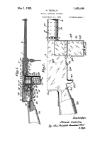
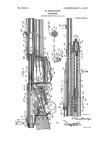
In the drawings:
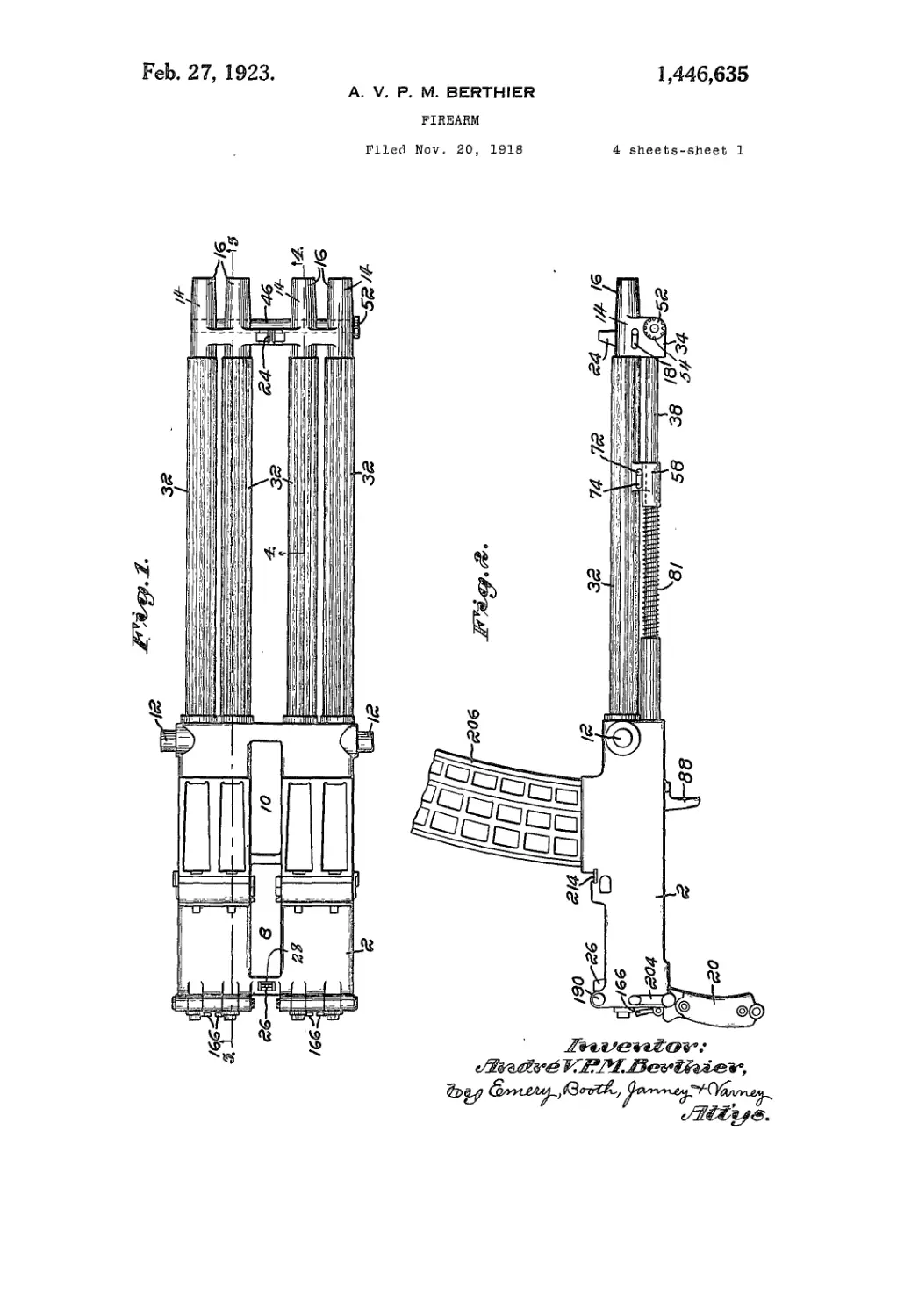
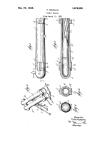
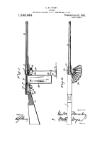
25 Fig. 1 is a top plan view of a machine gun
embodying one form of the invention;
Fig. 2	is a side elevation of the machine
gun shown in Fig. 1;
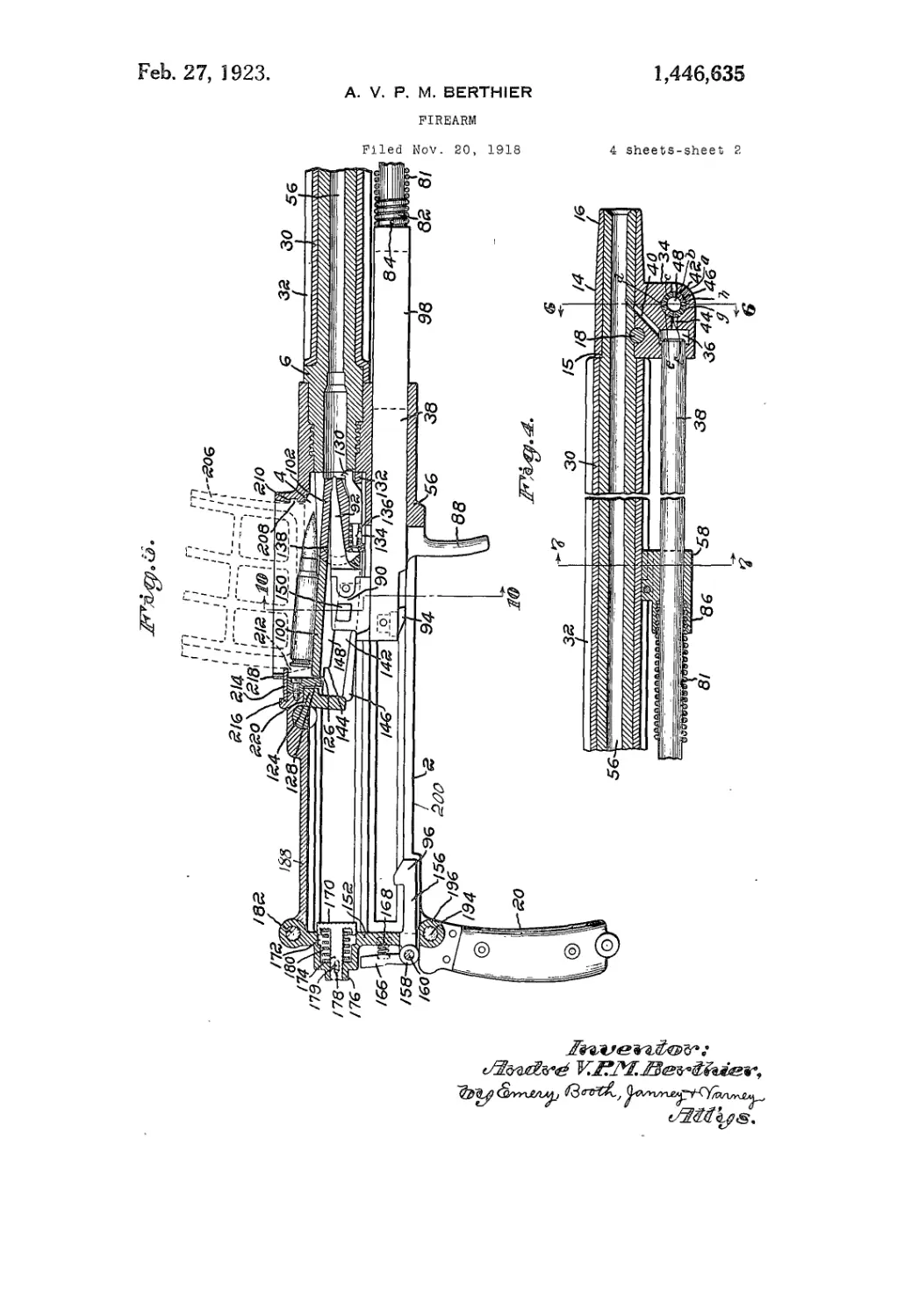
Fig. 3	is a longitudinal vertical section on
30 line 3—3 of Fig. 1;
Fig. 4	is a longitudinal vertical section
on line 4—4 of Fig. 1;
Fig. 5	is a rear elevation of the machine
gun shown in Fig. 1, showing also the shank
35 of the removable butt in section;
Fig. 6	is a vertical cross section on line
6—6 of Fig. 4;
Fig. 7	is a vertical cross-section on line
7—7 of Fig. 4;
40 Fig. 8 is a top plan view of the breech-
bolt and of its head in disconnected posi-
tion;
Fig. 9 is a side elevation of the part
shown in Fig. 8;
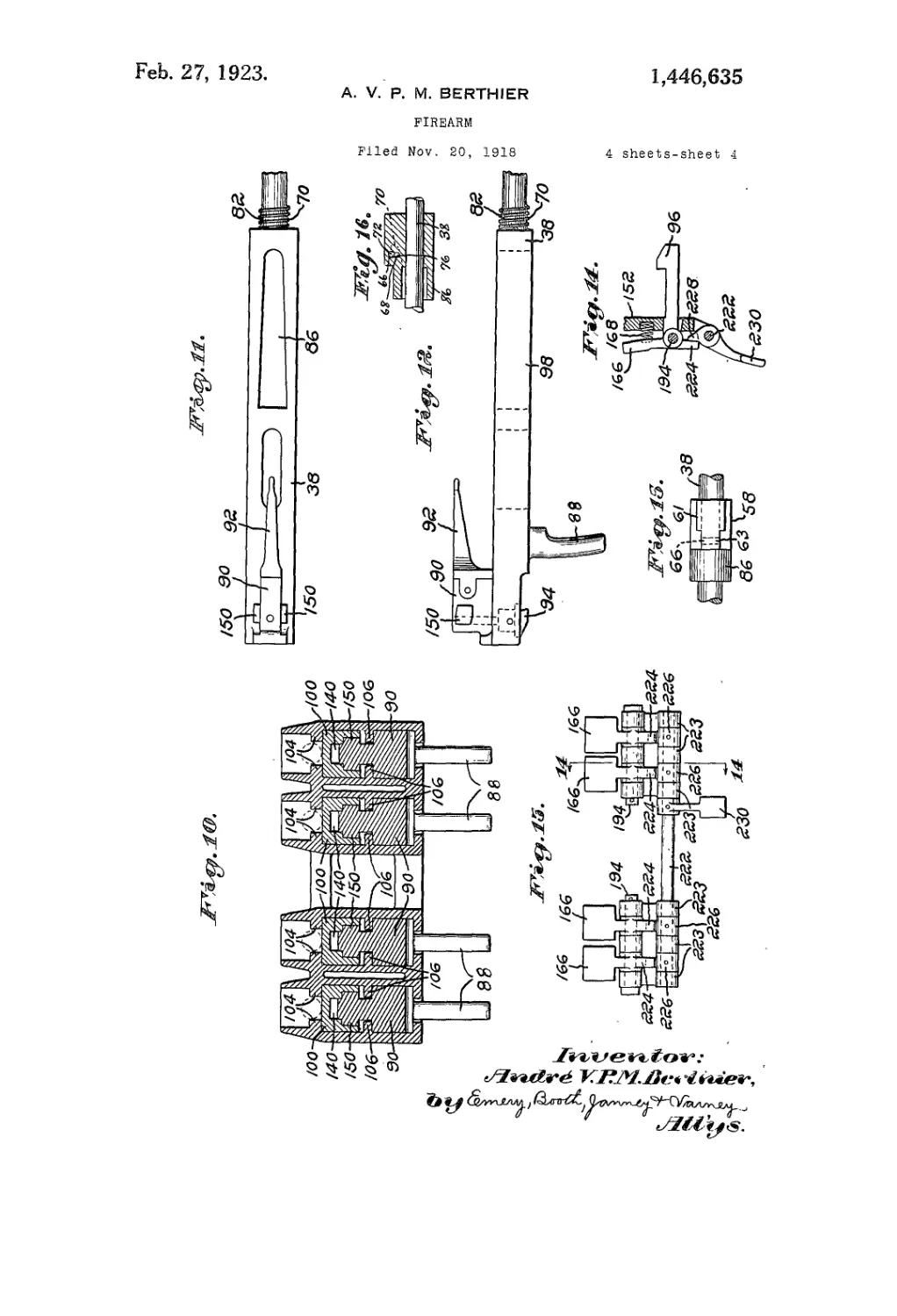
45 Fig. 10 is a vertical cross-section on line
10—10 of Fig. 3;
Fig. 11	is a top plan view of the gas-
operated piston and firing pin carried
thereby;
Fig. 12	is a side elevation of the parts 50
shown in Fig. 11;
Fig. 13	is a detail of single means for
operating all the firing mechanisms of the
gun simultaneously;
Fig. 14	is a cross-section on line 14—14 55
of Fig. 13;
Fig. 15	is a plan view of the connection
shown in Fig. 7;
Fig. 16	is a detail horizontal section of •
certain parts shown in Fig. 15.	60
In the embodiment of invention illus- •
trated in the drawings, the breech-frame or
receiver 2 is provided with a plurality of
receiver chambers 4, herein four, each con-
taining a breech-block and associated parts, 65
hereinafter more fully described. To each
of these receiver chambers, thtere cor-
responds a barrel 6, screw-threaded into
screw-threaded apertures provided in the
front of the receiver, substantially as shown 70
in Fig. 3. The receiver will preferably be
made in a single piece, but may be cut away
at 8 and 10 for the sake of lightness. At its
front end, Fig. 1, the receiver 2 will pre-
ferably be provided with trunnions 12, 12, 75
one upon each side, for mounting the gun
upon any suitable or usual support, not
herein shown. At their front ends, Figs. 1.
2 and 4, the barrels are preferably connected
by a cross orace 14, having openings 15 and 80
forwardly extending sleeve-like extensions
16, Fig. 4, to receive the front ends of the
barrels. The cross-brace 14 is removably
secured to the barrels by a cylindrical lock-
ing bolt 18. received in a cylindrical open- 85
ing extending throughout the length of said
cross-brace and having its walls formed
partly in said cross-brace and partly in the
under side of each of the barrels where" said
cylindrical opening intersects the openings 90
in said brace in which the front ends of the
barrels are received.
To the under side of the receiver are pre-
ferably secured in any suitable manner two
handles or pistol grips 20, 20, the free ends 95
of said grips being preferably connected by
a bracing-rod 22.
The front sight 24 may be provided in the
S3
1,446,636-
middle of the cross-brace 14 upon the upper
surface of the latter, in which case the rear
sight 26 will preferably be provided upon
the rear web portion 28 of the receiver 2.
5 Each of the barrels may be provided with
a close fitting jacket, extending from adja-
cent the front end of the receiver forward
to the cross-brace 14, as shown at 30 in Fig.
3, said jacket being provided with longitudi-
10 nally extending ribs or fins 32, Figs. 1 and
3, to facilitate the radiation of heat, and
cooling of the barrel. This sleeve with its
ribs will preferably be made of aluminum or
some other material, possessing a high coef-
15 ficient of thermal conductivity.
Herein the invention is shown in its ap-
plication to an explosion operated gun, the
illustrative embodiment shown being gas-
operated, and the invention comprises com-
!0 mon means to regulate or control the gas
pressure for all the barrels for different al-
titudes. As one form of means to this end
the cross-brace 14 is provided upon its un-
der side with four downwardly extending
!5 bosses 34, one directly under each barrel.
Each of these bosses is provided with a cy-
lindrical chamber 36, one of which is shown
in Fig. 4, and in which the head of a piston
38 has a sliding fit. Each of the chambers
i() 36 communicates with its barrel by means
of a. forwardly inclined passage 40 extend-
ing through the wall of the boss 34 and the
wall of the barrel. The bosses 34 are each
also provided with a transversely extending
15 circular perforation 42 and with a passage
44, leading from said perforation to the
chamber 36. The perforations 42, provided
in the four bosses 34, are all in alignment
and in said perforations if fitted for rotaary
0 movement a cylindrical pressure-controlling
or regulating member 46, having an axial
opening 48 extending throughout its length.
The member 46, Figs. 4 and 6, is screw-
threaded at 50 for screw-threaded connec-
5 tion with the left-hand boss 34, Fig. 6, and is
provided with a head 52 to limit its inward
movement. That part of the member 46 con-
tained within each of the bosses 34 is provided
with a series of radial perforations, herein
0 eight, а, Ъ, c, d, e, /, g and h, of different
diameters, leading from its periphery into
its axial opening 48. The perforations of
each series are disposed in a helical line in
the member 46, the pitch of the helical line
5 corresponding substantially to that of the
screw-thread 50, so that by turning, said
member 46, any one of the perforations of
a series may be brought into coincidence
with the passage 44 in the boss 34. The
0 perforations of each series are so arranged
that, when a perforation of a certain diam-
eter of one of the series coincides with its
cooperating passage 44, the perforation of
the same diameter in each of the other series
5 will also coincide with its cooperating pas-
sage 44. To maintain the member 46 in ad-
justed position, there is mounted in the left-
hand boss 34, Fig. 6, a spring-pressed pin
54, adapted to engage any one of eight
grooves provided on the periphery of the 70
head 52, in alignment with the different per-
forations a, b, c, d, e, f, g, and h. These
grooves may be provided with numbers or
other marks to indicate which of the per-
forations я, Z>, c, d. e, /, <7, or Л, of each of 75
the series is in coincidence with the passages
44. The arrangement is preferably such
that, when the member 46 is screwed en-
tirely home, none of said perforations will
coincide with the passages 44.	80
The four pistons 38 are guided at their
rear ends in cylinders 56 in the breech-cas-
ing, and intermediate said cylinders and the
bosses 34, in guide-bosses 58, removably se-
cured to downwardly projecting portions 85
60, integral with the barrel-jackets 30, b igs.
4 and 7. For removably securing the guide-
bosses 58 to the parts 60, any suitable means
may be employed, but I preferably employ
the arrangement herein shown, see Figs. 7 9о
and 15, wherein the downwardly projecting
parts 60 of the barrel-casings 30 are each
provided with a central horizontal T-shaped
slot 62 adapted to be engaged by a T-shaped
projection 61 upon the upper face of the 95
guide-bosses 58. The vertical portion of
the T-shaped slot is continued beyond the
horizontal portion thereof, as shown at 63
in Fig. 15, said continuous portion 63 being
engaged by a forwardly extending portion 100
of the vertical part 64 of the T-shaped pro-
jection. For firmly securing the guide-
bosses in place upon the downwardly pro-
jecting parts 60, the walls of said projec-
tions, at either side of the slots 62, and the 105
parts 64 of the guide-bosses 58 that engage
said slots 62 are pierced by a circular open-
ing 66, which is provided in one of said
walls, as shown in Fig. 4, with a vertical ex-
tension 68 that communicates with a recess 110
70 upon the inner side of said wall. Pins
72, having handles 74 and tongues 76 to
engage the extensions 68 of the circular
openings 66, are introduced into said open-
ings 66, whereupon the pins 72 are given a 115
quarter turn to cause the projections 76 to
enter the recesses 70, thus locking the pins
72 in place. Upon their inside faces the
handles 74 of the pins are preferably pro-
vided with projections which are adapted to 120
snap into depressions of the guide boss 58
when the pin 72 is in locking position.
It will be seen that by the above de-
scribed construction means are provided for
firmlv securing the guide-bosses 58 to the 125
barrels while permitting their quick removal (
or replacement when necessary.
Each of the barrels has its own operating
mechanism, contained in the receiver cham-
ber behind the barrel and operated by the 130
1,446,035
8
5
10
15
20
25
30
35
40
45
50
55
60
65
piston under the barrel. Each operating
mechanism comprises a breech block, ex-
tractor, ejector and locking means. One of
said operating mechanisms with its piston
and mode of operation by the latter will now
be described, it being understood that all
four operating mechanisms, their pistons
and modes of operation by the latter are
exactly alike, so that a description of more
than one is unnecessary.
Referring to Fig. 3, in which one of the
barrels with its operating mechanism and
operating piston are shown in section, the
rearward movement of said piston 38 is ef-
fected, as is well known, by a portion of the
gases caused by the explosion, passing down
from the bore 56 of the barrel through
the passage 40 into the cylinder chamber 36
and there acting upon the forward end of
the piston 38, while the forward movement
of said piston is effected by a spring. Here-
tofore, so far as I am aware, springs acting
by expansion have been used for this pur-
pose, but I prefer to use a spring that acts
by contraction. To this end I use a spring
81, as shown in Figs. 3 and 4, having one
end screwed on to the threaded part 82 of
piston, with its inturned end engaging a
hole 84 in the latter, and its opposite end
screwed into a threaded sleeve 86, extend-
ing rearwardly from the boss 58 (Fig. 4).
When the piston is driven backwardly by
the gas pressure the spring will be extended
and tensioned, and when permitted to do
so, therefore contract and drive the piston
forward.
Adjacent its rear end the piston is pro-
vided with a cocking grip 88 upon its un-
derside, and upon its upper side it carries
a block 90, to the front face of which is
secured the firing pin 92. Underneath and
at its rear end the piston carries a tooth
94, adapted to be engaged by the sear 96,
when the latter is in raised position, and
thus retains the piston in its rearward po-
sition. At 98 the piston is provided with
a longitudinal opening extending vertically
through said piston and which, when the
piston is in its rearward position, registers
with the open underside of the receiver
chamber, thus enabling the exploded car-
tridge to be ejected downwardly from the
gun.
The breech-block, shown in detail in Figs.
8 and 9, is mounted for longitudinally slid-
ing reciprocating movement in the receiver
chamber 4, and herein said breech-block
consists of a rear part 100 and a forepart
or head 102. The rear part 100 of the
breech-block is guided laterally by the lat-
eral walls of the receiver chamber, but is
free to move vertically, while the head 102
of the breech-block is confined to a rec-
tilinear movement by the lateral walls of
the receiver chamber and top and bottom
guide ribs 104, 104 and 106, 106, projecting
inwardly from the latter, Fig. 10. To en- >
able the rear part 100 to swing vertically,
the head 102, to which it is connected, be-
ing, as stated, held against such movement, 70
the latter is connected to said rear part by a
tongue 108 projecting from the rear of the
head 102, and fitting within a slot 110, pro-
vided in the front end of said rear part, said
tongiie 108 having laterally projecting 75
curved ribs 112, 112, adapted to have a slid-
ing fit in correspondingly curved guide-slots
114, 114, provided in the front end of said
rear part at the rear of the slot 110; the
rear face 116 of the tongue 108 being con- 80
vexly curved, corresponding to the curva-
ture of the ribs 112, 112, and fitting the cor-
respondingly convexly curvbd surface 118 of
the rear part 100 of the breech-block.
The surfaces 117 at the rear of the head 85
102 are curved to fit the concentric sur-
faces 119 on the front end of the rear part
100 of the breech-block.
At its front end the head 102 is provided
on top with two wedge-shaped ribs 120, 120 90
separated by a slot 122, for a purpose here-
inafter more fully described, and at its rear
end the rear part 100 of the breech-block has
projecting from its upper surface a lock-
ing-dog 124, and in front thereof a recess 95
126 to receive the cartridge shell-ejector 128
when the part 108 is in raised position.
In a recess provided in the underside of
the breech-block head 102, at its forward
end is mounted the spring-pressed cartridge 100
shell-extractor 130, as shown in Fig. 3, said
extractor being held in place by the retain-
ing part 132 on said head, and at its rear
by engagement of the end of its shank 134
in an opening provided in the wall of said 105
head, said shank being surrounded by the
spring 136.
The breech-block head 102 is provided
with a forwardly tapering perforation 138,
Fig. 3, extending throughout its length to 110
receive the firing-pin, arid the rear part 100
of the breech-block is provided with a rec-
tangular recess 140, Fig. 10, extending
throughout the greater part of its length
and being open at the bottom. The lateral 115
walls of the recess 140 are each provided
with a guide-way 142, inclined downwardly
toward the front of said rear part 100 and
widened at the top of their rear ends to
form the shoulders 144, 144, one of which is 120
shown in Fig. 3. The lower walls 146 of the
guide-ways 142 are shorter than the upper
walls 148 thereof, to enable the block 90 on '
the piston to be inserted into the recess 140,
as shown in Fig. 3. Upon each side of the 125
block 90, Figs. 3, 10. 11, 12, is provided a
nipple 150.
When the piston is in place in the gun.
the block 90 projects upwardly into the
receiver-chamber through a slot extending 130
4
1,446,635
throughout the length of the bottom of said
chamber, the firing pin 92 is received in the
perforation 138 provided for that purpose
in the head 102 of the breech-block and the
5 nipples 150, 150 are in position to cooper-
ate with the guide-ways 142, 142 on the in-
ner walls of the rear part 100 of the breech-
block.
Herein the rear wall of the receiver is
10 shown at 152, Fig. 5. The four sears 96
are carried by the wall 152, said sears be-
ing formed on arms 156, one of which is
shown in Fig. 3, it being understood that
the other three are similar. These arms
15 project forwardly from sleeves 158, 158, 158,
158, Fig. 5, pivoted, two upon a stud 160
mounted in ears 162 projecting rearwardly
from the wall 152, and two upon a similar
stud mounted in ears 164 projecting rear-
20 wardly from said wall, the arms 156 being
extended through openings provided at the
base of said wall 152. Each of the sleeves
158, 158, 158, 158 carries a trigger, herein
consisting of a thumb piece 166 projecting
25 upwardly from its sleeve. A spring 168,
mounted at one end in a recess in the front
face of the trigger, and the other end in the
rear wall of the part carrying the trigger,
tends to push the trigger outwardly and
30 thus to maintain the corresponding sear in
raised position to be engaged by the tooth
94 on the corresponding piston 38. Only
one of the four springs 168 is shown in Fig.
3, it being understood that a similar spring,
35 similarly mounted, is provided for each of
the other three triggers.
Four buffers for cushioning the rearward
movement of the four breech blocks are also
mounted in the rear wall 152. Only one of
40 these buffers is shown in Fig. 3, but it is
understood that all four are constructed and
operate alike. They each consist of a
cupped disk 170, having a sliding fit in a
recess 172 provided in the rear wall of the
45 receiver, said disk having a central shank
174, extending rearwardly into an opening
176 in the rear wall of said recess and in
which it has a sliding fit, a transverse pin
178, mounted in the walls of said recess and
50 extending through a longitudinal slot 179 in
said shank, serving to retain the buffer in
place. A cushioning spring 180 surrounds
the shank 174 between the disk 170 and the
rear wall of the recess 172.
55 The rear wall 152 of the receiver is prefer-
ably hinged at its top by studs 182, 182 ex-
tending through ears 184 on said wall 152,
and ears 186 on the rear edge of the top
wall 188 of the receiver, and provided at one
60 end with heads 190 and cotter pins 192 at
the other ends. The wall 152 is held in closed
position by studs 194, 194 extending through
ears 196 at the base of said wall 152, and
bosses 198, 198 at the rear edge of the bottom
65 plate 200 of the. receiver to which the han-
dles 20 are secured, said studs 194, 194 hav-
ing at their inner ends 202 screw-threaded
engagement with the ears 196 engaged by
said ends, and carry at their outer ends han-
dles 204 for screwing them home and un- 70
screwing them. By removing the studs 194
the rear wall 152 may be swung upwardly,
thus giving ready access to the receiver cham-
bers closed thereby, and to the parts there-
in contained. The breech-blocks can then be. 75
readily withdrawn and also the pistons, by
first disconnecting the springs 81 from the
sleeves 58.
A separate magazine will be used for each
of the receiver chambers. Any suitable 80
magazine may be used, that herein shown
being of well known construction and need
not therefore be described in detail. Briefly
said magazine consists of a sheet metal re-
ceptacle 206 only the lower portion of which 85
is shown in Figs. 2 and 3, said receptacle
being dosed at the top and open at the bot-
tom and of a height sufficient to receive the
number of cartridges desired. Its width
and thickness are slightly greater than the 90
length and thickness, respectively, of a. car-
tridge, and the cartridges are inserted in
said magazine, one above the other, in stag-
gered and slightly overlapping relation, and
are pressed toward the open end of the 95
magazine by a spring pressed follower acted
upon by a fan-shaped bent flat spring. The
lower end of the magazine fits within a cor-
respondingly shaped opening provided in
the top of the receiver, as shown in Fig. 3, 100
a lug 208 upon the front lower end of the
magazine engaging a recess 210 provided in
the front wall of the receiver and a rib 212
near the bottom of the rear face of said maga-
zine being engaged by a plate 214 adapted to 105
slide in guideways 216, 218 provided in the
receiver wall at the rear of the opening into
which the magazine is introduced. This
plate 214 securely locks the magazine in
place and by removing it the magazine may 110
be readily withdrawn, as will be readily
understood. There are preferably provided
two such plates, each of which serves to lock
two magazines in place.
The magazine is described in detail in my 115
earlier Patent No. 1,083,872 of January 6,
1914, and reference is made to said patent,
for a more detailed description thereof.
Preferably means will be provided to
catch the empty cartridge shells as they arc 120
ejected from the gun. Said means may con-
sist of a suitable receptacle, such as a bag, not
shown, which may be secured in any suit-
able manner to the under side of the gun, so
as to receive the discharged cartridge shells 125
as they are ejected from the receiver.
While not absolutely necessary the gun
may be provided with a butt or shoulder
brace, not shown, to be held against the
shoulder to assist in steadying the gun in 130
1,446,636
3
firing. In Fig. 5, the shank 141 of said butt
is shown as secured in any suitable manner
centrally to the rear wall 152 of the receiver,
said shank being shown in section.
5 I will now describe the operation of the
operating mechanism shown in Fig. 3, it be-
ing understood that the operation of the
other three operating mechanisms is the
same.
10 Referring more particularly to Fig. 3, and
assuming a loaded magazine to be in place
in the receiver chamber there shown and the
t pletely closed. In this forward movement
г of the breech-block the tongues 120 on the
, top of the breech-block head engage the
rear end of the lowermost cartridge in the
> magazine and drive said cartridge ahead 70
• of the breech-block into the-cartridge chain-
i ber.
। The lug 124 on the rear end of the breech-
block has now arrived under the recess 220
[ so that the rear end of the breech-block is 75
: no longer held from upward movement, and
! in the continued forward movement of the
piston 98 the nipples 150 on the block 90
 acting against the shoulder 144 and en-
tering the guideways 142 swing the rear end 80
( of the breech-block upwardly, thus causing
the locking lug 124 to enter the recess 220
and thus locking the breech-block against
rearward movement. The piston 98 now
completes its forward movement, thus caus- 85
ing the front end of the firing pin 92 to pro-
trude from the front end of the head of the
breech-block to explode the cartridge in the
cartridge chamber.
In the forward movement of the breech- 90
block above described, the hooked end of the
extractor 130 has snapped over the rim or
collar at the rear end of the cartridge and
is in position to extract the latter upon rear-
ward movement of the breech-block. 95
Upon the explosion of the cartridge a
part of the explosion gases enter the piston
chamber 36 through the passage 40 and act-
ing on the piston drive it rearwardly. Dur-
ing the first part of this rearward move- 100
ment of the piston, the breech-block is held
against rearward movement by engagement
of the locking lug 124 with the recess 220,
so that the firing pin is retracted into the
breech-block head and the nipples 150 on 105
the block 90 move along the guideways 142
of the breech:block. In this movement, they
act on the lower edges of said guideways,
thus lowering the rear end of the breech-
block until the locking lug 124 is disengaged 110
from said recess 220, whereupon the breech-
block with the extractor is carried rear-
wardly with the piston by engagement of
the rear edge of the block 90 with the rear
wall of the breech-block until the rear end 115
of the breech-block .abuts against the buf-
fer 170.
In this rearward movement of the breech-
block, the extractor extracts the exploded
cartridge shell from the cartridge chamber 120
and carries it along with it until the,upper
edge of the rear end of the cartridge shell
strikes the ejector 128, which is in sliding
engagement with the groove 126 and its con-
tinuation 122 in the top wall of the breech- 125
block, and the exploded cartridge shell is
thus snapped downwardly, released from
the extractor and ejected from the gun
through the opening in the lower wall of the
receiver chamber and the opening 98 in the 130
arm to be uncocked, the piston and breech-
block being in their forward position, the
15 rifleman seizes the cocking handle 88 and
draws the piston 98 rearwardly against the
action of the spring 81 until the tooth 94 on
said piston engages behind the sear 96.
In this rearward movement of the piston
20 the breech-block is also retracted, but its
rearward movement does not begin immedi-
ately. During the first part of the rearward
movement of the piston the block 90 with its
firing pin 92 moves rearwardly with the pis-
25 ton relatively to the breech-block, which lat-
ter is held against rearward movement by
engagement of its locking lug 124 with the
recess 220 provided in the top wall of the
receiver. When, however, in this rearward
30 movement of the block 90, the nipples 150
enter the upwardly inclined rear portion of
the guide-ways 142 in the rear part of the
breech-block, said nipples acting upon the
lower edges of said guideways will cause the
35 rear part of the breech-block to swing down-
wardly about its pivotal connection with the
breech-block head, thus disengaging said
locking lug 124 from the recess 220, where-
upon in the continued rearward movement
40 of the piston and block 90, the breech-block
will also be retracted until its rear end rests
substantially against the buffer 170, and
will be held in this position by engagement
of the tooth 94 upon the piston with the
45 sear 96.
The breech or receiver chamber is now
open and to fire the charge the rifleman
presses the trigger 166 inwardly, thus throw-
ing the sear 96 downwardly and releasing
50 the piston which is immediately thrown
forward by the contraction of the spring 81.
During the first part of the forward
movement of the piston, the nipples 150 on
the block 90 being in engagement with the
t shoulders 144 at the upper ends of the guide-
ways 142, and the rear end of the breech-
block being held against upward movement,
by engagement of the upper surface of the
lug 124 with the top wall of the receiver
chamber, the breech-block is carried for-
ward with the piston 98, until" the breech-
block reaches its extreme forward position
shown in^Fig. 3 and is arrested by contact
of its front end with the front wall of the
loading chamber, the breech being thus com-
6
1,446,636
when they do occur they are of short dura-
tion, as will be readily understood, owing to
the constant movement and manceuvering
for position. It is, therefore, most impor-
tant for the aviator that he be able to take 70
advantage to the fullest extent of such open-
ings for attack as present themselves to
him and that he do as much execution
as is possible in the short time that the
opening continues. This my invention en- 75
ables him to do in that, for one thing, the
gun embodying my invention, having for
example four operating mechanisms, as in
the example herein illustrated, an aviator
can deliver, in the same space of time four 80
times the weight of metal that can be deliv-
ered by the ordinary machine gun possess-
ing but a single operating mechanism. Fur-
thermore. it is well known that machine
guns not infrequently jam or are otherwise 85
rendered temporarily useless. When this
happens to an aviator armed with the ordi-
nary single barrel gun, he not only may lose
the only opportunity afforded him for suc-
cessfully attacking the enemy, but he is him- 90
self at the enemy’s mercy, until the trouble
is remedied. This difficulty is completely
overcome by my invention, for should one or
even more than one of the operating mech-
anisms become jammed, the others are imme- 95
diately available. If the operator is operat-
ing two or more of the operating mecha-
nisms simultaneously, should one or more of
said operating mechanisms cease to operate
on account of jamming or for any other 100
cause, this will in no wise affect the opera-
tion of the others, the operation of which
will continue unimpeded, so that the oper-
ator can continue his attack without inter-
ruption. He need not stop to remedy the Ю5
trouble while in action but can put this off
until some more convenient opportunity.
Guns embodying my invention have rela-
tively few parts, are easy to manipulate,
compact, strong and extremely efficient. HO
Other advantages than those specifically
pointed out will readily suggest themselves
to those skilled in the art.
So far as I am aware, my invention is
the first automatic or machine gun compris- 115
ing a plurality of operating mechanisms,
or in other words it is so far as I know the
first multiple machine gun.
It will be apparent to those skilled in the
art that it is not indispensable that all of the 120
features of the invention be used conjointly,
since some of them may be used to advan-
tage separately in various combinations and
sub-combinations. It is also to be under-
stood that while the invention is herein 125
described as embodied in the details illus-
trated, the invention is not to be considered
as circumscribed by or limited to these de-
tails or any of them, but that the said de-
tails may be variously modified within the 130
piston, which then register with each other.
If the rifleman continues his pressure
upon the trigger 166 the operation above de-
scribed will be repeated without interrup-
5 tion until all the cartridges in the magazine
have been fired, but the firing can be stopped
at any time by releasing said trigger, the
tooth 94 on the piston engaging behind the
sear 96 on the next rearward movement of
10 the piston after the trigger has been released,
the piston being thus arrested in its rear-
ward position. To start firing again it is
only necessary to press the trigger. •
It will be noticed that the four triggers
15 166 are disposed in pairs, the two triggers of
each pair, being so close together that both
triggers may be operated simultaneously by
one thumb of the operator. The operator
may thus by using one hand operate one
20 trigger of a pair alone or both triggers of
said pair simultaneously, or by using both
hands he can operate one trigger of each
pair simultaneously, or two triggers of one
pair and one trigger of the other sinndtane-
25 ously, or all four triggers simultaneously,
thus bringing into operation the operating
mechanisms singly in succession, or two.
three or four simultaneously.
The triggers are preferably so disposed
30 that the operator can operate them as above
described while grasping the handleg ‘20 to
aim the gun.
In Figs. 13 and 14 is shown unitary means
for operating all of the triggers simultane-
35 ously and consequently all of the operating
mechanisms. Herein said means comprises
a shaft 222 mounted in bearings 223, secured
to the frame in any suitable manner under
the triggers 166, which latter are each pro-
40 Added with a downwardly directed extension
224. Upon the shaft 222 are rigidly se-
cured in any suitable manner four collars
226 each provided with an upwardly extend-
ing tooth 228. These four teeth are adapted
45 to cooperate, respectively, with the down-
ward extensions 224 of the triggers. Rig-
idly secured to the shaft 223 in any suitable
manner is a trigger or thumb piece 230, said
thumb piece being preferably located suffi-
50 ciently close to the right grip 20 to be readily
operable by the thumb of the right hand of
the operator as the latter grasps said grip.
From the above description it will be readily
understood that by pressing the thumb piece
55 230 in a contraclockwise direction, Fig. 14,
all four sears 96 will be simultaneously
swung downward about their fulcrums, thus
releasing all four pistons and setting all
four operating: mechanisms in operation.
60 My invention possesses many advantages'
over machine guns heretofore made. In aer-
oplane fighting, and particularly in fighting
between aeroplanes, the openings or oppor-
tunities for successfully attacking an adver-
65 sary may be of infrequent •ecurrence and
1,446,636
К
true scope of the invention which is defi-
nitely set forth by the claims.
Claims:
1.	In a multibarrel explosion operated
5 machine gun, in combination, a plurality of
independently operable operating mecha-
nisms. a controlling handle for the gun, and
unitary mechanical means apart from said
handle for rendering said operating mecha-
10 nisms jointly operative so positioned that it
can be operated by the hand grasping said
controlling handle.
2.	In a multibarrel explosion-operated
machine gun, in combination, a plurality of
15 operating mechanisms, one for each barrel
and mounted in a common receiver; an actu-
ator for each operating mechanism; a pas-
sage to conduct a portion of the explosion
gases from each barrel to the actuator of its
20 corresponding operating mechanism: and
means simultaneously to adjust or regulate
the amount of explosion gases passing from
said barrels to said actuators.
3.	In a machine gun, in combination, a re-
25 reiver: a. plurality of receiver chambers in
said receiver; a barrel corresponding to each
receiver chamber; an operating mechanism
contained in each receiver chamber; a piston
for operating each operating mechanism and
30 moved in one direction by a portion of the
explosion gases from the corresponding
barrel: intermediate connections between
each operating mechanism and its operating
piston; a spring to move each piston in the
35 direction opposite to that in which it is
moved by the explosion gases; a tooth upon
each piston; a separate sear to cooperate
with the tooth of each piston; and unitary
means to operate all of said sears.
40	4. In a machine gun, in combination, a
receiver; a plurality of receiver chambers
in said receiver; a barrel corresponding to
each receiver chamber; an operating mecha-
nism contained in each receiver chamber; a
4 5 piston for operating each operating mecha-
nism and moved in one direction by a por-
tion of the explosion gases from the corre-
sponding barrel; intermediate connections
between each operating mechanism and its
50 operating piston; a spring to move each pis-
ton in the direction opposite to that in which
it is moved by the explosion gases; a tooth
upon each piston; a separate sear to coop-
erate with the tooth of each piston; and
55 means constructed and arranged for oper-
ating said sears singly or a plurality there-
of jointly.
5.	In a machine gun, in combination, a
receiver; a plurality of receiver chambers
60 in said receiver; a barrel corresponding to
each receiver chamber; an operating mecha-
nism contained in each receiver chamber; a
piston for operating each operating mecha-
nism and moved in one direction by a por-
65 tion of the explosion gases from the corre-
sponding barrel; controlling means for vary-
ing the amount of the explosion gases act-
ing upon each piston; unitary means simul-
taneously to adjust all of said controlling
means: intermediate connections between 70
each operating mechanism and its operating
piston; a spring to move each piston in the
direction opposite to that in which it is
moved by the explosion gases; a tooth upon
each piston; a separate sear to- cooperate 75
with the tooth of each piston; and unitary
means to operate all of said sears.
6.	In a machine gun, in combination, a
receiver; a plurality of receiver chambers
in said receiver; a barrel corresponding to so
each receiver chamber; an operating mecha-
nism contained in each receiver chamber; a
piston for operating each operating mecha-
nism and moved in one direction by a por-
tion of the explosion gases from the corre- s5
spending barrel; controlling means for vary-
ing the amount of the explosion gases act-
ing upon each piston; unitary means simul-
taneously to adjust all of said controlling
means; intermediate connections between tm
each operating mechanism and its operating
piston; a spring to move each piston in the
direction opposite to that in which it i<
moved by the explosion gases; a tooth upon
each piston; a separate sear to cooperate 95
with the tooth of each piston; and means
constructed and arranged for operating said
sears singly or a plurality thereof jointly.
7.	In a machine gun or automatic rifle,
in combination, operating mechanism: an too
actuator therefor; a spring operating by
contraction to move said actuator in one
direction; and removable means to which
one end of said spring is secured, said
means also constituting a guide for said ac- 105
tuator.
8.	In a multibarrel explosion-operated ma-
chine gun, in combination, a plurality of
independently operable operating mecha-
nisms mounted in a single receiver, and 110
means for simultaneously rendering opera-
tive all or any number of said operating
mechanisms.
9.	In an explosion-operated machine gun
having more than two barrels, in eombina- 115
tion. a plurality of independently operable
operating and firing mechanisms, separate
operating means for each operating and fir-
ing mechanism, and means operable by one
hand of the operator for rendering all said I
operating mechanisms simultaneously opera-
tive and enabling the simultaneous opera-
tion of any number less than all.
10.	In a multibarrel explosion operated
gun, in combination, a receiver, a pluralitv 125
of pairs of independently operable operat-
ing mechanisms in said receiver, and means
for rendering said operating mechanisms op-
erative singly, simultaneously or all simul-
taneously.	13 0
в
1,446,635
11.	In a multibarrel explosion-operated
gun, in combination, a plurality of operat-
ing mechanisms, one for each barrel and
mounted in a common receiver; an actuator
5 for each operating mechanism; a passage to
conduct a portion of the explosion gases
from each barrel to the actuator of its cor-
responding operating mechanism; and
means to adjust or regulate the amount of
jo explosion gases passing from said barrels
to said actuators.
12.	In an explosion operated machine-gun
having more than two barrels, in combina-
tion, independently operable operating and
15 firing mechanism for each barrel; separate
operating means for each operating and fir-
ing mechanism, the operating means of two
operating and firing mechanisms being so
positioned that they can be operated inde-
ed pendently or simultaneously by one hand
of the operator; and single mechanical op-
erating means for operating all of the op-
erating and firing mechanisms at the same
time.
‘25	13. In an explosion operated machine gun
having more than two barrels, in combina-
tion, independently operable operating and
firing mechanism for each barrel: a con-
trolling handle for the gun; separate me-
chanical operating means for each operating 30
and firing mechanism, the operating means
of at least two operating and firing mecha-
nisms being so positioned with respect to
each other and with respect to said control-
ling handle, that they can be operated in- 35
dependently or simultaneously by the same
hand which grasps the controlling handle.
14. In an explosion operated machine gun
having more than two barrels, in combina-
tion, a common receiver, a plurality of in- 40
dependently operable operating and firing
mechanisms in said receiver, separate op-,
erating means for each operating and fir-
ing mechanism, and single pivoted means ad-
jacent the receiver adapted to engage said 45
separate operating means to cause them to
function simultaneously.
In testimony whereof, I have signed my
name to this specification.
ANDRE VIRGILE PAUL MARIE BERTHIER.
Certificate of Correction.
It is hereby certified that in Letters Patent No. 1,446,635, granted February 27,
1923, upon the application of Andre. Virgile Paul Marie Berthier, of Neuilly-sur-
Seine, France, for an improvement in “ Firearms,” an error appears in the printed
specification requiring correction as follows: Page 7. line 129. claim 10, after the
word “simultaneously”, first occurrence, insert the words in pairs; and that the
said Letters Patent should be read with this correction therein that the same may
conform to the record qf the case in the Patent Office.
Signed and sealed this 3d day of April, A. £>., 1923.
[seal.]	. KARL PENNING,
Acting Commissioner of Patents.